Skip to content
Friday

27 September 2013

Dated photos
197
Source pages
1
Media
6
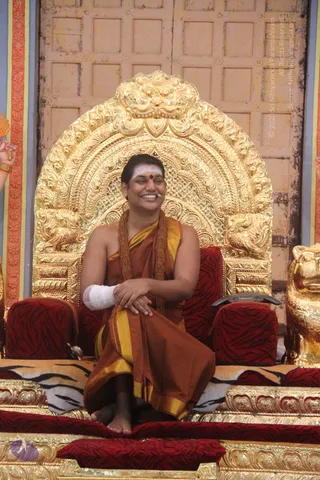
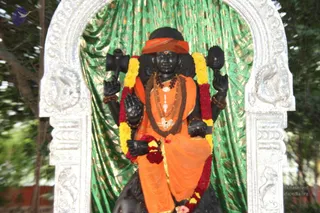
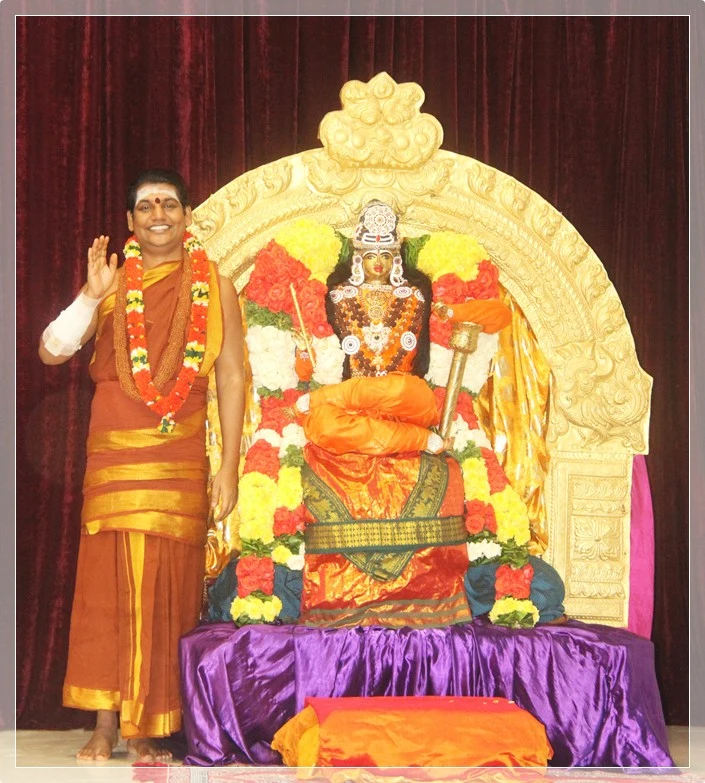
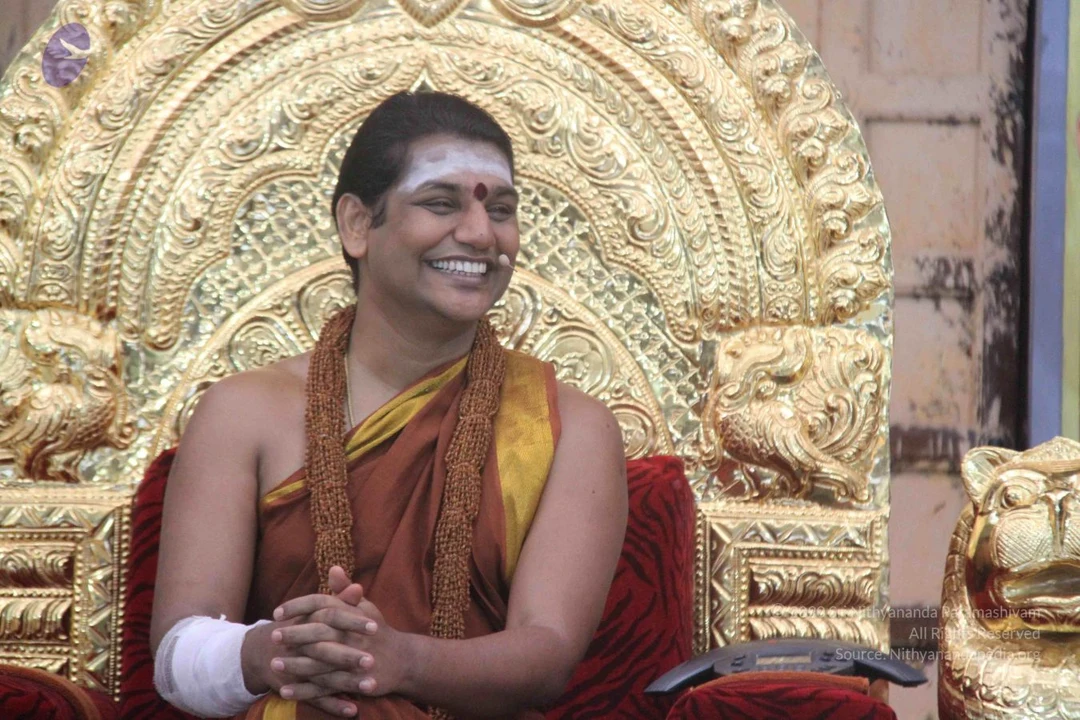
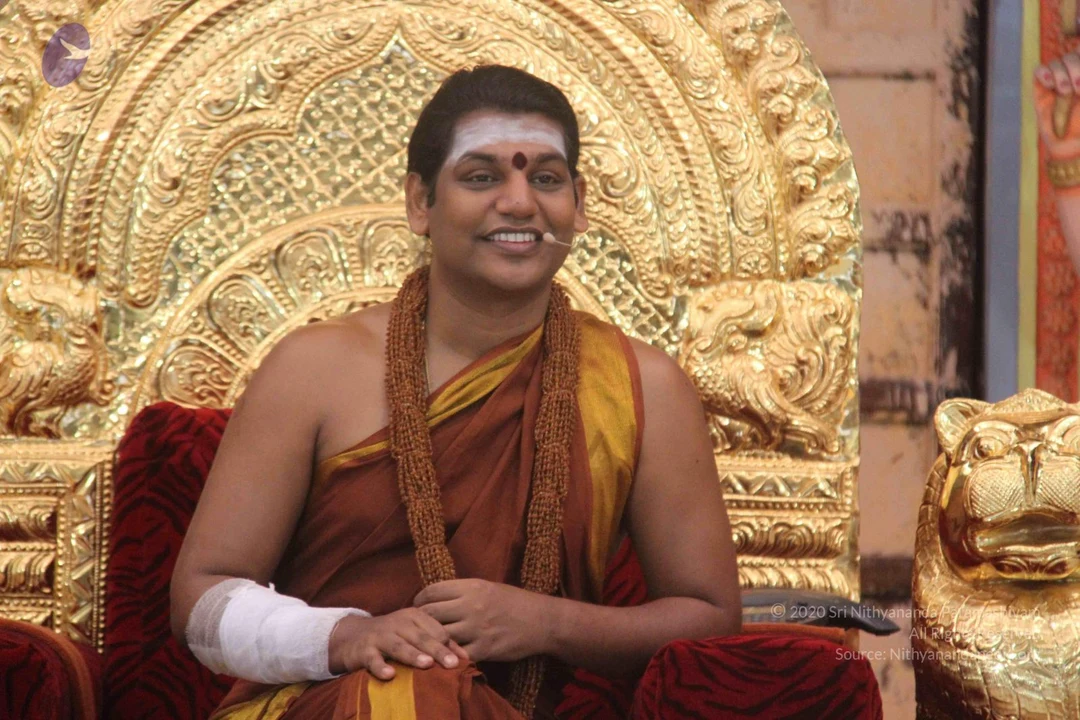
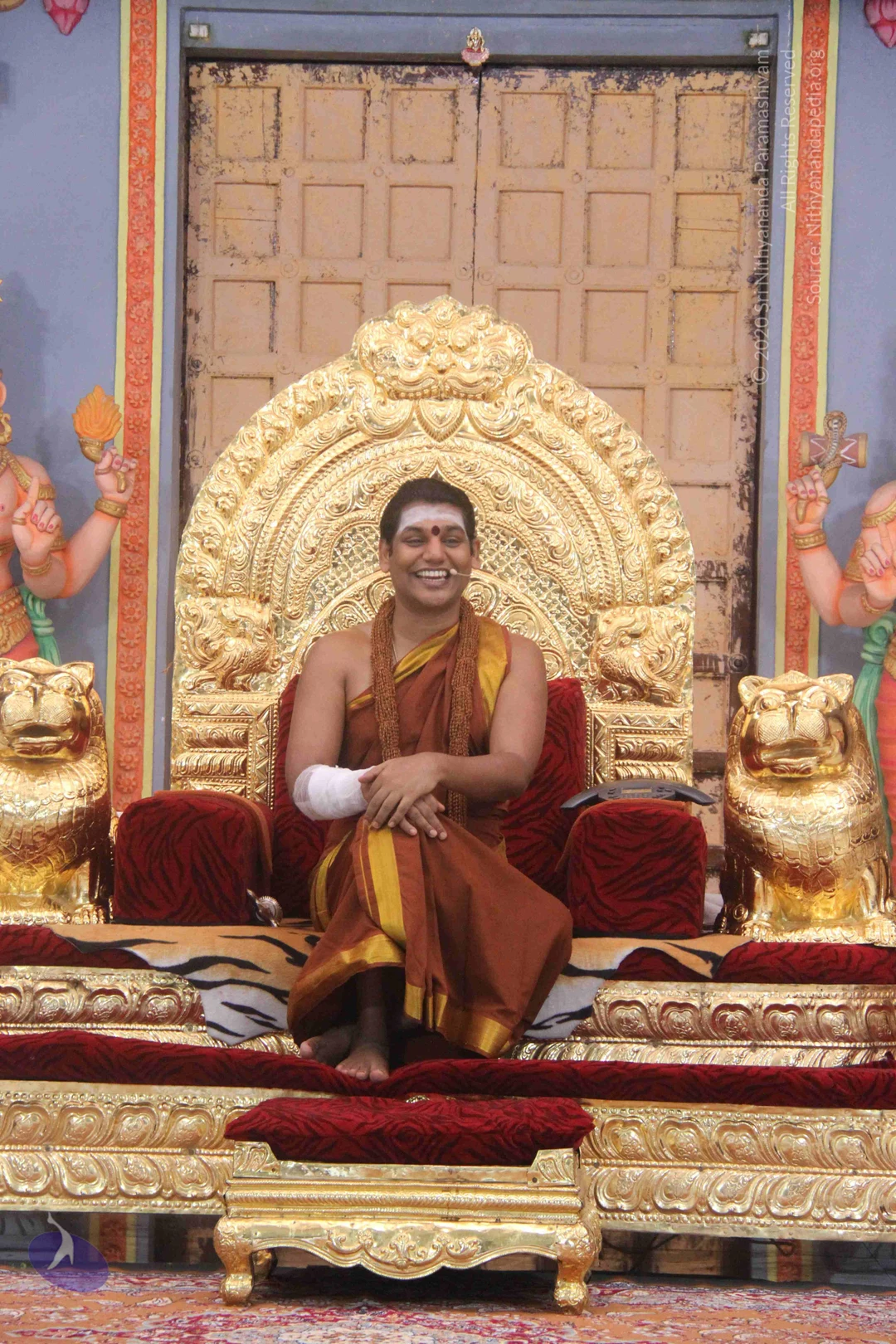
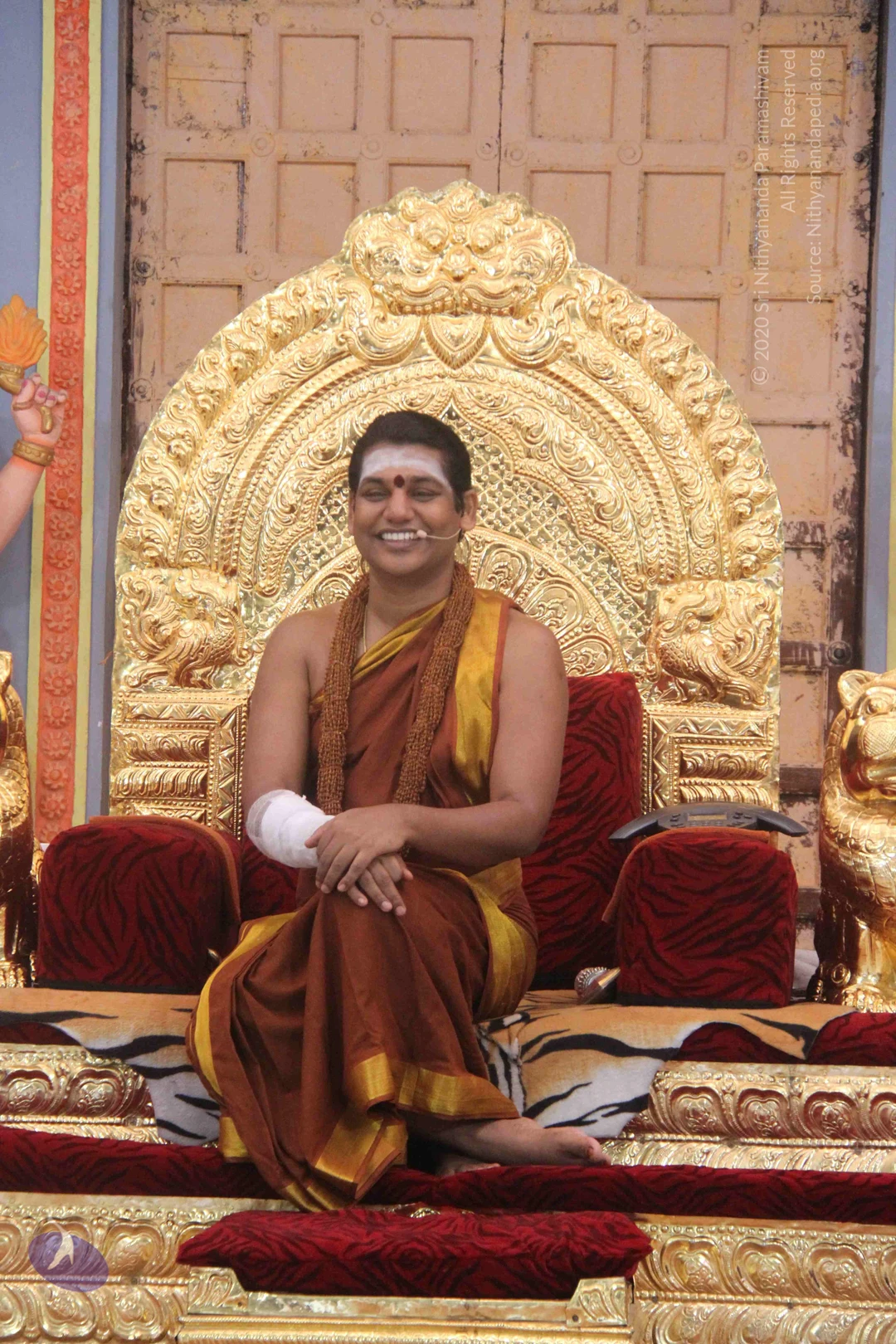
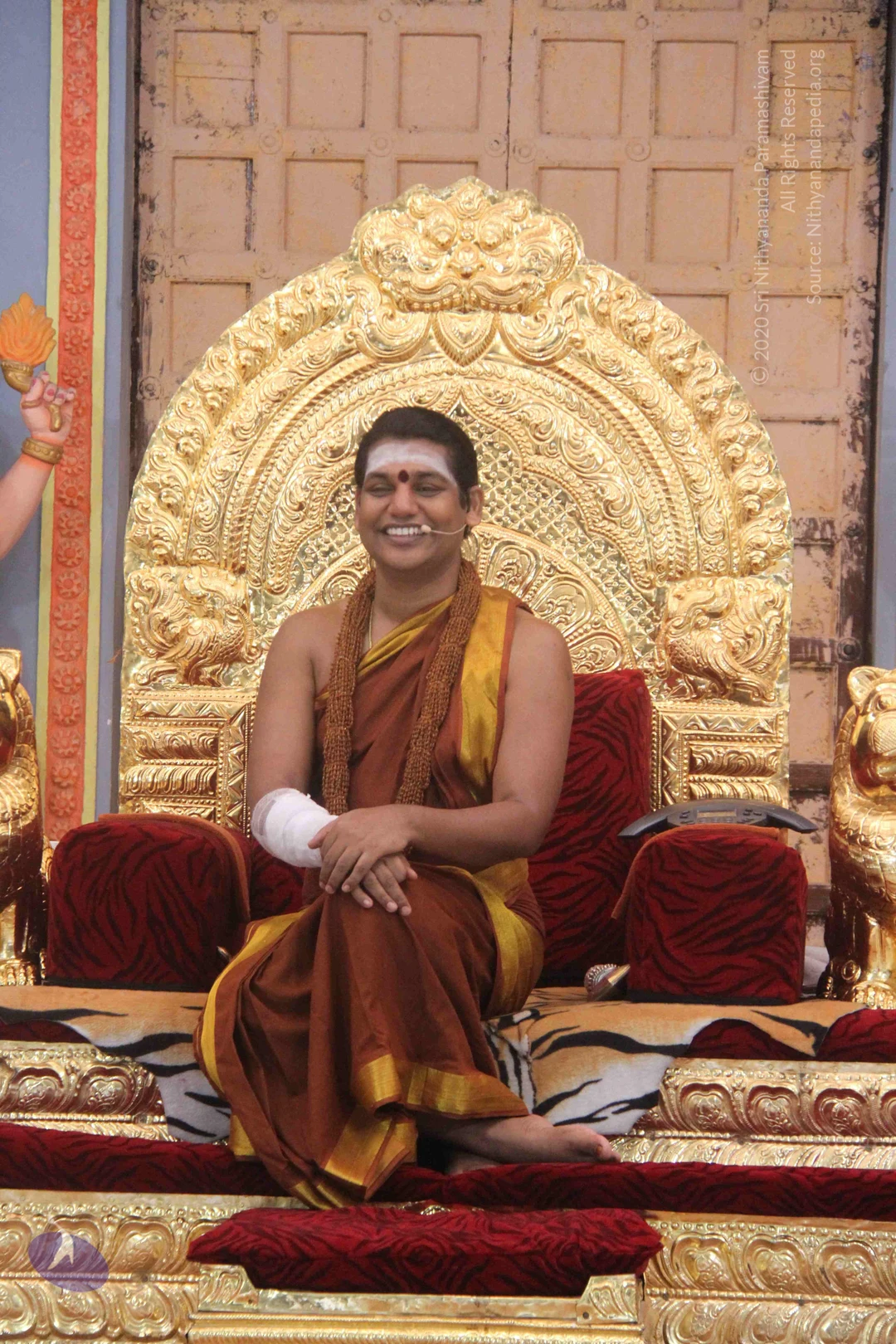
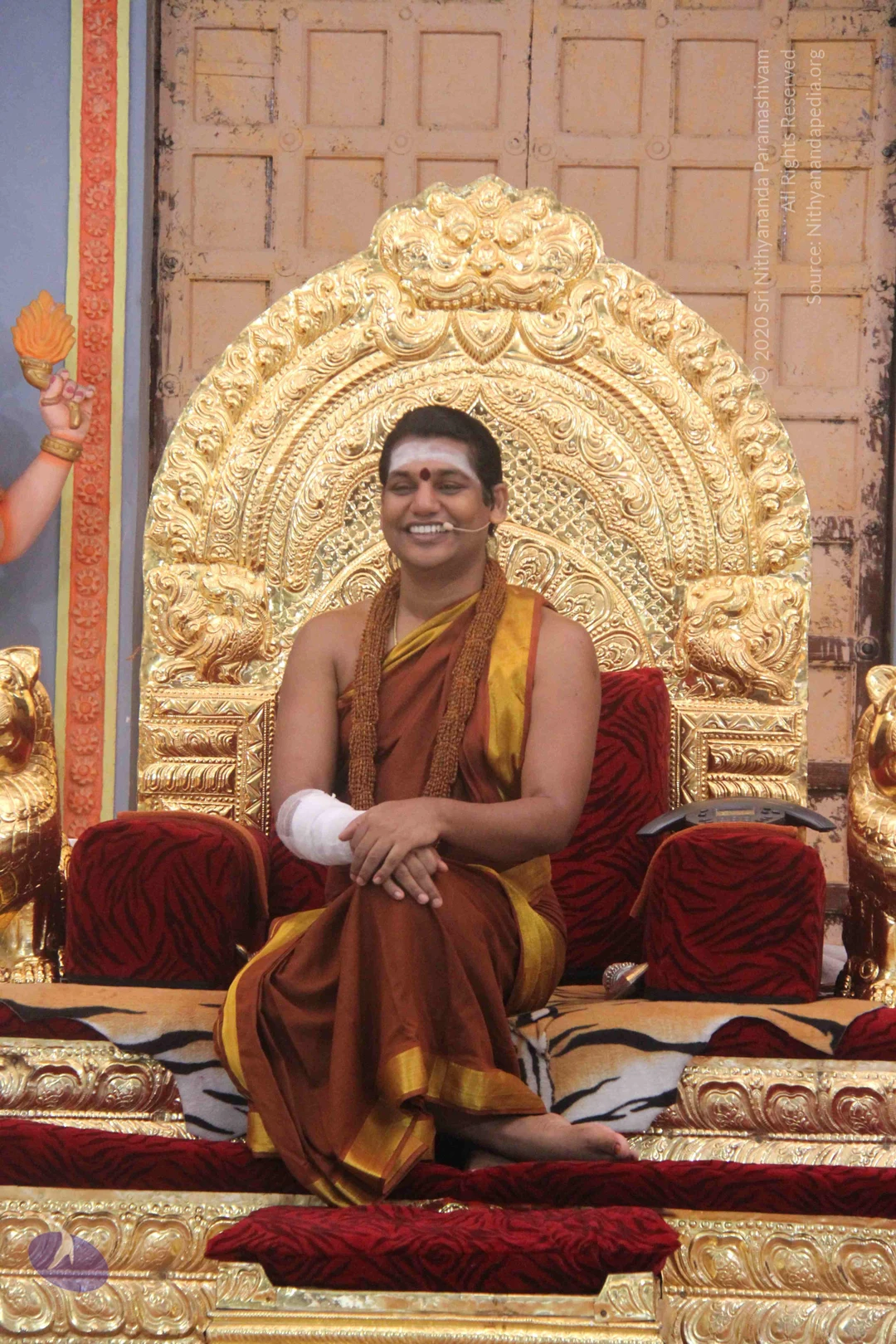
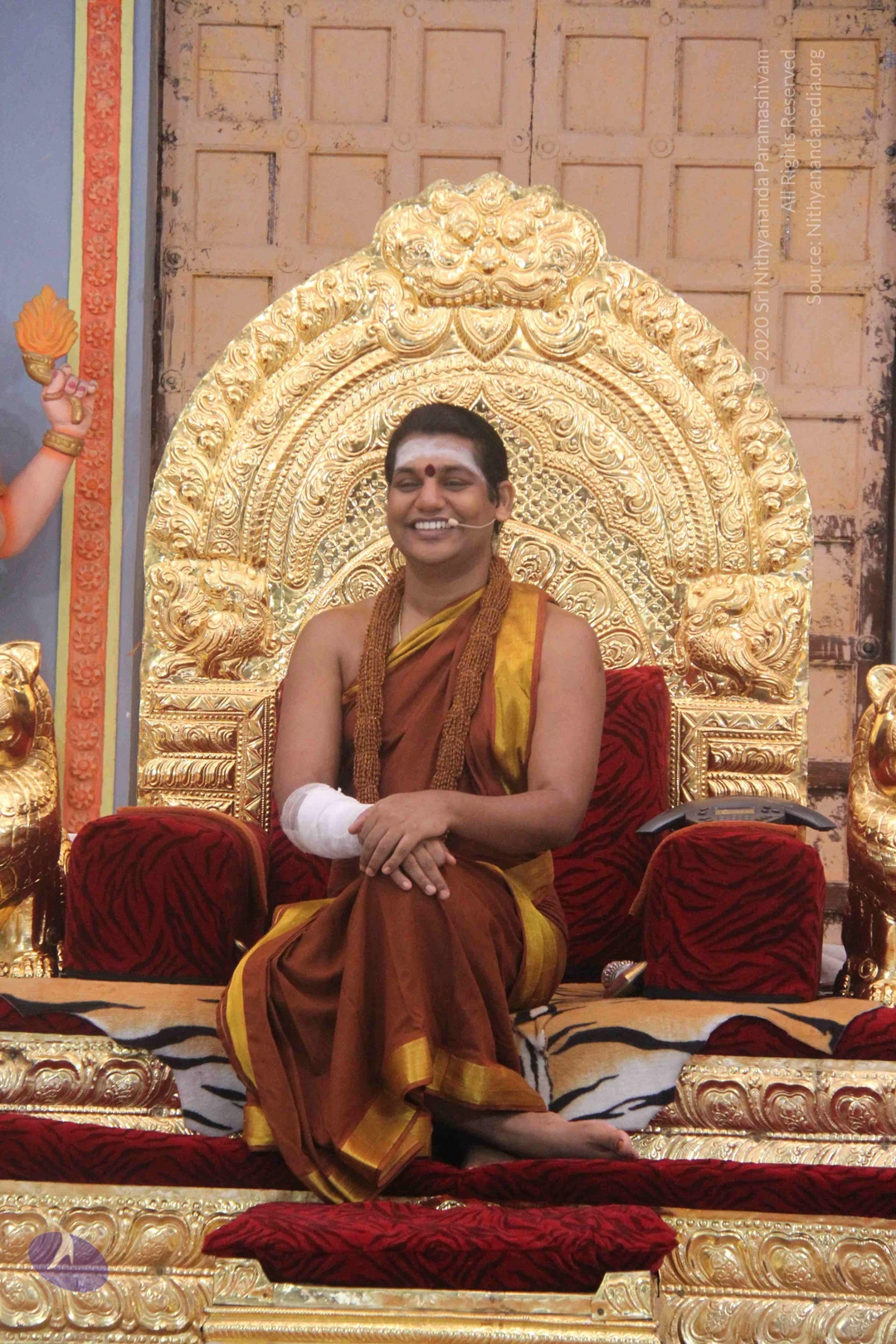
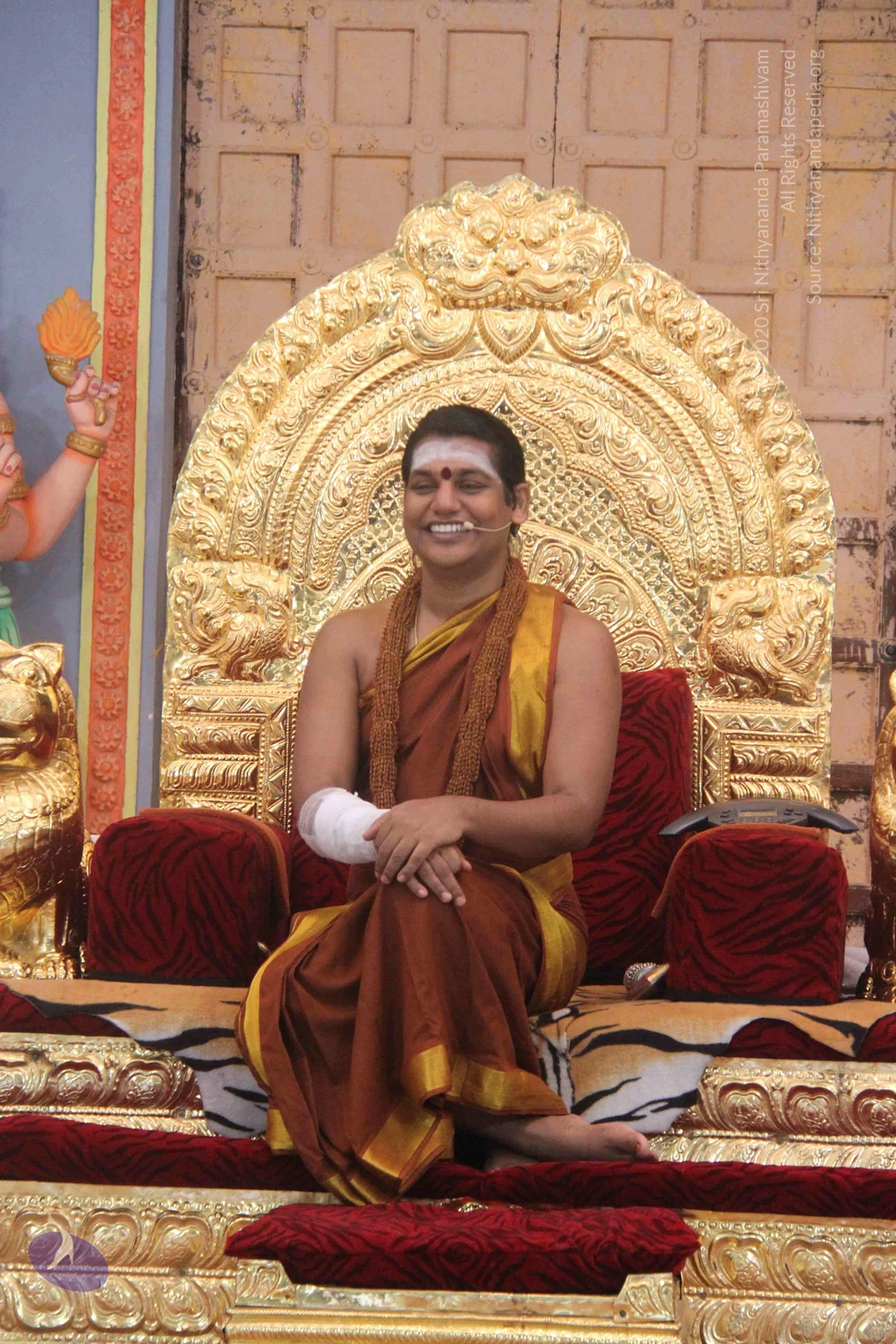
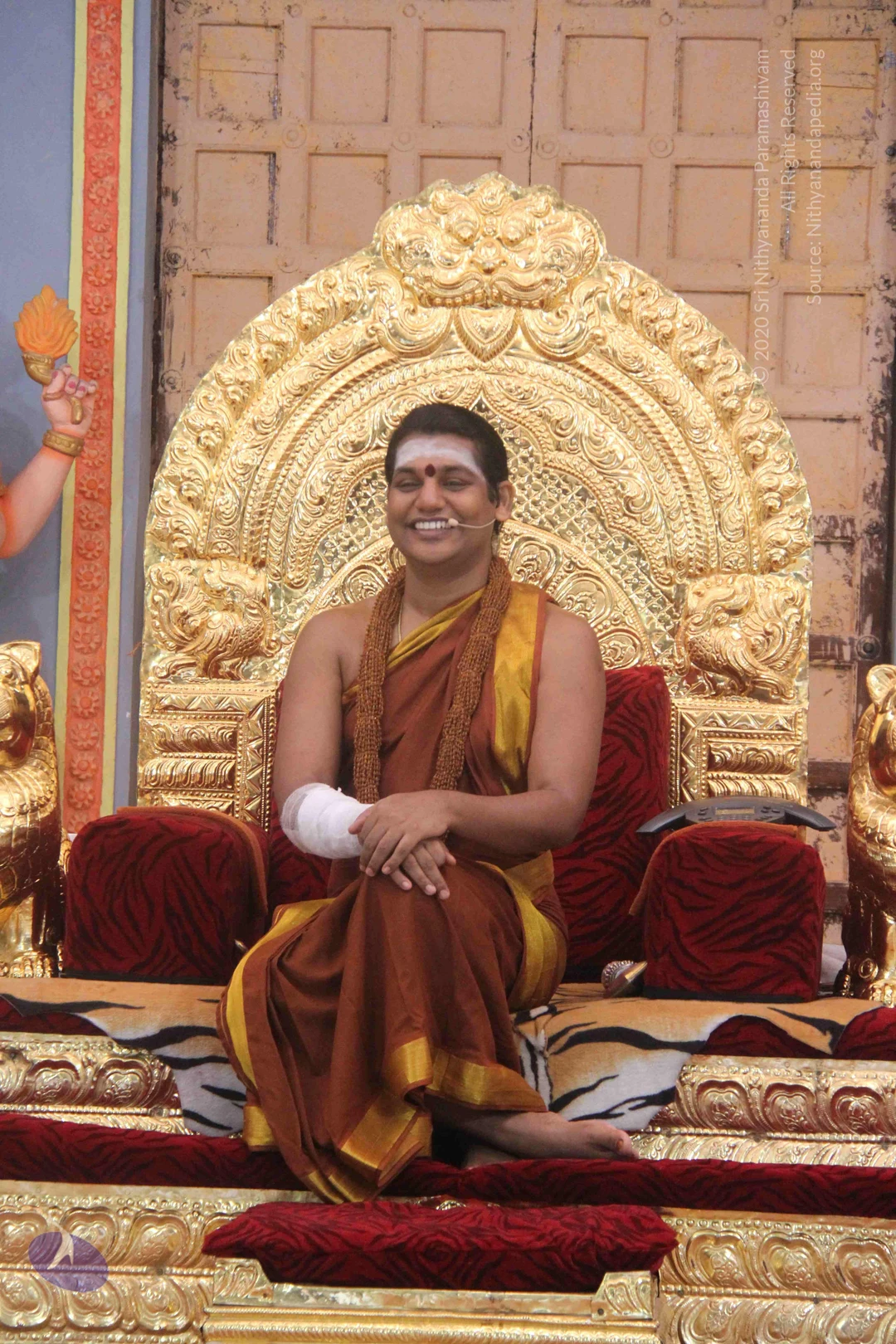
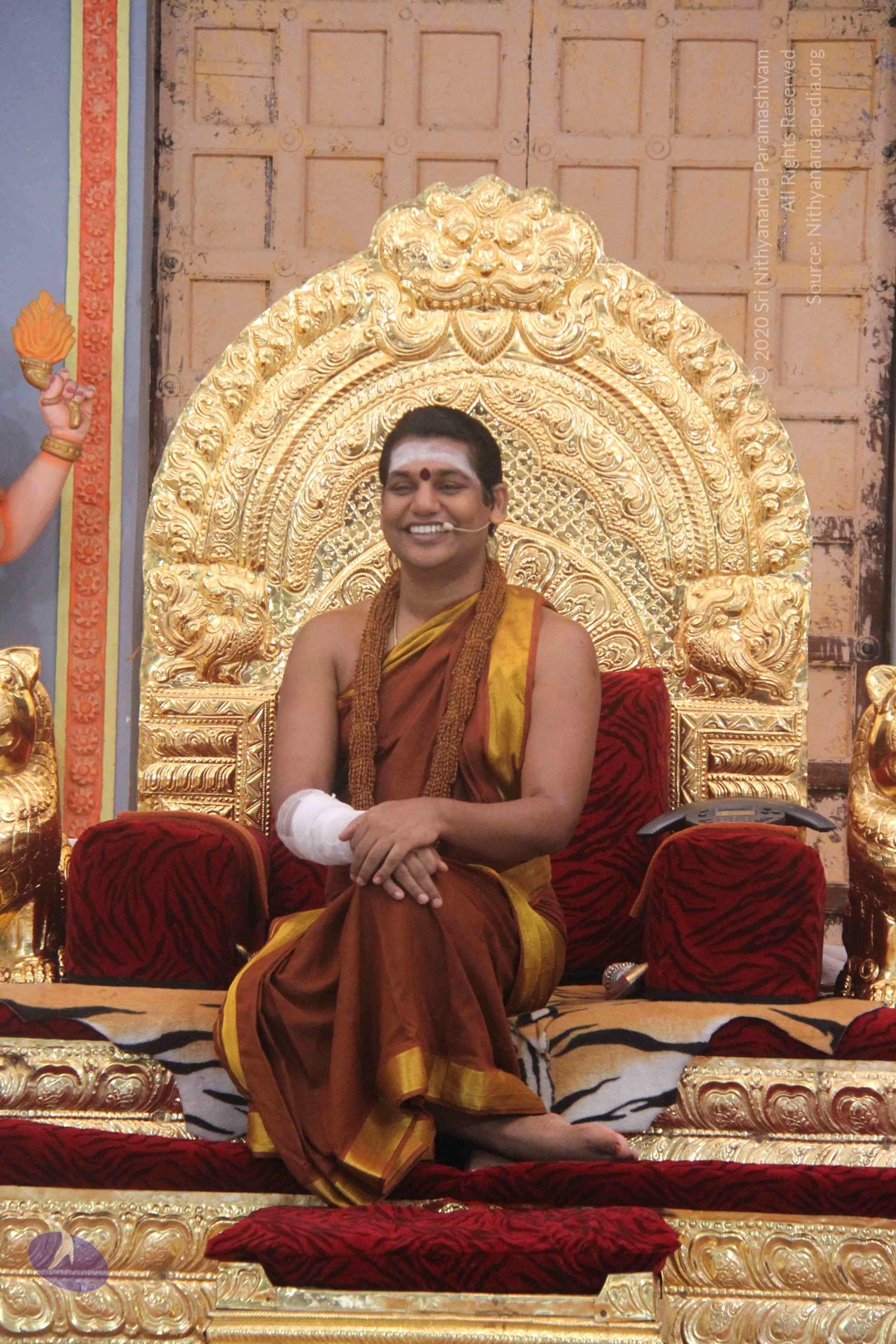
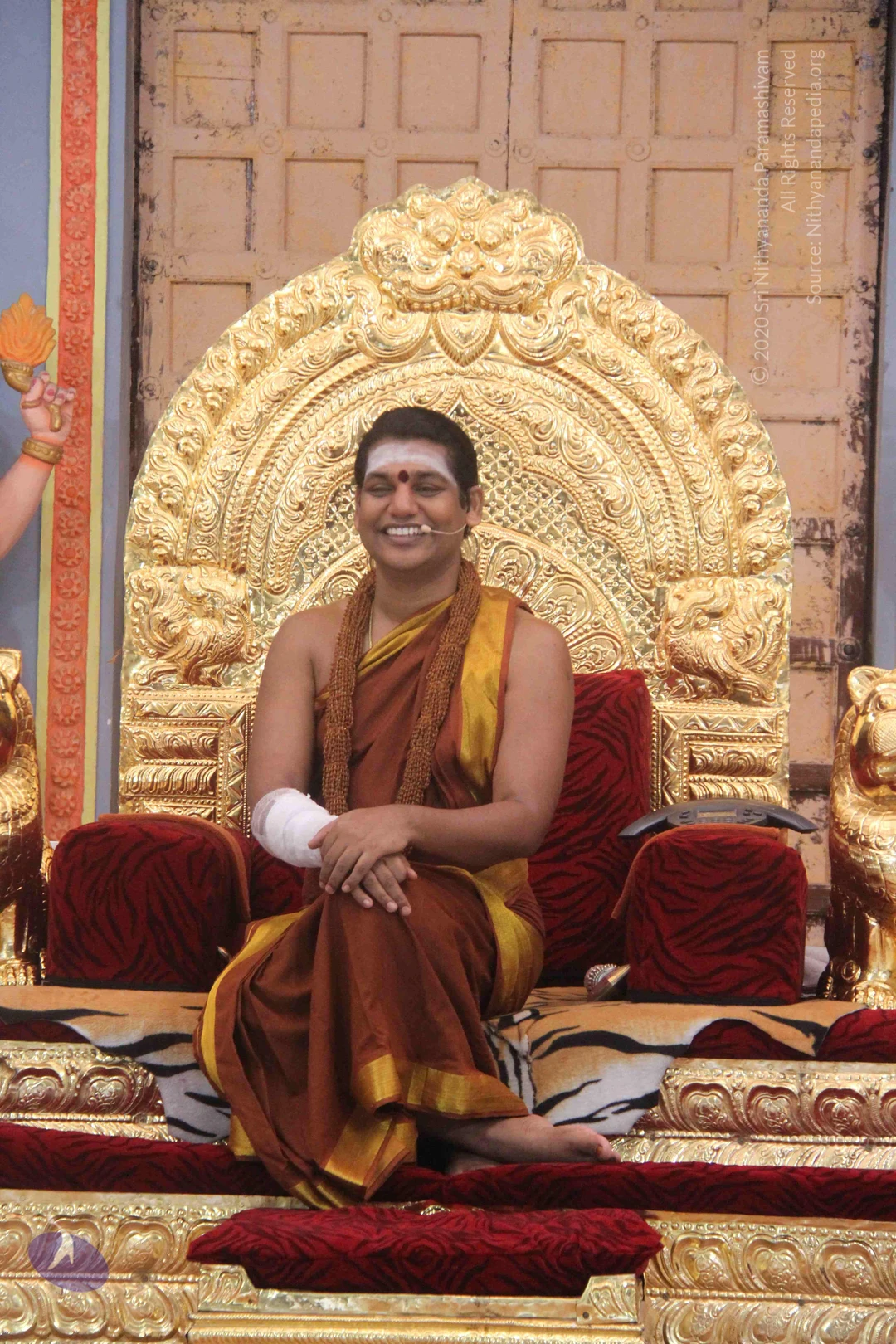
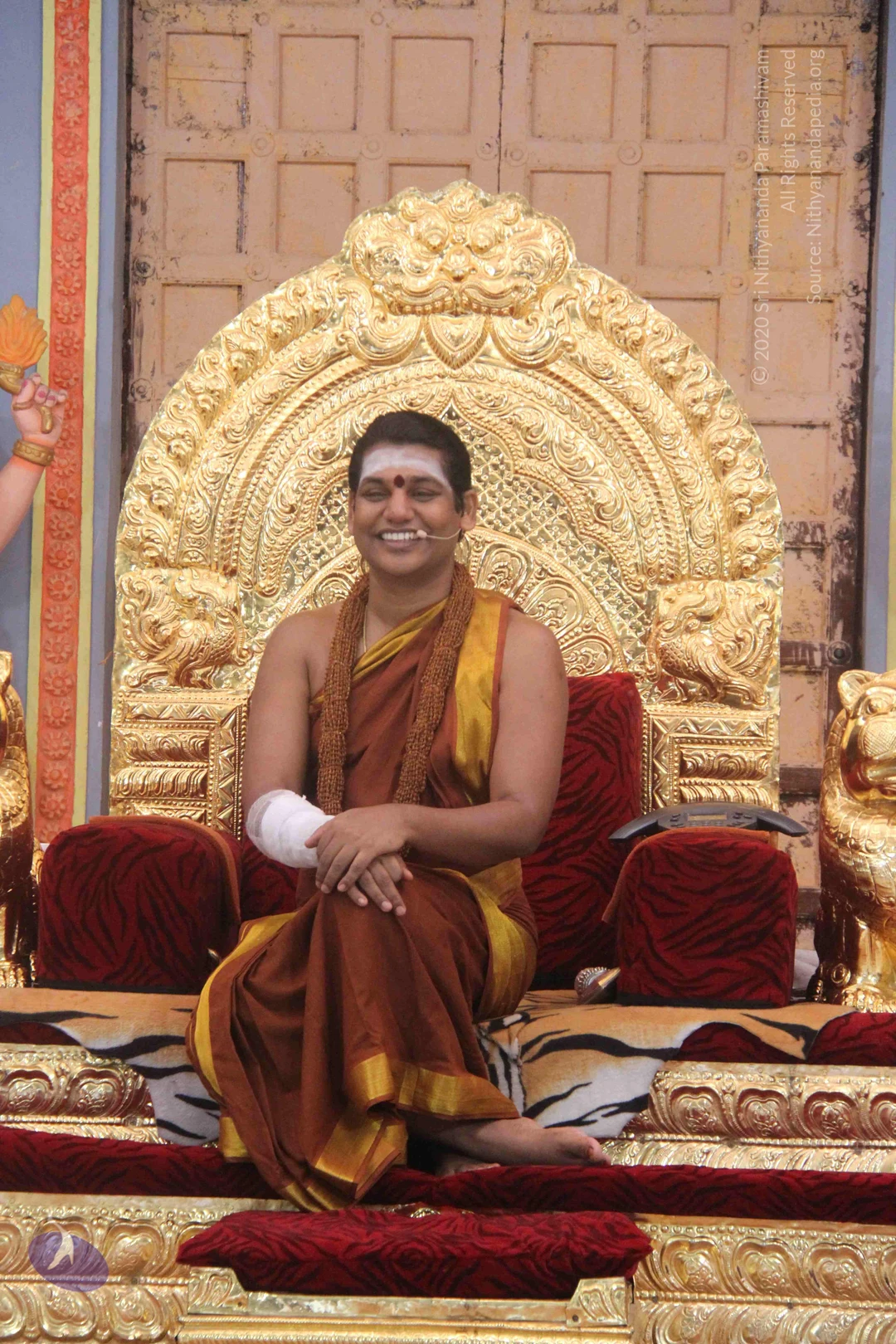
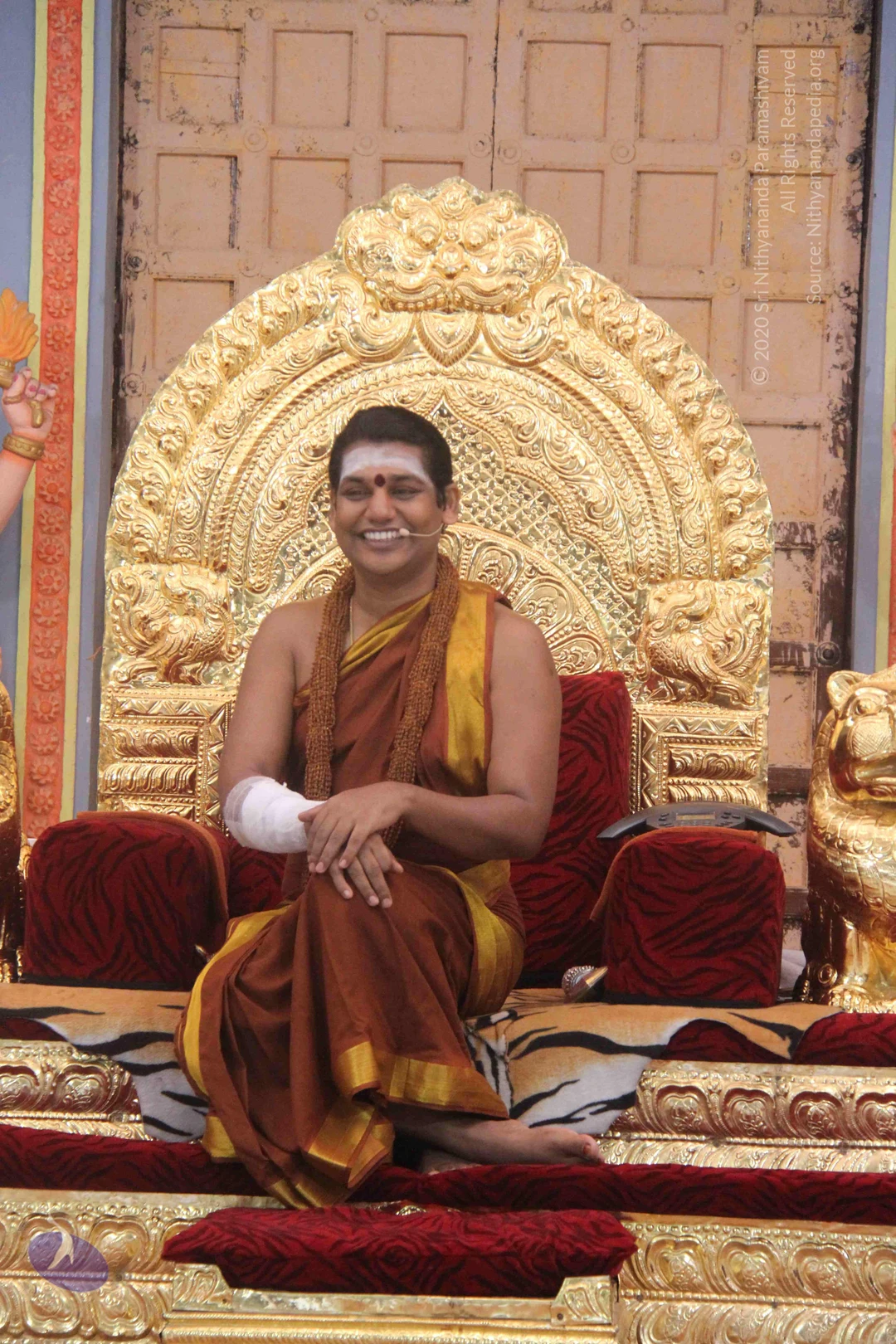
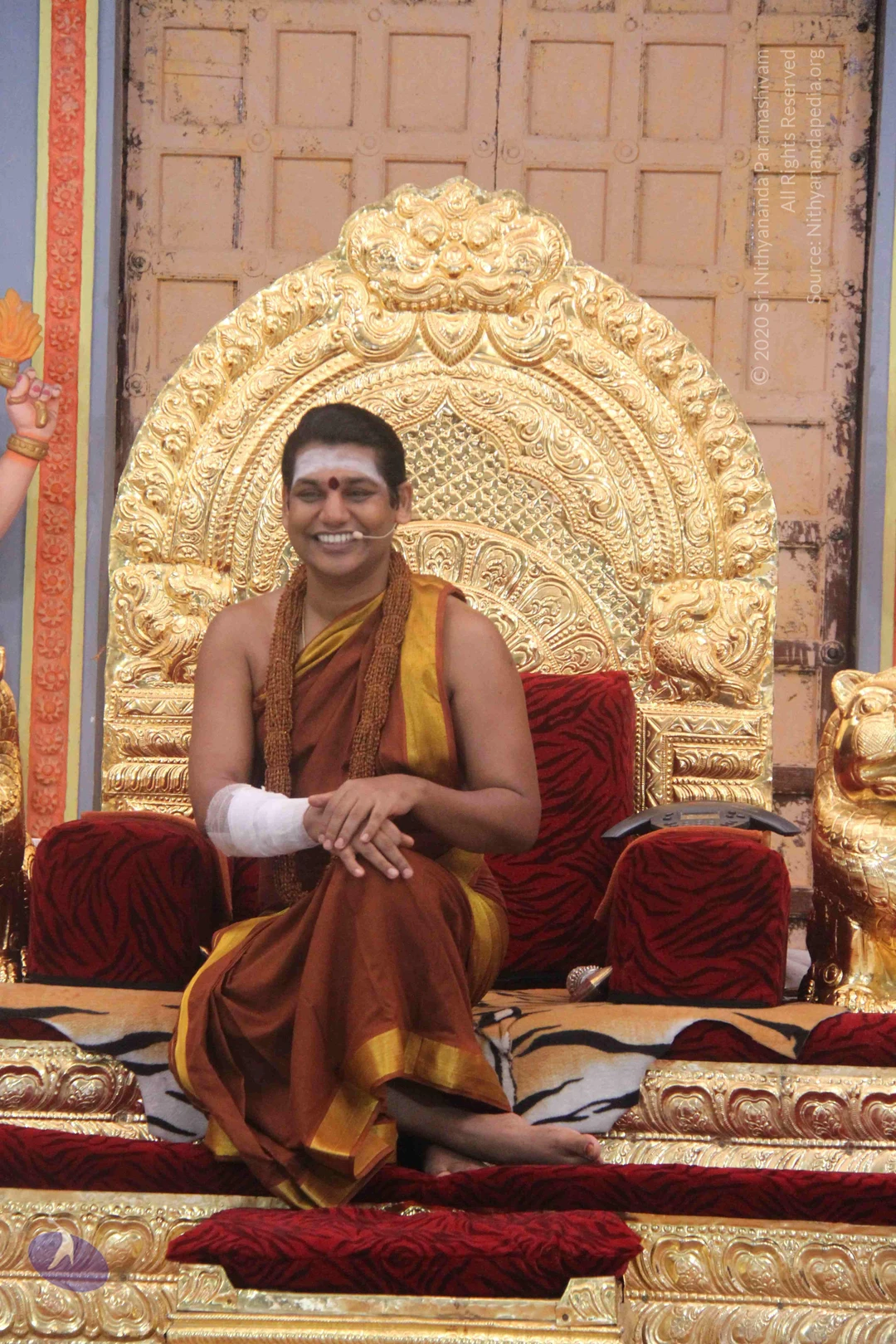
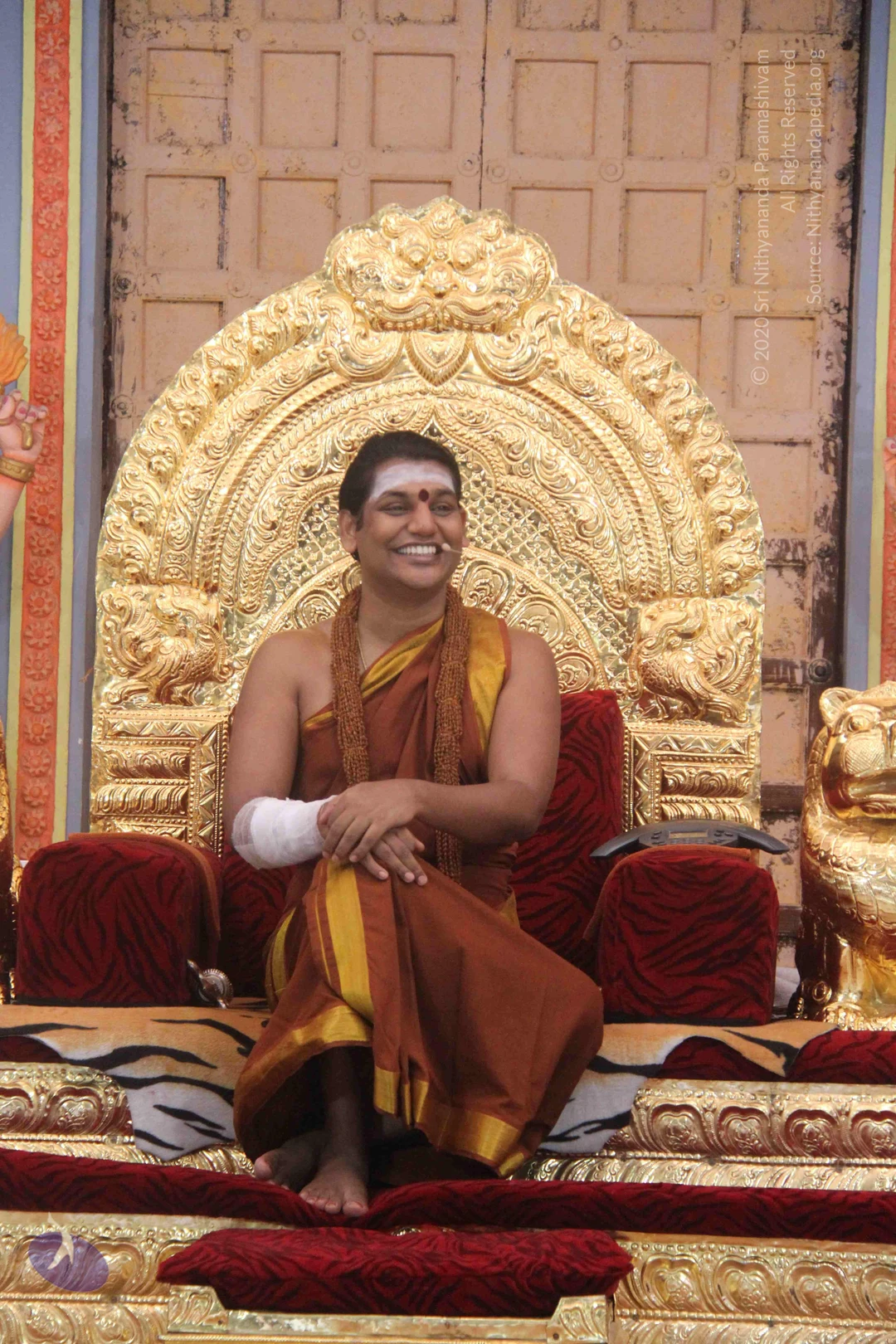
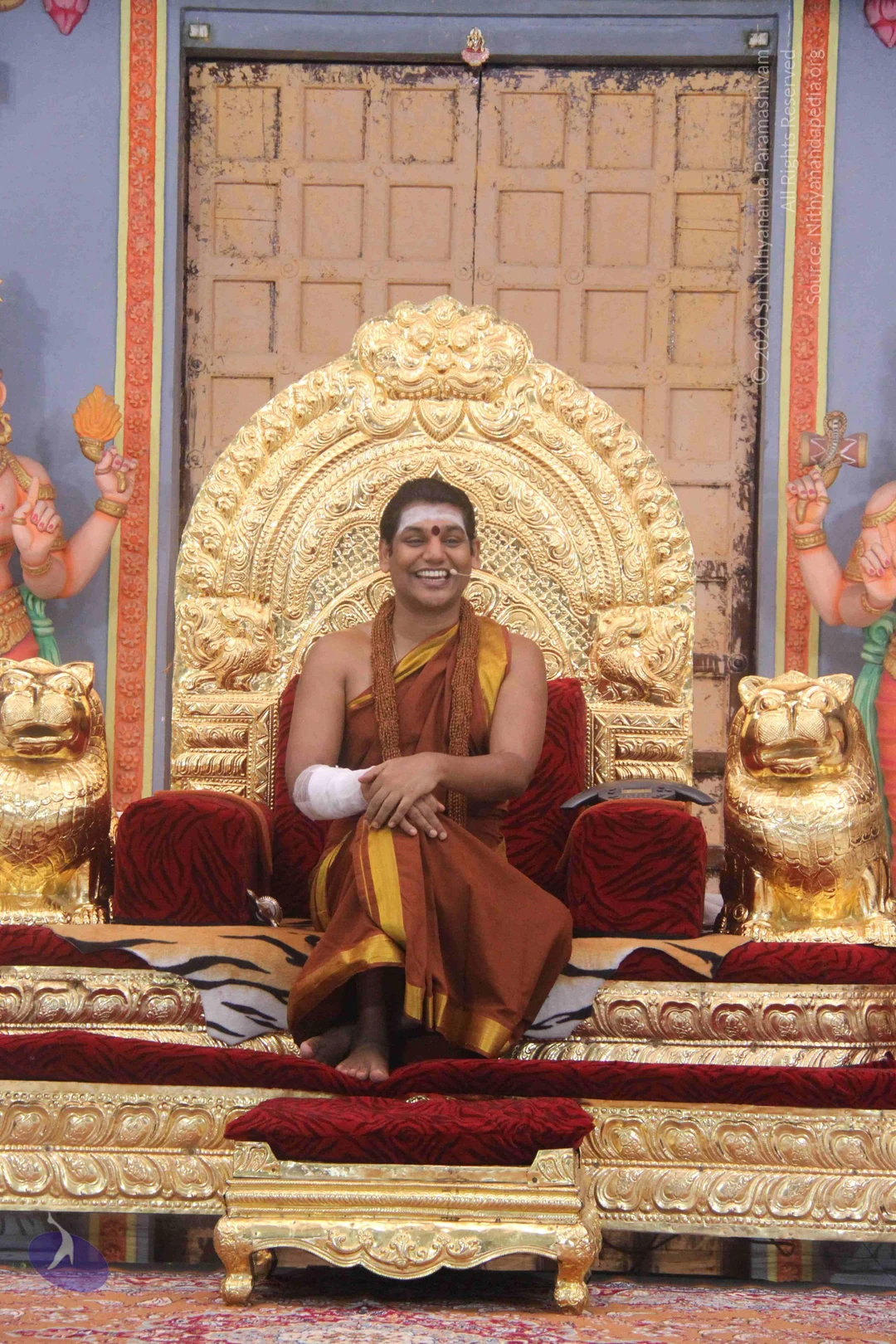
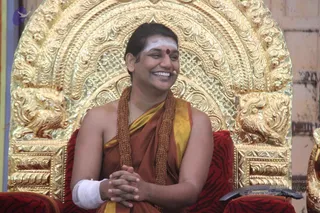
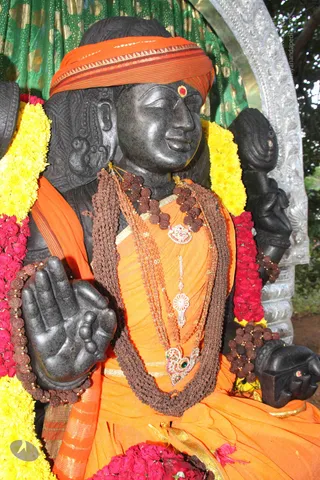
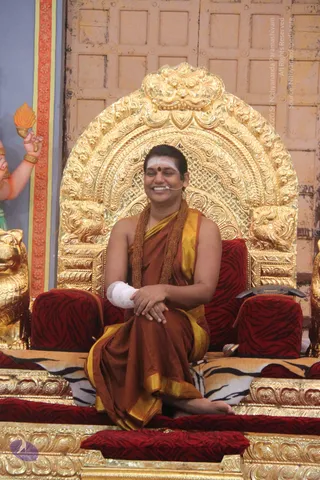
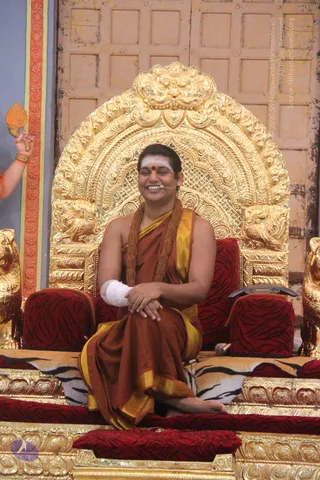
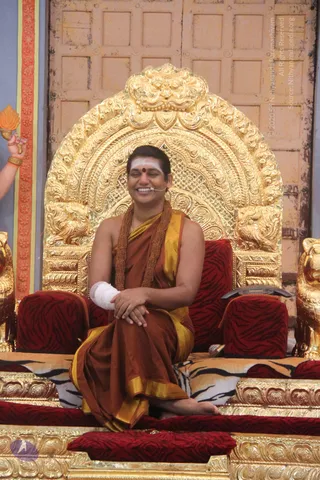
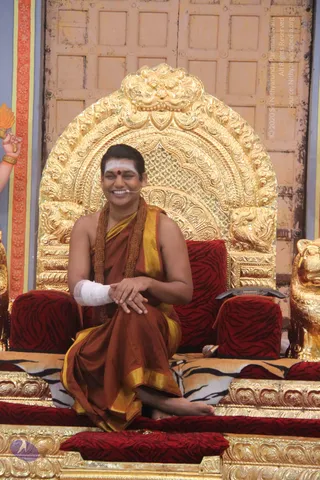
A smiling man sits on an ornate gilded throne with a tall arched back carved with floral scrolls and lion figures, upholstered in red velvet with tiger-stripe cushions. He wears a rust-orange and gold-bordered dhoti and shawl, a long rudraksha mala draped over his shoulders, a white bandage on one forearm, a red bindi and white forehead markings. Behind him are wooden panelled doors, and a gilded lion sculpture stands at the right edge. a person: the rudraksha mala, ornate gold-and-red throne setting and saffron-orange ceremonial robe are the qualifying cues, and he is seated in the central position of the scene.A dark stone statue of a four-armed deity murti seated in a silver arched niche before a green and gold cloth backdrop. The figure wears an orange saffron cloth draped over the body, an orange headcloth, a rudraksha mala and layered beaded necklaces with a gold pendant, and holds a trident-like weapon and other ritual objects in its hands. Garlands of yellow marigolds and red flowers hang over the shoulders and lap, and trees stand in the background. The image is a photograph of a statue, with no physical people present.A photograph looking up at a hazy grey sky with a bright, overexposed sun near the upper left and a lens flare with orange and blue spots. Dark silhouettes of palm fronds and tree foliage frame the bottom left and right edges, with a few small white clouds scattered across the sky. No people, figures or ritual activity are visible.

September 27 2013

Original wiki page
Contents

Description:

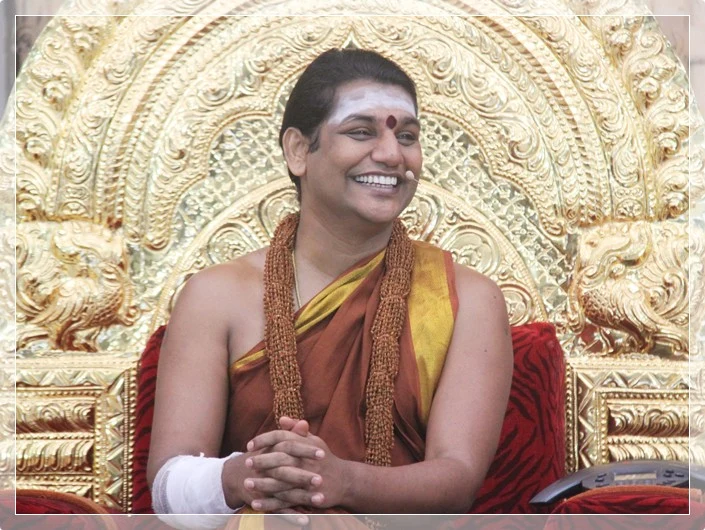
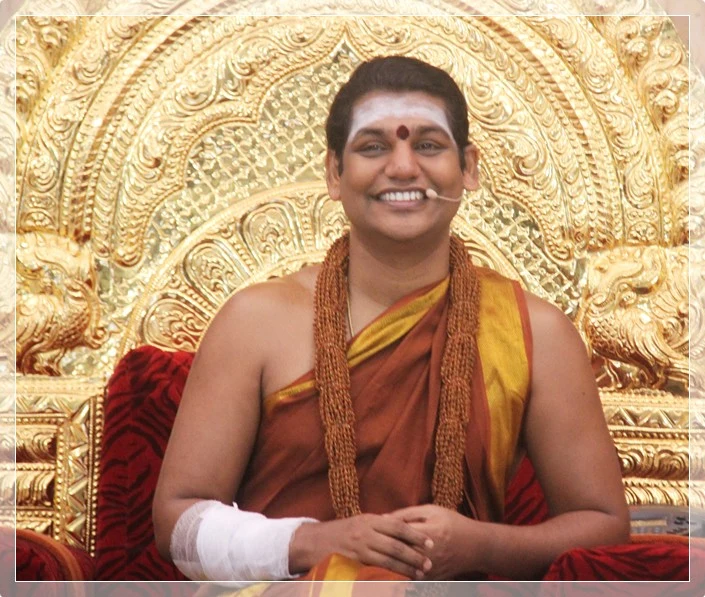
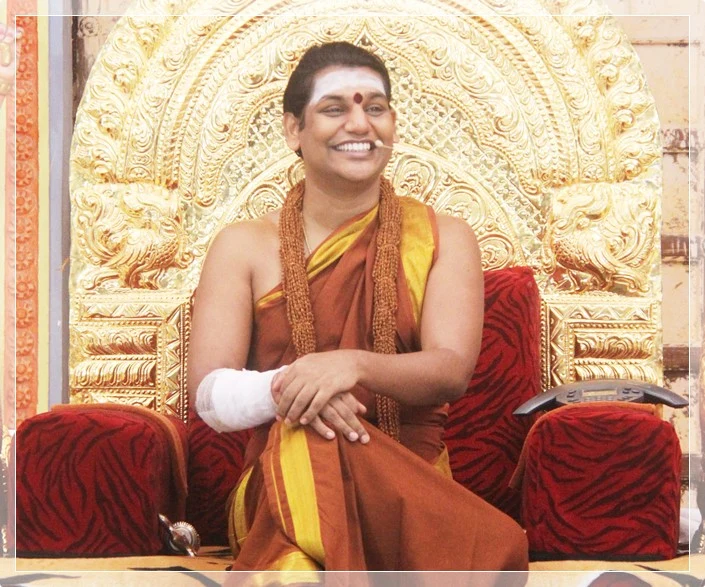
In today’s morning Satsang, Paramahamsa Nithyananda teaches us that the main three things we should do in life are to learn the science of completion, practice completion, and be in the space of completion. He explains that real completion is completing the incompletions we are clinging to. Sadly, we were all made to logically believe that completions won’t solve our problems. Contrary to popular belief, completion is the ultimate solution to our problems! There is nothing more than completion.

Link to Video:

VideoAudio
VideoAudio
VideoAudio

Transcript:

Nithyanandeshwara Samaarambhaam Nithyanandeshwari Madhyamaam | Asmadaachaarya Paryanthaam Vande Guru Paramparaam ||

I welcome all of you with my love and respects.

I welcome all the devotees, disciples, samajis, satsangis sitting with us all over the world through Nithyananda TV, Sadhana TV, Lotus News Channel, and two-way video-conferencing having Nayana Deeksha.

Cities sitting with us in two-way video-conferencing having Nayana Deeksha: Philadelphia, Tiruvanmiyur,Enriching Temple-Bidadi, Hong Kong-Sirkazhi, Dubai-Vaidyanatham, Kathmandu-Nepal, San Diego-La Jolla, Saudi Arabia, Devon-UK, Washington DC, Dallas-Dwaraka, Singapore-Singapuram, Netherlands,Hyderabad-Gupta Kashi, Nepal, Oman-Sivagangai, Varanasi, Guadeloupe, Kuala Lumpur, Toronto,Ohio, Oklahoma, San José, Houston, Charlotte, Sharjah, Vancouver, Seattle, Los Angeles, Paris-Kalighat, Hyderabad-Bahya Nagaram, East London-UK………..

I welcome all of you with my love and blessings.

Today is the 957th Nithya Satsang! From today onwards, I’ll be announcing even the Nithya Satsang number; 957th Nithya Satsang. It is calculated only since 2010, it is not from 2003 when I started my public life, nor from 1978, when I started my life! And today the 20th batch Inner Awakening starting. I welcome all the participants who are here for the Inner Awakening – Level-1, Level-2, Level-3. And 17th batch eN-Genius is starting. 19th batch Nirahara Samyama. And 9th batch The Samyama.

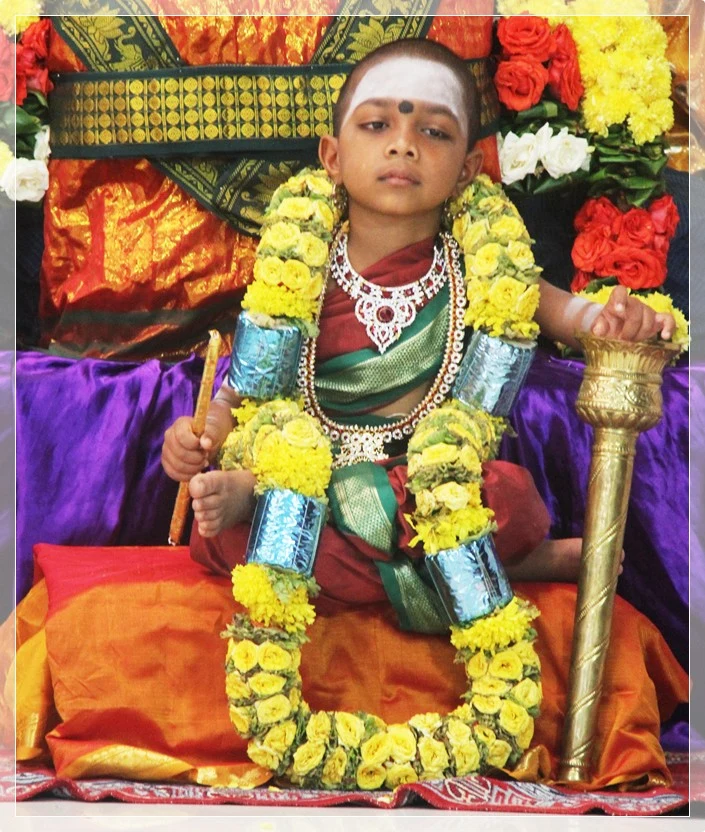
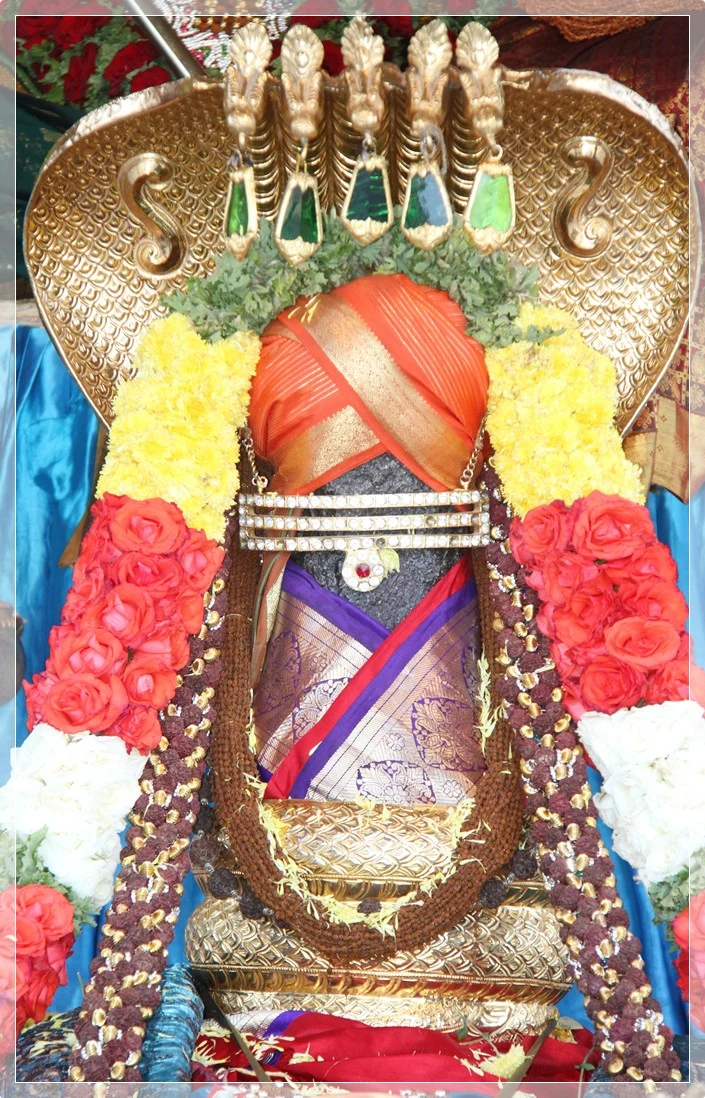
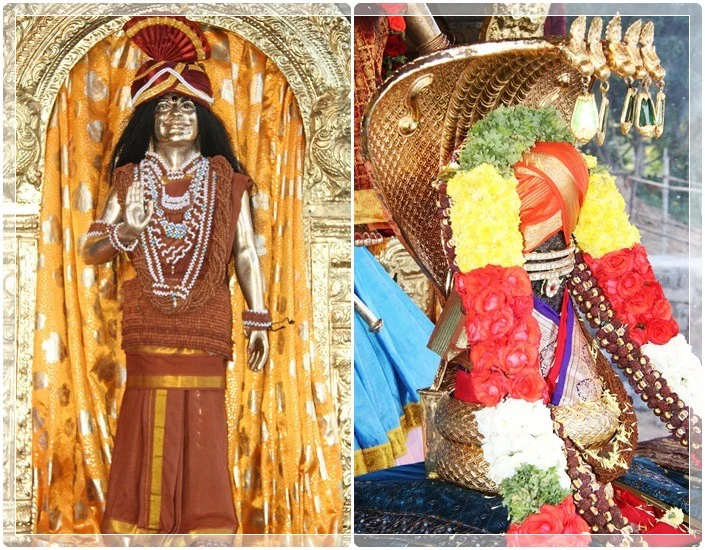
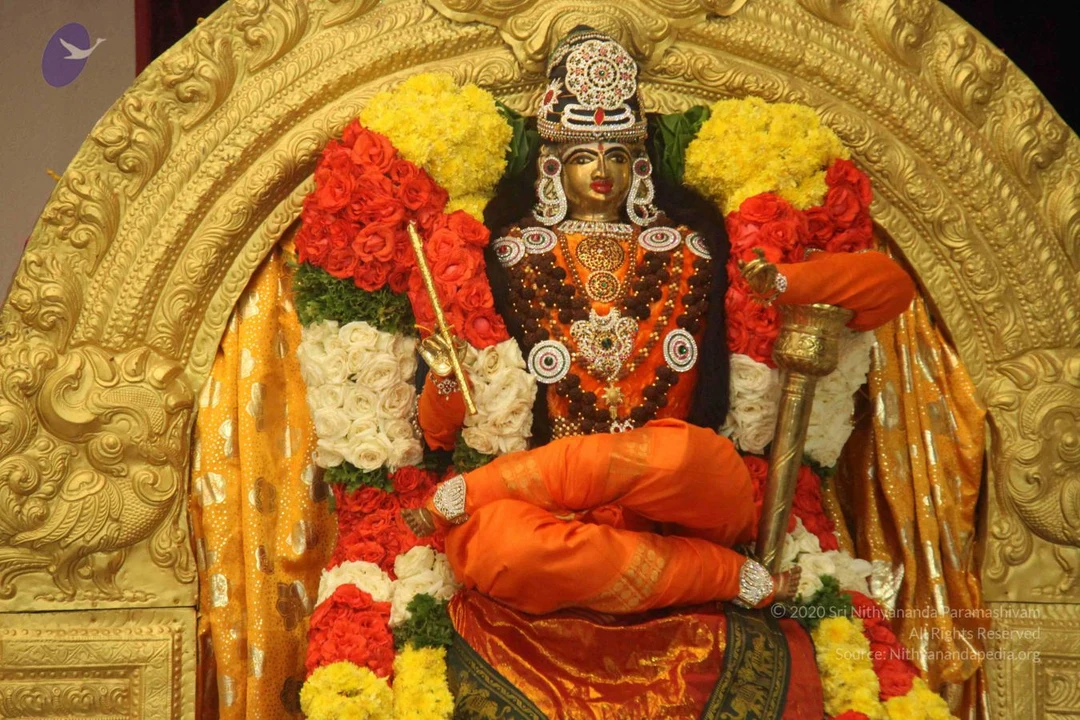
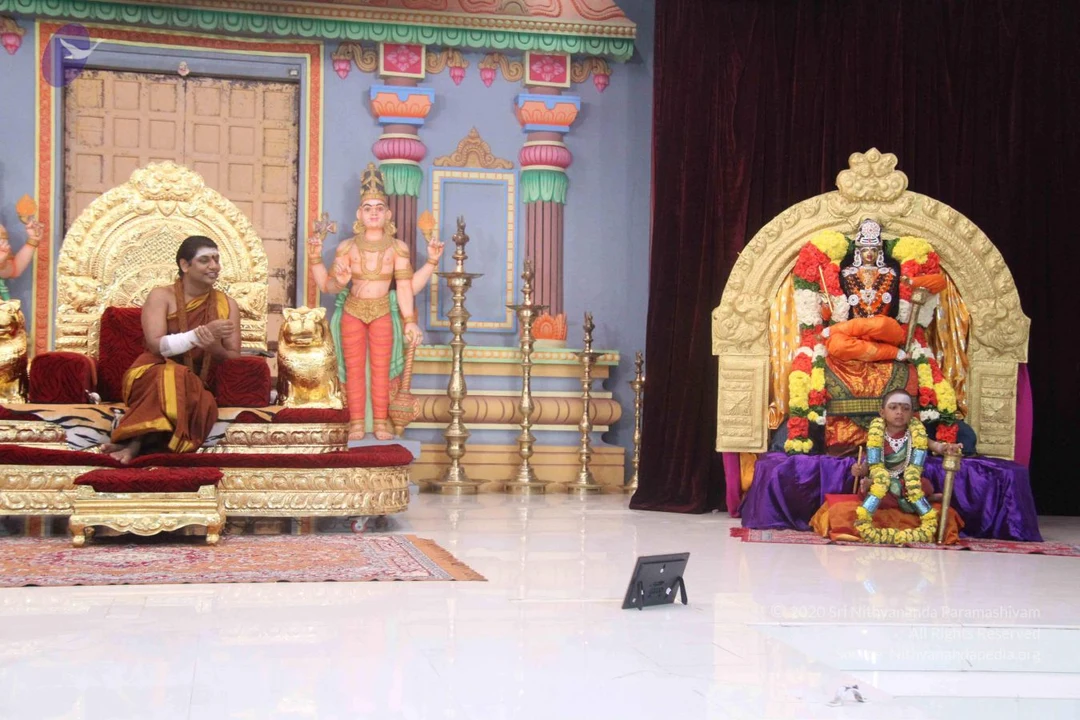
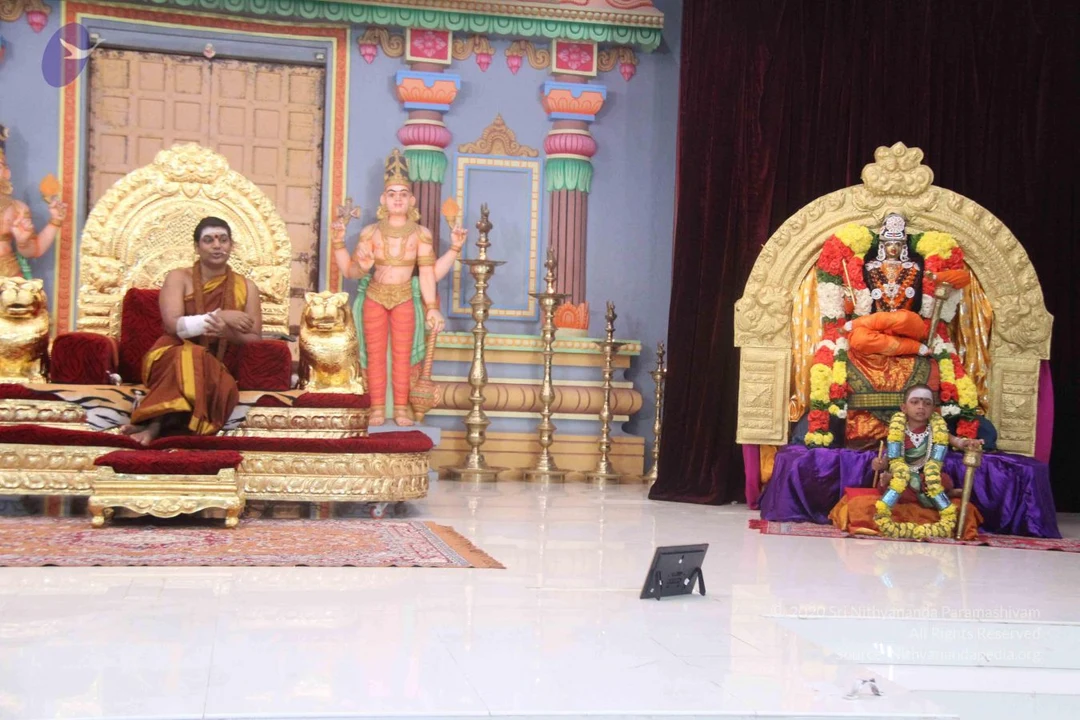
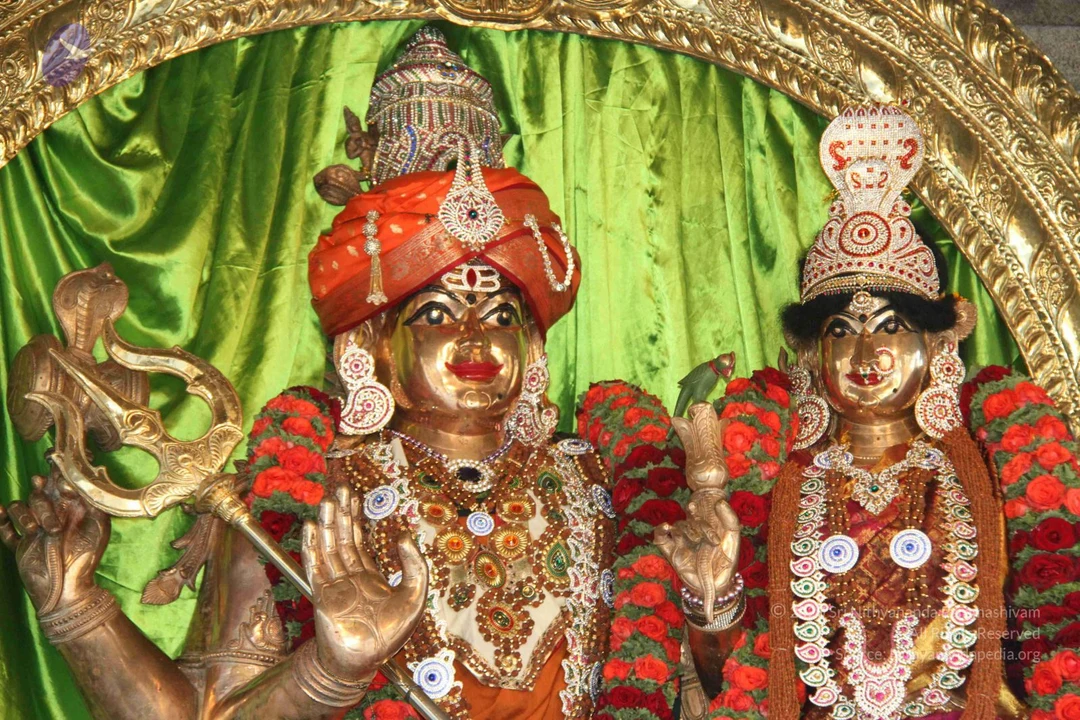
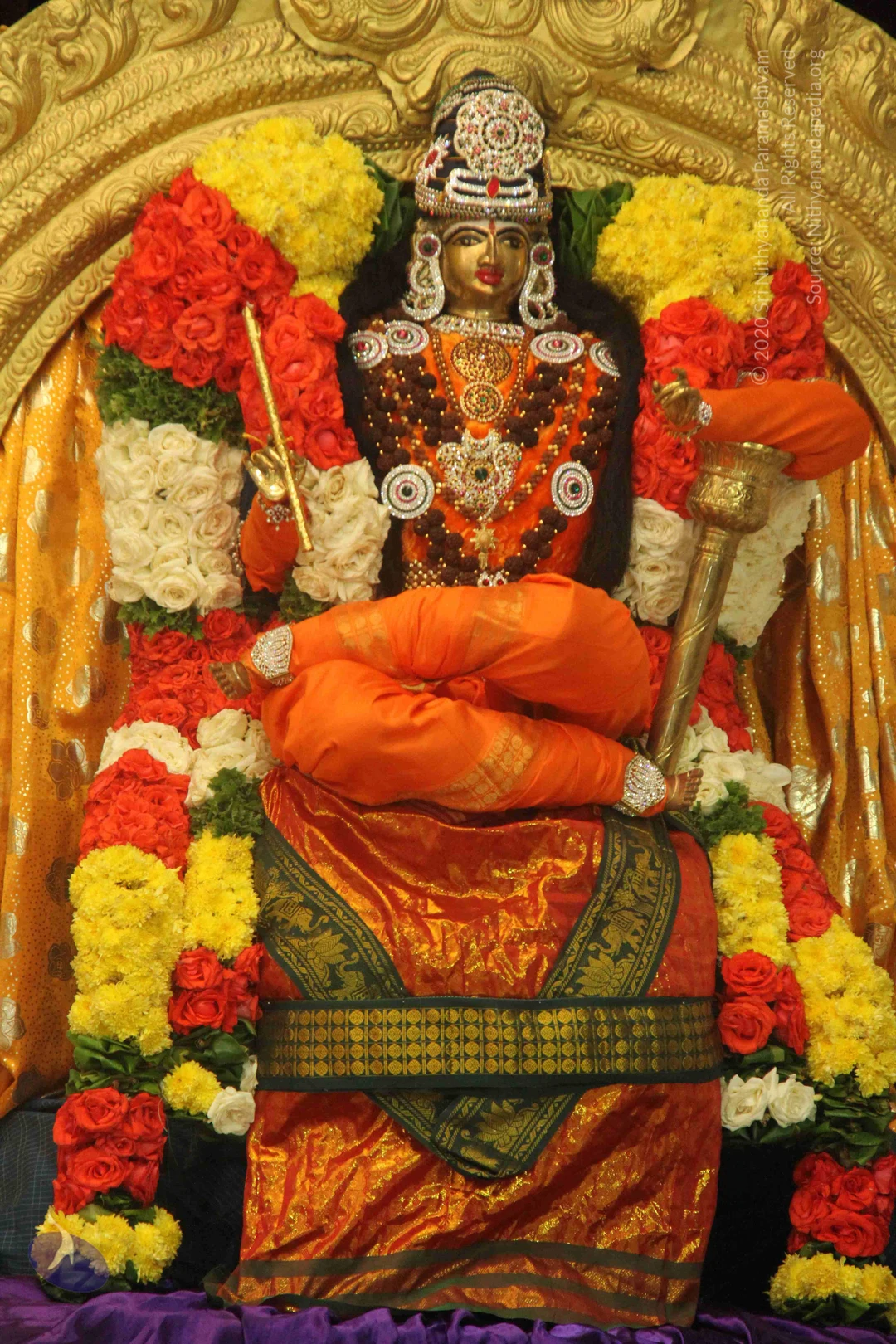
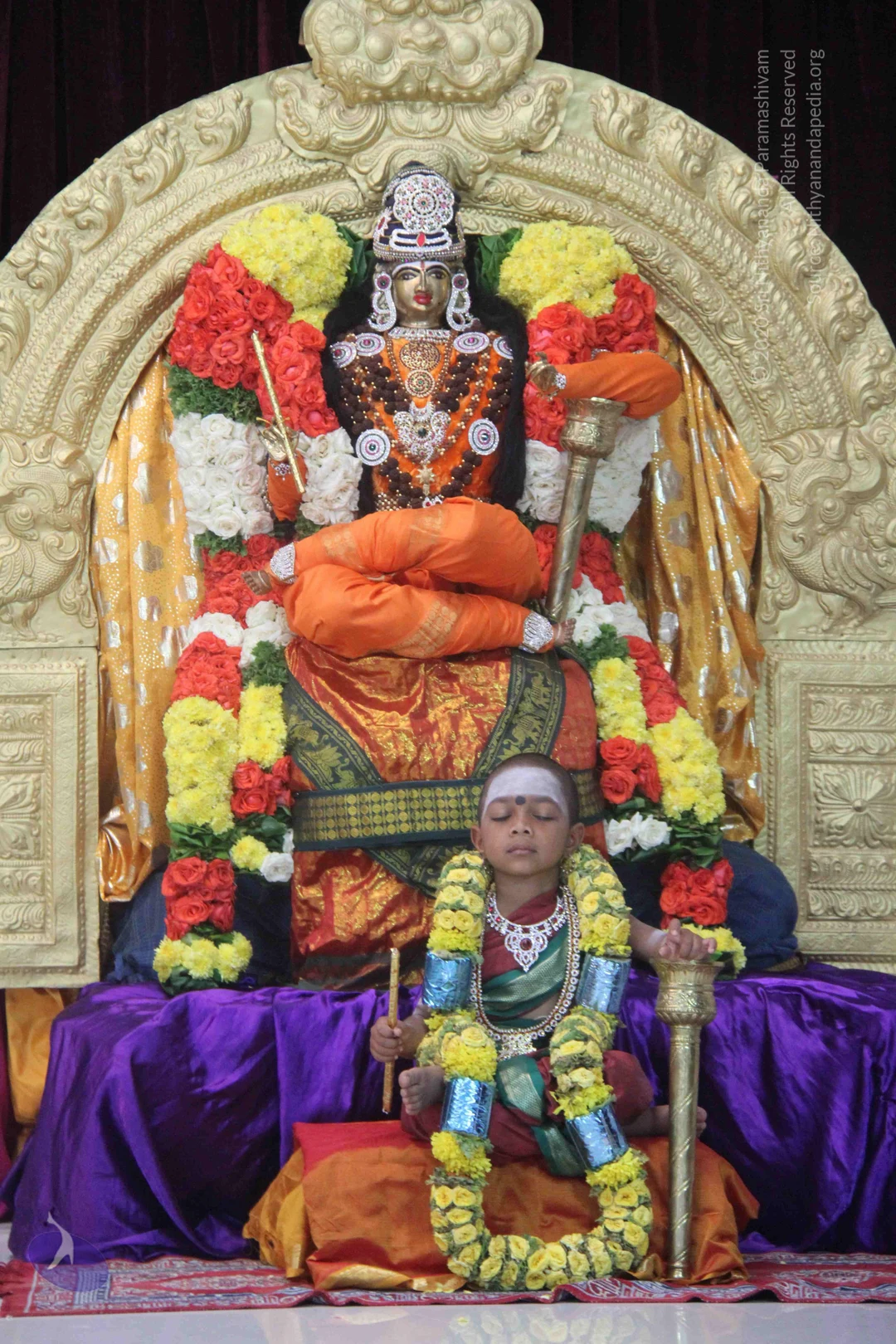
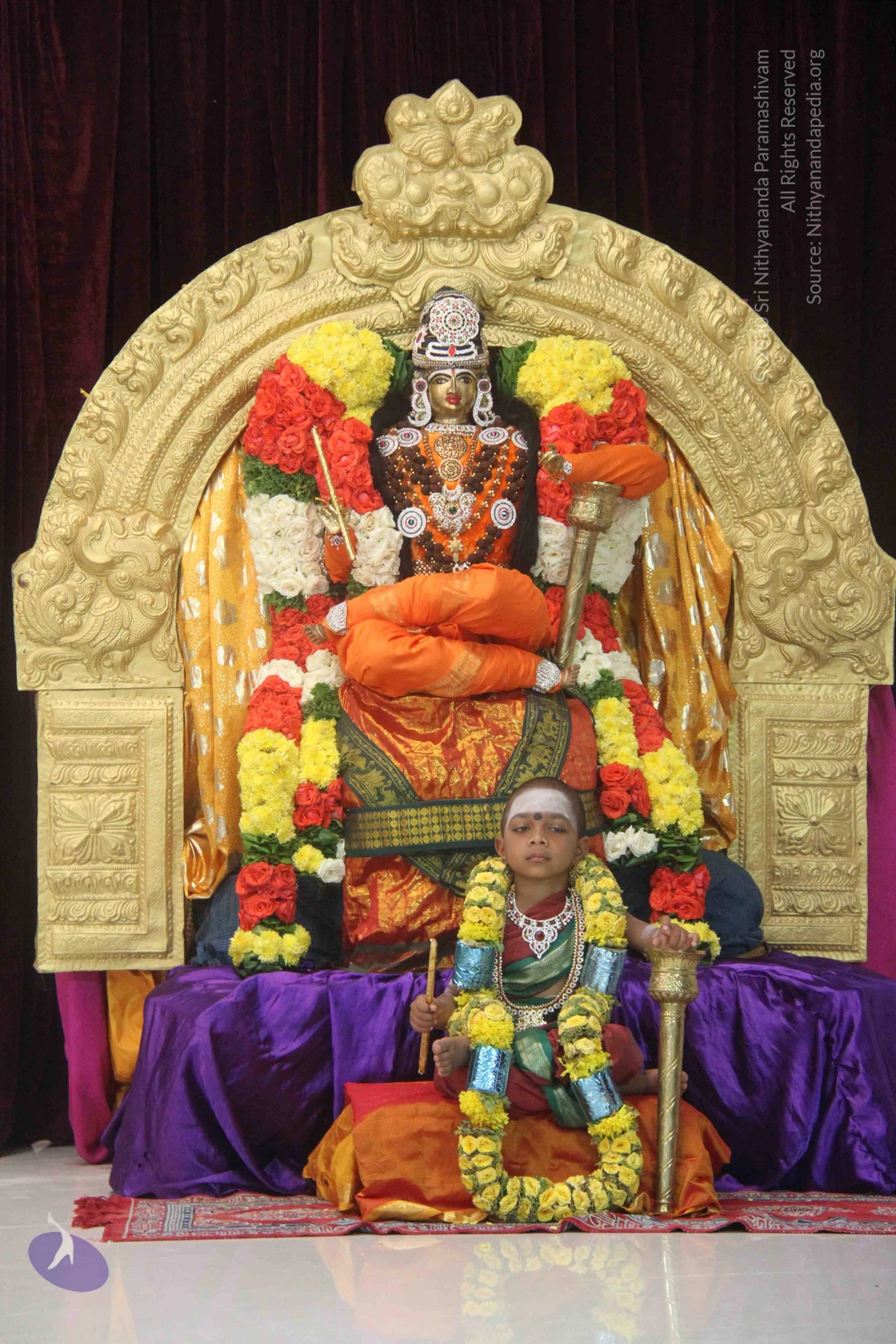
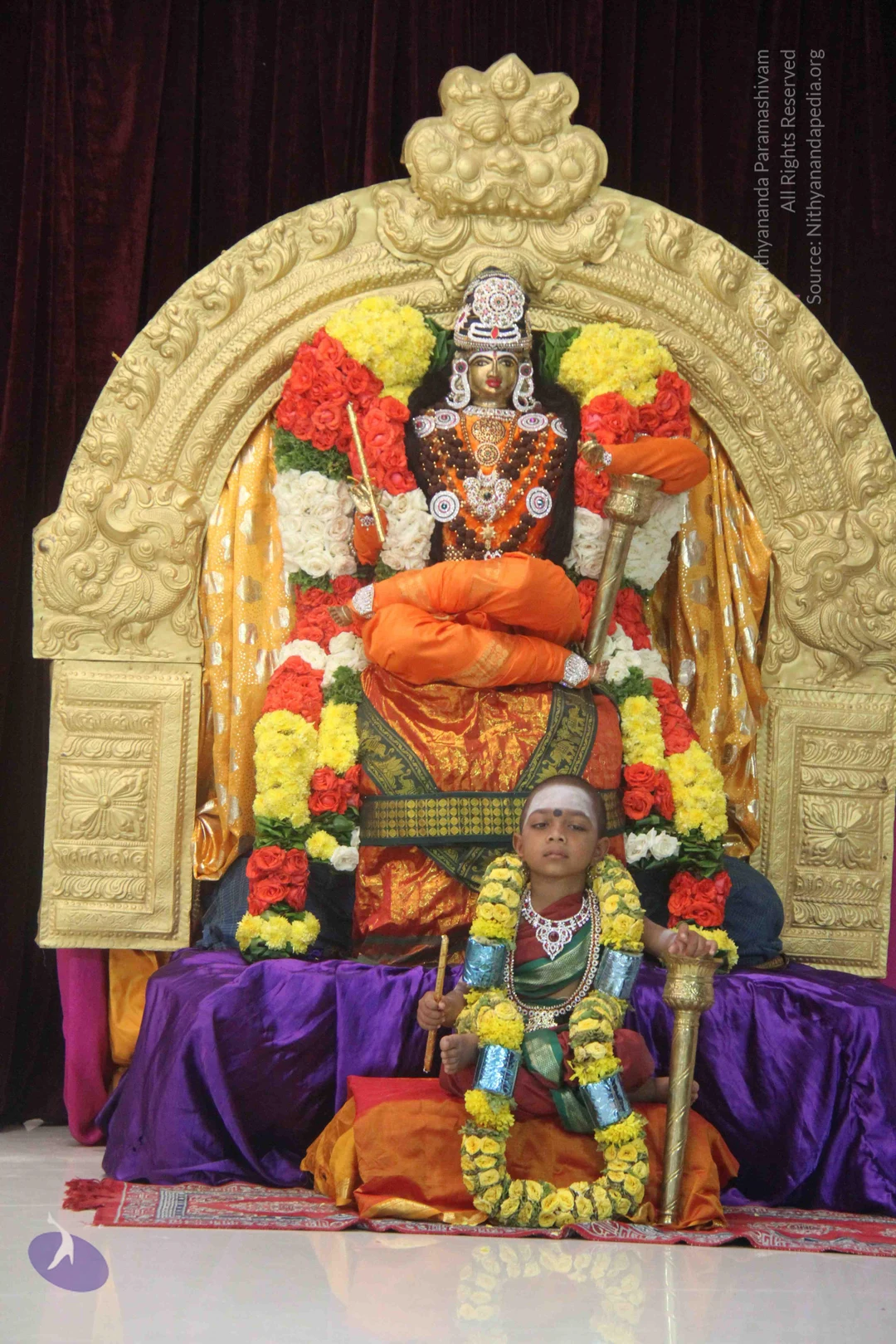
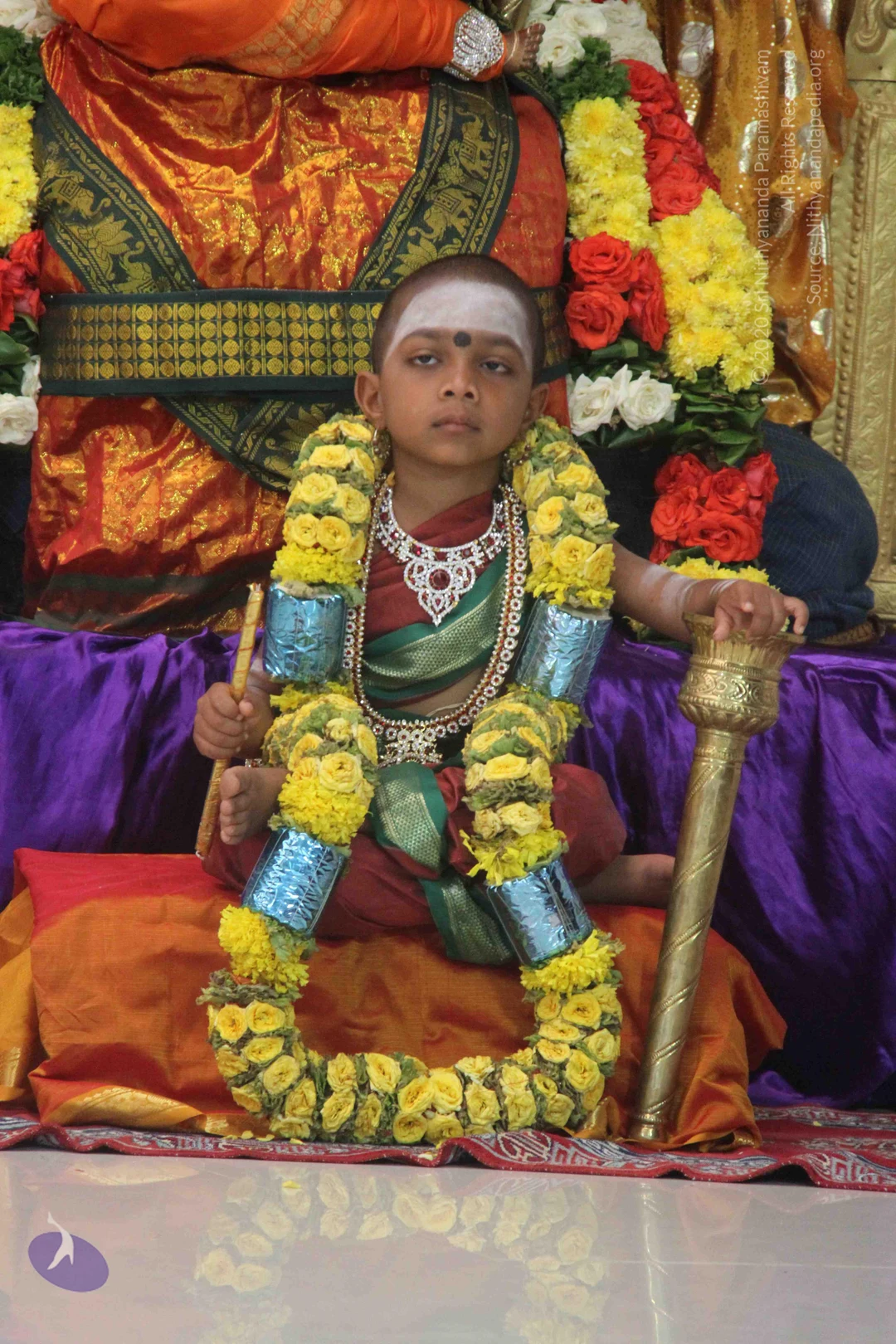
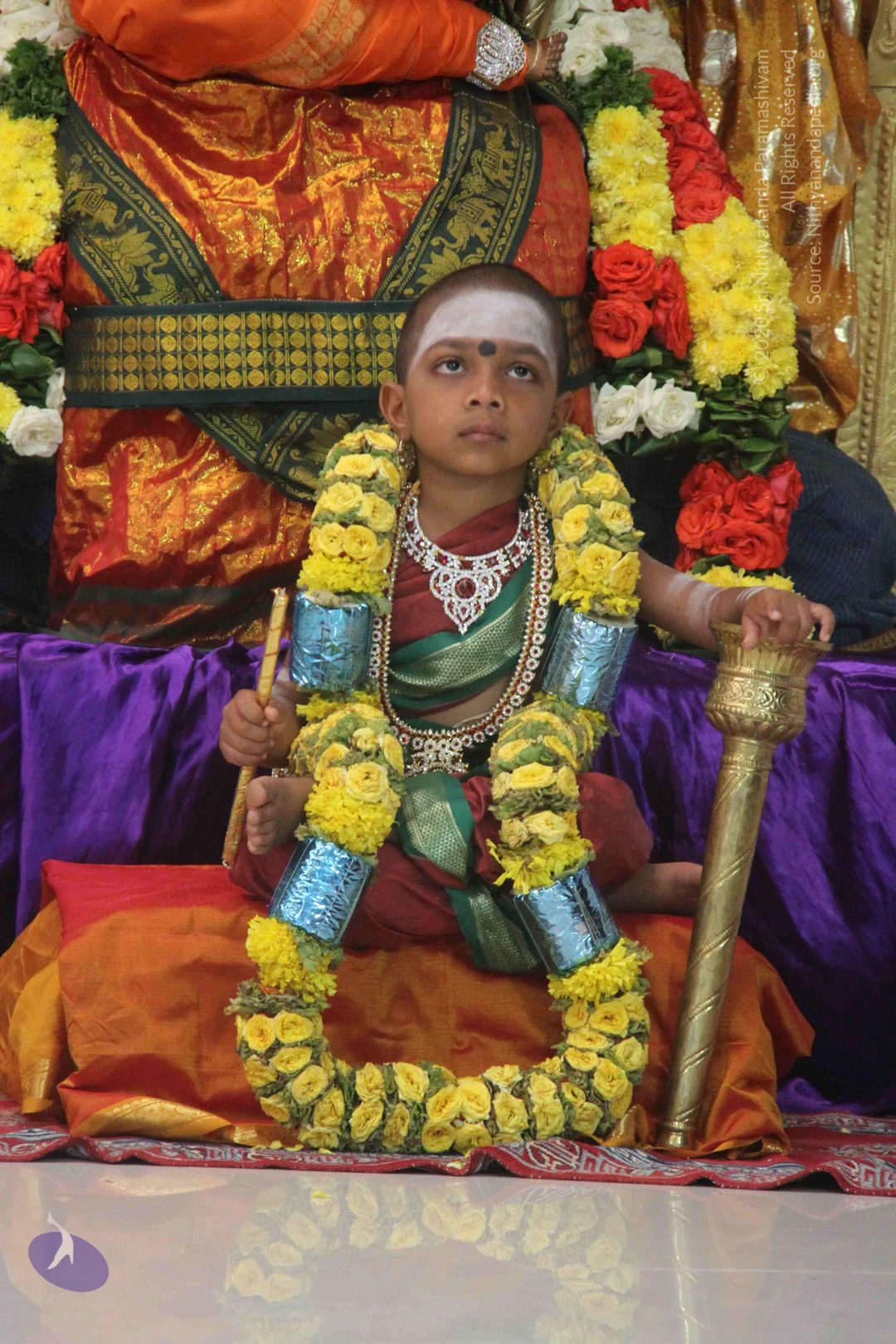
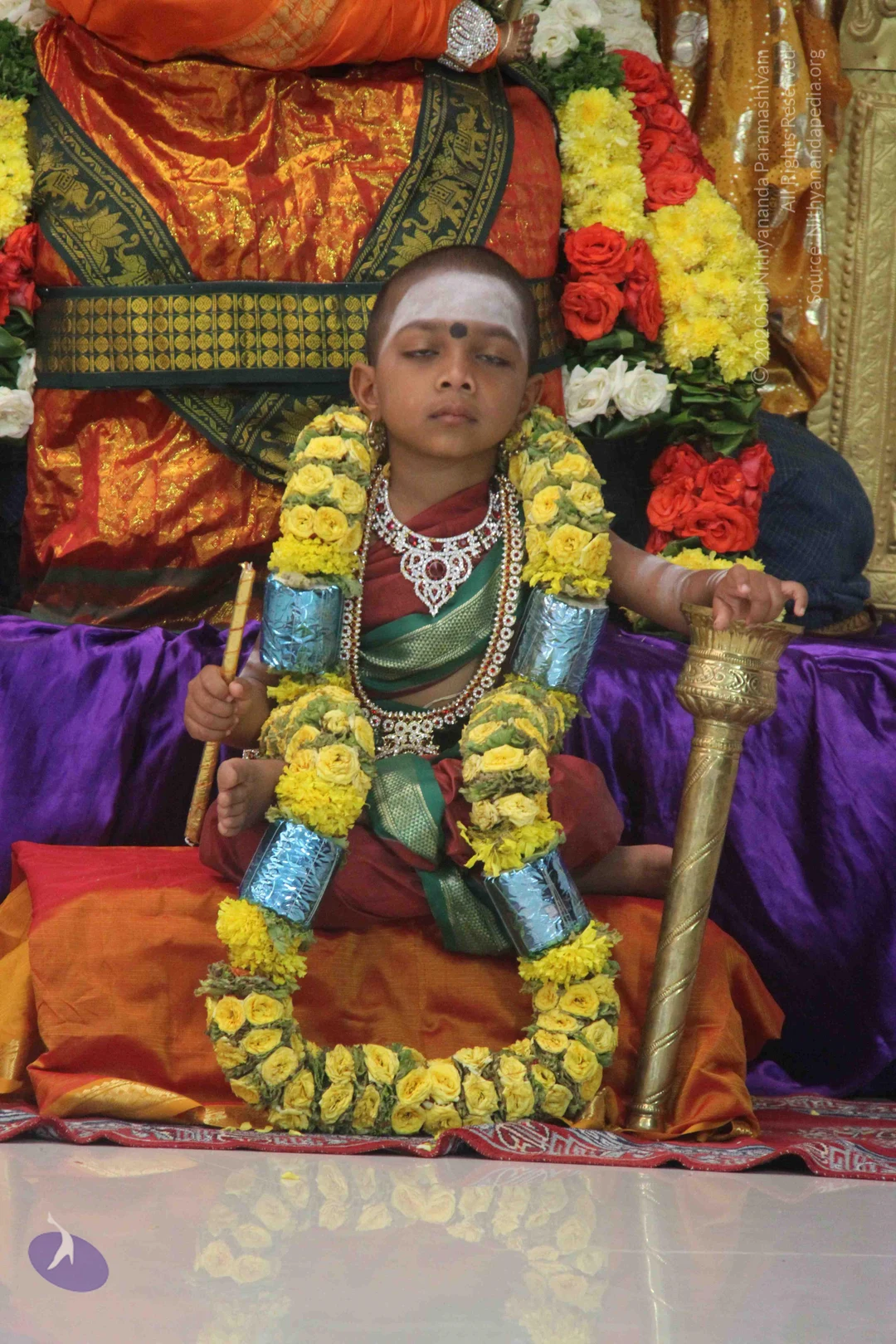
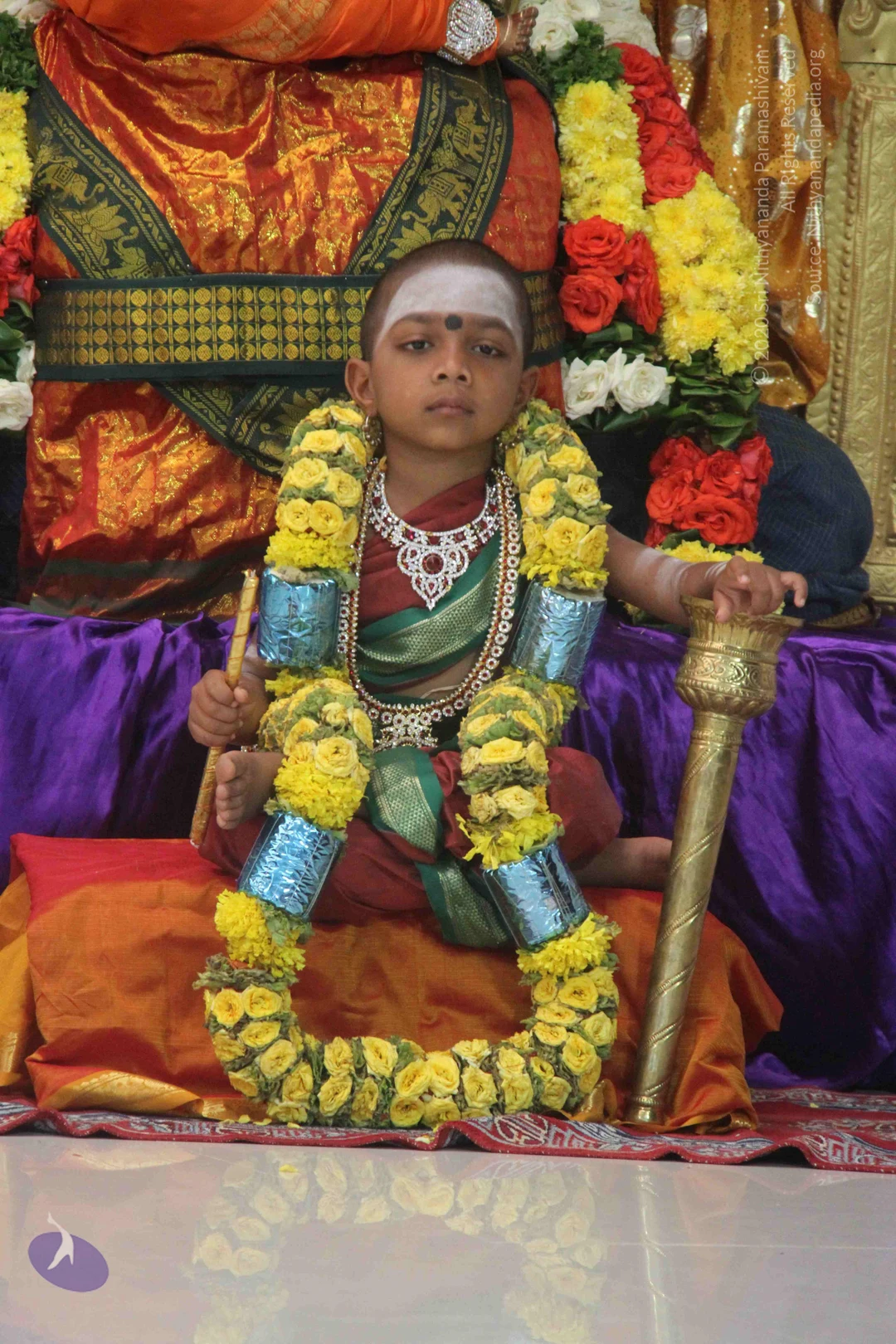
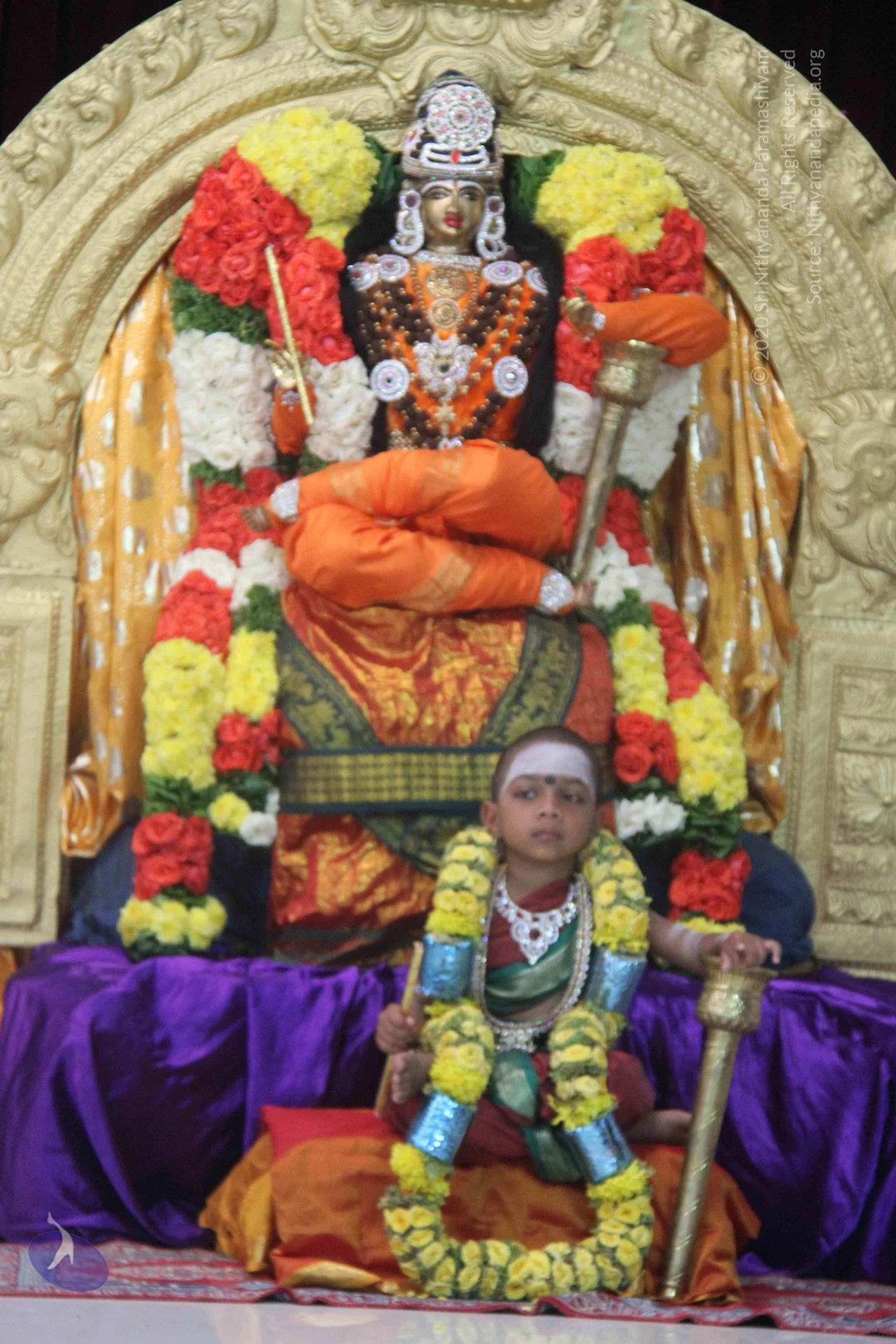
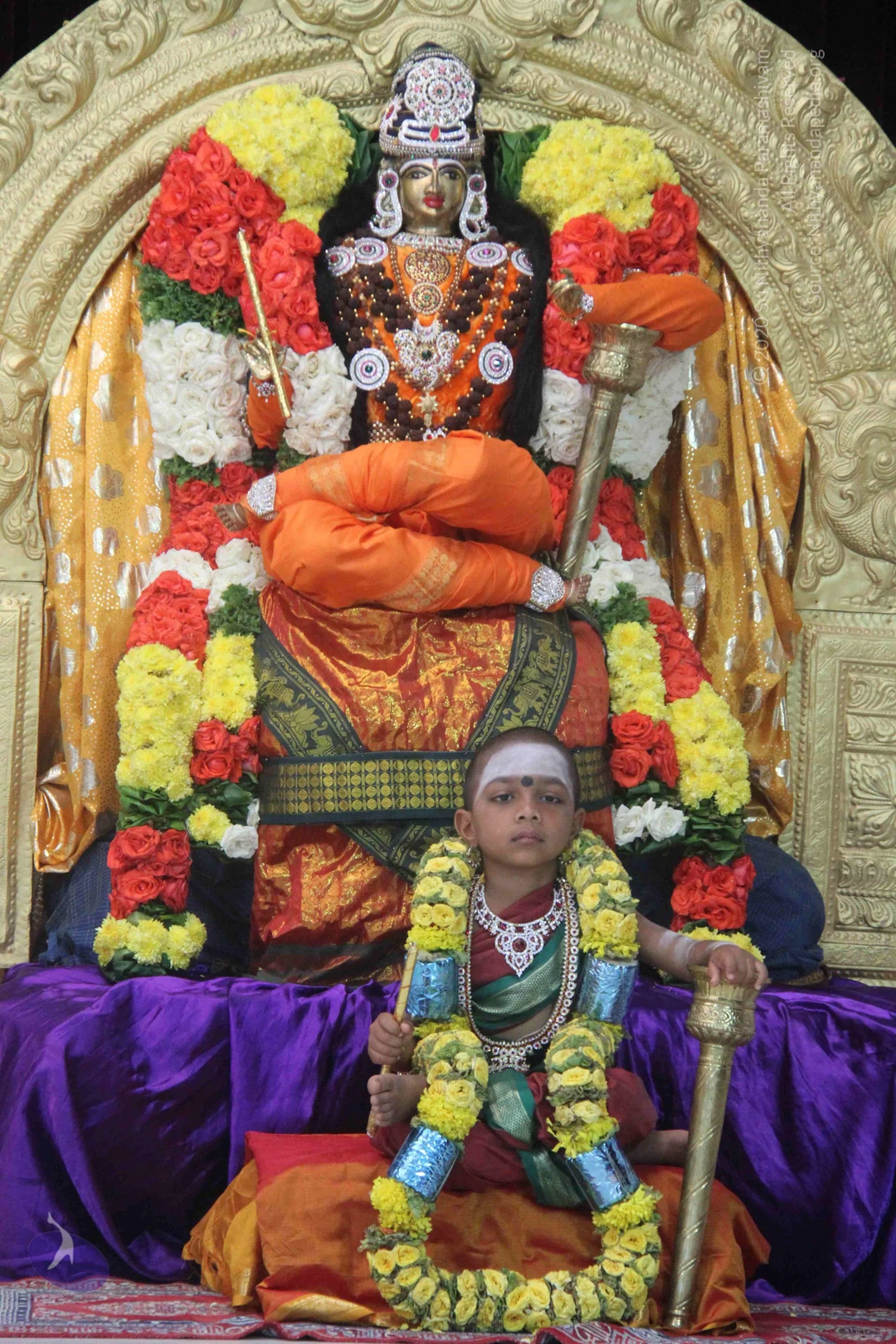
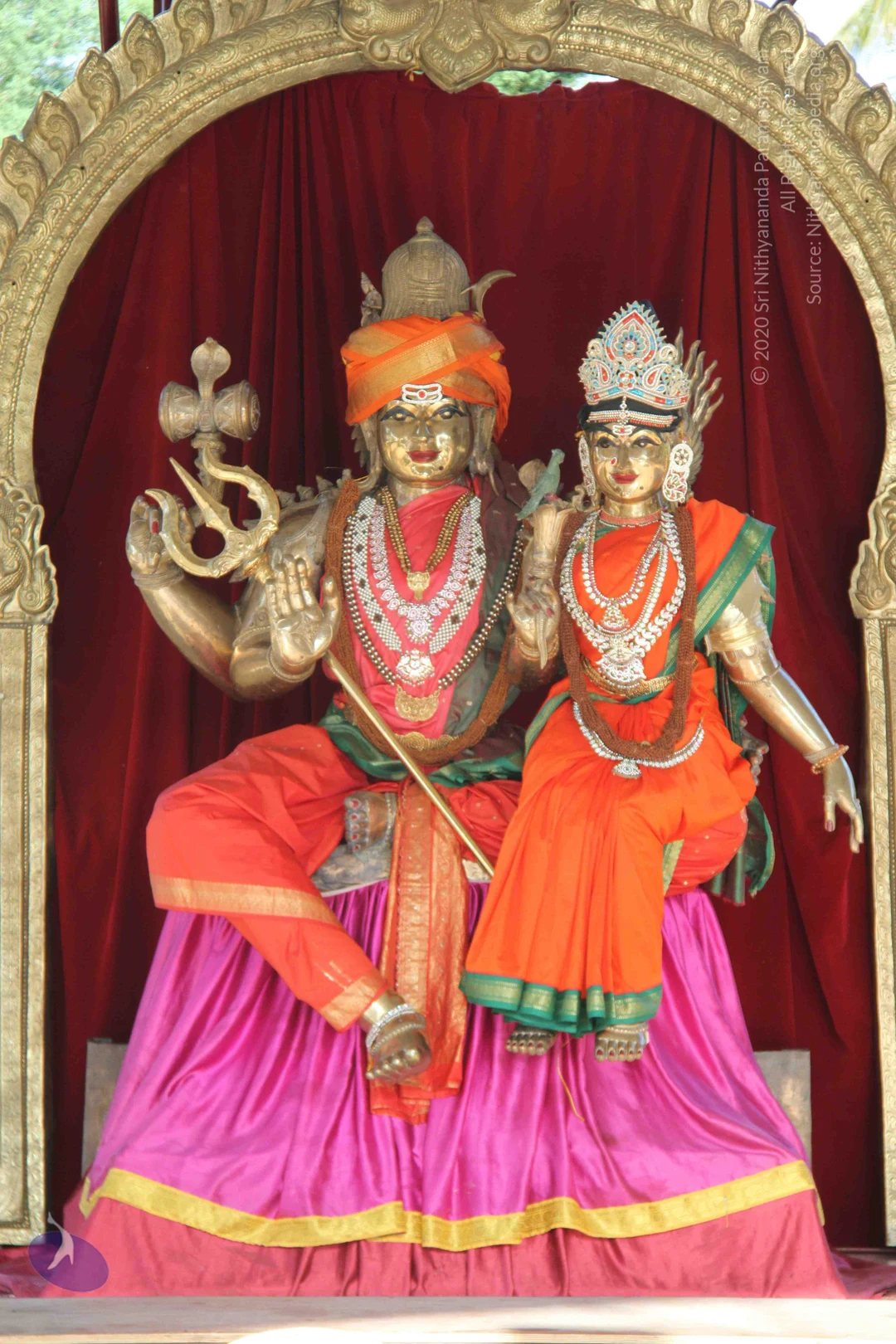
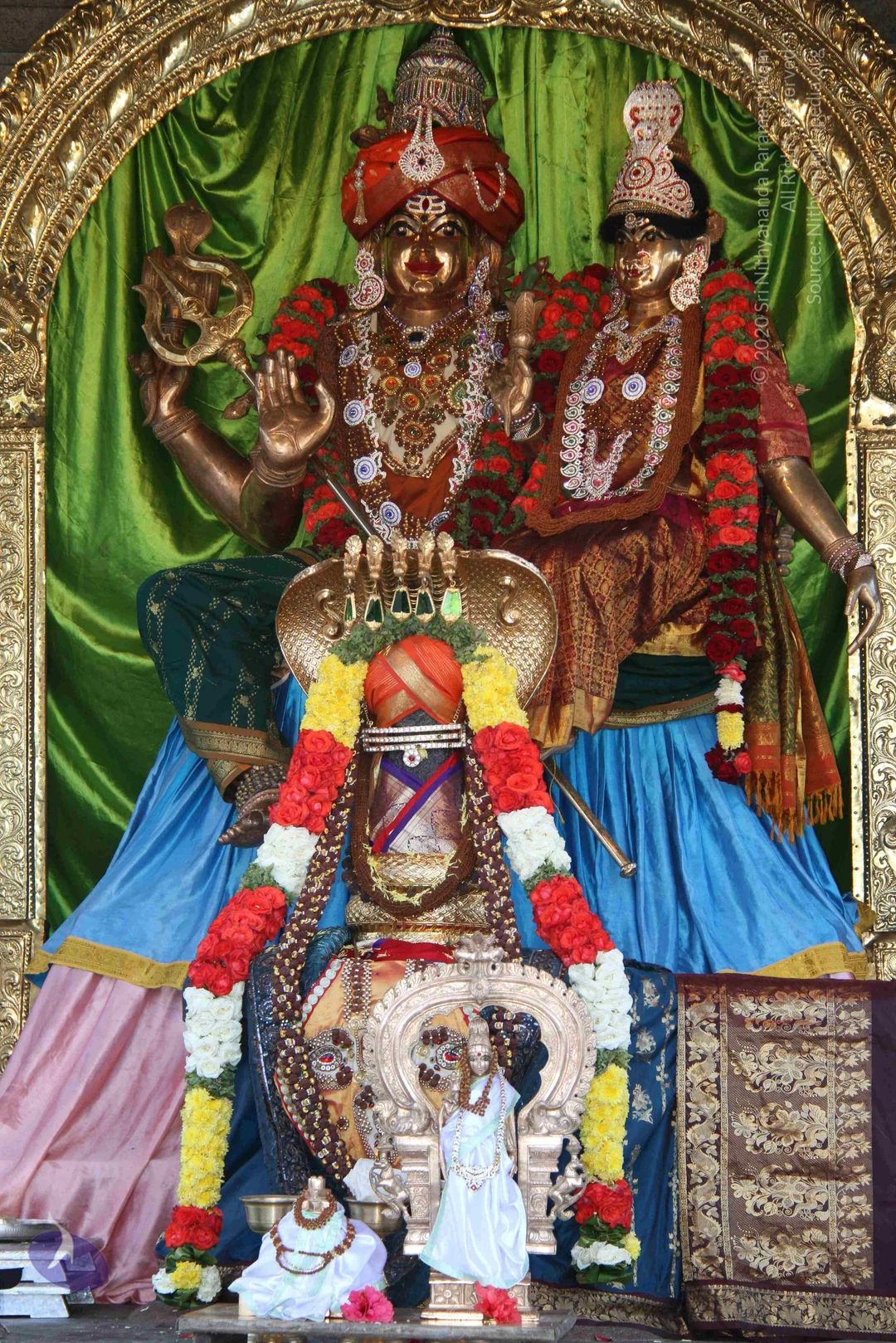
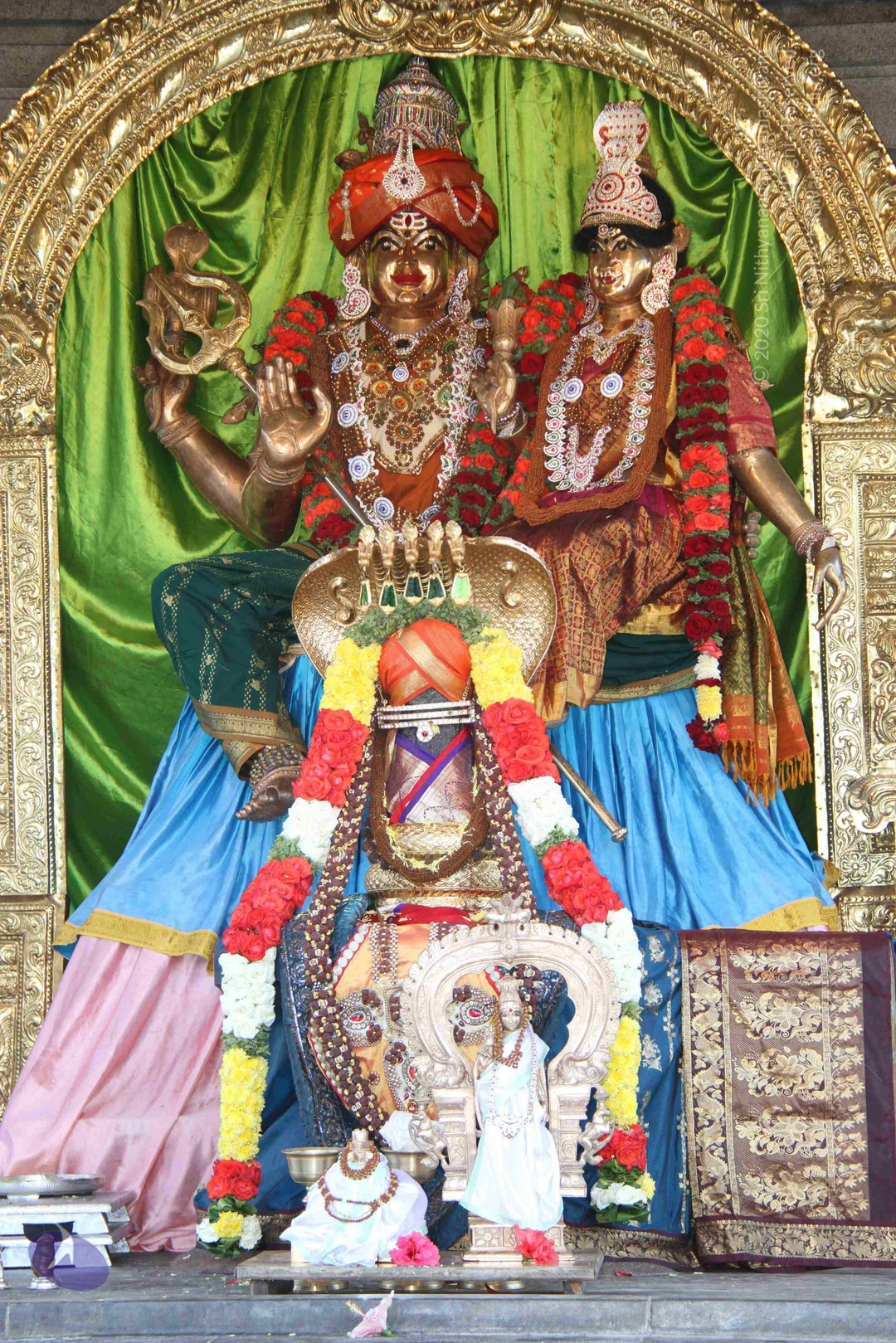
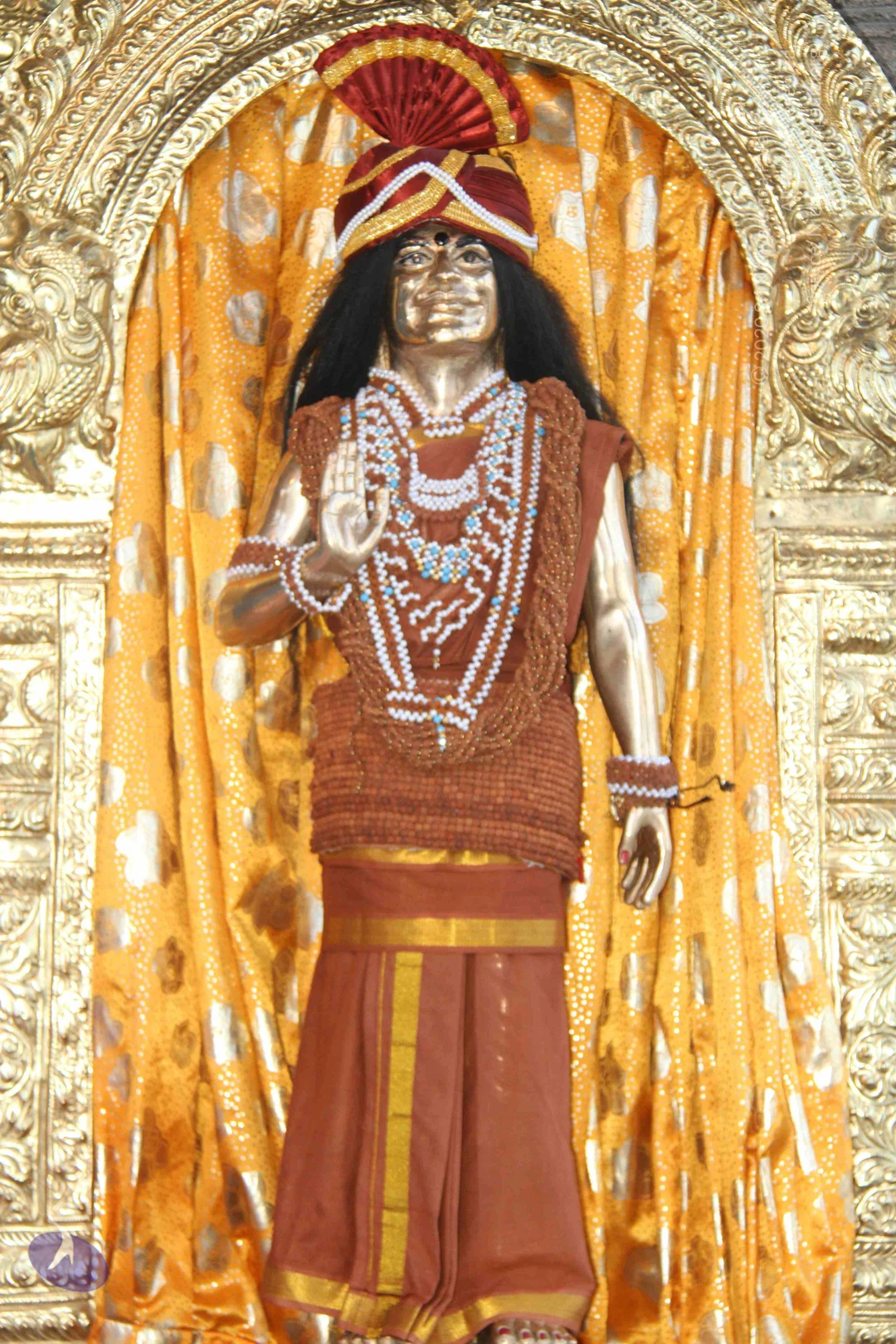
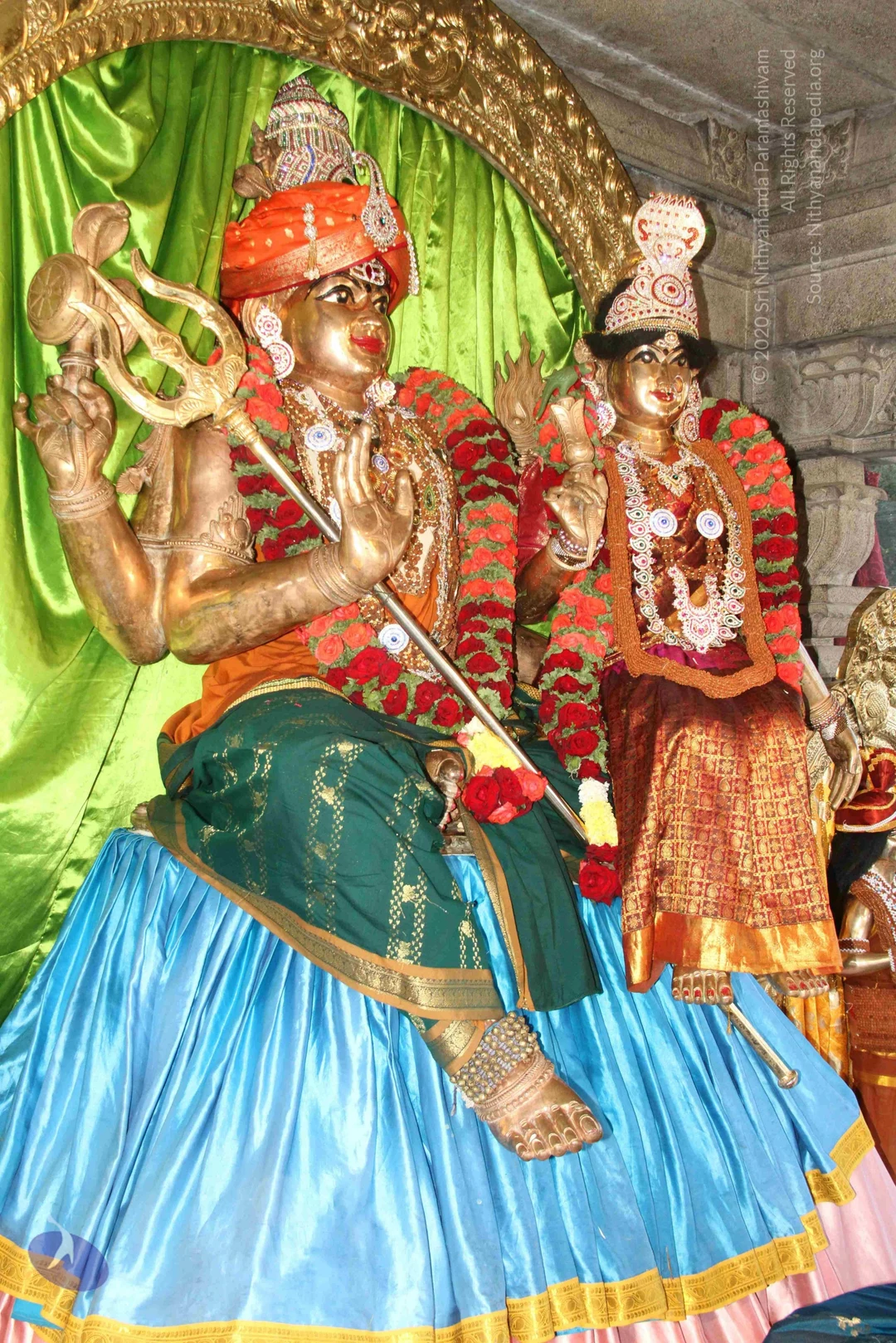
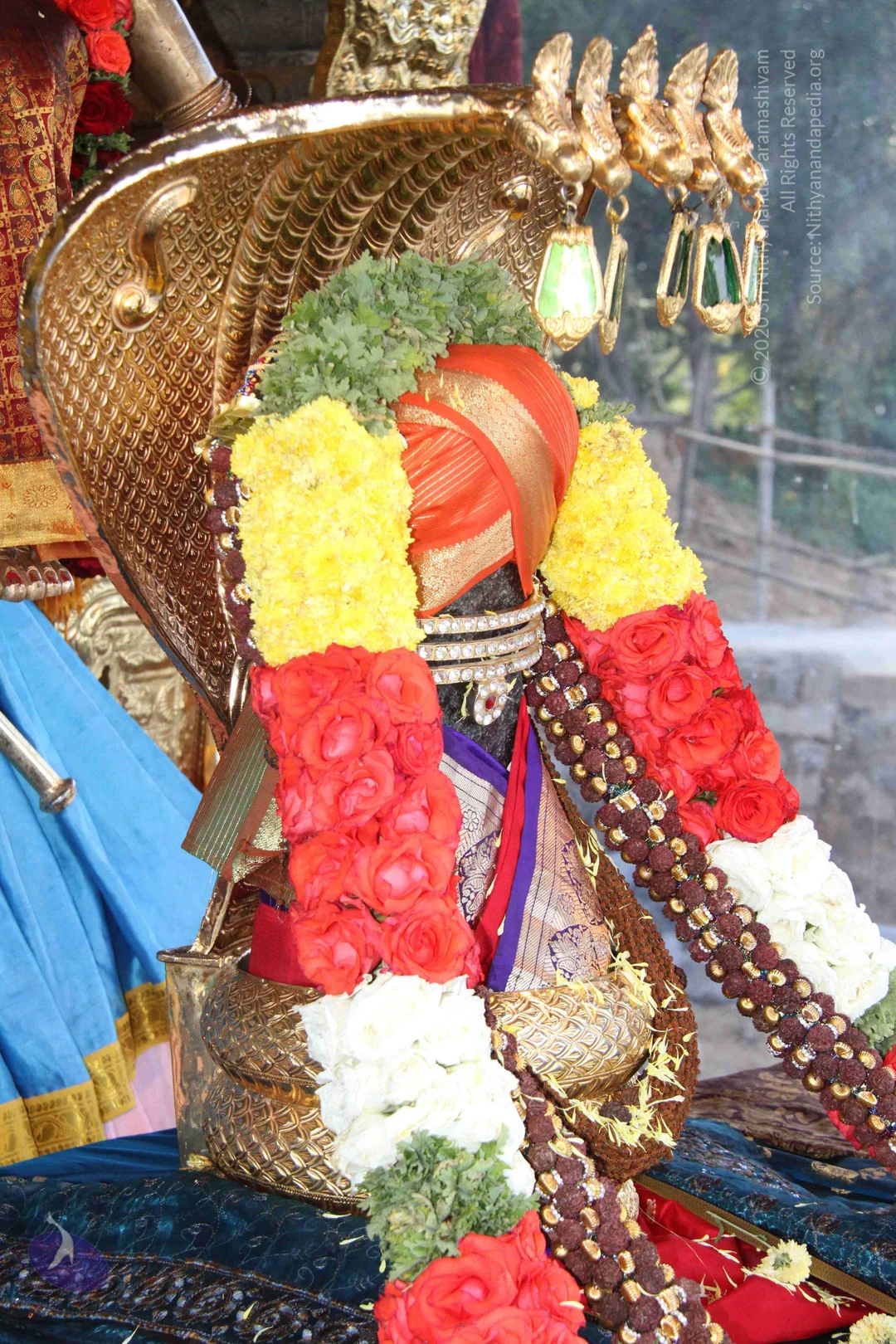
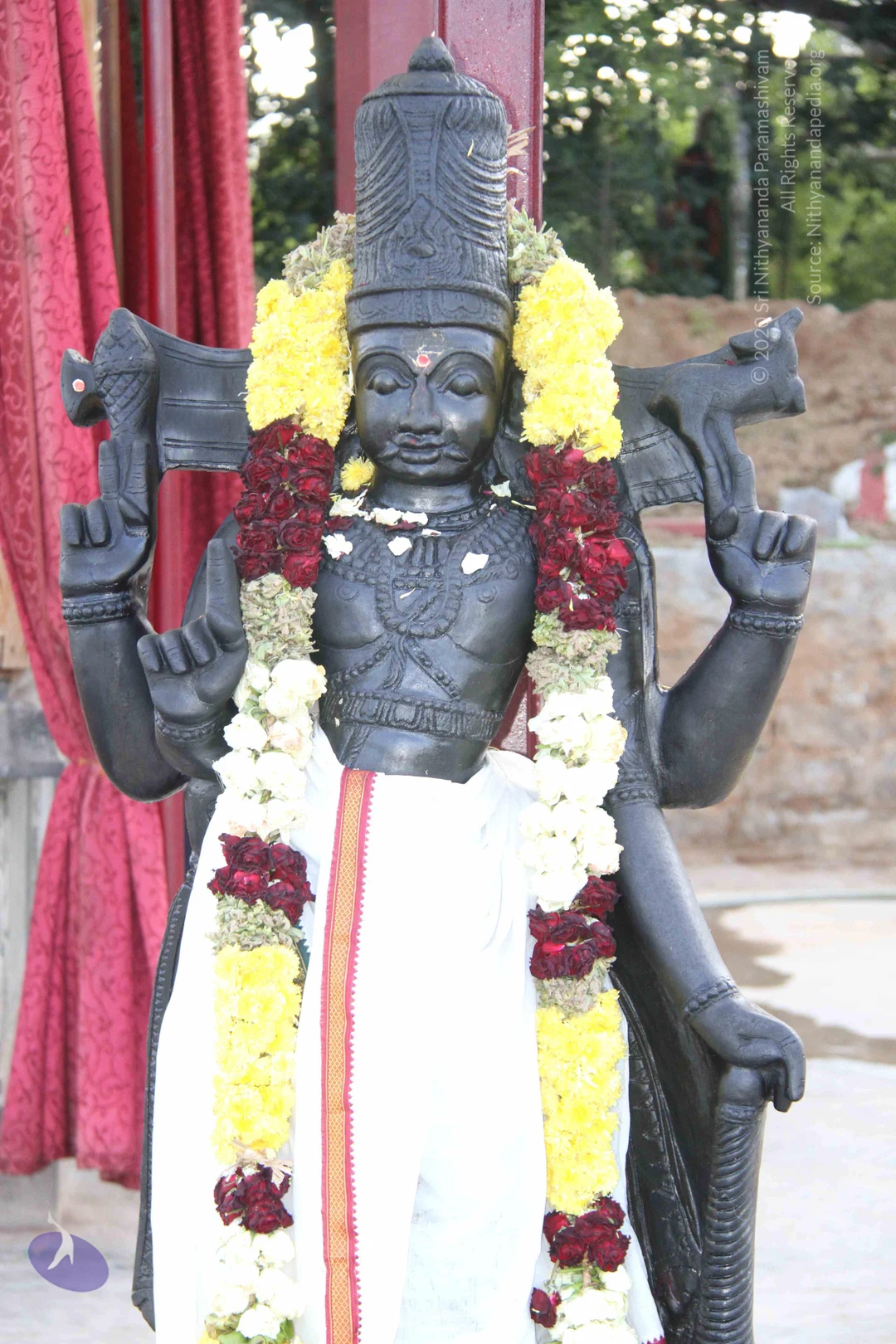
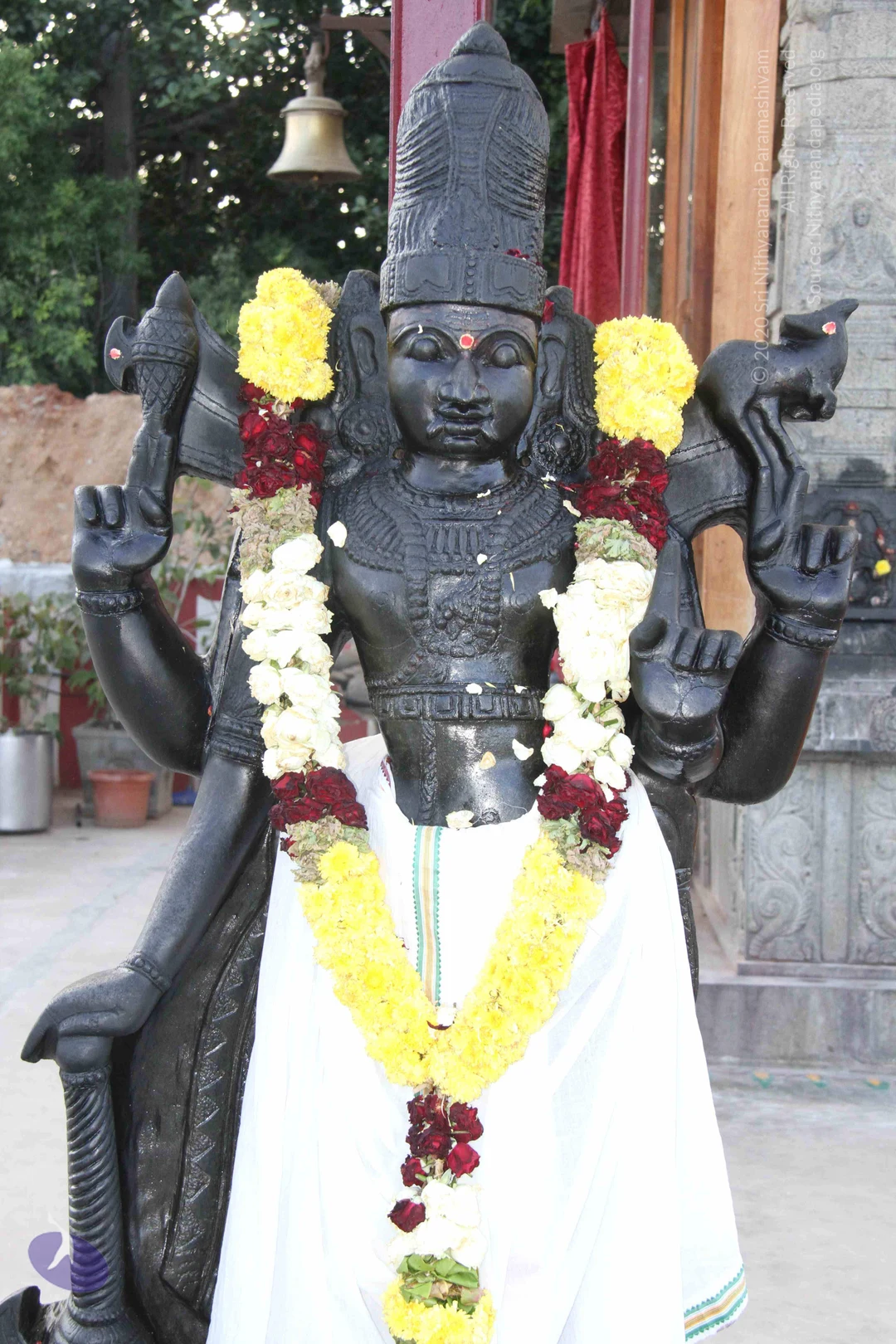
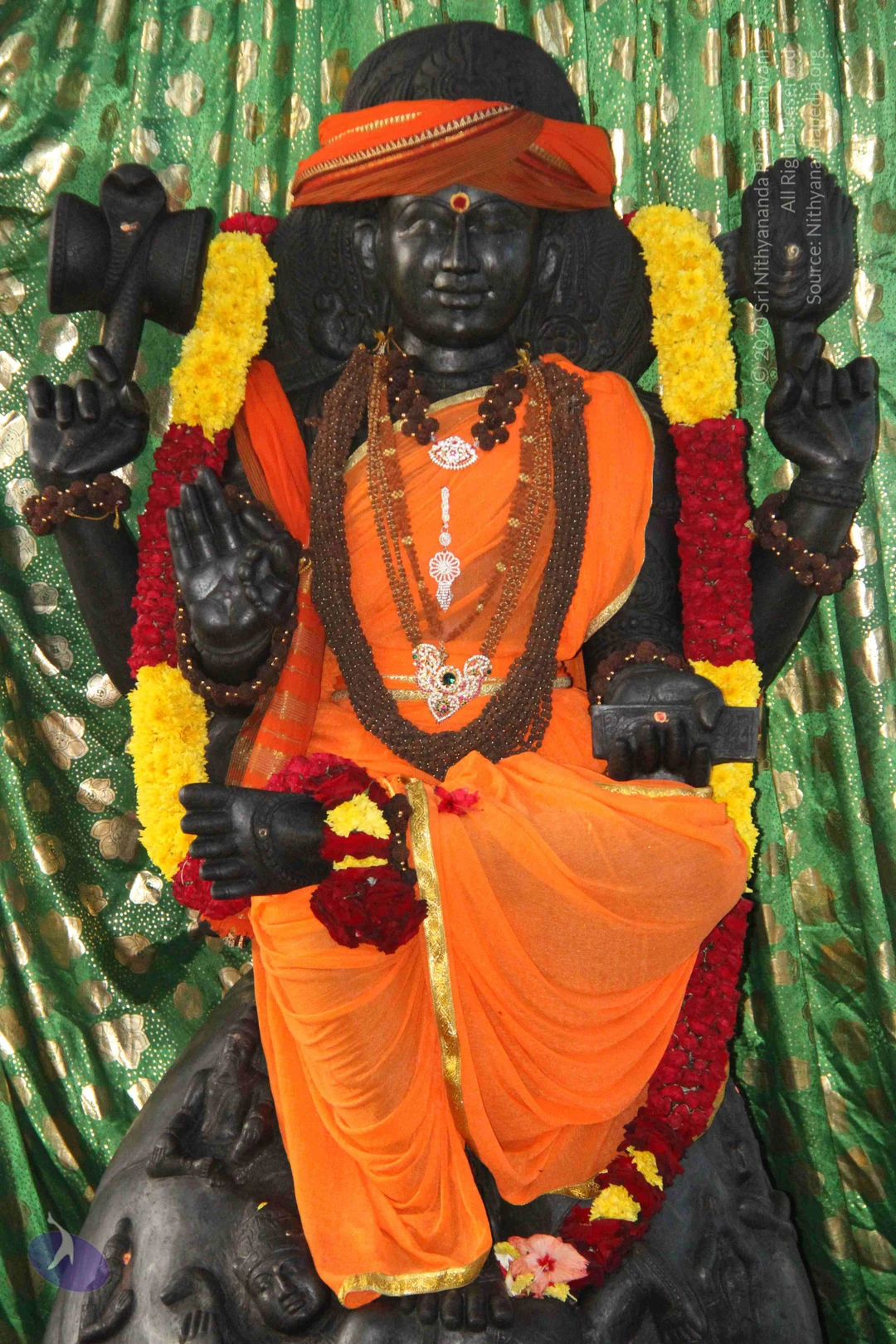
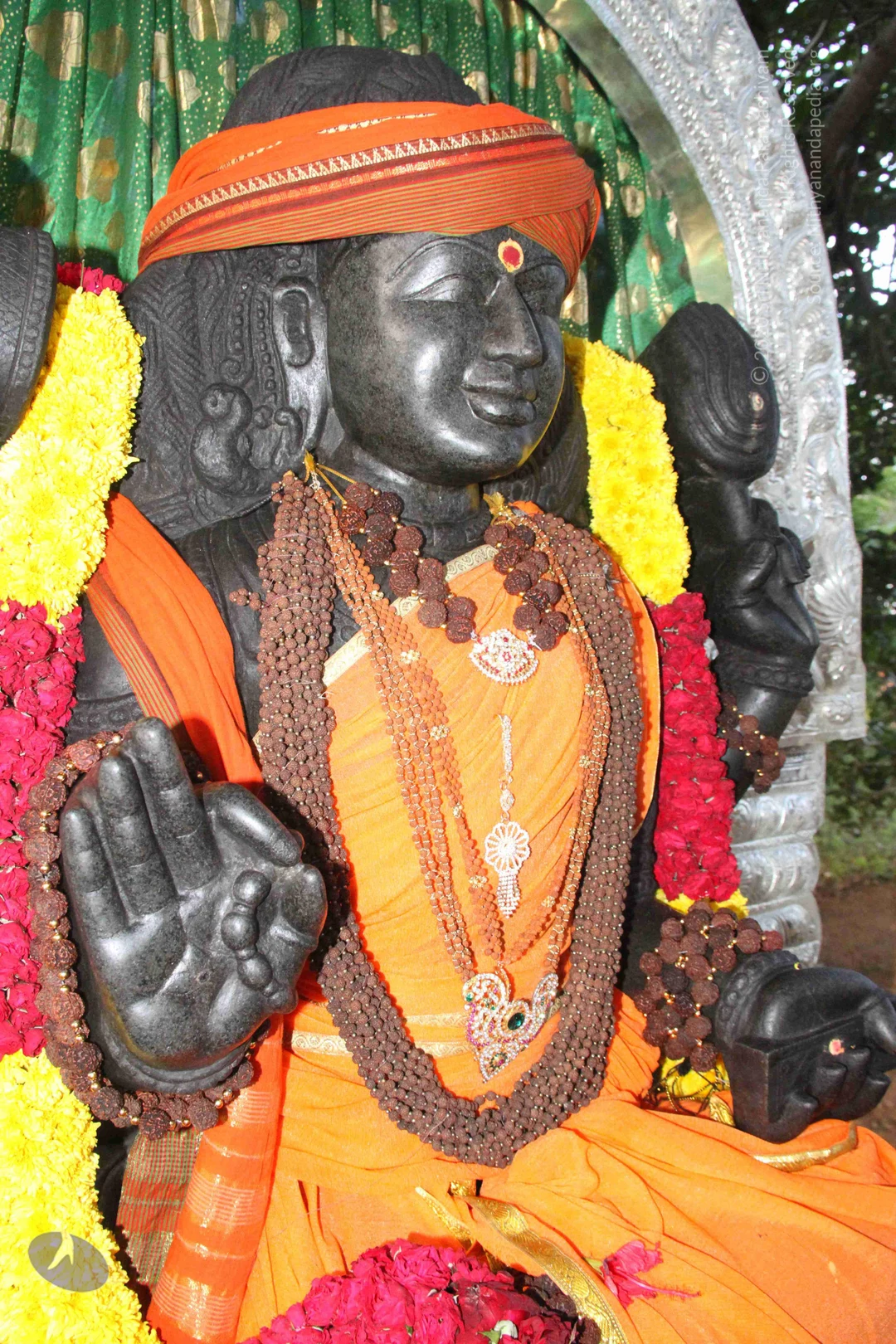
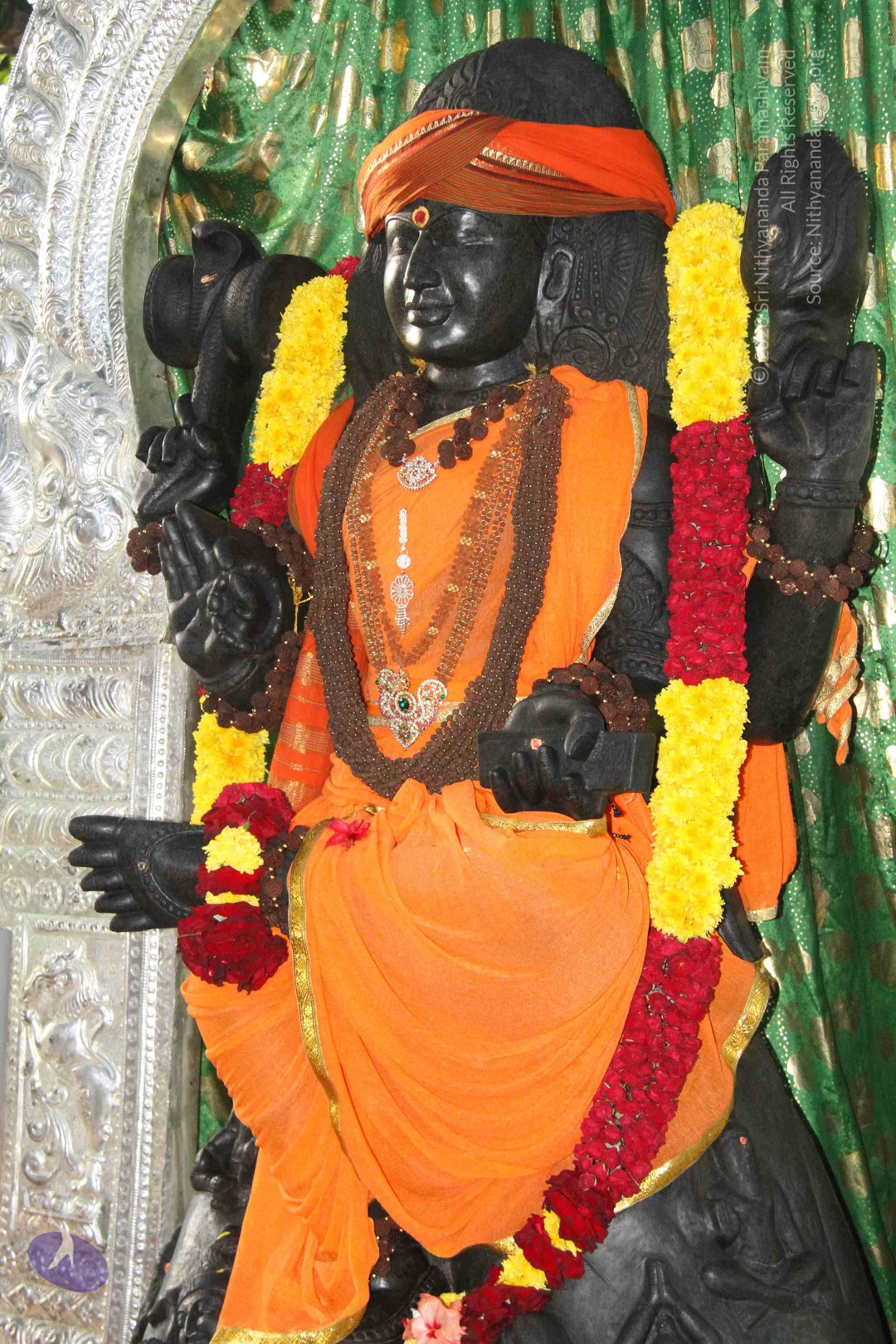
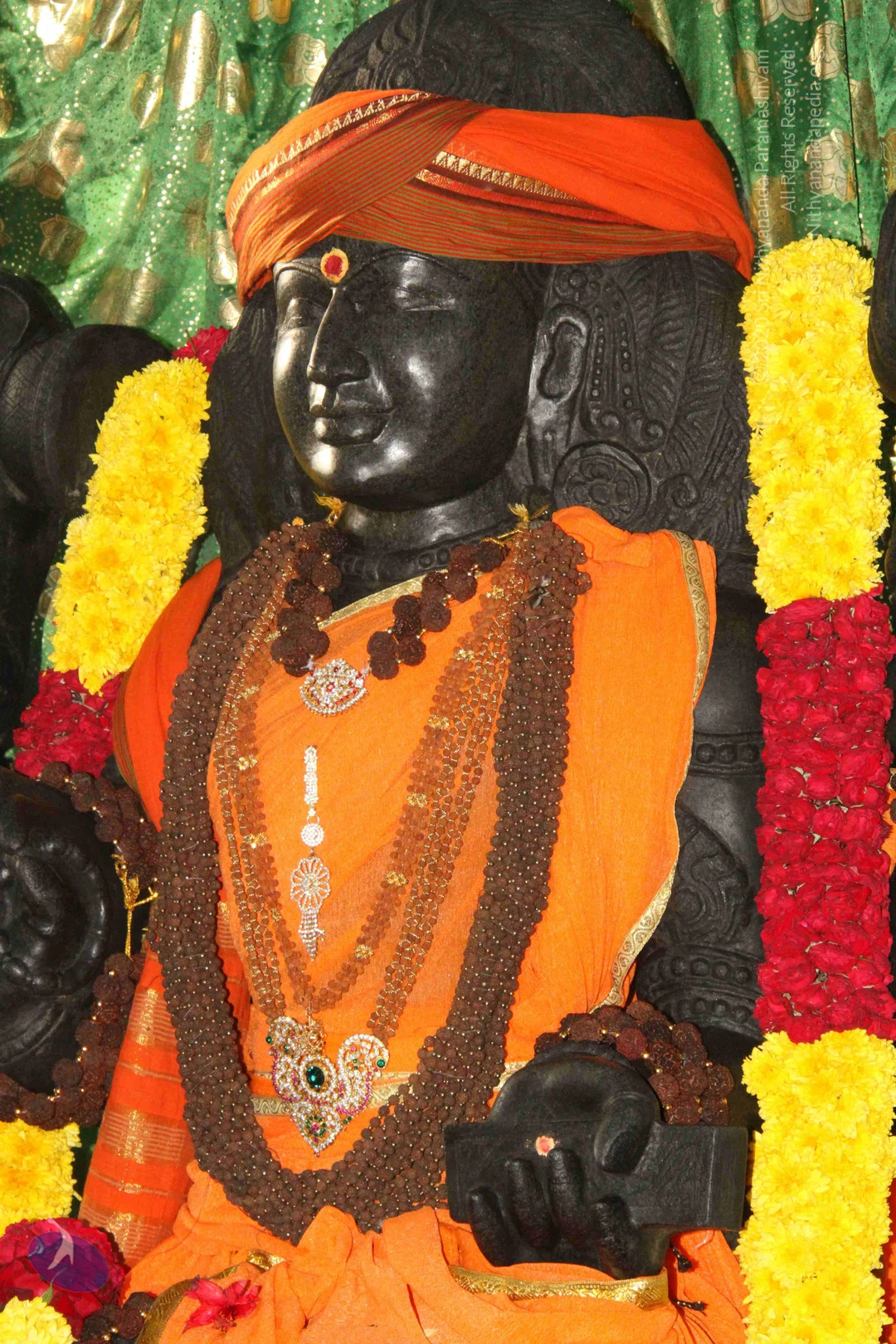
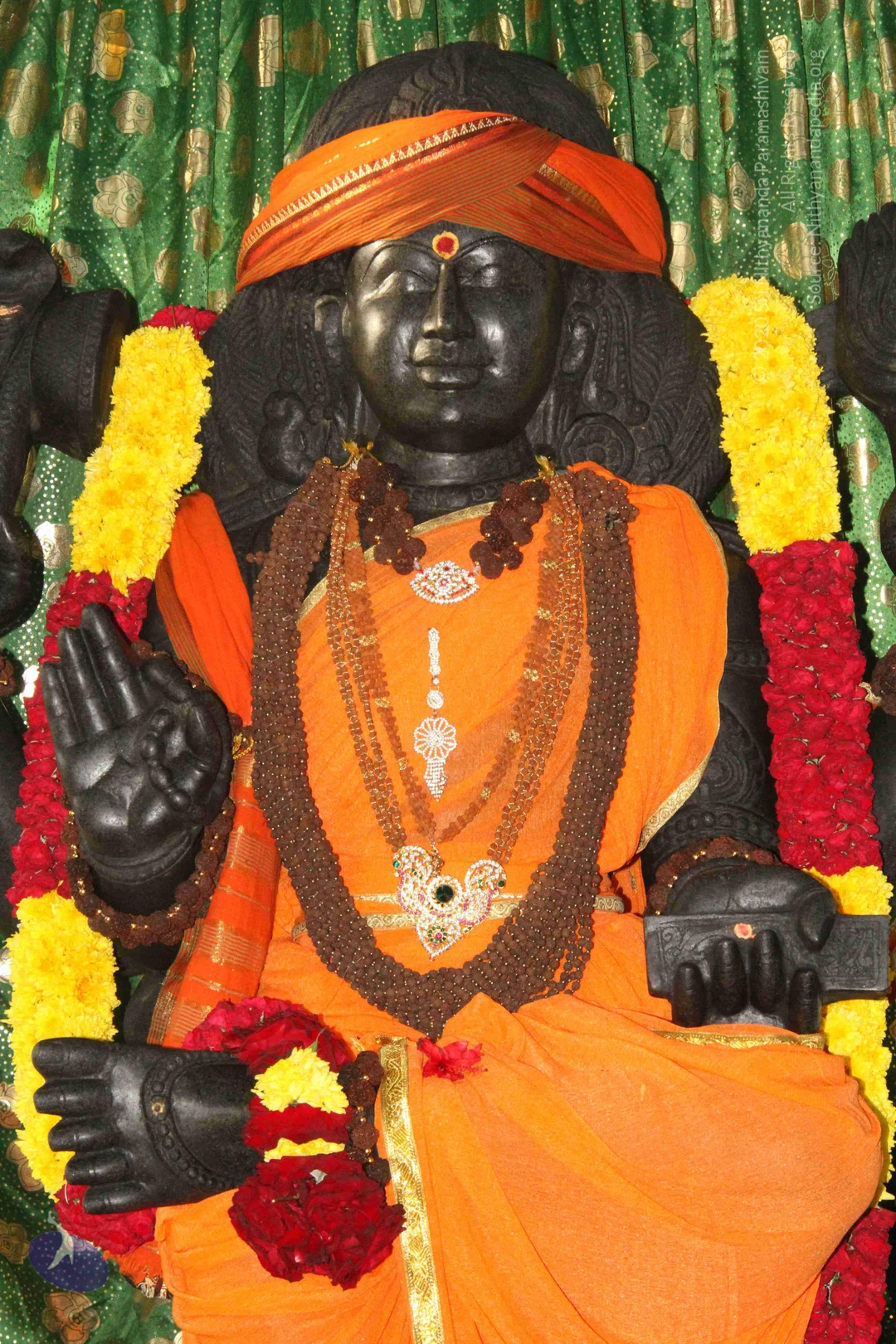
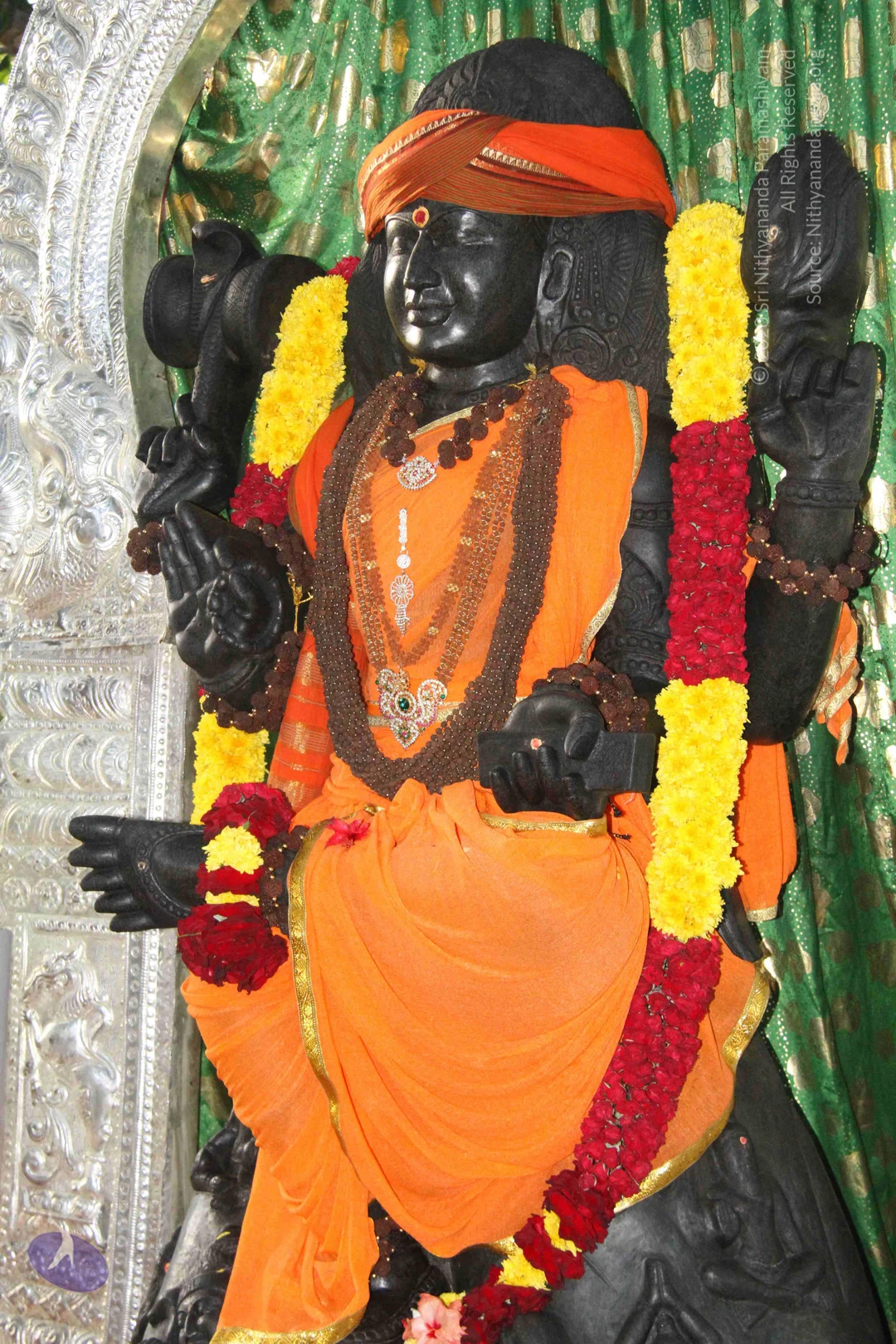
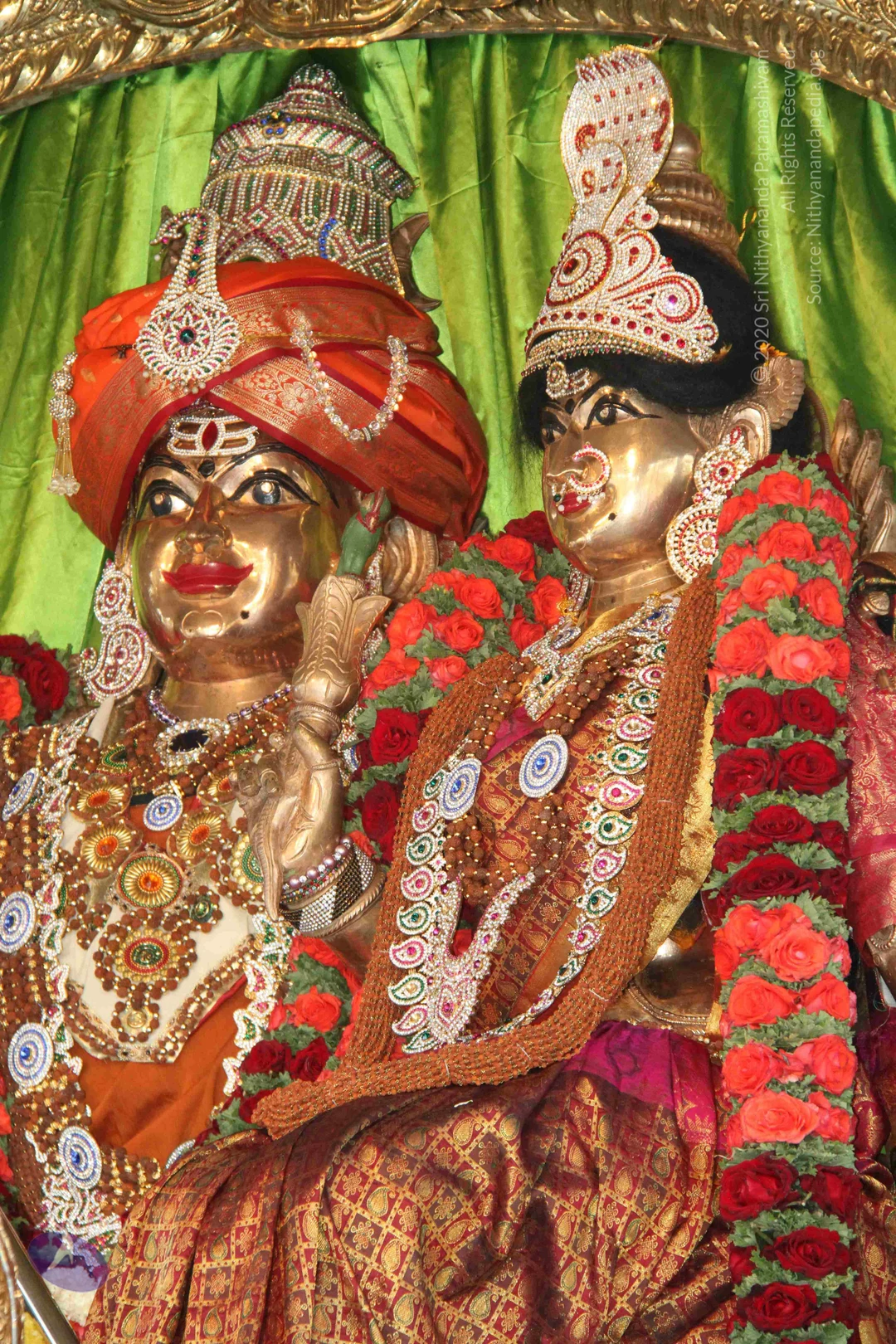
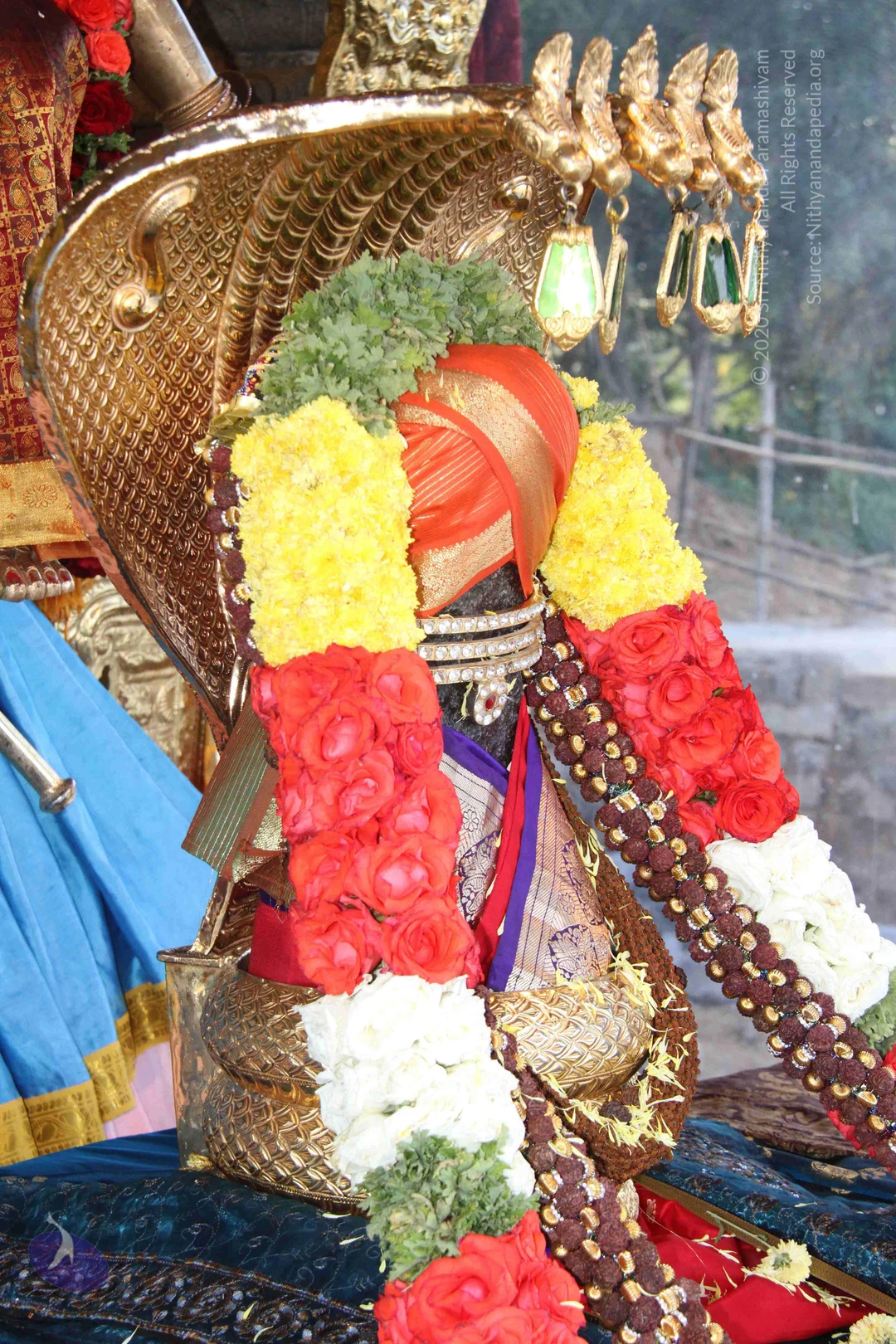
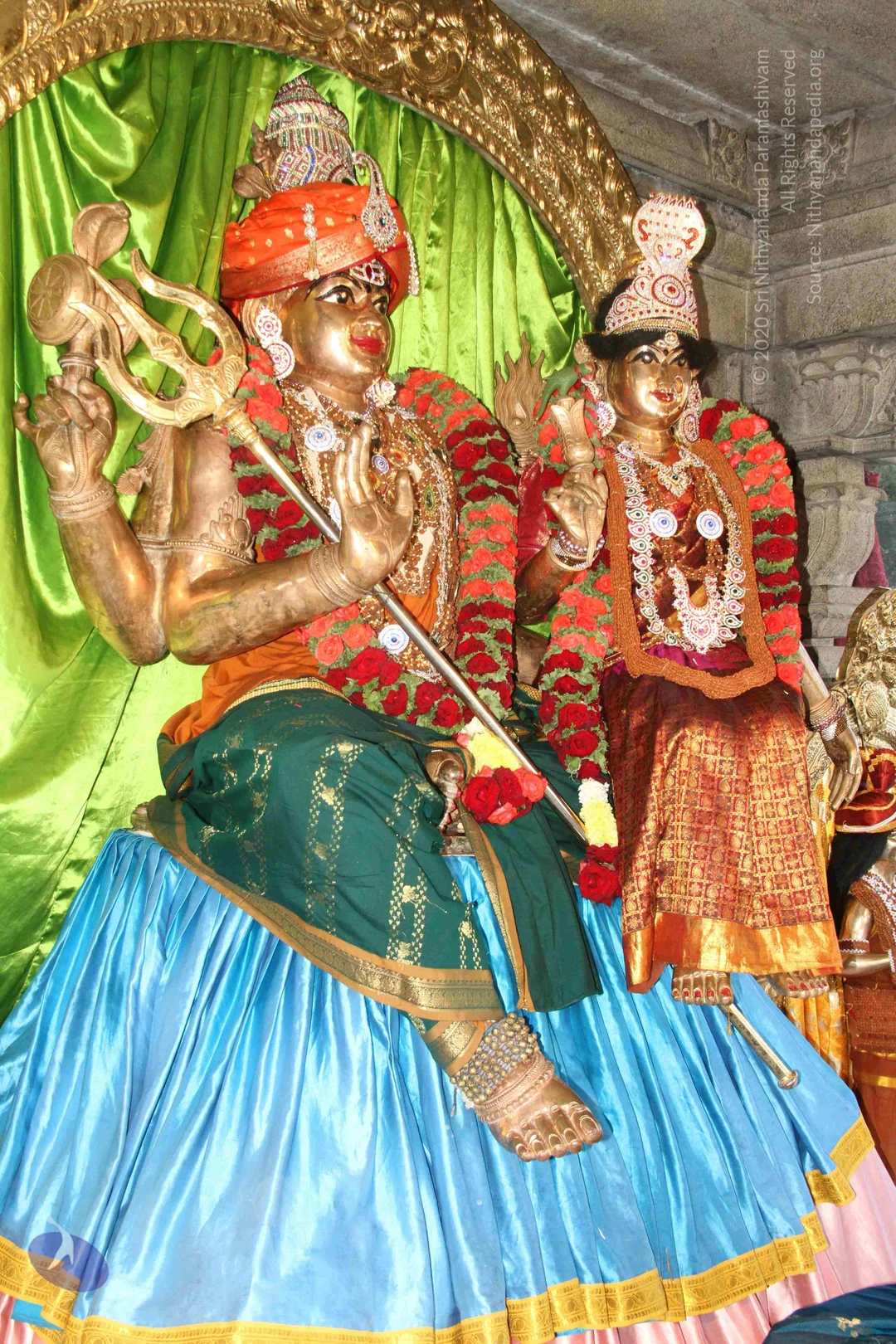
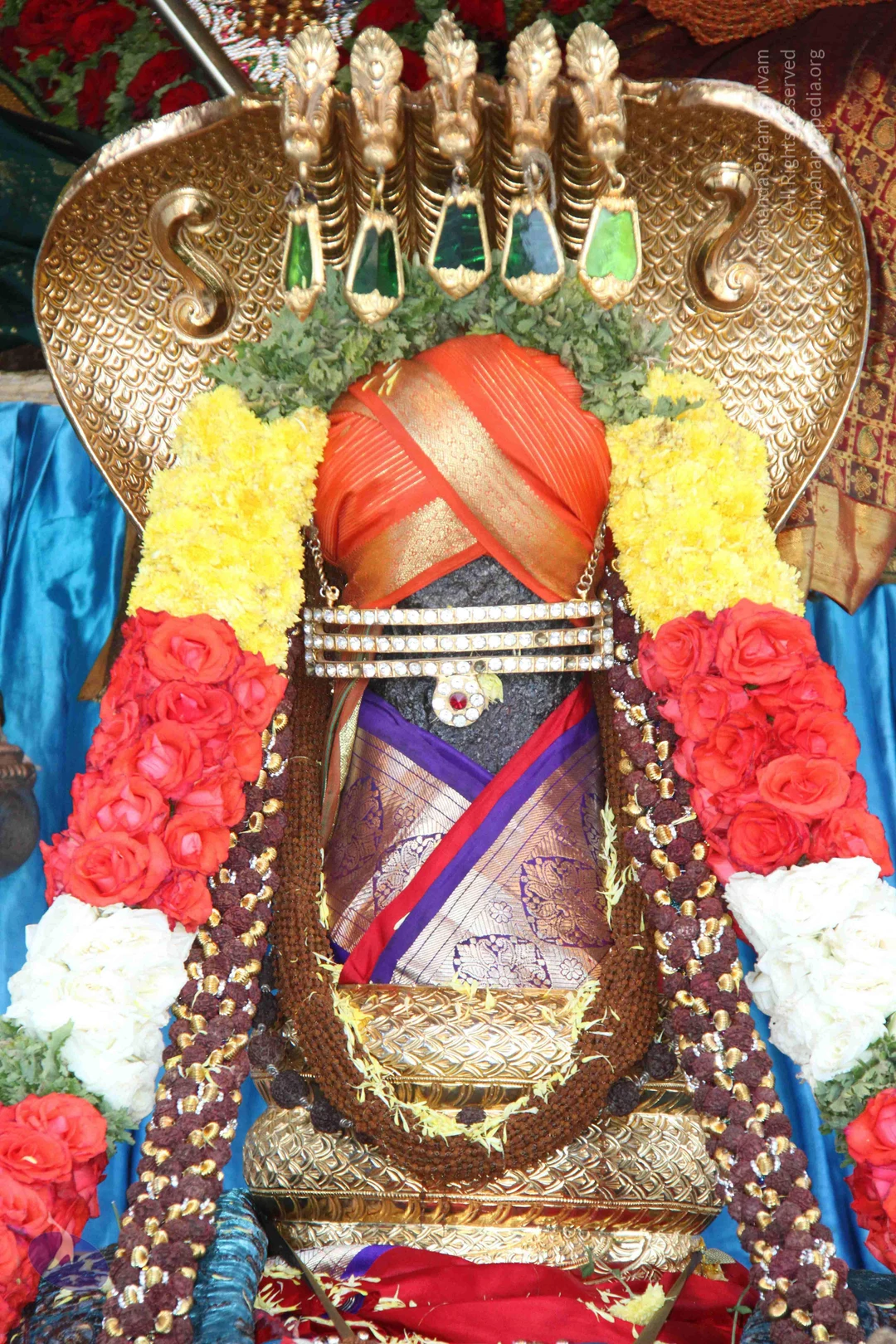
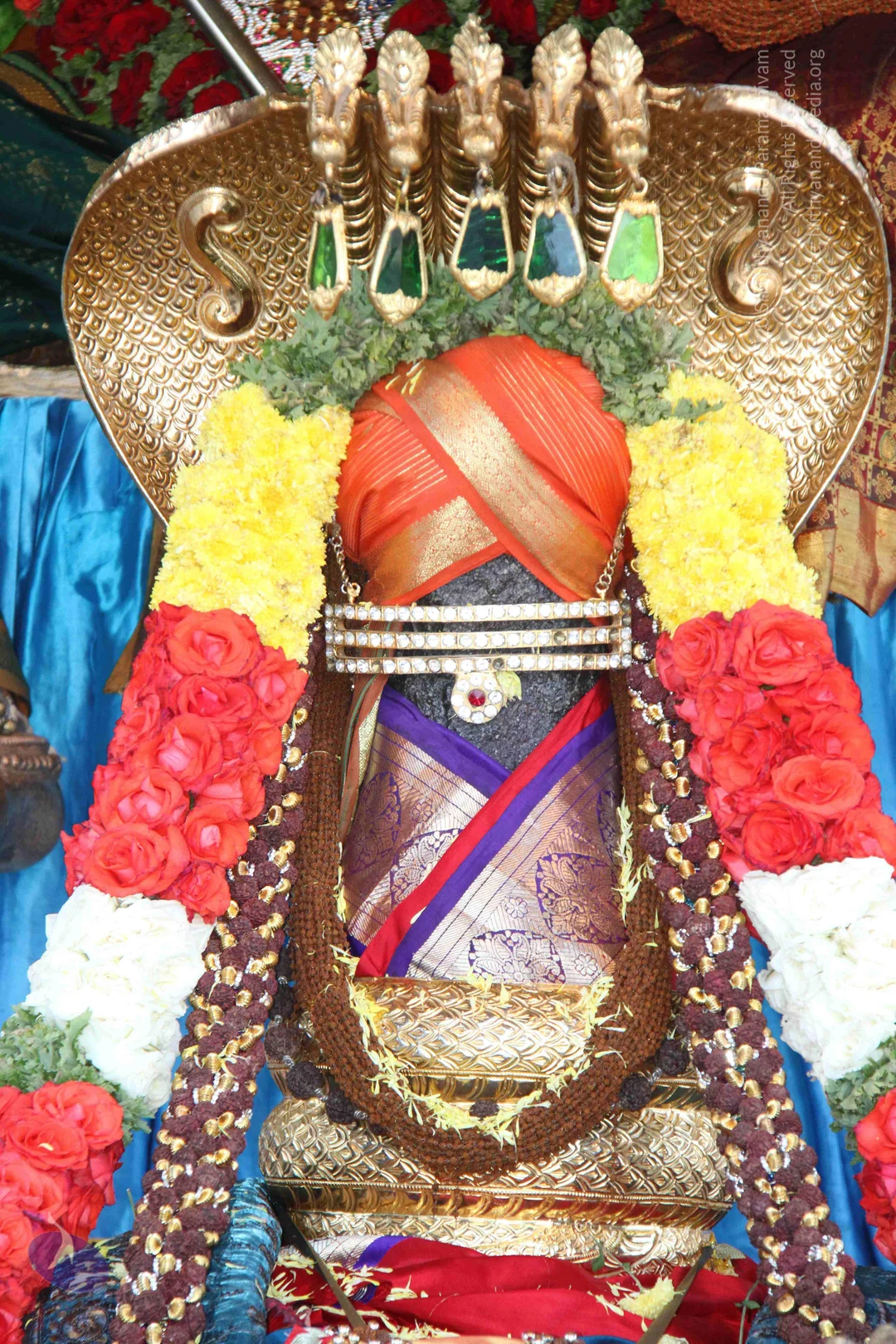
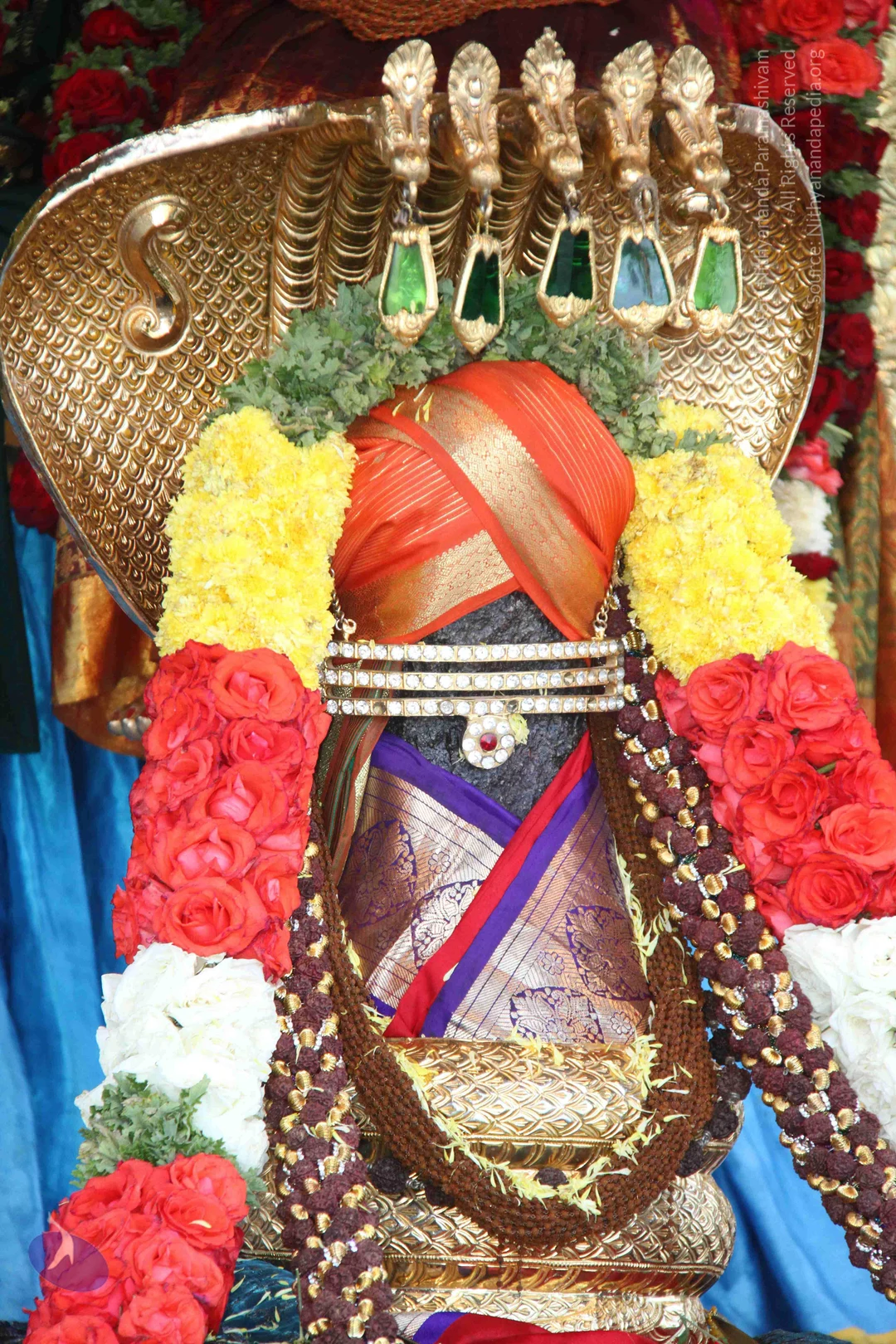
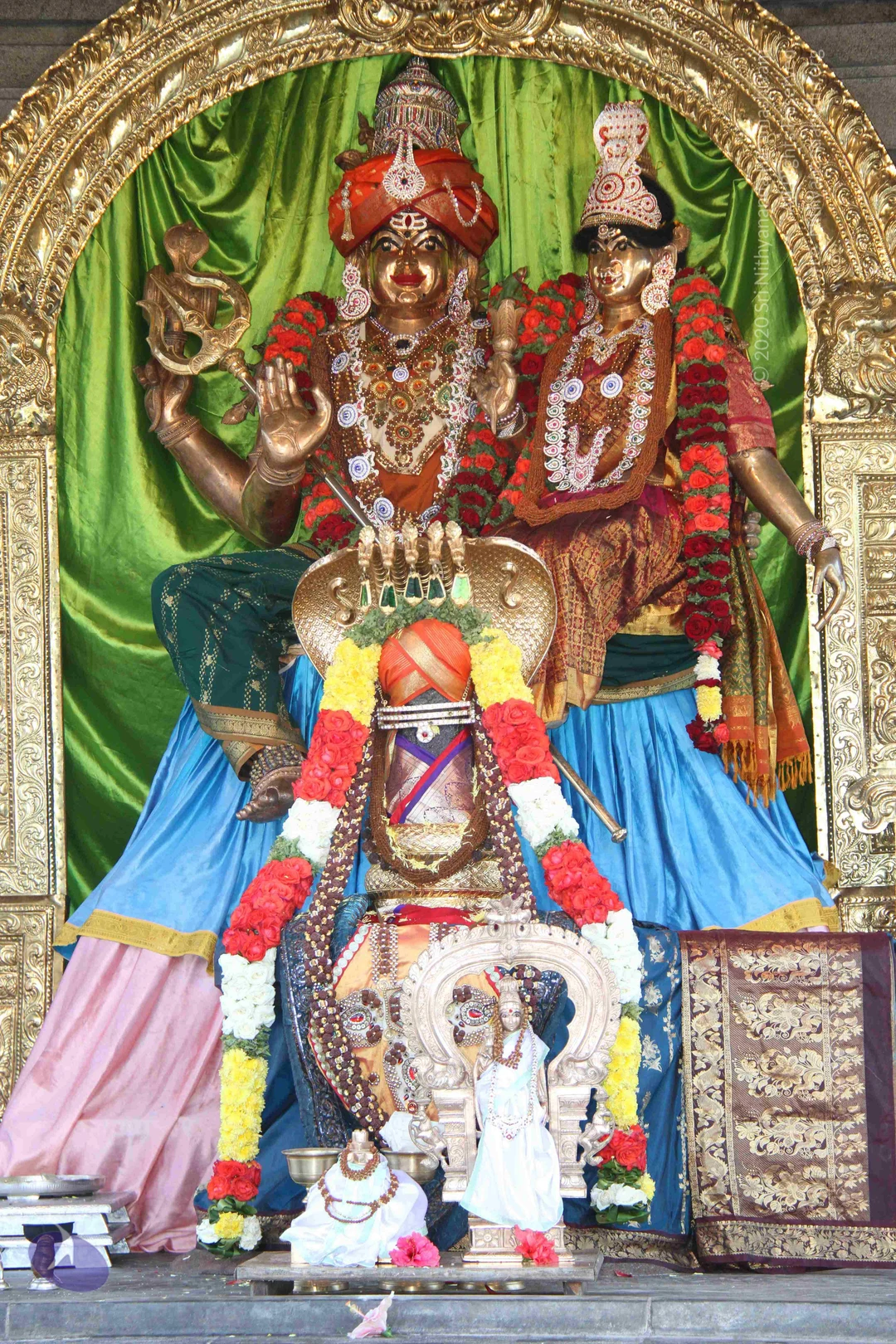
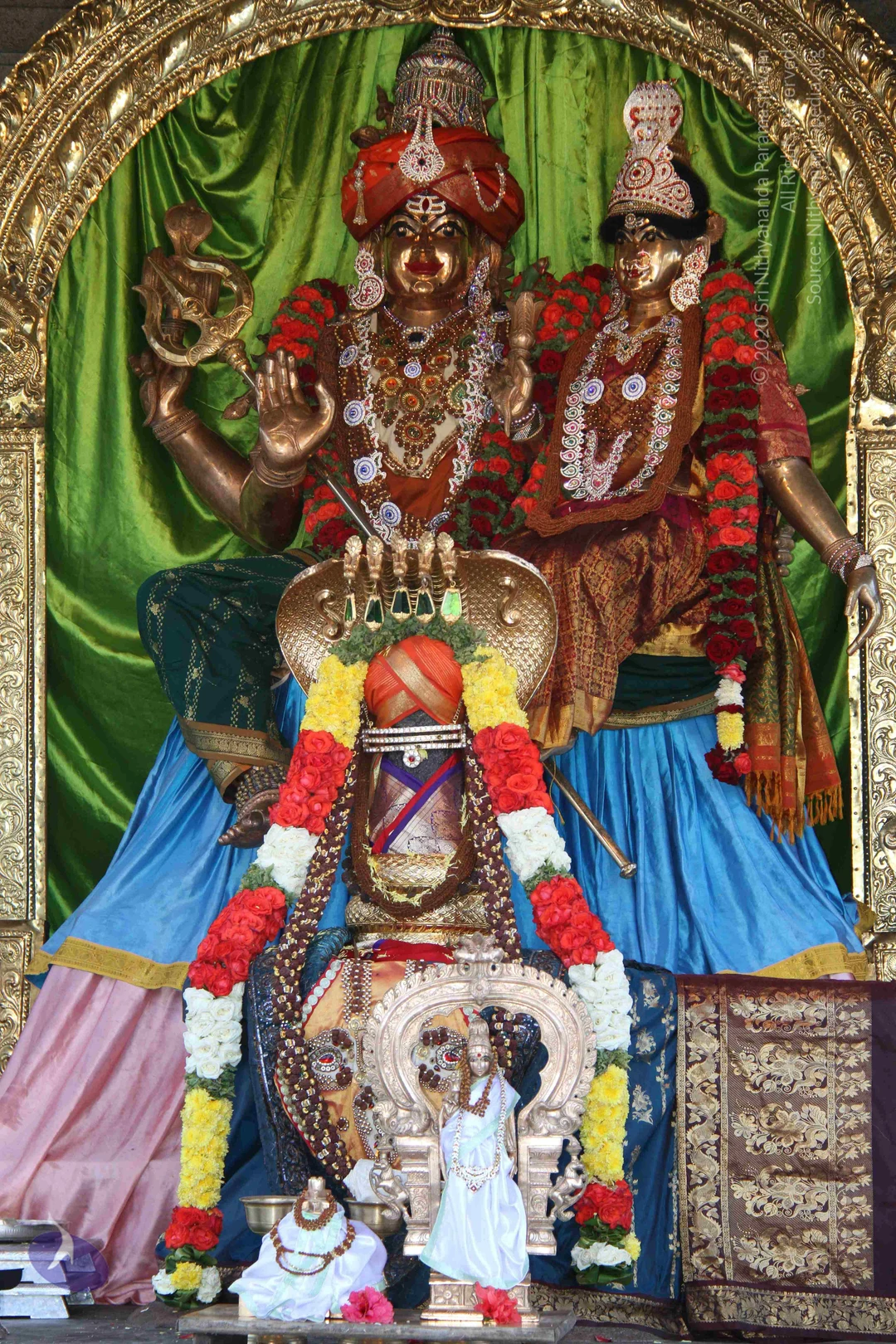
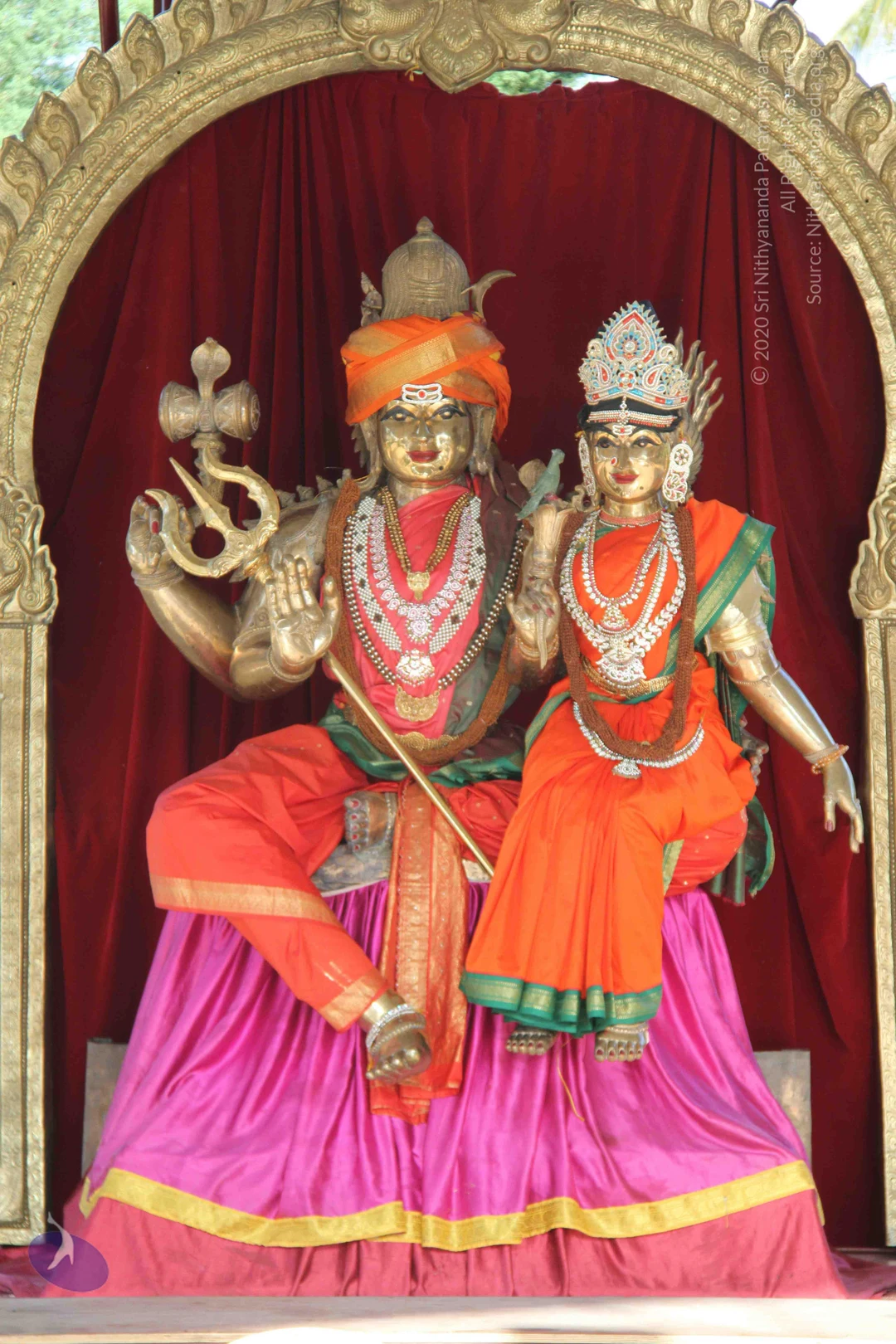
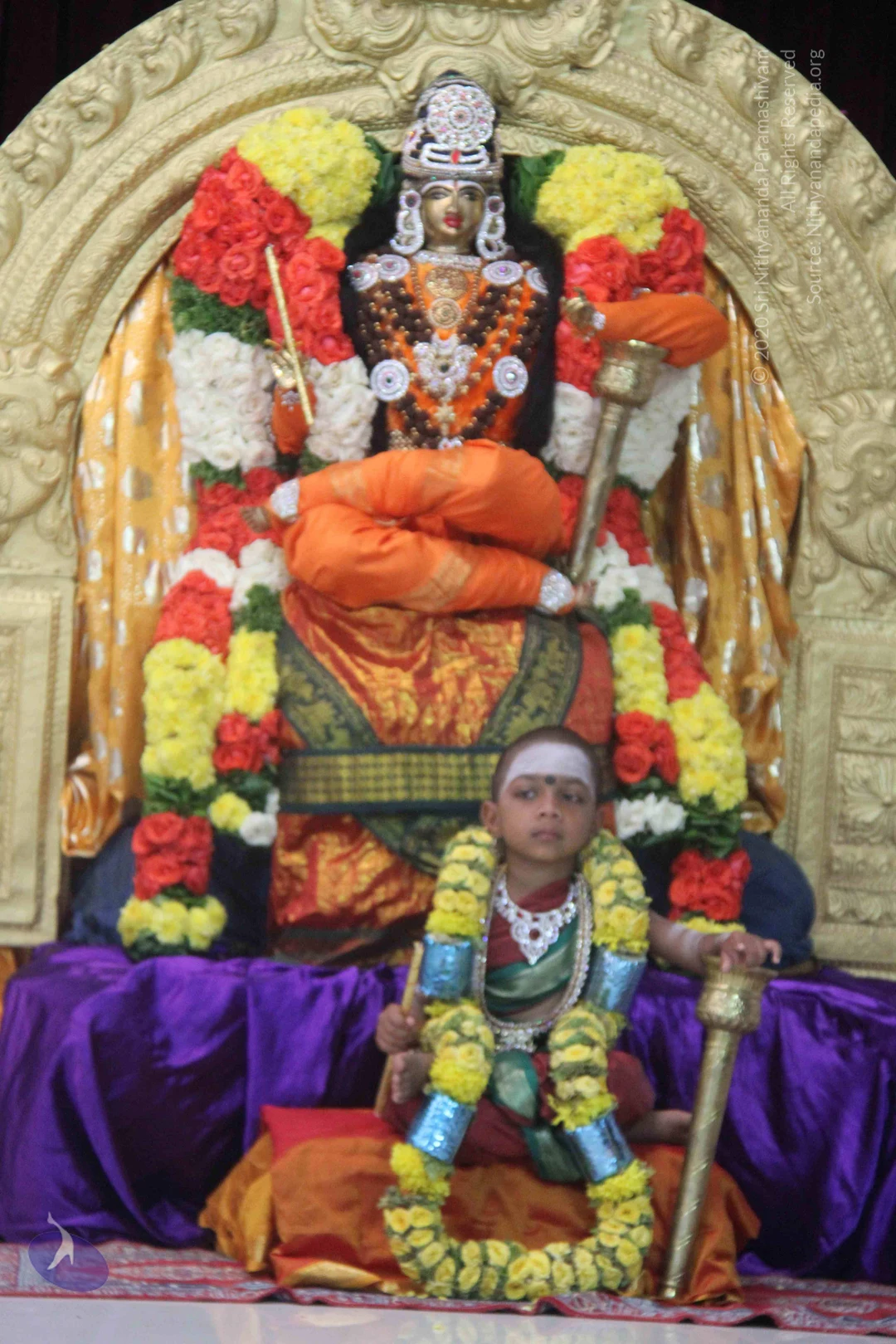
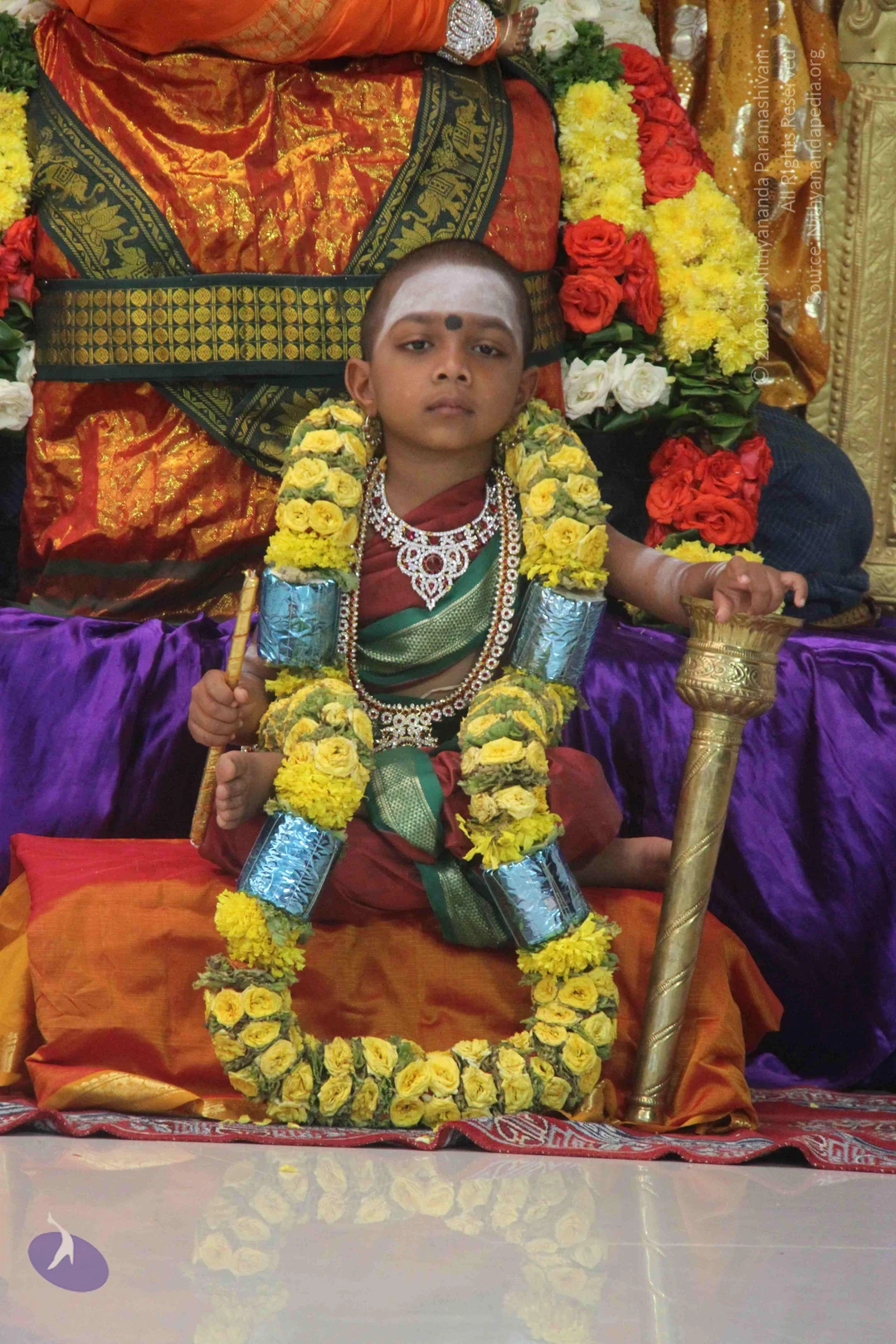
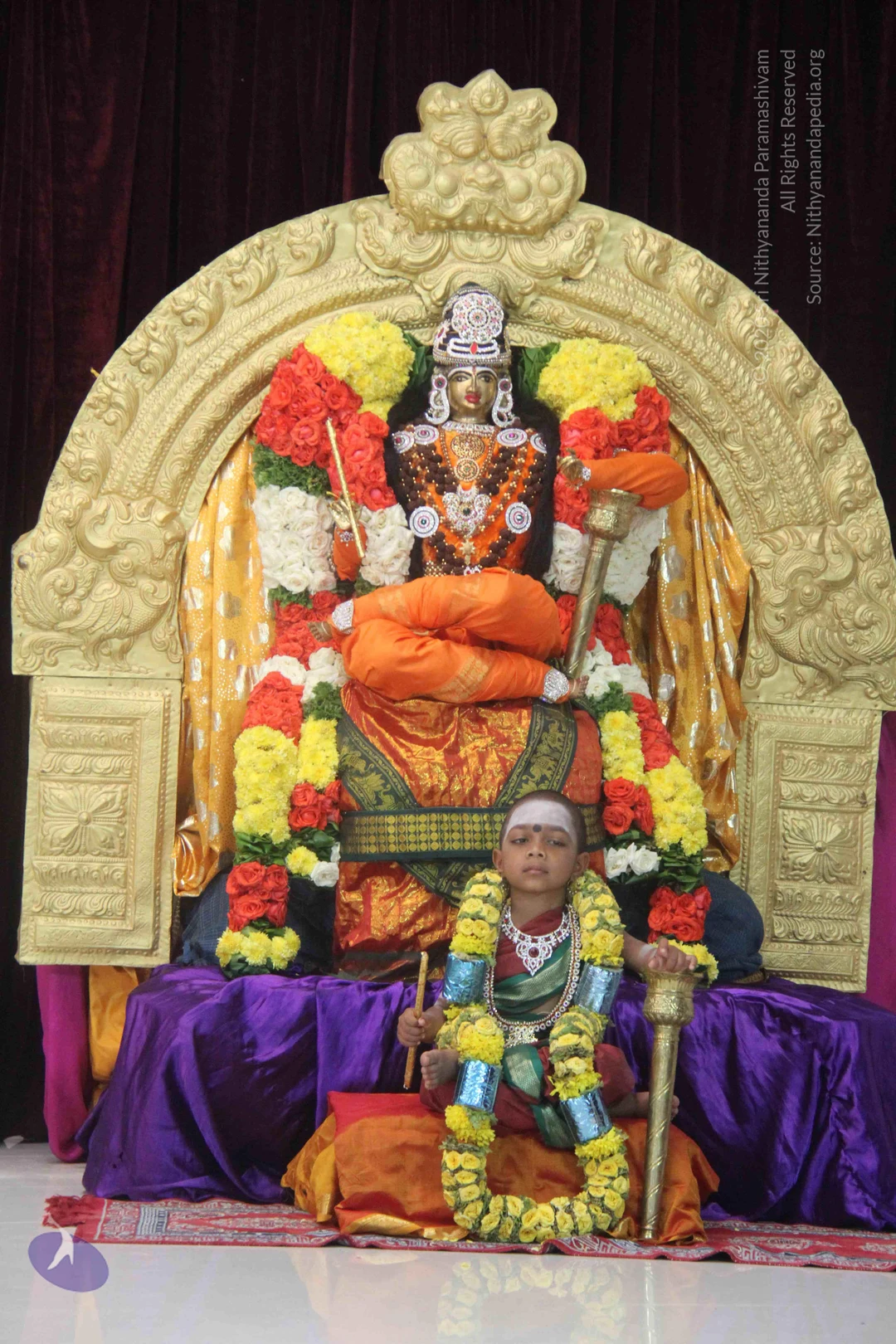
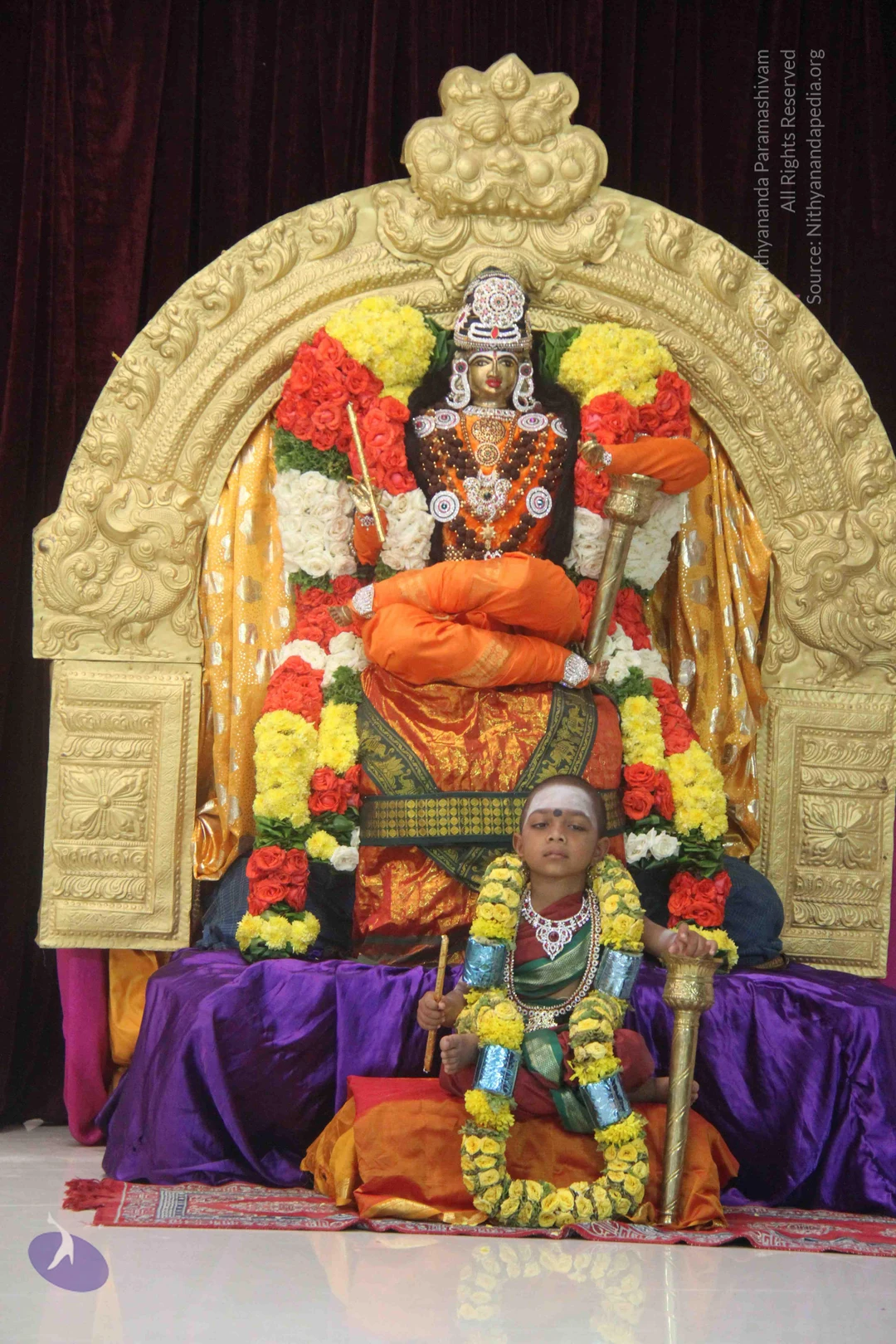
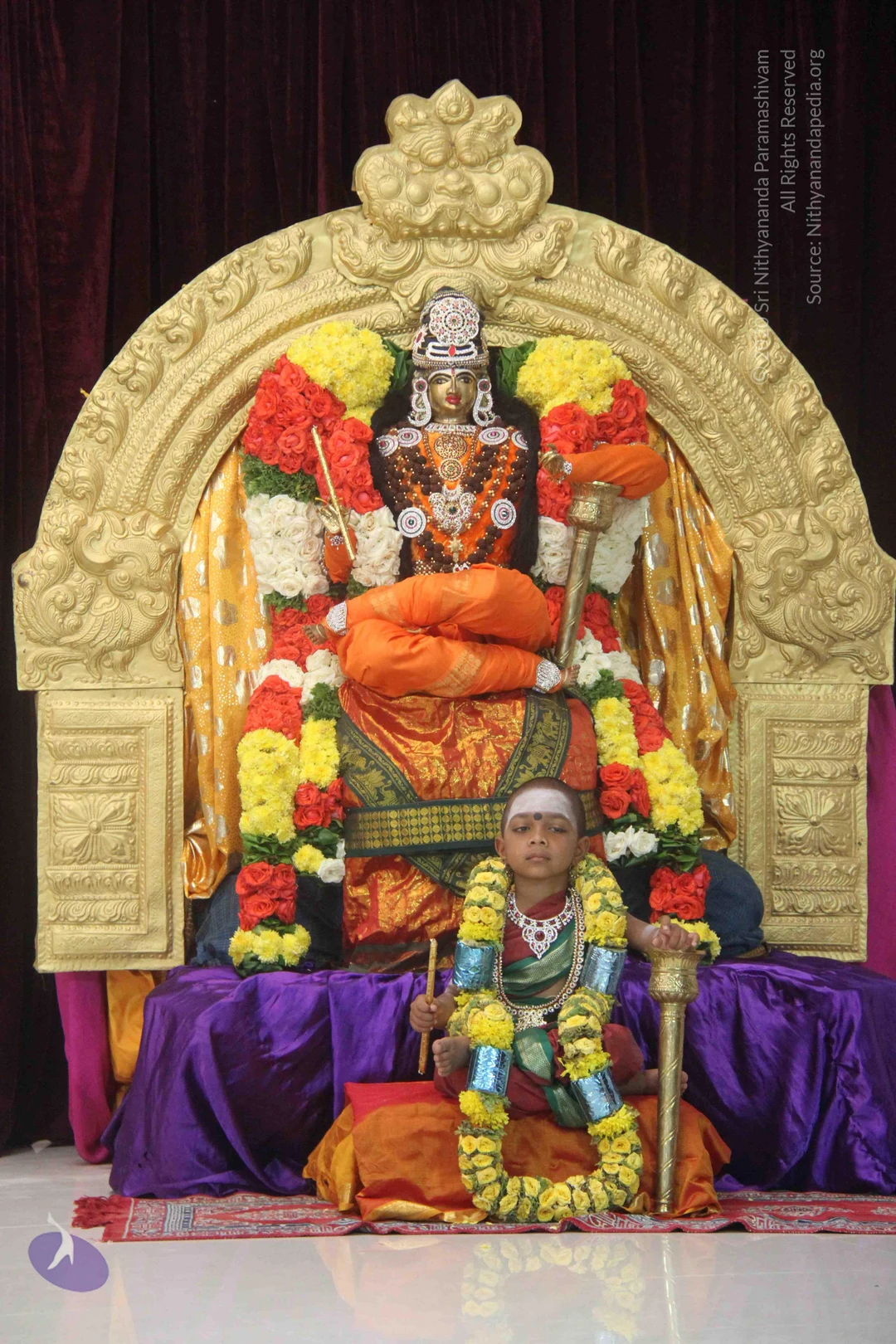
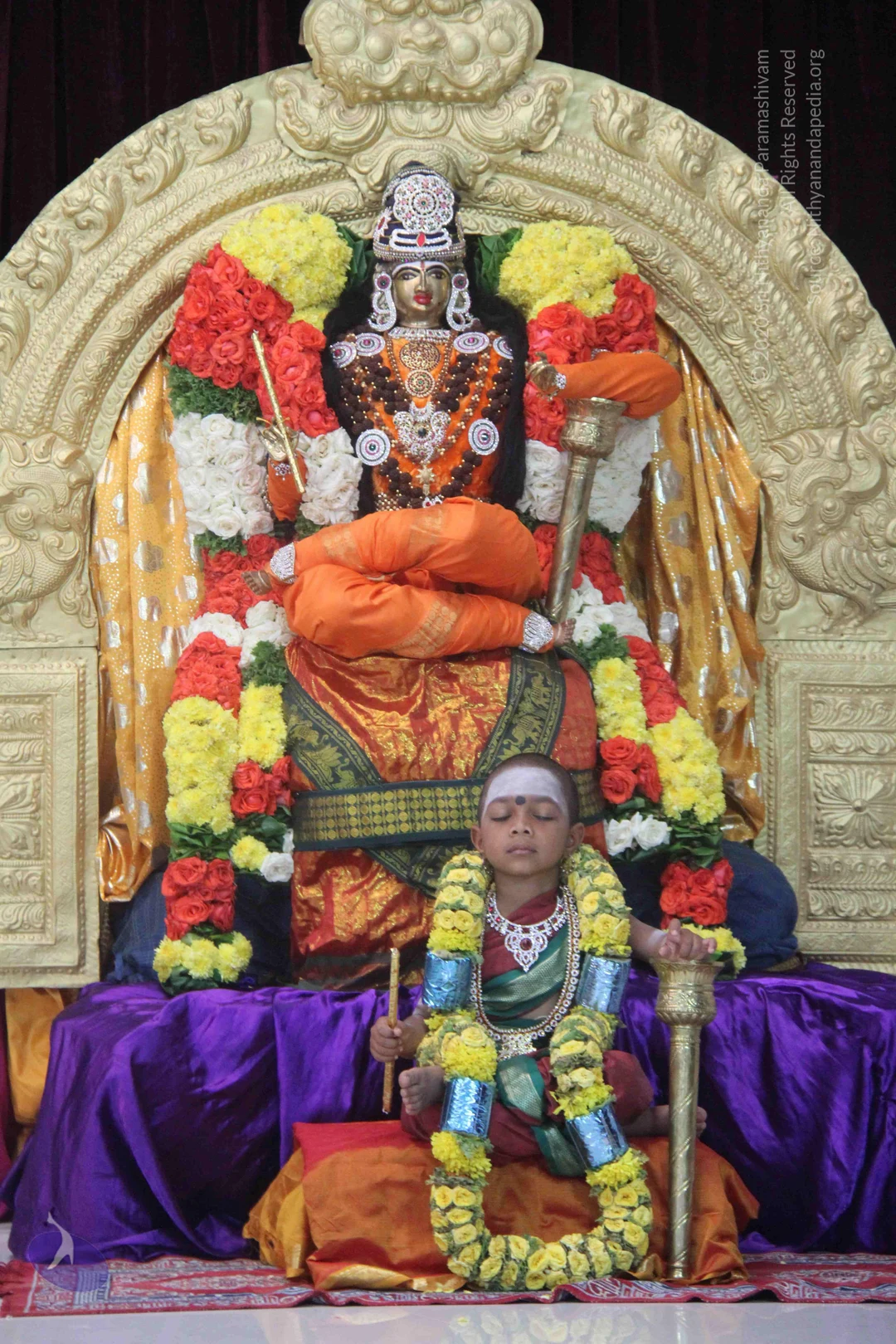
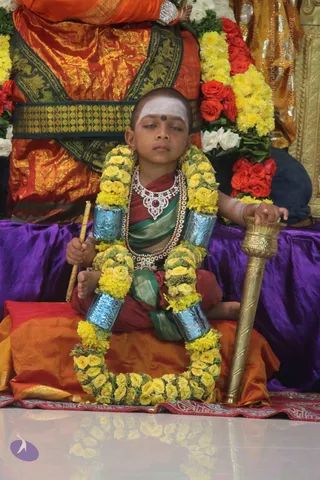
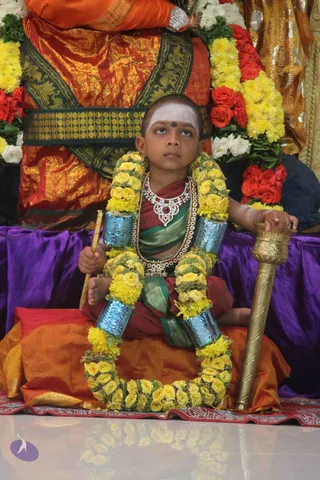
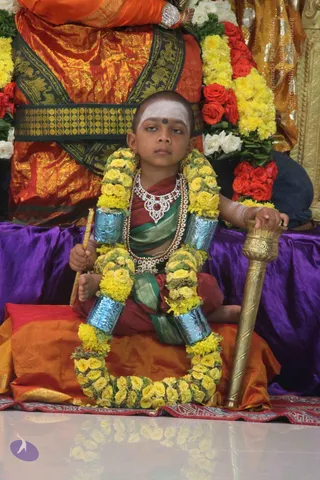
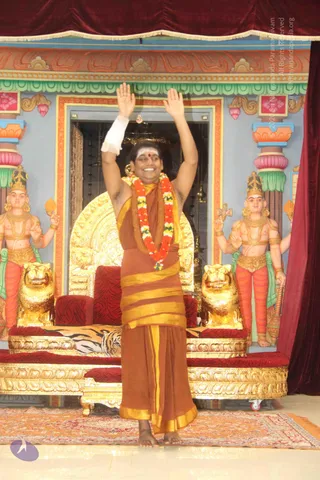
And today, Mahadeva is gracing us as “Ellaam Valla Siddhar”.

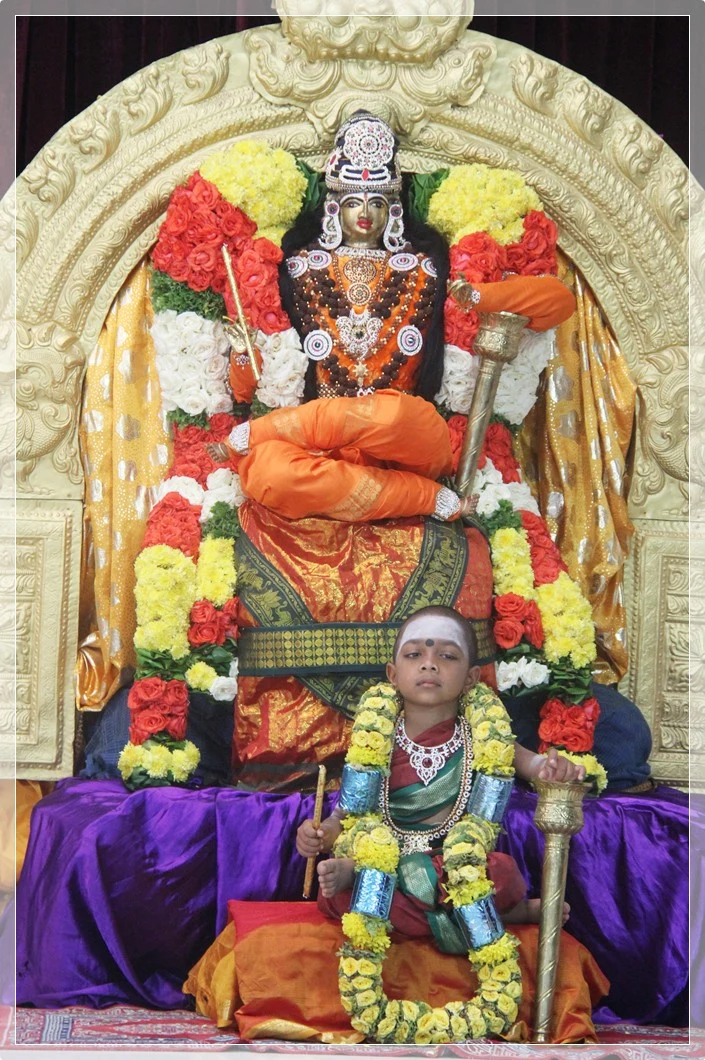
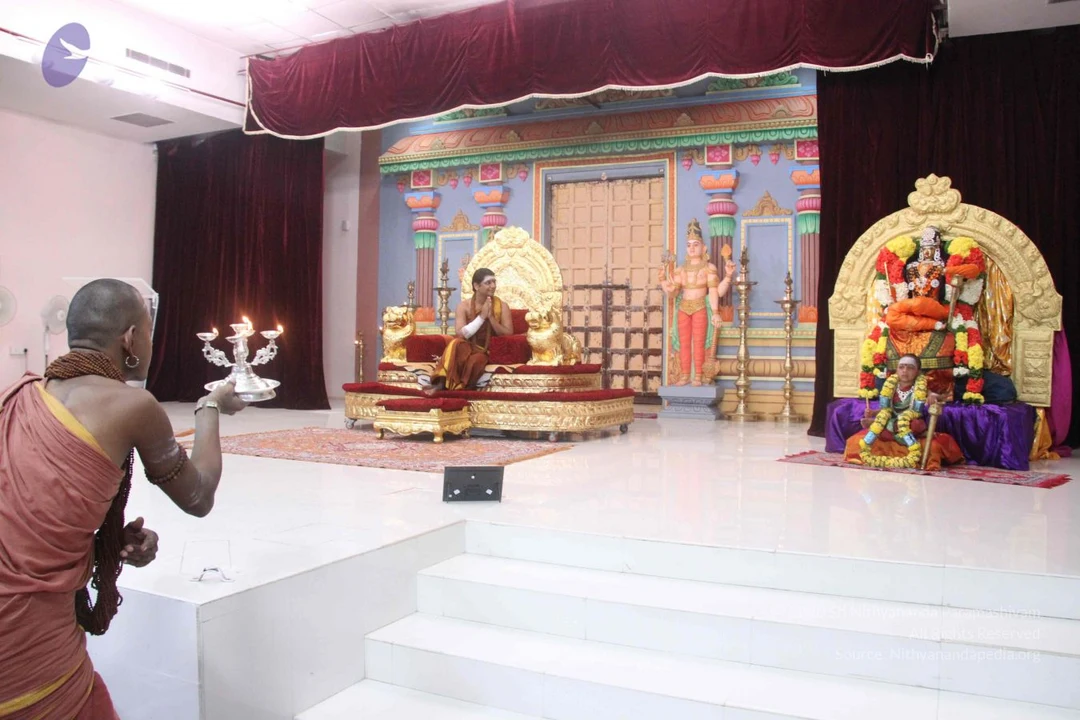
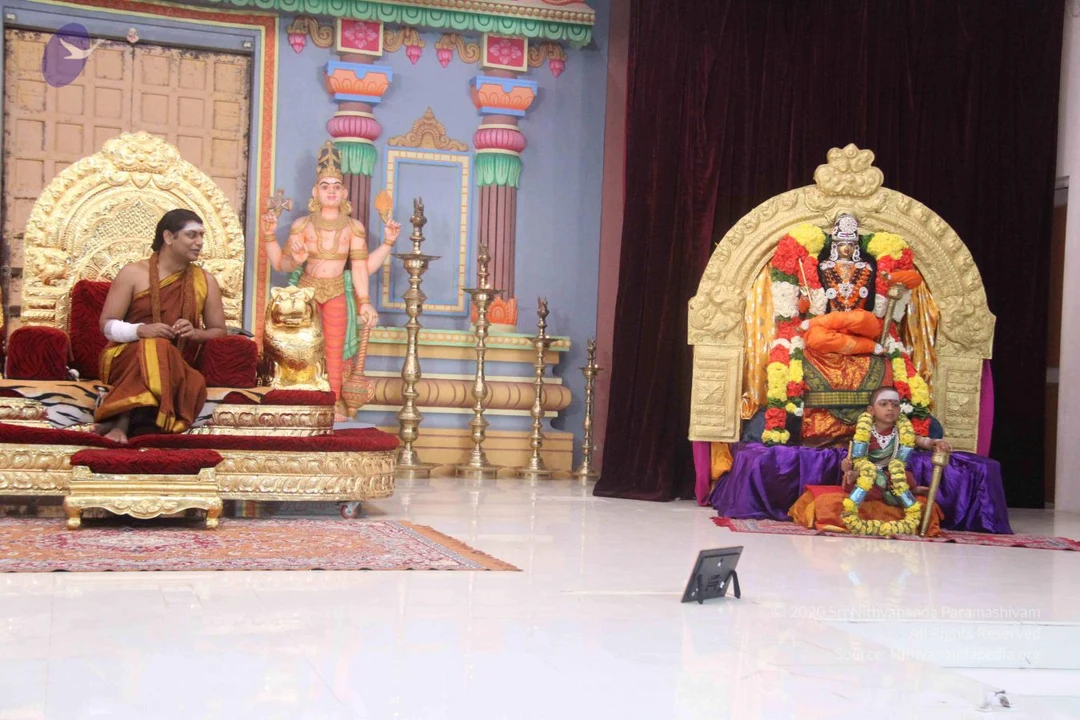
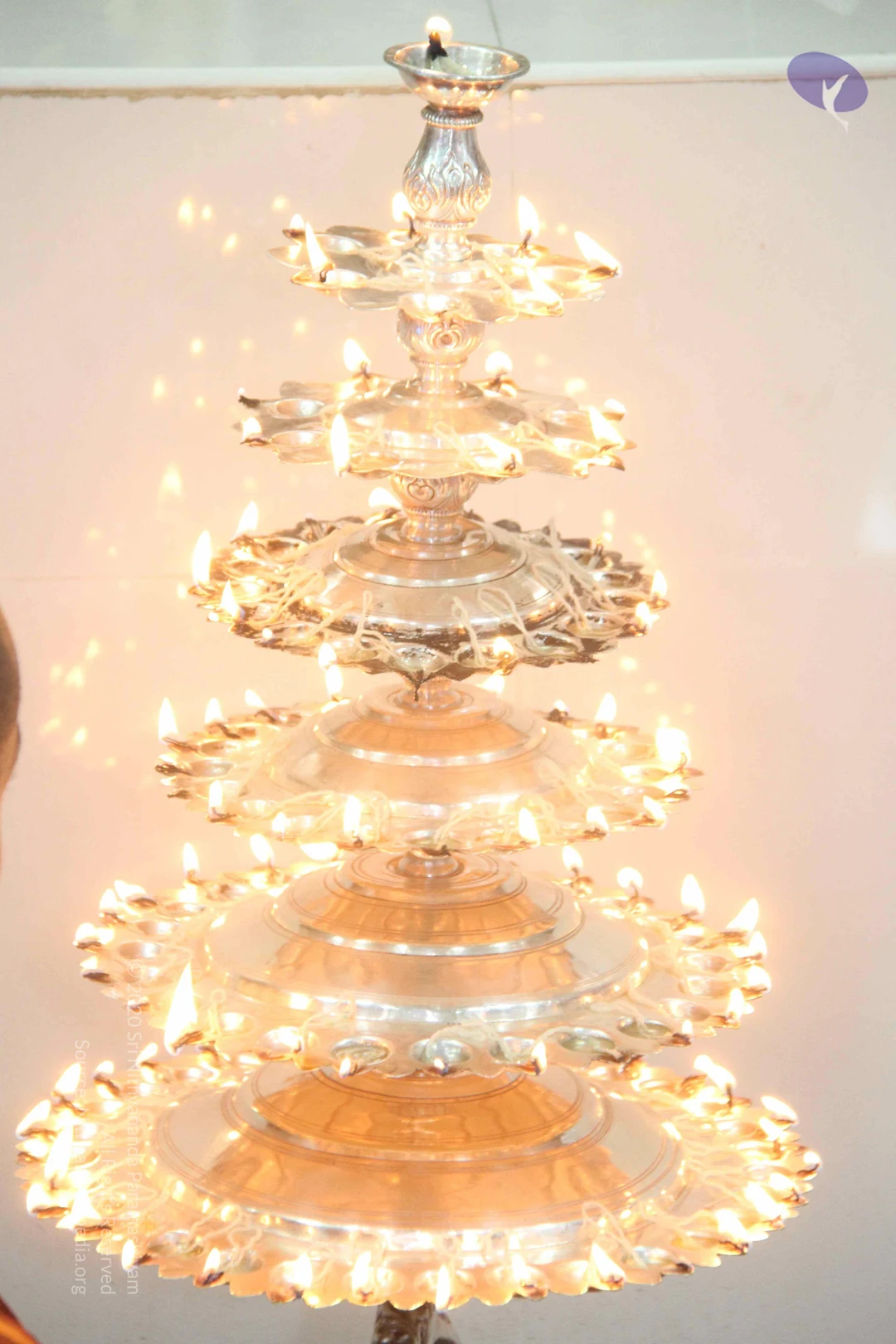
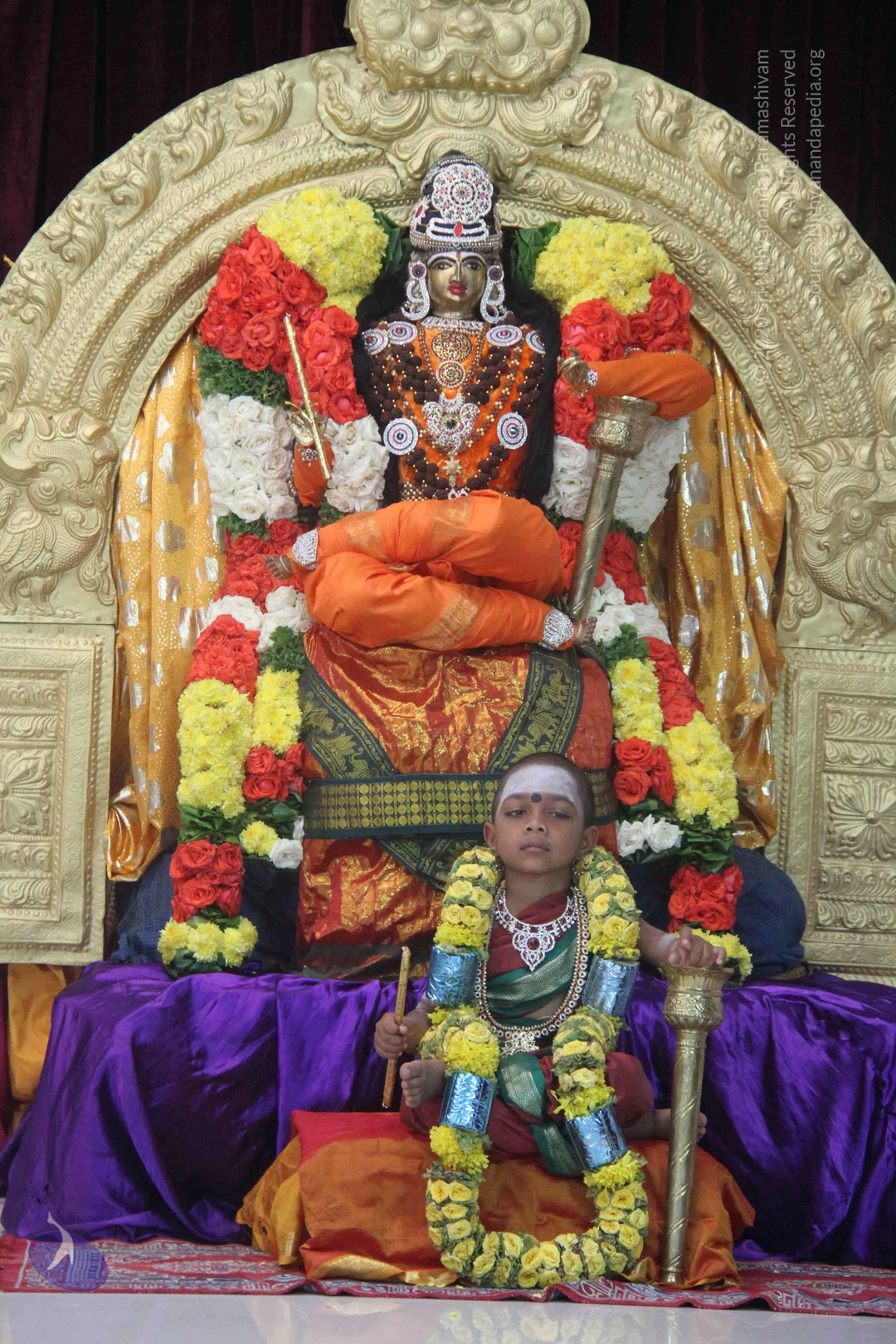
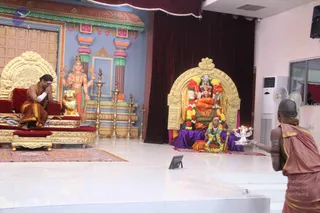
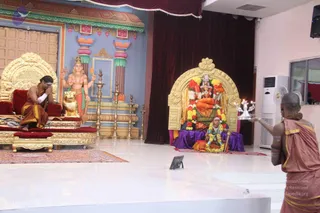
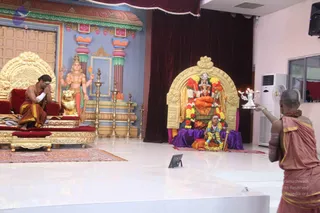
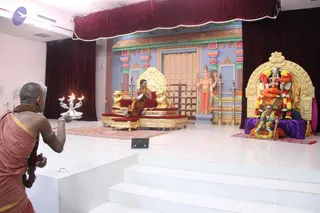
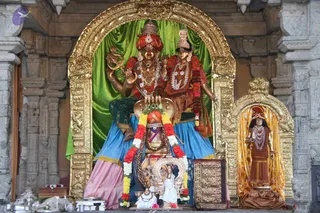
Once, Sundareshwara assumed human form as a mystic Siddha, went around the streets of Madurai, did His energy play, making old as young and young as old. Sundareshwara is Shiva. So today, He is gracing us in that form. Actually, every day during the Inner Awakening program, you will be seeing one form of Mahadeva decorated on the stage, just to remember Mahadeva’s Leelas, before starting the day! Before we begin the day, we will remember one of His Leelas and begin our day. It is called “Leela Dhyána”.

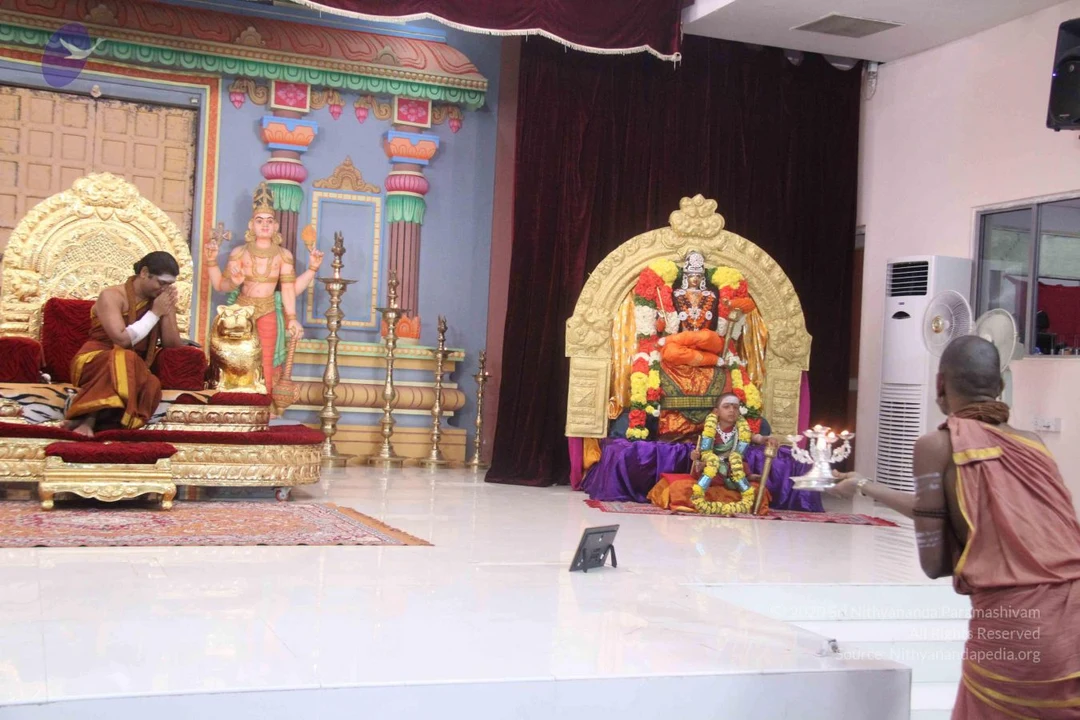
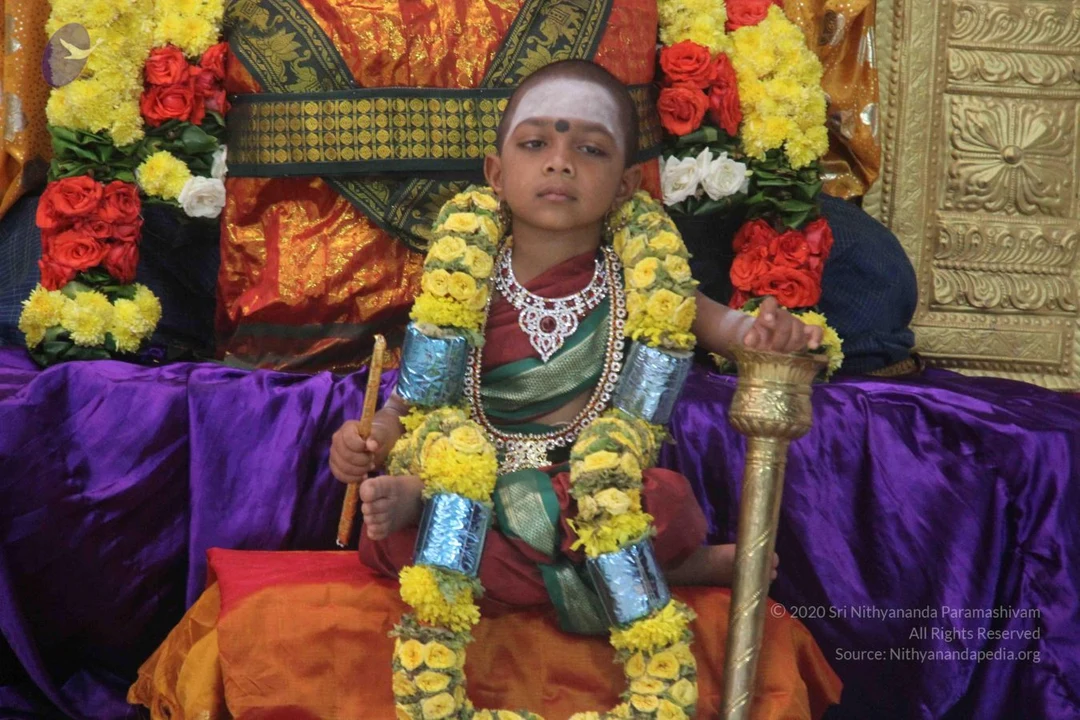
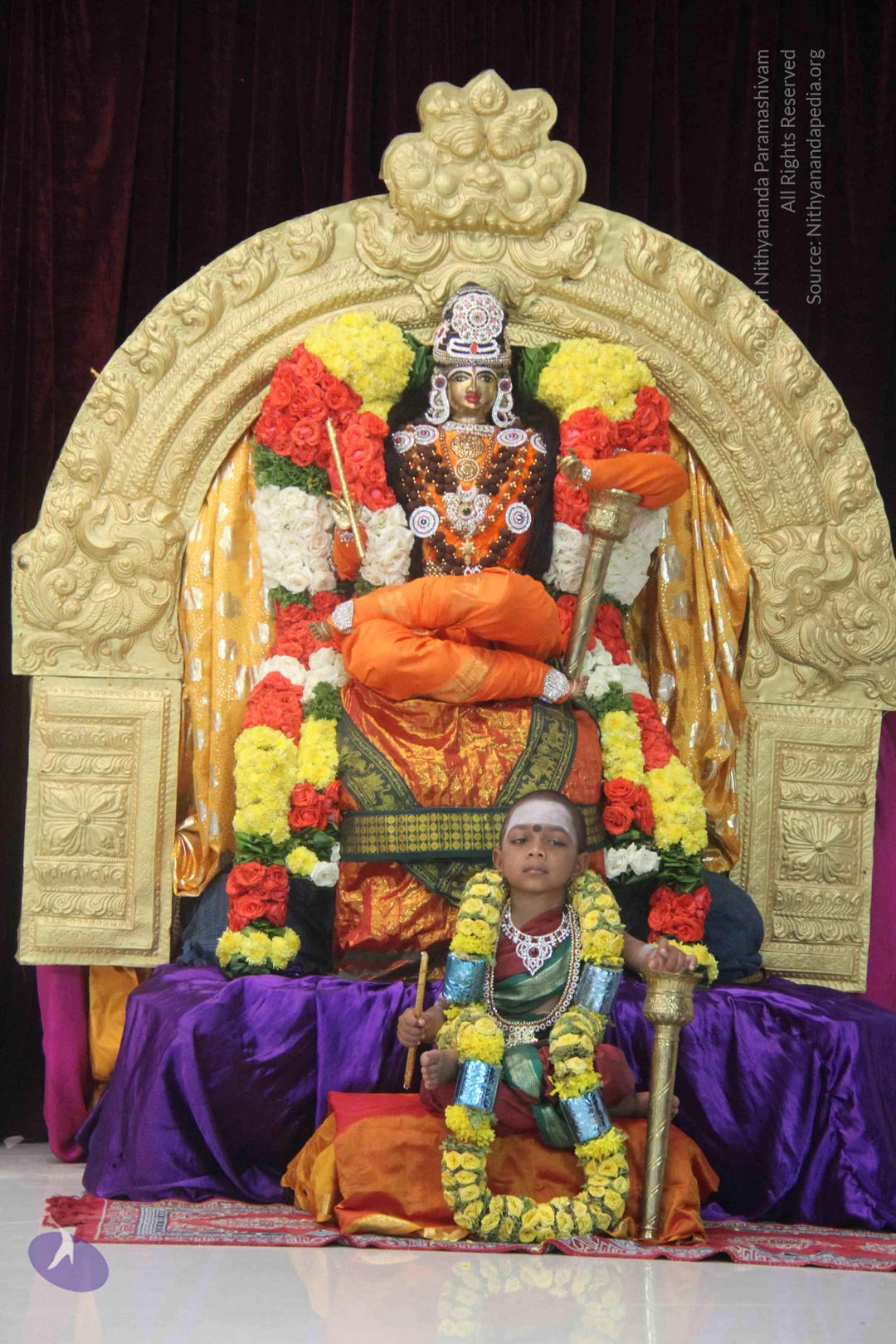
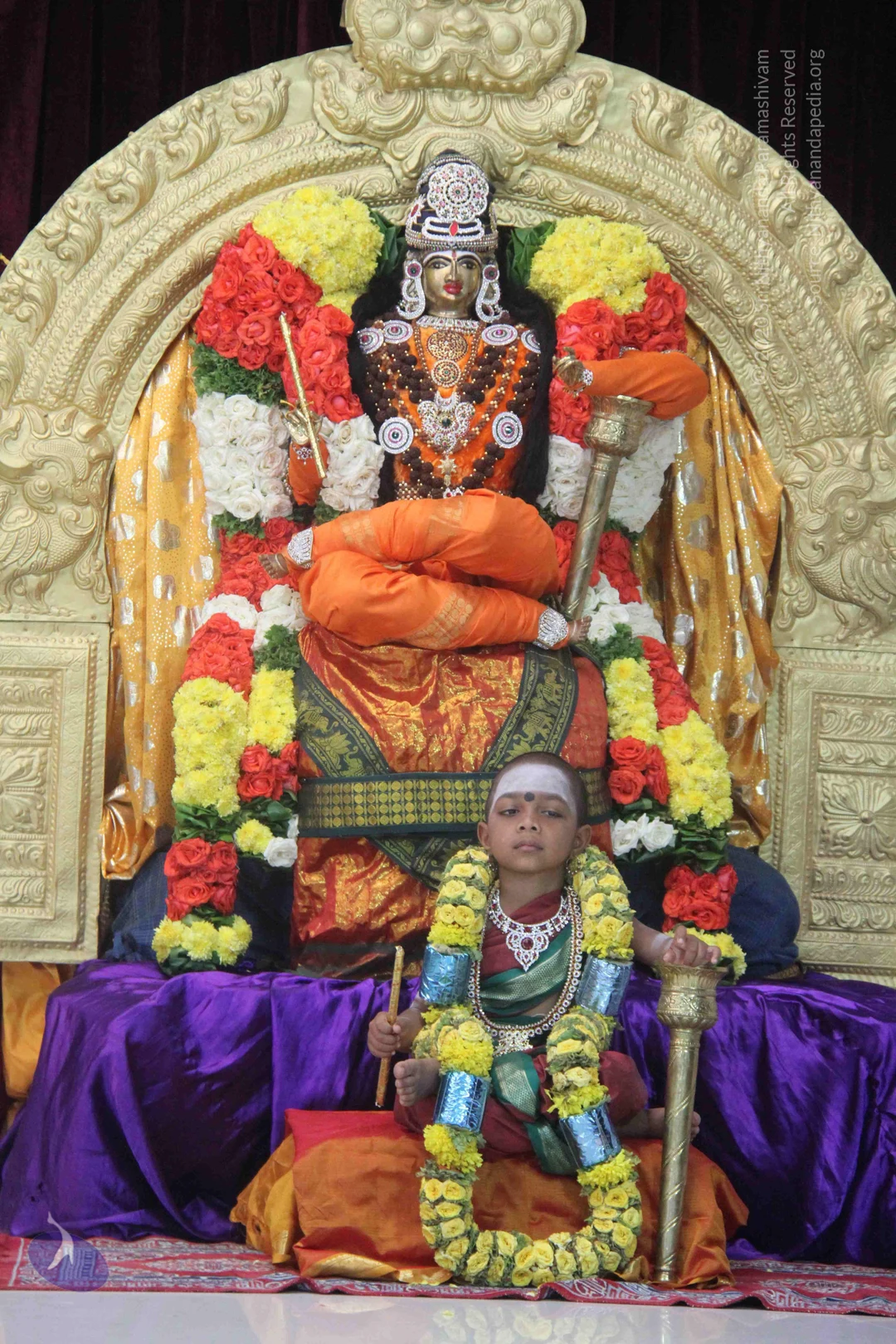
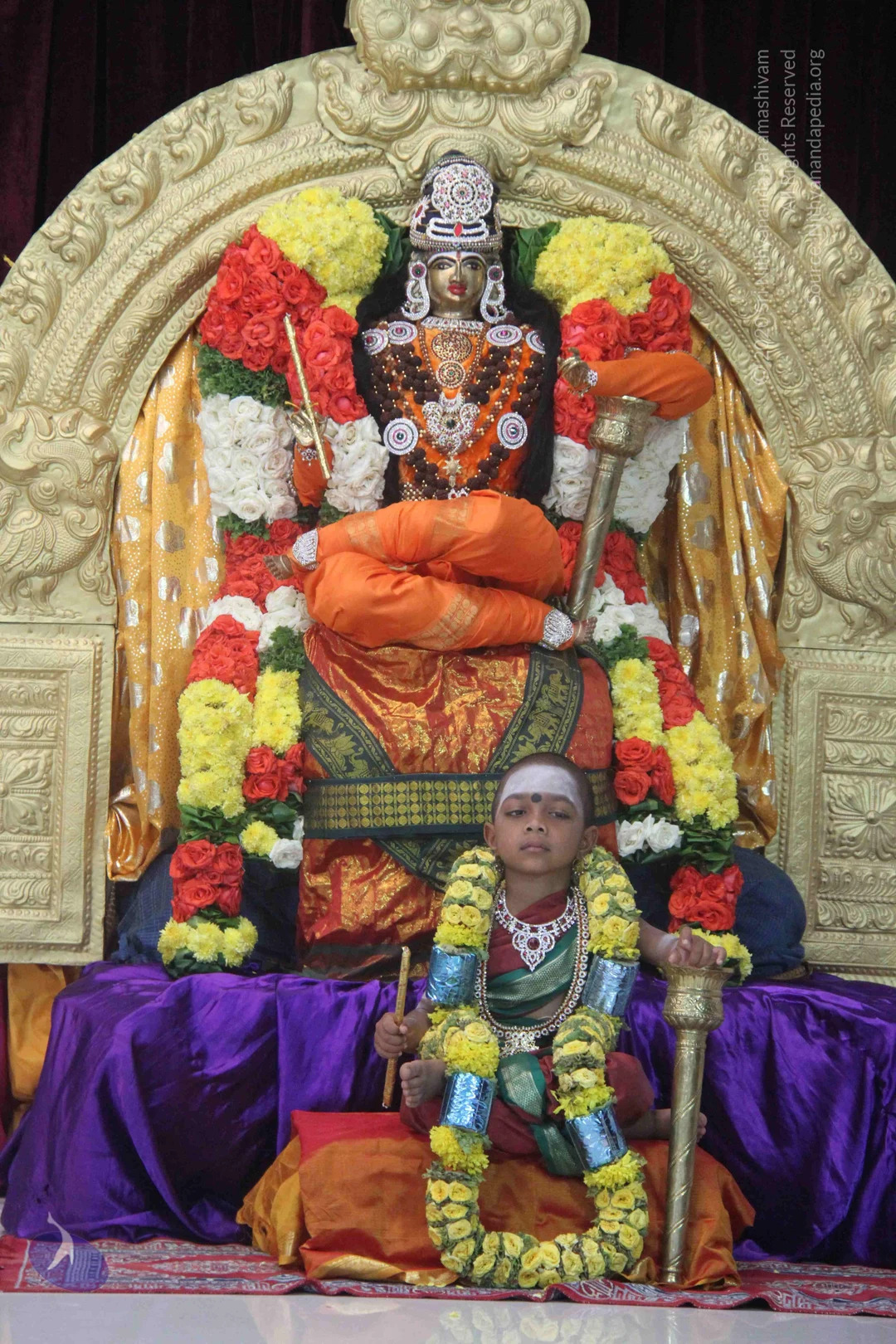
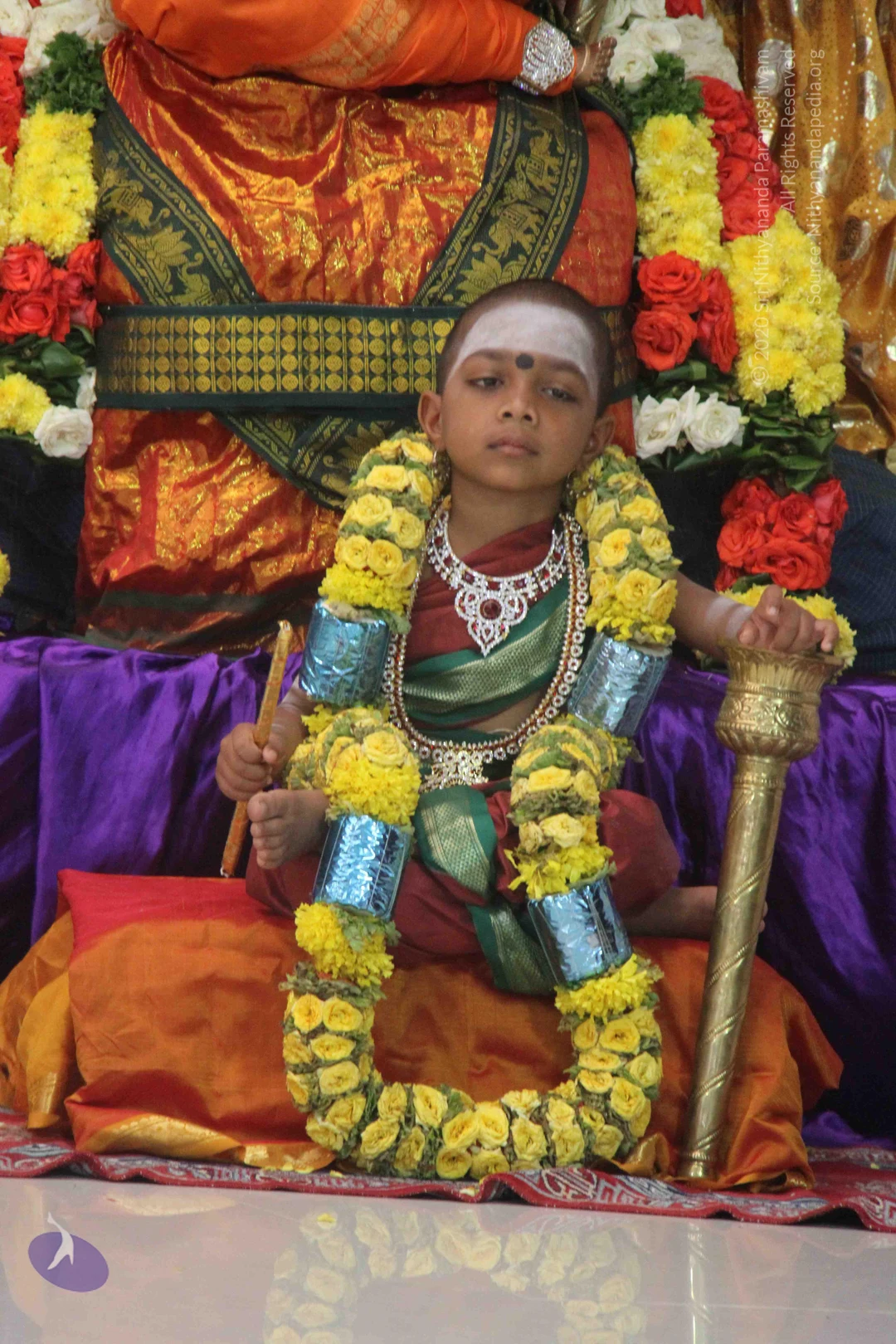
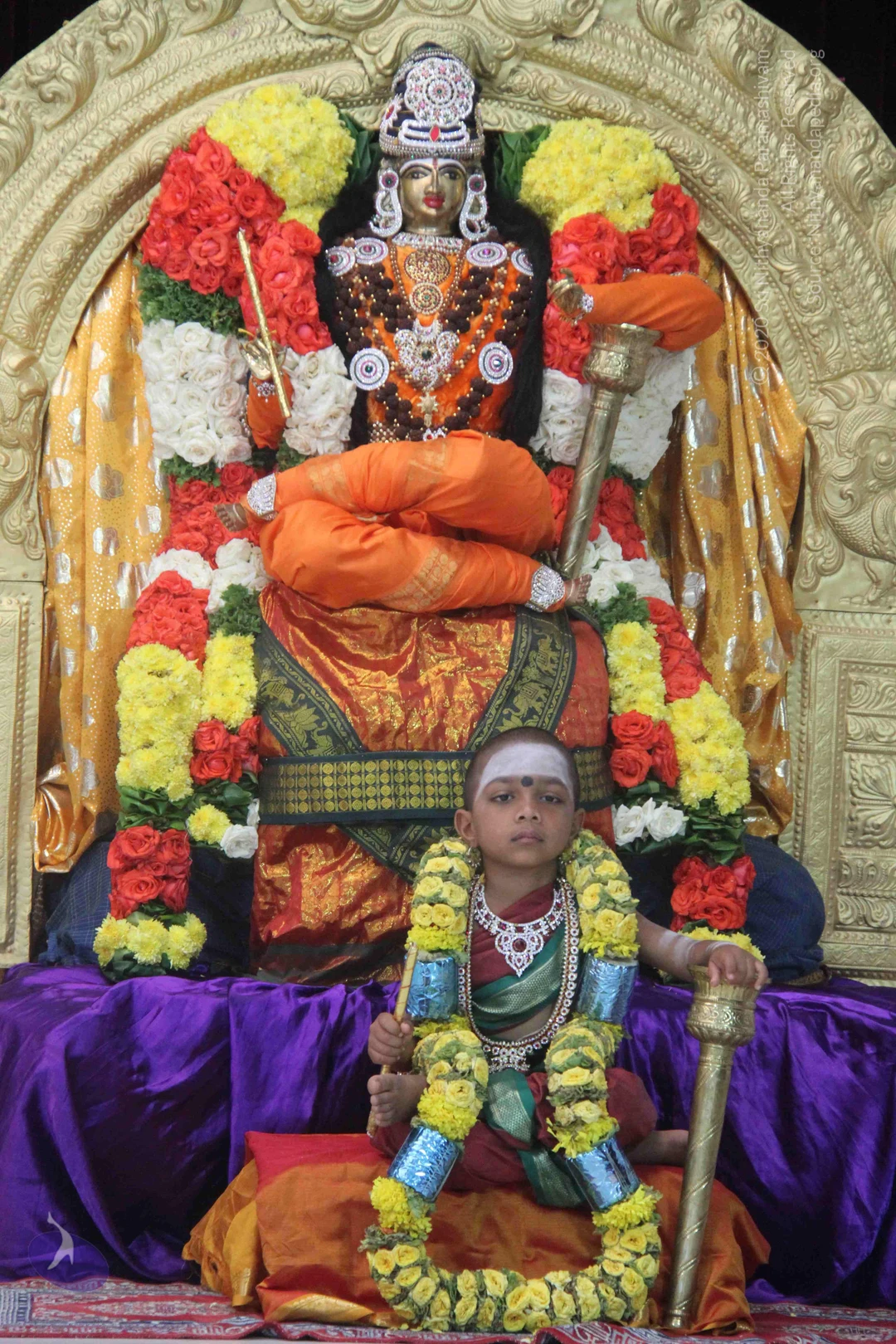
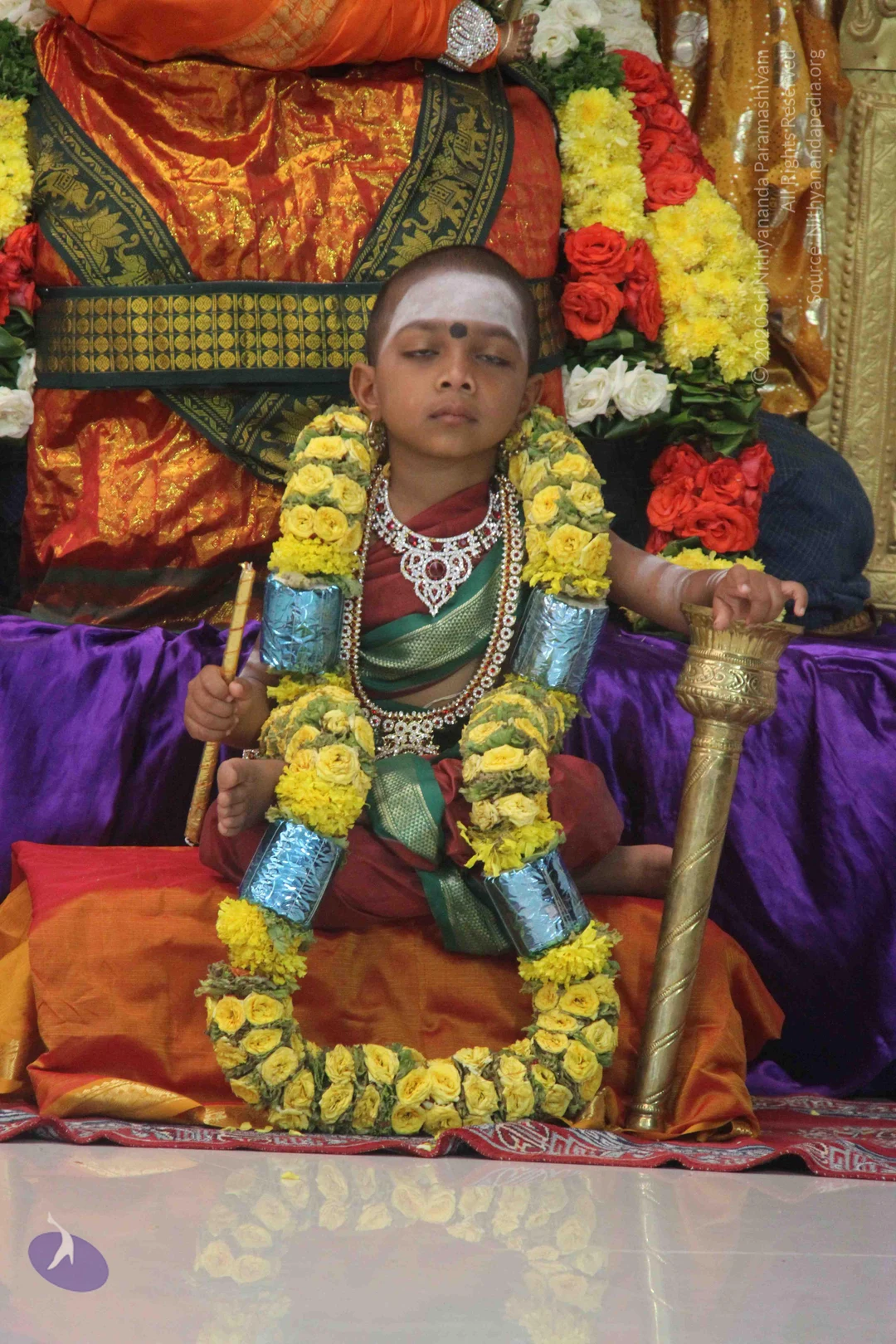
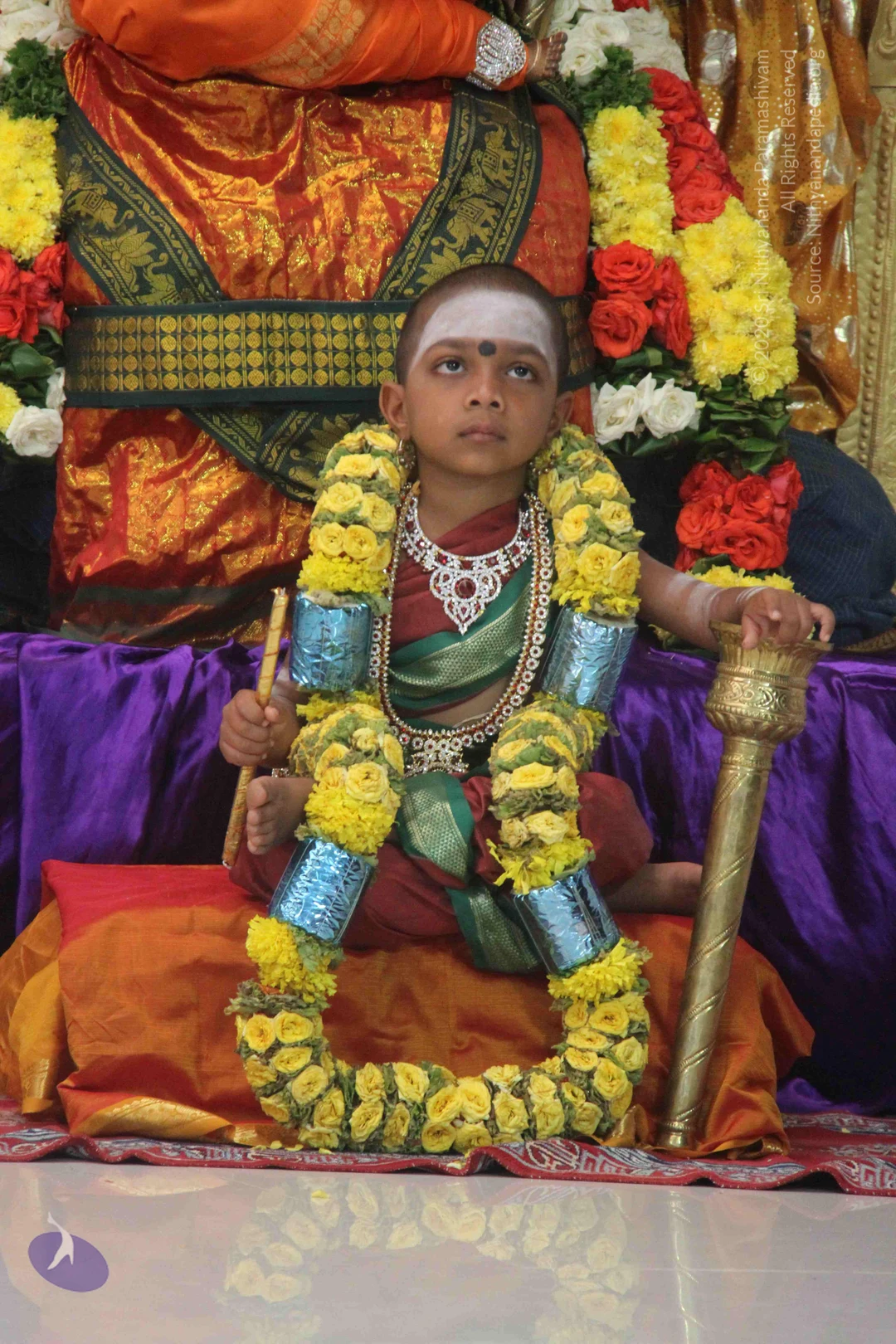
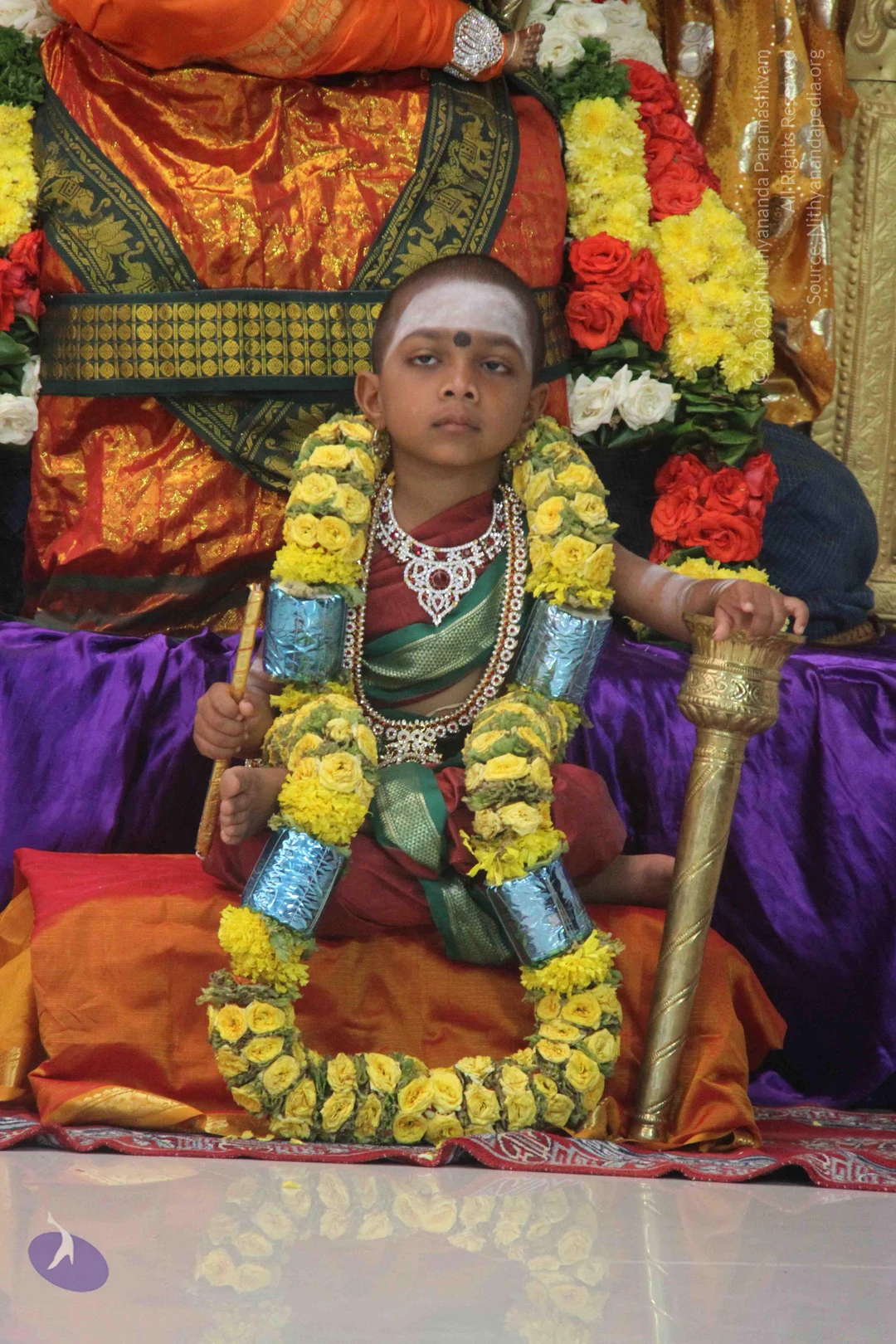
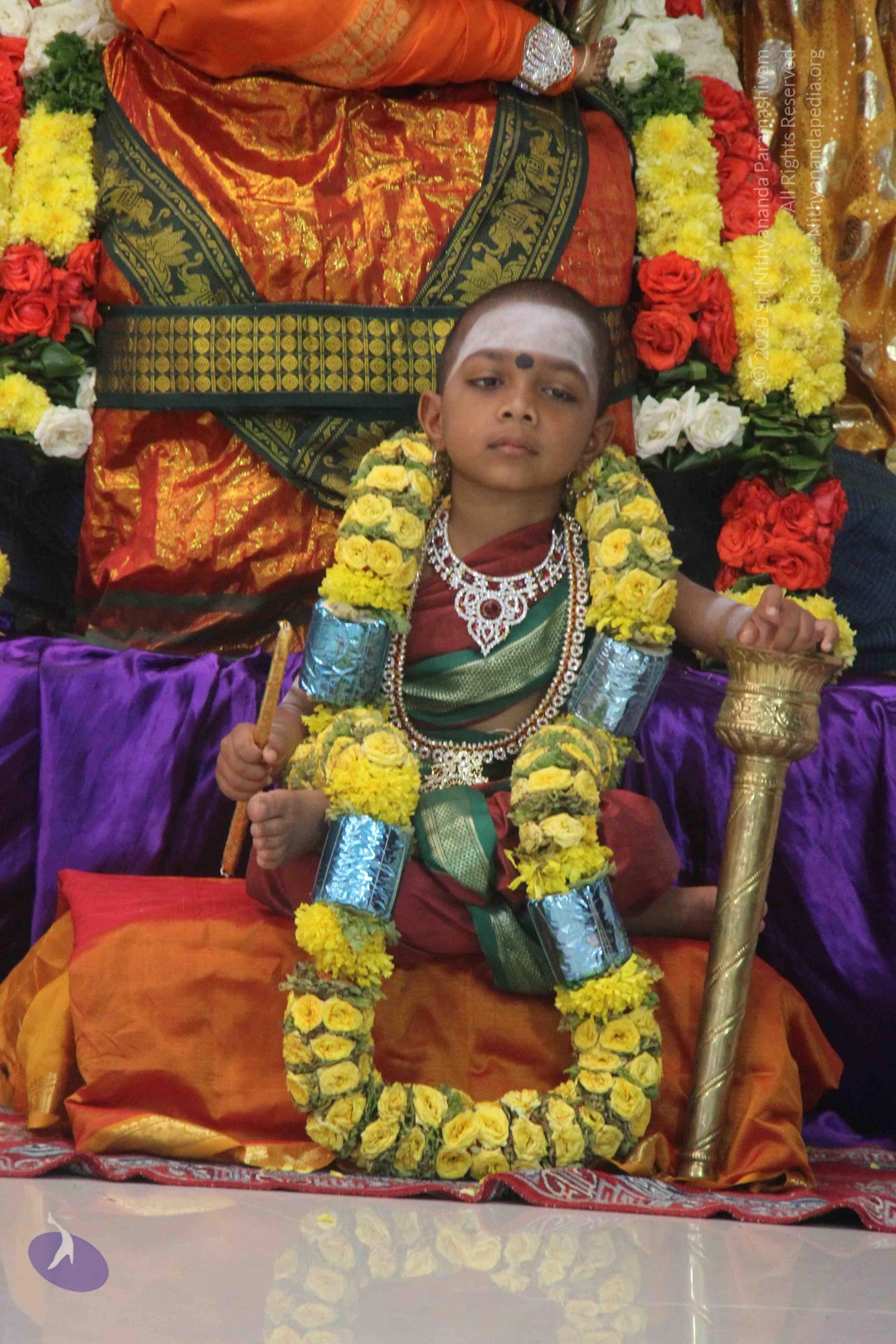
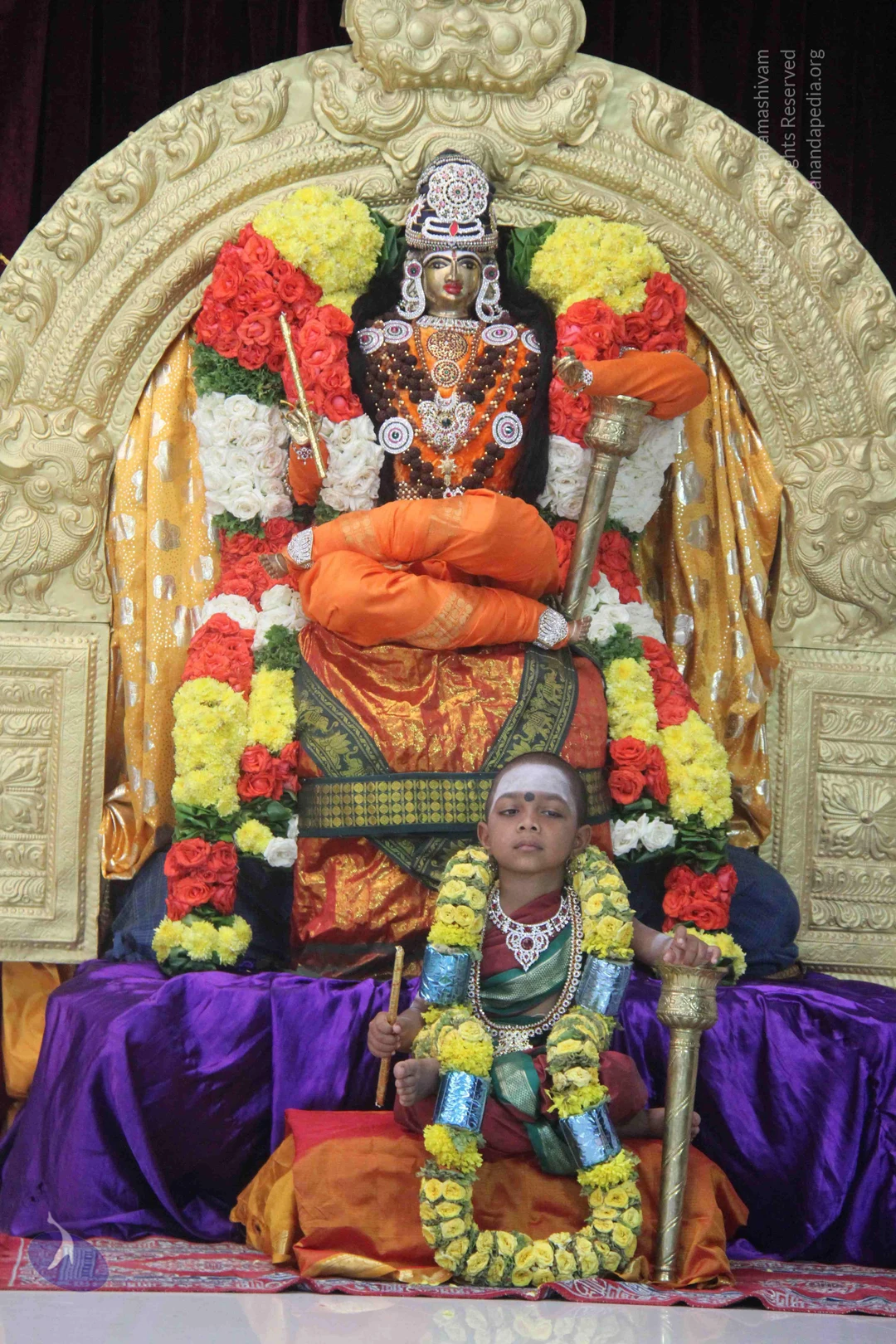
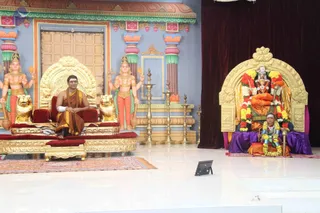
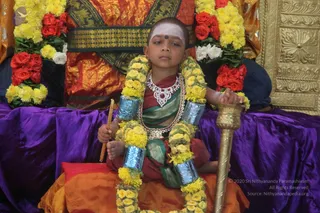
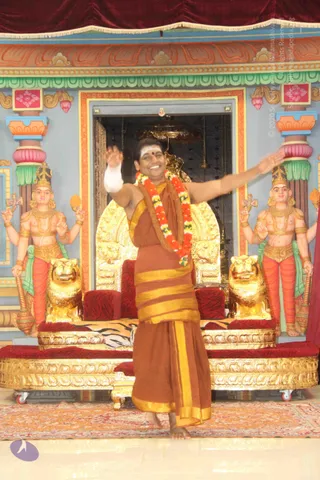
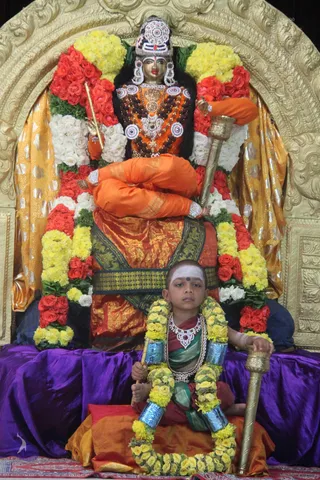
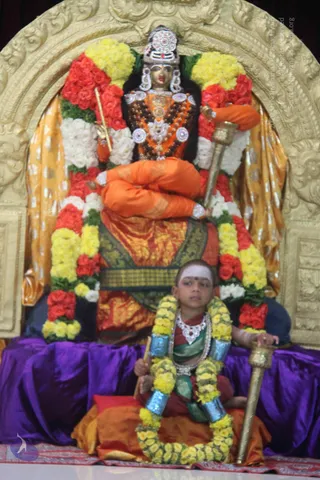
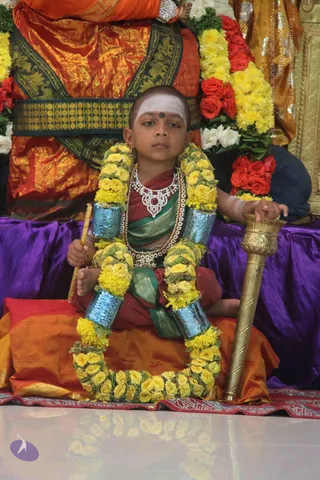
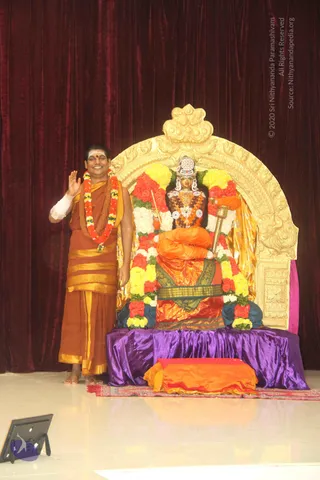
So, as the Leela Dhyána, today’s Leela Dhyána, Mahadeva is gracing us as “Ellaam Valla Siddhar”. Means, “A Mystic who is omnipotent”! As per the Madurai tradition, one of our Krama Brahmacharis is enacting that role, having the same make-up.

“Ellaam Valla Siddhar” is one of the powerful Leela’s of Mahadeva.

And, today I am happily announcing the inauguration of Washington DC, Nithyananda Vedic Temple!

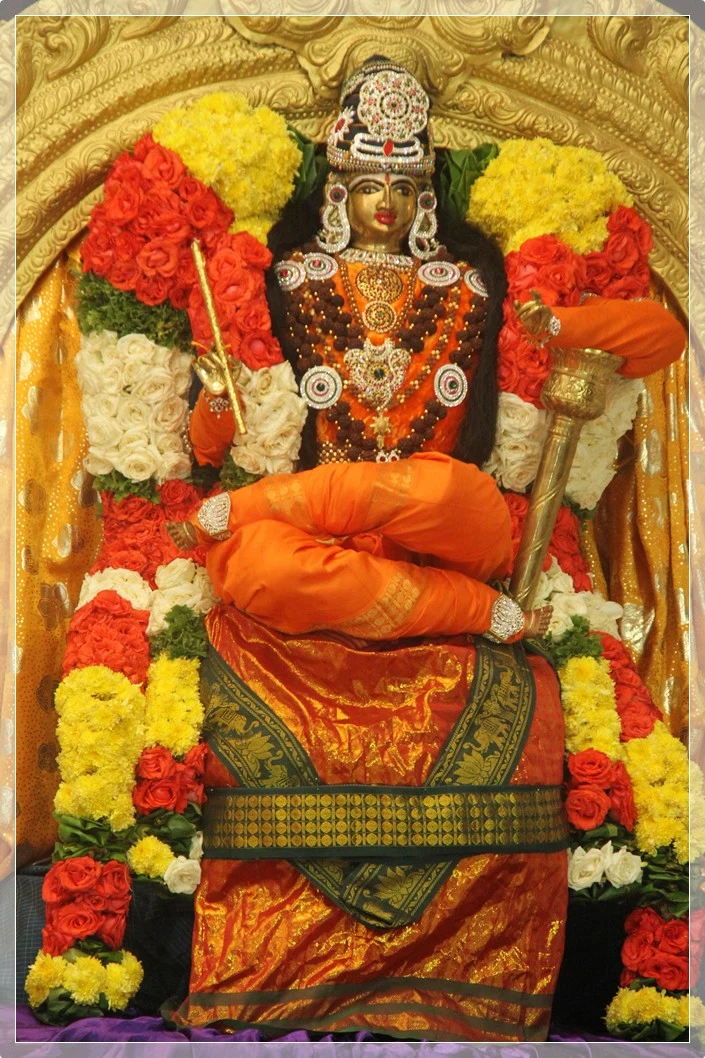
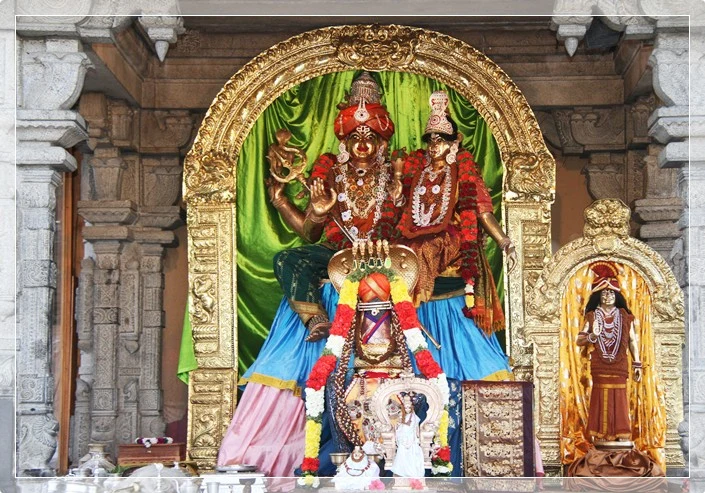
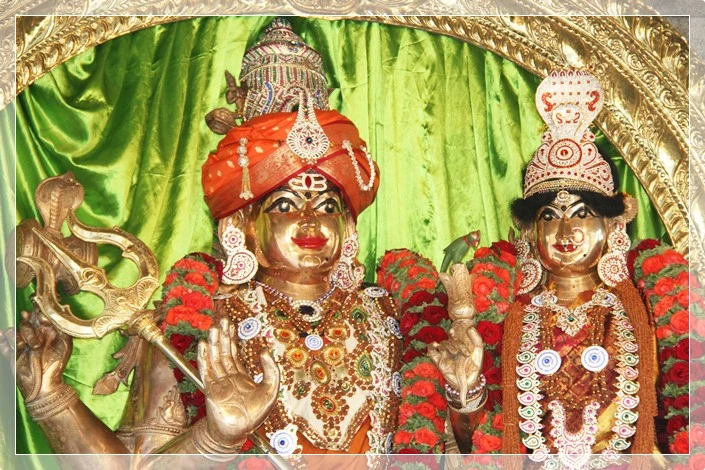
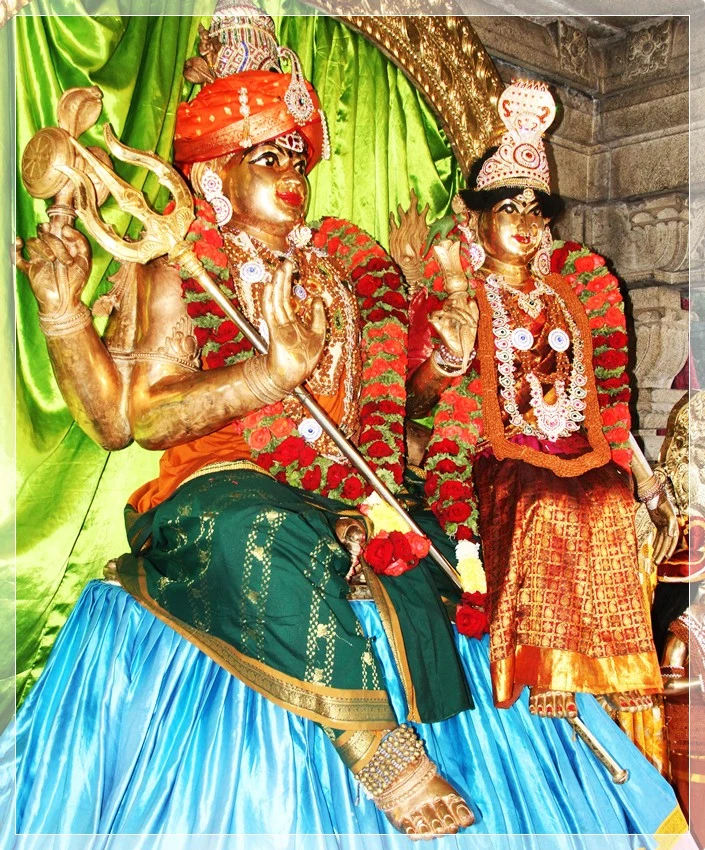
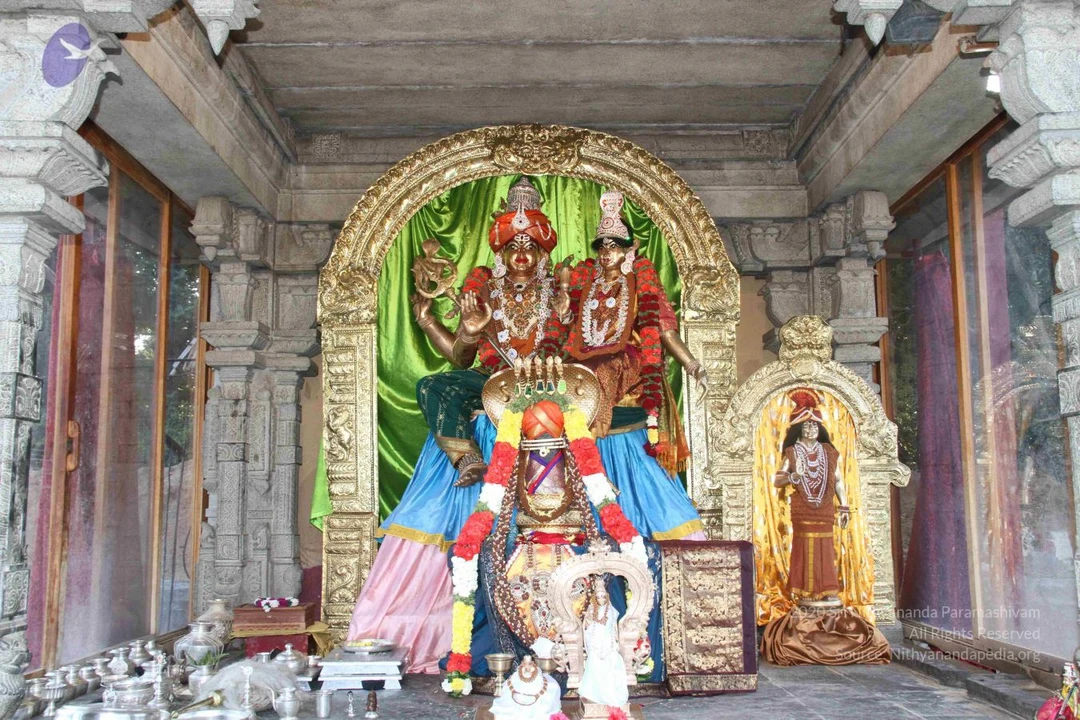
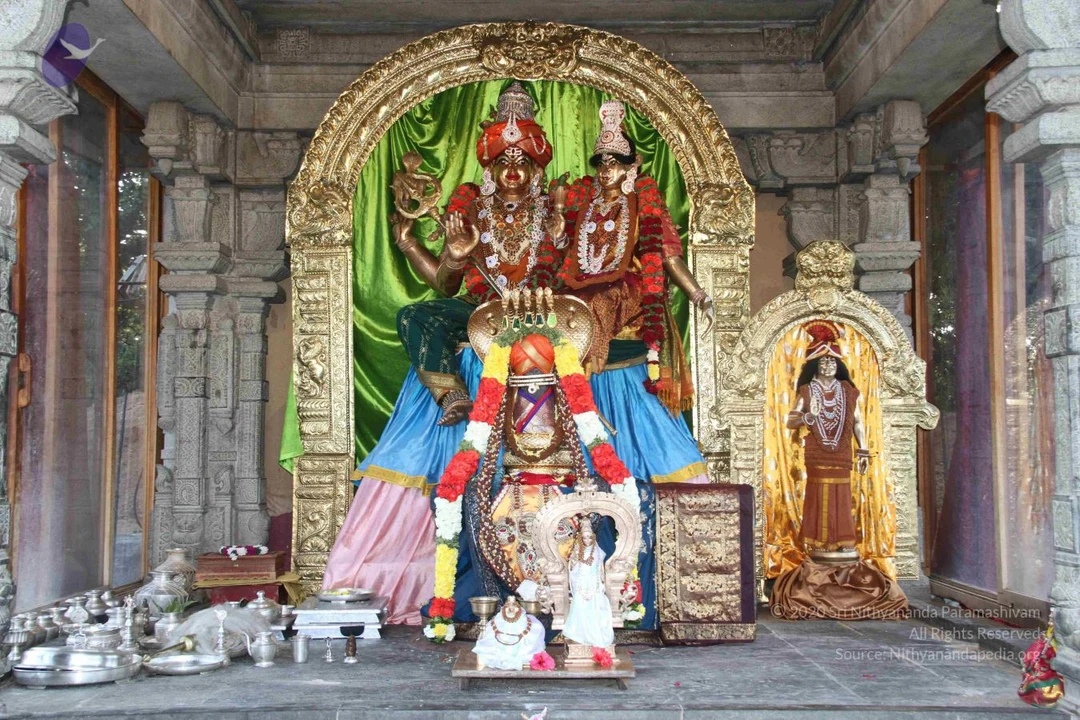
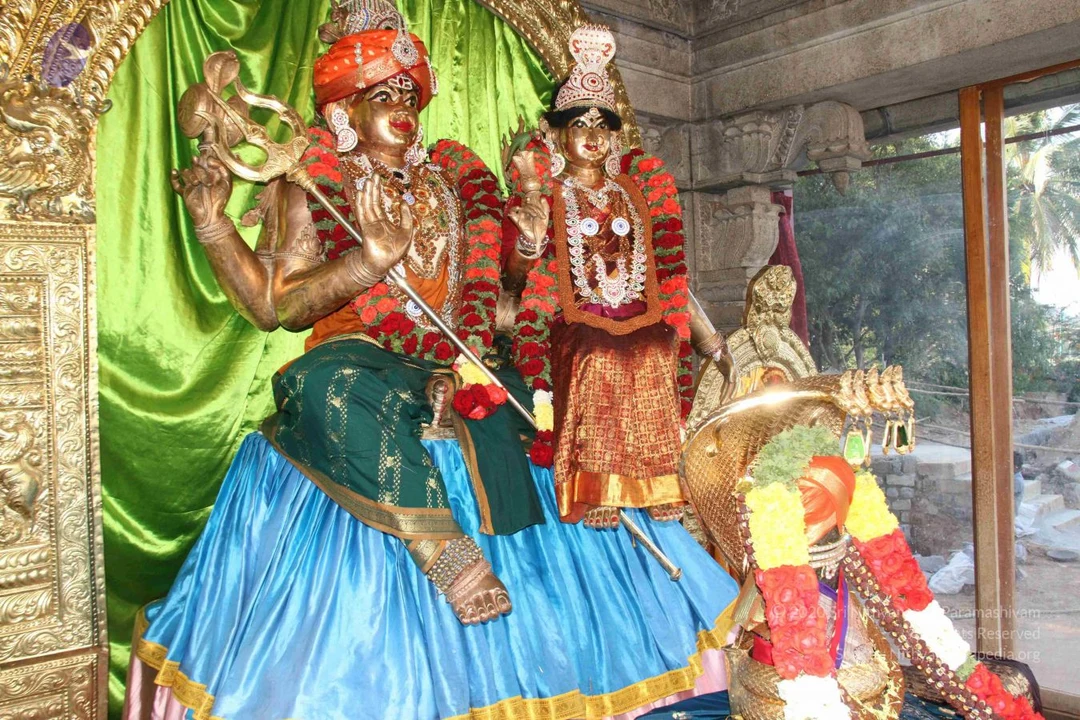
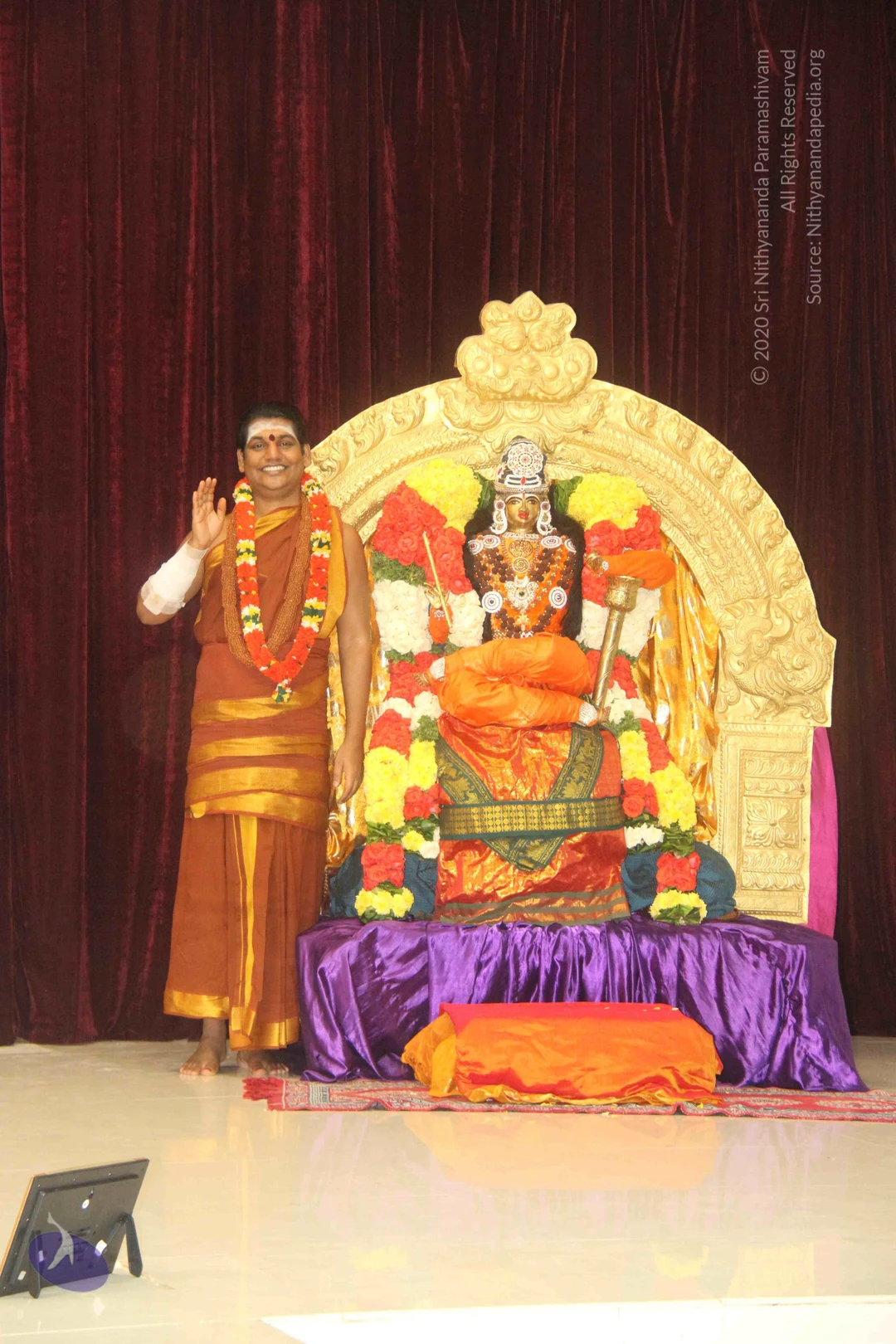
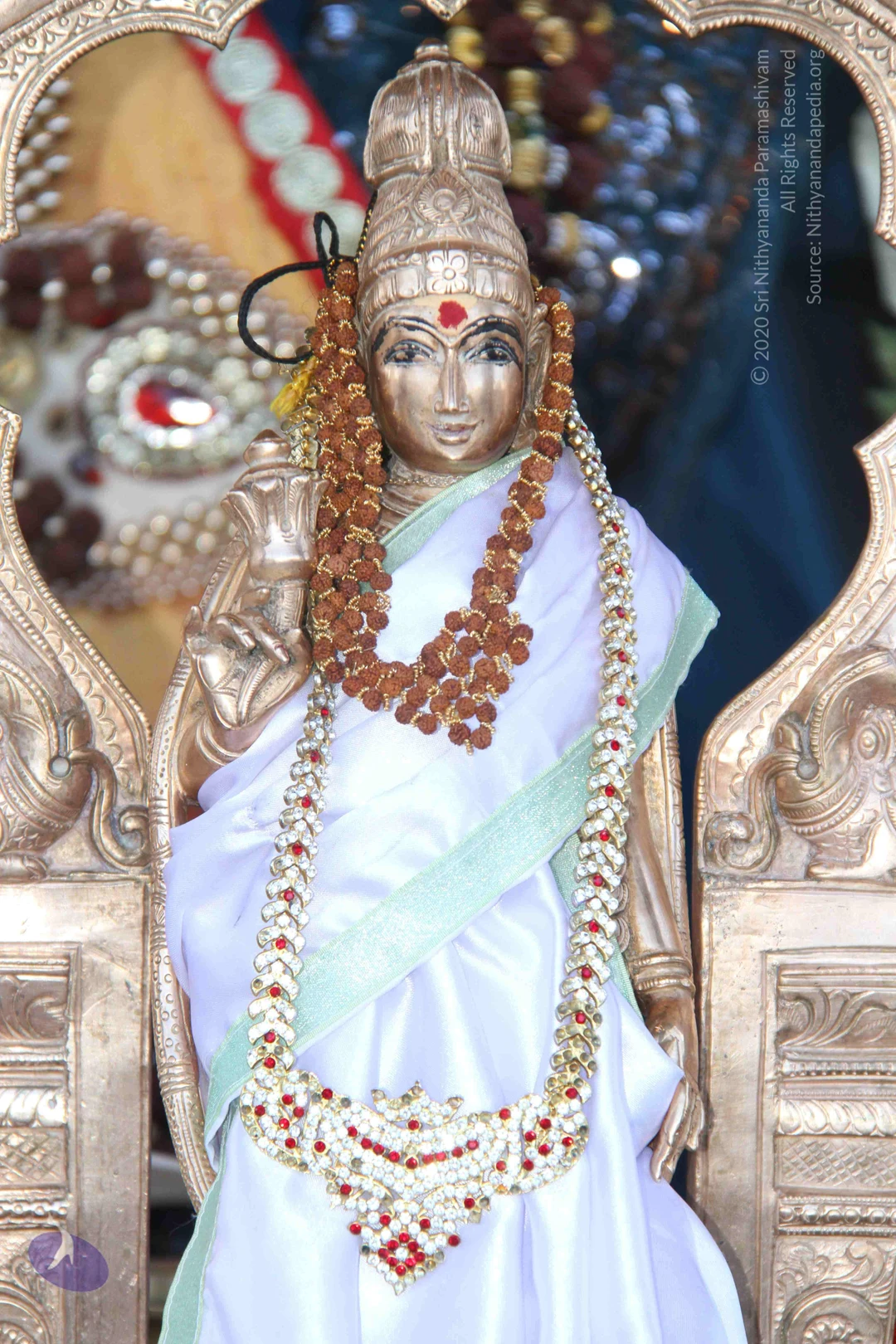
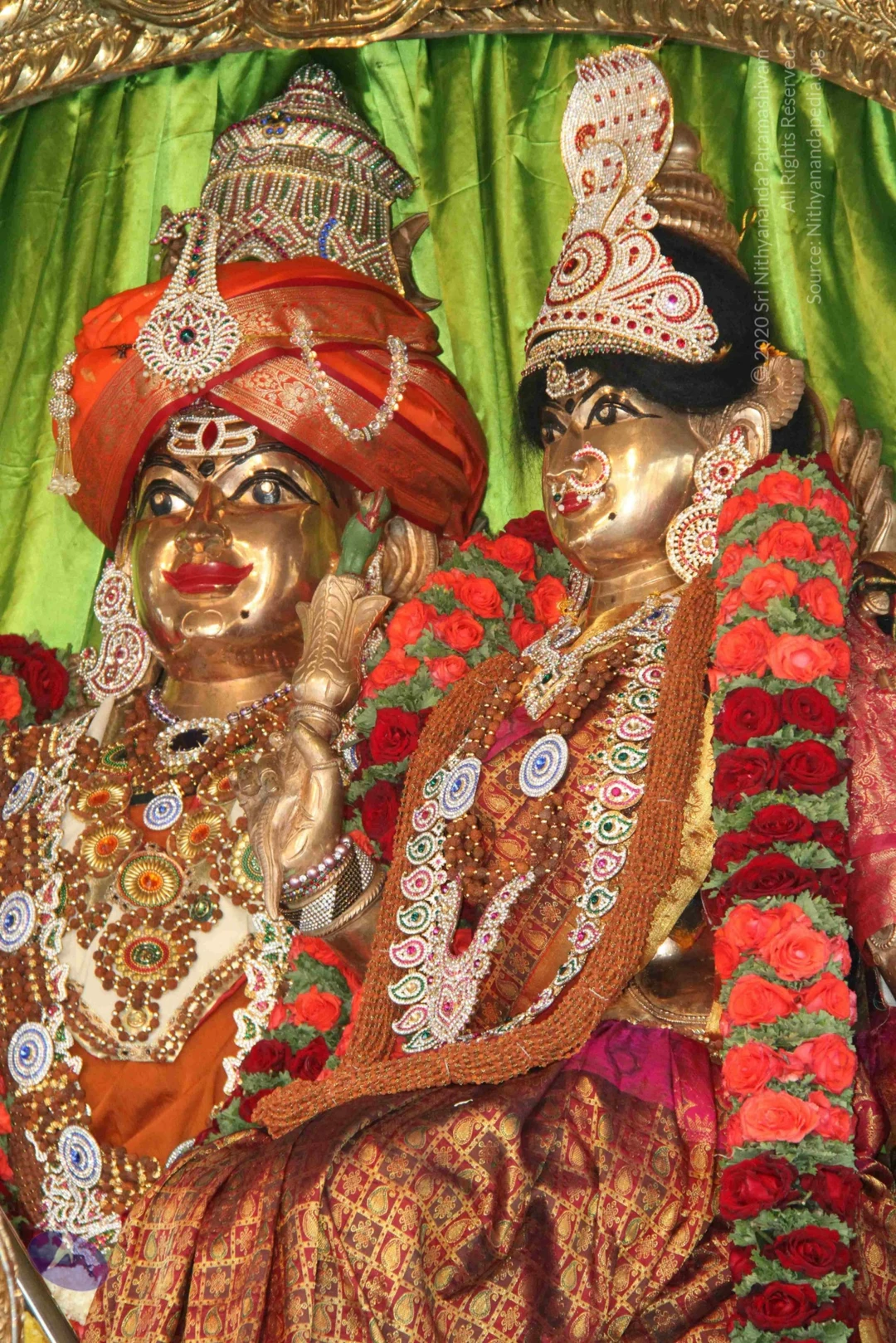
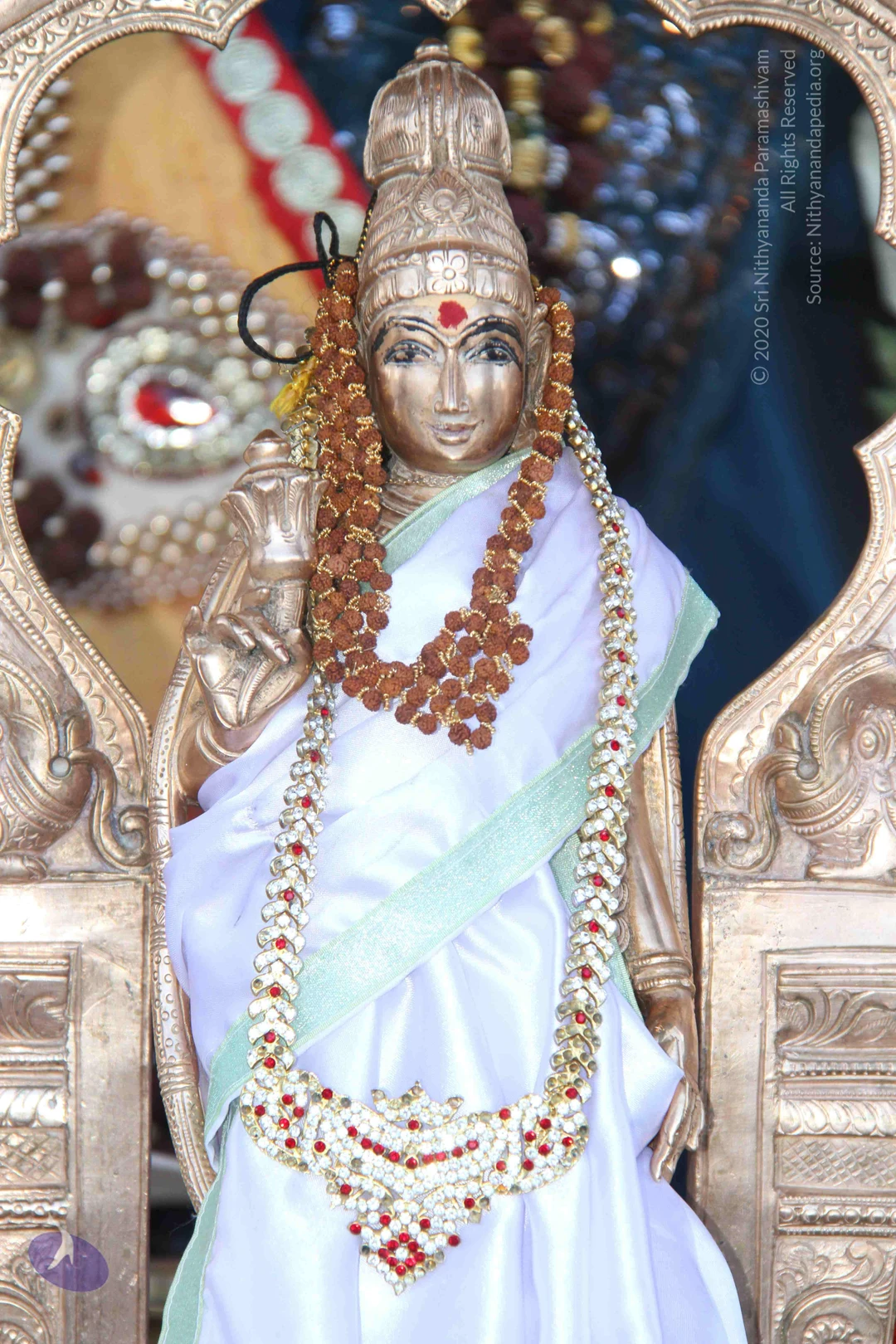
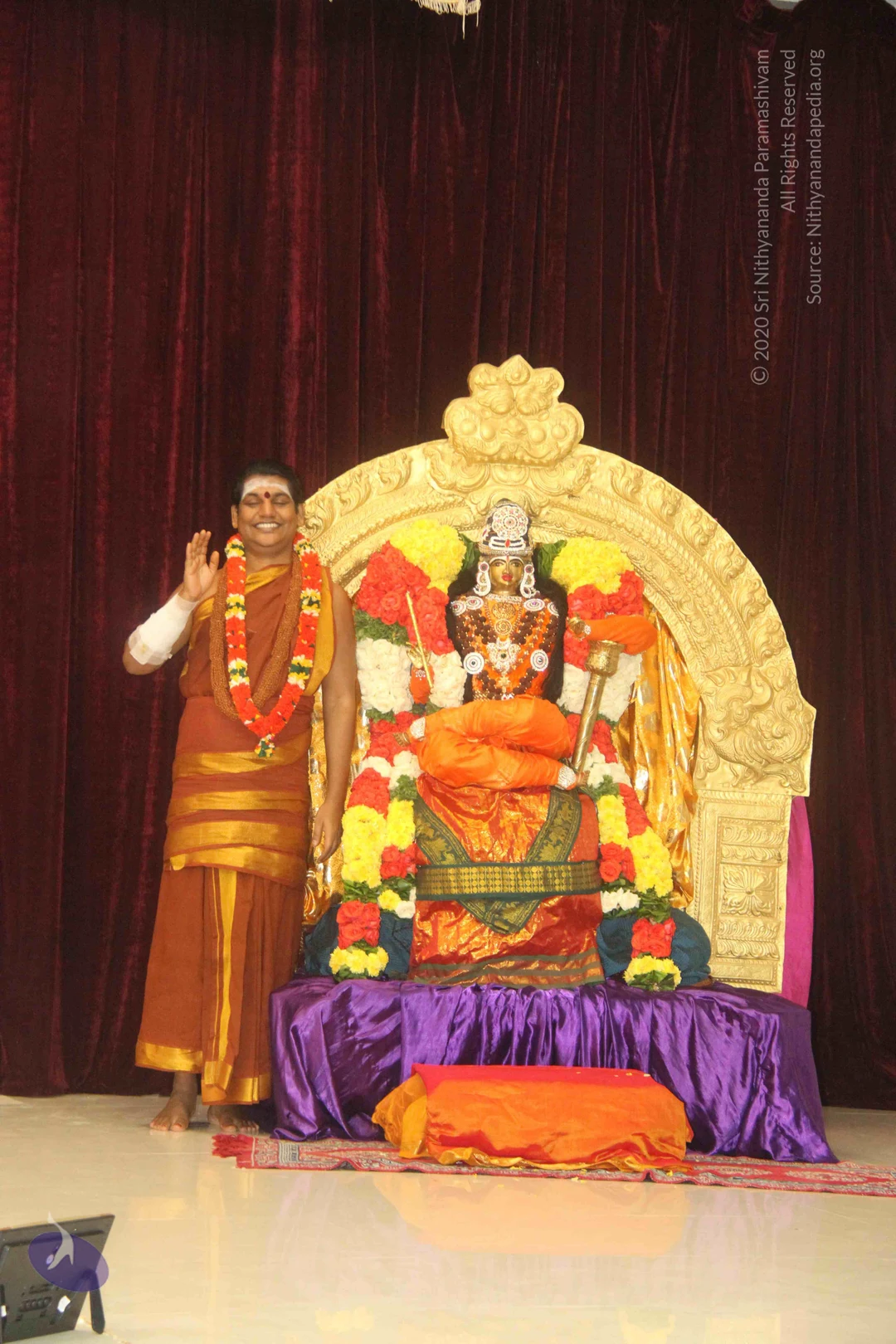
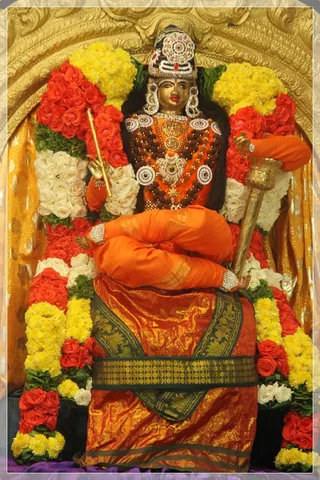
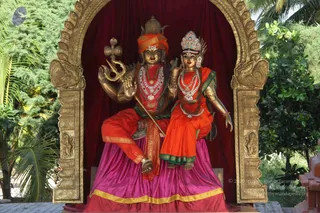
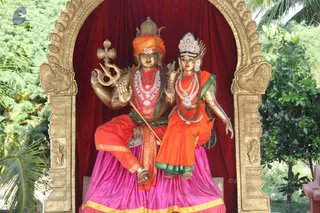
Today, in Washington DC, in Meena Joshi’s house, we started the Nithyananda Vedic Temple where Rajarajeshwari, who rules the Cosmos, with Lakshmi and Saraswathi, is gracing Washington DC. Beautiful! It may be a very humble beginning, but you guys will see the Cosmic power will grace Washington DC, infuse positive energy and protect the whole world! Blessings!

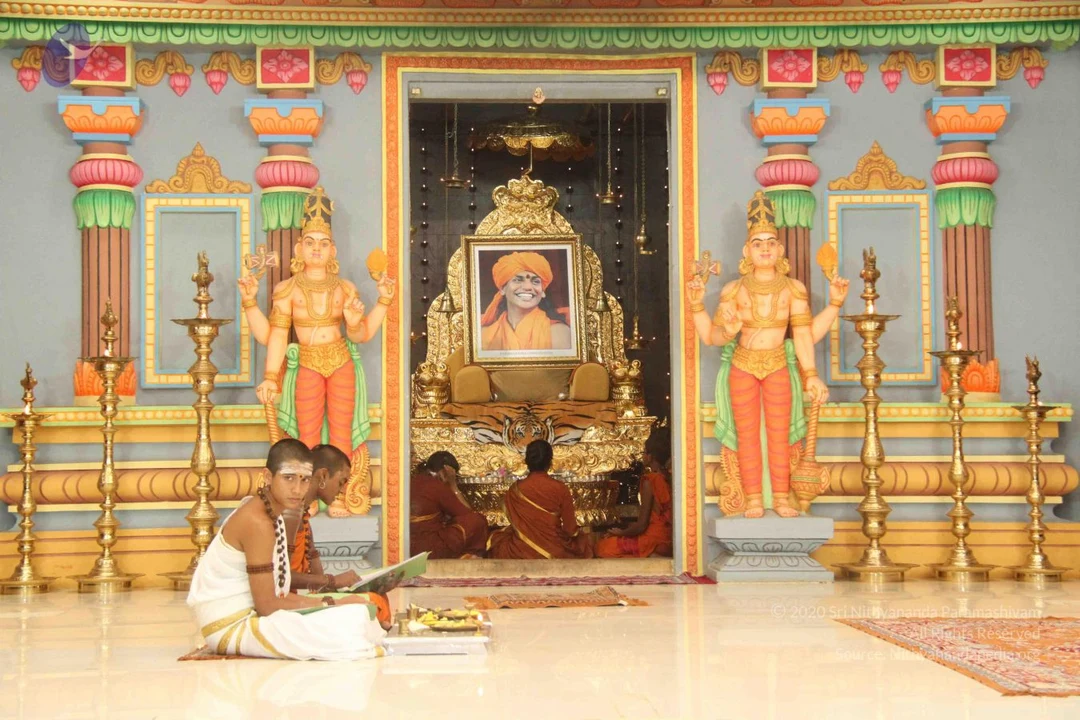
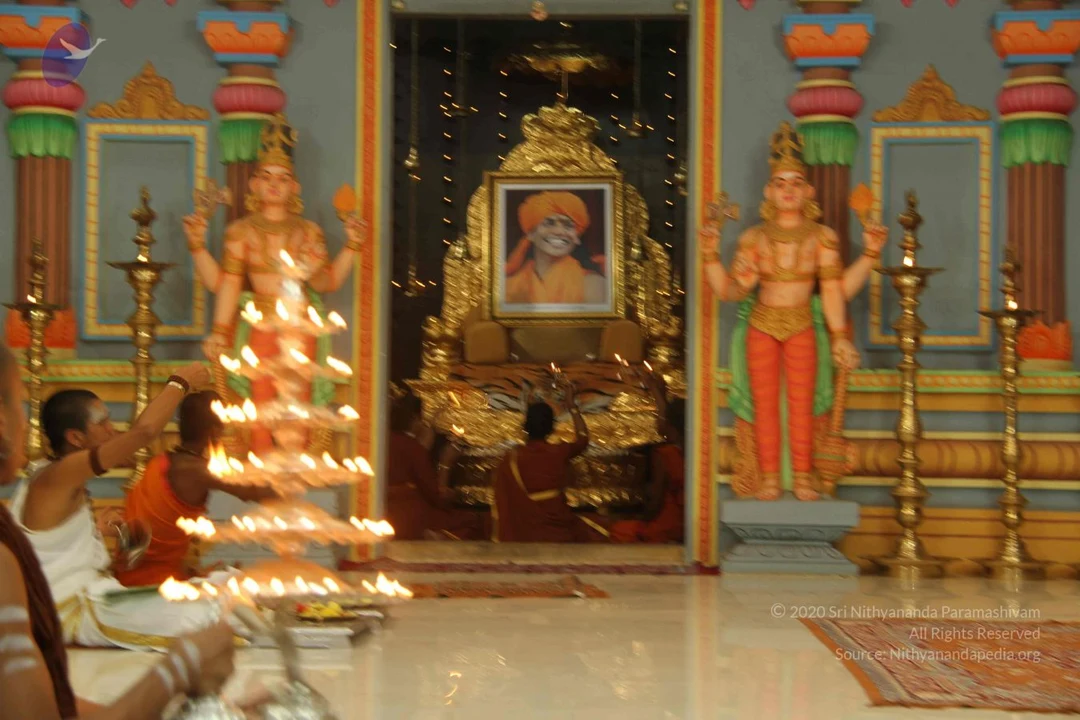
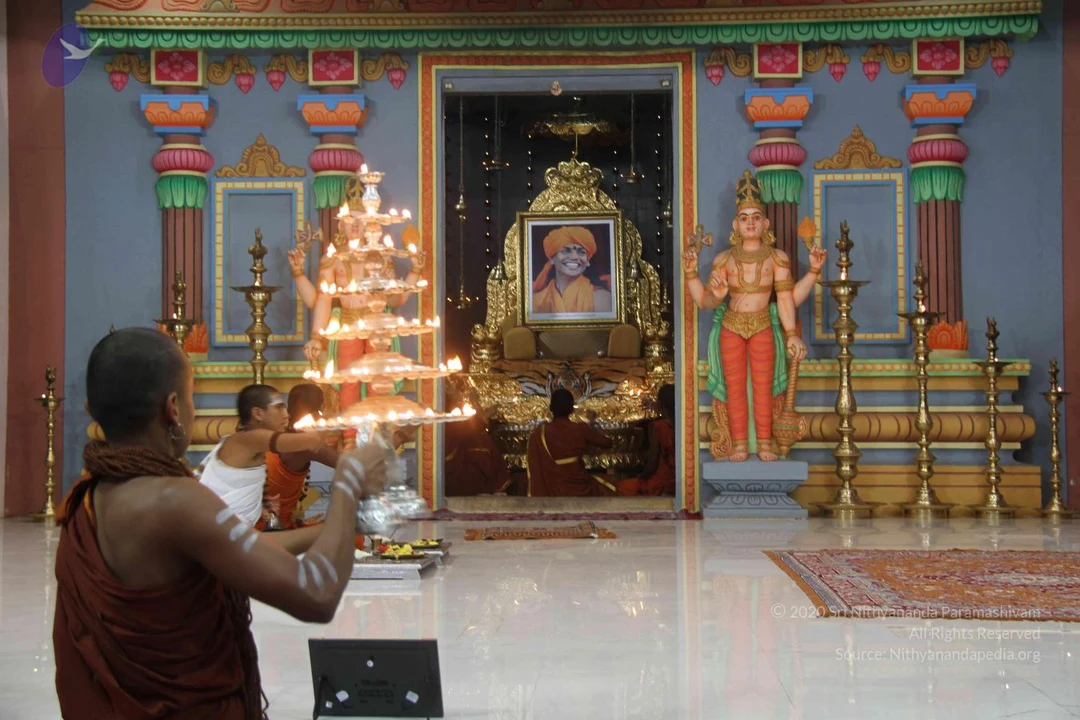
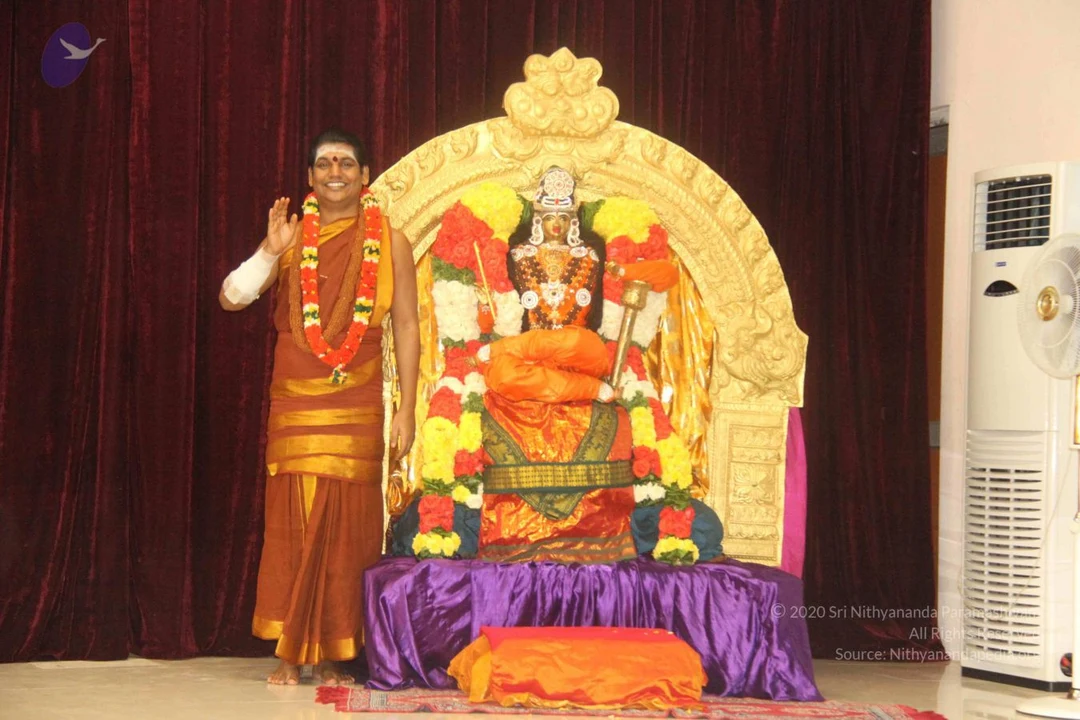
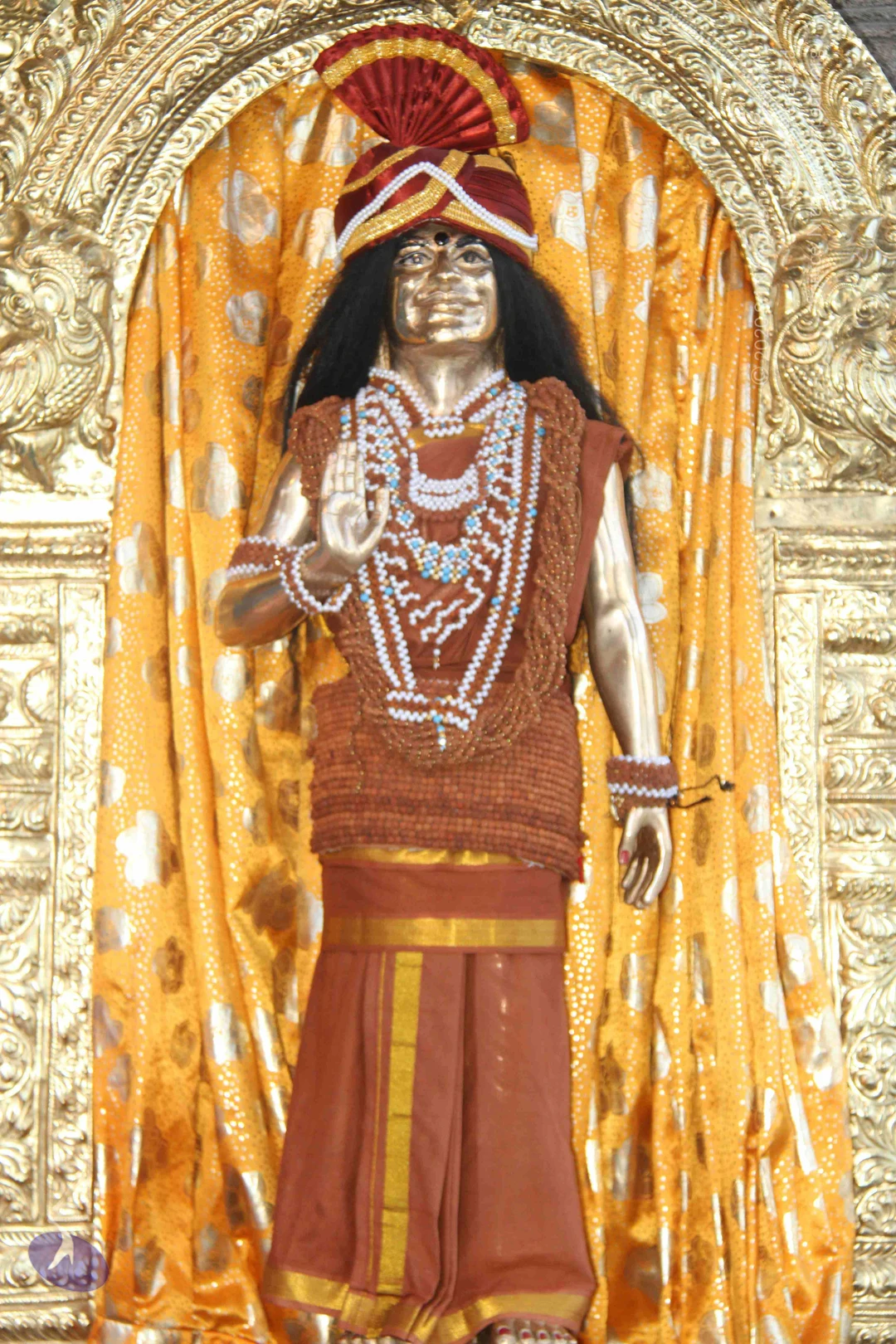
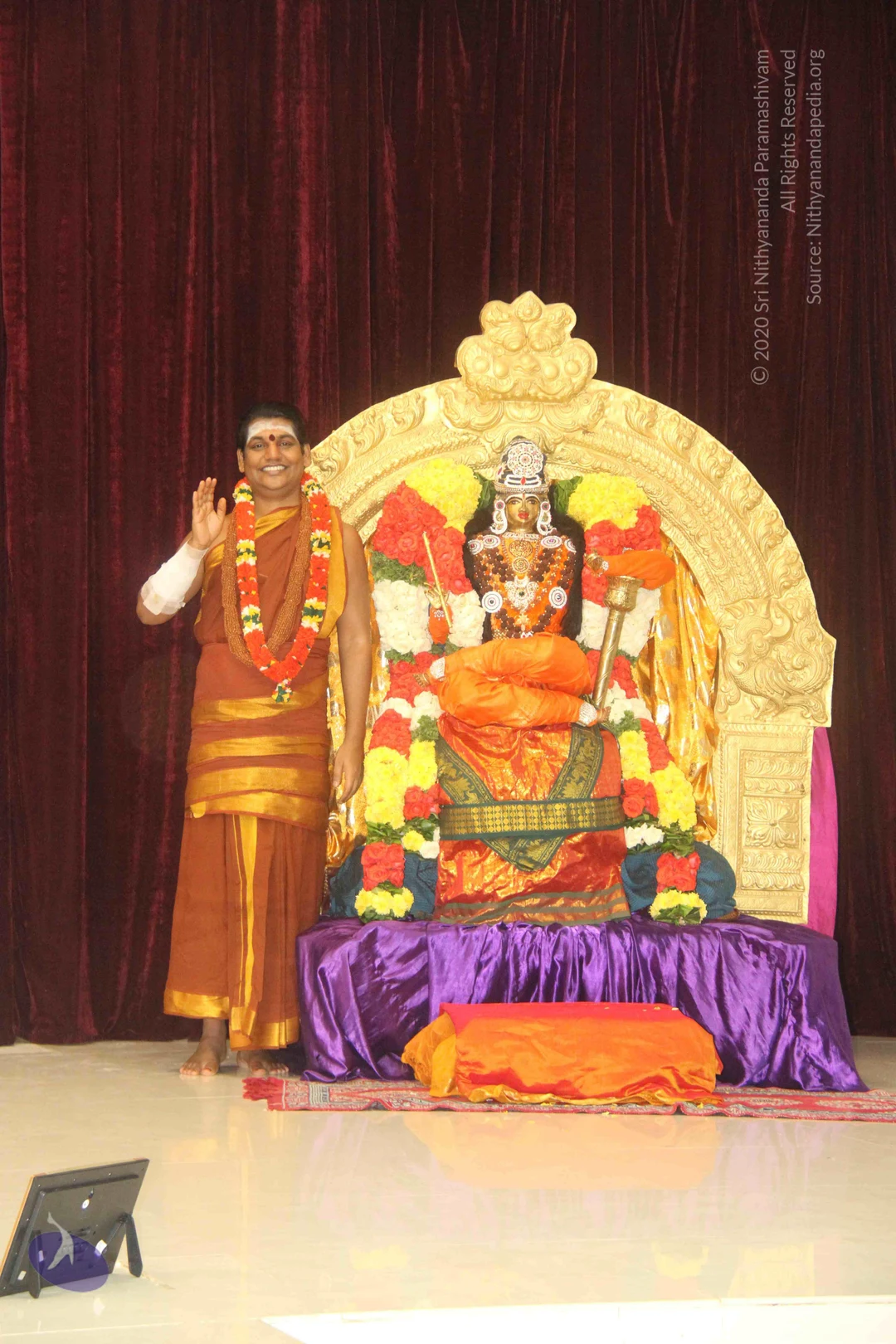
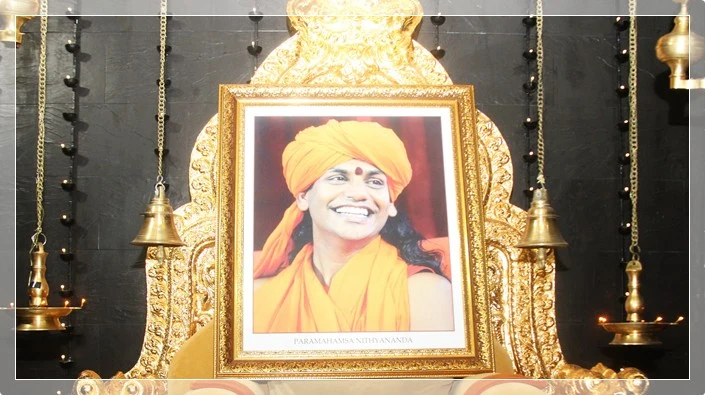
And you can see the deities – Lakshmi, Saraswathi and Rajarajeshwari – and my photograph is there. Blessings! I accepted the Árati. And, Blessings Meena Joshi and the whole Washington DC Sangha, blessings! I am happy to announce the temple is being inaugurated in Washington DC, just before the Navaratri - Devi Temple. Great!

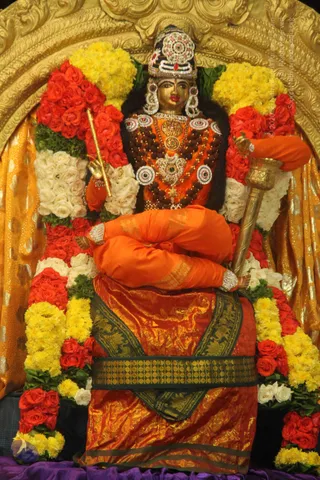
So, from today, every day, you will have darshan of one form of Mahadeva, other than Brahmotsava days. This Inner Awakening batch is having a special bonus of Navaratri Brahmotsava – ten days’ festival.During the ten days’ festival, we will be having Venkateshwara and Devi.

Brahmotsavam is the celebration started by Brahma; from the time of Brahma, when Brahma began the creation. Brahma is the Lord of Creation in Hinduism. When He created the Creation, He created some of the celebrations and festivals. Brahmotsavam means, “Celebrations and Festivals created by the Lord of Creation”, Brahma Himself.

So, we will be continuing that tradition!

Alright! We’ll start the satsang.

Today, I’ll expand on some of the deeper truths of COMPLETION.

And from today, in the morning satsang also, I will be addressing some of your questions, the Inner Awakening participants’ questions. So, if you have any questions, you can drop in the question-box which will be kept later on in the Raja Sabha. In the morning satsang also, I will continue to answer your questions.

So, now, I will speak on some of the sacred truths related to Completion.

Please understand, one of the very important, powerful incompletions which can make you powerless is the idea that Completion cannot lead you to reality. Please understand, whenever the very important parts of you which you really hold on to, which you really associate with yourself, which you don’t want to give up…….See, there are some incompletions, you don’t want to leave them. You feel that is part of your life, very strong part of your life that is a very important component of your life. When you feel there are some parts which you can’t give up, and you don’t want to give up, you are afraid if you complete, that part may start melting away, leaving you!

Please understand, listen, there are some patterns you have in your muscle-memory, just on your muscles – day-to-day habits like morning if you get up you have to read newspaper, drink a cup of coffee, including smoking – everything stays only in your muscle-memory. There are some patterns,mental patterns, which go to your bio-memory, like seeking love, seeking attention, feeling loved or not loved, feeling loved or not loved.

Understand, these bio-memories, these patterns go to the depth of your being. Even if you know they create incompletions in you, you do not want to complete with them! You do not want to complete with them! You do not want to complete with them!

Listen! This feeling that ‘Completion is not going to give me solution’, is the worst incompletion you can have in your life, which is the most powerful incompletion; which makes you most powerless.

Listen! I am giving you this truth once more. Come to the space of listening and listen!

Completing with incompletions which you really don’t want to complete is the real Completion!

Because, at one point, logically you will be strongly made to believe that Completion is not going to solve your problem. Understand, if Completion is not going to solve your problem, nothing else is going to solve your problem, understand that! Completion may or may not be a complete solution, but it is the ultimate solution!

Listen, I am repeating this statement:

Completion may or may not be a complete solution, but it is the ultimate solution! Catch it! Sometimes, your logic may accept that Completion is the complete solution. Sometimes, your logic may not accept Completion is the complete solution. Whether your logic accepts or not, only Completion can be the ultimate solution. If any solution is possible, or I can say the best possible solution can be brought to you, it is only by Completion. Of that you have to be very clear.

In Guru Gita, there is a beautiful verse: “Na Guror Adhikam” – “There is nothing more than Guru”. I can tell you, there is nothing more than Completion!!

First thing you need to do in your life: Learn the Science of Completion.

Second thing you have to do in your life: Practice Completion.

Third thing you have to do in your life: Be in the space of Completion.

Understand, first, Completion; second, Completion; third, Completion! Learn the Science of Completion.

Learn the Science of Completion. Learn the Science of Completion. Learn to do Completion even when your heart does not believe in Completion.

Please understand, there will be some times in your life – I call it “dark night of the soul” – where you strongly believe Completion is not going to be the solution; Completion is not going to give you solution.

Those moments, even in those moments, completing is real Completion. Understand! See, there are some times when you see the result of Completion, you completing using Completion as a solution is easy. Especially all your patterns of muscle-memory, the Completion will give immediate solution. So, trusting Completion is easy. Listen! Completion is very easy, Completion will bring direct results related to the patterns of your muscle-memory, like initial-level patterns. But, the deeper patterns, patterns of your bio-memory also can be solved by Completion. Using Completion even to solve the deeper patterns of bio-memory, and having the patience to do Completion with even the deeper patterns of bio-memory, is the real Completion! Unfortunately, we human-beings struggle for a few days with our bio-memory and come to the conclusion that Completion is not going to be the solution. No! Completion IS solution!

Completion; Completion really starts working on you when you are completing; even when your logic does not believe Completion will complete and give you solution to certain problems. Listen! Completion, when it becomes reality, when it becomes real life experience; Completion when it becomes reality and real life experience, it really does so much. When you are really, really, really struggling with your inner space, when your logic does not believe Completion is going to be the complete solution, hold on to this truth: Completion is the ultimate solution! Completion is complete solution also. But, even if your logic doubts that, remember one thing, Completion is the complete solution, Completion is the ultimate solution! Remember that!

Life starts expressing miracles. Please listen, I am making a very important truth, I am presenting a very important truth here to all of you. Miracles! I am defining miracles. Miracles are nothing but the incidents which you know may happen, but which you strongly believe will not happen, but happen suddenly in your life. Life constantly opens up miracles in your life, life constantly makes miracles happen in your life, when you start operating from Completion, when you start operating from Completion.

I will give the essence in Hindi.

Today, I wanted to expand on Nirahara Samyama. So I will complete my Nithya Satsang with this and go to the next segment of the morning satsang, Nithya Satsang – Nirahara Samyama.

I’ll expand on Nirahara Samyama:

Please listen! It’s a very powerful Kriya described in Hatha Yoga shaastras to awaken your Kundalini energy and produce energy directly from space. Please listen! Producing energy directly from the space and bringing energy, health to your body, directly from space, without depending on any food intake! Through proper visualization and Kriya, awakening your Kundalini energy, through that creating enough energy for you to live.

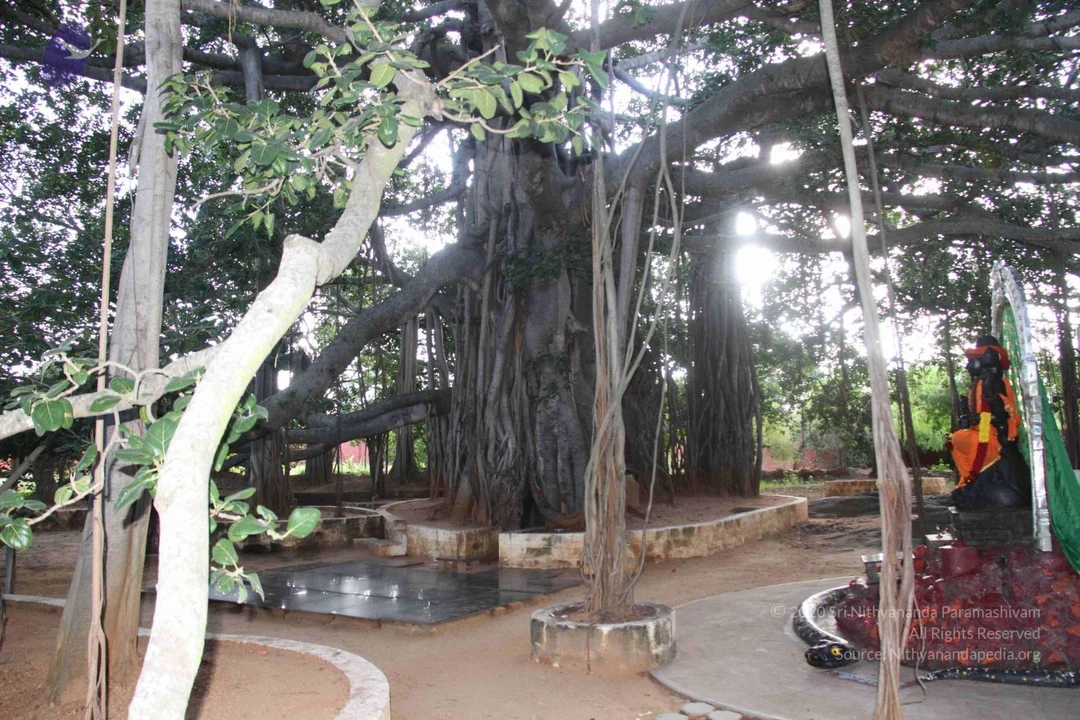
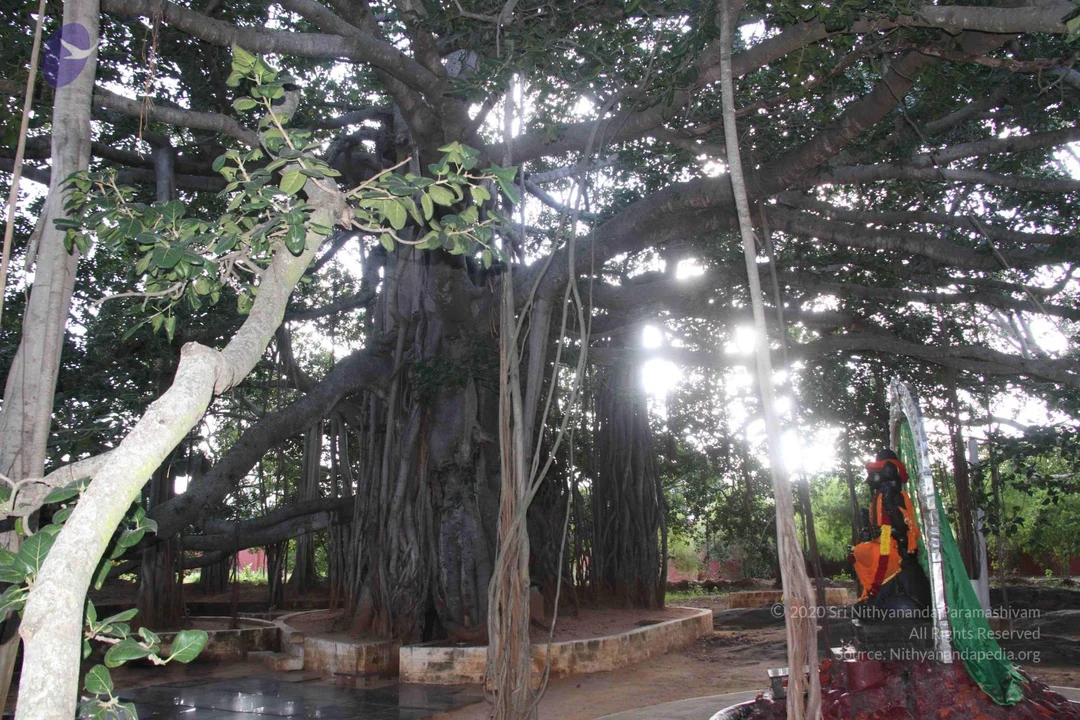
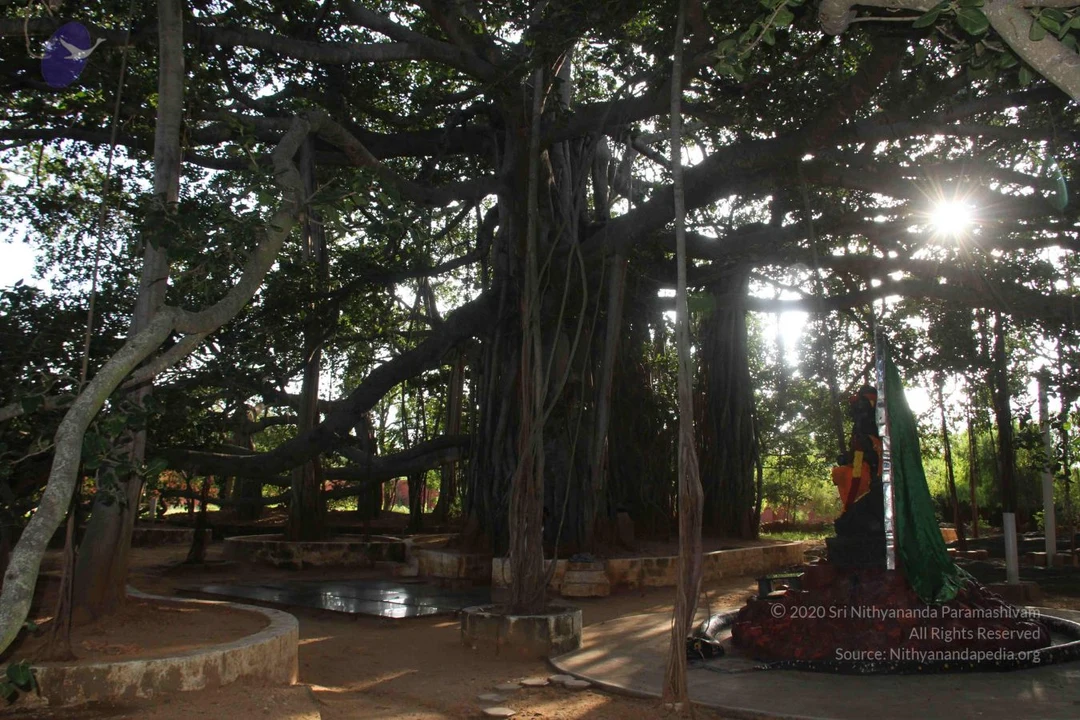
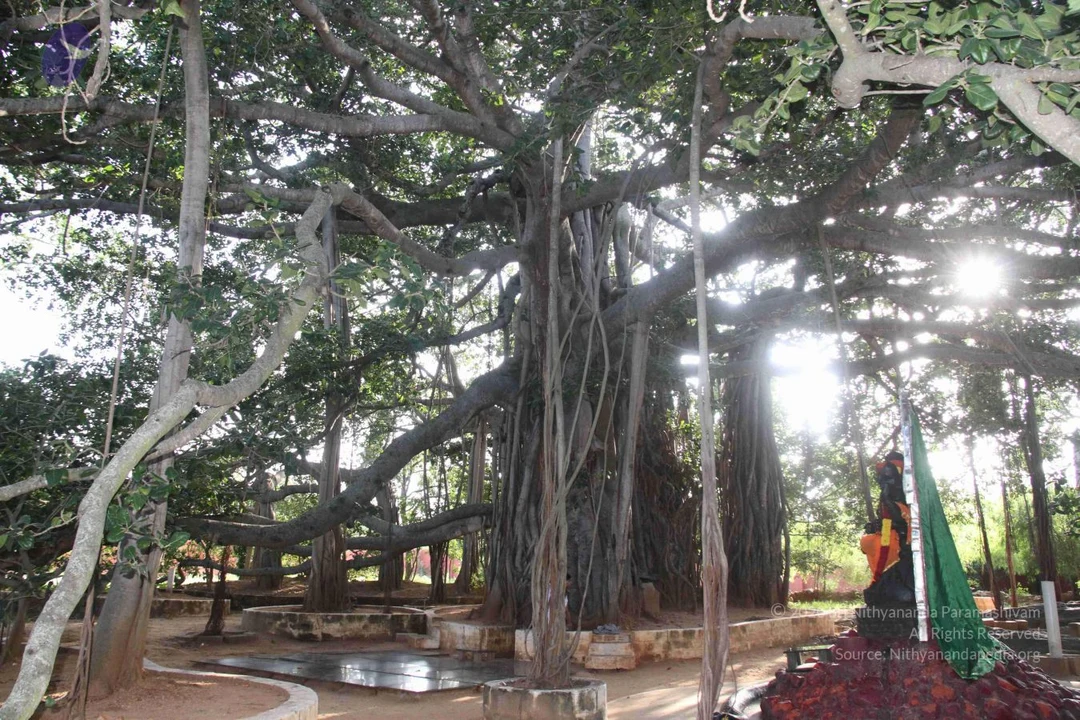
So, the first step: Cognize you have become Bidadi Kalpavriksha. Means, our Bidadi Banyan Tree, how the tree produces energy directly from the air and ether, space, while meditating on that, by meditating on that, awakening the same capability in you, awakening that same bio-memory in you, so that your bio-memory also can create, your bio-memory also can create energy directly from space!

Please listen! And, along with the cognition, do this Kriya: Inhale through both the nostrils and the mouth simultaneously with the visualization as if the whole Banyan Tree is inhaling, as if your whole body is inhaling. Hold as long as you can comfortably, and exhale through both the nostrils as slowly as you can.

Please understand, I will also be supporting you by awakening your Kundalini energy. Wherever you are, you can do this Kriya for twenty-one minutes. Read all the rules and regulations of the Nirahara Samyama. Don’t stop eating completely immediately. Take liquids like juices, milk.

The first level is only two days. Means, forty-eight hours. Then we will give a break. You will eat regular food. And second level is seven days. Then you will have a break and eat. Third level is eleven days.

Step by step preparing your body and mind to produce the energy directly from space. This Samyama is not fasting, please listen. It is not depriving food to your body, but it is awakening the alternative path of energy in your body, awakening the alternative method to create energy in your body.

So please sit straight. You can find all the information pertaining to this Samyama on our website. You can visit this link: http://www.nithyananda.org/nirahara-samyama.

Every one of you please start the Kriya now. Sit, close your eyes. Cognize you have become Bidadi Kalpavriksha. Please sit straight. Close your eyes. Cognize you have become Bidadi Kalpavriksha.Inhale through both the nostrils and mouth simultaneously. Hold as long as you can by closing both nostrils comfortably. Exhale as slowly as you can only through both the nostrils, comfortably.

With this, I bless you all! Let you all experience Kundalini awakening! Let you all produce the energy directly from space, live health, bliss and enlightenment! Namah Shivaya!

I bless you all! Let you all radiate Integrity, Authenticity, Responsibility and Enriching, with eternal bliss,Nithyananda! Thank you!

Photos From The Day:
Facebook links

https://www.facebook.com/ParamahamsaNithyananda/posts/535902459830942

Tags:

Paramahamsa Nithyananda, life, completion, belief, ultimate, solution.

Photos Of The Day:

PadukaPuja-crowd-Individuals

Leela-Alankar-Arati

Nithya-Satsang-Swamiji

LeelaAlankar-GurukulKid

Satsang-CrowdShots

SarvaDarshan

Final-Blessings

Temple

2--PadukaPuja-crowd-individuals

3--LeelaAlankar-GurukulKid

3--Nithya-Satsang-Swamiji

5--Final-Blessing

6--Temple

01-TEMPLE

02-LEELA-ALANKAR-GURUKUL-KID

03-NITHYA-SATSANG

04-FINAL-BLESSINGS

Photos from this day

View all 197 photos

Photos From The Day:
26 photosSource gallery
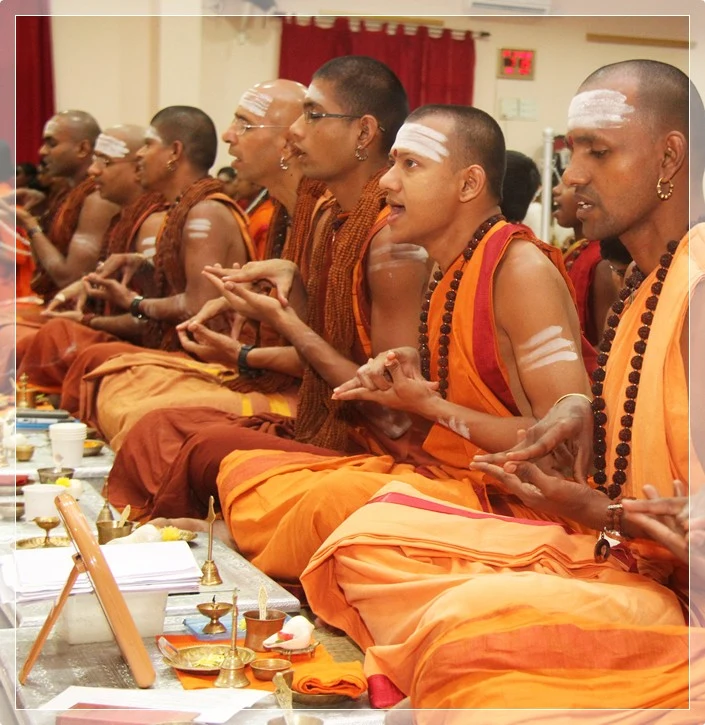
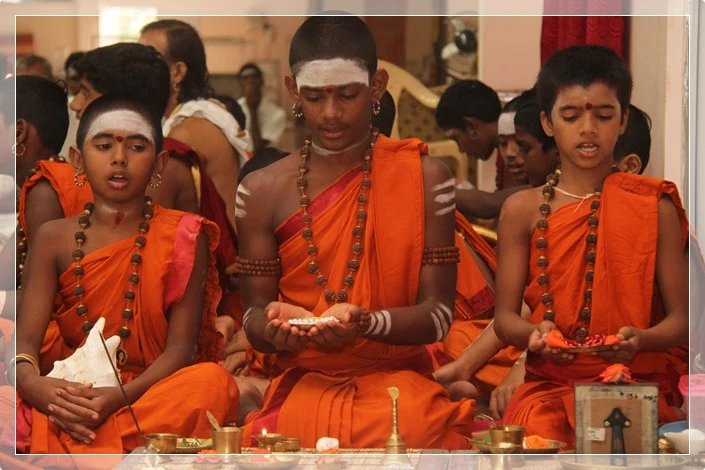
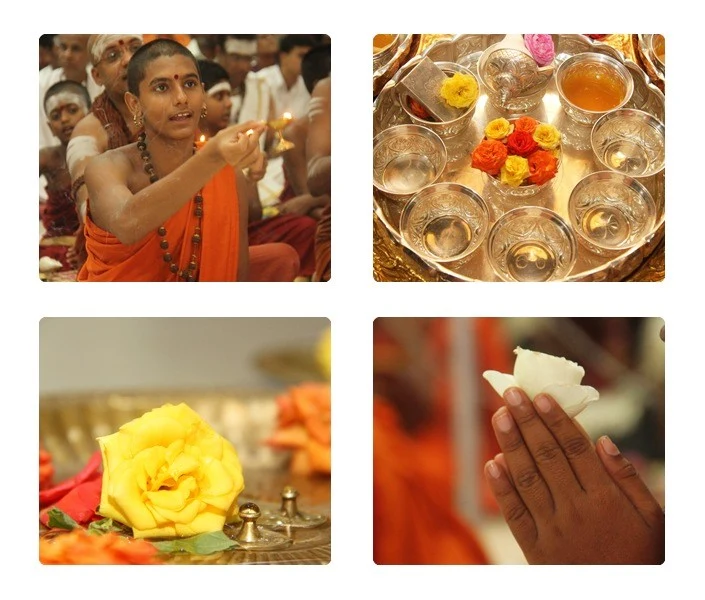
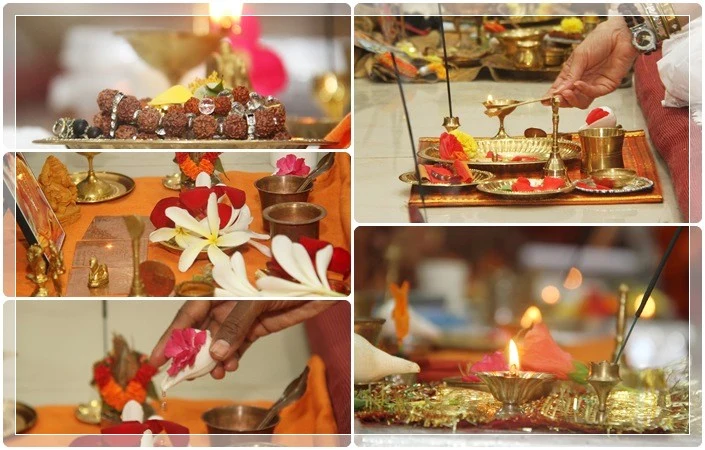
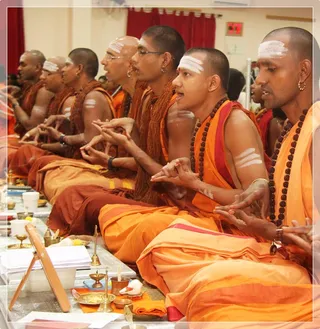
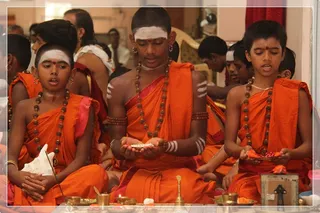
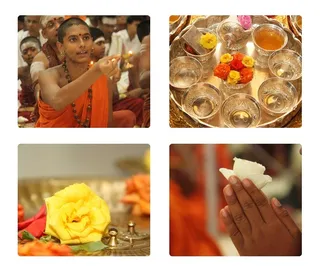
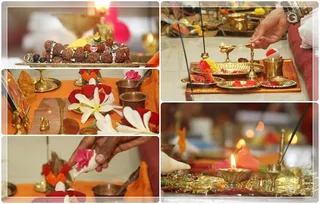
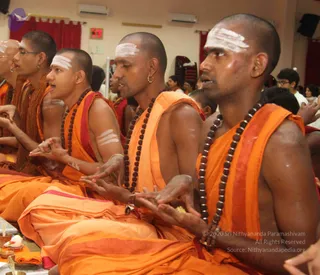
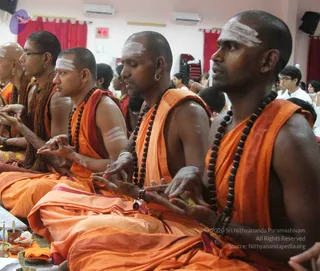
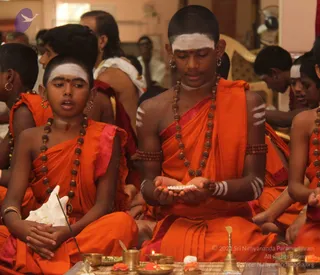
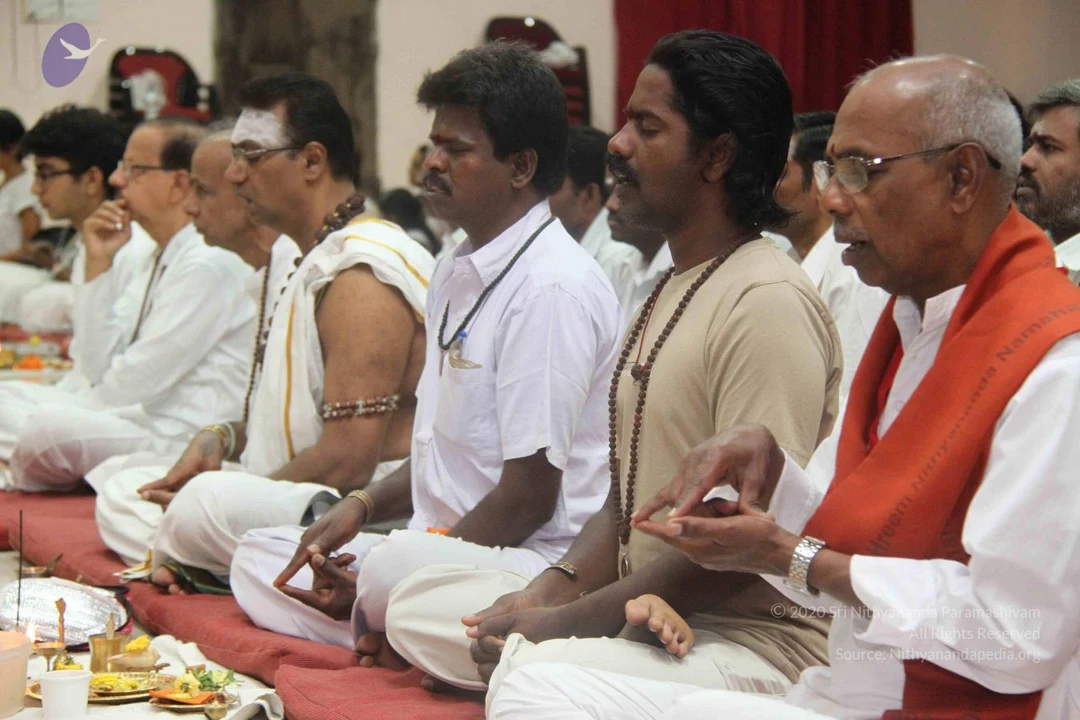
A framed portrait labelled "PARAMAHAMSA NITHYANANDA" sits within an ornate gold-leaf frame on a golden shrine structure. The portrait shows a smiling man with long dark hair, wearing an orange-saffron turban with a red tilak on his forehead and an orange-saffron shawl. Brass hanging oil lamps with lit flames, bells on chains, and a row of dark beads hang on the black wall around the frame, and a brass oil lamp with a lit flame sits at the lower right. No people are physically present in the scene; the figure is a printed portrait.A golden deity murti seated in a padmasana-like pose on a throne-like seat, dressed in orange and red silk with a green-and-gold border. It wears a jeweled crown, layered rudraksha-style beads and gold ornaments on the chest, and holds a gold staff in one hand and a gold mace in the other. The figure is framed by red roses, white roses and yellow marigold garlands, with a gilded arch behind. No living person is visible, so this is a statue shown in a decorated shrine setting, not a depiction of a person.A row of at least six shaven-headed men in saffron-orange robes sits cross-legged along a table, chanting with hands raised in mudras. Several wear rudraksha malas and have white horizontal tilaka and sandalwood-paste marks on their foreheads and upper arms. Brass lamps, small brass bowls, a kalasha-like vessel, and a wooden book stand with papers lie on the table before them. The setting is an indoor hall with red curtains behind. No one is identified as a person by visible cues.Photograph of young boys in saffron-orange robes seated on the floor of a hall, performing a ritual. Three boys are prominent: the centre boy holds a small plate of white substance in cupped palms, the boy on the right holds a plate with red-orange petals and flowers, and the boy on the left holds a folded white cloth. All wear rudraksha malas and have white and red forehead markings, with white stripes painted on their arms and chests. Brass oil lamps, a brass bell and small brass vessels sit on a low tray in front of them. Several other boys and men in orange and white are seated behind, and a framed image is visible at the lower right.A four-panel collage of temple ritual details. Top left: a shaved-headed man in an orange saffron robe with a rudraksha mala holds a lit oil lamp toward a seated crowd of devotees in white clothes behind him. Top right: a silver tray with small silver cups of water and honey, and orange, red and yellow marigold petals arranged in a circle. Bottom left: a yellow rose and red flower petals on a brass puja plate with a small brass bell. Bottom right: a pair of hands in prayer holding a white rose petal in front of an orange-robed figure. Ritual abhishekam-style offerings and puja items.A five-panel collage of puja preparations on brass and copper trays draped in orange cloth. Panels show a tray of rudraksha beads with a yellow flower and a black rudraksha mala, brass trays with red and yellow flower petals, a hand placing a pink flower on an offering, an oil lamp with a lit wick beside incense sticks, and a brass arati lamp with kumkum and marigold garlands. No physical people are the main subject, though a hand appears in two panels.

PadukaPuja-crowd-Individuals
44 photosSource gallery
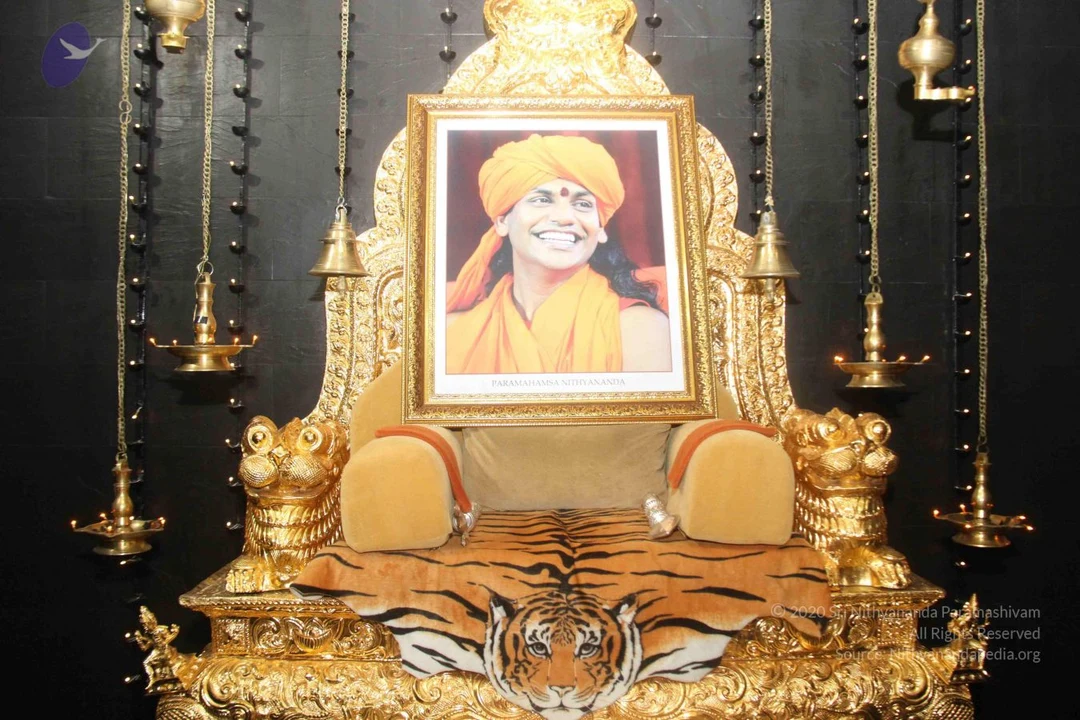
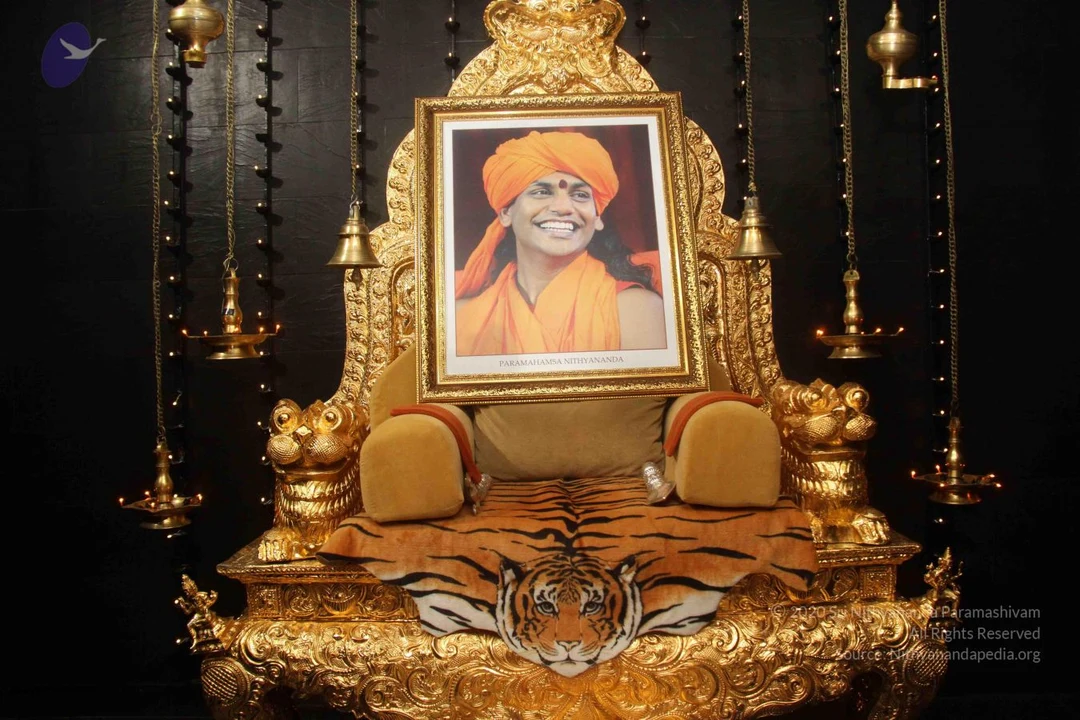
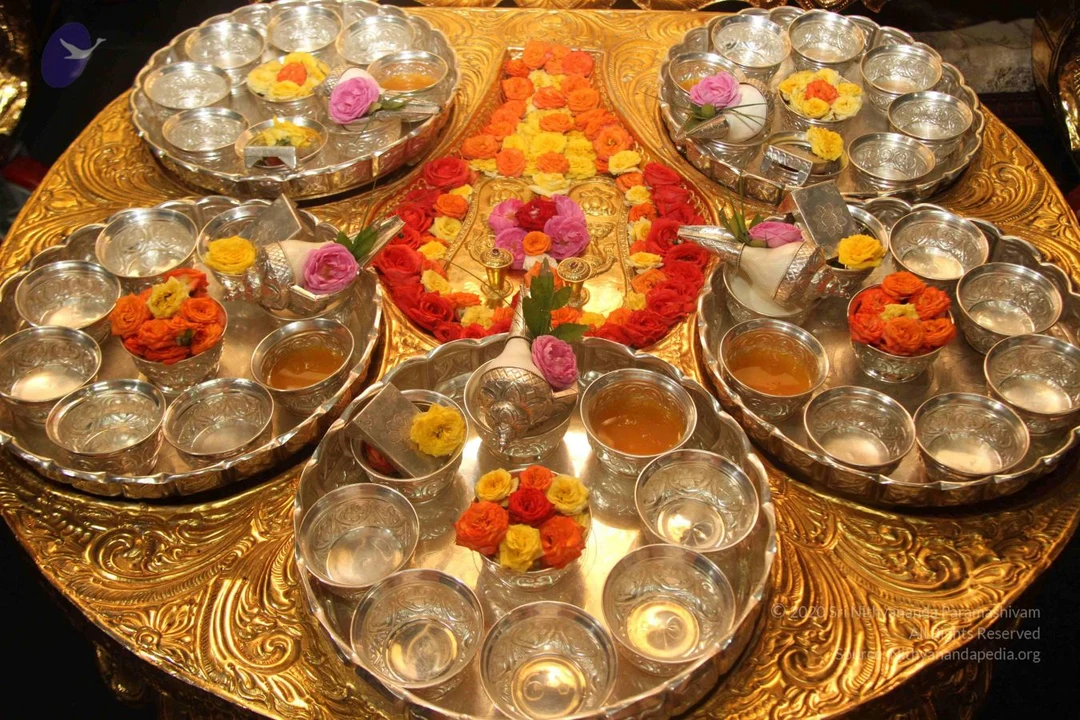
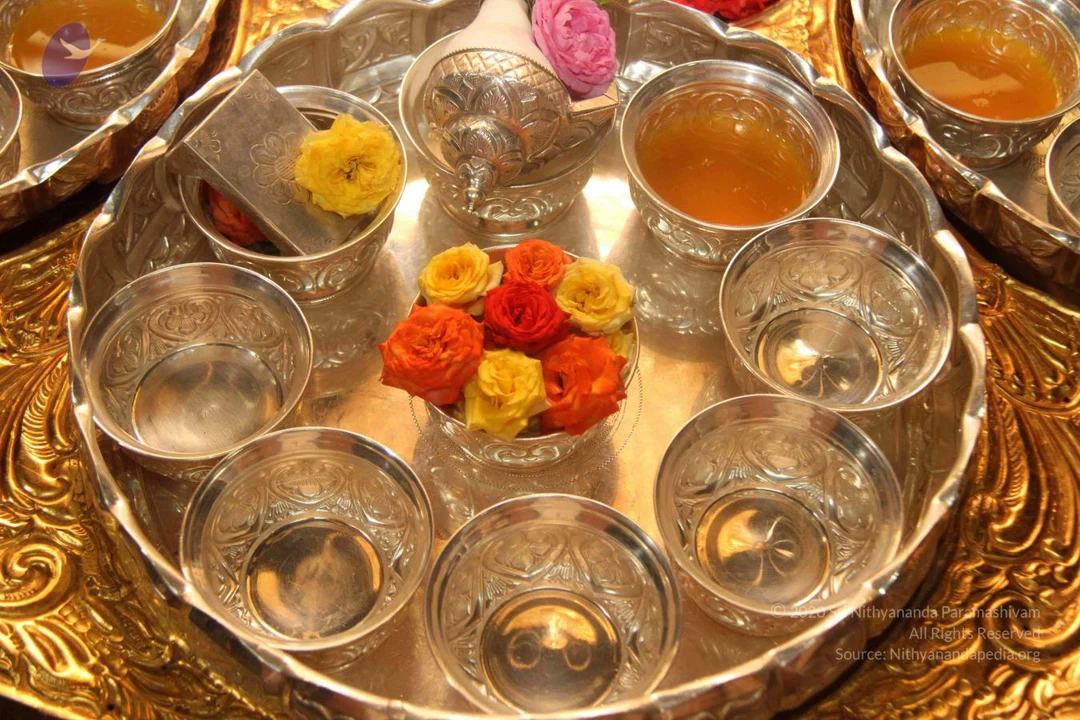
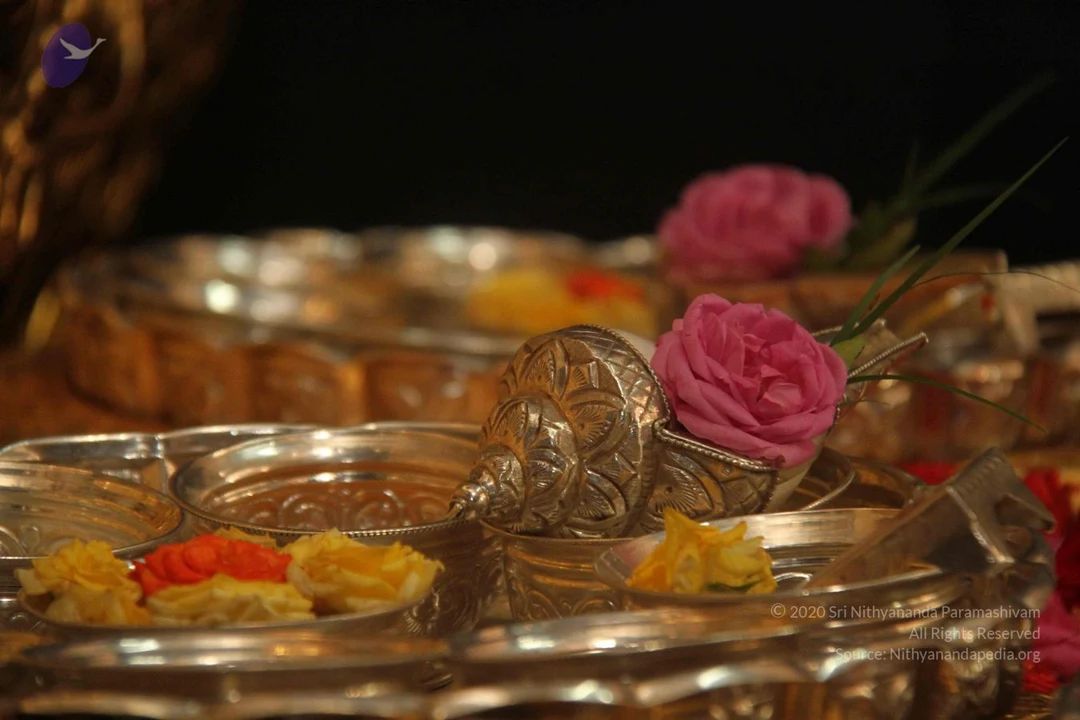
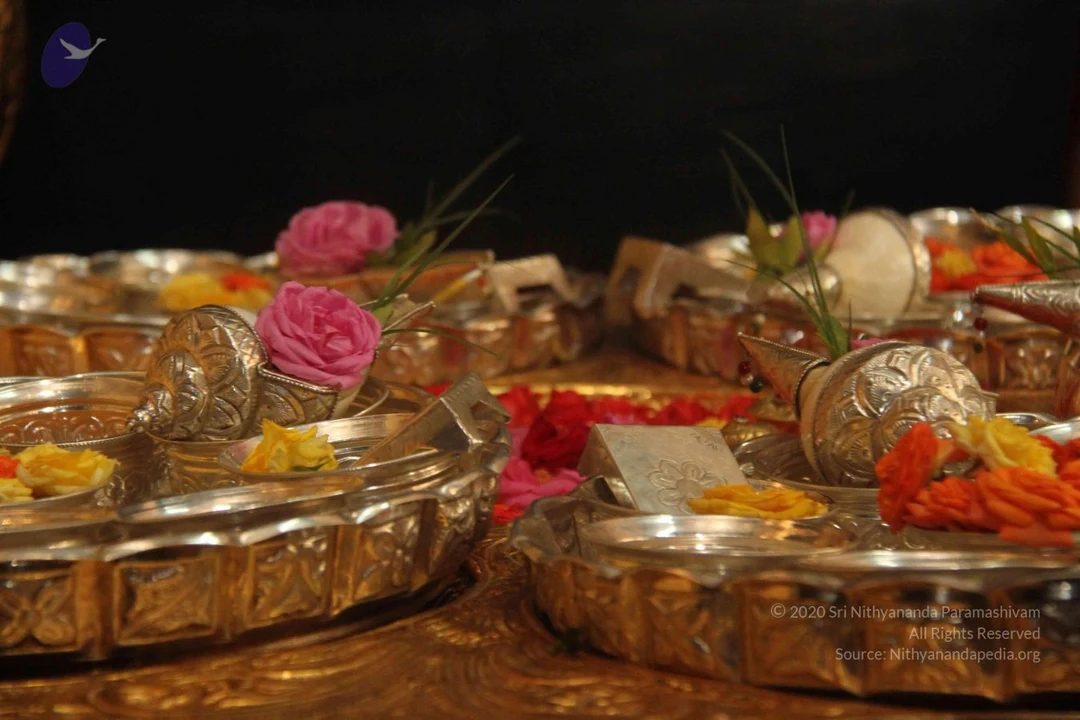
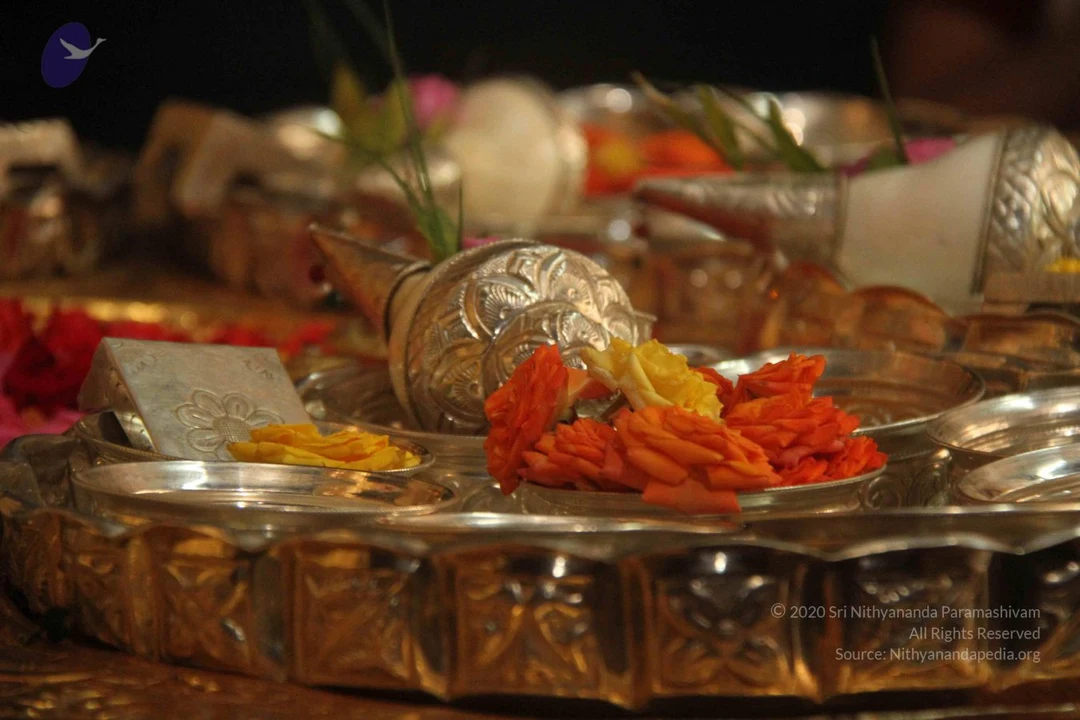
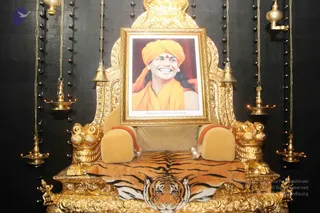
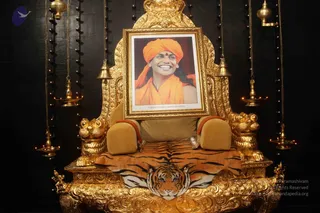
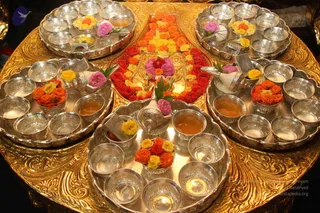
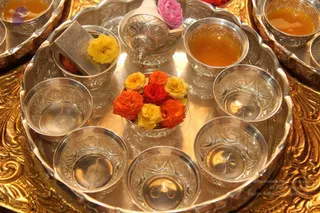
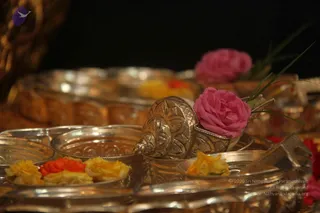
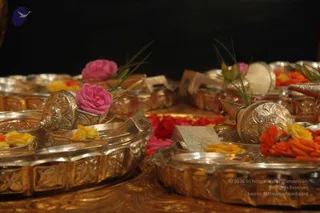
An empty ornate gold throne with carved lion-head armrests and a tiger-skin cushion stands against a black wall. Above the seat hangs a framed portrait labelled "PARAMAHAMSA NITHYANANDA" showing a smiling man in an orange-yellow turban and saffron wrap with a red bindi. Brass oil lamps and hanging brass bells decorate both sides of the throne. The image is a photograph of a throne display; no living people are visible.An empty ornate golden throne (peetha) with carved lion-head armrests and a tiger-skin cloth draped over the seat, set against a black backdrop with hanging brass oil lamps and bells. Centered on the backrest is a framed portrait labelled "PARAMAHAMSA NITHYANANDA" showing a smiling man in an orange turban and saffron shawl with a red bindi. No physical people are present.Overhead view of a ritual offering arrangement on a large gold-embossed tray. Four ornate silver-rimmed platters hold many small silver bowls filled with orange and yellow marigold flowers, amber liquid, and pale offerings. A central strip of red, orange, yellow and pink rose petals and flowers lies on a gold plate between silver kalasha-style vessels with pink flower decorations. No people are visible; the scene shows objects only, suggestive of a puja or abhishekam offering setup.Close-up of a silver ritual tray on an ornately embossed gold-toned cloth. Eight small engraved silver bowls surround a central silver bowl holding red, orange and yellow roses. Two bowls hold amber liquid, and a silver spouted vessel with a pink rose sits at the top. A silver container with a yellow rose lies at the left.Close-up photograph of a silver puja tray arranged with an ornately engraved silver vessel with a pink rose tucked into its rim, a long green grass blade, yellow and orange flower petals in small silver bowls, and pink roses in the blurred background. Dark backdrop; no people visible.Close view of ornate silver and brass puja trays arranged on a golden cloth before a dark background. Silver cups and bowls hold pink and orange roses, yellow marigold petals, and blades of green grass. Small engraved silver boxes and a silver vessel sit among the offerings. No people are visible in the frame.

Leela-Alankar-Arati

5 photosSource gallery
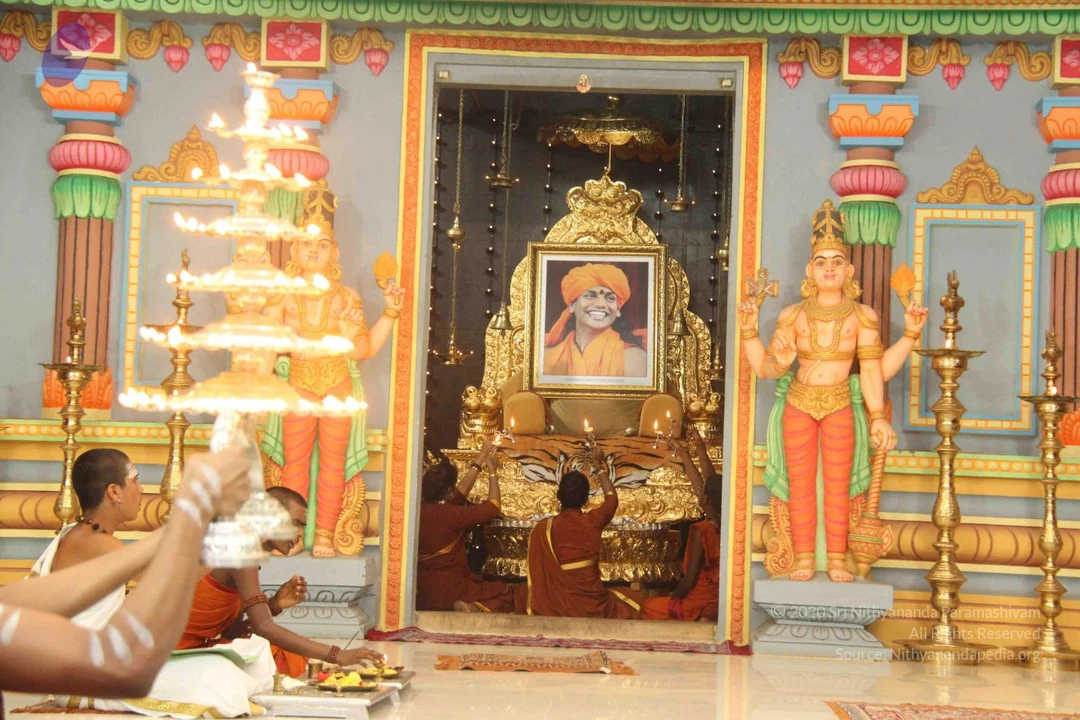
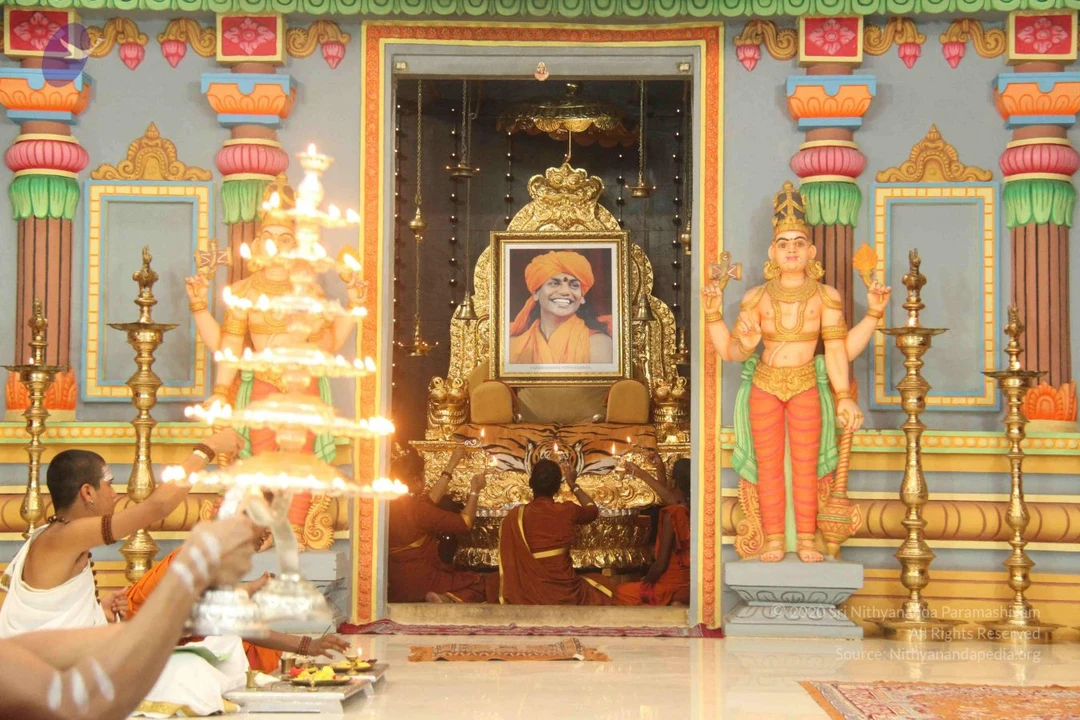
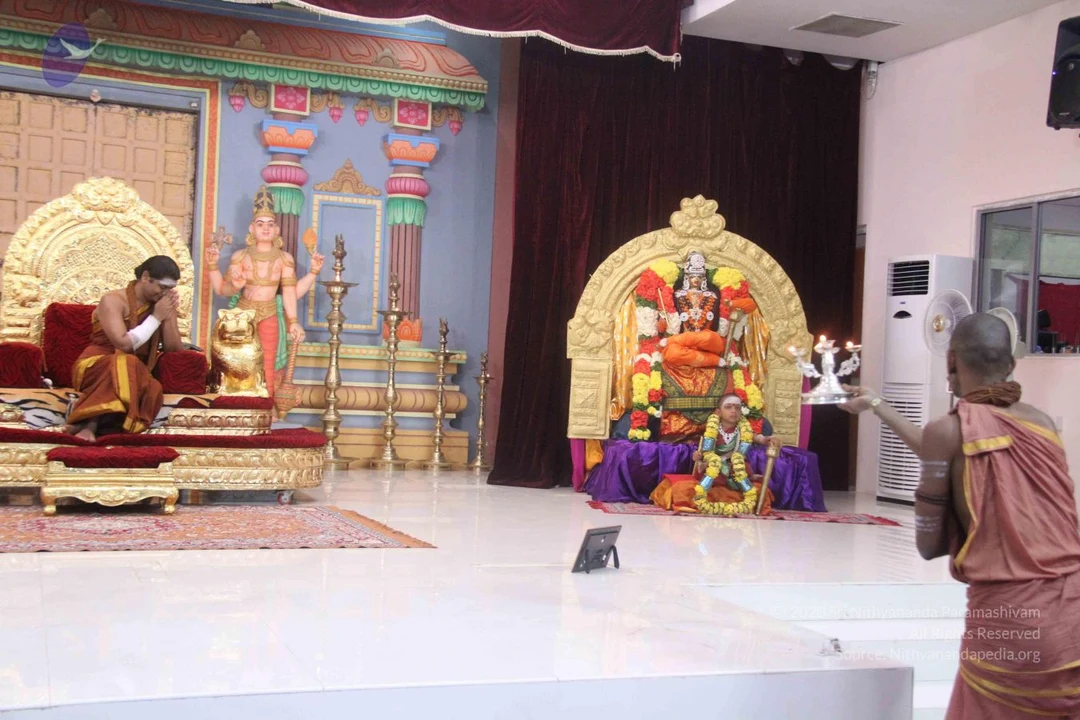
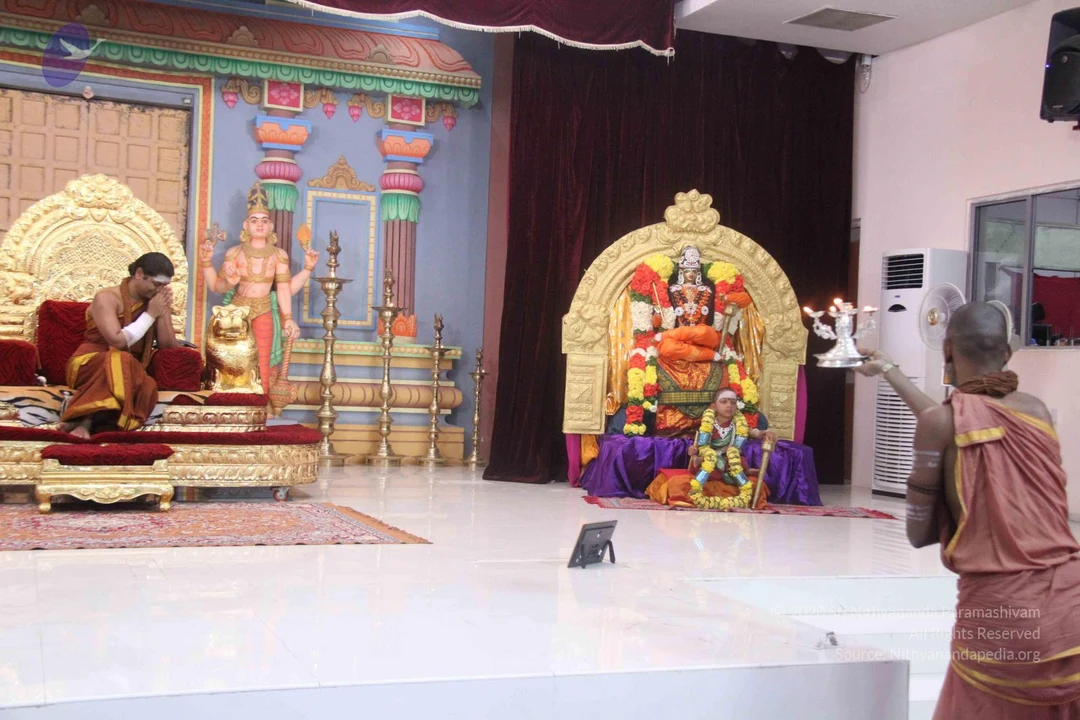
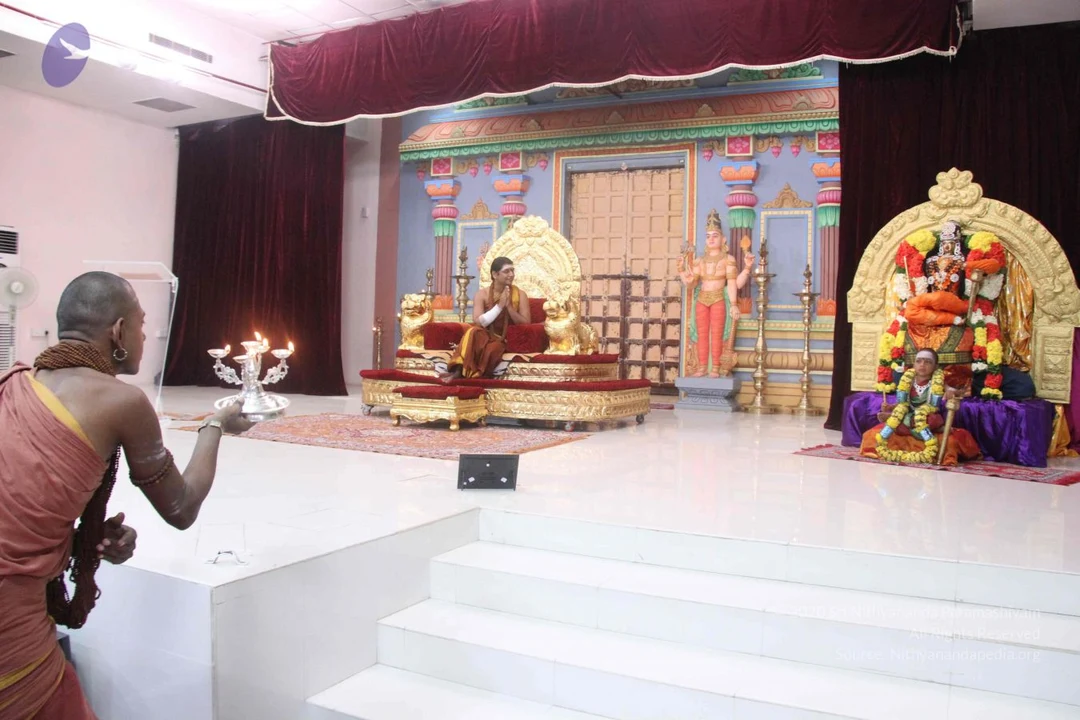
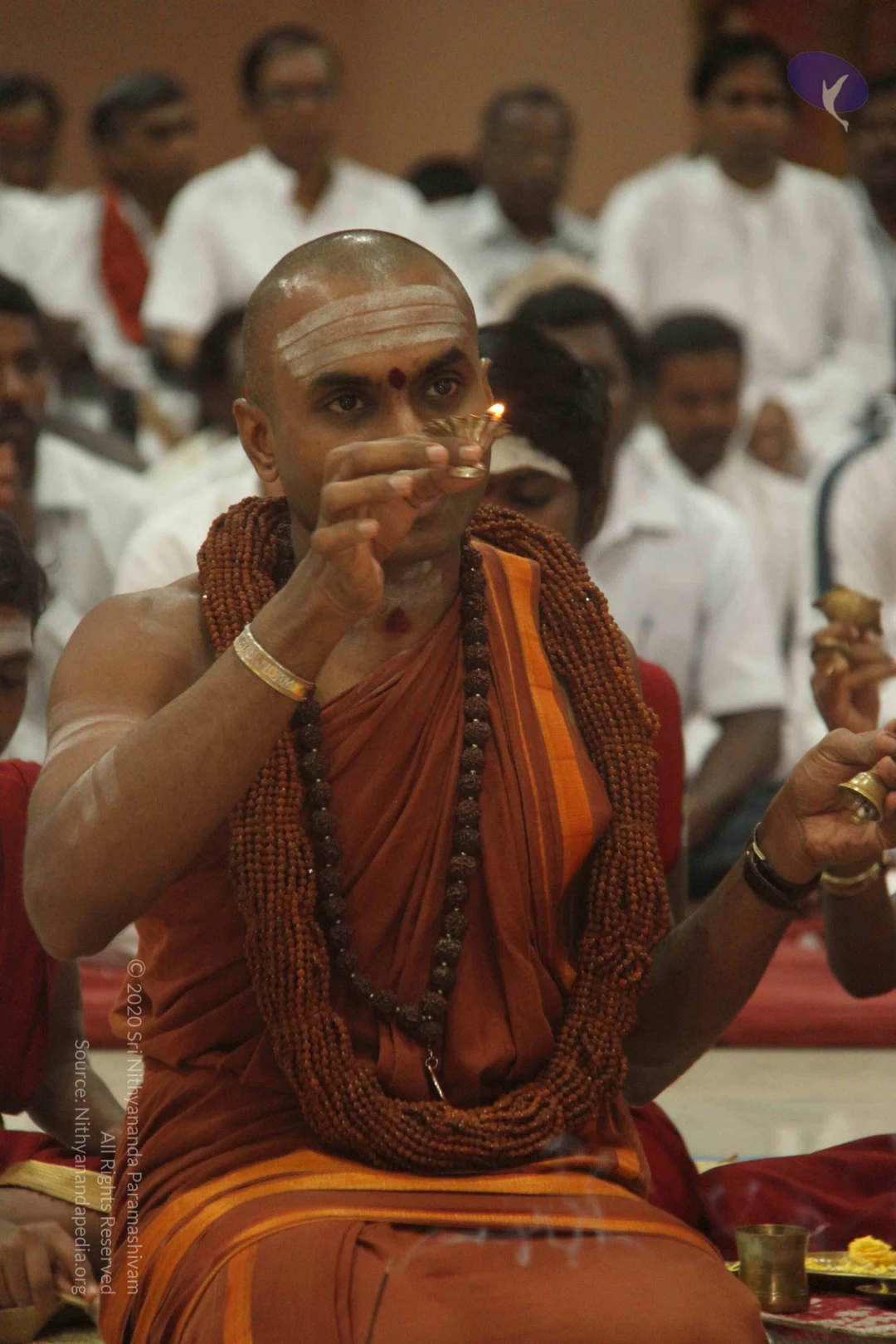
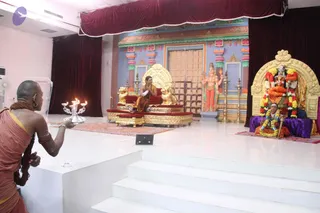
Photograph of a temple-style hall with a golden ornate throne on the left where a seated man in saffron-orange dhoti and shawl sits with hands folded in namaste, a lion-figure beside the throne. Behind him stands a painted or sculpted multi-armed deity figure holding a trident-like staff, against a blue and orange painted backdrop with pillars. Centre right, a golden arched shrine holds a deity murti seated on a purple cloth, draped with garlands of yellow and red flowers and orange fabric, with a small seated figure in front and a kalasha-like vessel. Brass oil lamps stand along the stage. On the right, a bald priest in a rust-red shawl stands holding a silver aarti plate with lit lamp toward the shrine.Inside a temple-style hall with a golden throne-like seat and painted blue and pink pillars, a man seated on a red-cushioned gold throne sits with hands folded in namaskar, wearing a saffron-orange dhoti and shawl. Beside him stands a painted deity figure holding a trident and a lamp, with a golden lion beside the throne. In the centre, a deity murti sits in a gold arch under a garland of marigolds and orange flowers, with a smaller figure in front and brass oil lamps on the floor. On the right, a bald priest in maroon and gold robes raises a silver aarti tray with lit lamps toward the deity. A ceiling fan and a red curtain are visible; this appears to be a puja or aarti at the front of the hall.A photograph of a temple-style stage with a painted backdrop of pillars and a gilded doorway. On the left, a man in saffron-orange garments sits on a gold-and-red throne with palms pressed together in namaskar, beside a golden lion and a painted deity figure holding a trident-like staff. Centre stage, a large gilded arch frames a seated deity murti garlanded with marigolds and dressed in orange. In front of it, a smaller seated figure in orange wears a flower garland. On the right, a bald priest in a reddish-pink dhoti and shawl holds a silver aarti lamp toward the deity. Brass lamp stands line the stage, and a small video screen sits on the floor.A photograph of a temple-style stage with red velvet drapes and painted blue columns. In the foreground a bald man in an orange-red robe with a rudraksha mala holds a silver multi-wick oil lamp aarti toward the stage. On the stage a man in an orange-gold garment sits with hands folded on a gold-and-red throne flanked by lion figures, beside a standing deity murti. At right, a gold arched peetha holds a deity murti decorated with orange and white garlands, and a seated figure in red and white with a staff sits on a purple cushion before it. Three people are visible, counting the partially visible aarti giver.A photograph inside a temple-style hall with a raised white stage. In the foreground at left, a bald man with rudraksha beads and a saffron-orange dhoti holds a silver multi-wick oil lamp (aarti) toward the stage. At right, a deity murti is decorated with garlands of yellow and orange flowers under a gold arch, with a figure seated before it on a purple cloth. Painted blue columns, a wooden door and maroon curtains frame the stage, with brass lamps flanking the throne.

Nithya-Satsang-Swamiji

16 photosSource gallery
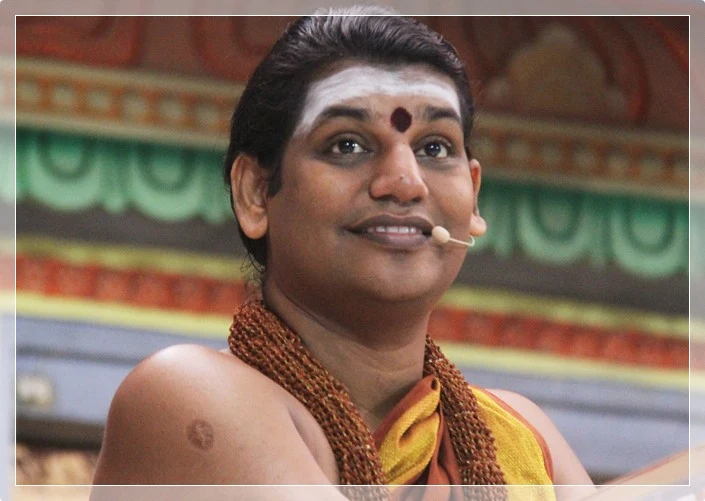
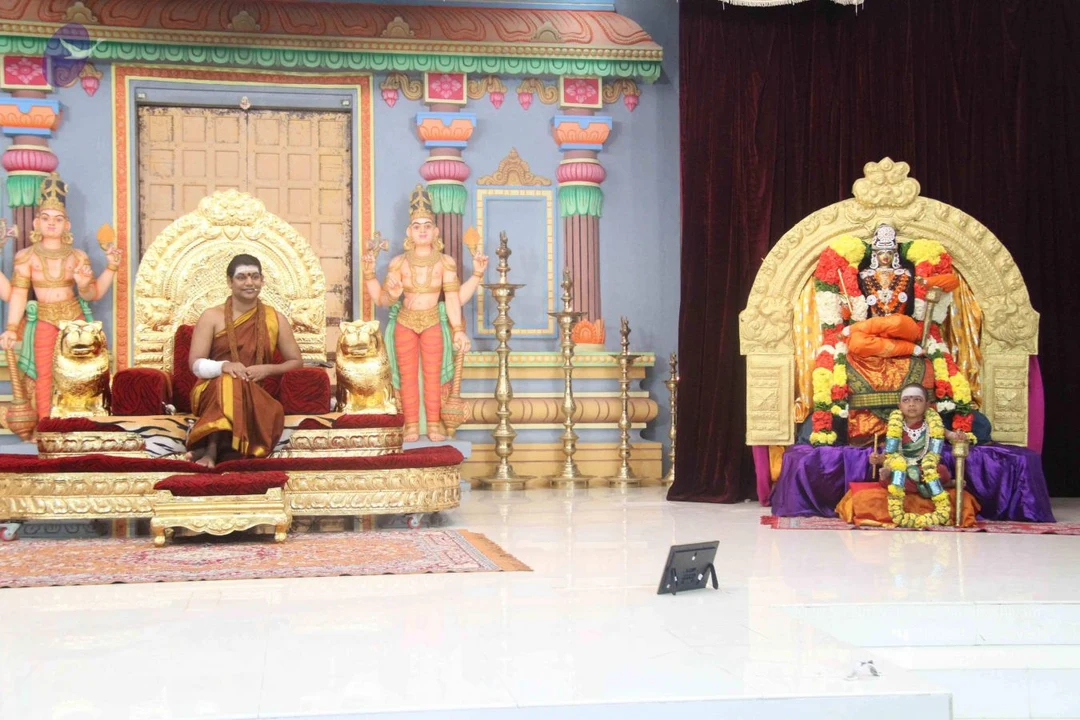
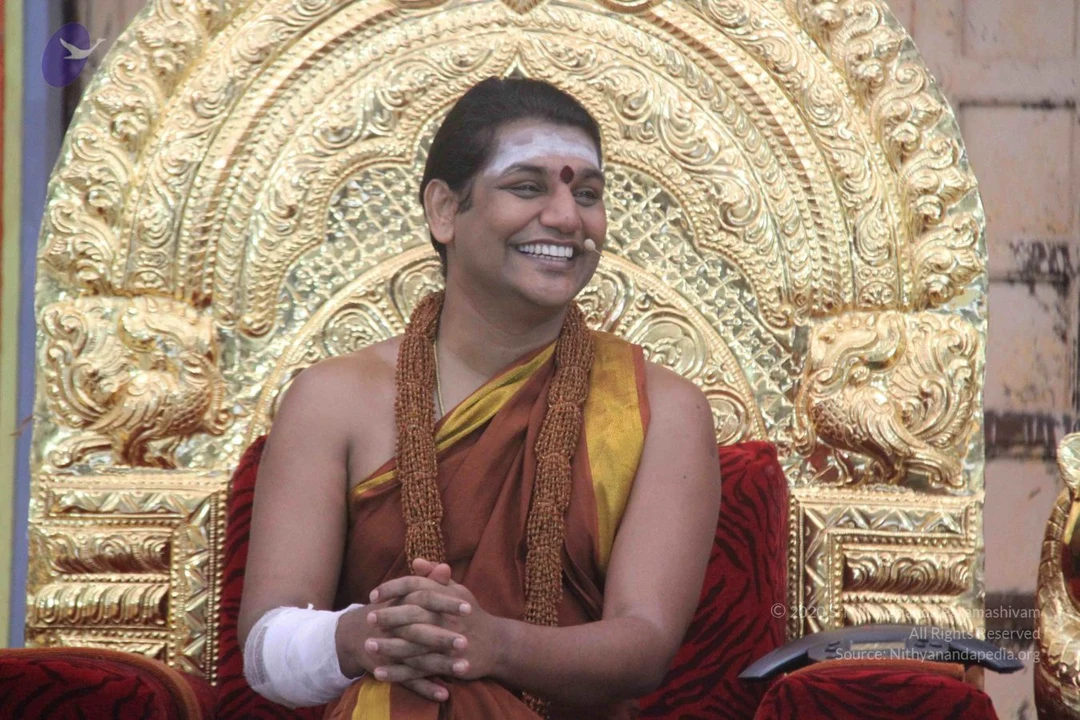
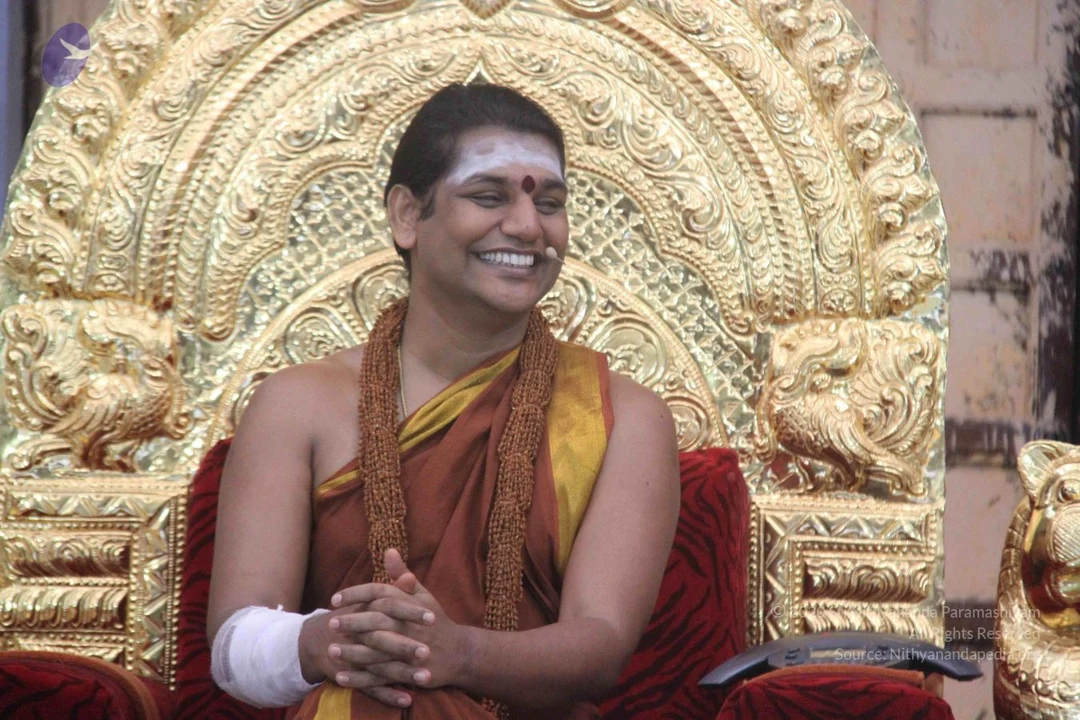
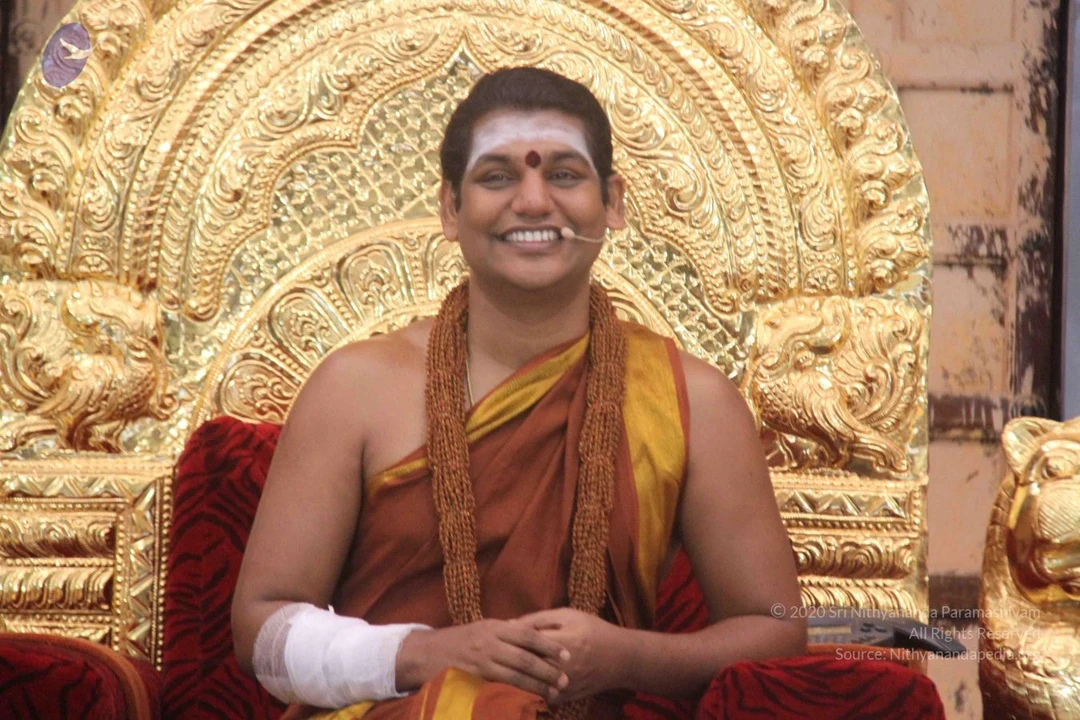
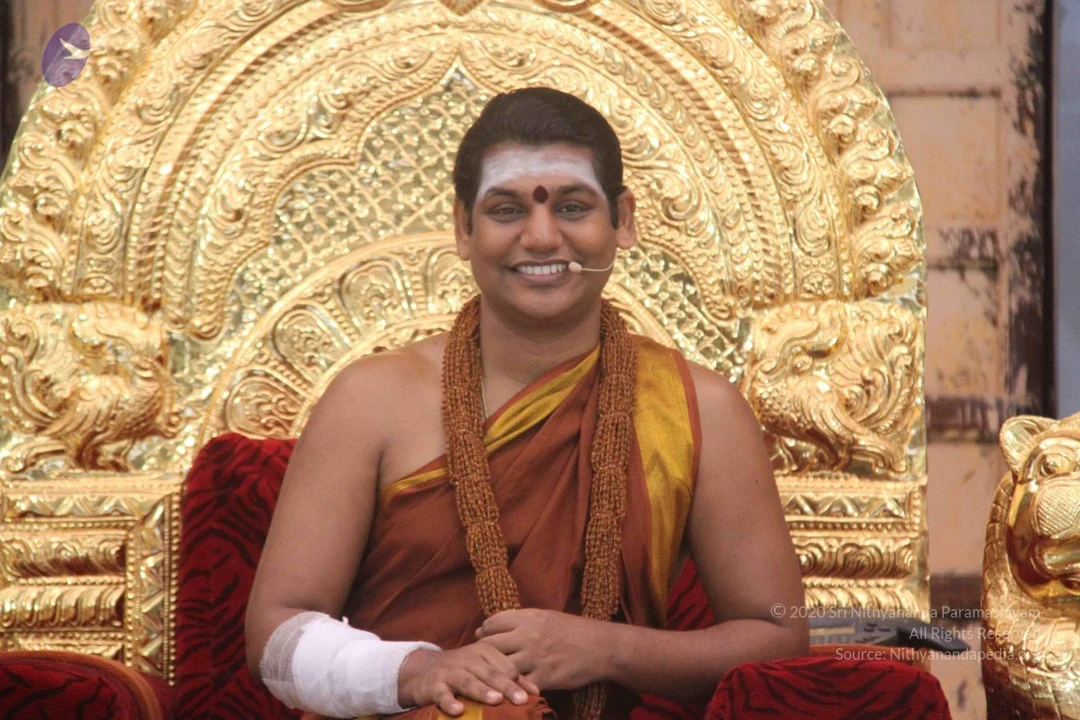
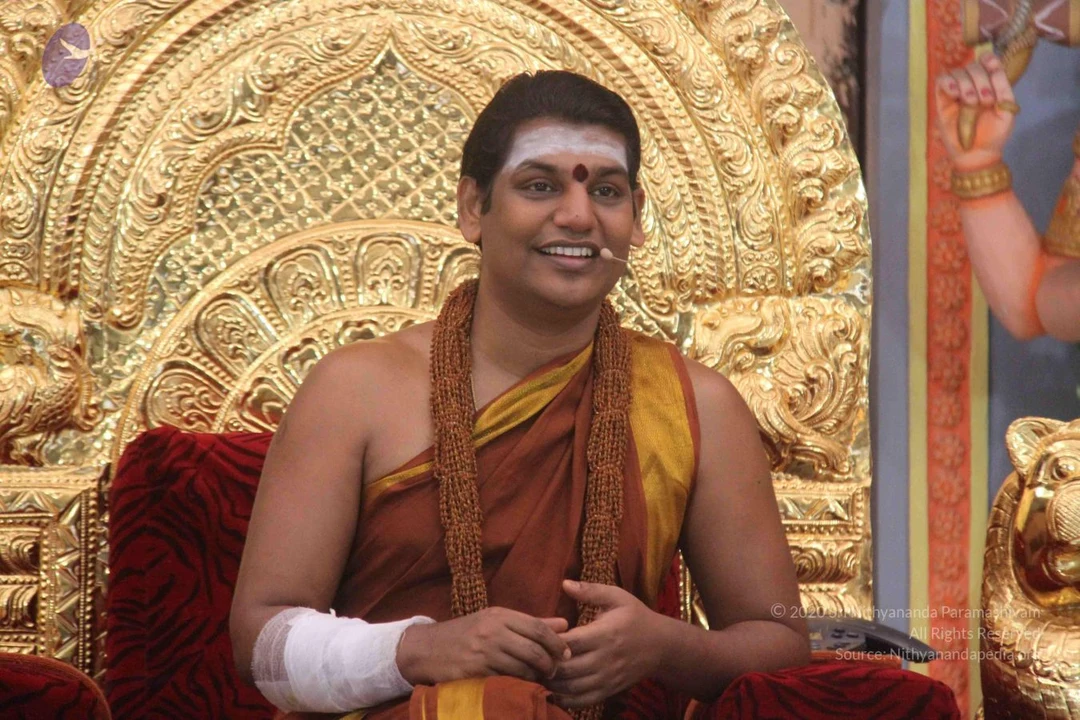
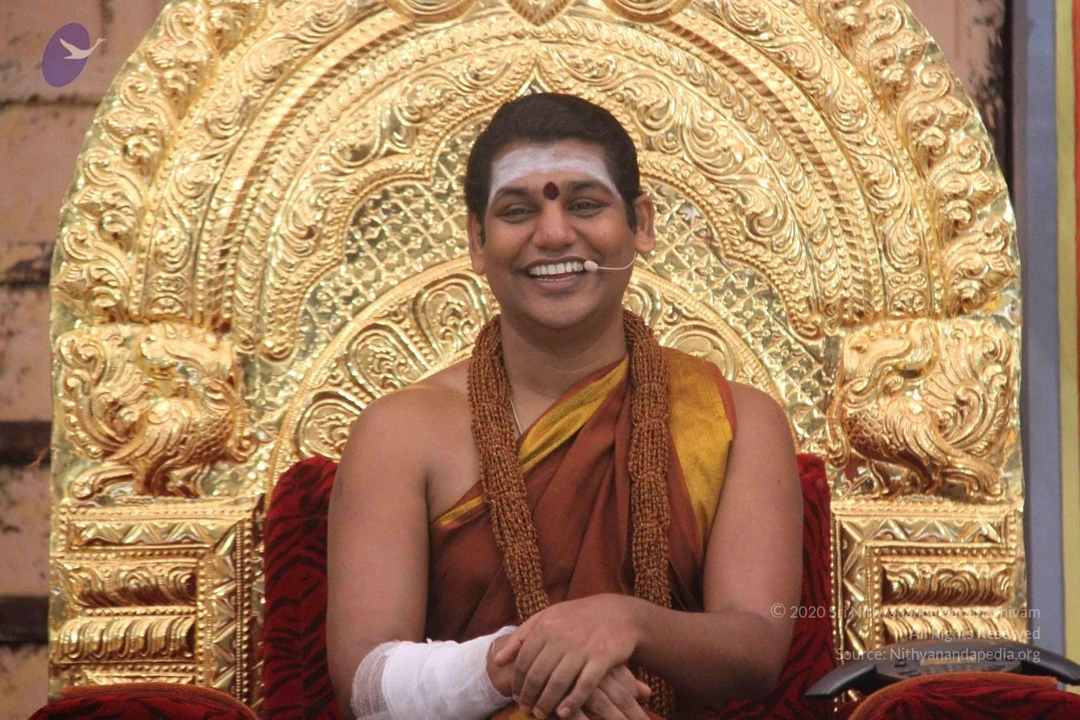
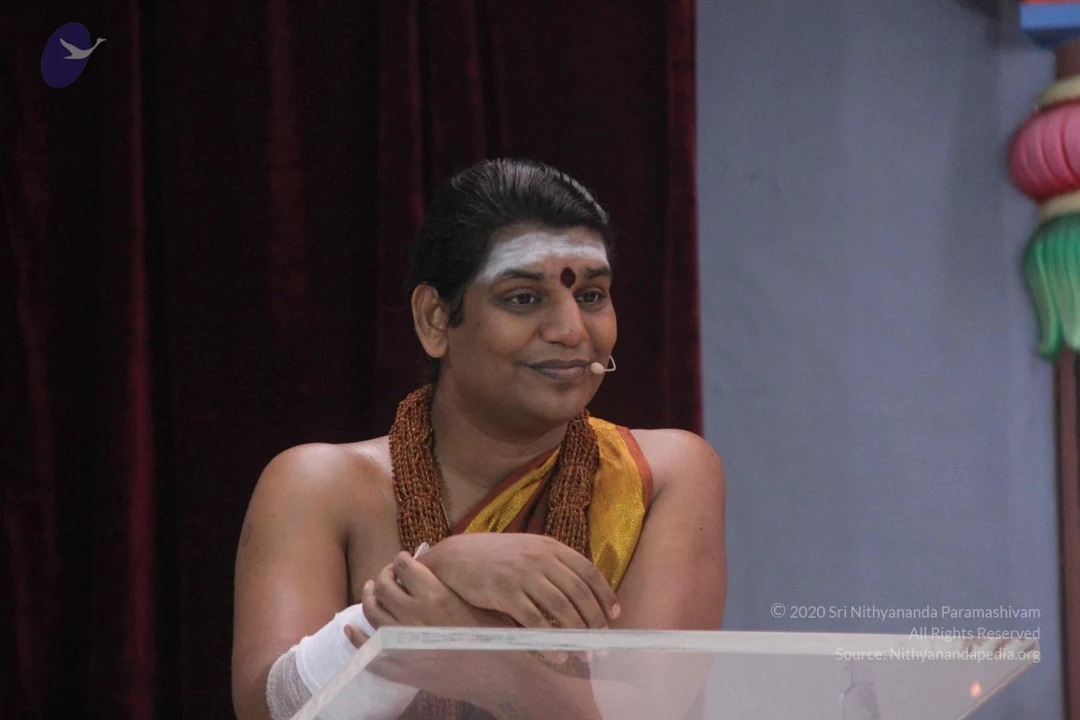
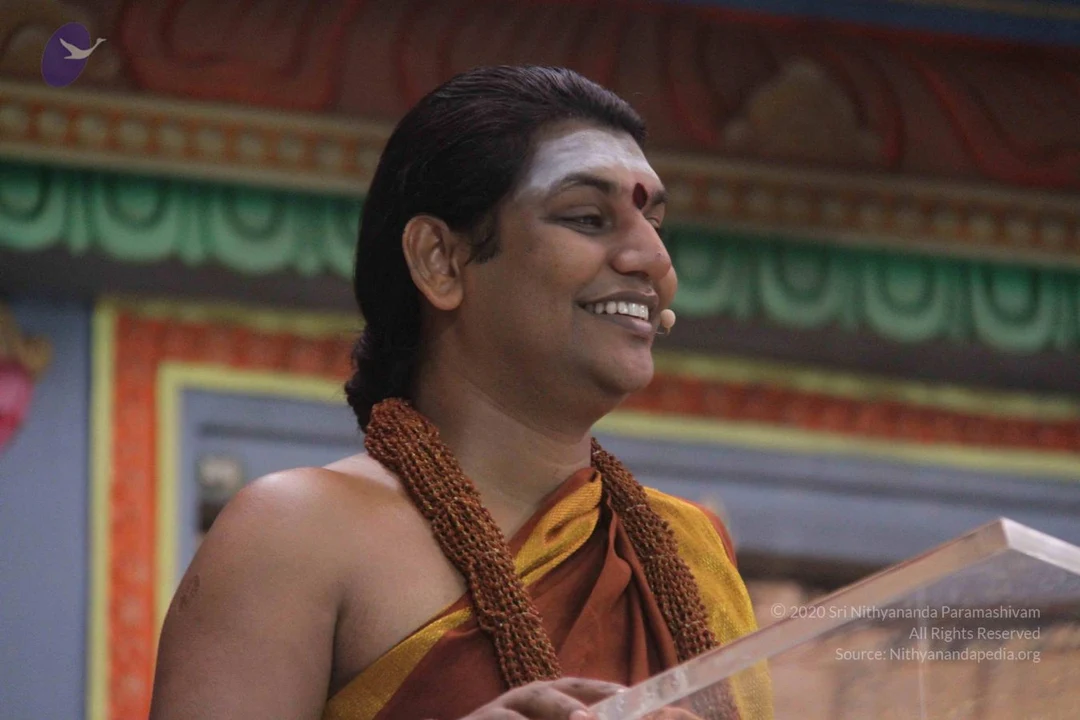
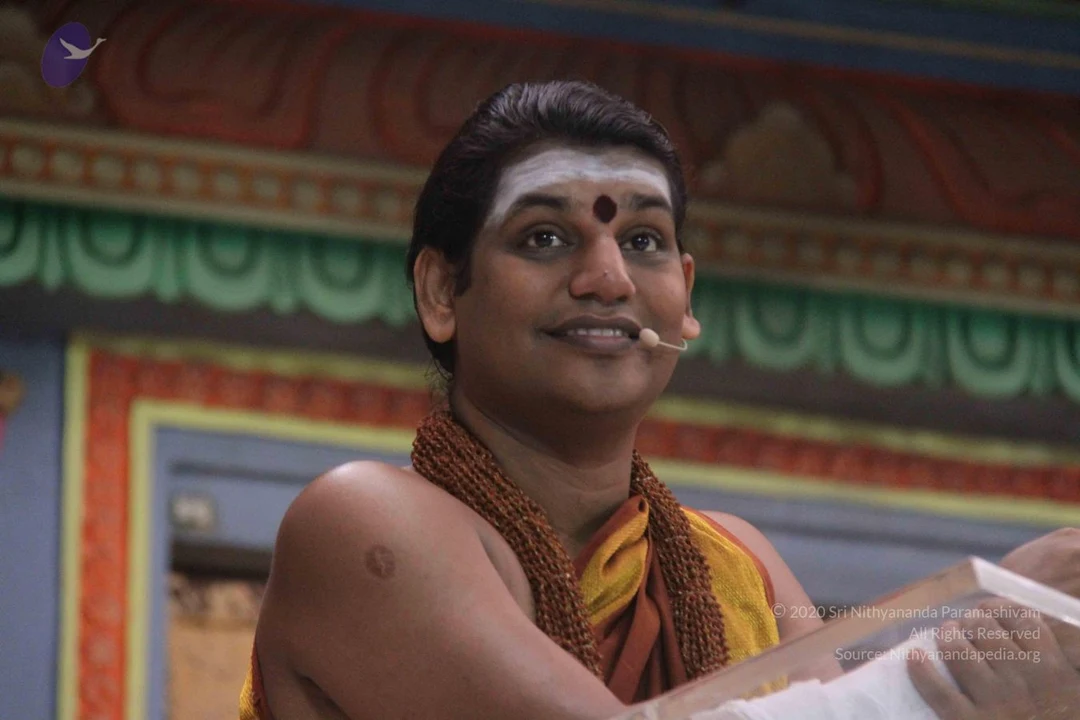
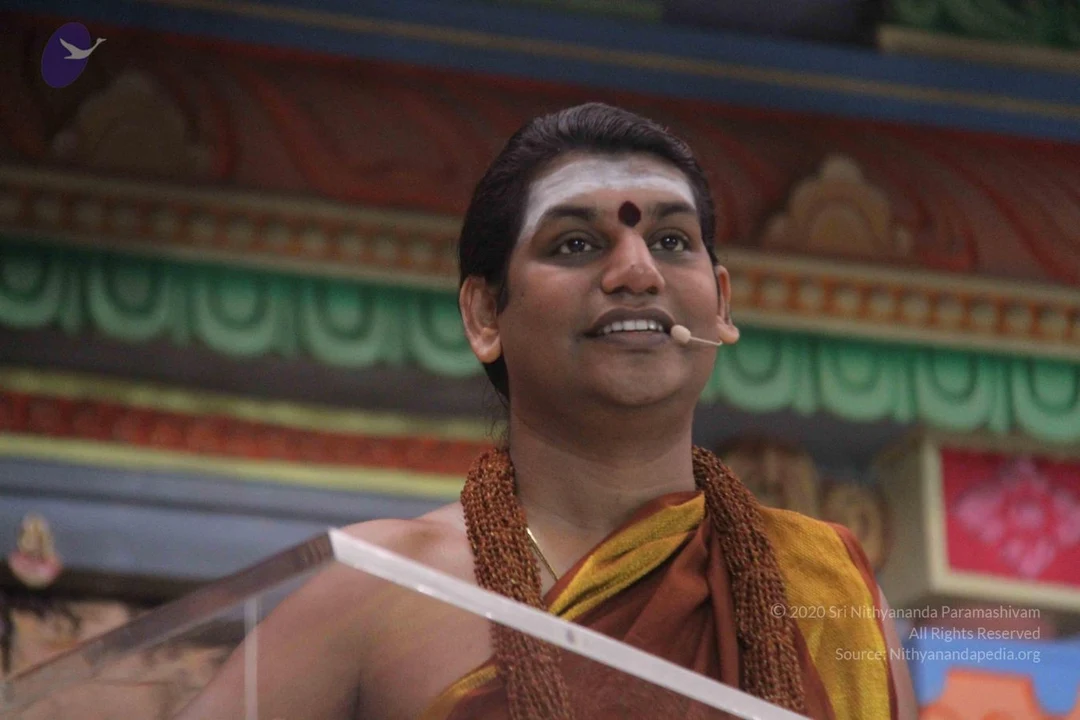
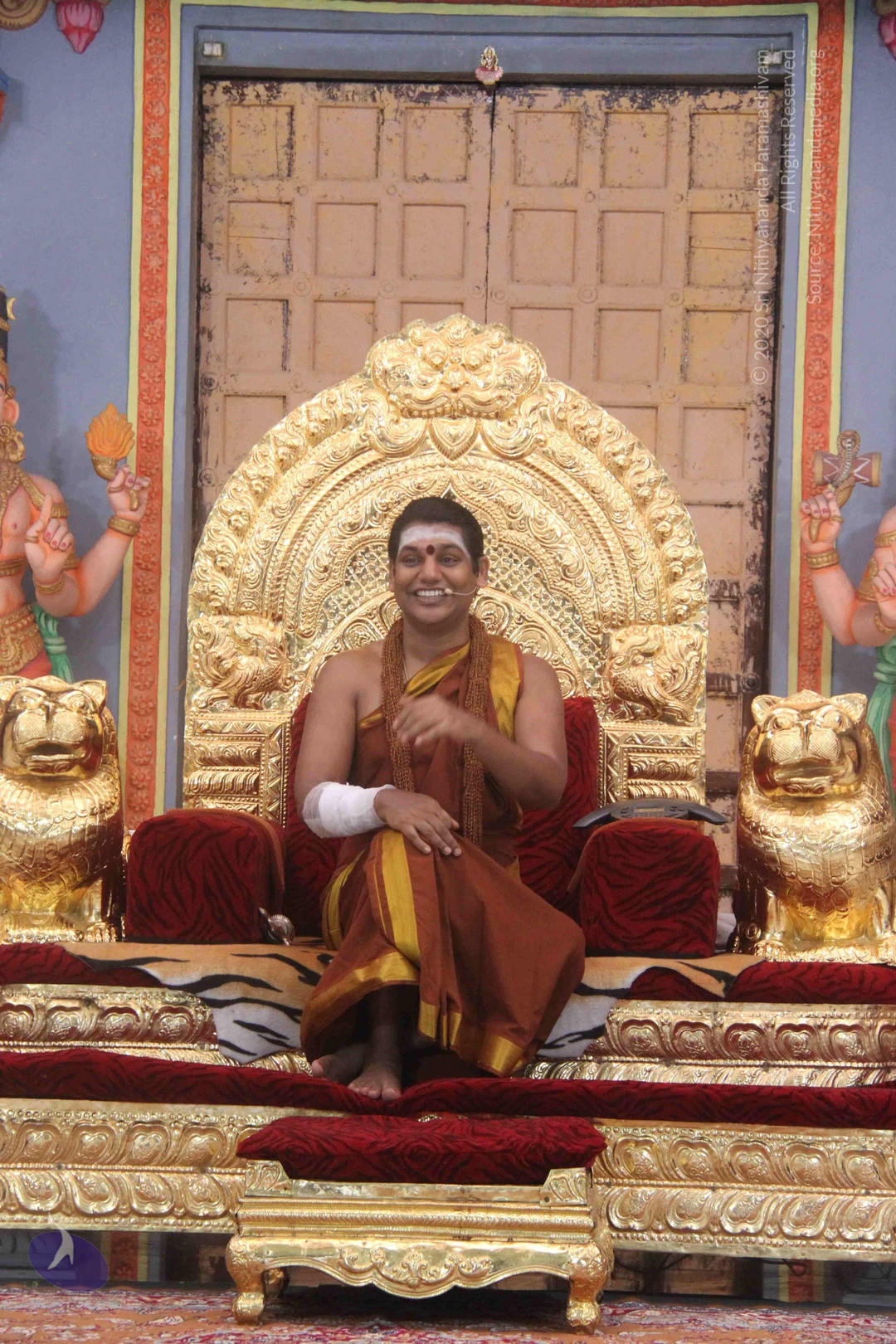
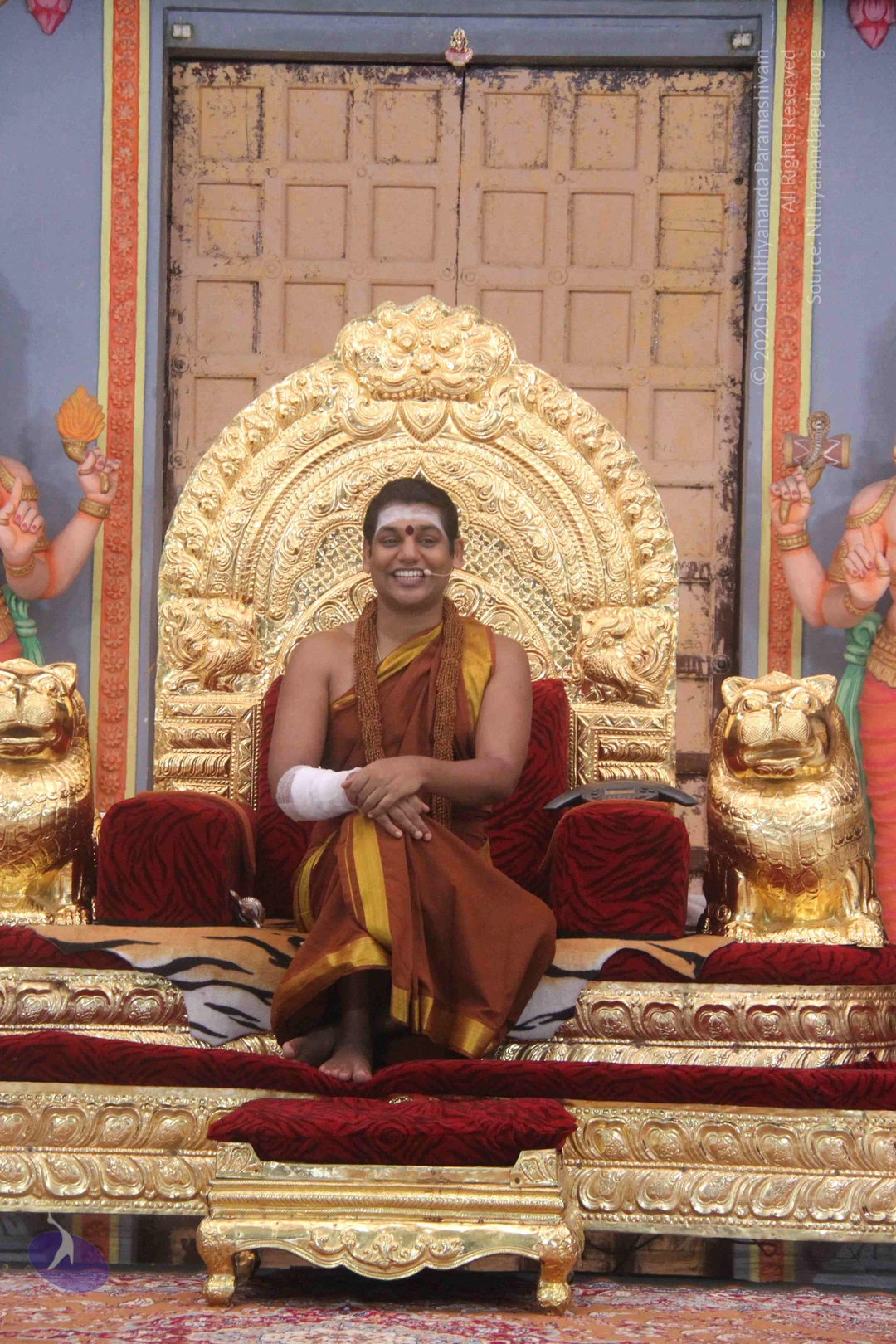
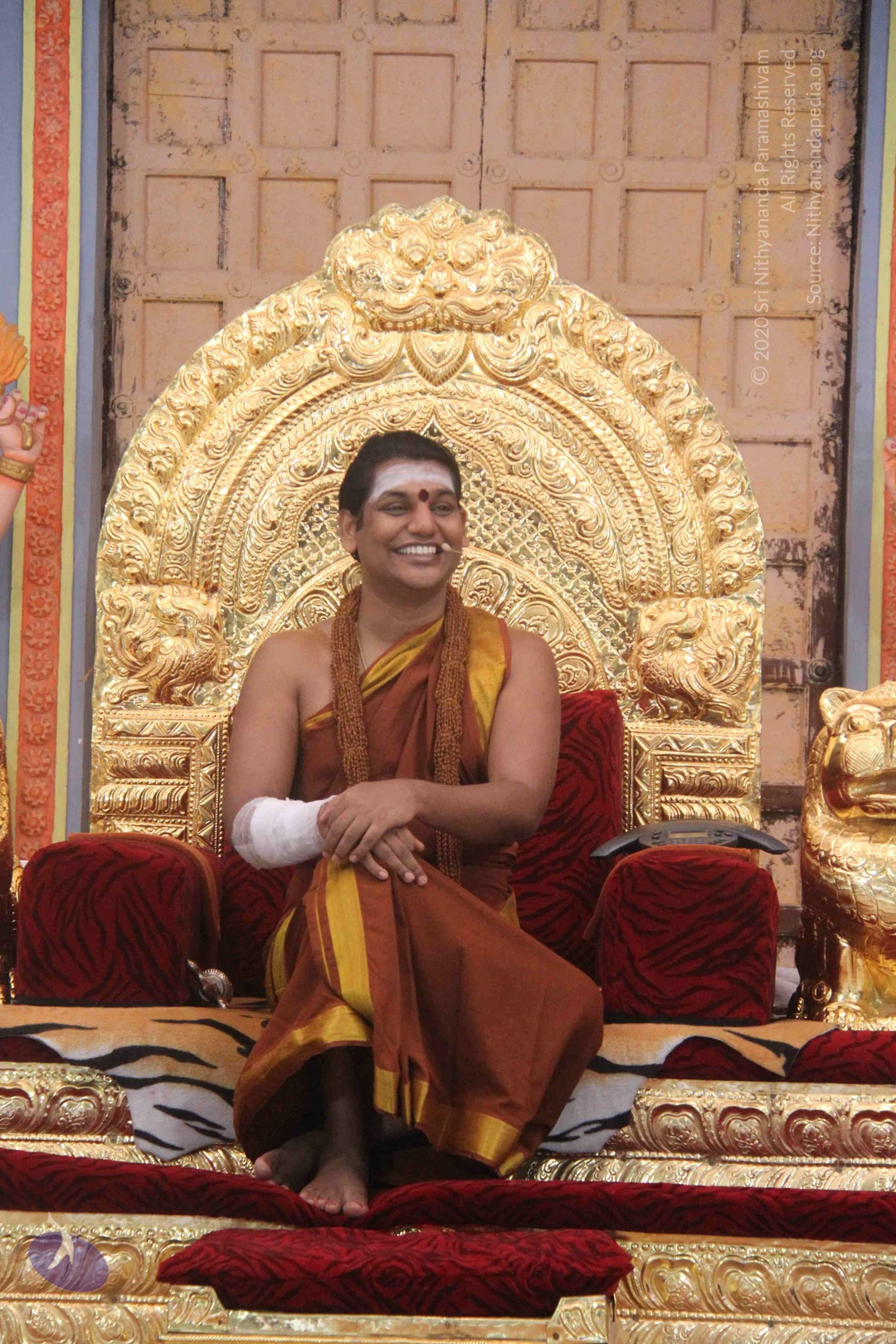
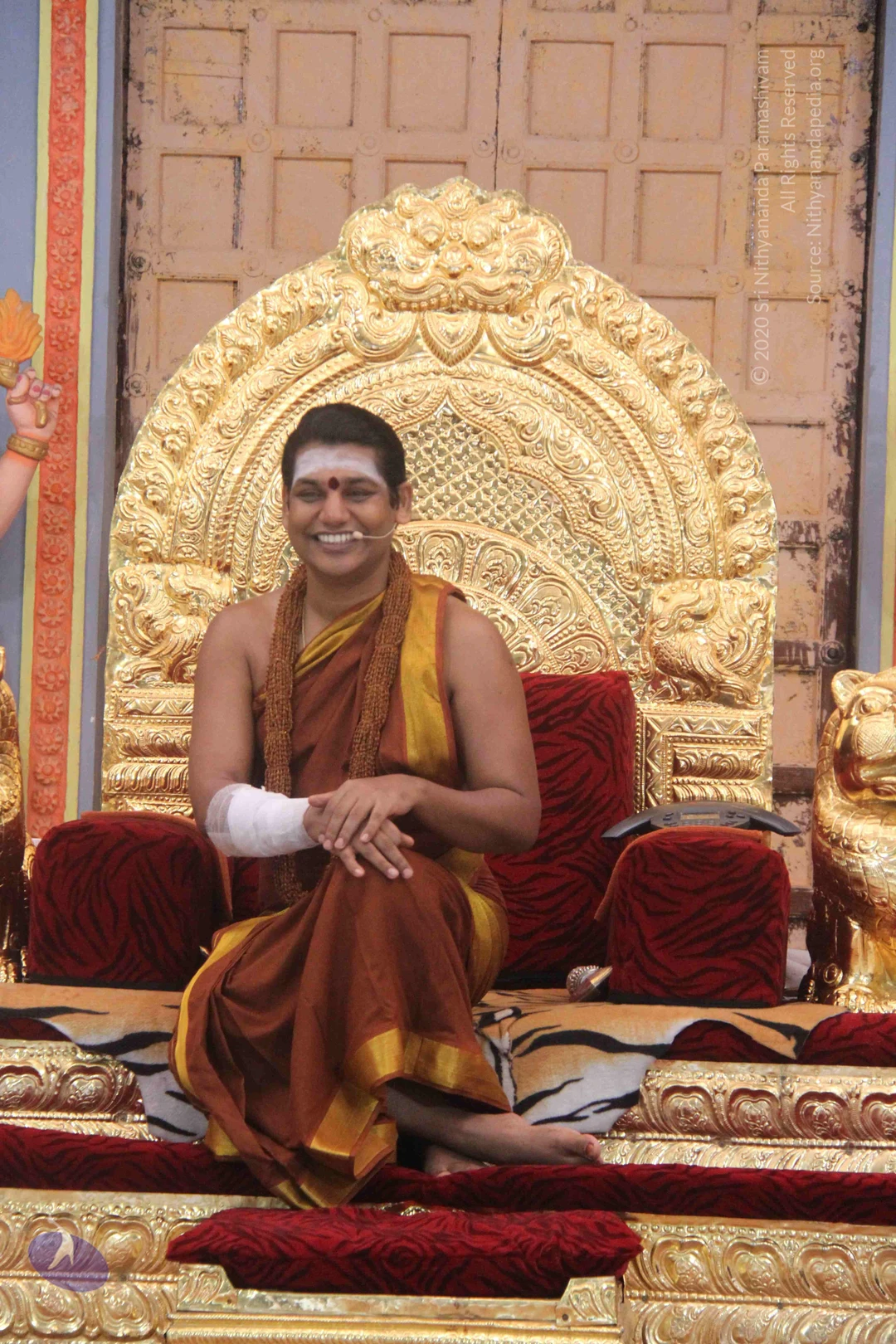
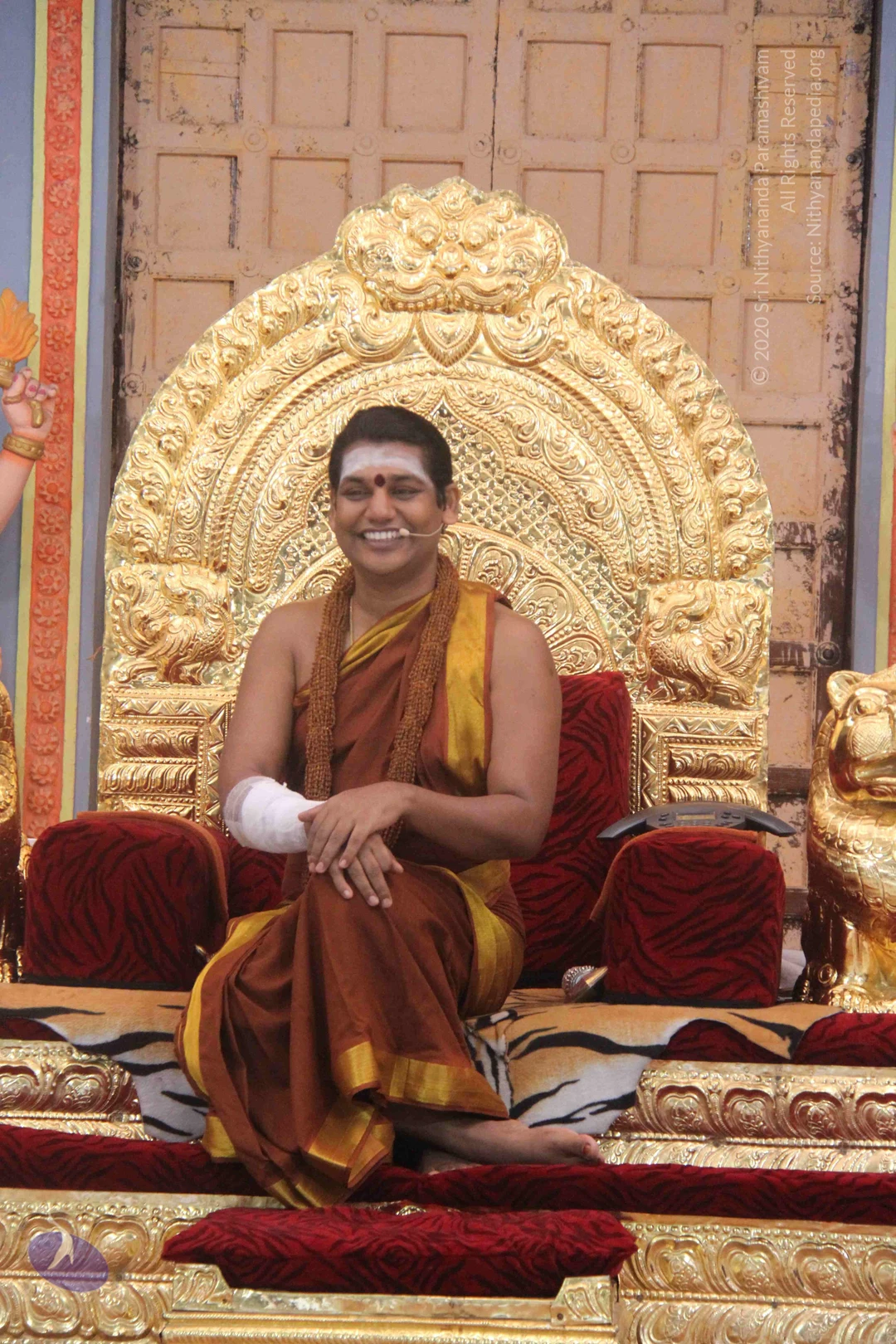
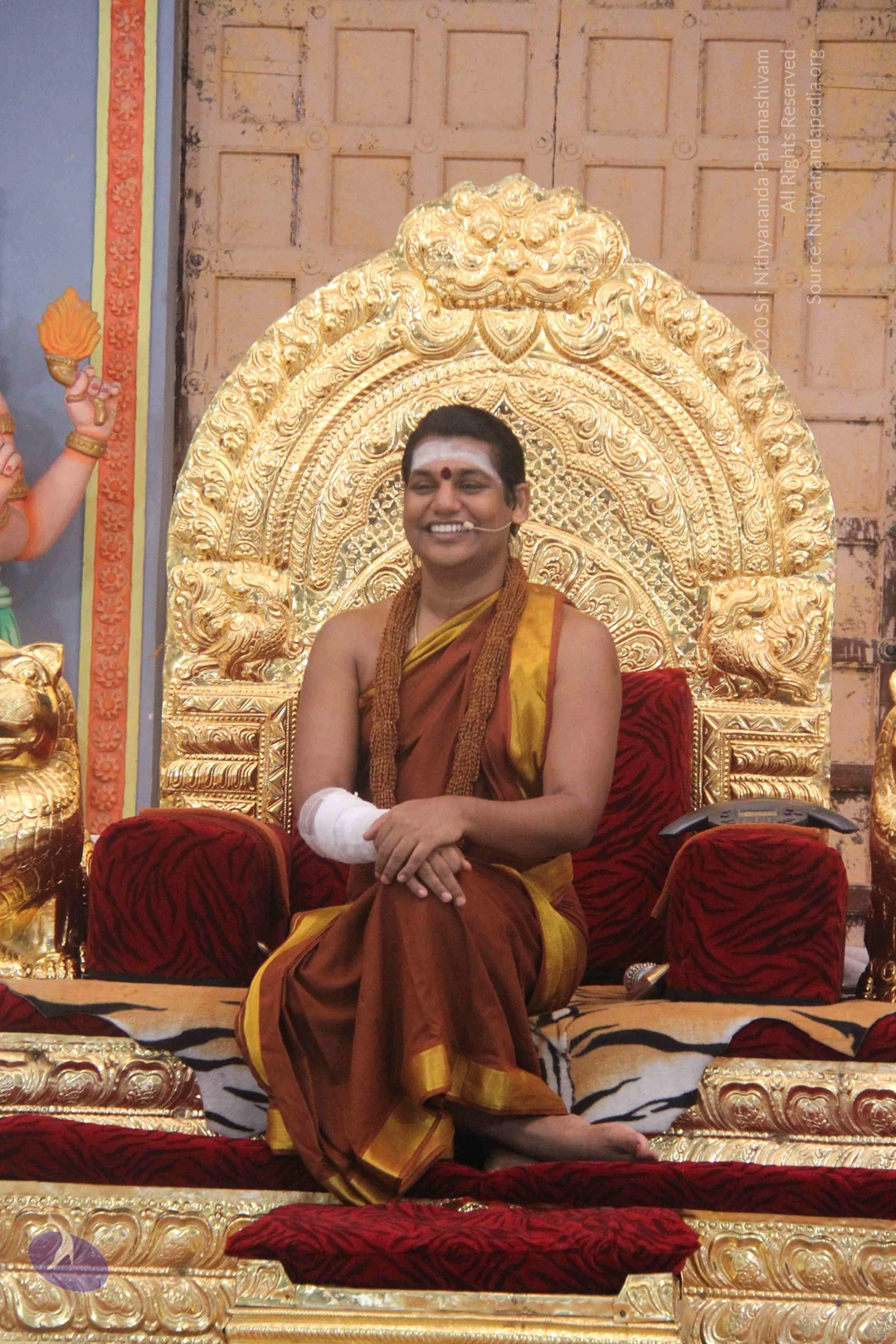
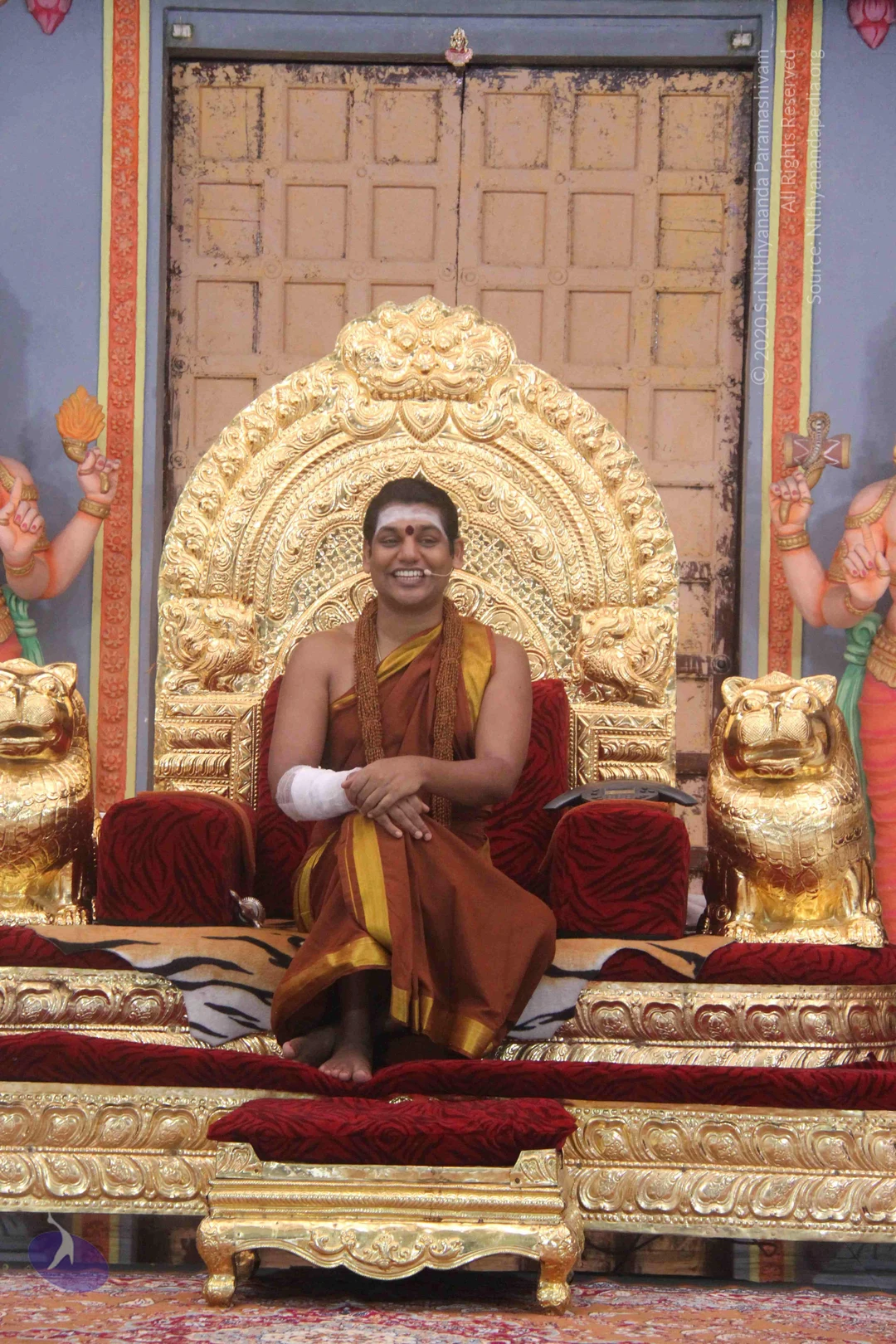
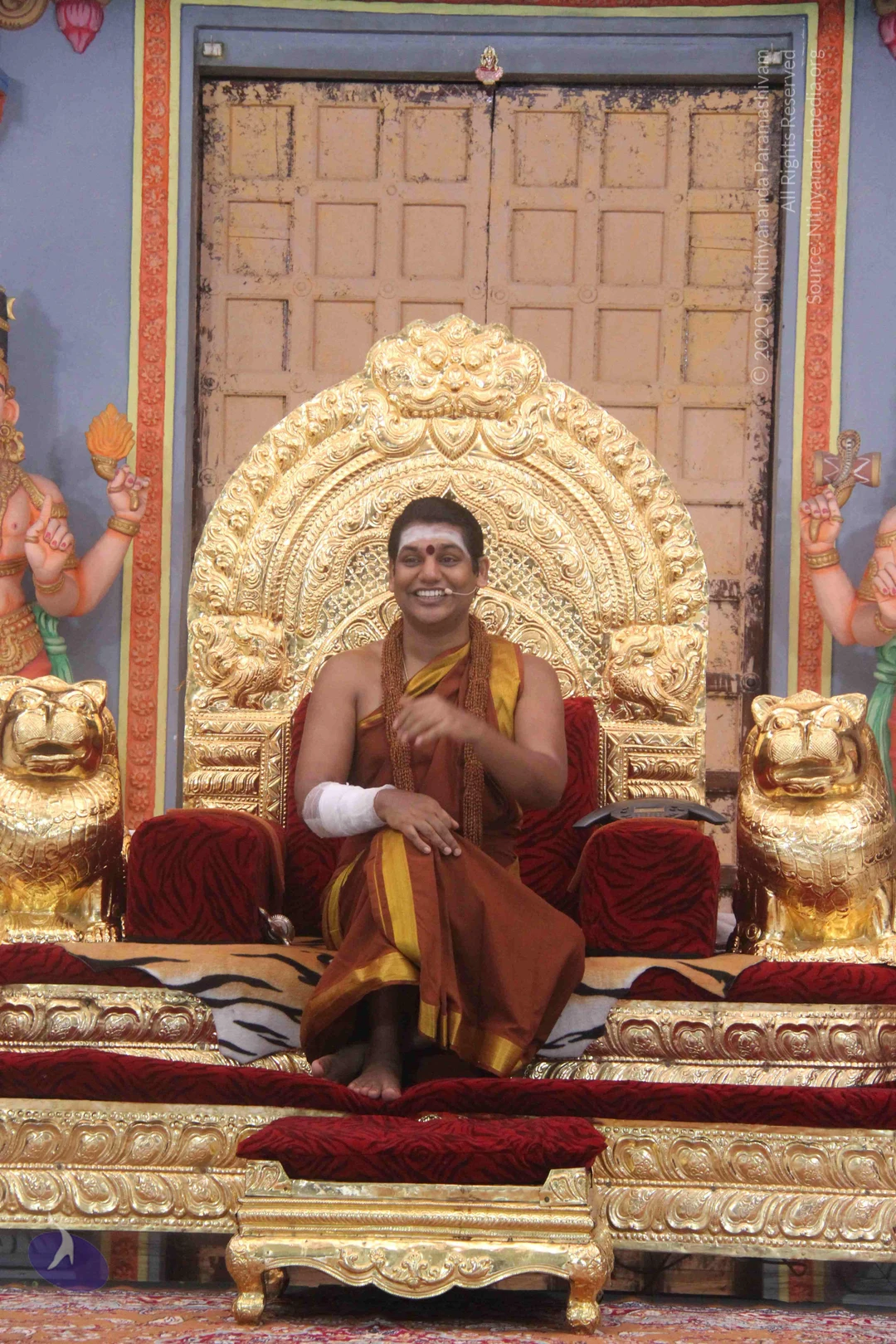
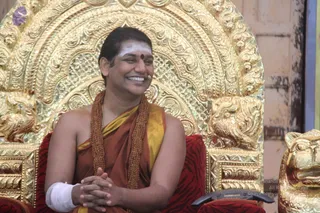
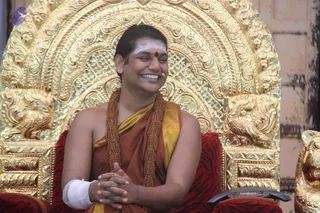
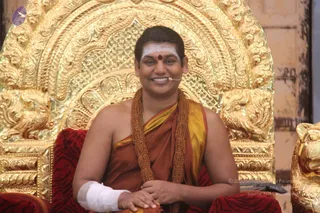
Wide photo of a stage inside a temple-style hall. On the left, a man in an orange-and-saffron dhoti and shawl with a white bandage on his left forearm sits on a gilded throne with red cushions, flanked by two gold lion figures and two painted standing deity figures holding attributes. On the right, a gilded arch frames a seated deity murti decorated with red and yellow marigold garlands, and a seated figure in orange robes and a flower garland sits on a purple cloth in front of it, holding a staff. Brass oil lamps stand between the two thrones on a white marble floor, with a red-and-gold carpet in front.A smiling man sits on an ornate golden throne with carved lion-like figures and floral relief work, against a red and gold backdrop. He wears a rust-orange and gold shawl over one shoulder, long rudraksha malas hang across his chest, and he has white vibhuti on his forehead with a red kumkum dot. His hands are clasped in his lap, a bandage covers one wrist, and a small microphone is clipped near his face. A red and black tiger-striped cushion covers the chair. a person is seated in a speaker's position during a satsang discourse.A smiling man with swept-back dark hair, a white vertical forehead mark and a red bindi sits on an ornate golden throne with a carved arched backrest and lion-shaped armrest. He wears an orange-brown robe with a yellow border, two long rudraksha-style beaded malas, and a white bandage on his left forearm. His hands are clasped in his lap on a red tiger-striped cushion, and a small microphone is clipped near his face. A golden lion figure stands at the right edge.A smiling man seated on an ornate gold throne with carved lion-like armrests and a red tiger-striped cushion. He wears a saffron-orange robe with a yellow-gold border, a thick rudraksha mala with a ceremonial gold-coloured necklace, and has white vibhuti on his forehead with a red bindi. A small microphone is clipped near his face and a white bandage is wrapped around his left wrist. His hands are clasped in his lap. a person is seated in a satsang setting. The photo shows one person.A smiling man sits on an ornate gold throne with carved lion heads and foliage patterns, draped in red velvet cushions. He wears an orange-red and yellow sash over bare shoulders, a long rudraksha mala necklace, and a white bandage on his left forearm. His forehead bears white vibhuti lines and a red bindi, and a small lapel microphone is clipped near his mouth. His hands rest folded in his lap. A gold lion figure appears at the right edge.A smiling man sits on an ornate gilded throne with lion-carved armrests and red tiger-striped cushions. He wears a rust-orange and mustard-yellow sannyasi wrap over bare shoulders, a long brown rudraksha mala, and a small headset microphone. White vibhuti marks his forehead with a red kumkum dot, and his forearm is bandaged in white. His hands are clasped in his lap. a person: the seated man shows a shaved-looking dark crop with a ceremonial rudraksha mala and orange-yellow ceremonial wrap on a gilded throne, consistent with the page's reference to a person at the event.

LeelaAlankar-GurukulKid

1 photoSource gallery
A young boy with a shaved head and white vertical tilak sits cross-legged on a purple satin cushion before a gold-and-orange draped backdrop, a garland of yellow marigolds and red roses around his neck and arms. He wears a maroon dhoti with a green and gold border, a white stone necklace and silver-blue bangles. He holds a wooden staff in one hand and rests the other on a brass stand. Gold carved panels frame the scene.

Satsang-CrowdShots

2 photosSource gallery
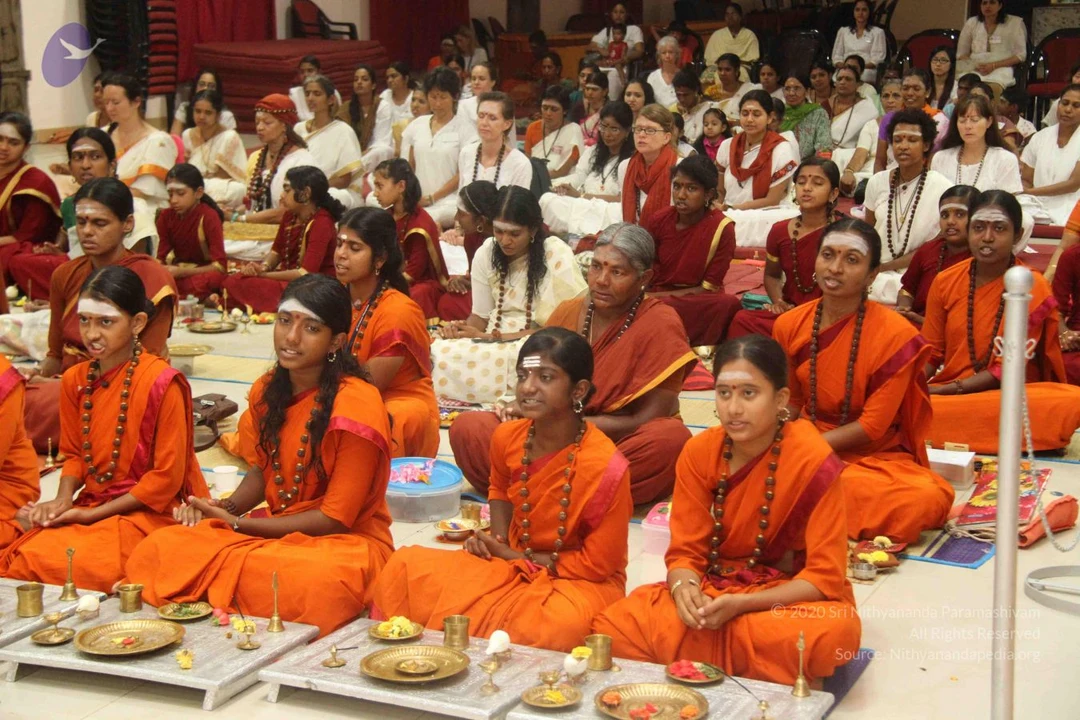
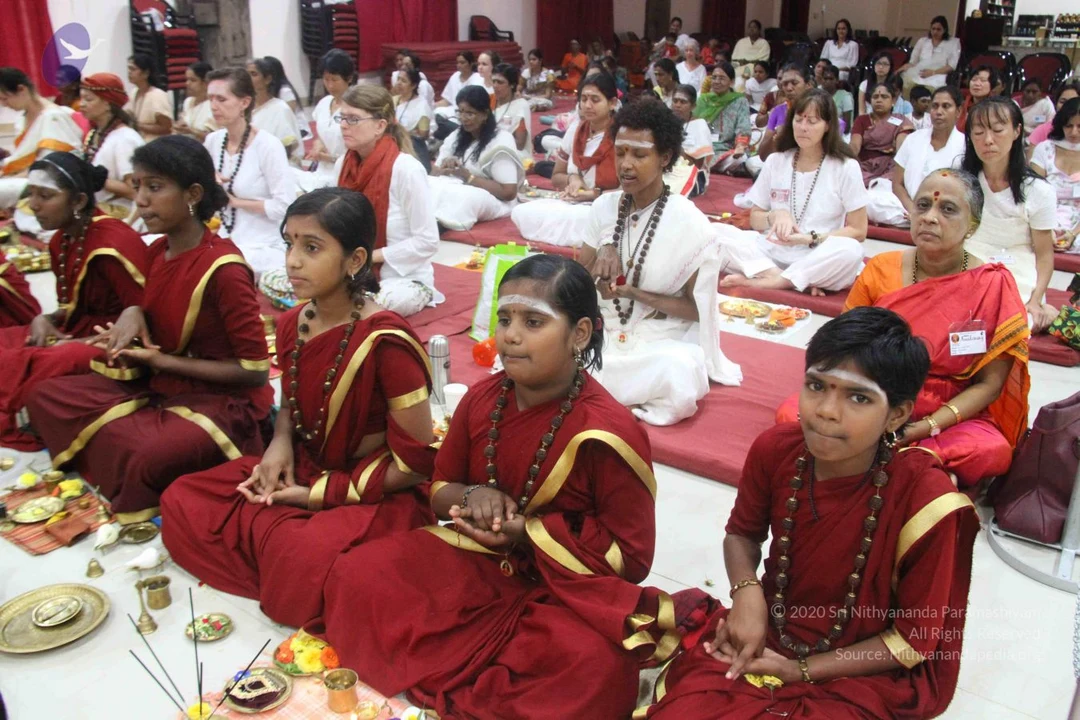
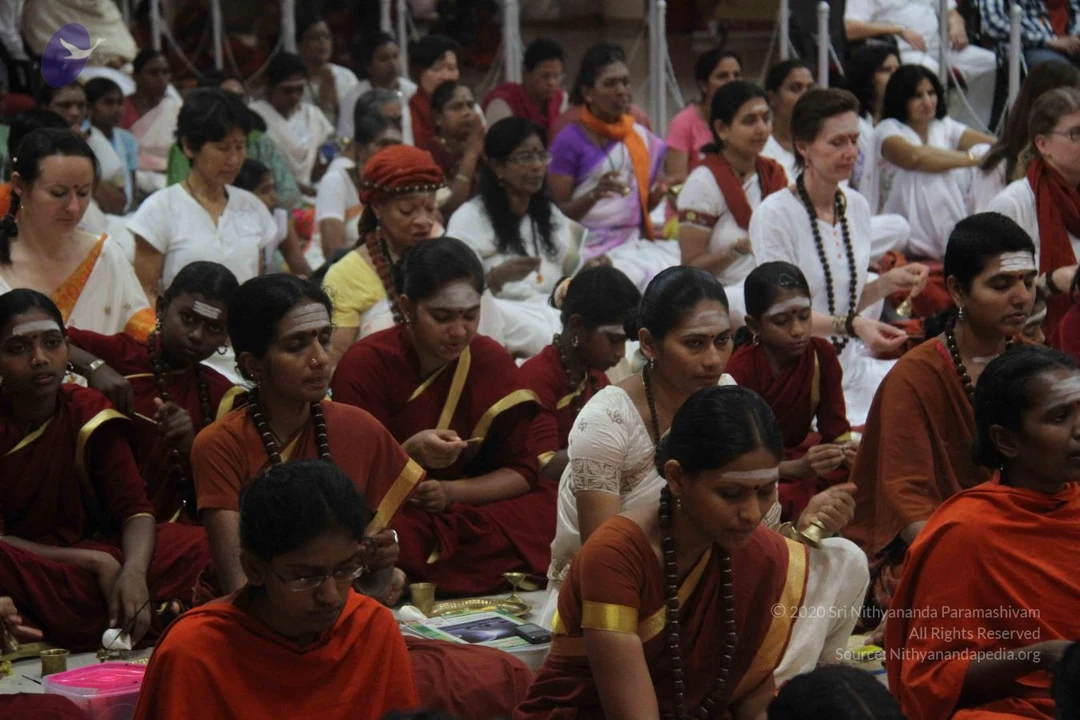
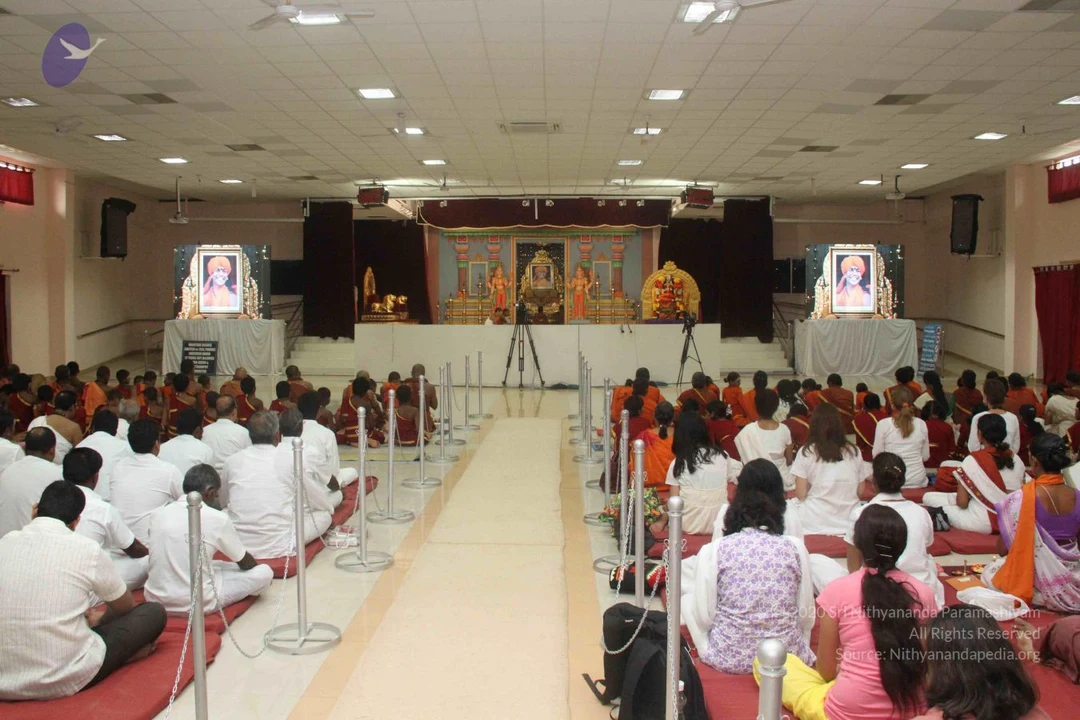
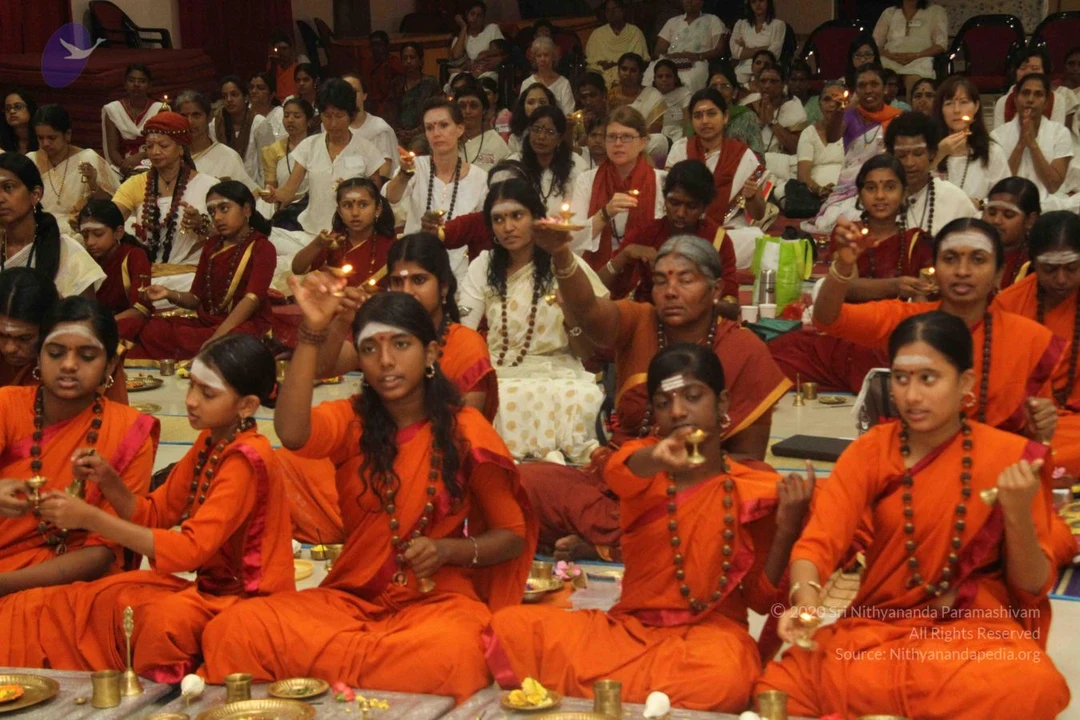
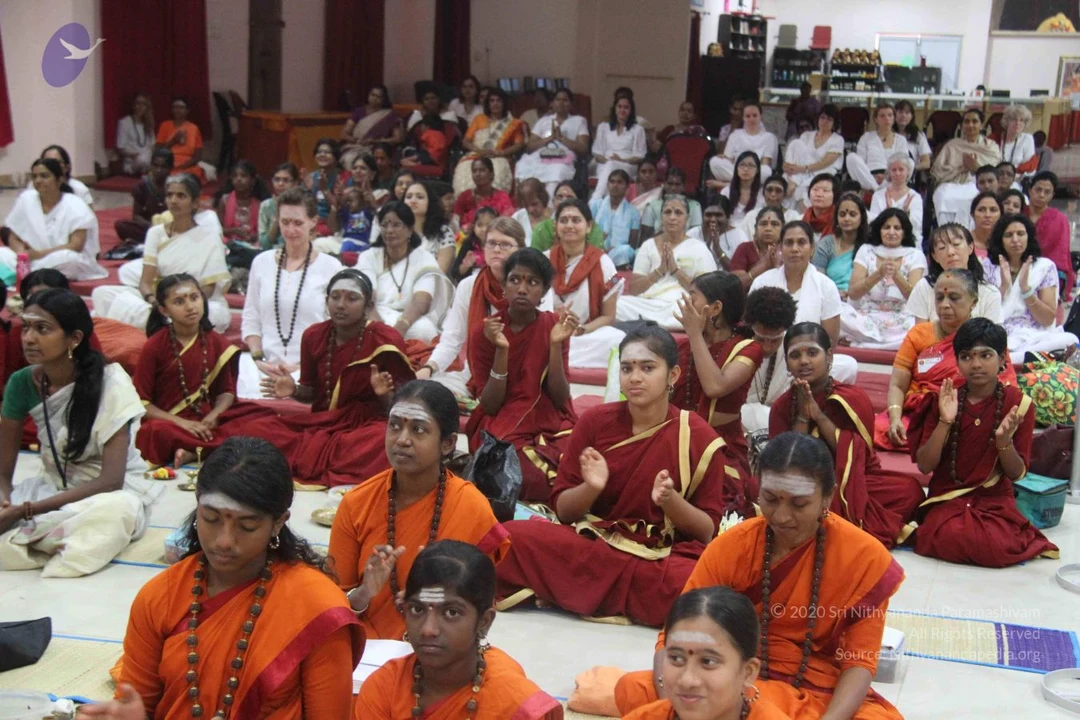
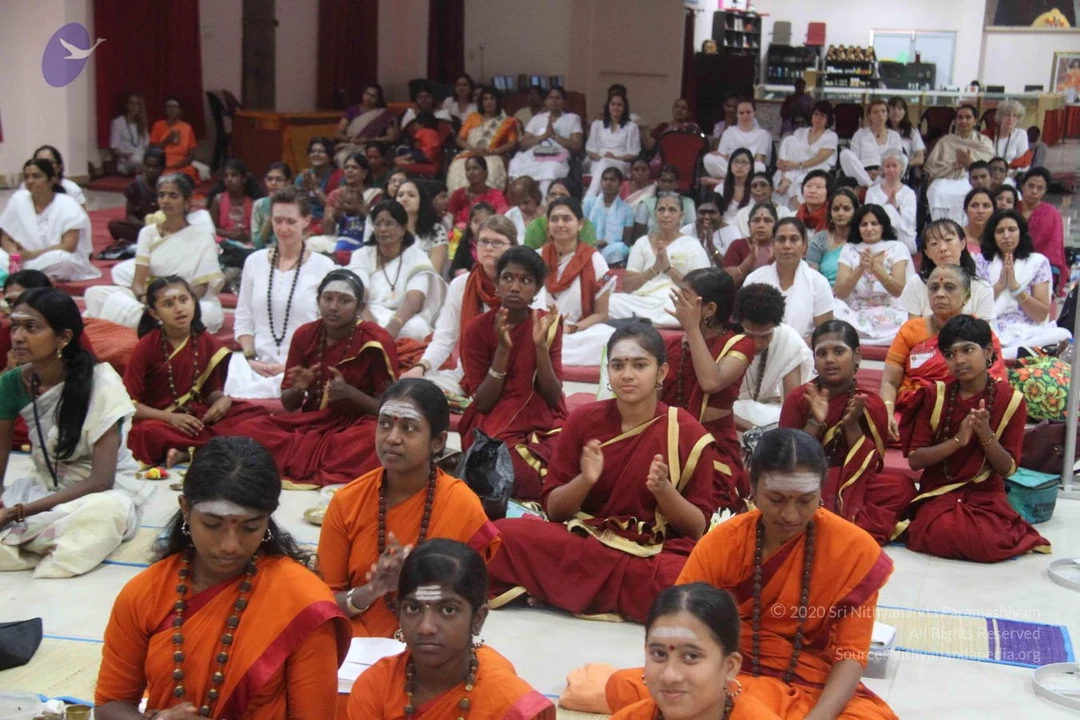
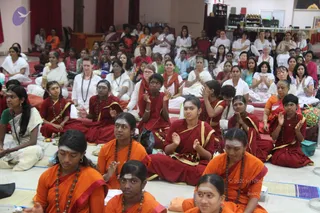
A photograph of a large seated congregation in a hall during a satsang. In the foreground, young women in orange saffron robes and rudraksha malas sit cross-legged on white mats with white forehead markings, some with hands folded or in mudra. Behind them, rows of women in red and gold saris and white dresses sit with palms pressed together in devotion. A few older women wear orange and white saris. Red cushioned seating and a shelf of items appear at the back of the room.Photograph of a seated audience at a satsang hall, mostly women and young girls on the floor and chairs. Front row: young women in deep red and maroon saris with gold borders and sandalwood-coloured or orange saris, many with white vibhuti/tilak on the forehead and rudraksha malas around their necks, hands joined in anjali. Behind them, women in white and cream saris and kurtas, several with hands folded, some seated on chairs. A red carpet and a wooden table with bottles and a counter appear in the background.

SarvaDarshan

20 photosSource gallery
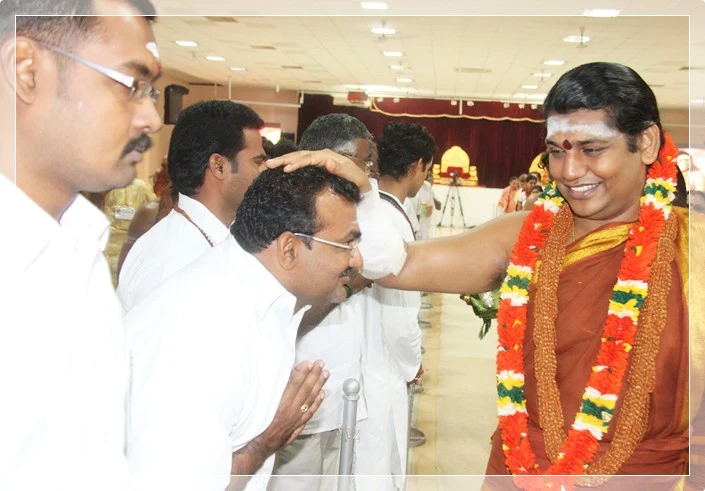
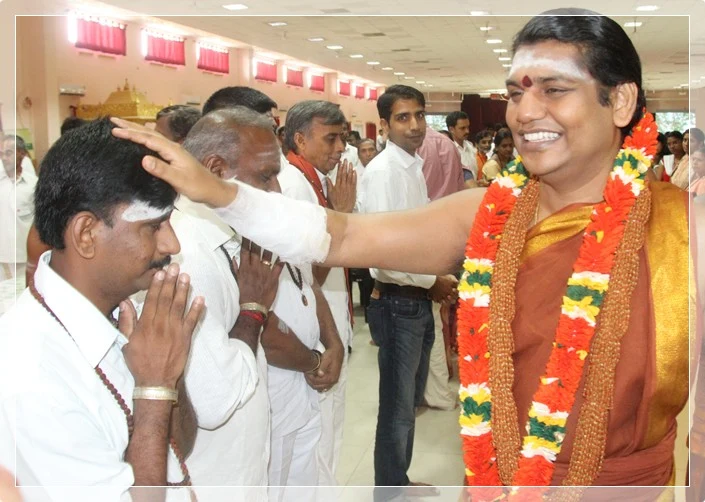
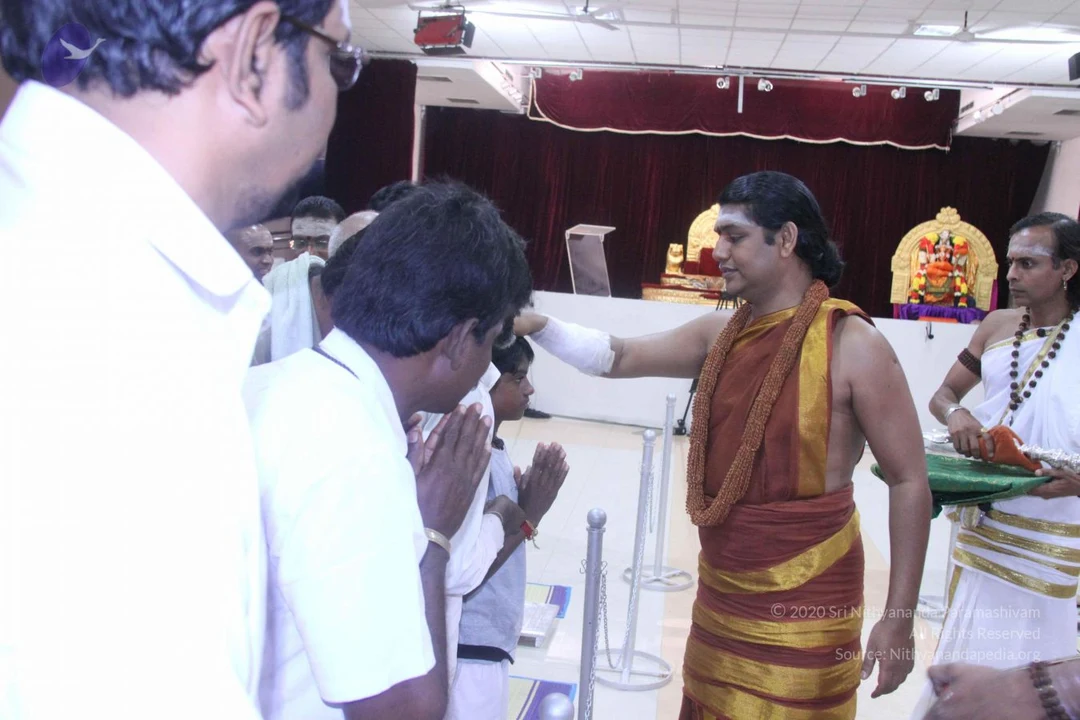
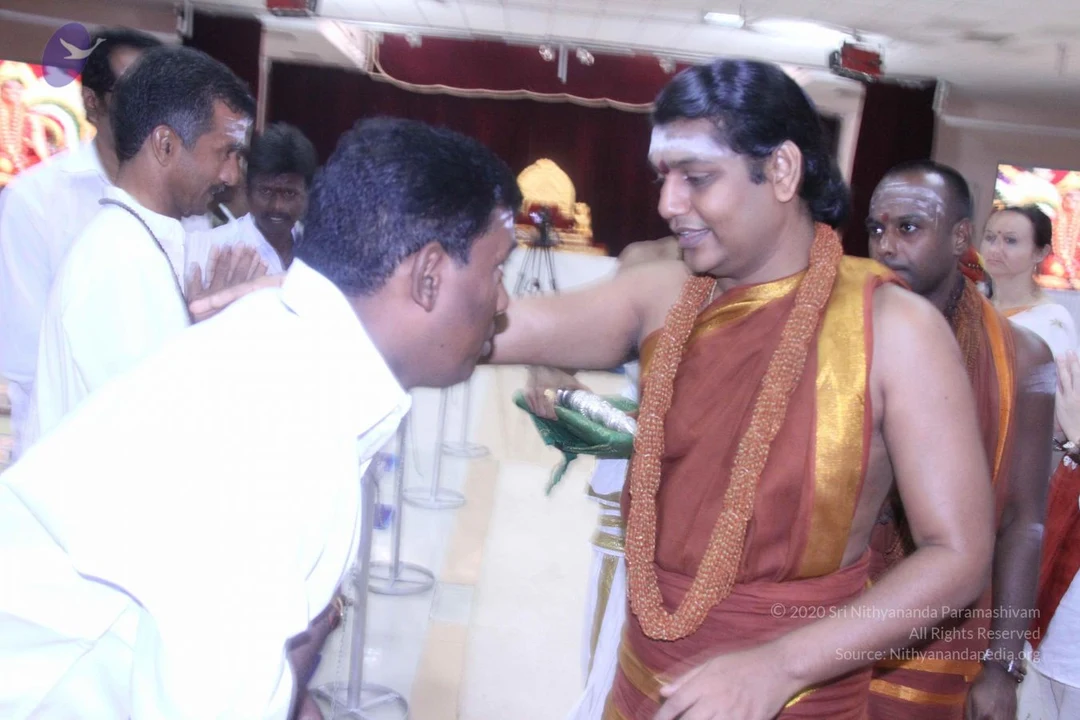
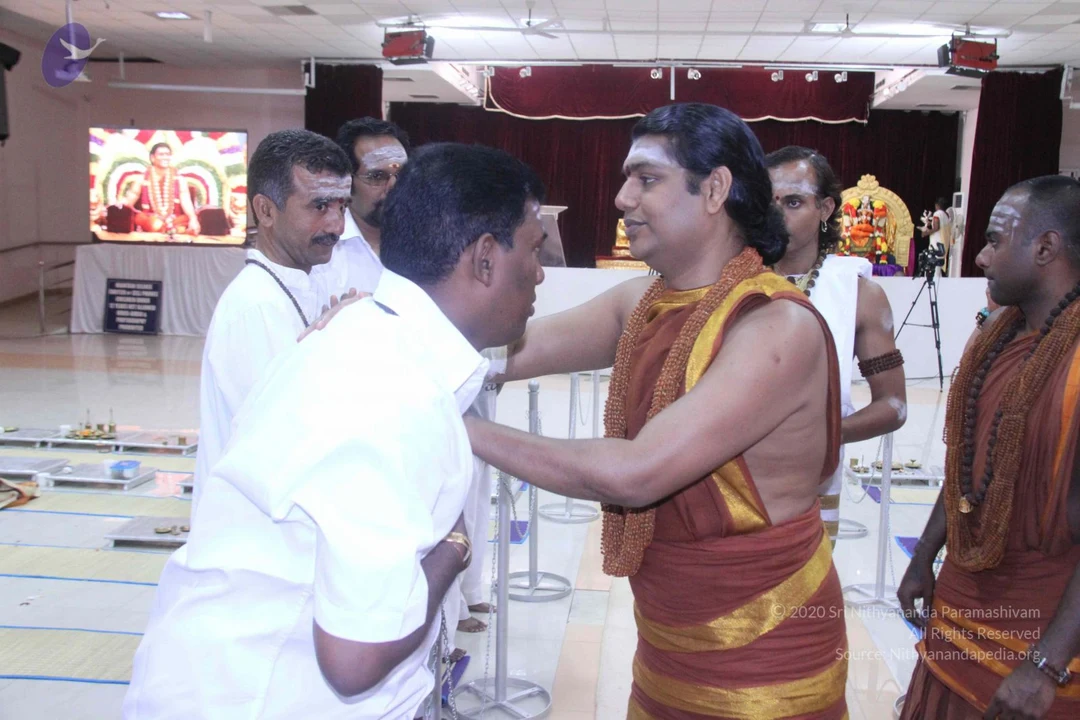
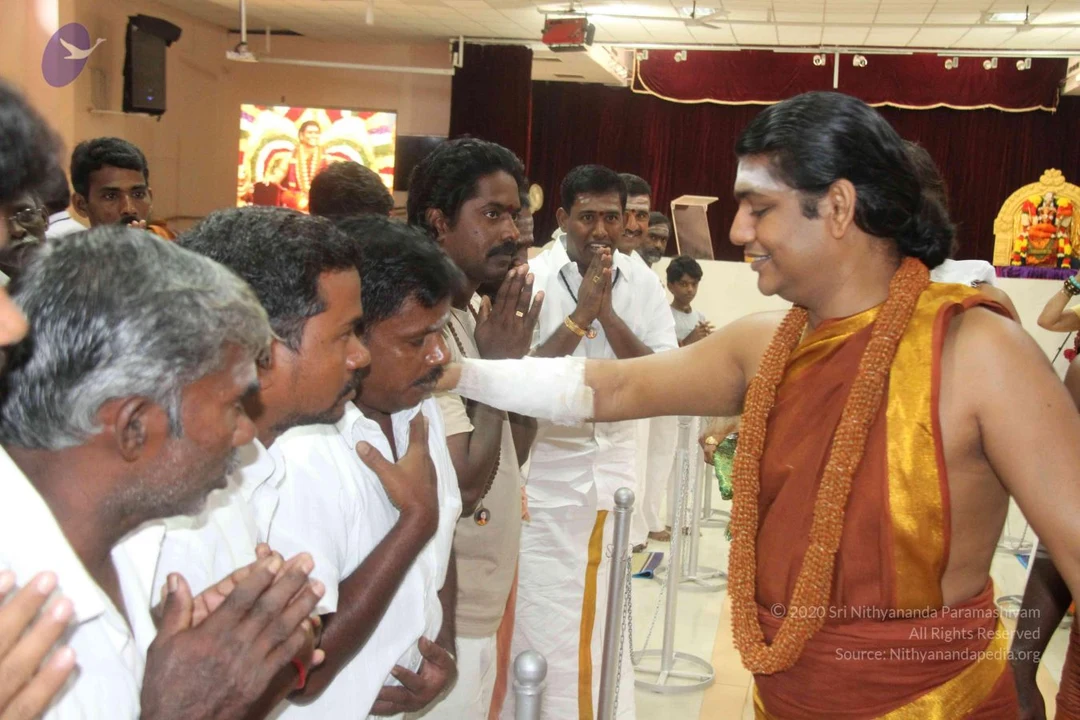
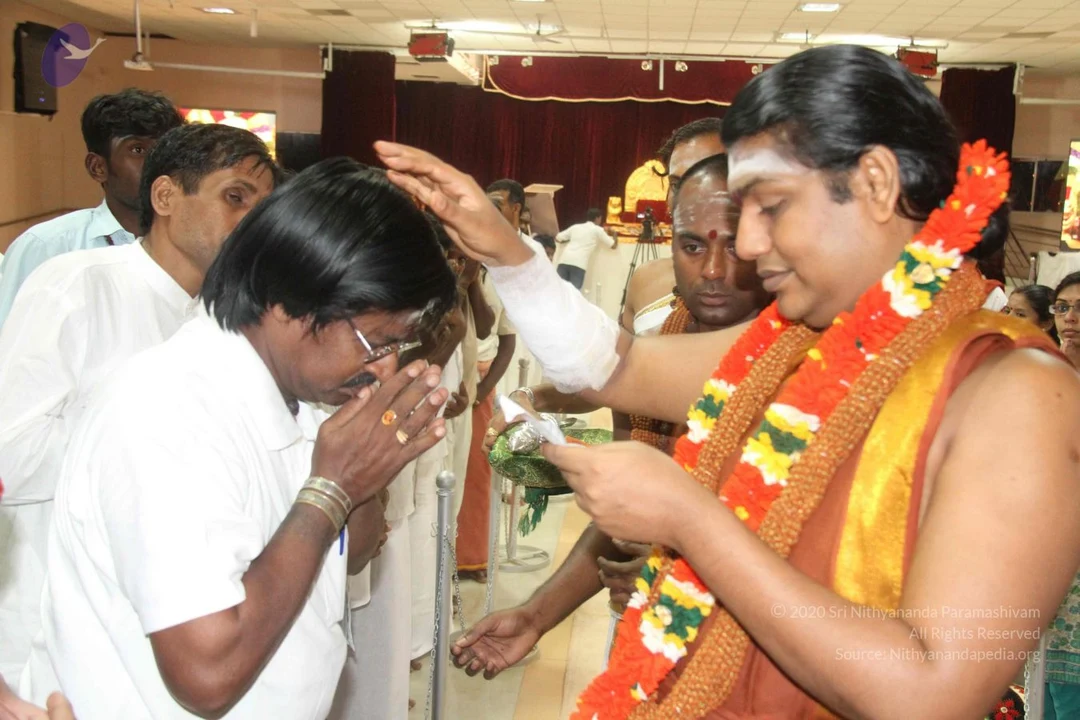
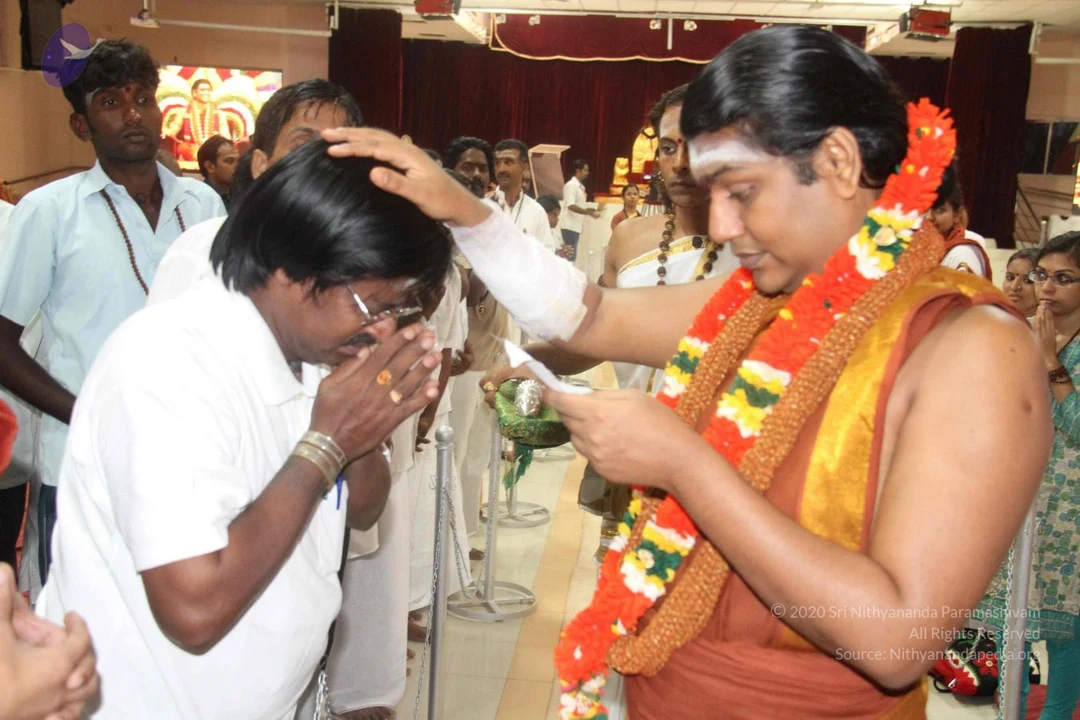
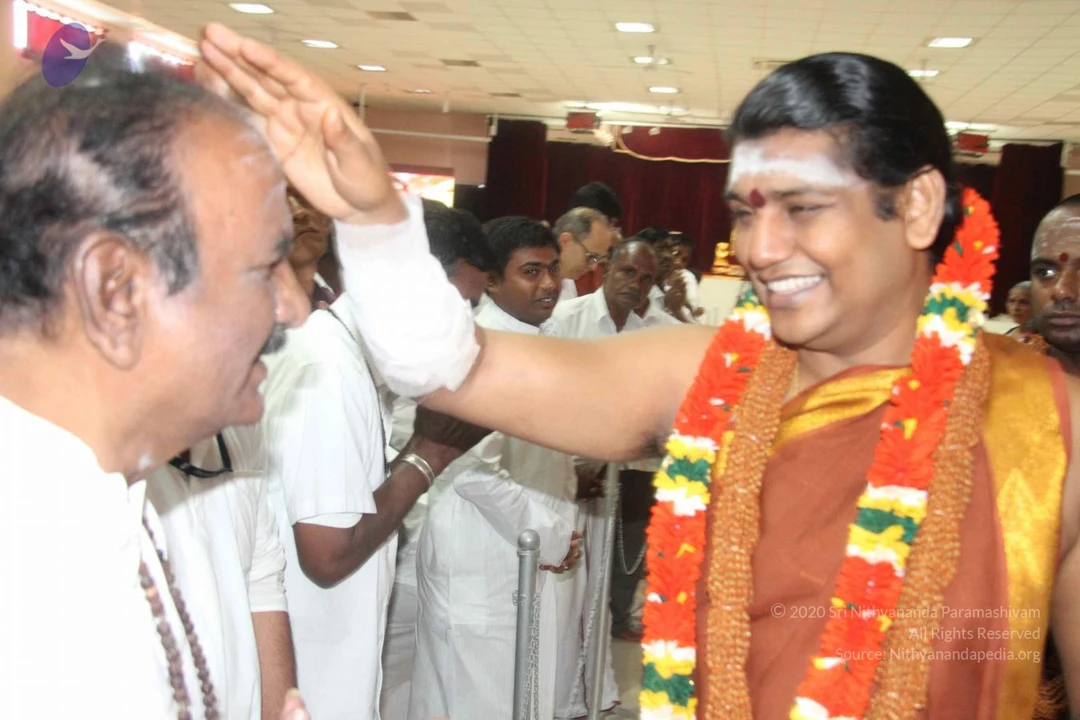
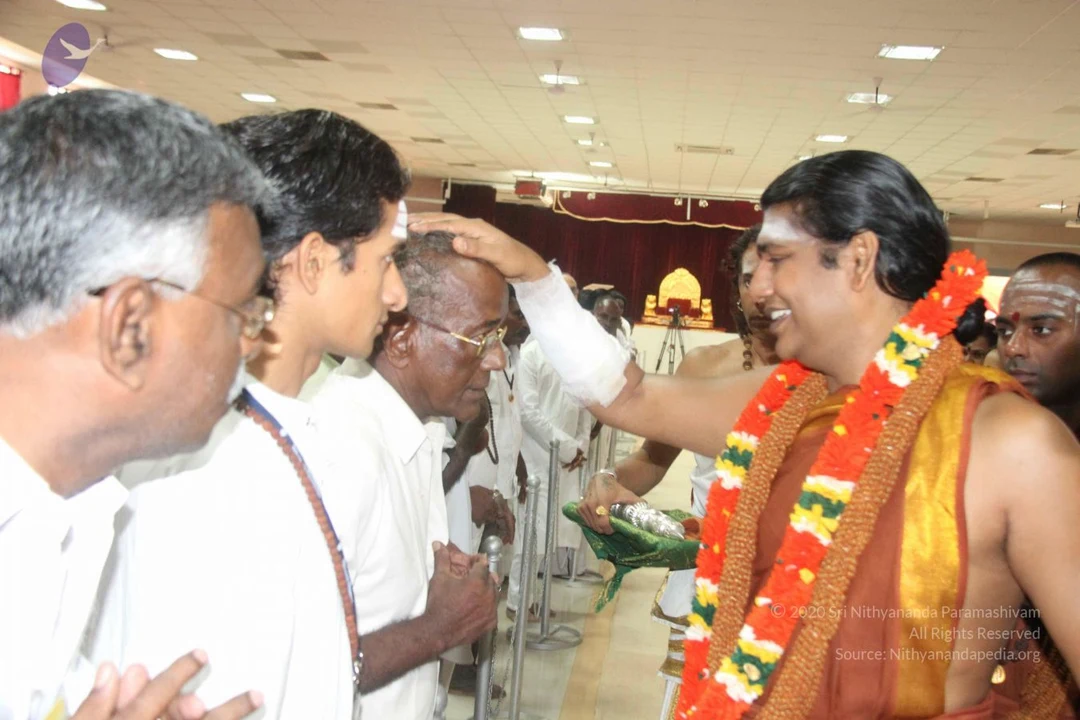
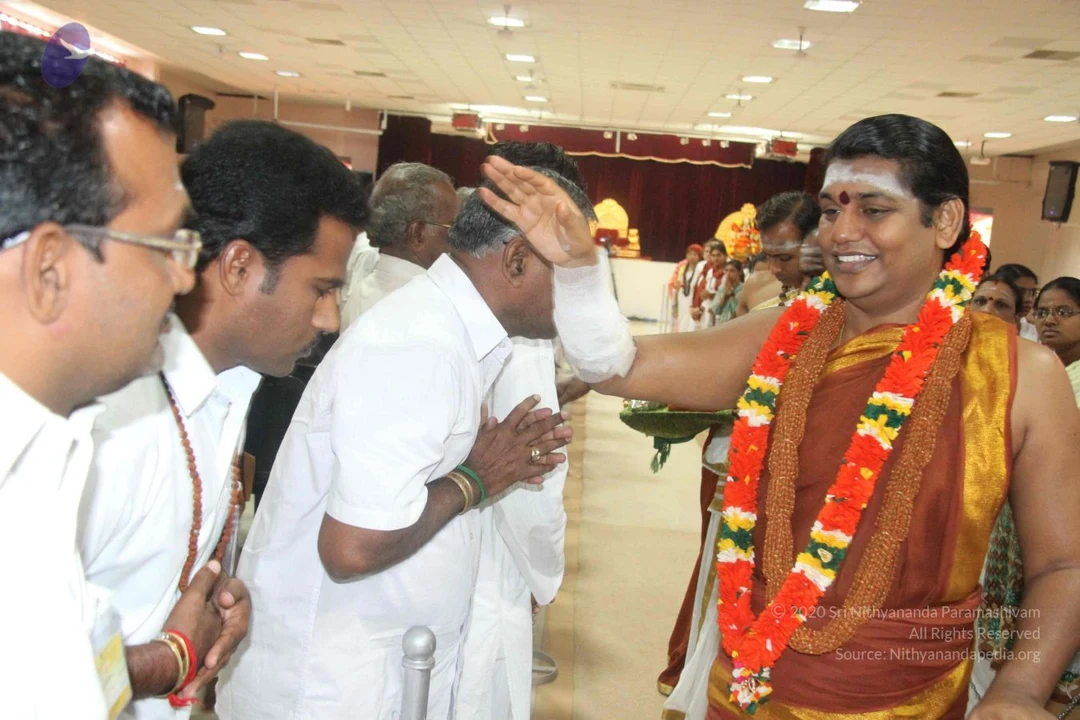
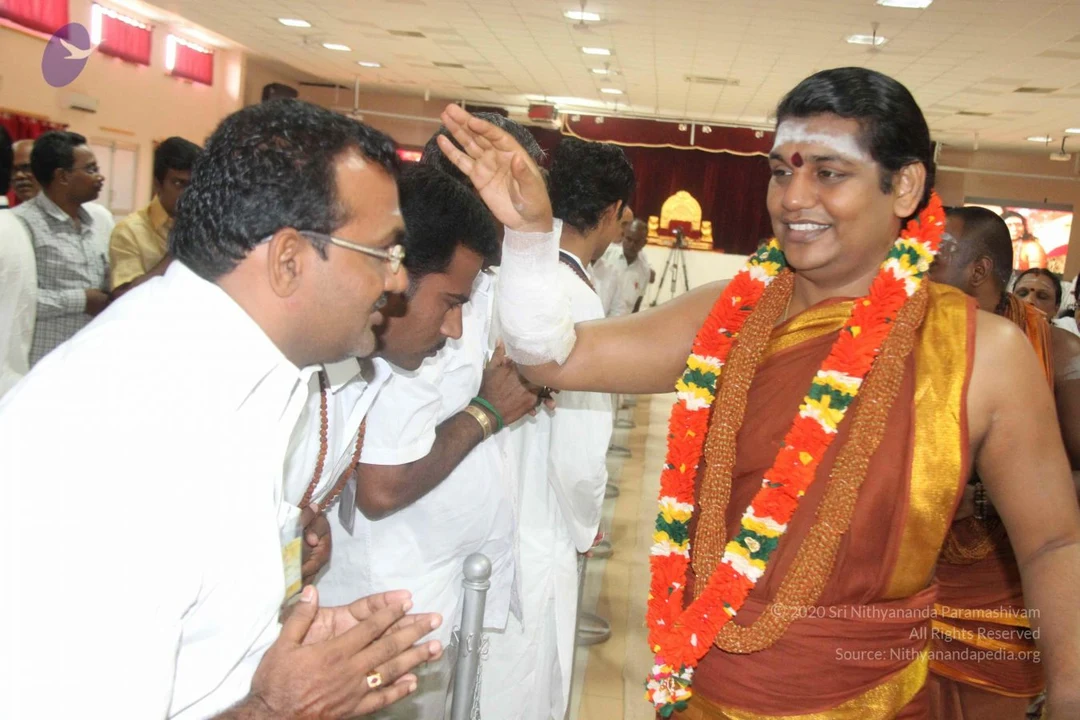
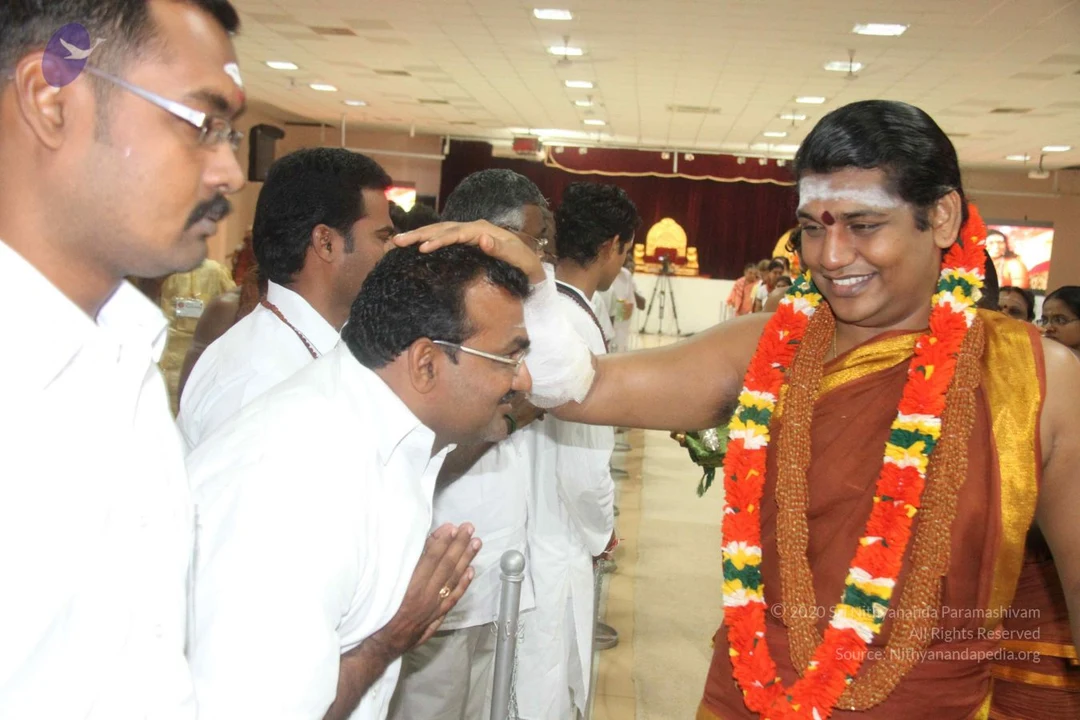
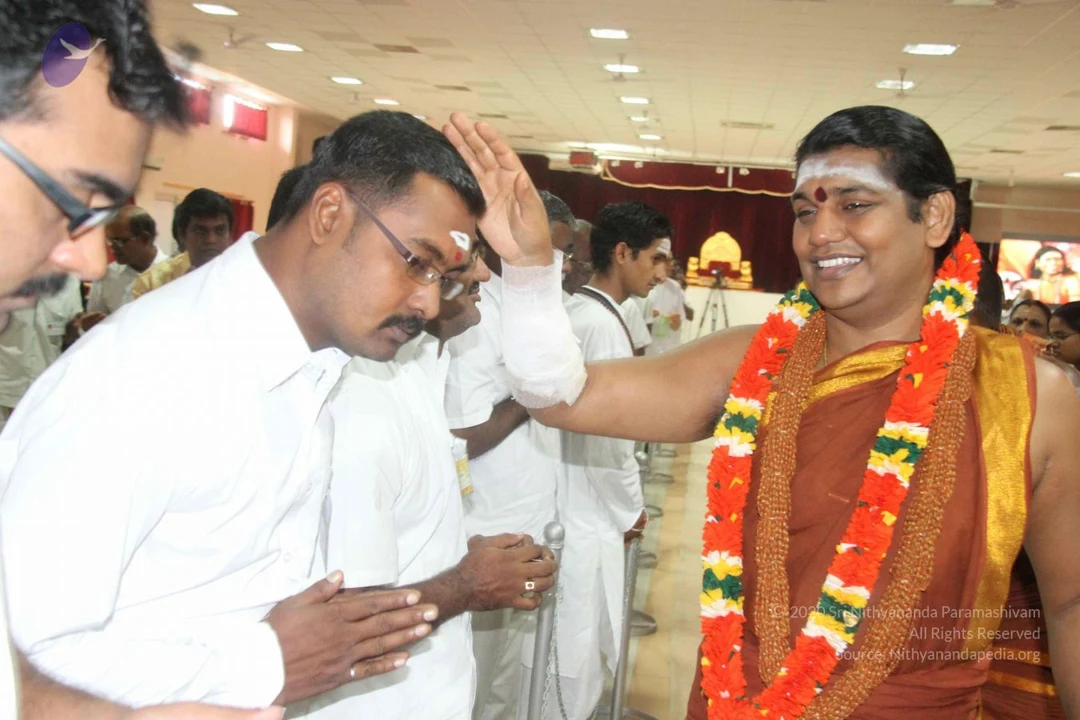
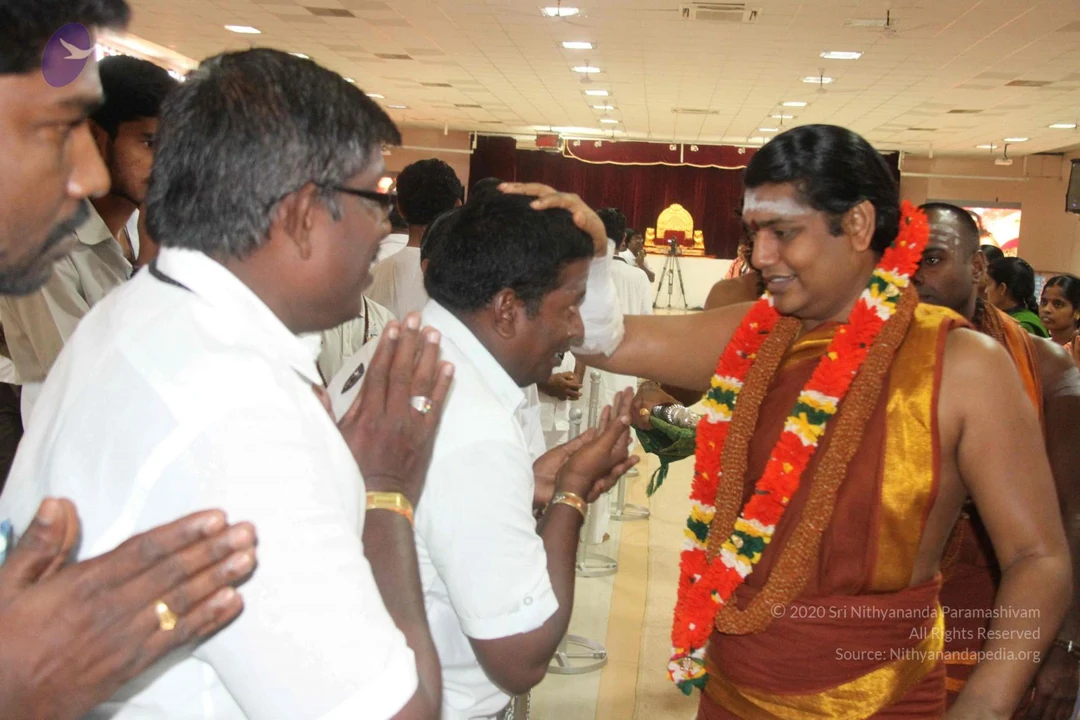
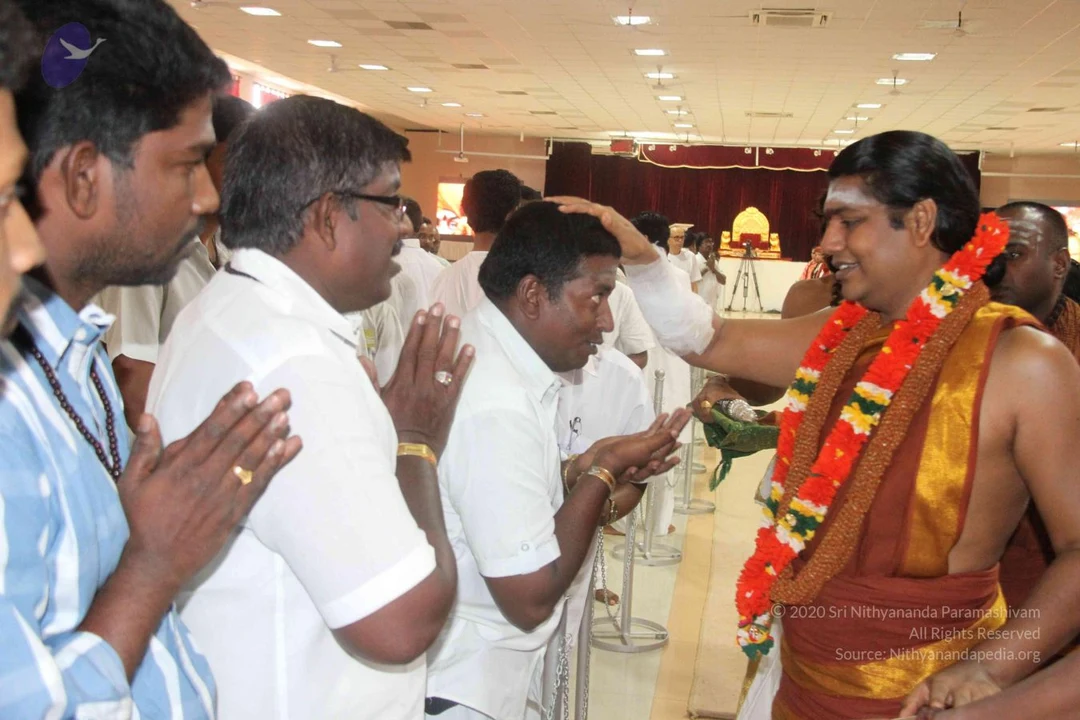
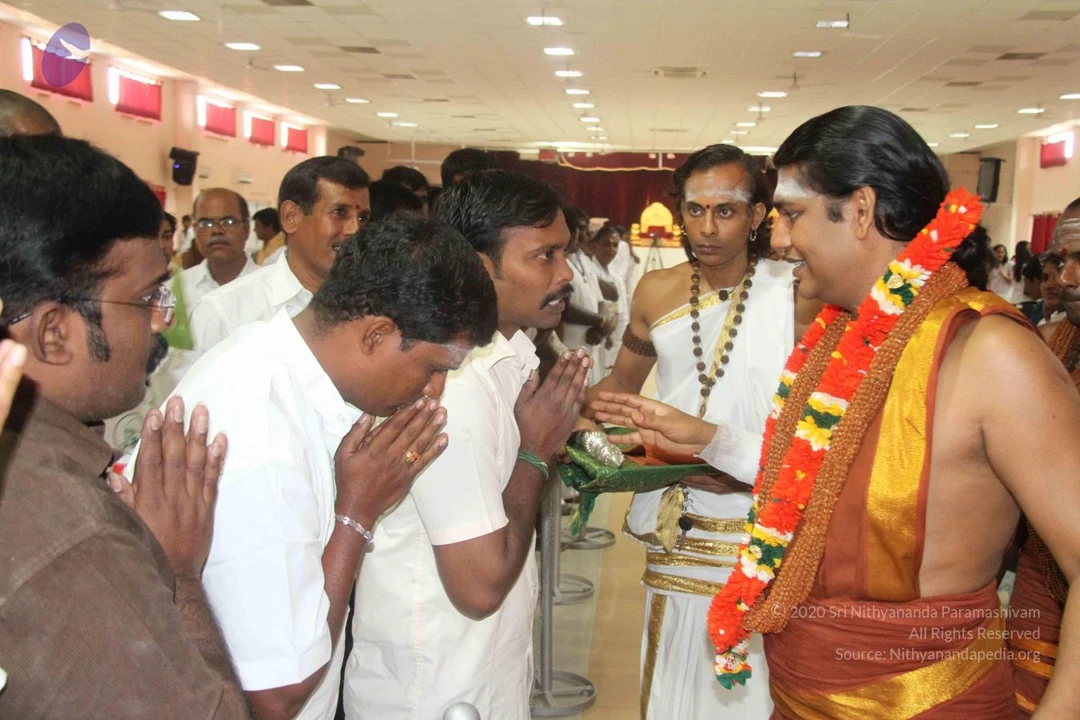
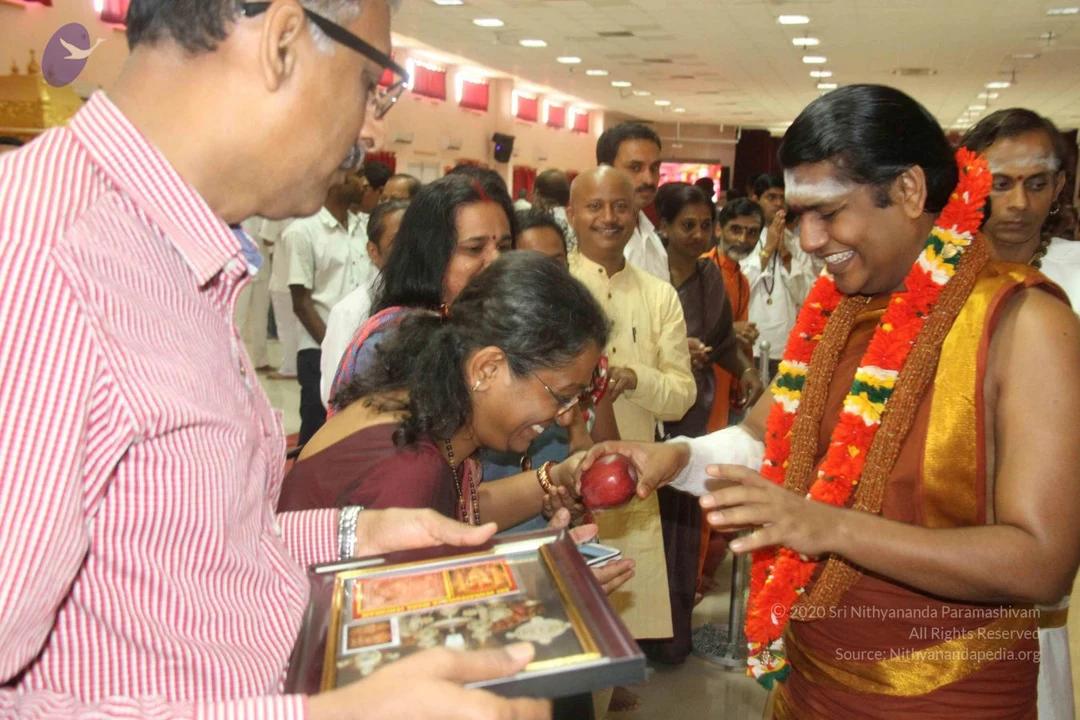
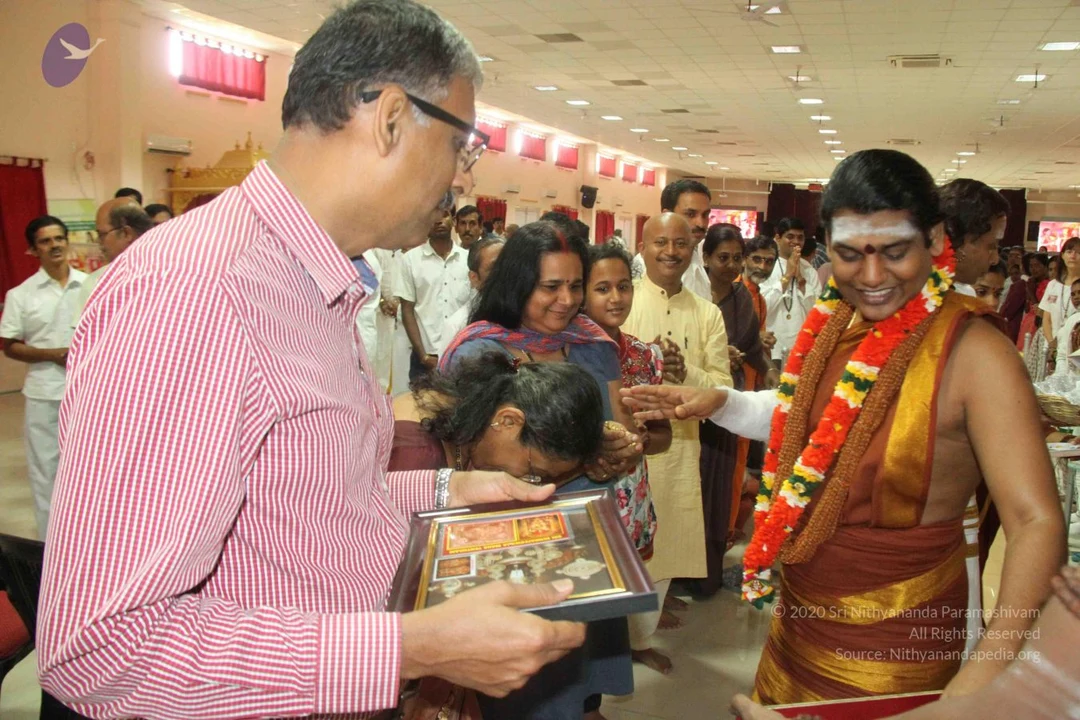
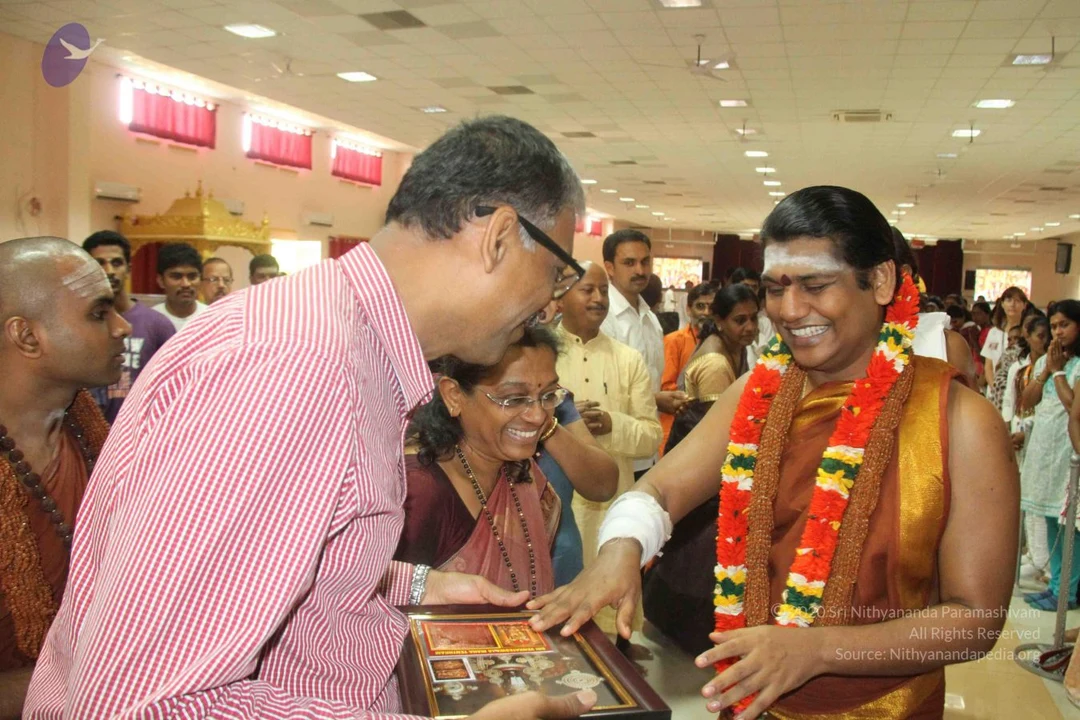
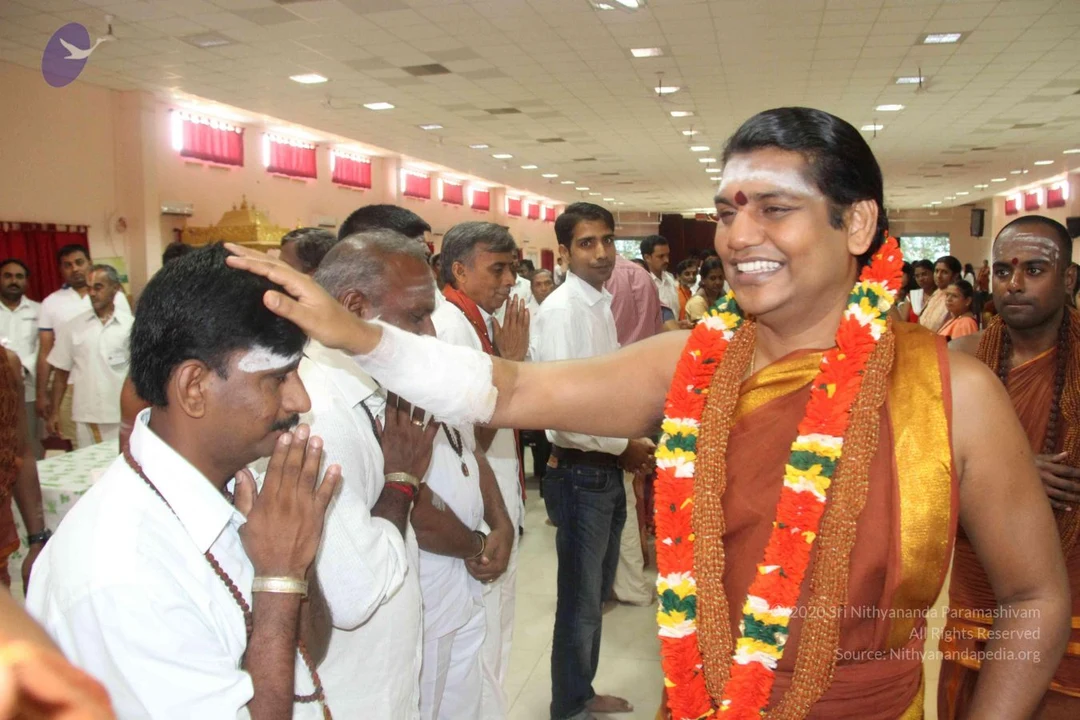
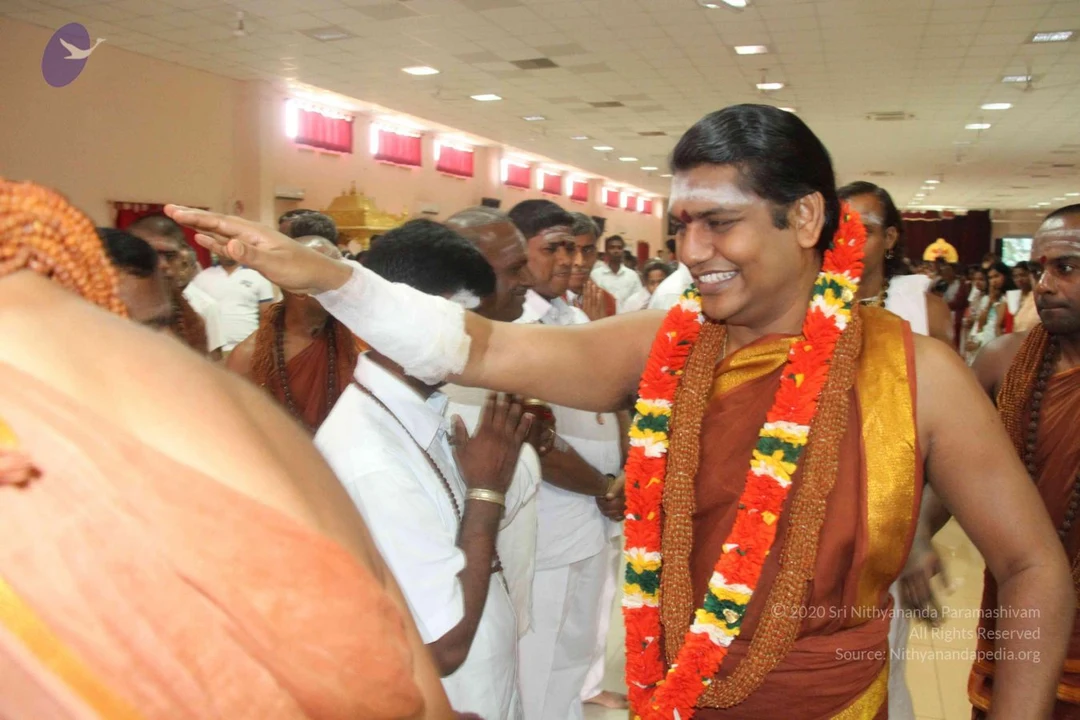
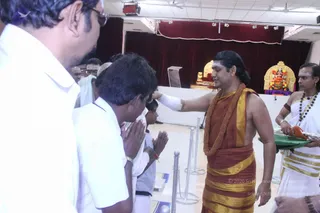
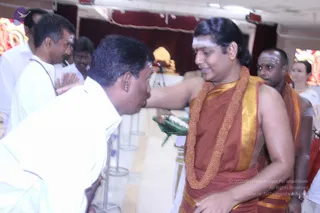
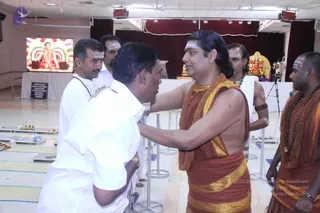
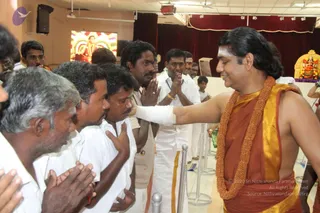
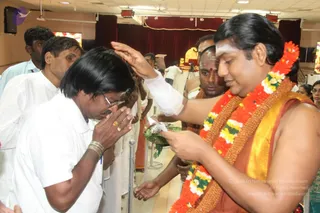
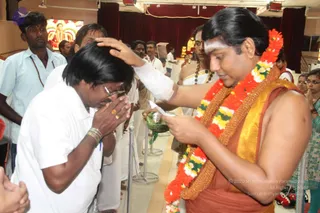
A photograph inside a hall with a maroon curtain stage behind. A bare-chested man in saffron-orange and gold-bordered dhoti and shawl wears a long rudraksha-style mala and a garland, and extends a white-bandaged arm to touch the head of a kneeling devotee in a white shirt with folded hands. A man in white dhoti with a beaded mala holds a silver tray with an orange cloth. Behind them, a decorated golden throne and a deity murti adorned with flower garlands sit on a raised dais. A man in white shirt and glasses stands at the left edge. Probable Swamiji cues: long swept-back hair, saffron-orange and gold clothing, and a rudraksha mala.A photograph of a temple or ashram hall where a man in a white dhoti and shirt bends forward to touch the outstretched arm of a central figure in an orange-red and gold draped garment with a long rust-coloured bead garland. The central figure has swept-back long dark hair and a white forehead marking, and is smiling. Behind them a second man in orange-red and gold cloth wears a rudraksha mala and a red and white forehead mark. Other devotees in white stand in the background, and a gold-and-red deity or altar decoration is visible at left. A brass kalasha-like vessel with a green cloth rests near the central figure's hands.A photograph inside a hall with a red-curtained stage, blue-and-white floor mats and small brass oil lamps set on the floor. A bare-chested man in a saffron-orange sannyasi wrap with a gold-coloured border and a long rudraksha mala greets a shorter man in a white shirt and white dhoti, placing his hand on the man's shoulder. The man in white has a shaved-looking head with vertical tilak marks. Behind them stands a man in white with tilak, and at right a man in an orange-brown wrap holds a rudraksha mala. A video screen at left shows a seated figure in orange. A gilded deity murti and floral decorations sit on the stage at right.A photograph inside a hall with a maroon curtain and a small golden shrine with a deity murti at right. A bare-chested man in an orange-saffron dhoti and wrap, with a long rudraksha mala and wearing a white bandage on his forearm, reaches out to touch the hand of a devotee. Several men in white shirts and white dhotis stand with palms pressed together in anjali mudra, one placing a hand on his chest. A screen behind shows an image of a figure in a garland. Possible a person candidate with long swept-back hair, saffron wrap and rudraksha mala, identity uncertain from appearance alone.Indoor ashram scene where a man in saffron and gold robes with a red-orange and yellow flower garland and rudraksha-style beads stands at right, extending a hand in blessing over the bowed head of a man in a white shirt with glasses and a gold bangle, hands pressed in namaskar. Between them a green-rimmed tray holds a small silver item and white cloth. Behind them a priest in white dhoti and bare chest, several devotees in white and a shaved-headed man in the background, with a red curtain and a golden deity murti on a stage. a person appearance is not clear enough to confirm, so the robed man is described by role as a monk giving blessing.A photograph inside a hall with red curtains and a lit screen behind. A man in an orange-and-gold dhoti and saffron shawl, wearing a long red, yellow and white garland and rudraksha beads, stands at right with a white cloth in hand and a white vibhuti-style mark on his forehead, placing his palm on the head of a man in a white shirt and glasses who bows with palms pressed together. Other devotees in white and a woman in a teal sari stand behind. Brass vessels and a green-and-silver puja plate sit on a table; the right figure has distinctive garland and rudraksha cues, so the appearance-based label is a person, shown performing a blessing.

Final-Blessings

1 photoSource gallery
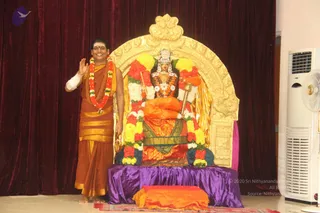
A standing man in orange-gold and saffron ceremonial dress, with a tilak on his forehead and a multi-coloured flower garland around his neck, raises his right hand in a wave beside a golden arched frame. Behind him a deity murti in orange silk, with a crown and a mace-like staff, sits on a purple cloth-covered pedestal decorated with red, yellow and white flower garlands. Deep maroon curtains hang behind, and a white floor-standing air cooler stands at right. a person: the standing figure wears saffron ceremonial clothing and a flower garland, with a sannyasi-style appearance. The scene looks like a stage setting for satsang.

Temple

23 photosSource gallery
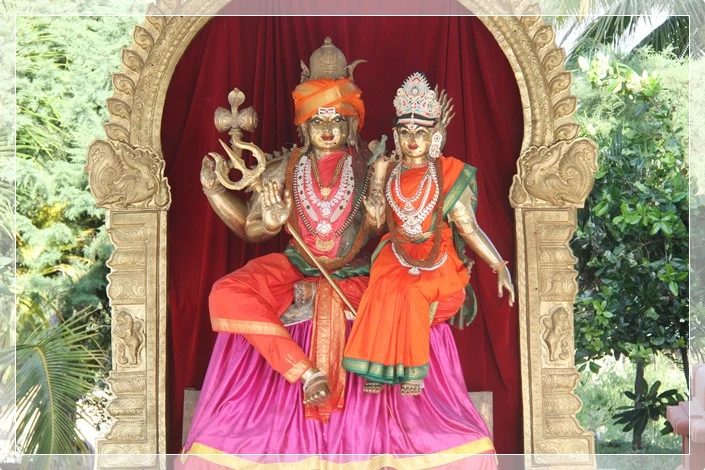
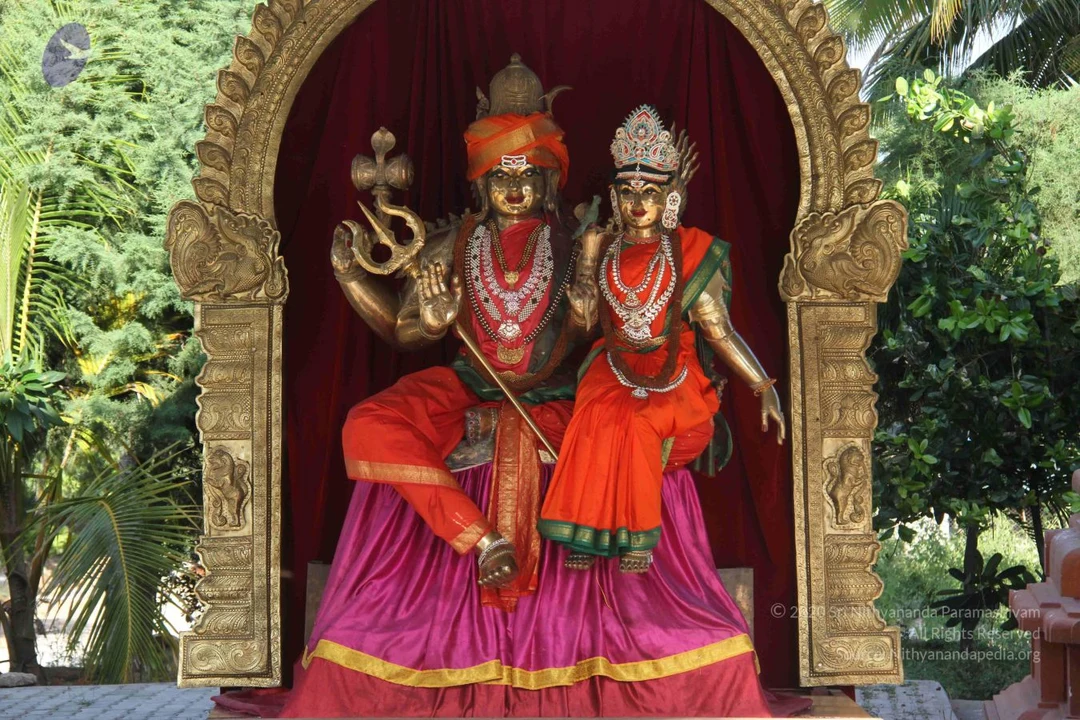
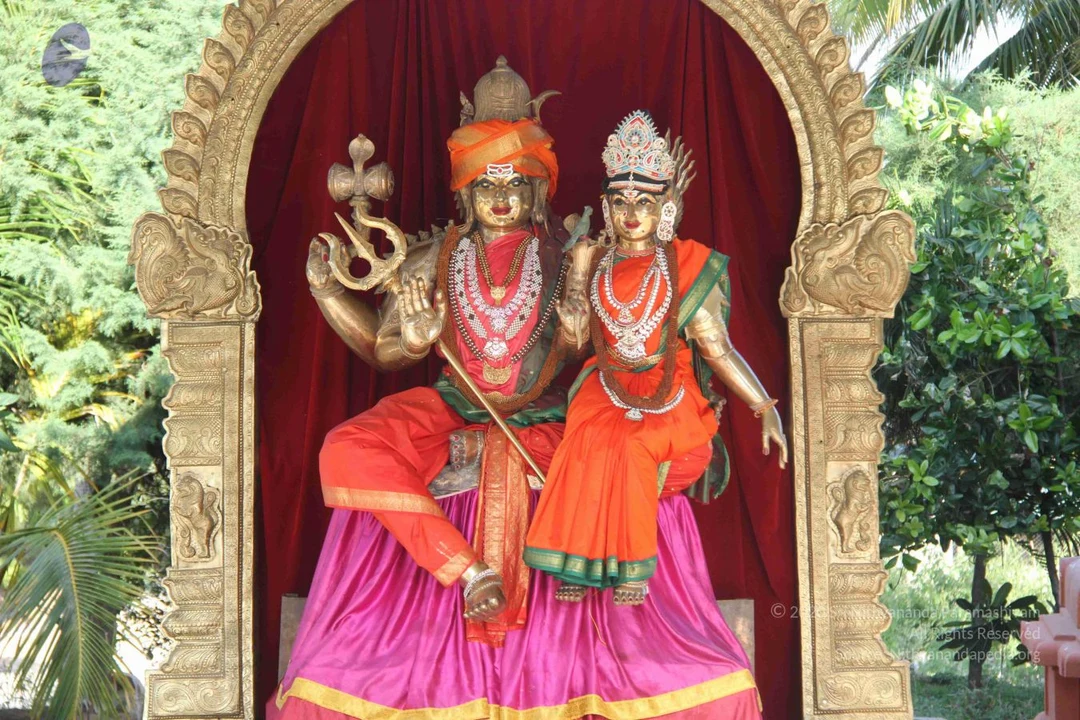
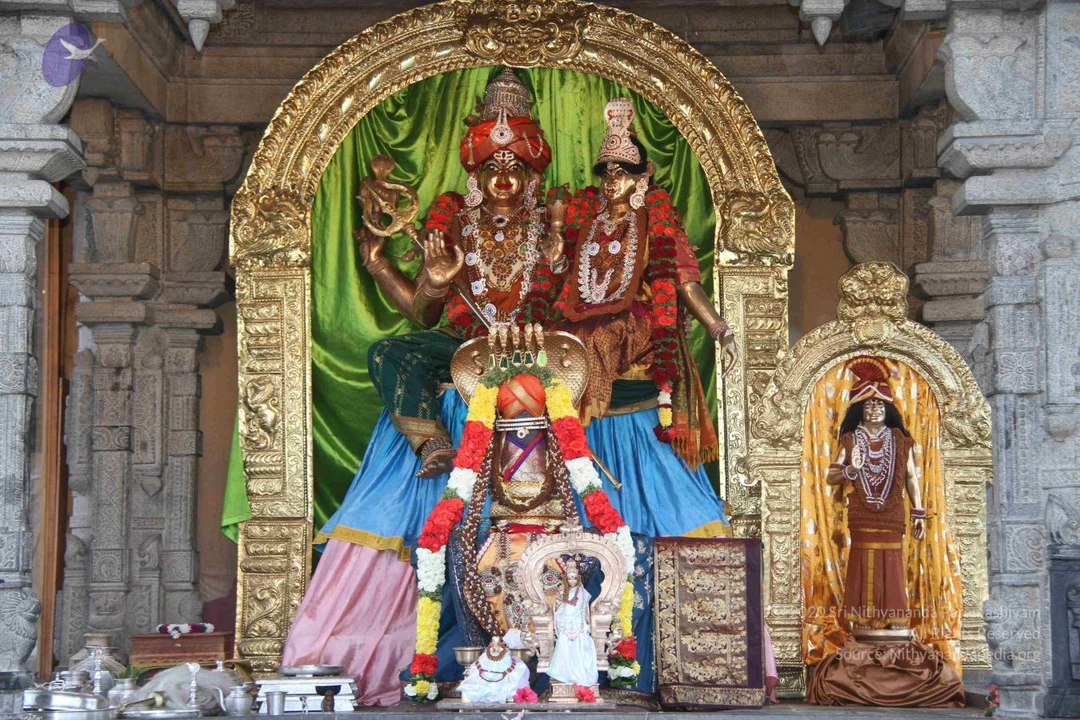
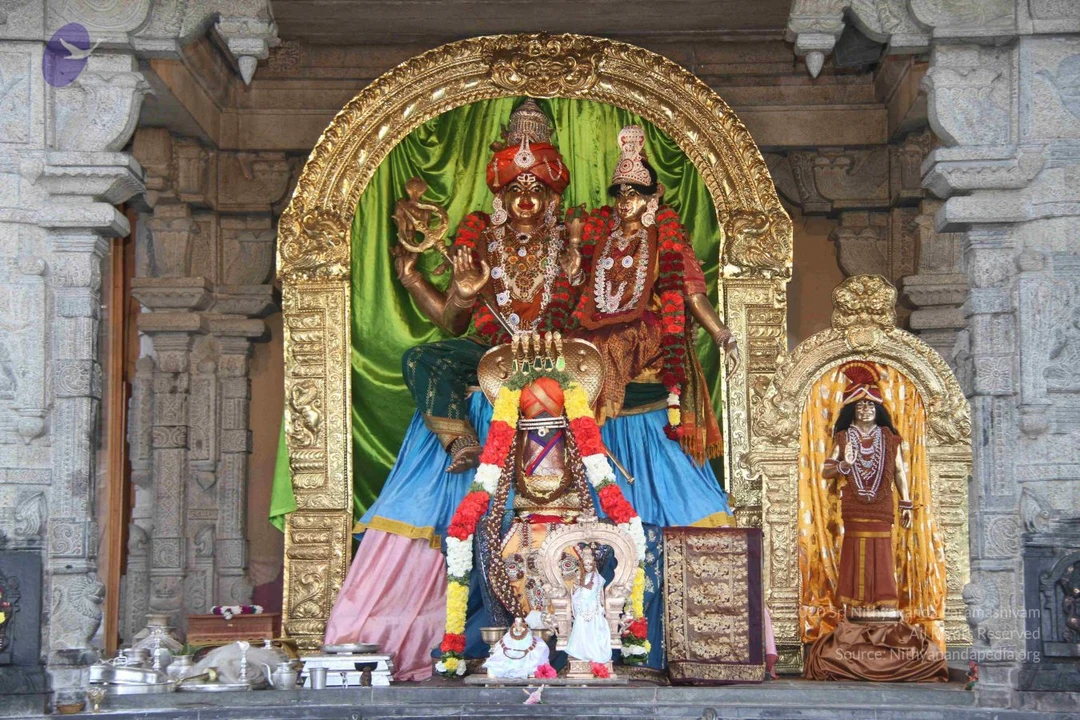
A bright, hazy sun shines through a grey sky with scattered white clouds. Dark silhouettes of tree canopies and tall palm fronds frame the lower edges of the frame, with a faint green glow near the bottom. No people or ritual activity are visible. The image is a landscape view of the sky and trees.A photograph looking up at a hazy grey sky with a bright, overexposed sun near the upper left and a lens flare with orange and blue spots. Dark silhouettes of palm fronds and tree foliage frame the bottom left and right edges, with a few small white clouds scattered across the sky. No people, figures or ritual activity are visible.A photograph of a large golden statue pair seated on a pedestal inside a gilded arch framed by a deep red velvet curtain, surrounded by green trees and palms. The taller figure is a male deity murti with a trident-like staff, orange turban with a tilak mark, layered white and red beaded necklaces, and an orange and red dhoti over a magenta skirt-like drape. Beside him sits a female murti in an orange sari with a green border, a jeweled silver crown, multiple necklaces and bangles. Both figures are statues, not living people.A photograph of a large golden statue pair seated on a pink draped plinth inside a gilded arched frame, with a deep red curtain behind and green garden foliage around. The male figure has a saffron turban, a trident, a rudraksha-style white bead necklace and a pink-red garment. The female figure wears an orange sari with green border, a jewelled crown and layered pearl necklaces, and holds a lotus-like hand gesture. These are statues, not living people, depicting a deity murti pair on a peetha-style throne.A temple shrine with large painted statues of a deity pair under a gold-framed arch with green drapery. The taller figure holds a trident and wears a red turban, a crown, and layered garlands; the figure beside wears a tall crown, red-and-white garlands and a gold-embroidered garment. In the foreground, a kalasha-like pot with red and white flower garlands sits on a lower altar with a small white-clad figure. To the right, a smaller statue in an arched niche wears a rudraksha-style necklace and an orange shawl.A photograph of a shrine with a large deity murti of Shiva and Parvati seated together on a blue and pink dais before a green silk backdrop within a gold-framed arch. The Shiva figure wears a red turban and a rudraksha-style beaded necklace, while the goddess wears a red floral garland and gold ornaments. A red-and-gold kalasha-like sacred object sits at the centre, garlanded with red and white flowers. To the right, a separate statue in a gold-and-saffron alcove shows a standing figure in brown robes with a long white-and-red garland and a headdress. Silver puja vessels, a flower-decorated lamp stand and offerings sit on the altar in front. No living people are visible.

2--PadukaPuja-crowd-individuals
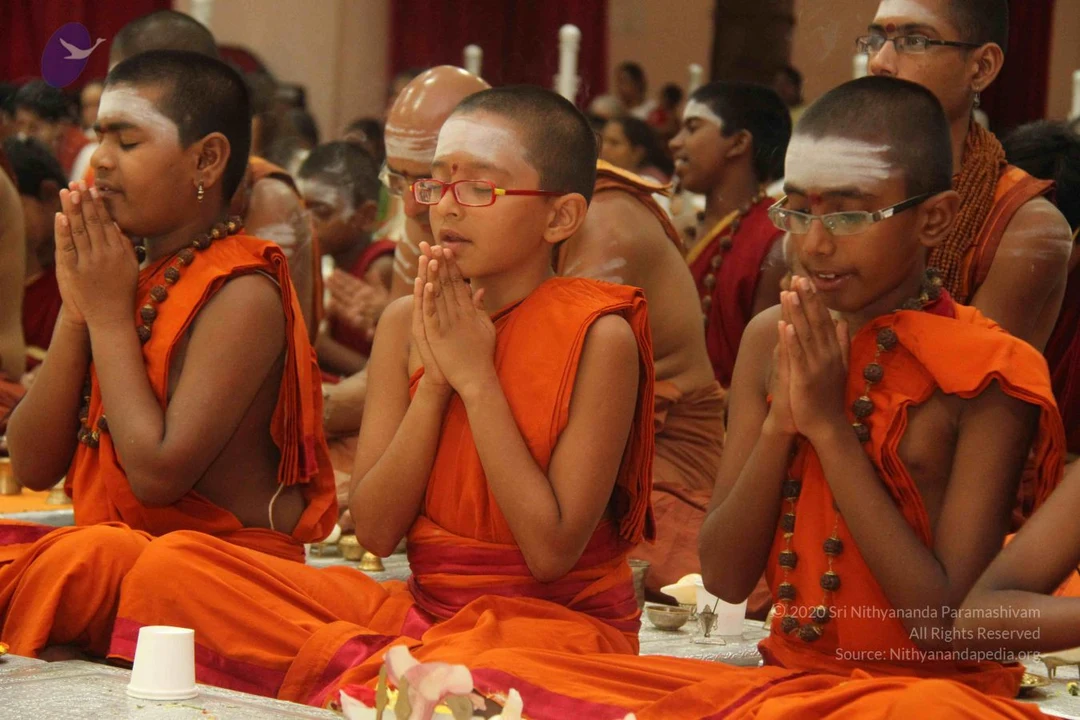
8 photosSource gallery
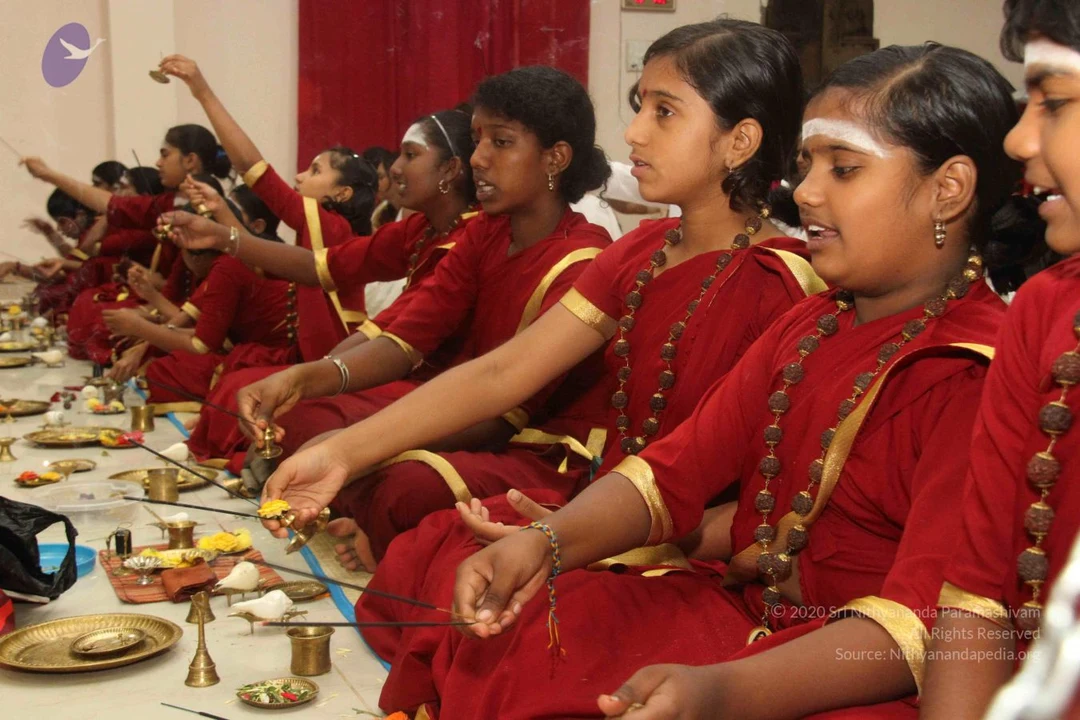
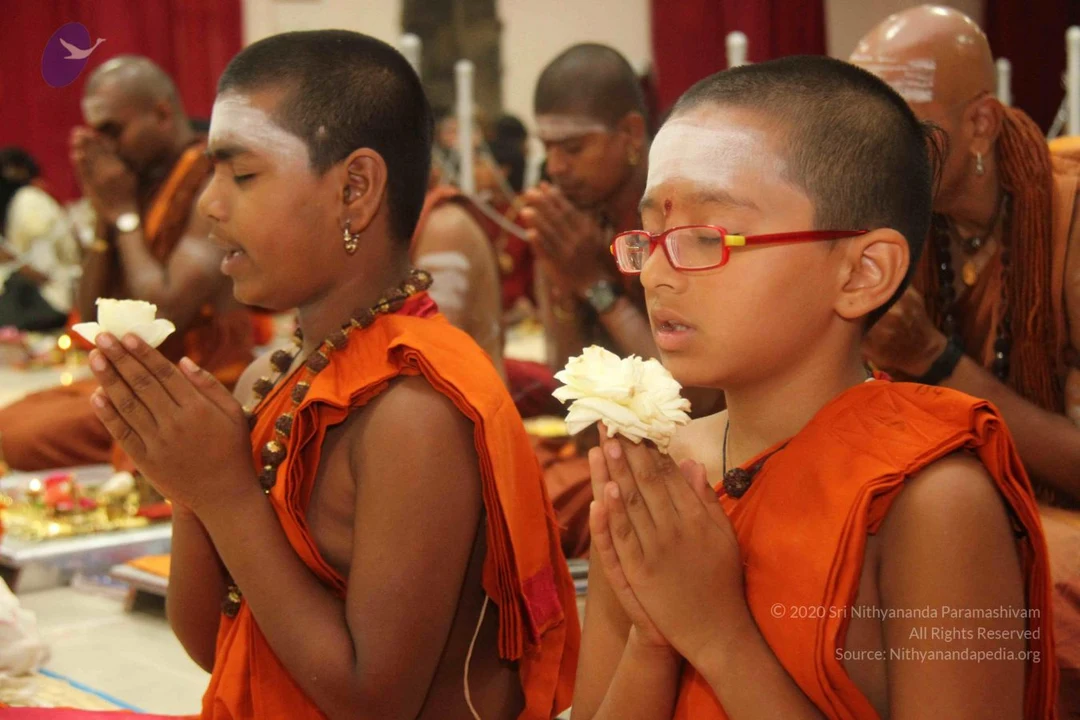
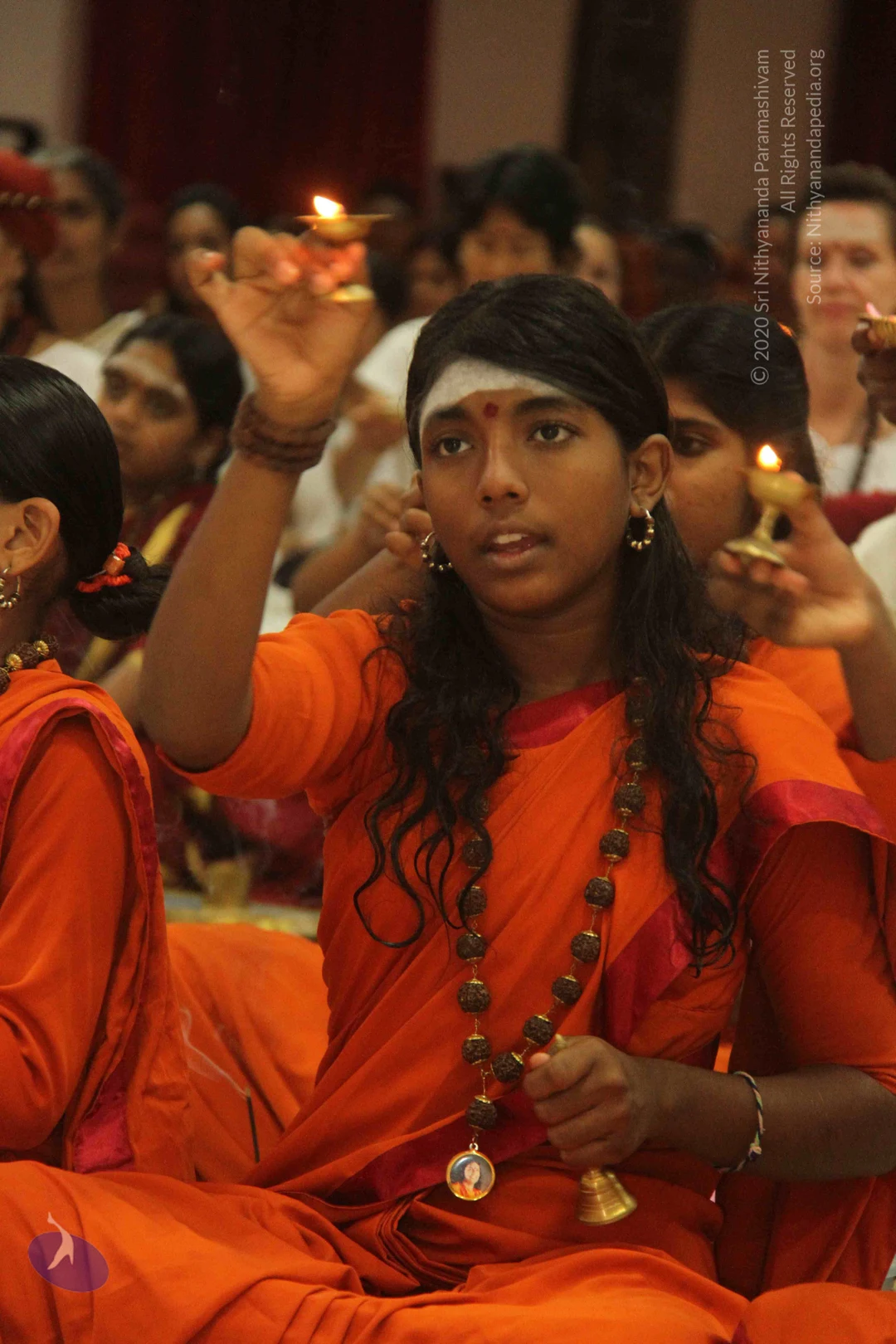
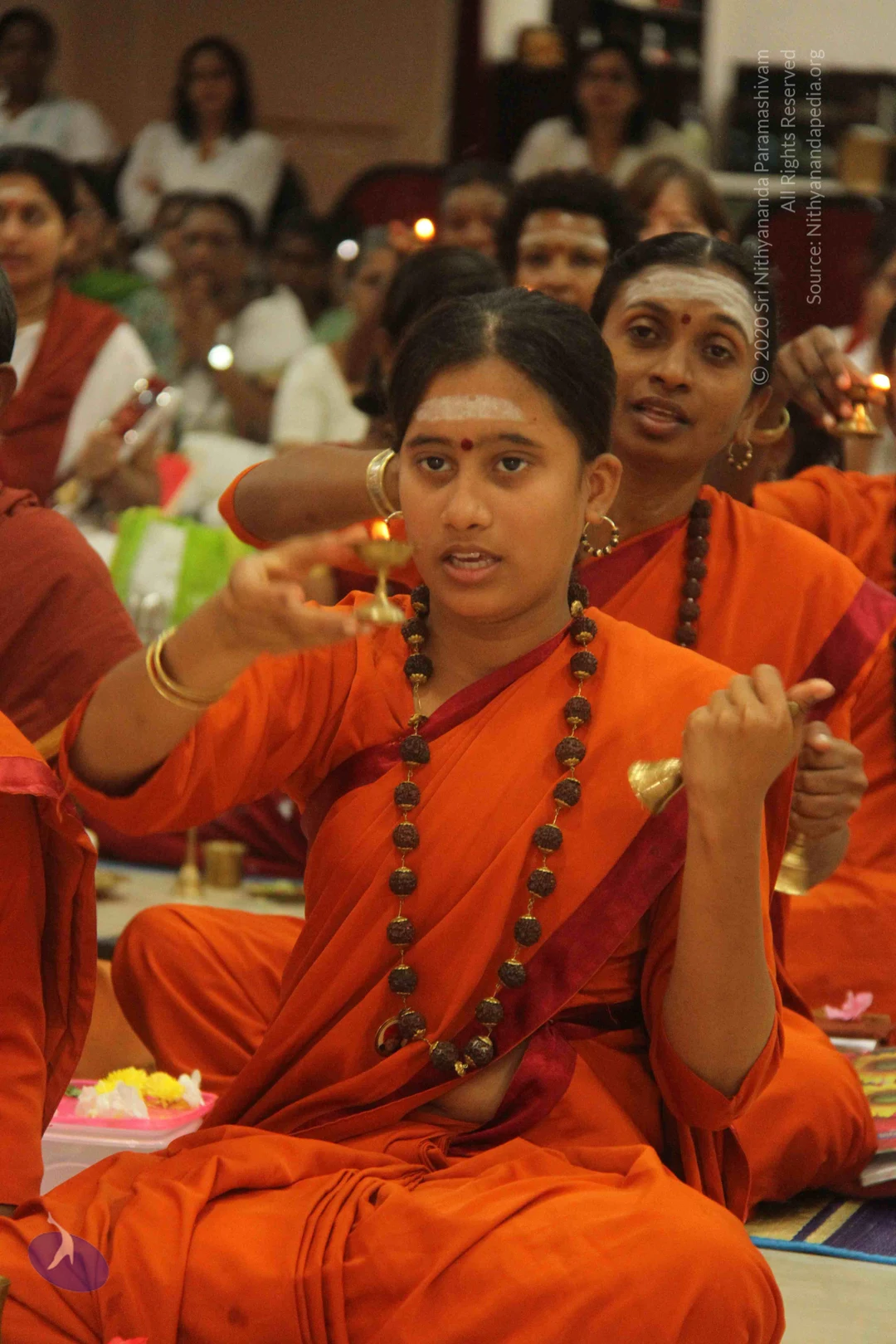
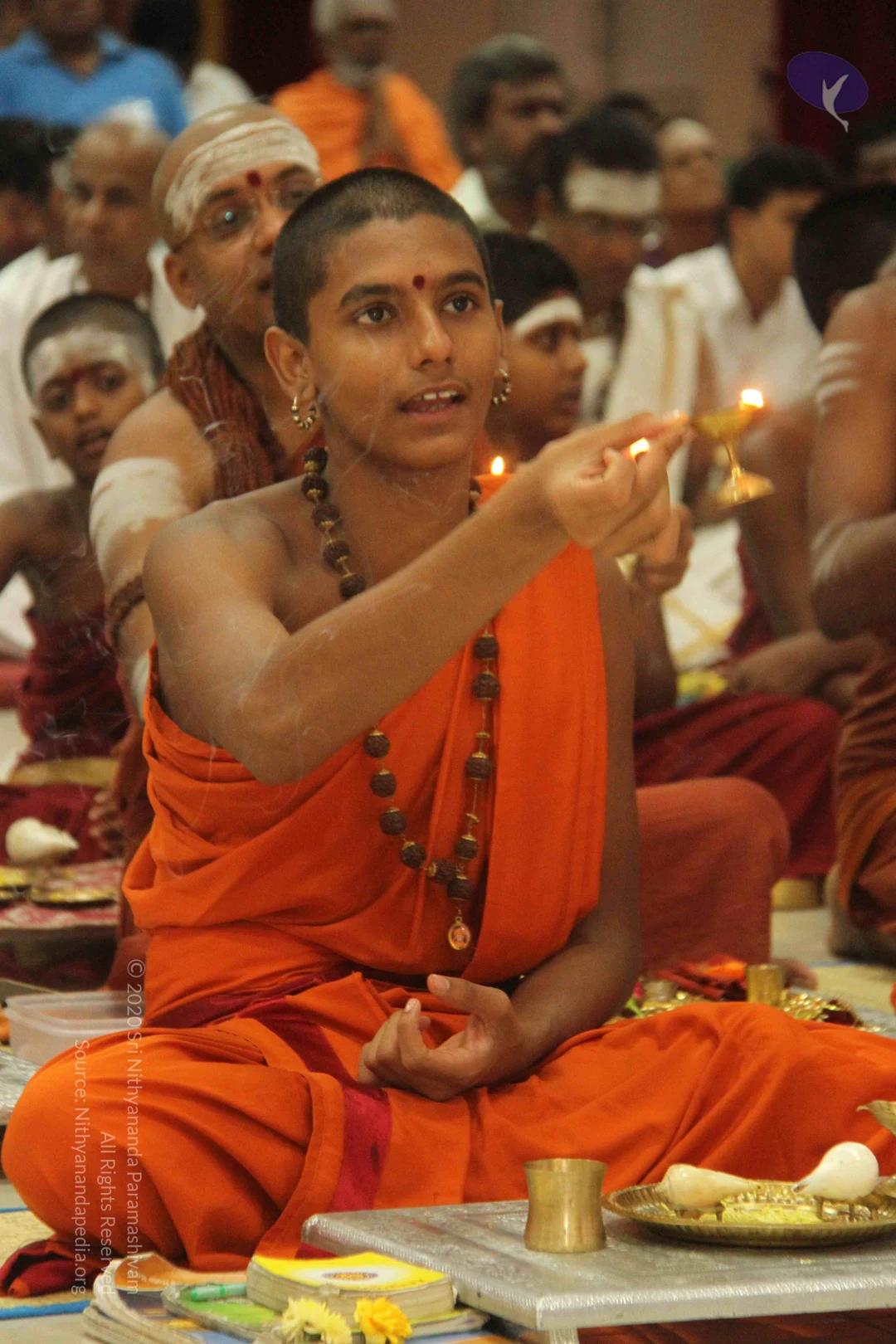
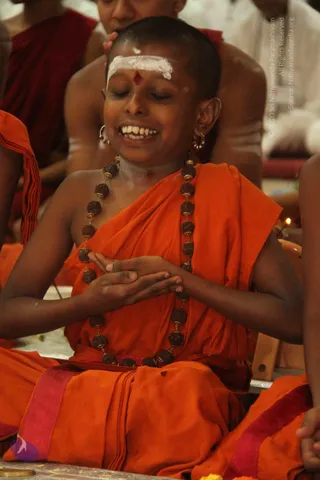
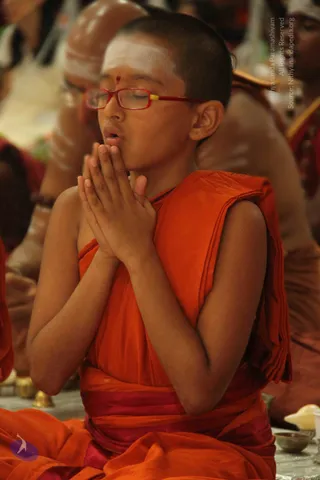
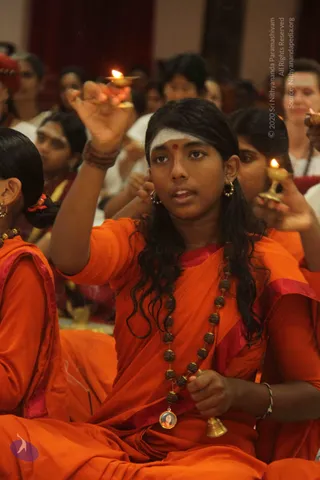
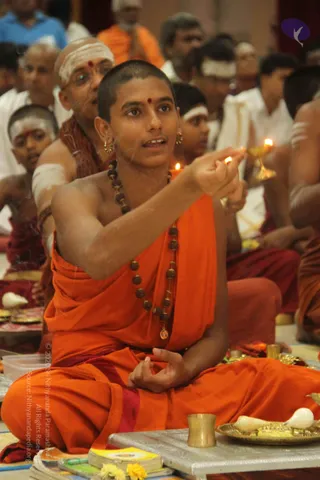
A seated deity murti. It wears an orange blouse and orange cloth over the lower body, a red and gold sari-style drape with green-and-gold border, rudraksha malas, jeweled necklaces, a crown with red and green stones, and large earrings. It holds a golden staff and a gold kalasha-like vessel. The figure is surrounded by red roses, white roses and yellow marigold garlands, with gold-brocade drapes behind.A smiling young boy with a shaved head sits cross-legged in saffron-orange monastic robes, with a long rudraksha mala draped across his chest and waist. He has a white vibhuti line and a red kumkum dot on his forehead, hoop earrings, and his hands are pressed together at his heart with eyes closed. Behind him, other saffron-robed boys and a few white-clad figures sit in the same gathering, and a small lamp flame glows at the right edge.A young boy with a shaved head, red-framed glasses and a red bindi sits cross-legged with palms pressed together in namaskar, eyes closed in prayer. He wears a saffron-orange robe with a maroon waist sash. Behind him, seated devotees wear white tilak markings on their foreheads and arms and orange-red garments. Small brass vessels and a metal dish lie on the floor in front of them.A young woman in saffron-orange robes sits cross-legged in a crowded hall, raising a small brass oil lamp with a lit flame in her right hand while holding a golden bell in her left. She wears a long rudraksha mala with a round pendant at the chest, a white vertical tilak with a red dot on her forehead, and bangles on her wrist. Behind her, other saffron-clad women and white-clad devotees hold oil lamps during a lamp-offering ritual, with a red curtain in the background.Close photo of a young woman in orange robes and a long rudraksha mala, with white and red forehead markings, holding a small brass oil lamp lit with a flame in her raised left hand while she speaks. Behind her a second woman in orange with white forehead marks lifts a lit brass lamp, and a seated crowd in white and red clothing with more lit lamps fills the blurred background of a hall.Photograph of a young shaven-headed sannyasi in saffron-orange robes seated cross-legged on the floor during a ritual, holding up a lit oil lamp in his right hand while his left hand rests in a mudra. He wears a red bindi, gold earrings and a long rudraksha mala with a gold pendant. Behind him, seated devotees in white dhotis and white forehead tilaka watch, and a brass kalasha and brass vessels with offerings sit on a silver tray in the foreground. Several other lamps burn in the background. The setting appears to be a hall during a puja.

5--Final-Blessing

1 photoSource gallery
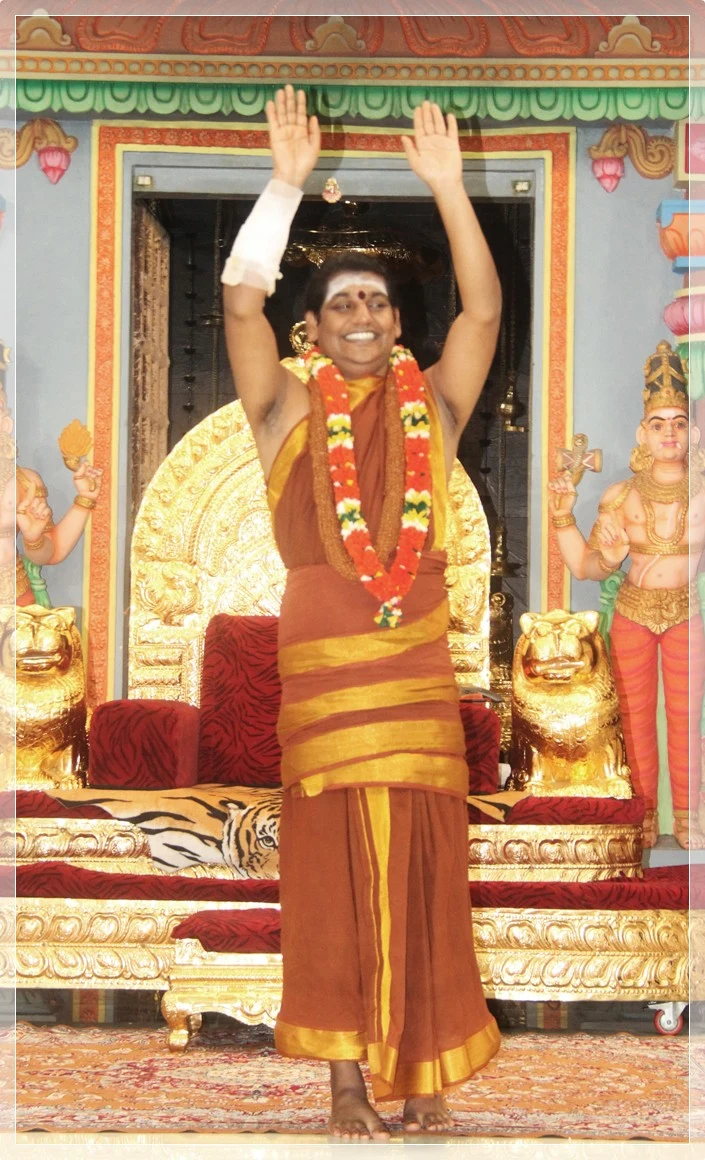
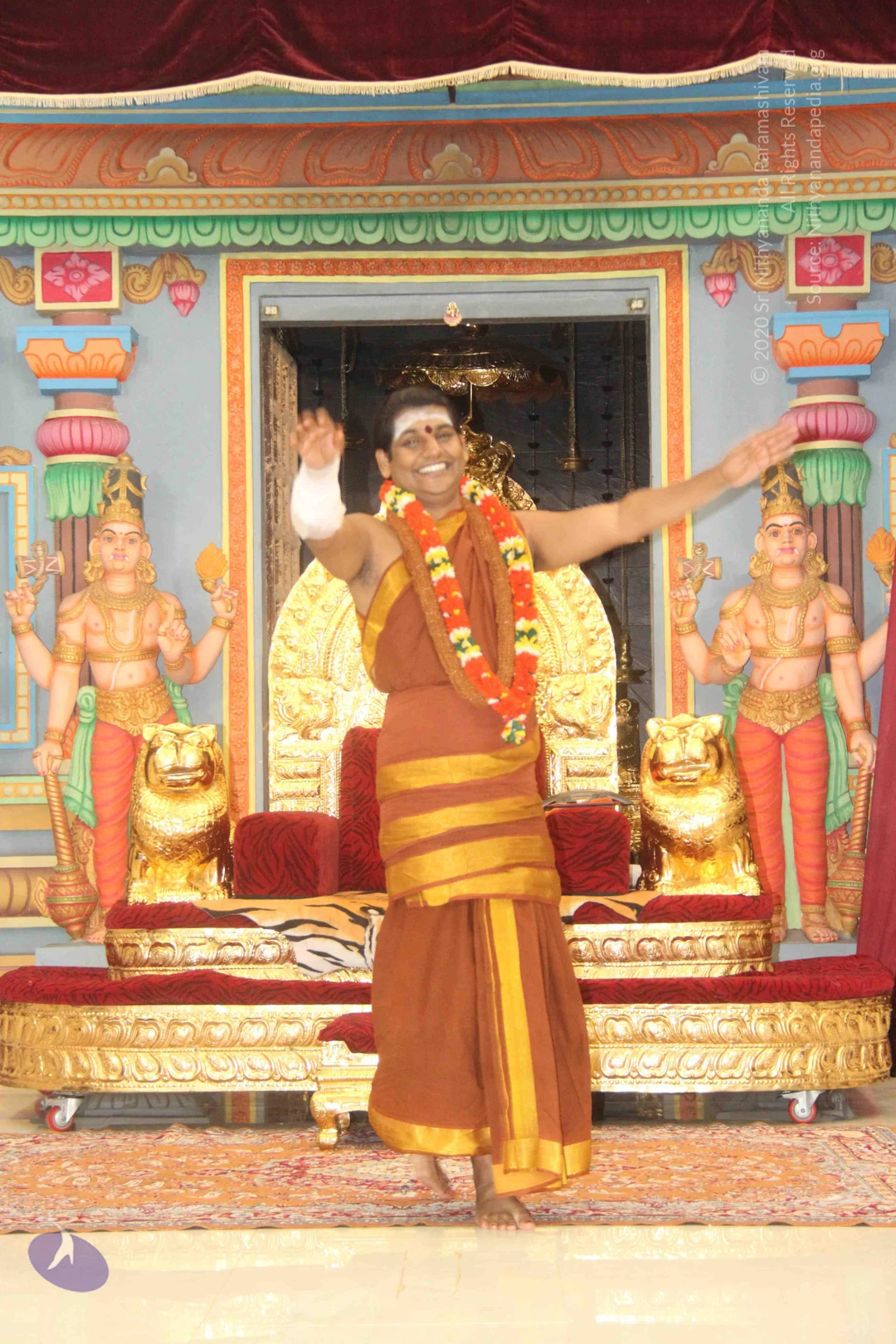
A smiling man in a saffron-brown robe with a gold-bordered dhoti and a floral garland of orange, yellow and red blooms stands barefoot on a carpeted stage, arms spread wide, one forearm wrapped in white bandage. He wears white vibhuti and a red bindi. Behind him stands a gilded throne with red tiger-striped cushions flanked by golden lion figures, and two painted multi-armed deity murti stand on either side against a blue and pink temple-style backdrop. Appearance-based cues of long hair, ornate ceremonial attire and a garland are not sufficient to name him, so the figure is described by role as a devotee performing a welcoming gesture before the throne.

6--Temple

1 photoSource gallery
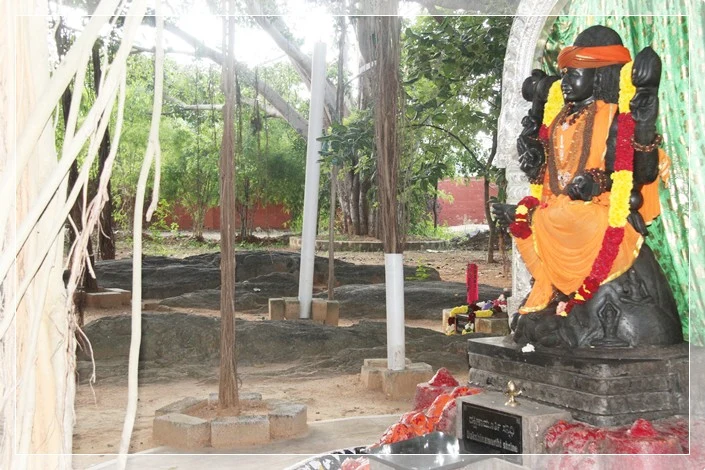
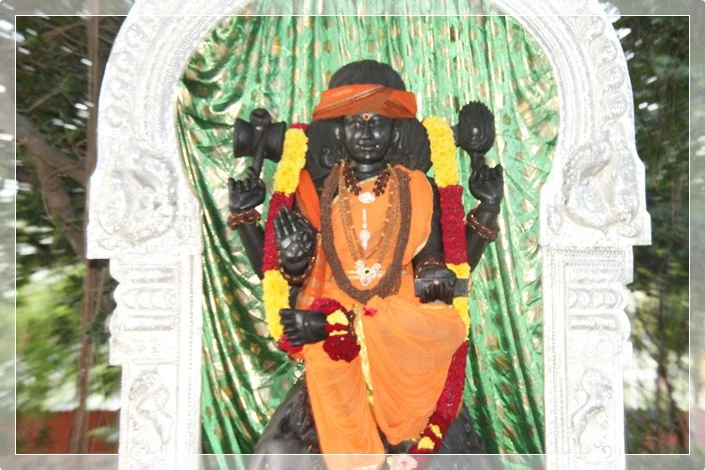
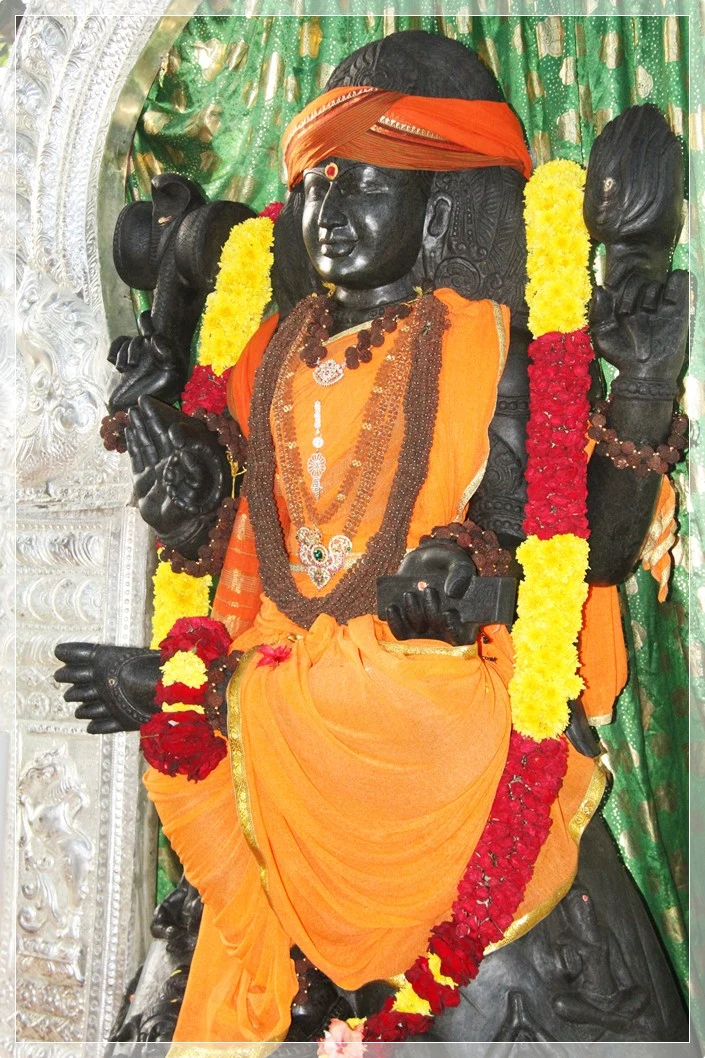
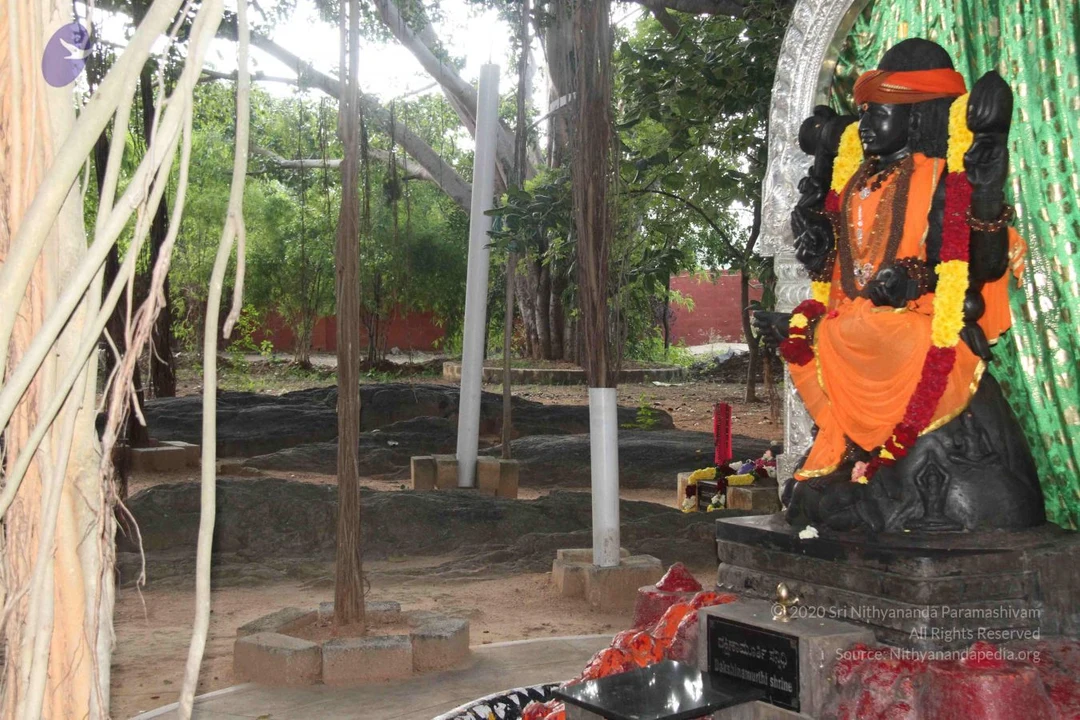
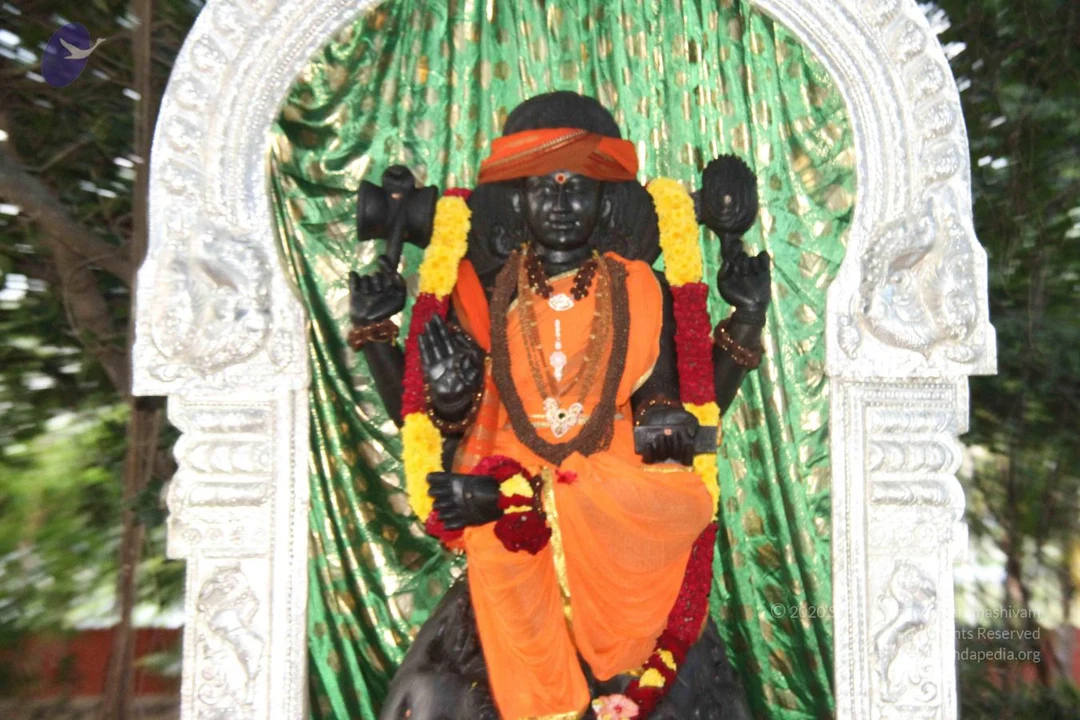
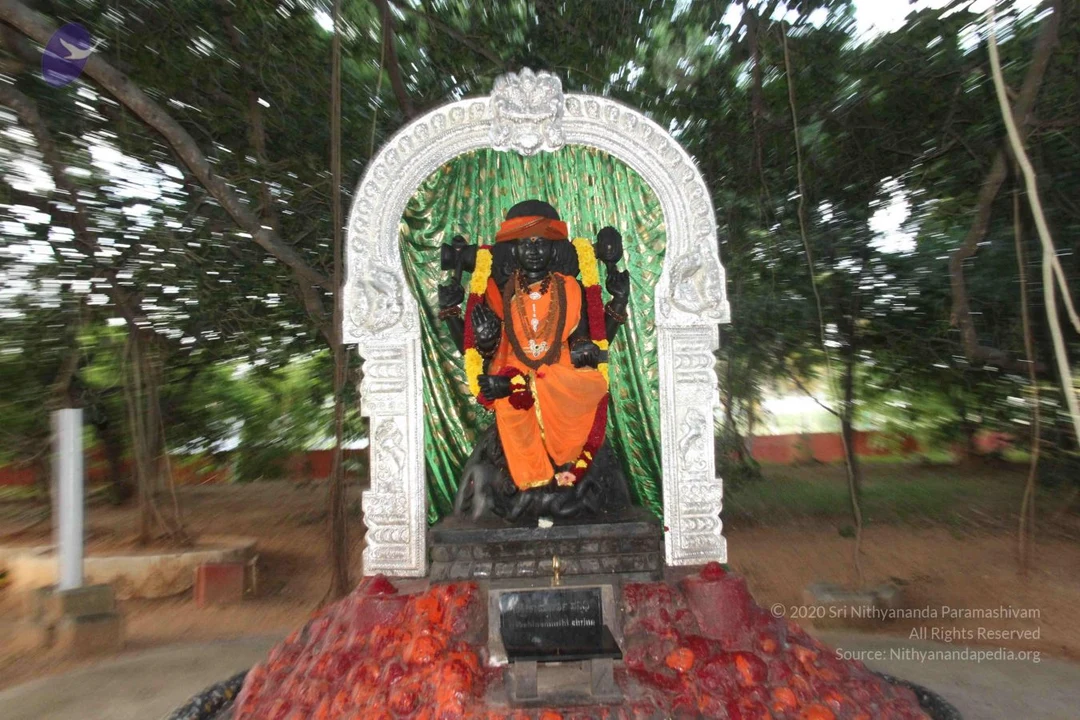
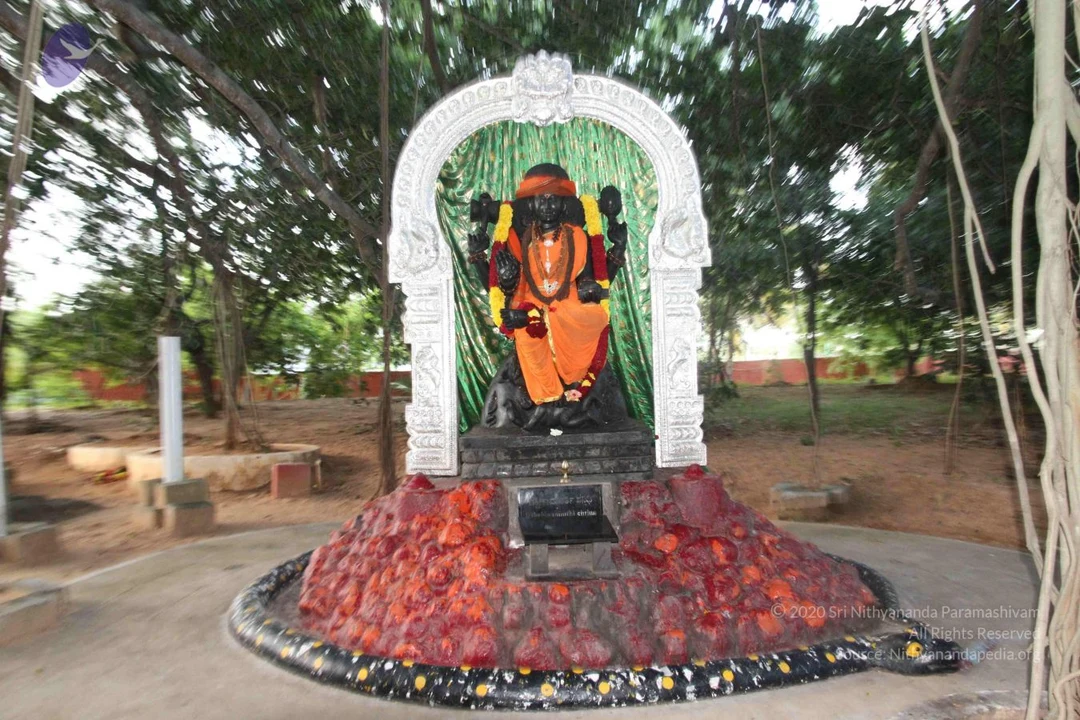
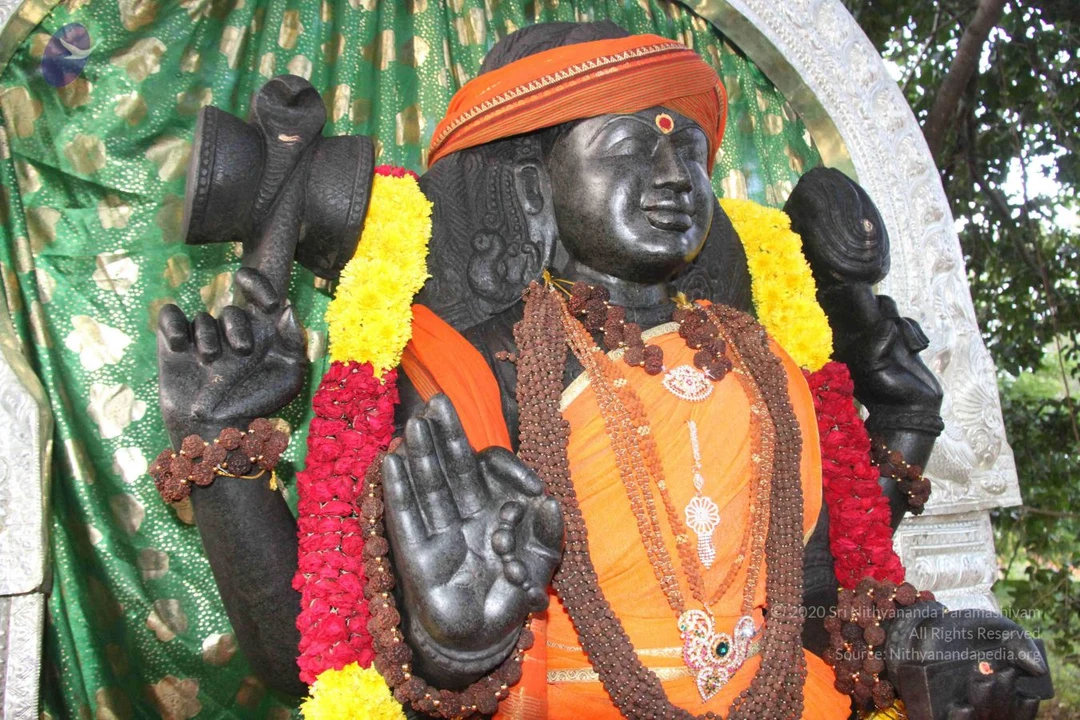
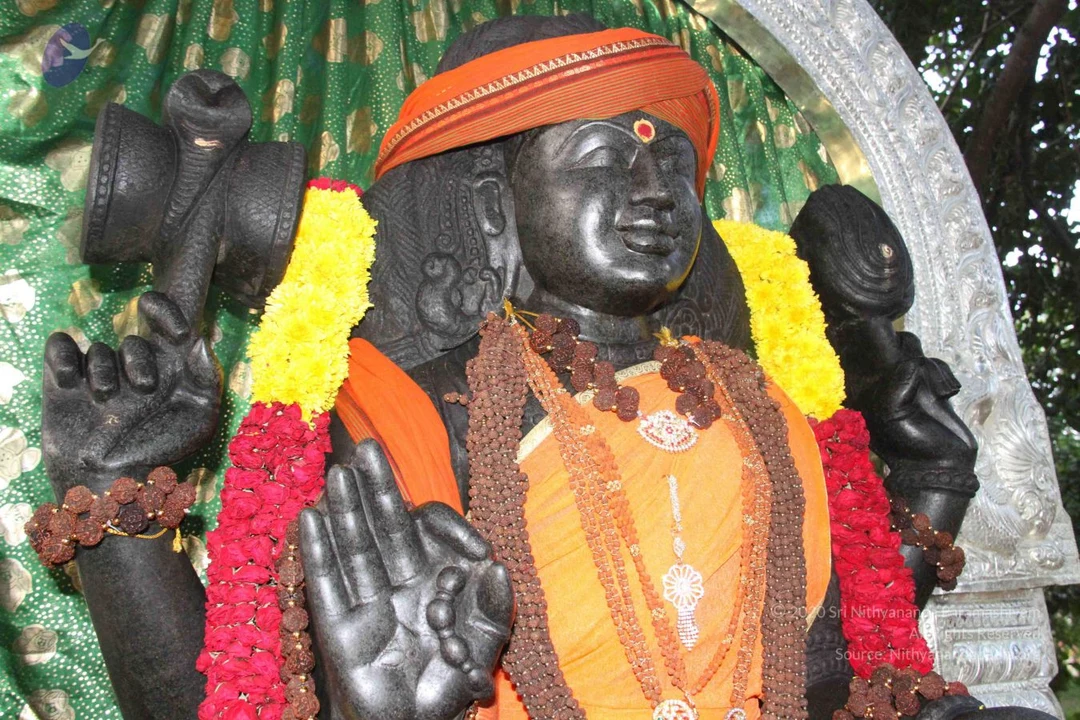
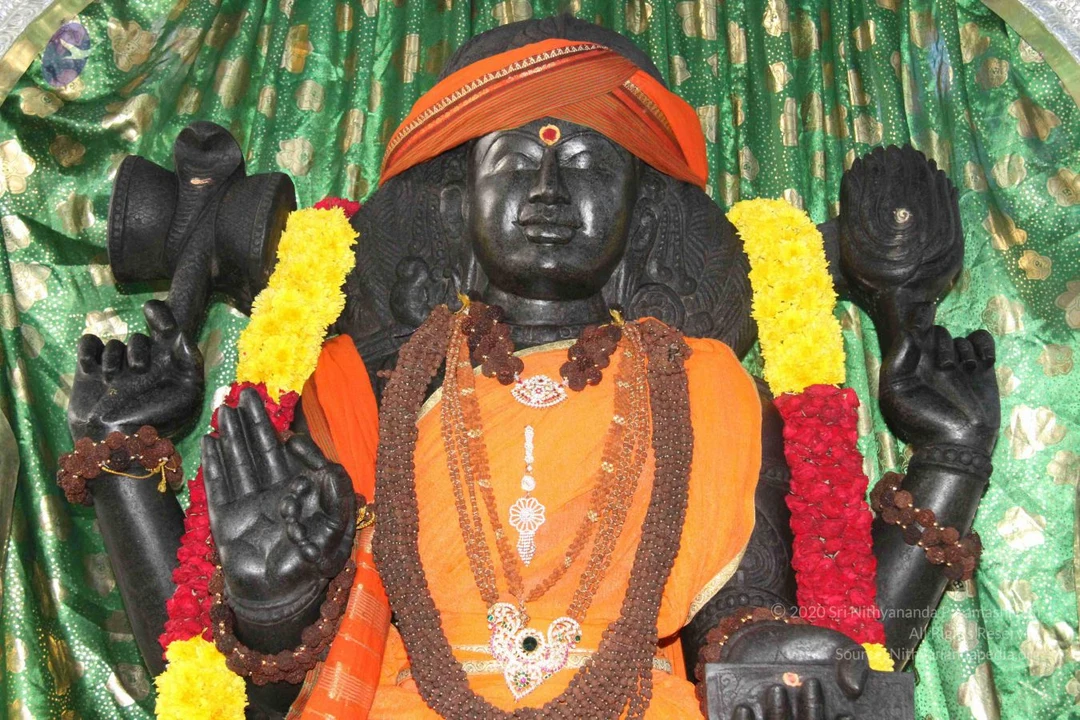
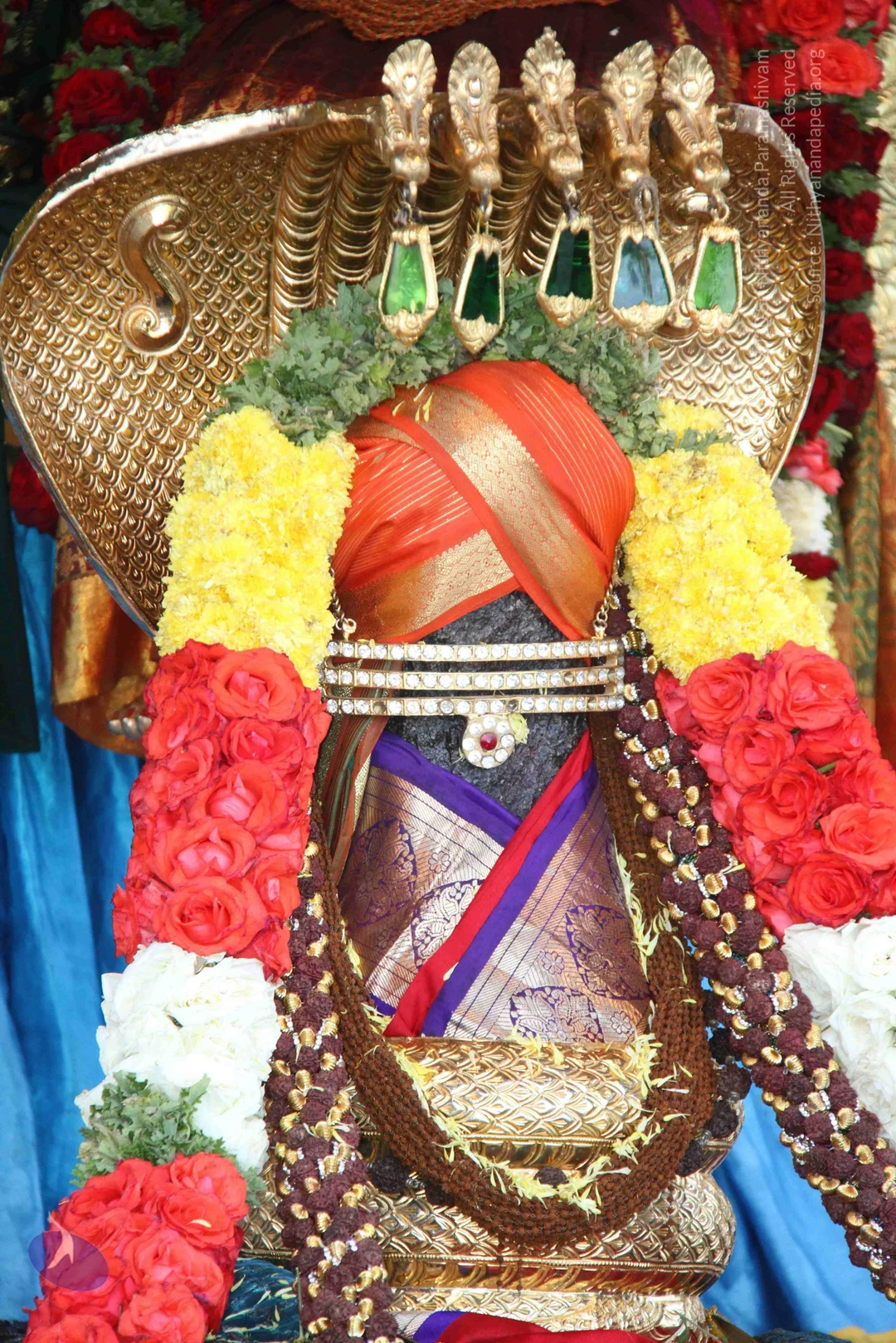
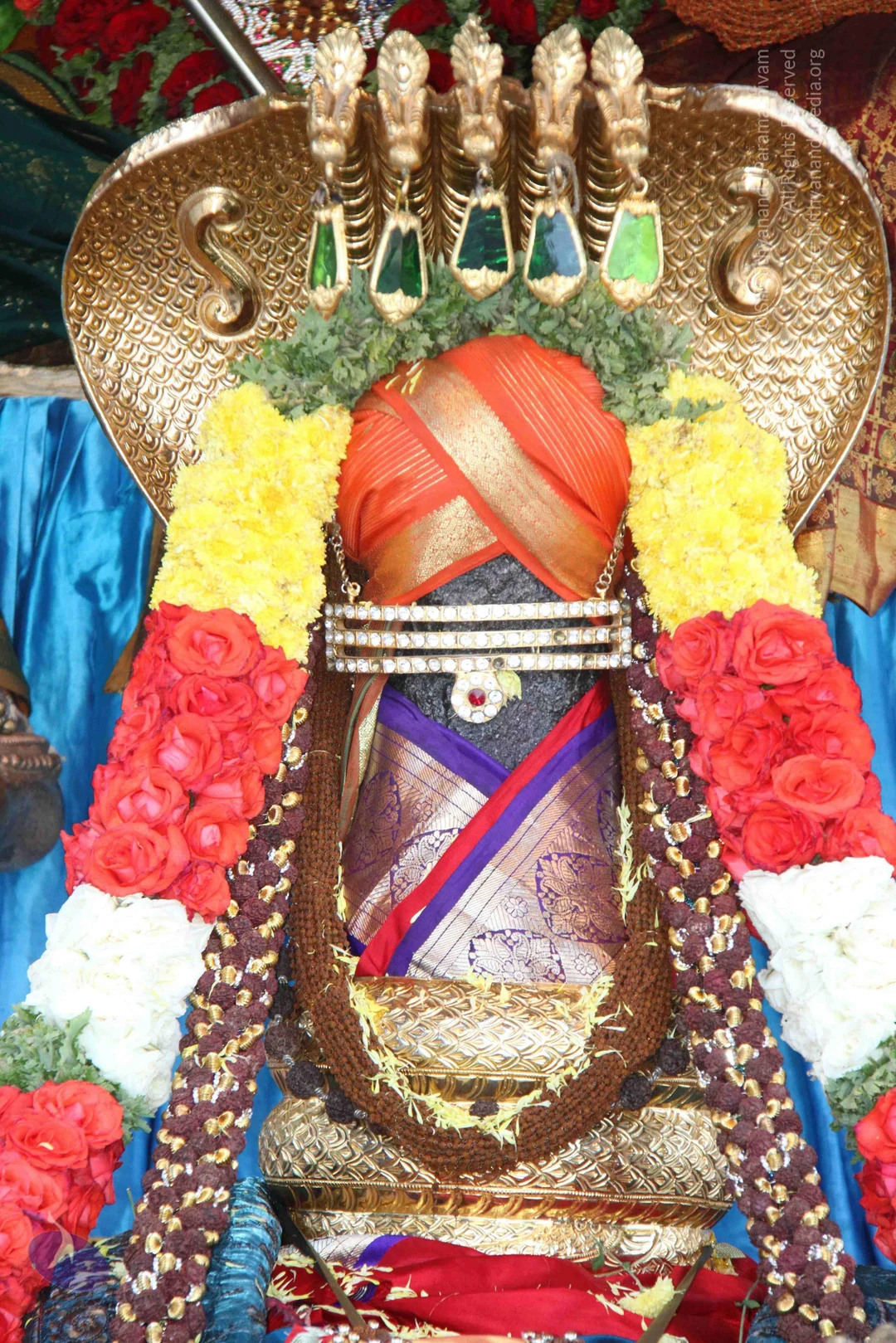
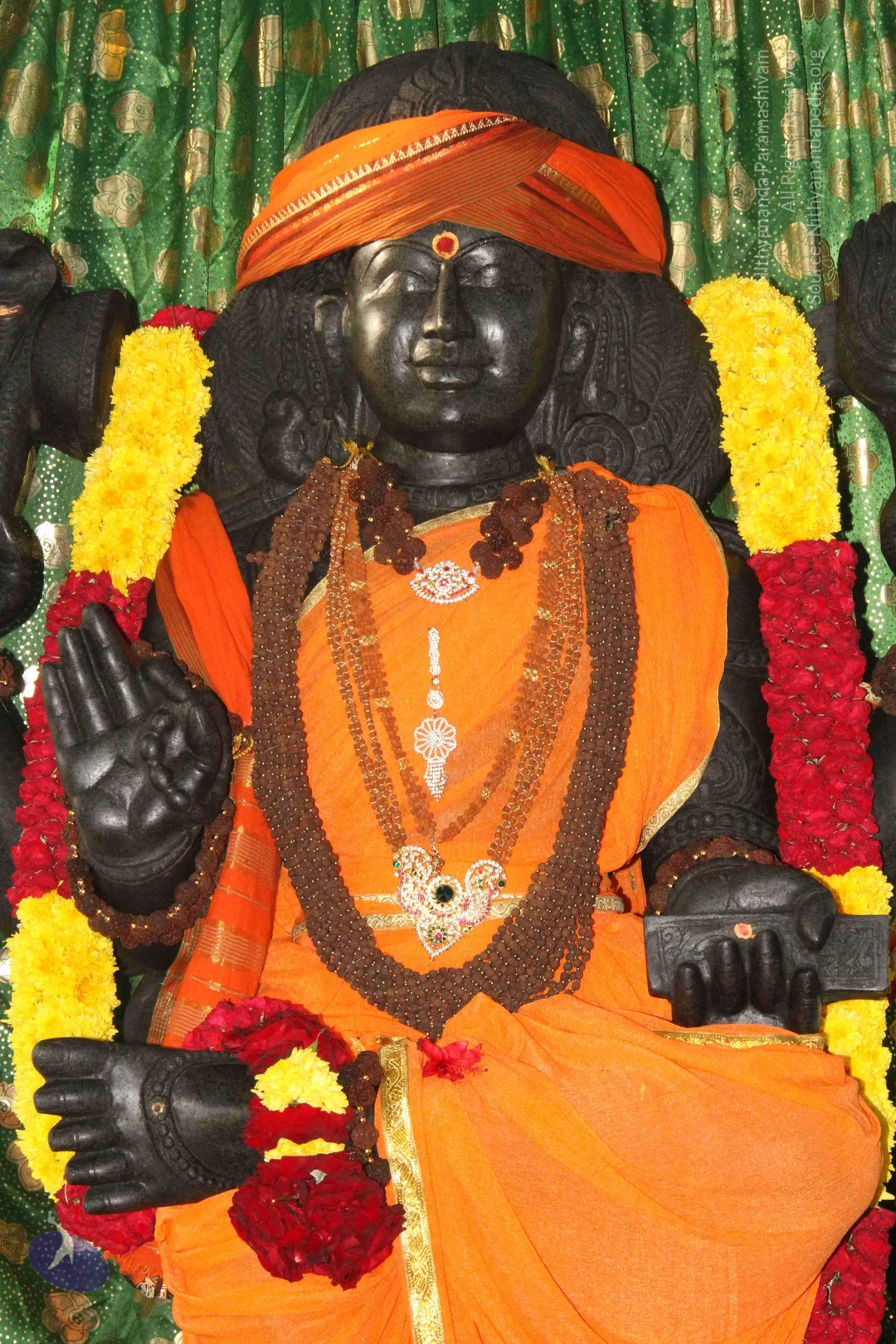
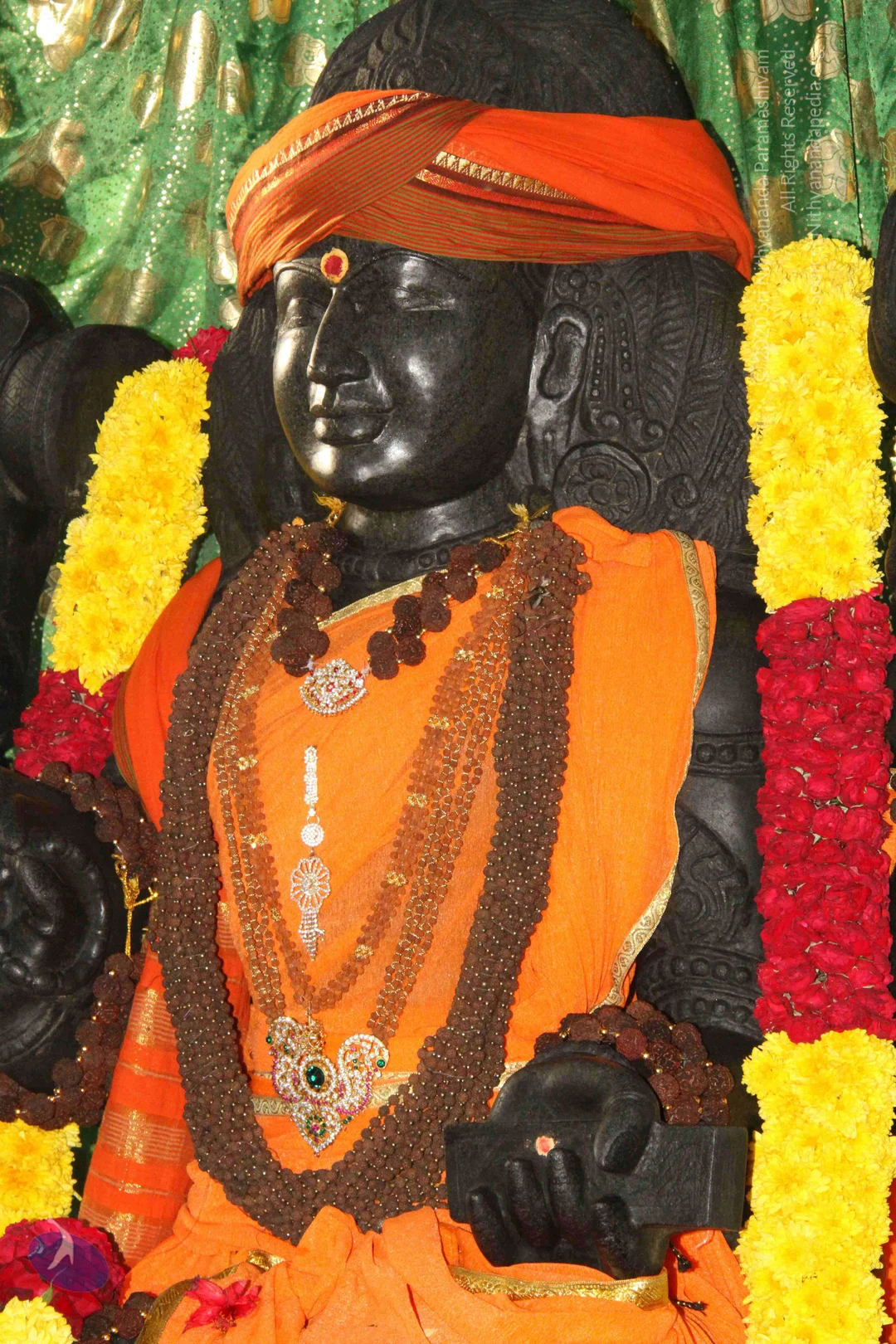
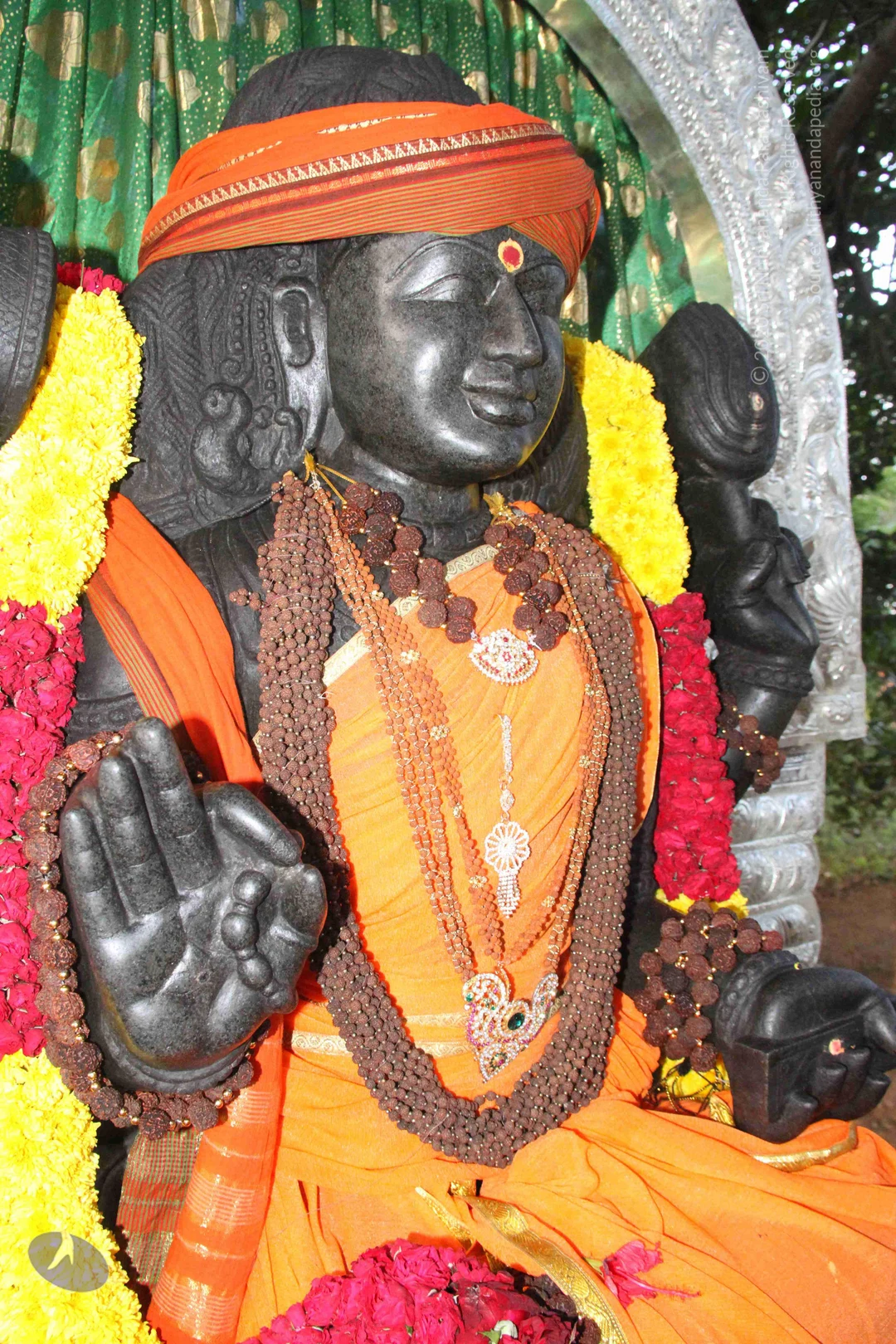
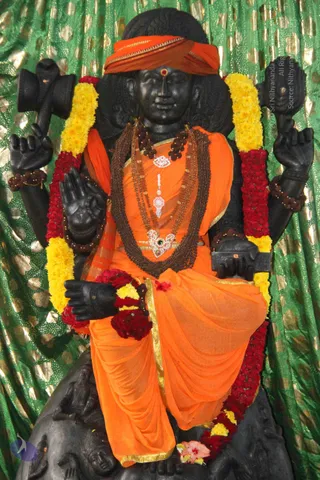
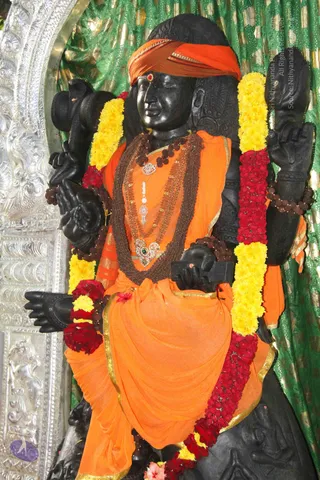
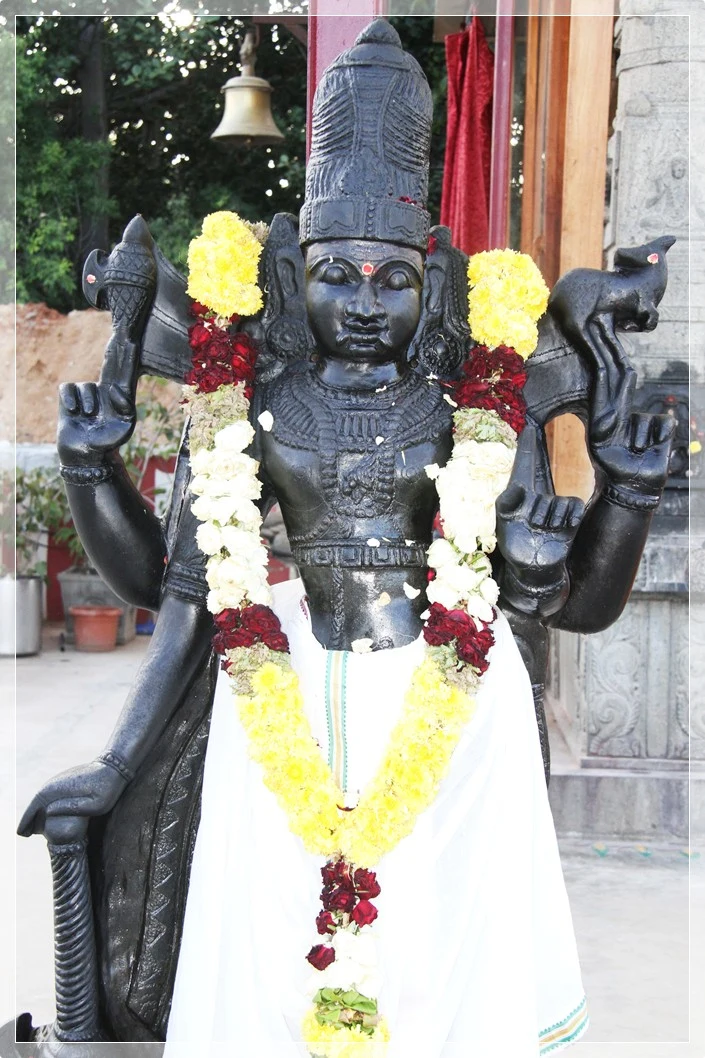
A black stone statue of a four-armed deity murti seated on a dark stone base, wearing an orange saffron-coloured wrap with gold border, an orange turban, and multiple rudraksha mala necklaces. Yellow and red marigold garlands drape the arms and body, and a pink hibiscus flower lies at the base. Behind it hangs a green fabric with gold floral print. The hands hold a trident-like staff and other ritual objects, with one hand raised in blessing. No living people are visible; this is a statue, not a person, so no a person identification applies.

01-TEMPLE

19 photosSource gallery
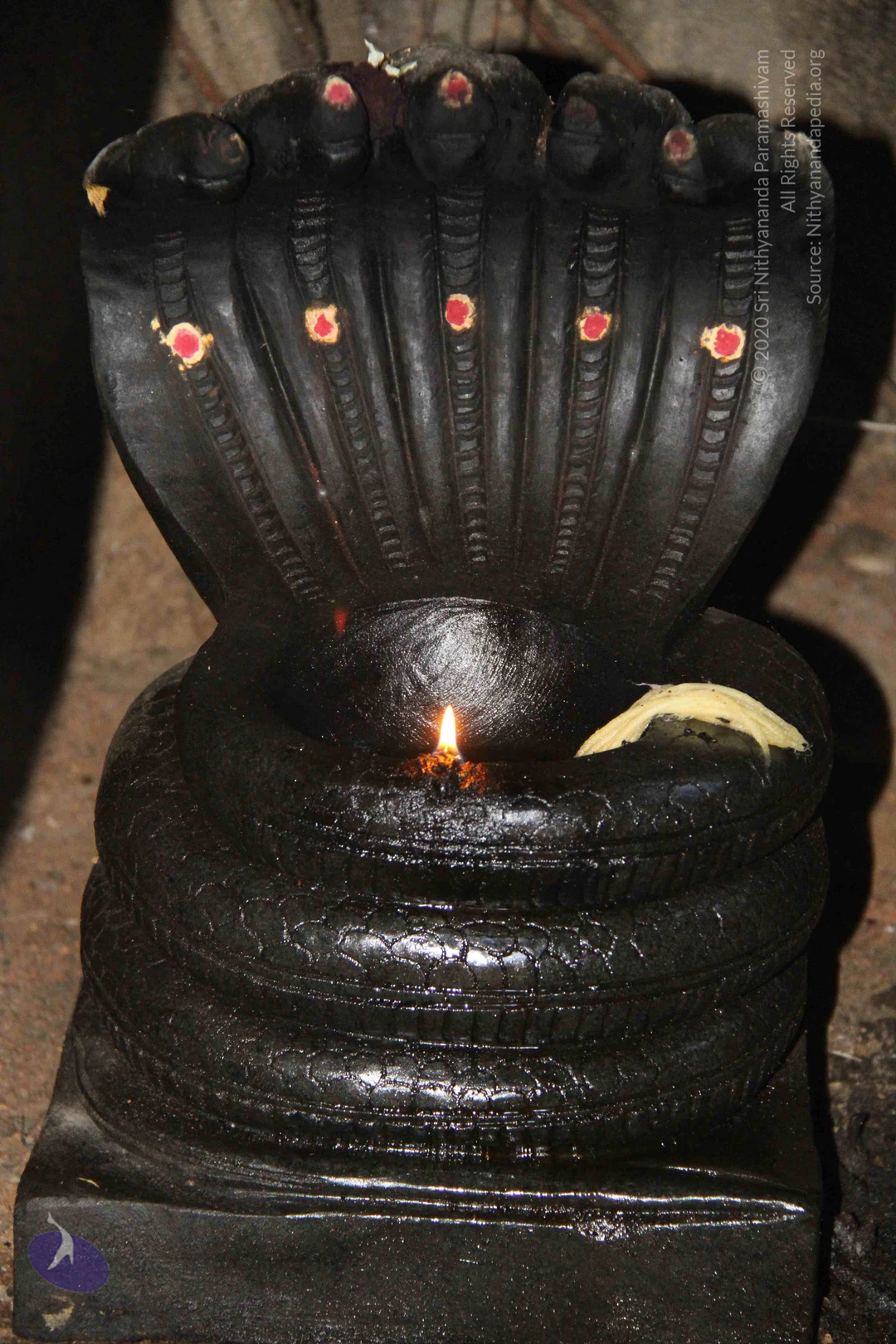
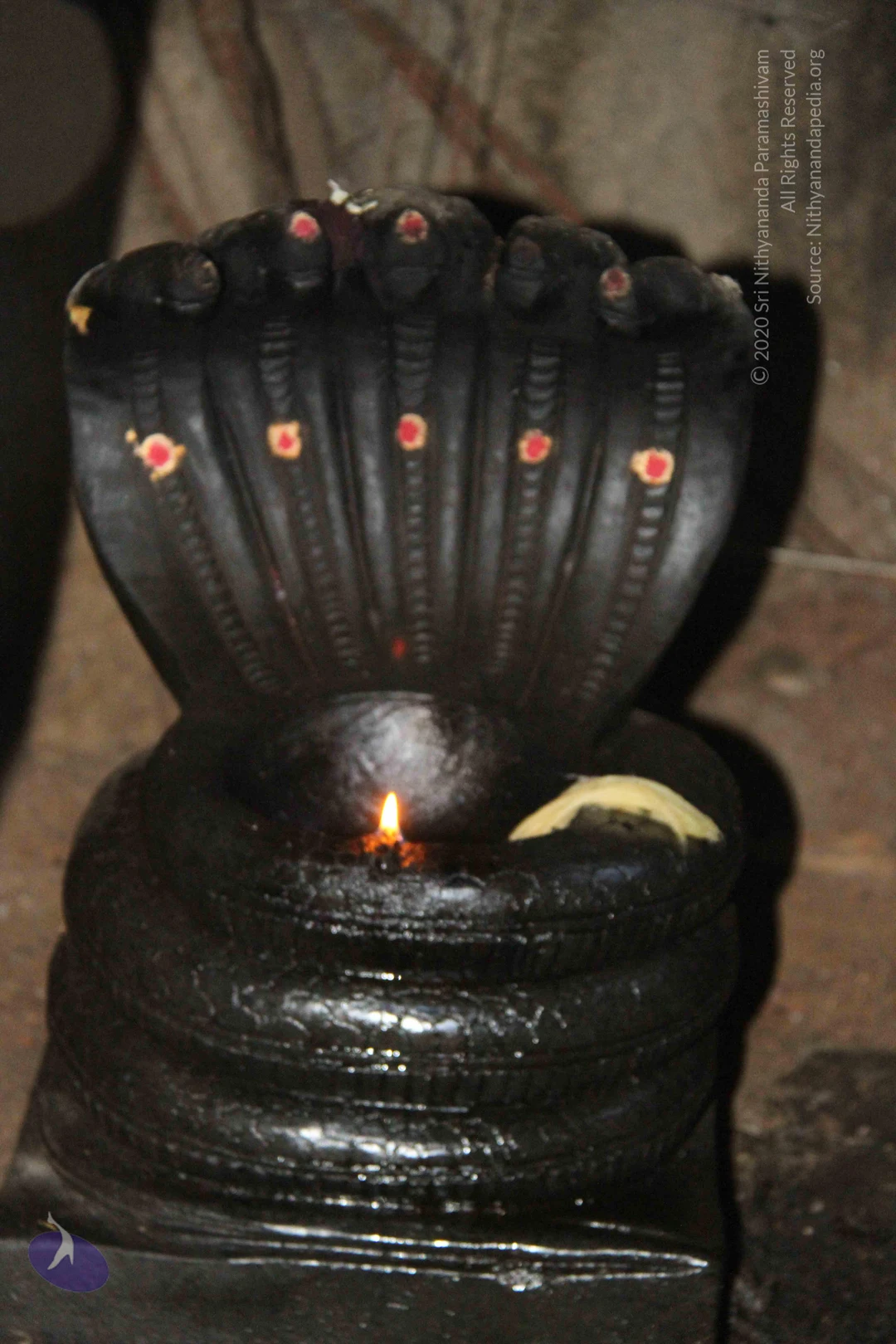
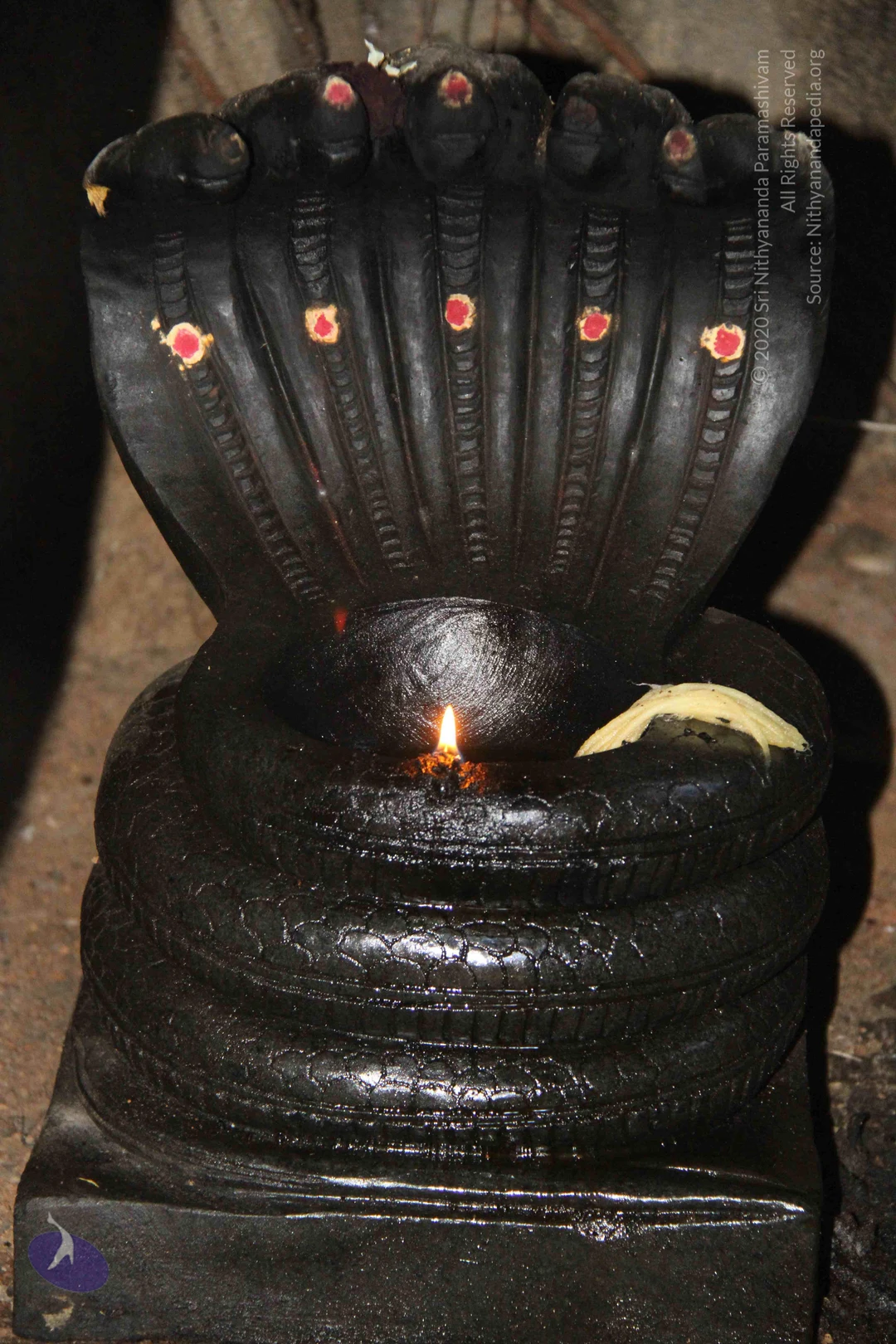
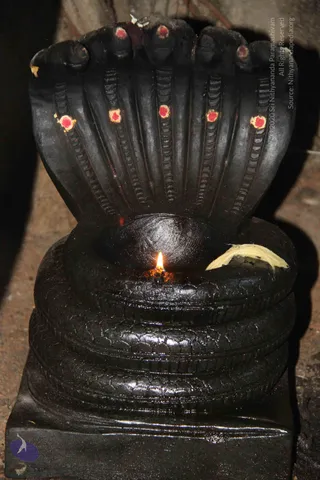
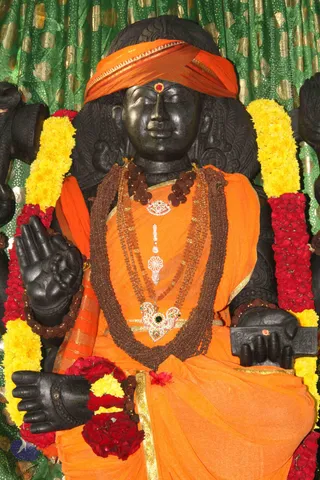
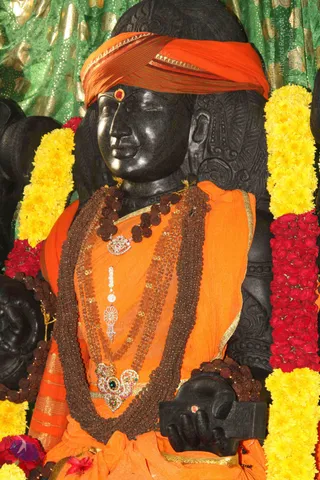
Close-up photograph of a black stone naga sculpture with a multi-hooded cobra canopy, its hoods marked with red and cream dots, coiled base with a small oil lamp burning on the ledge and a pale yellow offering piece beside it. No people visible; a deity murti with lamp offering in a temple setting.A dark black stone naga (cobra) sculpture with a multi-hooded hood raised above coiled serpent body, decorated with red-and-white kumkum dots on the hood. A small oil lamp with a lit flame sits in a cup-like depression on the coils, with a yellow item beside it. The setting is dim. No people are visible.A black stone statue seated in a lotus-style pose, with a carved face and closed eyes, wearing an orange turban with a red bindi and an orange saffron-style garment edged with gold border. Multiple rudraksha and beaded malas and a jewelled white and green ornamental necklace hang across the chest. Yellow and red marigold and rose garlands drape the figure, with a green and gold patterned fabric backdrop behind. The statue shows one hand raised in blessing and the other resting on a staff-like object. This depicts a deity murti or statue, not a living person, so no in-person candidate is present.A black stone statue of a male figure wearing an orange turban with gold-edged stripes and a red bindi on the forehead. The statue wears layered brown rudraksha malas, a jewelled pendant with green and red stones, and an orange garment with gold border. Yellow and red marigold and rose garlands drape around it, with a green gold-patterned cloth behind. The statue holds a small black object in its hand. It is a statue, not a living person, and no one is physically present.A black stone statue of a multi-armed deity figure, wearing an orange-red turban with a red tilak mark on the forehead, draped in orange cloth with gold border. It wears layered brown rudraksha malas and a jeweled necklace with a green stone pendant. Yellow and red marigold and rose garlands hang across its arms and body. Behind it is a green curtain with gold specks and an ornate silver-embossed arch.A dark stone statue seated in a sanctum, depicting a sannyasi-style figure wearing an orange-saffron turban and orange robe with a gold border. The statue wears multiple strands of brown rudraksha malas, a jewelled gold necklace with a green-stone pendant, and a small red tilak on the forehead. It is garlanded with yellow marigolds and pink-red flower garlands, with rose petals at its base, and stands before a green and gold brocade backdrop and a silver arch. The raised right hand is in abhaya-style blessing gesture. No living people are visible.

02-LEELA-ALANKAR-GURUKUL-KID

13 photosSource gallery
A young boy sits cross-legged on a red and orange cushion before a large golden deity murti of a seated goddess draped in orange and red silk with a jewelled crown, garlands of red roses, white roses and yellow marigolds. The boy wears a white forehead mark, red-and-green silk robe, a silver necklace and a yellow flower garland, holding a gold staff and a gold ritual pot. A purple cloth covers the platform in front of an ornate gold arch.A young boy with a shaved head and white-and-red vertical tilak on his forehead sits on a purple cloth-draped platform in front of a large deity murti. The murti is adorned with orange and red garments, a jewelled crown, a rudraksha-style necklace, and red and white flower garlands, holding a trident-like staff and a ceremonial mace. The boy wears a green and red silk garment, a pearl necklace, and a garland of yellow flowers, holding a gold staff. The ornate gold arch frames the scene, and a red patterned carpet lies in the foreground.A young shaven-headed boy sits cross-legged on an orange and red cushion before a purple cloth, dressed in a maroon dhoti with a green and gold border and a silver-and-red jewelled necklace. Yellow and red flower garlands hang across his shoulders and are wrapped around silver-wrapped arm bands, and he holds a wooden staff in one hand while resting the other on a tall brass vessel. Behind him, a large seated deity murti in orange silk with a dark green patterned border is decorated with red and yellow flower garlands. The boy has white sandal paste and a red bindi on his forehead. He is a single person, not a depiction; the figure in the background is a statue.A young boy sits cross-legged on an orange cushion in front of a purple draped backdrop, eyes closed in meditation. He wears a maroon dhoti-style garment with a green and gold border, a silver jewelled necklace with red stones, and a large garland of yellow marigolds and blue-wrapped rolls. A white vibhuti band and black bindi mark his forehead, and he holds a wooden stick in one hand while resting the other on a brass staff. Behind him, a deity murti or seated figure is draped in orange and gold silk with red rose garlands. The white floor reflects the flowers.A young boy sits cross-legged on an orange cushion in front of a purple cloth, wearing a maroon dhoti-style garment with a green and gold border and a silver-and-red pendant necklace. He is adorned with long garlands of yellow and white flowers draped over his shoulders and arms, and wears blue cylindrical arm bands. He has white sacred ash on his forehead with a dot at the centre, and holds a small wooden stick in one hand while resting the other on a tall brass staff. Behind him, a large seated figure in orange and gold silk is decorated with red and yellow roses and marigolds. The boy gazes upward in a calm pose during a ceremonial event.A young boy with a shaved head and white sandalwood paste on his forehead sits cross-legged on an orange and red cushion before a purple draped stage. He wears a maroon dhoti with a green-bordered silk cloth, a jewelled diamond-style necklace and a long garland of yellow and white flowers draped across his body and arms. He holds a small golden staff in one hand and rests his other hand on a tall brass kalasha-style vessel. Behind him, a seated figure in orange and gold silk with a green elephant-patterned border is decorated with red roses and yellow marigold garlands. The scene resembles a ceremonial honouring during a satsang setting.

03-NITHYA-SATSANG

10 photosSource gallery
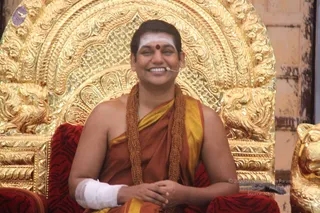
A smiling man with short hair and a white vertical tilak with a red dot sits on an ornate gold throne with a carved arched back, draped in red-brown and gold-bordered robes with a rudraksha mala around his neck and a white bandage on his left forearm. The throne is flanked by golden lion sculptures and red and black tiger-striped cushions, with a microphone clipped near his face. A painted figure with a flame-holding hand appears at the left edge, and a carved wooden panelled wall forms the backdrop.A smiling man with short dark hair, white vibhuti on his forehead and a red kumkum dot, sits on an ornate gold throne with a tall arched back and red tiger-striped cushions. He wears a rust-orange robe with gold borders, a long rudraksha mala around his neck, and a white bandage on his left forearm. A small microphone is attached near his face. Behind him are carved wooden panels, and a gold-painted figure with a raised flame torch appears at the left edge. One person is visible.A smiling man in a rust-orange and gold-bordered sannyasi robe sits cross-legged on an ornate gold throne with red tiger-striped cushions and tiger-pelt upholstery. He wears a rudraksha mala around his neck, a red bindi and white forehead markings, and a small microphone clipped near his face. His right forearm is bandaged, and his hands rest together in his lap. Behind him are gilded lion-carved armrests and a carved gold backrest, with a wooden panelled door behind. A partially visible arm holding a flame-like torch appears at the left edge. The seated figure is an appearance-based a person candidate: a shaved head with white forehead markings, rudraksha mala and orange-gold robe on a throne fit the flagged event, though the face alone does not confirm identity, so the appearance is somewhat uncertain.A smiling man sits cross-legged on an ornate gilded throne with red tiger-striped cushions and gold lion carvings, a tiger-skin mat beneath him. He wears a rust-orange robe with gold-bordered cloth, a long rudraksha mala around his neck, white vibhuti on the forehead and a red kumkum dot, with a bandaged left forearm resting on his knee. A small headset microphone is clipped near his face. Behind him stand a carved wooden door and a painted pillar, and a gilded deity figure is partly visible at the left edge. Visible cues include the rudraksha mala and saffron-orange robe, so this is an appearance-based a person candidate seated in person.A smiling man in a rust-orange and gold-bordered robe sits on an ornate gold throne with red tiger-striped cushions, a golden lion figure at the right. He wears a rudraksha mala, a white forehead mark with a red dot, and a small headset microphone, and his forearm is bandaged in white. Behind him are a carved wooden door and a painted pillar with a deity figure partly visible at the left edge. Appearance cues are consistent with a person seated in a satsang setting, but the image alone does not confirm identity.A smiling man with closely cropped hair sits on an ornate gold throne with a red-and-black tiger-striped cushion, beside a gilded lion figure. He wears an orange-brown robe with gold borders, a long rudraksha mala draped over his shoulders, a white tilak on his forehead and a red bindi, and a small headset microphone. His right forearm is bandaged in white. Behind him are large carved wooden doors and a painted pillar edged in orange. The page links this to a person satsang, but the man's appearance alone gives only limited cues, so identity is uncertain.

04-FINAL-BLESSINGS

3 photosSource gallery
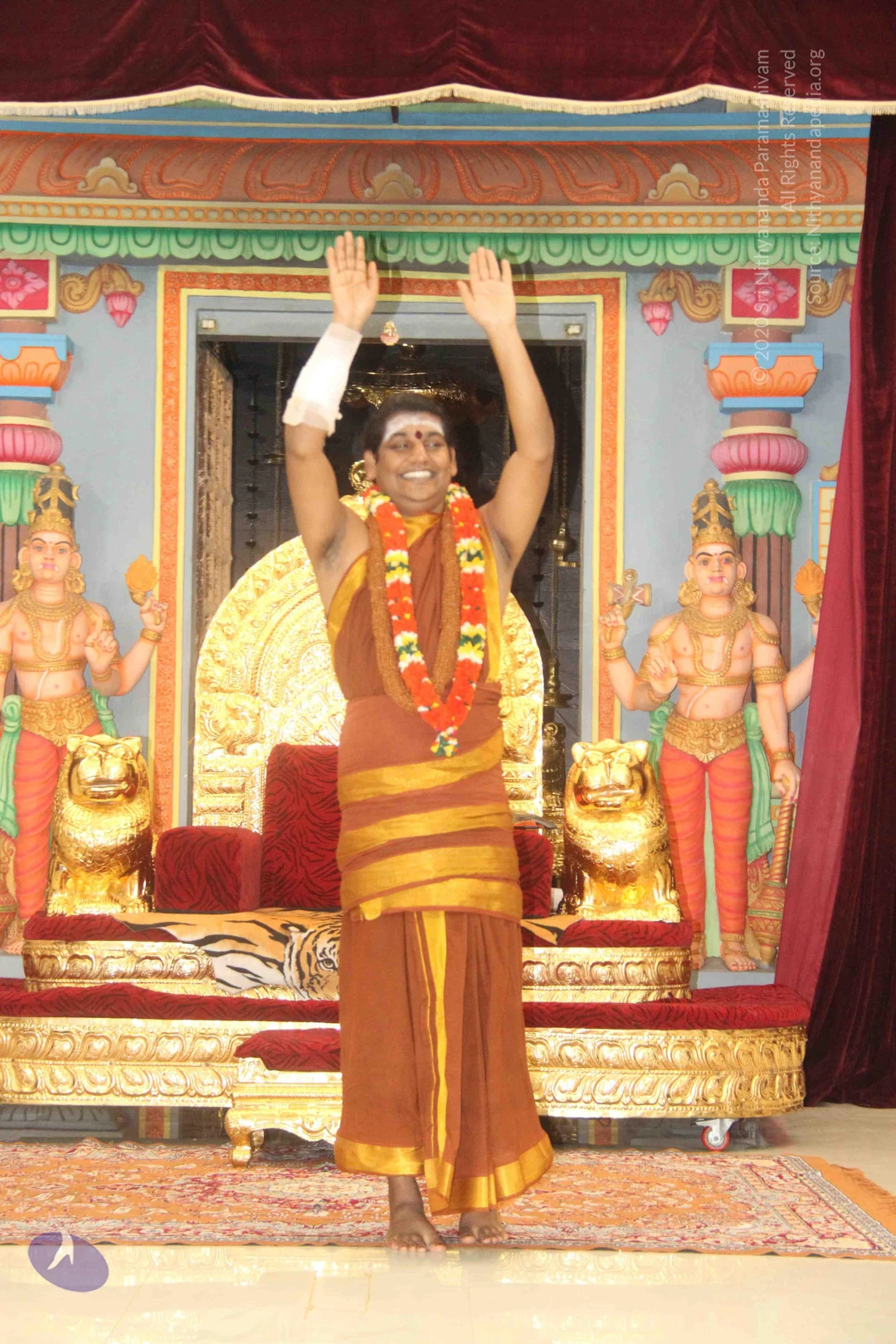
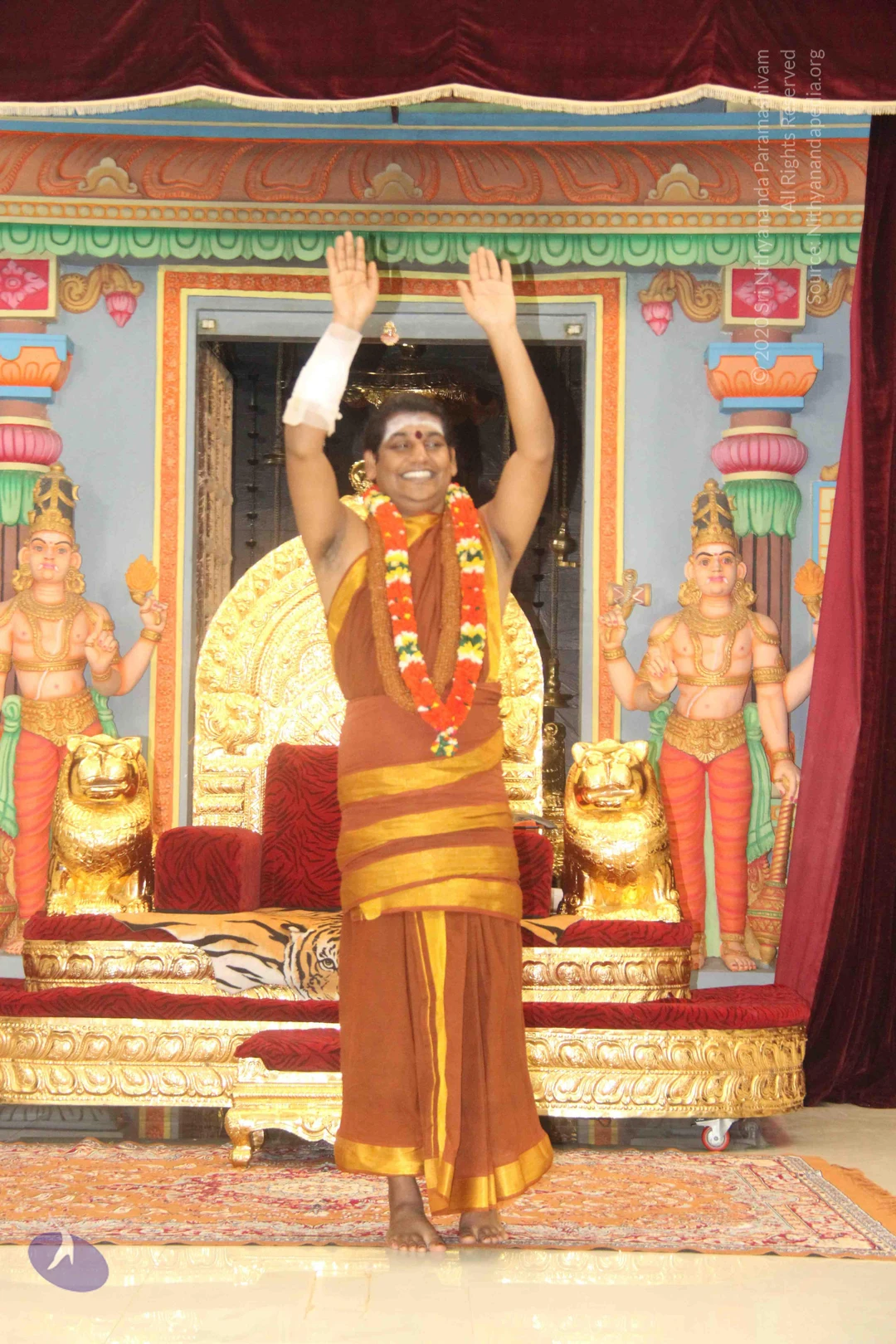
A photograph of a smiling man standing on a glossy white stage, waving his right hand. He wears a rust-brown and gold-bordered dhoti and wrap, a multicoloured garland of red, yellow and white flowers, a red tilak on his forehead and a white bandage on his right forearm. Beside him is a seated deity murti dressed in orange and red silk, adorned with a jewelled necklace, crown and a mace, surrounded by red, yellow and white flower garlands, in front of a gold arched frame and a maroon velvet curtain. A purple cloth covers the platform, and a small orange cushion sits at its base. A dark framed photo stands on the stage floor at lower left. Printed vertical text on the right reads copyright notices.A man in saffron-and-gold dhoti and shawl stands on a polished stage beside a seated deity murti decorated with marigold and red flower garlands. He wears a flower garland, a red-and-white forehead mark, and raises one hand in greeting while smiling. The murti sits on a purple cloth-covered platform before a gilded arch and maroon velvet curtain. A small red cloth rests at the platform base. The man is a standing presenter with ceremonial clothing; no visible name confirms his identity. a person candidate appearance is uncertain given the shaved head and white bandage on the arm.A smiling man stands barefoot on a carpet before an ornate golden throne with red tiger-striped cushions and gold lion armrests. He wears a brown and gold saffron-toned dhoti and shawl, a multicoloured marigold garland, and a white forehead mark with a red bindi. He raises both arms high, one wrapped in white bandage. Behind him stand painted temple dvarapala figures holding staffs, flanked by a red velvet curtain.

September 27 2013

4 photosView all
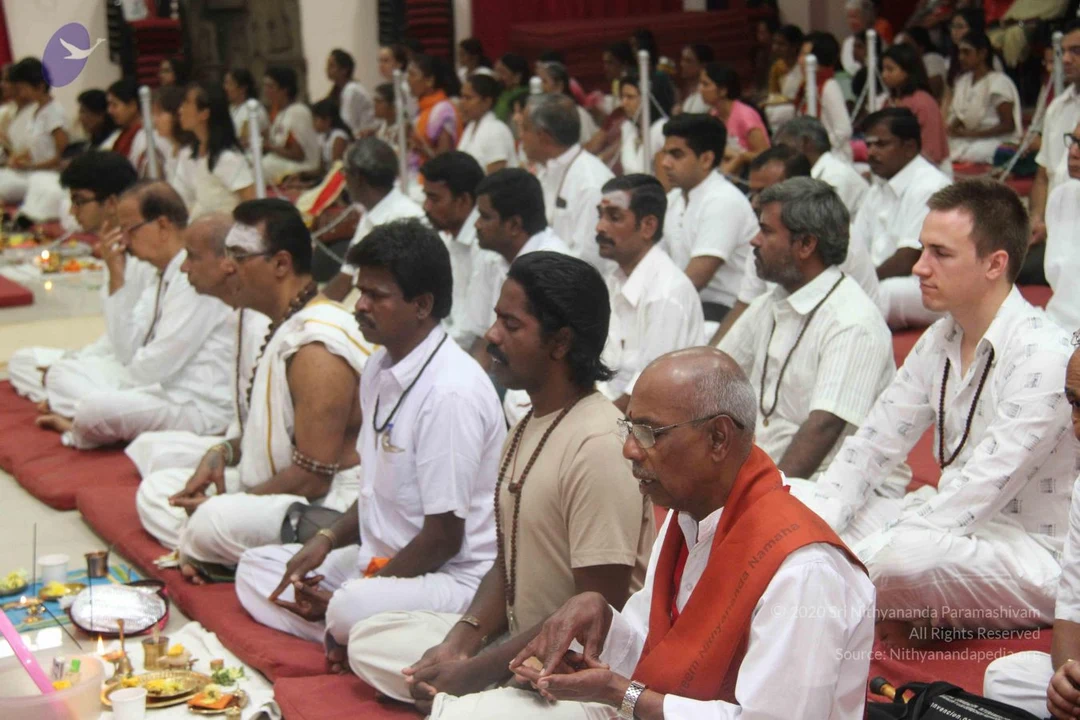
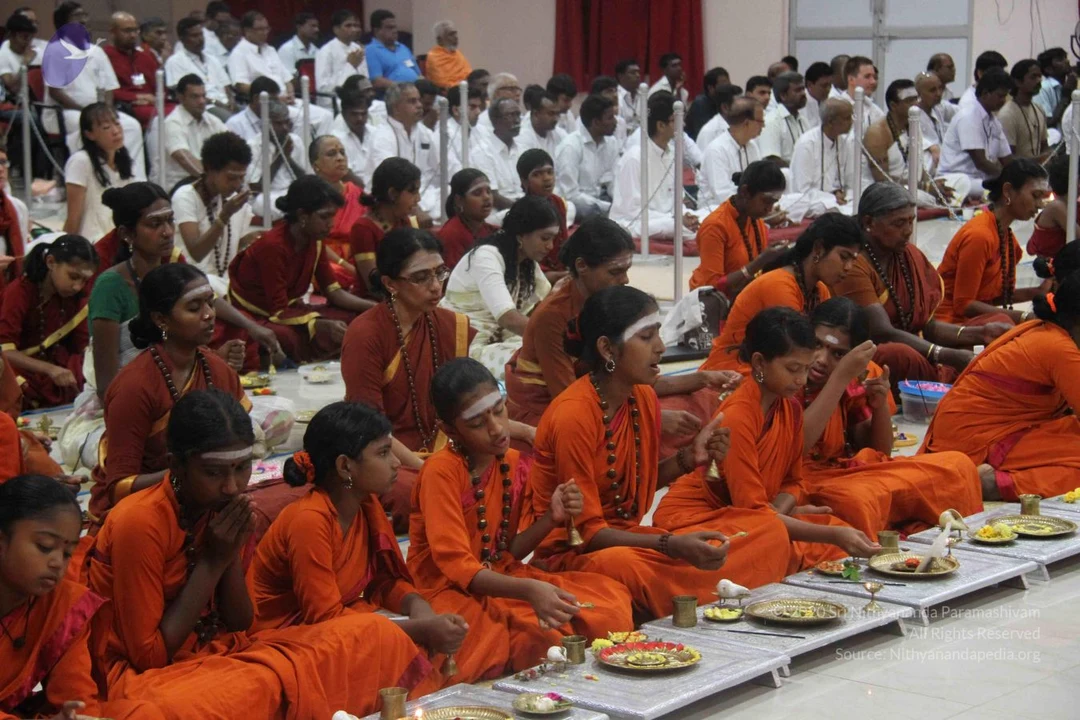
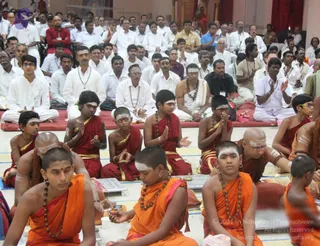
A row of shaved-headed monks in saffron-orange robes sit cross-legged on a floor during a seated ritual. Each has white sacred ash or tilak marks on the forehead and upper arms and wears rudraksha malas, and several have hands raised in mudra gestures. Brass oil lamps and small offering vessels sit on a cloth in the foreground, with a seated audience blurred in the background of a room with white walls and red curtains.Several men in saffron-orange sleeveless robes sit cross-legged in a row during a seated ritual, their hands raised in mudra-like gestures. They wear dark rudraksha malas and white tripundra markings on their foreheads and arms. In the lower left, brass lamps and small offering bowls sit on an orange cloth, and a red-curtained hall with air conditioners forms the background. Behind them, seated devotees in white clothing watch the proceedings.Photograph of a seated puja in an ashram hall with brass vessels, a bell, oil lamp and flower offerings on a mat. Two boys in saffron-orange robes with rudraksha malas and white and red forehead markings sit in front; the foreground boy holds a small plate of white and red items in cupped hands while the other boy holds a conch shell. Several other saffron-clad young people sit behind them, with a few onlookers in the background. No identifiable a person appearance is visible.A seated satsang gathering in a hall with pale walls and red floor mats. In the foreground, several young boys in saffron-orange robes and rudraksha malas sit cross-legged, several with white vibhuti marks on their foreheads, some with hands folded in namaskar. Behind them, rows of men in white dhotis and shirts sit with hands joined in devotion, several wearing rudraksha malas and vibhuti. A man in a dark shirt and a man in a light shirt also sit among the audience. A small brass puja plate and offering vessels are placed on the floor before the children. The crowd fills the room, with more participants visible at the back.