Skip to content
Saturday

28 September 2013

Dated photos
322
Source pages
1
Media
4
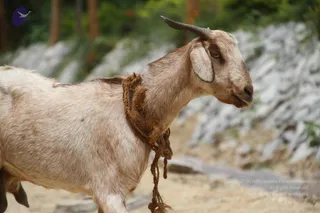
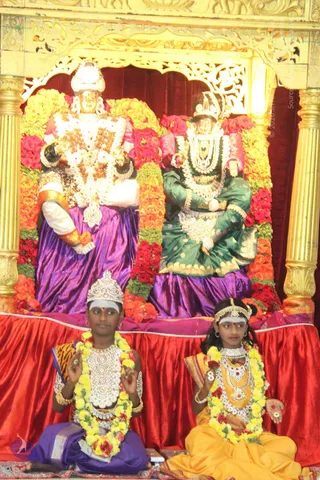
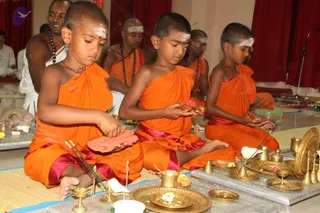
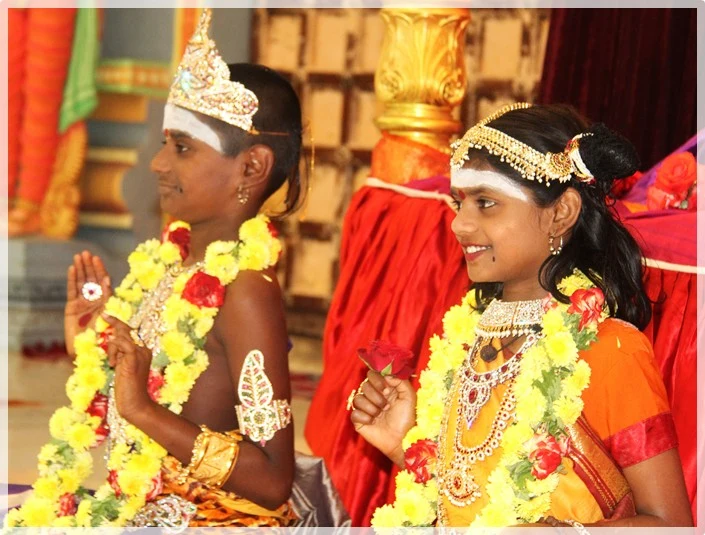
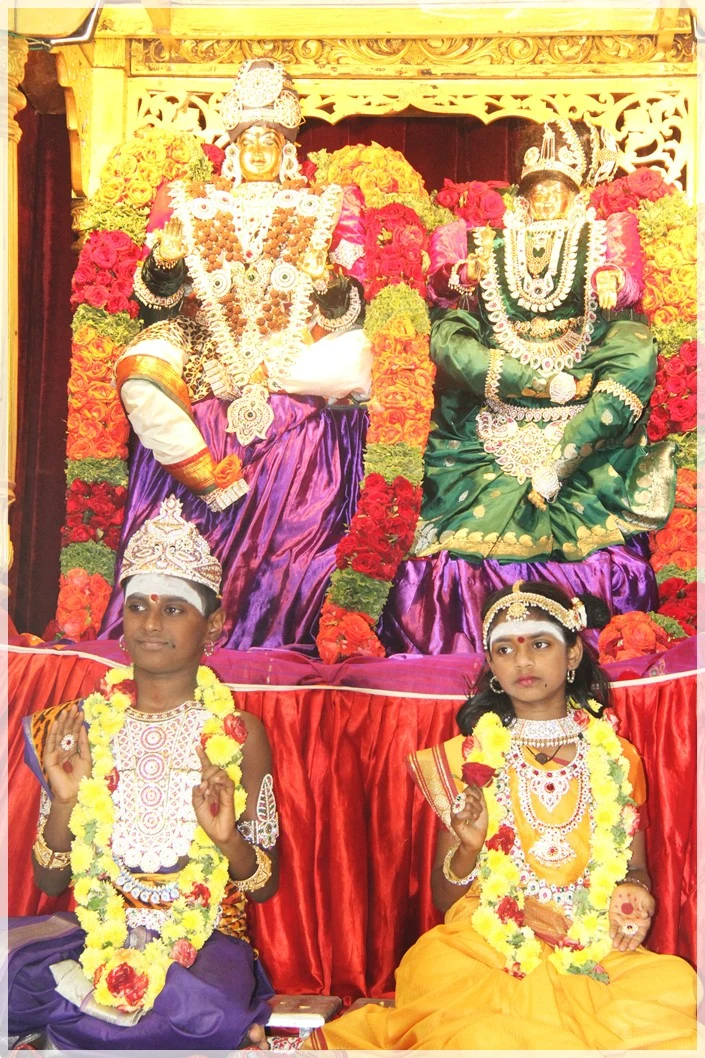
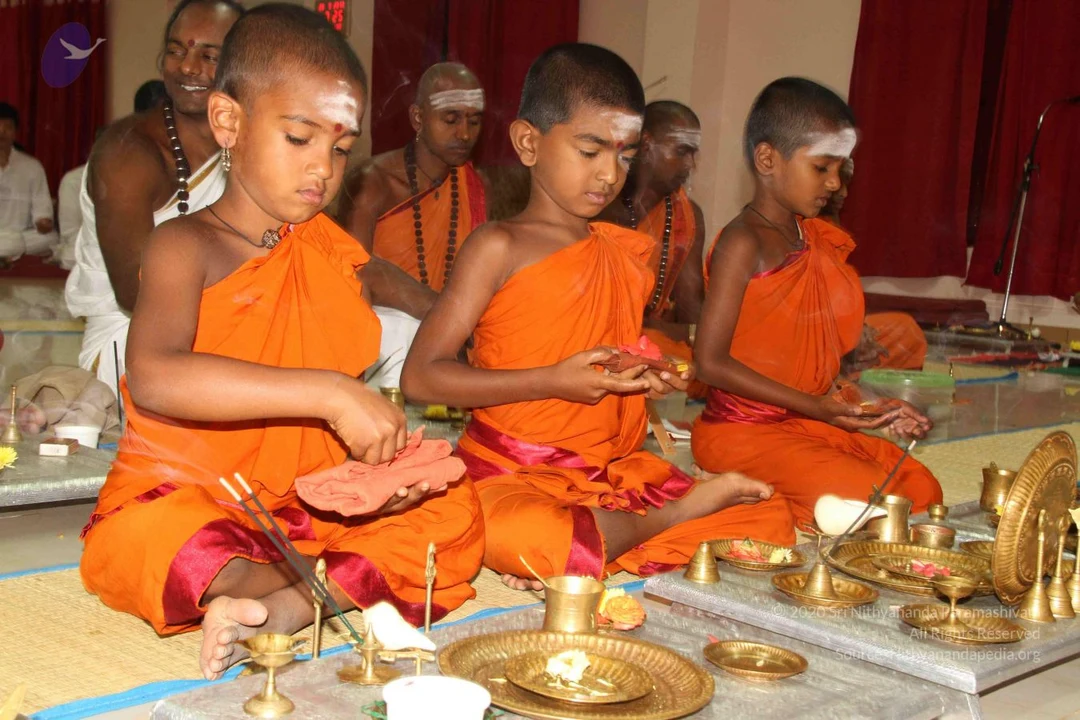
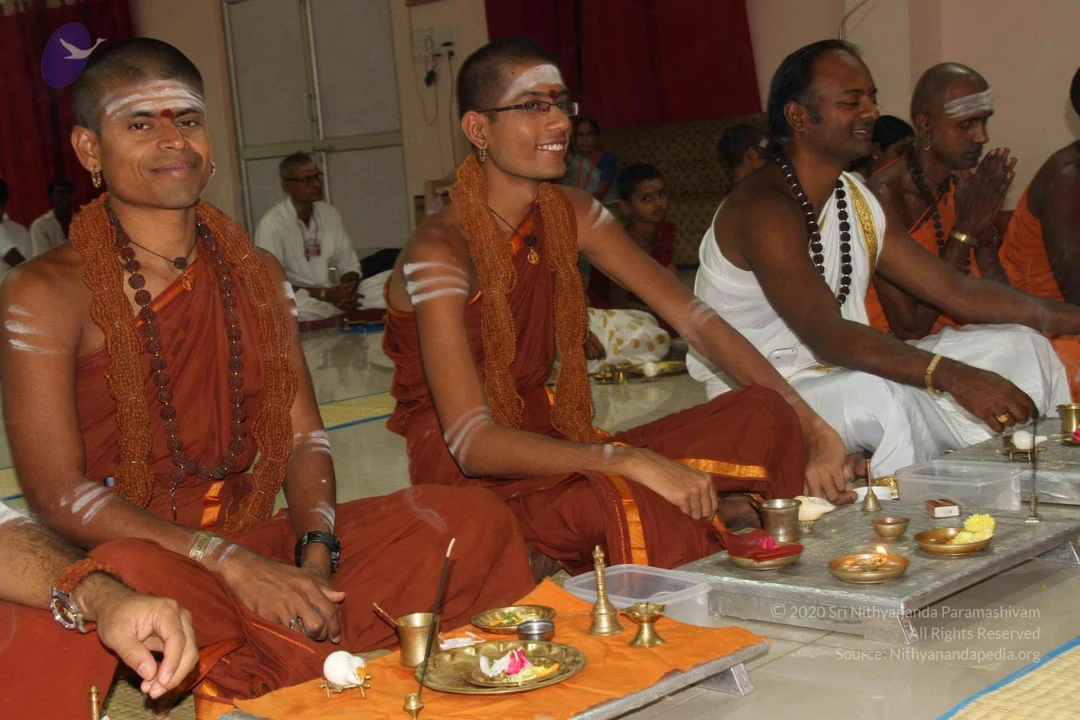
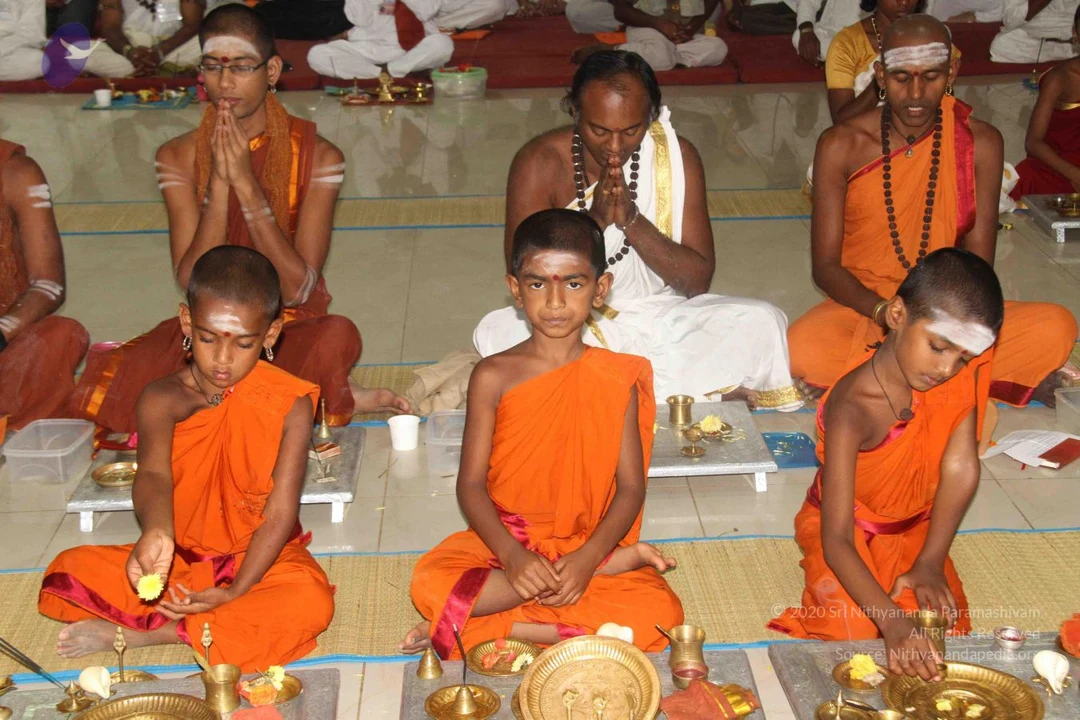
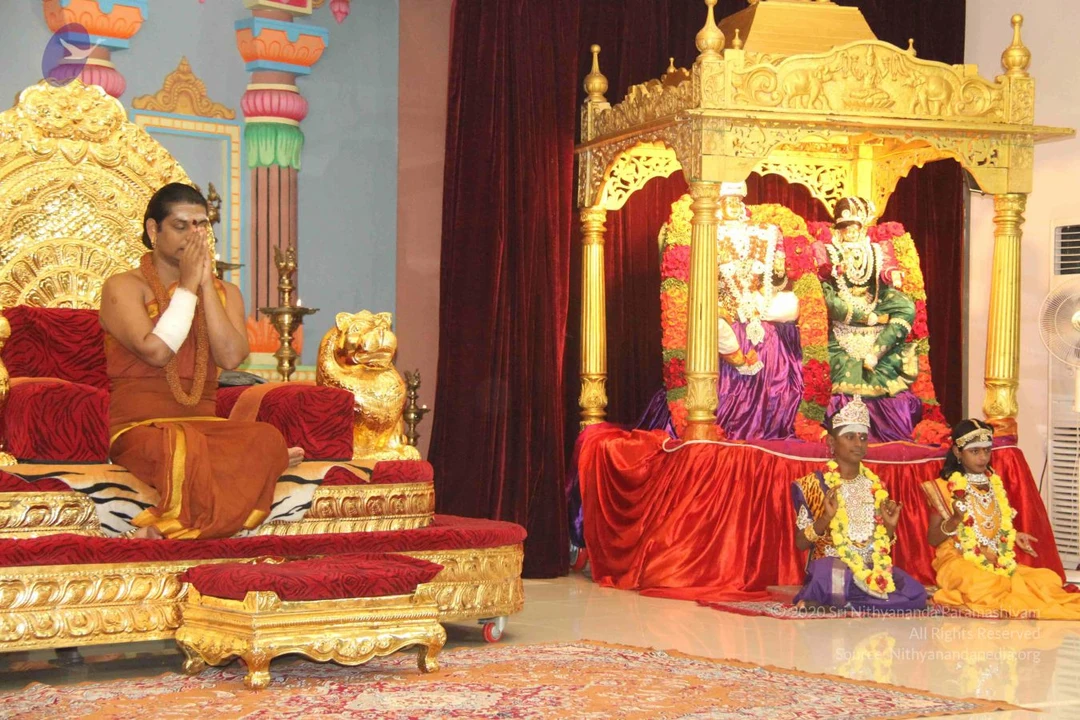
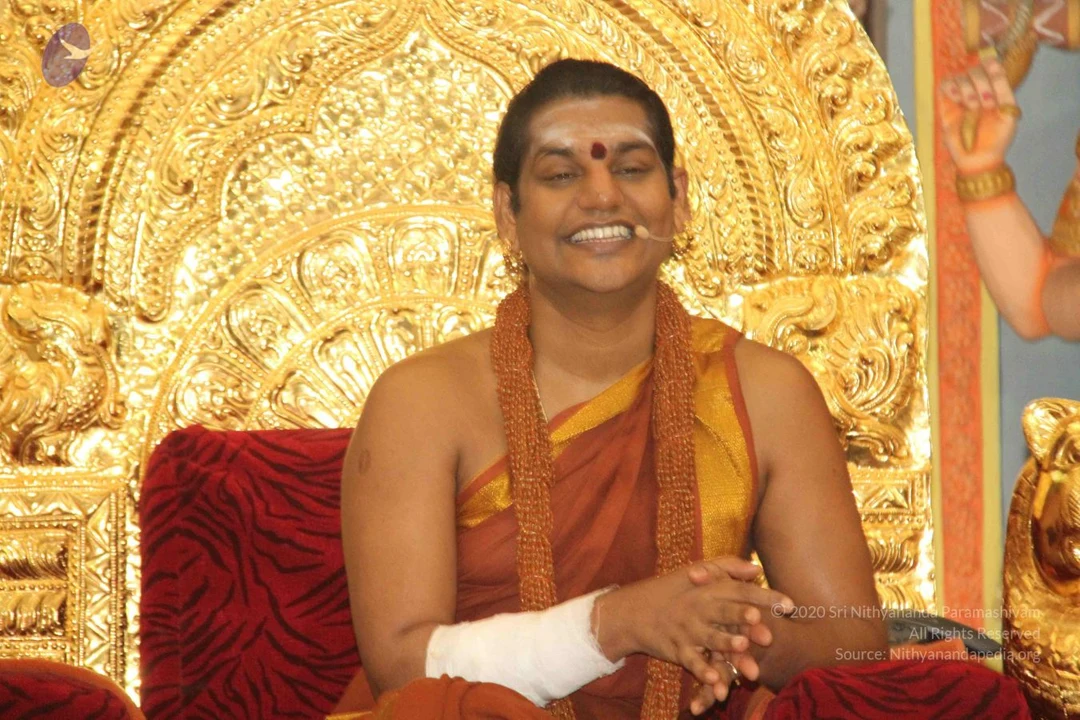
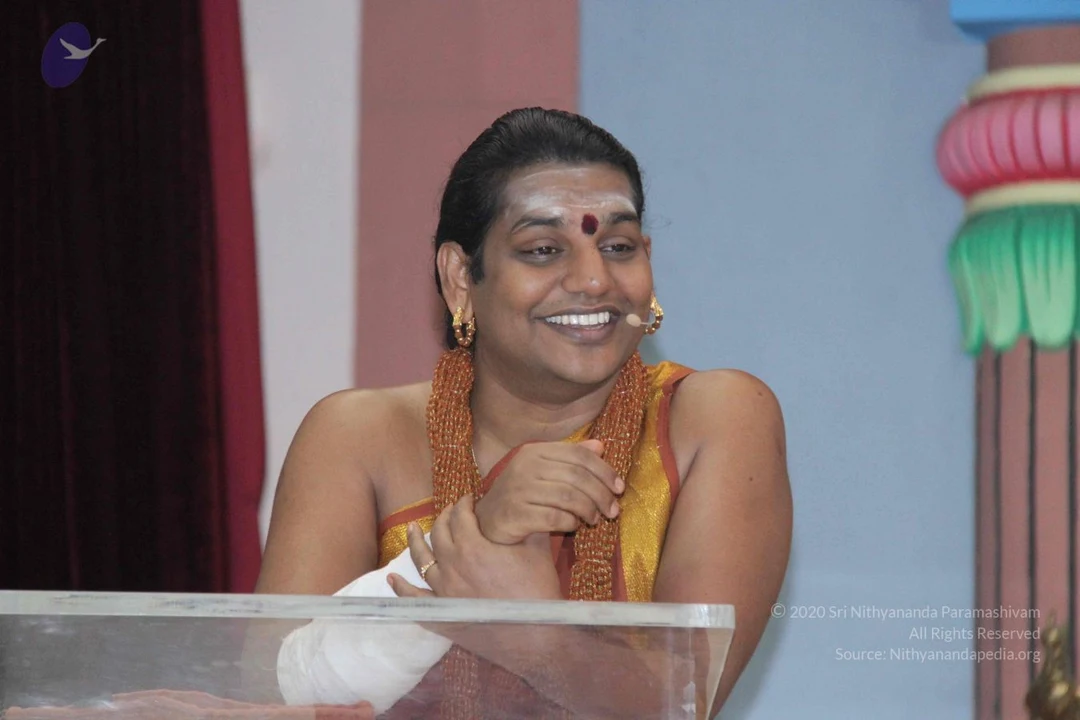
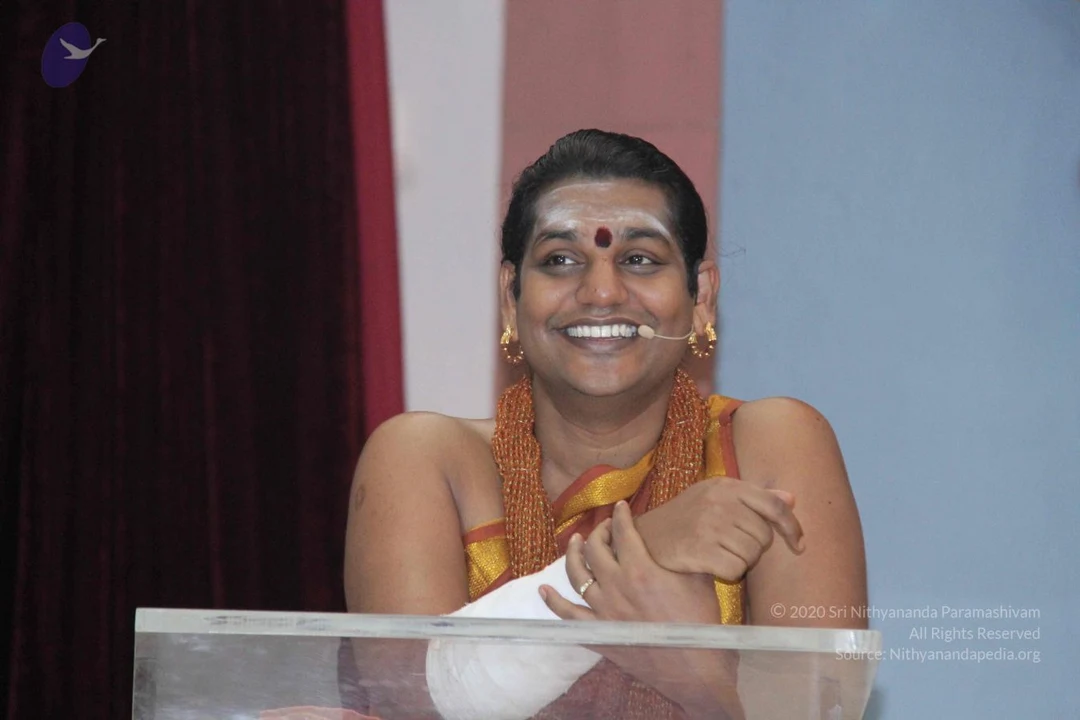
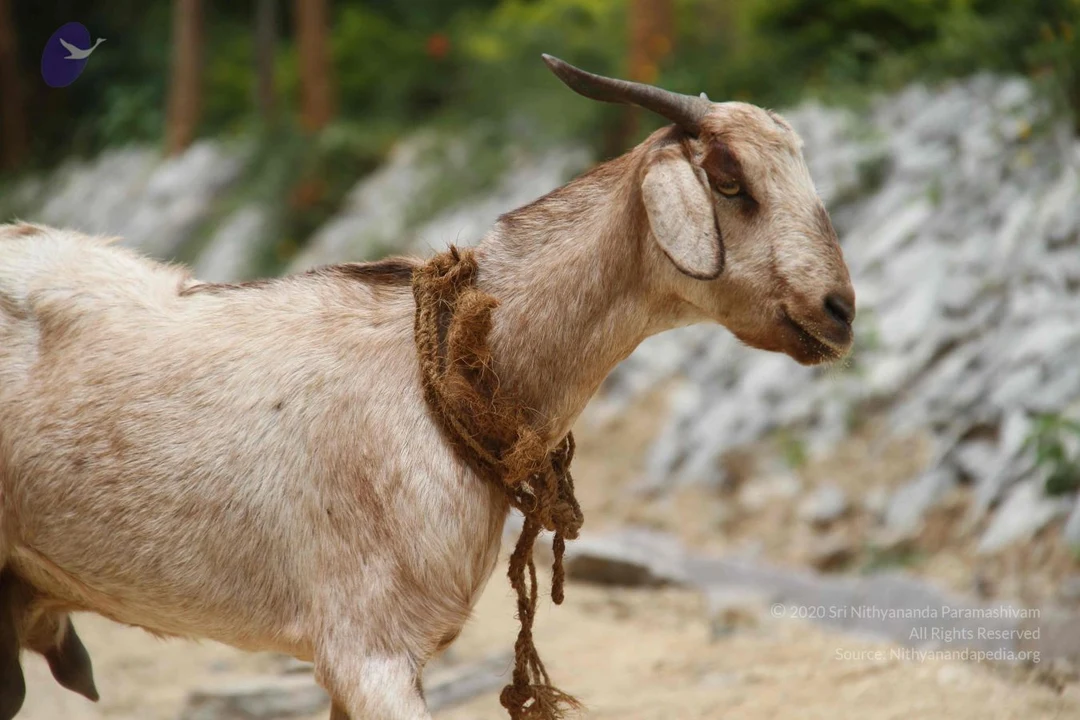
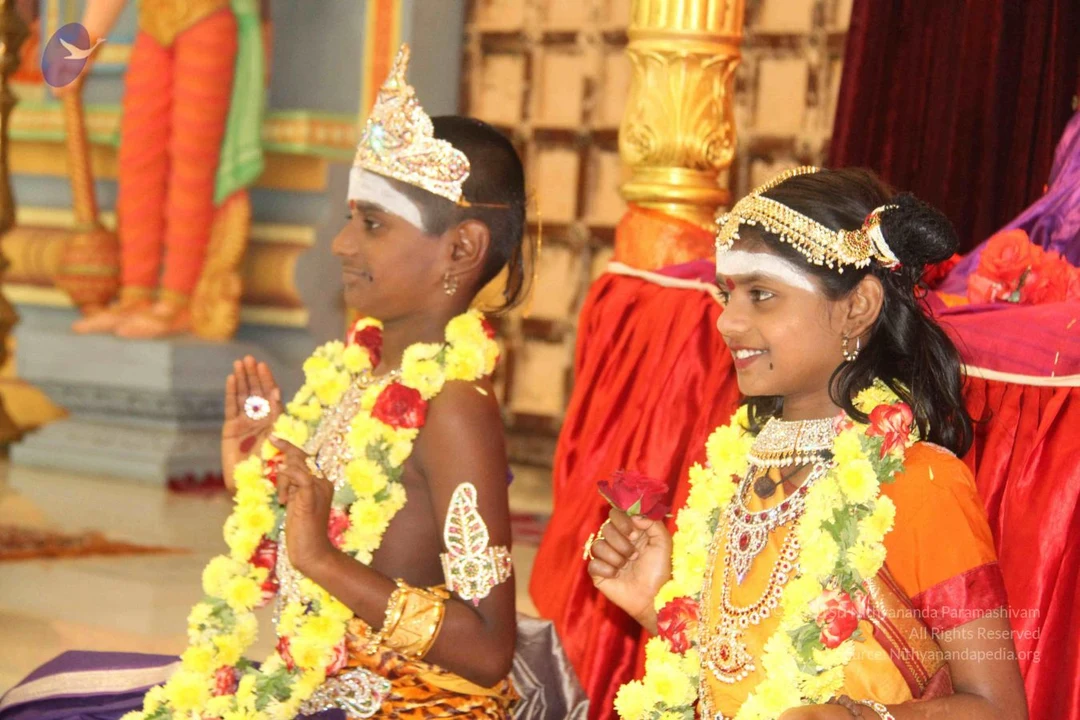
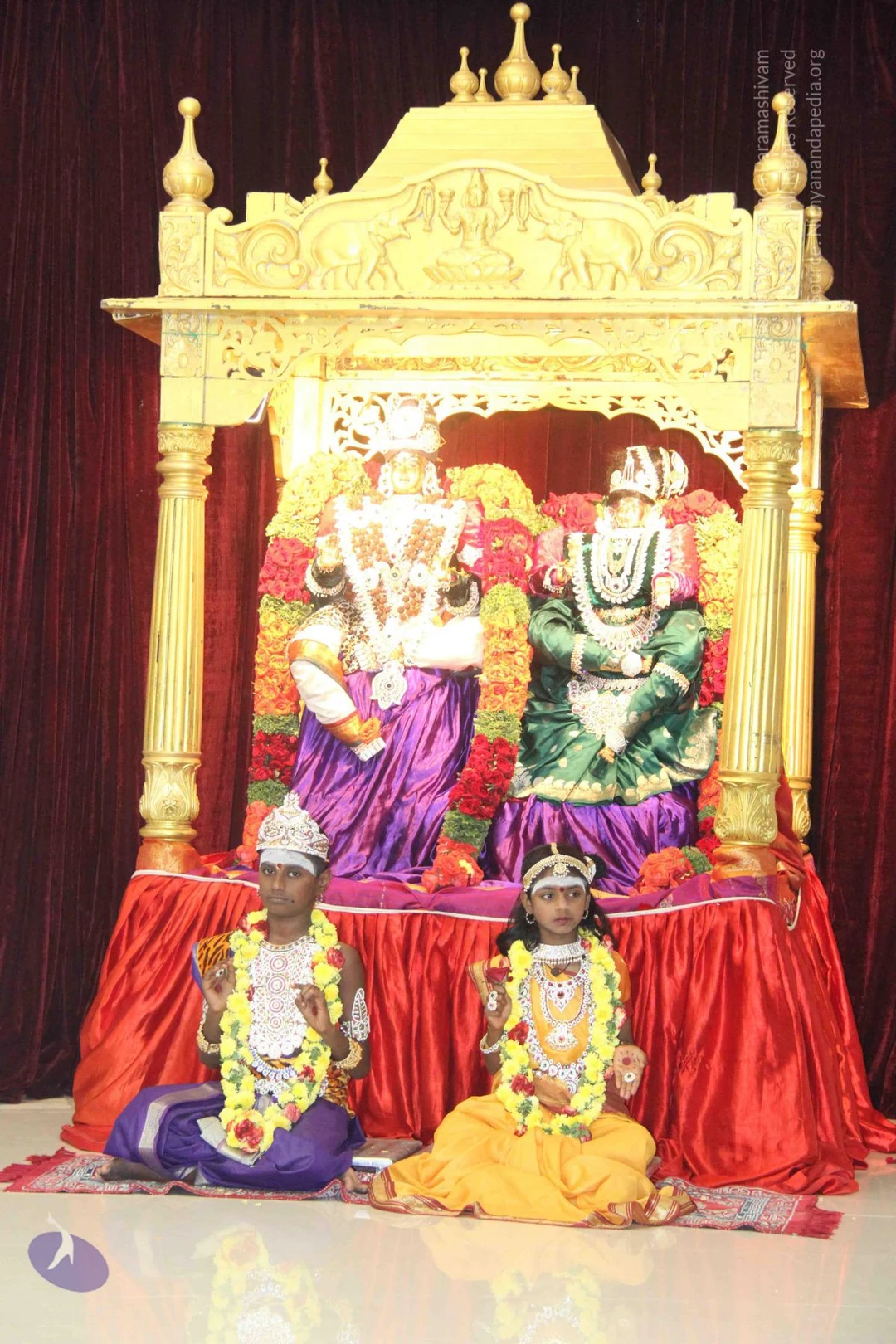
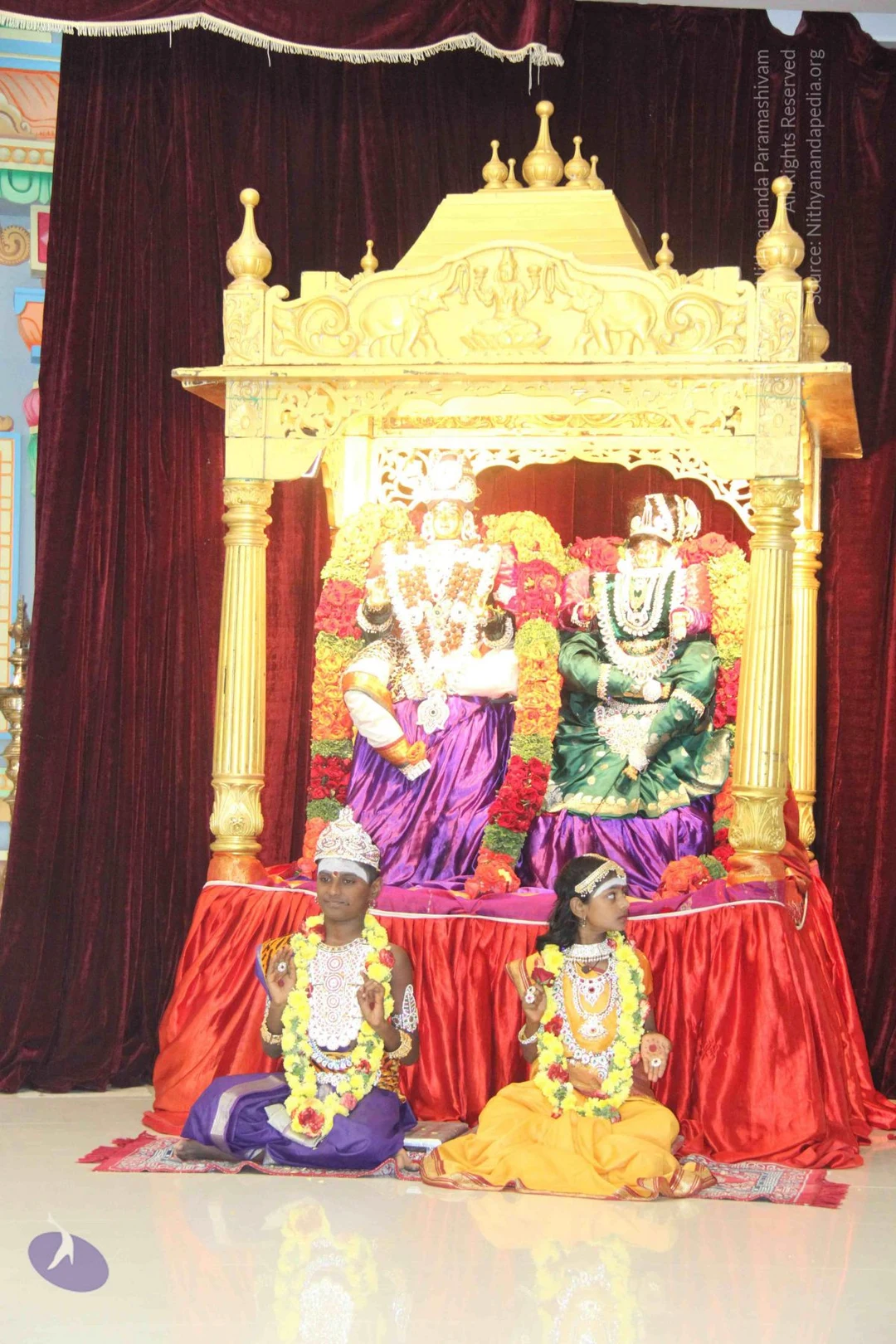
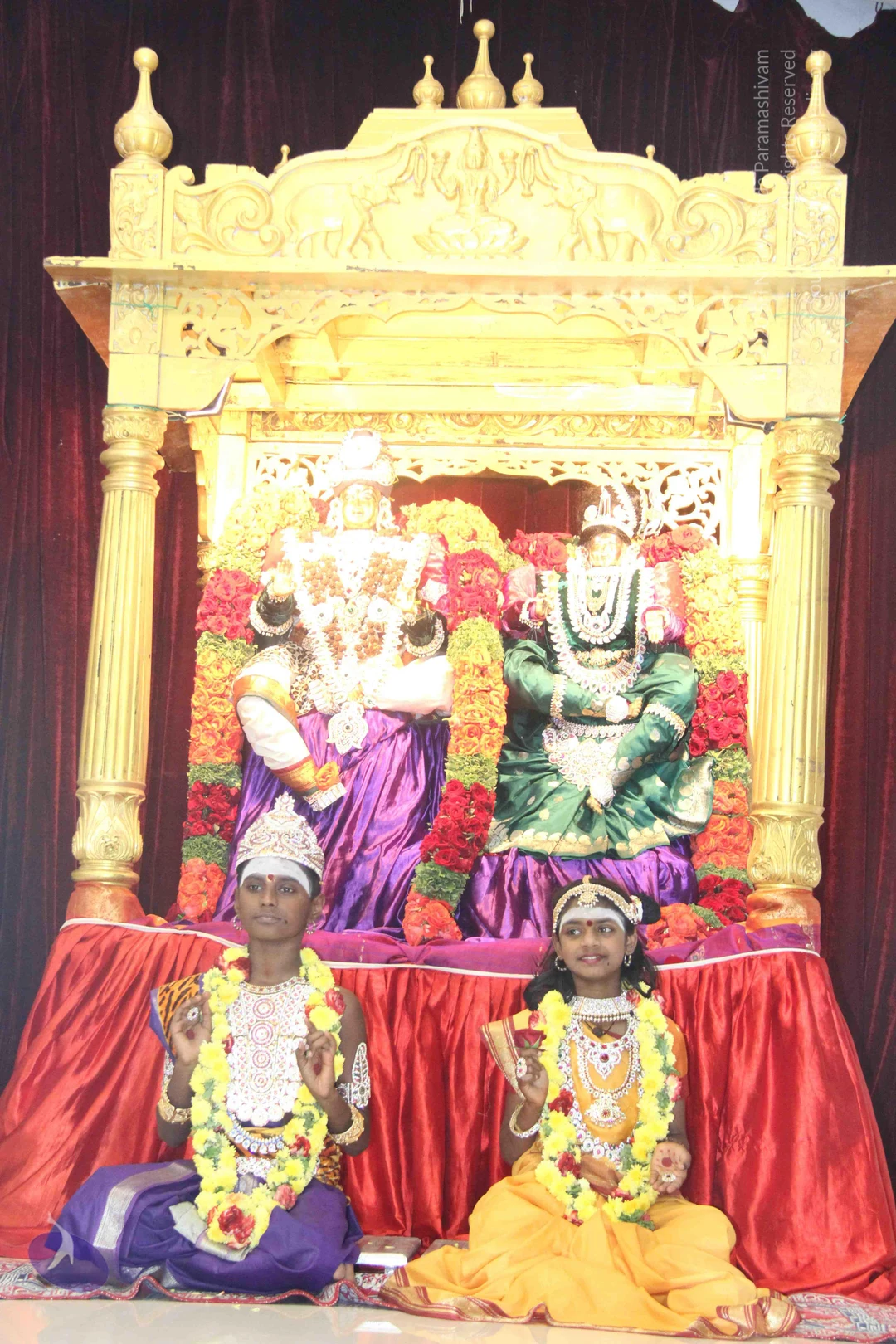
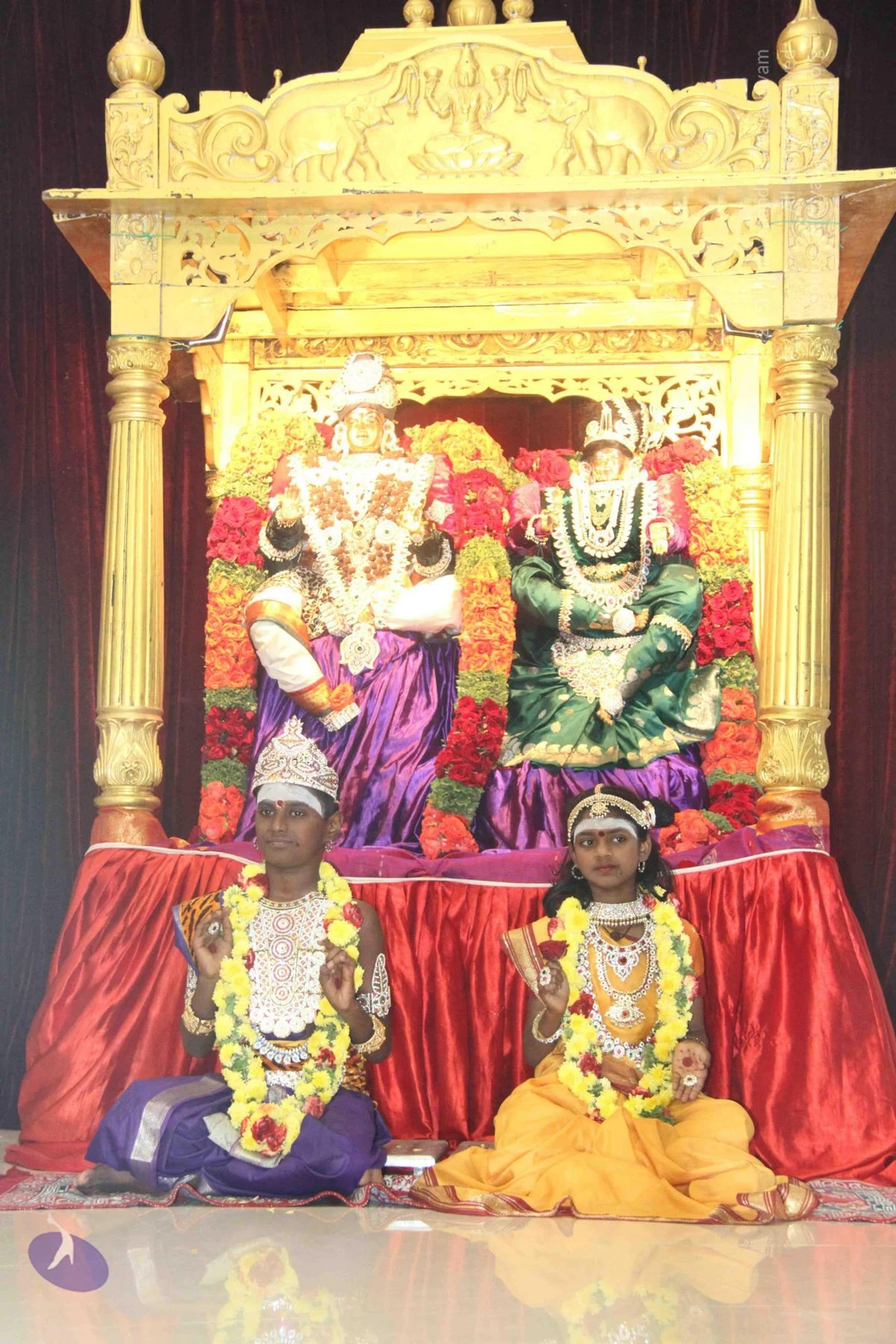
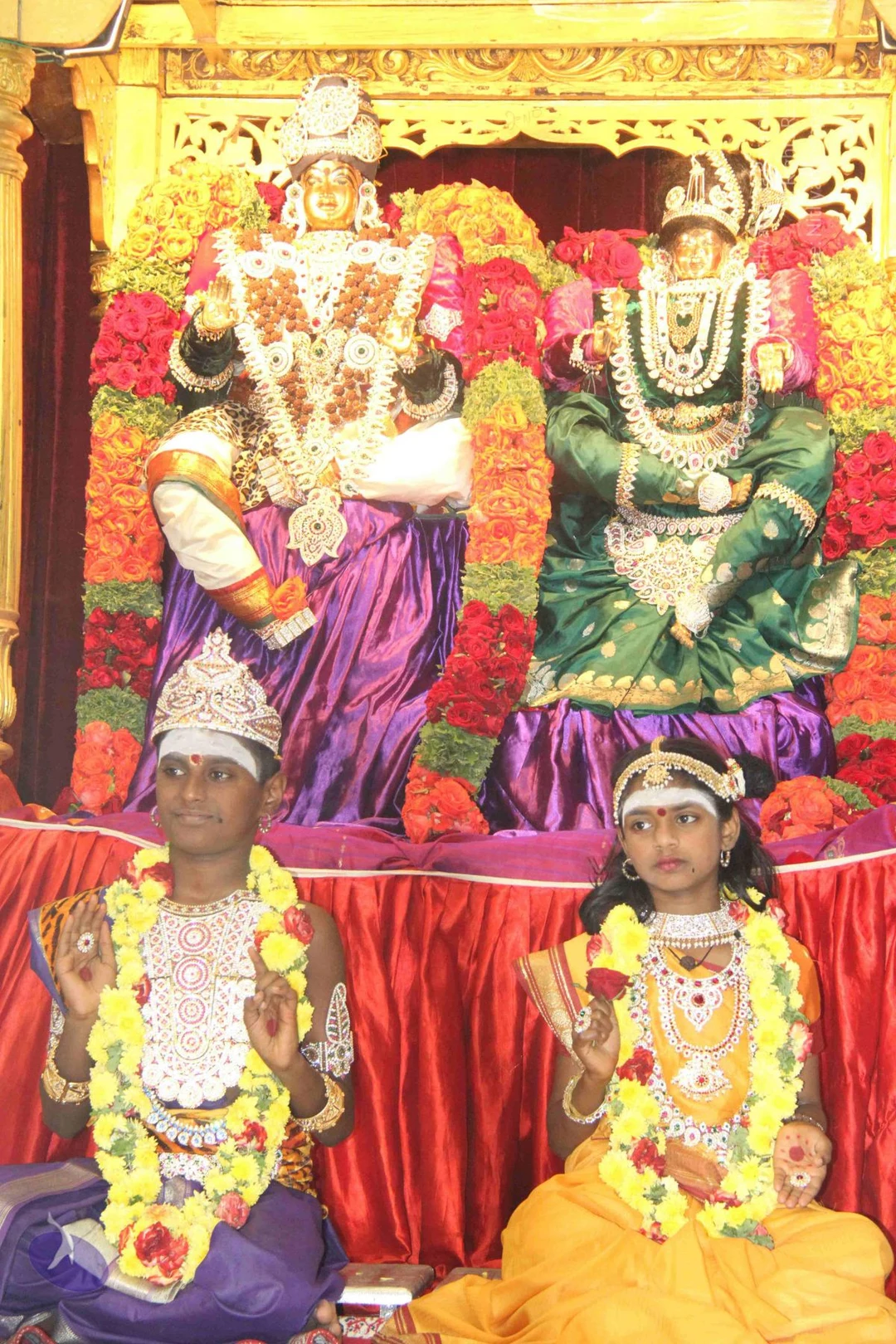
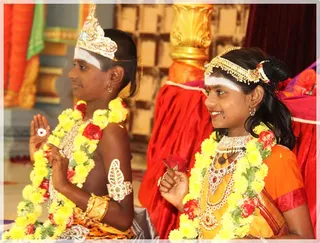
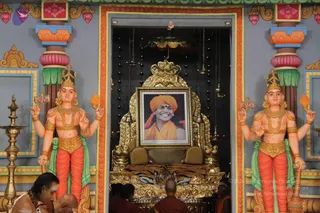
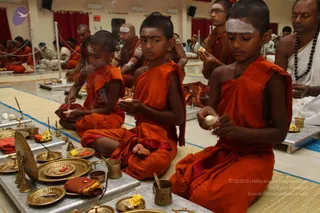
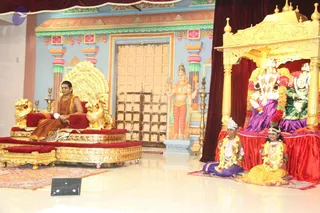
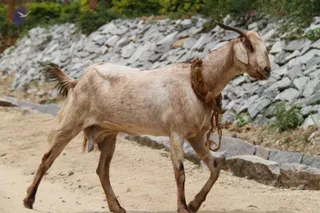
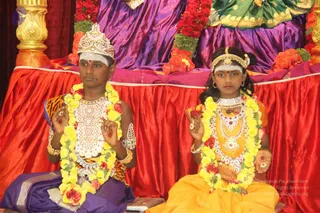
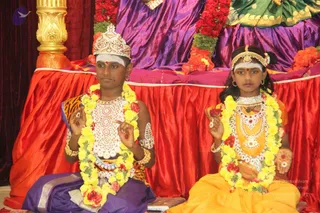
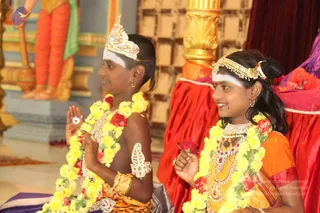
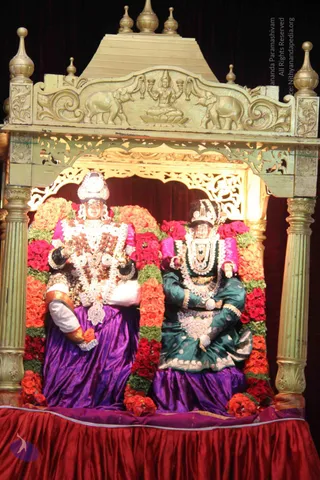
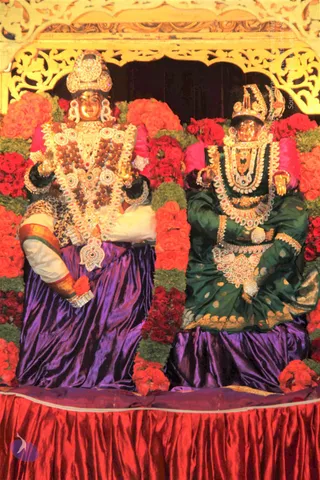
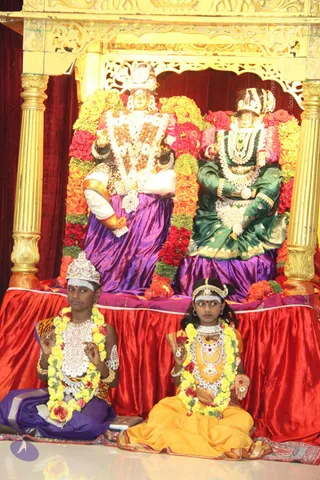
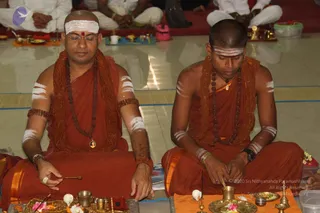
A light tan and white goat stands in profile on dry ground in front of a bank of pale grey rocks and blurred green foliage. A frayed brown fibre rope is tied around its neck, hanging down over its chest. Its curved horns and short ears are visible.Two children sit cross-legged on a red draped platform before a gilded shrine with two decorated deity murtis, one in purple and white with a crown, the other in green with gold embroidery and jewelled necklaces, both surrounded by red, orange and yellow flower garlands and gold filigree arches and columns. In the foreground a boy wears a silver jewelled crown, white forehead markings, a yellow and white garland, silver ornaments and a purple lower garment, his hands held in mudra gestures. Beside him a girl in an orange-yellow dress wears a silver headpiece, silver necklaces, a yellow and red garland and white forehead markings, her hand raised in a gesture. Both children are seated in a worship setting with a visible kalasha-like shrine arrangement behind them.Three young boys with shaved heads and white sacred marks on their foreheads sit cross-legged on a mat, wearing saffron-orange robes with red-maroon borders. The boy on the left wipes a pink cloth on a brass tray, the middle boy holds a small red-tinted offering, and the boy on the right holds a small item over a brass plate. Brass oil lamps, a brass kalasha-like vessel, incense sticks, flower petals and small brass bowls are arranged on a silver-toned tray in front of them. Behind them, older men in saffron robes with rudraksha malas and a man in white stand in a hall with red curtains and a microphone stand, appearing to take part in a puja.

September 28 2013

Original wiki page
Contents

Description:

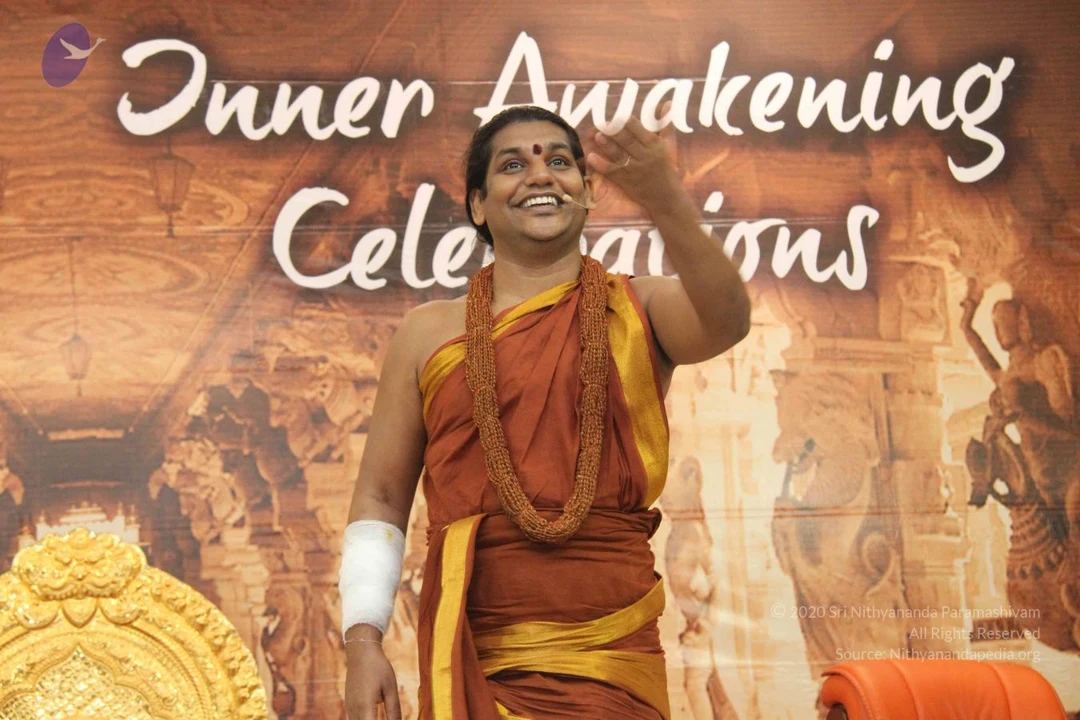
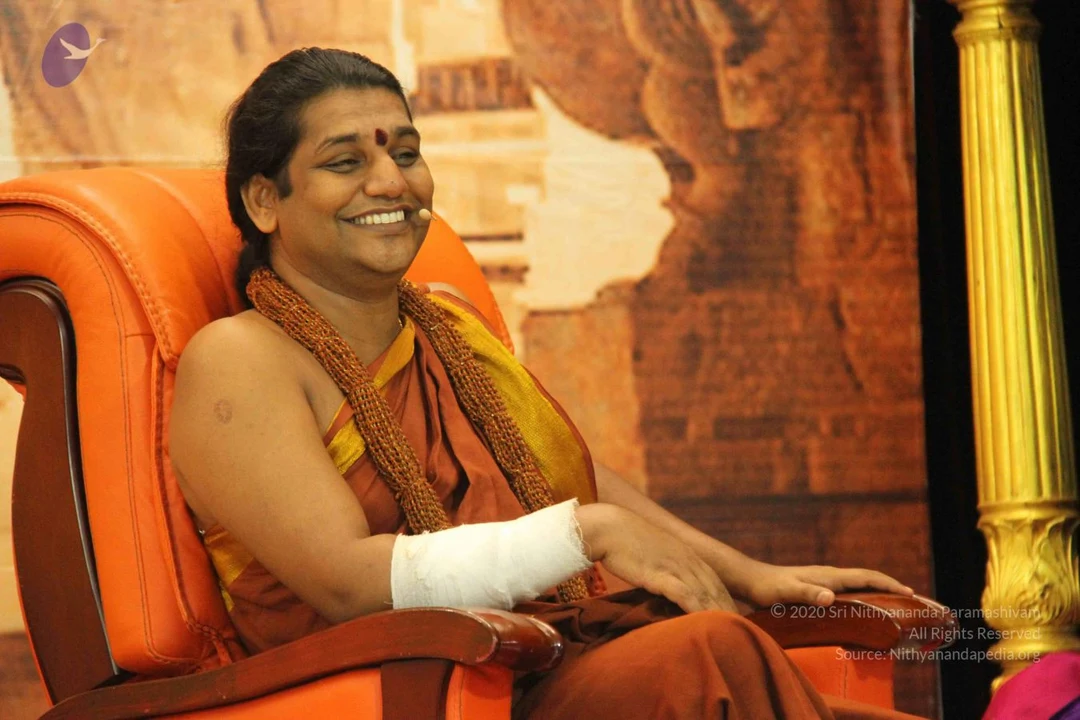
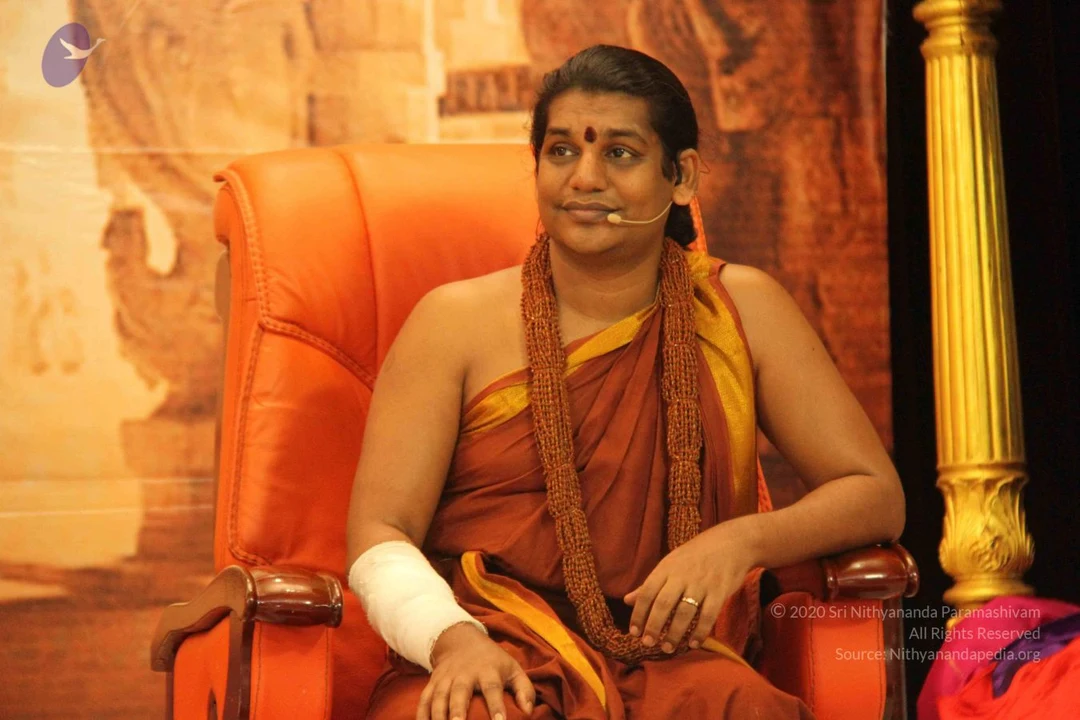
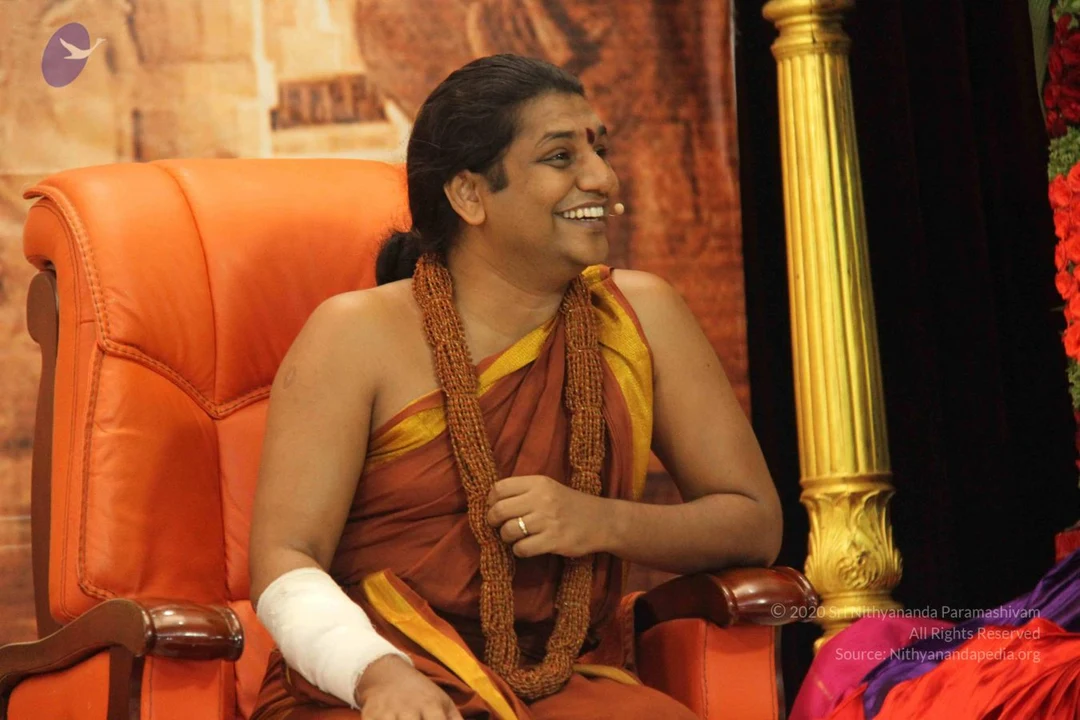
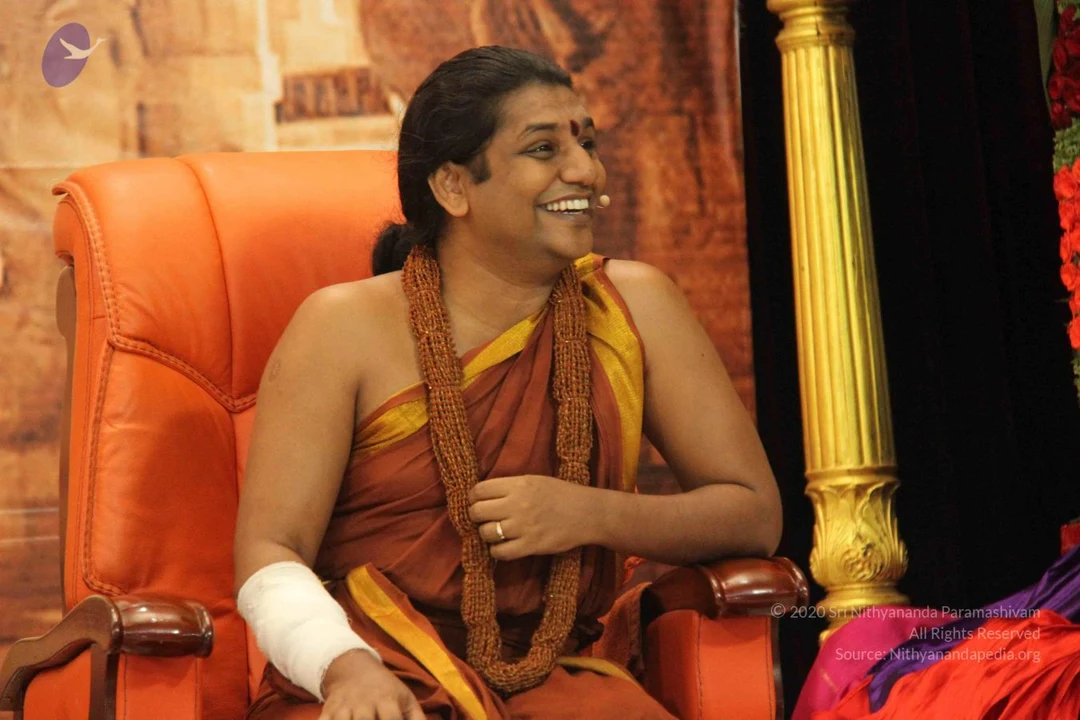
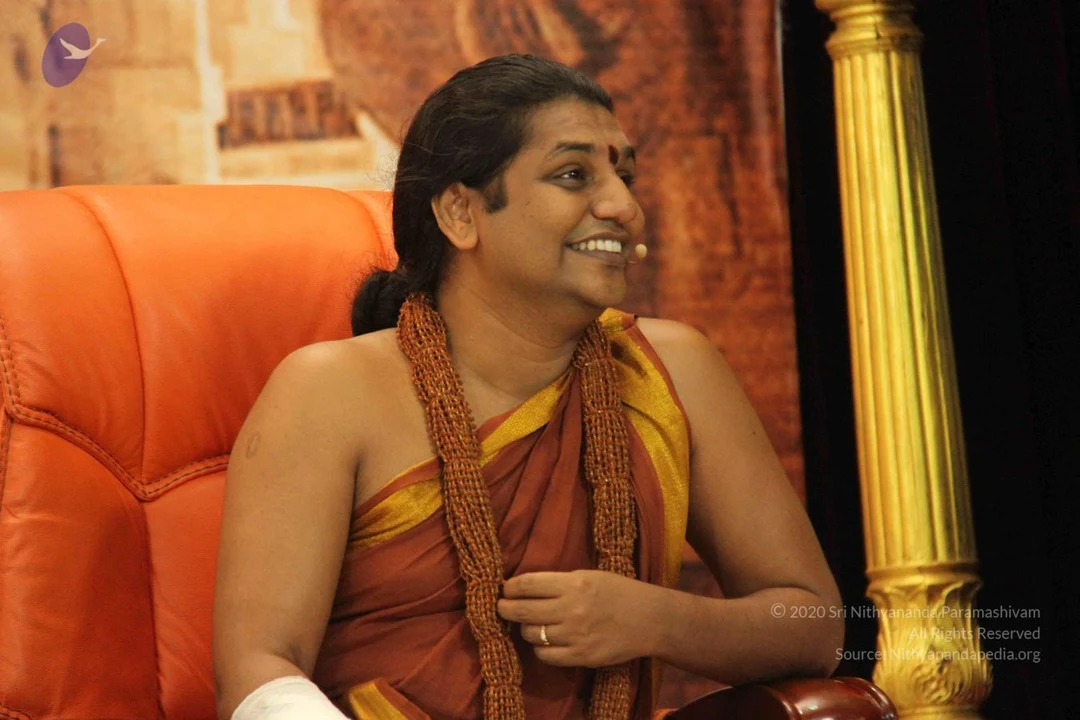
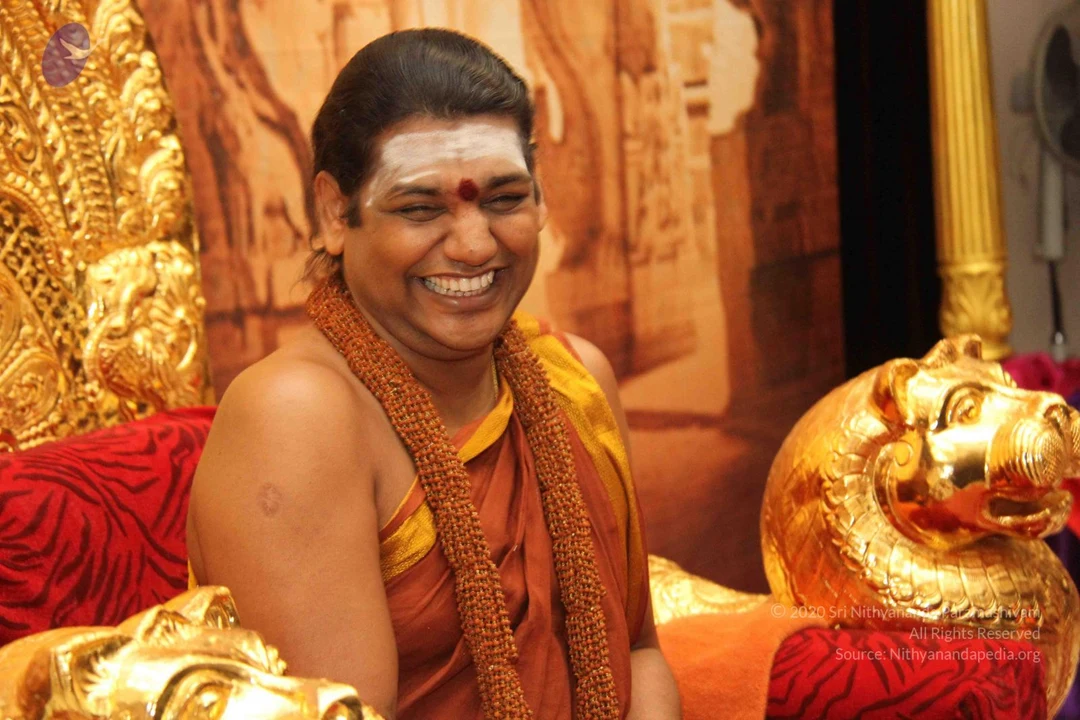
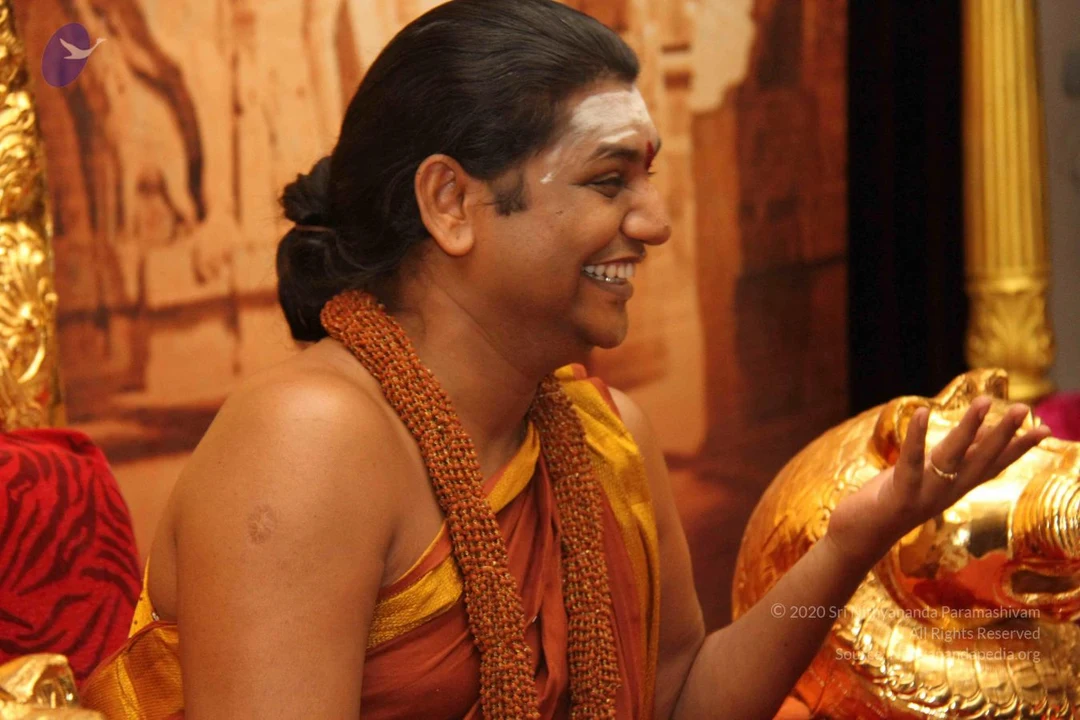
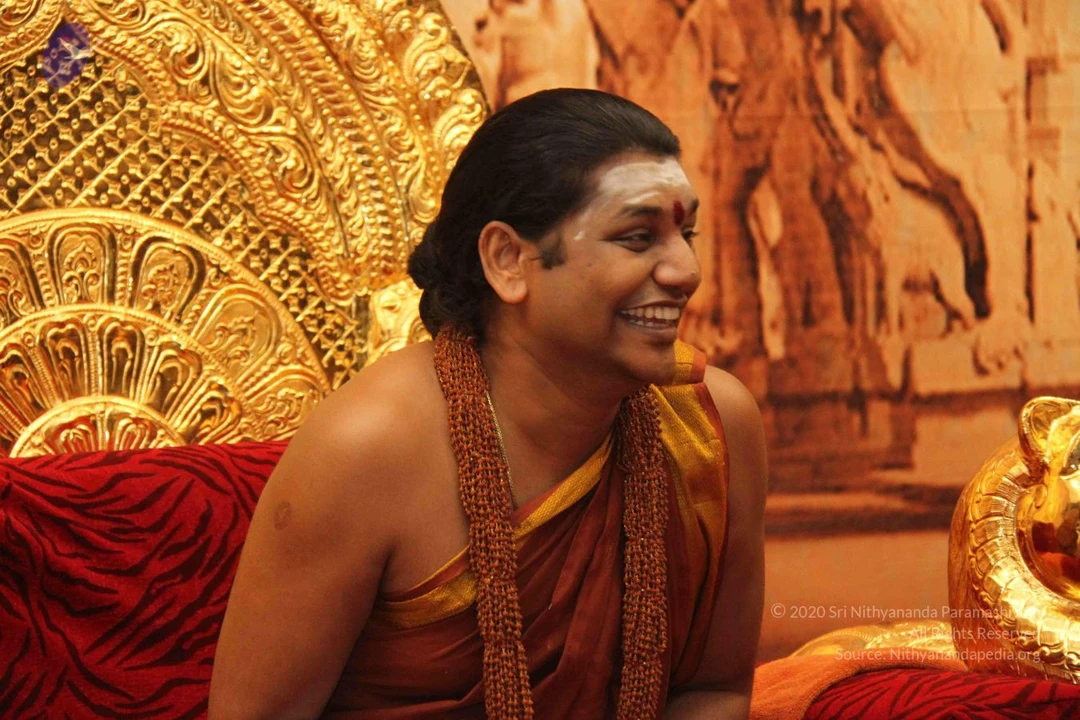
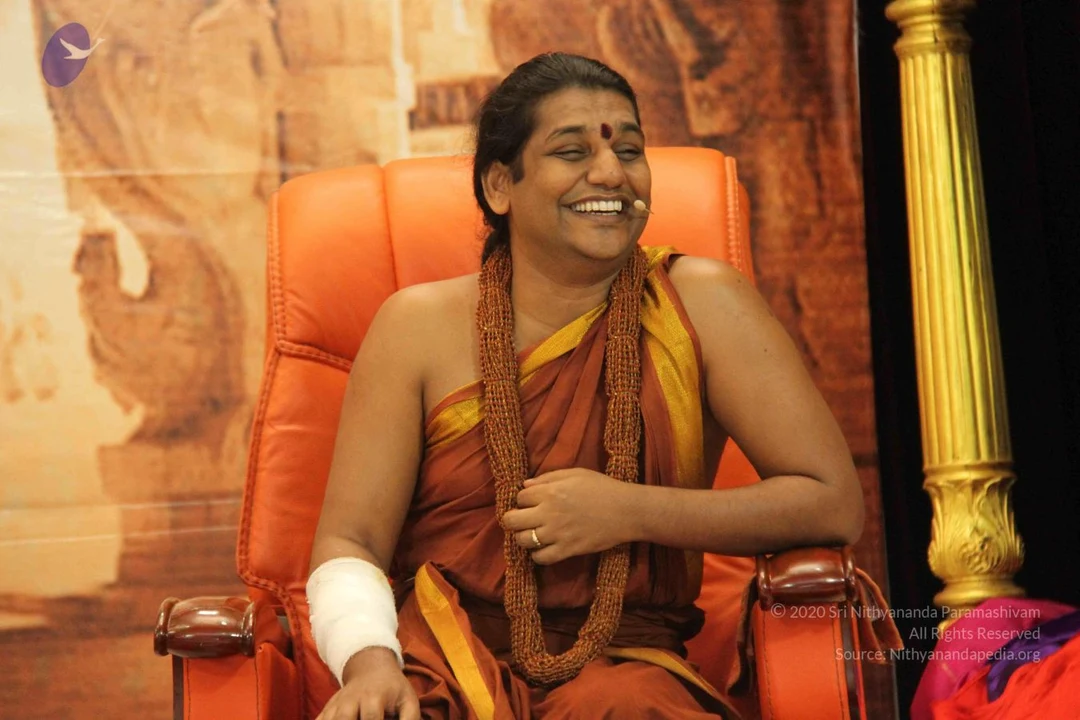
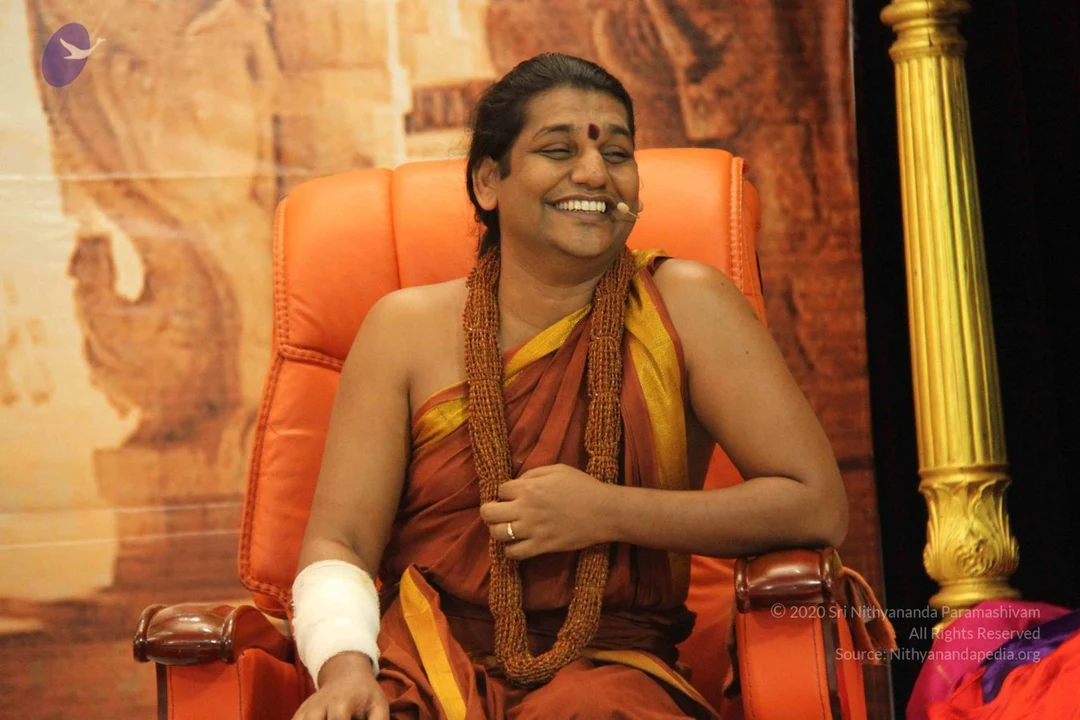
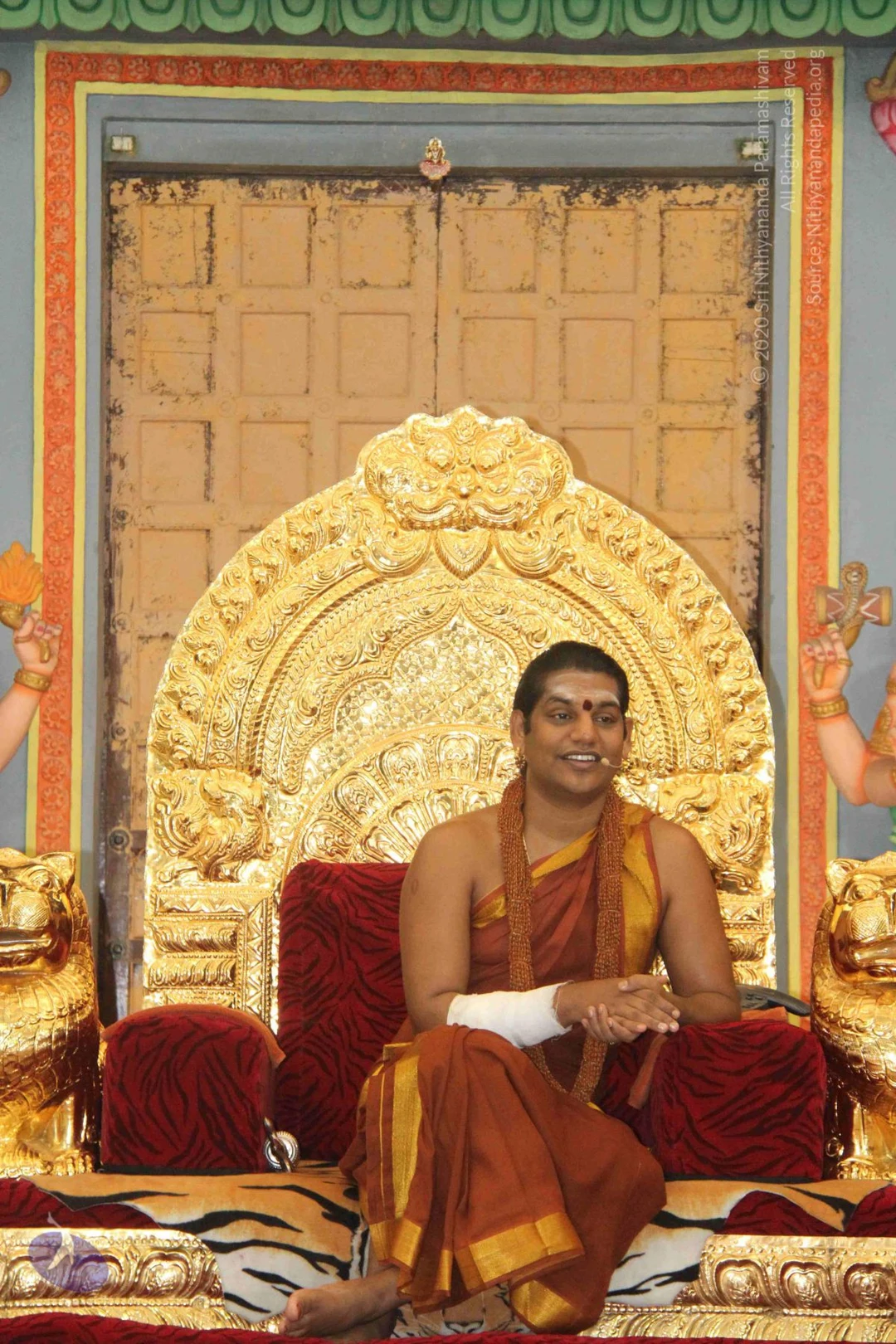
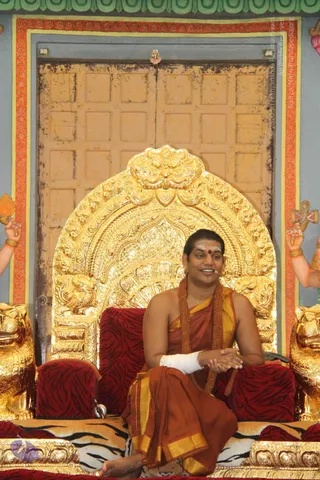
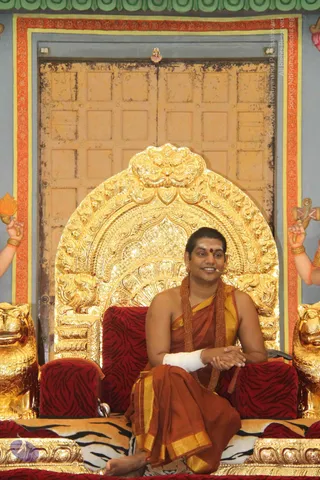
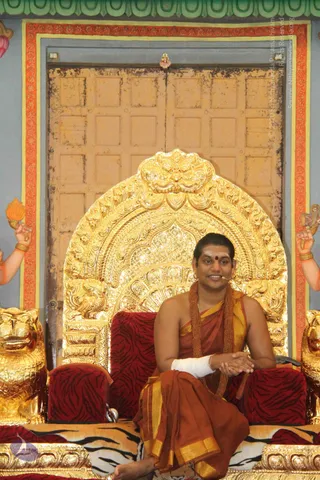
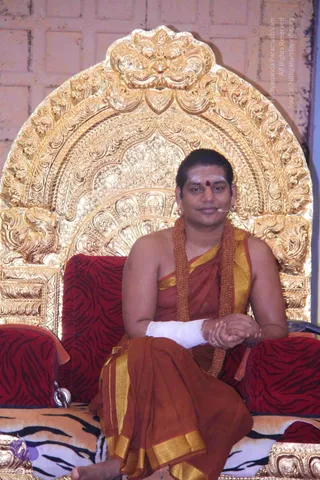
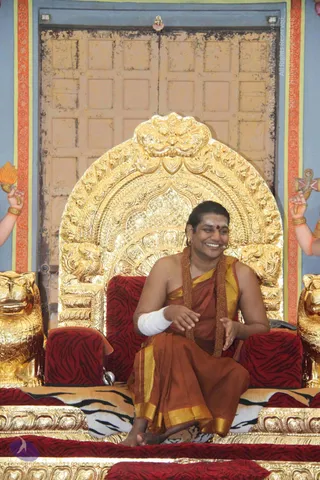
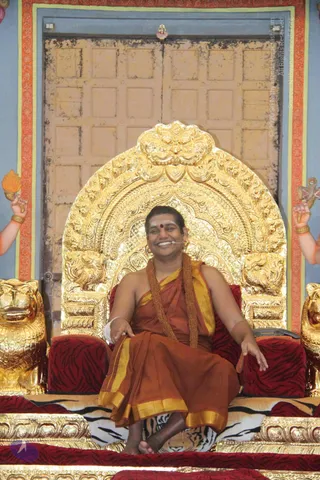
In today’s morning Satsang, Paramahamsa Nithyananda outlines the details for the state of completion, the experience of completion, and how to perform completion. First and most importantly, we must be complete with ourselves. Then, when we complete with others, we can measure our maturity by having the understanding that people cannot be changed. This is living acceptance, not out of powerlessness, but out of non-resistance. When we come from a space of enriching, we are cultivating transformation in people by the process of completion, not the violence of trying to change them.

Link to Video:

VideoAudio
VideoAudio

Transcript:

Nithyanandeshwara Samaarambhaam Nithyanandeshwari Madhyamaam | Asmadaachaarya Paryanthaam Vande Guru Paramparaam ||

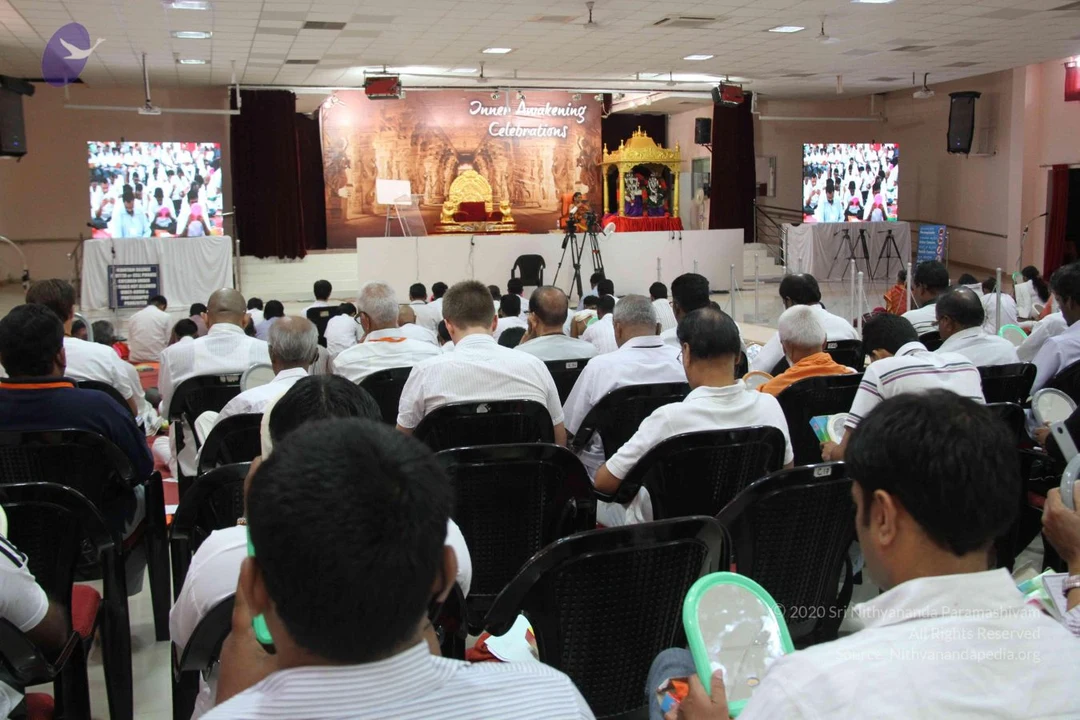
I welcome all the devotees, disciples, samajis, and satsanghis sitting with us all over the world at this moment through Nithyananda TV, Sadhna TV, Lotus News Channel, and two-way video-conferencing having Nayana Deeksha.

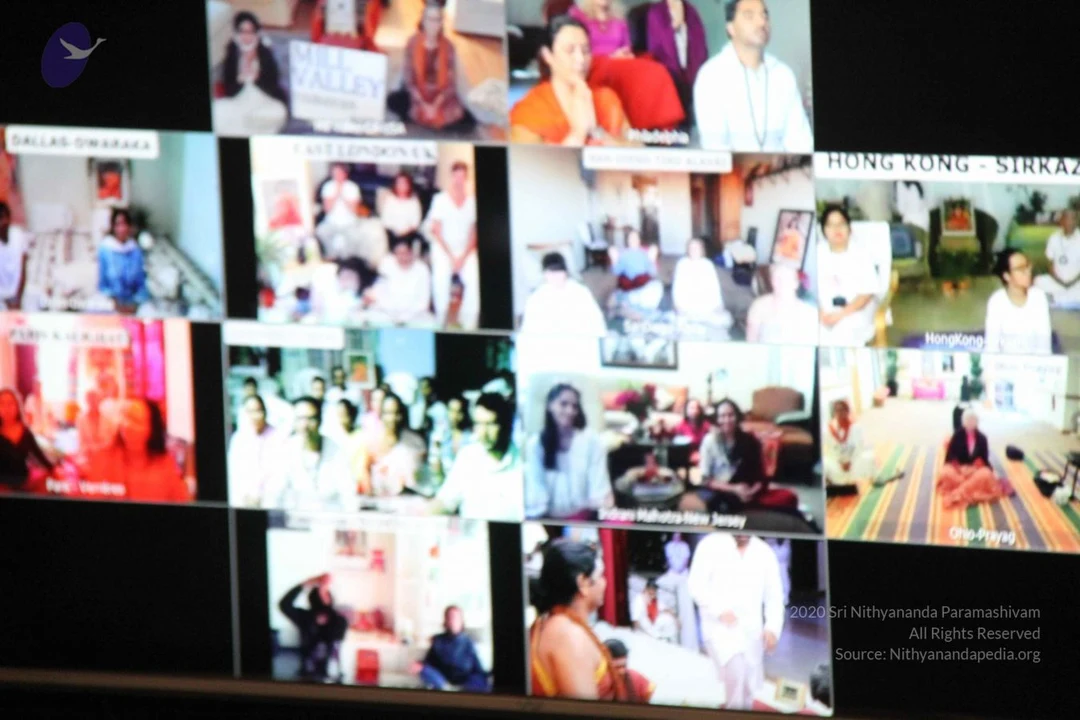
Cities sitting with us in two-way video-conferencing having Nayana Deeksha:Houston-Kalahasti, Charlotte-Srisailam, Ohio-Prayag, Washington-Sripuram, Kuala Lumpur, Toronto-Kailasam, San Jose-Madurai, Oklahoma-Somanatham, Los Angeles, Hyderabad Bahyanagara, Bangalore North, Netherlands, Devon-UK, Port Washington-New York, Hong Kong-Sirkazhi, East London-UK Vancouver-Bhubaneshwar, Dubai-Vaidyanatham, Dallas, Bogota-Colombia, New Zealand-Adi Arunachalam, Singapore, St. Louis-Tirumala, San Diego-Tirualavai, Kathmandu-Nepal, Monterrey-Mexico, Ajka-Hungary, Tiruvanmiyur, Oman-Sivagangai, Hyderabad Gupta Kashi………..Blessings!

With this I will start the satsang. I welcome all of you with my love and blessings.

Today is the 958th Nithya Satsang, excluding all the satsangs delivered before 2010! It is not including the evening Tamil Satsangs also. So, just now I told them to number from the beginning. So, may be in the next few days, we will get the real number. And 20th batch of Inner Awakening, 17th batch of eN-Genius, 19th batch Nirahara Samyama, 9th batch The Samyama.

Today, I’ll expand on, please listen, today I will expand on “HOW THE COMPLETION IS GOING TO HELP YOU IN LISTENING, HOW LISTENING IS GOING TO HELP YOU IN COMPLETION”.

Before entering into the satsang, today’s Leela Dhyána:

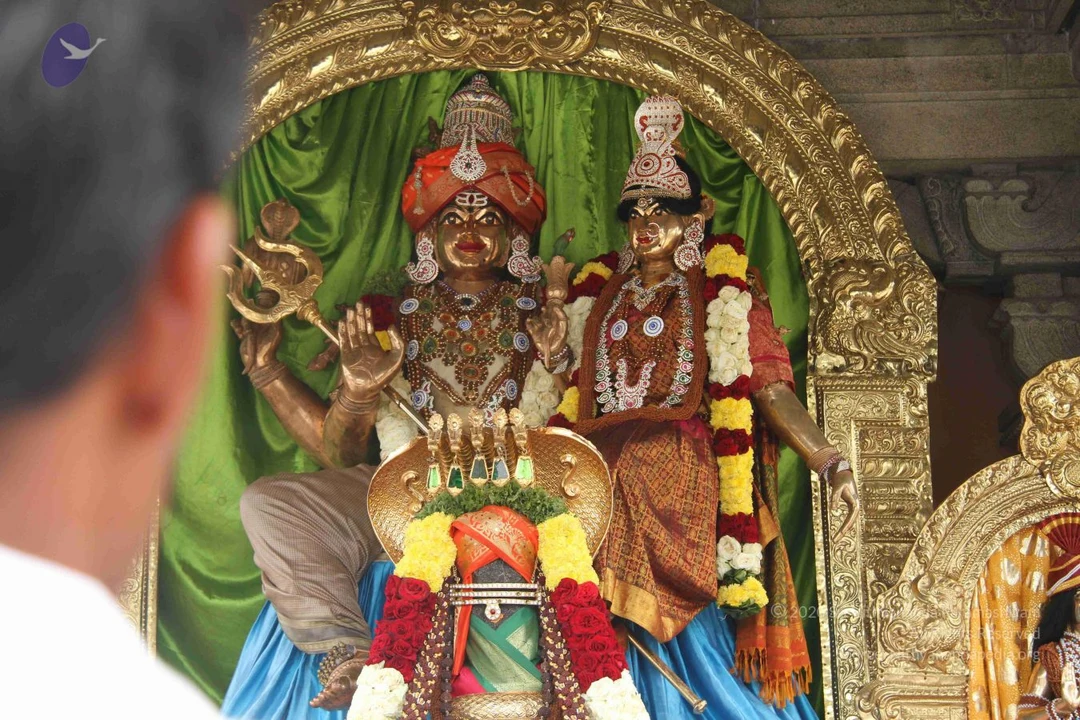
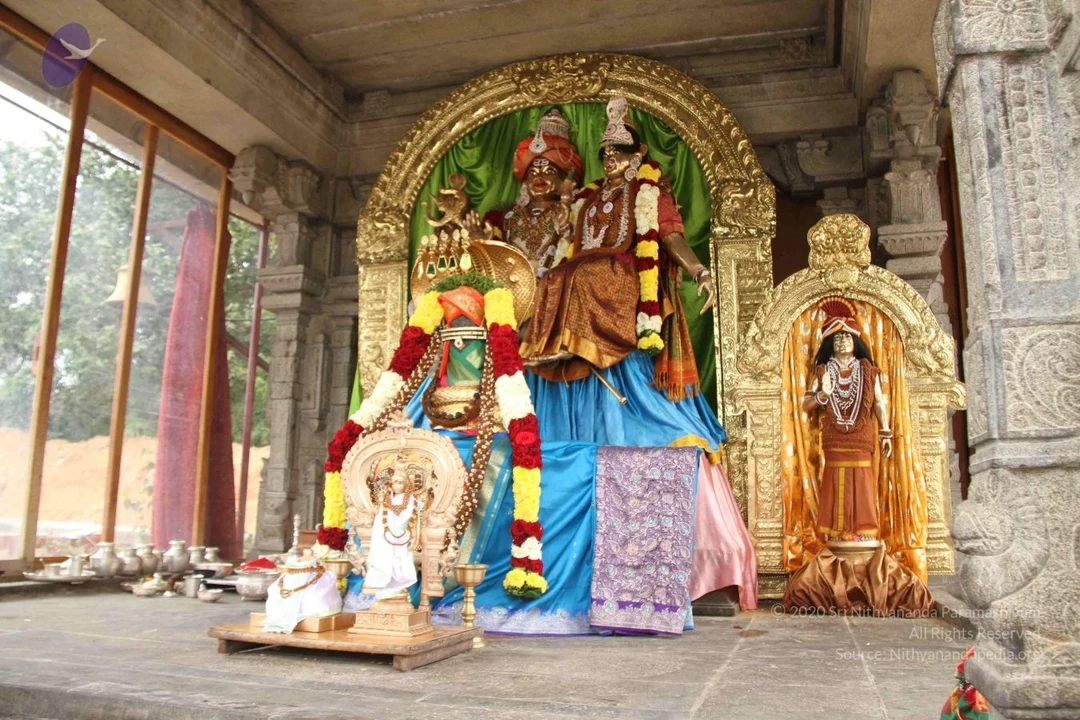
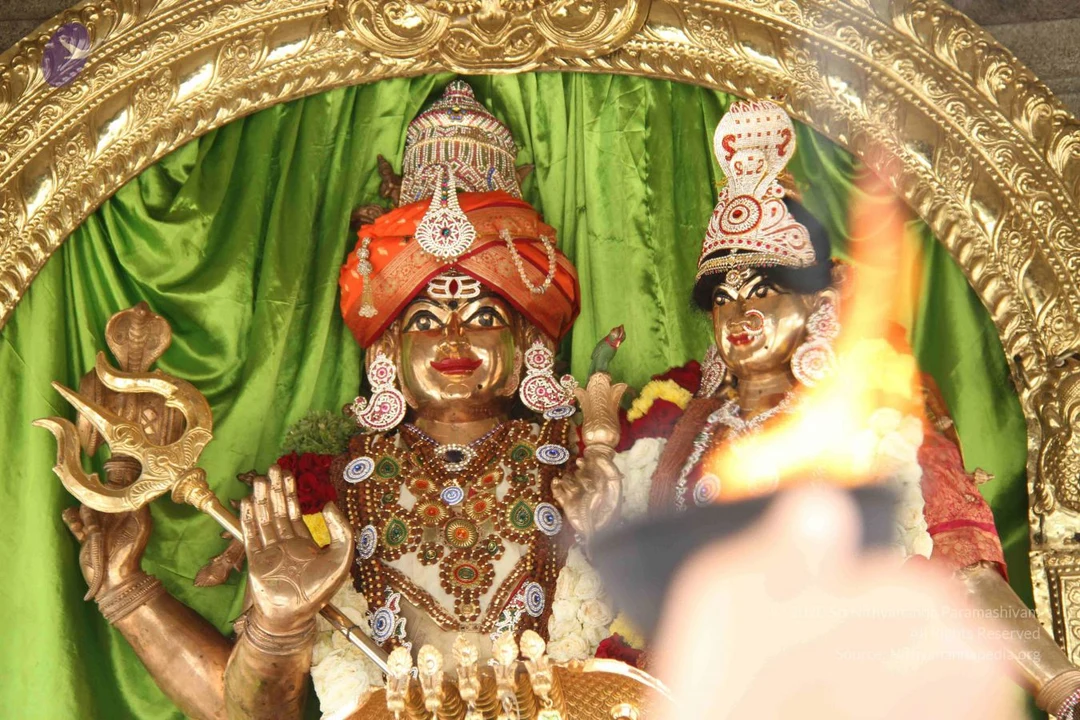
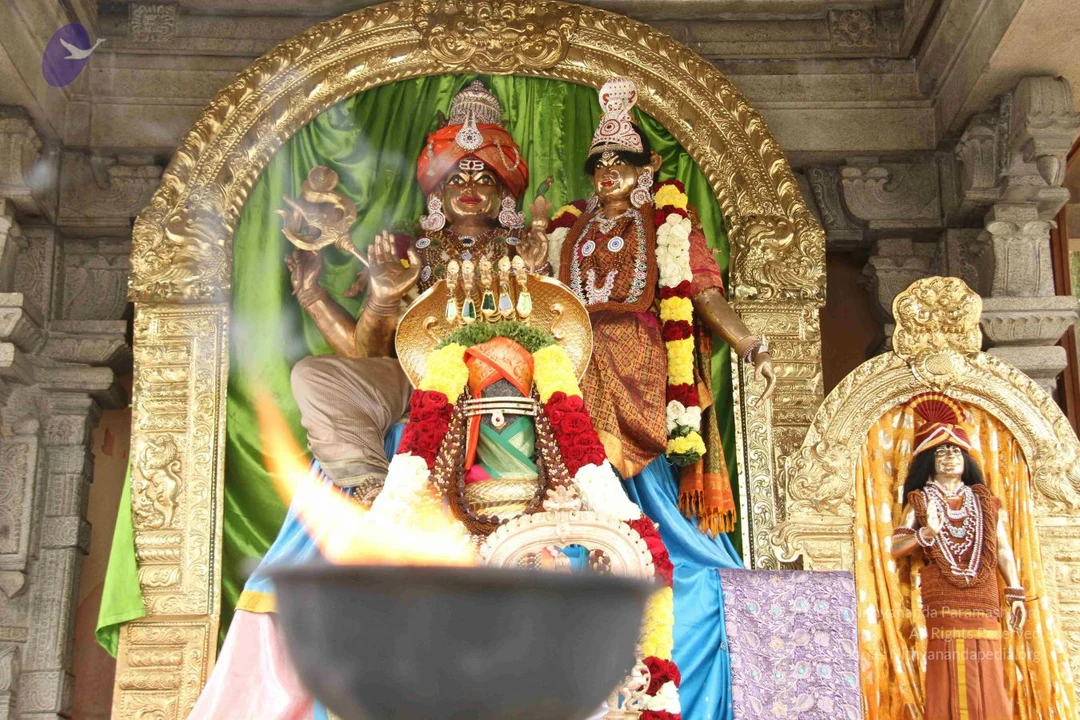
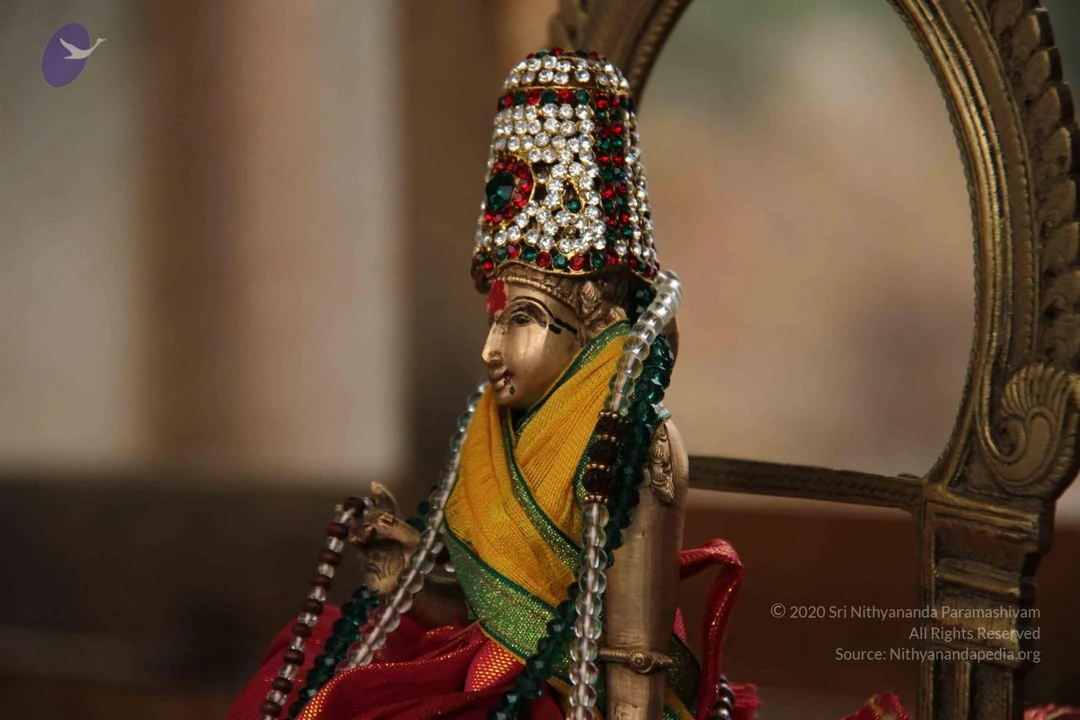
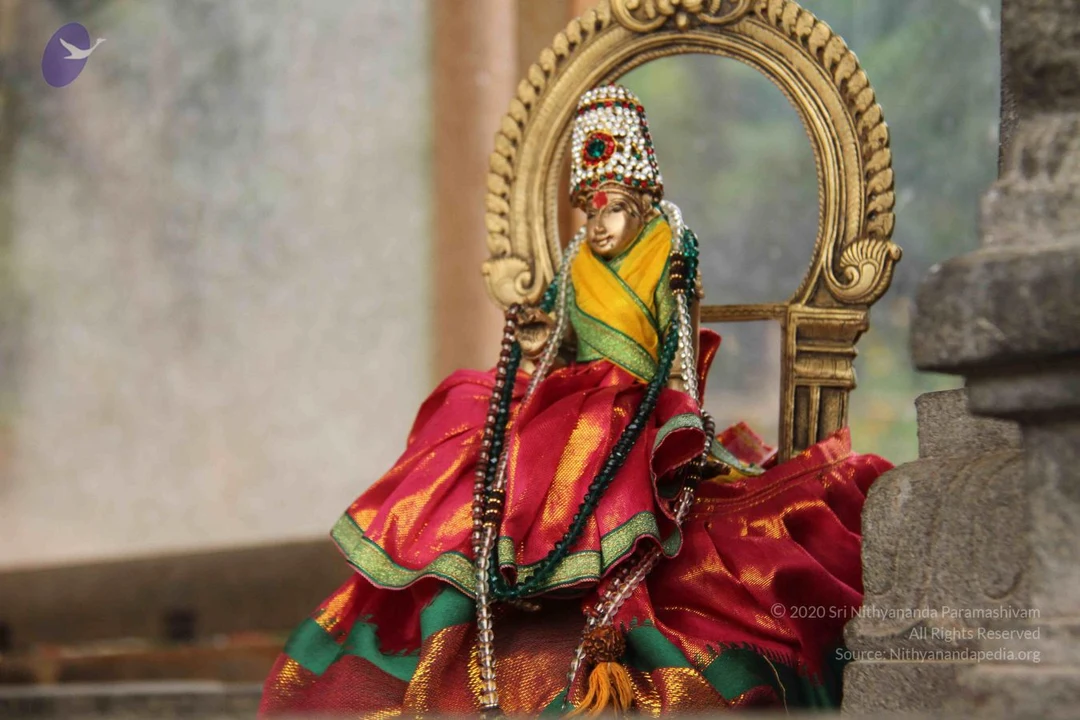
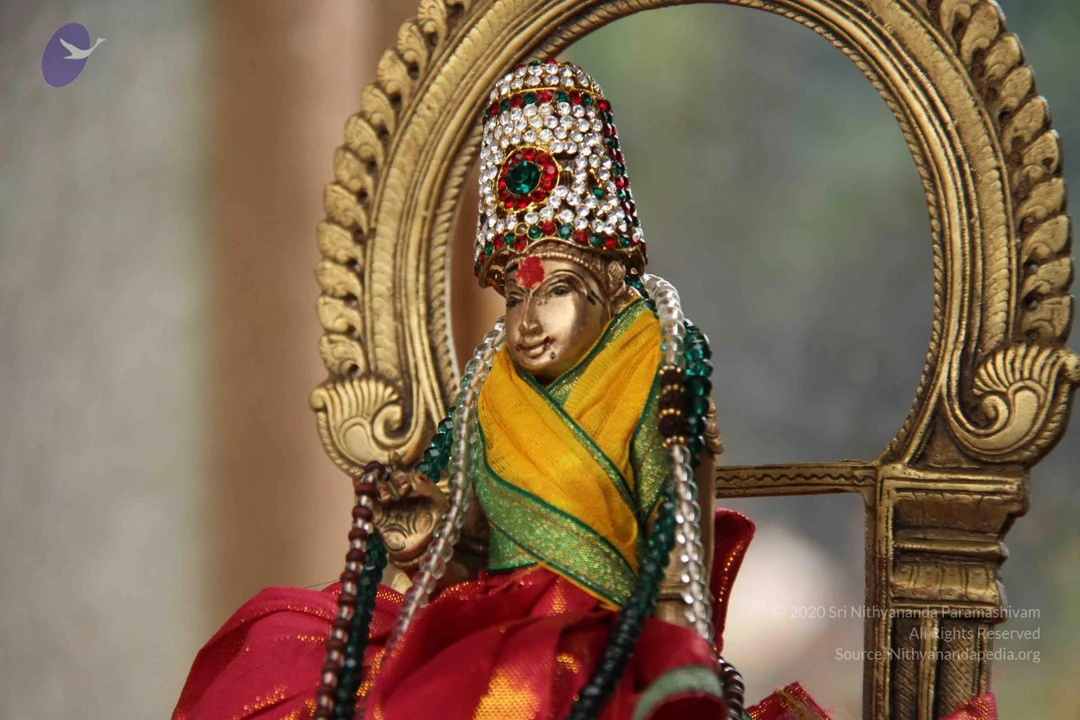
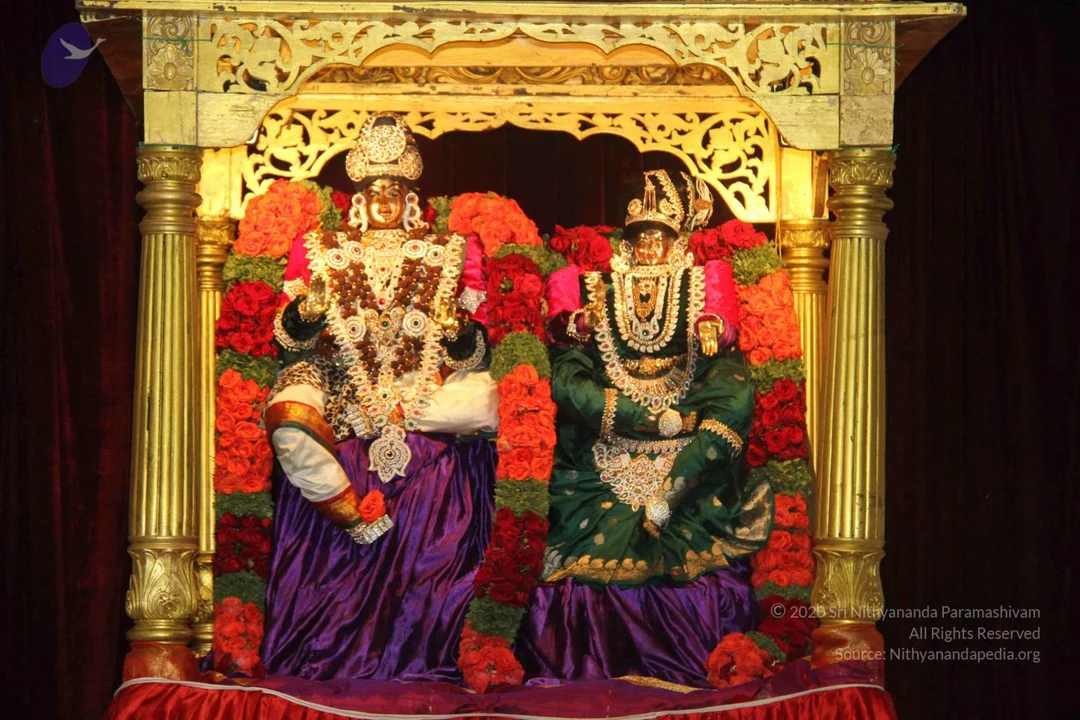
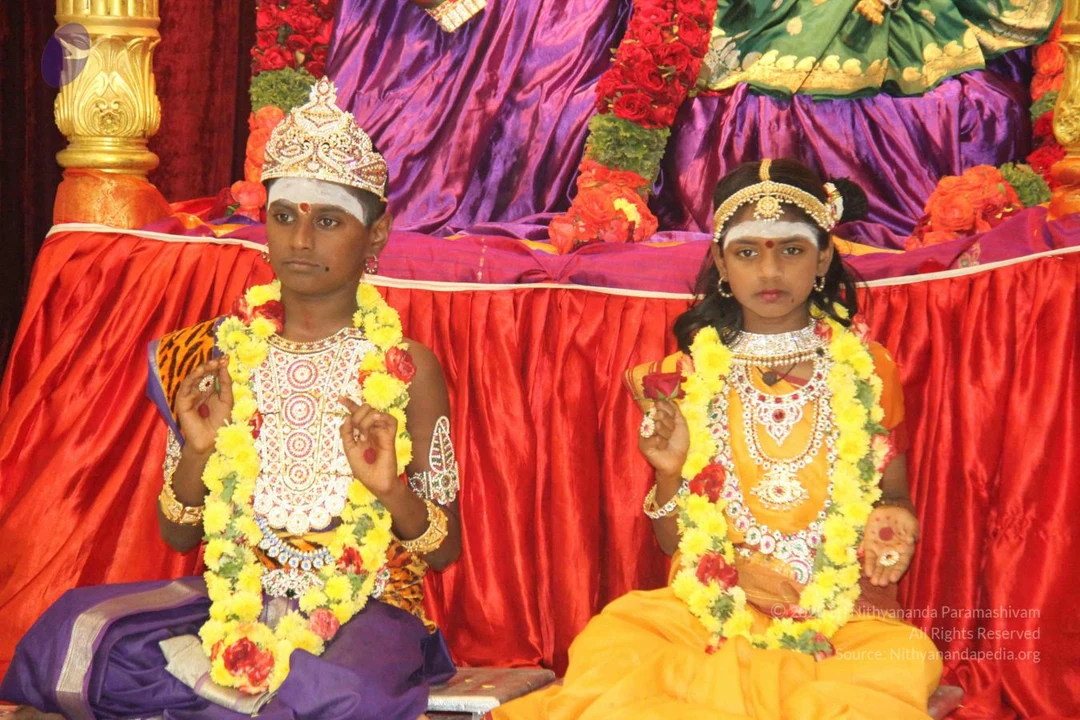
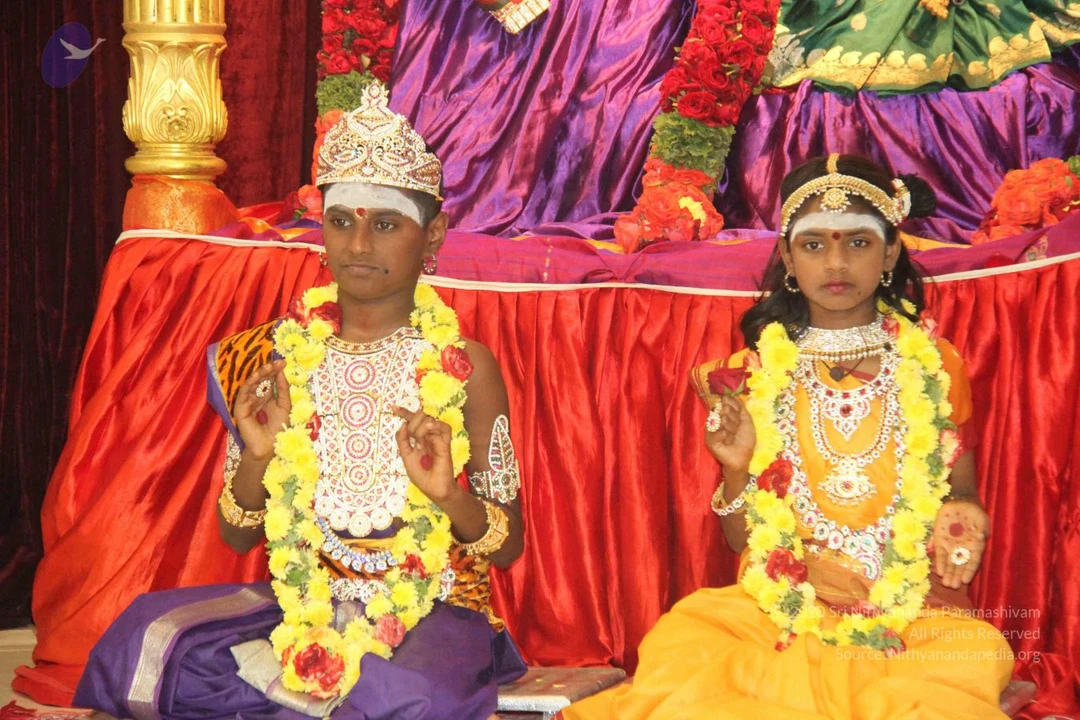
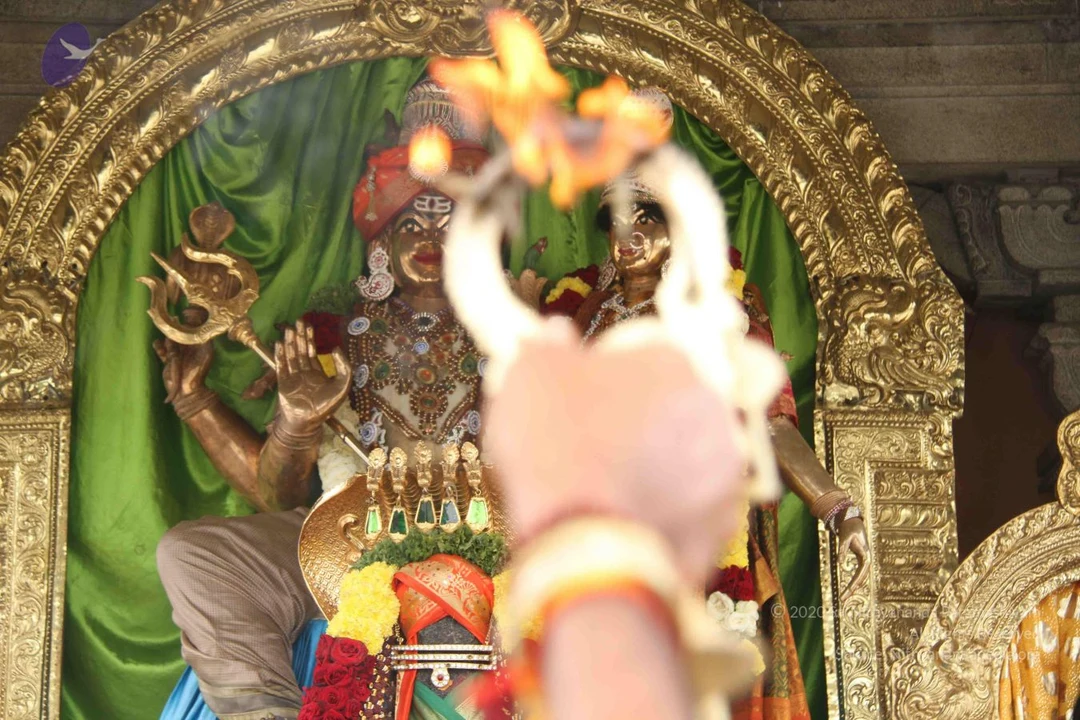
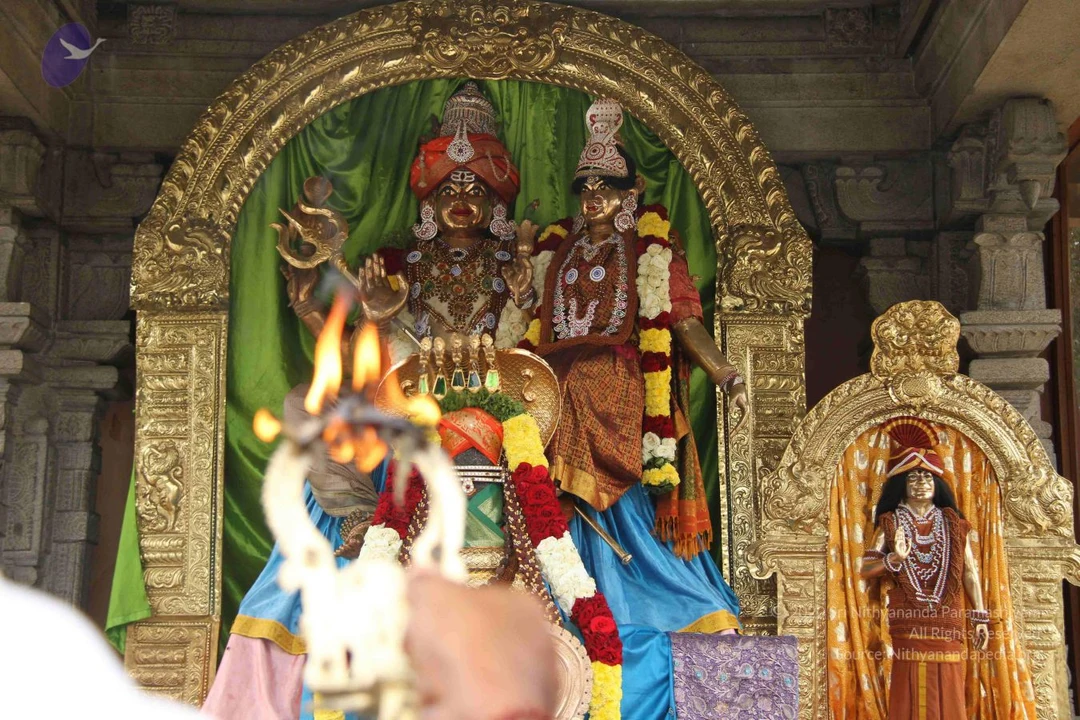
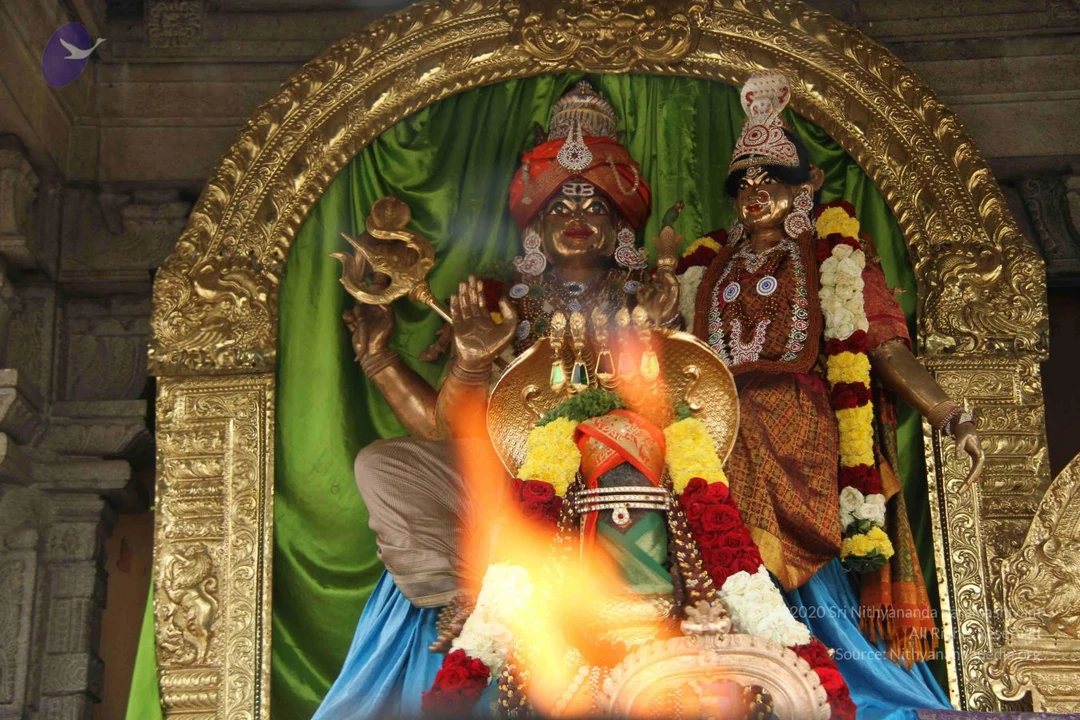
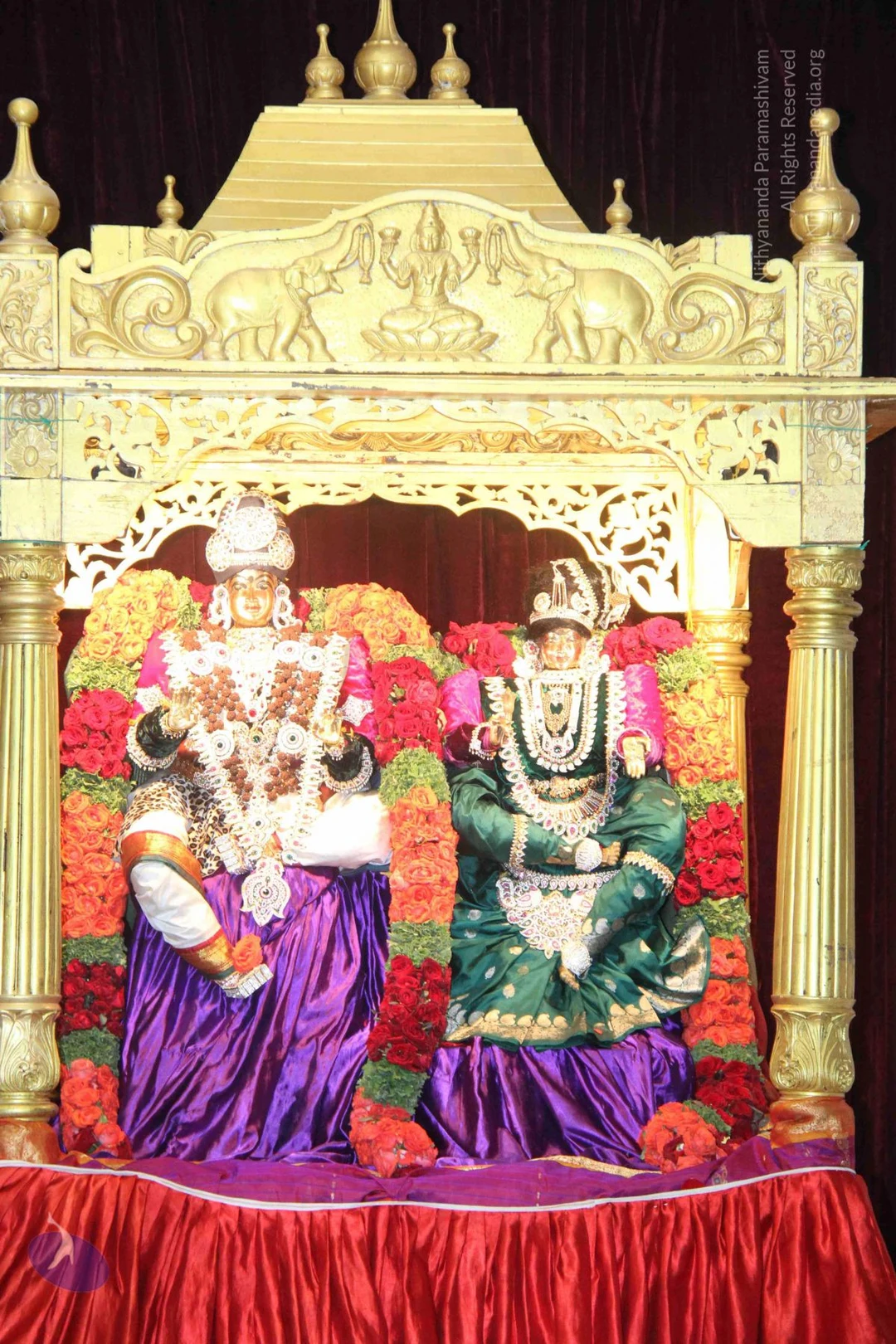
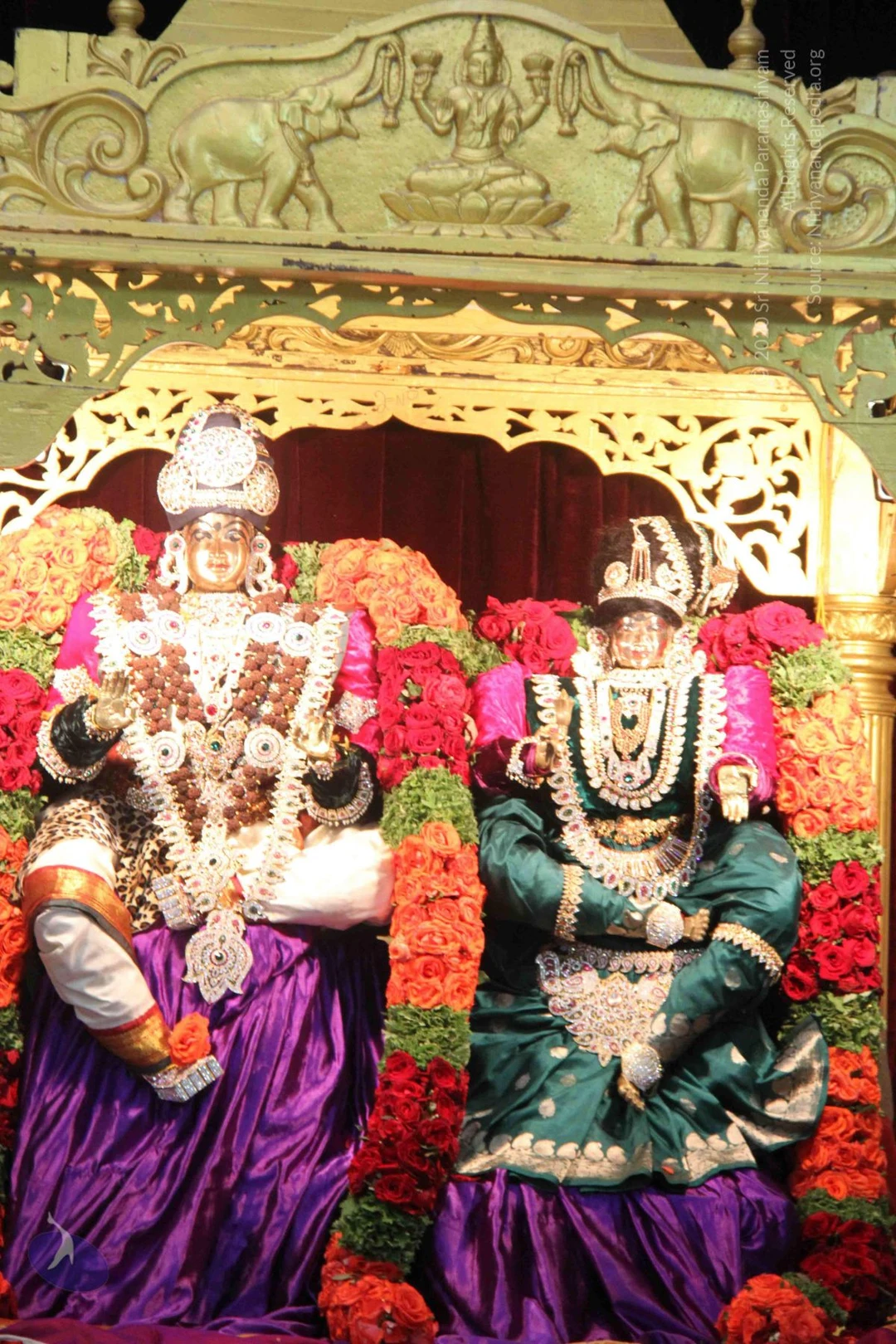
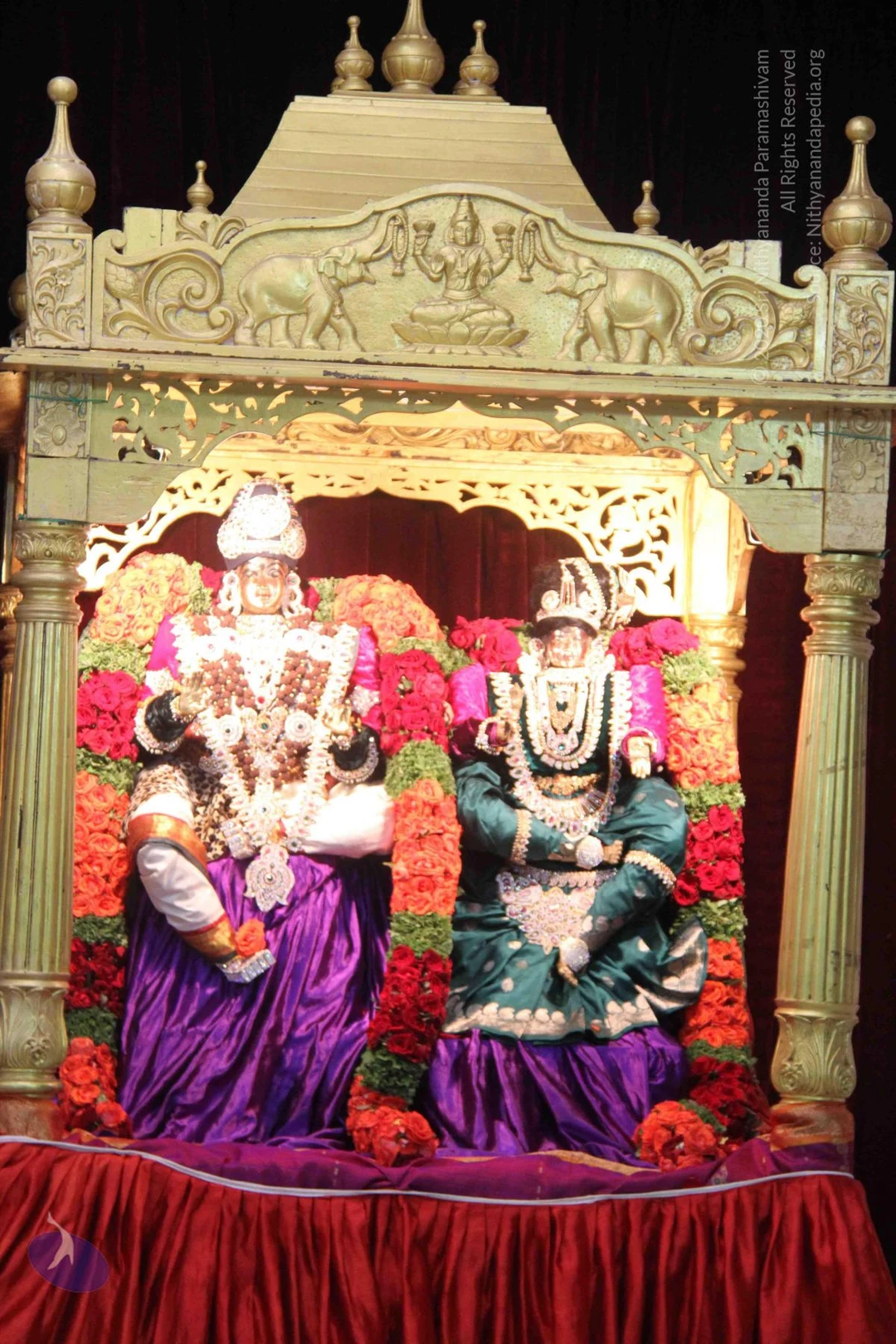
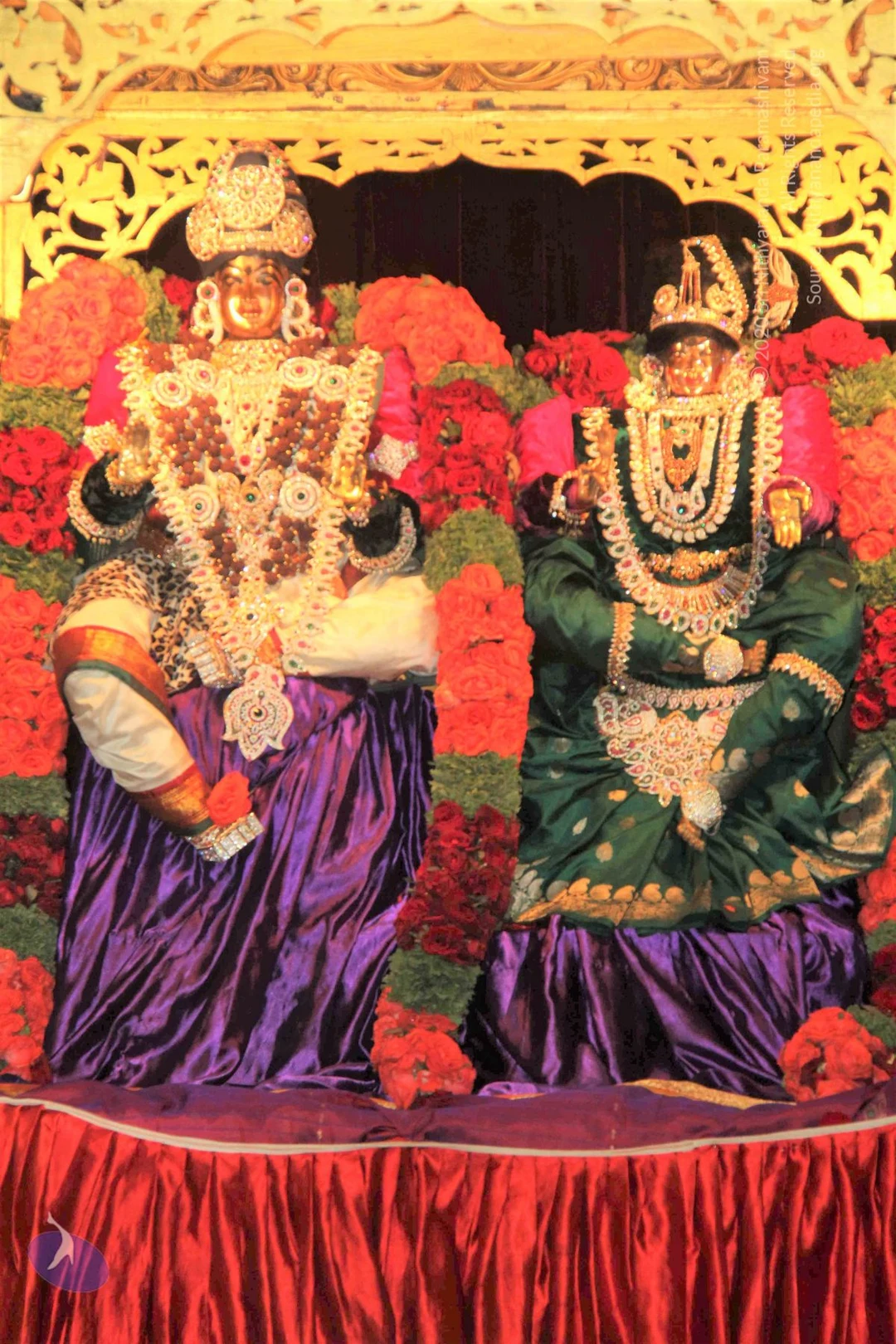
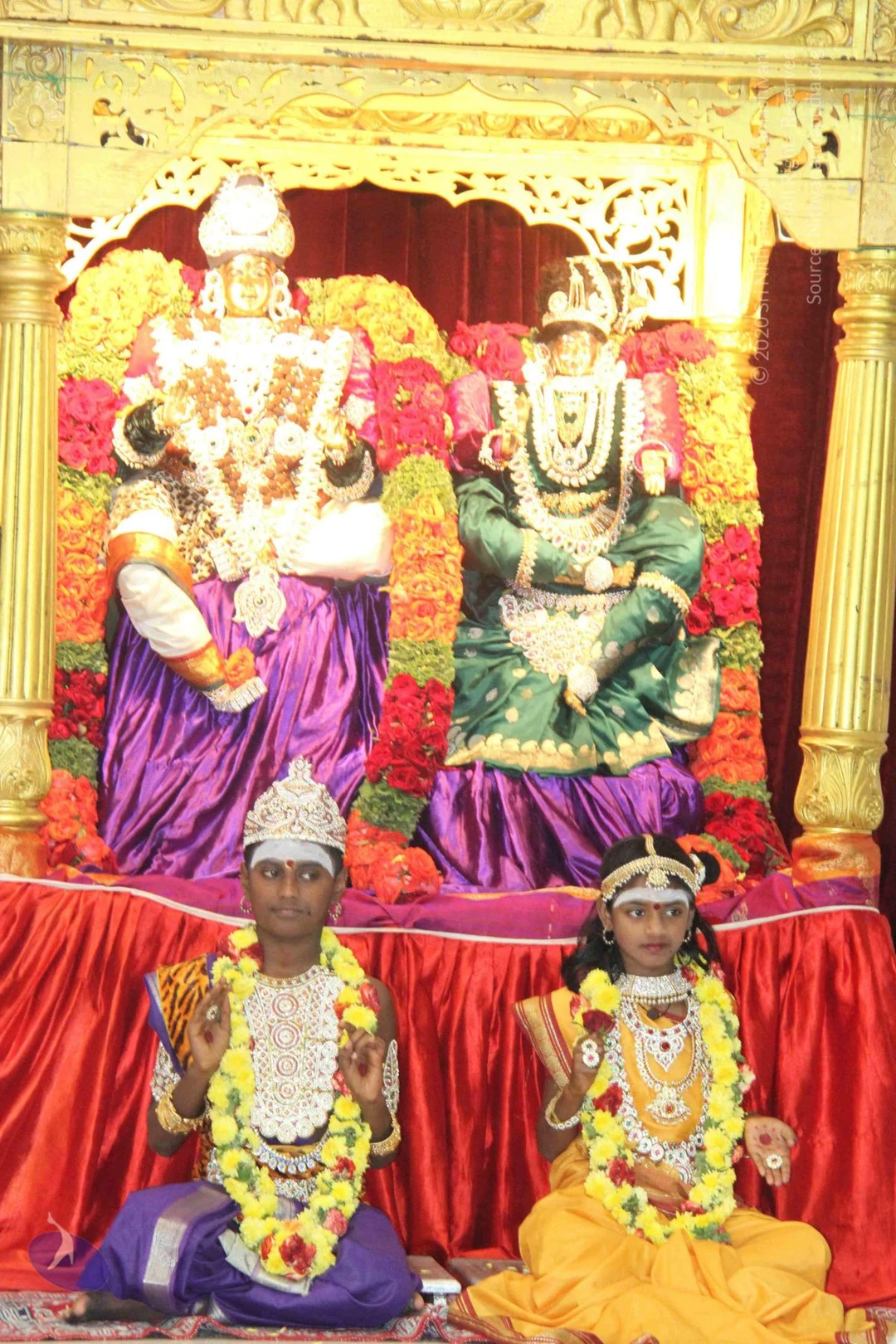
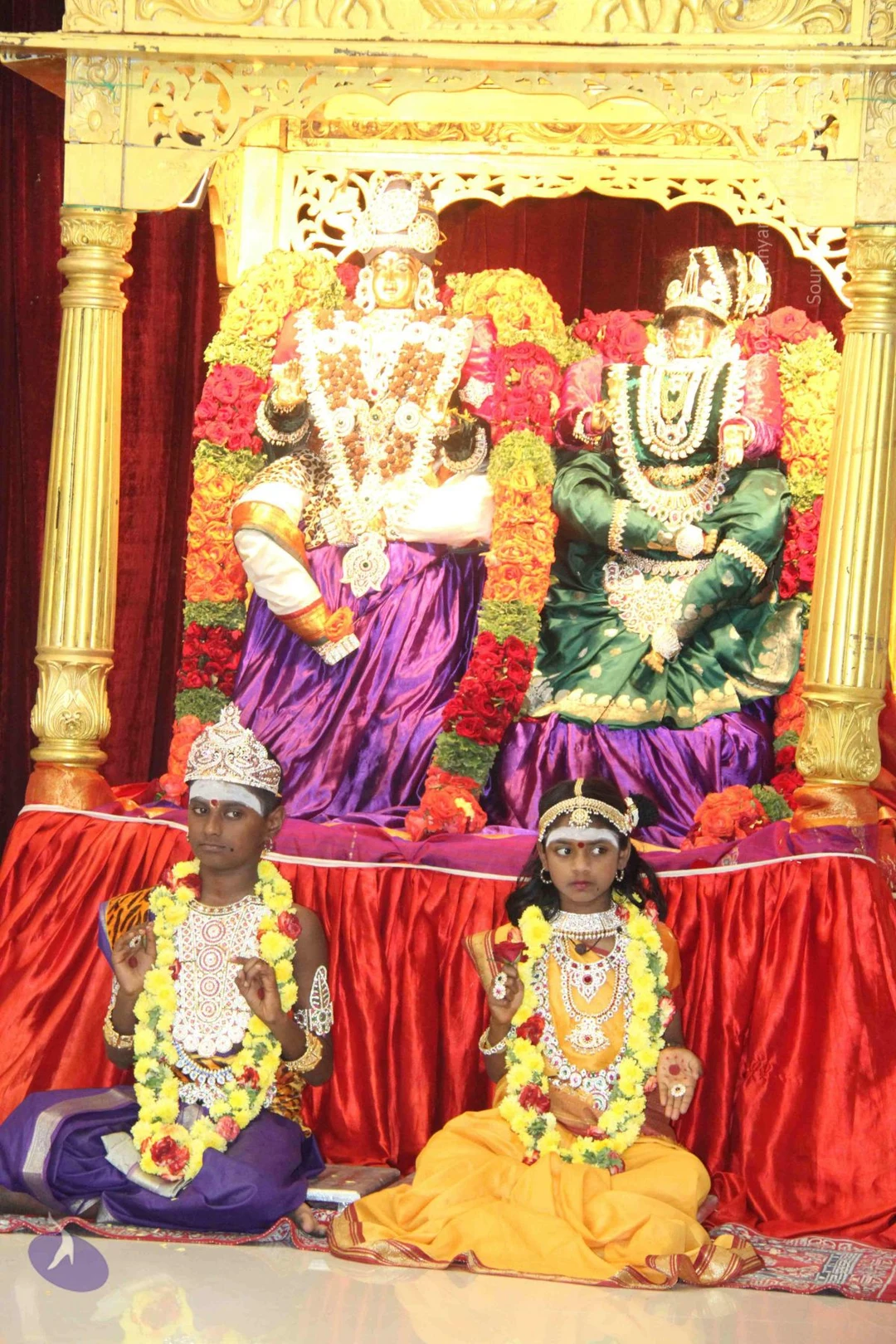
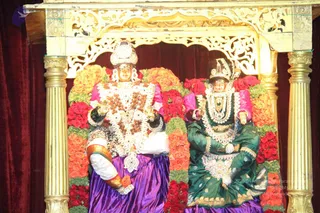
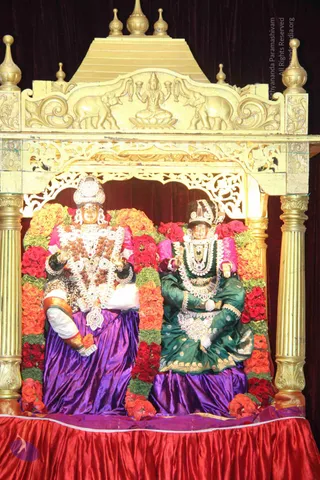
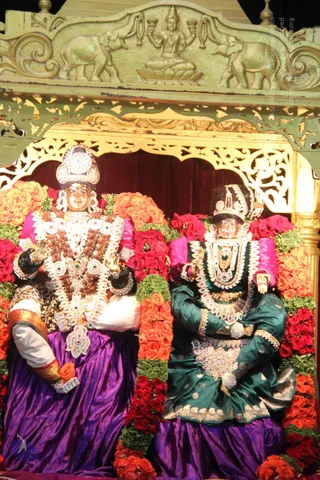
Mahadeva is gracing us in “Naan Maada Koodal”, means the Leela is:

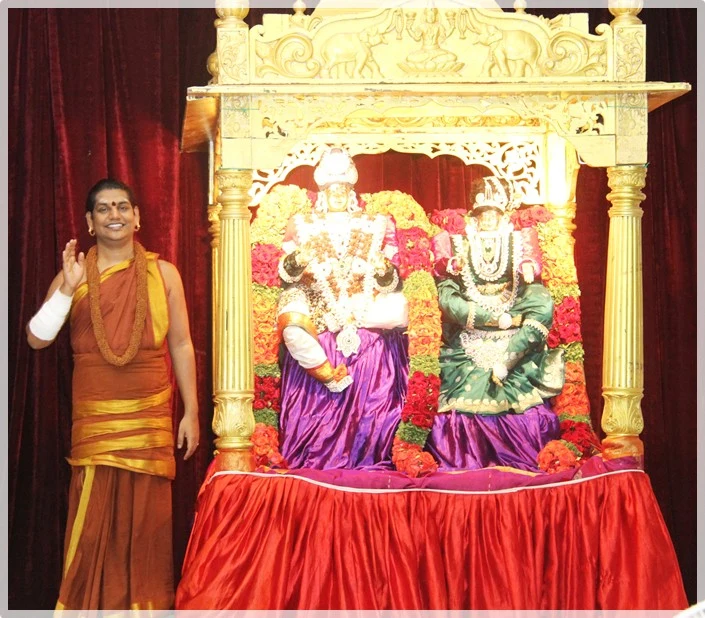
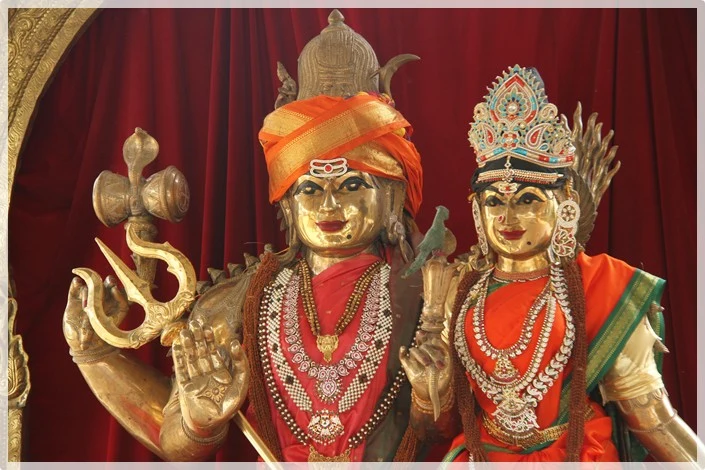
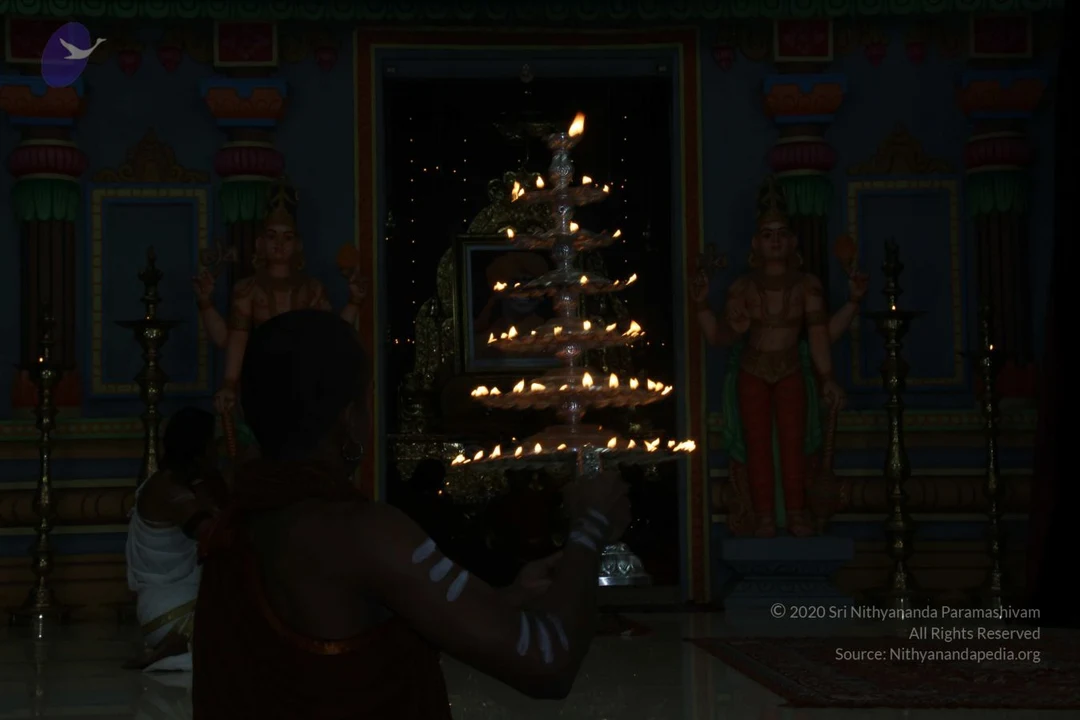
Varuna, the Lord of Water, and Indra, Lord of the Gods, both of them conspired and wanted to destroy Madurai. They sent a huge cloud towards the city of Madurai from all four directions to attack Madurai. At that time, Sundareshwara – Shiva – appeared and made the cloud itself as a protection structure and took care that the cloud does not rain, that it loses the ability to rain. So, the cloud itself became a protection structure.

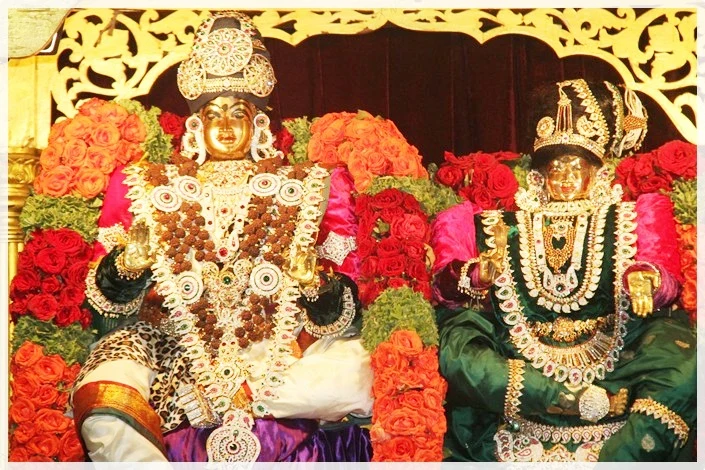
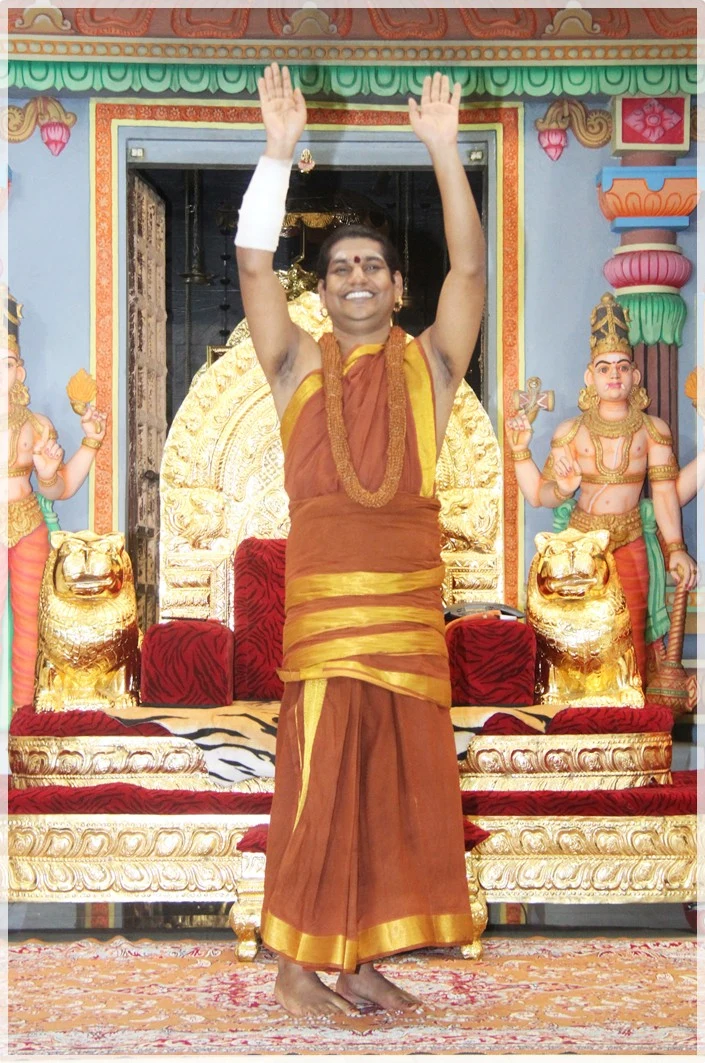
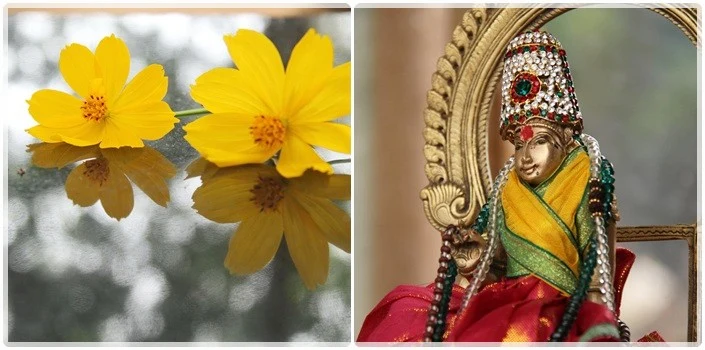
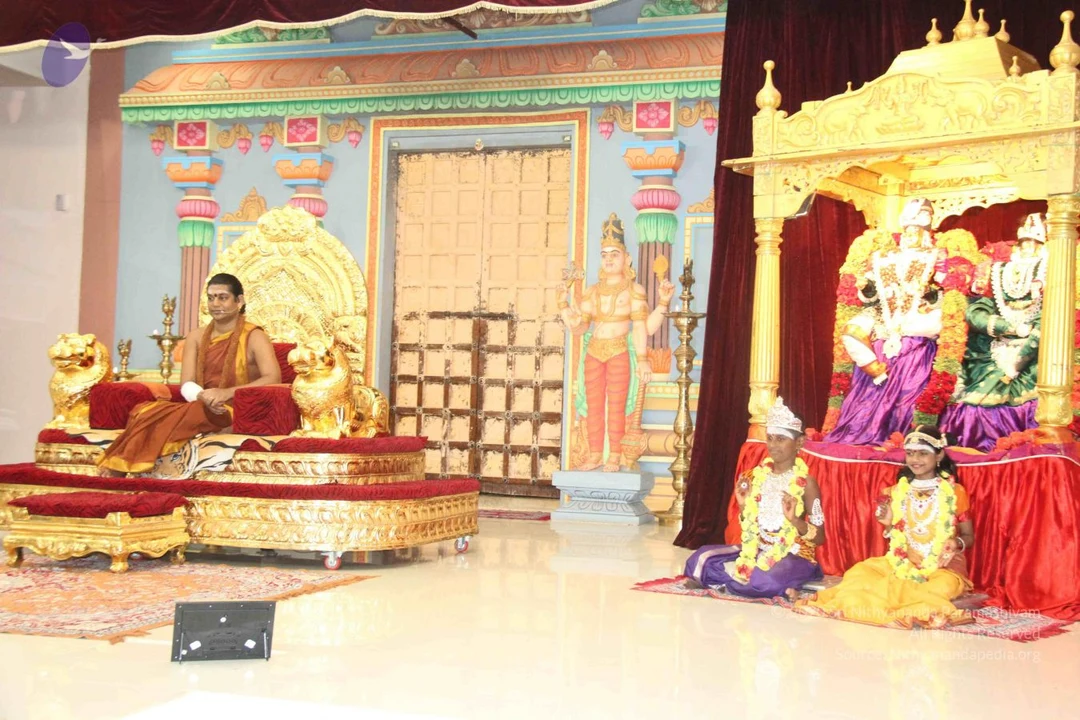
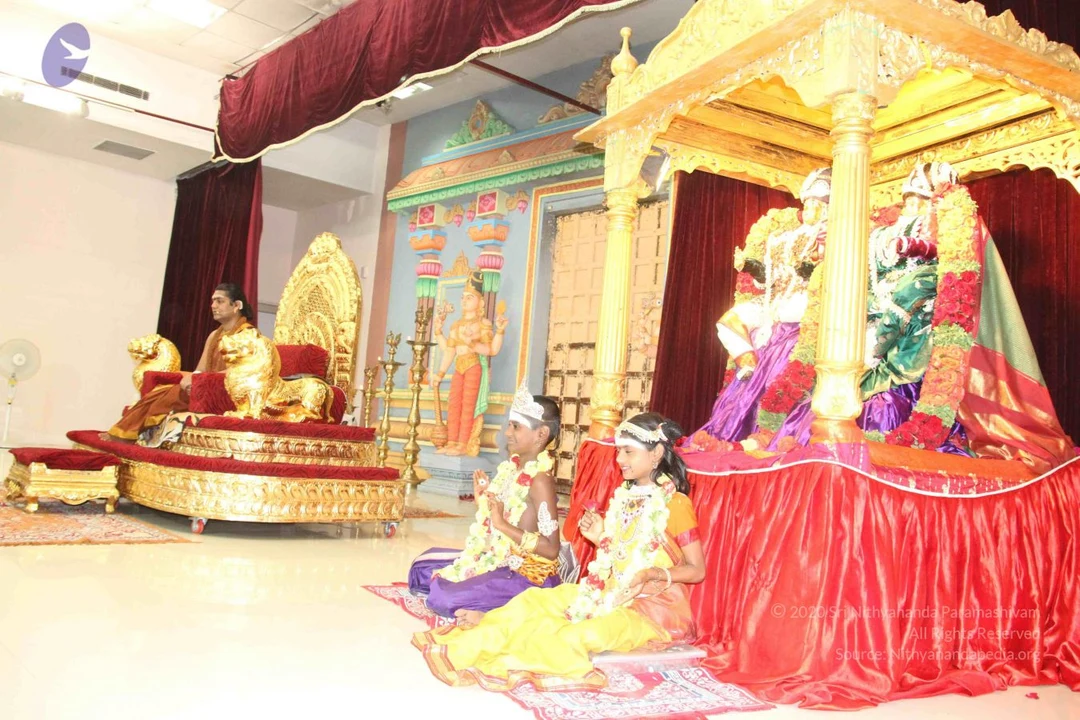
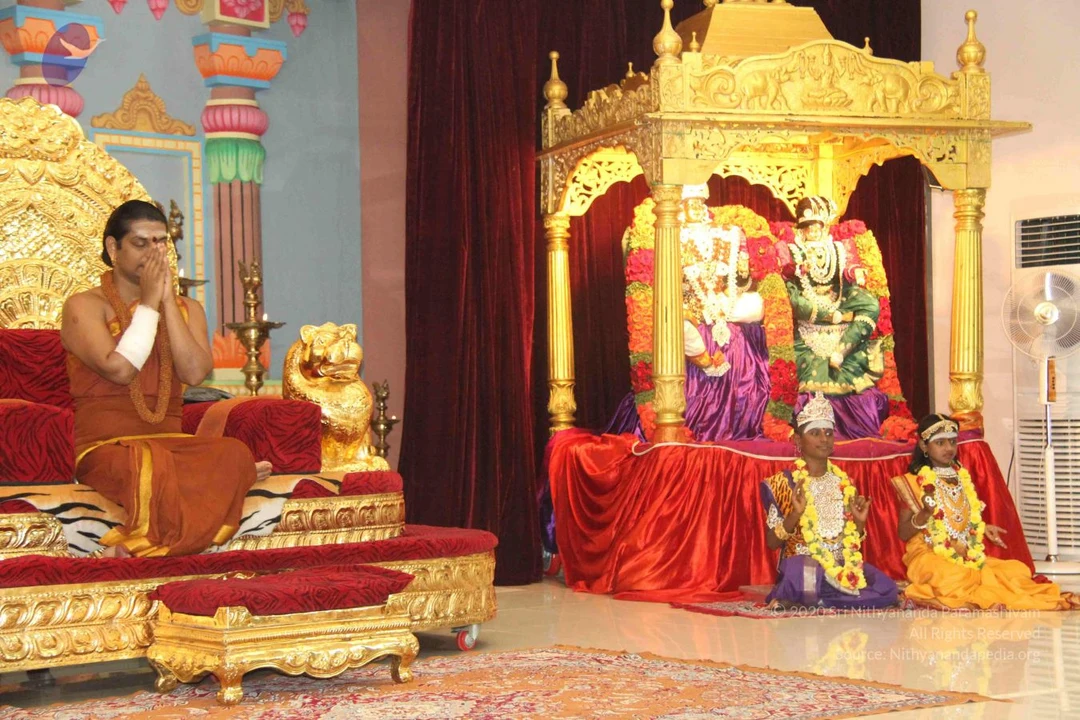
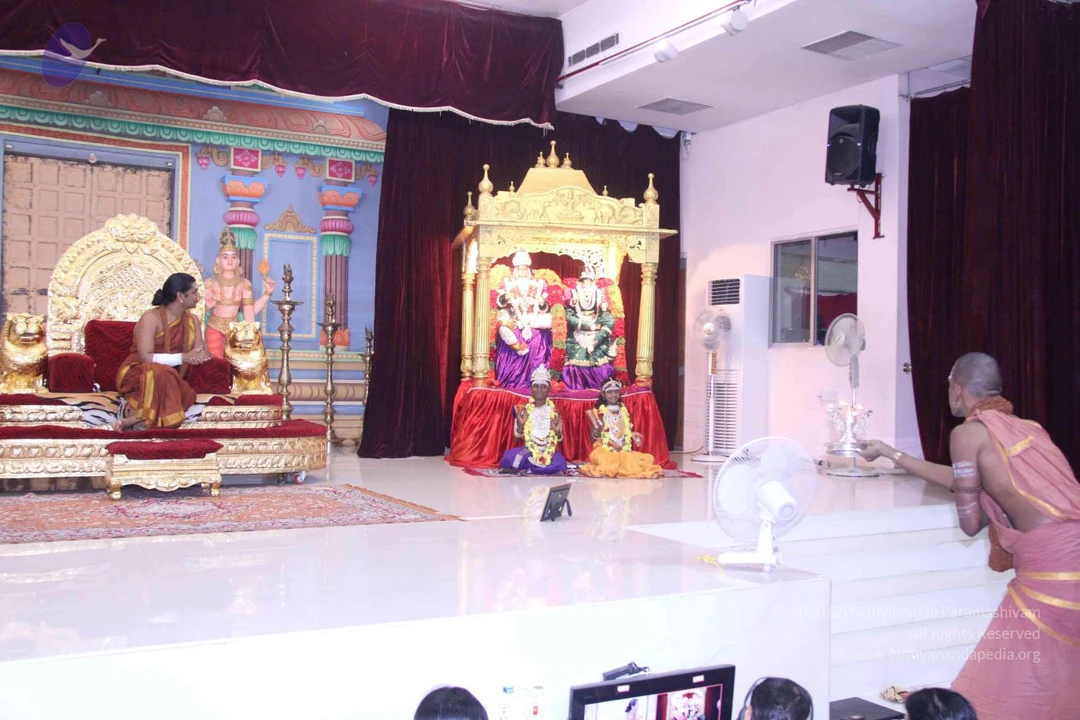
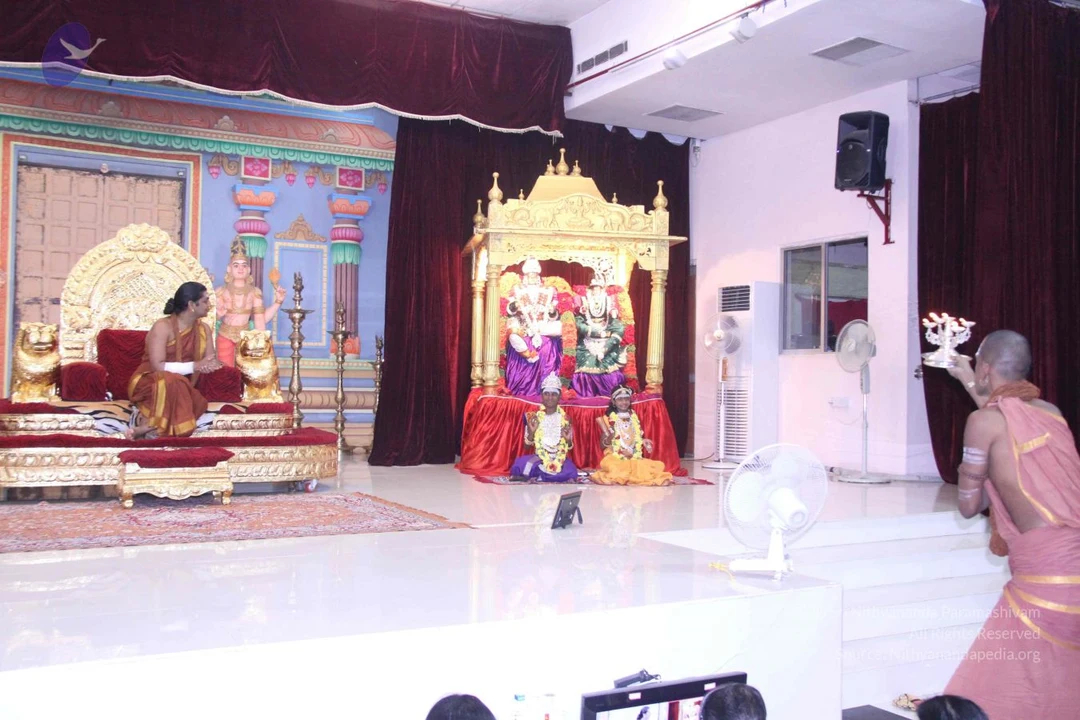
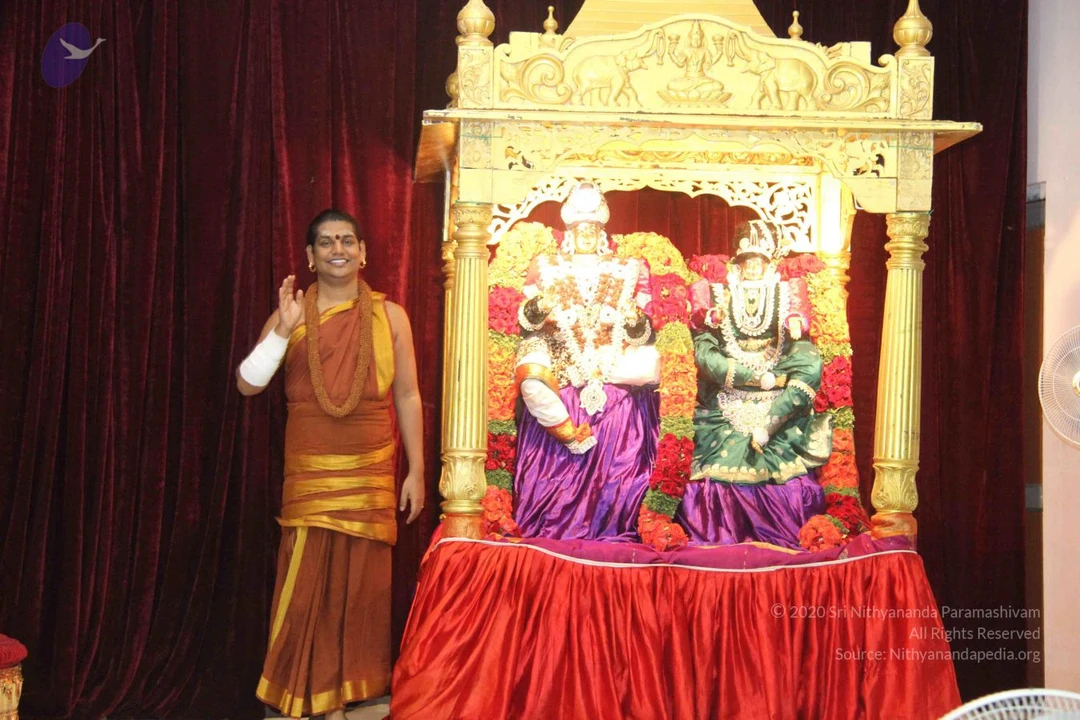
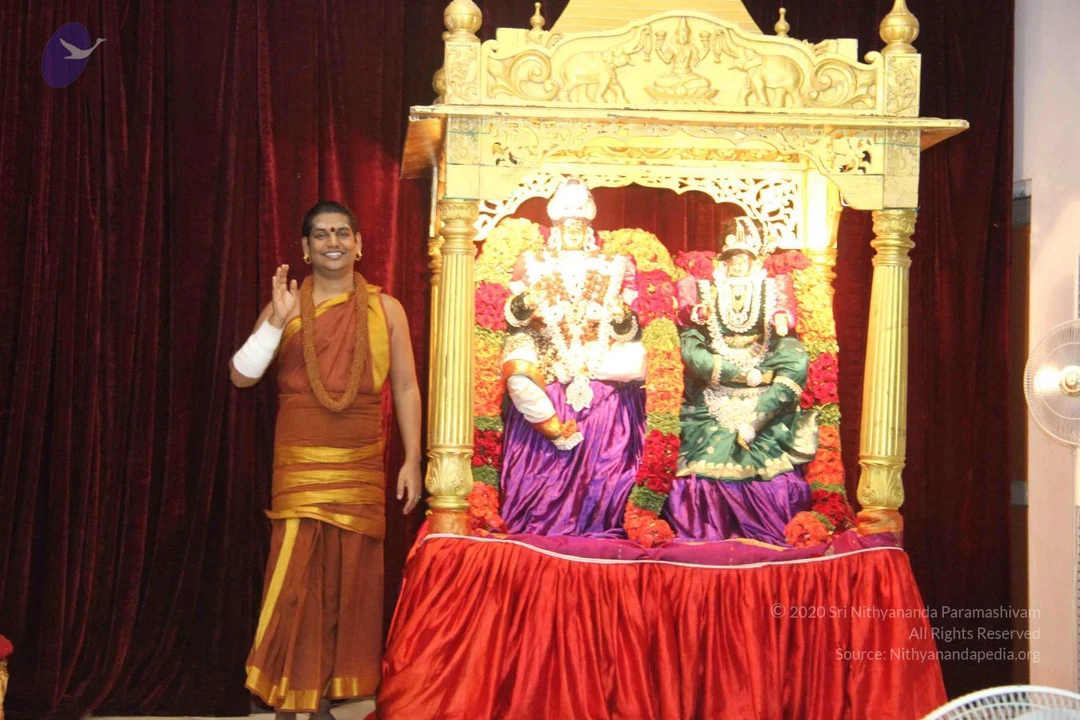
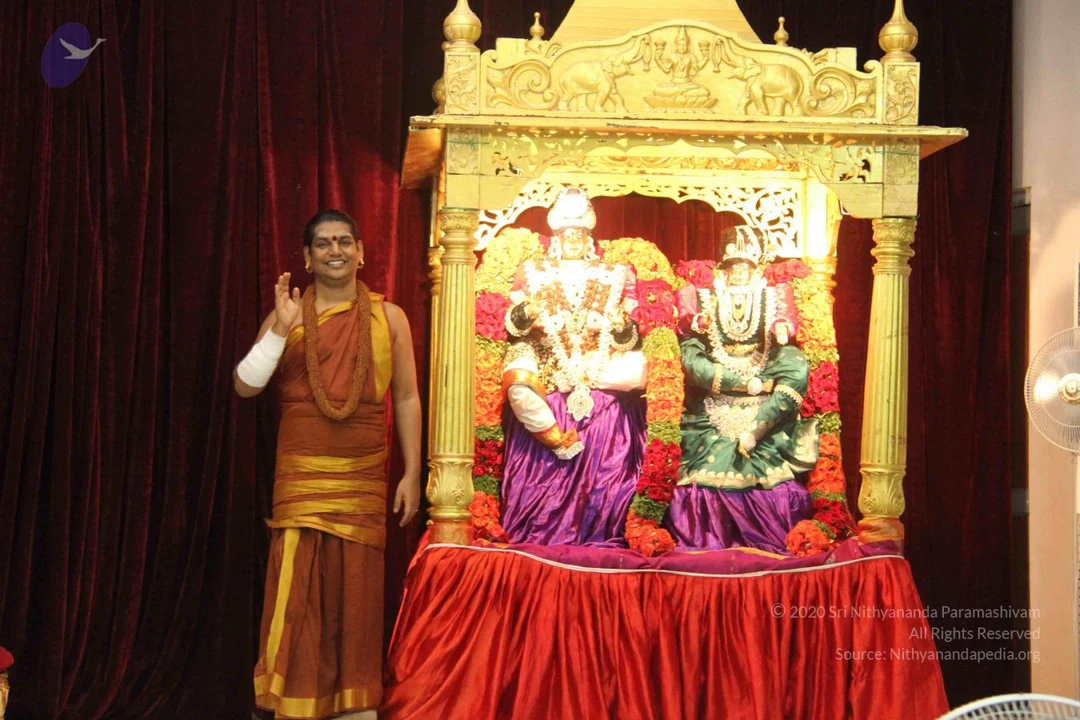
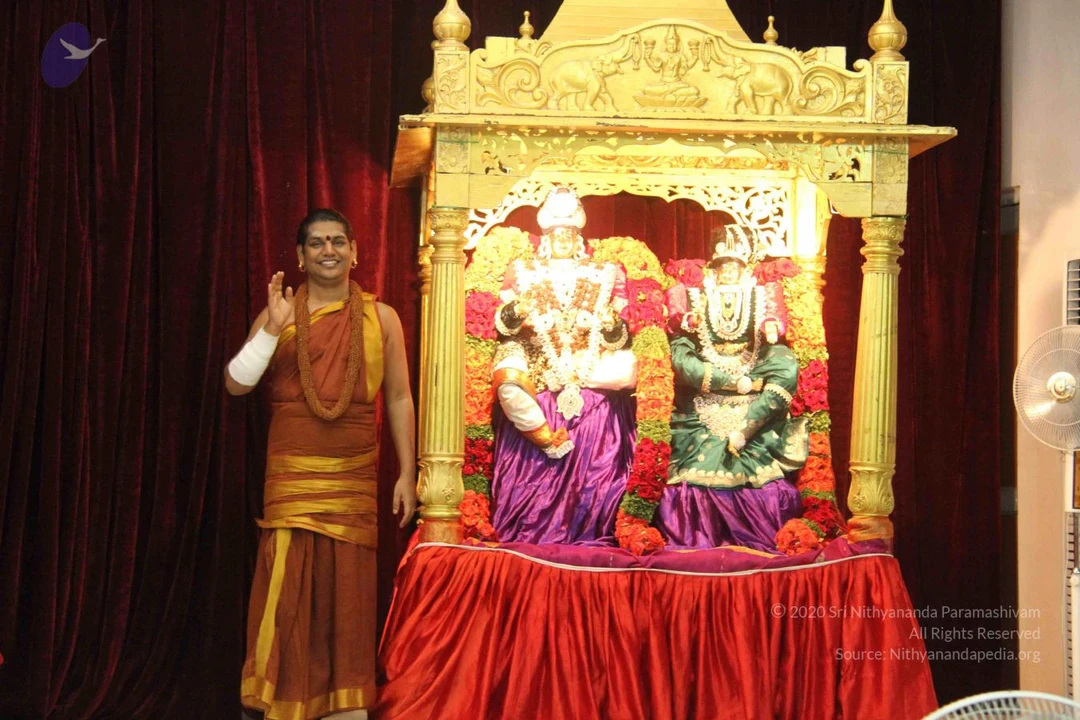
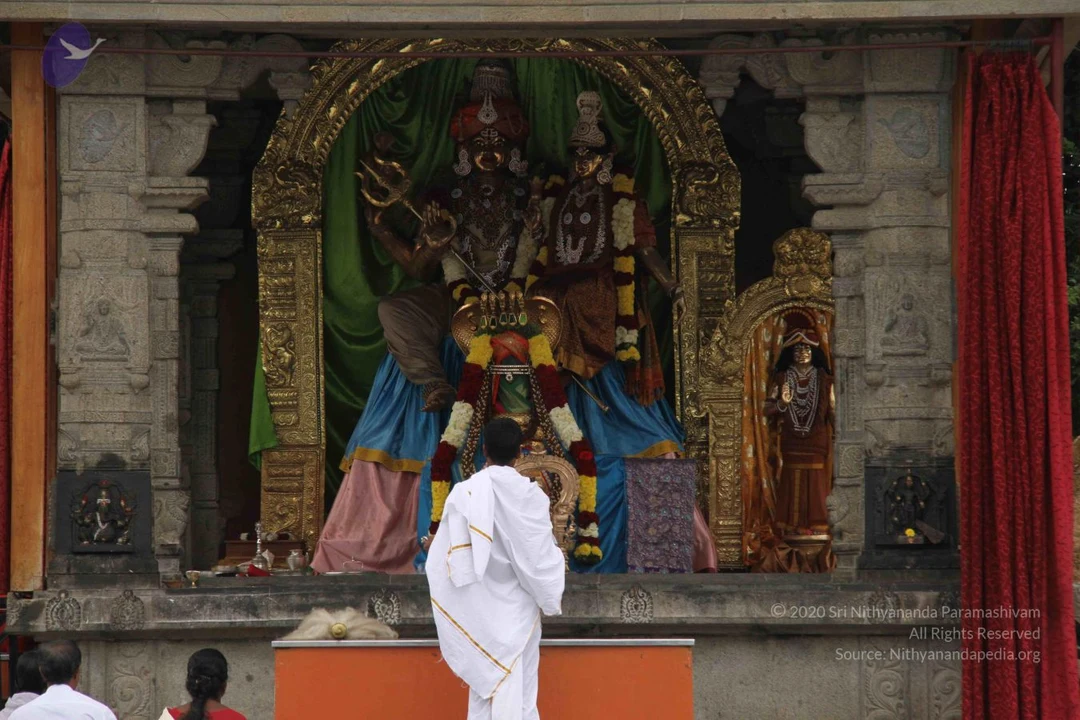
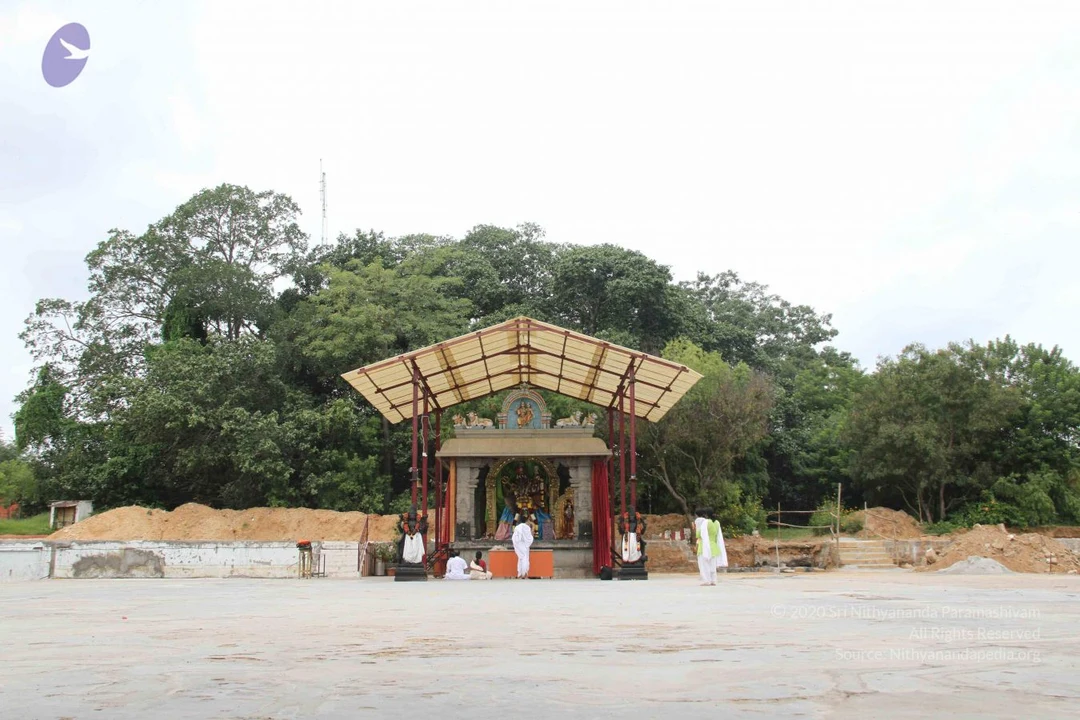
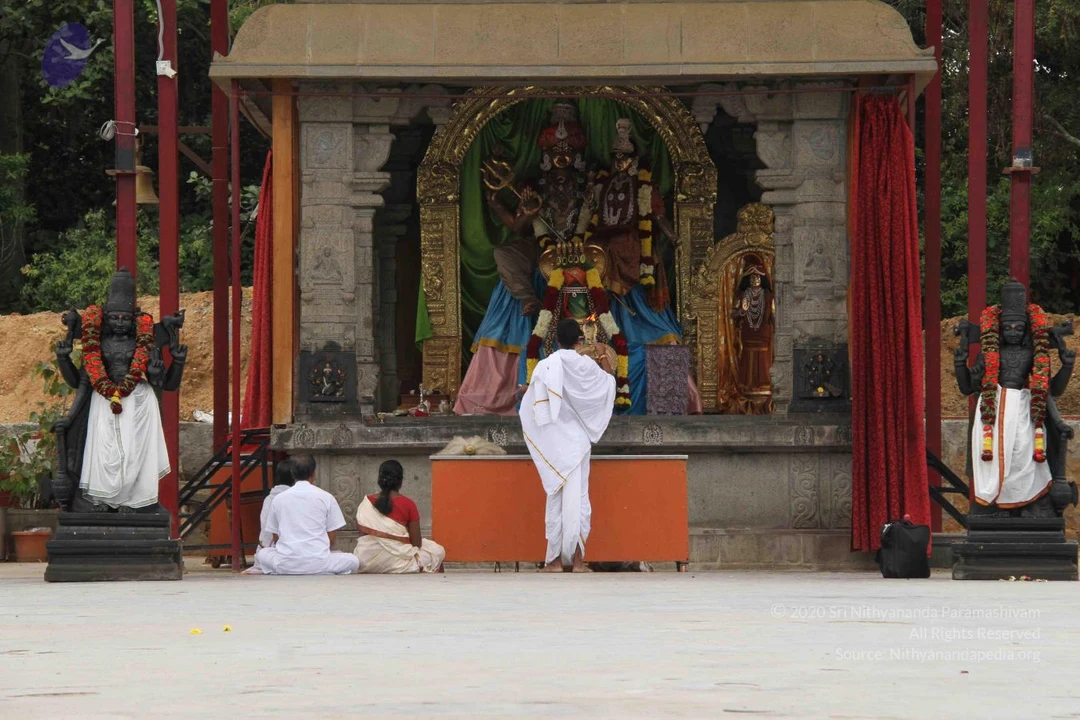
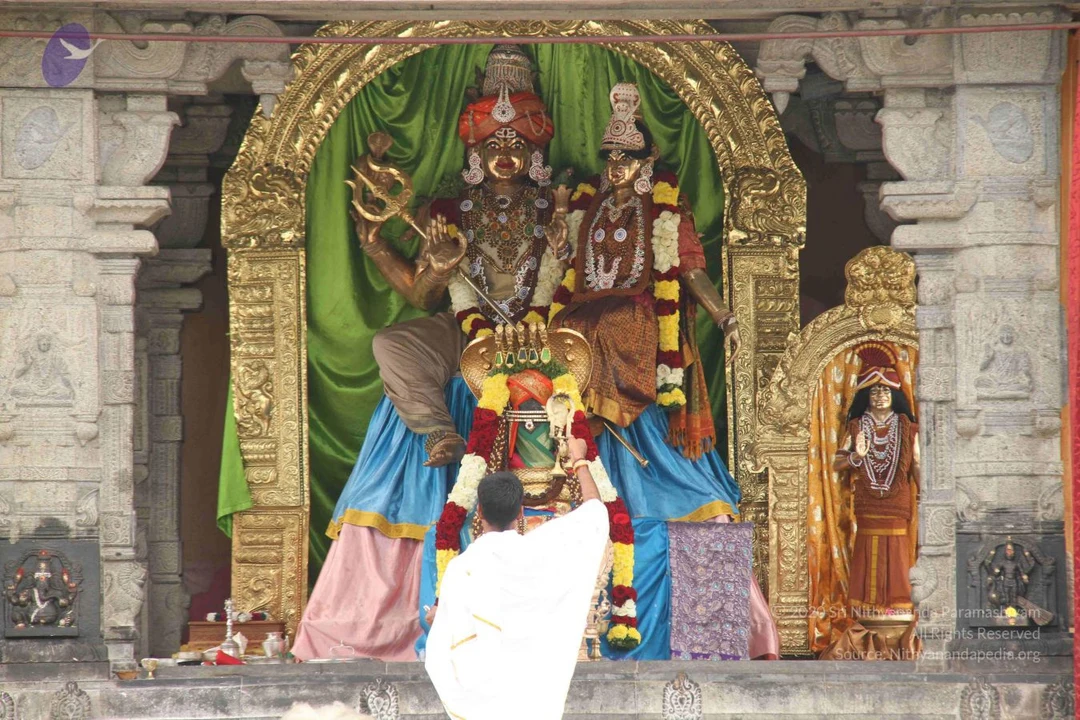
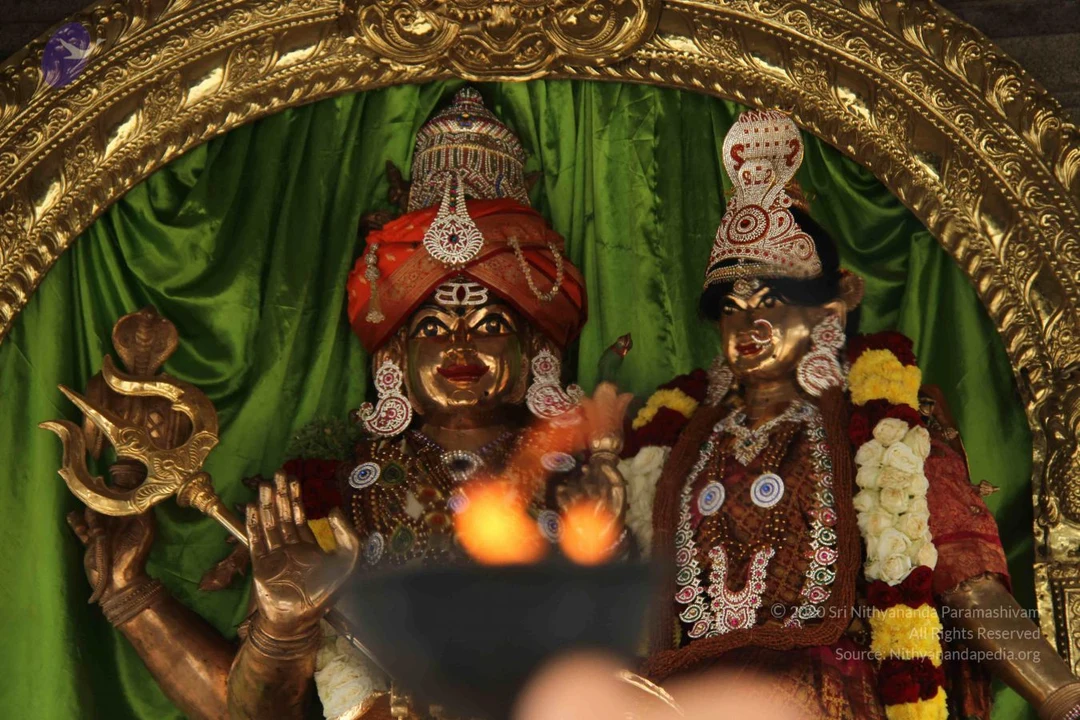
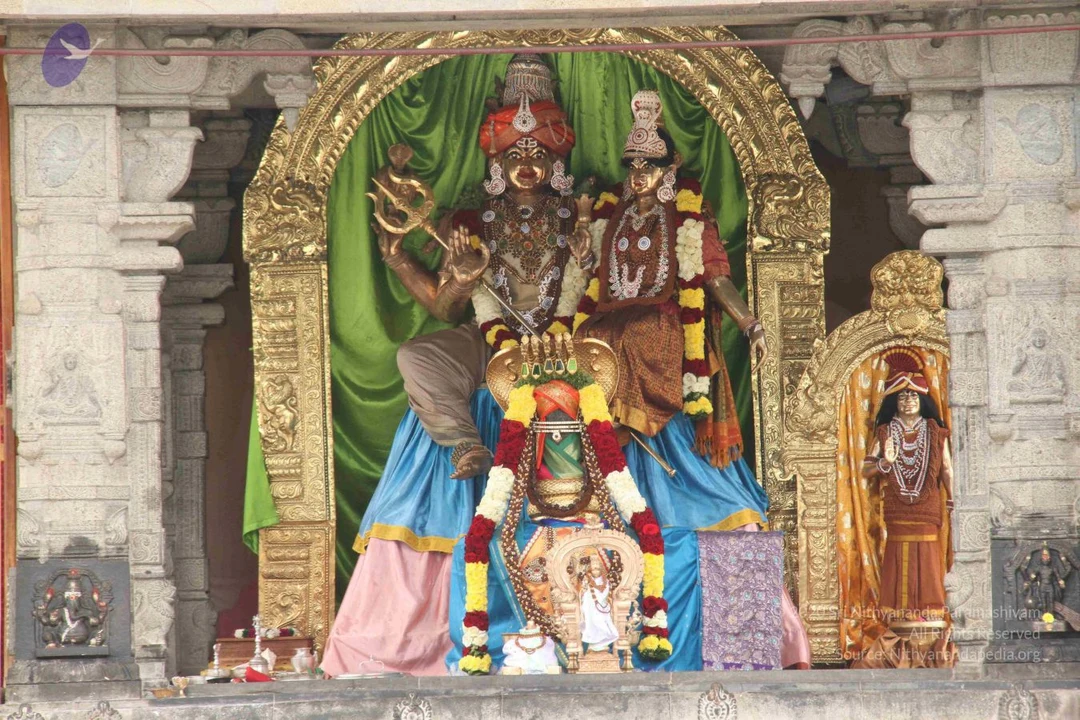
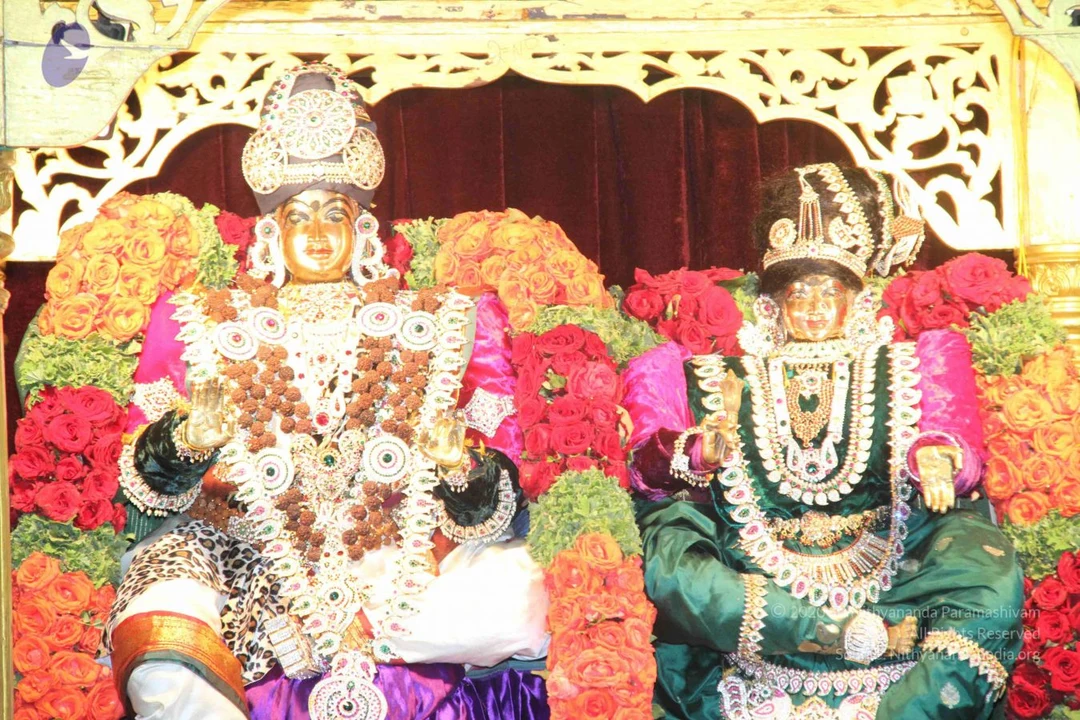
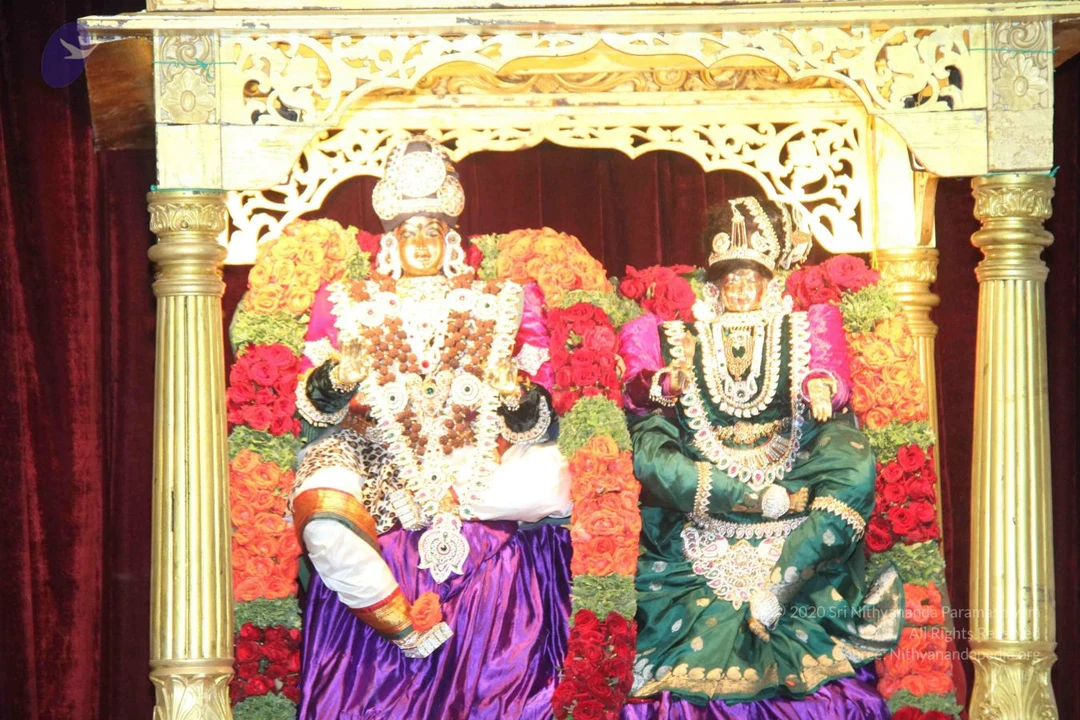
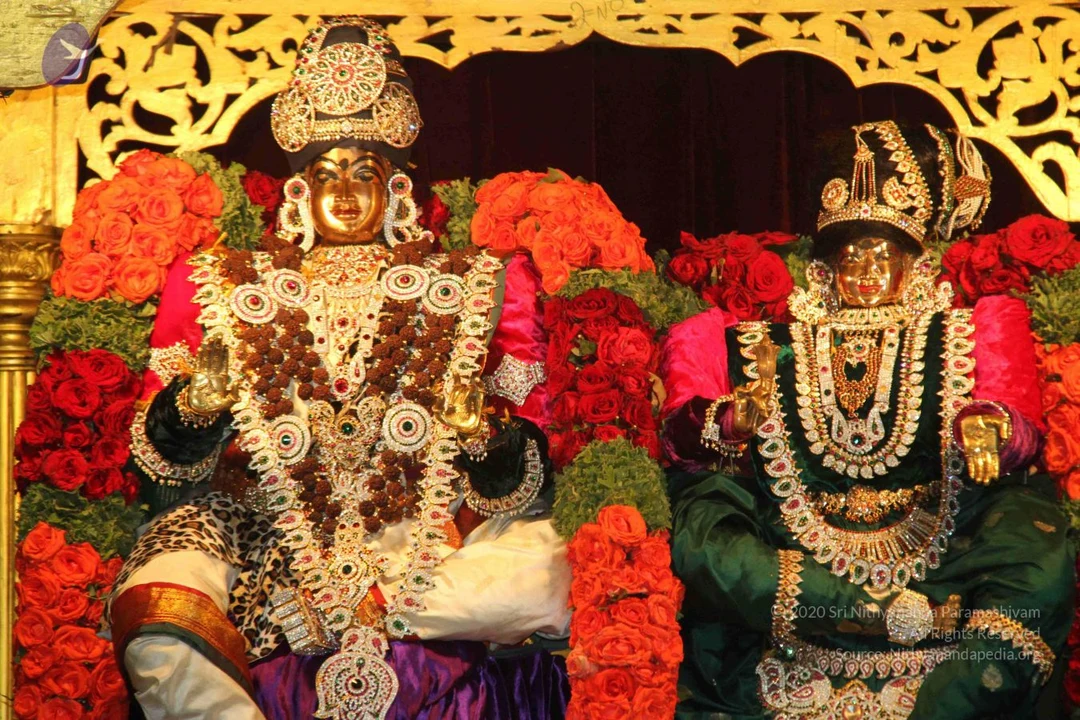
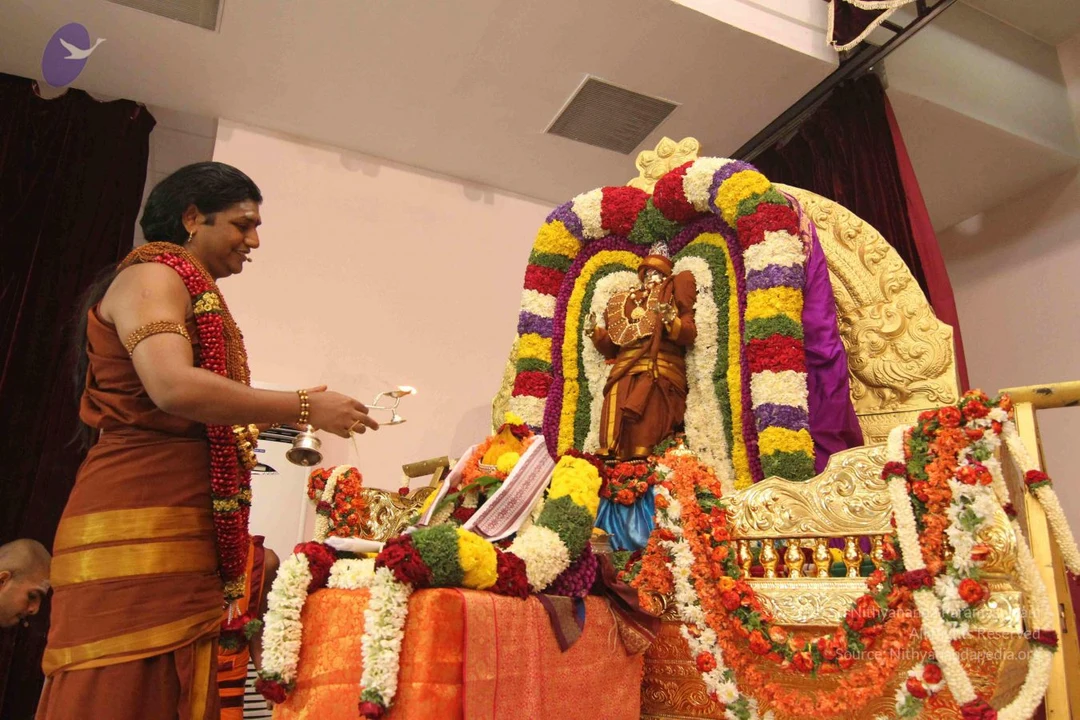
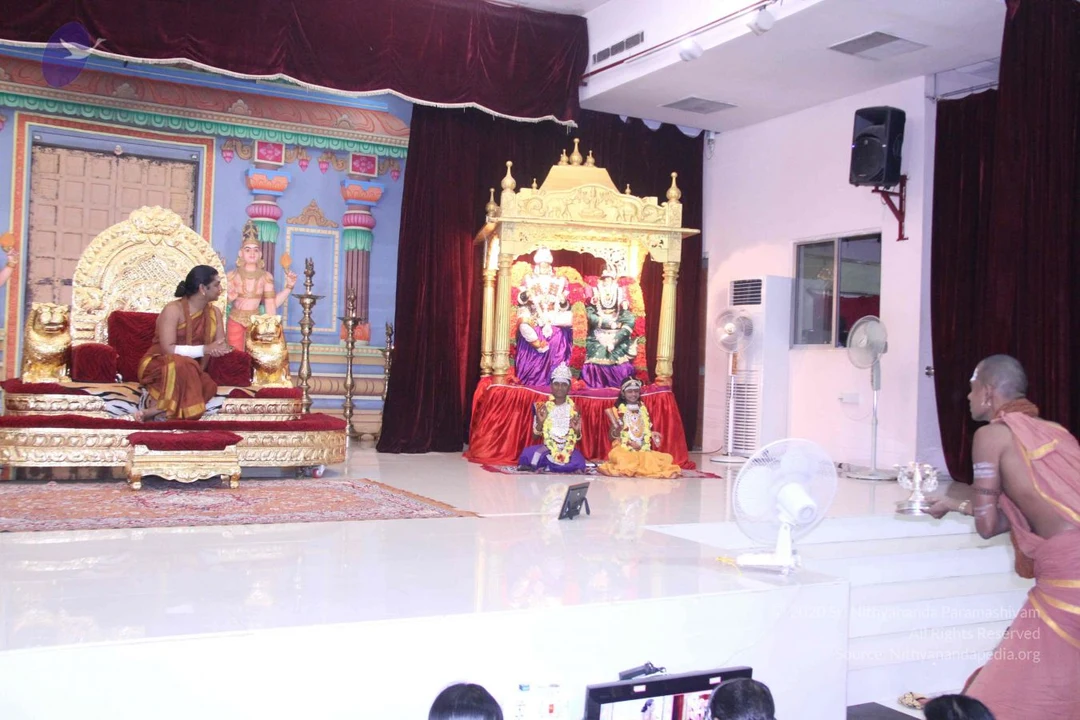
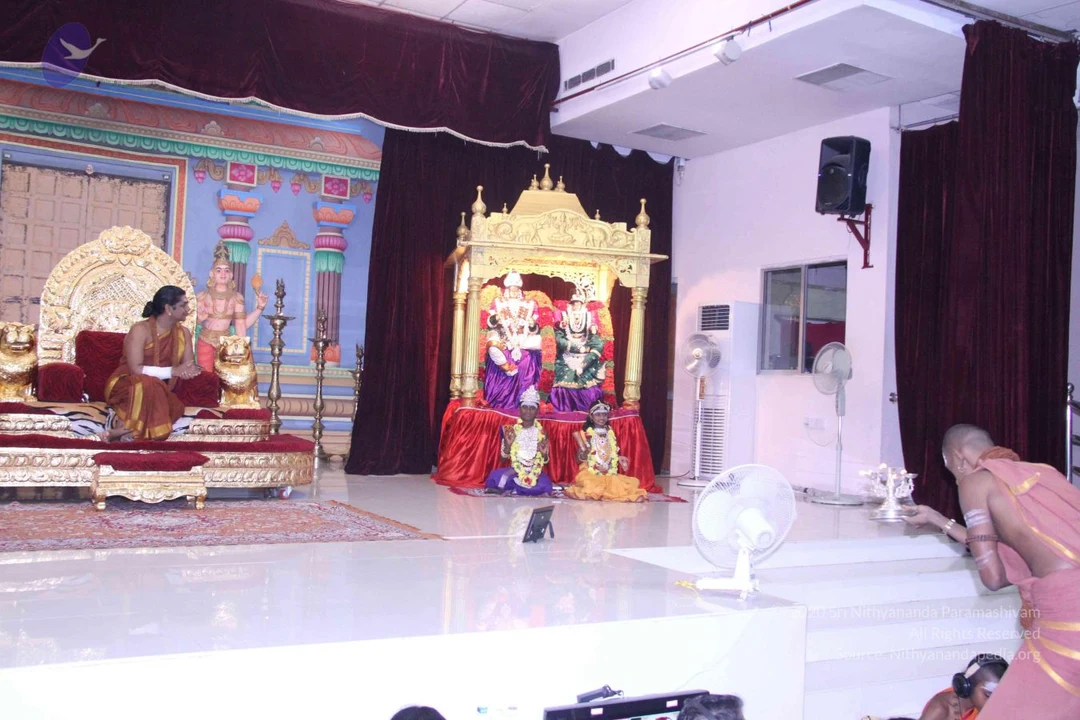
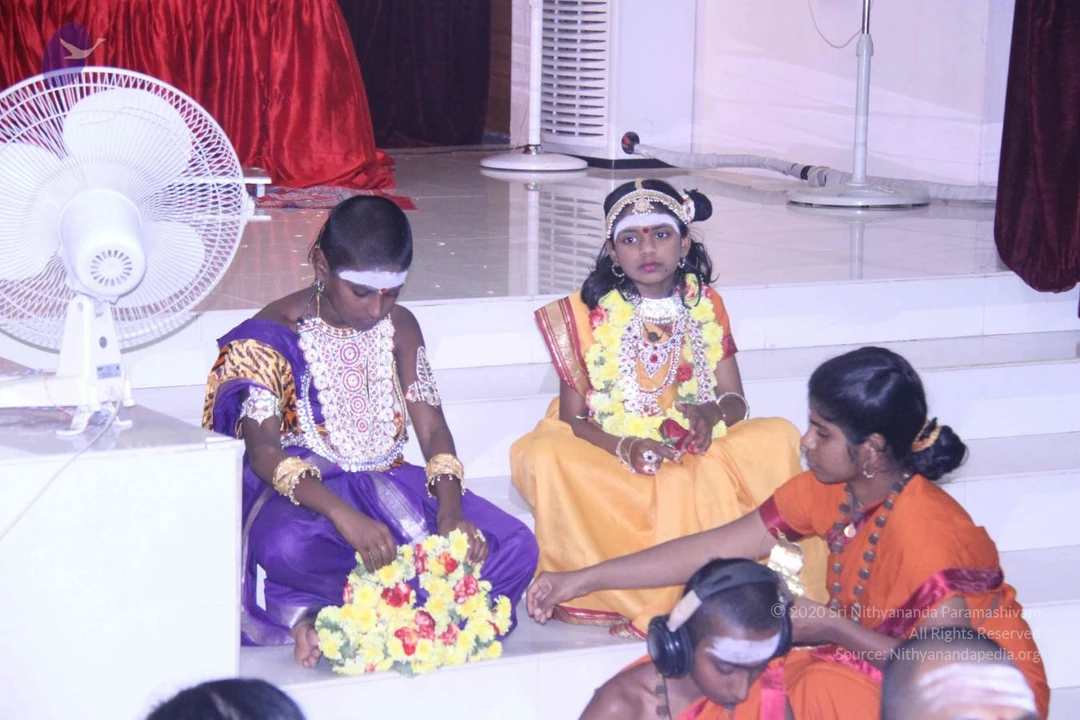
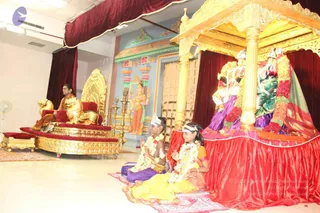
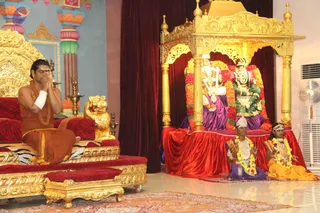
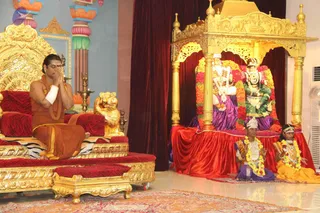
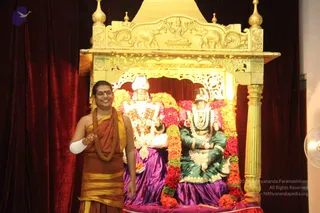
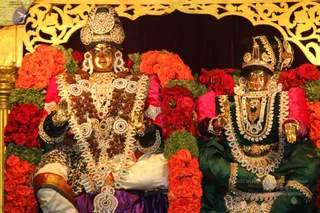
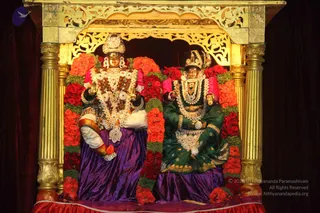
That is the Leela. Mahadeva is gracing us in that Leela. The decoration is done in such a way that today we remember that Leela as a Leela Dhyána. Two of our Krama Brahmacharis are enacting the Leela.

Now, we will start the satsang.

I have a story about “starting”:

A man comes home from an exhausting day at work, flops down on the couch in front of the television and tells his wife, ‘get me a beer before it starts.’

The wife sighs and gets him a beer.

Ten minutes later, he says, ‘Get me another beer before it starts.’

She looks cross, but fetches another beer and slams it down next to him.

He finishes that beer and a few minutes later says, ‘Quick, get me another beer. It’s going to start any moment, at any minute!’

The wife is furious! She yells at him, ‘Is that all you are going to do tonight? Drink beer and sit in front of the TV? You are nothing but a lazy, drunken fat slob, dumb!’

The man sighs and says, ‘It’s started…!’

HAHAHAHAHAHAHAHAHAHAHAHAHAHAHAHAHAHAHAHA…! :D :D :D :D :D

Let‘s start now!

Please understand, Completion in its complete form; Completion in its complete form happens when you are listening. Completion starts giving its results in your life when you start listening. When listening becomes part of your life, then you start the Completion. It is actually, one is connected to each other.

Please listen! Completion is such a powerful process; such a powerful process; it is such a process to awaken the inner-most intelligence in you.

Please listen! Let me define Completion! Please understand: I’ll define the State of Completion; “Experience of Completion”, and “How to Do Completion”! All these three definitions today I will give.

The State of Completion:

Listen! State of Completion: Completion is being spontaneous, powerful, without having the hangover of the past in the present, having complete inner-space available to you to further your life. Listen!Having completely your inner-space in your hand to further your life.

And I’ll define the Experience of Completion:

Listen! Experience of Completion is, it will give you the feeling it is enough for you to live your whole life. Completion has the capability of giving you the feeling it is enough for you to live your whole life.If you have really, really fallen in love in your young age – not after seventy – if you have really, really,really fallen in love at the right age in your life, you will have that feeling-this love is enough for you to live your whole life. You won’t even bother about your basic needs! That’s why, in all movies, they show this sentiment of “Let’s elope and run away! Nothing else is required for our life. You are there for me, I am there for you!” But, you cannot eat one another! You can’t eat each other, you need food! But, you don’t care for anything else, because at that moment actually you feel the other person’s love is enough, because the other person’s love completes you and that is enough for you to live!

See, it’s like women fall in love by what they hear. Men fall in love by what they see. That is why most of the women put make-up, and most of the men lie! Understand! Women fall in love by what they hear; men fall in love by what they see. That is why, women are so busy in make-up; men are so busy in lying! I can use a better word: Women are so busy in make-up; men are so busy in making-up! And you know the funny thing? In a few days the make-up also will go away, making-up also will go away! How long can you say you are a big company owner? Till she comes and sees your roadside platform office! Unfortunately, men cannot hear, they can only see. When they are impressed by what they see, they don’t hear at all! Same way, women, when they are impressed by what they hear, they can’t see at all!

Many times, women think, ‘I should have come and seen the office and house once before marriage.’ When both of you realize you were dumbos, love disappears! That is the truth! I am telling you the exact truth! How exactly things happen! But you know the funny thing? It is not only the fact! When you really, really fall in love, suddenly you experience the space of Completion! Because of that Completion, you feel this other person is enough. You don’t understand it is Completion which is giving you the feeling of Completion, not the other person!

Please understand, Completion is like when you look at yourself in the mirror, how you feel about you.

Many times, you are the first enemy for you, you don’t want to see you. When you can see you, when you feel connected to you, when you are feeling completely settled in you, when you feel you complete yourself, you are Complete! Completion is the experience that this is enough for your life. You saw the result of your birth. You saw the result of your life. That is why, when you are in love, suddenly, whatever the other person says looks true. Whatever you see on the other person looks as reality.

Completion with life is eternal love! Please understand, with anybody you feel complete, don’t think the person is completing you. Your Completion is making that person beautiful.

Please listen! What I am talking is a very important point.

If you see somebody and you are in love and you feel complete, be very clear that person has no role in your Completion experience. Because of your Completion, the person looks more greener than the green itself, more rosier than the rose itself, more beautiful than the beauty itself!

Completion is the state where you rest in awareness. You always rest in unconsciousness, but with Completion you rest in awareness, you rest in peace, you rest in your existence, you rest in you!

I’ll explain, “How Completion”. Please understand, I’ll give you the precise technique, the process of Completion!

Mahadeva gives a clear definition of Completion:

“Looking at the space with attention where your past is relived completely unclutched is Completion.”

“Looking at the space with attention where your past is relived completely with unclutched space.”

“Look at your past disidentified. Let attention be at a place where you are seeing some past happening; and even your form, having lost its present characteristics, is transformed.”

It’s the twenty-second technique in Shiva Sutras, the Vijnana Bhairava Tantra chapter.

Then you have a question: ‘Does this mean that I can be complete just by unclutching with my past and not necessary to complete with the person who made me feel incomplete?’

Listen! First thing you need to do is Completion with yourself. Then Completion with the other person is also required for the complete Completion. But here I am introducing the Completion as a practice with yourself.

Listen! When you complete with the other persons more and more, you simply become mature. That’s all! I tell you, really! When you complete ten times with somebody, the eleventh time you will simply know this person cannot be changed, and you get matured!

I tell you, I am defining maturity! When you understand that people cannot be changed, you are matured in relationships. When you understand that the whole world cannot be changed, you become mature for enlightenment. Maturity is nothing but acceptance in your bio-memory level. Completion again and again, will make you understand one thing in your bio-memory level: Acceptance is your life. Really! When I say acceptance, not acceptance out of powerlessness; just no resistance! When I understood I can’t change people, I got mystical power to transform people! When I understood I cannot change people….. Please understand, trying to change others is “Violence”. Trying to transform others is “Enriching”.

Change is different, Enriching is different. In Enriching, you are not focused on changing his character as you want for your benefits. You are focused on making him complete. Your focus is totally different. When you are Enriching, resistance, judgment, attachment, all three will drop in you. When you are trying to change, you will be so violent! It is not that Enriching will be without passion. (In a mild tone)if you want to do then do, otherwise it’s ok. ‘Every morning, you do little Yoga and meditation, live Integrity and Authenticity, it is good for you…’ No!

Enriching will have tremendous passion. ‘COME ON! LIVE INTEGRITY! LIVE AUTHENTICITY!’ It will have passion, but not violence. Change: when you try to change, there will be lot of violence.

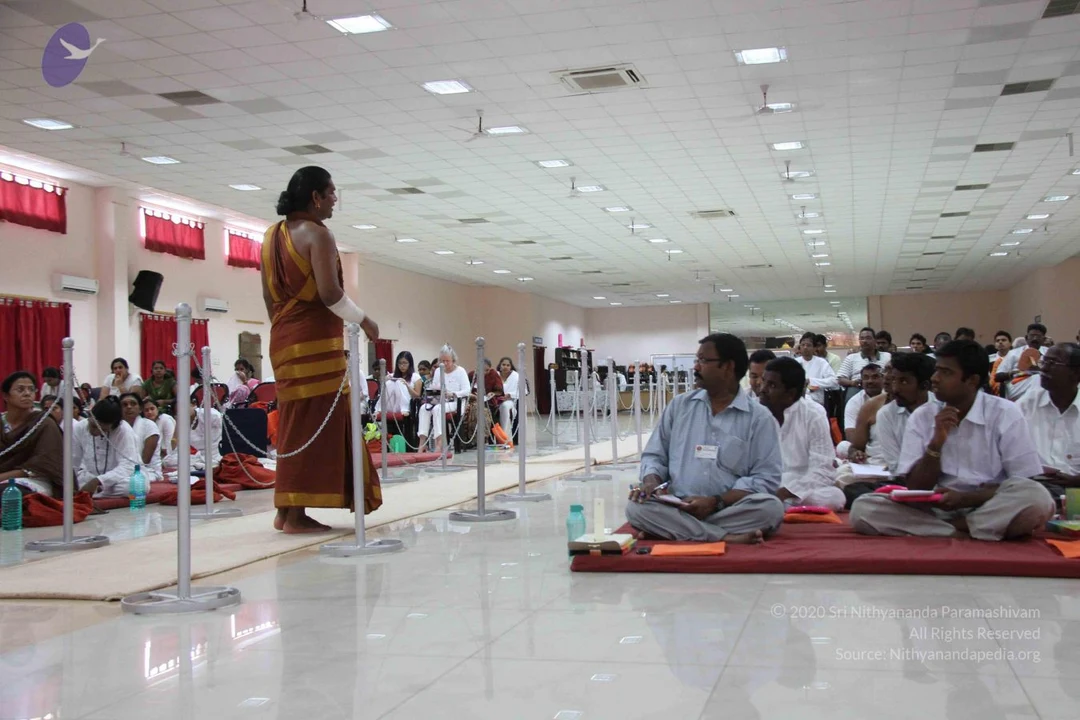
Please listen! The subjects I am talking are so subtle, I know when you are sitting first time in the Satsang, when you are listening first time, if you are a new listener, new viewer, I know the space you are in. I request you to continue to sit with a little patience and listen. See, it is like a practice.

I can tell you a story:

One man asked his friend who is beer-bellied, big belly. Big belly has some use. Your kids don’t need a separate playground! No, there are some uses! And, wherever you go, people move out and give place, give space! This kind of big-bellied friend.

The man asked him, ‘Are the slimming exercises you are doing, doing any good to you? Can you touch your toes now?’

The guy says, ‘No, no, no. I cannot touch them. But I am beginning to see them!’

No, this is the way! Now when you are sitting in the satsang, don’t think you can understand completely. It is like Day One you are trying to touch your toes. No! You will first start seeing them. Then you can start touching them. So now you are sitting in the satsang for one hour, and you are understanding some three-four minutes. Great! You have started seeing the toes! Then later on you can touch; if you understand 20-25 minutes, then that’s all! Understand, you are understanding more than required! No one can understand more than half-an-hour, because even I don’t understand more than half-an-hour! Because what I am speaking, delivering, is such powerful, intense sutras for the future! Please understand, every satsang, only by contemplating on it you can understand, you can catch it, not just by listening. That is why we upload the whole satsang in the YouTube, so that people can watch, listen, listen, listen, listen, listen, and get what all they missed.

So, listen, now I am giving you the essence. I am giving you the exact process of Completion.

Sit in front of a mirror. Look at yourself. First declare Completion. Decide to be complete. Decision to be complete is a basic requirement for Completion. You cannot have doubt about Completion – ‘I will try to be complete…’ No! No!

Second, see like a movie your whole past happening, visualize in the mirror like a movie your whole past happening in an unclutched way, in an unclutched way.

I will give you the essence of the whole thing in Hindi.

Understand, I am defining the Completion process now.

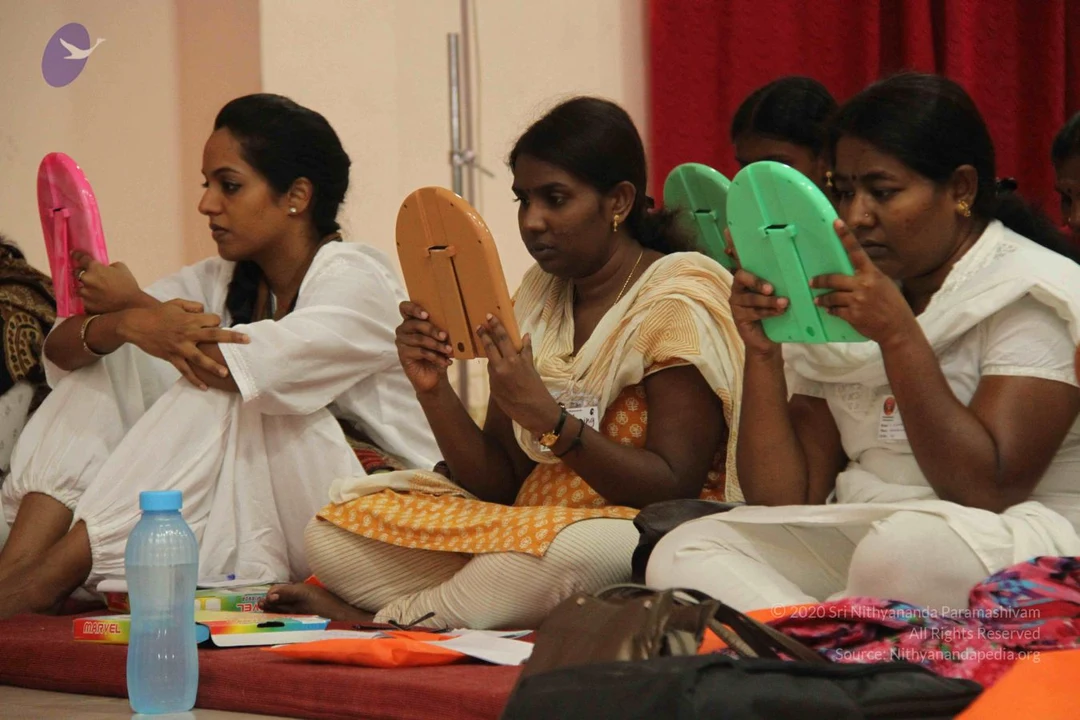
Sit in front of the mirror, look at the mirror, relive.

See, in Indian movies how they show that old Puranic stories. In a mirror that magician will see how the princess is being kidnapped, how the king is imprisoned in some remote place. Like a magic mirror it will show. Understand, all mirrors are magic mirrors if you can see the magic!

Sit with the mirror and look at your whole past. And I tell you, if you can sit with the mirror, look at your whole past, just in a few days you will be able to see, clearly visualize like a movie. See unidentified. After a few days, use that same mirror, anybody comes to you with any question, see in the mirror their face, you will be able to see the answer to their problem in that mirror!

Please understand, this is the power of Completion. This is the power of consciousness which is complete. I learnt this process at the age of nine.

Please understand, I am talking very responsibly. I am not spreading any superstition. I am talking very responsibly. I am a Hindu incarnation. I don’t spread superstitions. I am neither a Wall Street broker to spread the superstition of money nor a politician to sell the dream of Utopia on the Planet Earth, or a police official to promise a crime-free society. All these fellows are only spreading rumors. I am not the media to give you constant fantasy of a great life. It’s actually, the vested interest media houses spreading superstition on the Planet Earth. Media is keeping you out from the reality and the right thing you need to know for the last fifty years, may be, I can say, hundred years. I am none of them. I am a Hindu incarnation. So, I don’t spread superstition. Whoever has spread superstition that your girlfriend or boyfriend is going to complete your life, should be arrested. Whoever is spreading the superstition that marriage is going to bring settled feeling in your life, that fellow should be arrested. Whoever is spreading the superstition that a house and car and wife and family is life, they all should be arrested under Anti-Superstition Law. Not me who is making you experience the reality, who is awakening you to reality.

If you can see your whole past run in the mirror, unclutched, you will have a very powerful space, the space of Completion. You will be able to help anybody to complete.

I bless you all! Let you all radiate with Integrity, Authenticity, Responsibility and Enriching, with eternal bliss, Nithyananda! Thank you!

Photos From The Day:
Tags:

Paramahamsa Nithyananda, completion, acceptance, powerlessness, space, enriching, cultivating, transformation, change.

Photos Of The Day:

Paduka-puja

Nithya-Satsang

Arati-to-Swamiji-&-Deity

Sarva-Dharshan

Final-Blessings

Bidadi-Ashram-Campus

Nithyananda-Goshala

Temple

Swamis-Of-Nithyananda-Order

Leela-Alankar

IA-Swamiji-session

IA-Darshan

IA-Food

Photos Of The Day:

Leela-Alankar

Deity-Darshan

Paduka-Puja

Nithya-Satsang

Sarva-Darshan

IA-Darshan

IA

Enriching

Goshala

Adhi-Kailasa

Gallery

Photos Of The Day:

Leela-Alankar

Paduka-Puja

Nithya-Satsang

Sarva-Darshan

IA-Darshan

IA

Enriching

Gallery

Photos from this day

View all 322 photos

Photos From The Day:
21 photosSource gallery
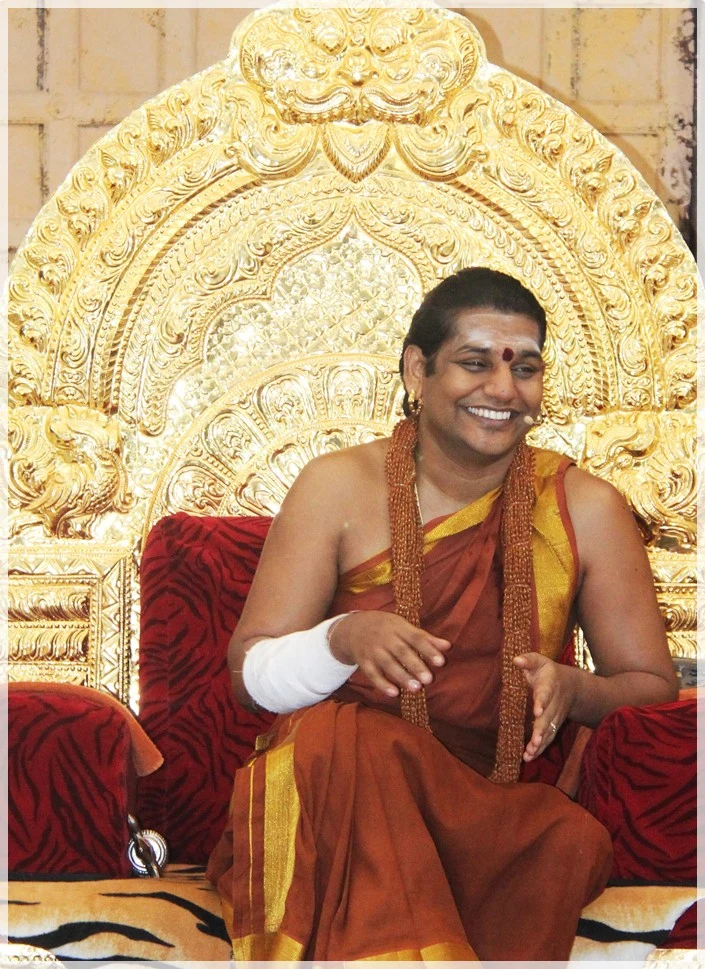
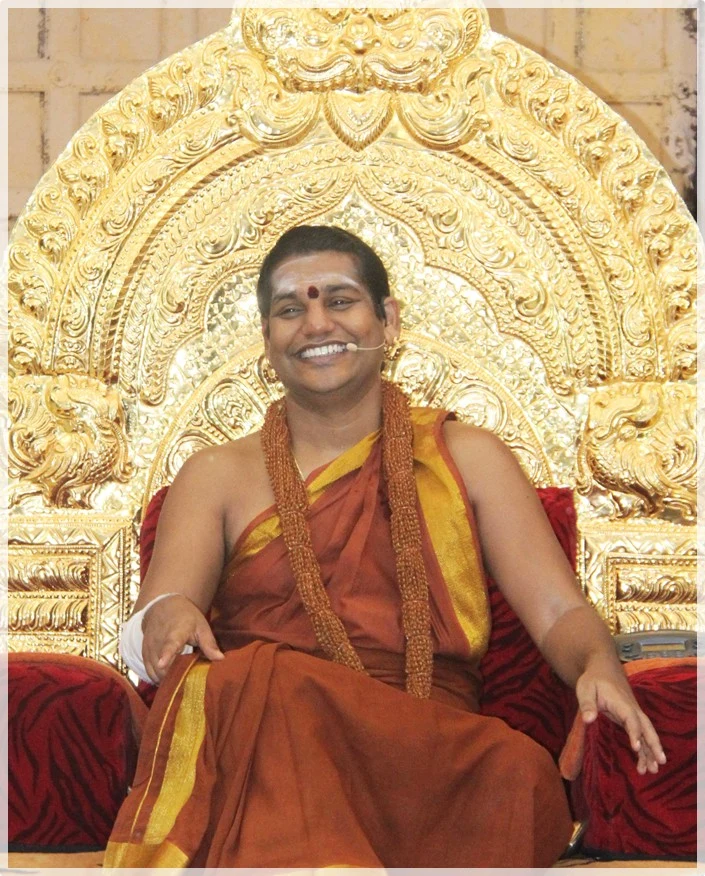
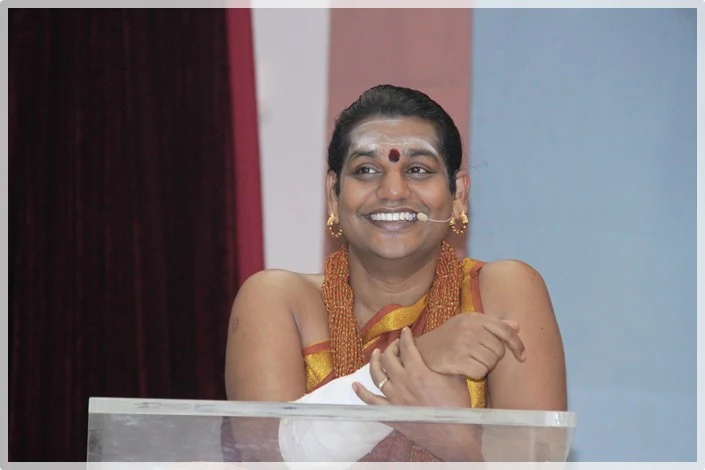
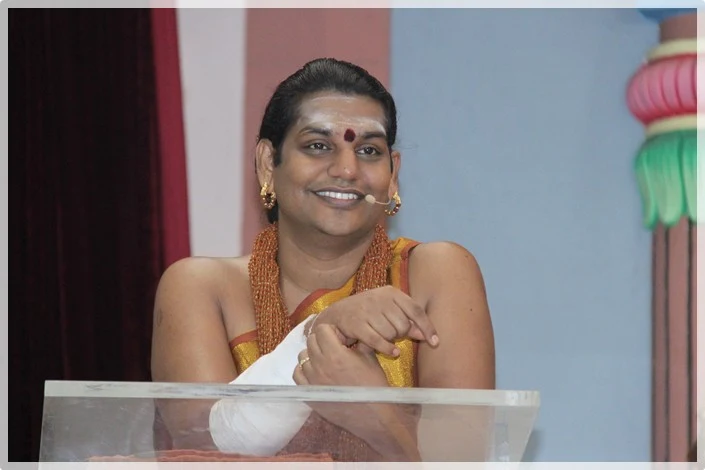
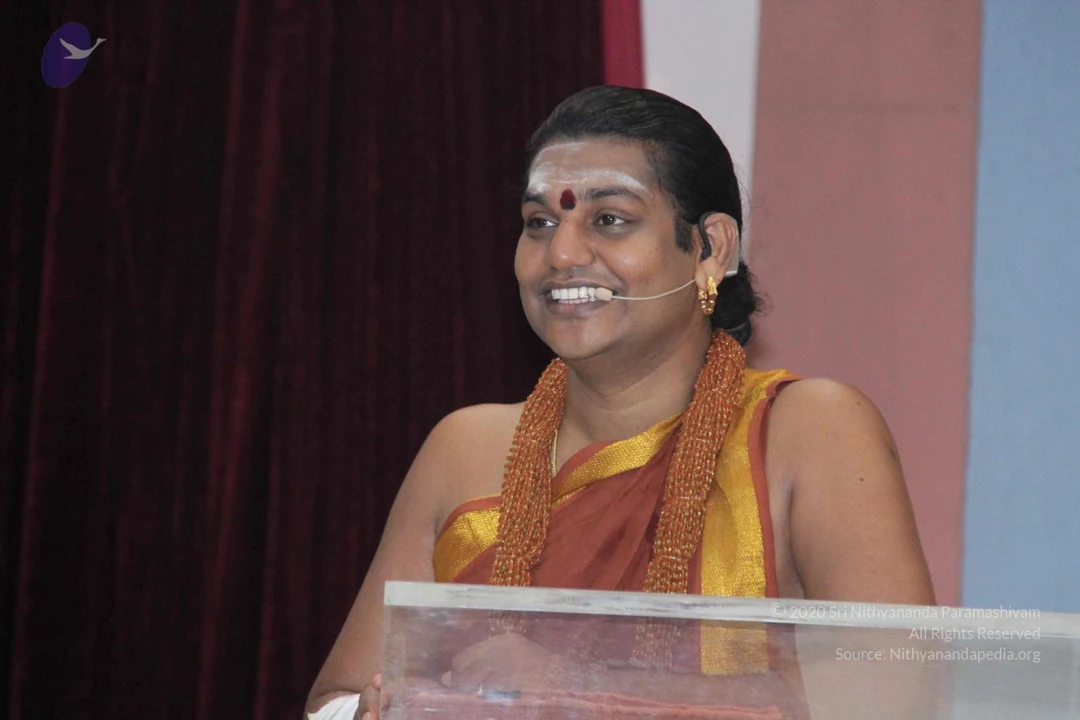
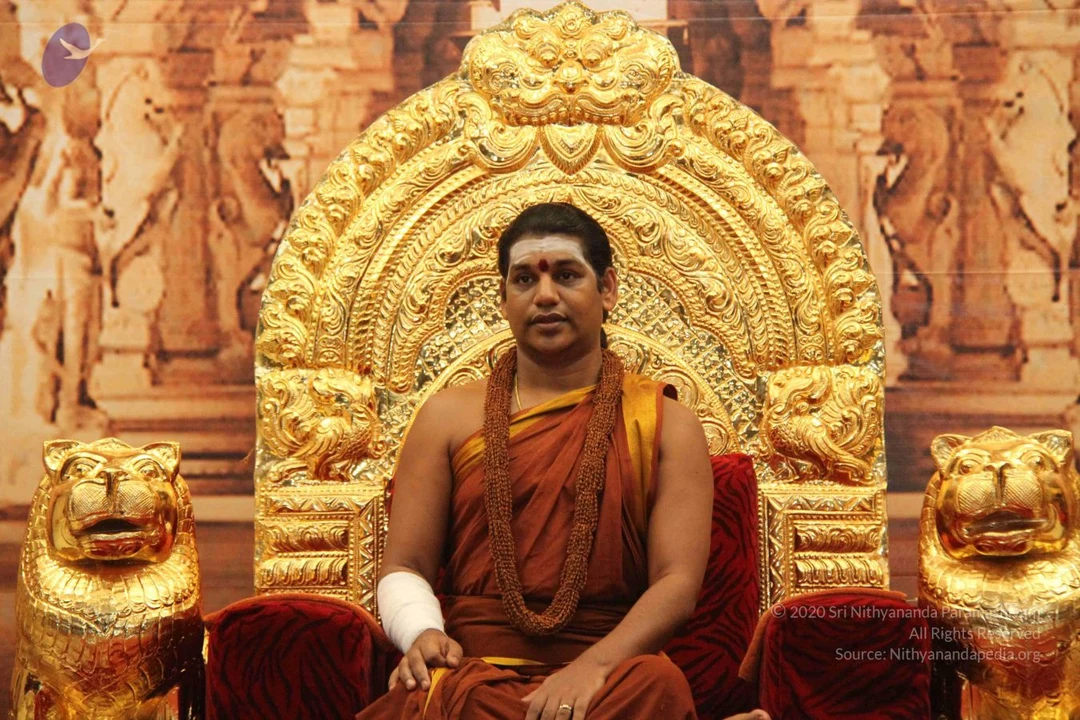
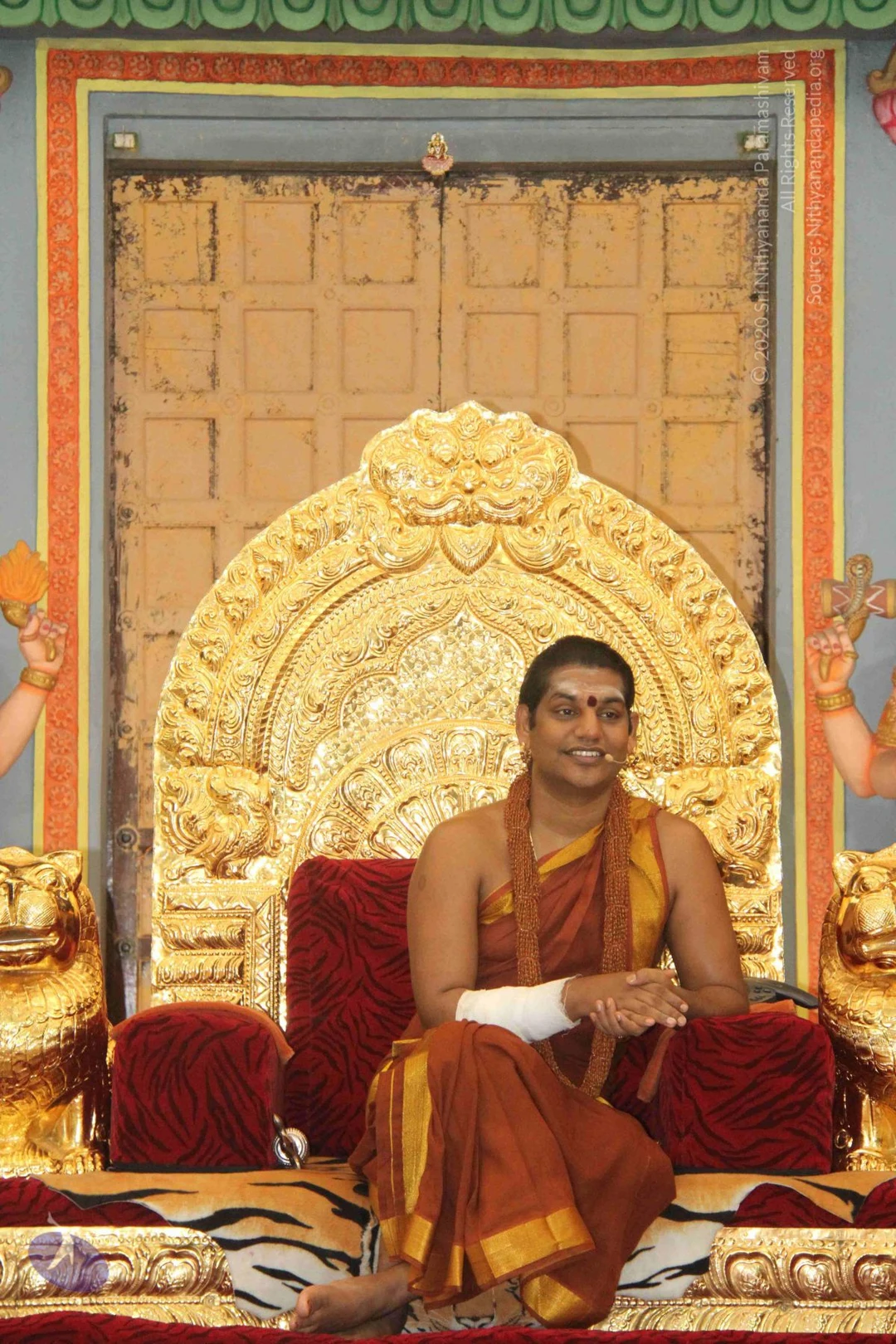
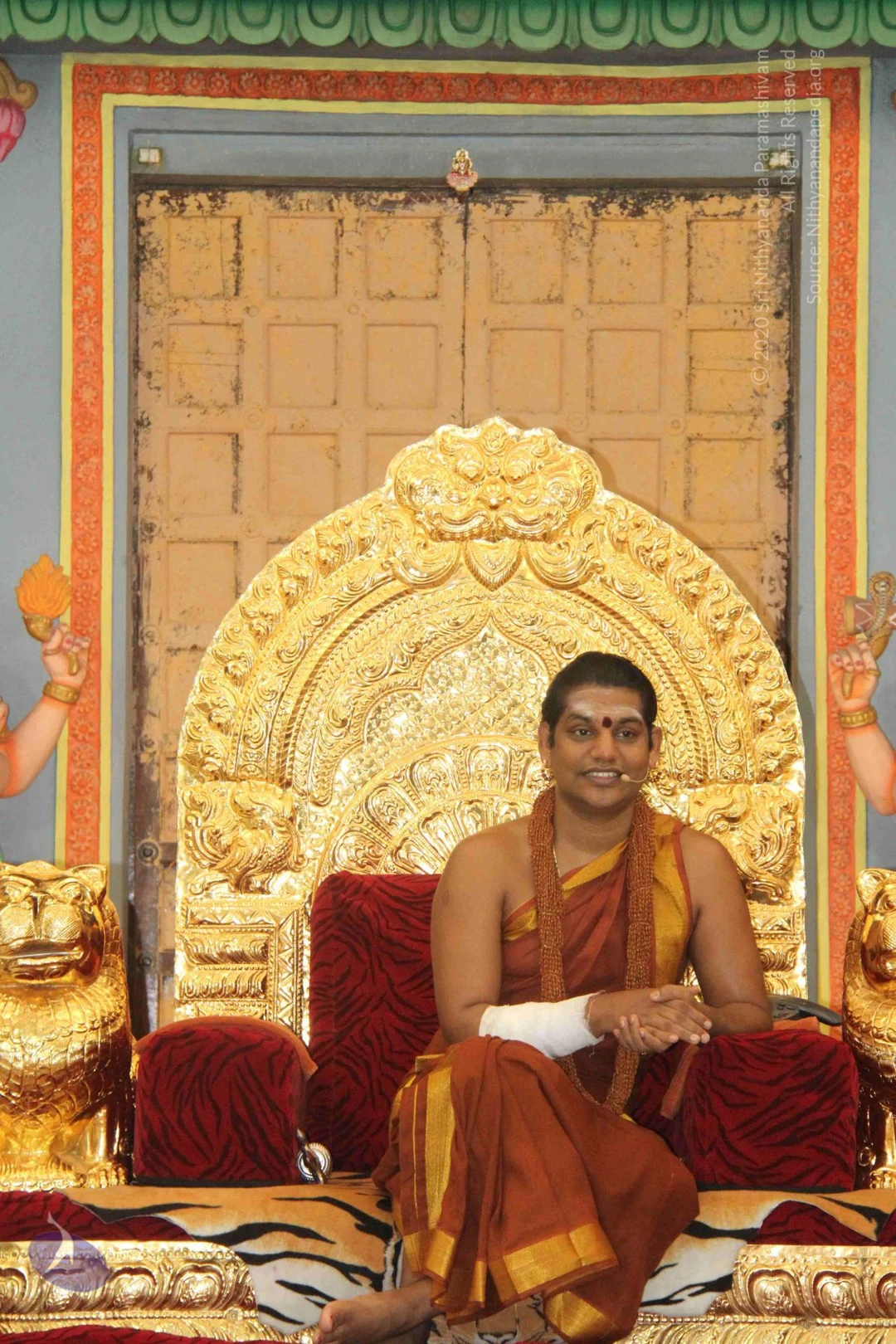
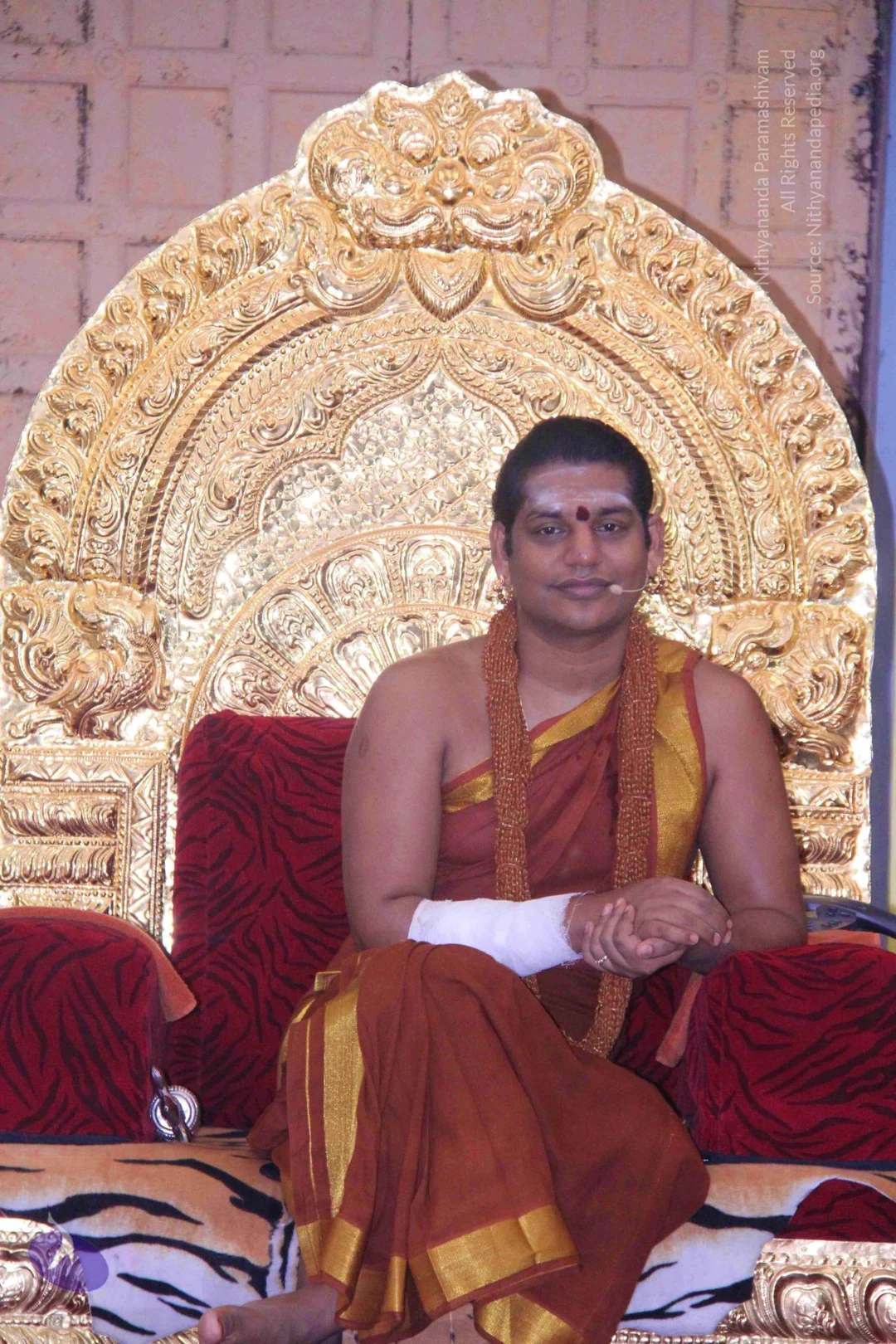
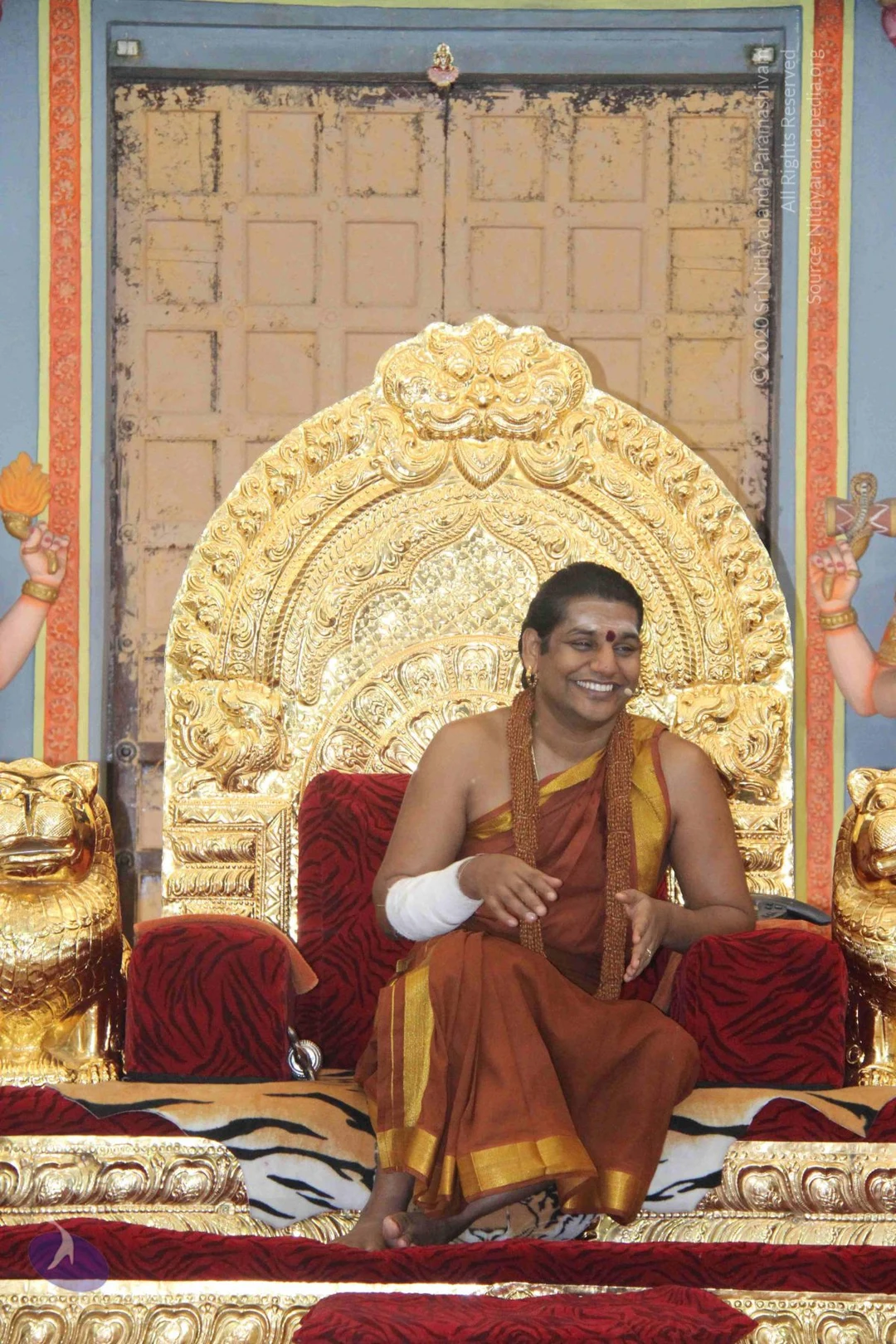
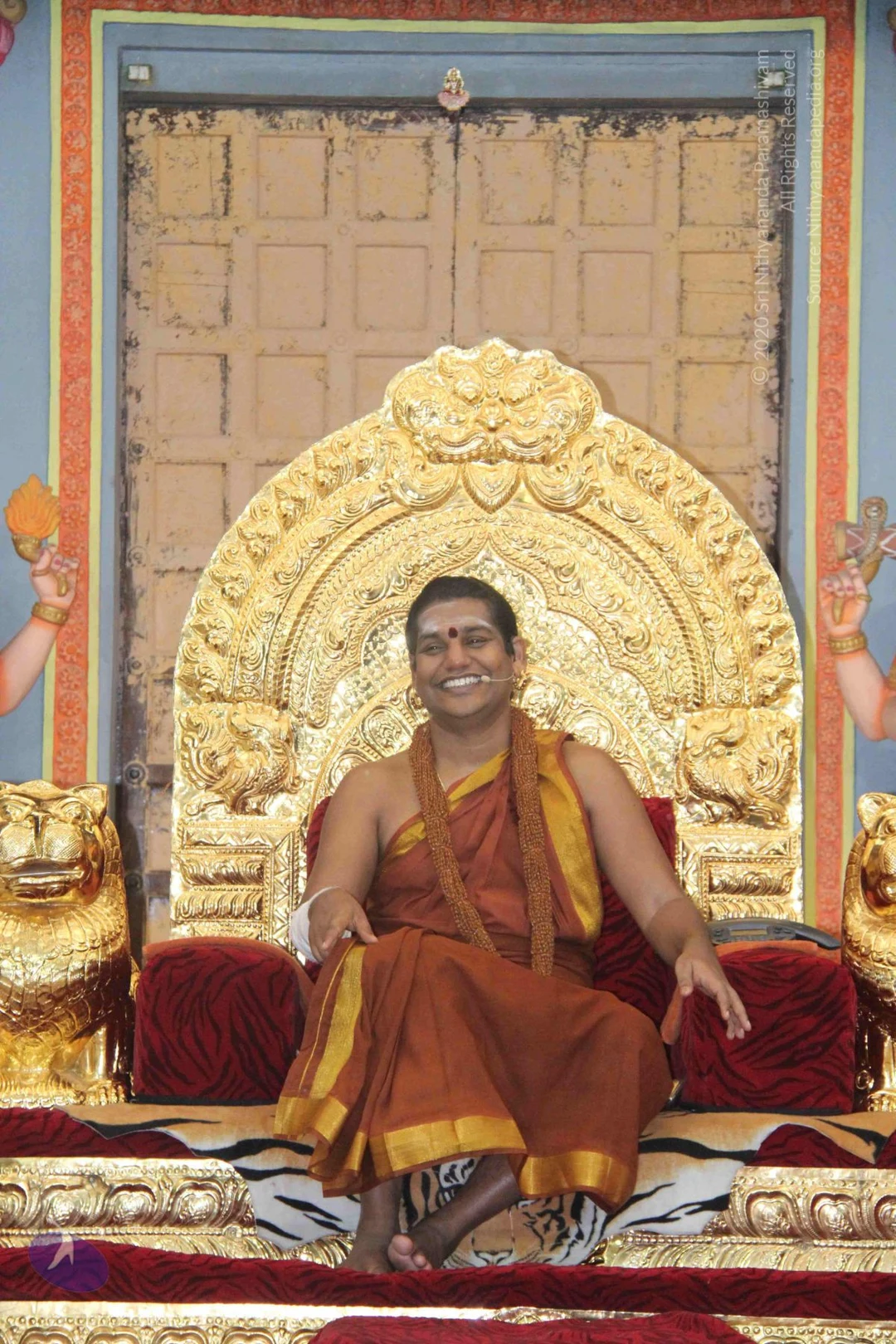
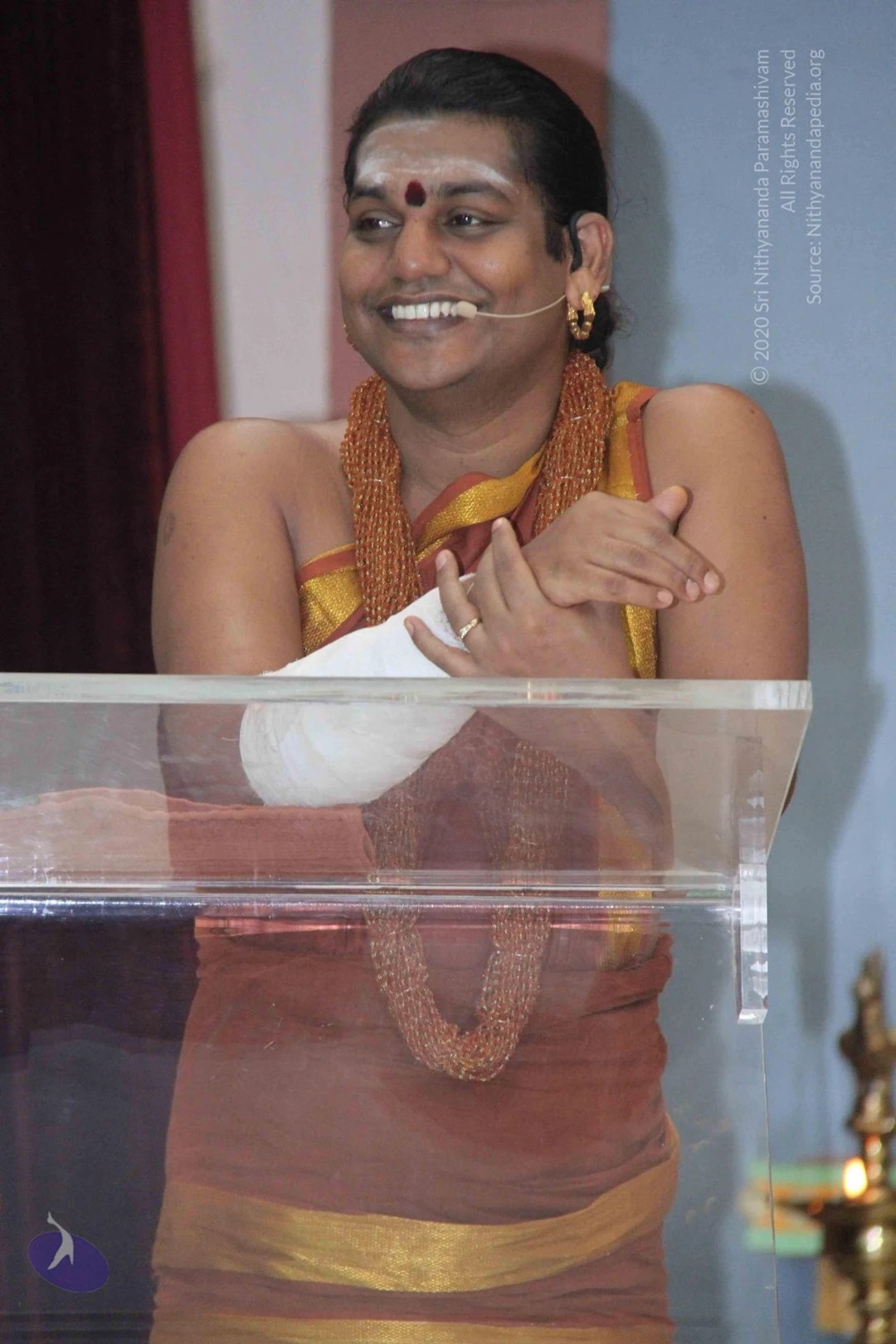
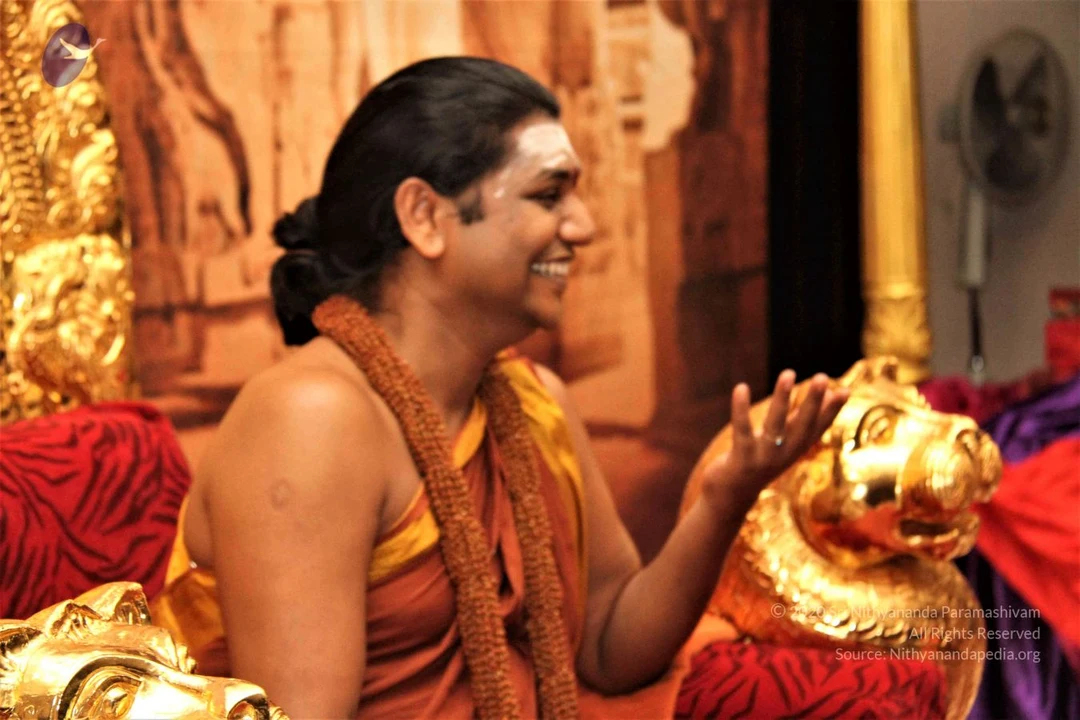
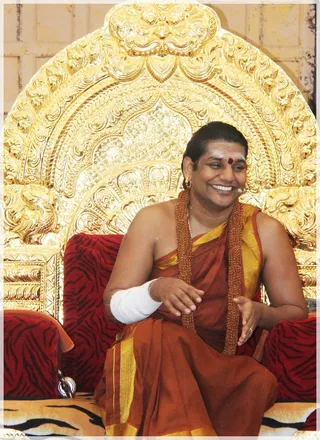
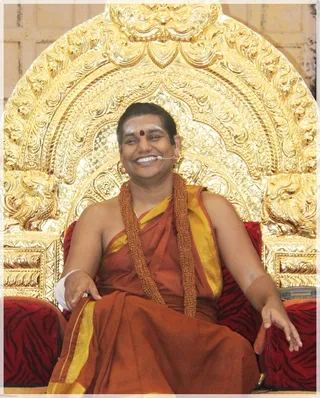
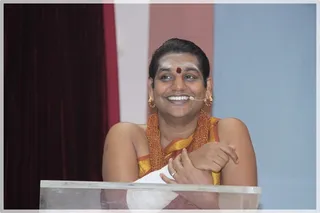
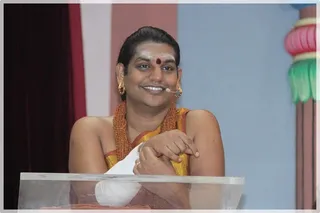
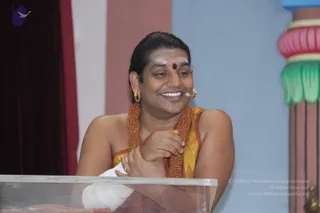
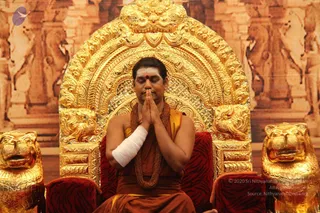
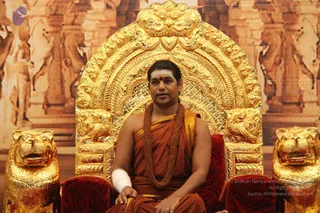
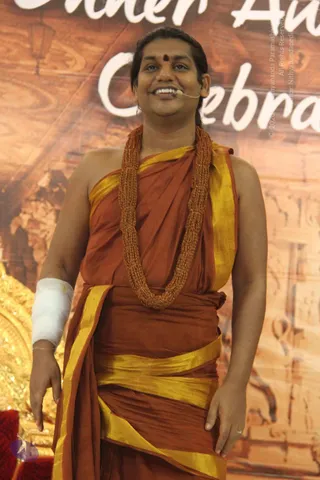
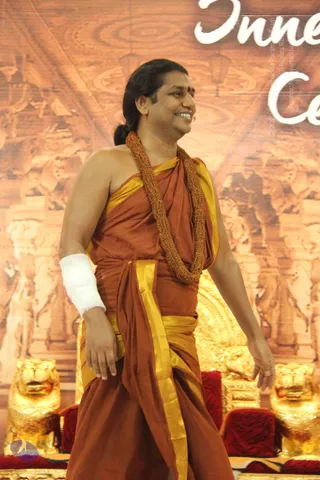
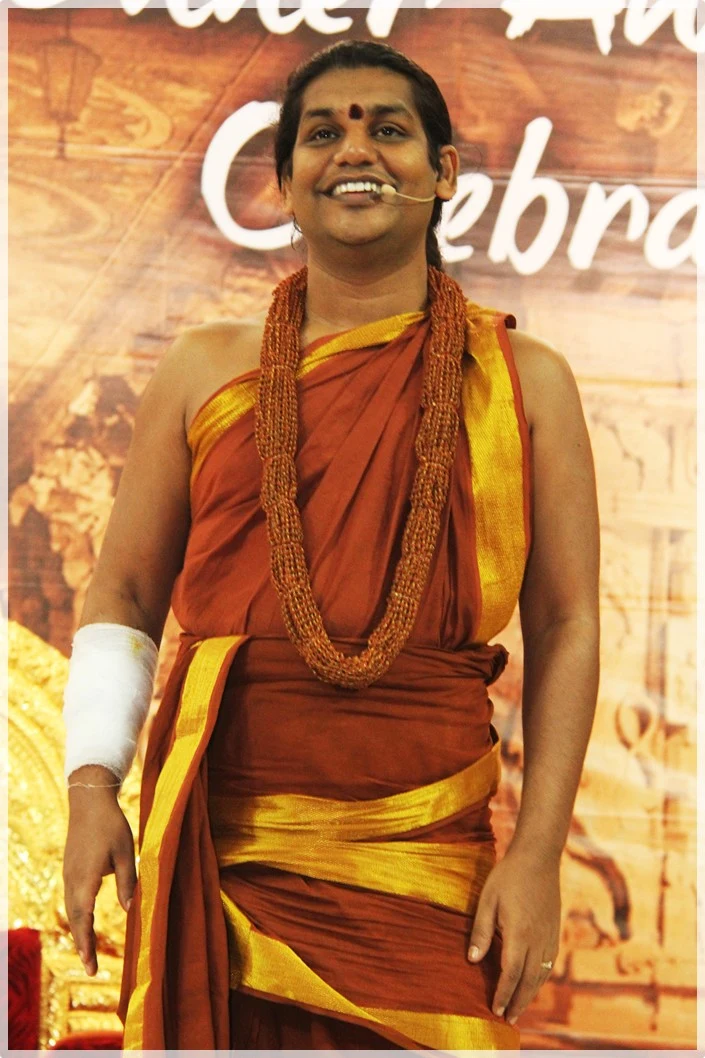
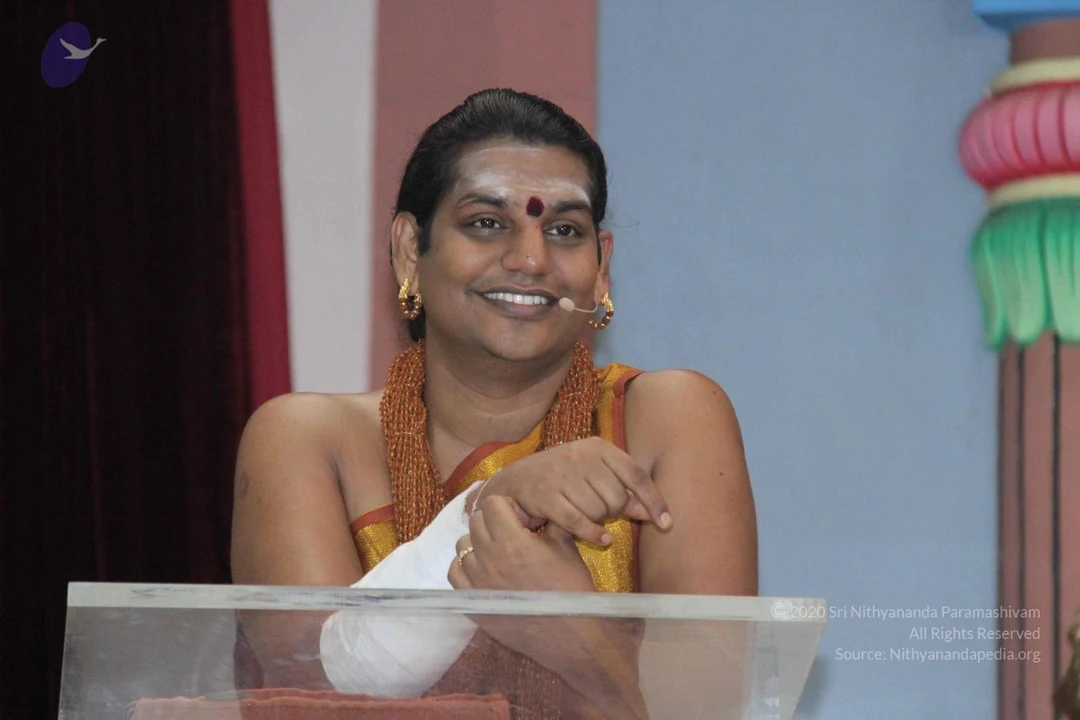
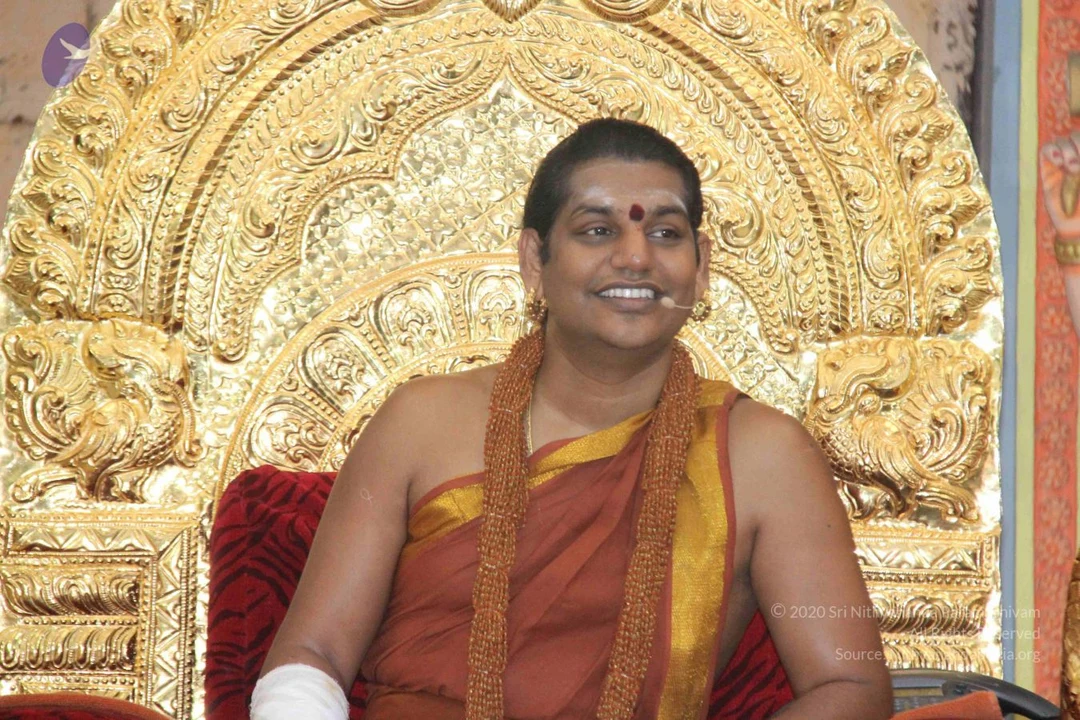
A photograph of two golden deity murtis seated side by side on a decorated stage, framed by a carved golden arch and a maroon curtain. Both figures wear elaborate gold crowns, heavy gold necklaces, and rudraksha malas, with jewelled ornaments and white embroidered garments. The figure on the left wears a purple lower garment and rudraksha beads across the chest, while the figure on the right wears a green silk garment with gold trim. The murtis are surrounded by dense arrangements of red, orange and pink roses and green foliage. No physical people are visible.Two young performers in ceremonial costume sit side by side in a temple-style hall with a gilded column and red drapes behind them. The figure on the left, shown in profile, wears a gold crown, a sheer white forehead band, a yellow and red flower garland, and a gold necklace over bare shoulders, with a white painted ornament on the arm and raised palms in anjali. The girl on the right wears an orange and red sari-style outfit, a gold headpiece with a matching hair ornament, layered red and gold necklaces, and a yellow flower garland, holding a red rose and smiling. No a person candidate is visible.A smiling man sits on an ornate gold throne with carved floral and scrolled backrest, draped in red and gold tiger-striped cushions. He wears a saffron-orange robe with gold border, a rudraksha mala of brown beads hanging to his waist, a red bindi on his forehead, and a white bandage on his left forearm. His hands rest open in front of him as he speaks, with a small microphone near his face. Swamiji (probable): long dark hair swept back, saffron robe, rudraksha mala and gold-bordered cloth as qualifying cues; seated in discourse posture.A smiling man with short dark hair and a red bindi sits on an ornate gold-carved throne with red zebra-print cushions. He wears an orange-maroon robe with gold borders, a long rudraksha mala draped over his shoulders, and a small headset microphone near his mouth. His arms are open in a gesture of speaking.A smiling man with short dark hair sits behind a clear acrylic lectern at a satsang, speaking into a head-mounted microphone. He has a red dot on his forehead, gold earrings, and a layered rudraksha-style bead mala with a red and gold shawl draped over his bare shoulder. His hands are clasped at the lectern. Behind him hang a deep maroon curtain and pale pink, grey and blue wall panels. The bare-shouldered figure with ceremonial bead necklaces and a red-and-gold shawl matches the page's a person reference, so this is a person seated in person at the lectern, with no readable text in the frame.A smiling man sits behind a clear acrylic lectern during a satsang, wearing a headset microphone. He has a red bindi and vertical white tilaka on his forehead, a rust-orange and gold garment draped over his shoulders, and a long rudraksha mala with ornate gold earrings. His hands rest together on the lectern, one wrapped in white bandage. Behind him hang a deep red curtain and pastel blue wall with a pink and green lotus-patterned pillar edge. a person, seated and speaking to the audience.

Paduka-puja

16 photosSource gallery
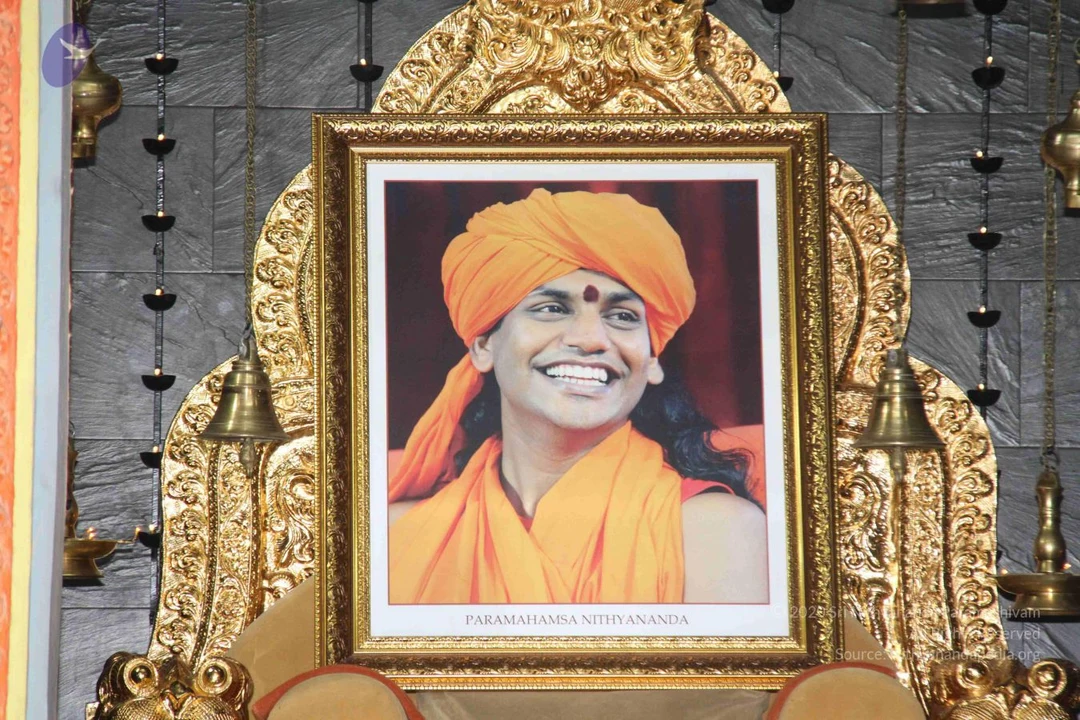
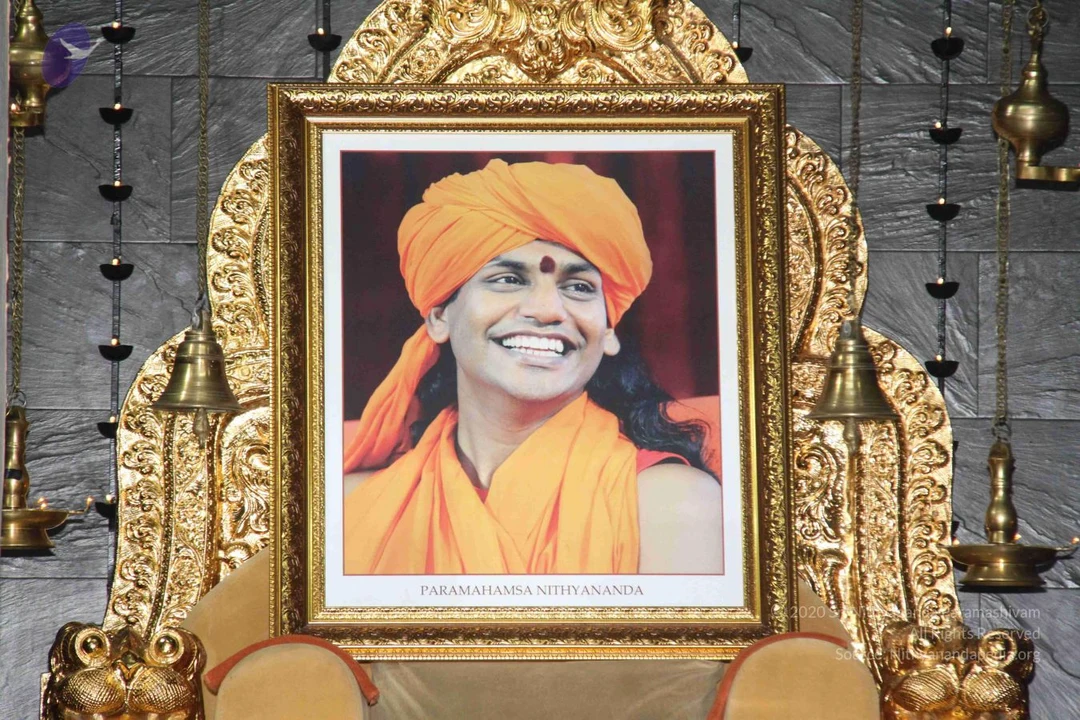
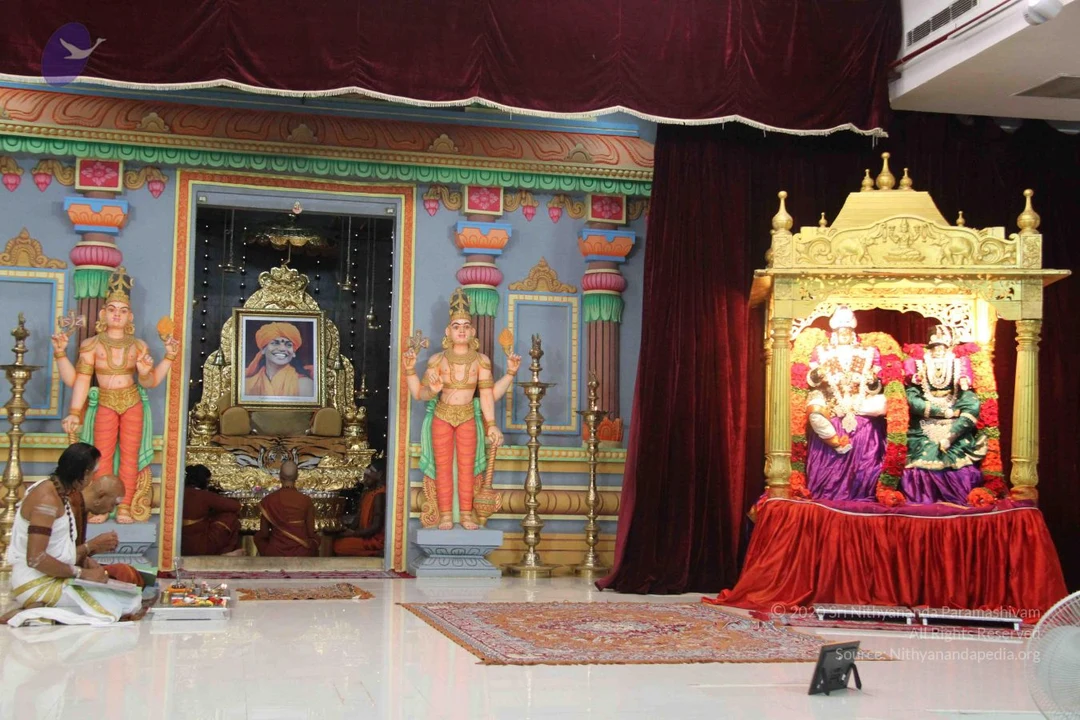
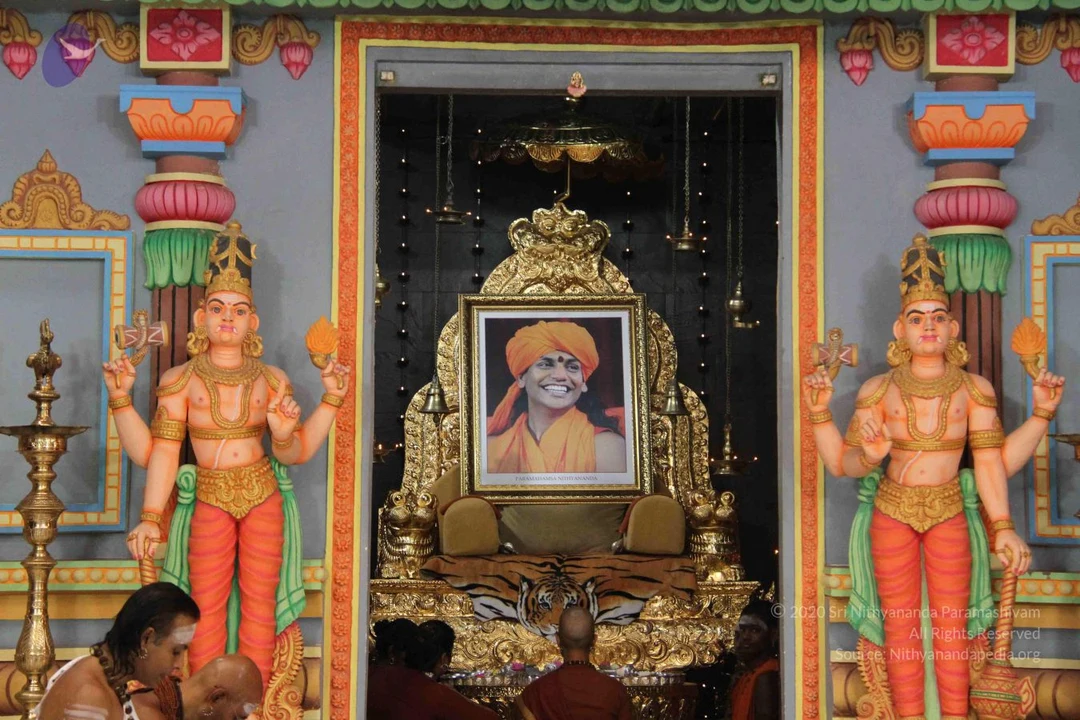
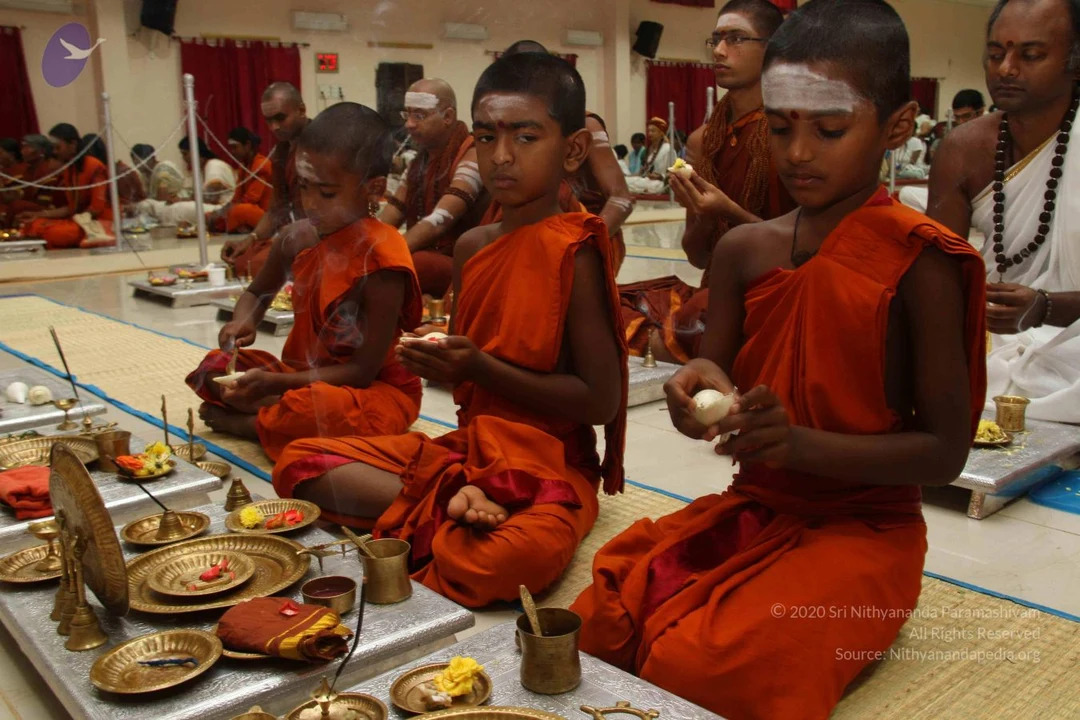
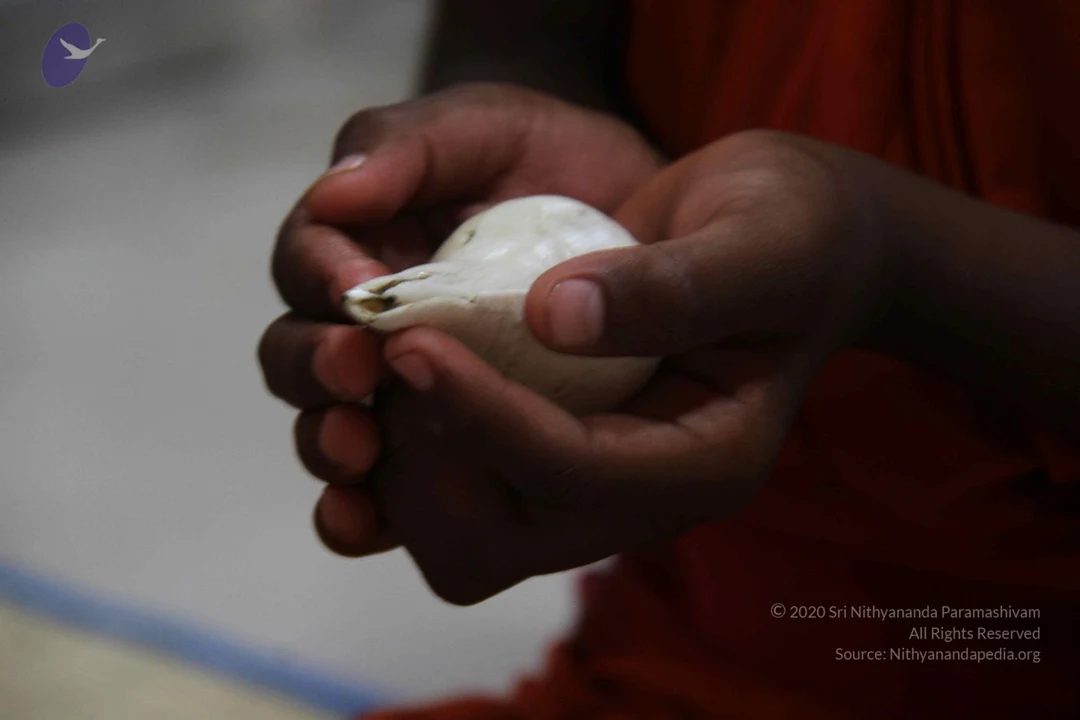
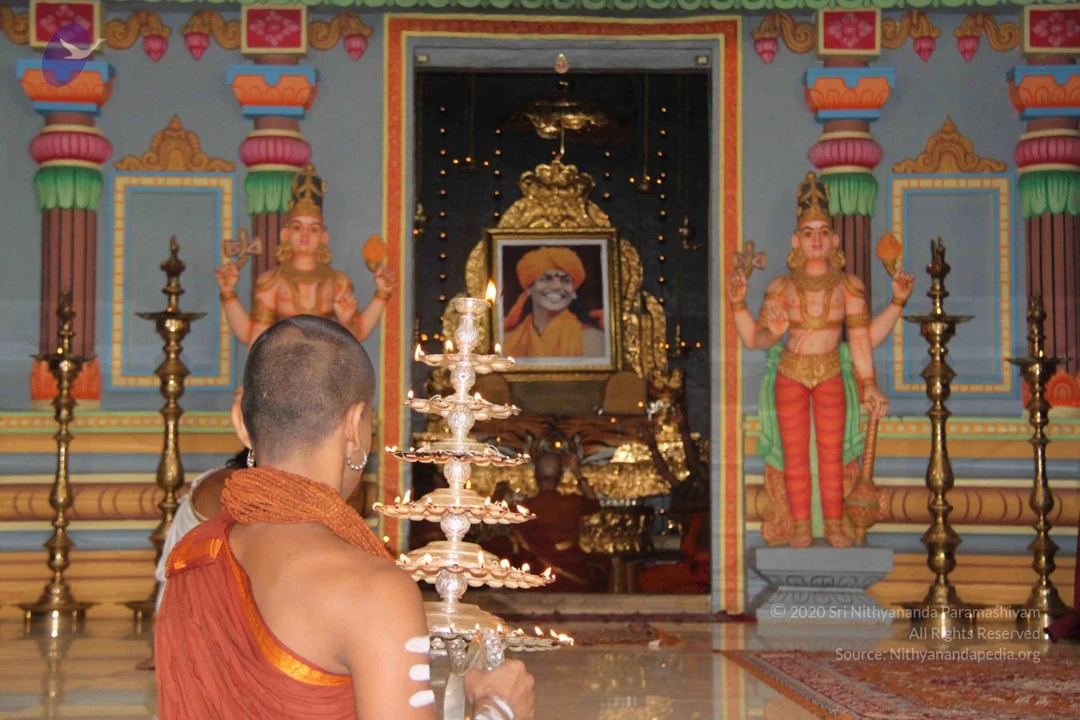
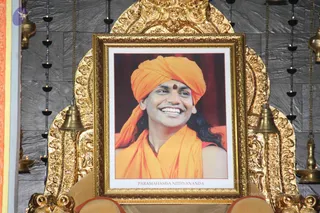
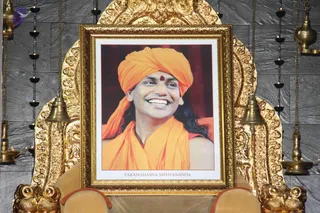
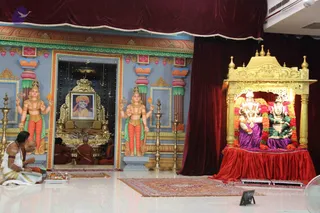
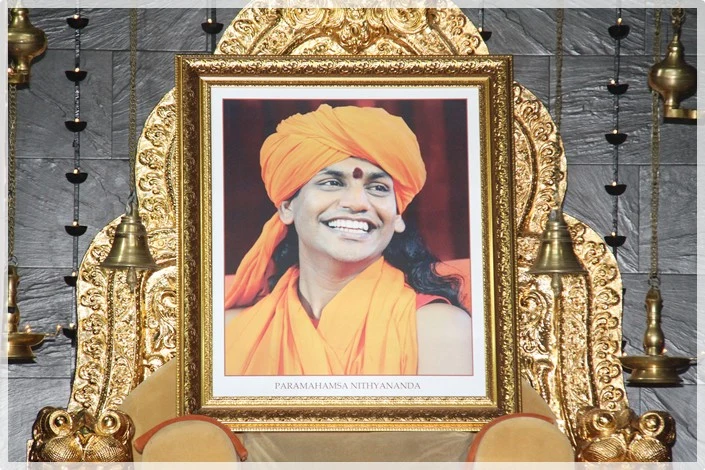
A framed portrait photograph of a smiling man with long dark hair, wearing an orange turban with a red bindi and an orange shawl, is displayed in an ornate gold throne-like frame. Hanging brass oil lamps and bells flank the gold carved backdrop against a dark grey stone wall. The printed caption below the portrait reads "Paramahamsa Nithyananda". The portrait is a printed picture, not a physical person present, and the figure shown is an orange-clad portrait subject with distinctive long hair, turban and shawl cues, matching the page's Swamiji reference.A framed portrait on a golden ornate throne-style chair, set against a grey stone wall with hanging brass oil lamps and bells. The framed photograph shows a smiling man in an orange-saffron turban and orange robe with a red bindi, with long dark hair. A printed caption at the bottom of the frame reads "PARAMAHAMSA NITHYANANDA". The throne has carved gold filigree, golden lion-paw feet, and orange cushions. No physical people are present; the portrait is a printed depiction on the throne.Interior temple hall photographed from the front. On the left, a shaved-headed priest in white dhoti and shawl sits on the floor before a small brass-and-tray setup with offerings. Behind the central doorway, a gilded throne holds a framed portrait of a smiling man in orange turban and saffron robes, labelled as a portrait of Paramahamsa Nithyananda. Two saffron-robed monks sit in the doorway. Two painted standing deities with four arms flank the entrance in orange and green dhotis. On the right, a gold palanquin-style canopy shelters two garlanded deity murtis dressed in purple and green, decorated with orange and red flower garlands. Brass lamps line the floor and a patterned rug lies on white tiles, with maroon drapes behind.A temple shrine with a golden ornate throne draped with a tiger-skin cloth, flanked by two tall painted statues of four-armed deities with crowns, gold necklaces and orange-red dhotis holding ritual objects. Centre of the throne is a framed photograph of a smiling man in an orange turban and orange garments, labelled with a printed caption reading 'PARAMAHAMSA NITHYANANDA' on the frame. Hanging lamps and a small canopy hang above. In the foreground lower corners, a seated priest with bare upper body and white tilak marks and a shaven-headed devotee in orange sit at the bottom edge, with two more seated devotees in dark clothing near the throne base. Brass oil lamps stand at left and right.Several young boys in saffron robes sit cross-legged on a mat in a hall, performing a ritual puja. Their foreheads and arms bear white sacred ash markings, and they hold small white items, possibly camphor or offerings, in their hands. Brass plates, bells, small cups and a brass lamp rest on silver-topped low stands in front of them, with flower petals and red kumkum on the plates. Behind them, other saffron-robed participants and a man in white dhoti with a rudraksha mala sit at similar stations. Red curtains and a white wall frame the room.Close-up photograph of a pair of hands cupped together, holding a small white rounded object with a broken, jagged edge, possibly a cracked shell or a piece of white food. The hands are dark-skinned and the wearer's upper arm and torso are in a deep orange-red robe. The background is soft-focused pale grey floor with a blue stripe at the lower left. Only hands and robed arm are visible, so no full face or identifiable person appears.

Nithya-Satsang
11 photosSource gallery
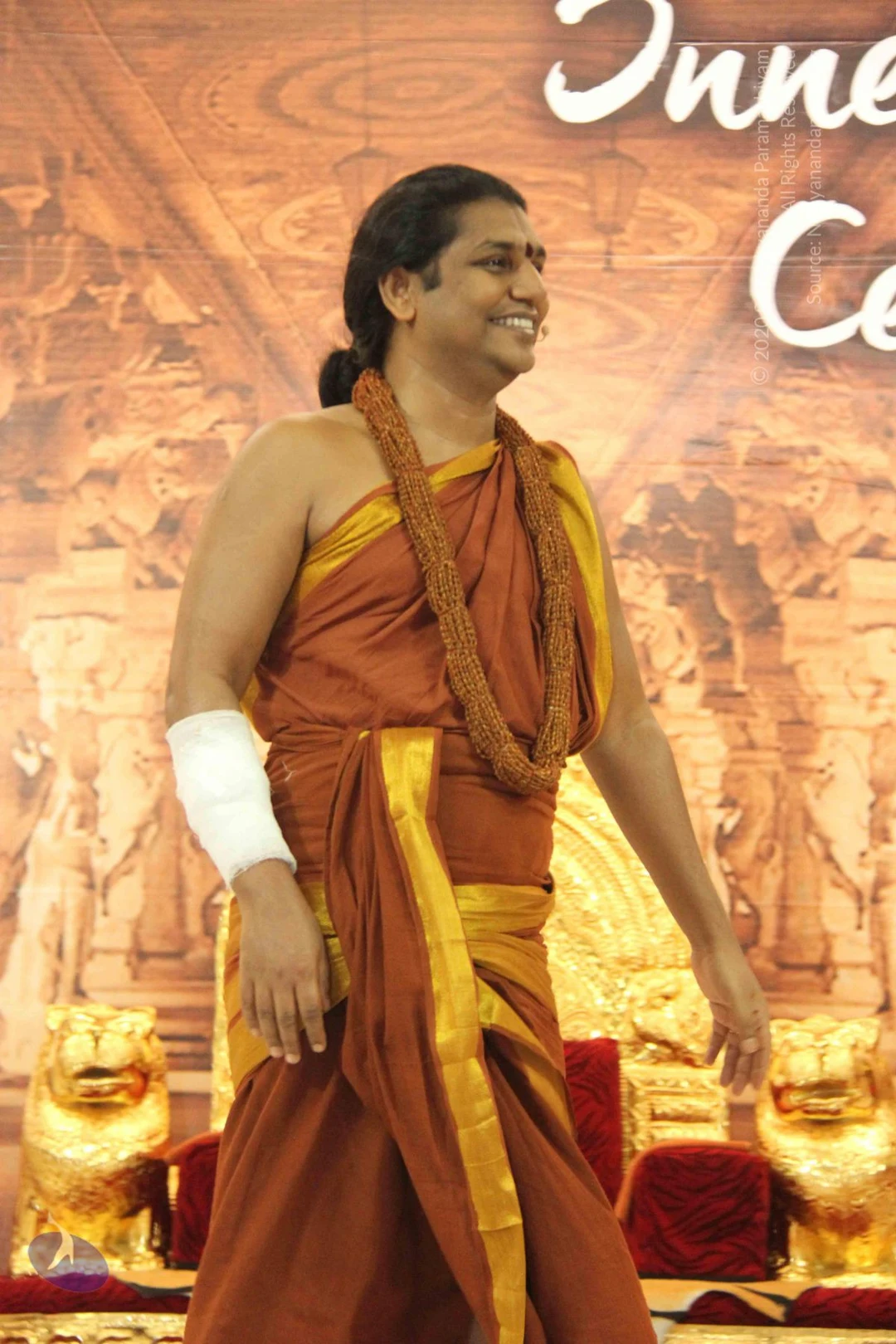
Indoor satsang stage with a golden ornate throne flanked by carved lion figures and red cushions. A man with a shaved head wearing an orange-saffron robe and shawl sits on the throne. Beside him stands a painted deity figure with a crown, holding a staff, and a pair of tall painted pillars frame a wooden door. On the right, a golden canopy shelter covers two decorated deity murtis draped in garlands, one in purple garments. Two children in purple and yellow sit on a red cloth in front, adorned with garlands and ornaments. Brass oil lamps stand on the stage.A photograph of an indoor temple-style hall with red drapes and painted columns. On a large gold lion-armed throne on the left sits a man in saffron-orange robes with dark hair, seated in a calm pose. Two children sit on the floor at right in front of a gold canopy shrine holding decorated deity murti dressed in purple, green and red garments with garlands. A boy in purple dhoti and white head ornament holds a garland, and a girl in yellow and orange dress with a flower garland sits beside him. The shrine has red fabric draping and brass lamps stand near the throne. The man on the throne is not clearly identifiable from appearance, so he is described by role only.A photograph of a golden-throned dais in a temple-style hall. On the left, a man with swept-back hair, a white forehead mark and a rudraksha mala sits with palms pressed together in namaskar, wearing saffron-orange robes and a white wrist bandage, on a red-cushioned gilded throne with a lion-shaped armrest. Behind him stand two decorated murti figures under a gold canopy with flower garlands, one in purple and one in green. Two young boys in traditional dress, one with a crown and garlands, sit on the red carpet with hands folded in front of the murtis. Brass oil lamps stand beside the throne and a standing fan is at the right edge.A seated man on a gold-and-red ornate throne with a tiger-motif footstool presses his palms together in anjali, wearing an orange-saffron dhoti and shawl with a long rudraksha-style mala and a white wrist bandage. Beside him stands a gilded canopy shrine (ratha-style) draped with red curtains, holding garlanded deity murti adorned with flower garlands in red, orange and yellow. Two young children sit on a red cloth at the lower right, one in purple and white with flower garlands, the other in orange with a garland, both with hands raised in greeting. A brass oil lamp stands near the throne, and a floor carpet lies in front.A smiling man sits on a red velvet cushioned seat in front of an ornate gold repoussé throne backdrop. He wears a saffron-orange and gold shawl over bare shoulders, a long rust-red and gold-trimmed garment, and multiple strands of rudraksha-style beaded malas around his neck. He has a red kumkum dot and white vibhuti marks on his forehead, a lapel microphone clipped near his face, and a white bandage on his right wrist. His hands are clasped in his lap. A gilded deity murti with an arm raised is partly visible at the right edge. A watermarked copyright notice is visible at the lower right, which I have not transcribed.A smiling man with slicked-back dark hair, a red kumkum dot and white vibhuti marks on his forehead, and gold hoop earrings sits behind a clear acrylic lectern. He wears a saffron-orange silk garment with a gold border over bare shoulders and a long orange-beaded rudraksha-style mala with a gold clasp. He holds his hands together near the lectern while speaking into a small headset microphone. A red curtain and a pink-and-green pillar with a lotus-style capital appear in the background.

Arati-to-Swamiji-&-Deity

2 photosSource gallery
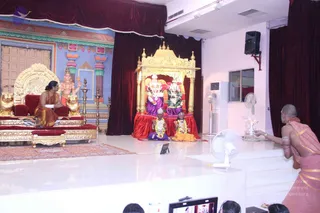
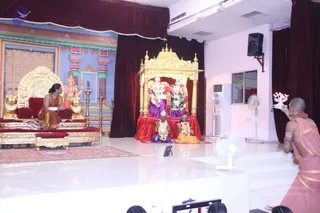
A photograph of a stage in a temple-style hall. On the left, a seated figure with long dark hair in an orange-saffron garment sits on an ornate golden throne with lion-form armrests and red cushions, a gesture of teaching in progress. Beside the throne stands a standing figure in gold-toned attire. At center, a golden canopied palanquin-style shrine holds two deity murtis draped in purple and green, with marigold and flower garlands and a red-draped platform. Two small child-sized figures in purple and orange, garlanded, sit before the shrine. On the right, a bald man in pink-orange robes with a sash stands facing the shrine, holding a lamp or vessel. Oil lamps stand on the stage, and the foreground shows the backs of a few seated audience members and a small monitor.Indoor stage at a temple-style hall with red velvet curtains and a painted backdrop of pillars and a deity figure. A person in a saffron-orange robe with a shawl sits on a gold lion-armed throne at left, hands in front of them, facing right. At center stands a gold canopy shrine holding two adorned murti figures in purple garments with garlands, with two smaller child-sized murti figures seated in front on a red cloth. At right a bald man in a pink-orange robe with gold trim stands facing the shrine, holding a white ritual vessel with a lamp-like form aloft, apparently performing a puja. Brass oil lamps stand near the throne and a fan and speaker are visible.

Sarva-Dharshan

12 photosSource gallery
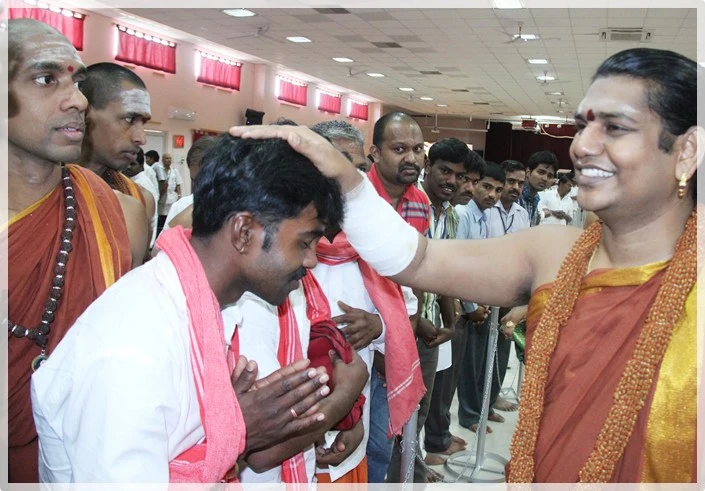
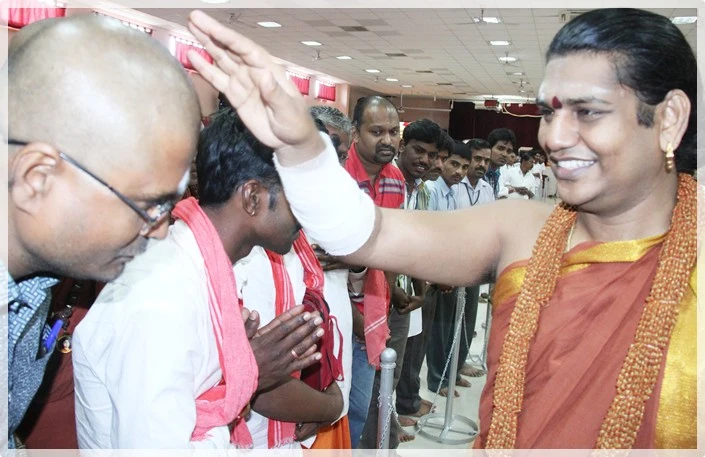
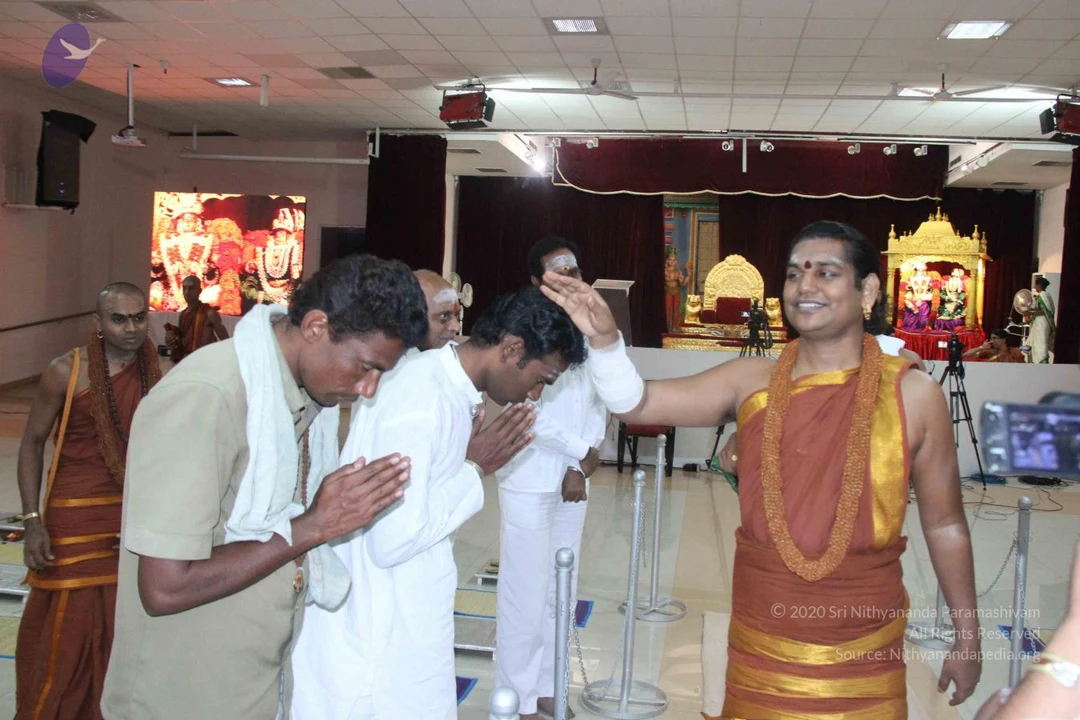
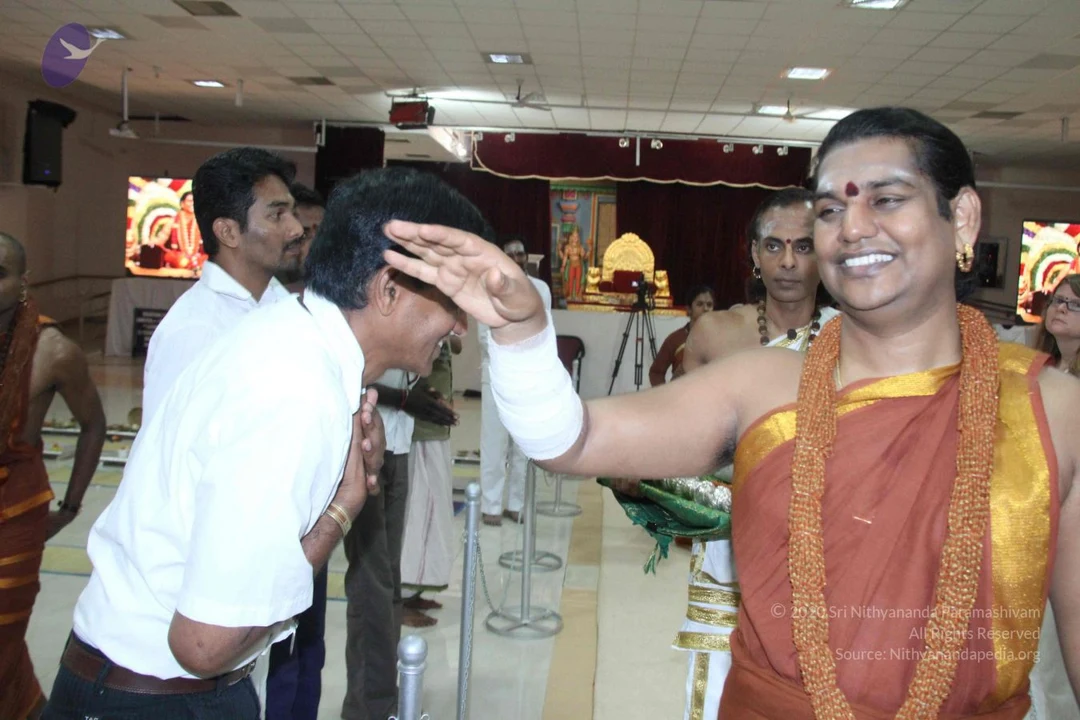
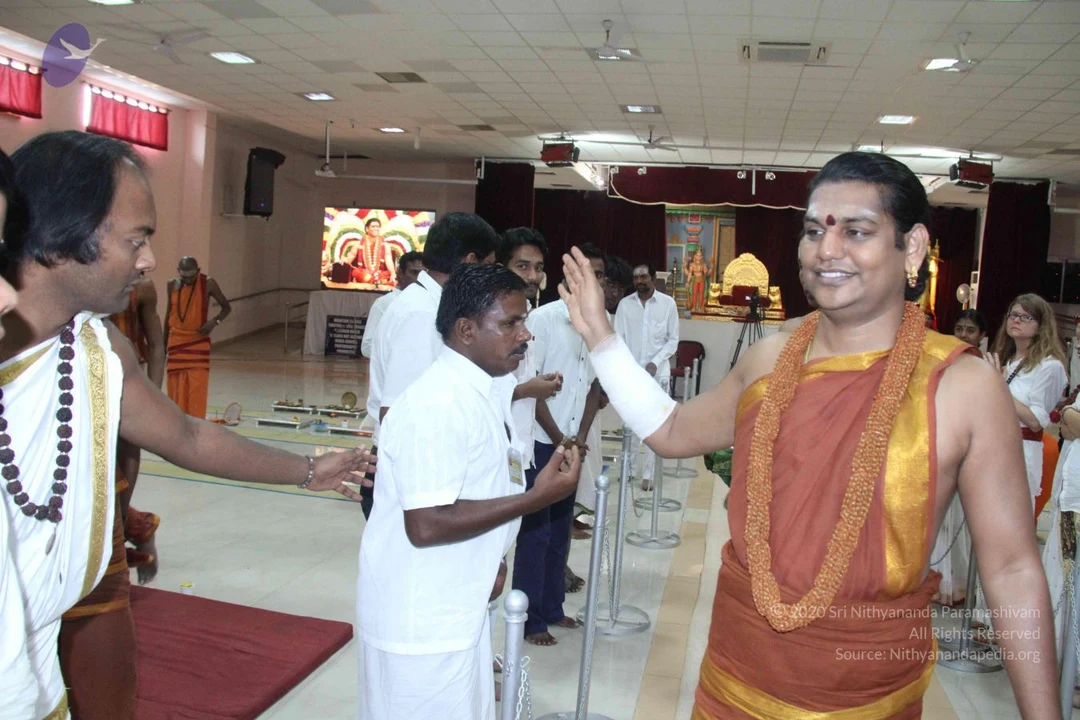
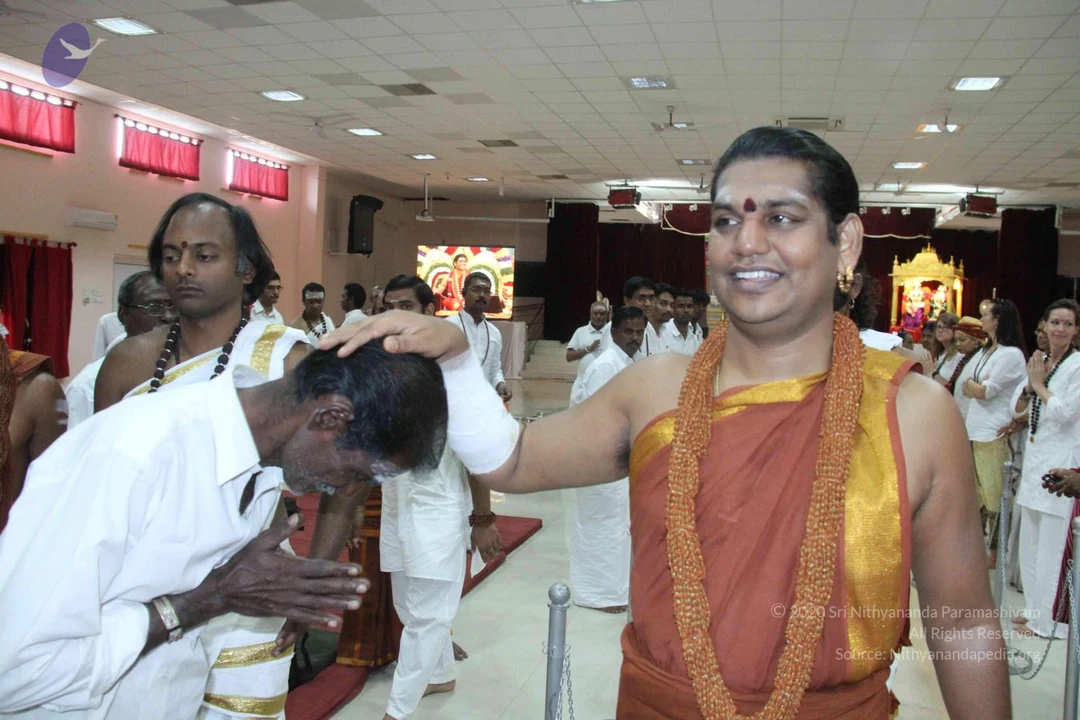
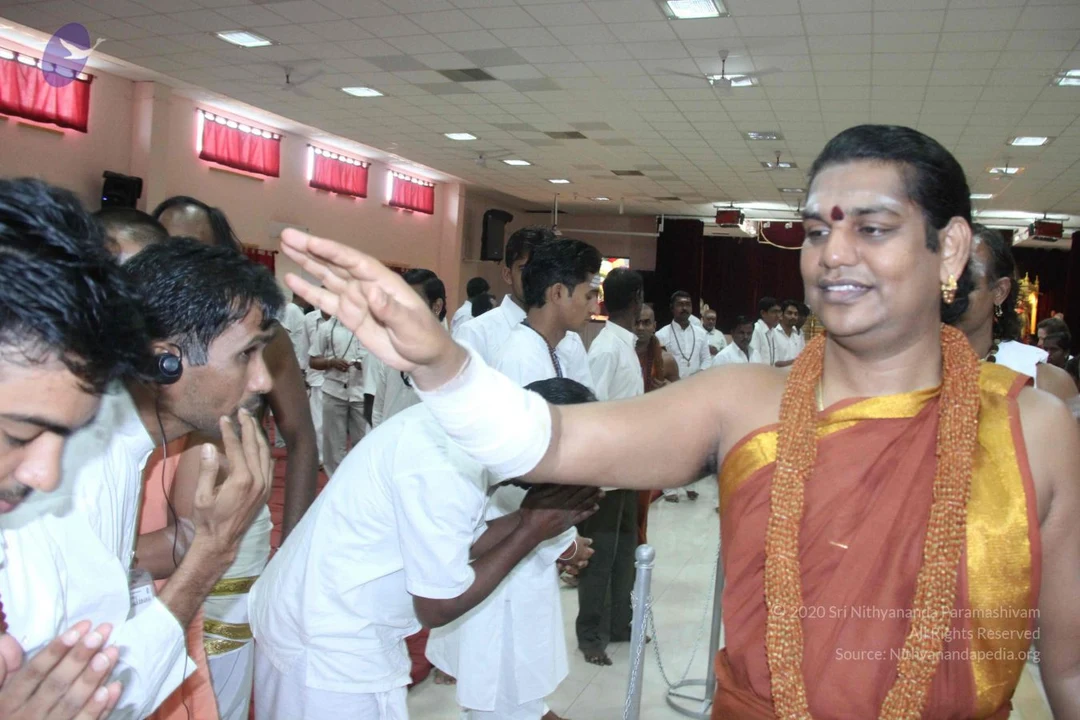
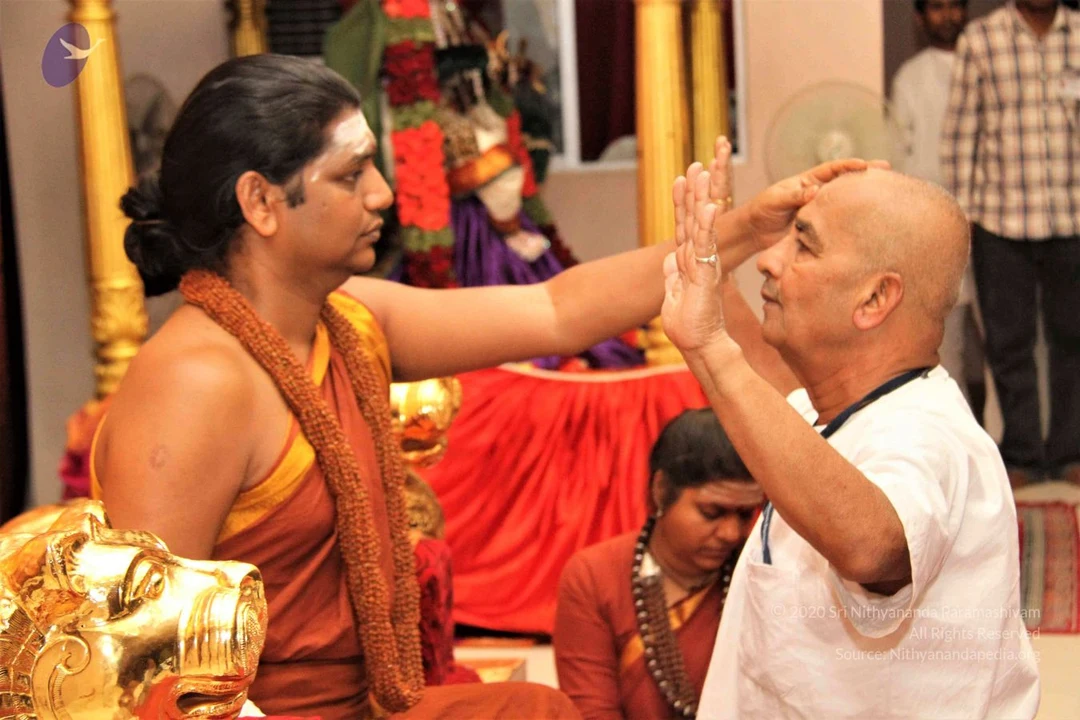
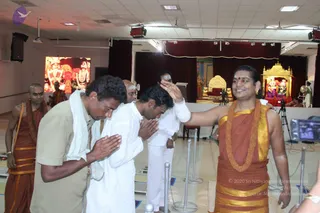
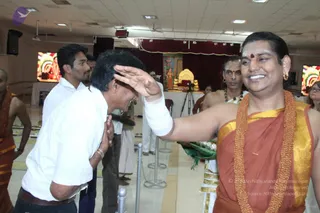
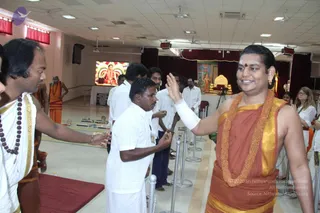
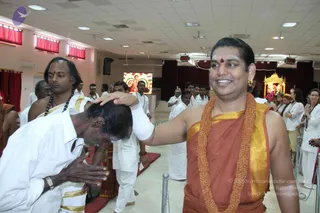
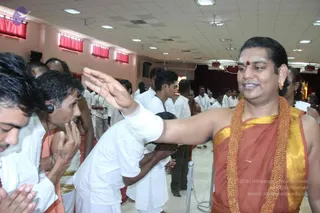
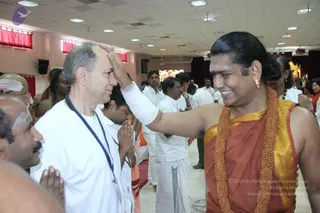
Indoor hall with a tiled ceiling and a raised stage backdrop of deep red curtains. On the right, a man in an orange-and-gold dhoti with a long orange shawl and a red-orange garland raises his hand in blessing over two men with folded hands and bowed heads. The men, one in a beige shirt with a white towel and one in white kurta, receive the blessing. On the left, a shaved-headed attendant in orange robes and a rudraksha mala stands nearby. Behind them, a gilded throne and a golden shrine hold deity murtis with garlands, and a camera on a tripod stands on the stage. A tiny screen on the left shows a colourful deity image. Printed text in the lower right reads a and the Nithyanandapedia sourceA man in a saffron-orange garment with a wide gold border and a long rudraksha mala, with a red bindi and gold earrings, smiles as he raises his right hand in blessing over the head of a bowing devotee in a white shirt and white trousers with hands folded in namaskar. Probable Swamiji in an appearance-based label: long swept-back hair, saffron clothing and rudraksha cues visible. Behind them are other men in saffron and white, a draped gold-and-green cloth, a golden throne with a deity image on a backdrop, and two large screens showing ceremony footage in a hall with a drop ceiling.A photograph in a hall with white ceiling tiles and red valances. On the right, a man with a shaved-sided dark hairstyle, a red bindi, gold earrings, a saffron-orange wrap with gold border and a long rudraksha mala raises his right hand, palm out, in greeting while smiling; his bare-chested dress and ornaments are distinctive, and the page names a person at this event, so he is a person candidate. To the left, a man in a white dhoti and a white shirt with a rudraksha mala stands beside another man in white shirt and dhoti, with a saffron-clad man behind them. A screen shows a figure seated before floral decorations, and a gold throne and deity murti stand at the back. Several people in white and saffron stand along a barrier line, with a woman in white on the right edge.A photograph in an indoor hall with white ceiling lights and red curtains. In the foreground, a man in a red-orange garment with a gold border and a long orange-beaded mala smiles while placing his hand on the head of an older man in white dress who bows forward. The standing man wears a red bindi and gold earrings. Behind them, men and women in white ritual clothes stand in the hall, and a deity altar with gold decoration and a screen showing a colourful image appear in the background. a person (appearance-based label): the standing figure in saffron-orange with an orange mala and gold-bordered garment, shown blessing a bowing devotee.A photograph in a large hall with white ceiling tiles, ceiling fans and red curtained windows. A man on the right in an orange-red and gold draped garment and a thick orange rudraksha mala raises one hand in blessing, with a red bindi on his forehead and gold earrings. Around him, men in white dhotis and white shirts stand or bow with folded palms, and one man wears a headset. The page suggests a person is present, and the figure's appearance (saffron-orange clothing, rudraksha mala, gold ornaments) is a person candidate, shown in person, giving blessing to devotees. Several people are visible in the scene.A photograph inside a bright hall with red curtains, ceiling fans and tubelights. A man with long dark hair, a rudraksha mala and a gold-tinted cloth draped over an orange-red garment places his right hand on the forehead of an older balding man in a white shirt with a blue lanyard, who stands with eyes closed. Several other men in white dhotis and white shirts stand or sit nearby, some with hands joined in namaskar, and a man at left has white vibhuti marks on his forehead. A rudraksha mala hangs over the orange-red garment, and gold earrings are visible on the standing man. Behind them a colourful deity image hangs on the wall. a person wearing ornate gold-bordered orange-red clothing and a long rudraksha mala appears to be giving blessings.

Final-Blessings

5 photosSource gallery
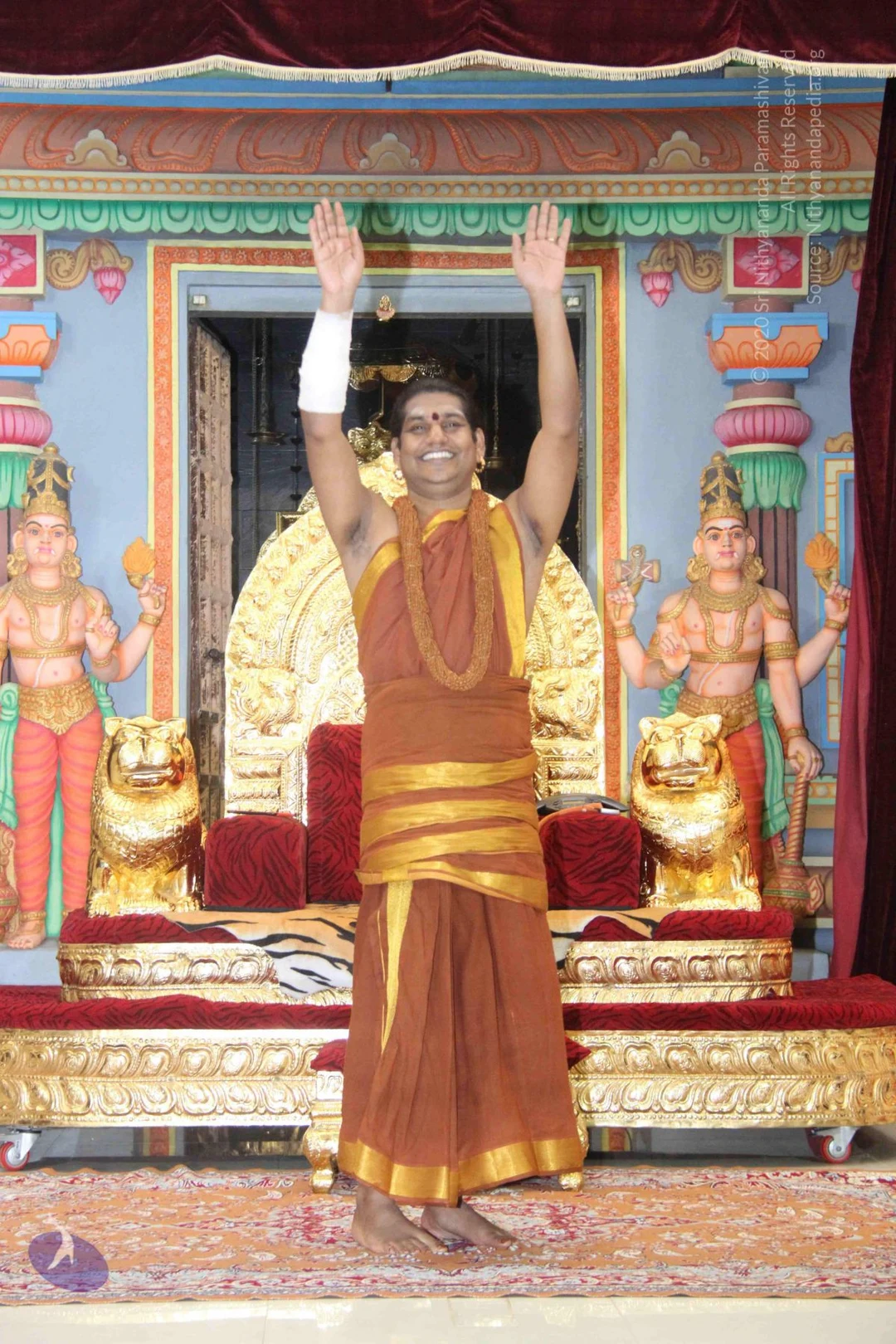
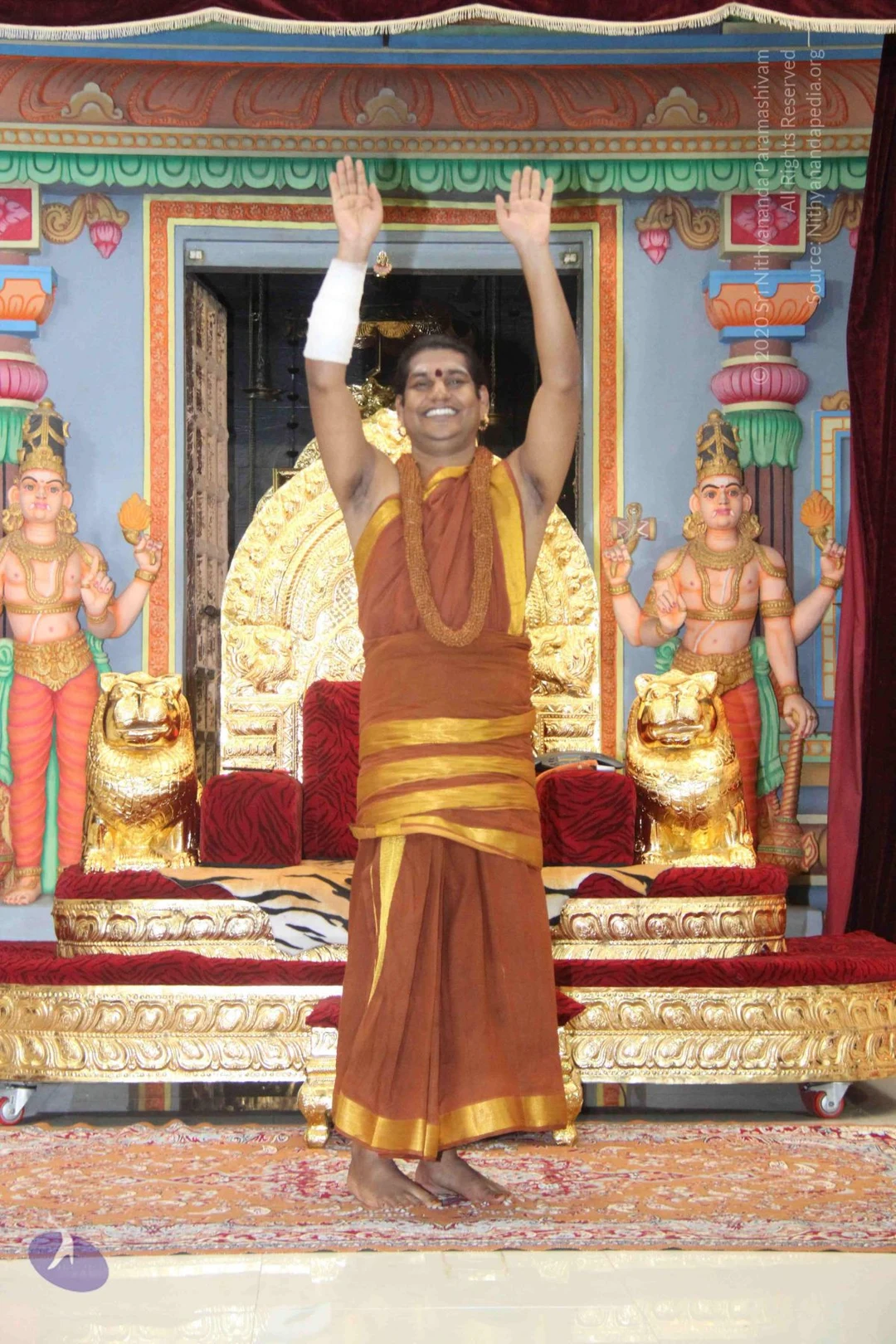
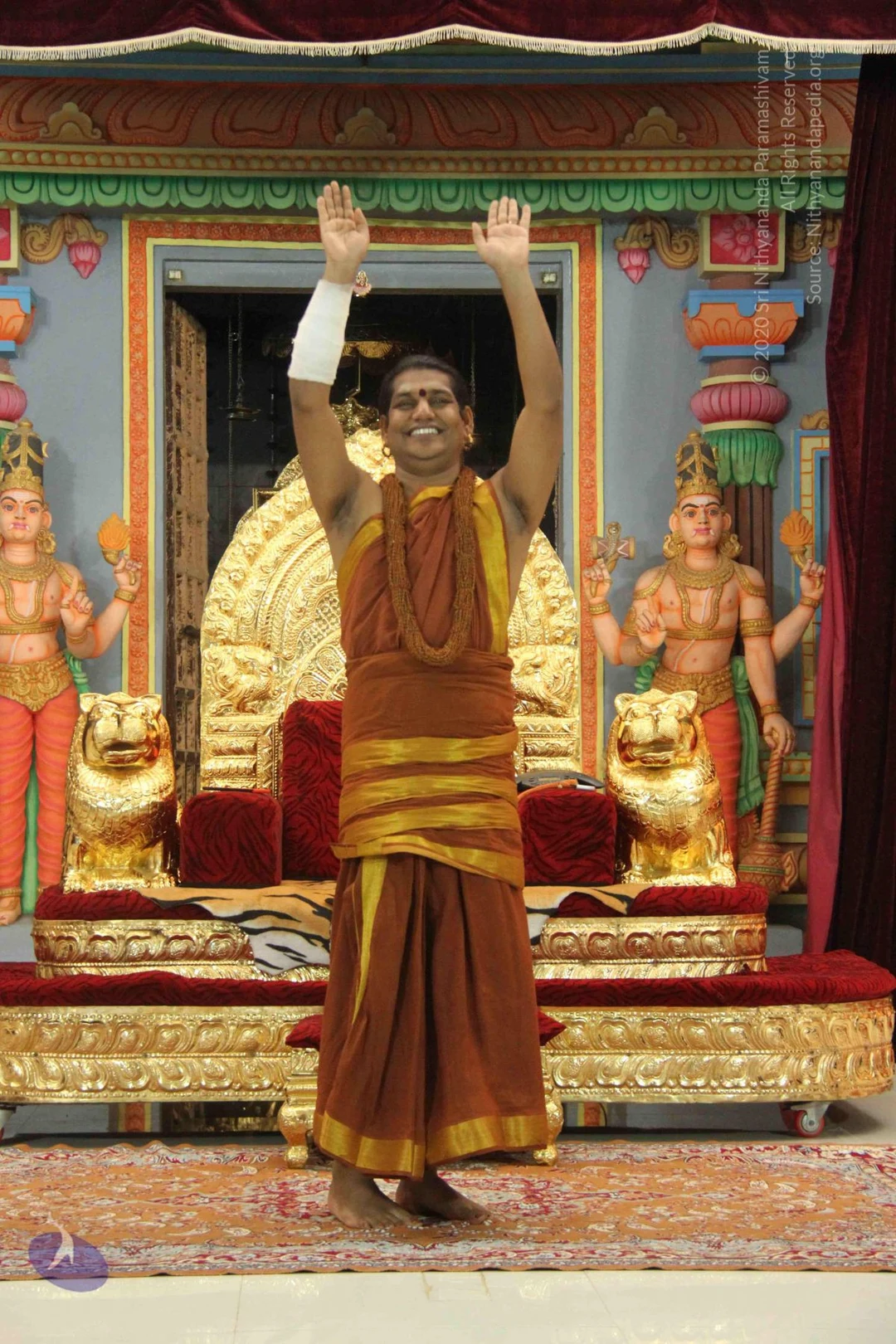
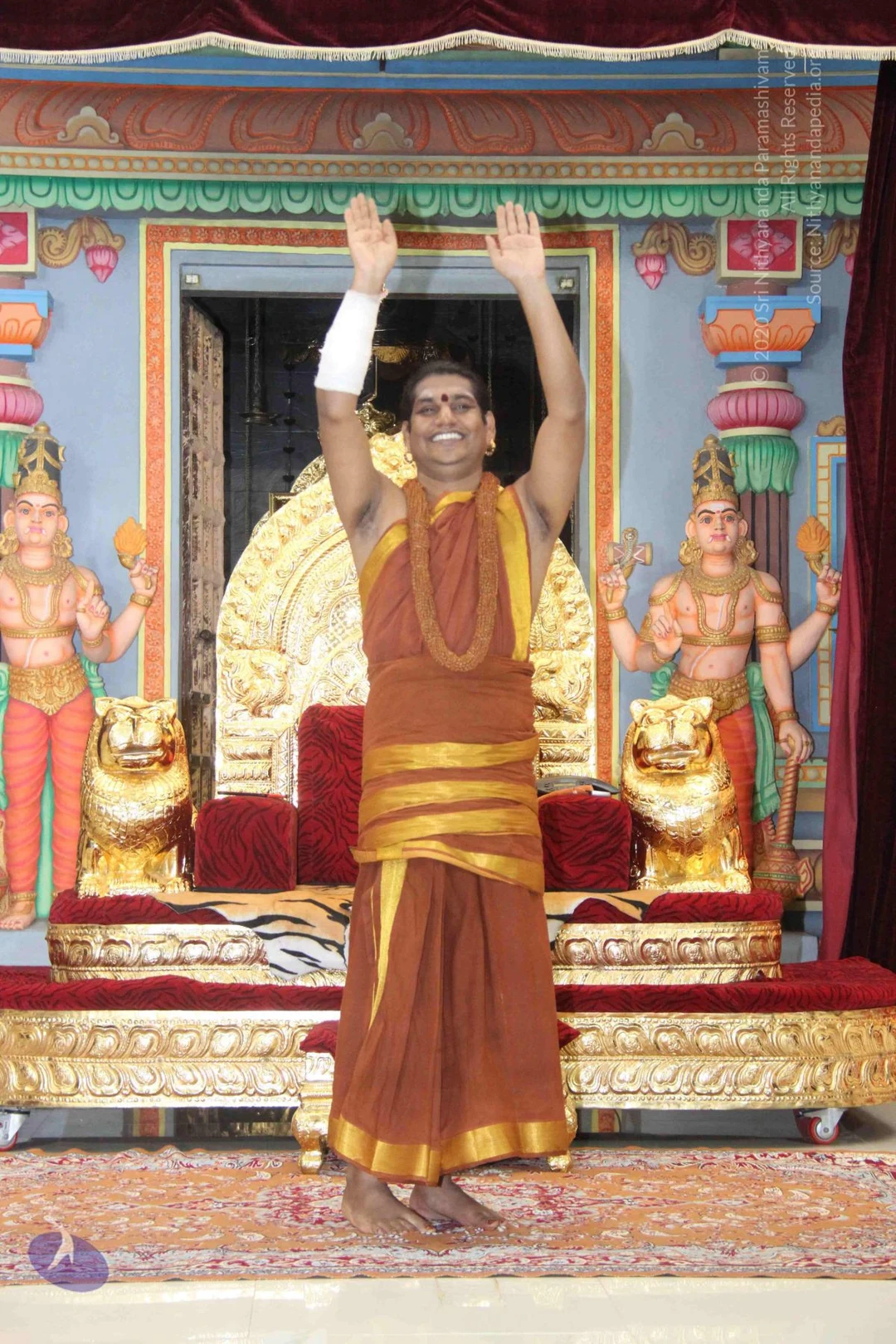
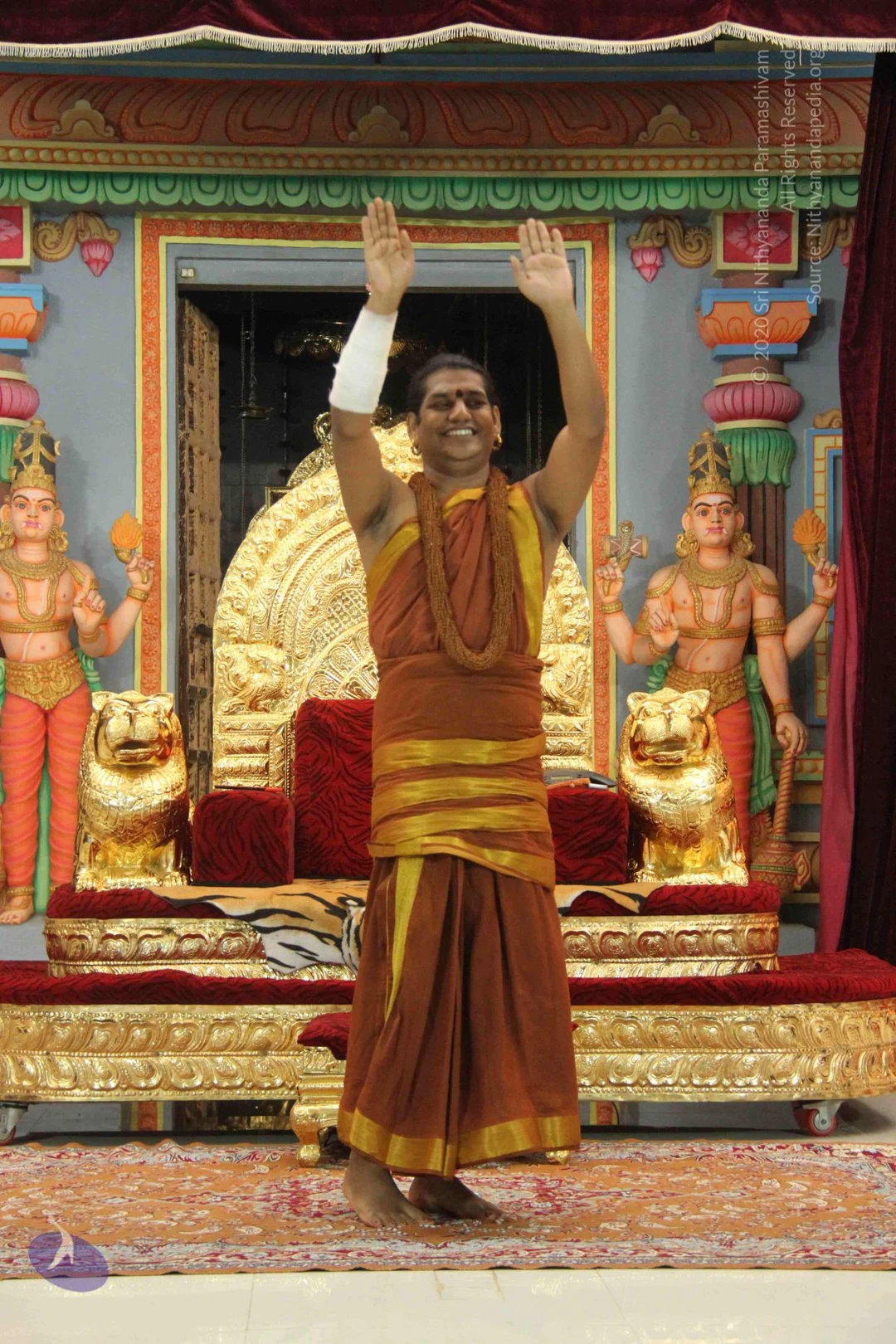
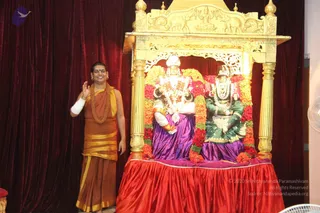
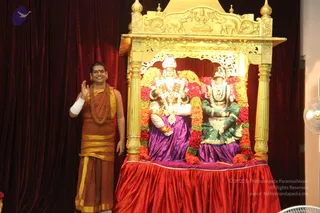
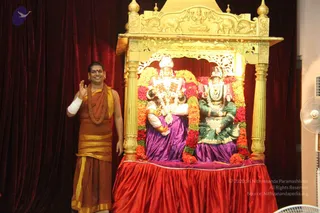
A man in a rust-orange and gold-bordered saffron dhoti and shawl, with a rudraksha-style mala necklace and a white bandage on his right forearm, stands at left waving with his right hand and smiling. Beside him on a red-draped dais under a gold ornate canopy with carved elephants are two deity murtis draped in purple and green garments, adorned with garlands of red and orange flowers, jewellery and crowns. A dark red velvet curtain forms the backdrop and a small fan is visible at right. Whether the standing man is the person the page refers to cannot be determined from appearance alone, so he is described by role and clothing only.A man with a shaved head, red bindi and a saffron-orange wrap with gold border stands at left, raising one hand in greeting, with a rudraksha-style mala of orange beads around his neck. Beside him is a golden canopy shrine holding two adorned deity murti seated on a red-draped platform, one in purple garments and one in green, both heavily garlanded with red and orange flowers. Deep maroon velvet drapes hang behind, and a standing fan is visible at right.A man in a rust-orange and gold-bordered dhoti and shawl, wearing a rudraksha mala and a white bandage on his left forearm, smiles and waves beside a golden canopied shrine. Inside the shrine, two decorated deity murti sit on a red-draped platform, one in a purple sari-like garment and one in a green garment with gold jewellery, both adorned with garlands of red, orange and yellow flowers. A dark red velvet curtain hangs behind, and a small logo appears at upper left. The man's appearance is consistent with the page's a person reference, with rudraksha mala and saffron-orange clothing, but the identity is uncertain.A standing man in a saffron-orange and yellow dhoti-style wrap with a rudraksha mala around his neck and a red bindi raises his right hand in a wave, his left arm bandaged in white. Beside him, on a red draped platform under a gilded canopy carved with elephants, two deity murtis stand adorned with thick garlands of red and yellow flowers: the left in a white crown and purple silk, the right in a green silk blouse and dark-green sari with a crown and large necklaces. Dark red velvet drapes form the backdrop and an electric fan stands at the right edge.A smiling man in a rust-orange and mustard-yellow dhoti-style cloth stands at left on a stage, wearing a long rudraksha mala and a red-brown tilak on his forehead. His left forearm is bandaged in white and his right hand is raised in a gesture of speech. Behind him, a gilded ornamental canopy with carved elephants and a central figure sits before a red velvet backdrop. Beneath it are two decorated deity murtis dressed in purple and green silk, adorned with gold jewellery, garlands of red roses and orange marigolds. A white electric fan is visible at right.

Bidadi-Ashram-Campus

3 photosSource gallery
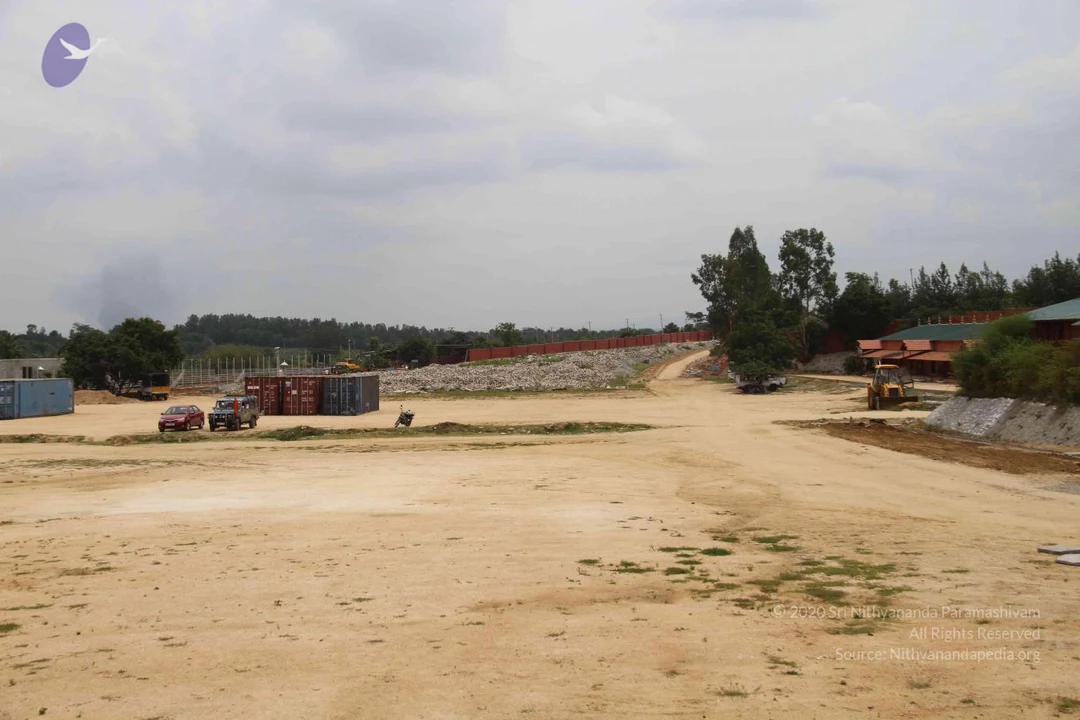
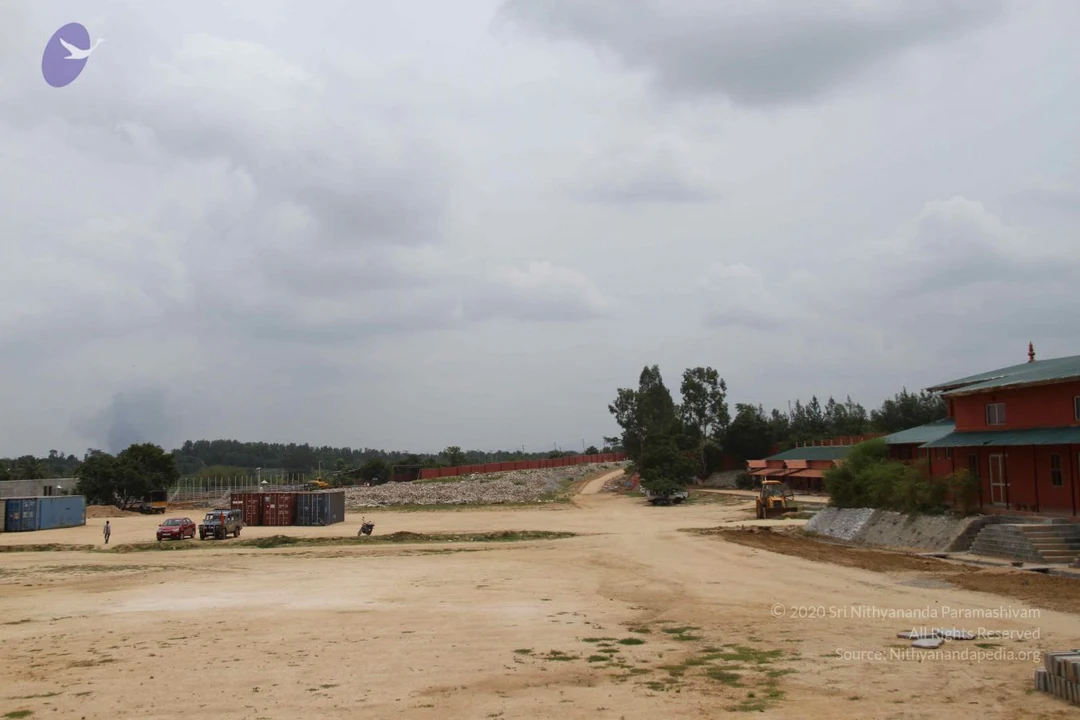
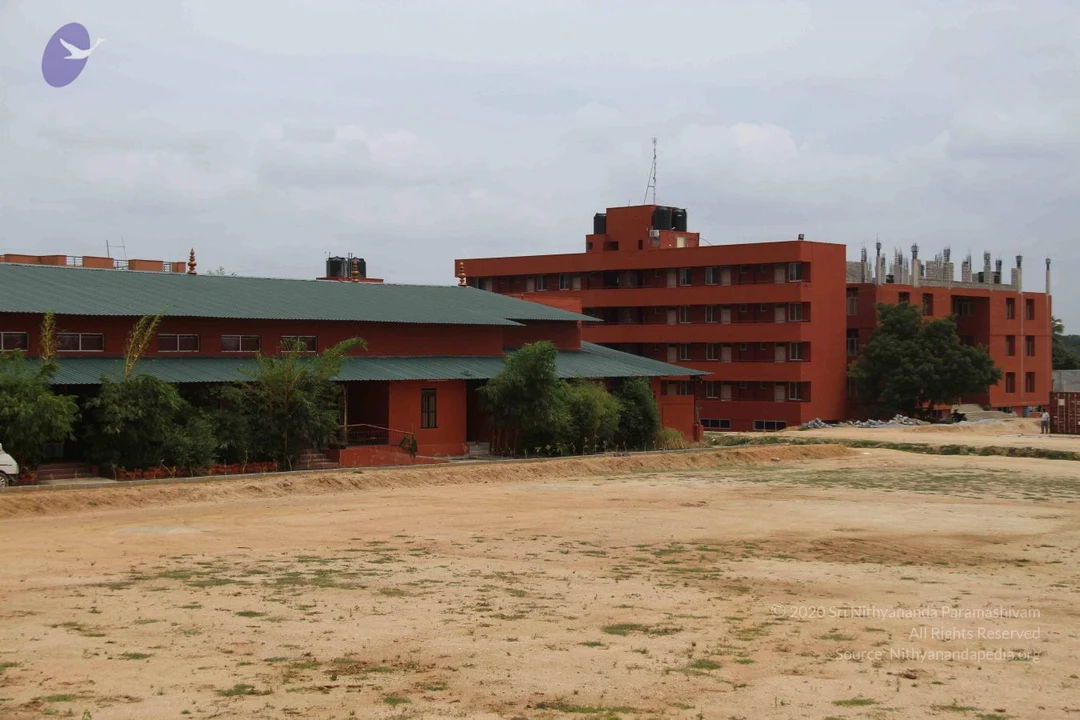
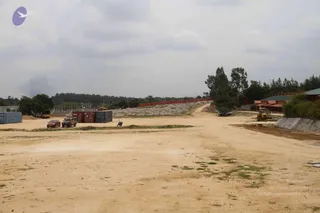
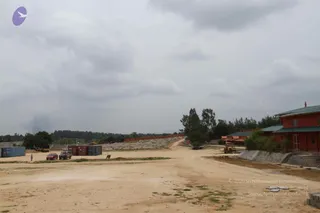
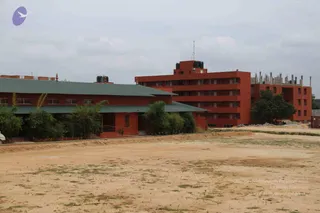
A wide, dusty unpaved construction site under an overcast sky. Shipping containers, a small red car, a pickup truck and a parked motorbike sit on the bare sandy ground. A yellow backhoe loader works on the right beside a red-roofed low building. A long red boundary wall and a heap of rubble run across the background, with tall trees and a smoky haze beyond. No people are visible.A wide, unpaved dirt site under a heavily overcast grey sky. On the left, stacked red and blue shipping containers, a red pickup and a red car sit near a pile of gravel, with a small figure walking by. A yellow excavator works in the centre, and a yellow bulldozer or loader sits near the right. On the right, a single-storey red building with green sloped roofs and a stepped concrete entrance stands beside a red boundary wall. Trees line the background.A photograph of a dusty, open unpaved ground in front of several red-brick and terracotta buildings under an overcast sky. On the left, a low single-storey building has a green corrugated roof and a covered veranda. To the right, a multi-storey red building with many windows and balconies stands beside a partly constructed block with exposed concrete pillars and rooftop water tanks. A few shrubs and bamboo clumps sit near the buildings, and a parked white vehicle appears at the far left edge. No people are clearly visible, and no ritual or event activity is shown.

Nithyananda-Goshala

7 photosSource gallery
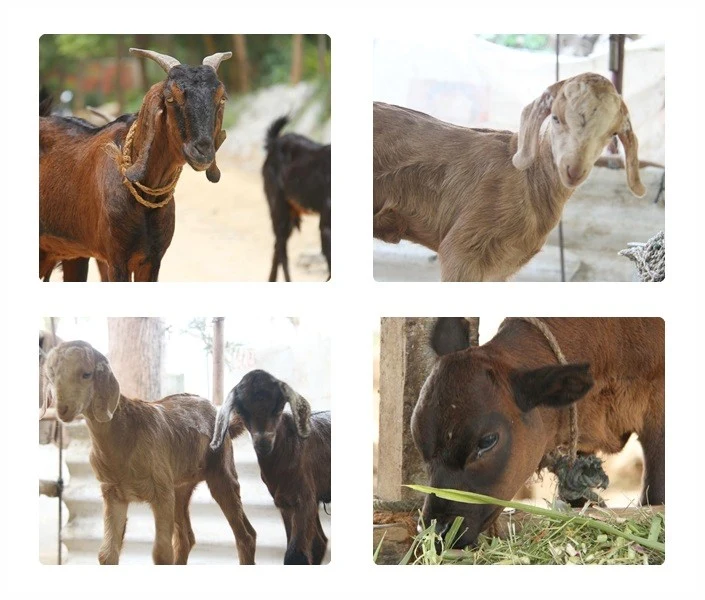
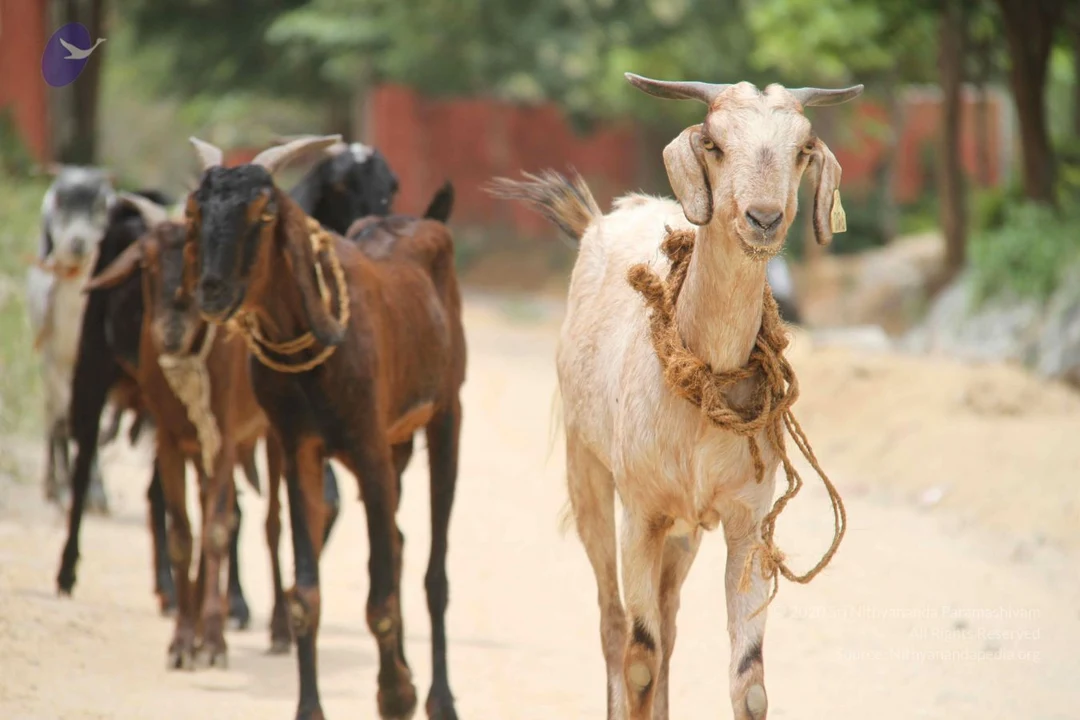
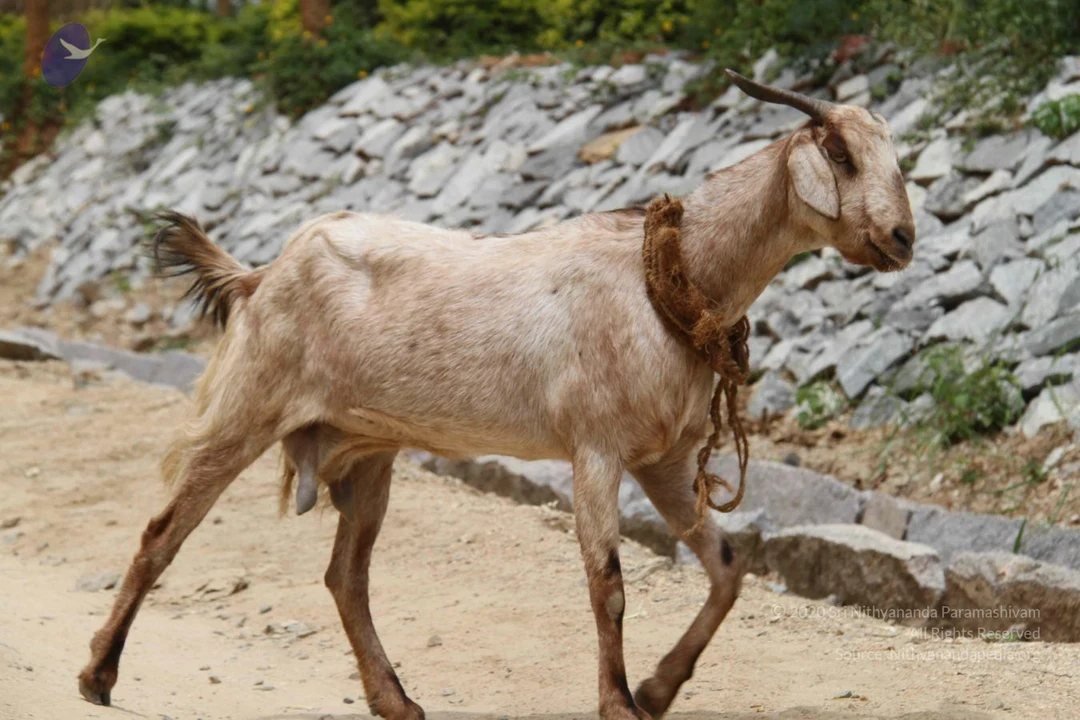
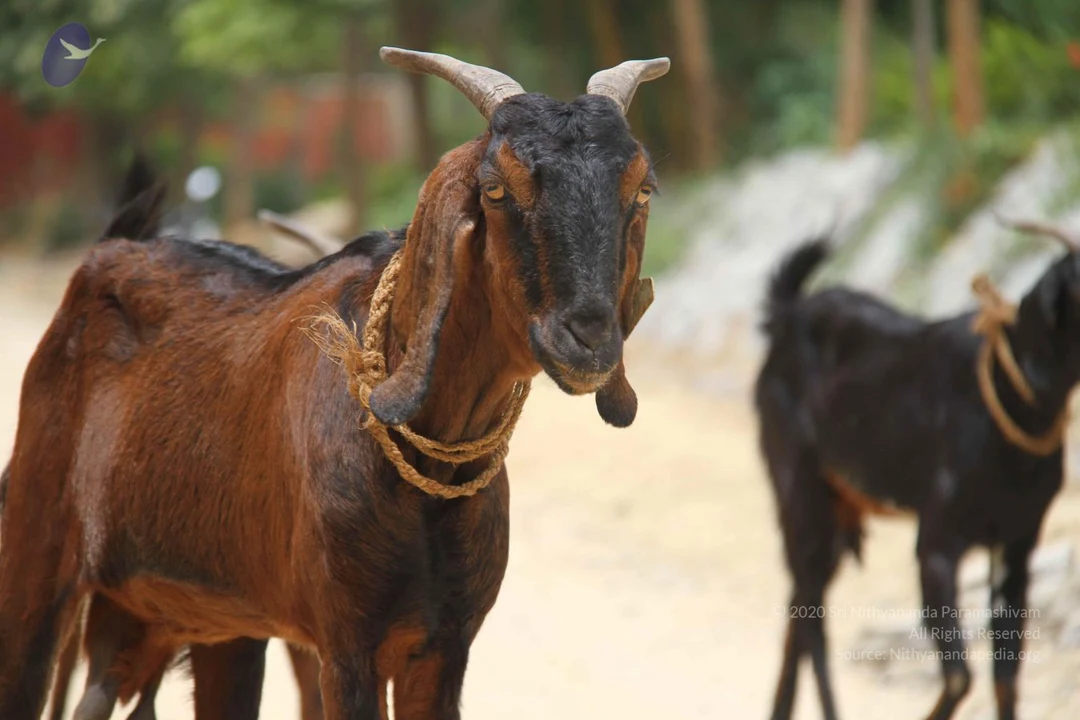
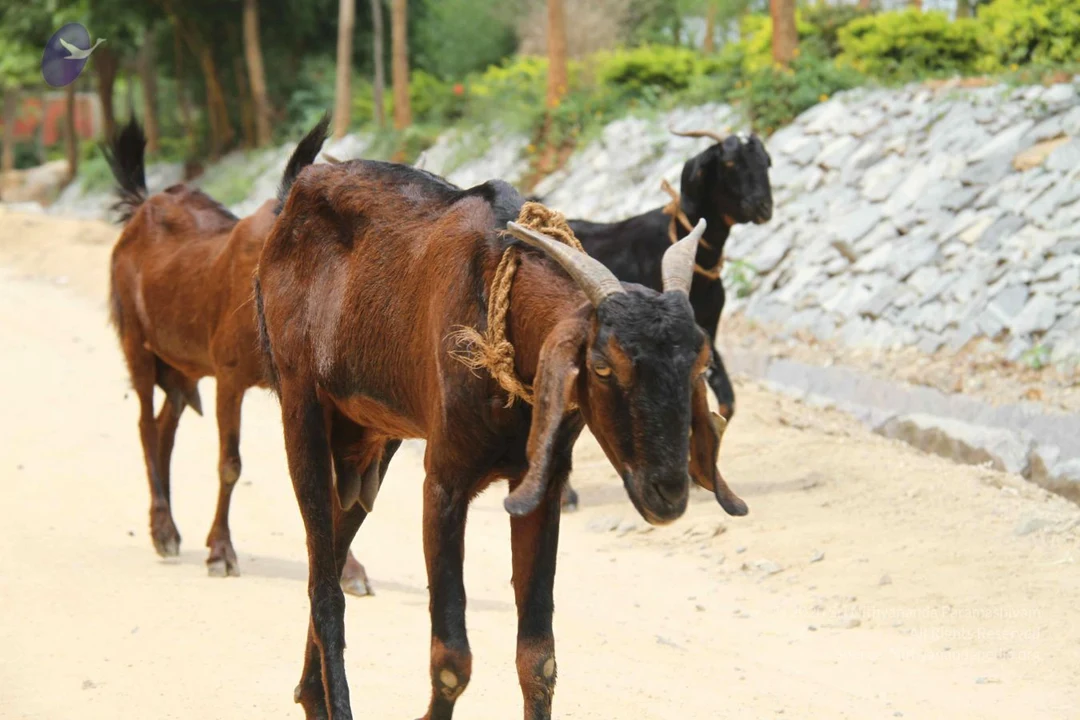
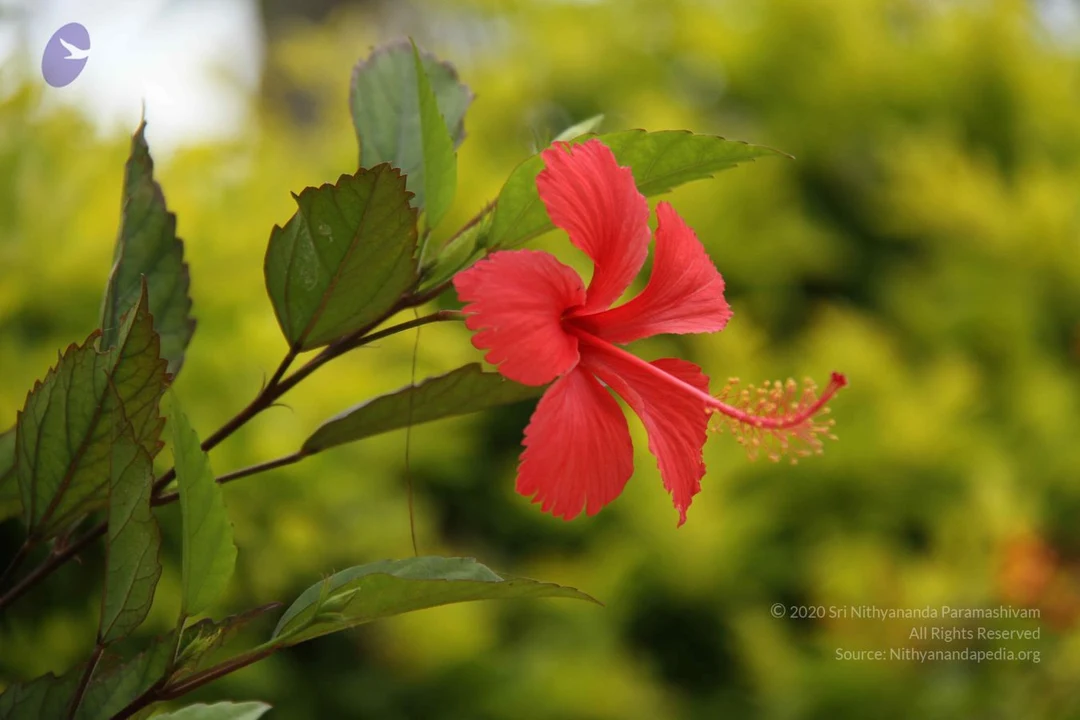
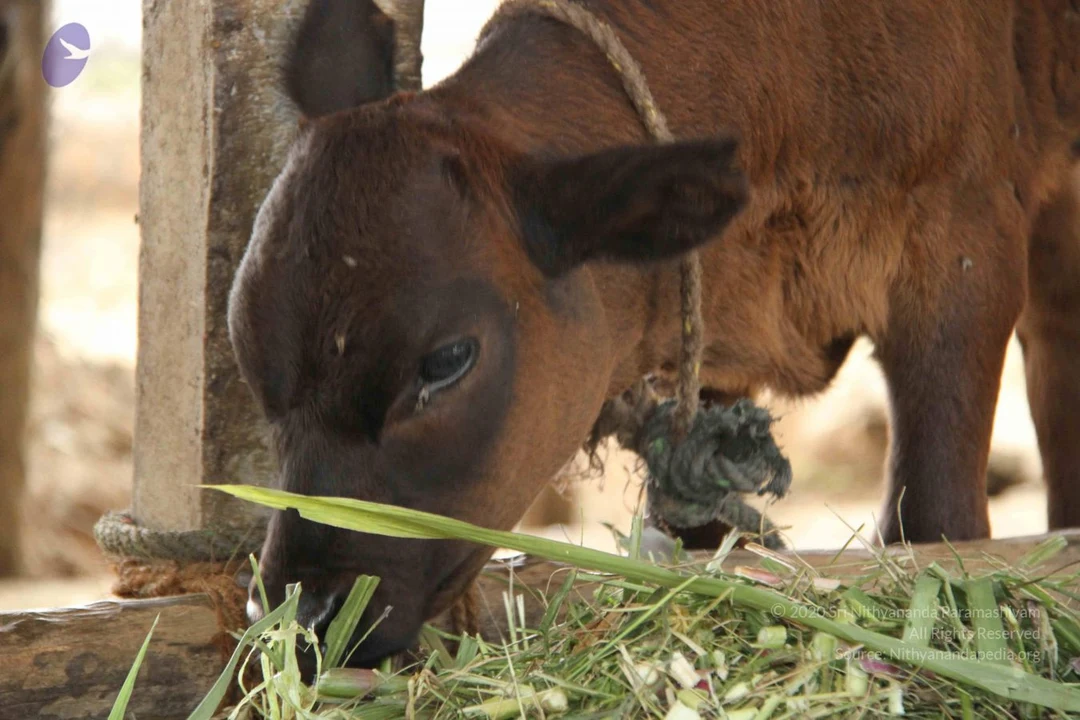
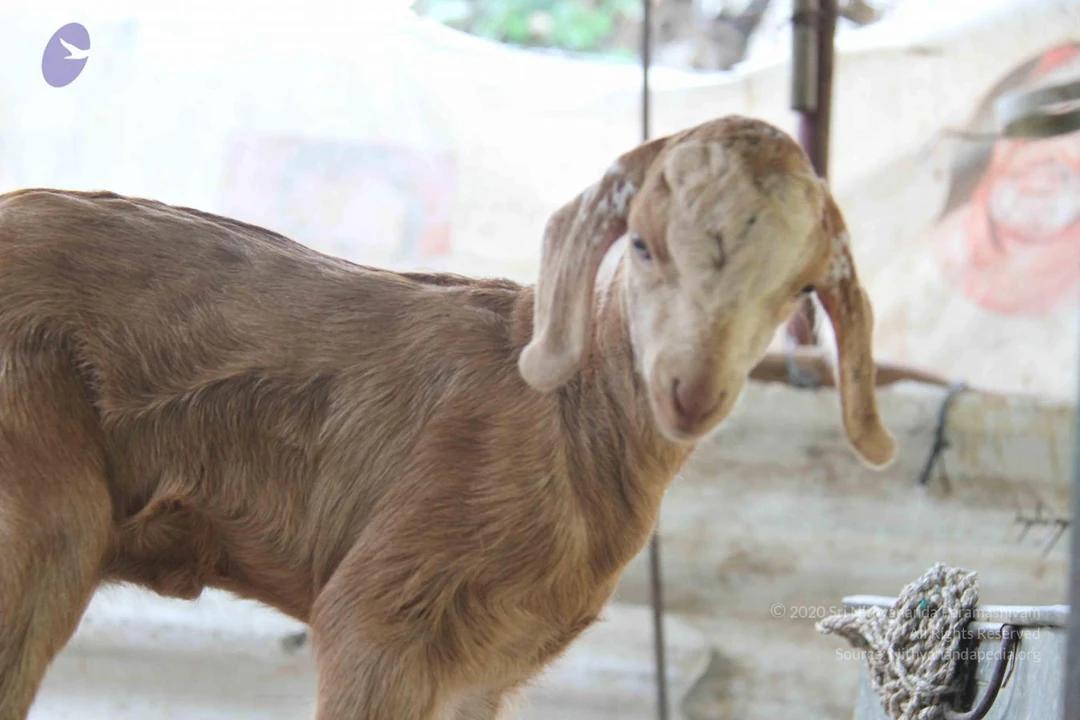
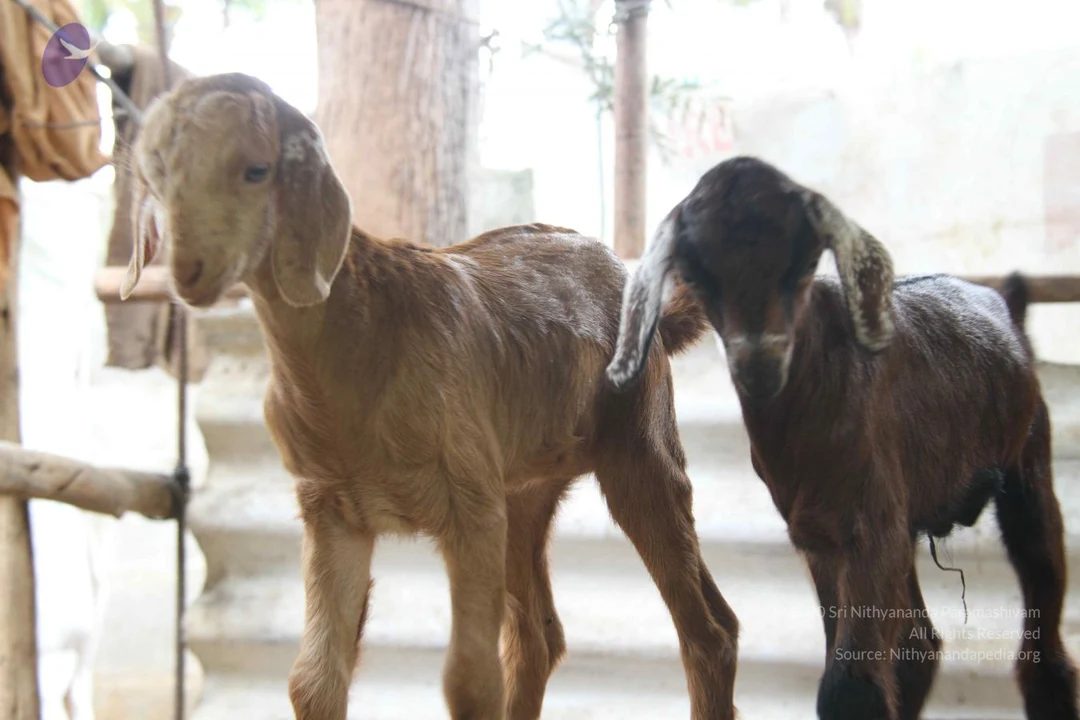
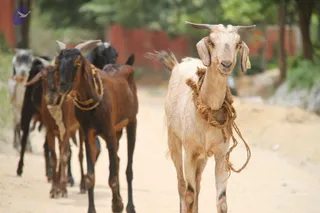
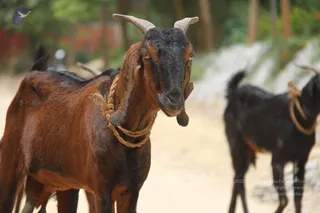
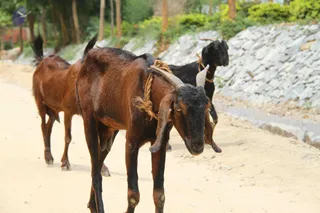
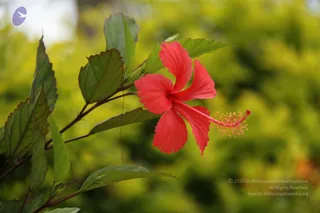
A photograph of a group of goats walking along a sandy dirt path. In the foreground, a light tan goat with curved horns and a tag in its ear walks toward the camera, with a rope looped around its neck. Behind it, several goats with brown, black and grey coats, some with rope collars, follow in a line. Blurred green trees and a red wall stand in the background.A light tan and white goat stands in profile on dry ground in front of a bank of pale grey rocks and blurred green foliage. A frayed brown fibre rope is tied around its neck, hanging down over its chest. Its curved horns and short ears are visible.A light tan goat with a short curved horn walks along a dirt path beside a stone retaining wall of irregular grey slabs. A coarse brown rope is tied loosely around its neck and hangs down its side. Green shrubs grow at the top of the wall, and a tree trunk is visible at the upper left. No people appear in the scene.A brown and black goat with curved horns stands on a dirt path, wearing a braided rope tied around its neck. Behind it, a second black goat with a rope collar is partly visible on the right, and blurred green trees and a stone wall fill the background. No people are visible.Three goats walk along a sandy dirt path. The brown goat in the foreground has a rope tied around its neck and curved horns, and is followed by a brown goat on the left and a black goat with a rope on the right. A stone retaining wall and green shrubs and trees line the path. No people are visible.Close-up photograph of a single red hibiscus flower with five broad petals and a long pale stamen tipped with yellow pollen, growing on a branch with serrated green leaves. The background is a soft, out-of-focus wash of yellow-green foliage. No people or ritual setting are visible.

Temple

61 photosSource gallery
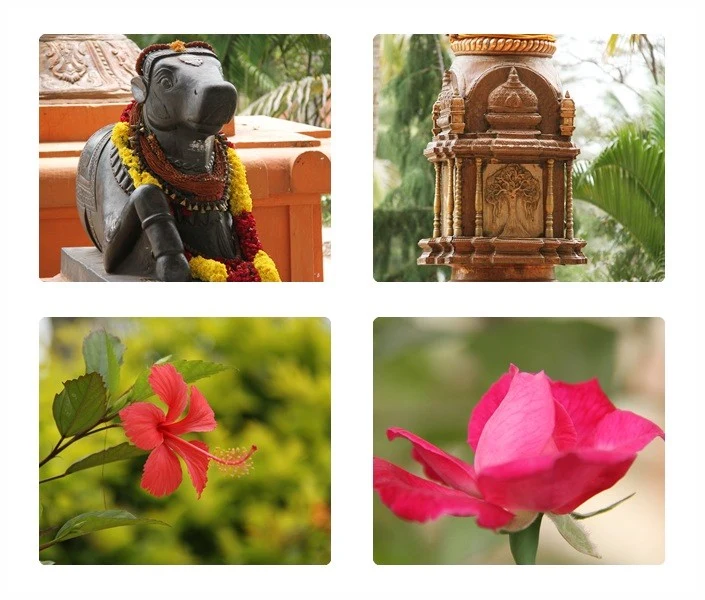
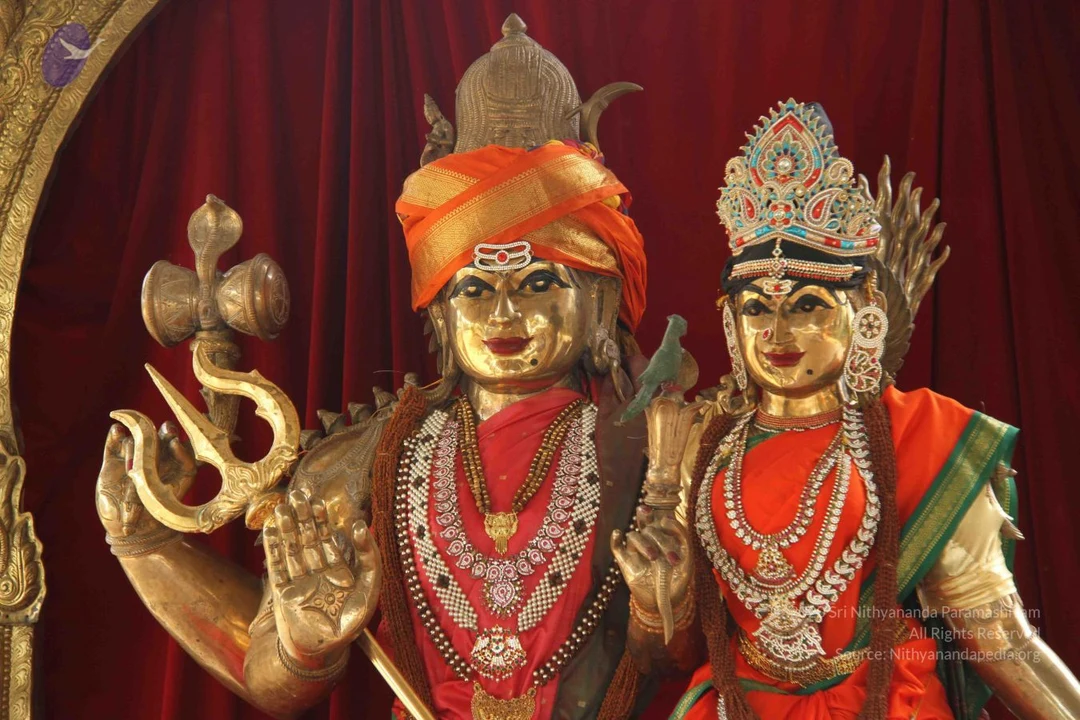
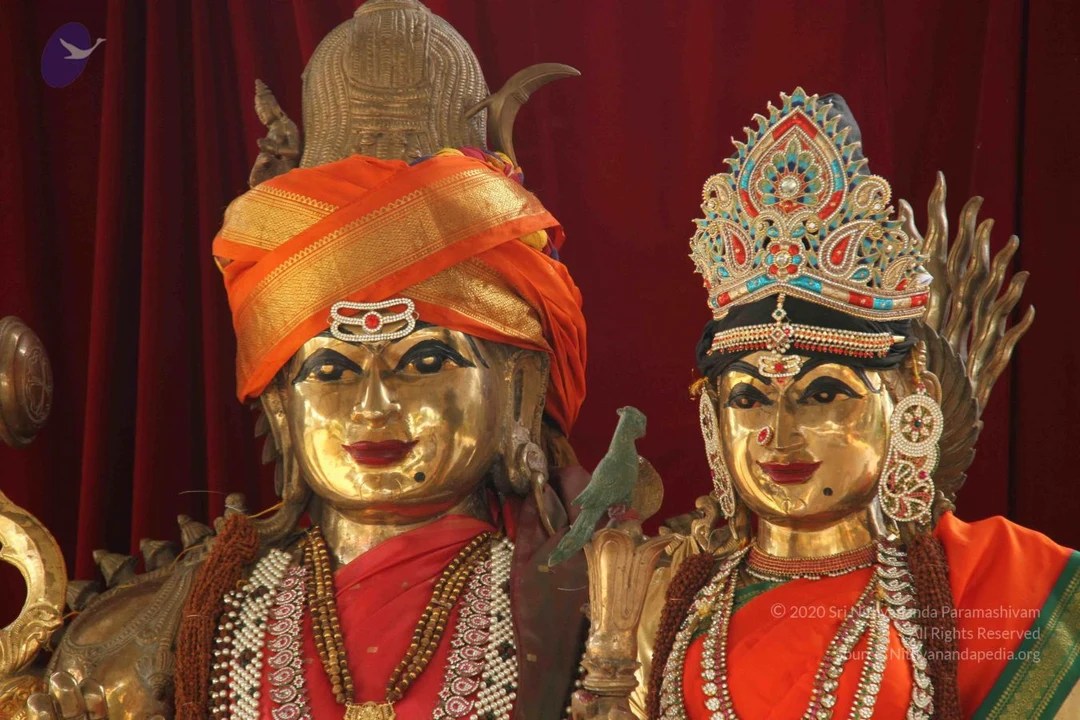
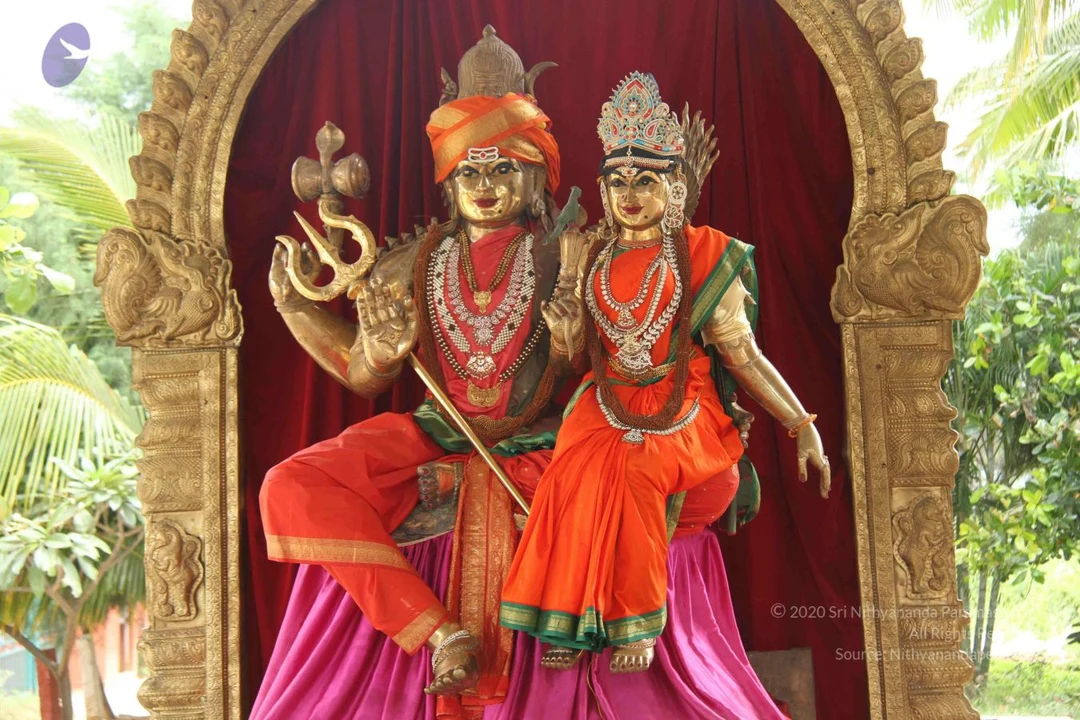
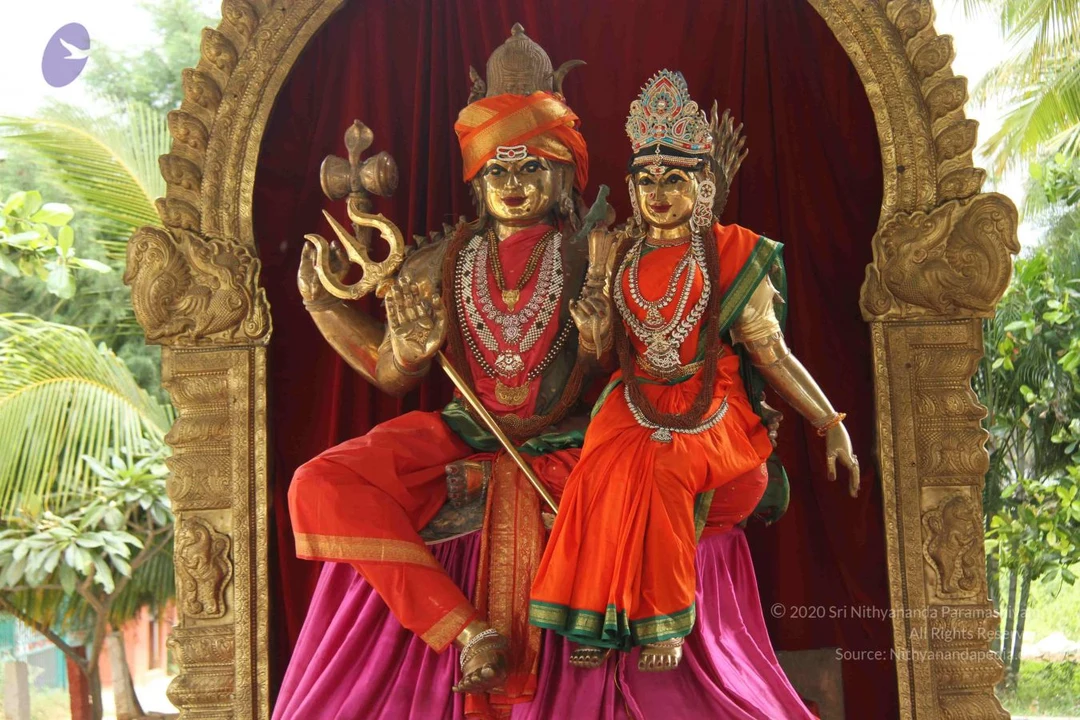
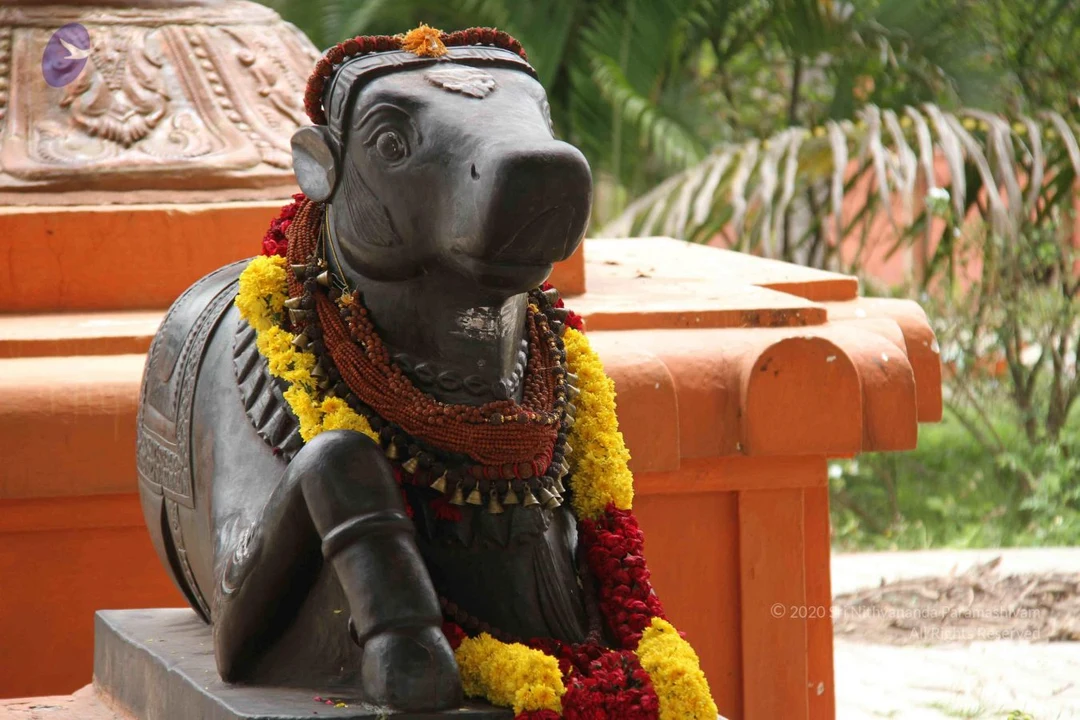
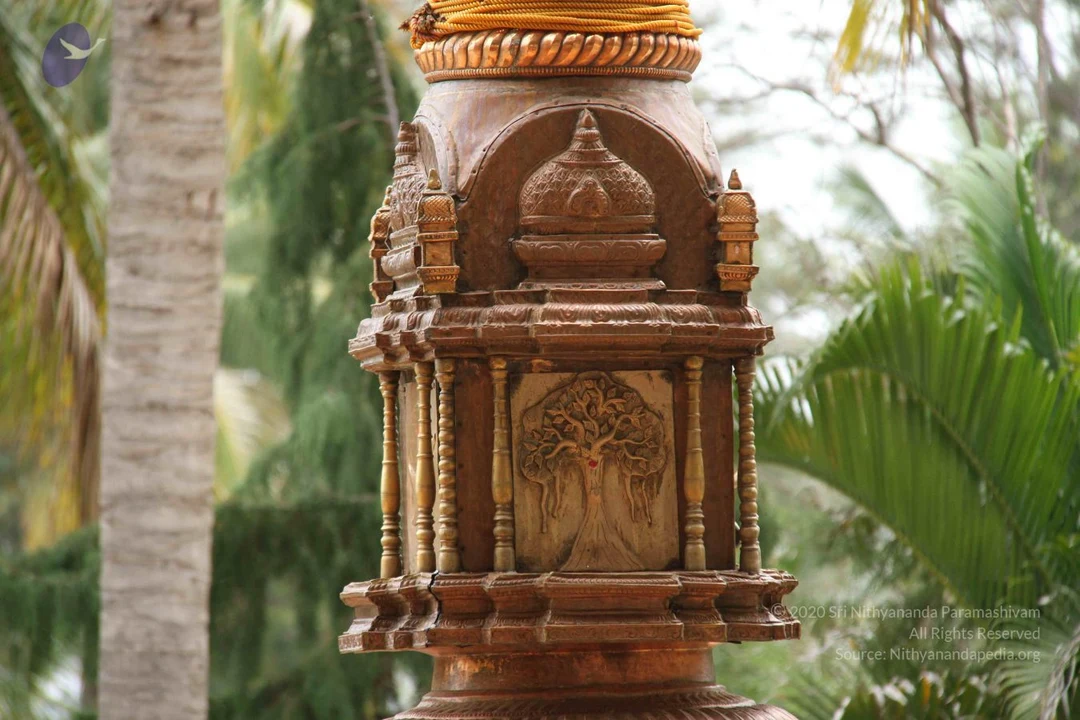
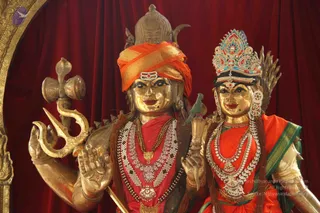
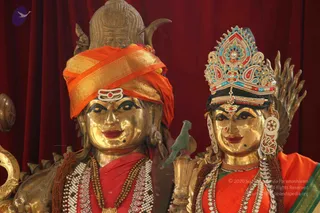
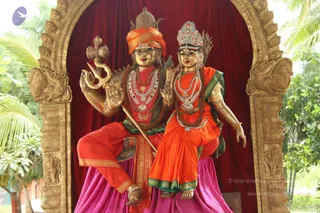
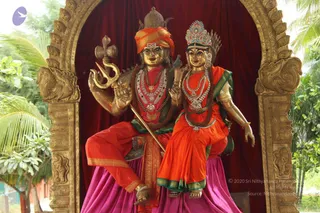
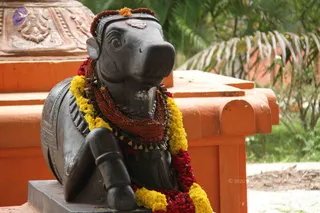
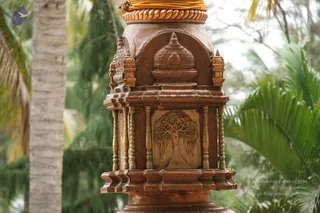
Two gilded metal statues of a deity couple stand before a deep red draped curtain with a gold-framed arch at left. The male figure wears an orange-and-gold turban, a red garment, a tall silver crown with crescent ornament, and layered white and beaded necklaces; he holds a golden trident and a ritual staff. The female figure wears a red and green saree, an ornate jeweled crown, and multiple silver necklaces and earrings, and holds a golden lotus-like object. A small green bird perches near her shoulder. These are statues, not living people.Two gilded deity murtis side by side against a deep red curtain. The figure on the left wears an orange and gold turban, a red garment, a jeweled brow ornament, and layered white and gold-beaded garlands with a rudraksha-style mala. The figure on the right wears an ornate crown with turquoise, red and green gemstone inlay, a red and orange sari with a green border, pearl garlands, and dangling jeweled earrings. A small green parakeet perches on a golden stand between them, and a golden kalasha-like finial rises at the top.A photograph of a gilded statue pair seated in an ornate golden arch against a deep red drape, set outdoors among green palms and foliage. The male figure wears an orange turban, a red garment, a tripartite trident held in one hand and a vertical staff, with layered beaded necklaces. The female figure wears an orange sari with green borders, a jewelled crown and white pearl necklaces, seated beside him on a pink cloth. This depicts a deity murti pair, shown as statues rather than living people.A photograph of a pair of golden deity murtis seated together on a raised platform inside a carved golden arched frame, set against a deep red drape with palm fronds and greenery outside. The figure on the left, with four arms, holds a trident and wears an orange turban, a red garment, and layered white and gold necklaces. The figure on the right wears an elaborate jeweled crown, an orange sari with green border and gold ornaments, and is seated beside the first. Both are rendered in gold-toned surfaces with bright pink and magenta draped cloth at their base. These are statues, not living people.A dark stone Nandi bull statue sits in a seated pose on an orange-painted plinth in an outdoor garden setting. It wears a garland of yellow and red marigold flowers and a red-and-brown beaded necklace with small bells. A white vertical tilak mark decorates its forehead. Behind it are orange temple-style walls, green palm fronds and foliage. No people are present.A carved wooden or stone pillar shrine stands outdoors among palm and tropical trees. The tiered structure has a small domed canopy, pilasters, and a rectangular panel carved with a sacred fig tree with spreading branches. A golden cloth or rope is wrapped at the top. No people are visible. No deity figure is clearly shown.

Swamis-Of-Nithyananda-Order

2 photosSource gallery
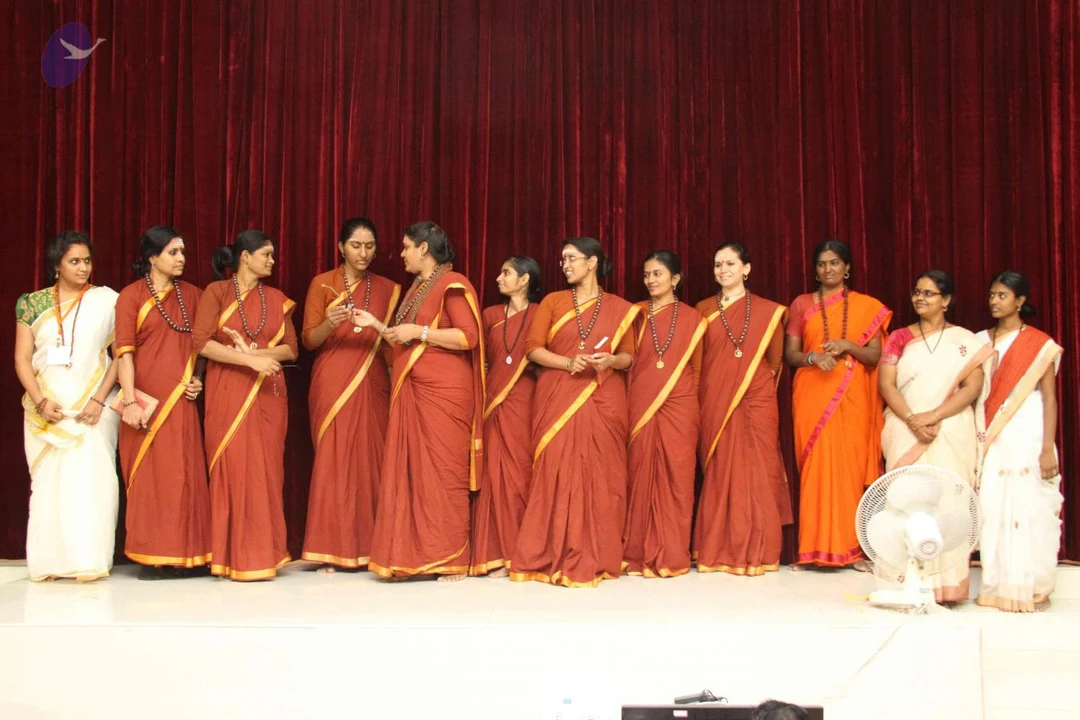
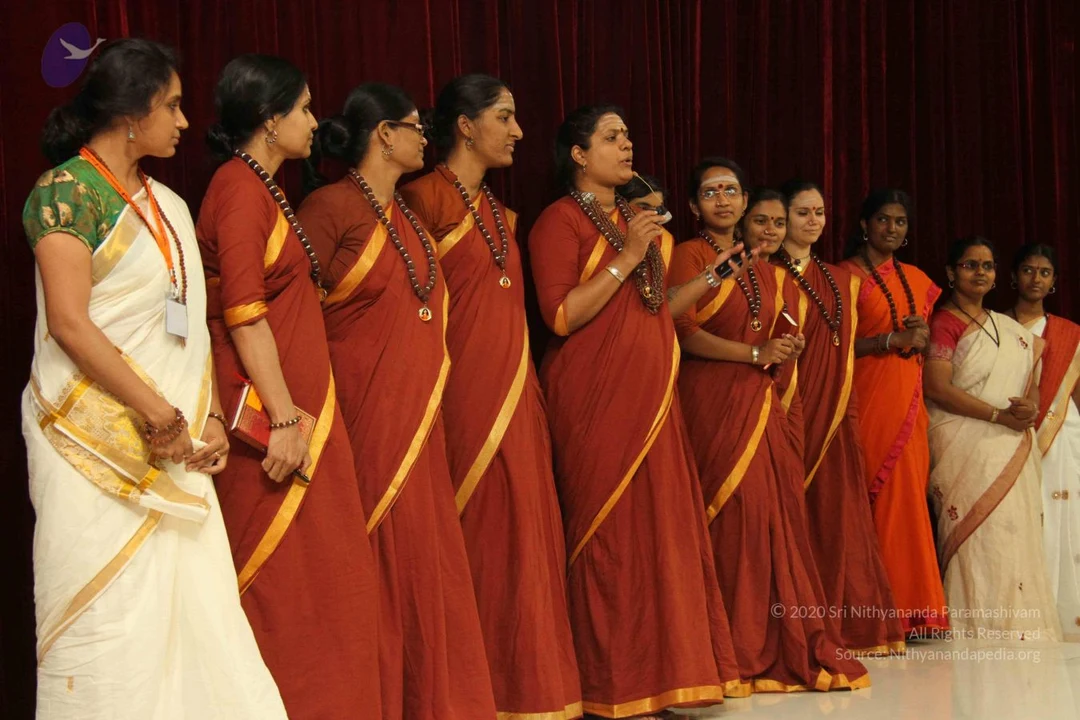
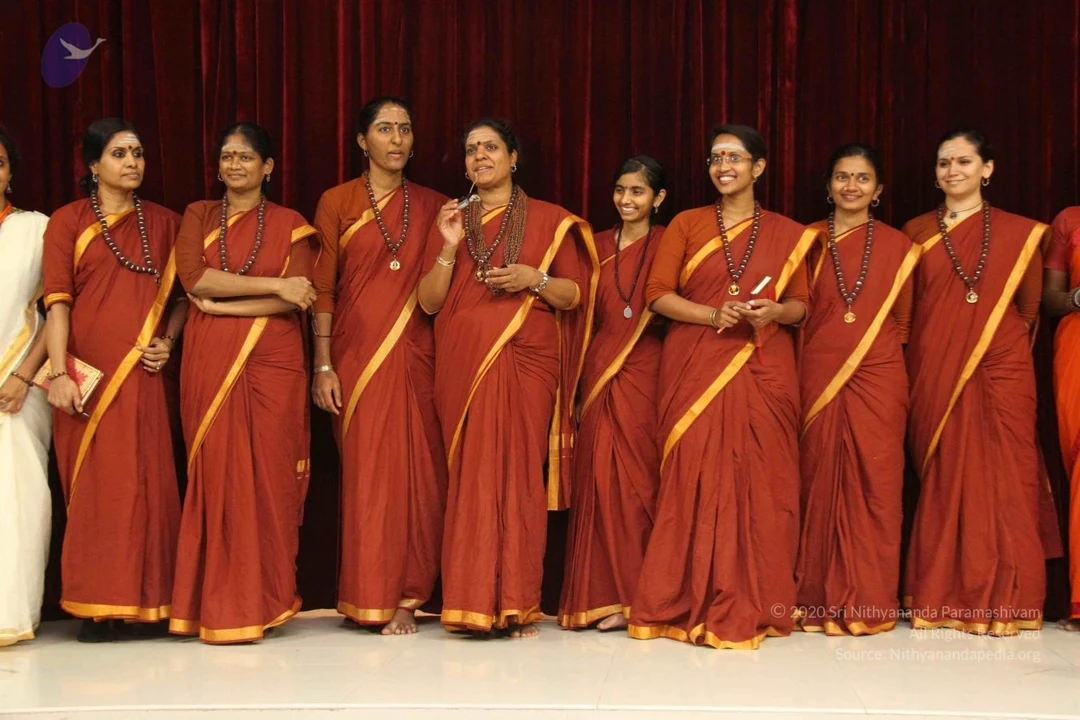
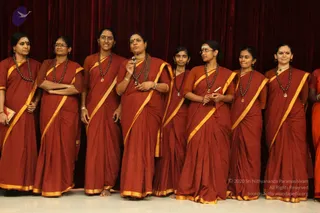
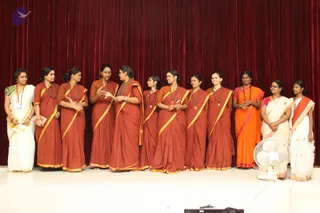
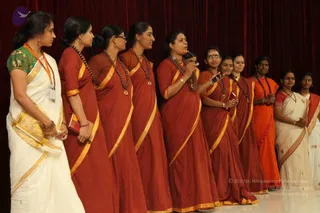
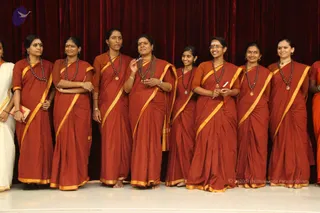
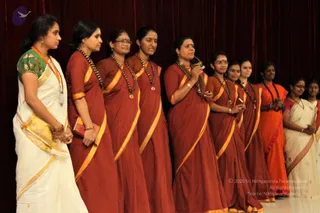
A row of eight women in matching rust-red saris with gold borders stand on a pale stage before a deep red velvet curtain. Most wear rudraksha malas and pendants; several have tilak or bindi marks and hair pulled back. The woman at centre holds a small microphone and speaks while others listen. Two women at left and right hold a book and a pen. No visible a person depiction; the people are devotees or ashram members.A row of eleven women stands on a white stage before a deep red velvet curtain. Most wear rust-red saris with golden-yellow borders and rudraksha malas; one at right wears a bright orange sari with a pink border, and two at the ends wear white saris. Several women hold small objects and gesture toward one another, and a white electric pedestal fan stands at lower right. No a person candidate is visible.

Leela-Alankar

6 photosSource gallery
Two golden murti statues seated side by side on a decorated platform before a red velvet backdrop and gilded carved wooden canopy. The figure on the left wears a tall jeweled crown, rudraksha malas, a white and gold dhoti with a leopard-print drape, and raises a hand in blessing. The figure on the right wears a green silk garment, a jeweled crown, a long pearl and gem necklace, and holds a hand in mudra. Both are surrounded by garlands of red, orange and yellow roses and green foliage. These are statues, not living people.Two deity murtis. The figure on the left wears a tall crown, a rudraksha and bead garland covering the chest, and a purple skirt with white and gold arm bands. The figure on the right wears a green silk garment with gold embroidery, layered pearl and gold necklaces, and a tall decorated headdress. Both are surrounded by a backdrop of orange and red roses and green foliage, with maroon velvet drapes behind. No living people are visible.Two golden deity murti figures are seated side by side on a decorated platform beneath an ornate gold carved canopy. Both have gold faces and are heavily adorned with jeweled crowns, layered rudraksha malas, ceremonial necklaces and gold jewelry. The figure on the left wears a white and purple garment with a leopard-print shawl, while the figure on the right wears a dark green garment. Bright orange and red roses and green foliage frame both figures in dense floral garlands. No physical people are visible.Two ornately decorated deity murtis, one in a purple silk skirt with white blouse and gold jewellery, the other in a green sari with gold ornaments and a crown, seated under a gilded wooden canopy with carved fretwork and golden pillars. Both are adorned with red roses, green leaf garlands and heavy gold necklaces, set against dark red drapes. No living people are visible.Two children are seated side by side on a red and purple draped stage, dressed as deity figures in a festive performance. The child on the left wears a gold crown, a white and gold embroidered bodice, a purple dhoti, and layered yellow marigold garlands with red roses; the child on the right wears a gold headpiece, multi-strand white and red beaded necklaces, an orange-yellow dress, and a yellow and red garland. Both have white forehead markings with red bindis, and both hold flowers or raise their hands in gestures. Behind them, a large deity murti in green and gold robes is decorated with red roses and garlands.Two children seated cross-legged on a red and purple draped stage in front of a flower-decorated altar with a deity murti partly visible at top. The boy on the left wears a gold crown, white sandalwood tilak on forehead, a white and gold embroidered vest, purple dhoti with silver border, and a yellow-and-red flower garland, holding his hands in a mudra. The girl on the right wears a gold headpiece, a yellow-orange blouse and skirt with layered white beaded necklaces, a yellow-and-red flower garland, and holds a flower with her right hand. Both are seated in a ceremonial pose with red roses and yellow marigolds decorating the altar.

IA-Swamiji-session

21 photosSource gallery
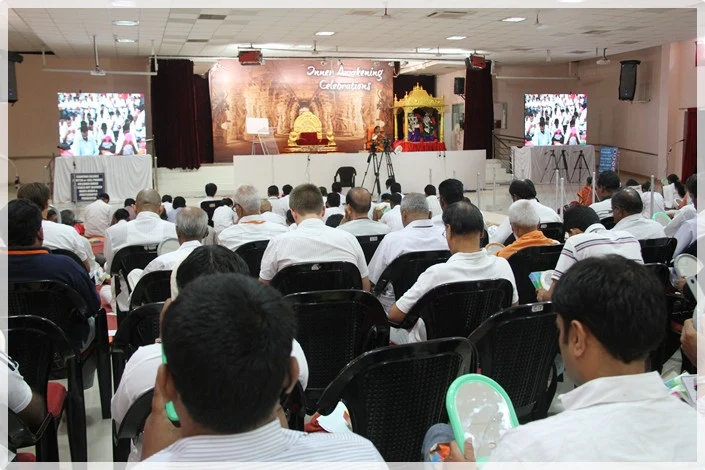
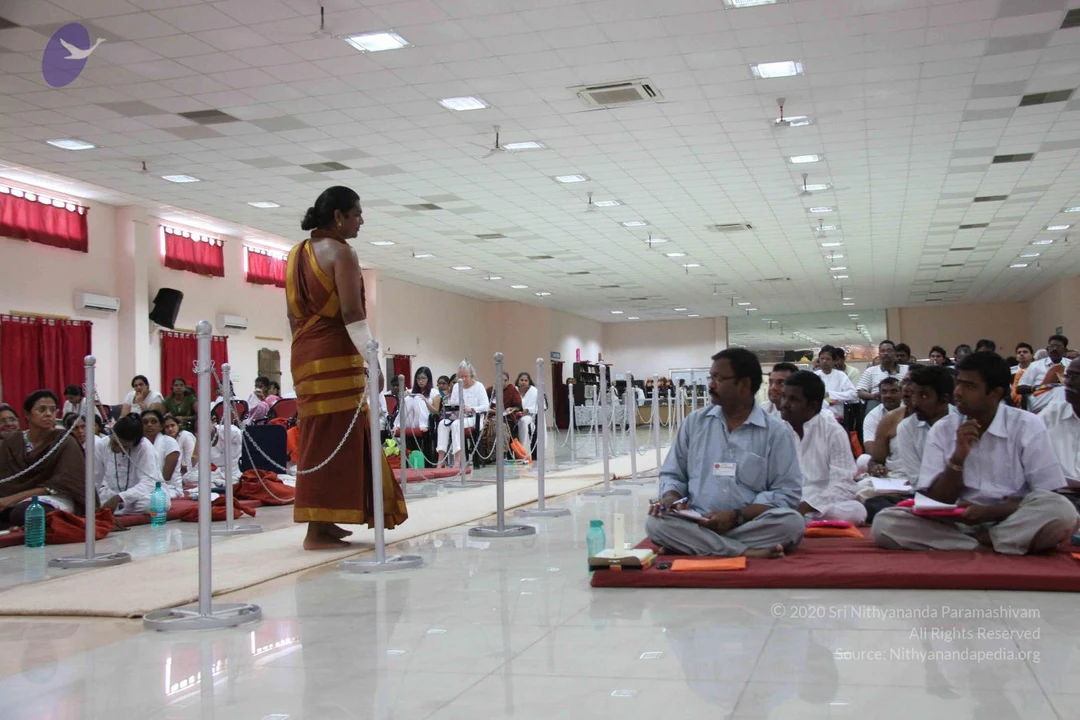
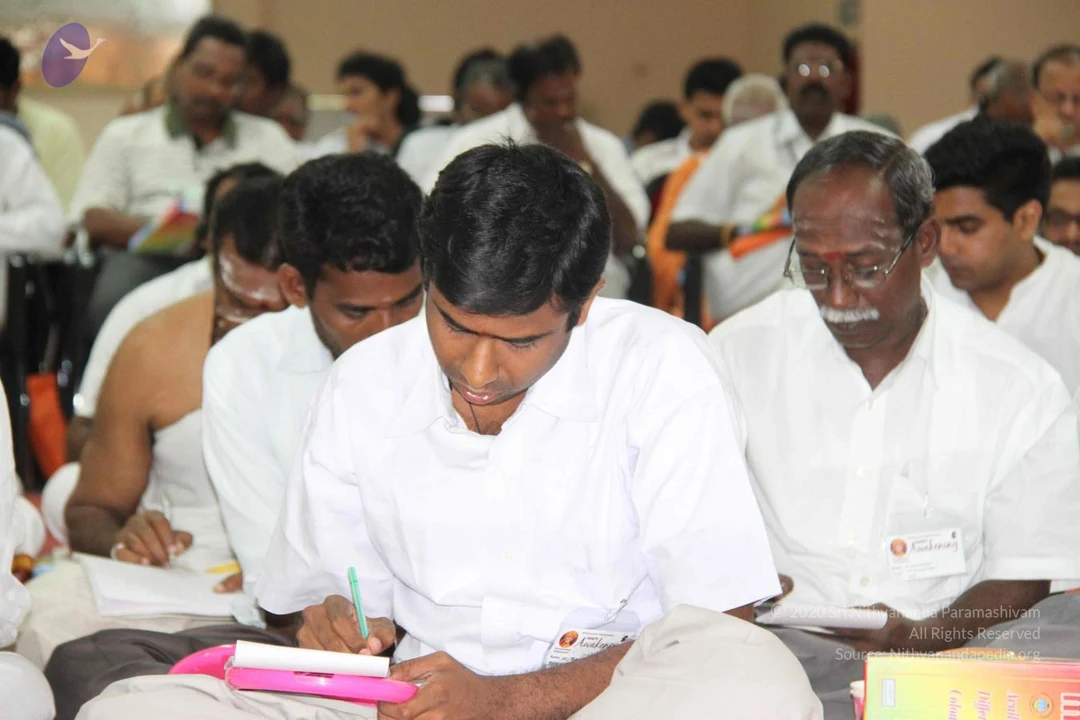
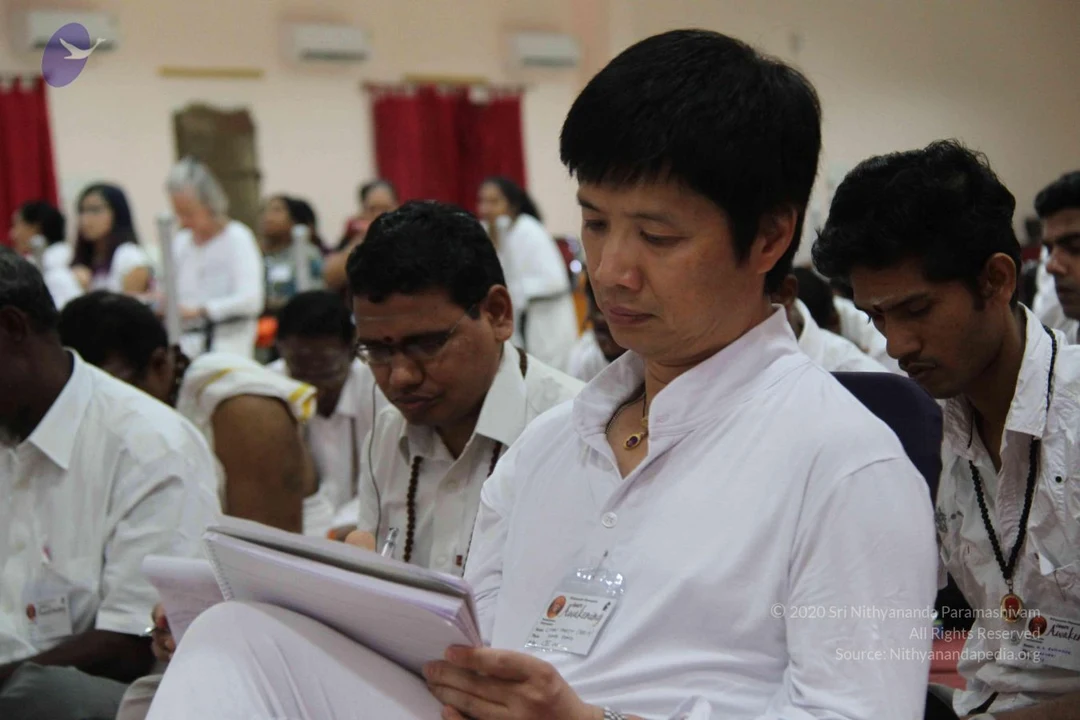
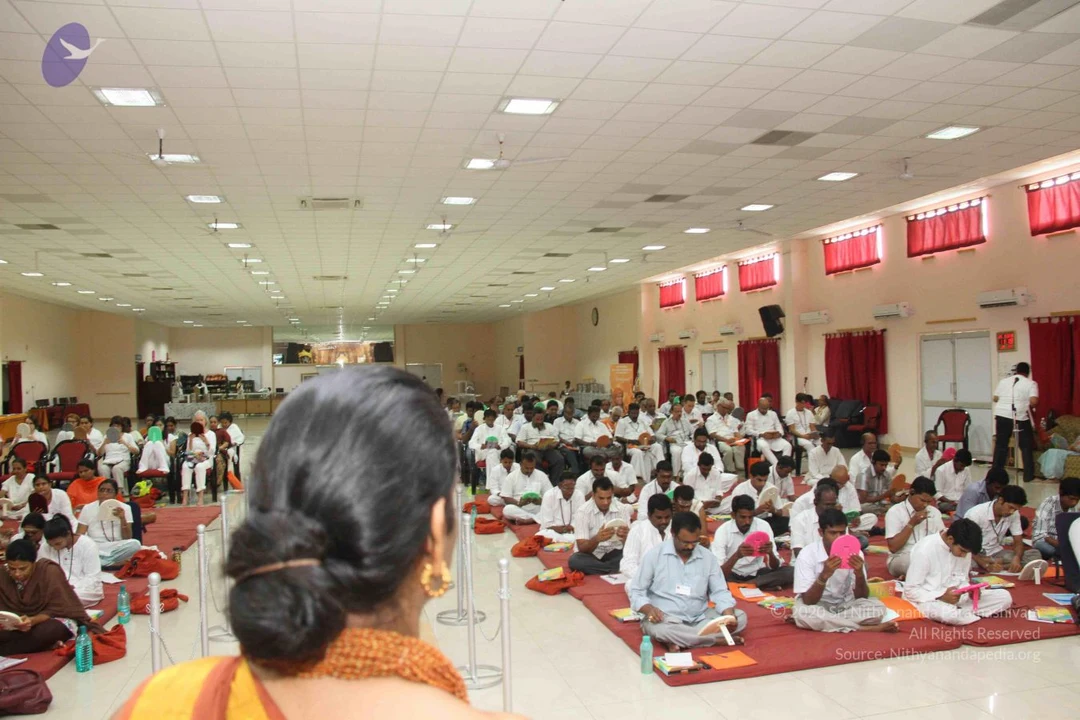
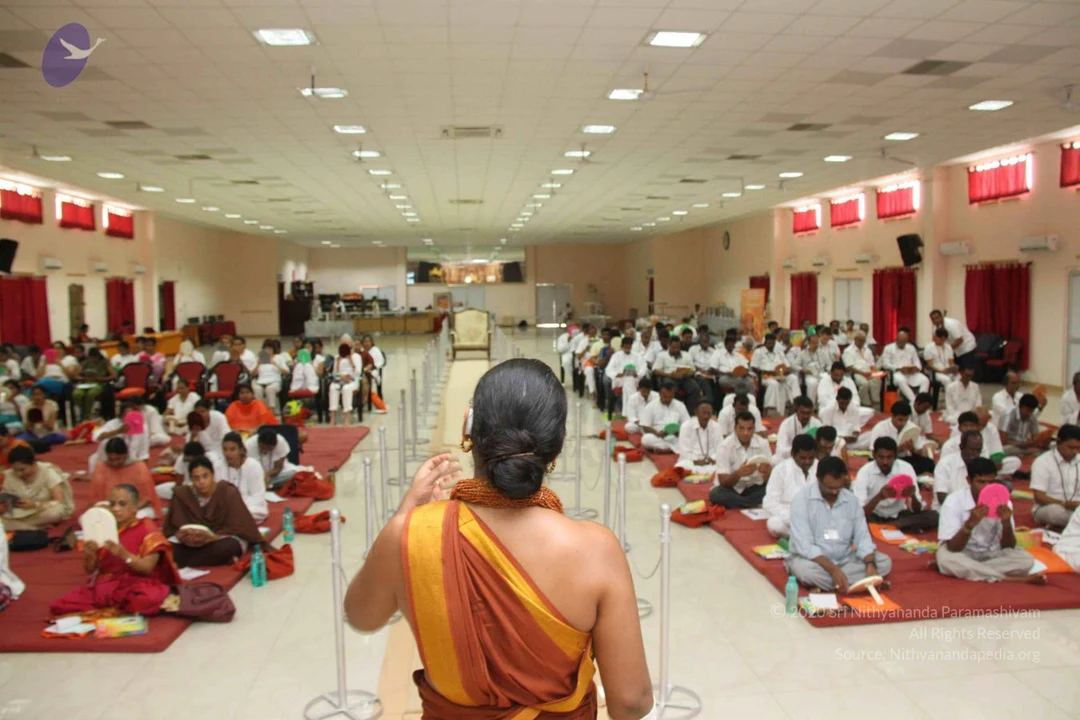
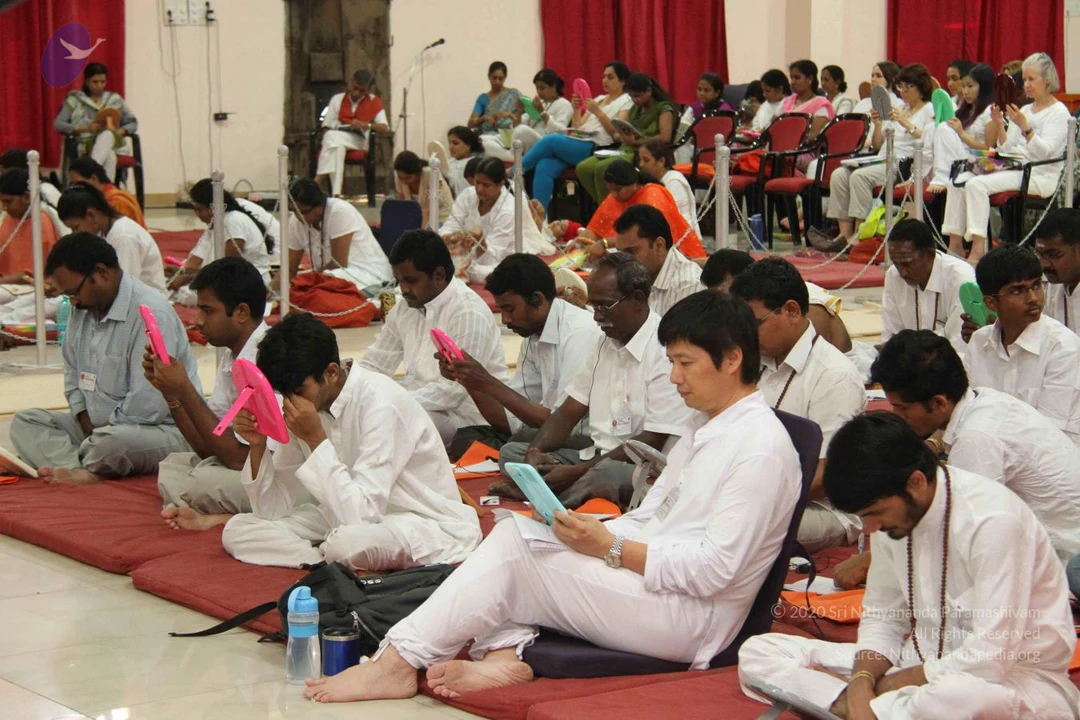
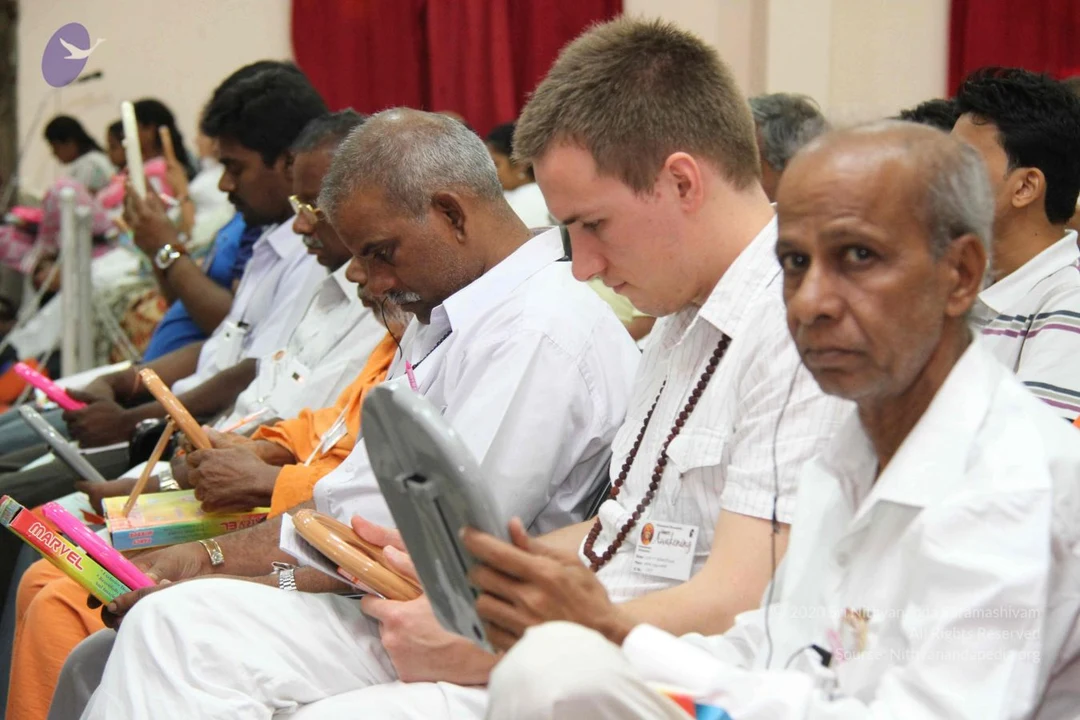
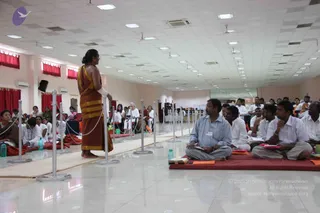
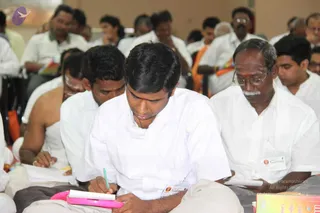
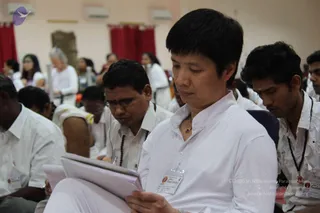
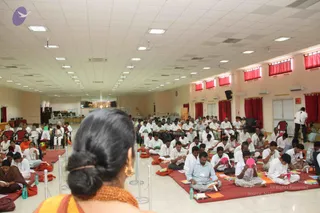
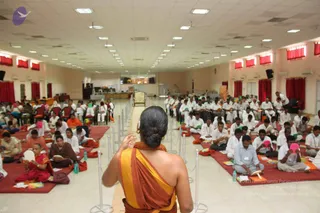
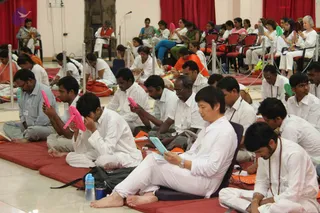
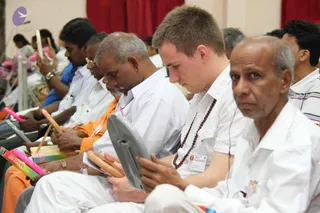
Indoor satsang hall with a tiled floor, white ceiling panels, red curtains and a long carpeted aisle lined with metal stanchions and chains. A standing woman in a rust-orange and gold-striped sari, with one forearm bandaged in white, faces the seated audience. On the right, a man in a light blue shirt and grey trousers sits cross-legged on a red mat with a notebook, beside young men in white shirts. Many seated devotees in white and orange fill the hall, some with small bags and water bottles nearby.A large hall with white tiled floor and suspended ceiling lights, where seated devotees in white clothes sit on red mats while a woman in a brown and gold striped sari stands at the left, facing the rows, behind silver stanchions linked by a chain. In the foreground two men sit cross-legged on a red mat, one in a light blue shirt and grey trousers holding a notebook, the other in white kurta with a pen at his chin. Red curtains line the walls and a few people in white sit in the background near ritual items and water bottles.A seated audience at a satsang gathering, mostly men dressed in white shirts and white dhotis. In the foreground a young man in a white shirt writes in a notebook with a green pen, resting it on a pink folder. Beside him a man with a moustache and glasses, wearing a name badge and a red tilak on his forehead, holds a booklet. Behind them, other seated devotees listen attentively, some with orange and saffron scarves and rainbow-coloured lanyards. The hall has plain cream walls and the scene is calm and focused.A seated group of people in white clothes at a satsang hall with pale walls and red curtains. In the foreground a short-haired man in a white shirt with a name badge looks down at an open notebook held on his lap. Beside him a man in white with eyeglasses and a rudraksha mala reads, and a young man in white on the right wears a dark mala. Several other attendees in white sit or stand in the background, and no a person candidate is clearly identifiable by appearance.A large hall with cream walls, red curtains and a ceiling of square lights holds a seated congregation on red mats. Many people in white clothes sit cross-legged with open books, some holding pink and orange items. In the foreground a woman with a hair bun, wearing an orange sari and an orange beaded necklace, faces the audience from behind. A man in a light blue shirt sits at the front of the group, and a cameraman in white stands at the right. No candidate for the presenter is visible, so the identity of the speaker is not shown.Photograph from behind a speaker in a saffron-and-gold sari with a rudraksha mala, standing at the front of a large hall while seated audience members in white and colourful clothes sit on red mats facing forward. Rows of seated devotees fill the room under bright ceiling lights, with red curtains along the walls. Many attendees hold pink and white fans, and some have booklets on the mats. A few people in orange and maroon robes sit near the front left. The speaker's face is not visible, so no identification is made from appearance; the figure is described by role as a speaker addressing satsang.

IA-Darshan

18 photosSource gallery
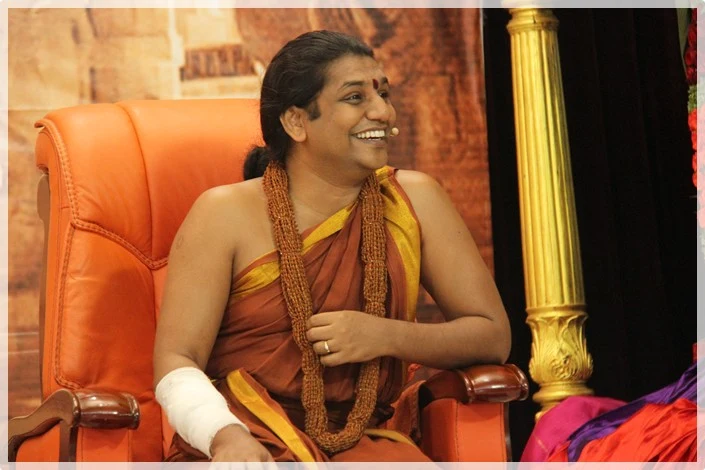
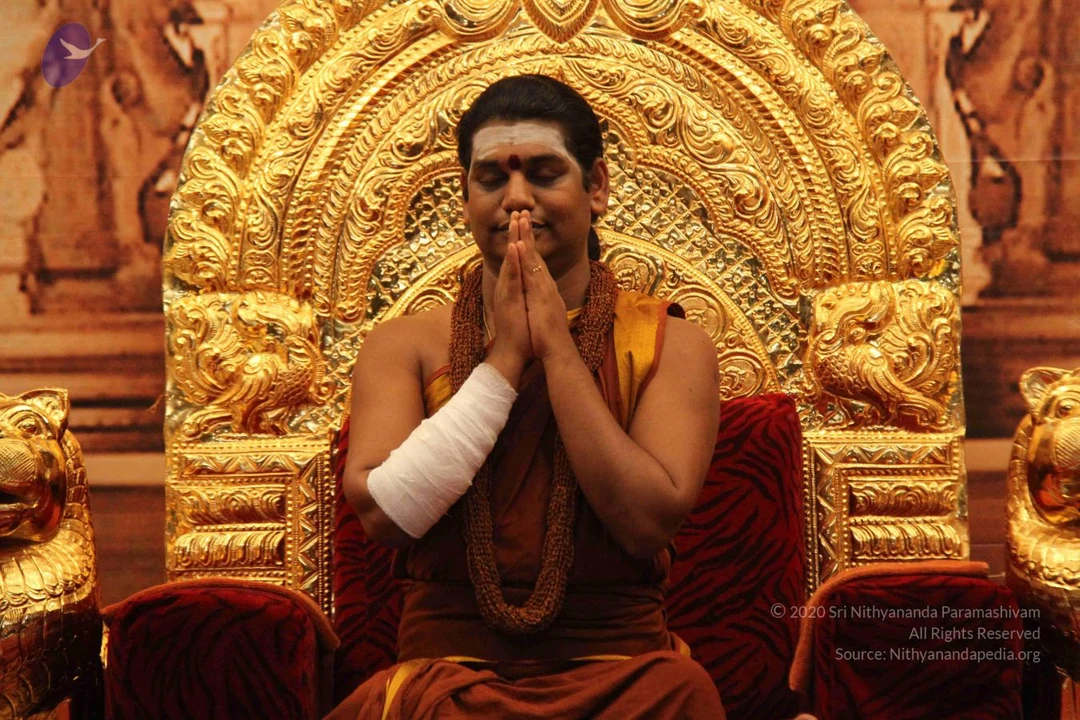
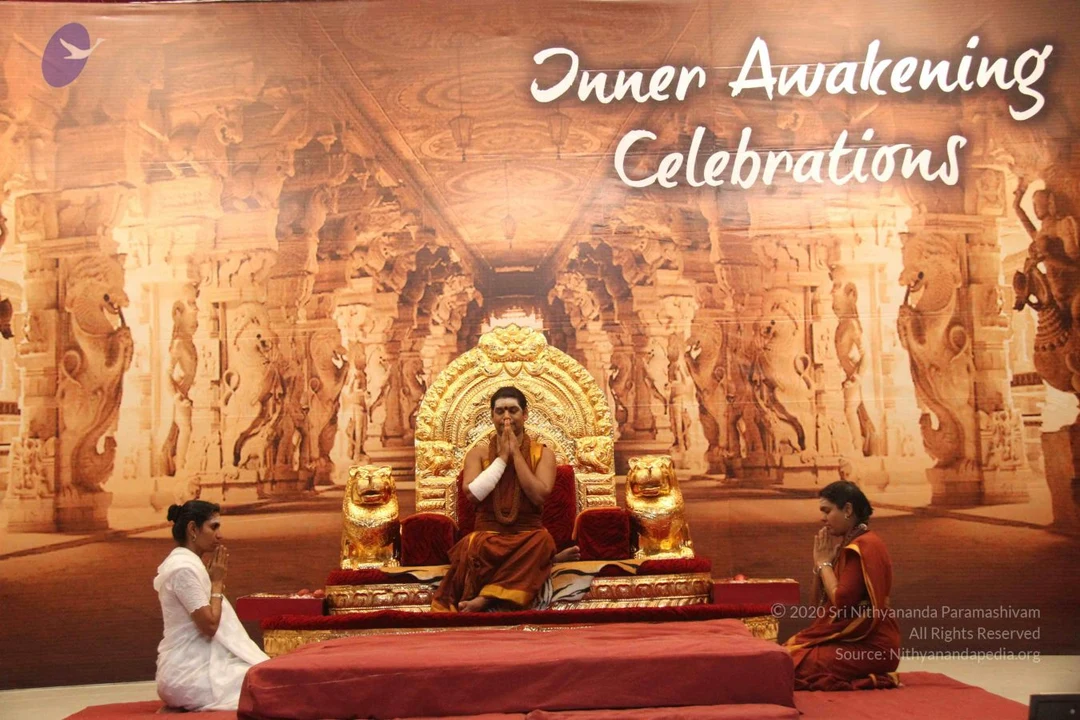
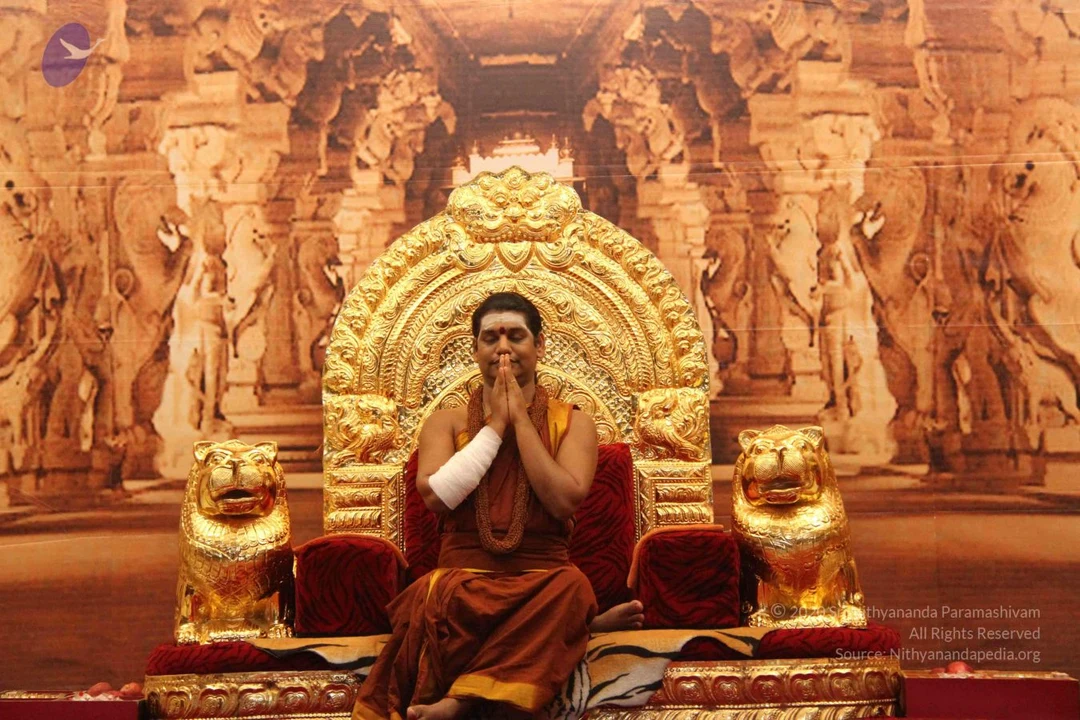
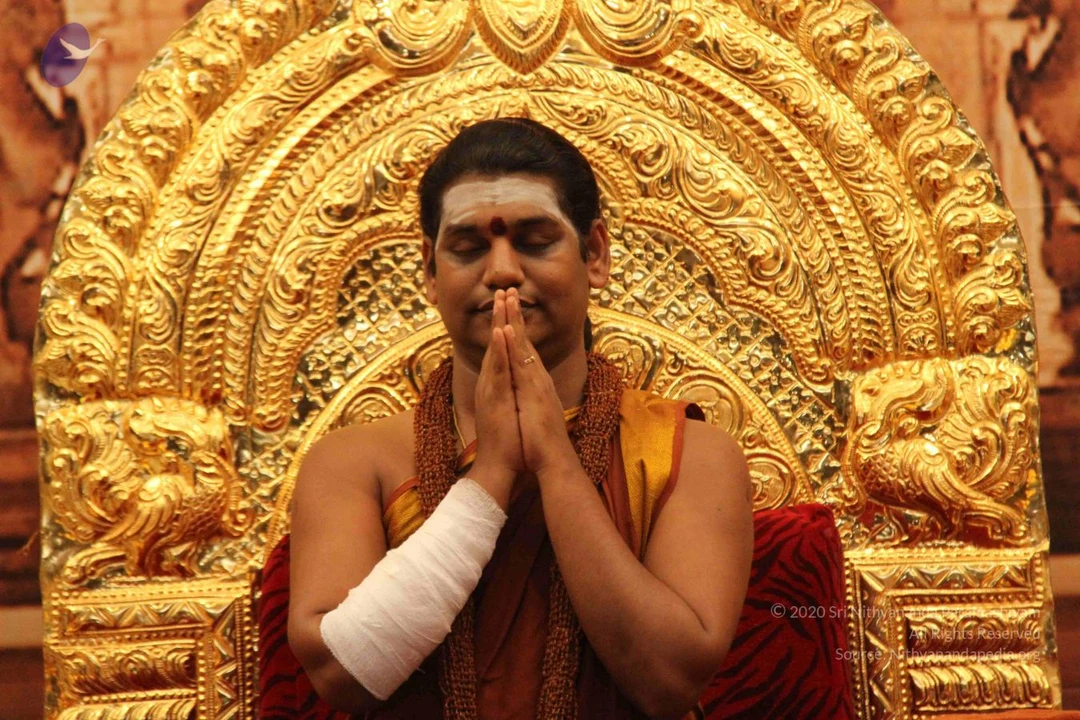
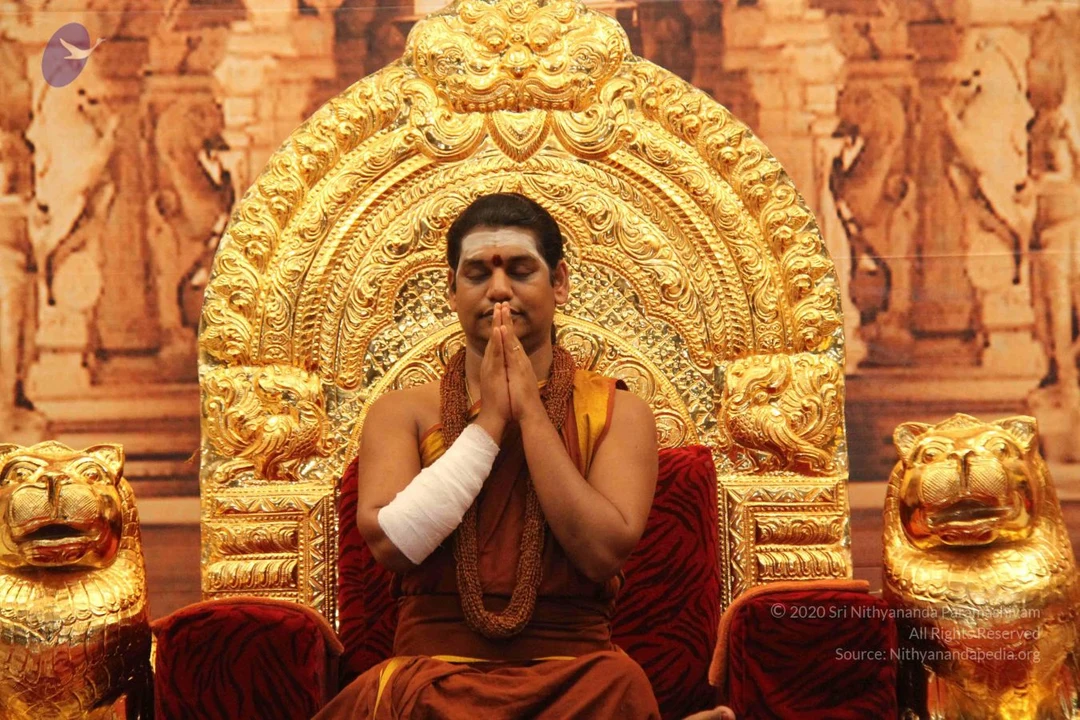
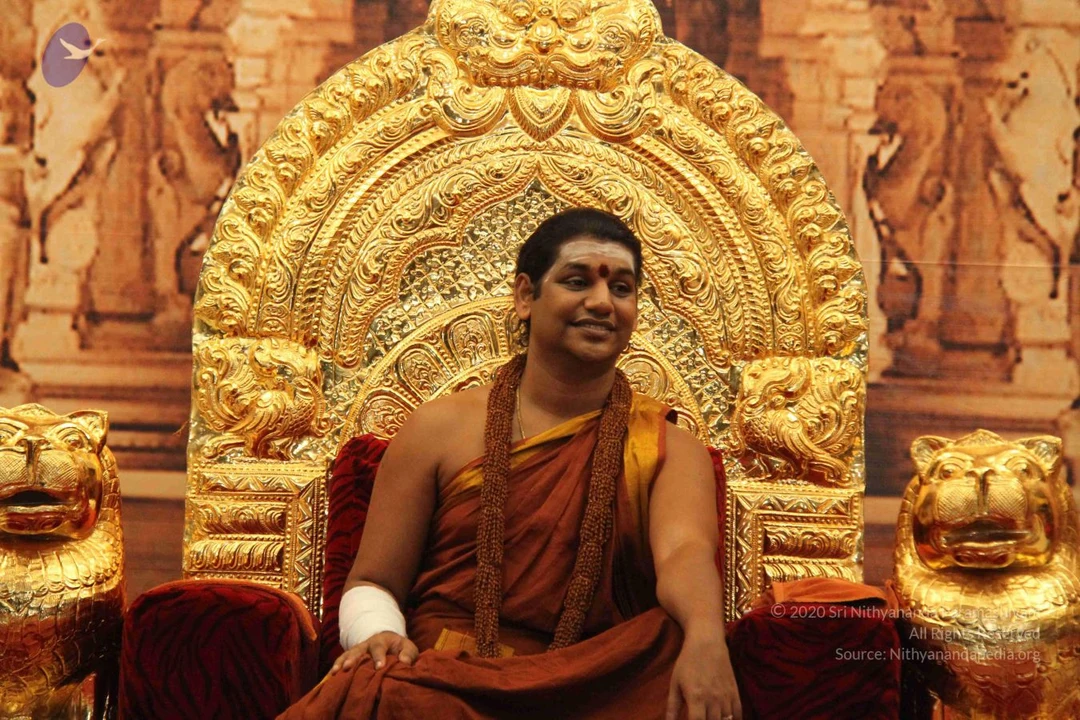
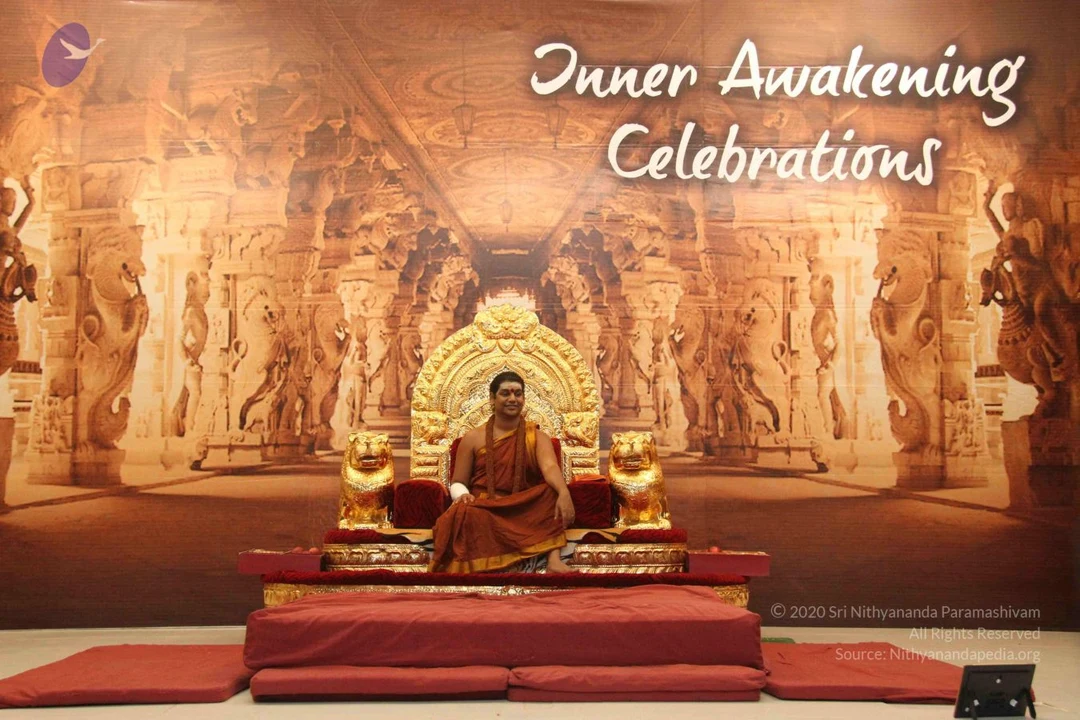
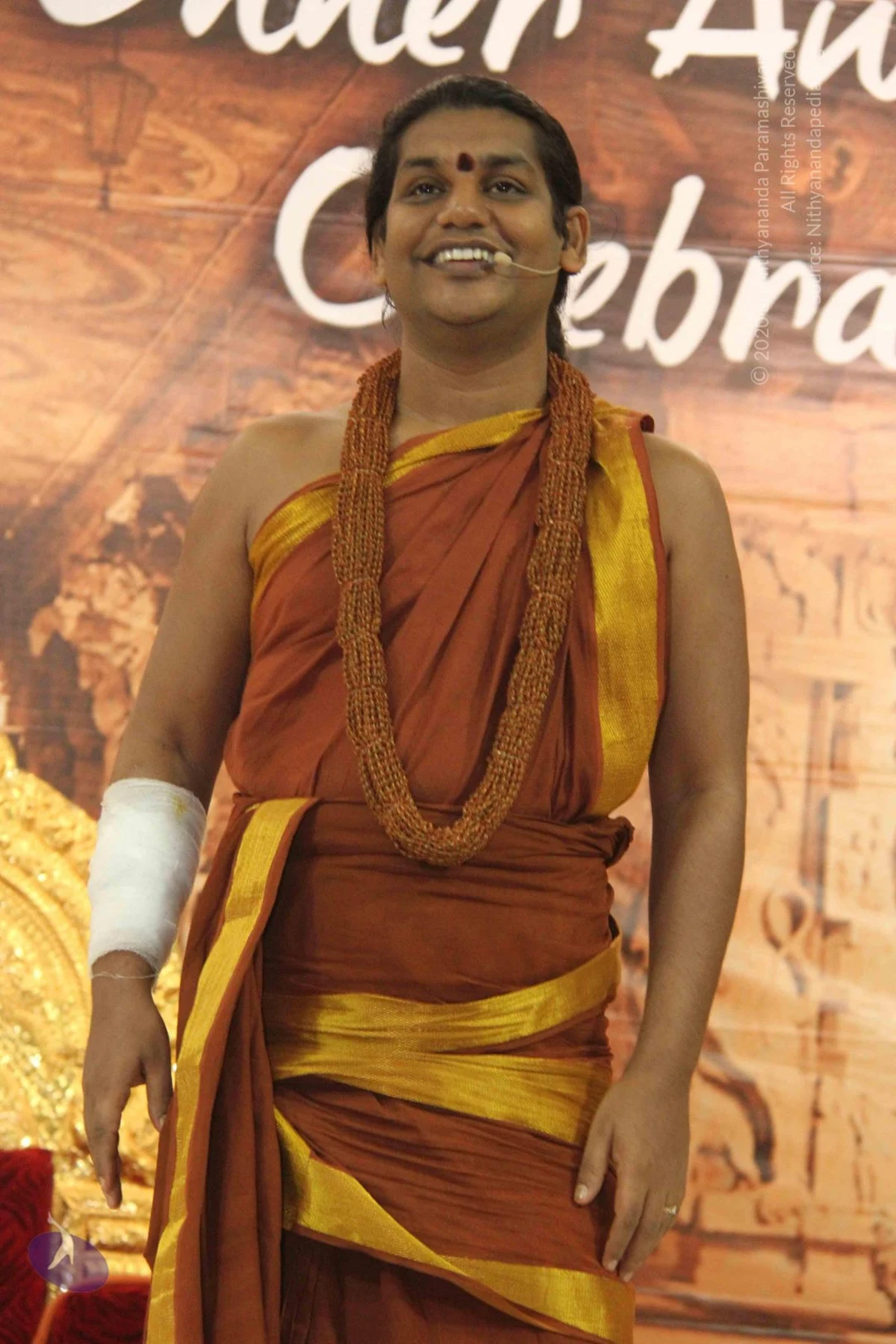
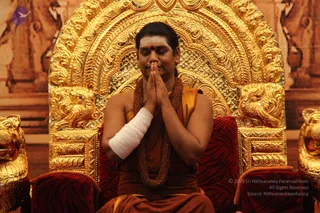
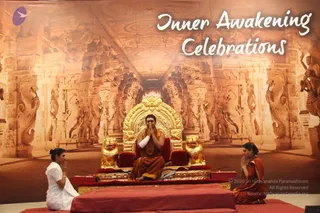
A man seated on an ornate gold throne with carved lion heads and red velvet cushions, eyes closed, palms pressed together in namaste. He wears a rust-orange and saffron cloth, a long rudraksha mala with dark beads, and a white bandage on his left forearm, with a red tilak on his forehead and white ash marks. Gilded decorative panels frame the throne behind him.A photograph of an event stage backed by a large printed backdrop of an ornate temple corridor with carved pillars and lion-like brackets. A seated man in the centre sits on a golden throne with lion figures, wearing an orange-brown robe, with his hands pressed together in prayer and a white bandage on one wrist. A woman in a white garment kneels with folded hands on the left, and a woman in an orange-and-gold sari kneels with folded hands on the right, both on a red-draped platform. Printed white text on the backdrop reads Inner Awakening Celebrations. a person: the seated central figure is a candidate by appearance cues, with an orange-brown robe and throne setting, but the appearance is not distinctive enough to confirm identity.A seated man with a shaved head and a red-orange bindi on his forehead sits in a gilded throne with carved arched backrest and two golden lion heads on the armrests, cushioned in red velvet. He wears a saffron-orange sannyasi robe with a yellow-gold border and a rudraksha mala around his neck, and his palms are pressed together in namaste with eyes closed. A white bandage wraps his right forearm. The backdrop is a large printed image of temple pillars with carved figures in sepia tones. A tiger-striped cloth covers the dais, with red flower petals scattered at the base.A man seated on a red and gold throne with an ornate gilded arched backrest carved with scrollwork and mythical creatures. He sits with eyes closed and palms pressed together in namaskar. He wears a bare upper body with an orange-gold cloth draped over one shoulder and a dark rudraksha mala with a gold necklace. A white bandage wraps his left forearm. A white vibhuti line and red kumkum dot mark his forehead. Behind him stands a large gilded throne canopy.A seated man with closed eyes and palms pressed together in namaste sits on an ornate golden throne carved with scrolls and lion heads, flanked by two gilded lion sculptures. He wears a saffron-orange robe with a shawl, a rudraksha mala necklace, and a red bindi with white markings on his forehead. A white bandage wraps his right forearm. A temple-style backdrop with carved pillars and figures stands behind the throne. The scene suggests a satsang setting, with the man as a seated teacher receiving devotion.A seated man in saffron-orange robes sits centrally on an ornate gold throne with carved scrollwork and a lion-face crest. Two gold lion-head armrests flank him, and red velvet cushions rest on the seat. He wears a long rudraksha mala with a ceremonial gold necklace, a red tilak on his forehead, and a white bandage on his left forearm, with his hands resting on his lap. Behind him is a backdrop of carved temple-style pillars and figures in warm sepia tones. Swamiji (probable): the seated man has long swept-back hair, saffron robes, a rudraksha mala and gold ornamentation, consistent with the page's claim that Swamiji was present at this satsang.

IA-Food

10 photosSource gallery
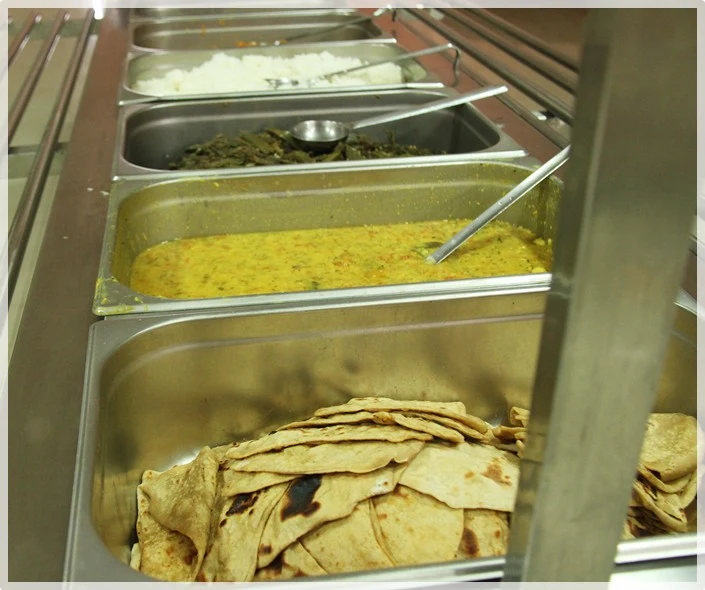
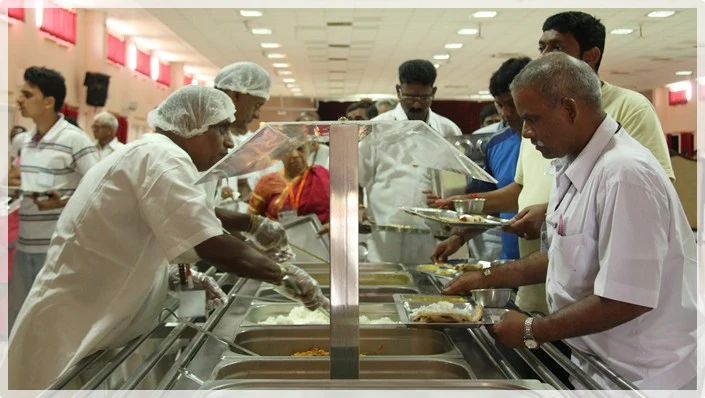
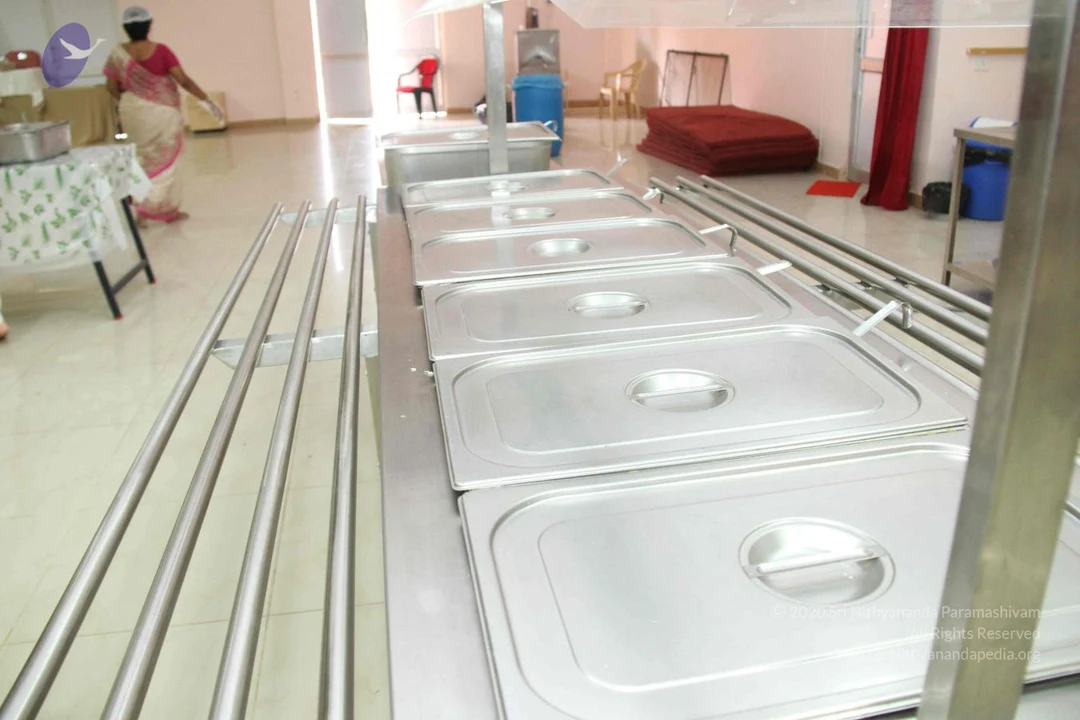
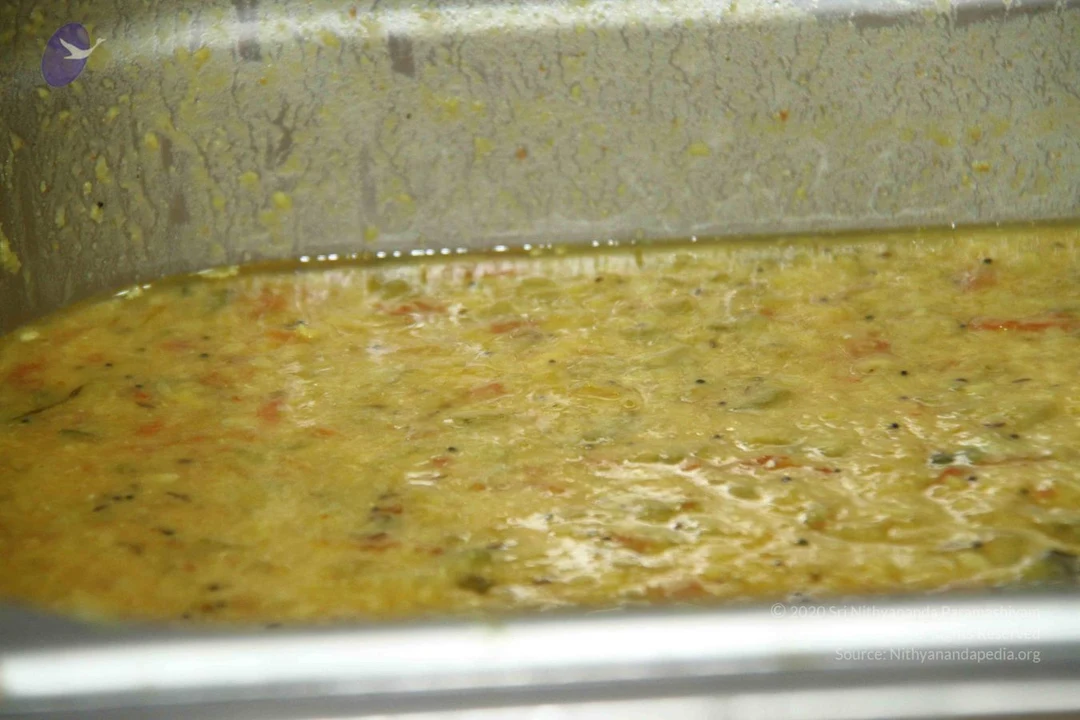
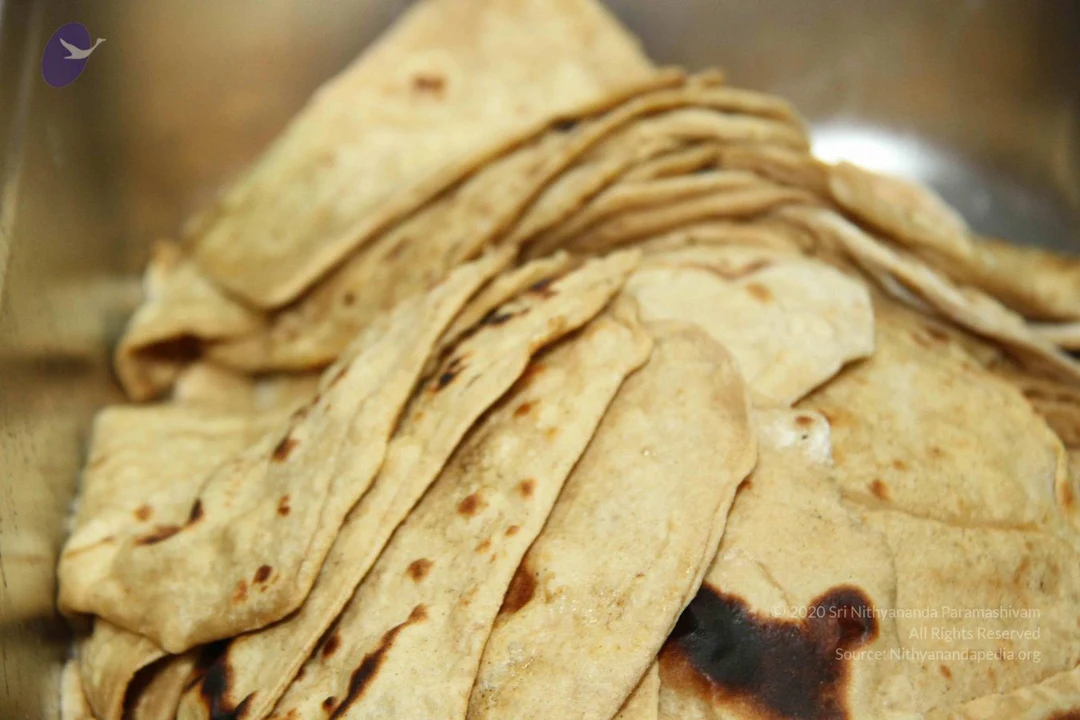
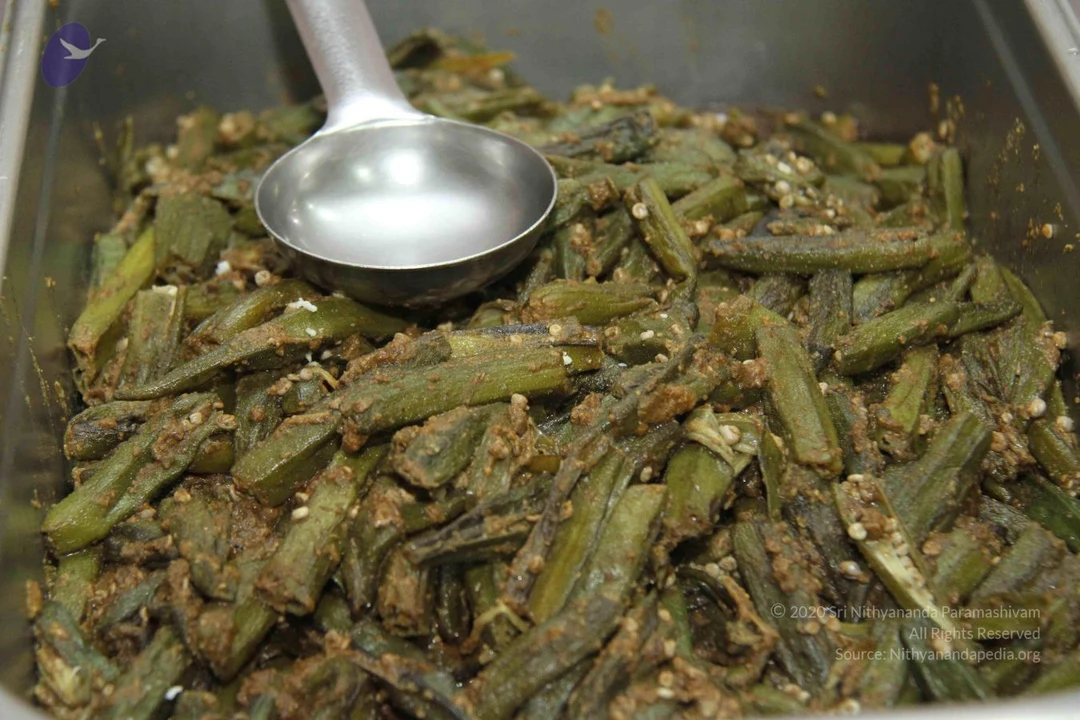
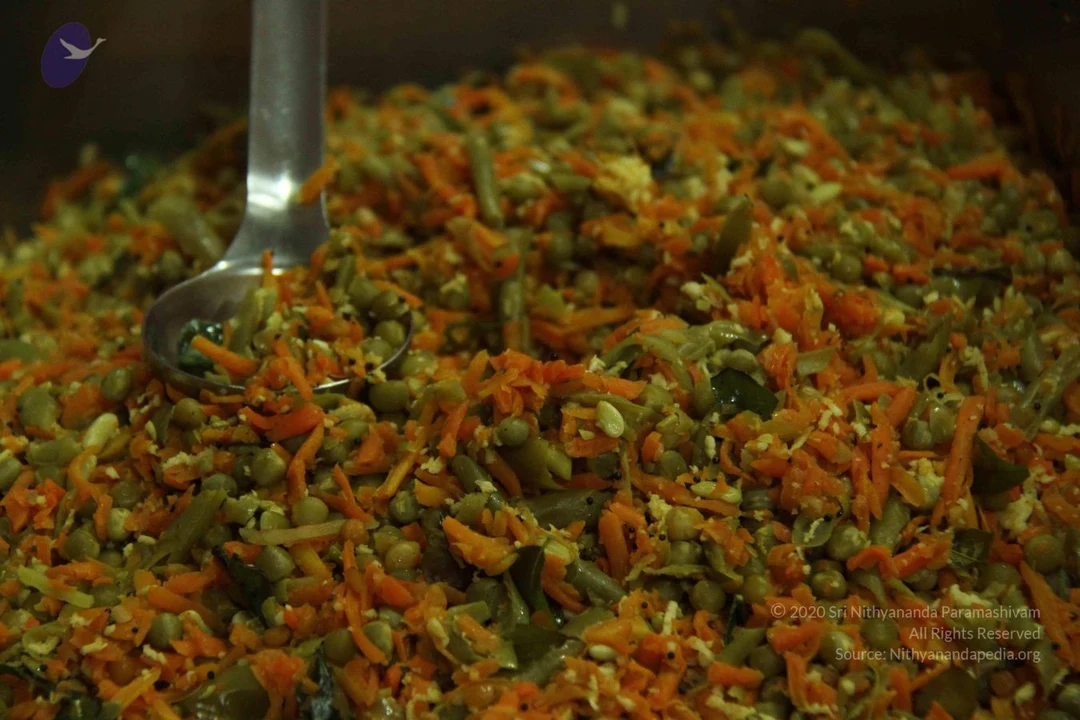
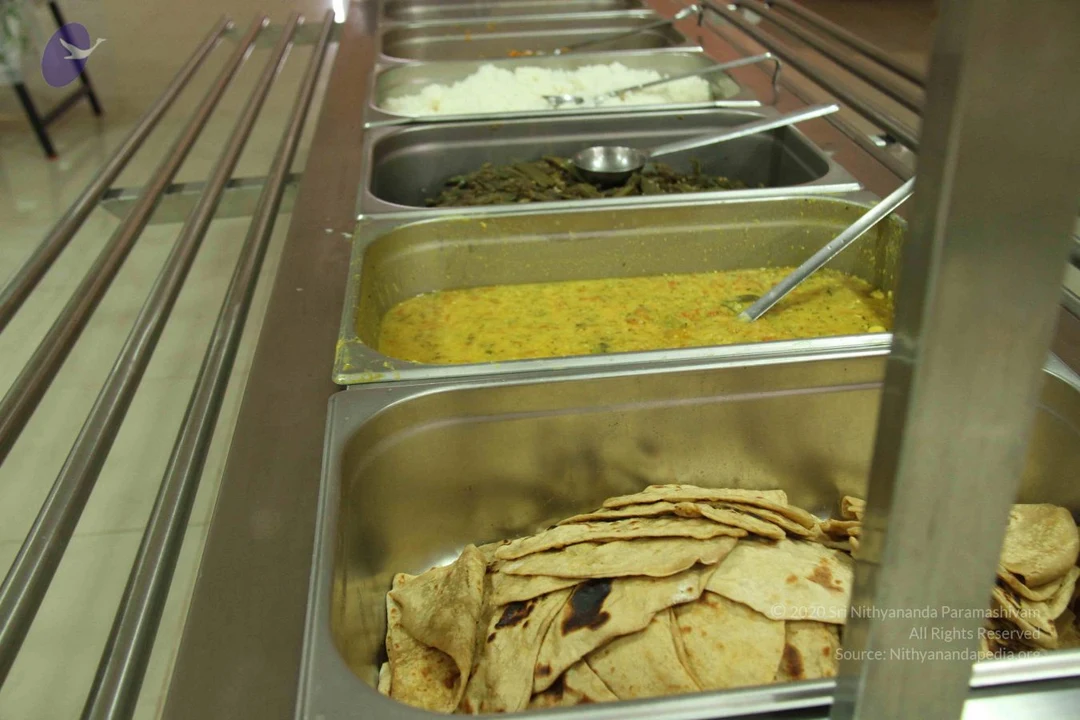
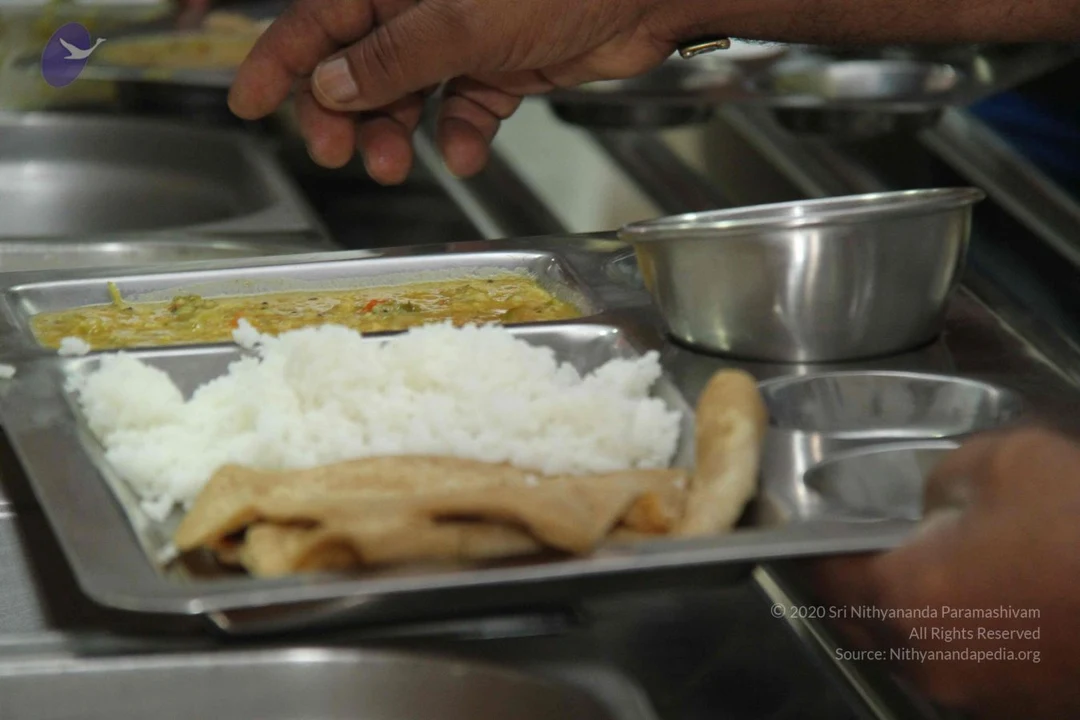
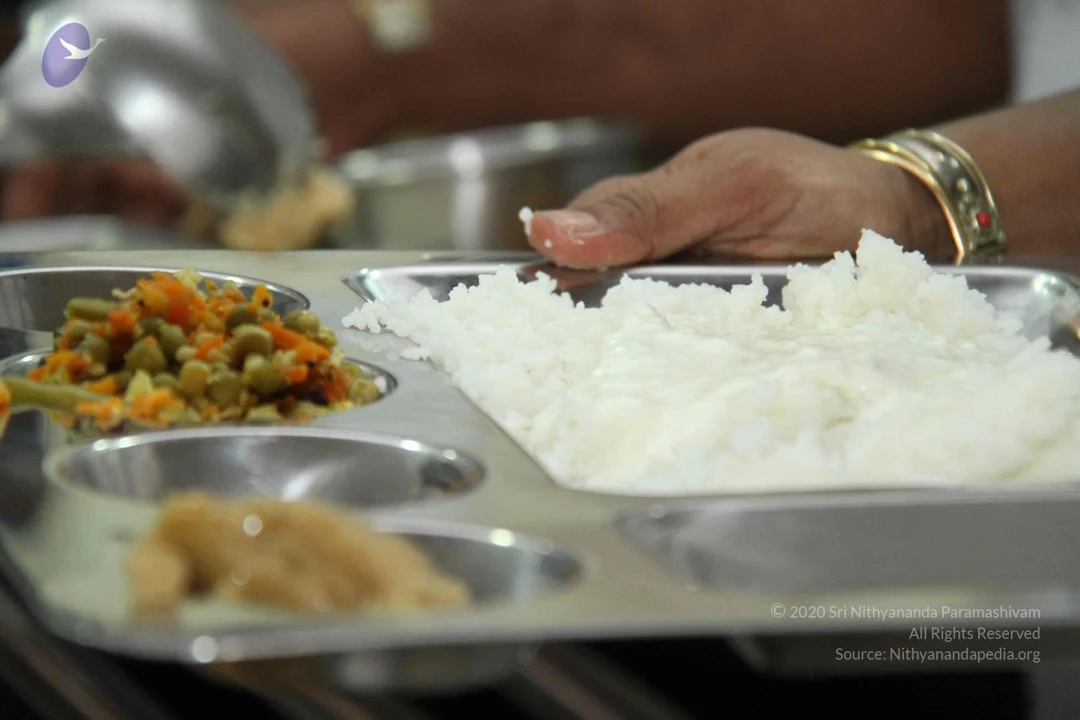
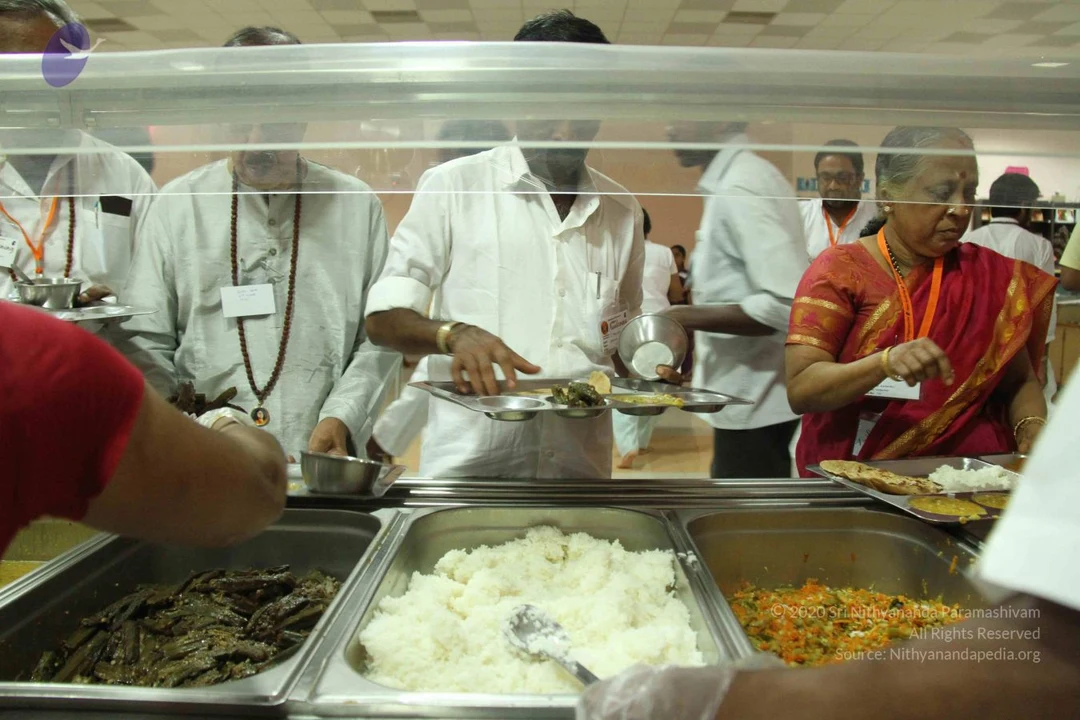
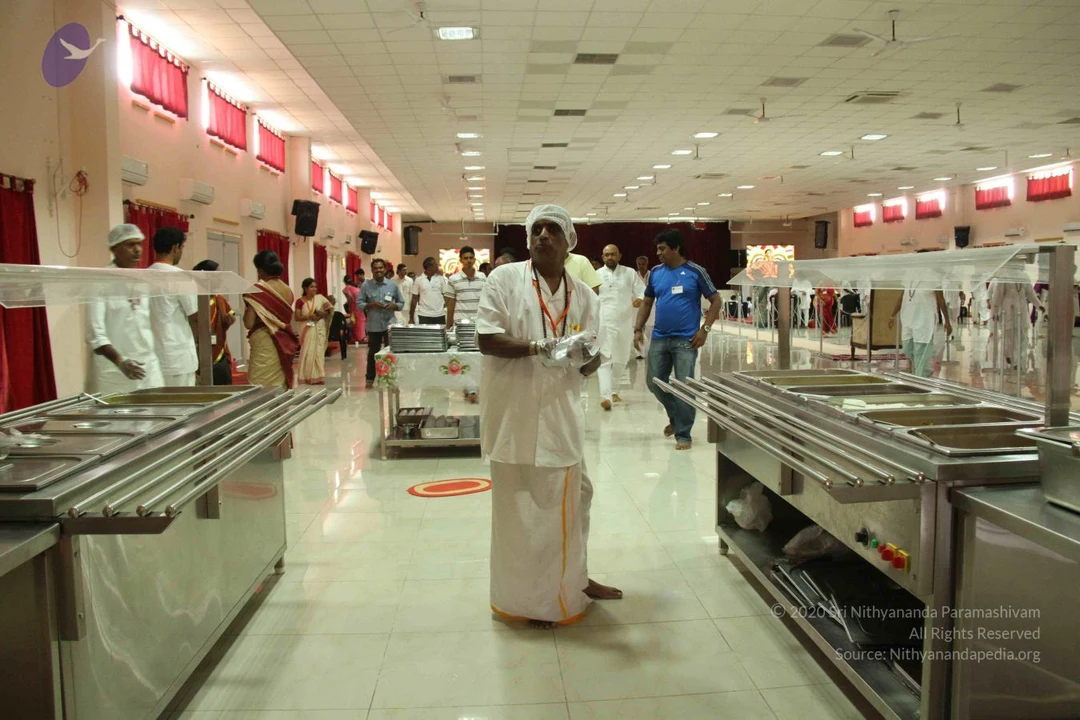
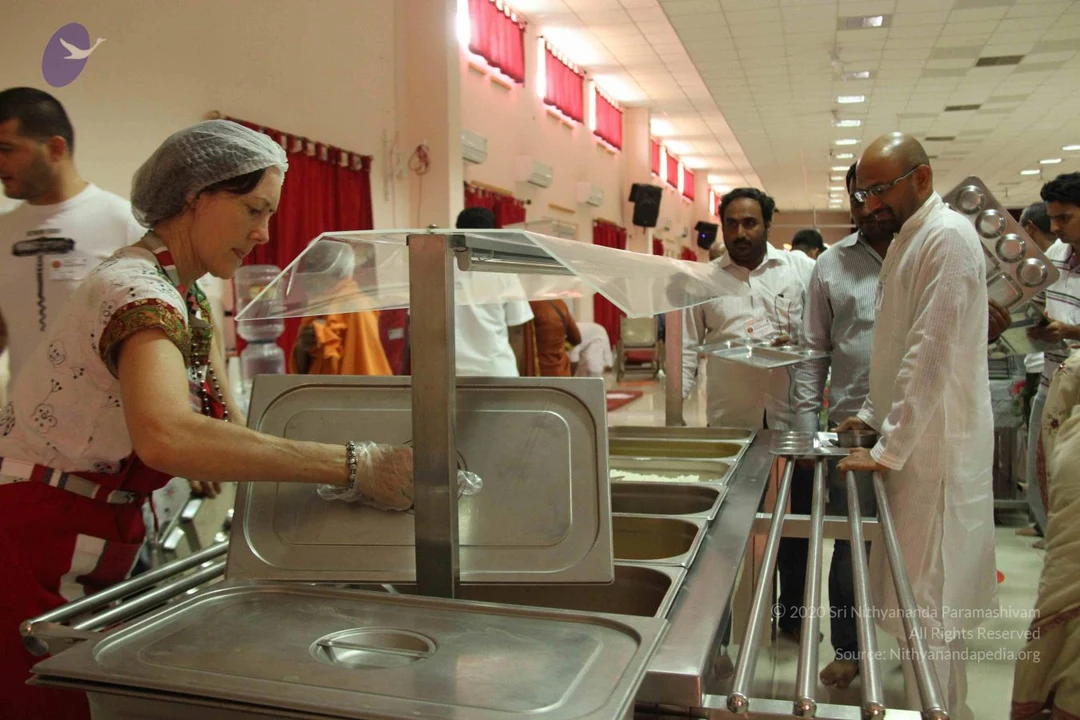
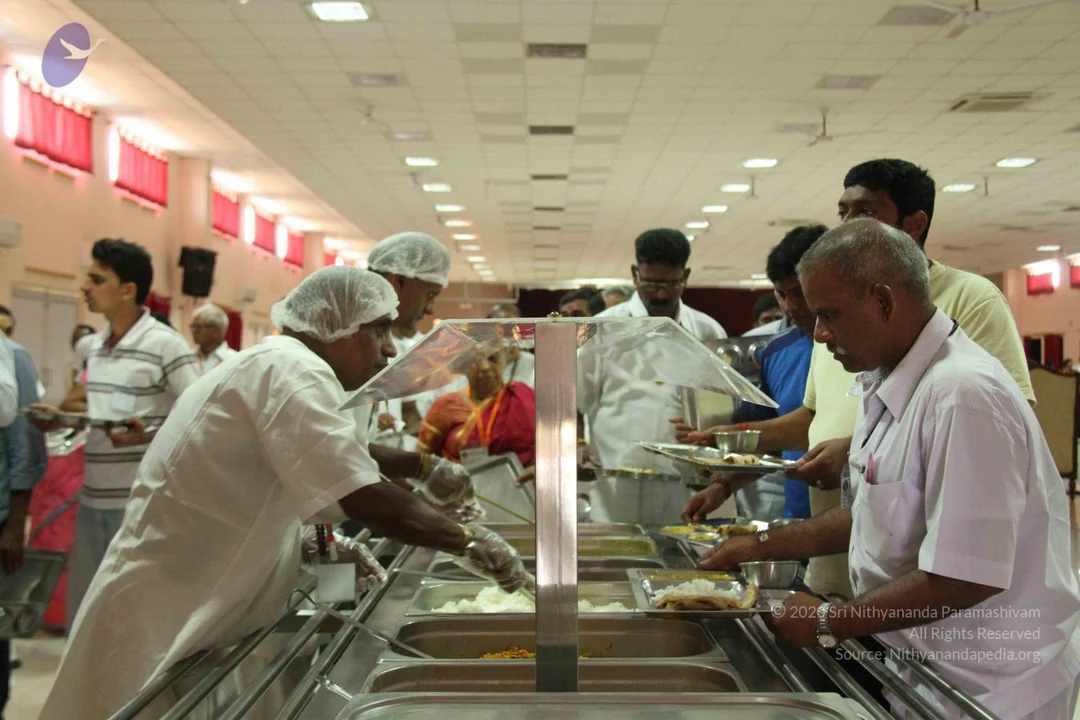
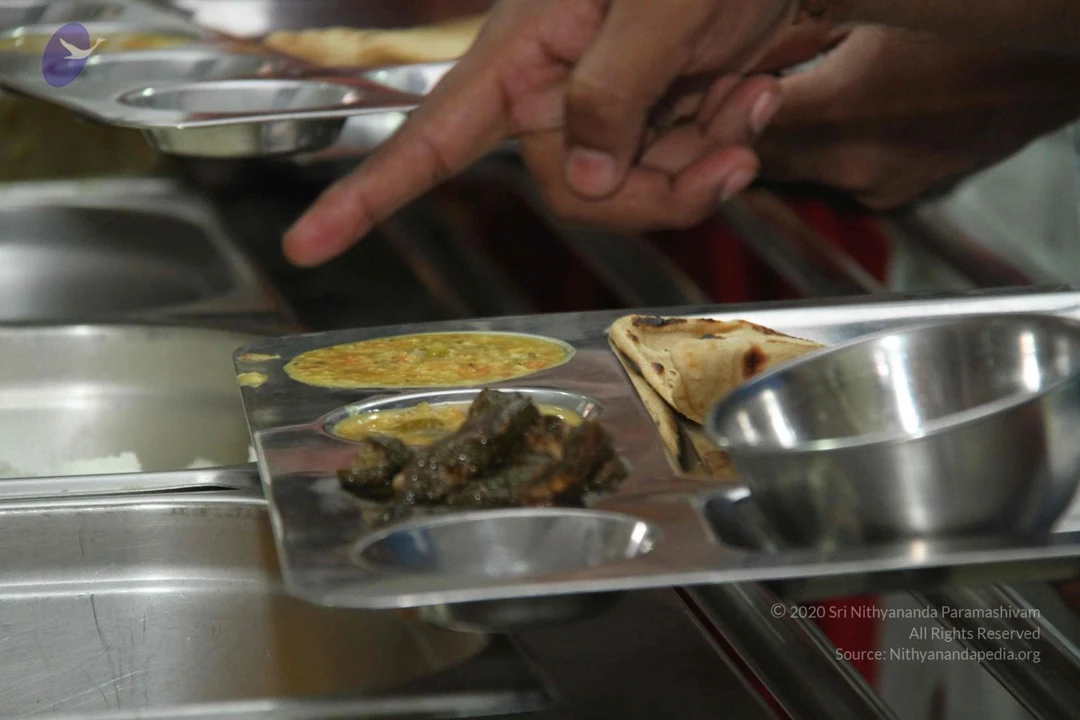
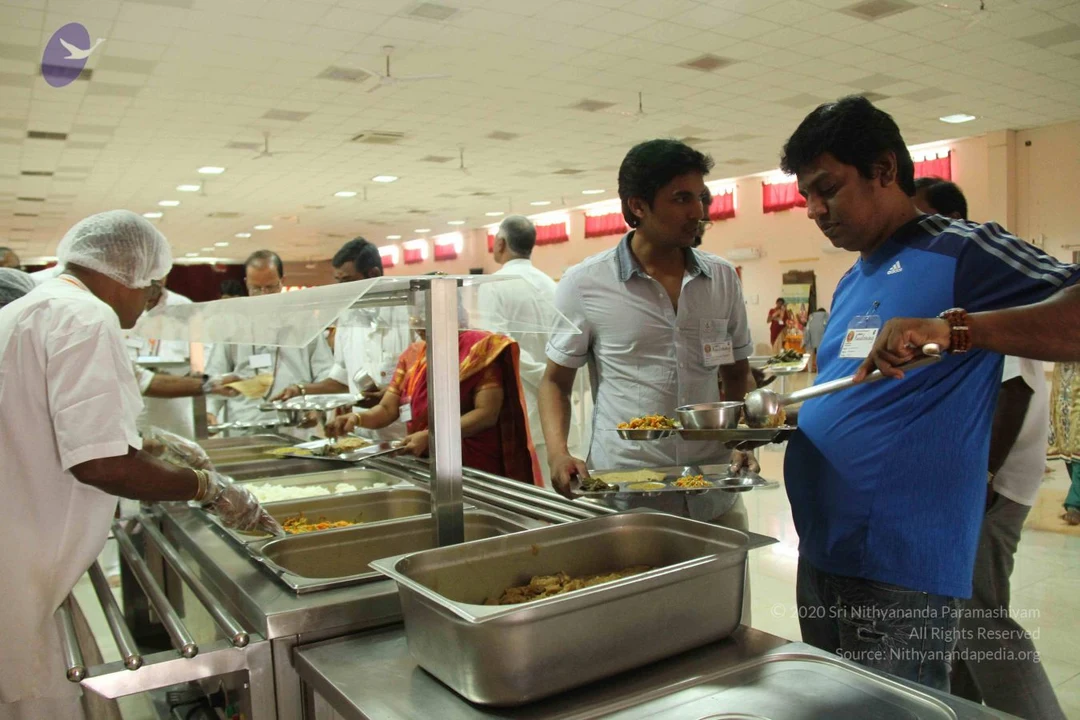
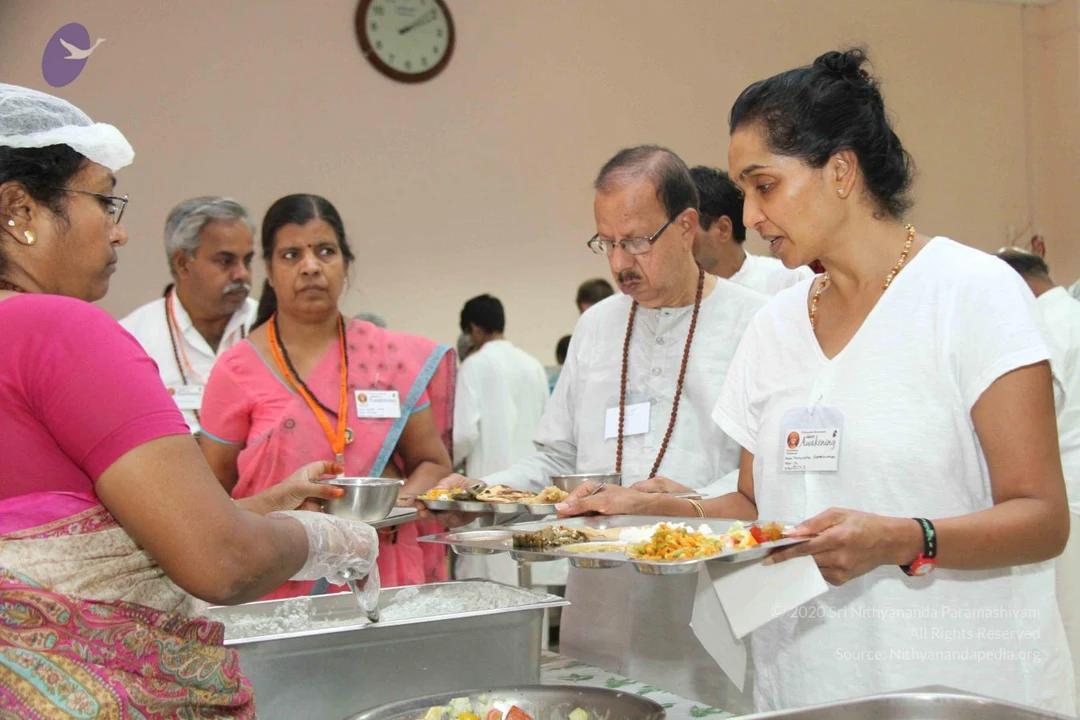
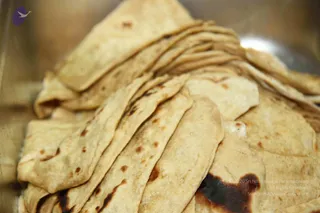
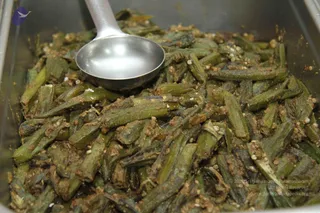
A serving counter in a bright, tiled hall holds rows of stainless steel chafing trays with lids, one with a visible handle, set along stainless steel rails. In the background, a woman in a pink and white sari with a white head covering walks past a side table draped in a green-patterned cloth. A stack of red folded mats or cushions and a red curtain sit at the right, with a blue waste bin and a small red chair nearby.A close-up photograph of a shallow stainless steel tray filled with a yellow, lentil-like preparation, possibly dal or a vegetable stew, with flecks of red and green vegetable pieces and dark seeds visible on the surface. Droplets of moisture cling to the inner walls of the steel container. No people, deities or ritual objects are visible in the frame.Close-up photograph of a stack of thin, flatbread rotis piled in a stainless steel tray. The rotis are golden-brown with scattered darker charred spots and slightly blistered edges, overlapping in a fan-like heap. No people are visible in the frame.Close-up of a stainless steel steam tray filled with cooked okra pods, sliced lengthwise and coated in a dark spiced masala with visible mustard or sesame seeds. A polished silver serving ladle rests on top of the dish. No people are visible; this is a food photograph from ashram kitchen service.Close-up photograph of a large pan of cooked mixed vegetables, shredded orange carrot, green peas, green beans and bits of herb, with a long stainless steel serving spoon resting in the dish. No people are visible in the frame.A steel buffet line serving food in stainless steel trays along a counter with metal rails. Trays hold white rice, a dark green cooked vegetable dish, a yellow dal or lentil curry with serving ladles, and stacked flatbreads such as chapatis with browned spots. No people are visible; the scene shows a communal kitchen or dining serving station.

Leela-Alankar

6 photosSource gallery
Two golden murti statues seated side by side on a decorated platform before a red velvet backdrop and gilded carved wooden canopy. The figure on the left wears a tall jeweled crown, rudraksha malas, a white and gold dhoti with a leopard-print drape, and raises a hand in blessing. The figure on the right wears a green silk garment, a jeweled crown, a long pearl and gem necklace, and holds a hand in mudra. Both are surrounded by garlands of red, orange and yellow roses and green foliage. These are statues, not living people.Two deity murtis. The figure on the left wears a tall crown, a rudraksha and bead garland covering the chest, and a purple skirt with white and gold arm bands. The figure on the right wears a green silk garment with gold embroidery, layered pearl and gold necklaces, and a tall decorated headdress. Both are surrounded by a backdrop of orange and red roses and green foliage, with maroon velvet drapes behind. No living people are visible.Two golden deity murti figures are seated side by side on a decorated platform beneath an ornate gold carved canopy. Both have gold faces and are heavily adorned with jeweled crowns, layered rudraksha malas, ceremonial necklaces and gold jewelry. The figure on the left wears a white and purple garment with a leopard-print shawl, while the figure on the right wears a dark green garment. Bright orange and red roses and green foliage frame both figures in dense floral garlands. No physical people are visible.Two ornately decorated deity murtis, one in a purple silk skirt with white blouse and gold jewellery, the other in a green sari with gold ornaments and a crown, seated under a gilded wooden canopy with carved fretwork and golden pillars. Both are adorned with red roses, green leaf garlands and heavy gold necklaces, set against dark red drapes. No living people are visible.Two children are seated side by side on a red and purple draped stage, dressed as deity figures in a festive performance. The child on the left wears a gold crown, a white and gold embroidered bodice, a purple dhoti, and layered yellow marigold garlands with red roses; the child on the right wears a gold headpiece, multi-strand white and red beaded necklaces, an orange-yellow dress, and a yellow and red garland. Both have white forehead markings with red bindis, and both hold flowers or raise their hands in gestures. Behind them, a large deity murti in green and gold robes is decorated with red roses and garlands.Two children seated cross-legged on a red and purple draped stage in front of a flower-decorated altar with a deity murti partly visible at top. The boy on the left wears a gold crown, white sandalwood tilak on forehead, a white and gold embroidered vest, purple dhoti with silver border, and a yellow-and-red flower garland, holding his hands in a mudra. The girl on the right wears a gold headpiece, a yellow-orange blouse and skirt with layered white beaded necklaces, a yellow-and-red flower garland, and holds a flower with her right hand. Both are seated in a ceremonial pose with red roses and yellow marigolds decorating the altar.

Deity-Darshan

63 photosSource gallery
Two gilded metal statues of a deity couple stand before a deep red draped curtain with a gold-framed arch at left. The male figure wears an orange-and-gold turban, a red garment, a tall silver crown with crescent ornament, and layered white and beaded necklaces; he holds a golden trident and a ritual staff. The female figure wears a red and green saree, an ornate jeweled crown, and multiple silver necklaces and earrings, and holds a golden lotus-like object. A small green bird perches near her shoulder. These are statues, not living people.Two gilded deity murtis side by side against a deep red curtain. The figure on the left wears an orange and gold turban, a red garment, a jeweled brow ornament, and layered white and gold-beaded garlands with a rudraksha-style mala. The figure on the right wears an ornate crown with turquoise, red and green gemstone inlay, a red and orange sari with a green border, pearl garlands, and dangling jeweled earrings. A small green parakeet perches on a golden stand between them, and a golden kalasha-like finial rises at the top.A photograph of a gilded statue pair seated in an ornate golden arch against a deep red drape, set outdoors among green palms and foliage. The male figure wears an orange turban, a red garment, a tripartite trident held in one hand and a vertical staff, with layered beaded necklaces. The female figure wears an orange sari with green borders, a jewelled crown and white pearl necklaces, seated beside him on a pink cloth. This depicts a deity murti pair, shown as statues rather than living people.A photograph of a pair of golden deity murtis seated together on a raised platform inside a carved golden arched frame, set against a deep red drape with palm fronds and greenery outside. The figure on the left, with four arms, holds a trident and wears an orange turban, a red garment, and layered white and gold necklaces. The figure on the right wears an elaborate jeweled crown, an orange sari with green border and gold ornaments, and is seated beside the first. Both are rendered in gold-toned surfaces with bright pink and magenta draped cloth at their base. These are statues, not living people.A dark stone Nandi bull statue sits in a seated pose on an orange-painted plinth in an outdoor garden setting. It wears a garland of yellow and red marigold flowers and a red-and-brown beaded necklace with small bells. A white vertical tilak mark decorates its forehead. Behind it are orange temple-style walls, green palm fronds and foliage. No people are present.A carved wooden or stone pillar shrine stands outdoors among palm and tropical trees. The tiered structure has a small domed canopy, pilasters, and a rectangular panel carved with a sacred fig tree with spreading branches. A golden cloth or rope is wrapped at the top. No people are visible. No deity figure is clearly shown.

Paduka-Puja

14 photosSource gallery
A framed portrait photograph of a smiling man with long dark hair, wearing an orange turban with a red bindi and an orange shawl, is displayed in an ornate gold throne-like frame. Hanging brass oil lamps and bells flank the gold carved backdrop against a dark grey stone wall. The printed caption below the portrait reads "Paramahamsa Nithyananda". The portrait is a printed picture, not a physical person present, and the figure shown is an orange-clad portrait subject with distinctive long hair, turban and shawl cues, matching the page's Swamiji reference.A framed portrait on a golden ornate throne-style chair, set against a grey stone wall with hanging brass oil lamps and bells. The framed photograph shows a smiling man in an orange-saffron turban and orange robe with a red bindi, with long dark hair. A printed caption at the bottom of the frame reads "PARAMAHAMSA NITHYANANDA". The throne has carved gold filigree, golden lion-paw feet, and orange cushions. No physical people are present; the portrait is a printed depiction on the throne.Interior temple hall photographed from the front. On the left, a shaved-headed priest in white dhoti and shawl sits on the floor before a small brass-and-tray setup with offerings. Behind the central doorway, a gilded throne holds a framed portrait of a smiling man in orange turban and saffron robes, labelled as a portrait of Paramahamsa Nithyananda. Two saffron-robed monks sit in the doorway. Two painted standing deities with four arms flank the entrance in orange and green dhotis. On the right, a gold palanquin-style canopy shelters two garlanded deity murtis dressed in purple and green, decorated with orange and red flower garlands. Brass lamps line the floor and a patterned rug lies on white tiles, with maroon drapes behind.A temple shrine with a golden ornate throne draped with a tiger-skin cloth, flanked by two tall painted statues of four-armed deities with crowns, gold necklaces and orange-red dhotis holding ritual objects. Centre of the throne is a framed photograph of a smiling man in an orange turban and orange garments, labelled with a printed caption reading 'PARAMAHAMSA NITHYANANDA' on the frame. Hanging lamps and a small canopy hang above. In the foreground lower corners, a seated priest with bare upper body and white tilak marks and a shaven-headed devotee in orange sit at the bottom edge, with two more seated devotees in dark clothing near the throne base. Brass oil lamps stand at left and right.Several young boys in saffron robes sit cross-legged on a mat in a hall, performing a ritual puja. Their foreheads and arms bear white sacred ash markings, and they hold small white items, possibly camphor or offerings, in their hands. Brass plates, bells, small cups and a brass lamp rest on silver-topped low stands in front of them, with flower petals and red kumkum on the plates. Behind them, other saffron-robed participants and a man in white dhoti with a rudraksha mala sit at similar stations. Red curtains and a white wall frame the room.Close-up photograph of a pair of hands cupped together, holding a small white rounded object with a broken, jagged edge, possibly a cracked shell or a piece of white food. The hands are dark-skinned and the wearer's upper arm and torso are in a deep orange-red robe. The background is soft-focused pale grey floor with a blue stripe at the lower left. Only hands and robed arm are visible, so no full face or identifiable person appears.

Nithya-Satsang
18 photosSource gallery
Indoor satsang stage with a golden ornate throne flanked by carved lion figures and red cushions. A man with a shaved head wearing an orange-saffron robe and shawl sits on the throne. Beside him stands a painted deity figure with a crown, holding a staff, and a pair of tall painted pillars frame a wooden door. On the right, a golden canopy shelter covers two decorated deity murtis draped in garlands, one in purple garments. Two children in purple and yellow sit on a red cloth in front, adorned with garlands and ornaments. Brass oil lamps stand on the stage.Two young performers sit side by side on a decorated stage at a temple-style event. On the left, a boy wears a jeweled gold crown, a white tilak, a gold armband, and a yellow-and-red flower garland over an orange and gold dhoti, and holds his palm in anjali. On the right, a smiling girl wears an orange and gold sari with a gold choker, layered gold necklaces, a gold headpiece with a bun, and a yellow-and-red garland, holding a red rose. Behind them are a red draped backdrop, a golden pillar, and painted deity figures in red and green garments.A photograph of an indoor temple-style hall with red drapes and painted columns. On a large gold lion-armed throne on the left sits a man in saffron-orange robes with dark hair, seated in a calm pose. Two children sit on the floor at right in front of a gold canopy shrine holding decorated deity murti dressed in purple, green and red garments with garlands. A boy in purple dhoti and white head ornament holds a garland, and a girl in yellow and orange dress with a flower garland sits beside him. The shrine has red fabric draping and brass lamps stand near the throne. The man on the throne is not clearly identifiable from appearance, so he is described by role only.A photograph of a golden-throned dais in a temple-style hall. On the left, a man with swept-back hair, a white forehead mark and a rudraksha mala sits with palms pressed together in namaskar, wearing saffron-orange robes and a white wrist bandage, on a red-cushioned gilded throne with a lion-shaped armrest. Behind him stand two decorated murti figures under a gold canopy with flower garlands, one in purple and one in green. Two young boys in traditional dress, one with a crown and garlands, sit on the red carpet with hands folded in front of the murtis. Brass oil lamps stand beside the throne and a standing fan is at the right edge.A seated man on a gold-and-red ornate throne with a tiger-motif footstool presses his palms together in anjali, wearing an orange-saffron dhoti and shawl with a long rudraksha-style mala and a white wrist bandage. Beside him stands a gilded canopy shrine (ratha-style) draped with red curtains, holding garlanded deity murti adorned with flower garlands in red, orange and yellow. Two young children sit on a red cloth at the lower right, one in purple and white with flower garlands, the other in orange with a garland, both with hands raised in greeting. A brass oil lamp stands near the throne, and a floor carpet lies in front.A photograph of a stage in a temple-style hall. On the left, a seated figure with long dark hair in an orange-saffron garment sits on an ornate golden throne with lion-form armrests and red cushions, a gesture of teaching in progress. Beside the throne stands a standing figure in gold-toned attire. At center, a golden canopied palanquin-style shrine holds two deity murtis draped in purple and green, with marigold and flower garlands and a red-draped platform. Two small child-sized figures in purple and orange, garlanded, sit before the shrine. On the right, a bald man in pink-orange robes with a sash stands facing the shrine, holding a lamp or vessel. Oil lamps stand on the stage, and the foreground shows the backs of a few seated audience members and a small monitor.

Sarva-Darshan

9 photosSource gallery
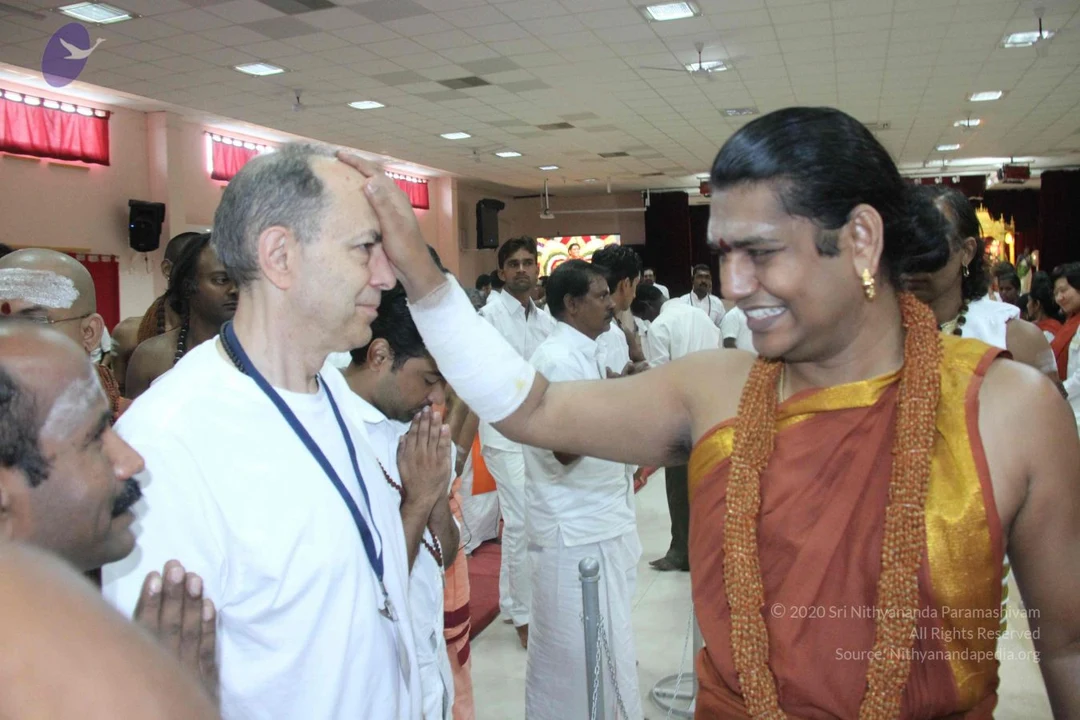
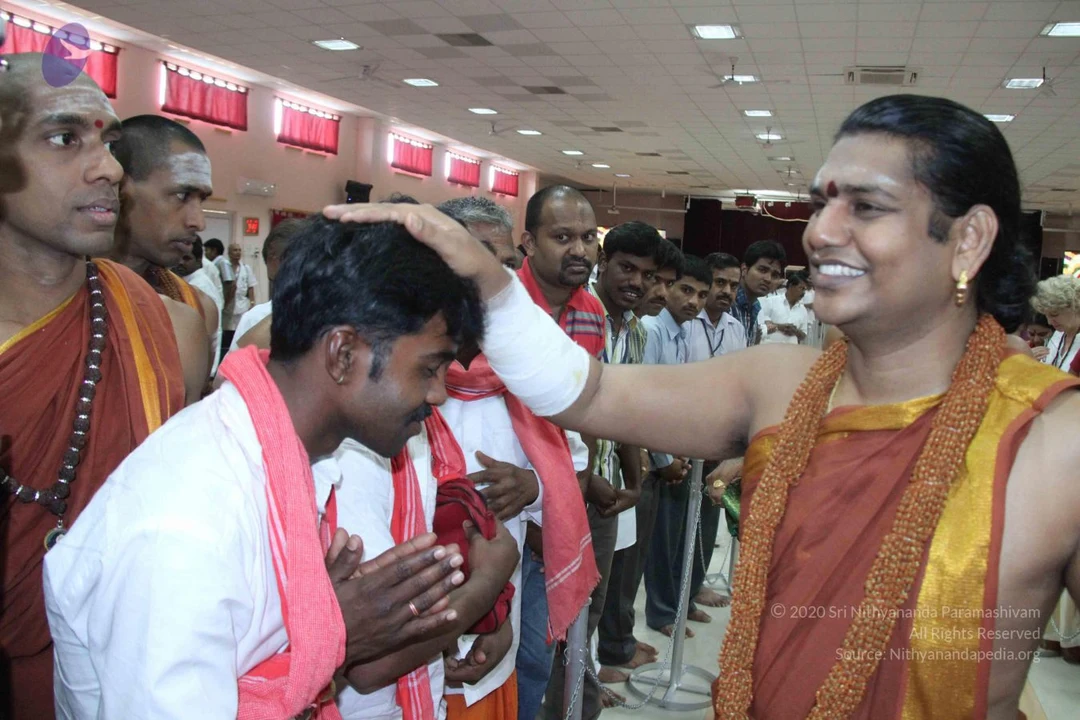
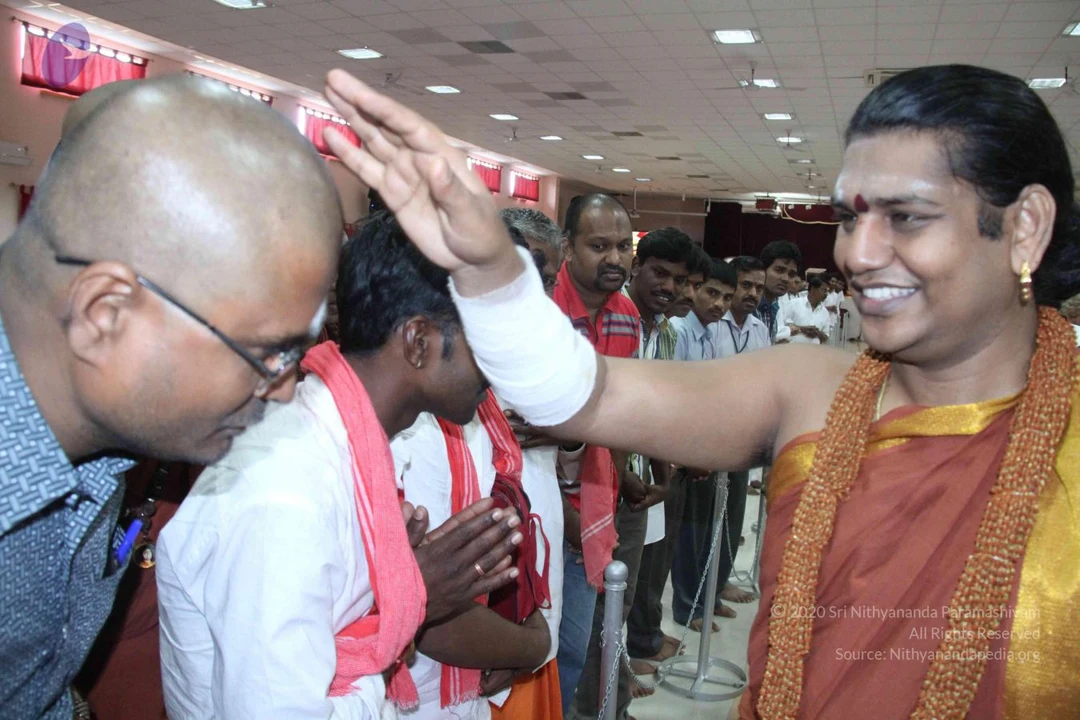
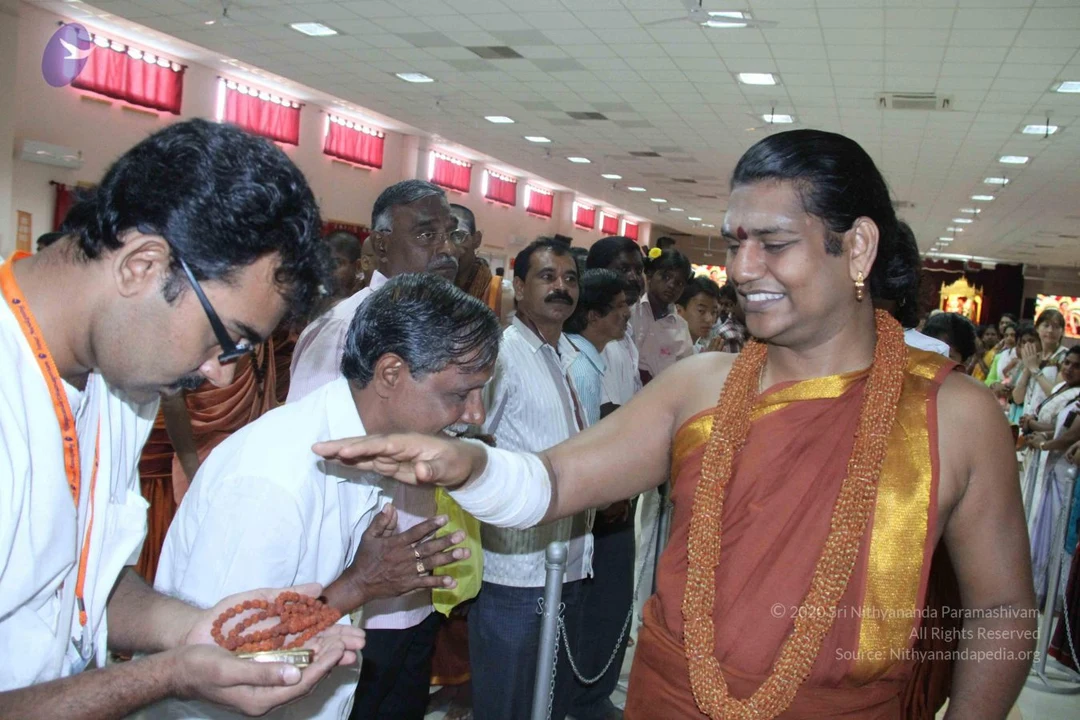
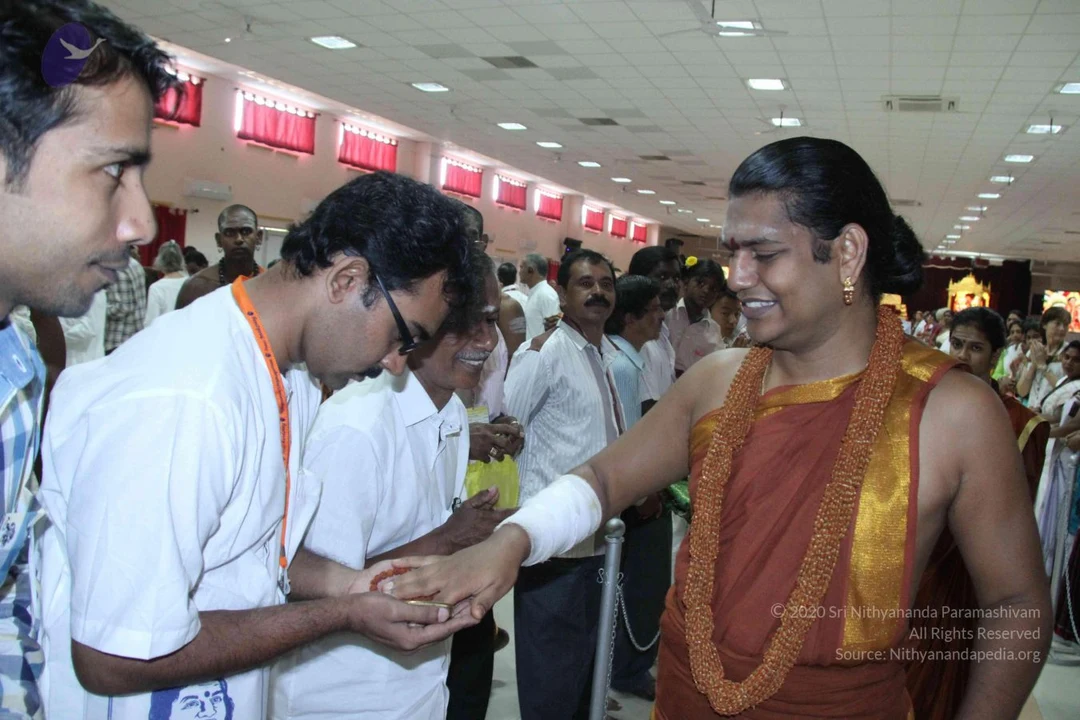
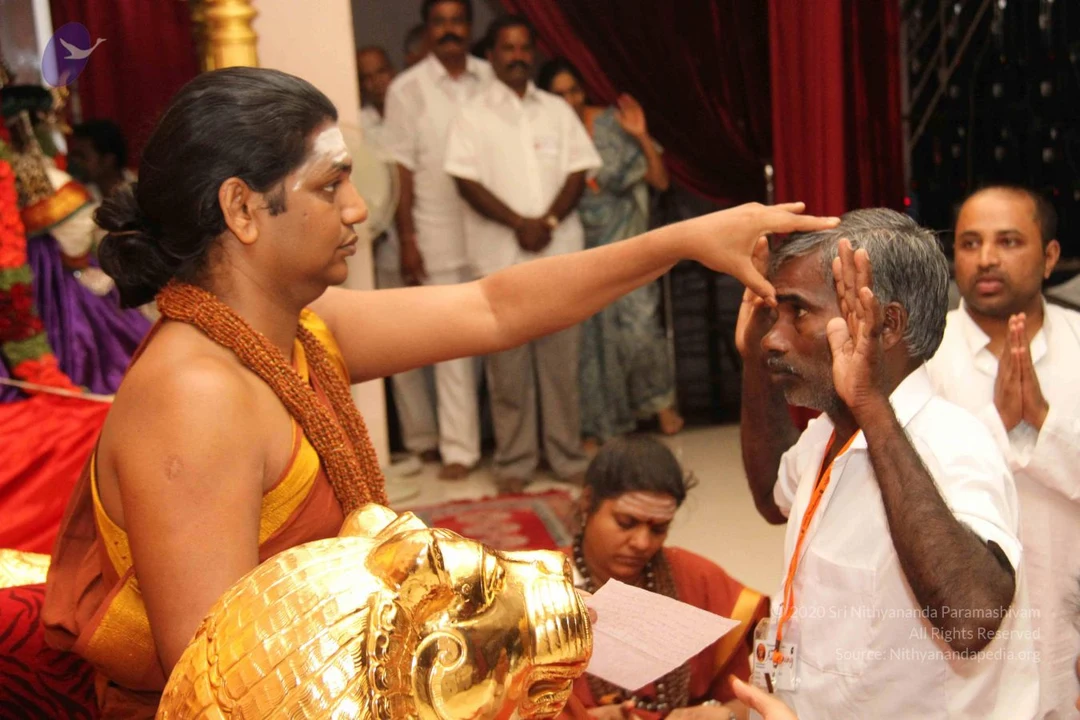
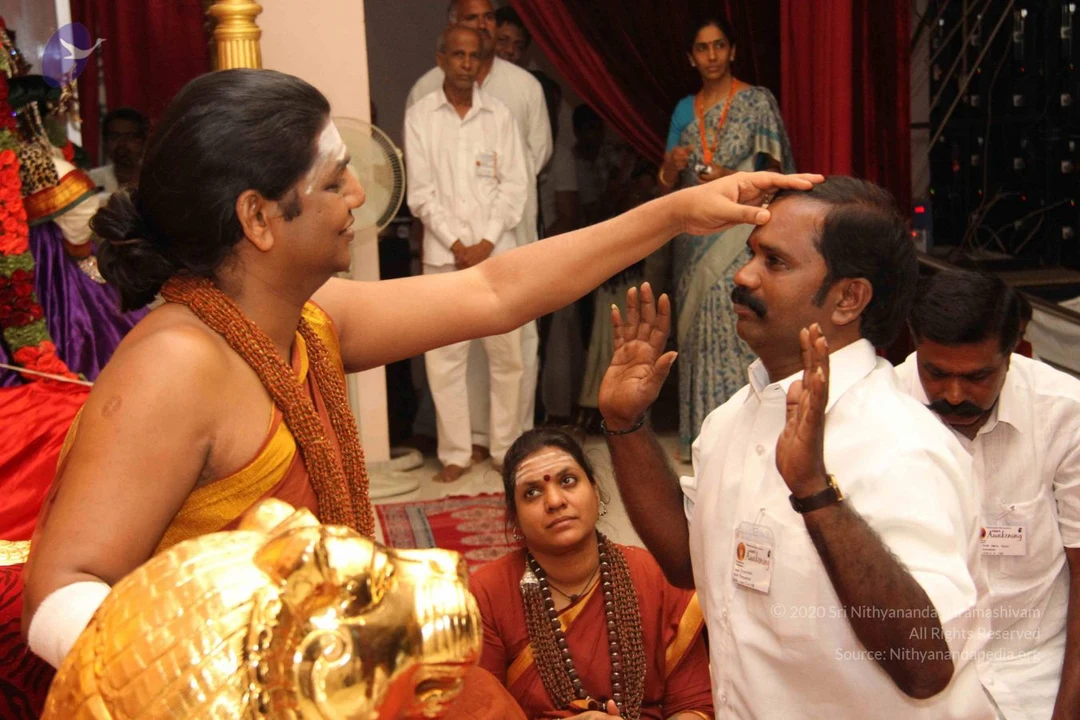
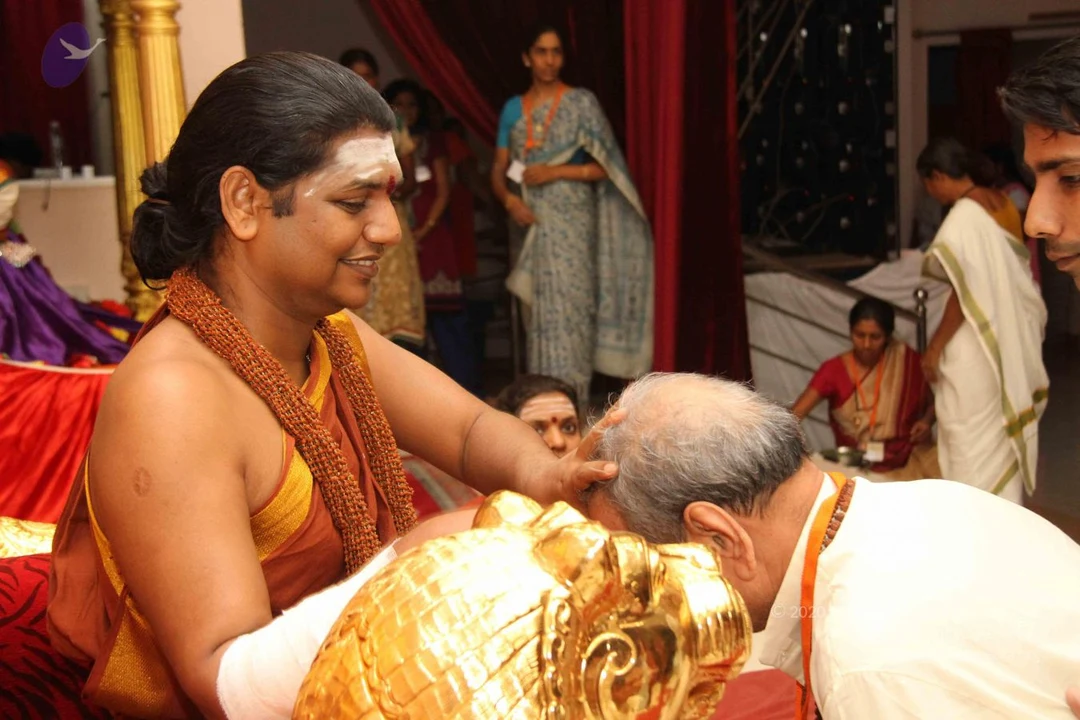
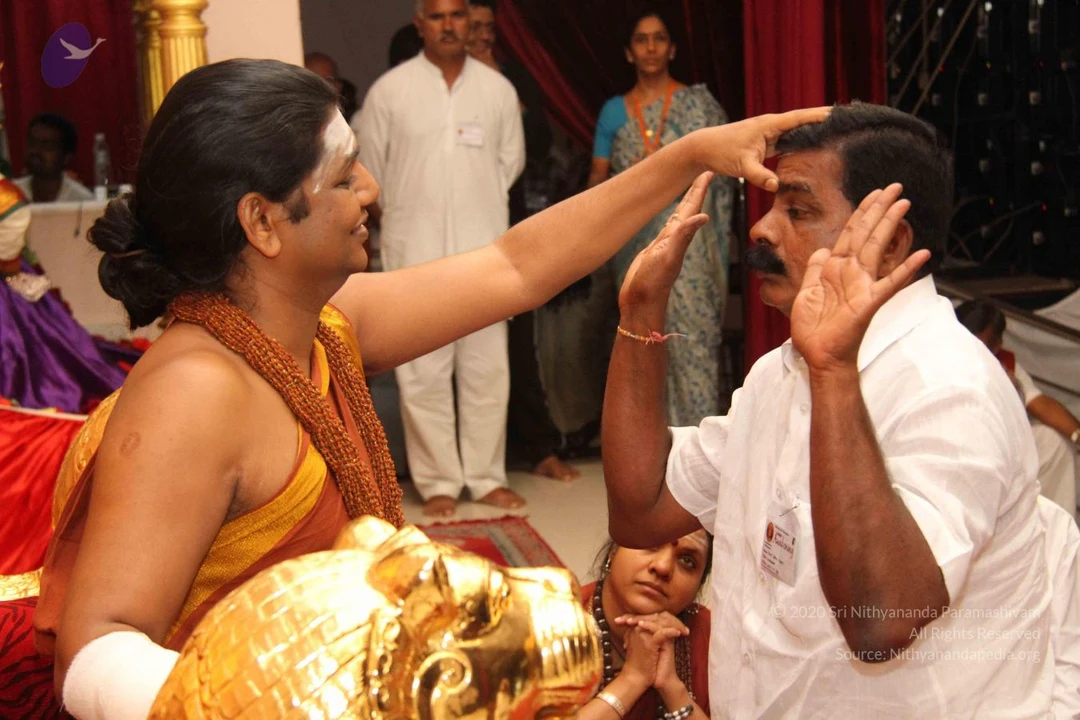
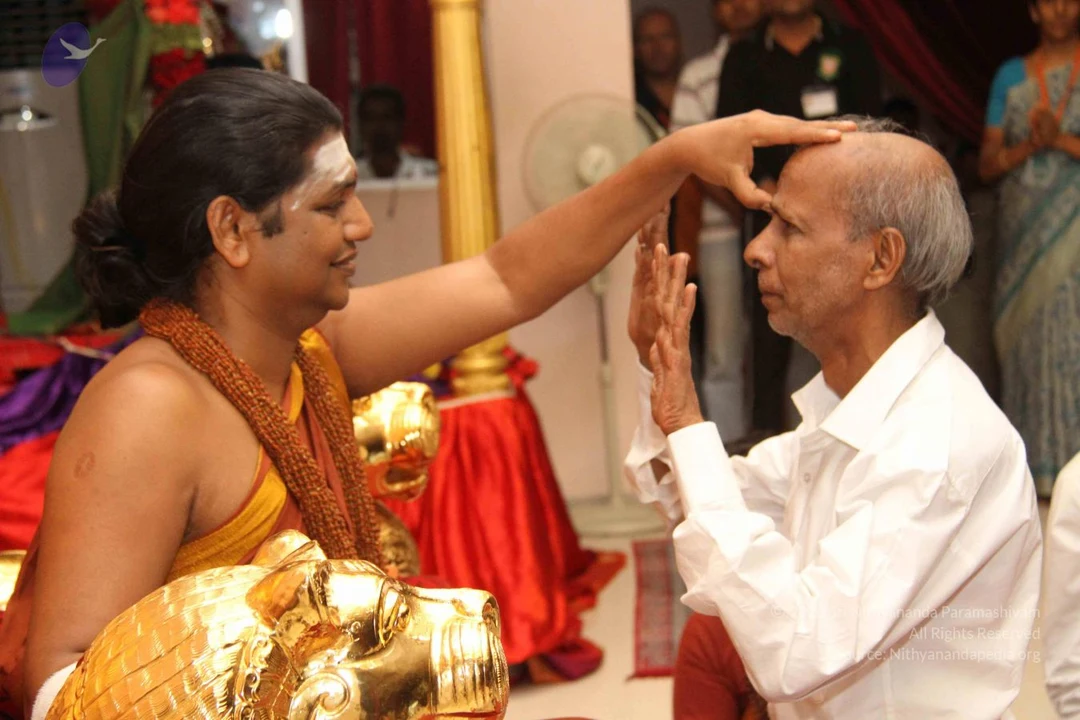
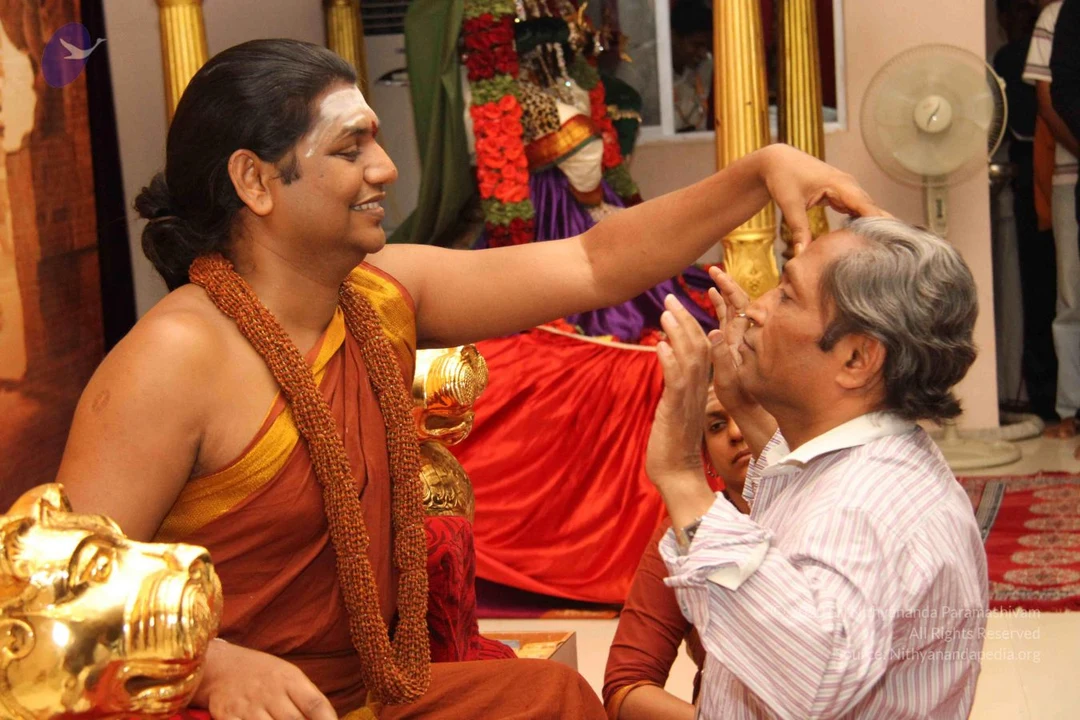
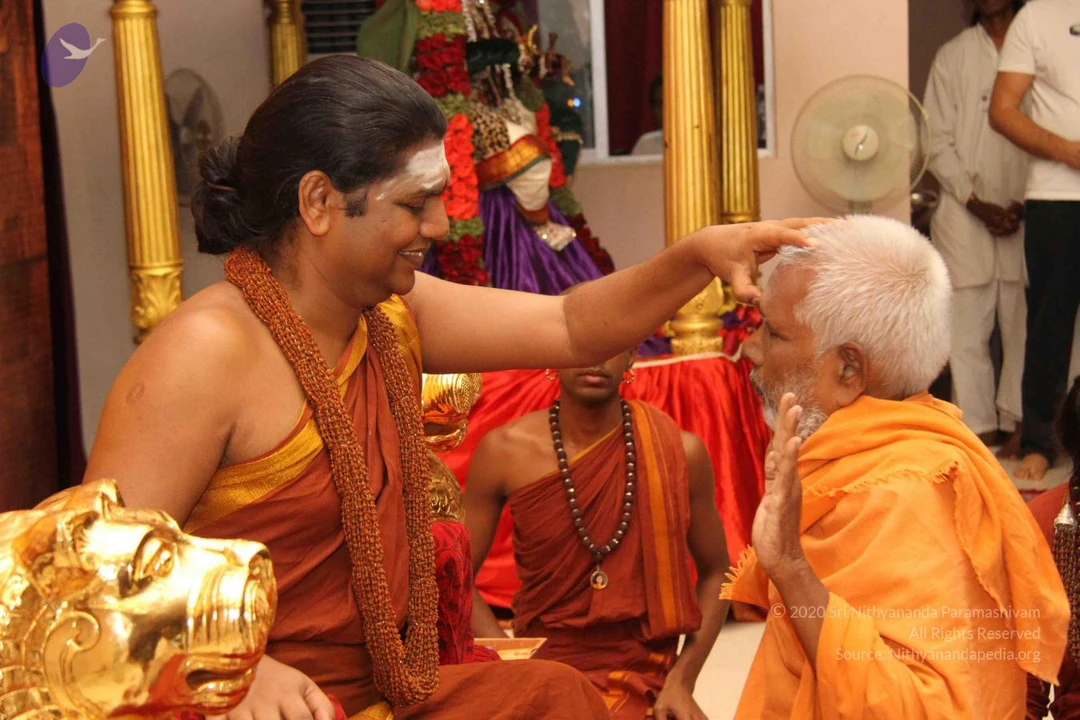
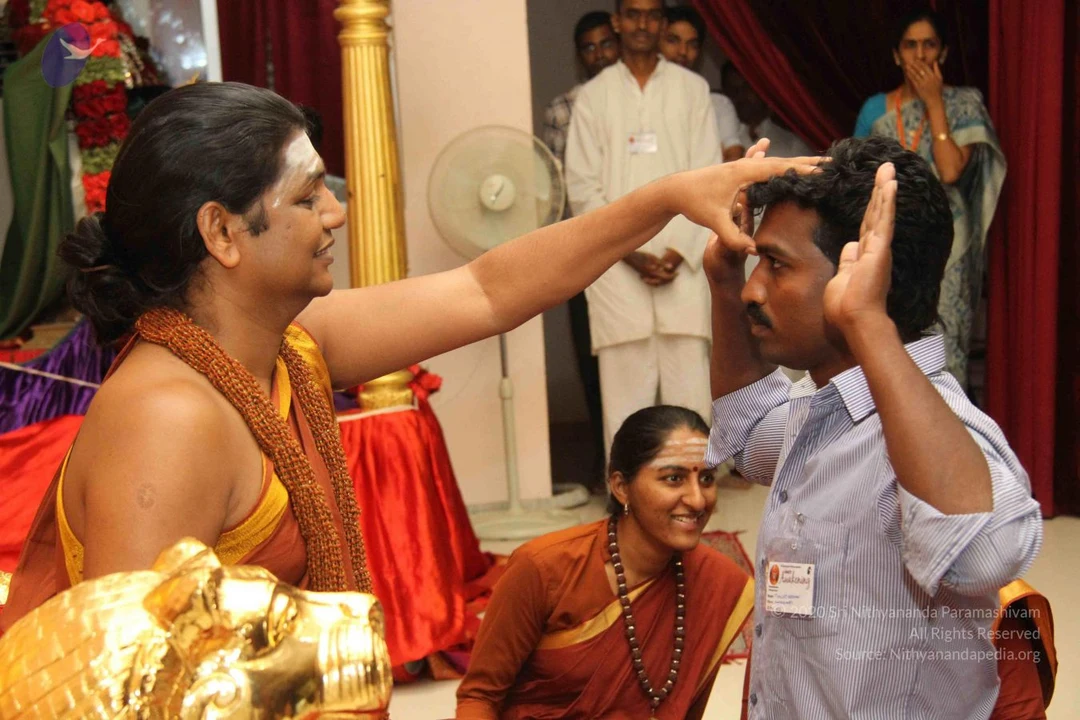
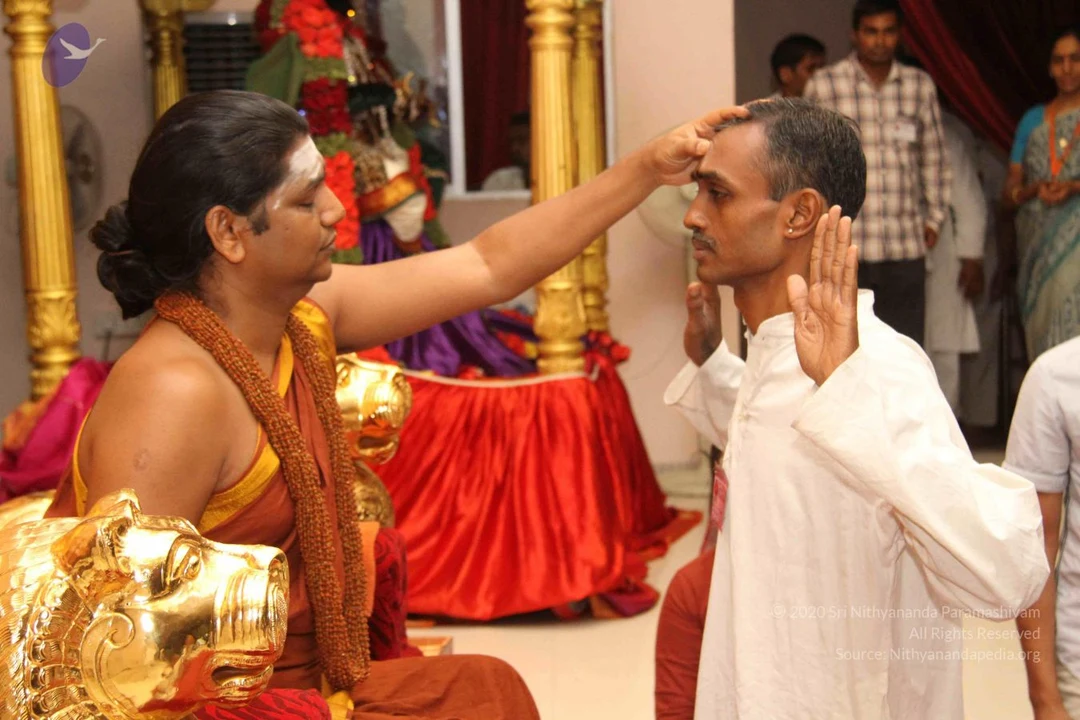
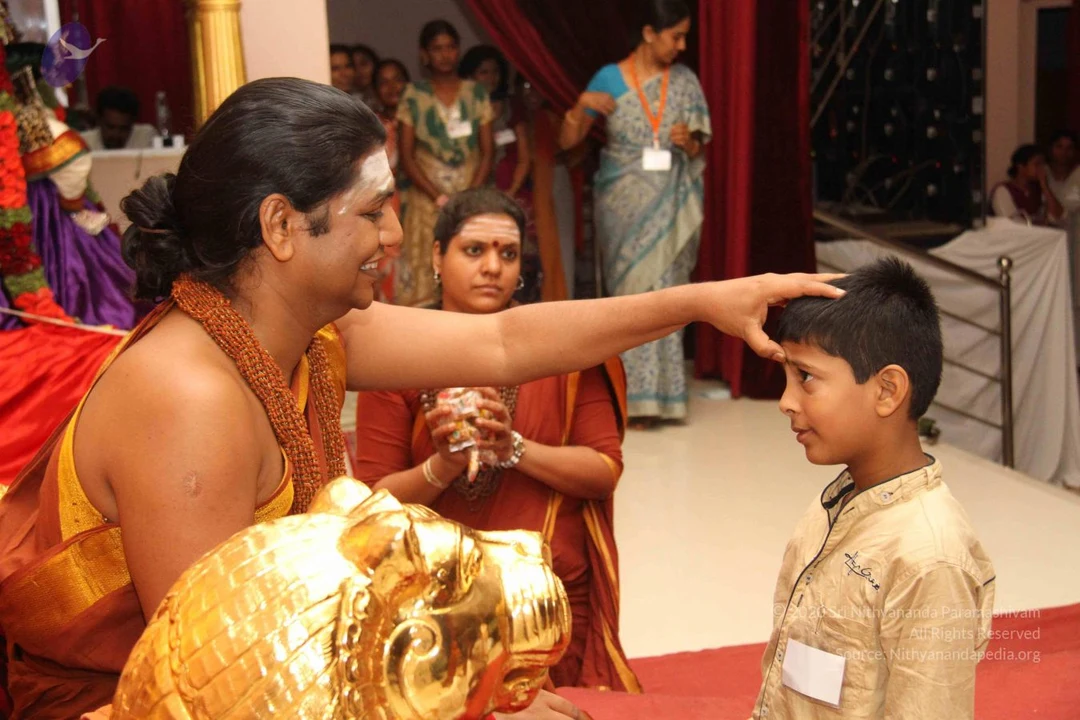
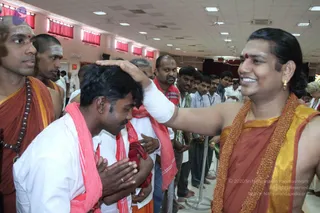
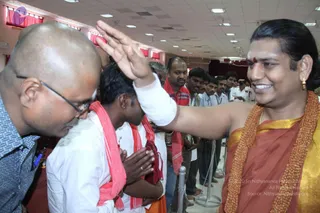
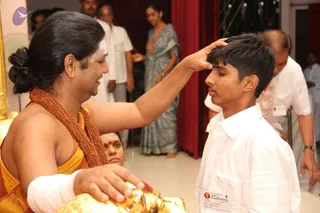
Indoor hall with a tiled ceiling and a raised stage backdrop of deep red curtains. On the right, a man in an orange-and-gold dhoti with a long orange shawl and a red-orange garland raises his hand in blessing over two men with folded hands and bowed heads. The men, one in a beige shirt with a white towel and one in white kurta, receive the blessing. On the left, a shaved-headed attendant in orange robes and a rudraksha mala stands nearby. Behind them, a gilded throne and a golden shrine hold deity murtis with garlands, and a camera on a tripod stands on the stage. A tiny screen on the left shows a colourful deity image. Printed text in the lower right reads a and the Nithyanandapedia sourceA man in a saffron-orange garment with a wide gold border and a long rudraksha mala, with a red bindi and gold earrings, smiles as he raises his right hand in blessing over the head of a bowing devotee in a white shirt and white trousers with hands folded in namaskar. Probable Swamiji in an appearance-based label: long swept-back hair, saffron clothing and rudraksha cues visible. Behind them are other men in saffron and white, a draped gold-and-green cloth, a golden throne with a deity image on a backdrop, and two large screens showing ceremony footage in a hall with a drop ceiling.A photograph in a hall with white ceiling tiles and red valances. On the right, a man with a shaved-sided dark hairstyle, a red bindi, gold earrings, a saffron-orange wrap with gold border and a long rudraksha mala raises his right hand, palm out, in greeting while smiling; his bare-chested dress and ornaments are distinctive, and the page names a person at this event, so he is a person candidate. To the left, a man in a white dhoti and a white shirt with a rudraksha mala stands beside another man in white shirt and dhoti, with a saffron-clad man behind them. A screen shows a figure seated before floral decorations, and a gold throne and deity murti stand at the back. Several people in white and saffron stand along a barrier line, with a woman in white on the right edge.A photograph in an indoor hall with white ceiling lights and red curtains. In the foreground, a man in a red-orange garment with a gold border and a long orange-beaded mala smiles while placing his hand on the head of an older man in white dress who bows forward. The standing man wears a red bindi and gold earrings. Behind them, men and women in white ritual clothes stand in the hall, and a deity altar with gold decoration and a screen showing a colourful image appear in the background. a person (appearance-based label): the standing figure in saffron-orange with an orange mala and gold-bordered garment, shown blessing a bowing devotee.A photograph of a long hall with red-framed windows and a row of attendees standing behind metal barriers. In the foreground, a man in a saffron-orange and gold shawl with a long rudraksha mala and gold earrings, long swept-back black hair and a red bindi, smiles while placing his hand on the head of a bowing man in white clothes with a red shawl, hands folded in namaskar. Two men in saffron robes with rudraksha malas stand at left, and several men in white shirts and red-and-white shawls watch in the background. Probable Swamiji is the figure in orange and gold with long swept-back hair, a bindi and rudraksha mala, giving blessing; he appears in person.Indoor photo of a blessing moment in a hall with red curtains and ceiling lights. A smiling man in an orange-brown robe with a gold-bordered yellow shawl, a rudraksha mala and gold earring stands at right, one arm raised with a palm extended toward a bald, bespectacled man in a blue-grey shirt who leans forward with bowed head. Beside them, a man in white with a red shawl stands with hands folded in namaste, and a few more men in white and red shawls stand in a queue behind a metal barrier. a person is the man at right, identified by the rudraksha mala, ceremonial gold ornaments and saffron-gold robe; he is giving a blessing gesture.

IA-Darshan

63 photosSource gallery
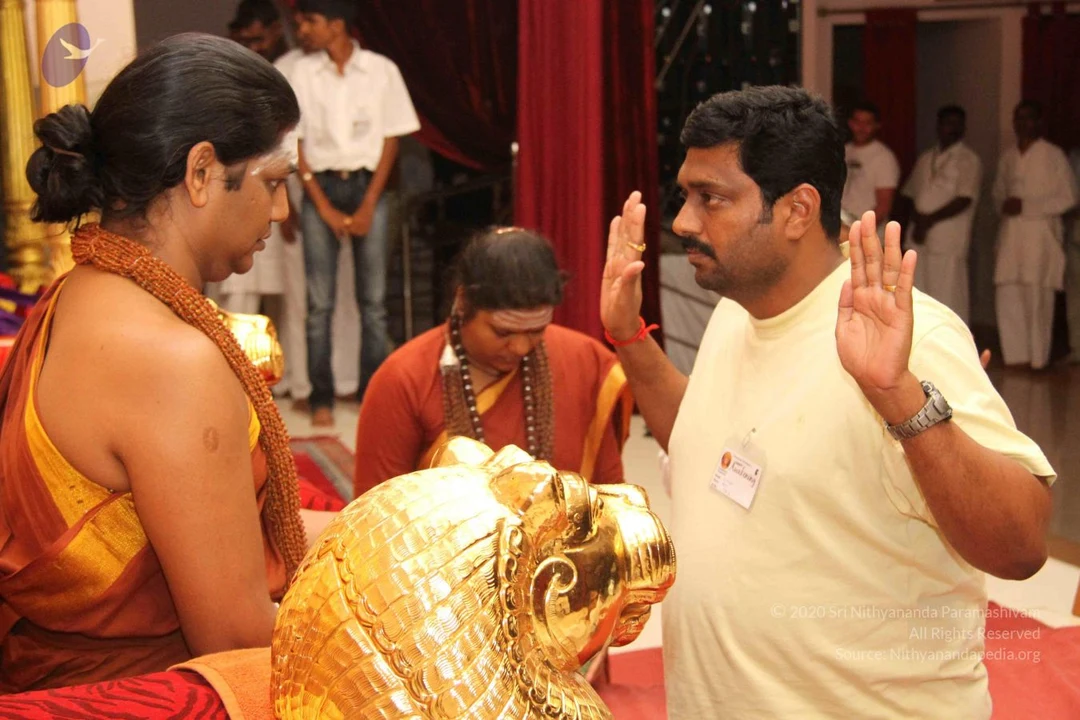
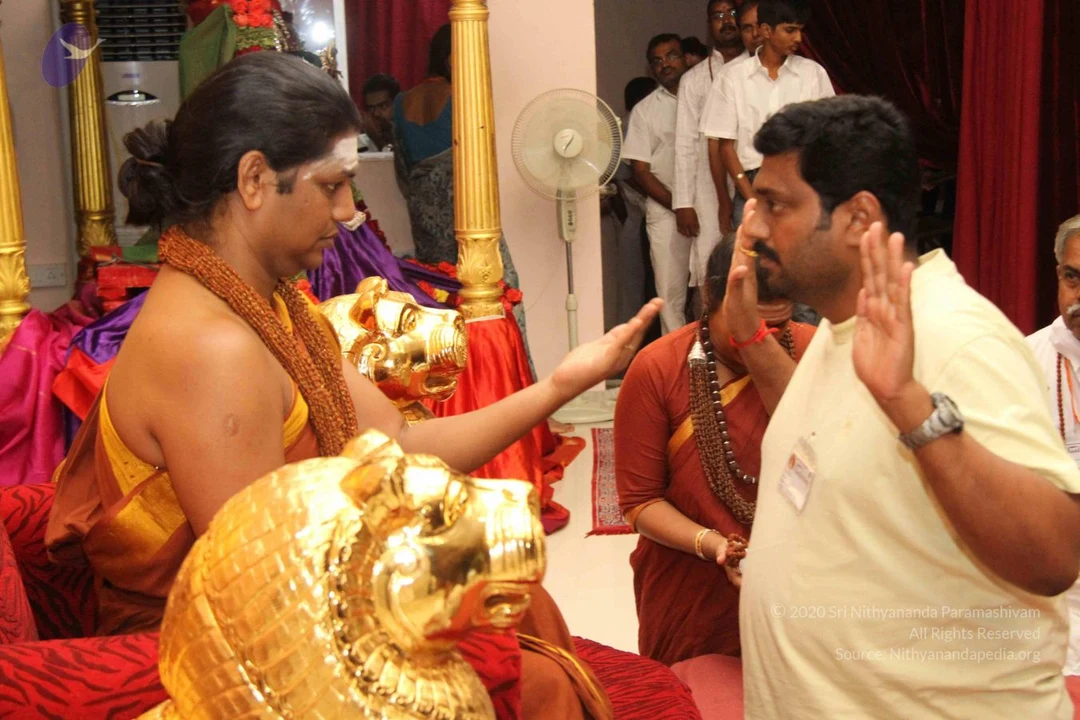
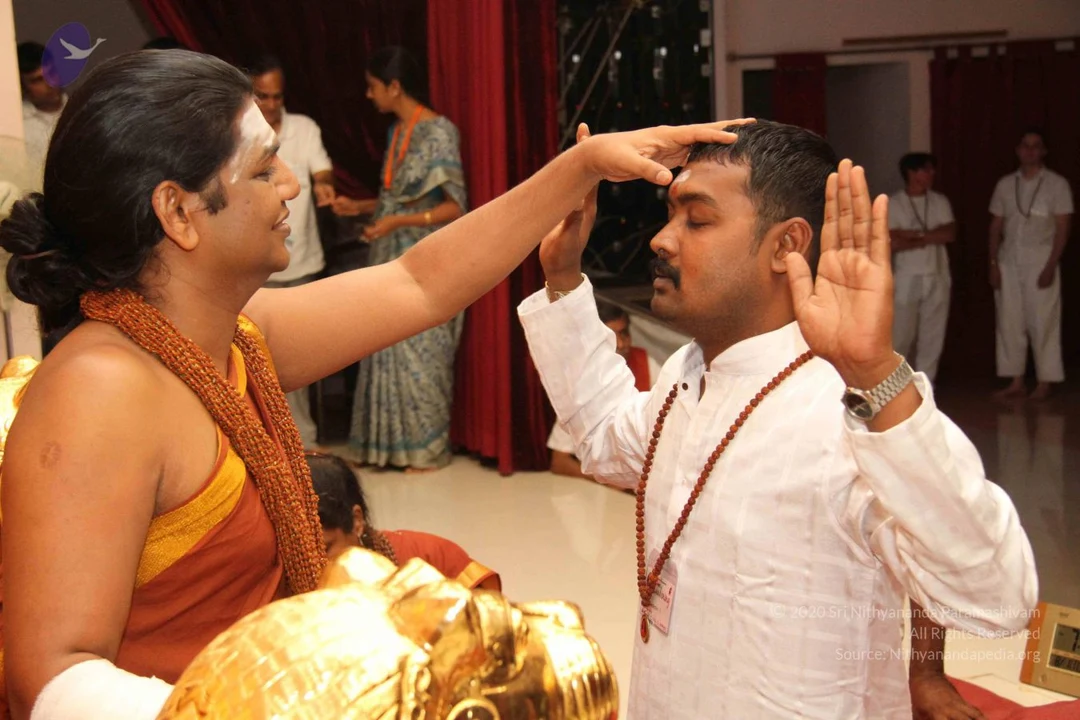
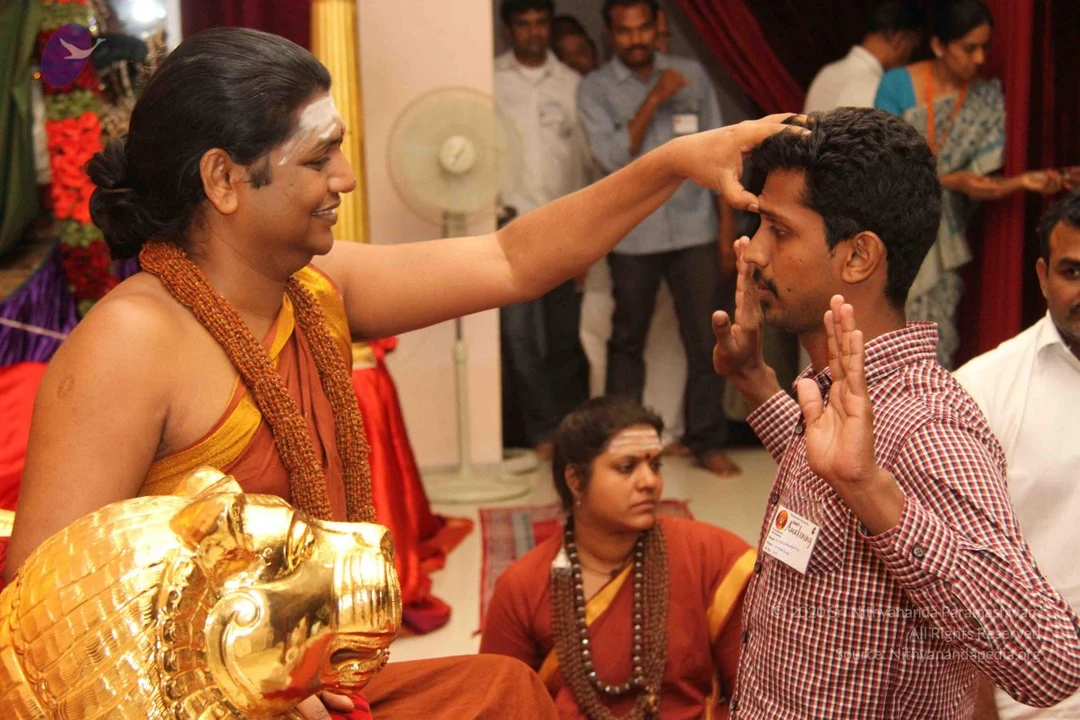
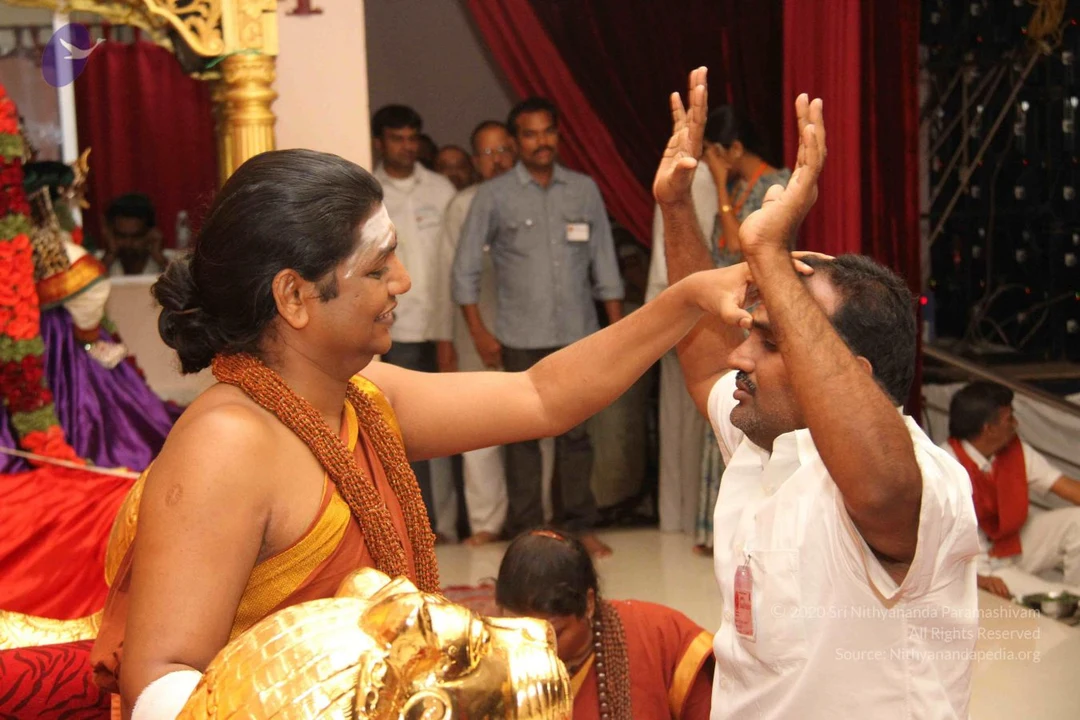
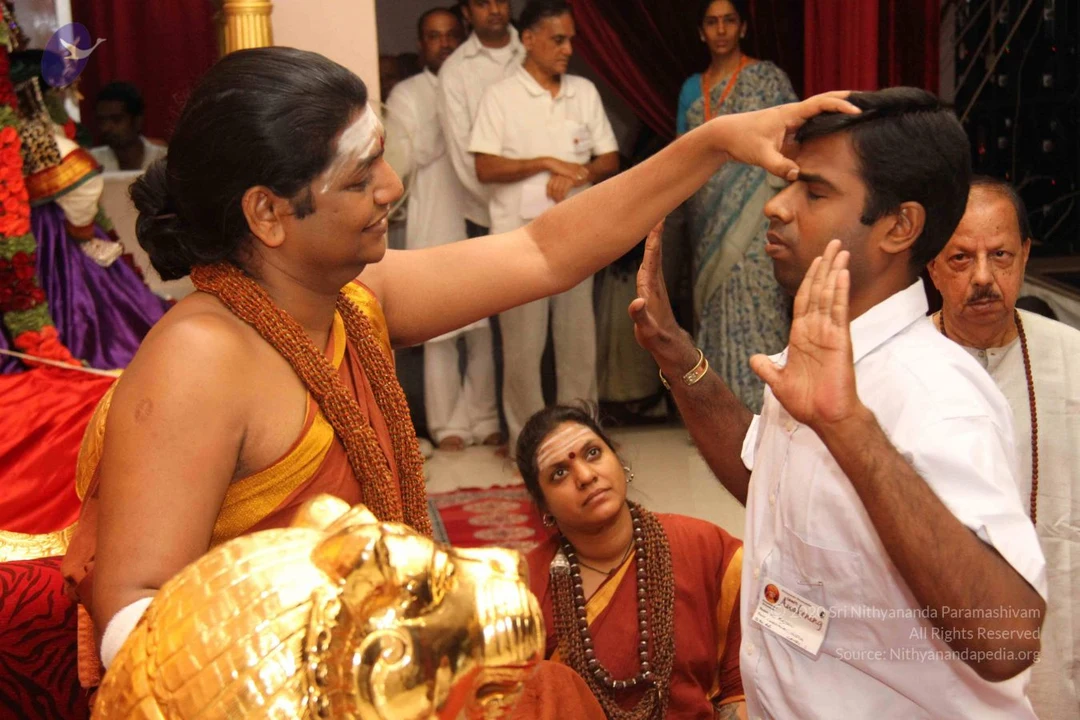
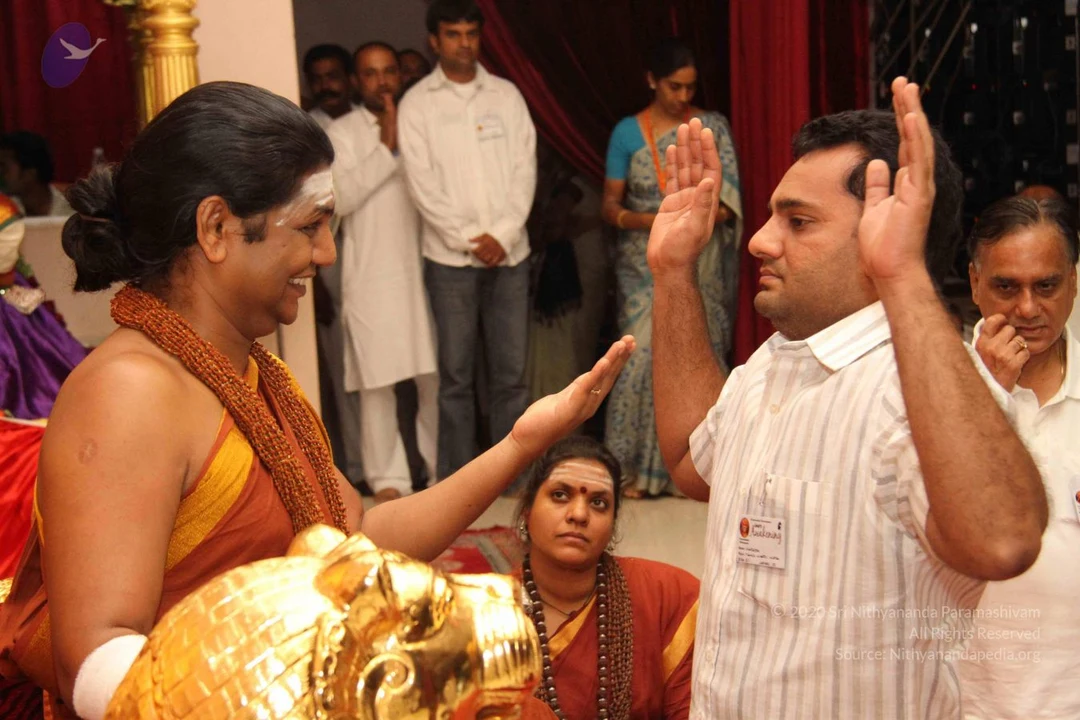
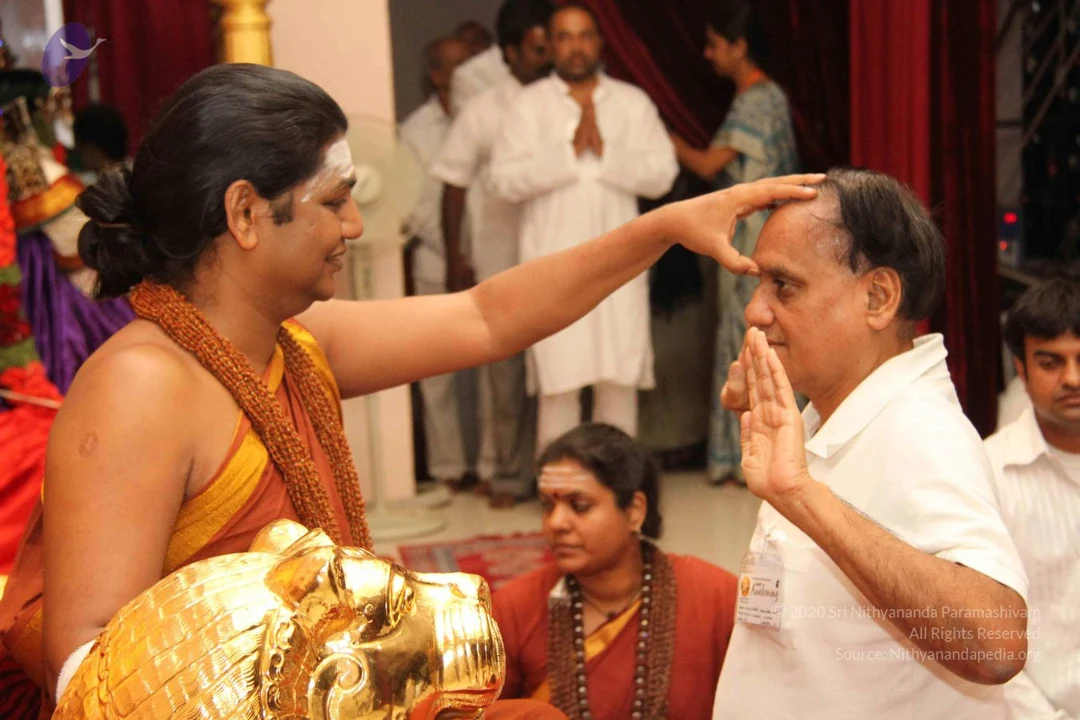
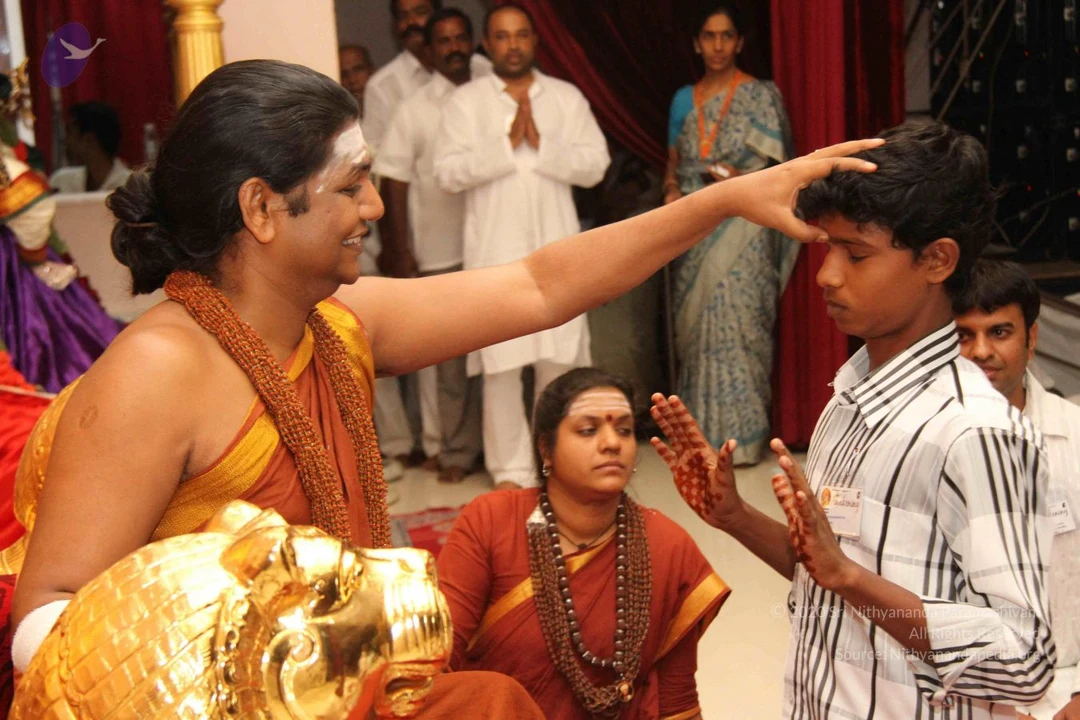
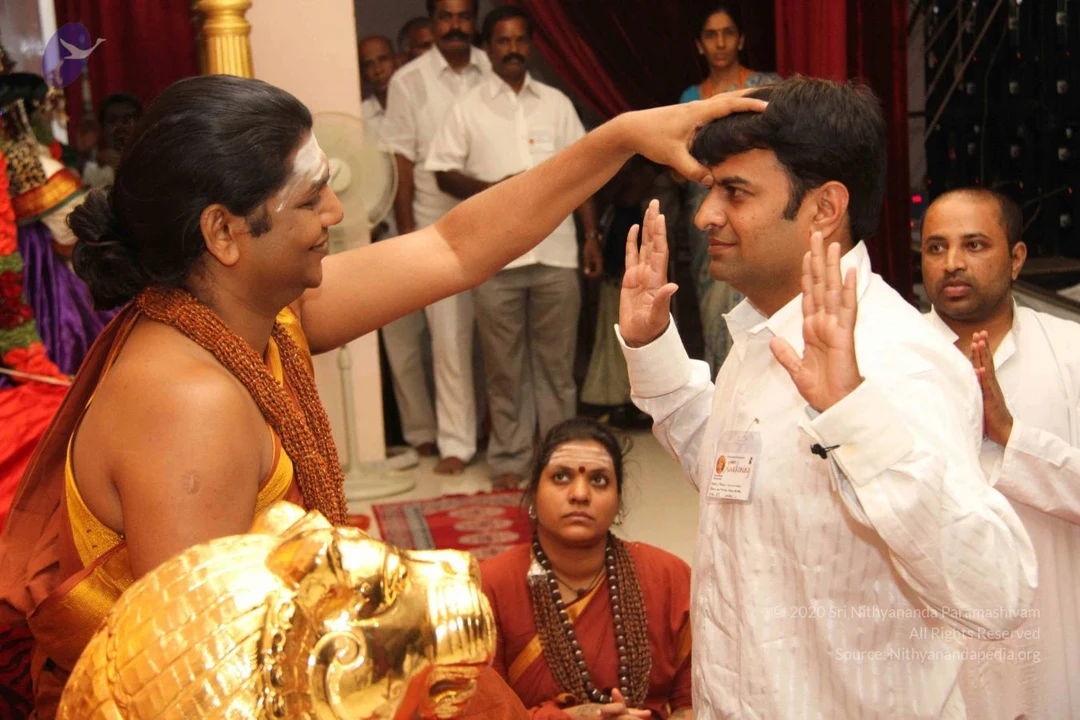
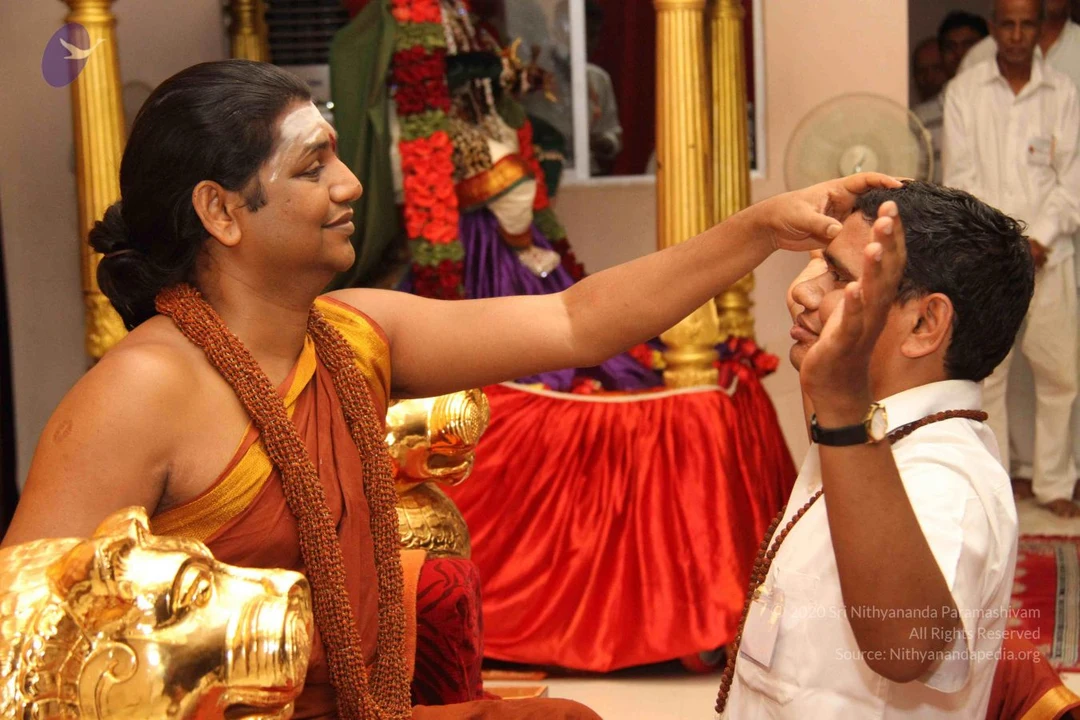
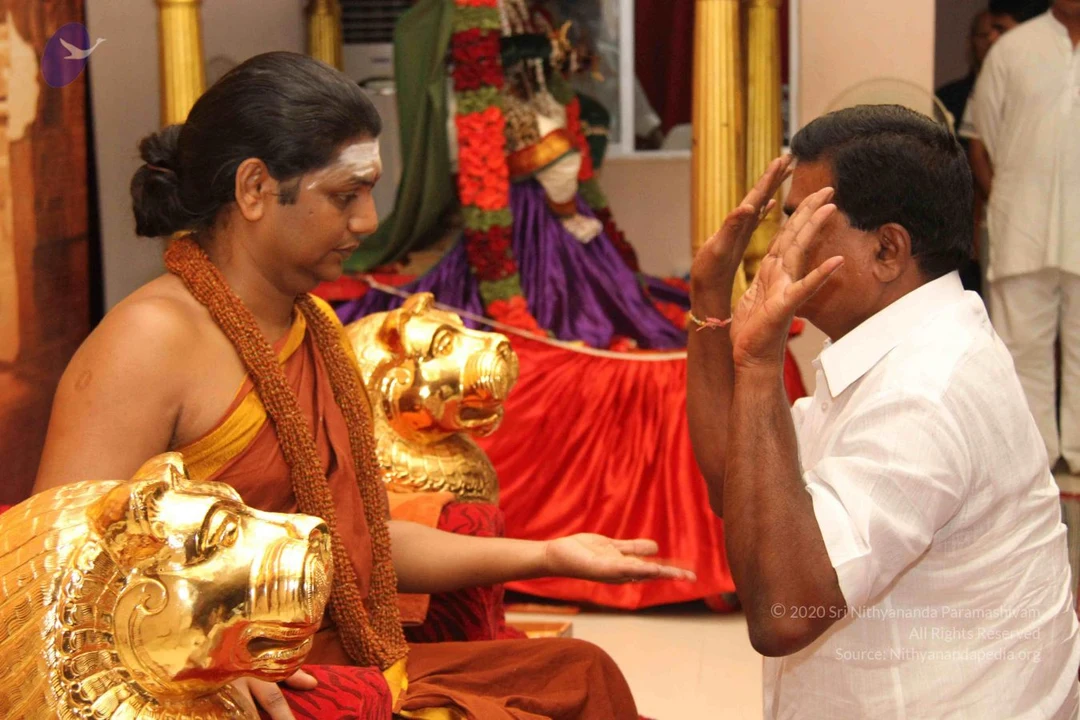
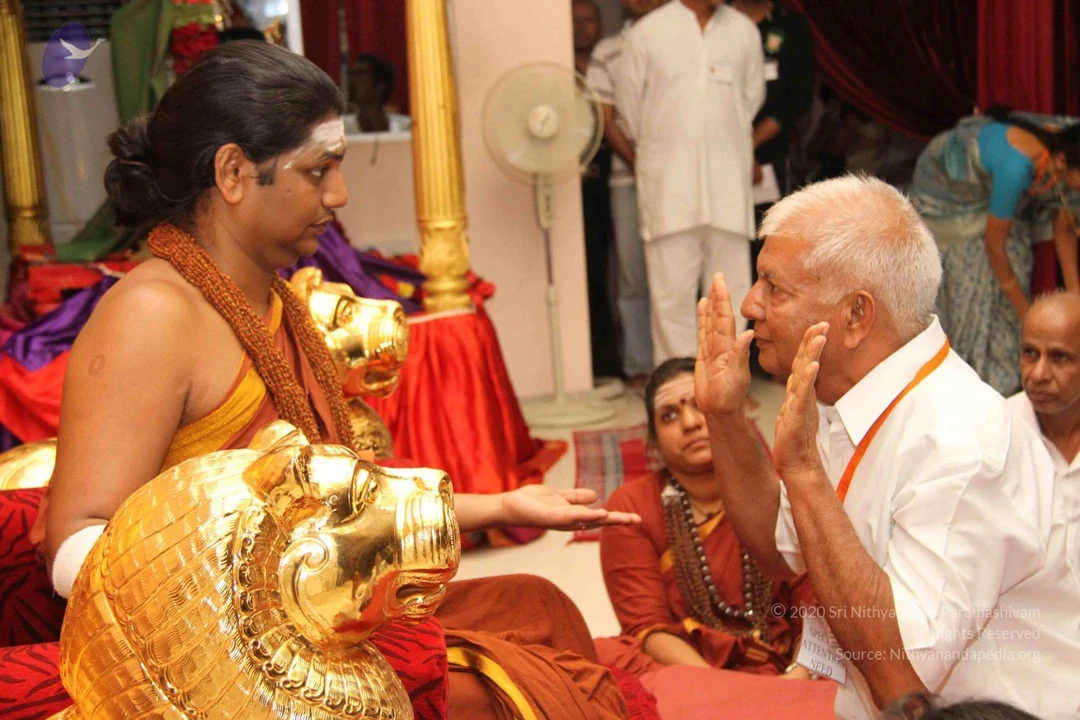
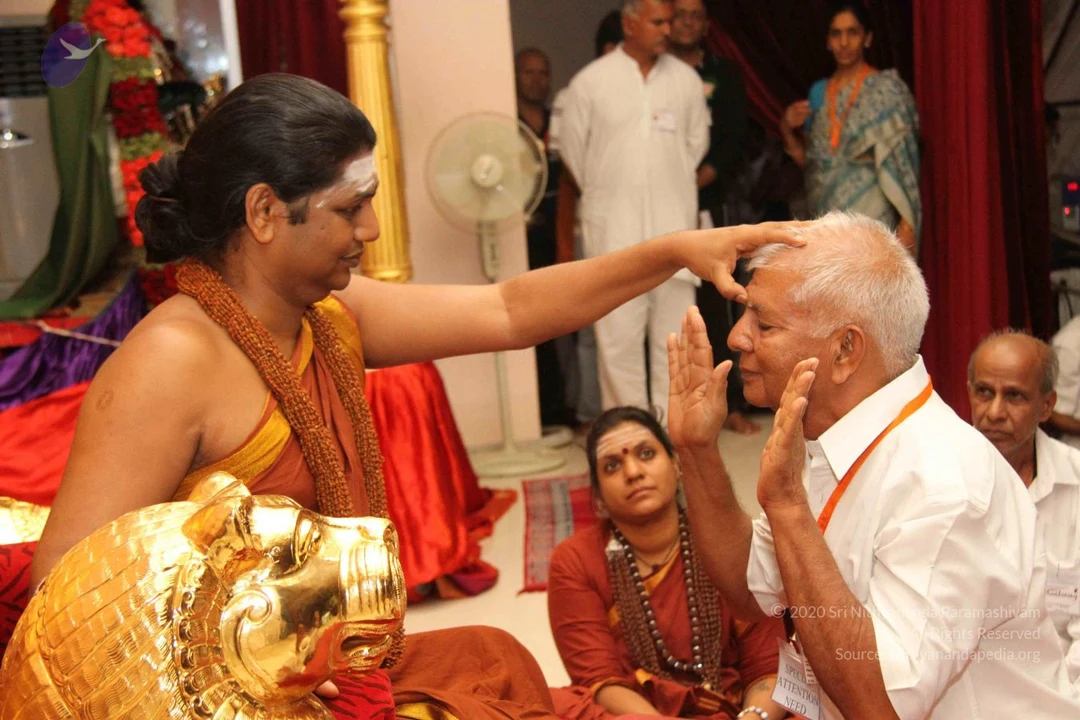
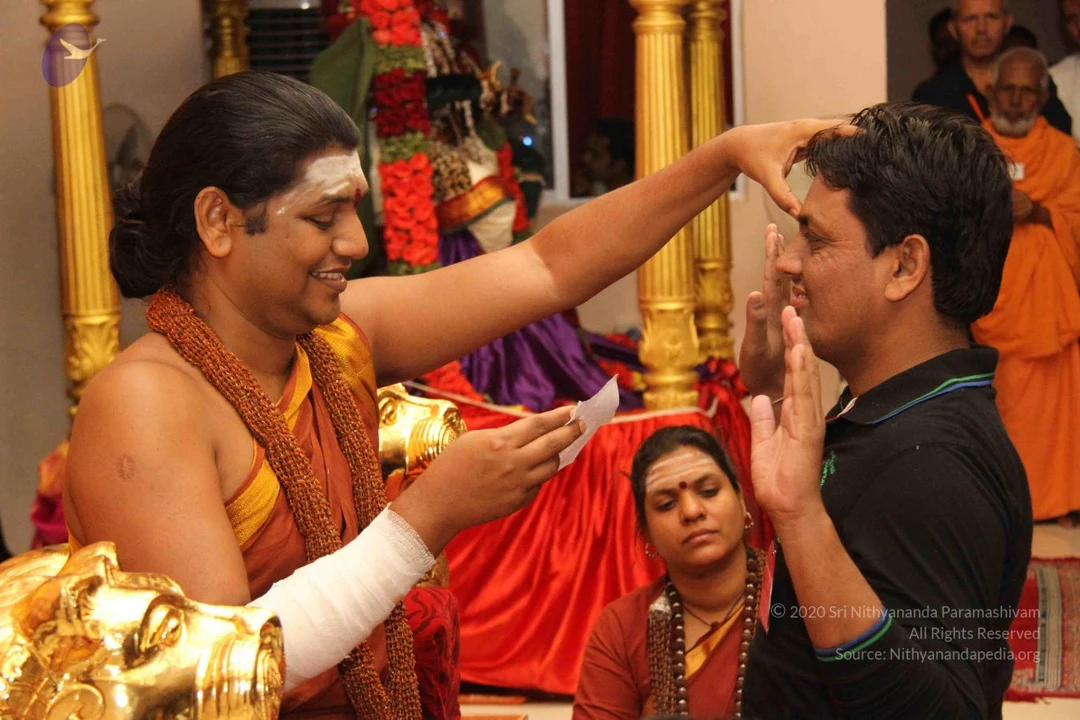
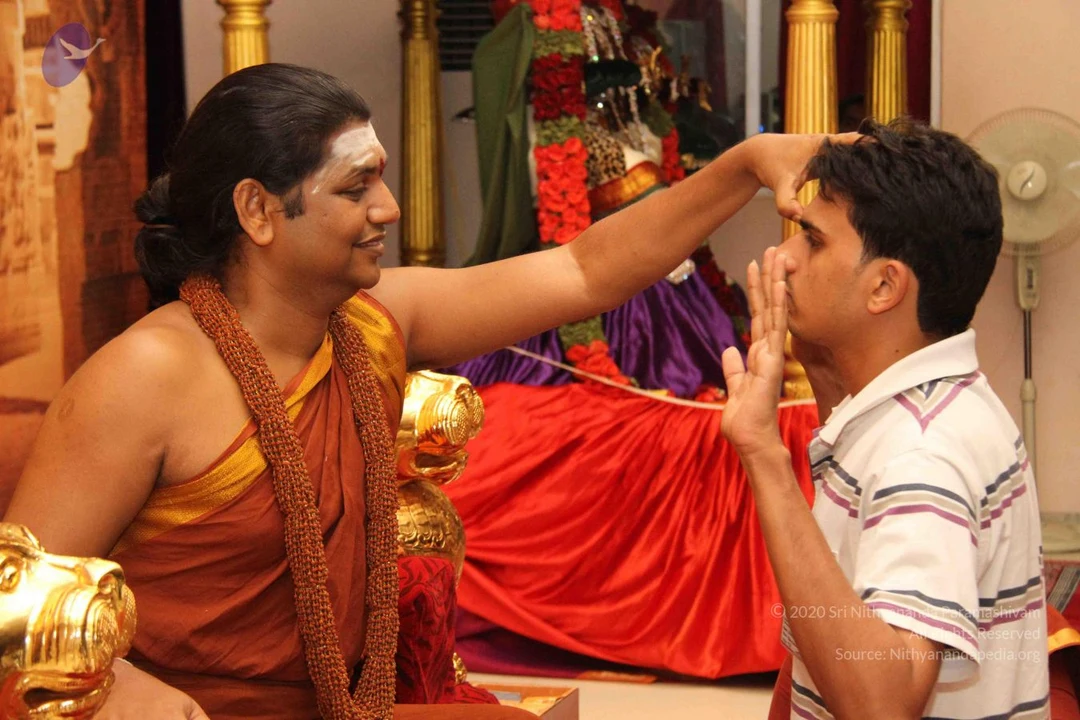
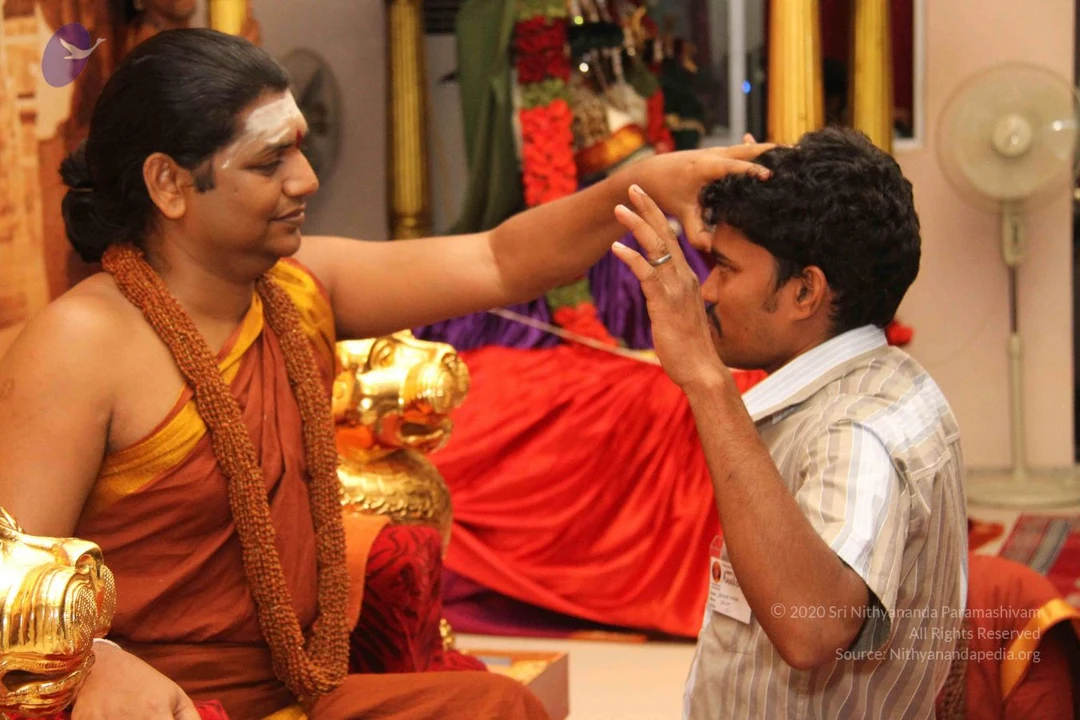
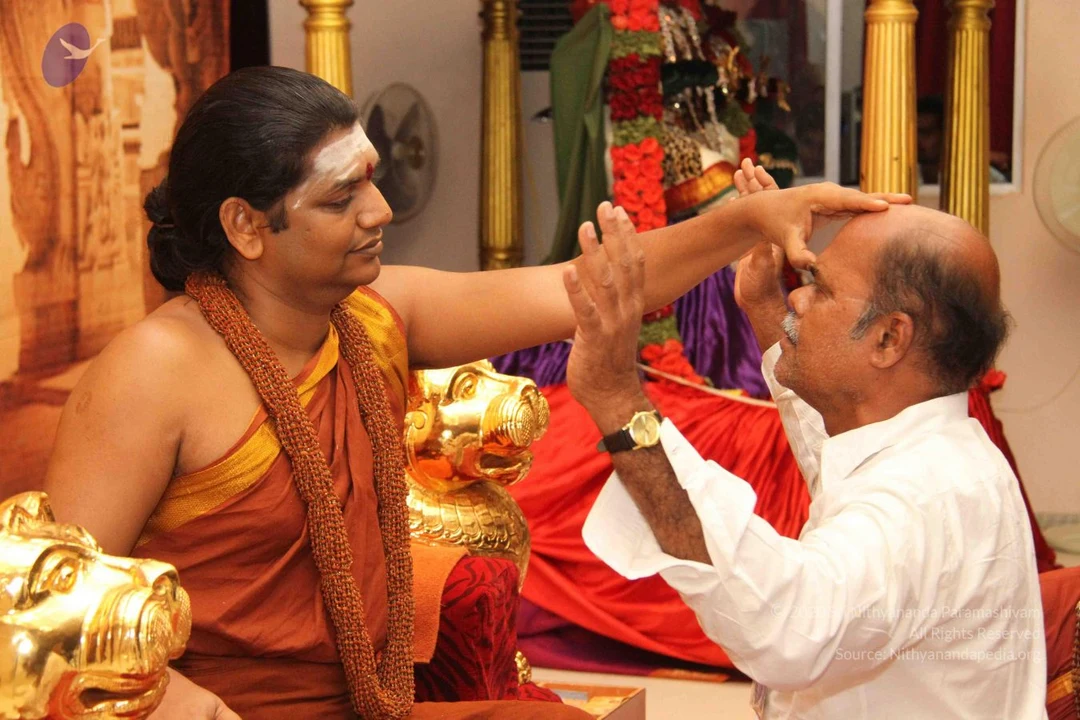
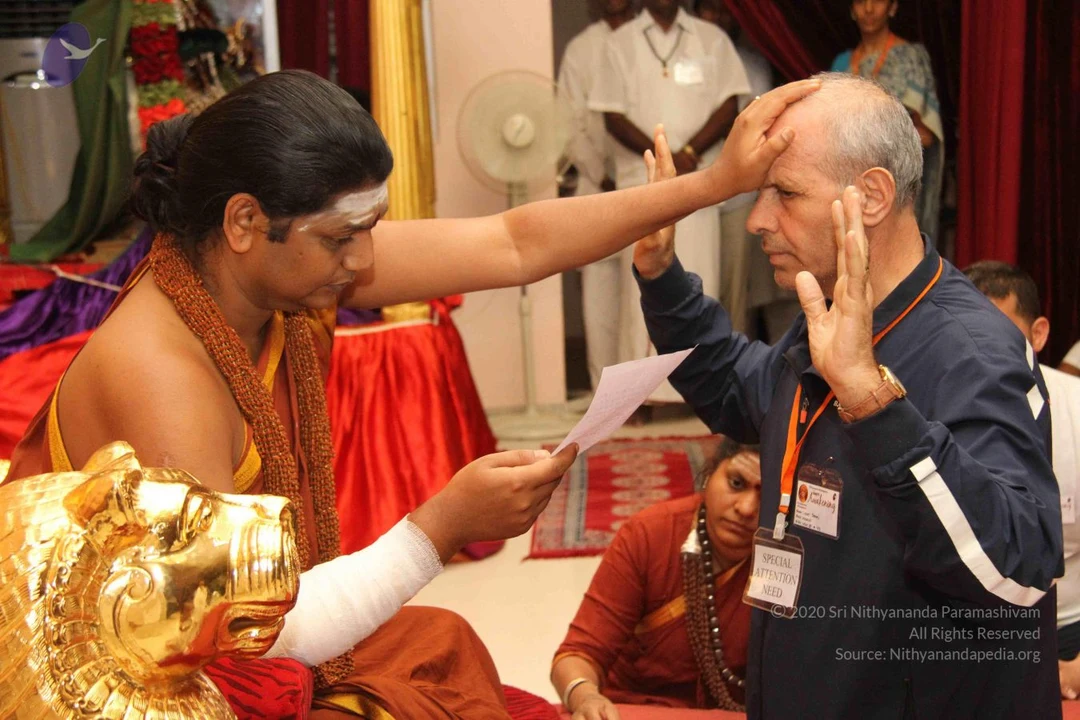
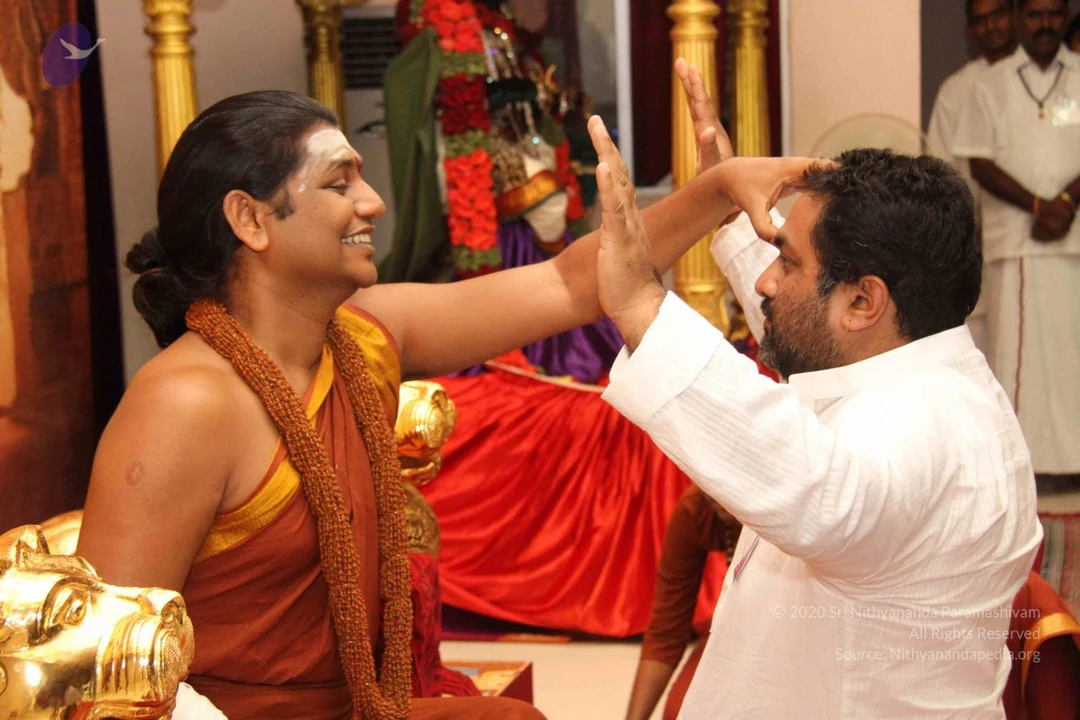
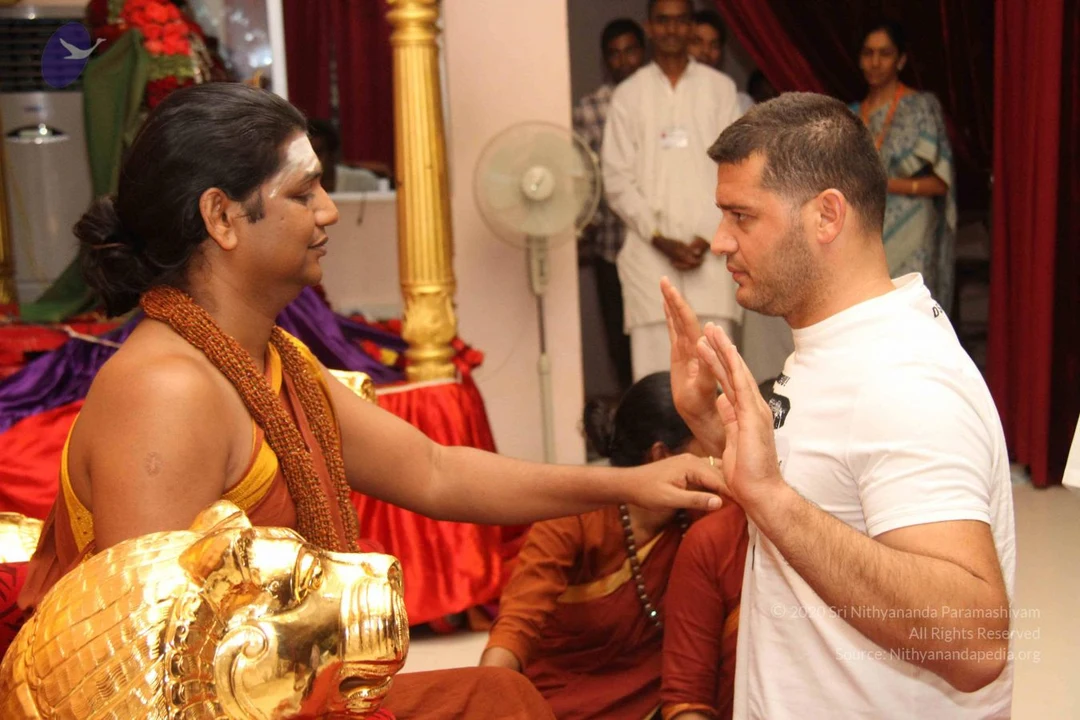
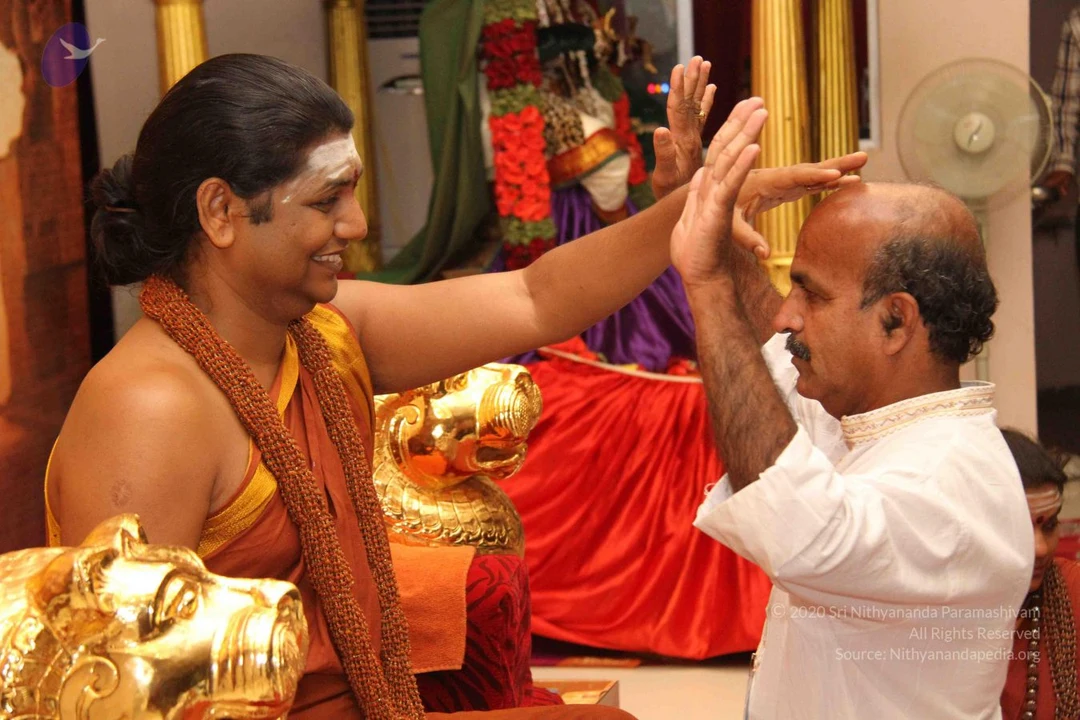
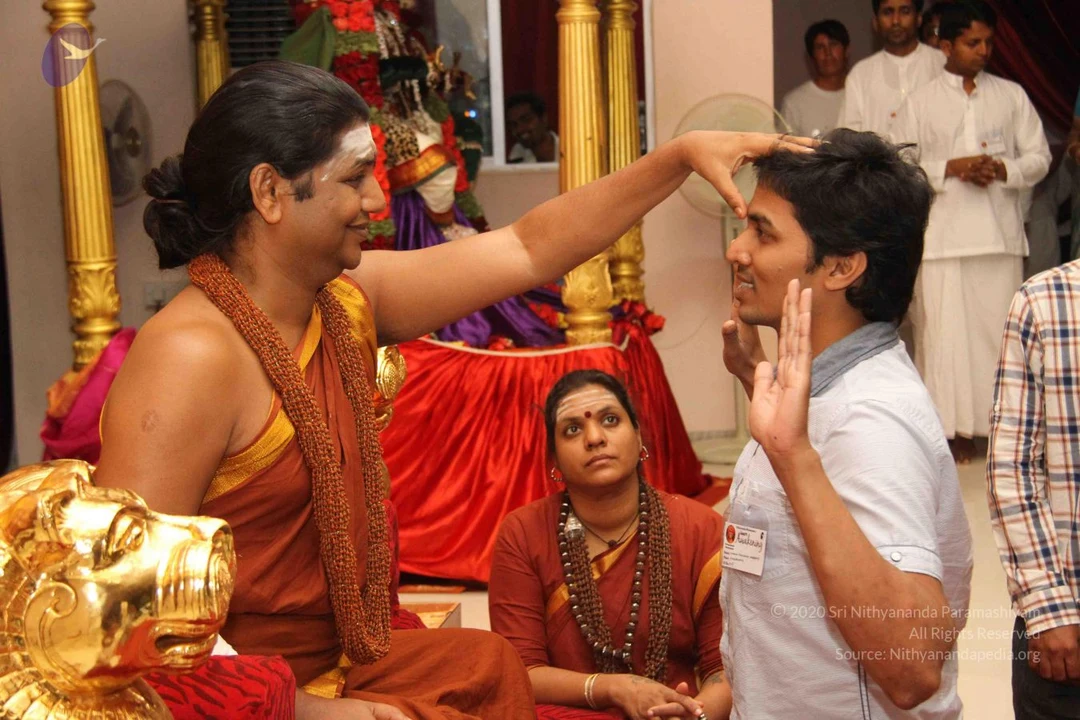
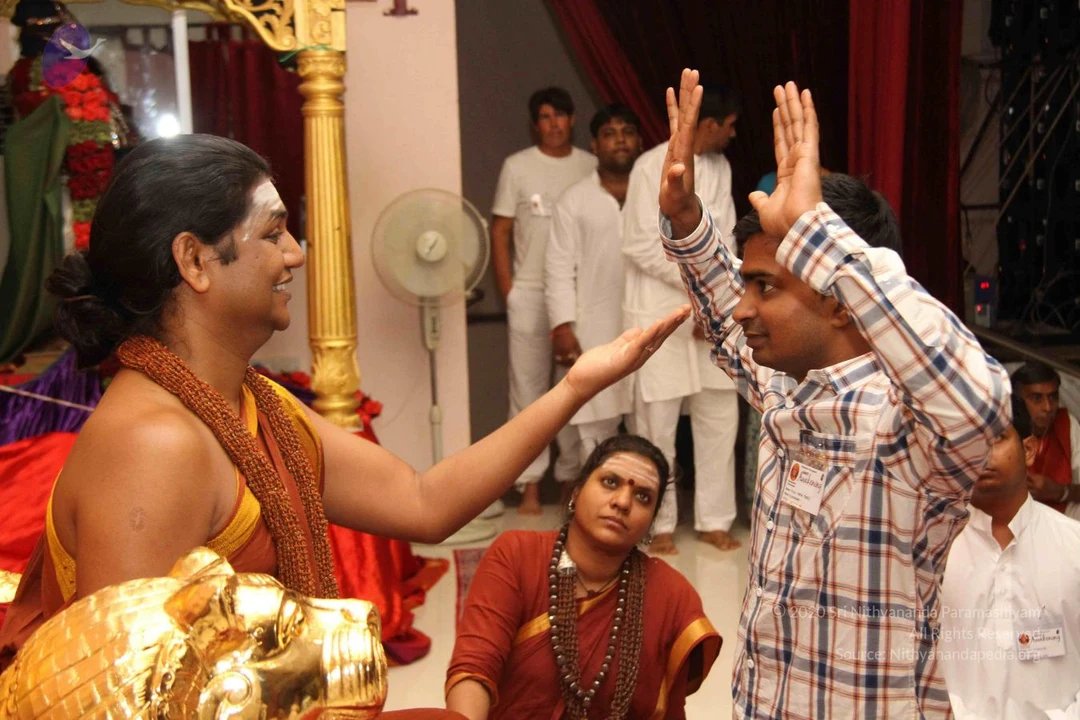
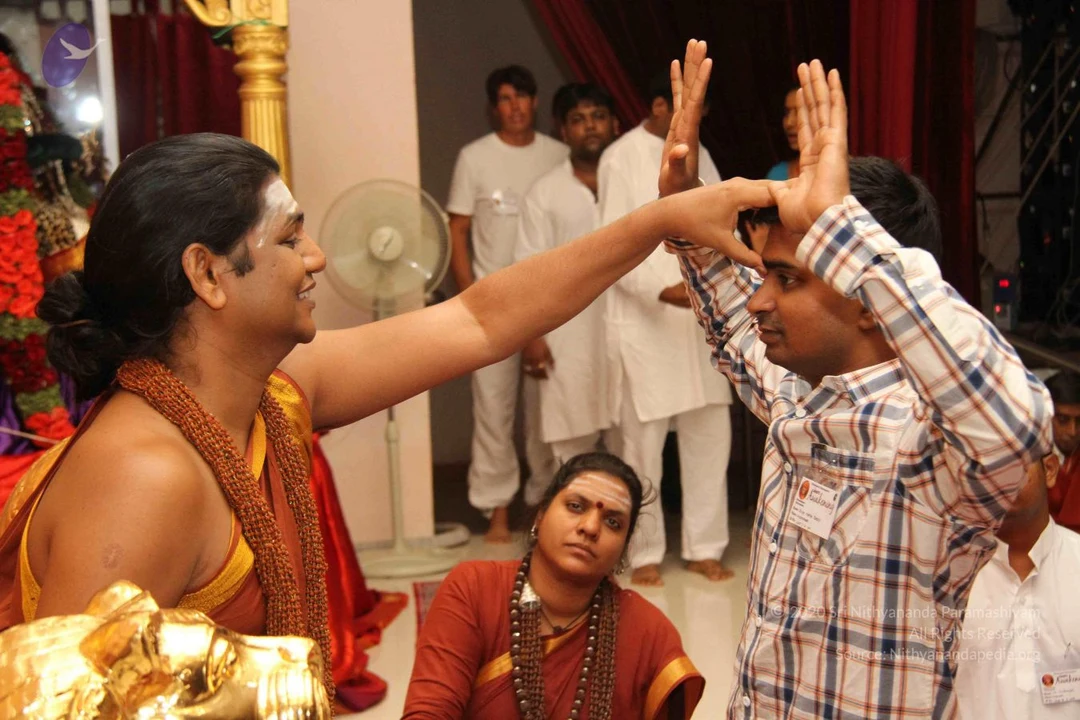
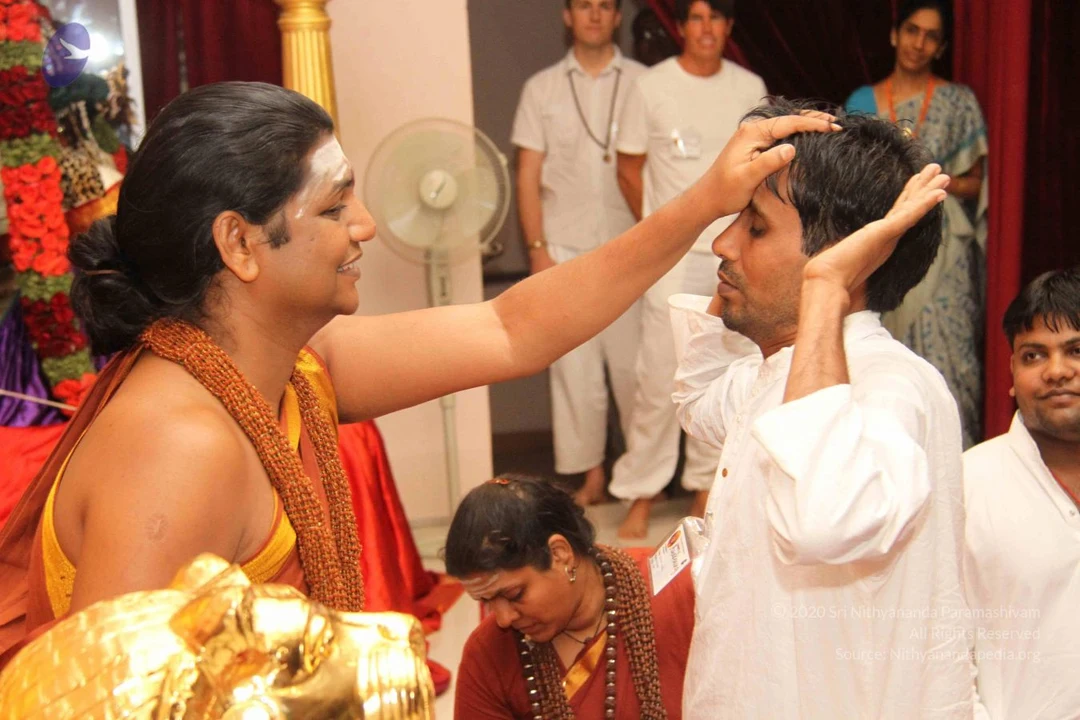
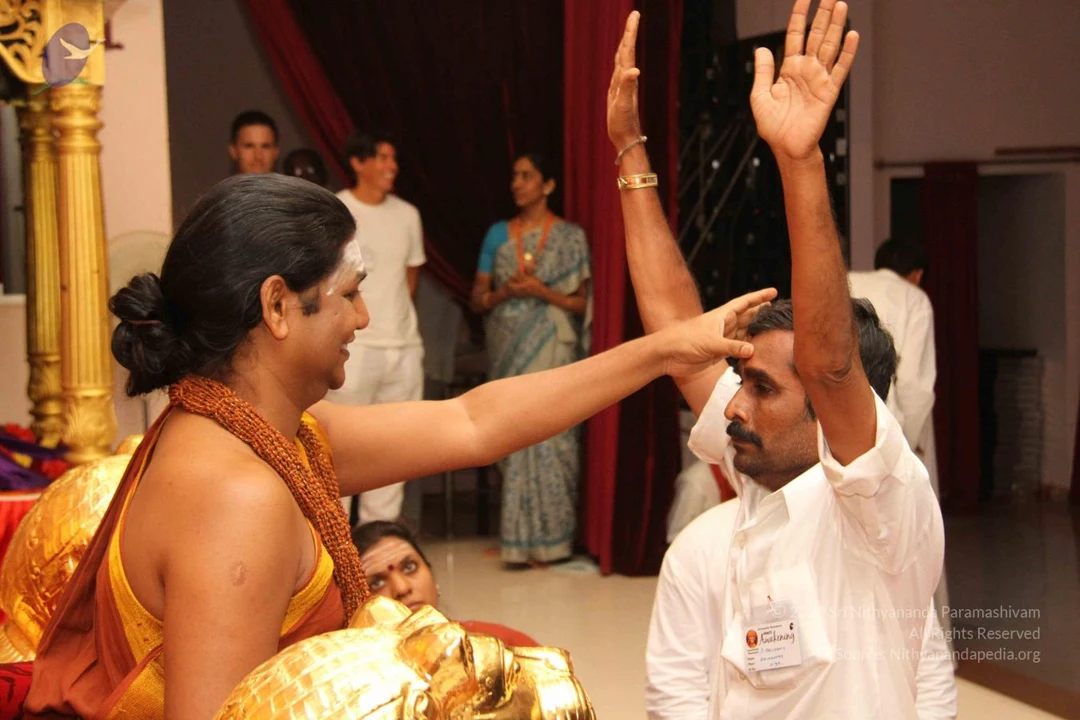
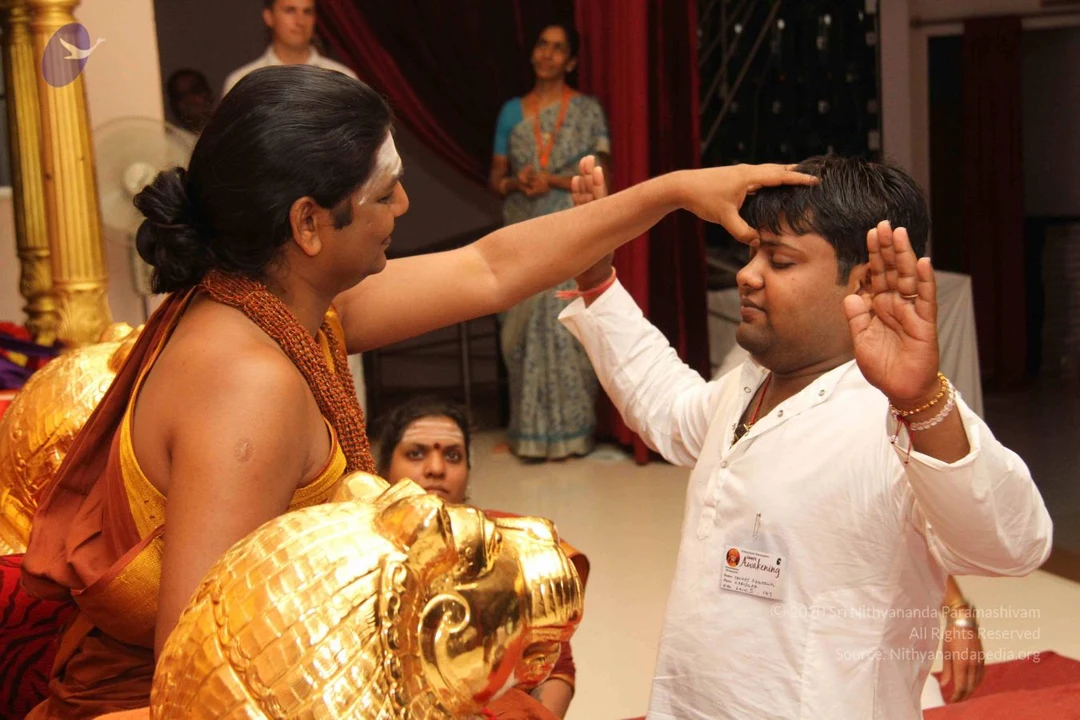
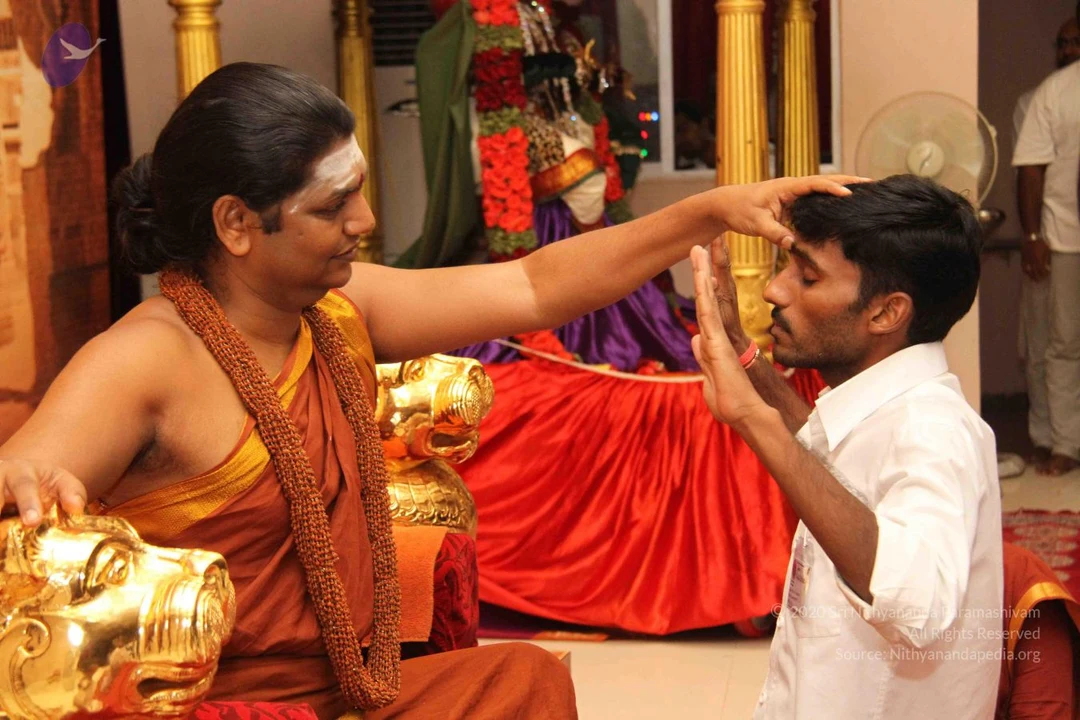
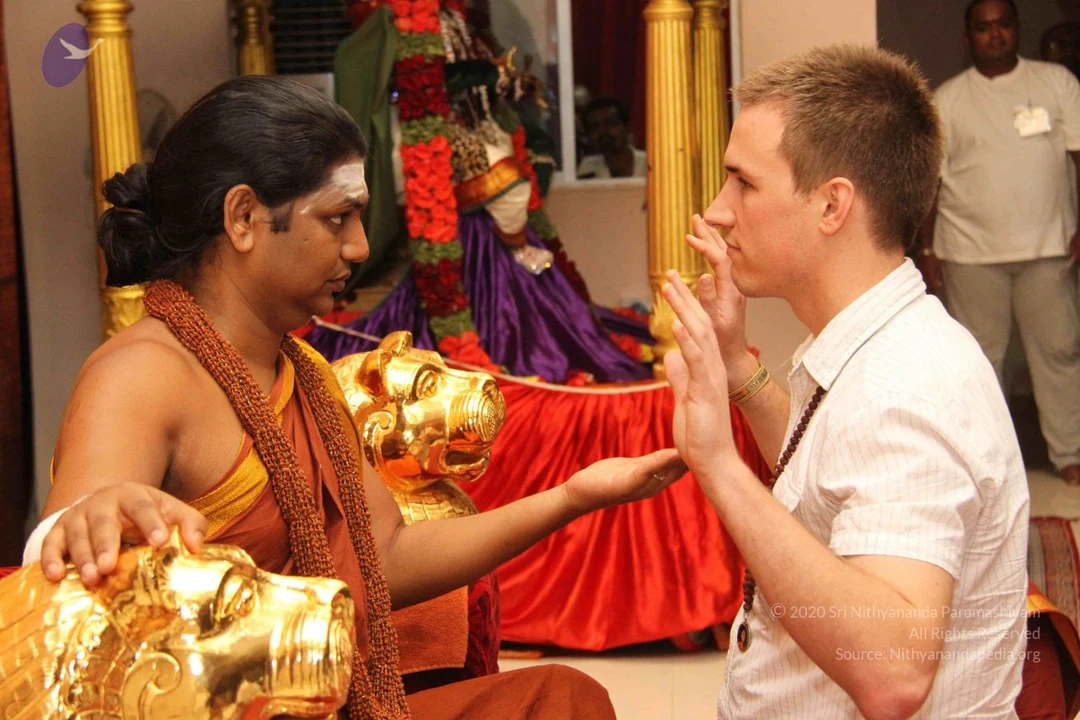
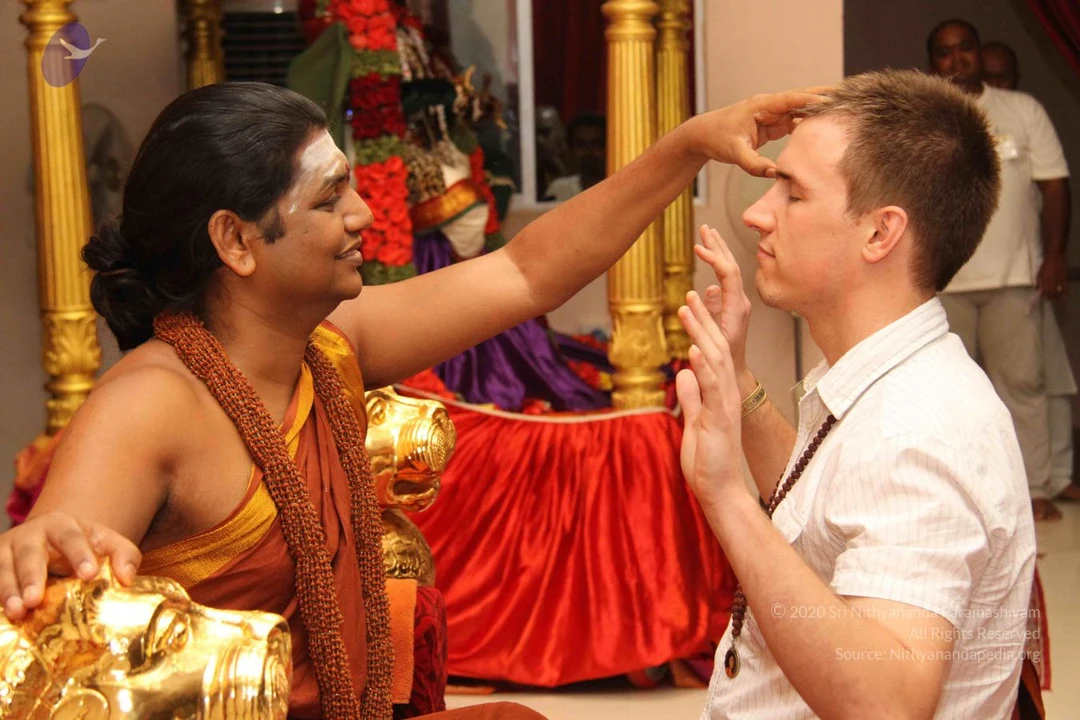
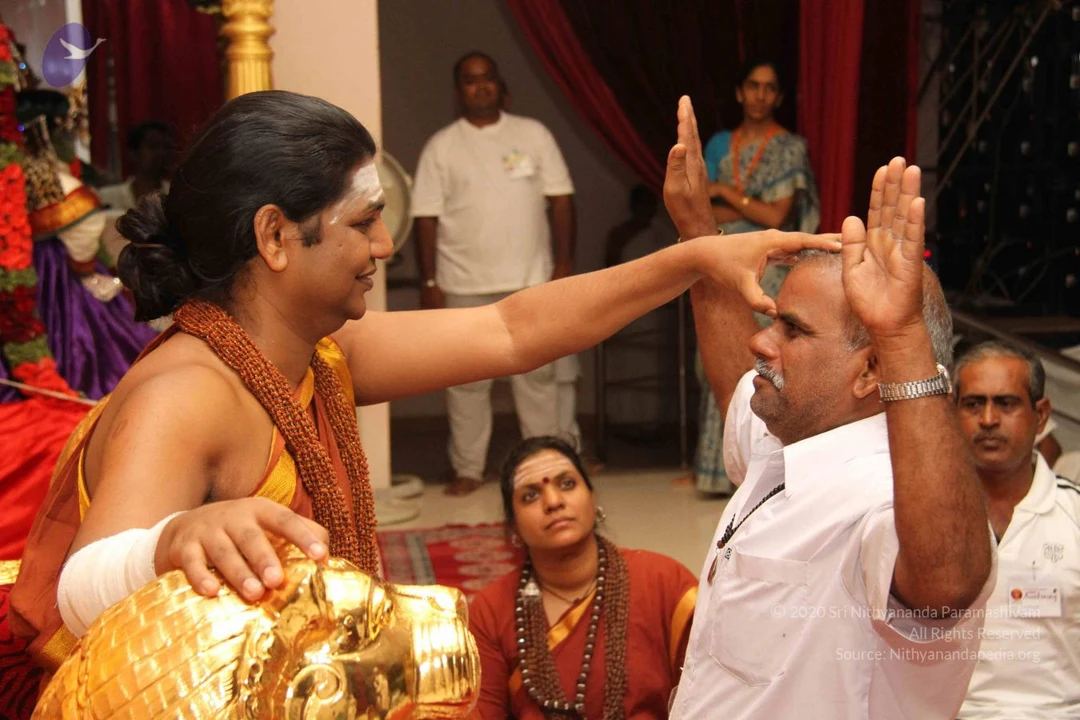
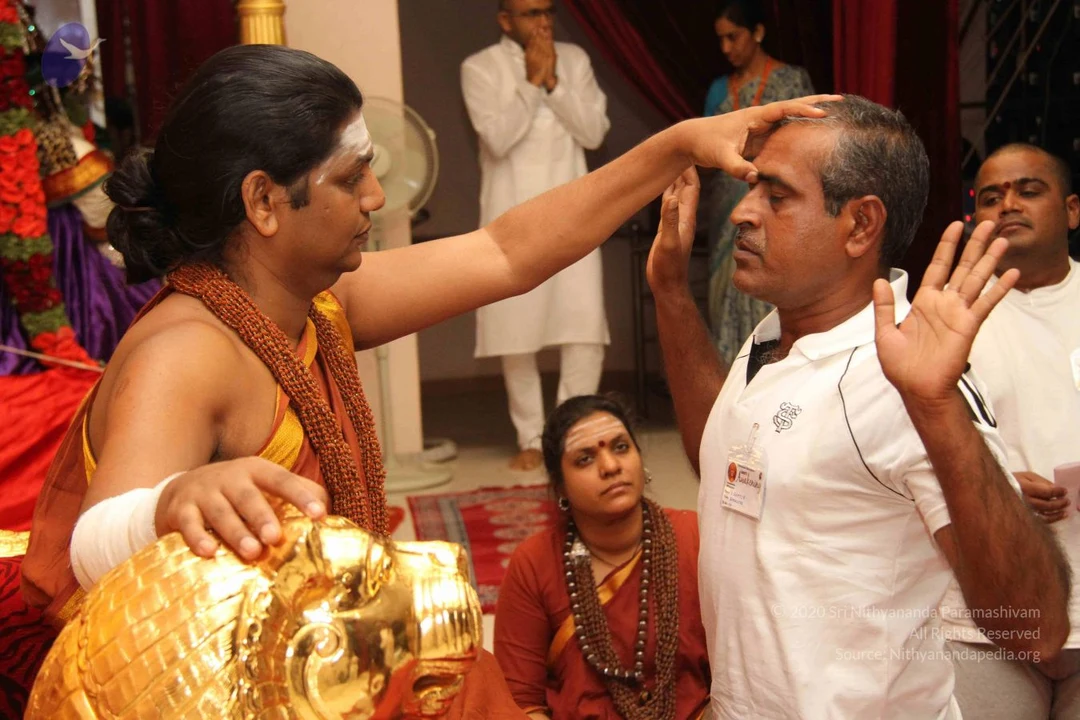
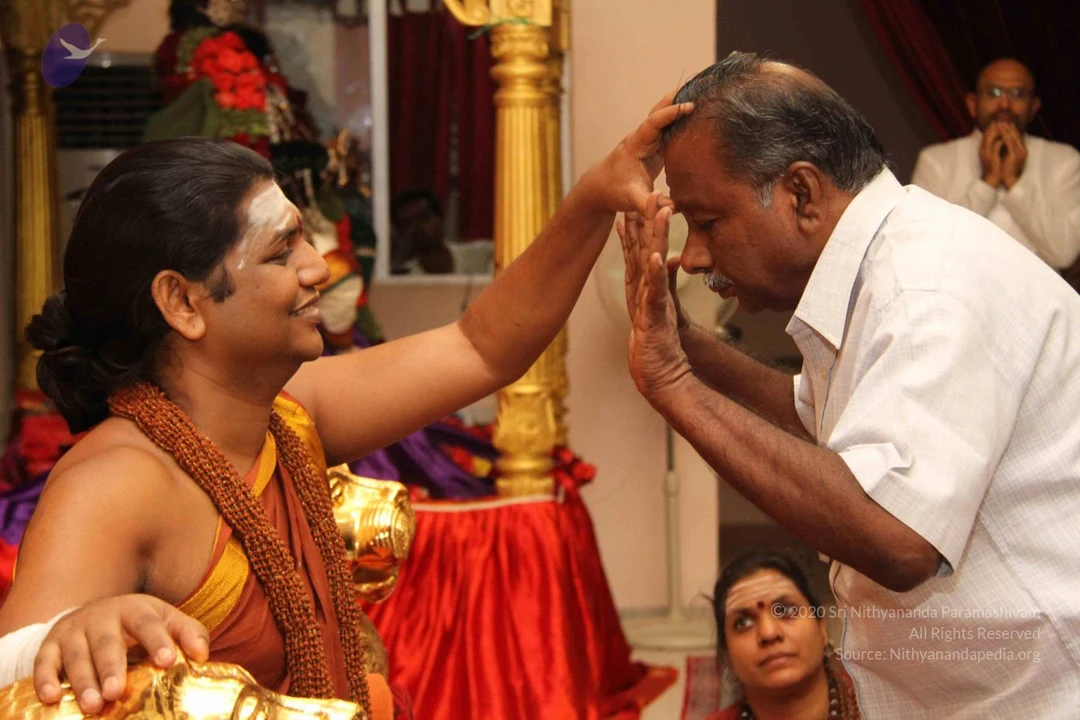
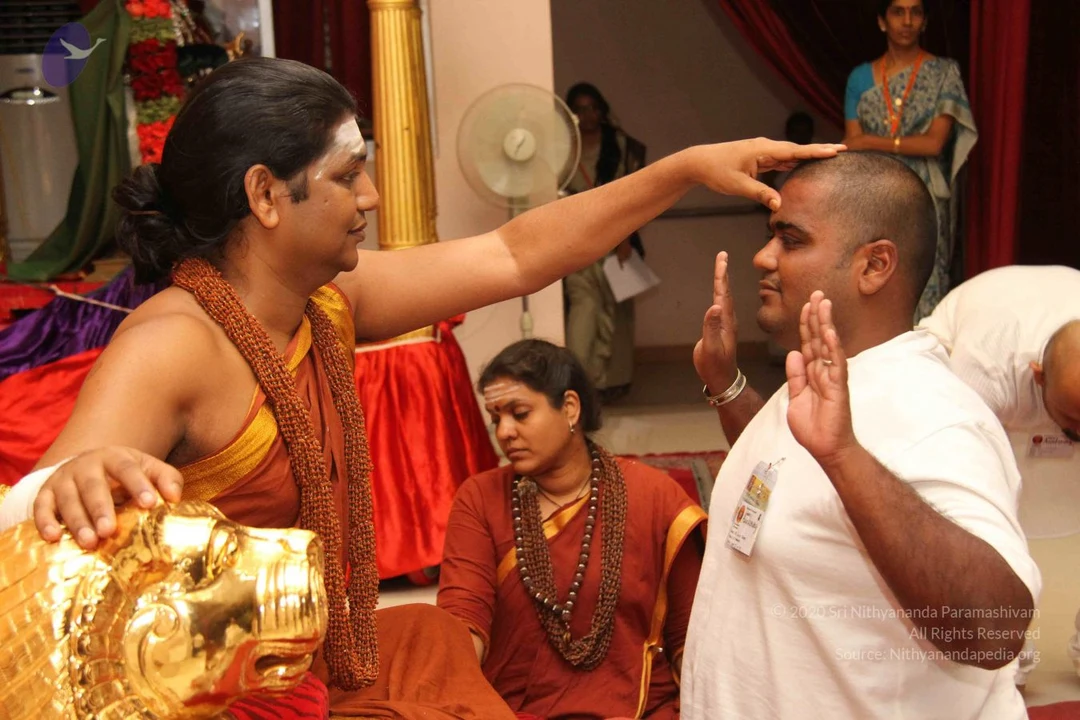
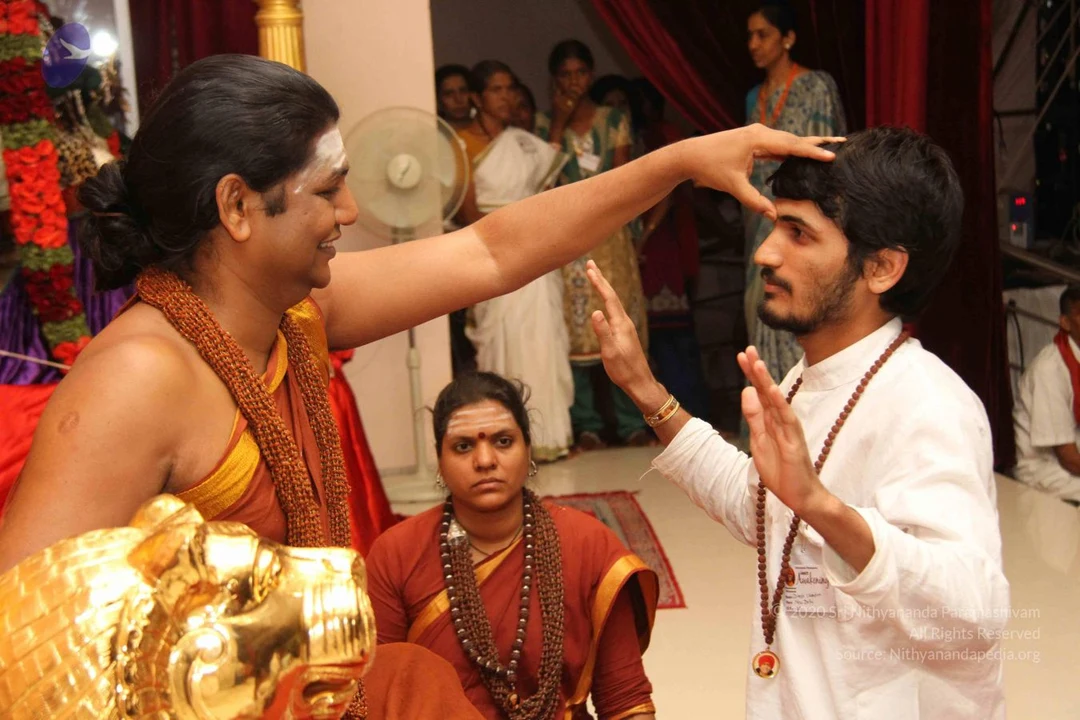
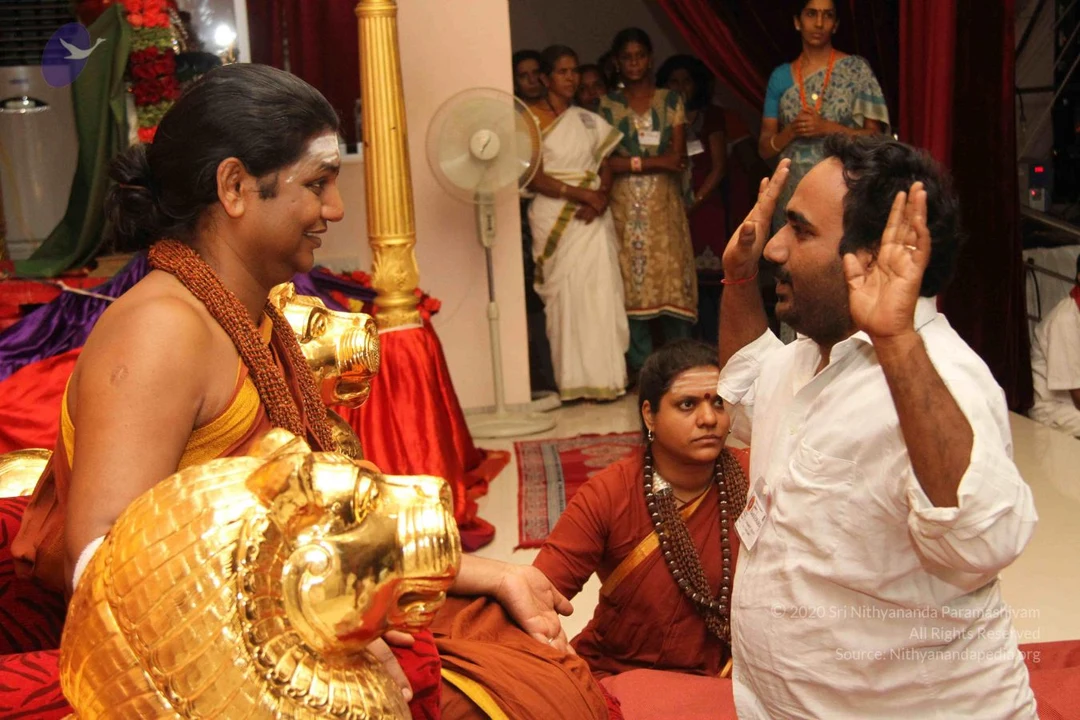
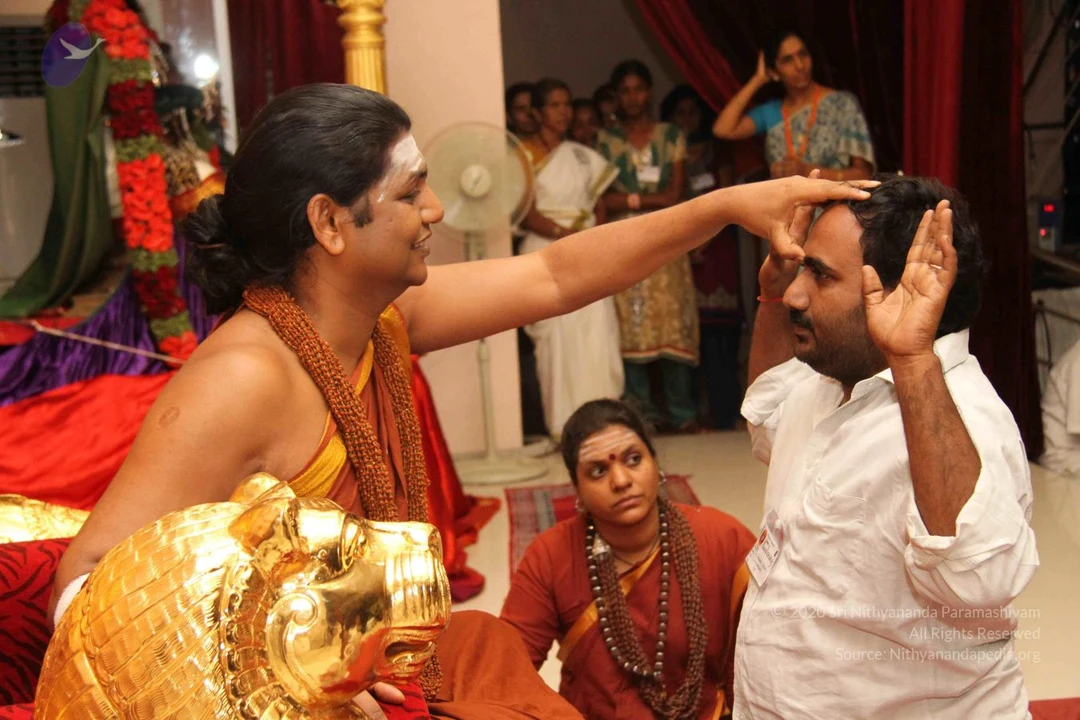
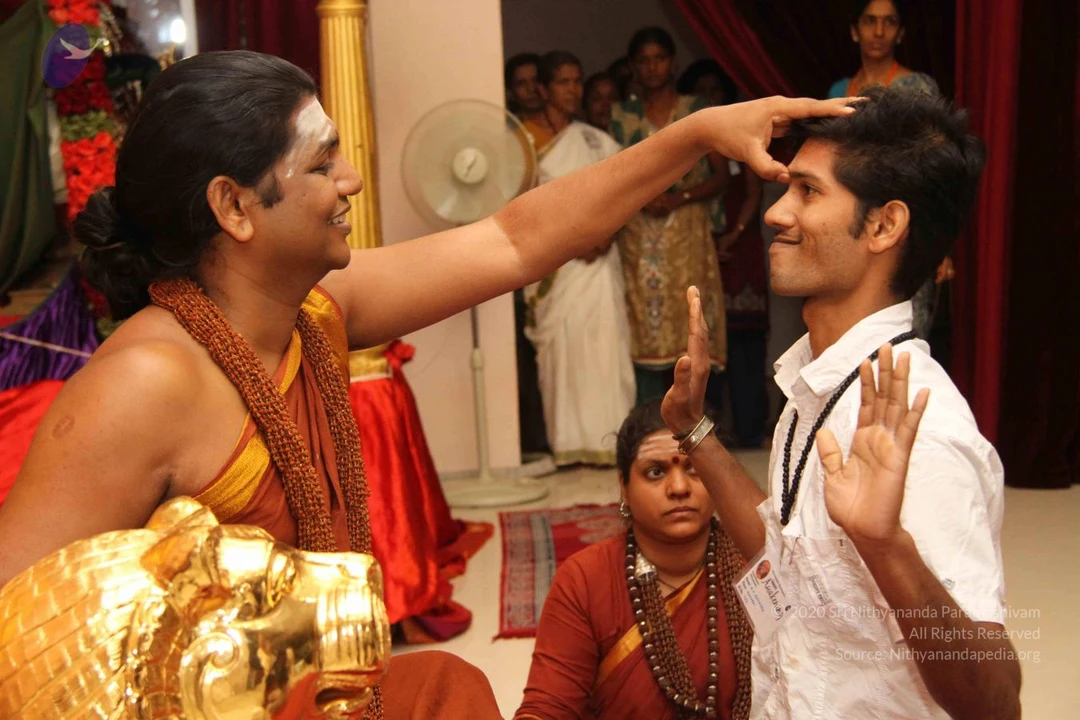
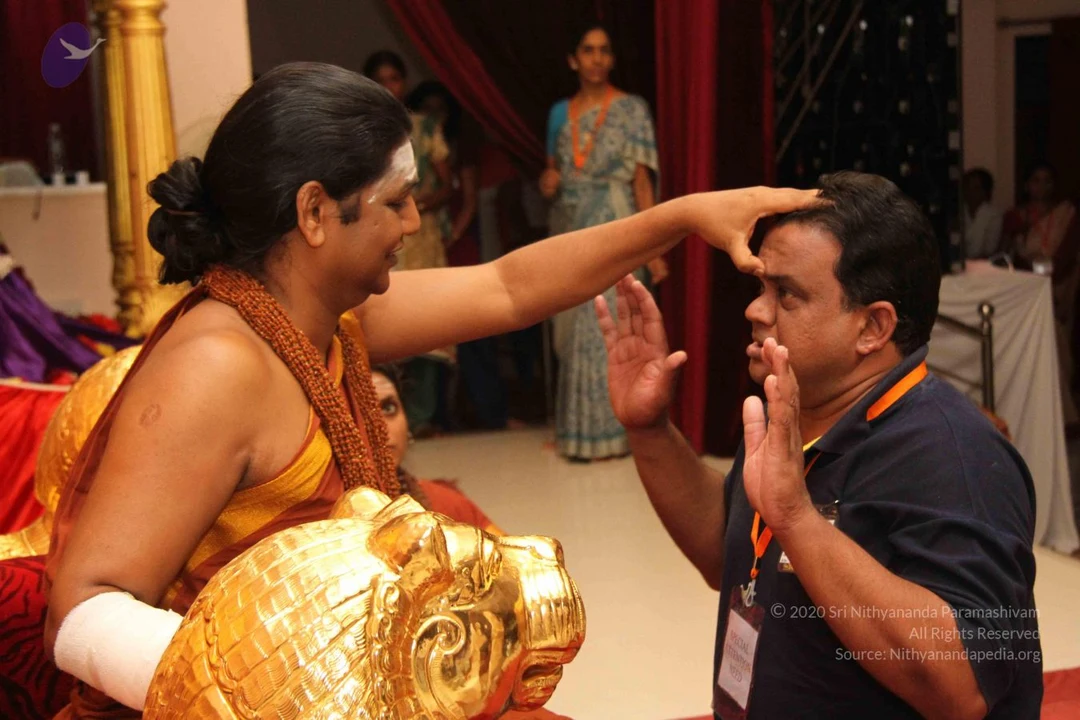
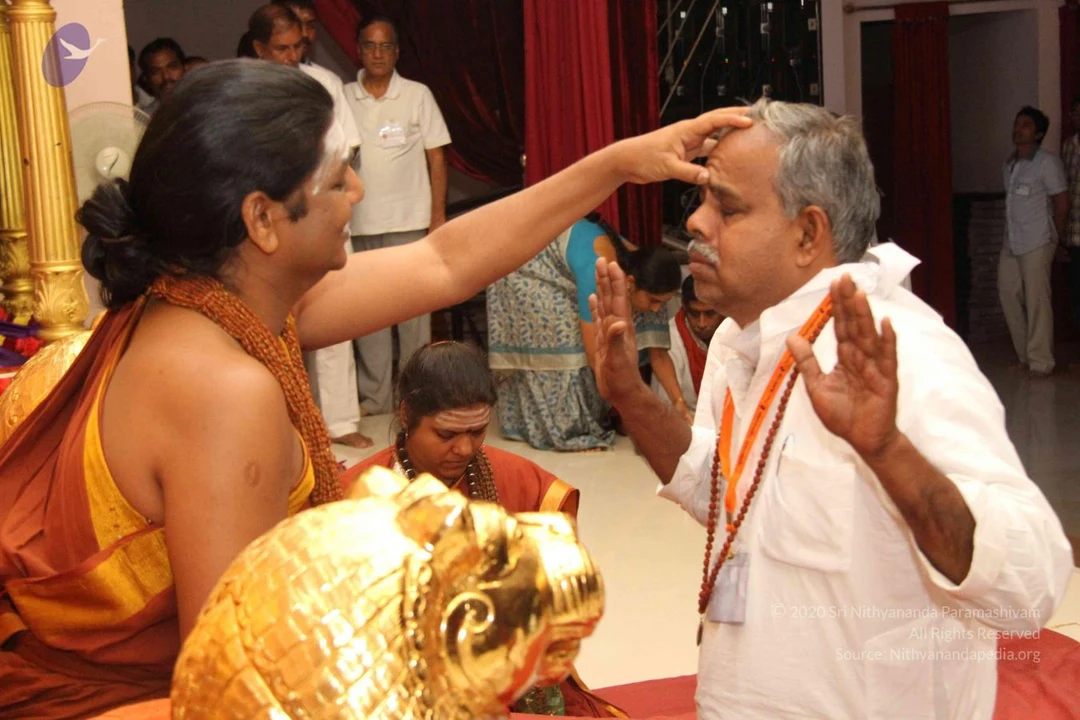
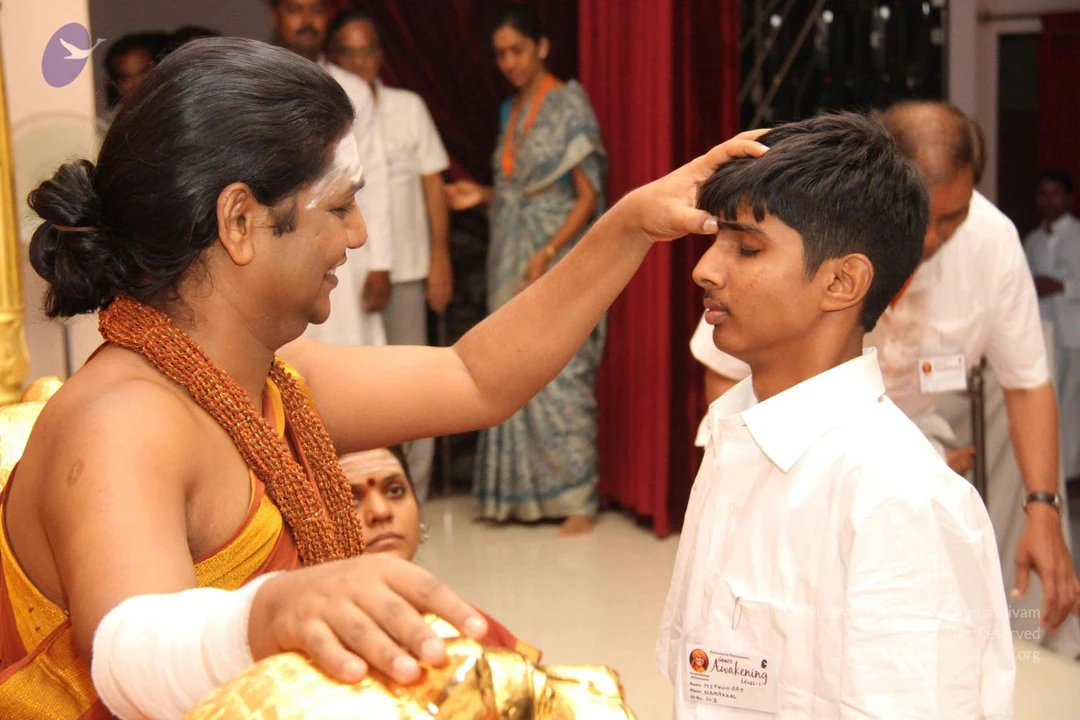
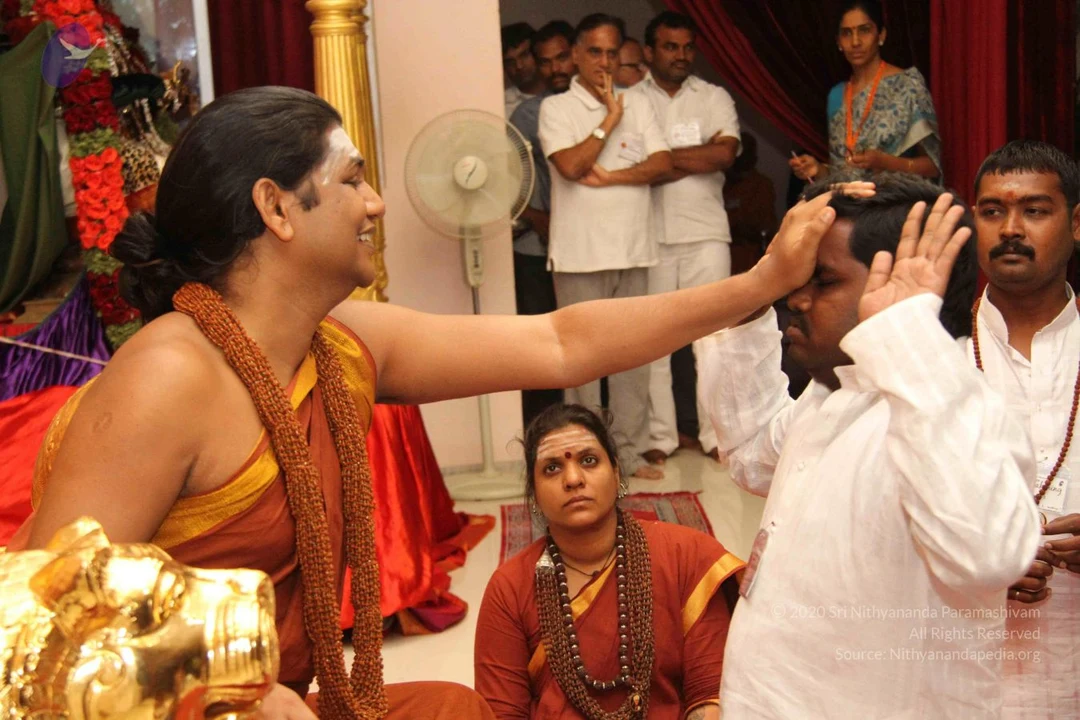
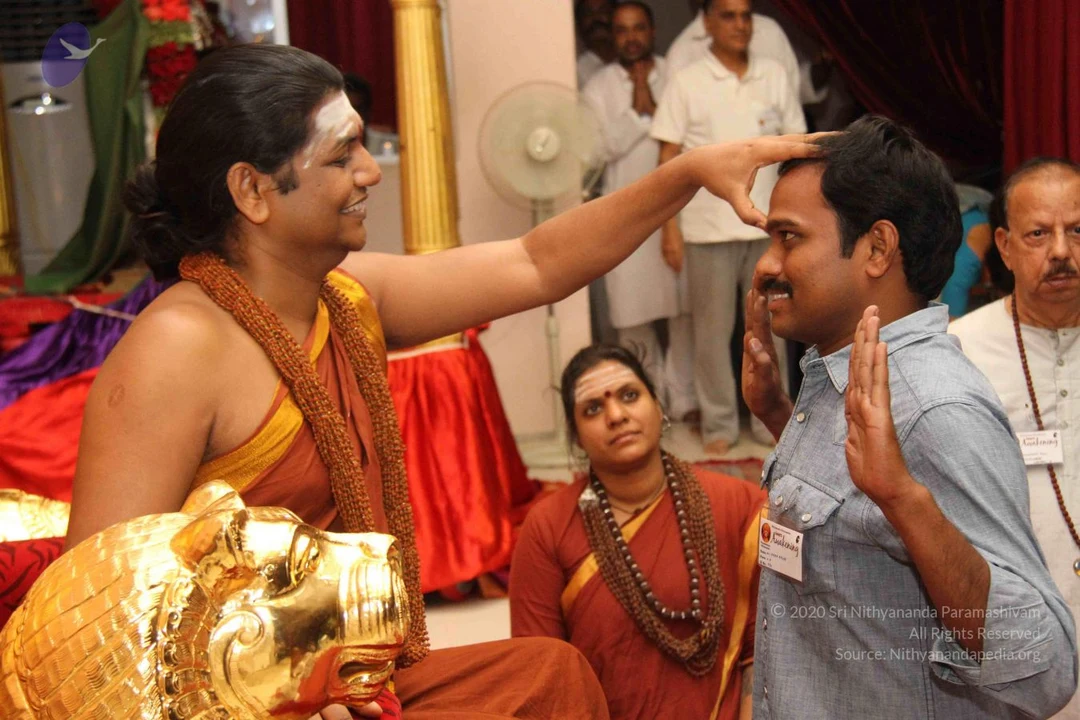
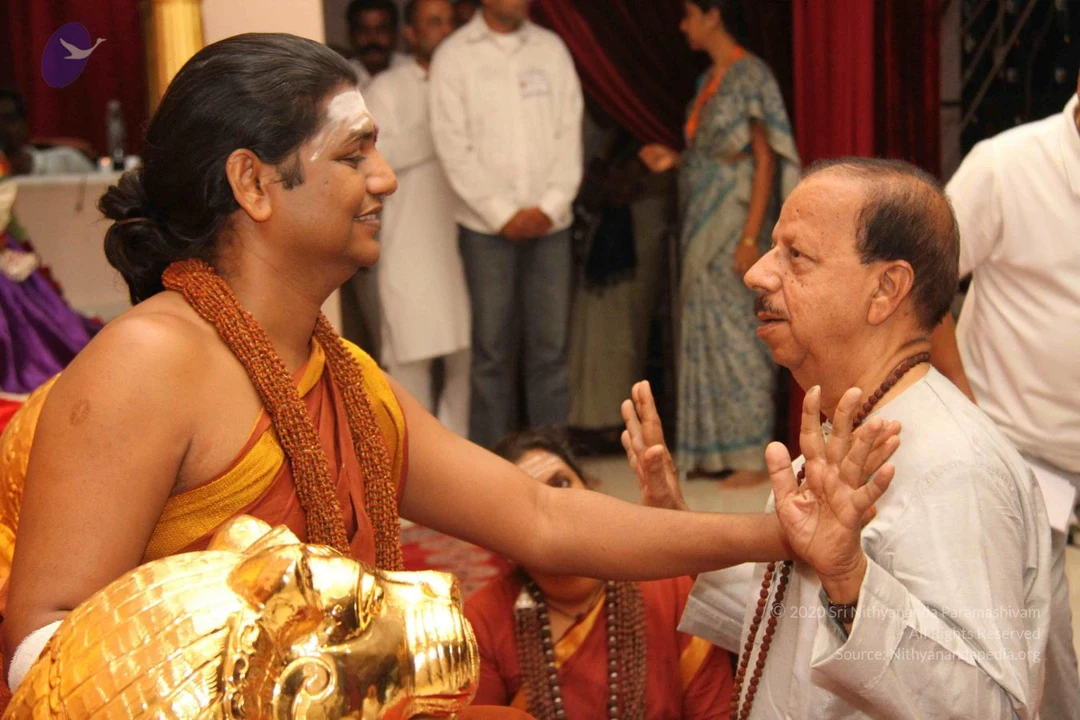
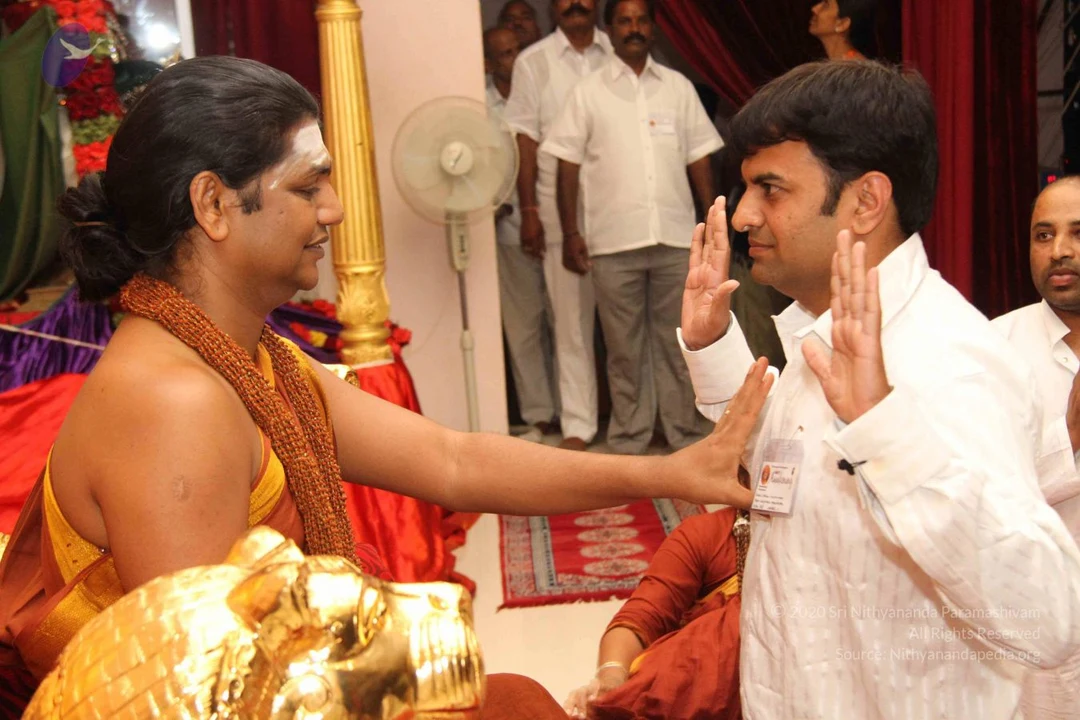
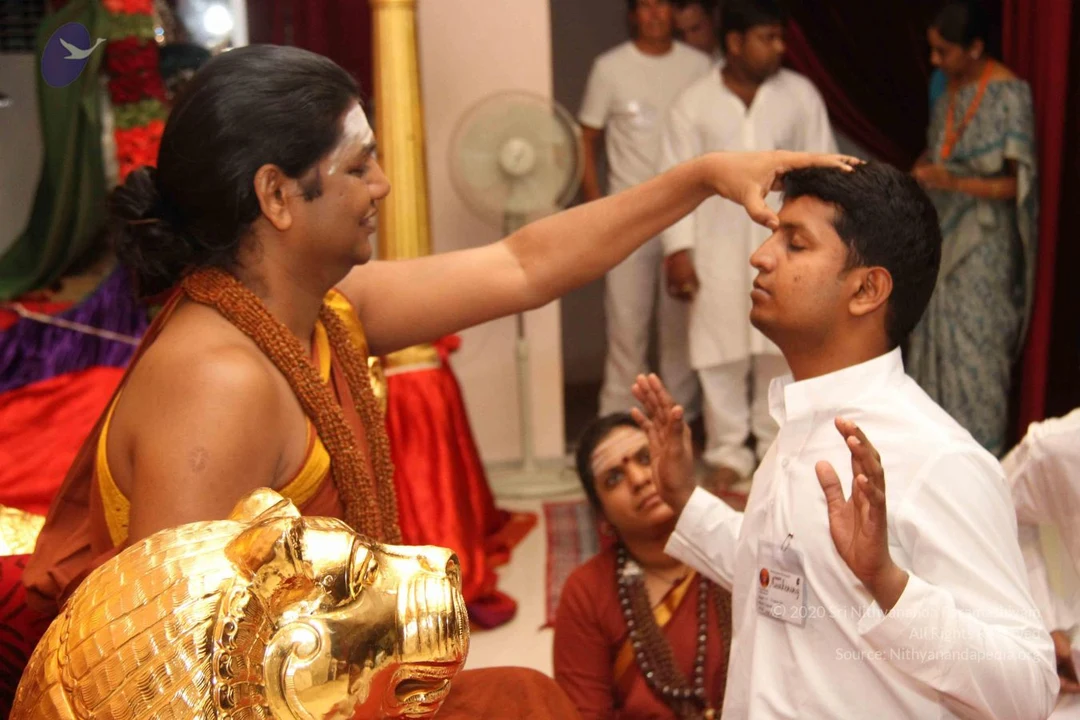
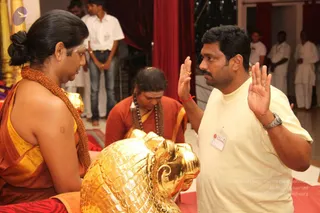
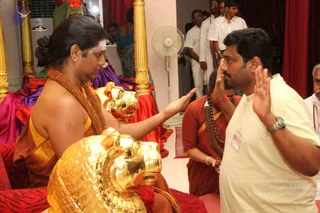
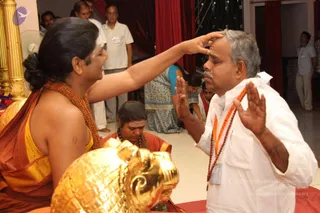
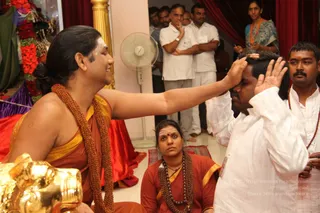
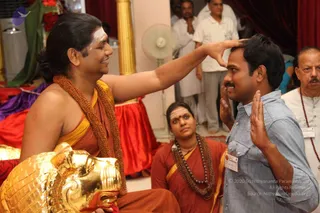
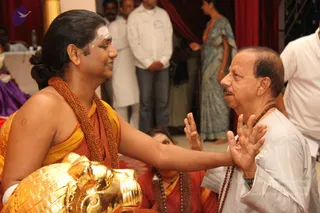
A man seated on an ornate gold throne with carved lion heads and red velvet cushions, eyes closed, palms pressed together in namaste. He wears a rust-orange and saffron cloth, a long rudraksha mala with dark beads, and a white bandage on his left forearm, with a red tilak on his forehead and white ash marks. Gilded decorative panels frame the throne behind him.A seated man with a shaved head and a red-orange bindi on his forehead sits in a gilded throne with carved arched backrest and two golden lion heads on the armrests, cushioned in red velvet. He wears a saffron-orange sannyasi robe with a yellow-gold border and a rudraksha mala around his neck, and his palms are pressed together in namaste with eyes closed. A white bandage wraps his right forearm. The backdrop is a large printed image of temple pillars with carved figures in sepia tones. A tiger-striped cloth covers the dais, with red flower petals scattered at the base.A man seated on a red and gold throne with an ornate gilded arched backrest carved with scrollwork and mythical creatures. He sits with eyes closed and palms pressed together in namaskar. He wears a bare upper body with an orange-gold cloth draped over one shoulder and a dark rudraksha mala with a gold necklace. A white bandage wraps his left forearm. A white vibhuti line and red kumkum dot mark his forehead. Behind him stands a large gilded throne canopy.A seated man with closed eyes and palms pressed together in namaste sits on an ornate golden throne carved with scrolls and lion heads, flanked by two gilded lion sculptures. He wears a saffron-orange robe with a shawl, a rudraksha mala necklace, and a red bindi with white markings on his forehead. A white bandage wraps his right forearm. A temple-style backdrop with carved pillars and figures stands behind the throne. The scene suggests a satsang setting, with the man as a seated teacher receiving devotion.A photo of a seated figure in an orange-and-gold saffron robe with a rudraksha mala and long dark hair tied up, facing a man in a pale yellow T-shirt with a name badge who raises both palms toward him in a gesture of greeting or blessing. A golden lion-head object stands in the foreground. Behind them, another seated person in orange robes sits with a rudraksha mala, and several men in white ashram clothes stand near red drapes in a hall. The seated figure in saffron with ornate gold trim and a rudraksha mala matches appearance cues for a person, seated in a satsang-style setting.A photograph of a seated man with long swept-back dark hair, a white vibhuti mark on his forehead, a dark rudraksha mala and an orange-gold garment, seated on a red cushioned throne with golden lion-head armrests and gold pillars. He extends his right hand toward a man in a cream shirt with a visible ID badge and wristwatch, who raises both palms in front of him. Behind them, a woman in an orange sari with a rudraksha mala and gold bangles stands with folded hands, and several men in white shirts and a standing fan are visible in a room draped with red and purple fabric.

IA

38 photosSource gallery
A seated audience at a satsang gathering, mostly men dressed in white shirts and white dhotis. In the foreground a young man in a white shirt writes in a notebook with a green pen, resting it on a pink folder. Beside him a man with a moustache and glasses, wearing a name badge and a red tilak on his forehead, holds a booklet. Behind them, other seated devotees listen attentively, some with orange and saffron scarves and rainbow-coloured lanyards. The hall has plain cream walls and the scene is calm and focused.A large hall with cream walls, red curtains and a ceiling of square lights holds a seated congregation on red mats. Many people in white clothes sit cross-legged with open books, some holding pink and orange items. In the foreground a woman with a hair bun, wearing an orange sari and an orange beaded necklace, faces the audience from behind. A man in a light blue shirt sits at the front of the group, and a cameraman in white stands at the right. No candidate for the presenter is visible, so the identity of the speaker is not shown.Photograph from behind a speaker in a saffron-and-gold sari with a rudraksha mala, standing at the front of a large hall while seated audience members in white and colourful clothes sit on red mats facing forward. Rows of seated devotees fill the room under bright ceiling lights, with red curtains along the walls. Many attendees hold pink and white fans, and some have booklets on the mats. A few people in orange and maroon robes sit near the front left. The speaker's face is not visible, so no identification is made from appearance; the figure is described by role as a speaker addressing satsang.Several women sit cross-legged on a red mat in a hall with pale walls and a red curtain behind them, holding up small pink, orange-brown and green handheld panels. The woman on the left wears a white outfit with a braided plait and bangles, the woman in the centre wears a yellow-and-cream sari with gold earrings and a lanyard badge, and the woman on the right wears white with a shawl and a lanyard badge. A clear plastic water bottle, a black bag and colourful notebooks lie on the mat in front. Other participants are partly visible at the edges.A seated satsang audience in a hall with red curtains and red floor mats. Men and women in white ritual clothing sit cross-legged or on chairs, many holding pink, blue and green fans or hand-held sheets while reading or meditating. A man in the foreground wears a white shirt and rudraksha mala and holds a light blue fan. Water bottles and a black bag sit on the mat, and metal stanchions separate the rows. No single leader is clearly identifiable in the frame.A row of seated men in white shirts and white dhotis listens attentively at an indoor satsang, with several holding tablets, notebooks and pens. A young Western man in the centre wears a striped white shirt, a rudraksha mala and a name badge, and looks down at a grey tablet. An older man in the foreground in a white shirt stares ahead. Behind them a red curtain hangs, and a figure in orange clothing sits among the attendees. Several people further back, some in pink, also hold devices. Pink and orange books, one reading MARVEL, lie on laps. No one is identified as a person.

Enriching

4 photosSource gallery
A row of women stands on a stage before a deep red velvet curtain, several dressed in rust-red saris with gold borders and rudraksha malas. The woman at centre, in a rust sari with gold trim, speaks into a handheld microphone. Beside her, a woman in a cream sari with gold border and a red bindi holds a folder, and at far right, women wear white and cream saris with gold borders. One woman on the left wears a white and gold sari with a green blouse and orange lanyard, and another holds a small red book. No a person candidate is visible.A row of eight women in matching rust-red saris with gold borders stand on a pale stage before a deep red velvet curtain. Most wear rudraksha malas and pendants; several have tilak or bindi marks and hair pulled back. The woman at centre holds a small microphone and speaks while others listen. Two women at left and right hold a book and a pen. No visible a person depiction; the people are devotees or ashram members.A line of women in matching rust-red saris with gold borders stands on a stage in front of a deep red velvet curtain. Several wear rudraksha malas, pendants and vibhuti or kumkum on the forehead. The woman at centre holds a small object and a rudraksha mala, and two others to her right hold a folded paper. Their bare feet rest on the white stage floor, and a woman in white stands at the left edge. No a person is visibly present in the frame.A row of eleven women stands on a white stage before a deep red velvet curtain. Most wear rust-red saris with golden-yellow borders and rudraksha malas; one at right wears a bright orange sari with a pink border, and two at the ends wear white saris. Several women hold small objects and gesture toward one another, and a white electric pedestal fan stands at lower right. No a person candidate is visible.

Goshala

10 photosSource gallery
A photograph of a group of goats walking along a sandy dirt path. In the foreground, a light tan goat with curved horns and a tag in its ear walks toward the camera, with a rope looped around its neck. Behind it, several goats with brown, black and grey coats, some with rope collars, follow in a line. Blurred green trees and a red wall stand in the background.A light tan and white goat stands in profile on dry ground in front of a bank of pale grey rocks and blurred green foliage. A frayed brown fibre rope is tied around its neck, hanging down over its chest. Its curved horns and short ears are visible.A light tan goat with a short curved horn walks along a dirt path beside a stone retaining wall of irregular grey slabs. A coarse brown rope is tied loosely around its neck and hangs down its side. Green shrubs grow at the top of the wall, and a tree trunk is visible at the upper left. No people appear in the scene.A brown and black goat with curved horns stands on a dirt path, wearing a braided rope tied around its neck. Behind it, a second black goat with a rope collar is partly visible on the right, and blurred green trees and a stone wall fill the background. No people are visible.Three goats walk along a sandy dirt path. The brown goat in the foreground has a rope tied around its neck and curved horns, and is followed by a brown goat on the left and a black goat with a rope on the right. A stone retaining wall and green shrubs and trees line the path. No people are visible.Close-up photograph of a single red hibiscus flower with five broad petals and a long pale stamen tipped with yellow pollen, growing on a branch with serrated green leaves. The background is a soft, out-of-focus wash of yellow-green foliage. No people or ritual setting are visible.

Adhi-Kailasa

3 photosSource gallery
A wide, dusty unpaved construction site under an overcast sky. Shipping containers, a small red car, a pickup truck and a parked motorbike sit on the bare sandy ground. A yellow backhoe loader works on the right beside a red-roofed low building. A long red boundary wall and a heap of rubble run across the background, with tall trees and a smoky haze beyond. No people are visible.A wide, unpaved dirt site under a heavily overcast grey sky. On the left, stacked red and blue shipping containers, a red pickup and a red car sit near a pile of gravel, with a small figure walking by. A yellow excavator works in the centre, and a yellow bulldozer or loader sits near the right. On the right, a single-storey red building with green sloped roofs and a stepped concrete entrance stands beside a red boundary wall. Trees line the background.A photograph of a dusty, open unpaved ground in front of several red-brick and terracotta buildings under an overcast sky. On the left, a low single-storey building has a green corrugated roof and a covered veranda. To the right, a multi-storey red building with many windows and balconies stands beside a partly constructed block with exposed concrete pillars and rooftop water tanks. A few shrubs and bamboo clumps sit near the buildings, and a parked white vehicle appears at the far left edge. No people are clearly visible, and no ritual or event activity is shown.

Gallery

2 photosSource gallery
A hardcover book titled "Rudraksha" by Narain Bhatia lies face-up on a pale yellow-green cover. Several rudraksha beads, dark brown and textured, are each fitted with a gold-coloured metal cap and loop, scattered across the cover. The blurred background shows shelves with colourful items. No people are visible.A photograph of a yellow hardcover book titled Rudraksha by Narain Bhatt, resting on a light surface in front of a blurred background of shelves. The cover shows numerous dark brown rudraksha beads, each fitted with a gold-coloured loop or cap, scattered across a warm yellow backdrop. No people are visible.

Leela-Alankar

11 photosSource gallery
Two ornately dressed deity murti figures sit side by side on a gilded golden canopy throne with carved elephants and a lotus-seated figure above, framed by red, orange and green flower garlands and draped in a red cloth. The figure on the left wears a purple silk skirt, a white top, rudraksha beads and a jewelled crown; the figure on the right wears a dark green silk garment, a pearl and jewel necklace and a crown. No physical people are visible; the figures are statues.Two decorated deity murti figures sit side by side on a golden carved throne-like structure with elephant and lotus-goddess relief above. The figure on the left wears a crown, a white and gold garment with a leopard-print shawl, a purple lower cloth, and a heavy rudraksha and jewelled garland. The figure on the right wears a dark green silk outfit with gold embroidery, a crown, and layered gold necklaces. Both are surrounded by dense garlands of red, orange and green flowers, with a red velvet backdrop behind them.Photograph of two decorated deity murti figures seated side by side on a golden carved wooden palanquin-style shrine with a pyramidal top and carved elephants and a seated goddess relief. Both figures wear heavy floral garlands of orange and red roses and green leaves. The figure on the left wears a tall silver crown, white and purple garments and a rudraksha-style necklace with large jewels. The figure on the right wears a crown, a teal-green silk garment with gold trim, and layered gold and pearl necklaces. The shrine stands on a draped maroon cloth. No physical people are visible.Two deity murtis stand side by side on a red satin-draped platform, framed by a gold carved arch and banked with red and orange roses and green foliage. The figure on the left wears a purple satin skirt, a white blouse with gold trim, a leopard-print shawl and a heavy beaded necklace of rudraksha-like beads and jewelled ornaments. The figure on the right wears a green brocade garment with gold motifs, a purple lower cloth, layered gold and bead necklaces and an ornate crown. Both murtis have gold faces and jewelled crowns, and rose garlands hang between them. No living people are visible.Two children sit cross-legged on a red draped platform before a gilded shrine with two decorated deity murtis, one in purple and white with a crown, the other in green with gold embroidery and jewelled necklaces, both surrounded by red, orange and yellow flower garlands and gold filigree arches and columns. In the foreground a boy wears a silver jewelled crown, white forehead markings, a yellow and white garland, silver ornaments and a purple lower garment, his hands held in mudra gestures. Beside him a girl in an orange-yellow dress wears a silver headpiece, silver necklaces, a yellow and red garland and white forehead markings, her hand raised in a gesture. Both children are seated in a worship setting with a visible kalasha-like shrine arrangement behind them.Two costumed children sit cross-legged on a red draped platform in front of a golden canopy. A boy on the left wears a jeweled crown, a white embroidered chest piece, a purple dhoti and a yellow-and-red marigold garland, and holds his hands in a mudra. A girl on the right wears an orange silk dress, layered silver necklaces, a jeweled hair ornament and a yellow marigold garland, also with hands raised in a mudra. Behind them stand two decorated deity murti figures draped in flower garlands, one in purple and one in green silk, with red roses and orange flowers framing the golden pillars.

Paduka-Puja

3 photosSource gallery
Two priests in saffron-orange dhoti and shawl sit cross-legged on a tiled floor performing a puja. Both wear rudraksha malas, white sandalwood-paste markings on their arms and forehead with red kumkum dots, and red-orange bangles. The priest on the left holds a small spoon over brass vessels and a tray of flowers, eyes lowered. The priest on the right, wearing a wristwatch, presses his hands together over a brass kalasha-type vessel and oil lamps on an orange cloth. Brass plates hold flowers, offerings and a lamp. Other people in white sit in the background, out of focus. No clear a person candidate is visible.A tall multi-tiered silver oil lamp with many wick flames burning across its flared dishes and ornate stem. Several rows of small lamps surround its base, and a person's arm wearing a bangle appears at the right edge. The background is a plain pale wall.A tiered brass lamp stand with many lit oil lamps, the flames burning on multiple circular trays stacked on an ornate central column. Cotton wicks rest in the small cups around each tier, and the top lamp has a tall flame. Behind it is a pale wall and a dark background; no people are visible.

Nithya-Satsang
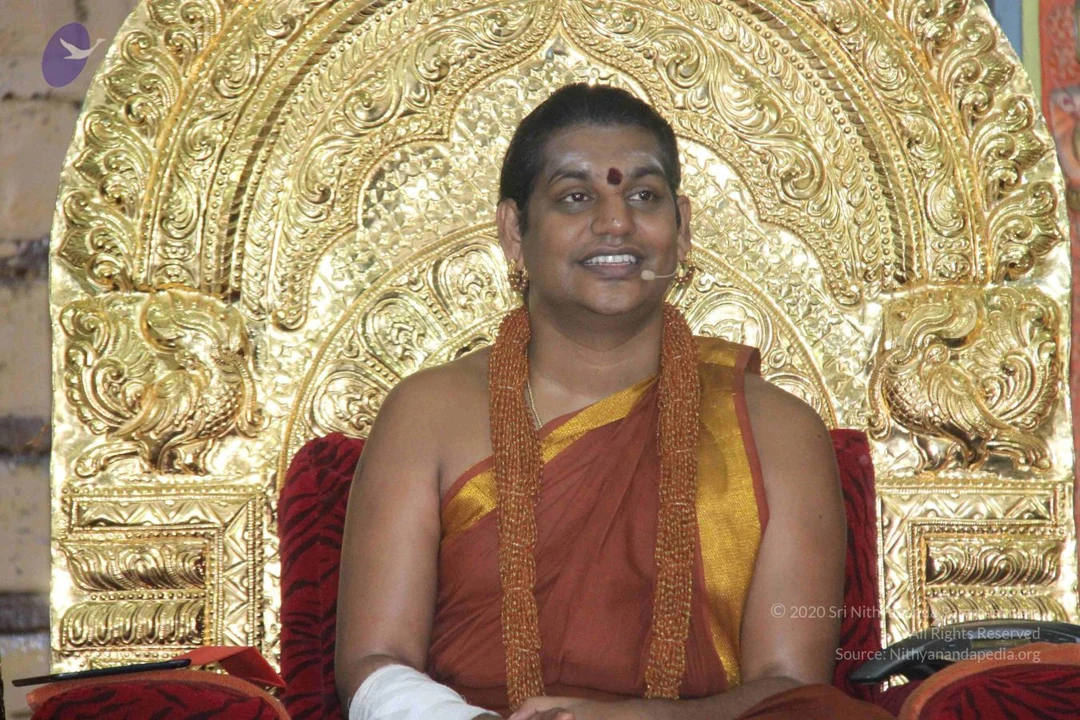
14 photosSource gallery
A seated man in ochre-saffron robes with gold border sits on an ornate gold throne with a carved arched back, flanked by gold lion-form armrests and red tiger-striped cushions. He has a red forehead mark, a long rudraksha mala draped over his shoulders, and a white bandage on his left forearm, with his hands clasped and a small microphone at his cheek as he speaks. Behind him are large wooden doors with painted panels, and painted deity figures with raised arms stand at the edges. a person: the seated speaker wears a rudraksha mala and saffron-orange robes with gold trim on a ceremonial throne, consistent with the page's a person-at-event note.A seated man in a rust-orange and gold-bordered dhoti and shawl sits on an ornate golden throne with a arched gold back and gold lion-head armrests, draped in red-and-black tiger-striped cushions and a tiger-stripe rug. He wears a long rudraksha mala, a red bindi and a small microphone, hands clasped over a white bandaged forearm, smiling as he speaks. Behind him a large wooden door and painted pillars with orange and yellow borders frame the stage. a person: the seated figure has a shaved head and the rudraksha mala, but the cues are mainly the throne and rust-orange robes, so the identification is uncertain. A gold deity arm holding a flame stands at the left edge.A photograph of a man seated on an ornate gold throne with carved arch and gold lion-form armrests, draped in a tiger-striped red cushion. He wears a saffron-orange robe with gold border, a long rudraksha mala necklace, a red bindi, and a small head microphone, with one forearm bandaged in white, and smiles while speaking. Behind him are large wooden double doors and painted deity figures with raised hands holding lamp and implement. a person is seated centrally on the throne, identified by long rudraksha mala, saffron-orange robe and ceremonial throne setting.A man sits on an ornate gold-leaf throne with a large carved arched back, draped in a red-and-tiger-stripe cushioned seat. He wears a rust-red and gold-bordered dhoti and shawl, a long orange-beaded mala necklace, and a red bindi with tilak on his forehead, with a small headset microphone on his cheek. His right forearm is wrapped in white bandage, and his hands rest clasped in his lap. The photo appears to be a satsang setting. The page links the photo to a satsang event, and the appearance cues (long-beaded mala, ornate gold throne, red-and-gold robes) match the a person label, so the man is recorded as a person seated in person.A smiling man in a rust-red and gold-bordered dhoti and shawl sits on an ornate gilded throne with a high carved arch and red tiger-striped cushions, flanked by golden lion figures. He wears a long rudraksha mala draped over his chest, a red bindi on his forehead, and a white bandage on his left forearm, and his hands rest in front of him. Behind the throne are wooden panelled doors and painted pillars with orange borders and multi-armed deity murti figures. The throne and attire are displayed for a satsang, with the appearance-based label Swamiji (probable) given the long swept-back hair, rudraksha malas and ceremonial gold-bordered clothing.A smiling man with a short shaved head and a red bindi sits on an ornate gilded throne with a tall arched back carved with floral and lion motifs, flanked by golden lion figures. He wears an orange-brown robe with gold border, a long rudraksha mala draped over his shoulders, and a small headset microphone, with one hand open in a gesture. The throne rests on red tiger-striped upholstery and a tiger-skin cloth, in front of a wooden door and painted wall with deity figures holding a flaming torch and other implements. The person is a clear candidate by appearance: rudraksha mala and saffron-orange robe, though the head is shaved and the presentation is less distinctive than long hair or a crown, so identity is uncertain.

Sarva-Darshan

1 photoSource gallery
A photograph in a large hall with white ceiling tiles, ceiling fans and red curtained windows. A man on the right in an orange-red and gold draped garment and a thick orange rudraksha mala raises one hand in blessing, with a red bindi on his forehead and gold earrings. Around him, men in white dhotis and white shirts stand or bow with folded palms, and one man wears a headset. The page suggests a person is present, and the figure's appearance (saffron-orange clothing, rudraksha mala, gold ornaments) is a person candidate, shown in person, giving blessing to devotees. Several people are visible in the scene.

IA-Darshan

17 photosSource gallery
A seated teacher with long dark hair in a low bun, bare-shouldered in a rust-red and gold saffron wrap and rudraksha mala, presses his right palm to the forehead of a middle-aged man in a white shirt with an orange-and-rudraksha cord, who holds both palms raised in front of him in reverence. Behind them, a woman in a dark saffron-red sari with rudraksha beads kneels, and other seated devotees and standing attendees are visible, one wearing an ID badge. A golden decorative object with an ornate, ridged design sits in the foreground, and gold pillars and red curtains frame the hall. The scene suggests a blessing or diksha transmission. Swamiji (probable): the teacher has long hair in a bun, rudraksha mala and saffron-gold wrap, a distinctive ceremonial presentation.A seated person with hair in a bun, a white vertical tilak on the forehead, a rust-orange beaded mala necklace and a yellow-gold garment places one hand on the forehead of a young boy in a white collared shirt. The boy stands with eyes closed as the blessing is given. Behind them, people in white and a woman in a blue sari stand near red drapes. A name badge on the boy's shirt reads Awakening, and a golden item is visible at the lower left. The seated figure has distinctive orange beads and yellow robe cues, but the appearance is not conclusively confirmed as a person, so identity is marked unsure.Close profile photograph of a man with swept-back dark hair, a white horizontal forehead marking and a red dot at the centre of the brow, eyes lowered. He wears a rudraksha mala of dark beads and an orange-and-yellow shawl. A blurred golden pillar and a gold object lie in the background. Swamiji (probable) cues: swept-back long hair, sacred forehead marks, saffron clothing and rudraksha mala.Photograph of a seated man in saffron and gold robes with long dark hair in a bun, a white forehead mark and a long rudraksha mala, placing his palm on the forehead of a man in white kurta and dhoti who holds his hand up. Behind them a woman in an orange-and-red sari with rudraksha mala sits watching, and a standing man in white shirt and a man in orange clothes with a mala look on. A gold deity or ritual object is at lower left, with red flower garlands and a red and purple cloth behind. A standing fan and a group of onlookers in white shirts fill the background, and a woman in an orange-and-blue sari stands at the doorway. The scene suggests a blessing or initiation moment. Probable Swamiji is the seated central figure, identified by distinctive long hair, saffron and gold robes, and rudraksha malas.A man in orange-red robes with a gold shawl and a rudraksha mala, his face marked with white vibhuti, places his right hand on the forehead of a young man in a light blue button-up shirt, who holds both palms raised. Beside them sits a woman in orange robes and rudraksha beads with white forehead markings, and an older man in white with a red-beaded mala stands at right. A gold lion-headed seat or throne is at lower left, with red and purple cloth, garlands and a pillar behind. Several people stand in white in the background. The robed figure shows distinctive long hair, a rudraksha mala, ornate gold-trimmed shawl and a gold ceremonial setting, so the appearance-based label is Swamiji (probable), seated and giving blessing.Photograph of an indoor ceremony. A man with long dark hair tied back, white ash marking on his forehead, an orange and saffron garment and multiple rudraksha malas is smiling and extending his hands toward an older balding man in a white kurta with rudraksha mala, who has his palms raised and is bowing with folded hands. A golden ornamental object sits in the foreground. Behind them, standing people in white shirts and a woman in a blue and grey sari watch, with red drapes and a seated woman in orange and a mala in the background. a person is the man in orange with long hair, rudraksha malas and ash marking, performing a blessing for the older devotee.

IA

3 photosSource gallery
A large hall with white tiled floor and suspended ceiling lights, where seated devotees in white clothes sit on red mats while a woman in a brown and gold striped sari stands at the left, facing the rows, behind silver stanchions linked by a chain. In the foreground two men sit cross-legged on a red mat, one in a light blue shirt and grey trousers holding a notebook, the other in white kurta with a pen at his chin. Red curtains line the walls and a few people in white sit in the background near ritual items and water bottles.A smiling man stands on a stage in front of a wooden-textured backdrop with large white script lettering reading 'Silver Anniversary Celebration' or similar. He wears a rust-orange saffron-style garment with gold-bordered wrap and gold sash, a long reddish-orange rudraksha-style mala around his neck, and a red bindi on his forehead. His right forearm is bandaged in white, and he wears a head-mounted microphone. Behind him is a partially visible golden ornate panel.A smiling man with long dark hair tied back stands on a stage in a rust-orange and gold-bordered dhoti-style garment draped over one shoulder, wearing a long beaded rudraksha-style mala. His right forearm is wrapped in white bandage. Behind him a large backdrop shows carved temple pillars and figures in warm orange tones, with gold lion statues and red-cushioned seats at the lower edge. Printed text at upper right reads Inner Cel(ebration) in large white script, with a small copyright line on the right edge.
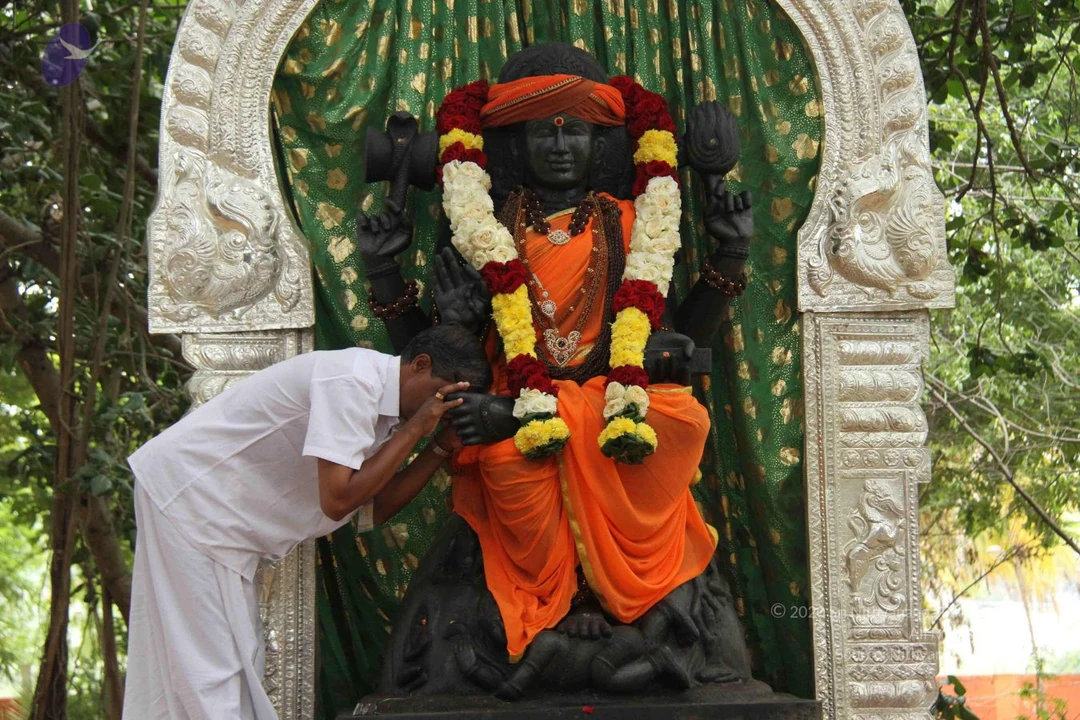
Enriching

1 photoSource gallery
A row of women in traditional saris stands on a stage in front of deep red velvet drapes. Most wear maroon or rust-red saris with gold borders and dark rudraksha mala necklaces. At the far left, a woman in a white sari with a gold border and an orange lanyard stands beside them. Toward the right, women wear orange and cream saris. The woman near the centre holds a microphone and speaks while others listen, and a few women hold small books or folded papers. A logo appears in the top left corner.

Gallery

2 photosSource gallery
Photograph of a book cover standing upright on a surface against a blurred background. The black cover has orange serif title text reading The Power of Rudraksha, with a subtitle reading Explore the medicinal properties and other functions of rudraksha. The cover shows a close-up of reddish-brown rudraksha seeds with textured surfaces. The author line reads Kamal Narayan Seetha, described as a leading rudraksha therapist, with a publisher mark reading Jaico. No people are visible.A printed book cover titled "World of Rudraksha & Gems" in bold orange letters on a turquoise background. Circular and oval images show rudraksha beads with ridged surfaces, a pearl, faceted gemstones in pink, green, yellow and clear, orange cabochons, a star sapphire-style stone and a pear-shaped stone. The book is photographed on a flat surface with no people visible.