Skip to content
Sunday

28 September 2014

THE SUPREME PONTIFF OF HINDUISM JGM HDH BHAGAVAN NITHYANANDA PARAMASHIVAM

Dated photos
301
Source pages
1
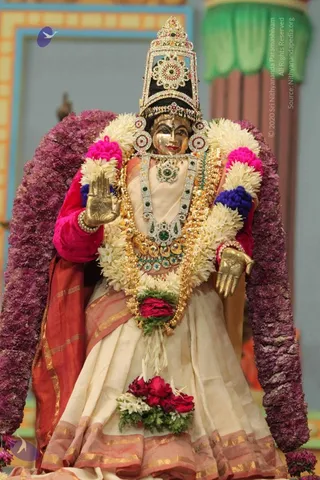
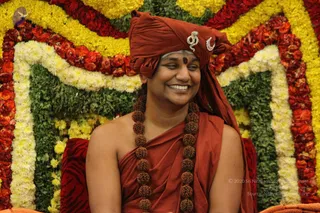
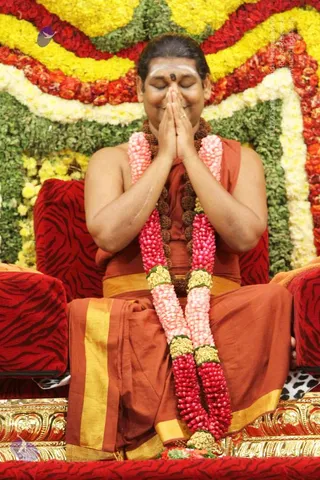
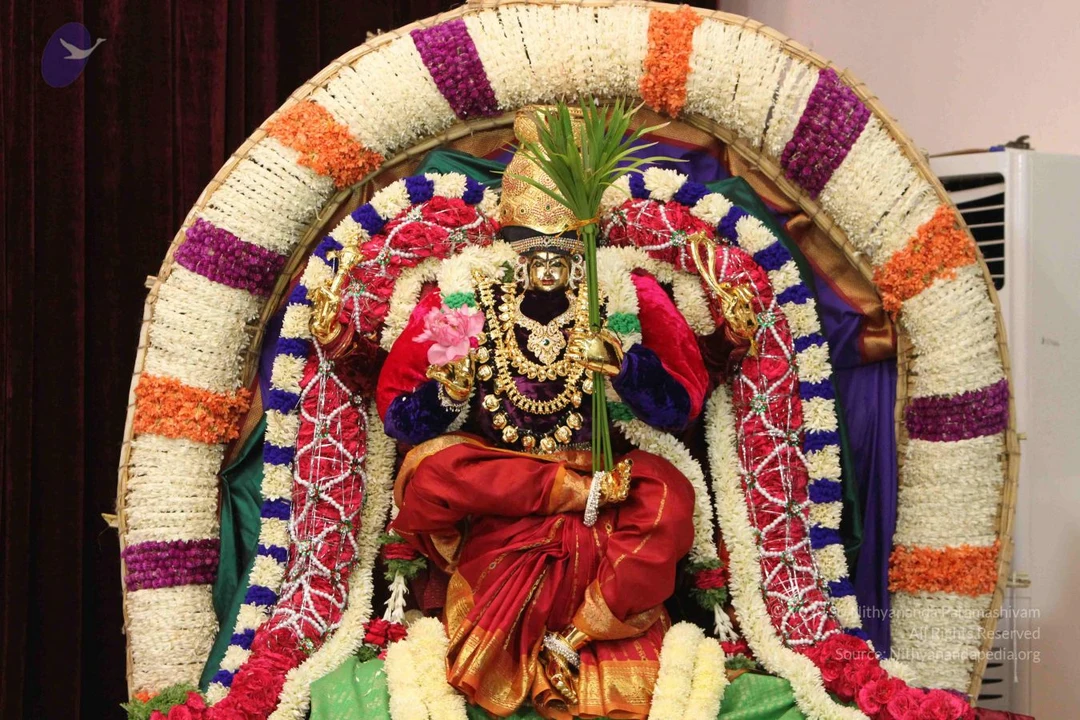
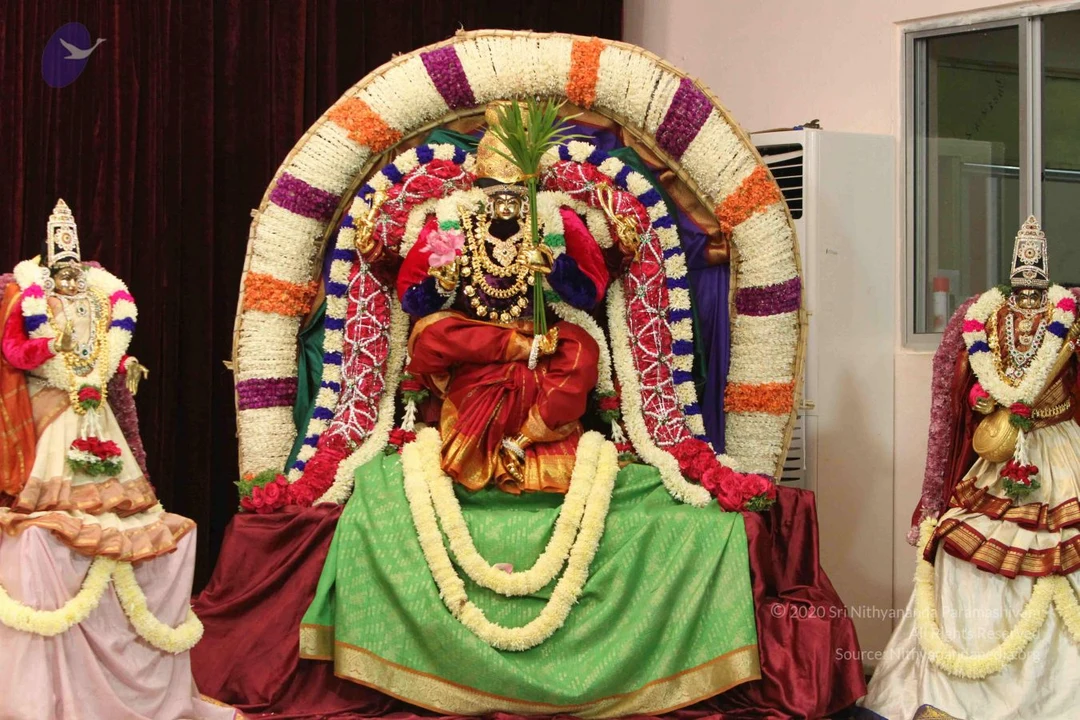
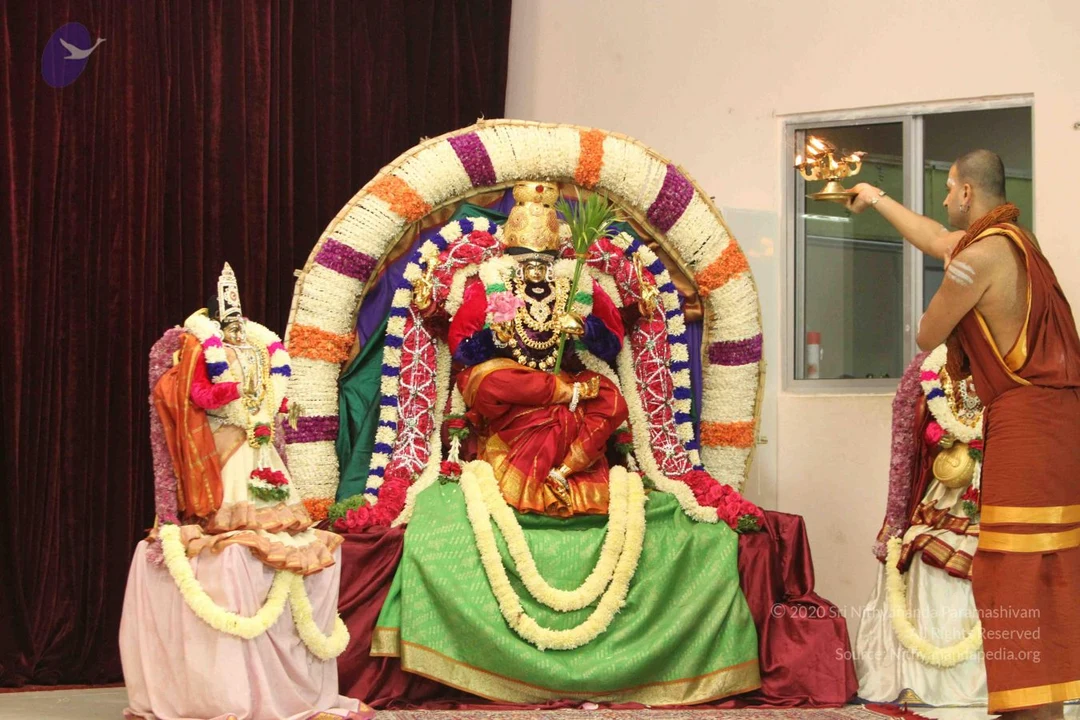
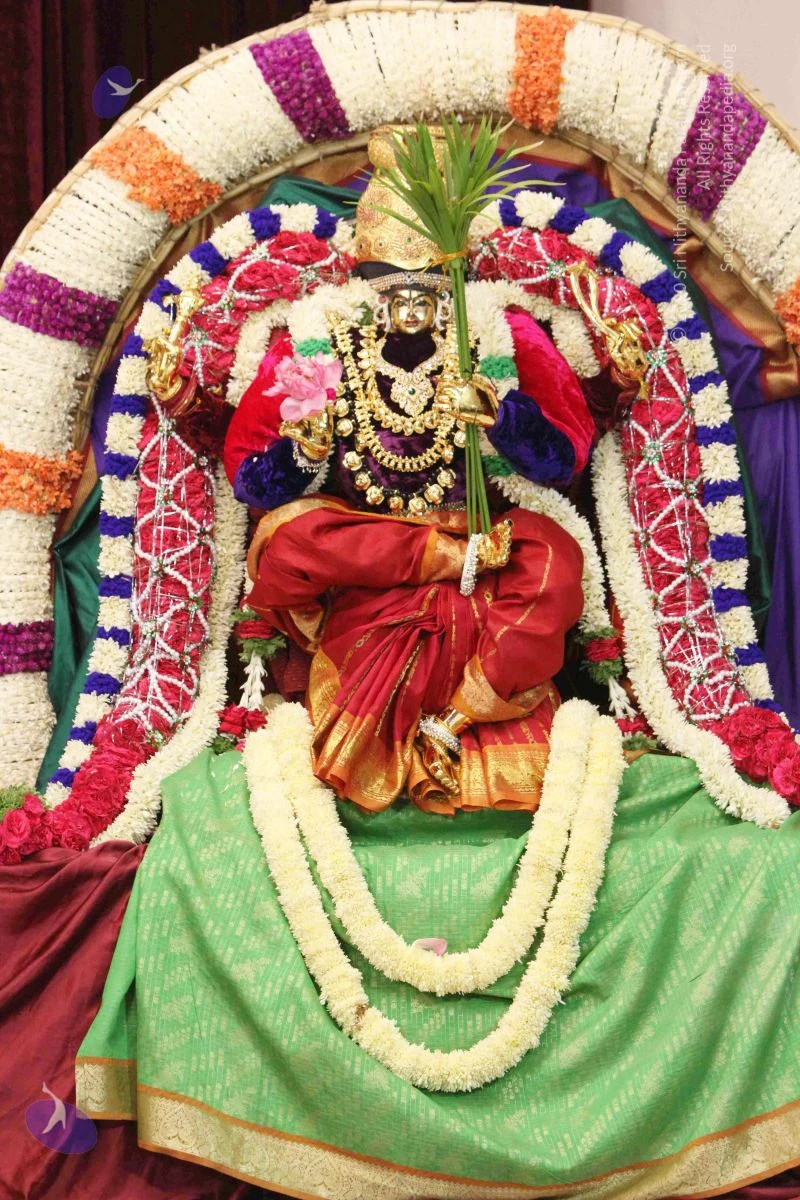
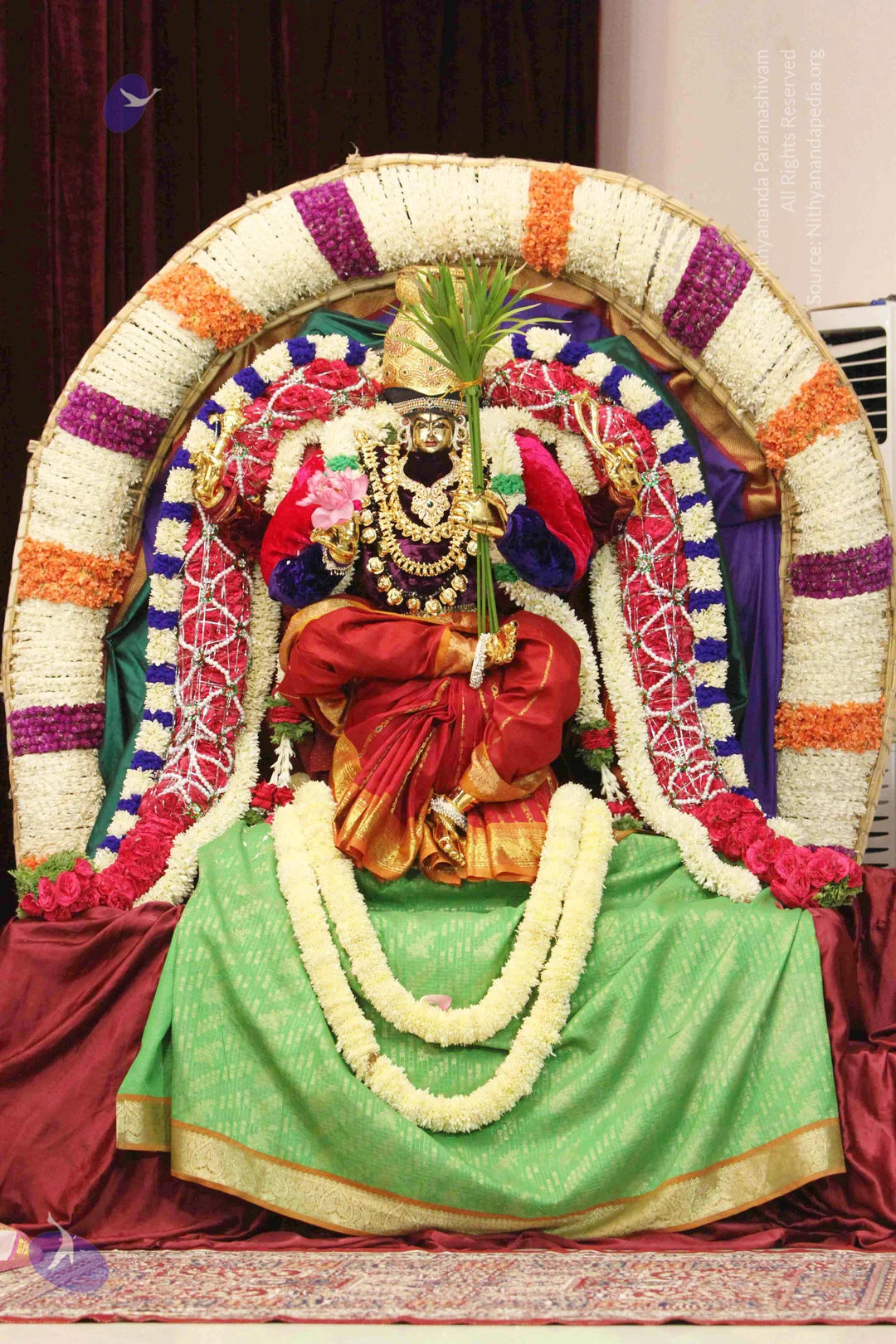
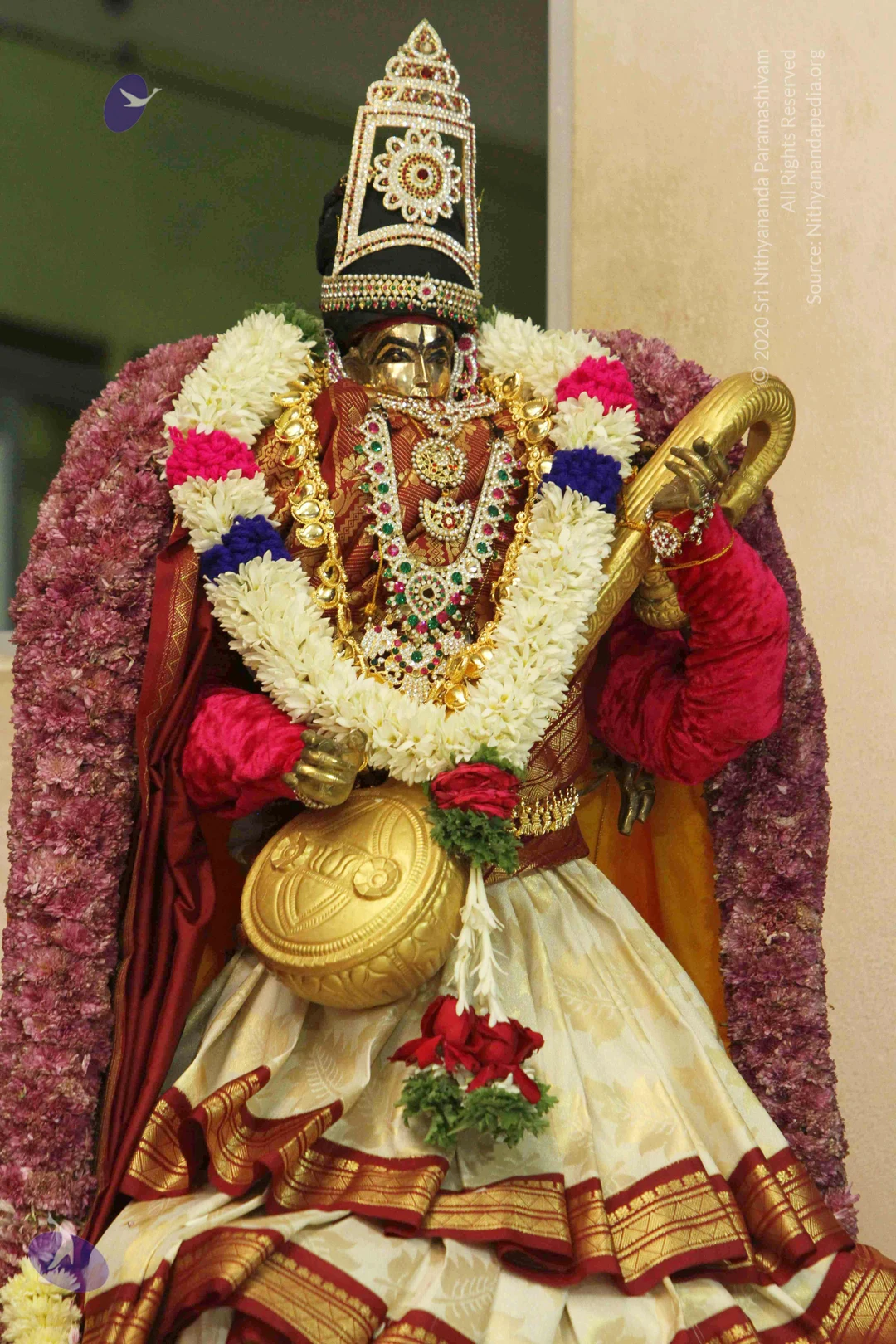
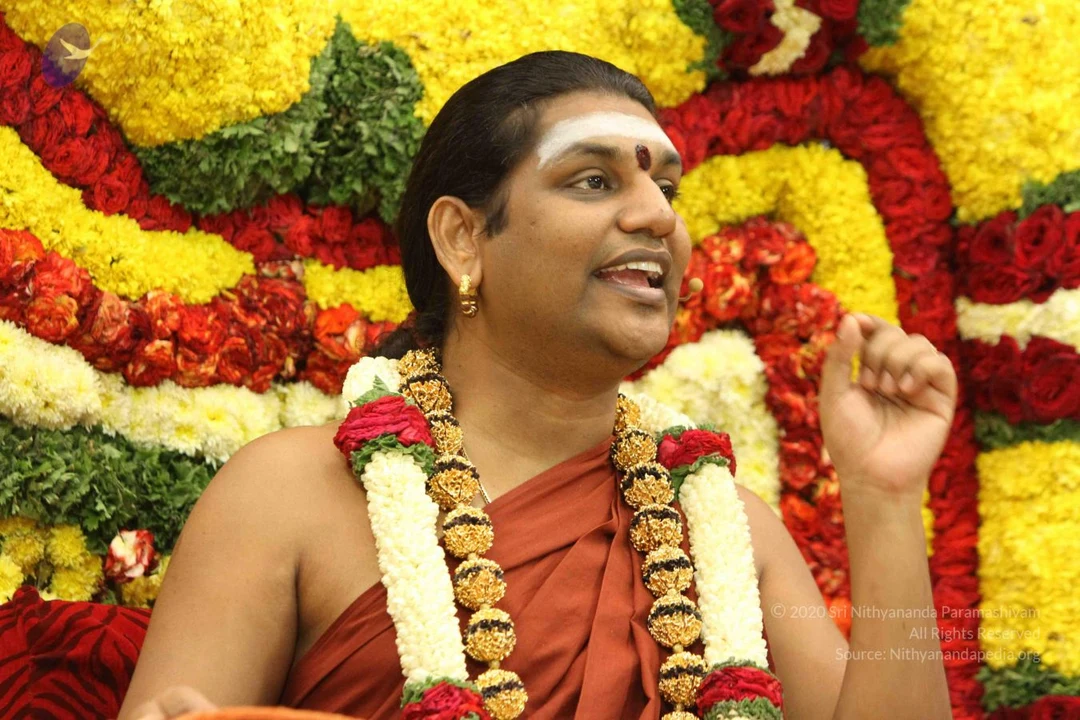
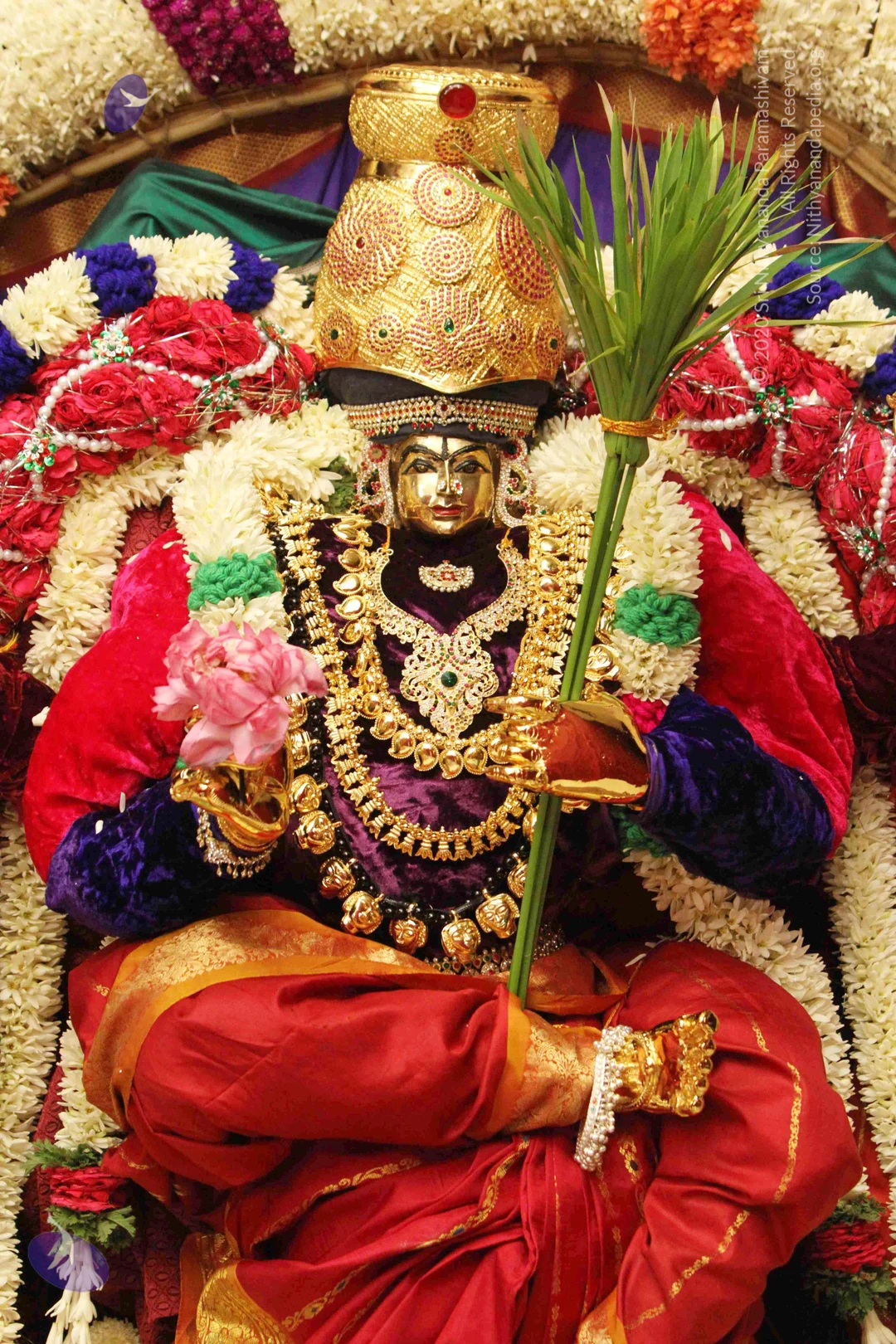
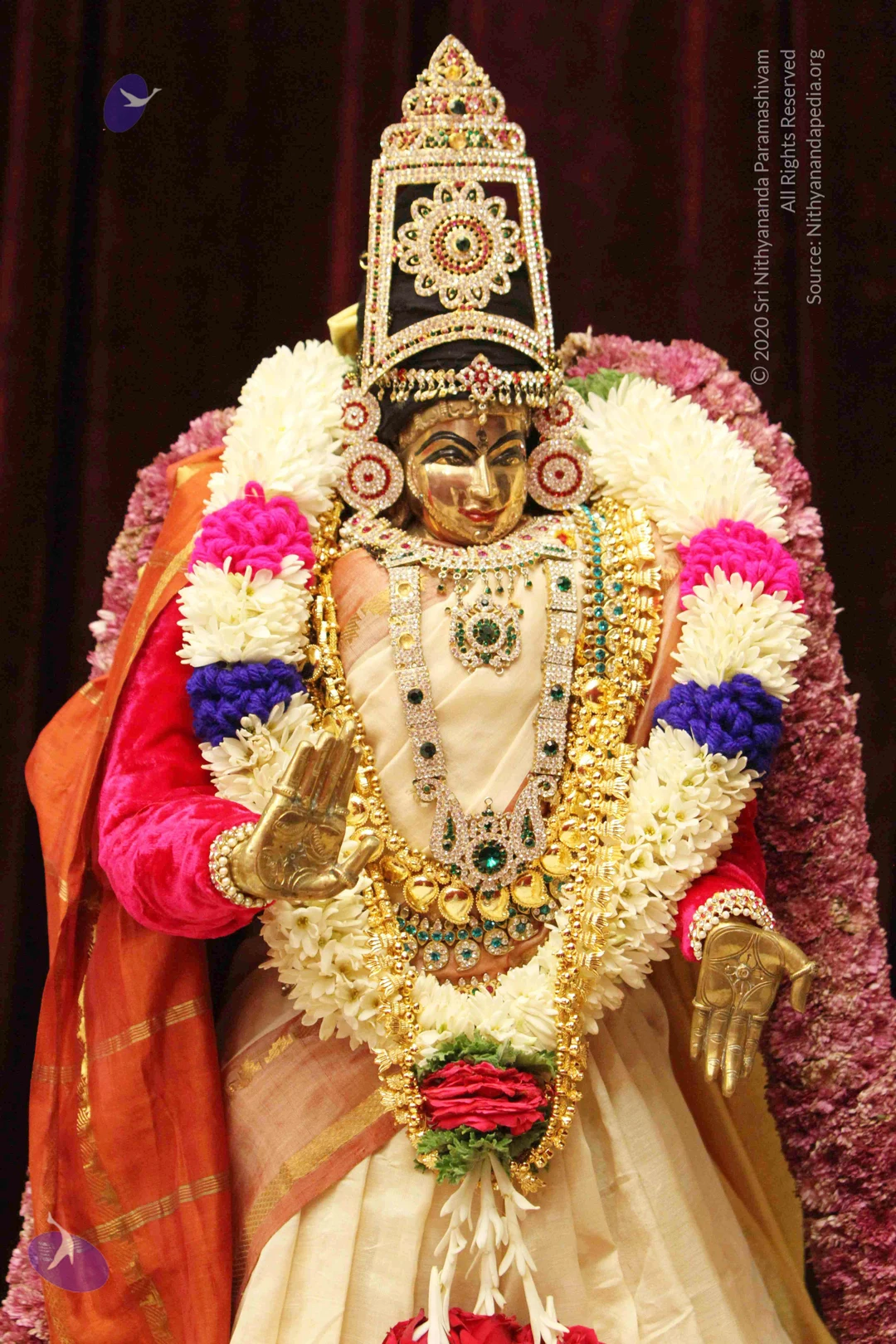
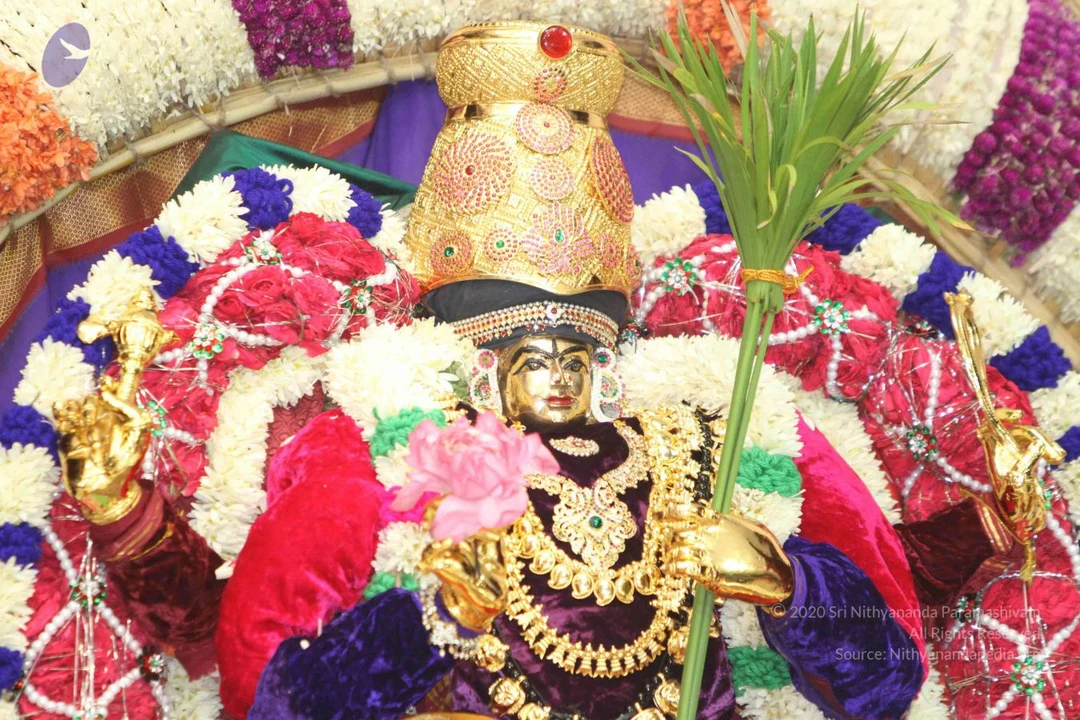
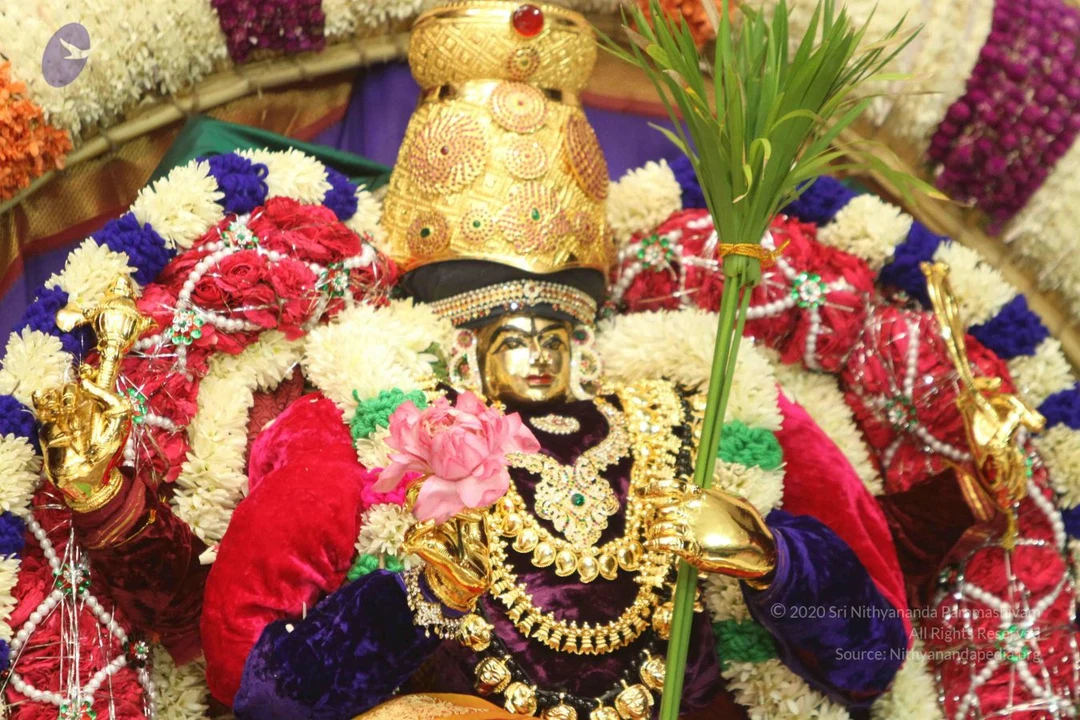
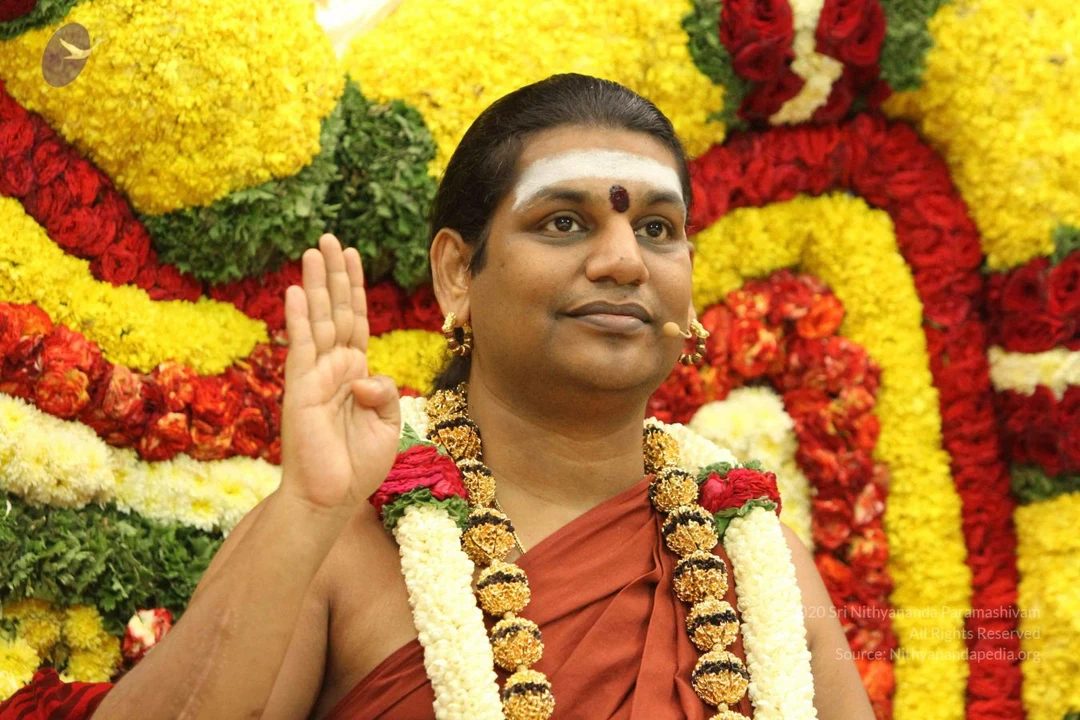
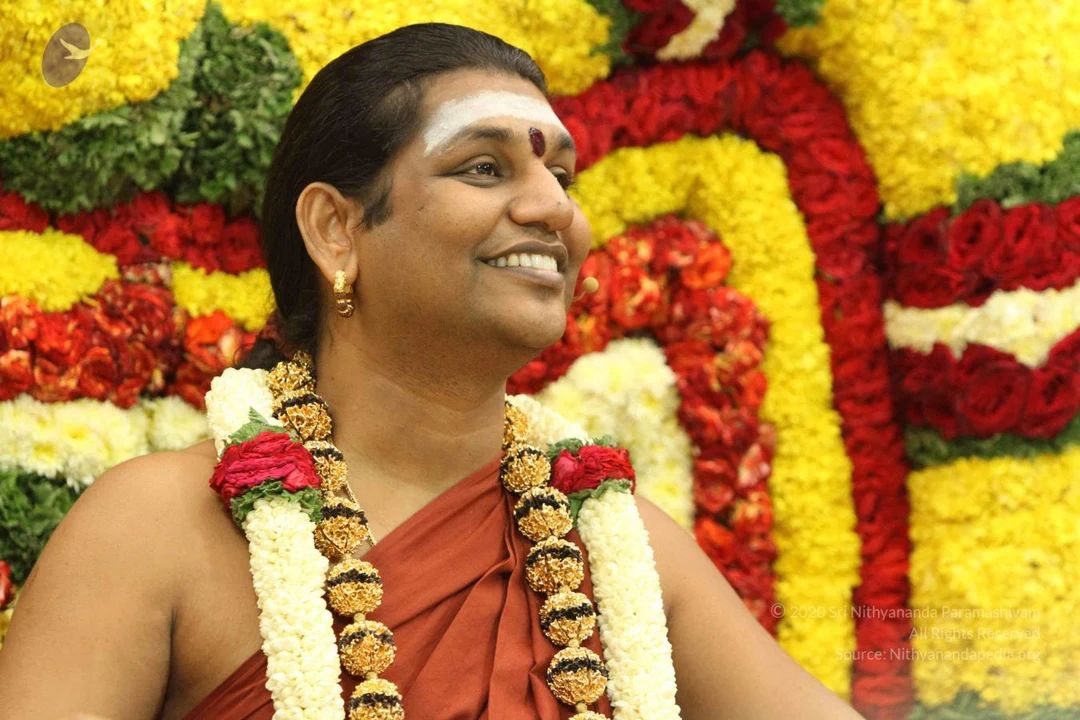
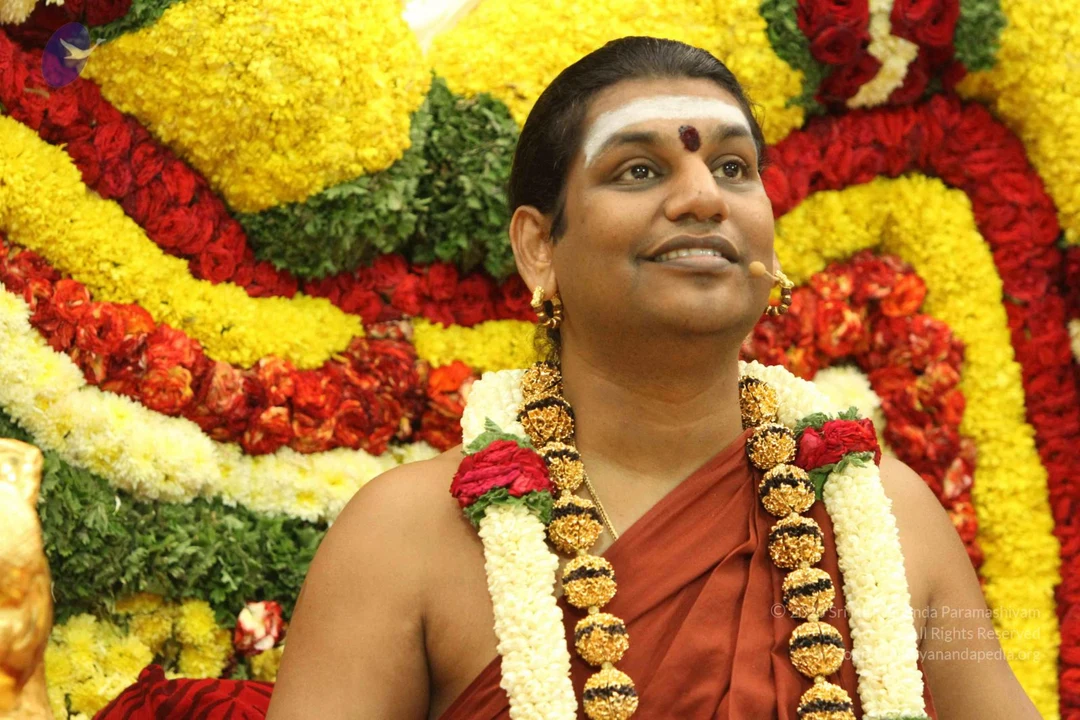
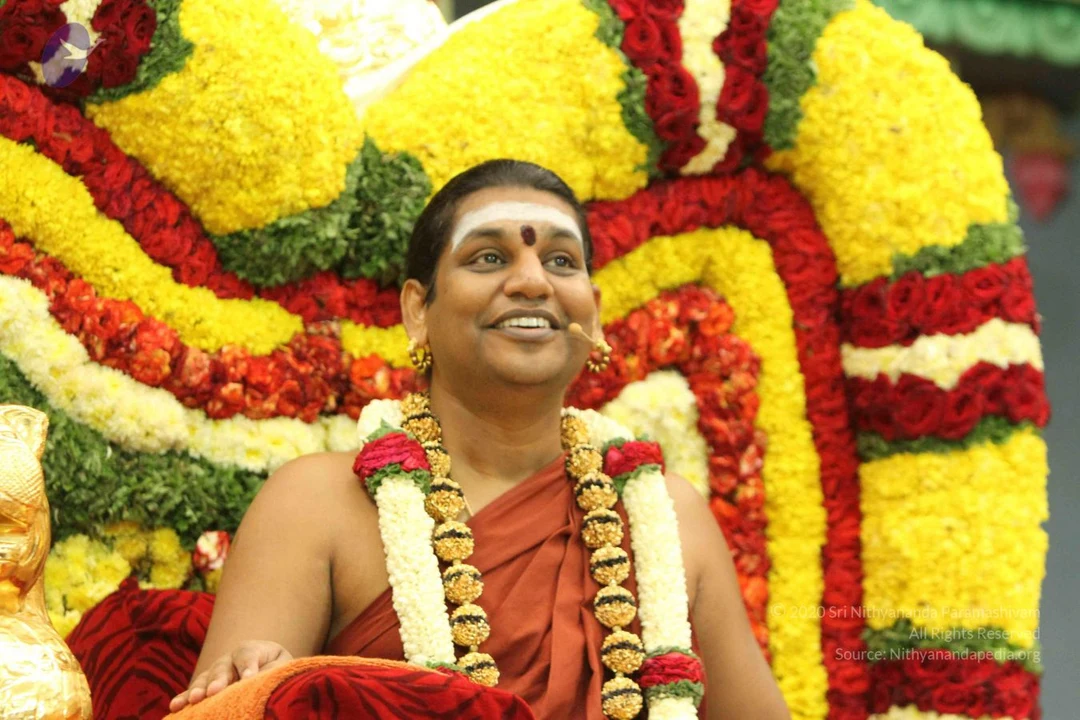
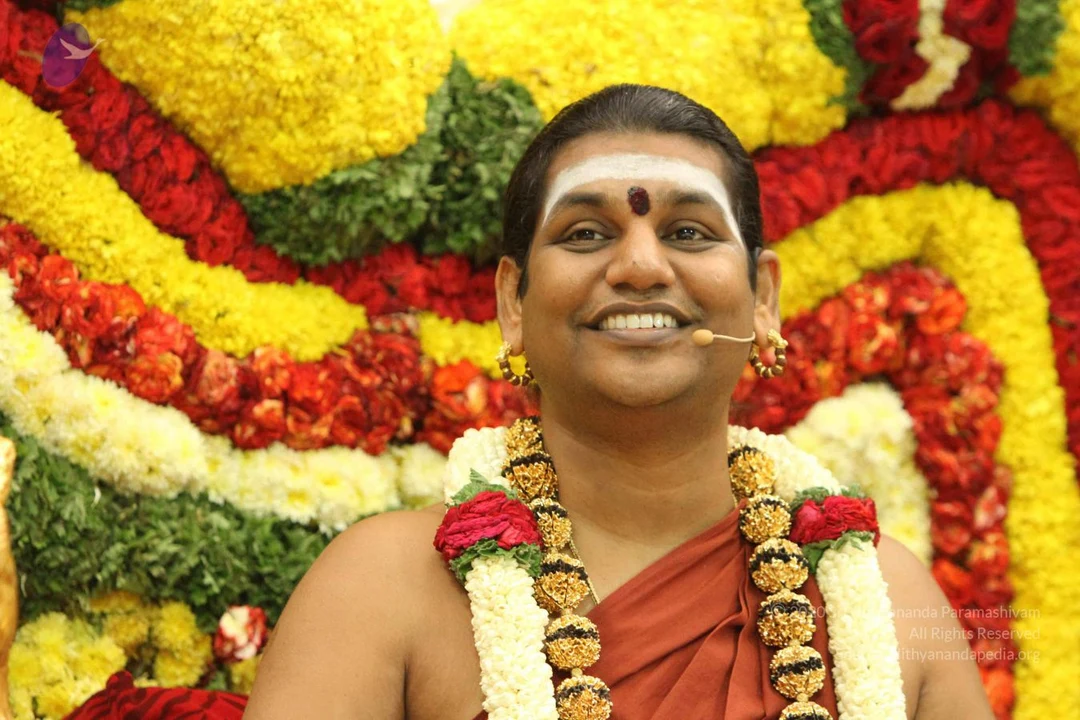
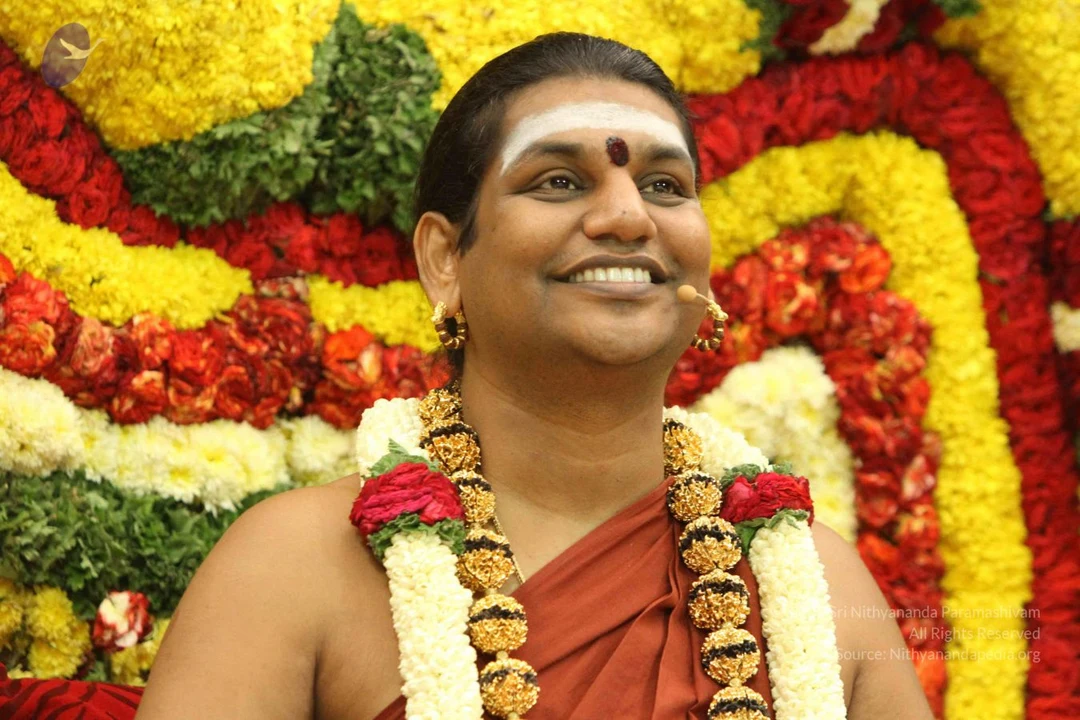
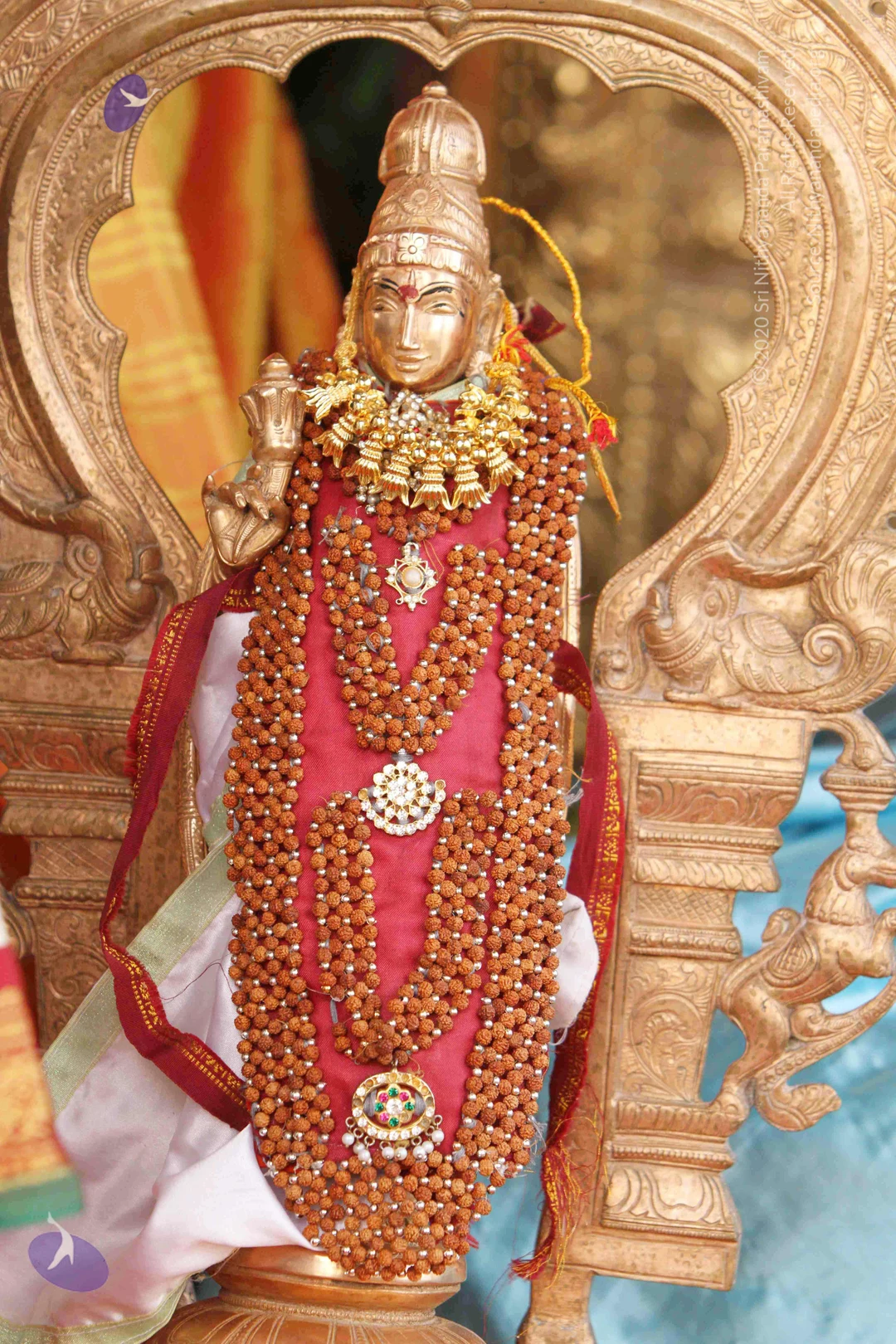
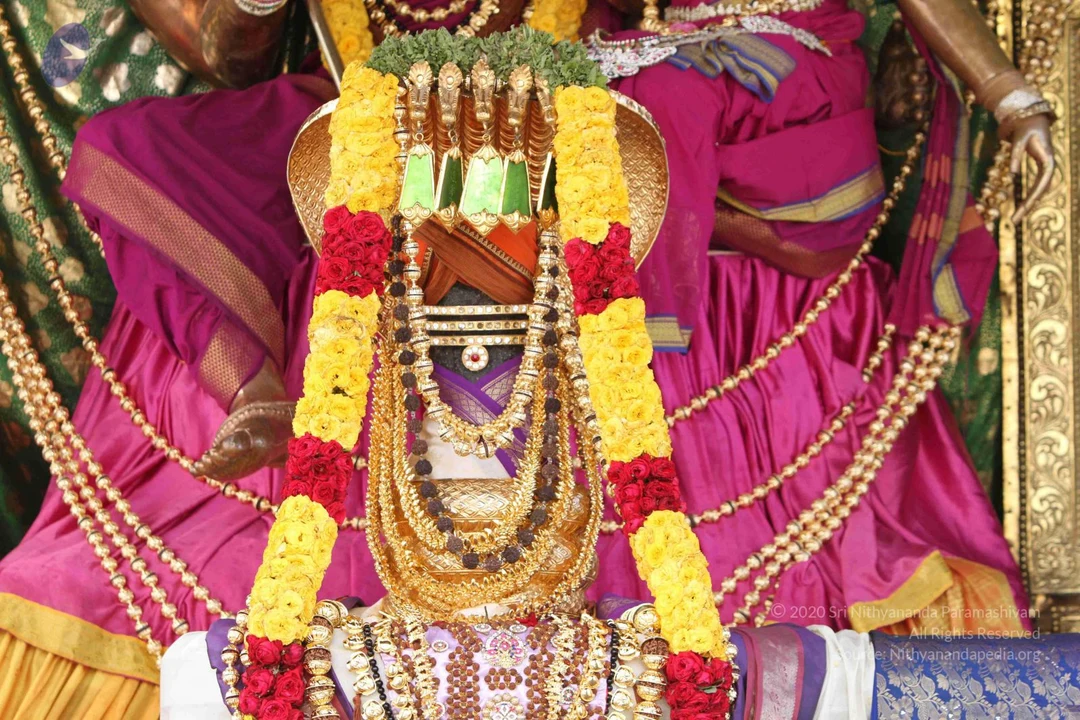
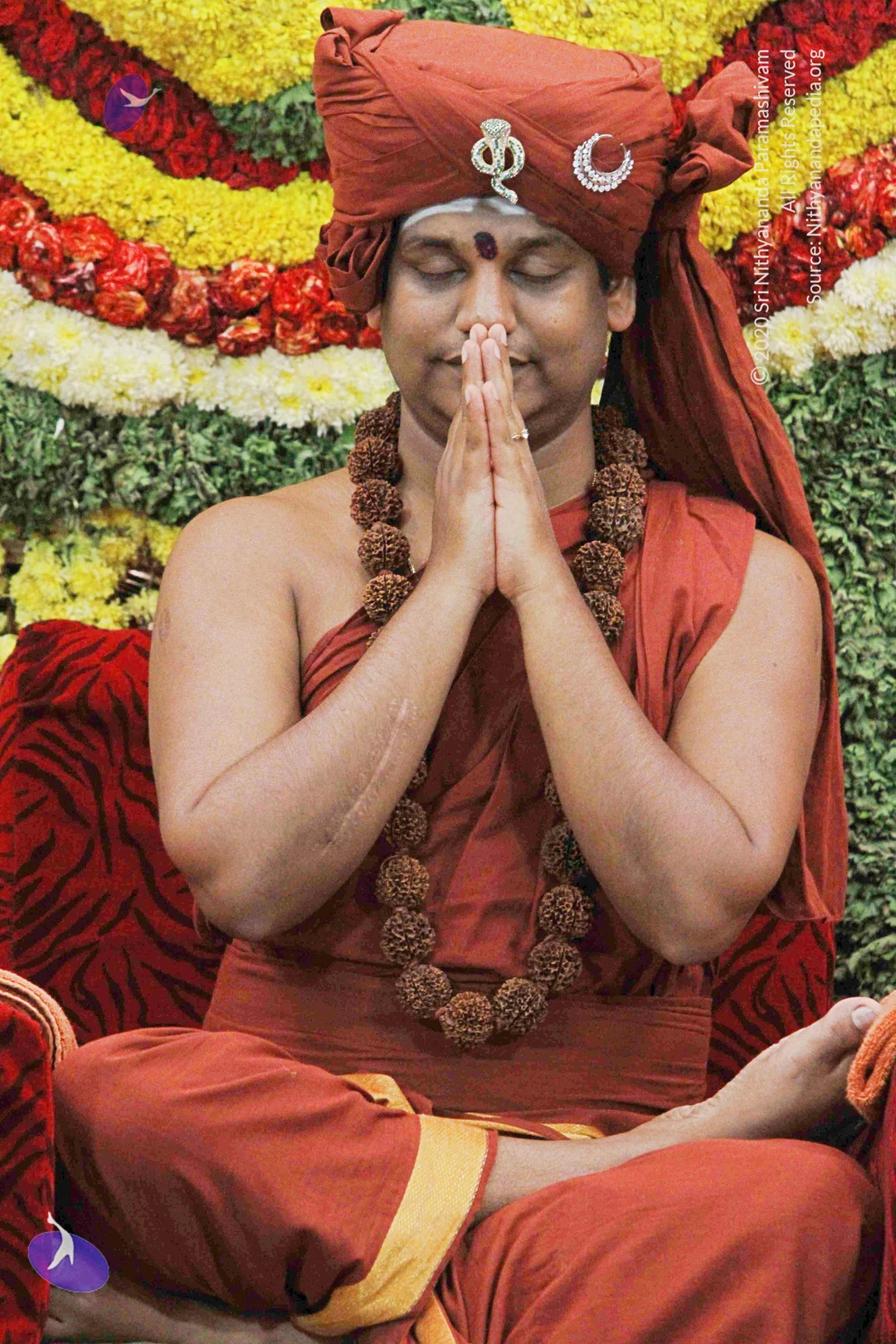
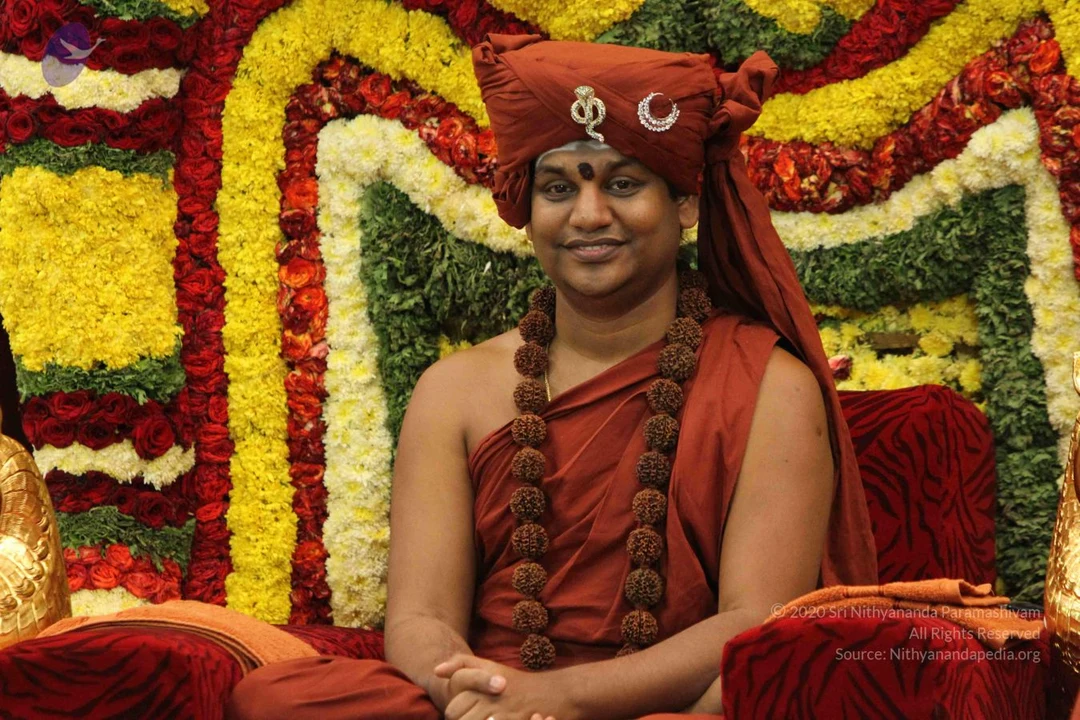
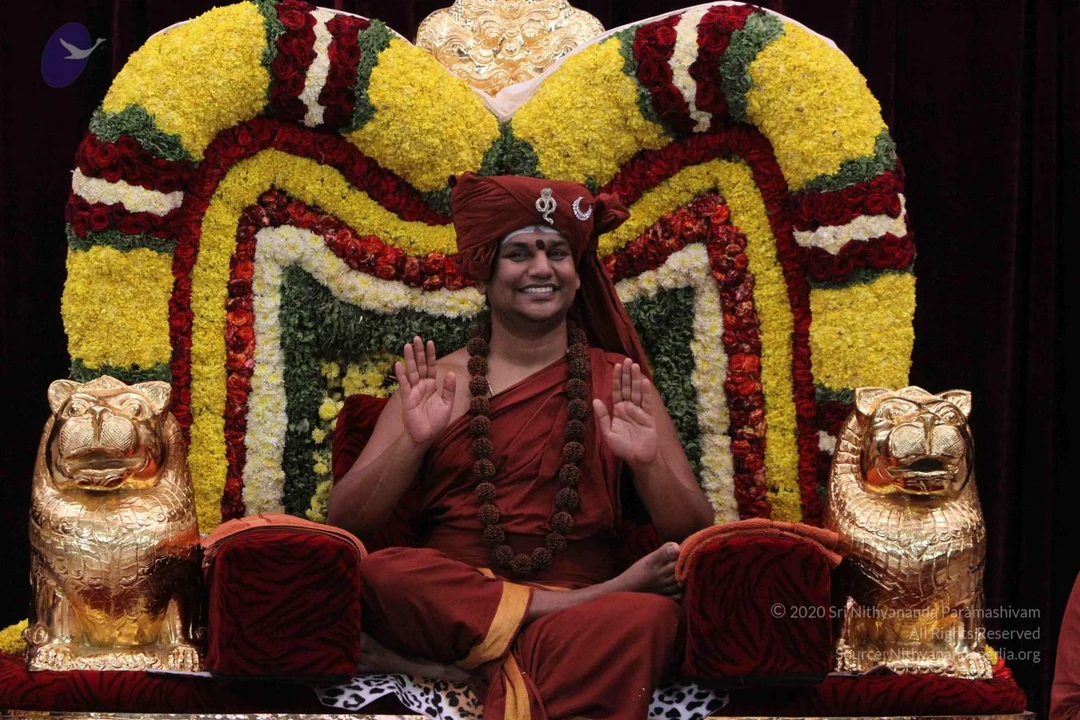
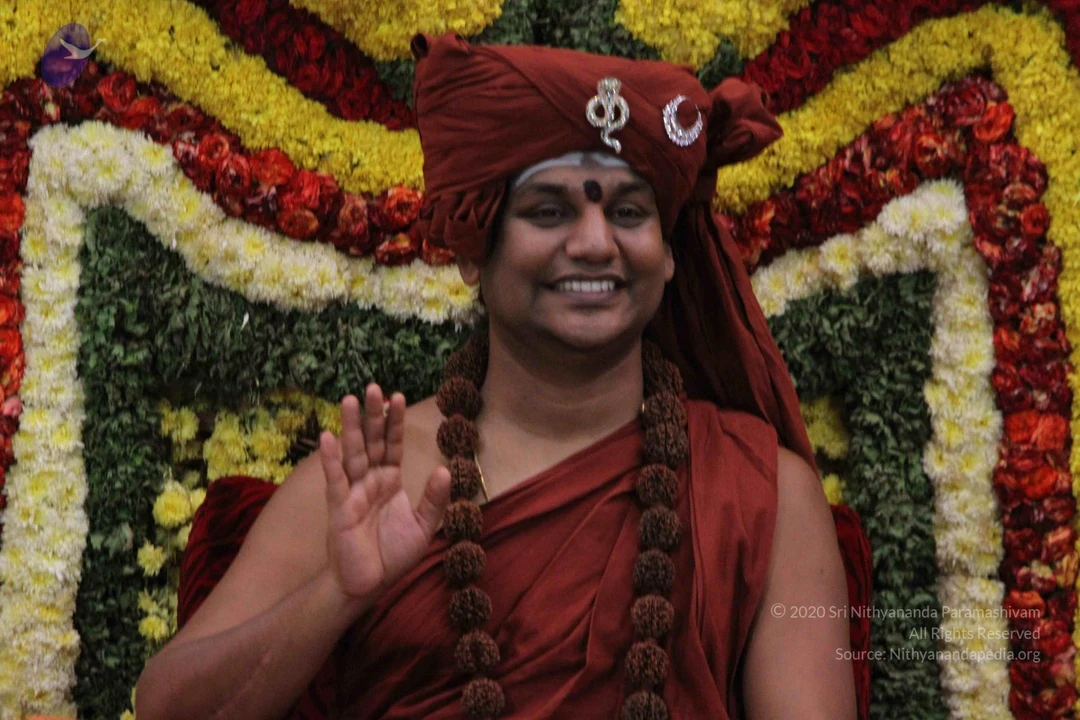
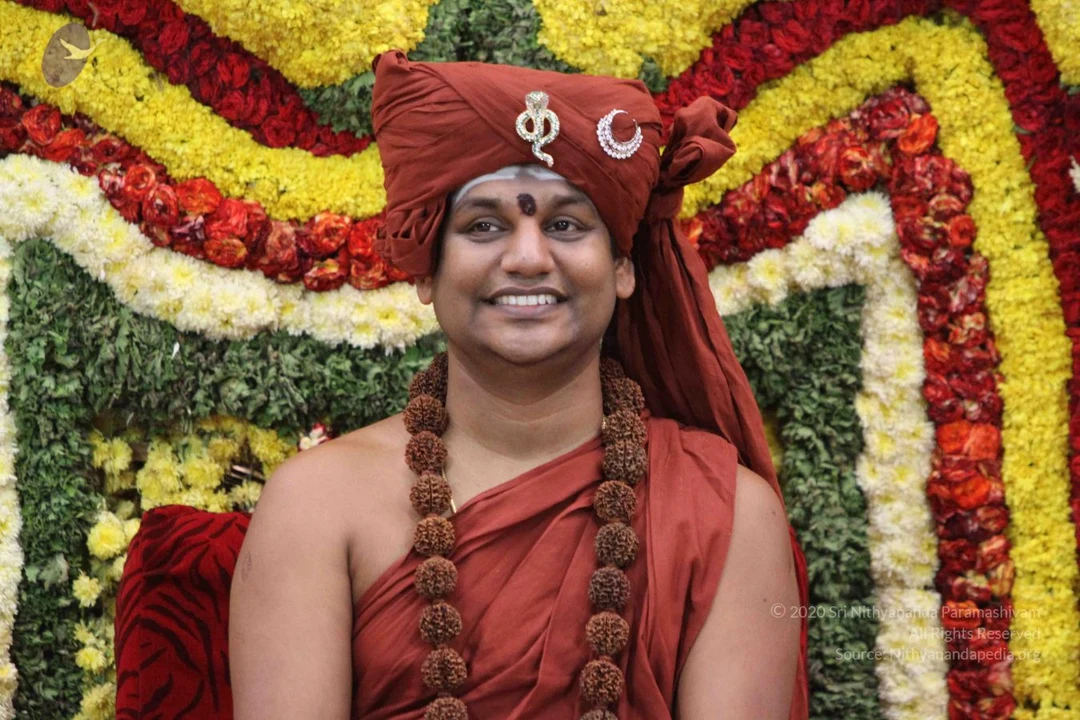
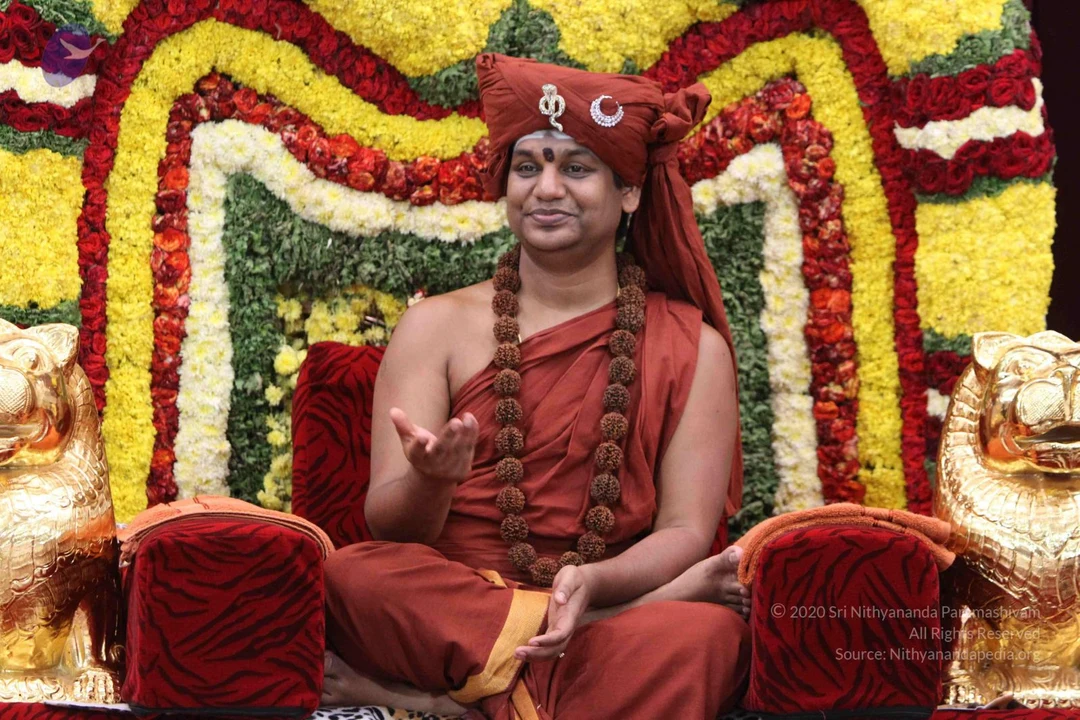
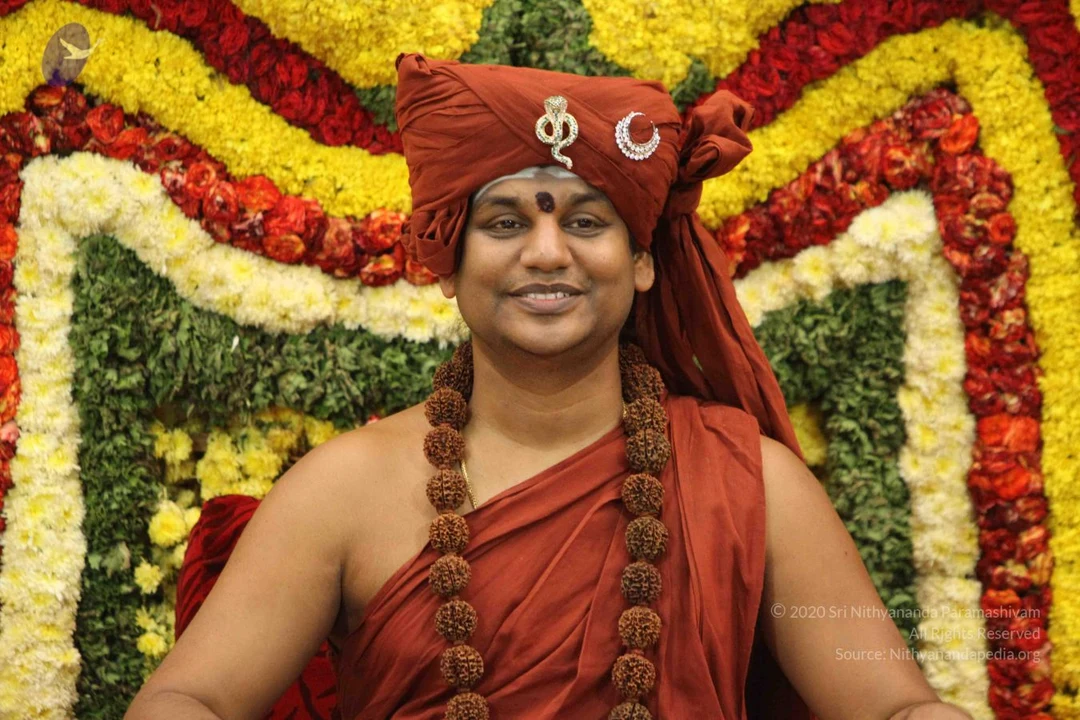
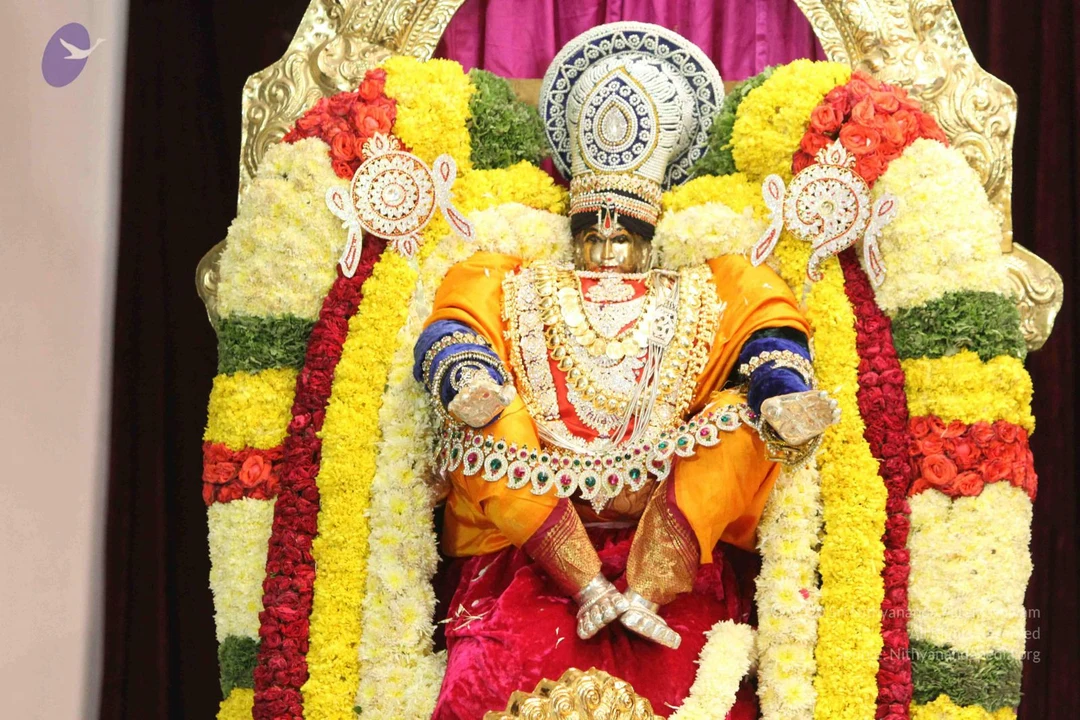
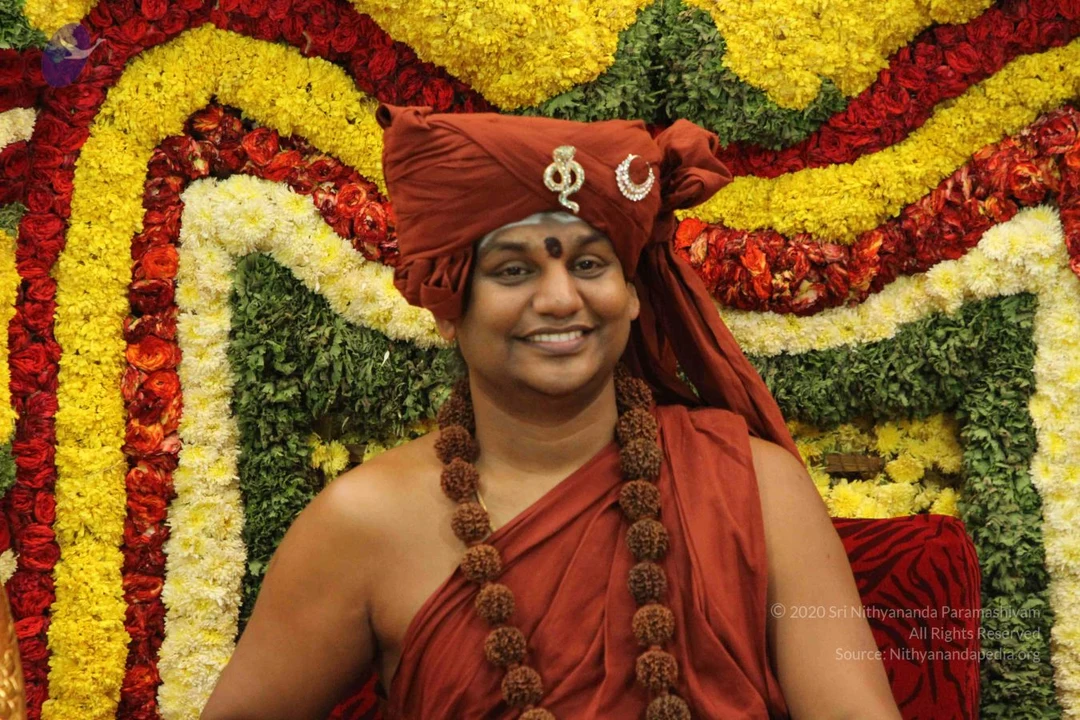
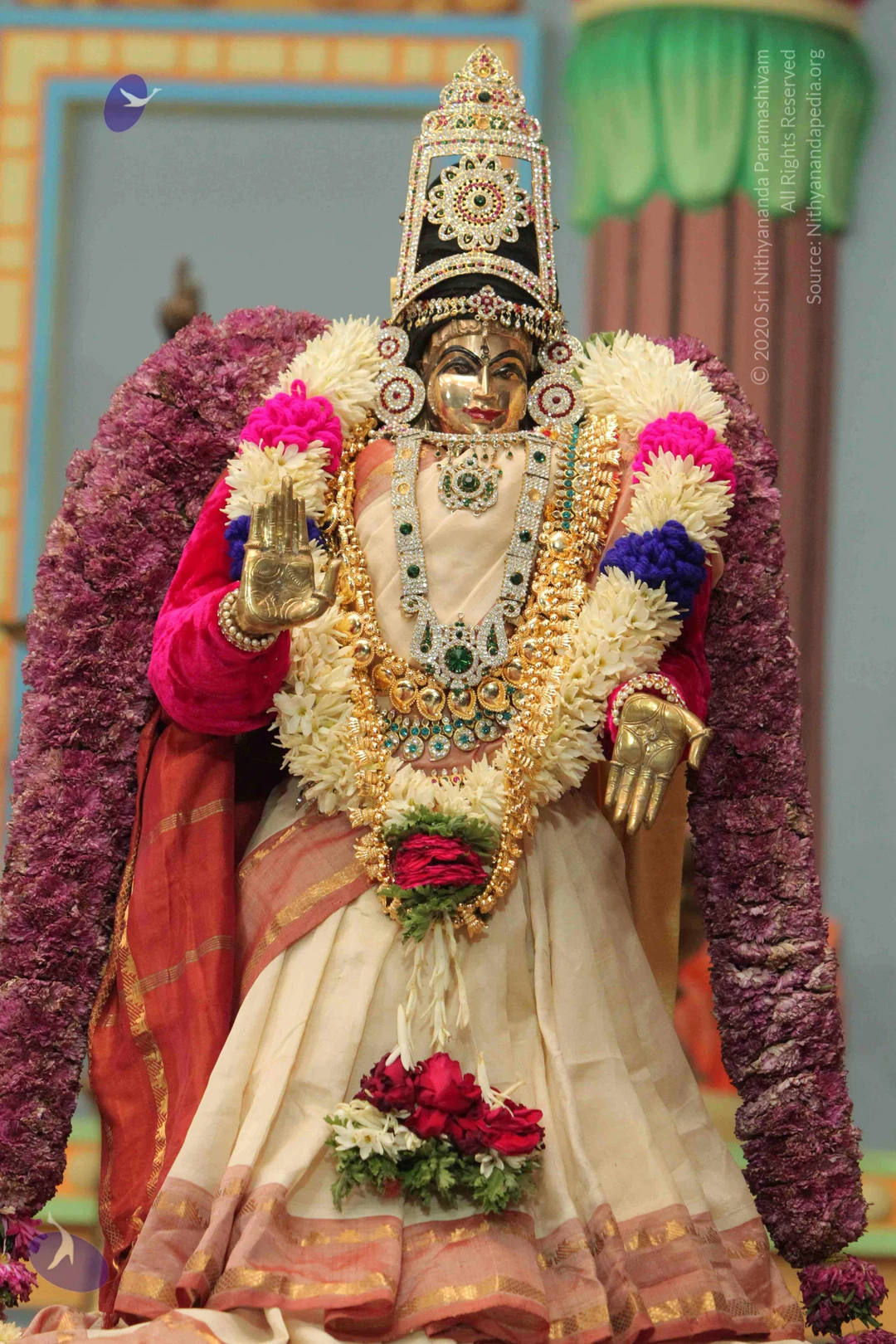
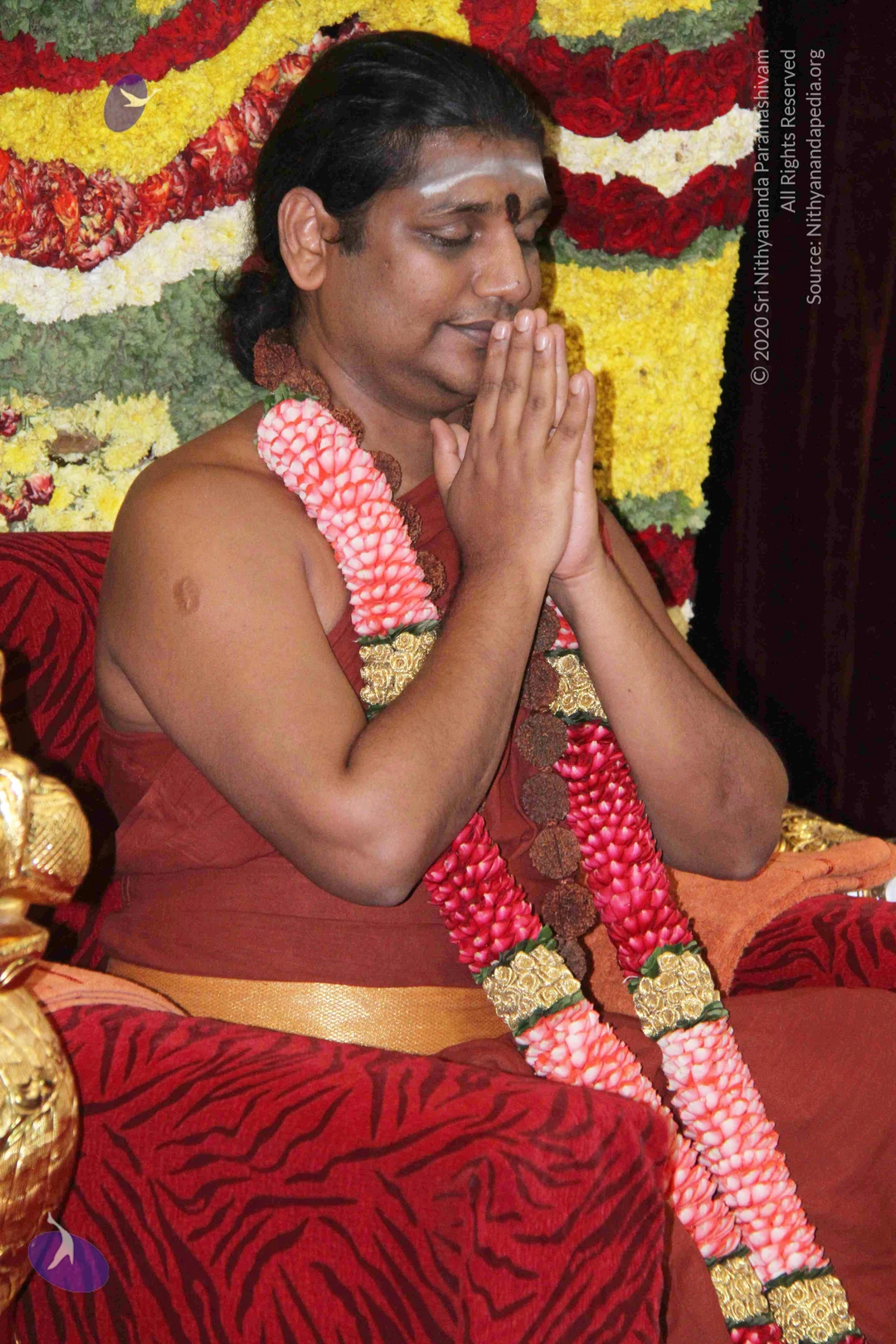
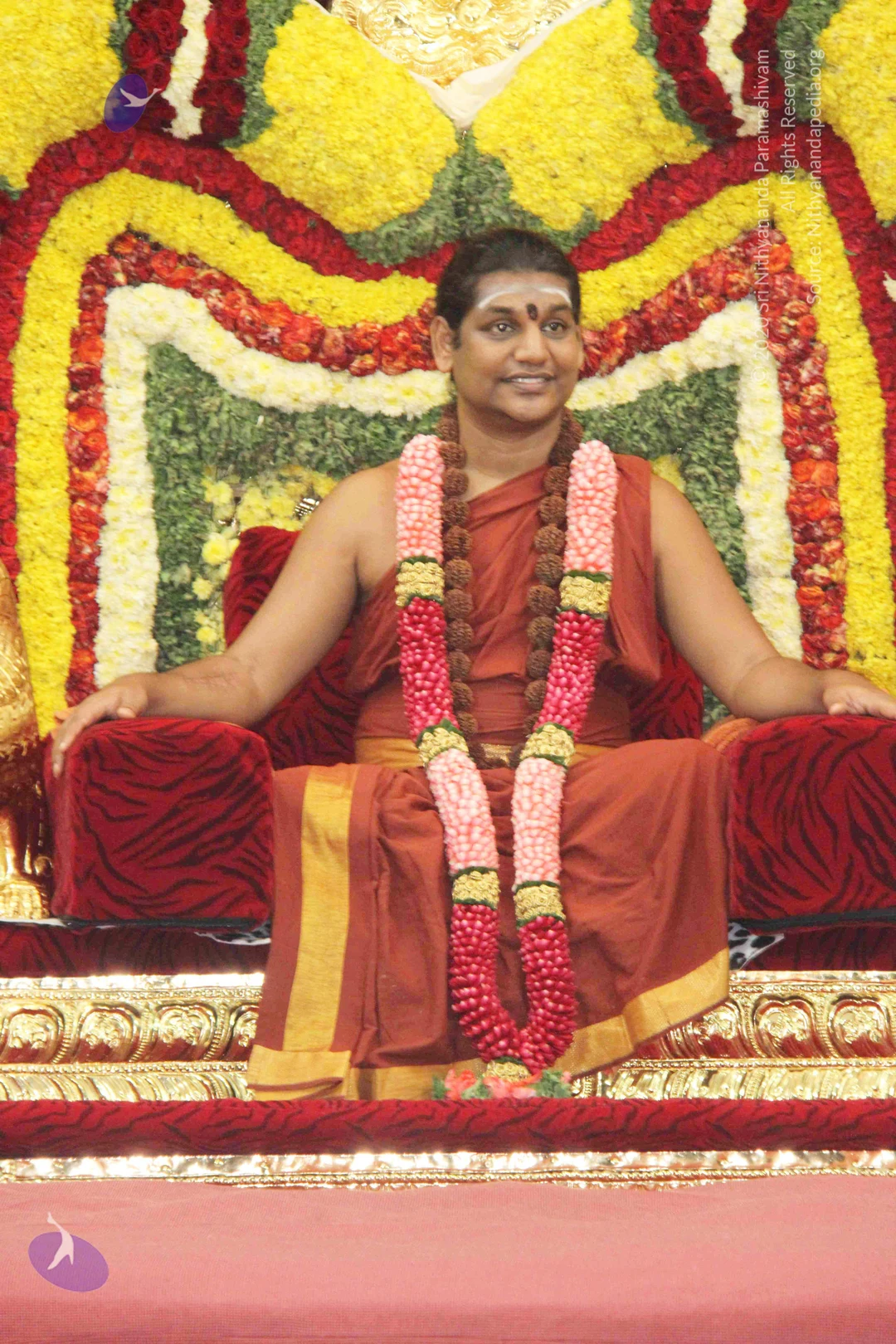
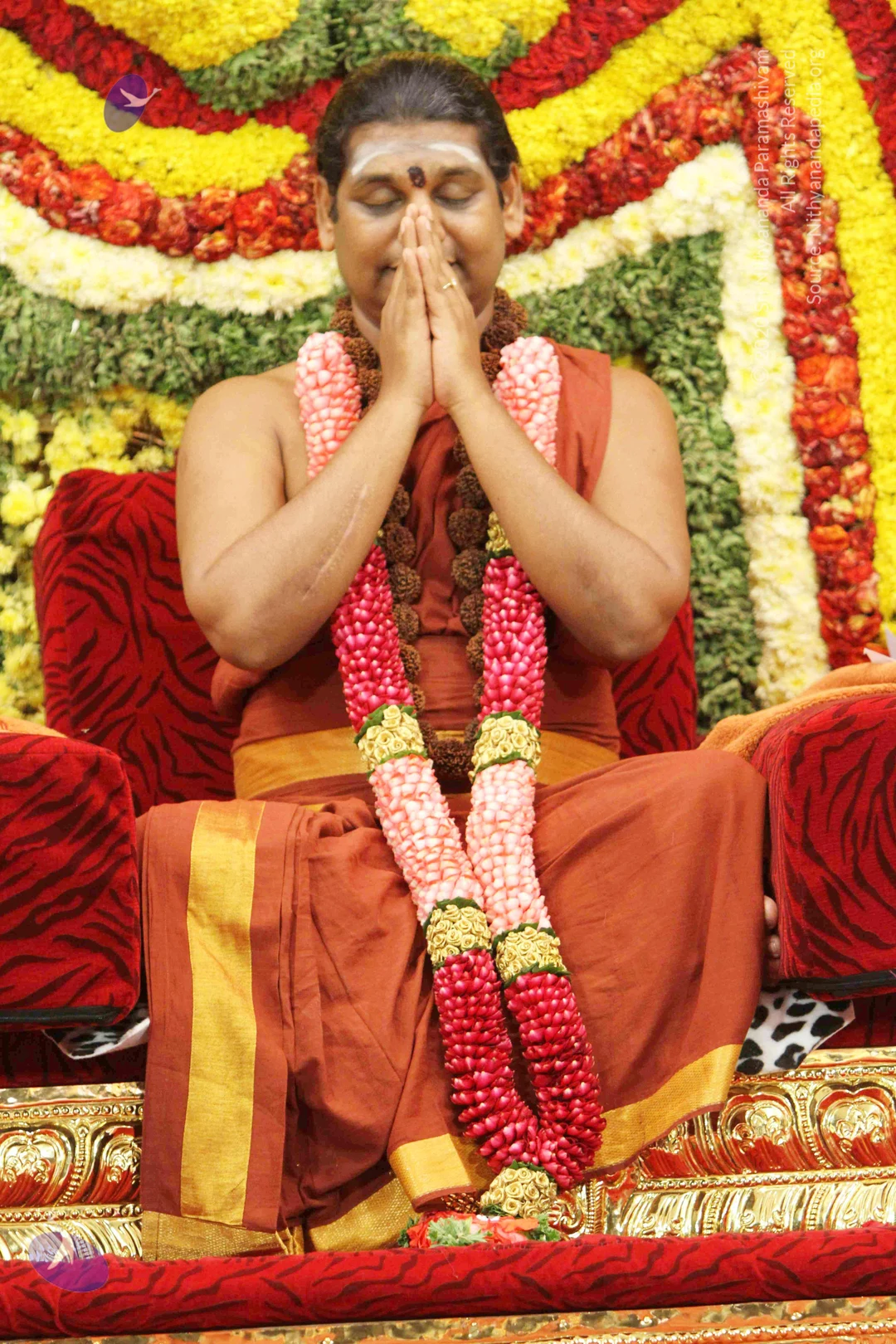
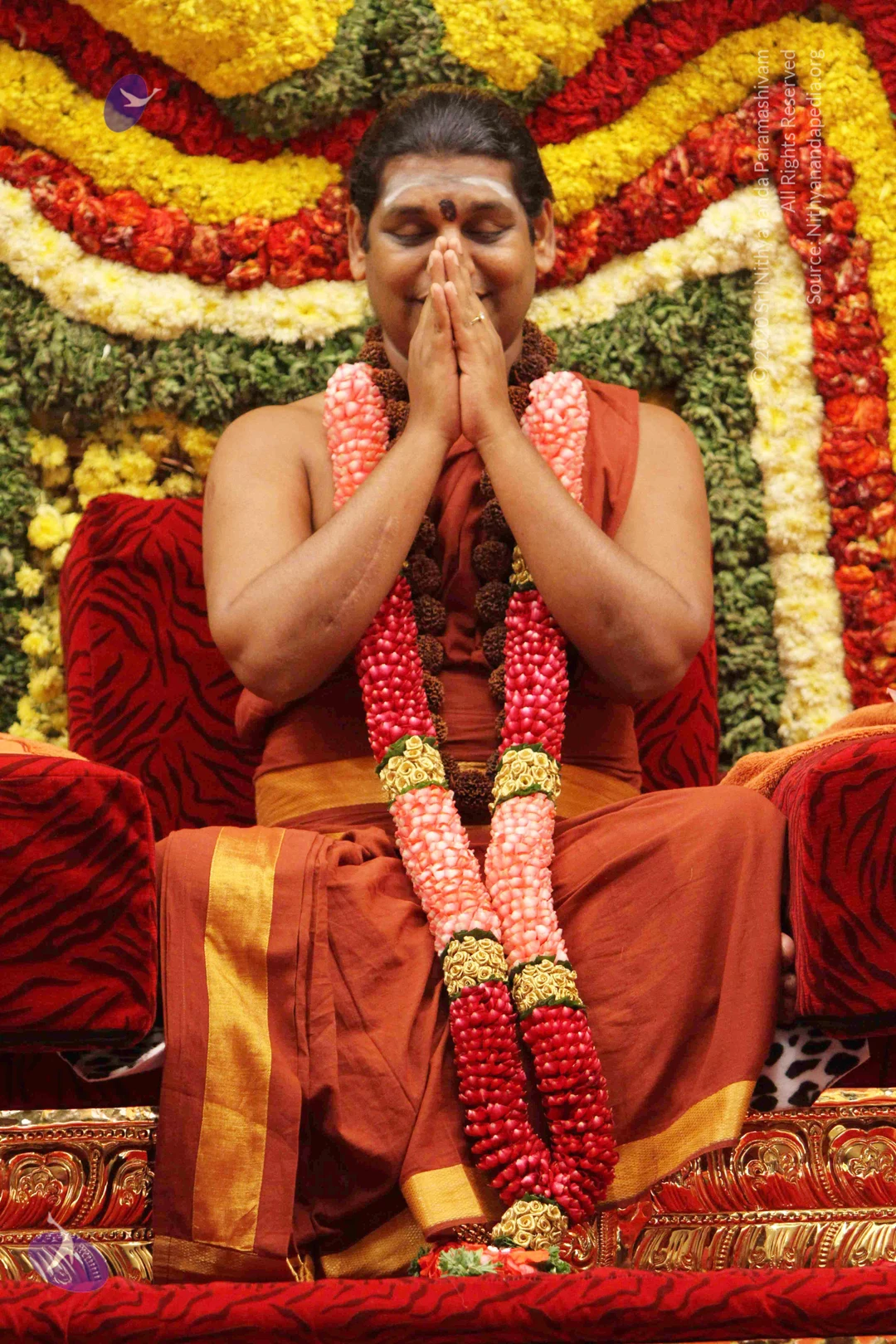
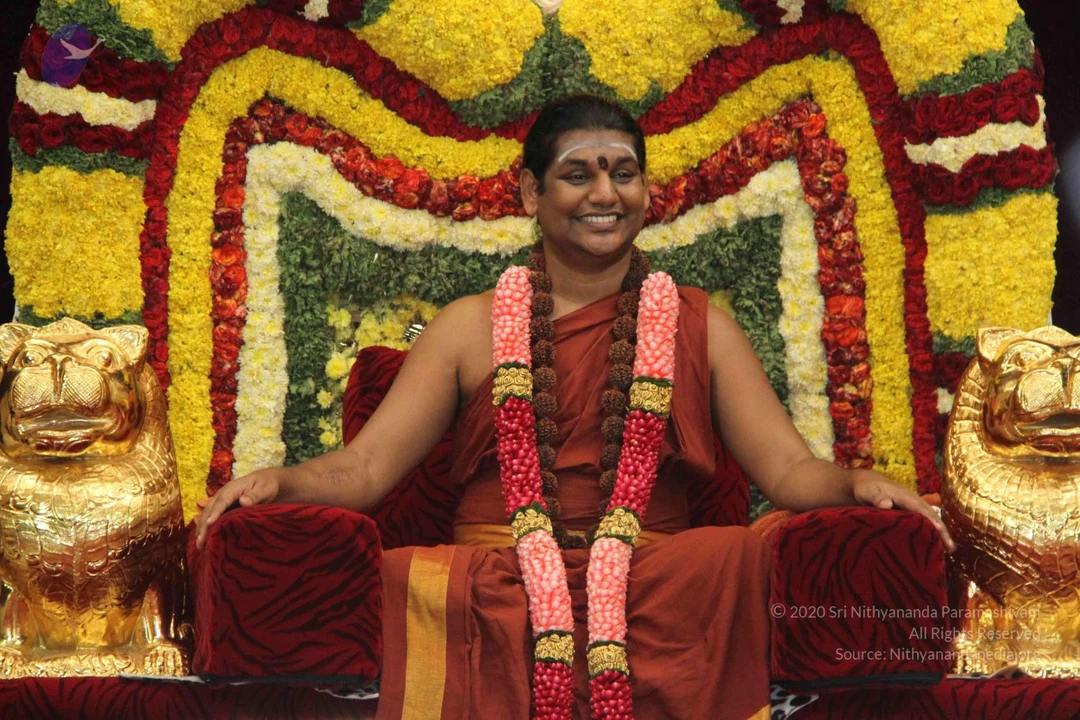
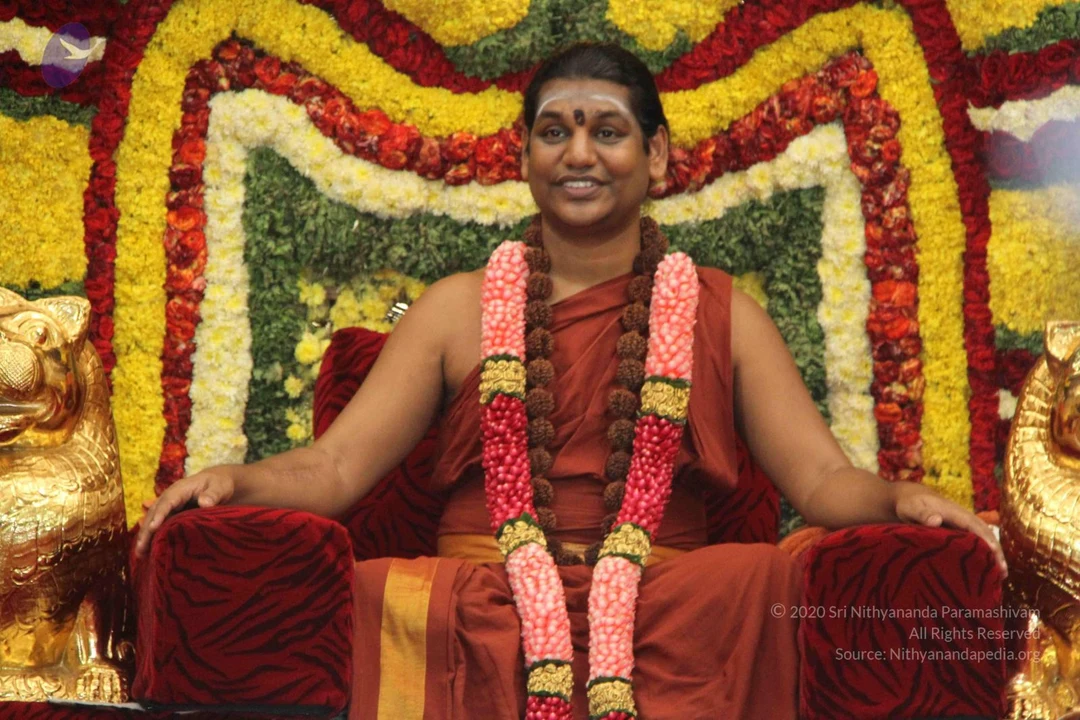
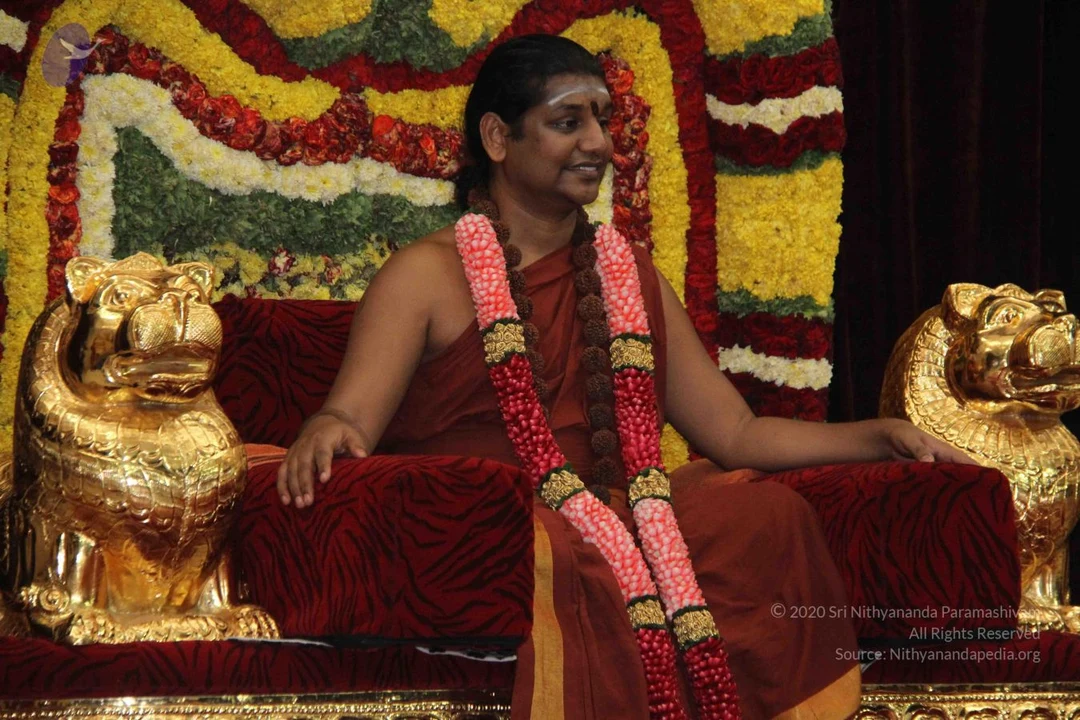
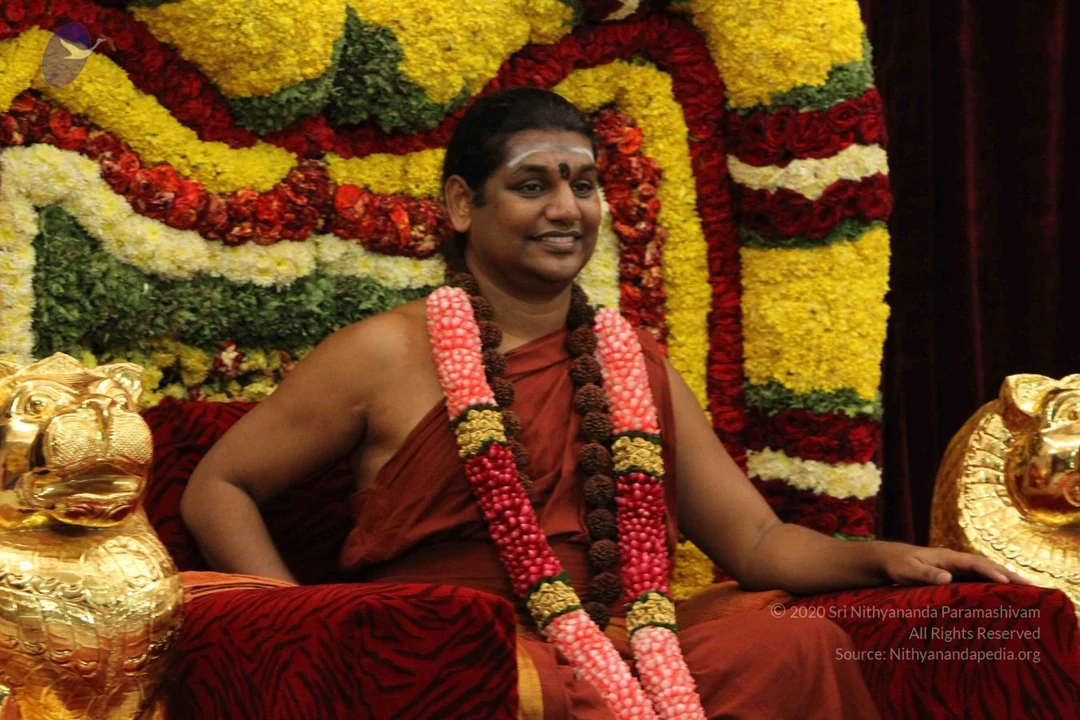
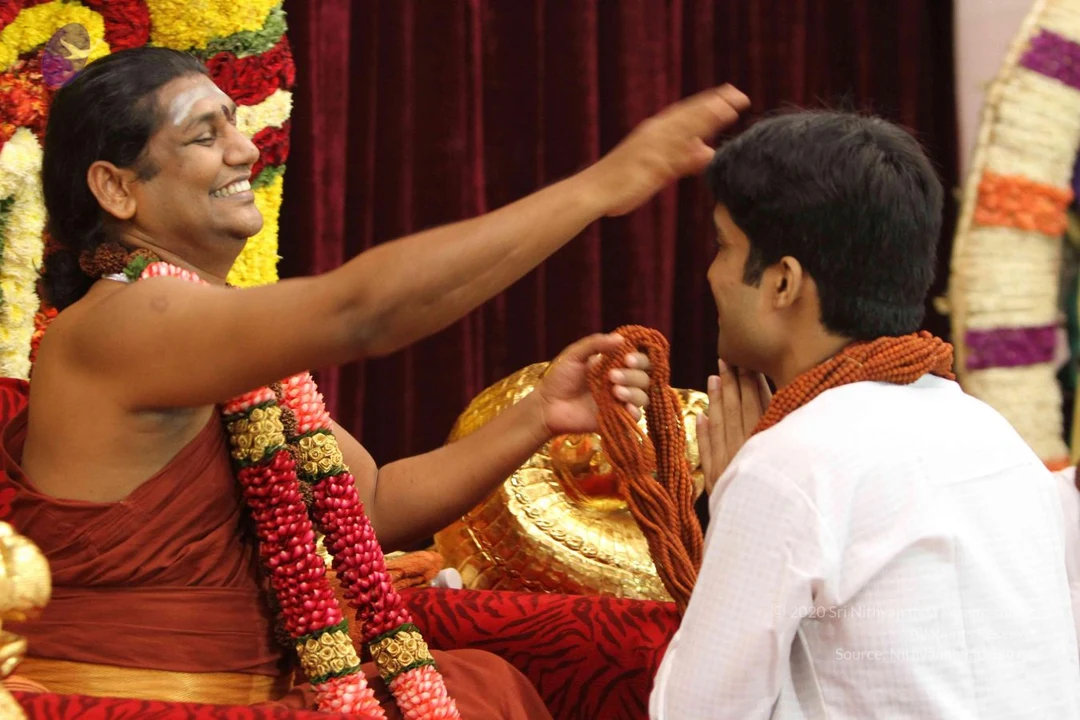
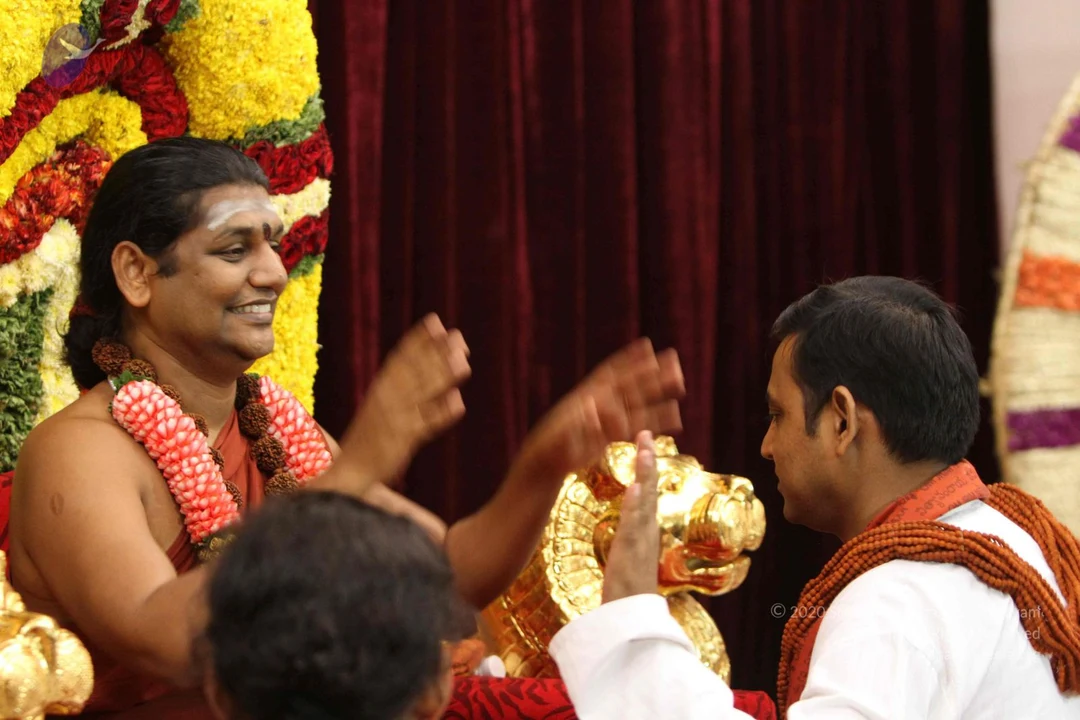
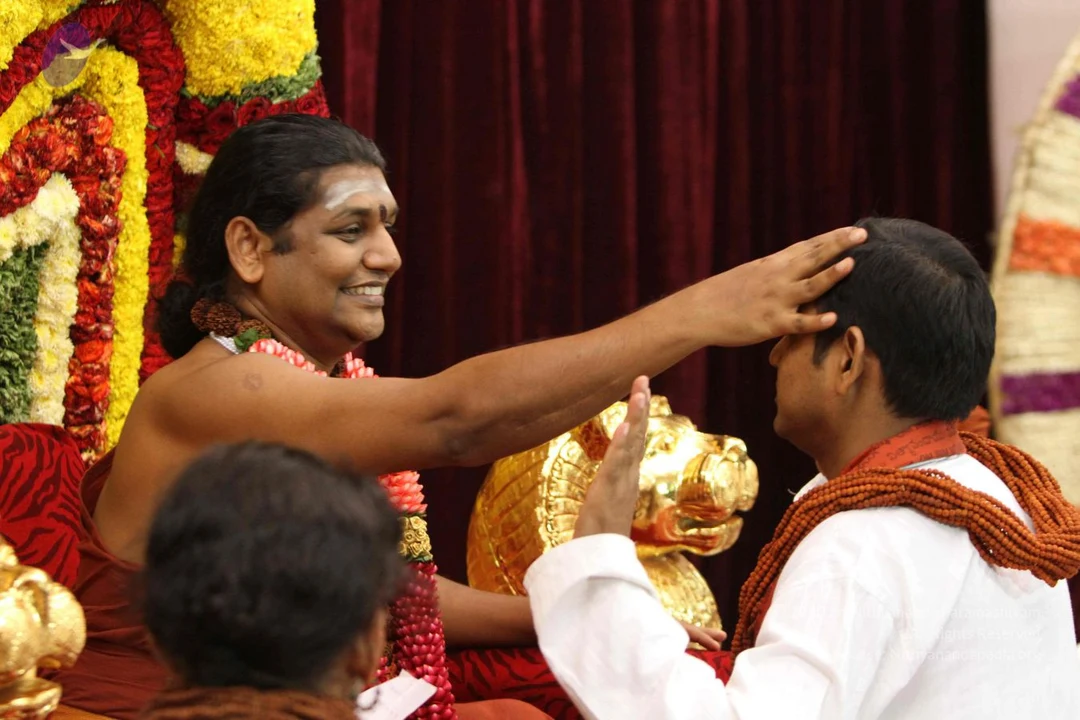
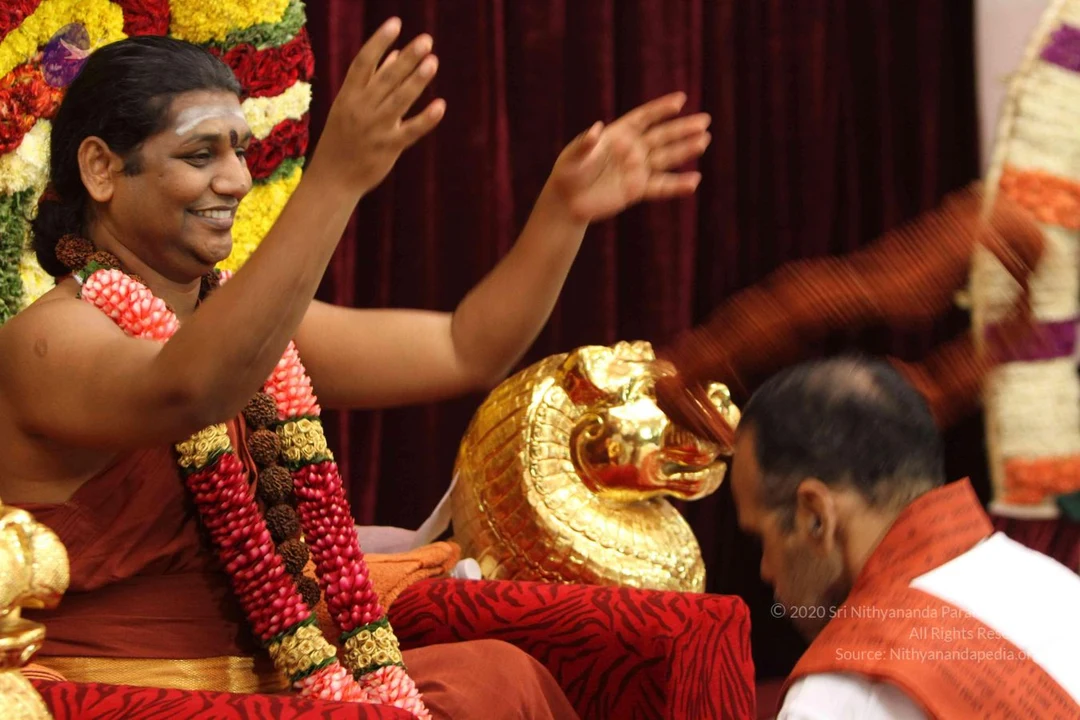
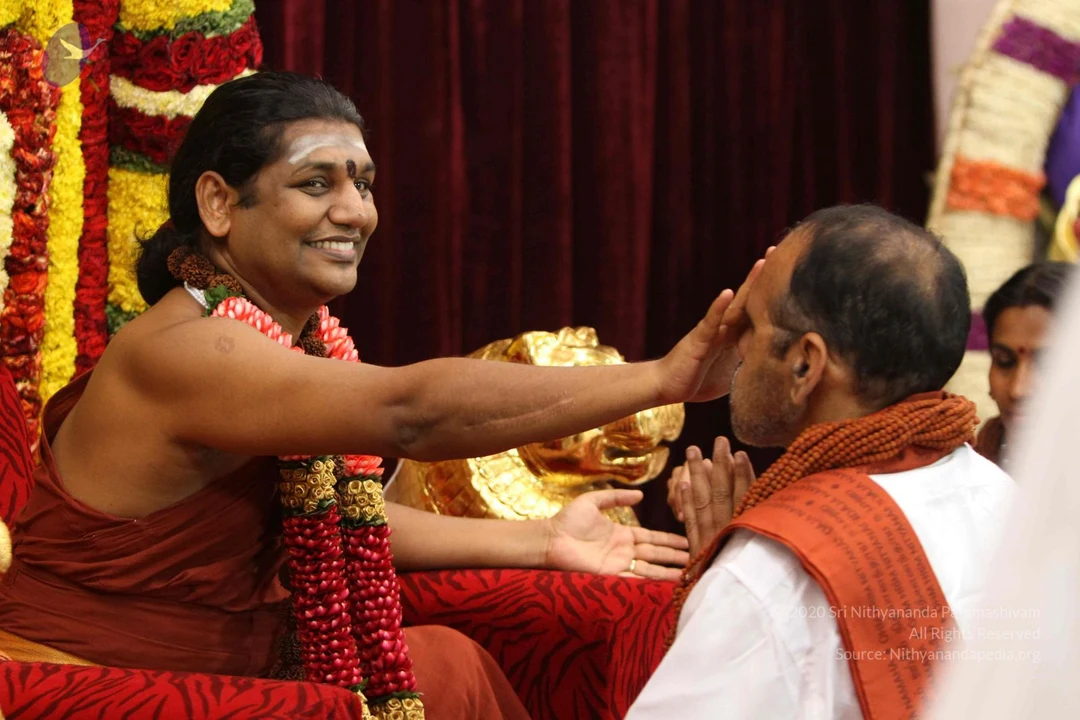
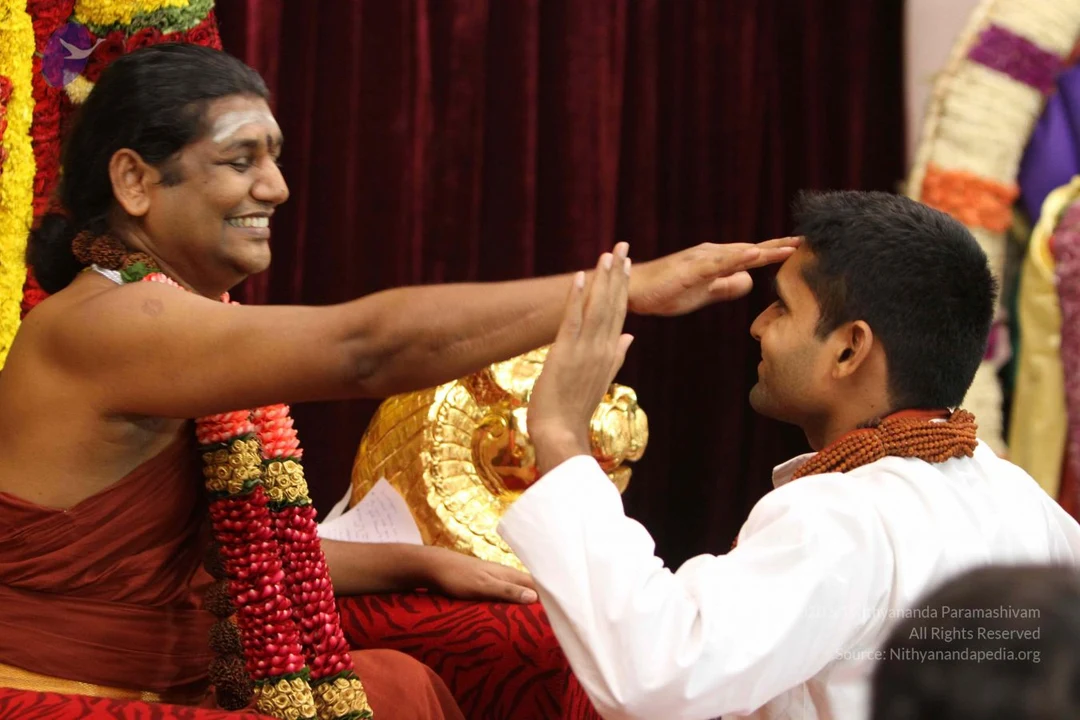
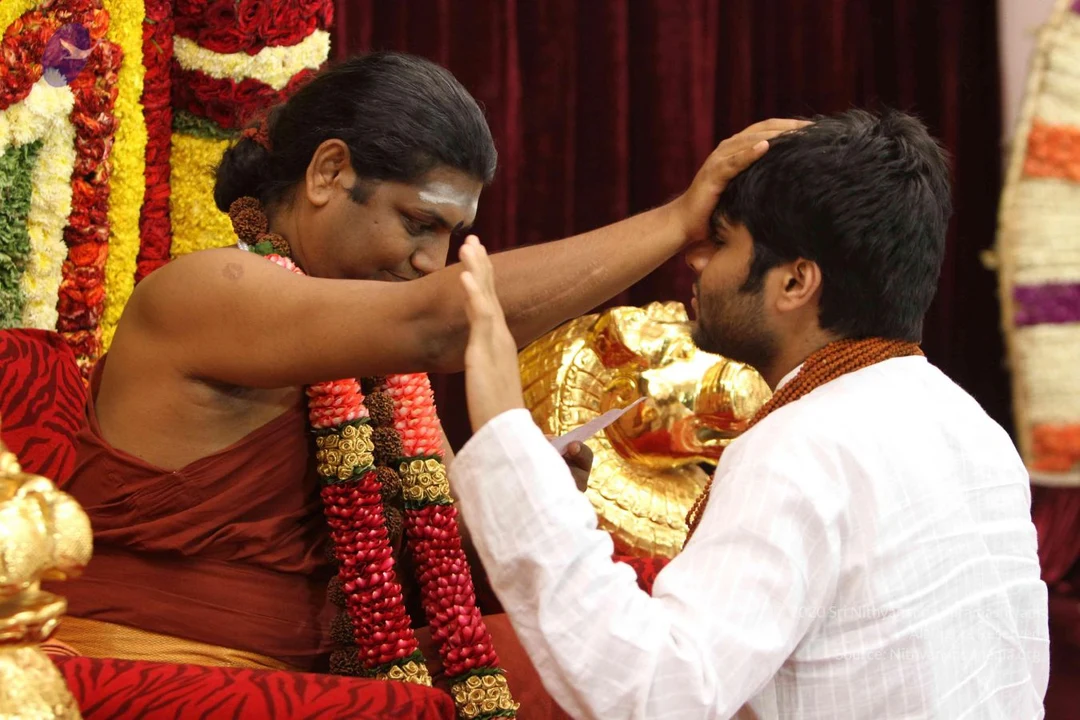
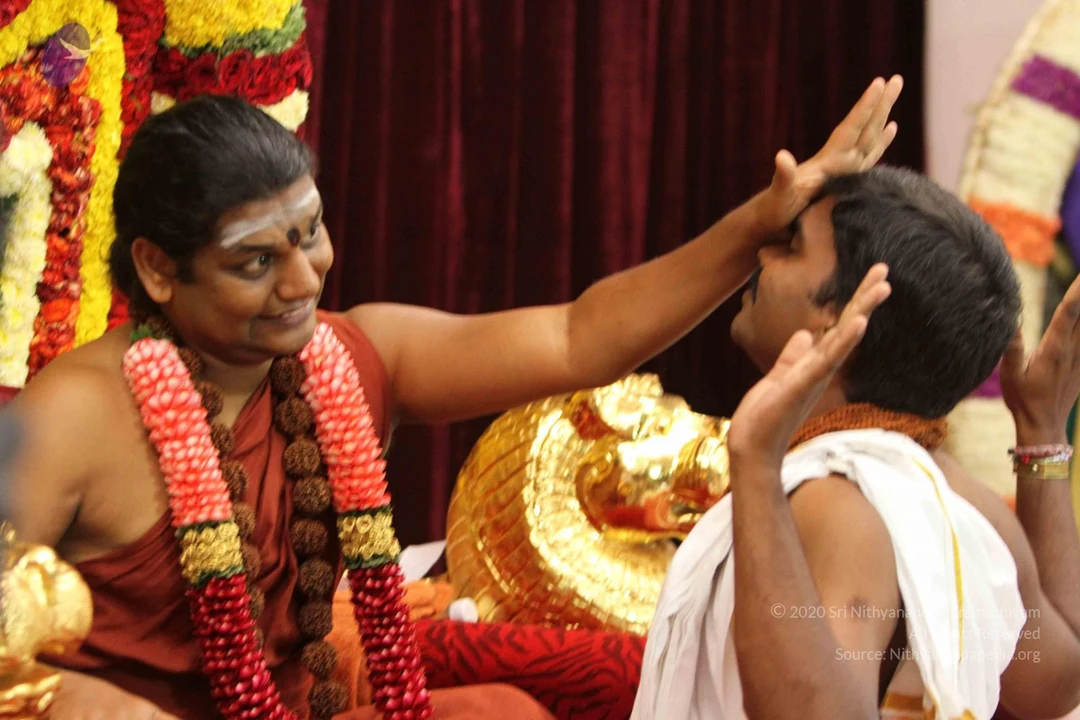
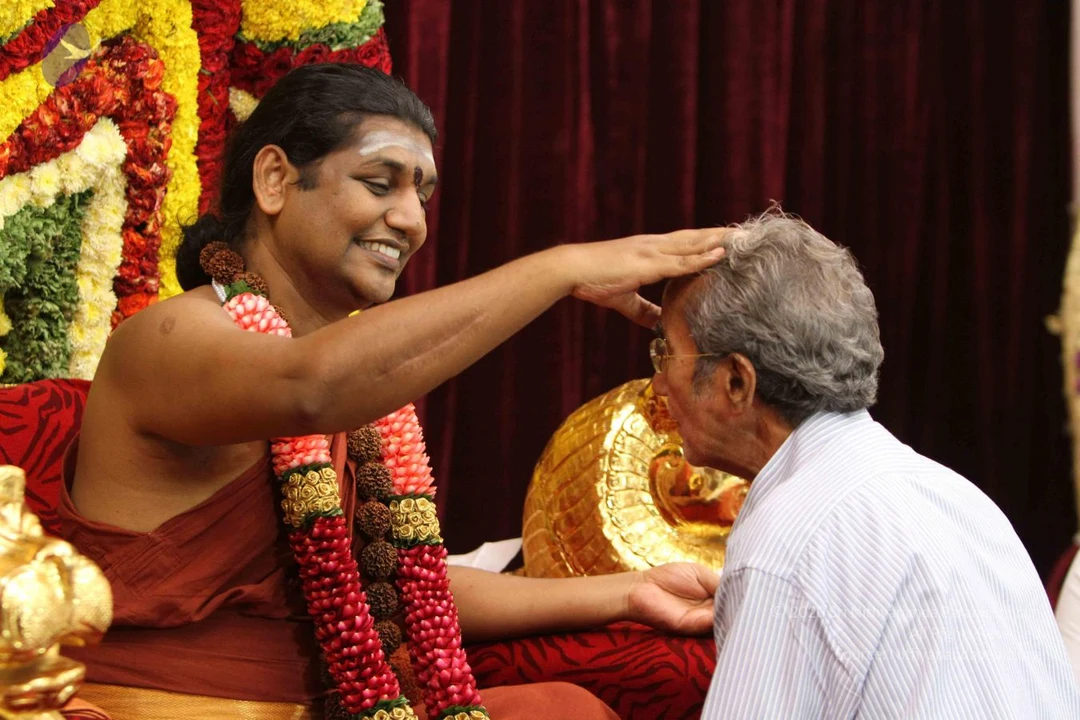
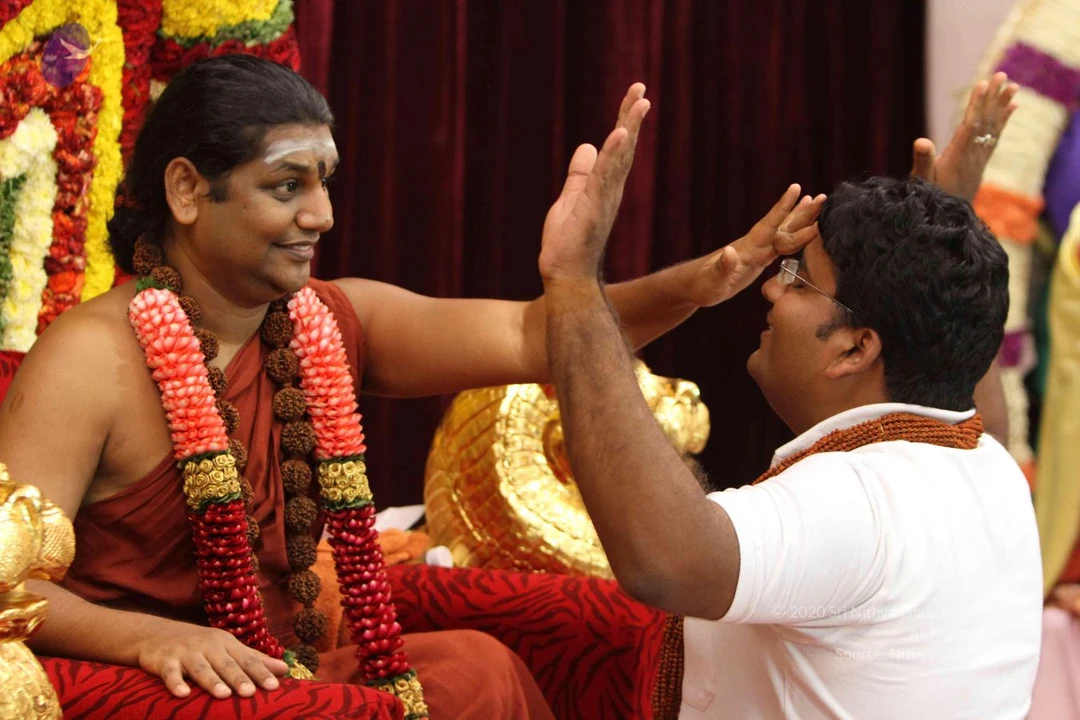
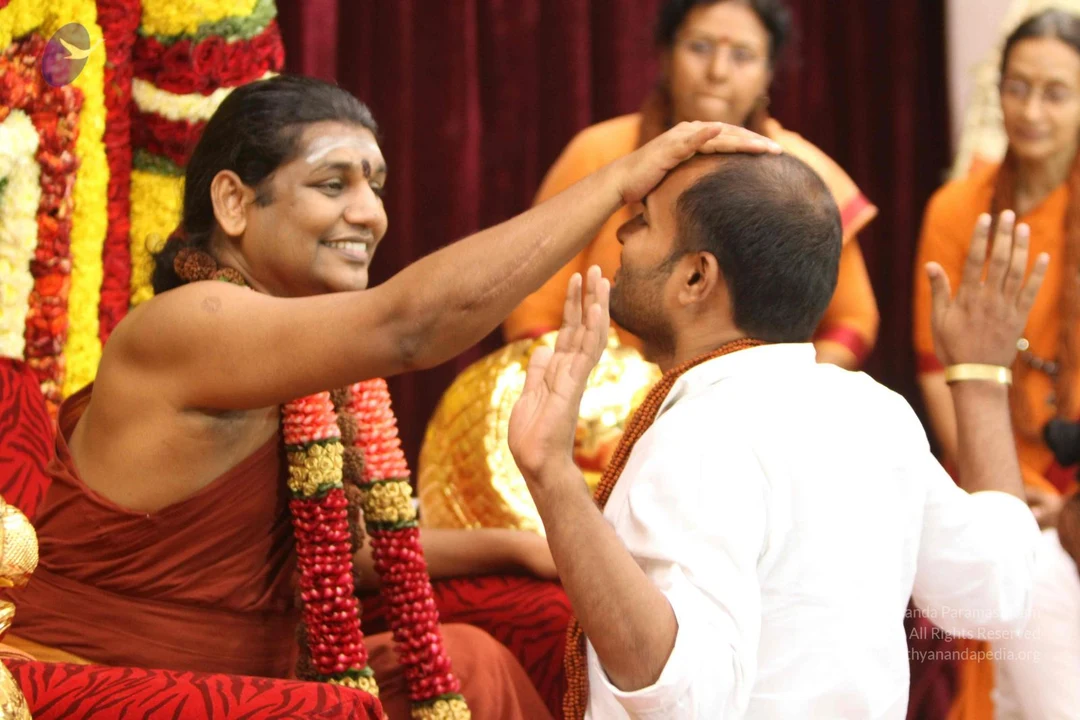
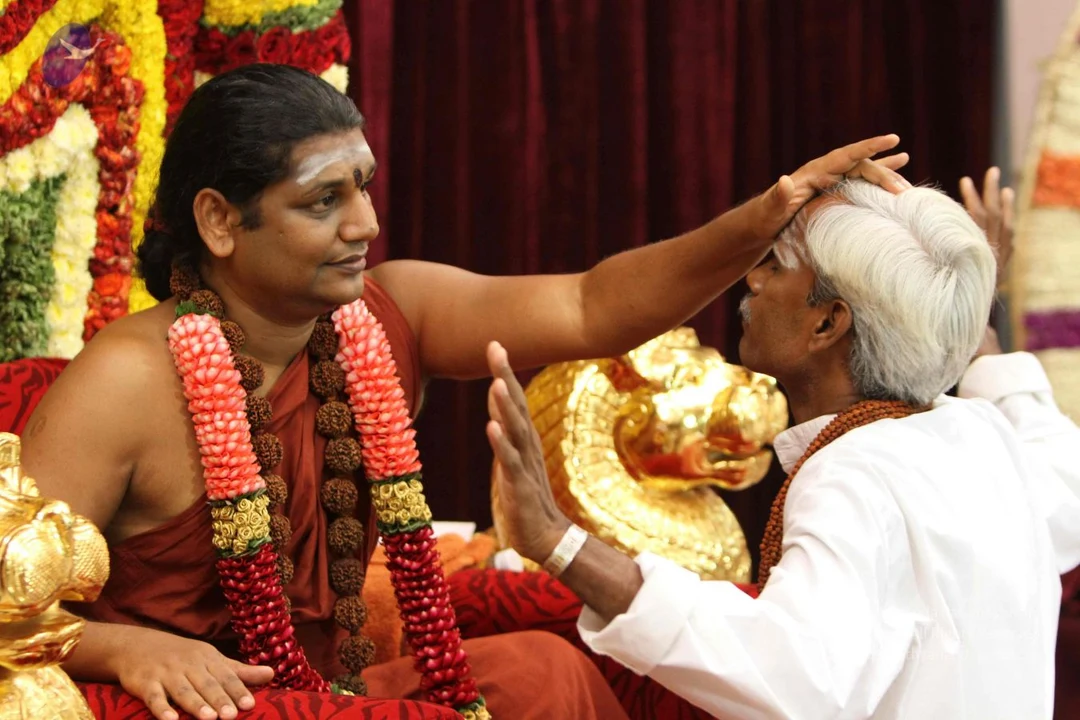
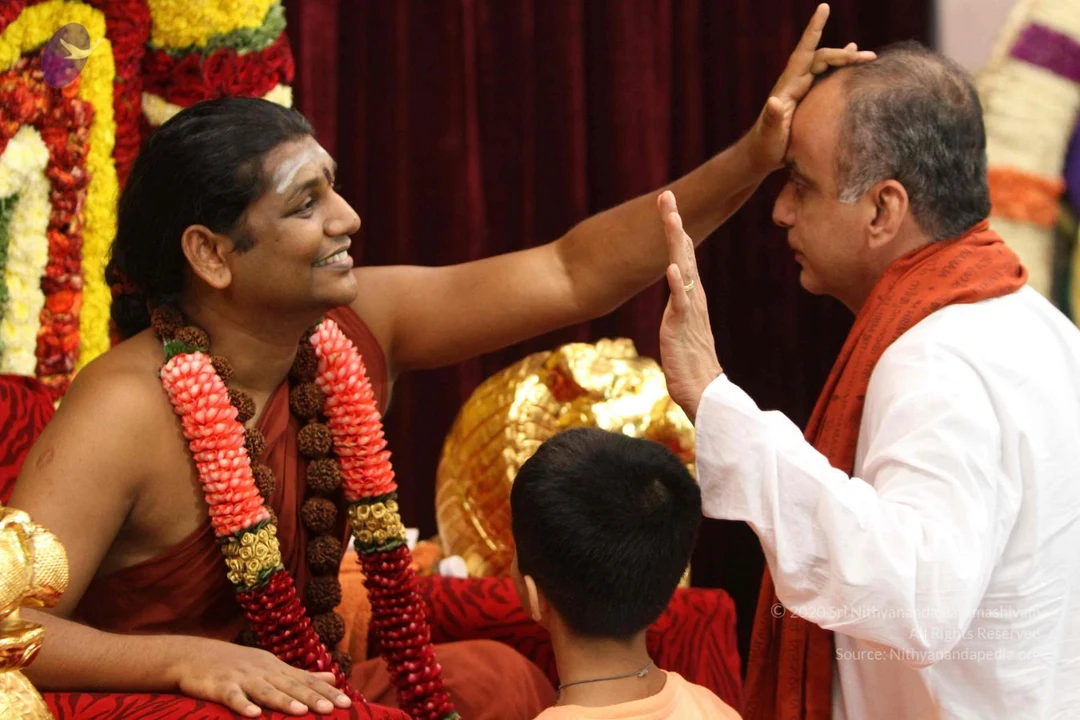
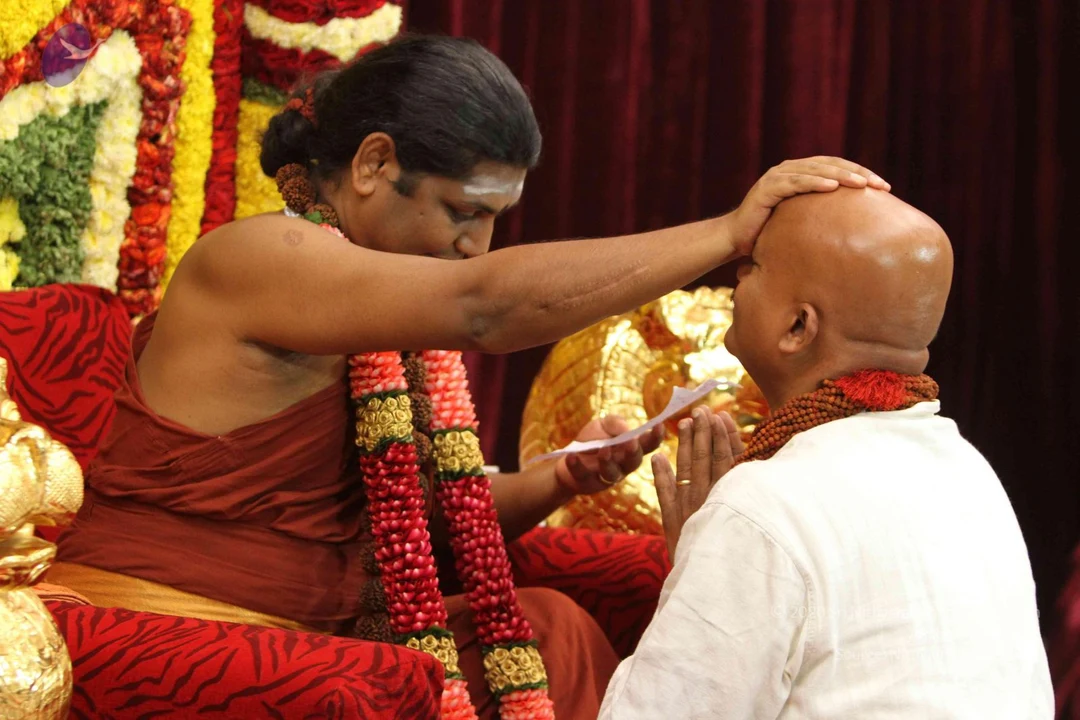
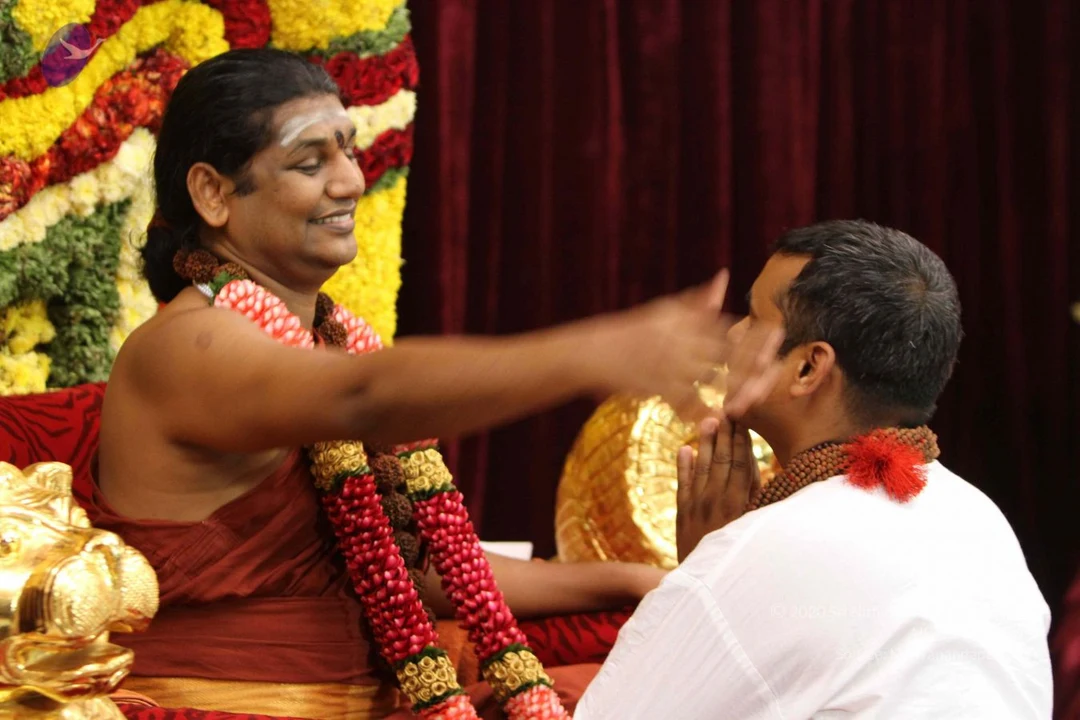
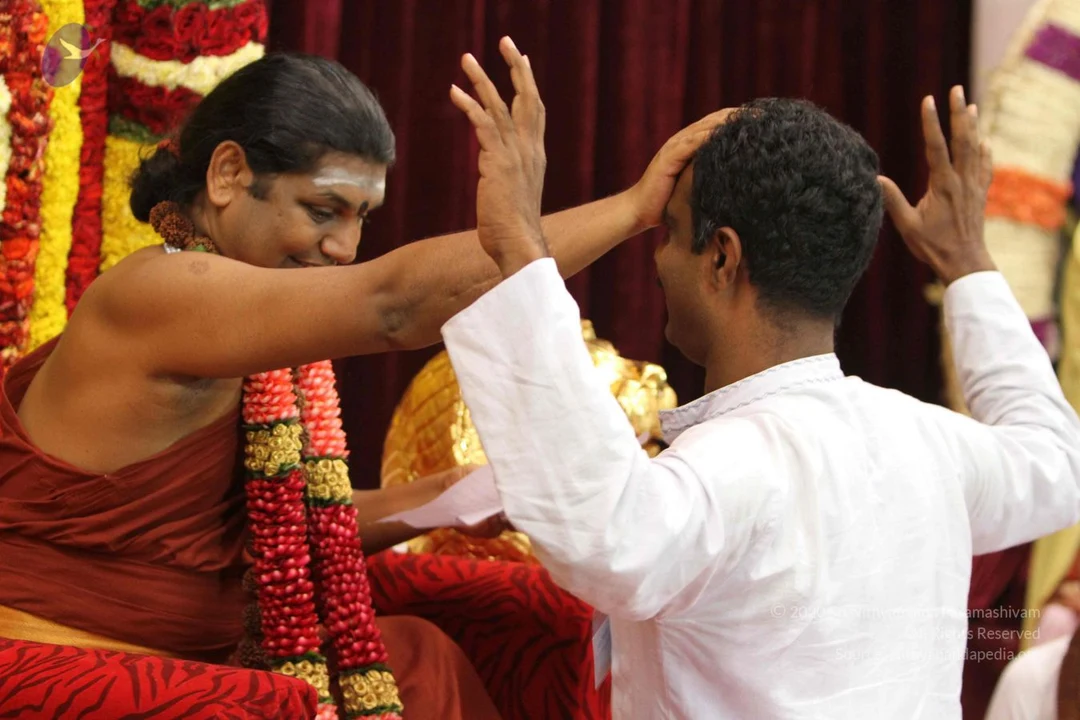
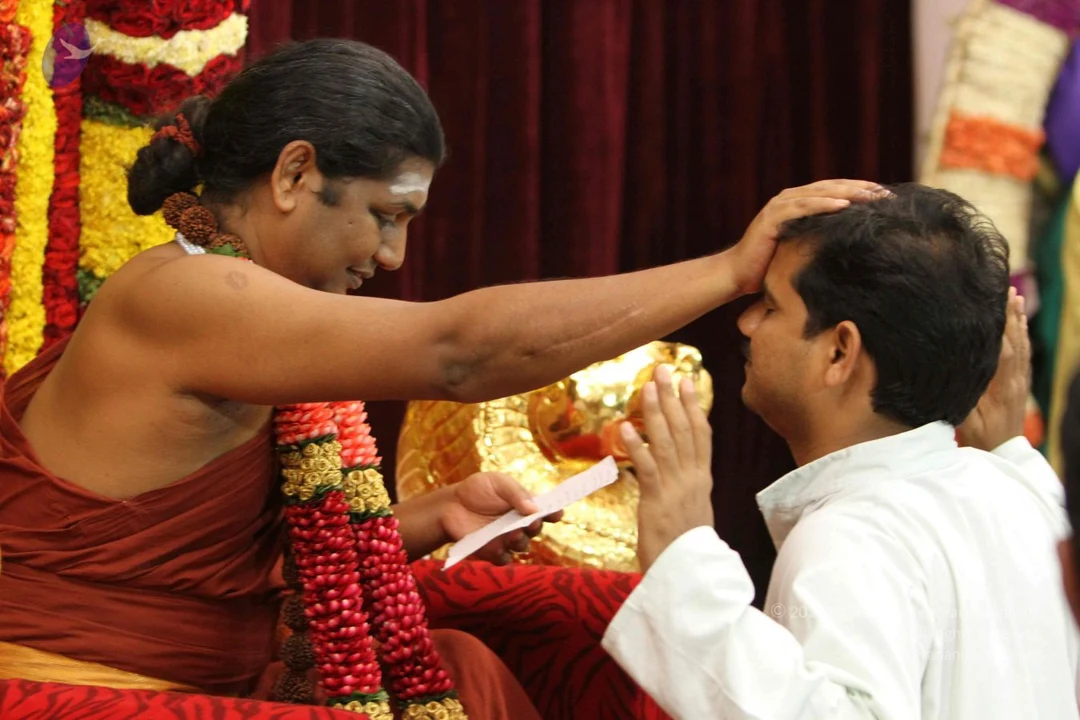
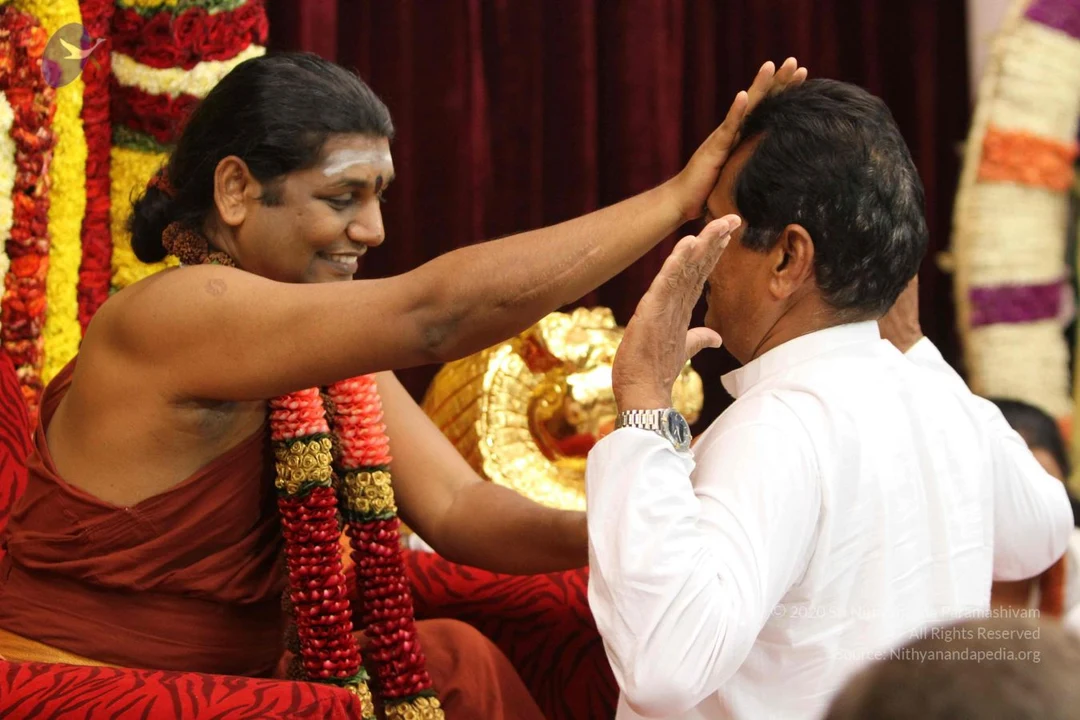
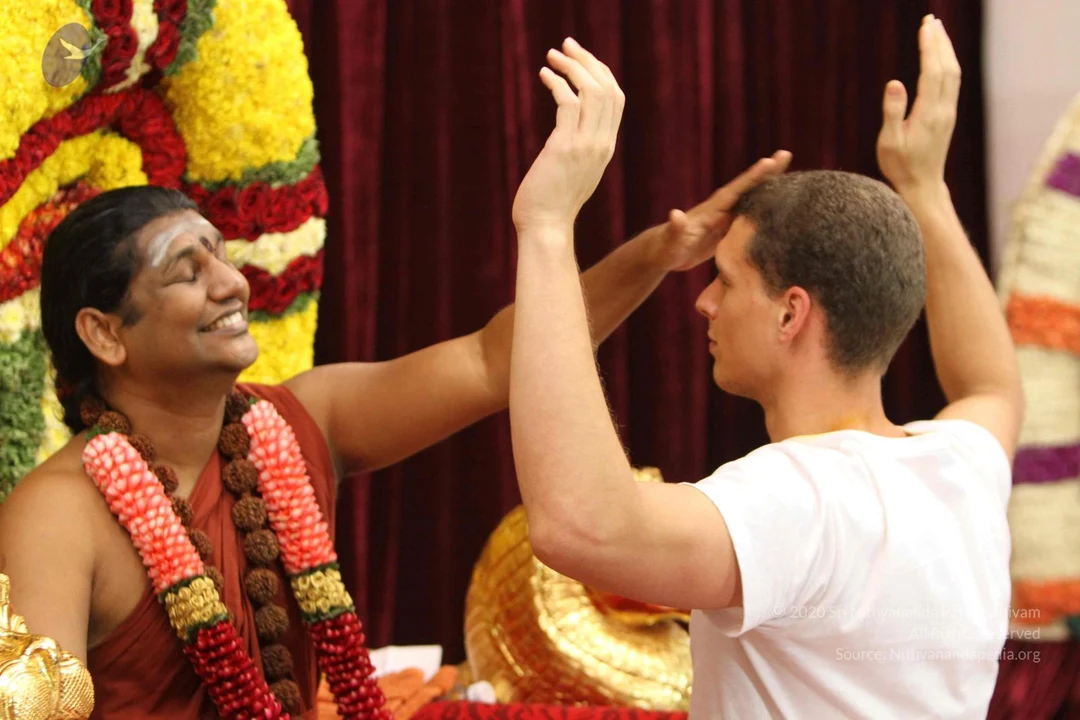
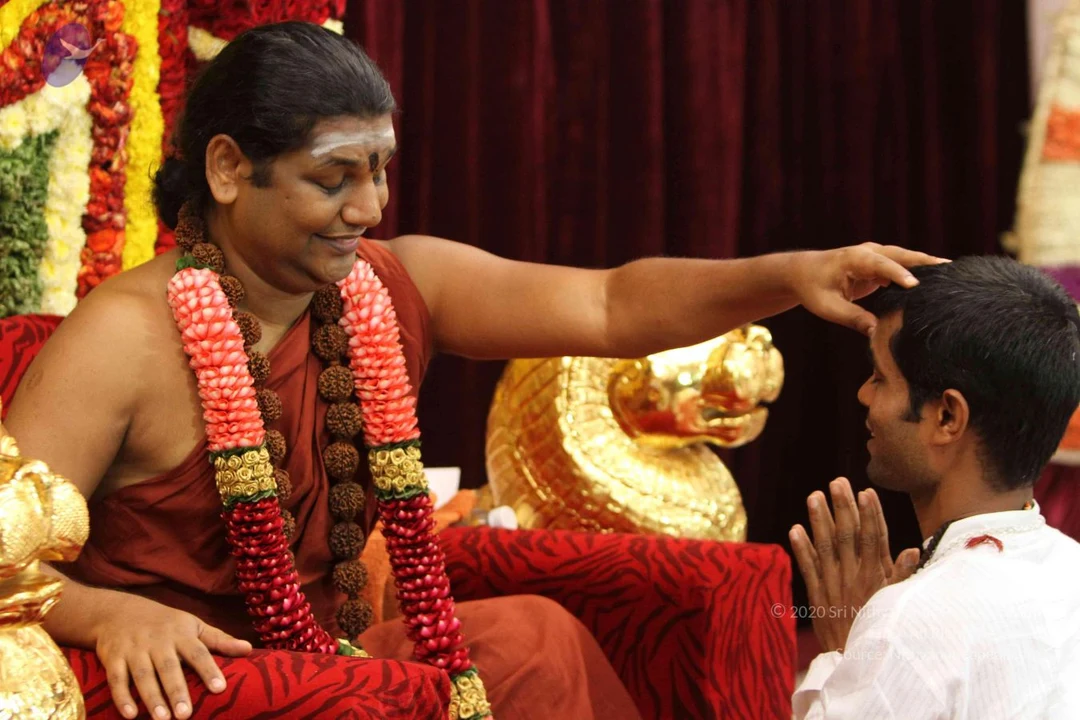
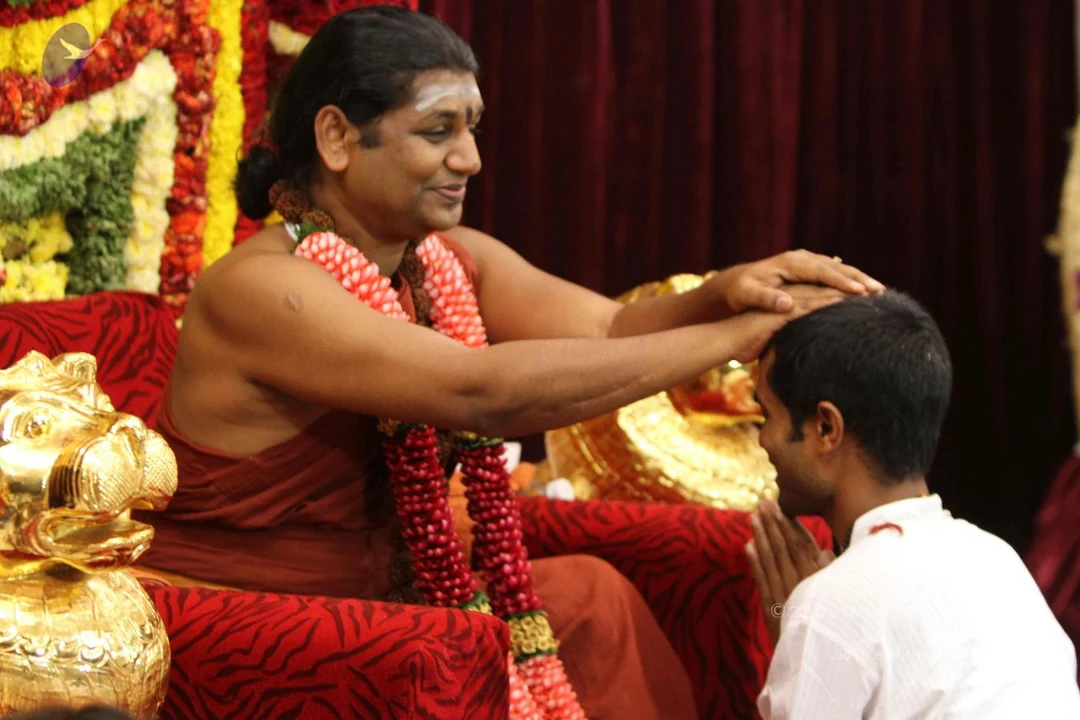
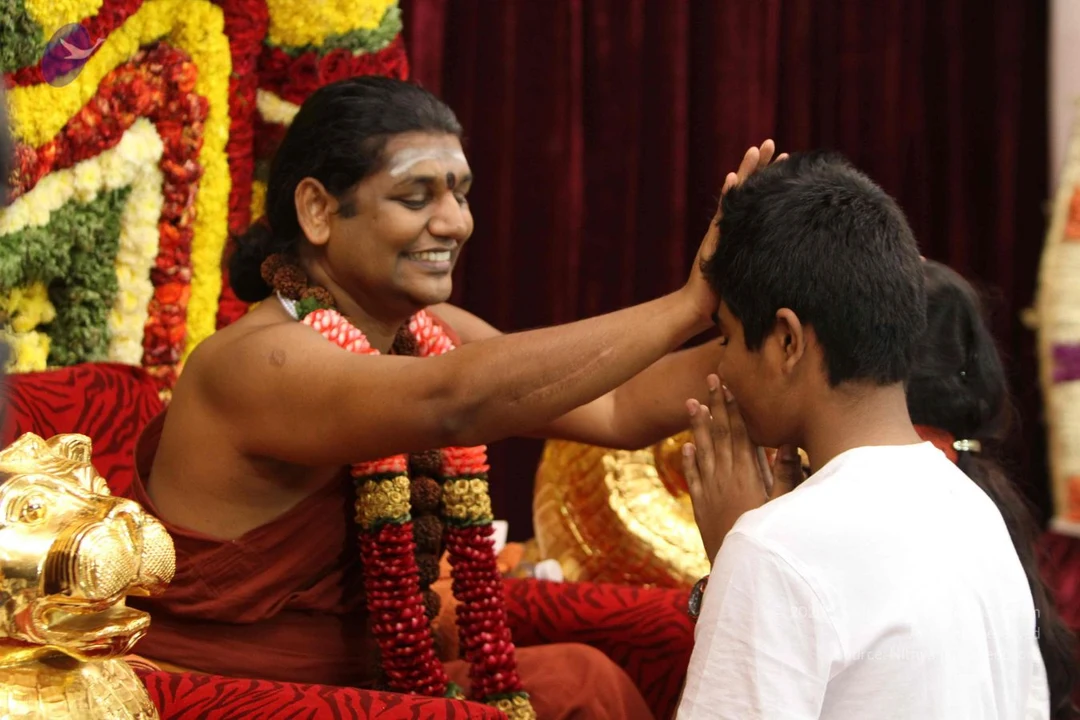
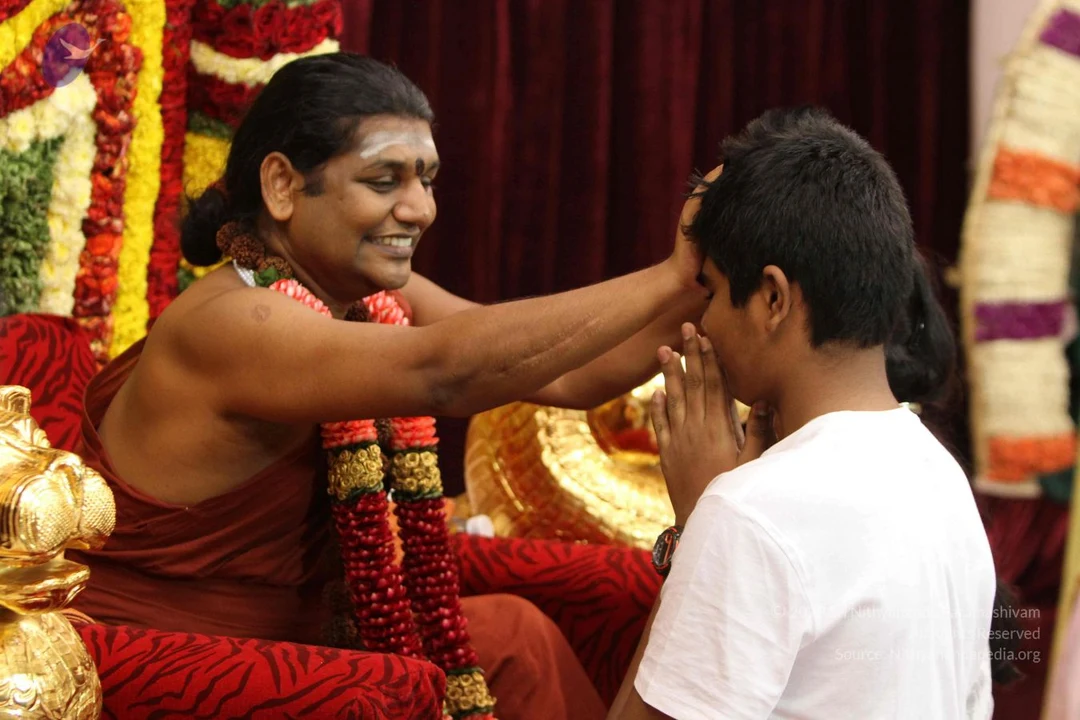
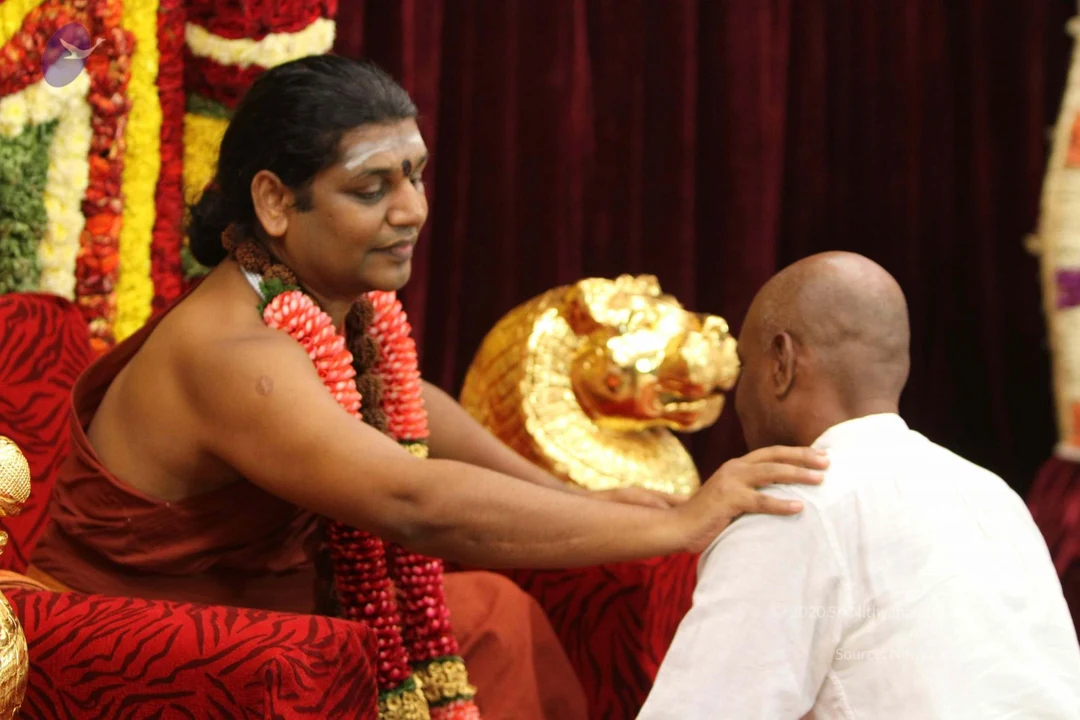
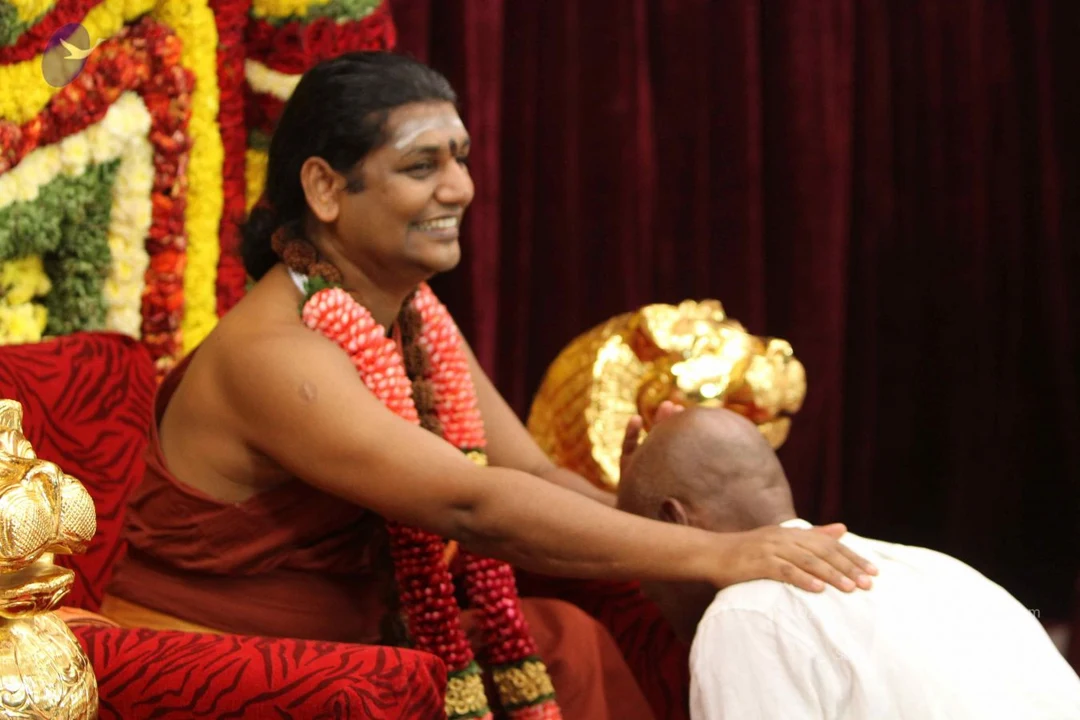
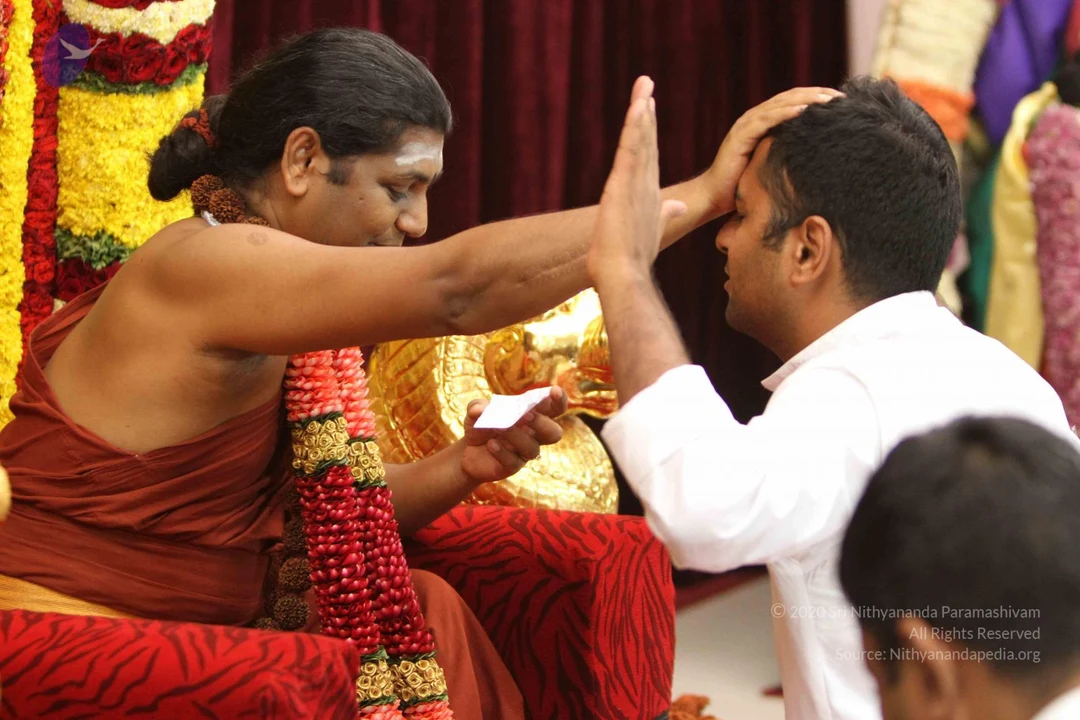
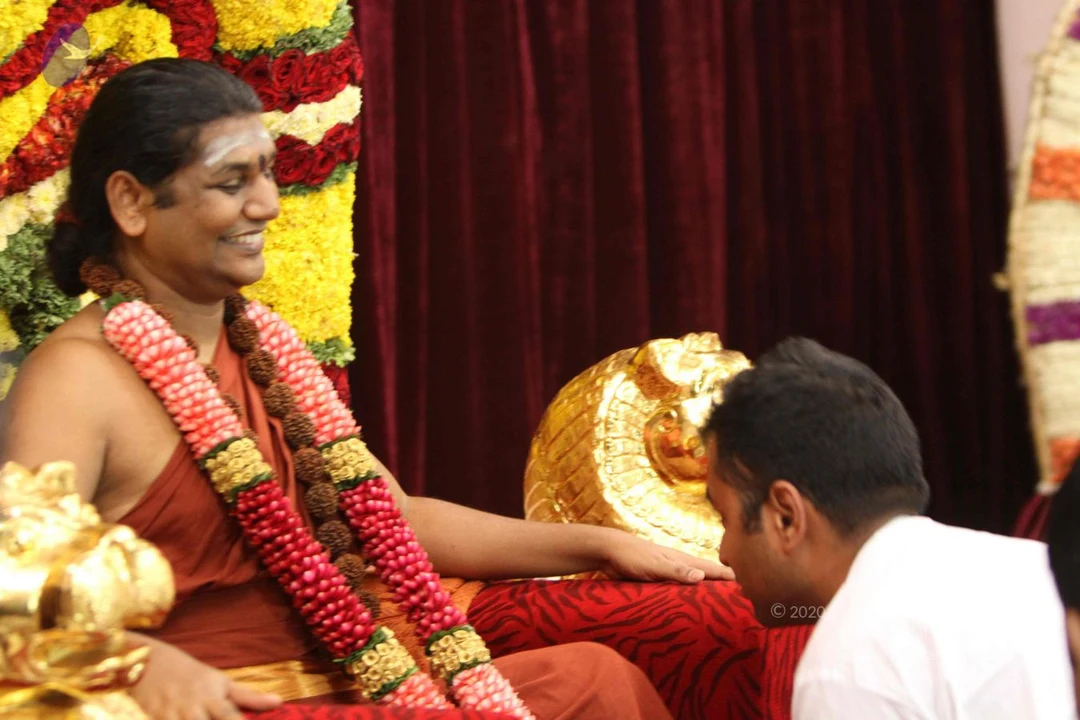
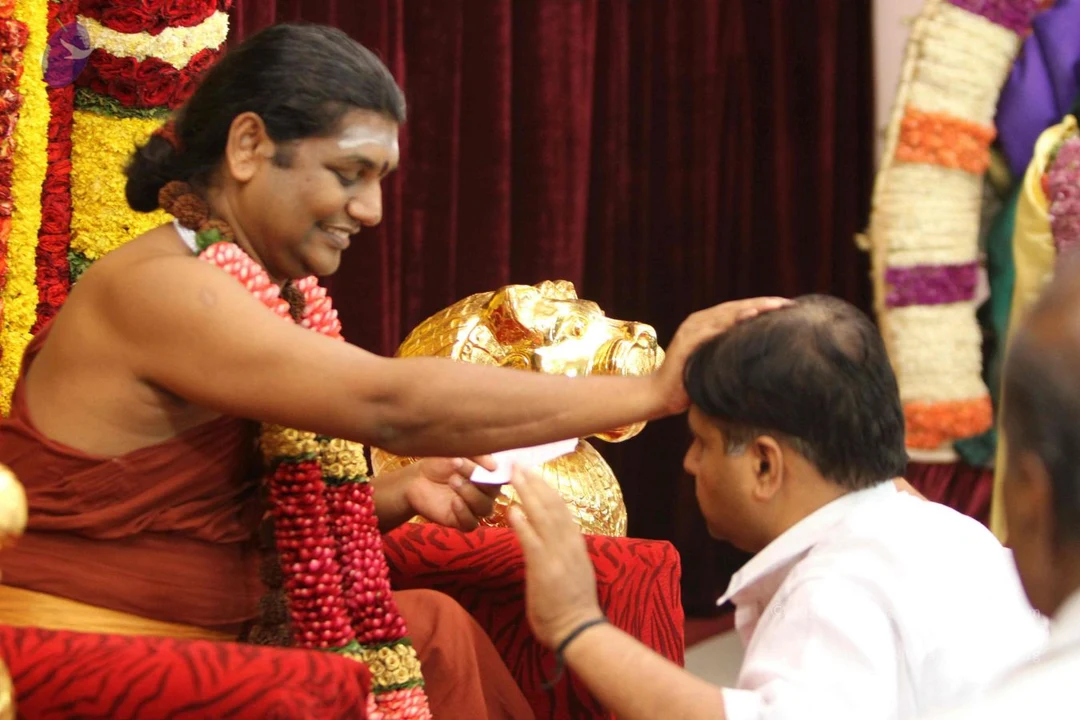
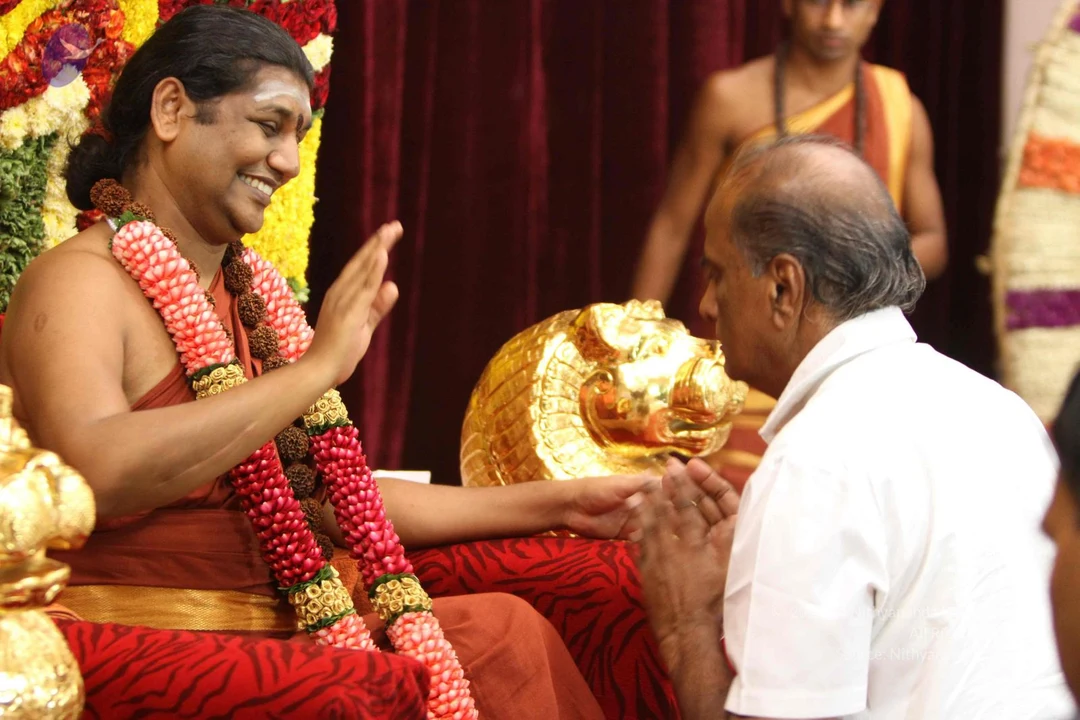
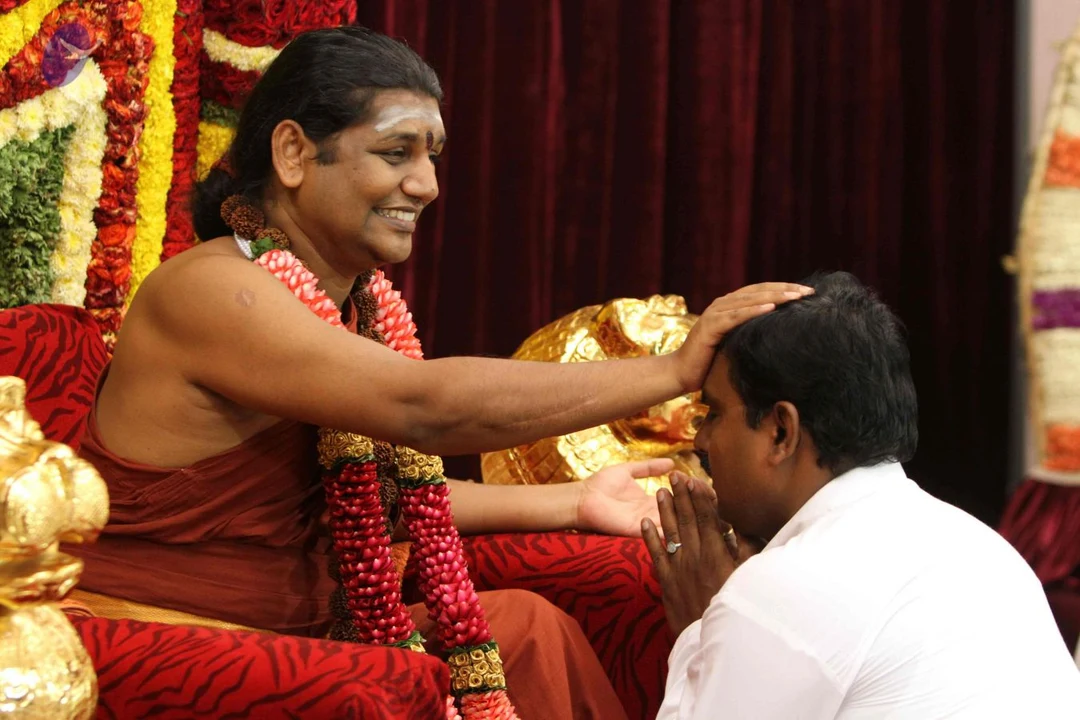
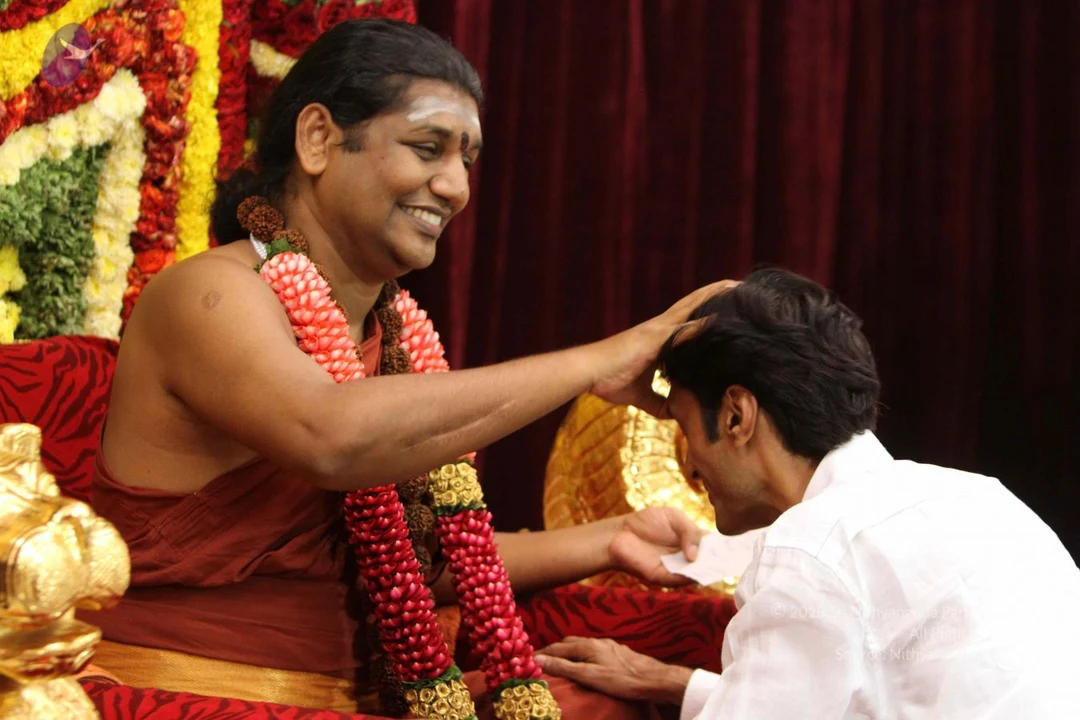
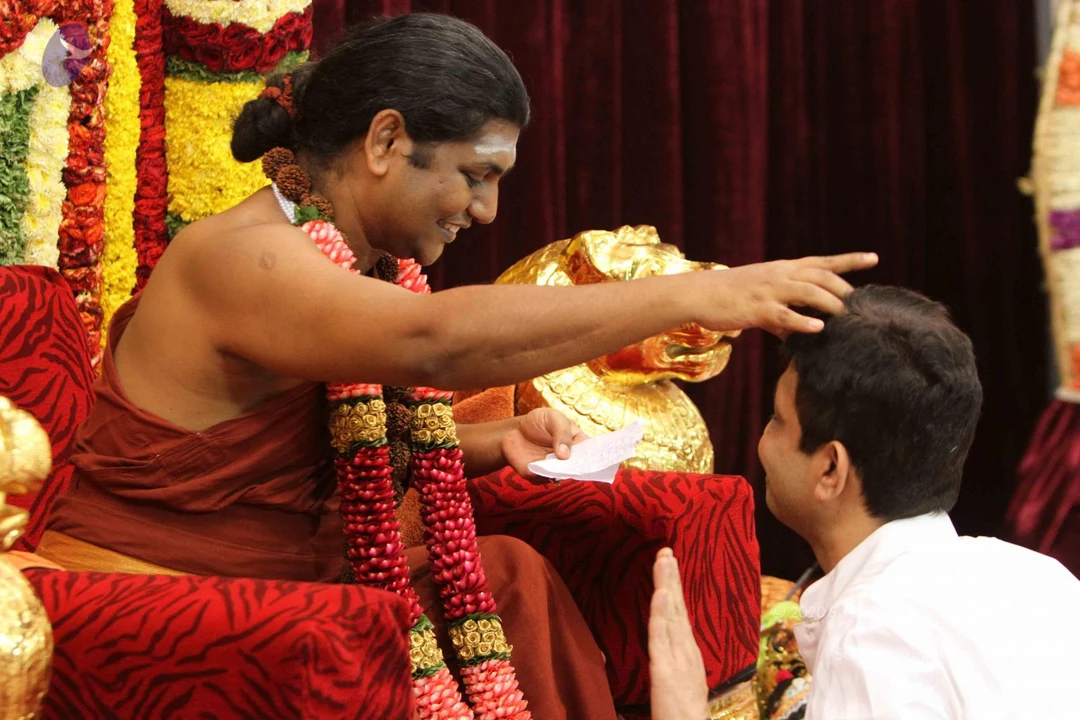
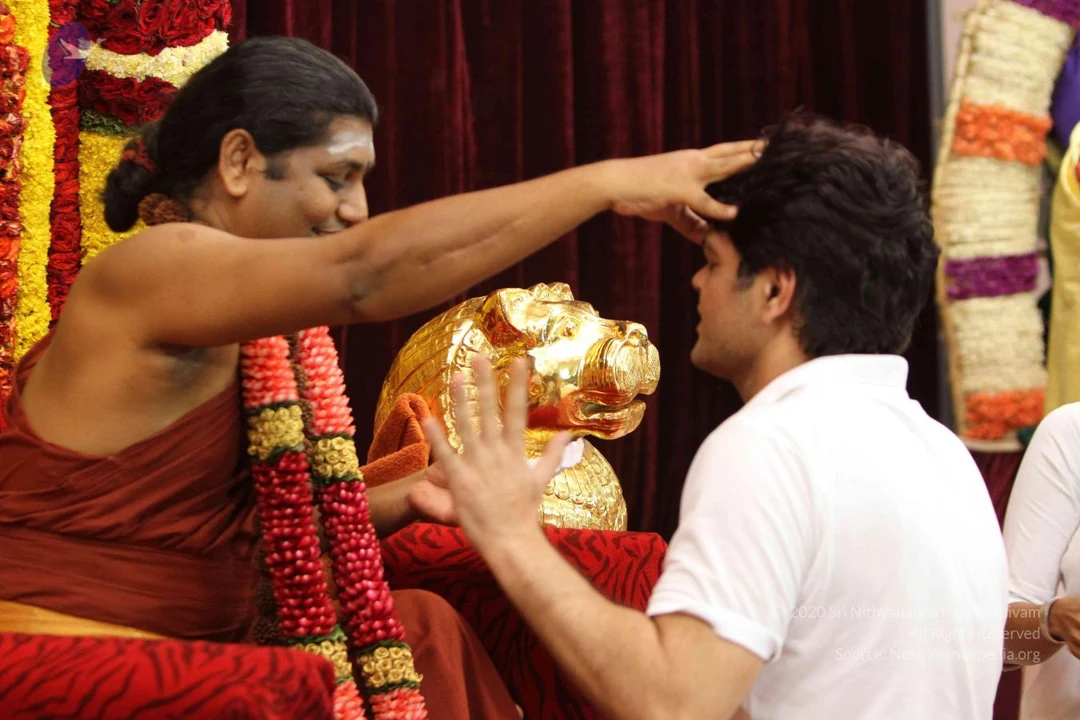
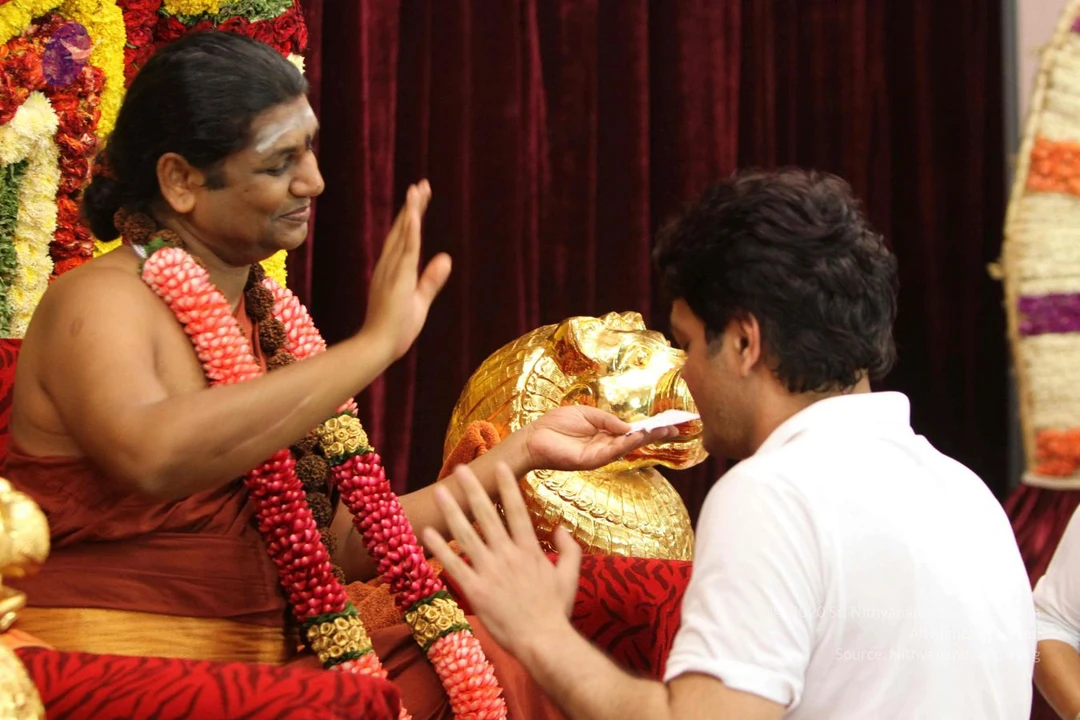
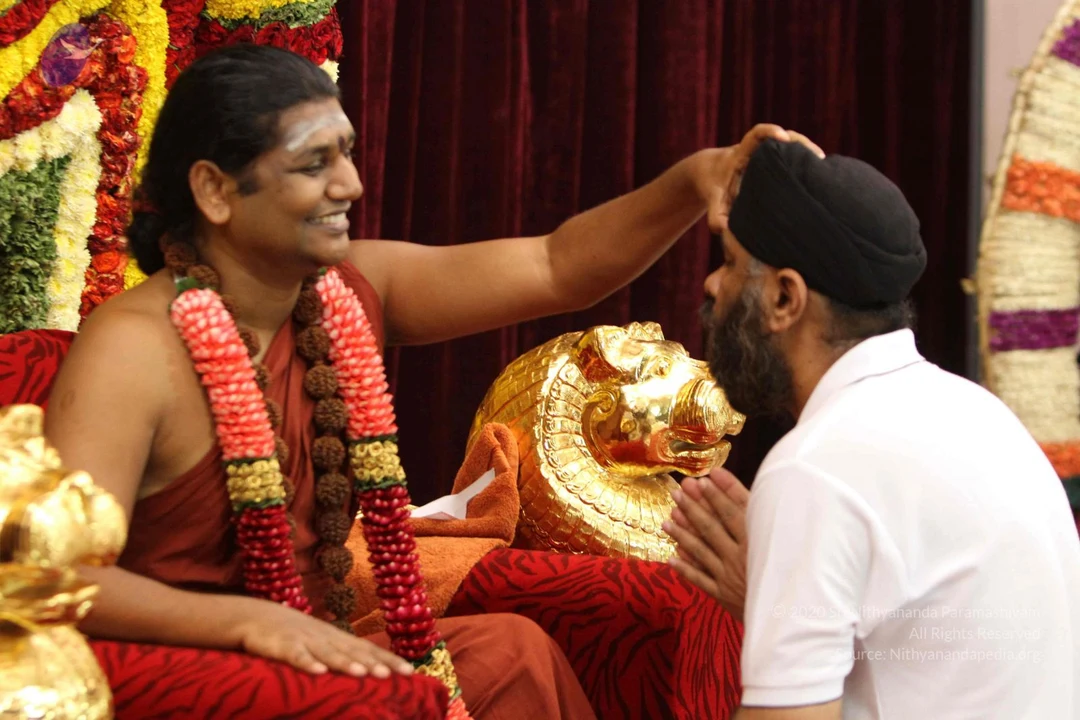
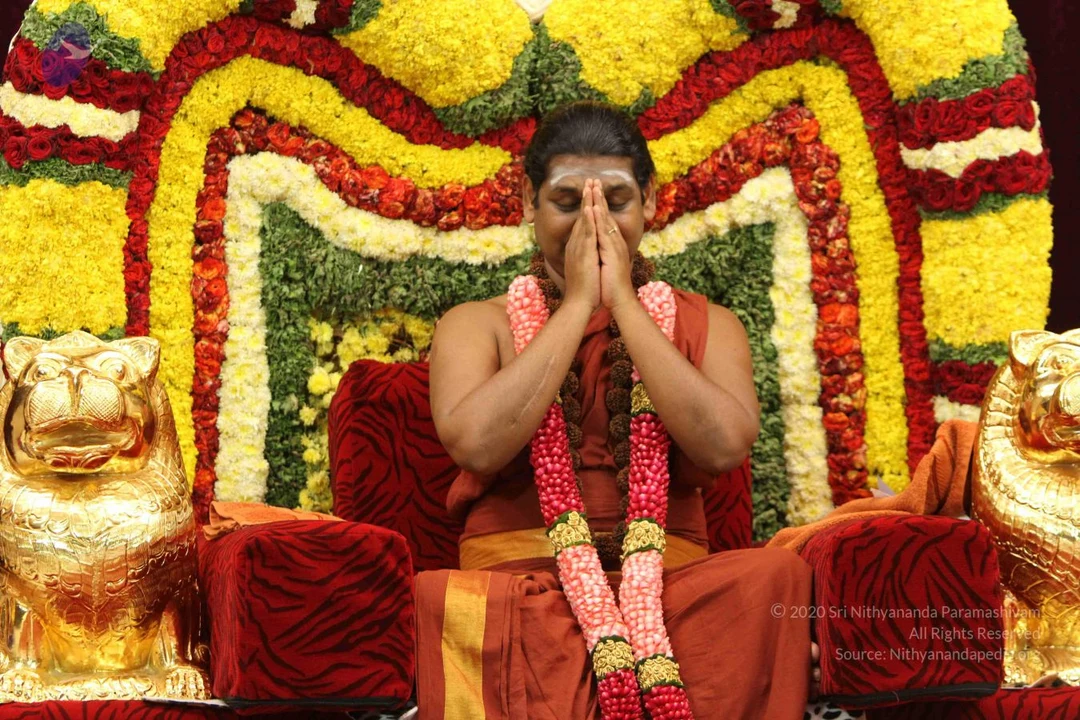
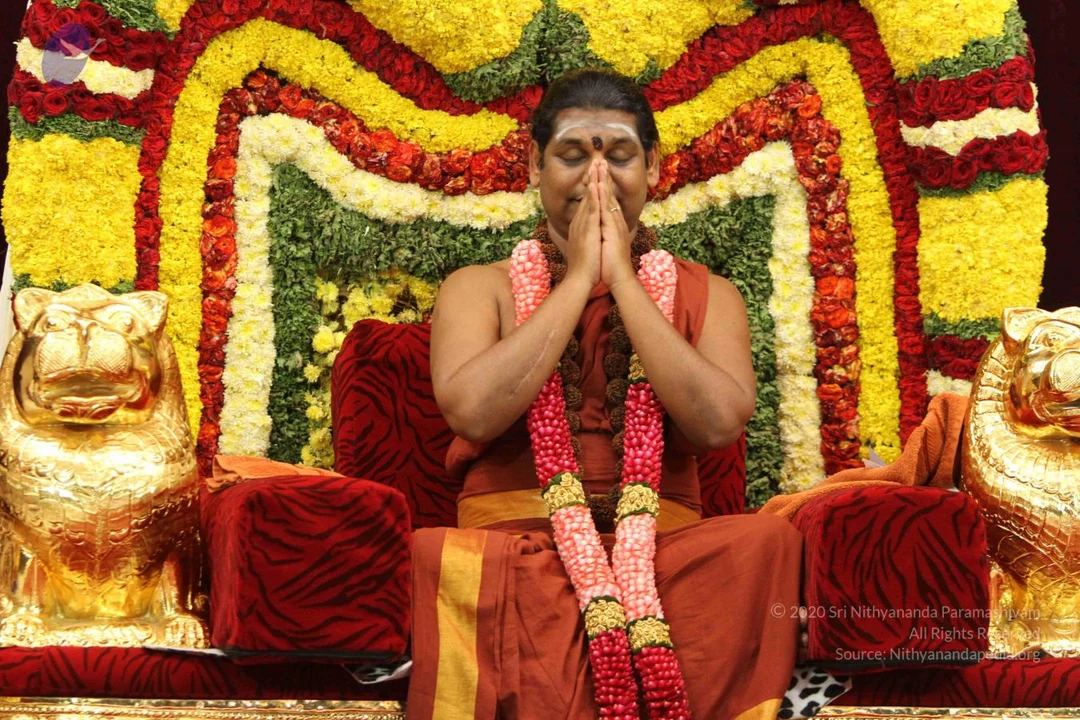
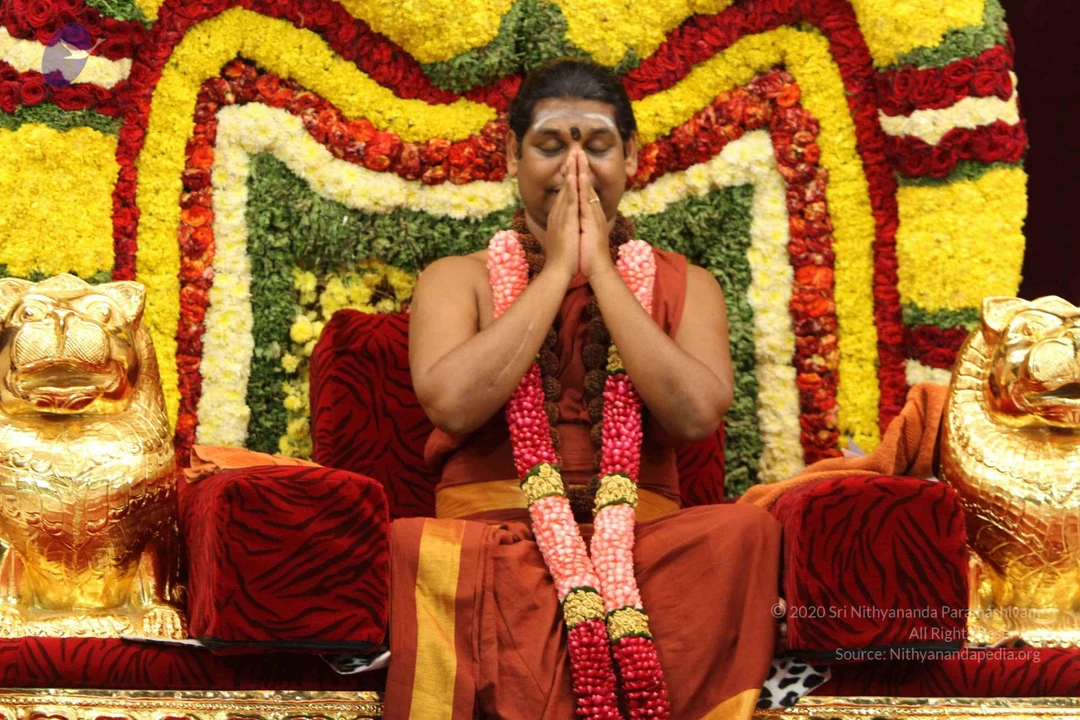
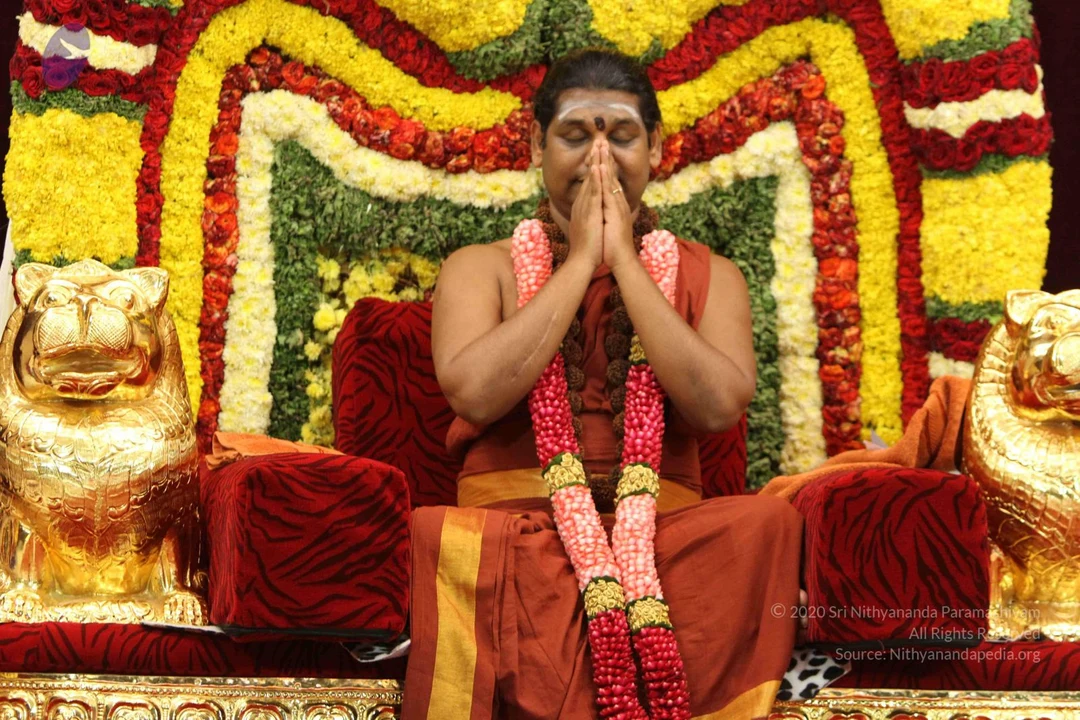
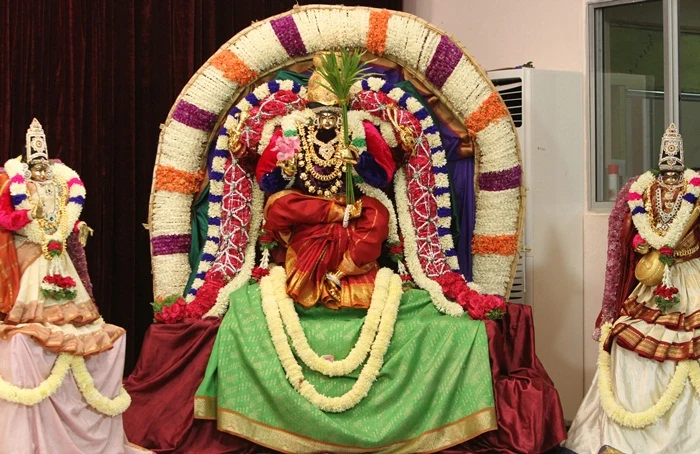
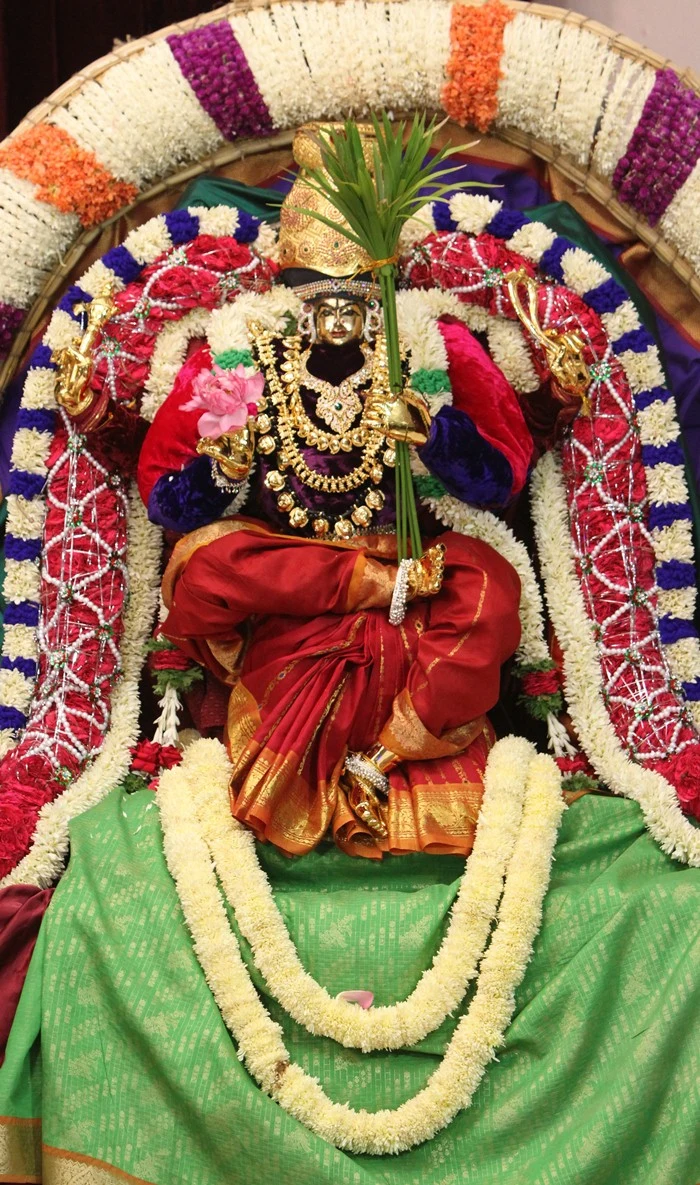
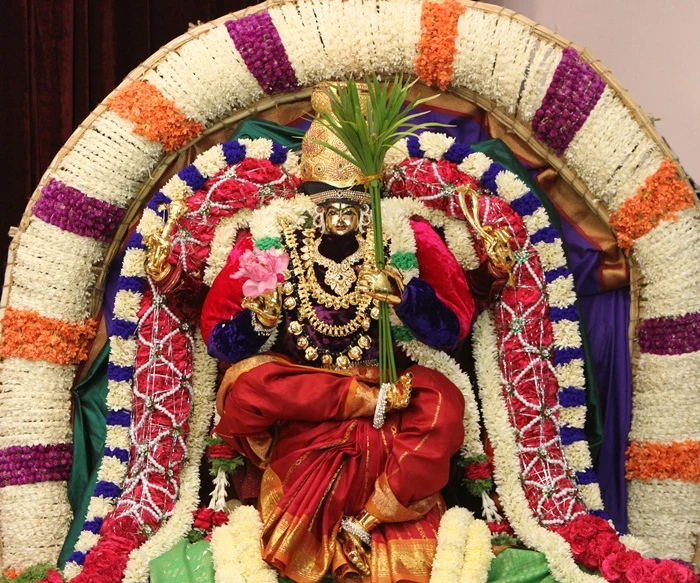
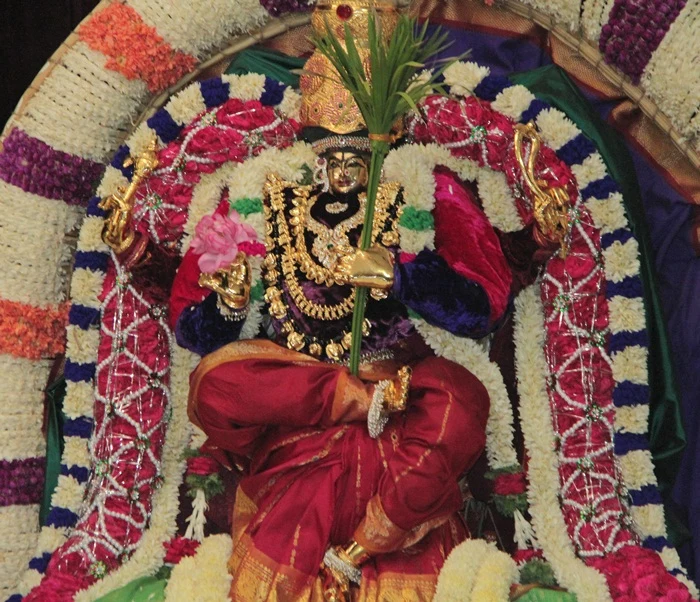
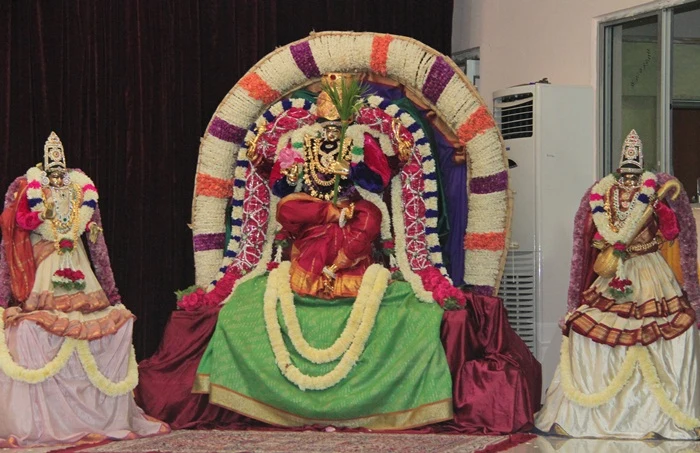
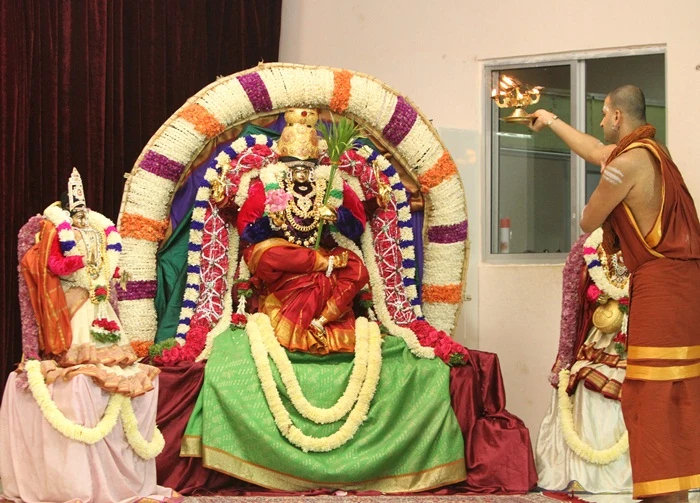
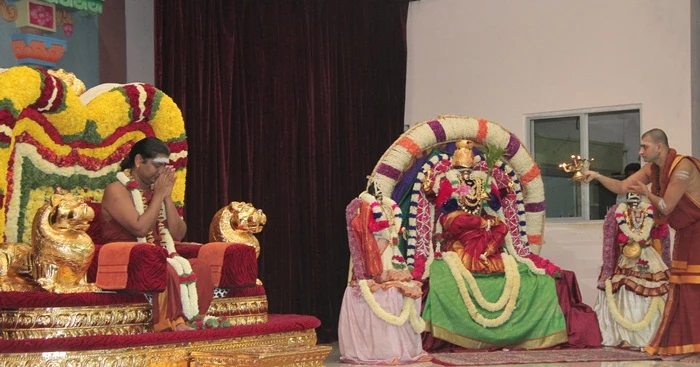
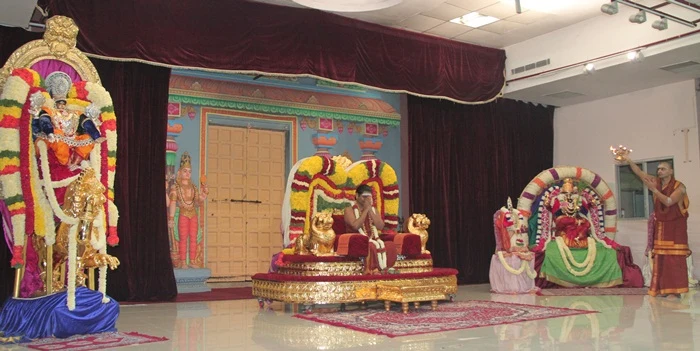
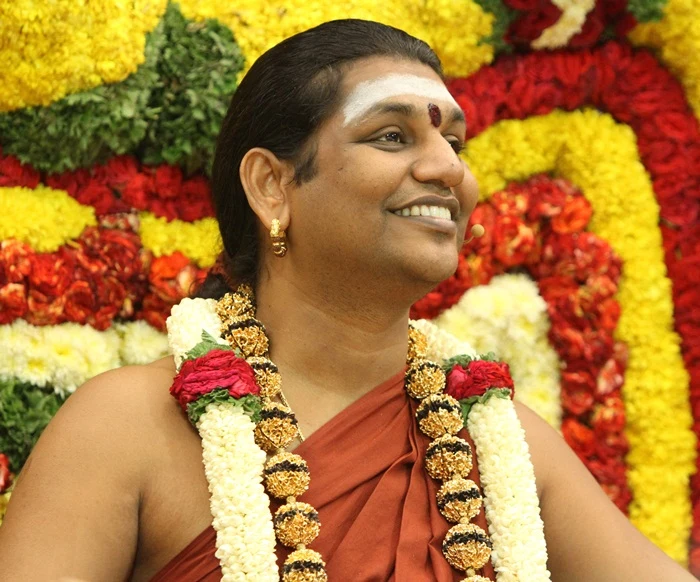
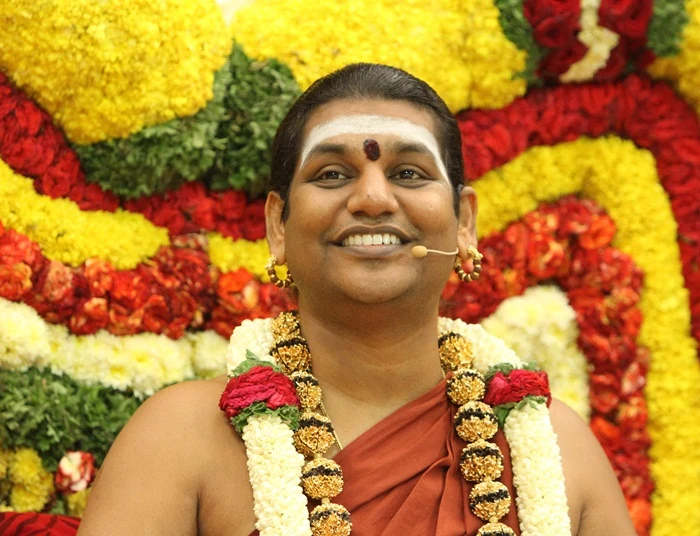
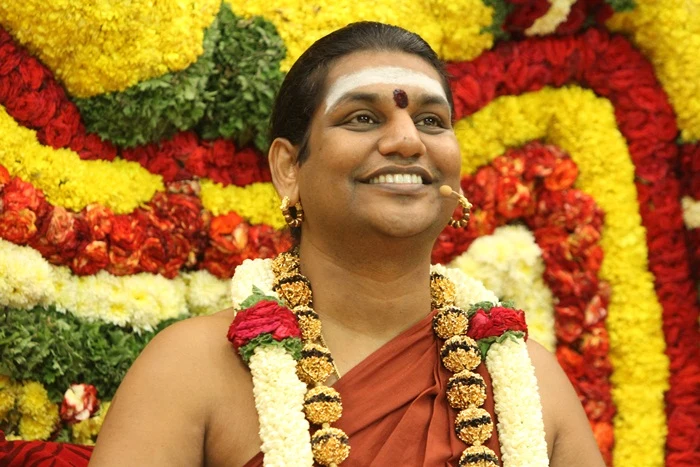
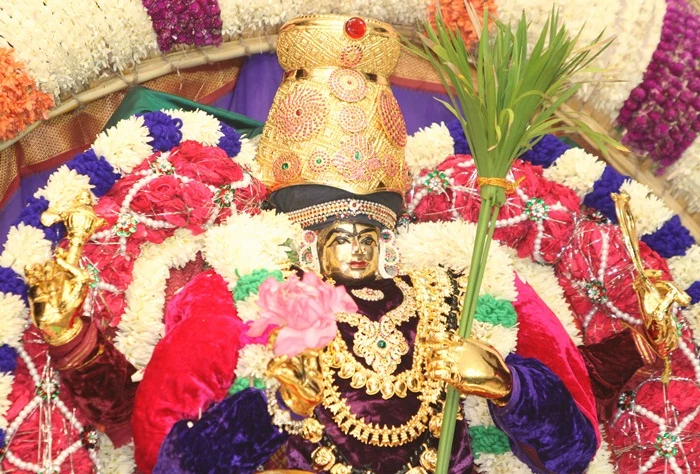
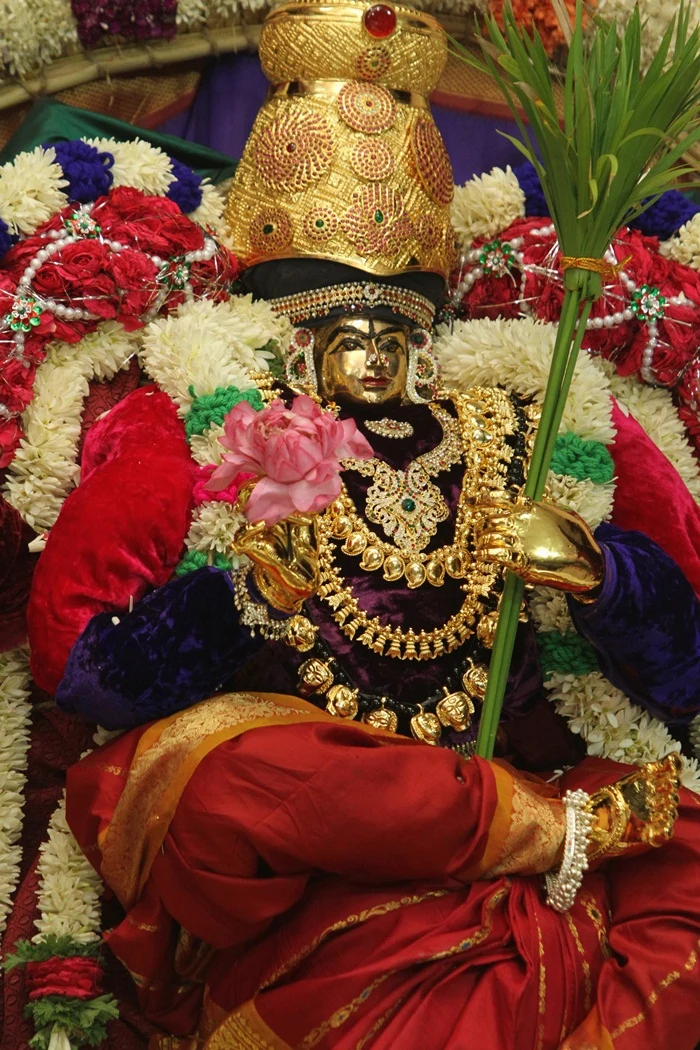
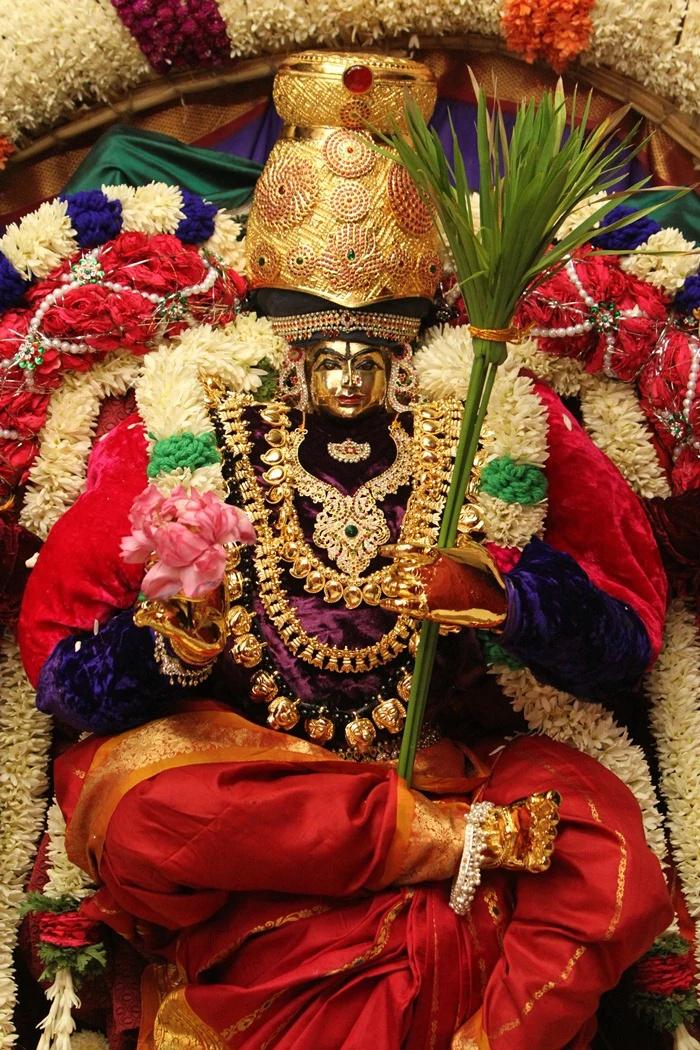
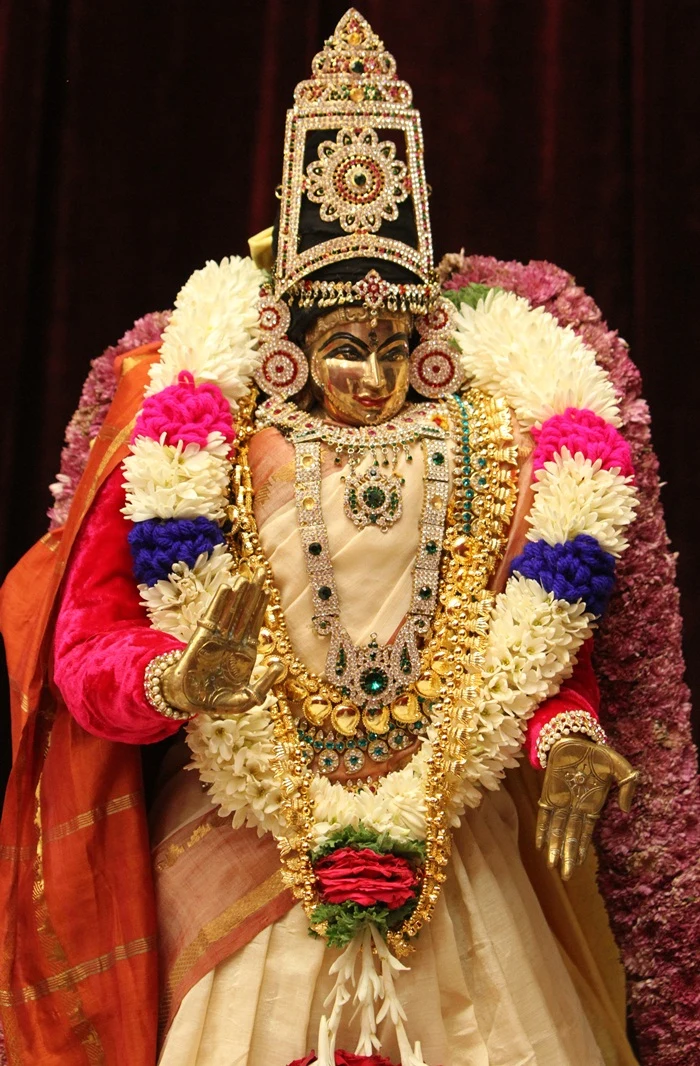
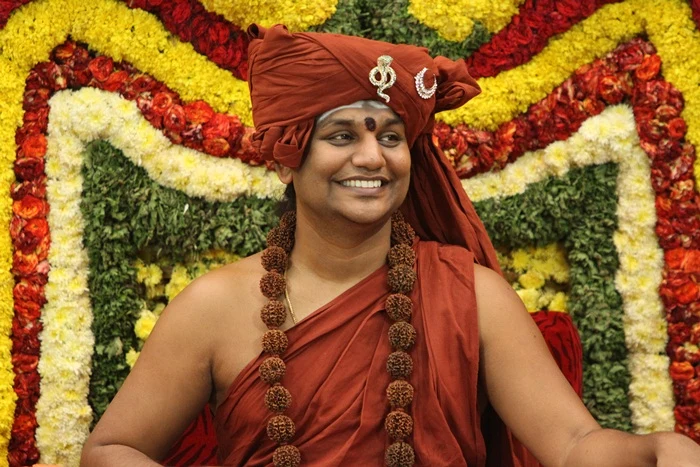
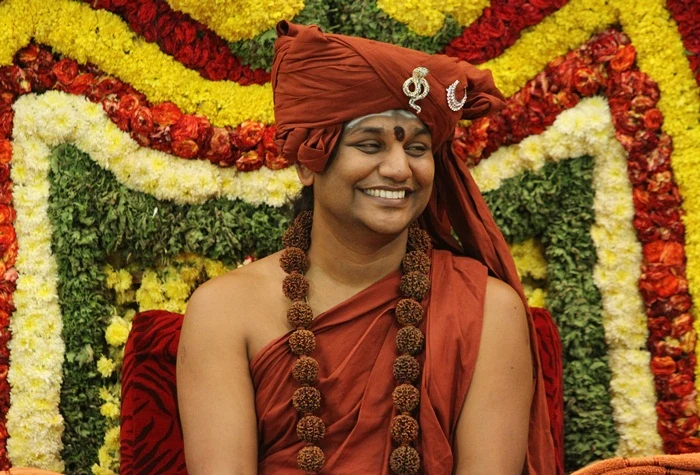
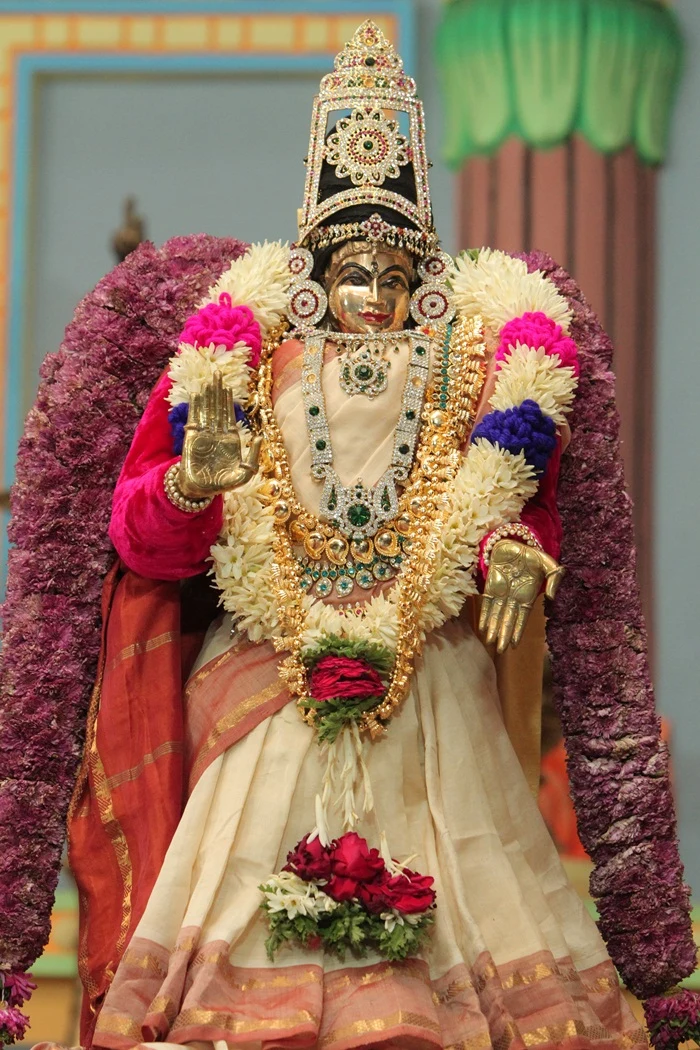
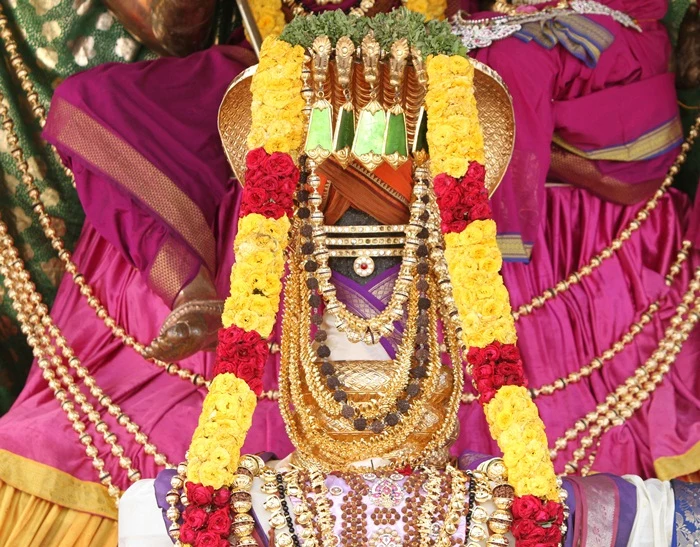
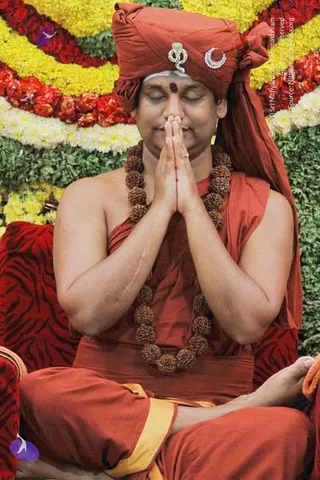
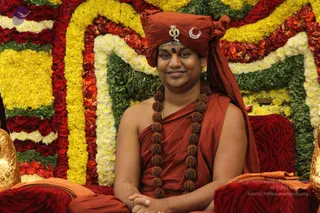
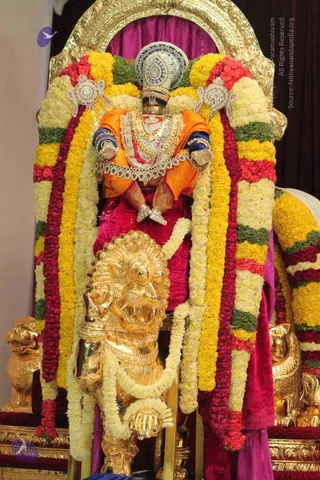
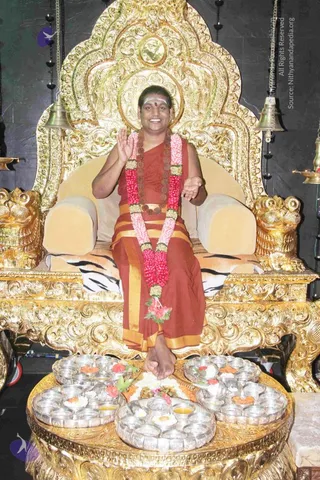
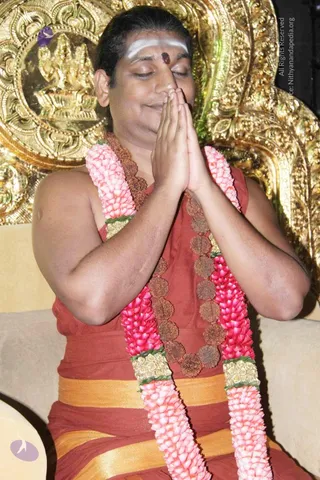
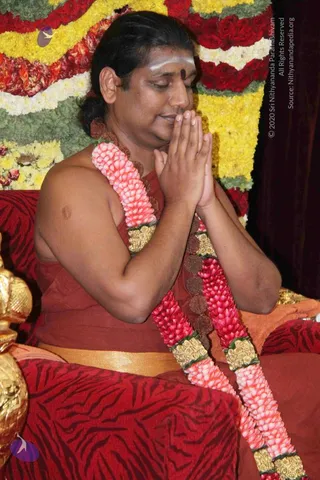
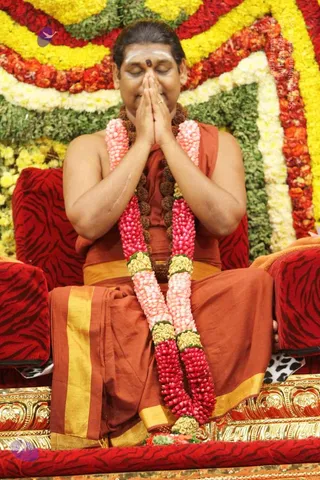
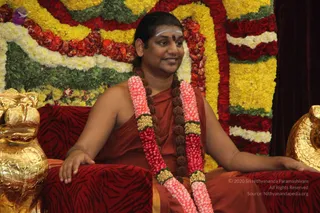
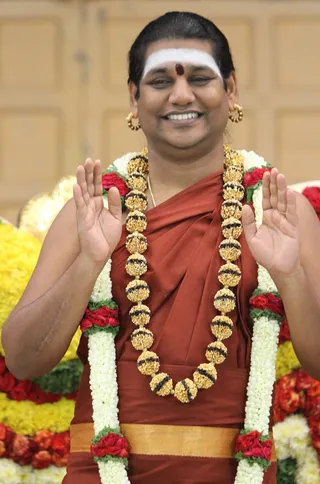
A decorated deity murti of a goddess stands centrally, its golden face framed by a jewelled crown with a red and green stone medallion. It wears a cream silk sari with a gold zari border and a red-orange shawl draped over one shoulder. Layers of white jasmine garlands and a purple flower arch surround the figure, with pink and blue flower tassels at the arms. Gold hands display abhaya and varada mudras, and heavy gold and emerald-green jewelled necklaces adorn the chest. Red roses and jasmine are tied at the waist.A smiling man sits on a red and black tiger-striped cushioned seat in front of a backdrop densely decorated with red and yellow flower garlands and green foliage. He wears a rust-orange turban with a silver serpent-and-crescent ornament at the front, a red tilak mark on his forehead, a bare chest draped with an orange-red cloth, and a long rudraksha mala of large brown beads.A seated man with closed eyes and palms pressed together in anjali mudra before his chest sits on a red velvet throne with gold-trimmed base. He wears an orange-maroon garment with a gold border, bare-shouldered, and multiple garlands of pink and red flower strands with gold rose-bud accents across his chest, plus a rudraksha mala. He has white vertical tilak marks and a red bindi on his forehead. Behind him is a backdrop of marigold and red flower garlands in yellow, red and green. Swamiji (probable): long swept-back hair, rudraksha mala and ornate garlands, seated on a throne in an honouring setting.

September 28 2014

Original wiki page
Contents

Title:

THE SUPREME PONTIFF OF HINDUISM JGM HDH BHAGAVAN NITHYANANDA PARAMASHIVAM

Photos

Paduka Puja And LAP Session
NDYSession&TemplePhotos

Culturals

PadaPuja

EnergyDarshan

Photos Of The Day:

PadukaPuja&LAPSession

NDYSession&TemplePhotos

Culturals

PadaPuja

EnergyDarshan

Photo:

Photos from this day

View all 301 photos

Paduka Puja And LAP Session
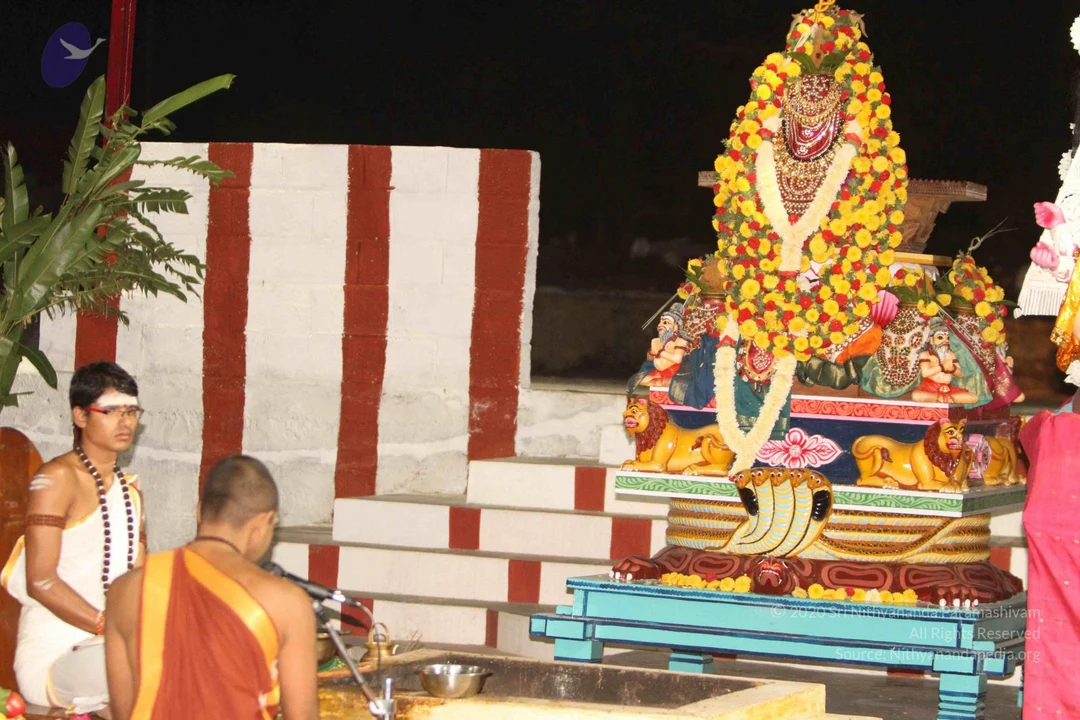
59 photosSource gallery
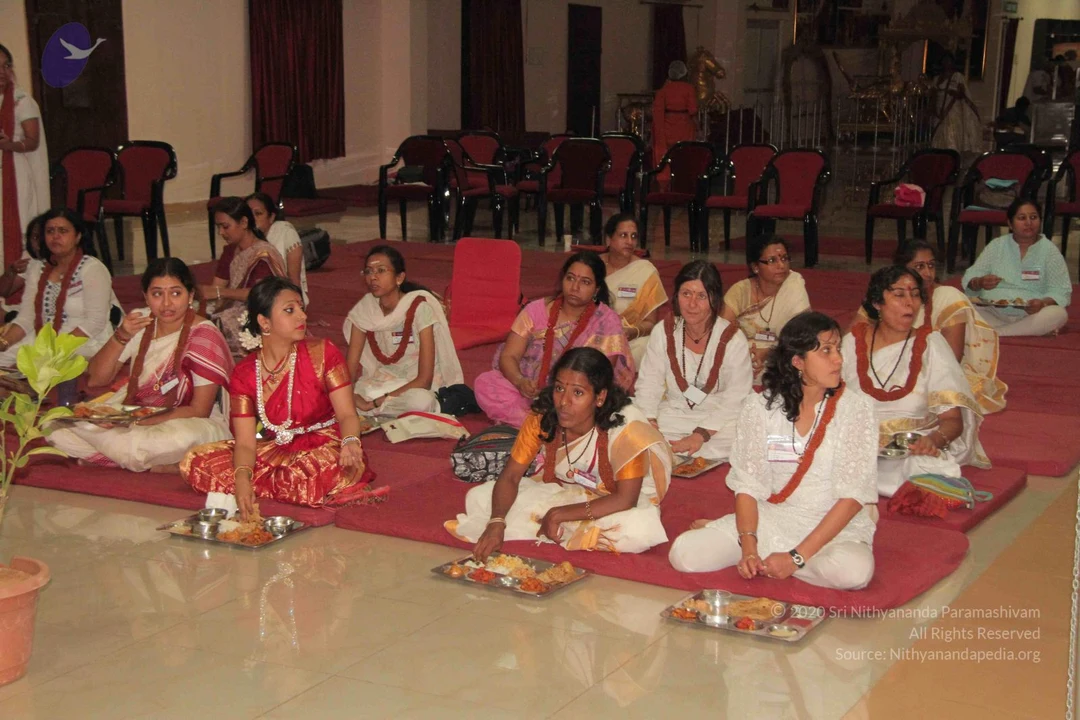
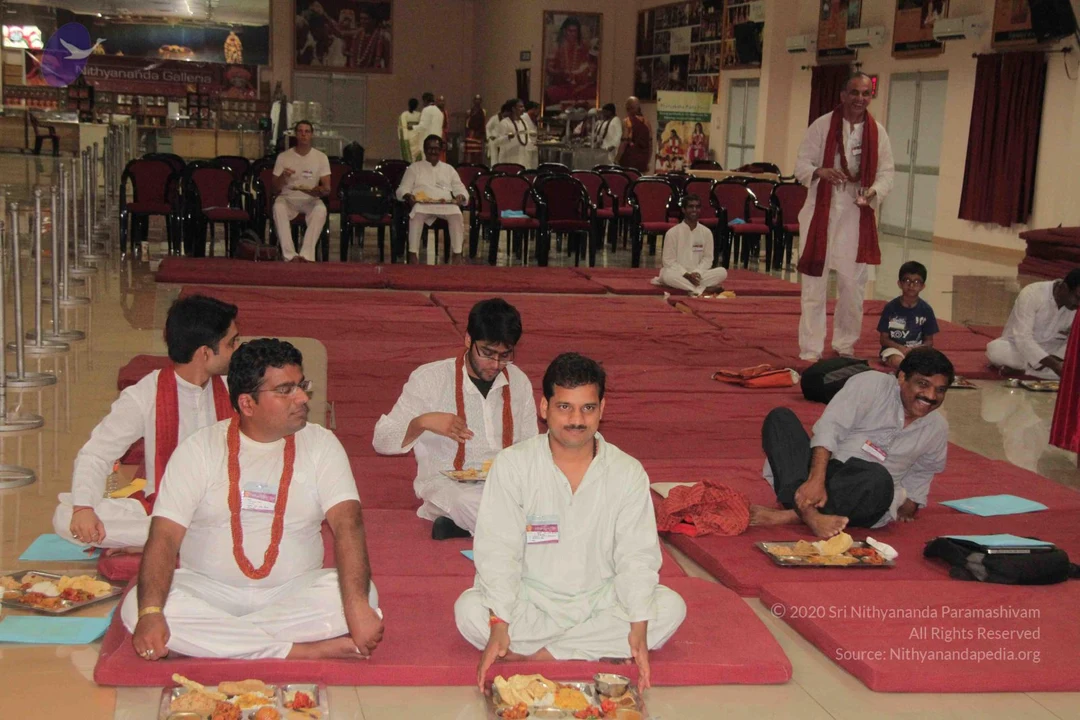
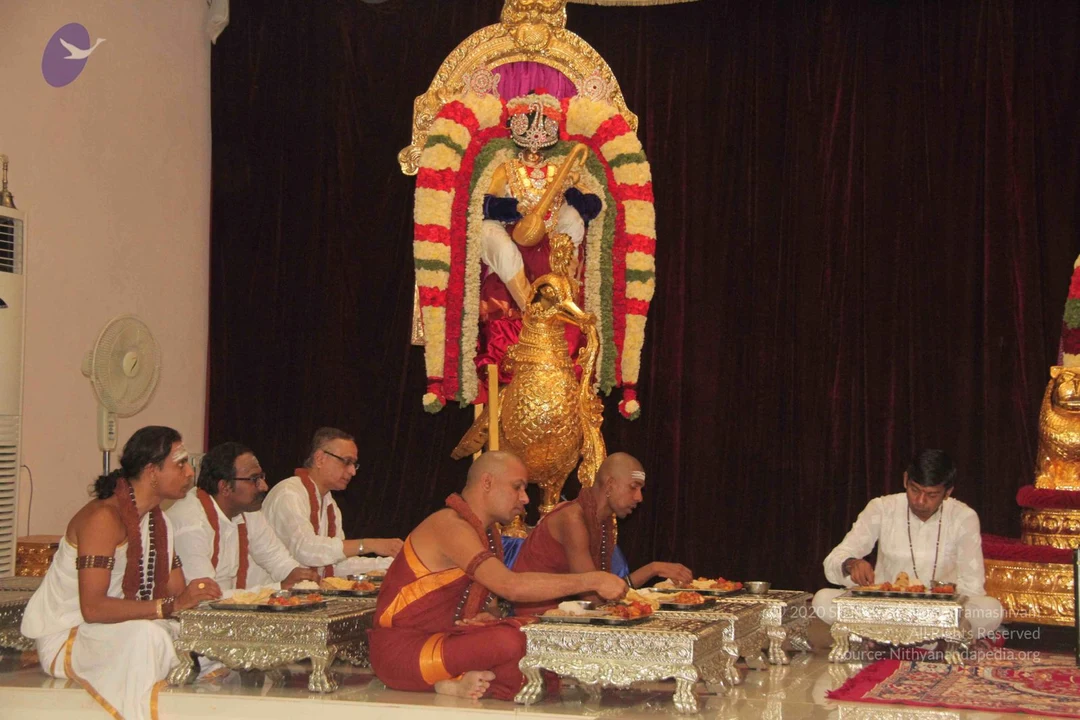
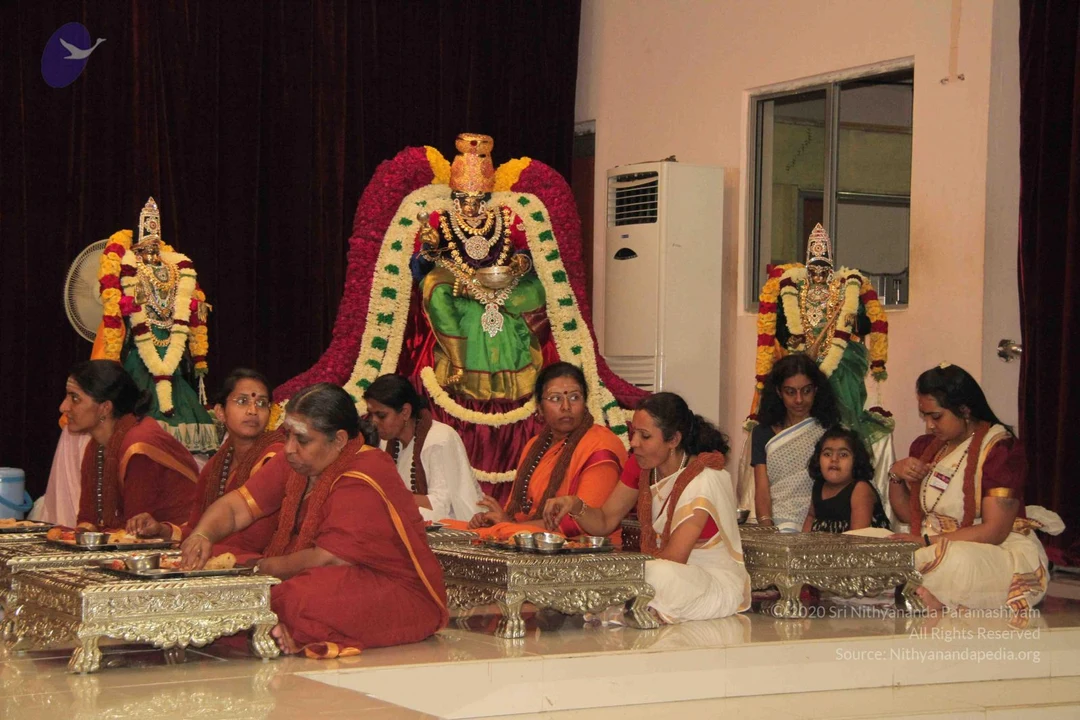
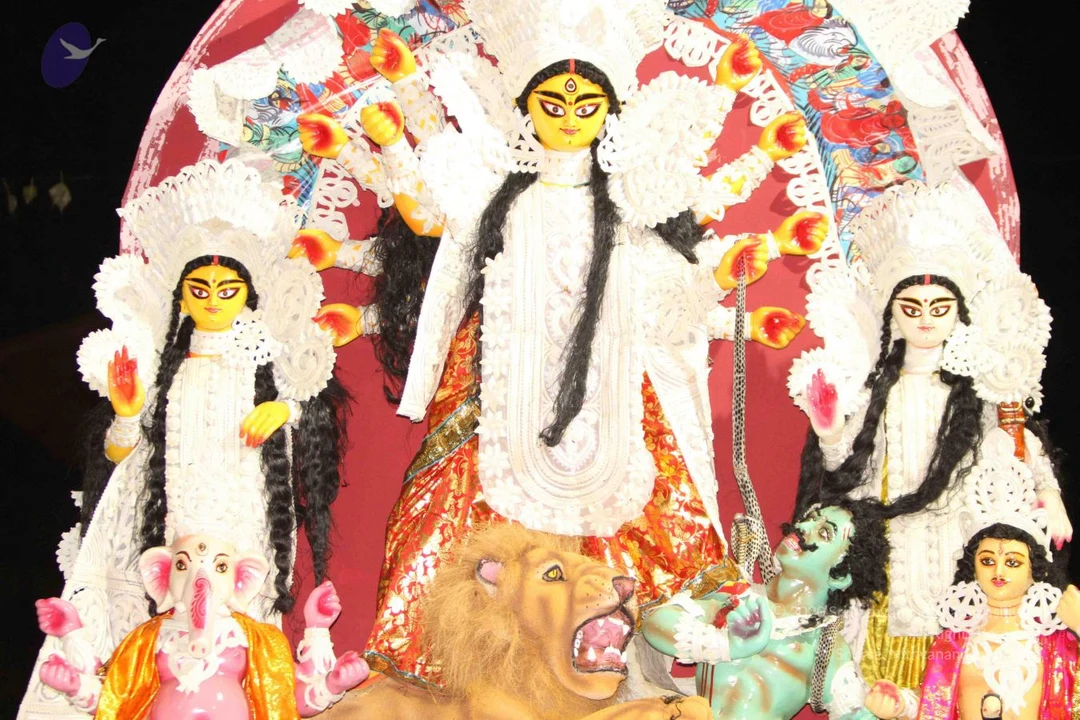
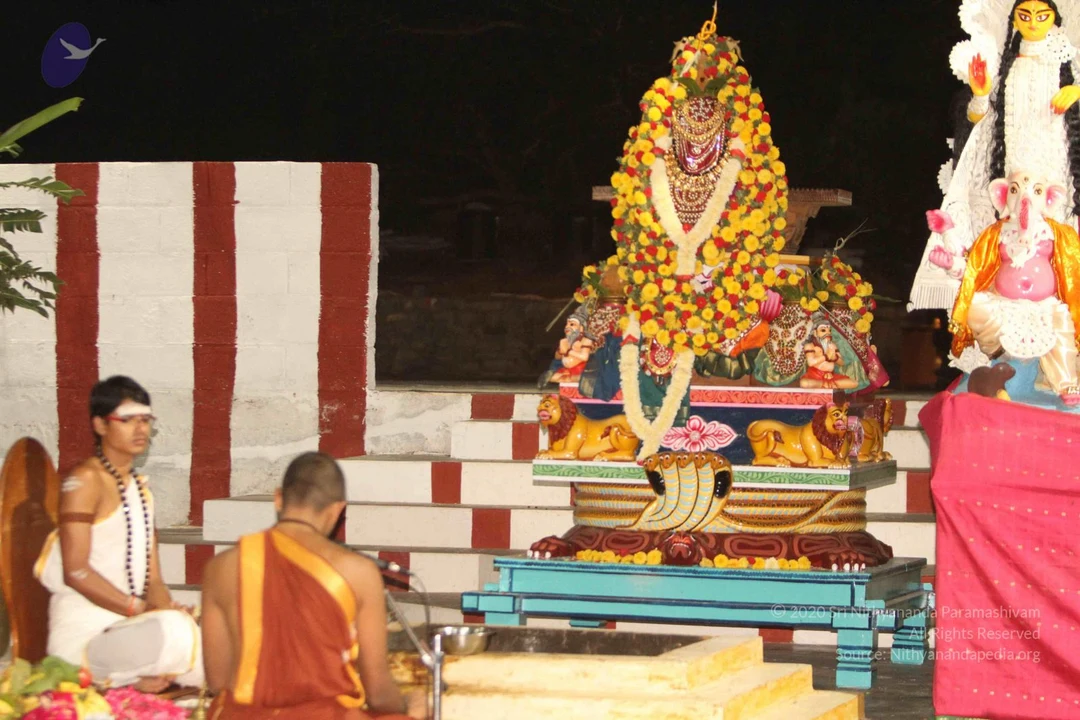
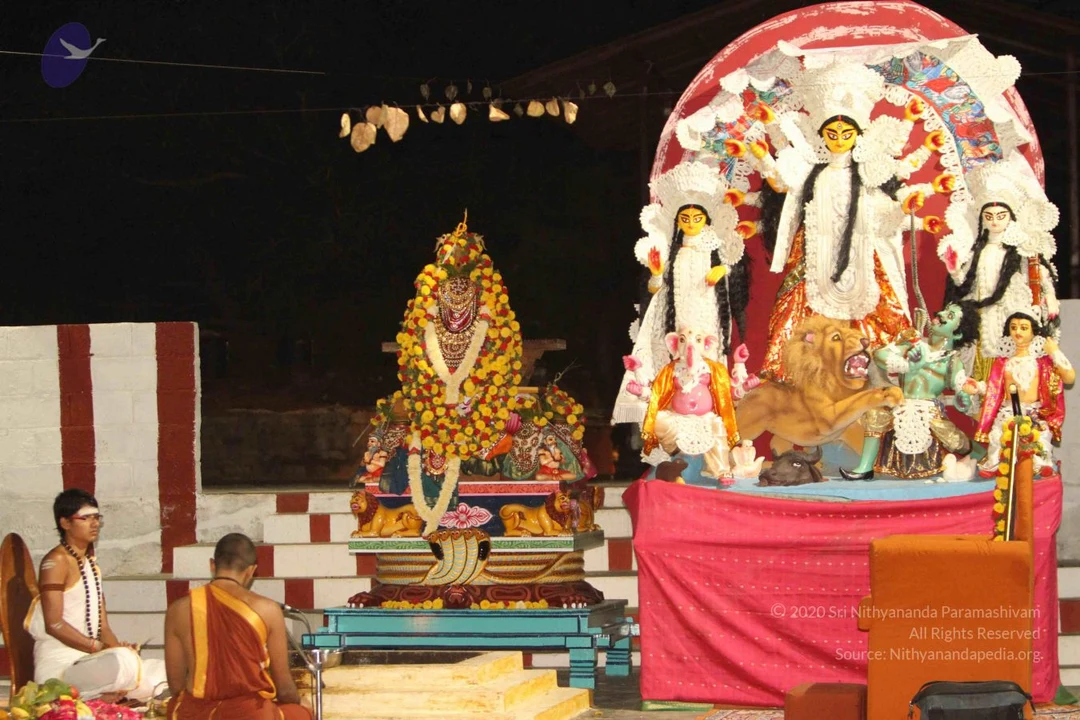
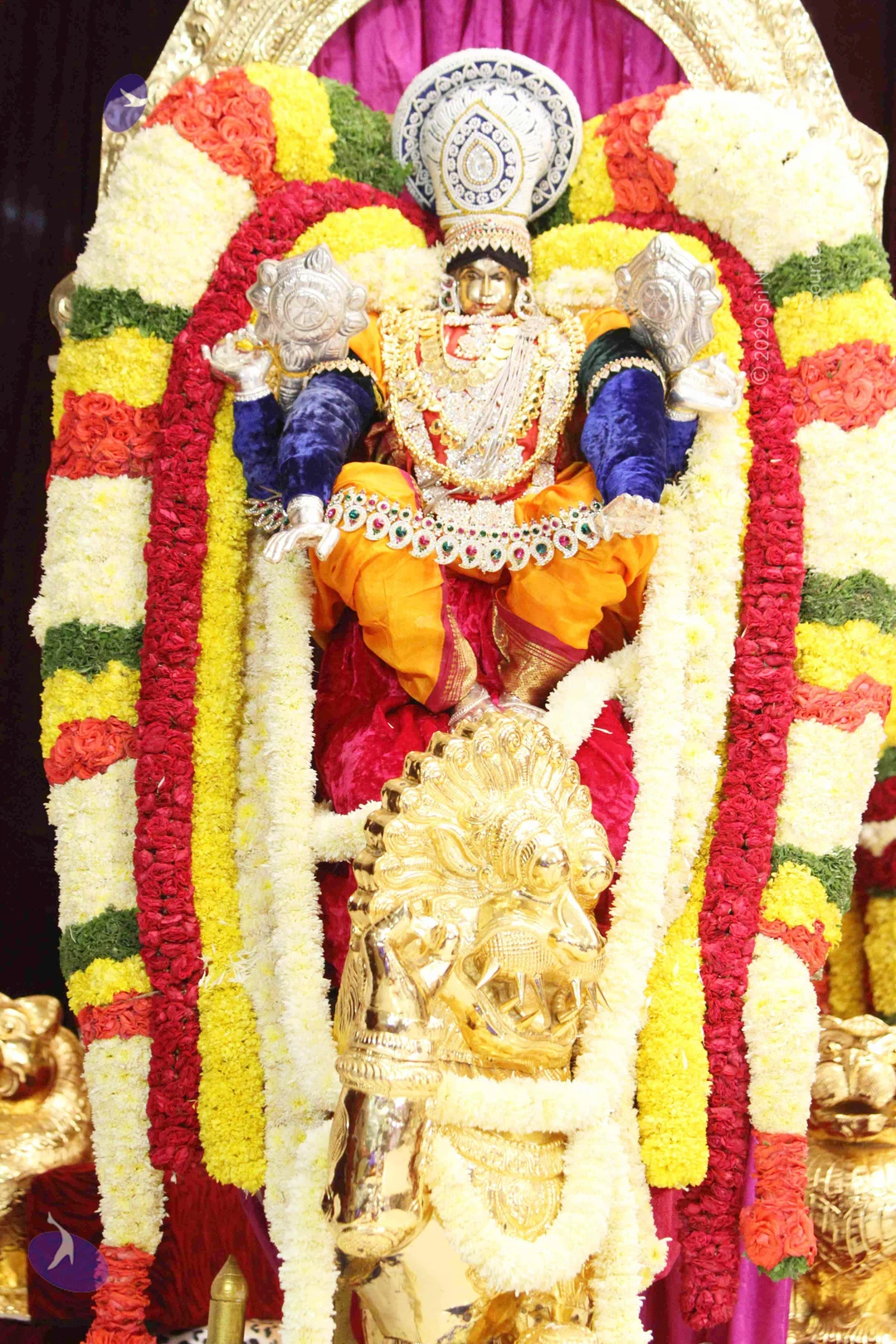
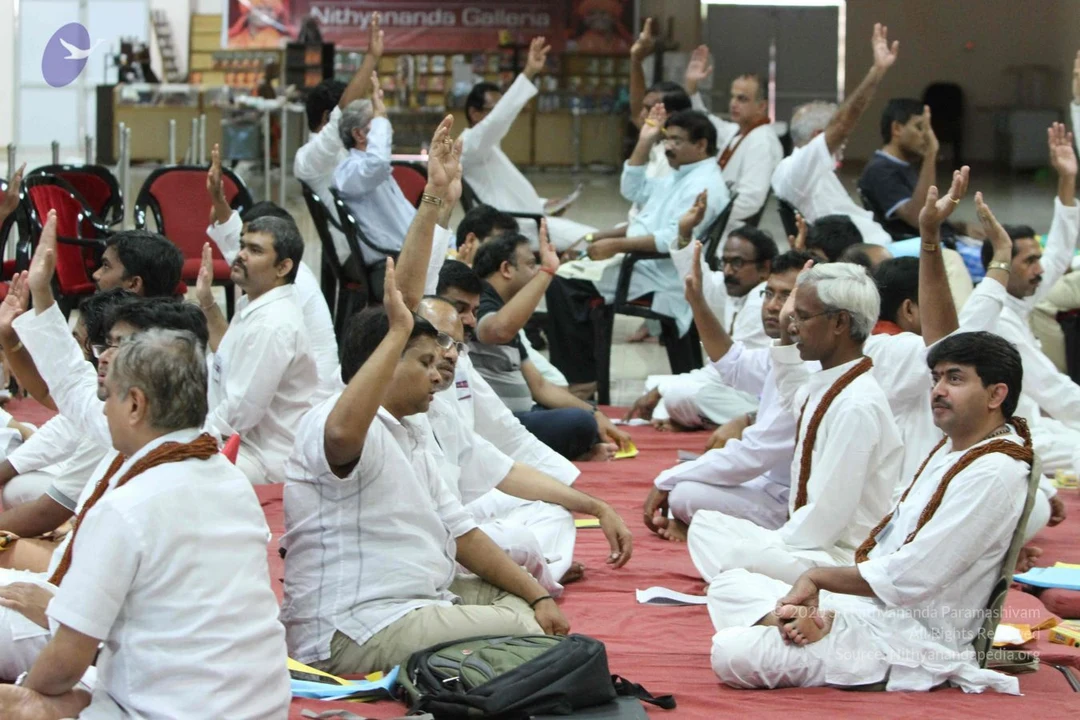
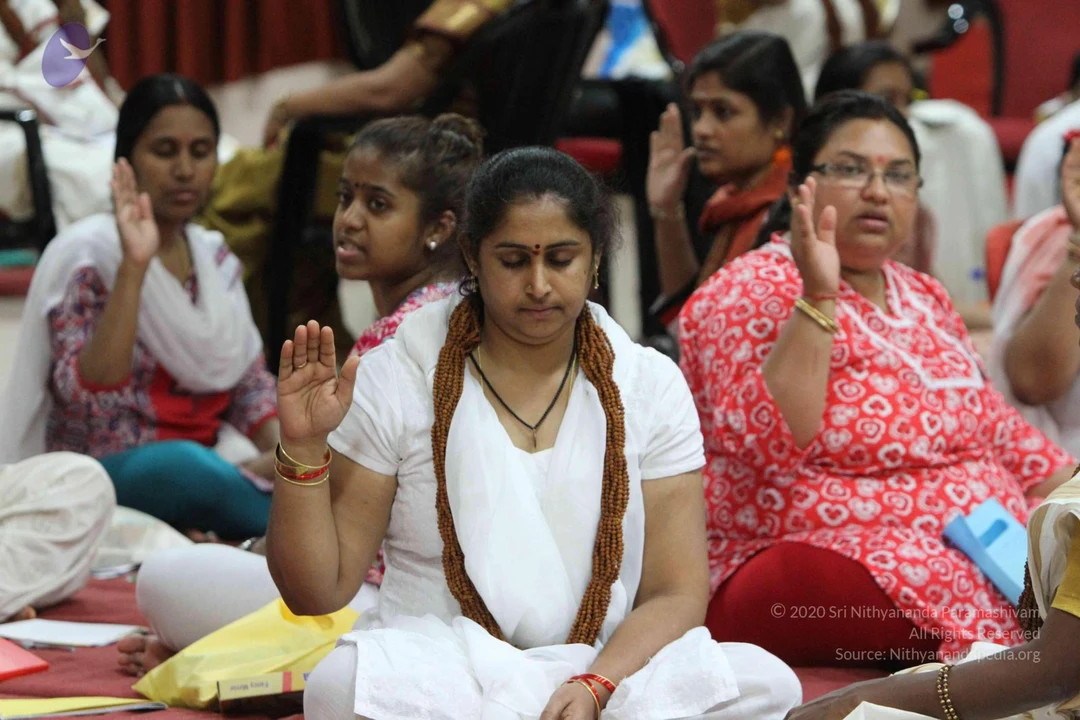
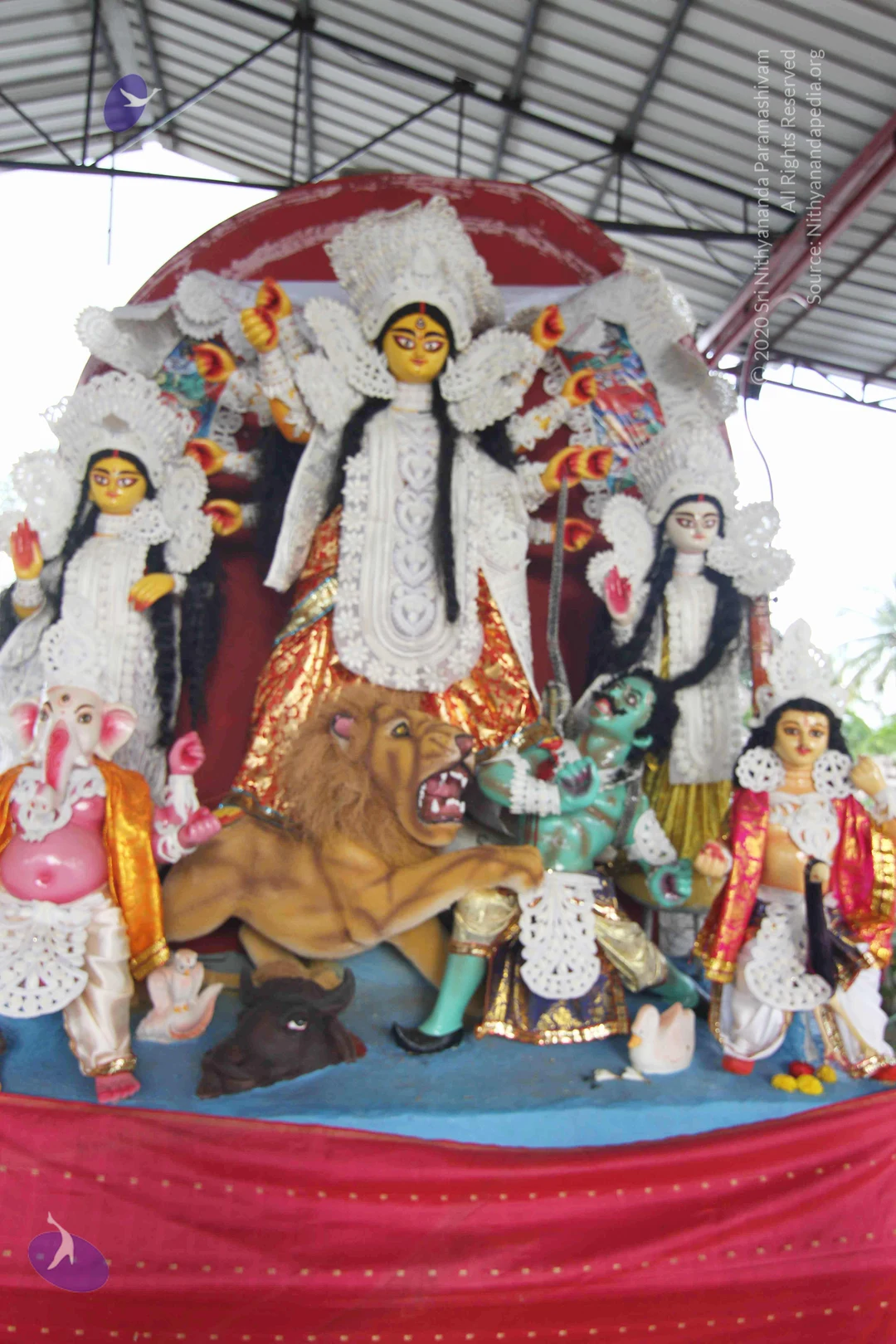
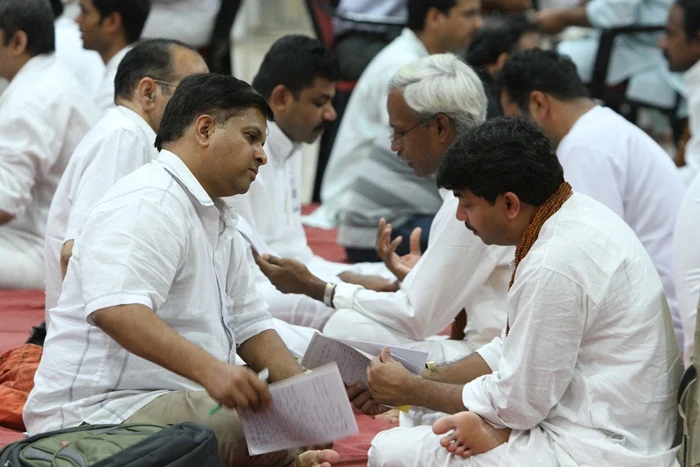
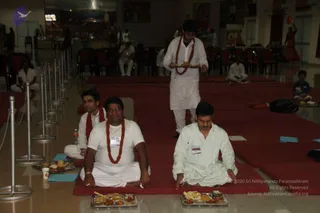
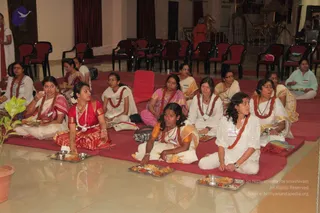
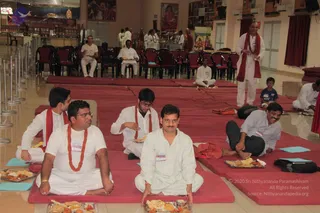
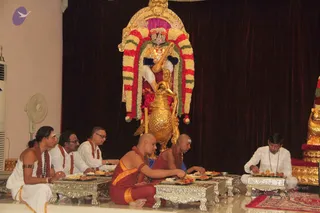
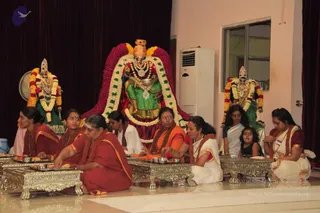
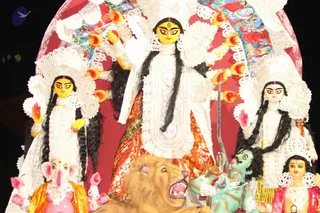
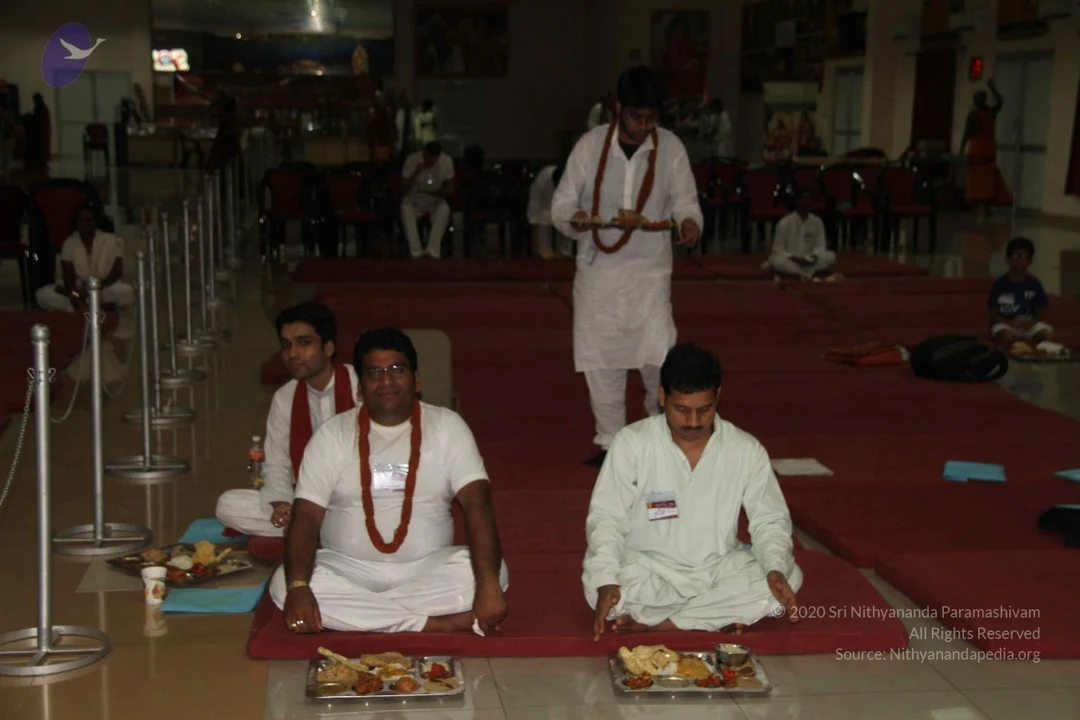
A photograph inside a large hall with red floor mats and rows of chairs at the back. Two men in white kurta-style clothes sit cross-legged on red mats in front, each with a red garland and a metal plate of food and offerings before them; the man at centre wears glasses and a red garland, the man at right wears a white kurta and a name badge. A third man in white with a red garland walks behind them carrying a tray. Several other seated people in white appear in the background, along with a child at far right, a row of metal stanchions and a red cord barrier at left, and a wall with framed pictures.A seated group of women in a hall with red floor mats and rows of red-cushioned chairs behind them. Most wear white or cream saris and salwar-style outfits with red or orange-and-gold garlands around their necks, and several hold or sit beside metal thali plates with food and small bowls. One woman in the foreground wears a red and gold sari with a white pearl necklace and a flower in her hair, and another in a white outfit and garland has a dark wristwatch. In the background a figure in orange robes stands near a golden-brown decorative pillar, and a potted plant sits at the lower left.A hall with red floor mats where several men in white kurta-style clothes sit on the floor before metal trays of food, including what appear to be snacks and curries. Several men wear red shawls and orange-red garlands, and a bearded man in a red shawl stands at right. Rows of dark red chairs line the back, a glass display case with shelves is at left, and framed portraits and banners hang on the walls.Indoor ritual scene before a golden deity murti decorated with white, yellow and red flower garlands and a golden peacock-shaped vahana. Six men sit cross-legged on low silver-toned stands with plated food; two in saffron and rust robes with shaved heads and rudraksha malas eat on the centre stands, while four in white dhotis and shirts with red shawls sit at the left and right. A standing fan and dark maroon drapery frame the hall.Women and girls sit cross-legged on a raised marble platform before a decorated deity murti, performing a padapuja-style ritual with brass and silver thalis and small bowls. The central murti wears a gold crown, green silk and layered gold necklaces, framed by a garland arch of red and white flowers and a deep red drape. Flanking murtis are dressed with marigold garlands. A seated woman in a red-orange sari and rudraksha mala holds a plate in the foreground; another in orange and white sits beside a silver stand, and a young girl in a black top sits among them. Five to six visible women and one child are present, with a wall air conditioner and window at right.A large Durga murti dominates the frame, a multi-armed goddess with yellow face, black braided hair and a white lace-trimmed garment over a red and gold sari. She is flanked by smaller figures in white and a ganesha figure in pink and orange at lower left, with a lion beneath her and a demon figure in green being subdued at lower right. The background is a red disc with a decorative cloth backdrop. No physical people are visible.

NDYSession&TemplePhotos

76 photosSource gallery
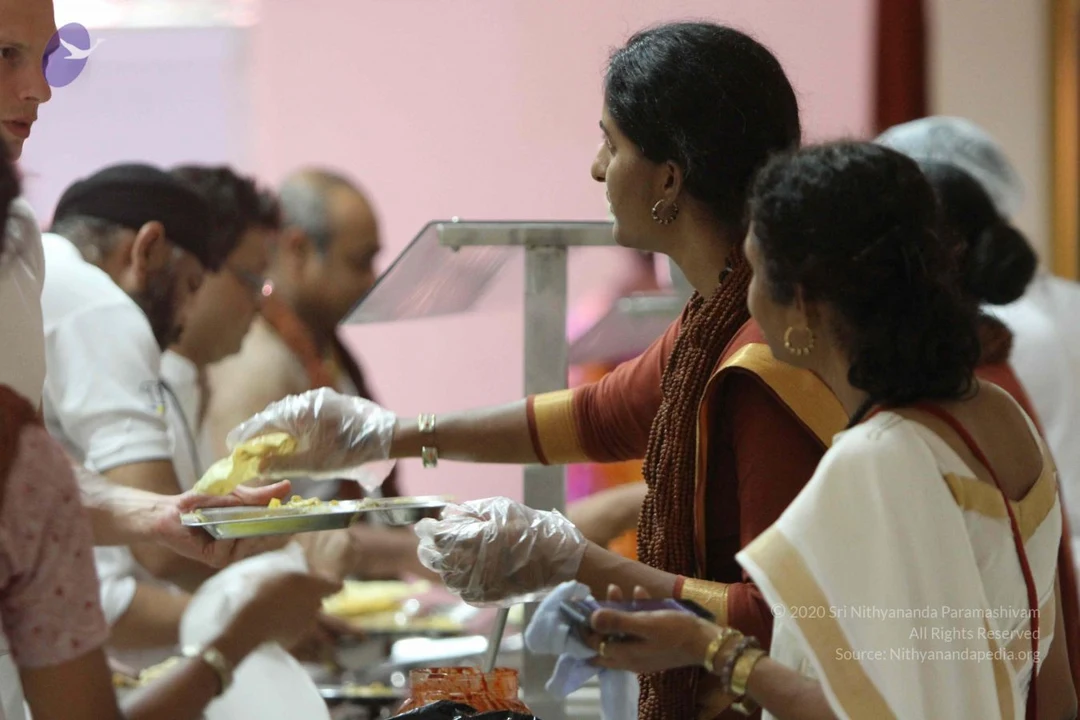
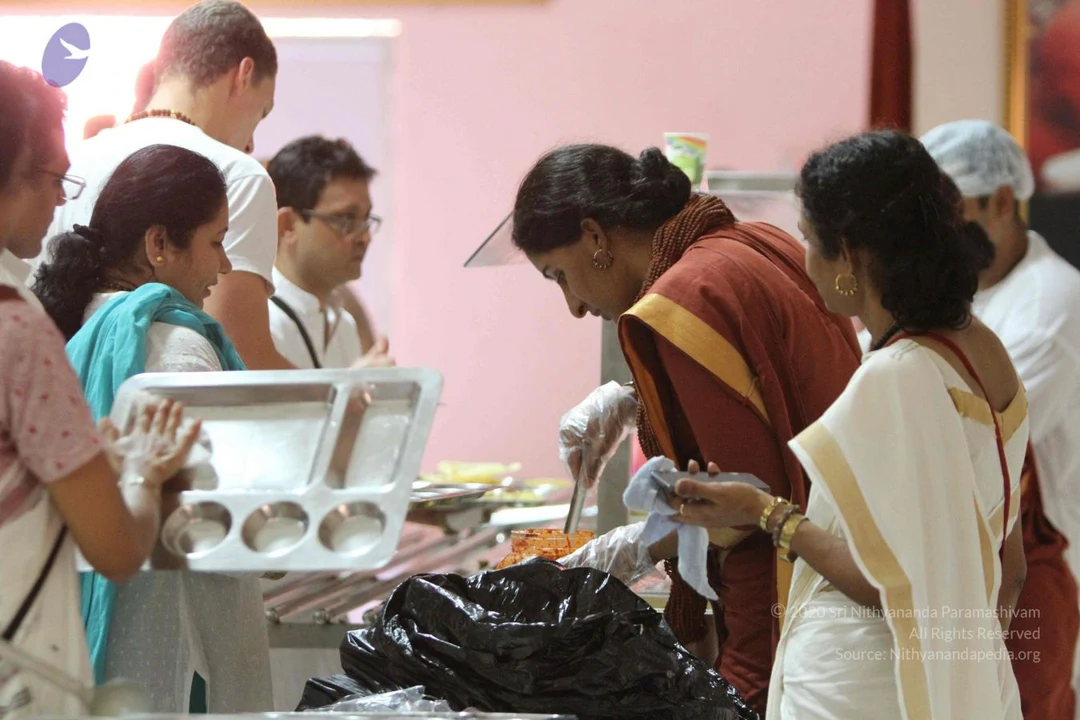
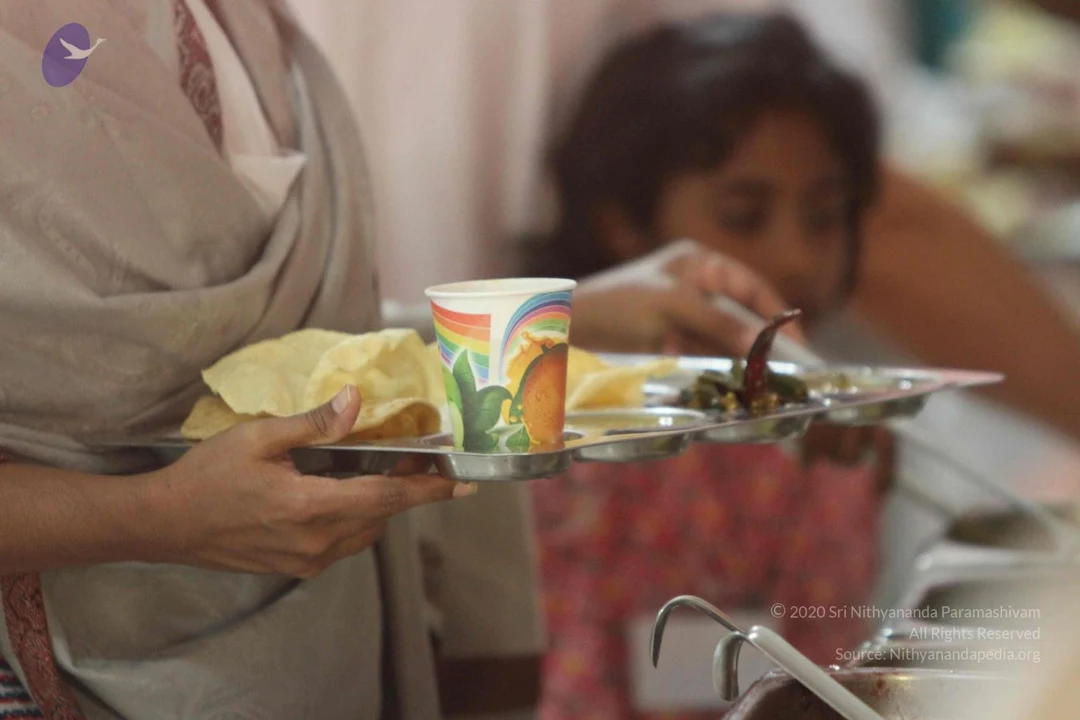
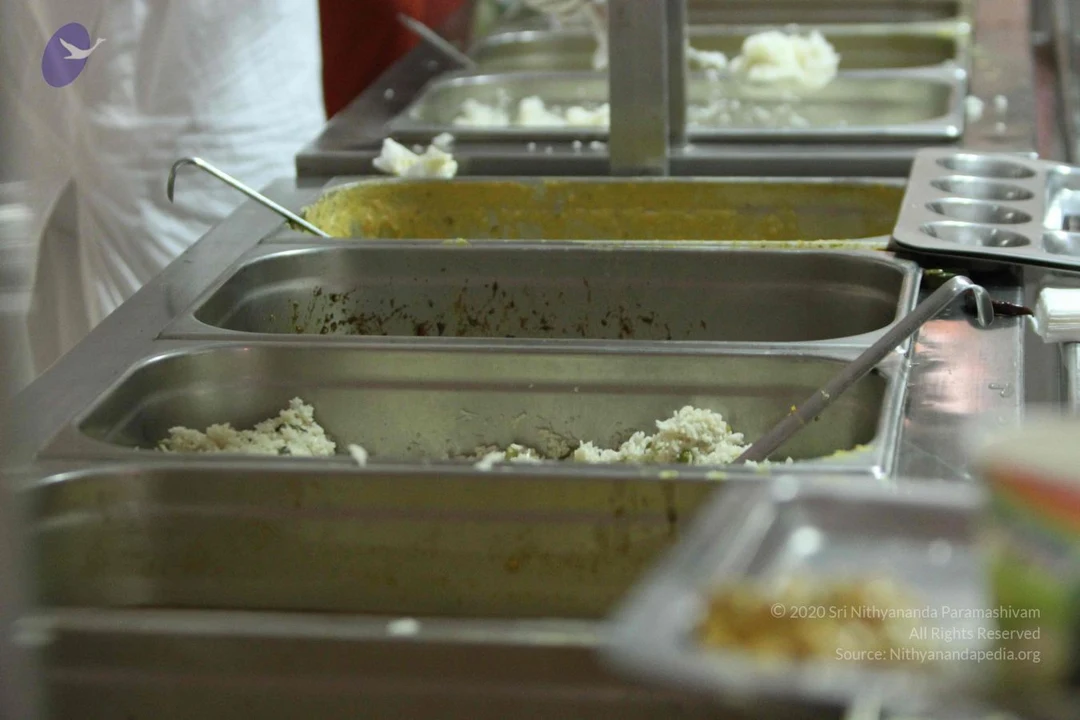
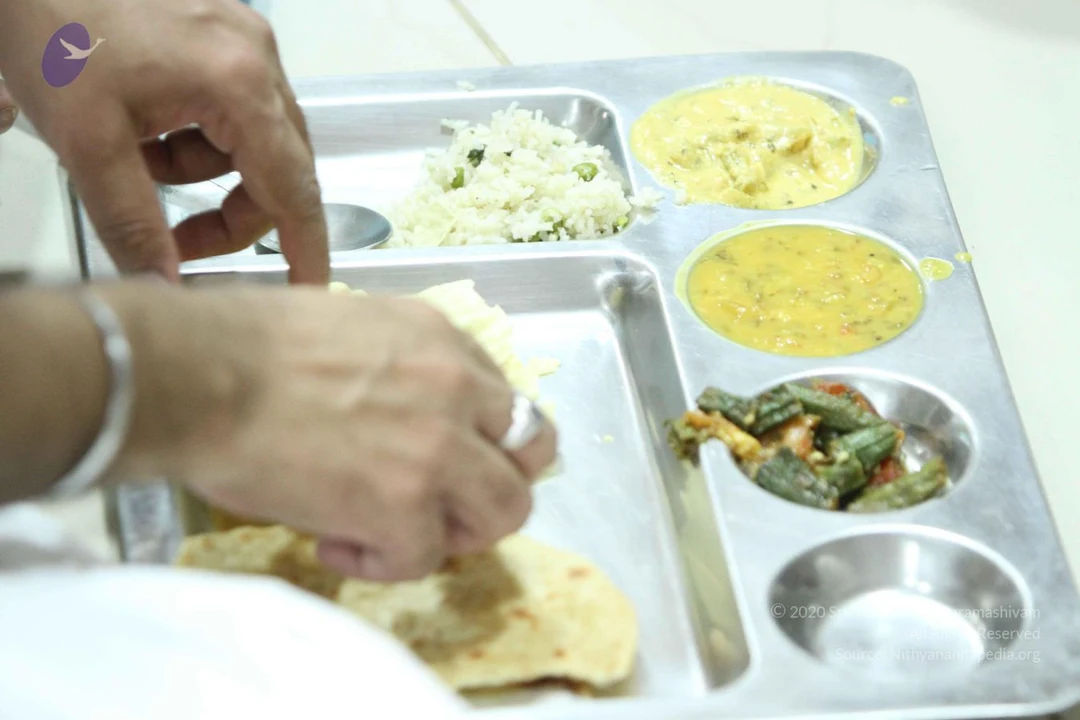
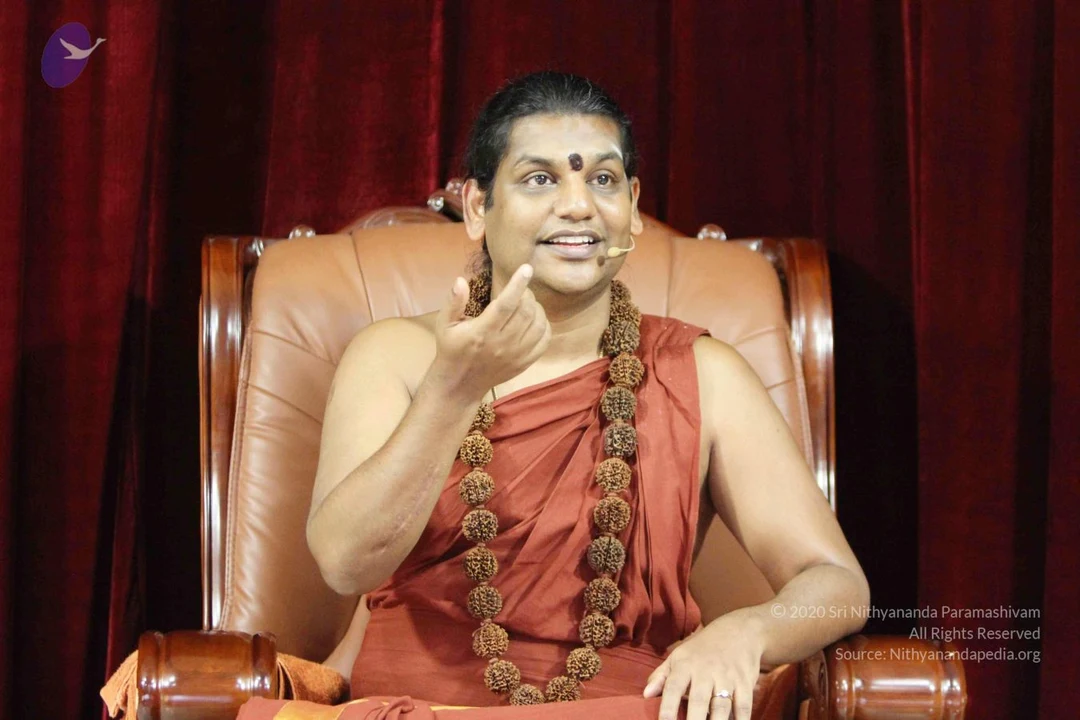
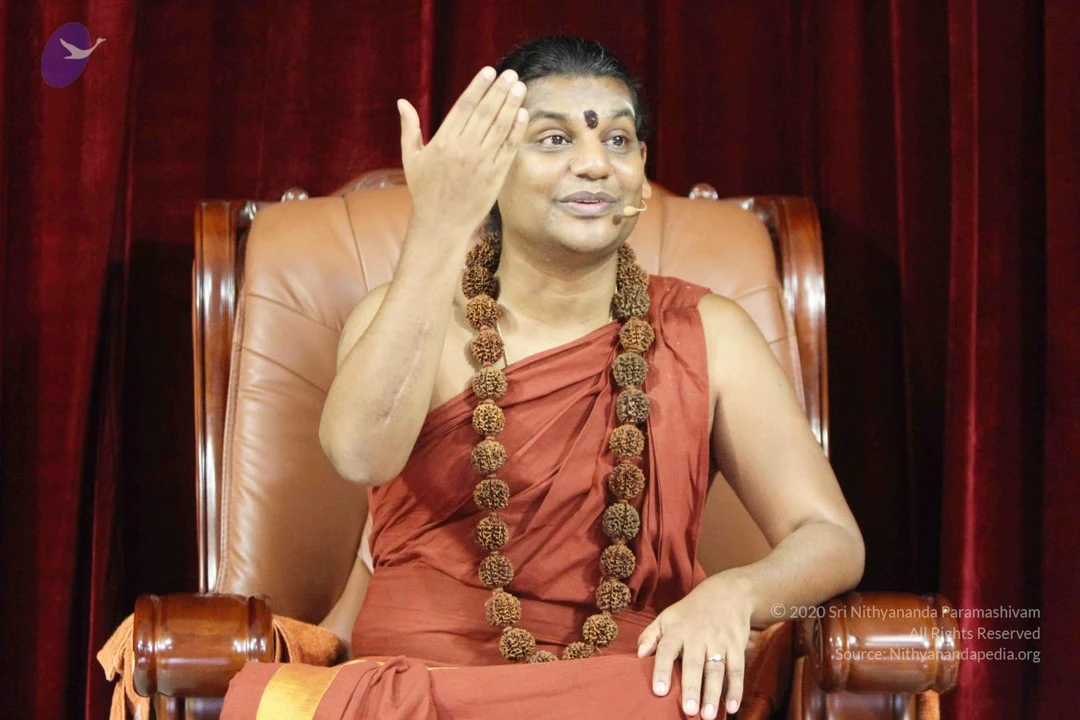
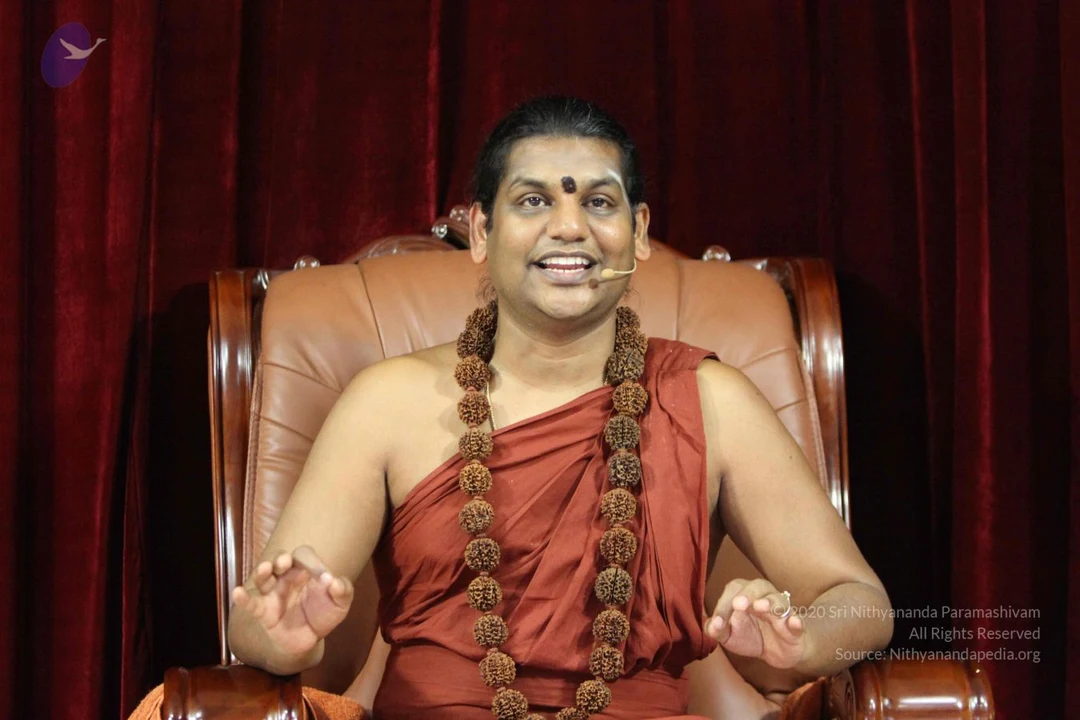
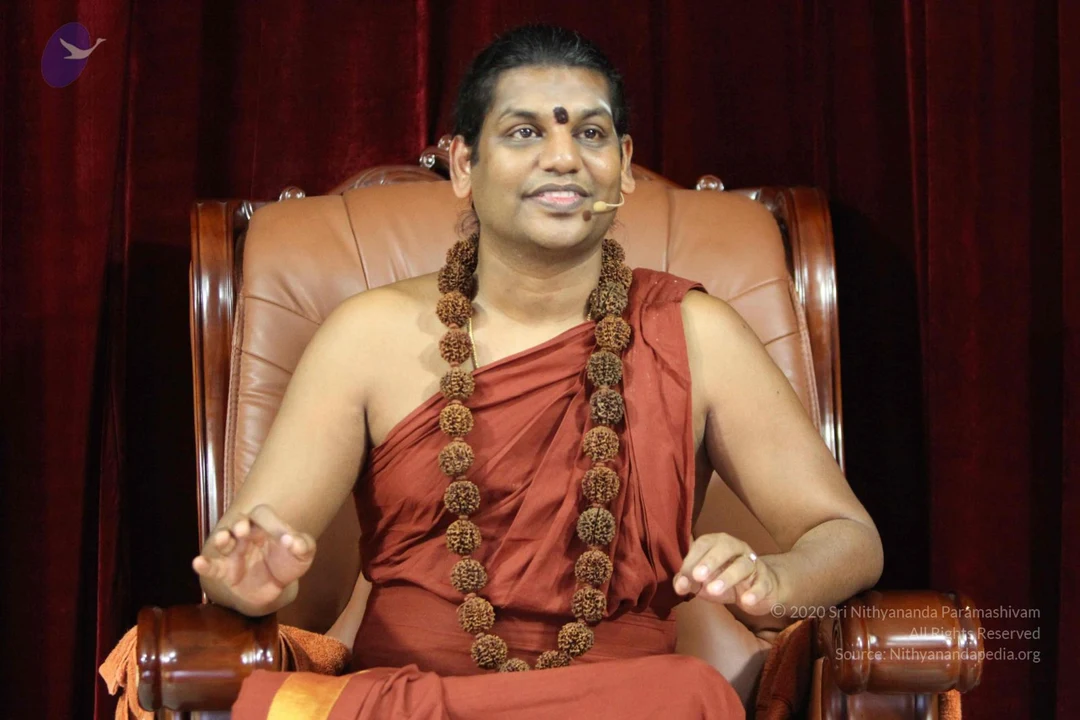
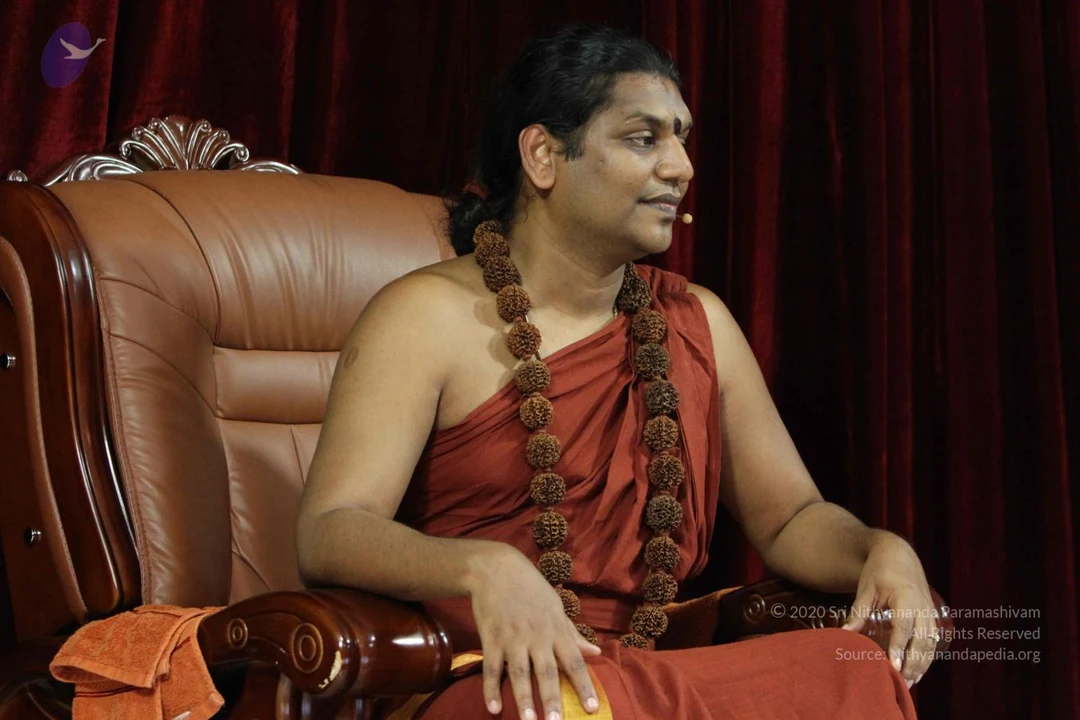
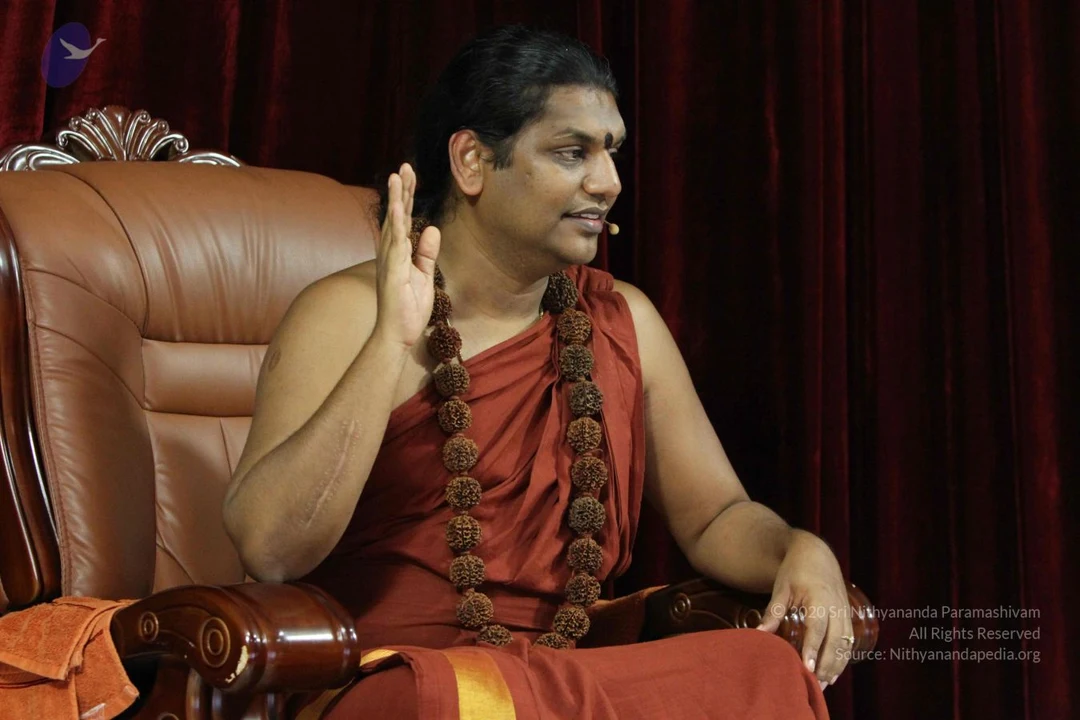
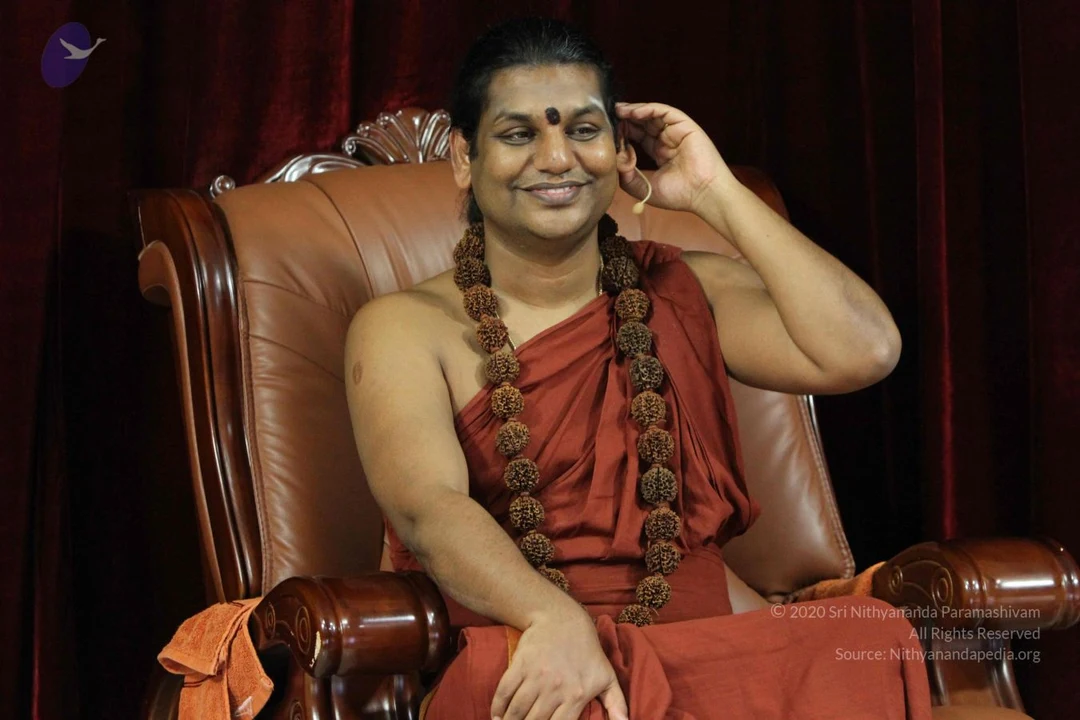
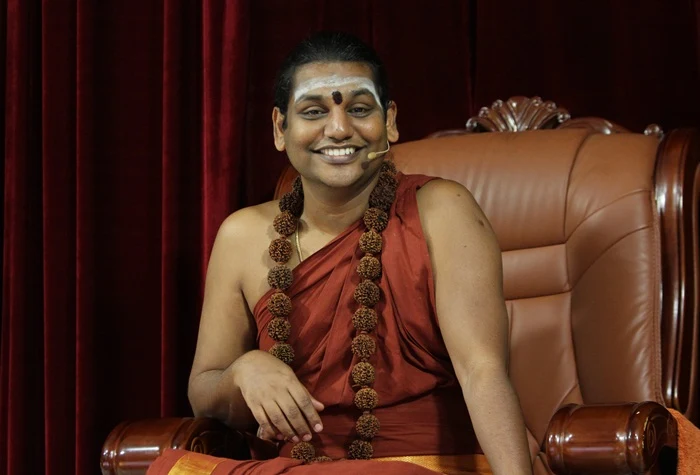
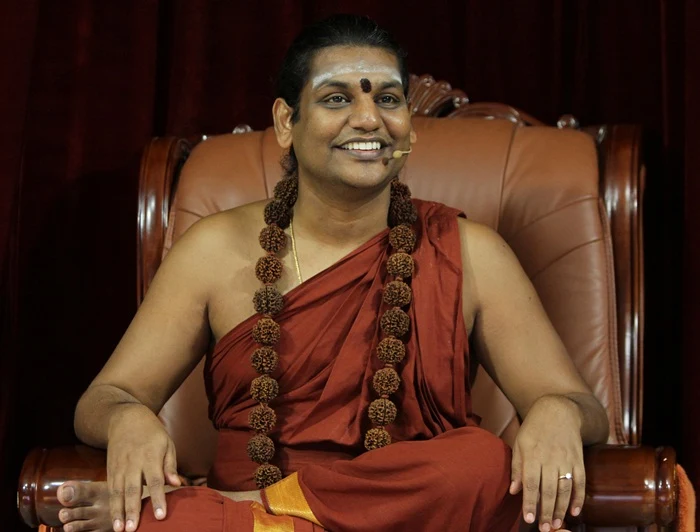
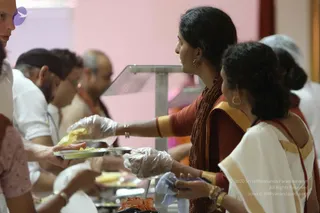
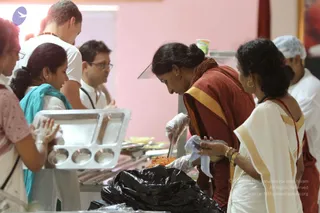
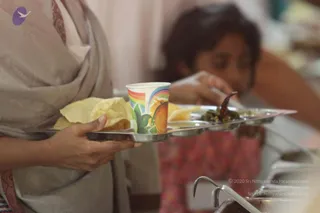
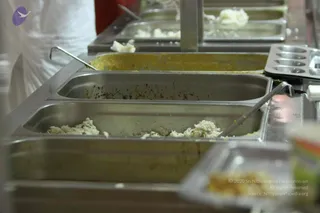
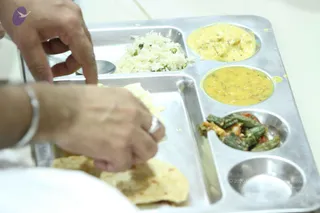
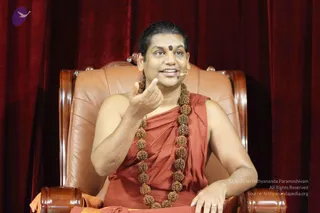
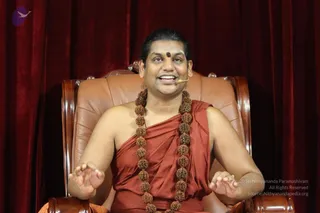
A photograph of a food-serving line in an ashram hall with a pink wall. A woman in a rust-red sari with a gold border and a long beaded necklace wears clear plastic gloves and serves a yellow dish onto a steel plate. Beside her, a woman in a cream and gold-bordered white sari holds a cloth. Men in white shirts and a man in a dark turban stand along the line. Steel serving stands and a jar of orange food are visible. Partly visible people in the background are also serving or waiting.A photo of a serving line in a pink-walled hall where people collect food onto divided stainless steel trays. A woman in a rust-red sari with a gold border and a beaded necklace leans over a food container, serving with a steel ladle while wearing clear plastic gloves. Beside her, a woman in a cream and gold-bordered sari holds a white cloth, and a woman in a turquoise salwar kameez and a man in white shirt wait with trays. A man in a white cap and white clothing stands at right. Black garbage bags lie near the serving counter. The scene suggests a communal meal service.A photograph of a meal service line. In the foreground, a woman in a beige shawl holds a stainless steel tray with papadums, a paper cup printed with a rainbow and leaf design, and a small portion of cooked food with a green chili. Behind her, a blurred child in a red patterned outfit reaches toward the serving counter, and metal serving tongs hang on the steel tray rail at lower right. The food is served as annadan community meal.Close-up photograph of a buffet food line with several stainless steel steam trays holding cooked rice, a yellow lentil or dal preparation, and a green-flecked dish. Serving ladles rest in the trays. Blurred white clothing of a server appears at the upper left, and a metal tray with small cup-shaped compartments sits at the right. No people's faces are visible, and no a person candidate appears in the frame.A close photo of a stainless steel compartment meal tray held by a person in white clothing. Hands tear a flatbread (roti) on the tray. Compartments hold white rice with green peas, a yellow dal or curry, a yellow sauce-like curry, and a dish of sliced okra with tomato. No people's faces are visible, and no a person candidate appears in the scene.A man sits in a brown leather armchair with carved wooden armrests against deep red velvet drapes. He wears a rust-red draped garment over one shoulder, leaving the other arm bare, and a long necklace of large brown rudraksha beads. He has a small dark bindi on his forehead, a small microphone clipped near his mouth, and a ring on one hand. His right hand is raised in a gesture while he speaks. a person: the seated speaker wears rudraksha mala and red-orange robes in a teaching setting, but the face and hairstyle cues are not distinctive enough to confirm identity, so this is marked unsure.

Culturals

32 photosSource gallery
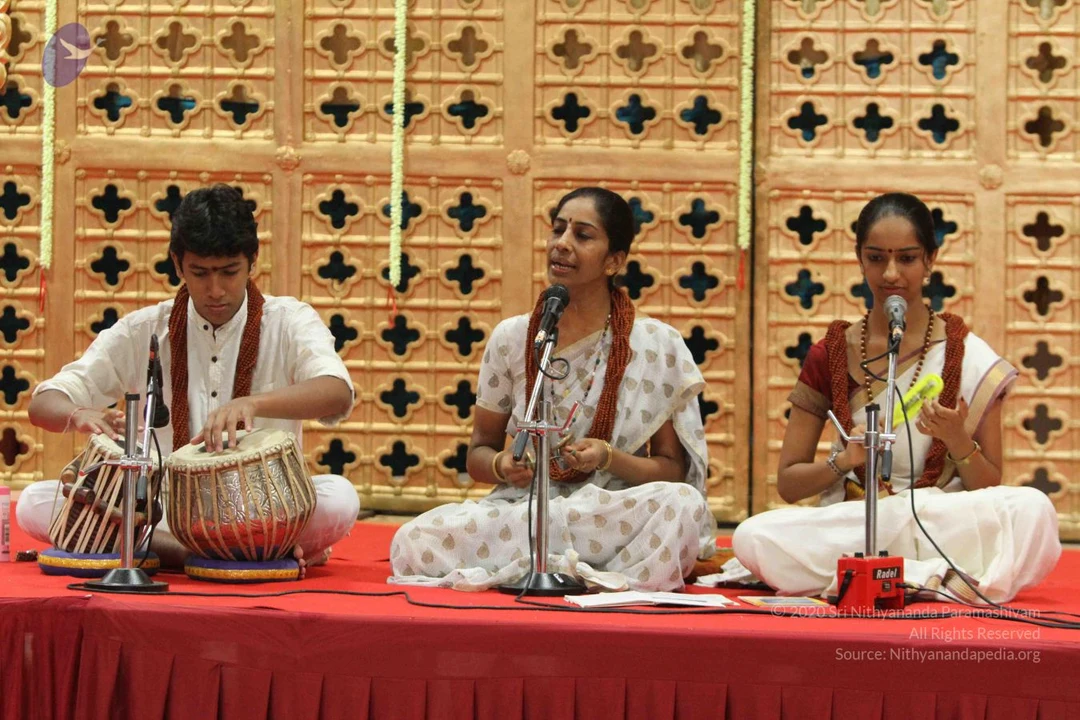
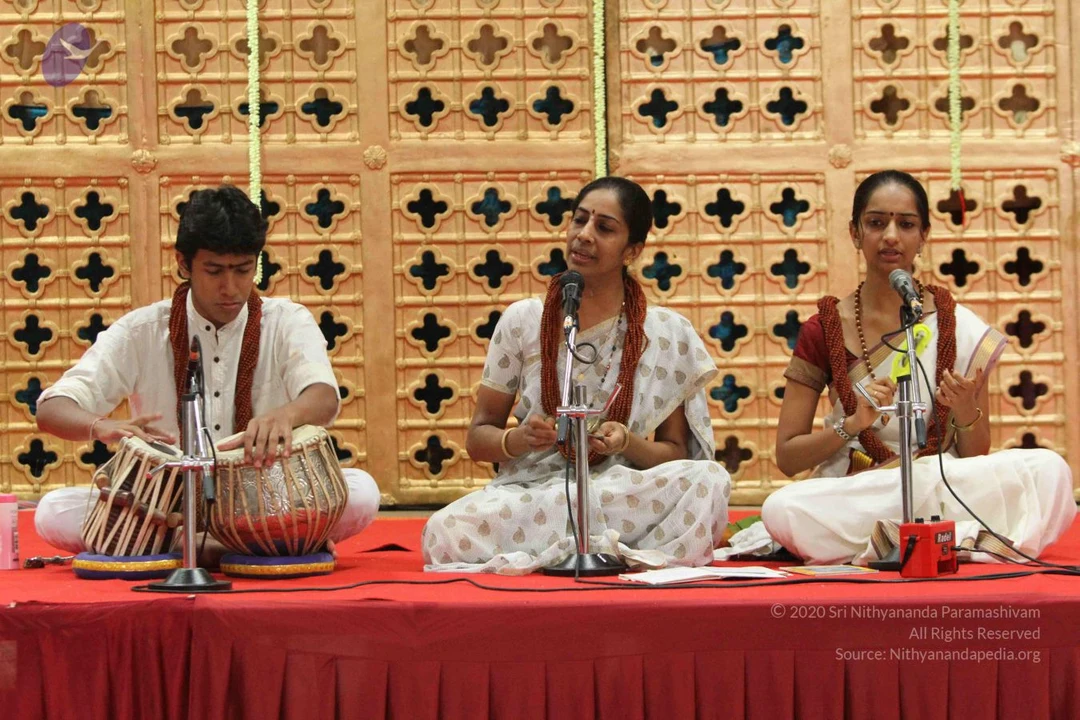
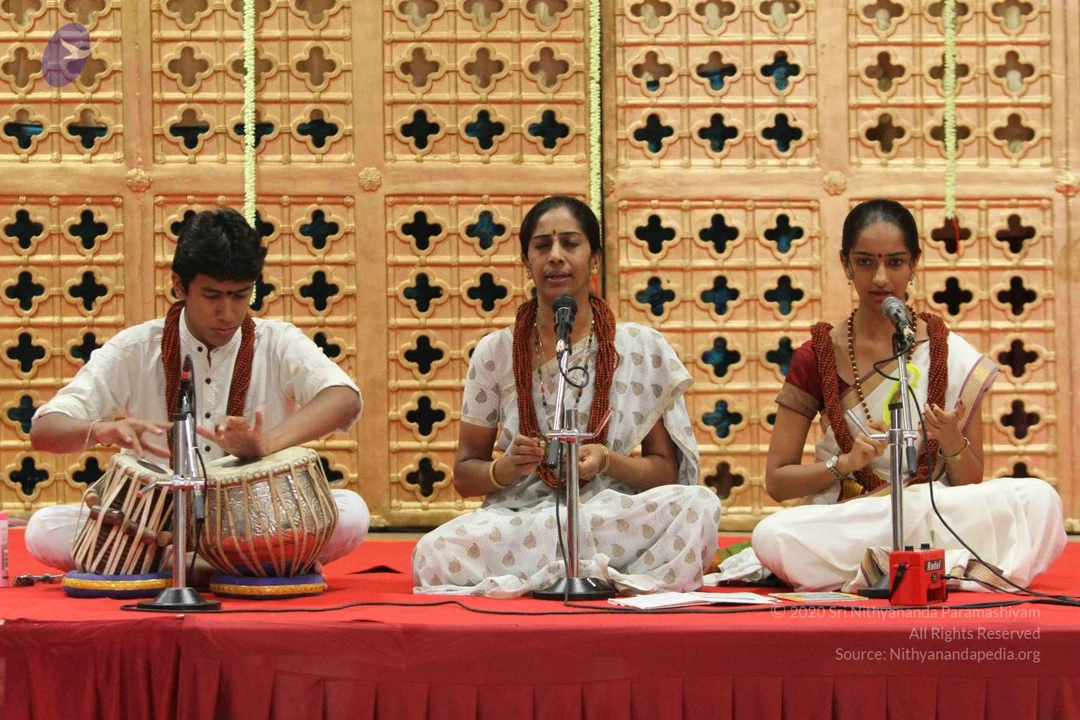
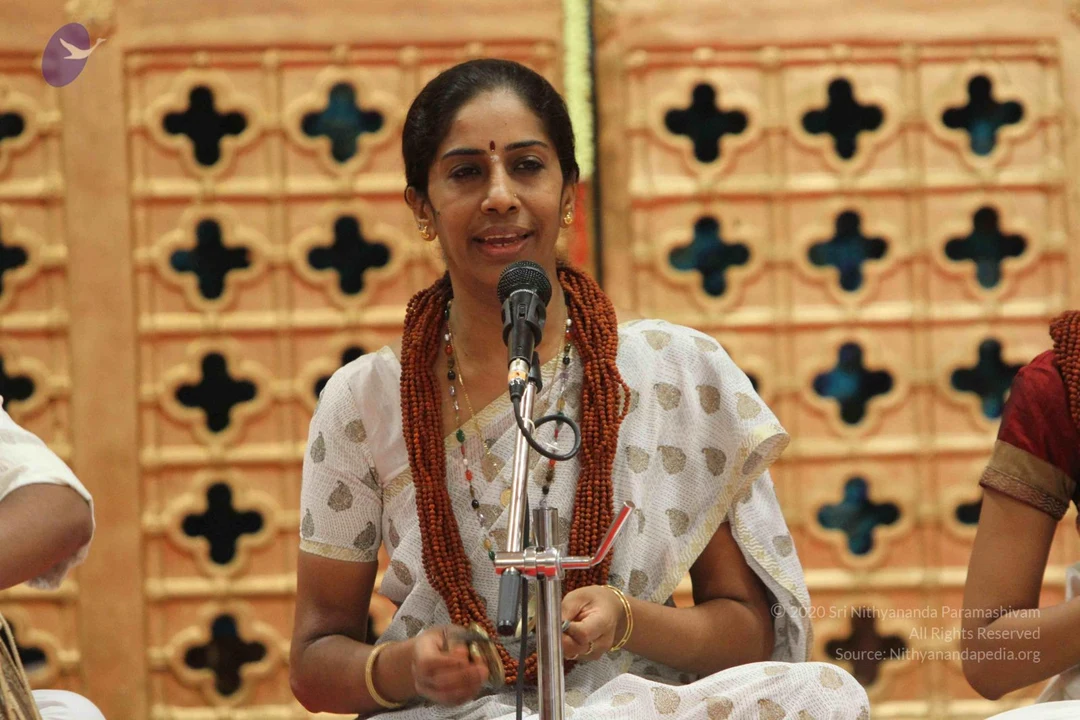
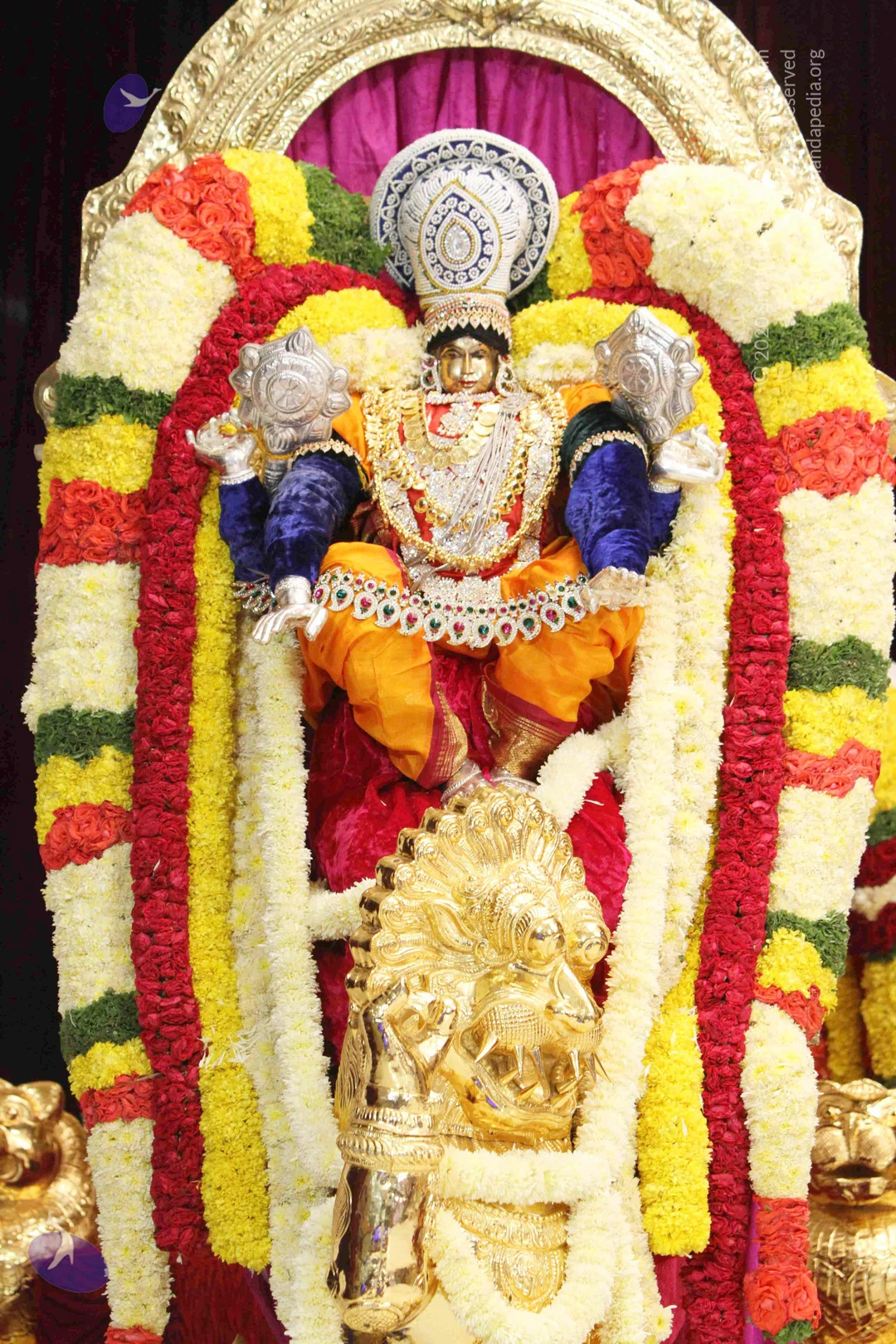
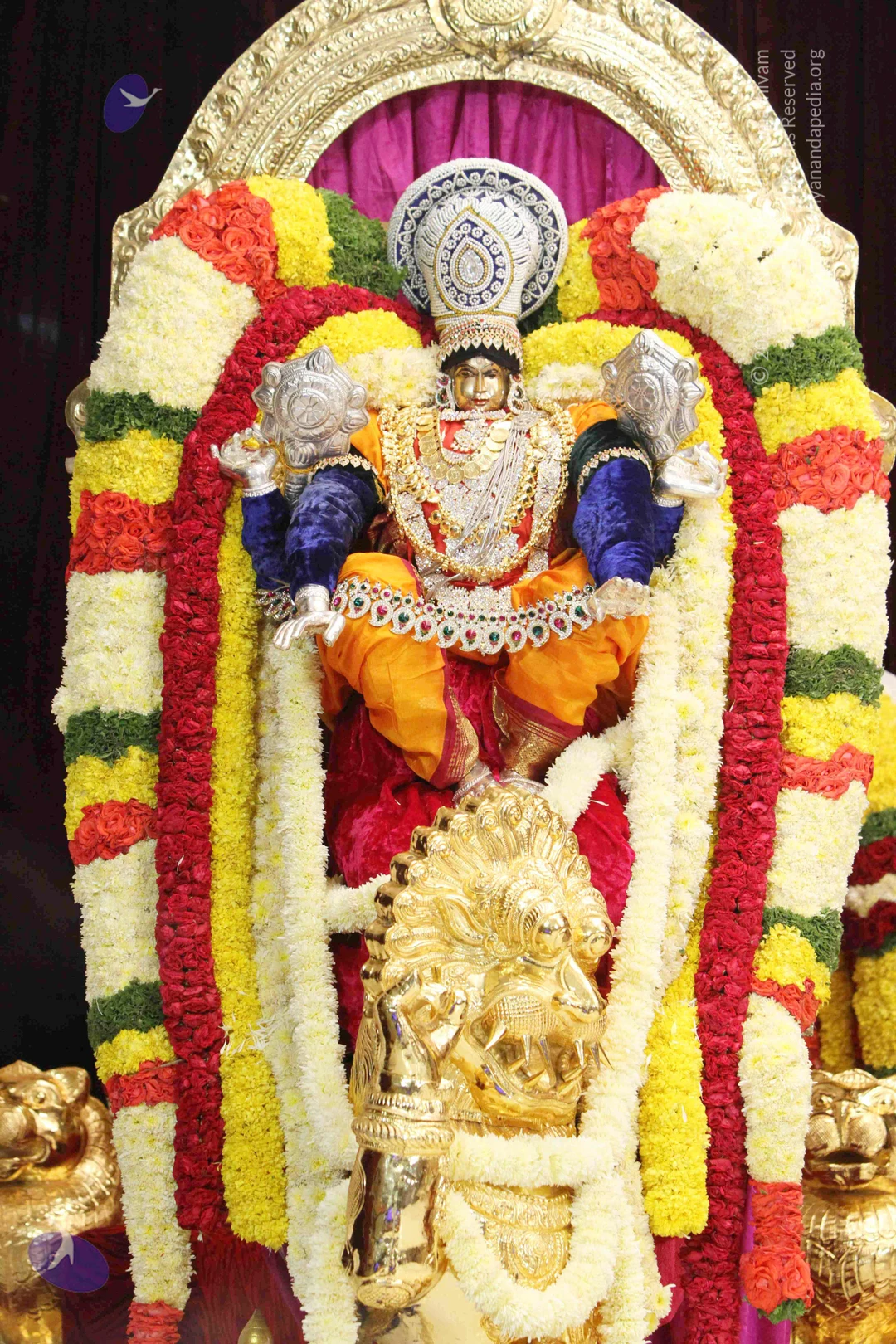
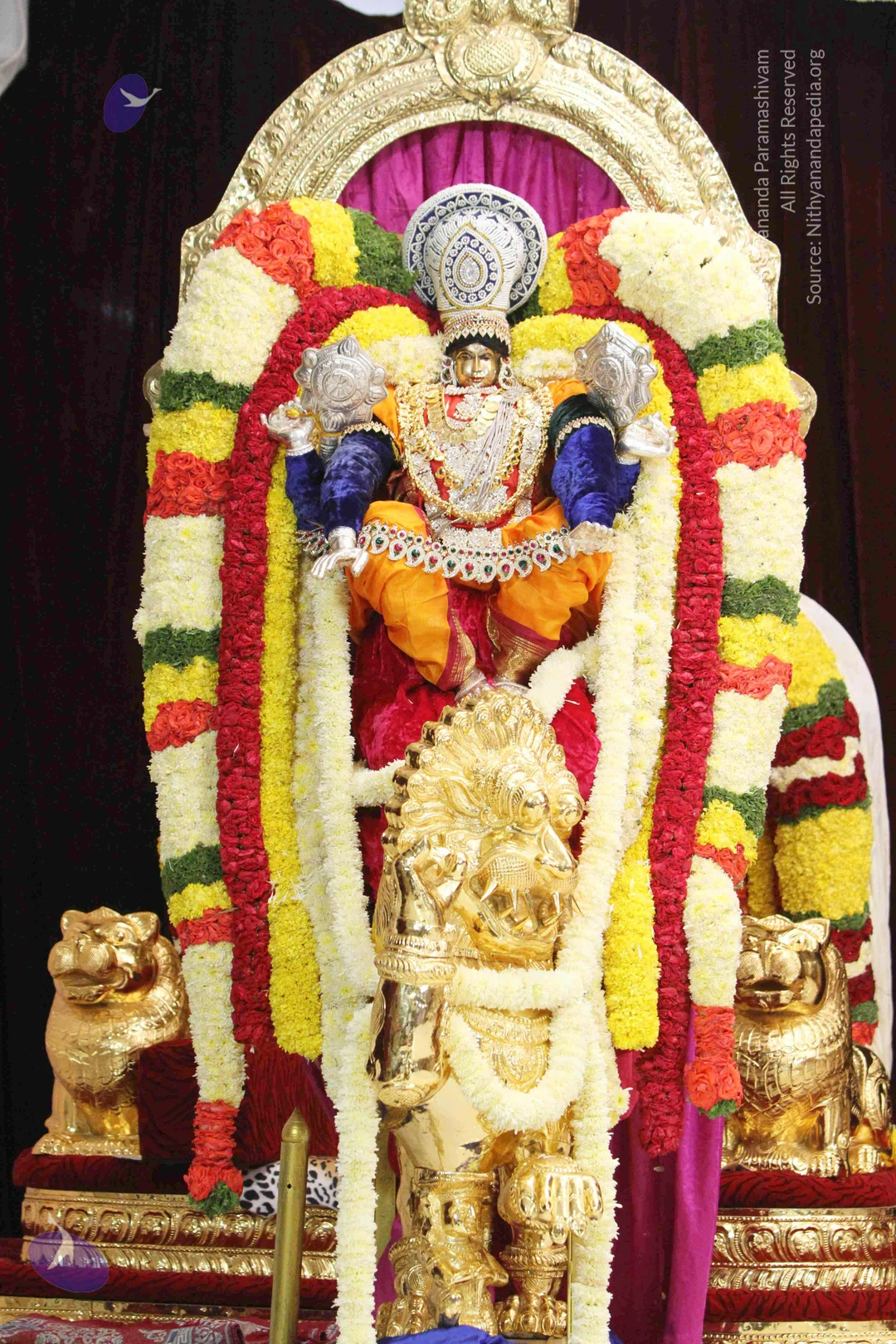
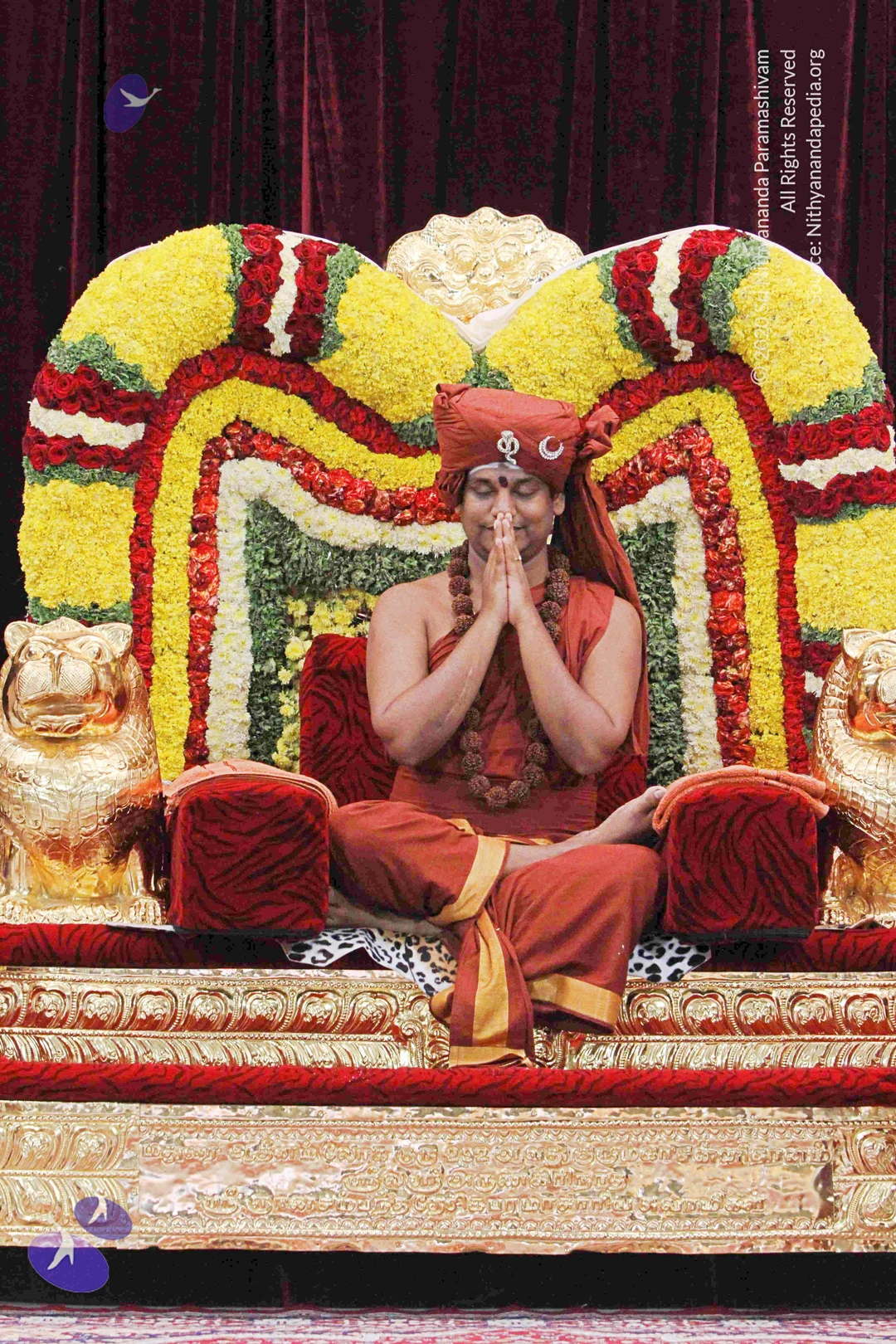
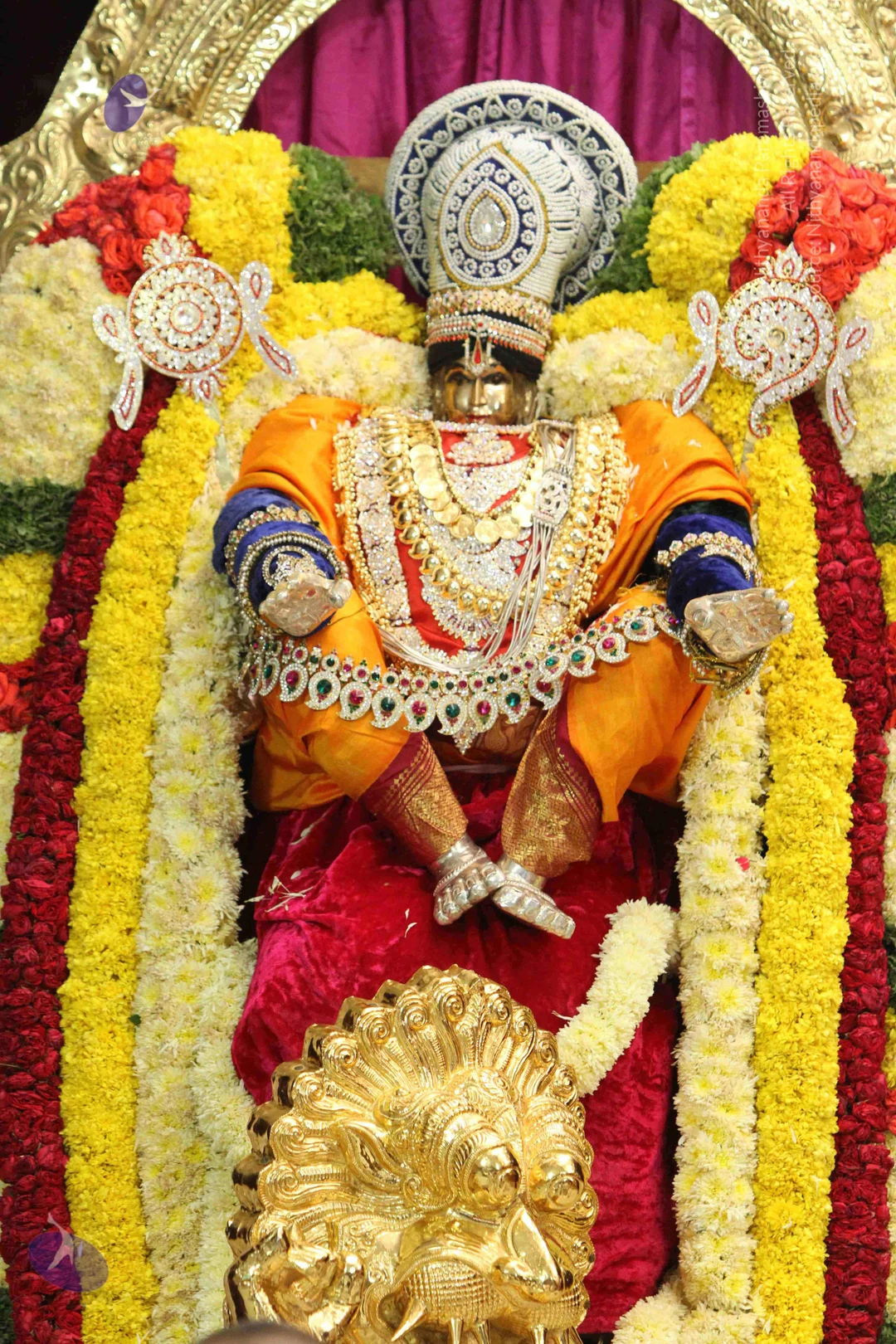
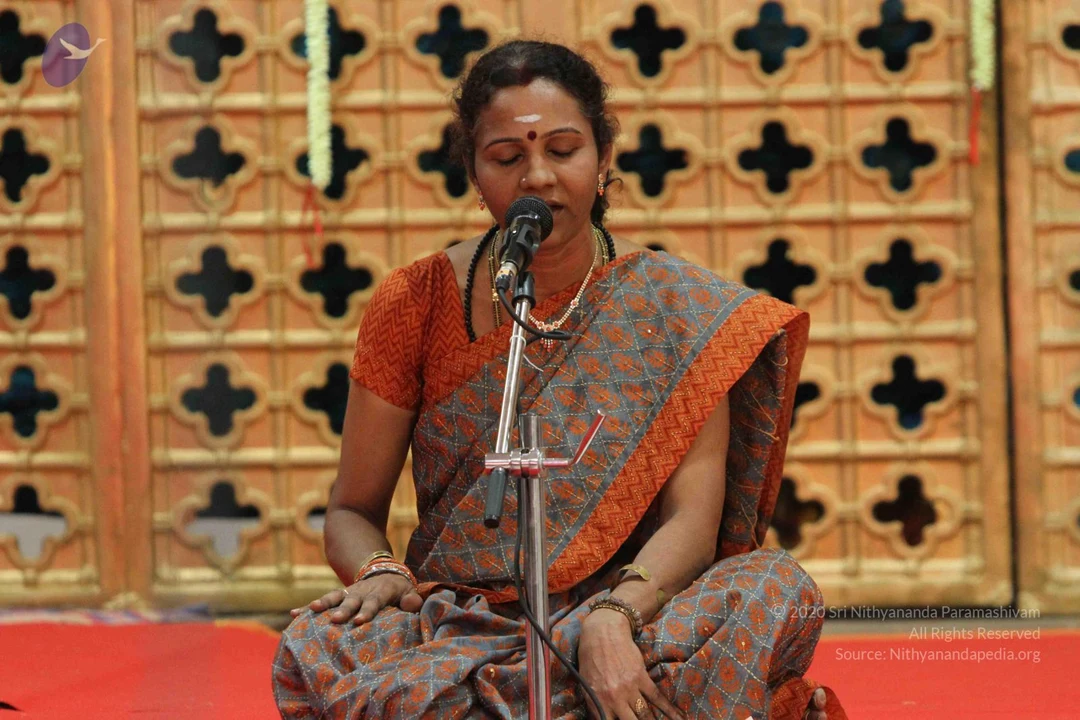
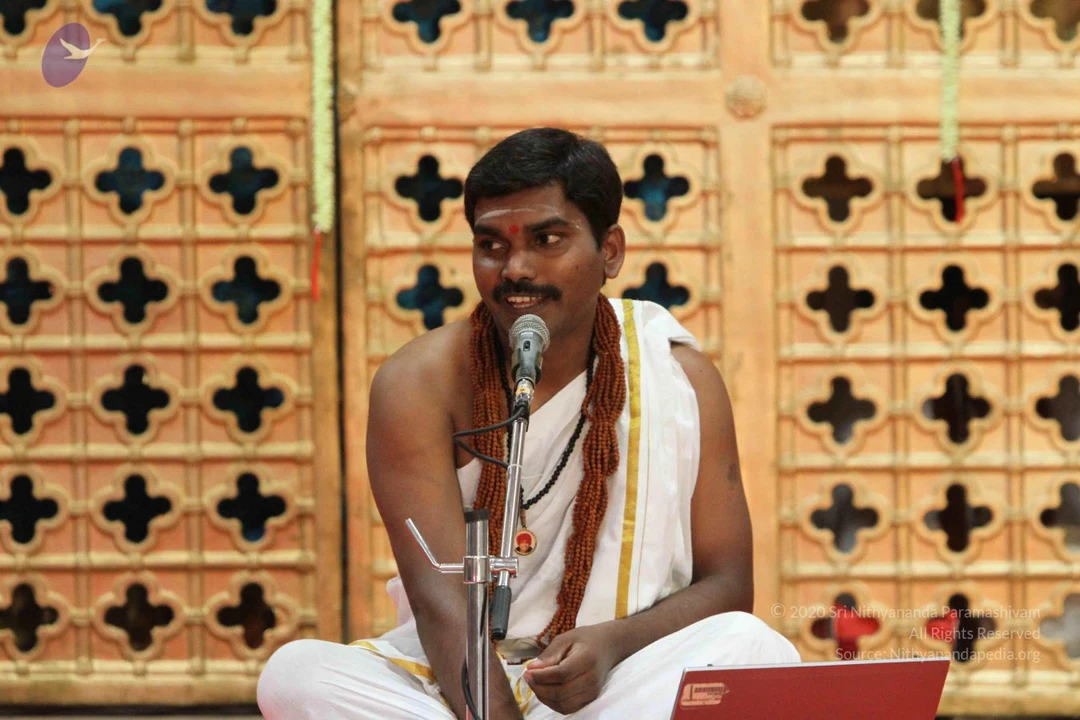
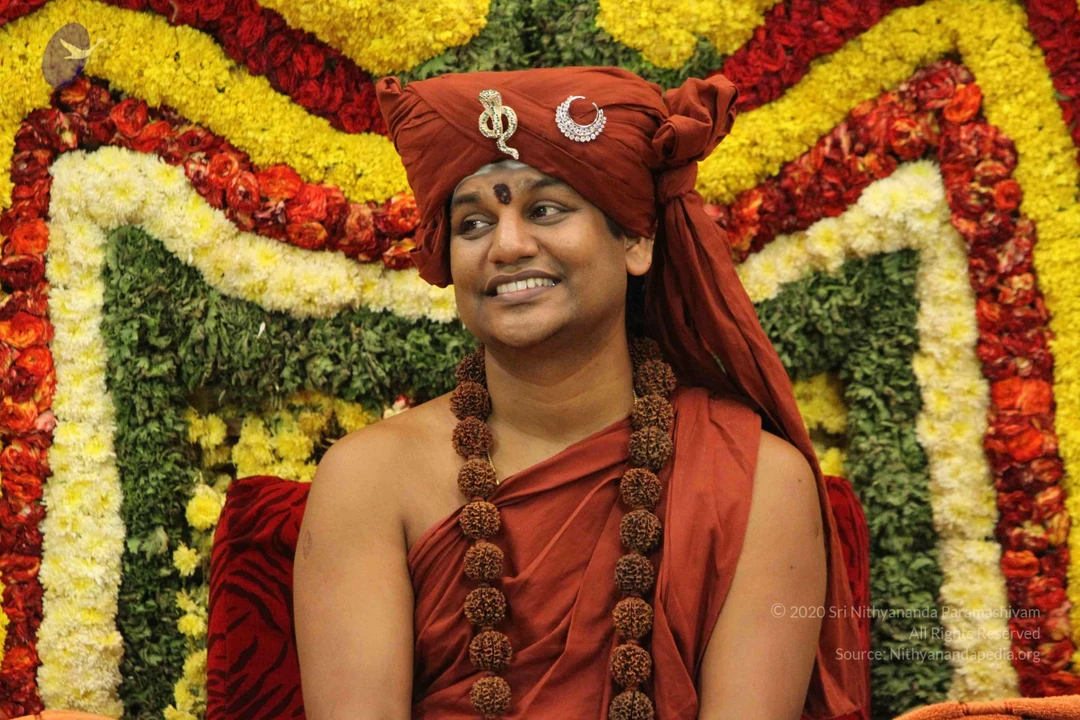
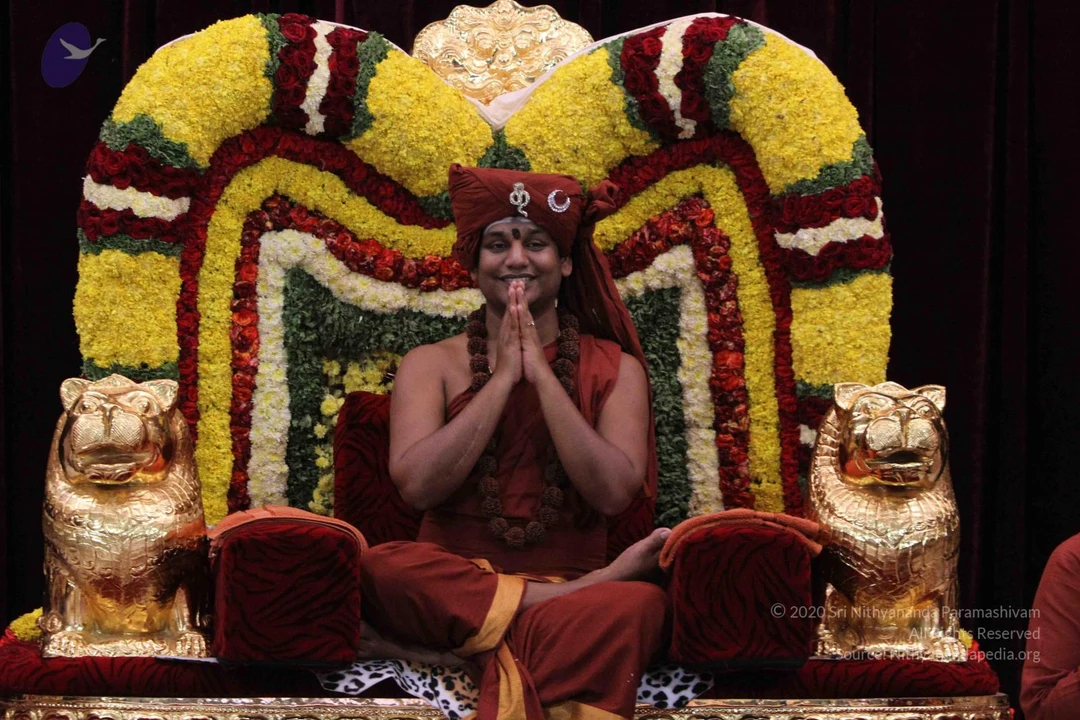
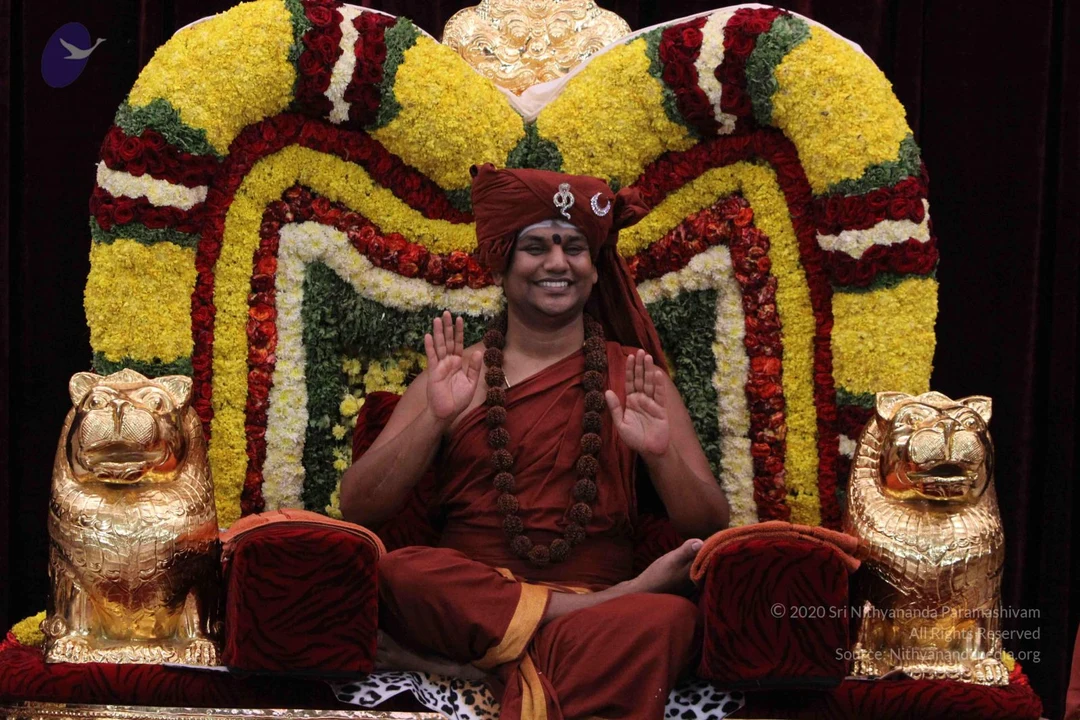
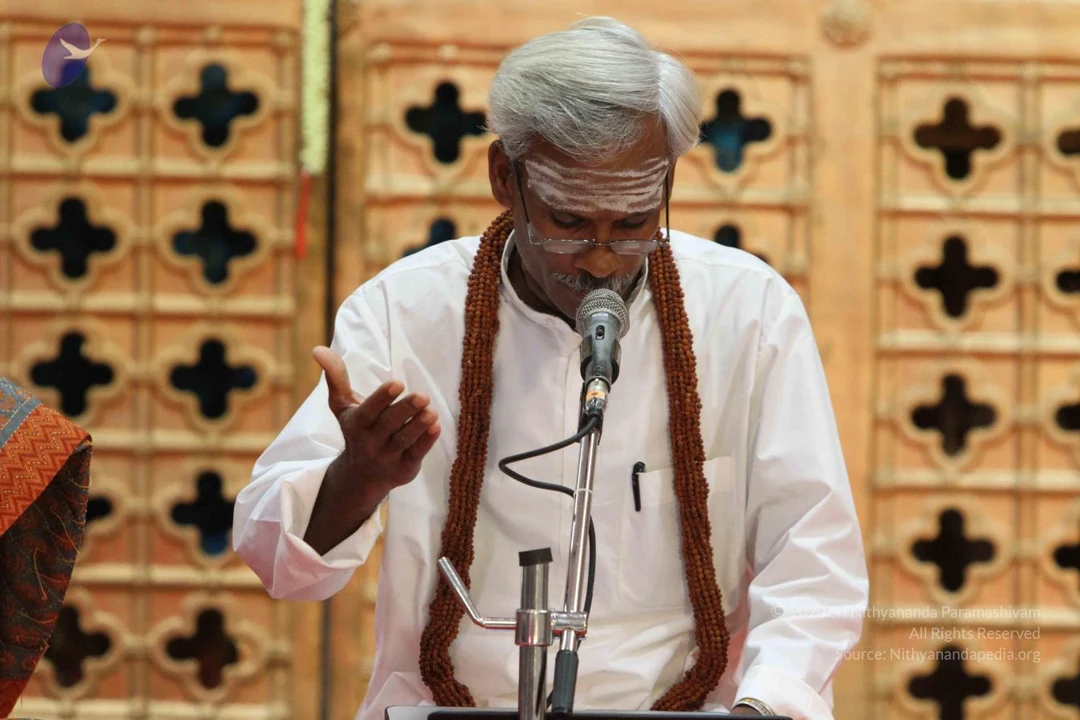
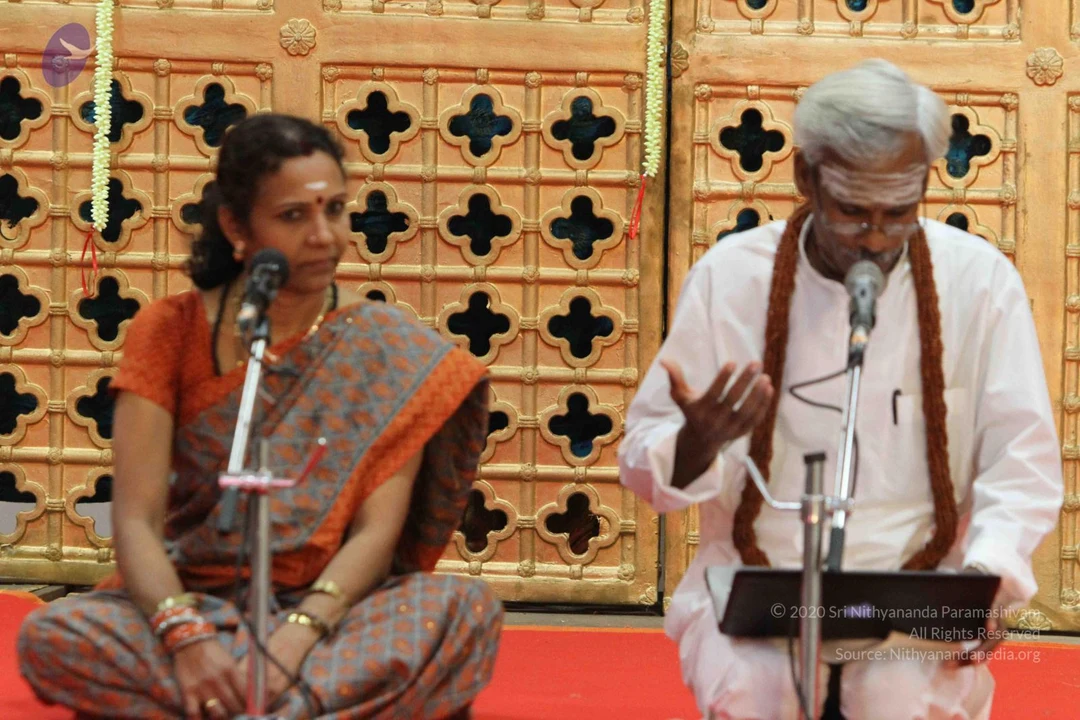
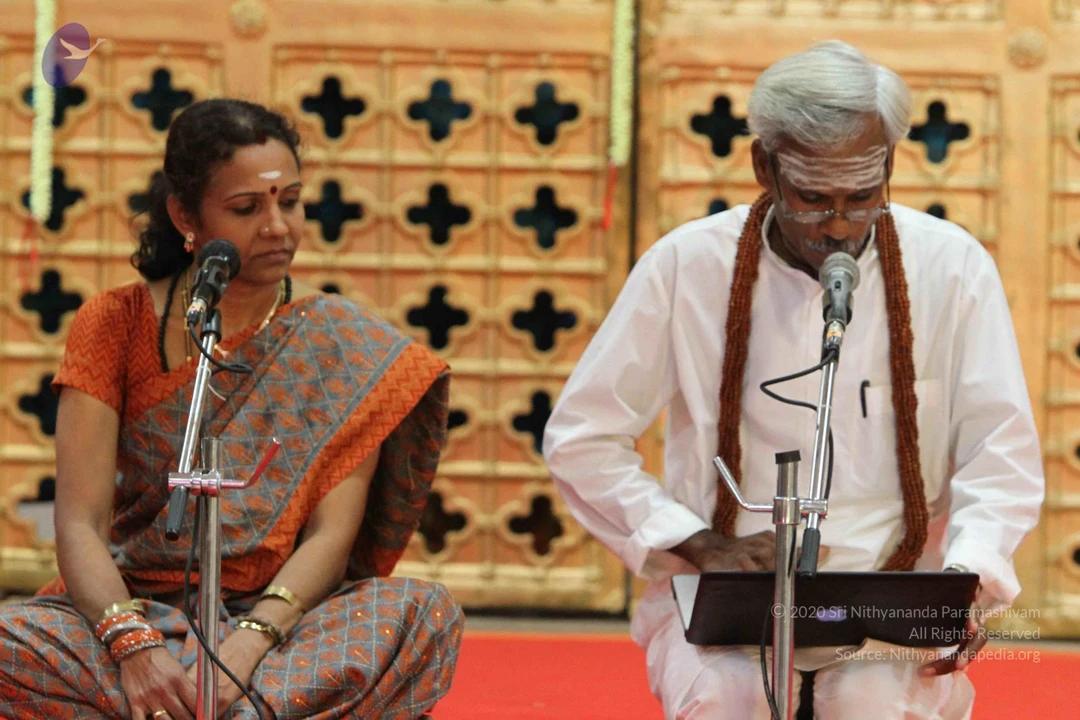
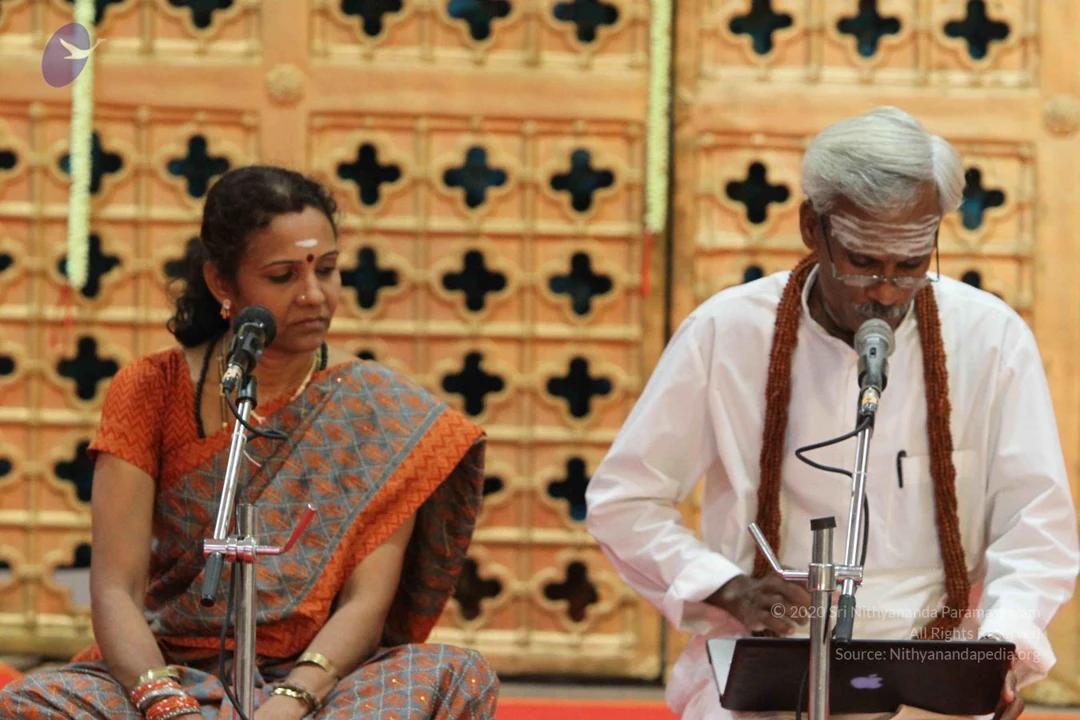
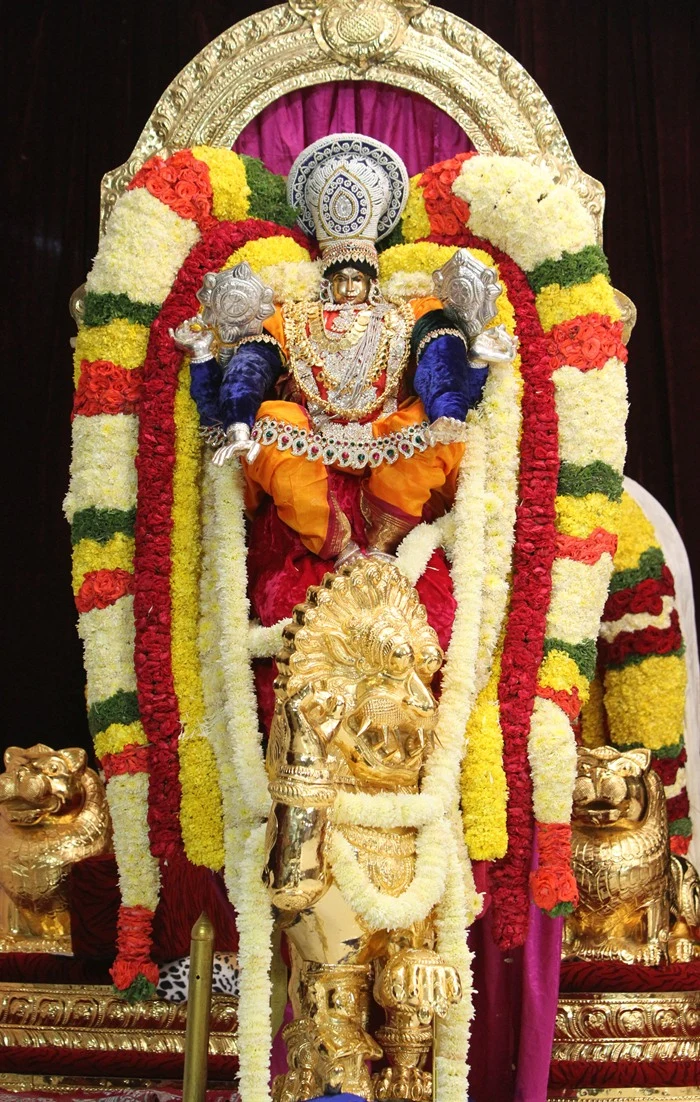
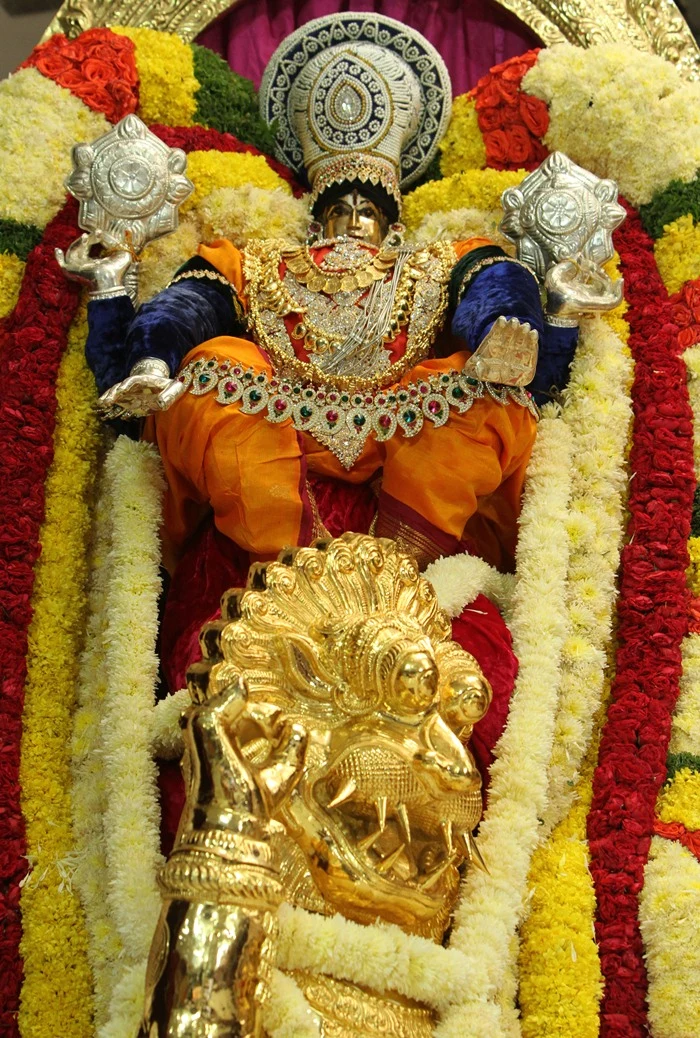
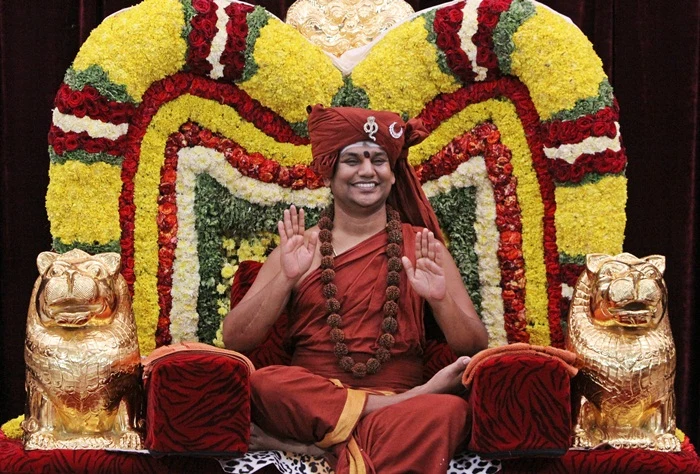
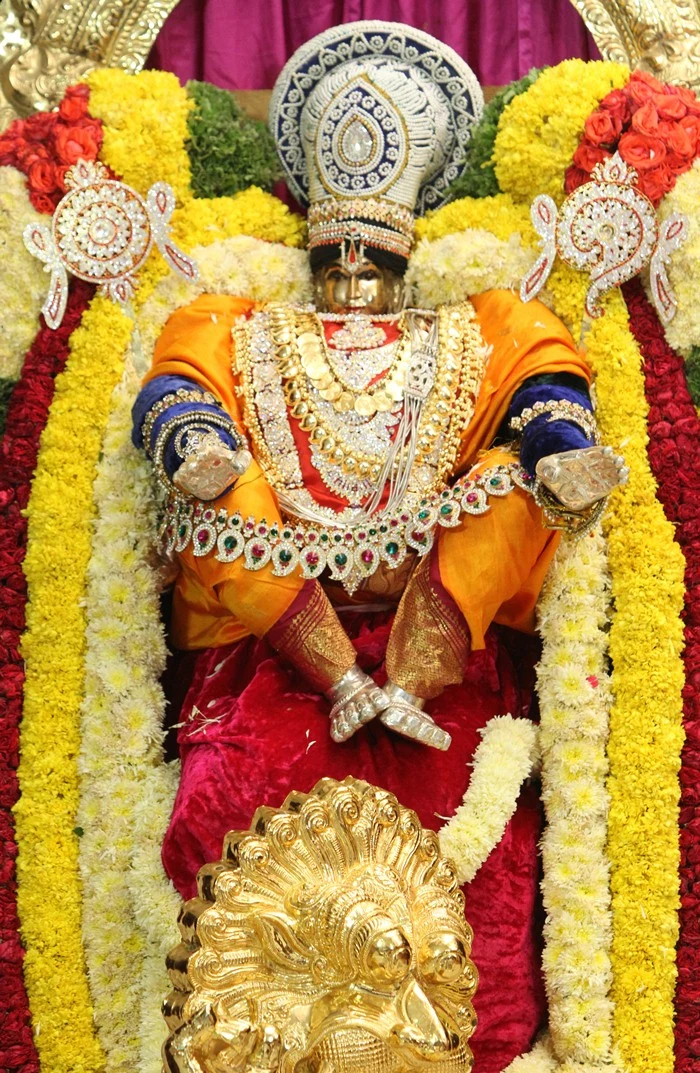
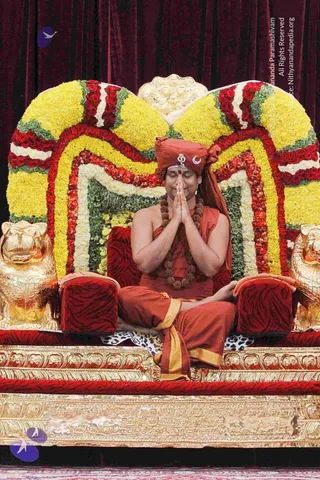
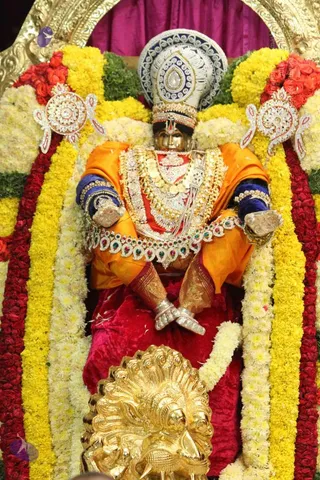
A seated man in a saffron-red turban with a silver cobra and crescent emblem, eyes closed, palms pressed together in namaste at chest. He wears a red-orange dhoti-style garment, a bare shoulder, and a long rudraksha mala, with a red tilak on his forehead. Behind him is a wall of marigold and red flower garlands with green foliage, and red tiger-striped upholstered seating.A seated man in an ornate flower-decorated throne with golden lion armrests, hands pressed together in namaste with eyes closed. He wears a red-orange turban with a crescent and trident emblem, a red-orange robe, and a long rudraksha mala. A flower arch of yellow marigolds, red roses and white garlands frames the throne against a dark red curtain, with a gold-and-red peetha base below. A Tamil inscription is carved on the gold base. Appearance-based candidate: Swamiji (probable), seated in a throne with saffron-orange robe, turban and rudraksha mala.A decorated deity murti, a golden figure seated on a golden lion-throne (simhasana) against a deep magenta drape and framed by dense garlands of yellow and white marigolds and red roses. The figure wears an ornate white and blue crown with beadwork, an orange silk upper garment, a red velvet lower cloth, multi-strand gold and silver necklaces, a jeweled collar and silver armlets, and holds silver-tone hands in mudra. A purple-marked emblem ornament sits at the shoulder areas. No physical people are visible; the figure is a statue, and the image appears to show a ceremonial decoration of the murti.A woman sits cross-legged on a red floor mat singing into a microphone on a stand. She wears a grey and orange patterned sari with an orange blouse, gold necklaces, bangles and a red bindi with a white forehead mark. Her eyes are closed and her hands rest on her lap. Behind her is an ornate golden lattice wall with cut-out quatrefoil patterns and hanging white flower garlands. No a person candidate is visible in this image.A seated man in white ritual clothing speaks into a microphone during a session, with a red laptop in front of him. He wears a white dhoti with gold borders, a bare upper body draped with a white shawl, a long rudraksha mala of reddish beads and a smaller dark bead necklace, plus a red pendant. A sandalwood-paste tilak marks his forehead. Behind him is a carved wooden lattice screen in orange-brown with cross-shaped cutouts, and white flower garlands hang at the edges.A seated man in saffron-orange robes and a matching saffron turban with a silver Om emblem and crescent ornament sits on a red tiger-striped throne. He wears a long rudraksha mala of large brown beads and a gold chain, with his hands folded in his lap and a smile. Behind him is a dense backdrop of red roses, yellow marigolds, white flowers and green leaves arranged in a flower-garland pattern. A gold-coloured ornamental element is partly visible at the left edge. Swamiji (probable): the saffron turban and robes, large rudraksha mala and gold chain are the qualifying cues for this seated figure, who is a physical person present at the event.

PadaPuja

11 photosSource gallery
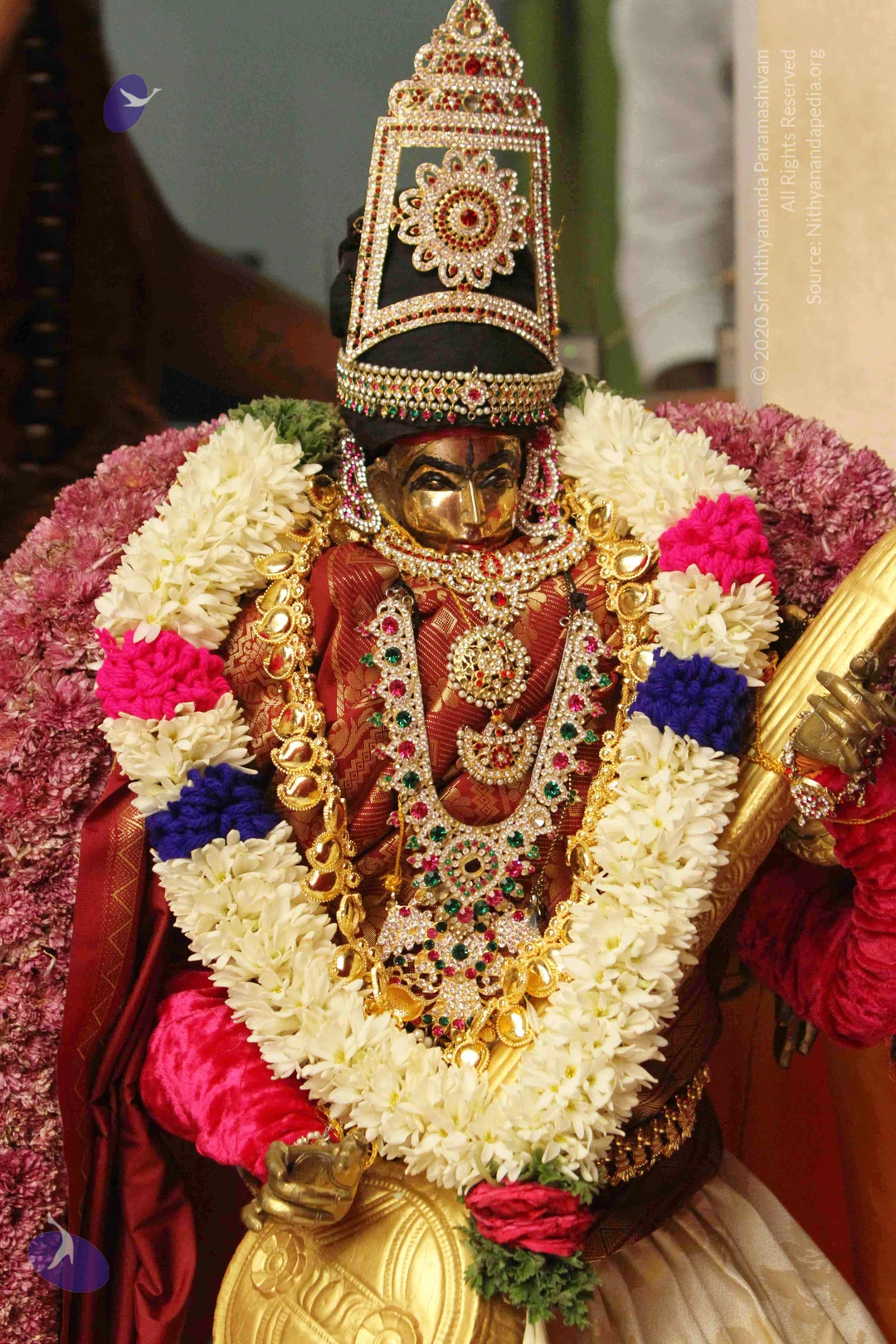
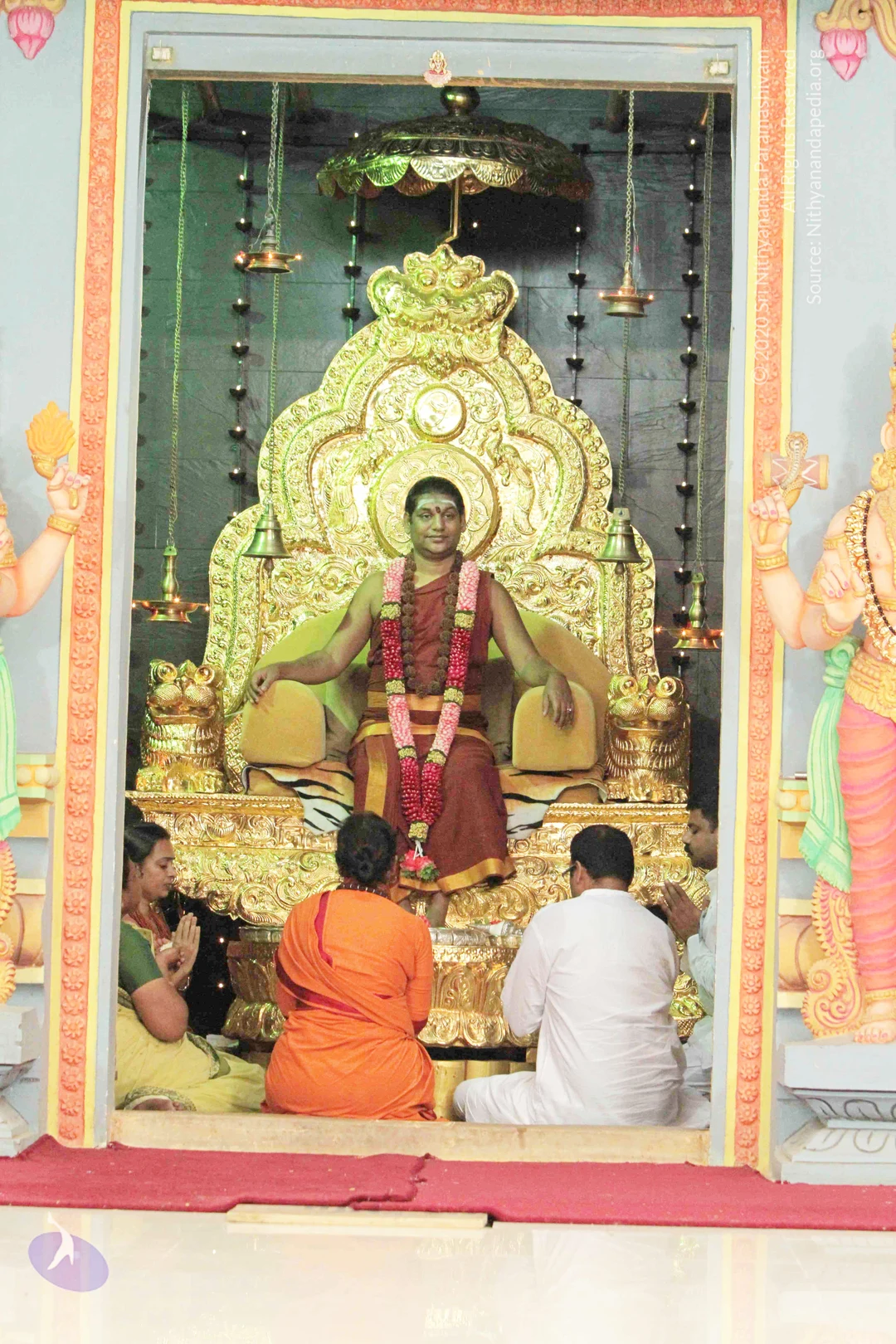
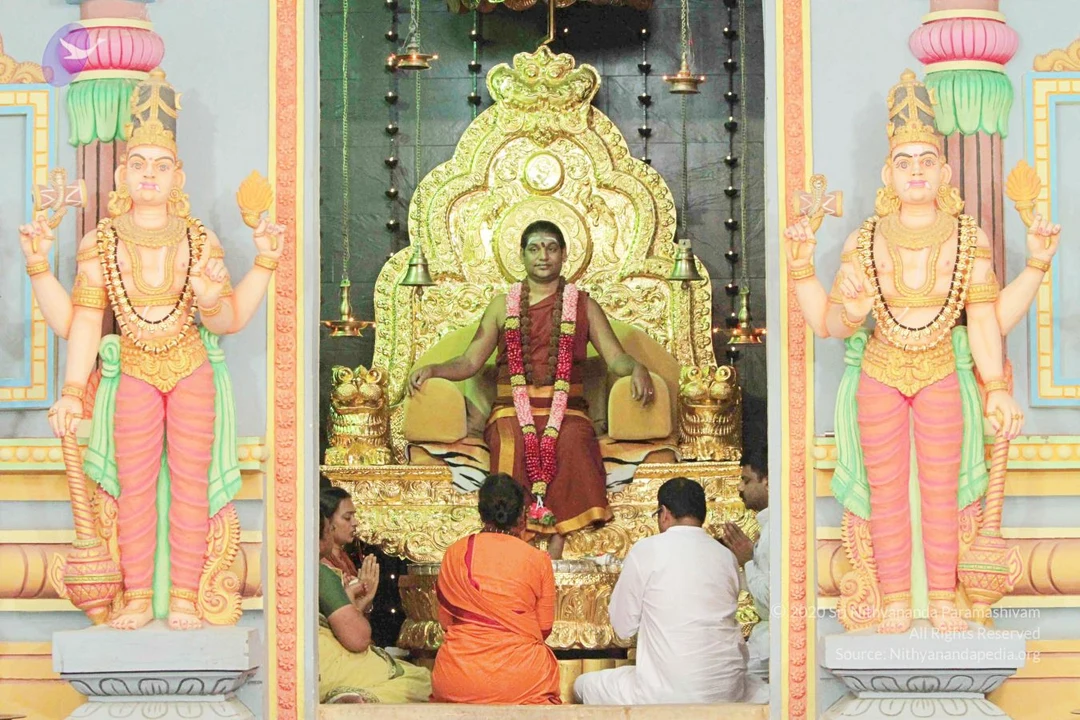
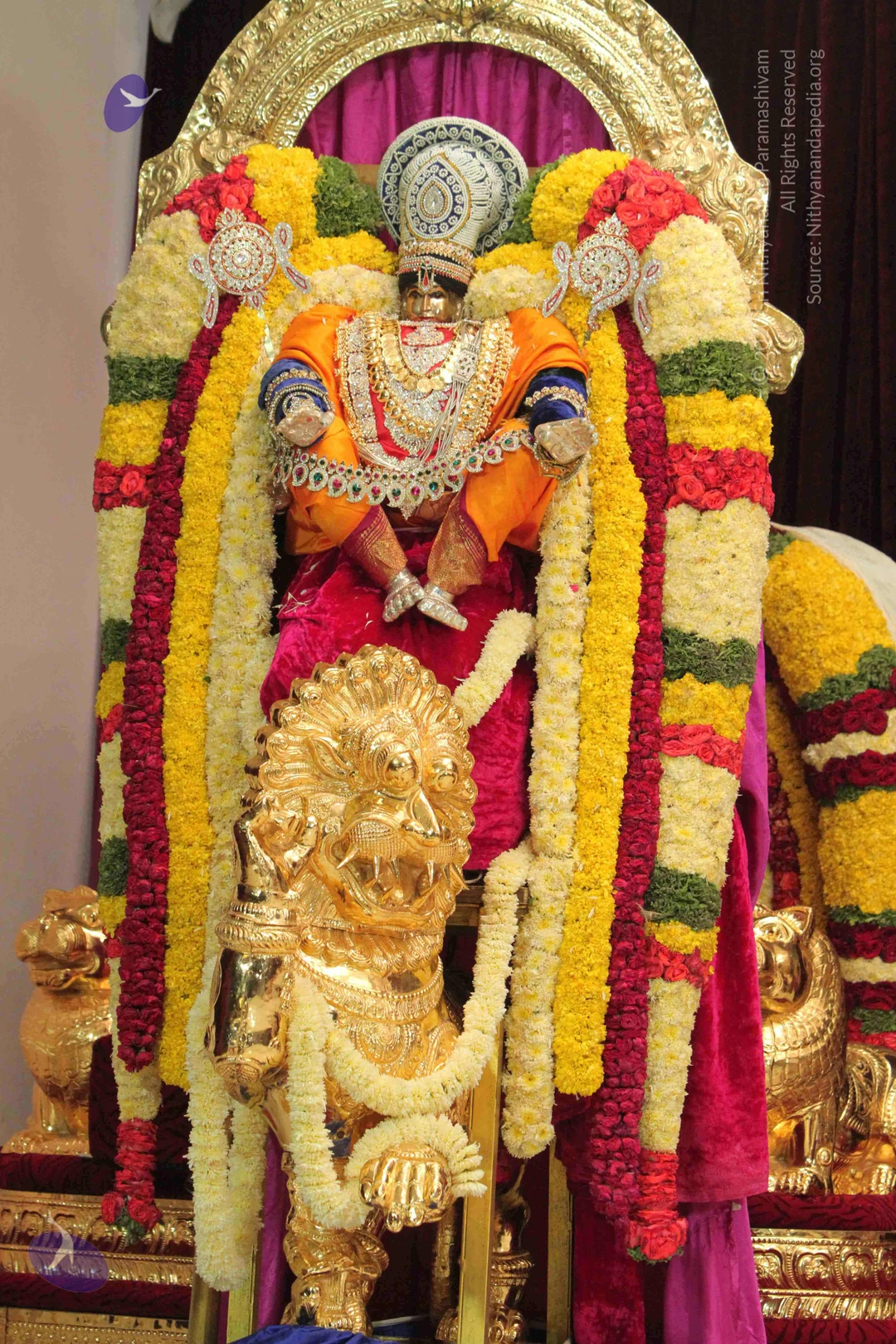
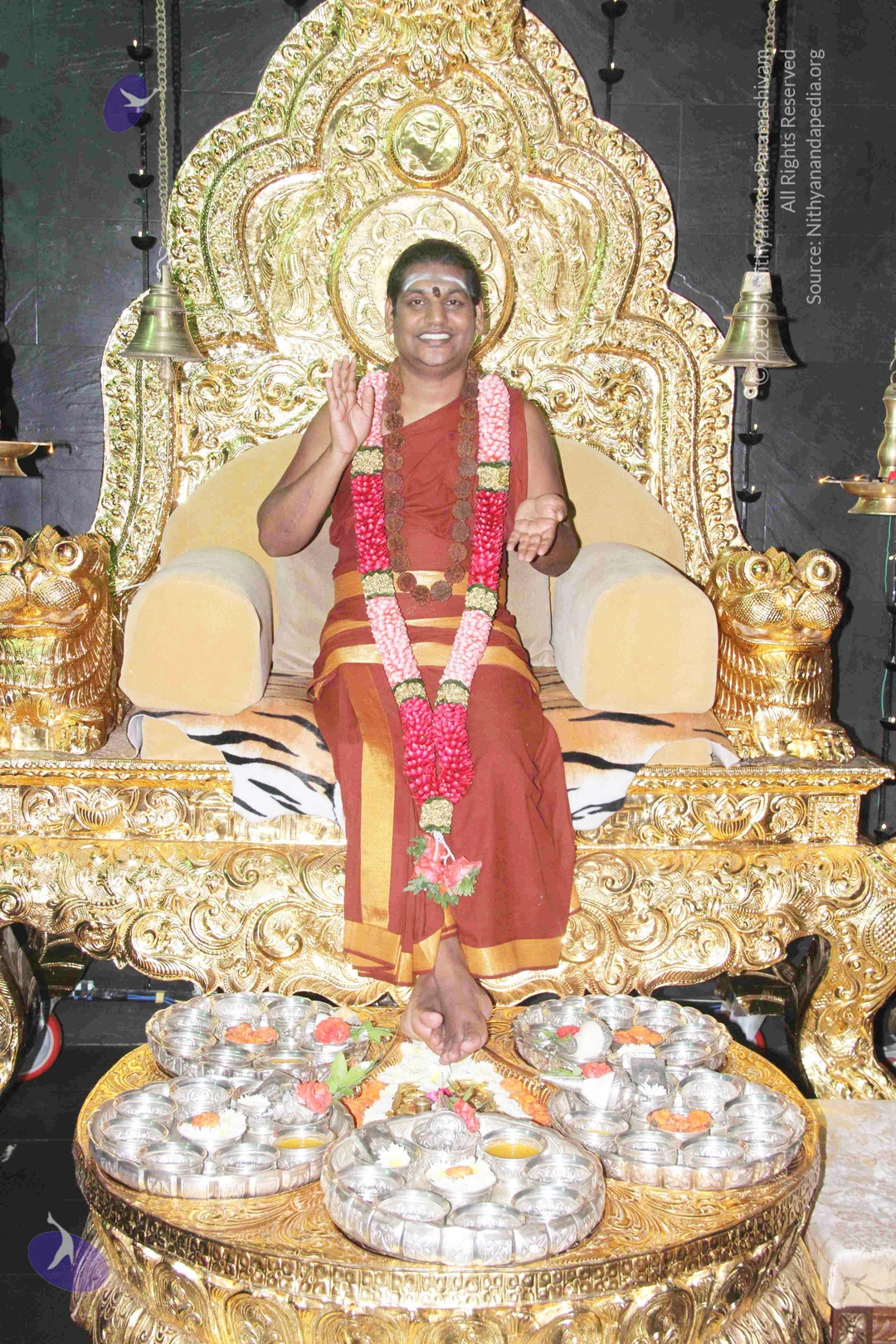
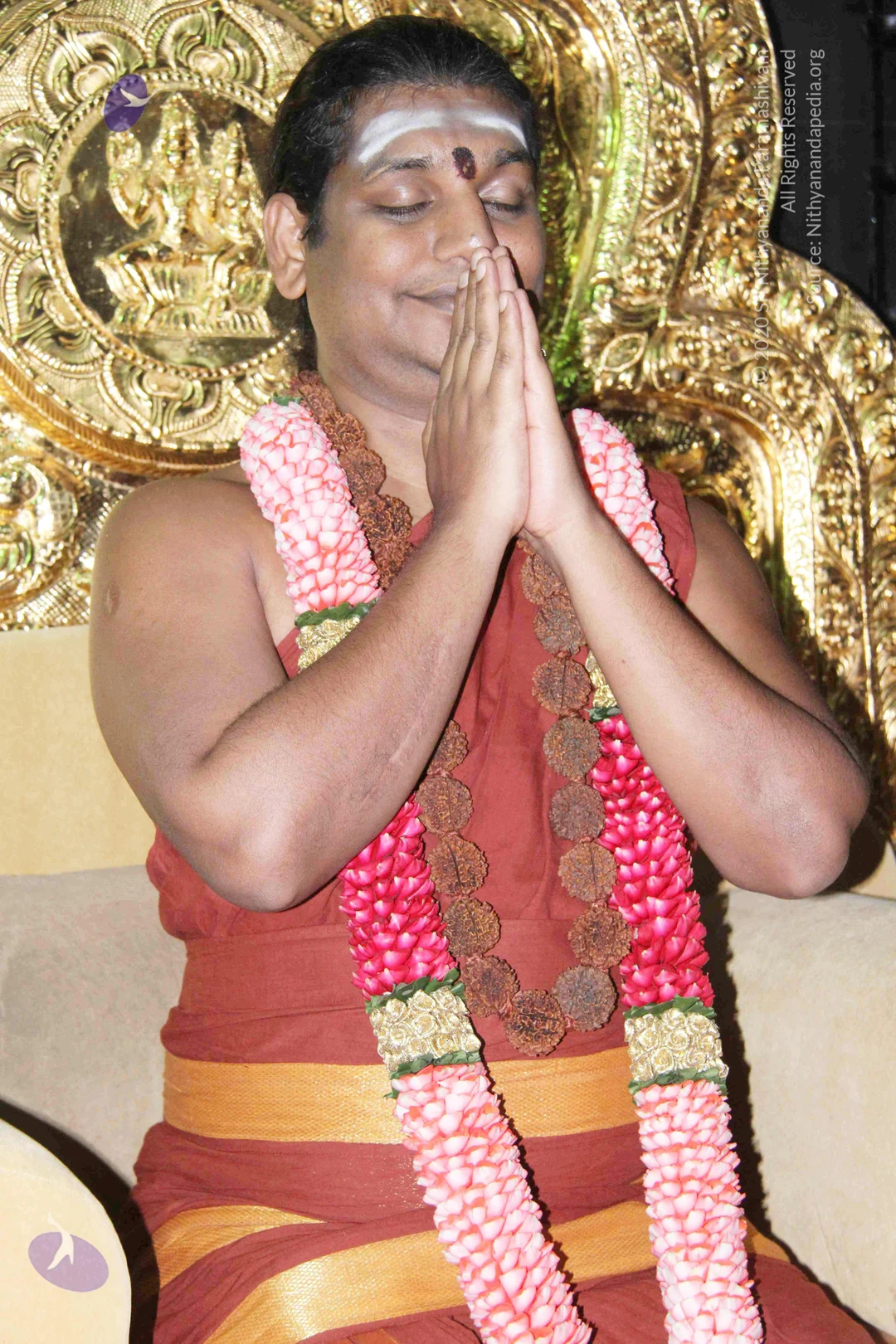
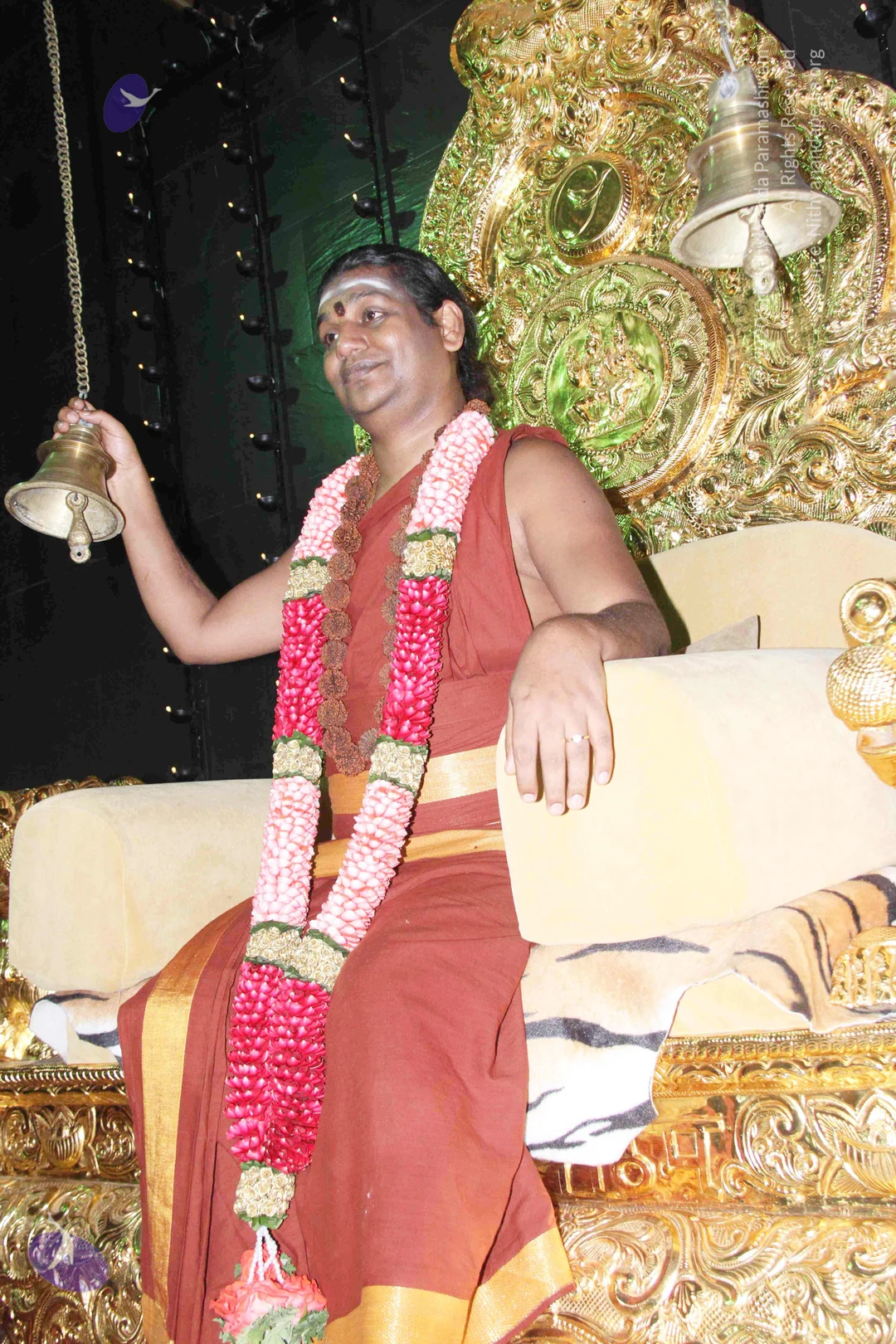
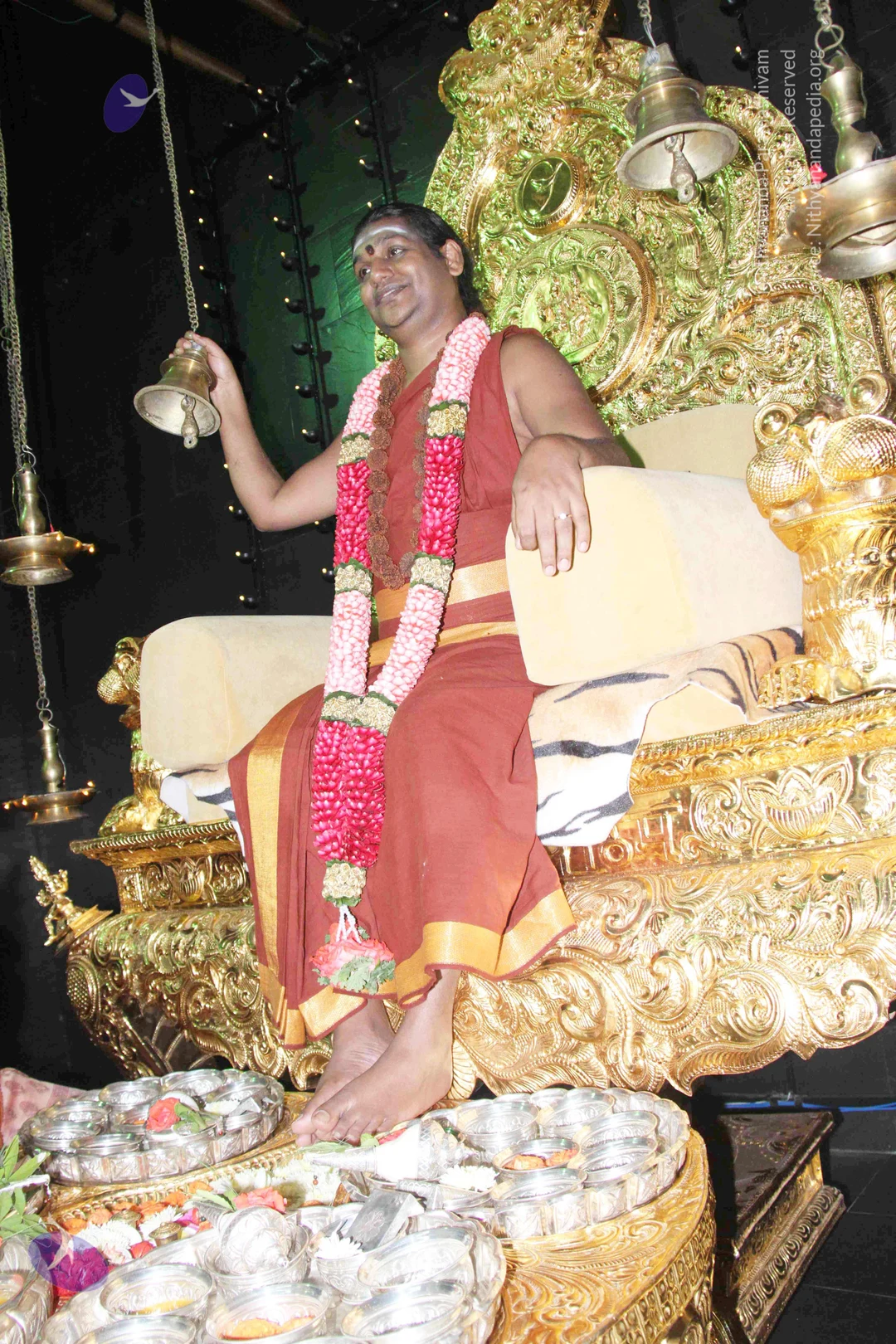
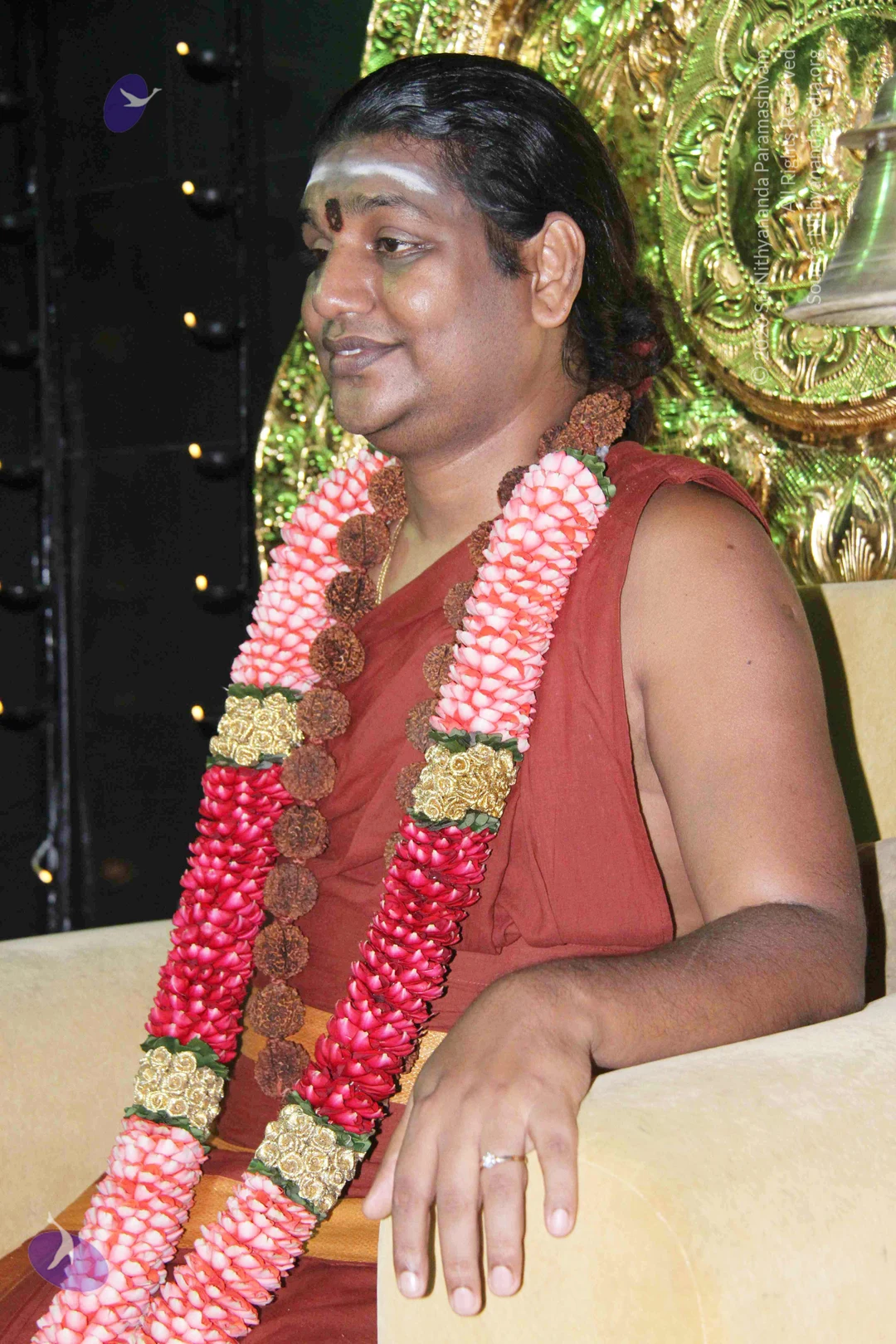
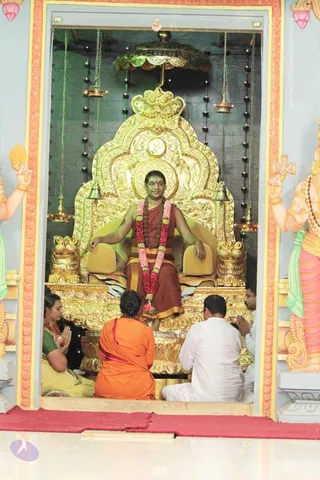
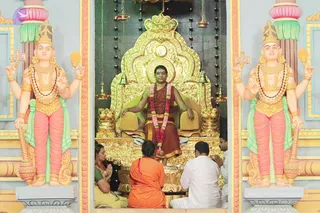
A seated figure on an ornate gilded throne with lion-head arms and a golden canopy sits centred in a shrine niche flanked by painted deity murti on both sides. The seated person wears a red-brown robe, a long pink and white garland, and a red-and-gold ceremonial necklace, with a red tilak on the forehead. Before the throne, a woman in an orange sari kneels with palms joined, another woman in a green sari sits with hands folded, and a man in white kneels nearby. Hanging brass oil lamps and dark beaded strings decorate the shrine. a person is shown on the throne with clear cues: distinctive garland, ceremonial adornment and reddish robe, with devotees in puja posture.A golden ornate throne sits in a shrine flanked by two tall painted dvarapala guardian statues with multiple arms, crowns and gold necklaces, one holding a trident-like staff. Seated on the throne is a figure with a bare upper body, a red-maroon dhoti and a long pink-and-white flower garland; the figure has a shaved head and a person appearance with distinctive ceremonial cues limited to the garland and throne setting. Three devotees kneel before the throne: a woman in a green sari with hands folded at left, a person in orange robes seen from behind at centre, and a man in white clothes with hands folded at right, plus a partly visible person at far right edge. Hanging brass oil lamps and bells decorate the shrine ceiling, and a small copper vessel sits at the base of the throne.A golden deity murti seated on a throne-like simhasana with a large gilded lion figure in front, decorated with thick garlands of yellow marigolds, white jasmine, red roses and green leaves. The murti wears an orange garment, a jewelled silver-and-gold crown, layered gold necklaces and a jewelled collar. Pink velvet draping and gilded lion statues flank the scene, and an ornate gold arch frames the throne. No living people are visible.A decorated deity murti of a goddess stands centrally, its golden face framed by a jewelled crown with a red and green stone medallion. It wears a cream silk sari with a gold zari border and a red-orange shawl draped over one shoulder. Layers of white jasmine garlands and a purple flower arch surround the figure, with pink and blue flower tassels at the arms. Gold hands display abhaya and varada mudras, and heavy gold and emerald-green jewelled necklaces adorn the chest. Red roses and jasmine are tied at the waist.A photograph of a man seated on an ornate gold throne with carved lion-head armrests, draped with a tiger-striped cloth. He wears a rust-red and gold-bordered robe, a long pink and white flower garland, and a rudraksha mala across his chest, with white tilak marks and a red dot on his forehead. He raises one hand in blessing and smiles. In front of the throne, a golden table holds several silver puja thalis with flowers, kumkum and offerings, and brass bells hang on the left and right. Appearance-based cues of long hair, rudraksha, saffron-toned robes and a throne are present, so this is a probable match for Swamiji seated in person.A seated man with eyes closed presses his palms together in anjali mudra. He wears a rust-red sleeveless robe with a gold-bordered band at the waist, multiple pink flower garlands and a rudraksha mala. A white vertical tilak and red bindi mark his forehead. Behind him stands an ornate gold repoussé backdrop with a deity relief. This appears to be a person devotional photo, with the figure identified by his rudraksha mala, flower garlands and ceremonial robe.

EnergyDarshan

83 photosSource gallery
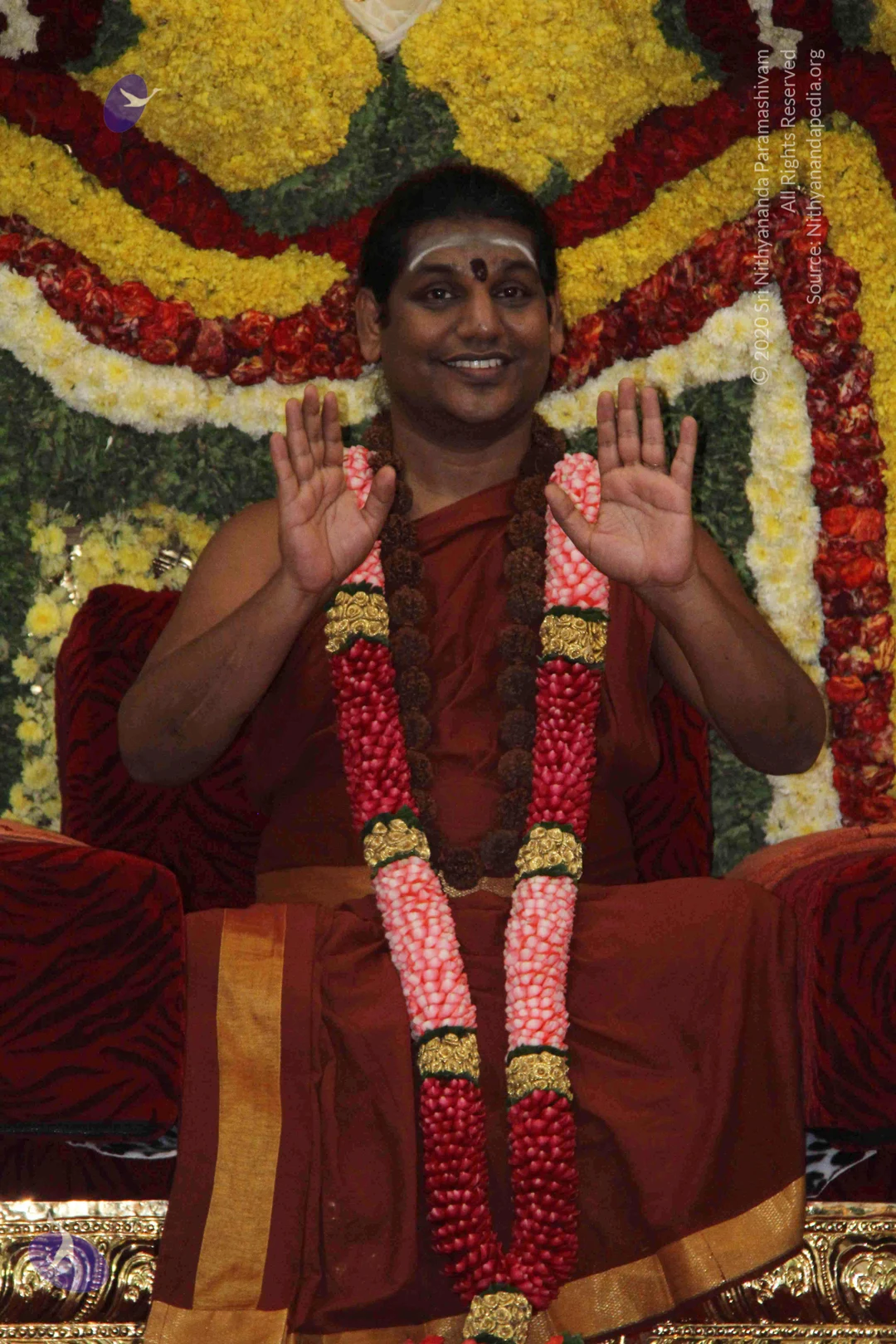
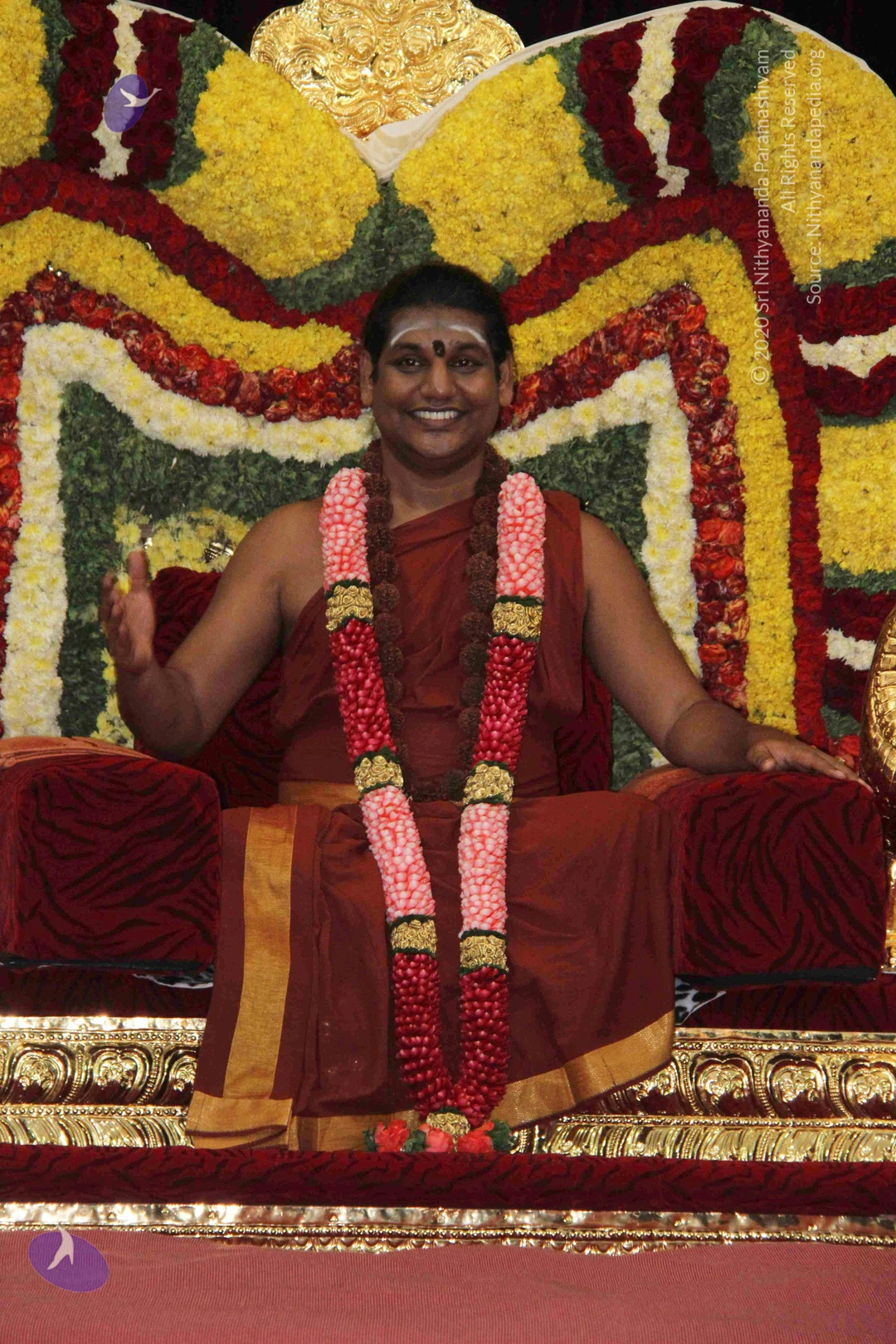
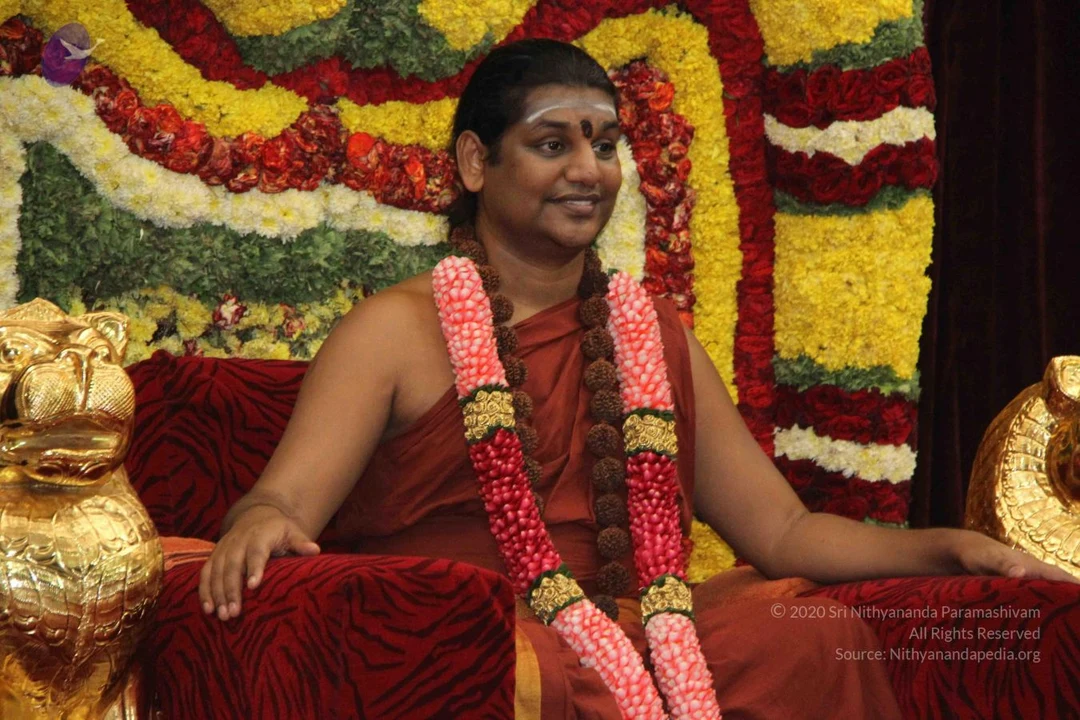
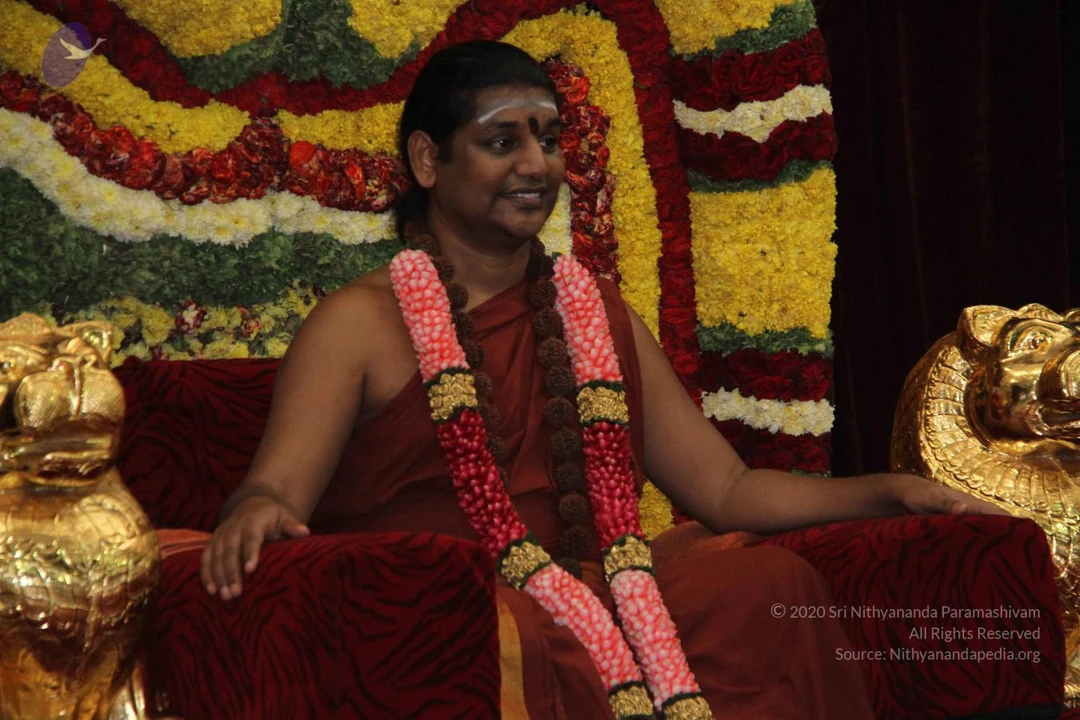
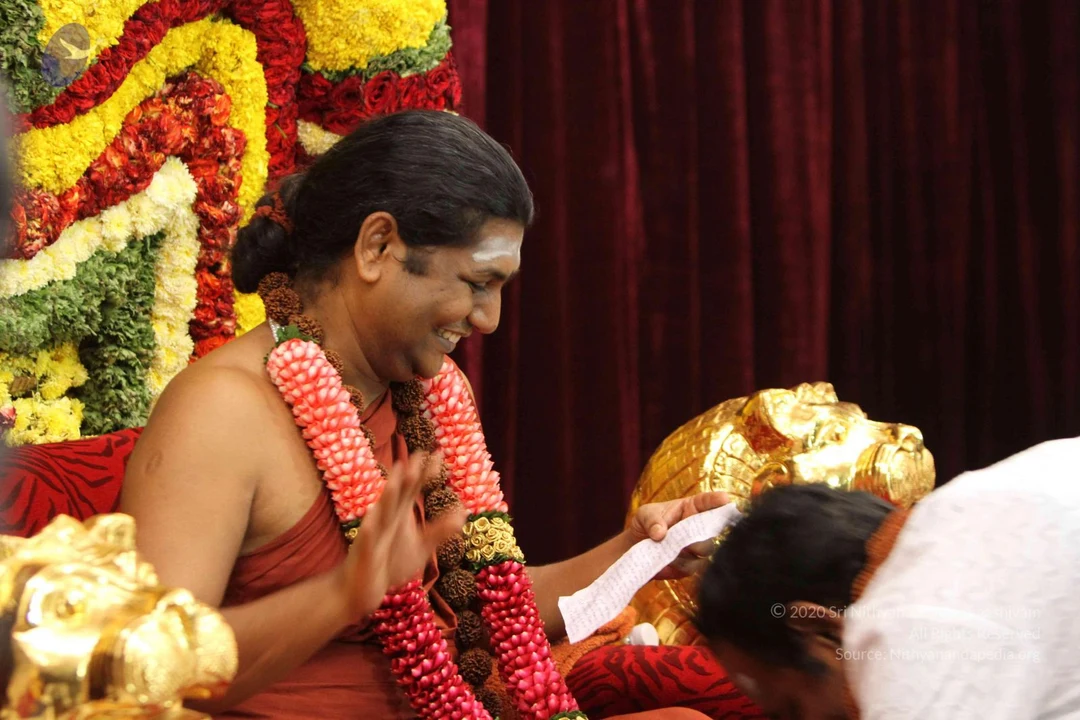
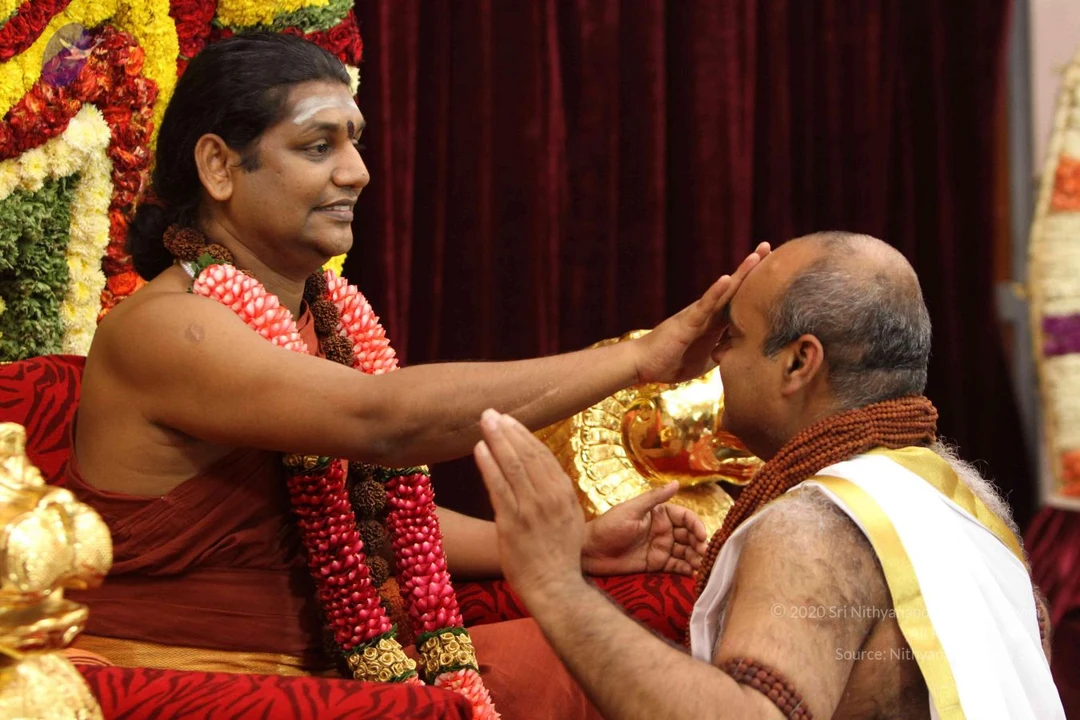
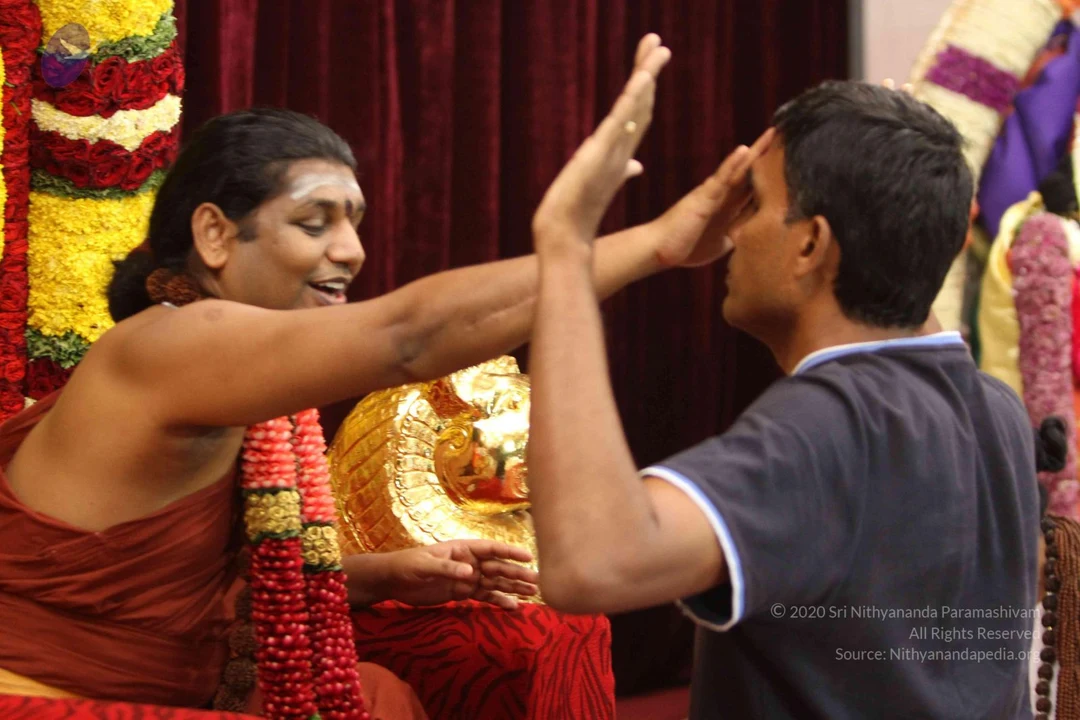
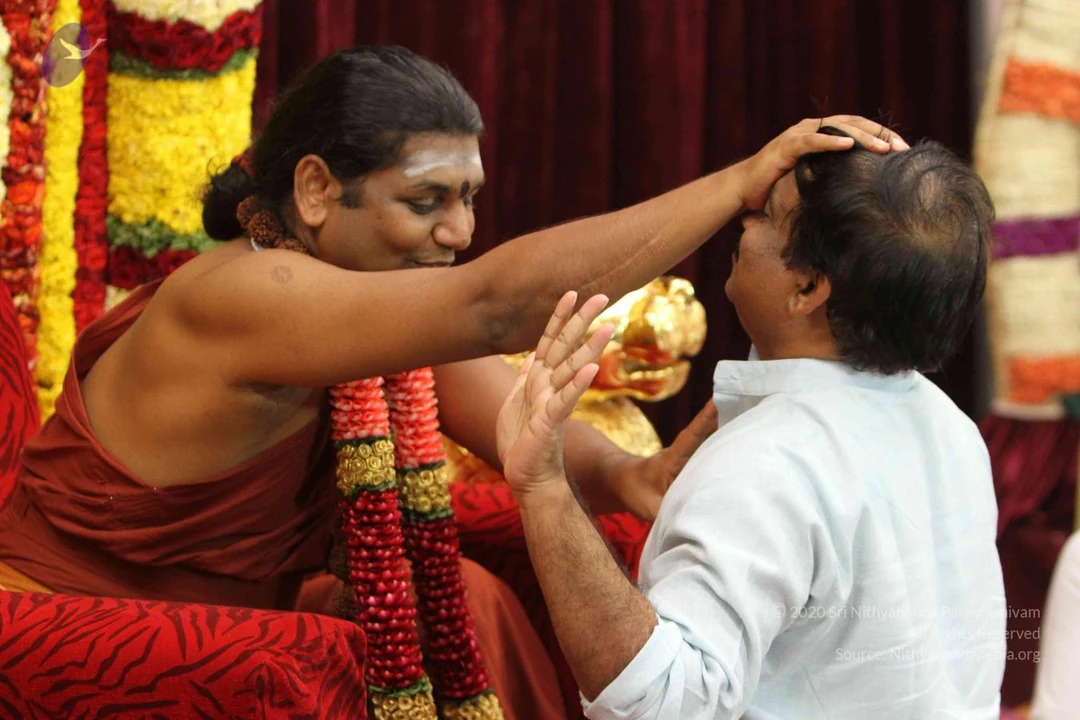
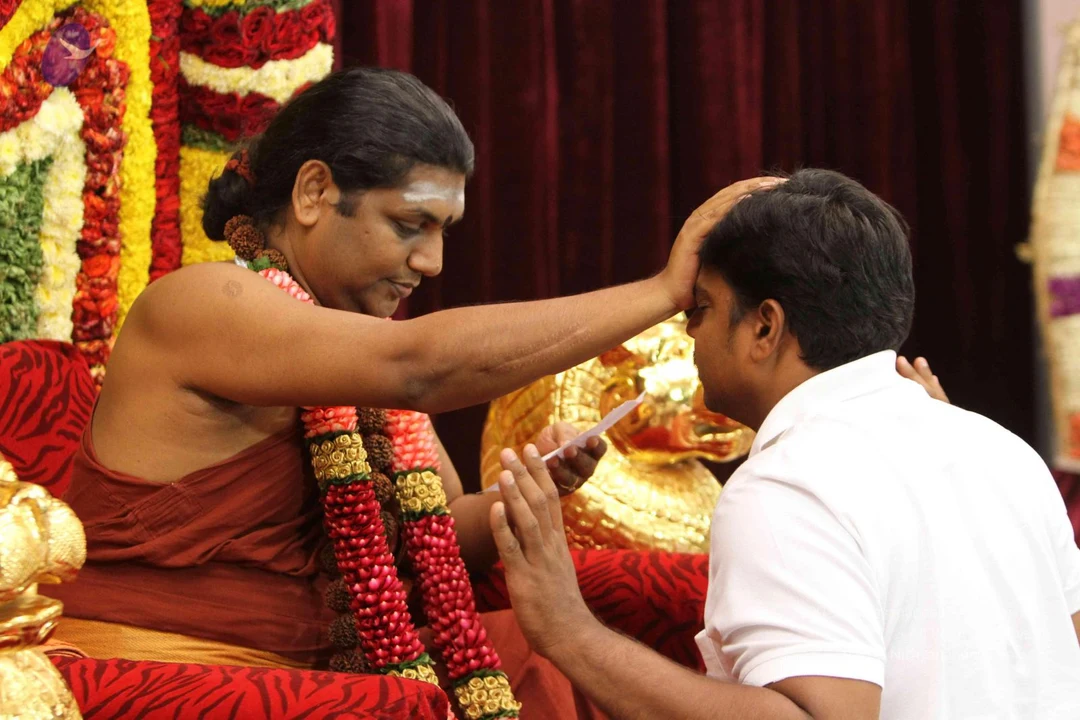
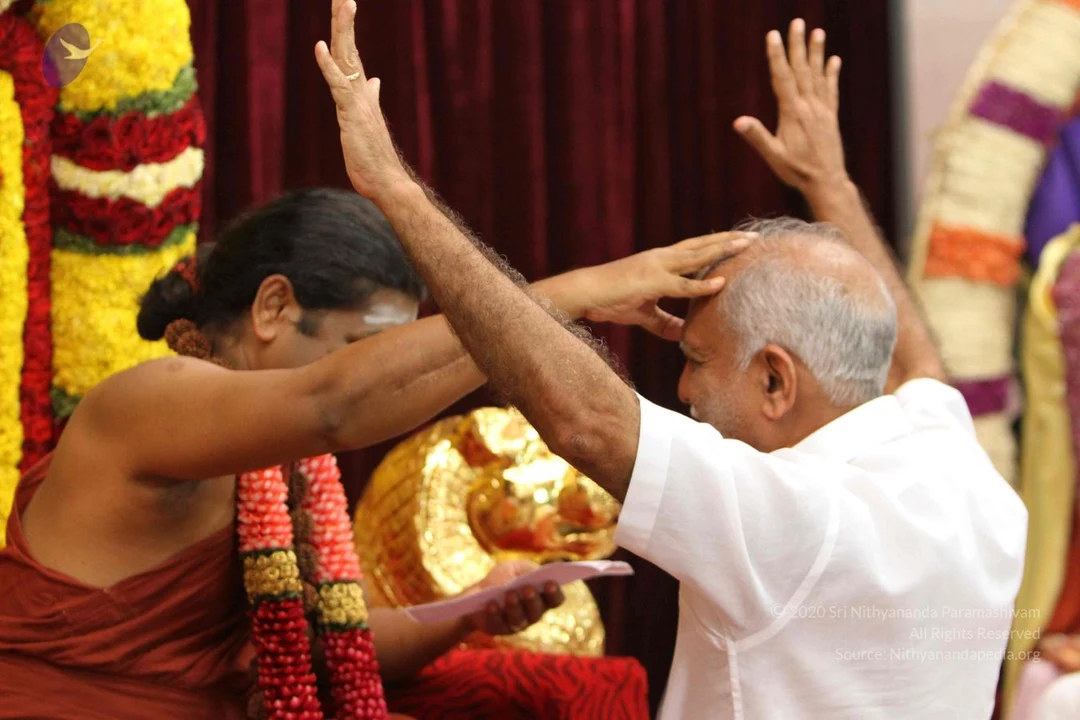
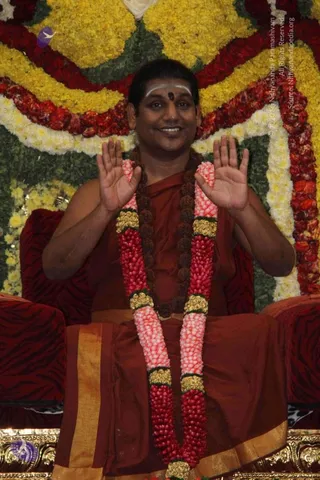
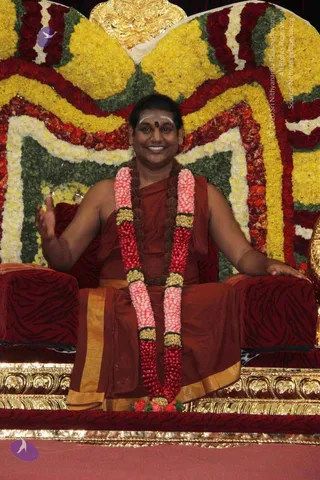
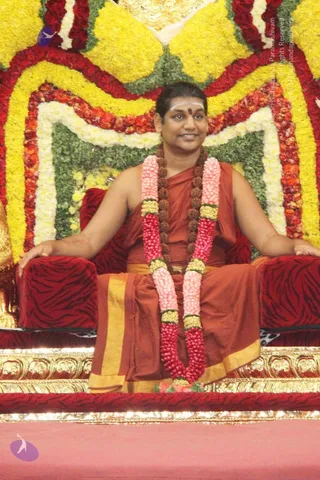
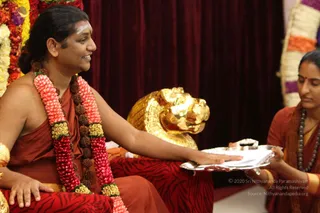
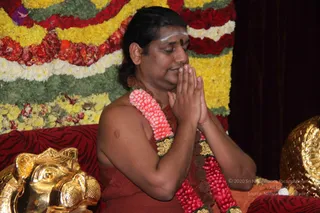
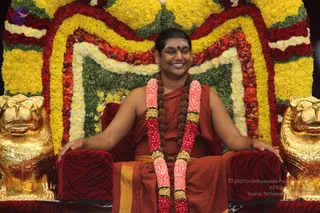
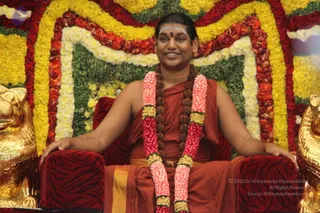
A seated man with closed eyes and palms pressed together in anjali mudra, wearing a rust-red sleeveless garment, a gold waistband, and layered red-and-white flower garlands with gold-patterned borders over rudraksha beads. A white tilak marks his forehead with a red bindi. Behind him is a wall of red, yellow and white flowers, and a gold ornament is visible at the left edge. Appearance-based cues (rudraksha malas, ceremonial garlands, saffron-toned clothing) make this a person in a devotional reception setting, with one physical person present.A seated man in a maroon-rust robe and rudraksha mala raises both open palms in a blessing gesture, smiling. He wears a white tilak with a red bindi on his forehead and a red-and-gold ceremonial garland of pink and white flowers with gold clasps around his neck. Behind him is an elaborate backdrop of yellow, white and red marigold and rose garlands. a person: the man has a close-cropped head and a rudraksha mala with a ceremonial garland, and the page indicates his presence, so this is an appearance-based candidate; the seat with red velvet upholstery suggests a throne-style setting.A smiling man with a white vibhuti line and red kumkum dot sits on a red velvet throne with gold carved arms, in front of a large backdrop of yellow and red marigold garlands arranged in chevron patterns. He wears a rust-red robe with a gold border and a thick double garland of pink and red flowers with gold clasps, plus rudraksha beads on his chest. His right hand is raised in a gesture while his left rests on the armrest. One physical person is visible.A seated man in a rust-orange and saffron-bordered robe sits on a red velvet throne with zebra-striped upholstery, framed by a backdrop of yellow and red marigold garlands and green leaves. He wears a long double garland of pink and red flowers with gold-tone clasps, and a rudraksha mala over his chest. He has a white vertical tilak and a red bindi, smiling with arms resting on the armrests. A gold-patterned throne base and a red carpet are visible below. Swamiji (probable): long swept-back hair absent, but a rudraksha mala, saffron robe and ceremonial floral garlands on a throne fit the presentation; appearance is consistent with the page but not sufficient for certainty.A seated man in rust-orange robes sits on a throne-like seat before maroon drapes, a golden serpent-headed ornament beside him. He wears a long red and white flower garland strung with rudraksha beads, a gold armband, and a white tilak on his forehead, and extends his right hand toward a silver tray. A woman in orange-brown sari with a rudraksha mala and red bindi stands at right, holding the tray with a white cloth and small items. Flower garlands in red, orange and white hang behind.A seated man in a rust-orange sannyasi cloth with a gold-bordered dhoti sits on a red tiger-striped cushioned throne in front of a wall of marigolds in yellow, red and white. He has closed eyes, a white forehead line and a red dot, and holds his palms together in namaskar. Long strands of pink and red flower garlands with gold-wrapped bases hang from his neck over rudraksha beads. A gilded base and an offering of flowers lie at his feet. Swamiji (probable): long swept-back hair, rudraksha mala, ceremonial garlands and saffron-orange clothing. Photo from a KAILASA event, part of a padapuja or darshan.

PadukaPuja&LAPSession
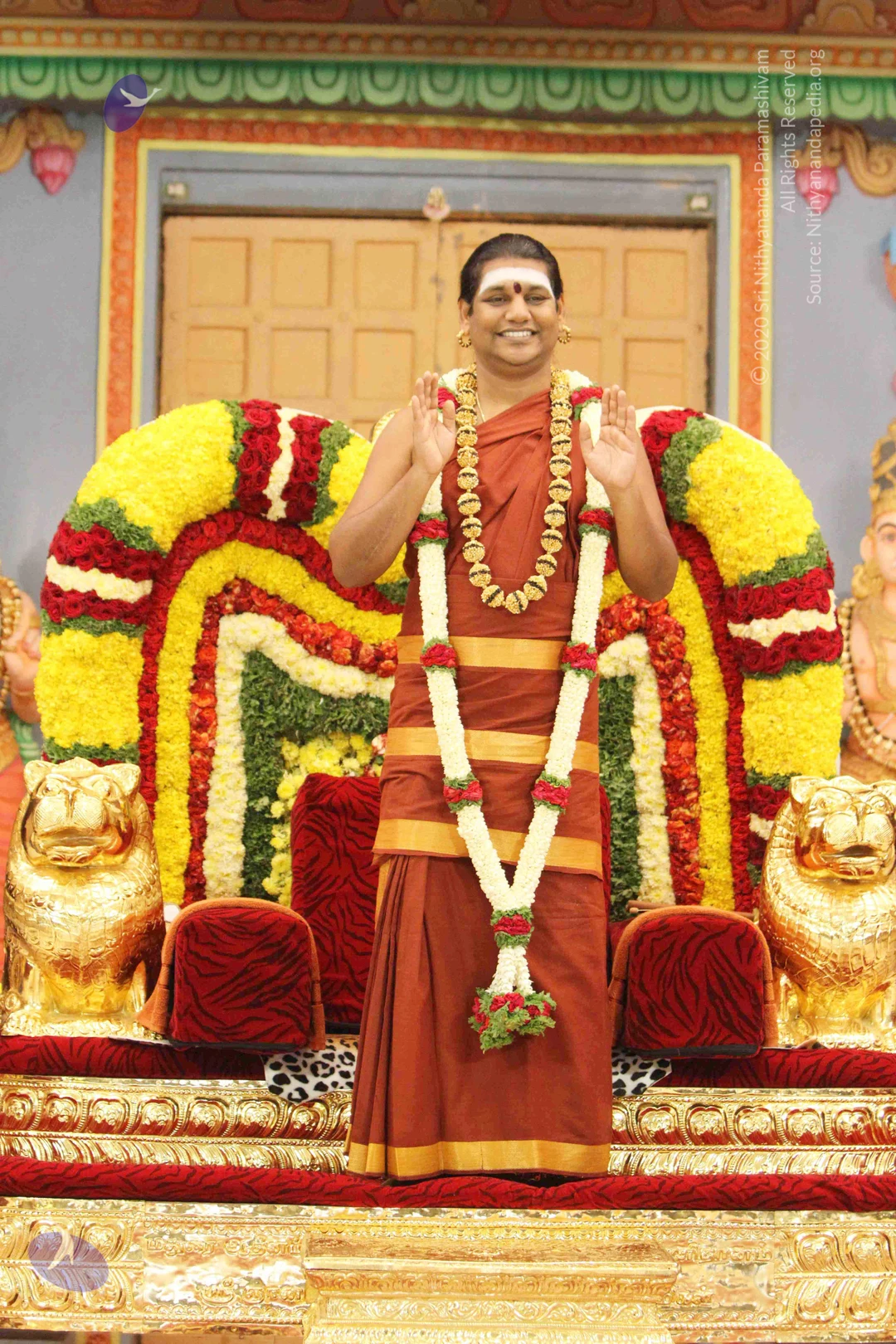
33 photosSource gallery
A photograph inside a large hall with red floor mats and rows of chairs at the back. Two men in white kurta-style clothes sit cross-legged on red mats in front, each with a red garland and a metal plate of food and offerings before them; the man at centre wears glasses and a red garland, the man at right wears a white kurta and a name badge. A third man in white with a red garland walks behind them carrying a tray. Several other seated people in white appear in the background, along with a child at far right, a row of metal stanchions and a red cord barrier at left, and a wall with framed pictures.A seated group of women in a hall with red floor mats and rows of red-cushioned chairs behind them. Most wear white or cream saris and salwar-style outfits with red or orange-and-gold garlands around their necks, and several hold or sit beside metal thali plates with food and small bowls. One woman in the foreground wears a red and gold sari with a white pearl necklace and a flower in her hair, and another in a white outfit and garland has a dark wristwatch. In the background a figure in orange robes stands near a golden-brown decorative pillar, and a potted plant sits at the lower left.A hall with red floor mats where several men in white kurta-style clothes sit on the floor before metal trays of food, including what appear to be snacks and curries. Several men wear red shawls and orange-red garlands, and a bearded man in a red shawl stands at right. Rows of dark red chairs line the back, a glass display case with shelves is at left, and framed portraits and banners hang on the walls.Indoor ritual scene before a golden deity murti decorated with white, yellow and red flower garlands and a golden peacock-shaped vahana. Six men sit cross-legged on low silver-toned stands with plated food; two in saffron and rust robes with shaved heads and rudraksha malas eat on the centre stands, while four in white dhotis and shirts with red shawls sit at the left and right. A standing fan and dark maroon drapery frame the hall.Women and girls sit cross-legged on a raised marble platform before a decorated deity murti, performing a padapuja-style ritual with brass and silver thalis and small bowls. The central murti wears a gold crown, green silk and layered gold necklaces, framed by a garland arch of red and white flowers and a deep red drape. Flanking murtis are dressed with marigold garlands. A seated woman in a red-orange sari and rudraksha mala holds a plate in the foreground; another in orange and white sits beside a silver stand, and a young girl in a black top sits among them. Five to six visible women and one child are present, with a wall air conditioner and window at right.A large Durga murti dominates the frame, a multi-armed goddess with yellow face, black braided hair and a white lace-trimmed garment over a red and gold sari. She is flanked by smaller figures in white and a ganesha figure in pink and orange at lower left, with a lion beneath her and a demon figure in green being subdued at lower right. The background is a red disc with a decorative cloth backdrop. No physical people are visible.

NDYSession&TemplePhotos

65 photosSource gallery
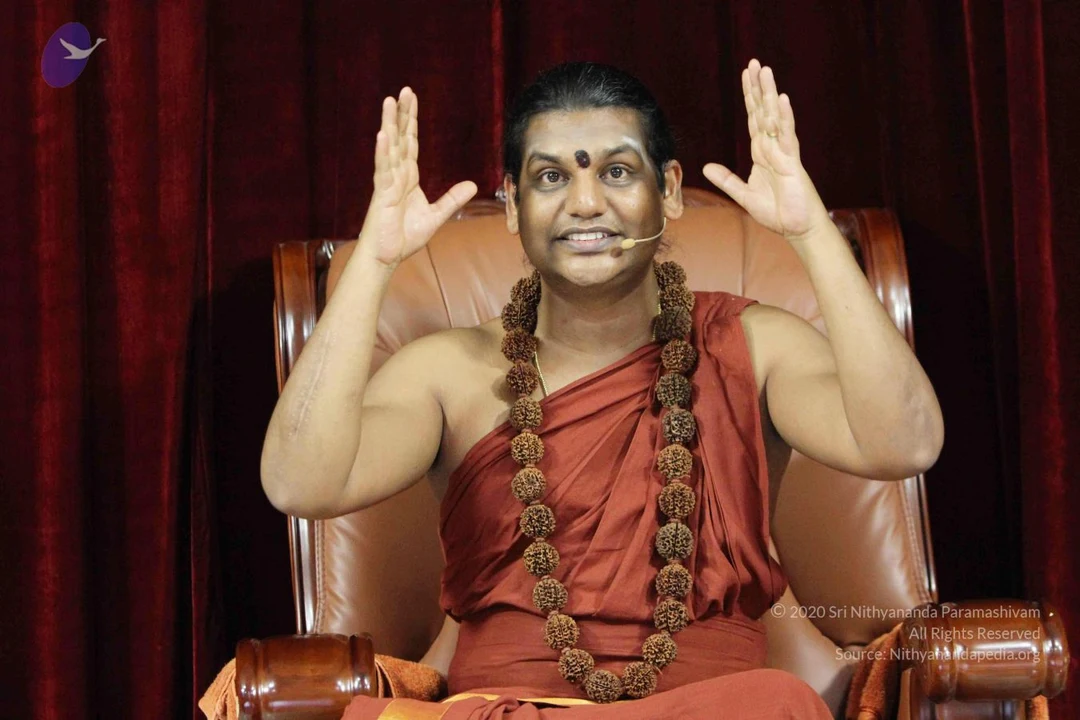
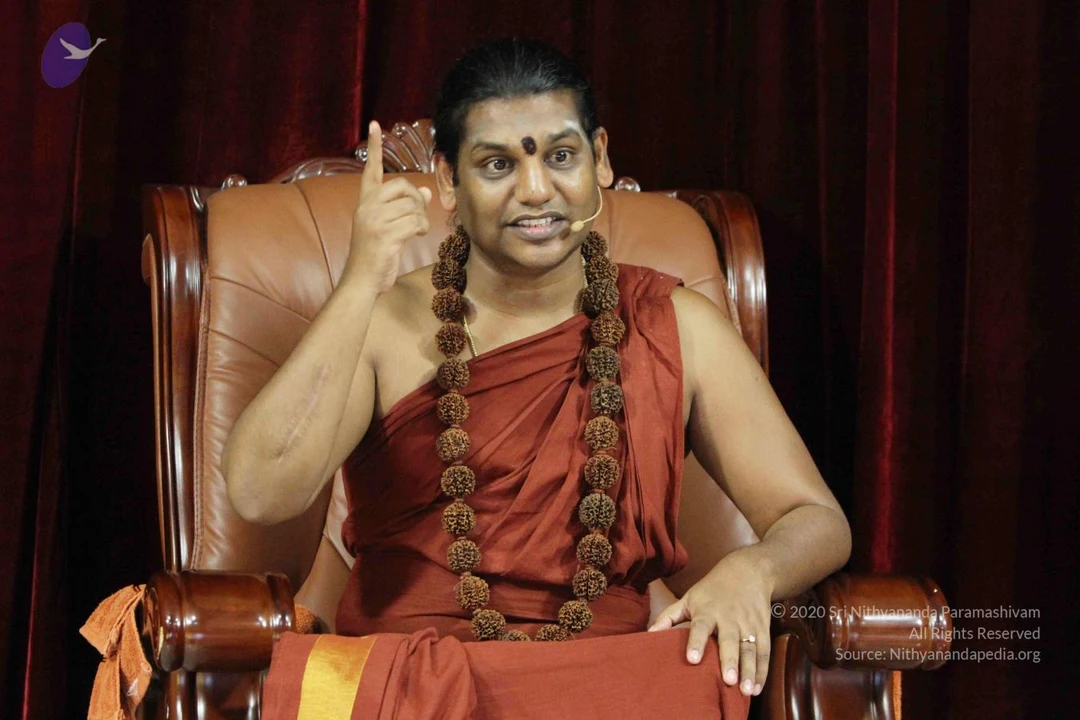
A photograph of a food-serving line in an ashram hall with a pink wall. A woman in a rust-red sari with a gold border and a long beaded necklace wears clear plastic gloves and serves a yellow dish onto a steel plate. Beside her, a woman in a cream and gold-bordered white sari holds a cloth. Men in white shirts and a man in a dark turban stand along the line. Steel serving stands and a jar of orange food are visible. Partly visible people in the background are also serving or waiting.A photo of a serving line in a pink-walled hall where people collect food onto divided stainless steel trays. A woman in a rust-red sari with a gold border and a beaded necklace leans over a food container, serving with a steel ladle while wearing clear plastic gloves. Beside her, a woman in a cream and gold-bordered sari holds a white cloth, and a woman in a turquoise salwar kameez and a man in white shirt wait with trays. A man in a white cap and white clothing stands at right. Black garbage bags lie near the serving counter. The scene suggests a communal meal service.A photograph of a meal service line. In the foreground, a woman in a beige shawl holds a stainless steel tray with papadums, a paper cup printed with a rainbow and leaf design, and a small portion of cooked food with a green chili. Behind her, a blurred child in a red patterned outfit reaches toward the serving counter, and metal serving tongs hang on the steel tray rail at lower right. The food is served as annadan community meal.Close-up photograph of a buffet food line with several stainless steel steam trays holding cooked rice, a yellow lentil or dal preparation, and a green-flecked dish. Serving ladles rest in the trays. Blurred white clothing of a server appears at the upper left, and a metal tray with small cup-shaped compartments sits at the right. No people's faces are visible, and no a person candidate appears in the frame.A close photo of a stainless steel compartment meal tray held by a person in white clothing. Hands tear a flatbread (roti) on the tray. Compartments hold white rice with green peas, a yellow dal or curry, a yellow sauce-like curry, and a dish of sliced okra with tomato. No people's faces are visible, and no a person candidate appears in the scene.A man seated on a brown leather armchair with carved wooden armrests in front of deep red velvet drapes, speaking with open hands raised. He wears a rust-orange draped garment over one shoulder and a long double strand of rudraksha beads reaching to his waist, with a small dark bindi on his forehead and a small headset microphone at his cheek. Appearance-based label: a person, identified by his rudraksha malas, orange clothing and seated throne-like pose; he is giving a discourse. Only one person is visible.

Culturals

29 photosSource gallery
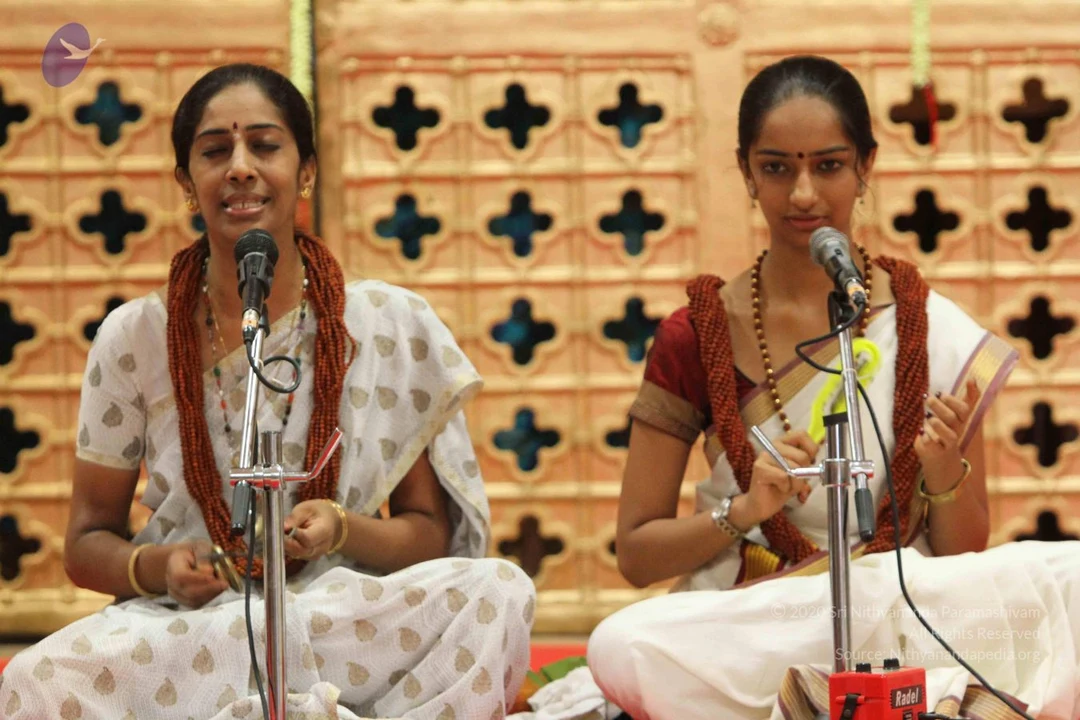
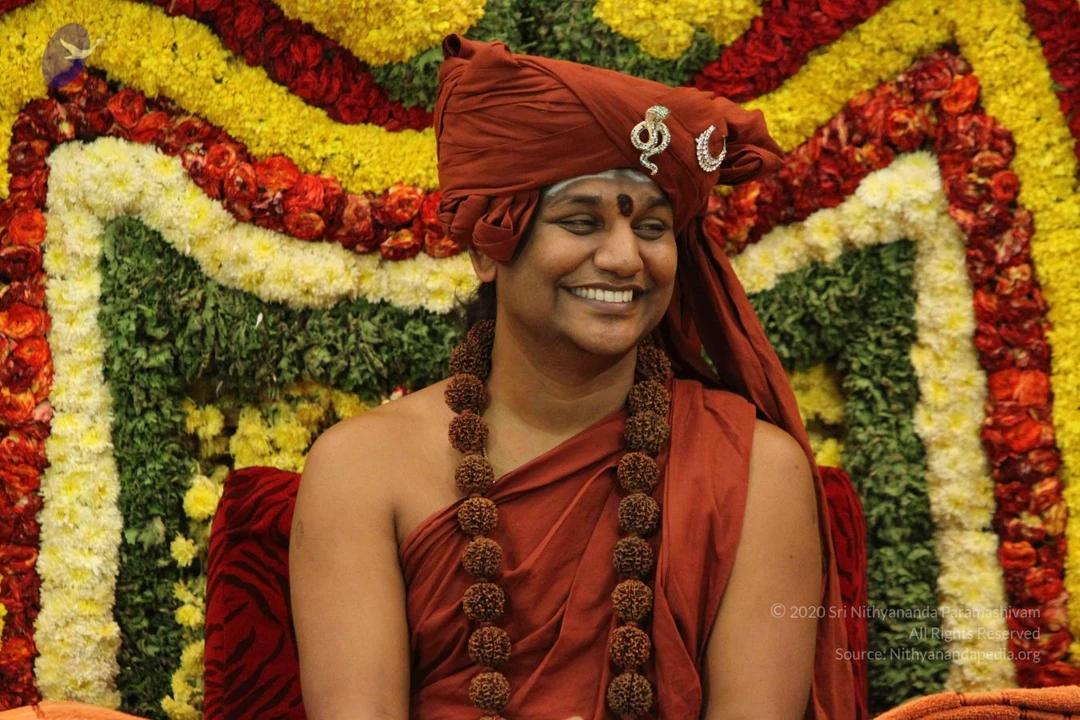
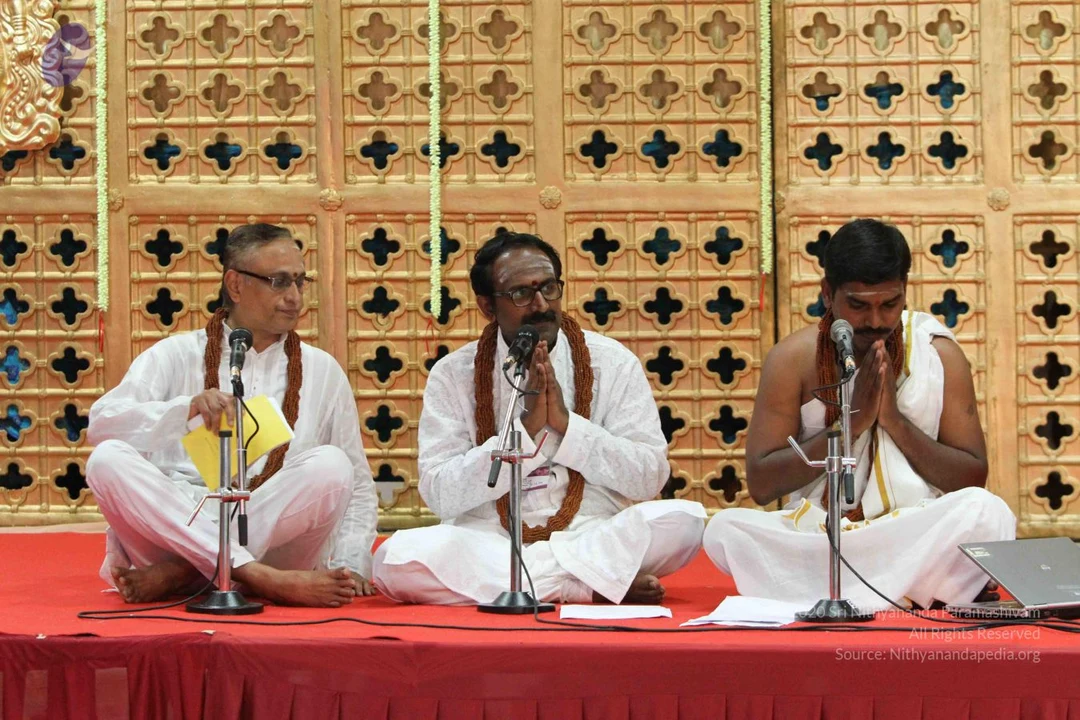
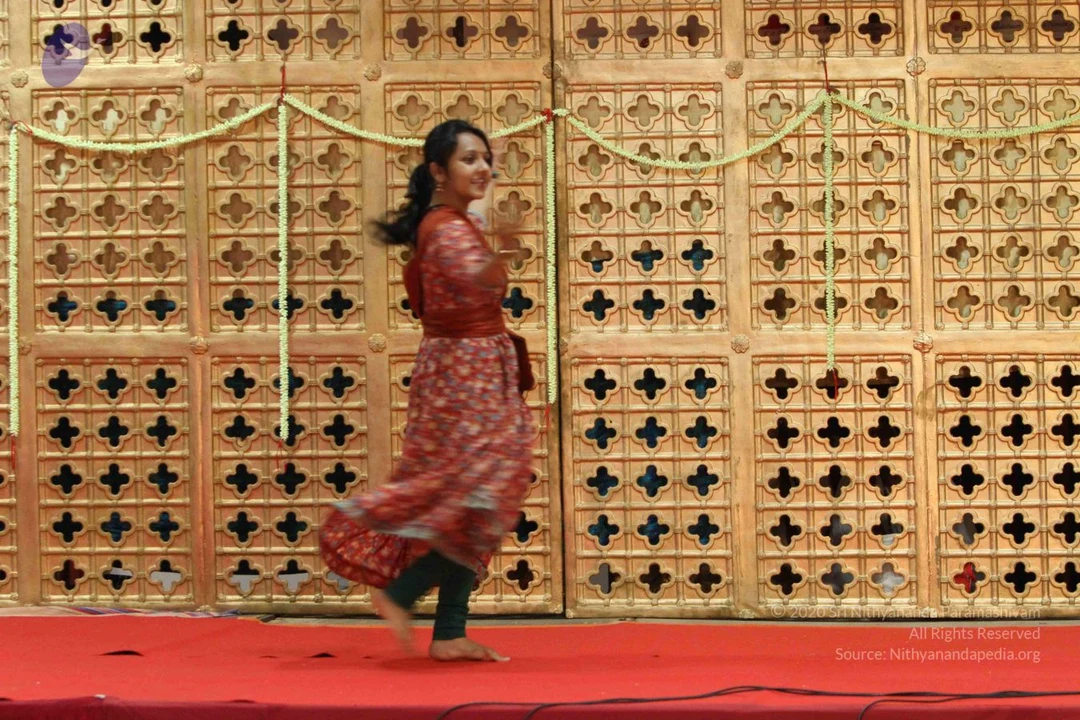
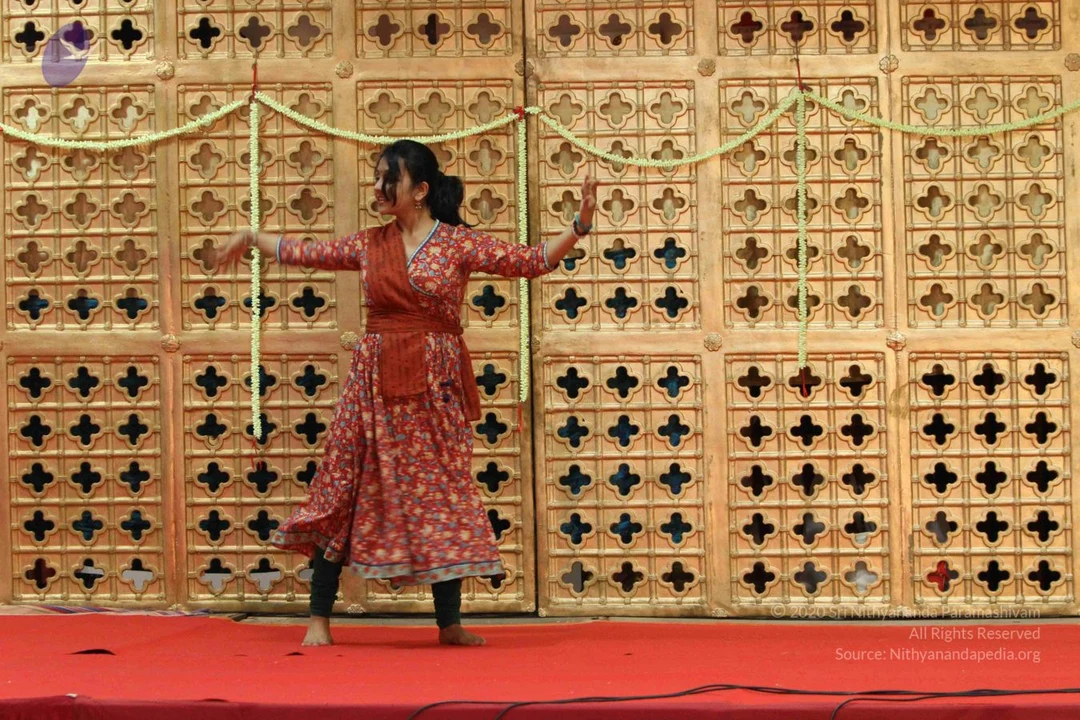
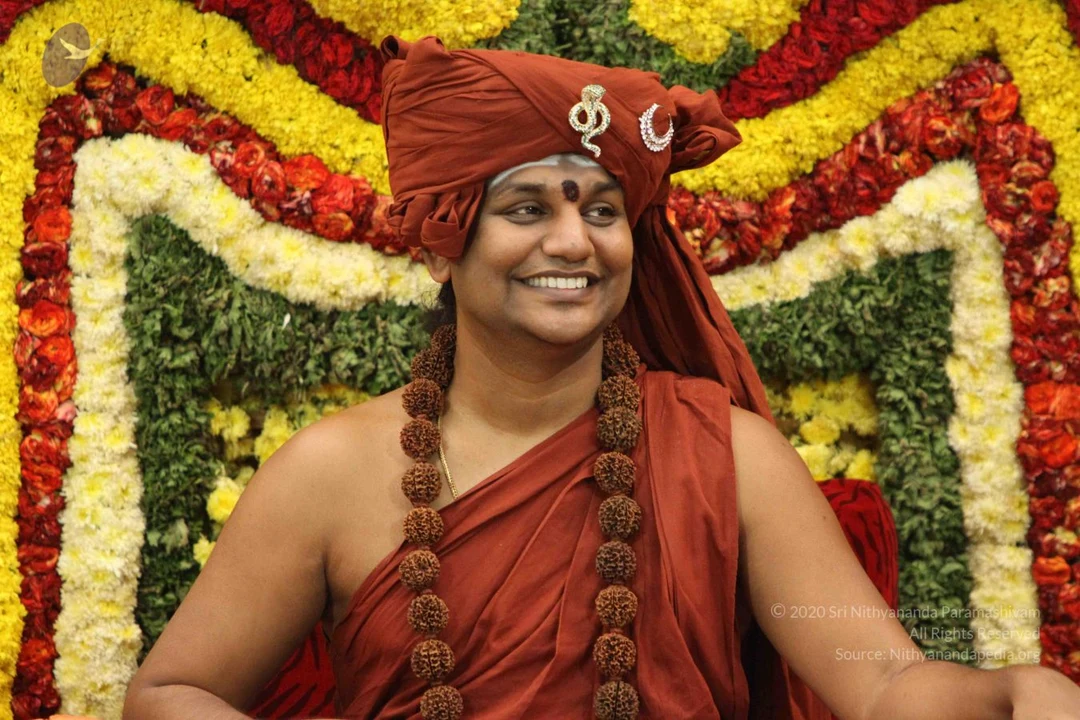
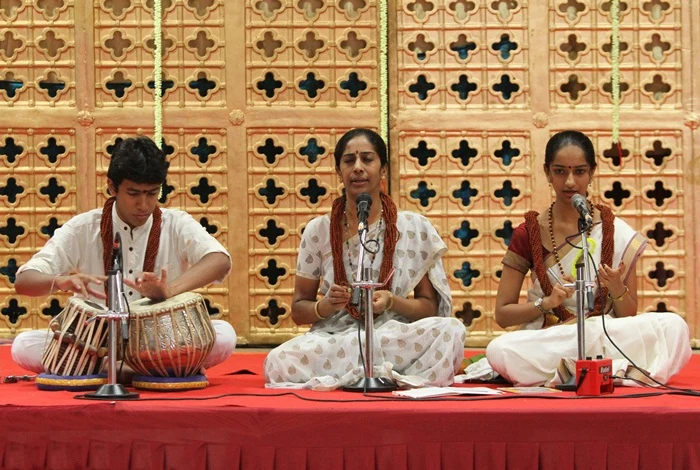
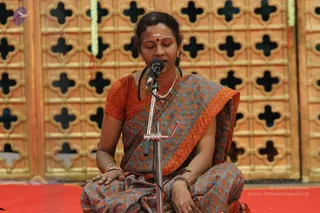
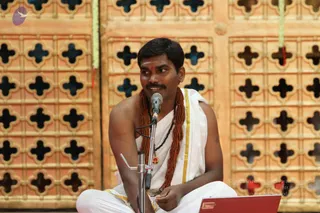
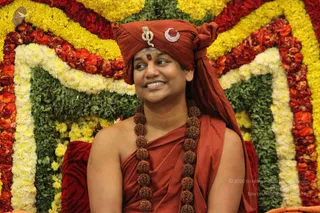
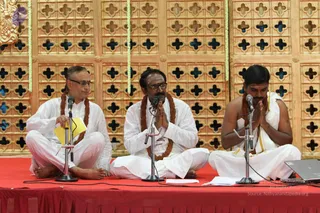
A woman sits cross-legged on a red floor mat singing into a microphone on a stand. She wears a grey and orange patterned sari with an orange blouse, gold necklaces, bangles and a red bindi with a white forehead mark. Her eyes are closed and her hands rest on her lap. Behind her is an ornate golden lattice wall with cut-out quatrefoil patterns and hanging white flower garlands. No a person candidate is visible in this image.A seated man in white ritual clothing speaks into a microphone during a session, with a red laptop in front of him. He wears a white dhoti with gold borders, a bare upper body draped with a white shawl, a long rudraksha mala of reddish beads and a smaller dark bead necklace, plus a red pendant. A sandalwood-paste tilak marks his forehead. Behind him is a carved wooden lattice screen in orange-brown with cross-shaped cutouts, and white flower garlands hang at the edges.A seated man in saffron-orange robes and a matching saffron turban with a silver Om emblem and crescent ornament sits on a red tiger-striped throne. He wears a long rudraksha mala of large brown beads and a gold chain, with his hands folded in his lap and a smile. Behind him is a dense backdrop of red roses, yellow marigolds, white flowers and green leaves arranged in a flower-garland pattern. A gold-coloured ornamental element is partly visible at the left edge. Swamiji (probable): the saffron turban and robes, large rudraksha mala and gold chain are the qualifying cues for this seated figure, who is a physical person present at the event.A seated man in a rust-red turban with a silver cobra and crescent moon ornament, wearing a rust-red shawl over his bare shoulder and a long rudraksha mala with large beads, smiles and looks to his side. He sits on a red cushioned seat in front of a floral backdrop of yellow and white chrysanthemums and red roses arranged in chevron bands.A smiling man sits on a red and black tiger-striped cushioned seat in front of a backdrop densely decorated with red and yellow flower garlands and green foliage. He wears a rust-orange turban with a silver serpent-and-crescent ornament at the front, a red tilak mark on his forehead, a bare chest draped with an orange-red cloth, and a long rudraksha mala of large brown beads.Three men sit cross-legged on a red-draped stage before a golden lattice-patterned wooden wall hung with garlands. Each wears white clothing and a rudraksha mala. The man on the left, in glasses, holds a yellow paper and speaks into a microphone. The man in the centre, with glasses, presses his palms together in anjali before his microphone. The man on the right, with his eyes closed, also holds his hands in anjali and sits beside a laptop. Microphones and papers sit on the stage. No one present is identified as a person by appearance.

PadaPuja

2 photosSource gallery
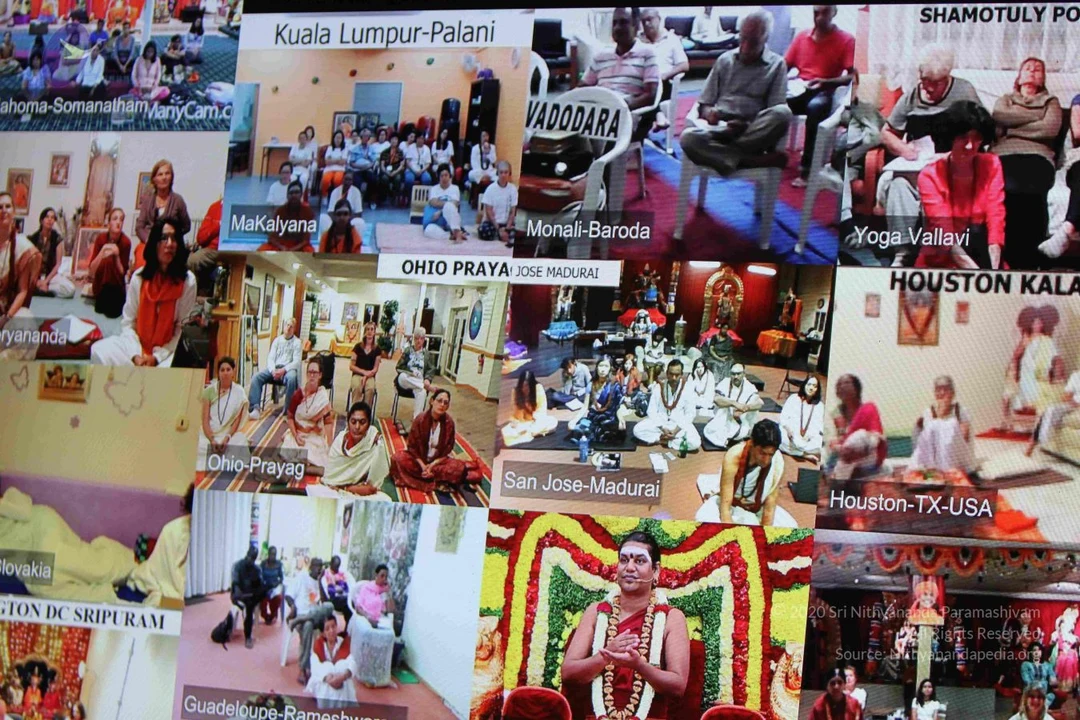
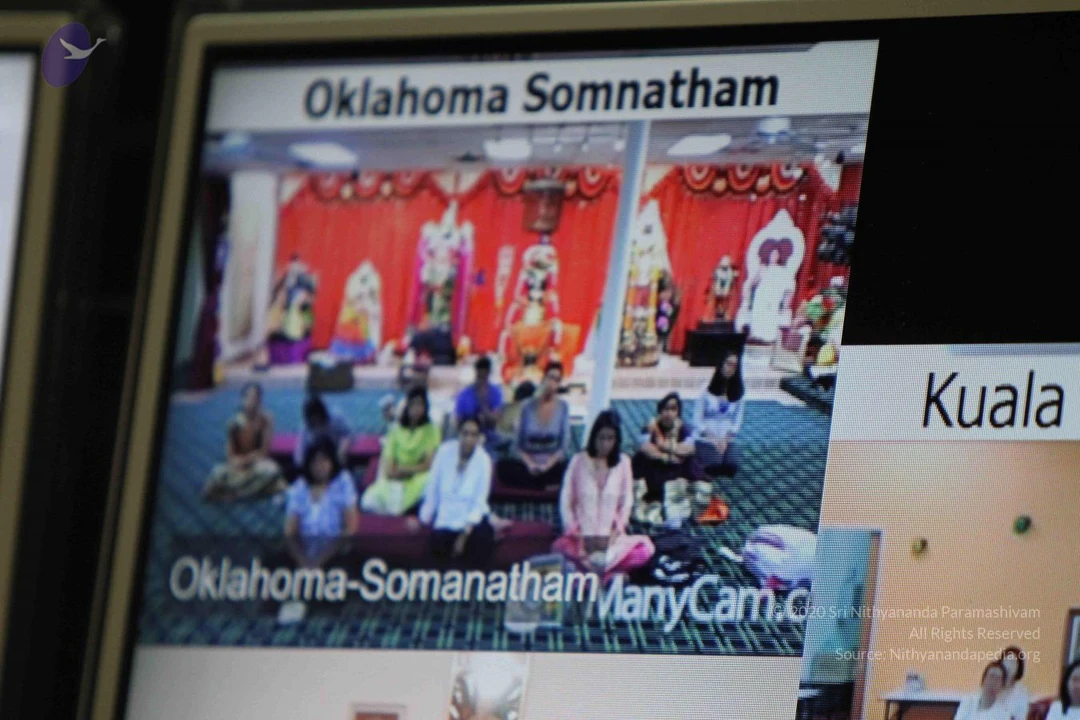
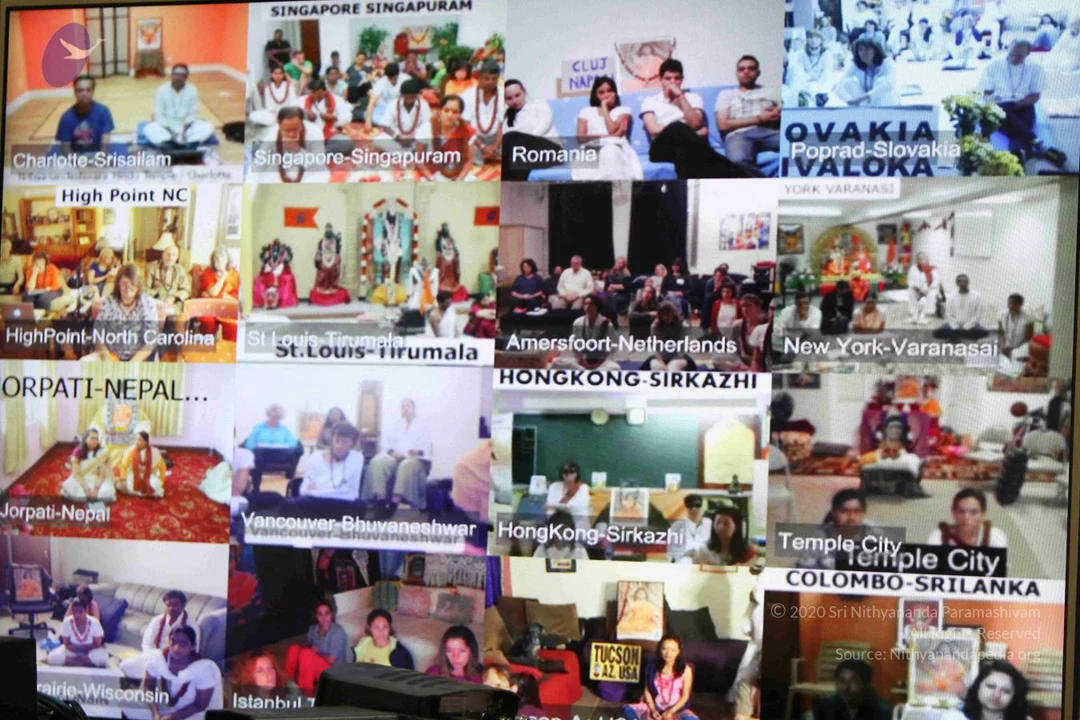
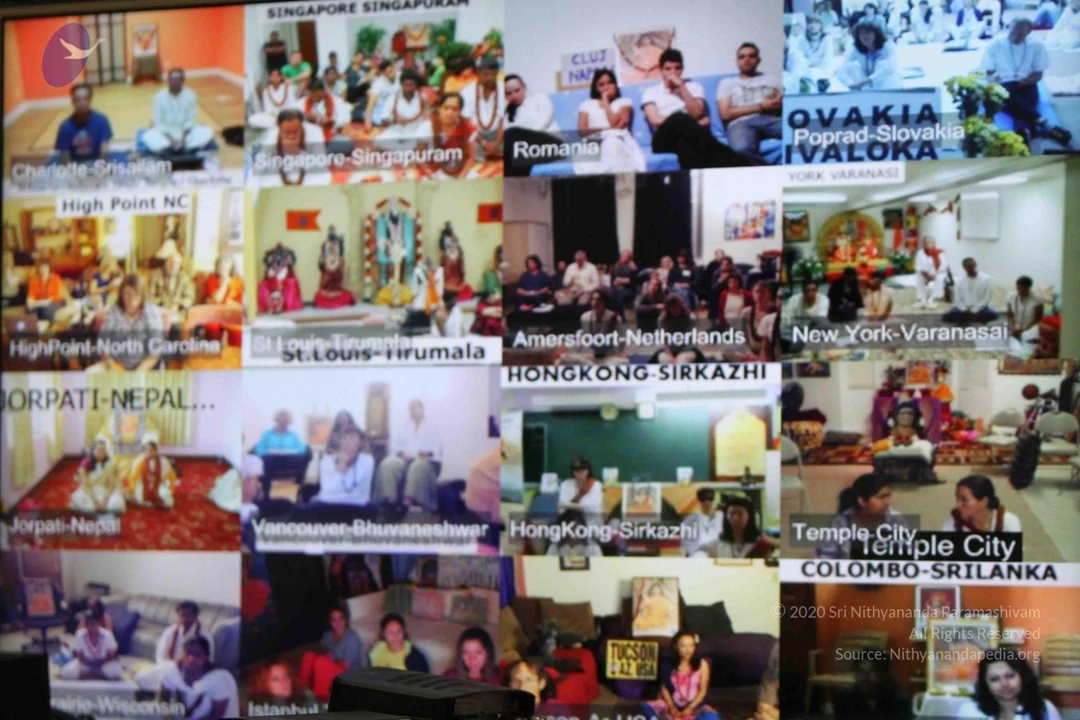
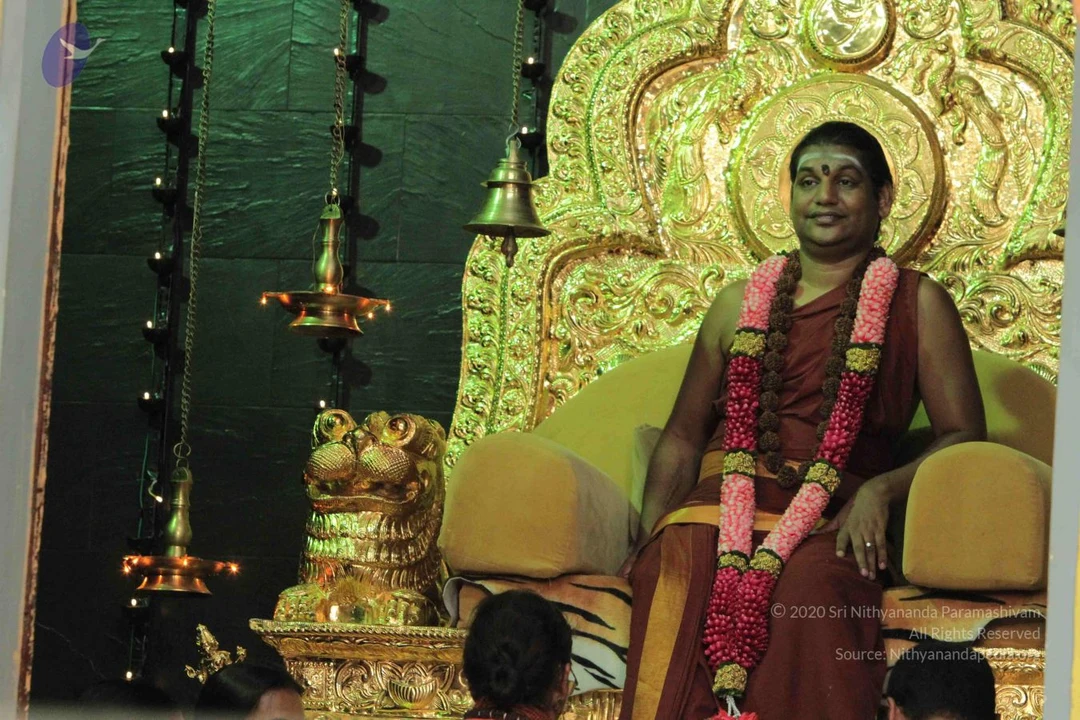
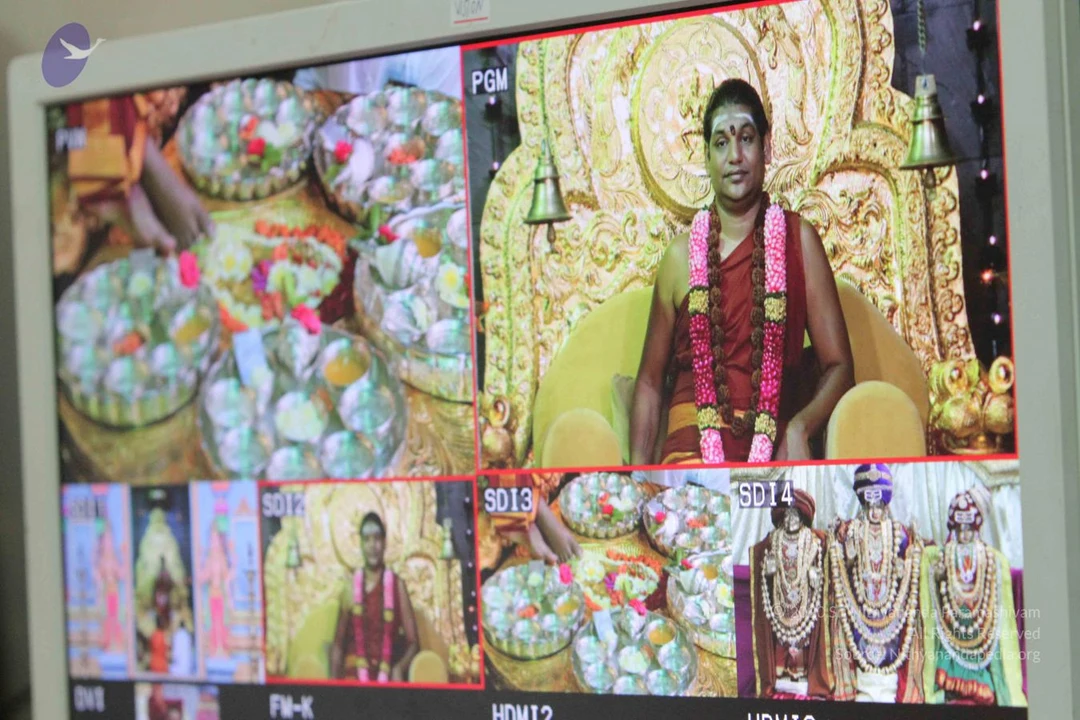
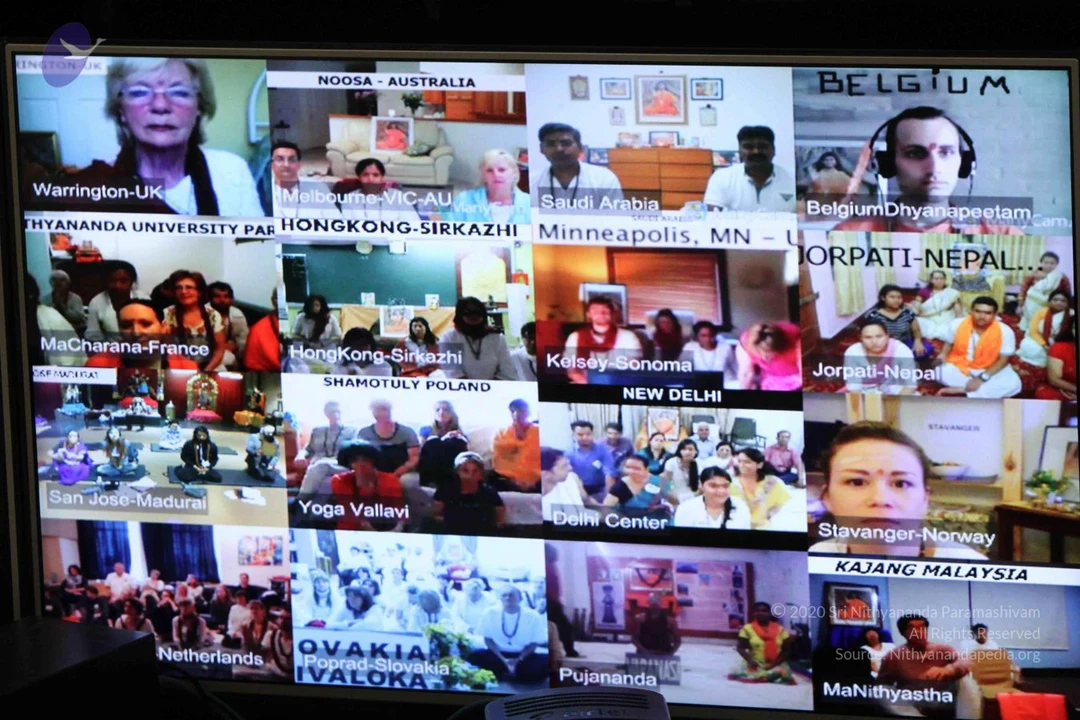
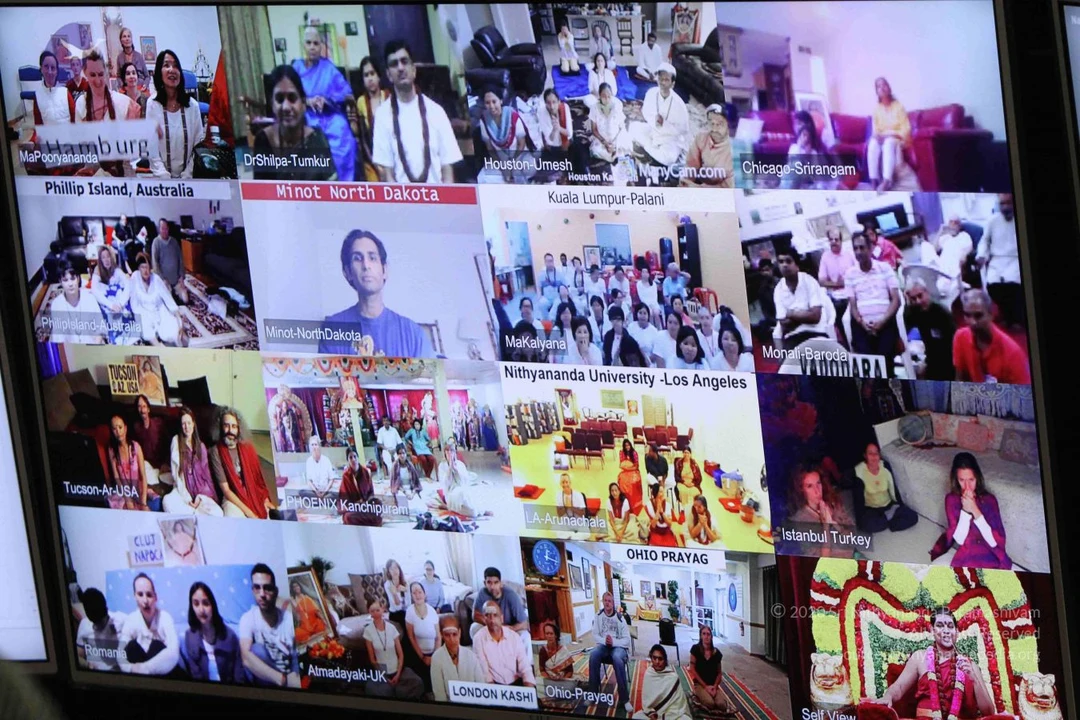
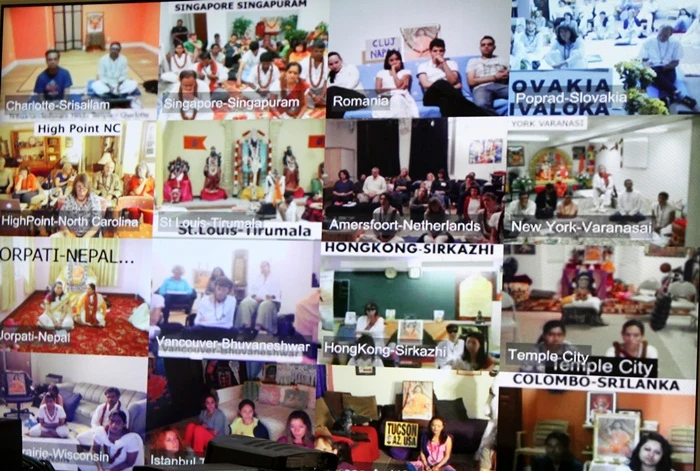
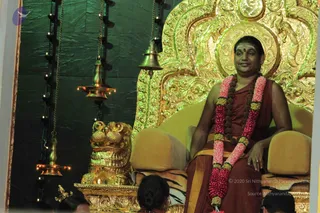
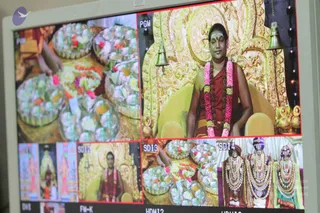
A seated man in a rust-red robe and saffron-gold waist cloth sits on an ornate gold-carved throne with a tiger-striped cushion. He wears a long garland of pink and white flowers and rudraksha beads, with a tilak on his forehead, and rests his hands on the armrests. In front, a gilded lion-head figure sits on a carved stand beside a brass hanging oil lamp and a hanging bell, against a dark green wall. Partially visible people in the lower corners, including a head with a hair bun, are seen at the edge of the frame. a person cues: rudraksha mala, flower garland and red-saffron robe while seated on a throne.A photograph of a multi-camera broadcast monitor showing several live feeds of a temple event. The large main feed shows a man with a shaved head and a white tilak on his forehead, seated on an ornate gold throne with a carved gold backrest and brass bells hanging at the side. He wears a rust-red garment and a long garland of pink and white flowers with rudraksha beads. Smaller feeds show rows of offering trays filled with fruit, flowers and coconuts, and three deity murtis dressed in colourful silk with heavy jewelled necklaces and crowns. The monitor shows the padukapuja broadcast setting.

EnergyDarshan

75 photosSource gallery
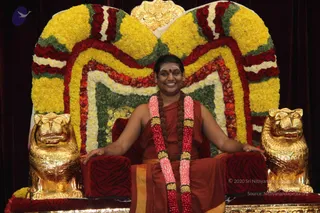
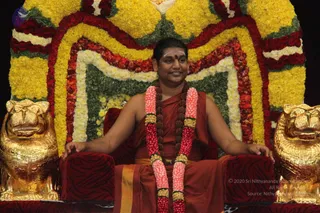
A bare-shouldered man in a rust-red wrap sits with palms pressed together in namaste, eyes closed, a white tilak and red bindi on his forehead. He wears a pink and white flower garland with rudraksha beads. Behind him is a wall of marigold and red flower garlands, and a gilded lion-faced ornament sits at lower left on a red zebra-patterned cloth. The man's identity cannot be confirmed from appearance, so he is described by role only.A seated man in reddish-orange saffron robes sits on a richly decorated golden throne with a tall backrest of yellow marigolds, red roses and green leaves, flanked by two golden lion figures. He wears a pink and red flower garland with a rudraksha mala, a red bindi and white forehead markings, and smiles broadly with his arms resting on the red velvet armrests. The throne is set against a dark red drape. a person is shown in appearance-based cues: saffron clothing, rudraksha mala and ceremonial floral garlands on a throne.A seated man in a saffron-orange robe sits on an ornate red and black velvet throne flanked by two golden lion figures. Marigold and rose garlands frame the throne in yellow, red and white flowers. He wears a pink and white flower garland over a rudraksha mala, a white vertical tilak on his forehead, and rests his hands on the armrests while smiling. The setting is a padapuja or darshan event. a person: the man has the saffron robe, rudraksha mala and ceremonial garland cues associated with the page, but the face is not used for identification.A seated man in rust-red saffron robes sits on a red and black tiger-striped throne flanked by gold lion-head armrests. He wears rudraksha mala beads and a long garland of pink and red flowers with gold ornaments, a white tilak and red bindi on his forehead, and smiles with his hands resting on the armrests. Behind him a large arch of yellow marigolds, red roses and white flowers frames the throne. a person: the saffron robes, rudraksha malas and ceremonial garland are the qualifying cues for the seated figure on the throne, who is physically present in this photograph.A seated man in saffron-orange robes sits on a red velvet throne with tiger-striped upholstery, flanked by gold lion-headed armrests. He wears a rudraksha mala, a long pink and white flower garland, and a white tilak on his forehead, with his hands resting on the armrests. Behind him a backdrop is densely decorated with yellow, red and white marigold and rose garlands with green foliage. The setting resembles a formal darshan or puja seat. a person: the saffron robe, rudraksha mala and ceremonial garlands are visible cues, and the seat is the setting of a formal honouring.A man with short dark hair and a white tilak with a red bindi sits on a red tiger-striped throne flanked by gold lion-head armrests. He wears rust-orange robes, a rudraksha mala, and long pink and white garlands, and smiles while looking to the side. Behind him is a backdrop of red roses, yellow marigolds and white flowers.

Photo:

40 photosSource gallery
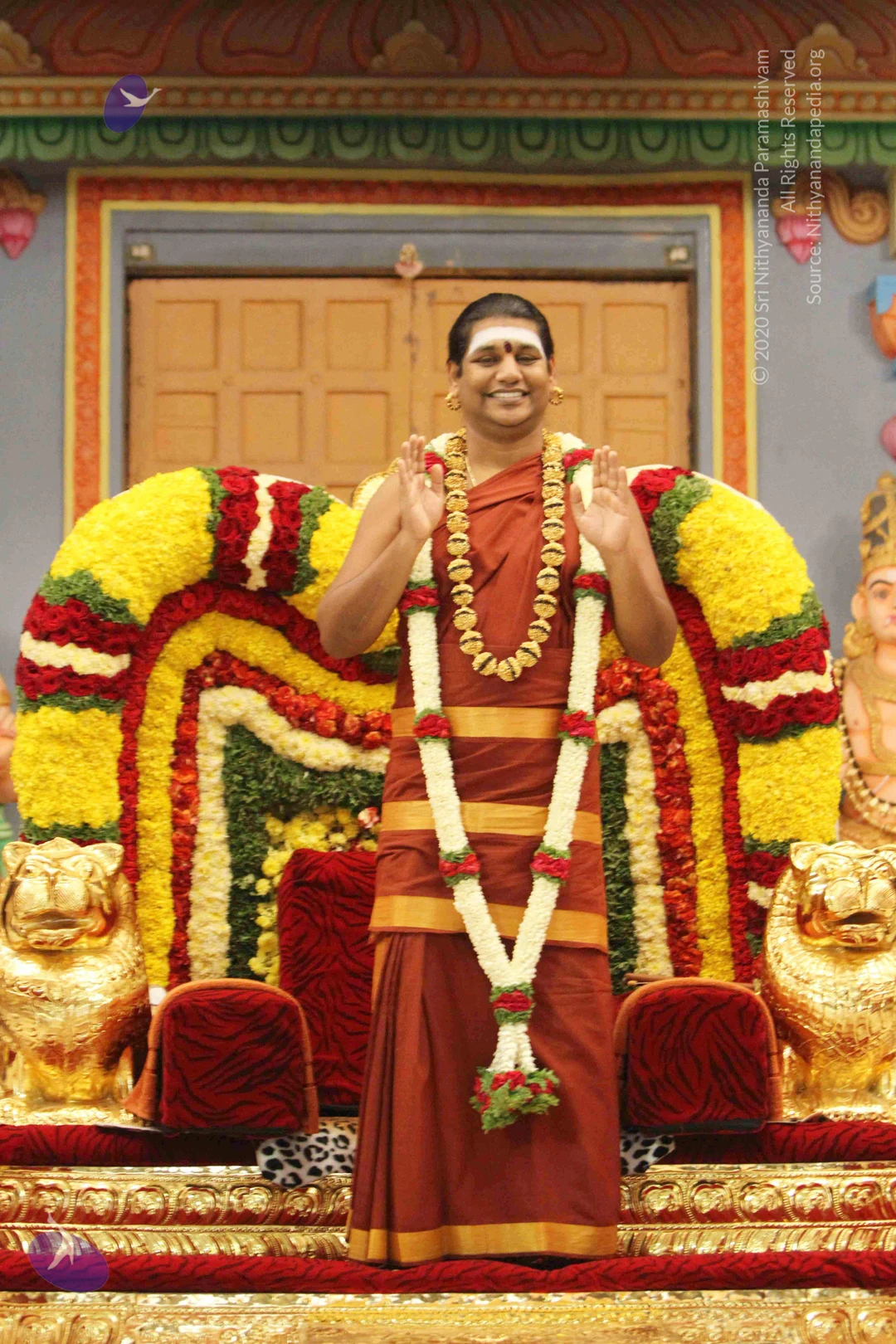
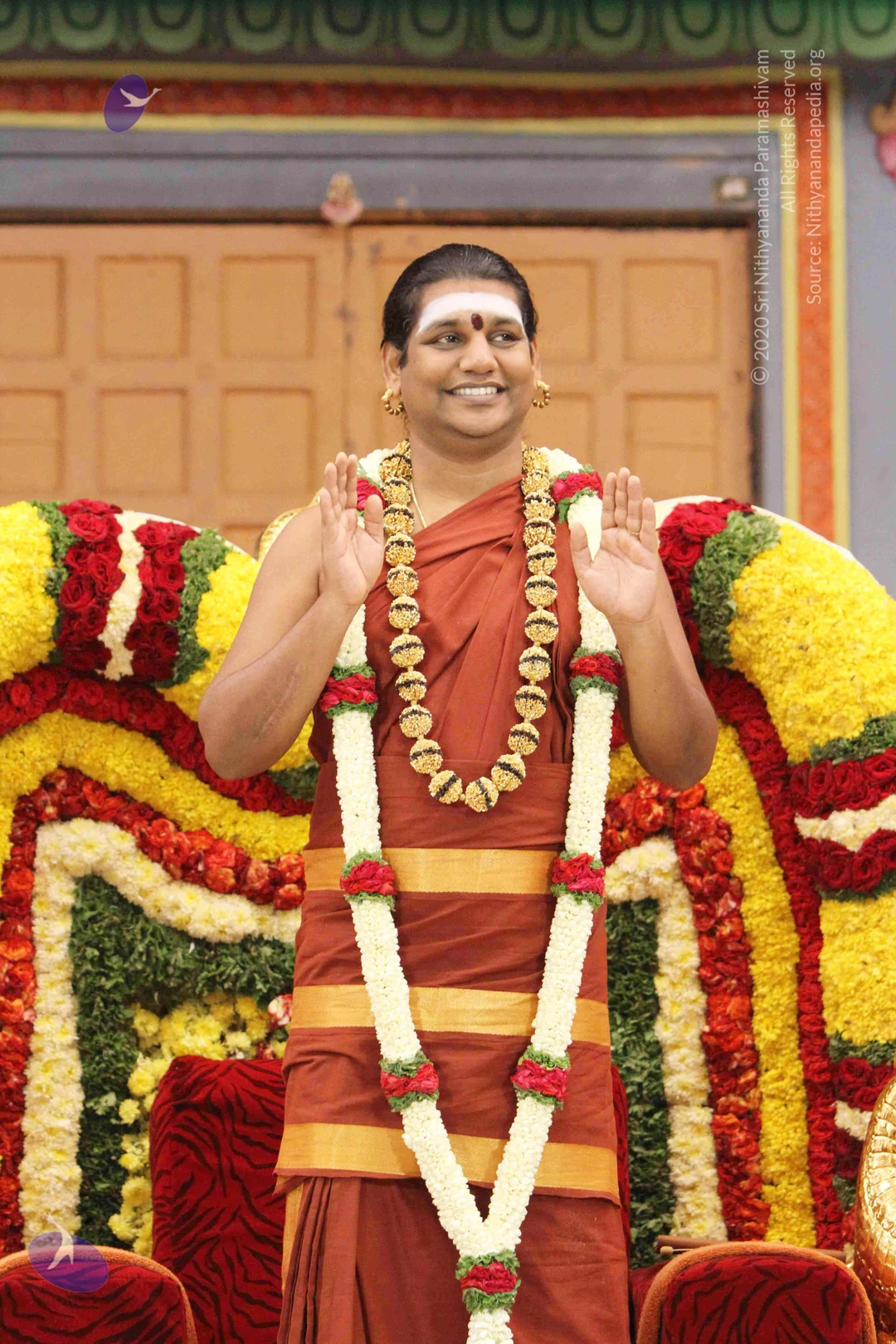
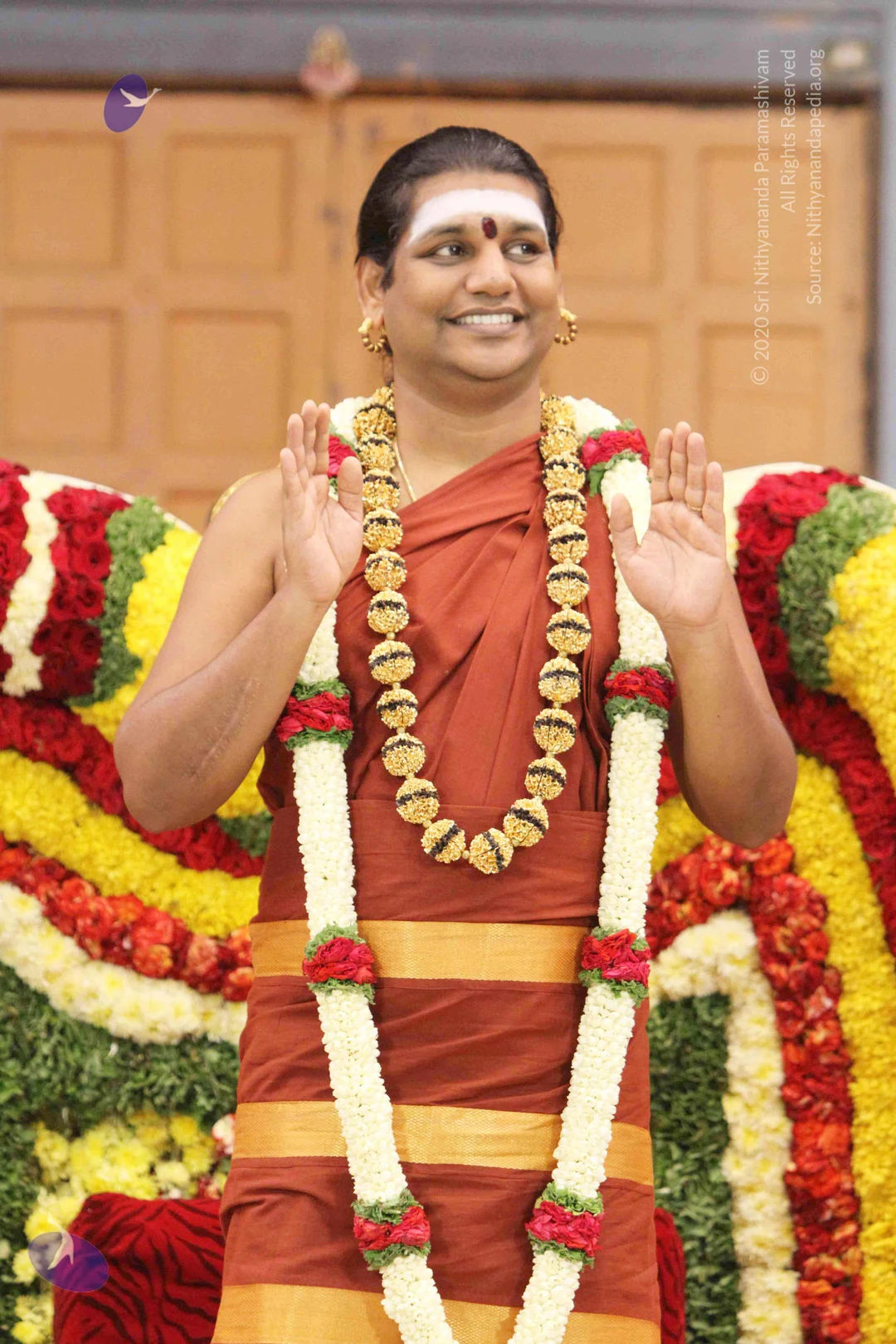
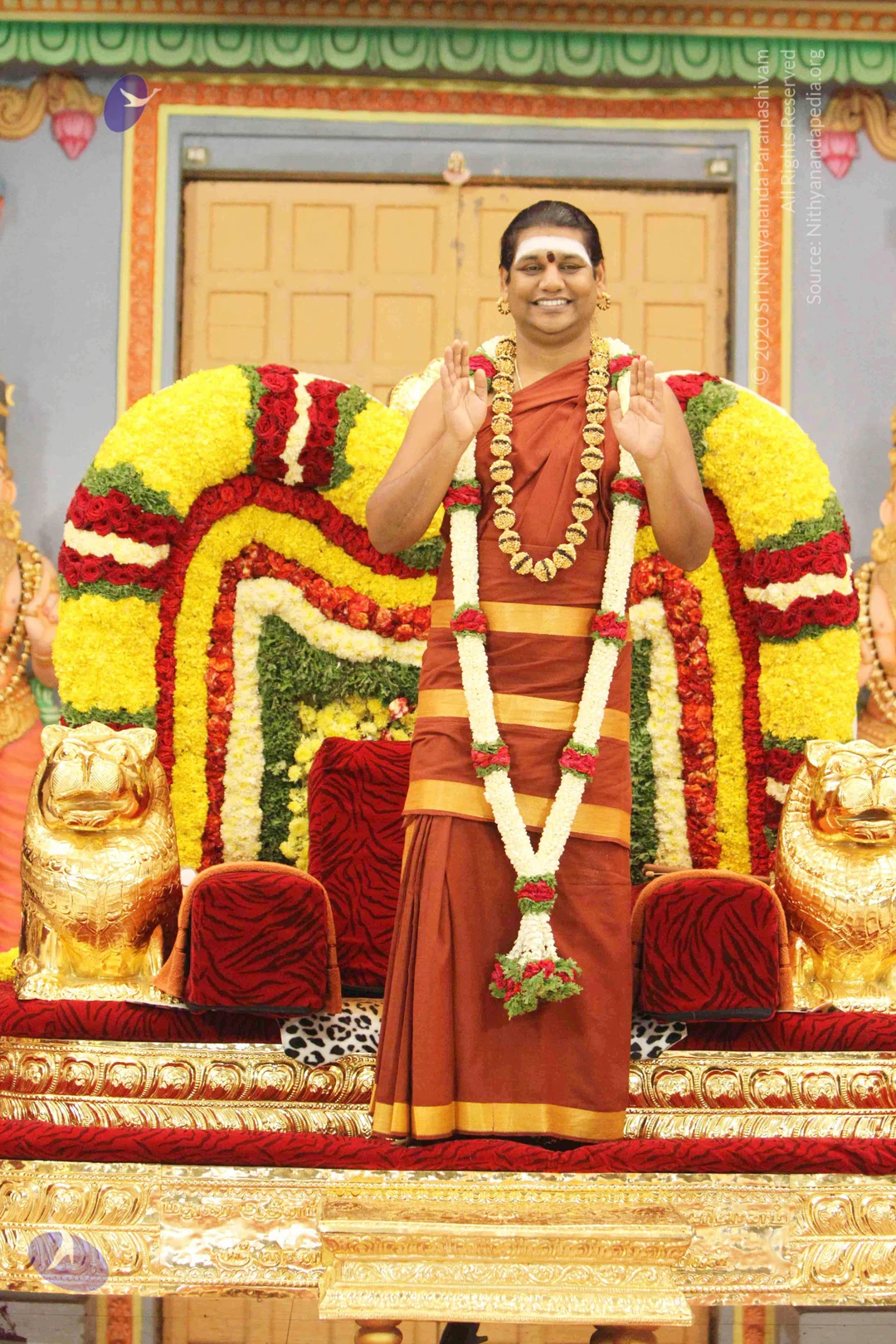
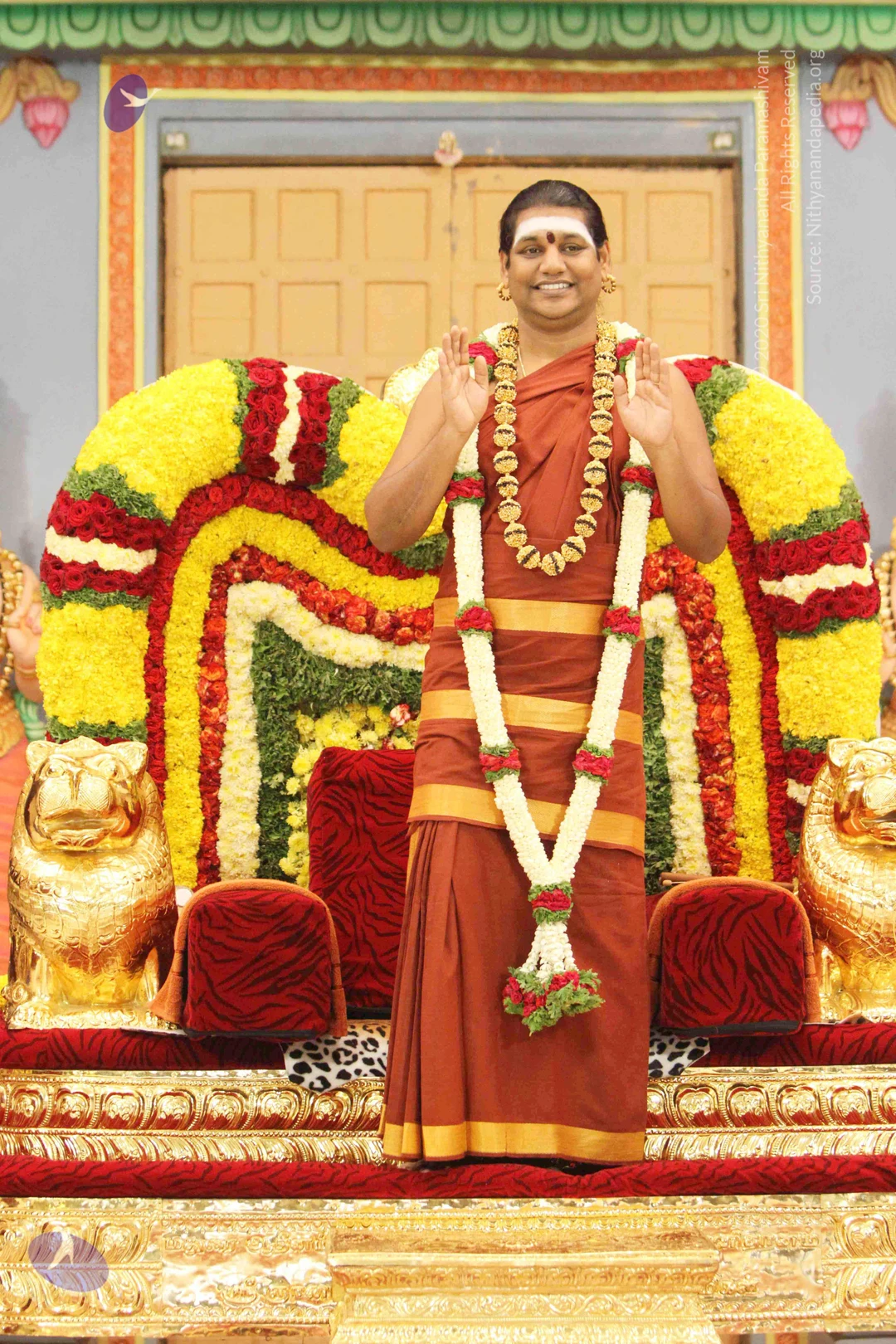
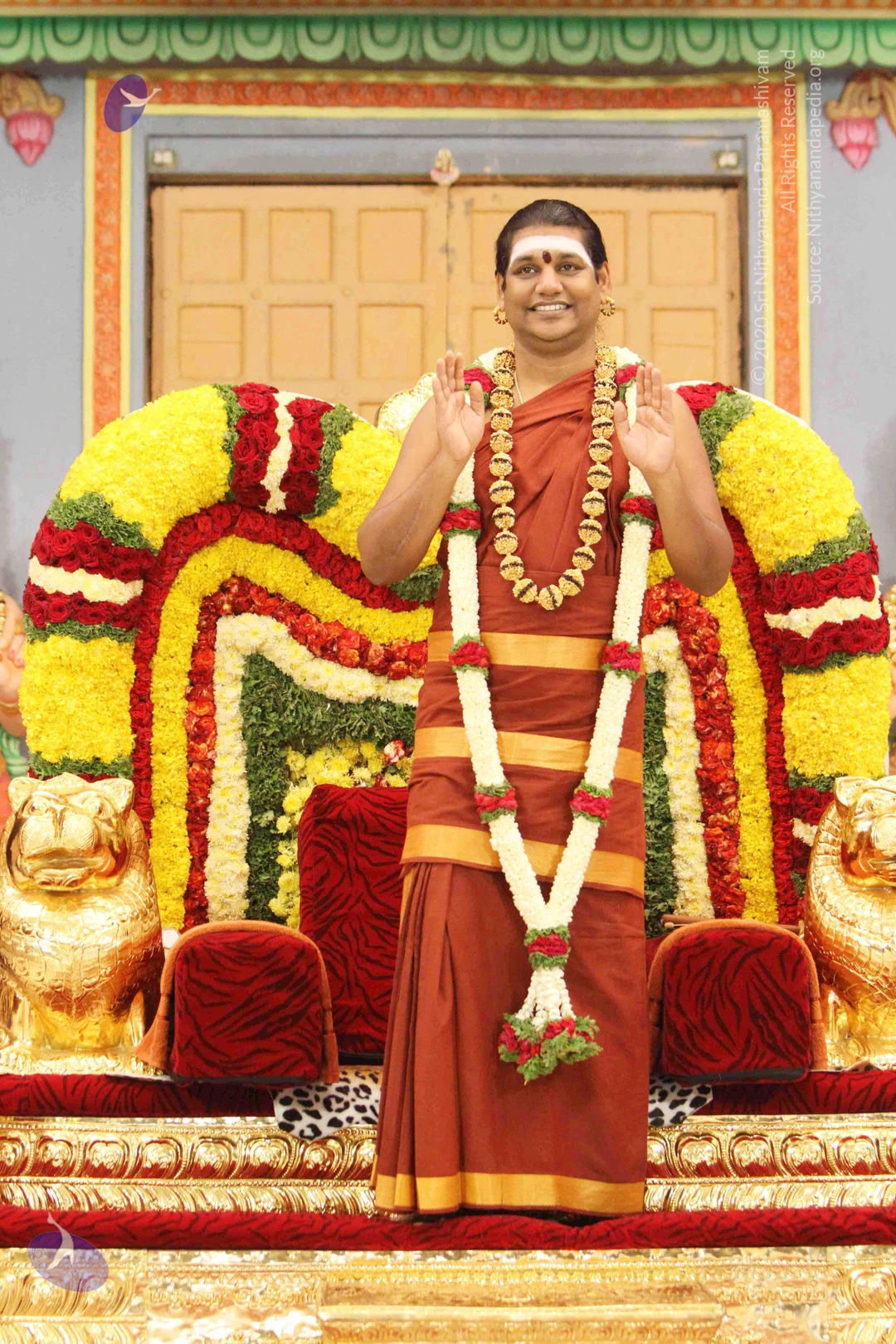
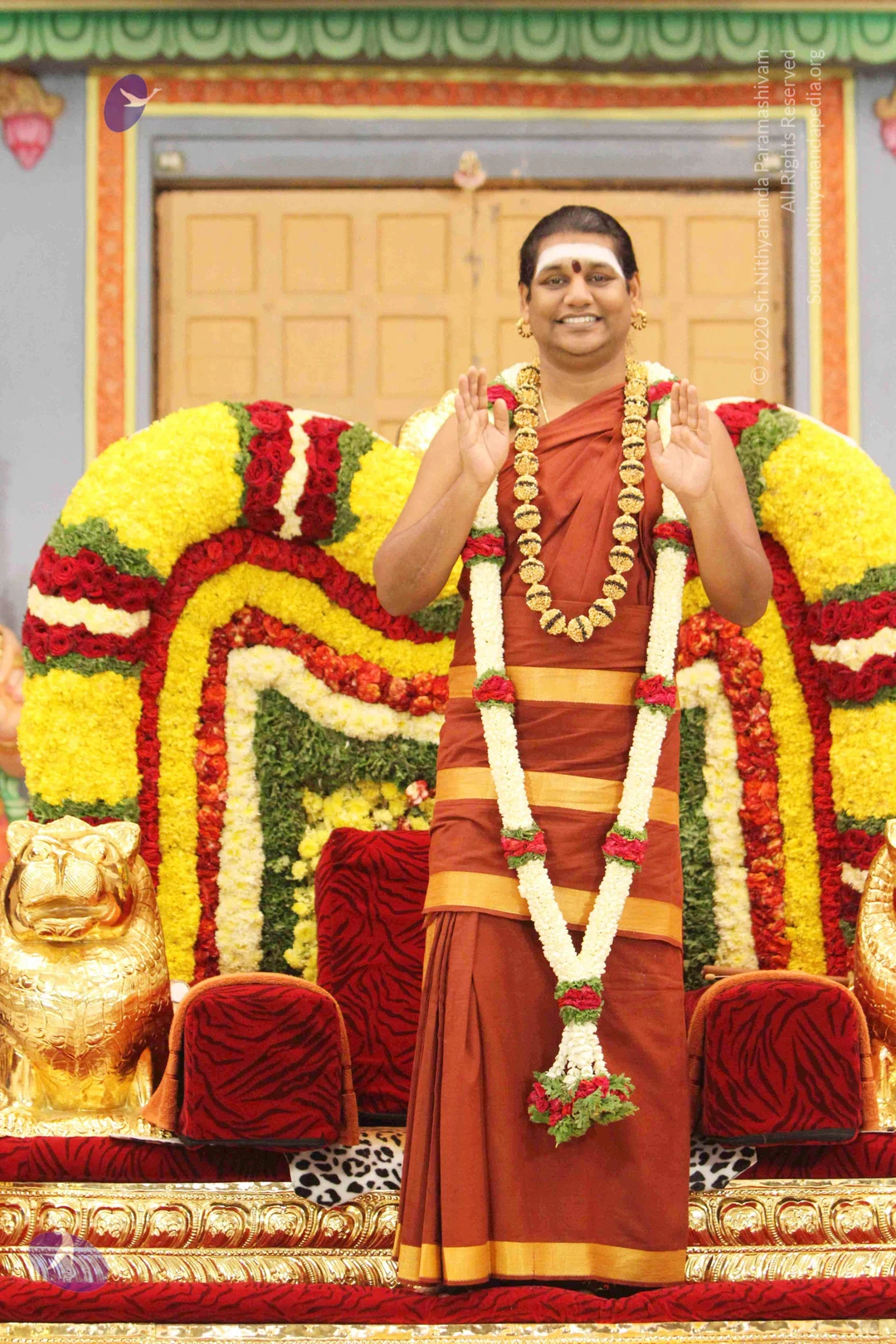
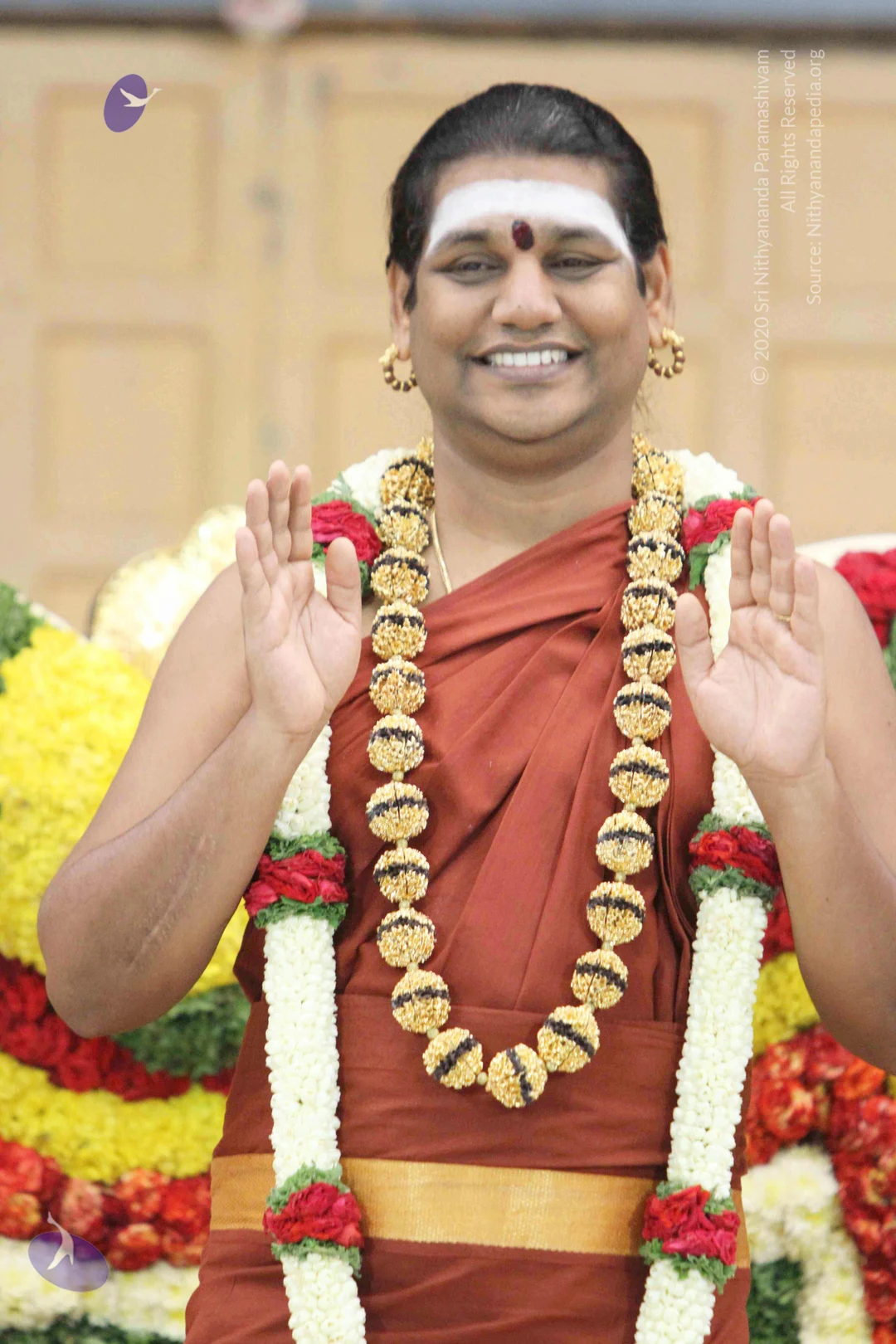
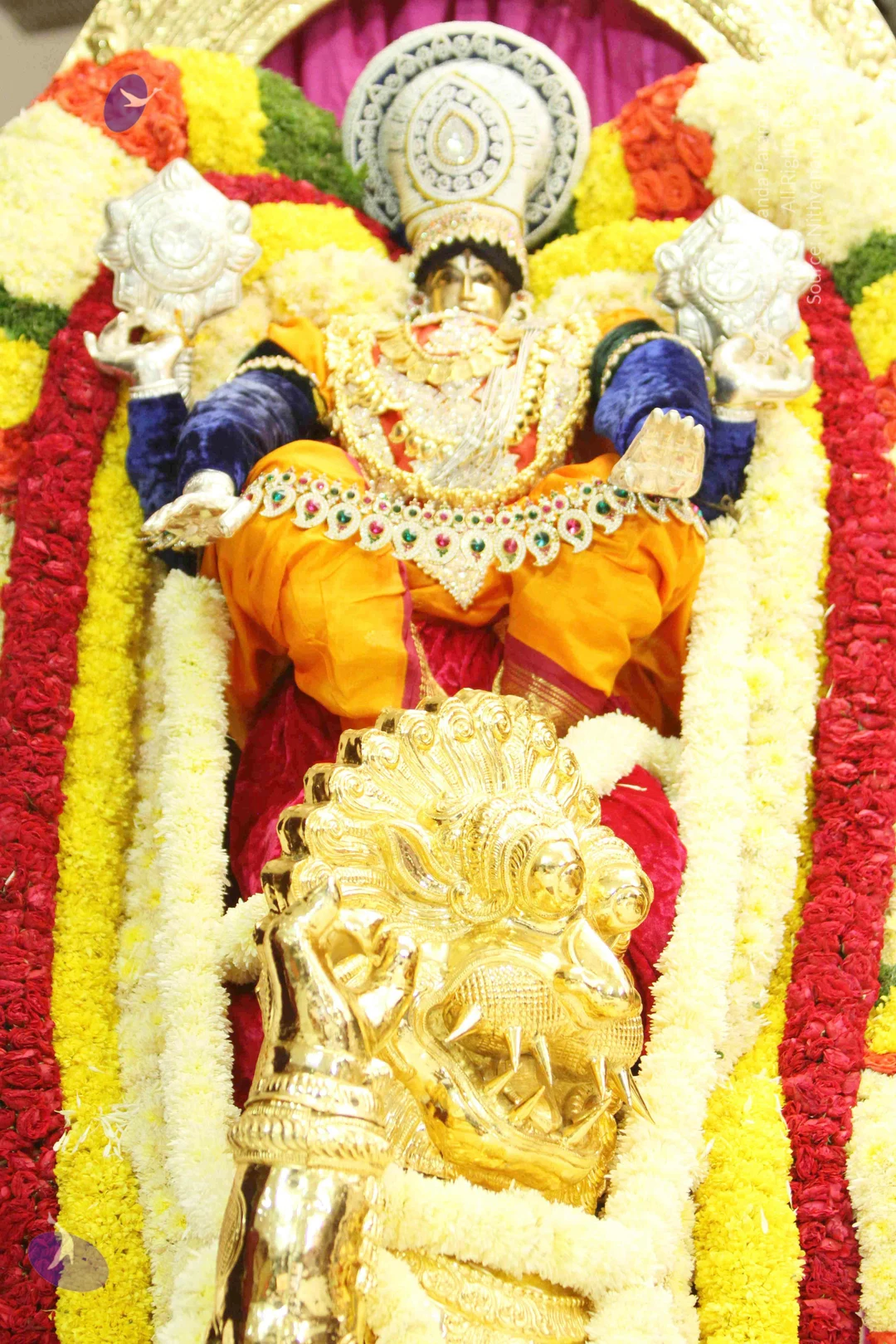
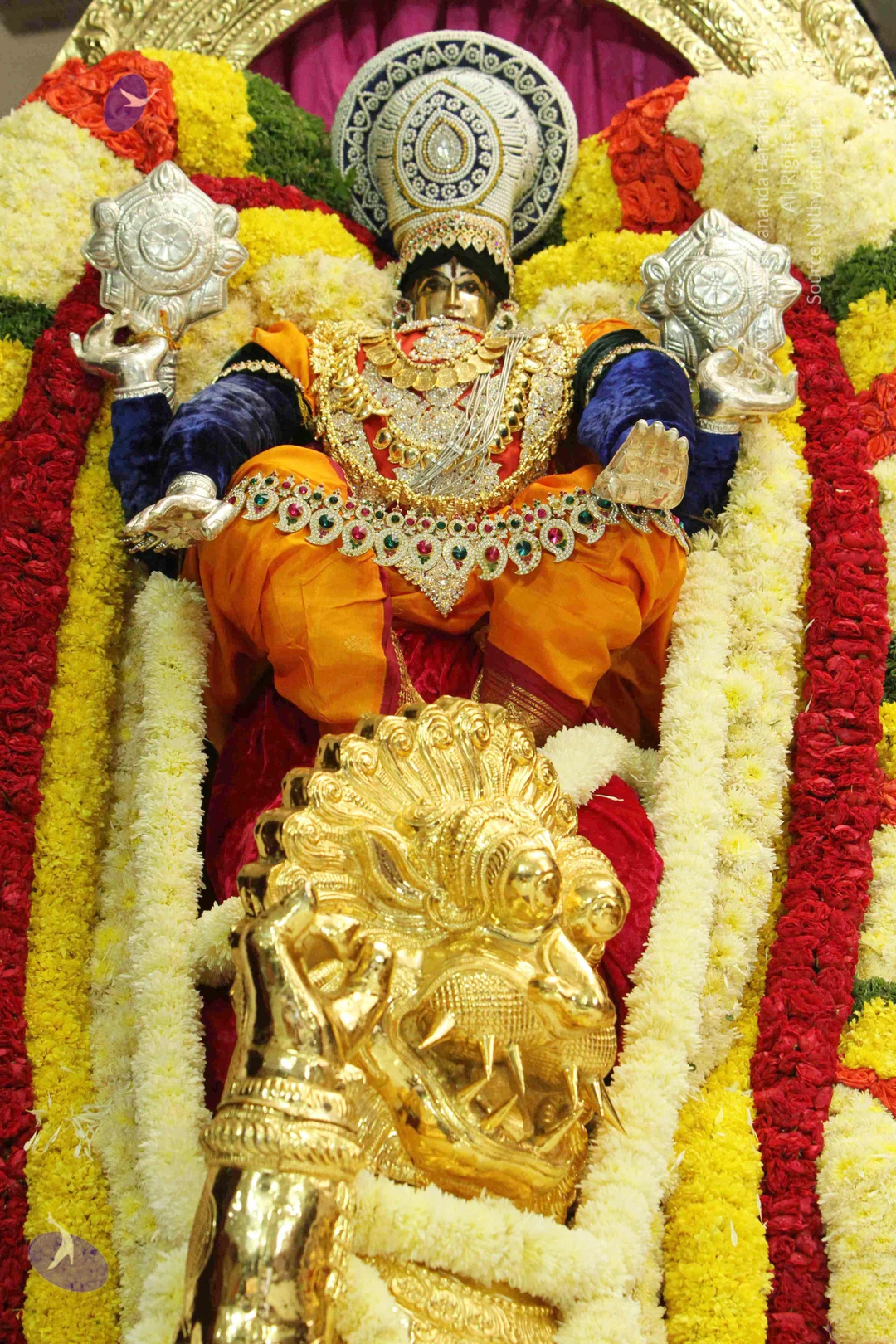
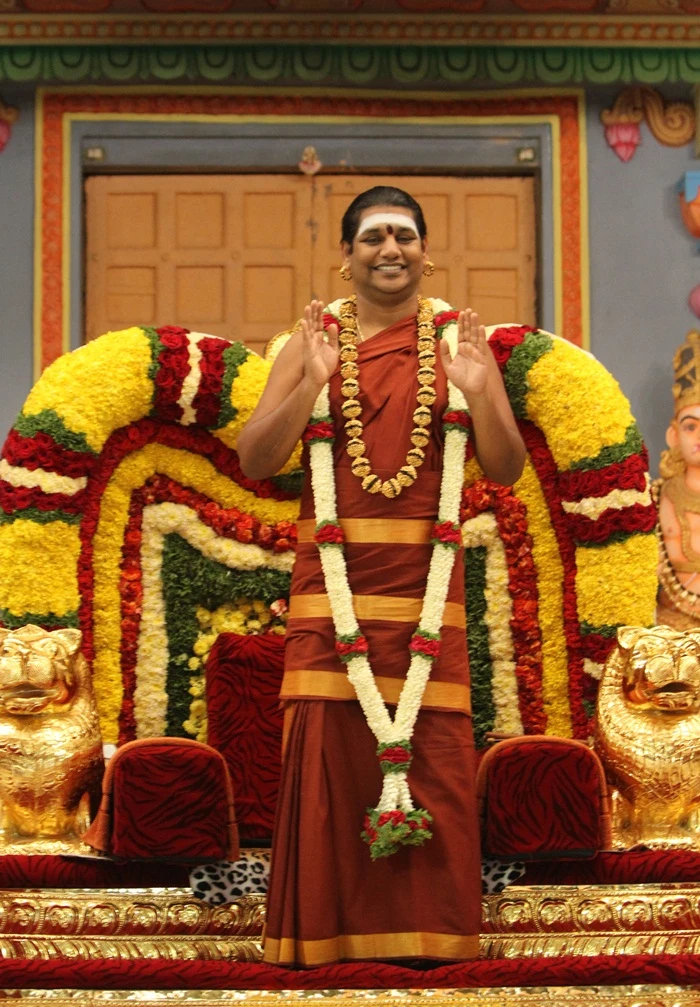
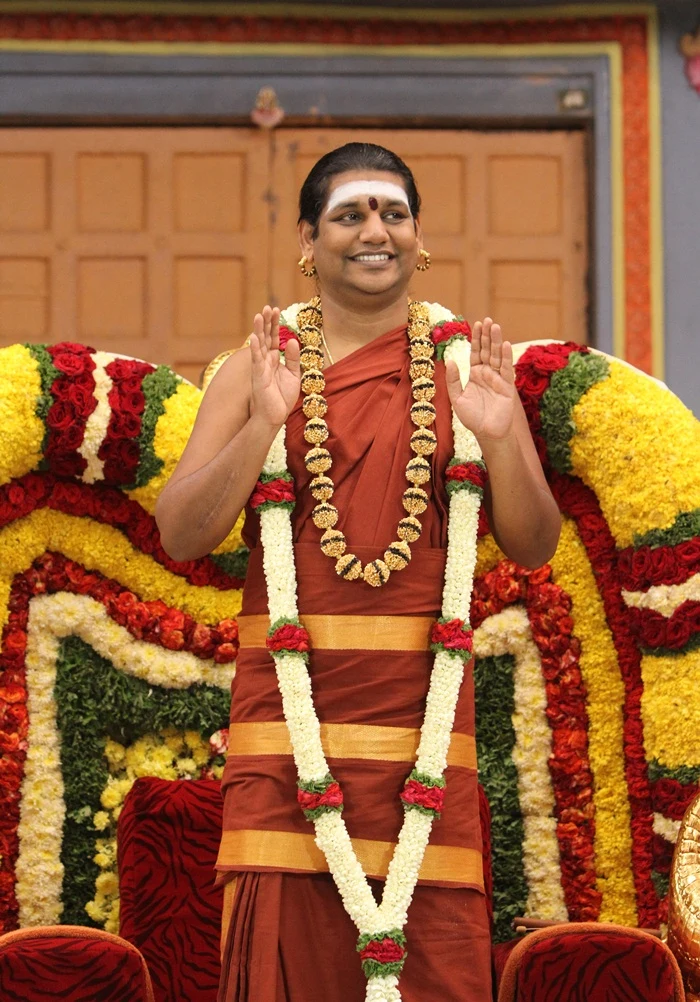
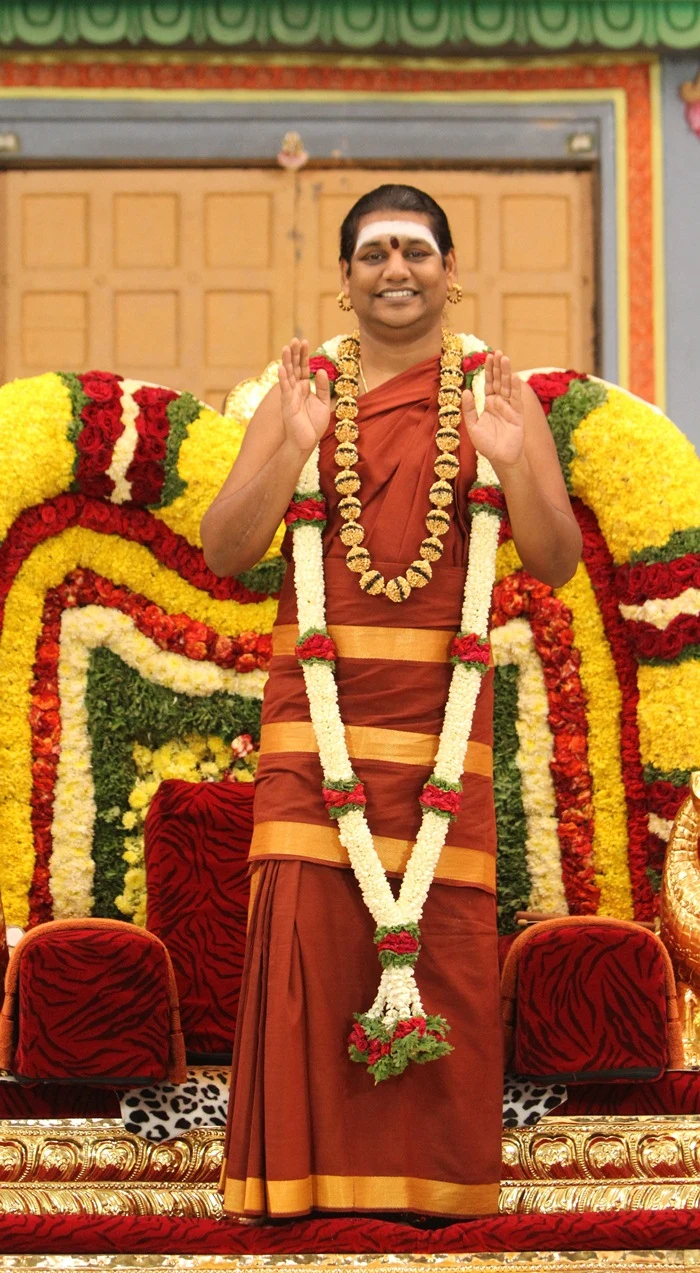
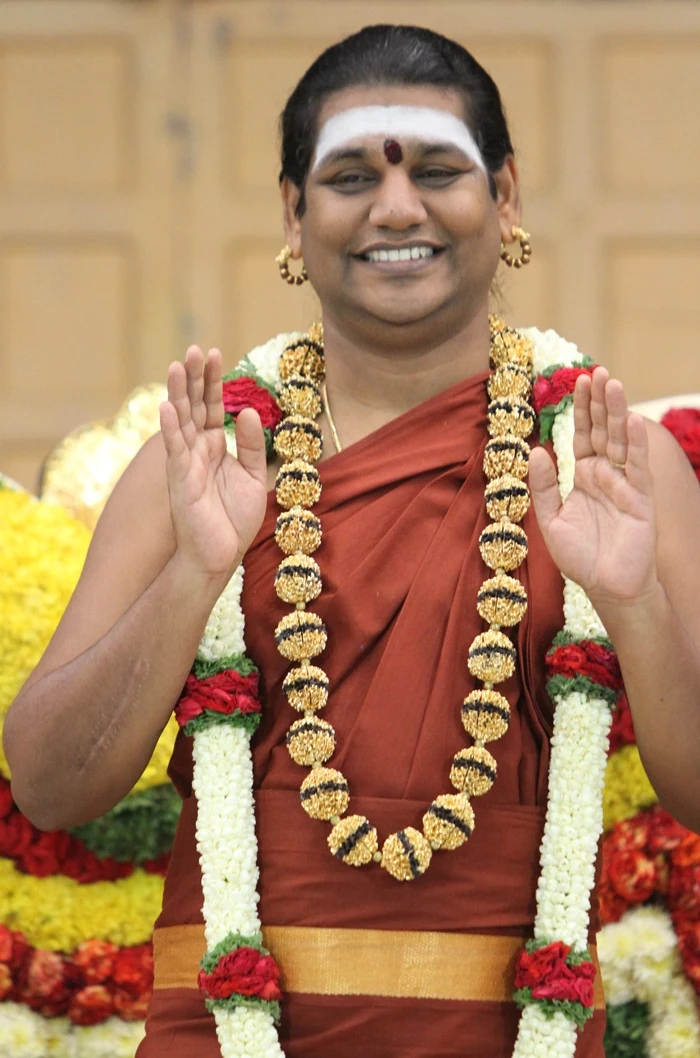
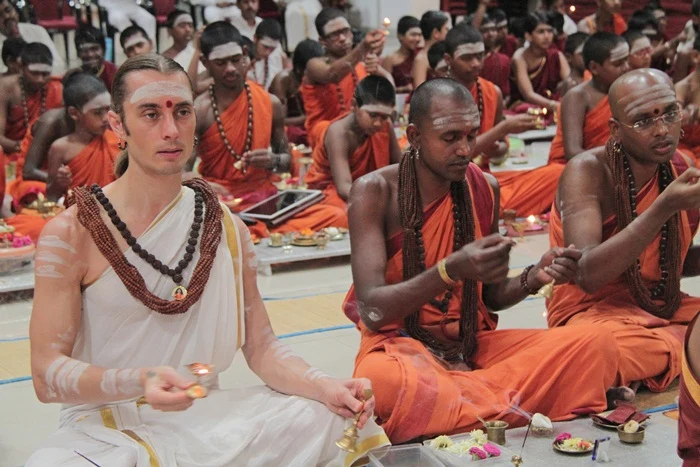
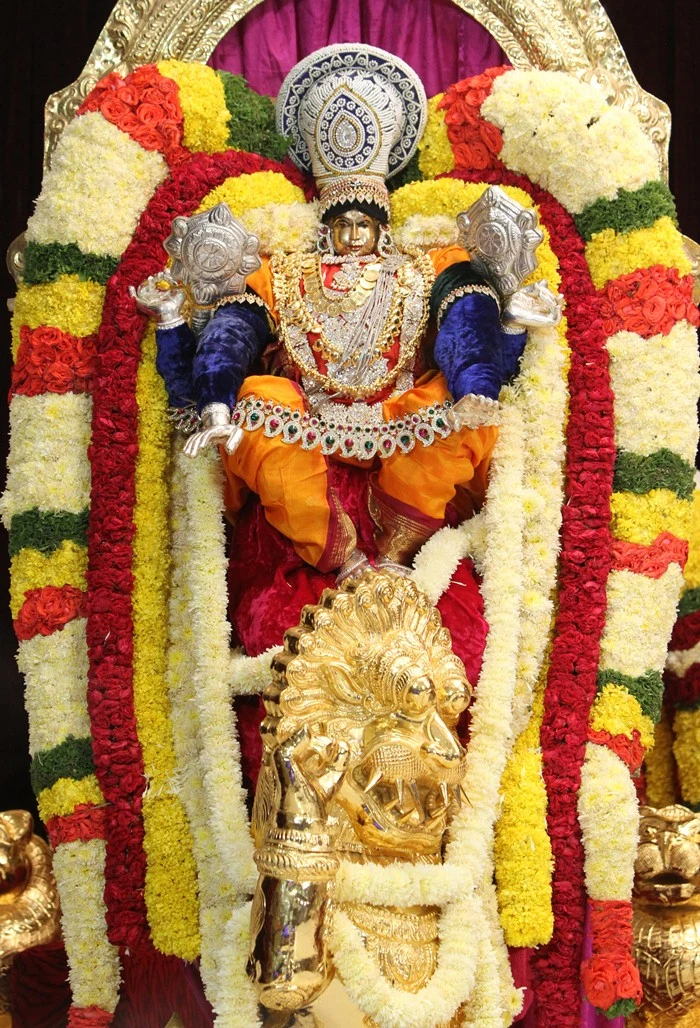
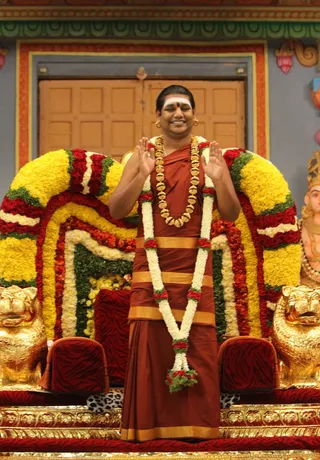
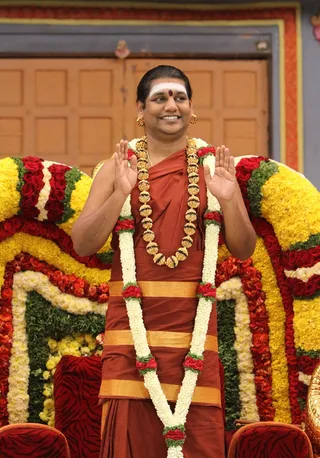
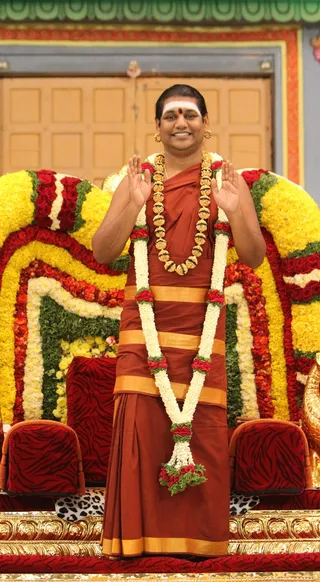
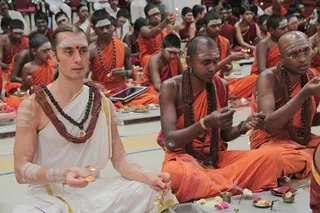
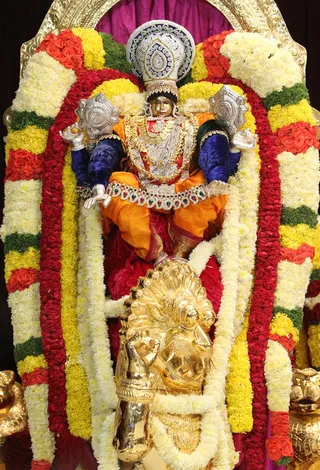
a person stands centred on a golden peetha-style throne framed by a floral arch of yellow marigolds with red and white flowers, flanked by gilded lion sculptures. He wears a rust-red dhoti and shawl with gold borders, a long gold ceremonial necklace, gold earrings, a white vertical tilak and a red bindi, and holds his palms raised in greeting while smiling. Behind him is a wooden door and a painted temple wall, with a deity murti partly visible at the right edge. Garlands of white and red flowers hang from his neck.A standing man in a rust-red ochre sannyasi garment with golden borders is smiling with palms raised in a blessing gesture. He wears a gold necklace of large beads, gold earrings, a white vertical forehead mark with a red bindi, and a long garland of white and red flowers draped to his waist. Behind him is a throne decorated with yellow marigolds, red roses and green leaves, in front of a wooden panelled door. The appearance-based label is a person, based on the ochre robe, distinctive gold beaded necklace and ornate garlanded throne setting.A man stands centrally before a floral-decorated throne, smiling with palms raised in a blessing gesture. He wears a rust-red saffron-toned dhoti with a gold border and a large gold bead mala with a white and red flower garland draped over his shoulders. A white forehead band and red bindi mark his face, and a red-and-gold tiger-stripe-upholstered seat sits beside him. The throne is framed by yellow and red marigold and rose garlands, with a gold-trimmed red platform in the foreground.a person stands smiling with palms raised in front of him, wearing a rust-red saffron-toned robe with a gold-coloured waist cloth. He wears a large gold-beaded rudraksha mala with dark ridged beads, a white horizontal tilak on his forehead with a red dot at the centre, and gold hoop earrings. Garlands of white jasmine and red roses hang over his shoulders and fall to his waist, and the backdrop behind him is a wall of yellow and red flower decorations. The scene suggests a devotional gathering or darshan setting.Indoor puja session with a large group of seated devotees in saffron-orange robes and rudraksha malas, many with white and red forehead markings. In the foreground, a young man with a long ponytail wears white dhoti-style clothing, a shawl-like white wrap, layered rudraksha beads and a red tilak; he holds a small lit oil lamp in one hand and a brass implement in the other. Next to him, a bald man with horizontal white markings and spectacles holds a small brass dish and offerings. Brass lamps, flower petals, fruit and small bowls sit on a cloth before them, and a tablet sits among the devotees. Background devotees hold lit lamps and wear orange robes.A decorated deity murti seated on a golden lion-headed throne against a deep magenta backdrop, framed by thick arches of yellow, orange-red and green flower garlands. The figure wears an ornate silver-and-gold crown, a heavy gold and silver necklace, jewelled waist belt, orange dhoti-style garment and blue velvet sleeves, and holds silver ceremonial emblems in both raised hands. Golden lion-shaped ornaments flank the throne. No physical people are visible.