Skip to content
Sunday

29 September 2013

Shiva's Divine Play -- Drying The Ocean

Dated photos
317
Source pages
1
Media
4
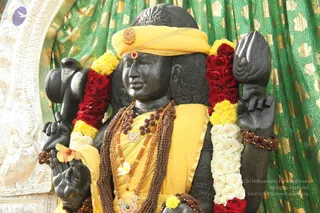
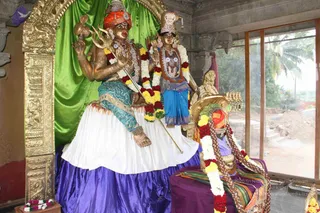
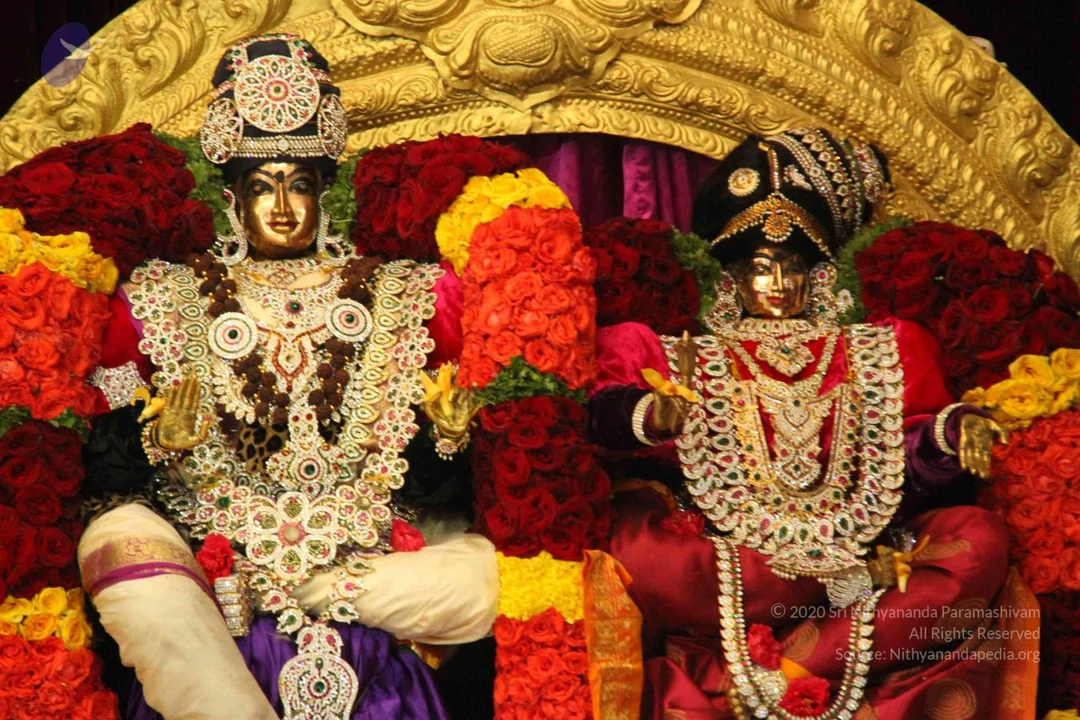
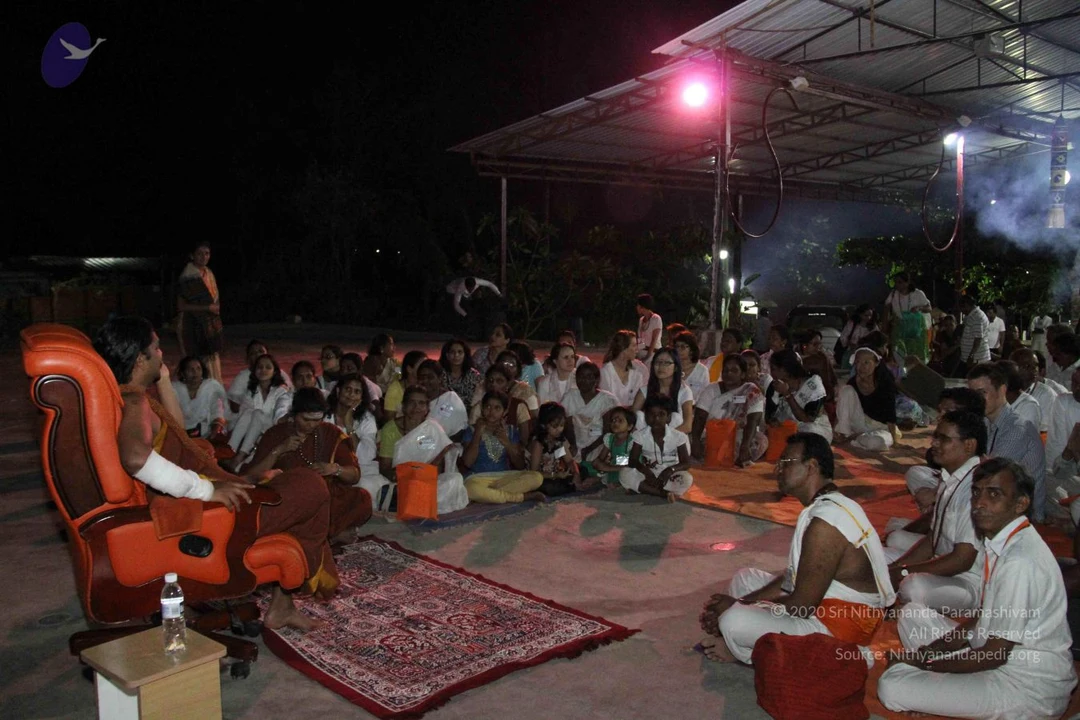
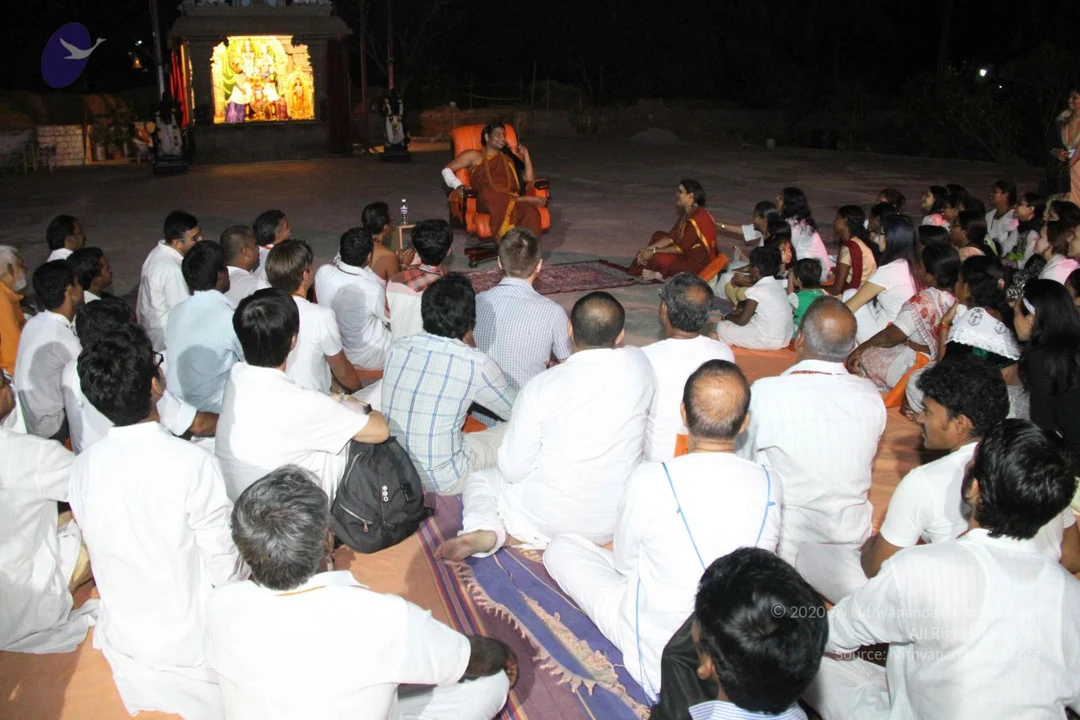
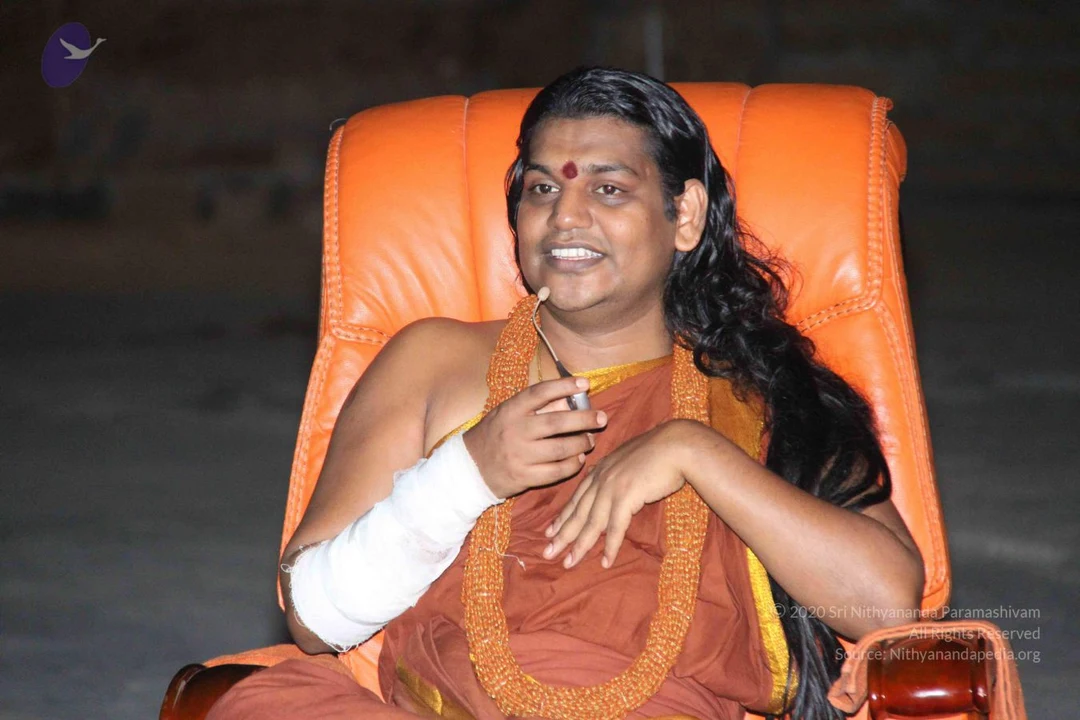
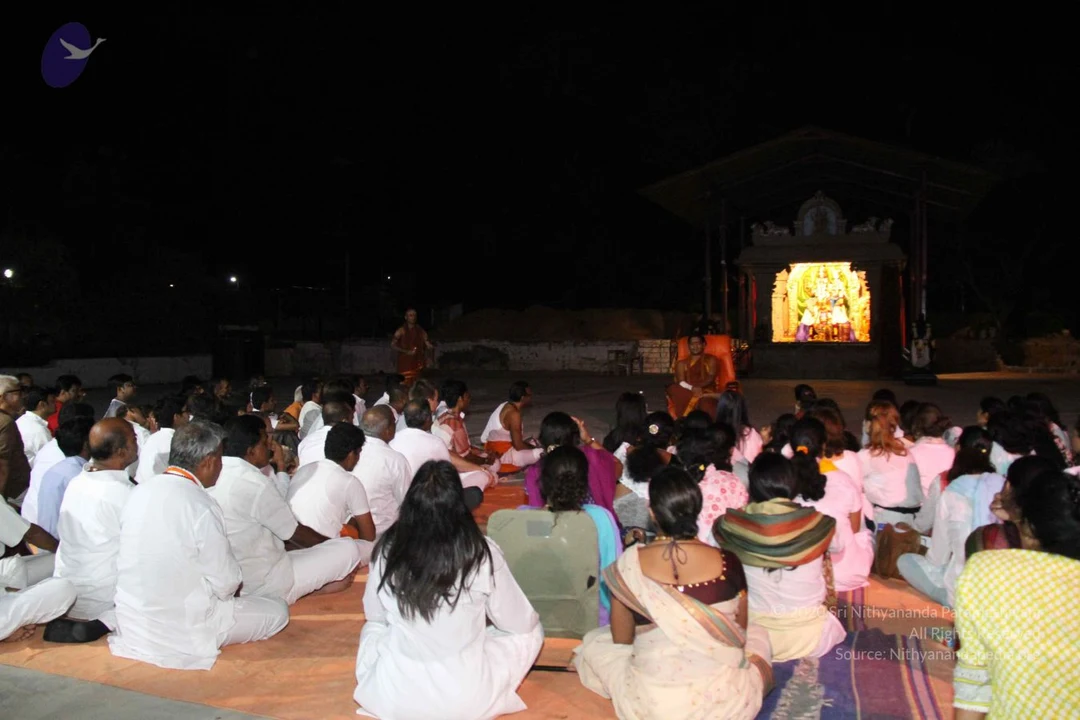
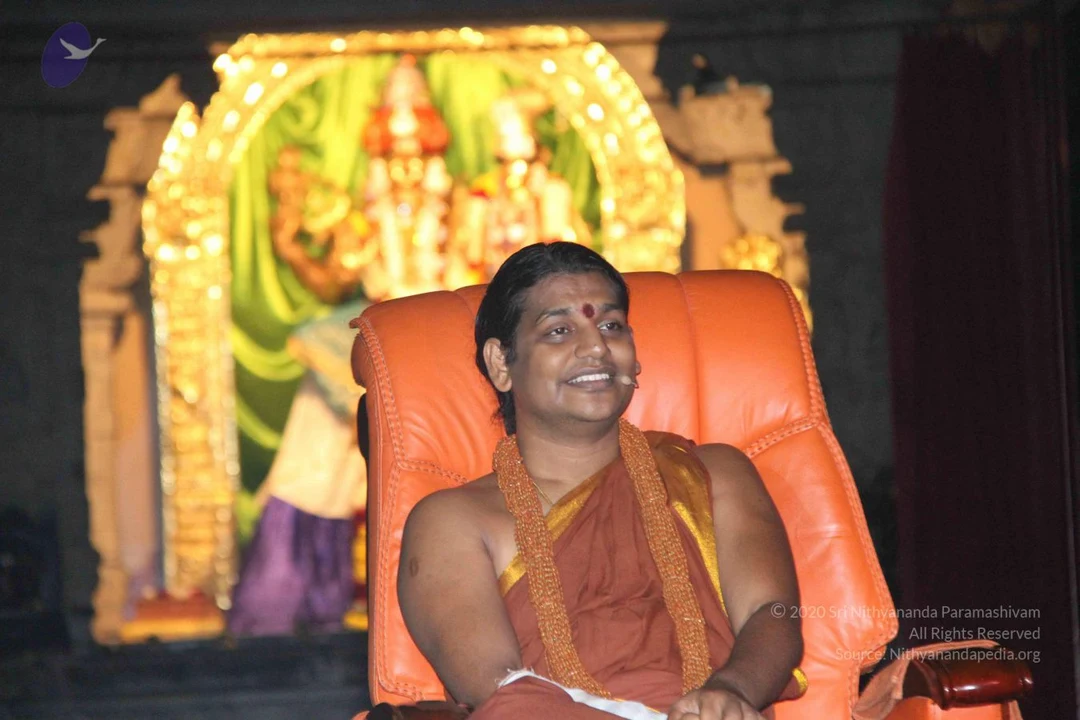
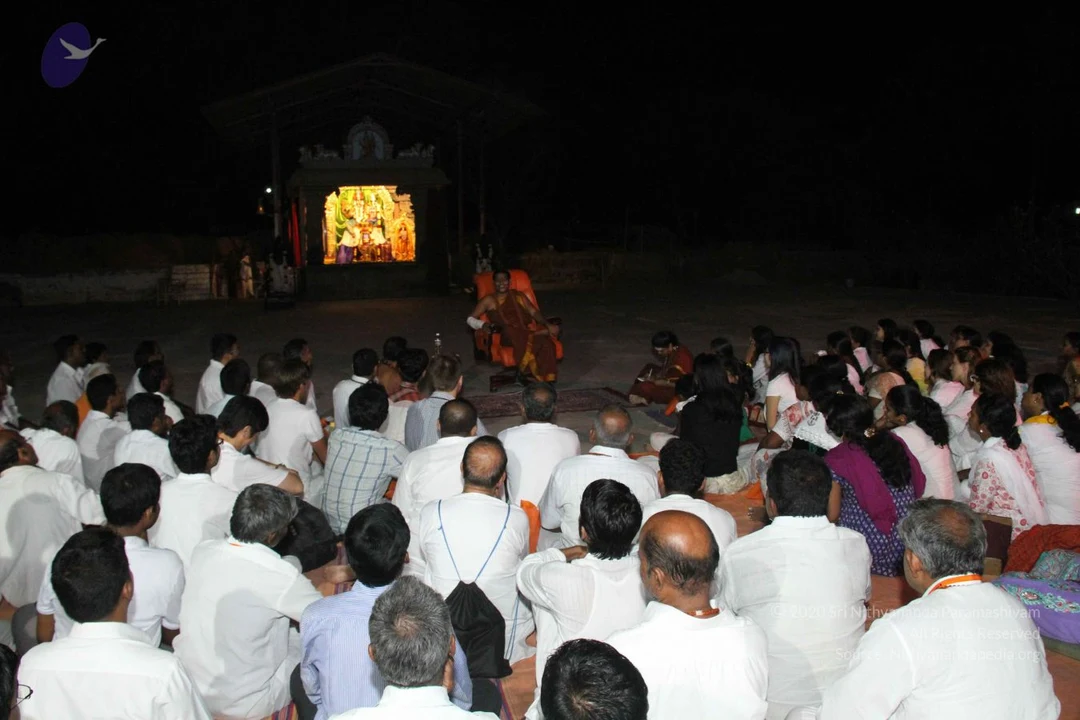
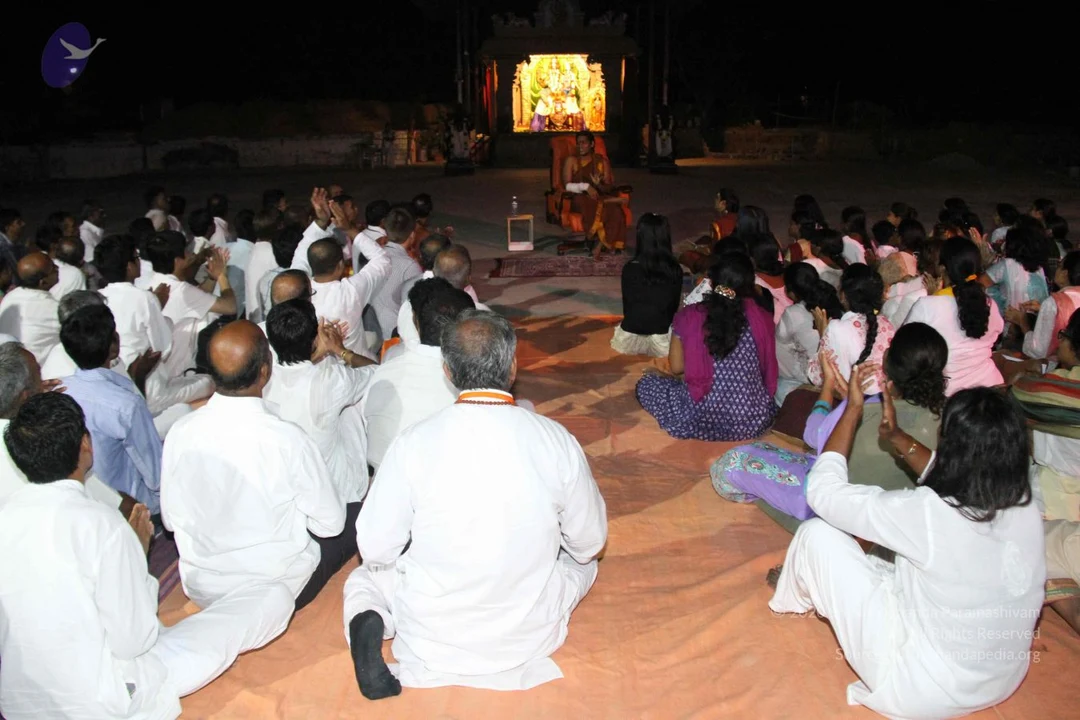
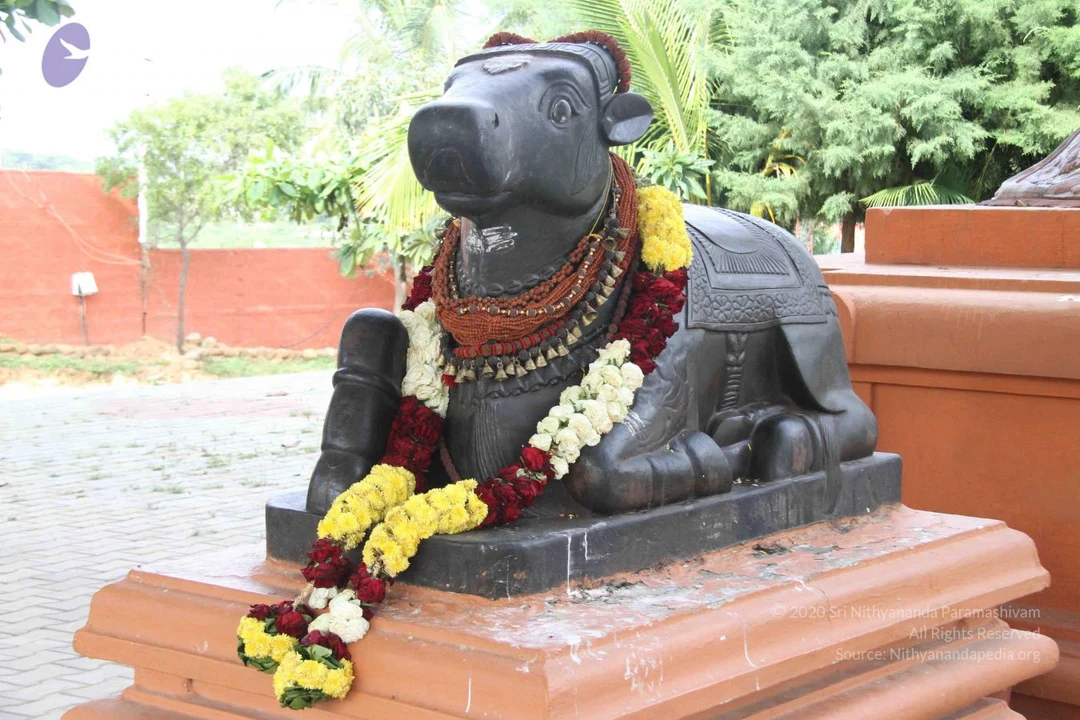
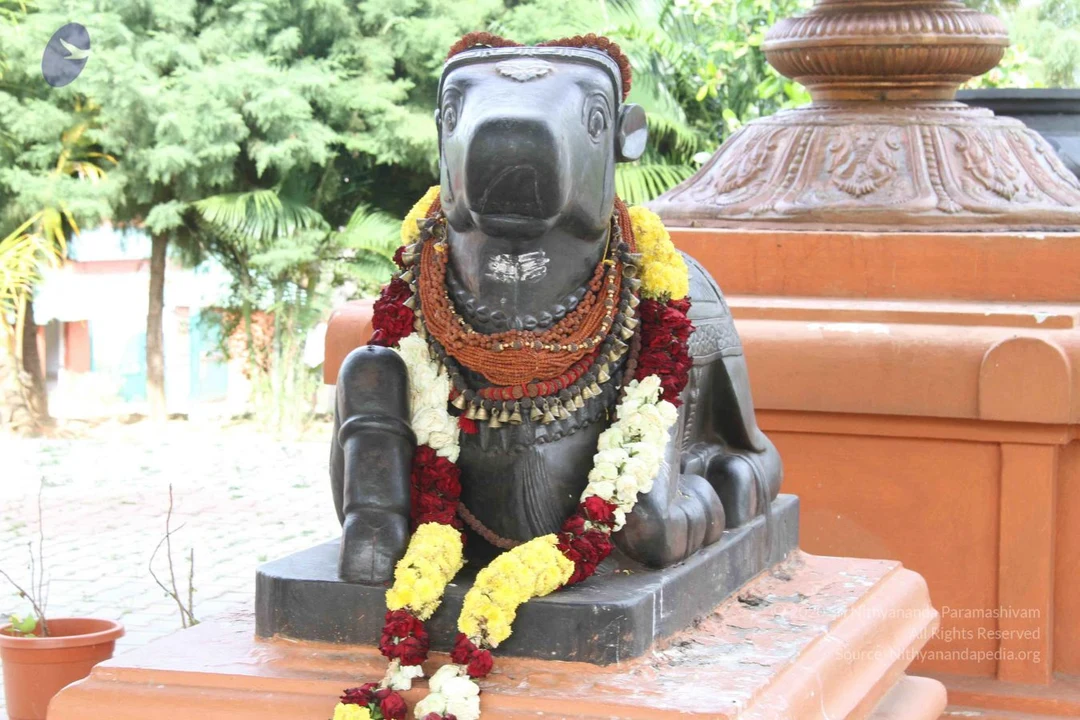
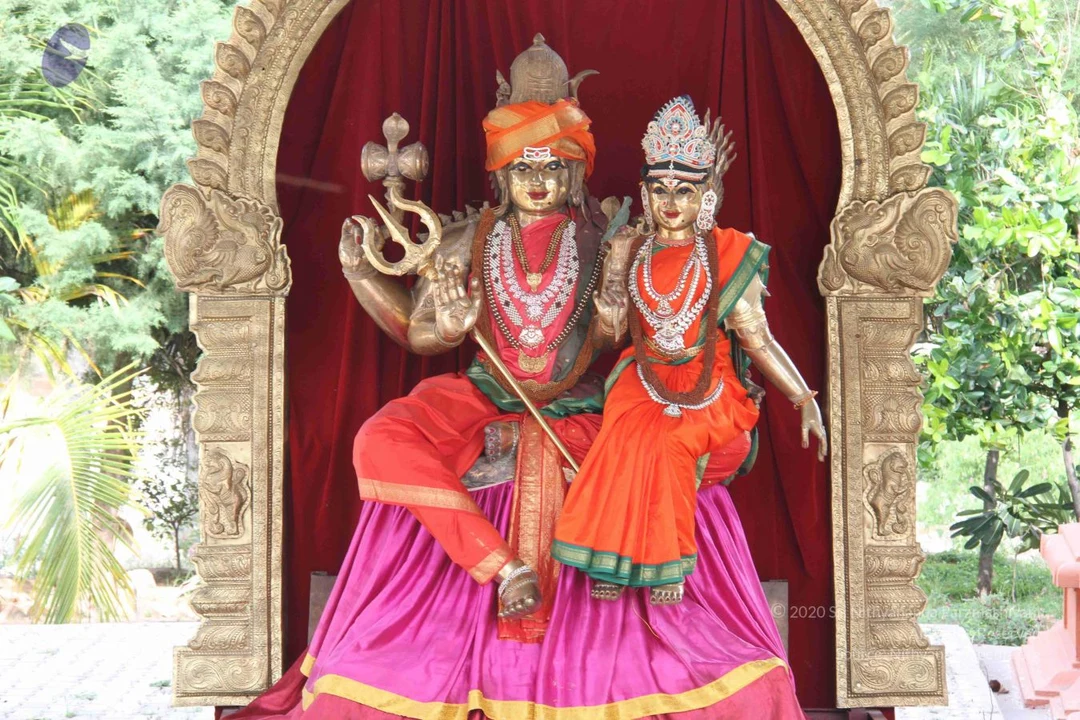
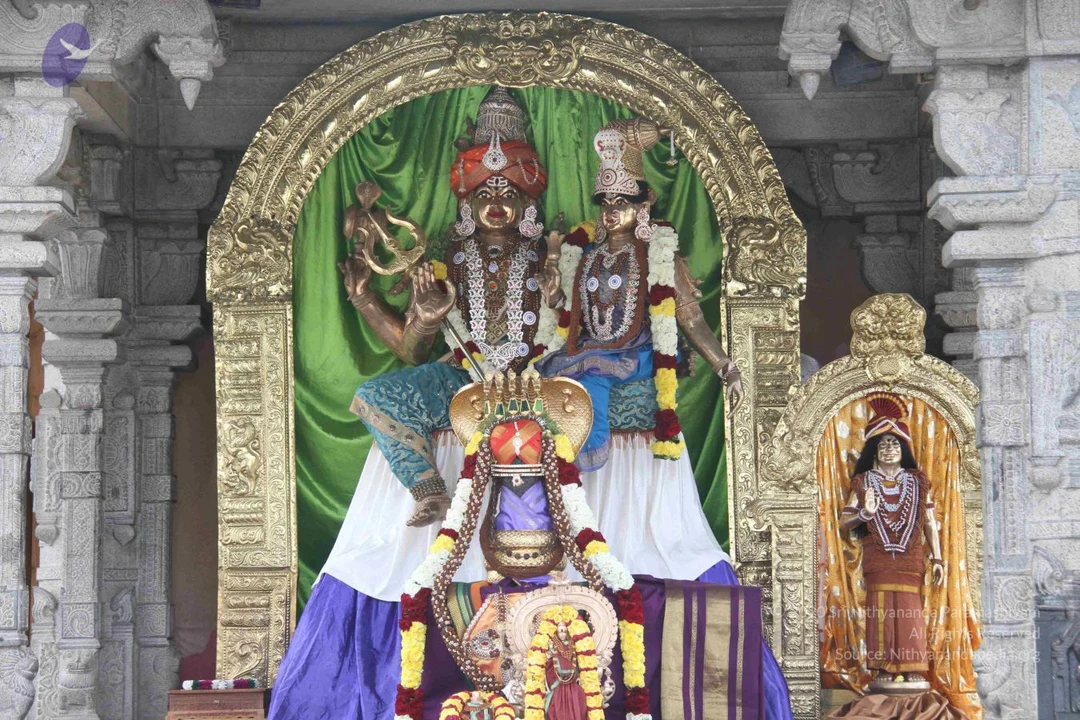
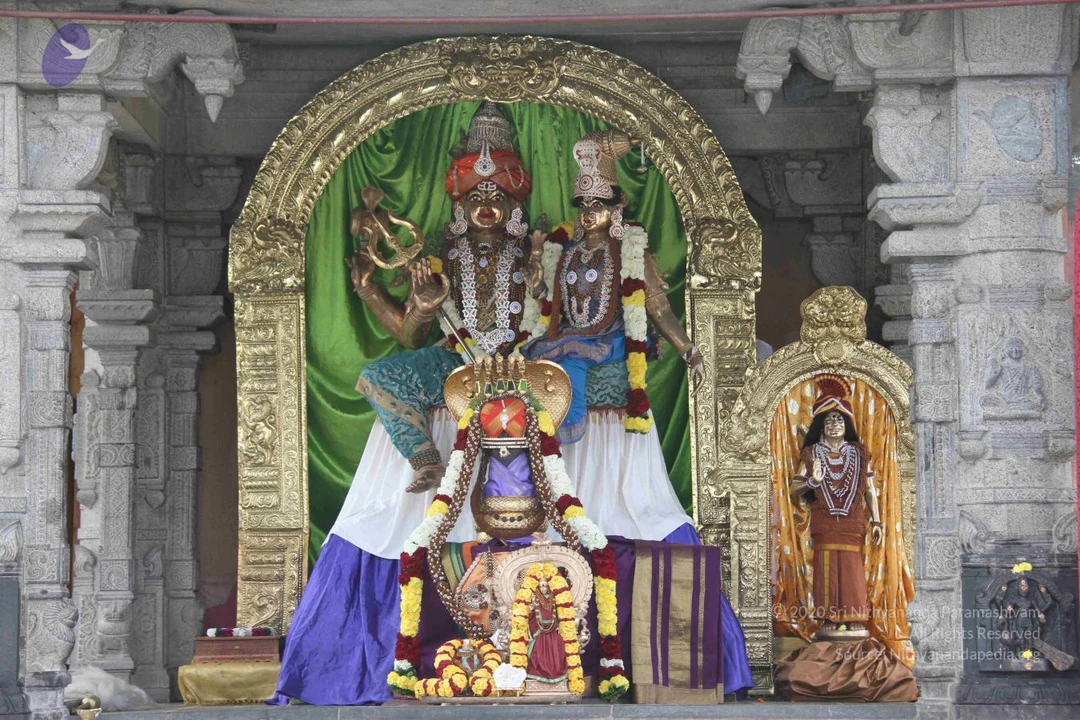
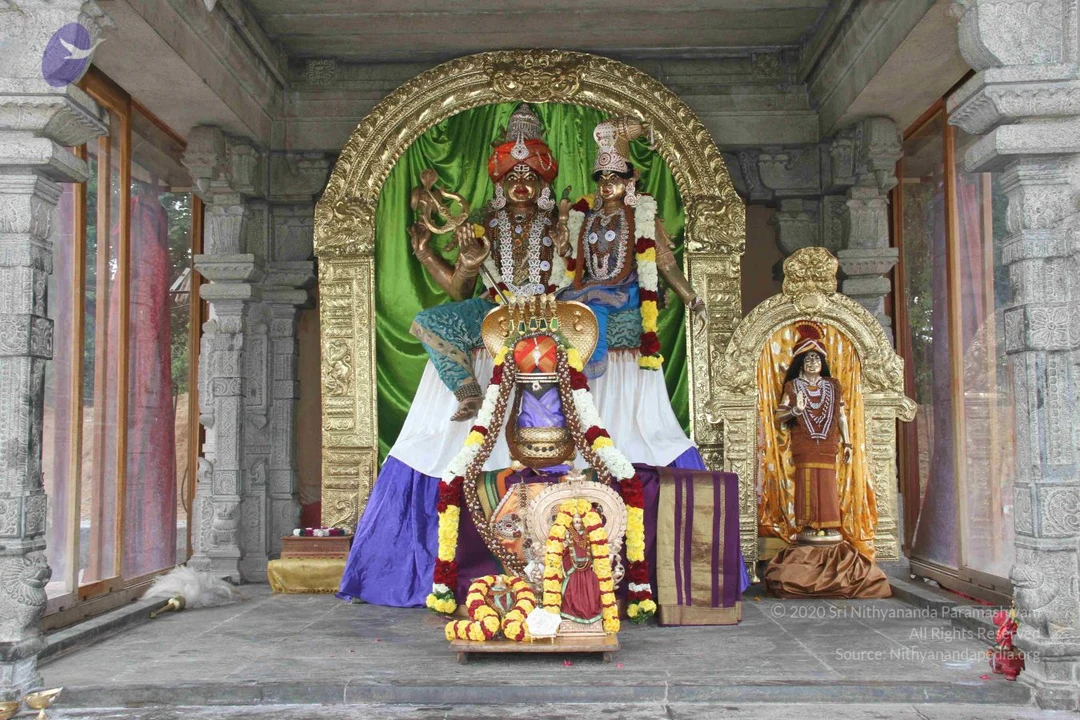
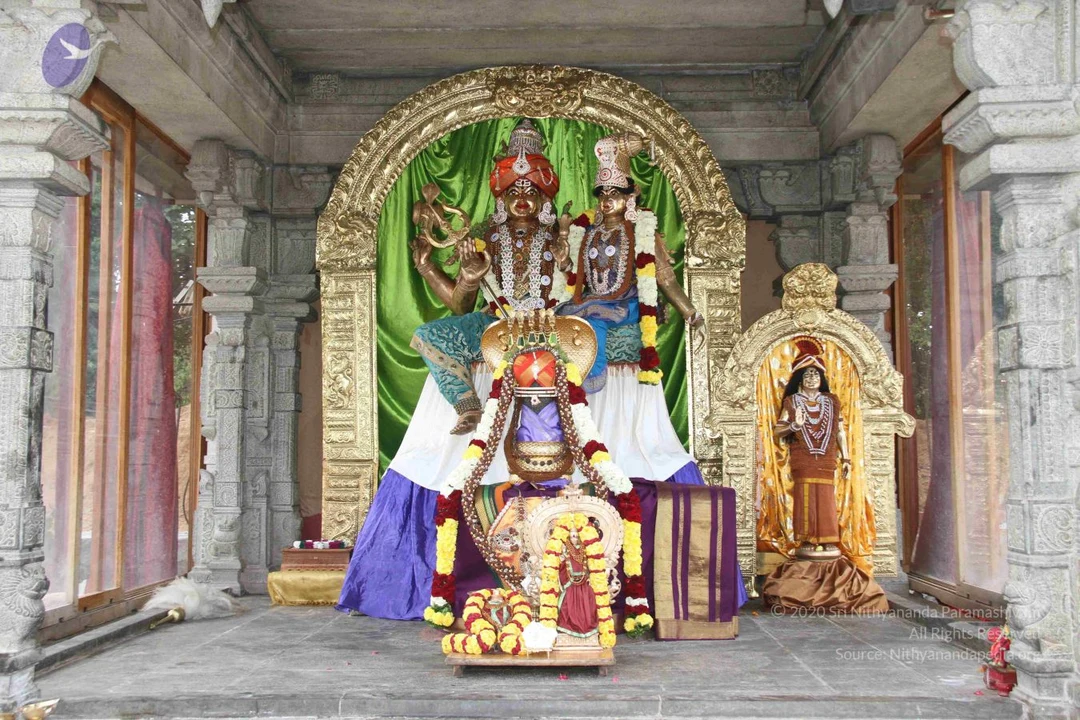
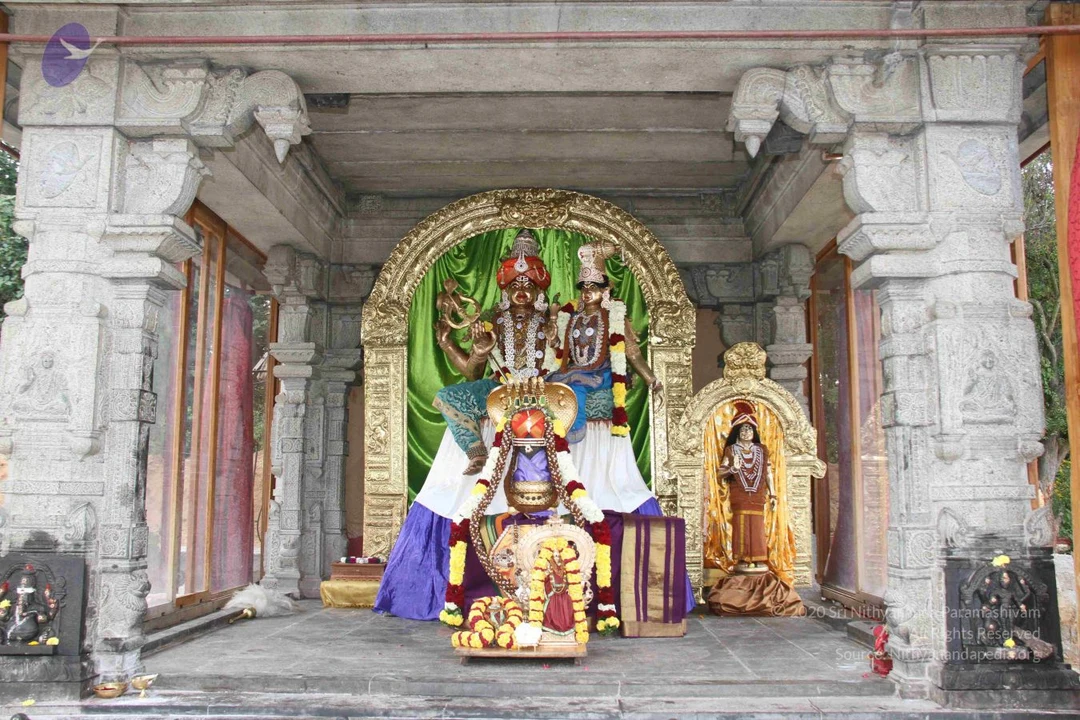
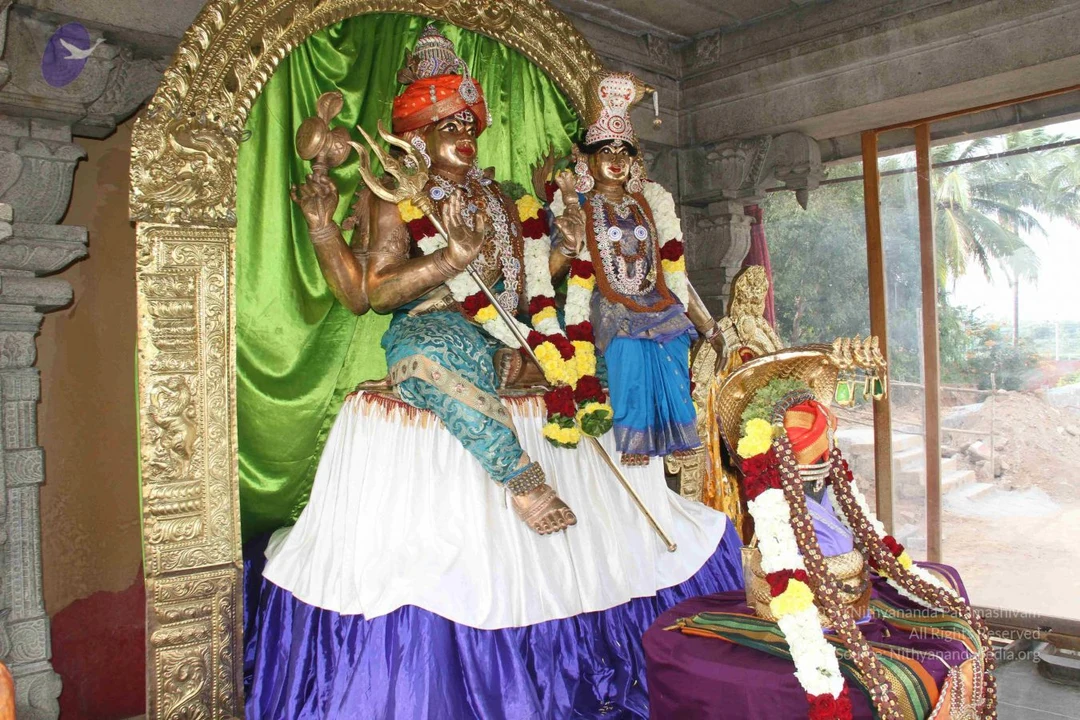
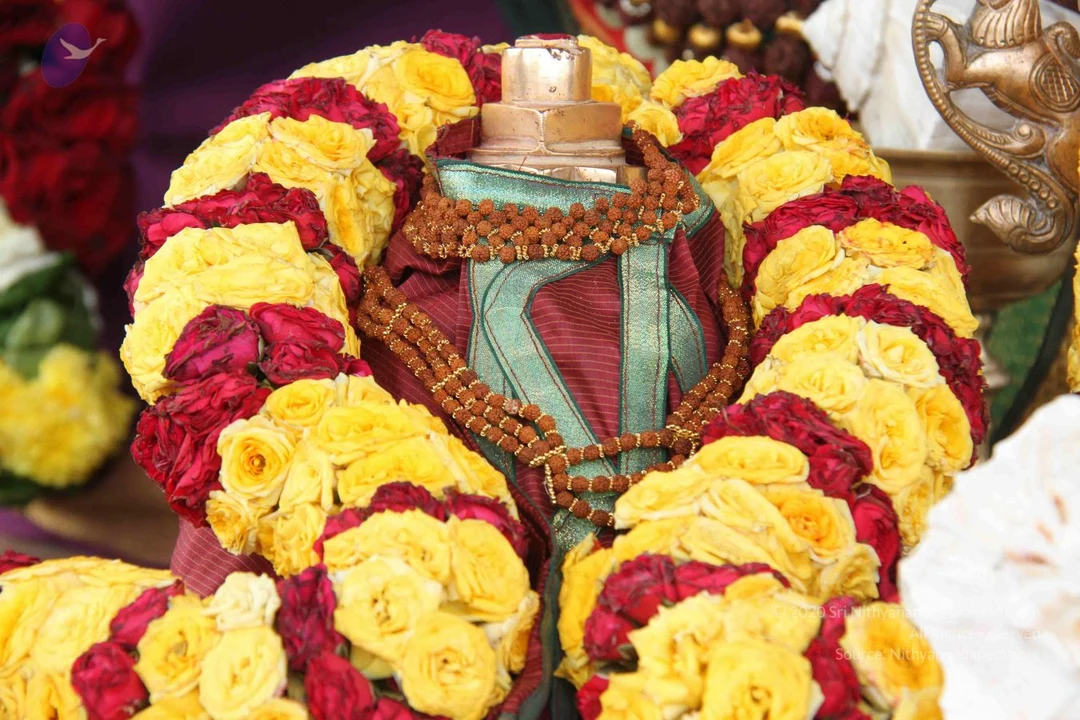
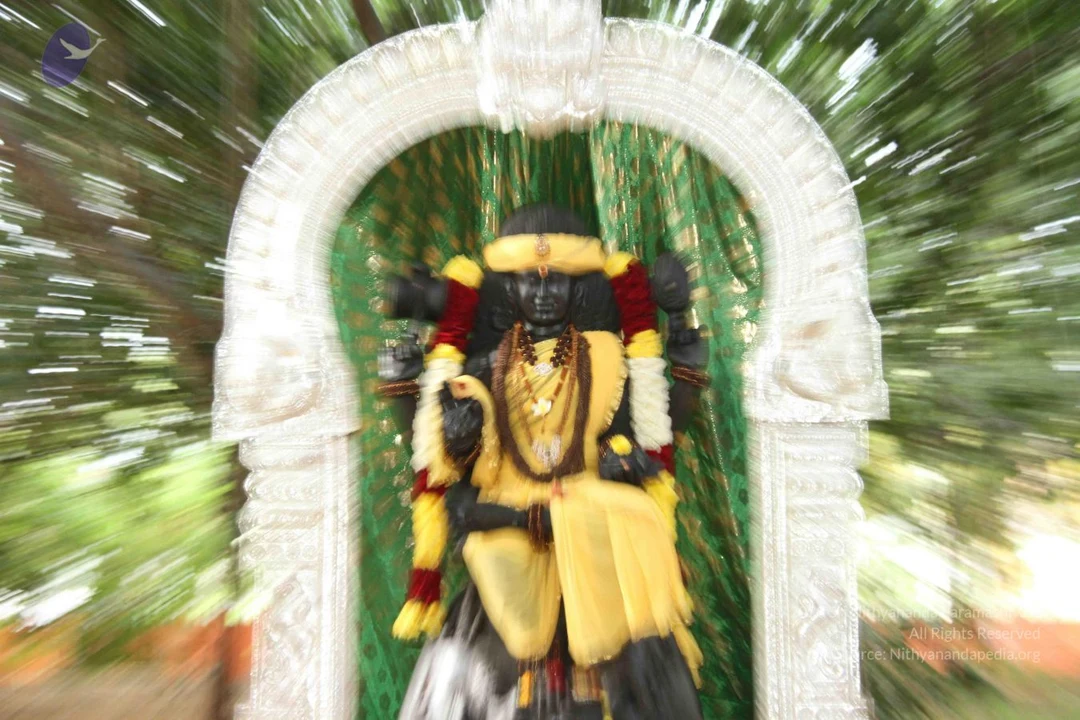
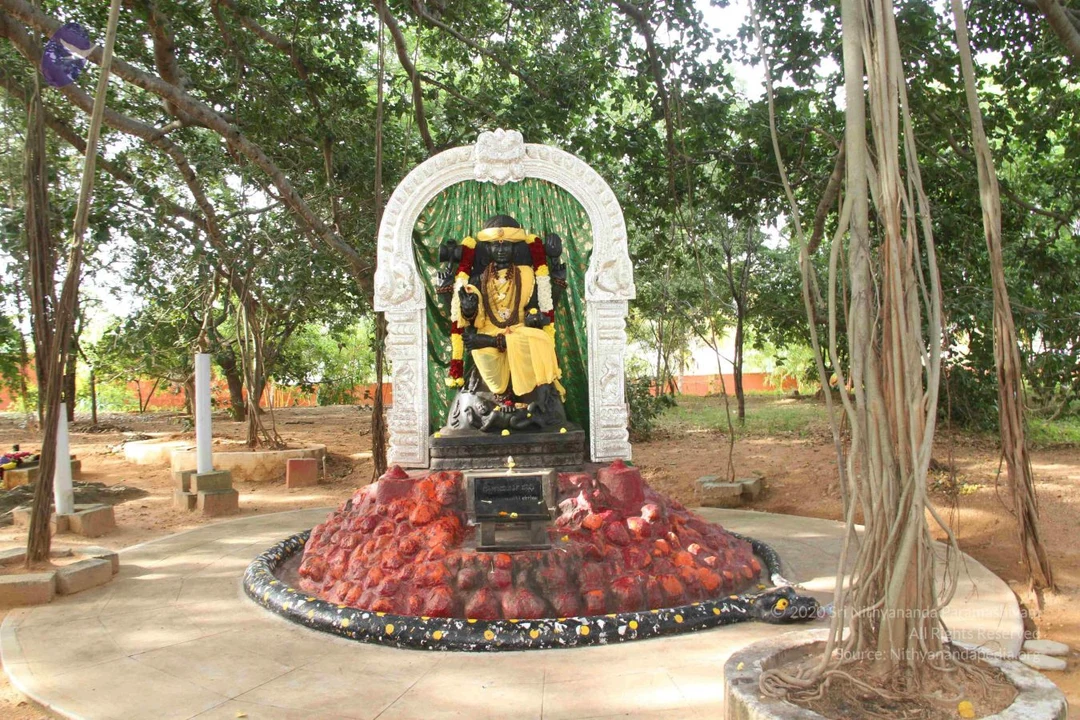
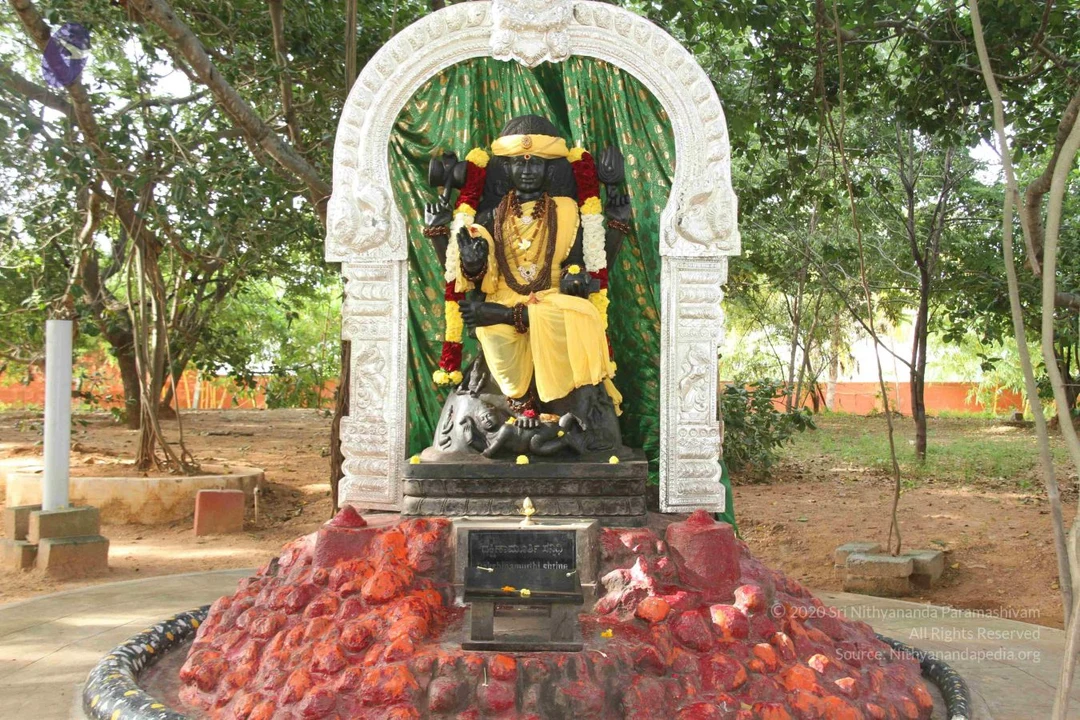
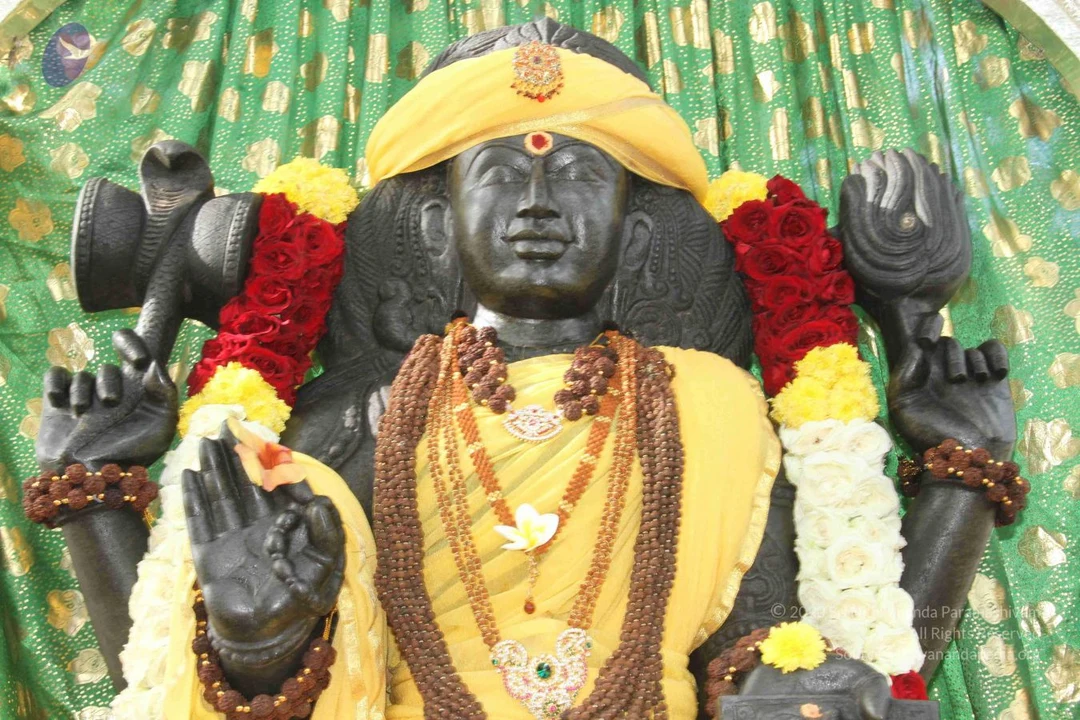
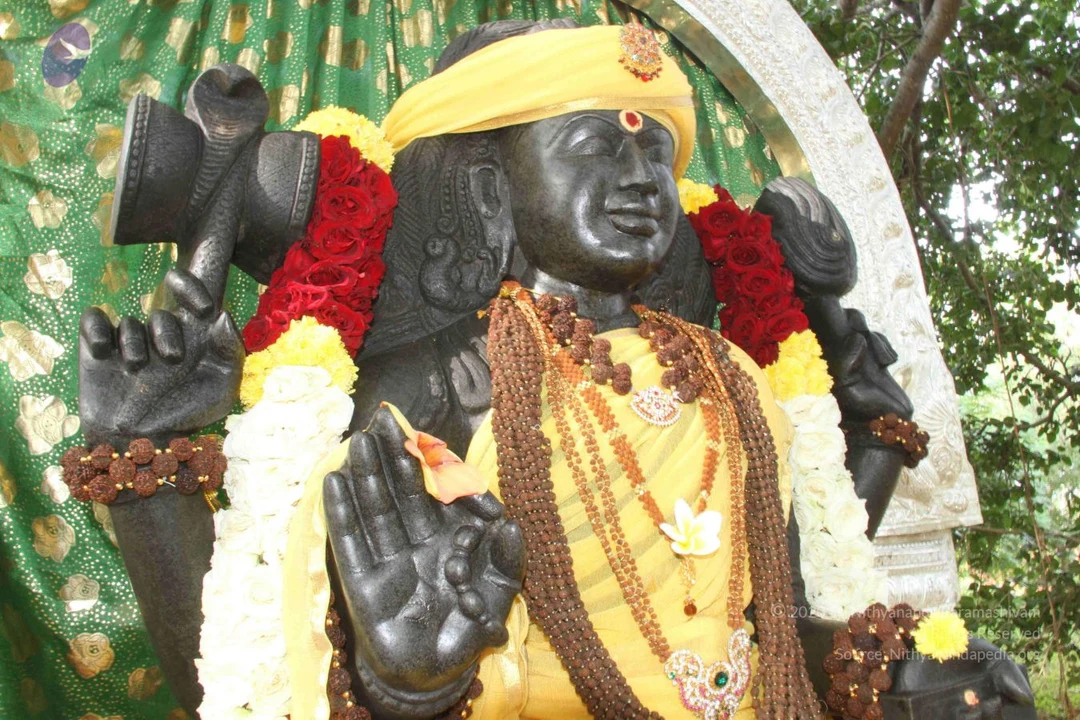
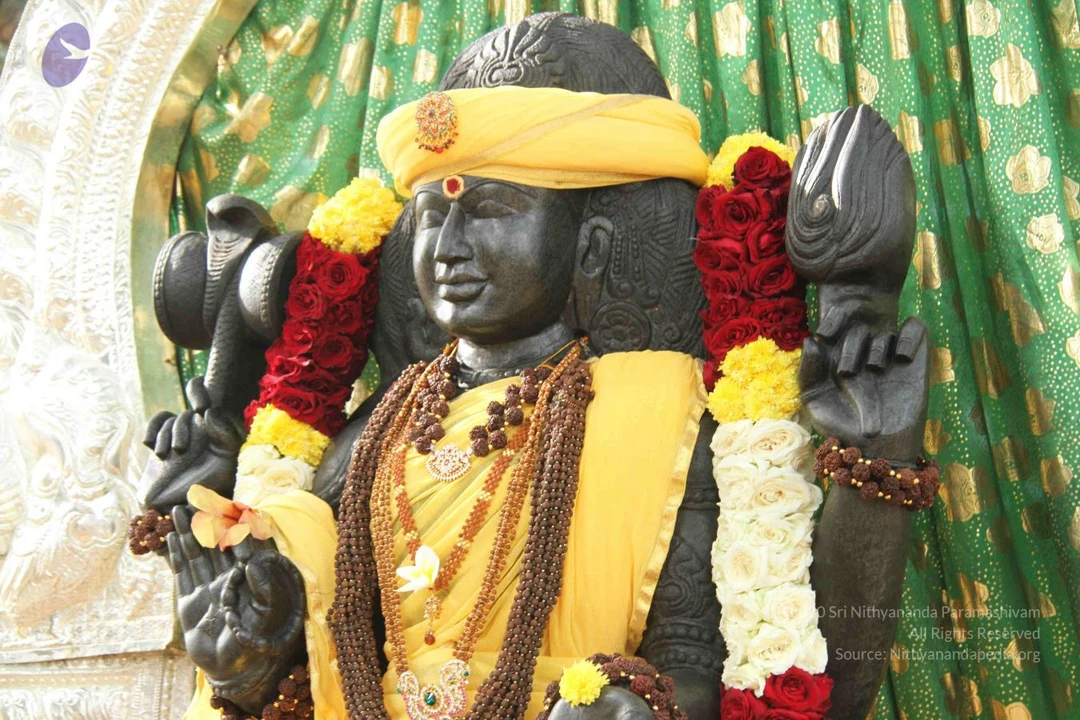
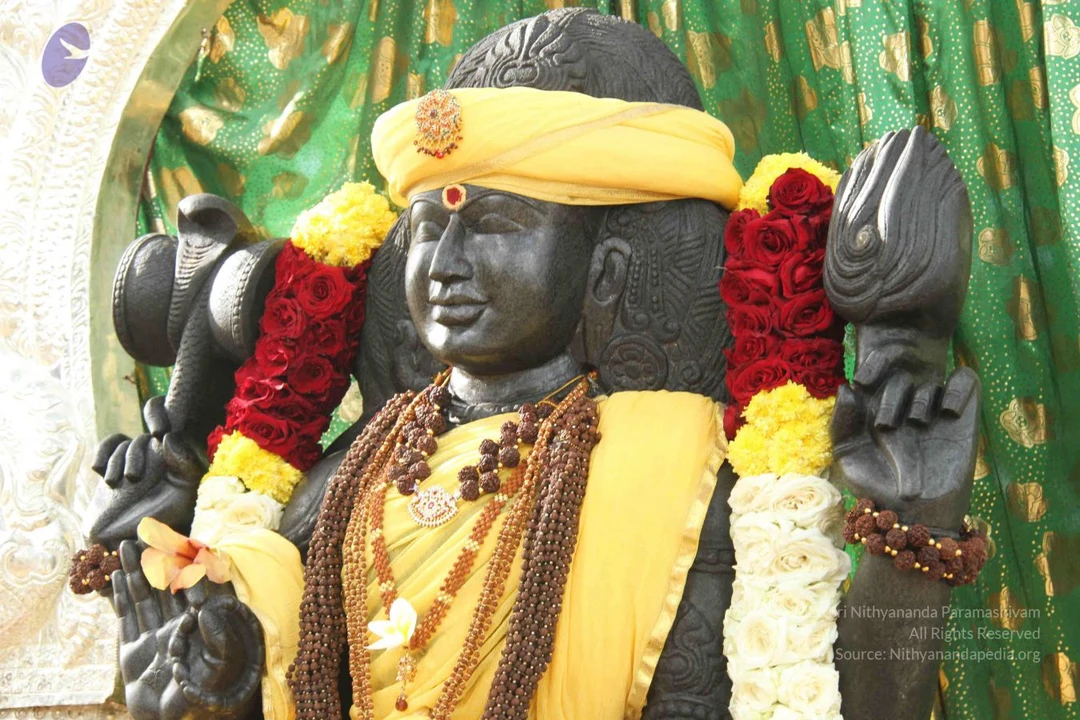
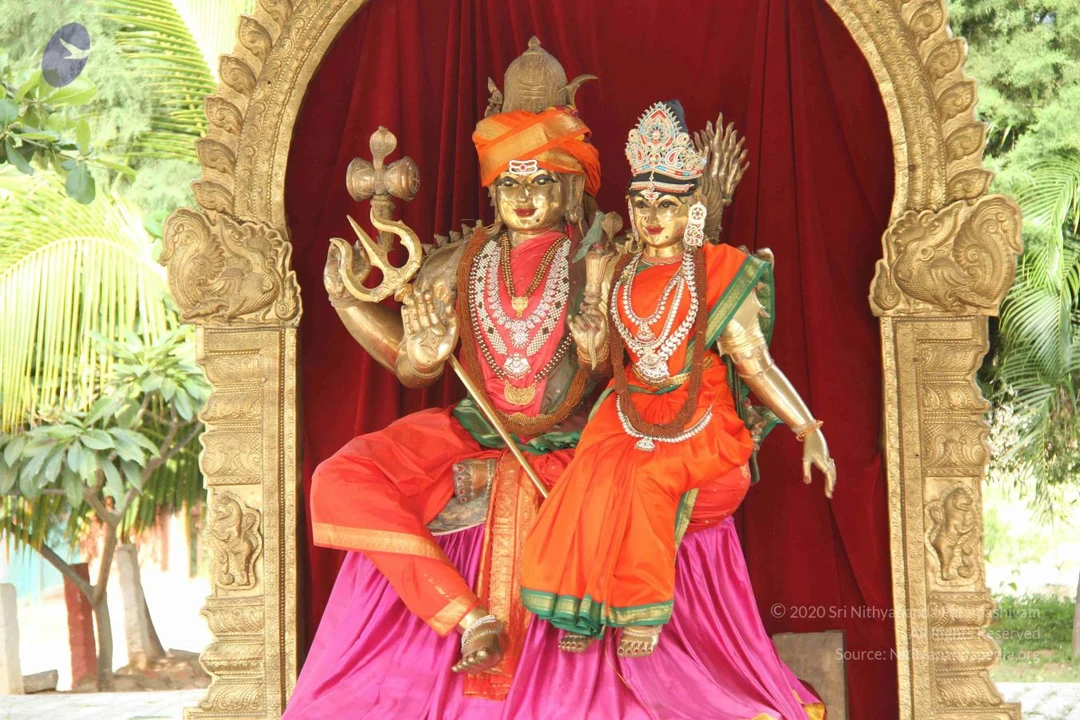
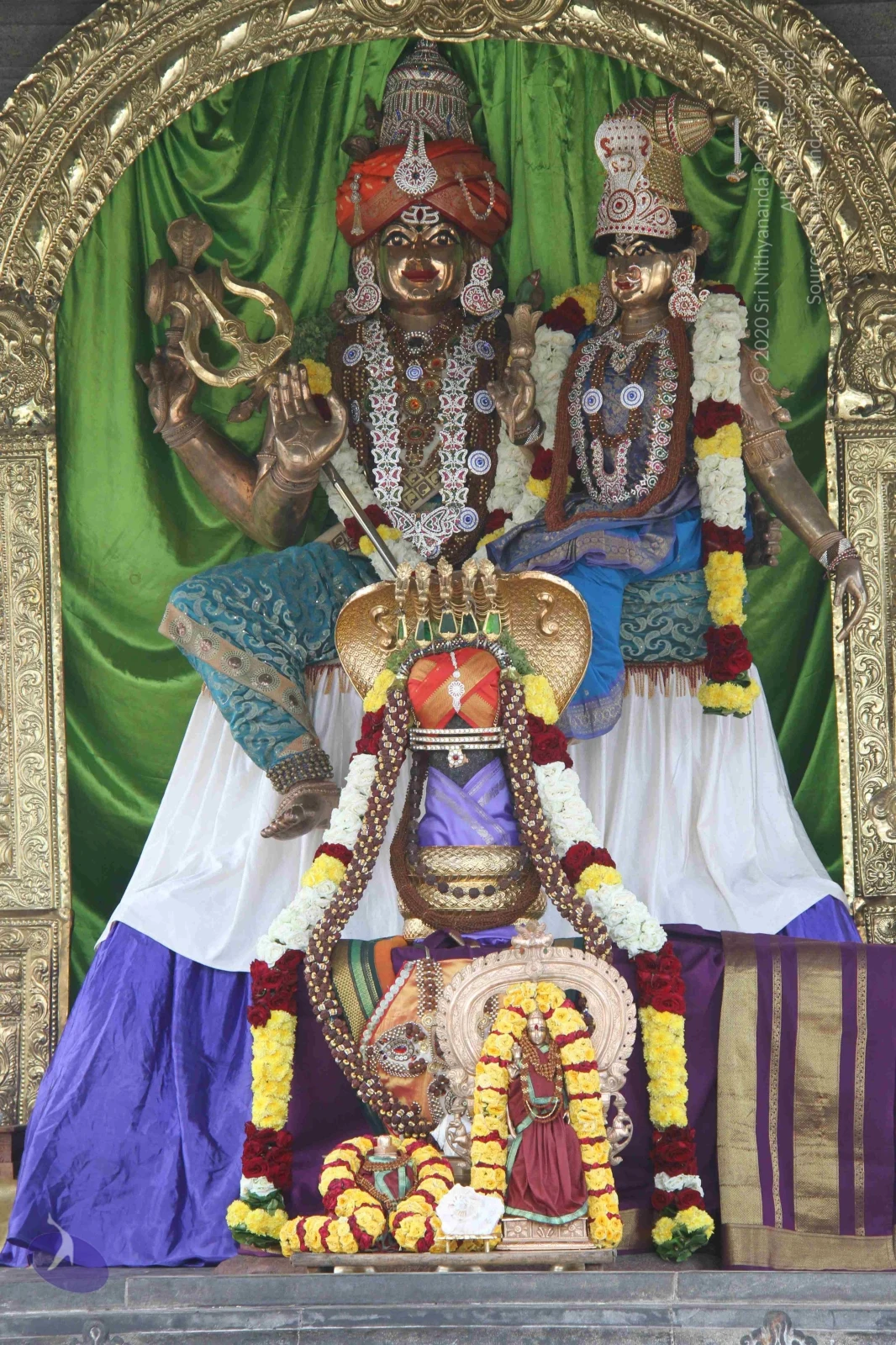
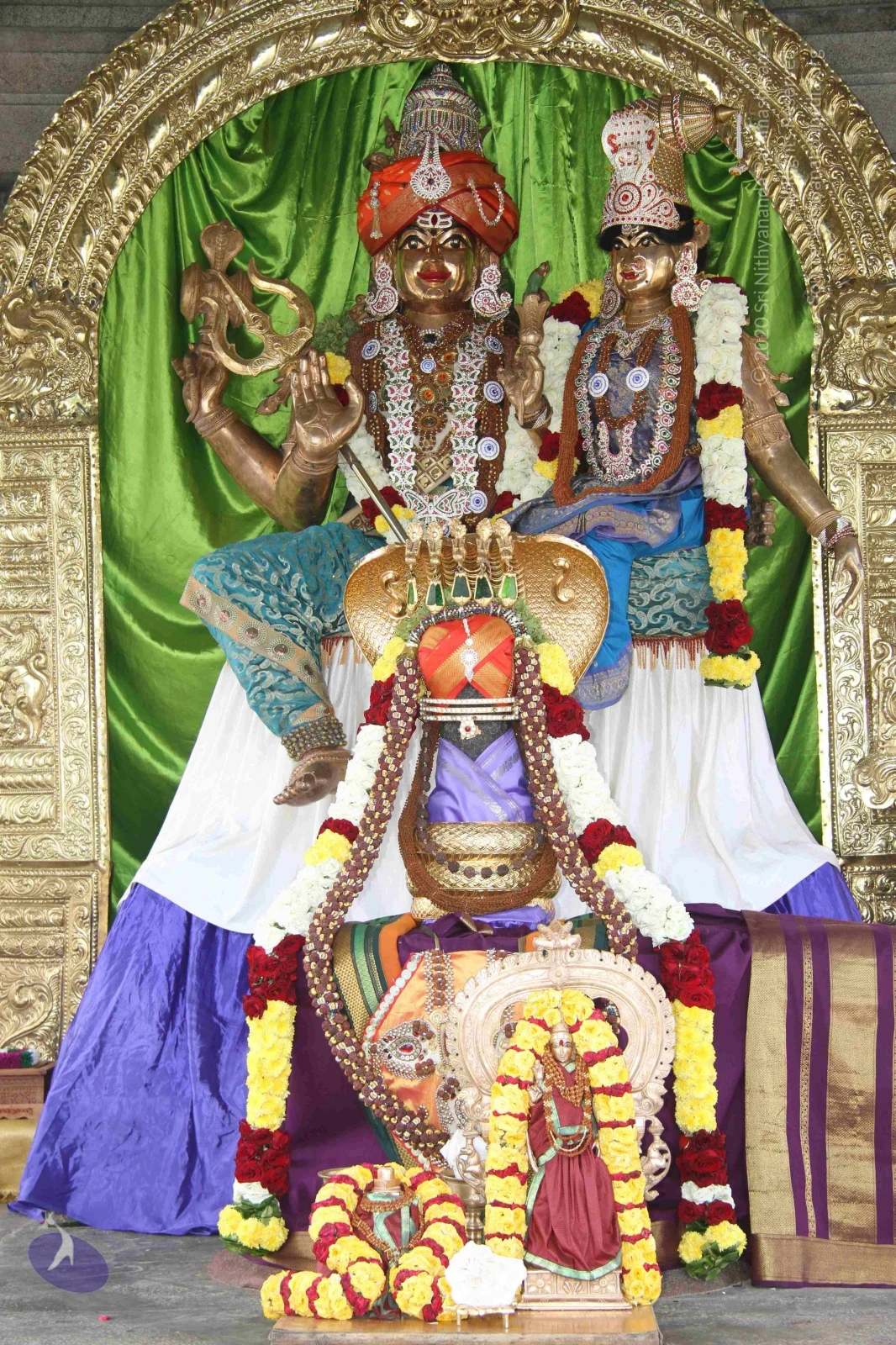
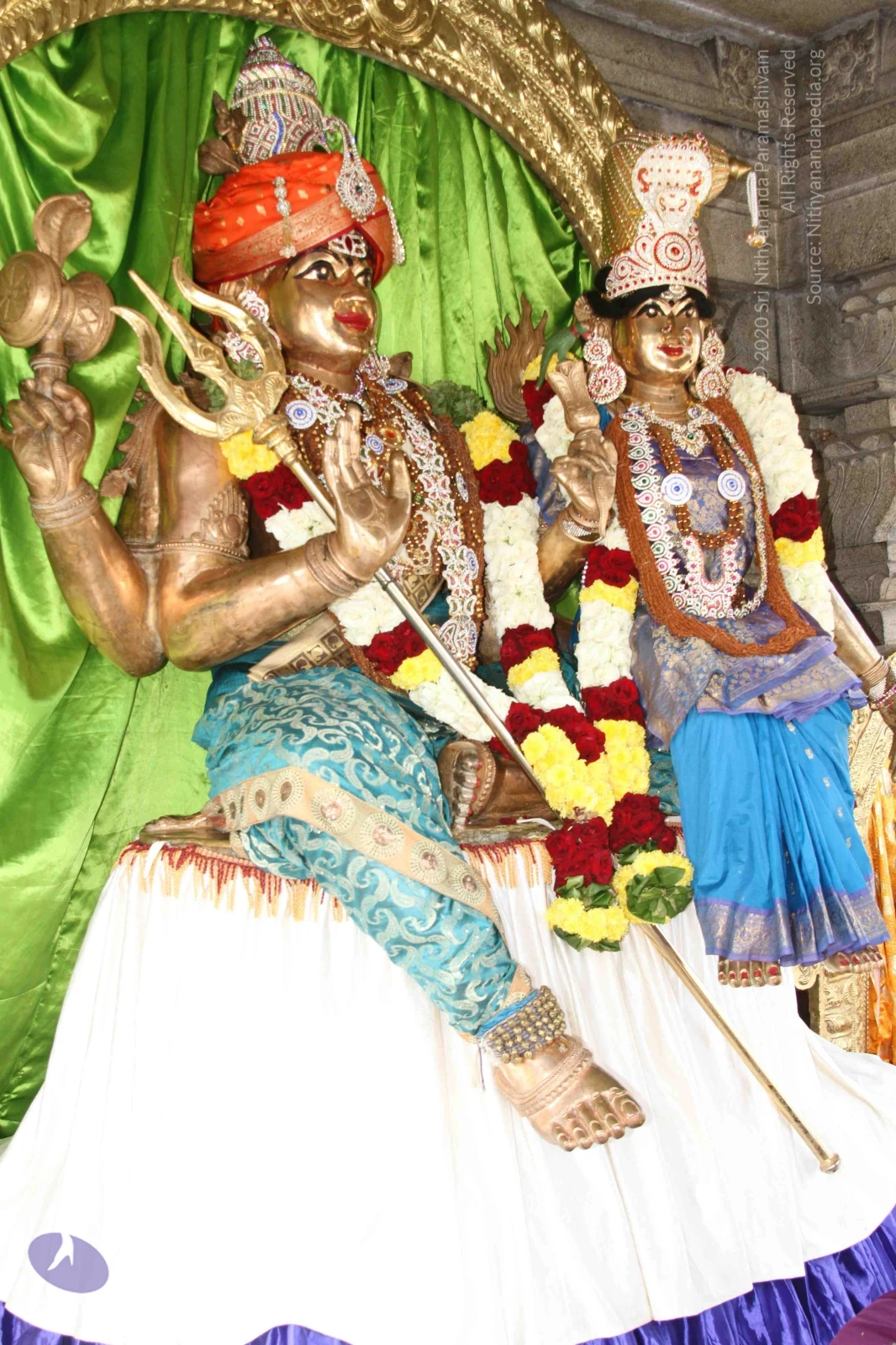
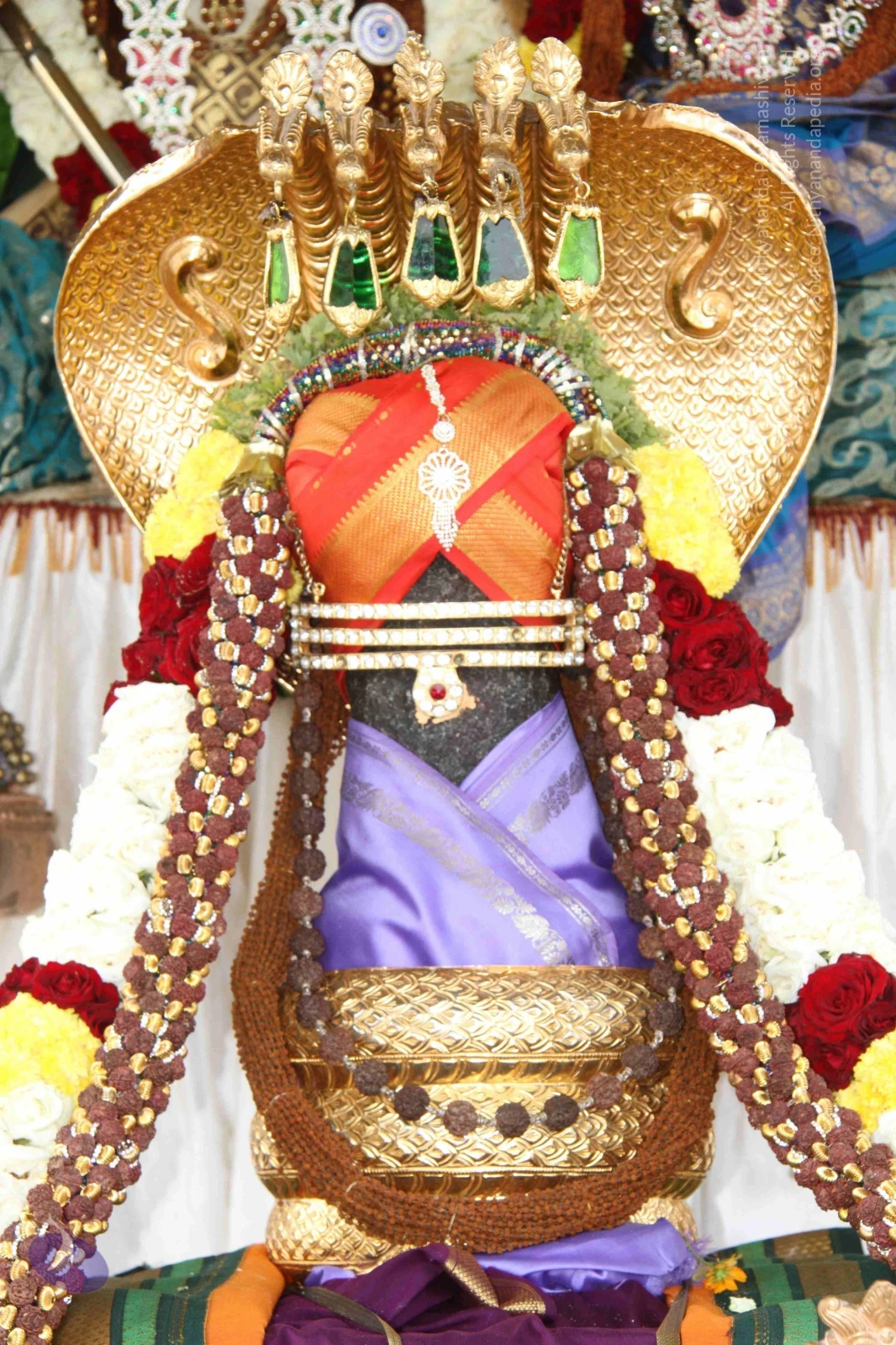
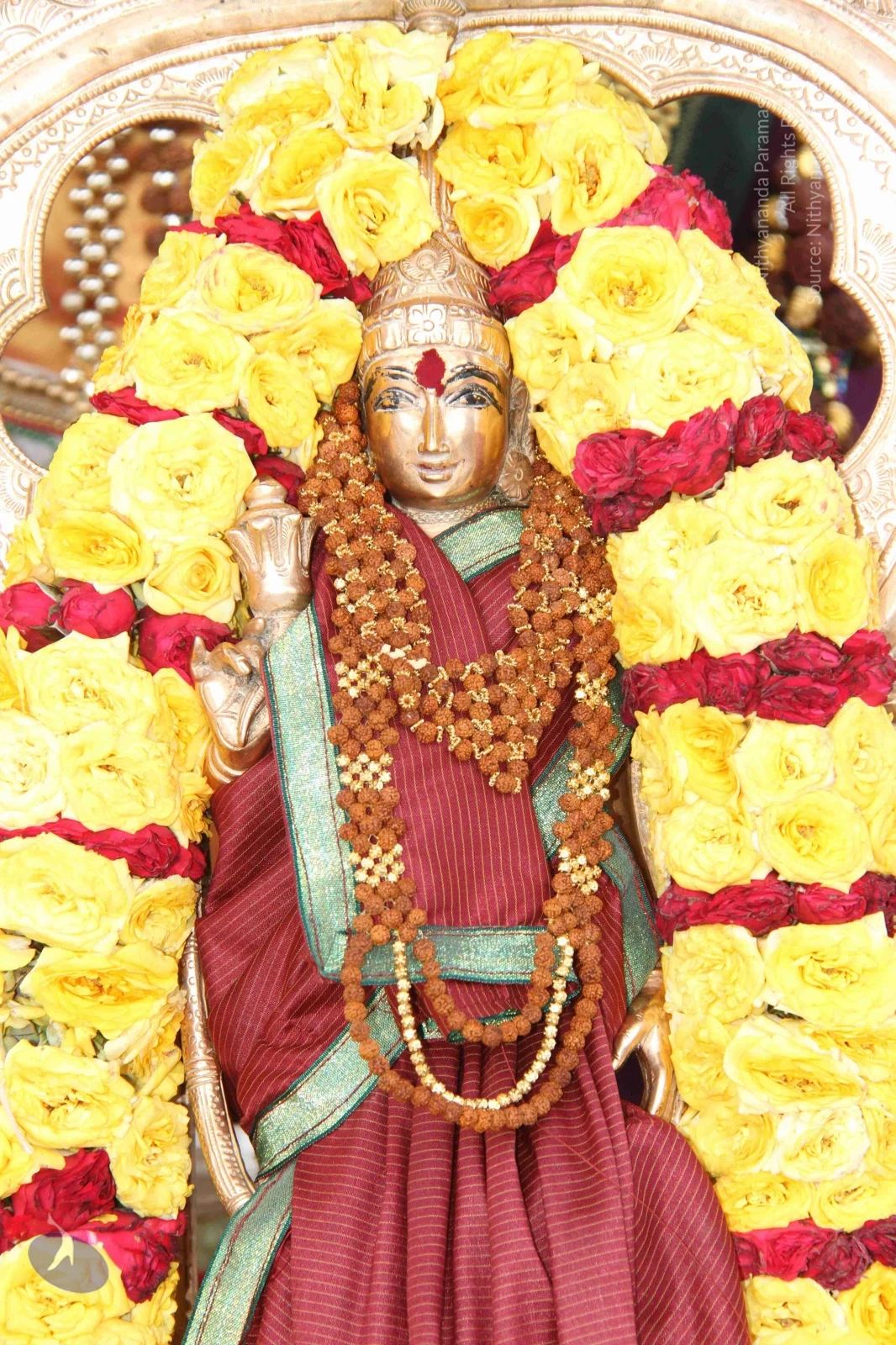
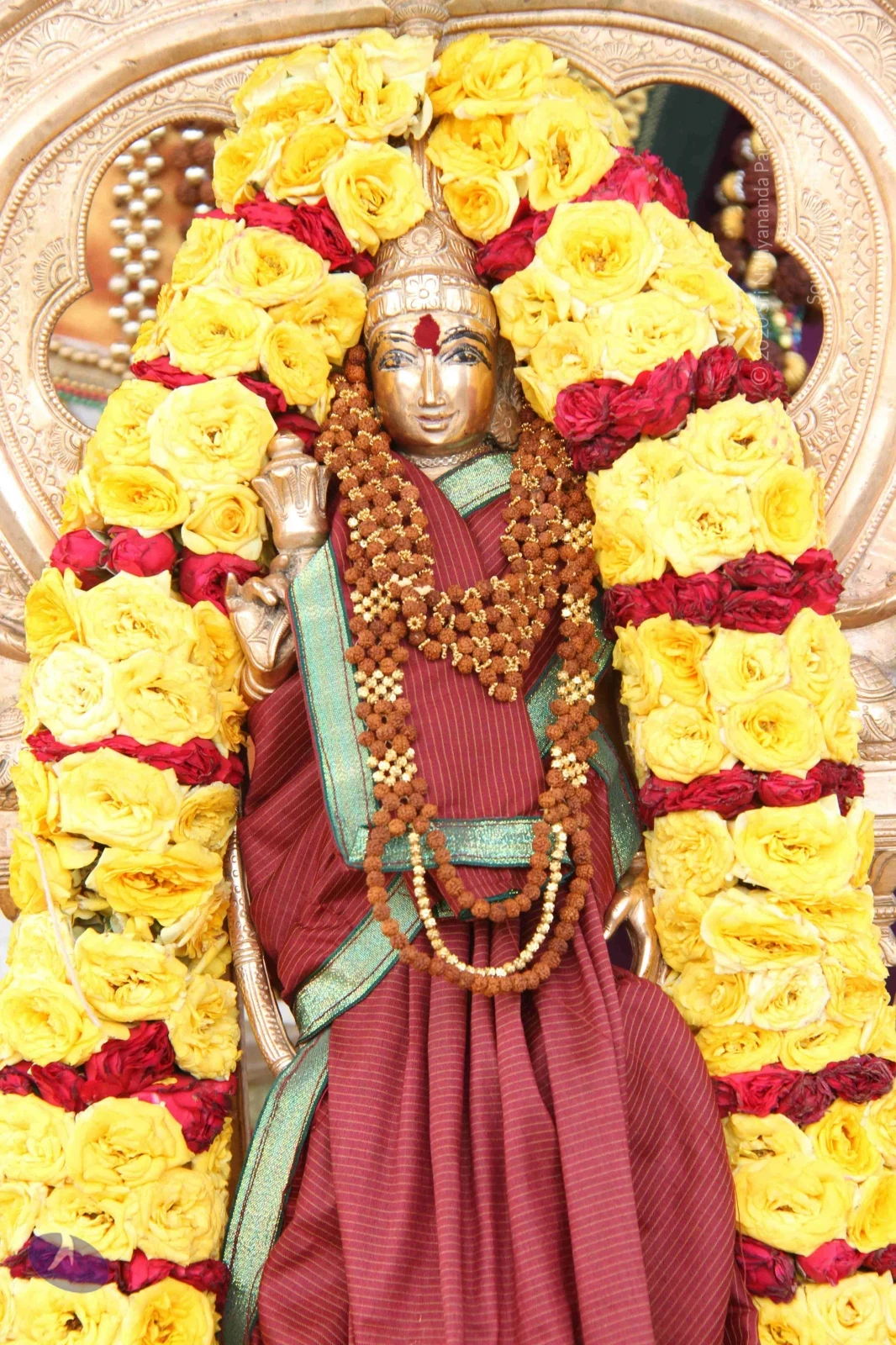
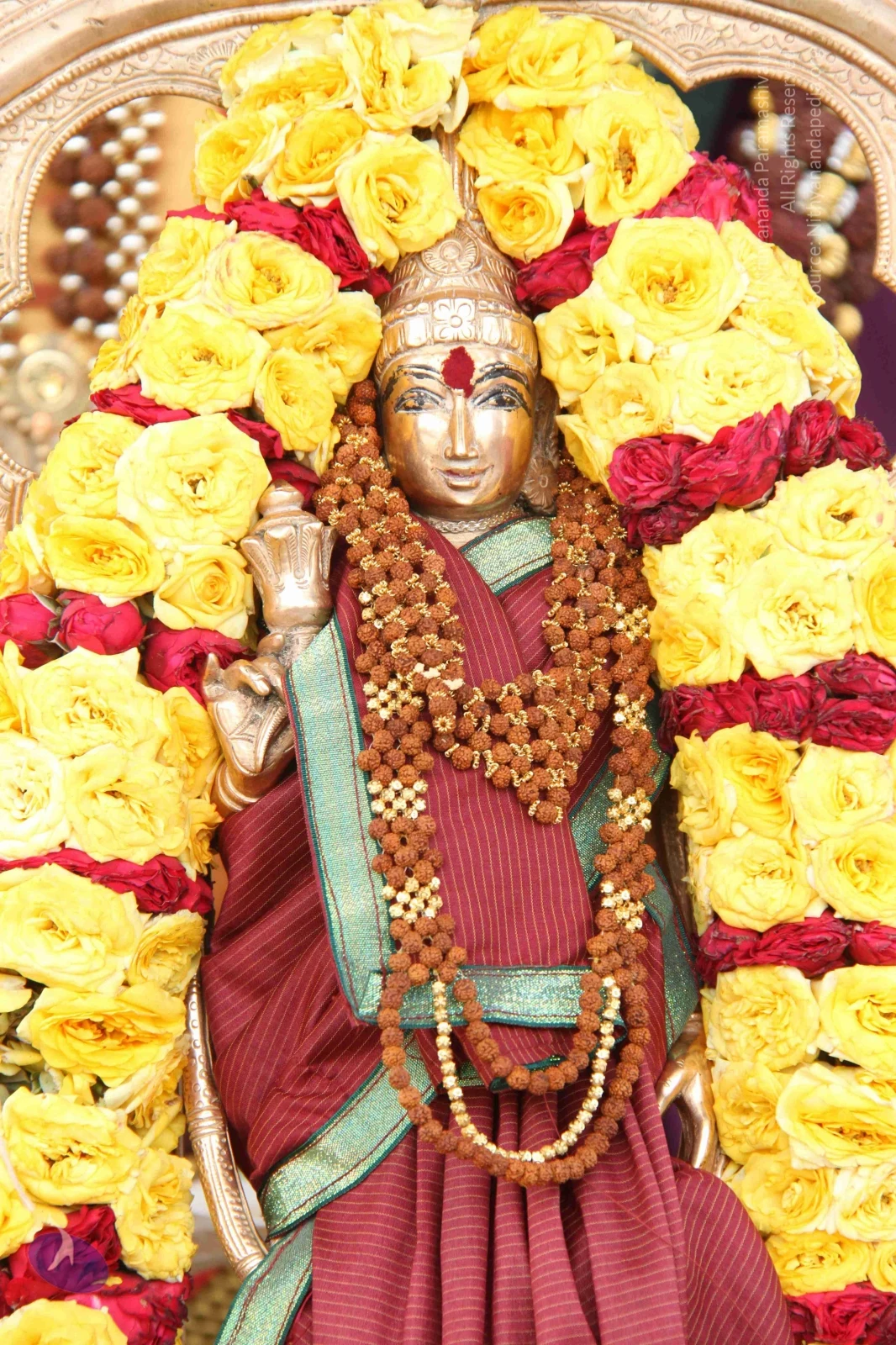
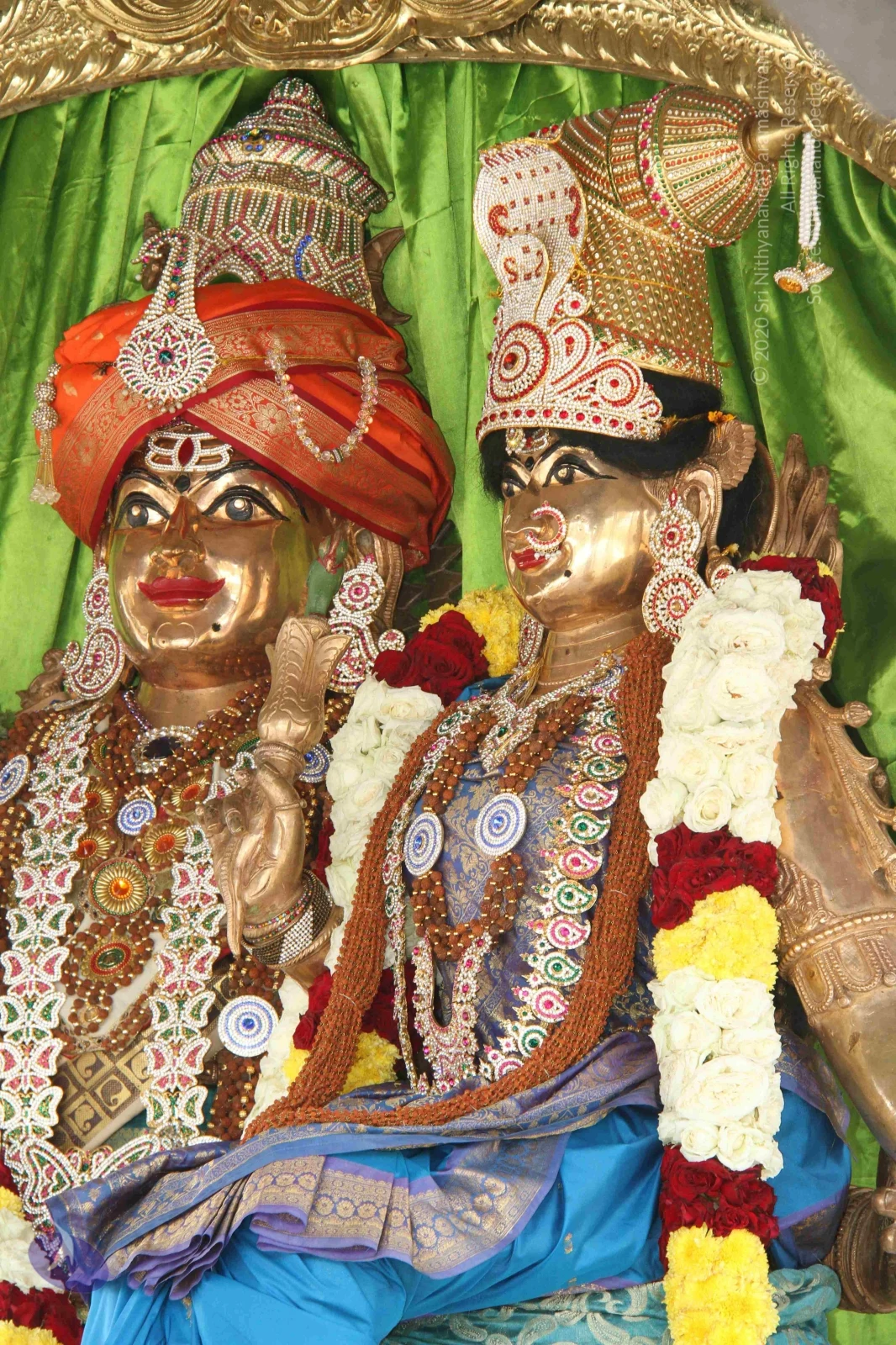
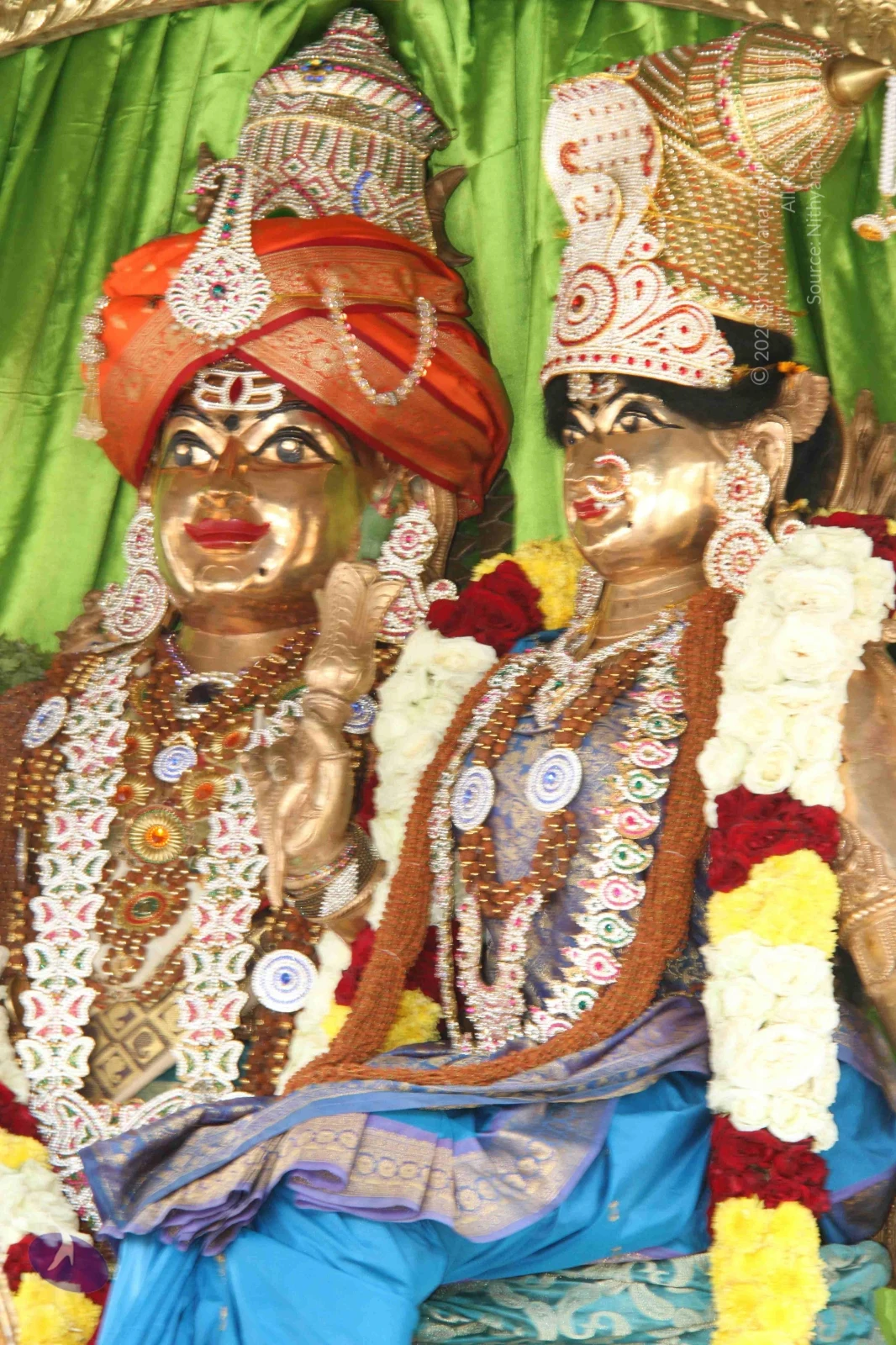
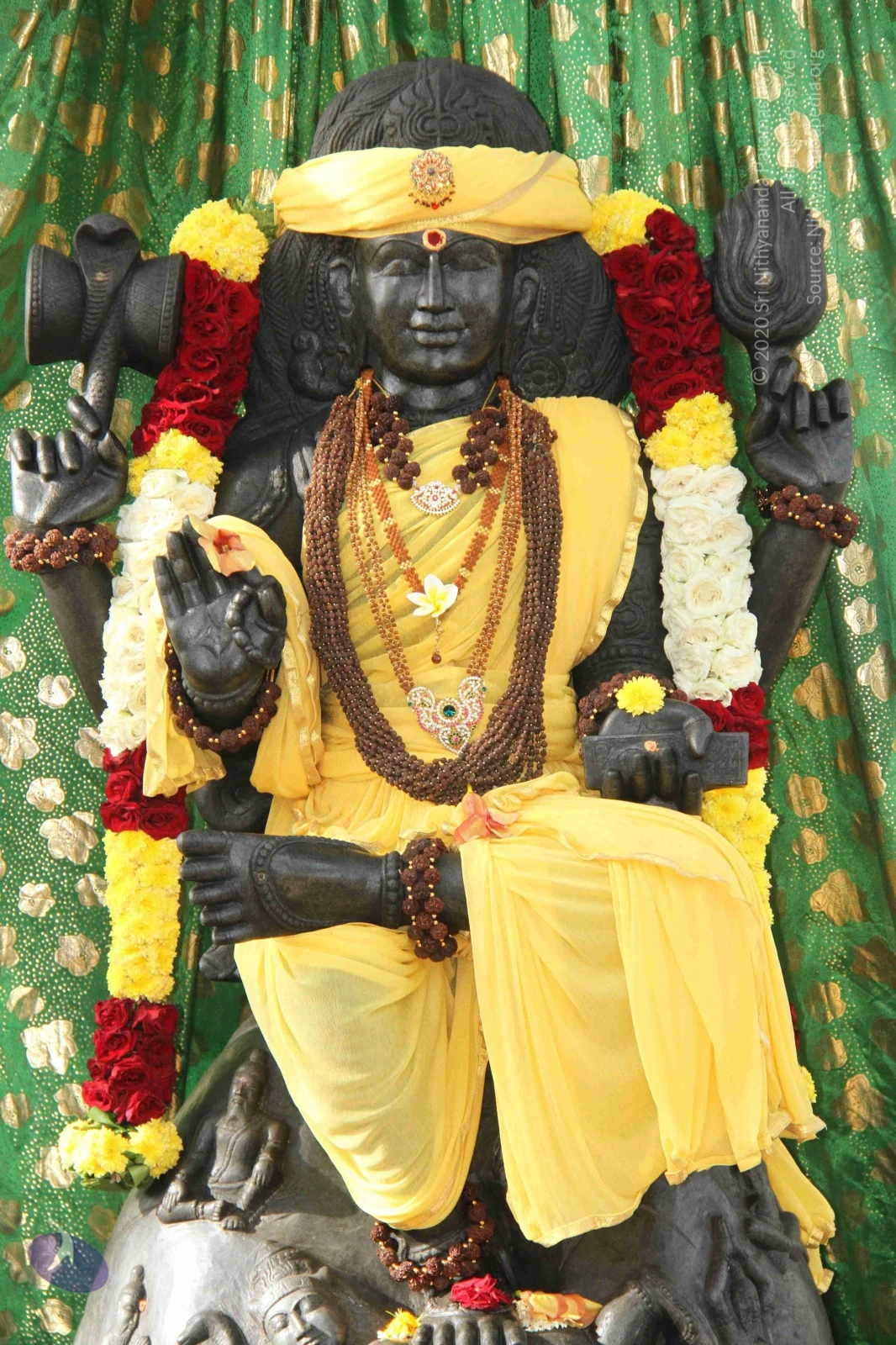
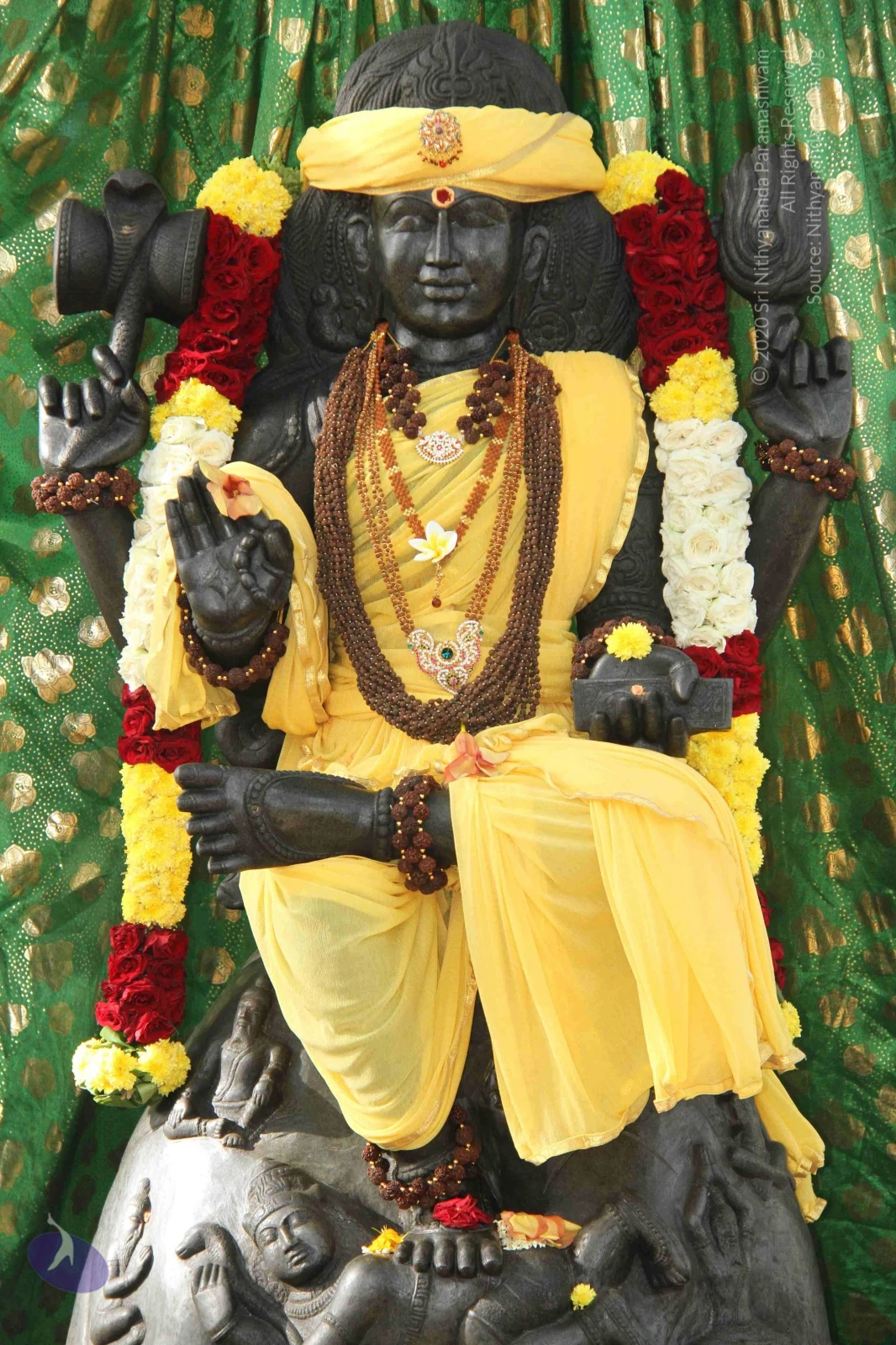
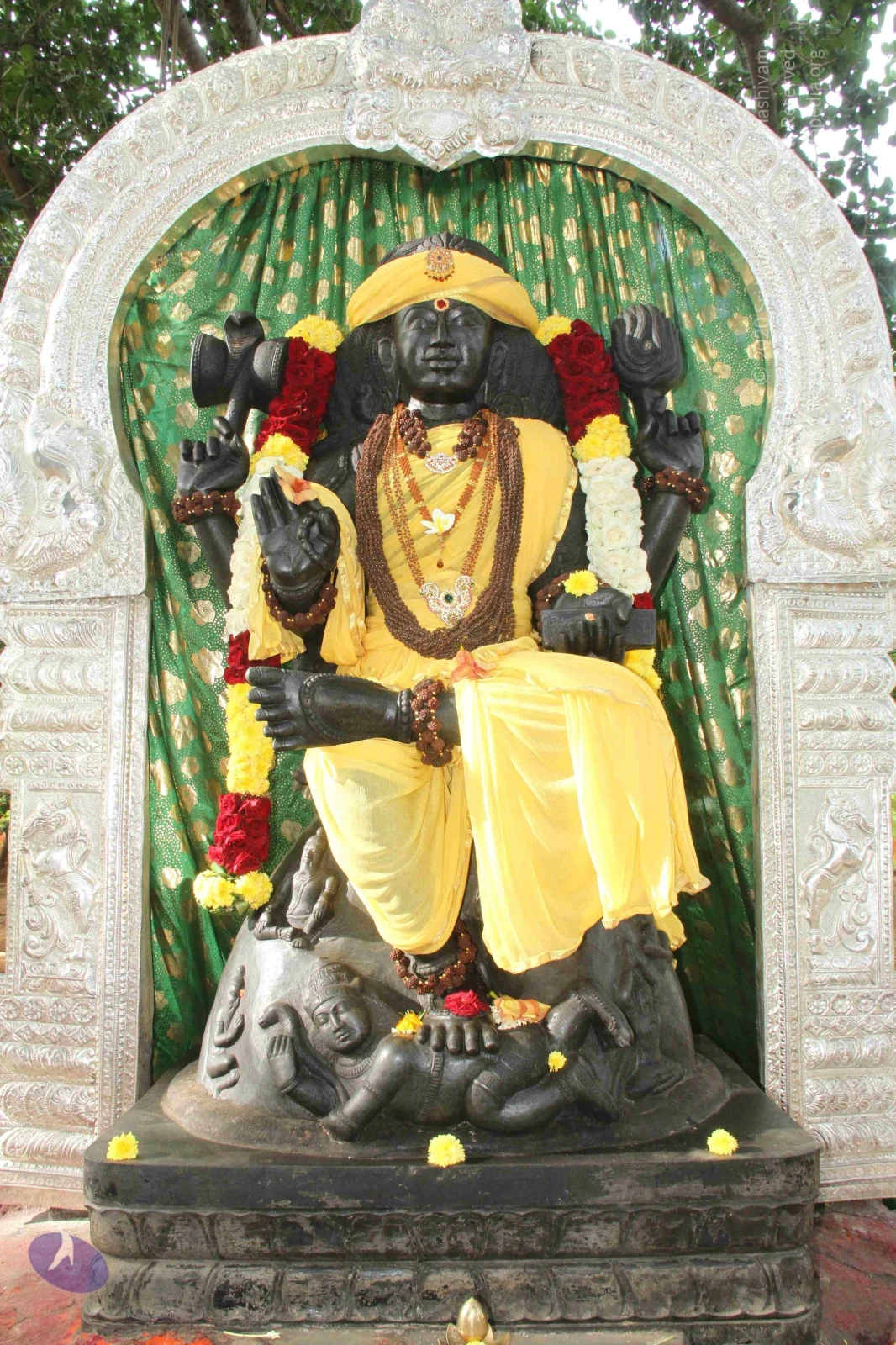
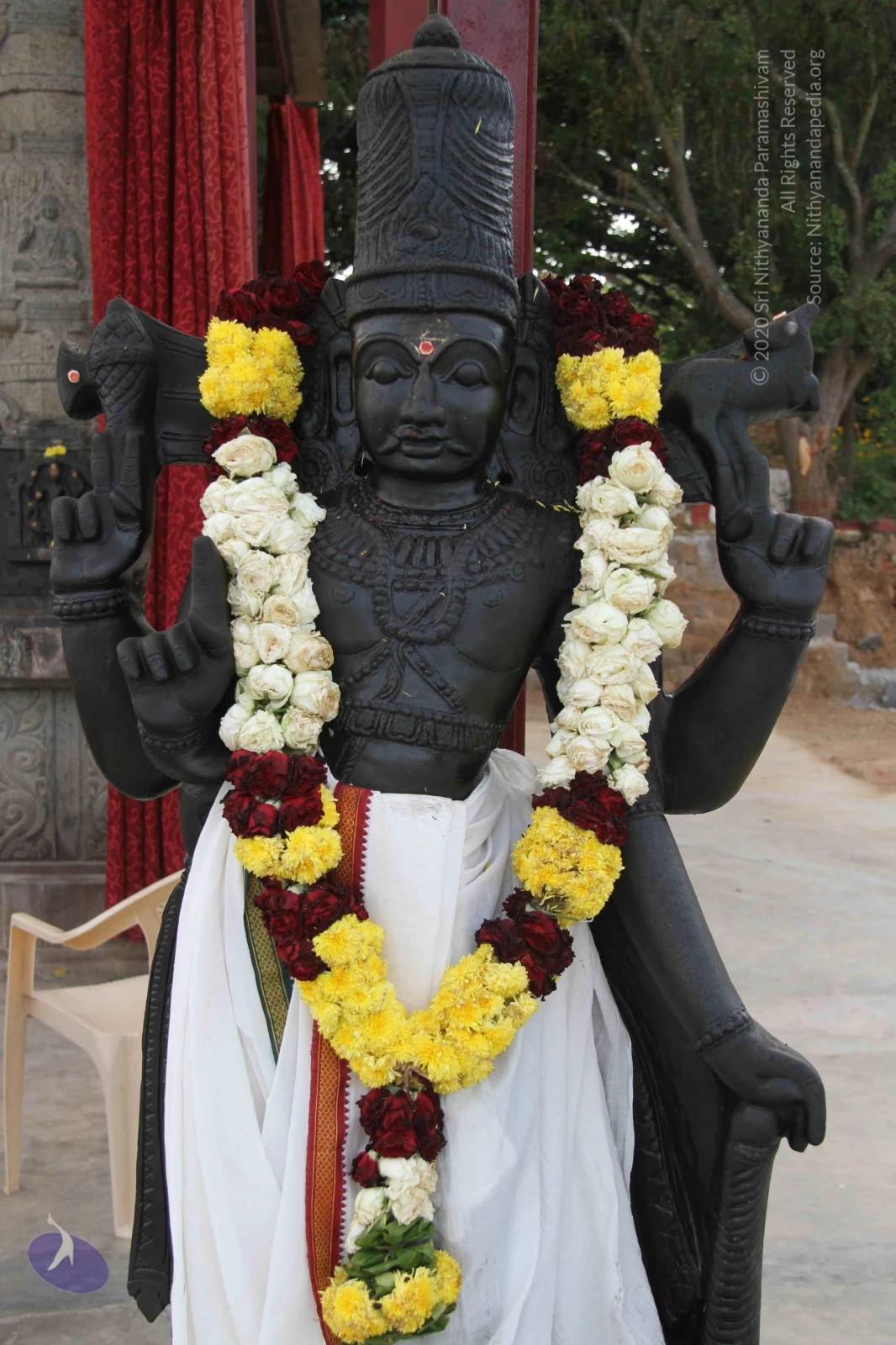
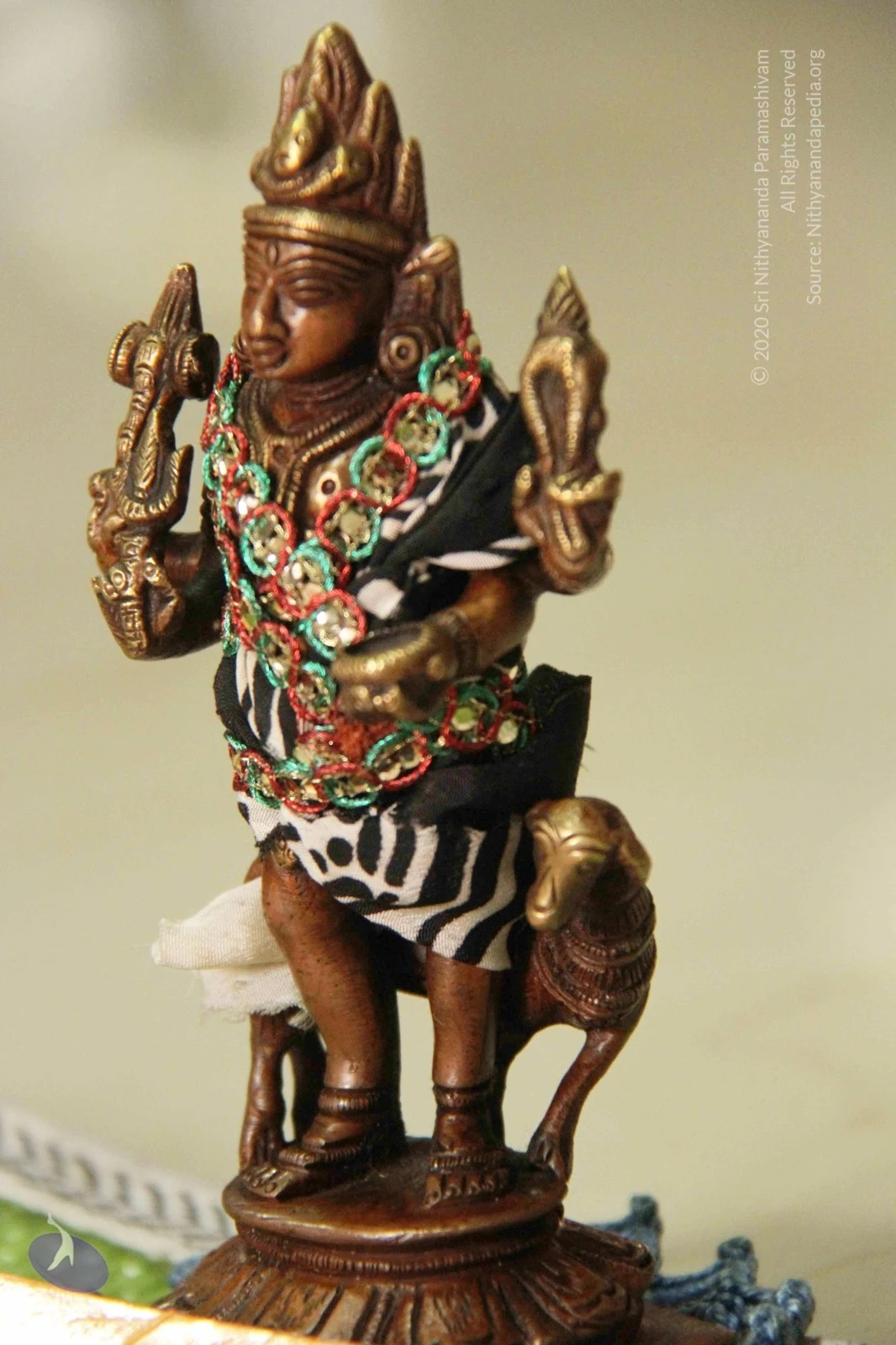
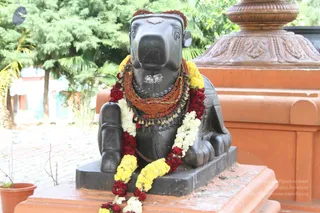
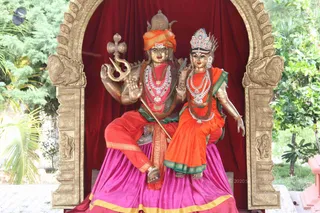
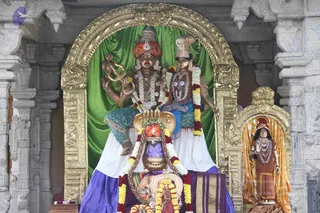
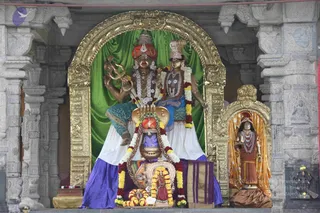
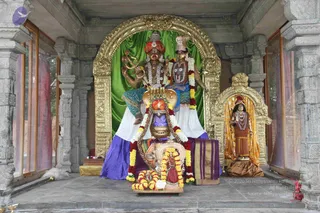
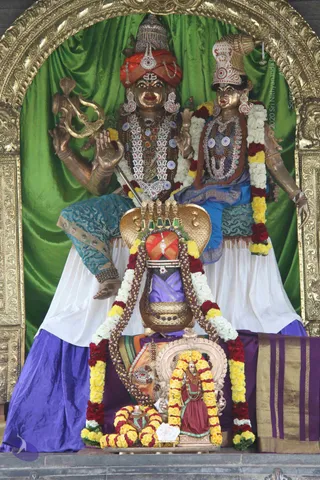
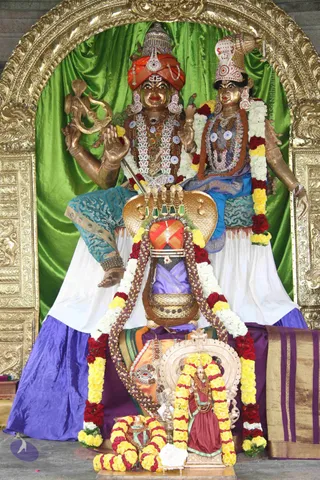
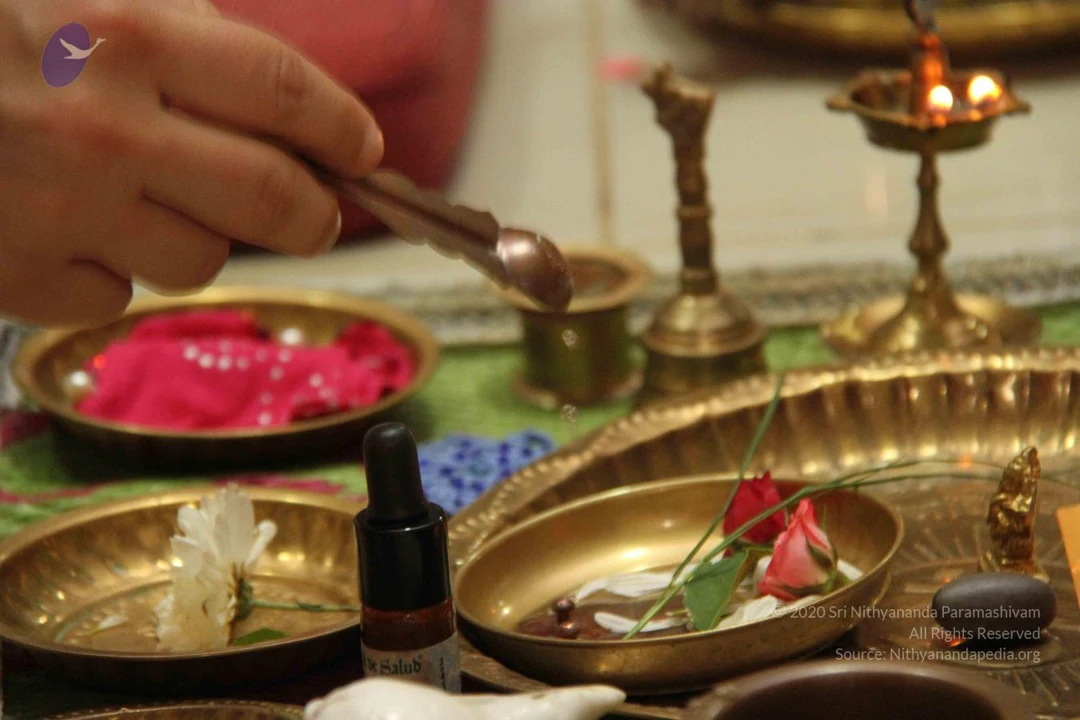
A black stone murti of a four-armed deity stands against a green curtain patterned with gold flowers. The figure wears a yellow turban with a red gem, a yellow silk shawl, and layered rudraksha and brown bead malas with gold pendants. Garlands of red roses, white flowers and yellow marigolds hang over its shoulders and arms, and a white blossom rests near the hand at the lower left. A gilded silver frame sits at the left edge.A dimly lit hall shows a man seated on a red cushioned chair in front of an illuminated shrine with a deity murti under a golden arch and green drapery. He wears a maroon-brown robe with a gold-bordered shawl and a rudraksha-style mala, with a tilak on his forehead. A small side table holds a water bottle, and blue stage haze drifts in the foreground. a person: the seated man has long swept-back hair and a mala with a maroon robe, but the image is blurred, so identity is uncertain.A temple shrine holds a pair of painted deity murtis: a bronze-toned Shiva-like figure with an orange turban, four arms, a trident and a damaru-like drum, seated beside a consort figure in a blue sari with a crown-like headdress. Both are draped in long garlands of yellow, white and red flowers, and seated on a white and purple skirted base before a green silk backdrop framed by gold-patterned panels. A purple-draped seat at the lower right holds a smaller figure with an orange head covering and a garland, and a floral garland hangs beside it. Through a glass window behind the shrine, palm trees and a stone staircase are visible. No living people appear in the scene.

September 29 2013

Original wiki page
Contents

Title:

Shiva's Divine Play -- Drying The Ocean

Description:

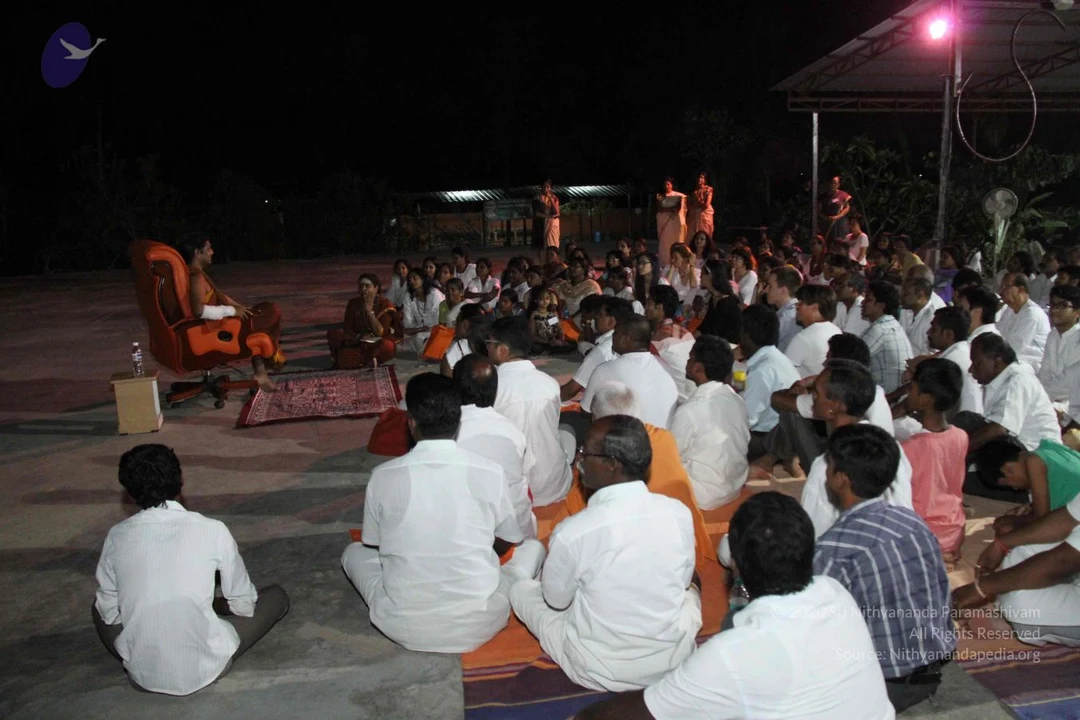
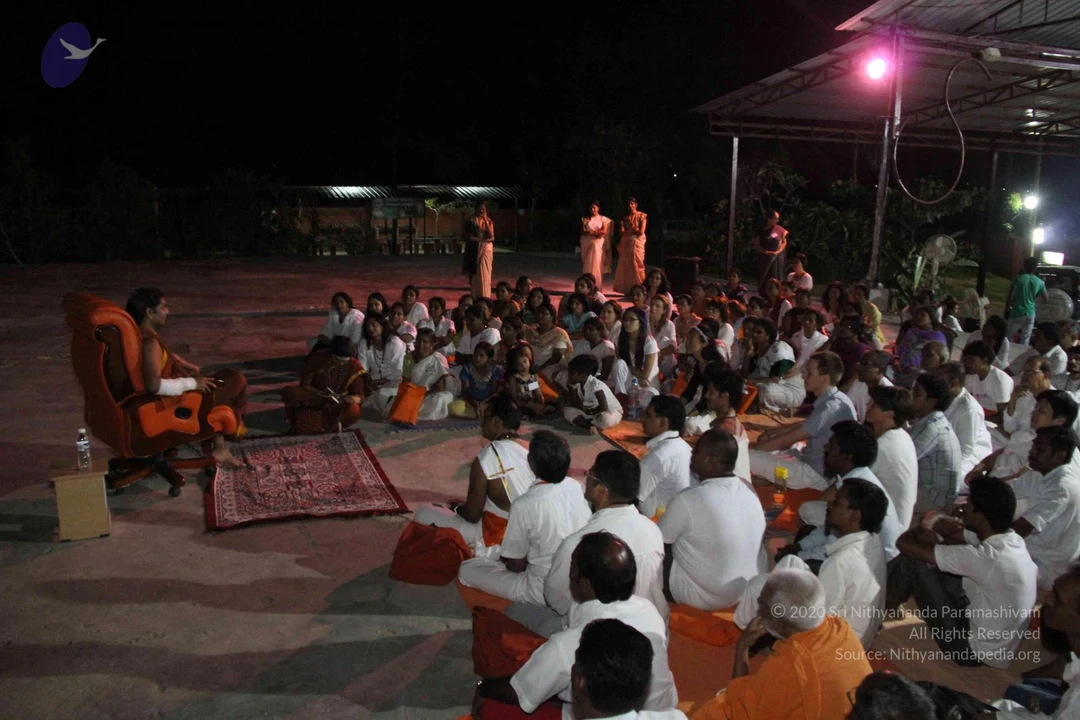
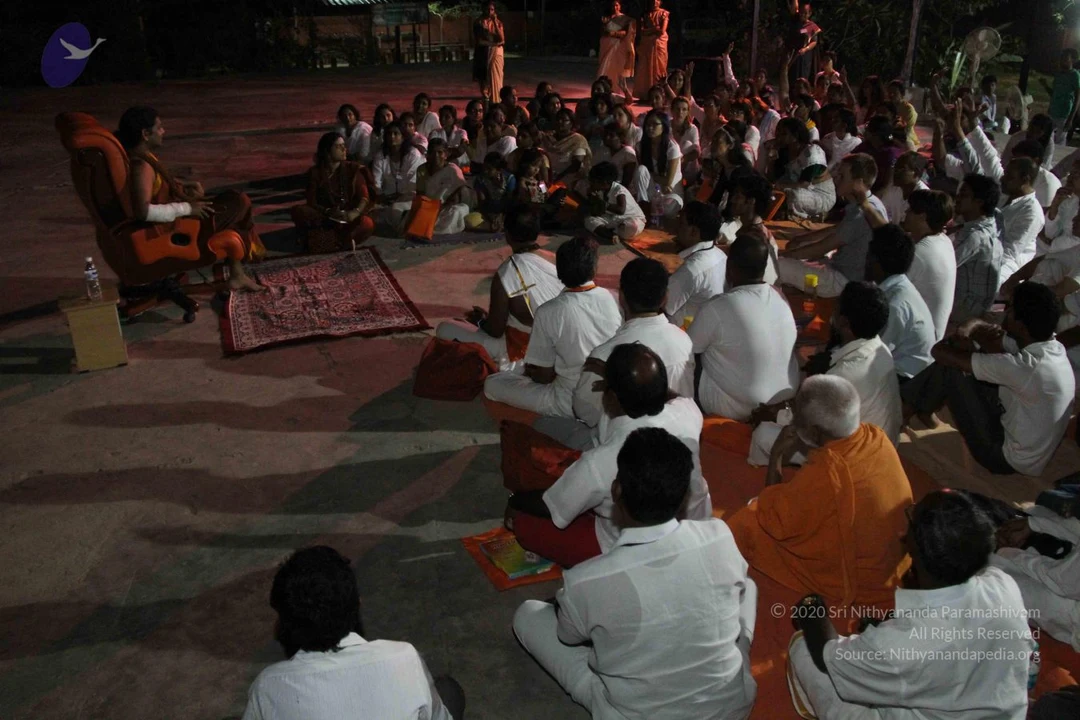
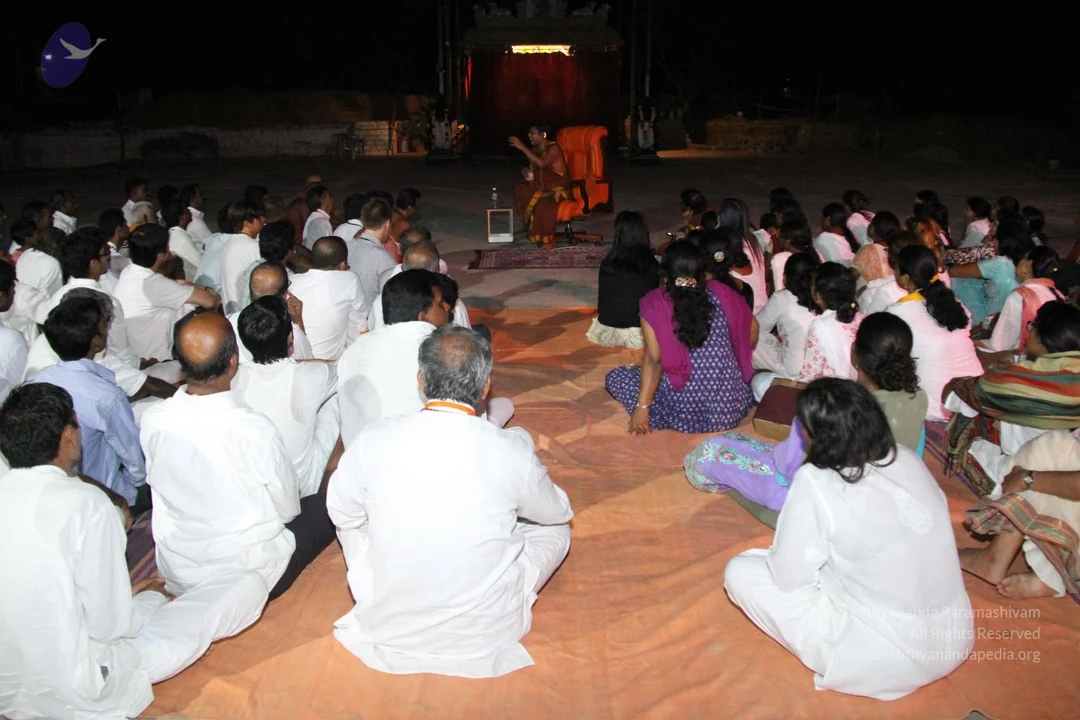
In today’s morning Satsang, Paramahamsa Nithyananda declares that the biggest superstition we carry is that that life has any other pleasure besides enriching people. Once we begin practicing completion with others, we realize that the other person is also learning completion, therefore enriching is happening. Completion brings awareness to our thinking which will ultimately lead us to enlightenment.

Link to Video:

VideoAudio
VideoAudio

Transcript:

Nithyanandeshwara Samaarambhaam Nithyanandeshwari Madhyamaam | Asmath Aachaarya Paryanthaam Vandhey Guru Paramparaam ||

00: 41 Hindi - 00:51

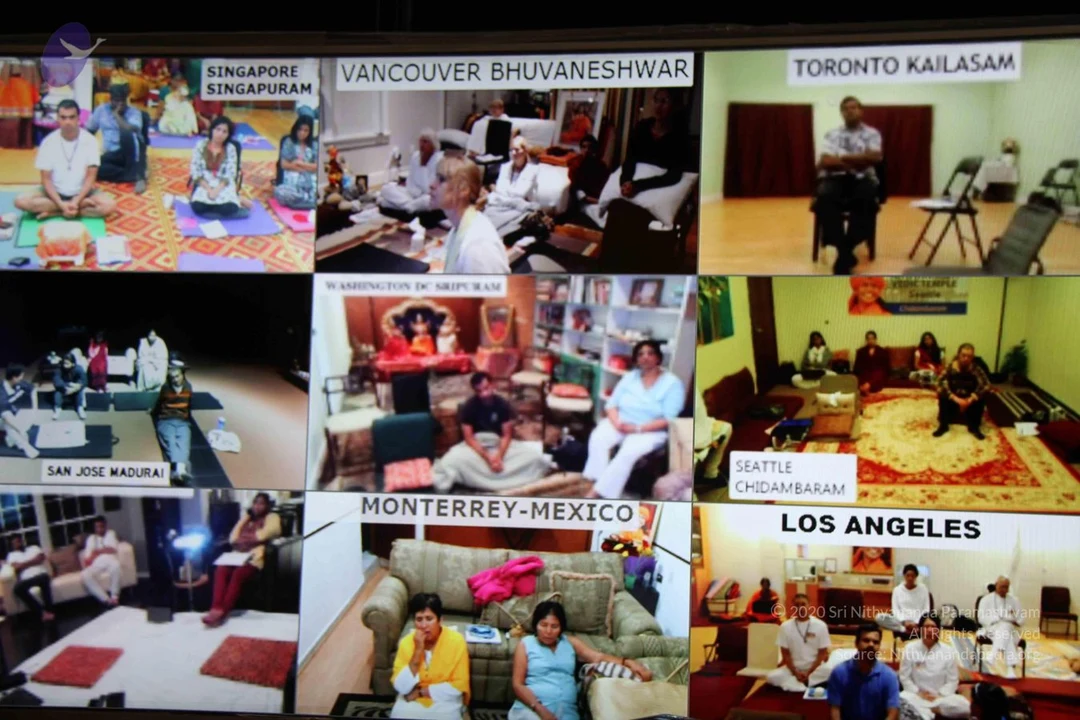
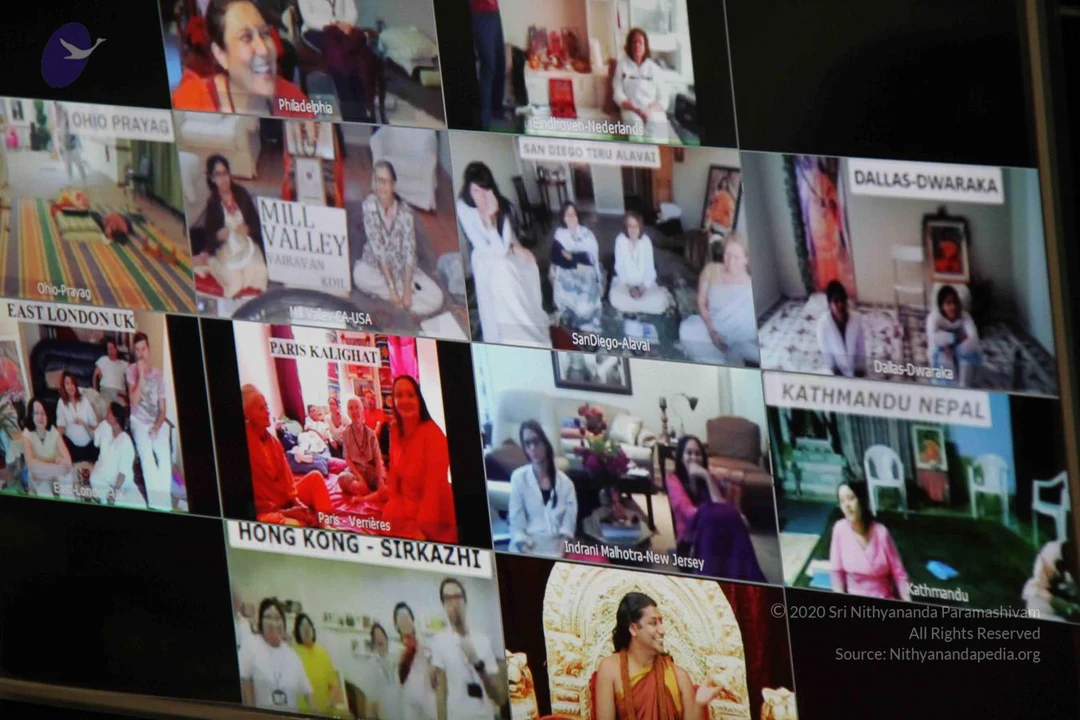
I welcome all the devotees, disciples, samajis, satsanghis, visitors, viewers, sitting with us all over the world at this moment through Nithyananda TV, Sadhna TV, Lotus News Channel, and two-way video conferencing having Nayana Deeksha.

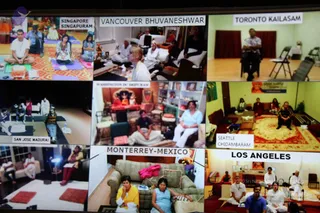
Cities sitting with us in two-way video conferencing: San Jose, Surrey-British Columbia, Enriching Temple-Bidadi, Charlotte, Ohio-Prayag, Seattle-Chidambaram, Guadeloupe, Toronto-Kailasam, Oklahoma-Somanatham, Washington DC-Sripuram, San Jose, Dallas, Singapore, Ohio-Ma Shivananda, St. Louis-Tirumala, Kuala Lumpur-Palani, Auckland-New Zealand, Mulund-Mumbai, Philadelphia, Varanasi, New York - Varanasi, San Diego-Tirualavai, Bogota-Colombia, Hyderabad-Gupta Kashi, New Zealand-Adi Arunachalam, Warrington-UK, East London-UK, Vancouver-Bhubaneshwar, Philippine - Netherlands, Netherlands, Hong Kong, Devon-UK, Atlanta-Ujjaini, Houston-Kalahasti, Tiruvanmiyur, Melbourne-Australia, New Jersey-Omkareshwar, Oman -Shivaganga, Colorado Springs-US, Port Washington-New York, Bangalore North, New Zealand - Adi Arunachalam I can see.

I welcome all of you with my love and blessings.

Today:

• 959th Nithya Satsang;

• 20th batch Inner Awakening;

• 17th Batch eNGenius;

• 19th batch Nirahara Samyama Level-1 break today. Today the Nirahara Samyama participants will not have Nirahara diet, means the liquid diet; you can eat all the three times. Come back tomorrow after eating. From tomorrow seven days, you be will be in Nirahara;

• 9th batch The Samyama, 3rd day.

Today’s Leela Dhyaan:

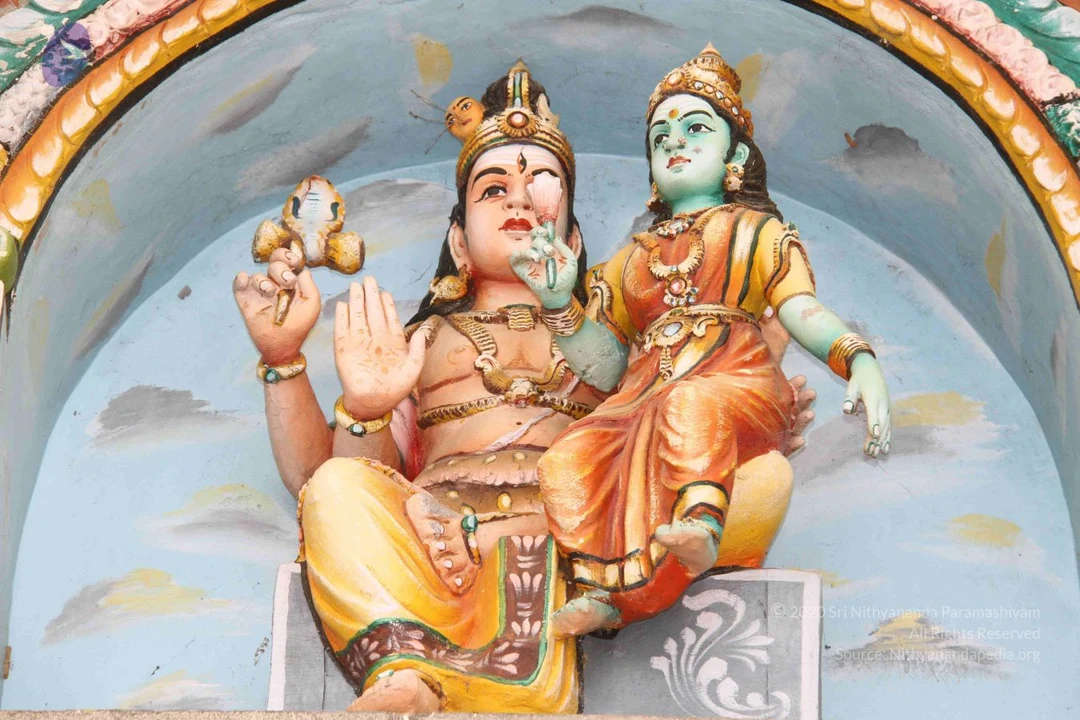
Mahadeva is gracing us showing the Leela of: “VARUNAN VITTA KADALAI VATTRA SEIDHA PADALAM”. Means the - I will give you the translation.

Once during Sundareswara’s regime, when Sundareswarar was ruling – actually Meenakshi was ruling; Sundareswarar never ruled Madurai he was just going around and living. He was not involved in administration; Meenakshi only did all the work and during Sundareshwara’s time, Varuna, the God of Water sent a huge tsunami to destroy Madurai

And Sundareswarar, the Lord of Madurai, immediately sent a few clouds and sucked the whole ocean and dried them out and saving Pandya Kingdom.

It was a powerful miracle. The power of Integrity of Sundareswarar. The moment he wanted, the ocean becomes dry, by the cloud.

Mahadeva is gracing us in that Leela.

We’ll enter into today’s Nithya Satsang. First, I wanted to share a few truths then I’ll answer your questions.

From yesterday, we started the Science of Completion. Today is third day. We are going to enter into deeper levels of Completion.

See, the Science of Completion is such, only after you practice few times you will even understand the importance of it. Verbally it can never be explained because, once you start completing, it opens a new world to you, altogether a new world, altogether a new energy.

How much ever I may talk about Completion but only when you start sitting with the mirror and melting down, completing, really you experience the new world opening altogether for you, the new world which can’t be introduced.

See, in the Heaven, there are some things great like Kamadhenu, the cow which gives whatever you want, Kalpavruksha, the tree which gives you whatever you want, Parijatha, the flower never withers away, with eternal fragrance. Because there are few special things, you can describe Heaven based on those few special things but when you start Completion, what all will happen, everything will be special. So, I cannot introduce it by anything special. I cannot say, ‘Do Completion. You will have Kamadhenu, you will have Kalpavruksha.’ No, when you do Completion, you are going to have Mahadeva himself. What Kamadhenu or Kalpavruksha? Everything, everything right, everything good happens in your life when you do Completion. Completion is so powerful process, it takes you to a different space of existence, different realm of existence, different reality of existence altogether.

Today we are going to be working on deeper levels of Completion and especially discovering the root-pattern, finding out the root-pattern. Sometime you discover, sometime you invent root-patterns. Please understand, because you are not able to discover, you mess up, mismatch, and you invent your own.

I have seen people coming and telling, ‘Swamiji, I developed this root-pattern at the age of forty-four.’

It is not root-pattern; it is rootless pattern you invent. But anyhow, inventing root-pattern can be root-pattern. You have to complete with that pattern with which you invent root-patterns. Whether it is root-pattern or rootless pattern, or root-pattern of creating rootless pattern as root-pattern, it has to be completed. Everything has to be completed. It is in the existence of Completion. Existence is experienced by you, because Existence exists in existence of Completion. Understand, the Completion is complete Completion when you experience Existence in its Completion.

I’ll try to answer your questions so that you can internalize and intranalyze the whole Completion process and understand and live the whole Completion process.

Questions?

Ma Maneesha: The first question today is from Inner Awakening participant Dr. Franjil ID No.57. She is asking, ‘If Enriching happens by an incomplete person, it doesn’t really reach people. It might help the enricher but the other person might be going away instead of coming. Should the enricher be completely complete before enriching?’

Swamiji: “Completely completing” will happen ultimately only with enlightenment. So, Dr. Franjil understand, Completion, Enriching, both are not supposed to be done one after another. Both are supposed to be done simultaneously.

Please understand, in Patanjali’s Yoga, there’s a word called “Ashtanga Yoga” – “Eight parts”. Somehow, unfortunately, all the English Yogis have translated this as “Eight steps of Yoga”. That one small mistake the“anga” word. “Ashta” means “eight”; there is no controversy. This “anga”, instead of translating that word as “parts”, it has been translated... - Not even word, word “parts”, too superficial. Anga word should be translated as “organs” because they have not translated this “anga” as “organ”, instead of organ they translated that as “step”, the whole Yoga tradition has become useless in the West. It has become just small few techniques or the methods to make your body flexible and little health. That’s a disgrace done to Yoga.

Please understand, when you get a diamond and use the diamond just as a vegetable cutter, vegetable cutter, it’s a disgrace to diamond. Same way, when you use such a great power, powerful science just as technique to bring little health. No. It is so unfortunate just that one mistake done by the Max Muellerians, means followers of Max Mueller, trying to translate Hindu scriptures just to destroy Hinduism, not for making the world realize the greatness of Hinduism. Max Muellerian’s

in my Sampradaya, in Nithyananda Sampradaya, nowhere the Max Mueller or Max Mueller translations should be accepted as a reference text book. I am banning Max Mueller and Max Muellerians translations of Hindu scriptures. They have done the translation more to abuse the Hinduism, not to make people understand Hinduism. This Max Muellerian translation of the word “Ashtanga”, instead of “the eight organs of Yoga”, it has been translated “eight steps of Yoga”. Over! And people are struggling with the second step and third step – Yama, Niyama, Asana. Over! No one crosses beyond. Yama is “Integrity”, Niyama is “Authenticity”. Please listen, Asana, Pranayama, Pratyahara, Dharana is “Responsibility”. Dhyana and Samadhi is “Enriching”.

Please listen, you are asking, ‘Should we do it one after another?’ No, no, understand, this is also like that Ashtanga, eight organs, not eight steps. Enriching and Completion, both are, simultaneously both should be practiced. Listen, with more and more Completion, more and more Enriching will happen. With more and more Enriching, Completion will happen. Actually, when you complete with somebody, you already started Enriching that person. How many of you have realized? I think still this batch has not yet started completing with others but, whoever has started Completion with others, the moment you complete with others, you already started Enriching the other person.

Enriching starts happening with the Completion. Without Enriching, Completion cannot happen. Without Completion, Enriching cannot happen. It is like you start both together, one supports the other. You cannot say, ‘First I’ll operate my heart and then once the heart starts functioning completely, then I will start operating the lungs.’ No, lungs is Completion, heart is Enriching. Both has to happen simultaneously. Lungs remove the carbon dioxide – incompletions – from your system, infuses oxygen – Completion – into your system. Heart circulates that whole oxygen through the blood and enriches your whole body. You cannot separate Enriching and Completion. If you are not Enriching, be very clear, Completion is not happening. You are only fantasizing about Completion. Completion is so powerful, when you really get into it, you will simply enrich.

I tell you, I have no other motive other enriching to come and sit, day in and day out to speak to people who don’t listen. There is no other motive.

Completion, Completion is so powerful, it just makes you enriching. I tell you, the intelligence of Enriching. Actually, you don’t even need to be taught to enrich. There is no need for somebody to teach you how to do. Maybe, they can give you the tips to do Enriching in a better way but when you start Completion, you will simply start Enriching because so much of energy, intelligence, inspiration, love, will be available to you. That is what yesterday, after the process, I could see the whole group feels beautiful love. Please understand, making one person feel loving and love with the group is not a joke. It is not a joke!

25 min

Yesterday I could see, after the whole program, after the session of especially looking at you as your Mamakara, inner image, outer image and life image, and introducing yourself to others with your inner image, outer image and life image, I tell you, the first thing that will happen to your being is Love! Love, so much of love, there is no need for others to come and tell you to enrich! You will see, the Enriching happens by its very nature!

Please understand, when you complete, your thinking will start becoming more aware. See, when the awareness enters into your thinking, you will just know life has no pleasure other than Enriching. Please understand, this is the essence! It is the unaware thinking which makes you believe life has some pleasures. The moment awareness enters into your thinking, the moment your thinking is filled with awareness, you will understand life has no pleasures; life has no pleasure other than Enriching. How much ever you try, how much ever you try, it is a complete lie, it is a false statement, superstition to believe life has pleasures. Whoever has spread that superstition, he should be arrested under the Anti-Superstition Law. He should be arrested under the Anti-Superstition Bill.

How much ever you may try to believe….. You even believe as a collective belief, mass hysteria! All the crowd on M.G. Road, Bangalore, is nothing but mass hysteria. All the crowd which is searching here, there, thinking that life has pleasures, is hypnotized in the mass hysteria!

Your thinking will become straight with Completion! And, I tell you, when awareness enters into your thinking, when you start thinking with awareness, you will realize life has no pleasures. Listen! How many of you in your heart really believe life has no pleasures? Raise your hand. (People raise their hand). You guys have started thinking with awareness. Really, I am telling you! If you think life has pleasures, you just need to bring little awareness into your thinking. Whatever you call as pleasure, when it happens to you, just see how much you feel about you, how your inner space feels. In a few days, you will understand, life has no pleasures; so the only thing pleasant in life is Enriching. I am really telling you, the only thing pleasant in life is Enriching. Life has no pleasures. Life has no pleasures other than Enriching!

Listen! I have a story about bringing awareness into your thinking.

A man walks into a shop and sees a cute little dog – like Bhairava (Swamiji’s pet dog in Bidadi). He asks the shopkeeper, ‘Does your dog bite?’

The shopkeeper says, ‘No. My dog does not bite.’

The man tries to pet the dog, and the dog nicely bites him!

‘Ouch!’ the man screams, shouts. He says, ‘I thought you said your dog doesn’t bite!’

The shopkeeper replies, ‘Yes, my dog doesn’t bite. But that is not my dog!’

HAHAHAHAHAHAHAHAHAHAHAHAHAHAHAH…!

Bring awareness into your thinking. Don’t take the gap, the missing links, for granted. Your idea that life has pleasures is nothing but taking the missing links for granted. Don’t take the missing links for granted. Connect all the missing links by a proper word; only then you will understand, ‘Yes, his dog doesn’t bite, but this dog is not his dog!’ The moment he said, ‘My dog doesn’t bite’, the second statement you took for granted that this dog is his dog! In life also, many times after running behind certain goals, ideas, for thirty-forty years, you realize the missing links you took them for granted. That is such a waste of life and time and energy! Blessed are those who entered the gurukul life when they are young. Blessed are those who at least entered the life with the Master when they are young!

Really, “life has pleasures” is the greatest delusion with which you are living! And, you say, ‘That is the way my mother-in-law told me, father-in-law told me, my brother told me, my sister told me.’ When life stares at you, you cannot hide behind anybody’s pallu! Know that very clearly! “Pallu” is the saree cloth, end of the saree. Forget about anybody’s pallu! When life is chasing you, you cannot hide behind any person. So, don’t live because ‘he said life is like that, she said life is like that, they said life is like that’!

The doubting pattern, please listen, the doubting pattern you carry about you makes you believe everyone else other than the truth. Because you don’t trust you, you have self-doubt, you believe your mother-in-law, daughter-in-law, father-in-law, all in-laws, and you outlaw life! You tell about this person, that person, ‘My mother told, my father told, brother told, husband told….’! No!

Understand, “life has pleasures” is the greatest superstition spread in the modern world by the materialistic civilization and materialistic media. It is a superstition spread by materialistic mainstream media. What is the statement these guys are trying to give when they pose with some denim jeans,iPad, iPhone, all these models? They try to give you, they try to promise that with this, life will be with lot of pleasure, cool! It is not! Fool! It is superstition spread by the so-called mainstream media! The superstition they are spreading.

I saw a joke in Facebook: A daughter is sitting with iPhone, wife is sitting with iPad, son is sitting with iPod and husband is sitting with his hands on his head, “I Paid” HAHAHAHAHAHAHAHAHAHAHAHAHA…!

So unfortunate! Please be very clear, life has no pleasures other than Enriching! So, if you are being driven by any force, imagination, visualization, fantasy, thinking, thought, idea, other than Enriching, be very clear, you are going to end up in depression.

So, do not encourage, enrich, entertain the idea that life has some pleasures other than Enriching. Drop it! Life has no pleasures other than Enriching!

Next question:

Ma Maneesha: The next question is from Inner Awakening participant ID No.5, who is asking, ‘According to the Upanishads, we are not the “doer” where we do our job at work. How can we detach ourselves from the doing and just work as a service for the world that God created? If I am not supposed to have a desire to succeed in my business, and have pride, what will motivate me to do it? And, how can I detach myself from this desire to be successful?’

Swamiji: I will read the question. ‘According to the Upanishads, we are not the “doer” where we do our job at work. How can we detach ourselves from the doing and just work as a service for the world that God created? If I am not supposed to have a desire to succeed in my business and have pride, what will motivate me to do it? How can I detach myself from this desire to be successful?’

I think, just now I answered your whole question. Your question: ‘According to the Upanishads, we are not the doer where we do our job at work. How can we detach ourselves…...?’

Please, I wanted you to understand the first statement you made, ‘According to the Upanishad, we are not the doer.’ You need to understand that more. You will understand that statement only after the Completion process. Only after the Completion process you will understand that all this while you were not the doer, your incompletions were the doers, your incompletions were making you do what you were doing. When the Upanishads say, ‘You are not the doer’, they mean your incompletions are the doer. But unfortunately, people started thinking God is the doer. No! When you are told “you are not the doer”, it means the doer in the wrong person, not the doer in the right person. It is so unfortunate!

One guy asks his friend, ‘Why are you not wearing your wedding ring in the right finger? Why are you wearing your wedding ring in the wrong finger?

The guy replied, ‘Yes, I am married to the wrong woman!’

HAHAHAHAHAHAHAHAHAHAHAHAHAHAHAHA….!

No, really! You have a wrong understanding! It is so unfortunate, when the Upanishads say “you are not the doer”, complete with who thinks is the doer, destroy the doer. But, unfortunately, you start thinking God is the doer! No! So, you need to understand this statement of Upanishad much deeper. Neither you are the doer, nor God is the doer, because you are God! Your incompletions are the doer. So, complete. Let your incompletions which were the doers, let that die. Then you will understand you have a great zeal to be successful in Enriching! Now, as long as you feel you are the doer, means your incompletions are making you believe you are the doer, you will not have success in anything you do,and you will not be able to detach from the doer. And, even if you try to detach from the doer, you will only fall into depression; you will not have motivation to do anything else. Please understand the complications involved in the whole situation you are describing.

First thing, you can’t detach yourself from doing. Your incompletions are such it does all the crime, but it puts you into suffering. It won’t take responsibility. Completion is such, it makes you do all the good, but it gives you the benefits. The doer is the incompletions. Your incompletions are the doer.

Please understand, your incompletions are so powerful, not only it does, but it puts you into suffering for all his actions. Completion is such, it gets all the pleasures, but makes you enjoy the results.

Understand, incompletion is such, it does all the crime, it pushes you to do all the wrong things, but puts you into suffering. It doesn’t take the responsibility. Completion is such, it makes you do all the good, but gives you the benefits.

Incompletion does not trust even itself. Incompletion has deep doubt about itself. And incompletion always leads to more and more complications.

Ziva (the ID participant who put this question), your whole question will be answered on its own if you enter even a little bit into Completion. Sometimes, even the surety of incompletion leads you to more problems. See, incompletions sometimes will be so sure, it leads to more incompletions. In the incompletion moment, you strongly believe this disease is going to come to you. You will see that incompletion brings the disease!

I have a story:

There was a trial happening in the court for murder. A defendant was on trial for murder. There was a strong evidence indicating guilt, but there was no corpse. In the law, the dead body is very important.Corpse is very important to prosecute.

The defense’s closing statement, the lawyer, knowing that his client would be probably convicted, resorted to a trick saying, ‘Ladies and Gentlemen of the Jury, I have a surprise for you all.’ The lawyer said as he looked at his watch, ‘Within one minute, the person you all presumed dead in this case, will walk into this court-room!’, he declared. And he looks towards the court-room’s door. The jurors, shocked, stunned, all looked on eagerly, all of them were looking at the door. A minute passed….nothing happened.

Finally, the lawyer said, ‘Actually I made up this previous statement, but you all looked on with anticipation. I, therefore, tell you all that you have a considerable doubt, a reasonable doubt in this case as to whether anyone was killed at all and insist that you return a verdict of “not guilty”.

The jury really got confused and they retired to deliberate. A few minutes later, the jury returned and pronounced the verdict of “Guilty”!

The lawyer asked, ‘How, but how can you say? You must have had some doubt. I saw all of you stare at the door!’

The jury foreman replied, ‘Yes, we all looked at the door, no doubt. But your client did not!’ Sometimes, the surety, the sureness of your incompletion itself puts you in more problem!

I bless you all! Let you all radiate with Integrity, Authenticity, Responsibility and Enriching, with eternal bliss, Nithyananda! Thank you!

Photos Of The Day:

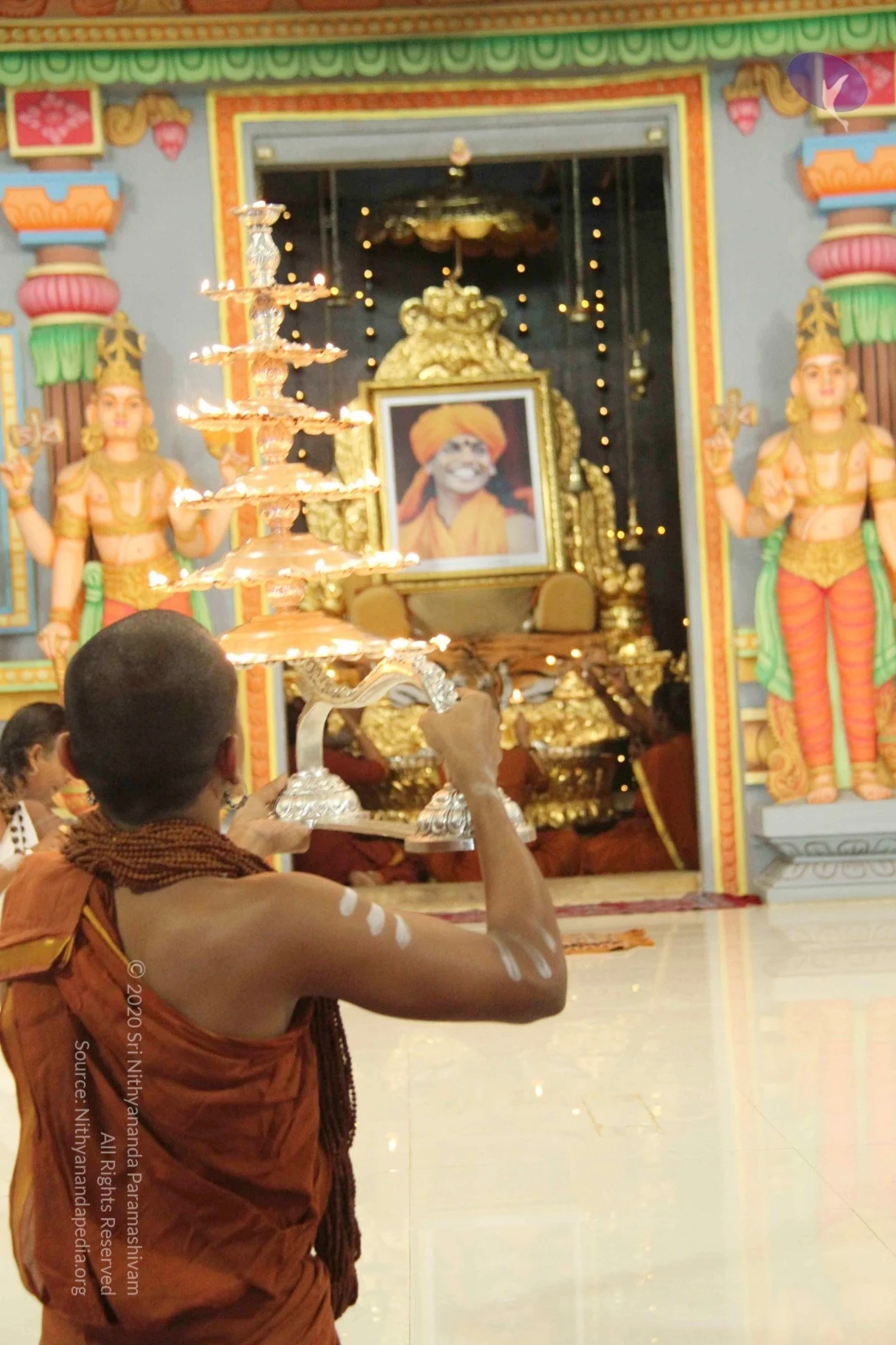
PadukaPuja
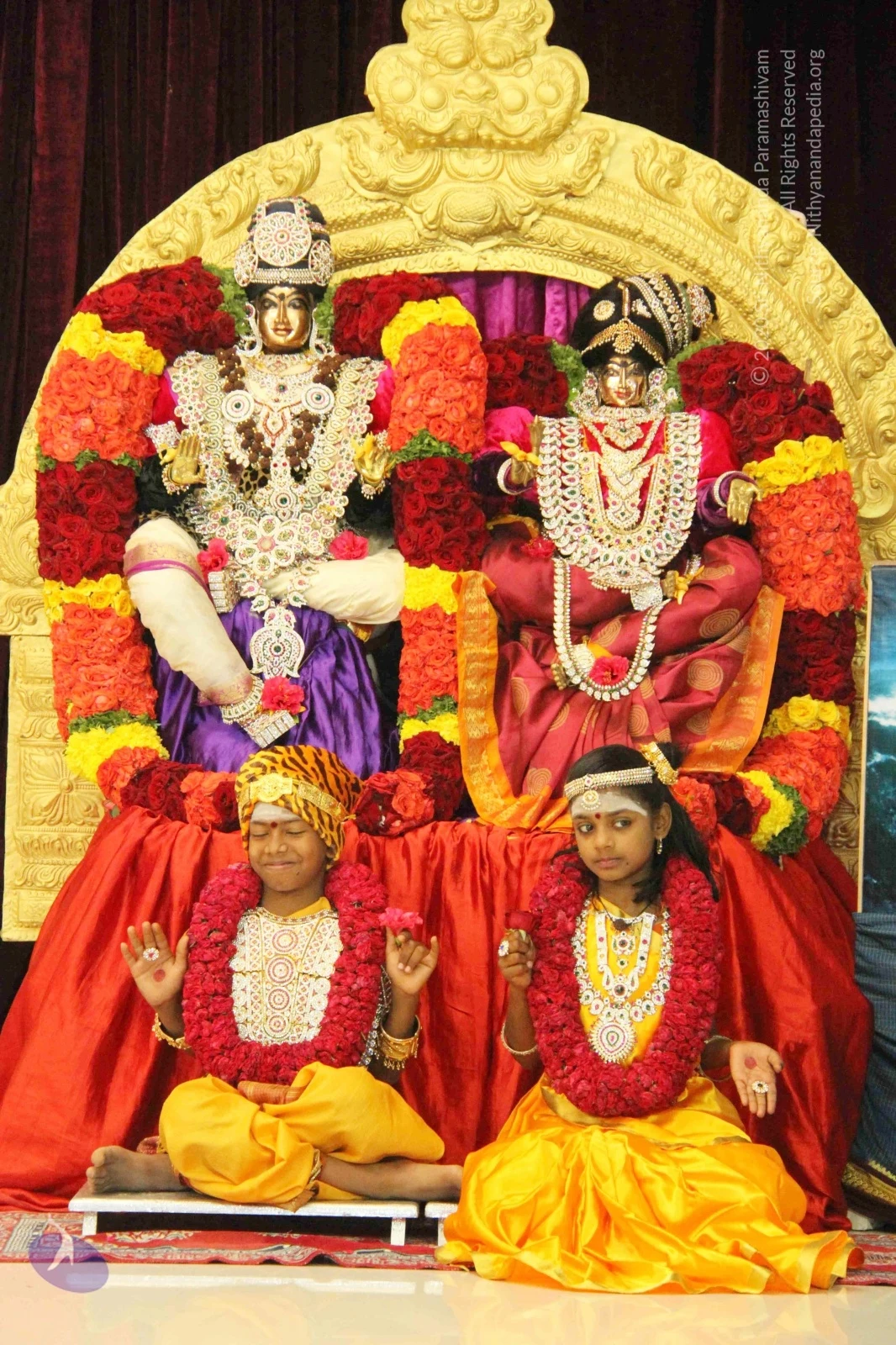
Deities_Swamiji_Arathi

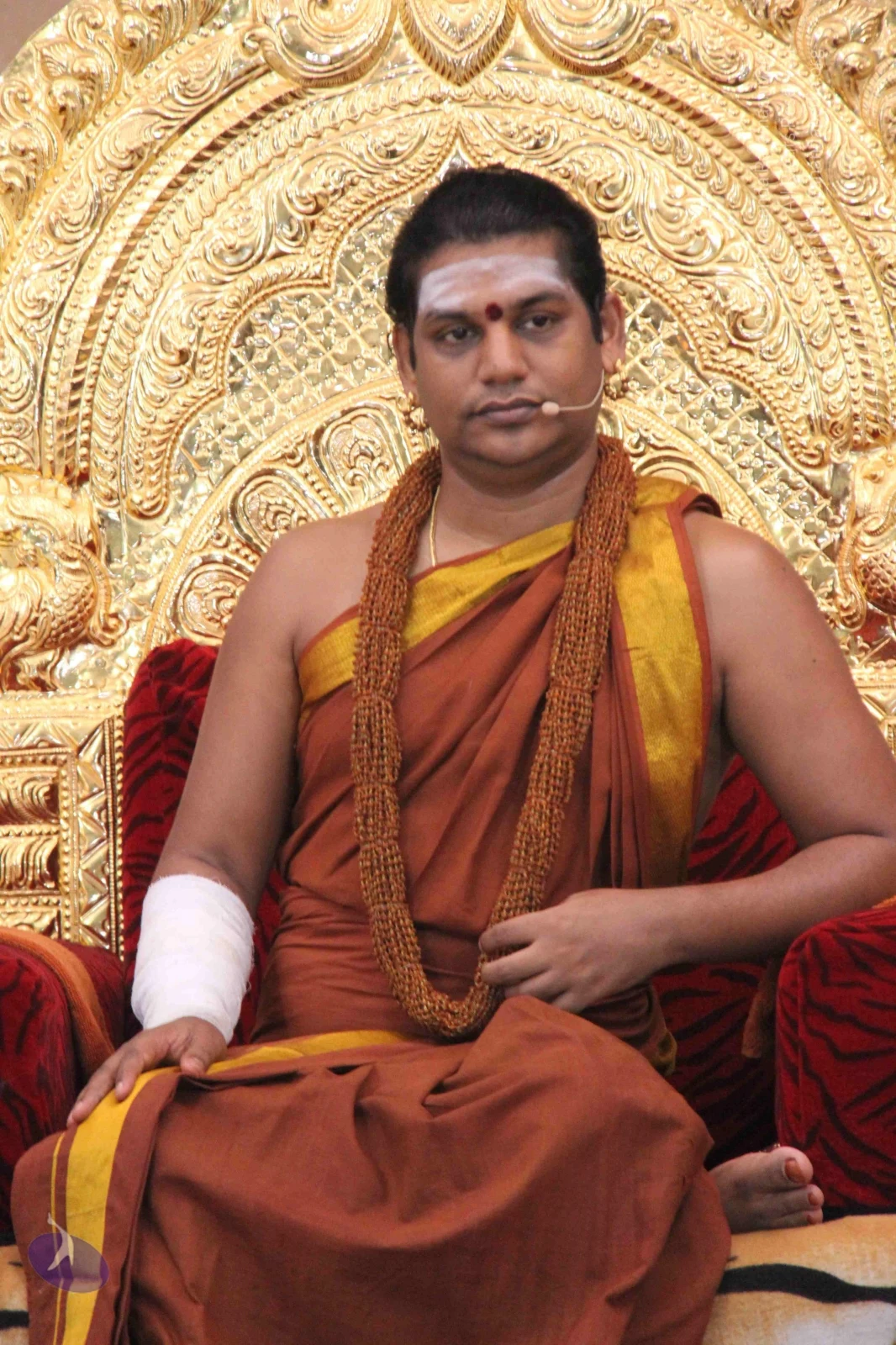
NithyaSatsang_Swamiji

SarvaDarshan

IA_Day3

Temple

Tags:

Paramahamsa Nithyananda, superstition, life, pleasure, completion, enriching, awareness, enlightenment.

01-Padukapuja

02-Deities-Swamiji-Aarthi

03-Nithyasatsang

04-Sarvadarshan

05-IA-Day3

06-Temple

Photos from this day

View all 317 photos

PadukaPuja
38 photosSource gallery
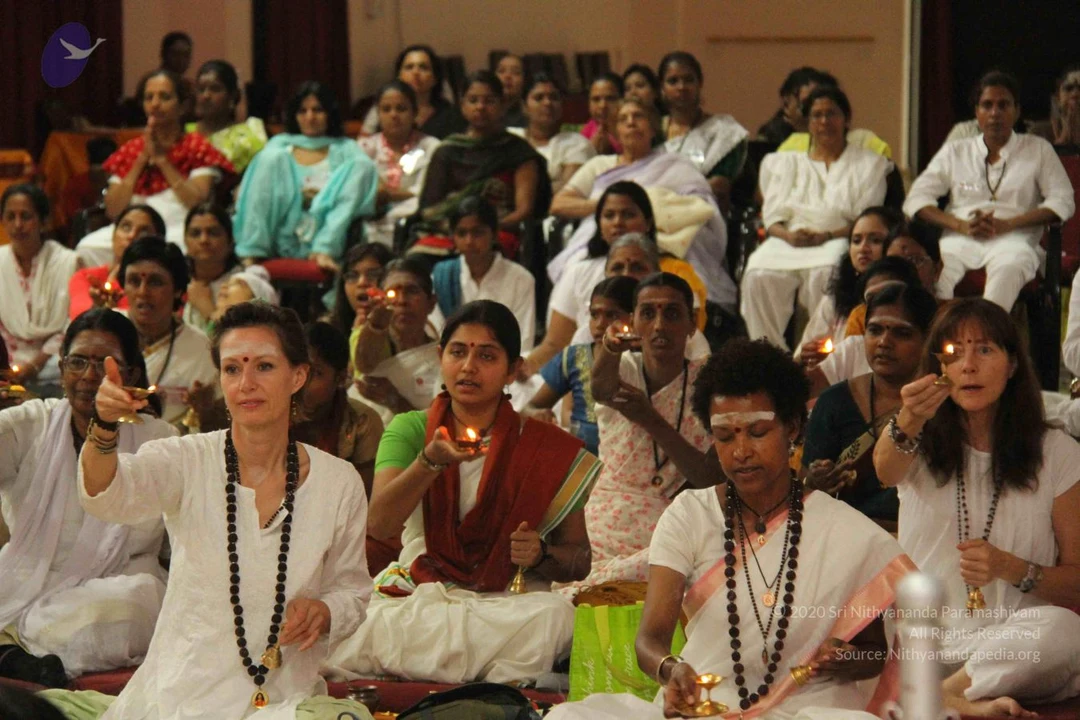
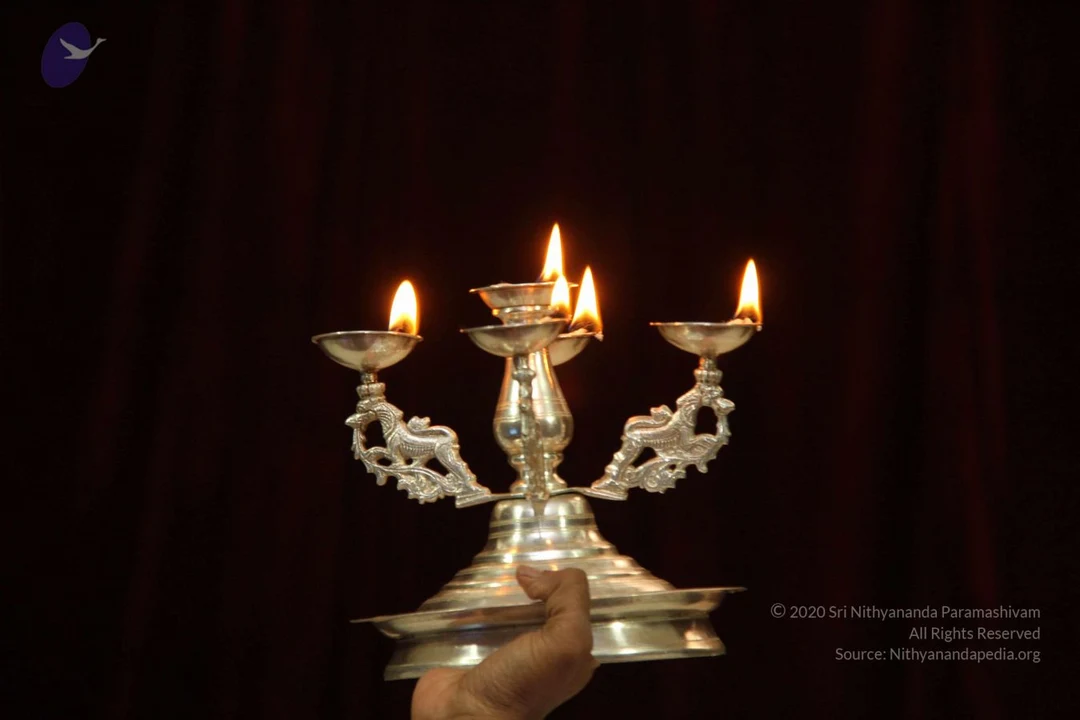
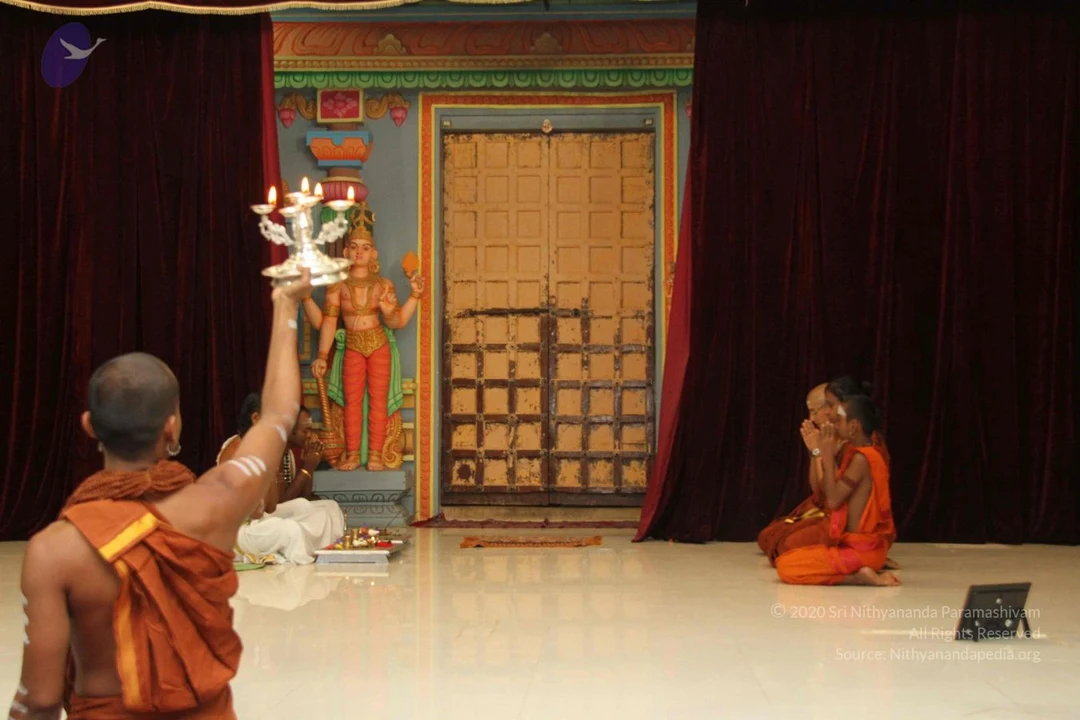
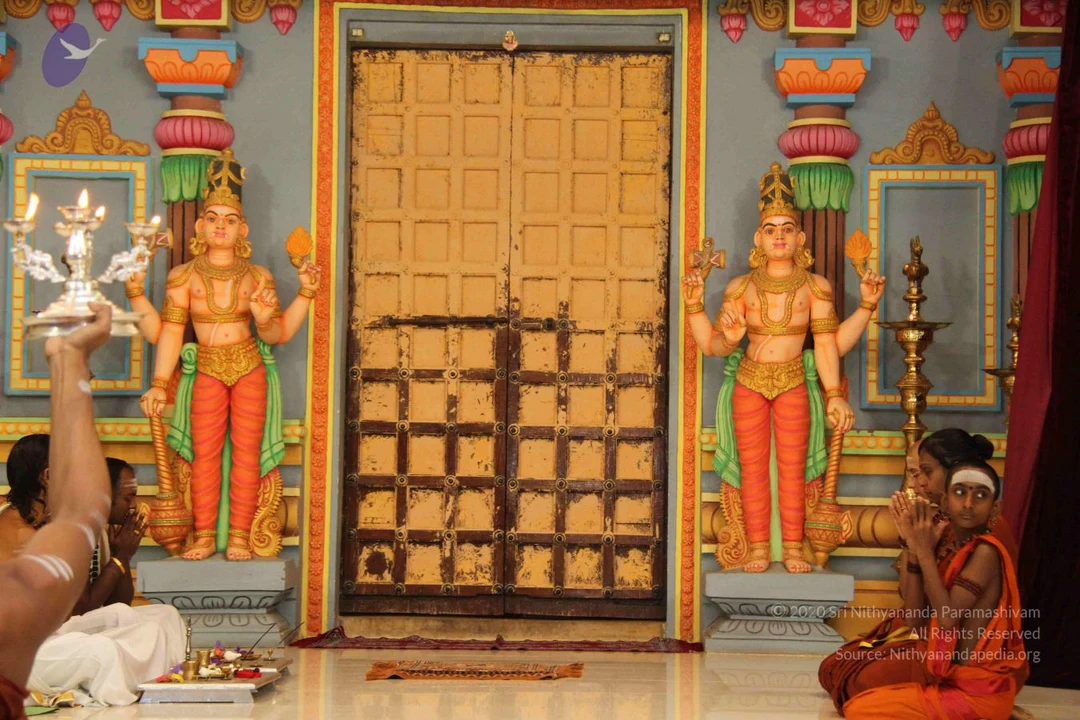
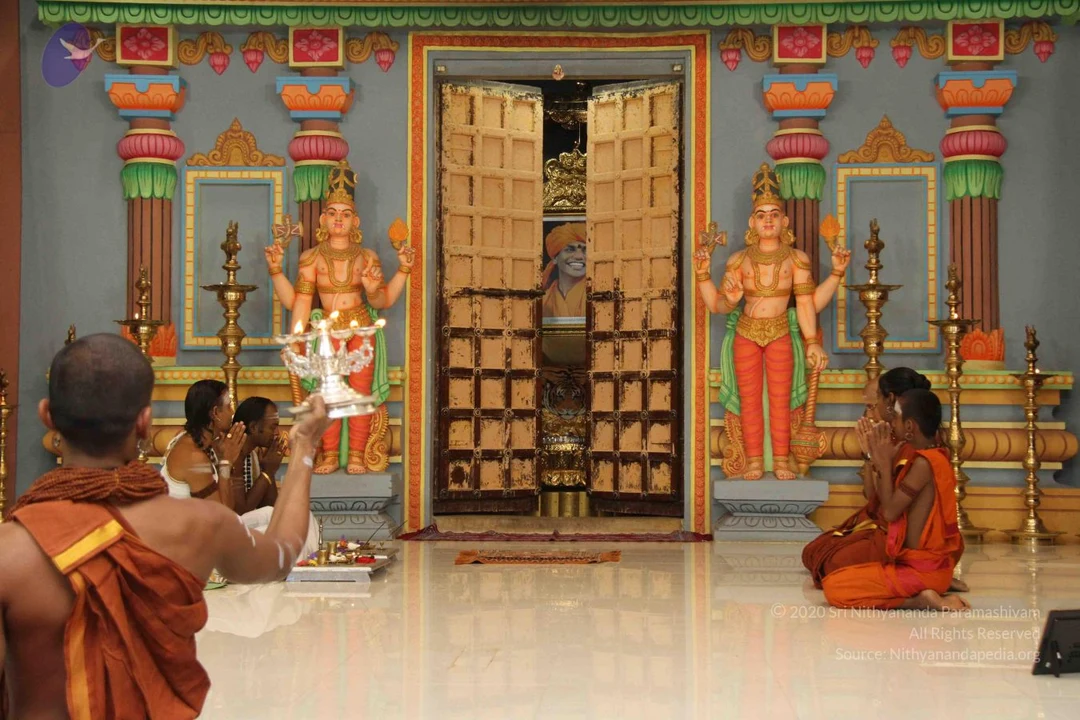
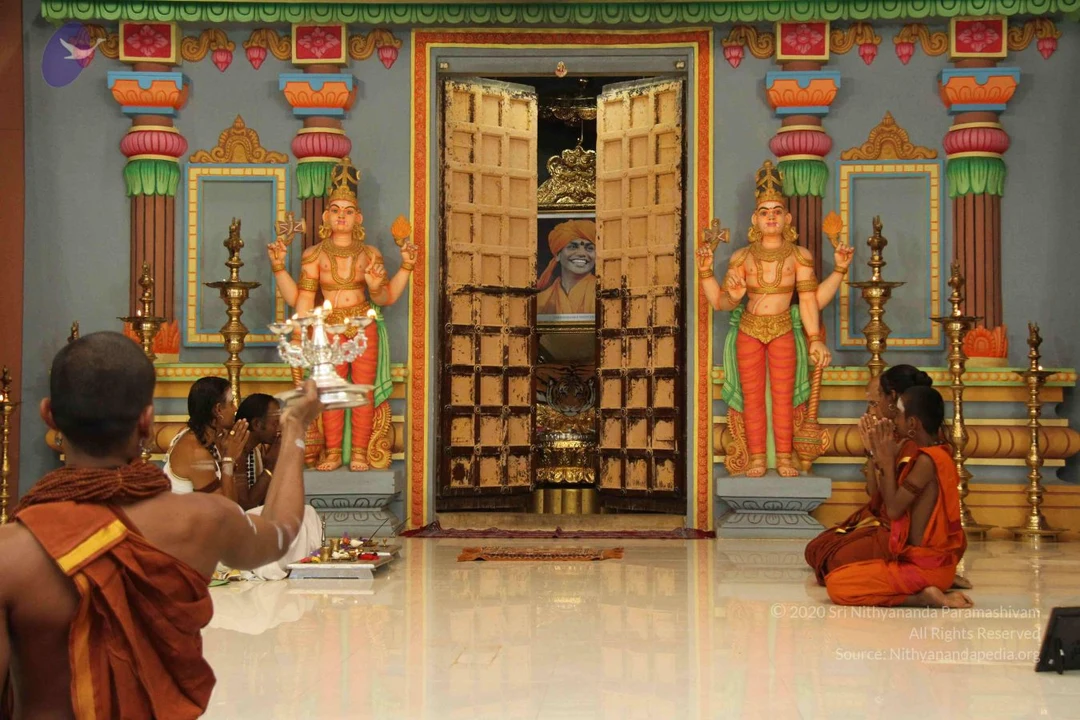
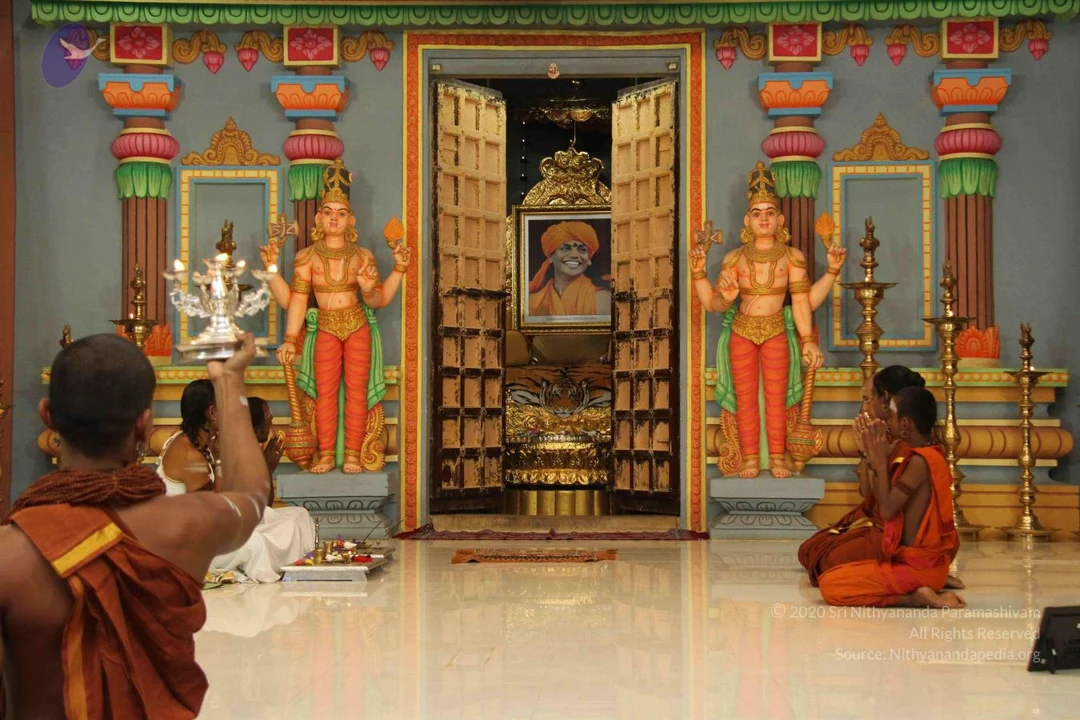
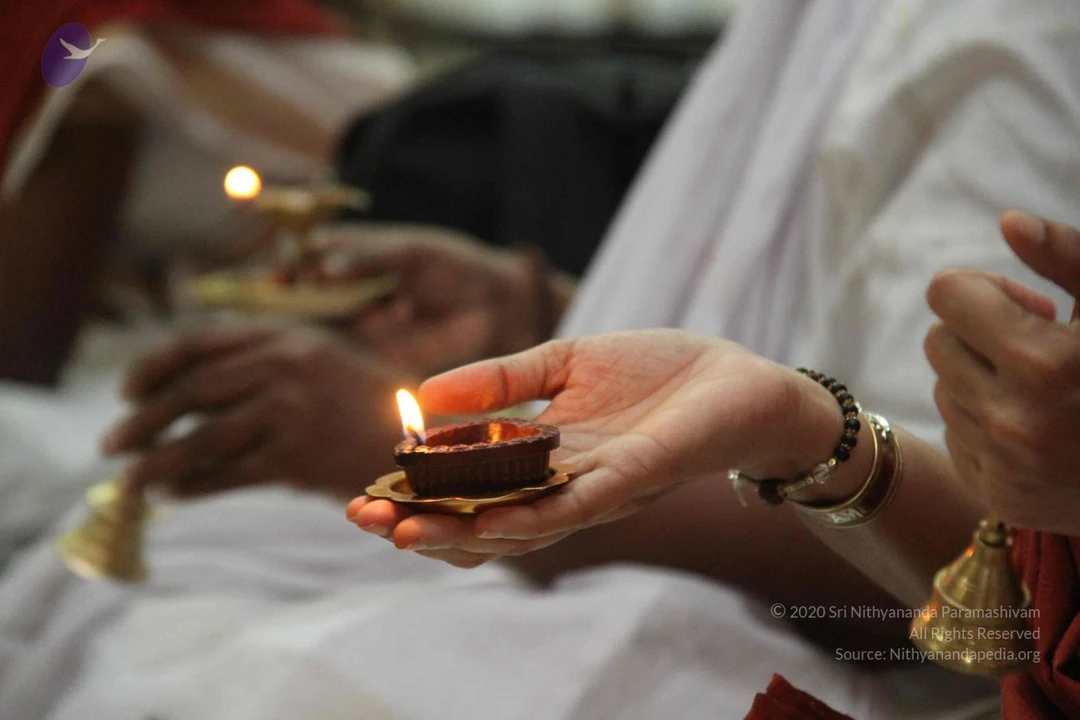
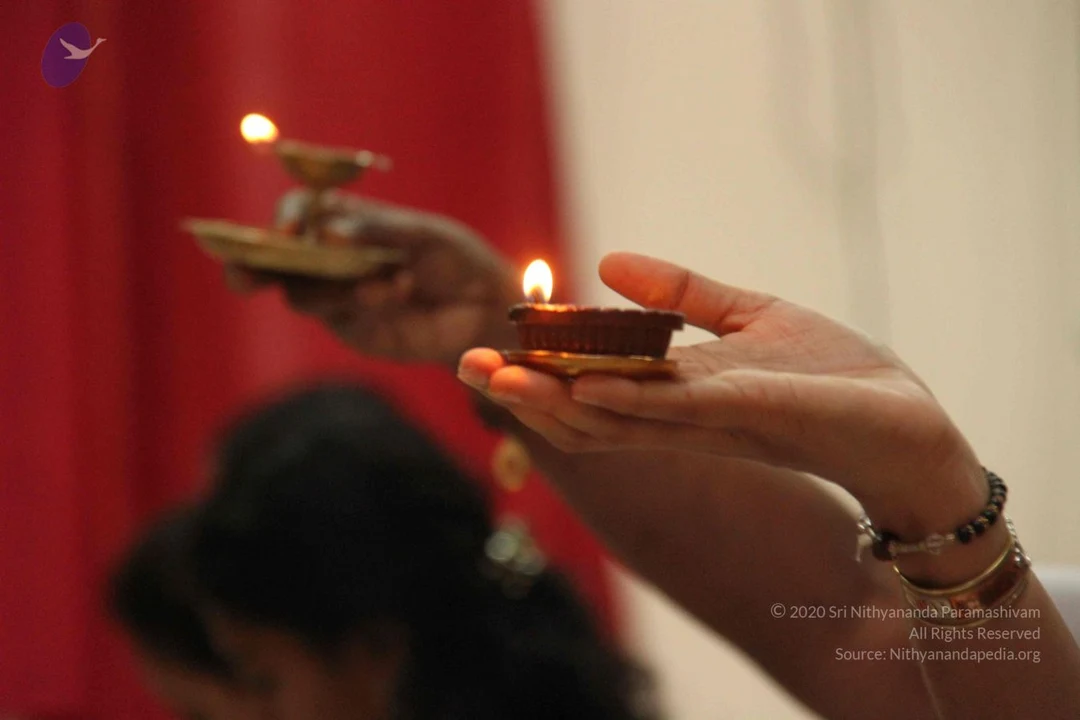
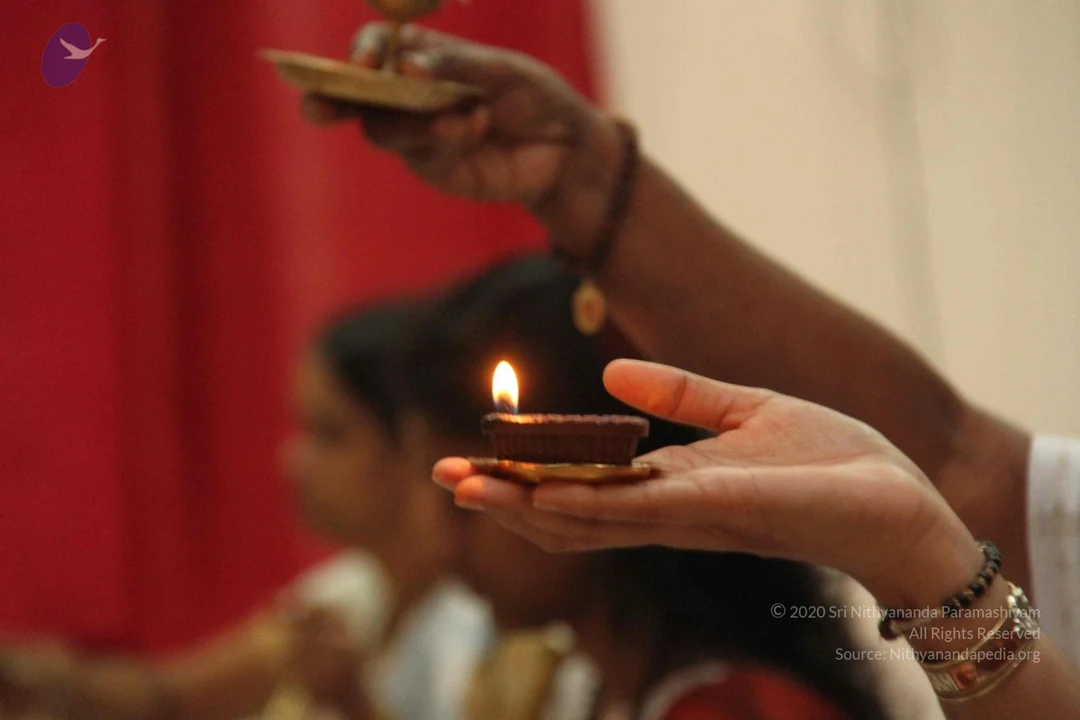
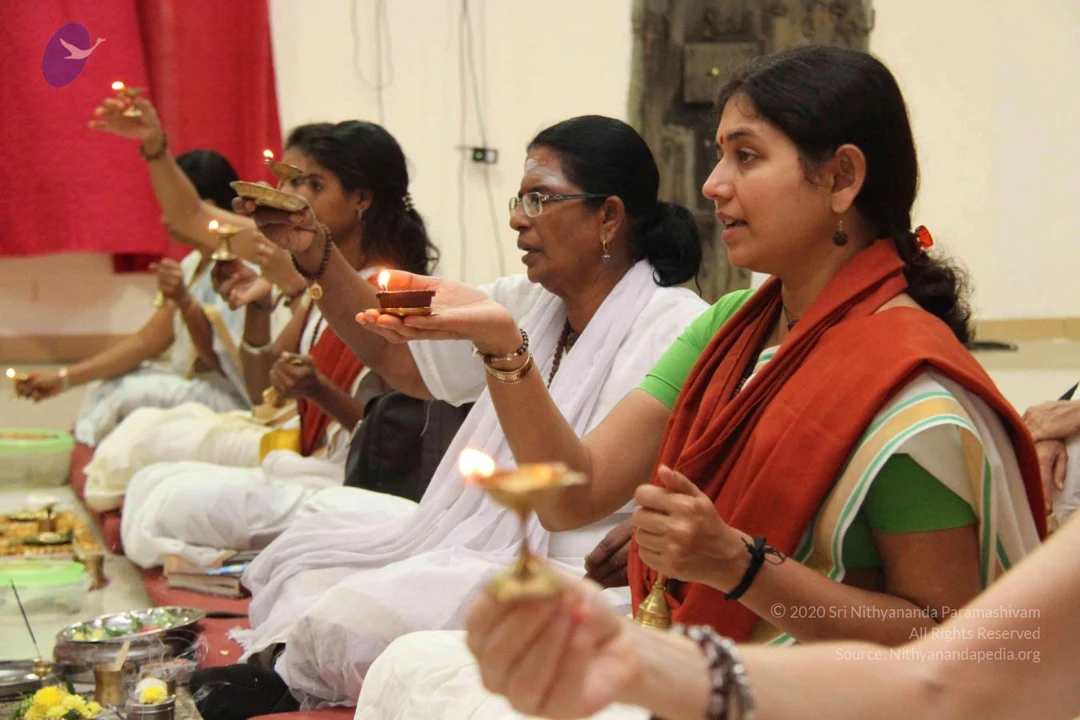
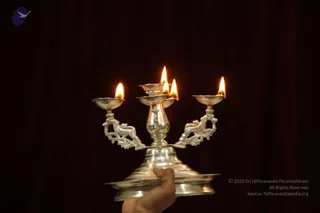
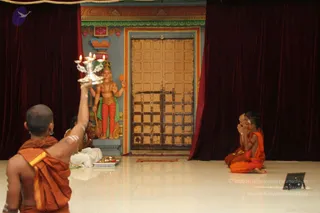
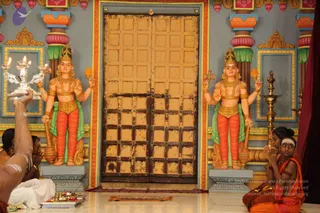
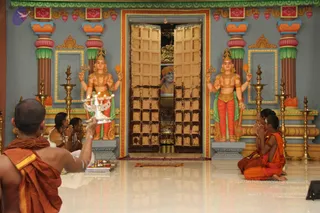
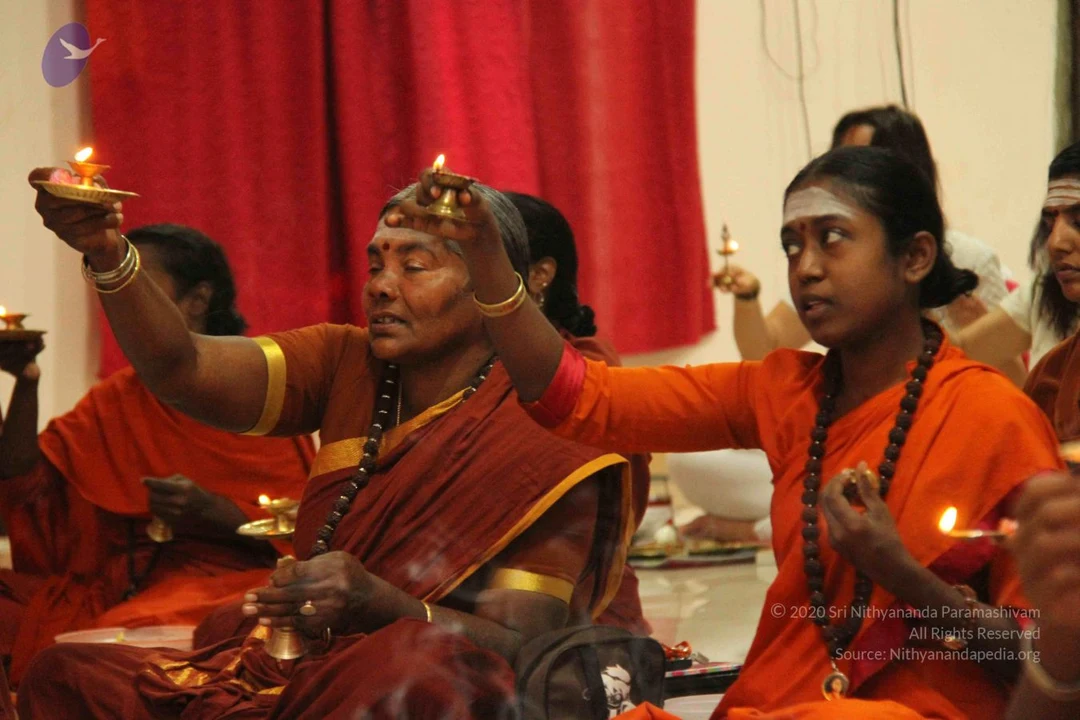
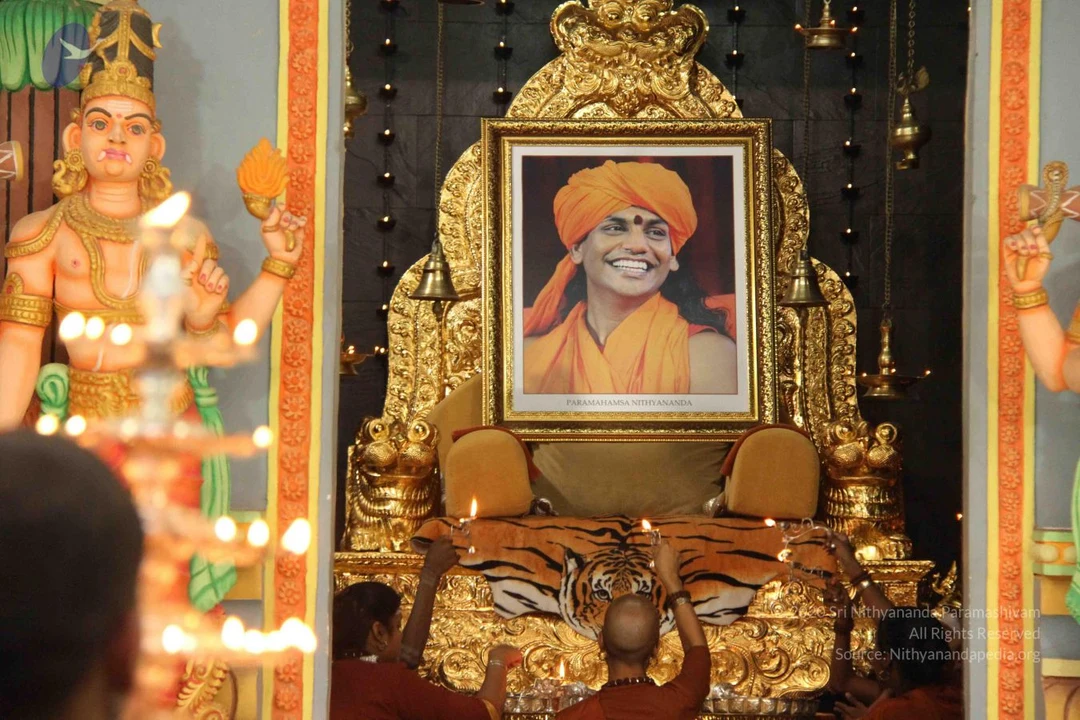
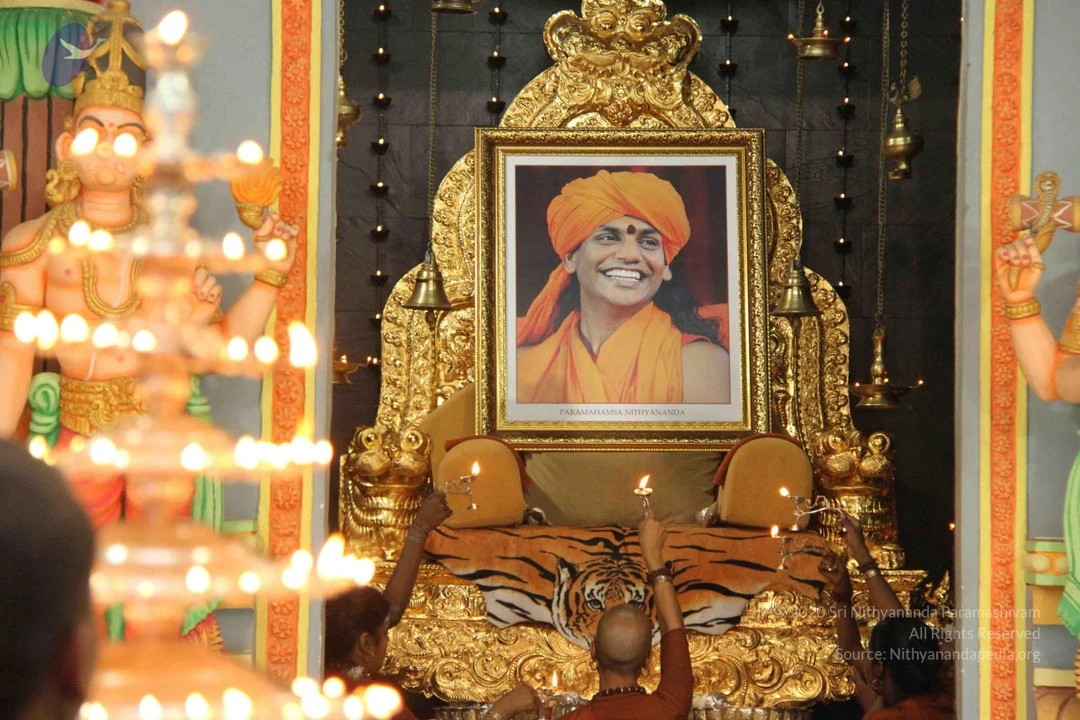
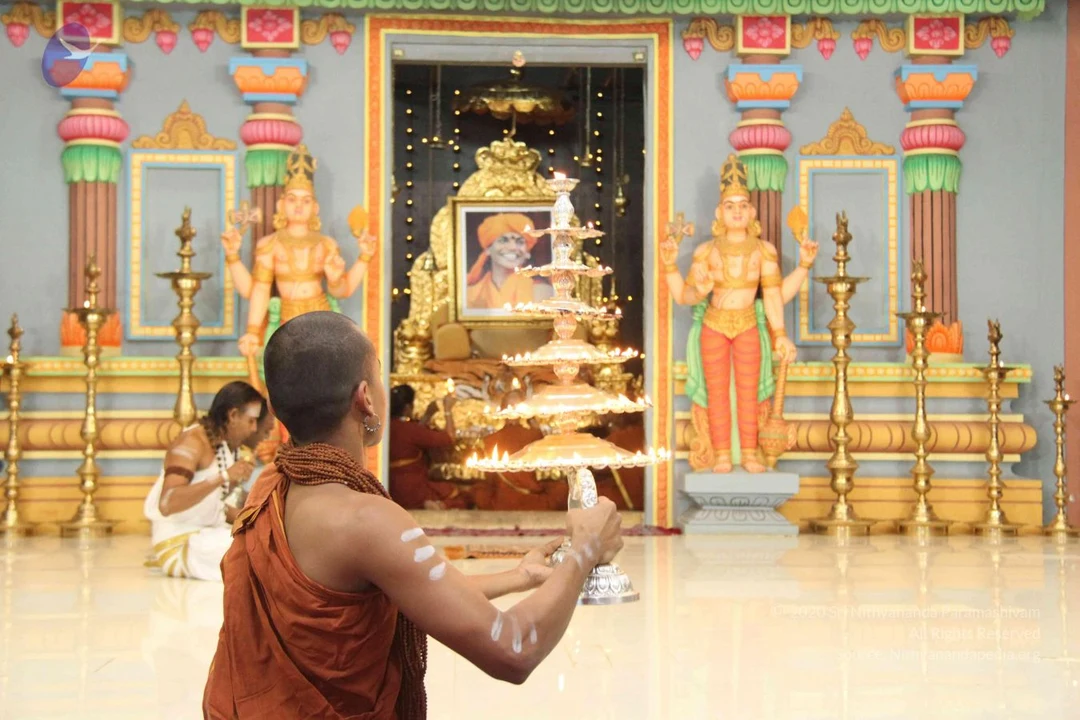
Devotees in orange and maroon clothing perform an aarti with oil lamps held in brass dishes. In the foreground a woman in a maroon sari with gold borders and rudraksha mala raises a lit lamp while a younger woman in orange robes and rudraksha beads holds another lamp beside her. Both wear forehead markings. Red curtains hang behind them, and other devotees sit with lamps and a brass bell in the background. No a person candidate is clearly identifiable.A large seated gathering of mostly women in white and cream clothing holds small oil lamps with lit flames during a devotional ritual in an indoor hall. In the foreground, a woman in white with dark beaded rudraksha-style malas and a red bindi raises her right hand, while a woman in a green blouse and red shawl holds a lamp. A devotee in a white sari with pink border and a rudraksha mala holds a lamp and has sacred ash marks on the forehead. Another woman in white with a mala holds a lamp at the right edge. Behind them, rows of attendees in white, green, pink and teal outfits sit on chairs and mats, many holding lamps. The scene suggests a lamp-lit satsang or aarti.A close photograph of a silver multi-branched oil lamp held up by a hand at its base against a dark maroon curtain. The lamp has five lit wicks in shallow cups: one central tier and two side arms decorated with carved animal figures, possibly lions or horses. Warm flame light glows on the polished silver. No people are visible apart from the hand holding the lamp.A temple-like hall with maroon velvet curtains and a painted deity figure beside a large wooden double door. In the foreground, a standing priest in saffron-orange cloth and a shaved head holds up a silver multi-wick lamp (aarti) with lit flames. On the right, two people in saffron and orange robes kneel on a cream marble floor with hands joined in prayer, one with a forehead mark. A seated figure in white cloth sits near a tray of offerings on the left. Several people are visible, the most prominent being the kneeling devotees and the lamp-bearing priest.A temple interior with a large carved wooden double door flanked by two painted dvarapala guardian statues in orange dhotis, green sashes, gold jewelry and crowns, each holding a staff. A brass oil lamp stand with lit flames is raised in the left foreground by a priest's hand. Seated at lower right, a woman in an orange sari with a white forehead band and hands folded in anjali sits near a brass lamp, and at lower left another seated person in white clothing and a white forehead mark is partly visible. Offerings and puja items lie on a tray at the base of the doors.A photograph inside a temple shrine hall with a tiled white floor. Two large painted deity figures, each with four arms, a tall crown and orange-red dhoti with green sashes, flank a pair of wooden double doors that are open to a gilded inner sanctum. A painted portrait of a smiling man in an orange turban is visible on the open door panel, labelled only by the framed image. In the foreground, a priest with a shaved head and orange cloth holds up a silver lamp with a lit flame, facing the doors. Two people in orange and white clothing sit with folded hands on the right, and a seated person in white is at the left. Brass oil lamps stand along the walls and a small ritual tray sits on the floor. Five people are visible.
Deities_Swamiji_Arathi

17 photosSource gallery
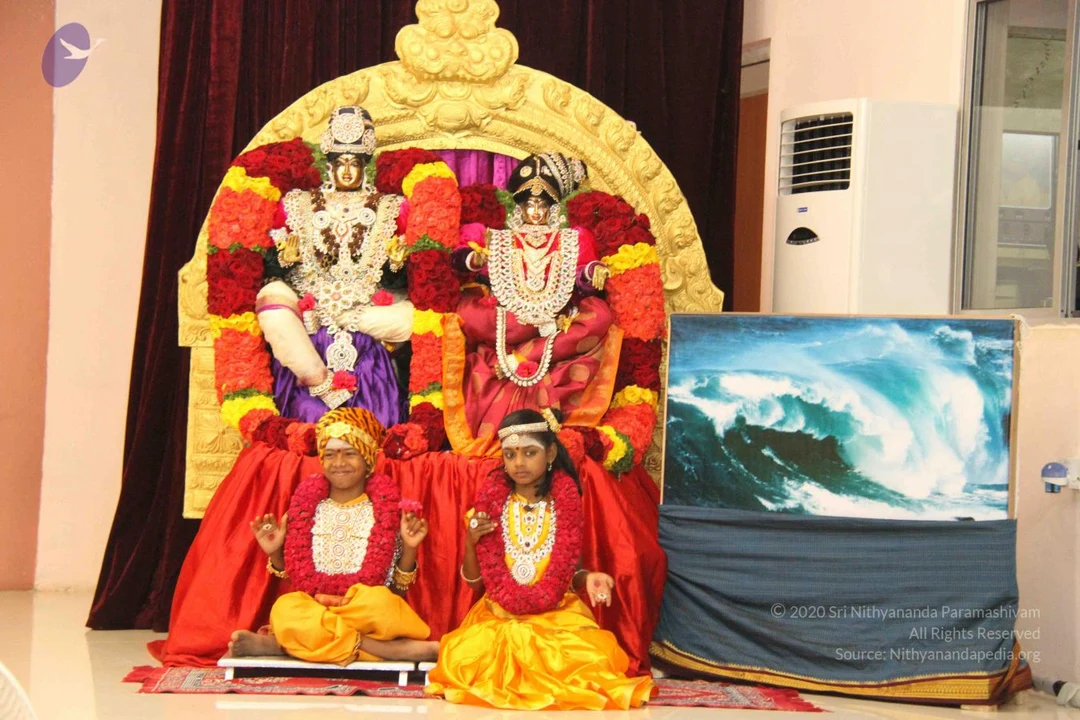
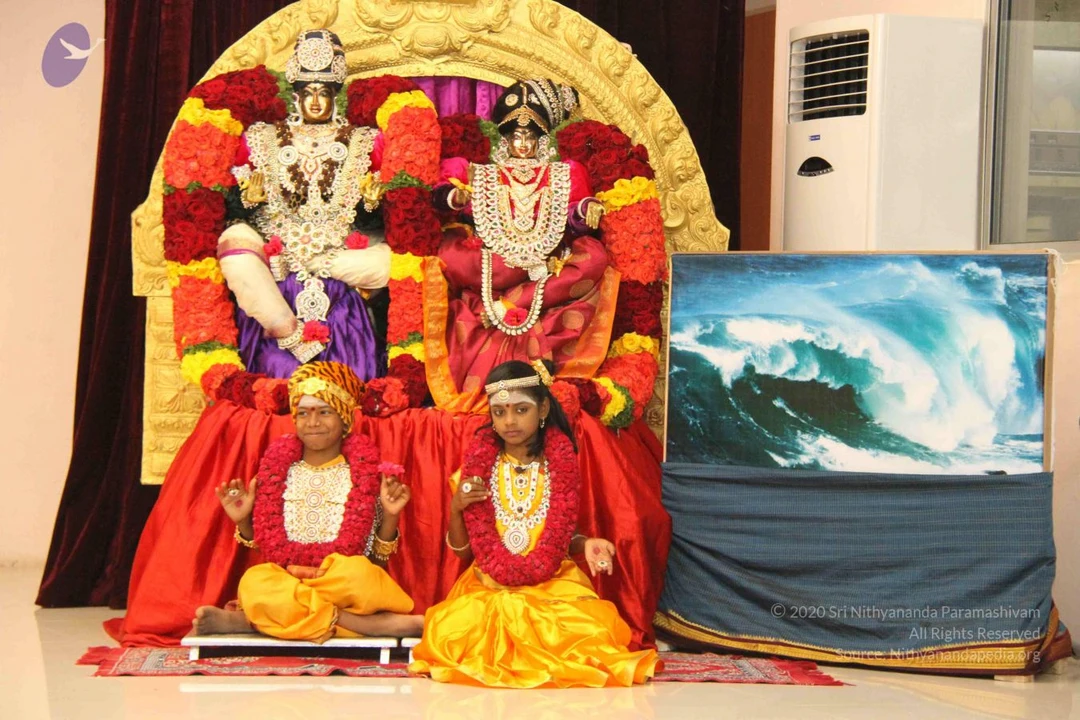
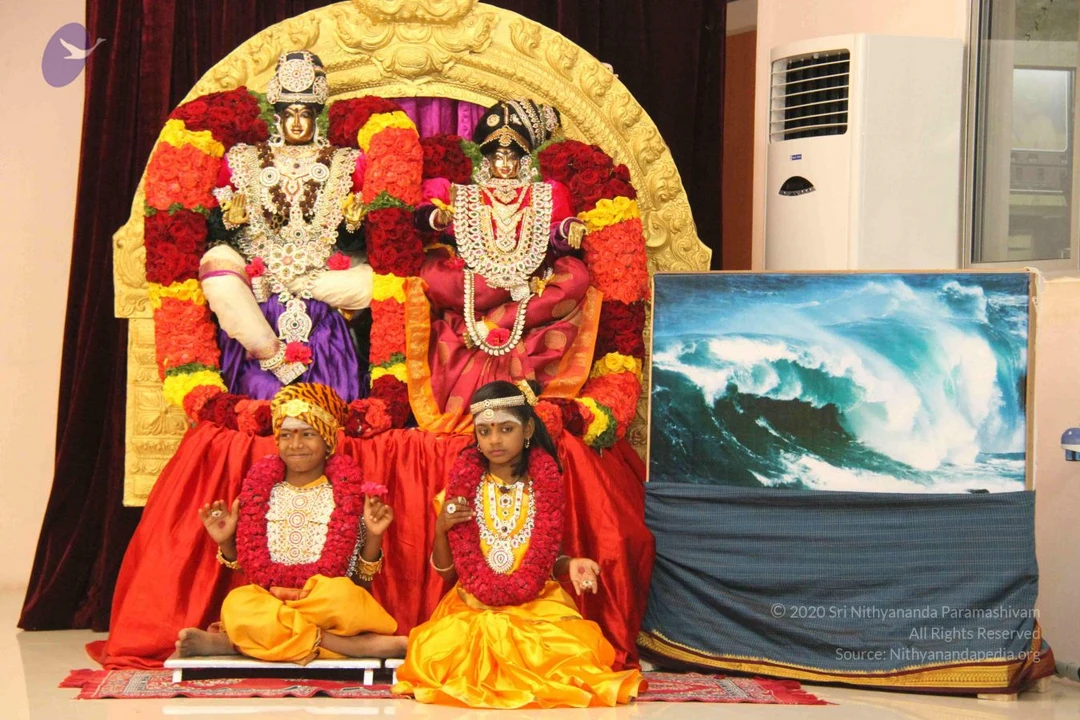
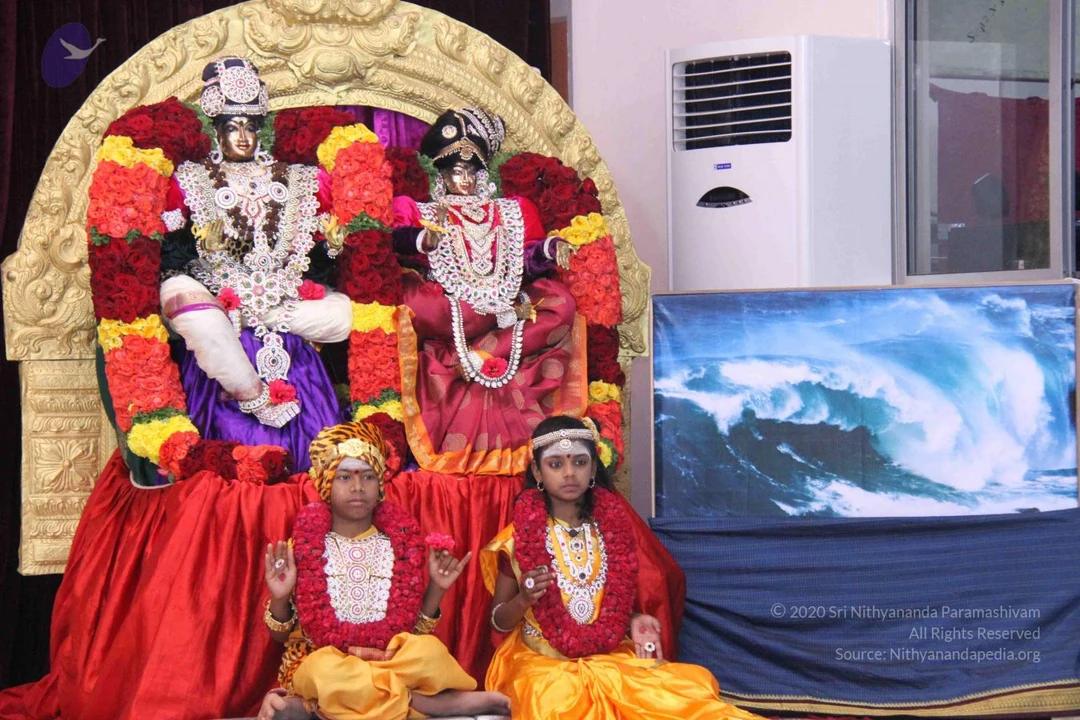
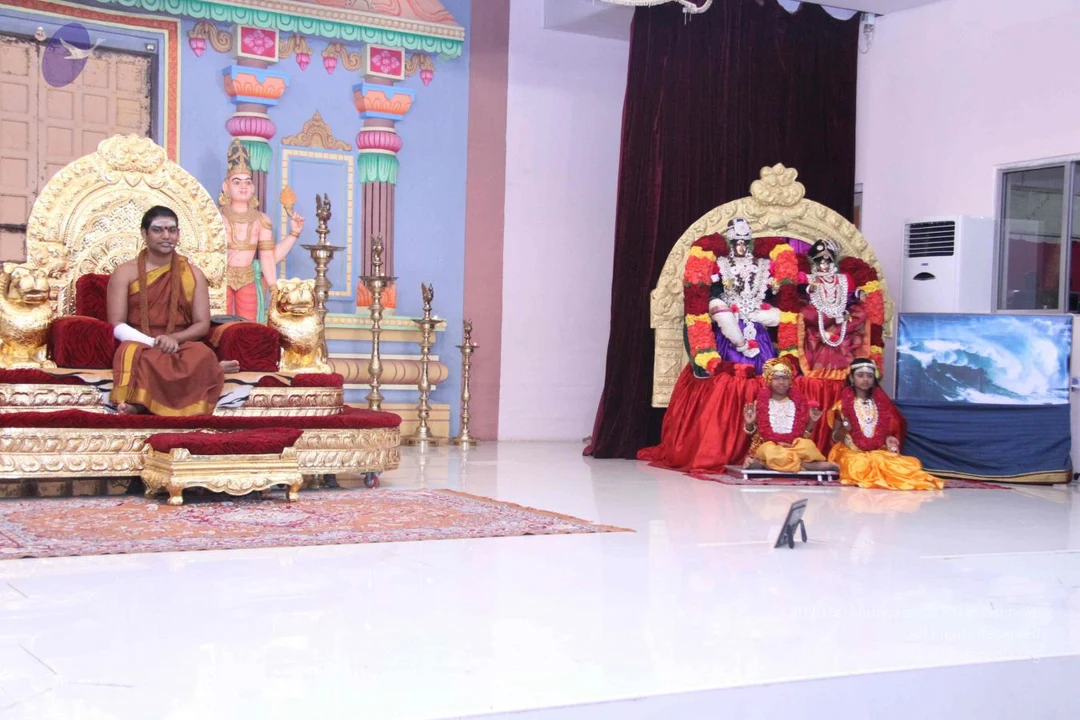
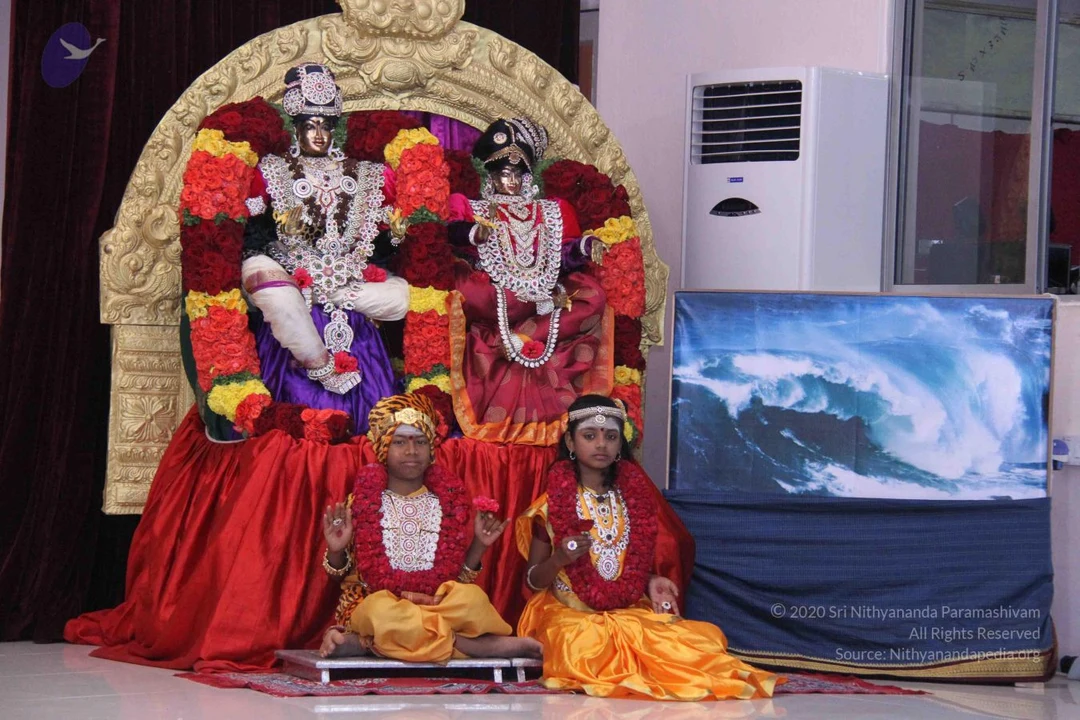
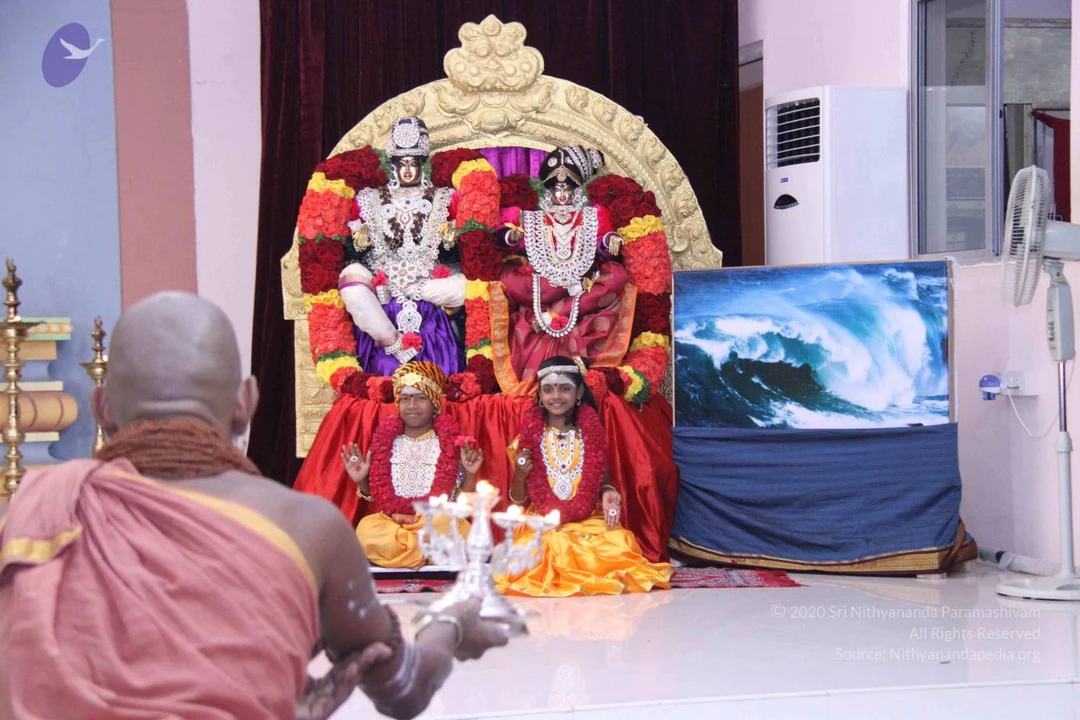
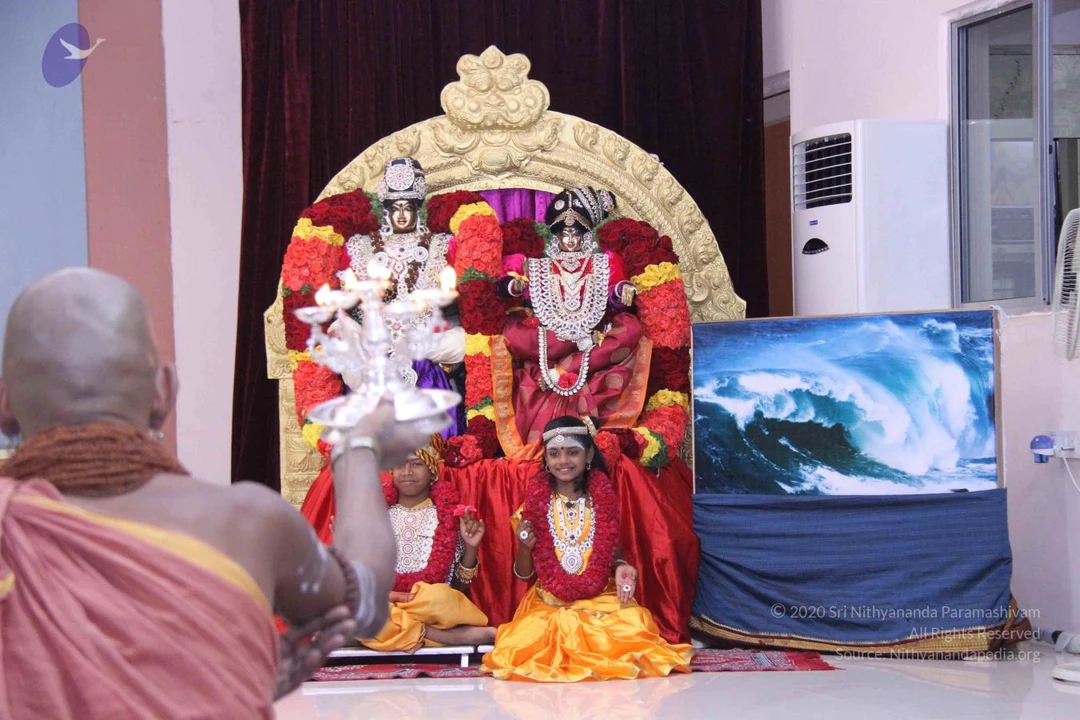
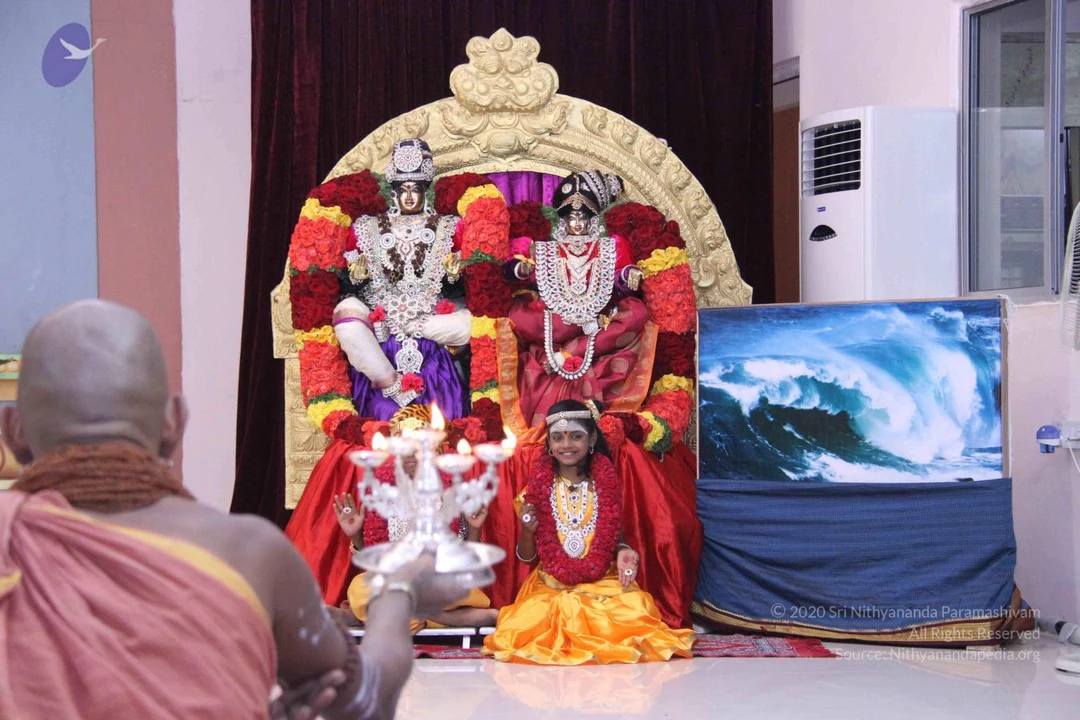
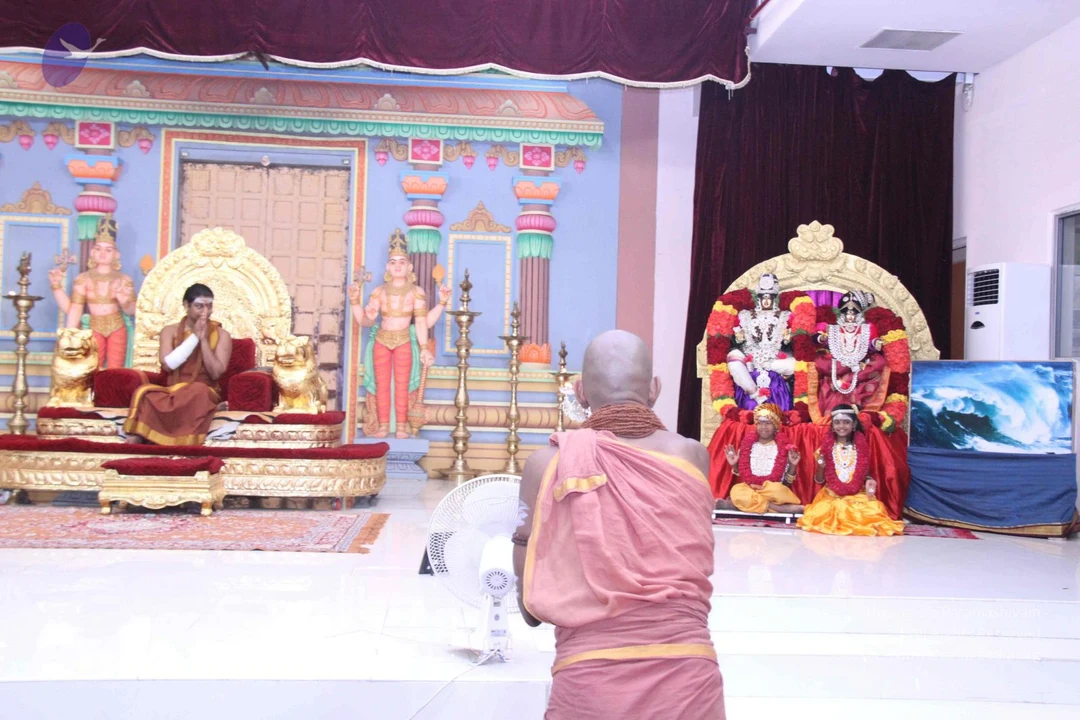
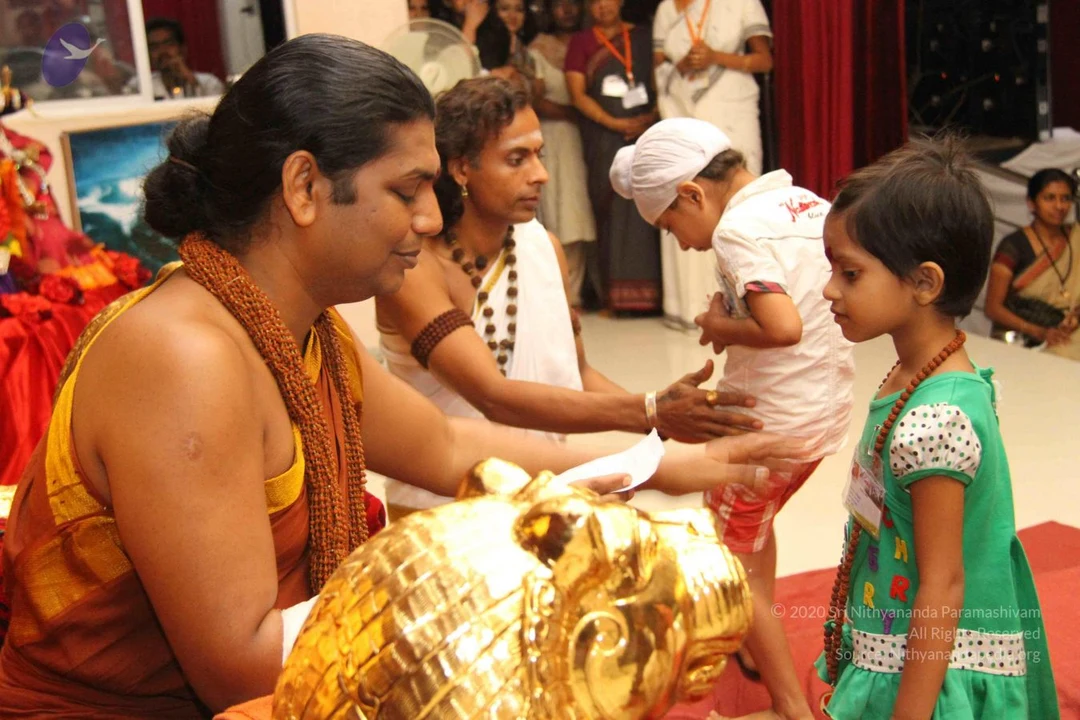
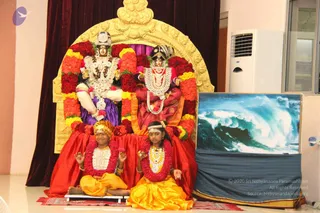
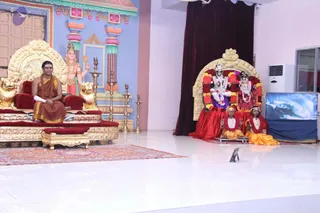
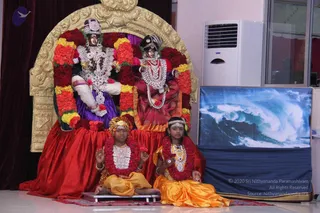
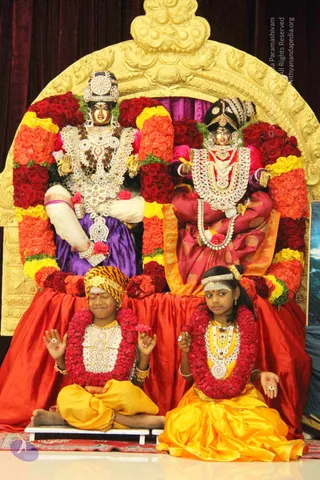
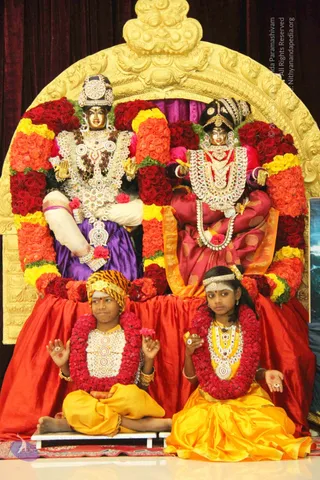
A photograph of a stage display in a bright hall. Two deity murtis, one in a purple garment and one in a magenta sari, sit on a gold-framed throne decorated with red and yellow marigold garlands and silver ornaments. Two children sit cross-legged on the red draped platform in front: a boy in an orange-and-gold turban, yellow dhoti and red garland, and a girl in a yellow dress with a red garland and white necklace, both with hands in mudra. Beside them a large framed photograph of a turquoise ocean wave stands on a dark blue draped stand, and a white air conditioner and maroon curtain fill the background. Two physical people are visible.Two children sit cross-legged on a low white platform in front of a large golden arched shrine framed by red and orange marigold garlands. Behind them, two deity murtis are decorated with white and silver ornaments, crowns and garlands; the left figure wears a purple garment and the right a magenta-red sari. The boy on the left wears a yellow-orange turban, yellow dhoti, red flower garland and white necklace, hands in a meditative mudra. The girl on the right wears a yellow-gold outfit, white head ornament, red garland and white necklace, hands in a similar mudra. A large photograph of a turquoise ocean wave stands to the right beside a blue cloth, with a red-and-white carpet beneath the shrine. A wall-mounted air conditioner is visible in the background.Two children sit cross-legged in front of a golden arched shrine decorated with red and yellow flower garlands. Behind them stand two deity murti: the left in a purple garment with a crown and a silver-and-gold necklace, the right in a red-and-maroon sari with a large silver necklace. A boy in a yellow dhoti and orange-and-gold head wrap, wearing a flower garland and a white beaded necklace, sits on the left with hands in a mudra. A girl in a yellow silk skirt, with a flower garland and a silver necklace, sits beside him with hands in a mudra. To the right stands a framed photograph of a large turquoise ocean wave on a stand. A white wall air conditioner is in the background.A staged scene before a gold arched frame draped with red, orange and yellow marigold garlands, where two deity murtis sit on a red cloth. The left murti wears a purple skirt, white cloth, a jeweled crown and a white beaded necklace. The right murti wears a maroon sari with gold border and a layered white necklace. In front, two young children sit cross-legged in meditation mudra: a boy in an orange-and-gold turban and yellow dhoti with a red garland, and a girl in an orange-yellow dress with a gold headpiece and red garland. A large photograph of a blue ocean wave stands beside them, and a white floor air conditioner is in the background. Three people are visible.A satsang hall with a gilded throne on the left where a man in saffron-orange robes with a gold-edged shawl sits, holding a white cloth, flanked by golden lion-shaped armrests. A standing statue in a blue and pink painted niche holds a staff. On the right, a gilded arch frames deity murtis draped in red and white garlands, with a purple cloth behind. Two children in saffron and orange clothing with rudraksha malas sit cross-legged on the floor before the murtis, and a brass lamp stand and oil lamps stand nearby. A framed ocean wave picture is visible at right. Visible people: the seated man and two children, three in total.A photograph of a staged scene in a bright indoor hall. Two child performers sit cross-legged on a low wooden platform in front of an ornate golden arch decorated with red and yellow marigold garlands. Behind them stand two large deity murti figures: the left wears a purple garment and white and silver ornaments, the right wears a magenta sari with a silver crown. The boy in front wears a saffron-and-gold turban and a red-and-white garland, and makes a mudra with his hands. The girl beside him wears a yellow-orange silk dress, a silver headpiece and a white garland, and holds a red flower. A red silk cloth covers the floor, and a framed photo of ocean waves stands to the right beside a white floor air conditioner.

NithyaSatsang_Swamiji

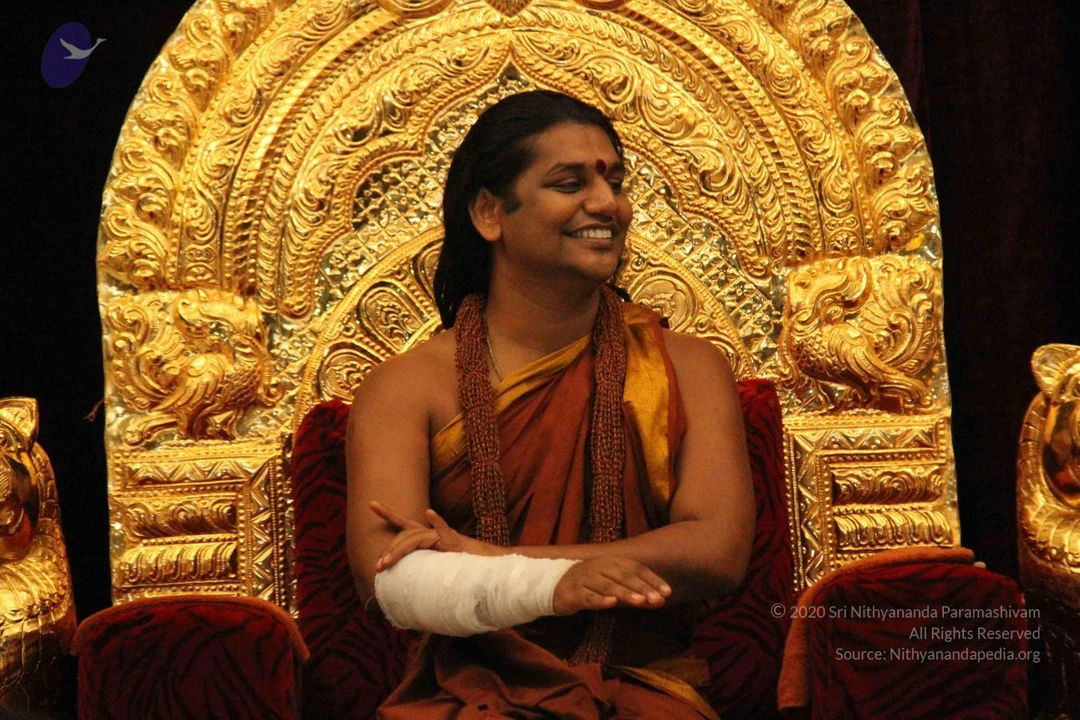
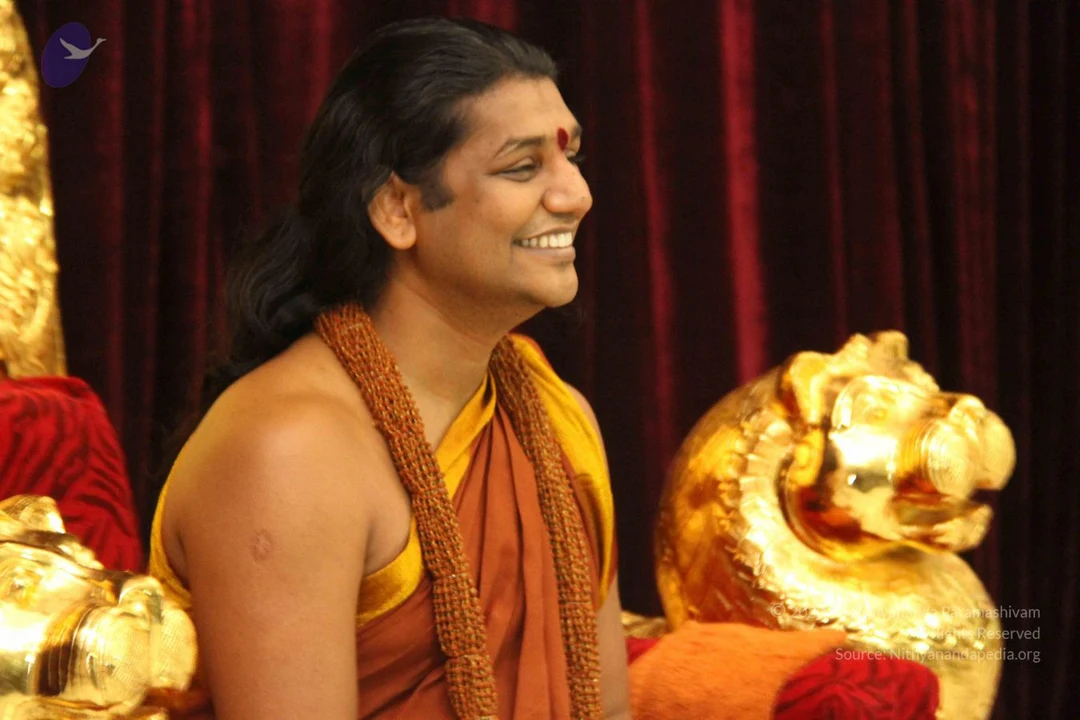
19 photosSource gallery
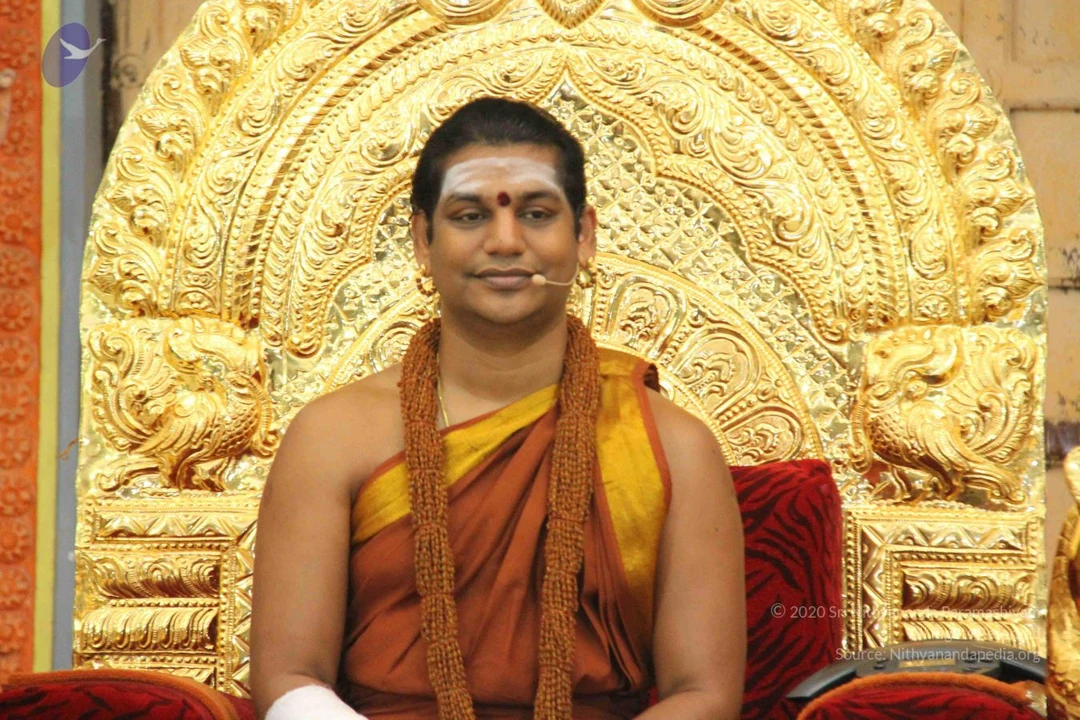
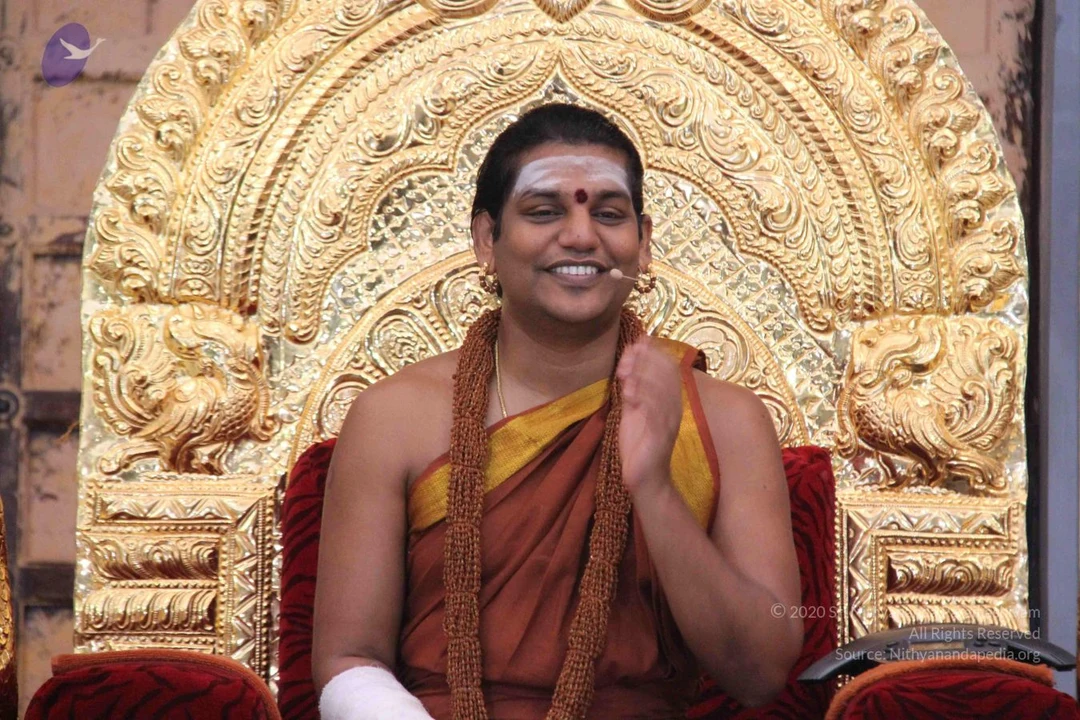
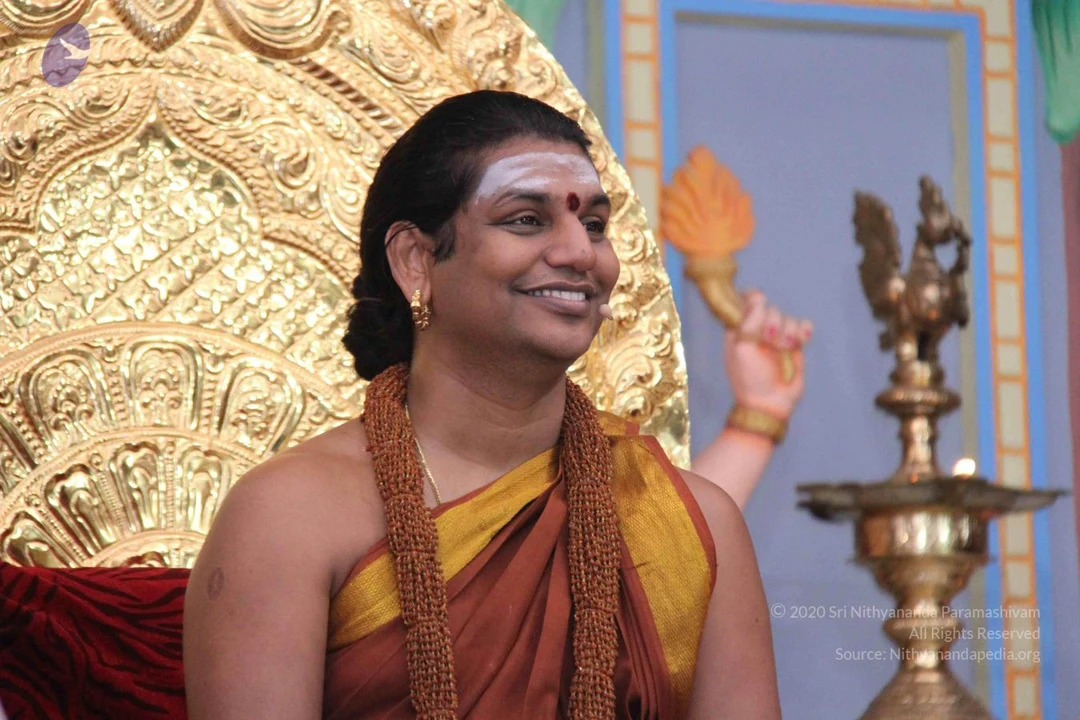
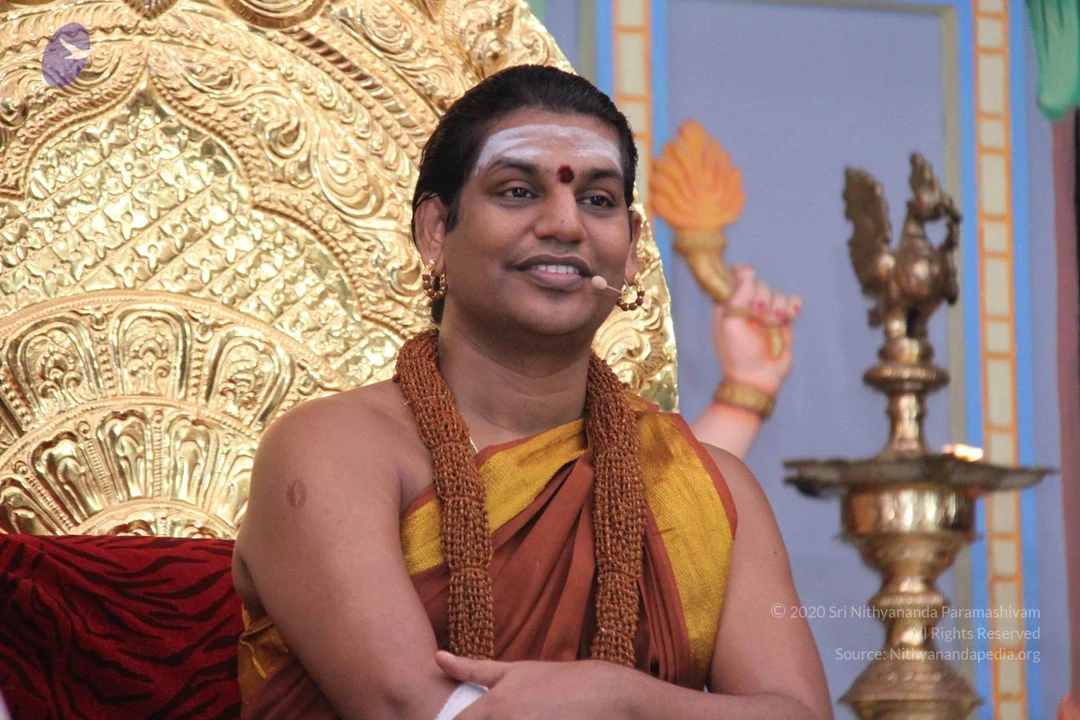
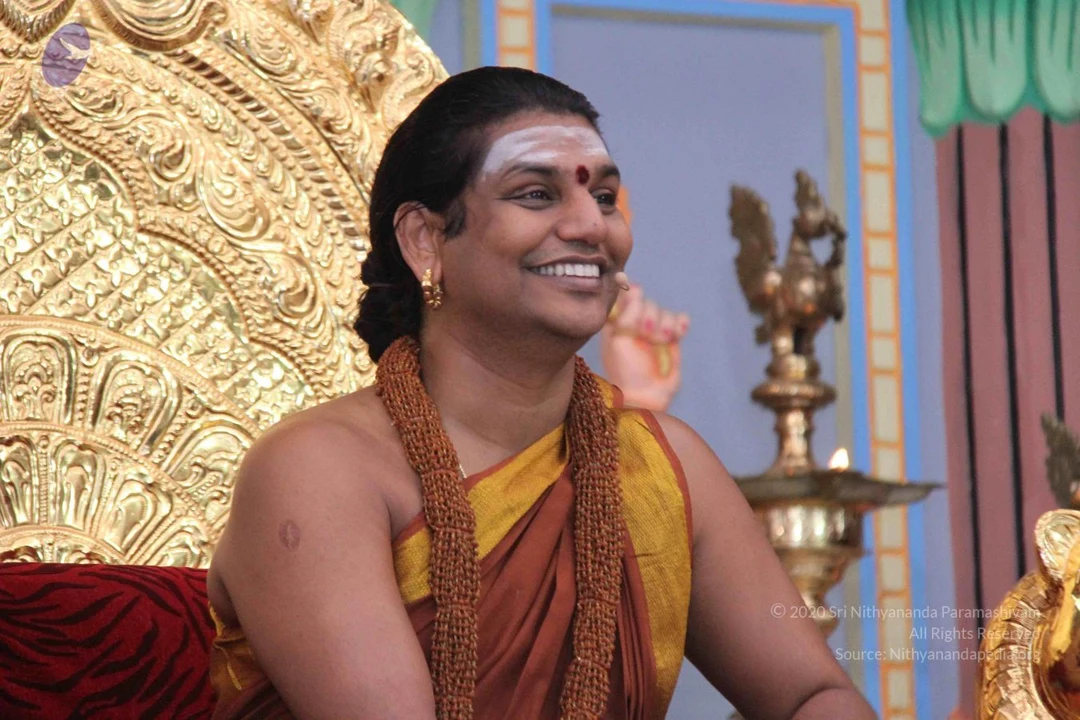
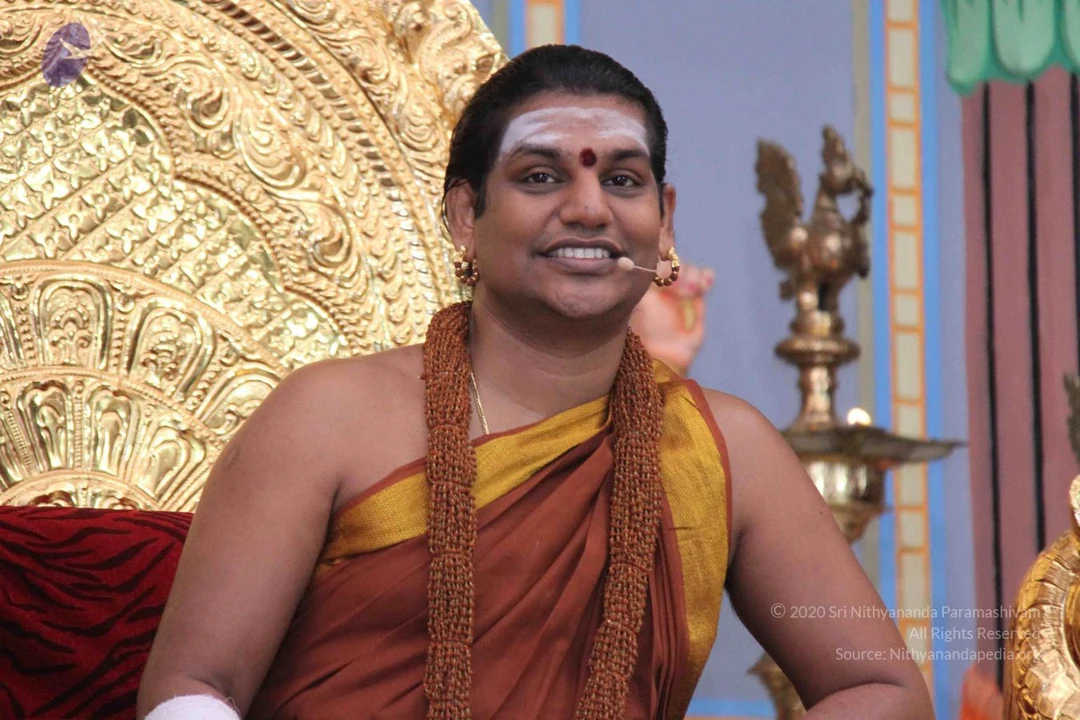
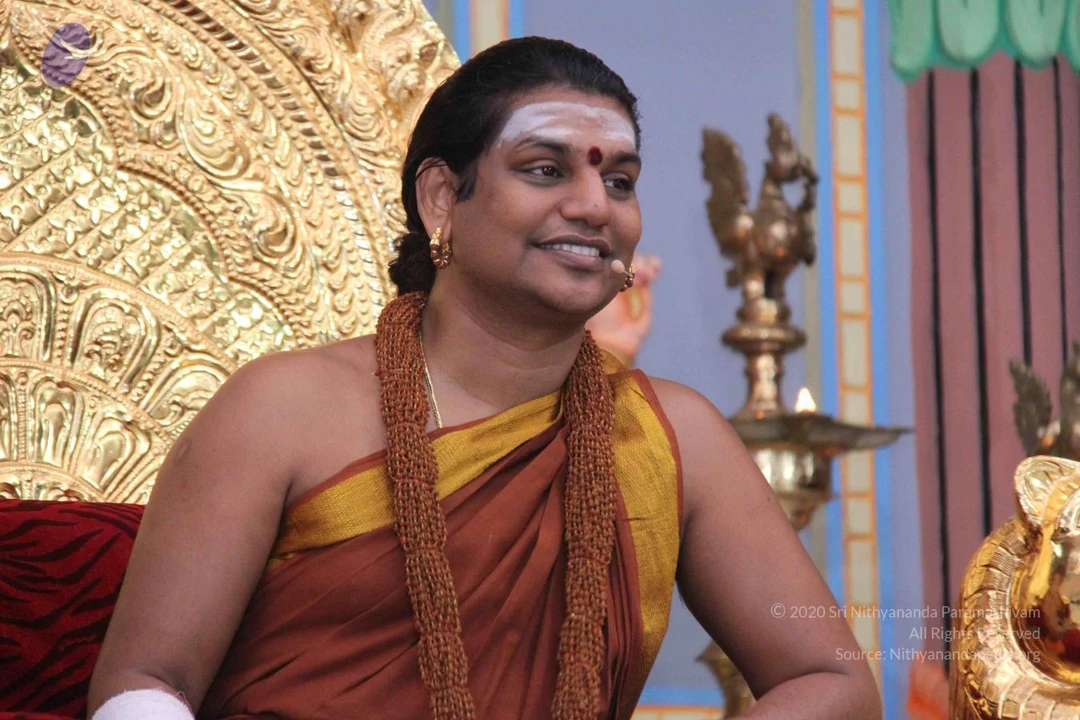
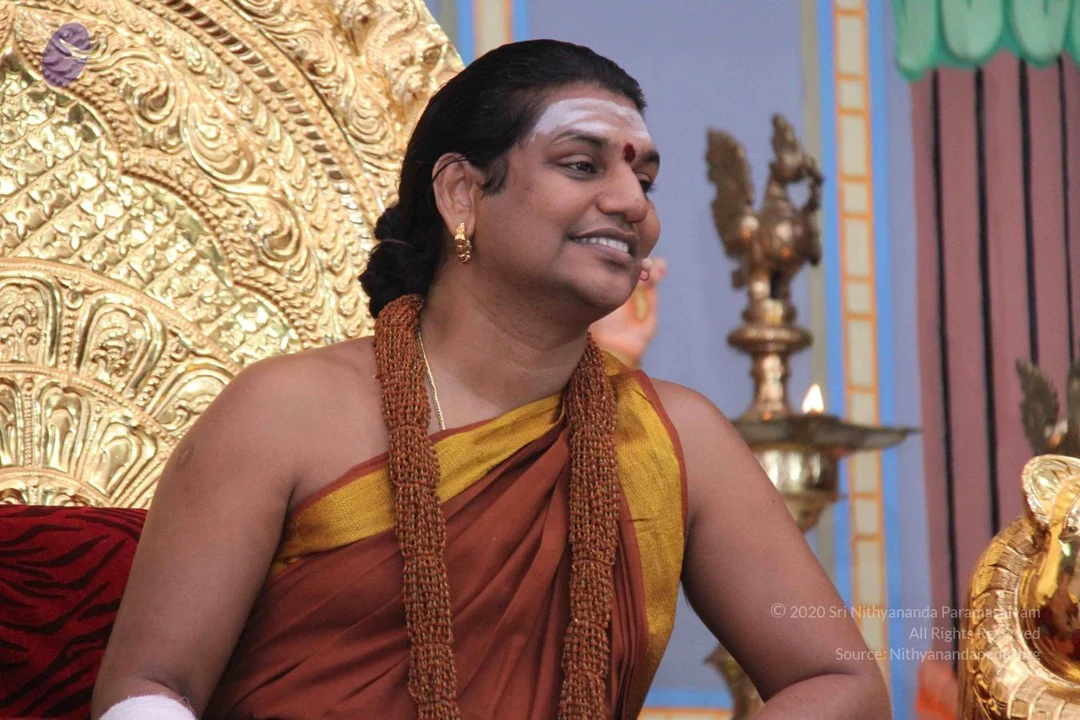
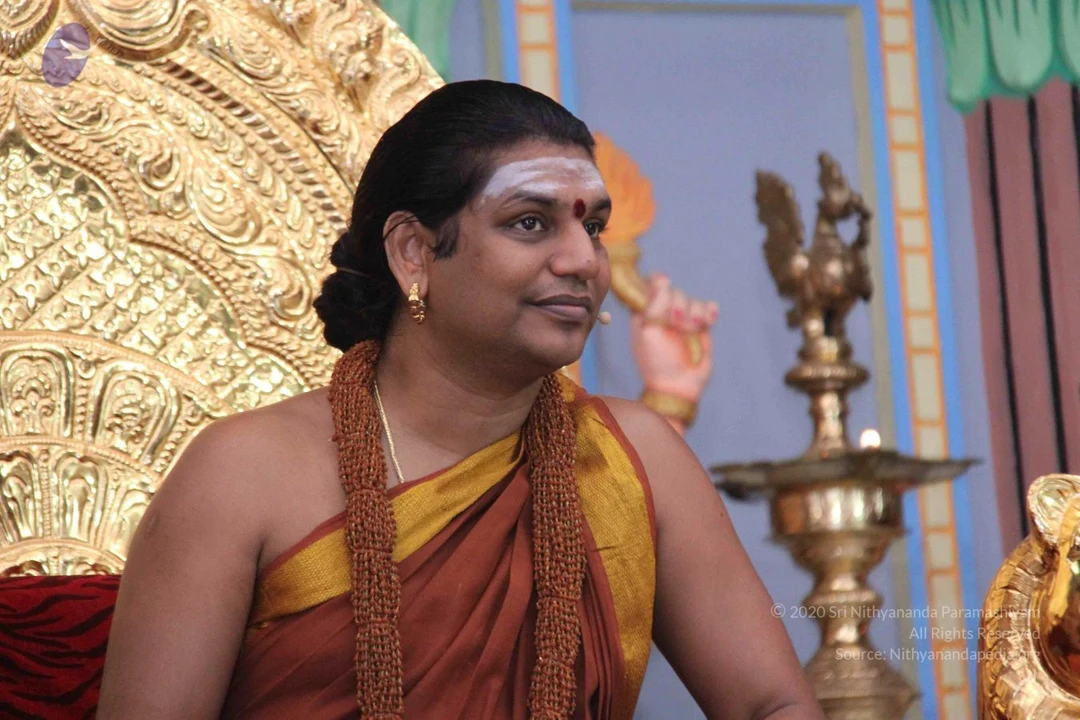
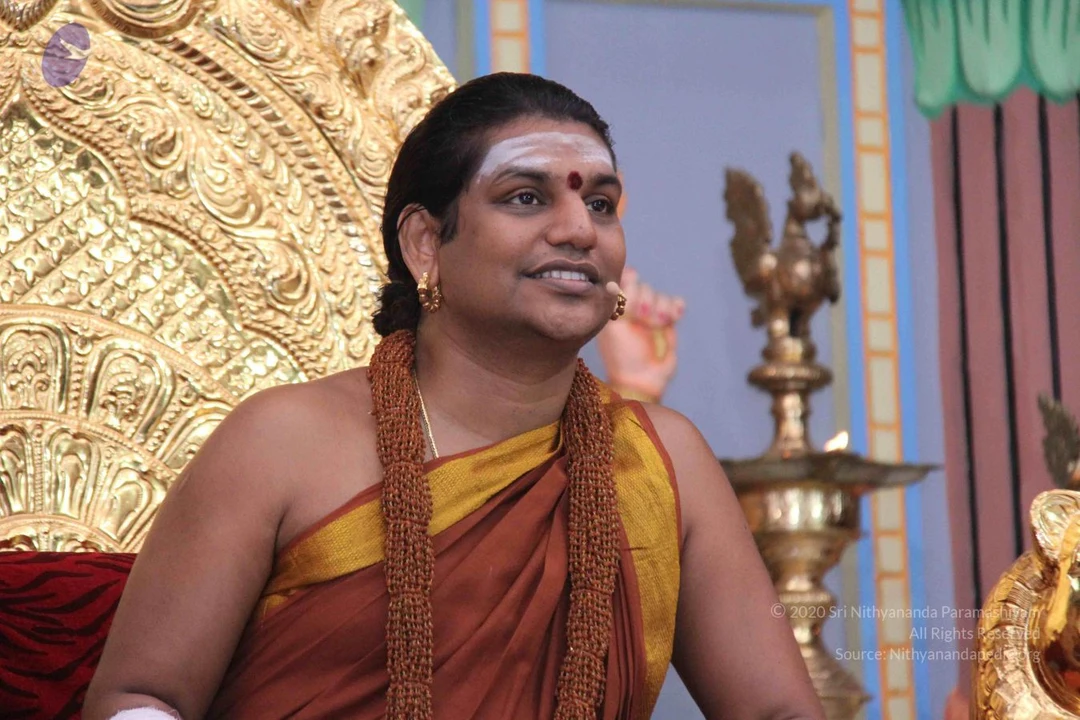
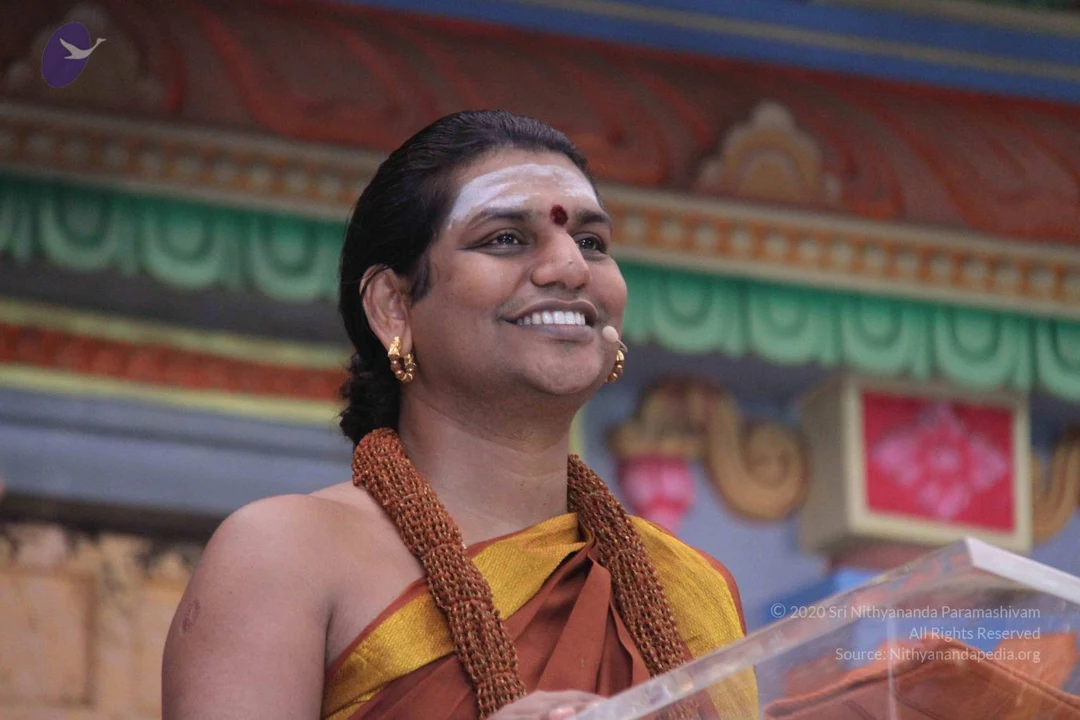
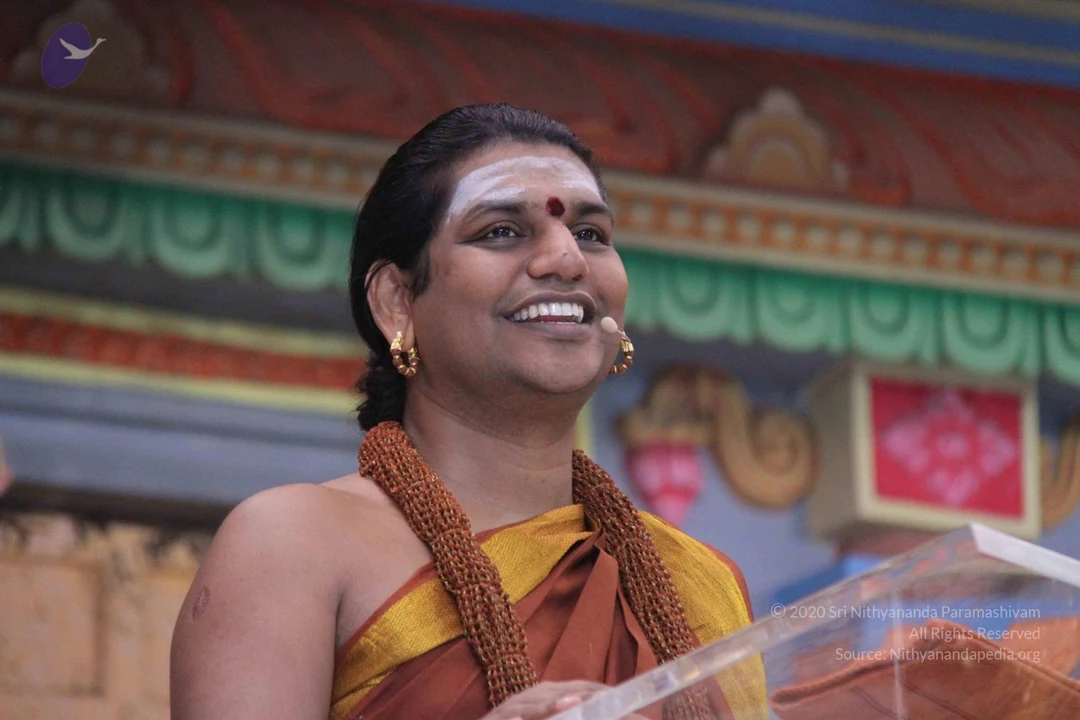
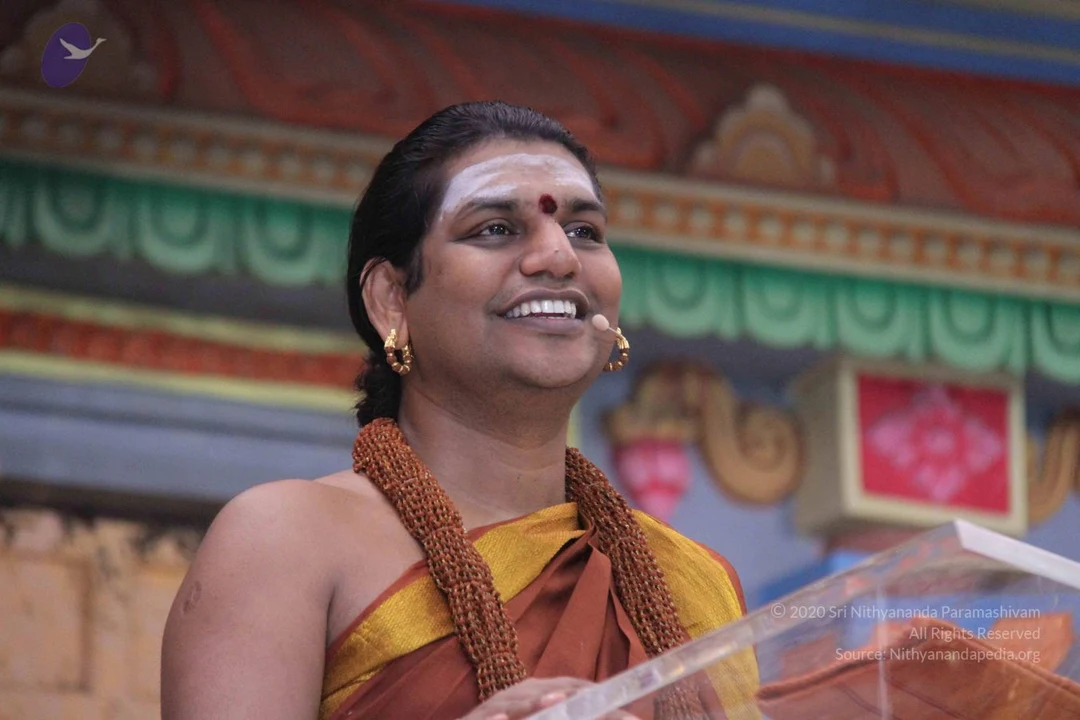
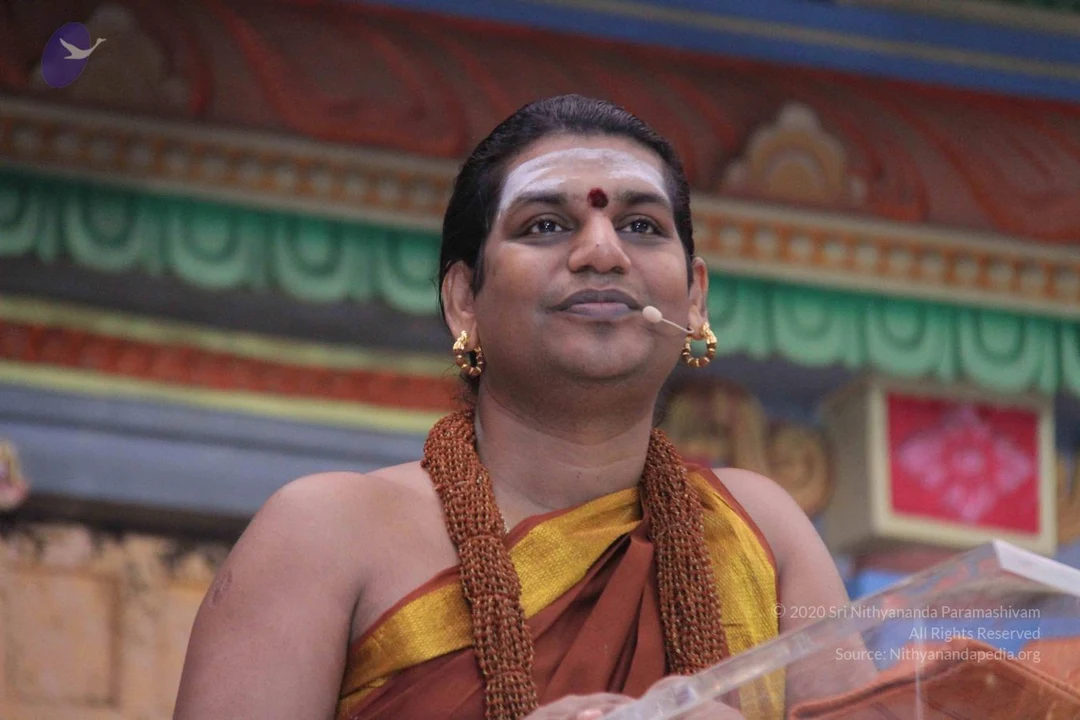
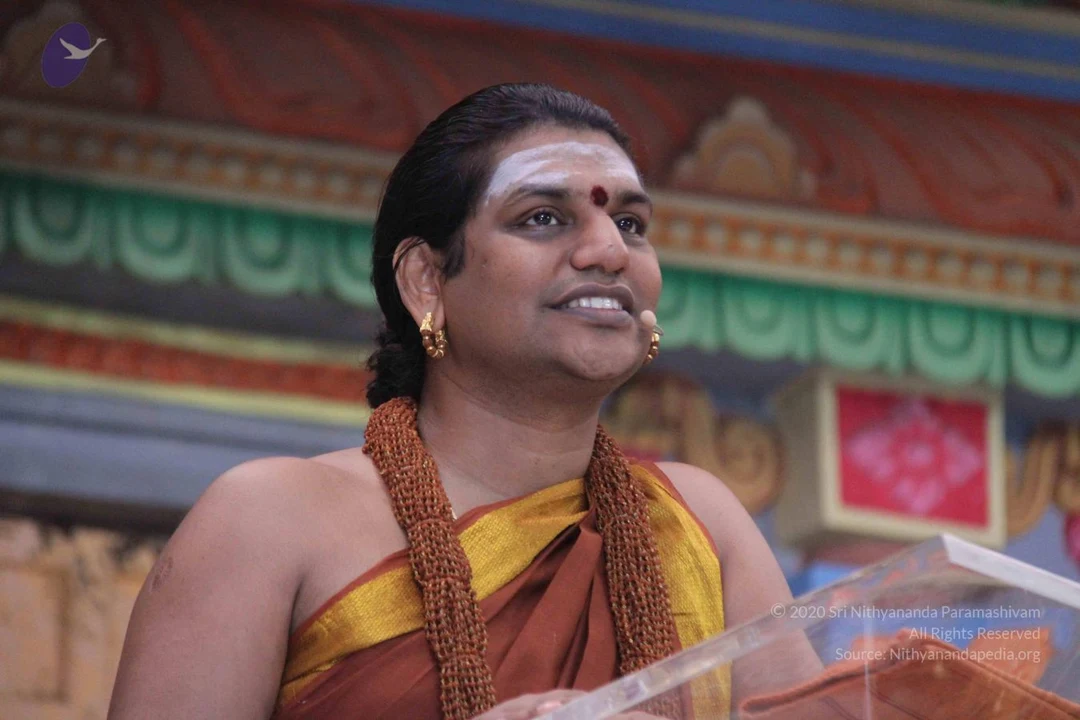
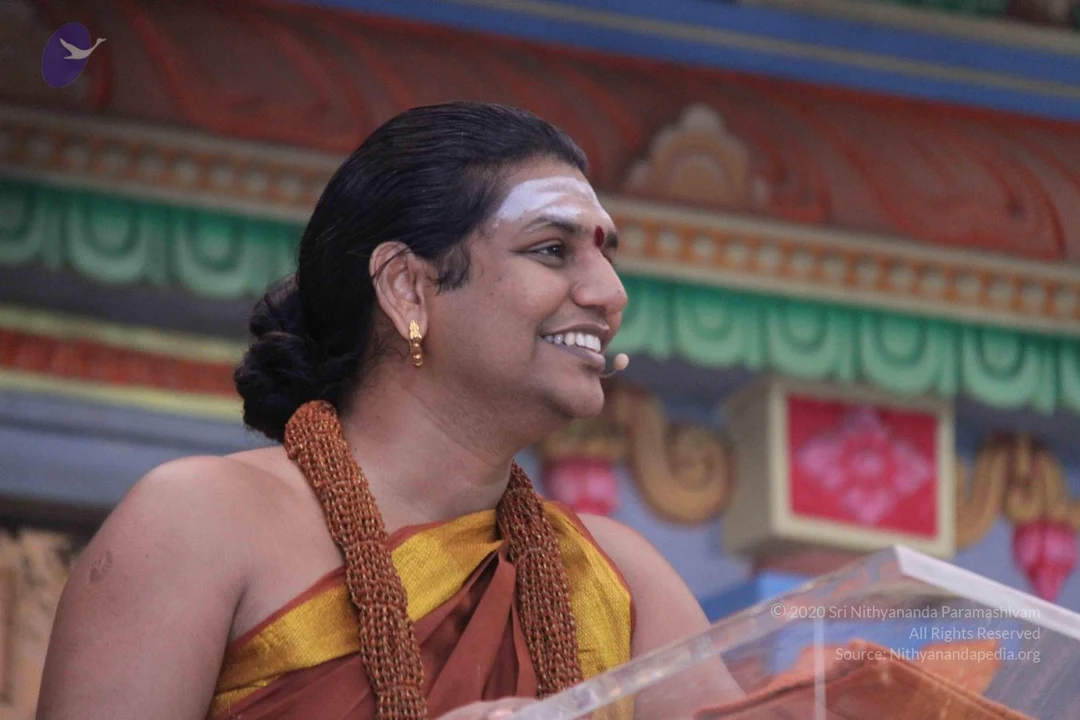
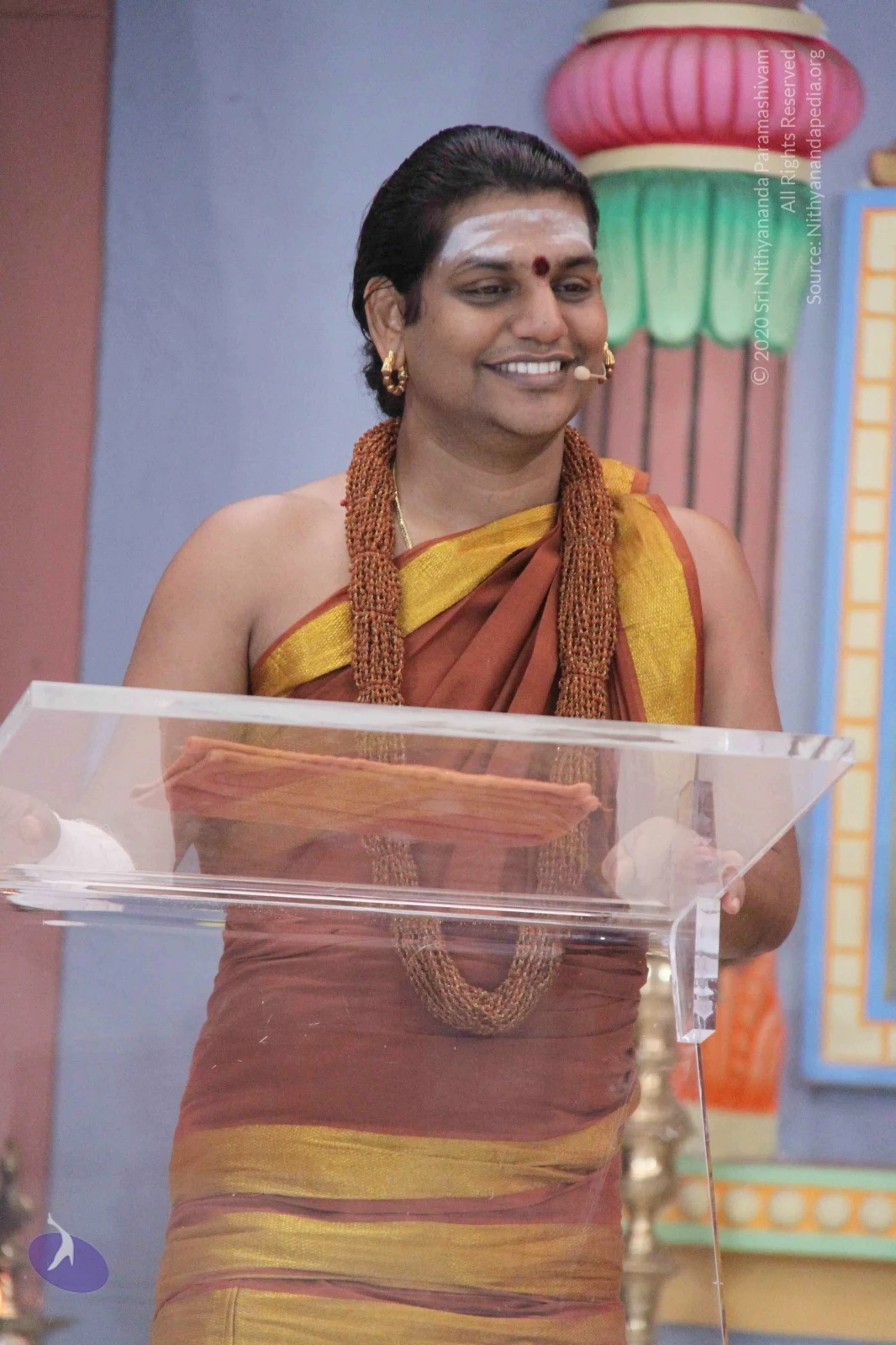
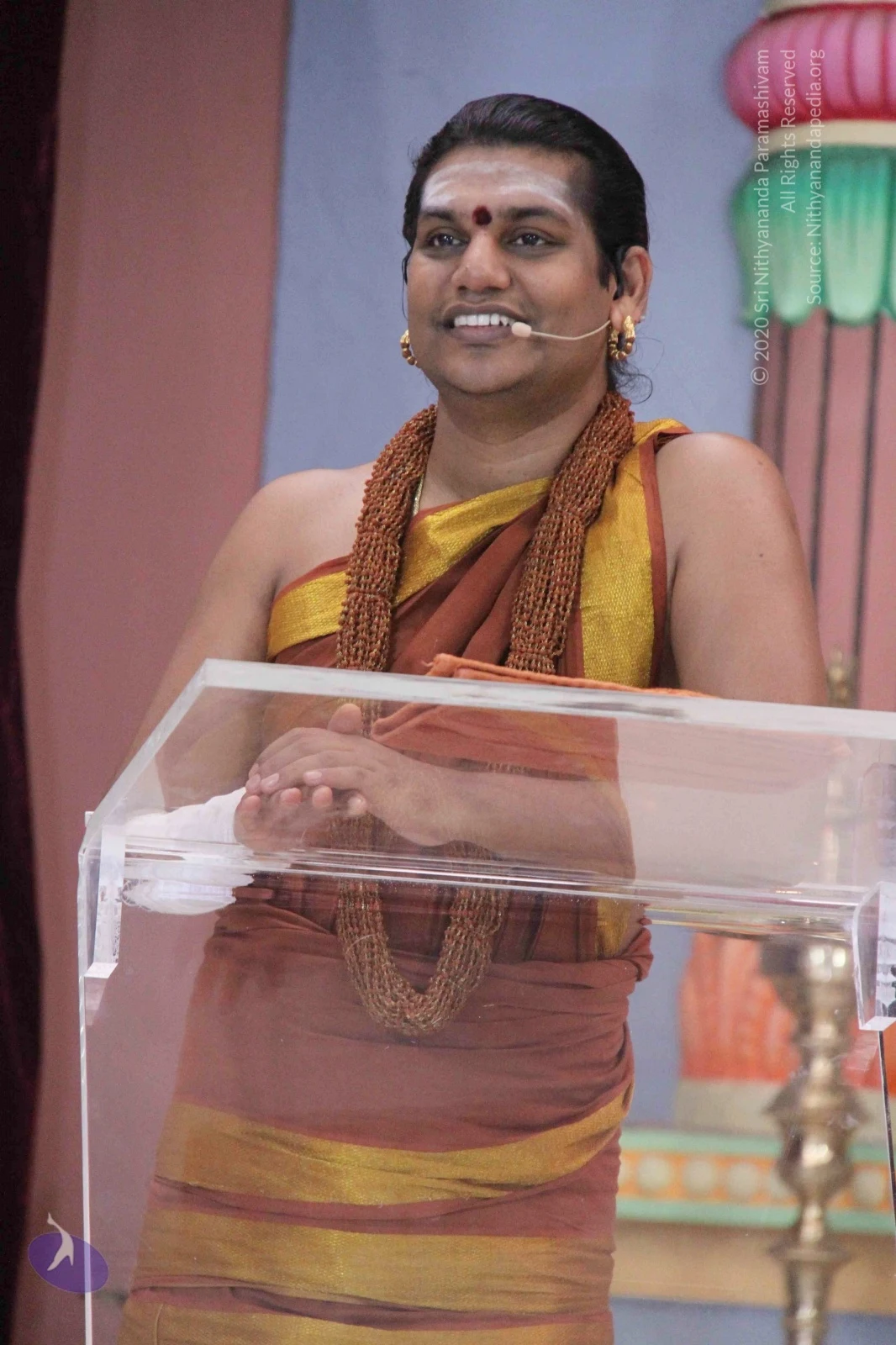
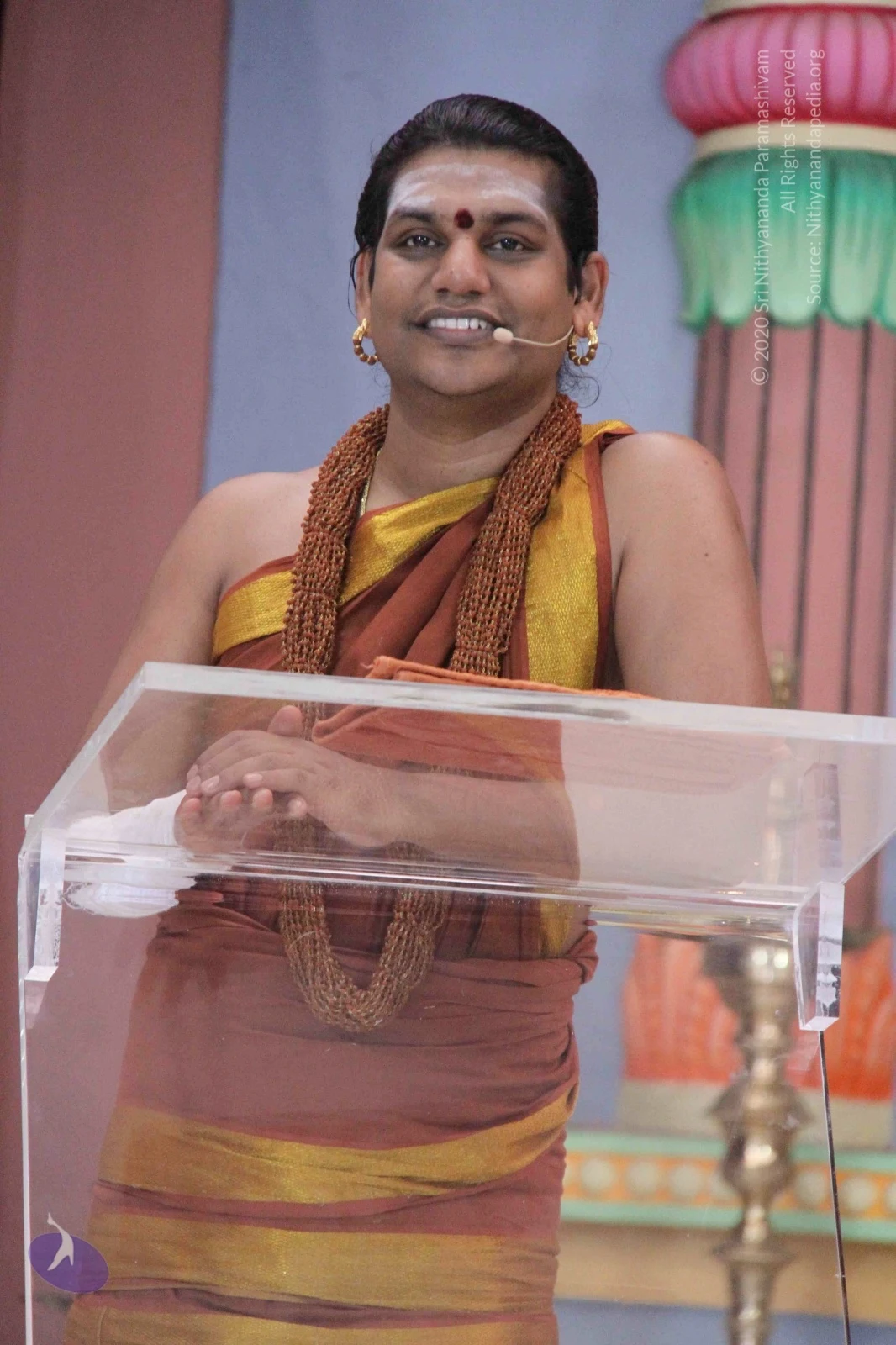
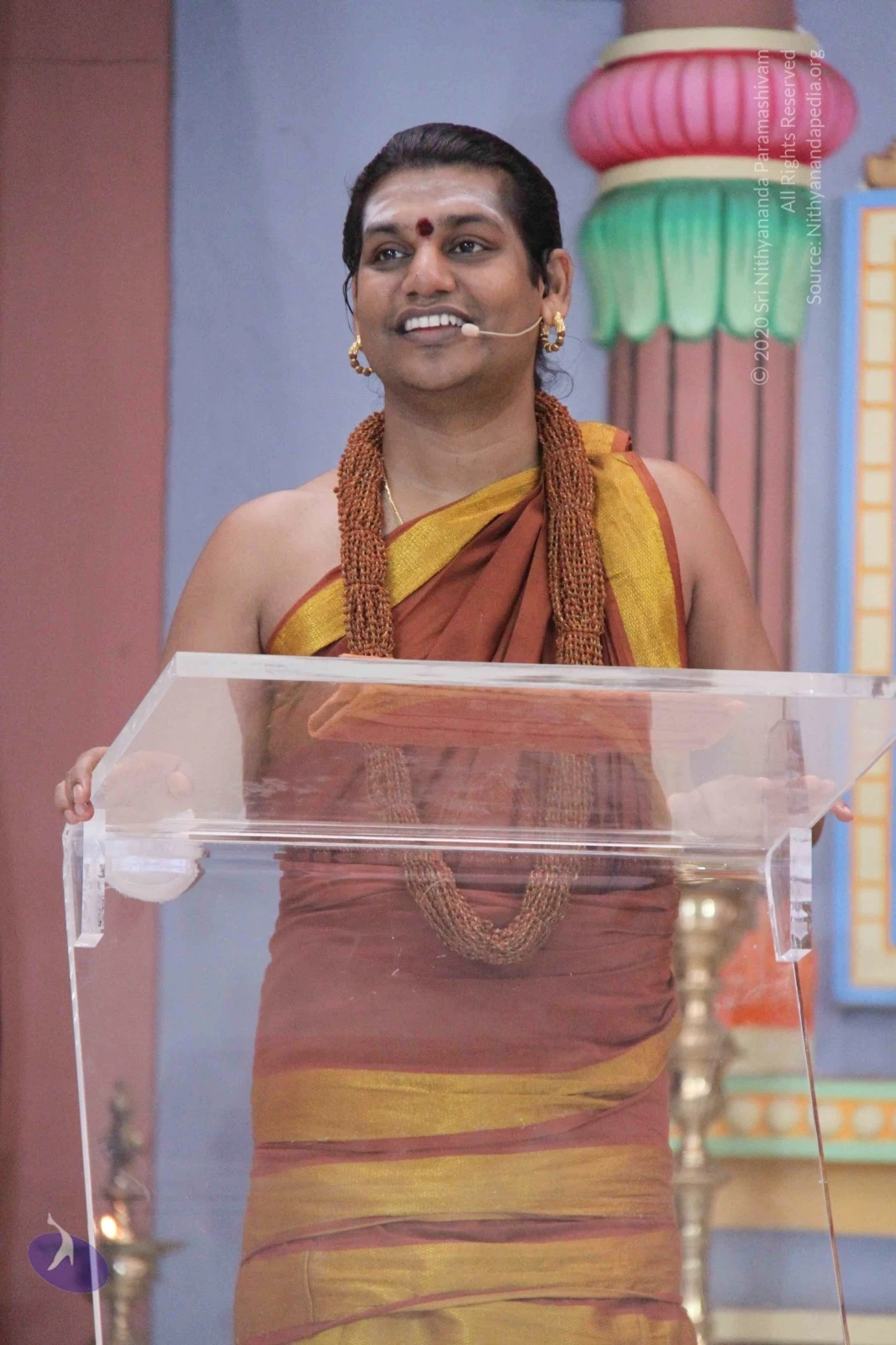
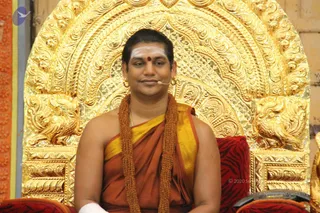
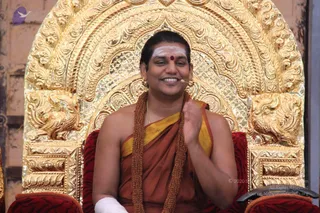
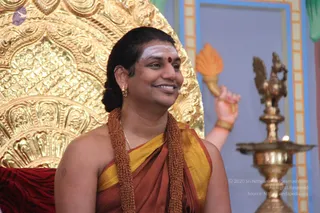
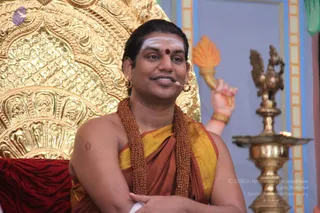
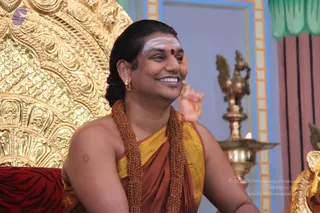
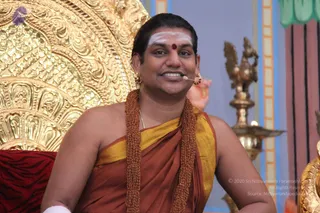
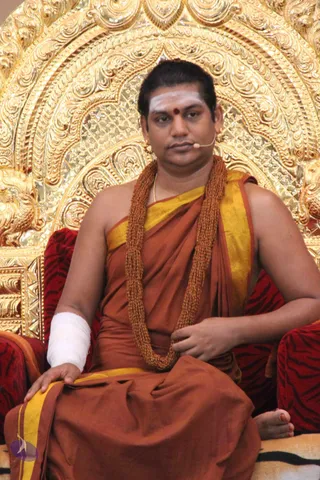
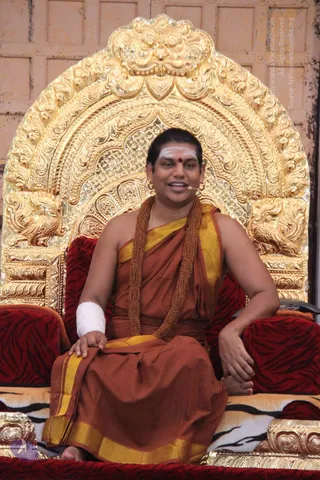
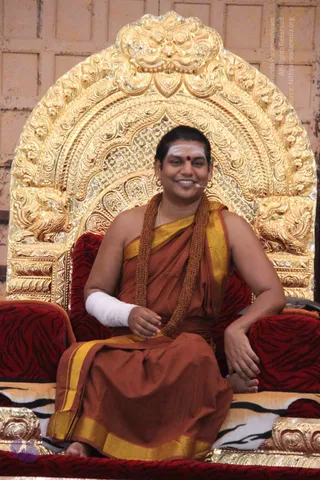
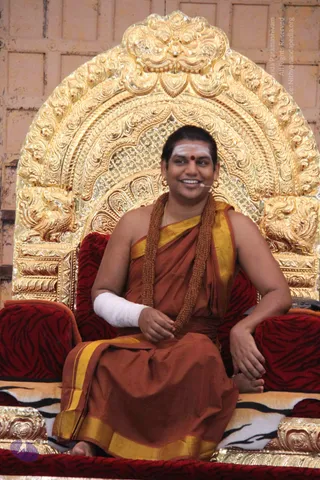
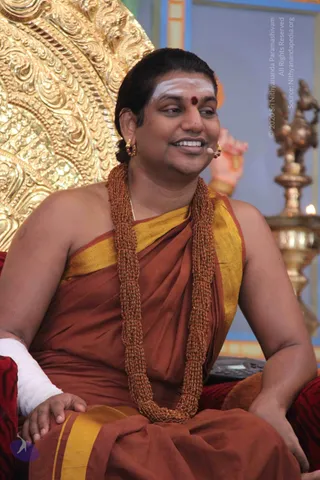
A man seated on an ornate gilded throne with carved floral and scrollwork panels and rearing lion-like figures at its sides. He wears an orange-rust robe over a yellow upper cloth, with a long rudraksha mala draped over his shoulders and a fine gold chain at his neck. He has a white vertical tilak and a red bindi on his forehead, and a small microphone clipped near his face. Red and zebra-striped cushions surround the throne, and an orange wall panel is at the left edge. a person is seated in the frame as the satsang speaker, identified by the clustered cues of rudraksha mala, ceremonial gold necklace, saffron clothing and throne placement.A man seated on an ornate gold-leaf throne with carved lion-like finials and red velvet cushions, smiling and raising one hand mid-gesture while speaking. He wears a saffron-orange robe with a gold border, long rudraksha malas down his chest, a small gold chain, gold earrings, a white vertical tilak on his forehead with a red dot, and a bandage on his wrist. A small clip-on microphone is attached near his mouth.A photograph of a smiling man seated before an ornate gold throne-back with repoussé floral and scroll carving. He wears a rust-orange wrap with a gold border, a long rust-and-gold rudraksha-style mala of woven beads around his neck, gold earrings and a gold bangle on his raised wrist. A white vibhuti tripundra with a red kumkum dot marks his forehead, and he holds a gold ceremonial torch-like staff. To the right stands a brass oil lamp with a lit flame and a bird-shaped finial on a pillared stand. The background shows blue and yellow panels. Probable Swamiji: long swept-back hair, rudraksha mala and ornate gold jewellery; a single person seated on the stage.A photo of a man seated on an ornate gold throne with a golden fan-shaped backrest and a red tiger-stripe cushion. He wears a rust-orange and gold-bordered shawl, a long brown-beaded necklace, and gold earrings, with white vertical forehead markings and a red bindi. He smiles while speaking into a small headset microphone, arms crossed. Beside him stands a brass oil lamp with a lit flame and a brass deity figure on a pedestal, and a gold-painted torch motif is visible in the blue-and-gold backdrop.Photograph of a smiling man seated on an ornate gold throne with carved floral designs and red tiger-print upholstery. He wears a saffron-orange cloth draped over a yellow-gold garment, long rudraksha mala beads, a white vibhuti line with a red kumkum dot on his forehead, and a small earring. A small microphone is clipped near his face. Behind him stand a gold peacock figure and a lit brass oil lamp. Probable Swamiji by appearance: long swept-back hair, ornate saffron-orange clothing and rudraksha malas, seated in a satsang setting. One person visible.A smiling man with a short dark hairstyle sits on an ornate gold throne with a red tiger-striped cushion. He wears a rust-orange shawl with a gold border over his shoulders, and long rudraksha-style beaded necklaces hang on his chest, with a thin gold chain visible. He has a white vertical forehead mark and a red bindi, gold earrings, and a small clip-on microphone near his mouth. Behind him stand a brass lamp with a bird-shaped finial and a gold ornamental figure, with blue and green drapery in the background.

SarvaDarshan

10 photosSource gallery
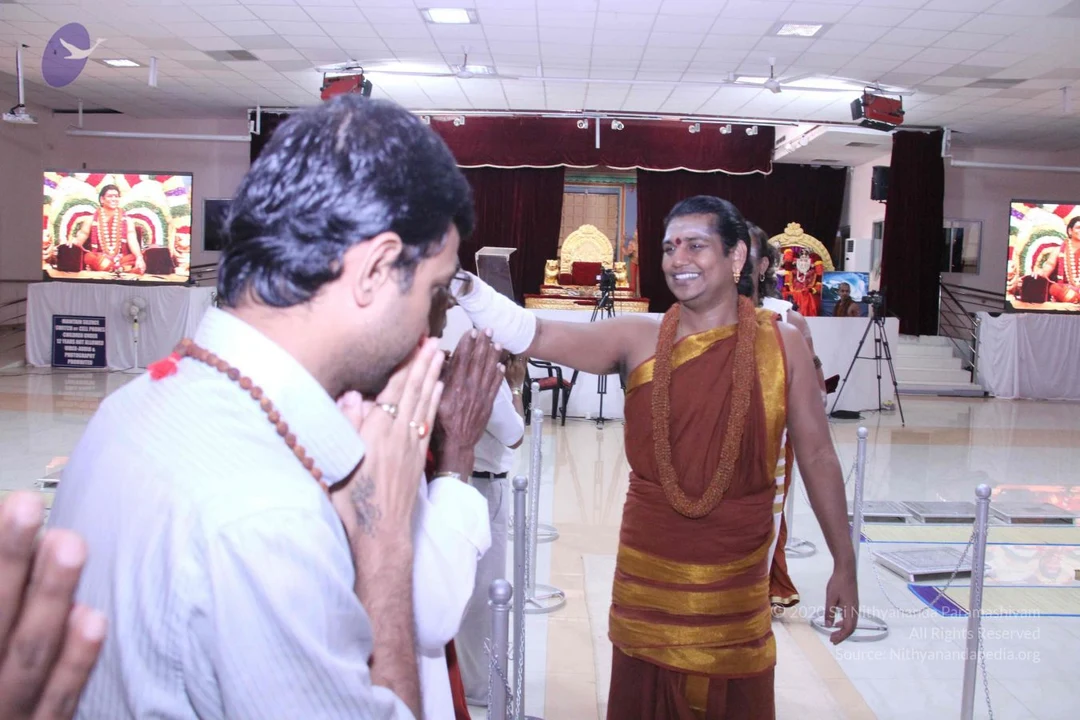
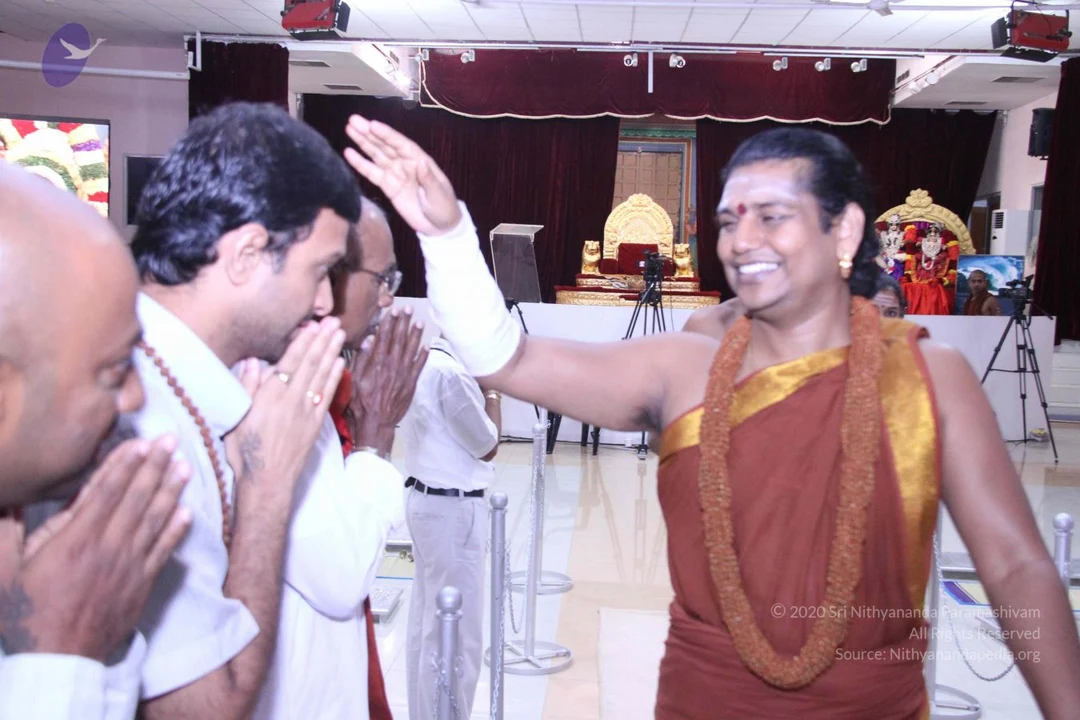
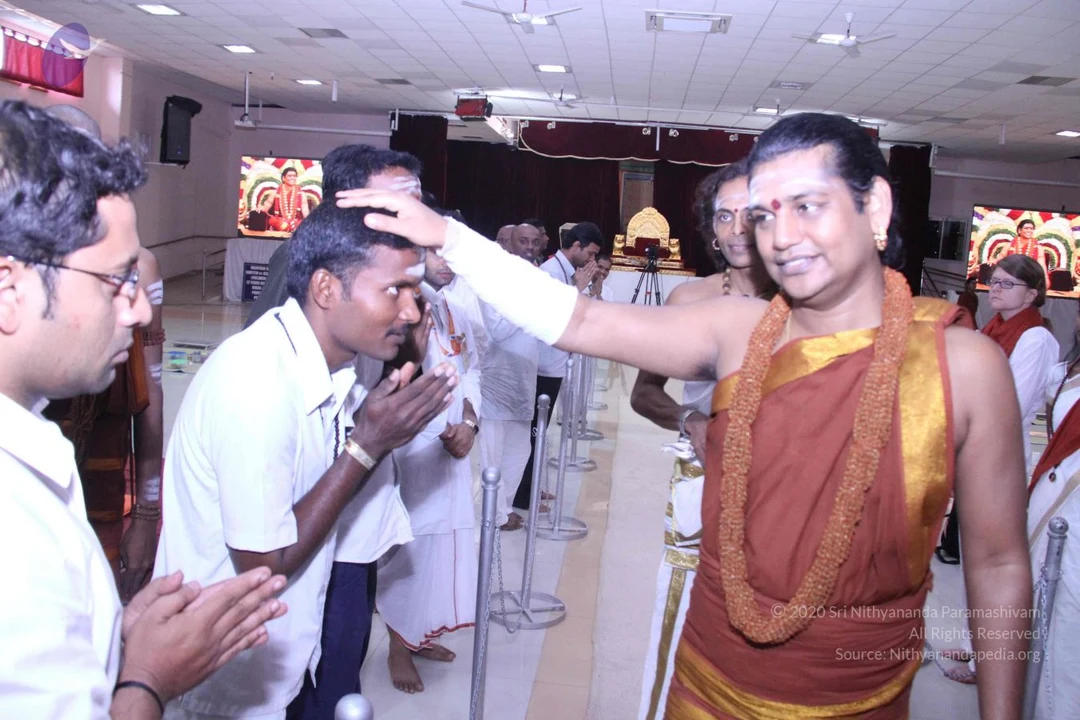
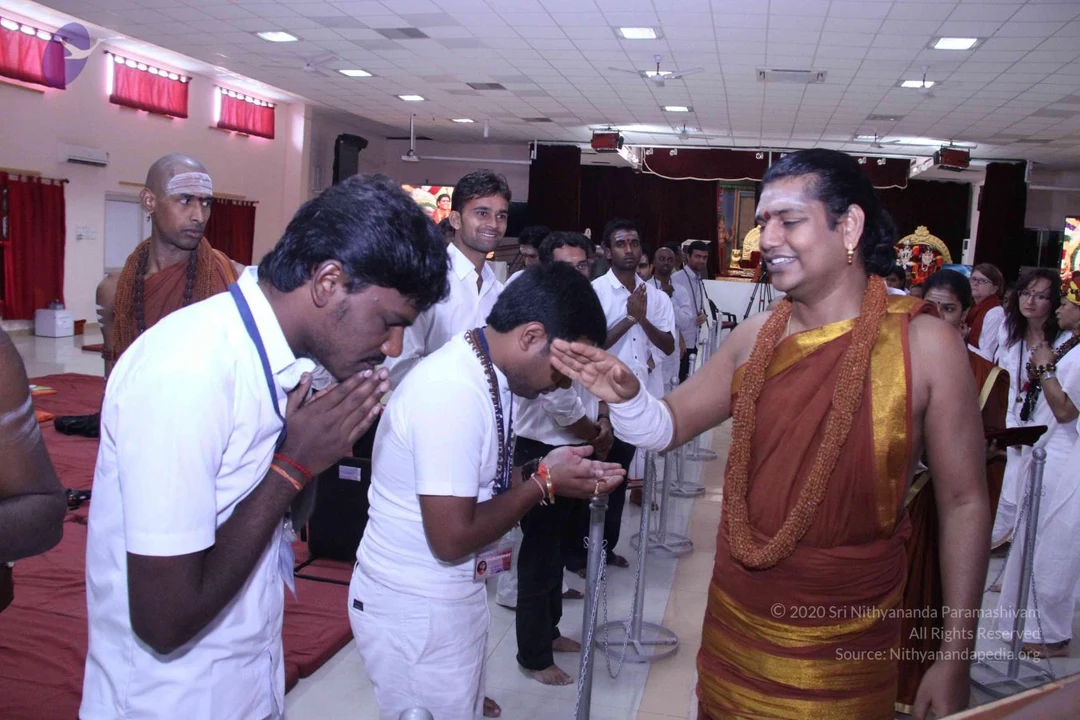
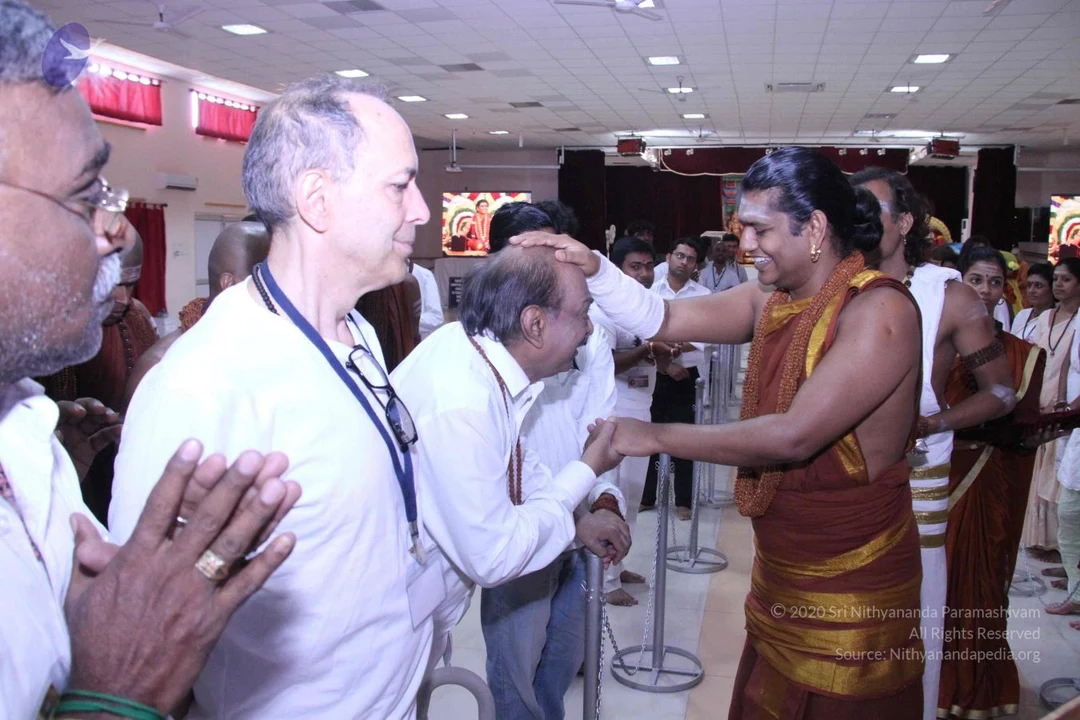
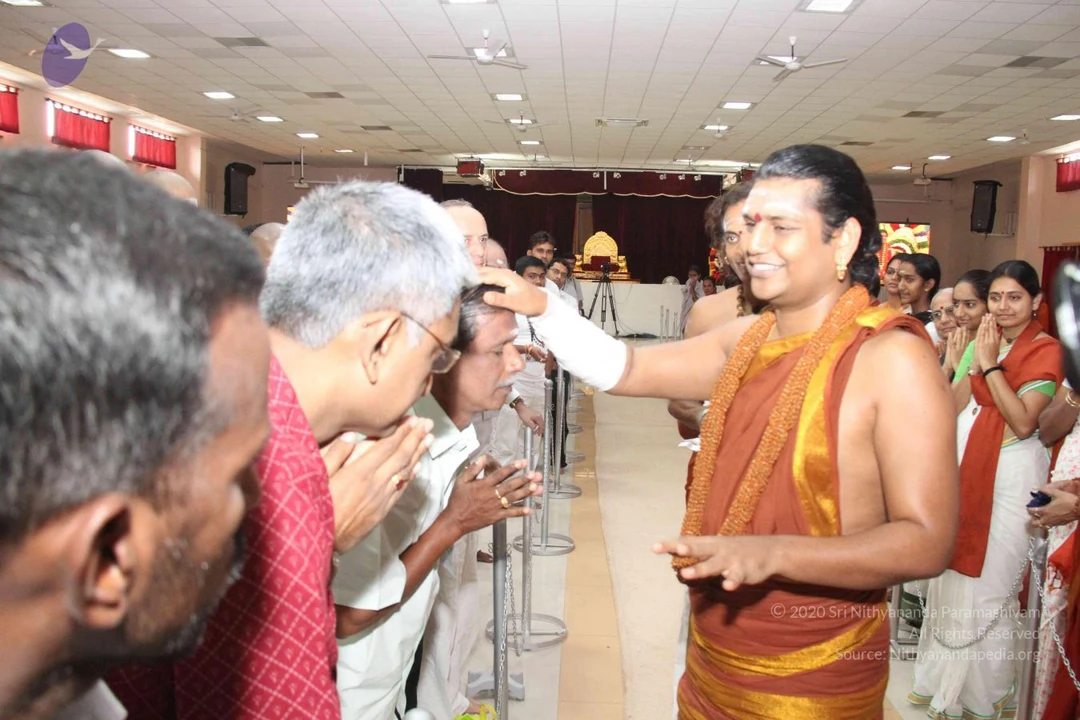
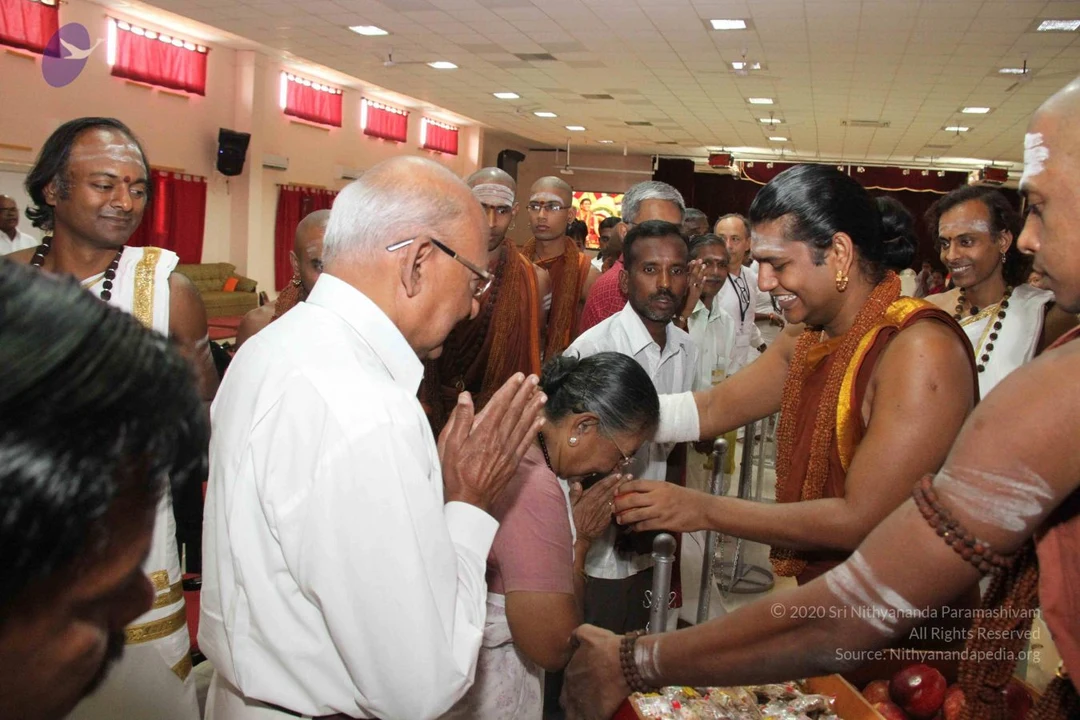
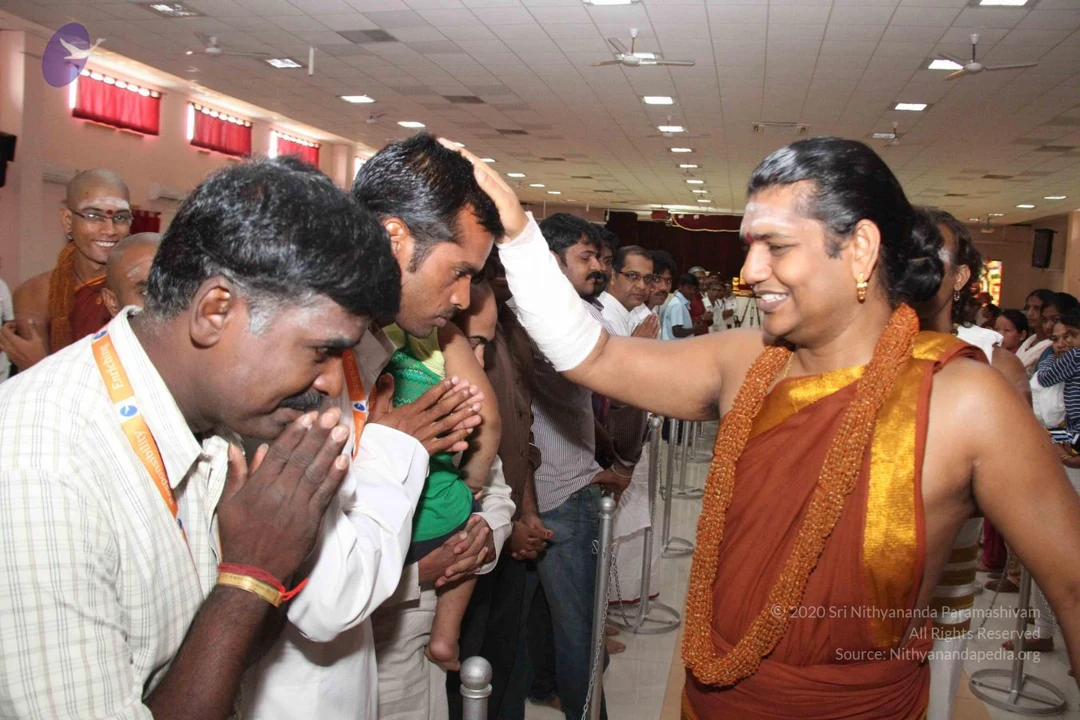
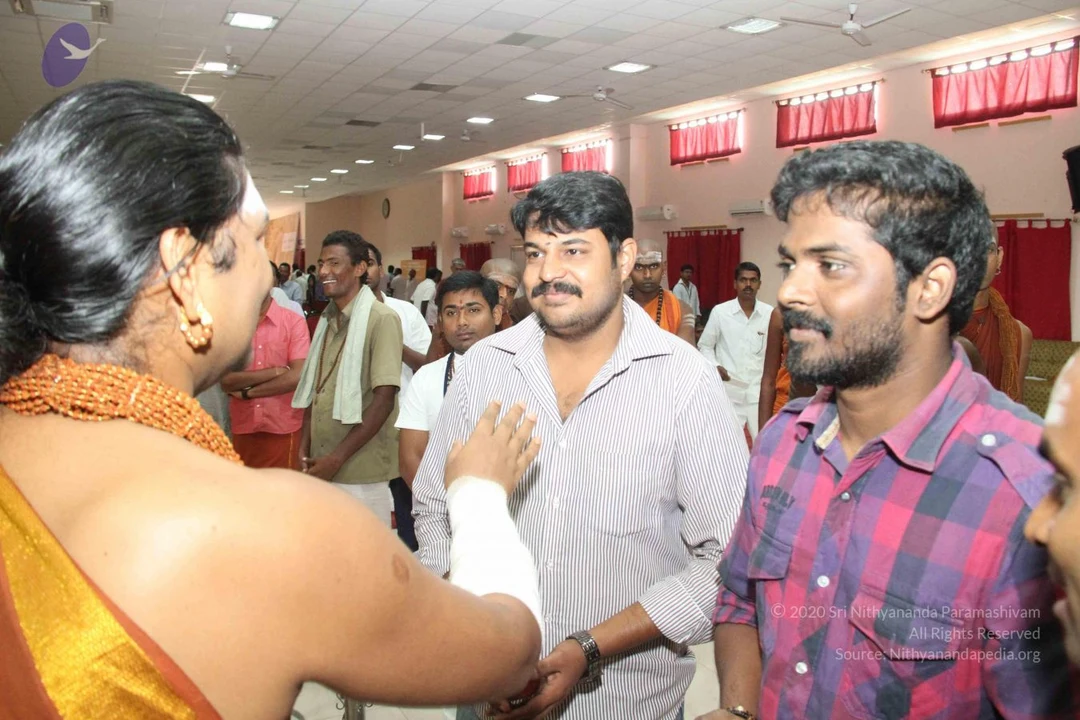
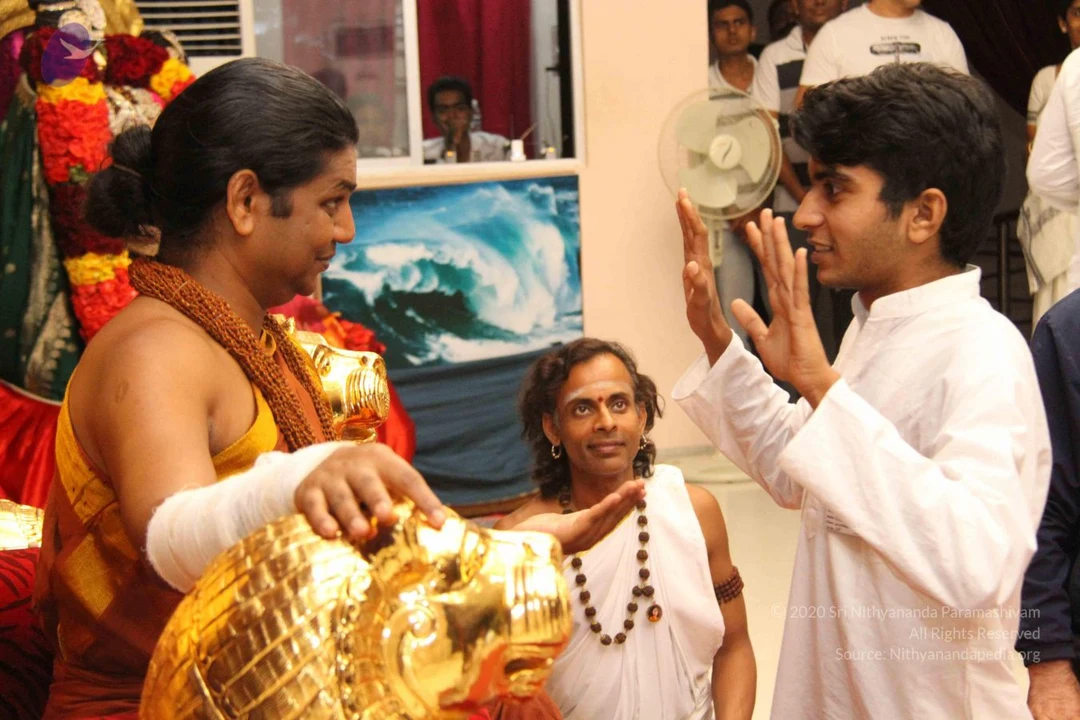
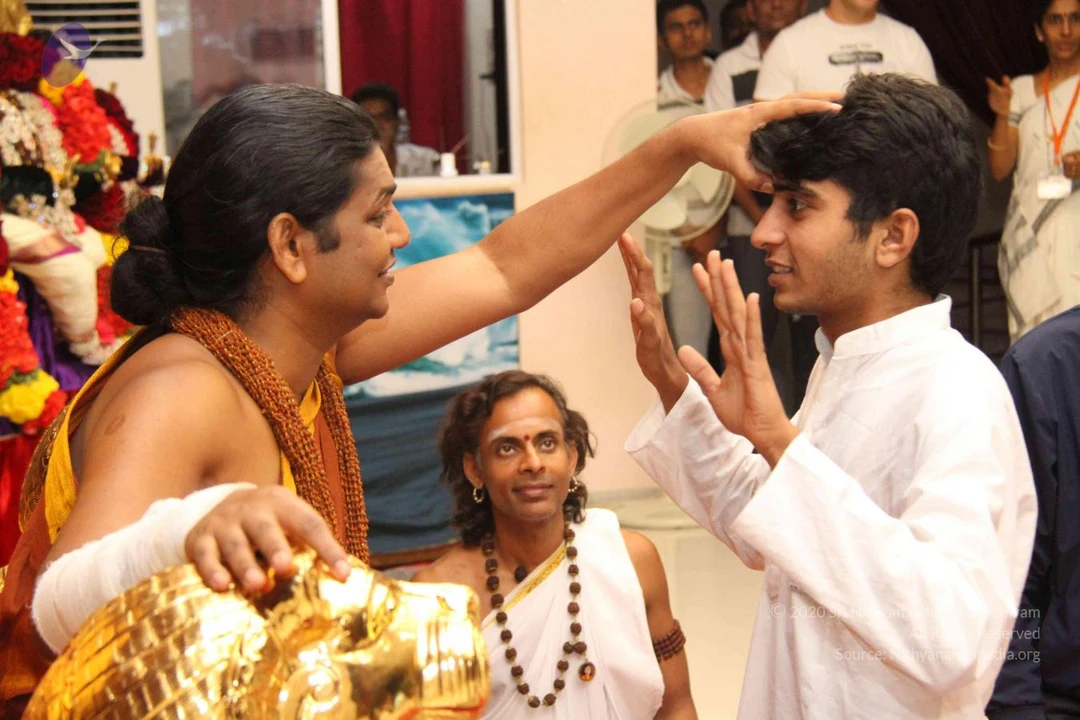
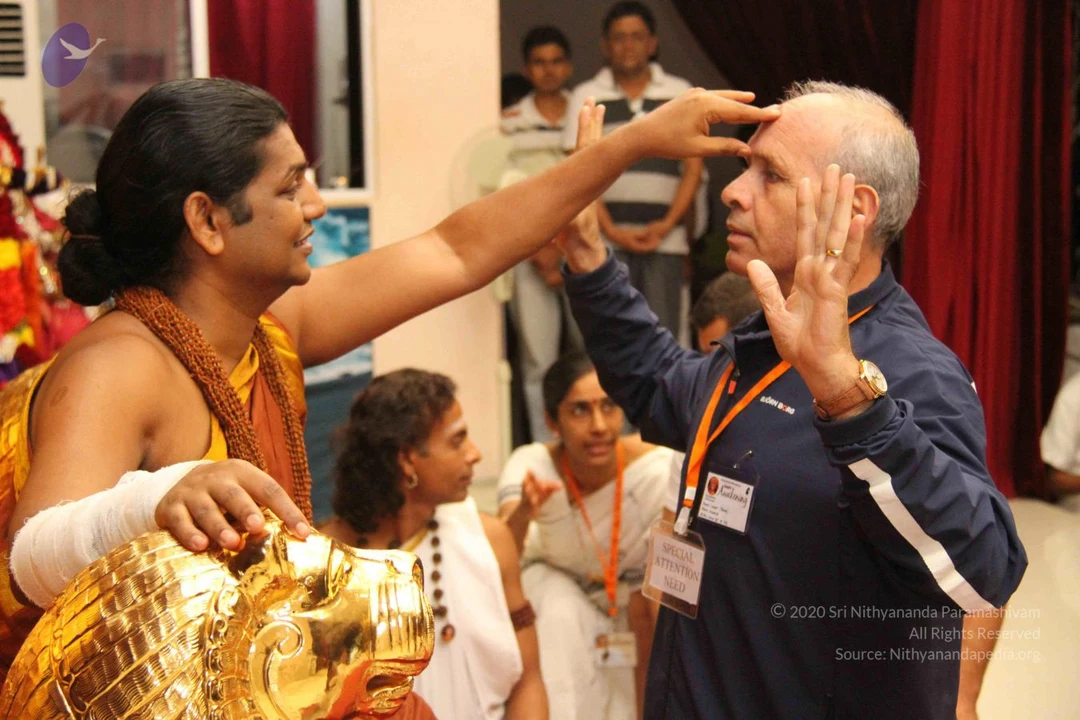
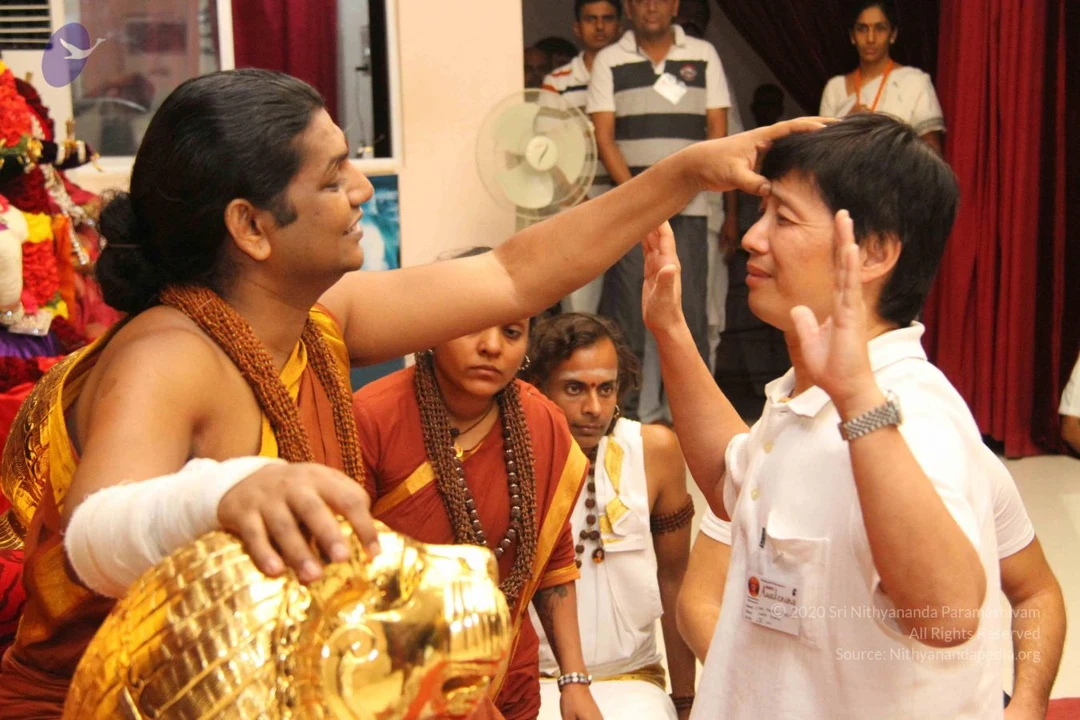
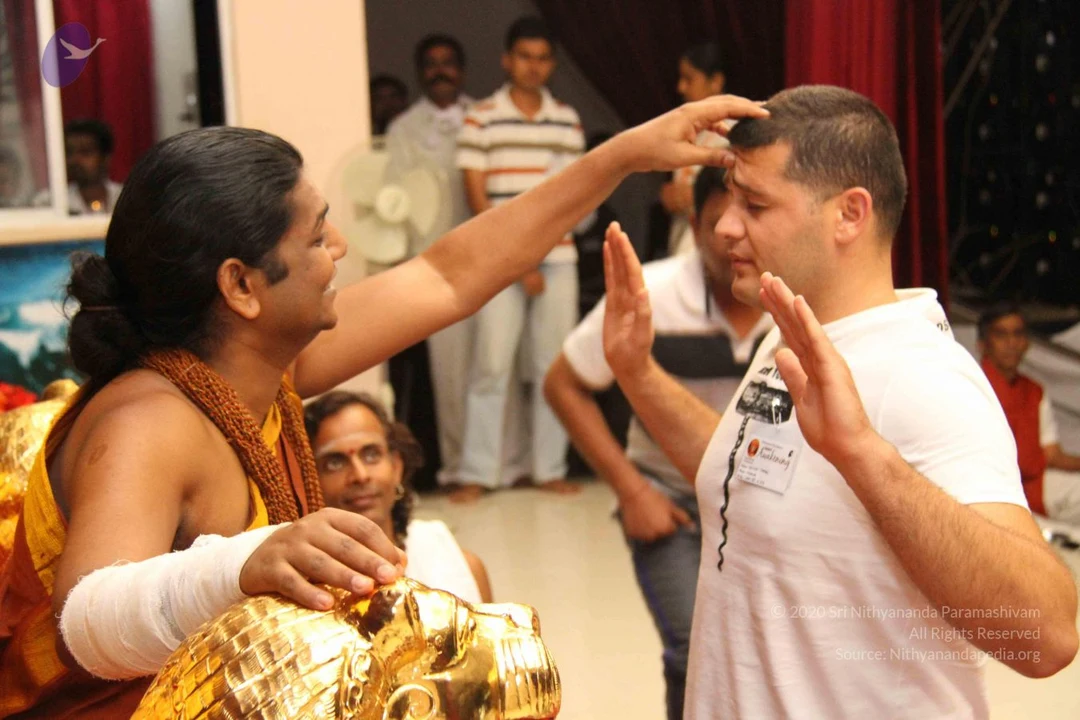
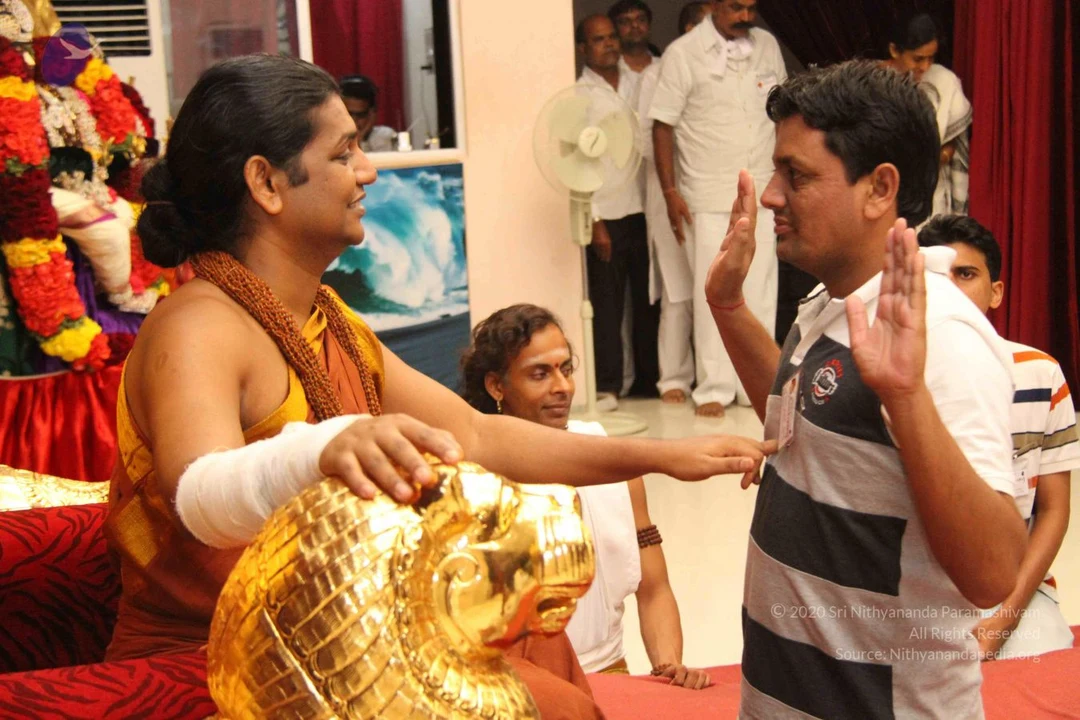
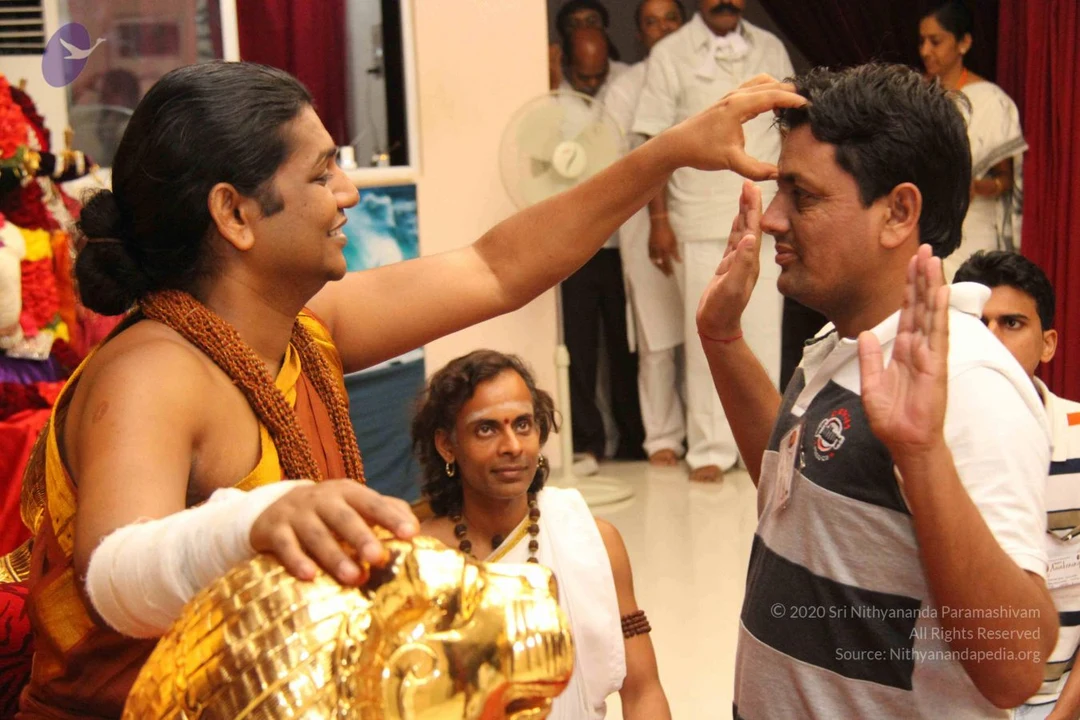
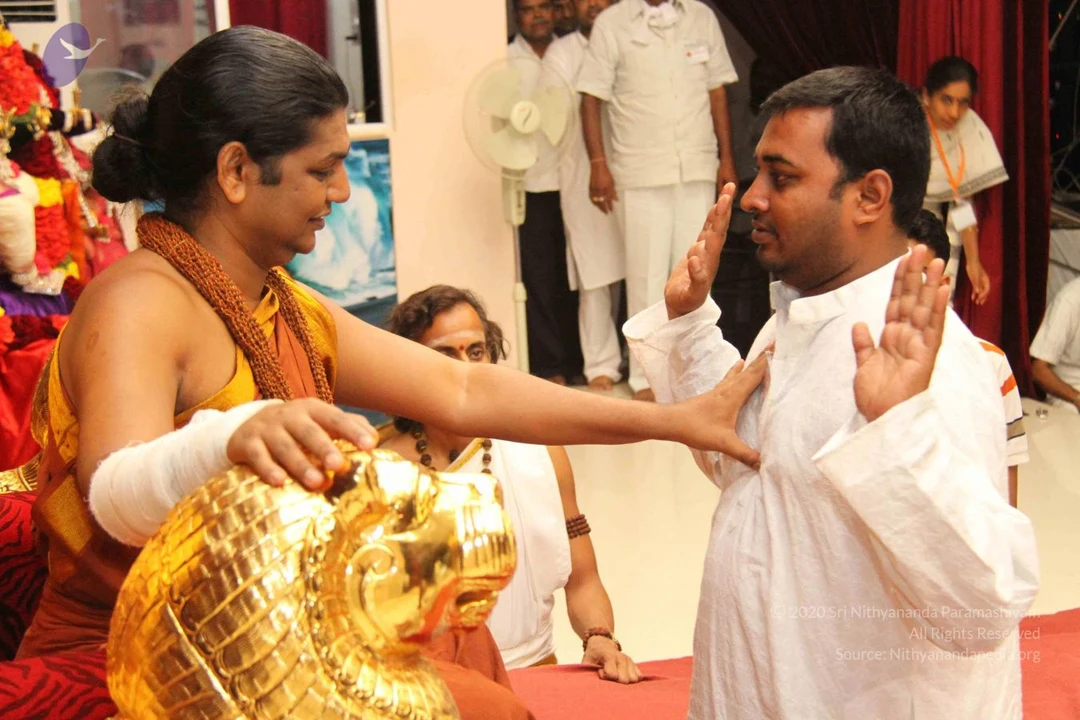
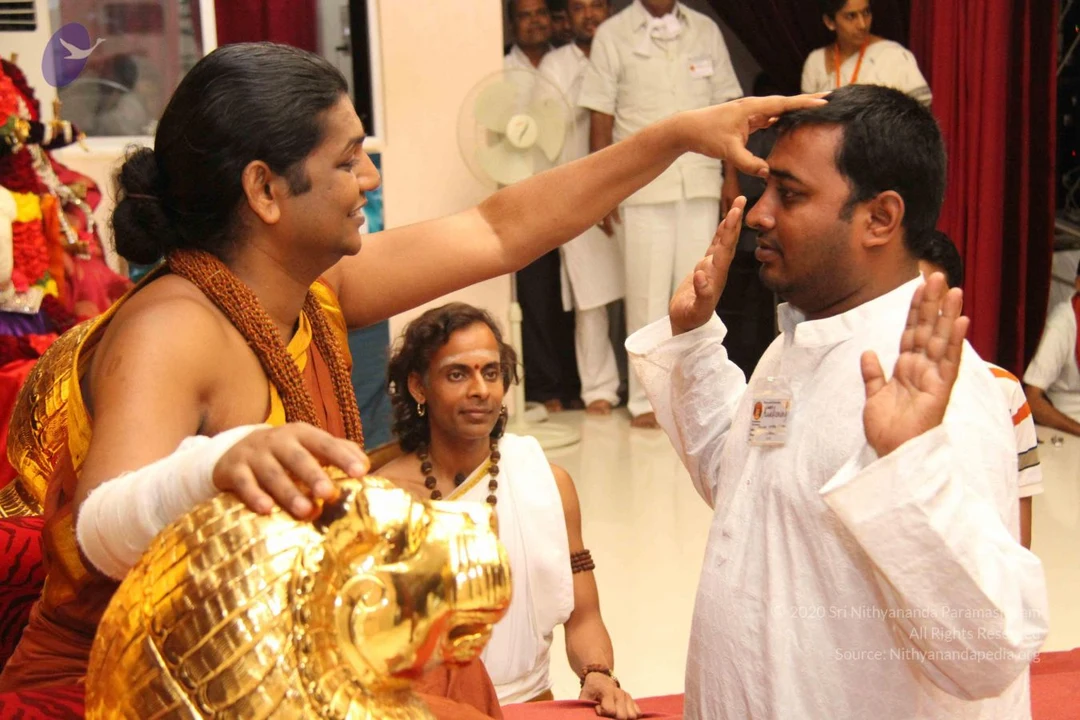
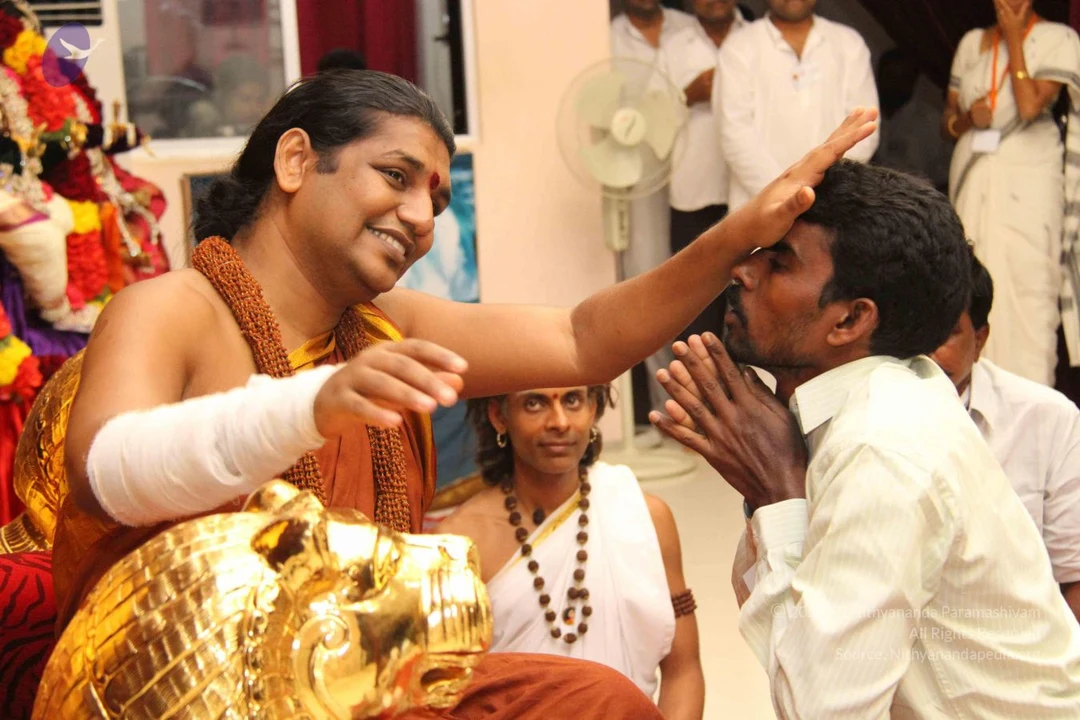
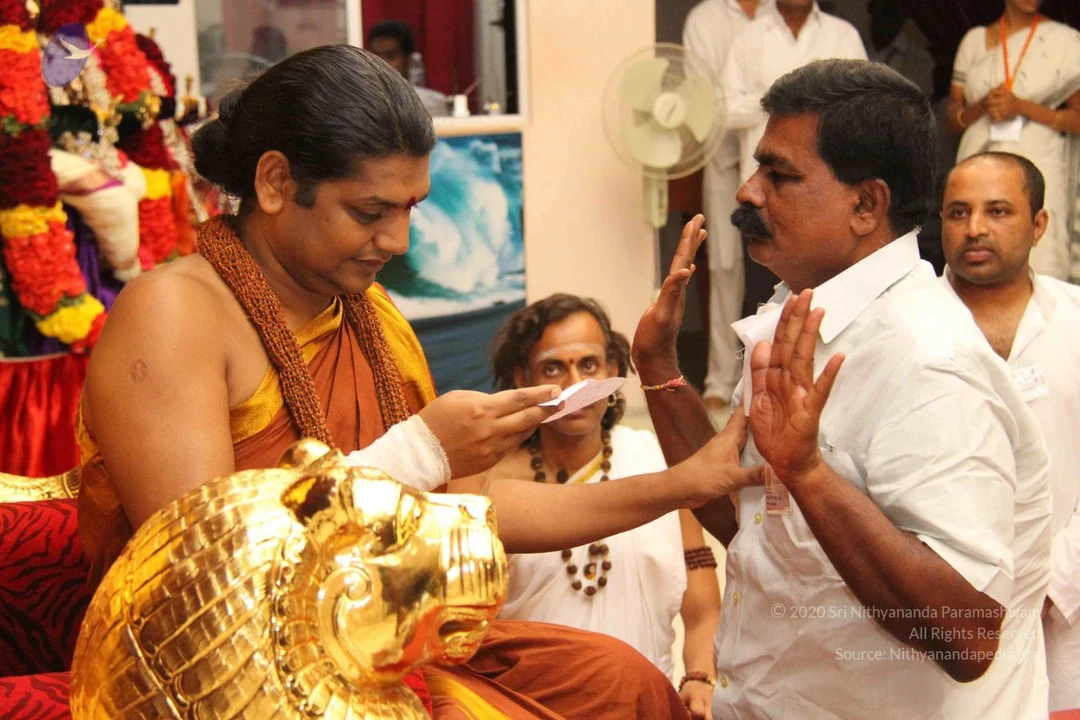
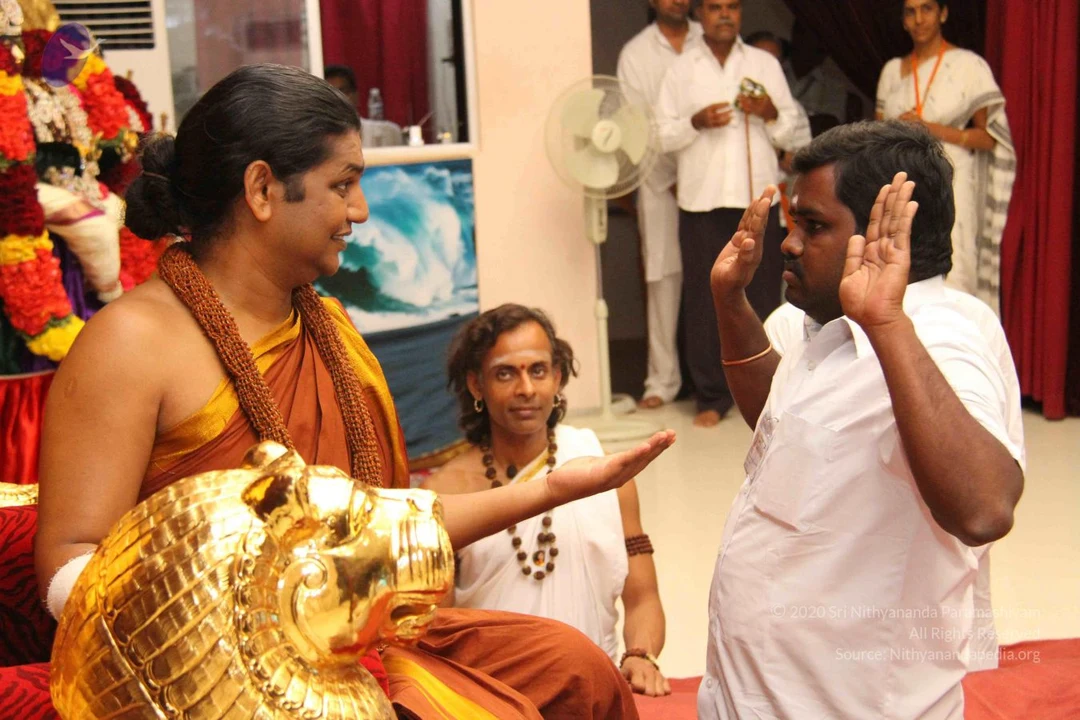
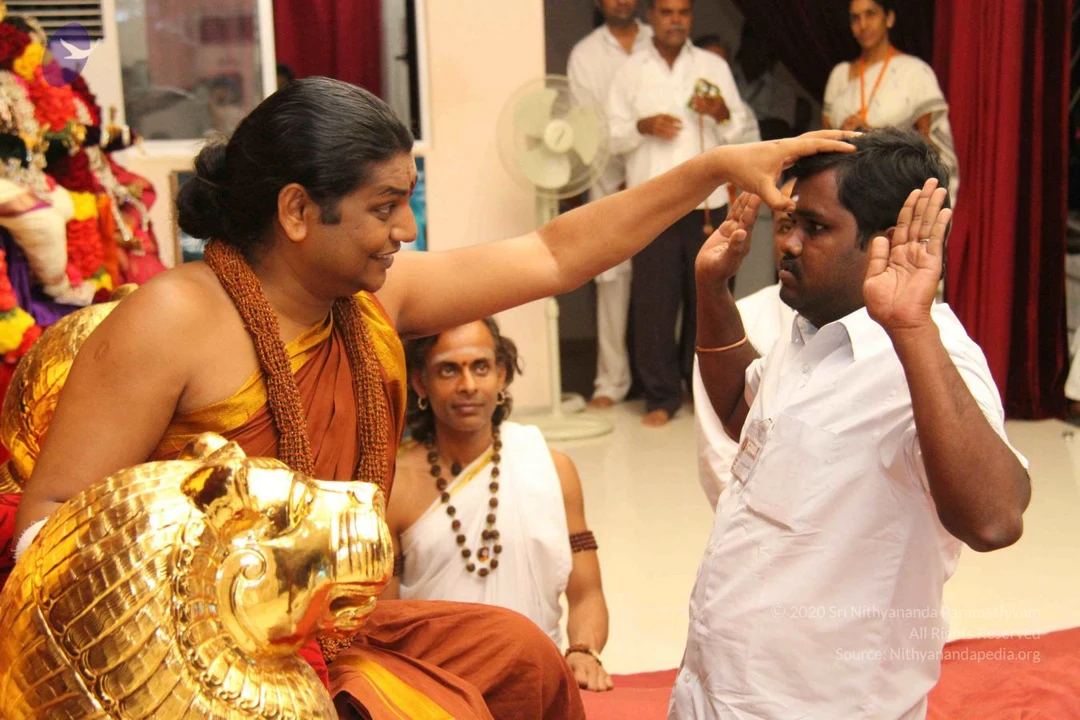
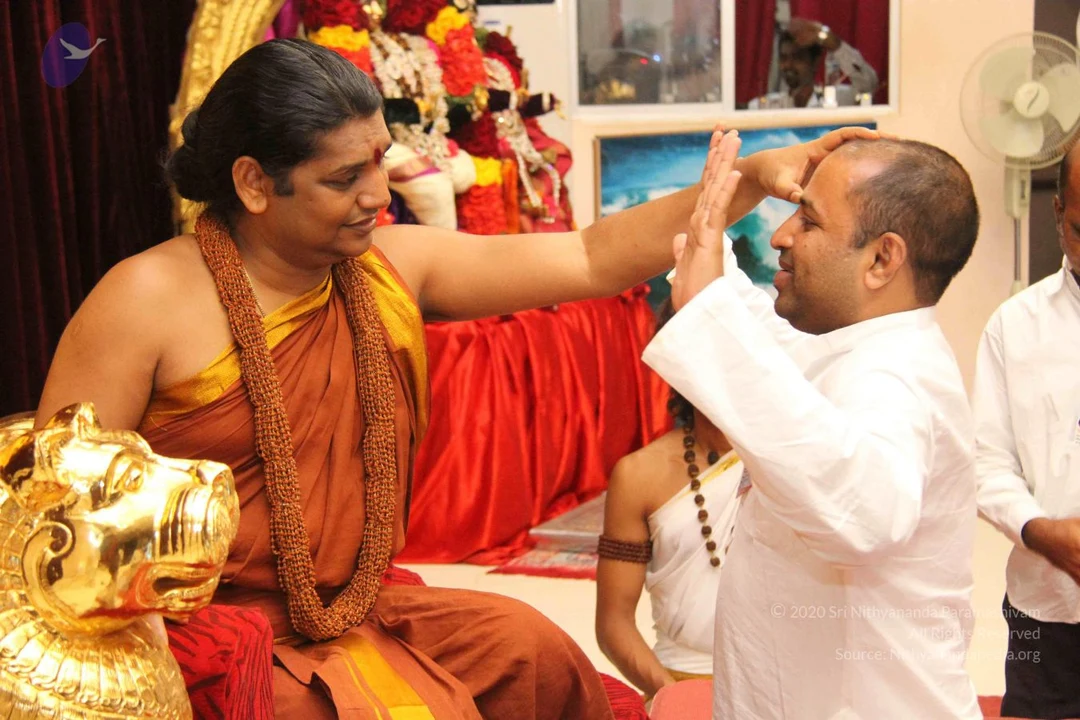
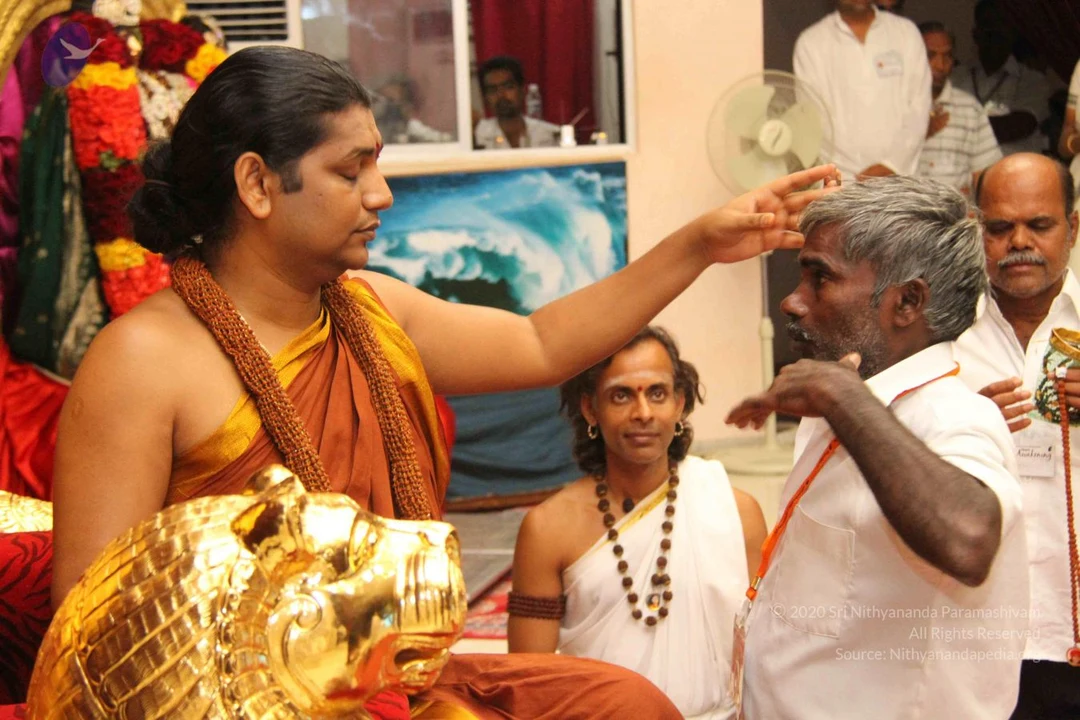
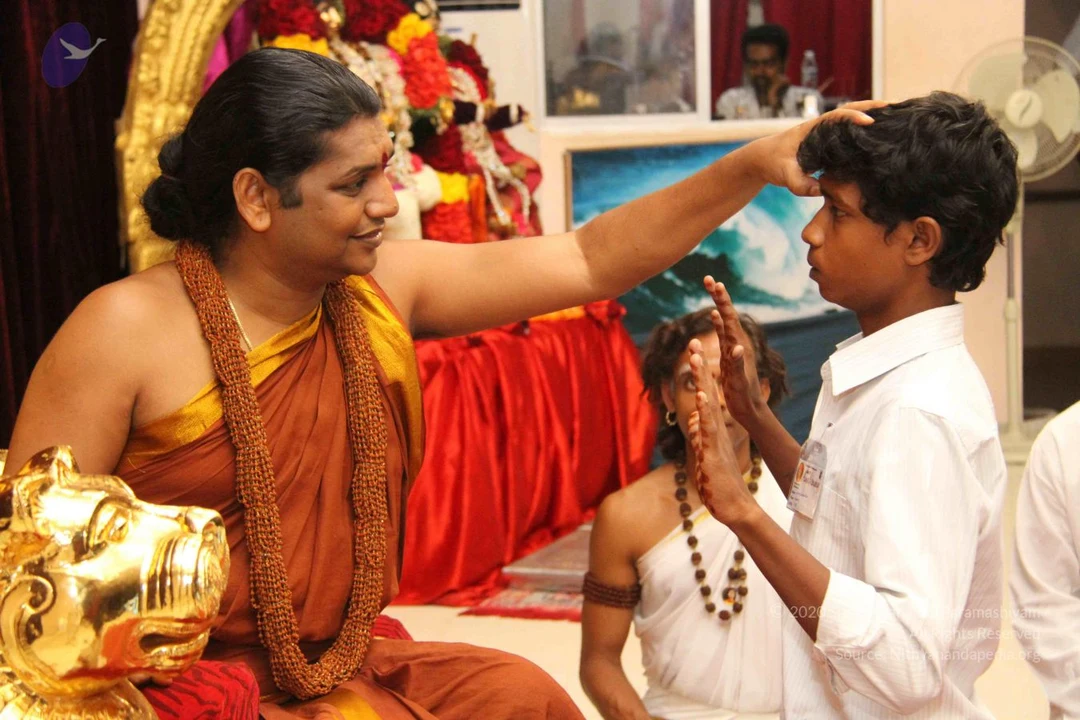
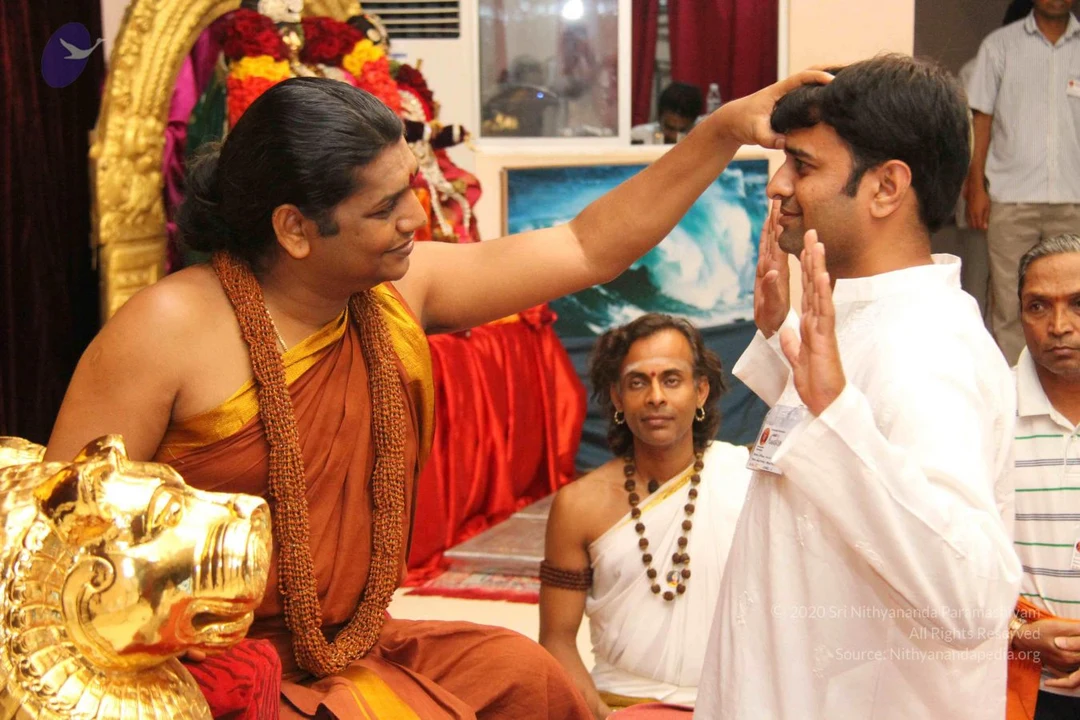
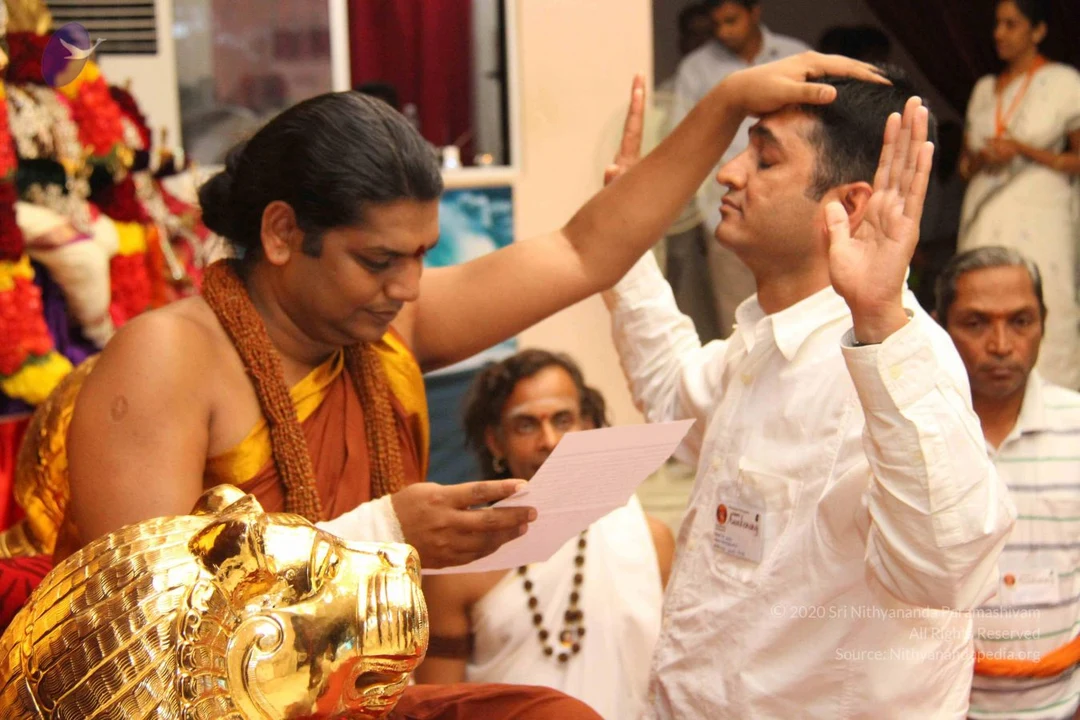
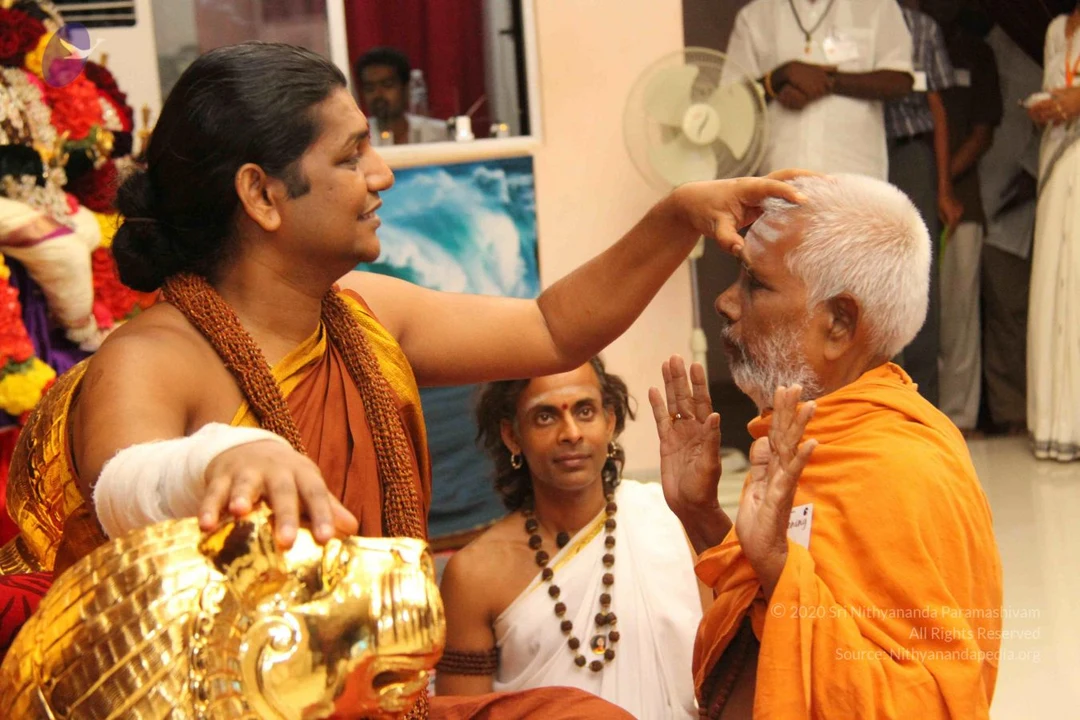
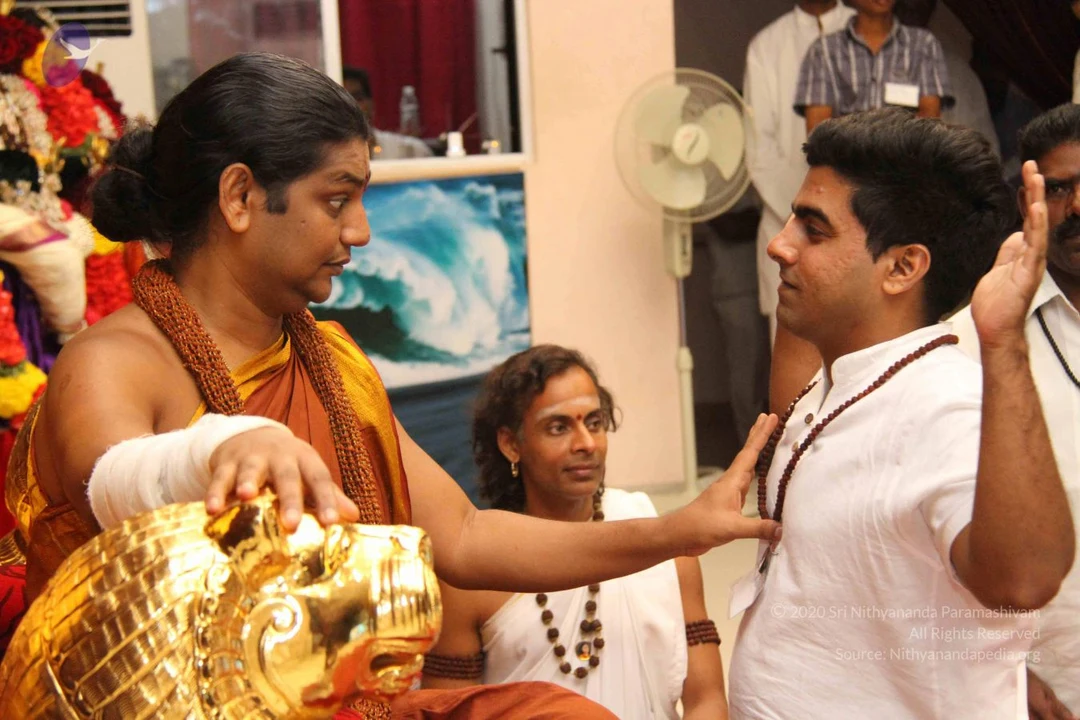
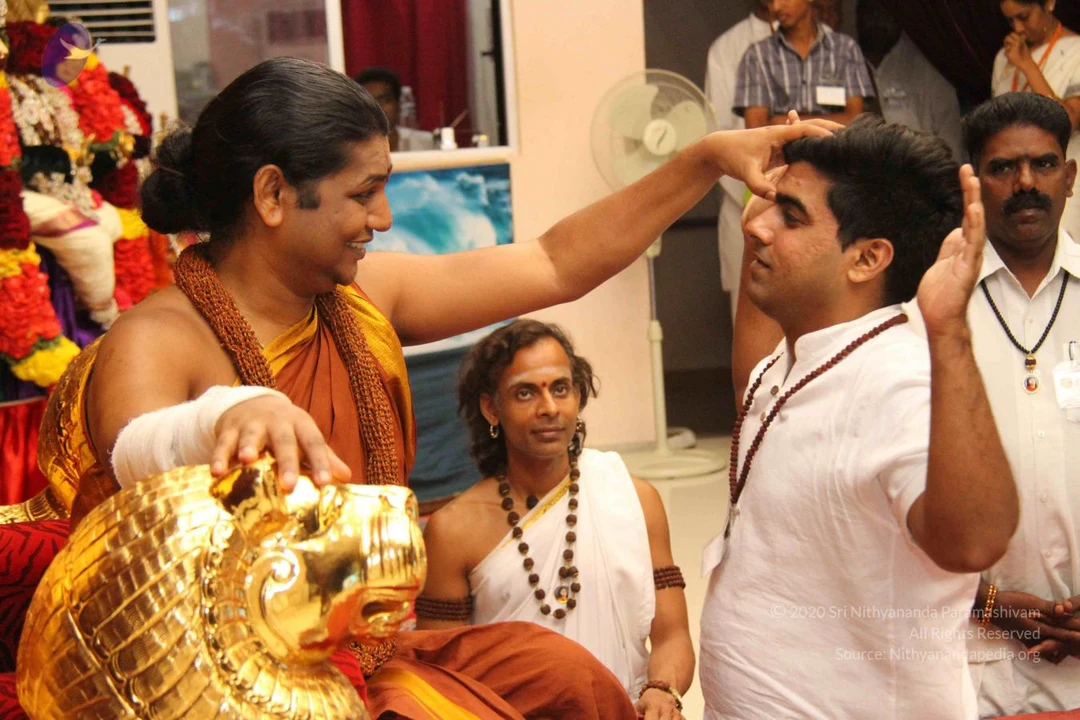
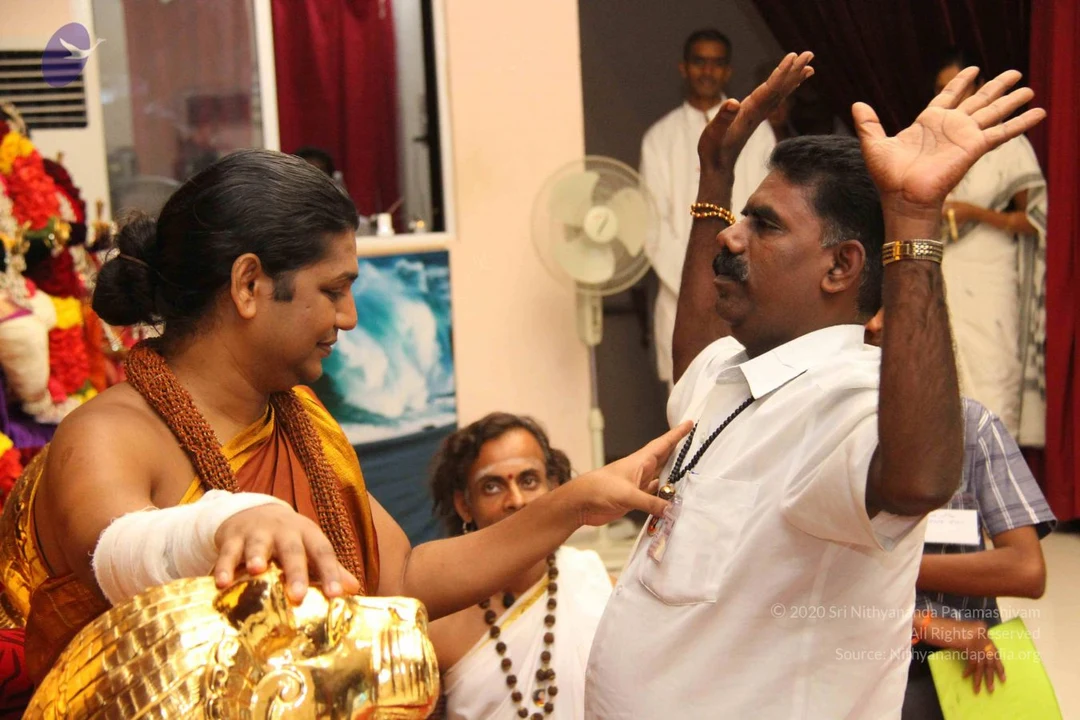
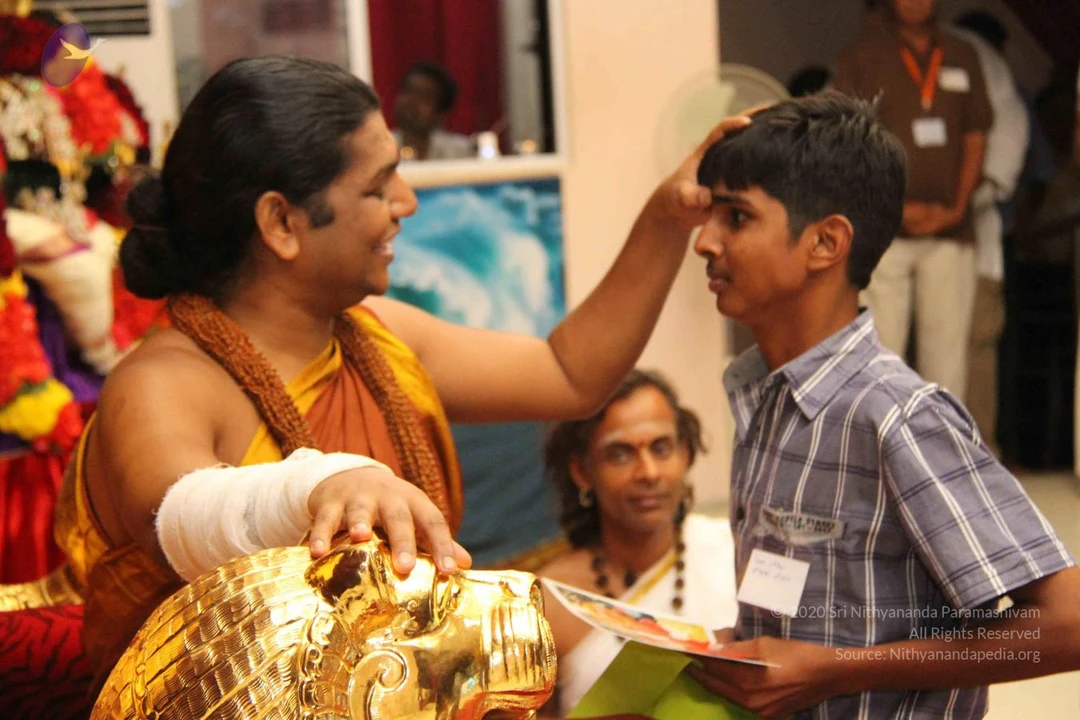
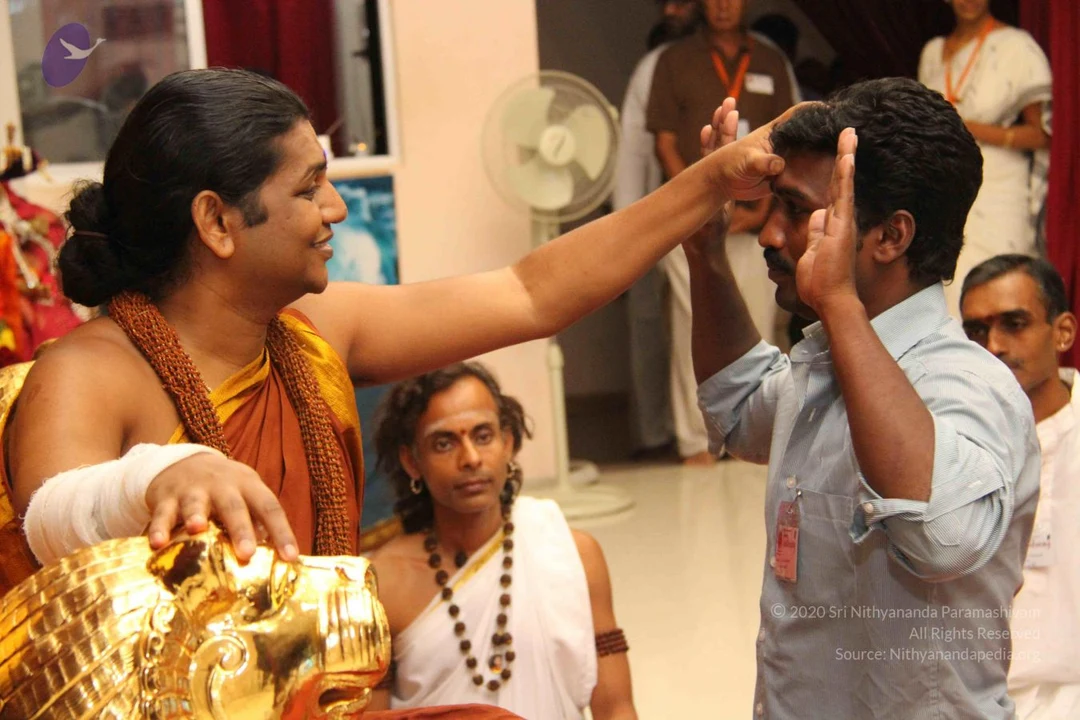
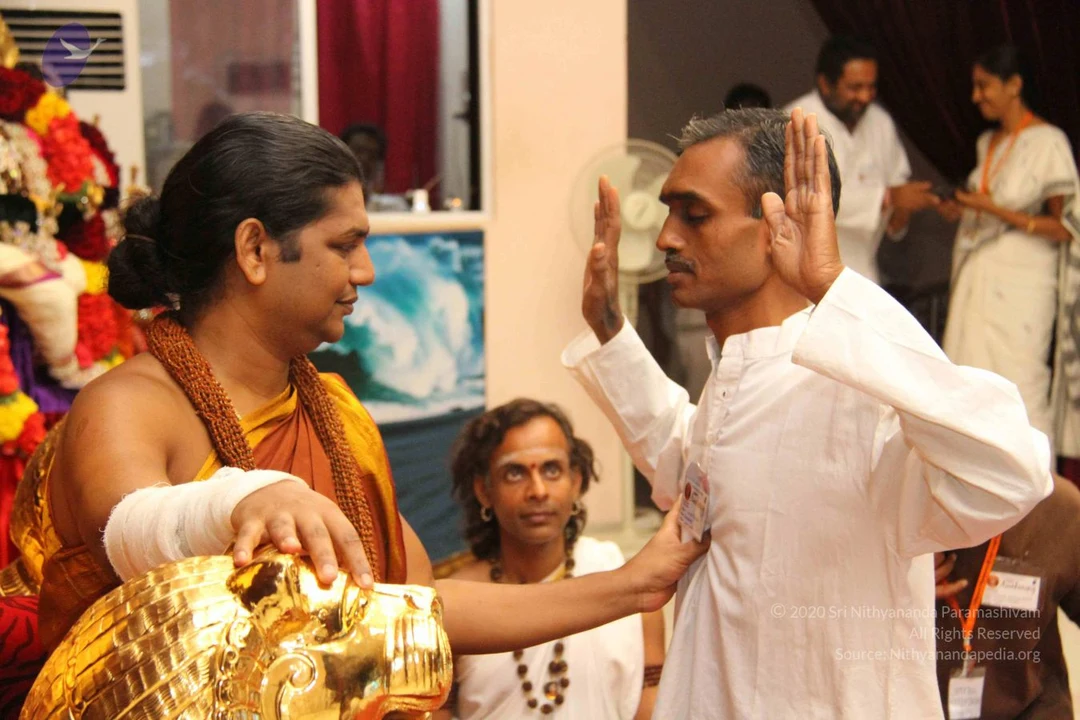
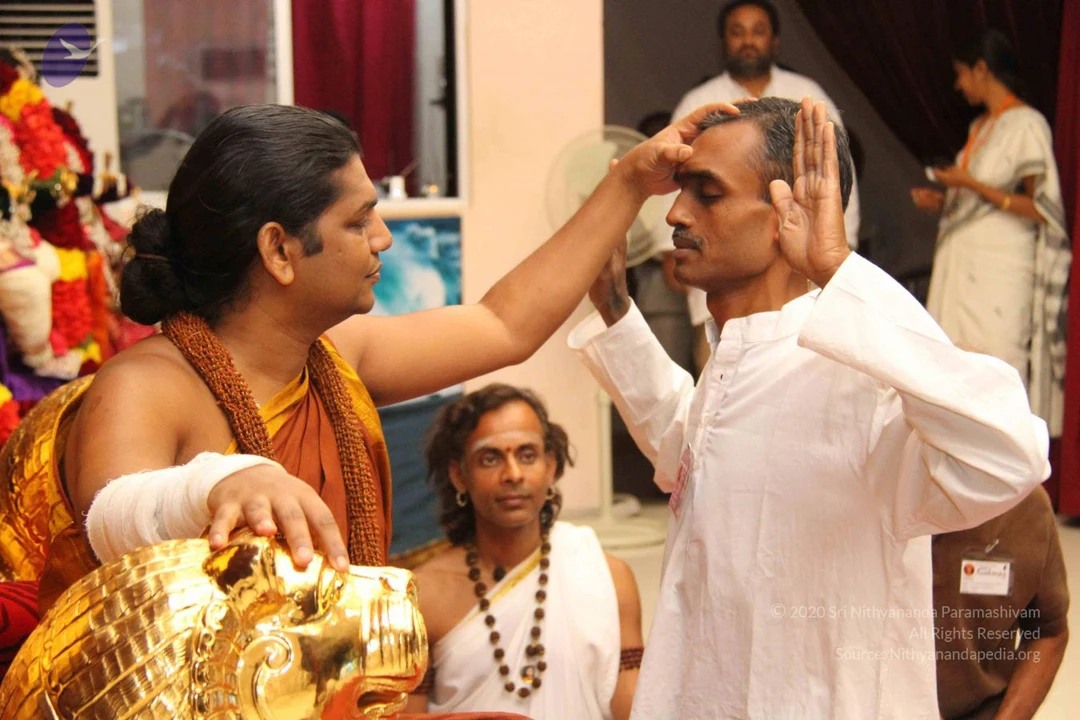
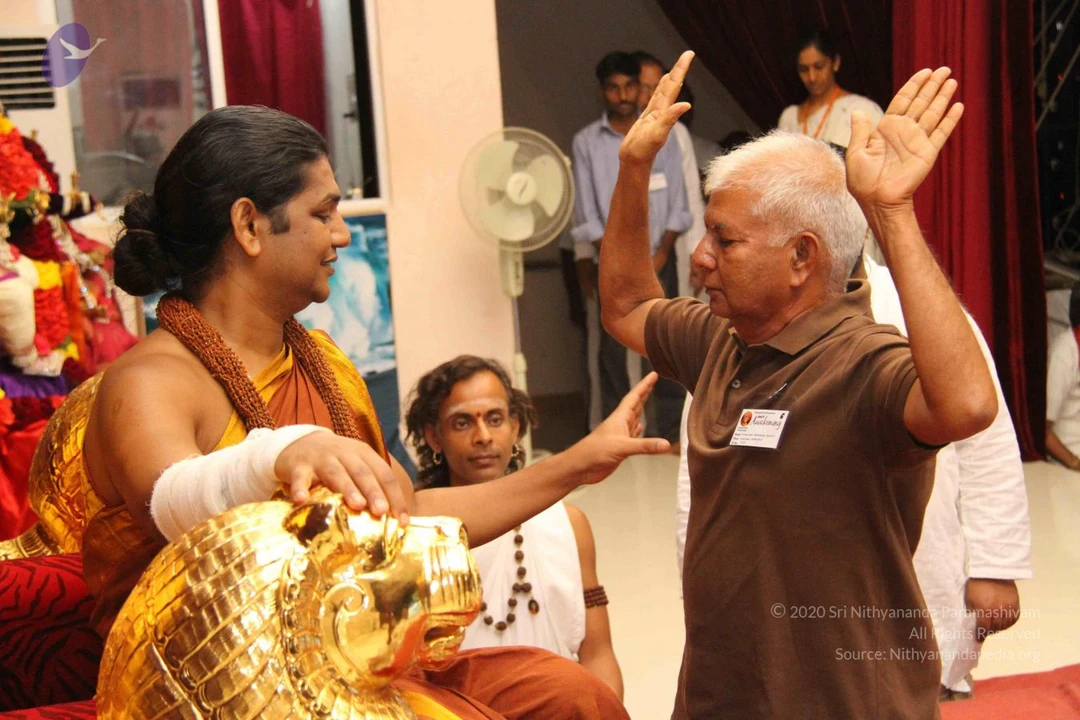
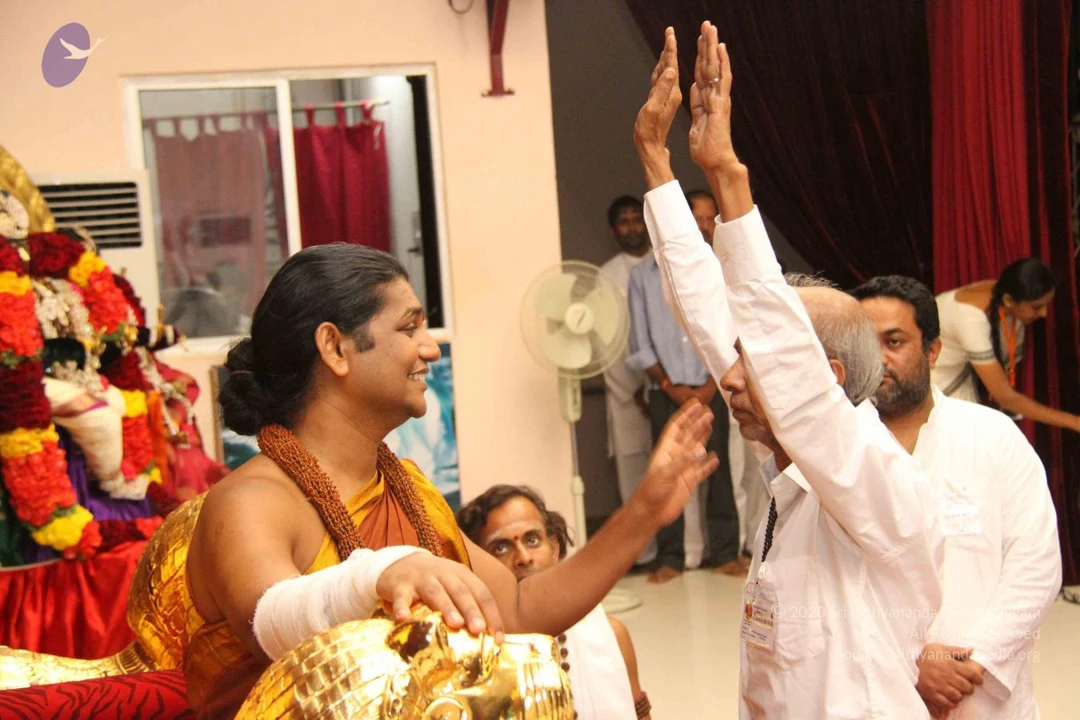
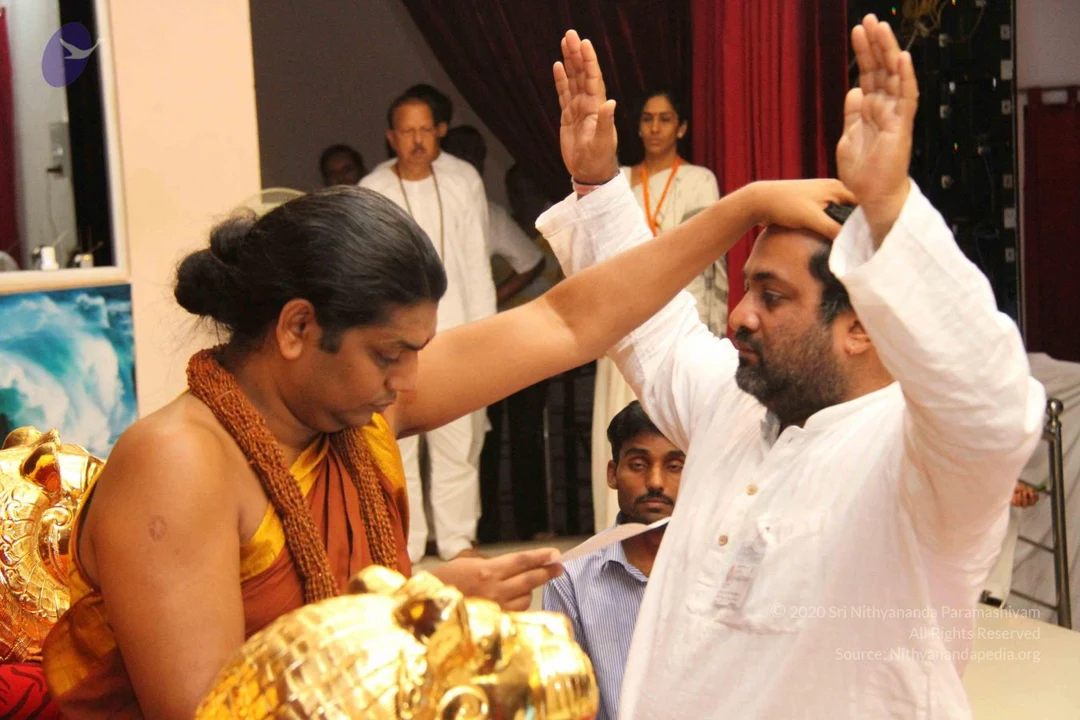
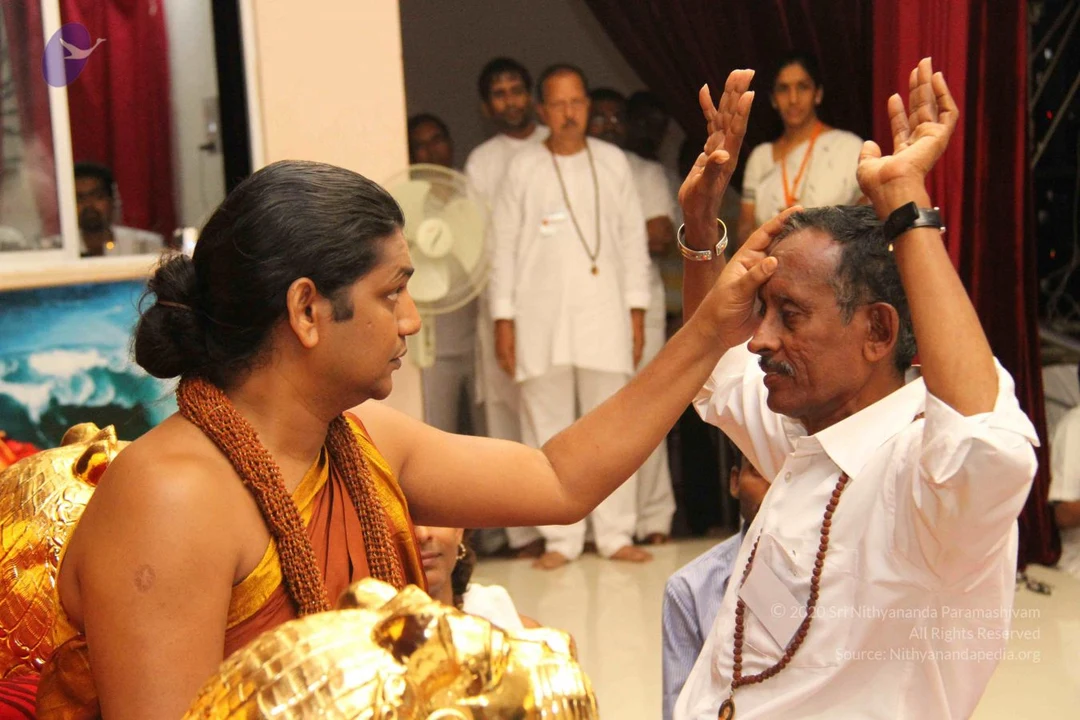
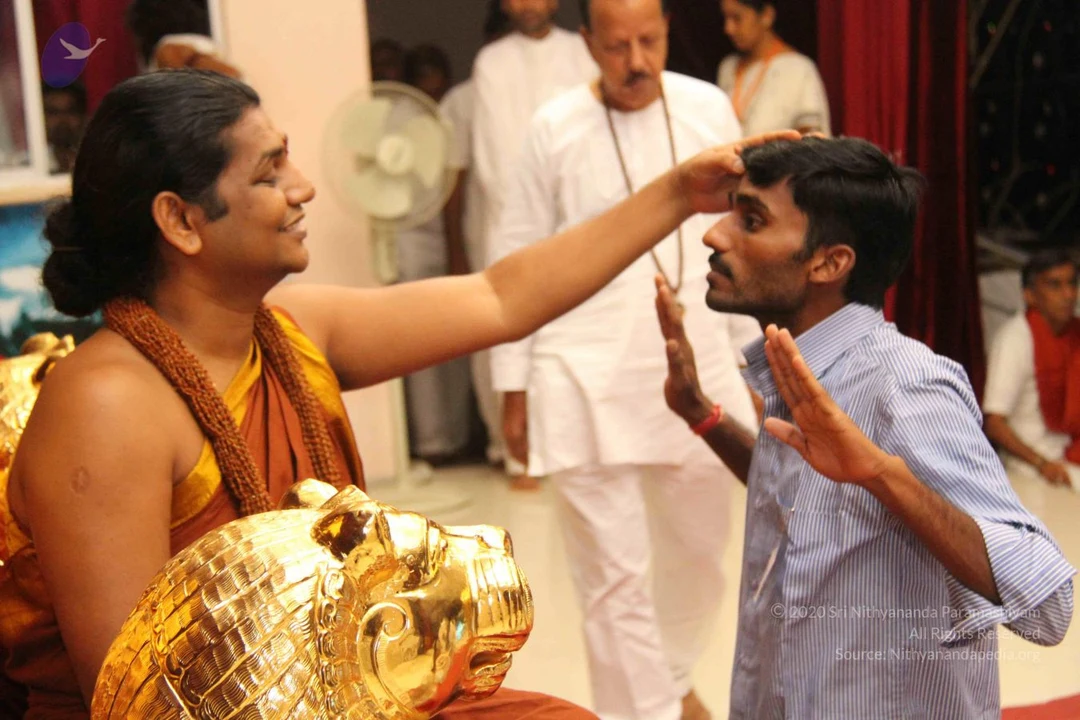
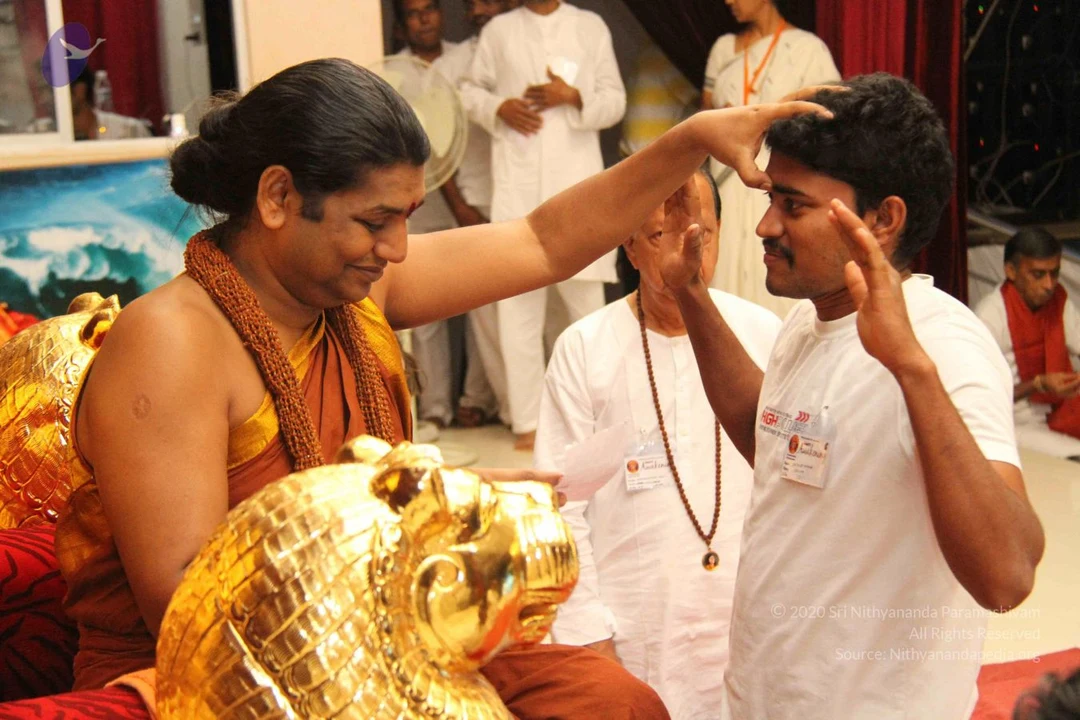
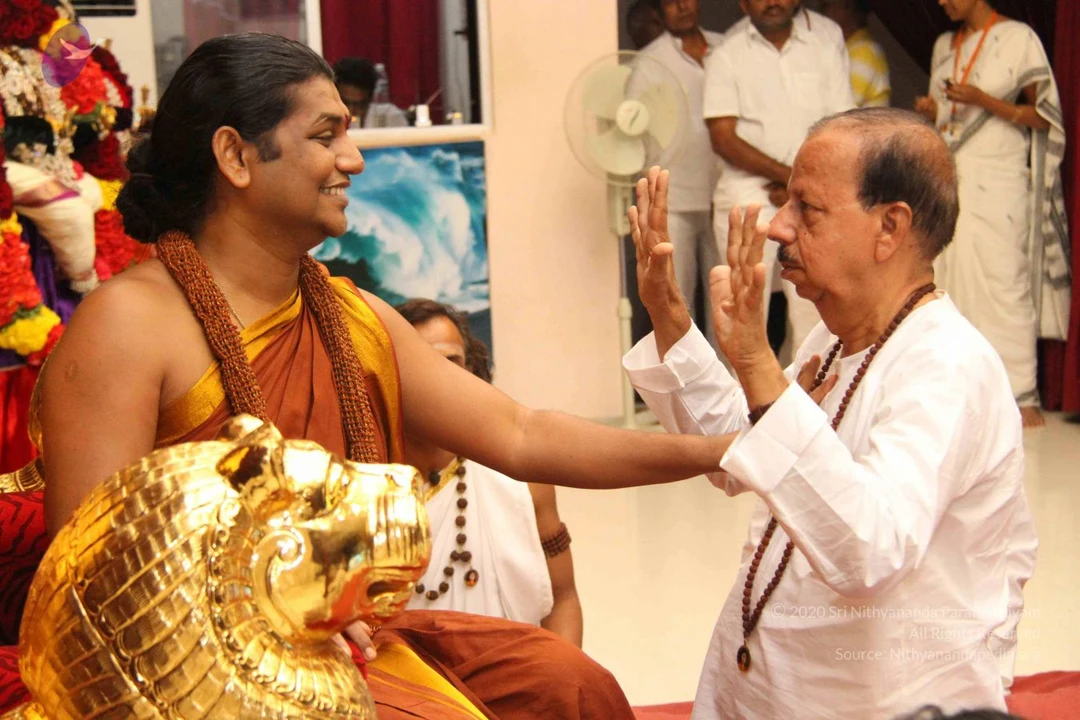
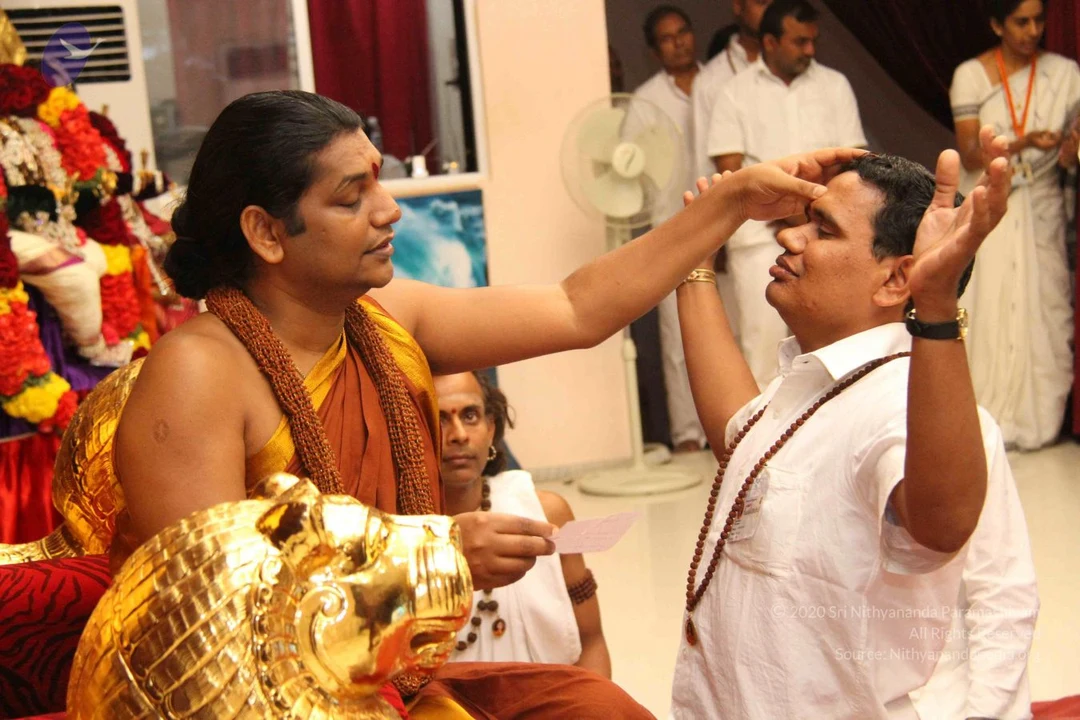
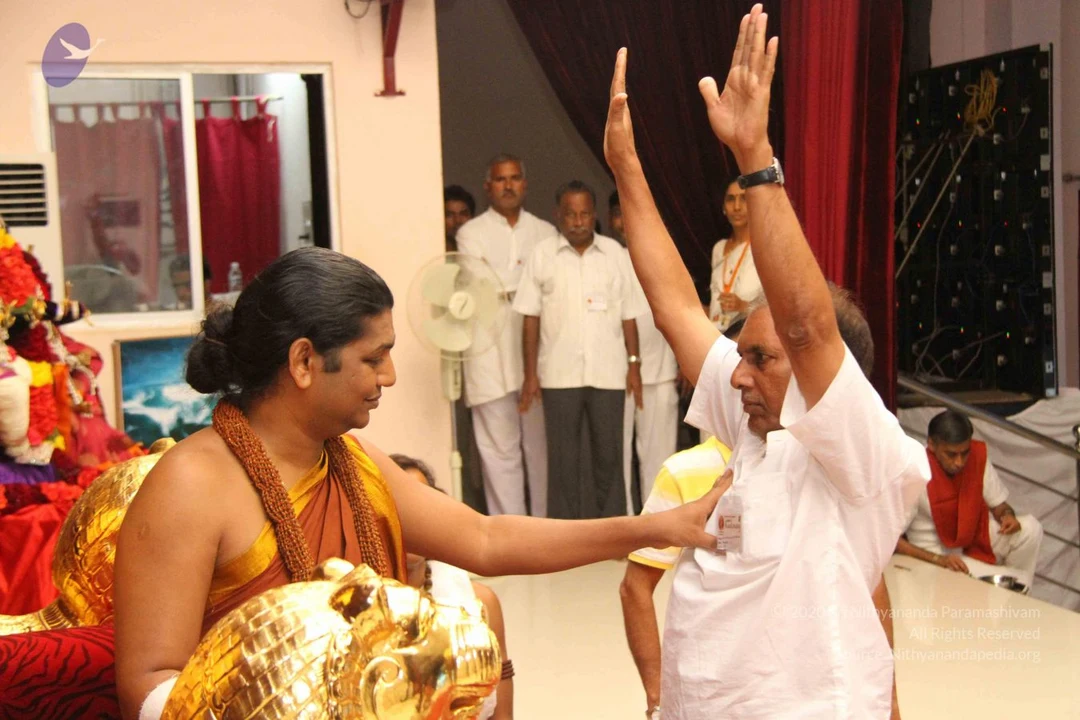
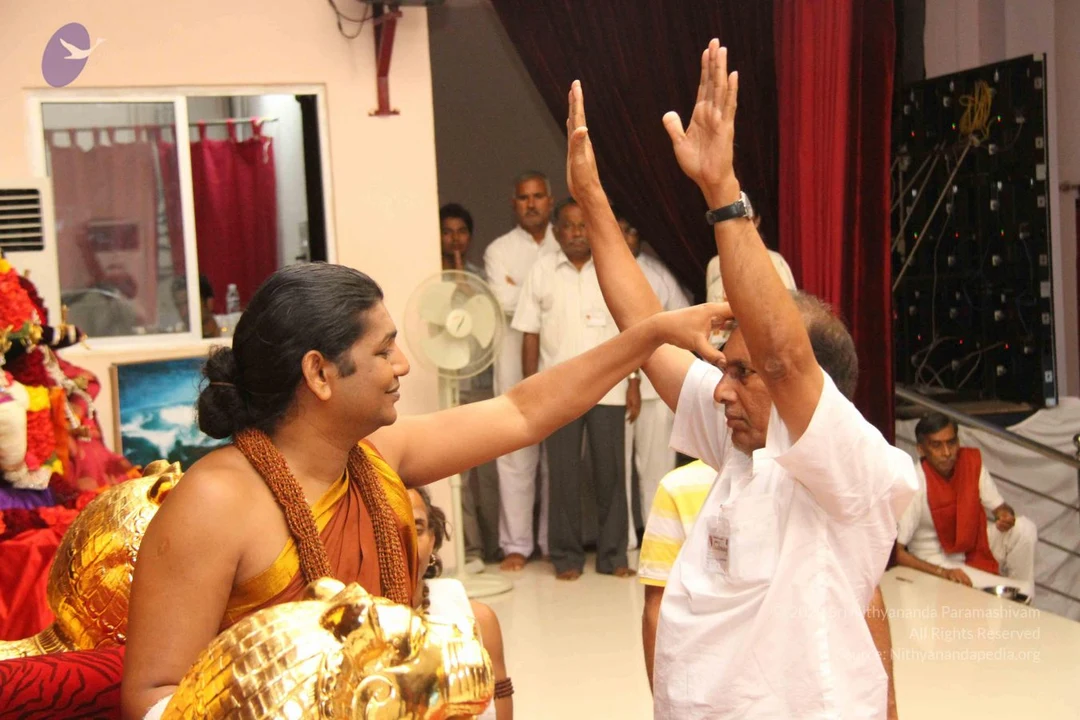
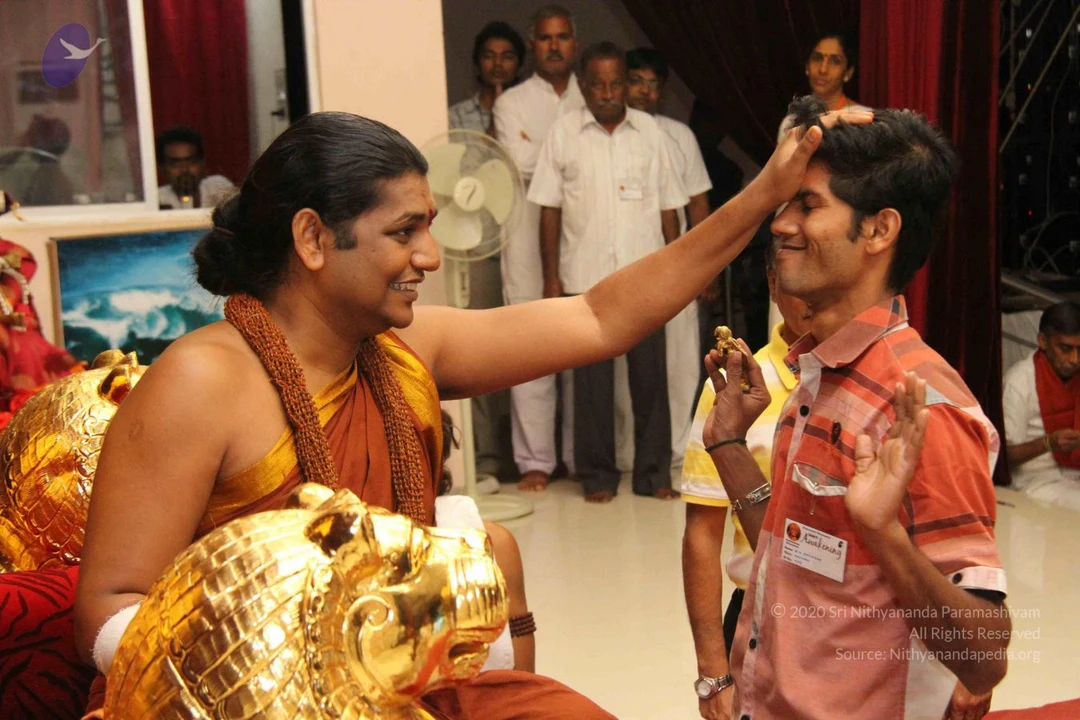
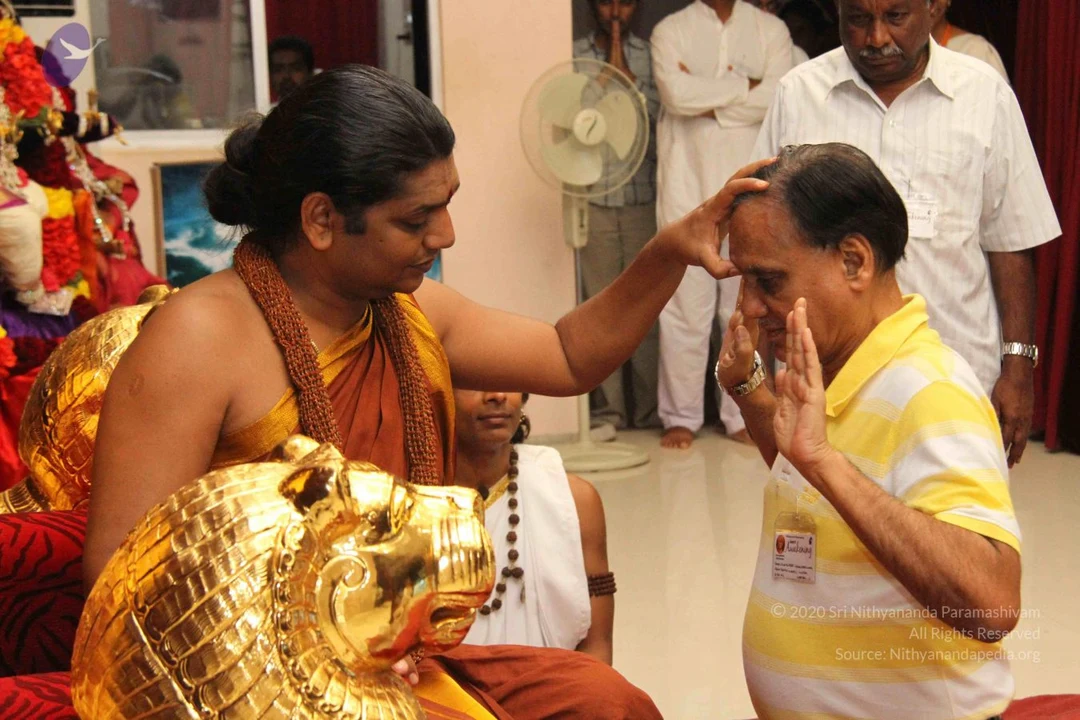
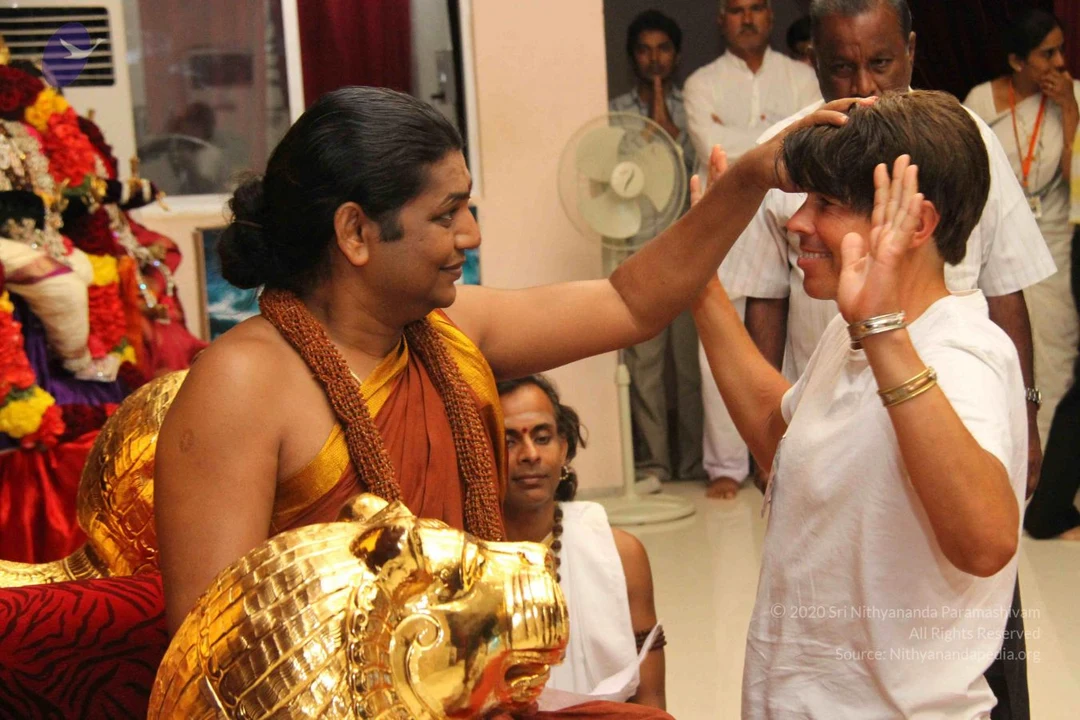
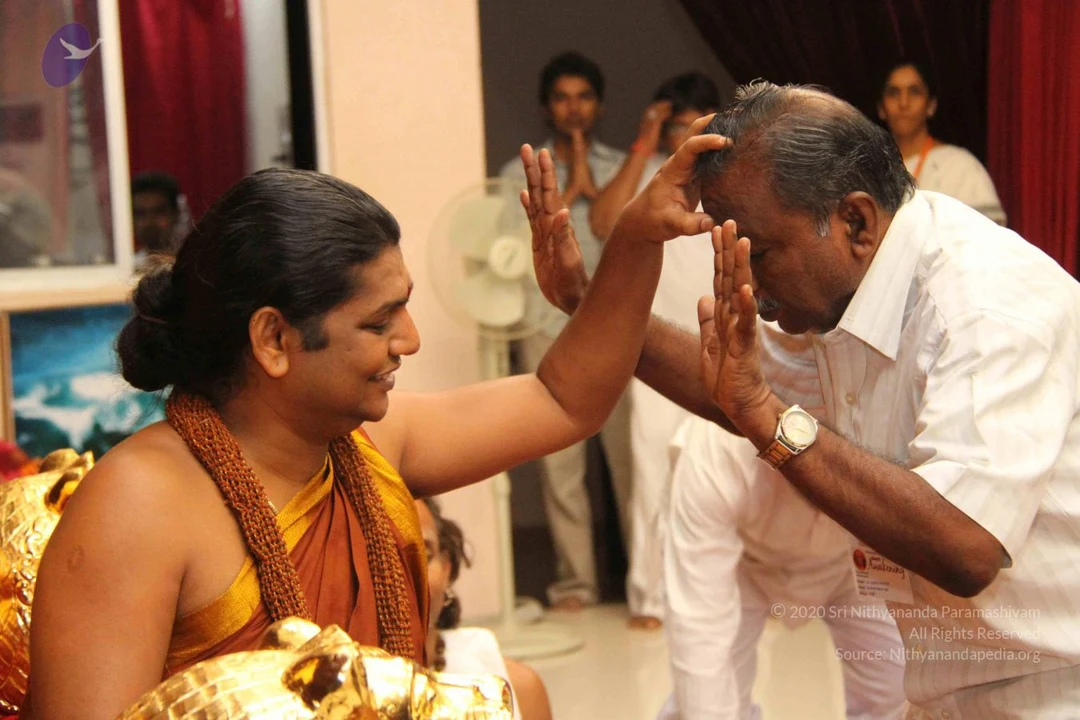
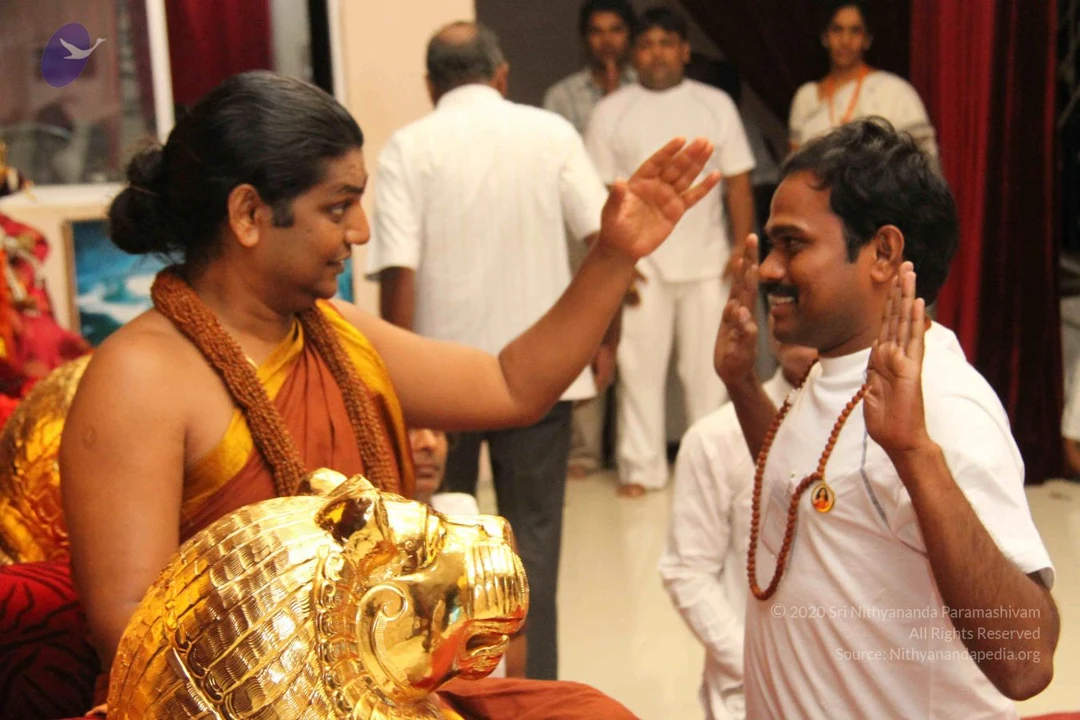
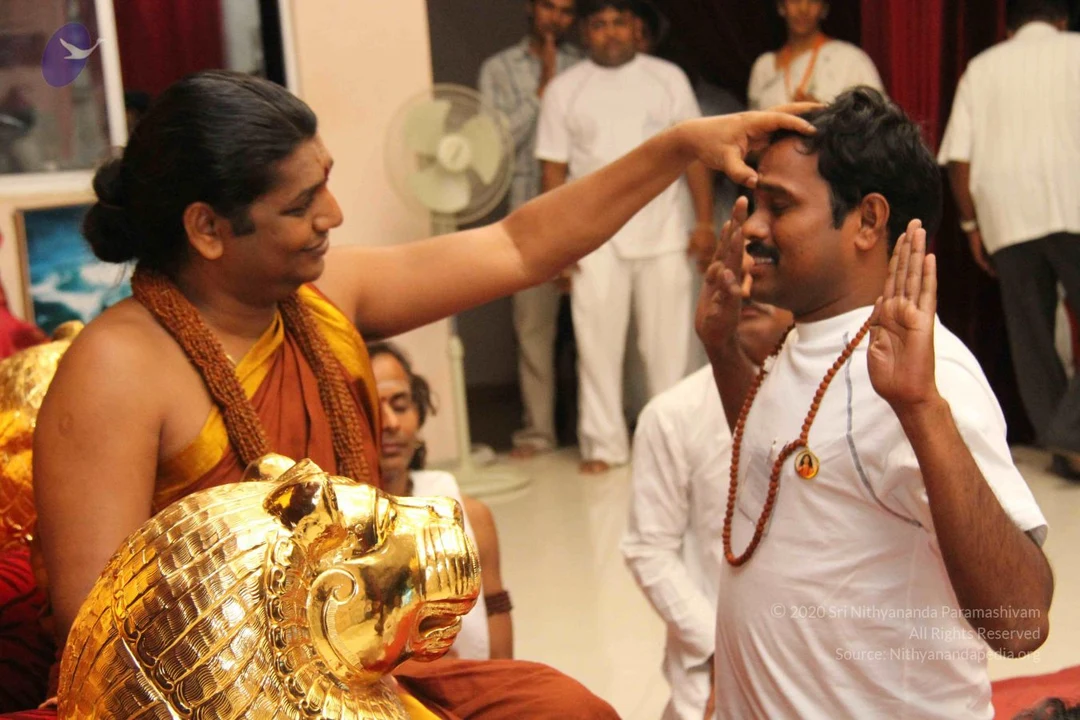
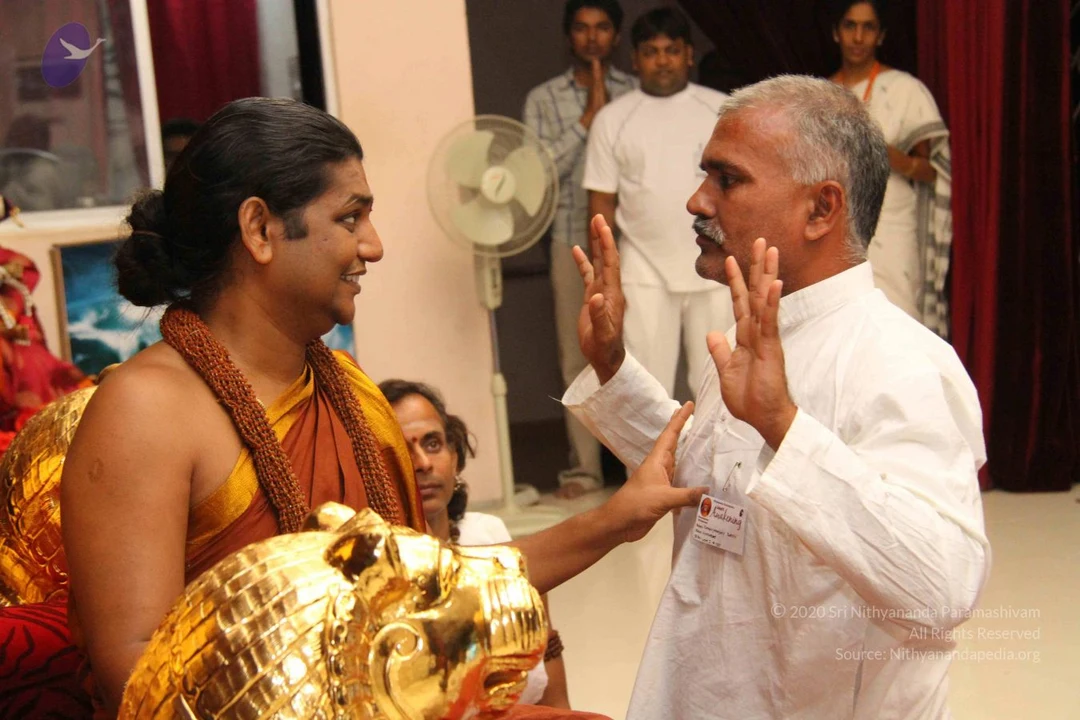
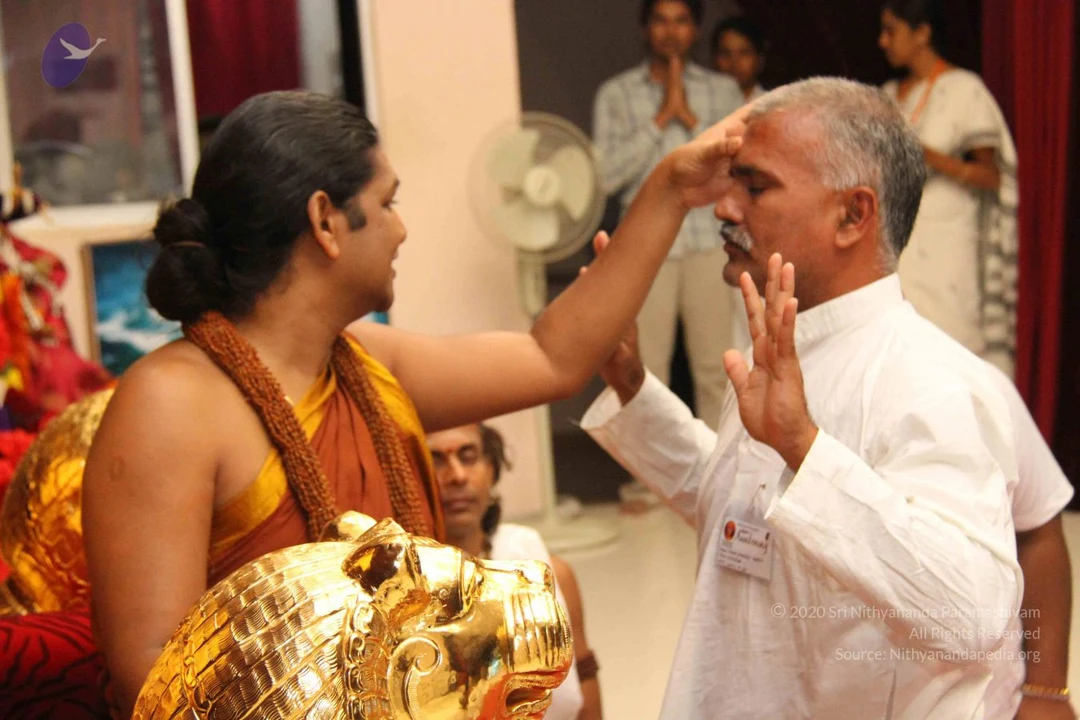
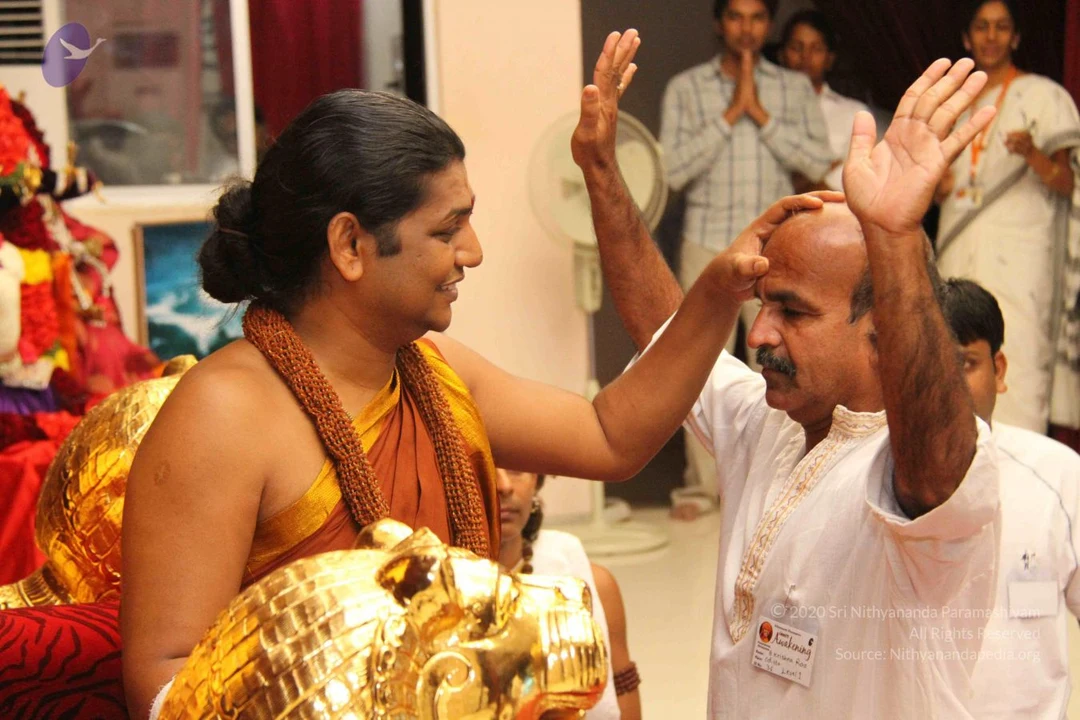
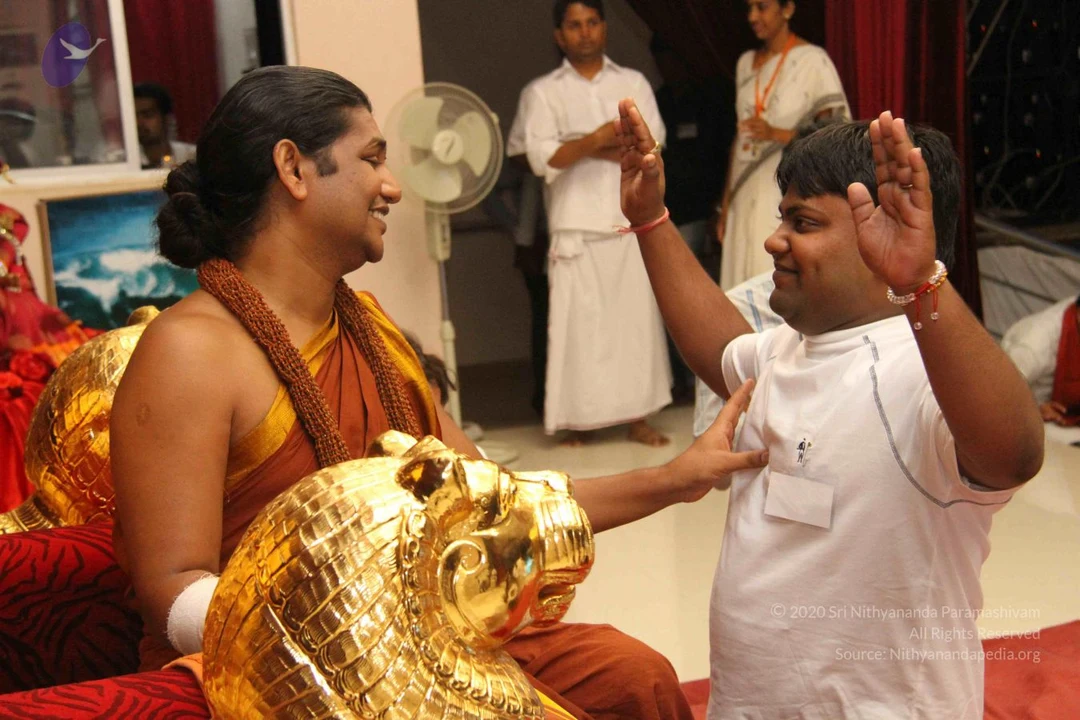
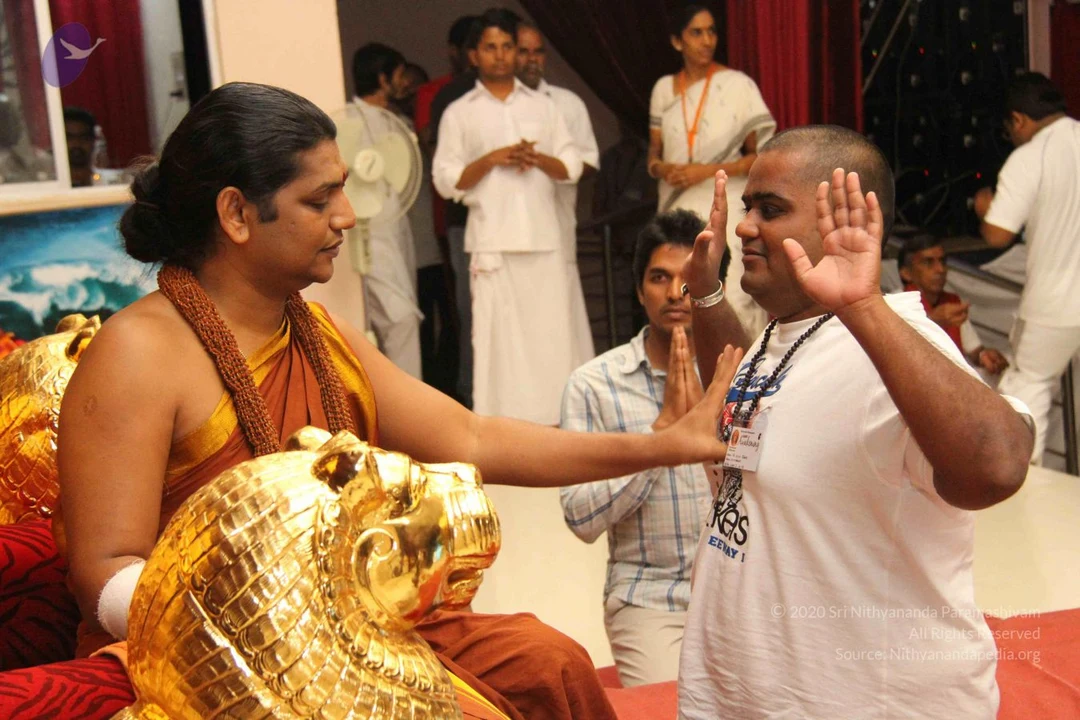
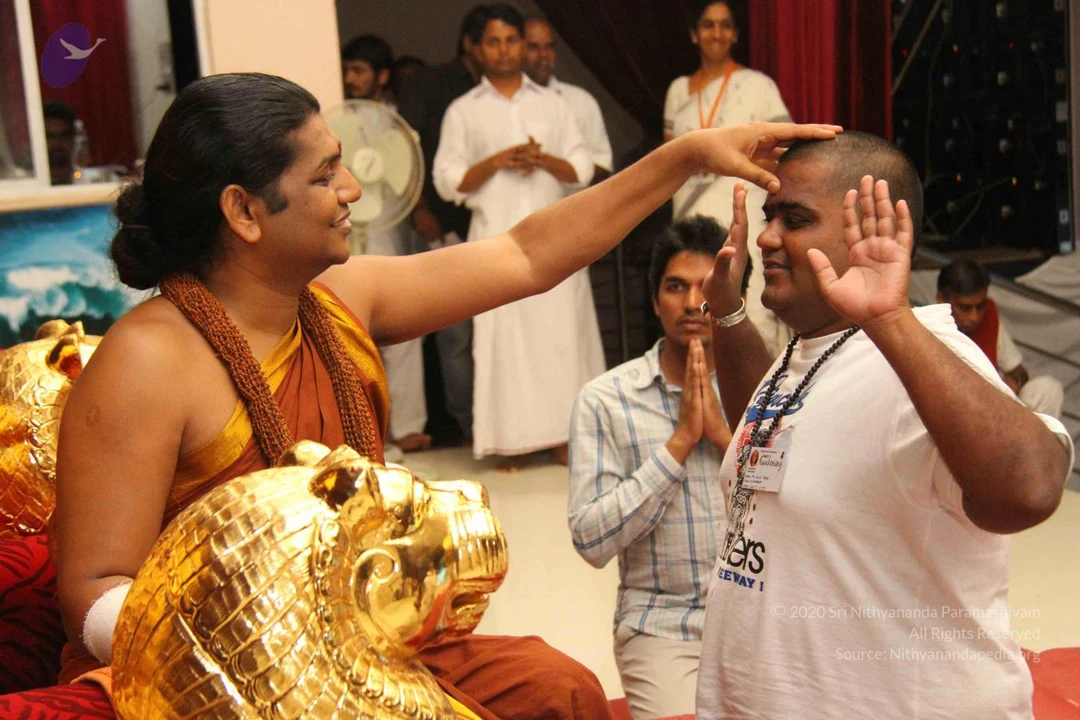
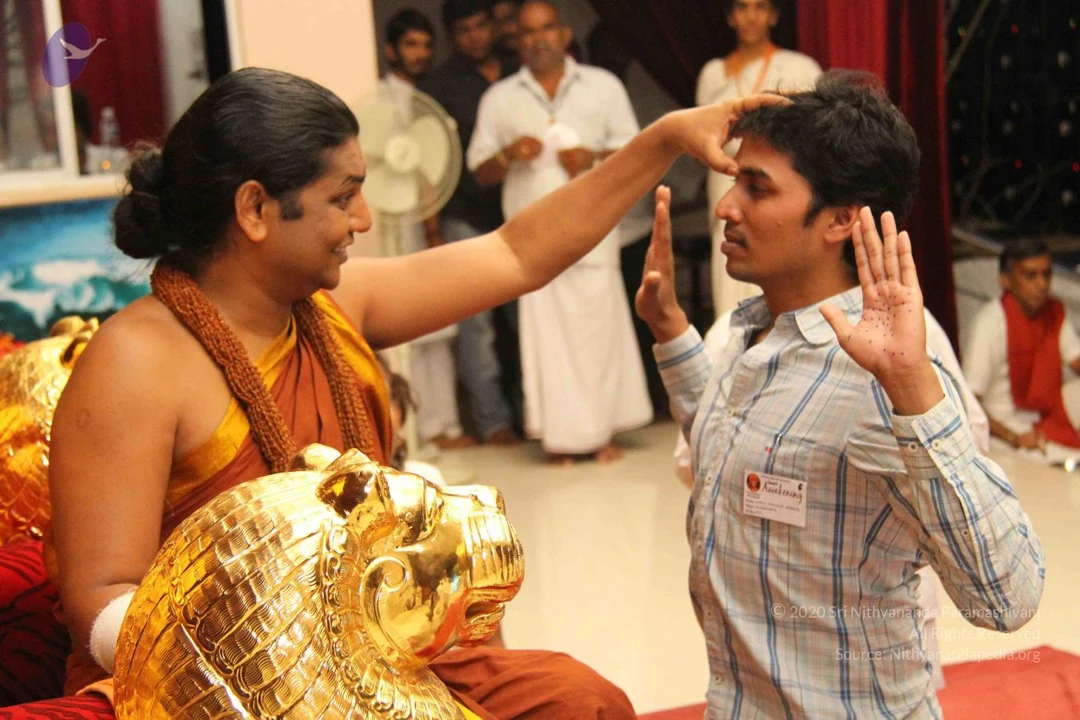
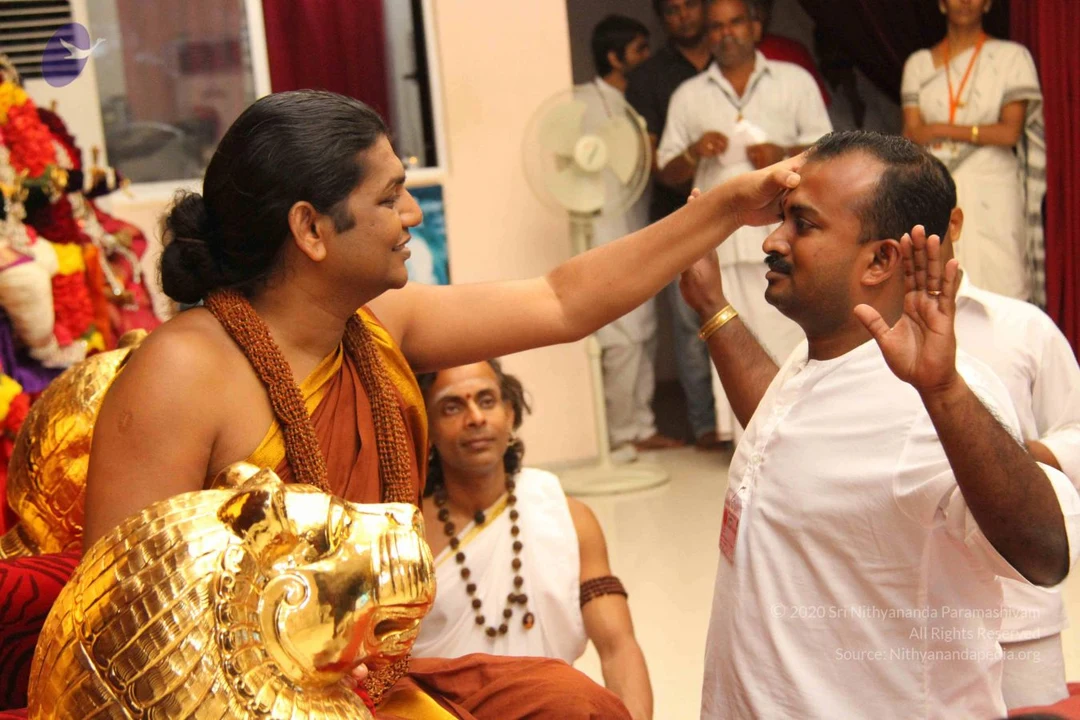
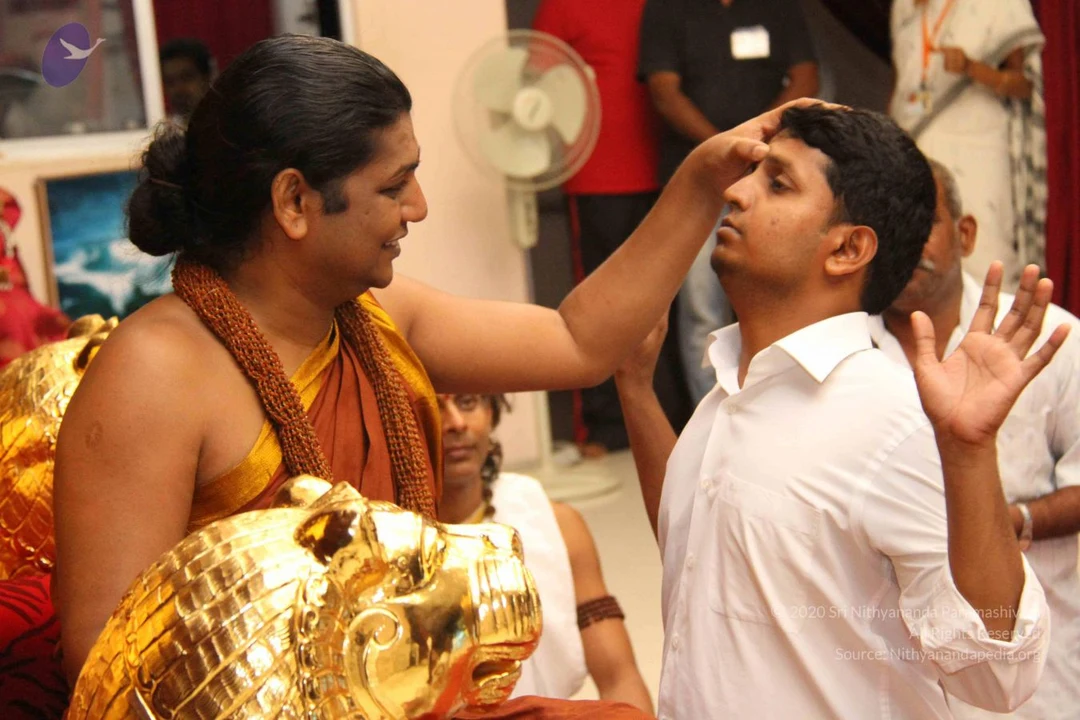
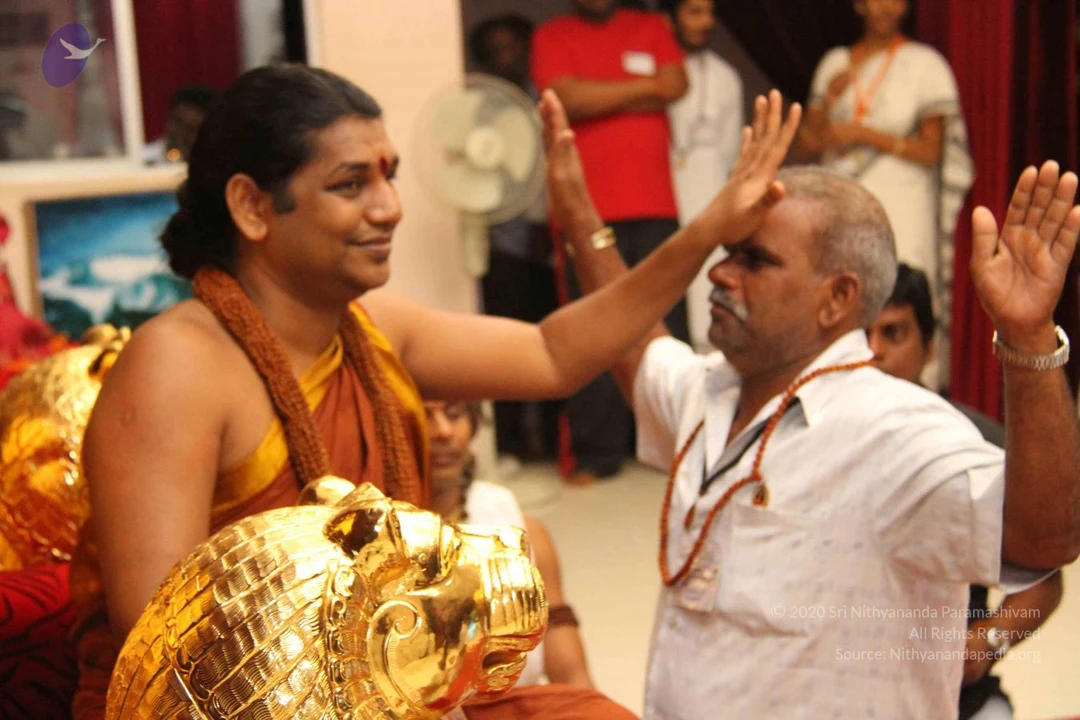
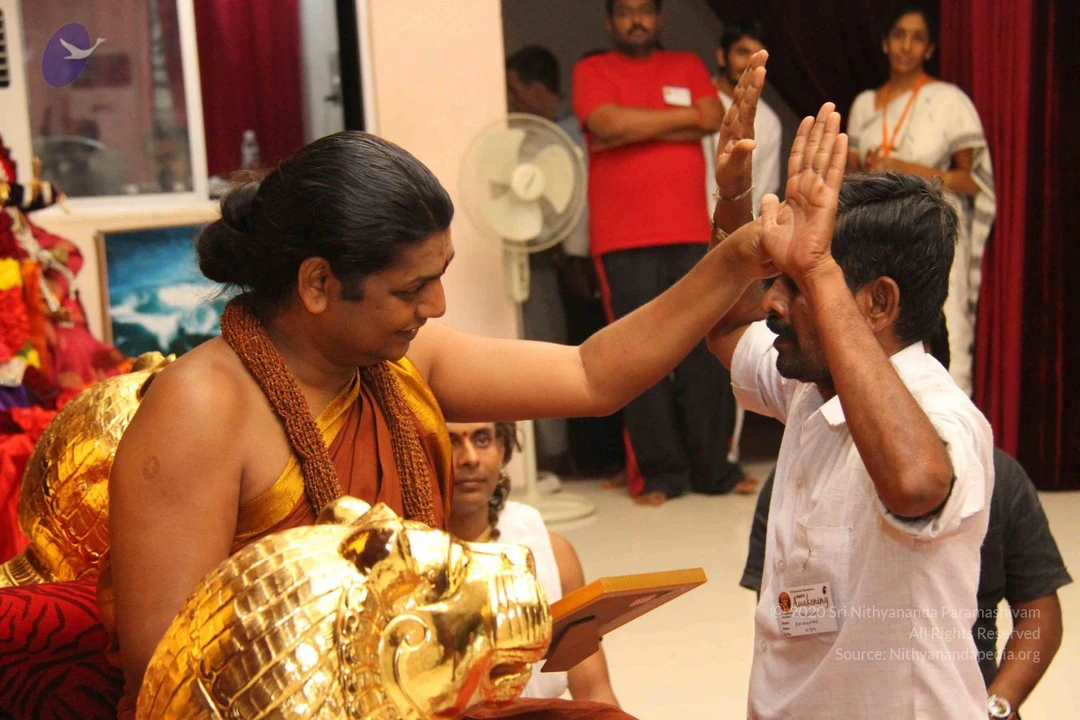
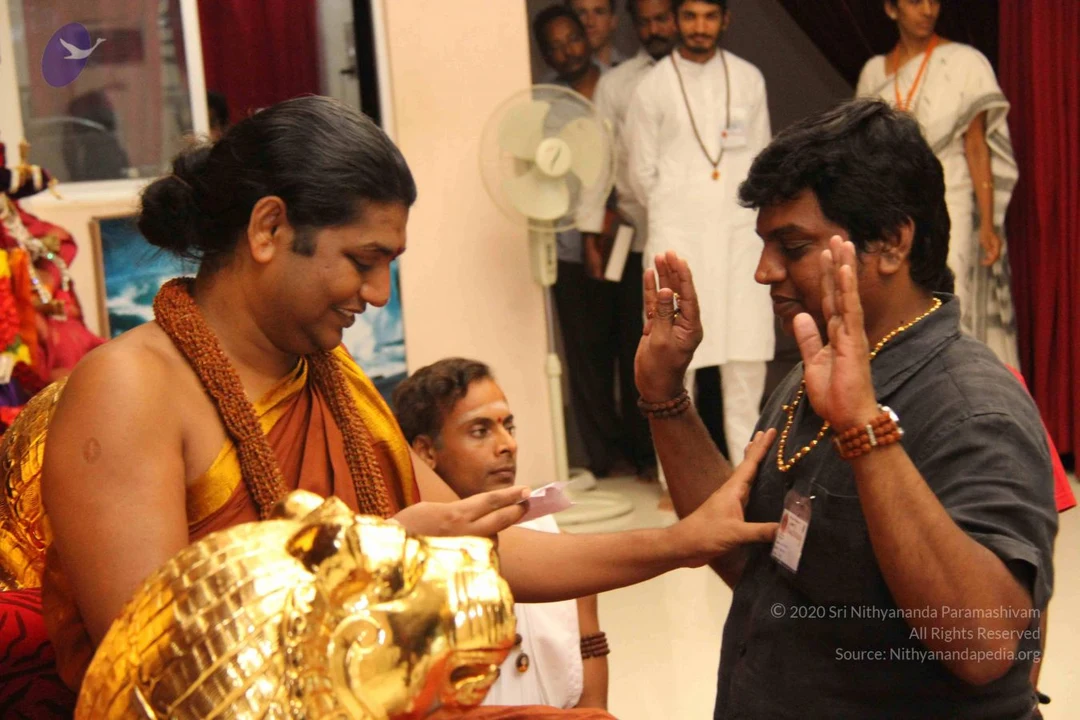
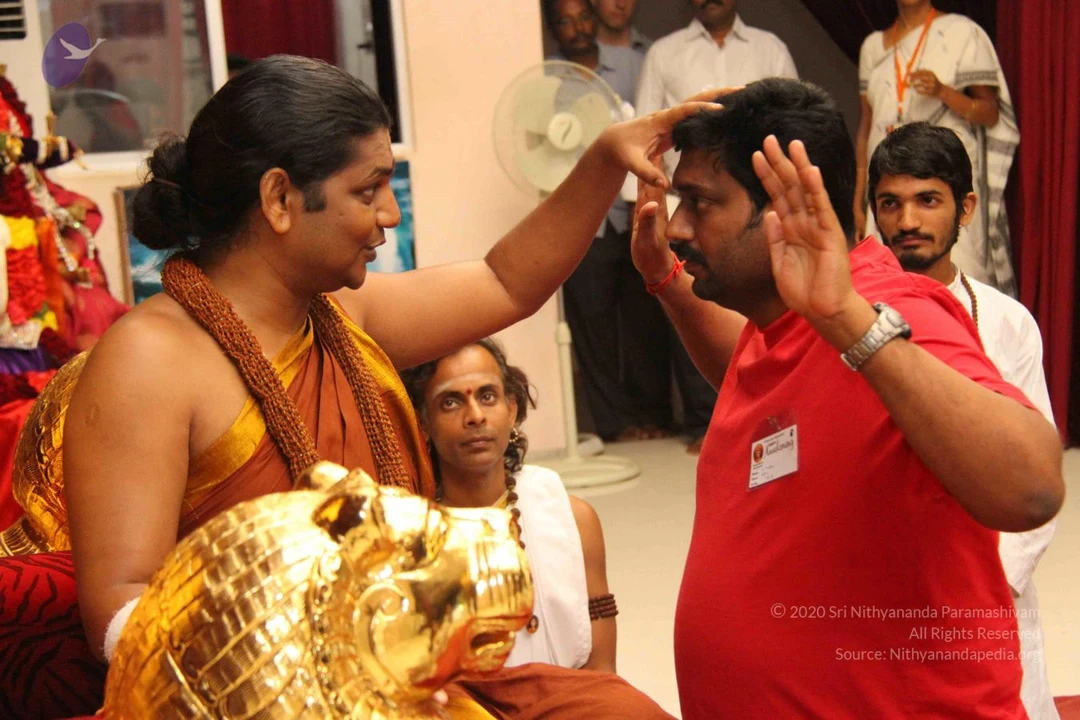
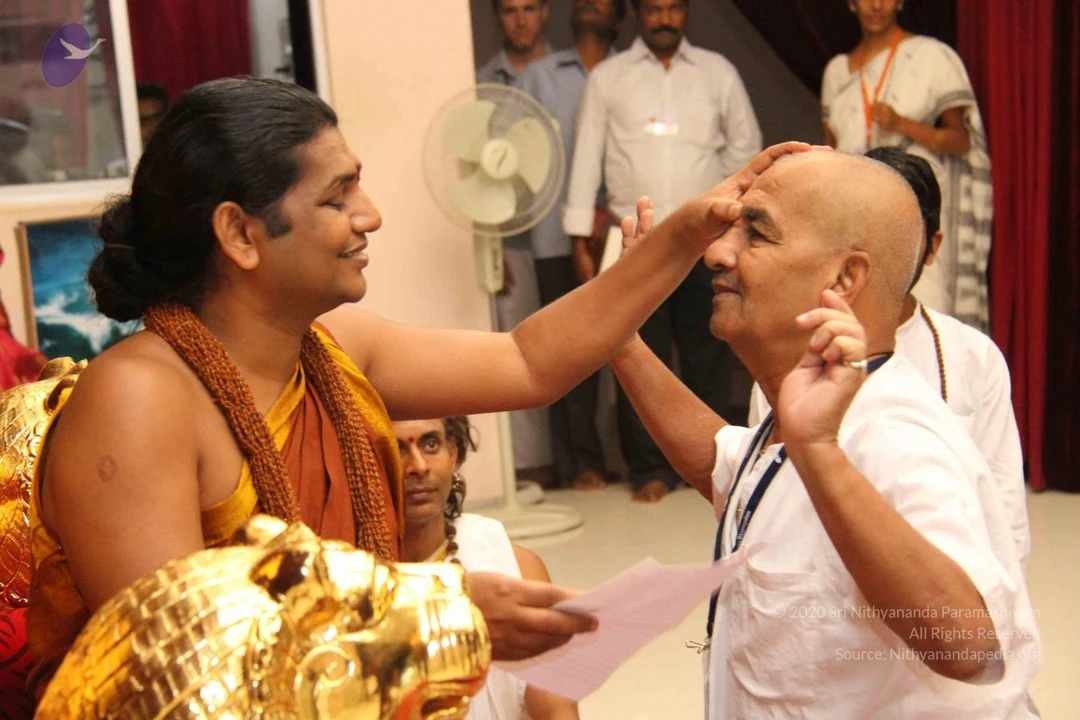
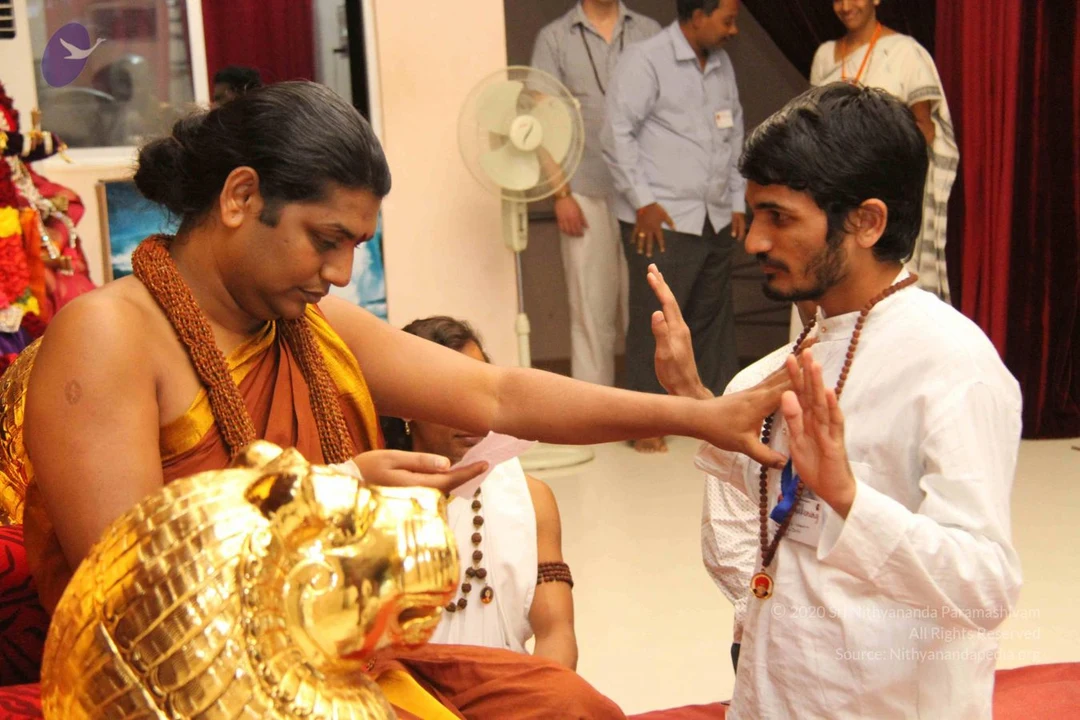
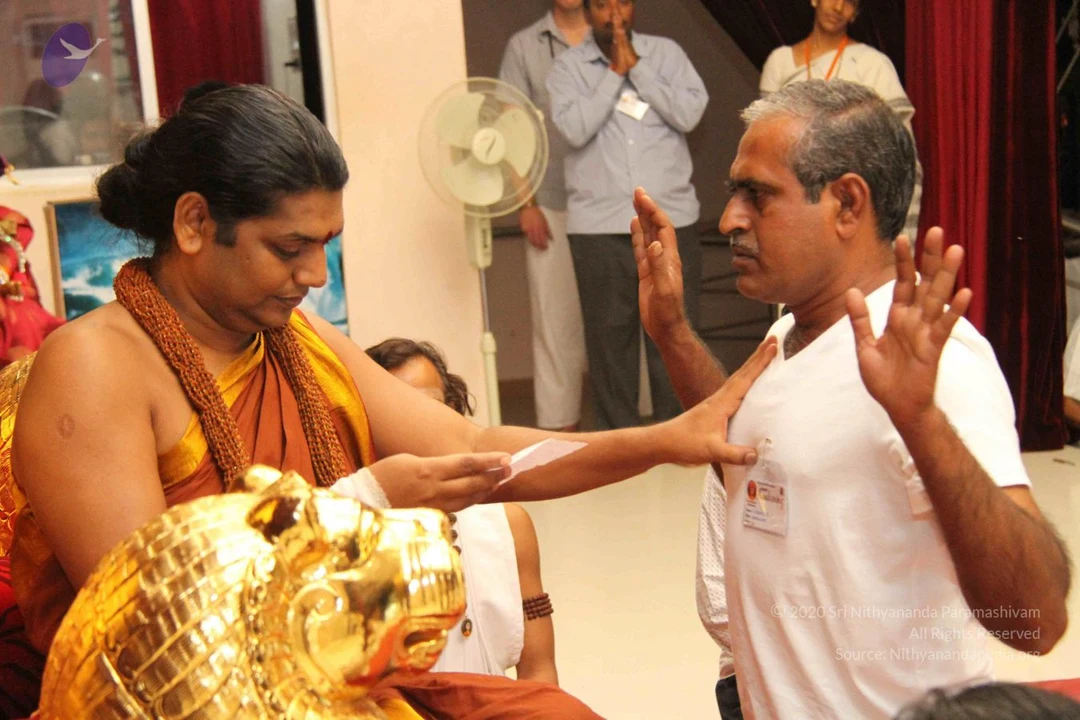
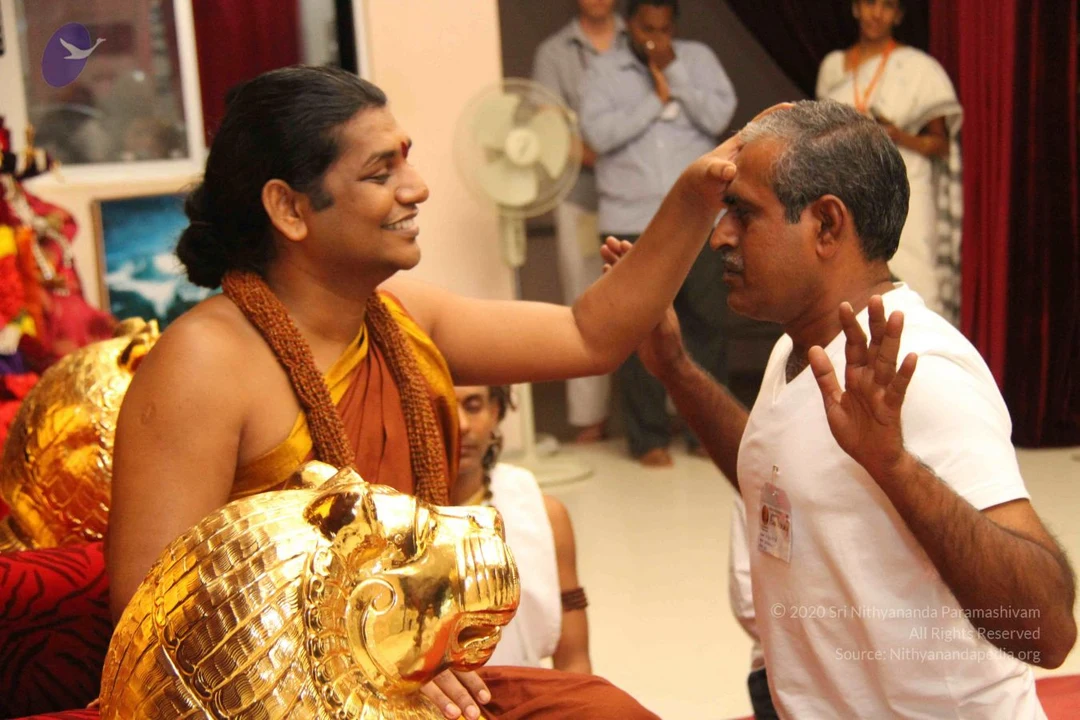
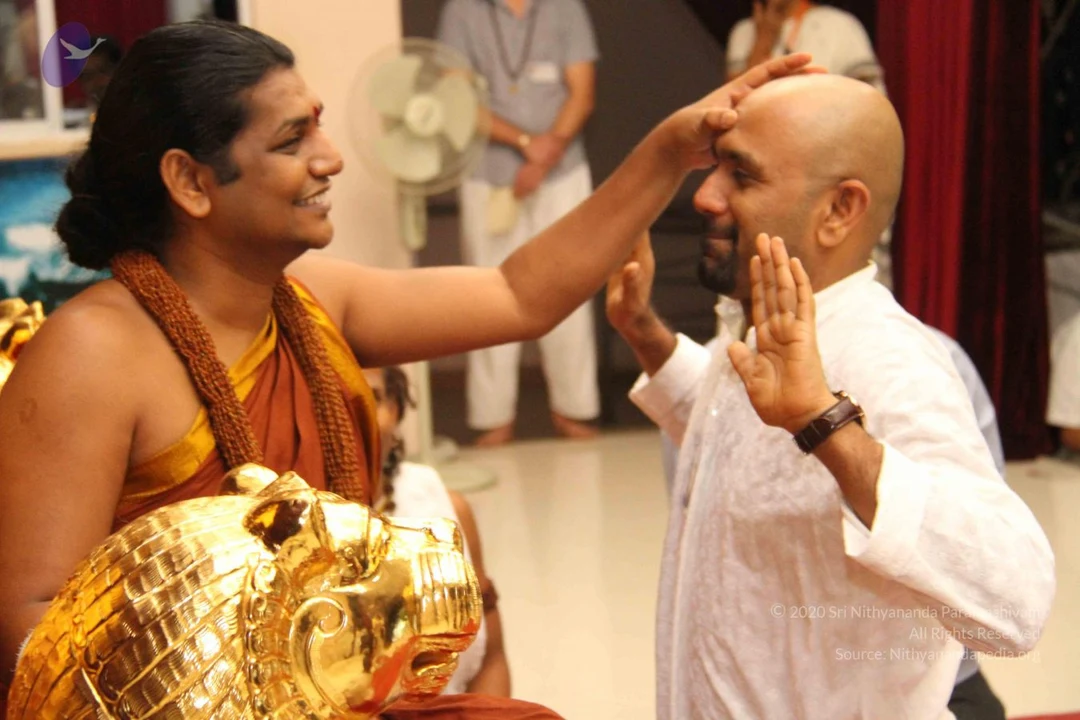
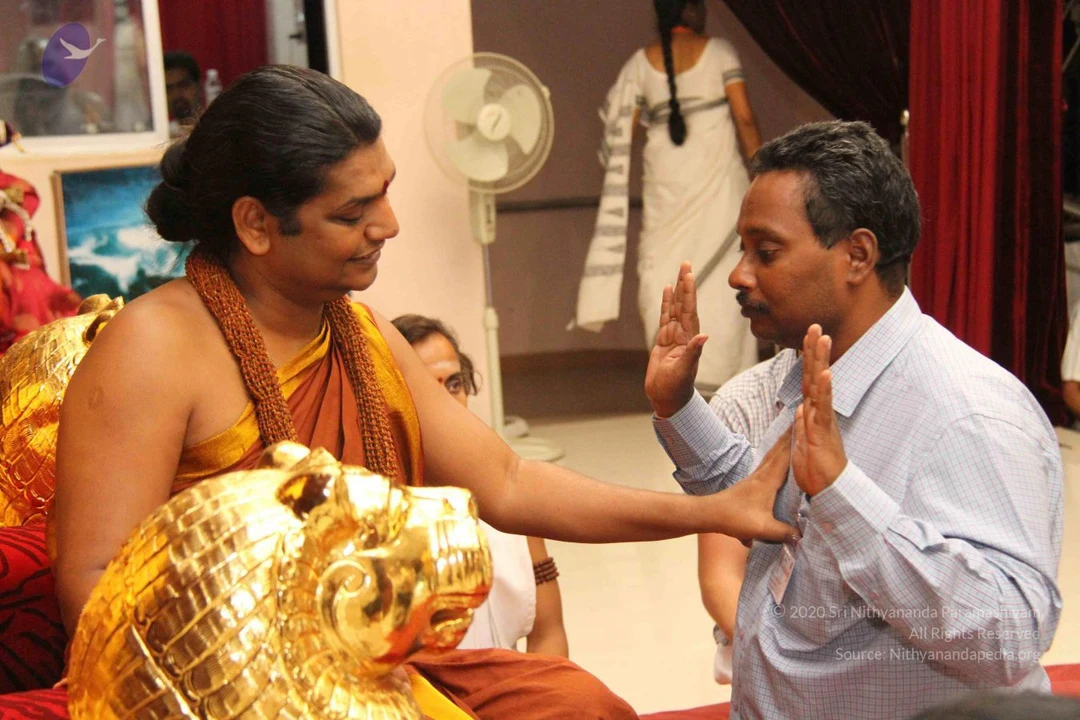
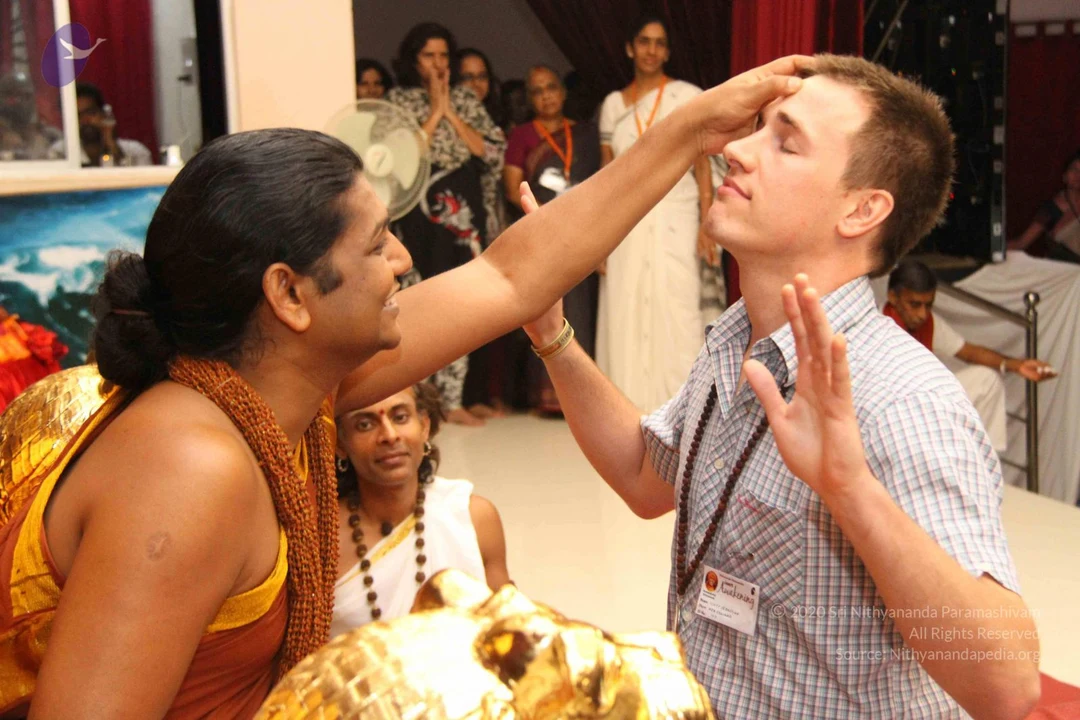
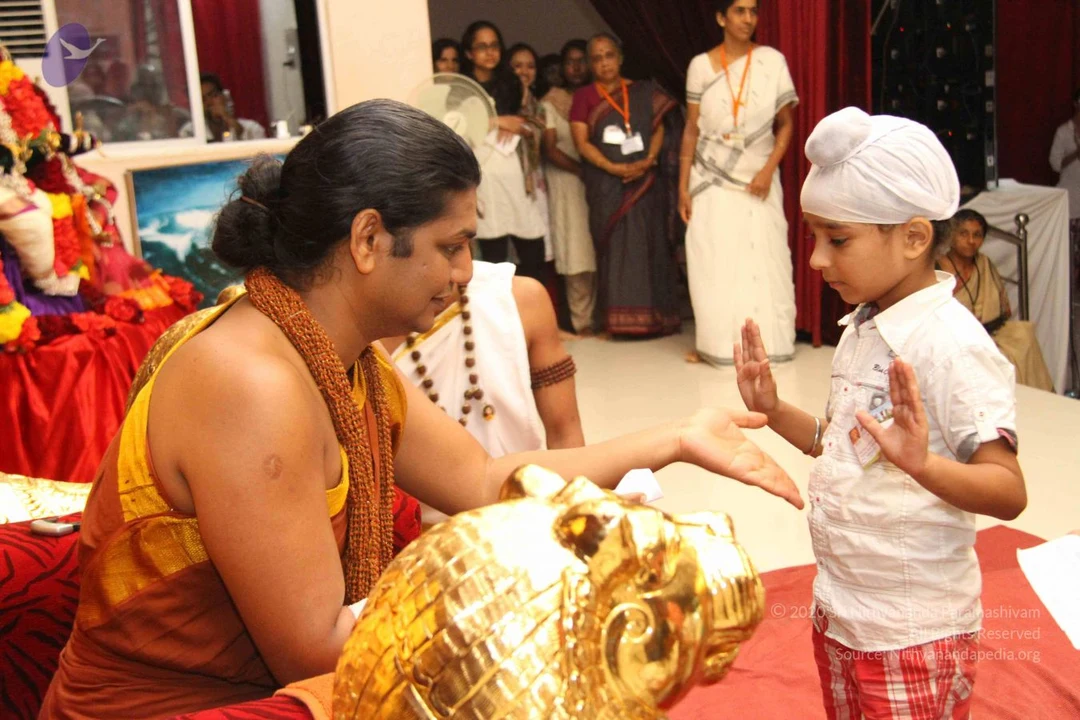
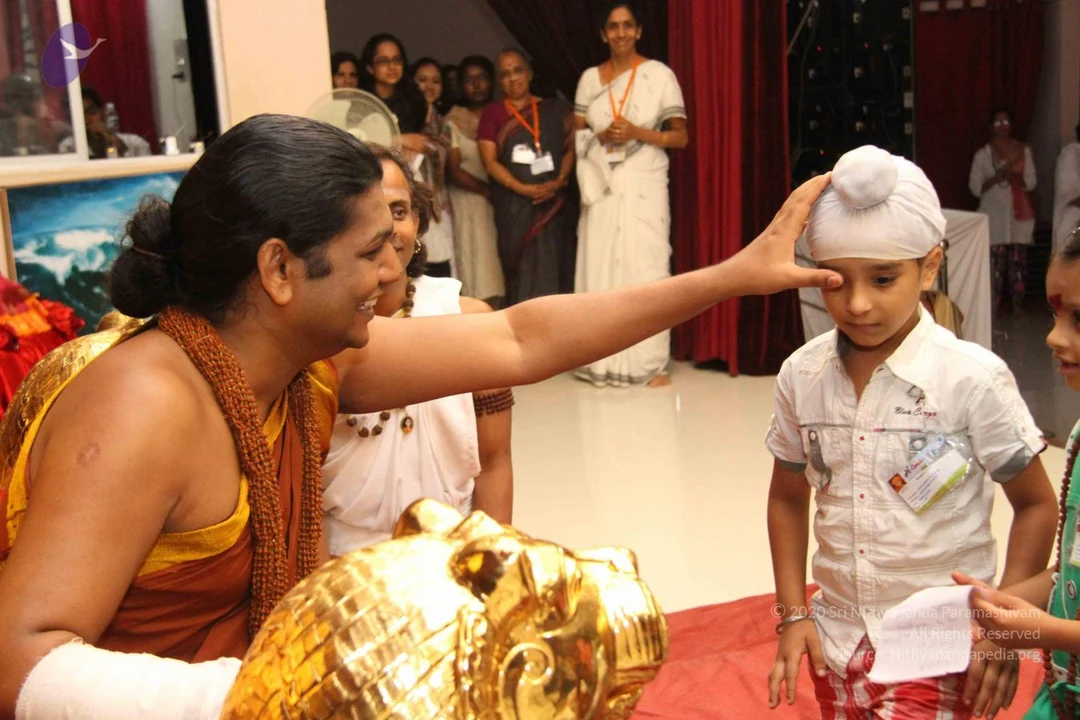
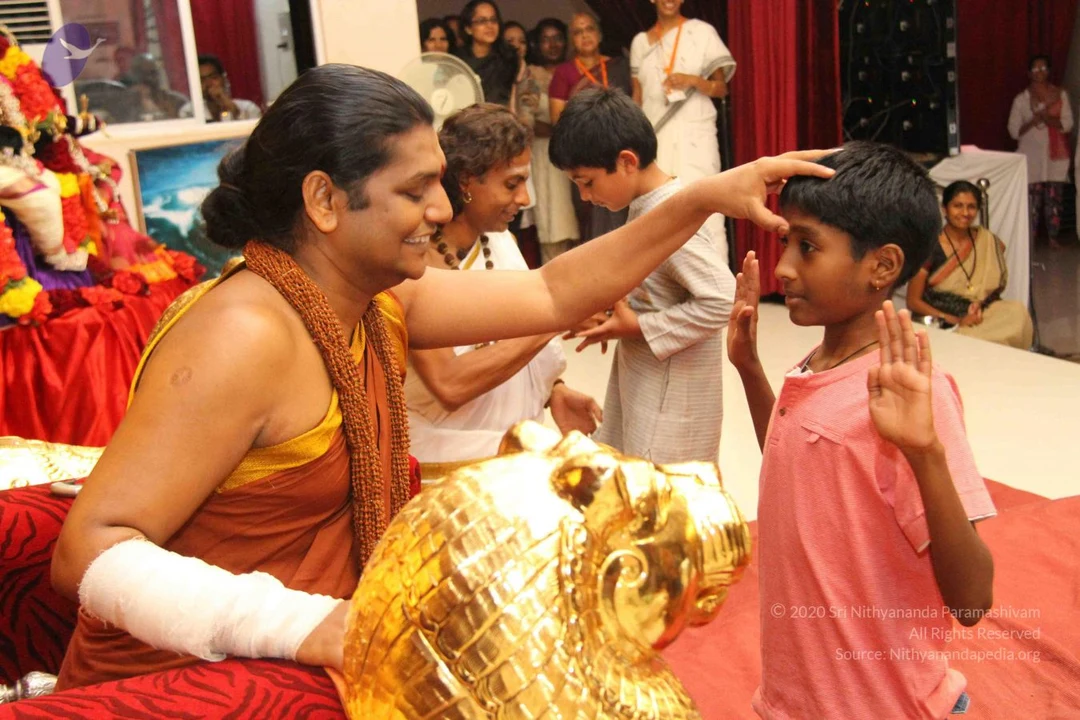
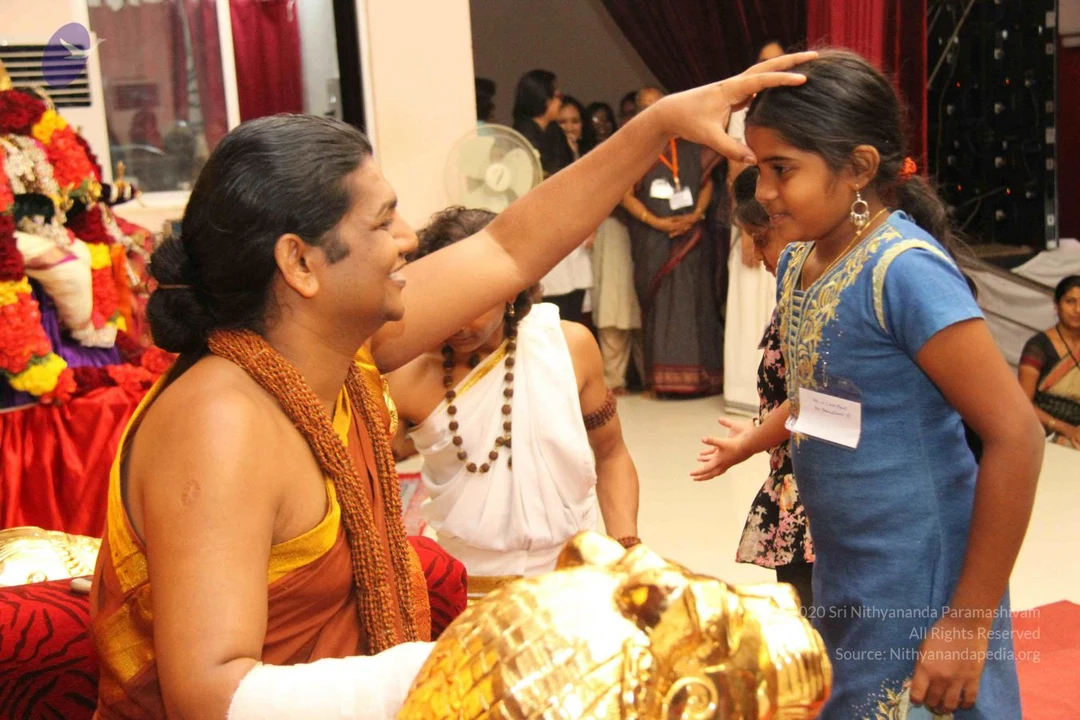
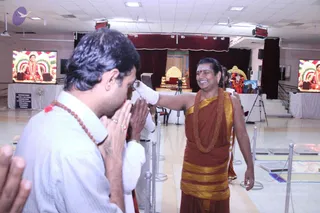
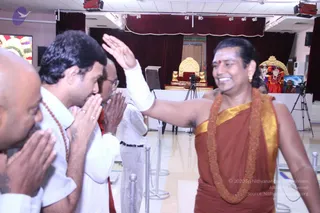
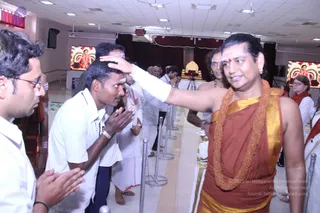
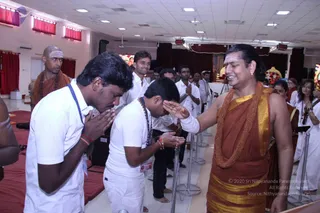
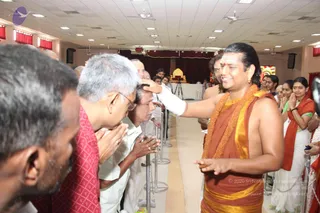
A photograph in a large hall with cream tiled floor, red velvet drapes, and ceiling spotlights. On the right, a smiling man in an orange-brown wrap with gold borders and a marigold garland stands with a white cloth raised, touching the forehead of a man on the left who wears a white shirt, a rudraksha mala, and has his hands folded in namaste. Behind them, a woman in a white sari and another person are visible. Two screens show a figure in red and orange seated before a flower-decorated backdrop, and a golden throne with a red seat stands in the background. Steel stanchions line the walkway. a person in the saffron-orange wrap with gold borders, rudraksha mala, and marigold garland, though the face is not visible enough to be sure.A photograph in an ashram hall with a polished floor and maroon drapes. A man in an orange-saffron robe with a gold-bordered shawl and a long orange flower garland raises one hand in greeting and smiles, with a red tilak on his forehead. On the left, devotees in white shirts stand with palms pressed together in namaste, one with a rudraksha mala. Behind them, a golden throne with lion figures and a decorated deity altar with flower garlands are visible. Two tripod cameras stand in the background.Indoor hall with a tiled ceiling, ceiling fans, and a carpeted aisle lined with steel stanchions. A man in a saffron-red dhoti-style garment with a golden border and a long rudraksha mala places his right hand on the head of a young man in a white shirt and dark pants, who has his palms pressed together in namaskar. Other devotees in white, some barefoot, stand along the aisle. Two large screens show a figure in red and gold, and a golden throne-like seat is visible at the back of the hall.Indoor hall with red curtains and a ceiling fan. A man in a saffron-orange dhoti with a gold border and a long orange-beaded rudraksha-style mala blesses a devotee by placing his hand on the devotee's head. The man has long swept-back hair and gold earrings; the page states Swamiji is at this event, and the appearance cues (long swept-back hair, saffron clothing, beaded mala) are consistent, so he is a probable Swamiji. Nearby, devotees in white shirts and trousers with lanyards stand with hands folded in namaskar or bend forward in reverence. A shaven-headed priest with white tilak on his forehead and an orange shawl stands at left, and a row of women and men in white and saffron waits behind metal stanchions. A golden deity murti or throne canopy is visible in the background.A photograph of a hall with white ceiling tiles and red curtains. A bare-chested man in a rust-red and gold-bordered dhoti with a rust-red shawl and a long rudraksha-style beaded necklace stands in the centre-right, smiling, placing his right hand on the head of a balding older man in a white shirt who bends forward and holds his hand. A man in white shirt with a blue lanyard stands beside them with hands folded. Other devotees in white and rust-red clothes, some with beaded malas, stand behind a row of metal stanchions. Screens on the wall show a devotional image. The centre figure matches the Swamiji (probable) appearance cues of long swept-back hair, gold earrings, ornate gold-bordered red garments and a beaded necklace, giving blessing to a devotee.A photograph in a hall with white ceiling lights and ceiling fans, showing a line of devotees receiving blessings. A man in an orange-and-gold saffron dhoti and shawl, with a rudraksha mala and gold ornaments, stands bare-chested at right, extending a white-sleeved hand to touch the forehead of an older bald-headed man in a white shirt. Several people with folded hands wait along a metal barrier, including a grey-haired man in a red-patterned shirt and a man in white. Women in white saris with red borders stand at right with palms pressed together. A golden throne with a red backdrop is visible at the far end of the hall.

IA_Day3

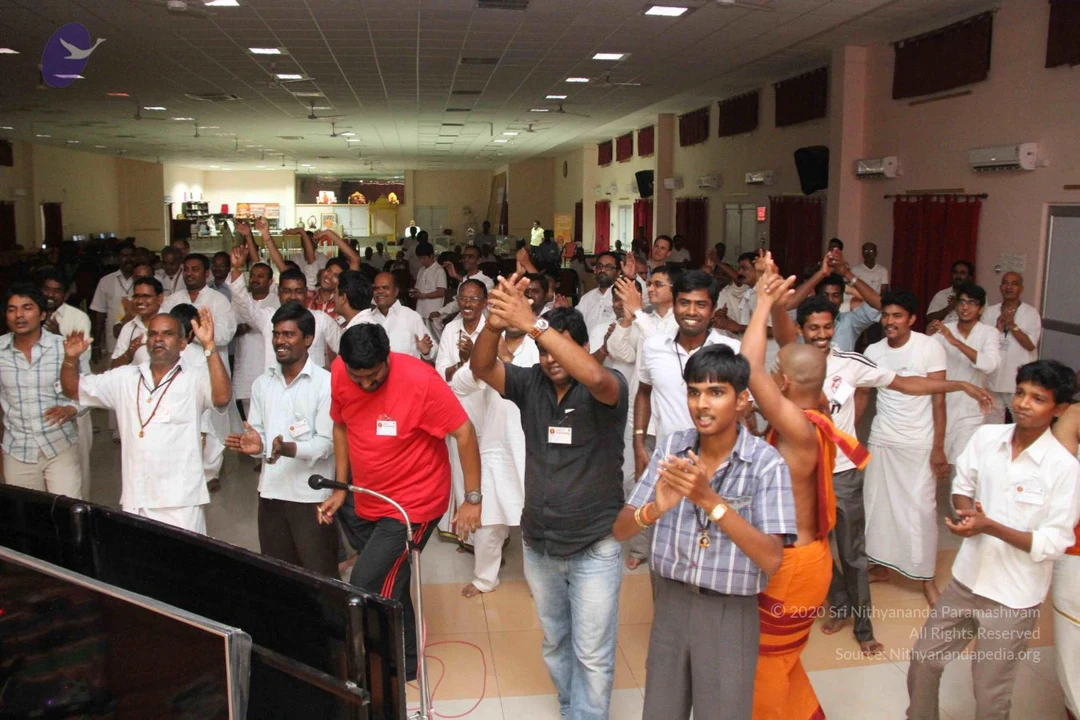
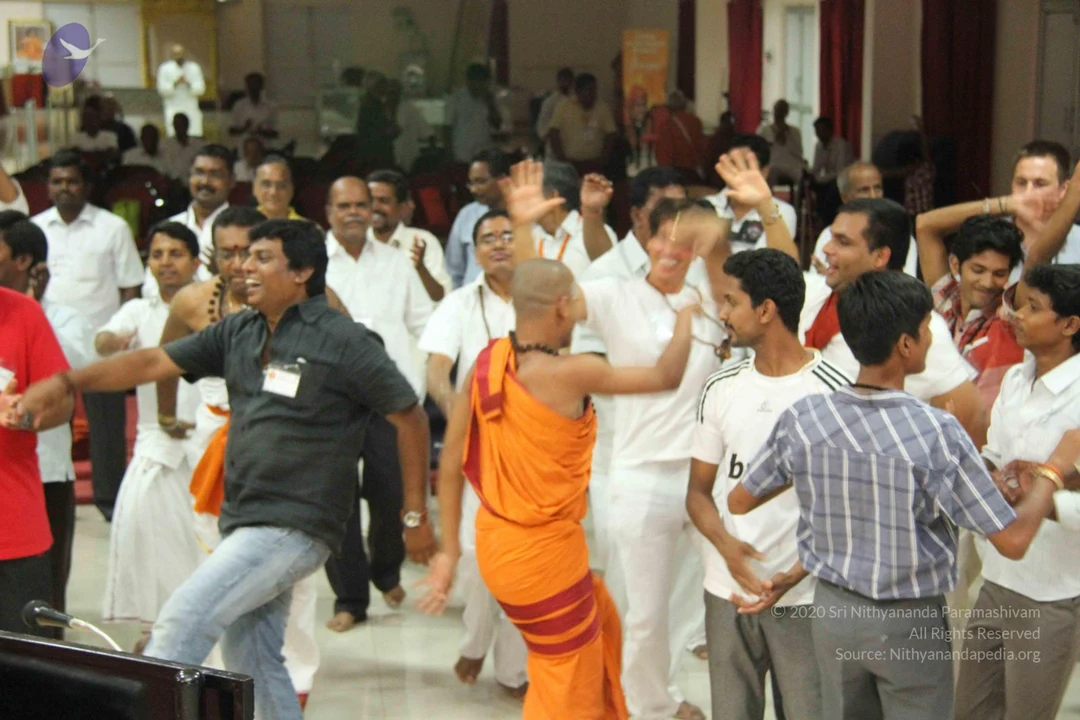
136 photosSource gallery
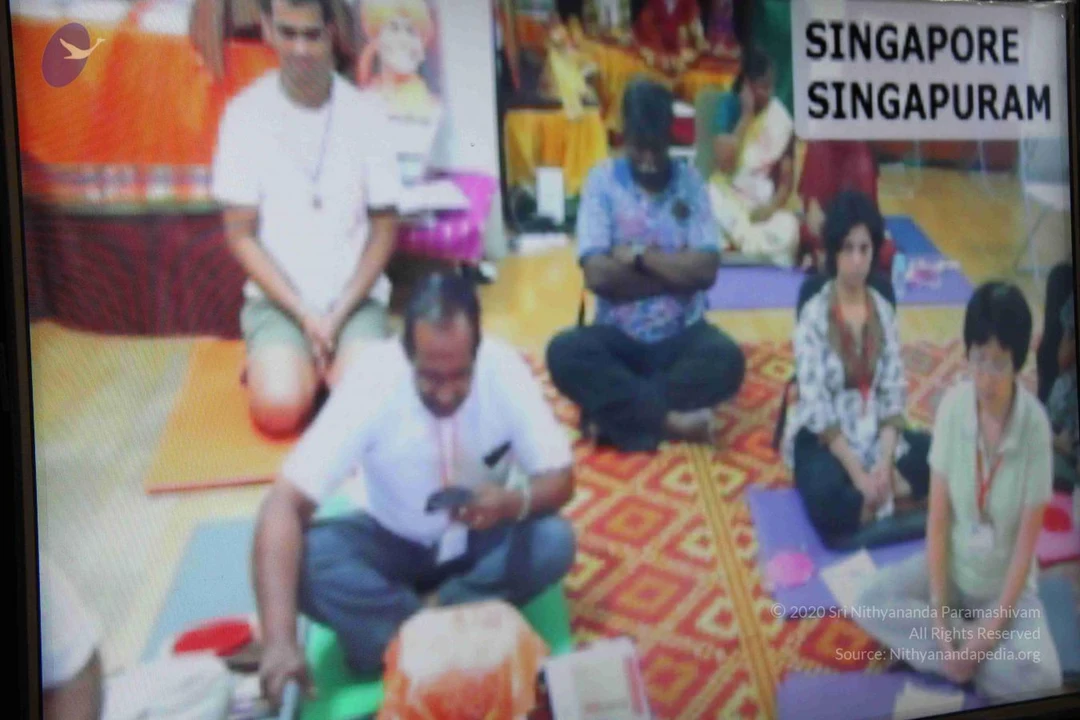
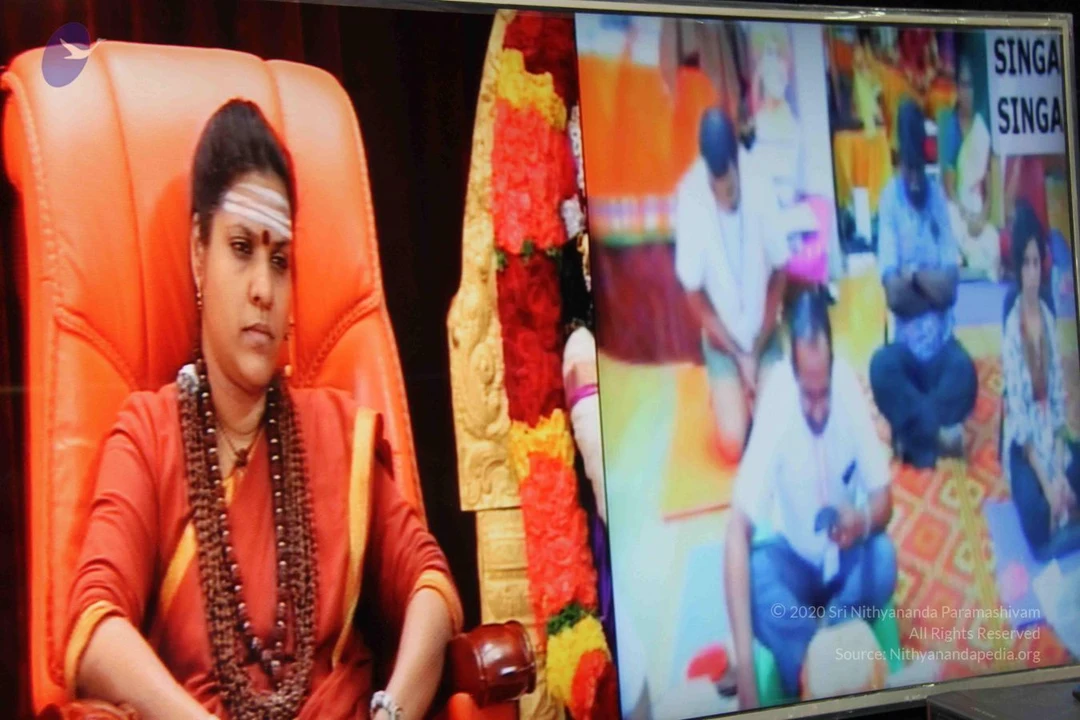
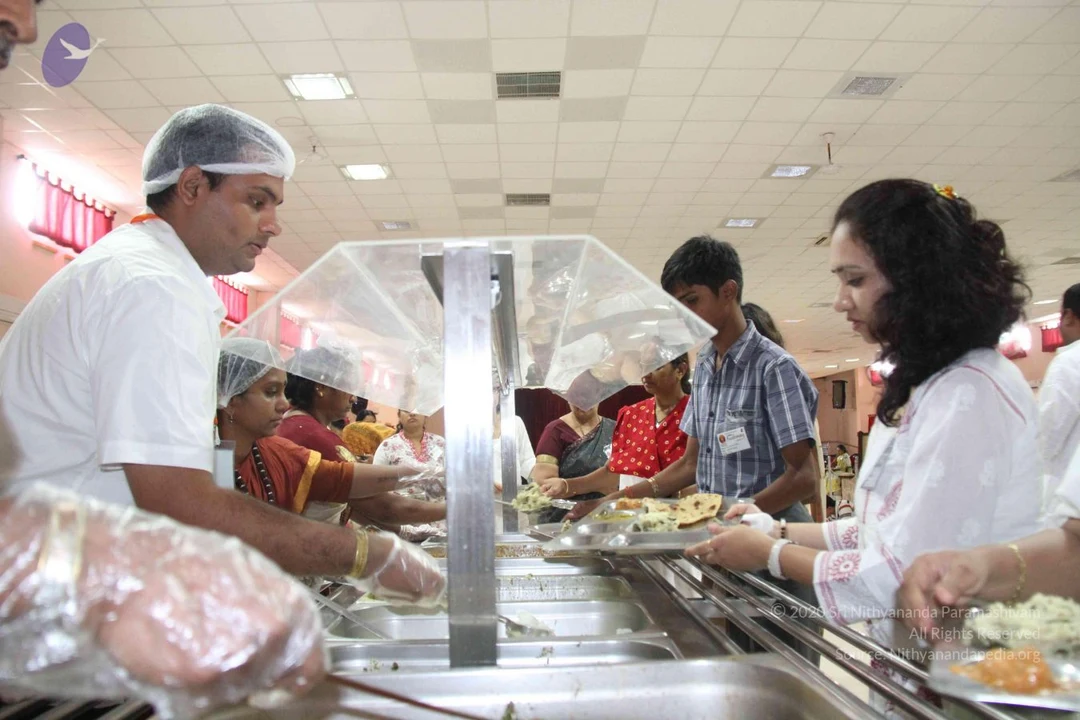
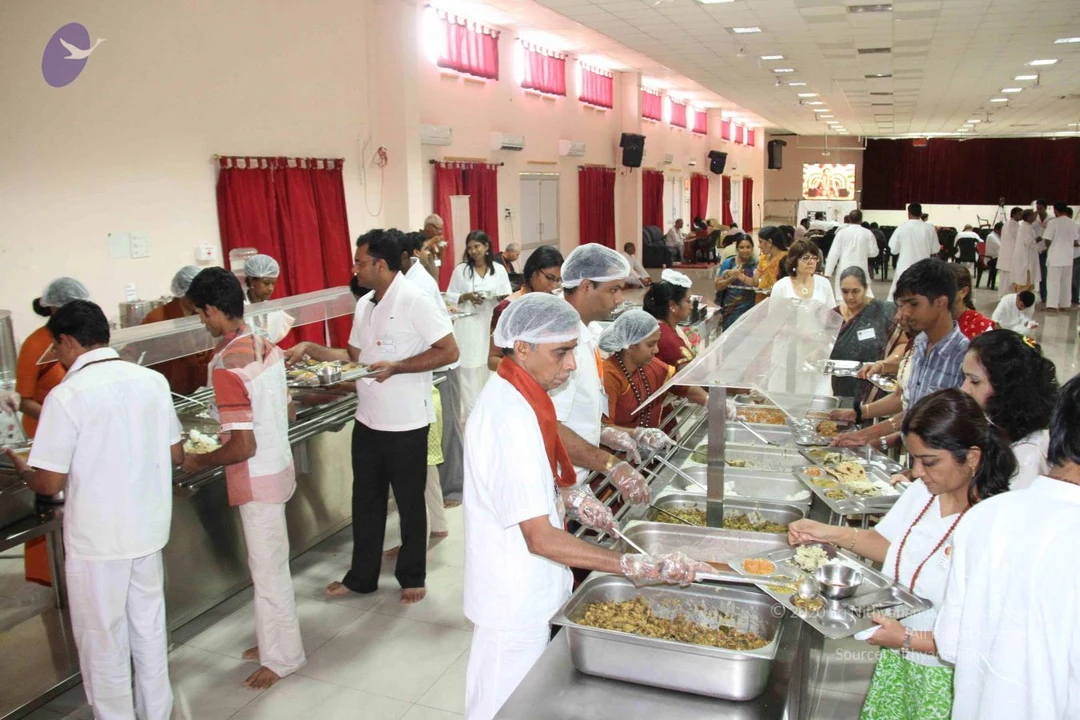
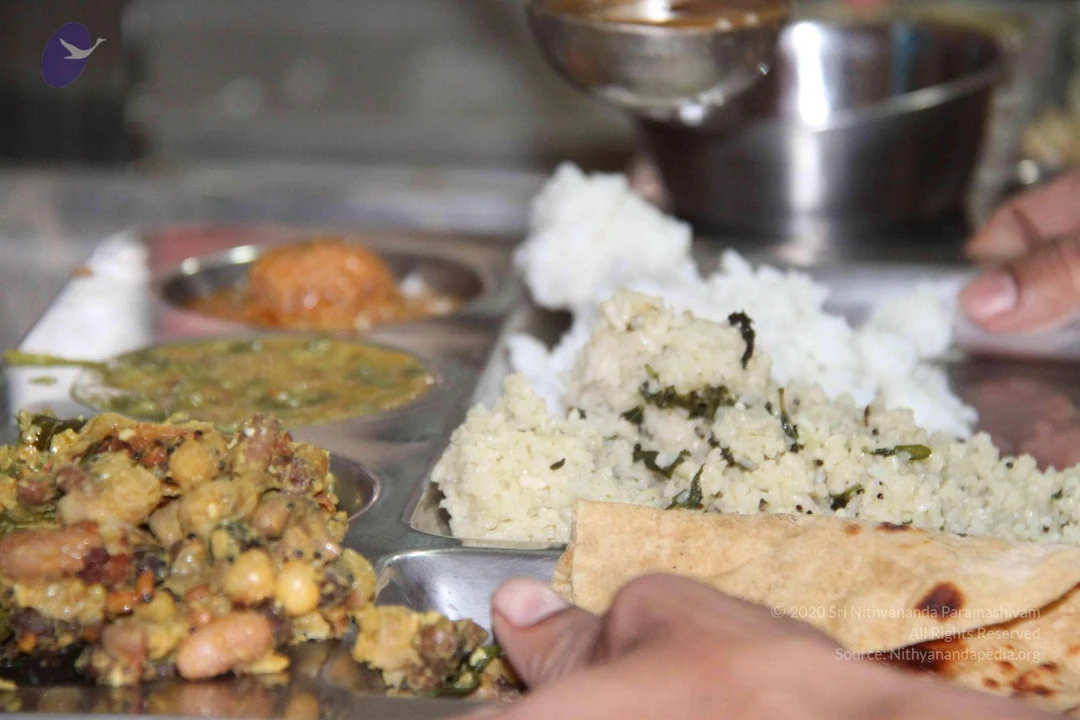
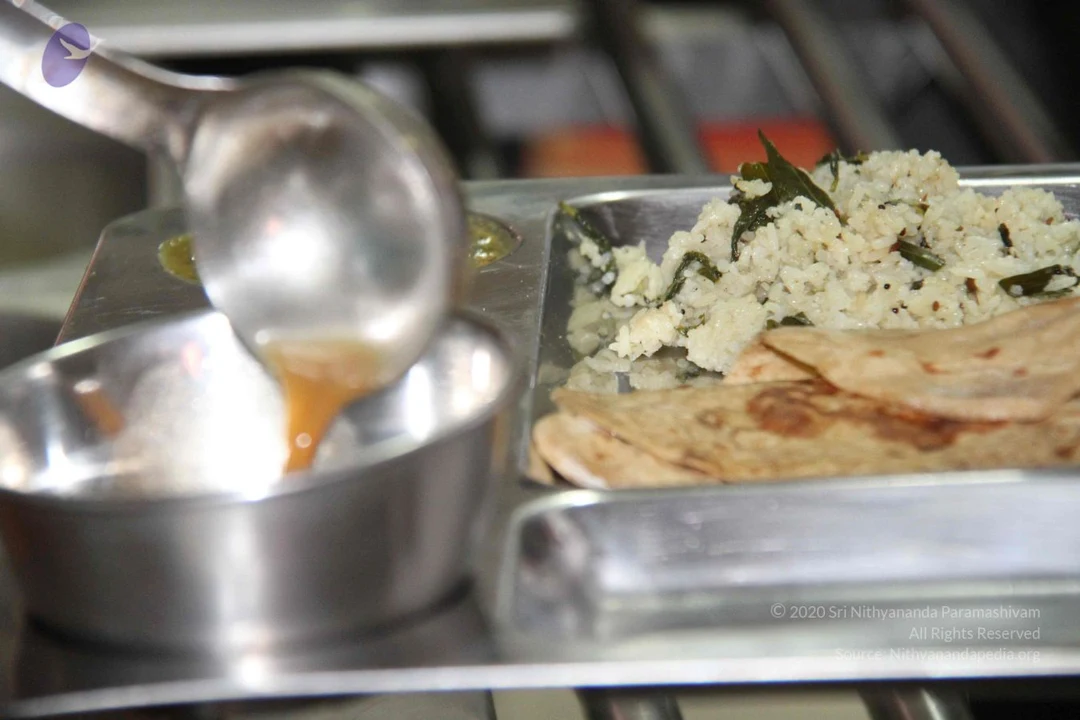
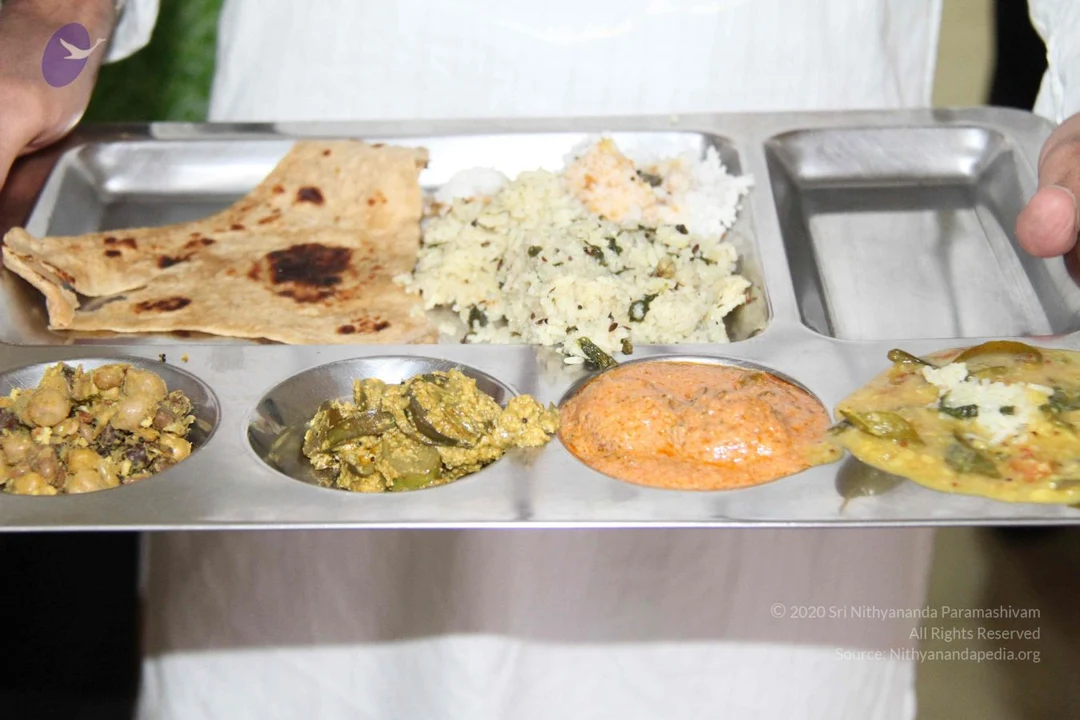
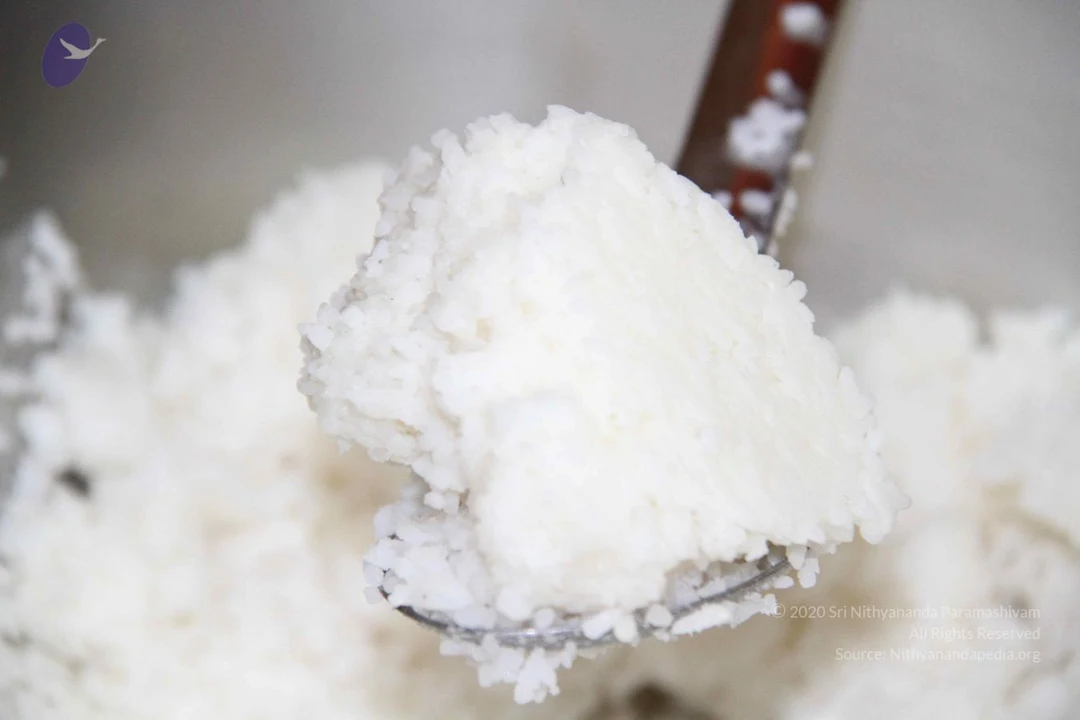
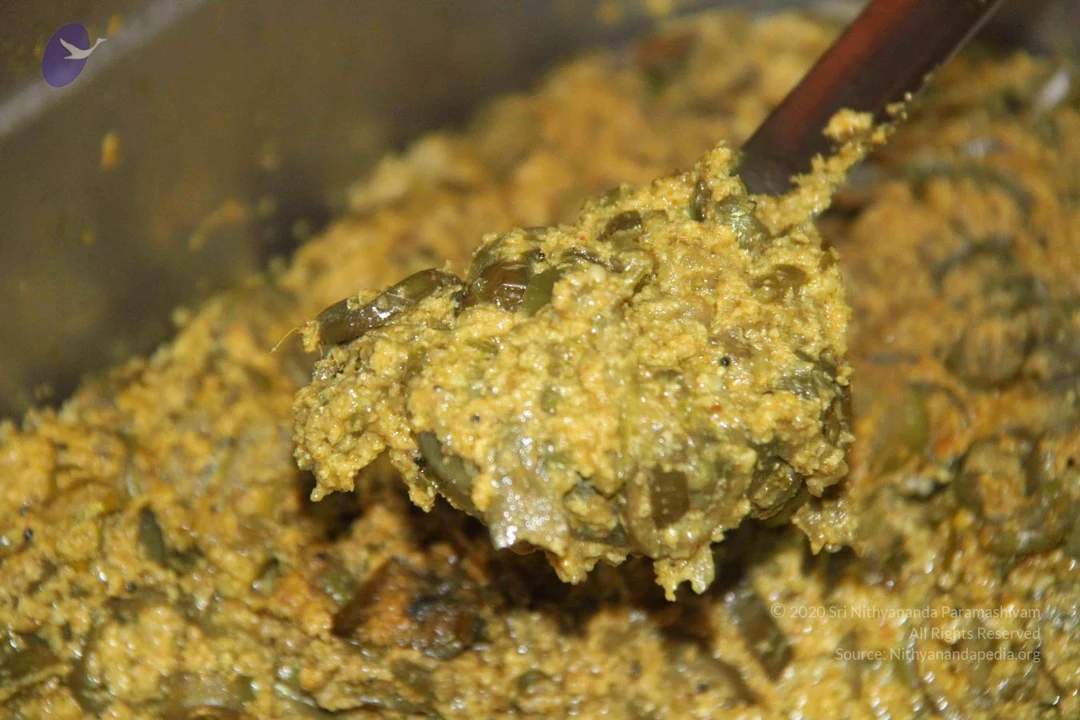
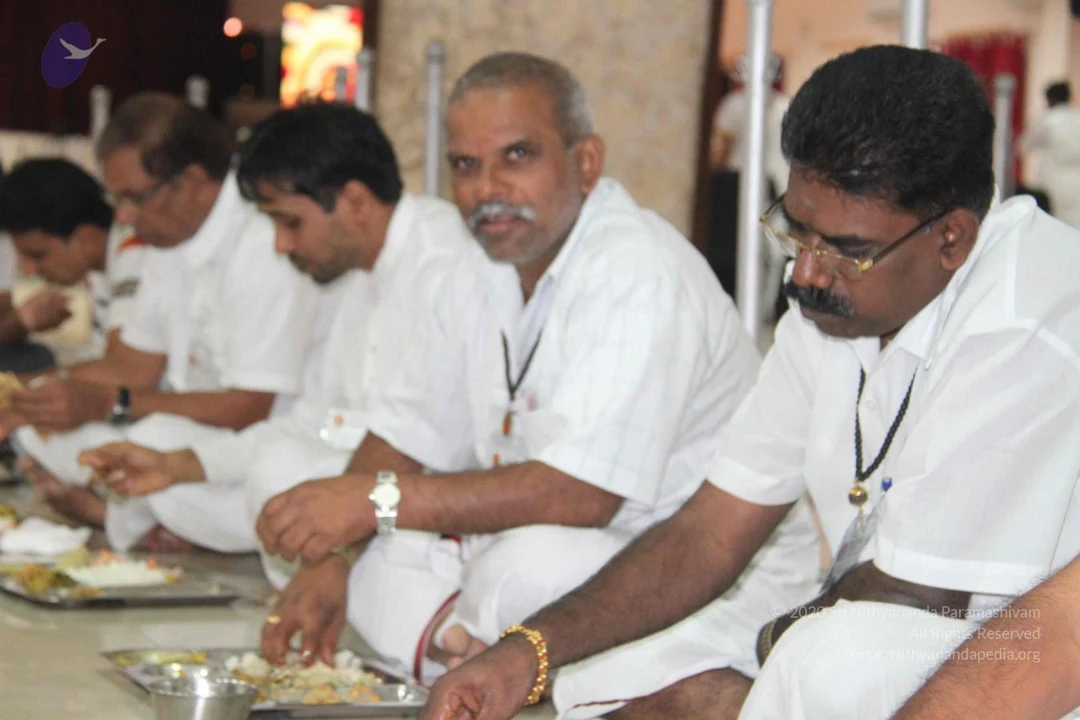
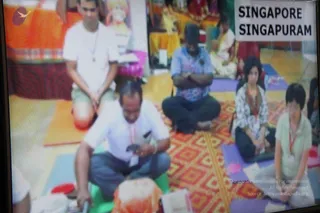
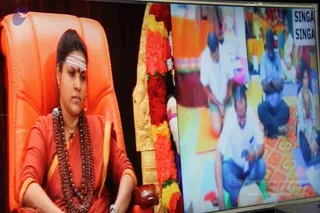
A photograph of a screen showing a video-conference session in a hall labelled with a sign reading SINGAPORE SINGAPURAM. Several people sit on purple and blue mats over a red and orange patterned rug. A man in a white shirt kneels at the back left, a man in a white shirt with a lanyard sits in front with his hands together, a man in a blue patterned shirt sits cross-legged with arms folded, a woman in a patterned top sits with eyes closed, and a young person in a beige shirt sits with eyes closed at right. Behind them, a shrine area with orange and yellow draped cloth and a seated figure in orange holds an altar. No a person candidate is clearly visible among the people.A photograph of a television screen showing a live two-way video feed. On the left, a woman in an orange sari with a dark rudraksha mala and a white tripundra on her forehead sits in a large orange leather chair, with a wooden armrest beside her. On the right, a screen inset shows devotees seated on colourful floor mats in a hall decorated with red and orange marigold garlands and a carved gold pillar; one man in white shirt and blue jeans sits in front, and others sit nearby. The inset is labelled with the partial word SINGA. a person candidate not clearly identifiable; the seated woman is shown on screen, not a clearly identified a person.A nine-panel video conference grid of satsang participants in different cities, each panel labelled with a city name in white boxes. Top-left, Singapore Singapuram shows people in casual clothes seated on colourful mats and a rug, one man in a white t-shirt with his hands together. Top-middle, Vancouver Bhuvaneshwar shows several people in white clothes seated on a sofa and floor before a small altar. Top-right, Toronto Kailasam shows one man in a checked shirt seated on a folding chair in an empty room with red curtains. Middle-left, San Jose Madurai shows people sitting on mats in a dim room. Middle-centre, Washington DC Sripuram shows a man in dark clothes seated on a cushion before a deity murti altar, with a woman in white beside him. Middle-right, Seattle Chidambaram shows several people seated on a yellow carpet. Bottom-left, Monterrey-Mexico shows two women seated on a sofa, one in yellow and one in blue. Bottom-right, Los Angeles shows several people in white and dark clothes sitting on a red carpet. The grid is a screen capture, so the people shown are on screens and not physically present.A buffet serving line in an ashram dining hall with pink curtains and a ceiling of square tiles. A man in a white shirt and white hairnet serves food from steel trays behind a clear plastic sneeze guard. Beside him a woman in an orange sari and hairnet, and a woman in a red blouse, serve dishes. A boy in a blue checked shirt holds a plate with flatbread, and a woman with curly hair in a white kurta with red embroidery reaches for food at right. Stainless steel chafing dishes hold rice and vegetables, and a red-and-white ID badge is visible on the boy's shirt. The scene shows volunteers serving a communal meal.A large dining hall serving a buffet meal to a crowd of devotees. Several volunteers in white clothing and white hairnets stand behind steel serving counters, using tongs and ladles to serve food from stainless steel trays. Devotees in white and in colourful saris queue along the counter holding plates. A red-draped stage backdrop with a screen is visible at the far end of the hall, with more people seated and standing across the room. Red curtains hang along the pink walls.A close photograph of a stainless steel compartment thali served for a meal. Rice mixed with green curry leaves sits on the right, with a folded flatbread (roti or chapati) and a second pile of plain white rice above it. The left compartments hold a chickpea and bean dry curry, a thin green gravy, and an orange chutney or pickle. A hand rests on the tray's lower edge and another hand at the upper right, and a stainless steel bowl is visible at the top. No a person candidate is visible.

Temple

29 photosSource gallery
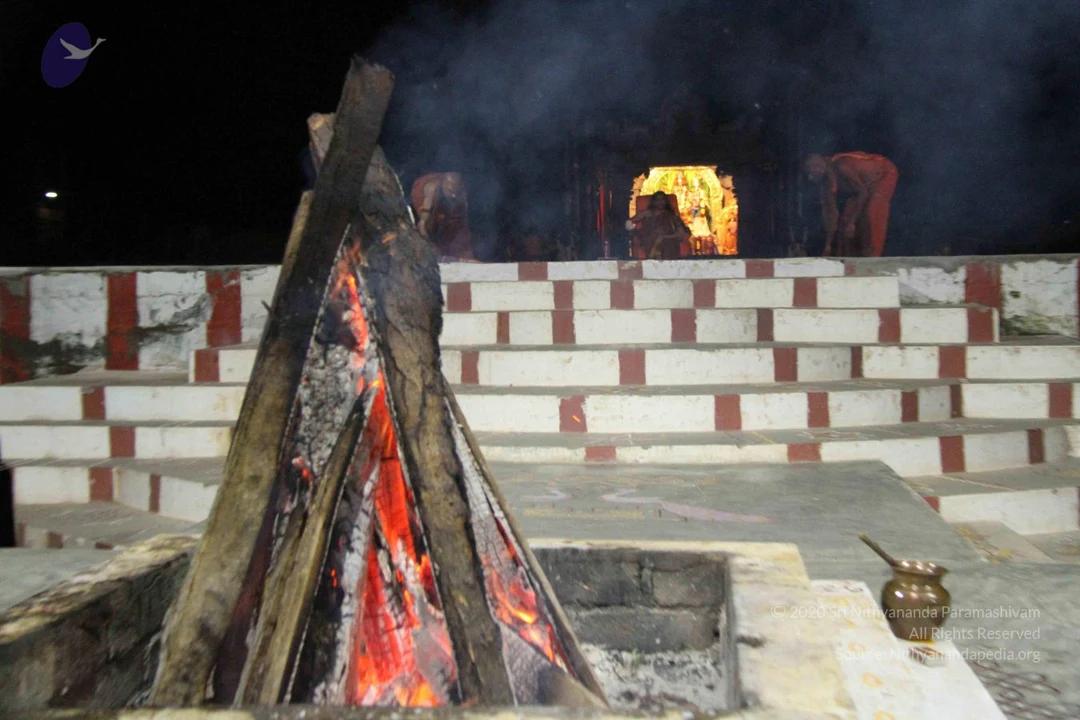
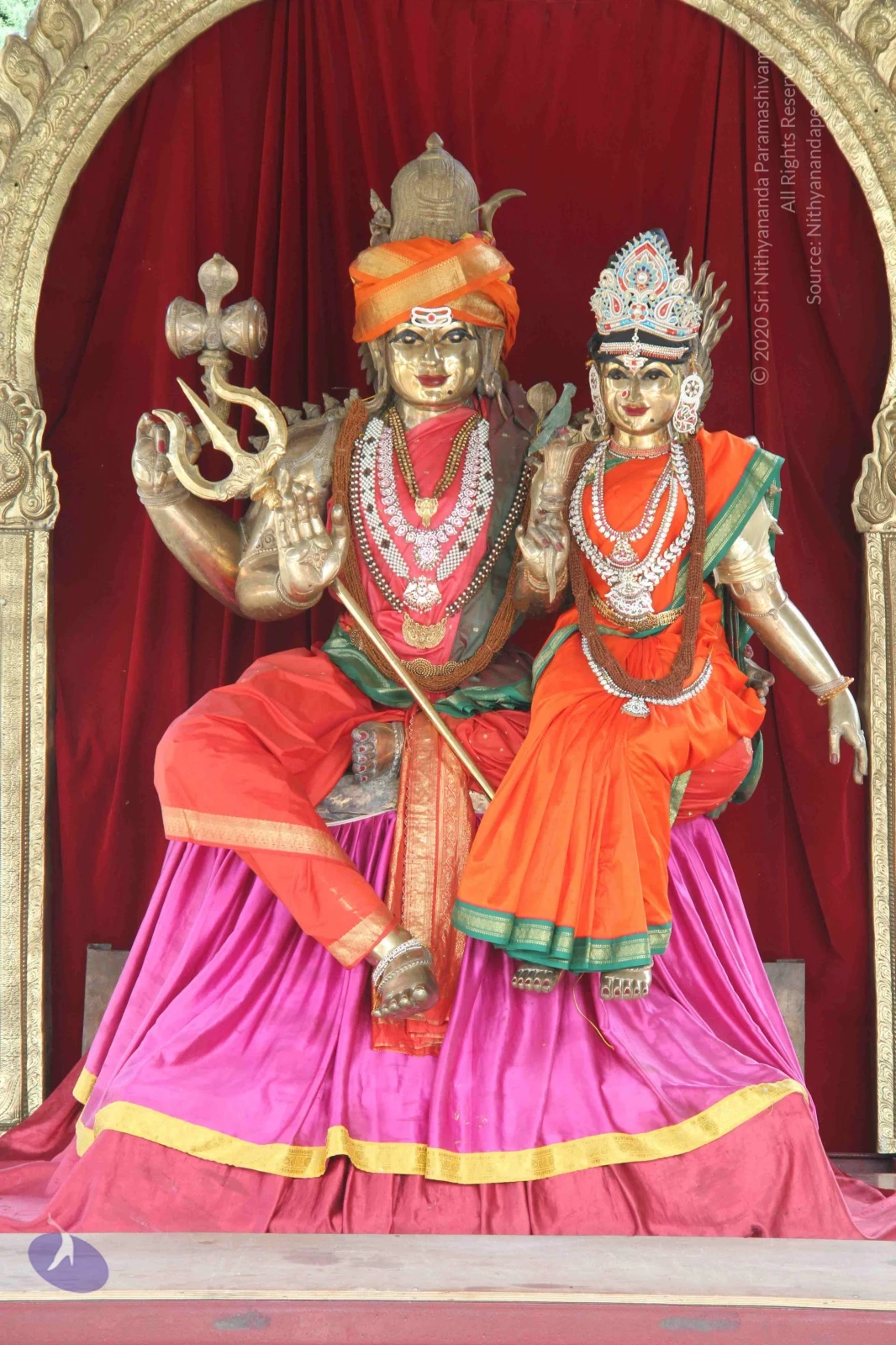
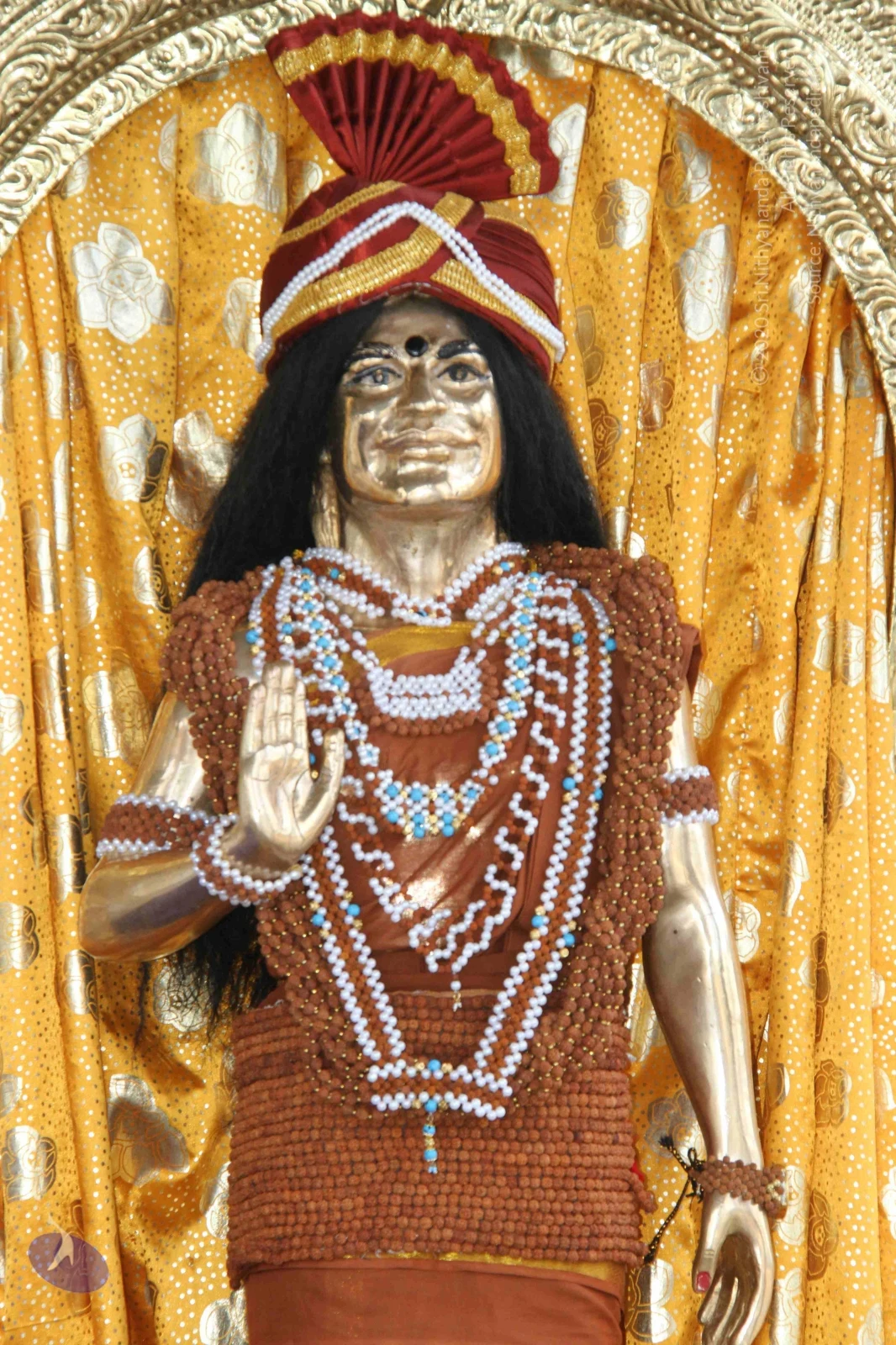
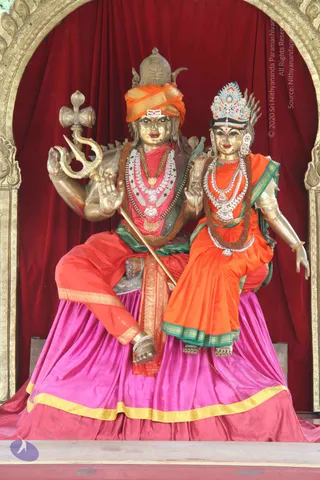
A black stone statue of the bull Nandi sits on an orange-painted pedestal outdoors. The bull wears a red-brown beaded necklace with small bells, and garlands of yellow marigolds, white jasmine and red roses drape its neck and body. A decorated saddle cloth covers its back. Green trees and a terracotta wall stand behind, with a paved path at left. No people are visible in the scene.A black stone Nandi bull statue sits on an orange-painted pedestal outdoors, draped with garlands of red roses, white flowers and yellow marigolds. It wears a rudraksha-style necklace, bells and a forehead marking, with green trees and a small potted plant beside it, and a carved orange stone pillar behind. No physical people are visible.A life-size golden statue of a seated deity pair, Shiva and Parvati, in an ornate gold arch with a deep red curtain behind them and green trees around. The male figure wears an orange turban with a tilak, a red and green cloth, layered white beaded necklaces and a rudraksha mala, and holds a golden trident. The female figure wears an orange sari with green border, a crown with floral ornaments, layered necklaces and bangles, and sits beside him on a pink and gold draped throne. The image is a deity murti, not a living person.A temple shrine photograph showing a large pair of deity murtis, a male figure holding a trident-like staff and a female figure in a crown and jewelled necklaces, seated on a purple cloth-draped platform before a green silk backdrop framed by ornate gold arch. Both are garlanded with yellow and red flowers and wear ornate ornaments. Below them a smaller figure in purple is adorned with flower garlands and a golden-rimmed seat. To the right stands a smaller painted or sculpted figure in brown dress with beaded necklaces, within an orange-curtained niche. The stone pillars are carved and white. No living people are visible.A temple shrine photograph showing a large gilded arched niche framing a pair of painted deity murtis: a four-armed figure with an orange-red turban and a trident-like weapon, and a consort in a red crown with a blue garment, both draped in white and pearl-style necklaces and garlands of white and yellow flowers. A green silk backdrop fills the niche, and a small kalasha-shaped vessel with a red decorative lid sits in front of them amid marigold garlands and a tiered flower arrangement. To the right, a smaller standing figure in orange-yellow drapery and a red headpiece holds its hands in añjali. Stone pillars with carved relief panels frame the scene. No physical people are visible, and no candidate for a person appears in the image.A shrine inside a stone temple hall shows a large bronze-coloured Shiva and Parvati sculpture group seated on a raised pedestal before a green curtain and golden arch. The male figure holds a trident and wears a red and orange turban and beaded garlands; the female figure wears a crown and a blue and gold garment. Beneath them is a decorated kalasha-style base with red and white flower garlands and a brass lamp. To the right stands a smaller statue of a standing figure in brown robes with a saffron cloth behind. Oil lamps sit at the front, and the scene contains no living people.

01-Padukapuja
7 photosSource gallery
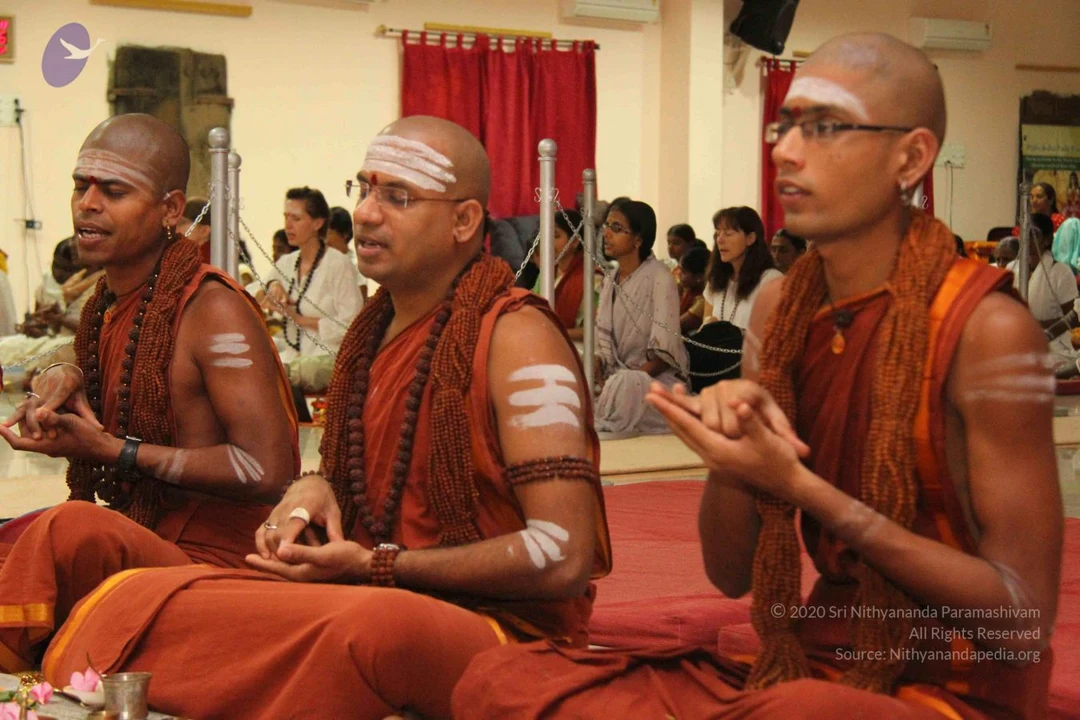
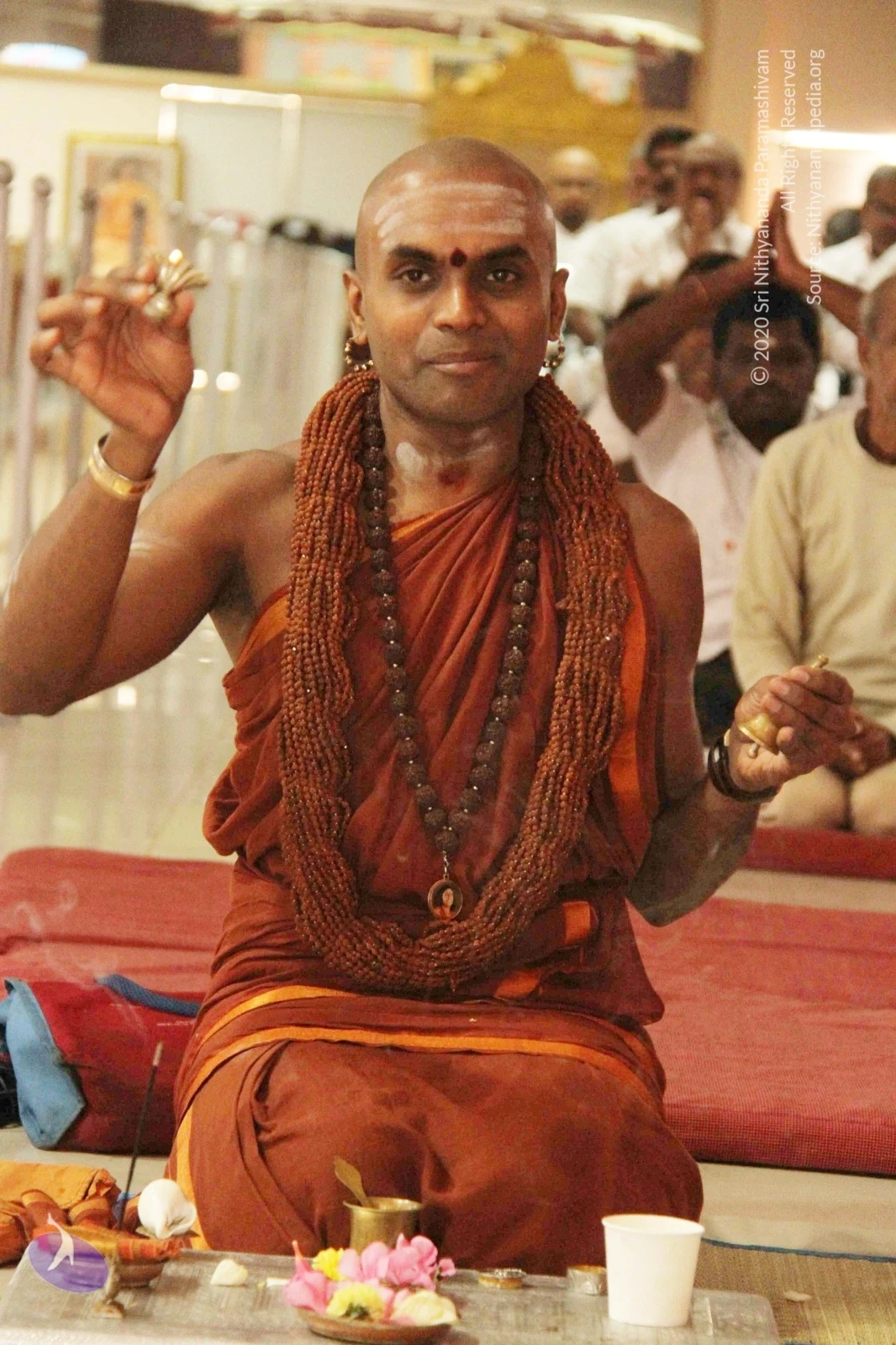
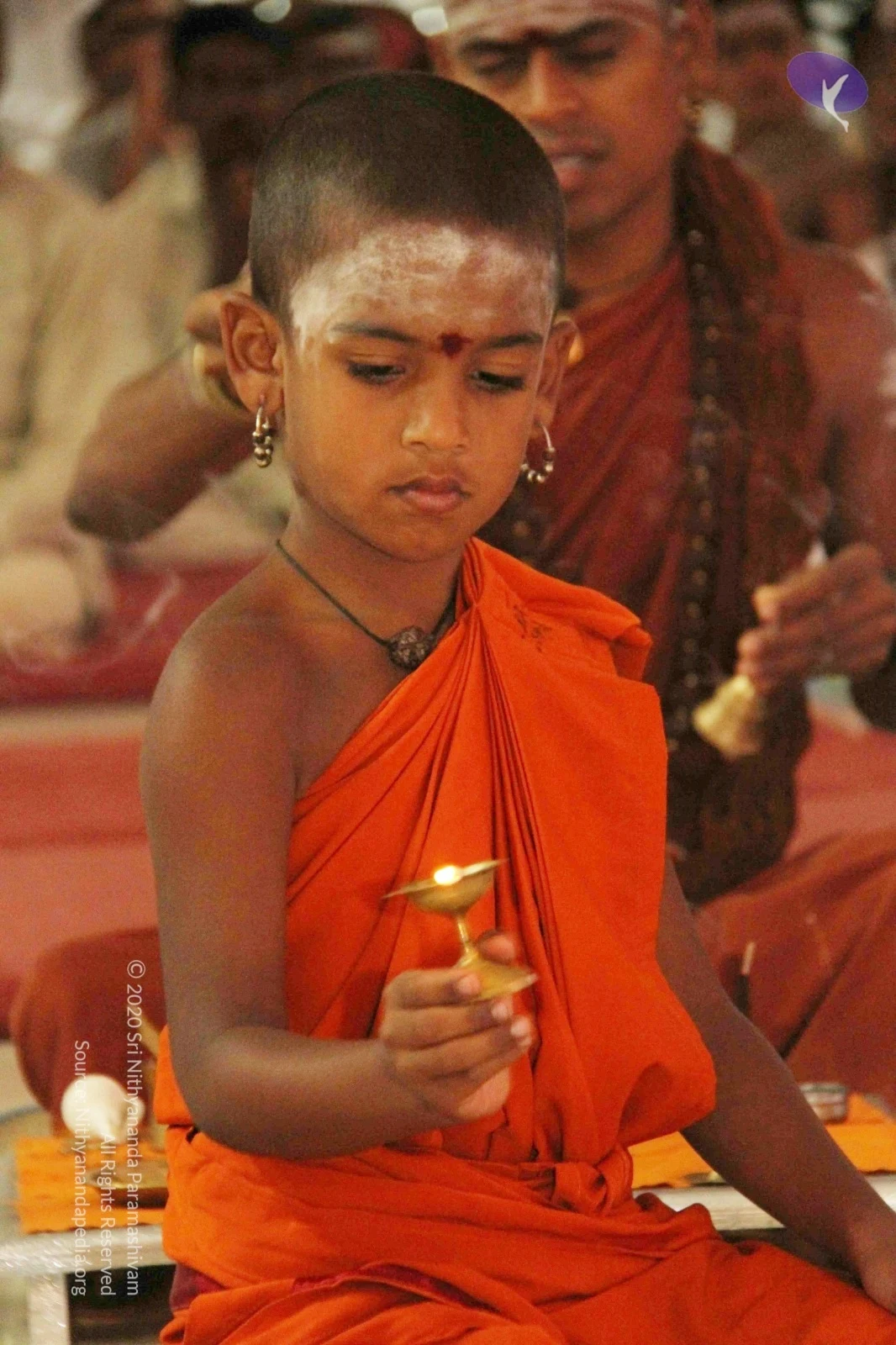
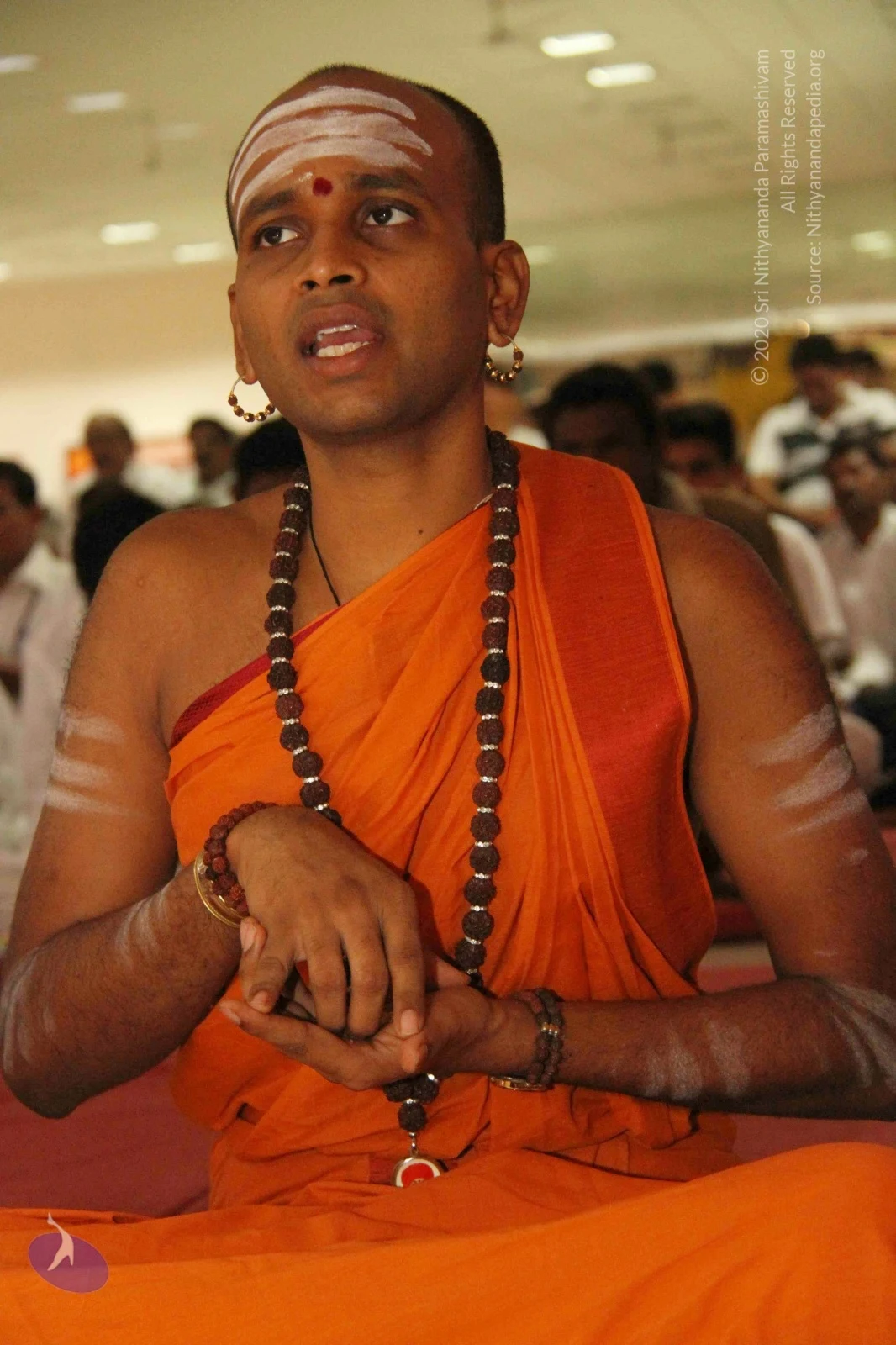
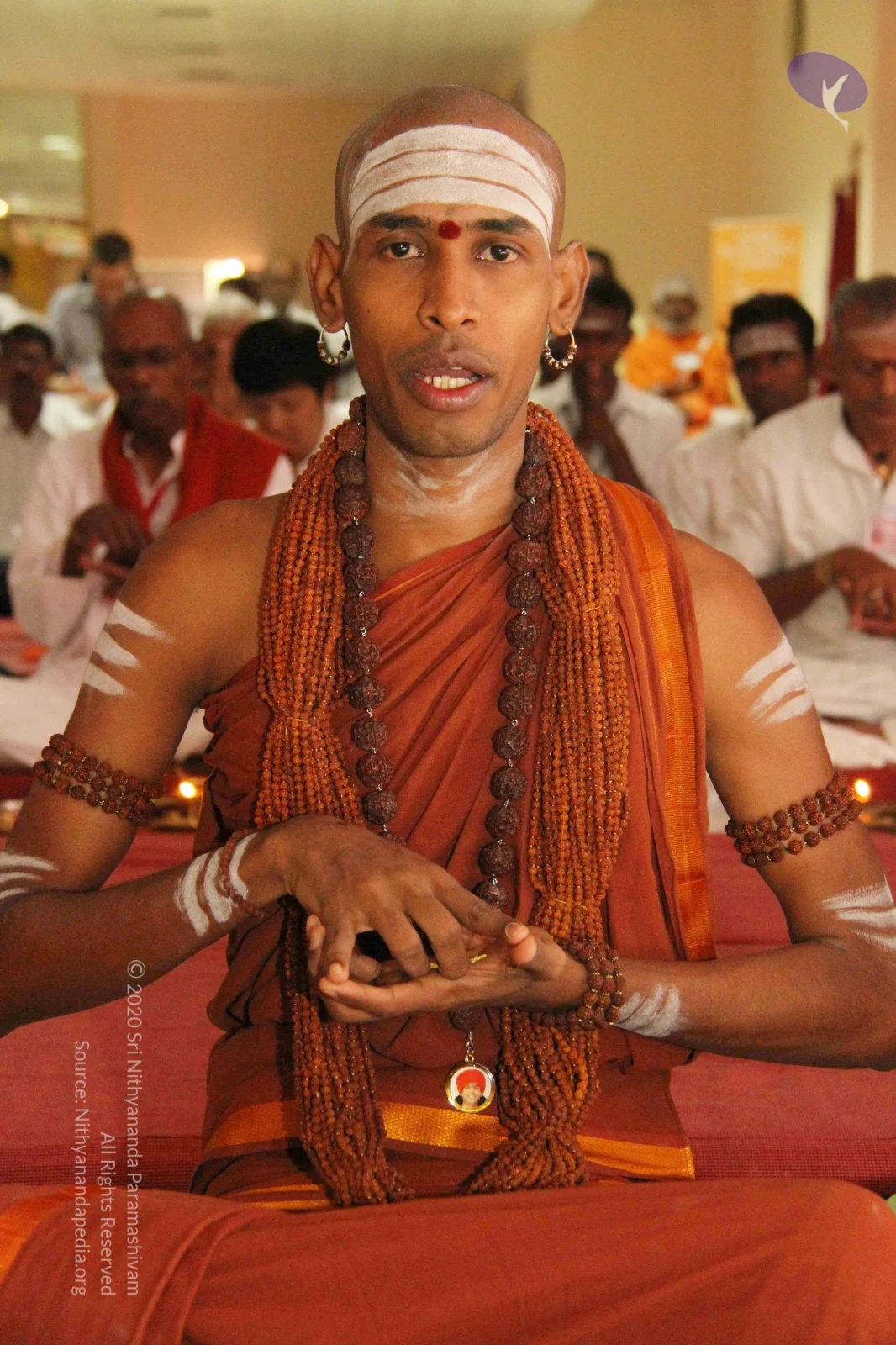
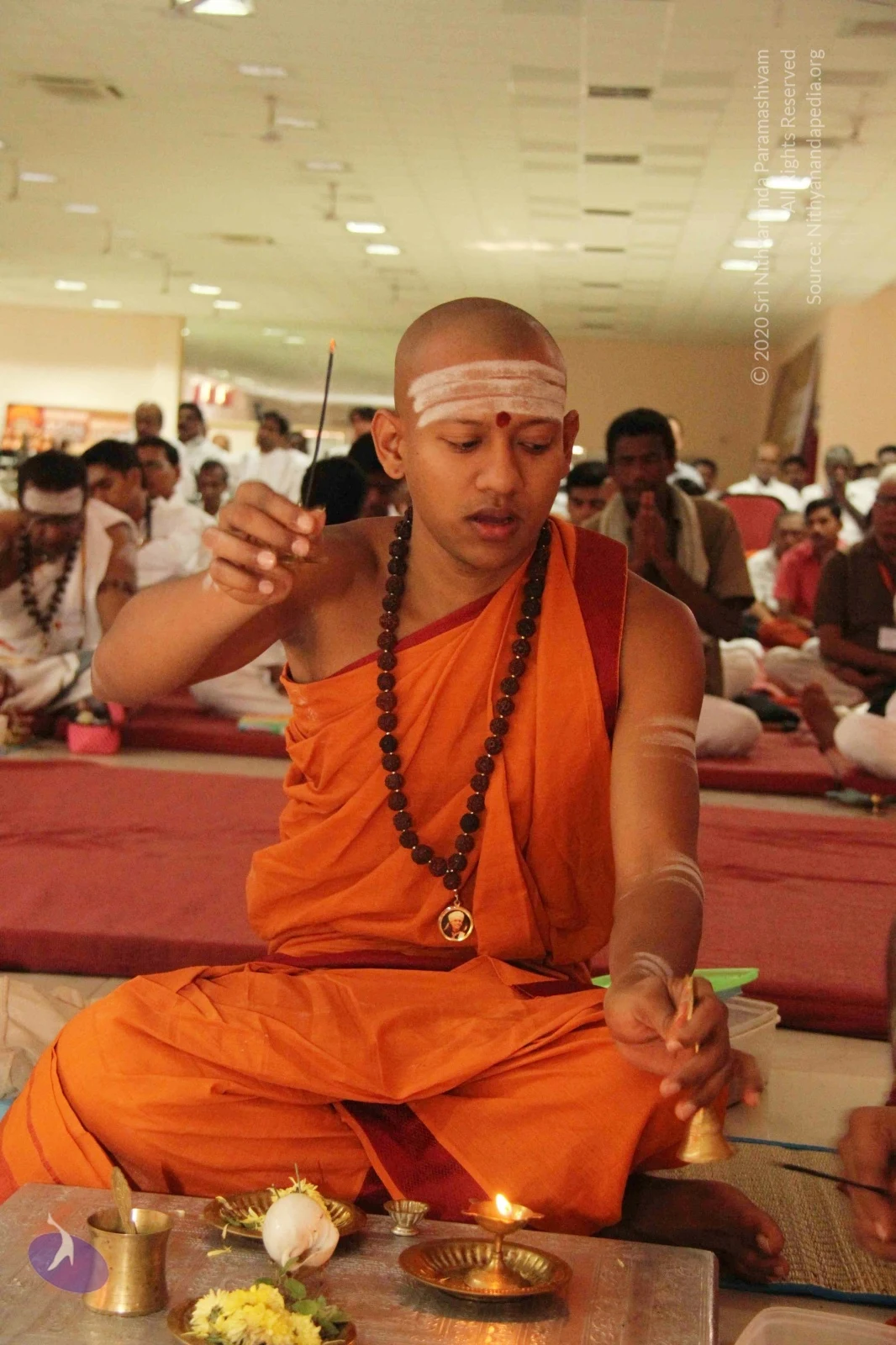
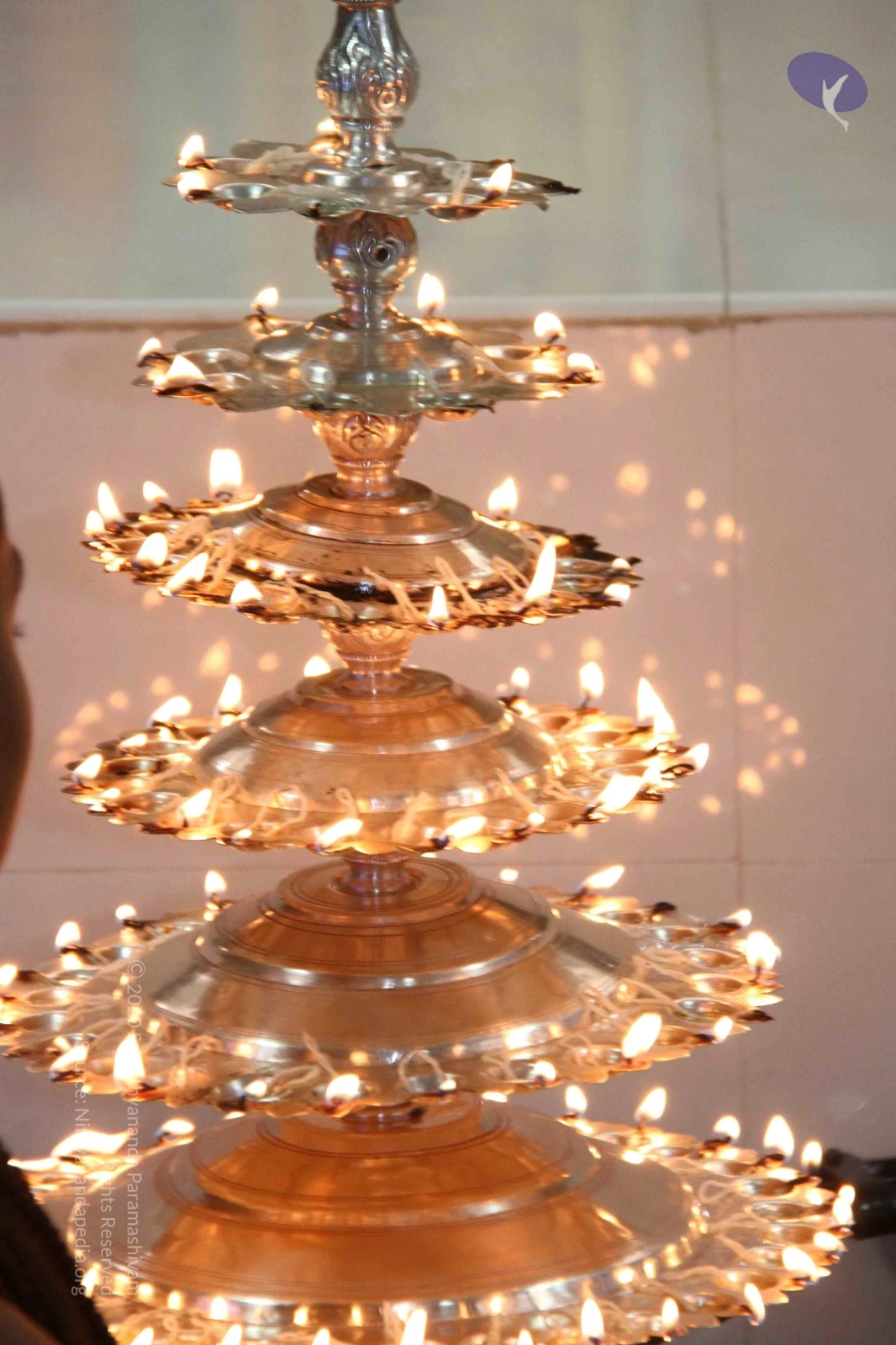
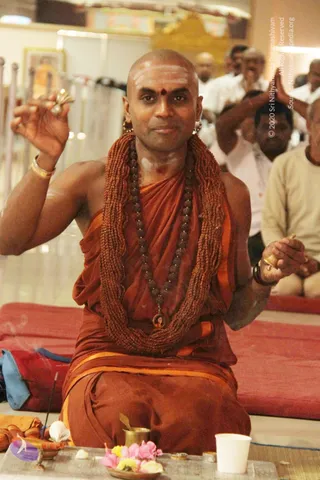
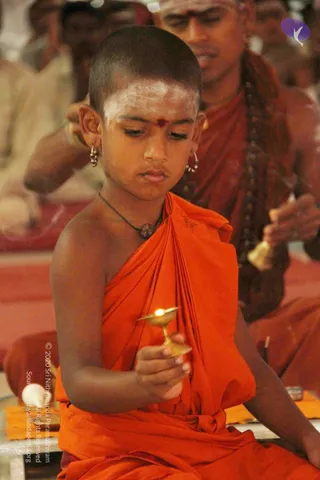
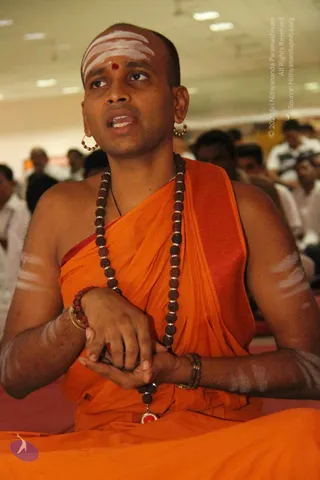
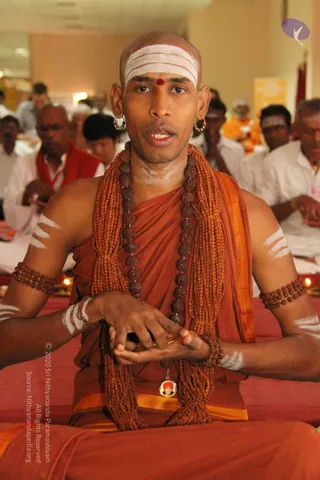
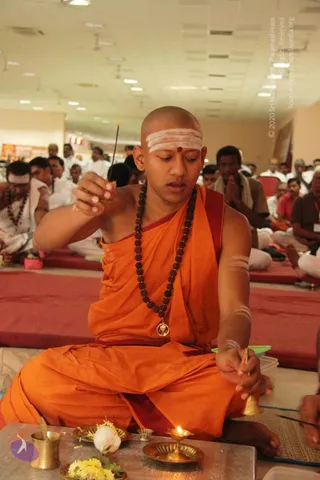
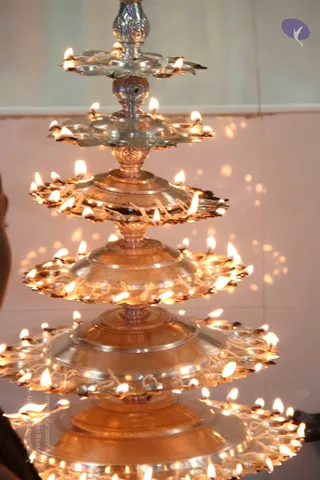
A shaved-headed man in an orange-saffron robe sits cross-legged on a red mat, wearing long multi-strand rudraksha malas and a small pendant, with white tilak and a red bindi on his forehead. He raises one hand holding a small golden ritual implement and holds a golden handbell in the other, with a brass vessel, pink and yellow flowers, and a paper cup on a tray before him. Behind him, devotees in white clothes sit with folded hands. The photo is from a ritual setting in a hall. An in-person candidate, a person, is shown here by his saffron robe, multi-strand rudraksha malas and pendant, in a sitting puja role.A young boy with a shaved head, white sacred ash and a red tilak on his forehead sits in orange saffron robes, holding a small brass oil lamp with a lit flame in his right hand and gazing down at it. He wears small hoop earrings and a dark beaded necklace. Behind him, an older person in red-brown robes with a bell in hand sits in a ritual setting, and the scene suggests a puja or aarti. Only two physical people are visible.A shaved-headed man sits cross-legged in a crowded hall, wearing a saffron-orange robe draped over one shoulder with a red undergarment visible at the chest. He wears a long rudraksha mala with silver spacers, a rudraksha bracelet, and a red pendant, and has white horizontal tilak lines on his forehead, a red dot between the brows, white markings on his arms, and gold hoop earrings. His hands are clasped at his waist and he looks upward while speaking. Behind him, seated and standing devotees in white shirts fill the blurred background.A shaved-headed man sits cross-legged on a red mat, speaking while his hands rest together at his waist. He wears a rust-orange sannyasi garment with a gold-bordered dhoti, multiple strands of rudraksha mala and a rudraksha necklace, plus rudraksha bracelets on both wrists. A white three-line tripundra marks his forehead with a red bindi, and white ash streaks his arms and throat. A round pendant with a small portrait hangs from his mala. Behind him, seated devotees in white and red clothing fill the room, with lamps glowing on the floor at the edges. A small orange-robed figure appears in the background.A shaved-headed man in an orange saffron robe and a long rudraksha mala sits cross-legged on a red mat, holding a lit incense stick in his raised right hand and a brass bell in his lowered hand. He wears white sacred ash stripes and a red kumkum dot on his forehead, and a small locket hangs from the mala. In front of him on a metal tray sit a brass lamp with a flame, a brass cup, a conch shell, and yellow flower garlands. Behind him, rows of seated devotees in white dhotis and brown shirts sit in a hall with a suspended ceiling, several with hands folded in prayer. This is a puja scene with incense, bell and lamp.A tiered brass and silver ritual lamp (multi-tier deepam) with many lit oil lamps with cotton wicks arranged on several circular plates, held up against a plain pale wall. Warm light and small bokeh highlights surround the lamps. A partial arm or body edge appears at the far left edge of the frame, and a bit of a dark sleeve at the lower left. This is an aarti-style lamp offering.
02-Deities-Swamiji-Aarthi

2 photosSource gallery
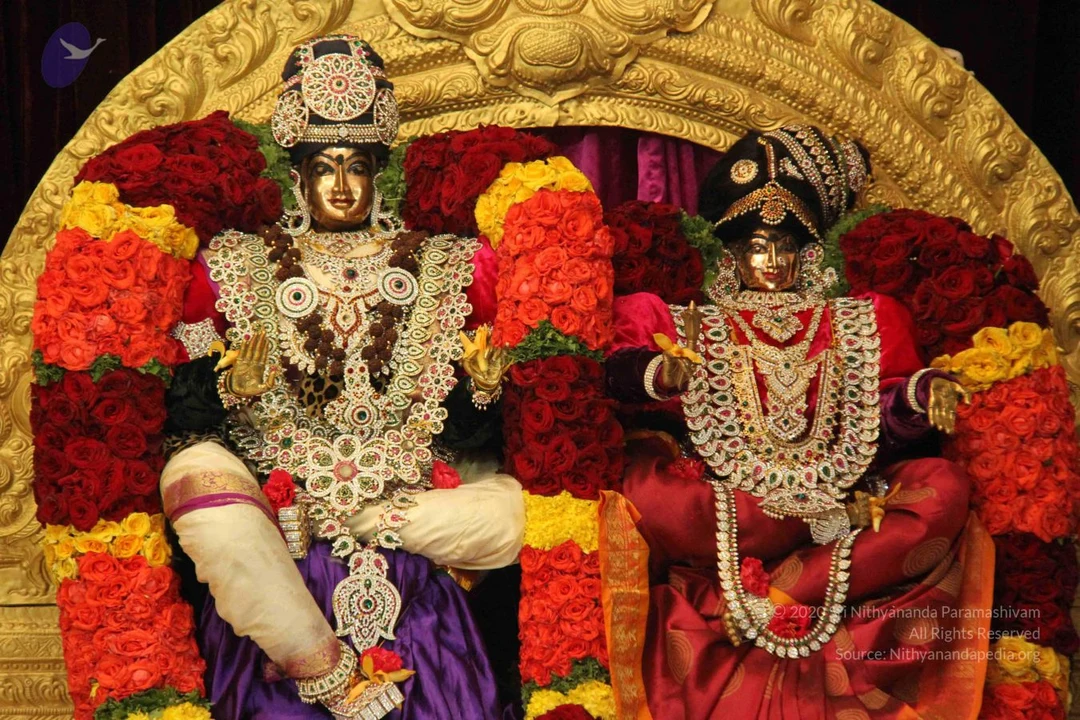
A photograph of a golden-framed altar with two large deity murtis seated on a red-draped dais, decorated with red, orange and yellow flower garlands. The left murti wears a crown, rudraksha and jewelled necklaces with a purple skirt; the right wears a red sari with ornate gold jewellery. In front, two children sit cross-legged on a white platform in front of the murtis: a boy in a tiger-striped orange turban and yellow clothes with a red flower garland, eyes closed with hands in a mudra; and a girl in yellow silk with a red garland and layered jewellery, holding her hands in a gesture. A blue-framed picture stands at the right edge.Two deity murti, one male with a purple dhoti and white armbands and one female in a maroon sari, are seated beneath a gold arch decorated with red, orange and yellow flower garlands, with jewelled crowns, necklaces and ornaments. Two children sit on a white platform in front of them on a red draped cloth: a boy in a tiger-striped turban and a saffron-yellow dhoti with a red garland, and a girl with a red garland and yellow silk dress with layered jewellery. Both children hold their hands open in mudra-like gestures, and the boy holds a small pink flower.

03-Nithyasatsang

24 photosSource gallery
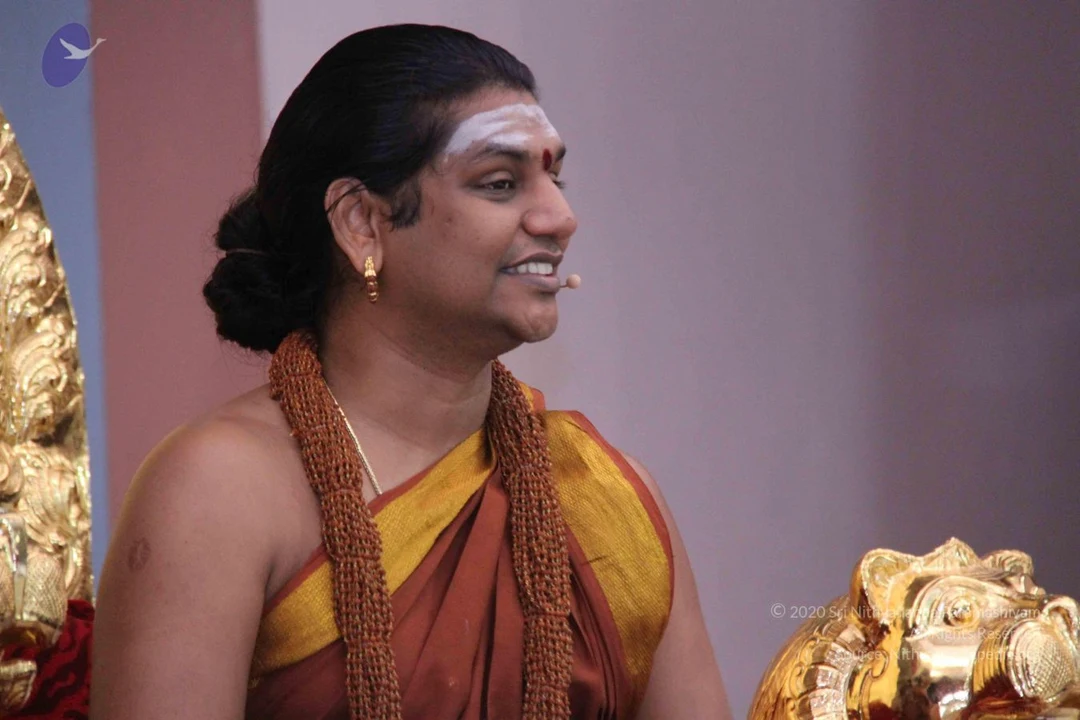
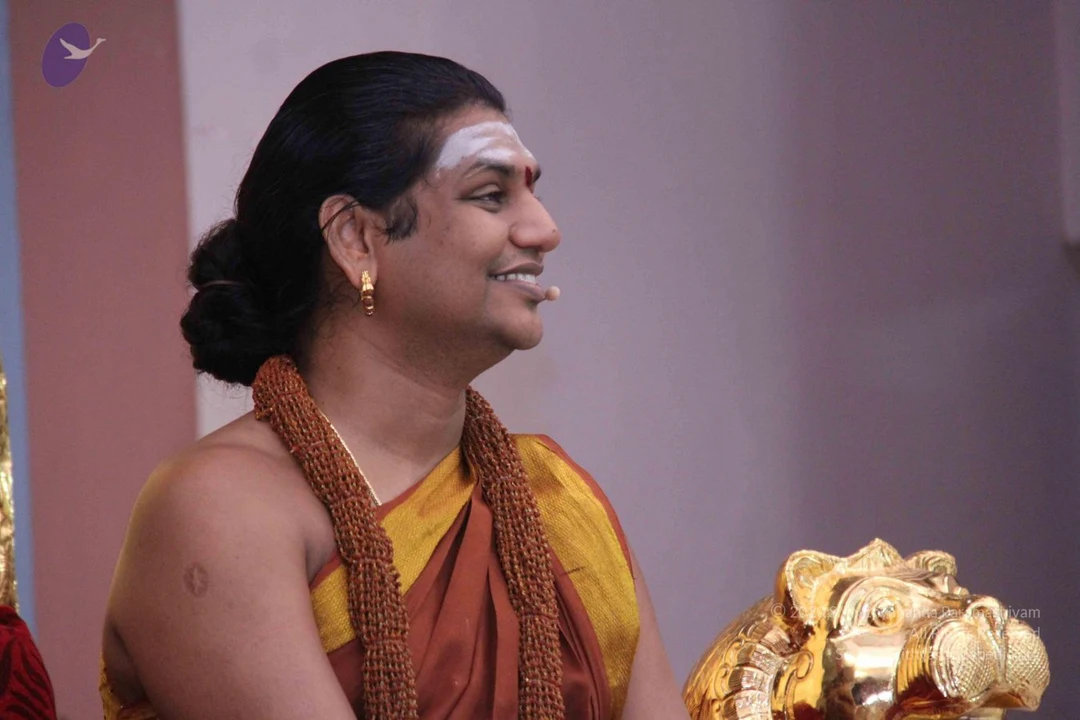
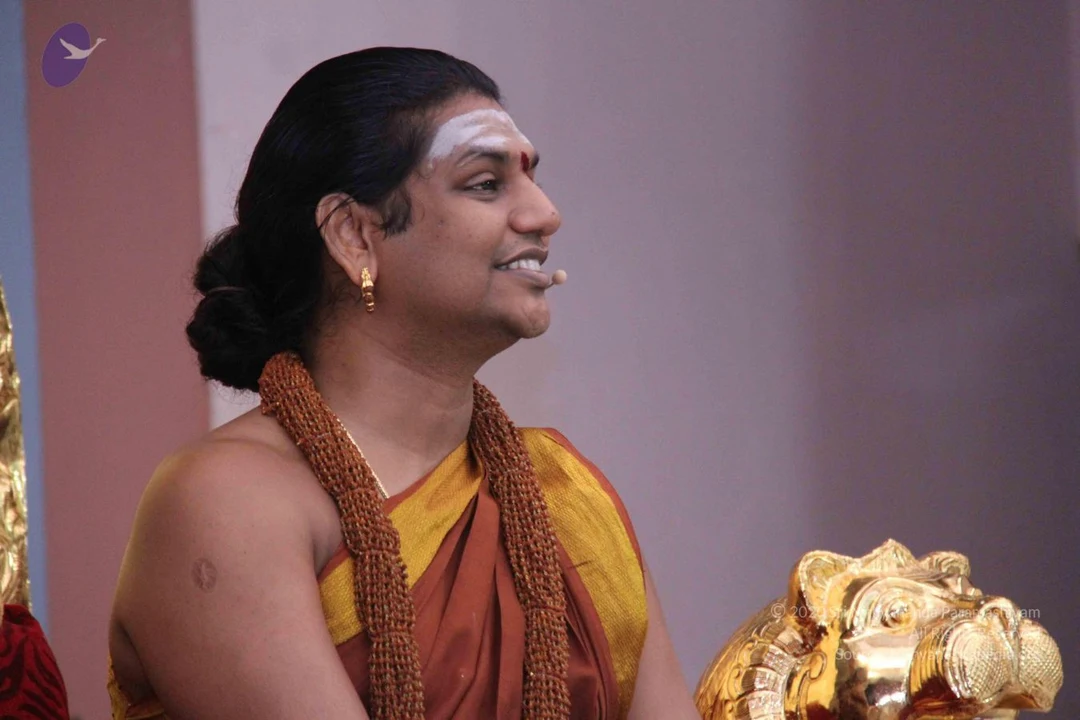
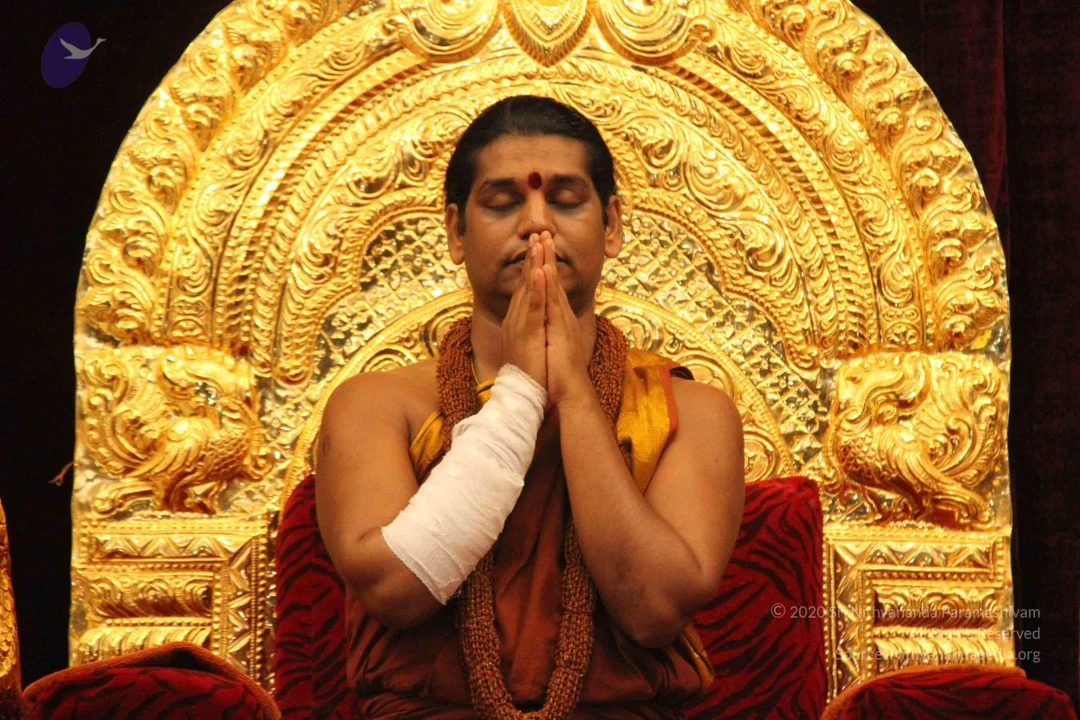
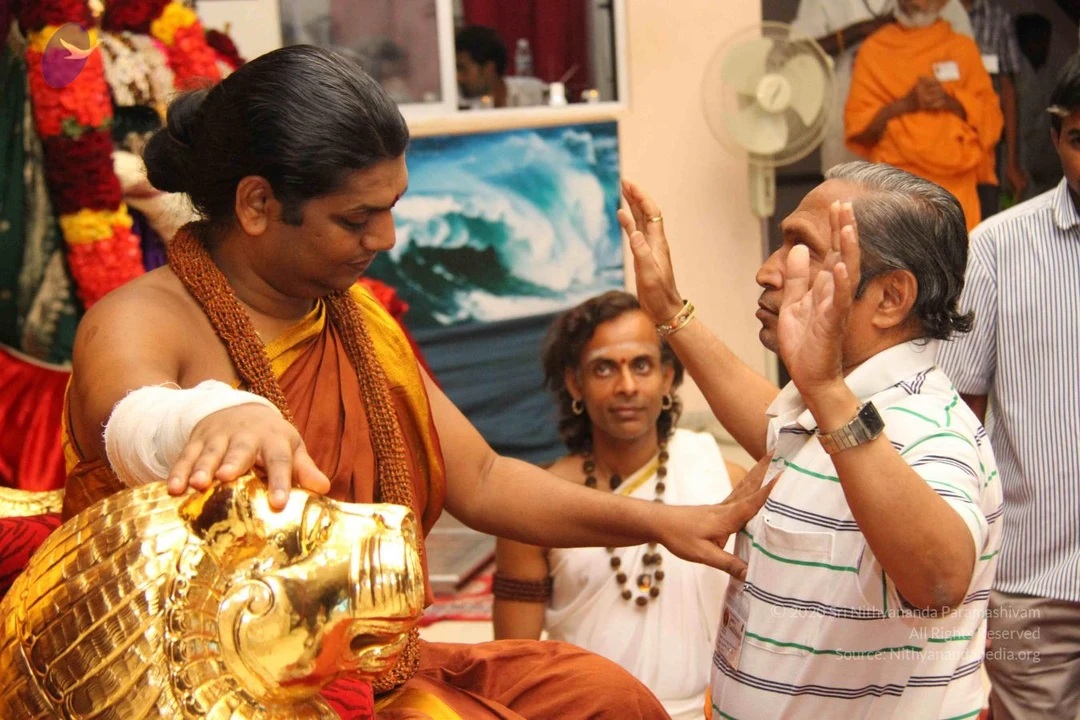
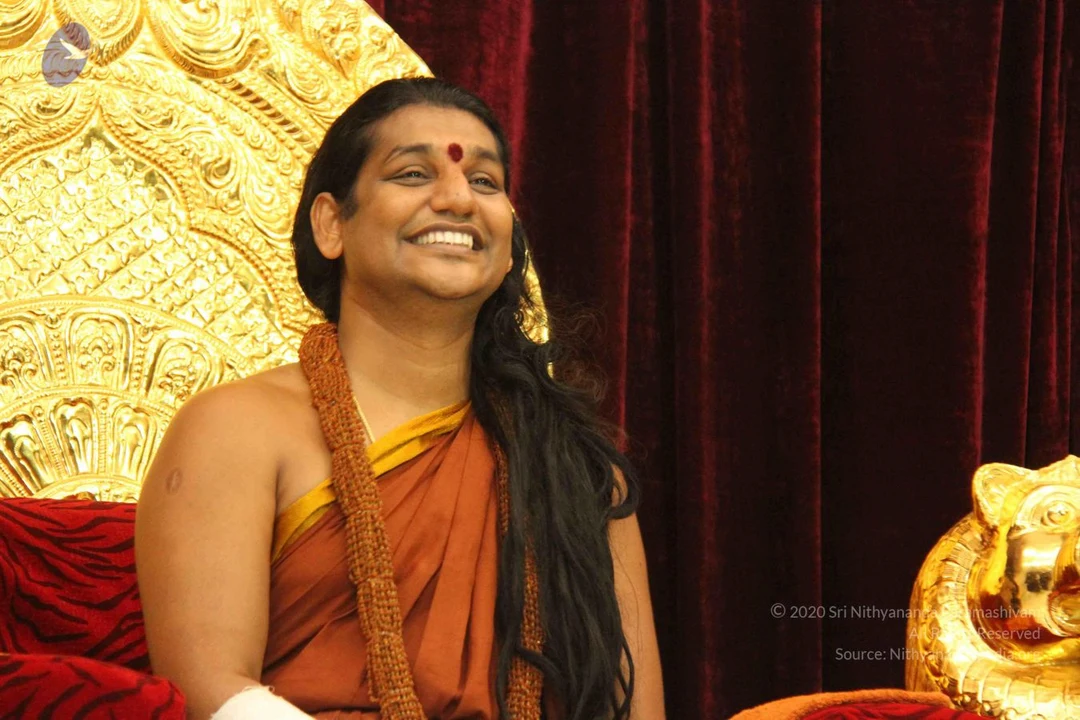
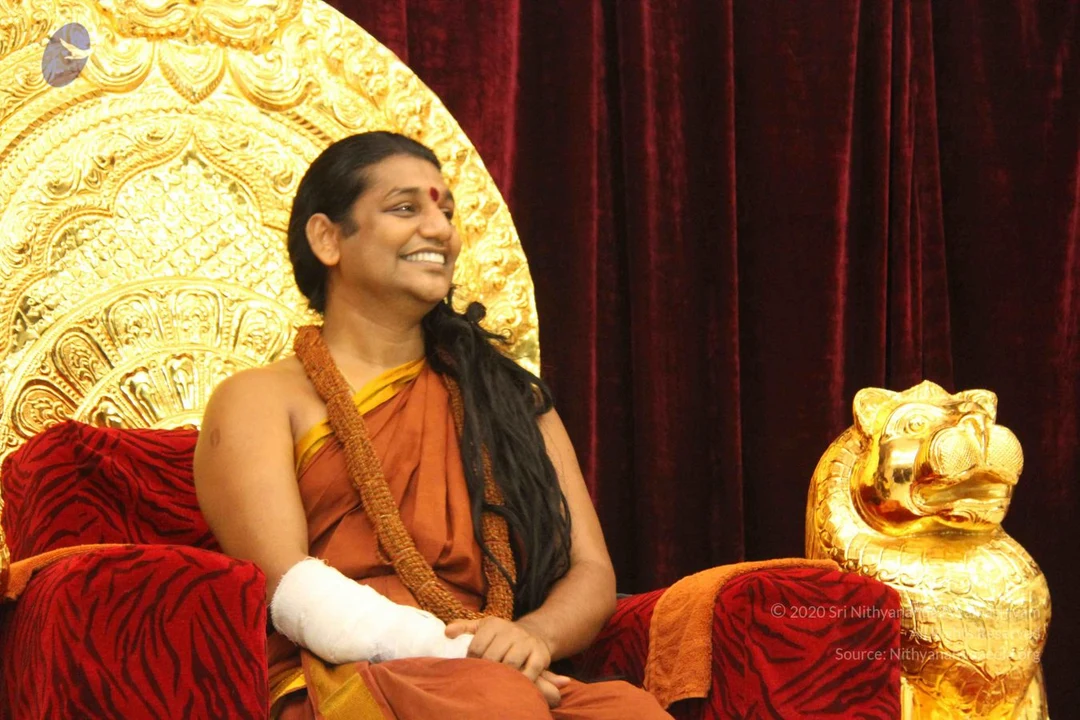
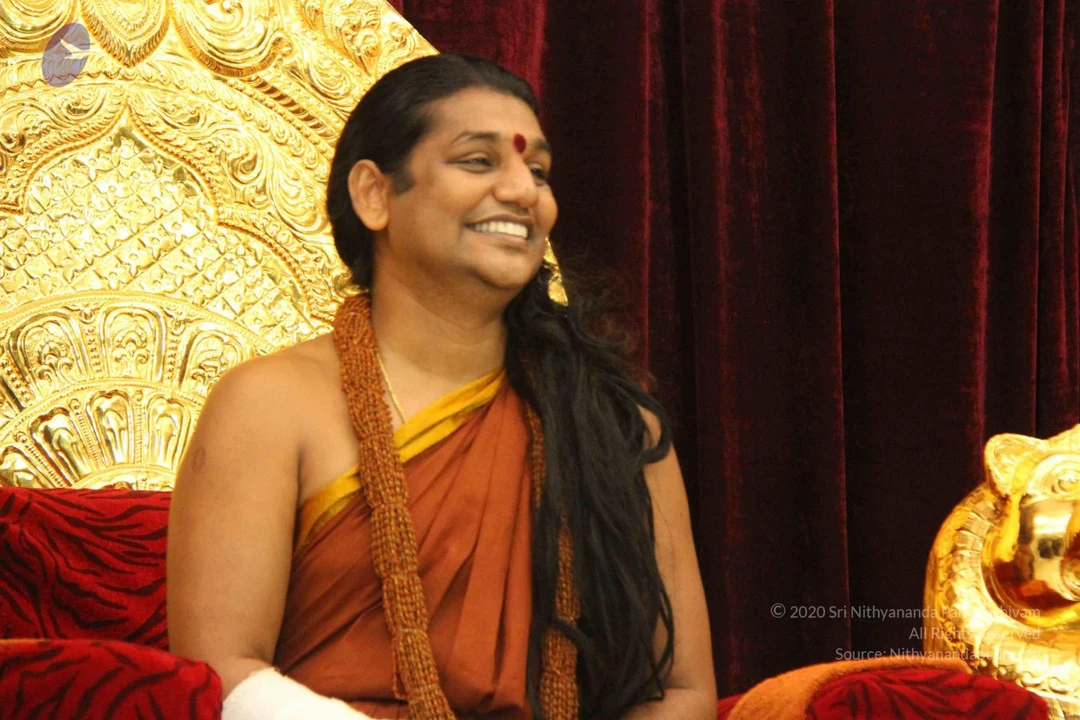
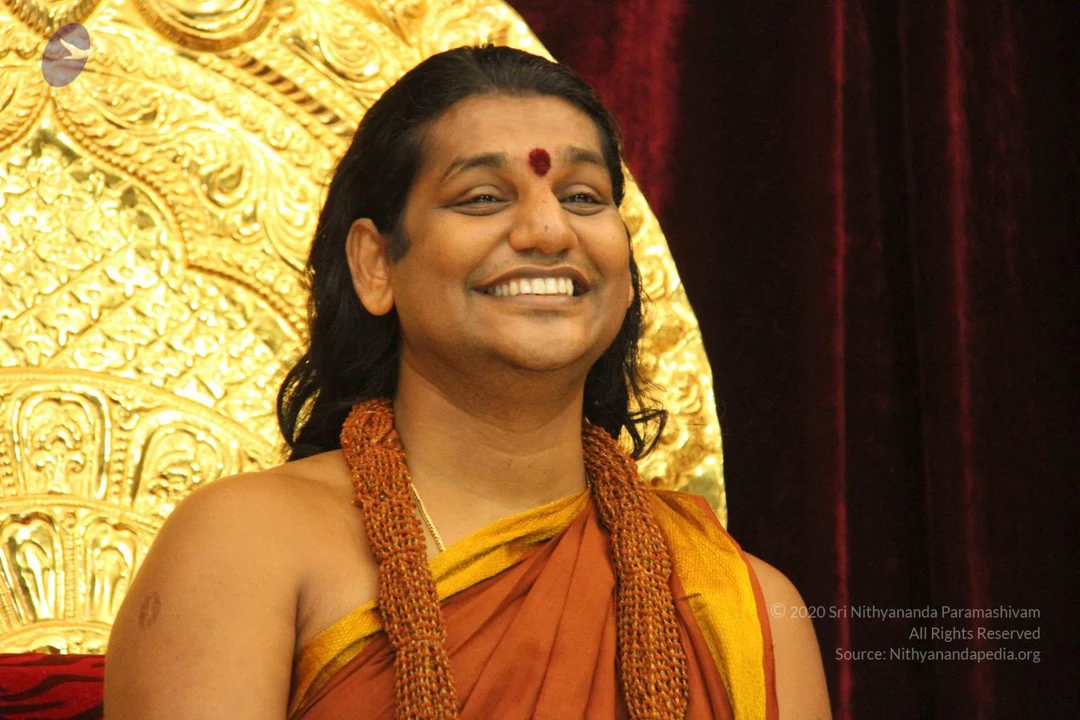
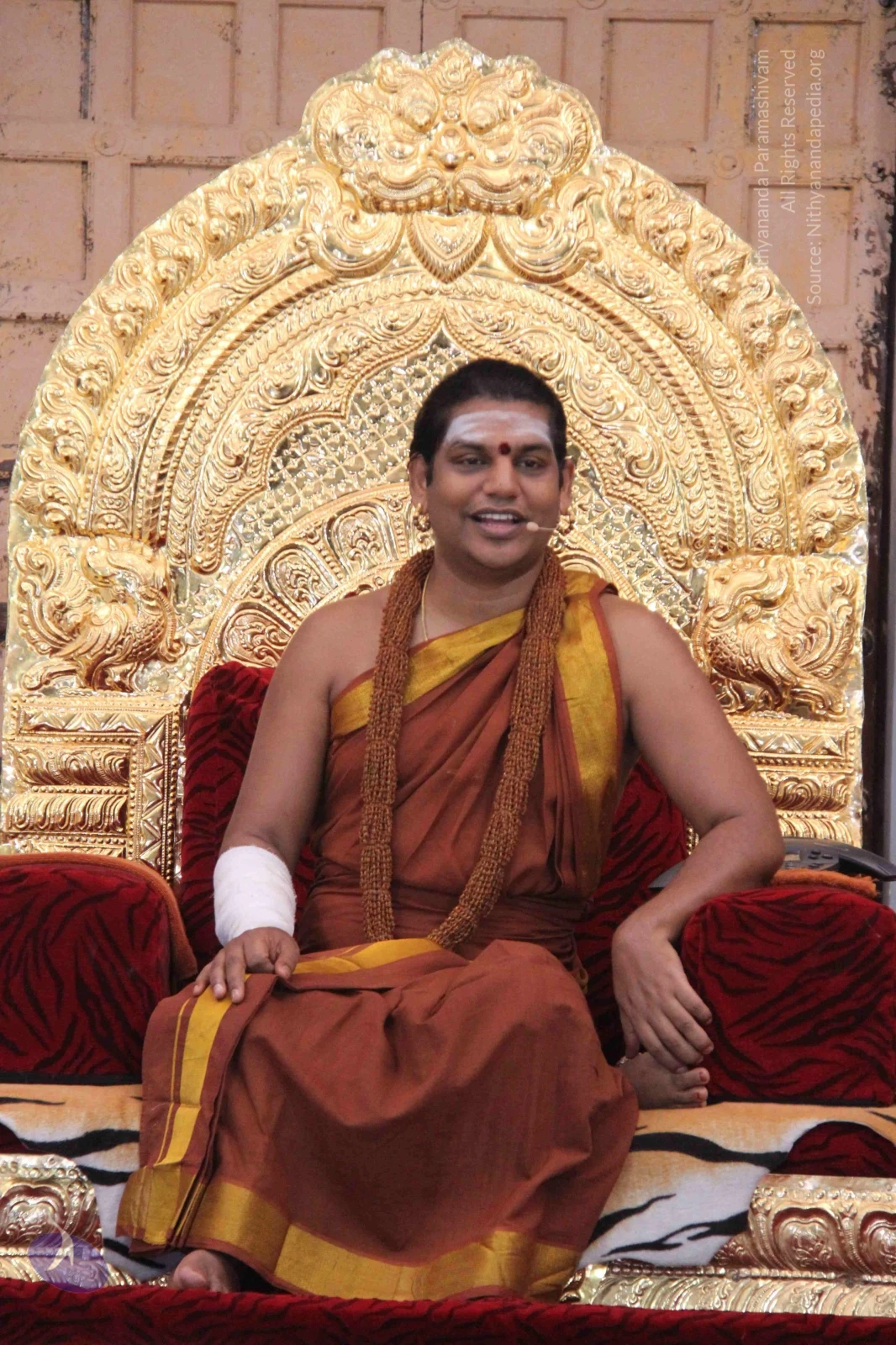
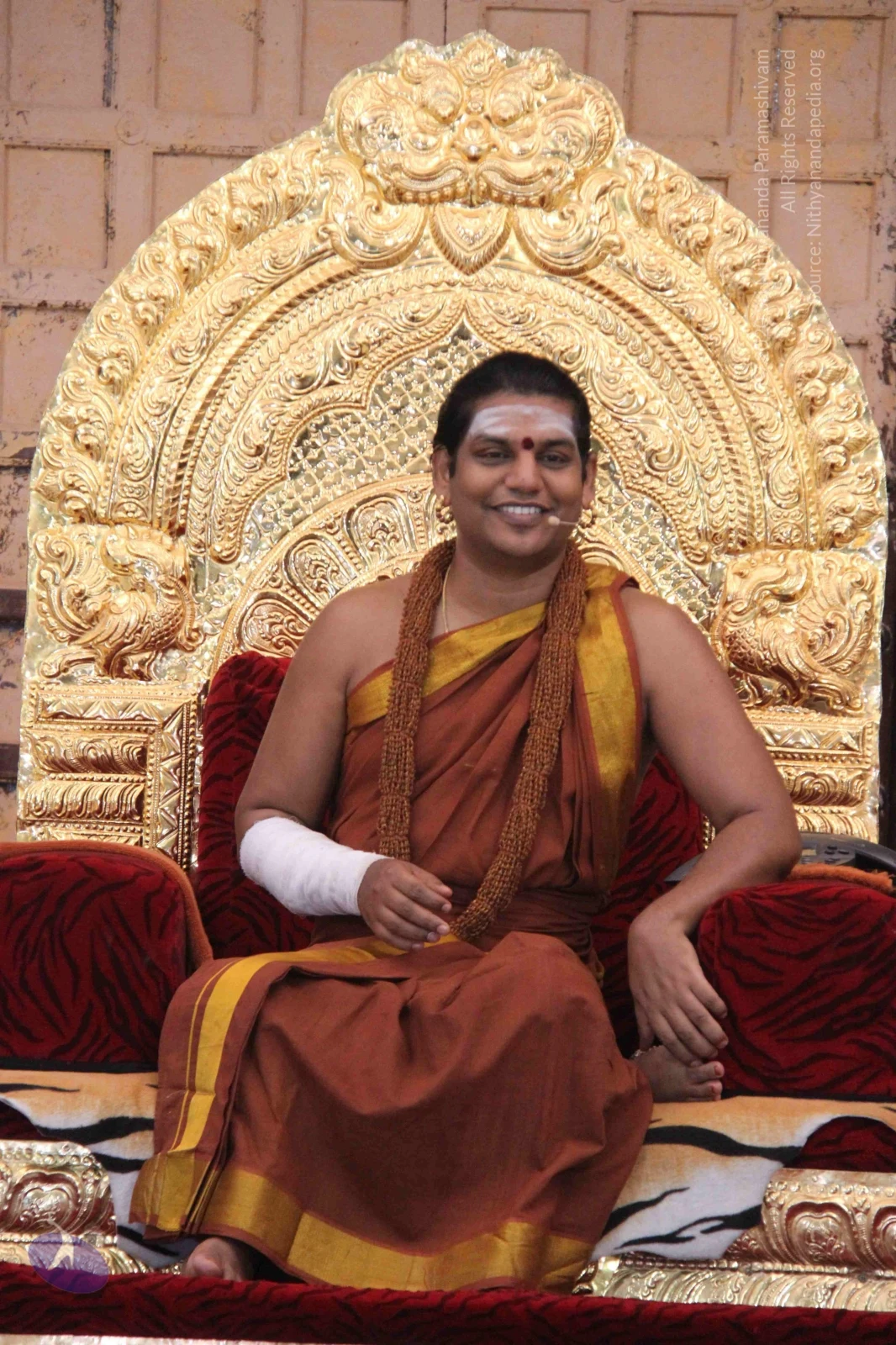
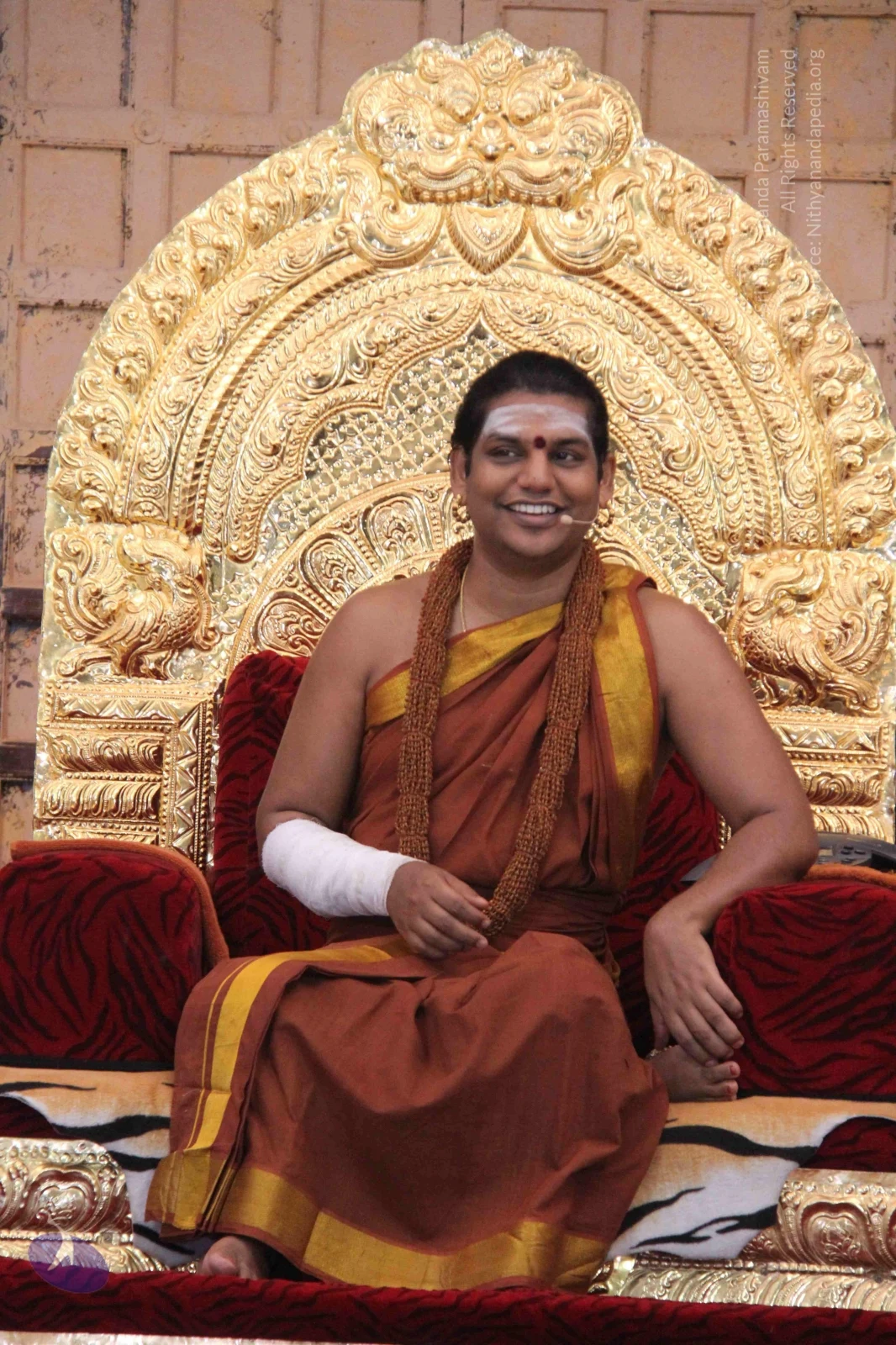
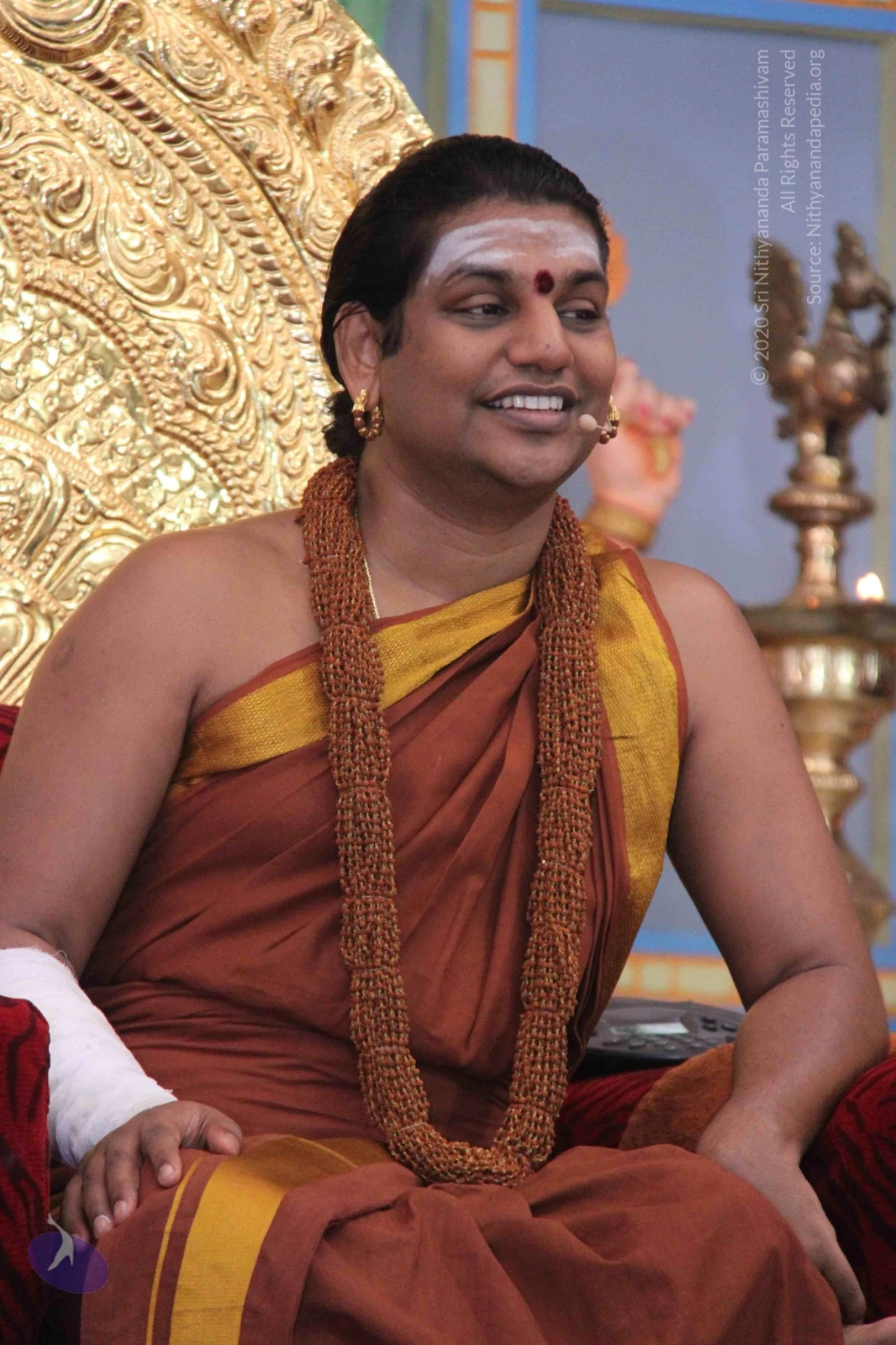
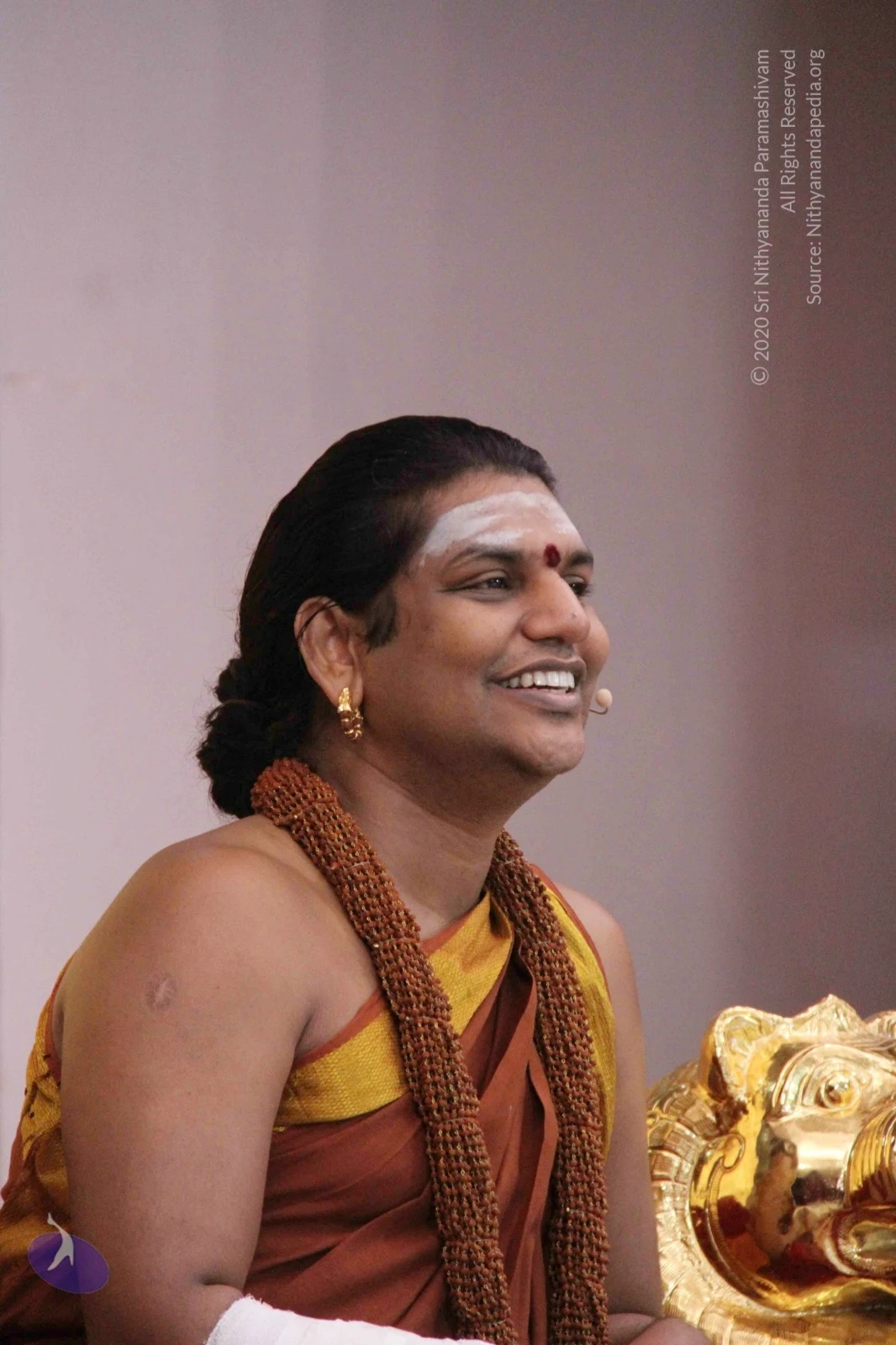
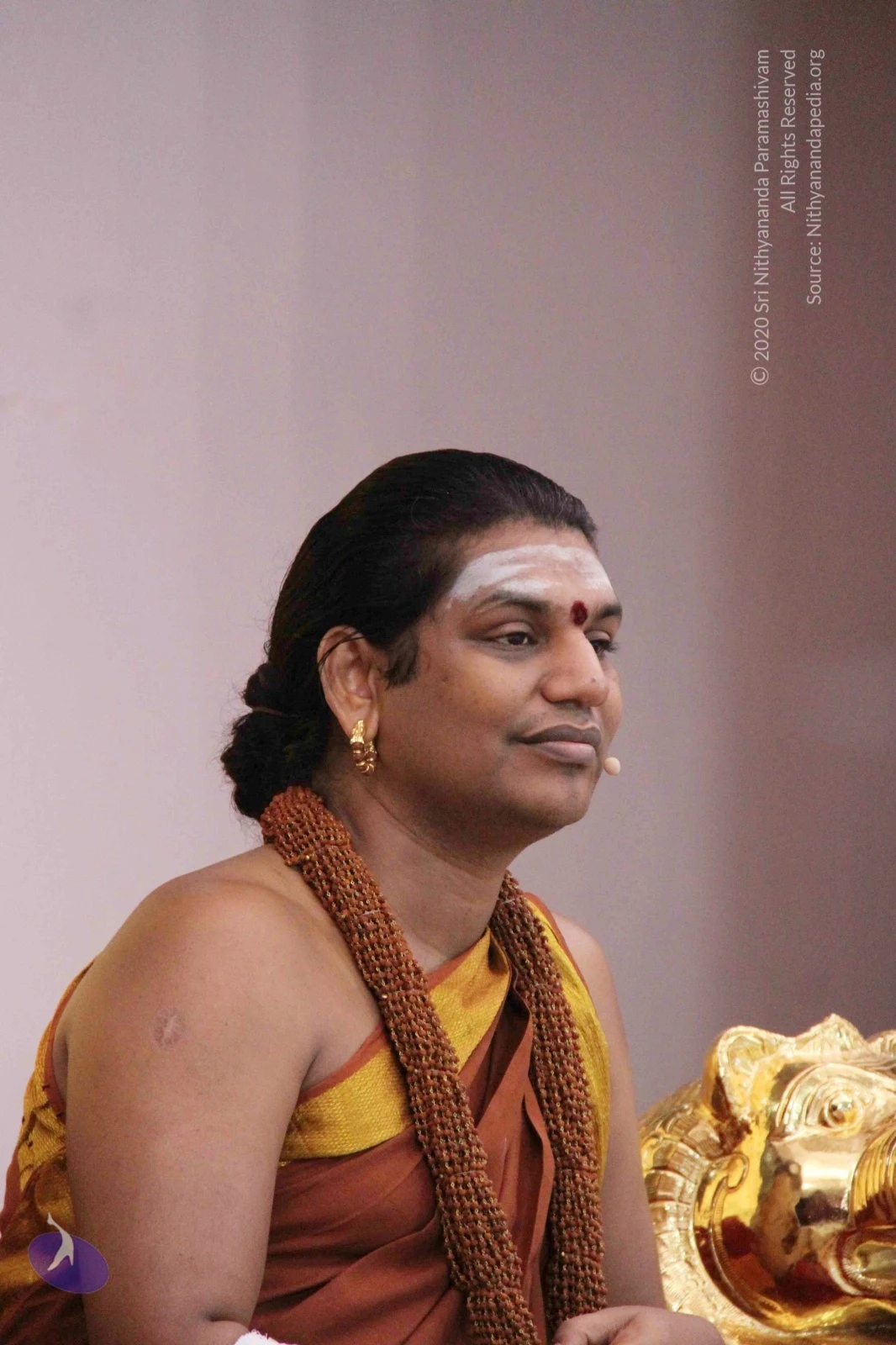
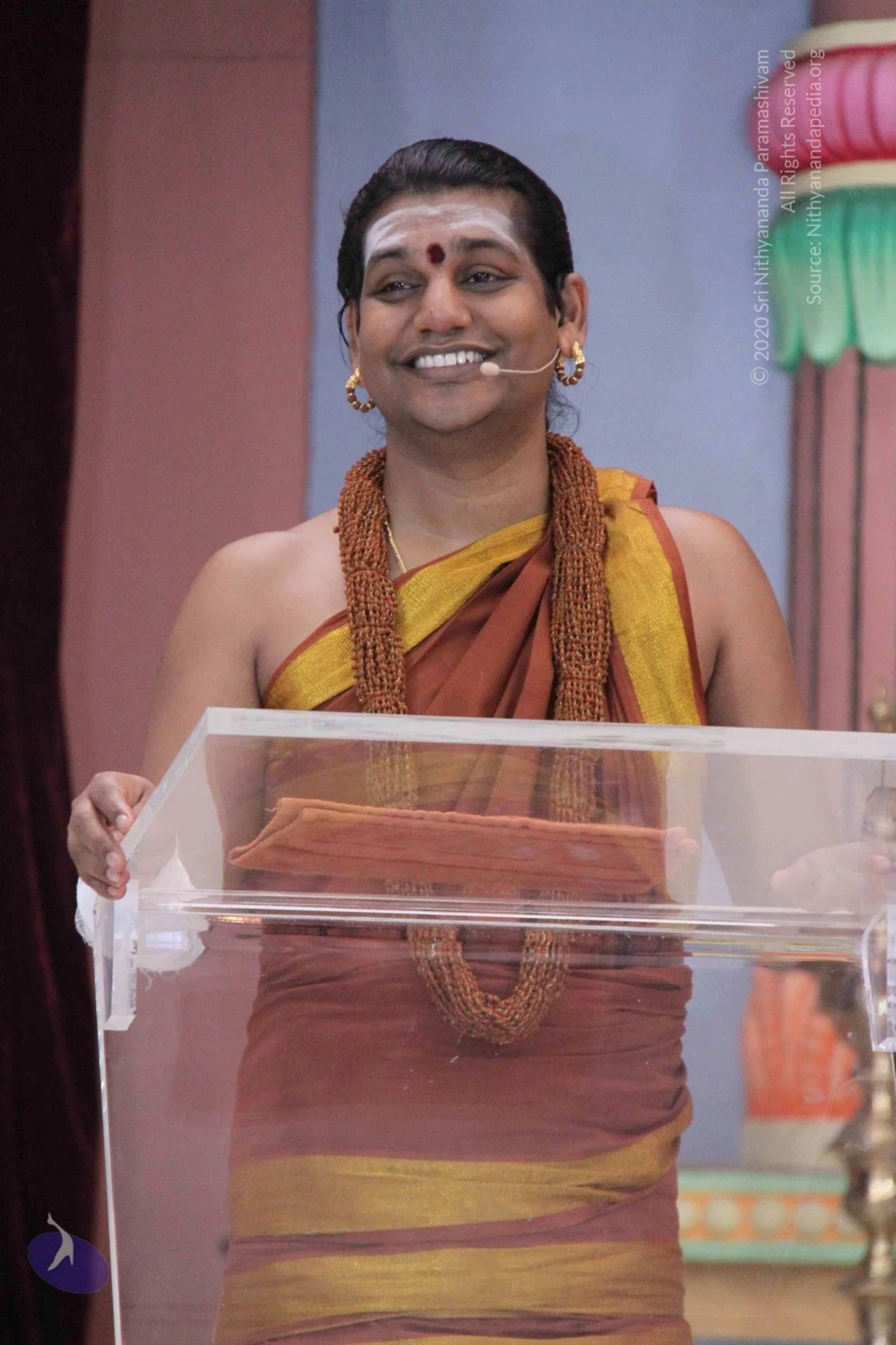
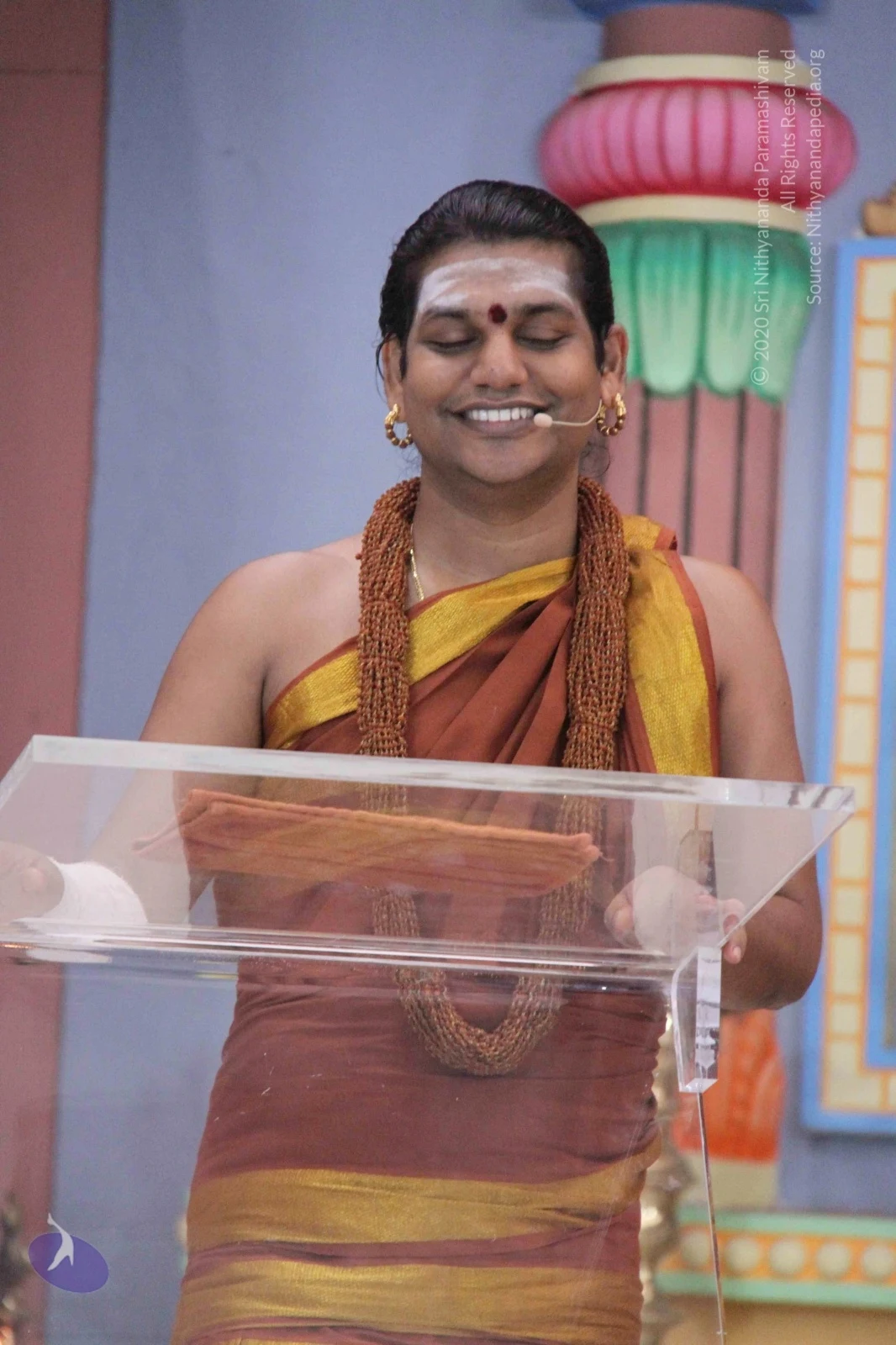
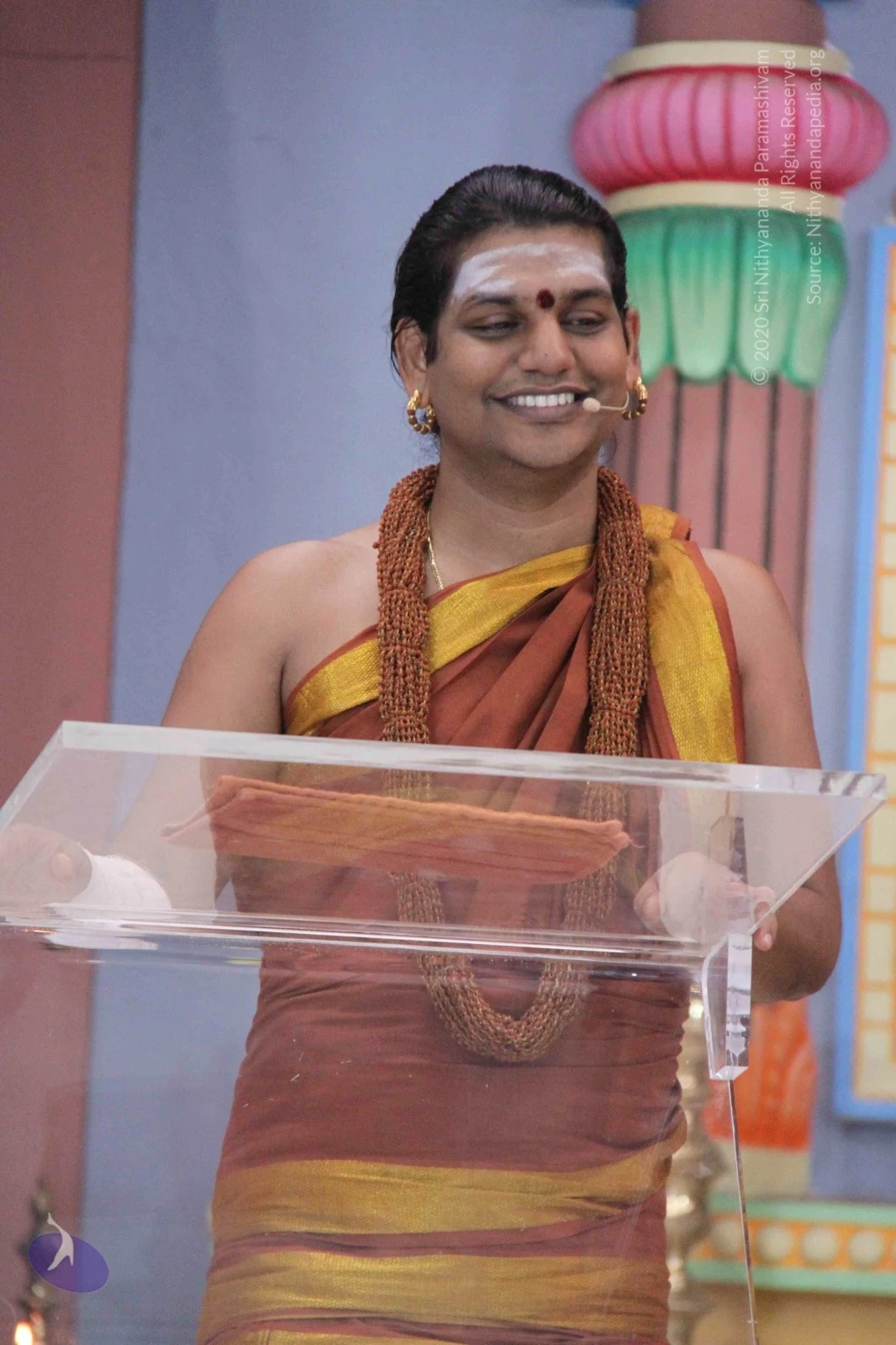
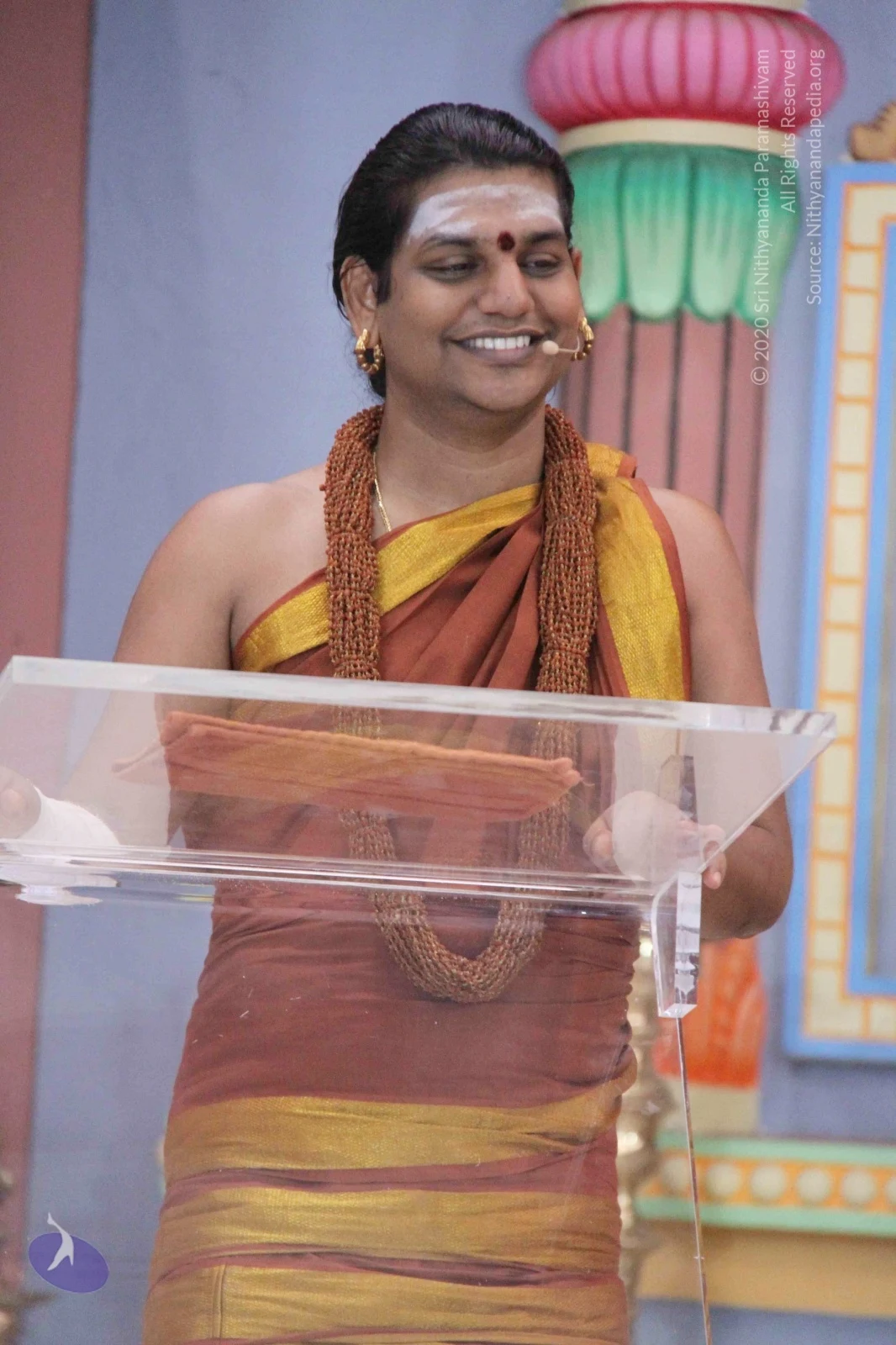
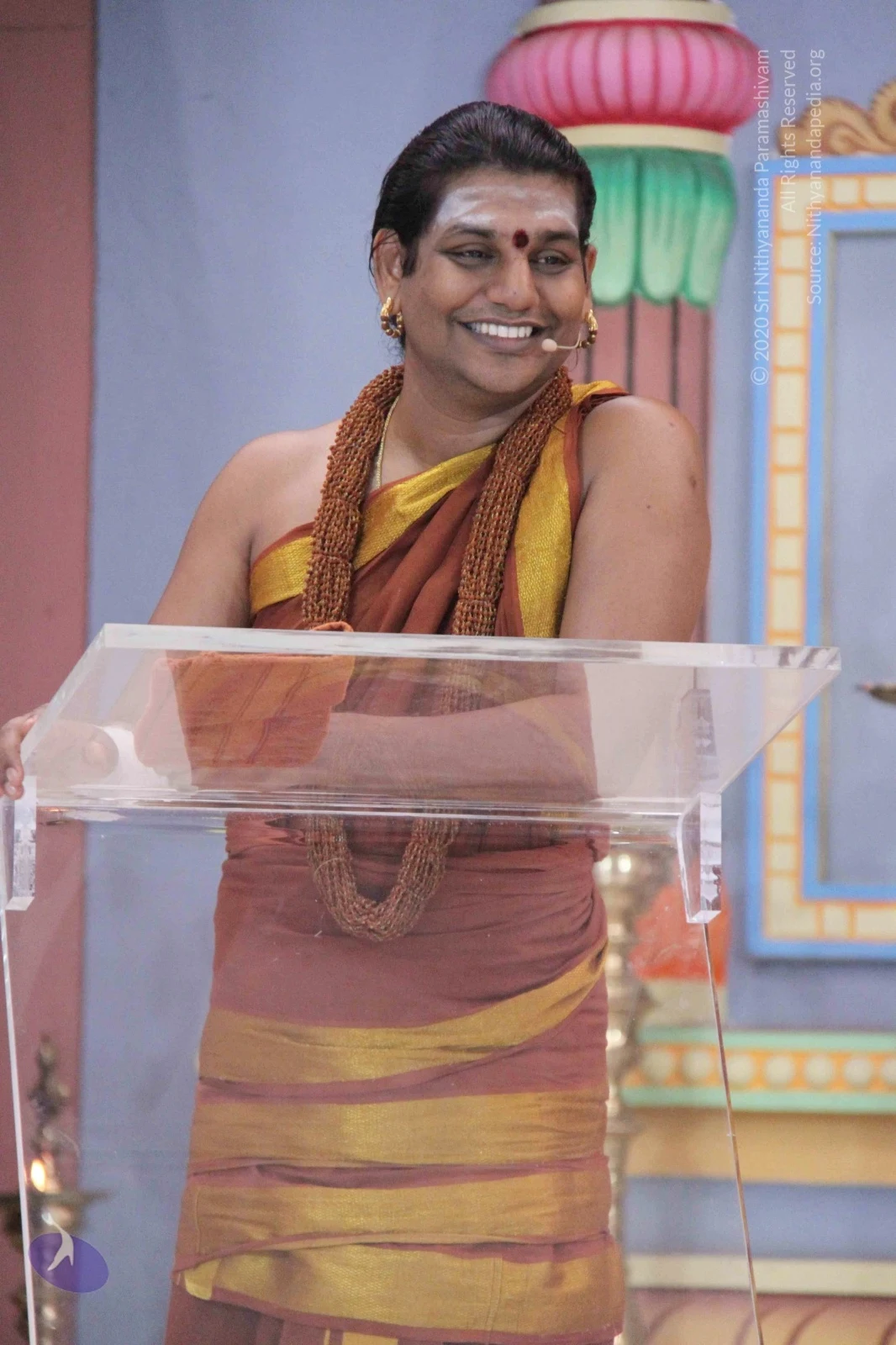
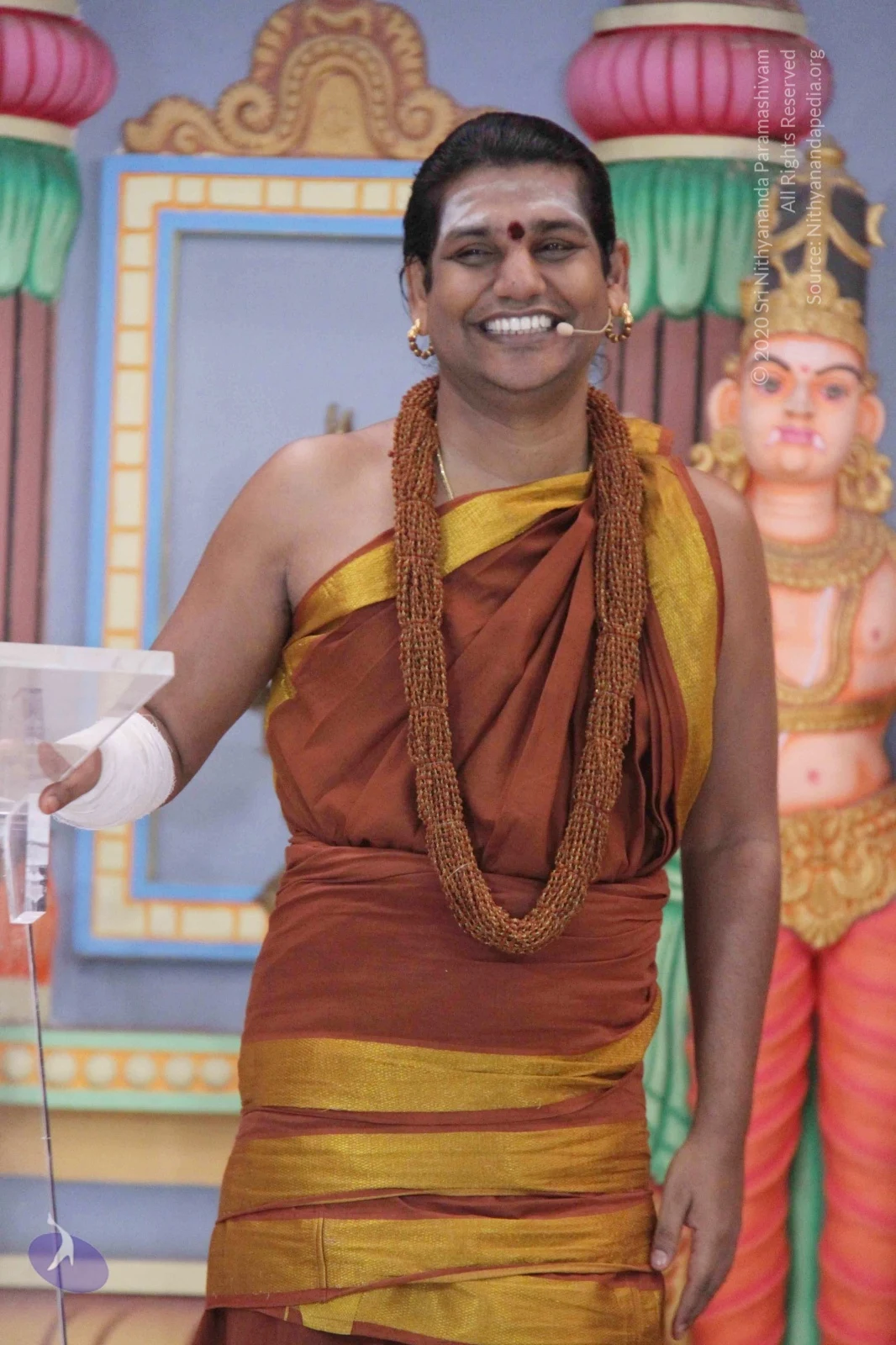
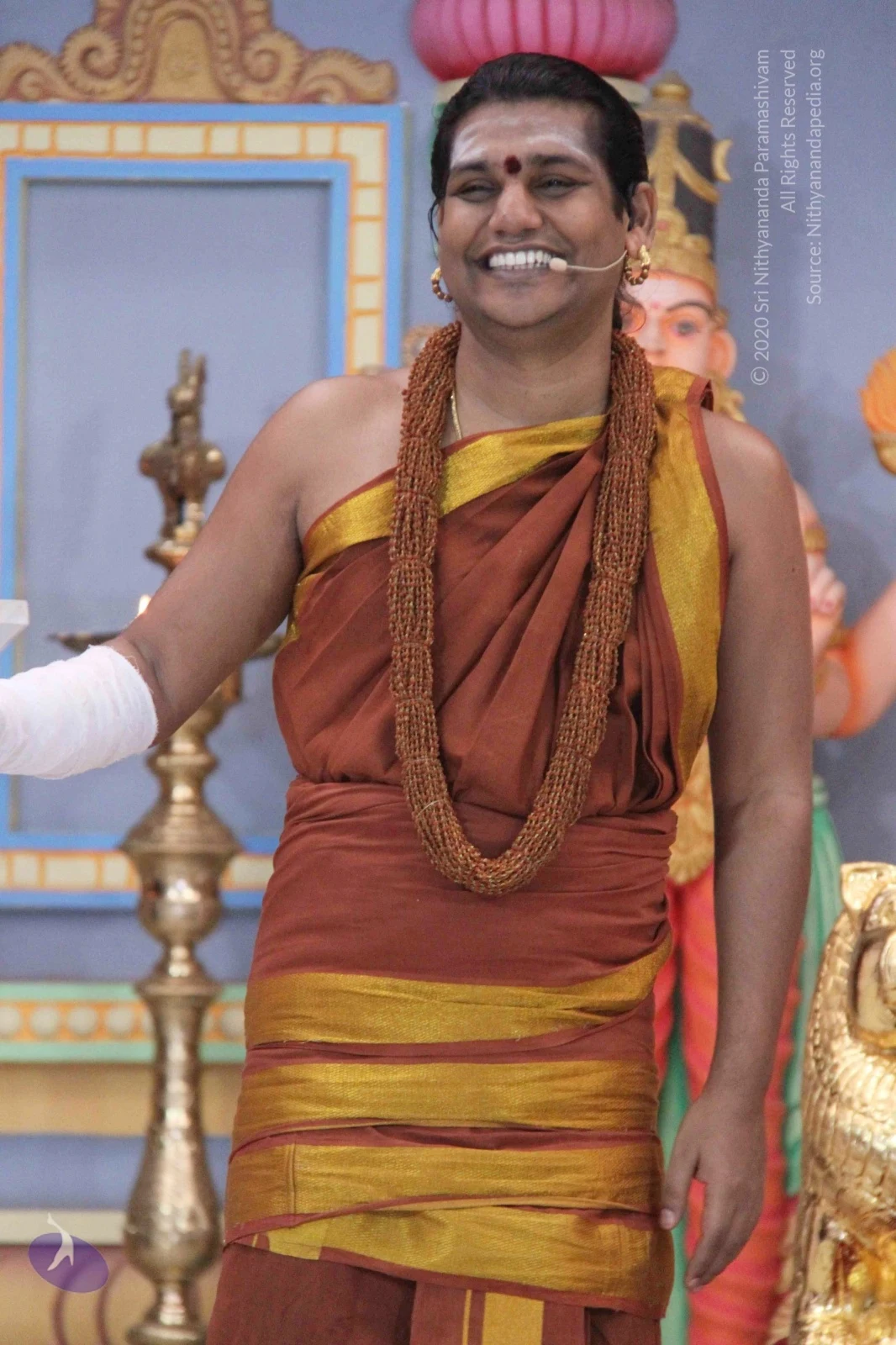
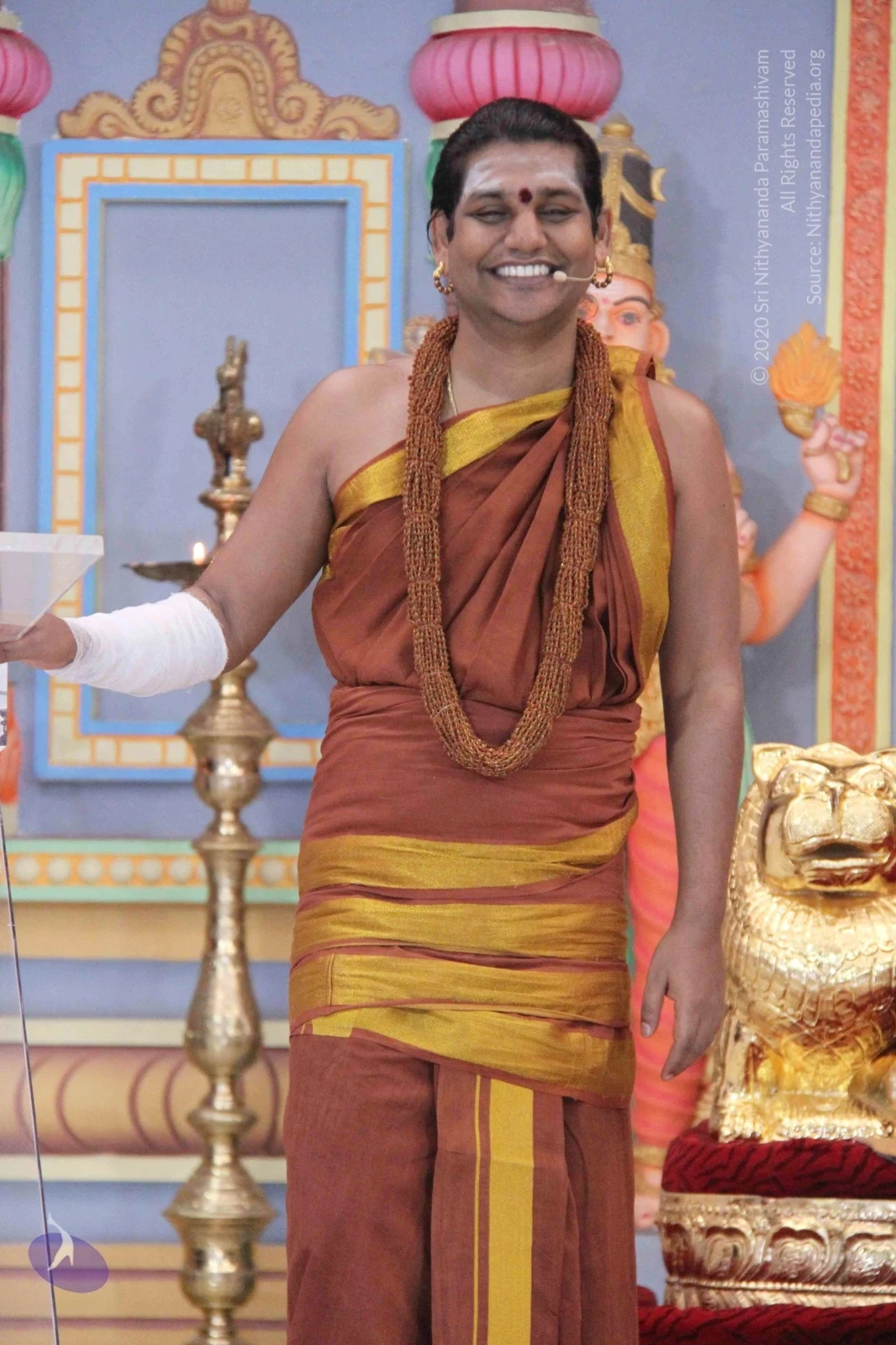
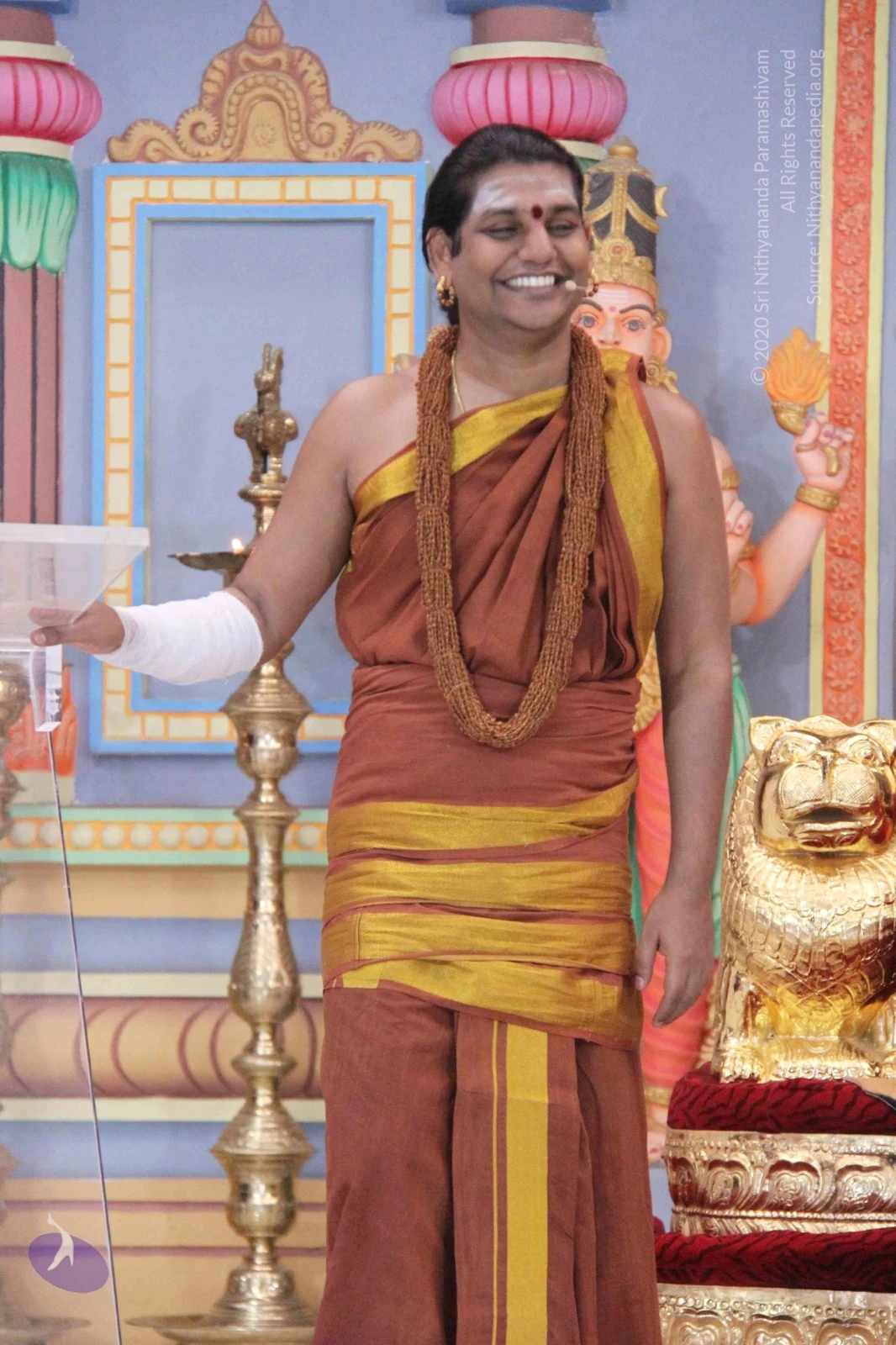
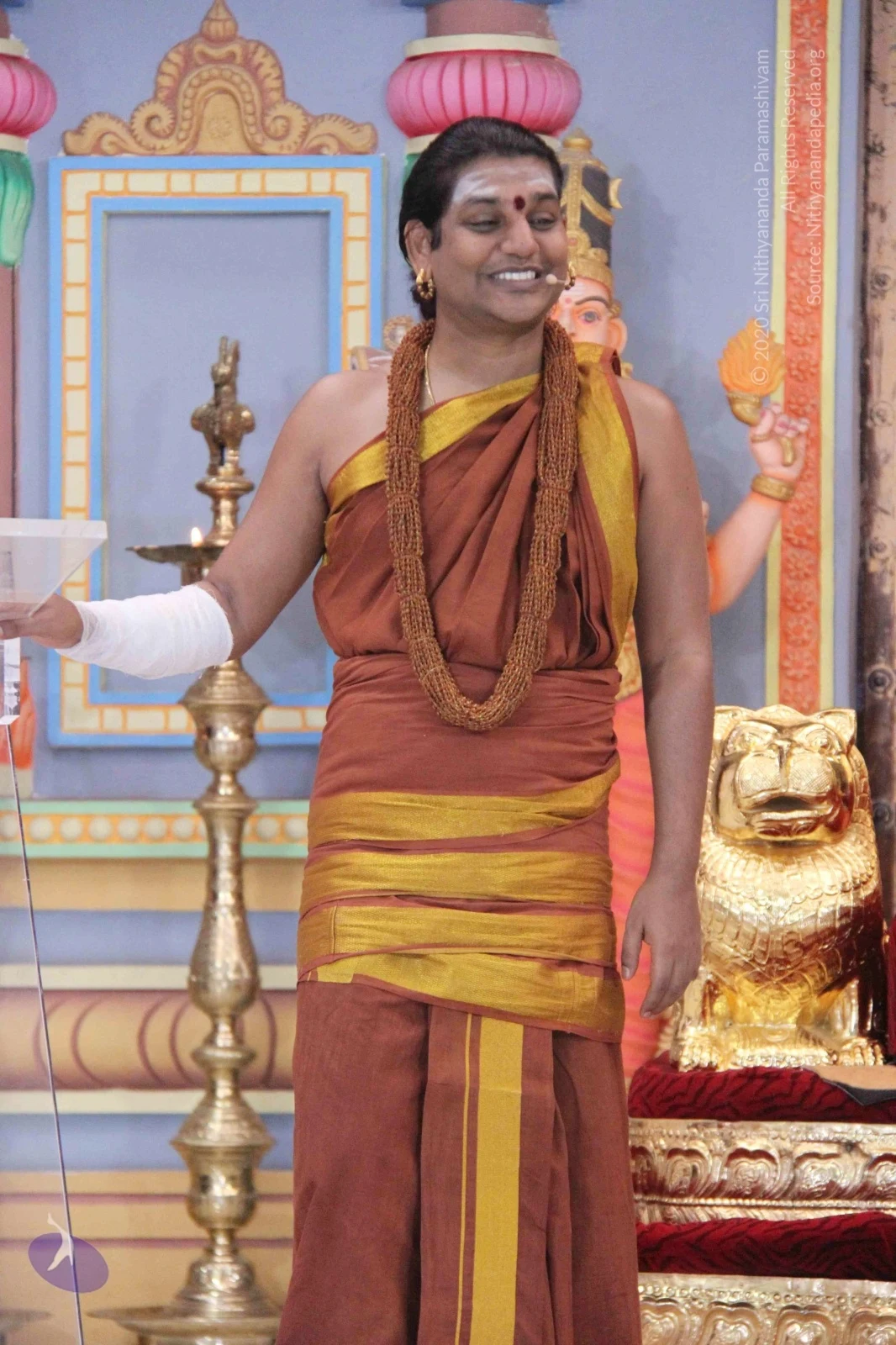
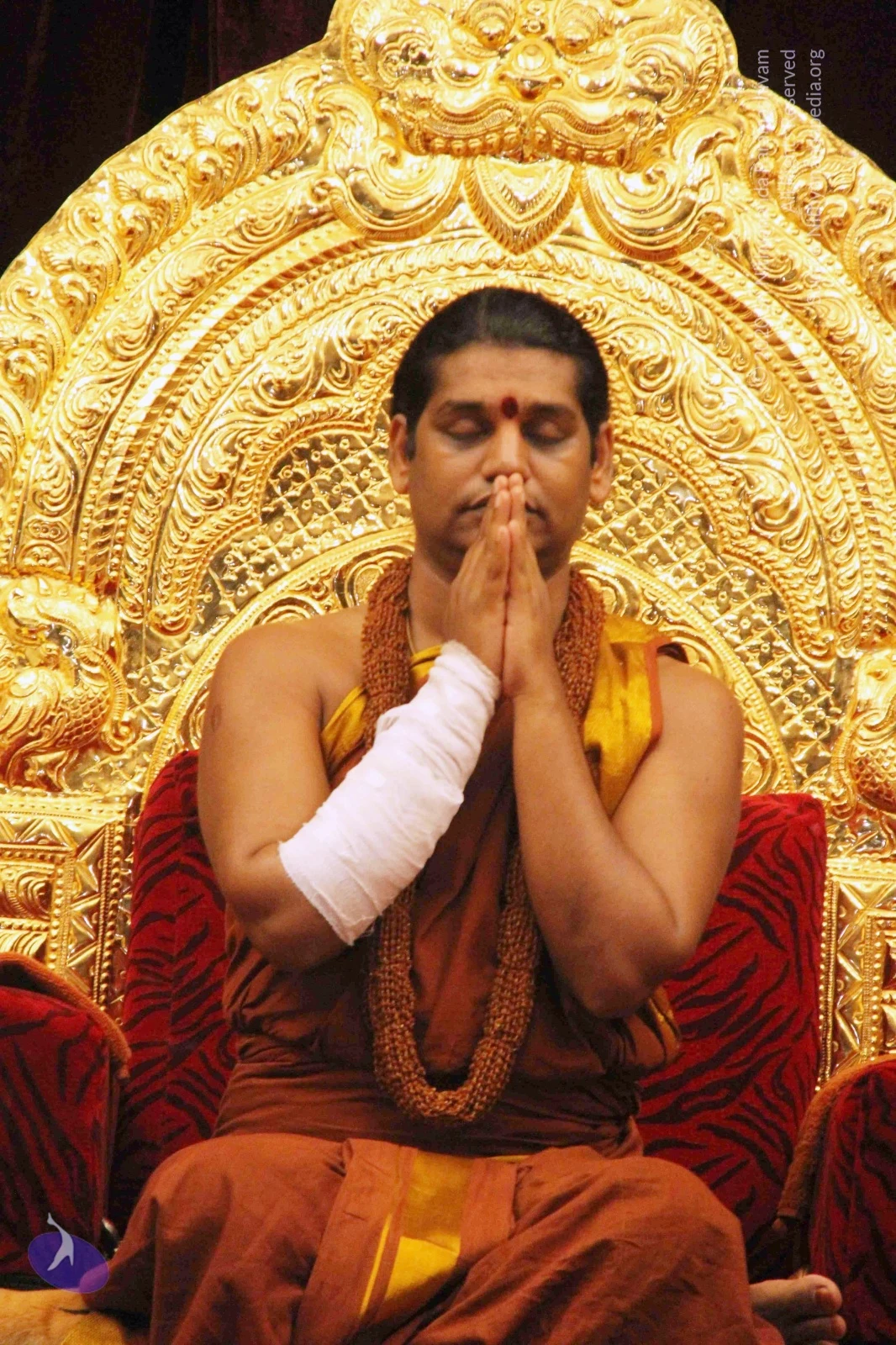
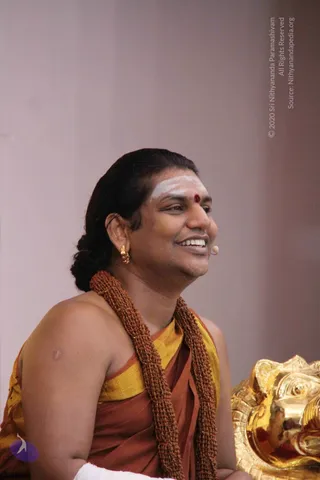
A man seated on an ornate gold-leaf throne with carved floral and scrollwork backrest, wearing a headset microphone. He wears an orange-brown robe with yellow-gold border, a long rudraksha mala draped over the chest, a white horizontal forehead mark with a red bindi, and a white bandage on the left forearm. His right hand rests on his thigh and the other on the robe, with bare feet on a striped cloth. No other people are visible.A man with short dark hair, a white forehead mark and a red bindi sits on an ornate gilded throne with a carved arched back and red tiger-striped cushions. He wears a rust-brown robe with gold borders, a long rudraksha mala draped over his shoulders, a small microphone at his cheek, and a white bandage on his left forearm. He smiles while speaking, one hand resting on his lap. A printed vertical caption reads Nithyananda Paramashivam, , , which is not included in textA smiling man in a rust-orange and gold-bordered dhoti and shawl sits on an ornate gold-leaf throne with an arched back carved with scrollwork, upholstered in red and tiger-striped velvet. He wears a heavy rudraksha mala draped across his chest, a white vertical forehead mark with a red dot, and a lapel microphone; his right forearm is bandaged in white and his left hand rests on his lap. A faded tiled wall stands behind the throne. a person is seated as the speaker at a satsang, with the throne and rudraksha mala as the visible cues.A smiling man with a shaved head sits on an ornate gold throne with a red and tiger-striped cushioned seat. He wears a rust-orange robe with gold borders, a rudraksha mala draped over his shoulders, and a white forehead mark with a red dot. His left forearm is wrapped in white bandaging, and a small lapel microphone is clipped near his face. Behind him is a carved golden arch with lion motifs against a pale wall. The setting suggests a seated discourse. Based on the appearance of this rudraksha-garlanded seated speaker, he is a person candidate, but the face and attire alone leave identity uncertain.A seated man in a rust-orange robe with a gold-bordered yellow shawl sits on an ornate gold throne, smiling and turning his head to one side. He wears a long brown rudraksha mala, gold earrings, a white sandalwood line on the forehead and a red dot. A small headset microphone is clipped near his face. Behind him stand a brass oil lamp with a lit flame and a decorative metal figure, against a blue backdrop. a person: the orange robes, rudraksha mala, gold-adorned throne and ornate setting fit the page's description of this satsang, though the appearance cues are not fully distinctive.A smiling man with swept-back dark hair in a low bun sits in profile against a plain pale wall. He wears a rust-orange garment over a golden-yellow inner cloth, a thick rudraksha mala draped across his chest, and gold earrings. A white horizontal stripe marks his forehead with a red dot at the centre. A small clip-on microphone is attached near his cheek. A gilded ornamental figure. Swamiji (probable): the long swept-back hair, rudraksha mala, saffron-orange clothing and ceremonial gold ornament are consistent with the page's claim, though the appearance is only partly visible.

04-Sarvadarshan

6 photosSource gallery
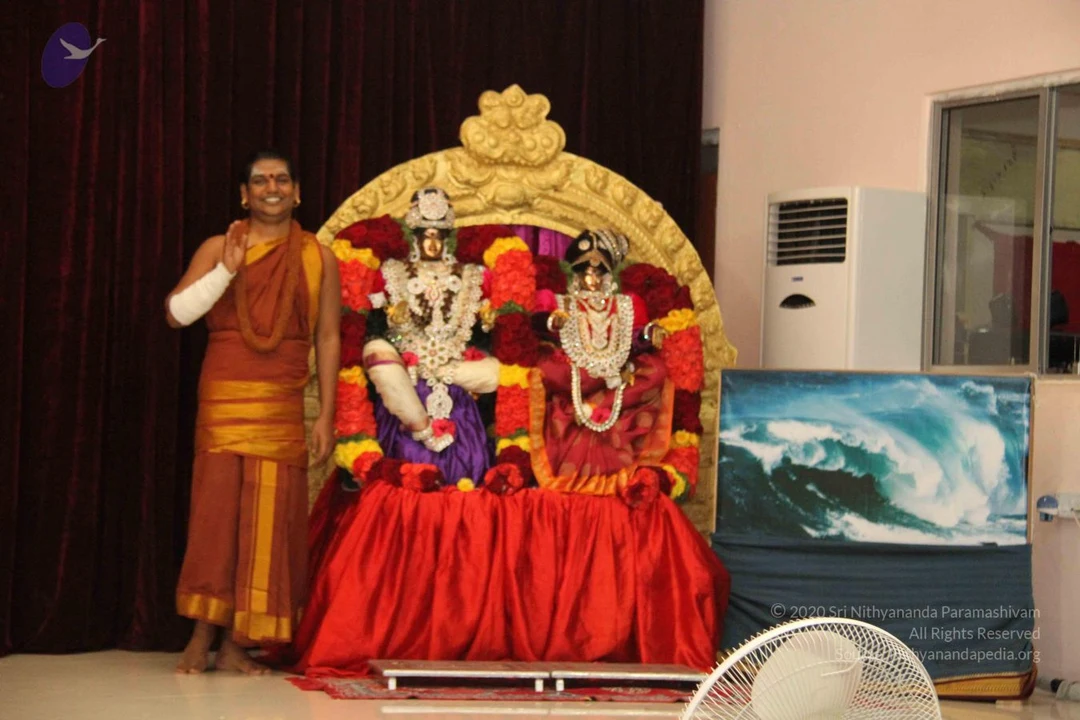
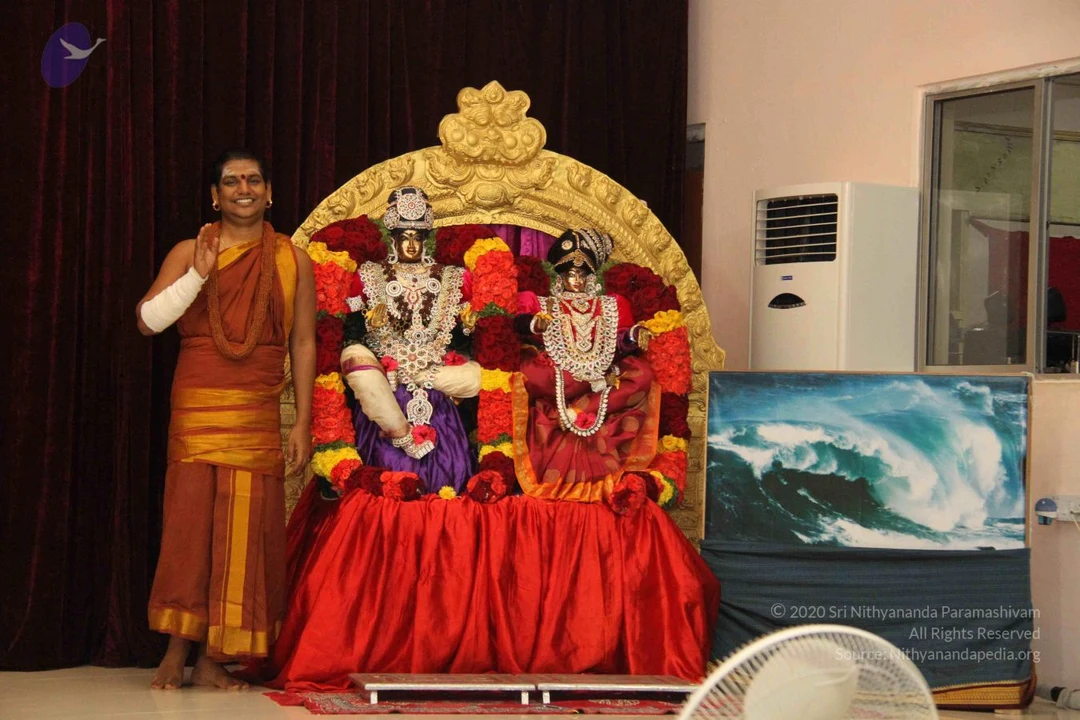
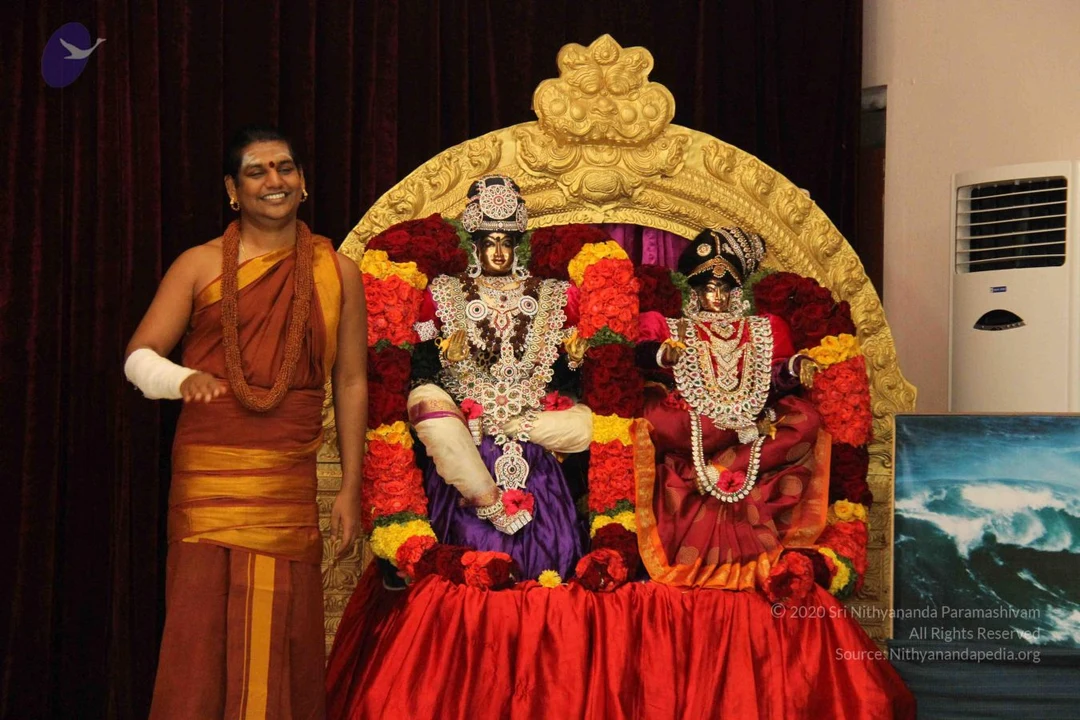
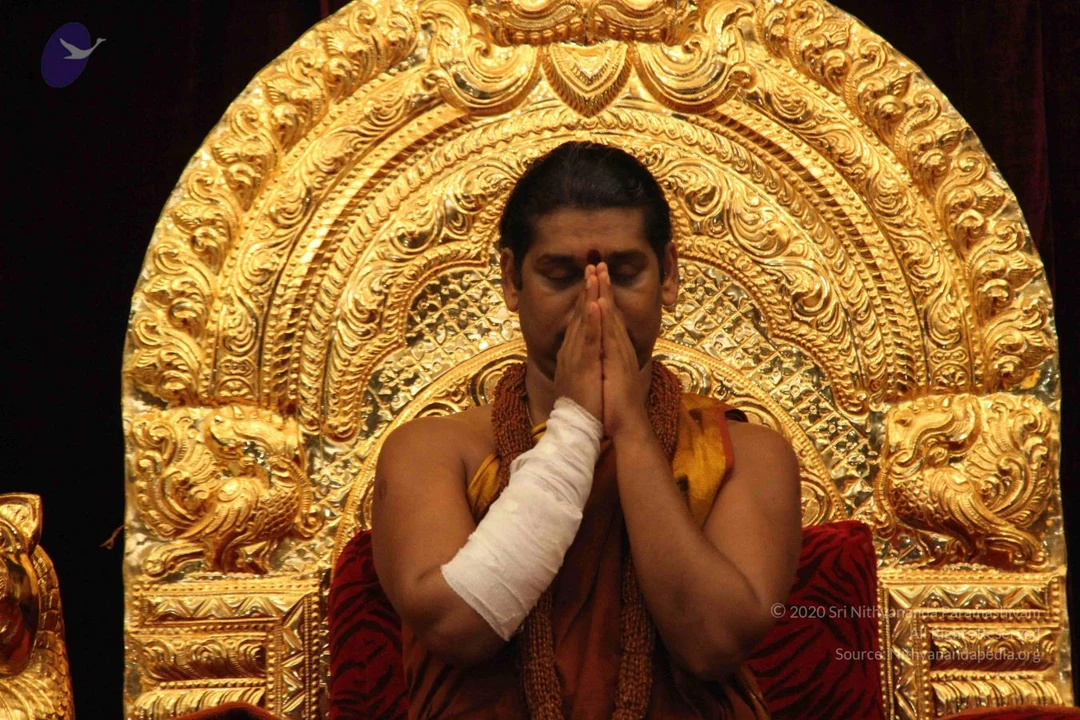
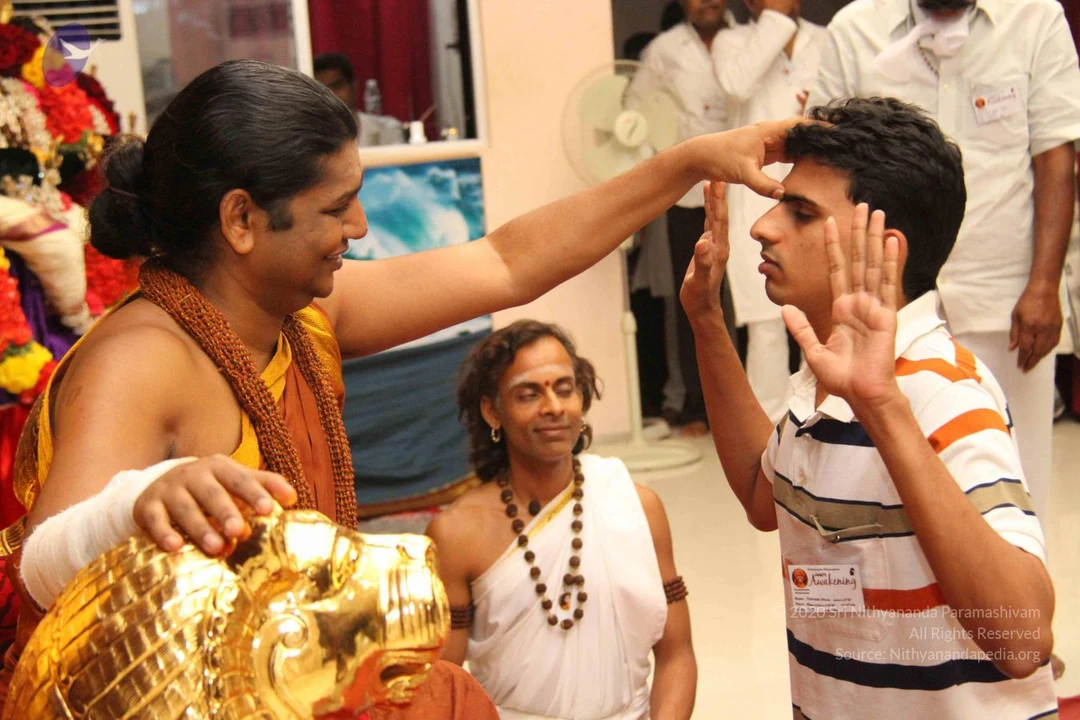
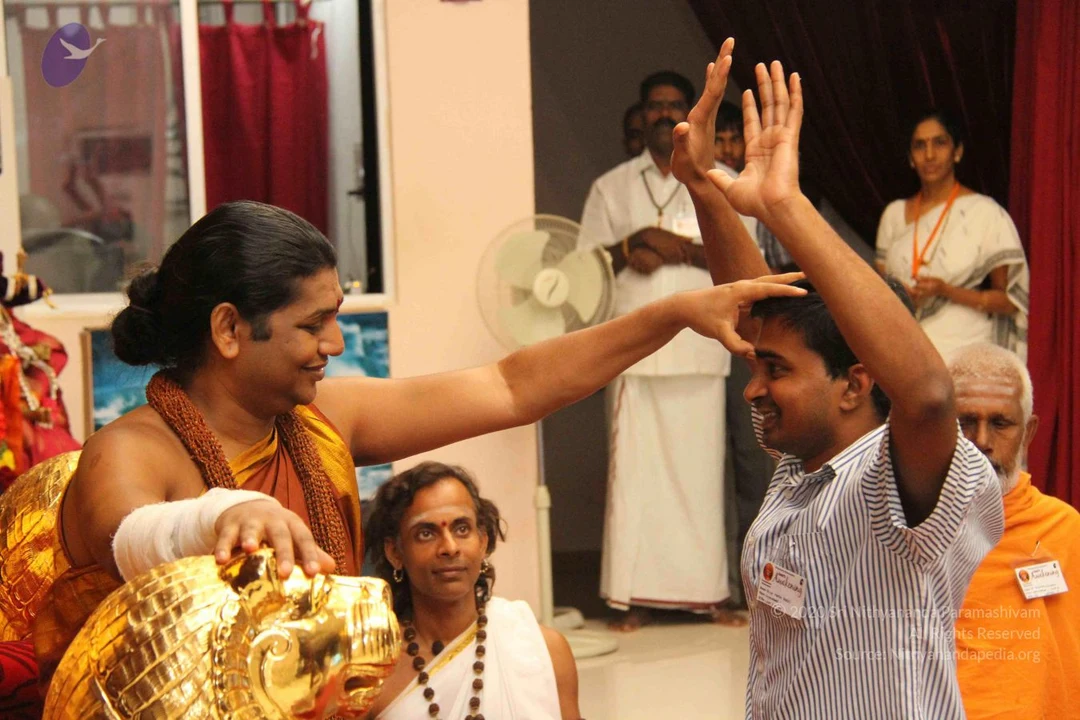
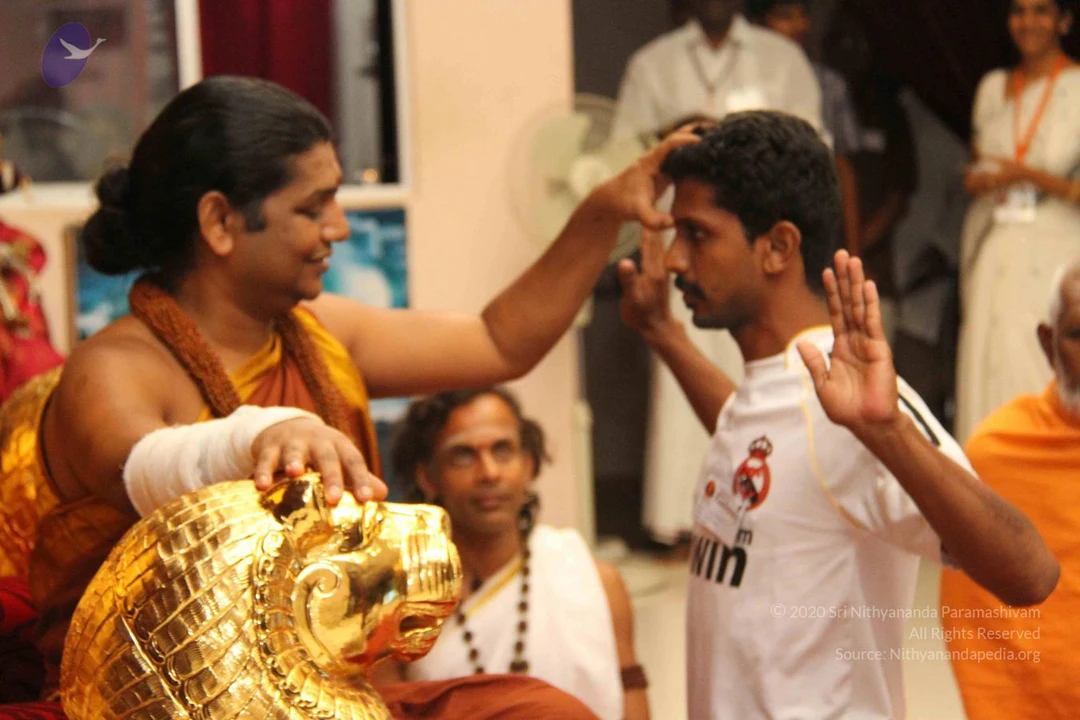
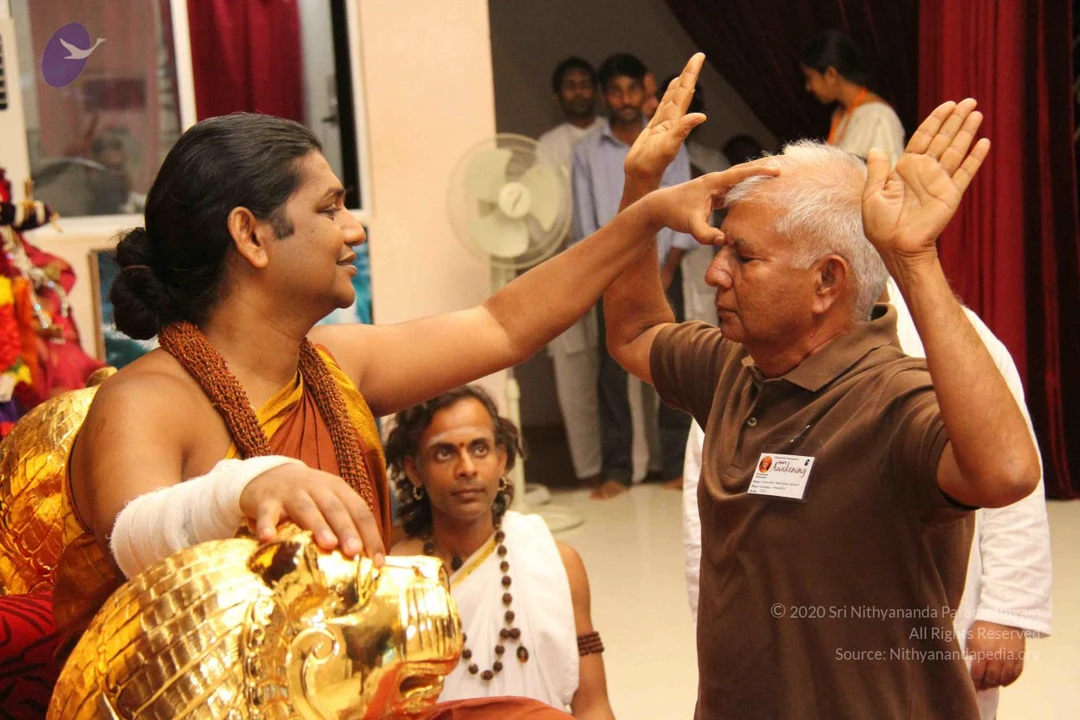
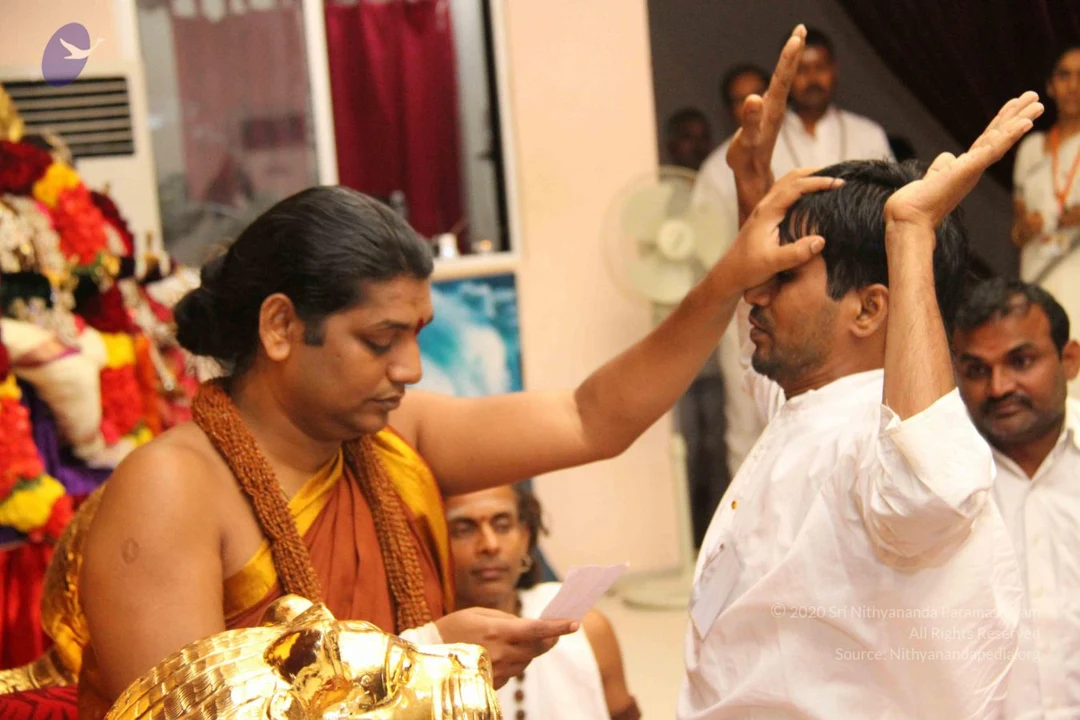
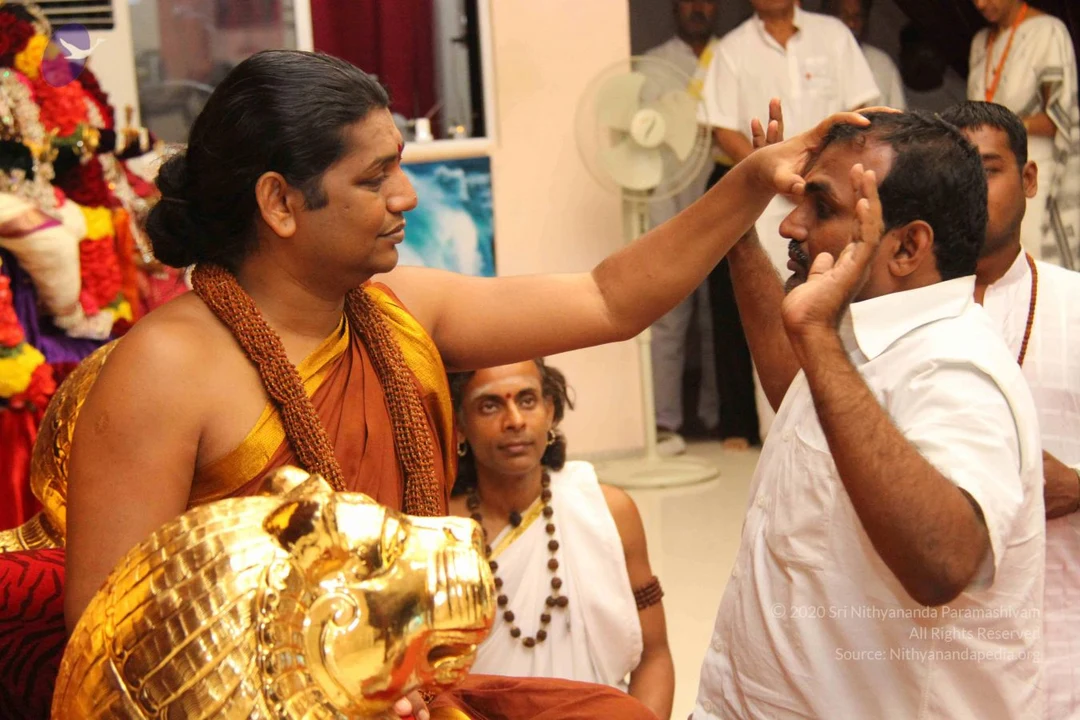
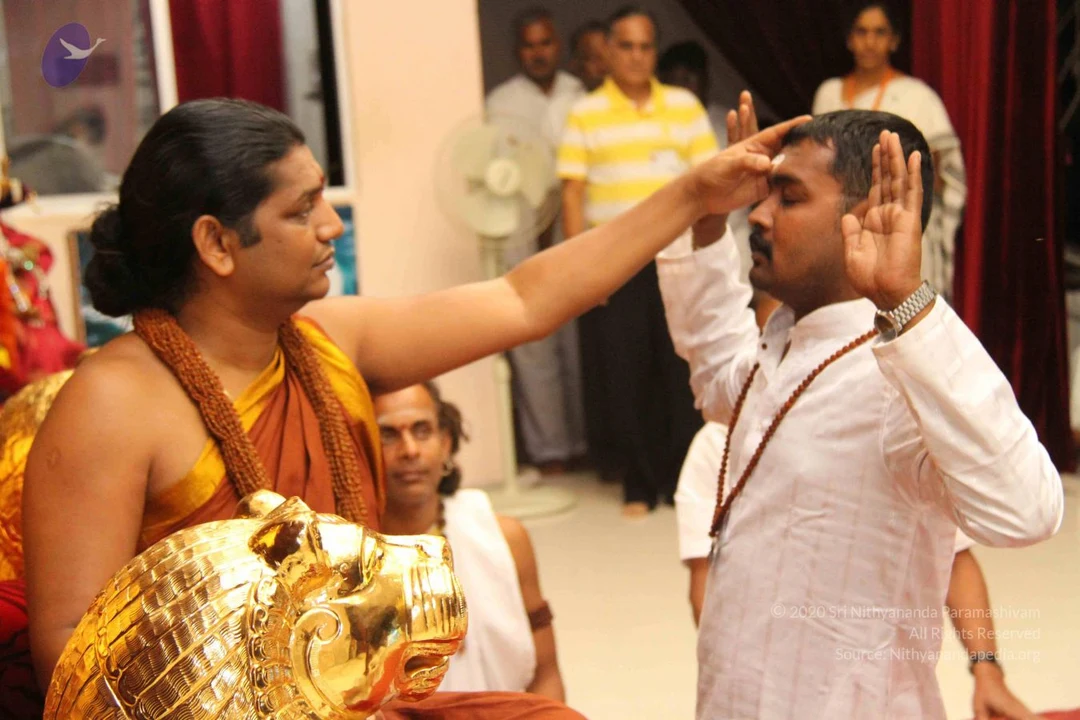
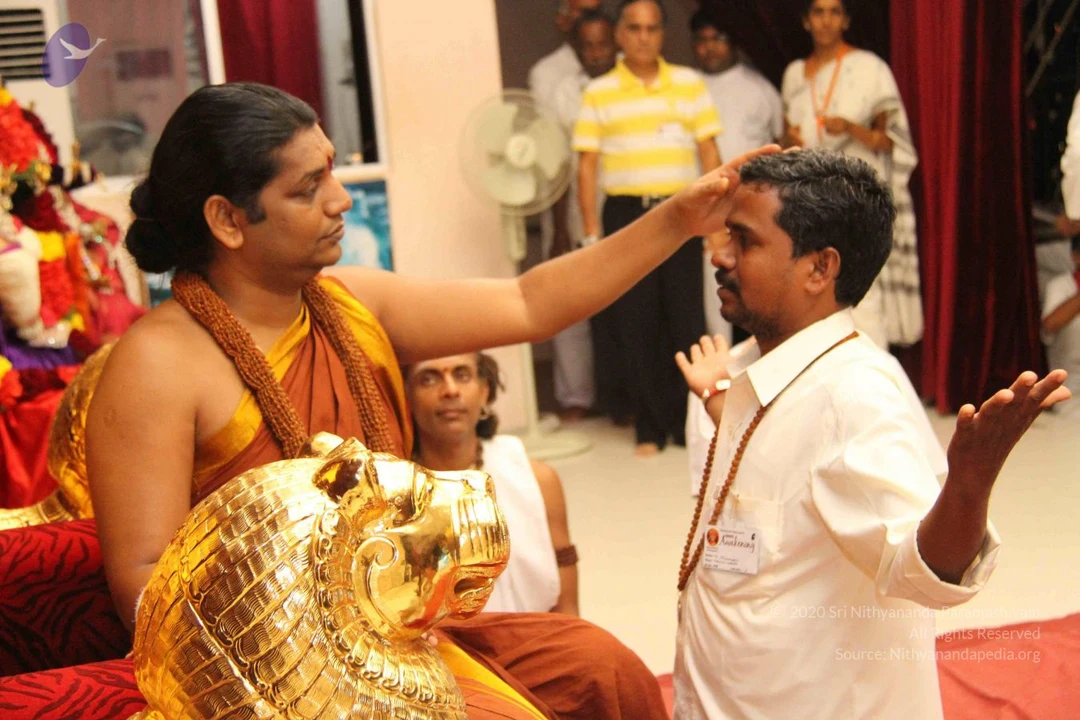
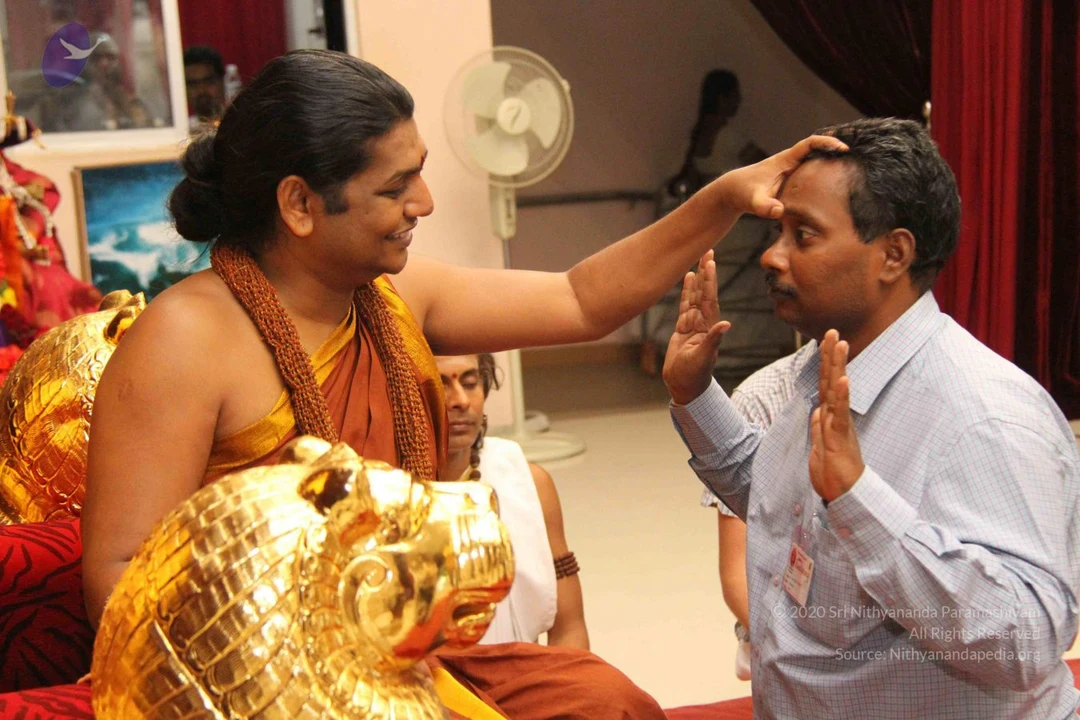
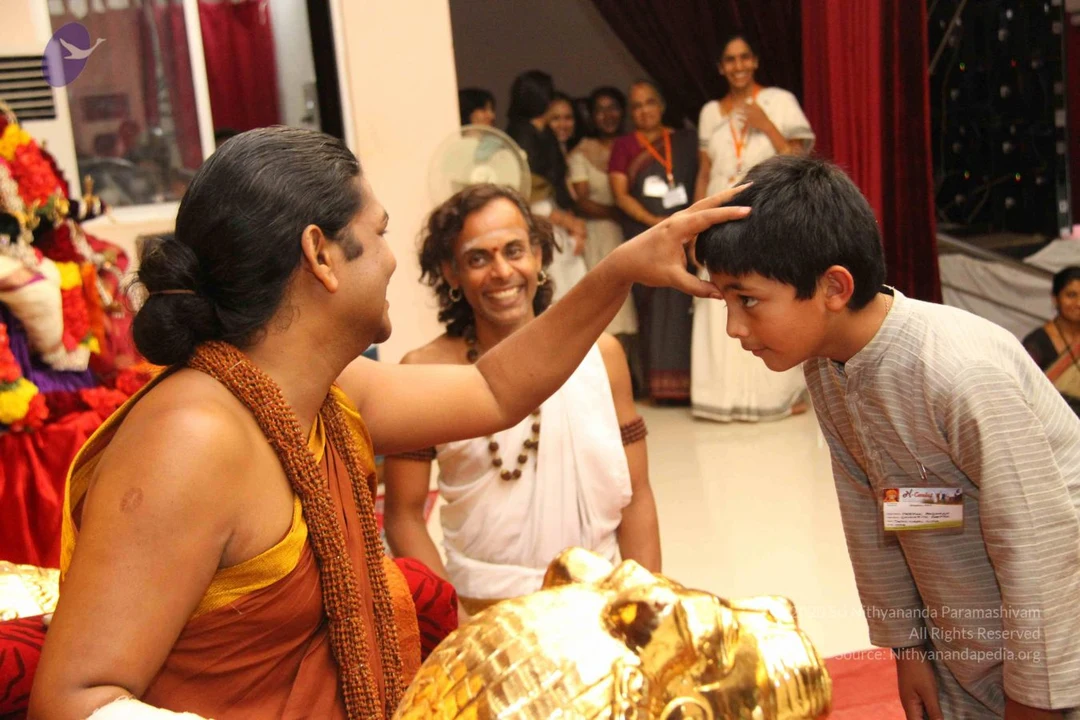
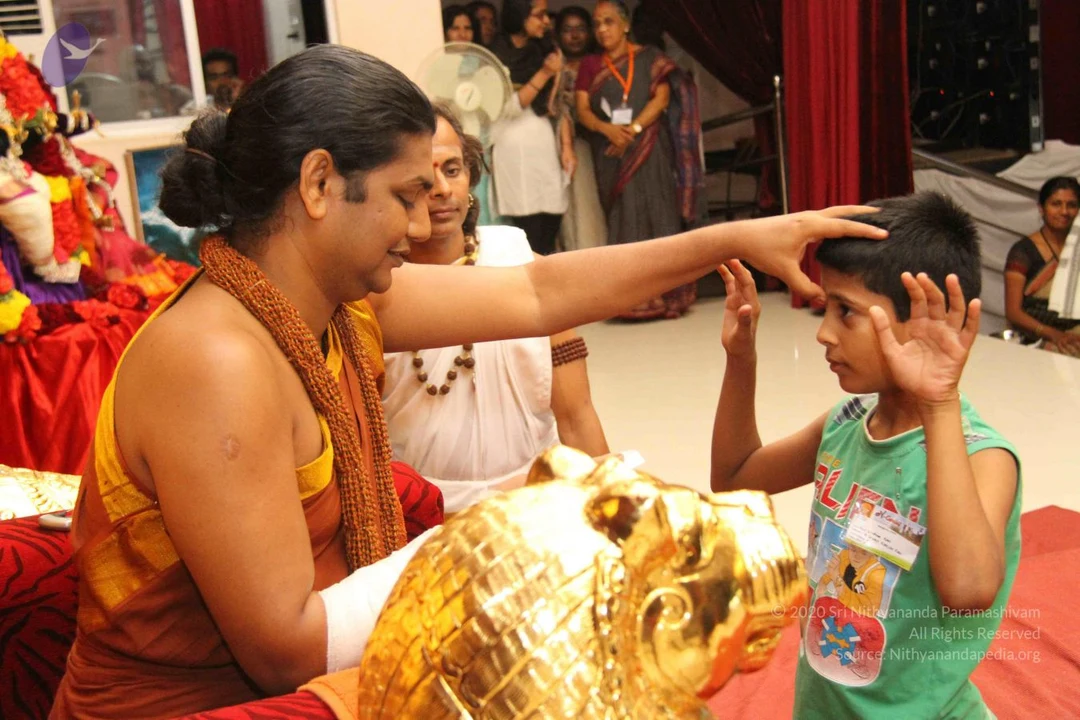
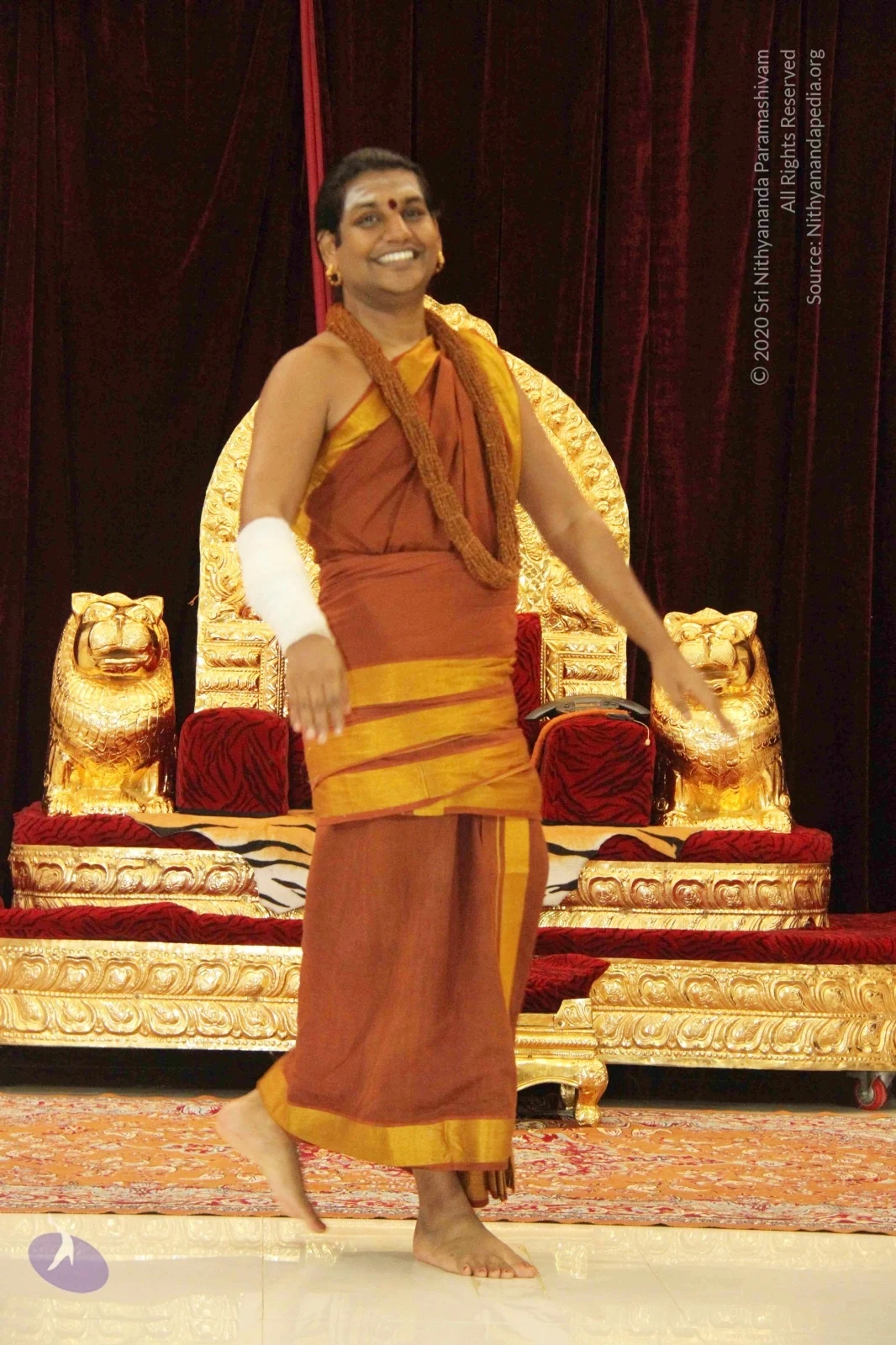
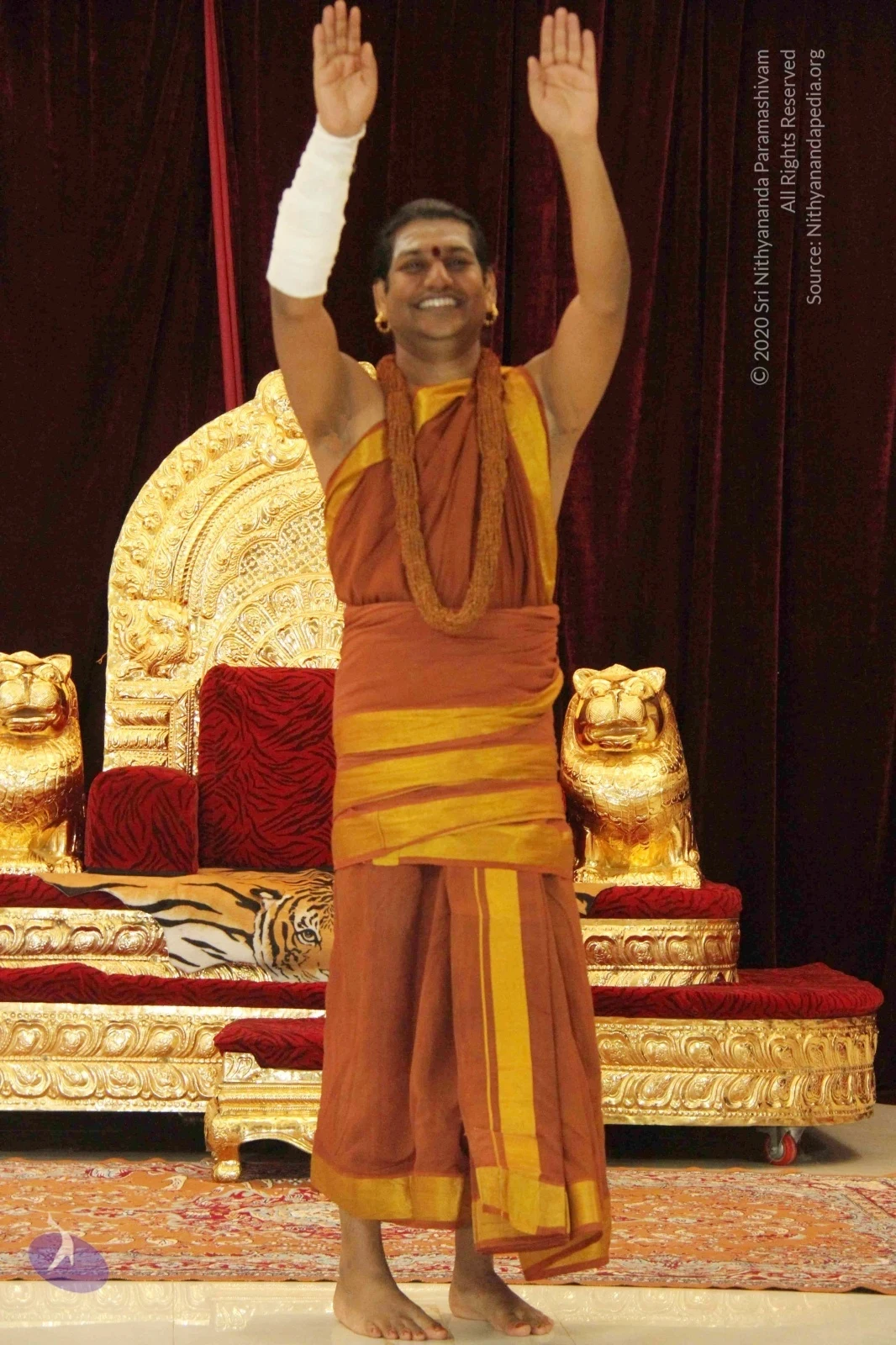
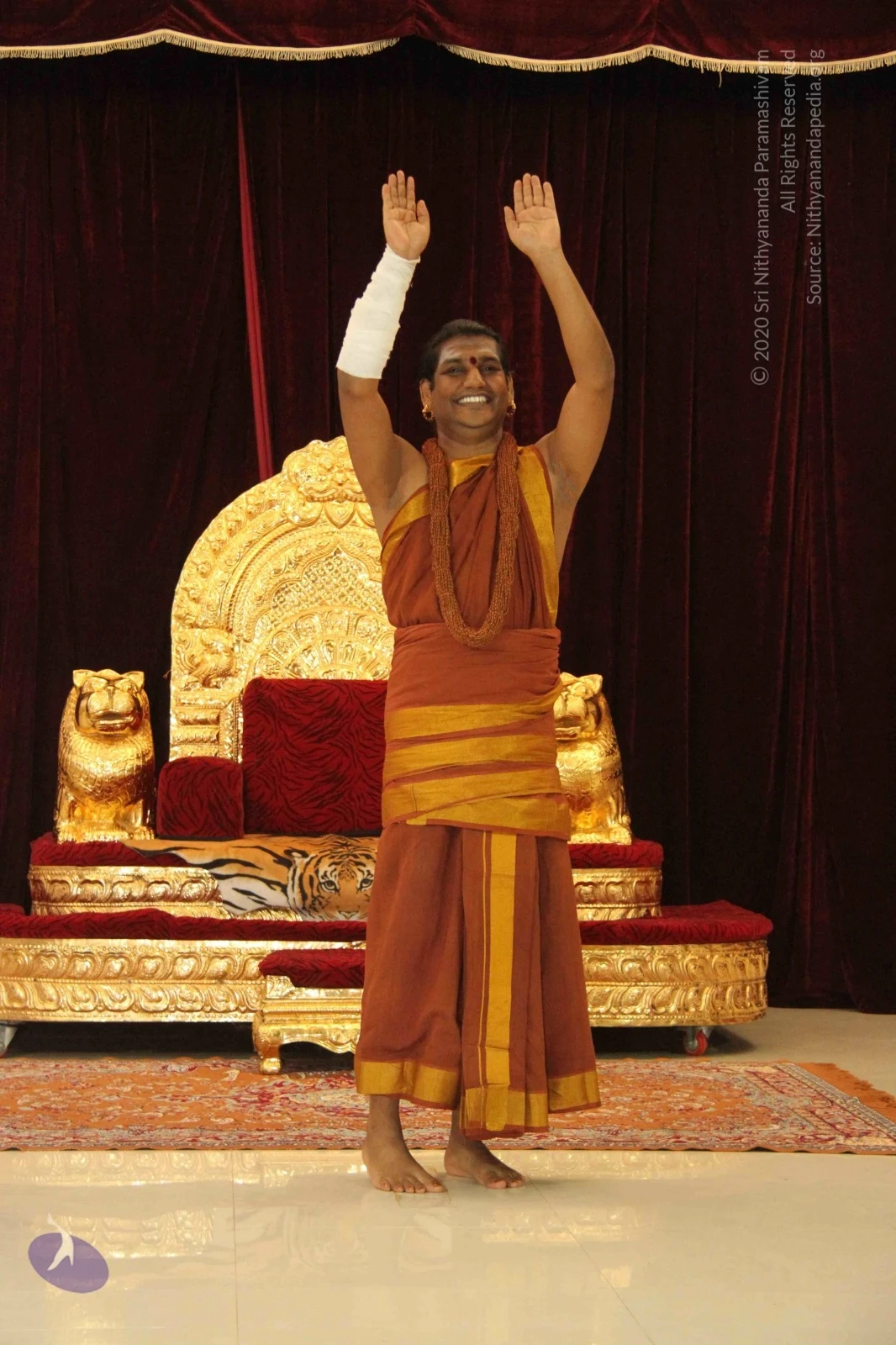
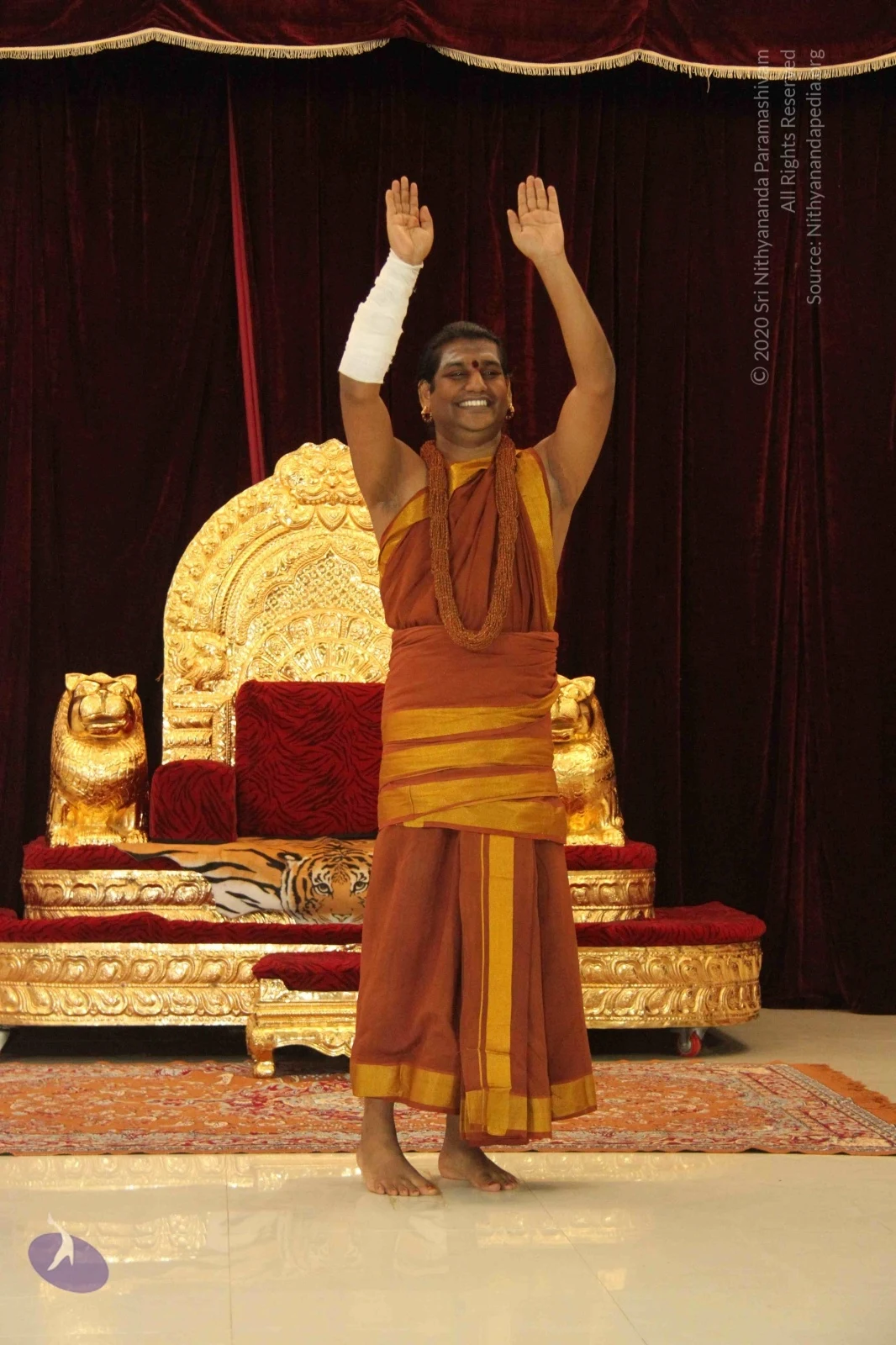
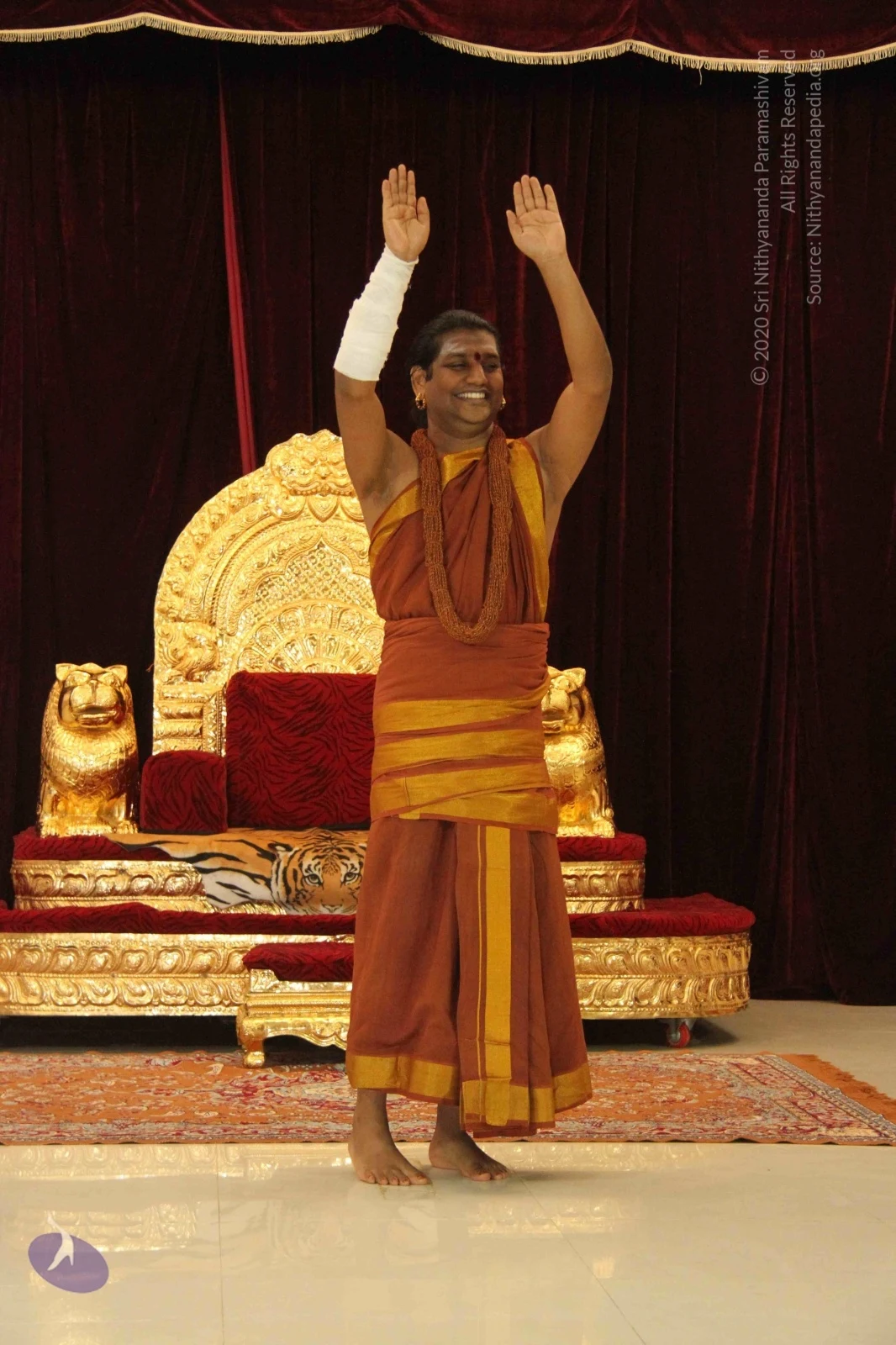
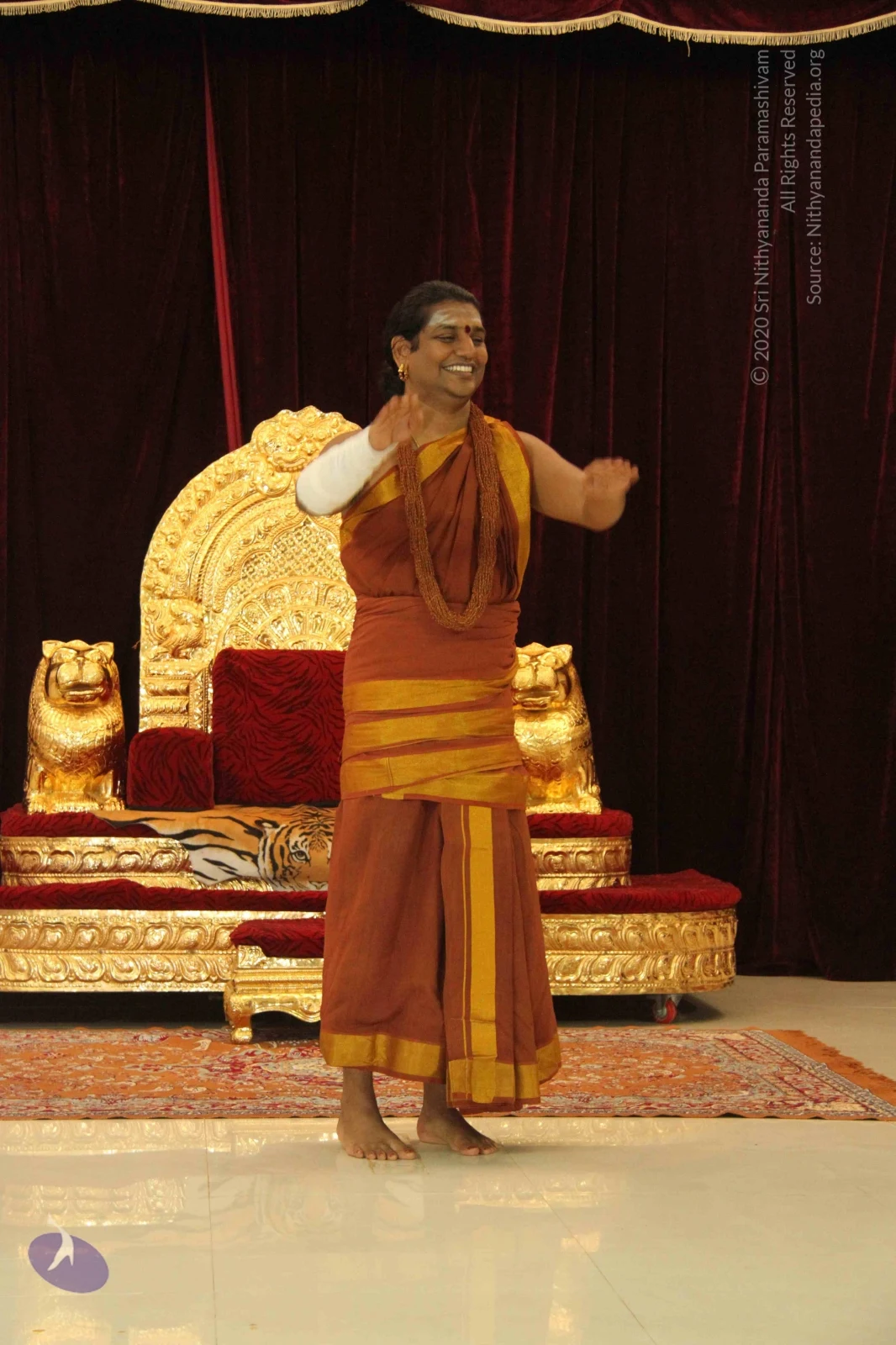
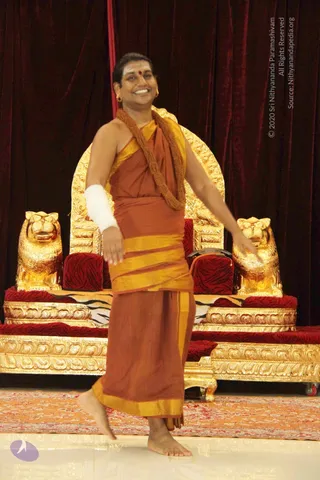
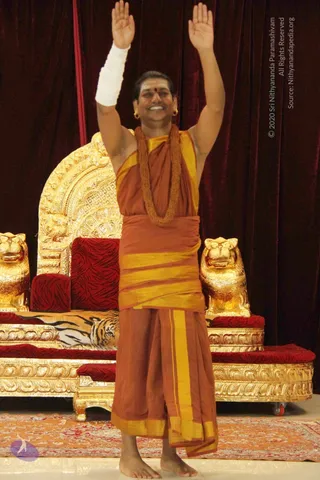
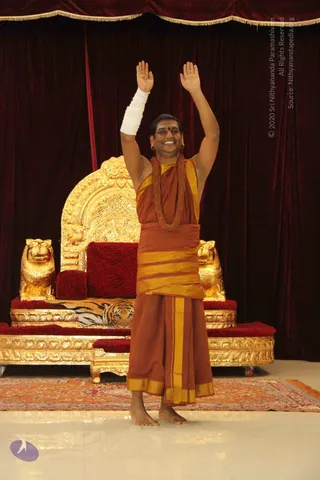
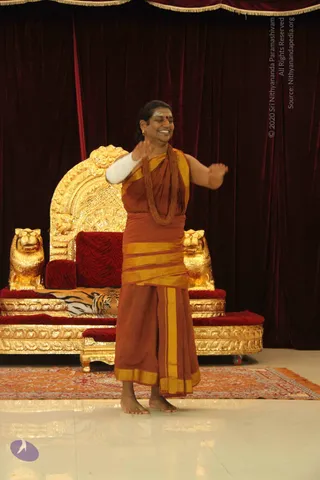
A smiling man in a rust-orange and gold-bordered dhoti and shawl stands barefoot on a glossy white floor in front of an ornate gold throne with carved lion-head armrests, red tiger-striped cushions and a dark red velvet backdrop. He wears a rudraksha mala, gold earrings, a red bindi and white vibhuti marks, and his left forearm is bandaged in white. He is mid-step, one arm extended outward. A single physical person is present.A barefoot man in a rust-orange and gold-bordered dhoti and shawl stands on a cream marble floor with both arms raised high in a blessing gesture, smiling. A dark rudraksha mala hangs at his neck, a small red bindi marks his forehead, a white bandage wraps his right forearm, and he wears gold earrings. Behind him stands an ornate gold throne with carved lion-head armrests, red tiger-striped cushions and a tiger-skin cloth, set before deep maroon velvet drapes. A patterned red and gold rug lies at his feet. The a person figure is the single physical person; the printed copyright caption on the right edge is not counted as text here.A man stands barefoot on a glossy white floor with both arms raised overhead, palms open, smiling. He wears a rust-red sleeveless wrap with gold-bordered cloth around his waist and a rudraksha mala around his neck, and has a red bindi on his forehead and a white bandage on his left forearm. Behind him is an ornate gold throne with carved backrest and lion-form armrests, upholstered in red with a tiger-skin cover, set against deep red velvet drapes and a patterned rug. The appearance-based candidate is a person, identified by the rudraksha mala, the rust-and-gold clothing, and the ceremonial setting before the throne, though the face is not used for identification.A standing man in a rust-orange and gold-bordered sannyasi wrap, with a thick rudraksha mala around his neck, raises both arms high with palms open while smiling, a white bandage on his right wrist. He has a red bindi and small gold earrings and is barefoot on a polished white floor. Behind him stands an ornate gold throne with carved lion arms and a tiger-striped cushion, framed by deep red velvet drapes, with an orange patterned rug in front. The person's appearance matches the page's a person cues: a rudraksha mala, saffron-orange clothing, and a gold-trimmed wrap, so this is a person in a stage setting during a satsang-style presentation.A smiling man stands barefoot on a white tiled floor with both arms raised overhead, palms open, in front of an ornate gold throne upholstered in red and draped with a tiger-striped cloth, flanked by gold lion sculptures, against a deep red velvet backdrop. He wears a rust-orange and saffron-bordered robe wrapped at the waist, a long rudraksha mala around his neck, gold earrings and a red bindi, and a white bandage on one forearm. A patterned red rug lies beneath the throne. a person: the candidate wears saffron-orange robes, a rudraksha mala and gold earrings, but appearance cues are partial, so the identification is uncertain.A man stands barefoot on a polished white floor in front of an ornate gold throne with lion-headed armrests and a red cushion with tiger-striped upholstery, backed by deep red velvet drapes. He wears a rust-orange dhoti and upper wrap with gold borders, a rudraksha mala around his neck, a red tilak on his forehead, and a white bandage on his left forearm. He smiles broadly and raises both hands in an expressive gesture.

05-IA-Day3
2 photosSource gallery
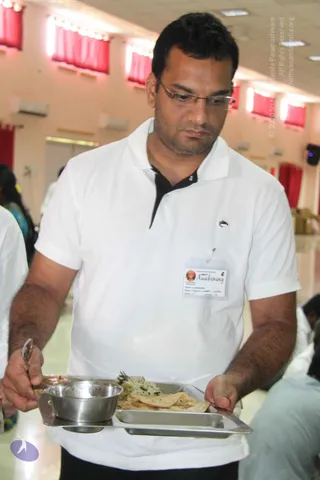
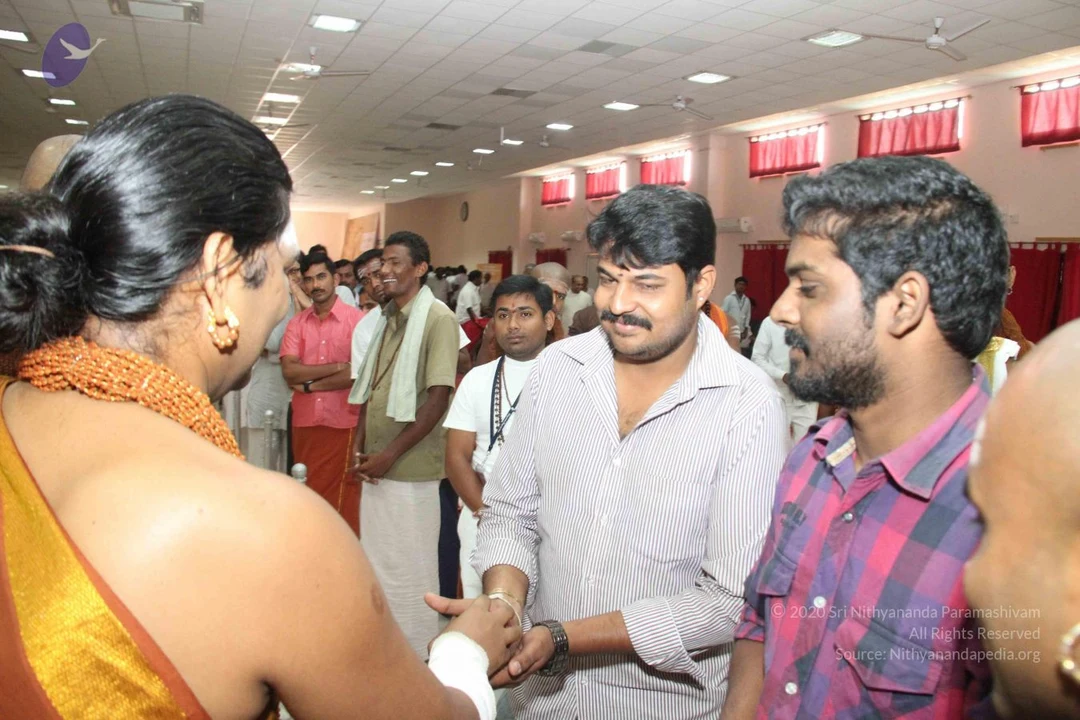
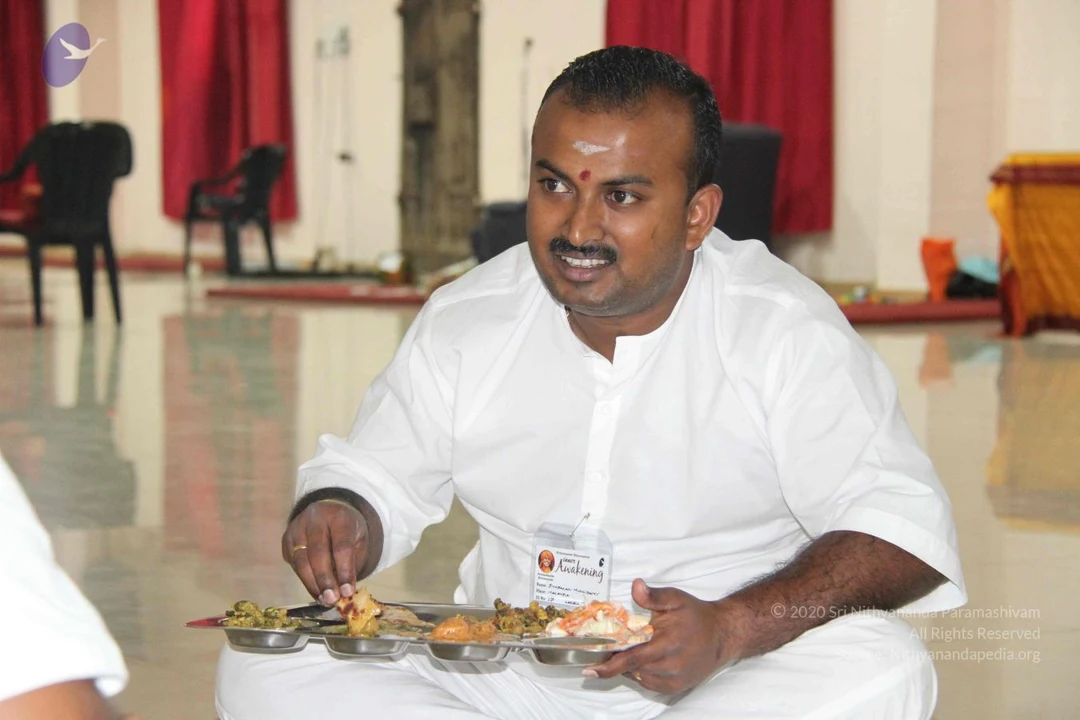
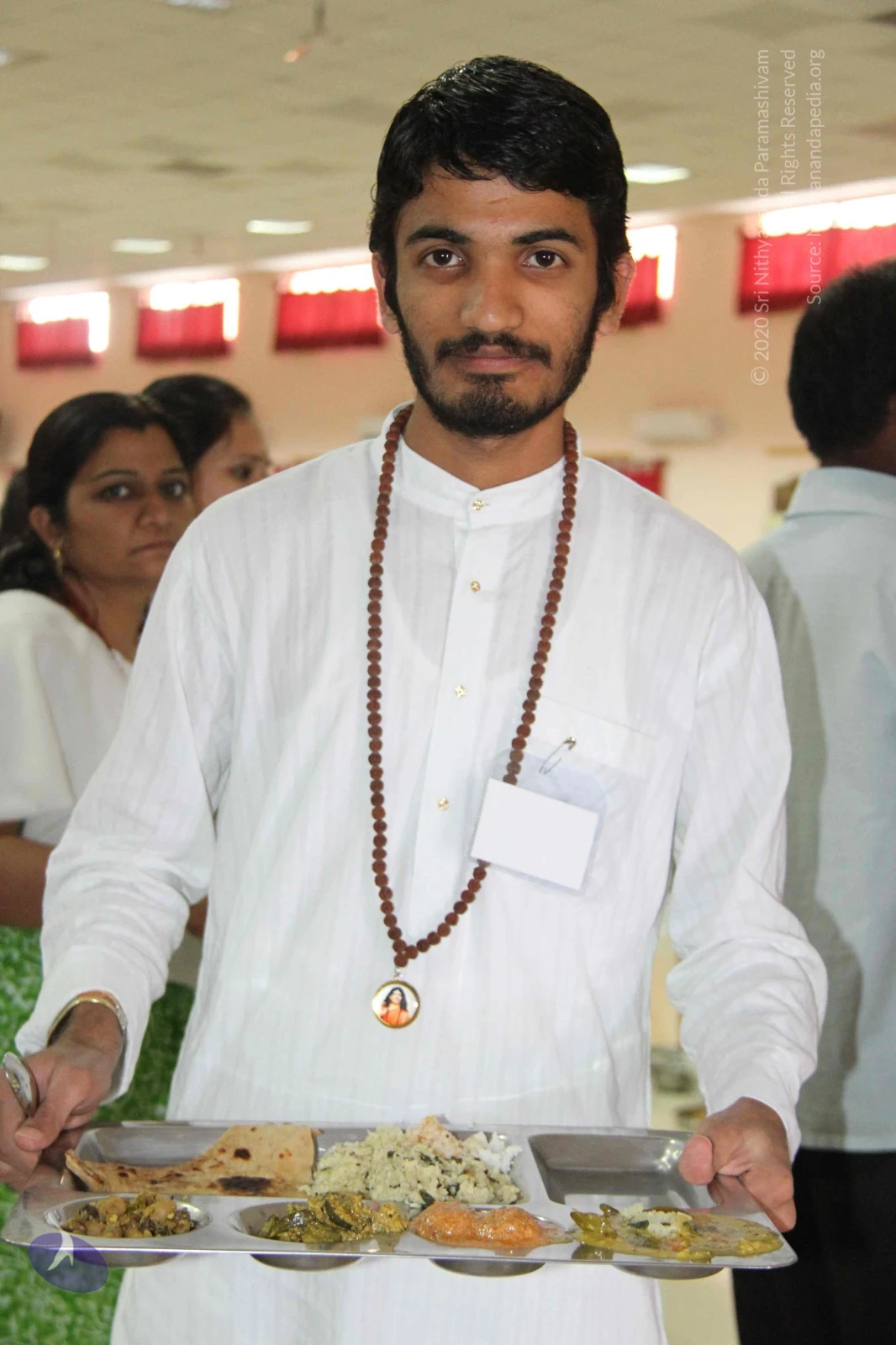
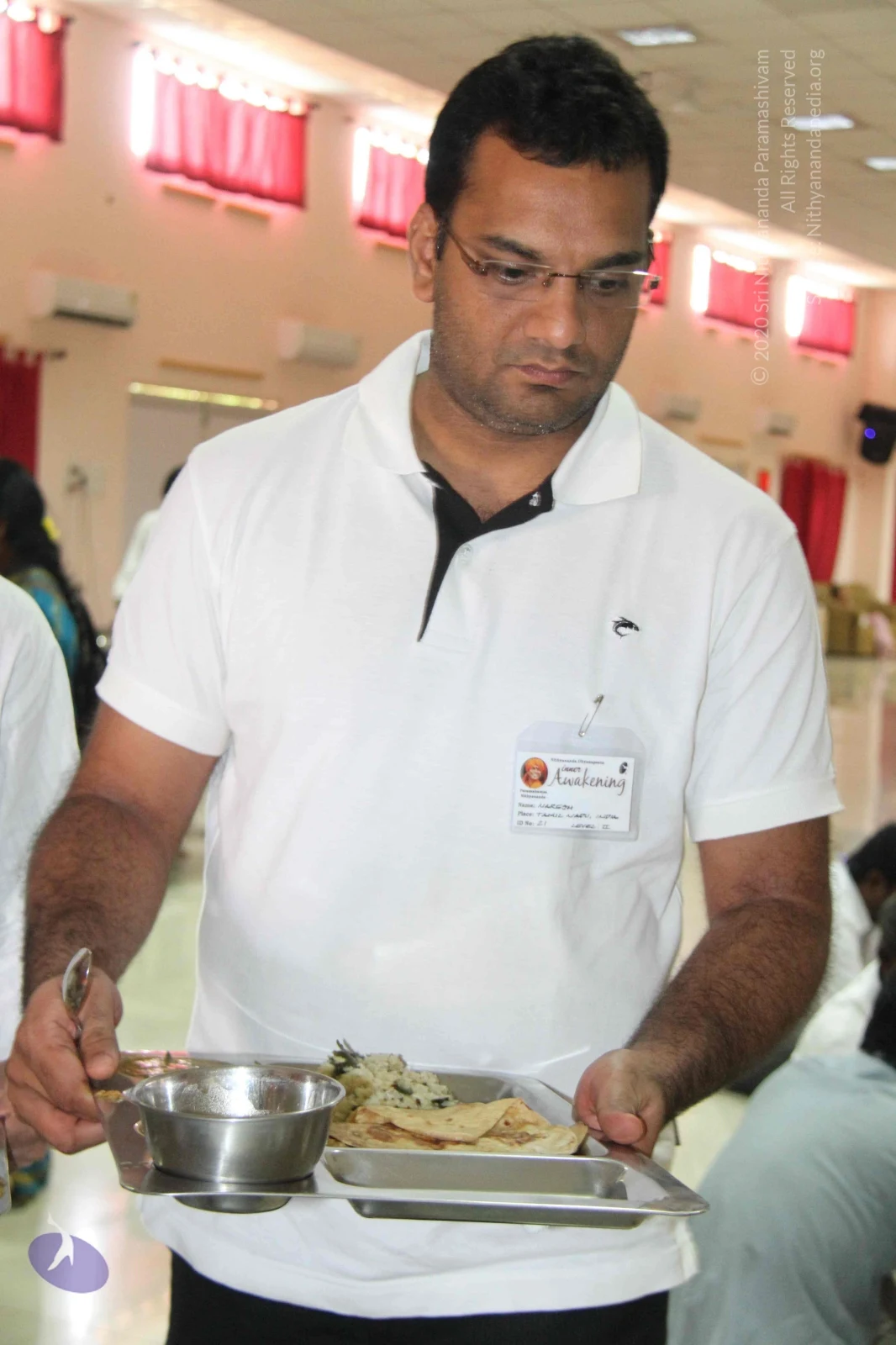
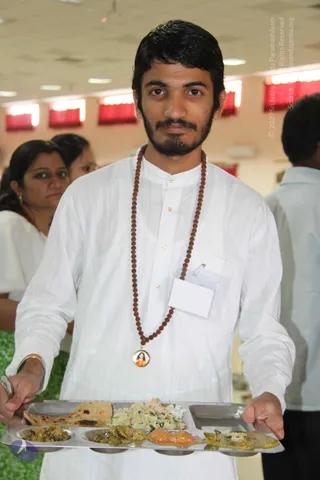
A young man in a white kurta with a mandarin collar stands centre frame holding a stainless steel thali tray of food: flatbread, rice, vegetable curries, a sweet and dal. He wears a rudraksha mala with a round pendant showing a small portrait, and a name badge is pinned to his chest. Two women in white stand behind him in a hall with red curtains and fluorescent lights. No visible person is positively identified as a person.A man in a white polo shirt with a black collar placket and rimless glasses carries a stainless steel tray holding a steel bowl, flatbread and a mound of rice with herbs, while holding a spoon in his left hand. He wears a white badge labelled Inner Awakening with a small portrait and name. The room has red curtains and fluorescent lights along a pale wall, with other people seated in the background.

06-Temple

27 photosSource gallery
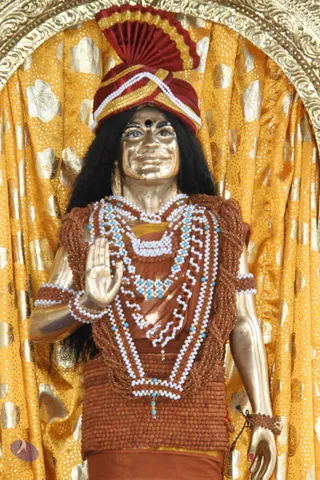
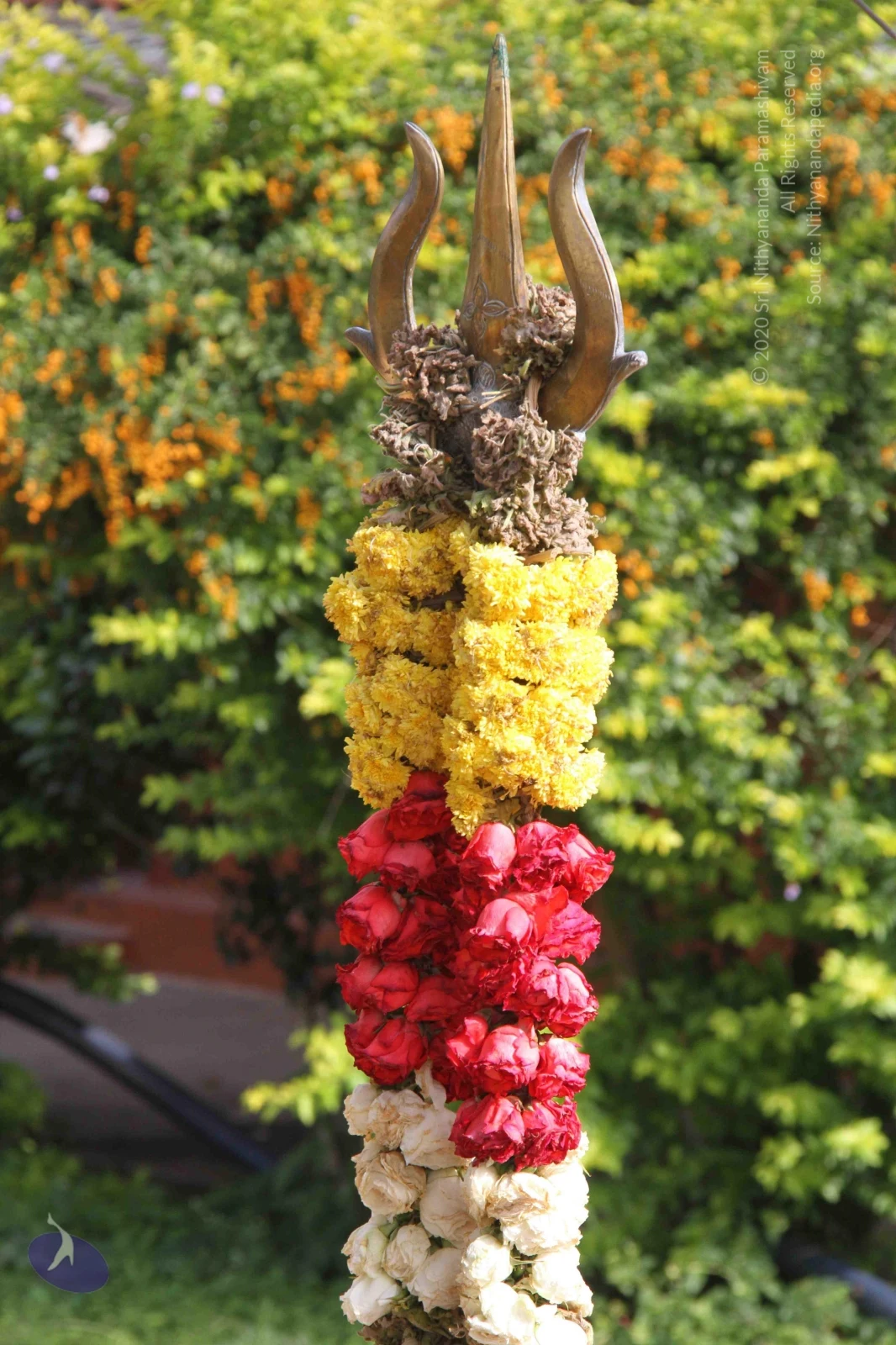
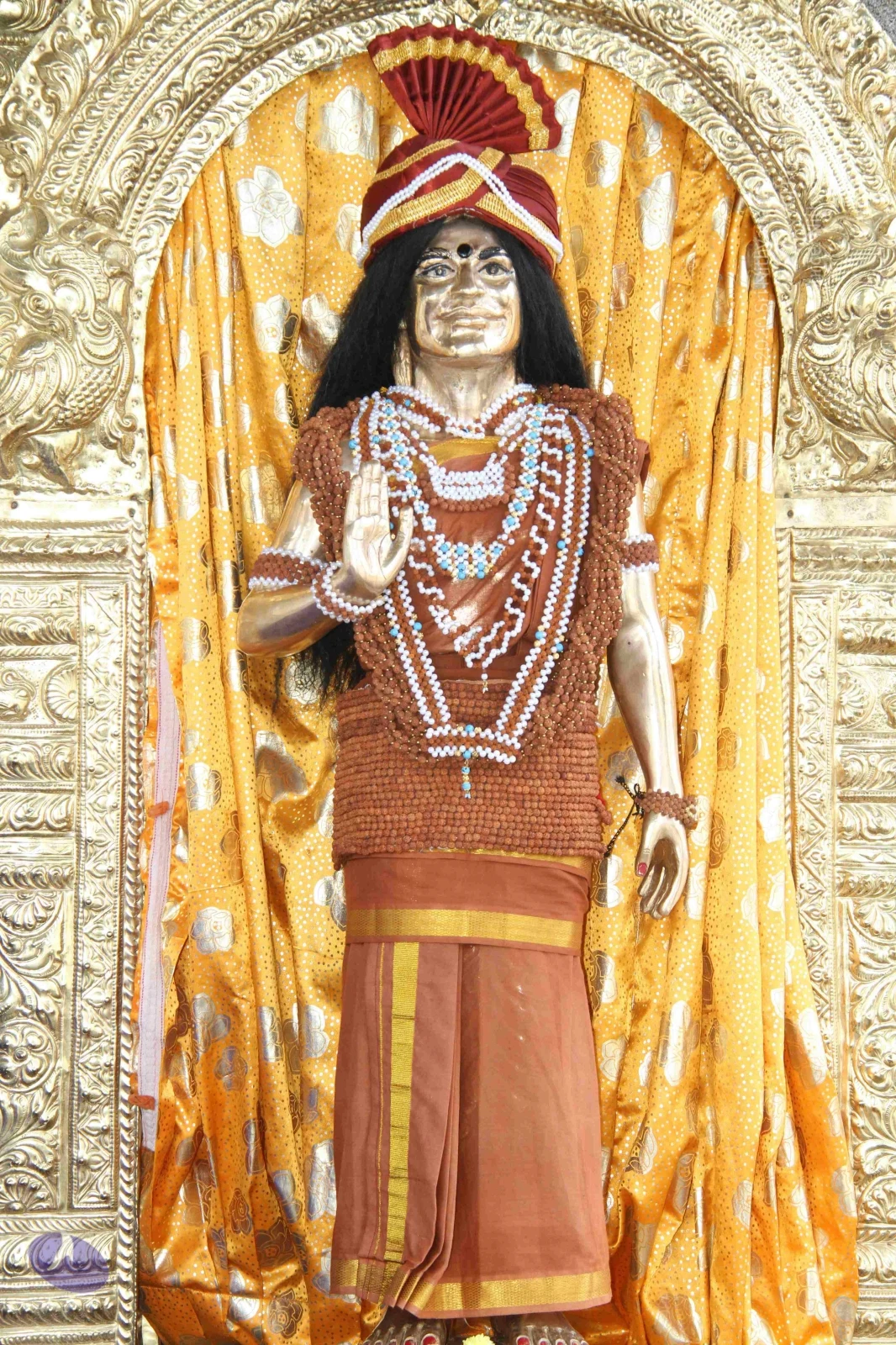
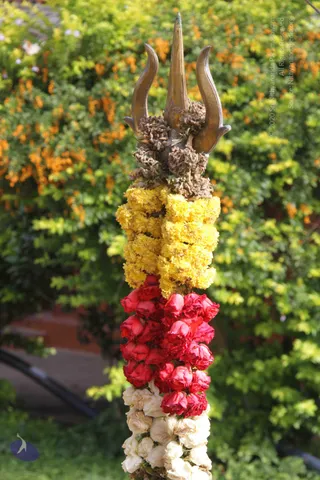
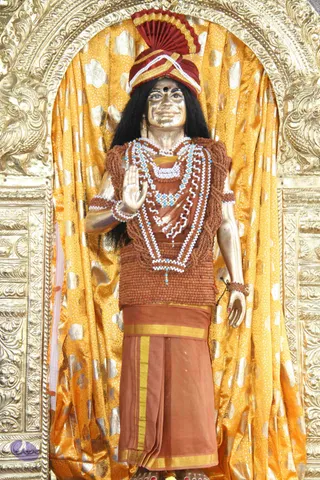
Outdoor photograph of a brass trident (trishula) mounted atop a tall pole, wrapped in garlands of yellow marigolds, red roses and white jasmine-like blossoms, with dried herbs tied at the base of the prongs. Leafy green shrubs with orange flowers fill the background. No people are visible.Two large gilded statues sit side by side on a pink and gold draped pedestal before a red velvet curtain framed by an ornate gold arch. The left figure, a male deity murti, wears an orange turban with a white tripundra mark, a red and pink dhoti, layered white and gold beaded garlands, and holds a trident and a damaru-like drum in raised hands. The right figure, a female deity murti, wears a jeweled crown, an orange sari with green border, and white pearl necklaces, with one hand extended.A photograph of a shrine with two large metal deity murtis seated side by side against a green silk backdrop within an ornate gold arch. The figure on the left wears an orange turban, rudraksha-style beaded adornments and holds a trident, while the figure on the right wears a tall ornamented crown and blue garment. Both are draped with garlands of yellow and red flowers. In front sits a golden shivalinga-like form with a cobra hood, dressed in a purple cloth and decorated with flower garlands, with a small figure and a white flower at its base. White and purple cloths cover the platform. No living people are visible.A decorated temple shrine with large golden statues of a deity pair seated on a cobra-hooded throne in front of a green silk backdrop framed by an ornate gilt arch. The taller figure wears a red and gold turban, holds a trident, and is adorned with layered garlands and jewelled necklaces; the companion figure wears a pink-and-silver crown and a blue sari with jewelled garlands. A large Shiva lingam draped in purple cloth and red-and-gold fabric sits at the front, encircled by marigold and red rose garlands. A small figure of a seated attendant and a brass lamp rest at the base. No living people are visible.A gilded statue of a standing male figure in an ornate gold-framed niche draped with orange and gold brocade. The statue has long black hair, a red and gold turban, a dark bindi, and a raised right hand in abhaya-mudra blessing. It wears a brown rudraksha-bead garment, layered white and turquoise bead necklaces, beaded armbands and a brown dhoti with gold border. Marigold garlands rest at its feet. The statue is a murti, not a living person, and no physical people are visible.A golden statue of a saint stands in an arched niche draped with gold and yellow fabric printed with white floral motifs. The figure wears a red and gold turban wrapped with white beads, long black hair falls to the shoulders, and a black bindi marks the forehead. Layers of rudraksha and white and turquoise beaded garlands cover the chest, and a rudraksha band encircles the wrist. The right hand is raised in abhaya-style blessing while the left hangs at the side. This is a statue, a depiction rather than a living person, and no printed name is visible in the scene.