Skip to content
Thursday

29 September 2016

Autobiography of The Avatar - My Guru Who Mastered Sound

Dated photos
205
Source pages
1
Media
8
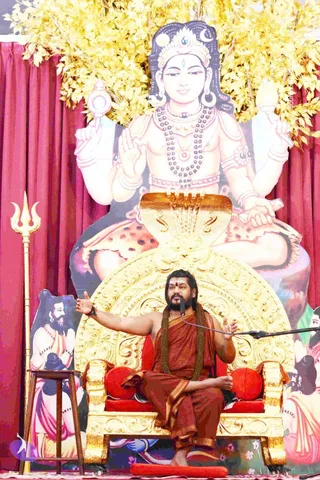
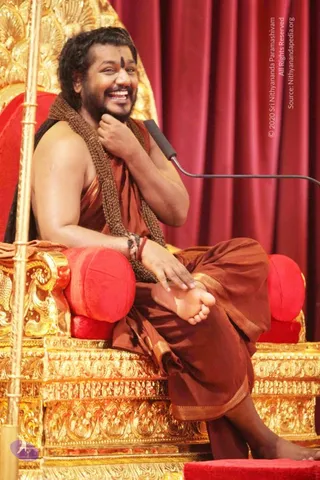
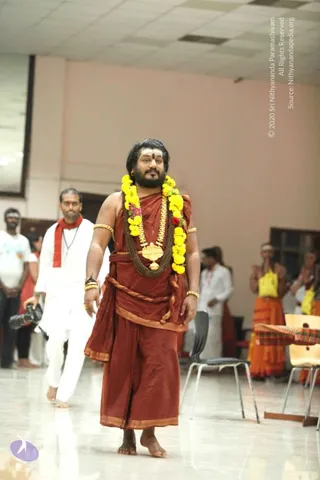
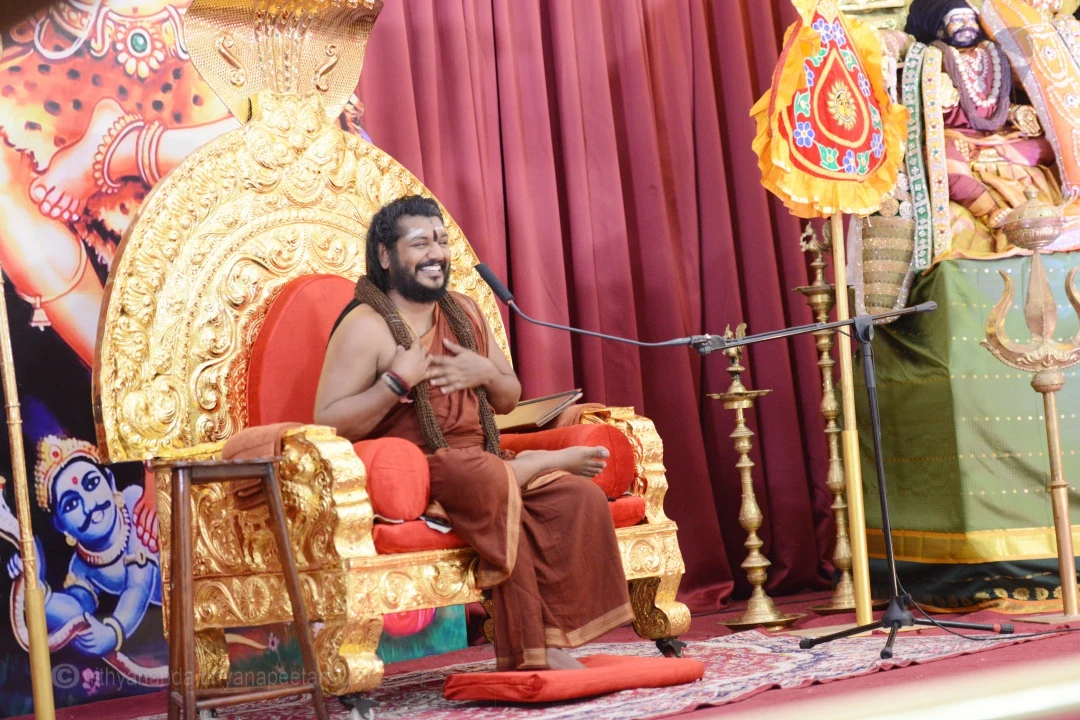
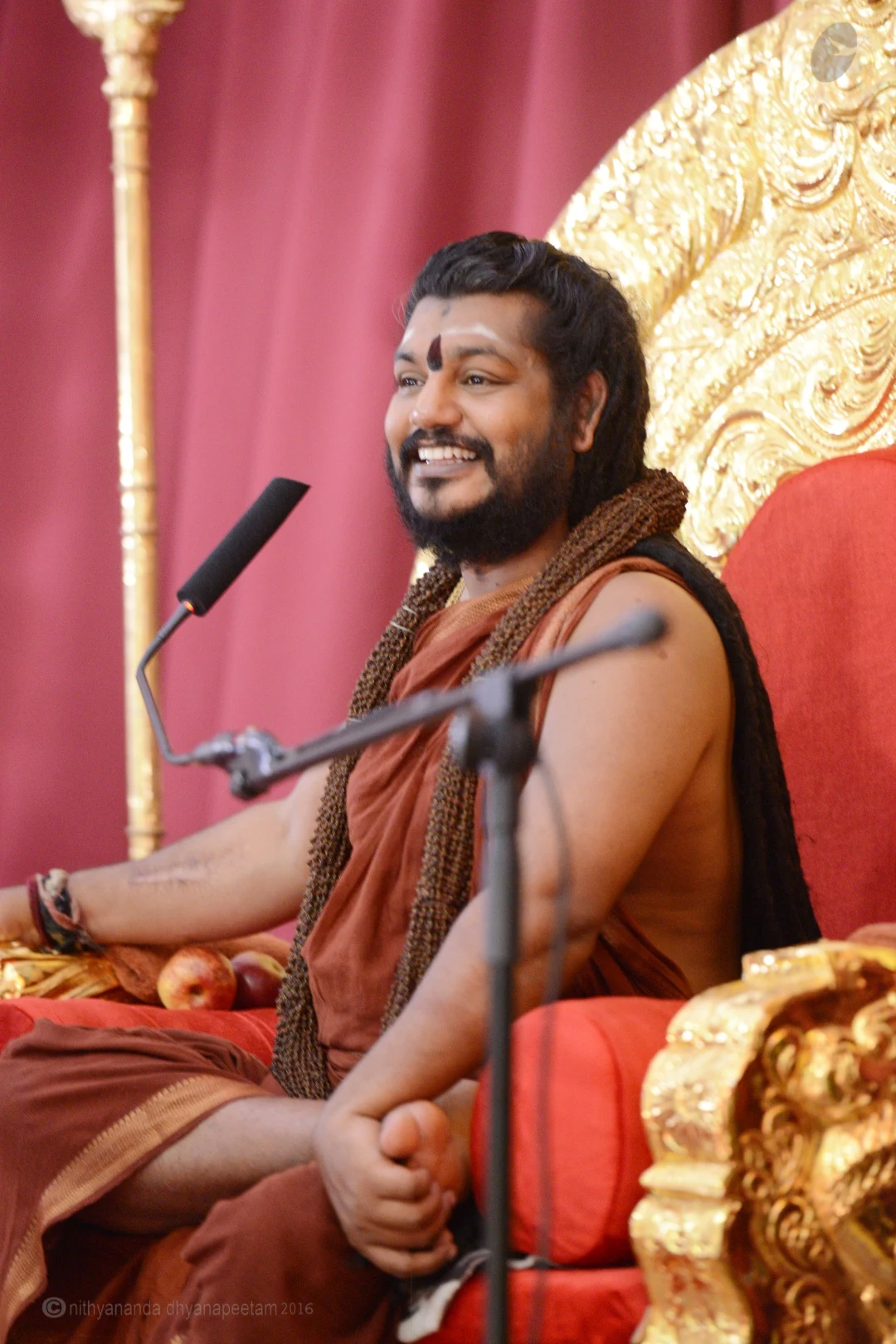
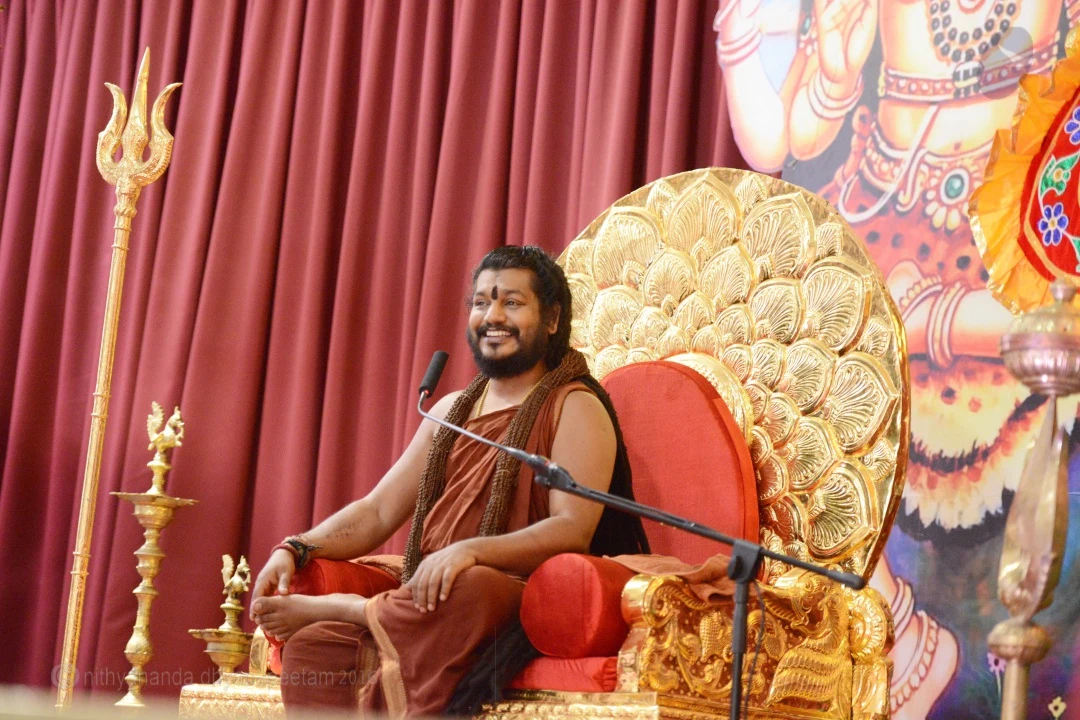
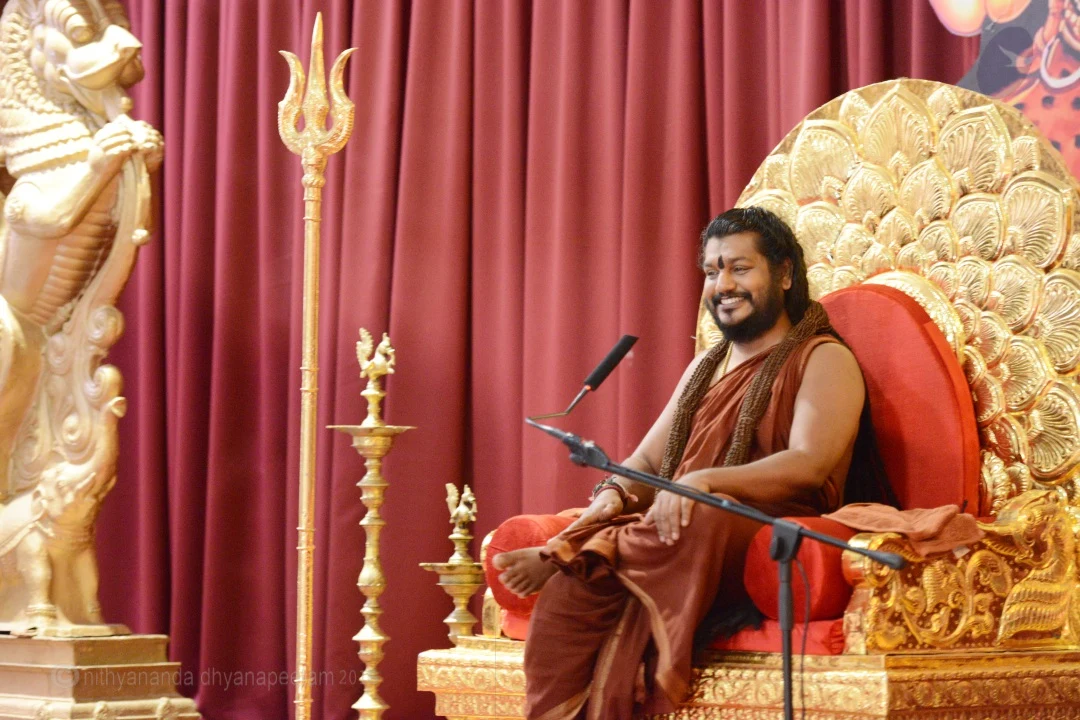
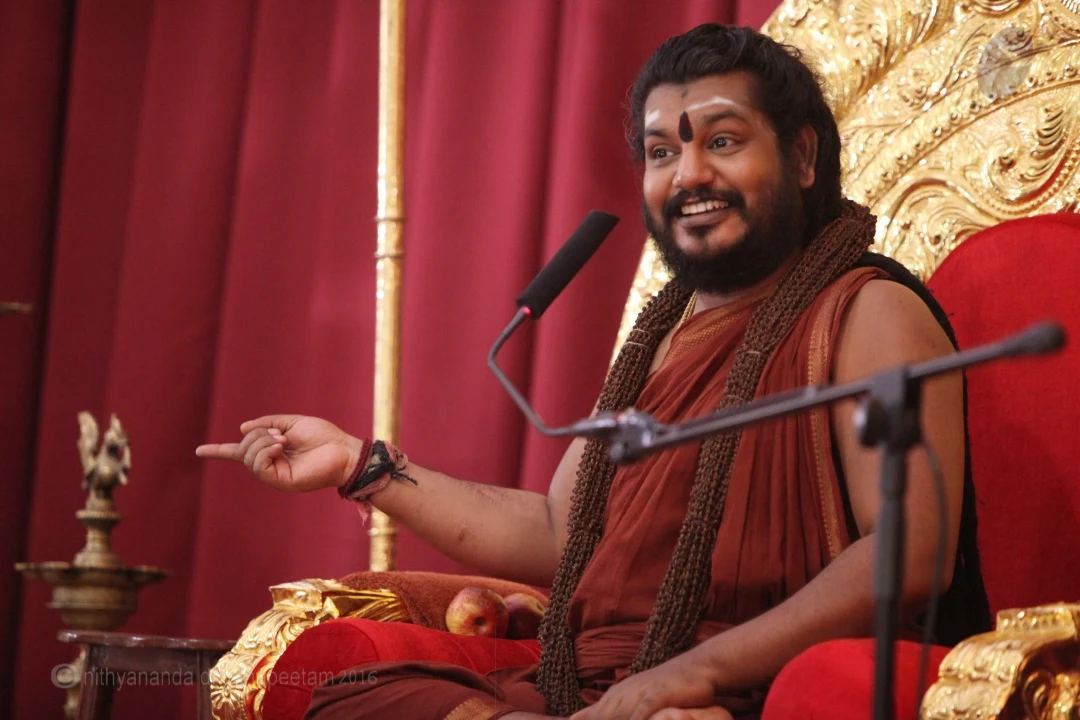
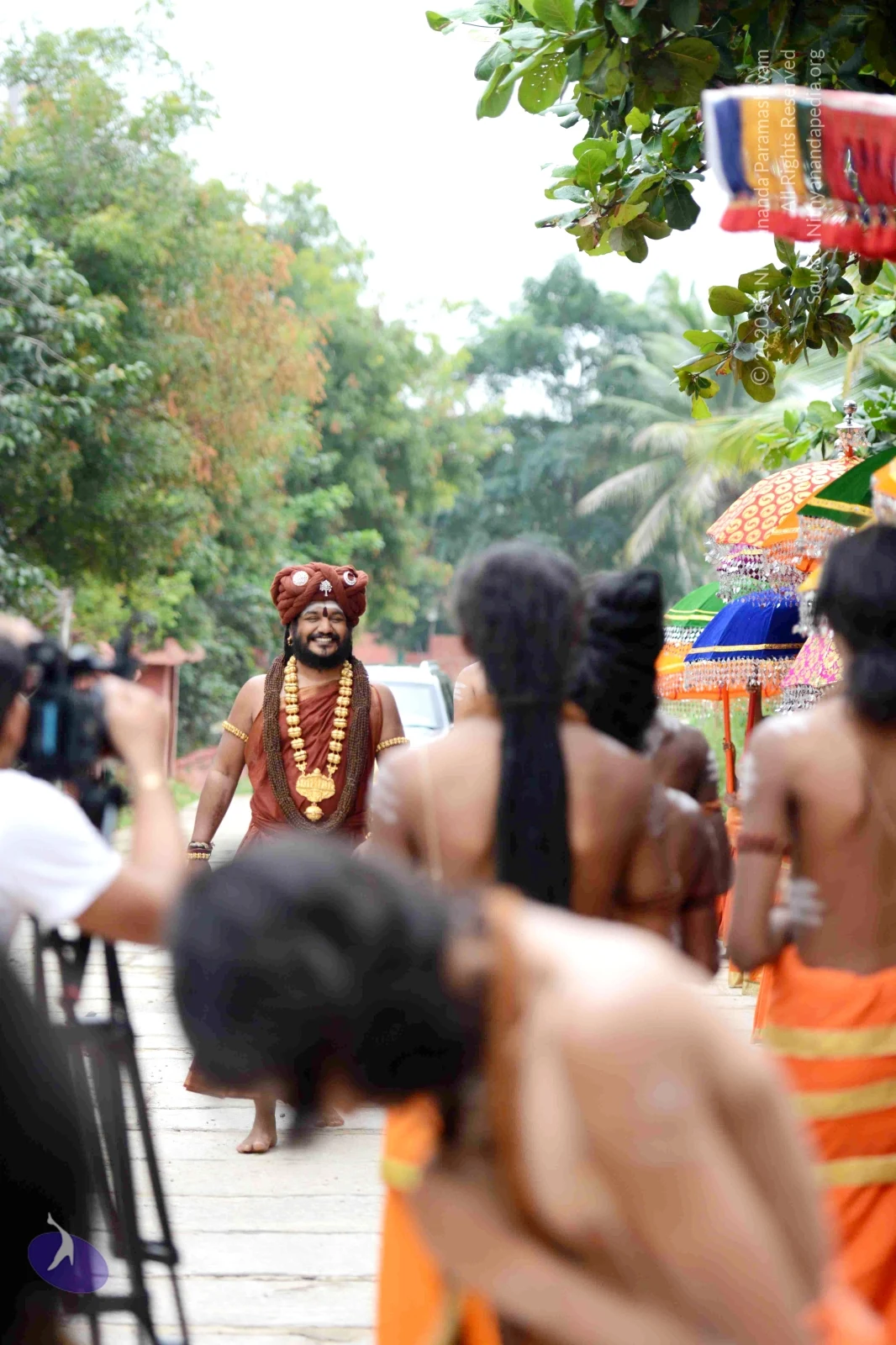
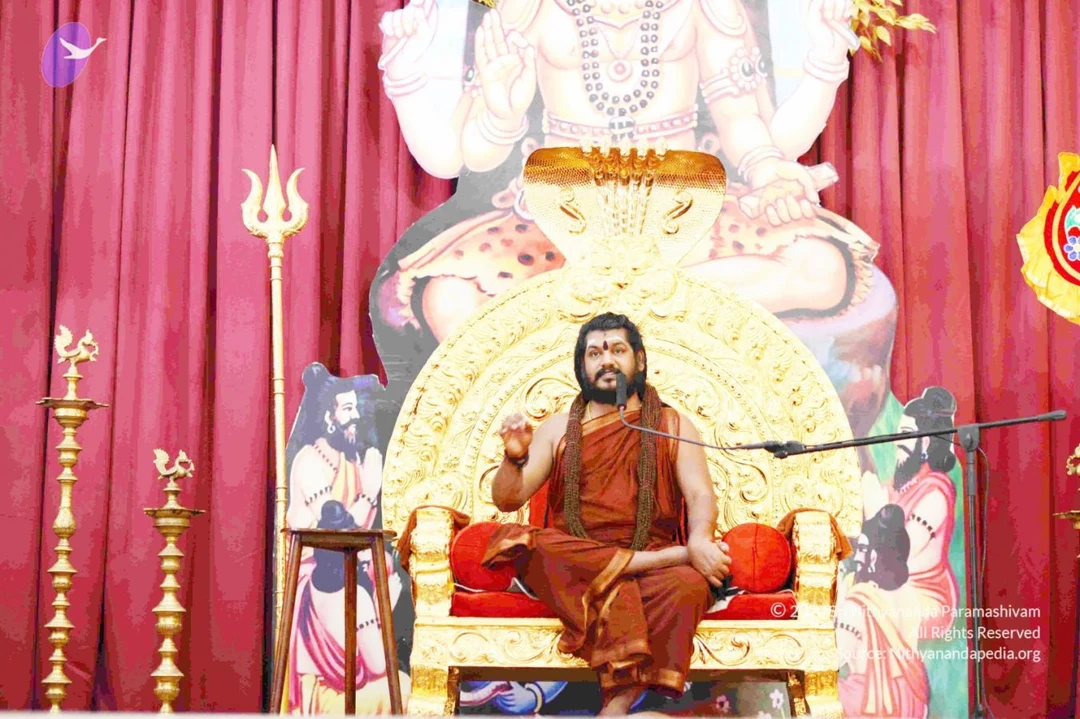
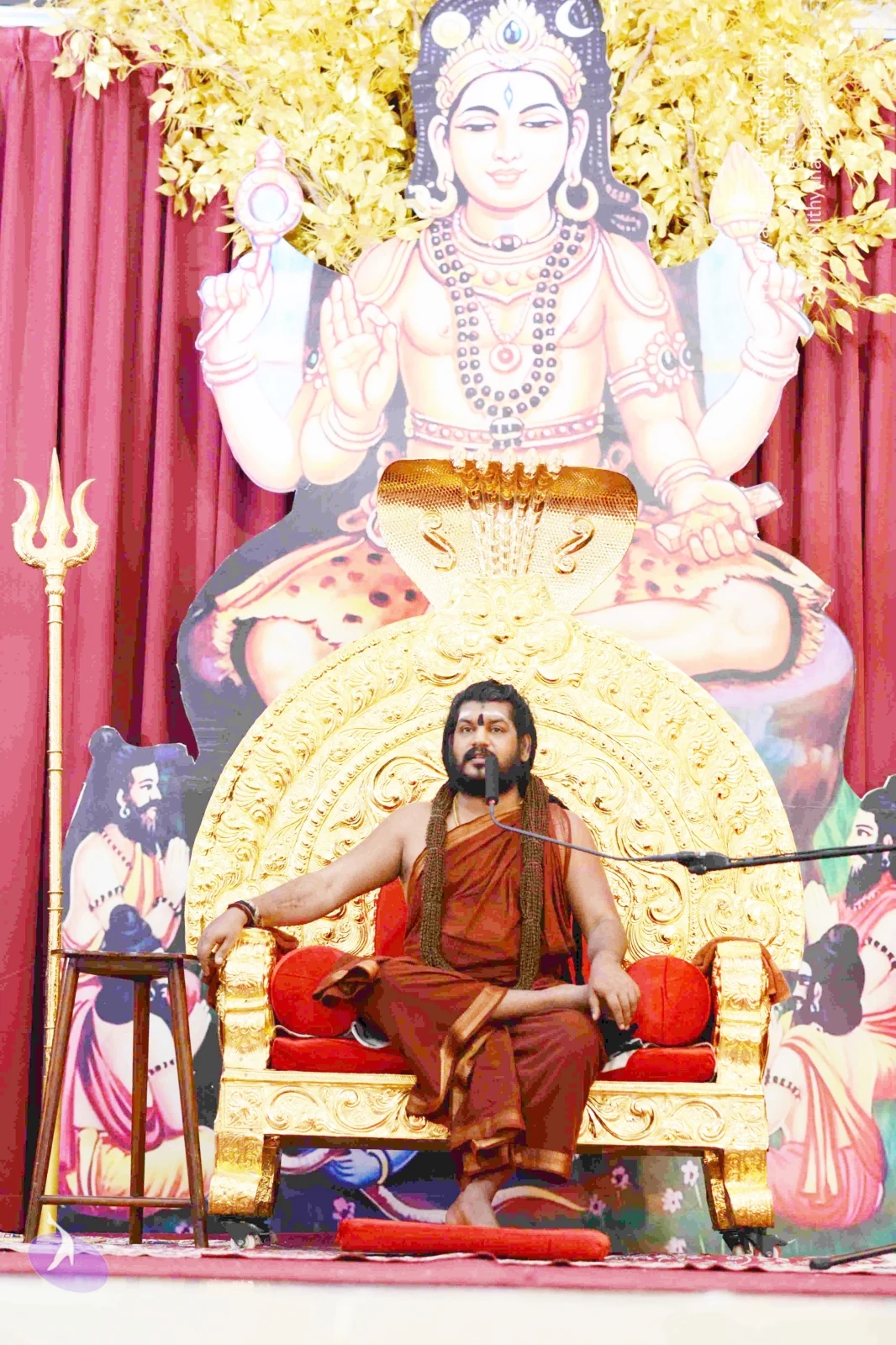
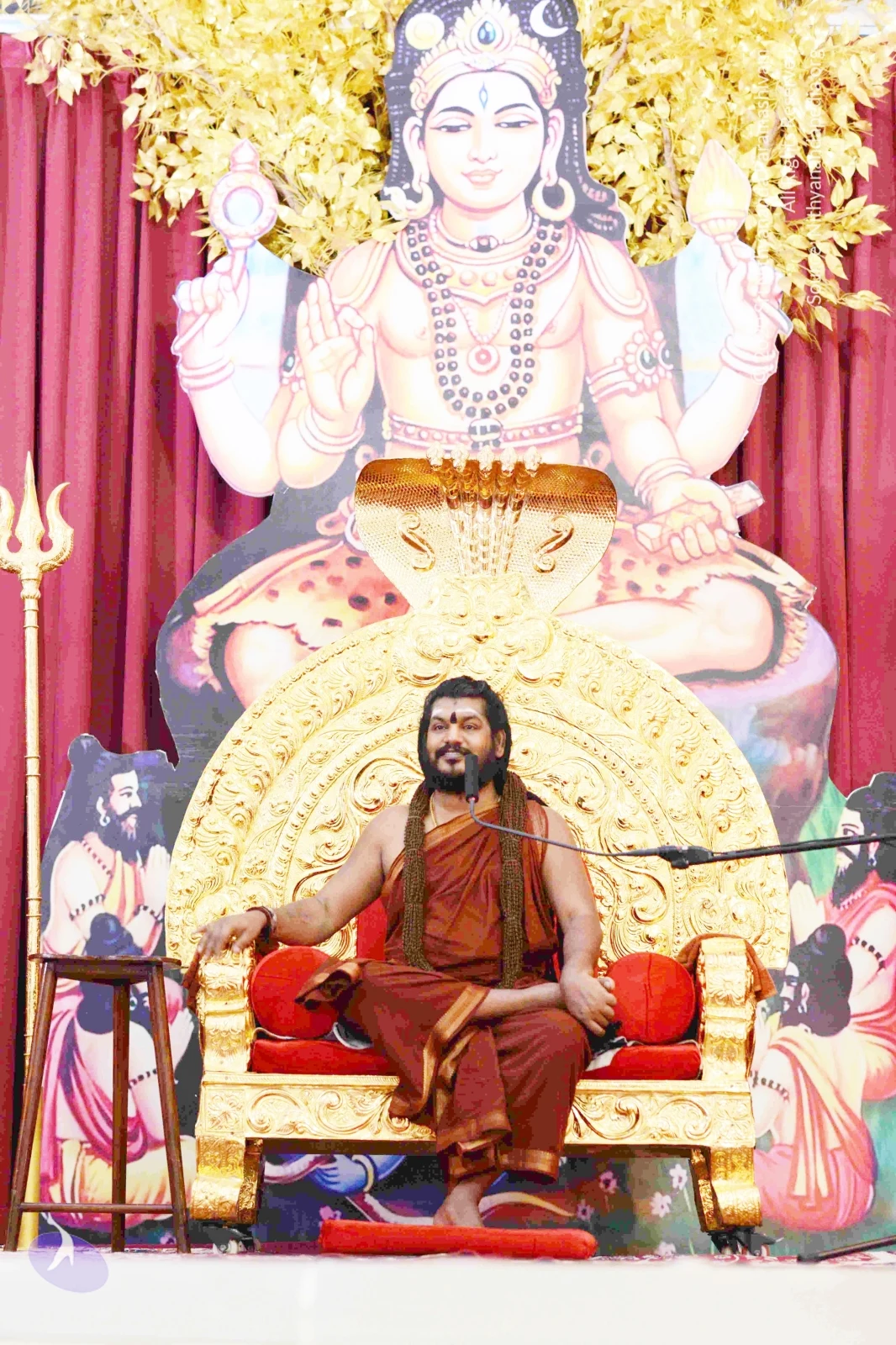
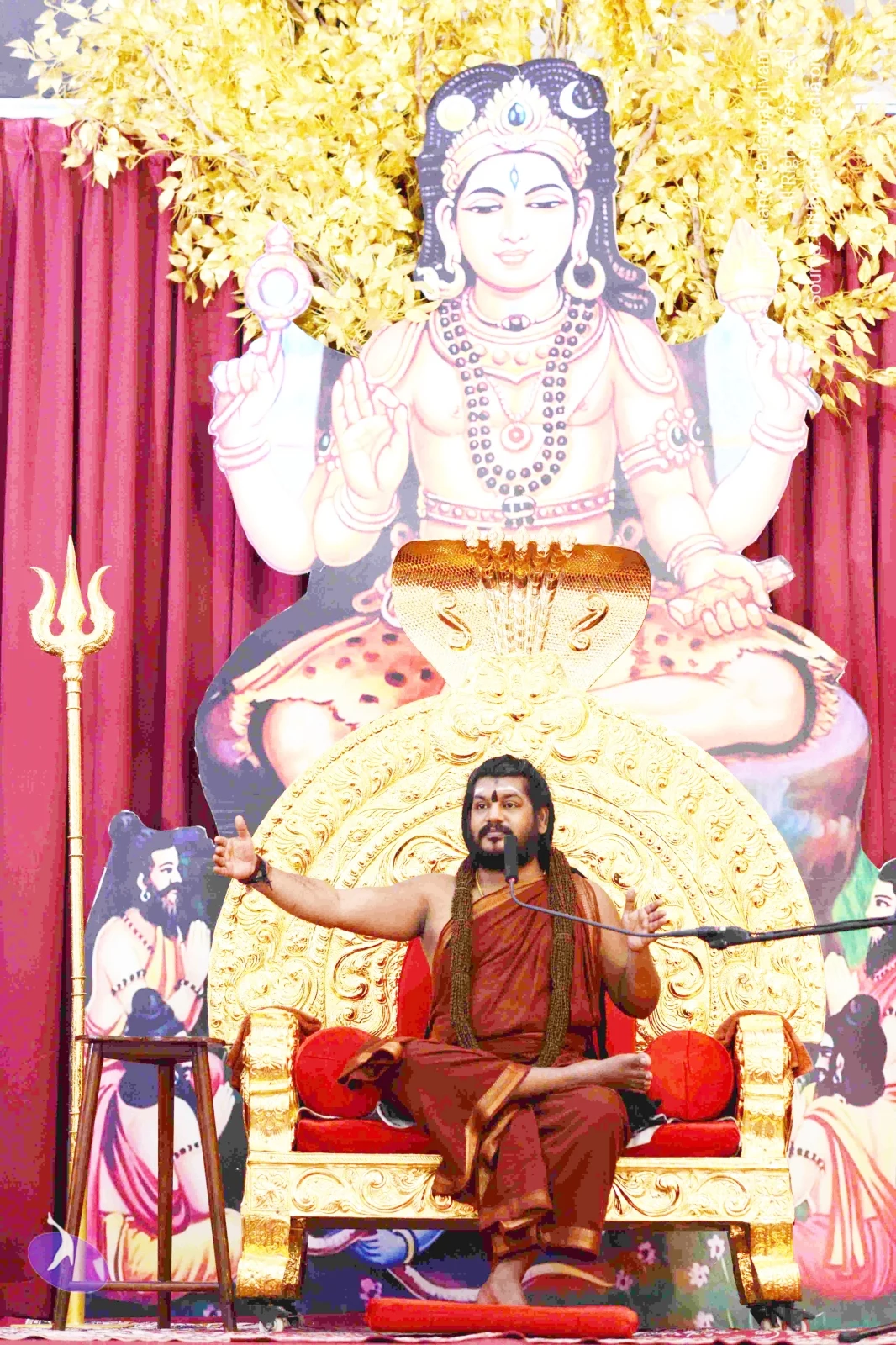
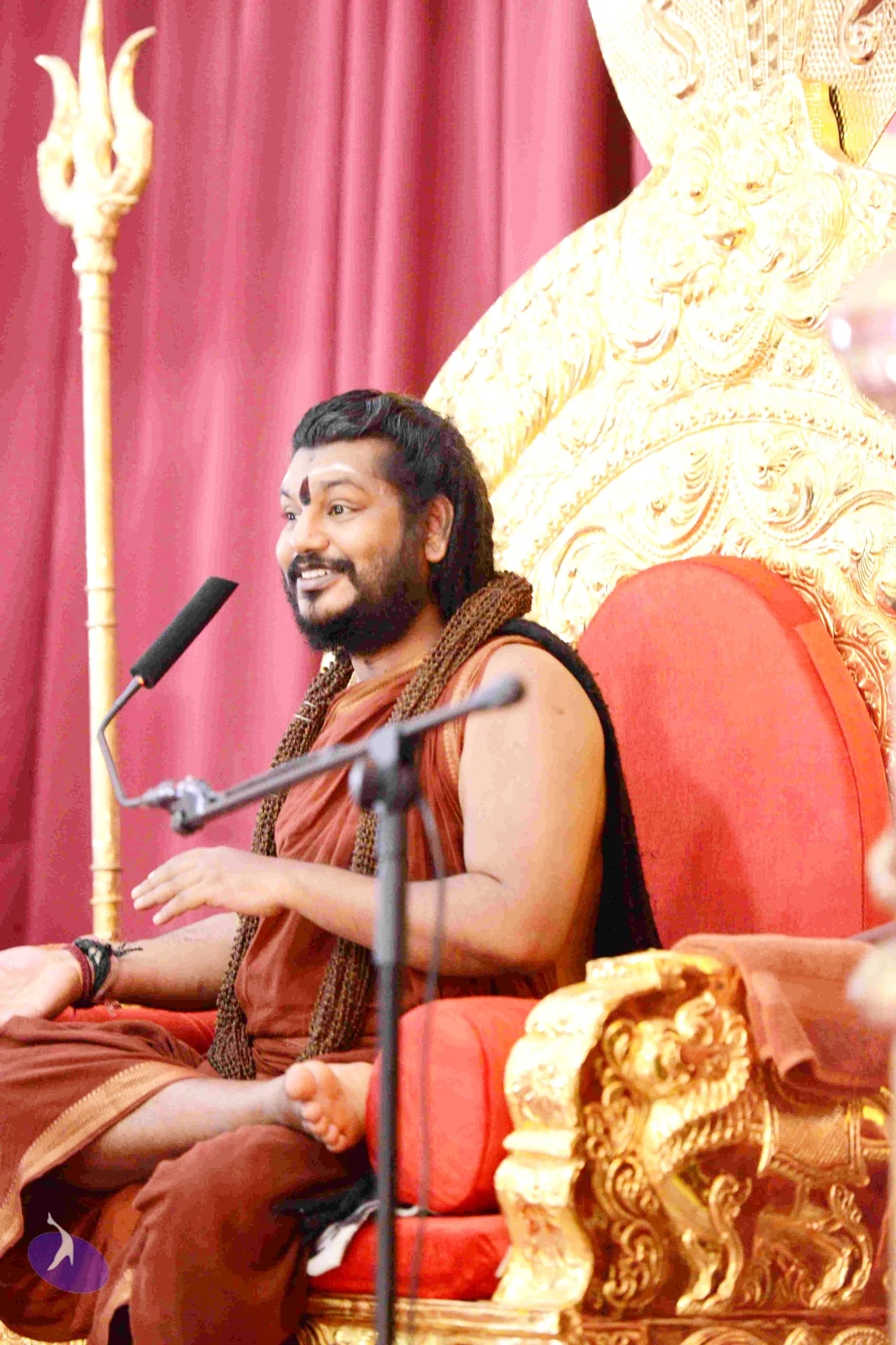
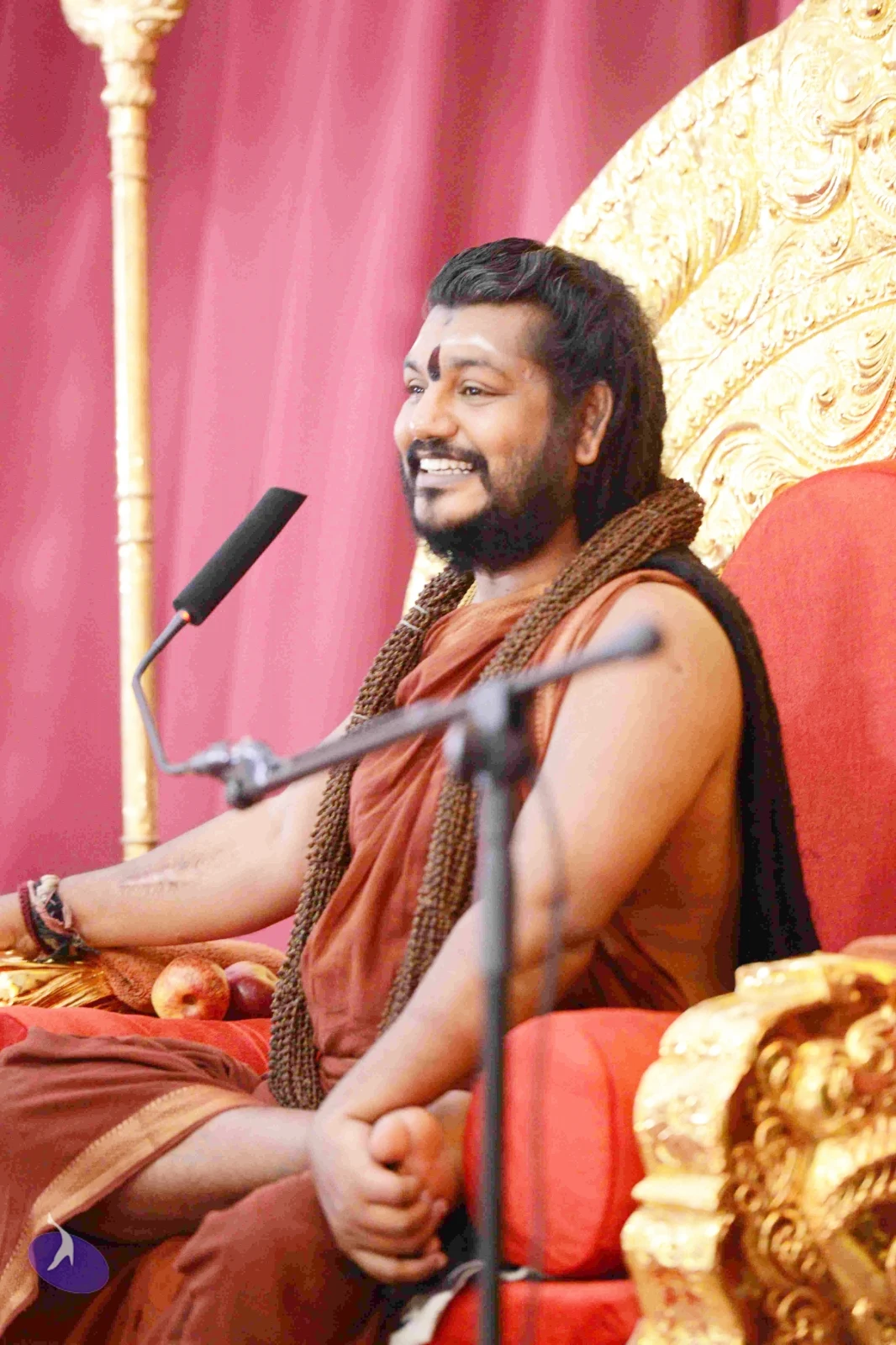
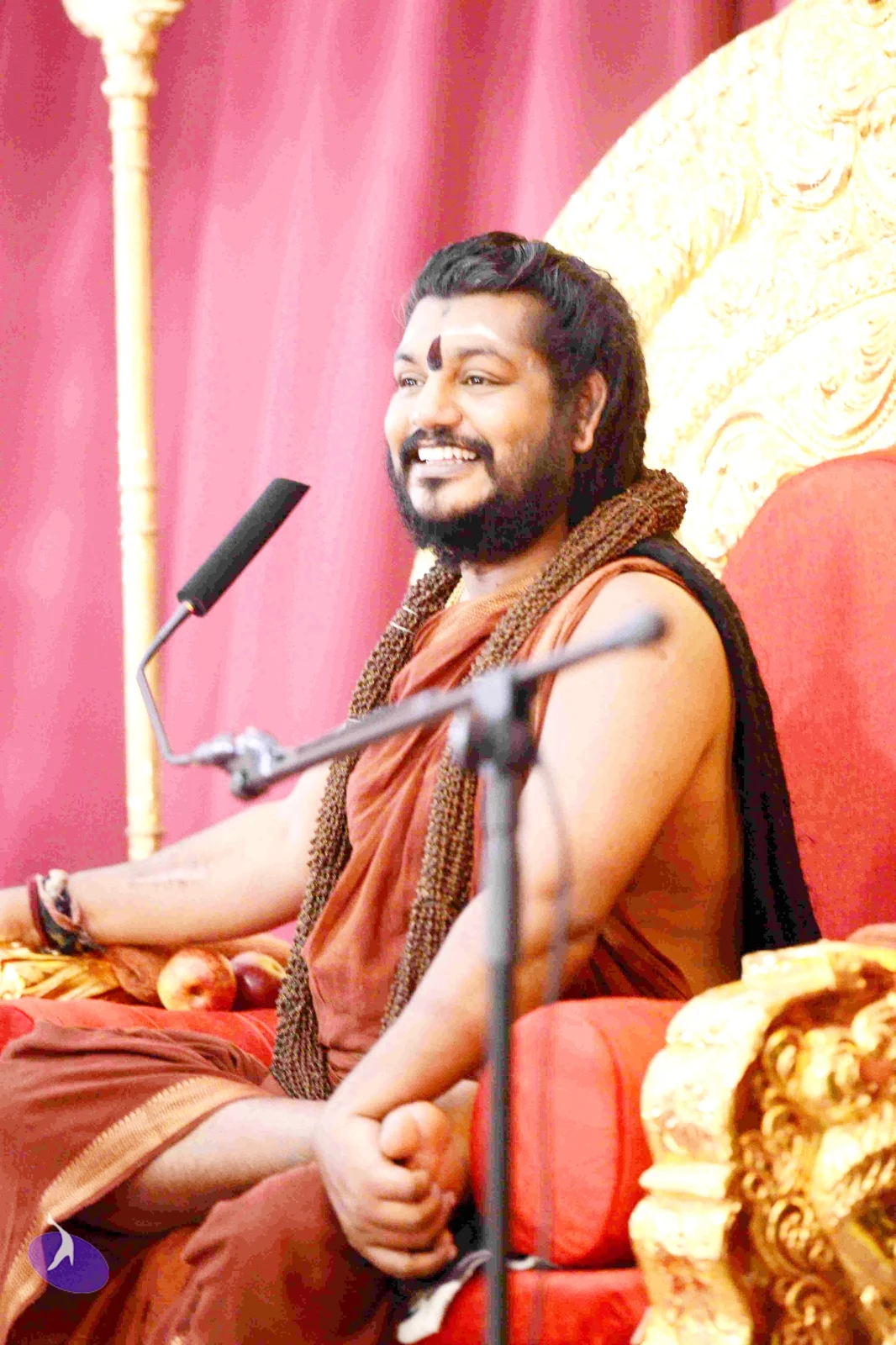
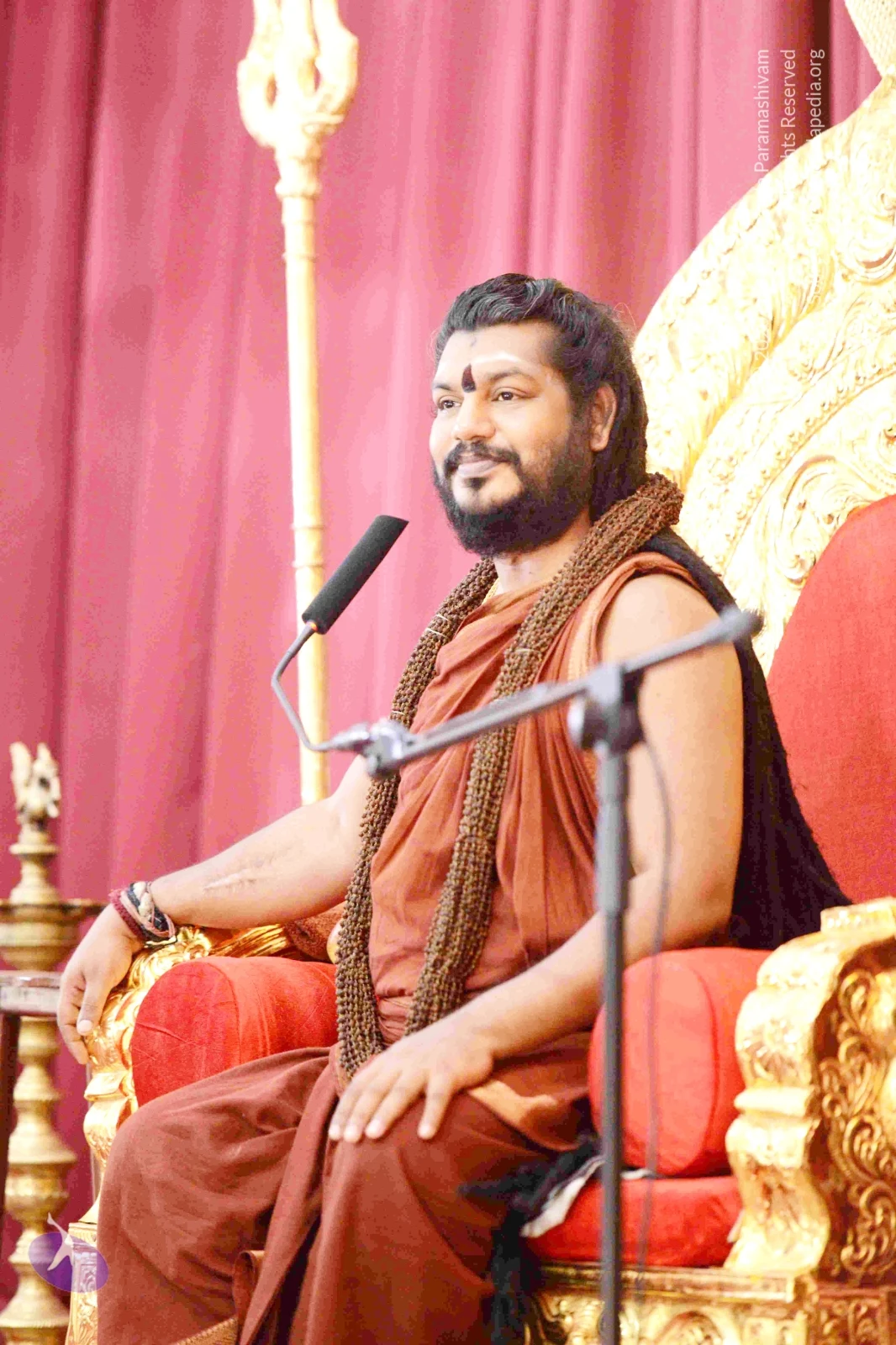
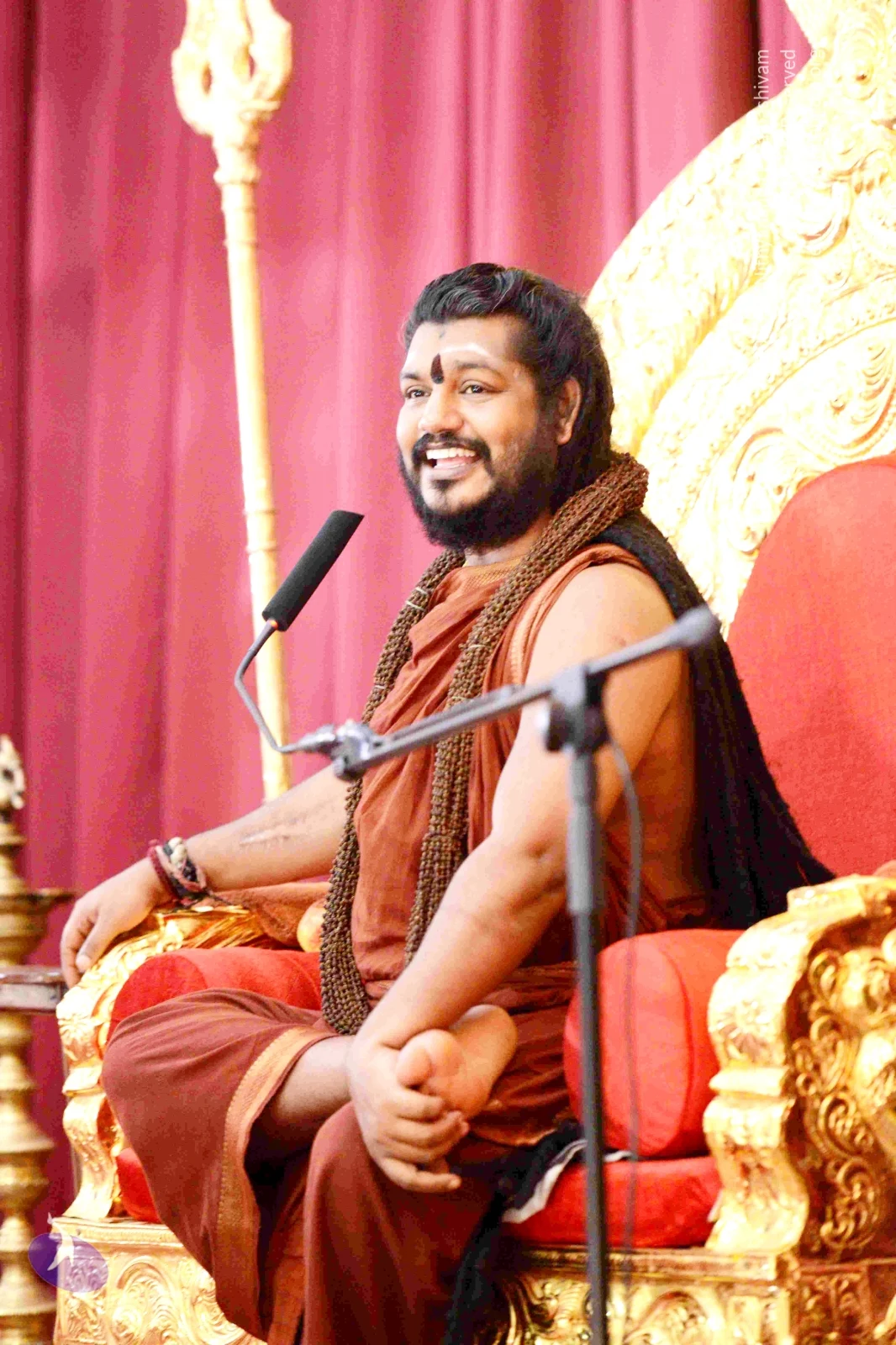
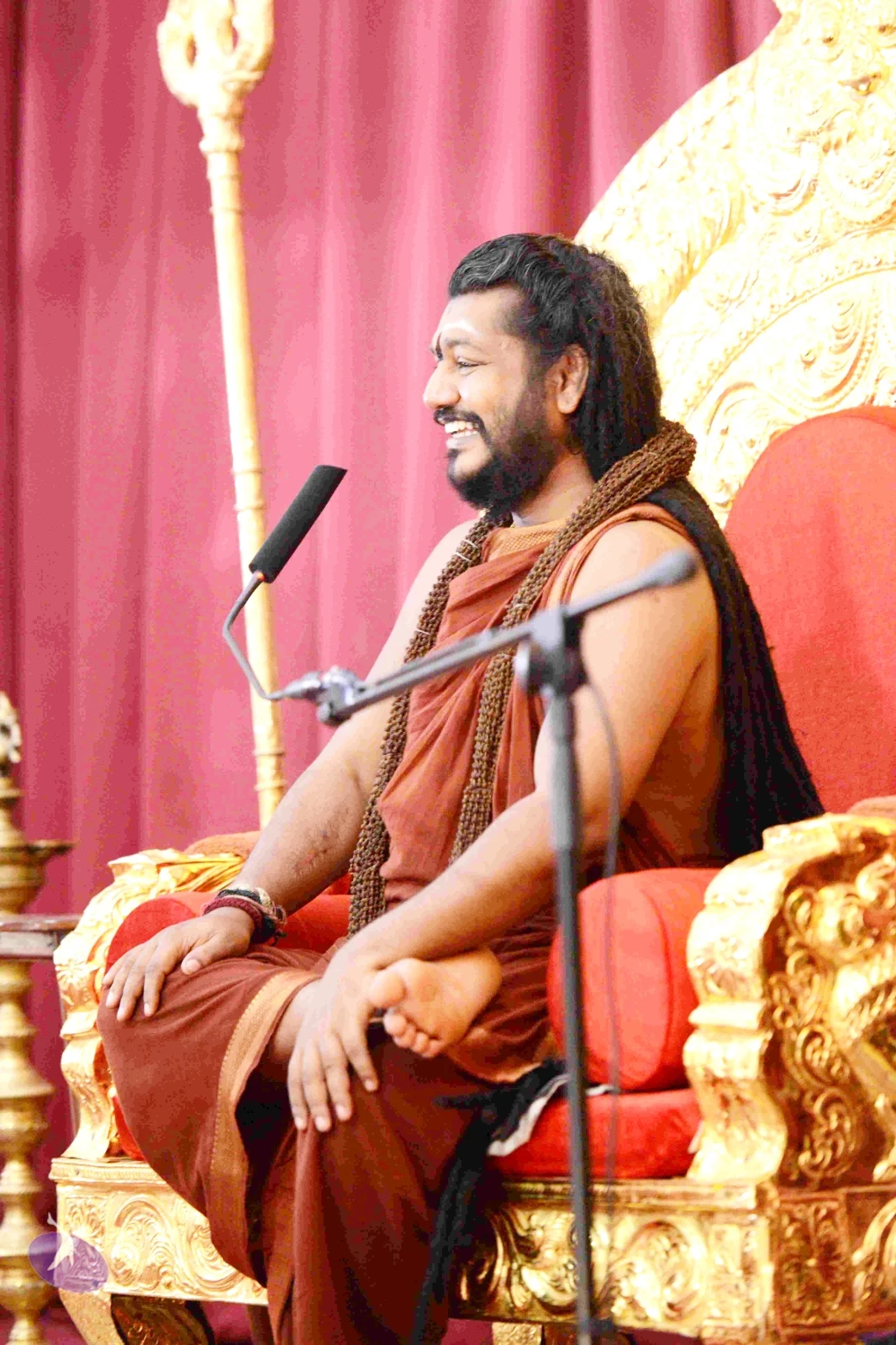
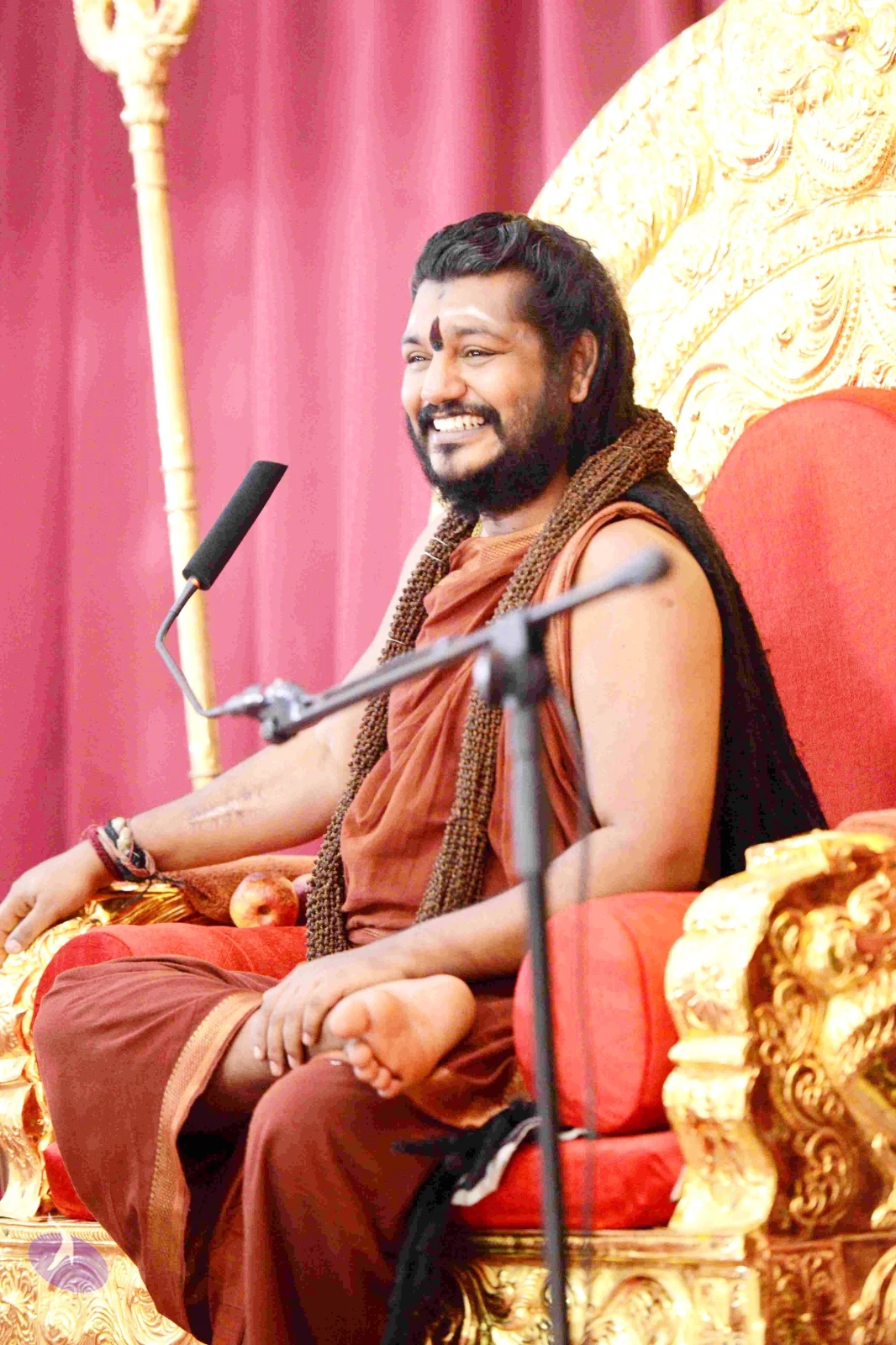
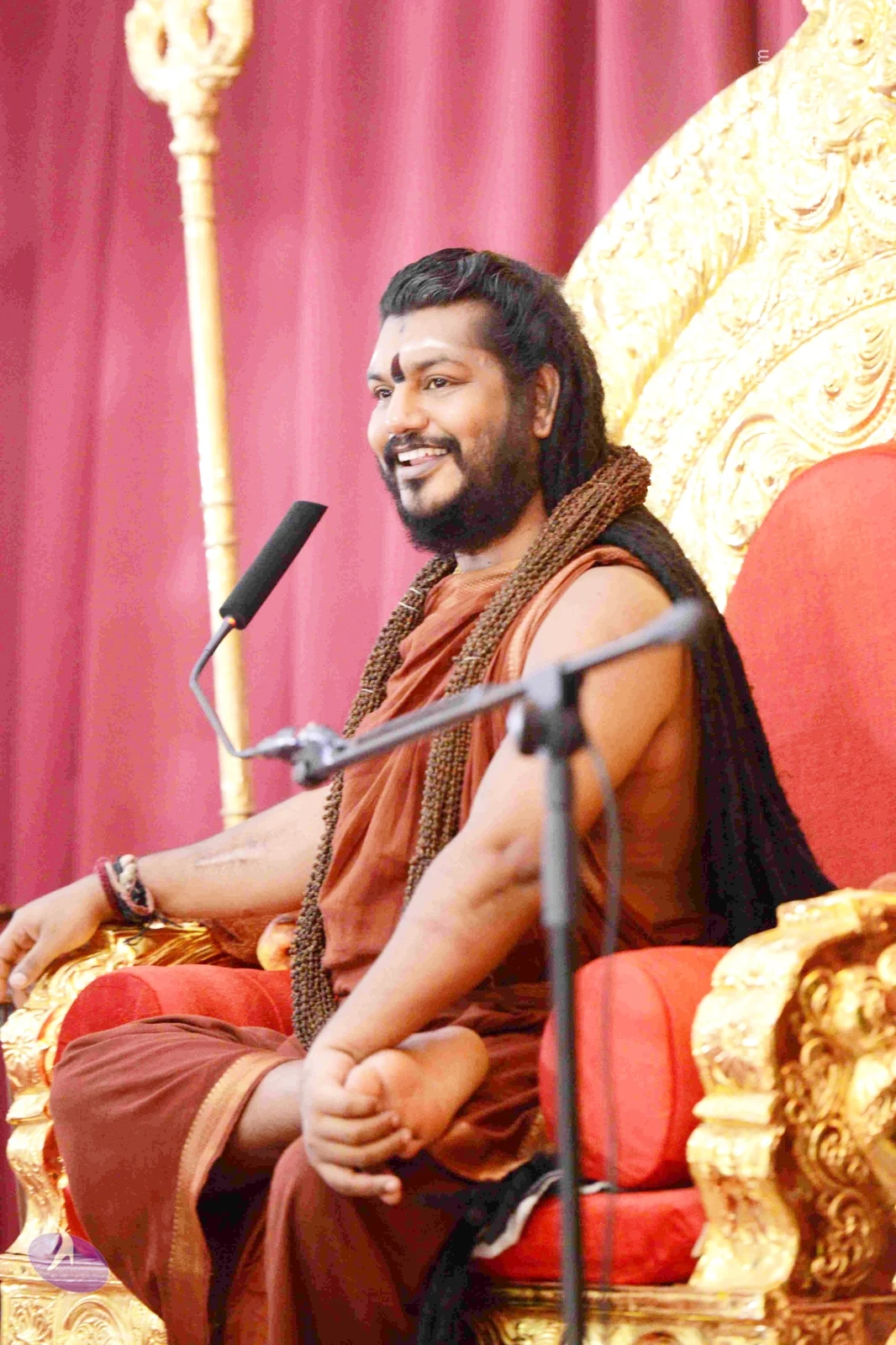
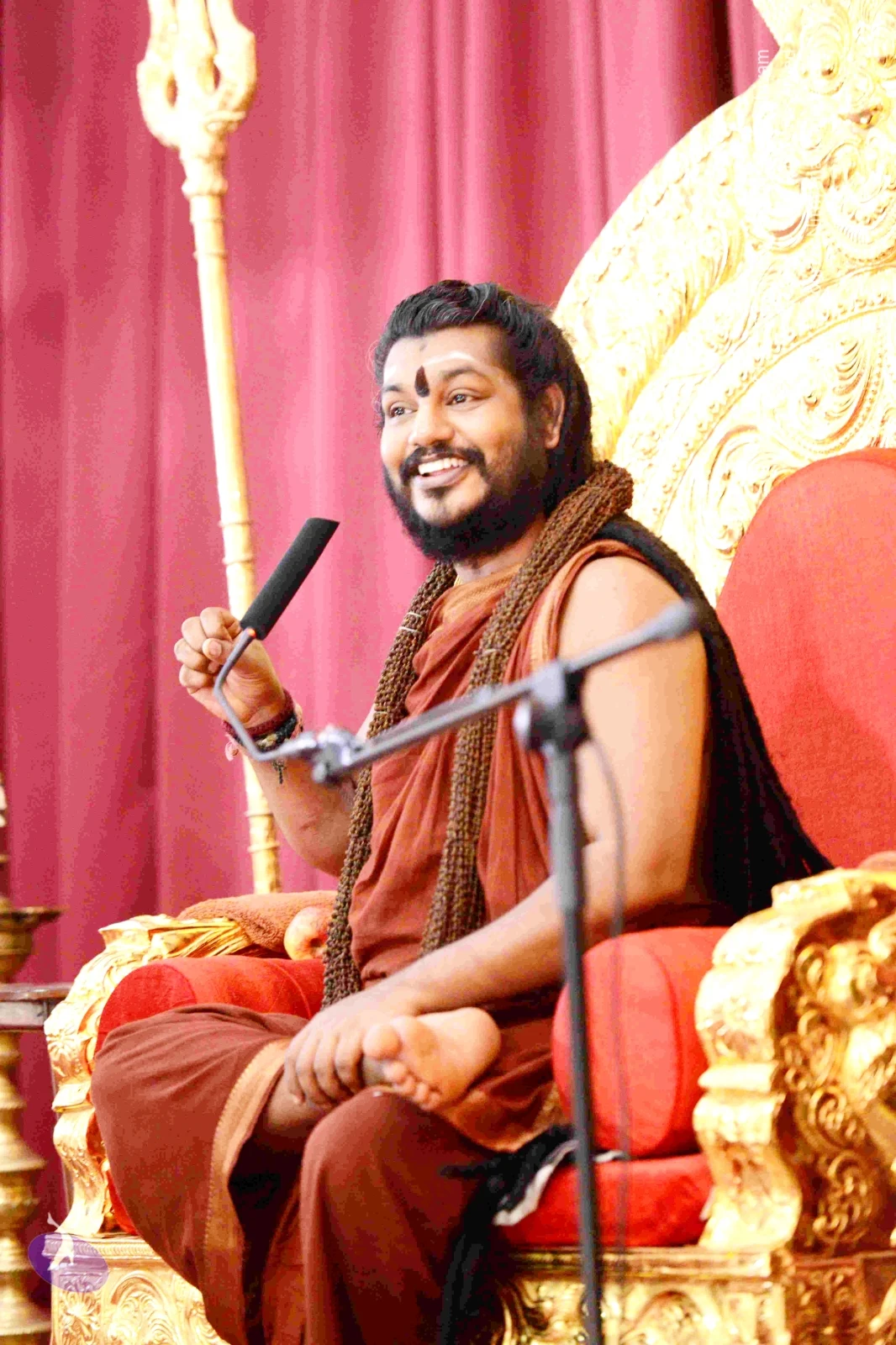
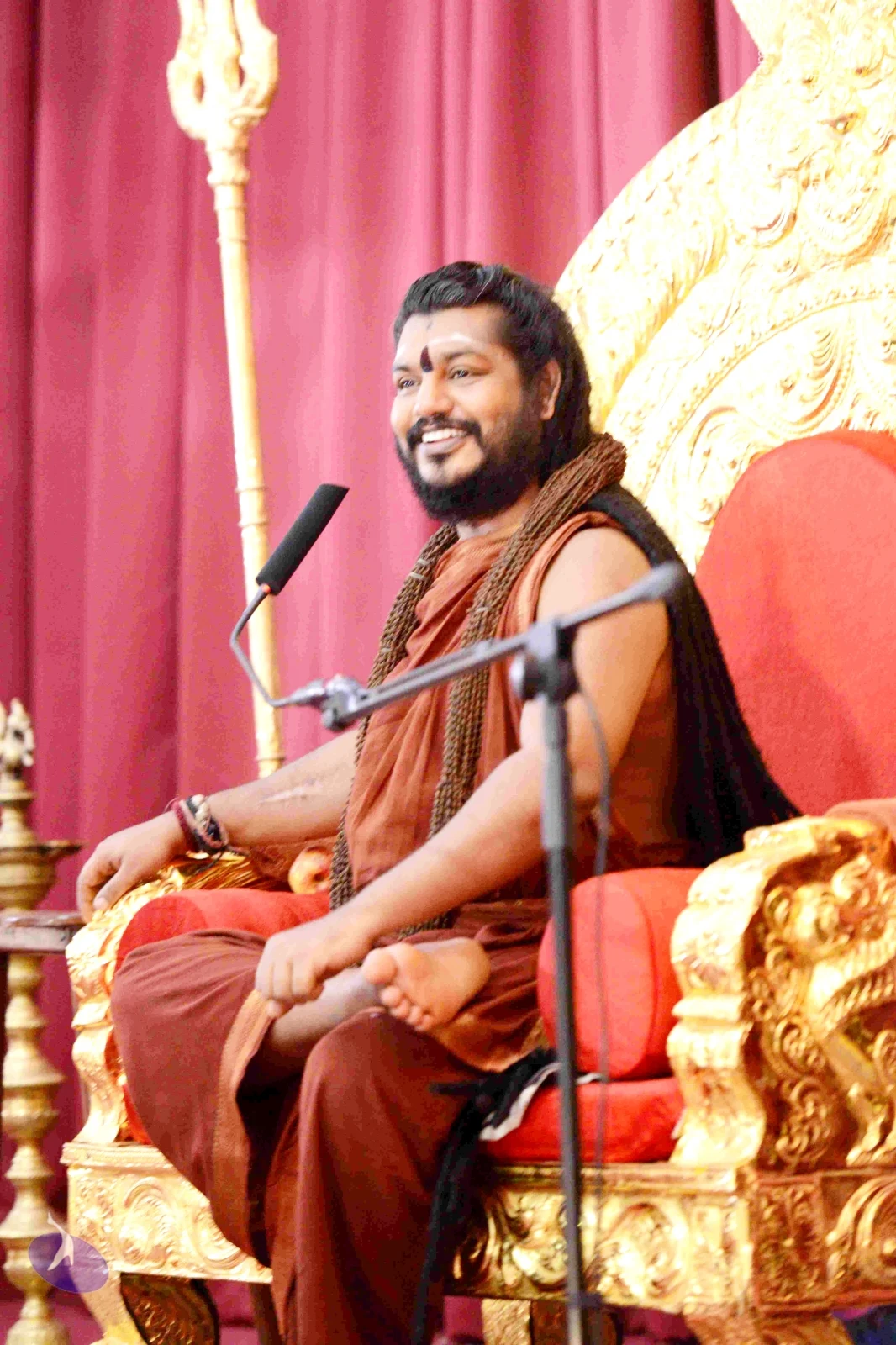
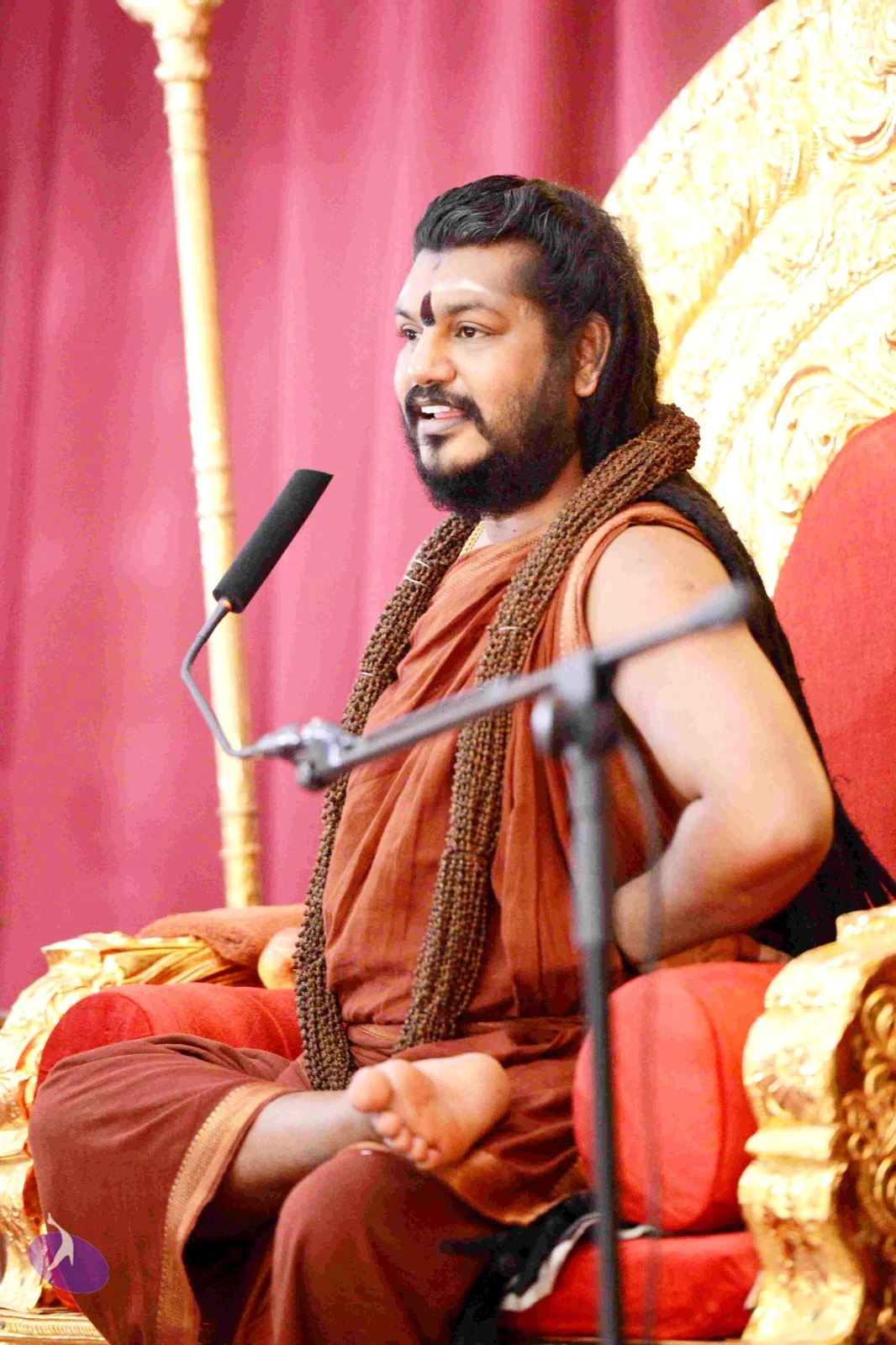
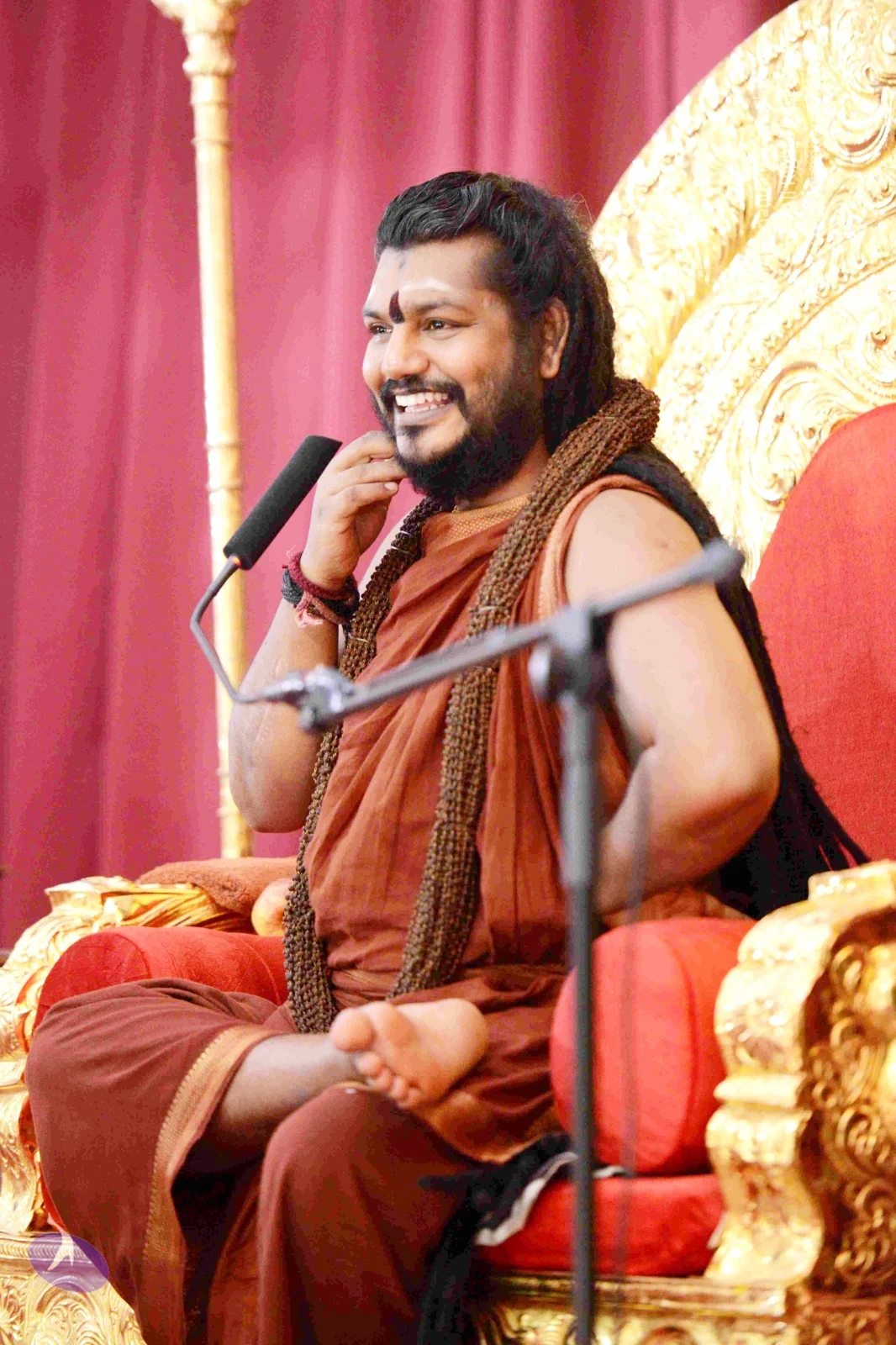
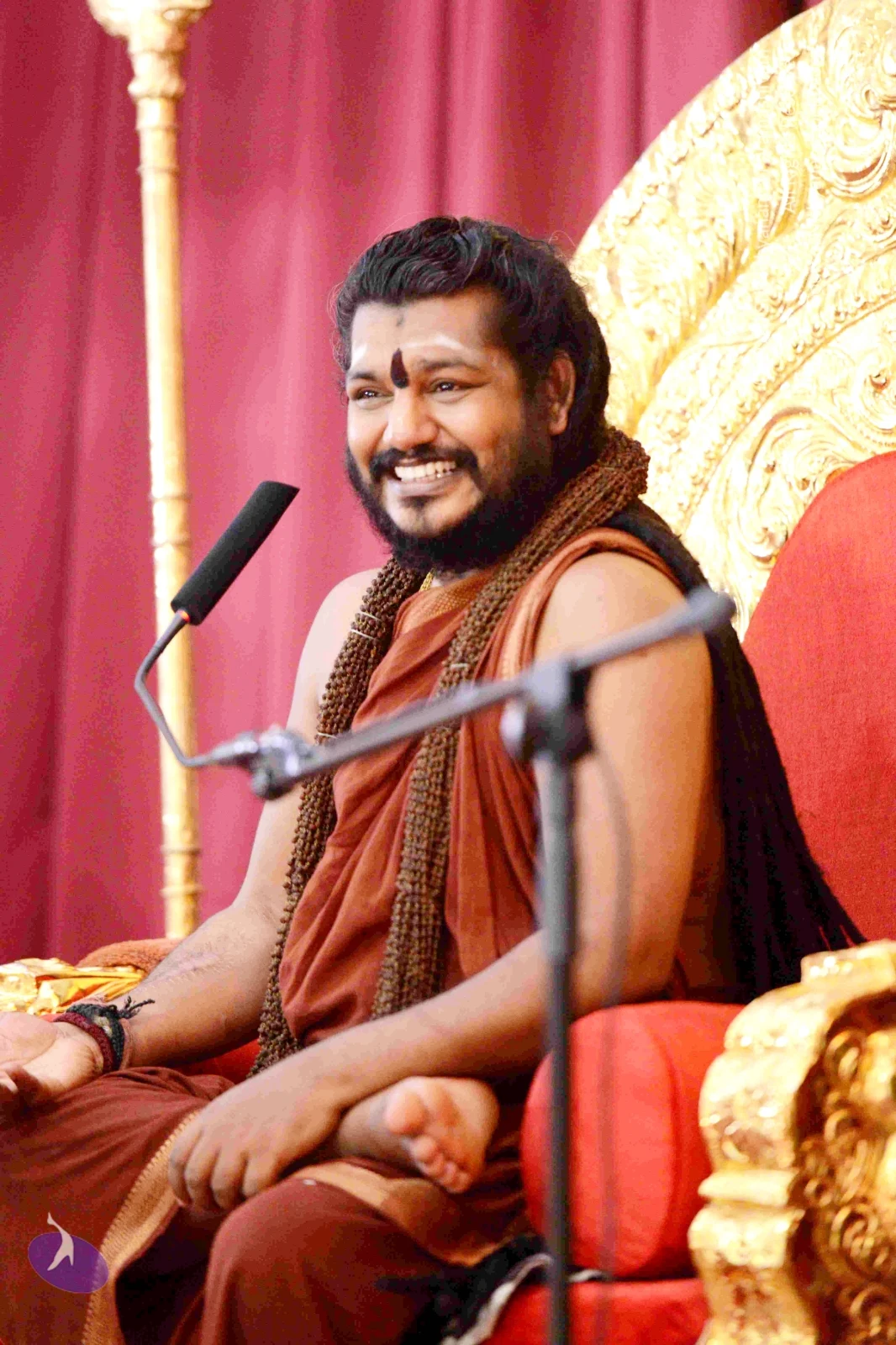
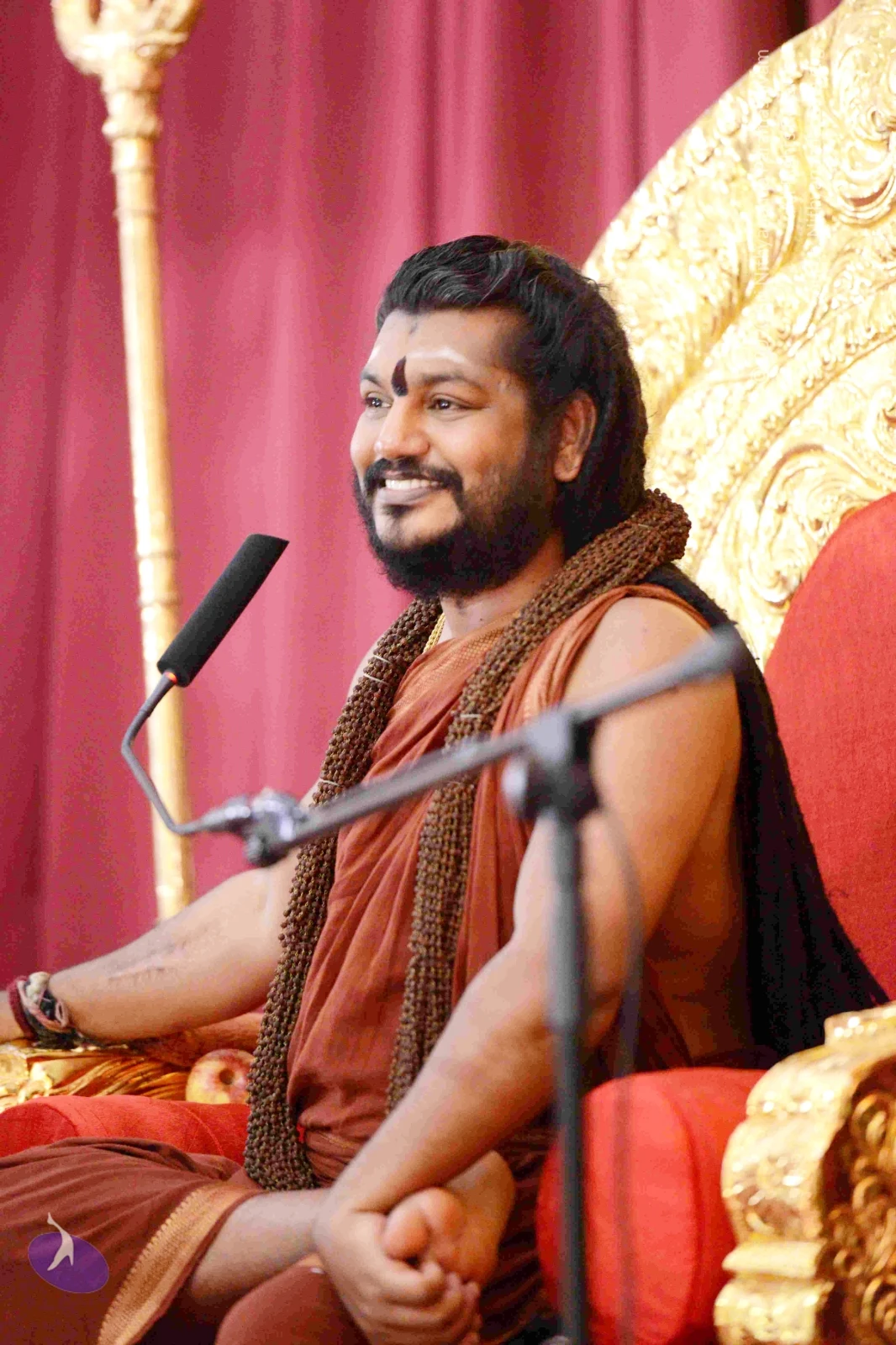
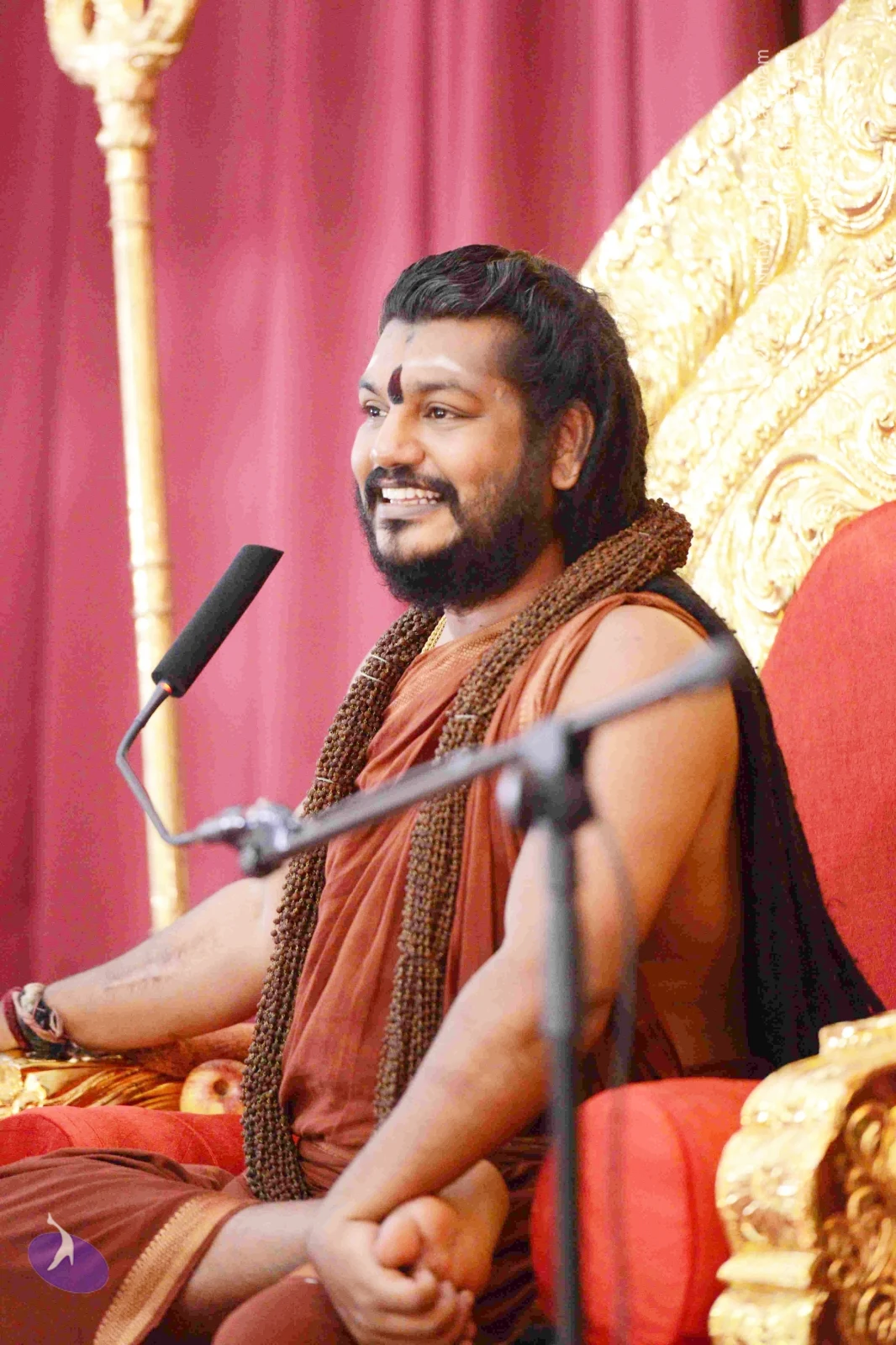
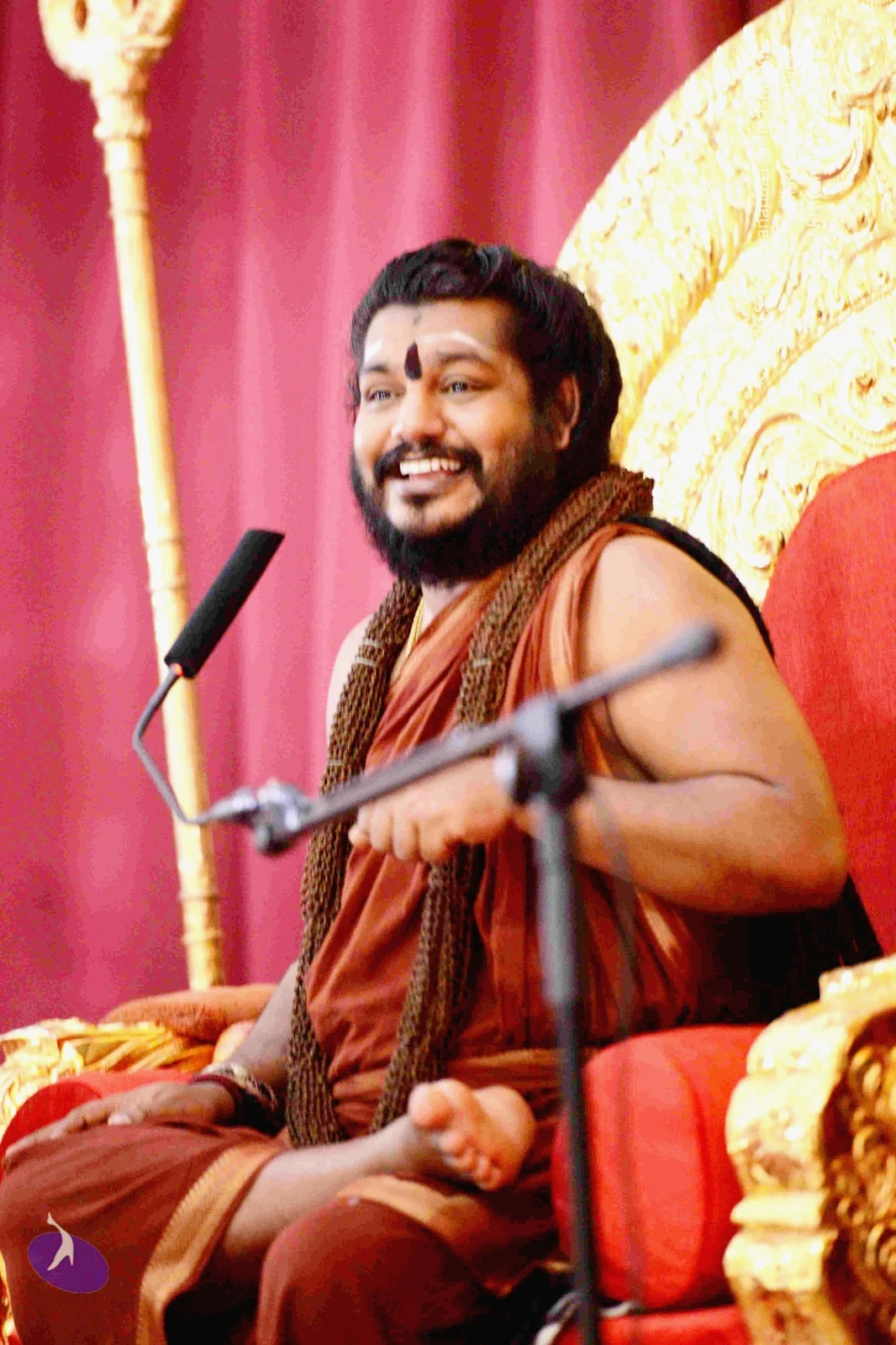
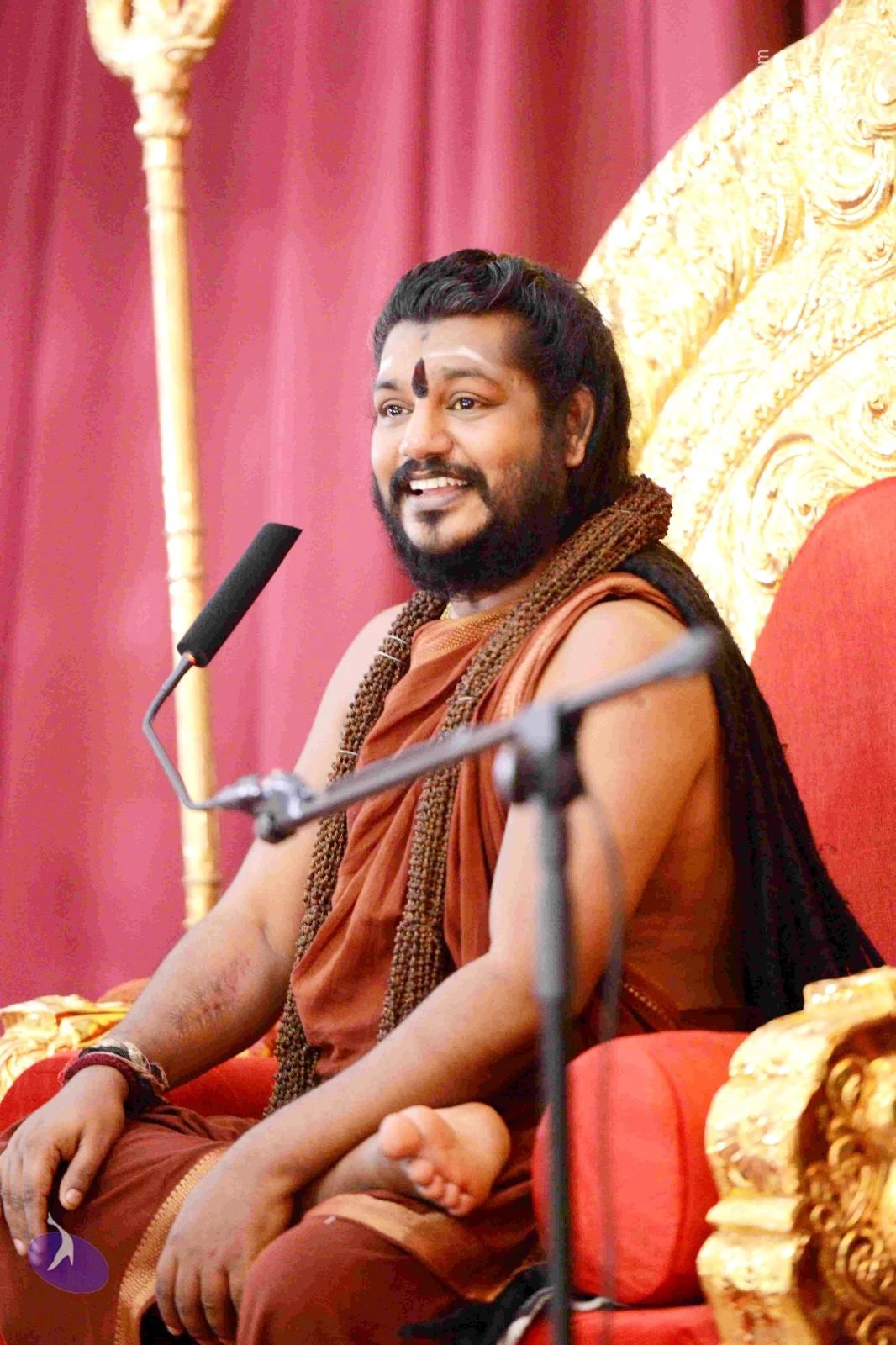
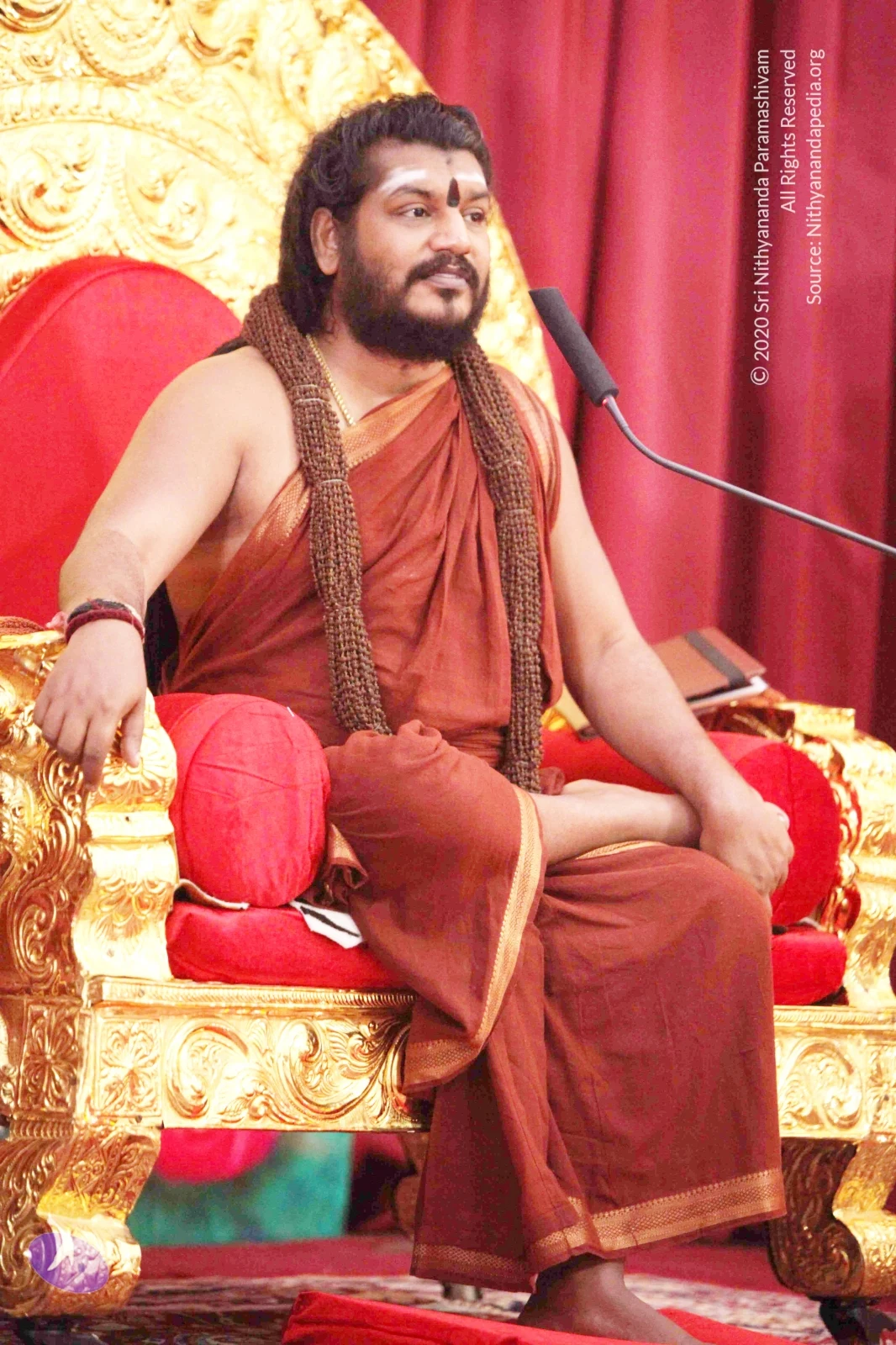
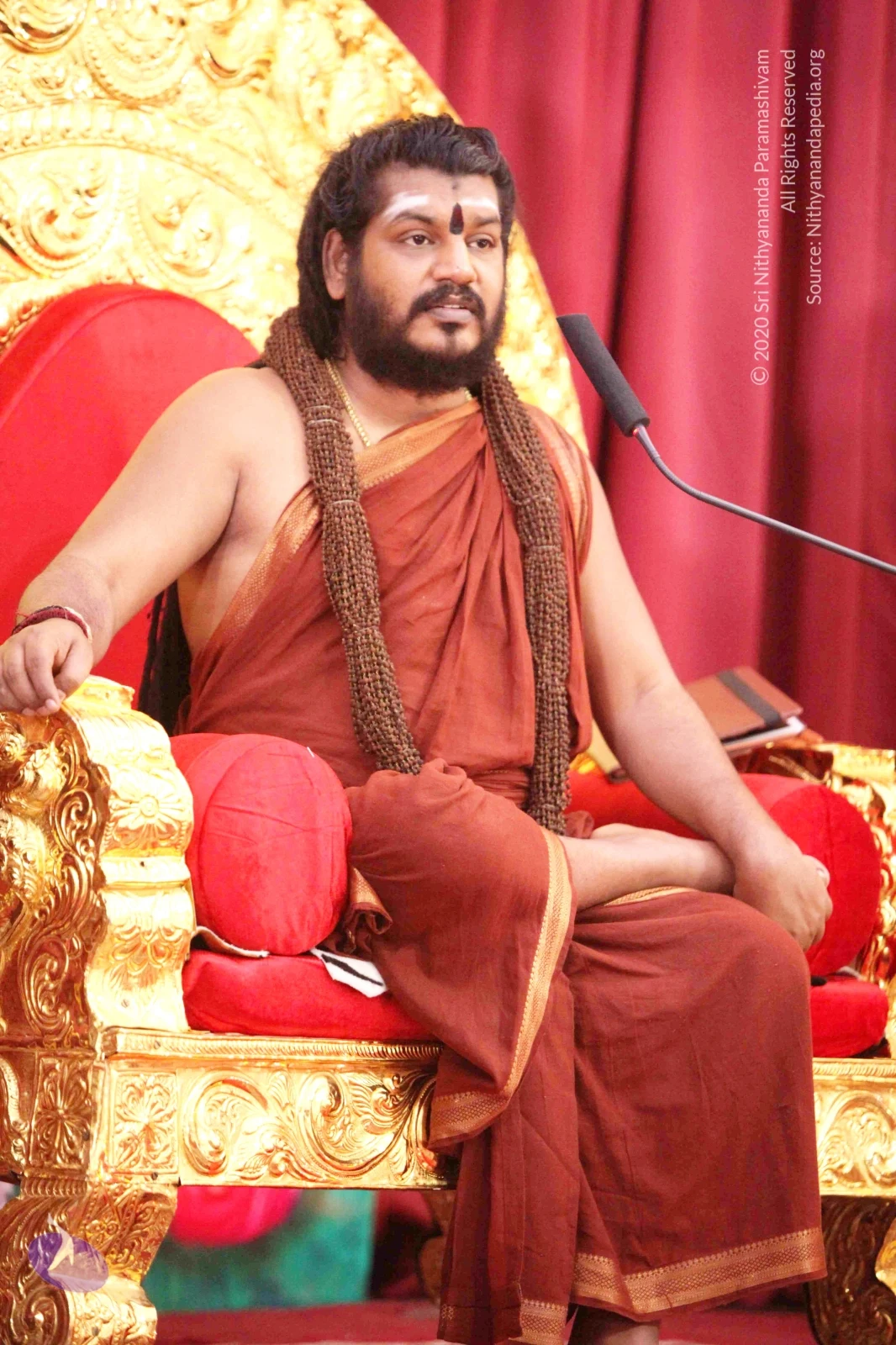
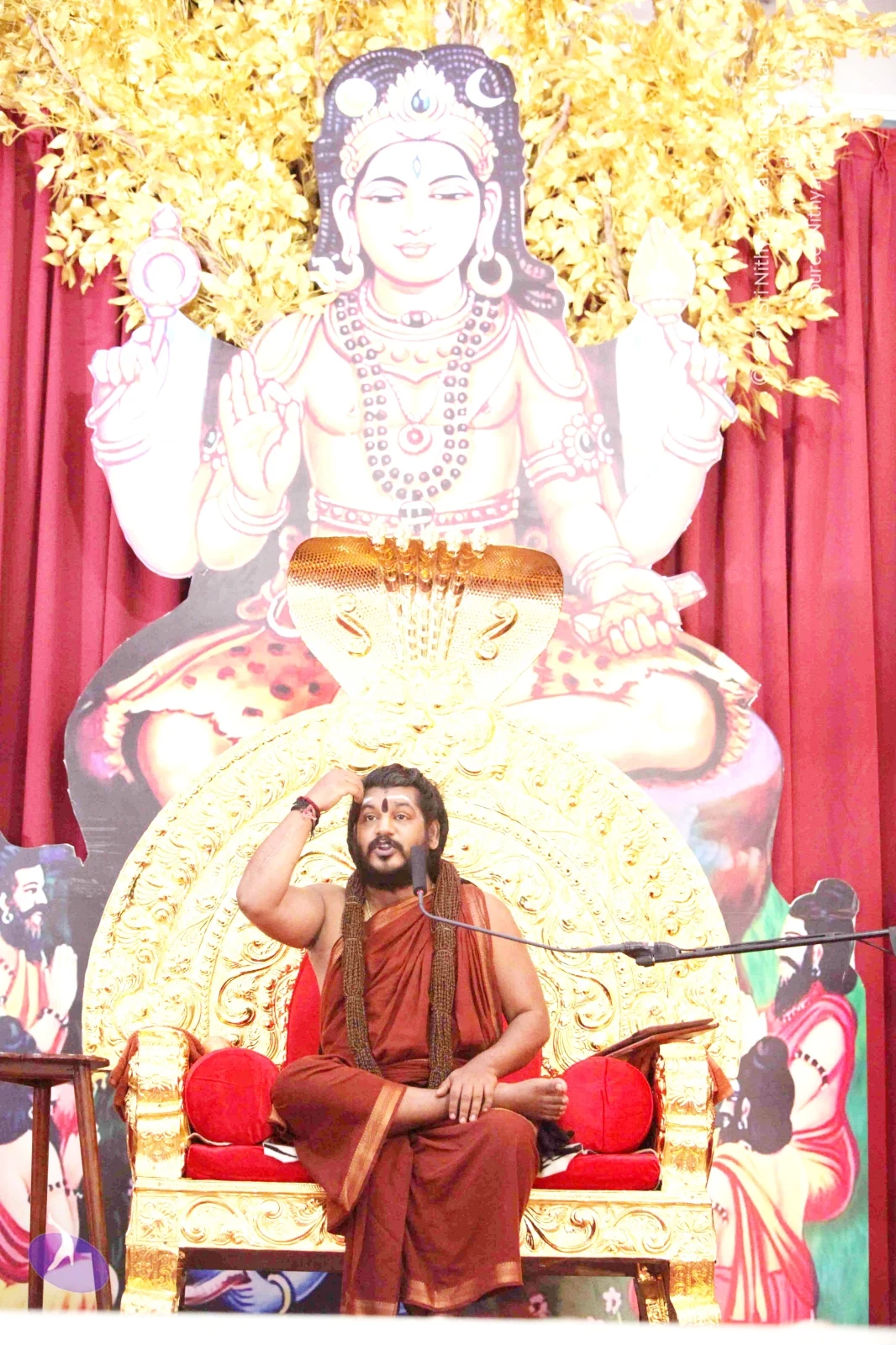
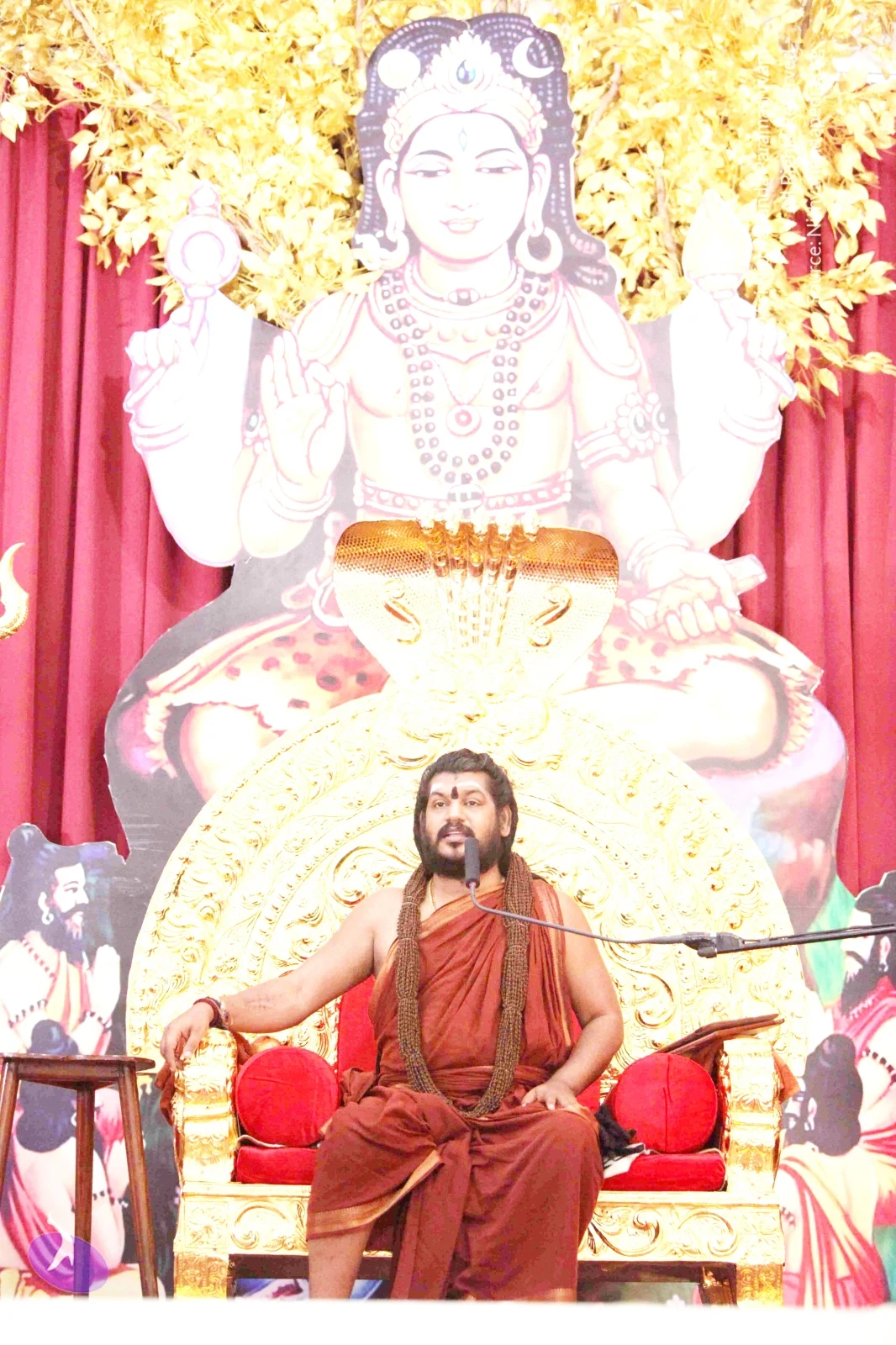
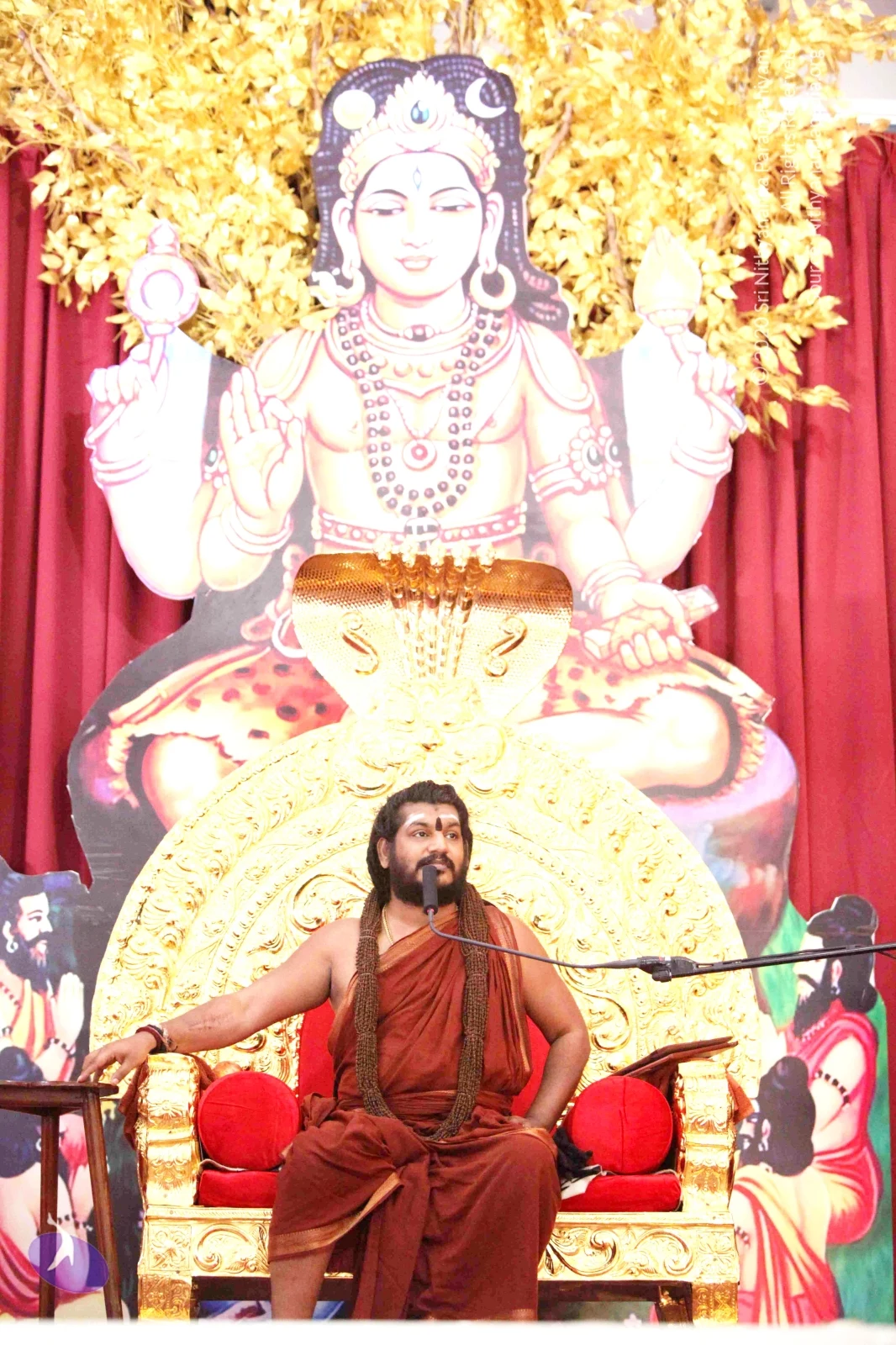
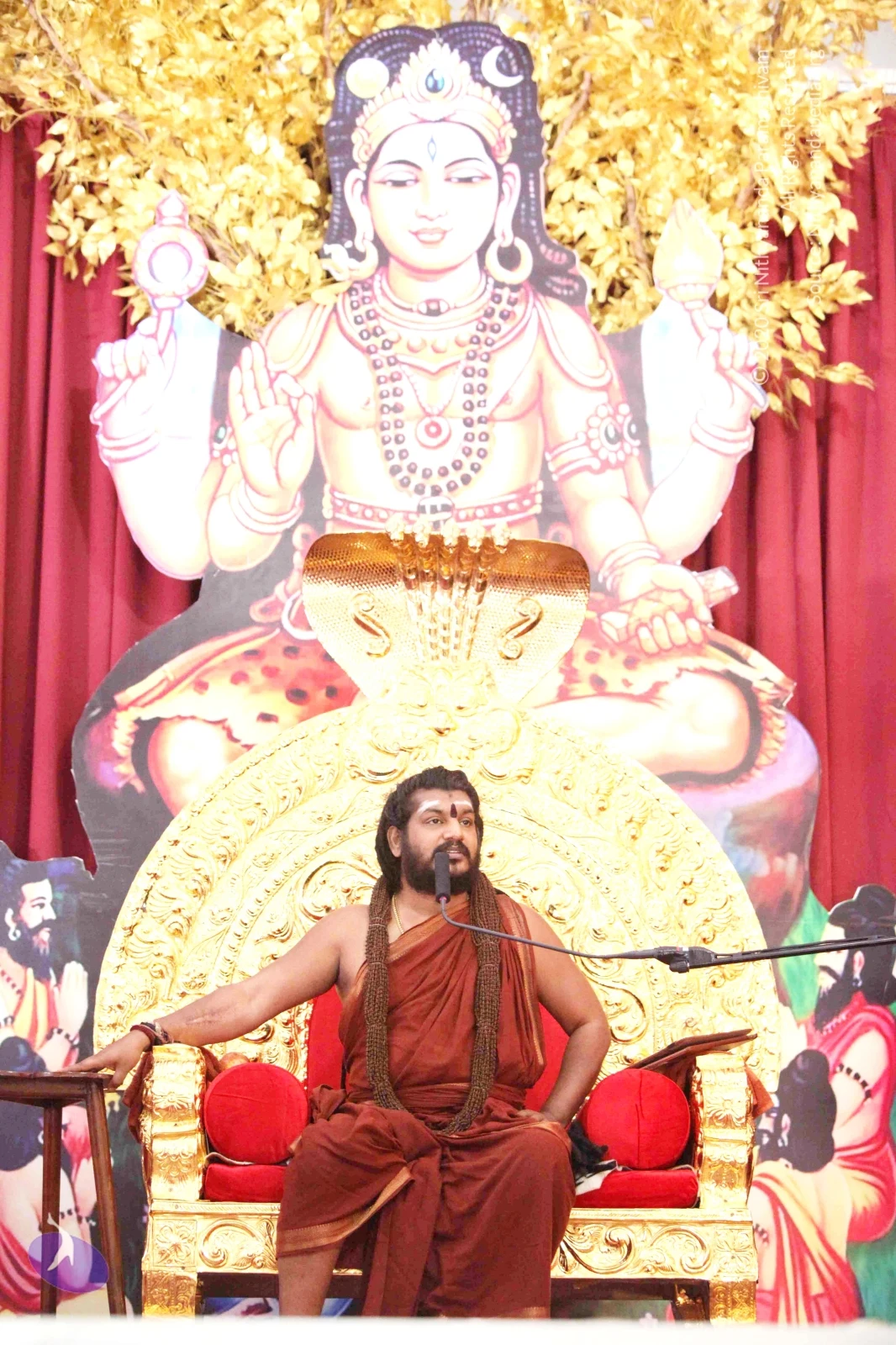
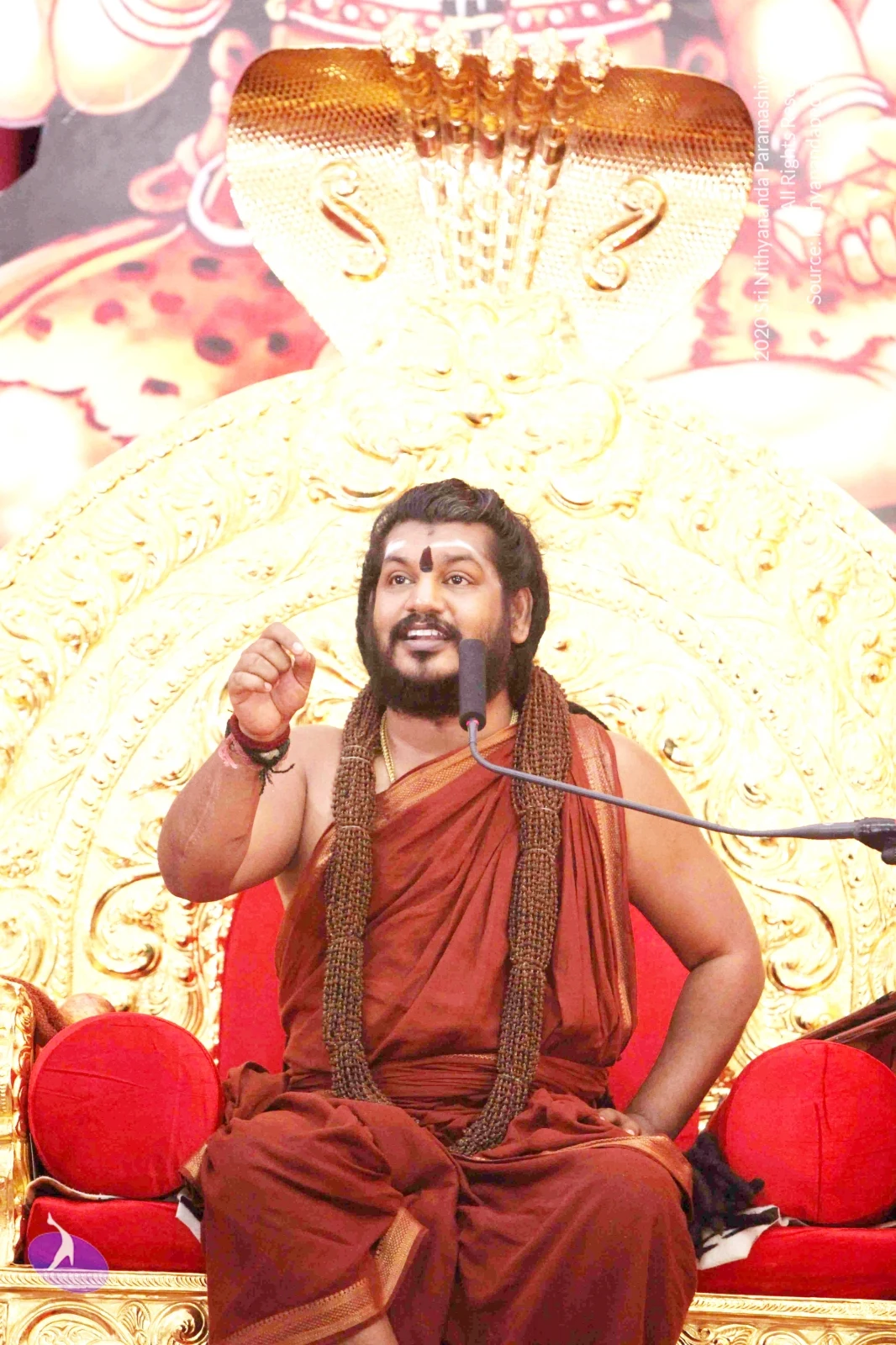
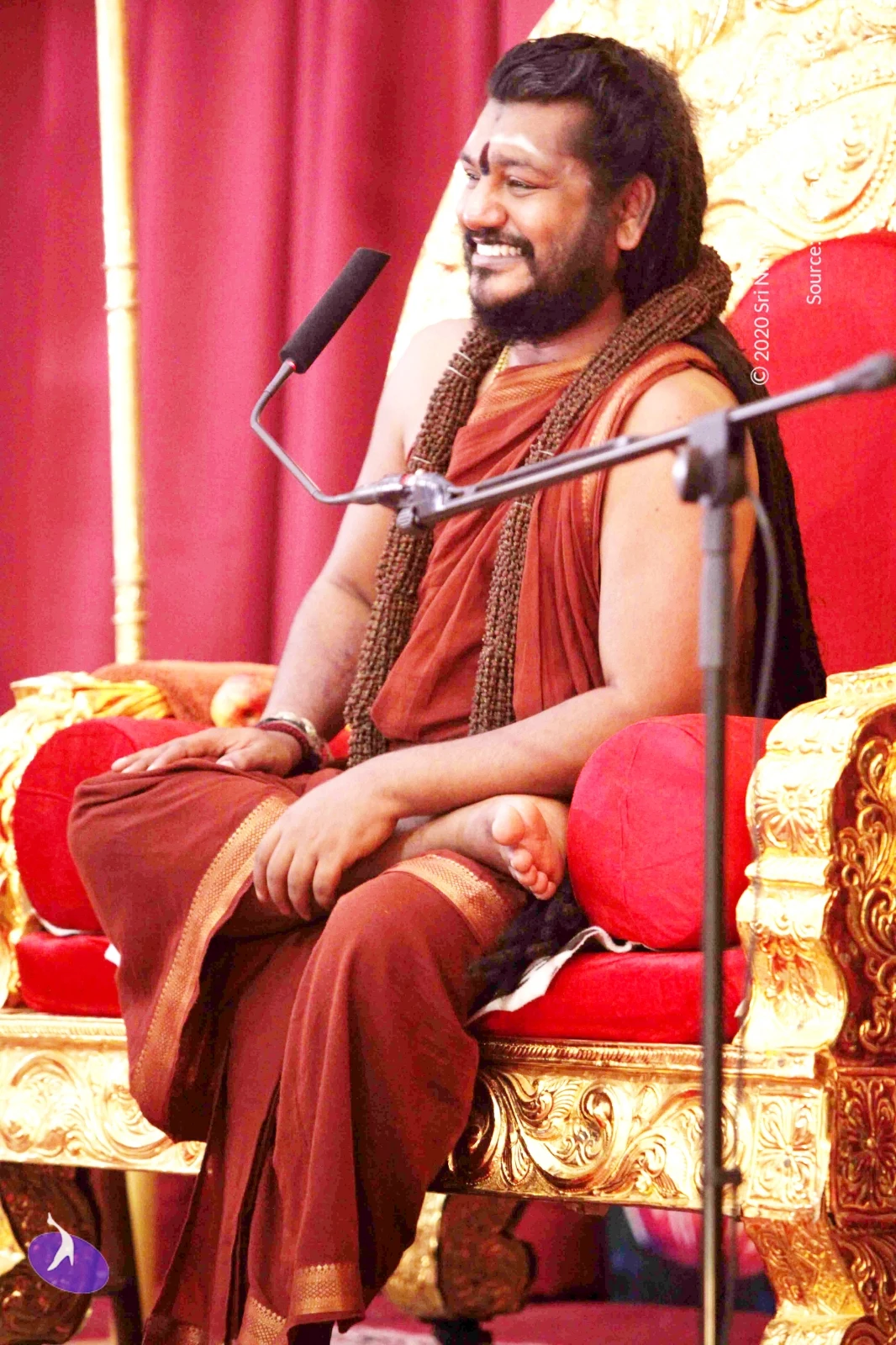
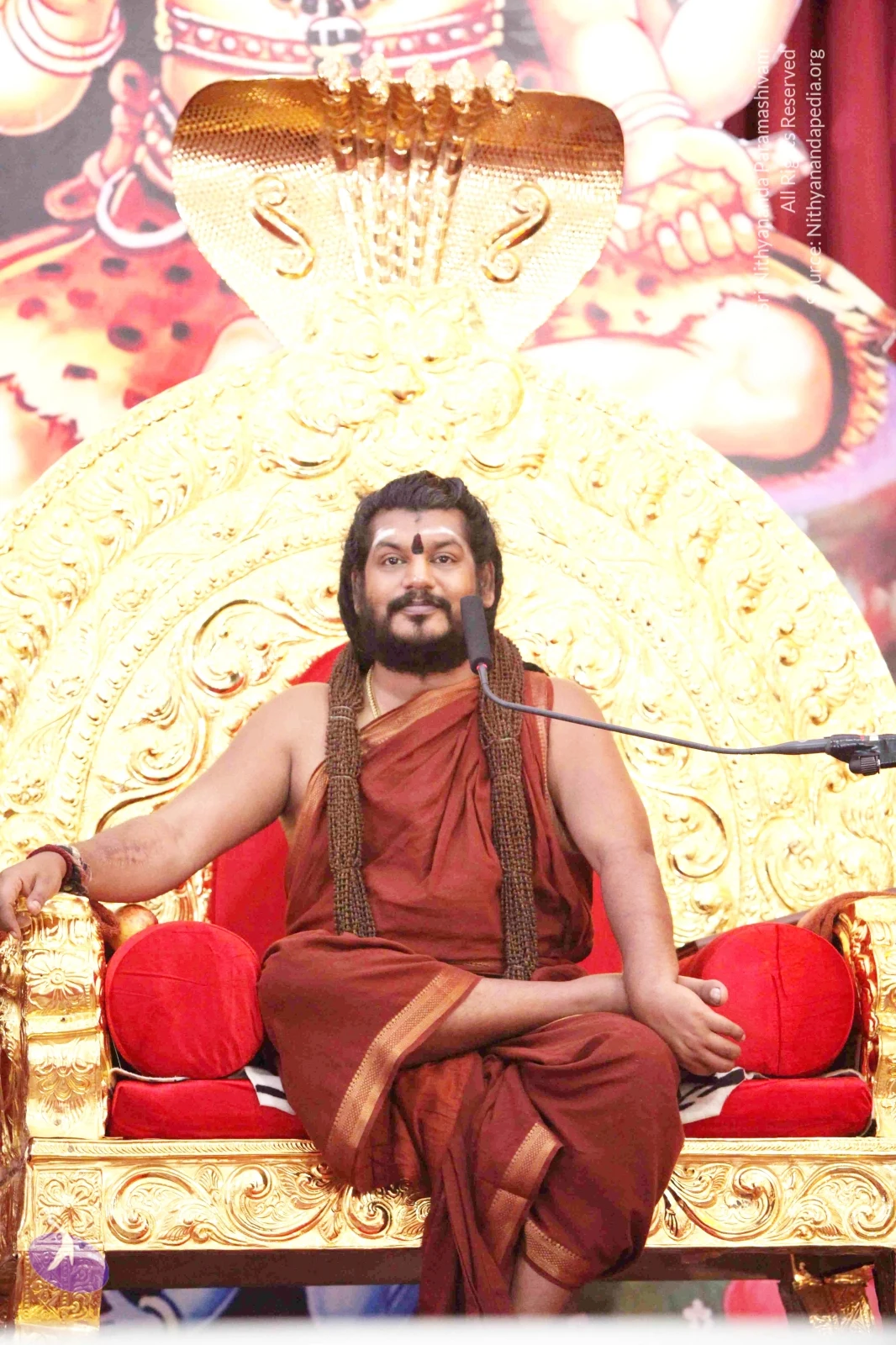
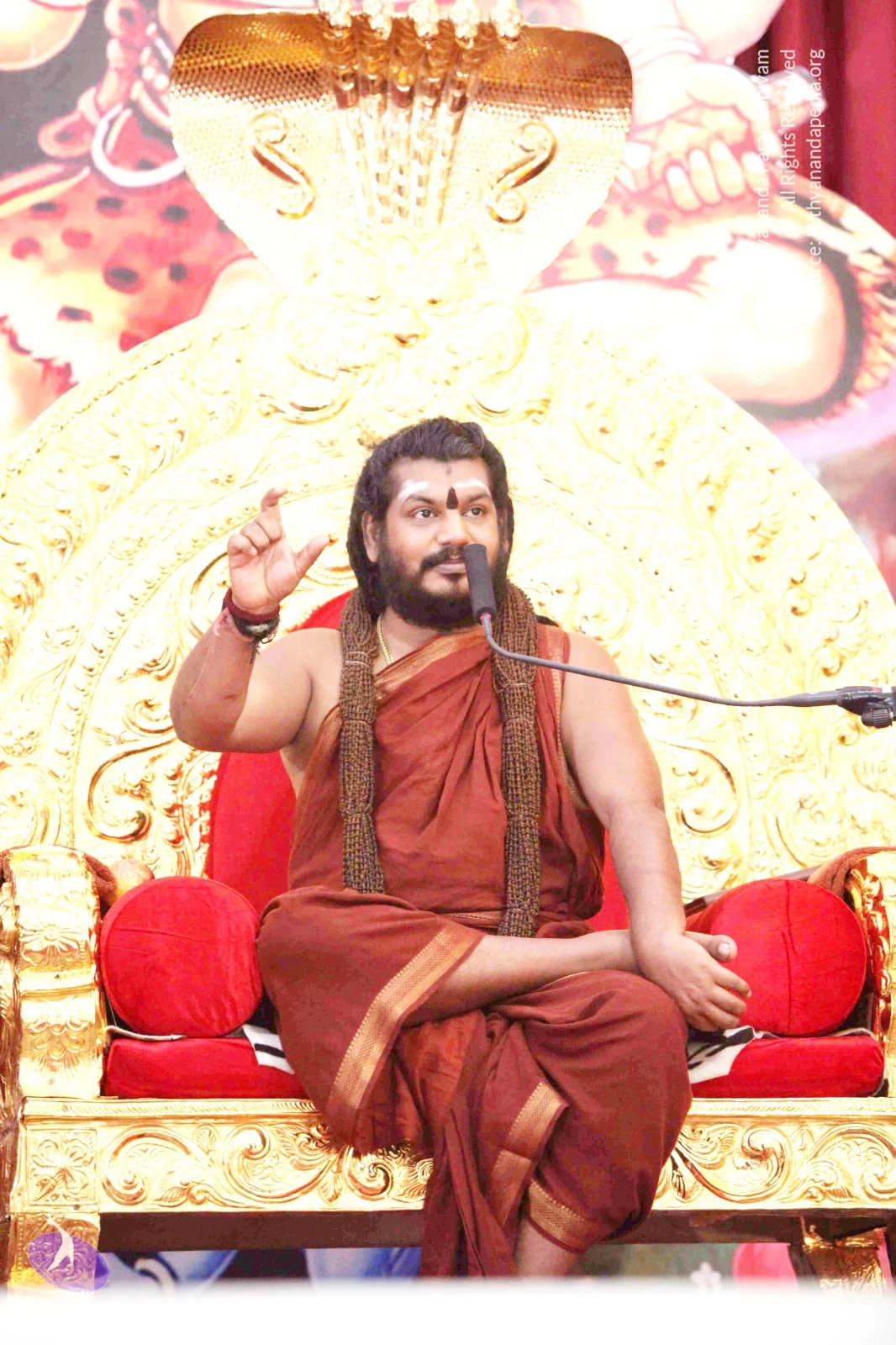
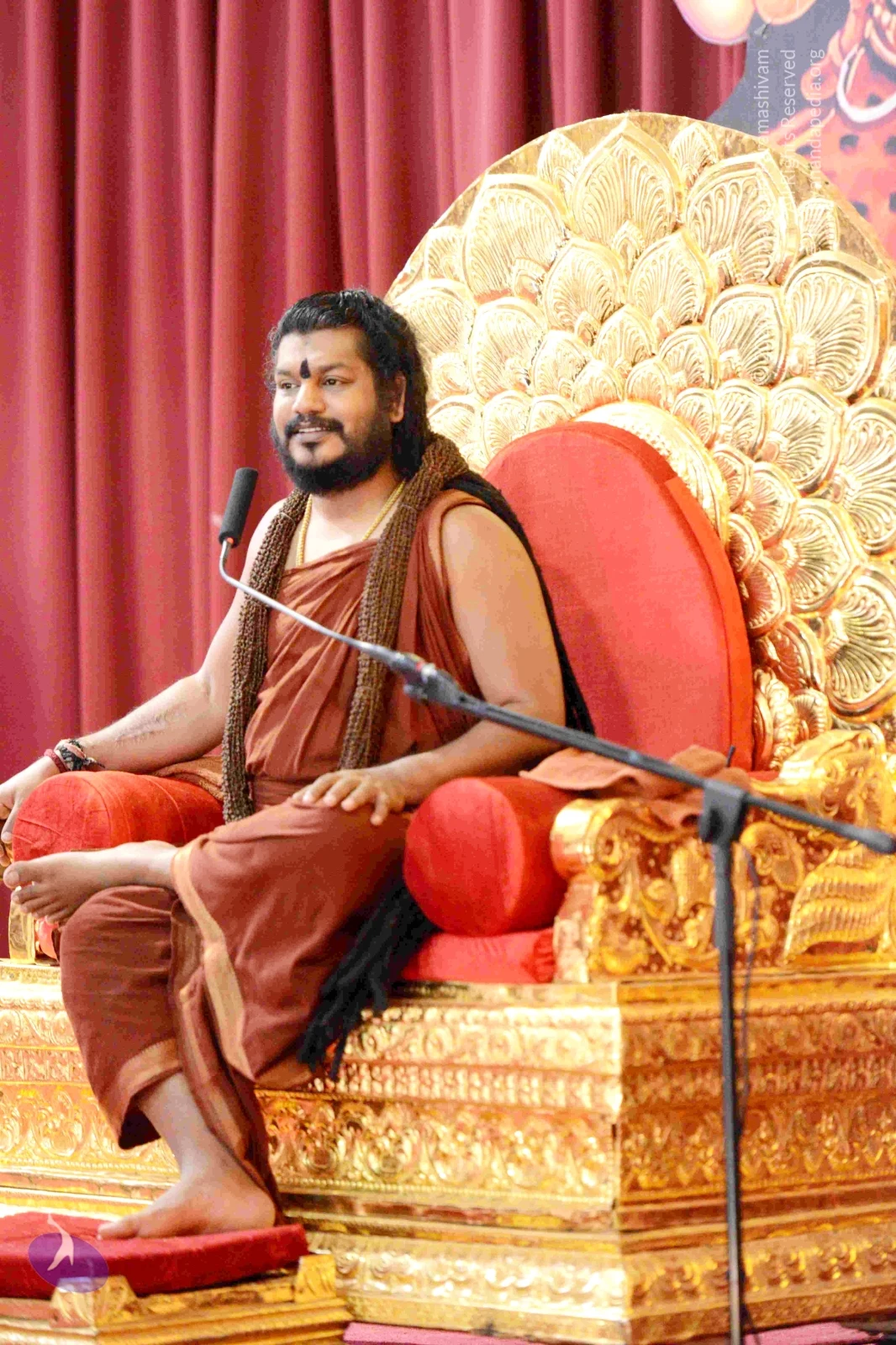
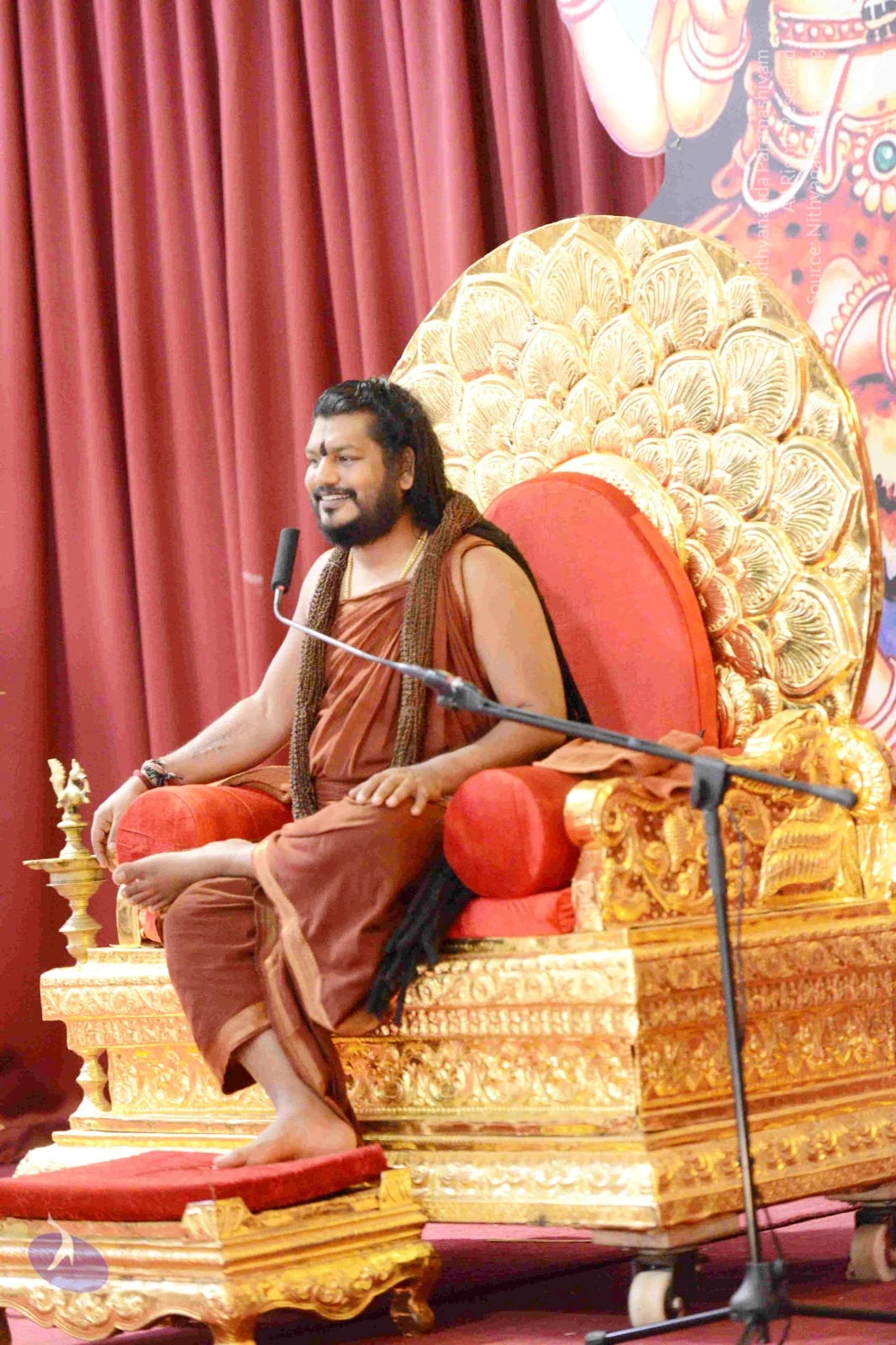
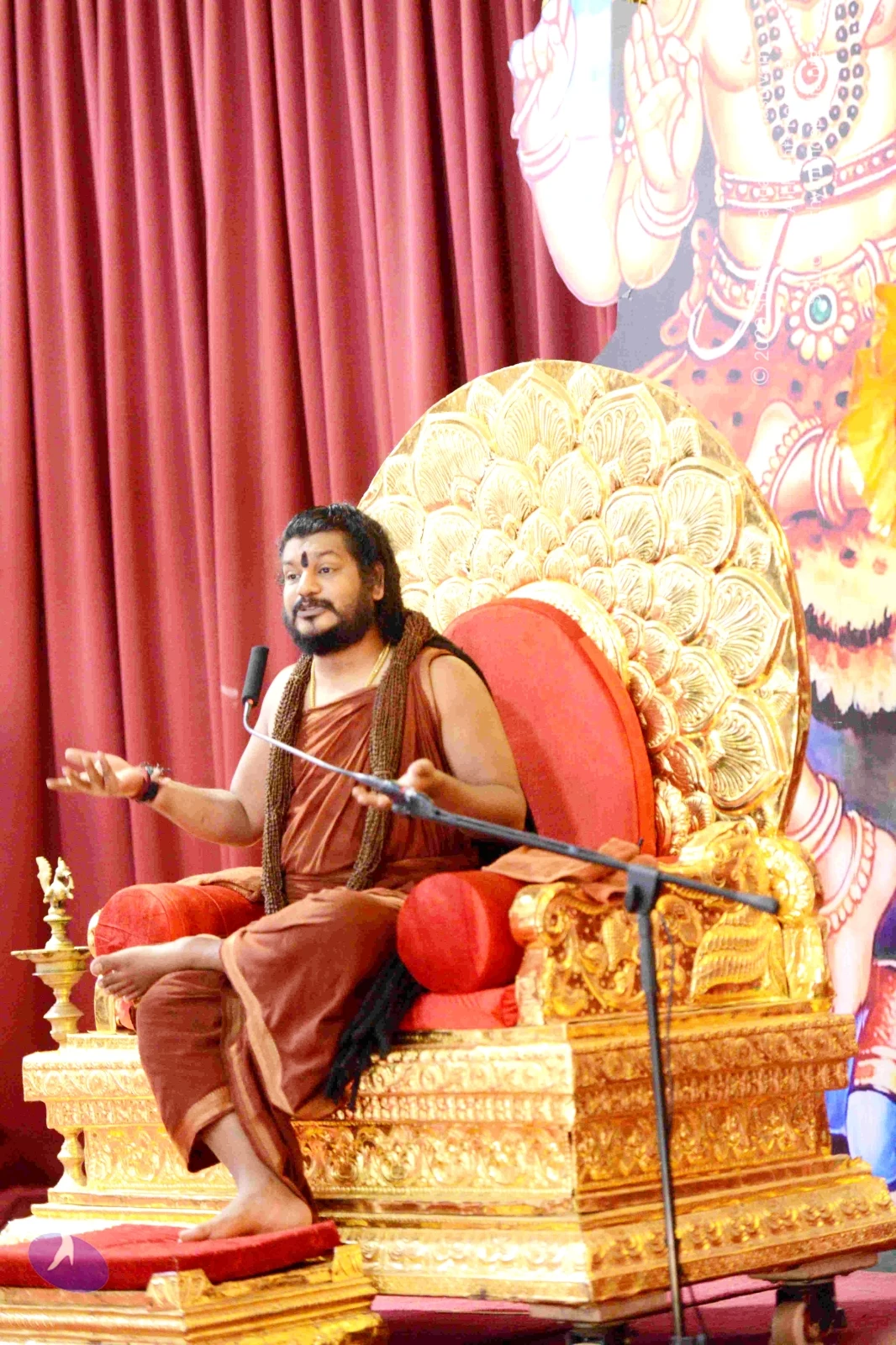
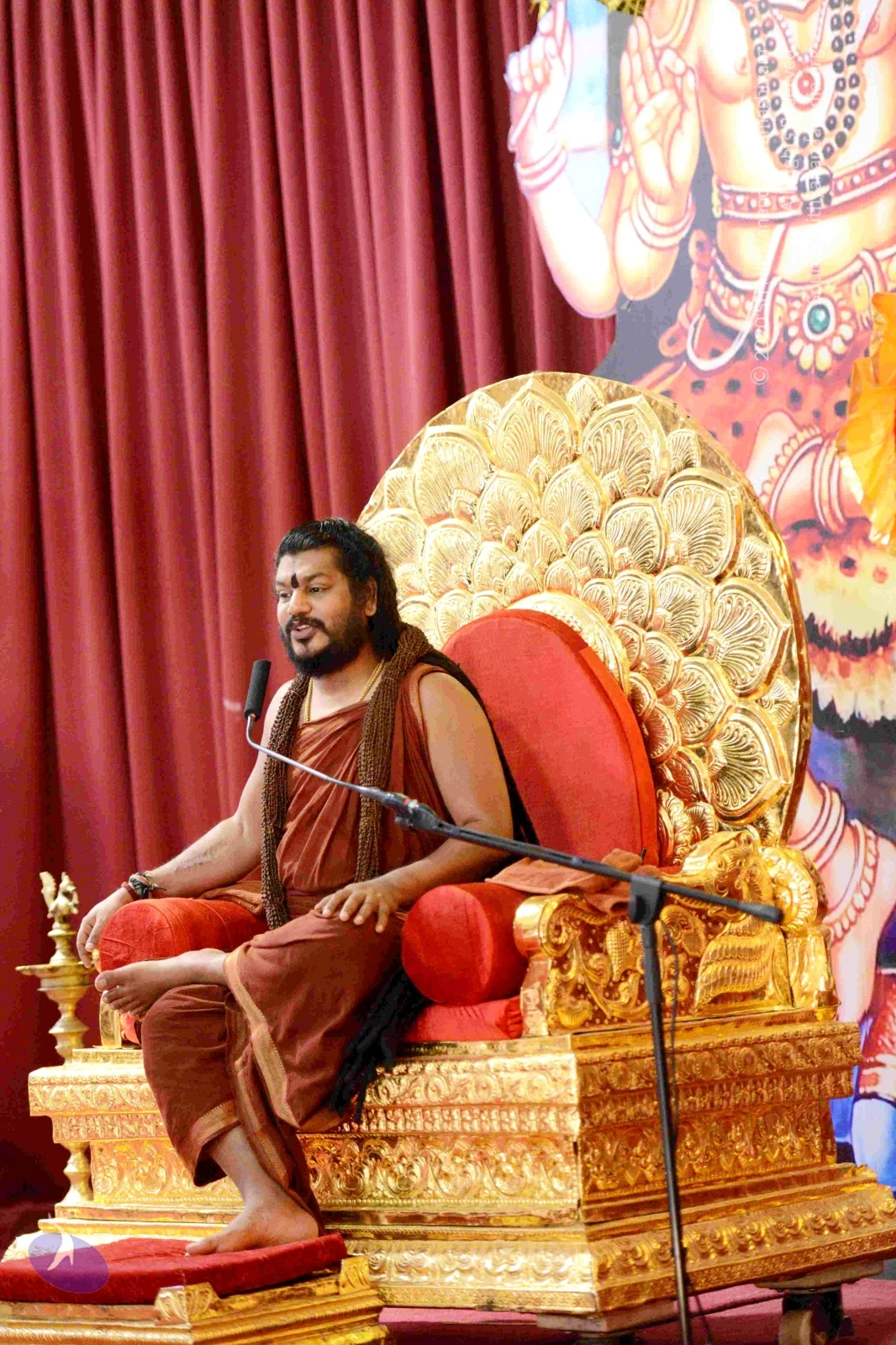
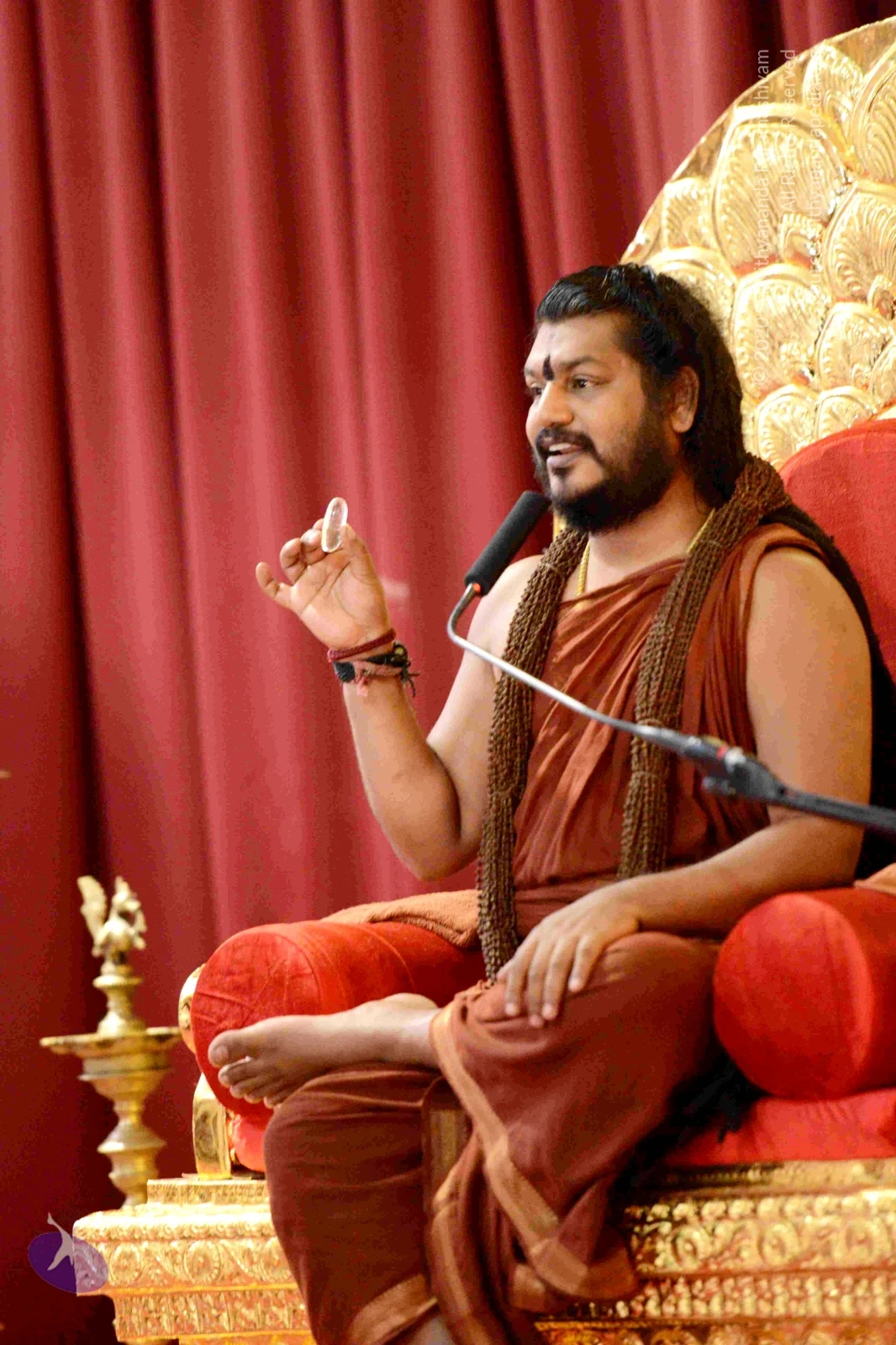
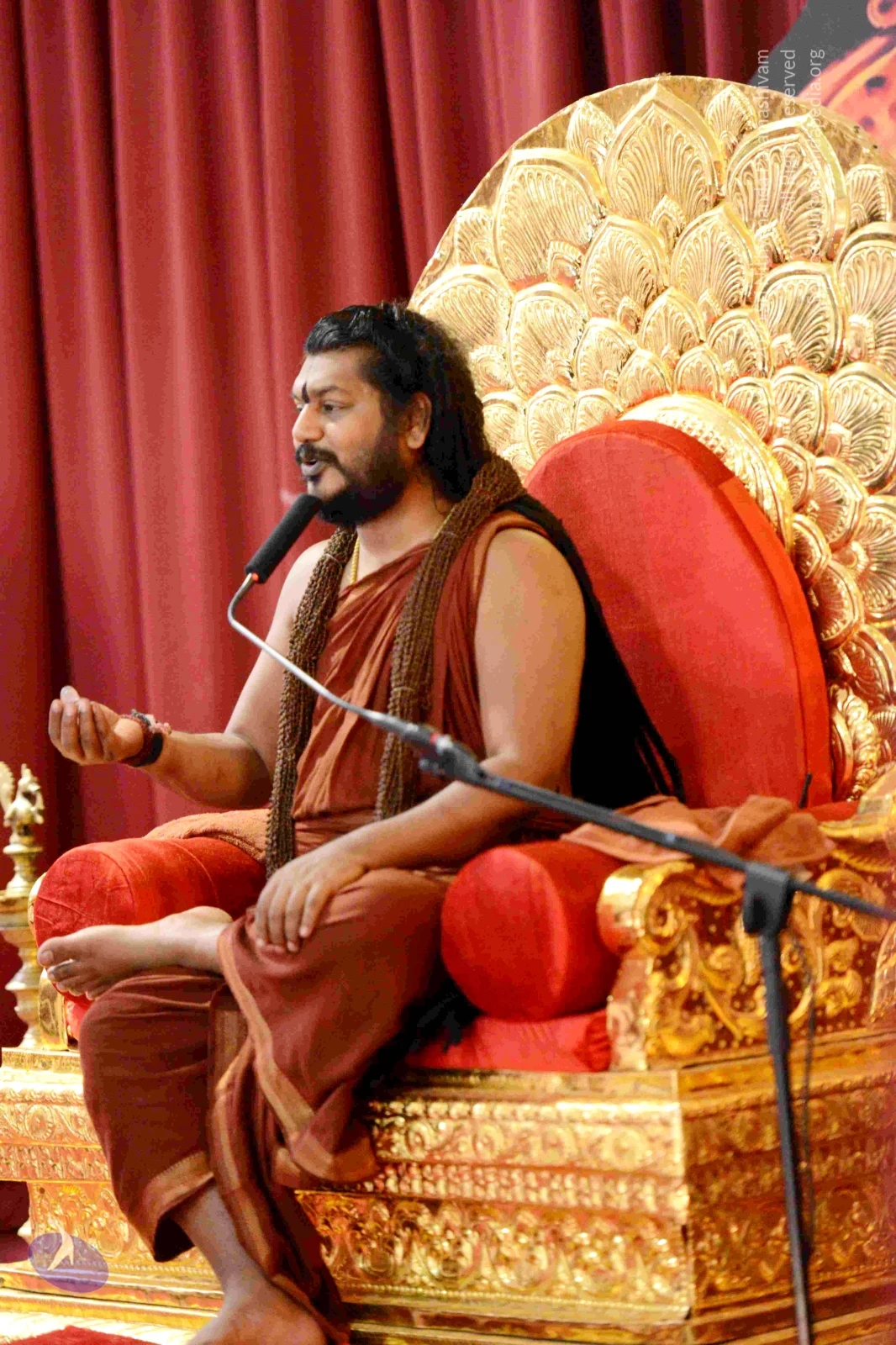
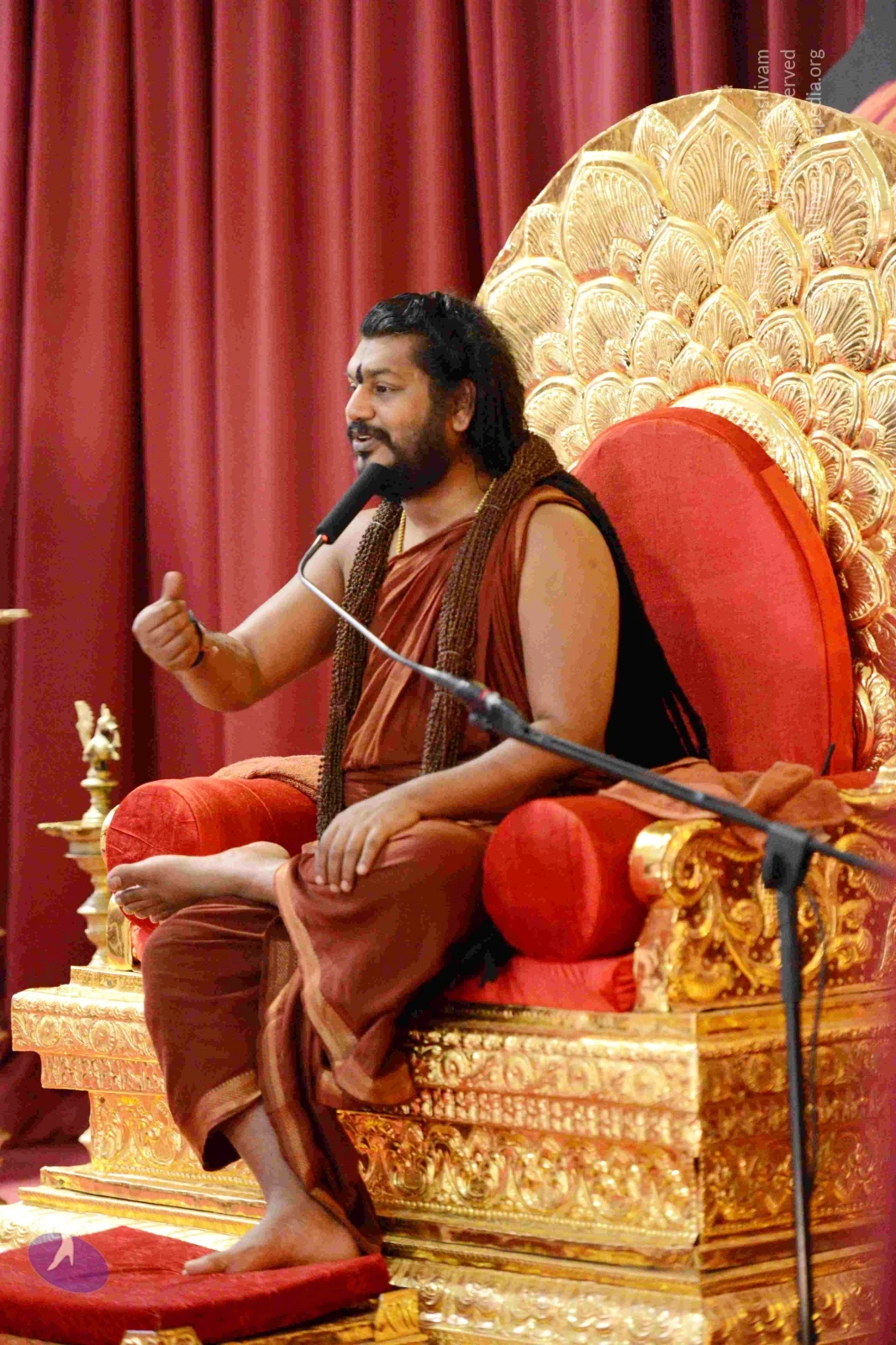
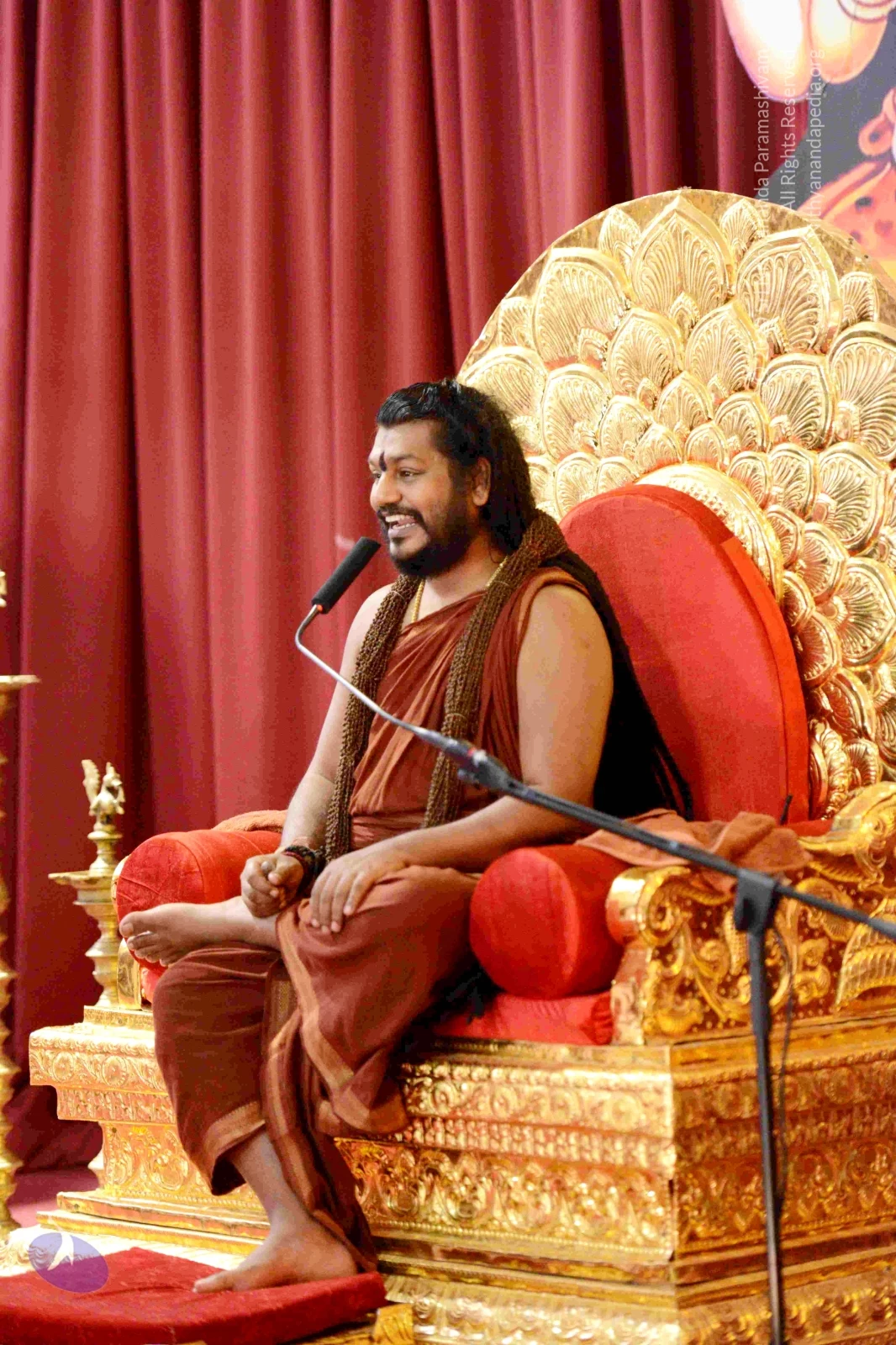
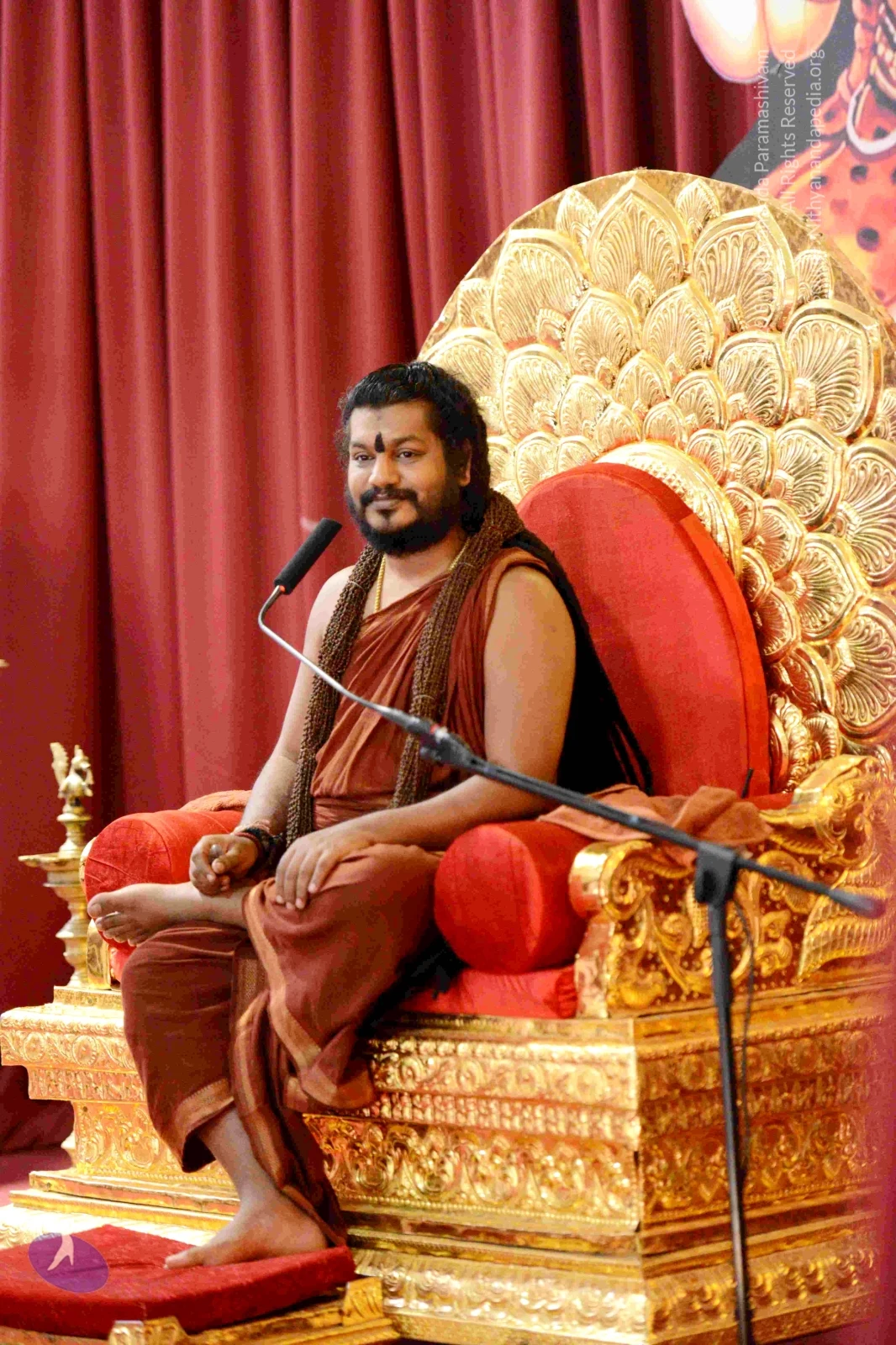
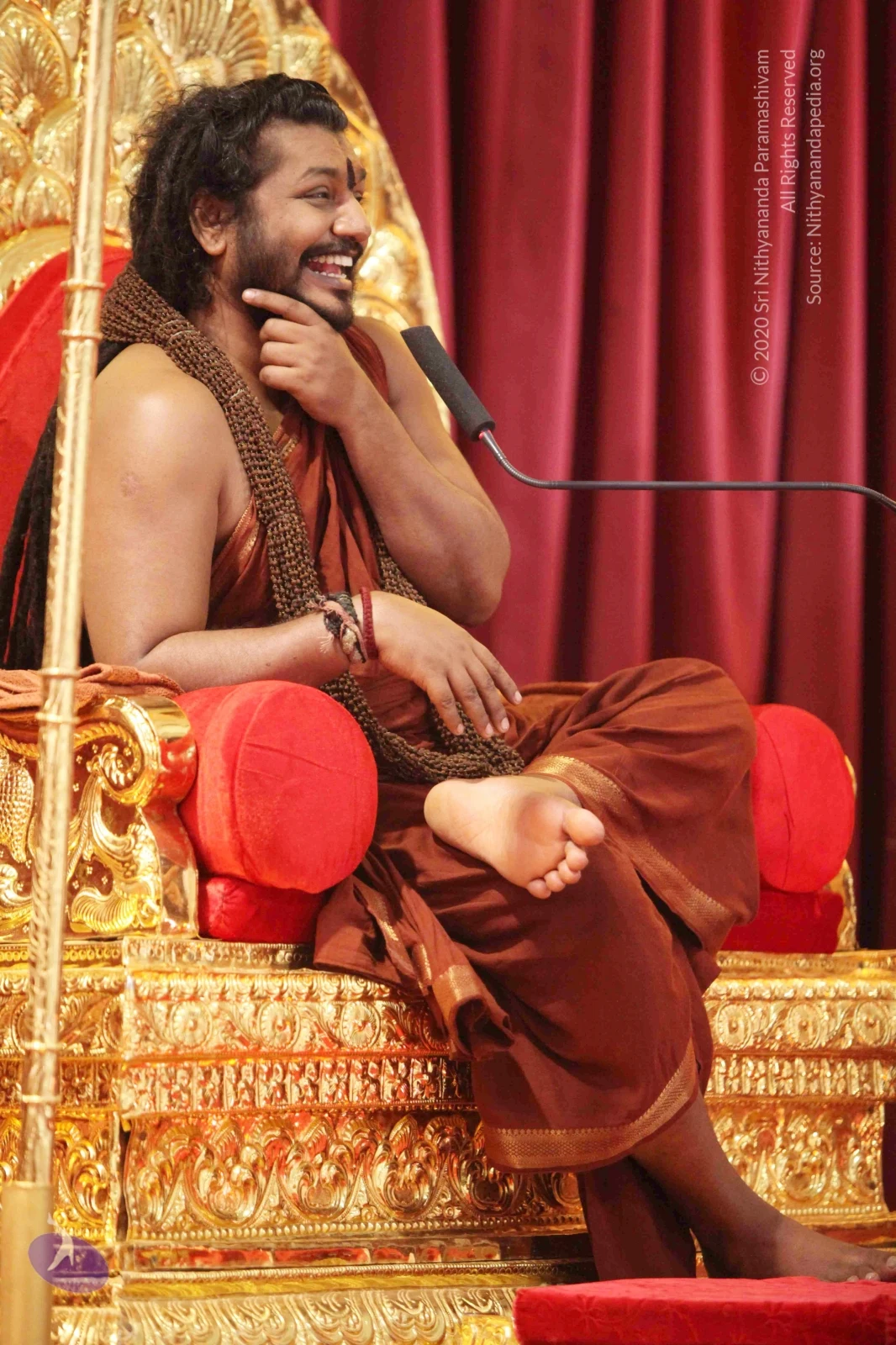
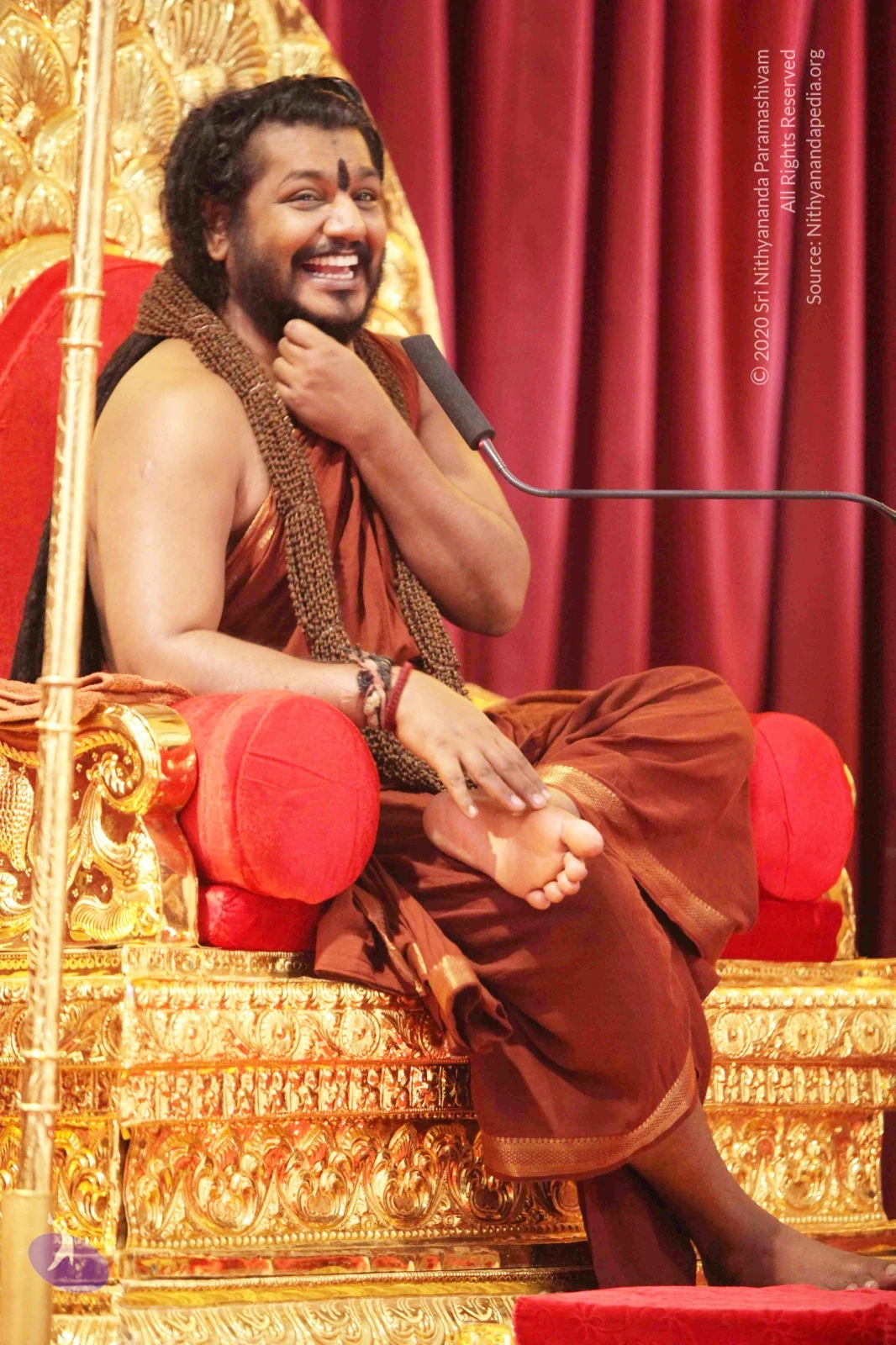
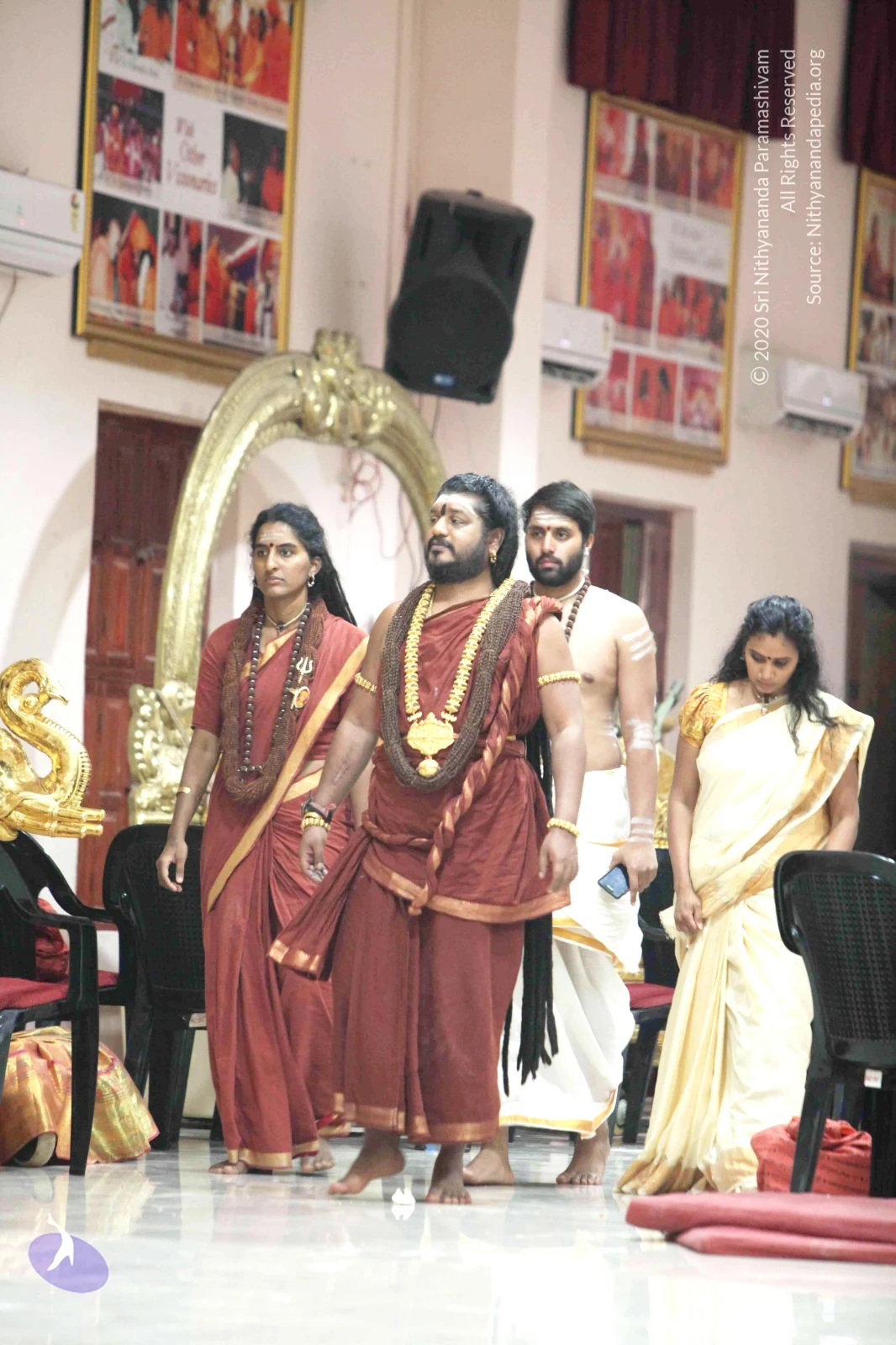
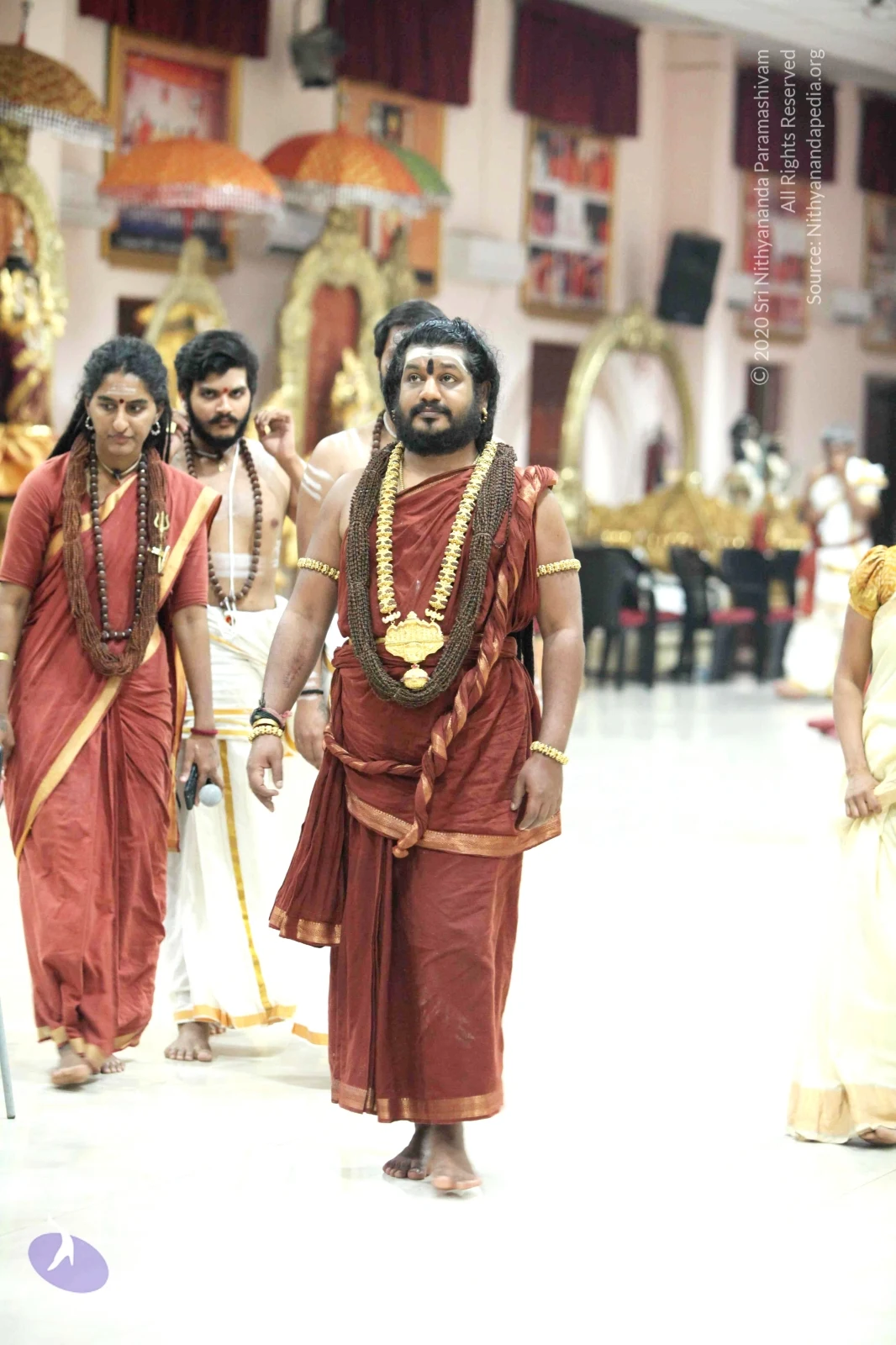
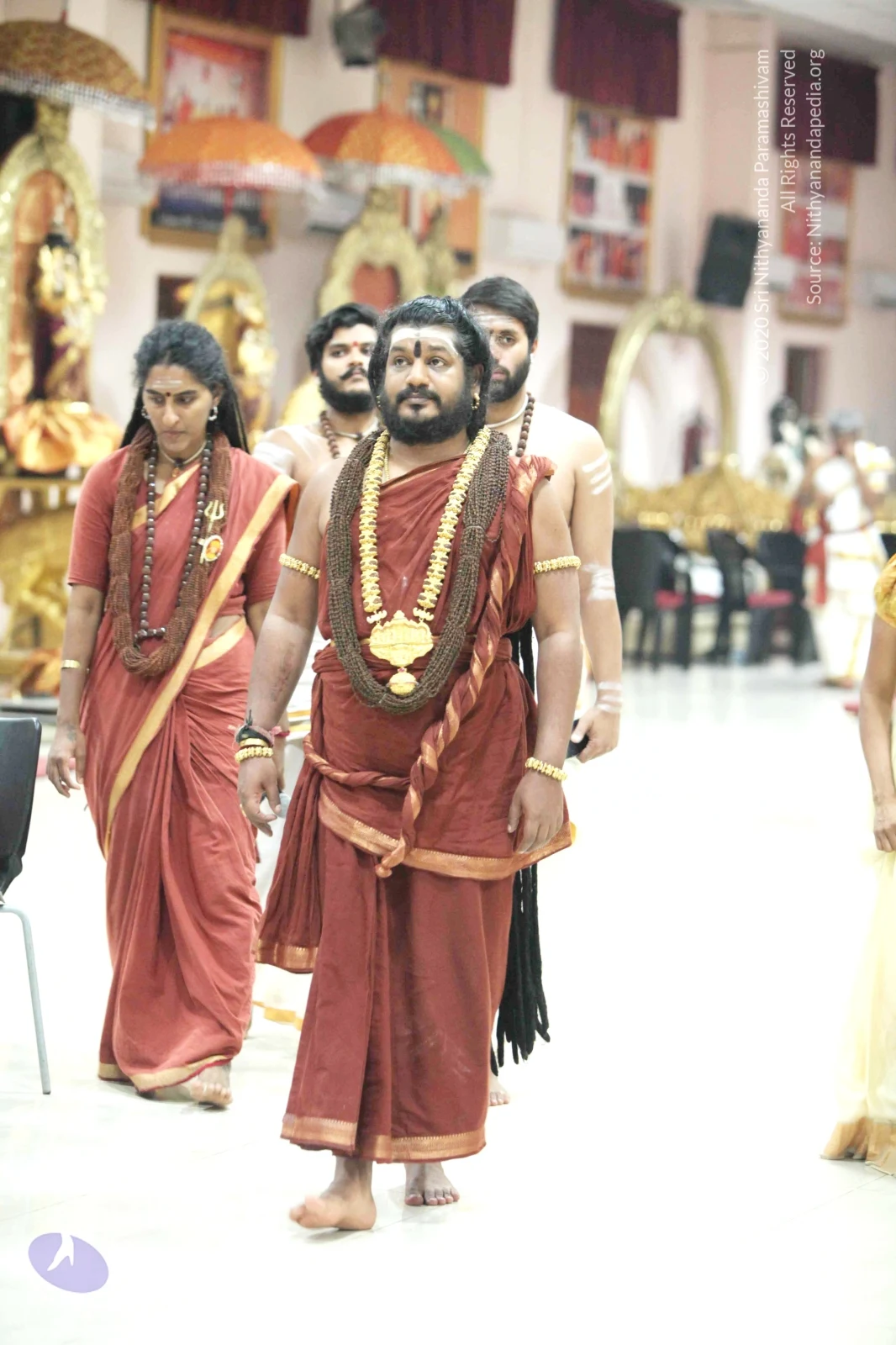
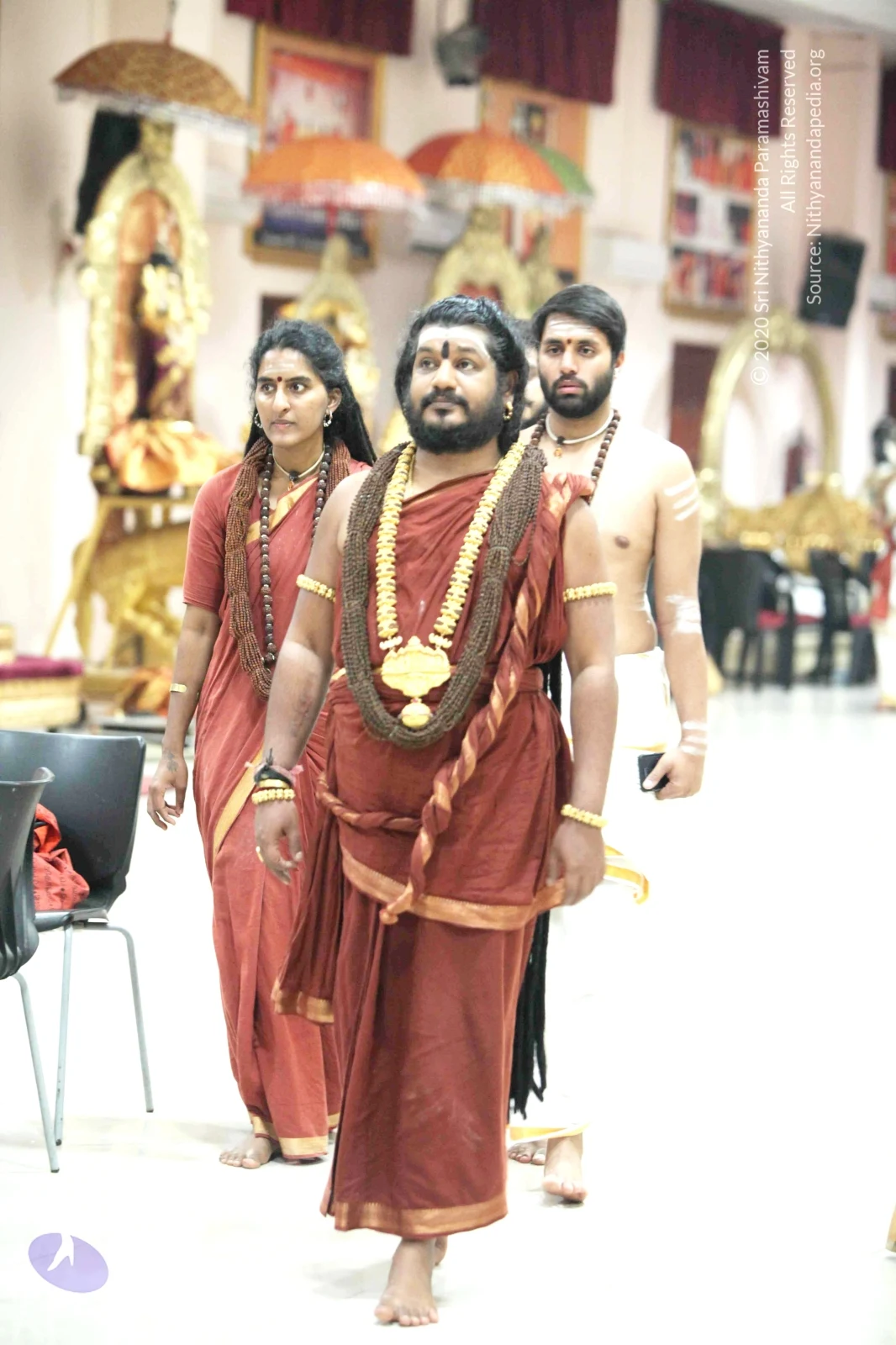
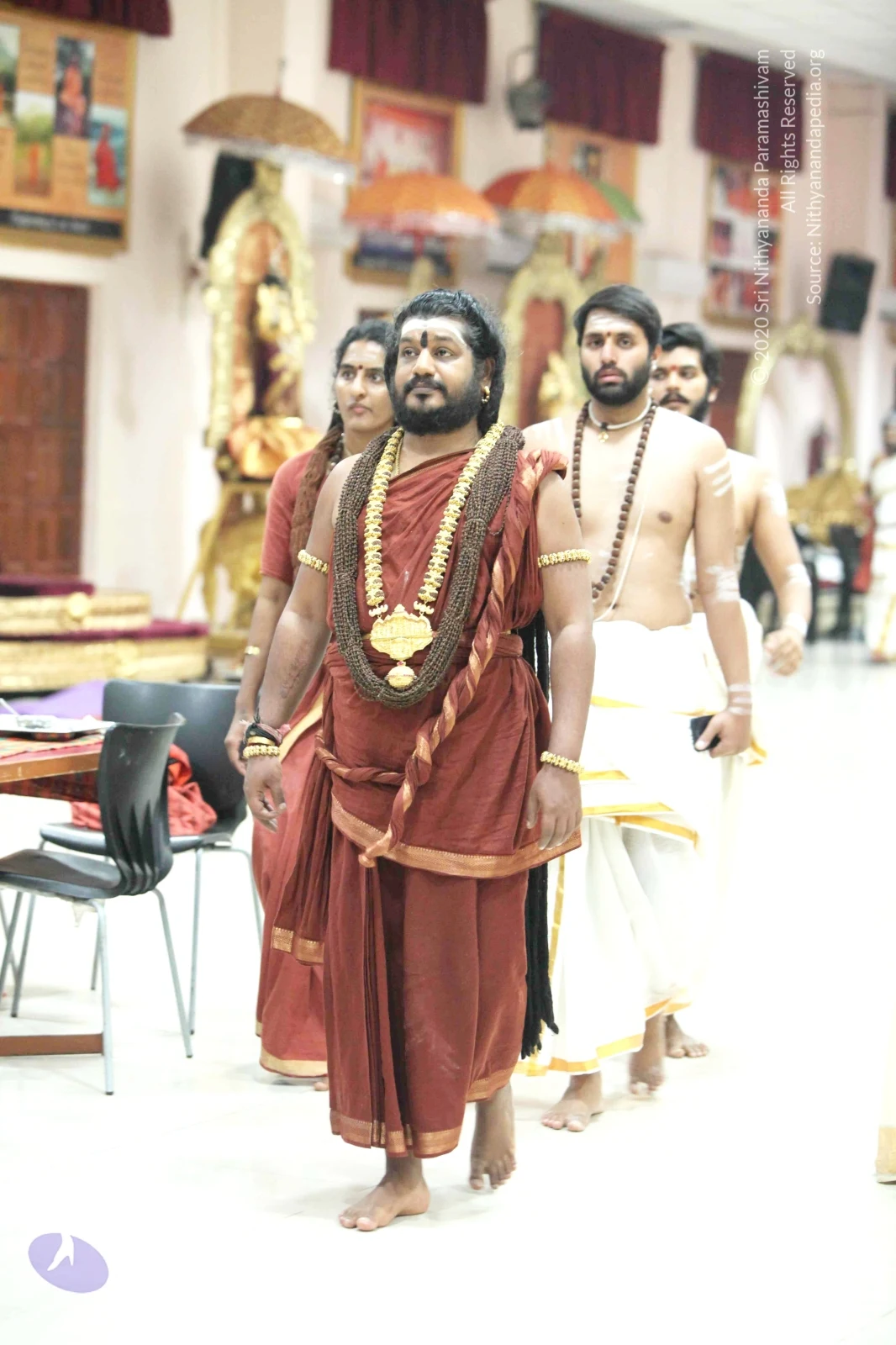
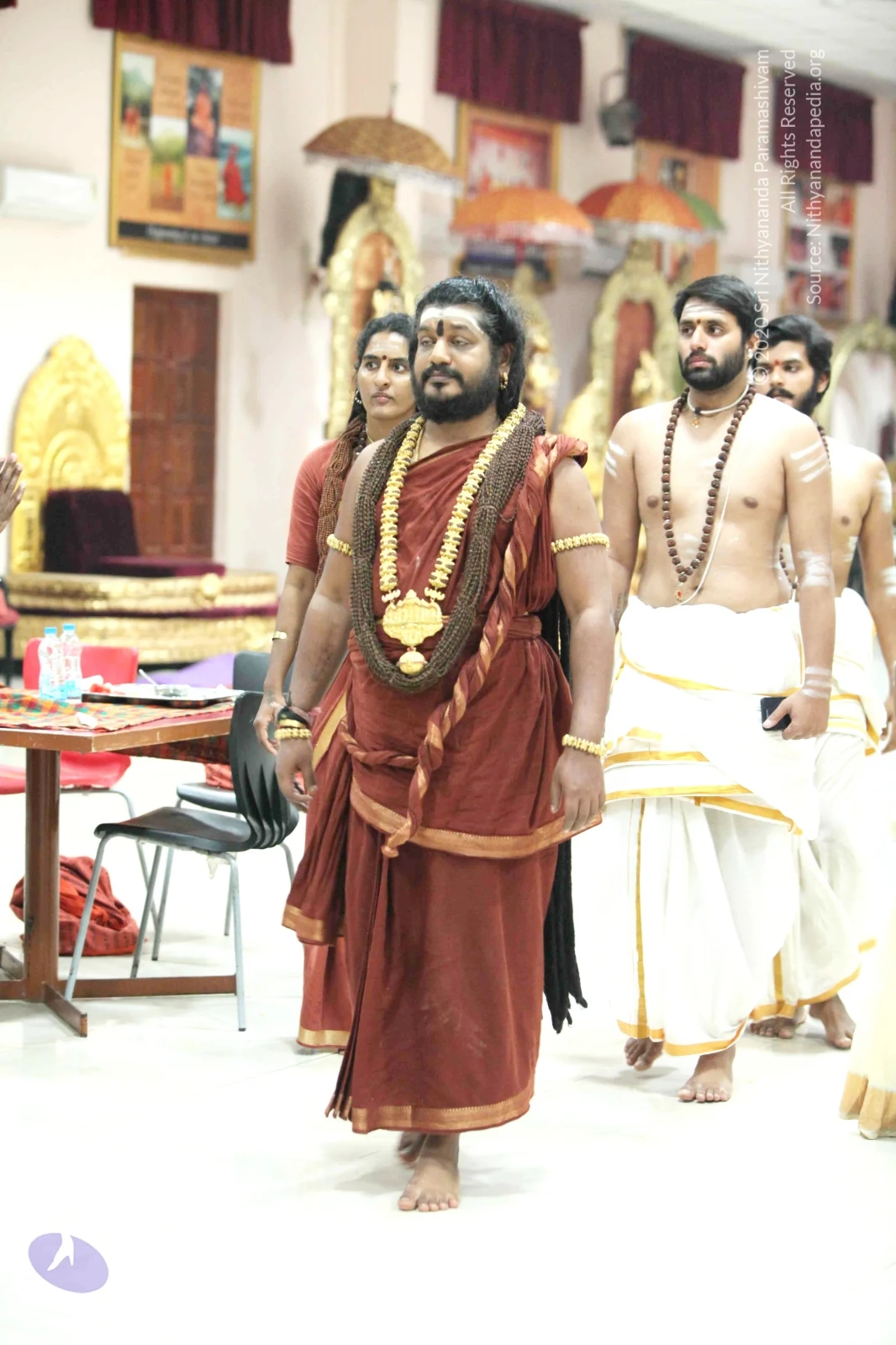
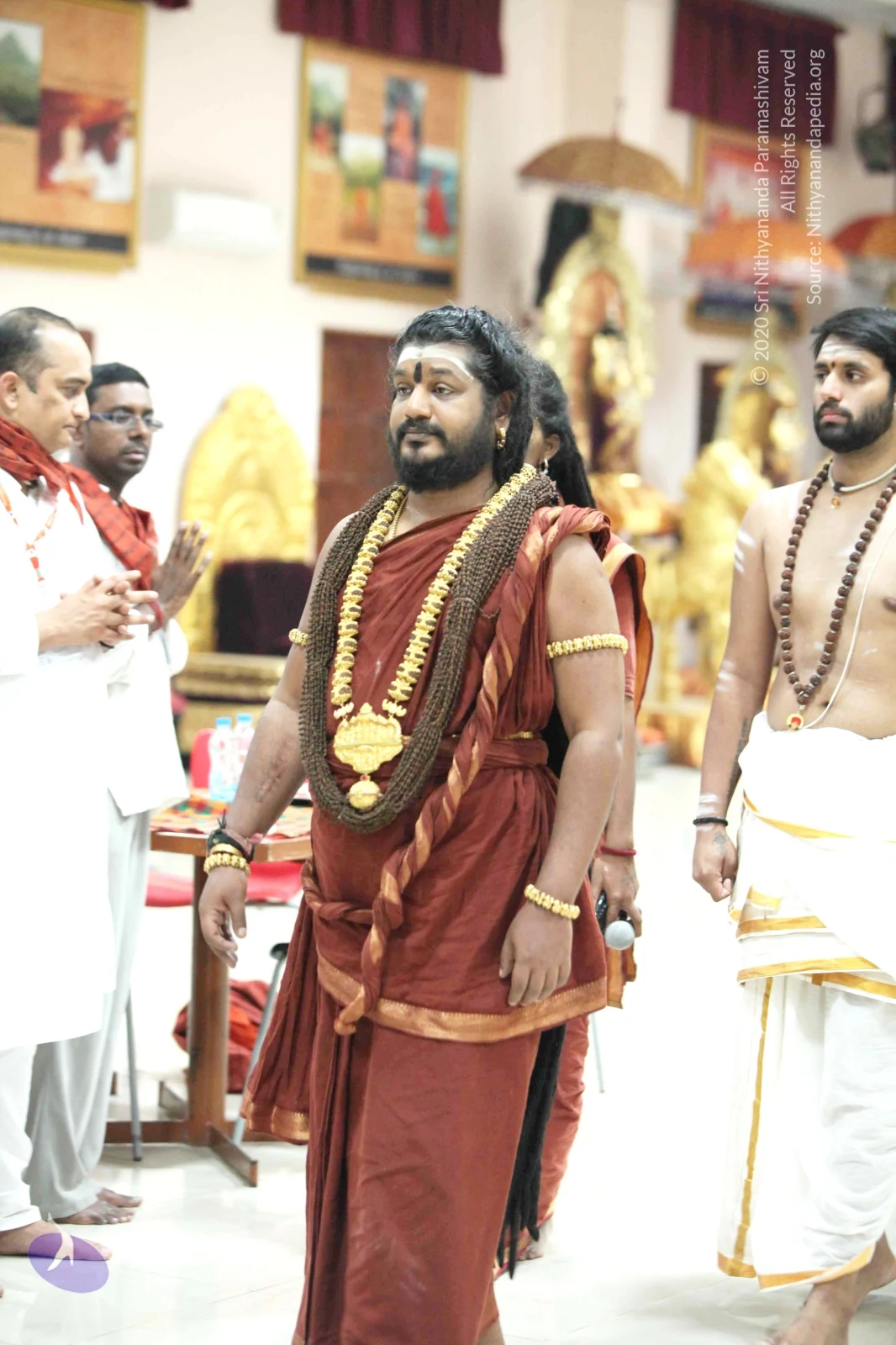
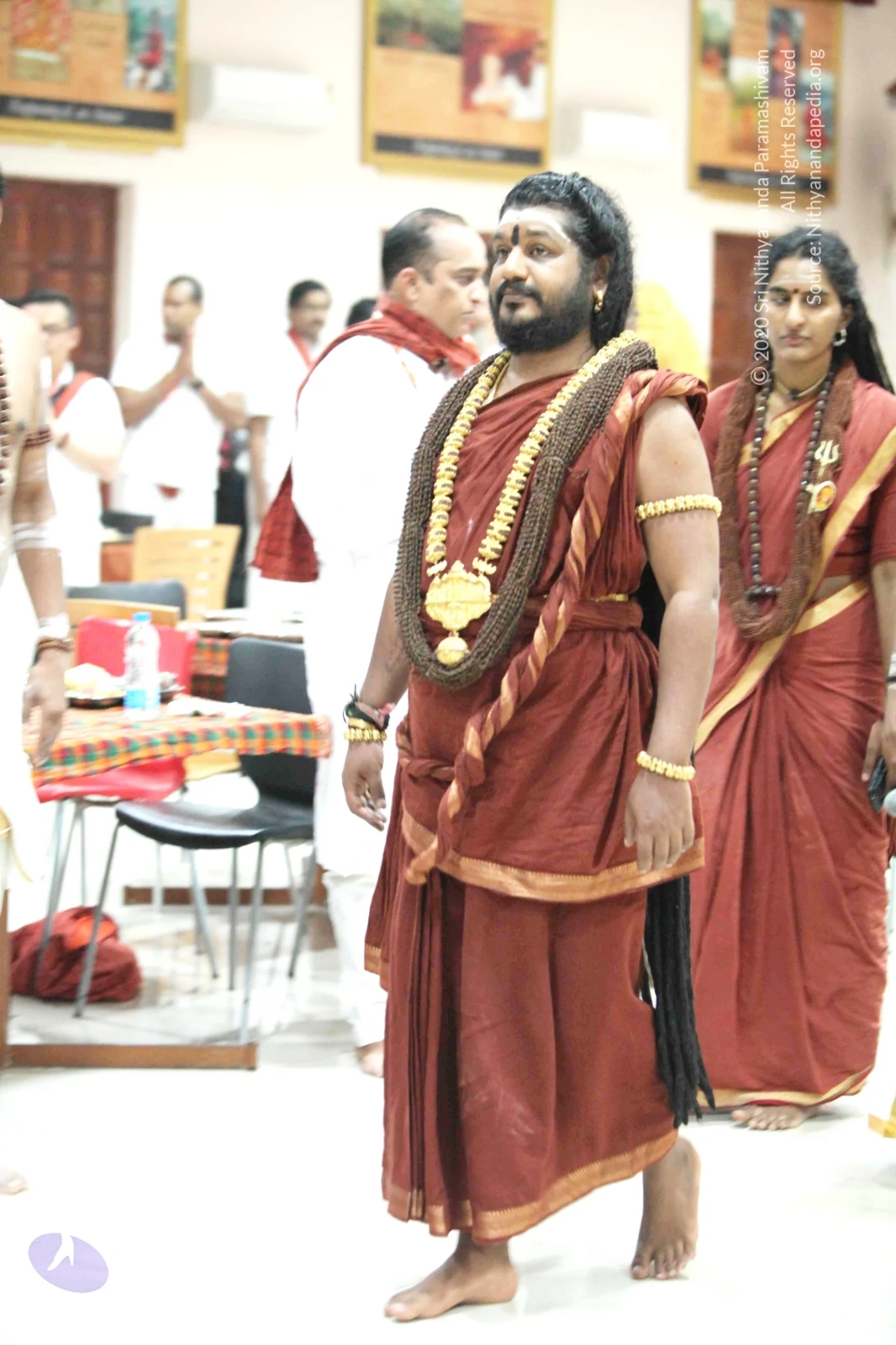
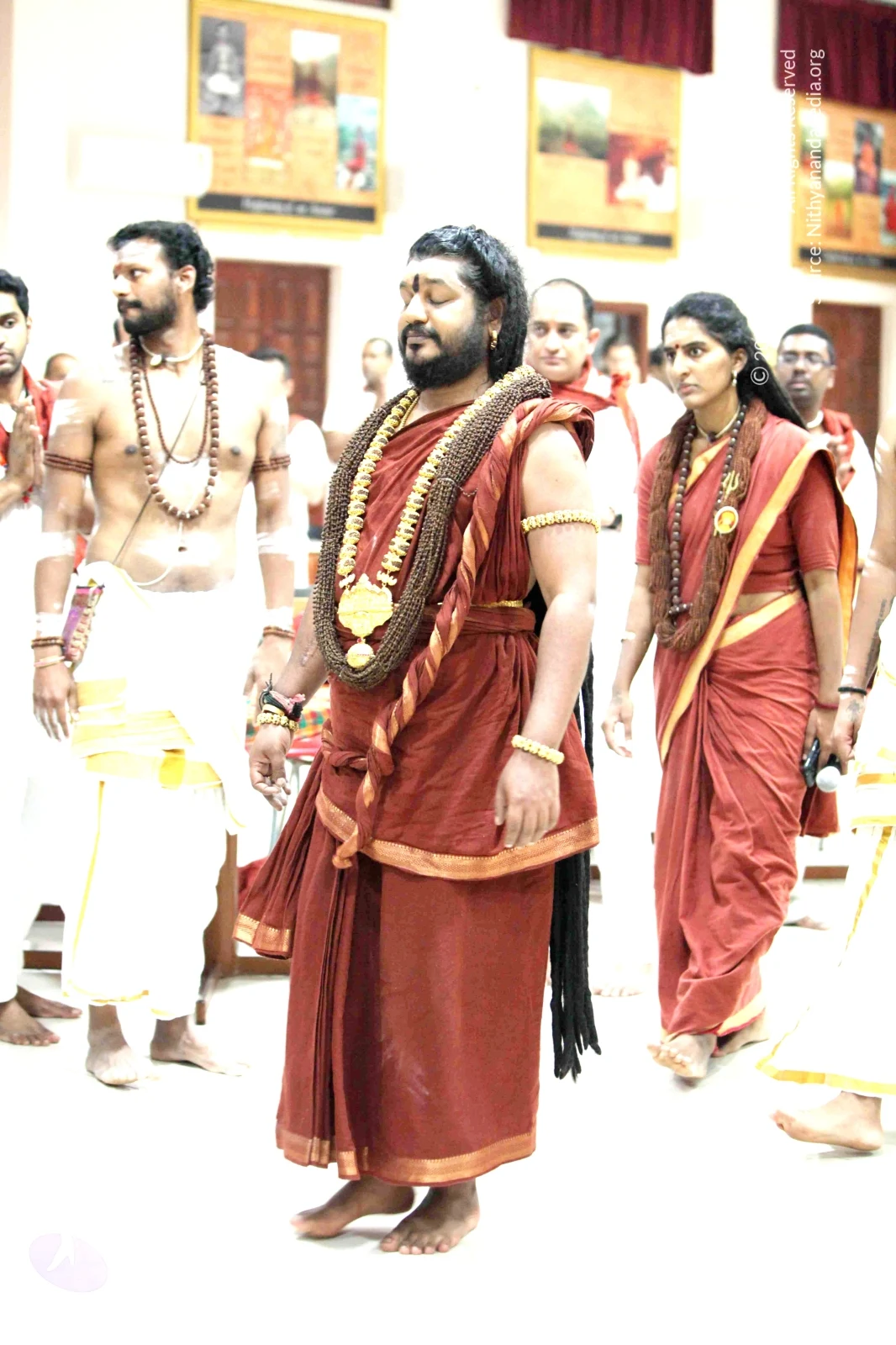
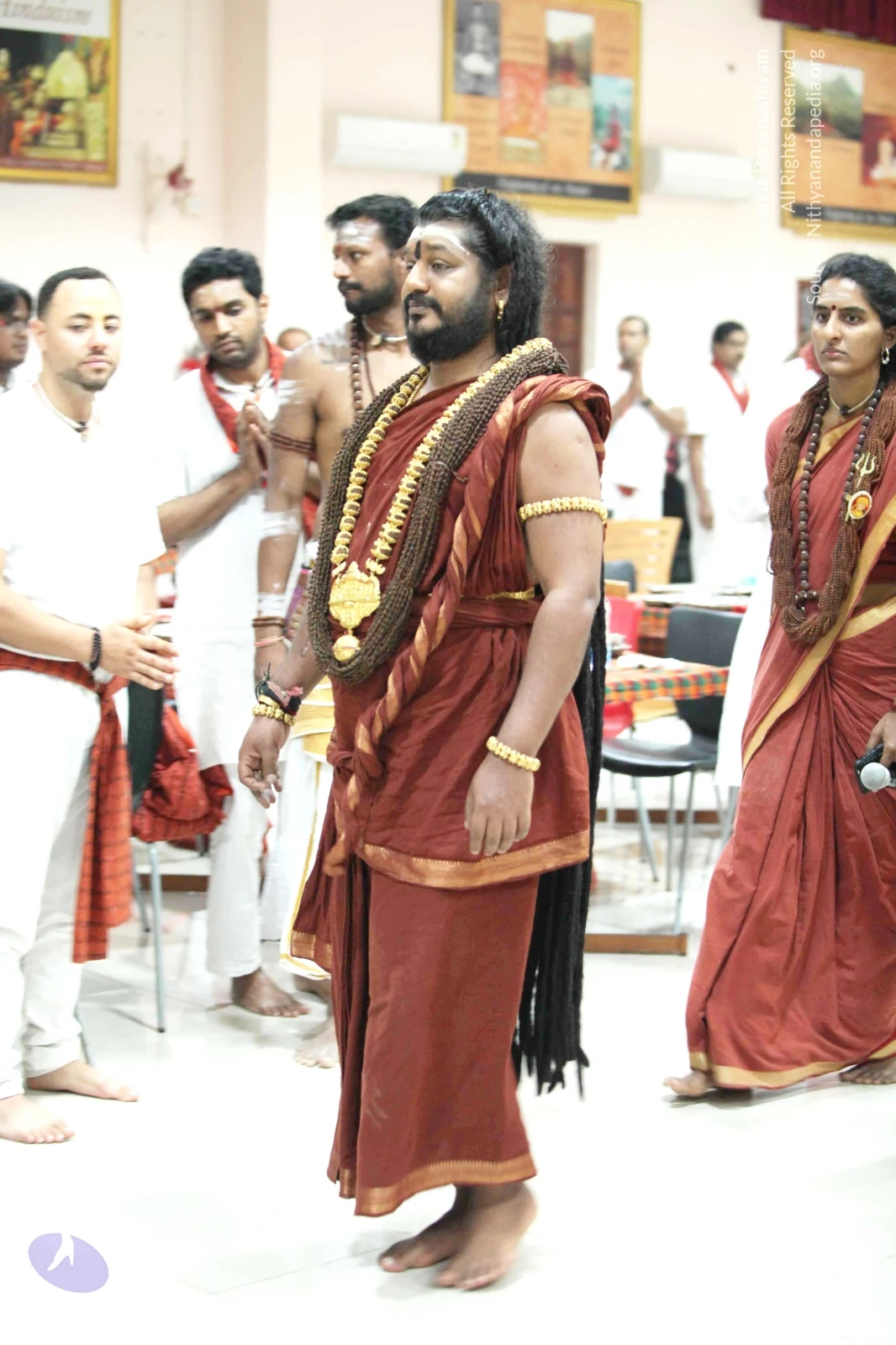
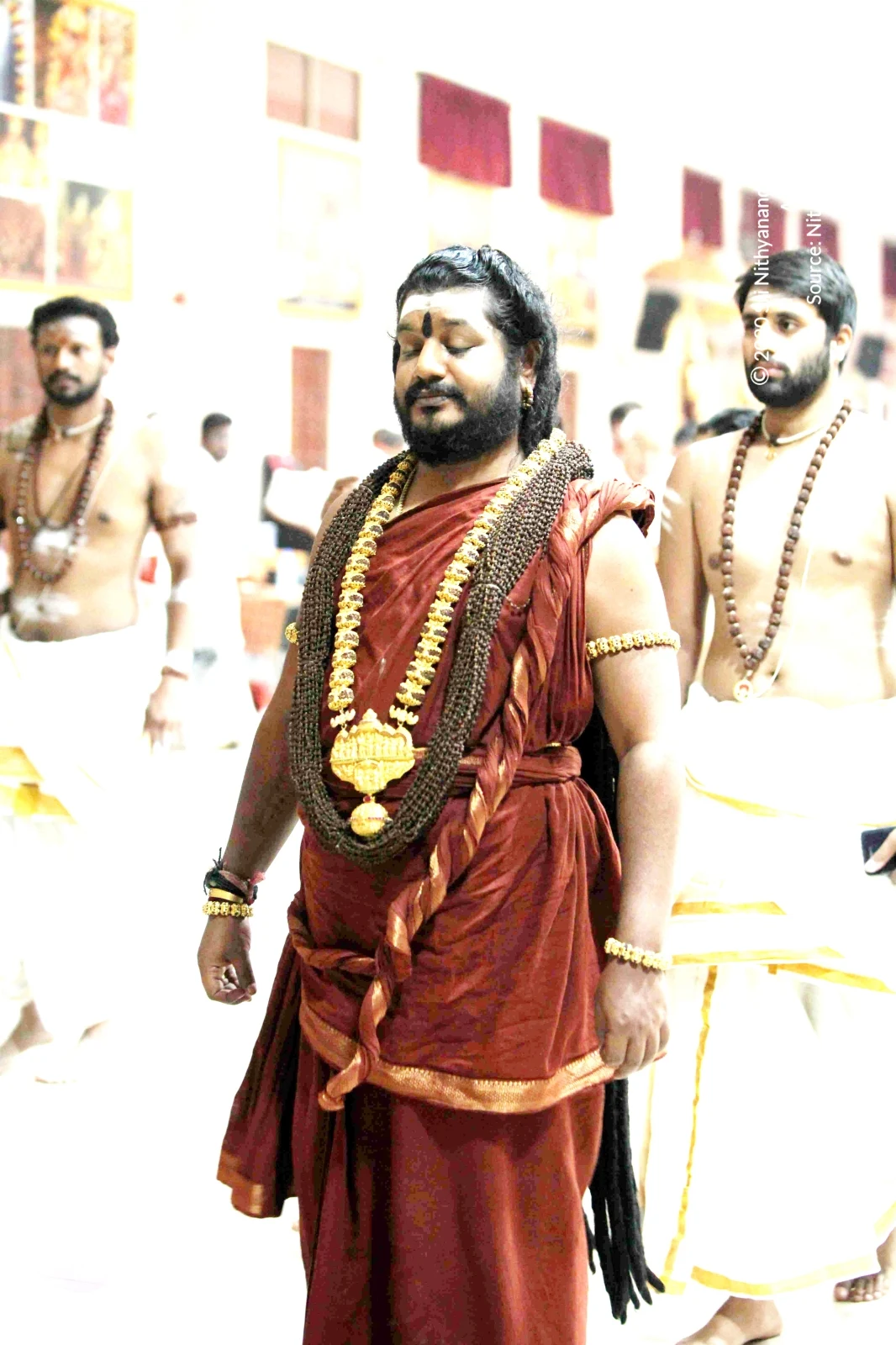
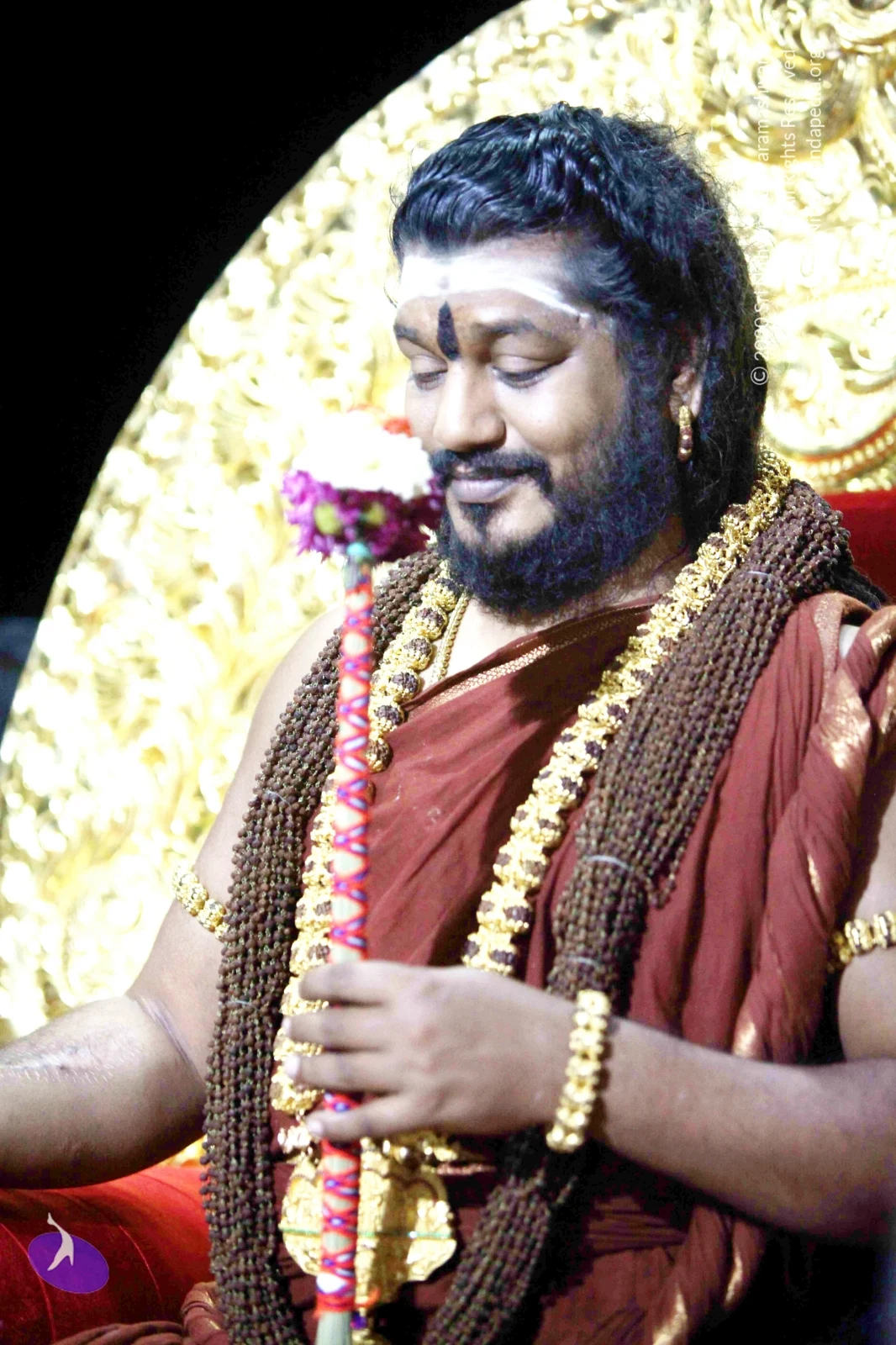
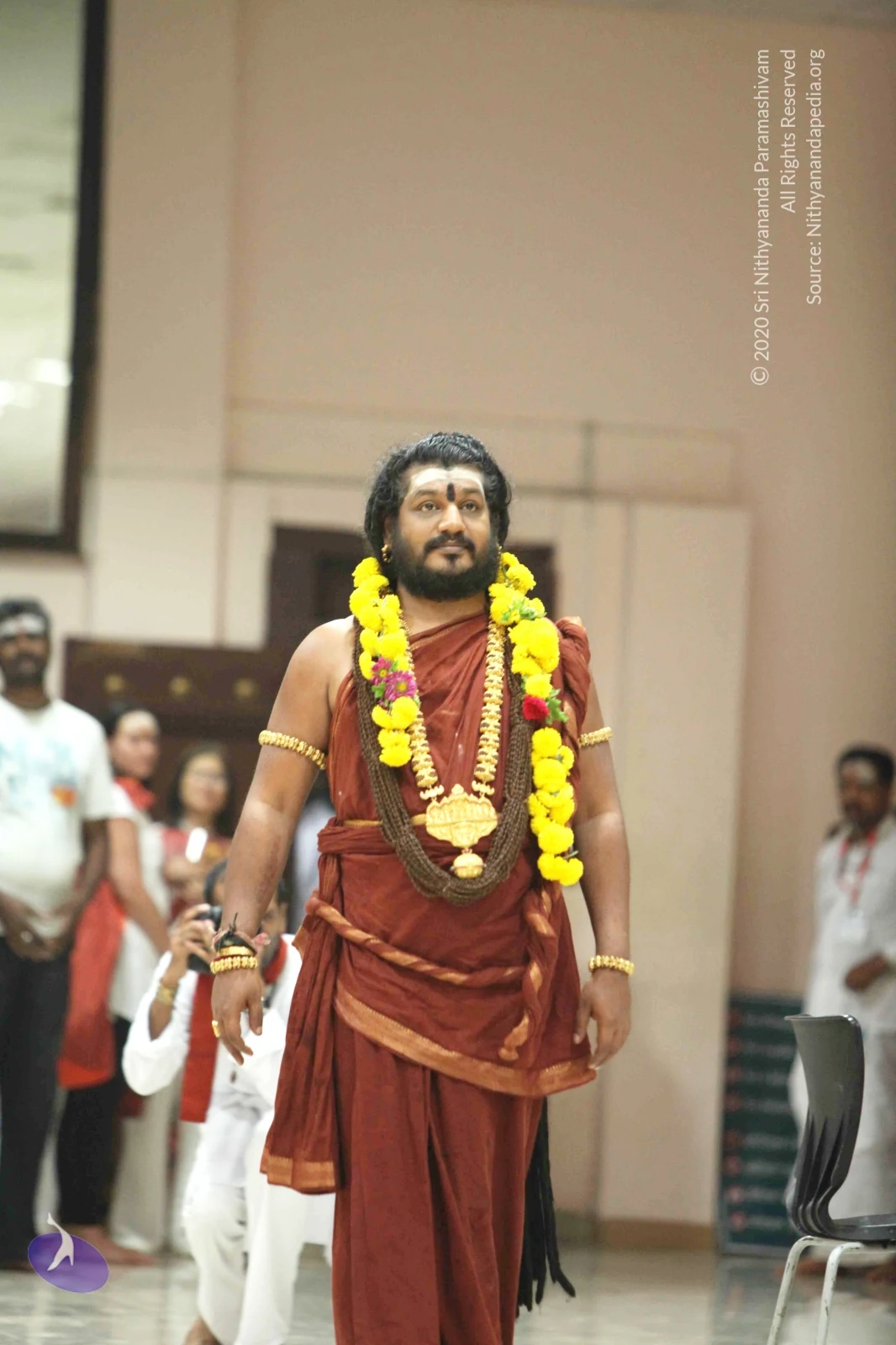
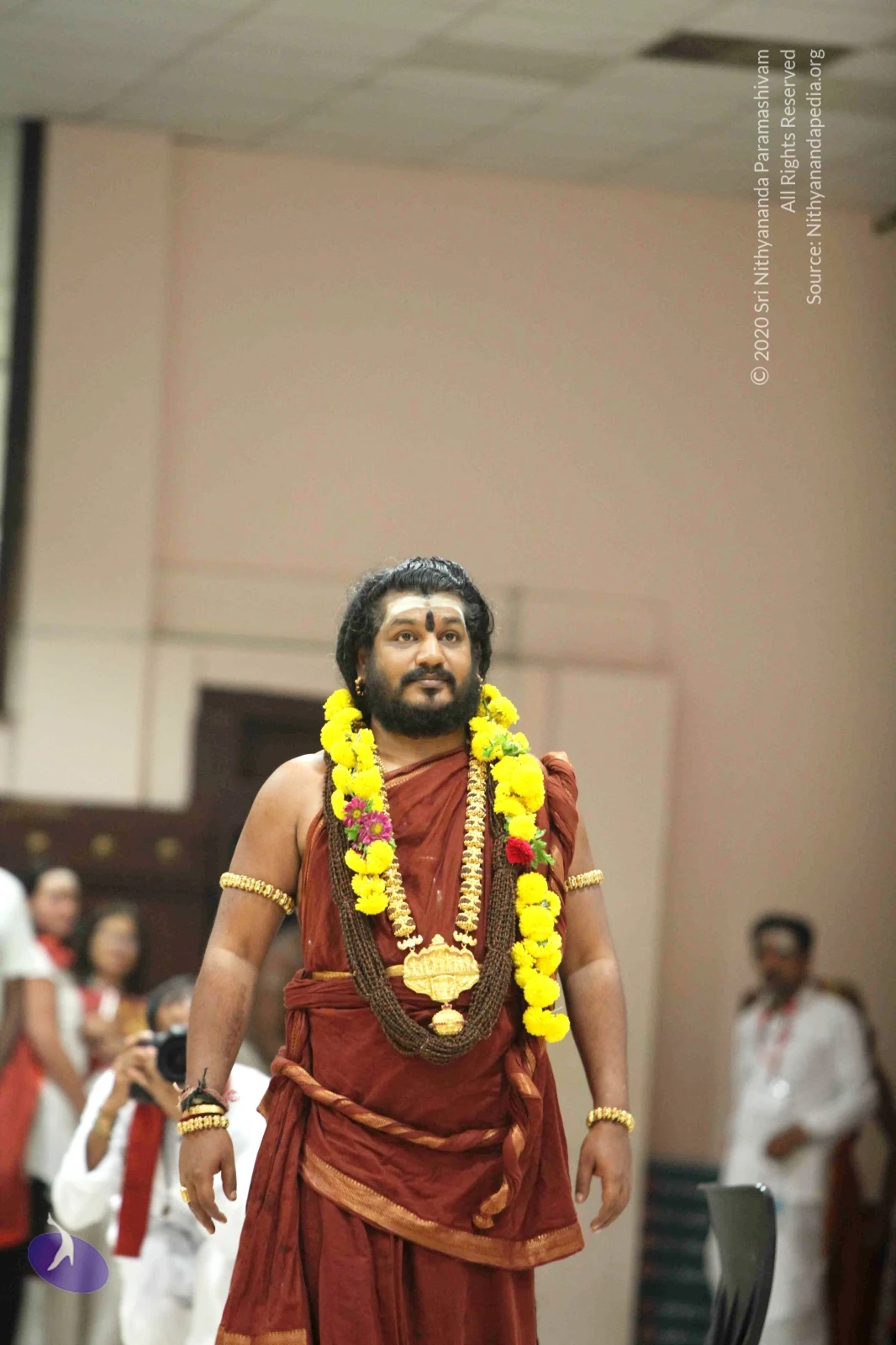
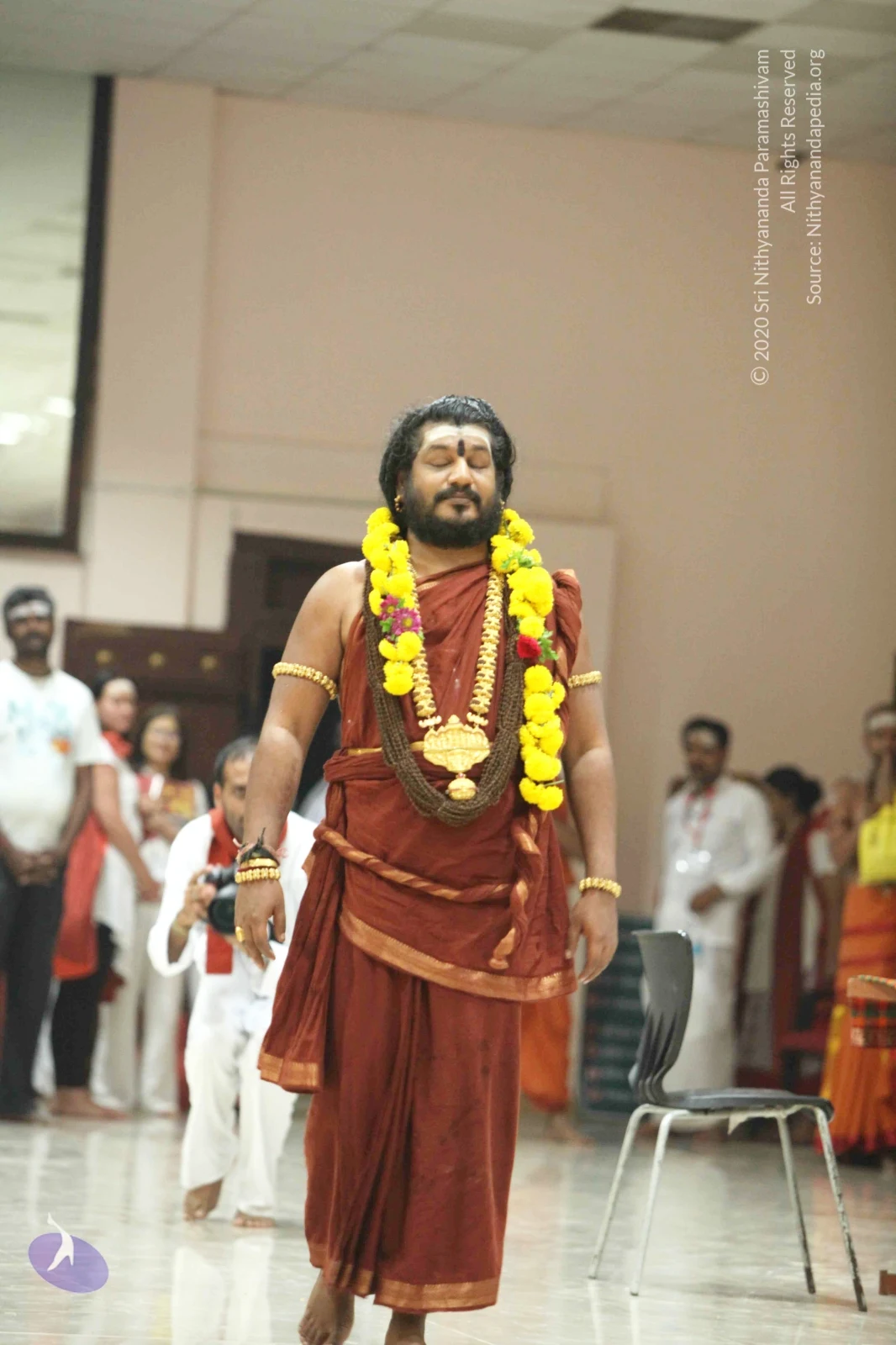
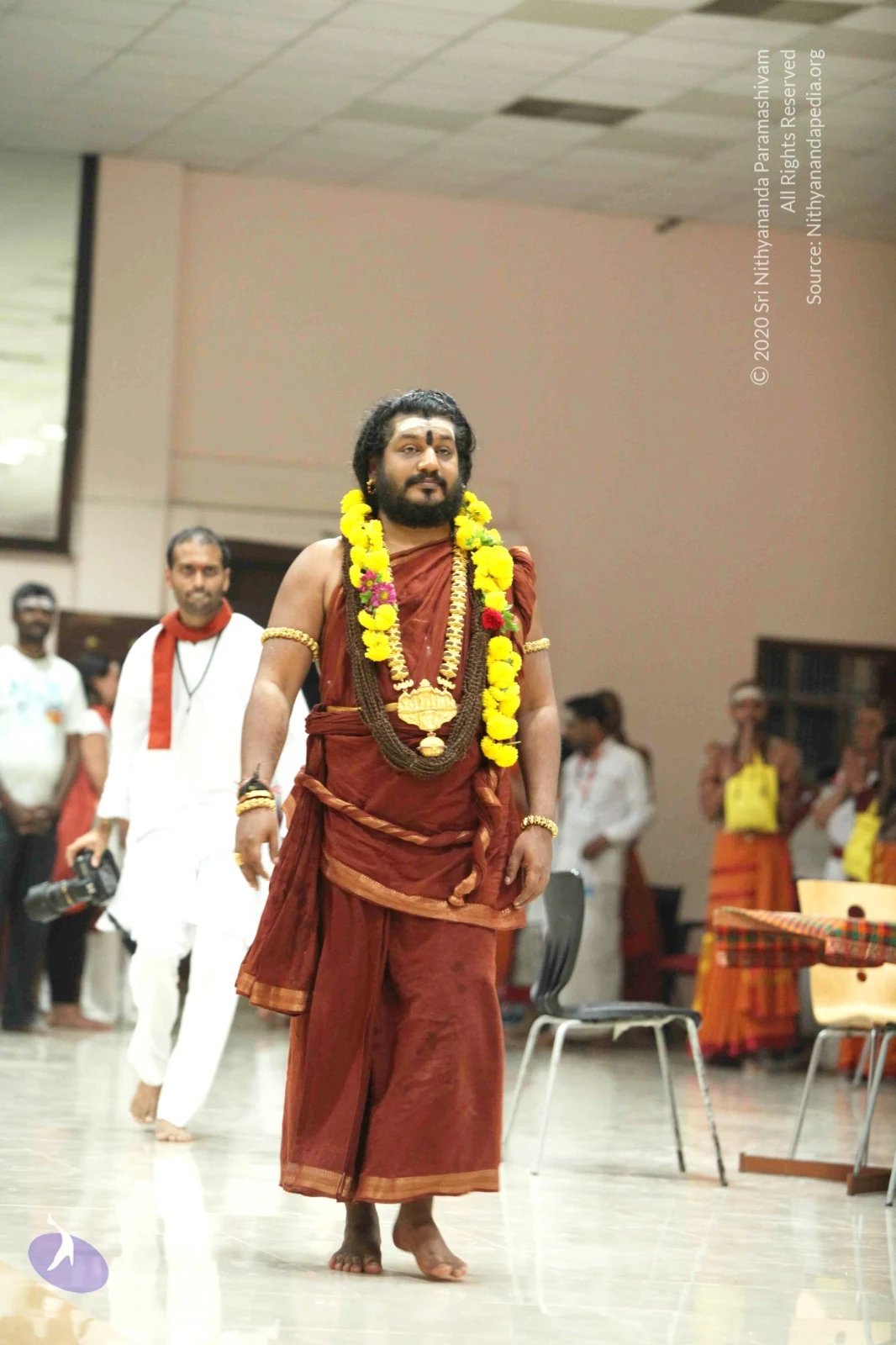
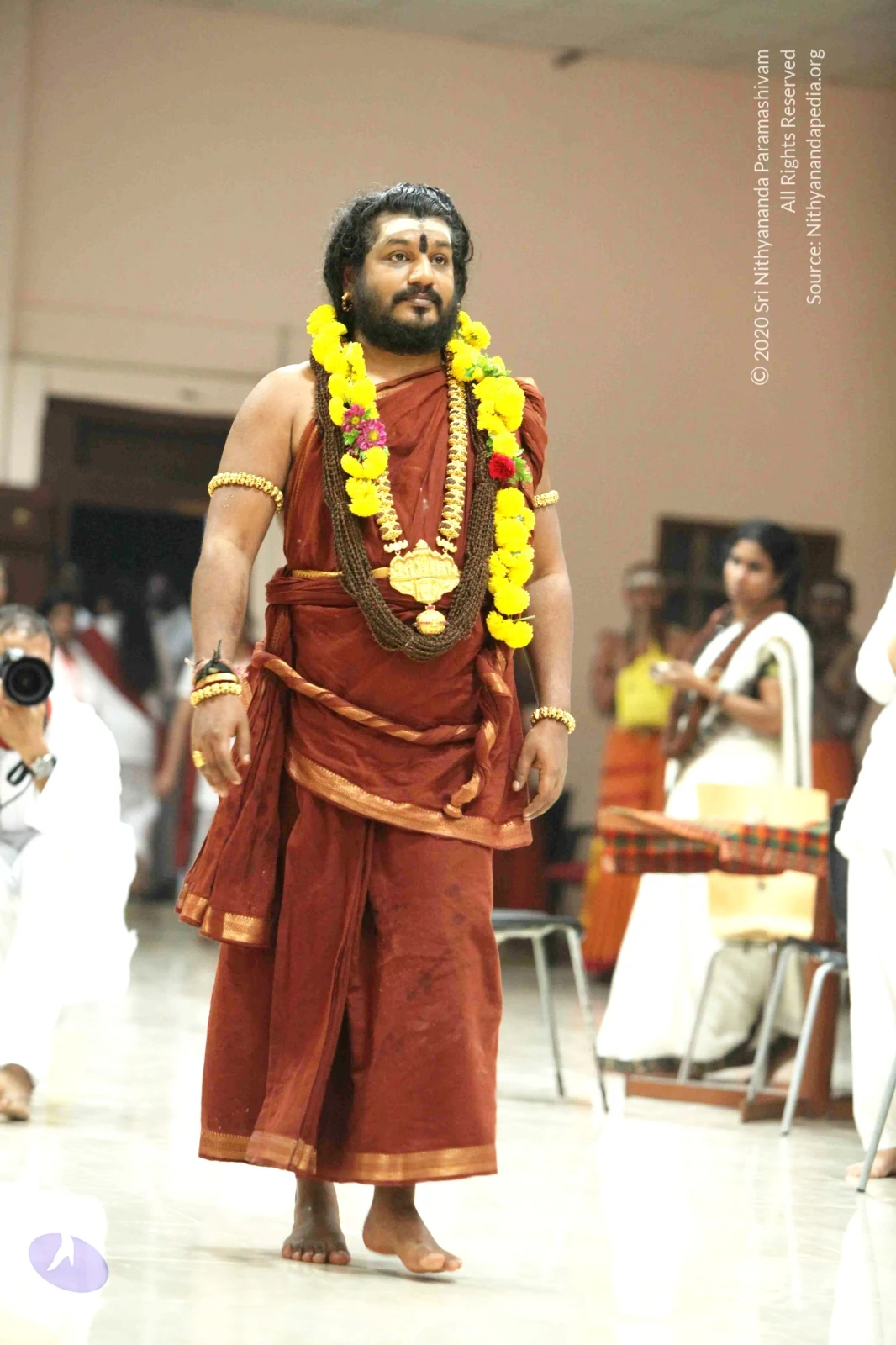
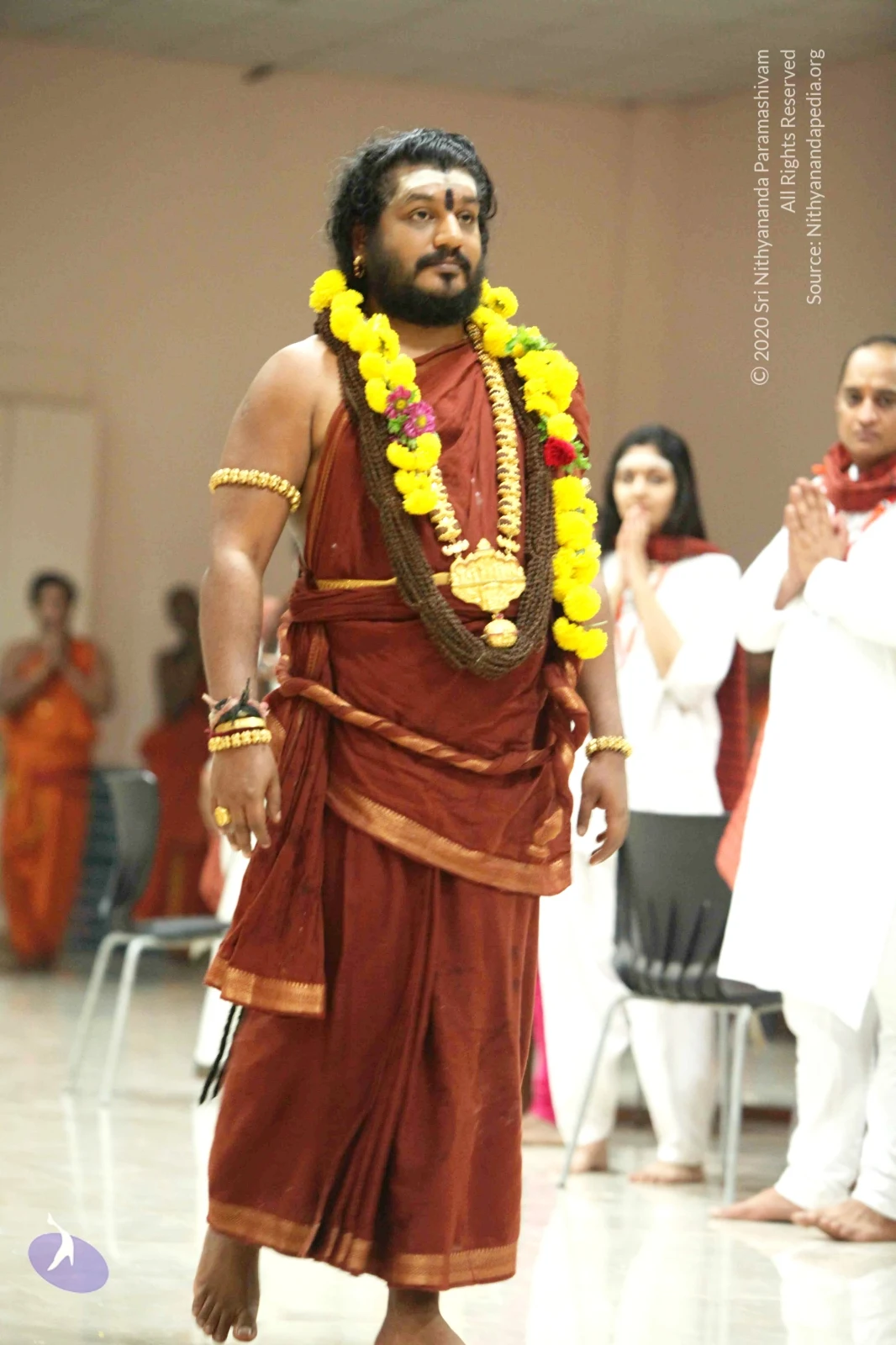
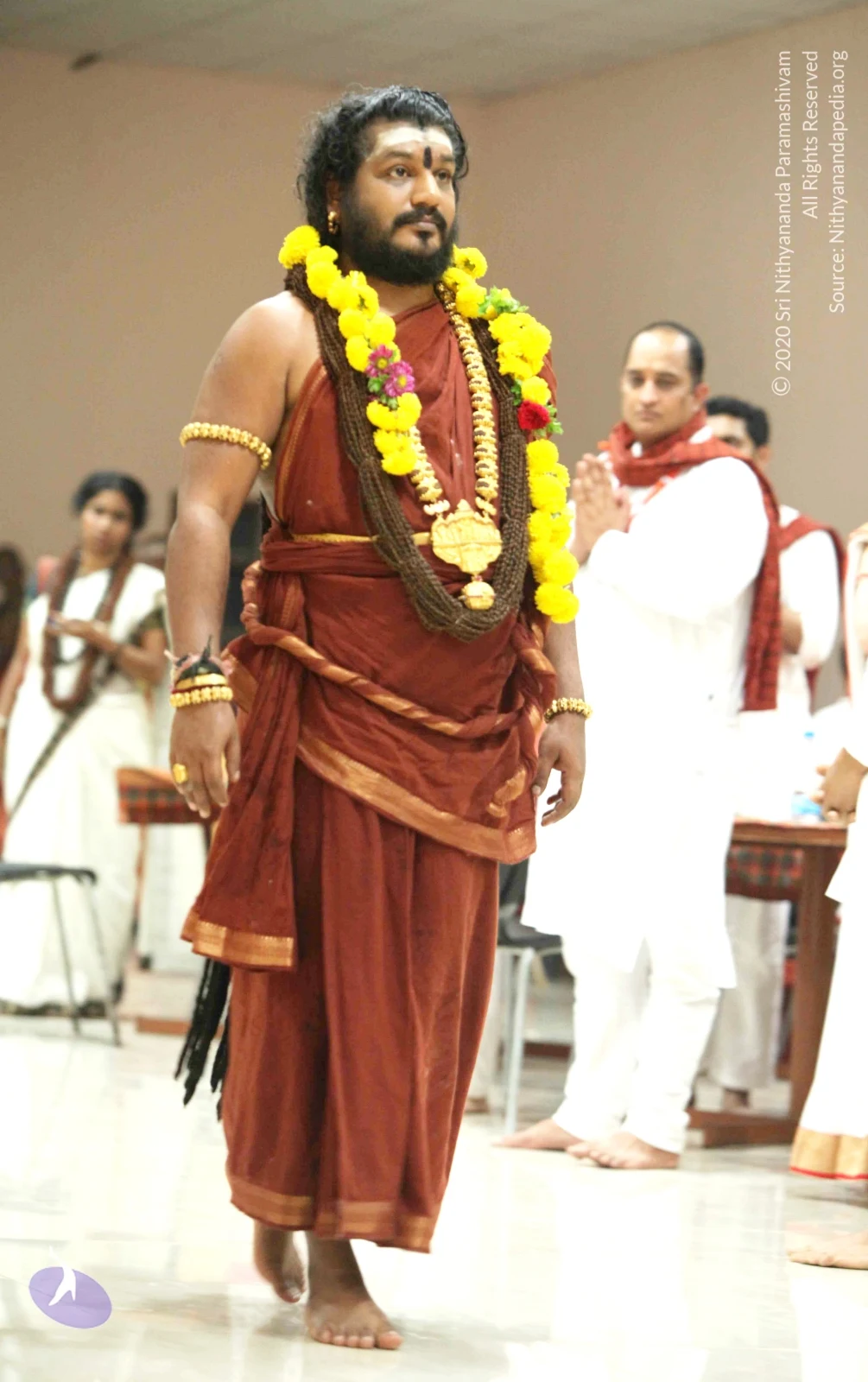
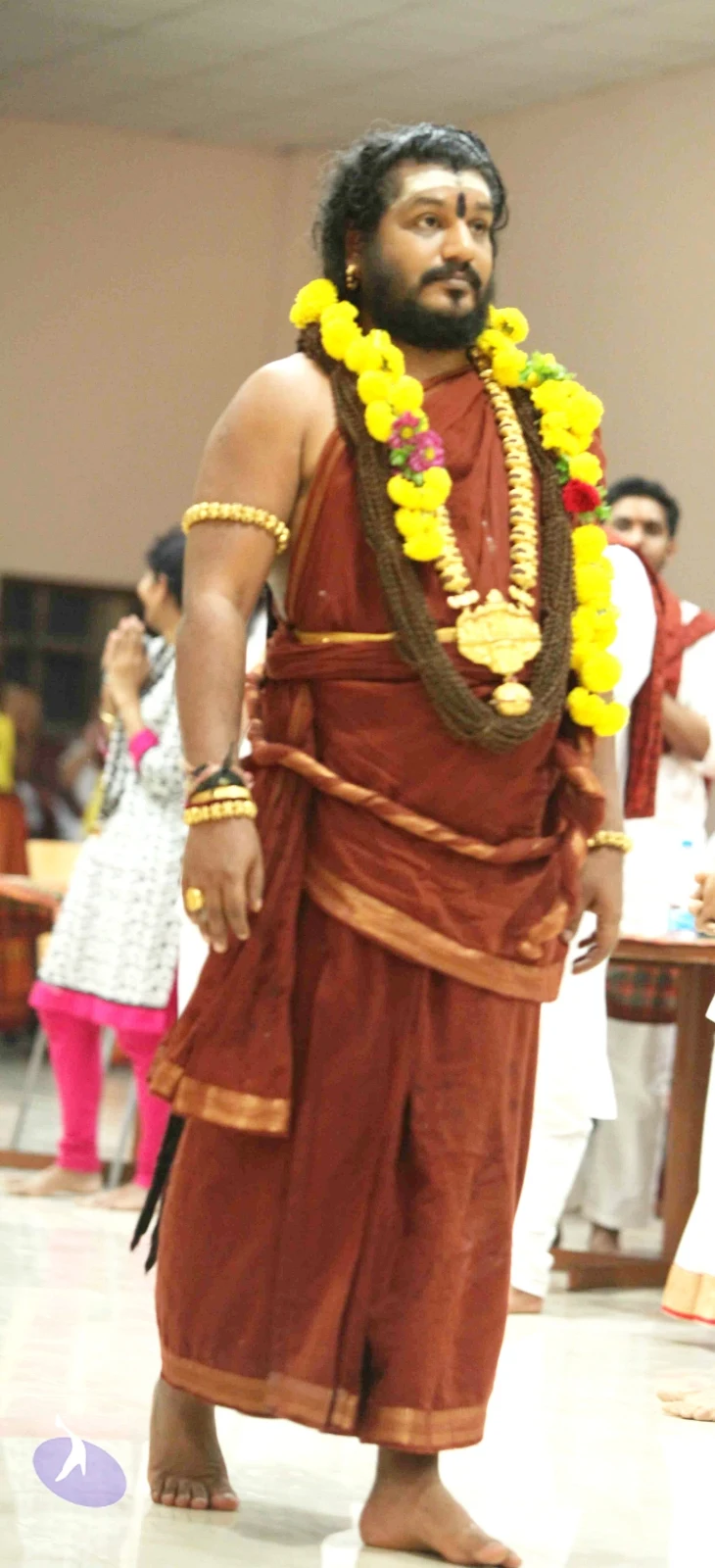
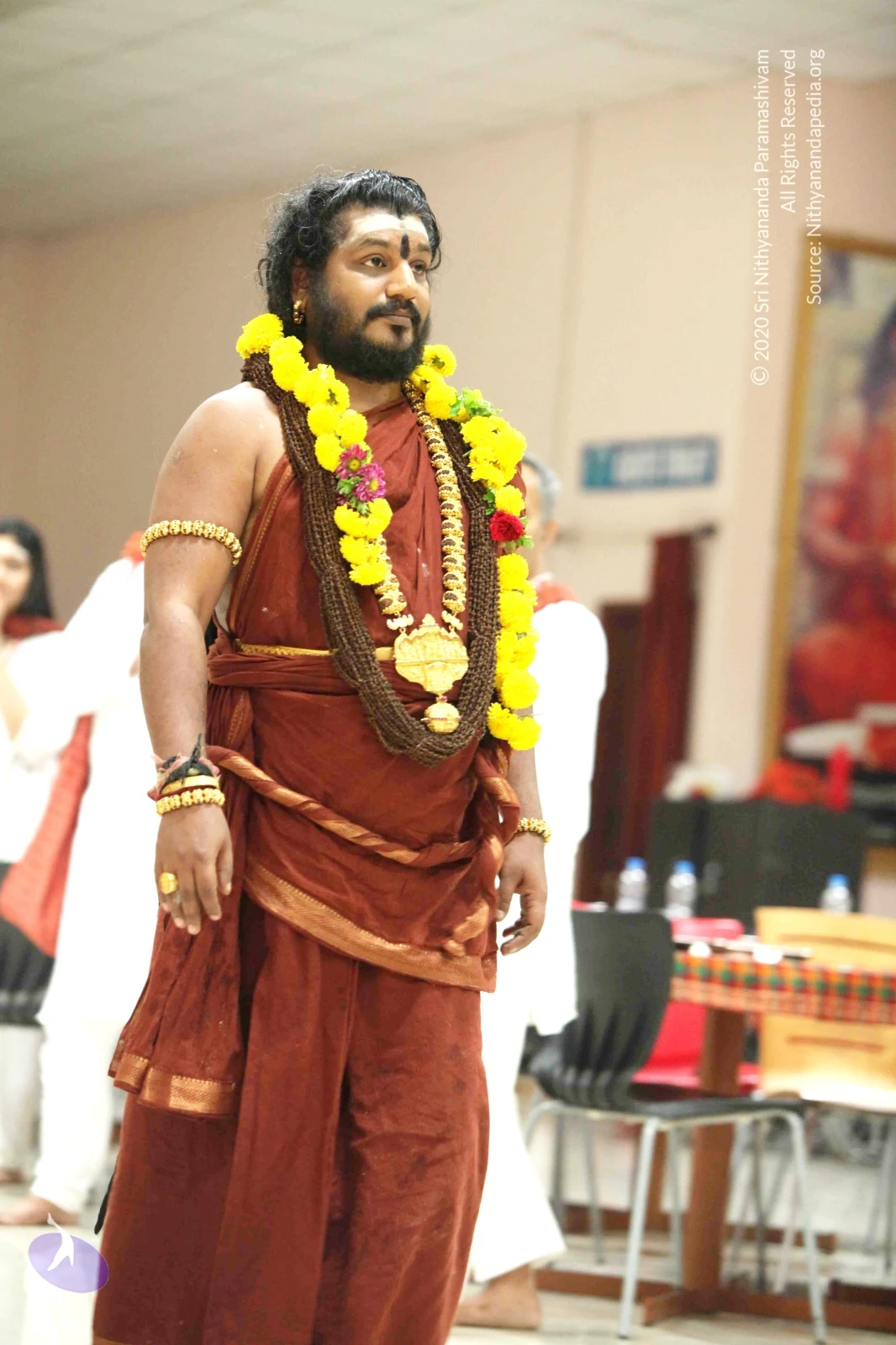
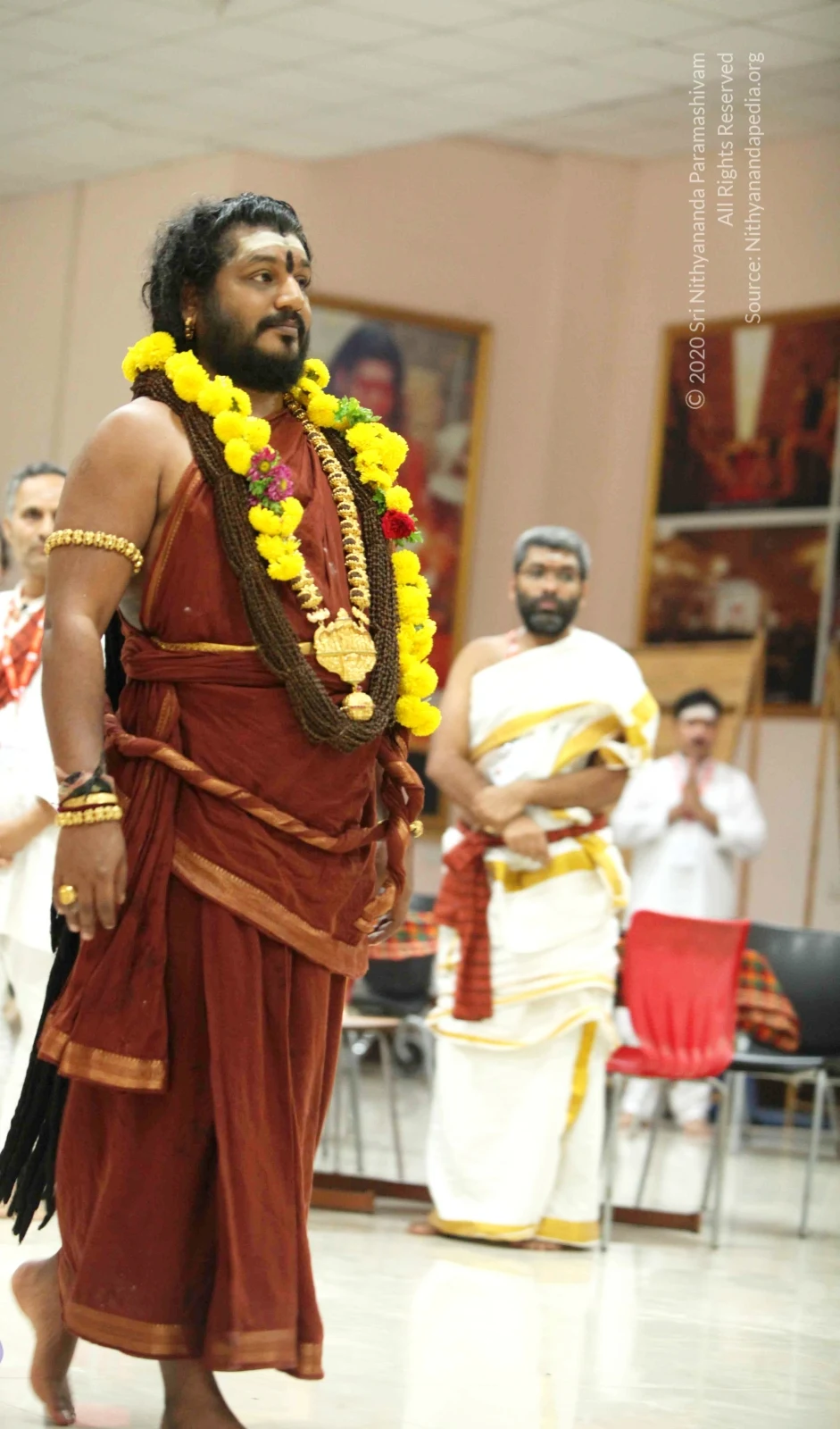
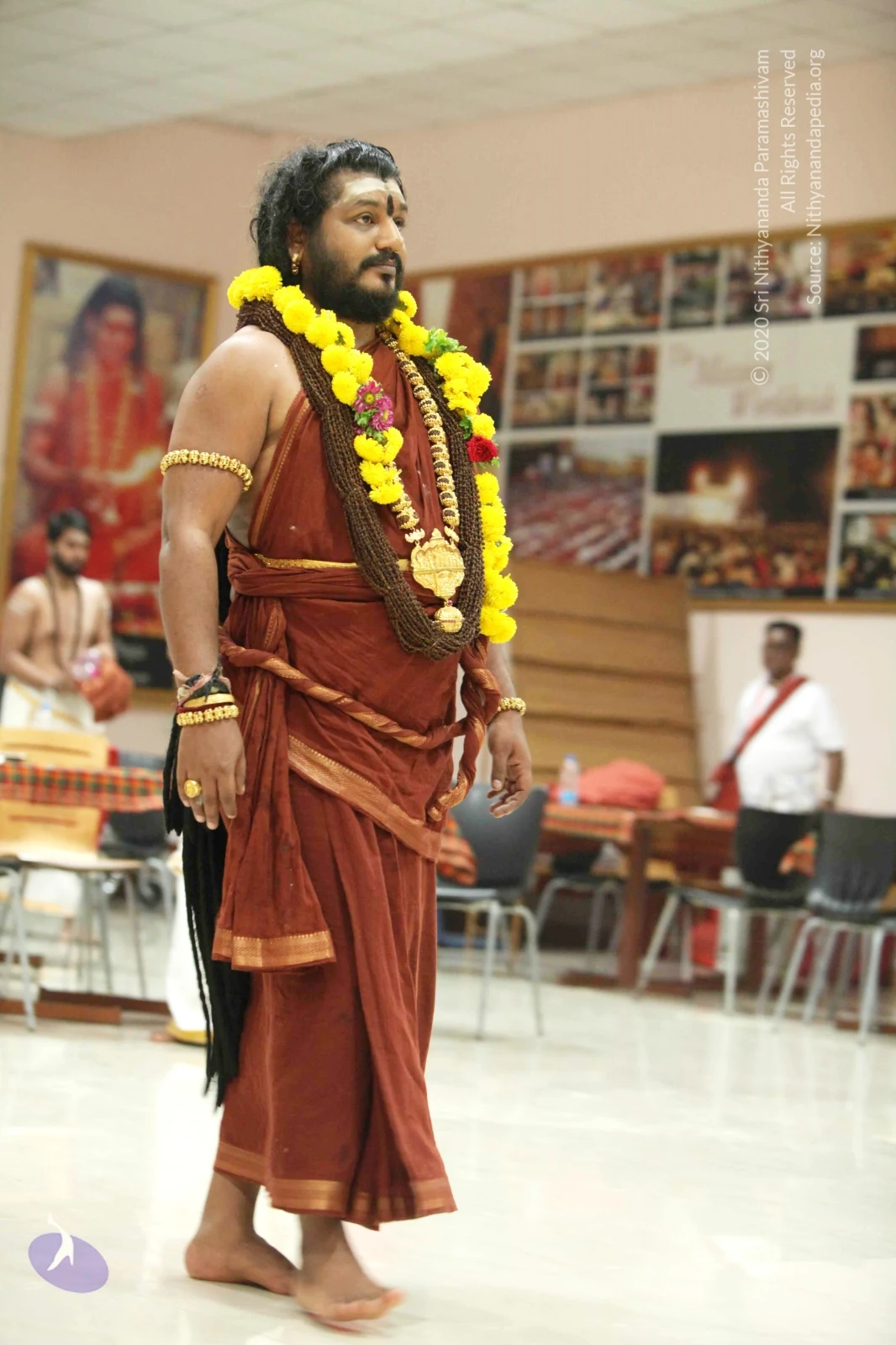
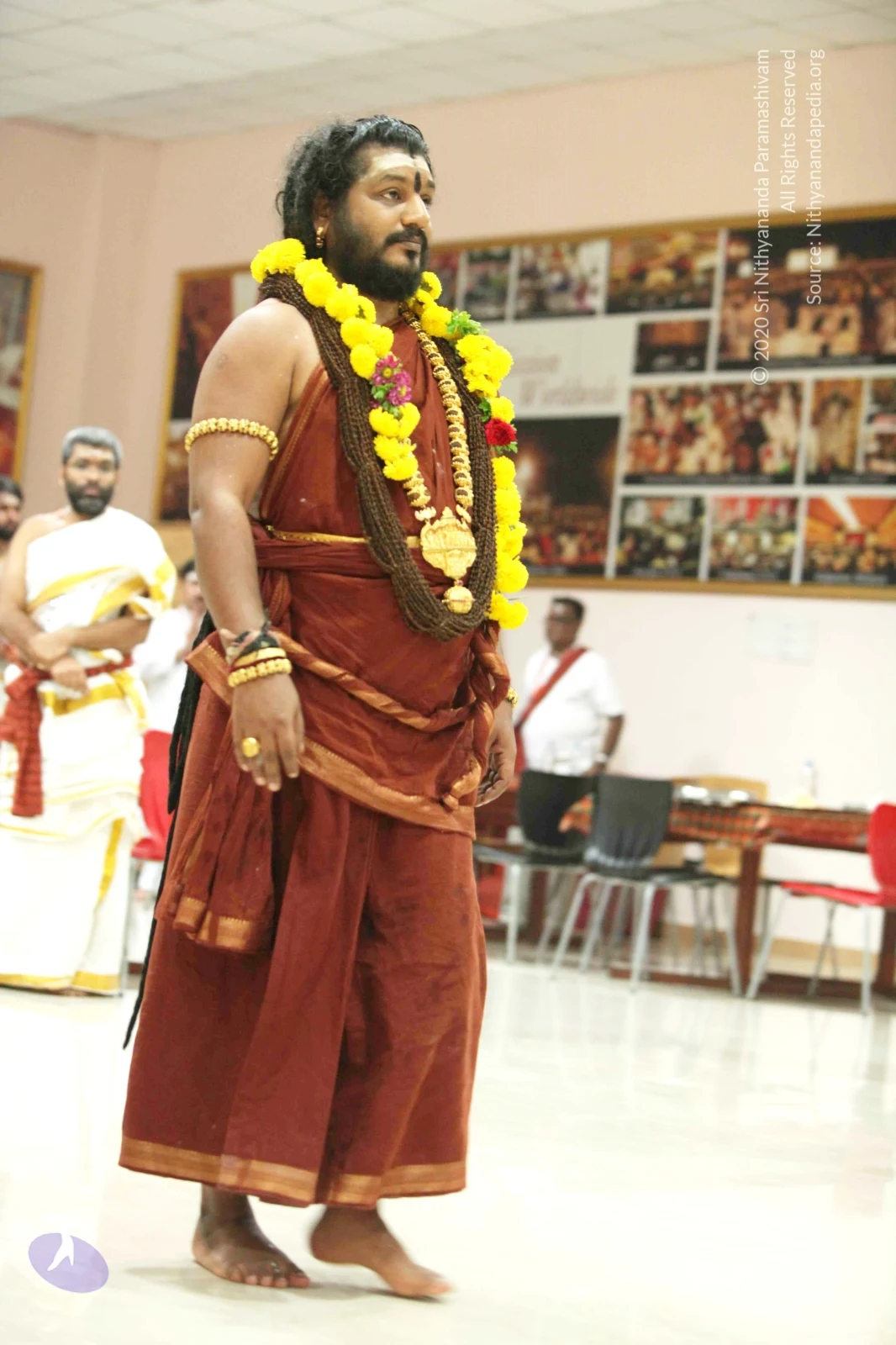
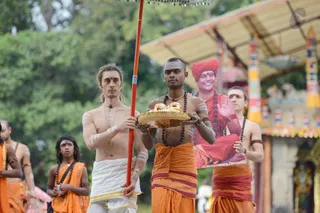
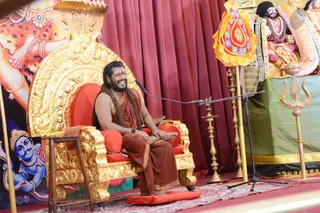
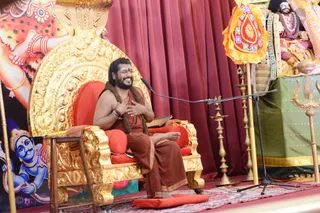
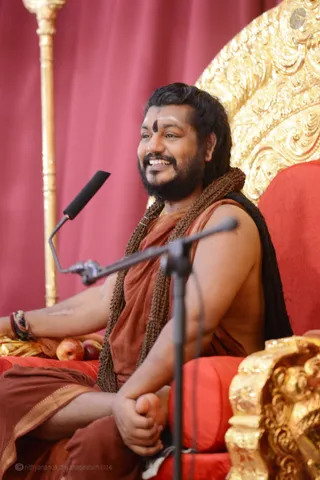
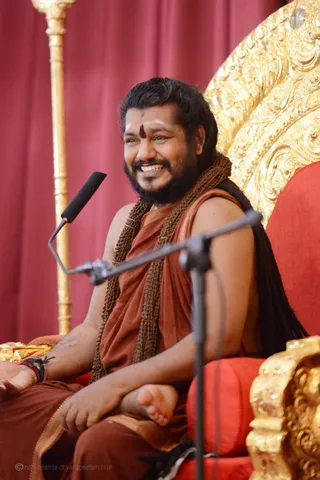
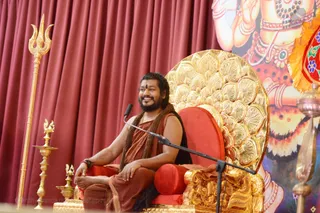
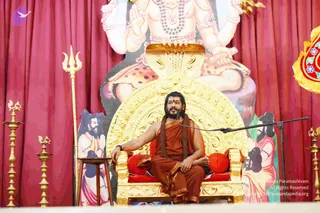
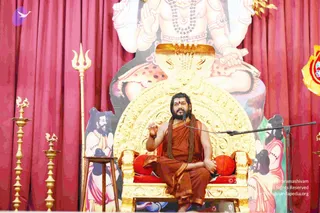
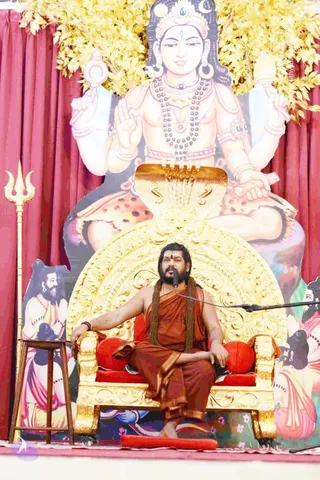
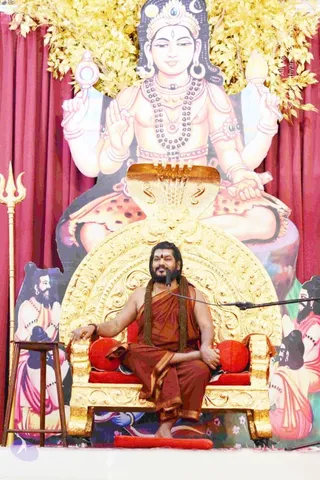
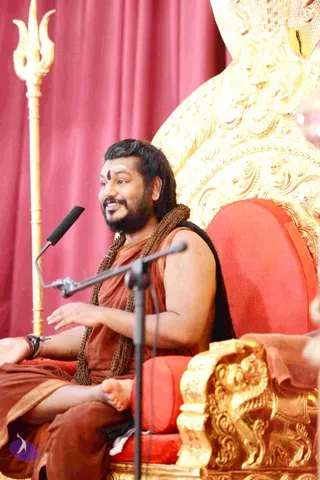
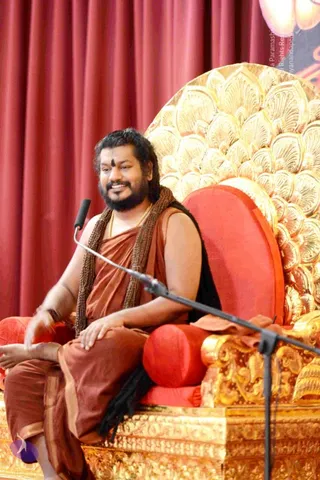
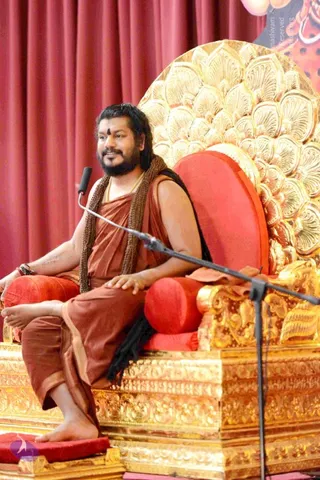
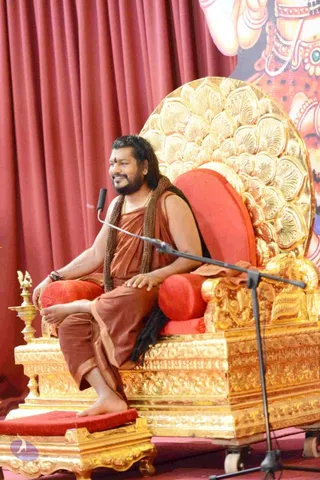
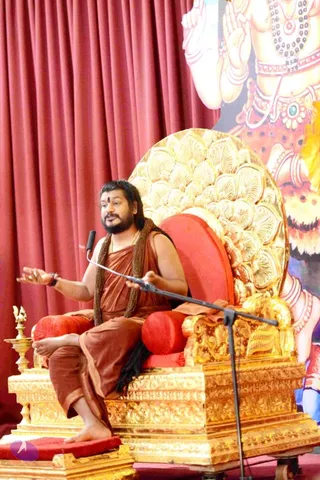
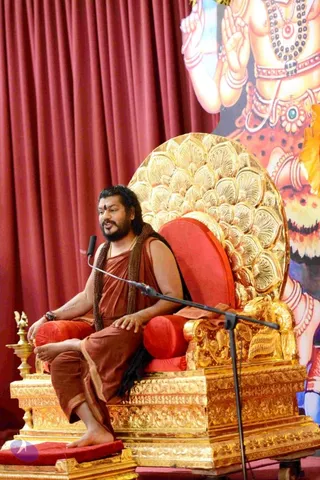
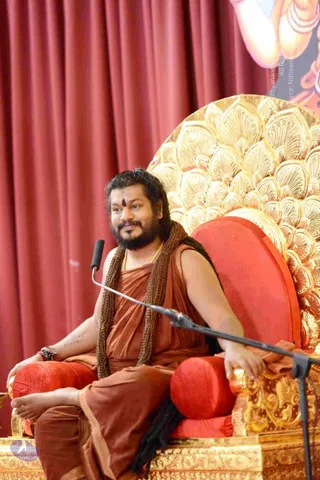
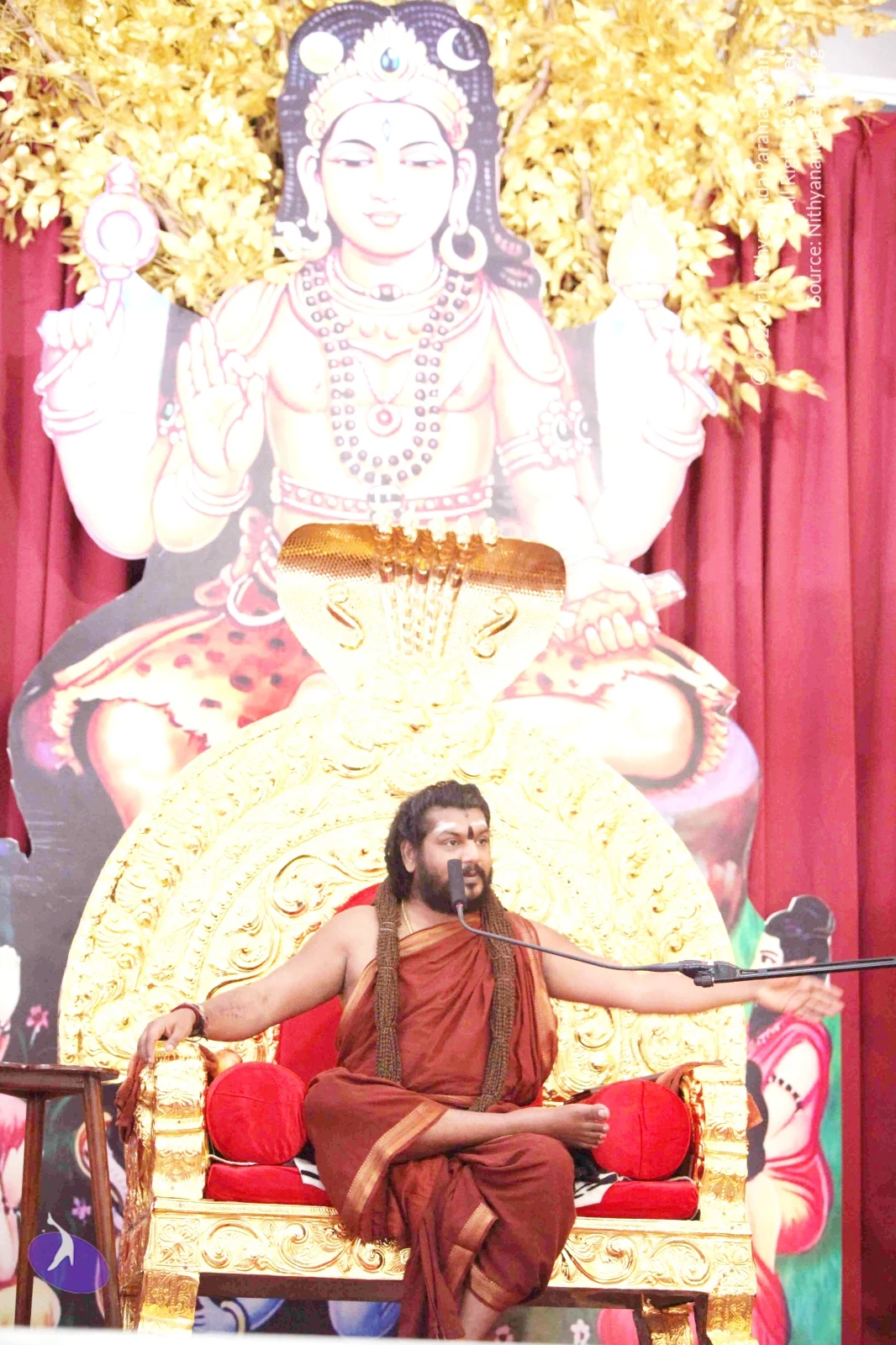
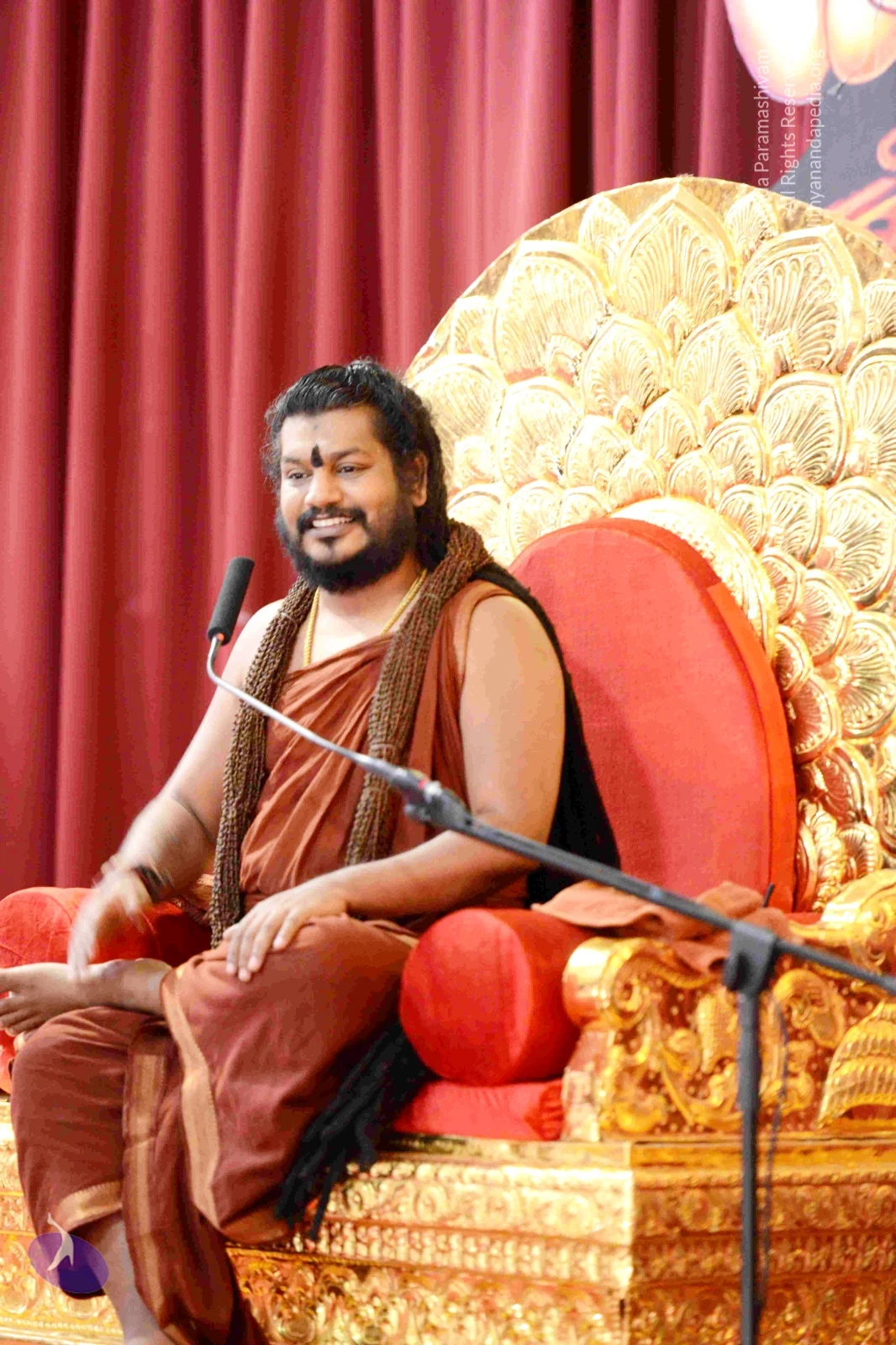
A man seated on an ornate gold throne with a golden cobra-hood backrest delivers a discourse at a microphone. He wears a rust-orange robe and a bare-chested drape, has long swept-back dark hair, a beard and a vermilion mark on his forehead, and wears a rudraksha mala. One arm is extended outward in an expressive gesture. Behind him is a large painted deity murti with four arms, a crescent moon and a third eye on the crown, flanked by golden leaves and red drapes. A golden trident stands to the left, a wooden stool sits nearby, and painted sage figures appear on the side panels. The setting is a stage satsang or discourse.A man with long dark hair and a short beard, wearing a rust-orange cloth wrap over one shoulder and a thick brown rudraksha-style mala around his neck, sits cross-legged on an ornate gold throne with red cushions. He laughs broadly with one hand raised to his chin and a vertical tilak mark on his forehead. A microphone stand is at his right and red velvet drapes hang behind him. A golden staff stands in the left foreground.A photograph of a bearded man walking barefoot across a polished floor in a hall, wearing a rust-brown dhoti and shawl with a gold border, a thick yellow and orange marigold garland, a large gold pendant on a dark rudraksha-style mala, gold armlets and bangles, and a vertical tilak on his forehead. Behind him a man in white with a red scarf walks and another carries a camera. Several people in white and orange-yellow robes stand along the wall, some with hands pressed together, and folding chairs are visible on the right.

September 29 2016

Original wiki page
Contents

Title

Autobiography of The Avatar - My Guru Who Mastered Sound

Description:

In this discourse, Paramahamsa Nithyananda reminisces about His Guru, Yogananda Puri who was a Mantramayi - Master of the sound dimension.

In this new series called Autobiography of The Avatar, Paramahamsa Nithyananda's extraordinary life is explored, and every single branch of the vast banyan tree that he is, gets revealed.

Link to Video:

VideoAudio

Transcript

Length is the Verbalisation – sound. Breadth is the Visualisation. Depth is Cognition you have about everything. So there are beings who don’t have length, only breadth and depth. They are only called Mounis. Mouni means who don’t have Verbalisation – Muni. Muni , the word means Mouni, who don’t have Verbalisation. Rishi is a person who don’t have Visualisation. They function only in sound frequency - mantra; that’s all. Even the meaning of the mantra does not matter, just by the sound they will do what they want, and they will master anything they want. (01:05)

My Guru - Yoganandapuri, from a tree, if he wants a fruit or flower to fall, he will just create a sound through a tongue as if he’s throwing a stone. That fruit will fall; means Mantramayi - Master of the sound! Once, still in Tiruvannamalai temple , sorry hill, that rock is there... huge rock... may be 30 feet tall... in Tiruvannamalai hill. In front of my eyes, we both were sitting and discussing about something and he was talking about the sound; he said sound, through sound anything can be done. In front of my eyes, through tongue he created the sound as if he is breaking that stone... that hammer and chisel. Literally, I saw the whole 30 feet stone, gave way, and still it is standing as it is... as if somebody cut it. Later on the revenue department people recorded this. It’s now in the revenue department record that this Swami has broke this stone, just by the tongue sound; because revenue department need to know how such big stone can be broken. Breaking a stone in Arunachala hill is illegal, ☺ with any material. So revenue department fellows were shaken. One day they saw such a huge stone, cracking and standing. They were enquiring, then he himself said, he himself called and told them, “I only did it.” And they asked for a witness, I said, I am the witness. And it’s now in the government record. (3:09)

Not once or twice, I have seen him doing hundreds of times.... various things. Same way, he used to make medicines. For some medicines, you need snake poison, snake venom. He is a very non-violent guy, very non-violent guy. So he doesn’t want to kill a snake for snake poison. So in a stone, it will be like a small stone on which he grinds the medicine. He will leave that. In the tongue, he will create some subtle sound, I have seen snake will come and put the teeth and vomit the poison; means like, it will bite that stone and release the poison and go. Just by sound... nothing else... Master of the Length Dimension!

Title

Powerful Clicks on the Root Patterns || Part 1 || IA || 29 Sep 2016

Description

Title : Powerful Clicks on the Root Pattern Part 1 Name of Convention - Inner Awakening Session on - Q & A Venue - Adi Kailasa, Bidadi, Bengaluru, India Date - 29 September 2016

This video is an excerpt from the Inner Awakening conducted on 29 September 2016 in Adi Kailasa, India. Here Supreme Pontiff of Hinduism Jagatguru Mahasannidhanam HDH Bhagavan #Nithyananda Paramashivam gives powerful cognitions and answers various questions about completing with the root patterns.

The Supreme Pontiff of Hinduism Jagatguru Mahasannidhanam His Divine Holiness Nithyananda Paramashivam (HDH) is the reviver of #KAILASA - the ancient enlightened civilization and the great cosmic borderless Hindu nation. Revered as the incarnation of Paramashiva - the primordial Hindu Divinity, HDH has a following of 2 billion Hindus worldwide with de facto spiritual embassies in over 150 countries. He has worked untiringly for over 26 years for the revival of Kailasa, for global peace and to give super conscious breakthrough to humanity. He has survived the worst persecution of multiple assassination attempts on person and on character by anti-Hindu elements. He is collecting, organising, preserving, time capsuling, decoding, spreading and reviving 20 Million source books of Hinduism and the 64 sacred arts & sciences like Ayurveda, music, dance, sculpting, astrology, vastu and much more. Close to 20,000 hours of HDH's timeless talks have been recorded till date (Sep 2020), which are a treasure trove of powerful cognitions to solve individual and global problems of any kind.

Link to Video:

Title

Powerful Clicks on the Root Pattern || Part 2 || IA || 29 Sep 2016

Description

Title : Powerful Clicks on the Root Pattern Part 2 Name of Convention - Inner Awakening Session on - Q & A Venue - Adi Kailasa, Bidadi, Bengaluru, India Date - 29 September 2016

This video is an excerpt from the Inner Awakening conducted on 29 September 2016 in Adi Kailasa, India. Here Supreme Pontiff of Hinduism Jagatguru Mahasannidhanam HDH Bhagavan #Nithyananda Paramashivam gives powerful cognitions and answers various questions about completing with the root patterns. HDH also shares an insightful story which happened in His life at a very young age where He felt no pattern and reaction to the incident.

The Supreme Pontiff of Hinduism Jagatguru Mahasannidhanam His Divine Holiness Nithyananda Paramashivam (HDH) is the reviver of #KAILASA - the ancient enlightened civilization and the great cosmic borderless Hindu nation. Revered as the incarnation of Paramashiva - the primordial Hindu Divinity, HDH has a following of 2 billion Hindus worldwide with de facto spiritual embassies in over 150 countries. He has worked untiringly for over 26 years for the revival of Kailasa, for global peace and to give super conscious breakthrough to humanity. He has survived the worst persecution of multiple assassination attempts on person and on character by anti-Hindu elements. He is collecting, organising, preserving, time capsuling, decoding, spreading and reviving 20 Million source books of Hinduism and the 64 sacred arts & sciences like Ayurveda, music, dance, sculpting, astrology, vastu and much more. Close to 20,000 hours of HDH's timeless talks have been recorded till date (Sep 2020), which are a treasure trove of powerful cognitions to solve individual and global problems of any kind.

Link to Video:

Title

Initiation into Oneness and Atma Linga || Part 1 || IA || 29 Sep 2016

Description

Title : Initiation into Oneness and Atma Linga Part 1 Name of Convention - Inner Awakening Session on - Q & A Venue - Adi Kailasa, Bidadi, Bengaluru, India Date - 29 September 2016

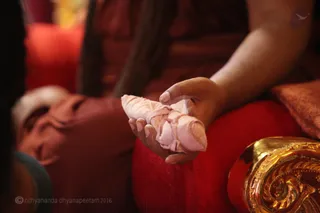
This video is an excerpt from the Inner Awakening conducted on 29 September 2016 in Adi Kailasa, India. Here Supreme Pontiff of Hinduism Jagatguru Mahasannidhanam HDH Bhagavan #Nithyananda Paramashivam talks about initiation into oneness and the Atma Linga. HDH says with the initiation of oneness, this Spatika Atma Linga is given as a gift as a privilege to worship the Linga in the form of as per the Agamas which keeps the Kundalini up at the optimum level.

The Supreme Pontiff of Hinduism Jagatguru Mahasannidhanam His Divine Holiness Nithyananda Paramashivam (HDH) is the reviver of #KAILASA - the ancient enlightened civilization and the great cosmic borderless Hindu nation. Revered as the incarnation of Paramashiva - the primordial Hindu Divinity, HDH has a following of 2 billion Hindus worldwide with de facto spiritual embassies in over 150 countries. He has worked untiringly for over 26 years for the revival of Kailasa, for global peace and to give super conscious breakthrough to humanity. He has survived the worst persecution of multiple assassination attempts on person and on character by anti-Hindu elements. He is collecting, organising, preserving, time capsuling, decoding, spreading and reviving 20 Million source books of Hinduism and the 64 sacred arts & sciences like Ayurveda, music, dance, sculpting, astrology, vastu and much more. Close to 20,000 hours of HDH's timeless talks have been recorded till date (Sep 2020), which are a treasure trove of powerful cognitions to solve individual and global problems of any kind.

Link to Video:

Title

Initiation into Oneness and Atma Linga || Part 2 || IA || 29 Sep 2016

Description

Initiation into Oneness and Atma Linga Part 2 Name of Convention - Inner Awakening Session on - Q & A Venue - Adi Kailasa, Bidadi, Bengaluru, India Date - 29 September 2016

This video is an excerpt from the Inner Awakening conducted on 29 September 2016 in Adi Kailasa, India. Here Supreme Pontiff of Hinduism Jagatguru Mahasannidhanam HDH Bhagavan #Nithyananda Paramashivam answers various questions about initiations, vegetarianism, and guidelines to follow as per the Agama when taking Shiva and Visheha Deeksha, or initiation into oneness and right to worship the Atma Linga through Puja.

The Supreme Pontiff of Hinduism Jagatguru Mahasannidhanam His Divine Holiness Nithyananda Paramashivam (HDH) is the reviver of #KAILASA - the ancient enlightened civilization and the great cosmic borderless Hindu nation. Revered as the incarnation of Paramashiva - the primordial Hindu Divinity, HDH has a following of 2 billion Hindus worldwide with de facto spiritual embassies in over 150 countries. He has worked untiringly for over 26 years for the revival of Kailasa, for global peace and to give super conscious breakthrough to humanity. He has survived the worst persecution of multiple assassination attempts on person and on character by anti-Hindu elements. He is collecting, organising, preserving, time capsuling, decoding, spreading and reviving 20 Million source books of Hinduism and the 64 sacred arts & sciences like Ayurveda, music, dance, sculpting, astrology, vastu and much more. Close to 20,000 hours of HDH's timeless talks have been recorded till date (Sep 2020), which are a treasure trove of powerful cognitions to solve individual and global problems of any kind.

Link to Video:

Title

Initiation into Oneness and Atma Linga || Part 3 || IA || 29 Sep 2016

Description

Initiation into Oneness and Atma Linga Part 3 Name of Convention - Inner Awakening Session on - Q & A Venue - Adi Kailasa, Bidadi, Bengaluru, India Date - 29 September 2016

This video is an excerpt from the Inner Awakening conducted on 29 September 2016 in Adi Kailasa, India. Here Supreme Pontiff of Hinduism Jagatguru Mahasannidhanam HDH Bhagavan #Nithyananda Paramashivam answers various questions about initiations, vegetarianism, and guidelines to follow as per the Agama when taking Shiva and Visheha Deeksha, or initiation into oneness and right to worship the Atma Linga through Puja.

The Supreme Pontiff of Hinduism Jagatguru Mahasannidhanam His Divine Holiness Nithyananda Paramashivam (HDH) is the reviver of #KAILASA - the ancient enlightened civilization and the great cosmic borderless Hindu nation. Revered as the incarnation of Paramashiva - the primordial Hindu Divinity, HDH has a following of 2 billion Hindus worldwide with de facto spiritual embassies in over 150 countries. He has worked untiringly for over 26 years for the revival of Kailasa, for global peace and to give super conscious breakthrough to humanity. He has survived the worst persecution of multiple assassination attempts on person and on character by anti-Hindu elements. He is collecting, organising, preserving, time capsuling, decoding, spreading and reviving 20 Million source books of Hinduism and the 64 sacred arts & sciences like Ayurveda, music, dance, sculpting, astrology, vastu and much more. Close to 20,000 hours of HDH's timeless talks have been recorded till date (Sep 2020), which are a treasure trove of powerful cognitions to solve individual and global problems of any kind.

Link to Video:

Title

Get Out of the Matrix with This One Principle || IA || 29 Sep 2016

Description

Title : Get Out of the Matrix with This One Principle Name of Convention - Inner Awakening Session on - Q & A Venue - Adi Kailasa, Bidadi, Bengaluru, India Date - 29 September 2016

This video is an excerpt from the Inner Awakening conducted on 29 September 2016 in Adi Kailasa, India. Here Supreme Pontiff of Hinduism Jagatguru Mahasannidhanam HDH Bhagavan #Nithyananda #Paramashivam helps delegates discover the root pattern which came from individual identity of the root pattern by revealing the cosmic principle of the common currency to access all 14 Universes and 11 dimensions. HDH further explains the importance of, the why's and how's to function out of this principle and apply it as a solution and make it as an asset in life.

The Supreme Pontiff of Hinduism Jagatguru Mahasannidhanam His Divine Holiness Nithyananda Paramashivam (HDH) is the reviver of #KAILASA - the ancient enlightened civilization and the great cosmic borderless Hindu nation. Revered as the incarnation of Paramashiva - the primordial Hindu Divinity, HDH has a following of 2 billion Hindus worldwide with de facto spiritual embassies in over 150 countries. He has worked untiringly for over 26 years for the revival of Kailasa, for global peace and to give super conscious breakthrough to humanity. He has survived the worst persecution of multiple assassination attempts on person and on character by anti-Hindu elements. He is collecting, organising, preserving, time capsuling, decoding, spreading and reviving 20 Million source books of Hinduism and the 64 sacred arts & sciences like Ayurveda, music, dance, sculpting, astrology, vastu and much more. Close to 20,000 hours of HDH's timeless talks have been recorded till date (Sep 2020), which are a treasure trove of powerful cognitions to solve individual and global problems of any kind.

Link to Video:

Photos From The Day:

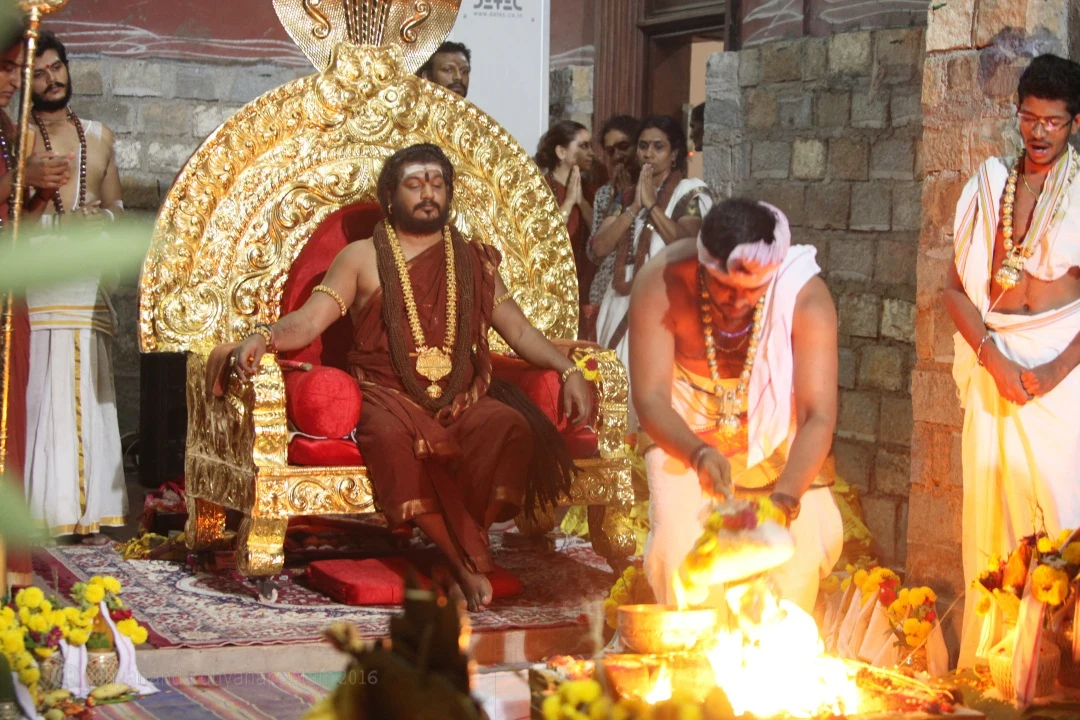
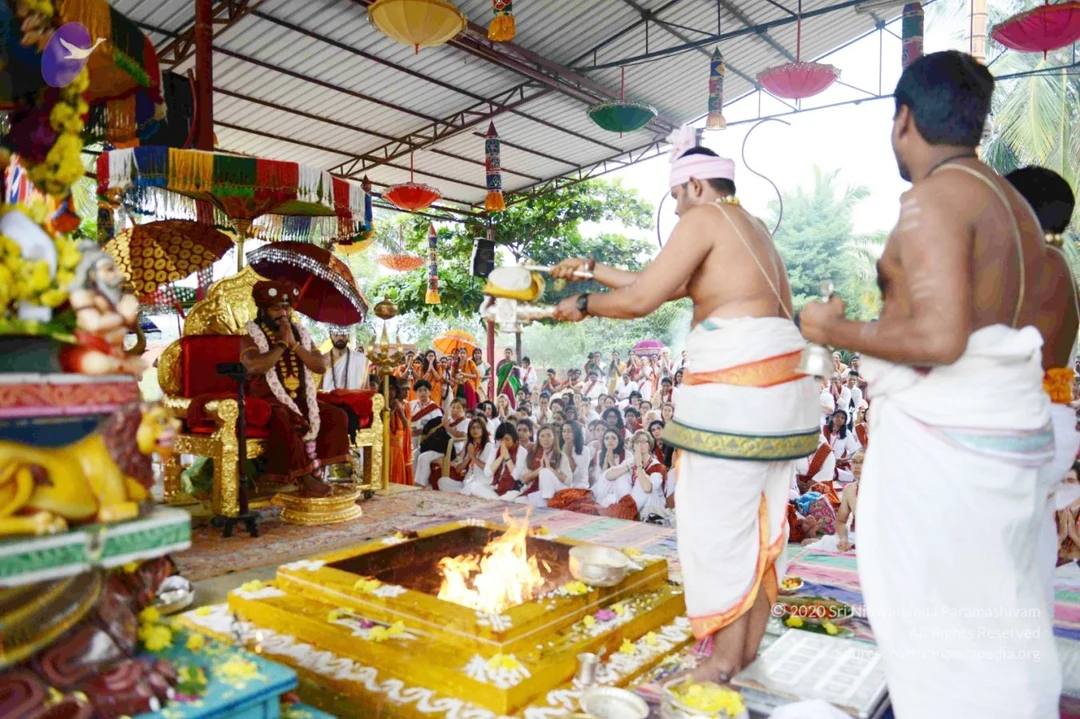
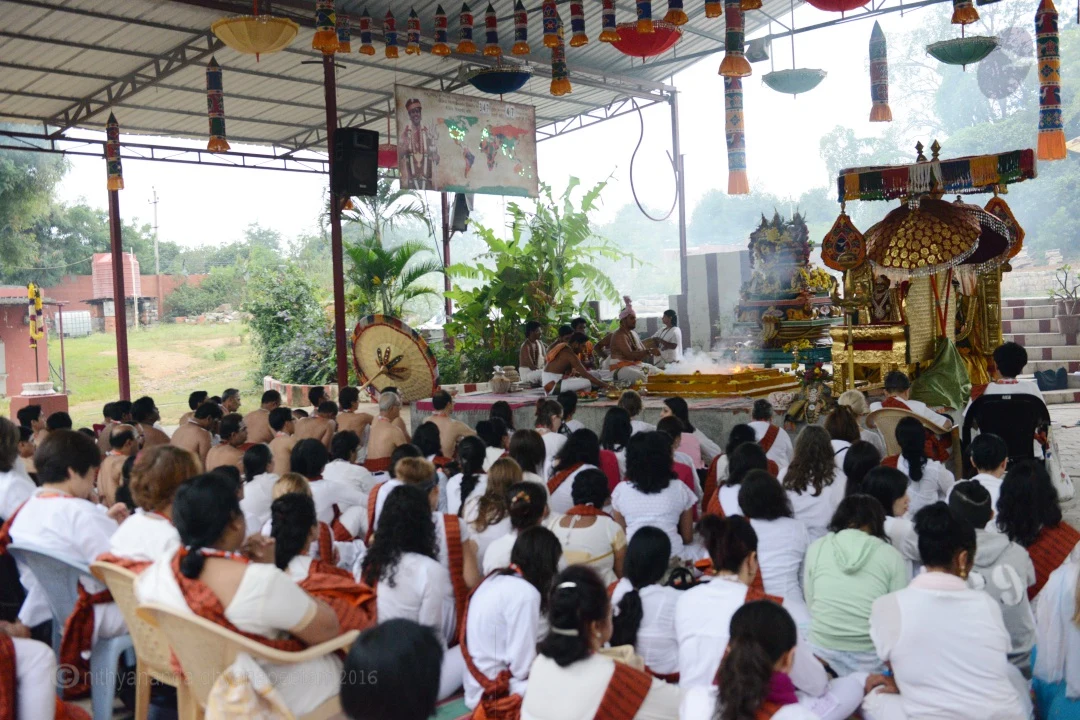
Rudra Homa
IA Sessions
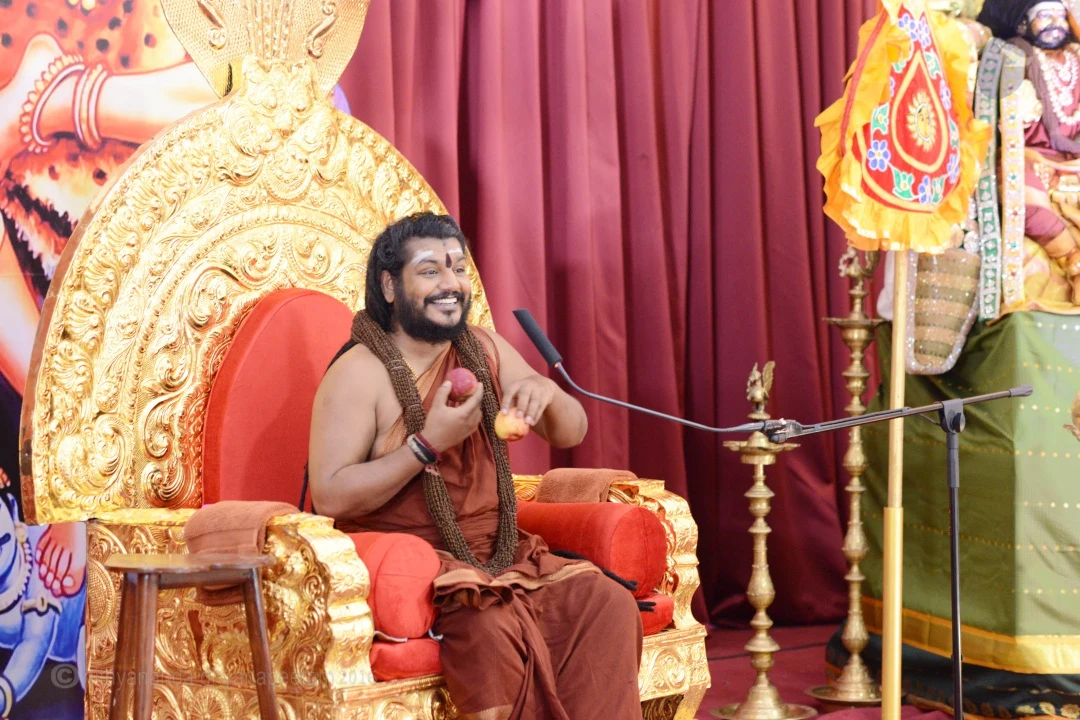
Vishesha Deeksha
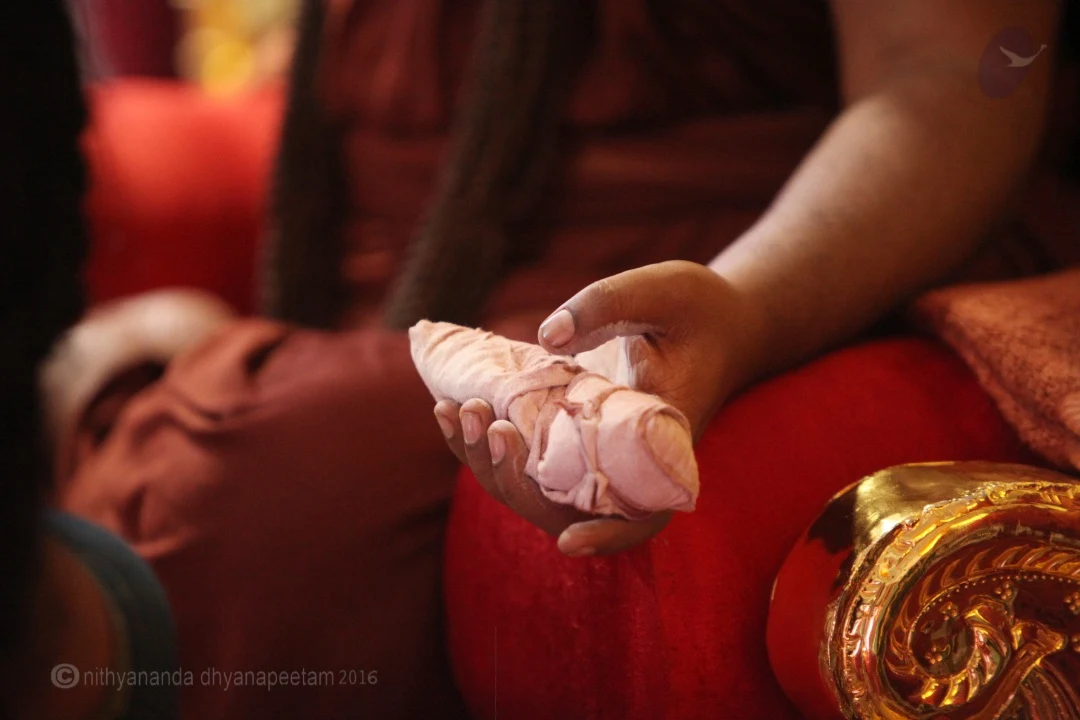
Photos Of The Day:

IA-Rudra-Homa

IA-Session

IA-Vishesha-Deeksha

,

Photos from this day

View all 205 photos

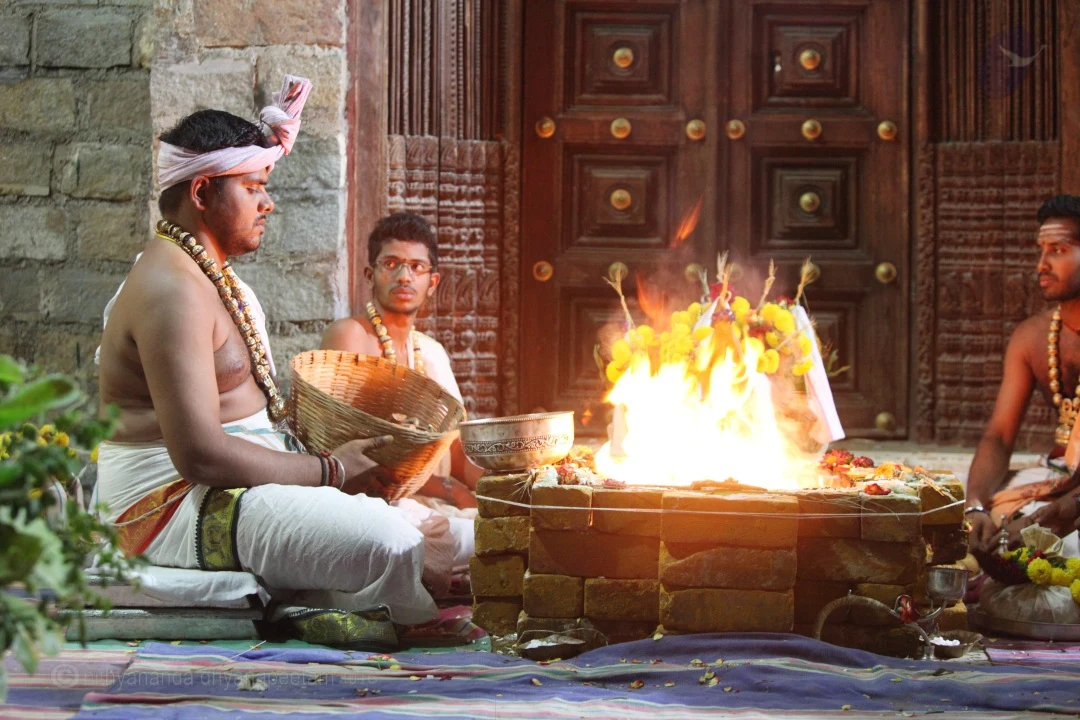
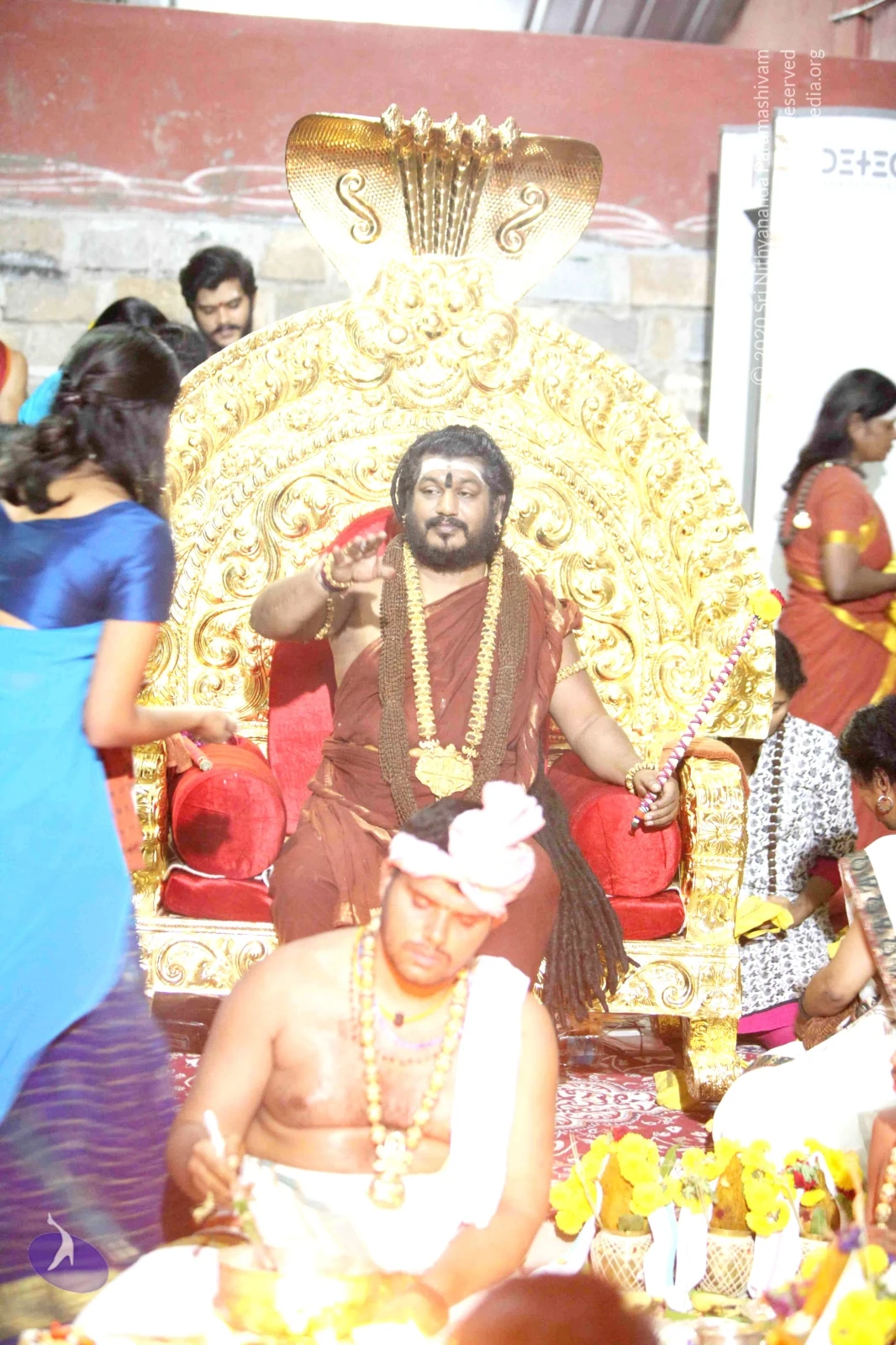
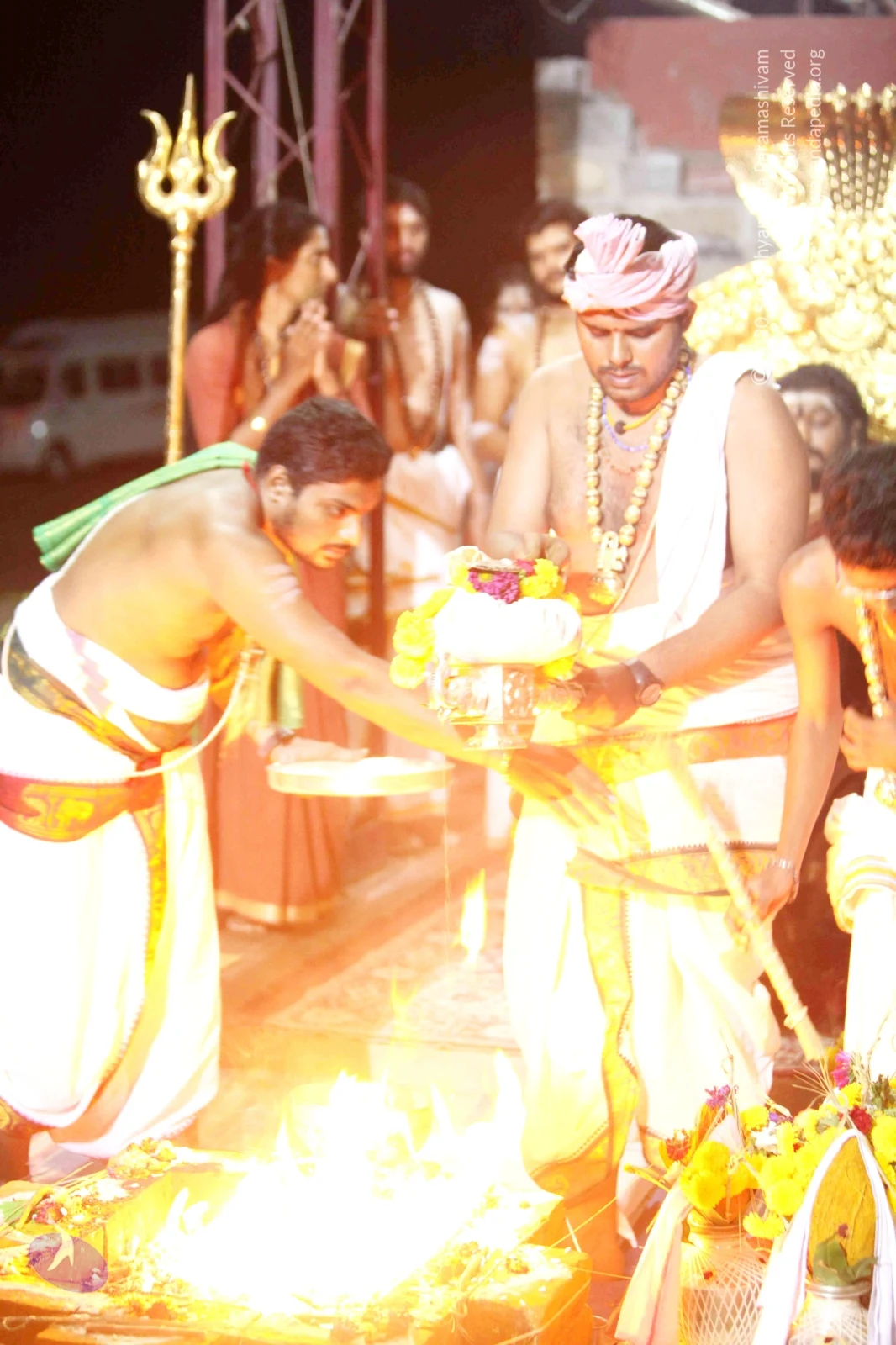
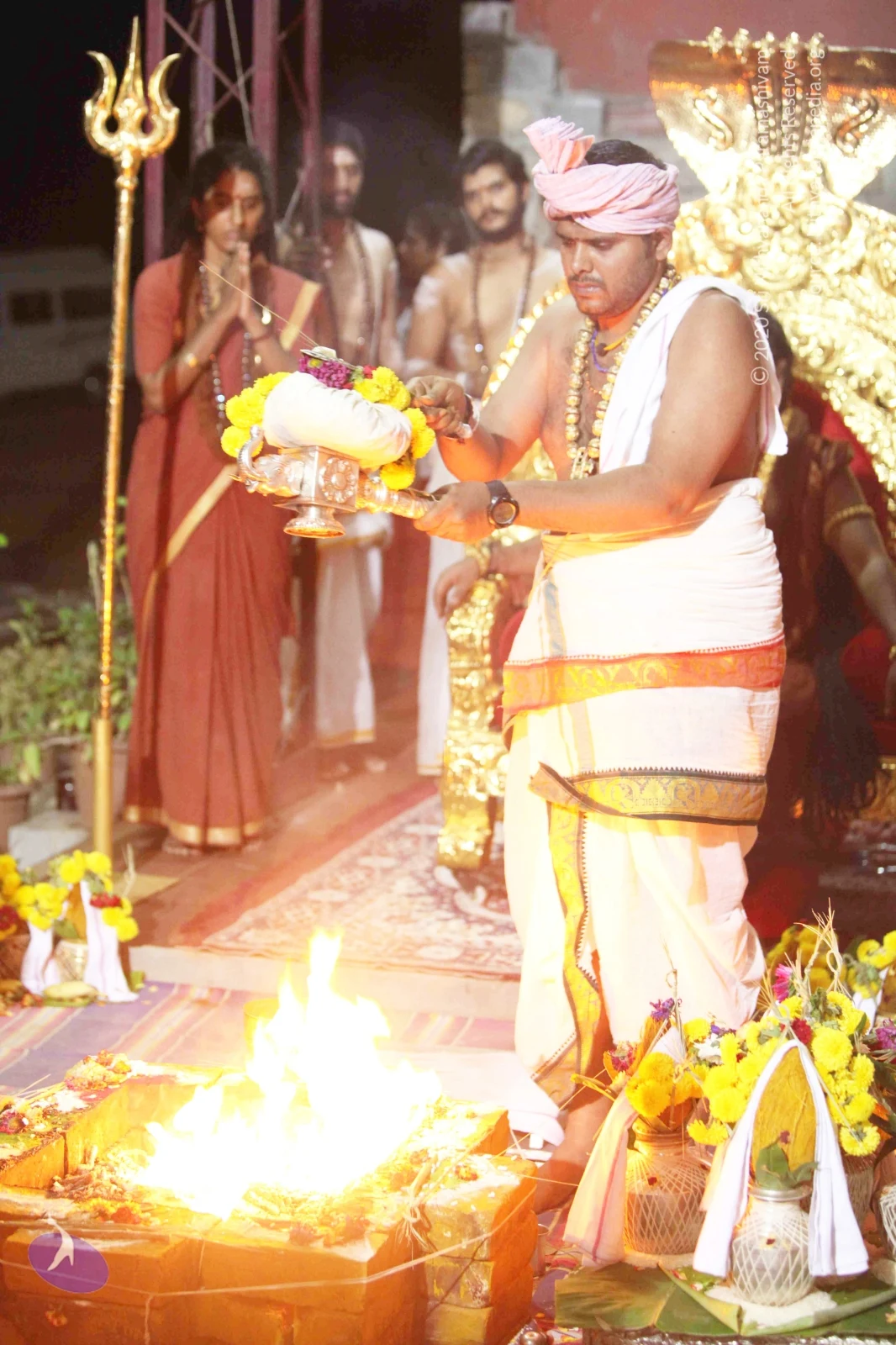
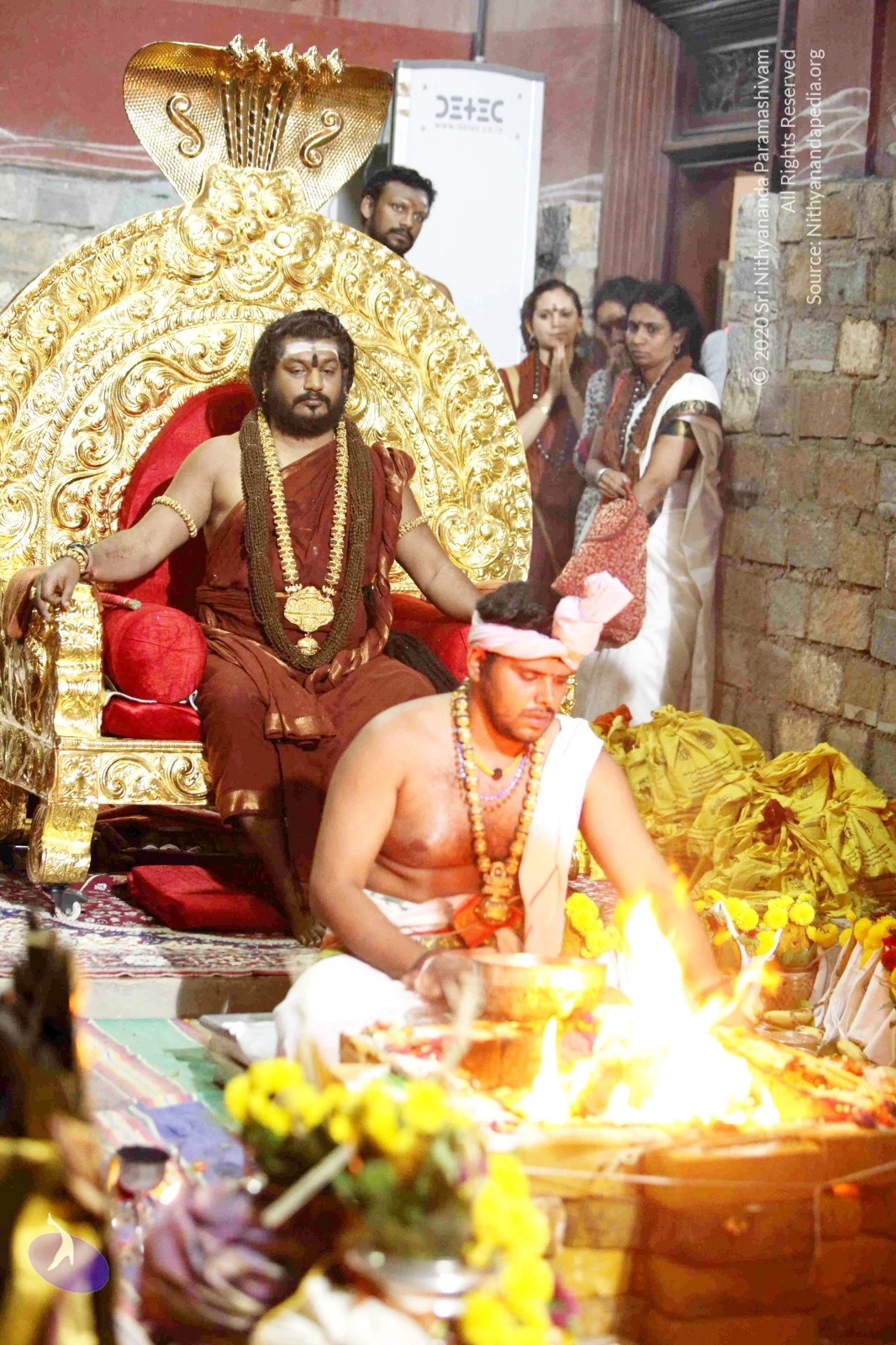
Rudra Homa

10 photosSource gallery
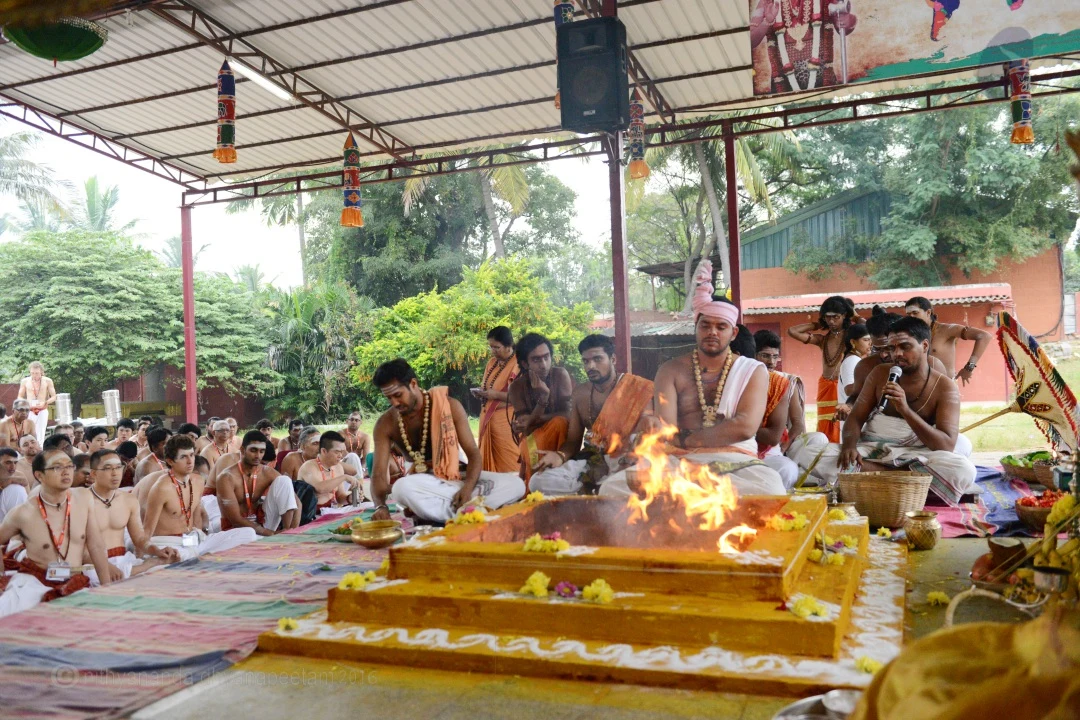
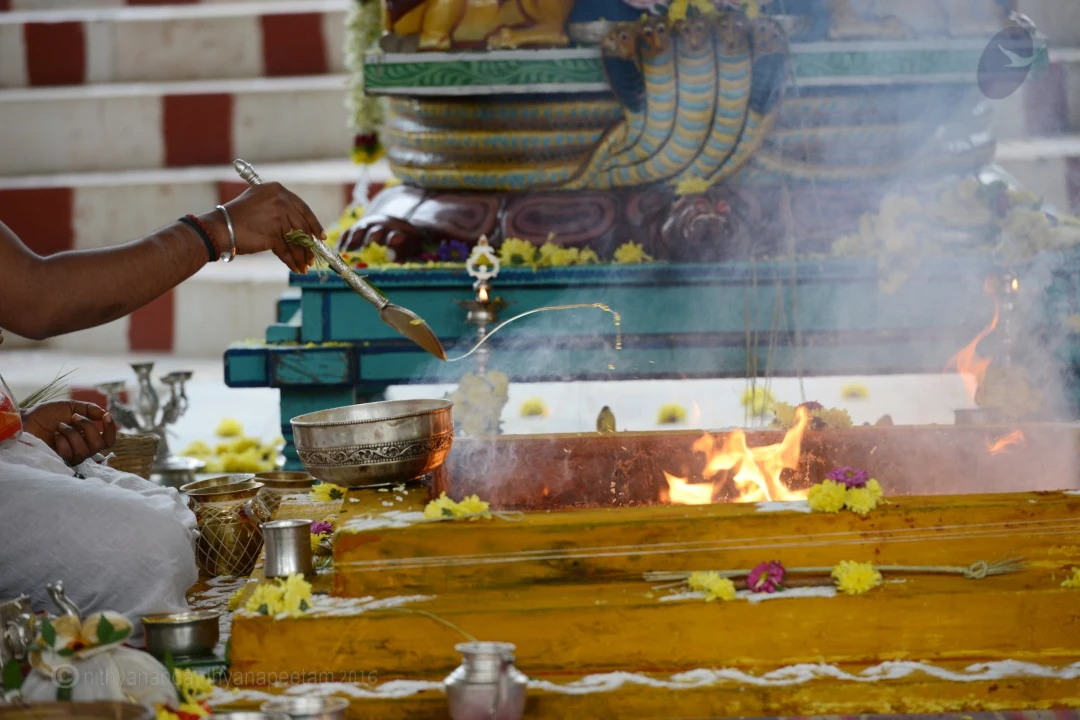
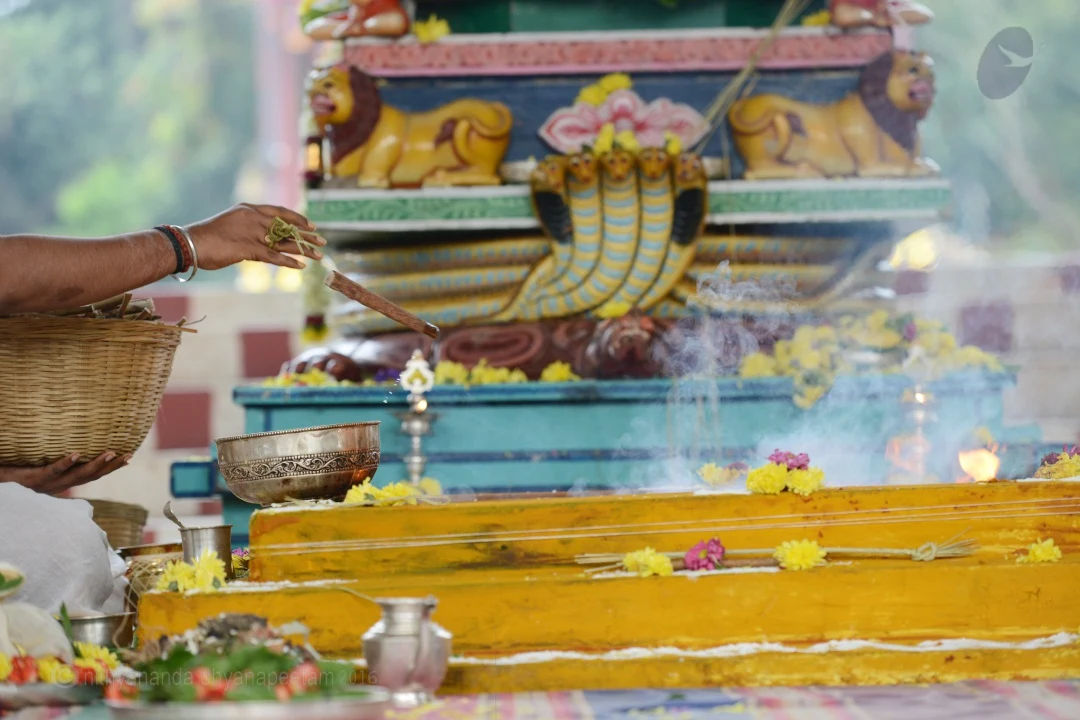
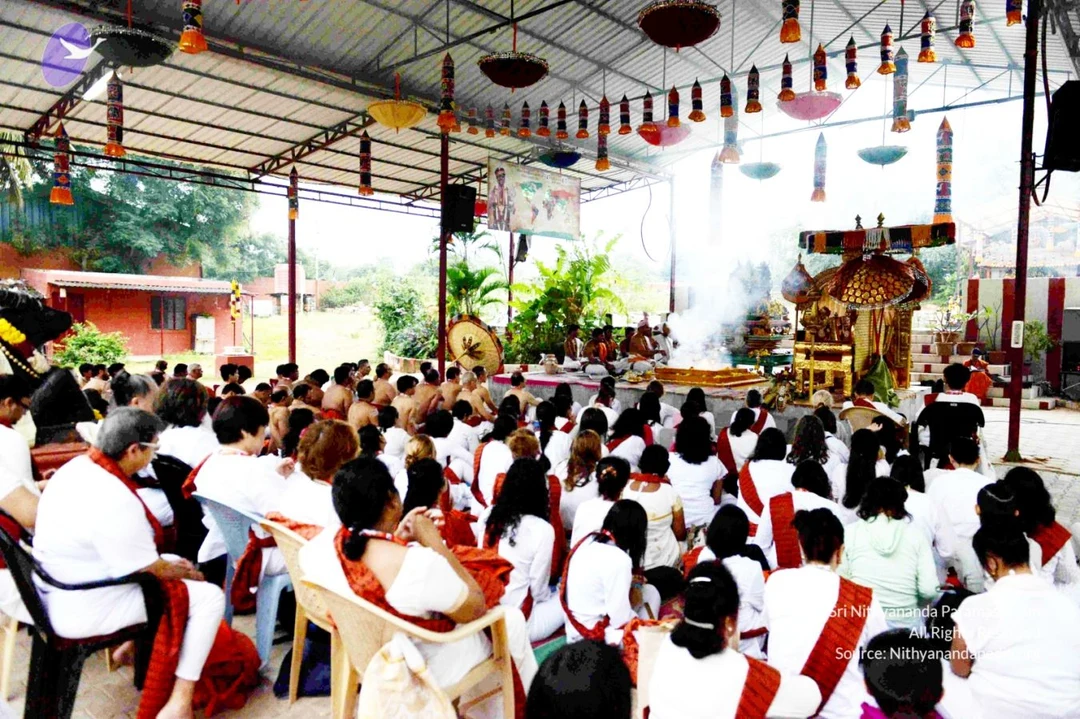
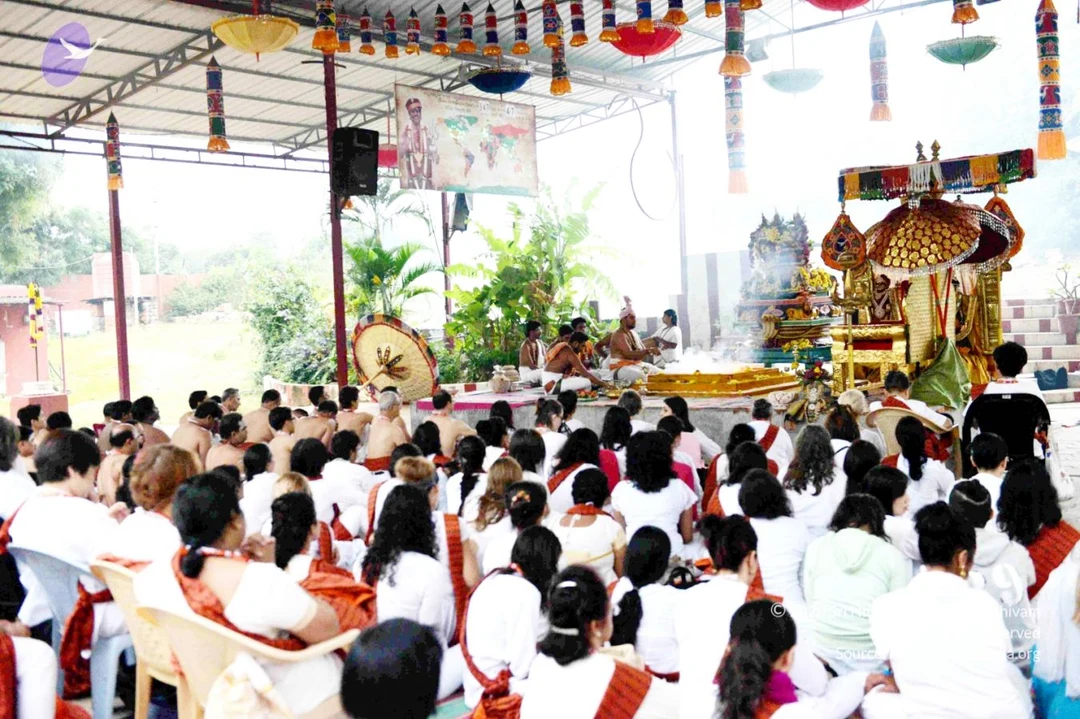
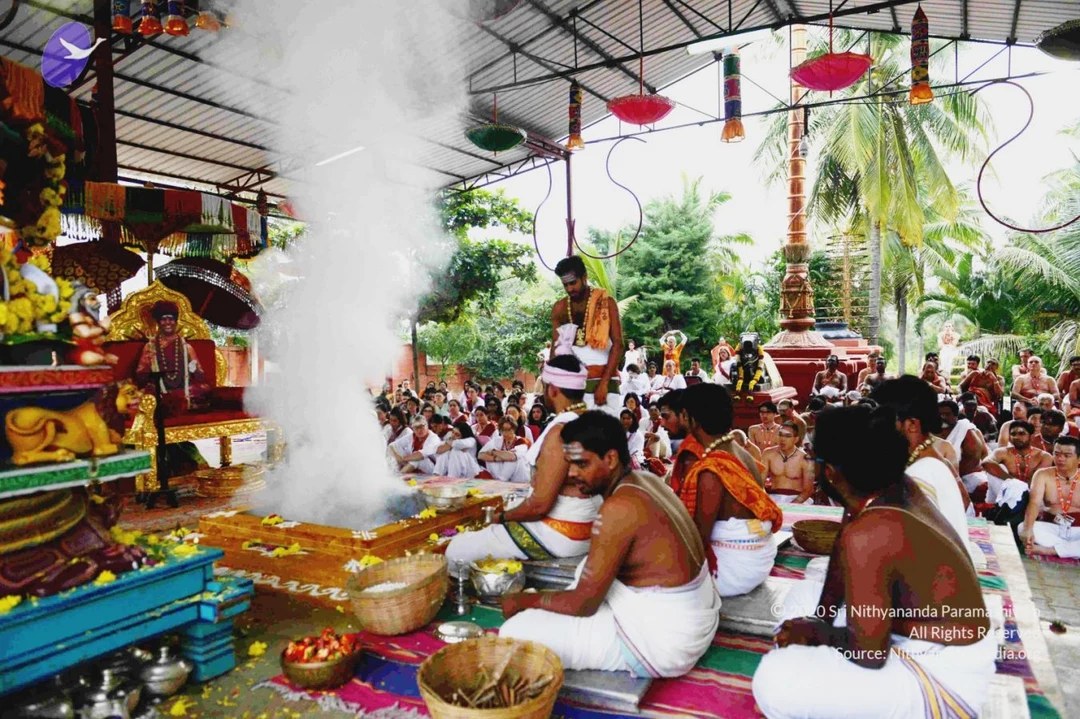
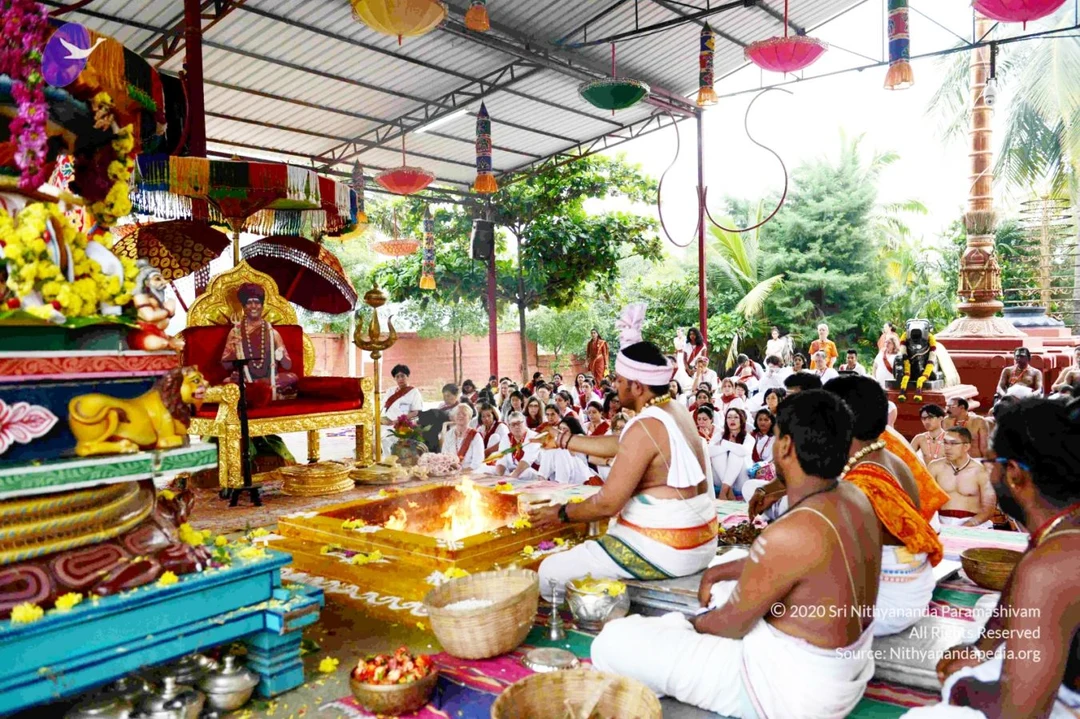
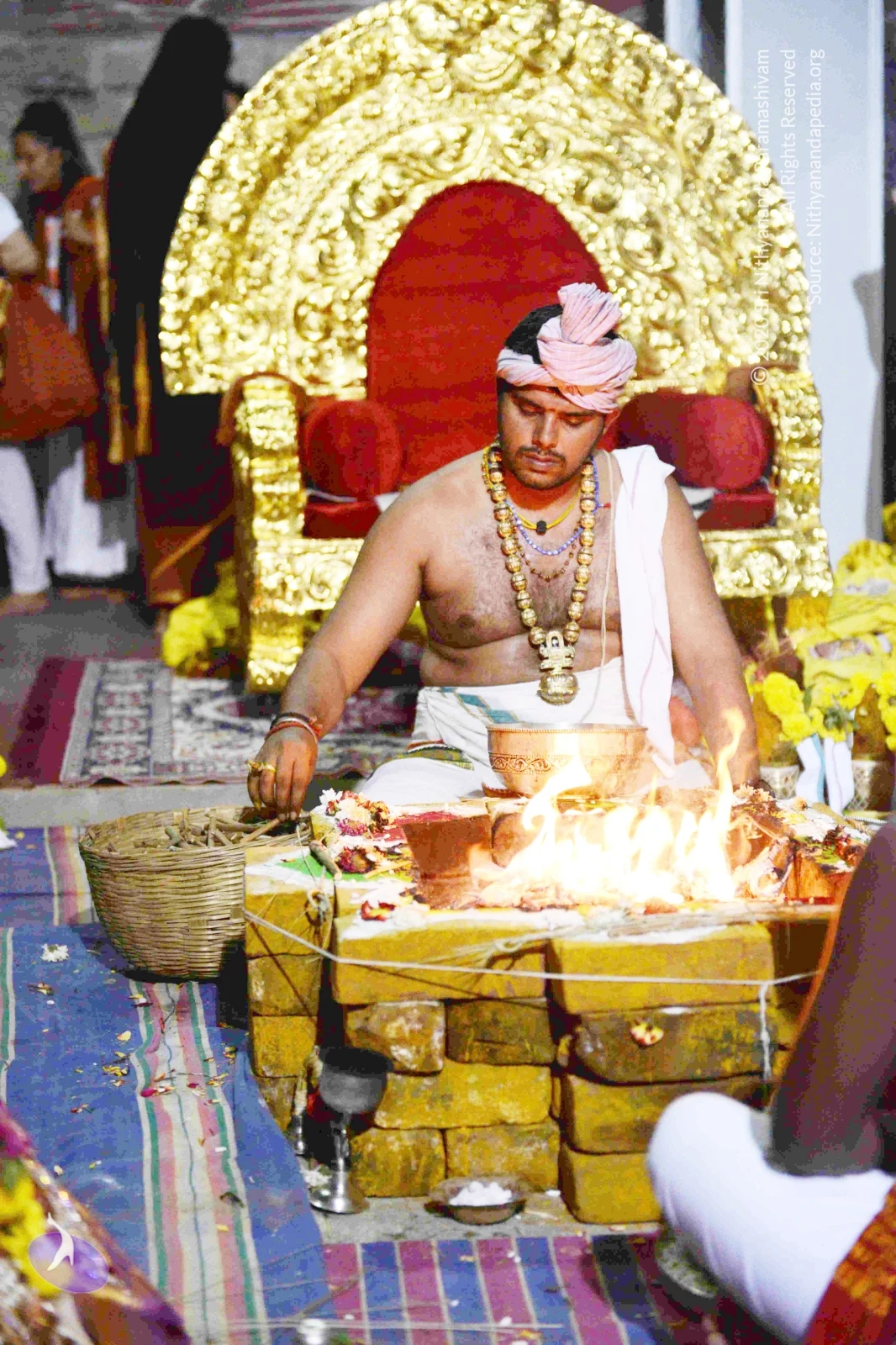
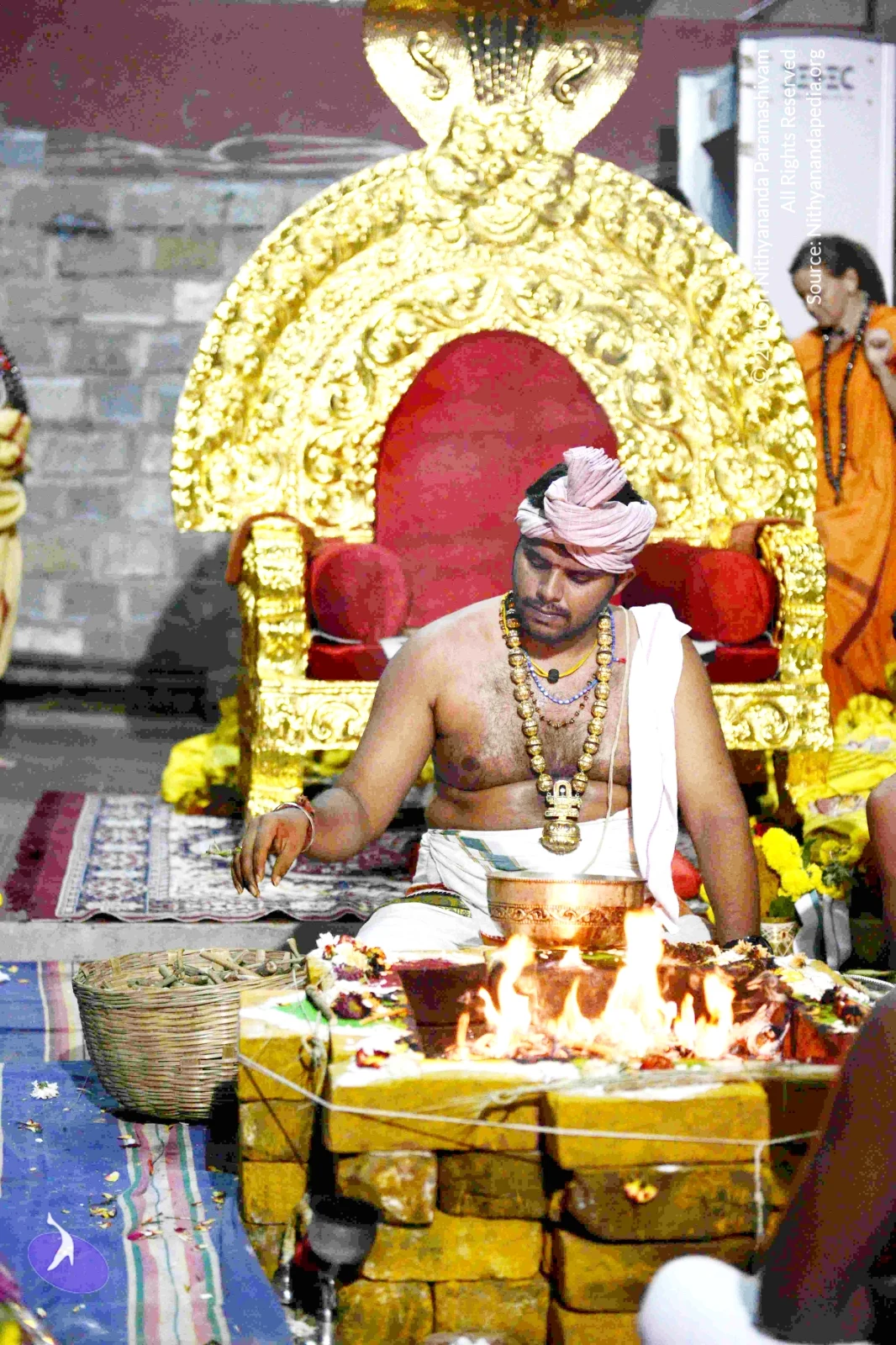
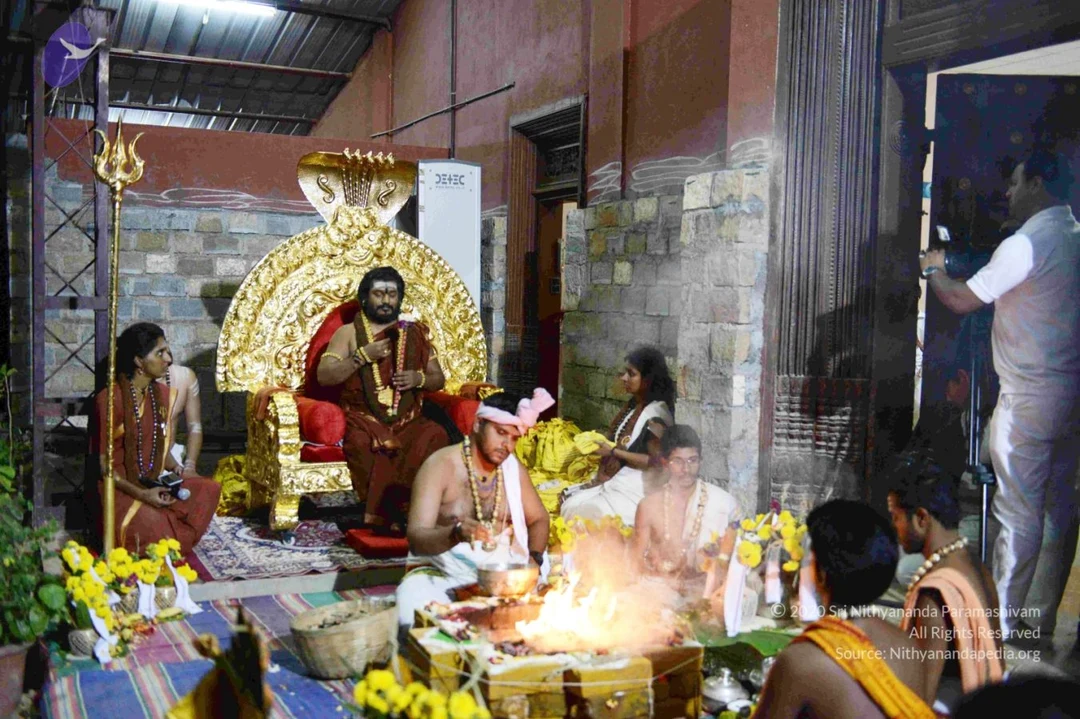
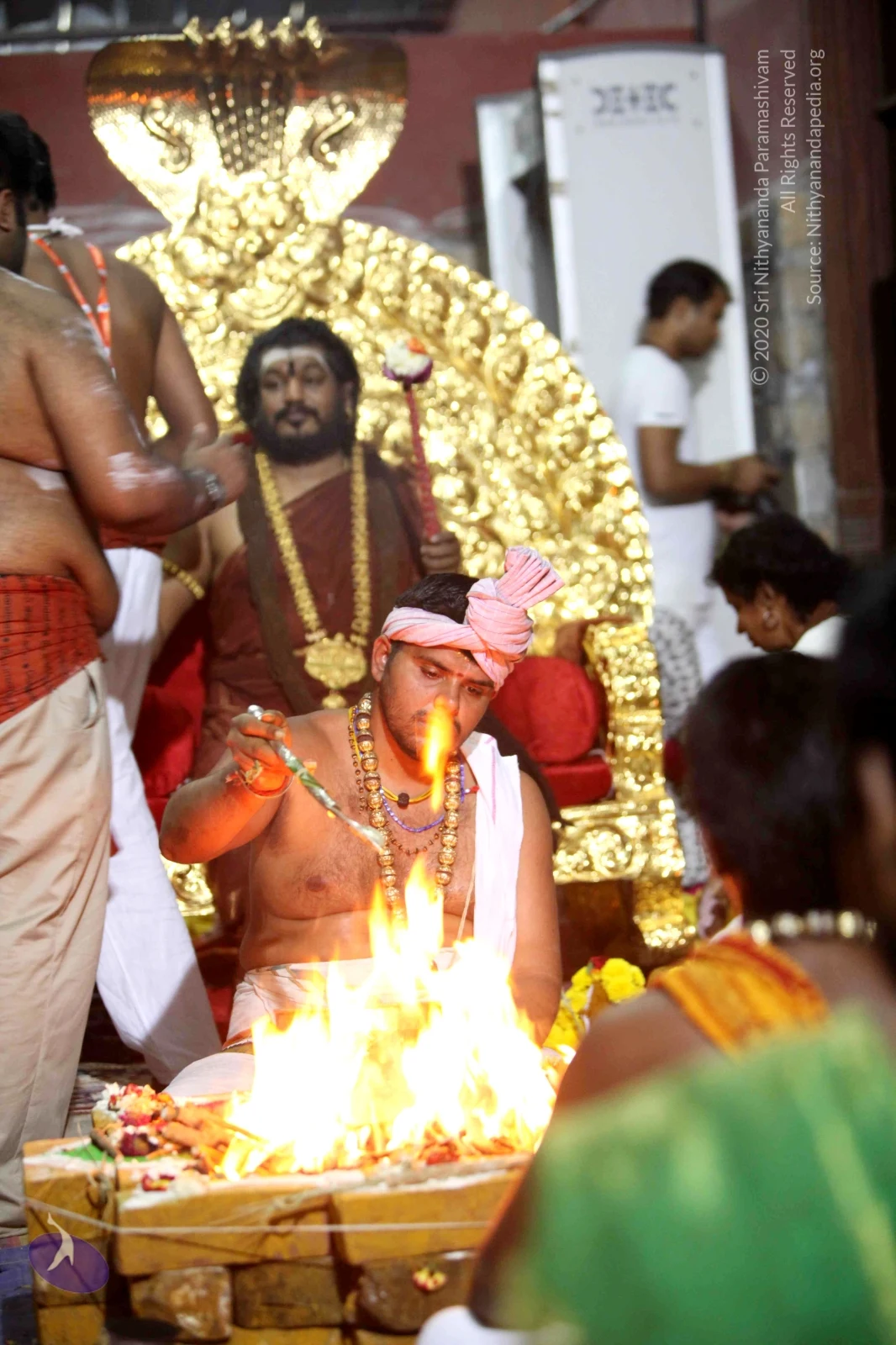
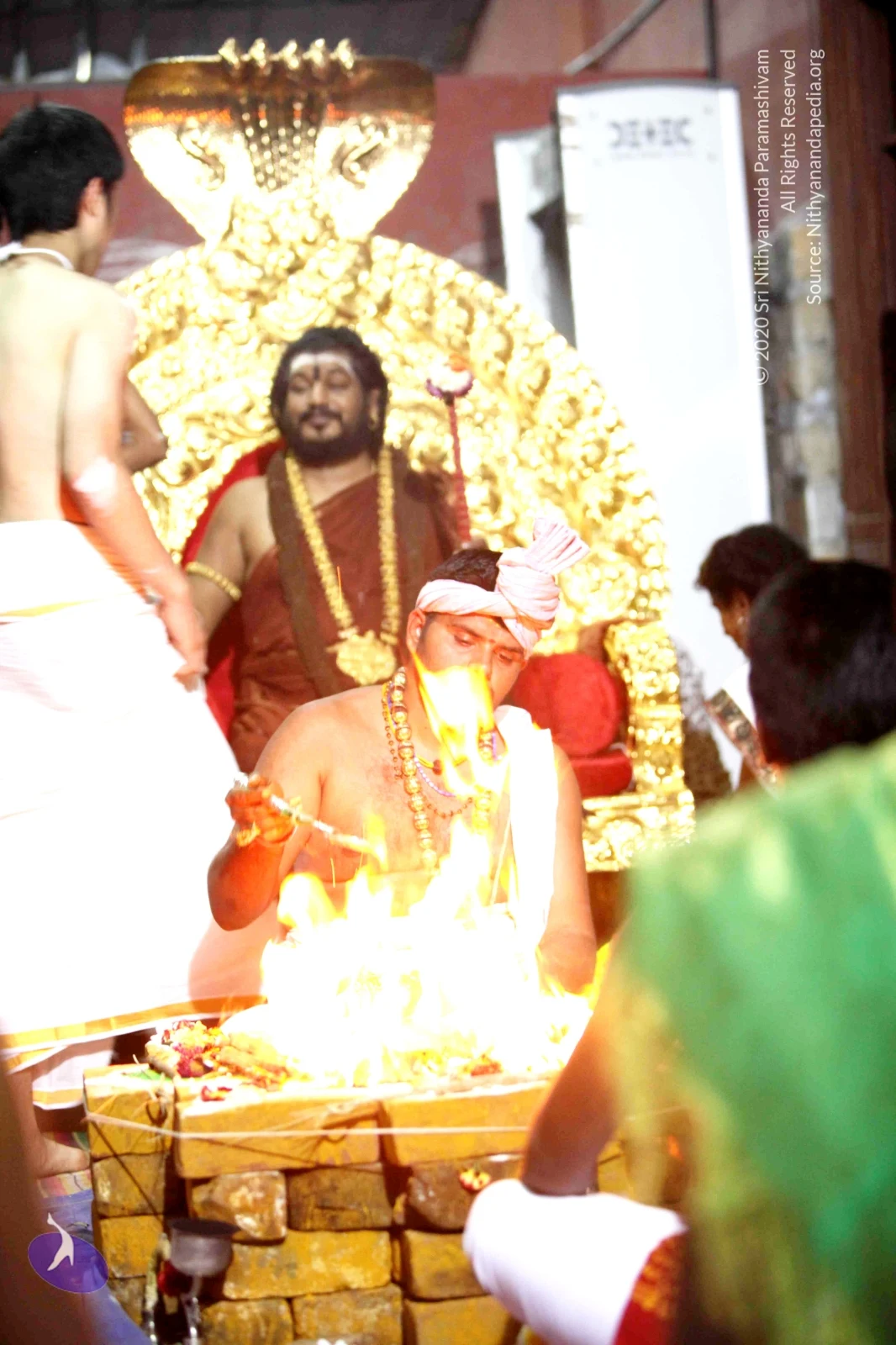
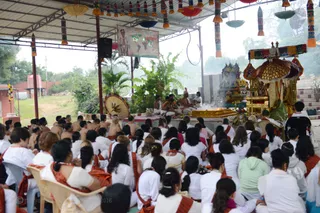
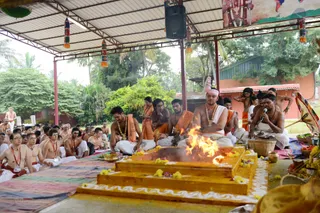
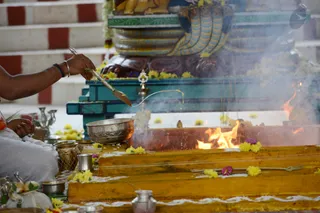
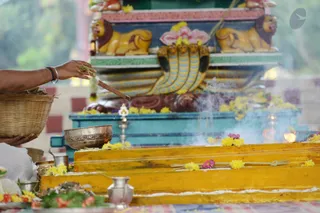
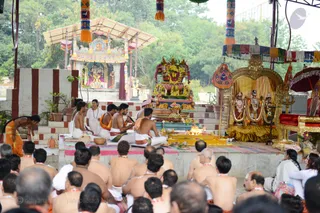
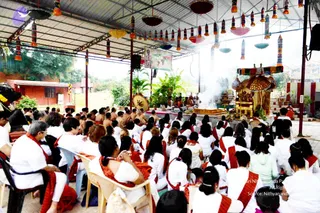
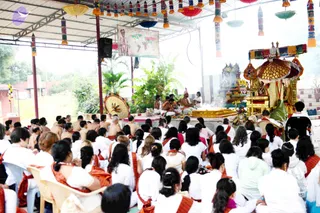
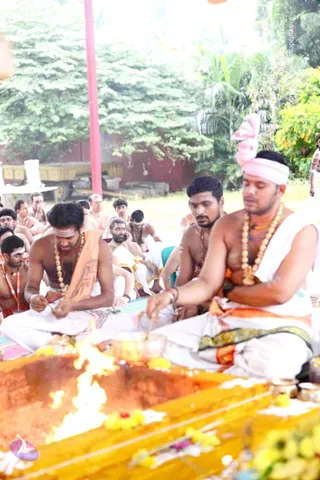
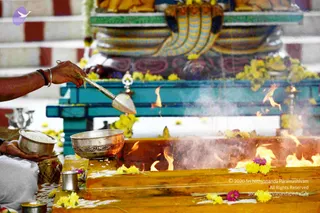
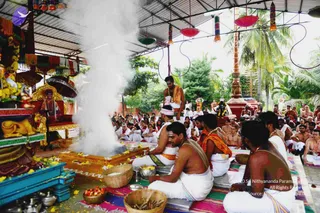
Outdoor ritual gathering under a corrugated roof hung with colourful paper lanterns and a banner showing a portrait and world map. Several priests in bare-chested or white ritual dress sit on a raised platform before a fire pit with smoke rising, performing a homa. To the right stands an ornate golden palanquin with a canopy and a decorated deity murti in a shrine. Dozens of seated participants in white clothes with orange-red shawls face the fire, most on plastic chairs, and a few devotees stand at the back. A large ceremonial fan and potted banana plants frame the scene.A homa or yagna ritual at an outdoor shrine. In the foreground, a priest's bare hand holds a stick with a green leaf bundle over a woven basket and a brass vessel, with a metal cup nearby. Behind, a yellow raised platform is strewn with marigolds and white powder lines, and a small brass lamp and incense smoke rise. Behind it, a colourful multi-tiered structure with a turquoise base carries carved yellow lions and a seven-headed cobra hood, decorated with yellow flowers. Lush green foliage stands in the background.Outdoor Hindu ritual at an open-air stage: a fire pit with flames sits on a yellow cloth in front of a tiered flower-decorated kalasha altar. Several bare-chested priests in white dhotis and orange-red cloths sit cross-legged performing a homa, one holding a ritual implement. A man in orange cloth stands at the left edge. Beside the altar, a golden canopy shelters two deity murtis draped in garlands and ornaments, seated on a gold throne with a decorated parasol. Behind, a small shrine with painted figures and colourful striped pillars, and green trees. Around them a large seated audience of bare-chested devotees with white neck garlands fills the foreground, with a few women in white saris at the right, and a bald man in glasses seated near the front.

IA Sessions

11 photosSource gallery
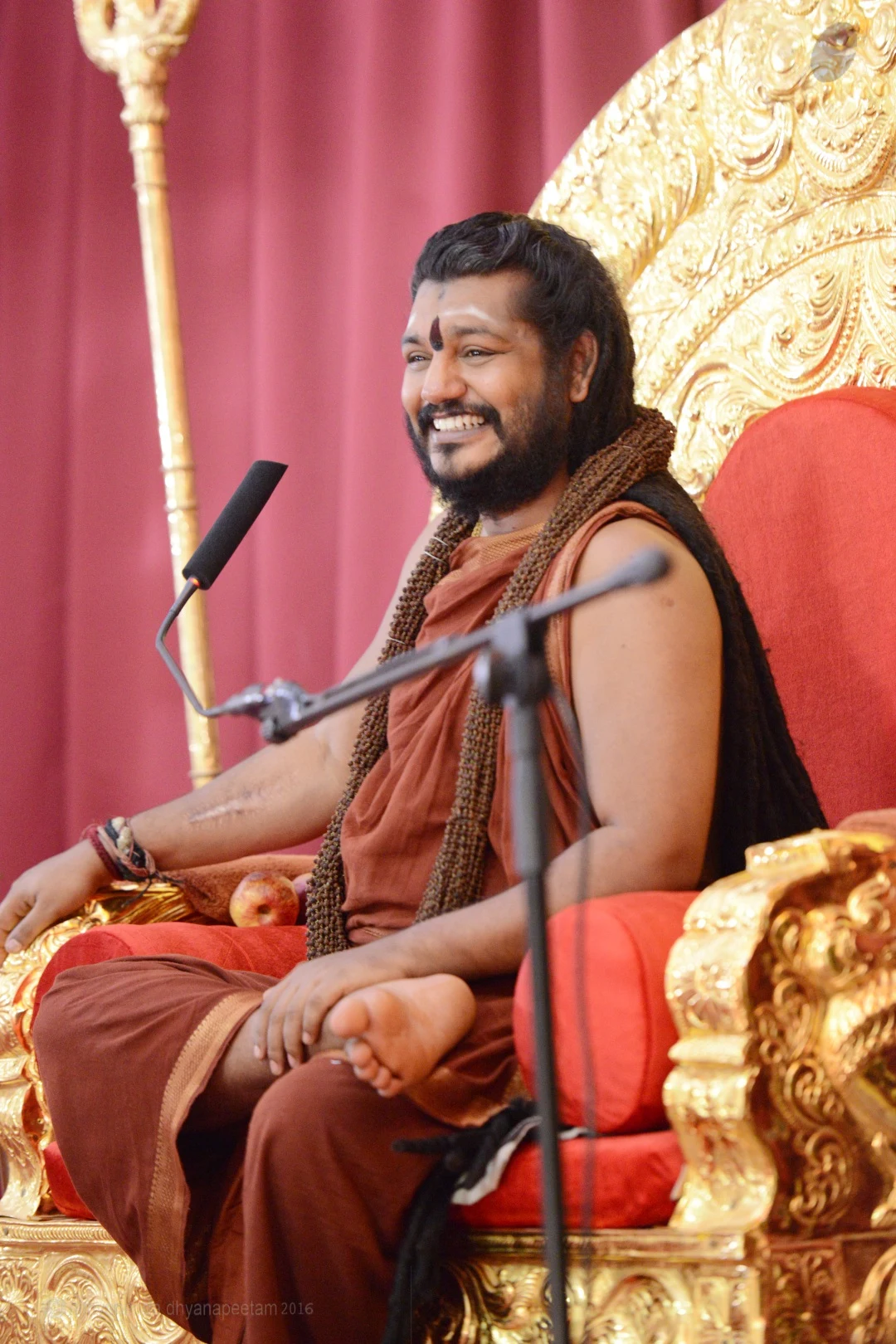
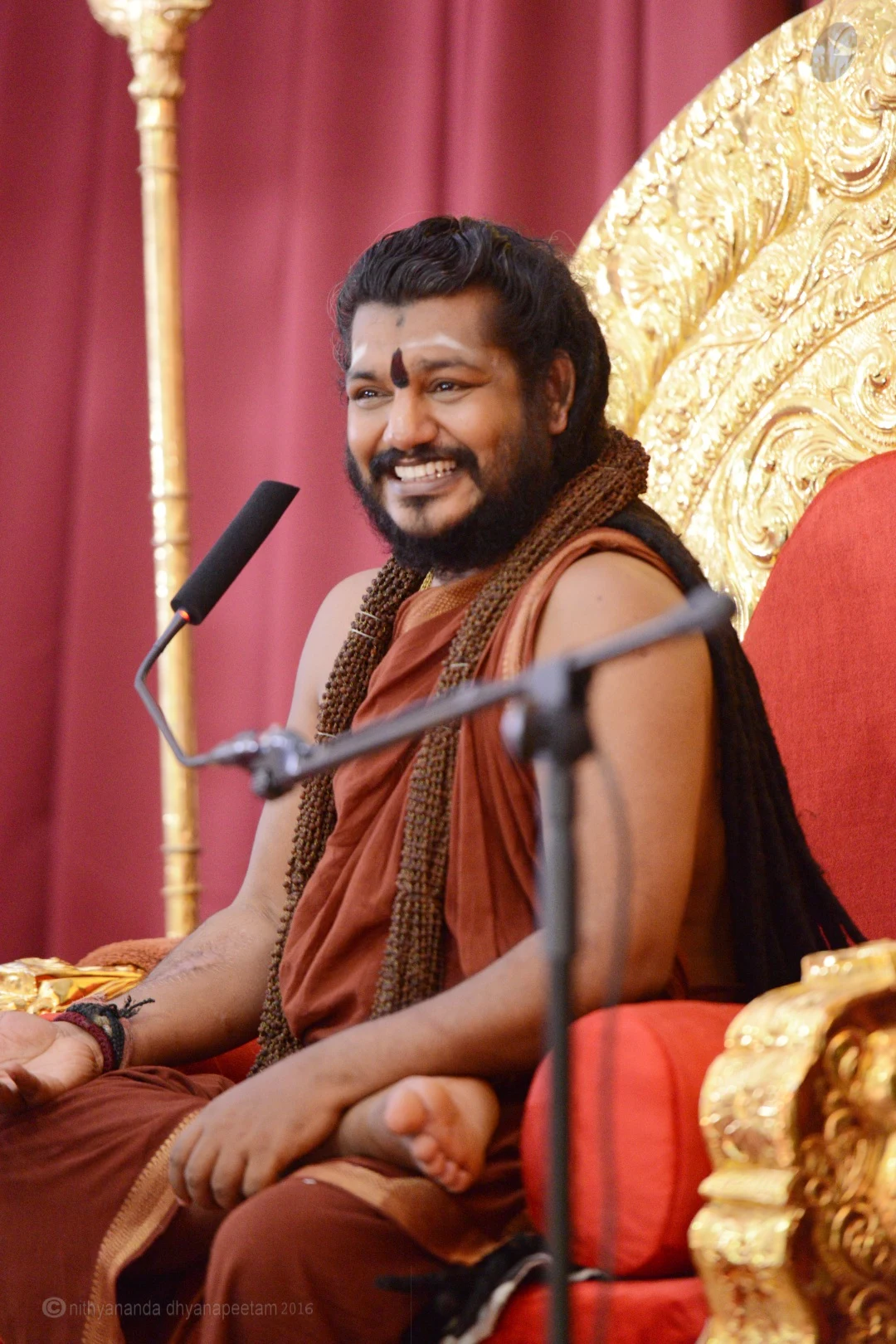
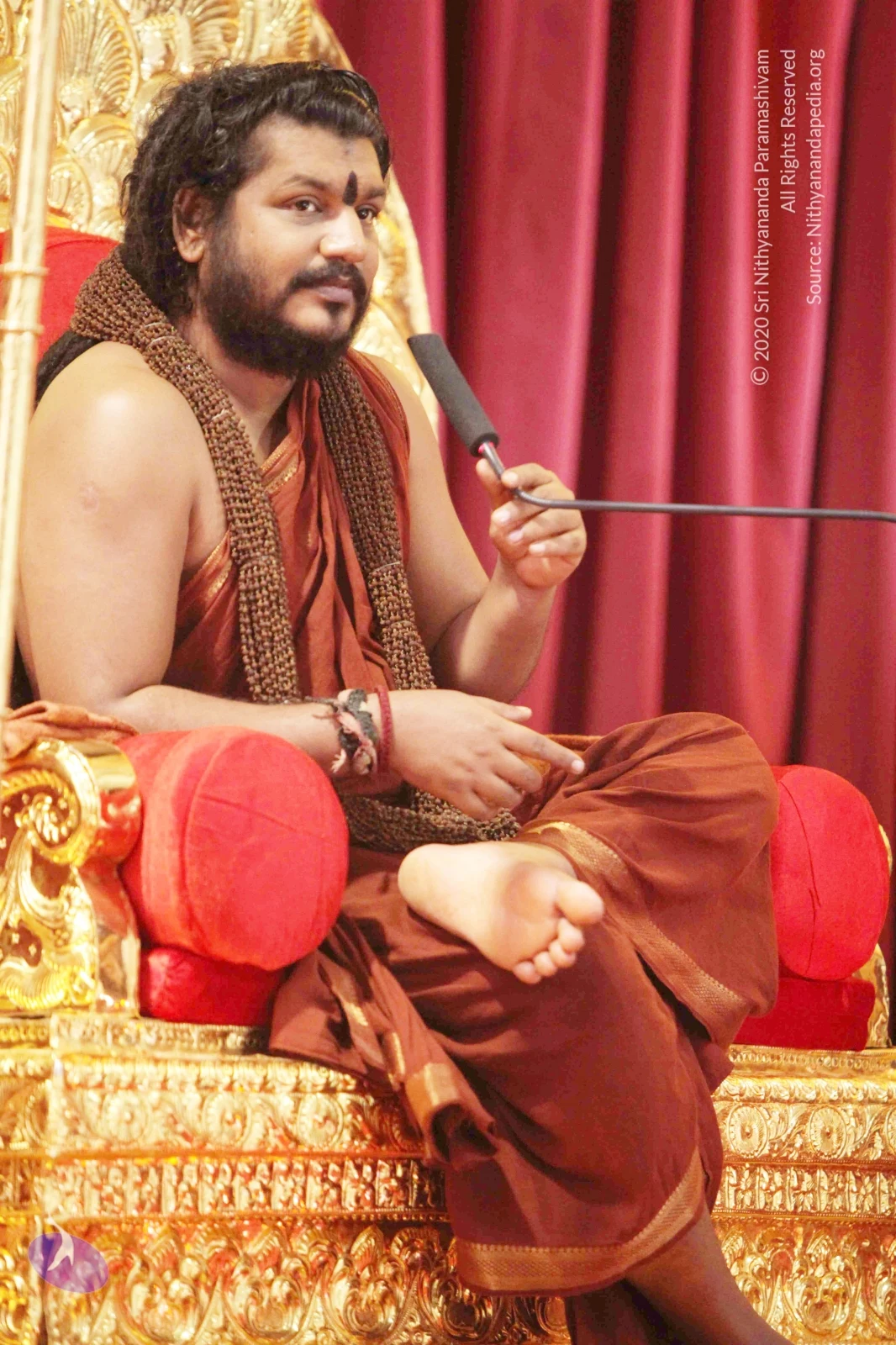
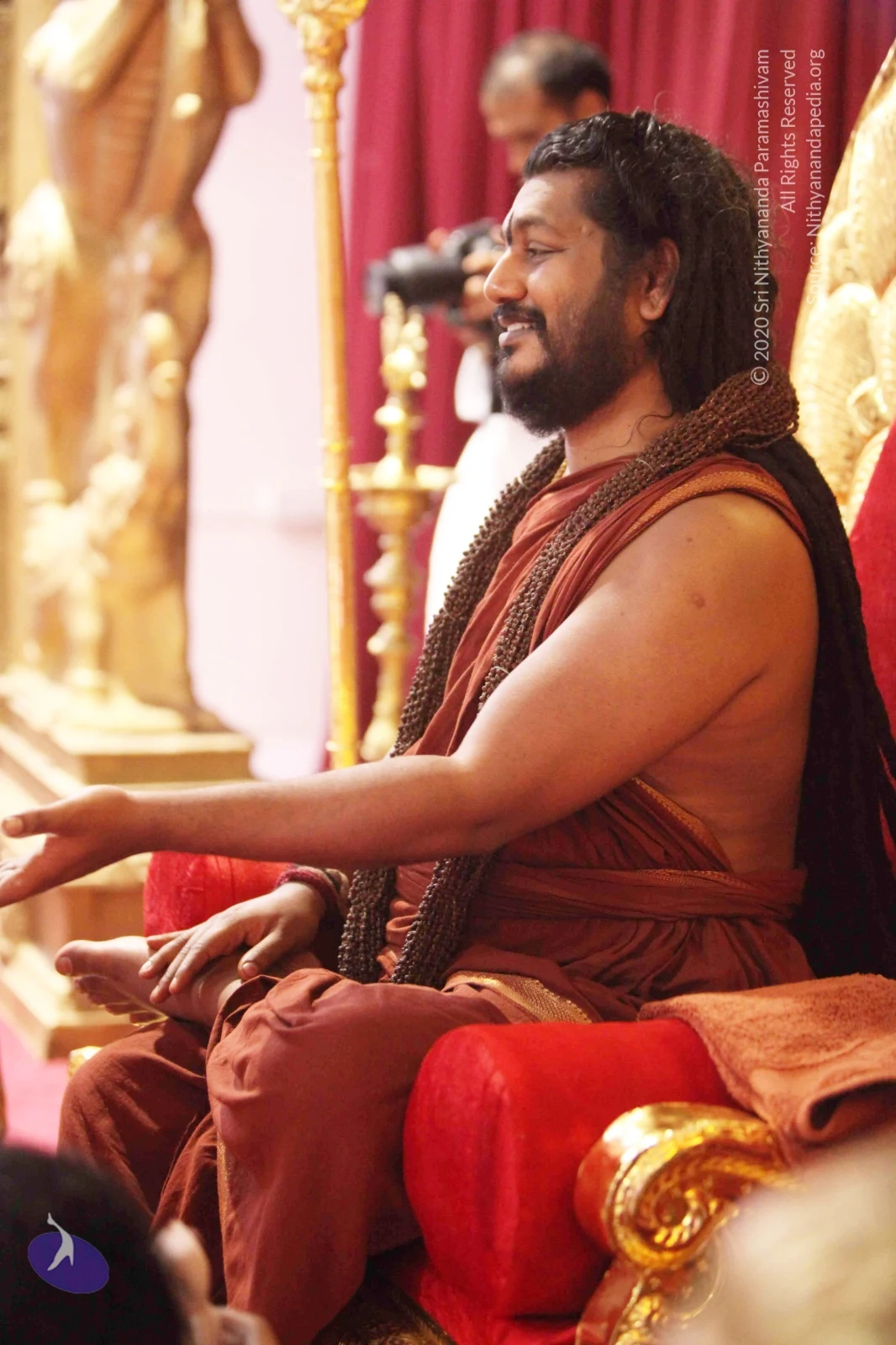
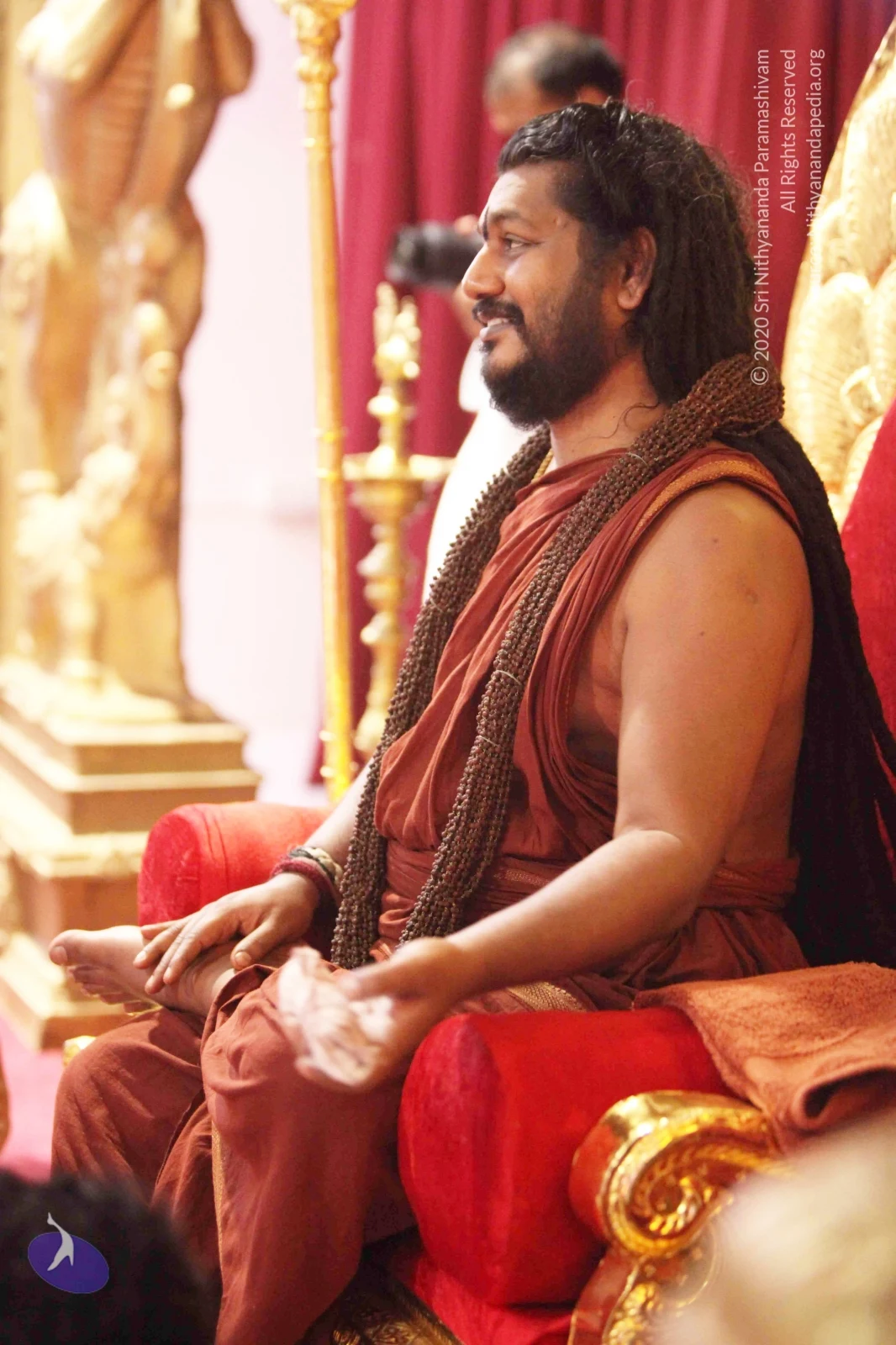
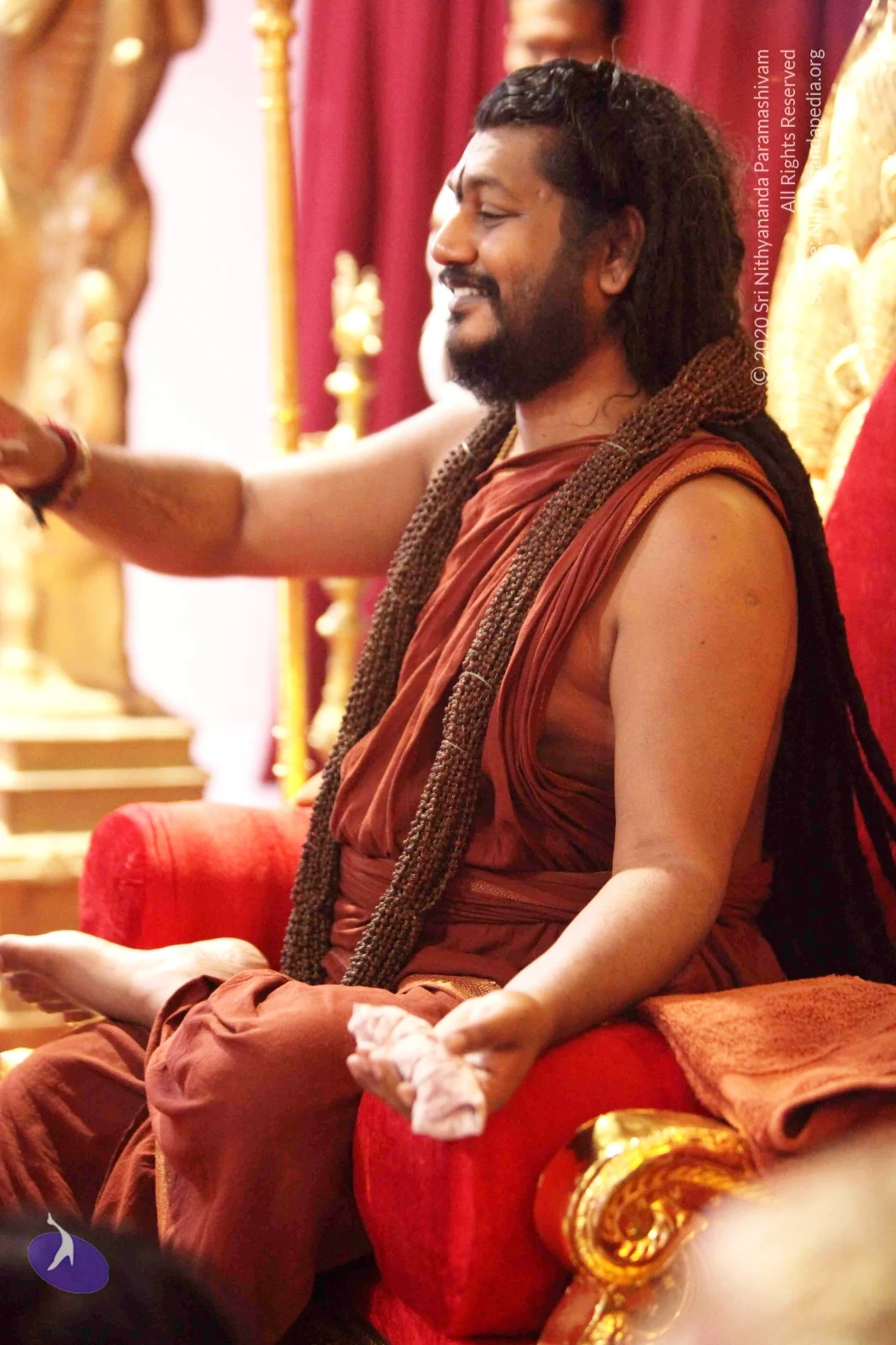
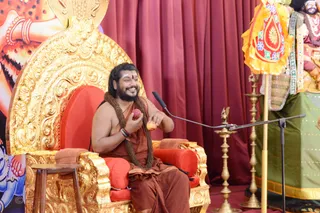
A man seated on an ornate gold throne with red cushions during a discourse. He wears a rust-brown robe, a rudraksha mala draped over his shoulders, and a red-and-white bindi on his forehead. He smiles while holding a red fruit in each hand. A microphone stand is in front of him, and a brass oil lamp stands to his right beside a tall gold-topped staff with a yellow and red banner. Behind him a red curtain and a painted backdrop of a deity figure fill the background. Swamiji (probable): long dark hair, full beard, rudraksha mala and a rust-brown robe, seated on the throne as the speaker.A seated man in a rust-orange robe with a rudraksha mala draped over his shoulders sits on an ornate gold throne with red cushions, smiling and laughing as he speaks into a microphone on a stand. Long dark hair and a beard frame his face; a bindi marks his forehead. Behind him stands a golden trident and brass oil lamps on a red carpet, with a red curtain and a painted deity mural at left. On the right, two seated figures in saffron and gold garments are shown as statues or portraits on a green-draped platform with a flower-decorated saffron umbrella. The setting is a discourse hall during a talk session.A seated man speaks into a microphone on a stand, smiling broadly, on a red-cushioned gilded throne with ornate golden carving behind him. He wears a rust-orange unstitched robe over the shoulder, a dark-brown rudraksha mala of beads around his neck, and a small red mark on his forehead with white lines beside it. Long dark hair falls past his shoulders. Red fabric drapes behind him and a gold pole stands at left. Red apples sit on a gold tray beside his hand, and a wristband is visible on his arm. Only one person is visible. Swamiji (probable): the long swept-back hair, rudraksha mala and saffron-orange robe are visible cues of a teaching seat on a throne.A smiling man with long dark hair and a full beard sits on an ornate gold-carved throne with red upholstery, in front of a deep red curtain and a tall gold pole. He wears a rust-brown saffron-toned robe draped over one shoulder, a thick multi-strand brown rudraksha mala around his neck, and a dark bindi with white markings on his forehead. A black microphone on a stand sits near his face, and his bare foot is visible.

Vishesha Deeksha
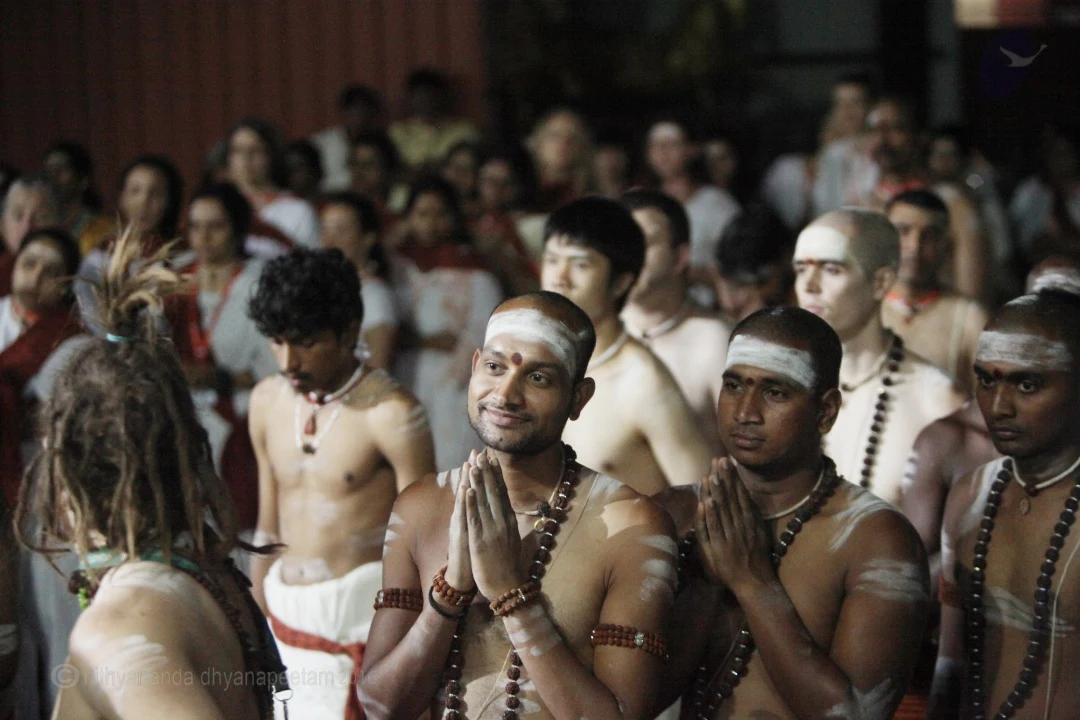
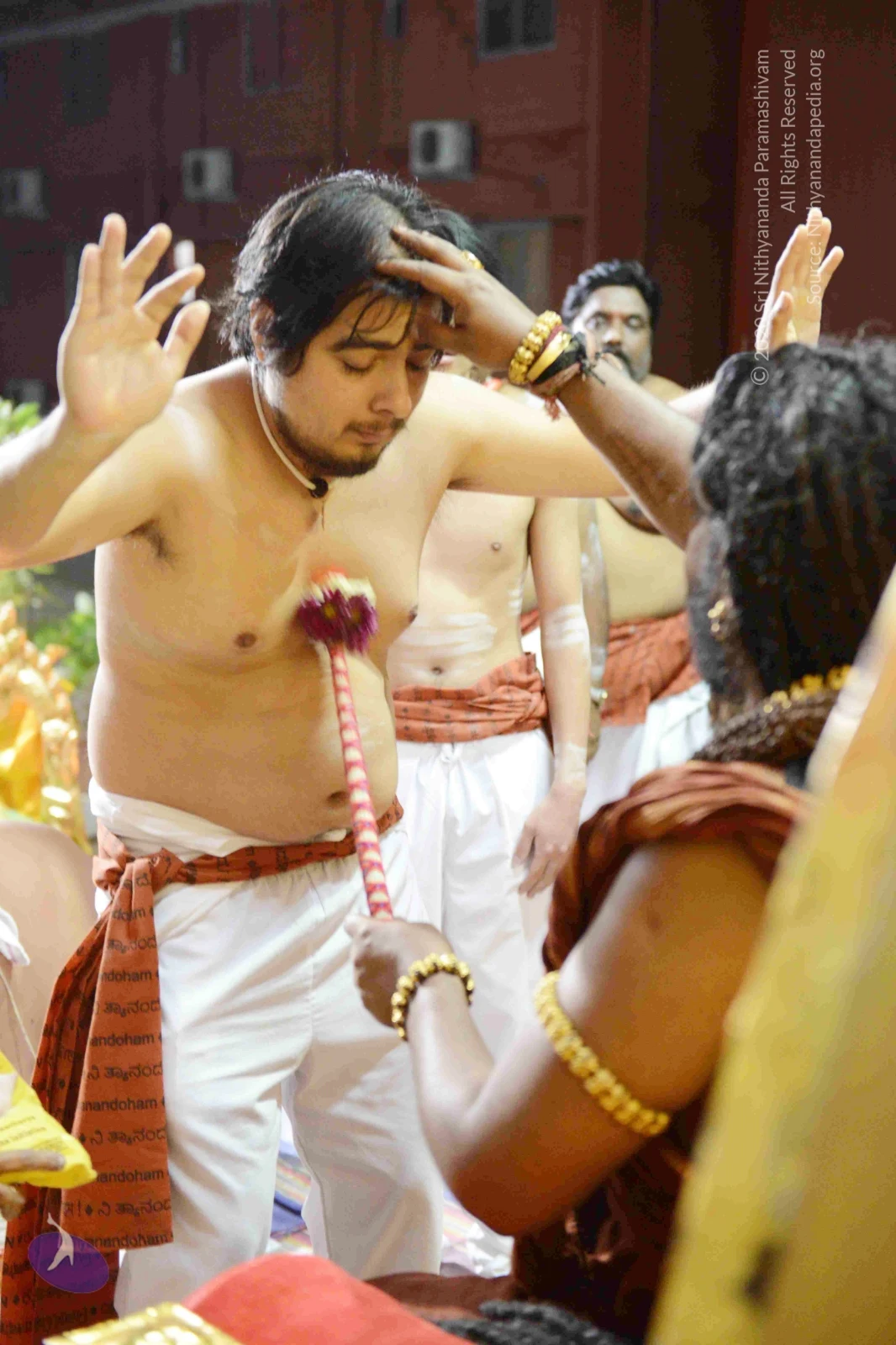
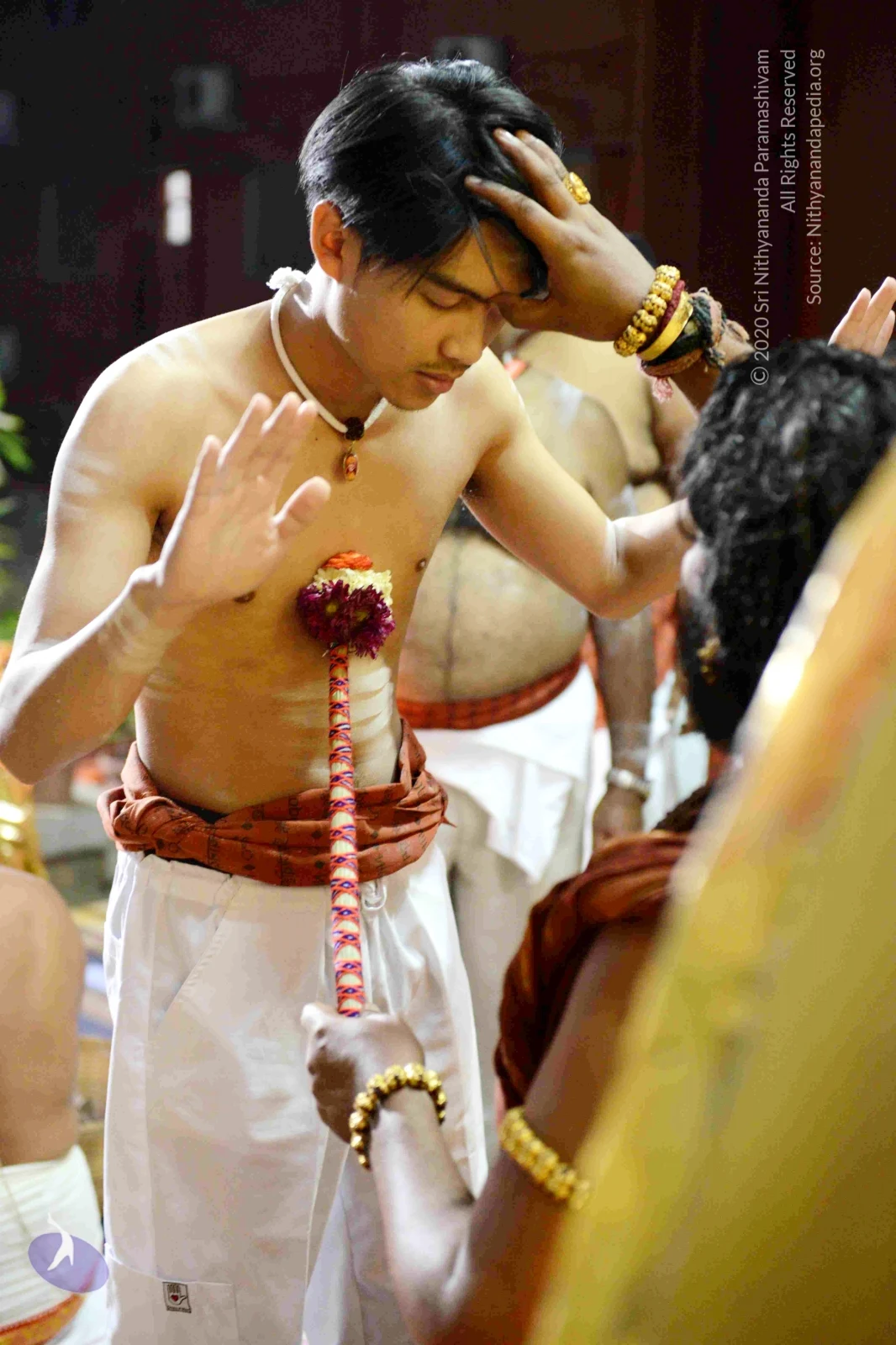
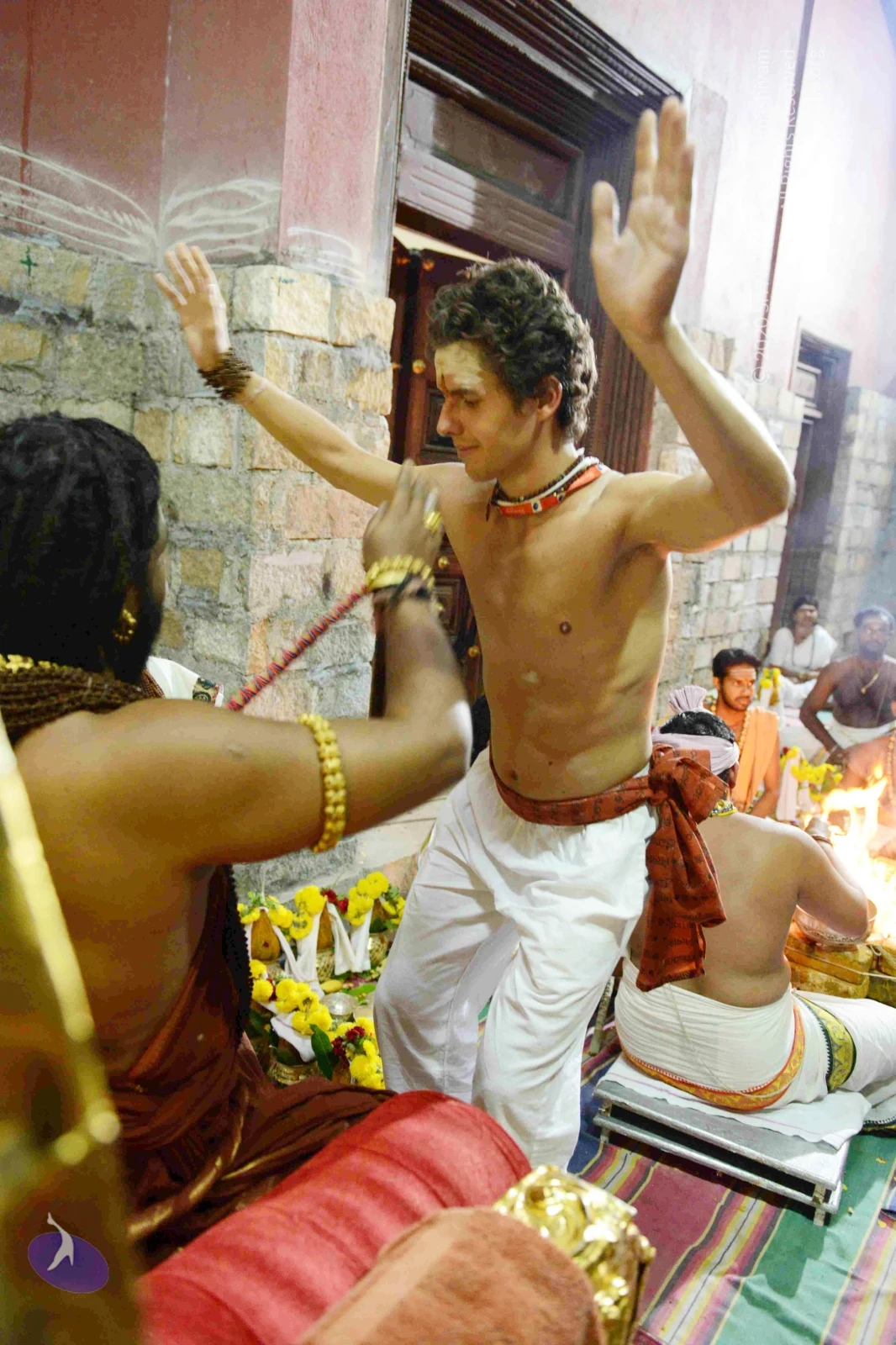
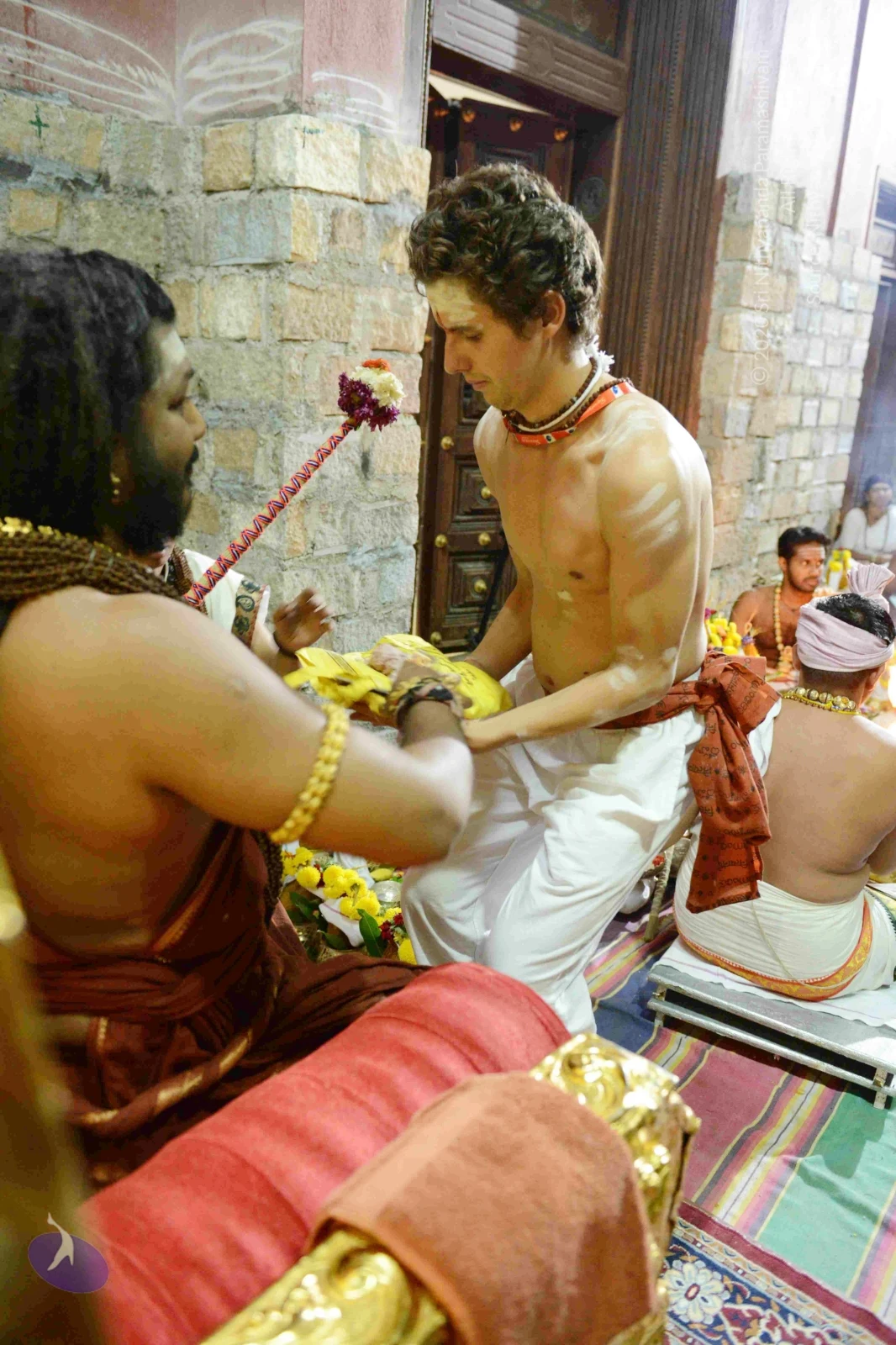
14 photosSource gallery
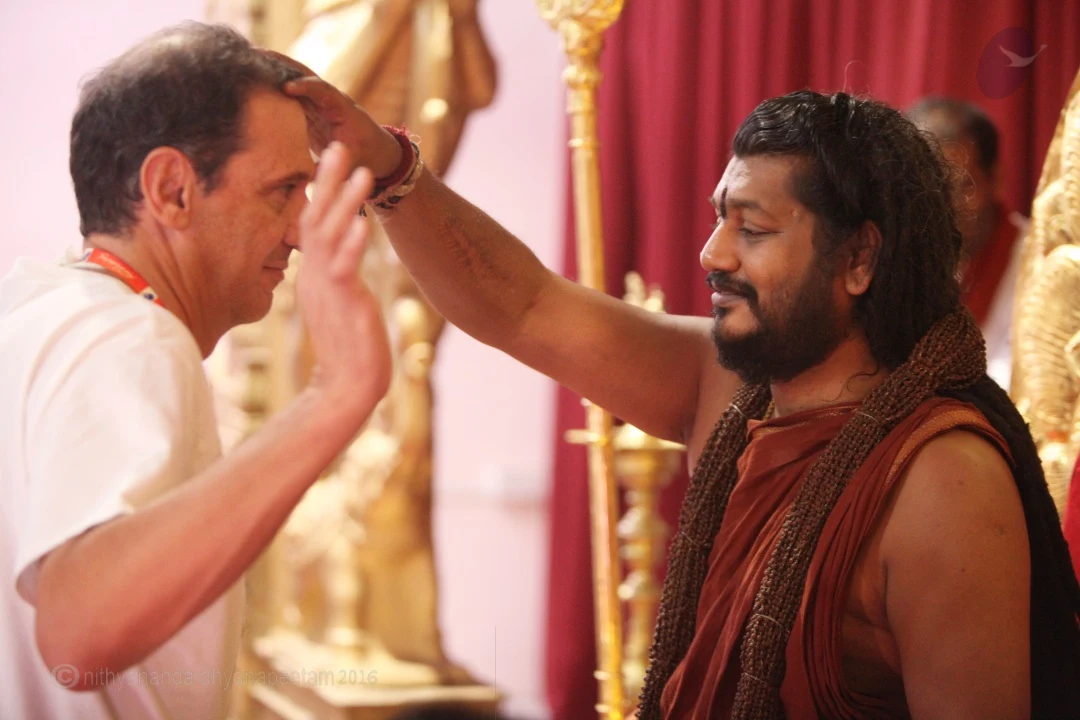
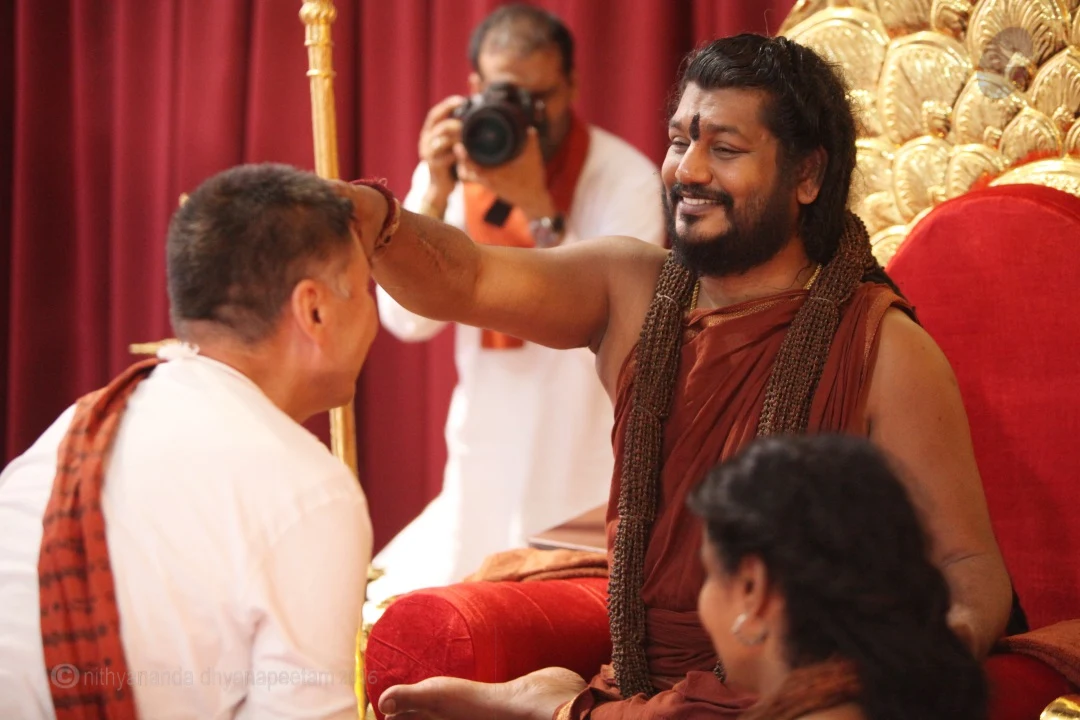
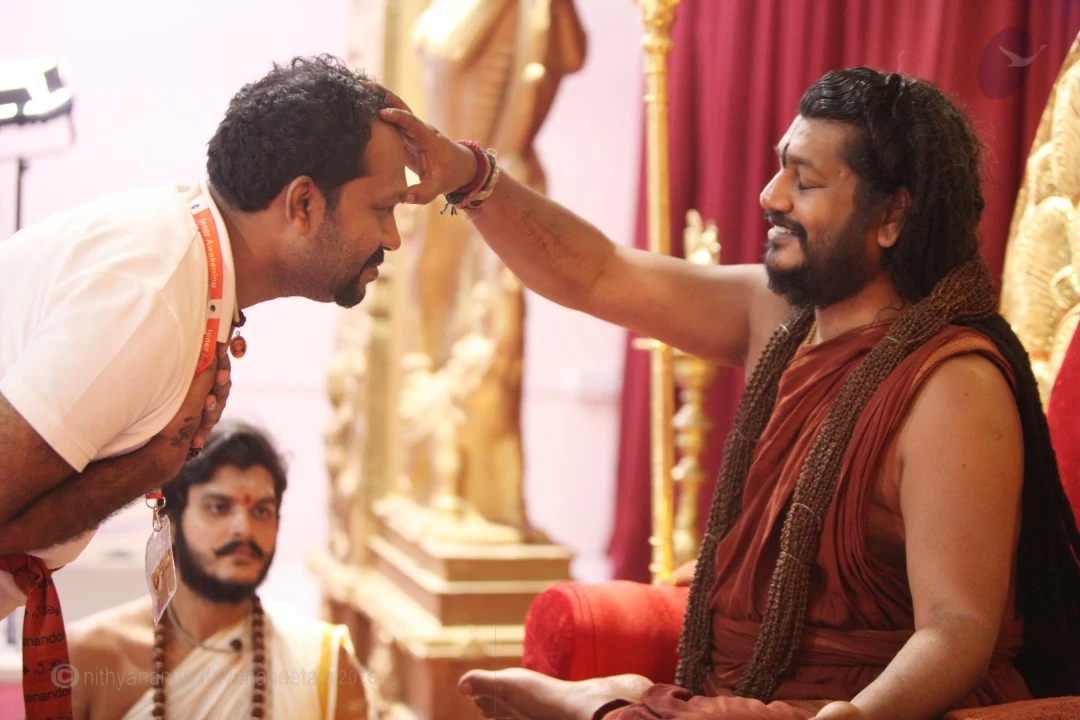
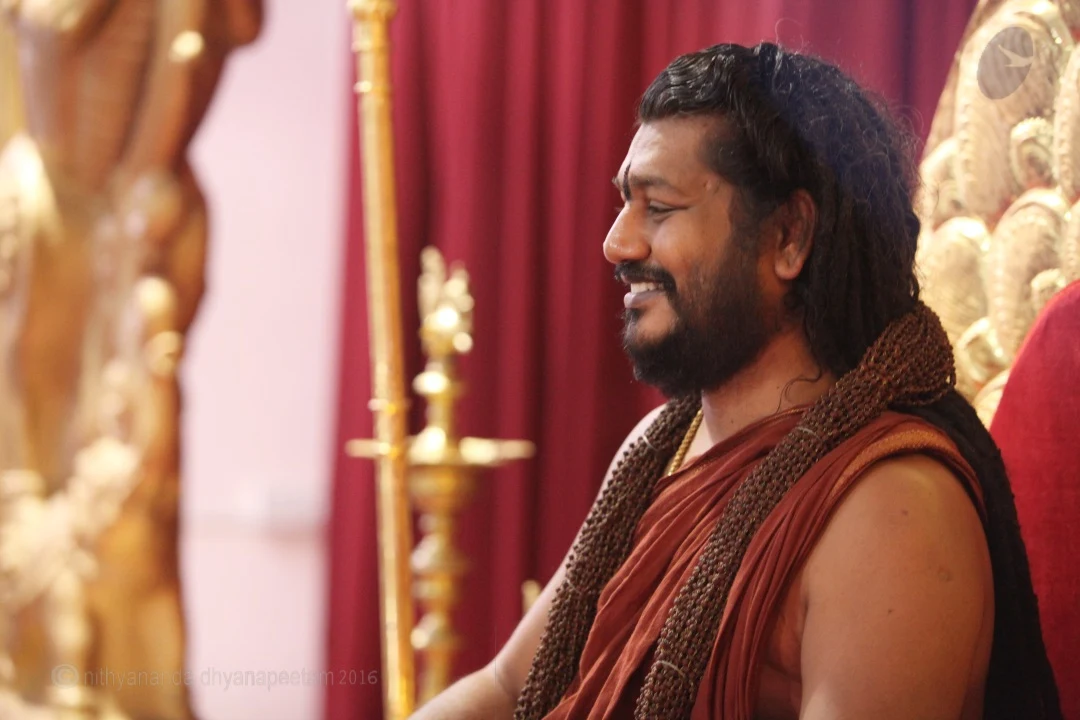
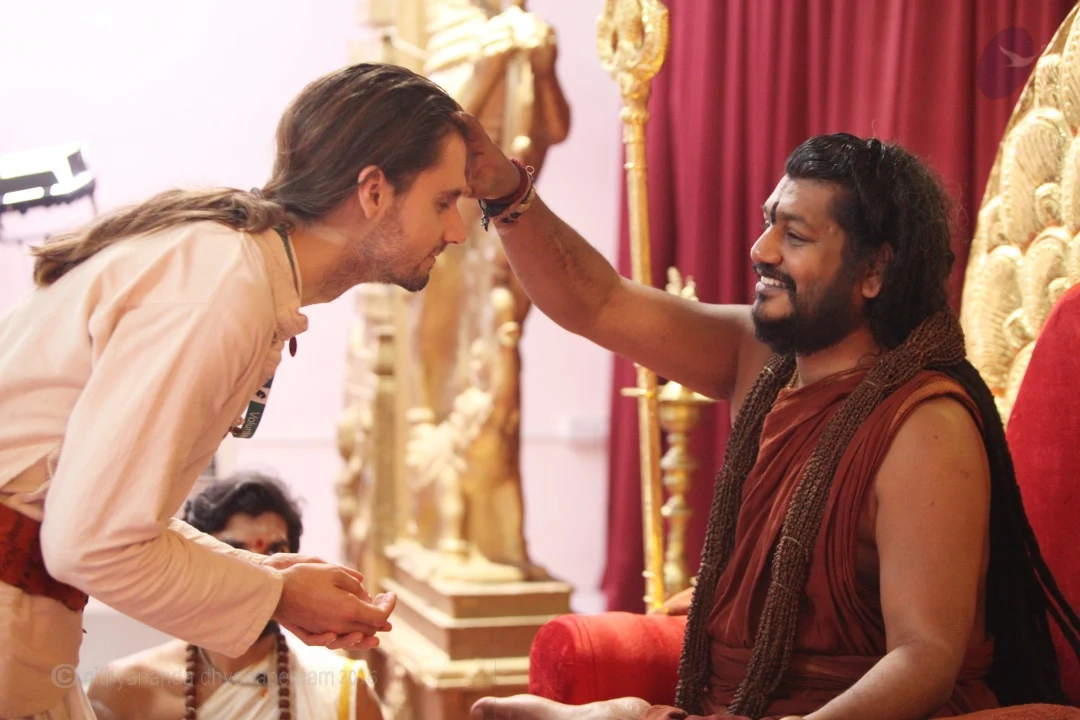
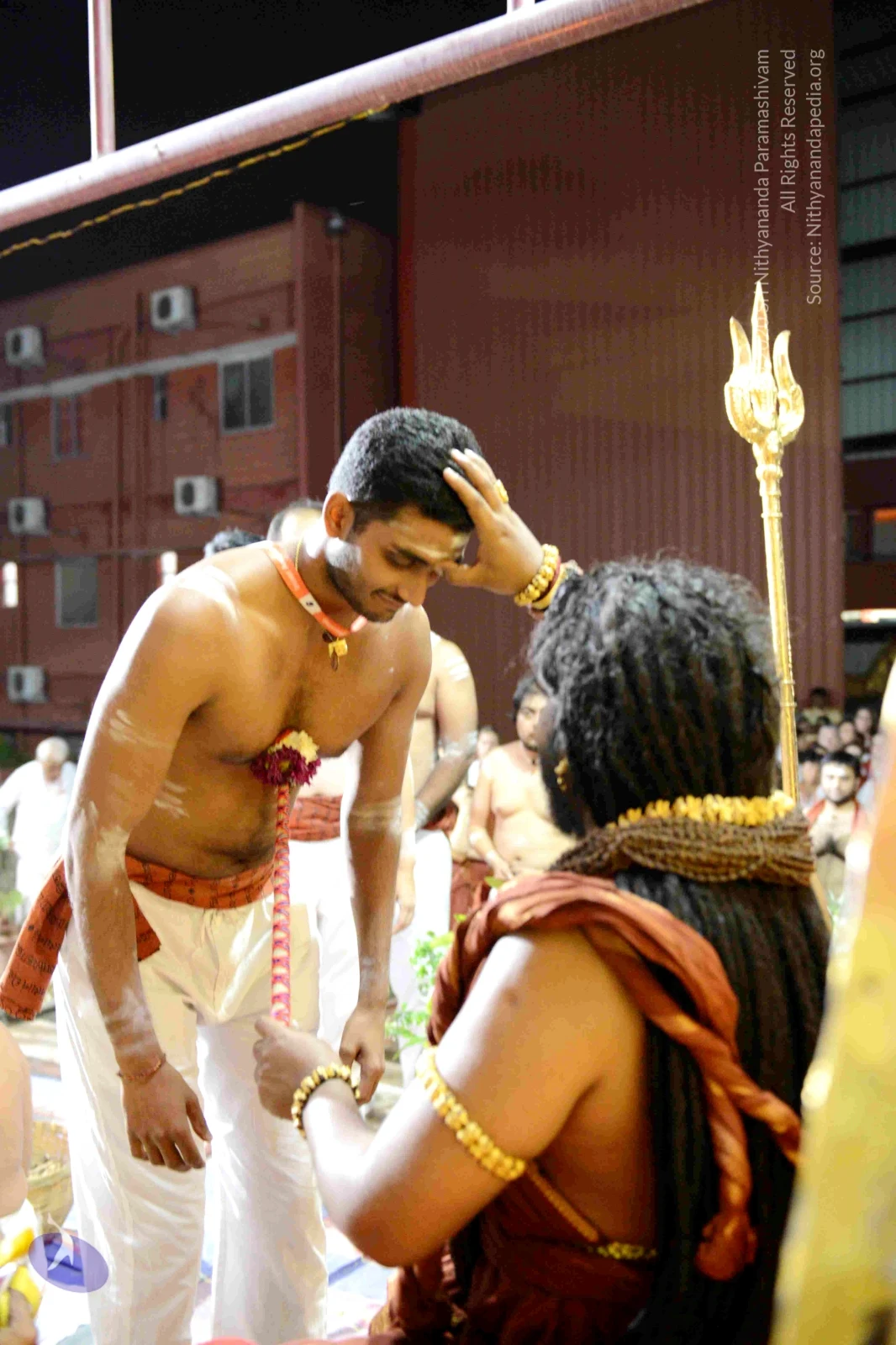
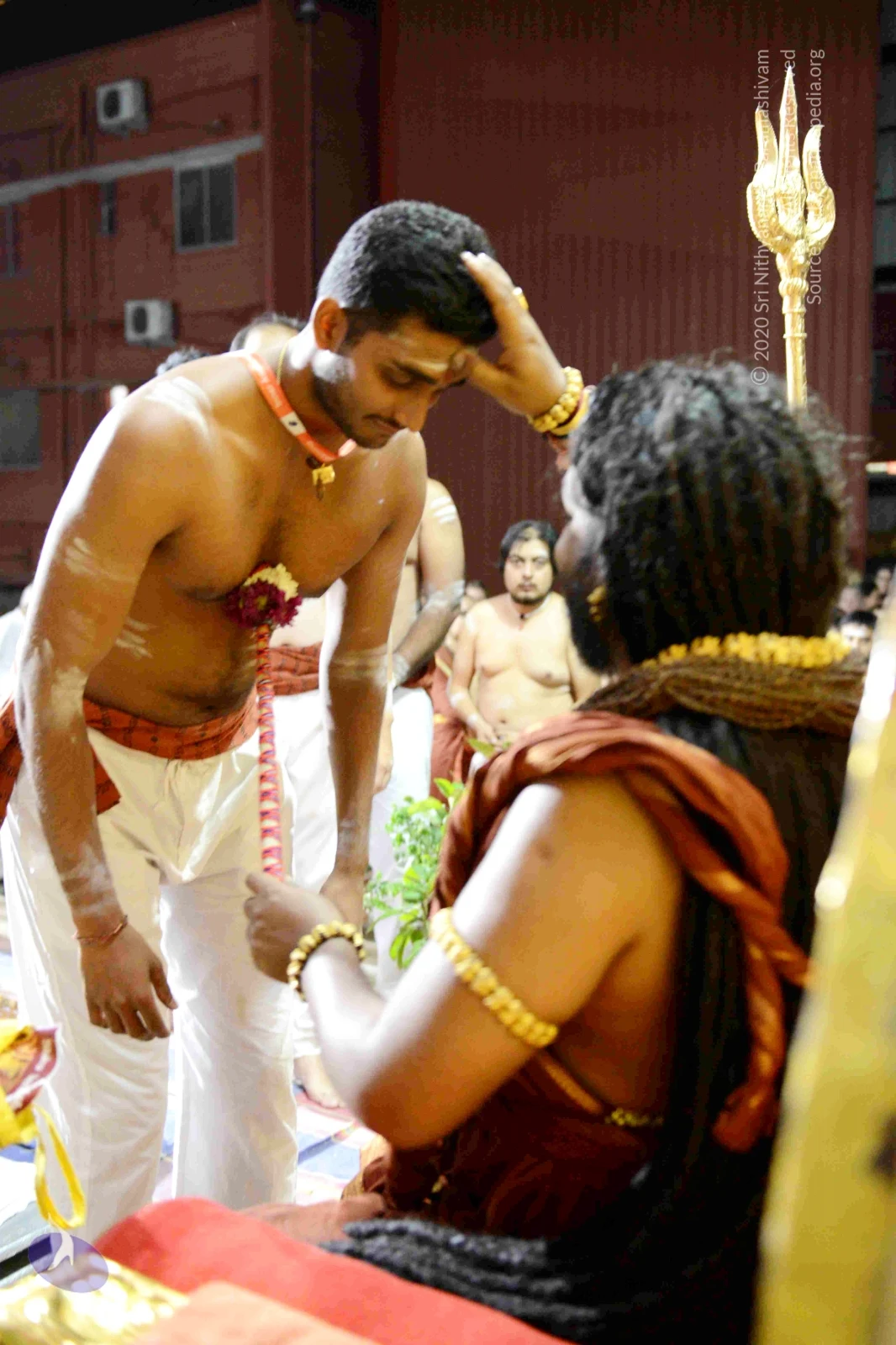
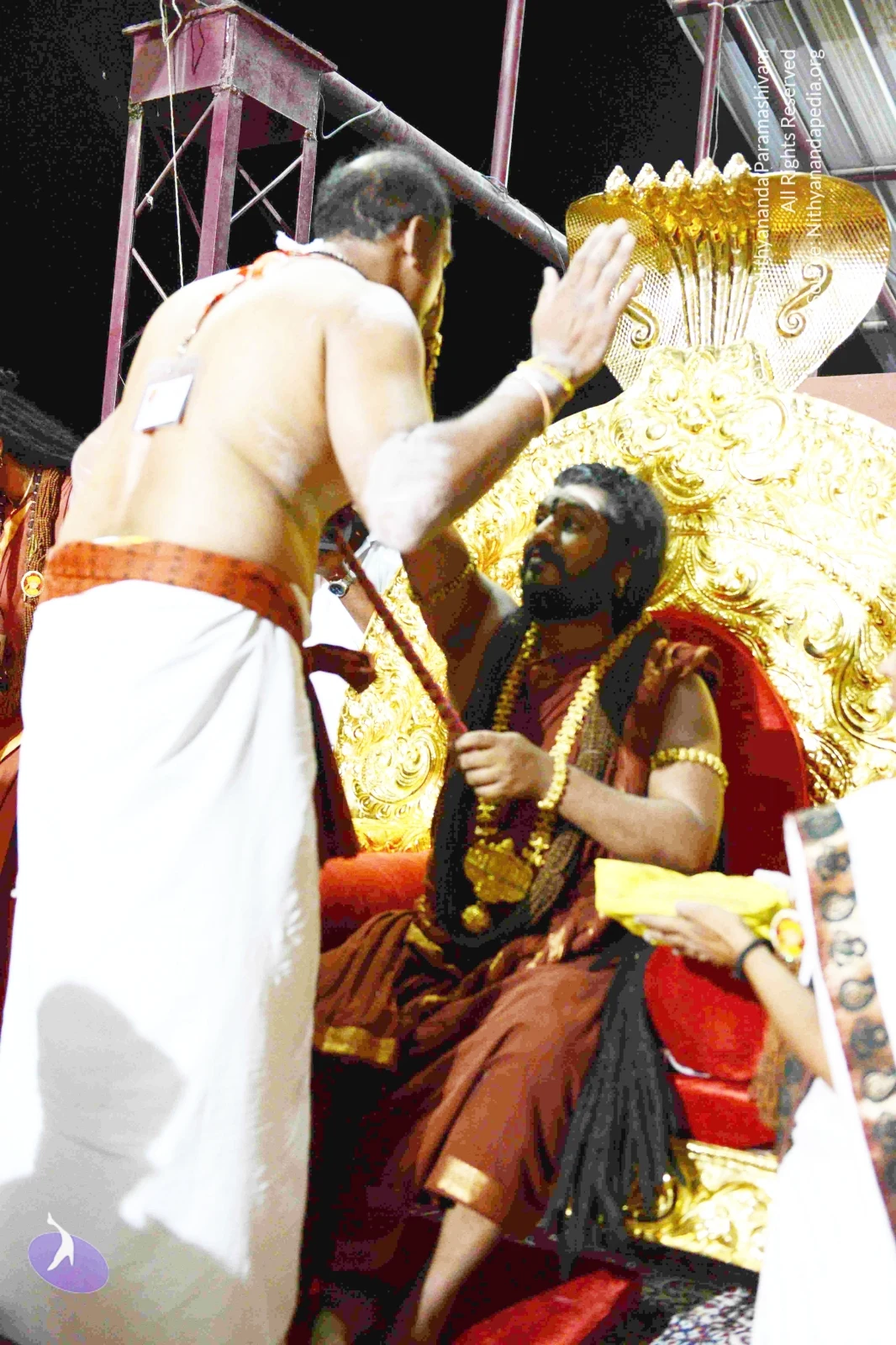
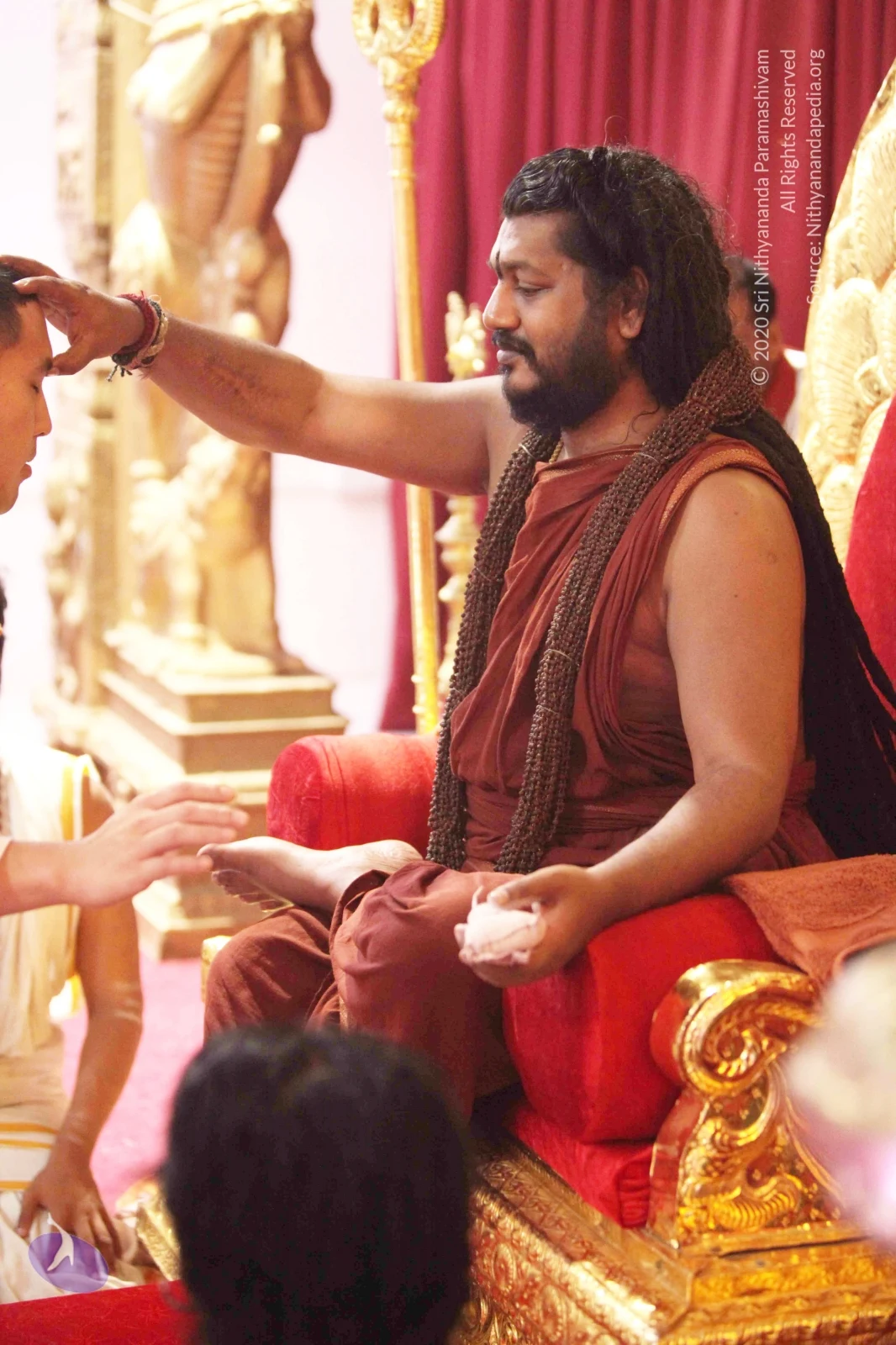
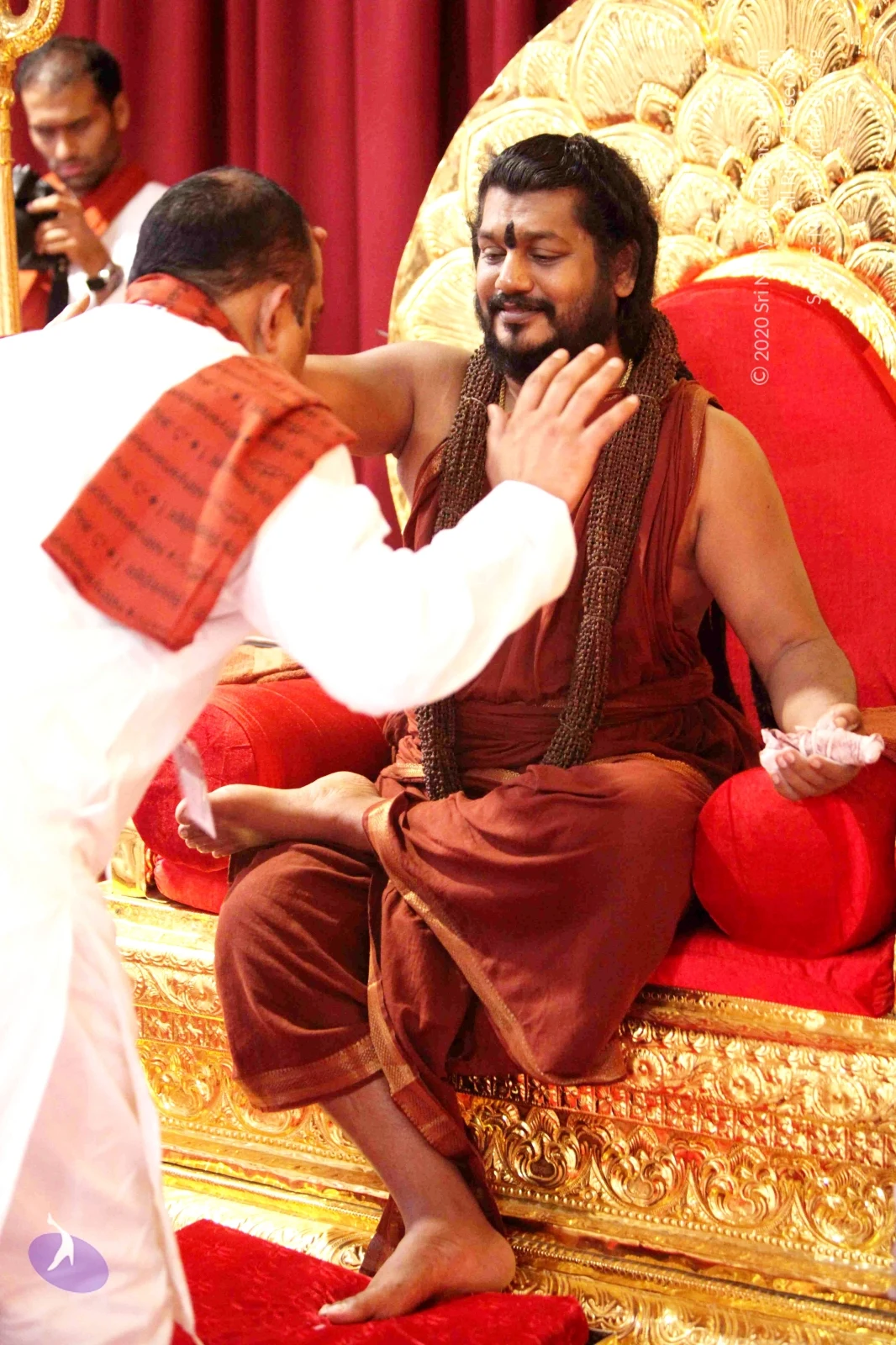
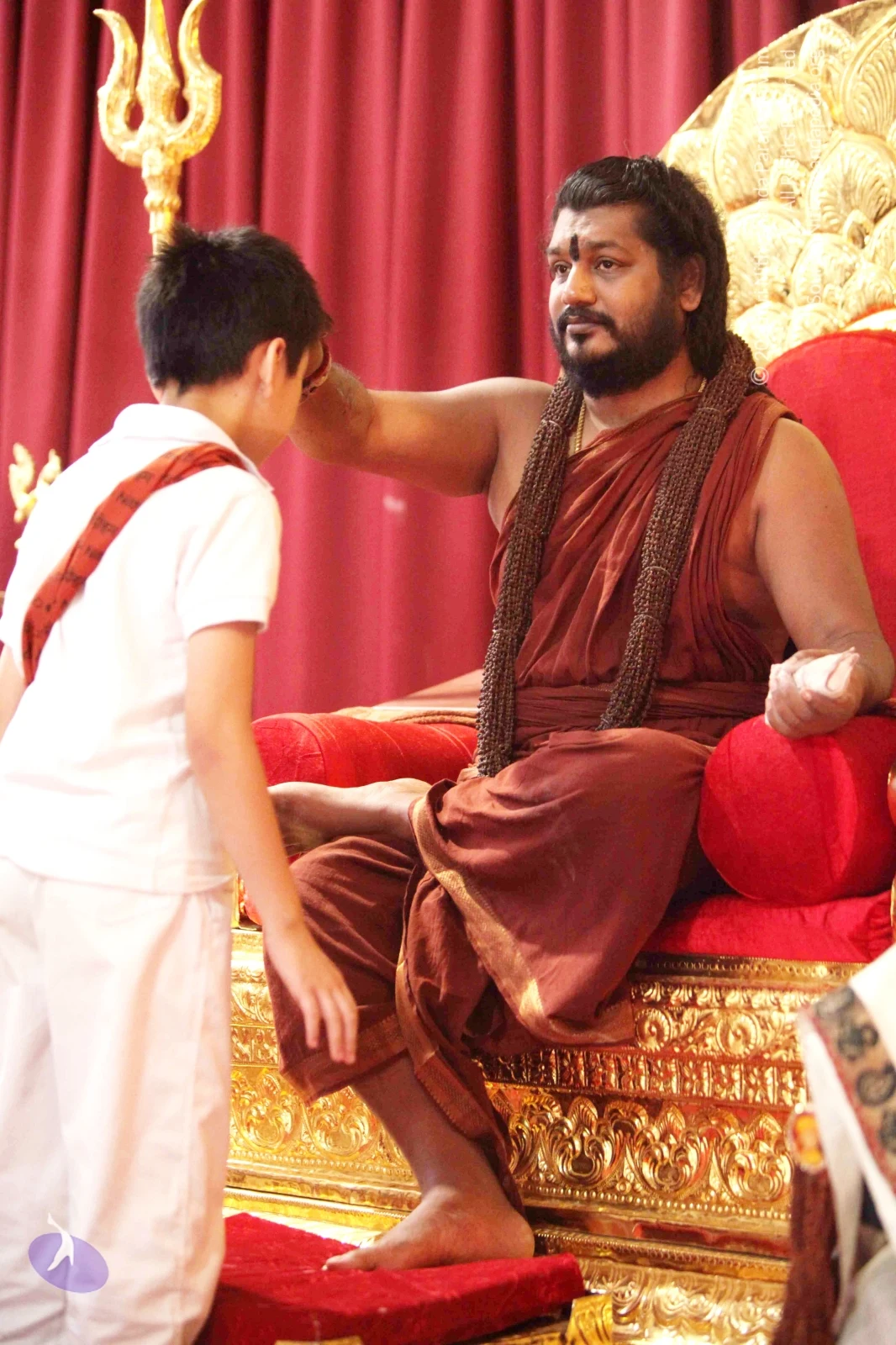
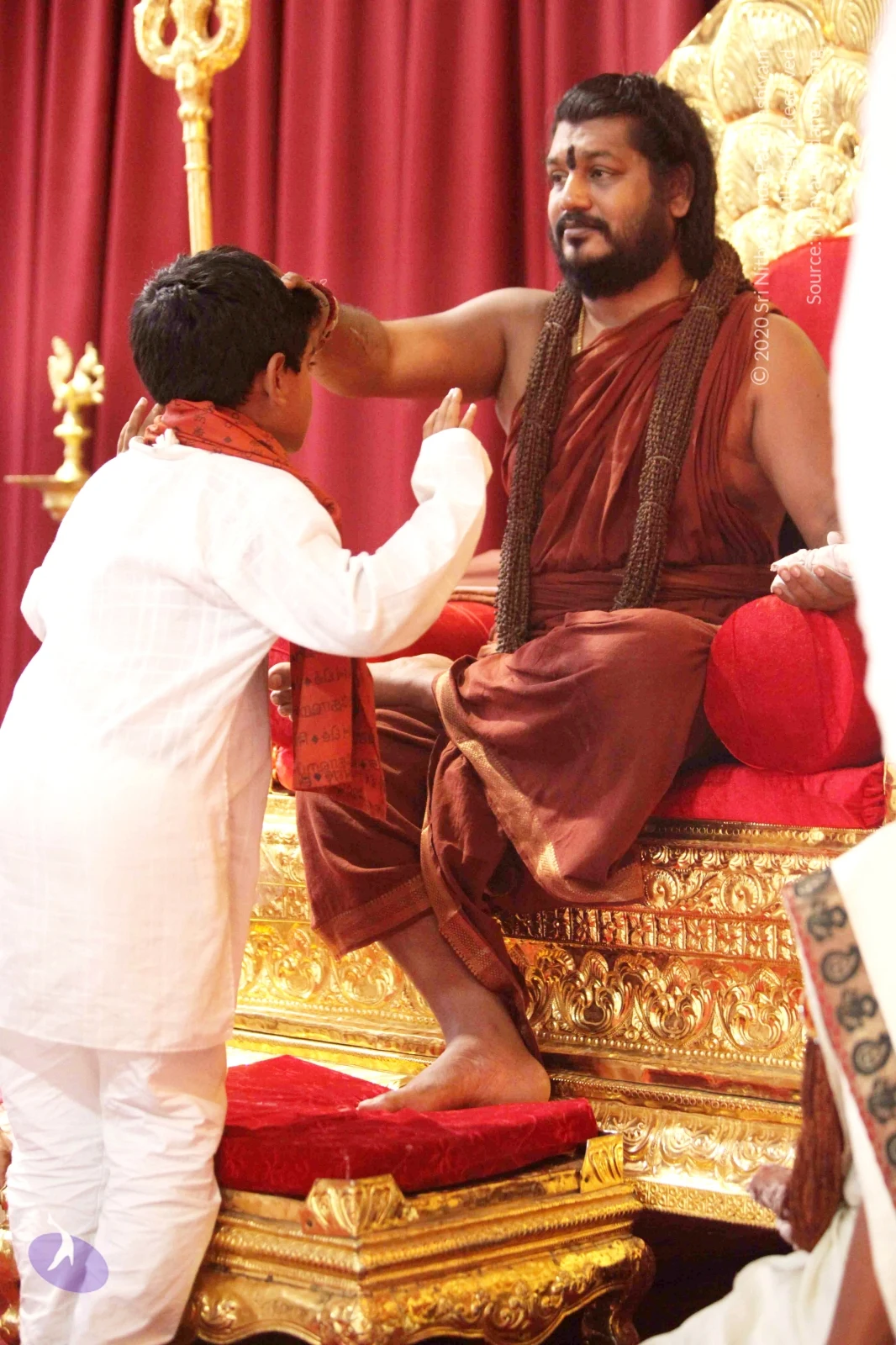
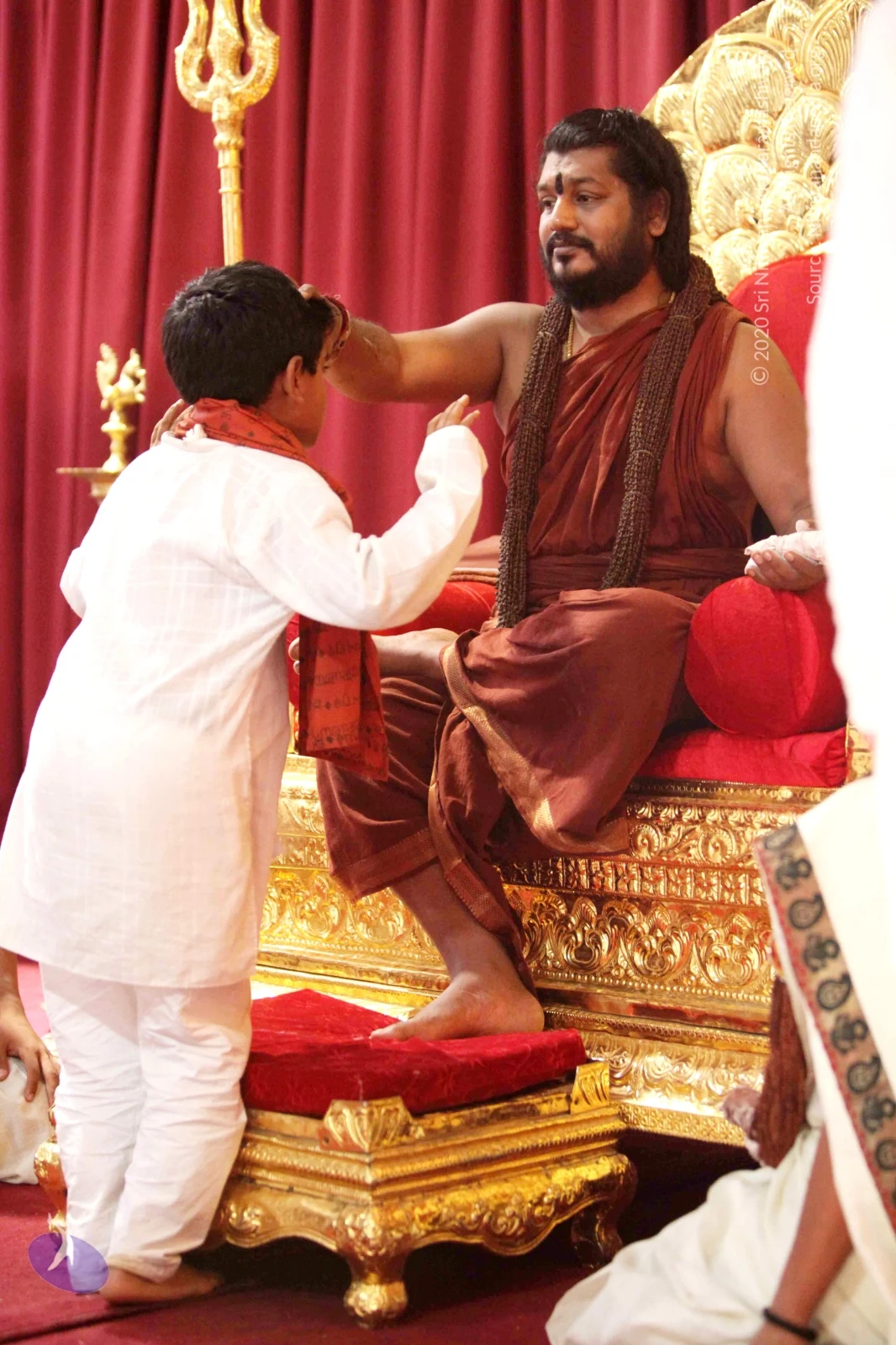
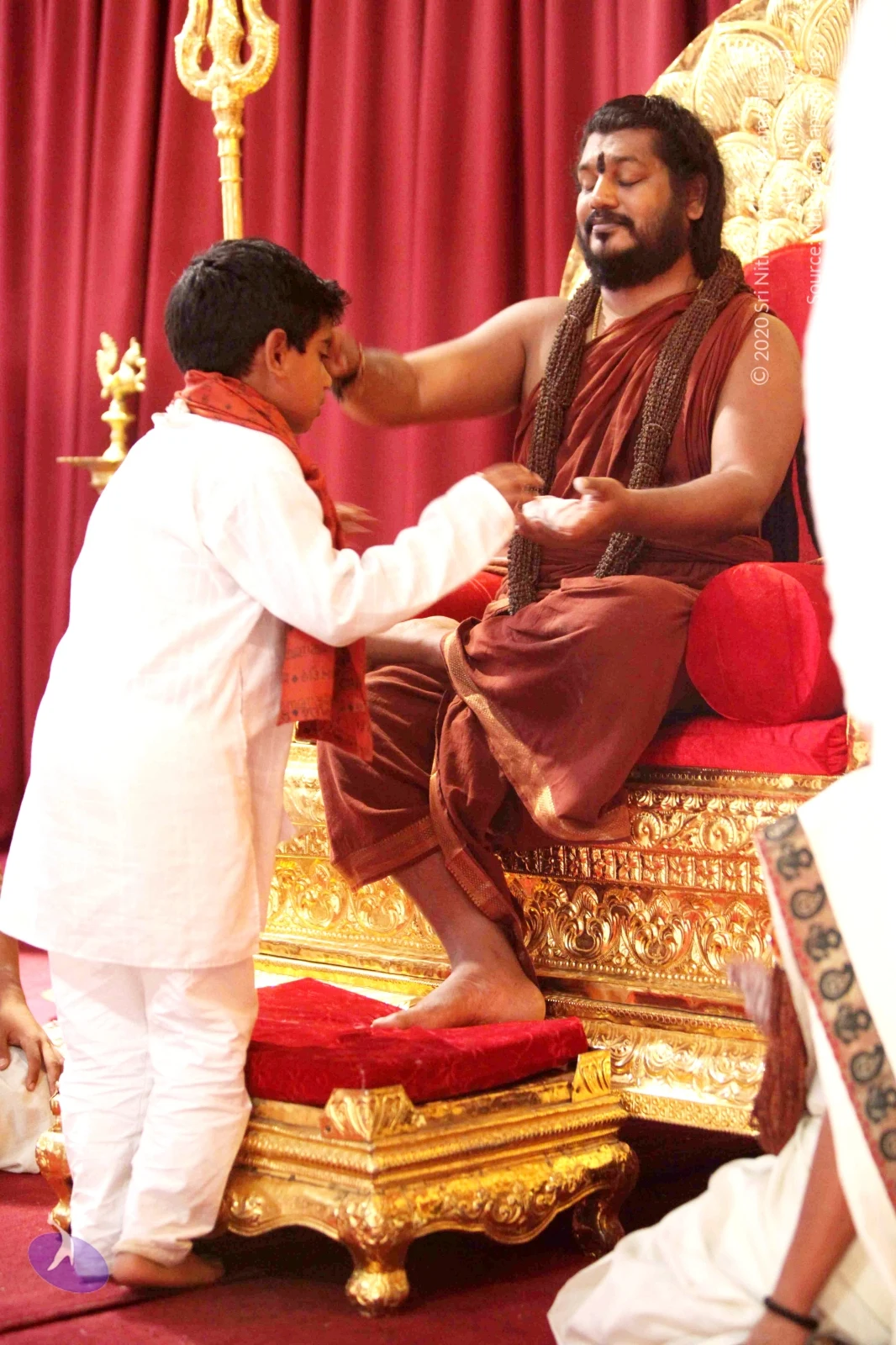
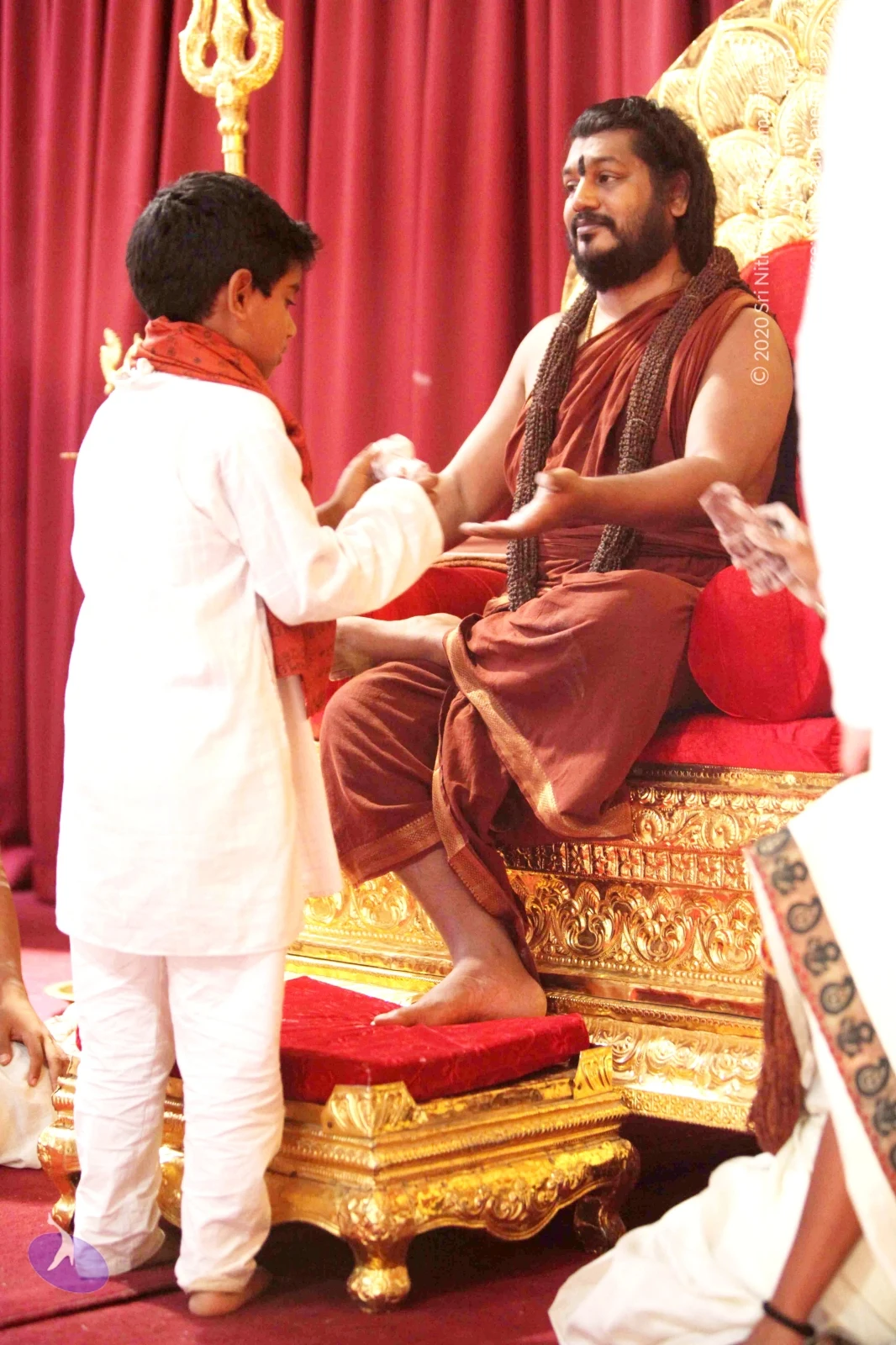
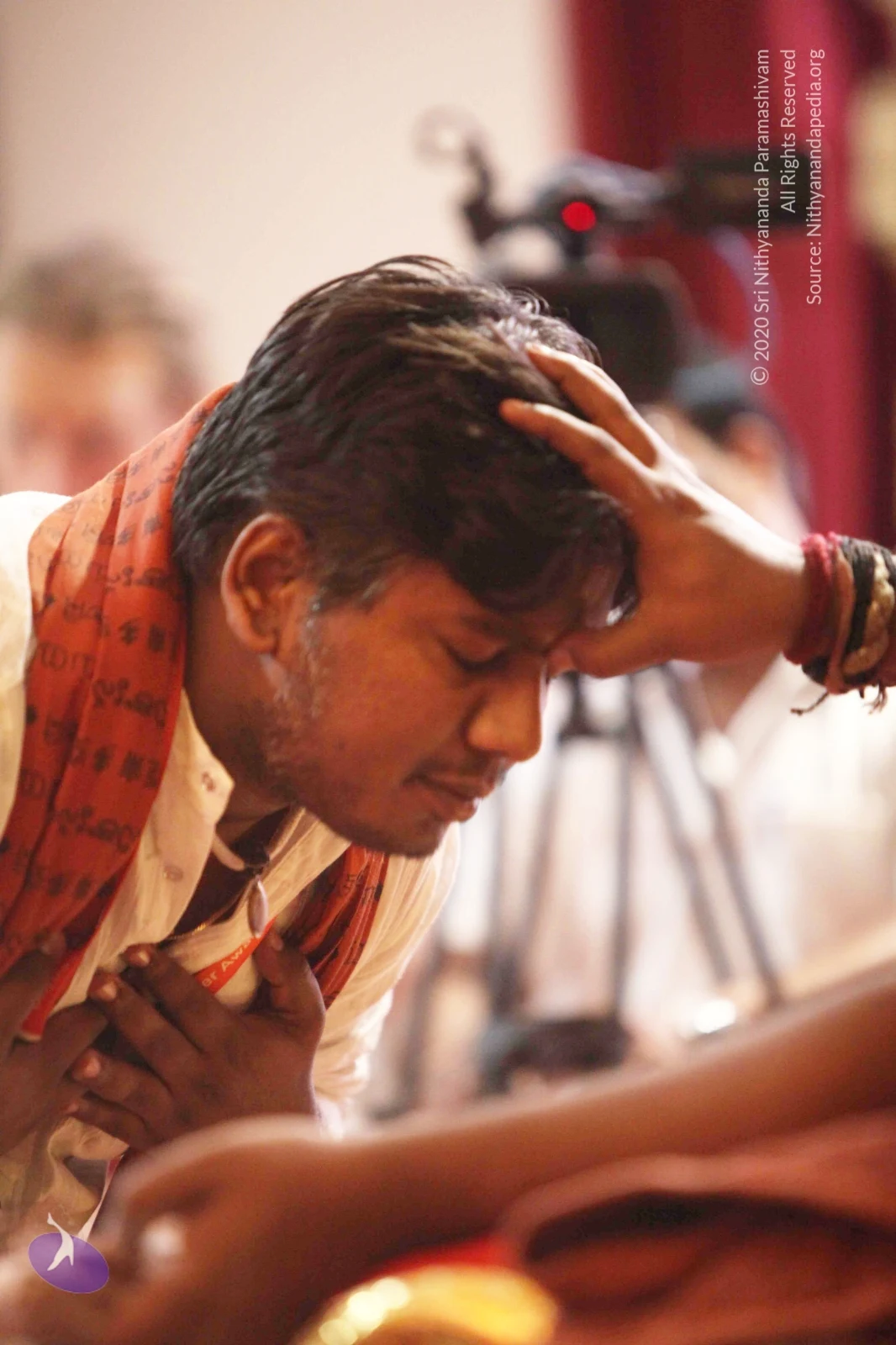
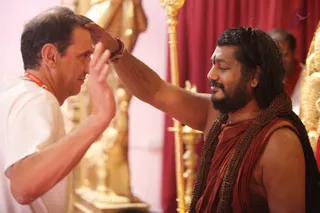
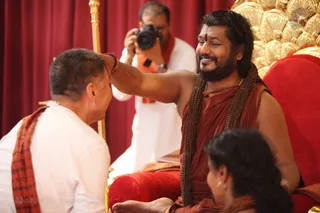
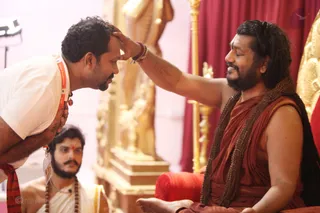
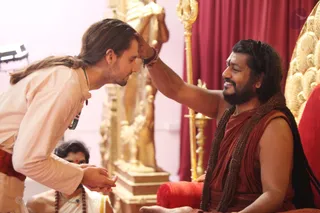
Photograph of a smiling man with long dark swept-back hair and a full beard seated on a golden ornate throne against a red velvet backdrop. He wears a rust-orange saffron-toned wrap over his shoulders and a long brown rudraksha mala draped across his chest, with a gold chain at his neck. A tall gold ceremonial lamp stand stands beside him, and a gold deity murti is partly visible at the left edge. a person is seated in darshan setting.A seated man in a rust-orange sleeveless robe and long braided mala-like cords sits on a red cushioned throne, placing his right hand on the forehead of a standing man with long hair and a light cream kurta with a rudraksha-style necklace. The standing man bows forward with hands joined. Behind them stands a gold deity murti, a gold ceremonial staff and a red curtain frame the scene. A second man in white with a rudraksha mala is partly visible at lower left.

IA-Rudra-Homa
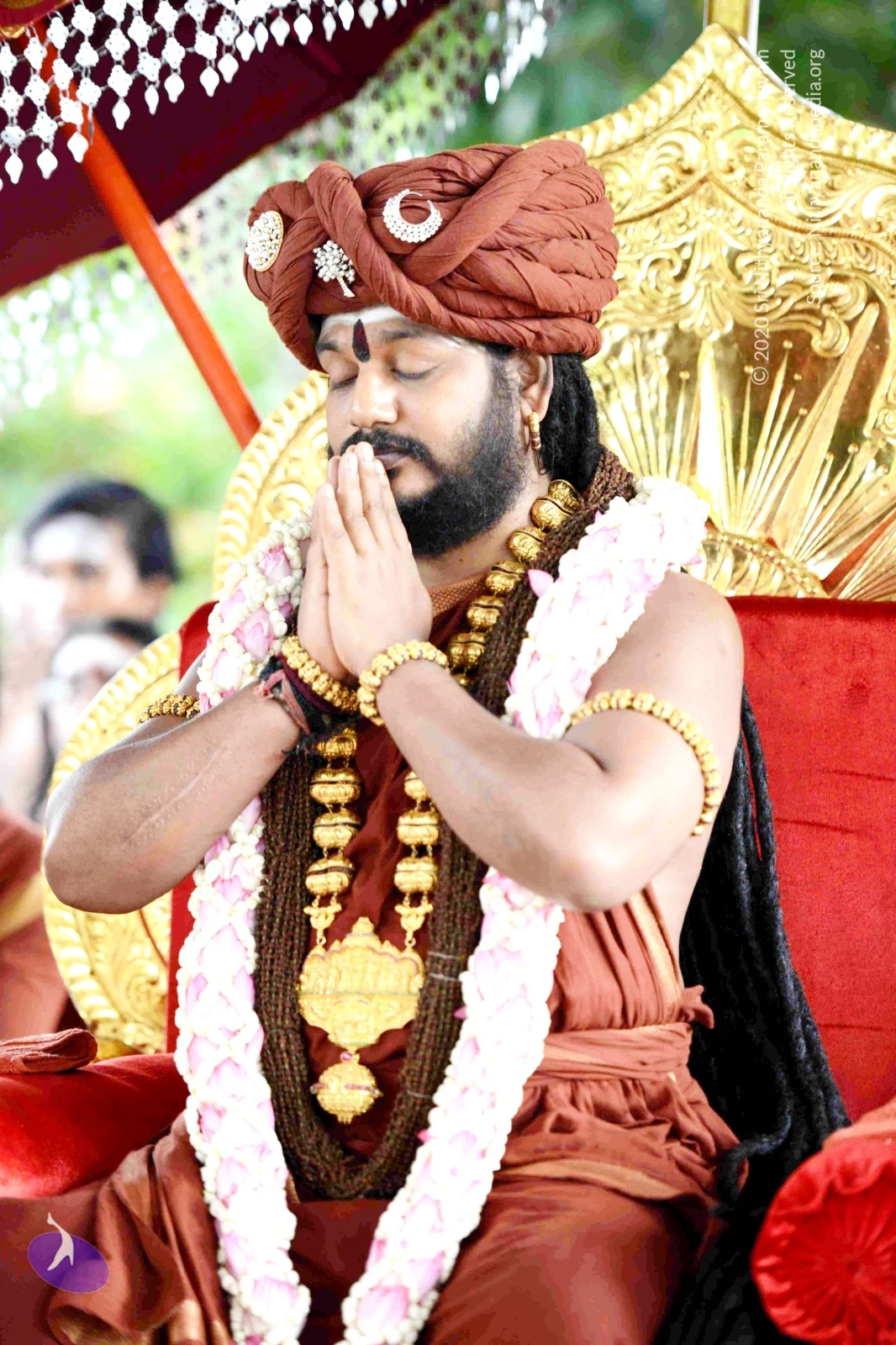
36 photosSource gallery
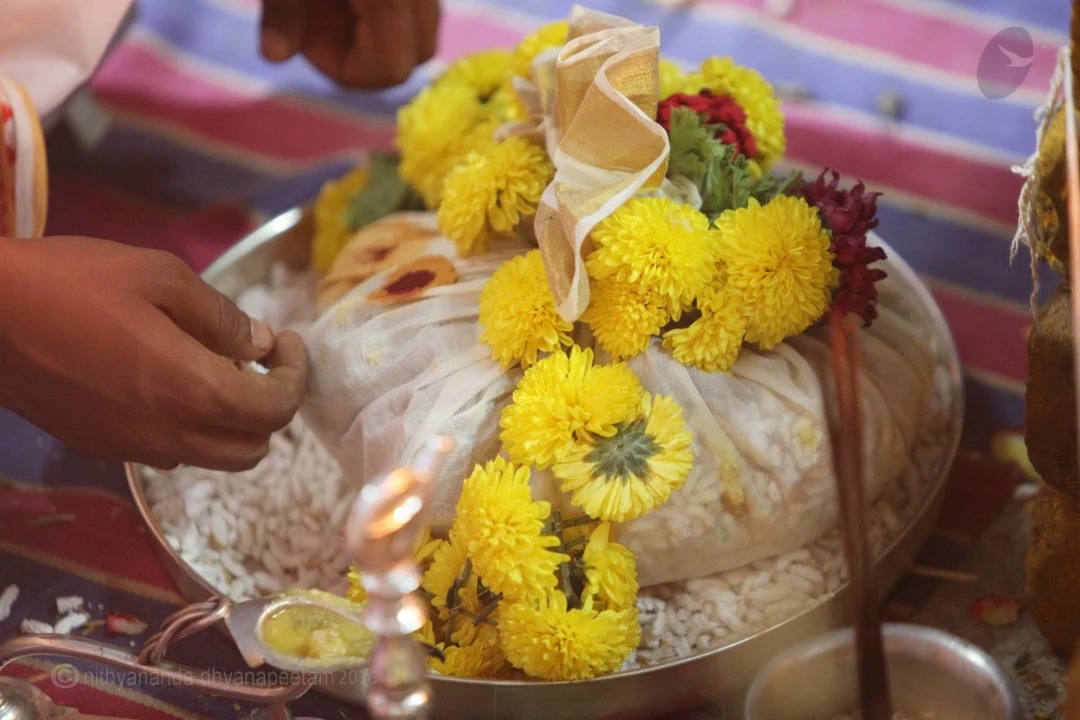
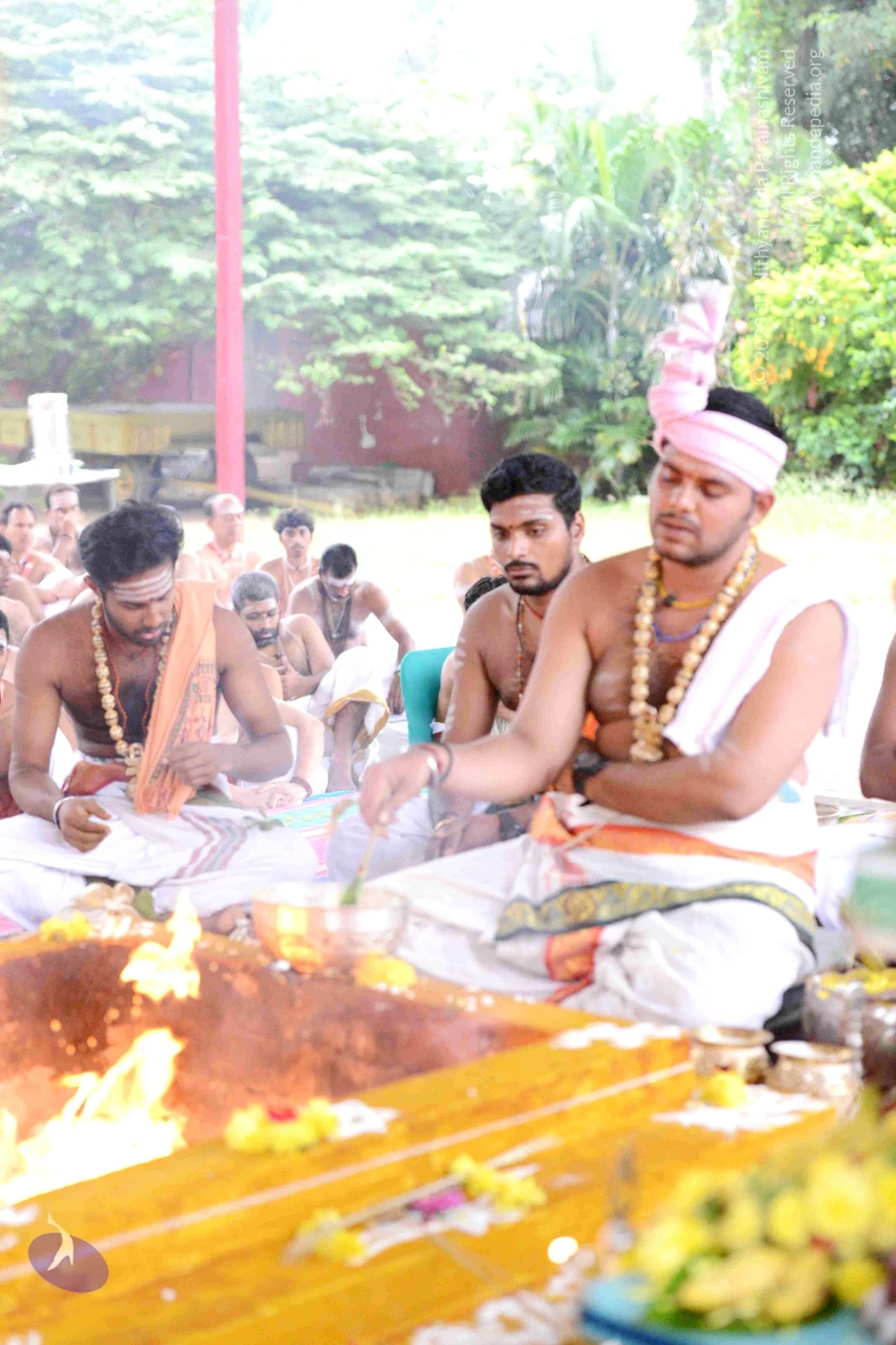
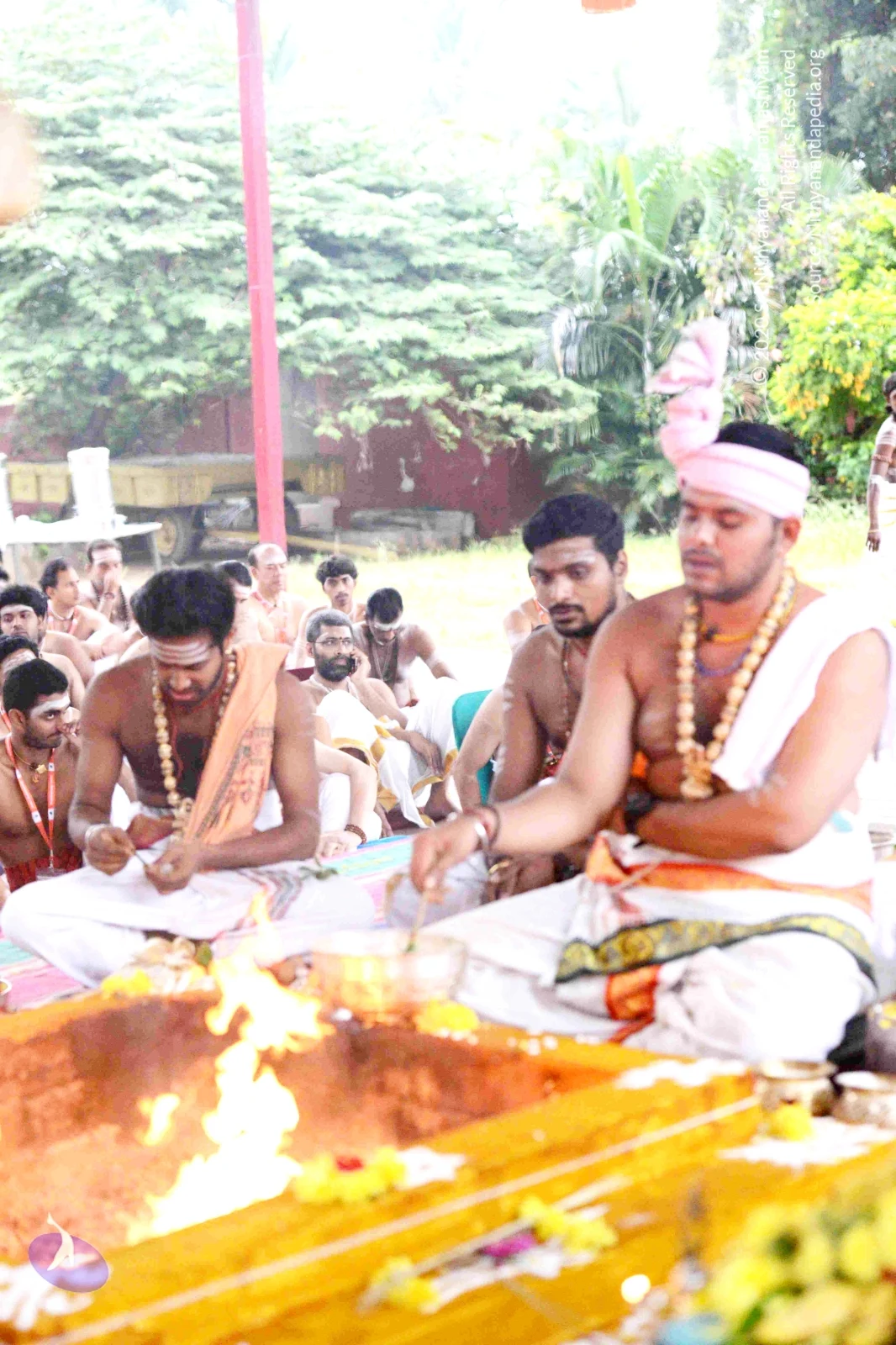
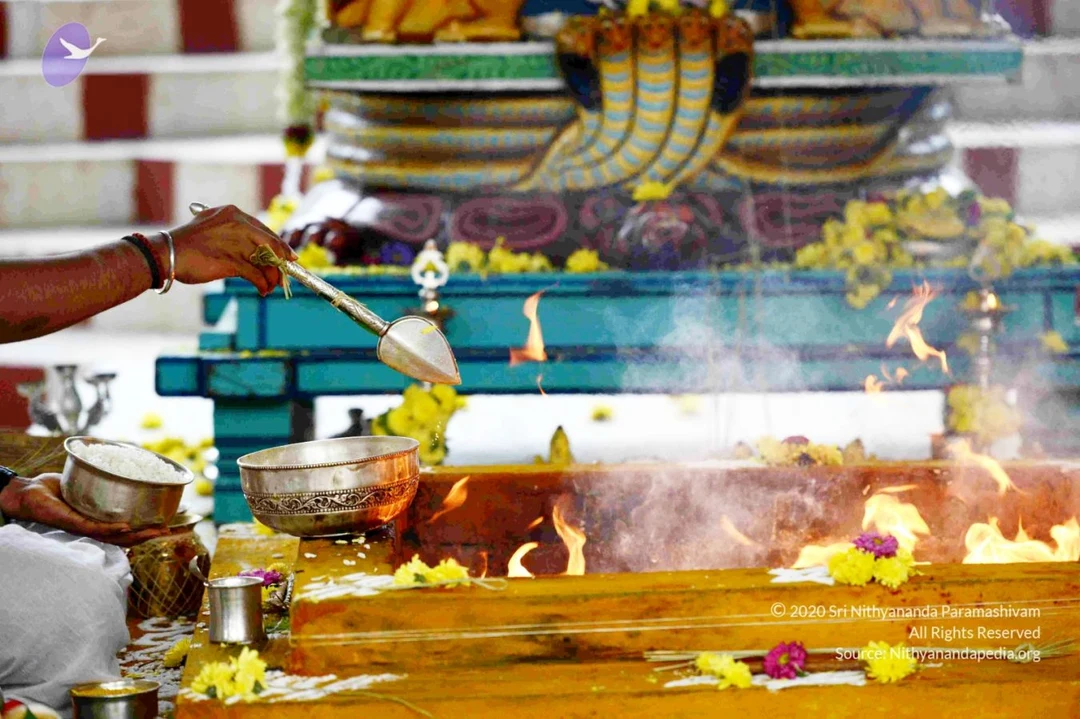
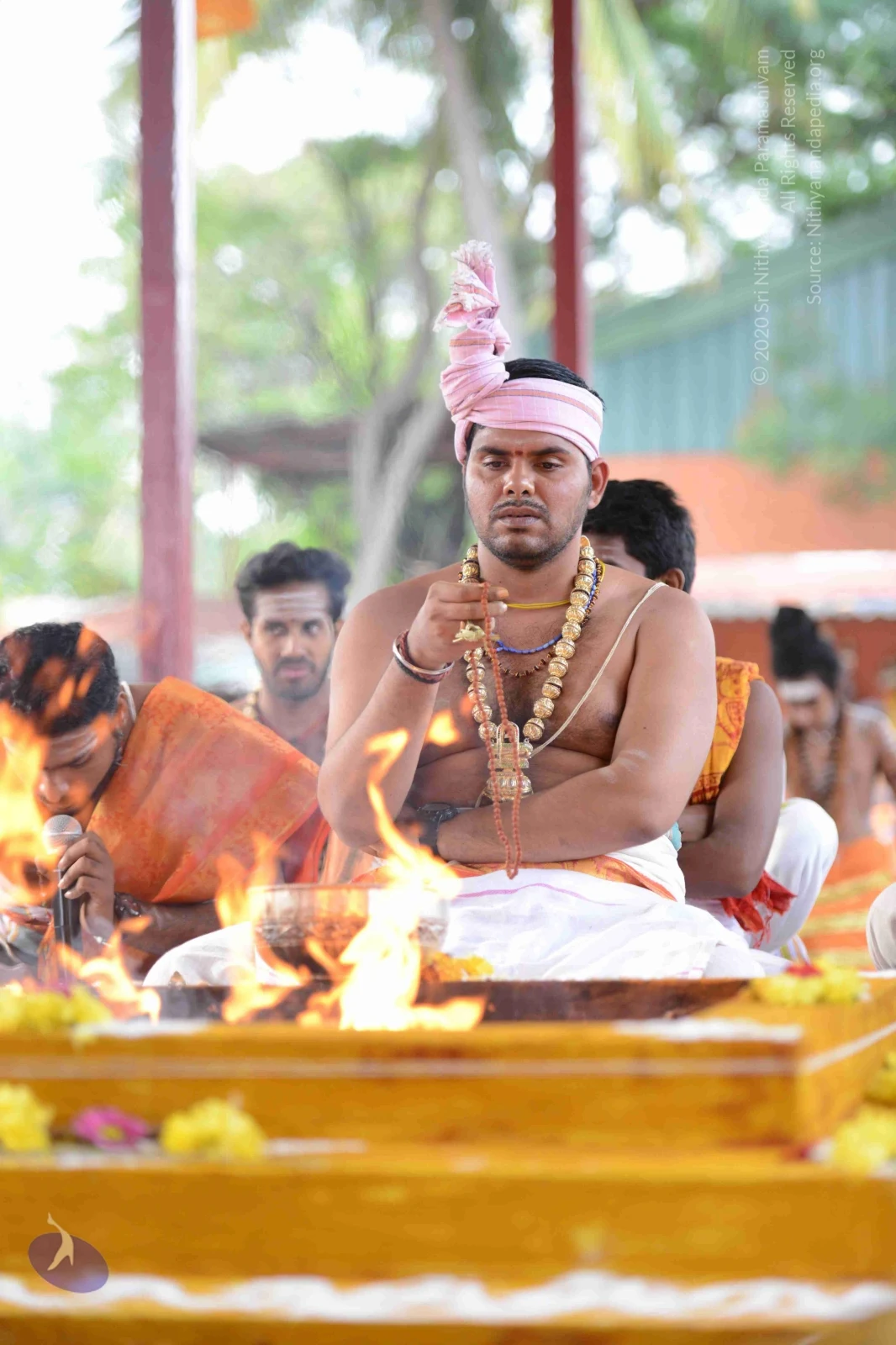
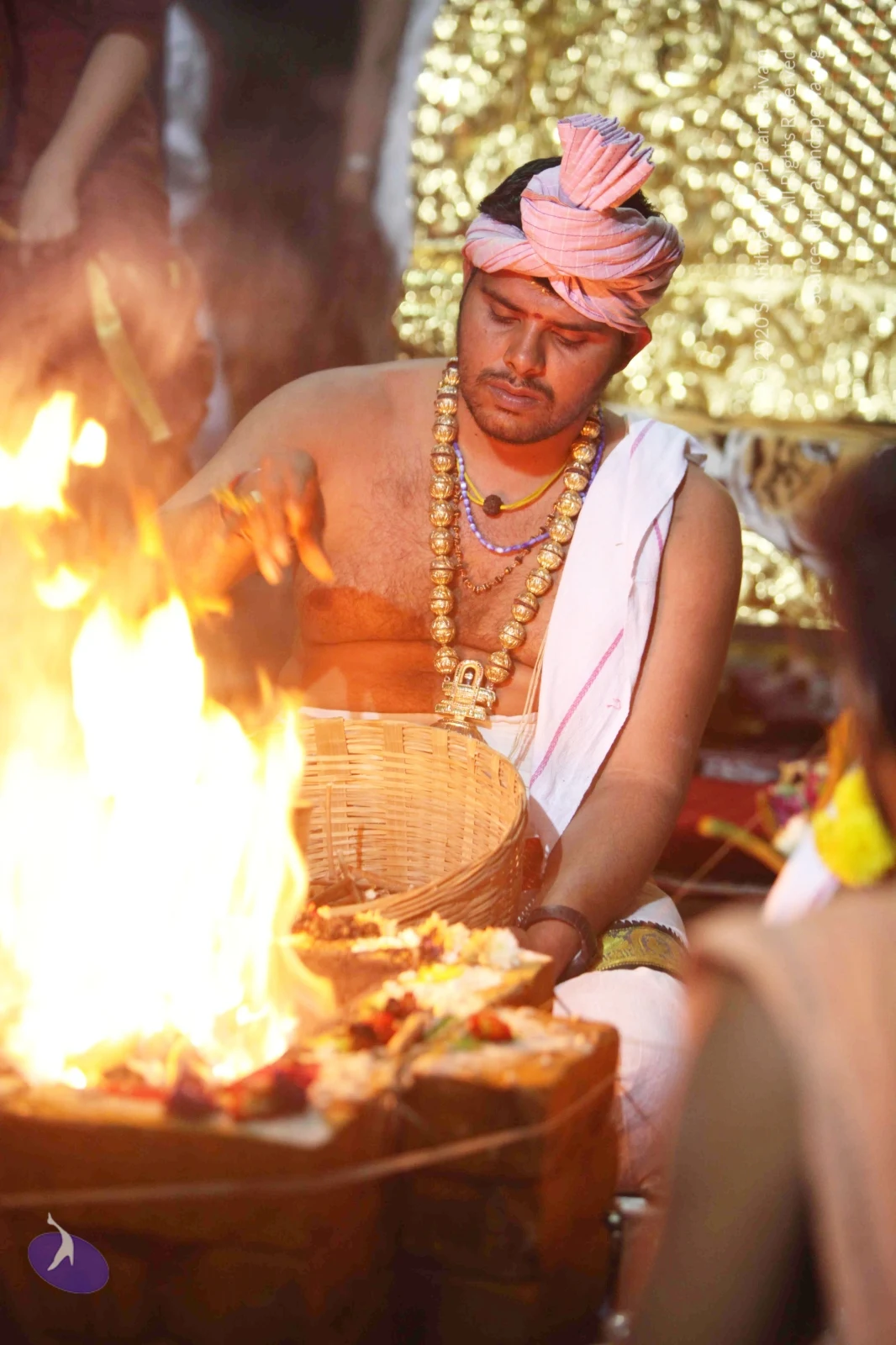
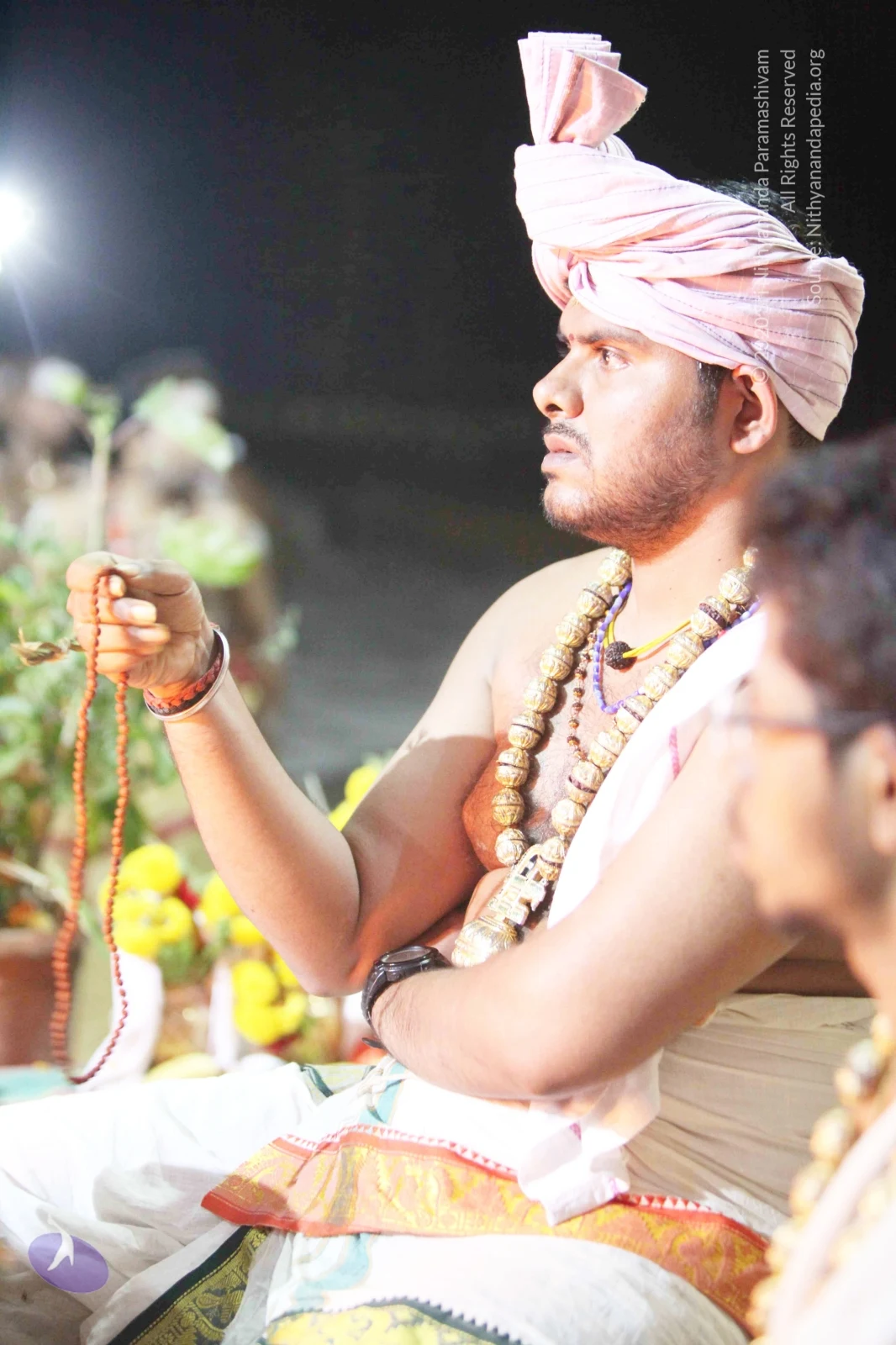
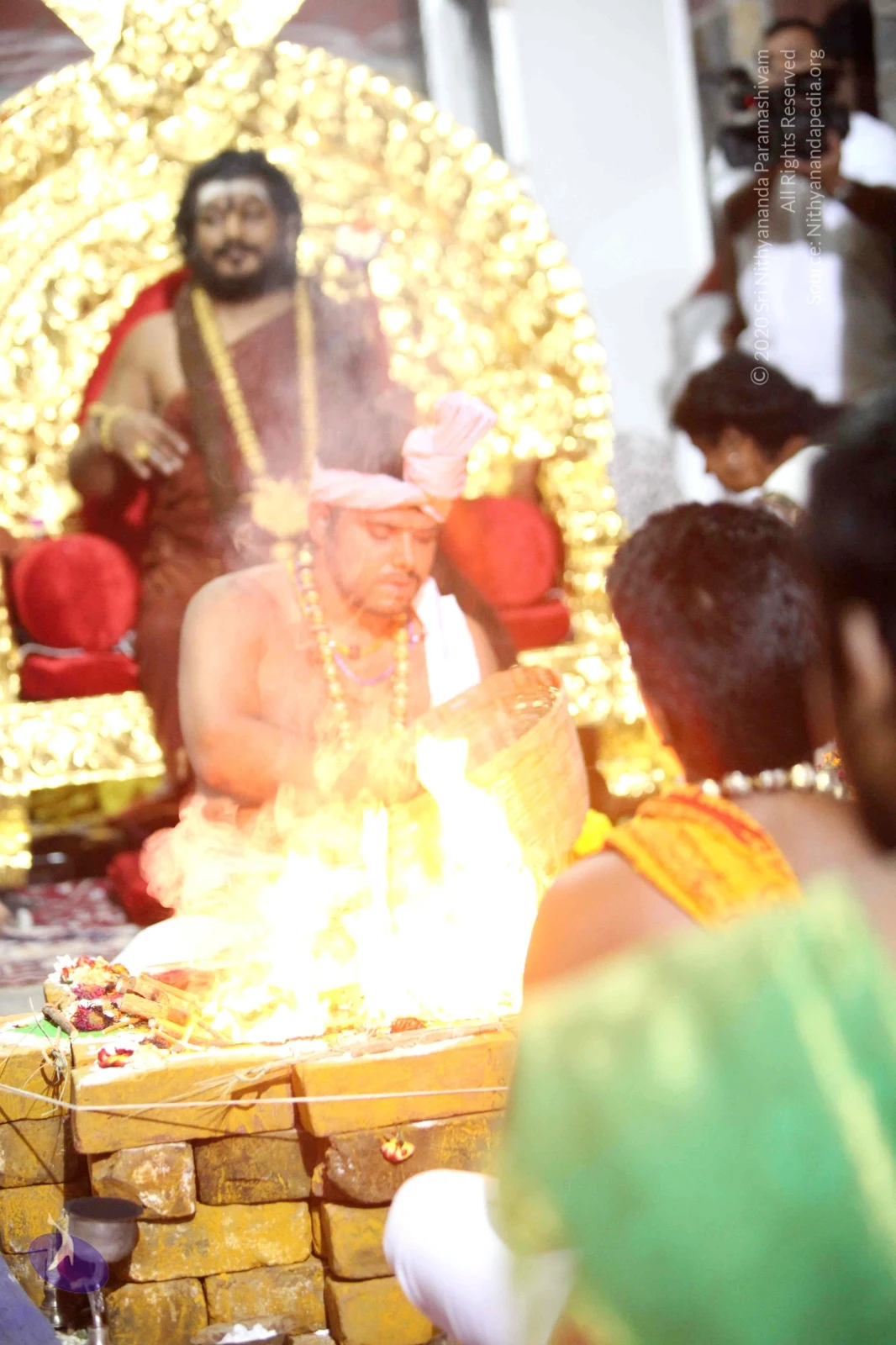
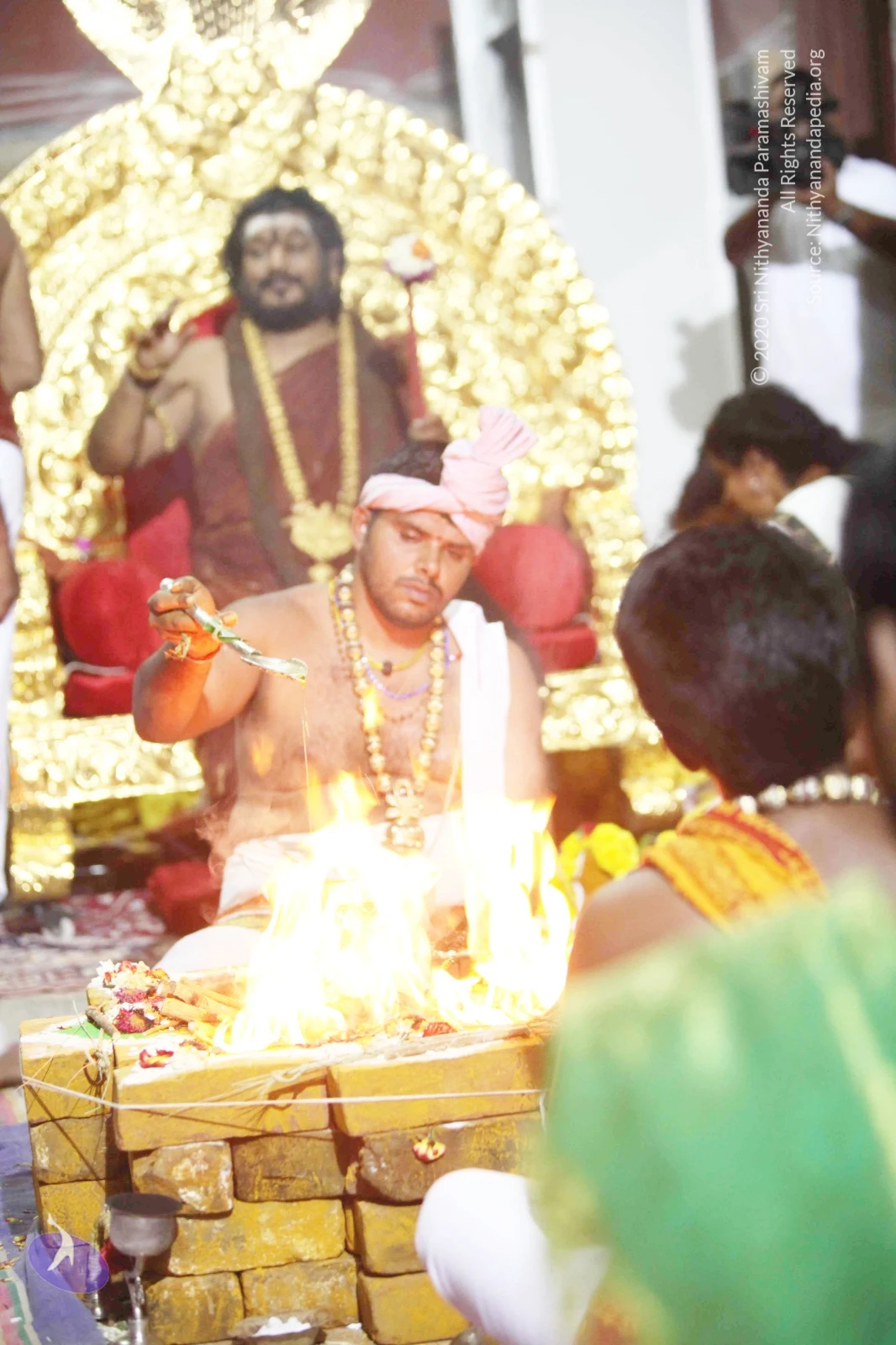
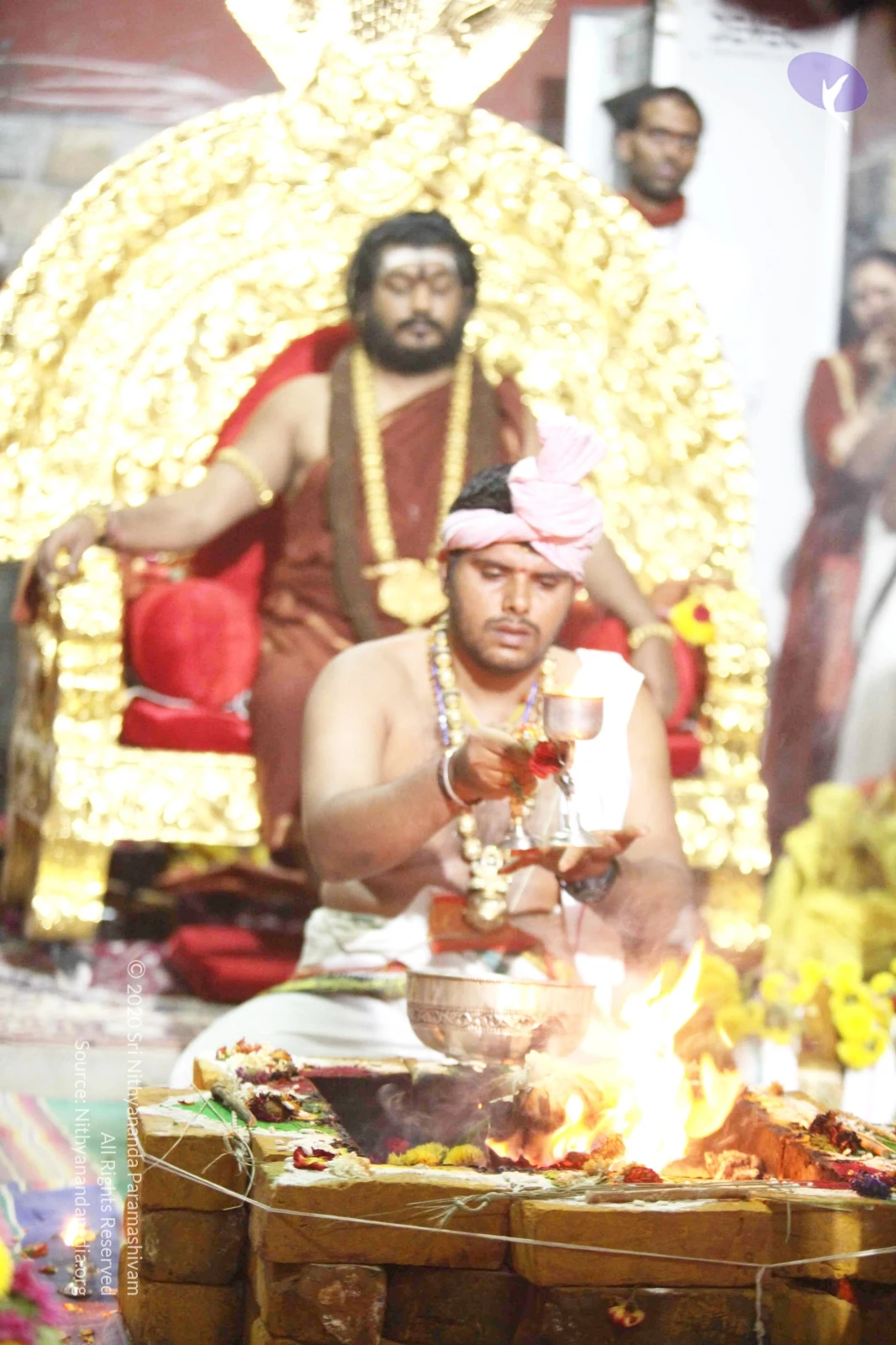
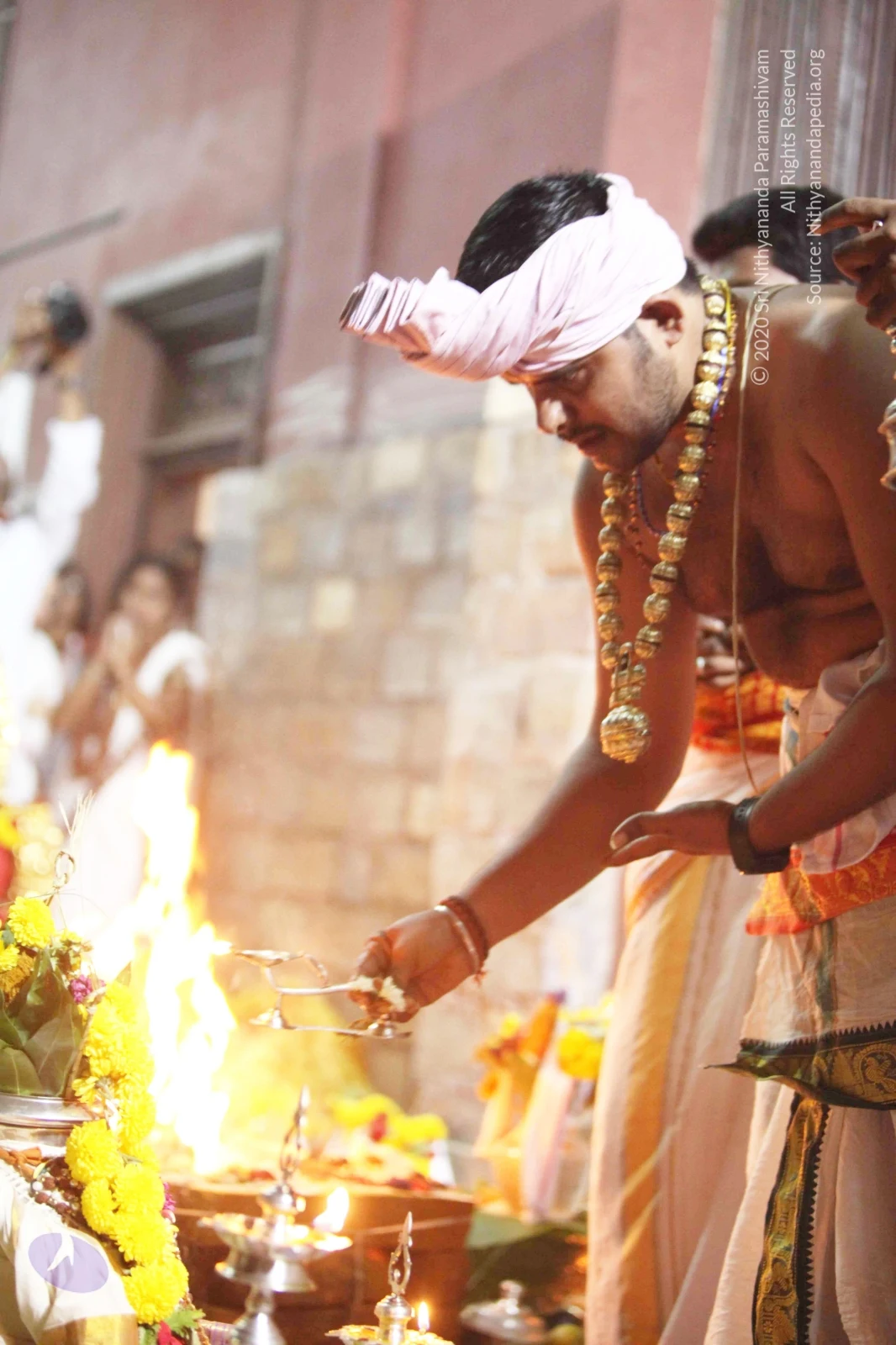
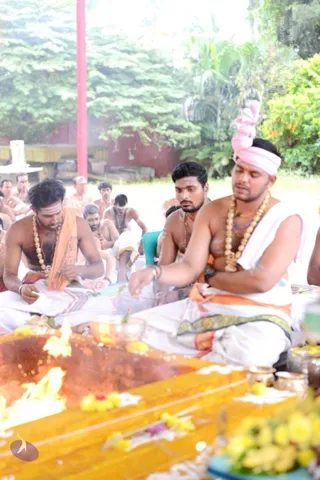
Outdoor ashram ritual under a corrugated roof decorated with hanging colourful lanterns and paper cones. Dozens of devotees sit in rows on the ground and on white plastic chairs, mostly in white clothes with red-orange shawls, many with bare shoulders. Near the centre, several priests in saffron and orange robes sit before a fire pit where smoke rises, with a golden canopied palanquin or throne on a raised platform at right. A framed picture hangs on a pole in the background, and palm plants and a red building stand beyond the open sides.A large outdoor pavilion with a tin roof and hanging colourful paper lanterns hosts a ritual gathering. Rows of seated devotees in white clothes with red-orange shawls face a central ritual area where several priests sit on the floor, some bare-chested with ochre cloths, one in white garments. Incense smoke rises near a decorated golden palanquin-like canopy with a dome and fringed hangings, beside a deity murti and floral offerings. A large framed banner with a world map hangs on the back pillar, and a drum-like ceremonial object lies on the left. Trees and greenery frame the open sides. The seated crowd is large, with many visible people in white.Outdoor homa or yagna at an ashram, with a fire pit lined in yellow cloth and yellow flowers in the foreground and bright flames at left. Seated priests in white dhotis perform the ritual. The front priest wears a pink turban, rudraksha-style beaded necklaces and a white shawl with an orange border, and holds offering items over a brass bowl. A second priest at left wears an orange shawl and a tilak, and others sit behind in white and orange clothing among green trees. The men are shirtless and wear beaded malas.Outdoor homa ritual under a red-pillared canopy with green trees behind. In the foreground a square sacrificial fire pit with orange-tinted ash and burning flames, surrounded by marigold and yellow flower offerings. Two shirtless priests in white dhotis with orange borders sit cross-legged; the right priest wears a pink turban and a long rudraksha-style bead garland, stirring offerings with a long ladle. A second priest in orange shawl with a white vertical tilak and bead garland pours offerings. Behind them seated devotees, some bare-chested in white dhotis, watch the ritual. No figure is clearly identifiable as a person.A homa fire ritual at an altar. A person's arm, wearing red-and-black thread and bangles, holds a long-handled metal ladle pouring offerings into a copper bowl beside a wooden fire pit with bright orange flames. Behind it stands a deity murti with a multi-hooded cobra canopy, decorated with yellow marigold garlands, and a turquoise altar with more flowers. A small brass vessel sits on the wooden platform. No person's face is visible.A photograph of an outdoor homa or yagna under a corrugated roof, with a large plume of white smoke rising from a square fire pit. Several shaved-headed priests in white dhotis sit cross-legged on a striped mat, one bare-chested with a white cloth over his shoulder, tending the offerings with ladles and trays. Behind them a crowd of seated devotees in white clothes fills the open courtyard under palm trees. On the left a red and gold throne holds a seated figure in red and white with a mala, flanked by marigold garlands, a golden lion and a deity murti. Brass vessels, banana leaves, fruit and red-and-yellow ornaments hang from the roof frame. The figure on the throne is not confidently identifiable from appearance, so no identification is made.

IA-Session
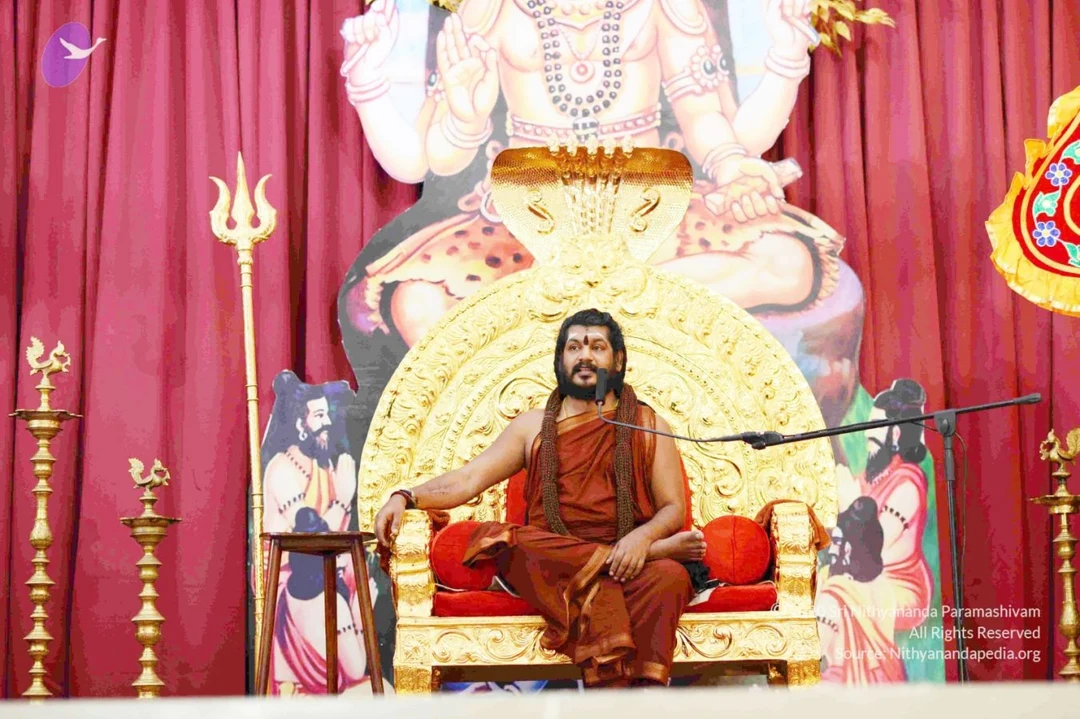
37 photosSource gallery
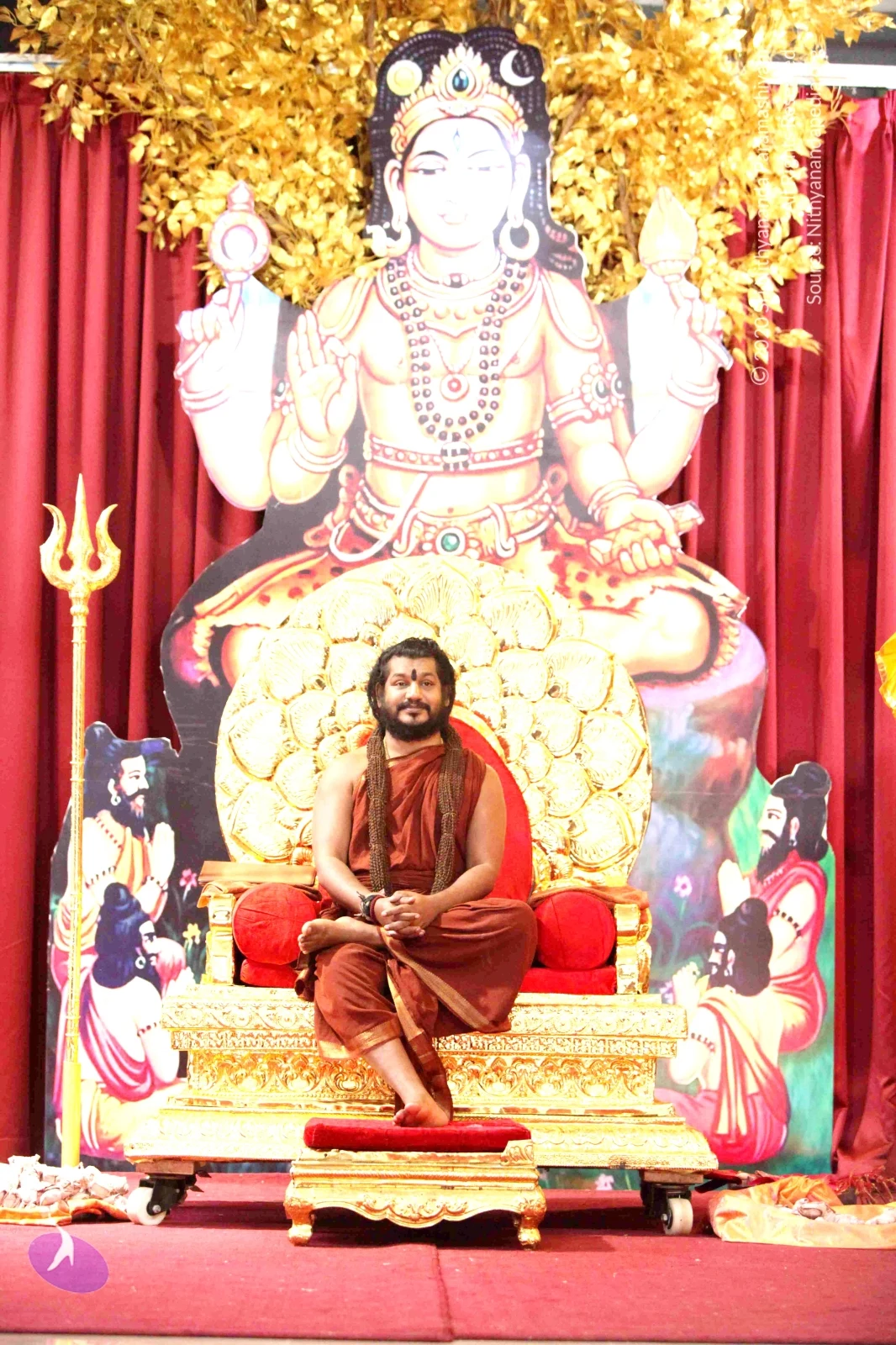
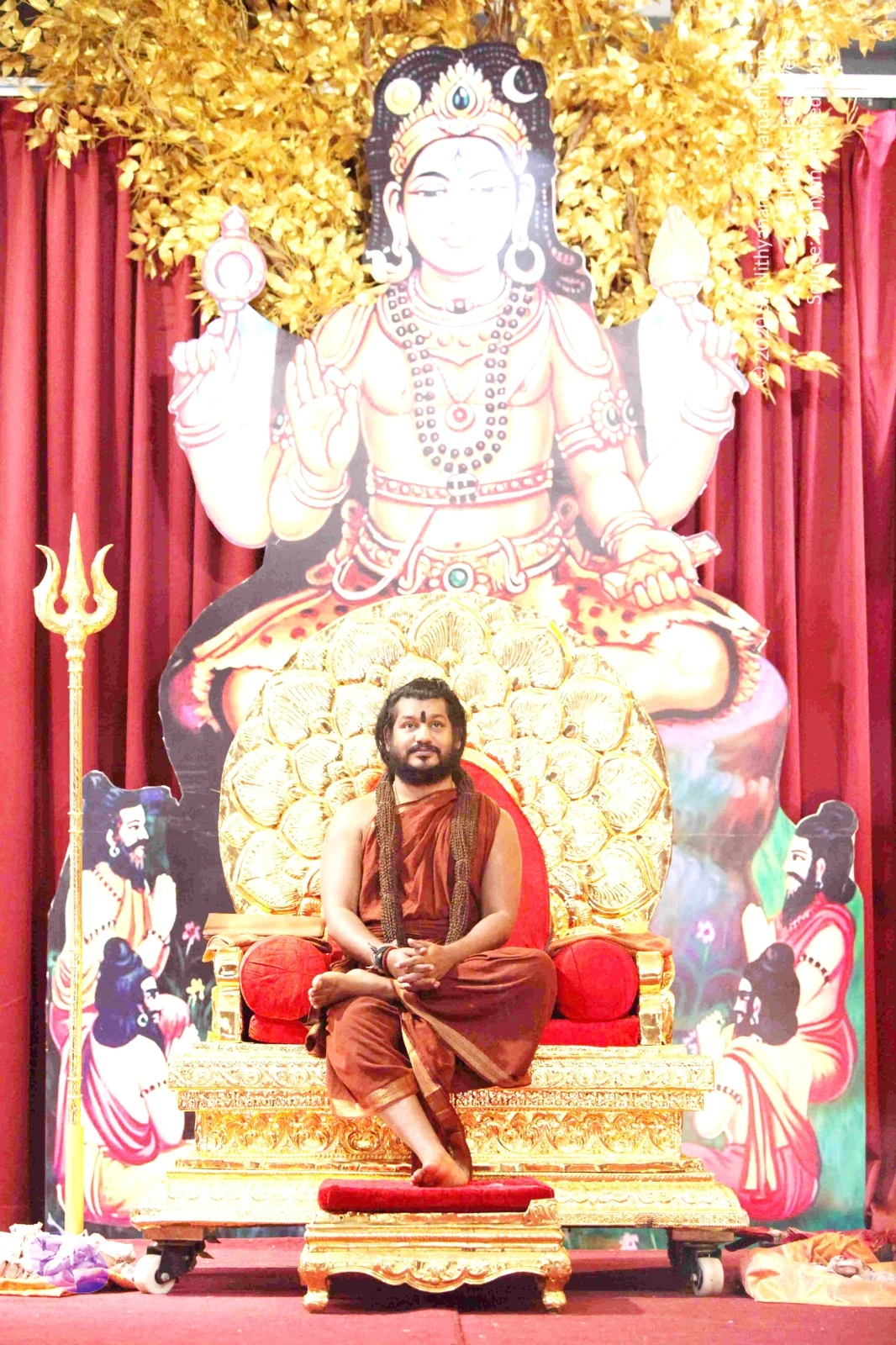
A man with long swept-back dark hair and a full beard sits on an ornate gold throne with a cobra-hood canopy and red cushions, speaking into a microphone on a stand. He wears saffron-orange robes with a rudraksha mala hanging across his chest, and his left arm rests on the armrest. Behind him a large painted deity figure with multiple arms holds ritual objects, flanked by red draped curtains, a golden trident, brass lamps and framed painted sages. A discourse setting with a probable Swamiji seated in the central position. Swamiji (probable) is seated as the speaker giving a discourse, distinguished by long swept-back hair, saffron robes and a rudraksha mala.A seated man in saffron-orange robes and a long rudraksha mala sits on an ornate gold throne with a cobra-hood backrest, speaking into a microphone on a stand while his right hand is raised in a teaching gesture. Behind him hangs a large painted backdrop of a multi-armed deity murti with a crown, flanked by cutout figures of seated sages in red. Crimson drapes hang at the sides, with a gold trident and gold oil lamps on stands. a person: the saffron clothing, long rudraksha mala, and bearded appearance fit the page's description of a discourse.A man in saffron-orange robes sits cross-legged on an ornate gold throne with a cobra-hood canopy and red cushions, speaking into a microphone on a stand. He wears a red forehead mark, long dark hair, and a rudraksha mala. Behind him a large cutout of a multi-armed deity with a crown and beaded necklaces stands among gold foliage, with a golden trident leaning at the left edge and smaller painted figures of seated sages on the sides. The red drapes and stage backdrop frame a discourse setting.A man seated cross-legged on an ornate gold throne with a carved cobra hood backrest and red cushions, wearing a rust-orange dhoti and shawl, a red tilak on his forehead, long braided hair falling forward, and a bead-free bare upper body. A microphone stands before him on a stage. Behind him, a large painted and gilded image shows a multi-armed deity murti with a crown, rudraksha malas, and raised hands holding objects, flanked by painted sages in red and pink robes. A golden trident stands at left and a wooden stool sits near the throne. Swamiji (probable), seated in the discourse setting, wears a saffron-orange shawl with long swept-back hair and a rudraksha-style necklace.A man seated on an ornate gold throne with a golden cobra-hood backrest delivers a discourse at a microphone. He wears a rust-orange robe and a bare-chested drape, has long swept-back dark hair, a beard and a vermilion mark on his forehead, and wears a rudraksha mala. One arm is extended outward in an expressive gesture. Behind him is a large painted deity murti with four arms, a crescent moon and a third eye on the crown, flanked by golden leaves and red drapes. A golden trident stands to the left, a wooden stool sits nearby, and painted sage figures appear on the side panels. The setting is a stage satsang or discourse.A man with long dark hair and a full beard sits cross-legged on a red cushioned throne ornately decorated in gold, speaking into a black microphone on a stand. He wears a rust-orange wrap with a gold-bordered edge, a brown rudraksha mala draped over his shoulders and a dark red tilak on his forehead. A tall golden trident stands behind him against a deep pink drape, and an orange-brown thread bracelet is on his wrist. The scene looks like a discourse setting. Swamiji (probable): the long hair, orange clothing, rudraksha mala and throne cues fit the page's identification, so this is recorded as an in-person candidate.
IA-Vishesha-Deeksha
97 photosSource gallery
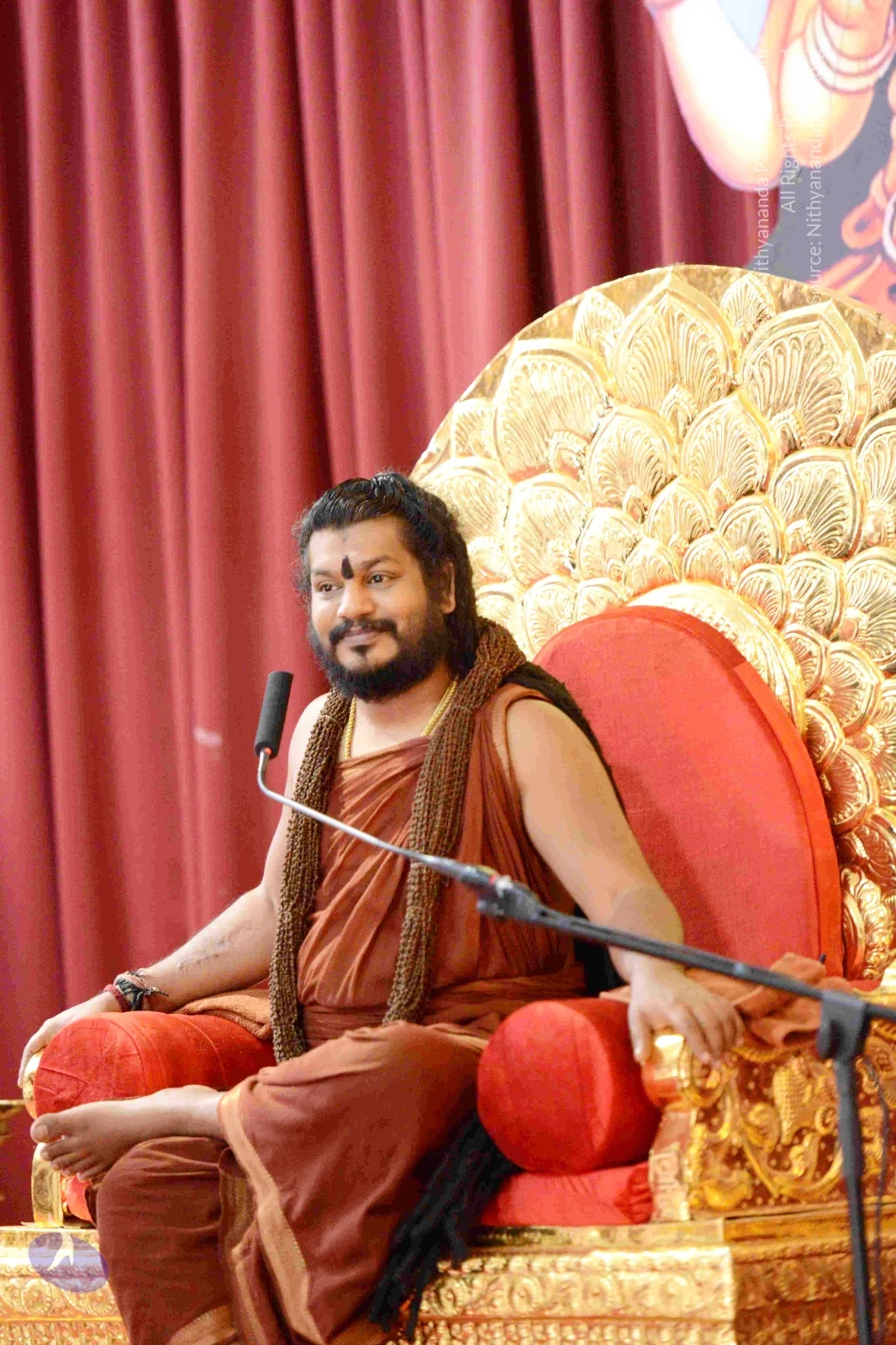
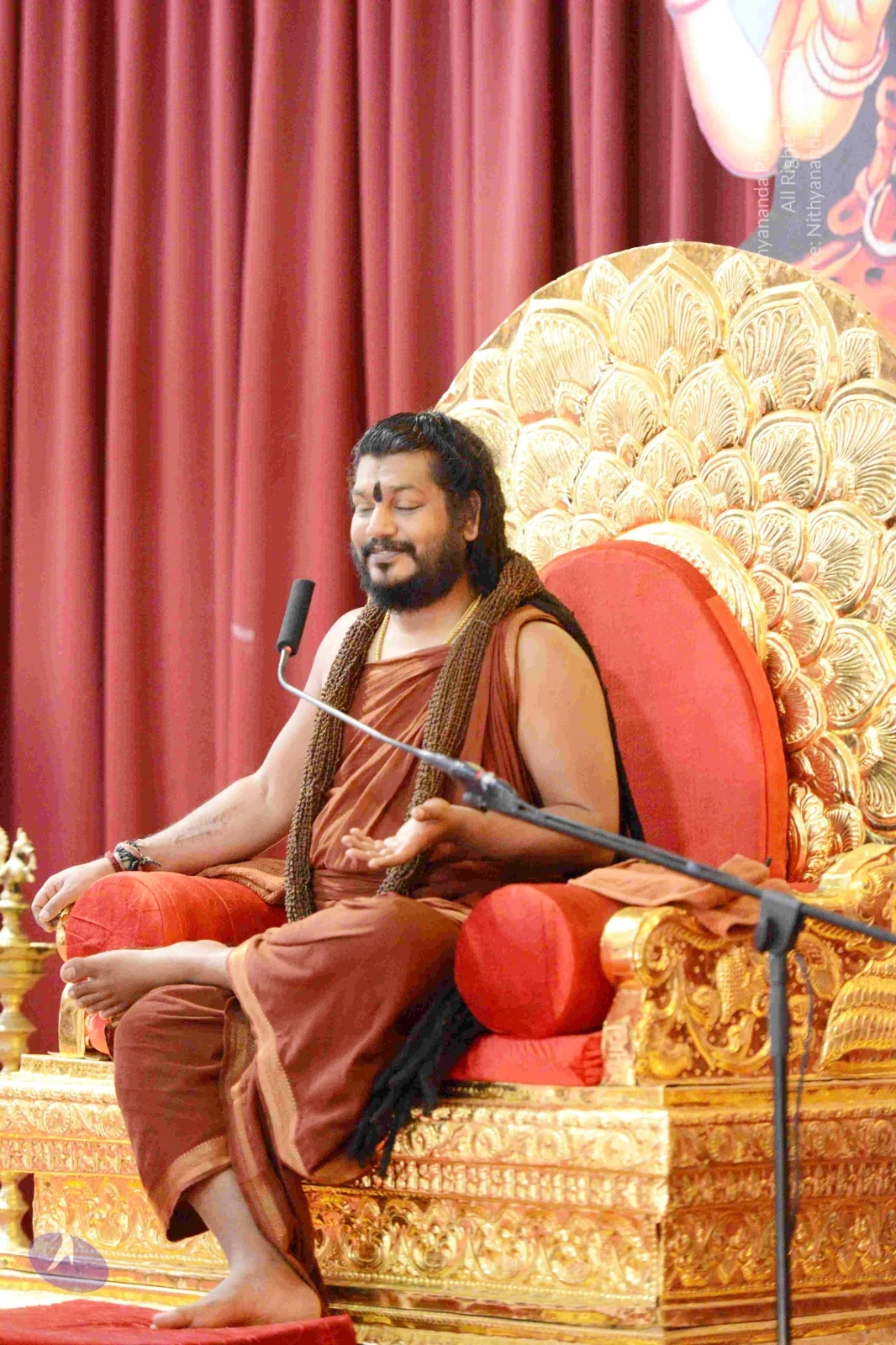
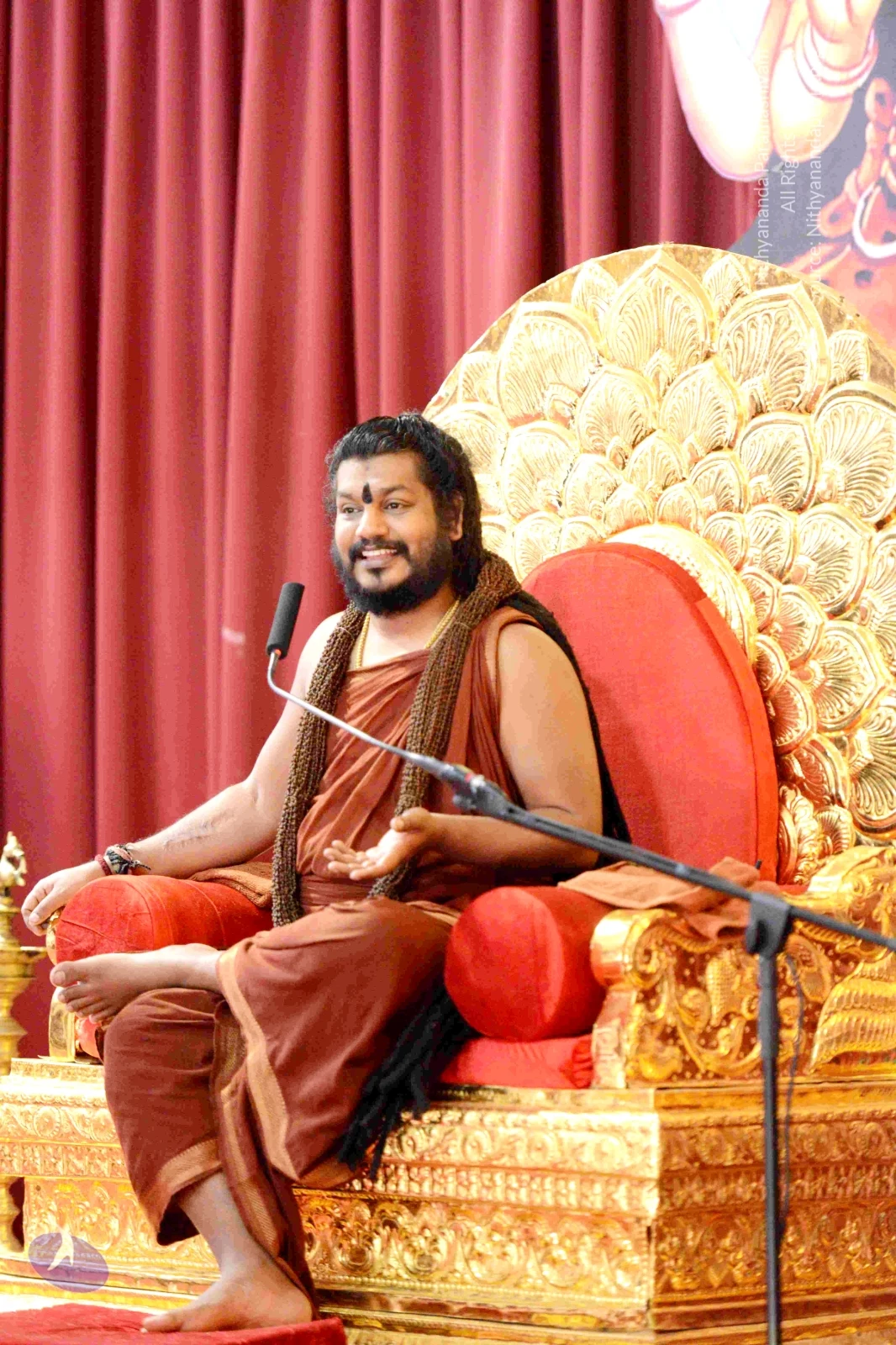
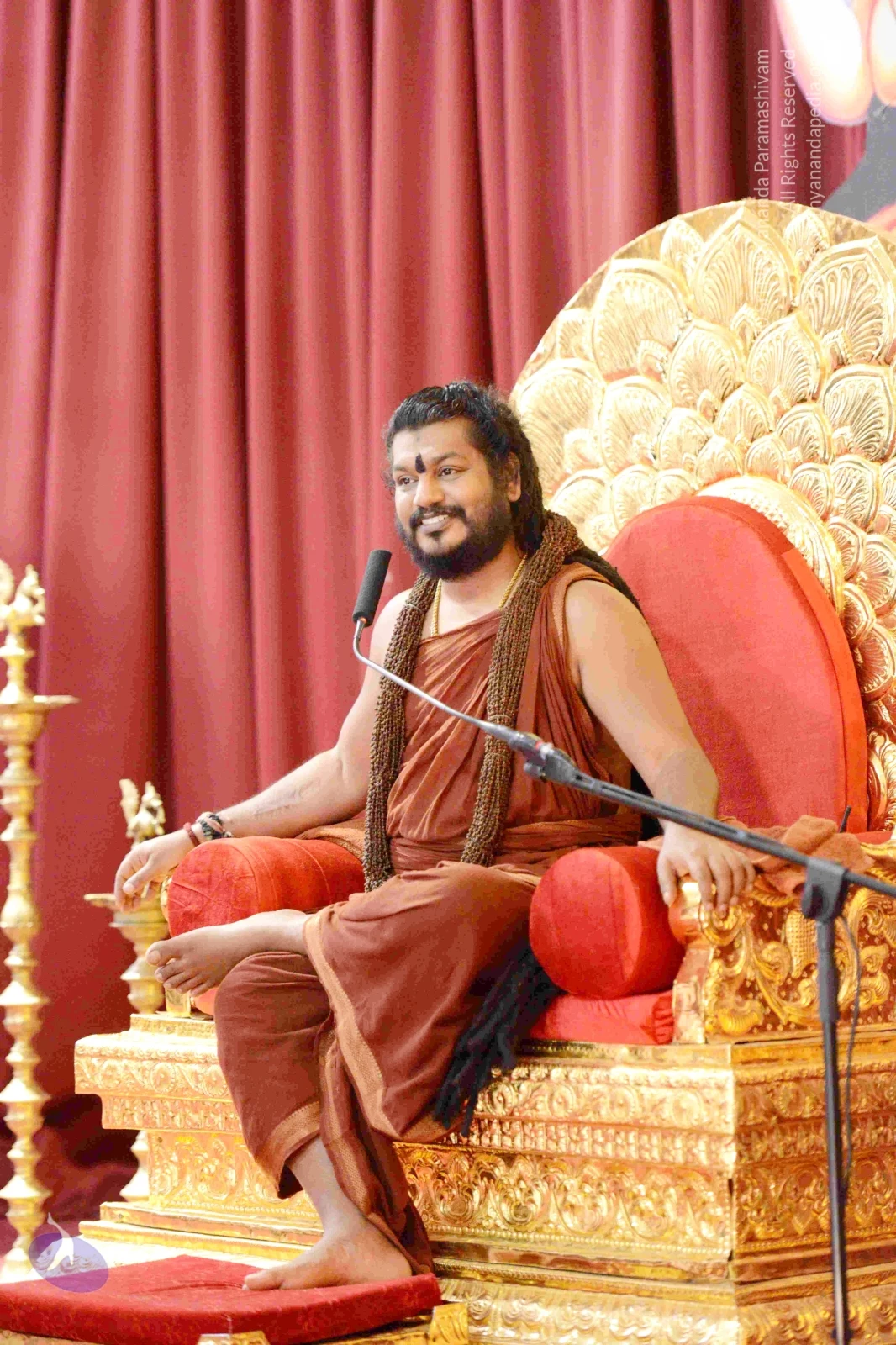
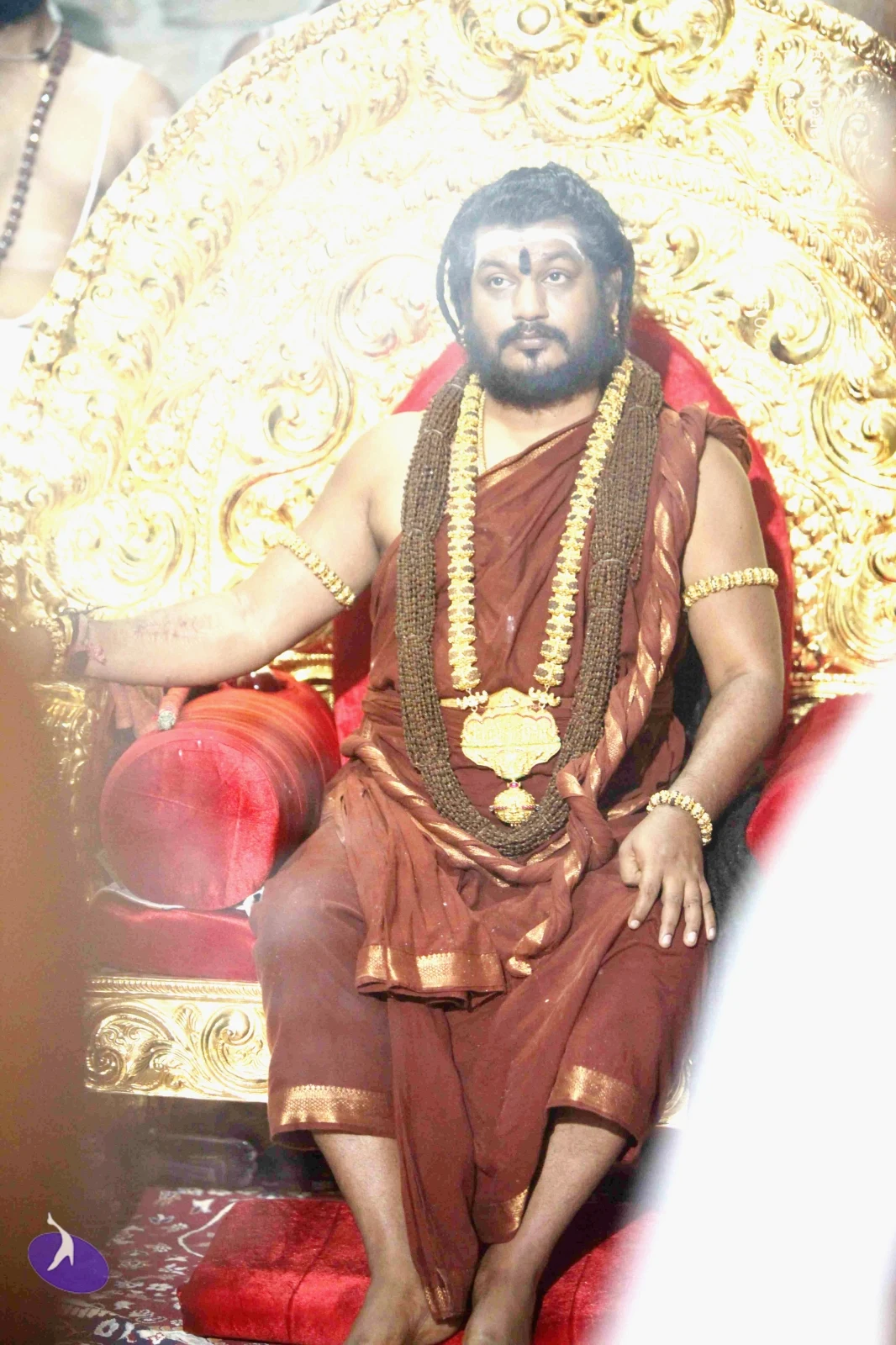
A bearded man with long dark hair and a red tilak on his forehead sits on an ornate gold throne with a red cushion, speaking into a microphone on a stand. He wears a rust-orange unstitched robe over one shoulder, a thick brown braided rudraksha-style mala and a thin gold chain. Behind him hang deep red curtains and a partially visible decorative backdrop. His right hand is raised mid-gesture while he speaks during a discourse.A man with long swept-back dark hair and a full beard sits on an ornate gold throne with a large red cushion, speaking into a microphone on a stand. He wears a rust-orange sleeveless wrap and orange-brown dhoti, a brown rudraksha mala draped over his shoulder, a gold chain, and a red-black thread on his wrist, with a dark tilak on his forehead. Behind him hang deep red curtains and a partial painted backdrop. Swamiji (probable): long hair, orange ceremonial clothing and rudraksha mala indicate the speaker; this is a discourse setting.A bearded man with long dark hair sits smiling on an ornate gold and red throne with a golden lotus-petal backrest, speaking into a microphone on a boom stand. He wears a rust-orange sleeveless robe, a beaded necklace and a red-and-yellow wrist band, with a vertical tilak on his forehead. A brass oil lamp stands beside the throne, and a red stage curtain and a large painted deity image fill the background. Printed on the backdrop is partial text reading "Nithyananda Paramashivam" and "". The setting is a stage with a red carpet, and only the seated speaker is physically presentA seated man in rust-orange robes speaks into a microphone on a stand during a discourse. He has a red-brown tilak on his forehead, a long braided rudraksha-style mala draped over his shoulders, and bare feet. He sits on an ornate gilded throne with a large fan-shaped golden back and red cushions, gesturing with open hands. Behind him hangs a red curtain and a painted deity image with multiple hands and jewelled ornaments. A brass oil lamp stands to the left. The man visibly matches the presentation cues of the page's a person reference (rudraksha mala, orange robes, throne), so this is a person, seated at the discourse.A seated man speaks into a microphone during a discourse on a golden throne with a scalloped gold backrest and red cushions, in front of a red curtain and a large painted deity image behind him. He wears a rust-orange draped garment, a long brown beaded mala over one shoulder, a gold chain, and a red-and-white tilak on his forehead; he is barefoot with his hands resting on his lap. A brass oil lamp stands at the left edge. Appearance-based label: a person, seated and speaking on the throne with a rudraksha-style mala and orange robes.A man seated on an ornate gold-and-red throne with a carved shell-like backrest, speaking into a microphone on a boom stand in front of deep red drapes. He has long dark hair, a full beard, and a dark vertical tilak on his forehead. He wears a rust-orange sleeveless robe and a thick brown rudraksha mala draped across his shoulders, with a gold chain visible at his neck. A partial painted deity image appears at the upper right corner. One person is present.