Skip to content
Tuesday

27 September 2016

Supreme Truth - Sadashiva Manifests Us in His SEE

Dated photos
211
Source pages
1
Media
4
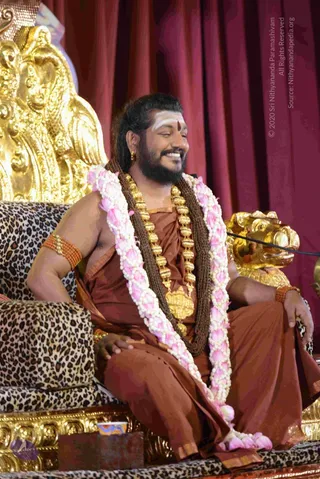
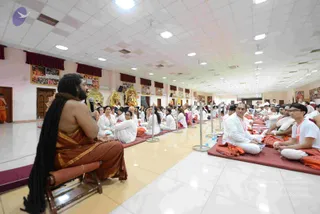
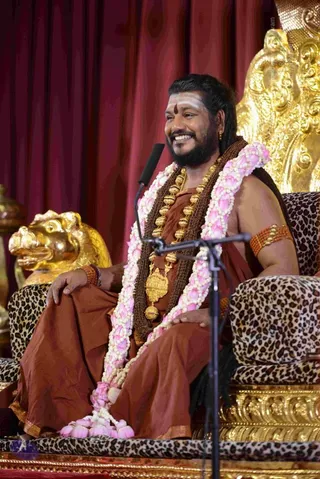
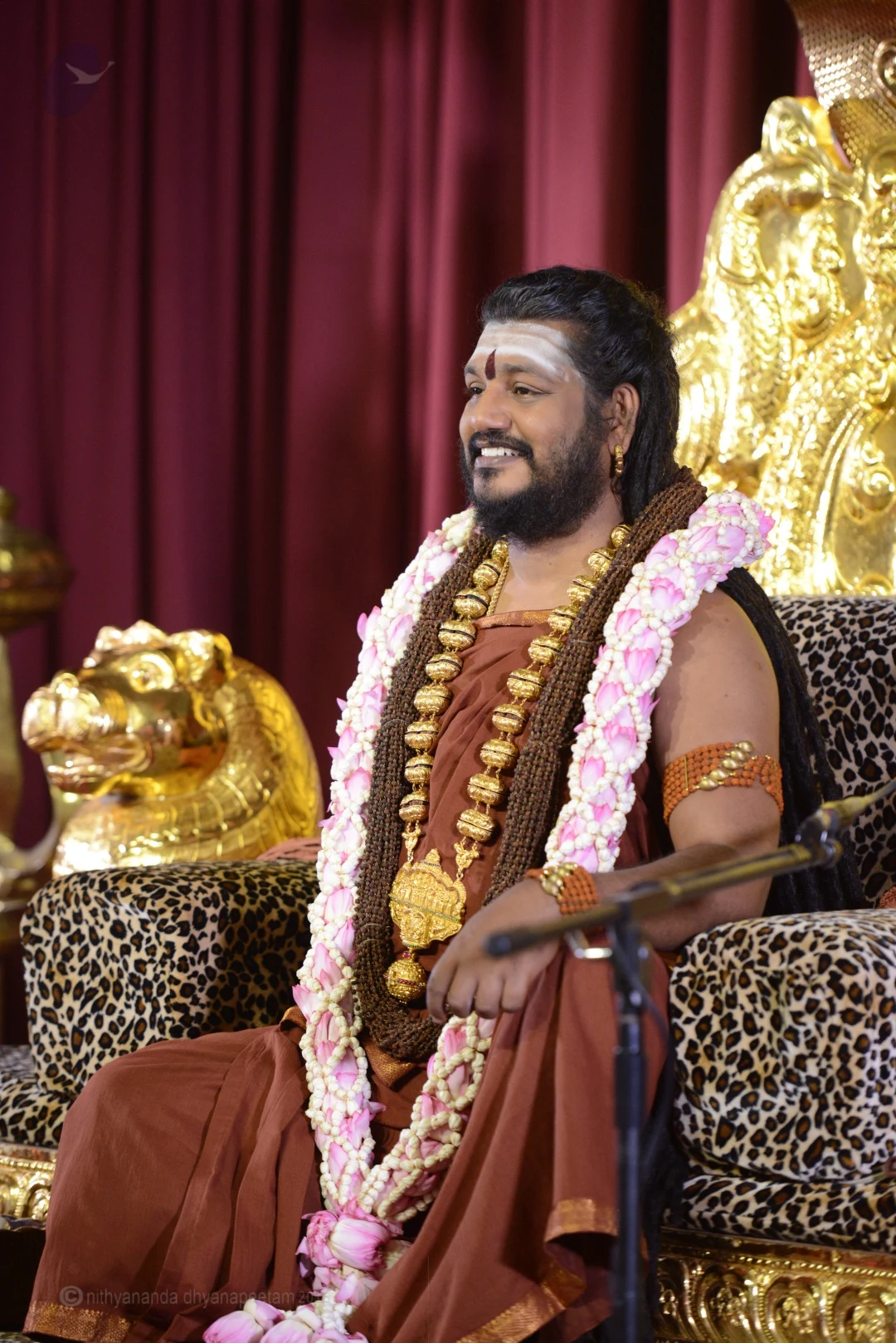
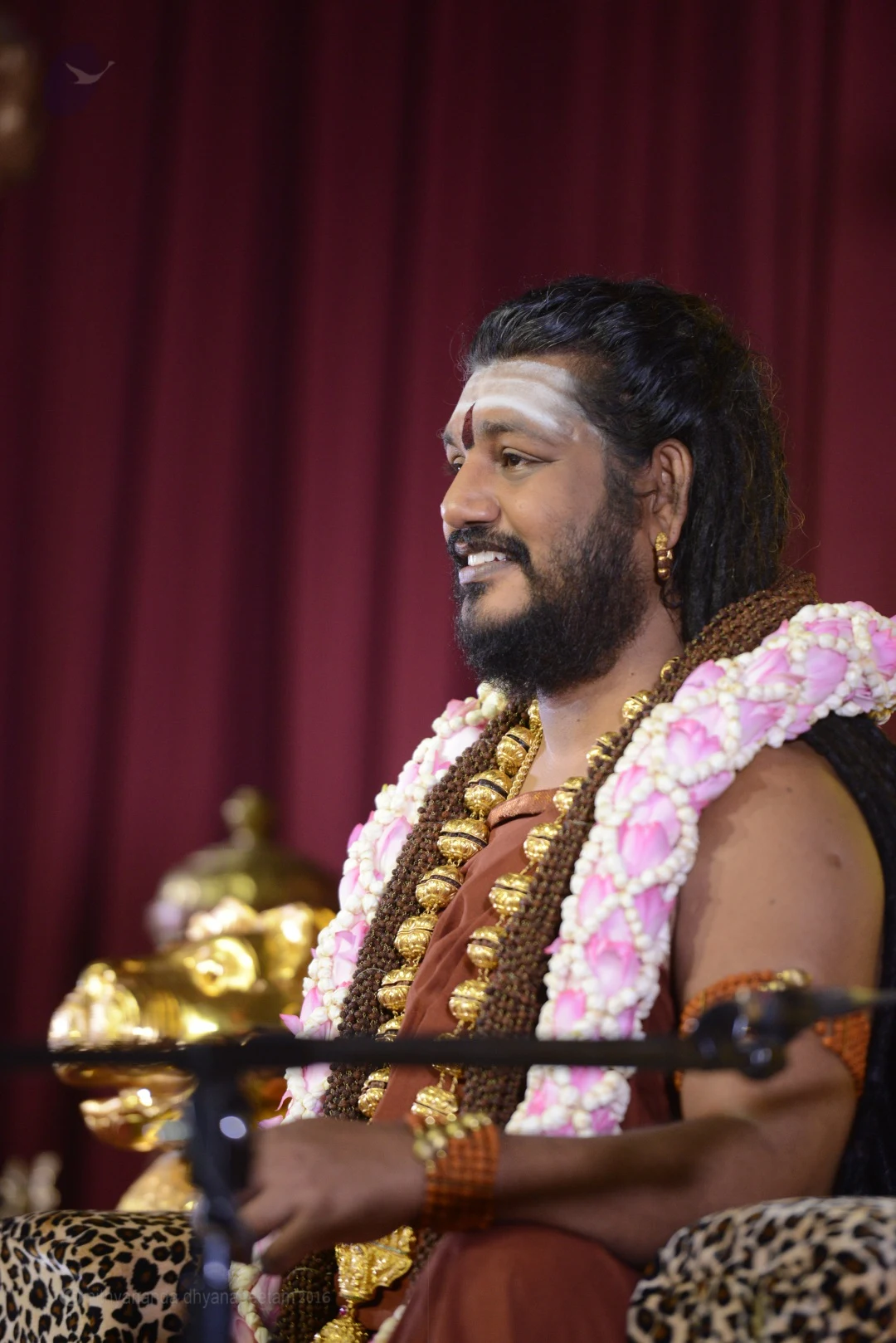
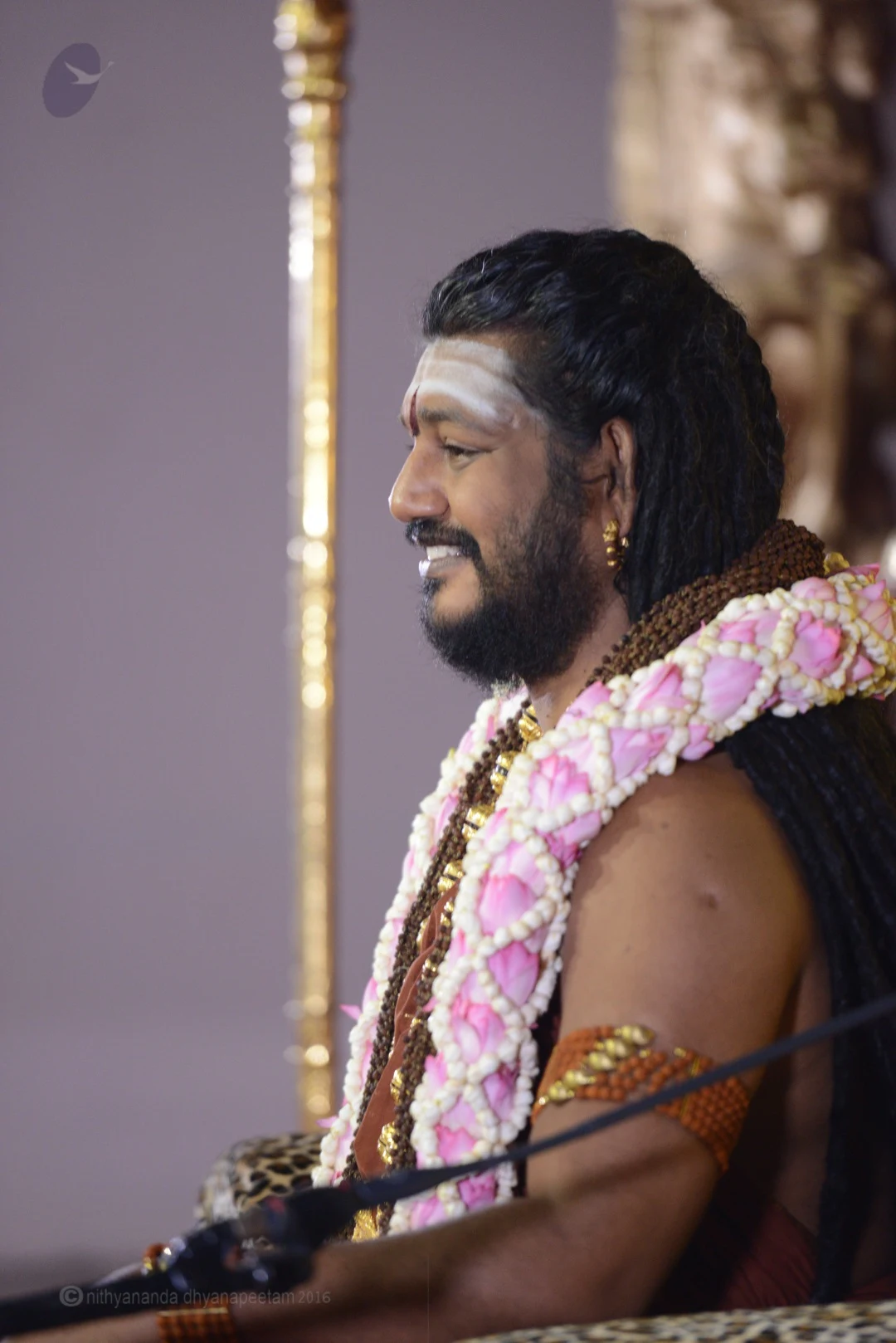
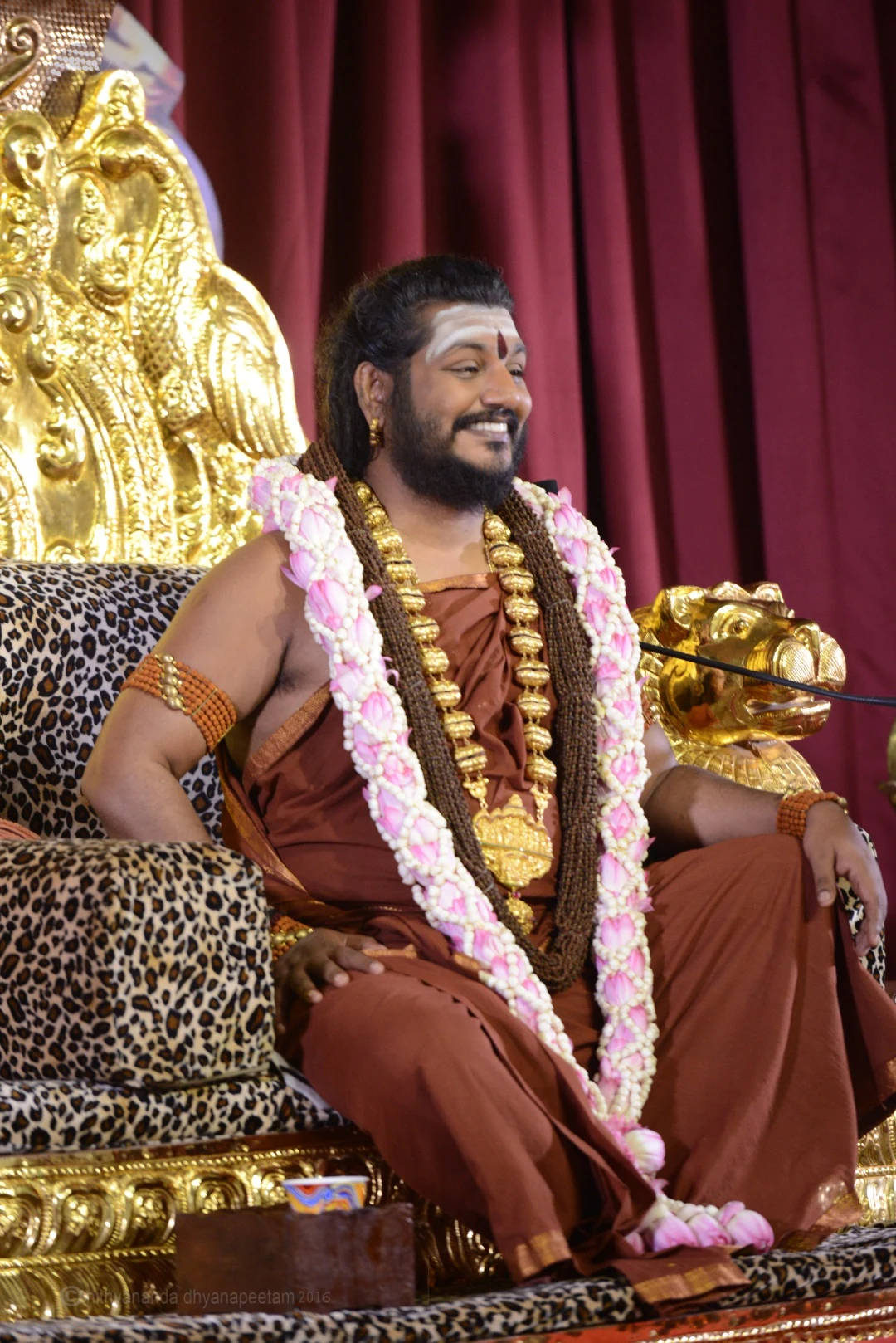
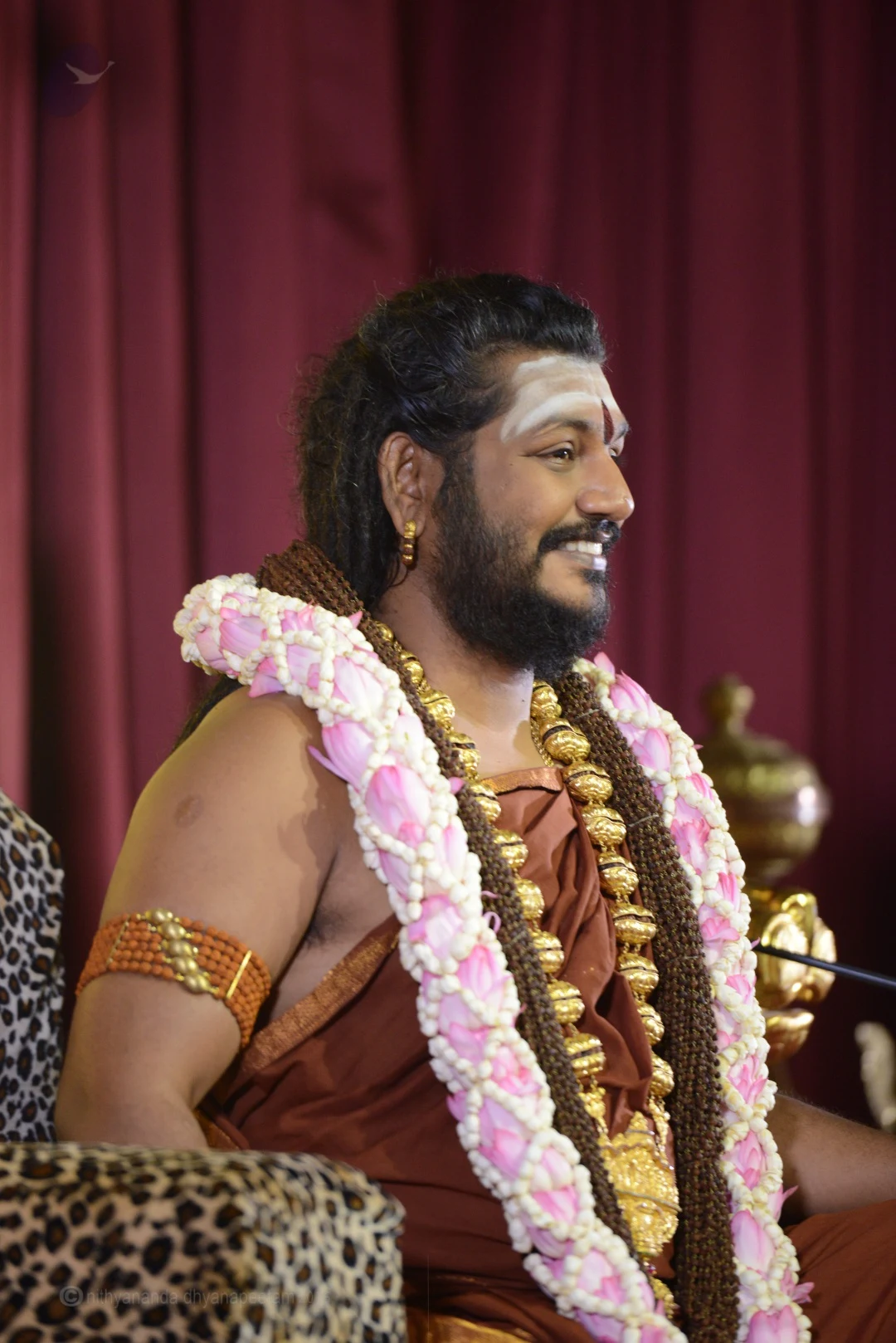
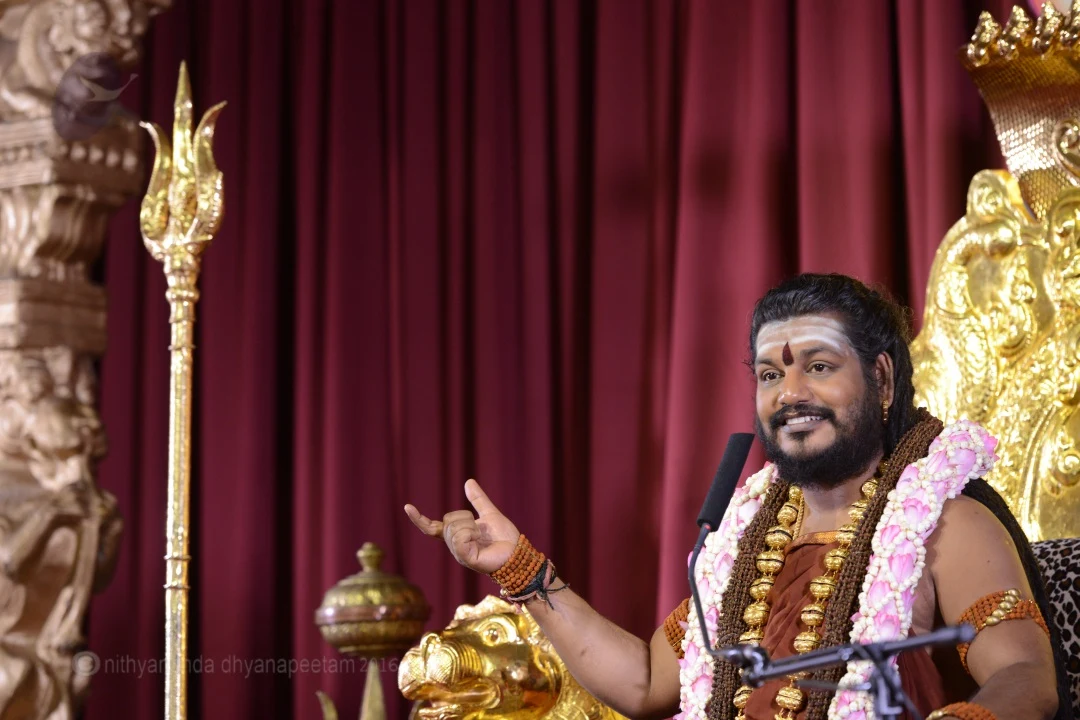
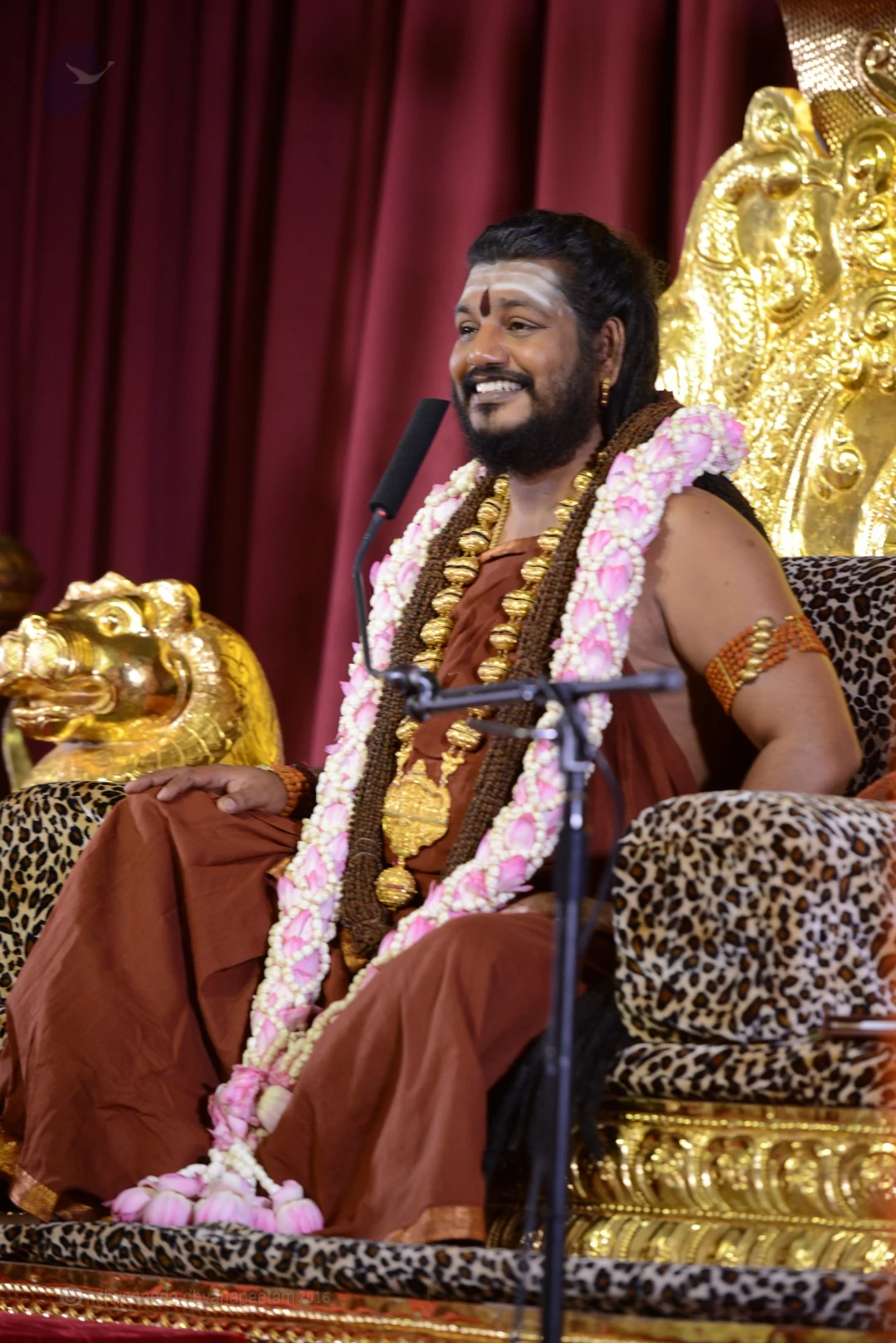
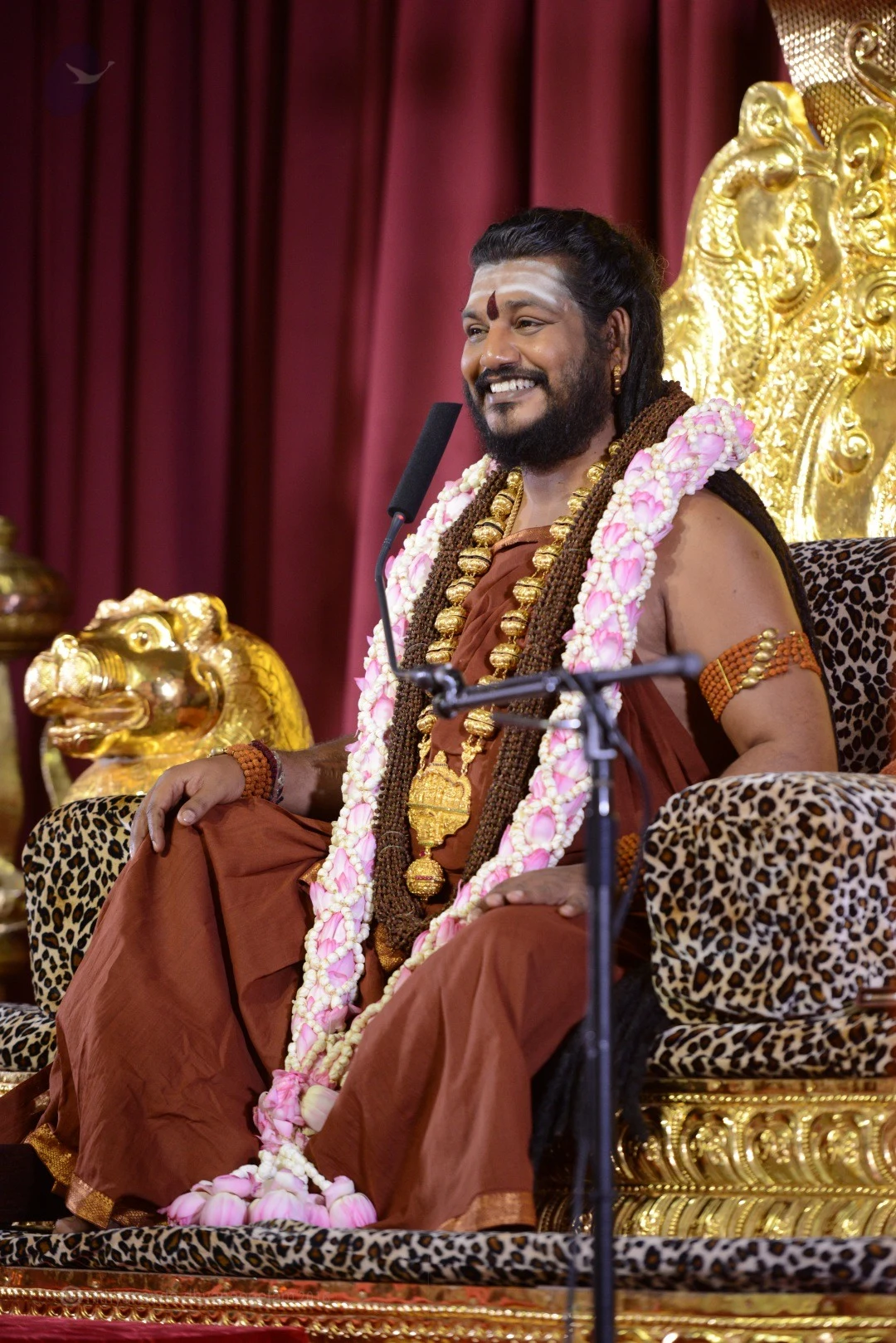
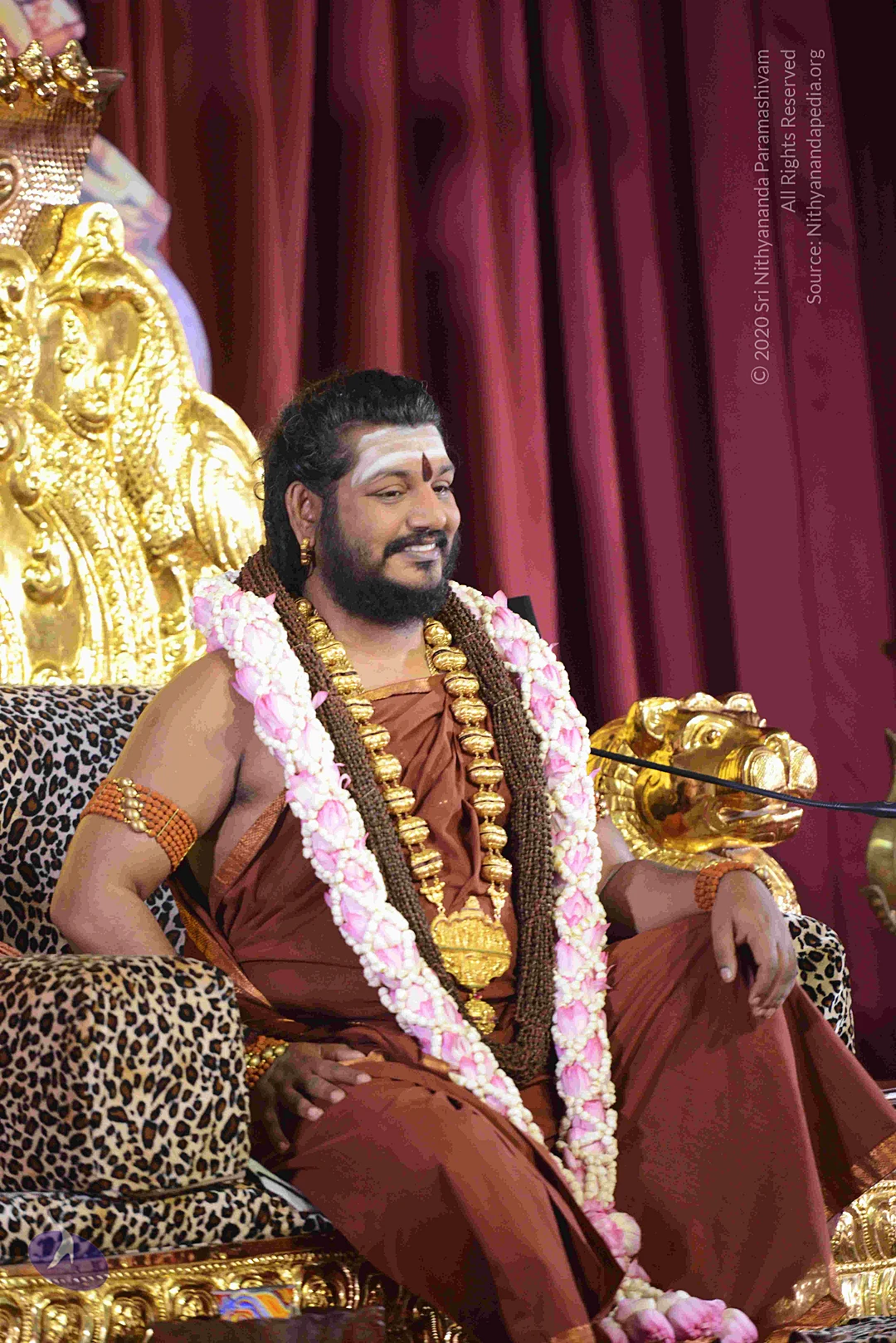
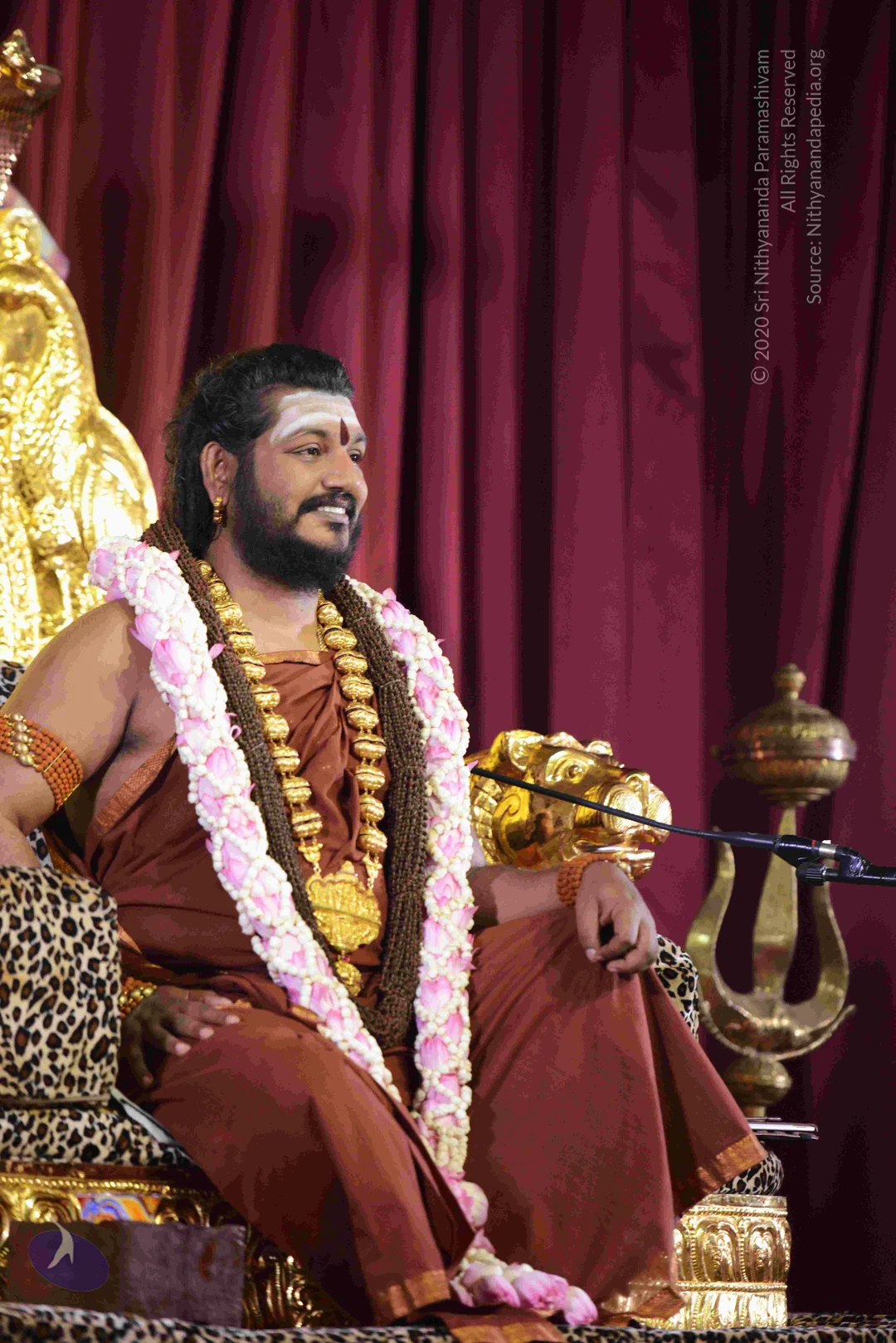
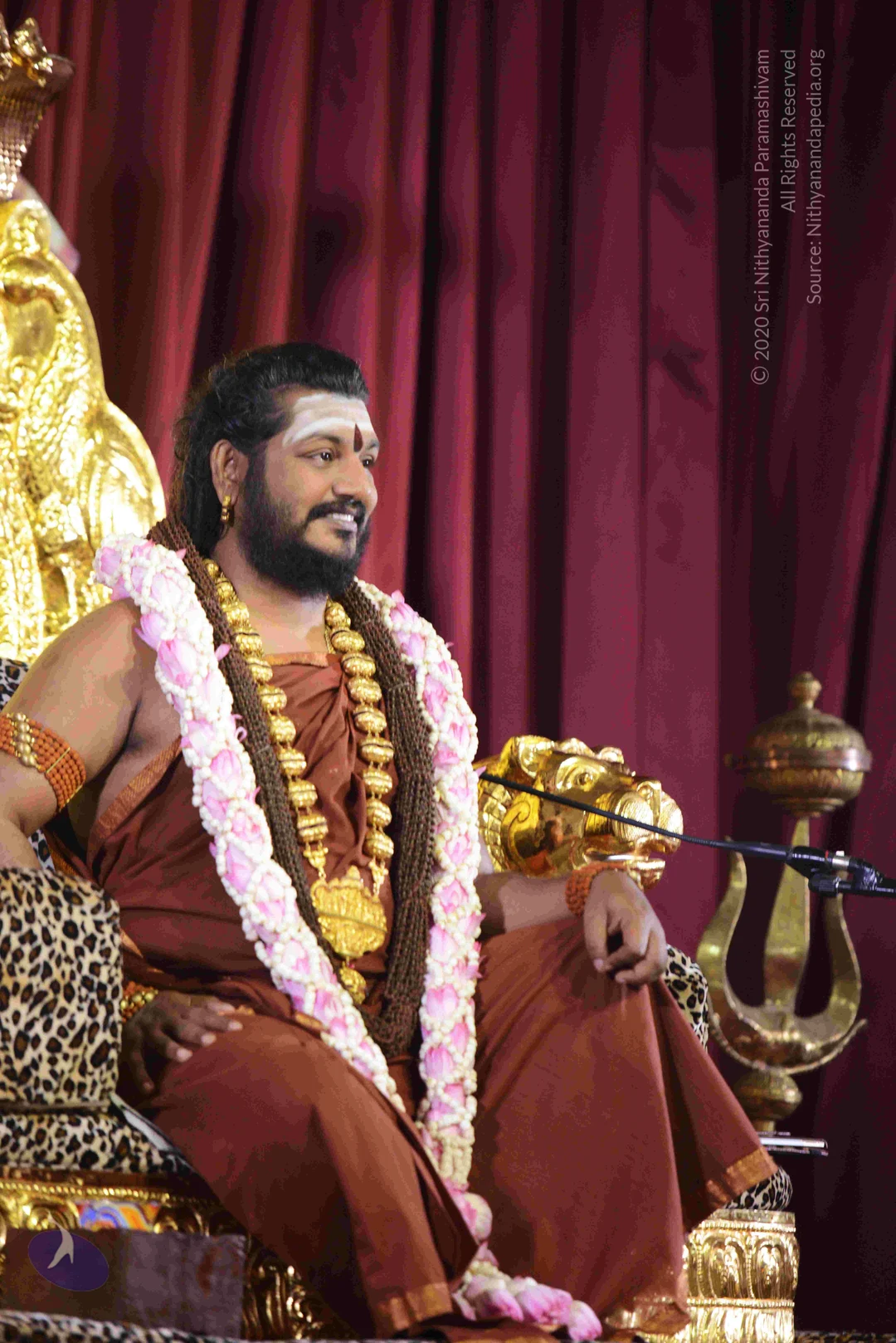
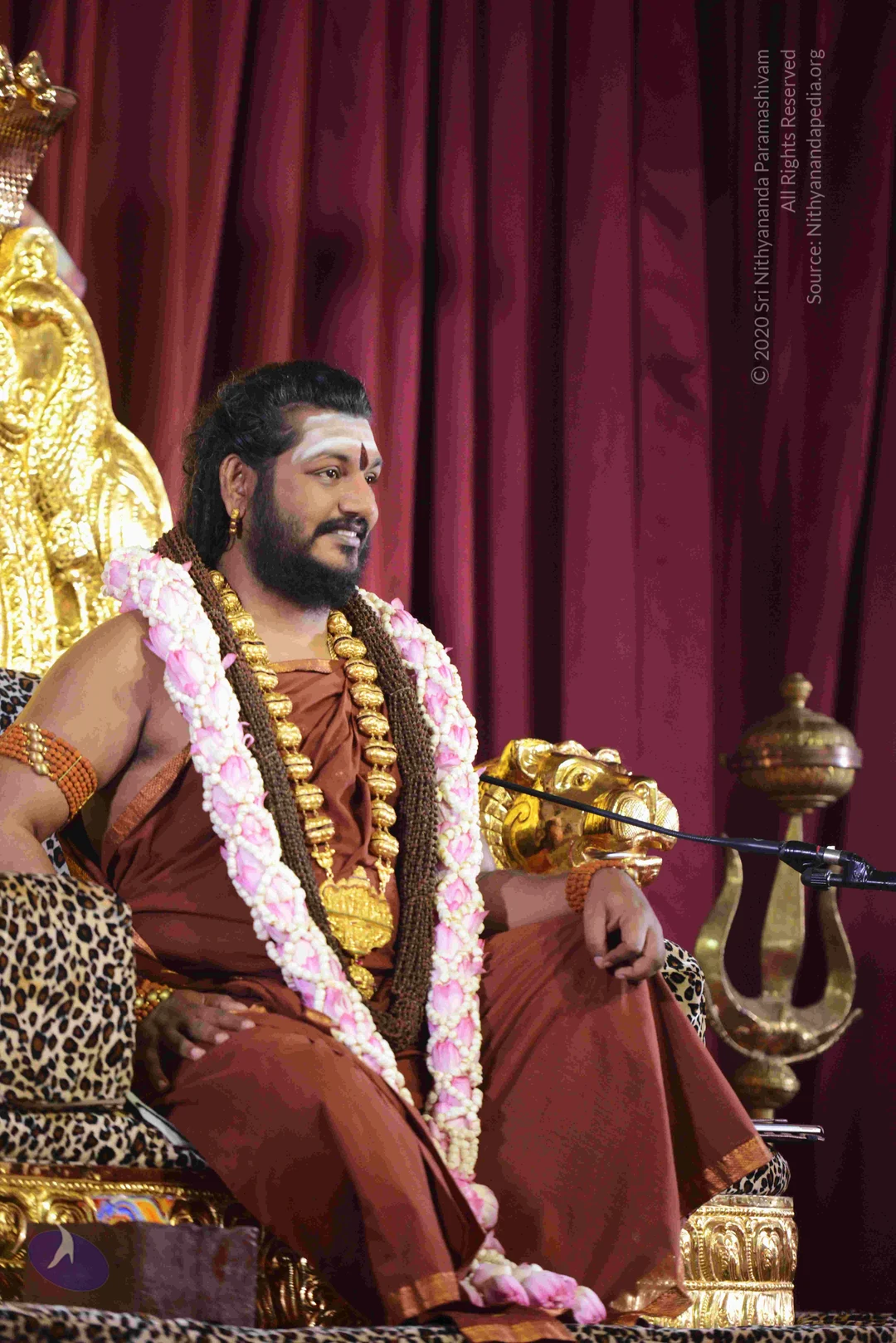
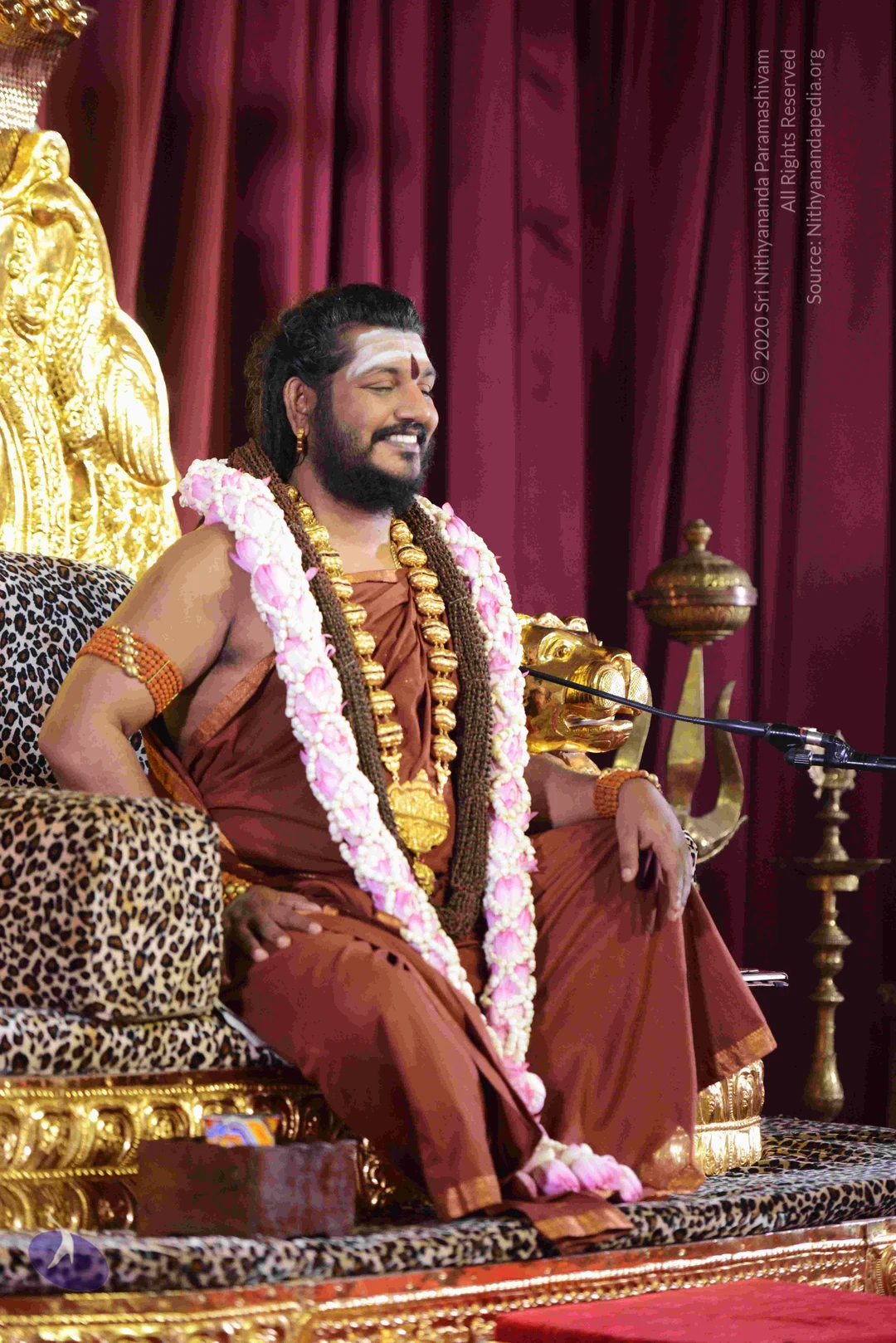
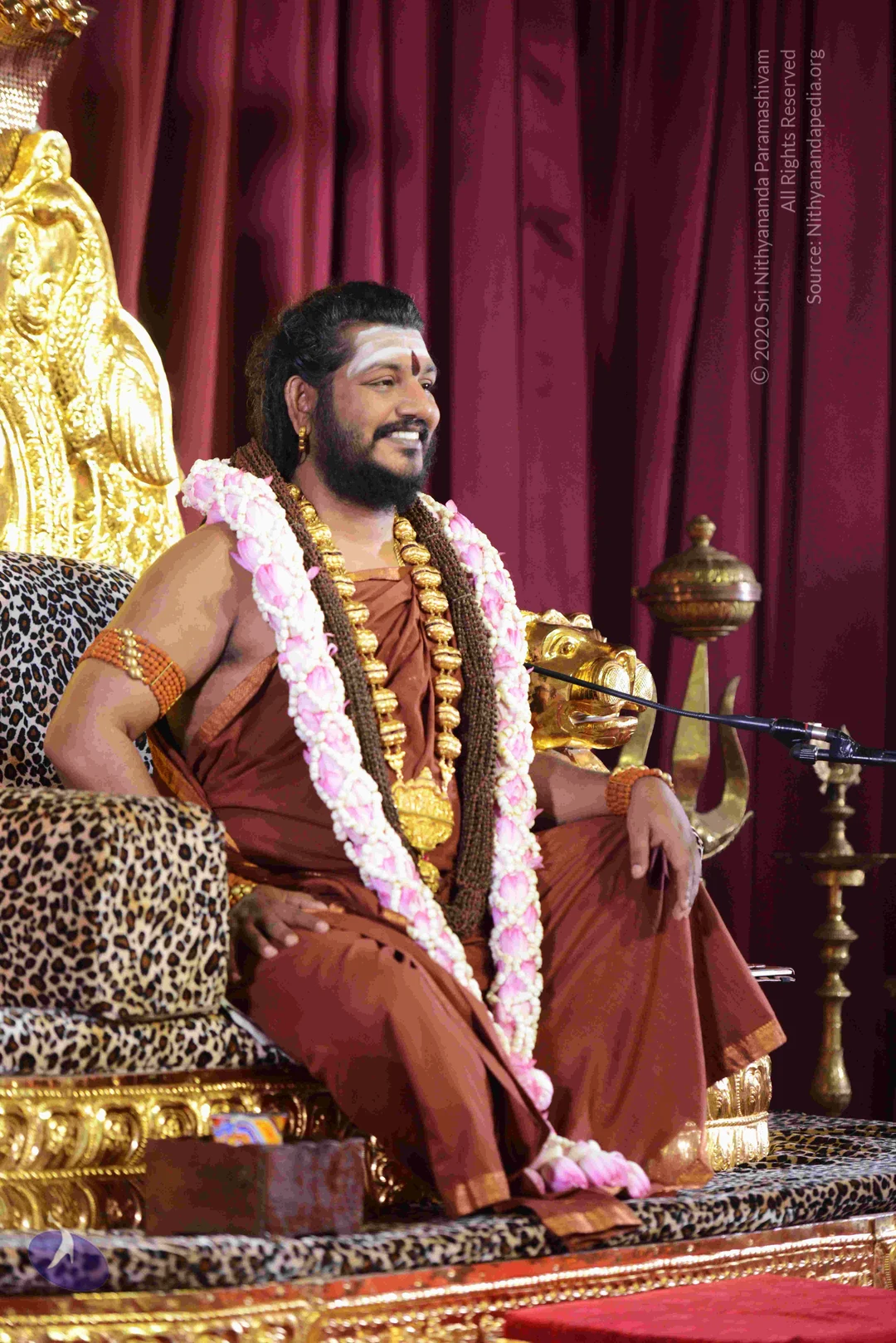
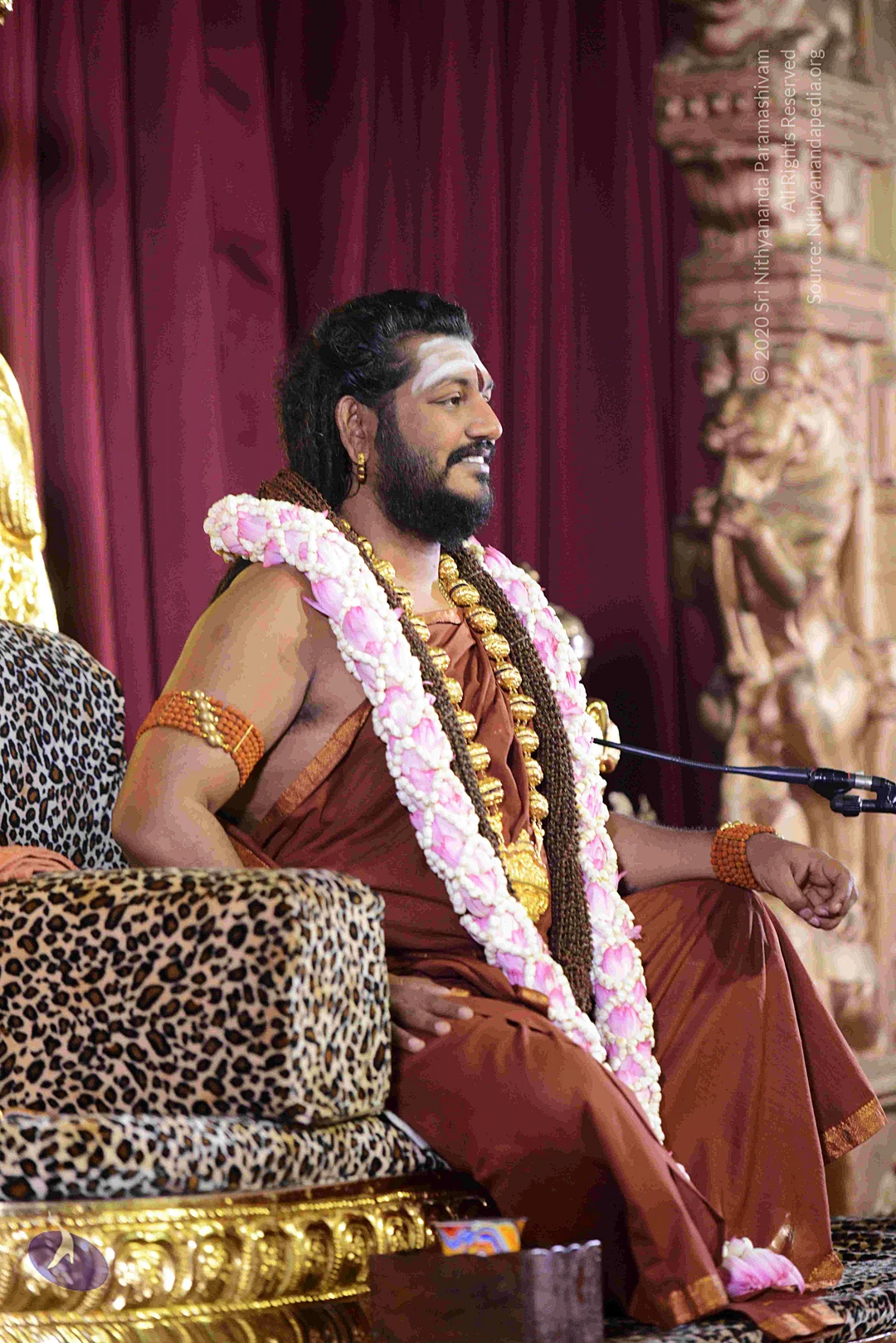
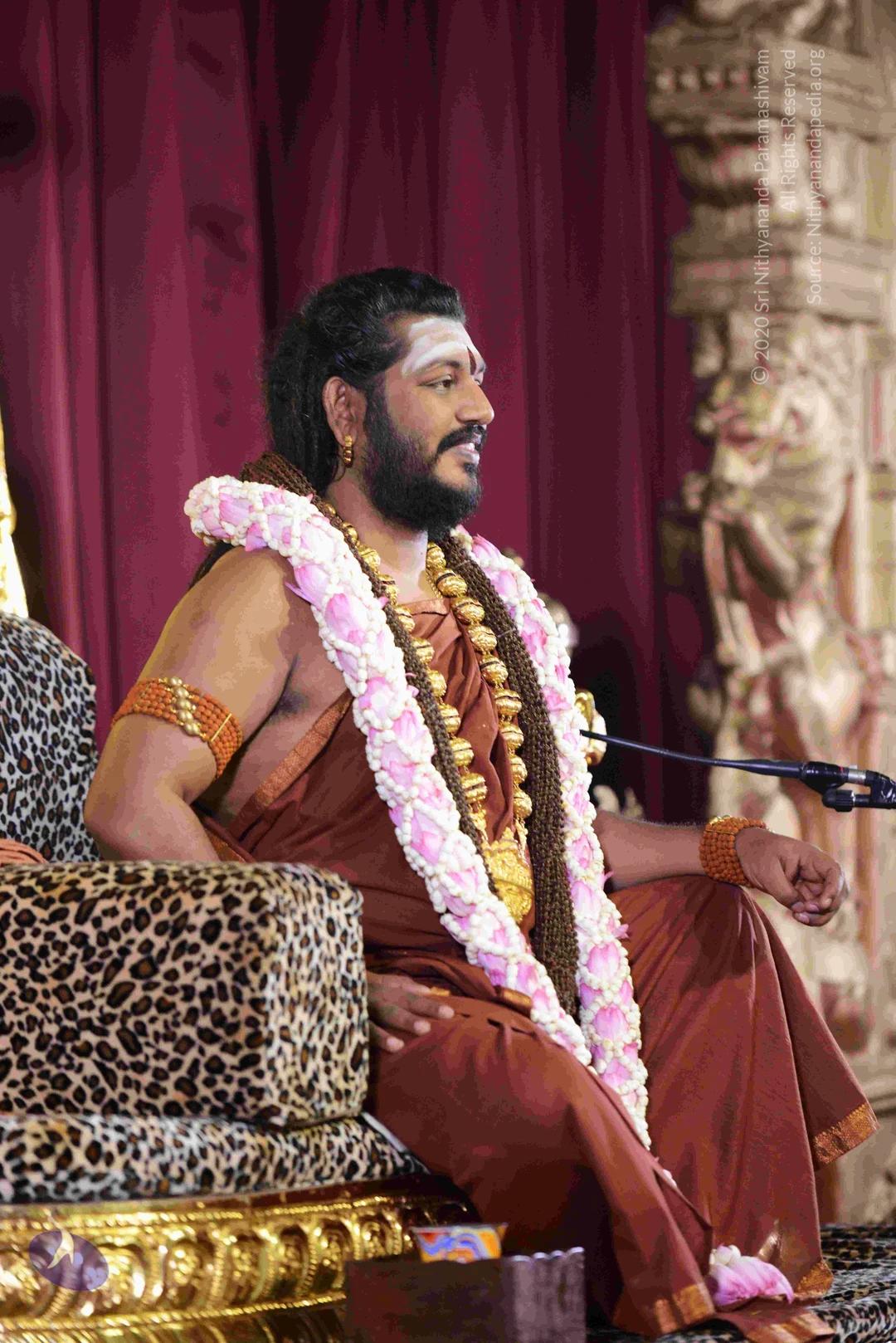
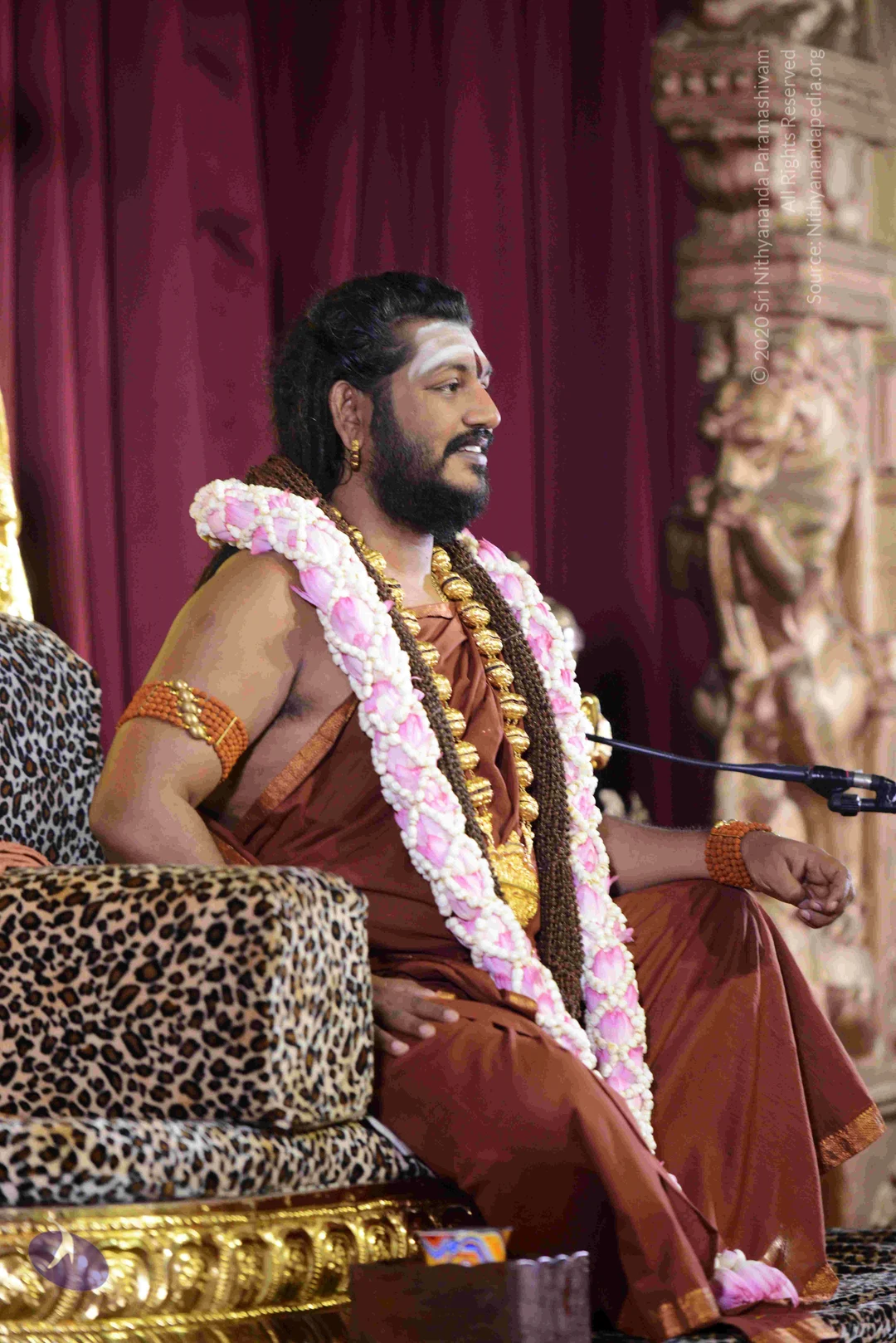
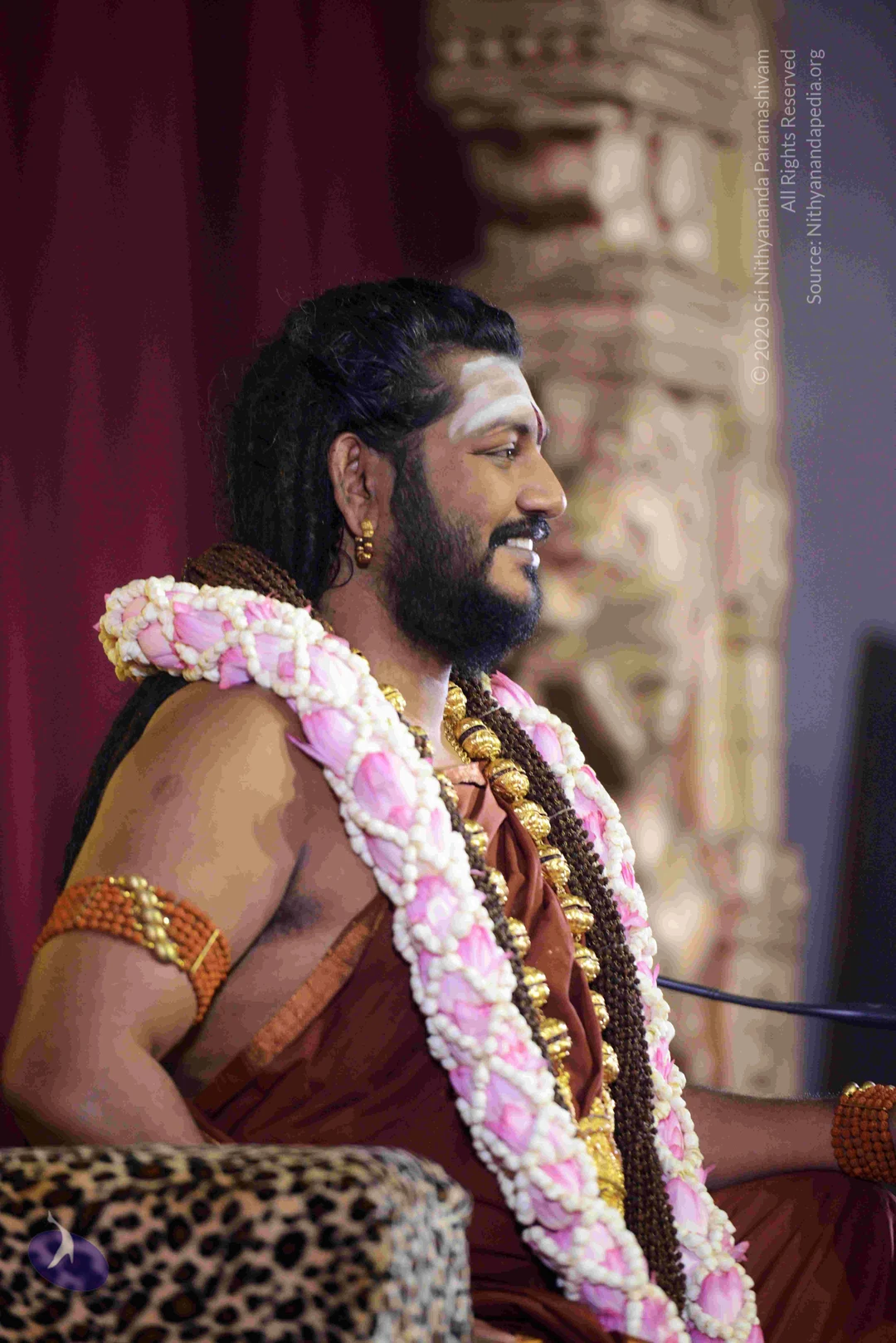
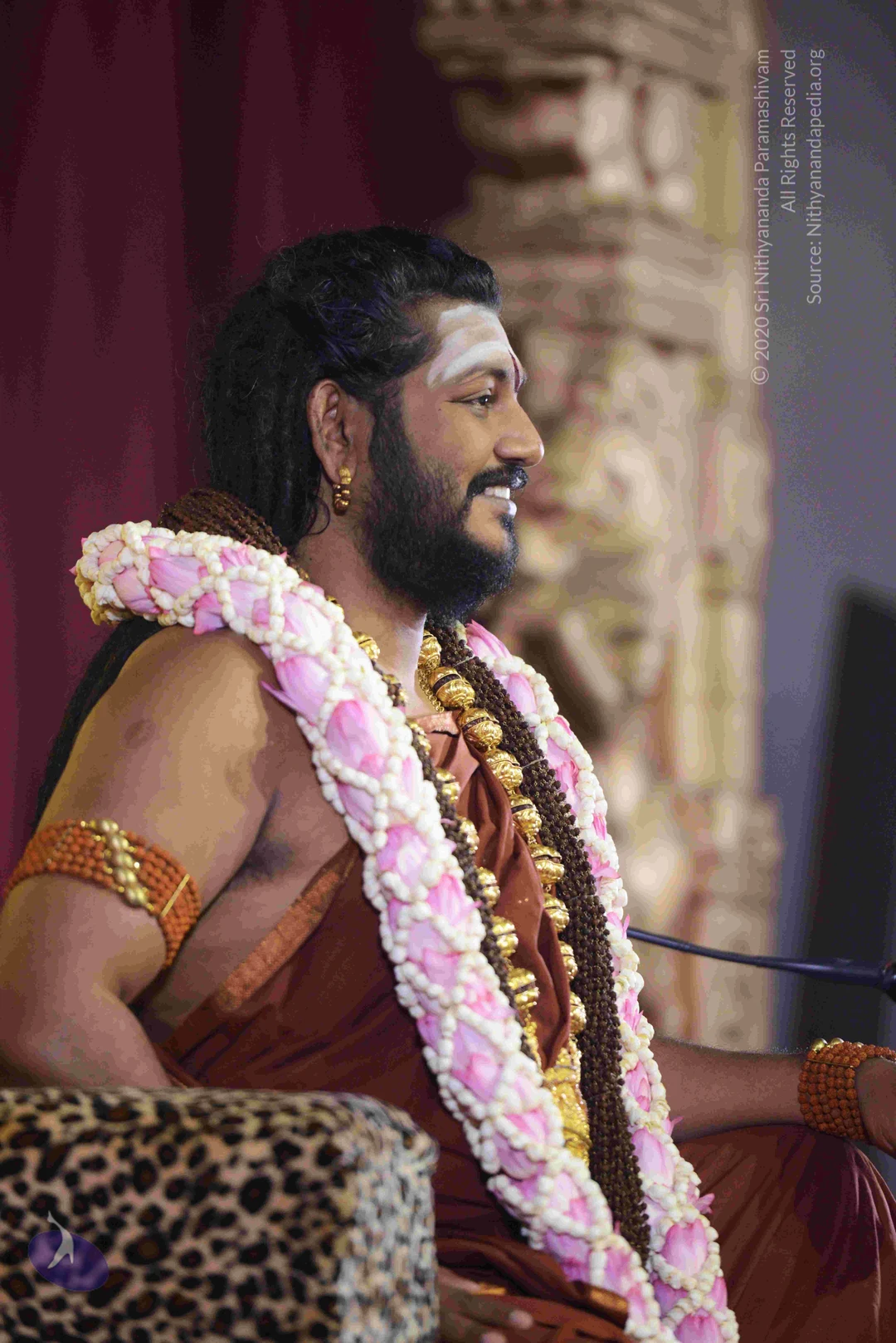
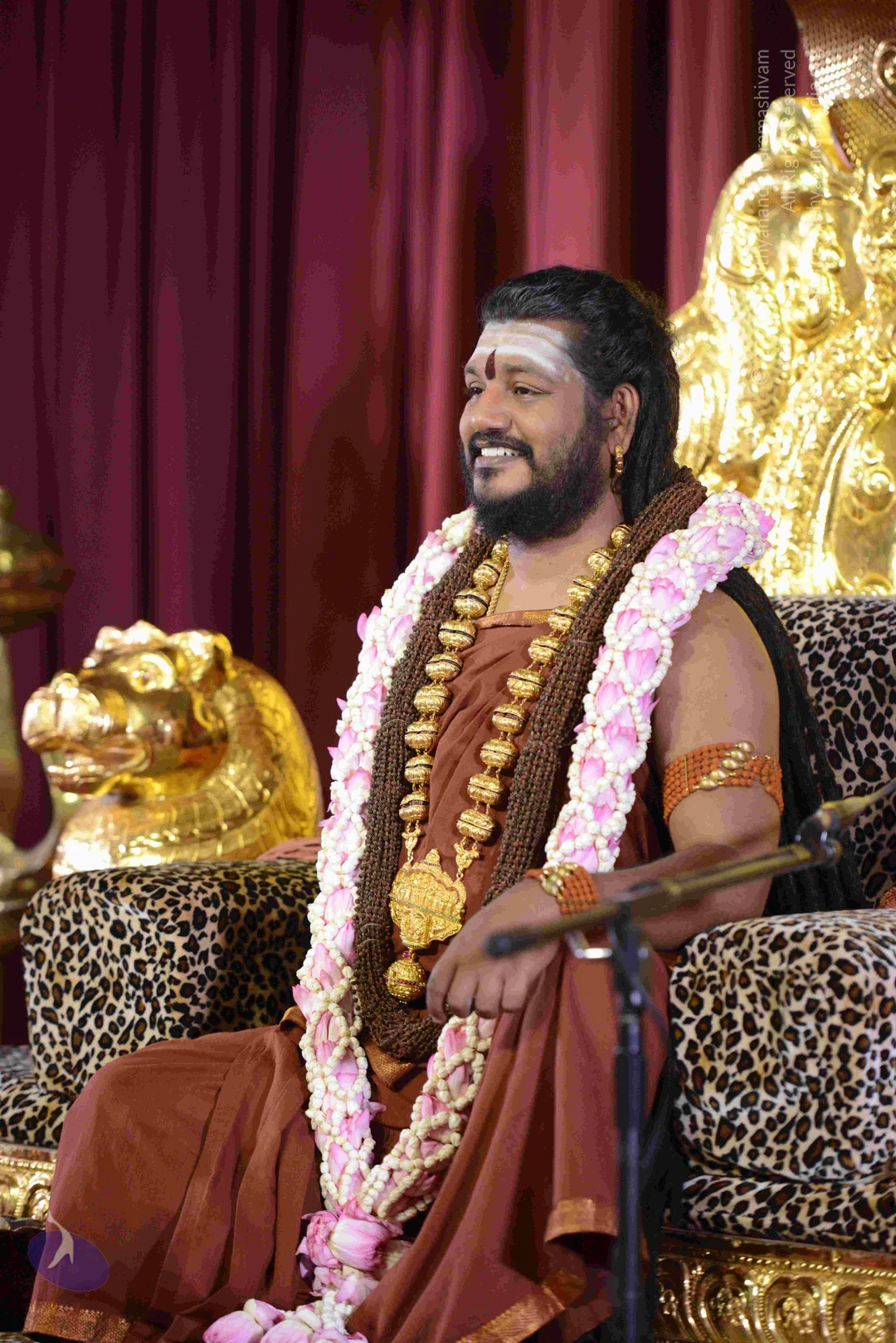
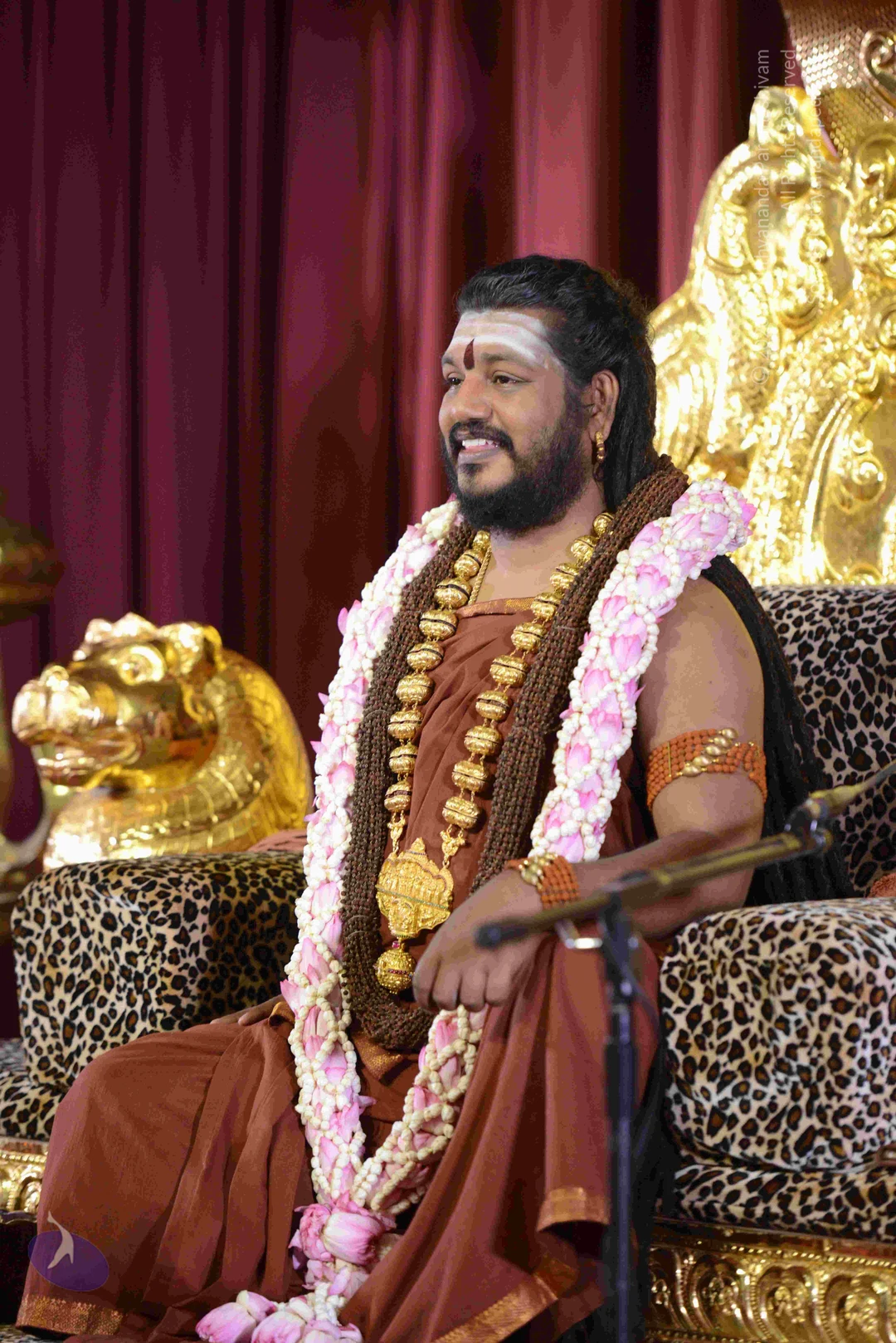
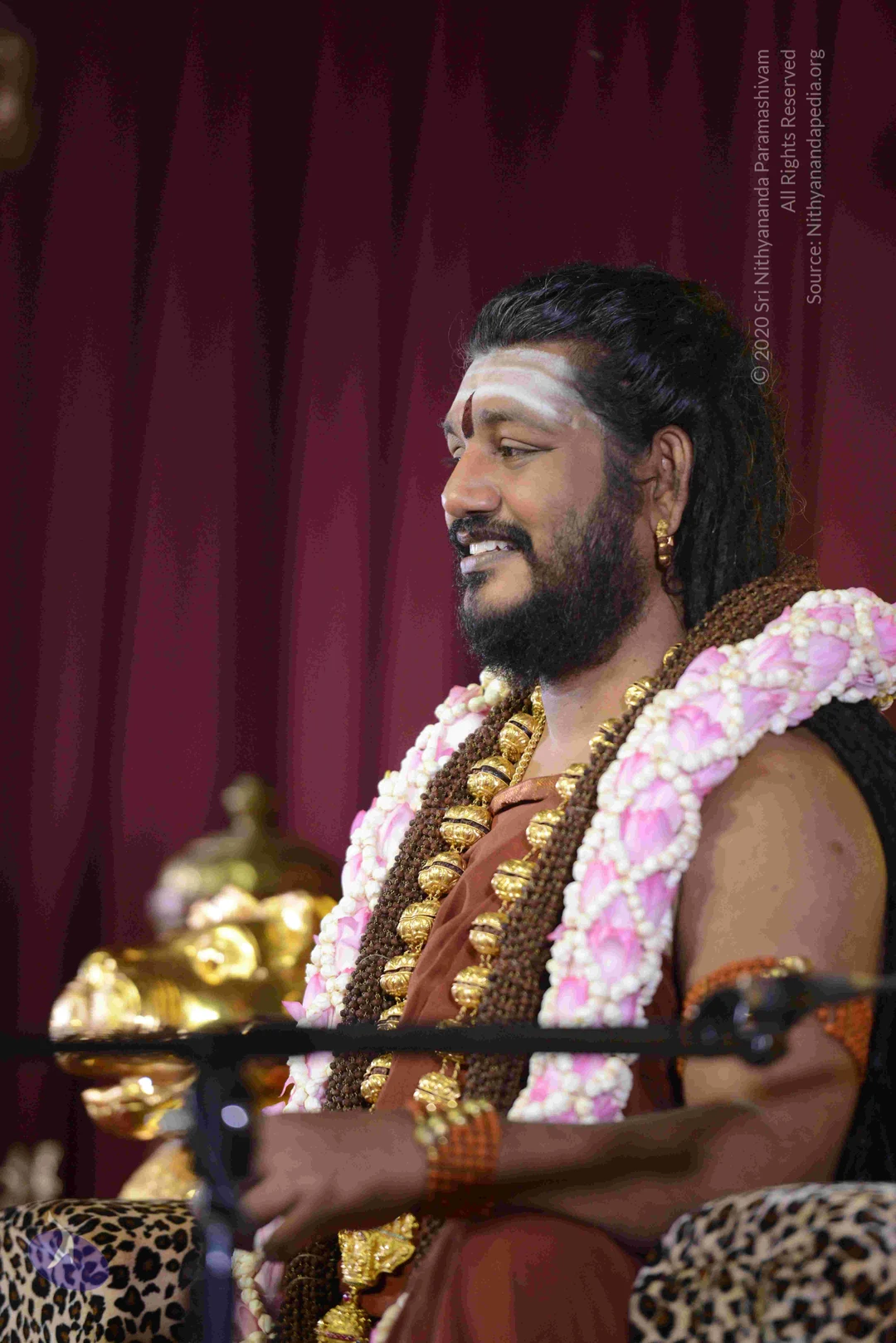
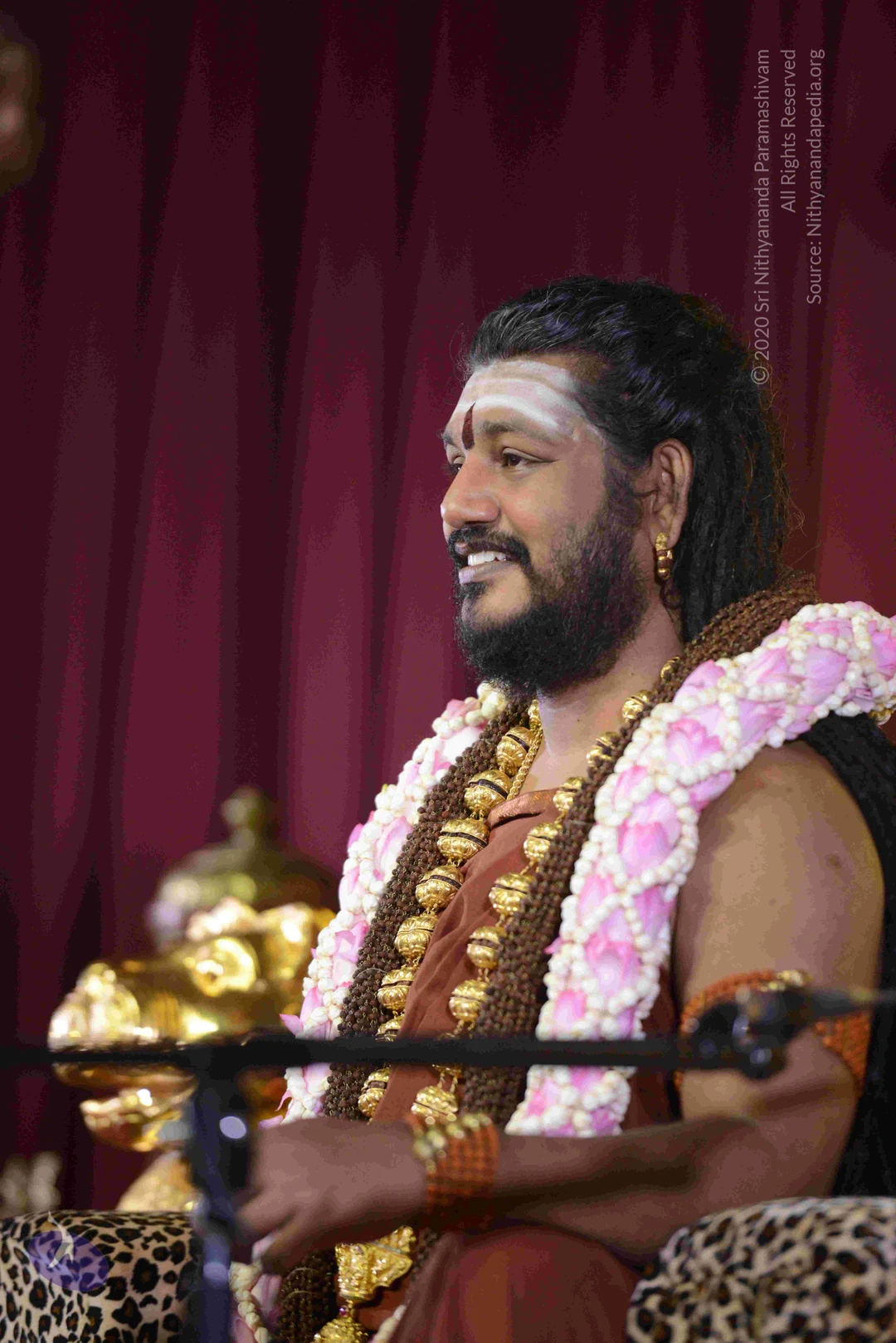
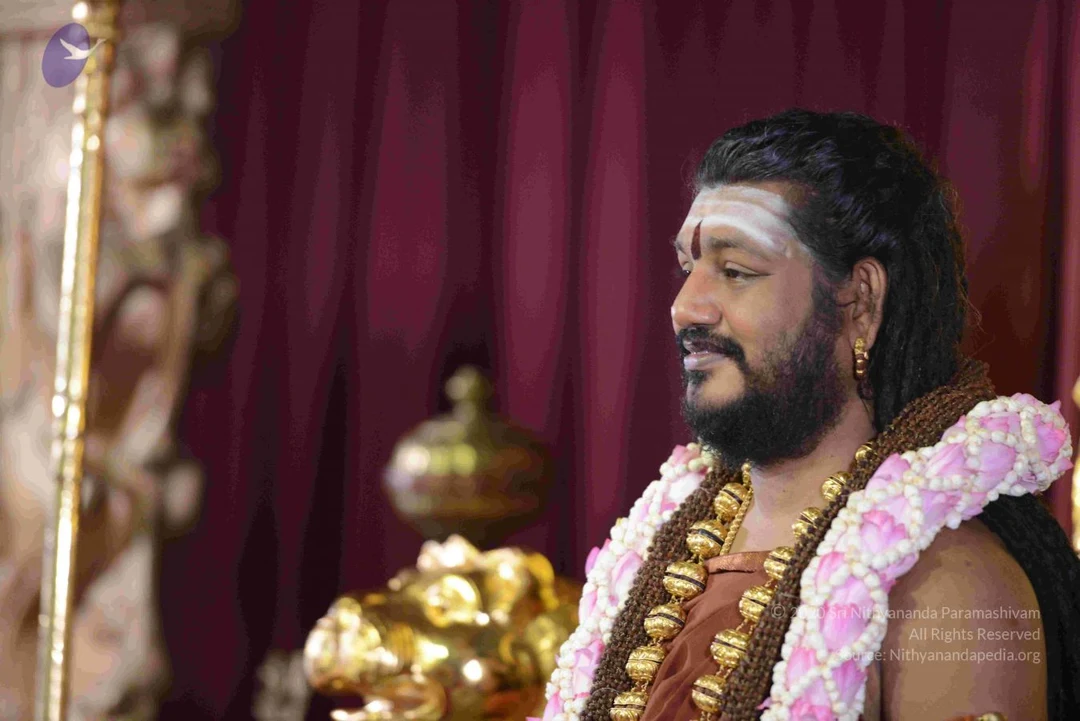
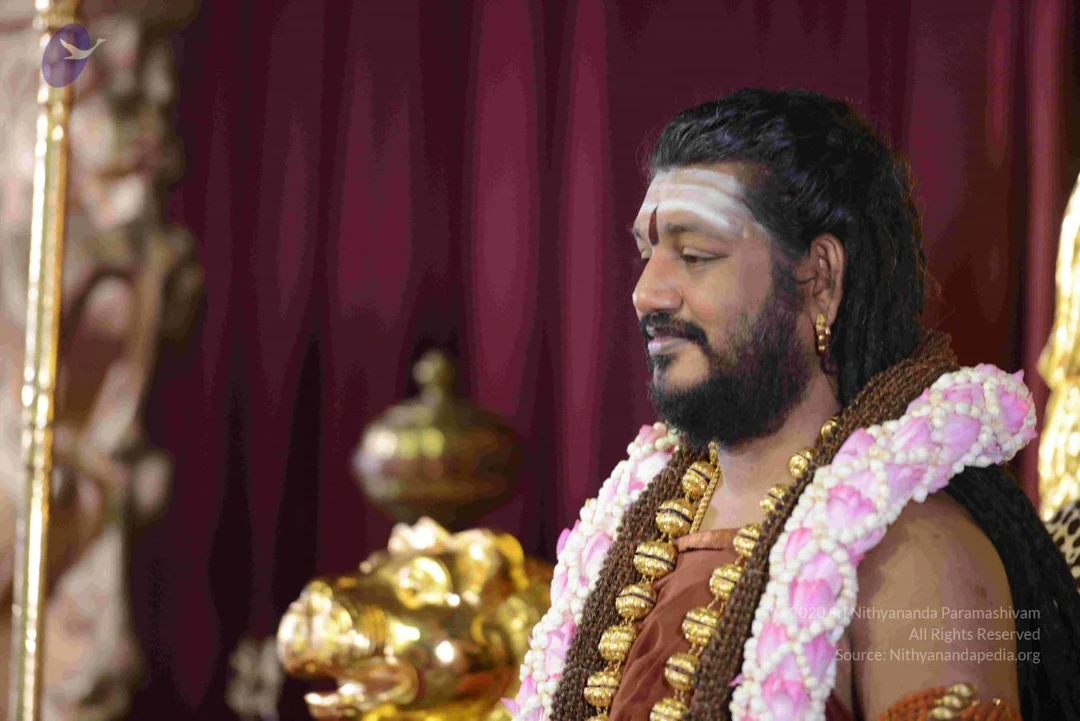
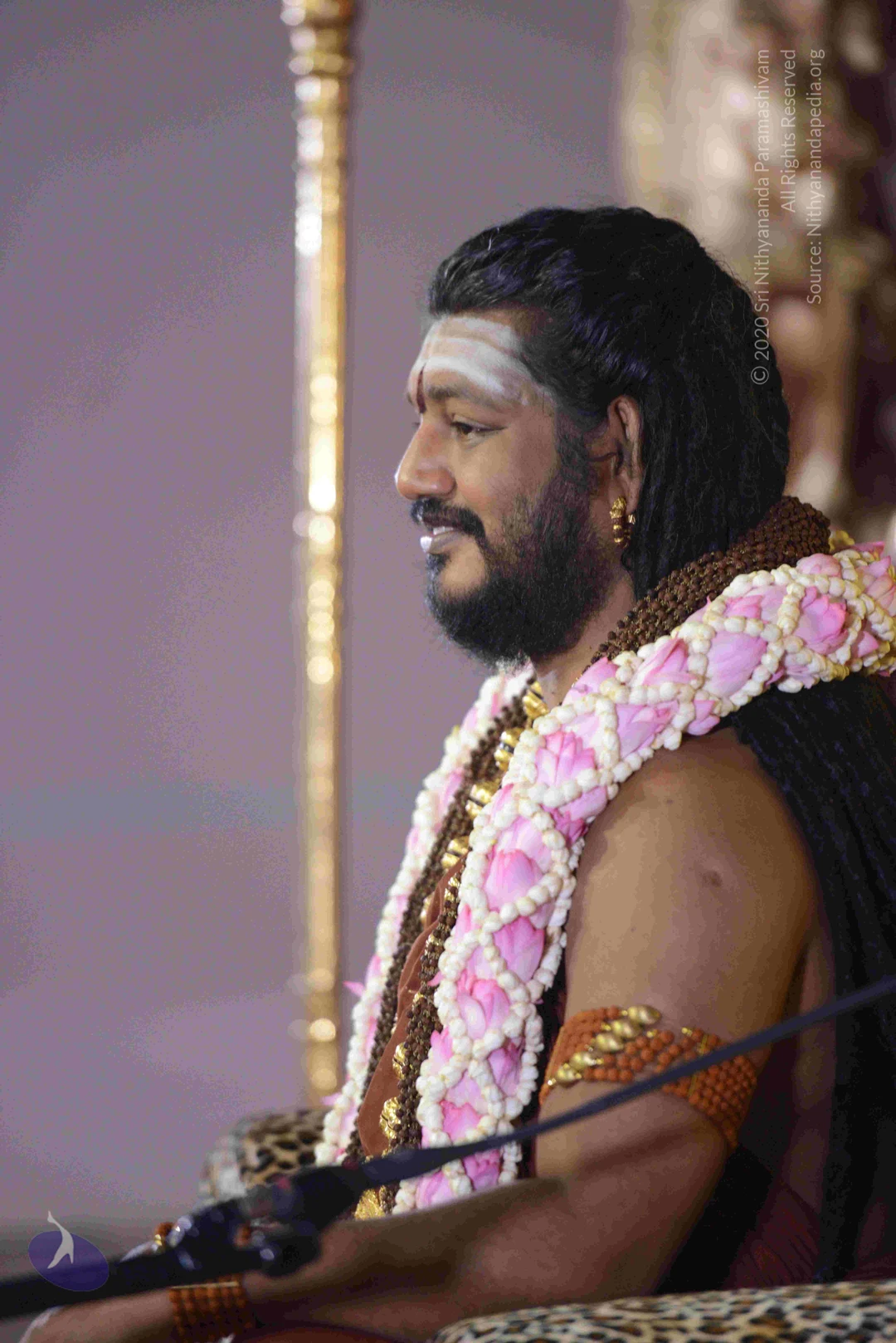
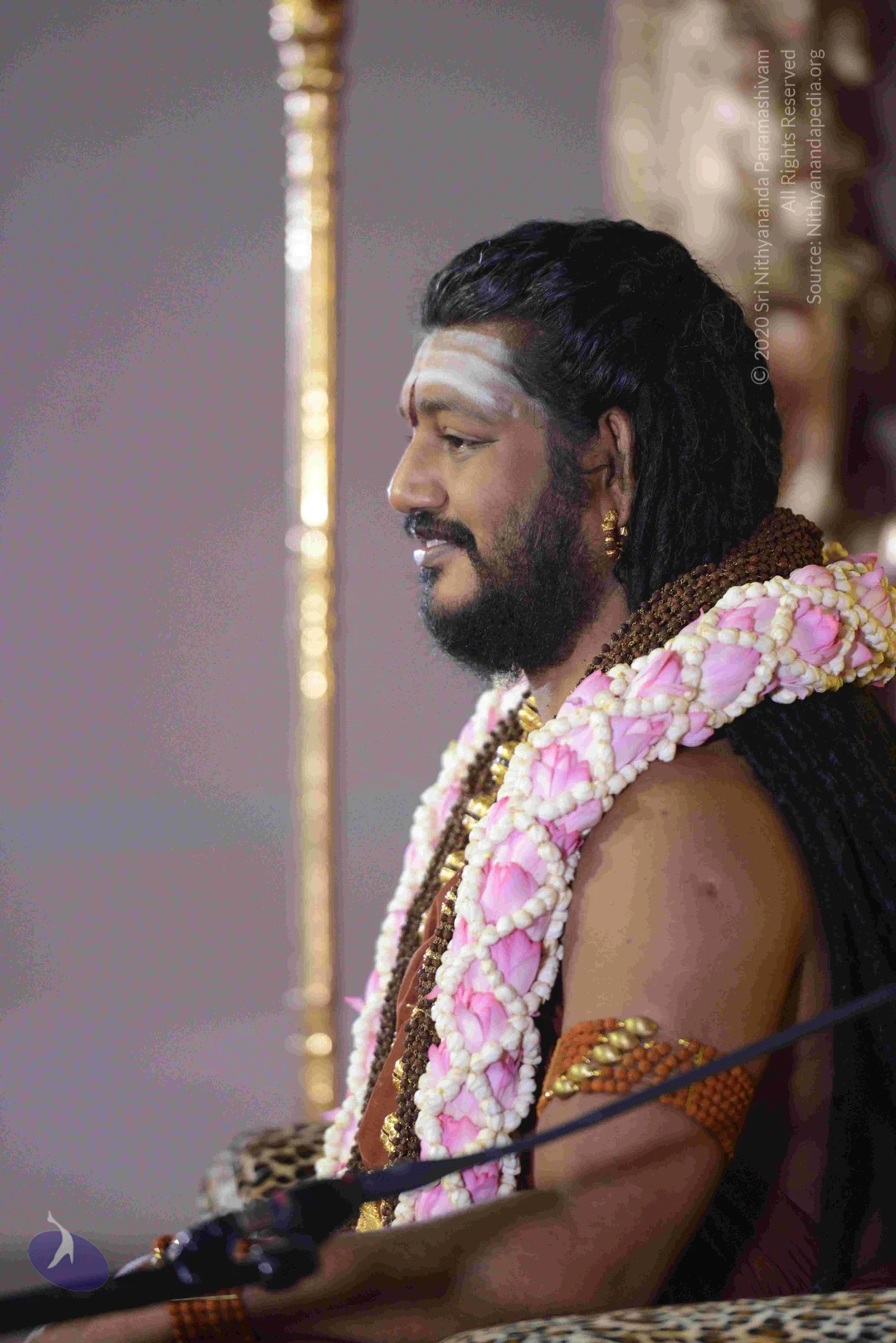
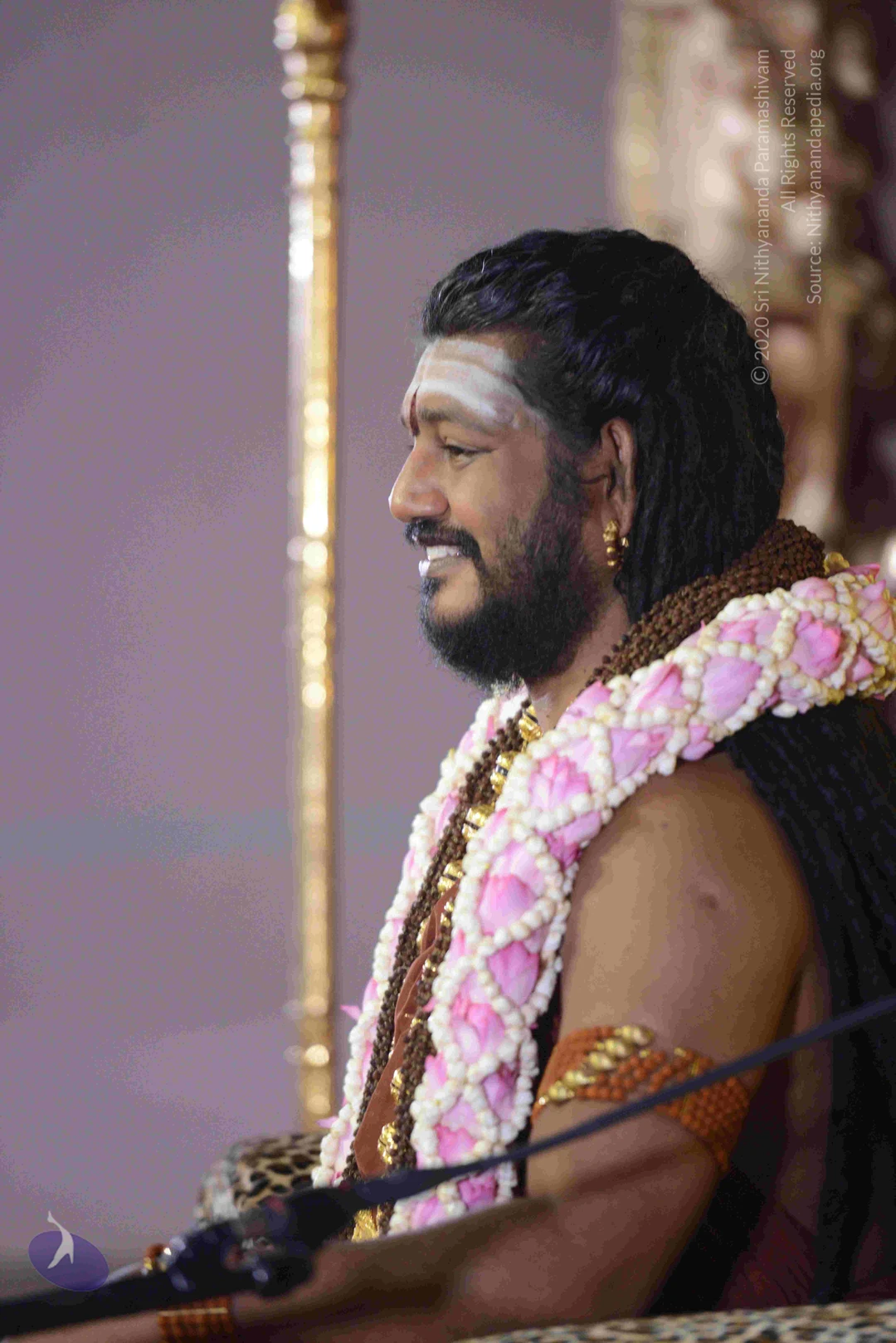
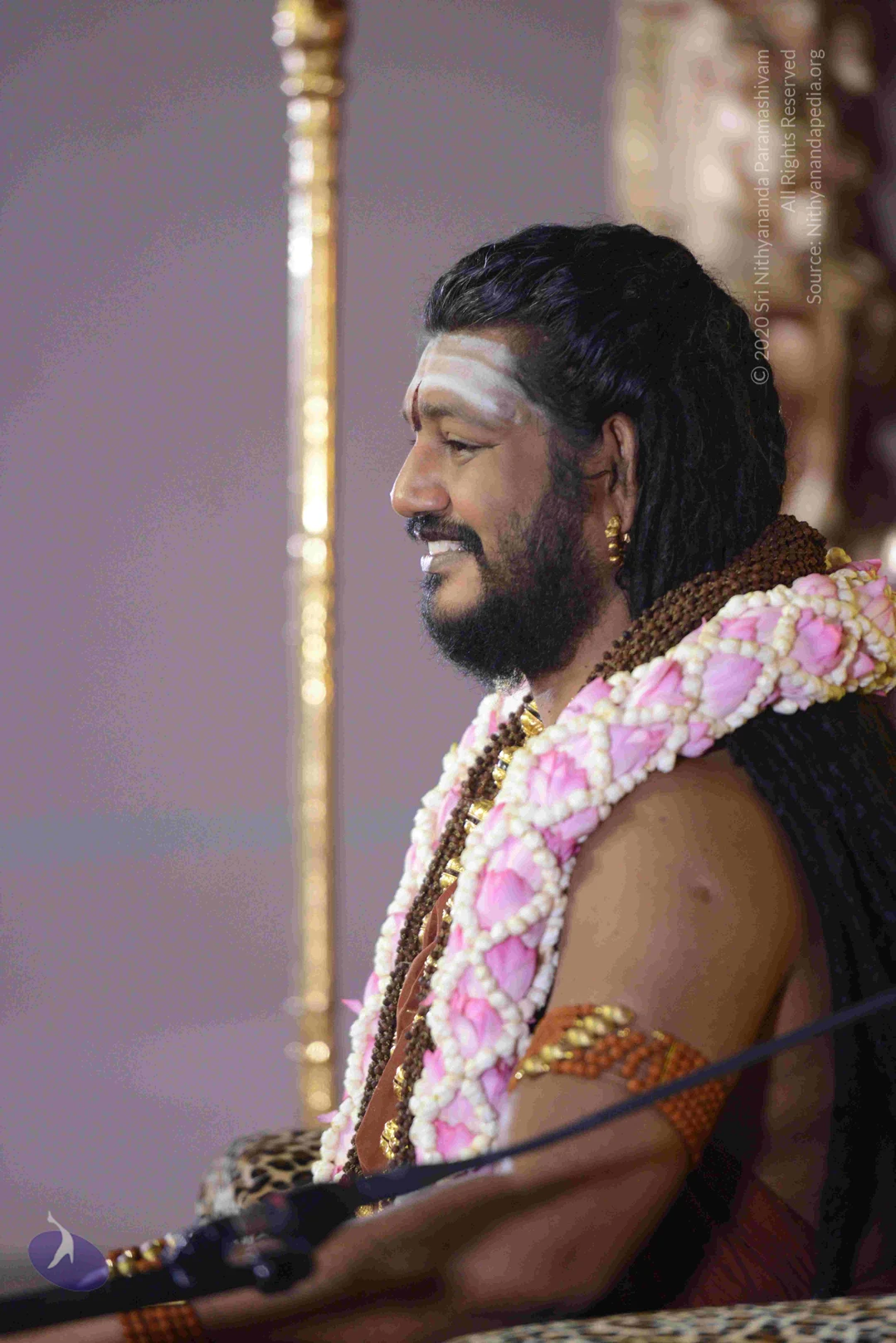
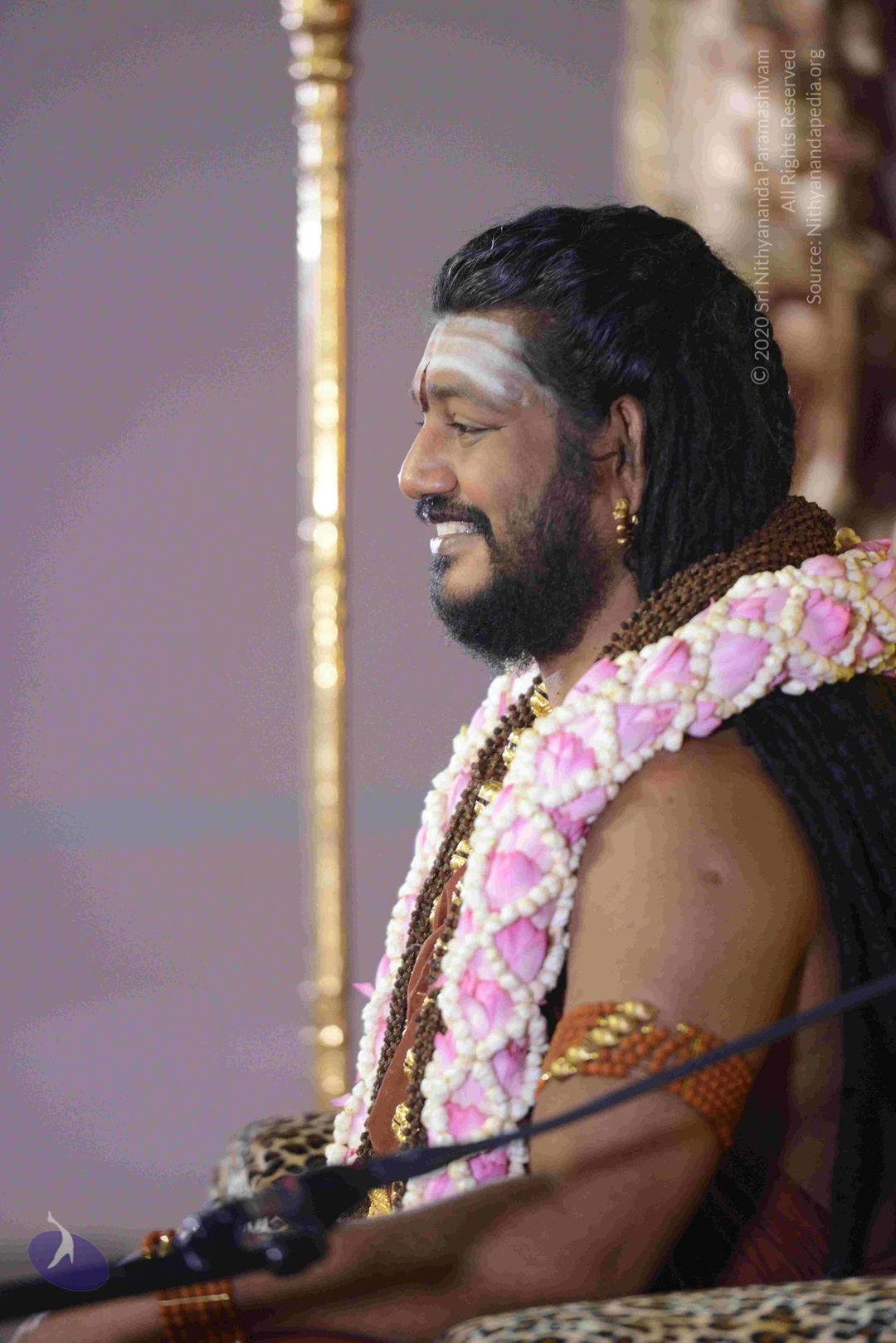
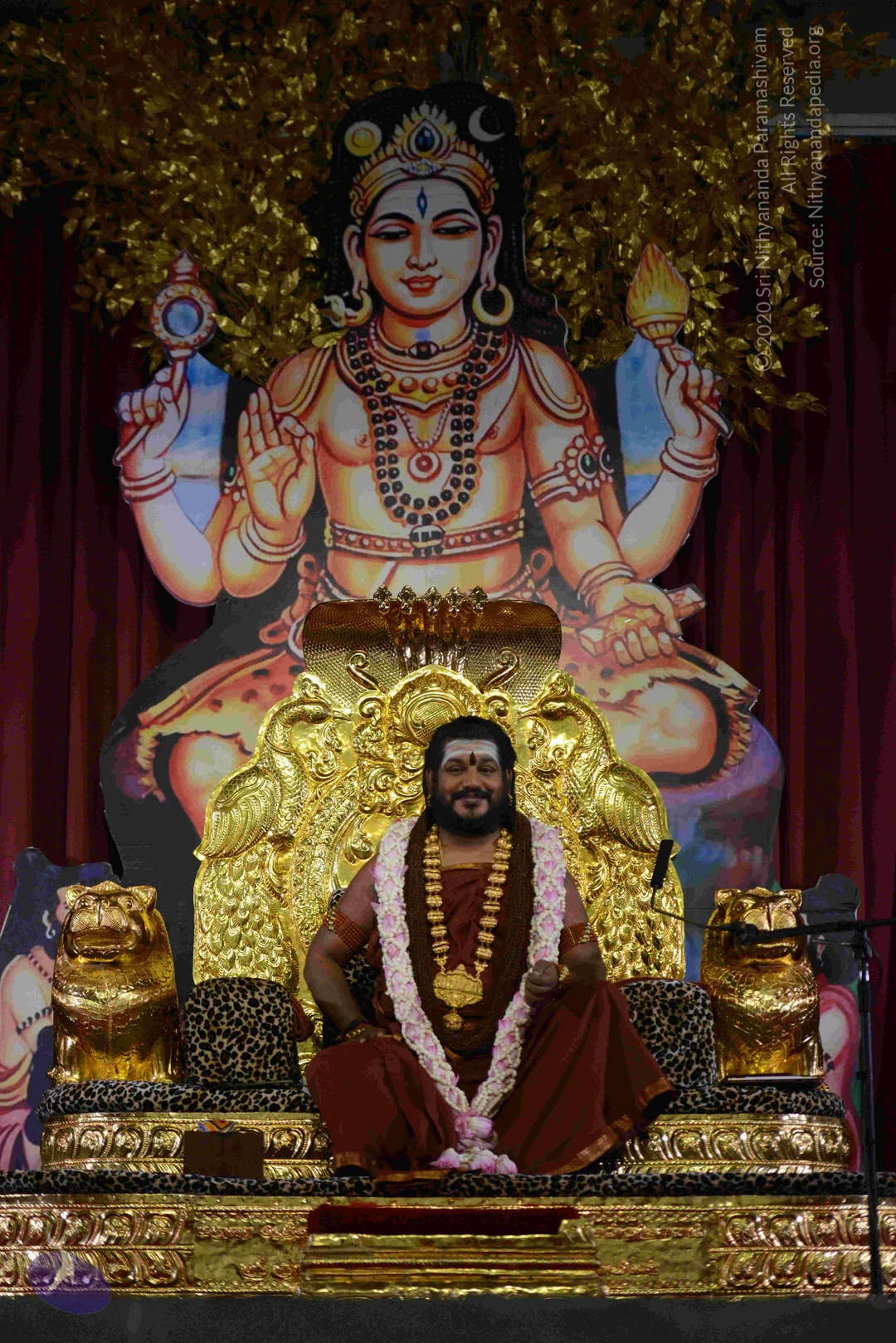
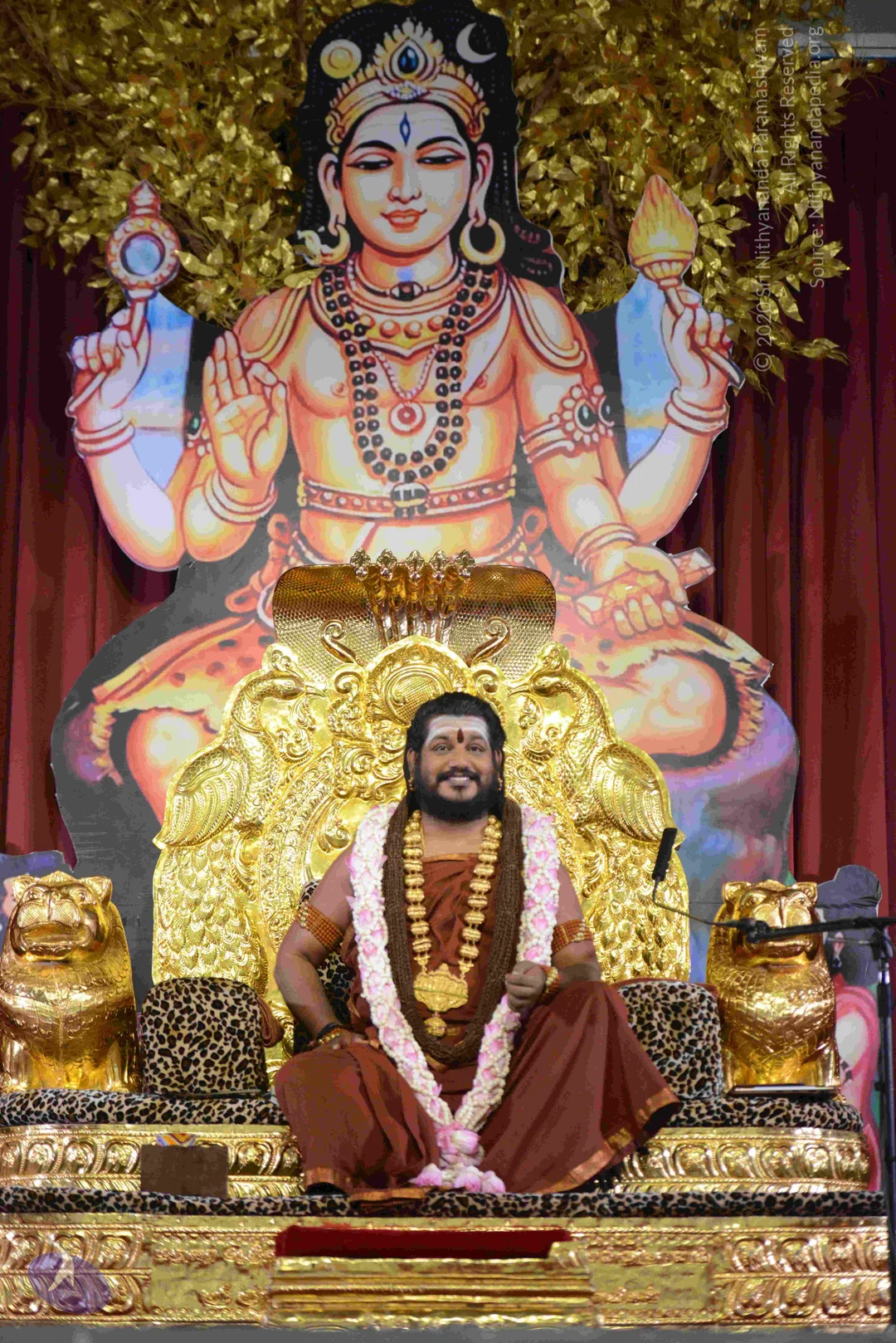
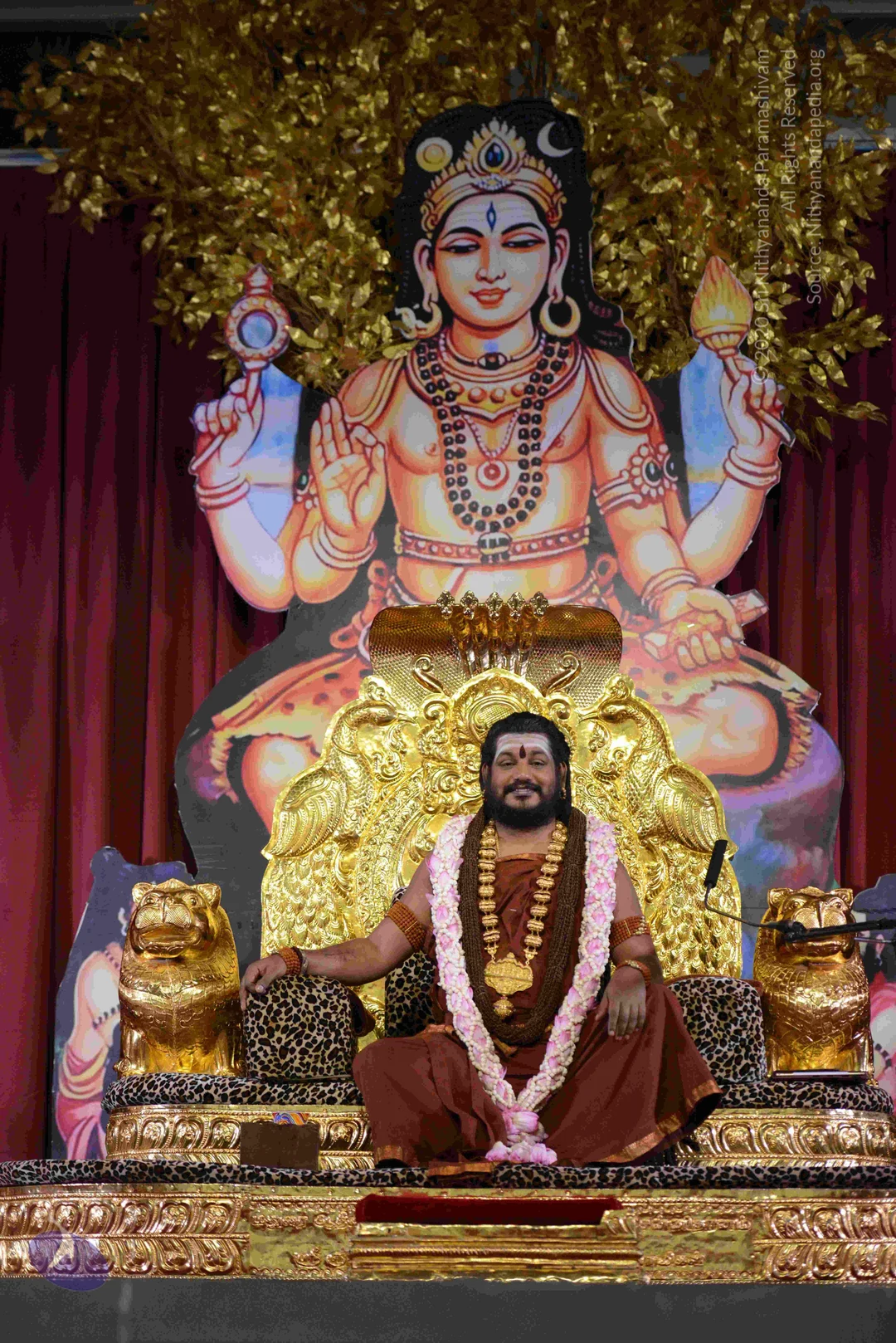
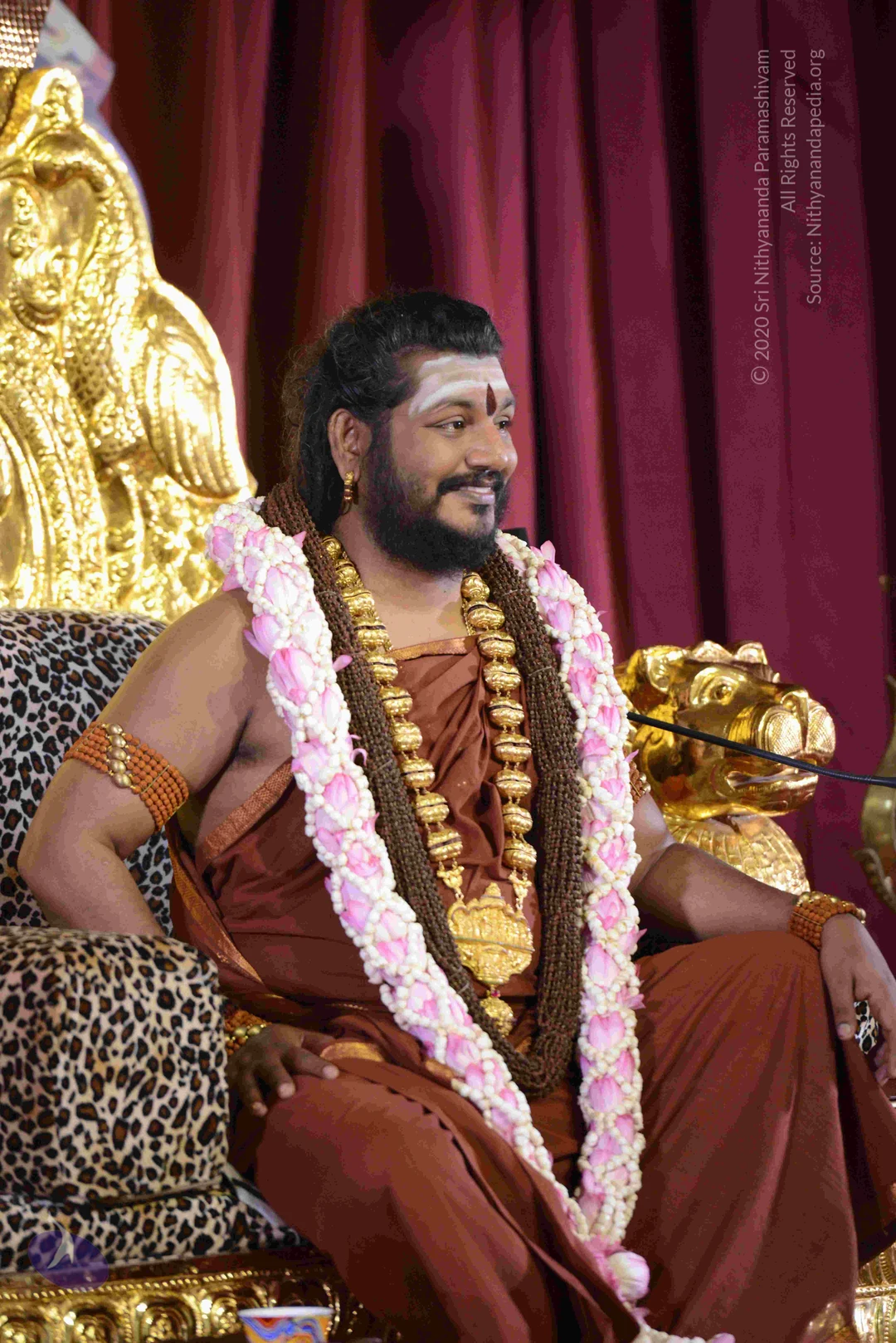
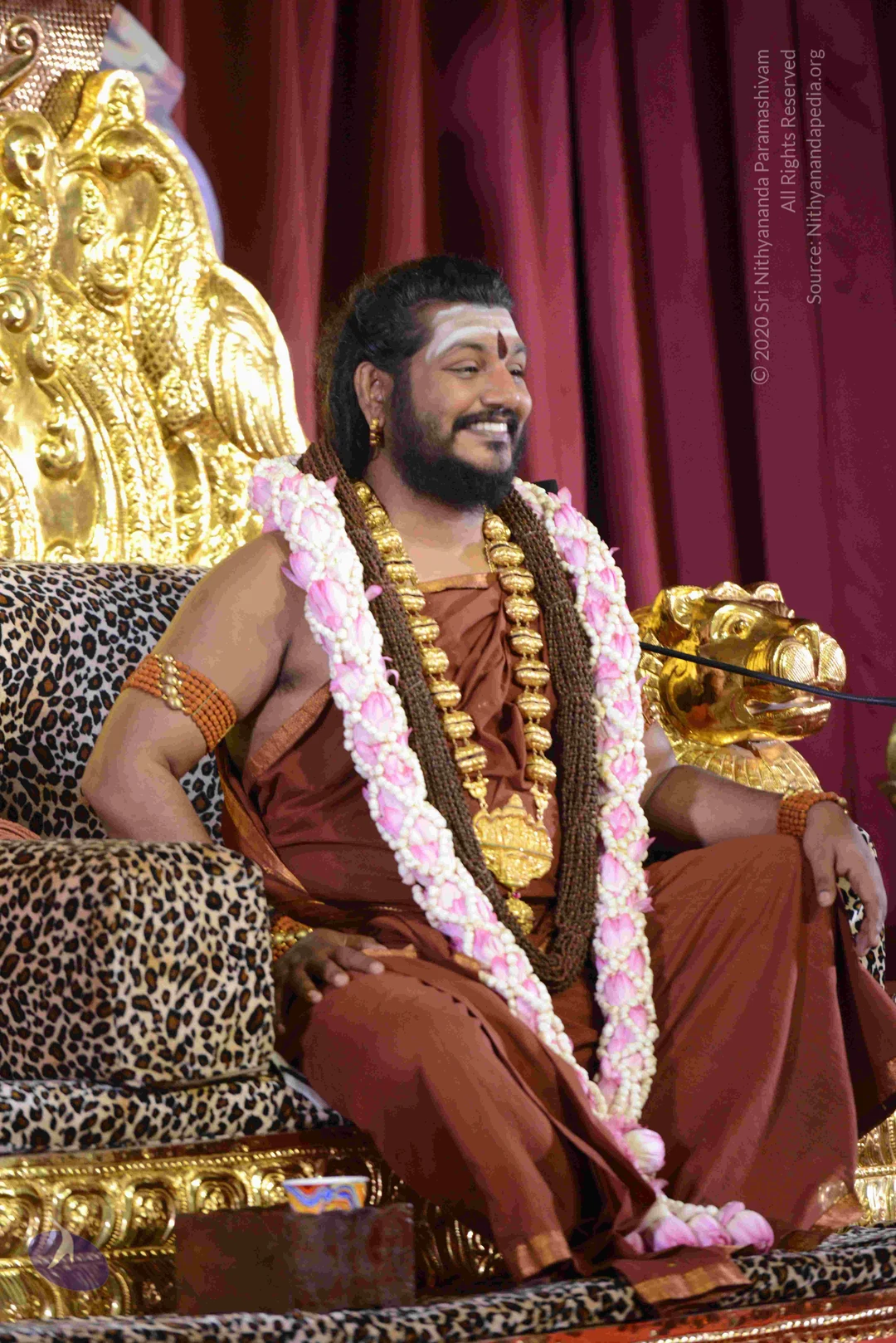
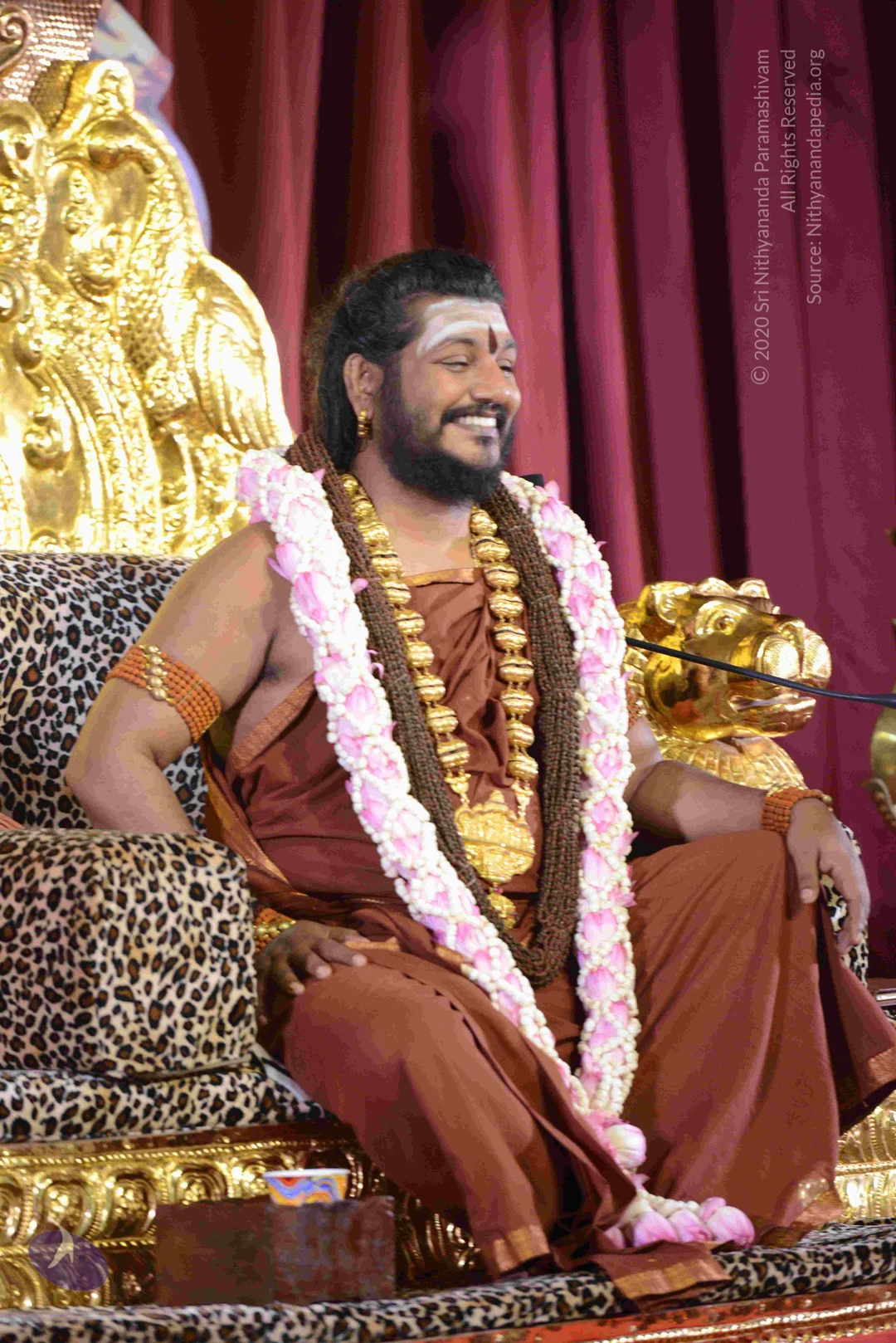
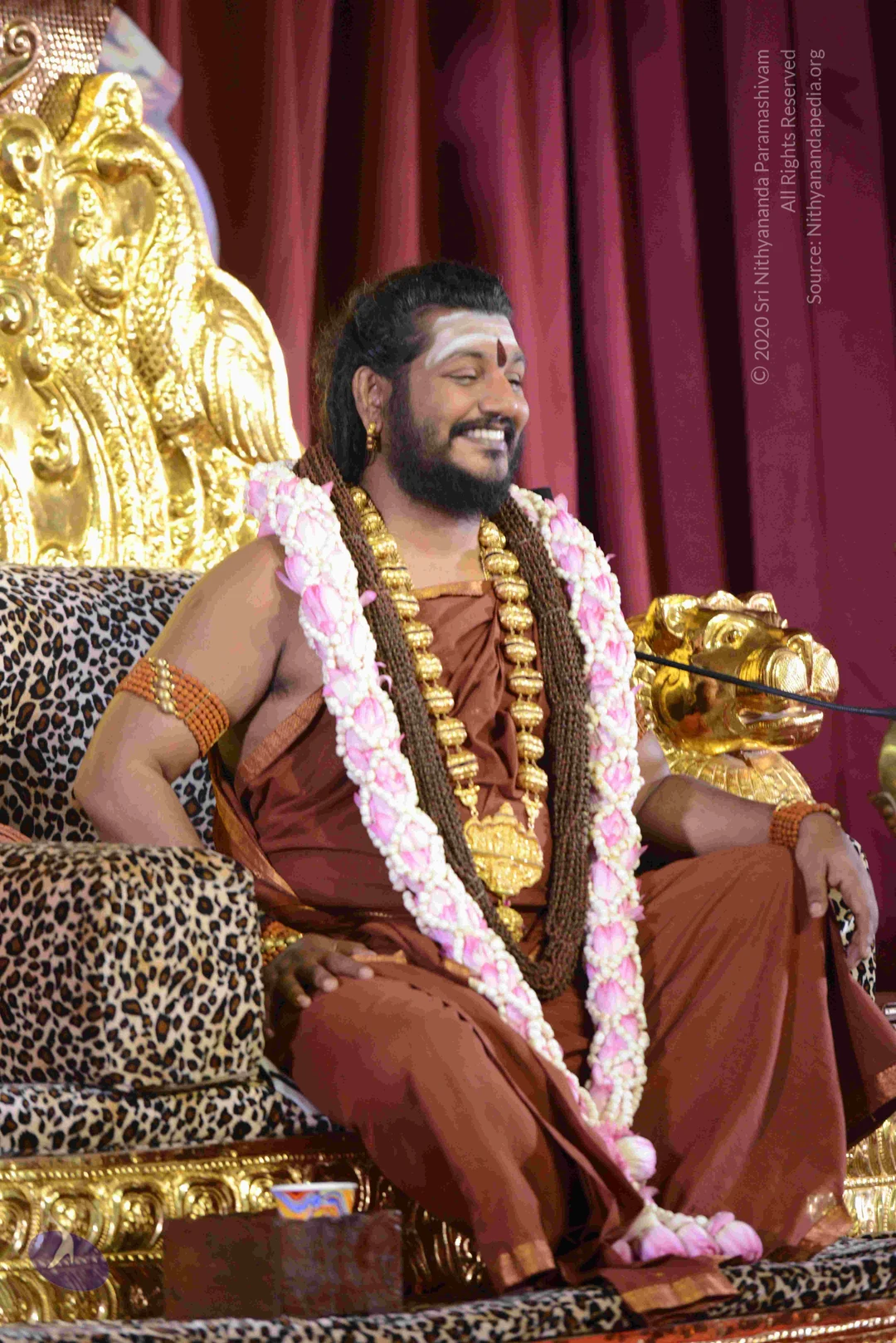
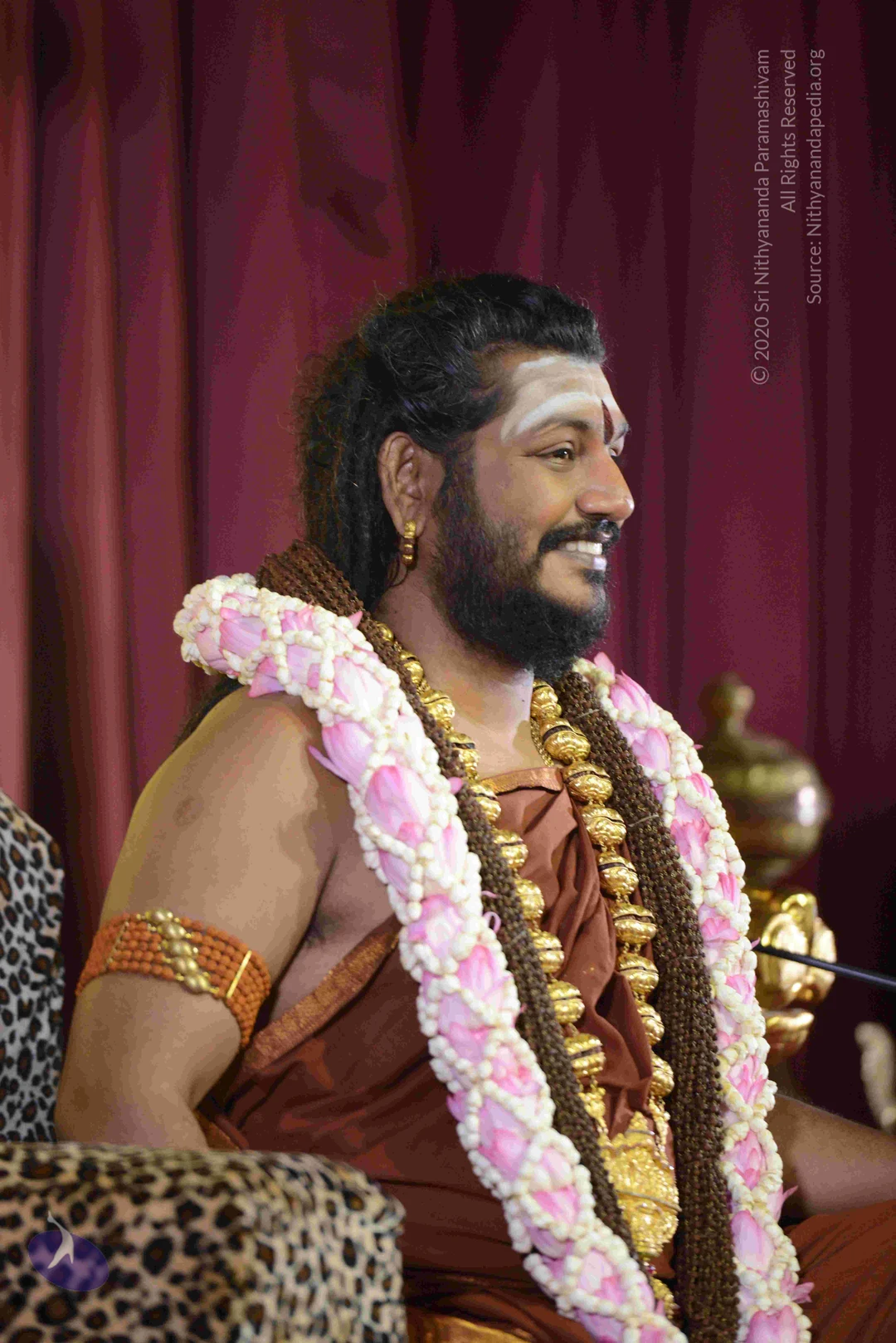
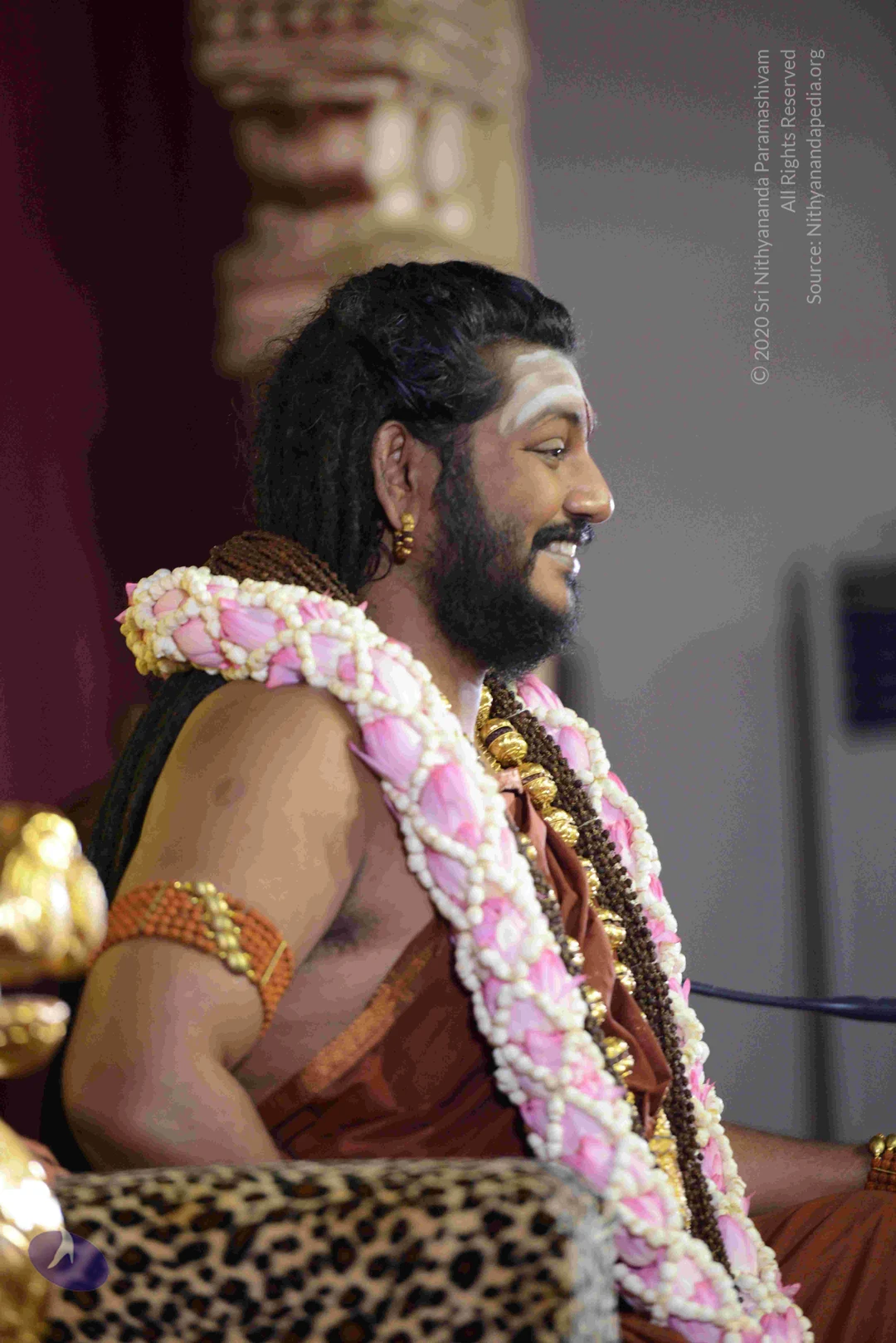
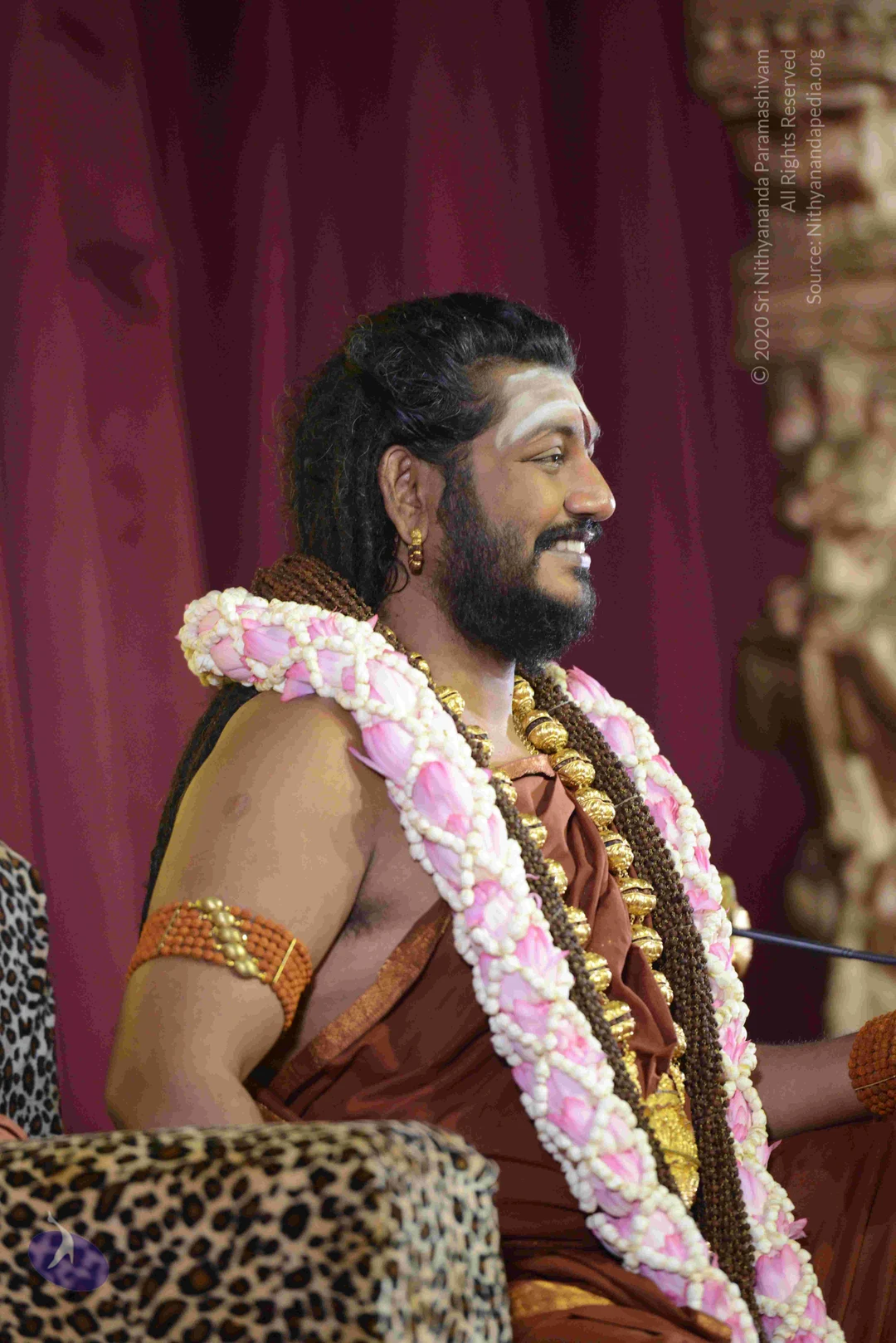
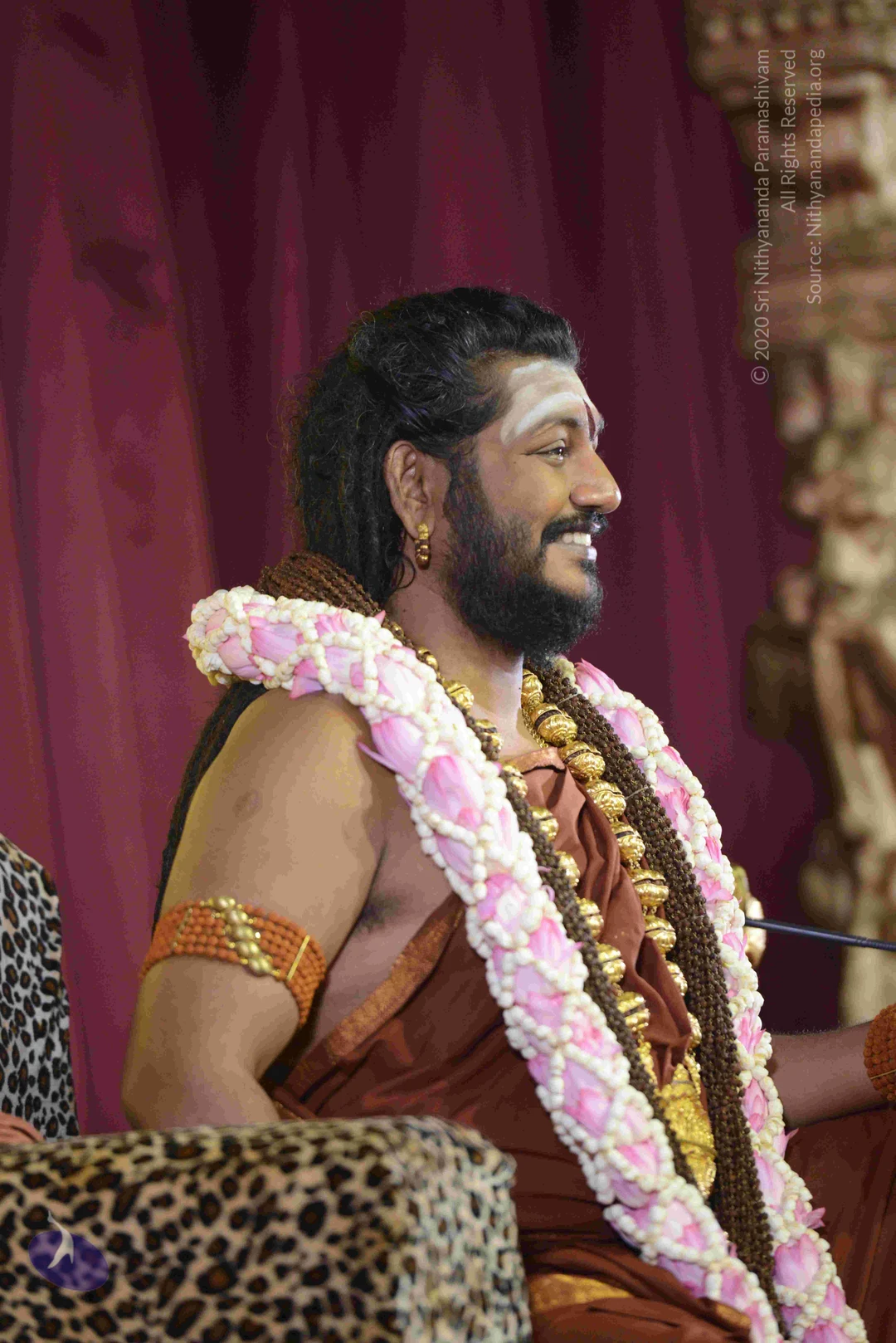
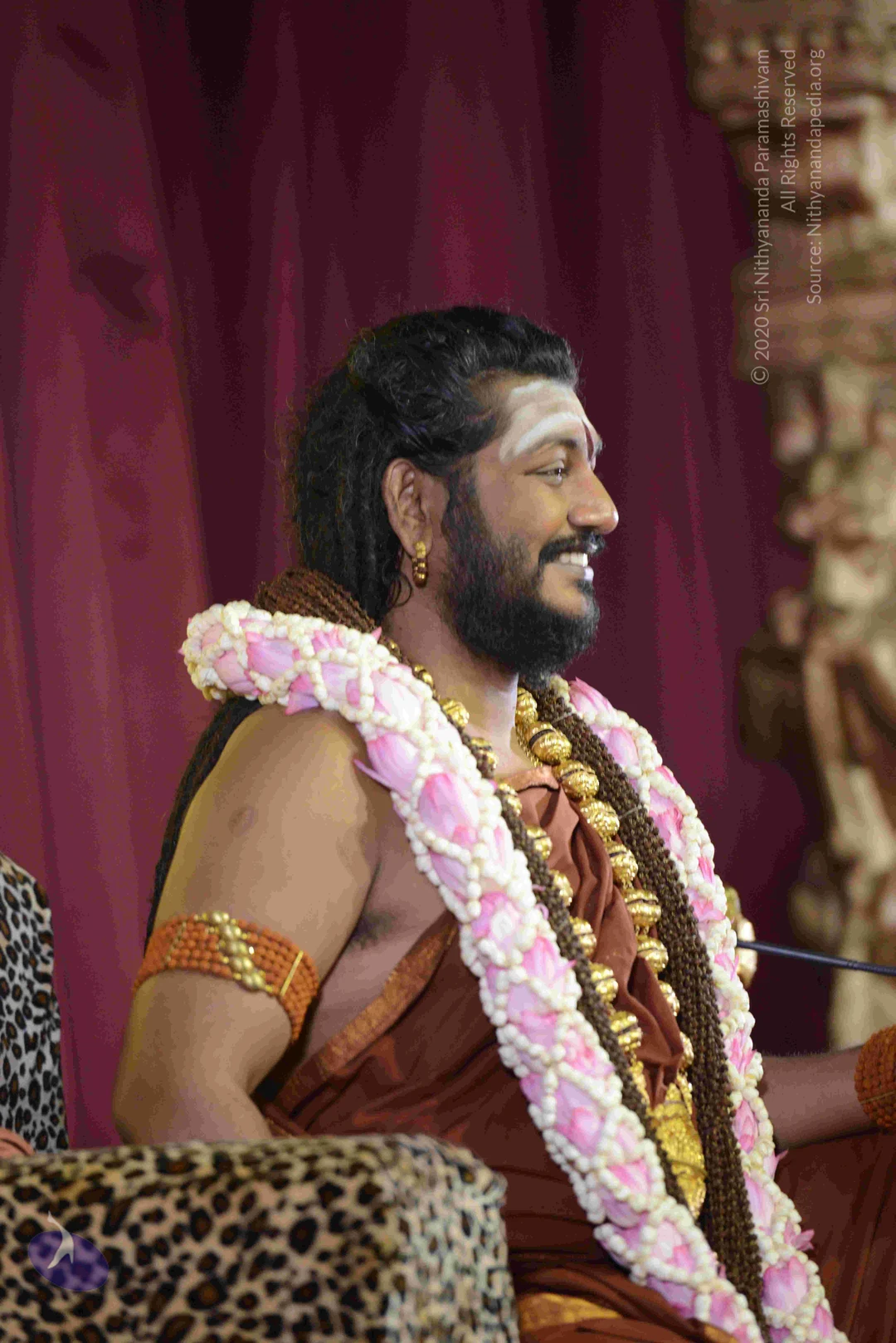
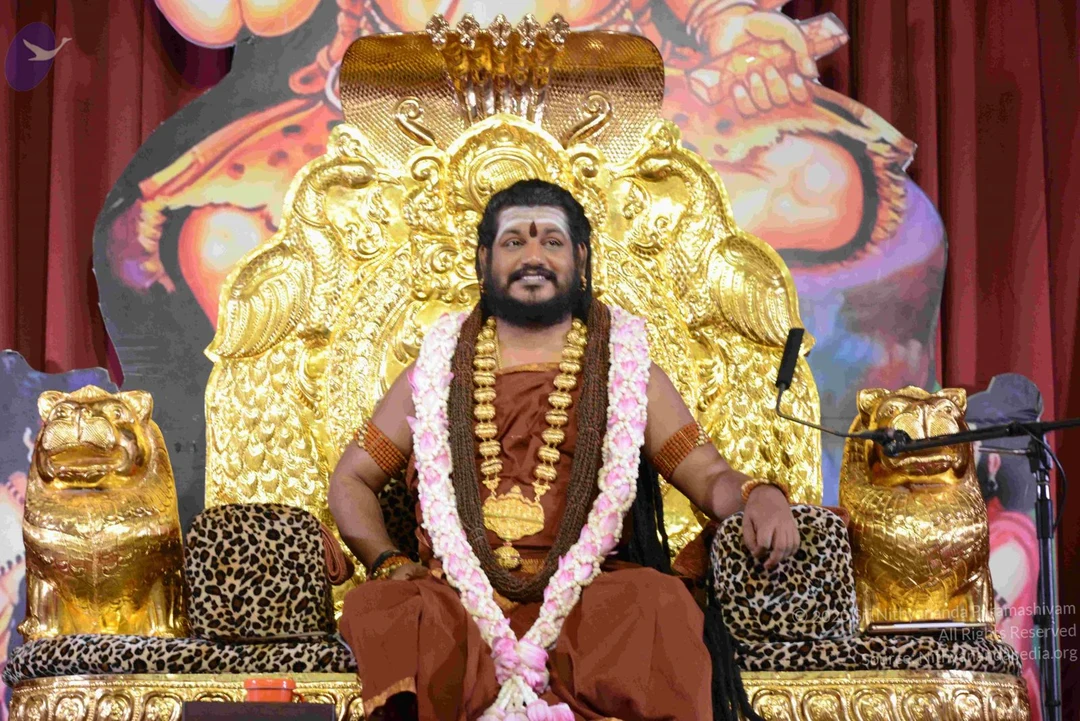
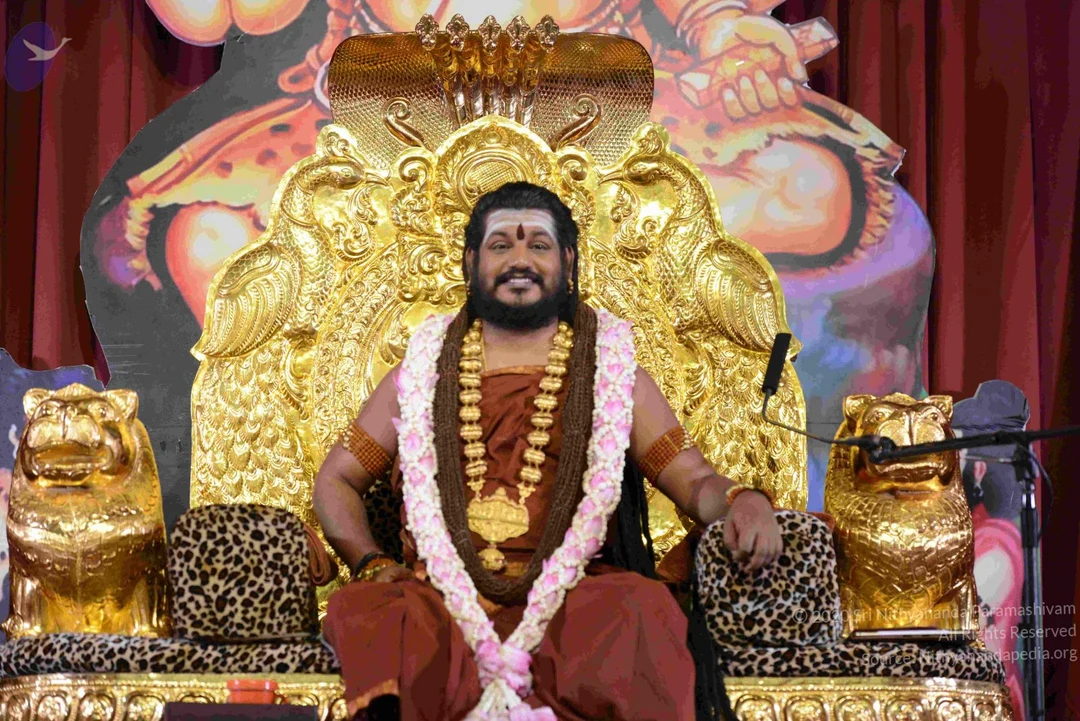
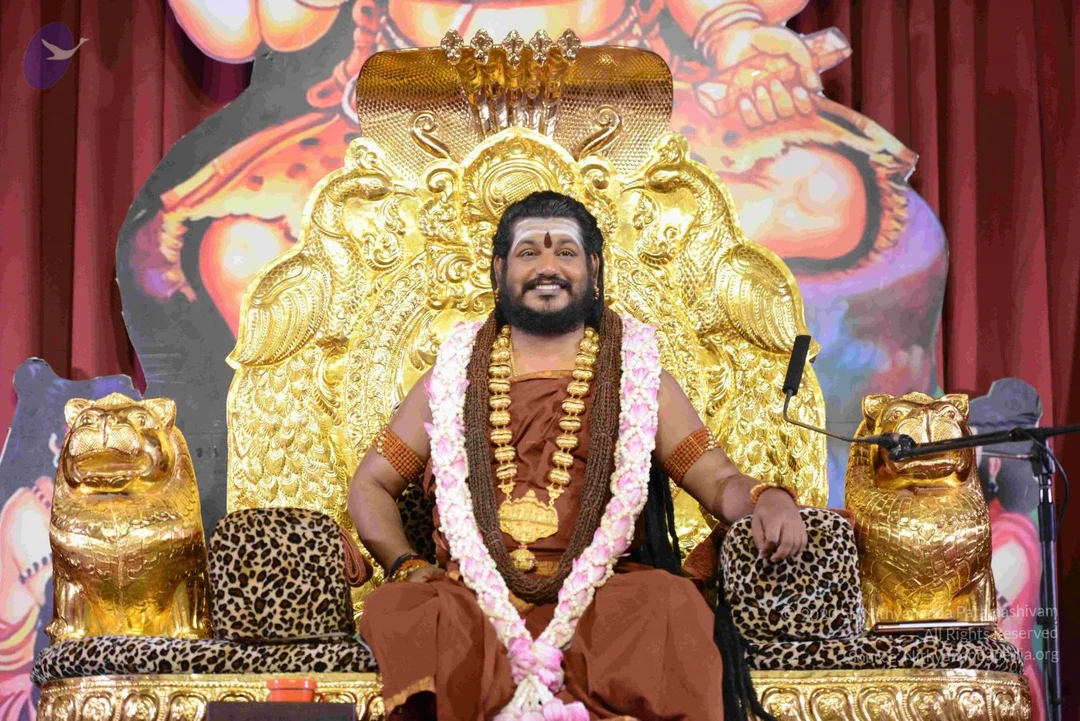
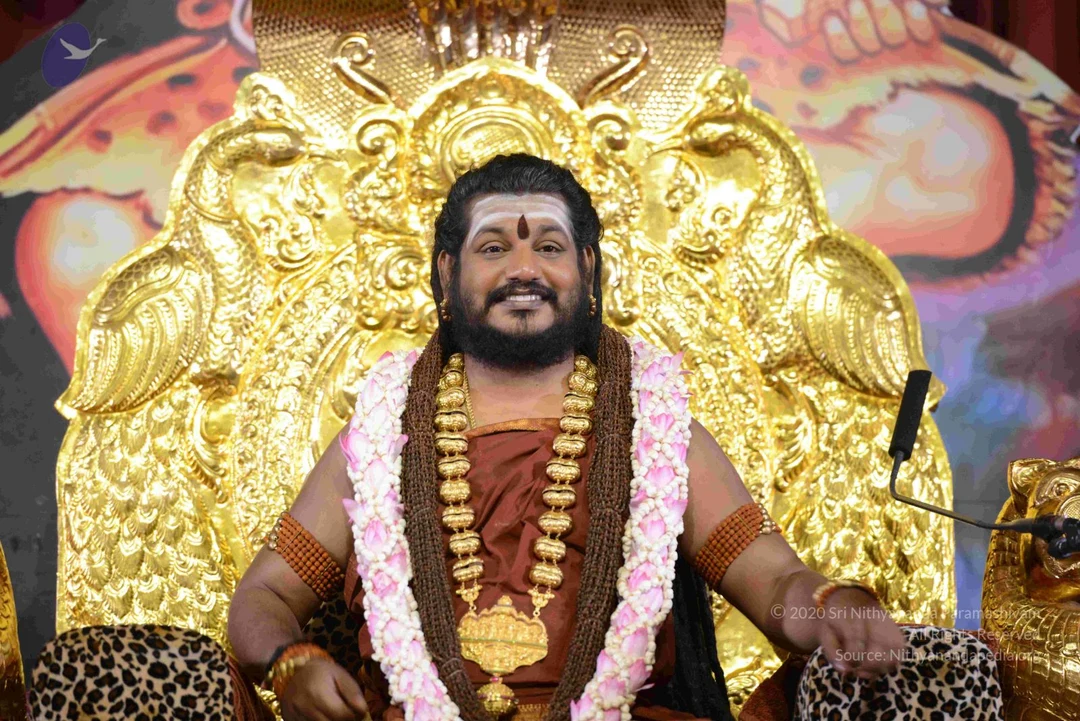
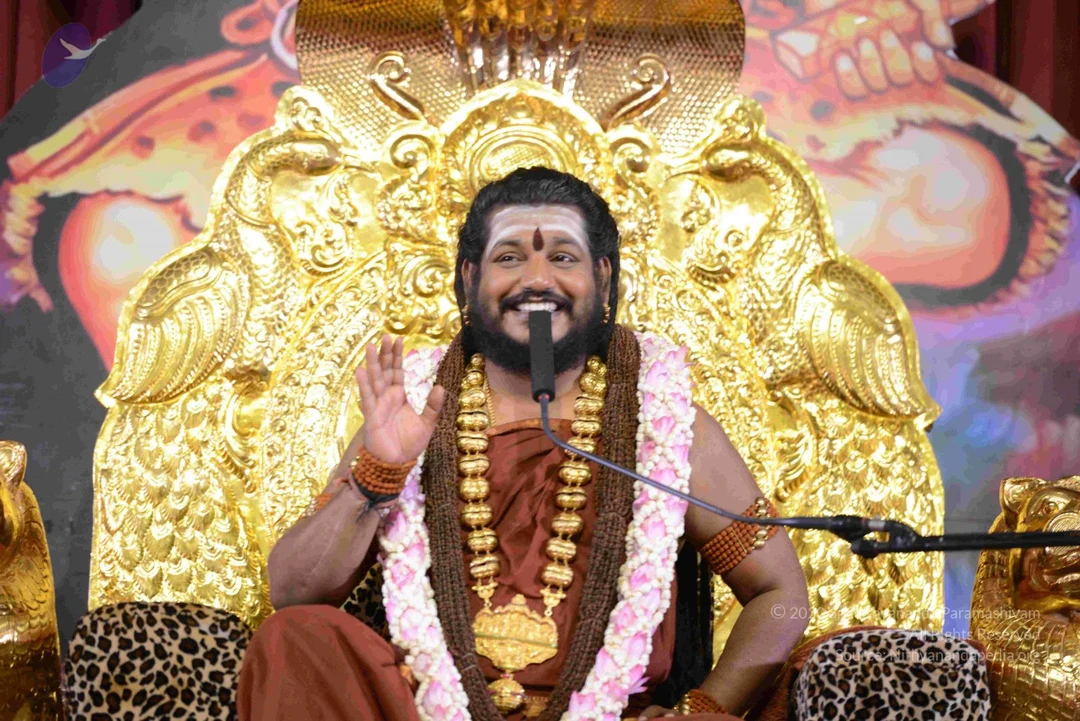
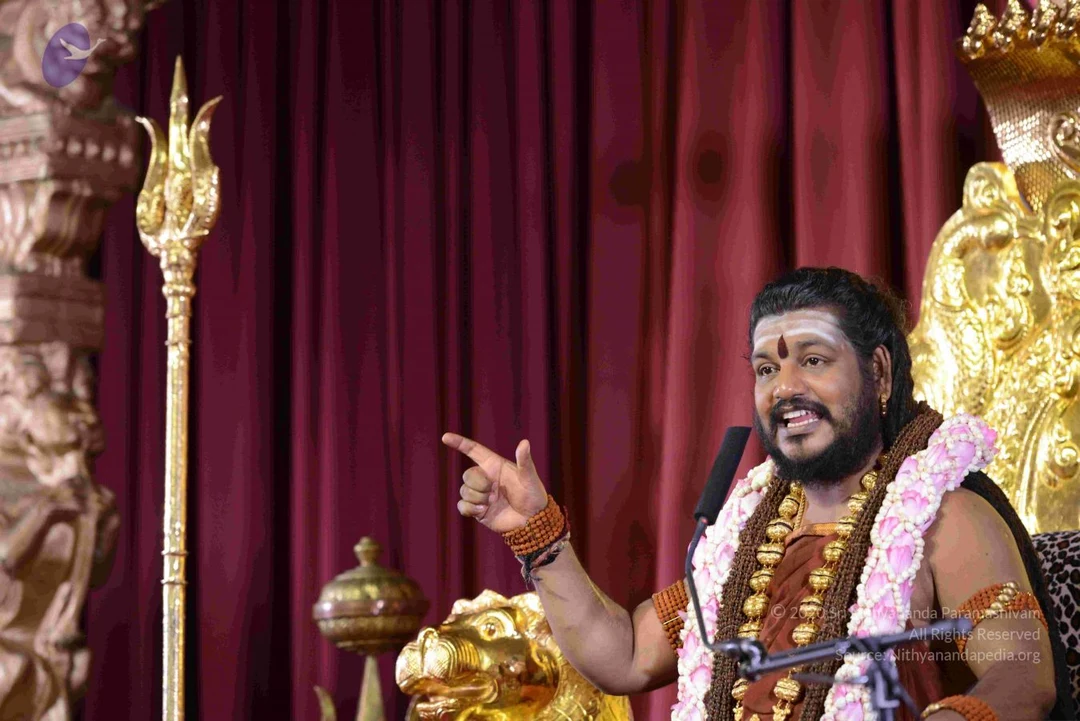
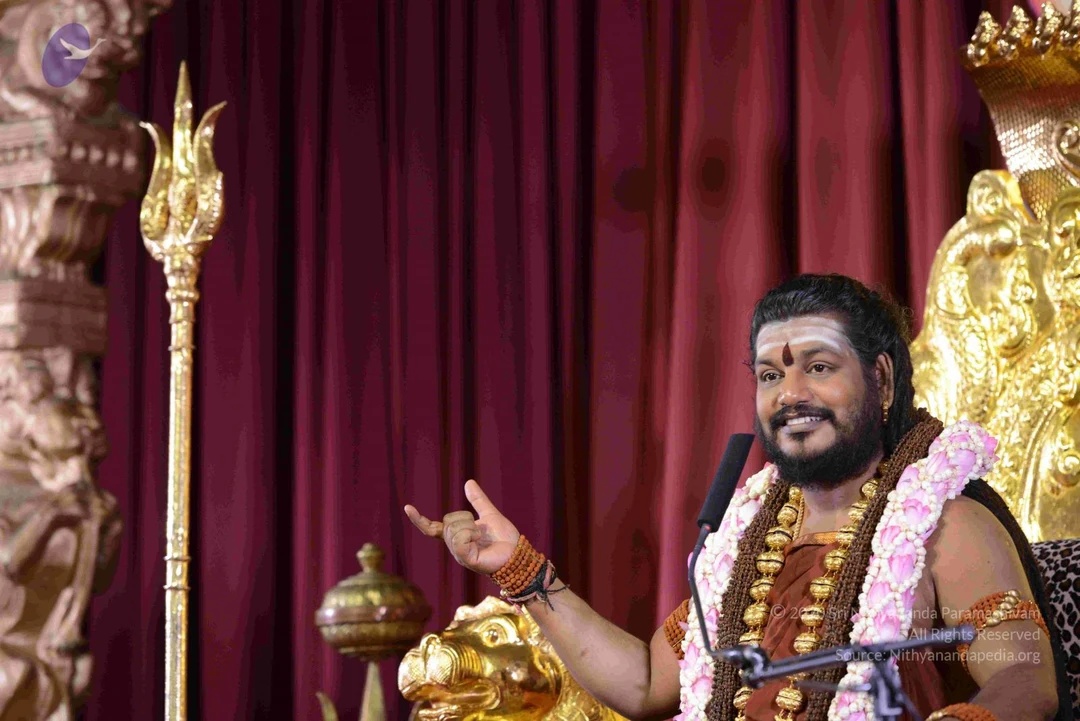
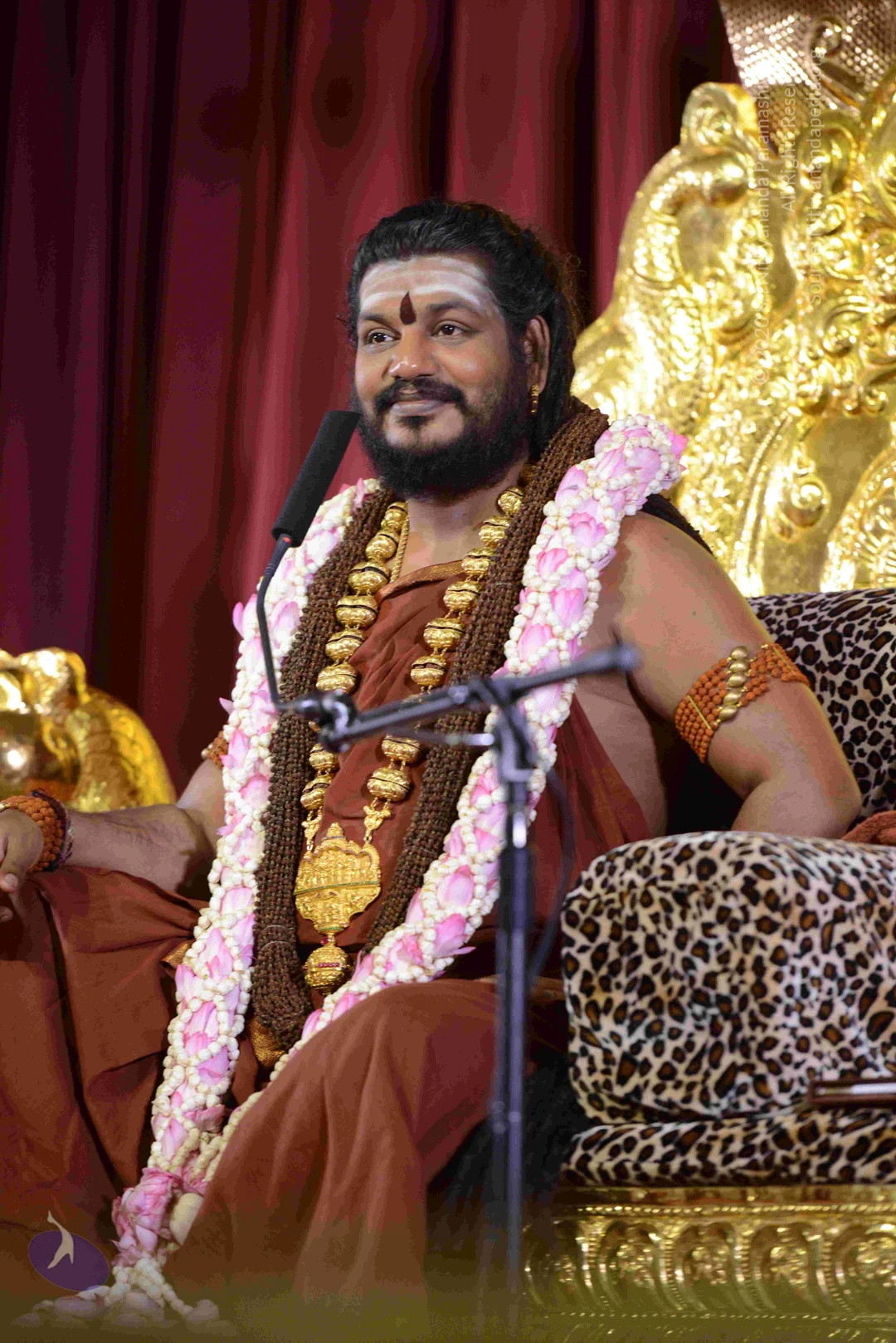
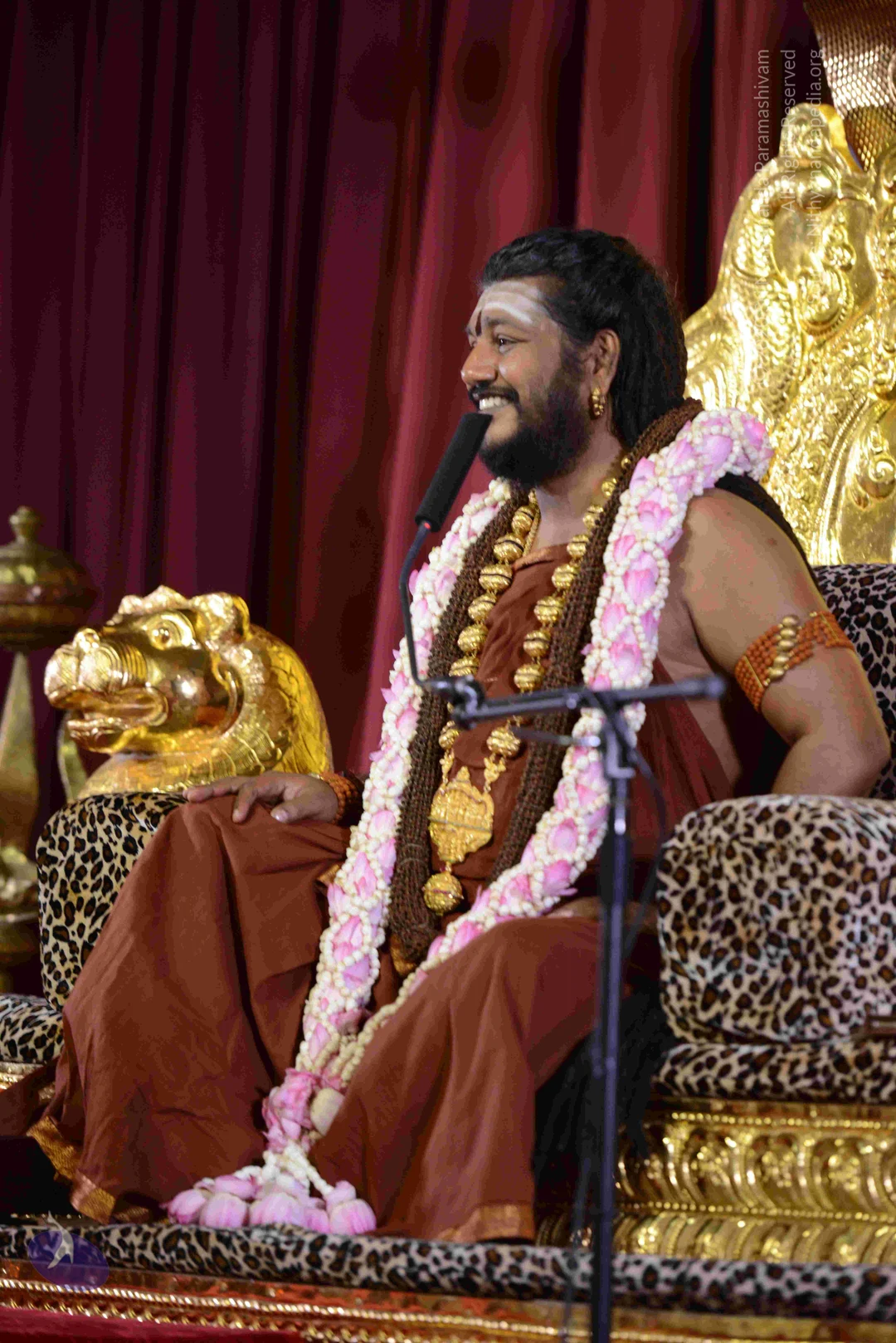
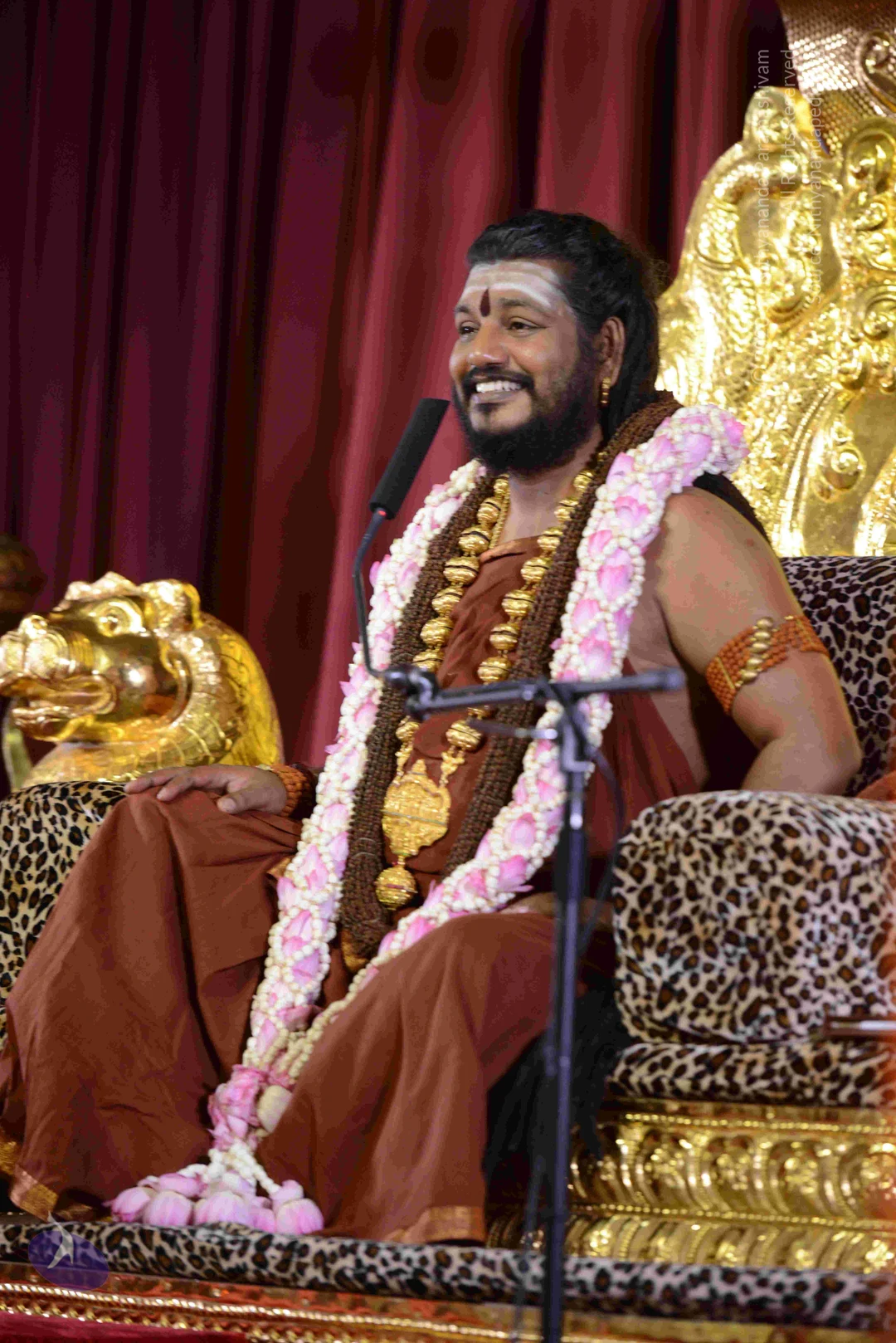
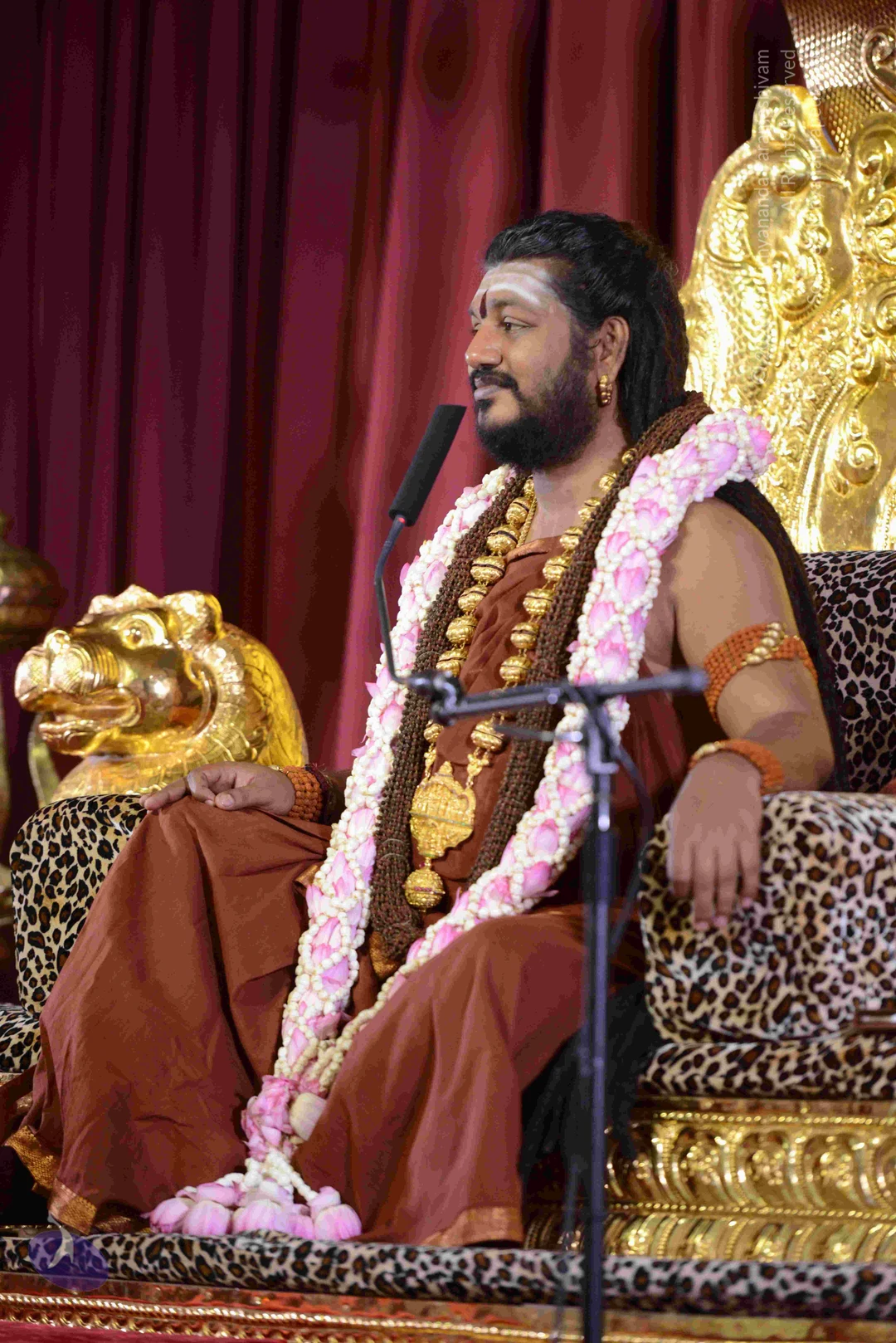
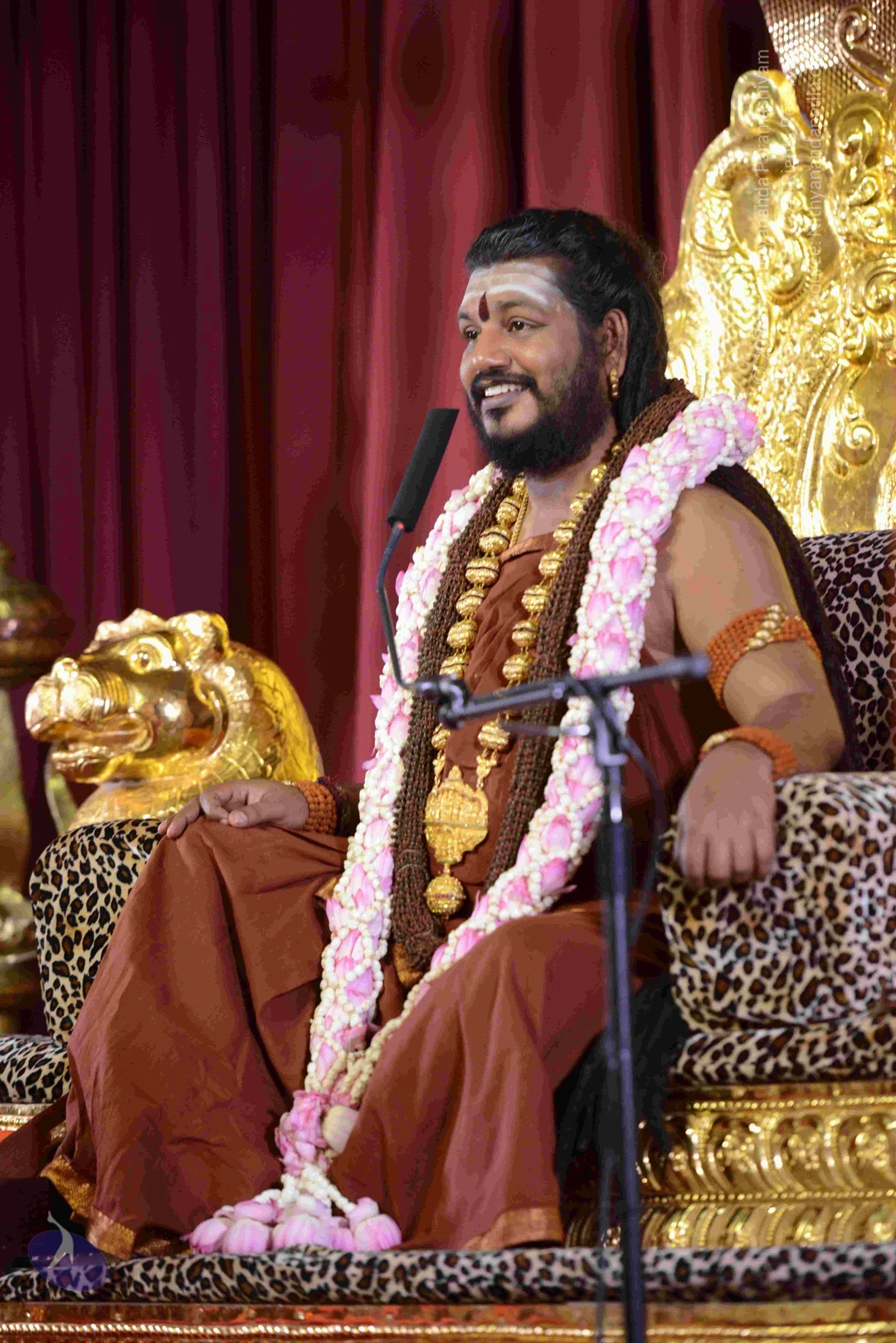
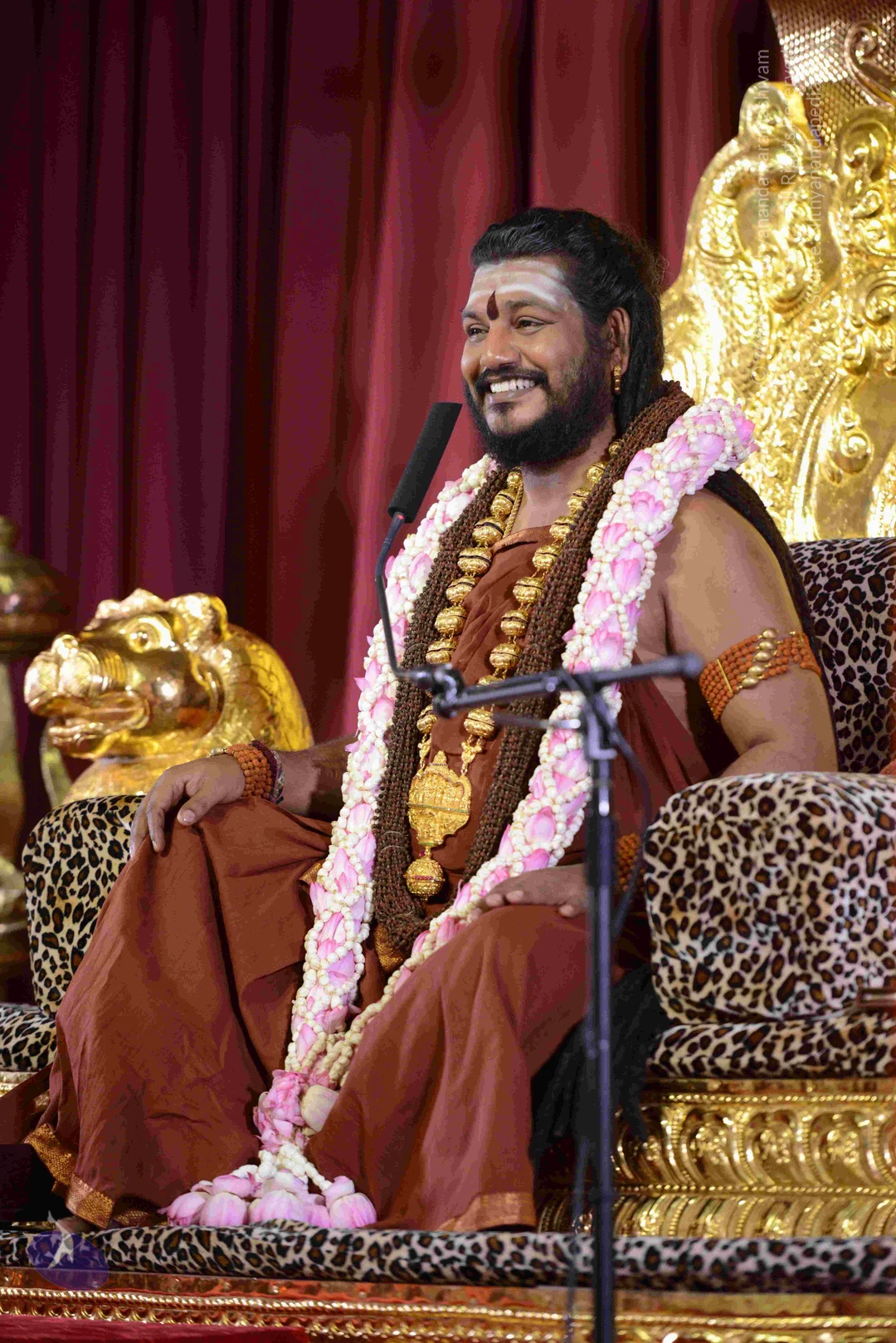
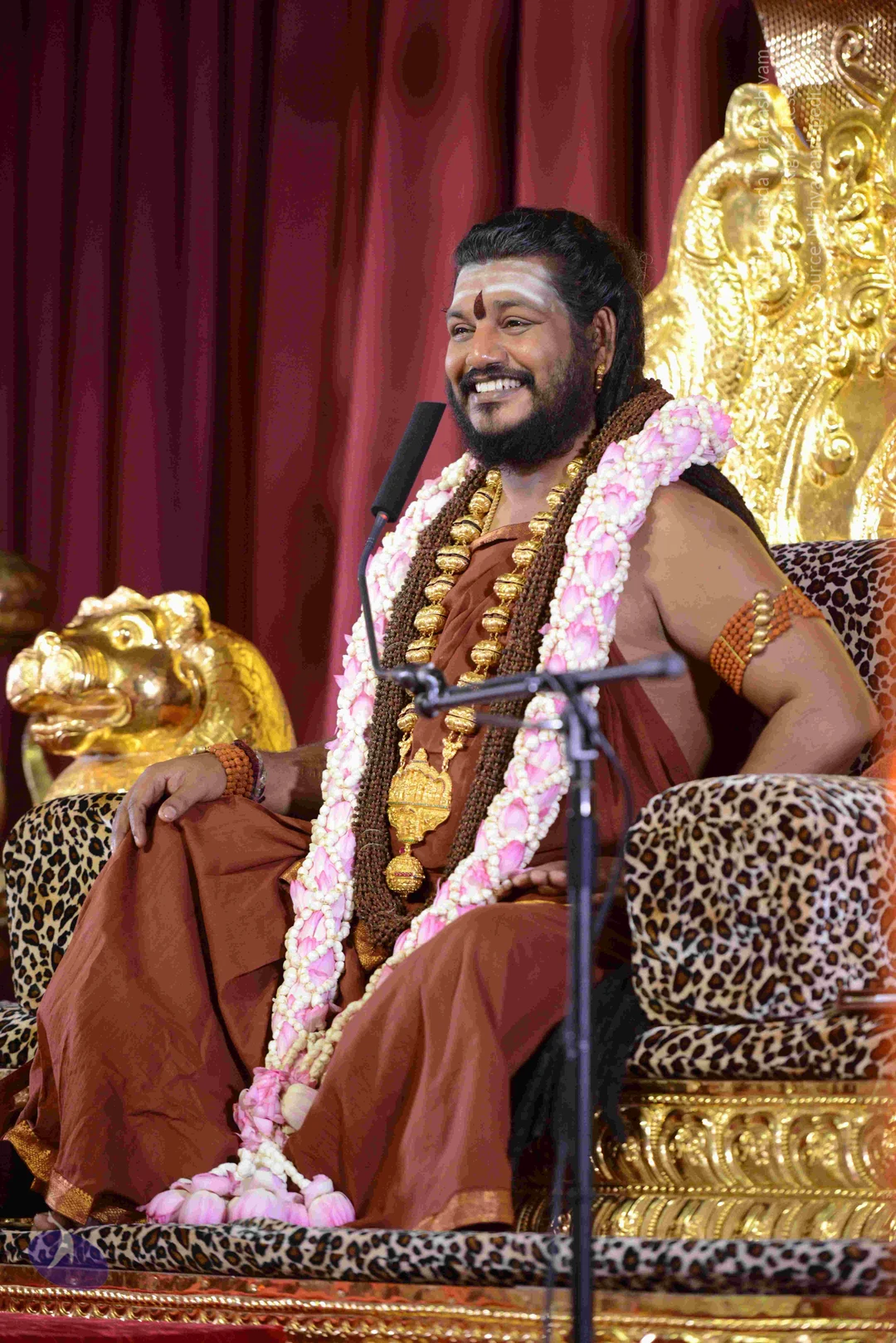
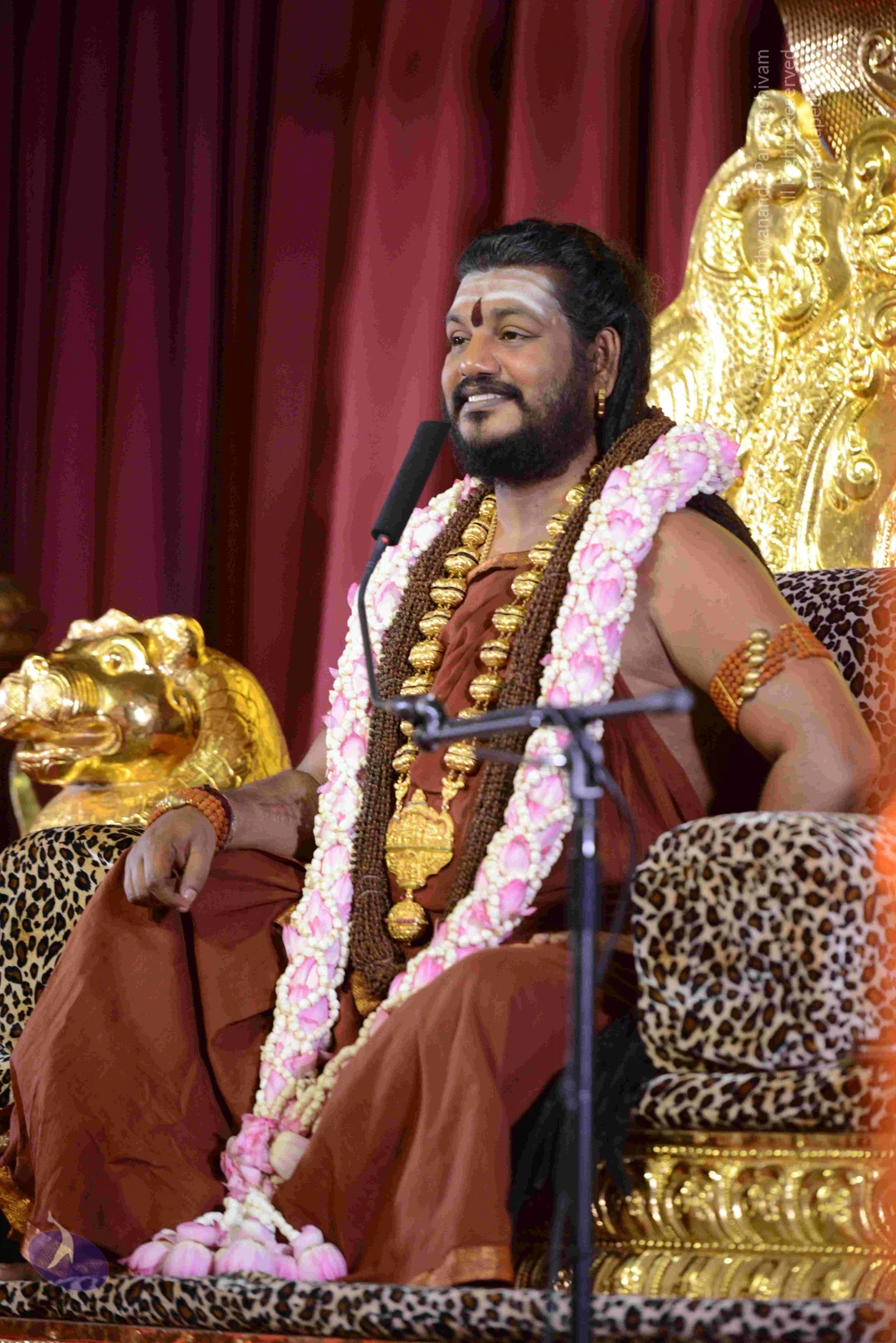
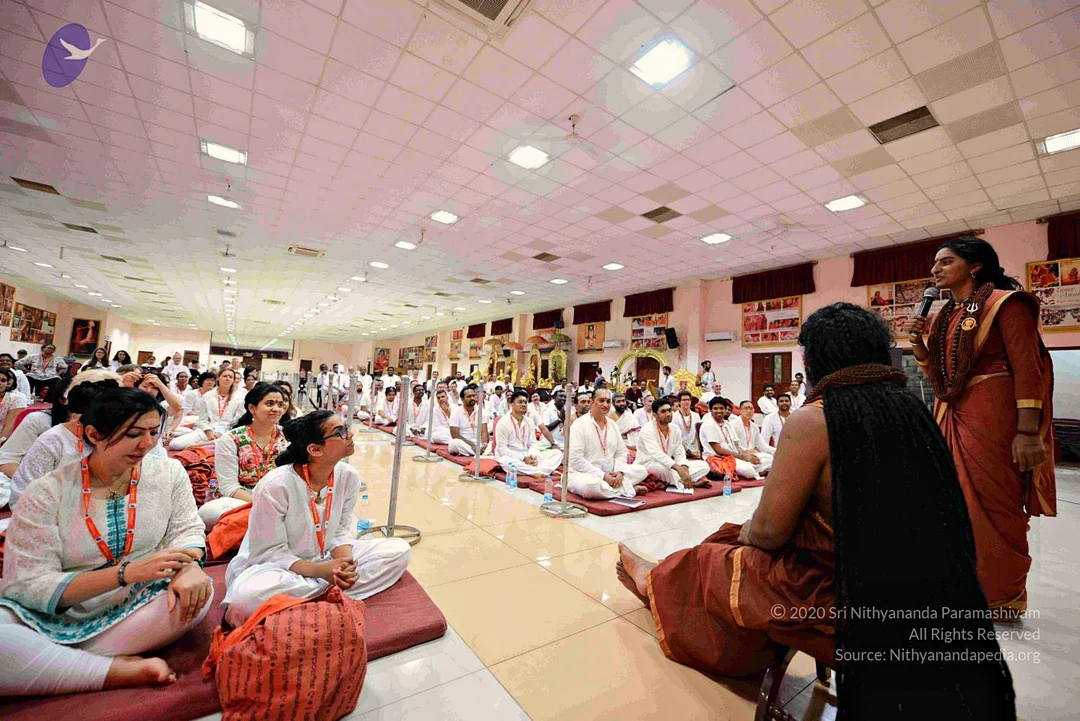
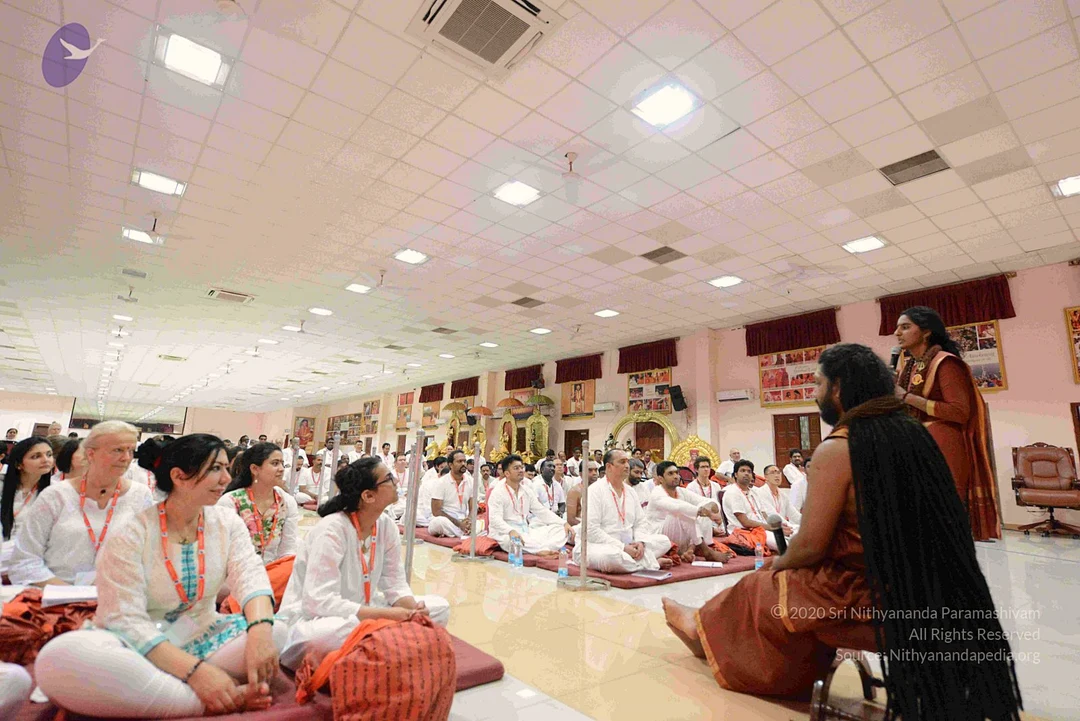
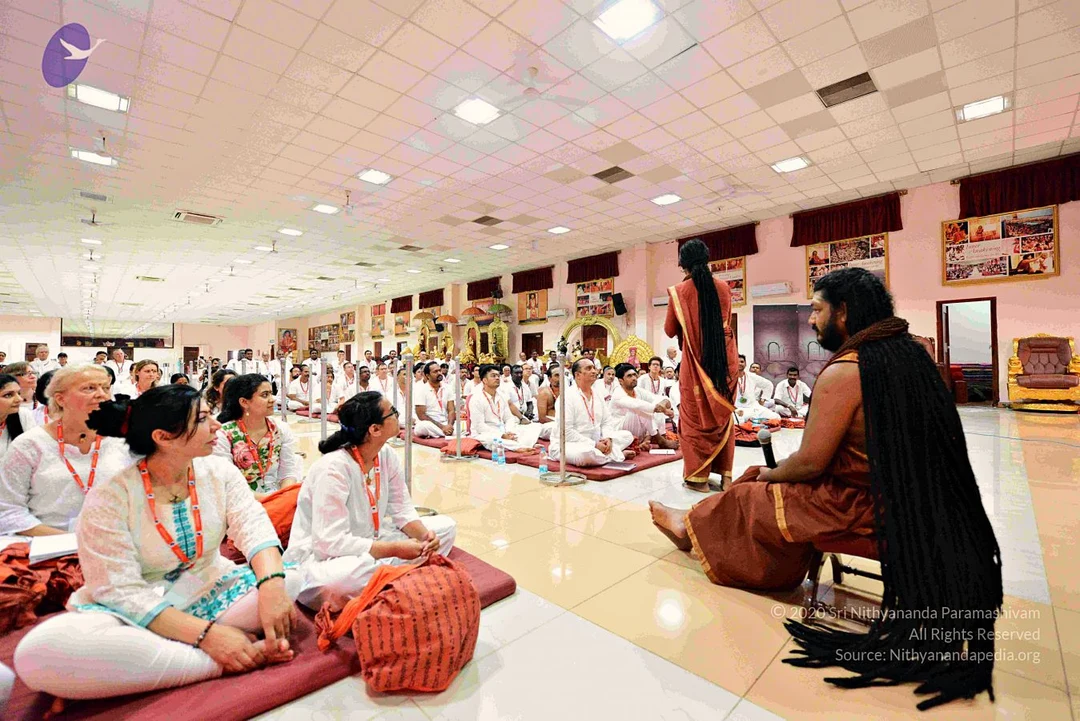
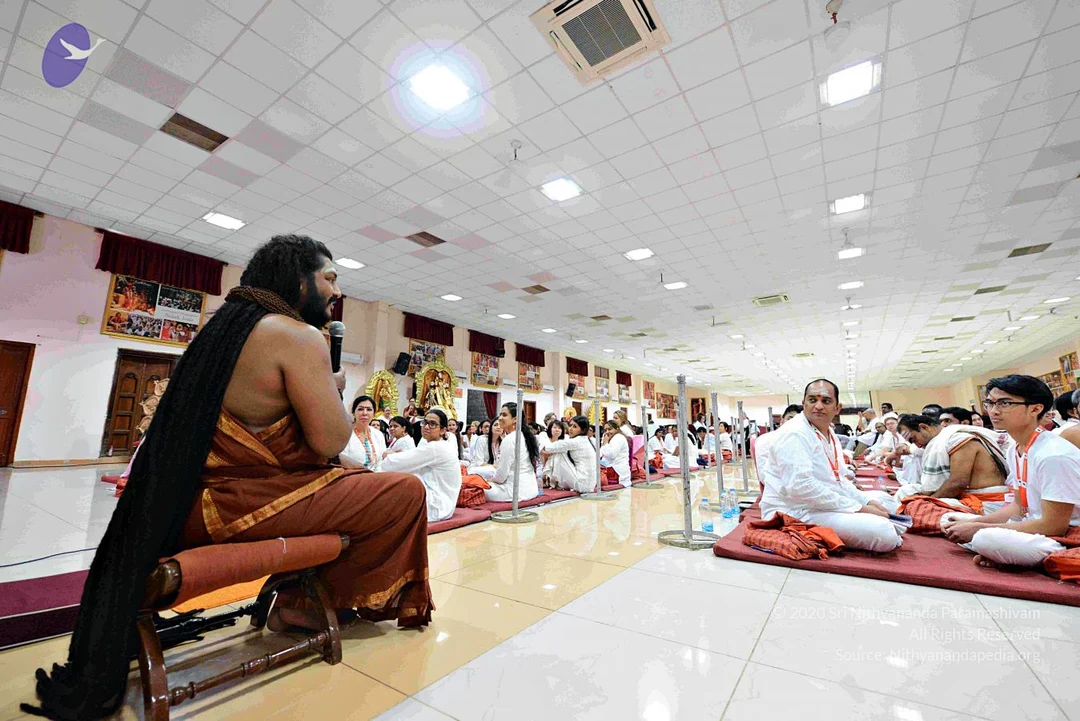
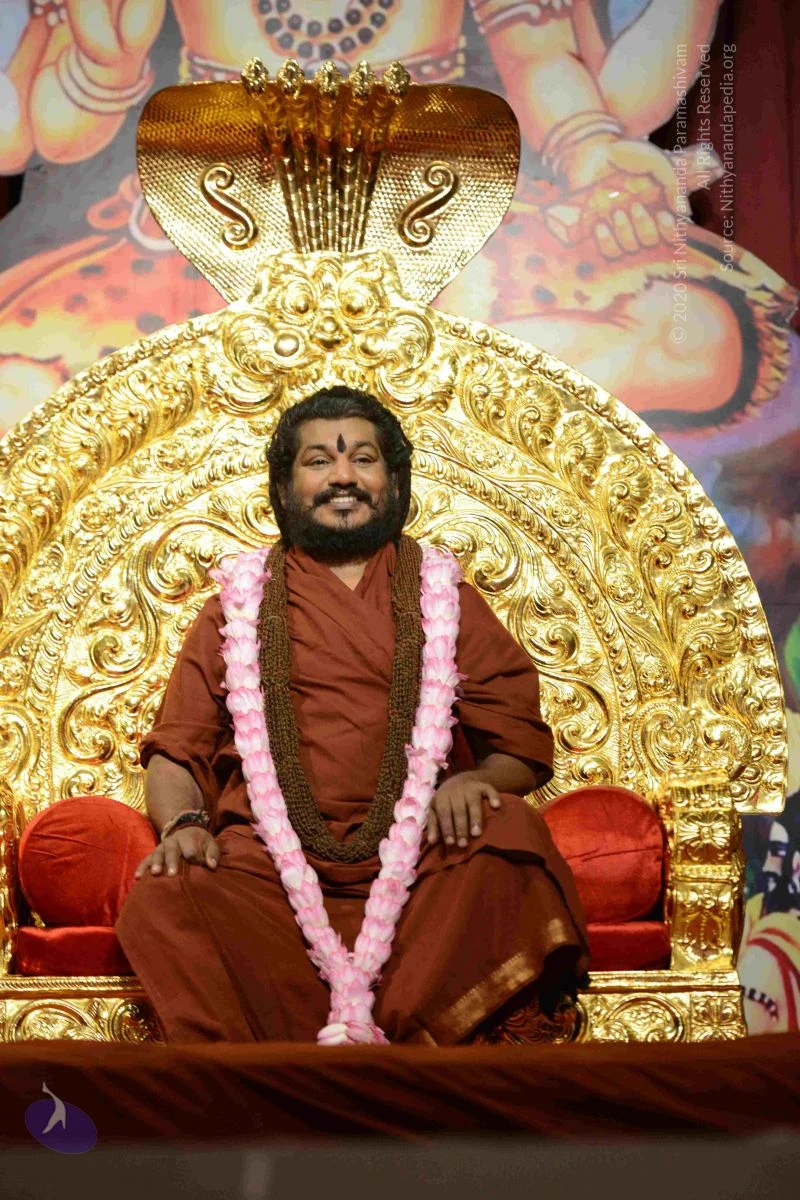
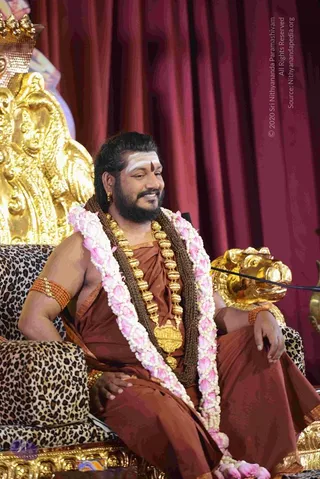
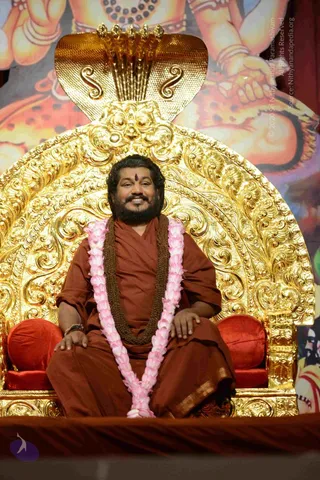
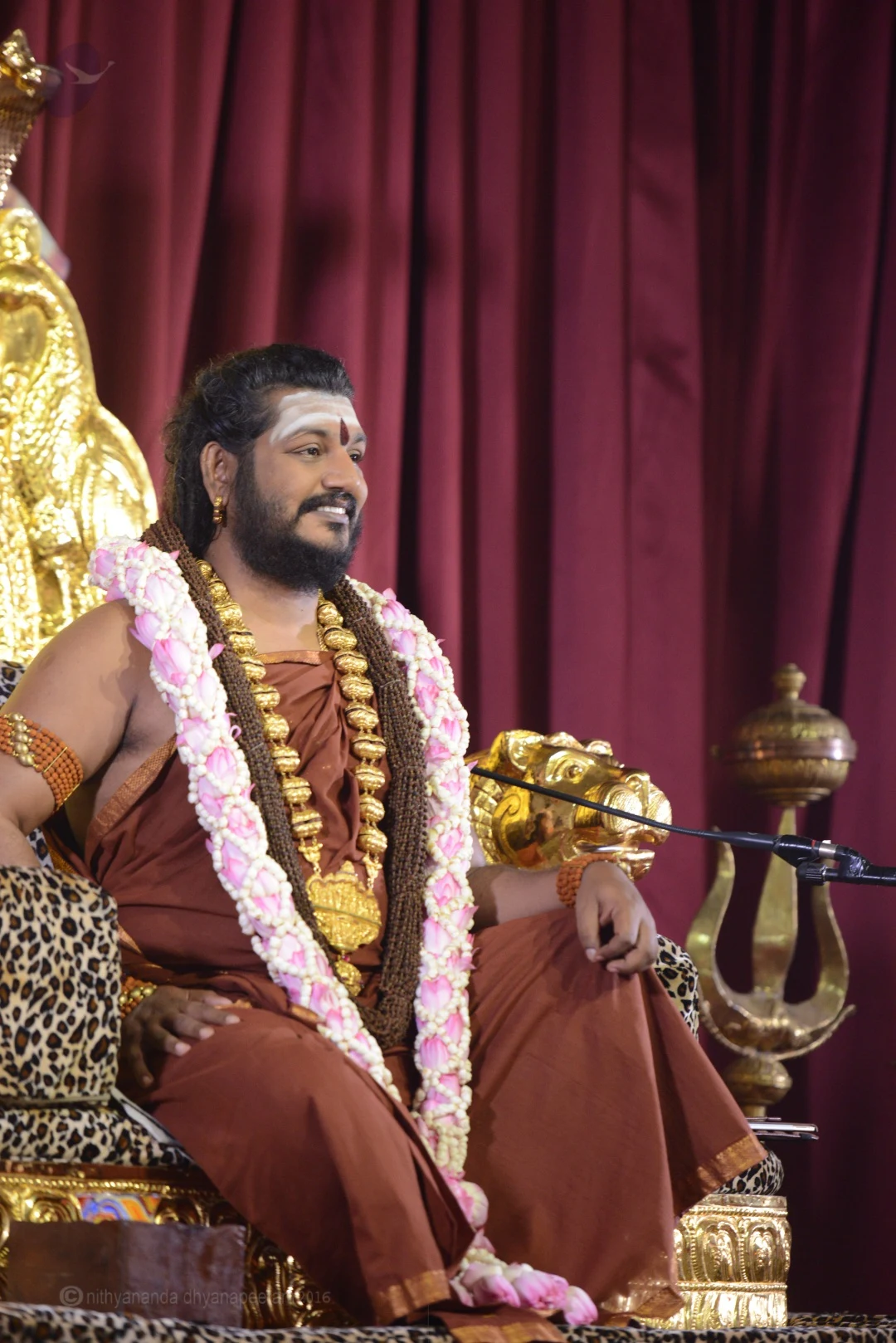
A photograph of a seated bearded man on an ornate gold throne with leopard-print upholstery, in front of deep red curtains. He wears a rust-brown robe with a gold-edged border, layered brown and gold beaded necklaces, a pink-and-white flower garland, rust-orange arm bands, and white and red forehead markings, smiling with eyes closed. A gold lion-head armrest is visible beside him, and a small cup sits on a wooden stand. a person: the seated teacher wears a flower garland, rudraksha-style beaded necklaces and a gold ceremonial necklace, and is seated on a throne as the speaker at this satsang.A long-haired man in an orange-brown saffron wrap with gold edging sits on a low wooden seat at left, speaking into a handheld microphone, his back partly turned to the camera. Before him, a large hall with cream walls and a tiled floor holds rows of seated devotees on maroon mats: women and men in white clothes, some wearing orange-brown shawls and orange lanyards. Gold framed deity murti and framed pictures line the walls, and red curtains hang between the windows. Overhead are ceiling lights and a white ceiling. Metal stanchions divide the seating area.A smiling man with long dark hair and a full beard sits on an ornate gold throne with leopard-print cushions, speaking into a microphone on a stand. He wears a rust-brown robe, a long garland of pink lotus flowers and white blossoms, multi-strand rudraksha malas and a large gold pendant, a rudraksha armlet on his upper arm, and white tripundra with a red bindi on his forehead. A gold lion-headed carving stands to the left against a deep red curtain.

September 27 2016

Original wiki page
Contents

Title

Supreme Truth - Sadashiva Manifests Us in His SEE

Description:

During today’s morning Satsang, His Holiness Paramahamsa Nithyananda explains that through Third Eye Awakening, we experience how we are made out of the same material in which we are seeing. It will give us the exact understanding of how to handle and get out of the Matrix.

Link to Video:

VideoAudio

Transcript:

Nithyānandeśvara samārambhām Nithyānandeśvari madhyamām | Asmadāchārya paryantām vande Guru paramparām ||

I welcome all of you with My love and respects. I welcome everyone sitting with us through Nithyananda TV, Facebook live, YouTube live, two-way video conferencing all over the world.

Today I wanted to expand on this one statement I made in Sadāshivoham, which has become Facebook status for many but still many has questions. I made a statement.

(1:30)

Some of the atheist philosophy say – man made God in His own mould. Some of the western religious and philosophical thought current say – God made man in His own mold. Both are not completely true. Listen to the ultimate Truth, the Supreme Truth. The real, real, really real Truth.

(2:11)

I made this statement in Glimpses of Sadāshivoham.

Listen to this statement.

Sadashiva made everything and all of us in His own SEE.

Listen. Not seeing, not seen, not scene, not sea. No. “SEE.” I wanted to use some word which is immediate action and existentially happening. If I use the word ‘seen' then done past. No. He has not created the world and gone to rest. No. no. Nowhere Hindu God rests or sleeps or takes vacation. No. In Hinduism God never works and neither asks for vacation. The very idea work, vacation all that proves whoever has those ideas God works and God takes off you are making your god from your mold. He neither works nor takes off. There's no working day and holiday in Hindu tradition because in Hindu tradition God is a survival department which cannot rest. He is survival department. He cannot afford to take off.

(4:16)

Listen. I can't use the word SEEN. I can't use the word SEEING. Seeing reduces the whole thing just to an action. No.

Why I use the word SEE. Listen.

SEE is a happening. Sadashiva is Kārana Kārya Mula. Listen. Kārana, the Cause. KĀRYA, the Effect. MULA, the Source.

If a pot is made, clay, potter and the force potter is using on the clay and the knowledge potter has which he applies on that clay – all that put together becomes a pot. Understand. Sadashiva is all this for all of us. Listen carefully. Sadashiva is all this for all of us. He is the material out of which we are made. He is the material out of which we are made. He is the potter who is making us. He is the force which is put on us, for us to stay as we are, and He is the knowledge which is applying the force on us, to stay as we are.

Listen. Listen. Immediately we all have a question. If He is everything, then why there is so much of sadness, suffering, and wrong things. Stupid. Ask the question in the other way. If He is everything, how can there be all this? It's all-false. Put the question in the other way.

Put your anchor on the Truth not on delusion. If He is everything, then why am I deluded as if all this exists? I am not insensitive. Don’t try to bring all that matrix theory, “Oh He is so insensitive about poverty. He is so insensitive about poor people.” Understand all your so-called philanthropist charitable fellows are running around only about either Noble Prize or sainthood. No charity happens through them. No charity happens through them. Listen. I am not insensitive to poverty. I am not disrespectful to people suffering. Try to understand what I am explaining. Then you will understand the Reality and you will be out of the matrix. You will be out of the matrix.

(8:59)

One of the worst problem with which you all suffer, one of the worst problem with which you all suffer, listen carefully, one of the worst problem with which you all suffer is the victimhood you carry you project it on every one and you believe strongly it is an Existential Reality. When you try to show yourself as a victim you feel very good. “aaaah,” “aaaah.” That is what I call powerless pornography. Cheapest pornography. Cheapest pornography a human being can enjoy is the taste of showing themselves as victim. Enjoying the victim hood. That's the cheapest pornography any human being can enjoy, because you enjoy that you do not want to deny the existence of it. You want to project that on everyone and whole world there is so much suffering, You mean to say there is no suffering? I MEAN THERE IS NO SUFFERING. After going through so much of attack from all corners of world, I mean there is no suffering.

(10:47)

Understand. Ask the question in right way. If SADASHIVA made all of us in His own SEE, don’t ask why there is so much suffering, then how can there be delusion of this suffering. Ask the right question. Don't ask why there is so much of suffering, the moment you say, why there is so much suffering, you put the anchor on the delusion and you are trying to question the Turiyatita. Put the anchor on Turiyatita and ask – then why am I feeling there is so much of suffering? Because you enjoy cheap victimhood pornography. Most of the time you want to prove you are trying your best, you don't want to make it happen. Understand. Making it happen is different, collecting all the arguments to prove I am really trying my best to make it happen. If you establish you are really trying your best to make it happen, you may get medal, but not result. You may get medal, but not result.

(12:25)

Understand. Most of the time because you enjoy victimhood you project that on others. You project that on world, want to strongly believe the existence of suffering. When you want to believe something nobody can stop you. Nobody can stop you. No one can stop you when you want to believe something.

(13:16)

Listen to this truth again. Sadashiva made all of us in His own SEE. S.E.E. I don’t want to conclude it as ‘seen’, or seeing. SEE because one more understanding I want to share with you. Only if some matter is connected to you, you feel that as ‘me.’ For example; as long as your hands are connected to you, you feel that as you. You can handle it. You can do what do you want with it. You can stretch, push, pull, up, down, all. But, if your Third Eye is awakened, you enter into next frequency, everything you see you know is the material out of which you are made is the same material out of which whatever you are seeing is also made, so you just know how to deal with the Matrix. You just know the Matter becomes your own extension. Anything you see, becomes your own extension. Looks tooo big. I know for most of you, even understanding is so difficult. How is it going to happen to me, when is it going to happen to me?

(15:05)

In the dream state, if I tell you, when you wake up there will be a huge Nithyananda Sabha lot of deities will be there with all beautiful jeweled, with all the vehicles, decorations, screens, so many things and if you start calculating, even to stitch one curtain it takes 10 year for me. I have to learn tailoring, learn weaving and then weave and stitch it and hang it and when am I going to build the whole Nithyananda Sabha? How foolish your logic and calculation is! If you wake up from the dream, in which most of you are, you will see the Nithyananda Sabha. If you wake up from this dream and open your Third Eye, you will just see. All the things you are seeing is extension of you.

Understand. Delusion, delusion needs only awakening. It needs smart decision not hard work. It needs smart decision not hard work. When I say, Sadashiva made all of us in His own SEE. Listen. When I say Sadashiva made all of us in His own SEE, I mean, I mean from this Truth – question what do you think should not be there, or what do you think creates doubt about this statement. If you are from that side and question this statement it will never become your reality. Be on this side and question that side.

Blessed are those who have a trust on Guru to push themselves to this side and question that side. You can go on be on that side and question this side. I am not the loser. I’ll continue. I’ll continue. I’ll continue.

(18:11)

I read a one liner. On the way I met few rowdies standing and teasing, making fun and criticizing throwing stones. I continued with my journey, after going a long distance when I turned back I saw they standing in the same place and teasing somebody else.

That is all is life. That is all is life. I will go on, go on, go on. If you are fortunate enough jump this side and question that side. You will realize it, you will wake up. All this powers I am manifesting through this body or the bodies of My kids, is nothing but the evidence and witness I am providing to establish what I am claiming as the Supreme Truth. It is just an evidence to declare what I am claiming as Supreme Truth. Understand. I will give you further clarifications and explanations in further satsangs.

(19:55)

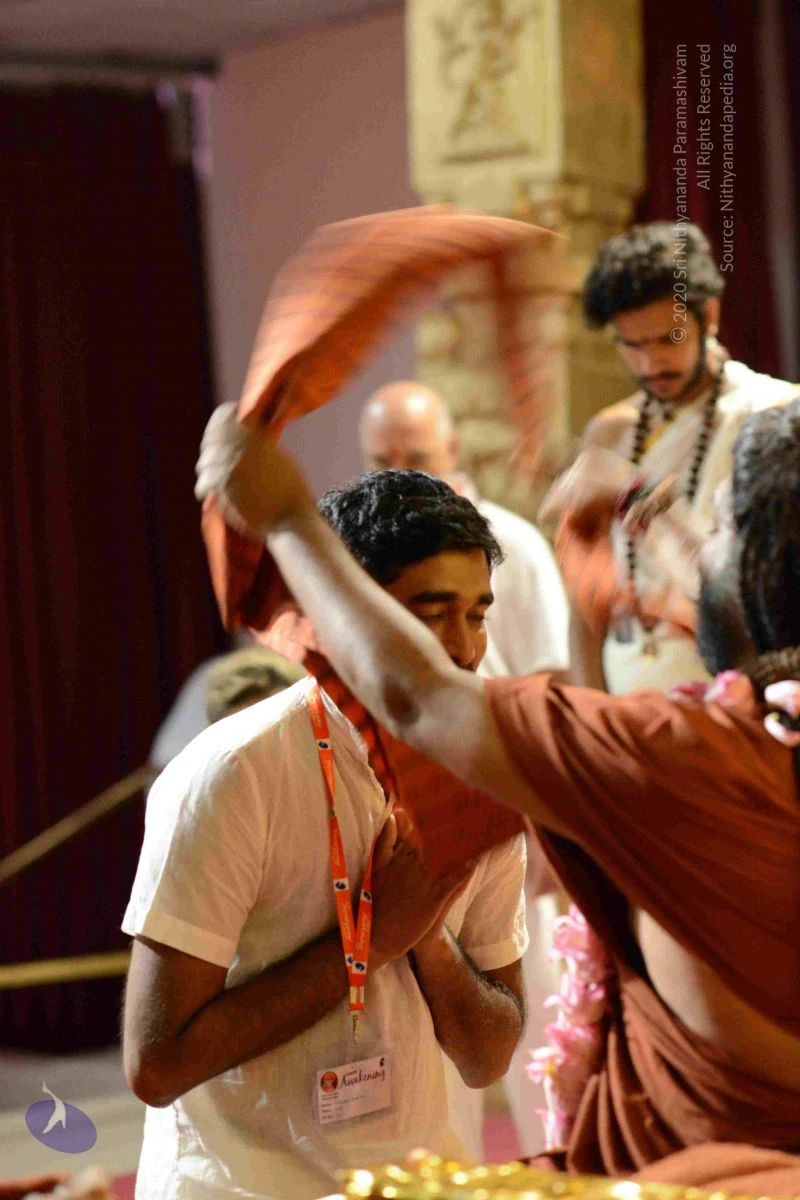
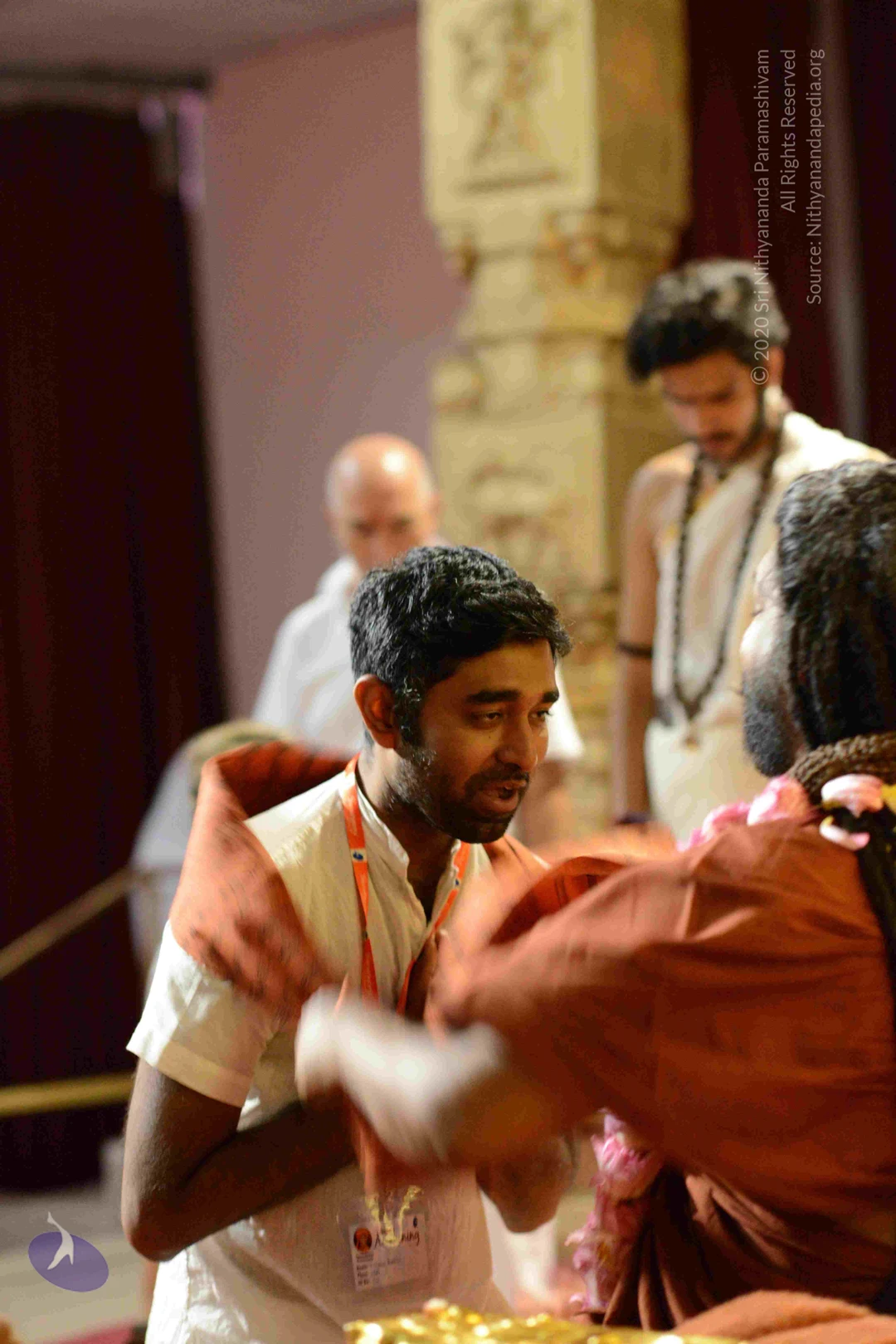
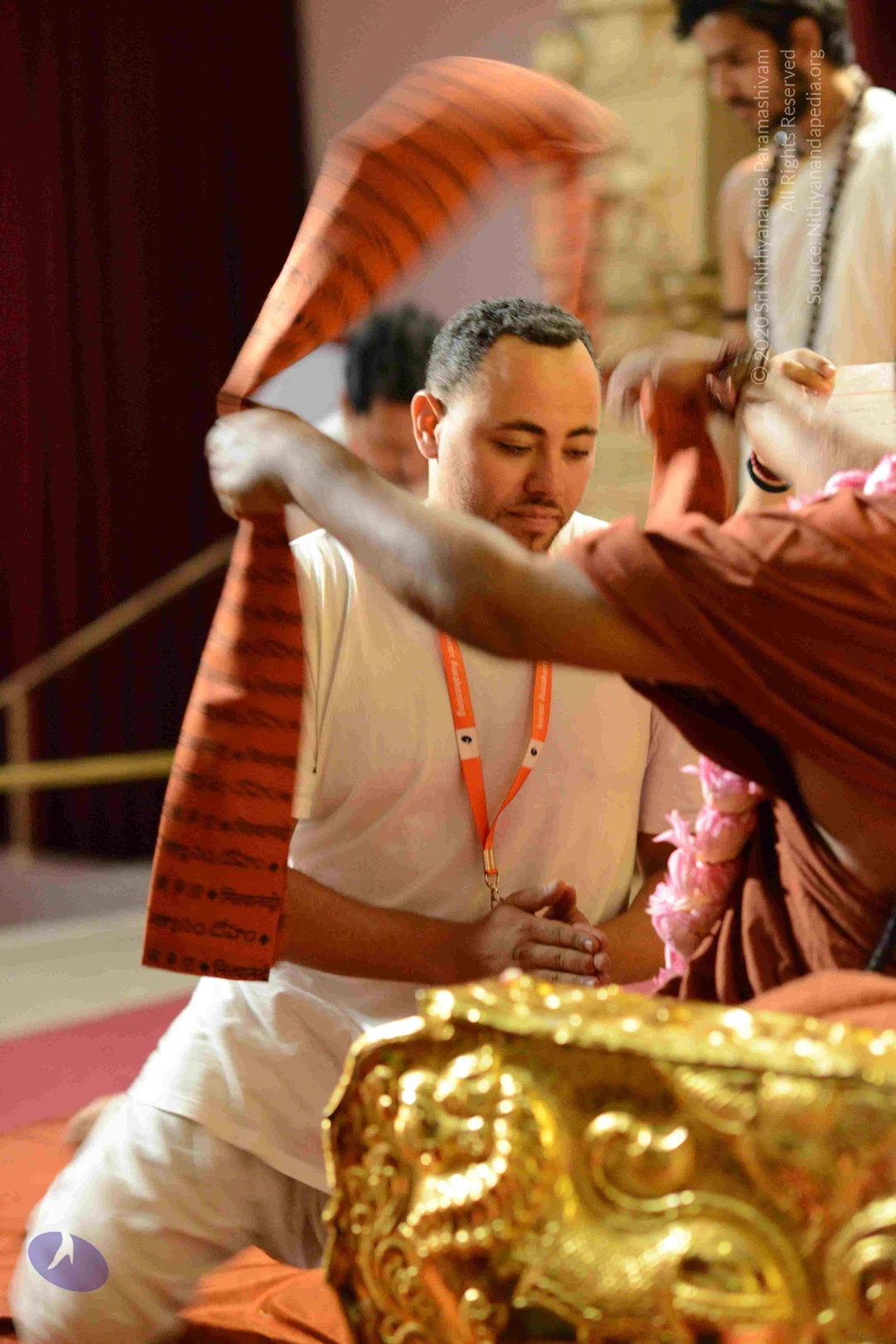
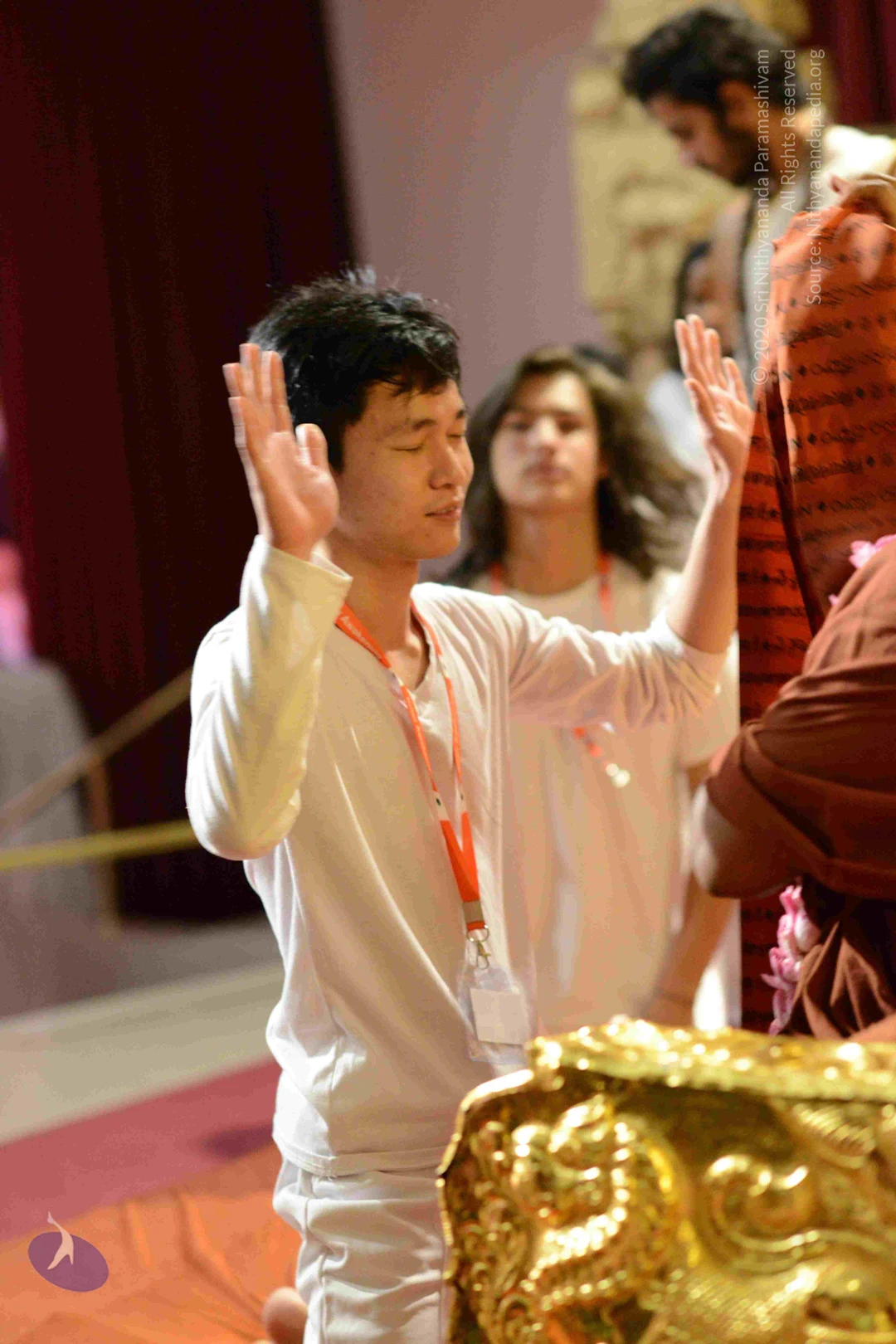
Today again we have a long day, Samskara Dahana kriya, a very powerful process. And there will be energy darshan, rebooting, control, delete. Whatever you can't delete I will do it finally, so it's called control, delete energy darshan. Rebooting energy darshan, making yourself completely available to rewrite your life as you want. So we have a long day today. Lets get ready. Remember again. I wanted to insist and repeat.

(21:04)

Sadashiva made all of us in His own SEE. Not mold. Not seeing. Not seen. Not see. Not scene No. Sadashiva made all of us in His own see. Even the ‘made’ may not be right completely. Sadashiva is projecting all of us in His own SEE. Either you can use the word projecting or I can use the word, manifesting or I can use the word making. Manifesting may be the best word.

Sadashiva is manifesting all of us in His own see. Let this be your Facebook status for today and let this be the subject for Vaakyartha Sadas Let this be contemplated, analyzed, intranalysed, again and again. Please continue this Truth as a material for Vaakyartha Sadas today.

With this, I bless you all. Let you all radiate with Integrity, Authenticity, Responsibility, Enriching, Causing Living Shuddhadvaita Saivam the eternal Bliss, Nithyananda. Thank you. Be Blissful.

Title

Get Out of the Matrix || Part 1 || Inner Awakening || 27 September 2016

Link to Video:

Title

Get Out of the Matrix || Part 2 || Inner Awakening || 27 September 2016

Link to Video:

Photos From The Day:

Nithya Satsang
IA Session
Tags:

Paramahamsa Nithyananda, Nithyananda, Sadashiva, Sadashiva Manifests us in His SEE, victimhood, God is survival department, delusion needs awakening, smart decision not hard work, Glimpses of Sadāshivoham, Sadashiva is Kārana, Kārya Mula, there is no suffering, wake up from this dream, Third Eye, Samskara Dahana Kriya, Put the anchor on Truth not on delusion, Making it happen v/s trying your best, Open Yoru Third Eye, Wale up from Dream, All things is extension of you

Photos Of The Day:

Nithya-Satsang
IA-Session

IA-Darshan

Photos from this day

View all 211 photos

Nithya Satsang

1 photoSource gallery
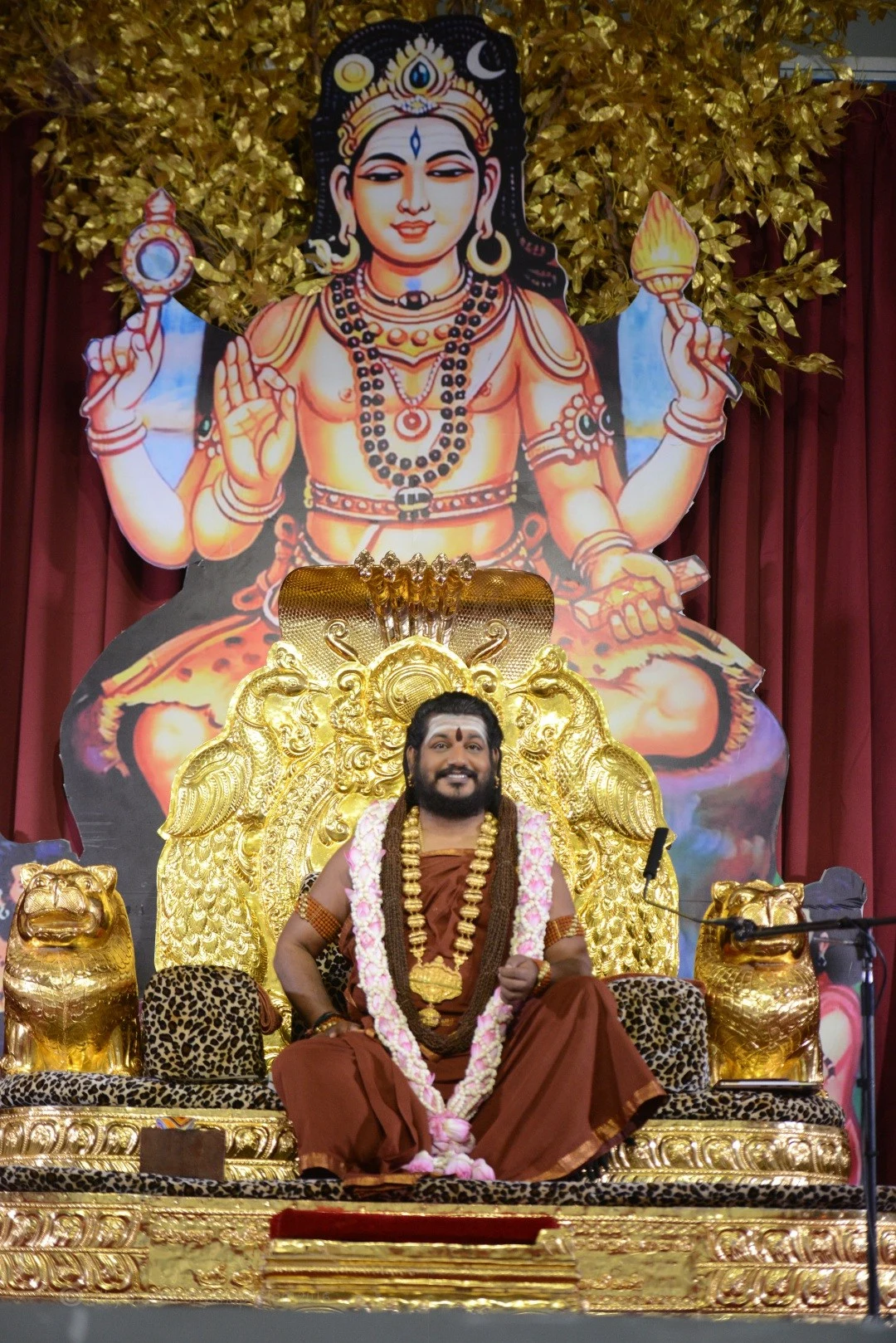
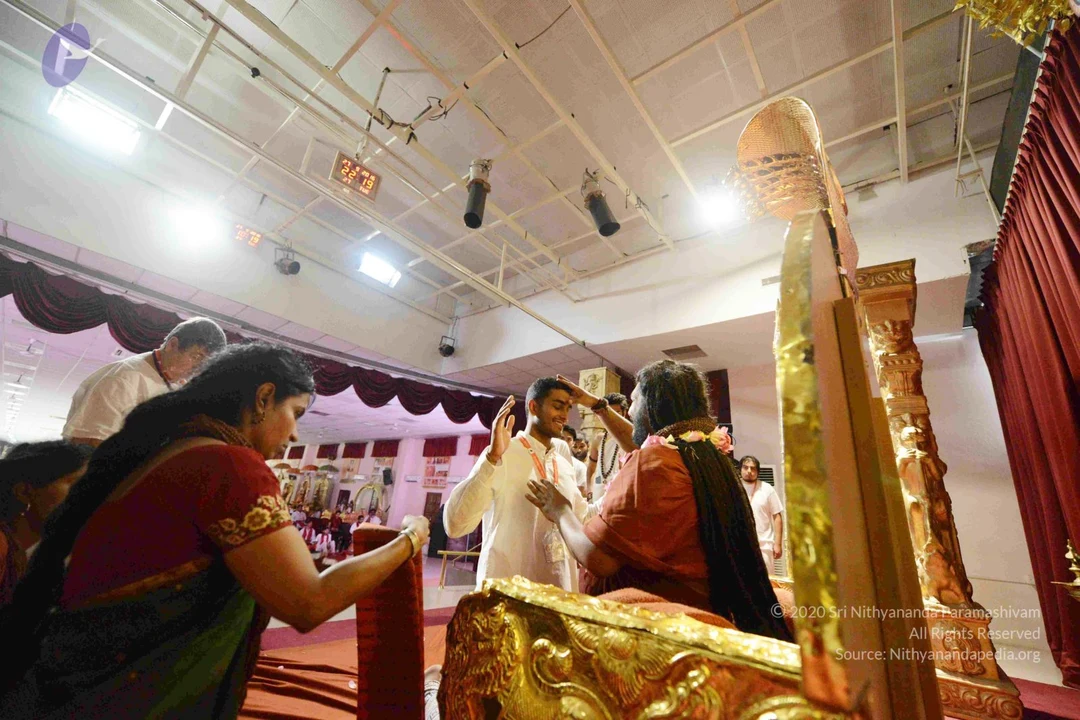
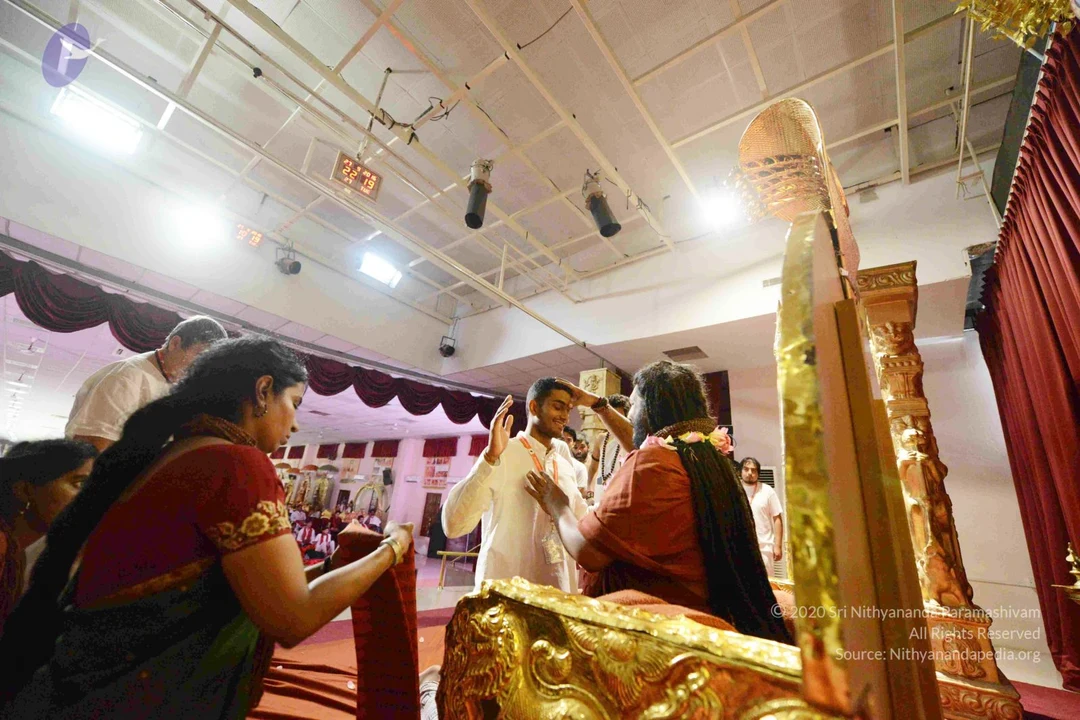
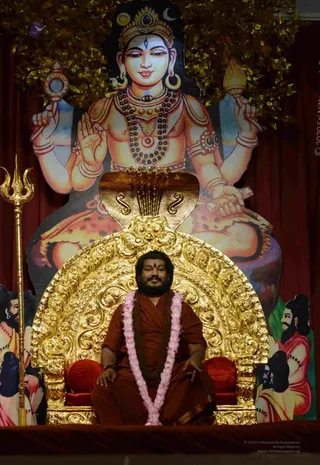
A seated man sits on an ornate gold throne with carved peacock-style sides and gold lion figures flanking him, draped in leopard-print cushions. He wears a rust-red saffron-toned robe, a thick gold necklace, a long rudraksha mala, a pink-and-white flower garland, and a red tilak on his forehead, with a microphone stand nearby. Behind him stands a large painted deity murti with multiple arms holding objects, a crescent moon and jewelled crown, against a gold foliage backdrop and deep red curtains. The seated figure appears to be the.

IA Session

7 photosSource gallery
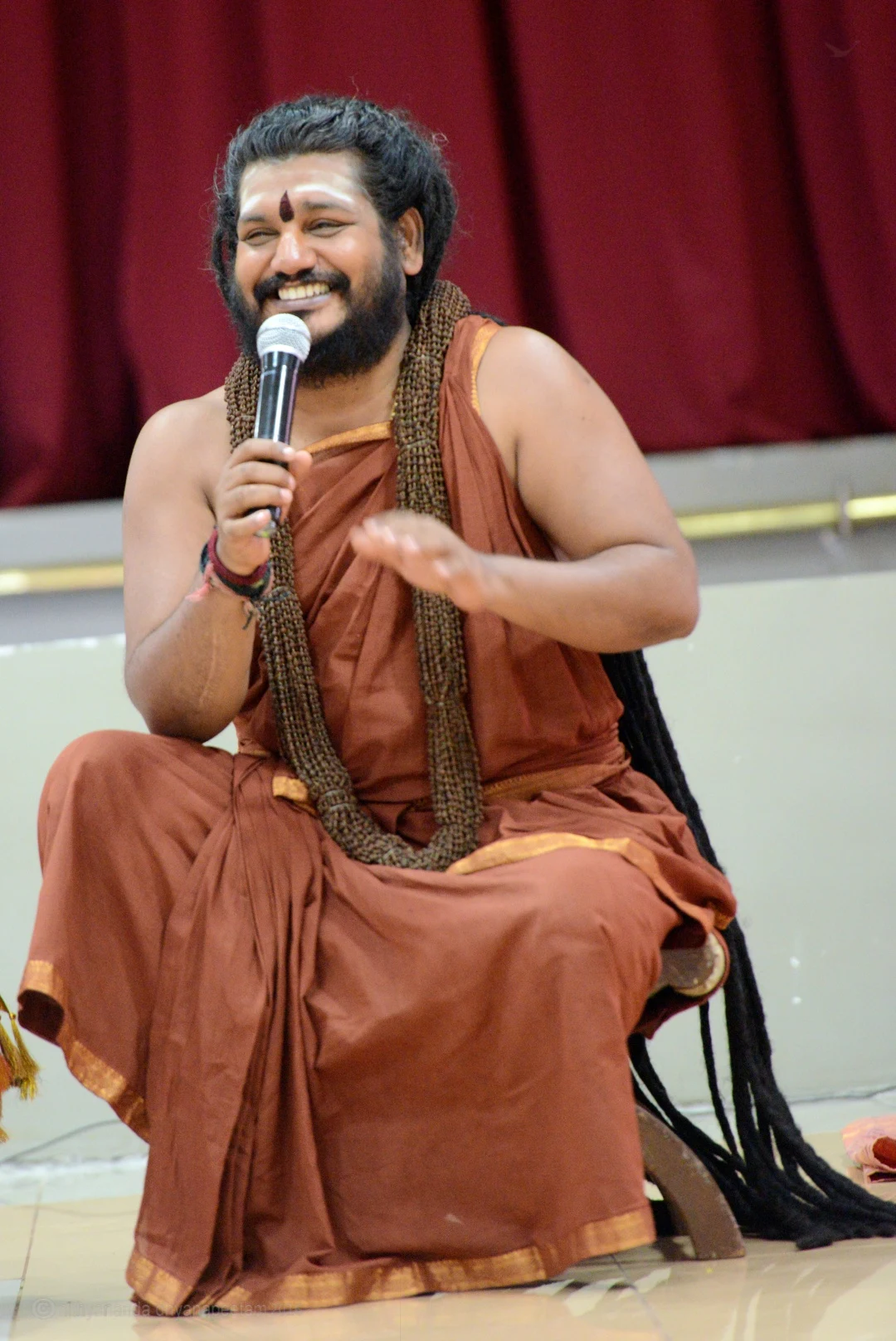
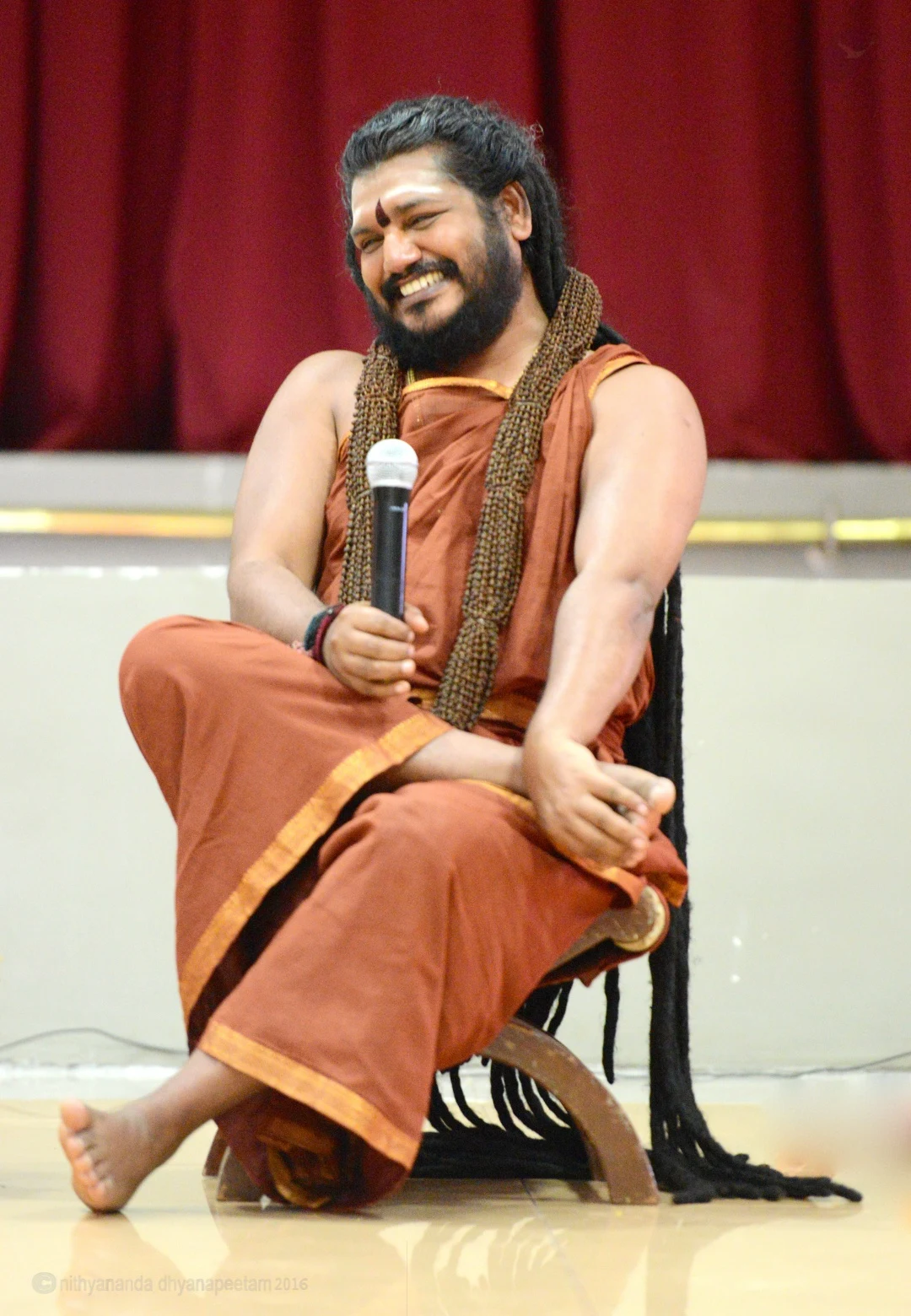
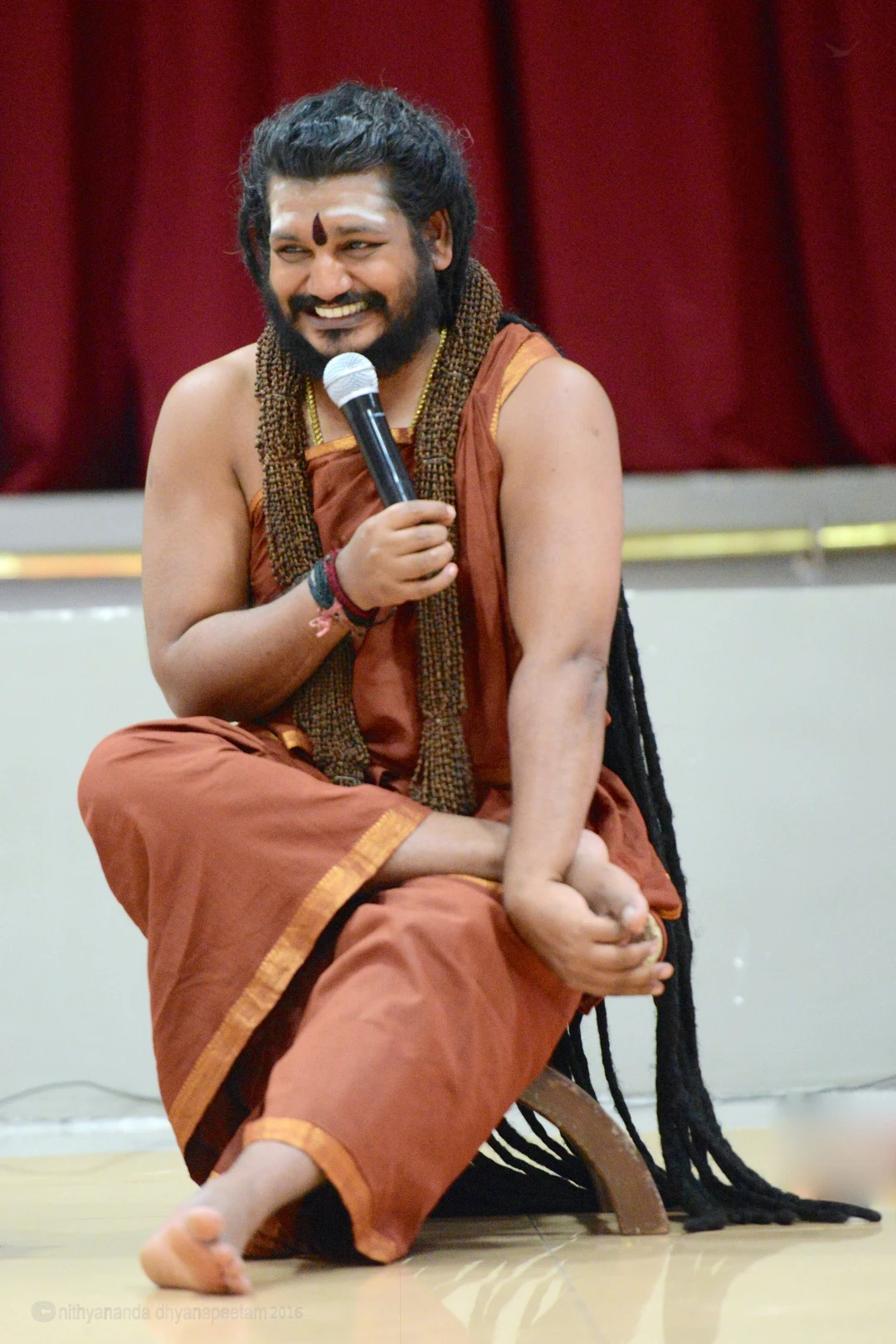
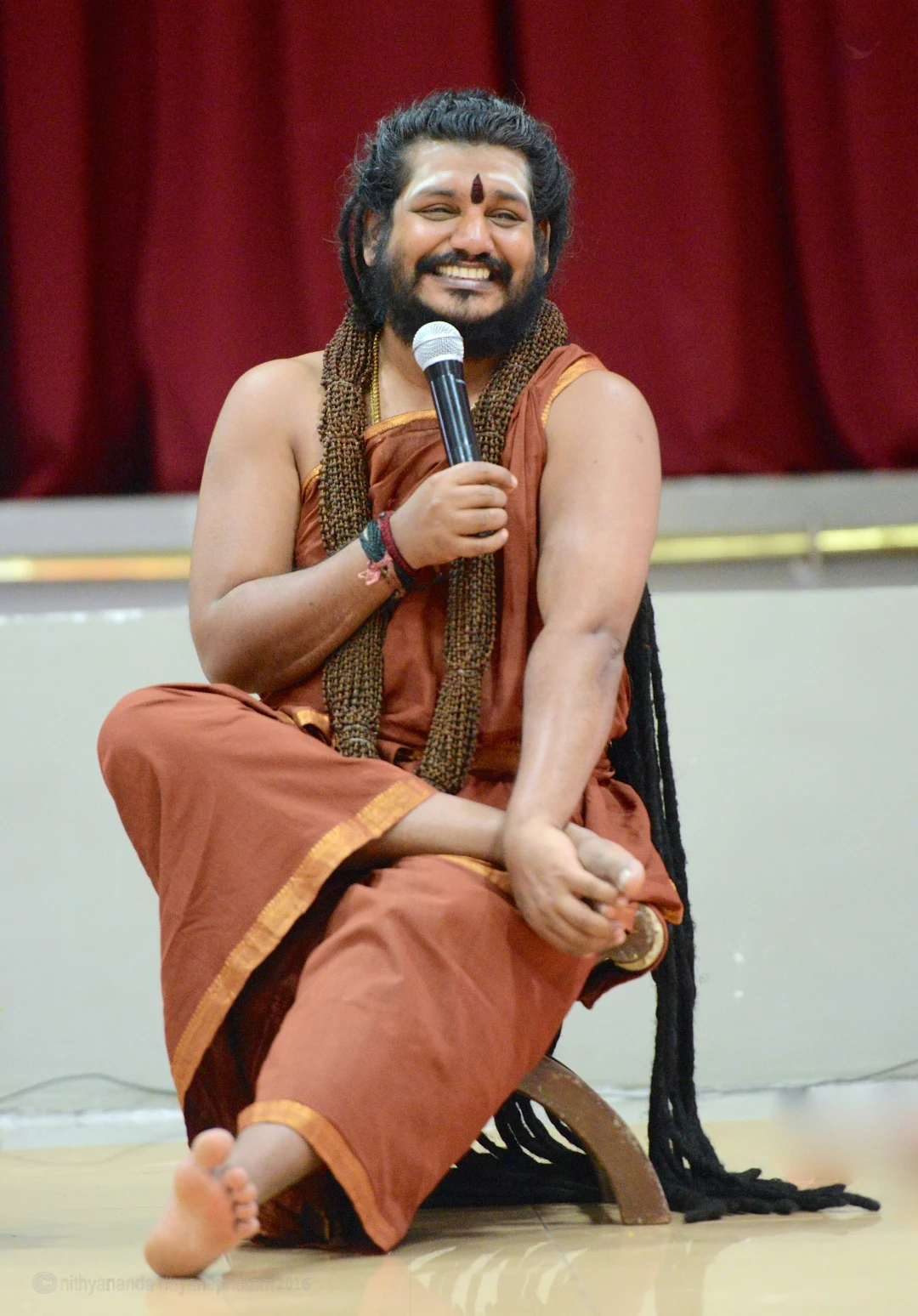
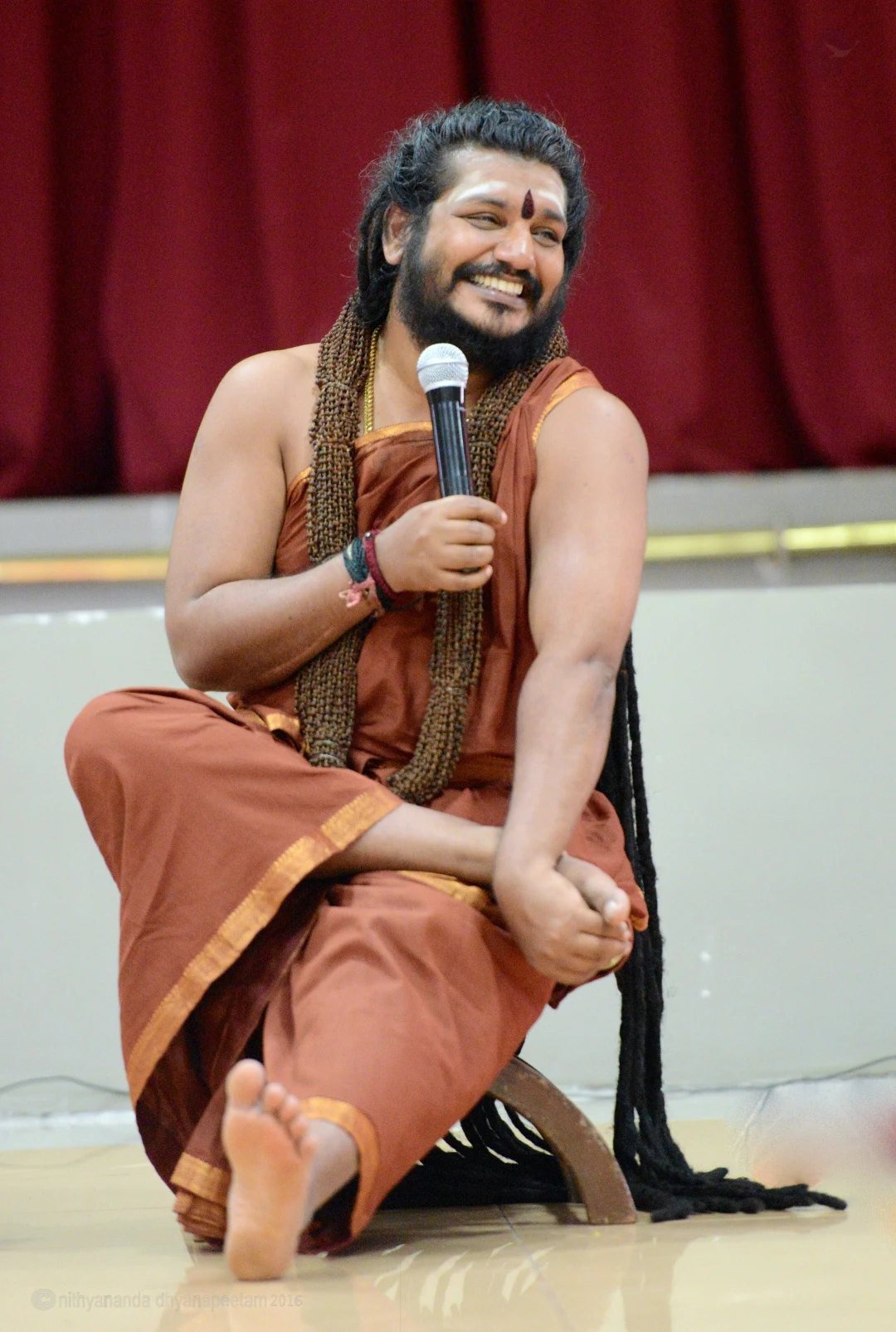
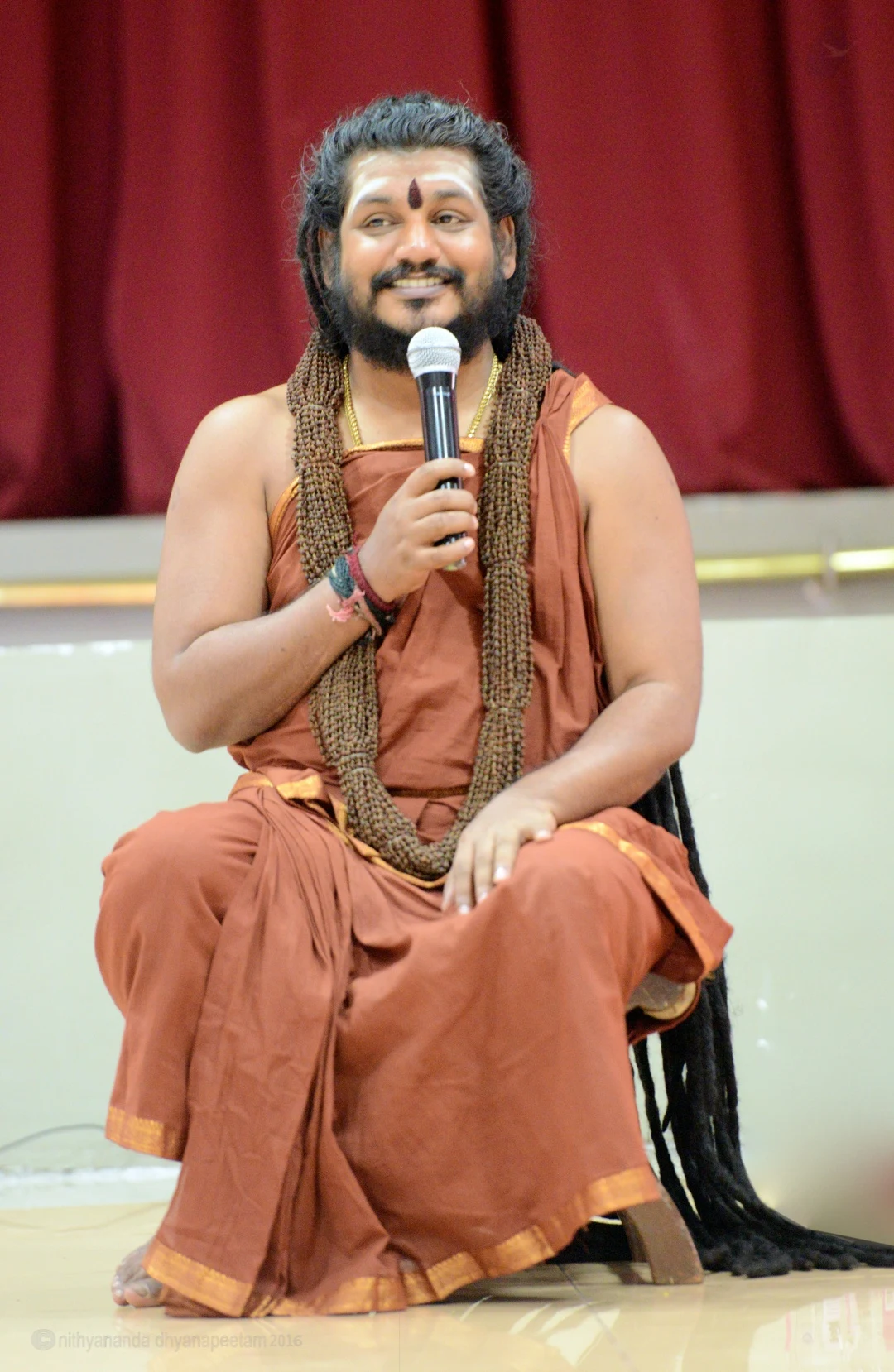
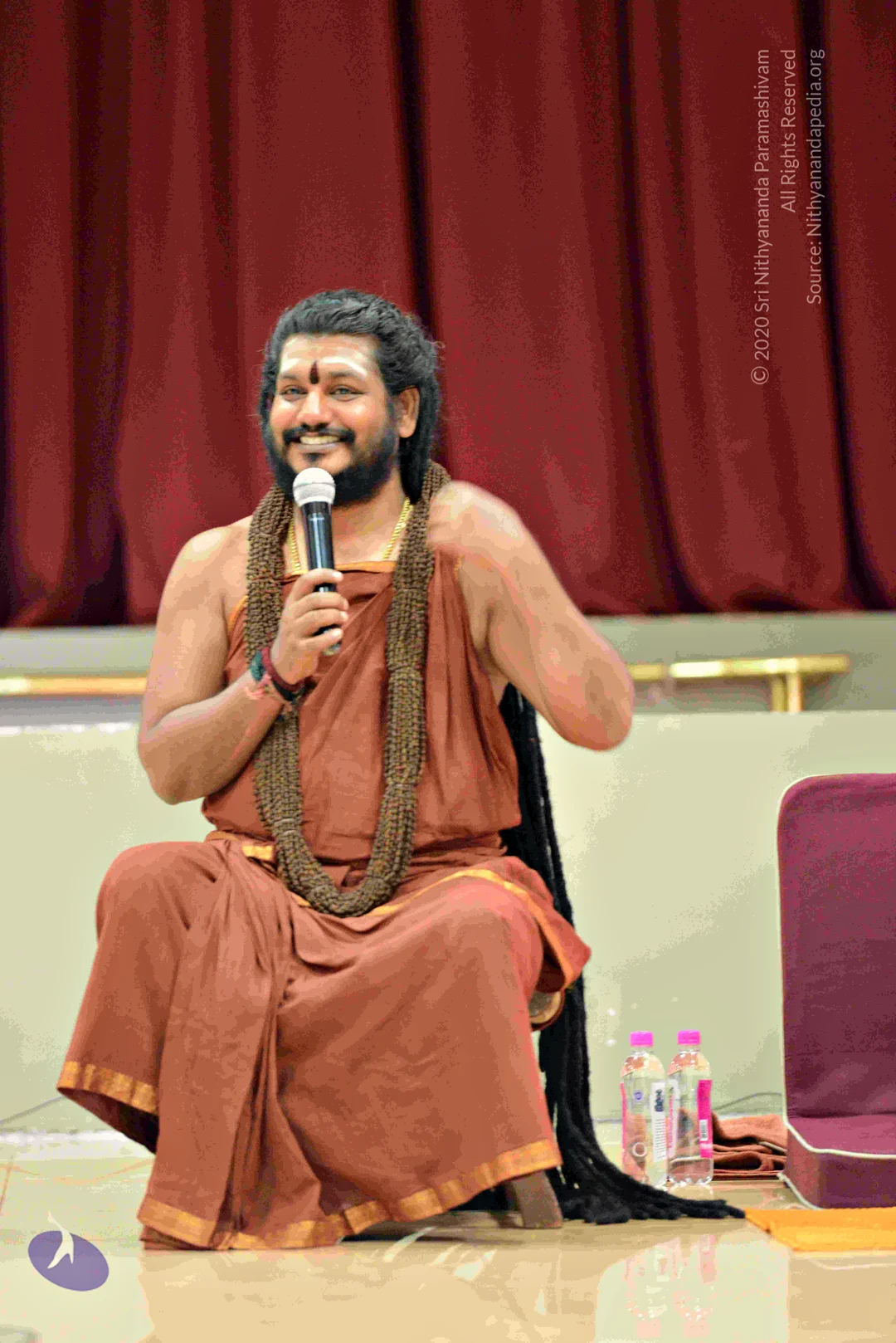
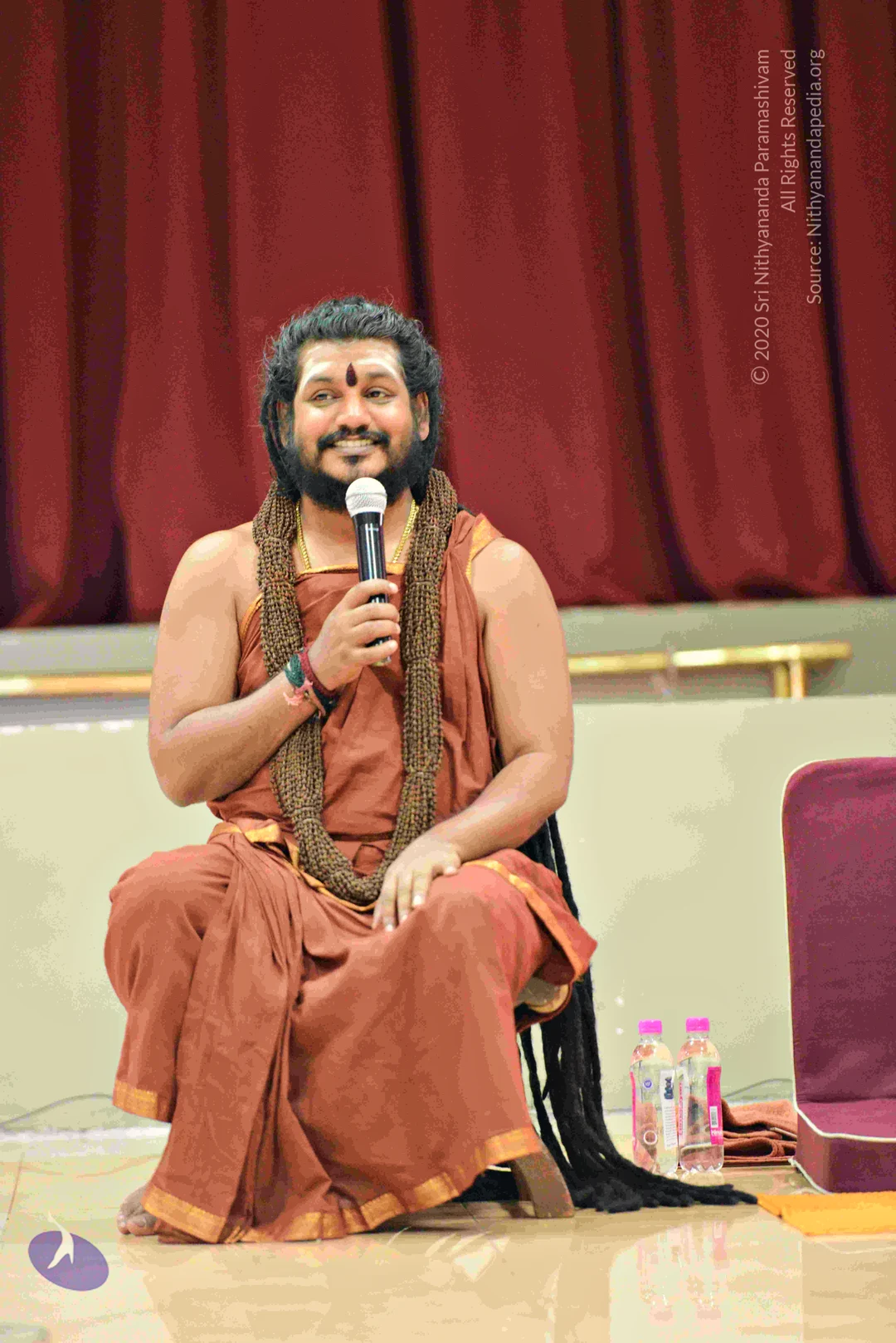
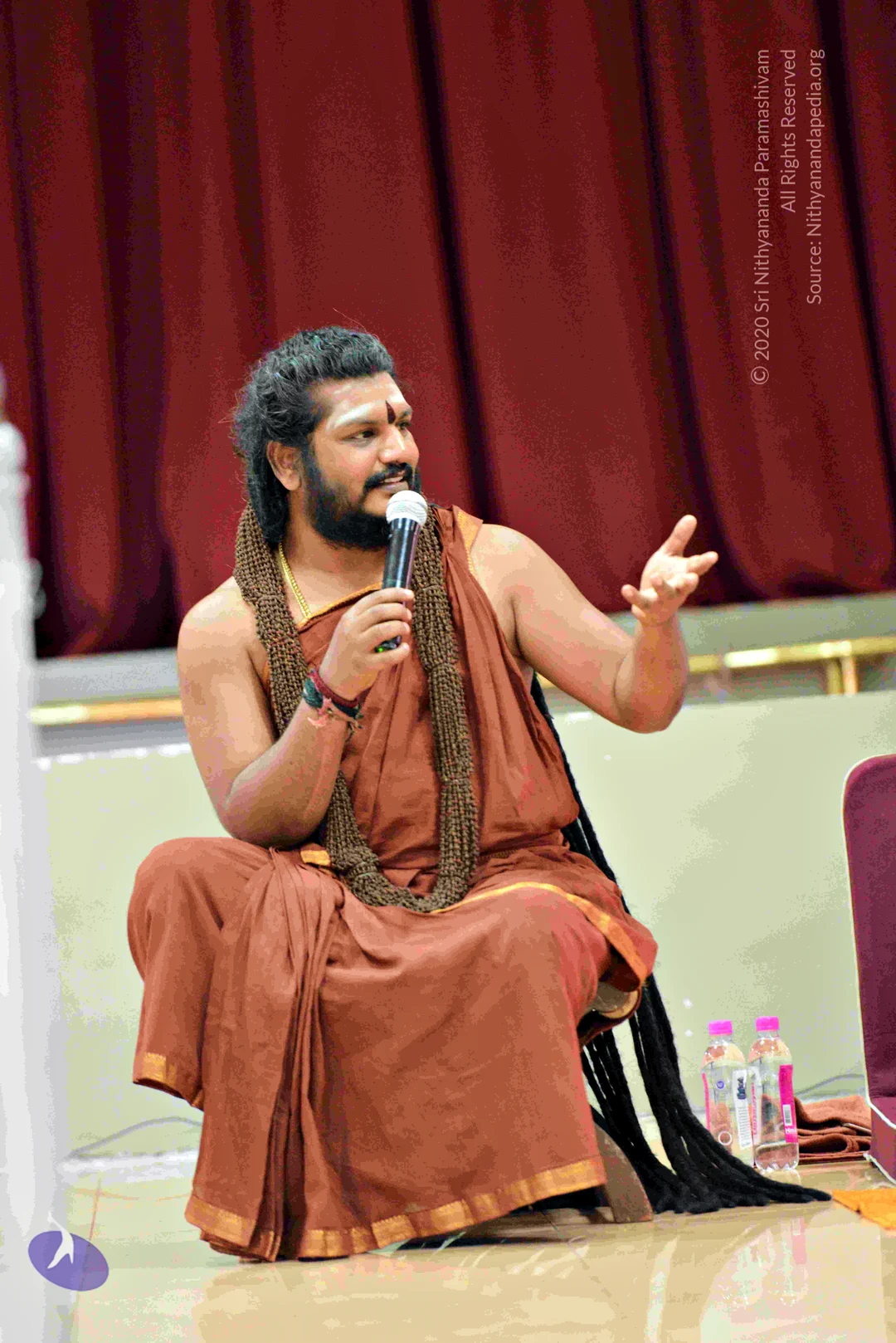
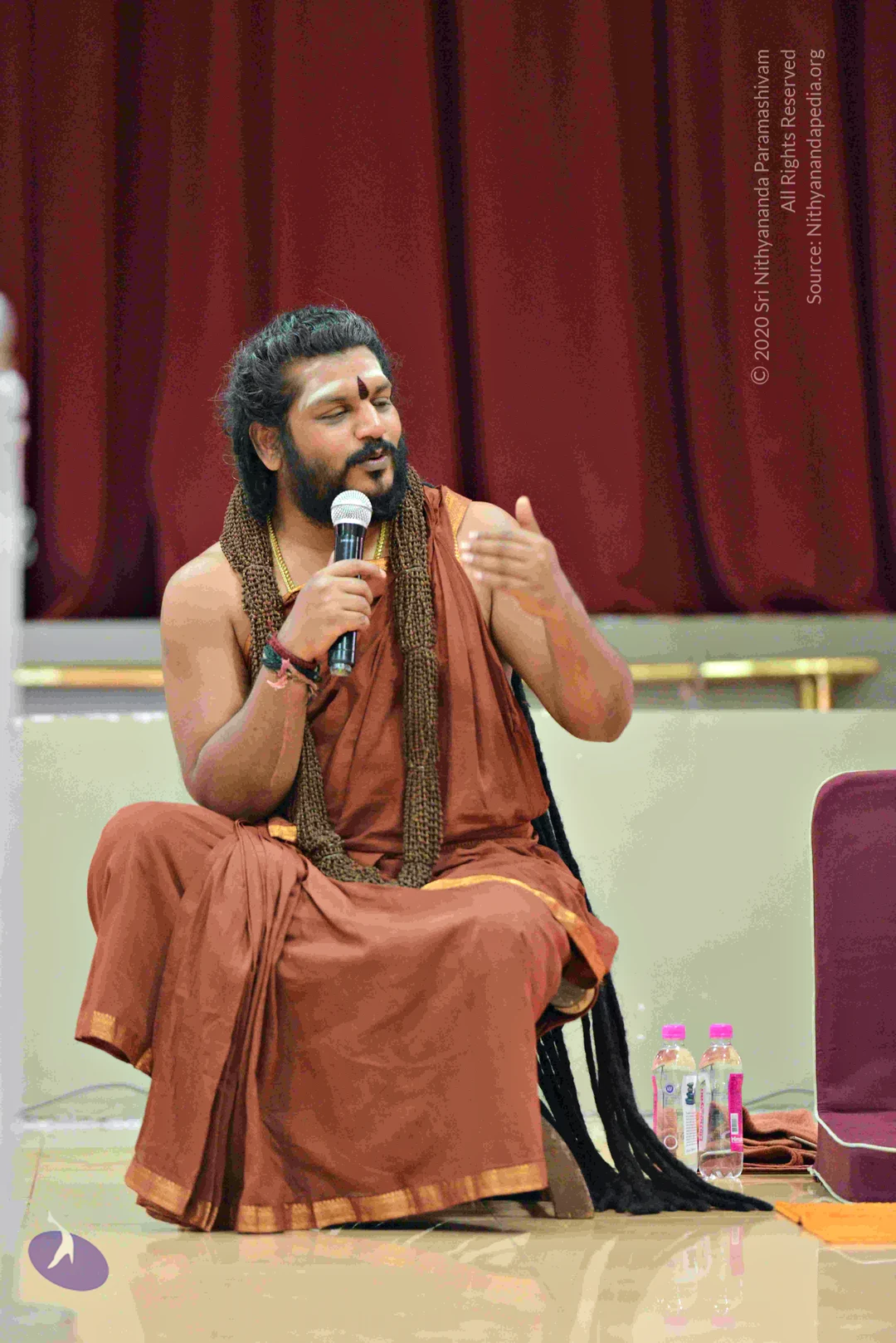
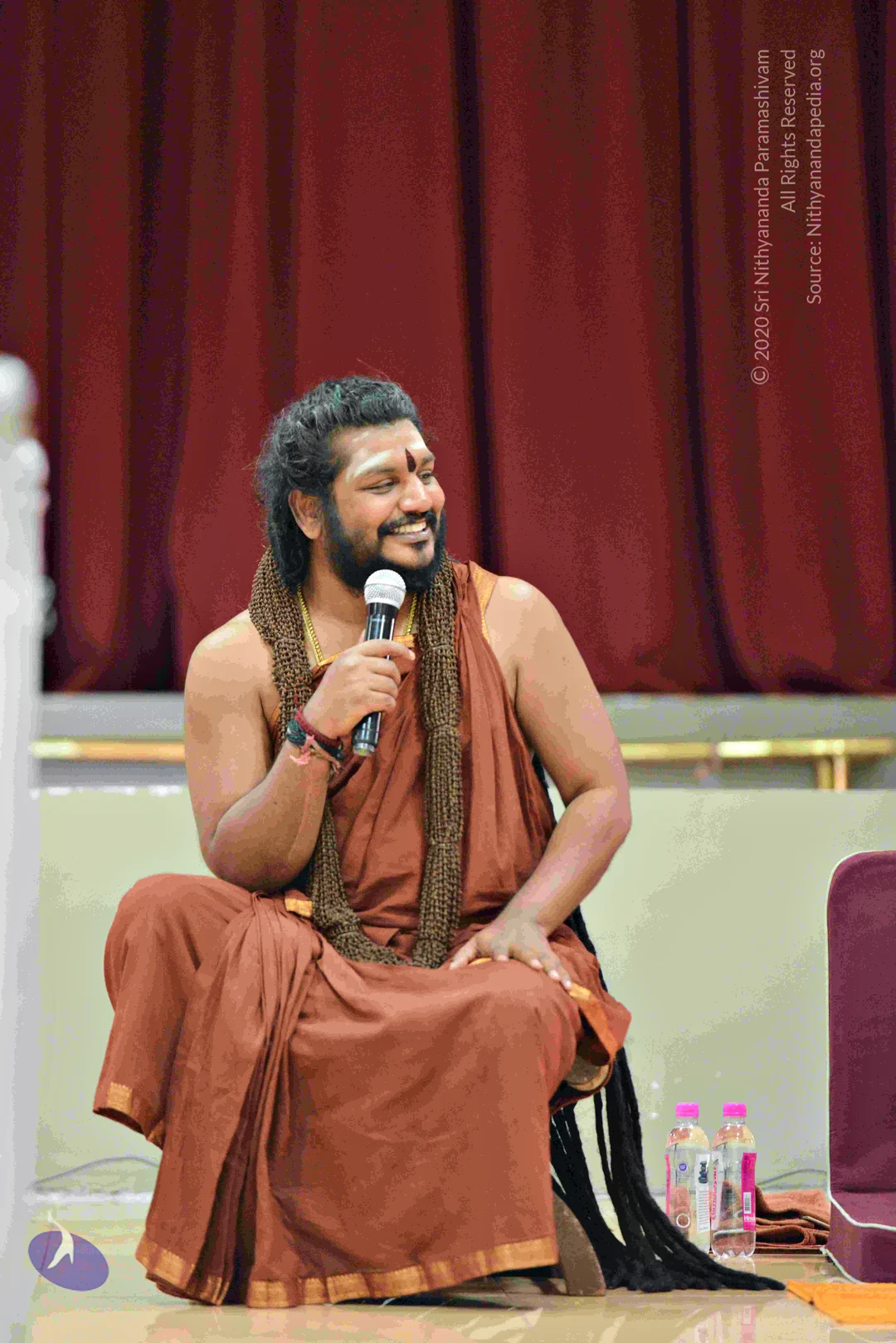
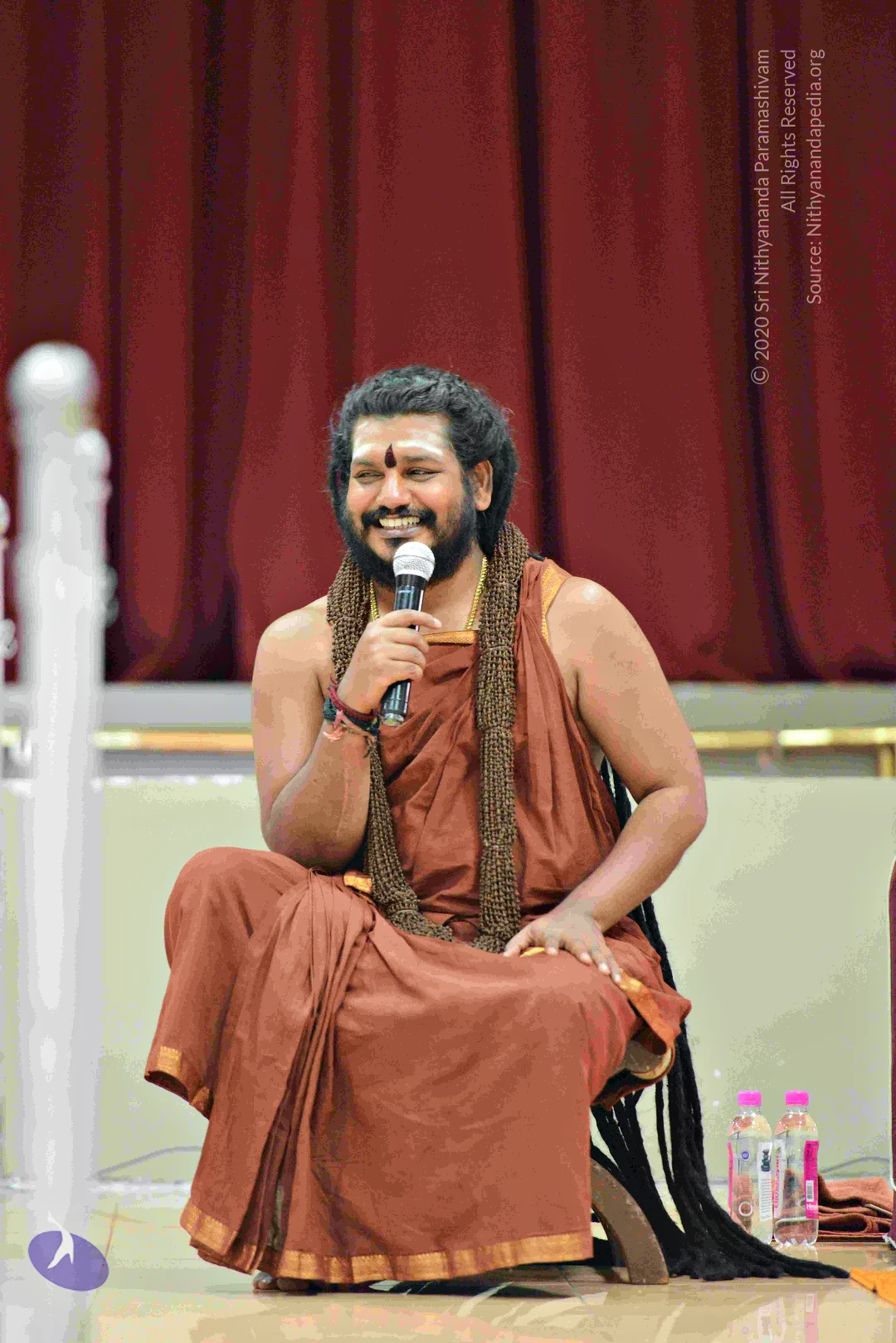
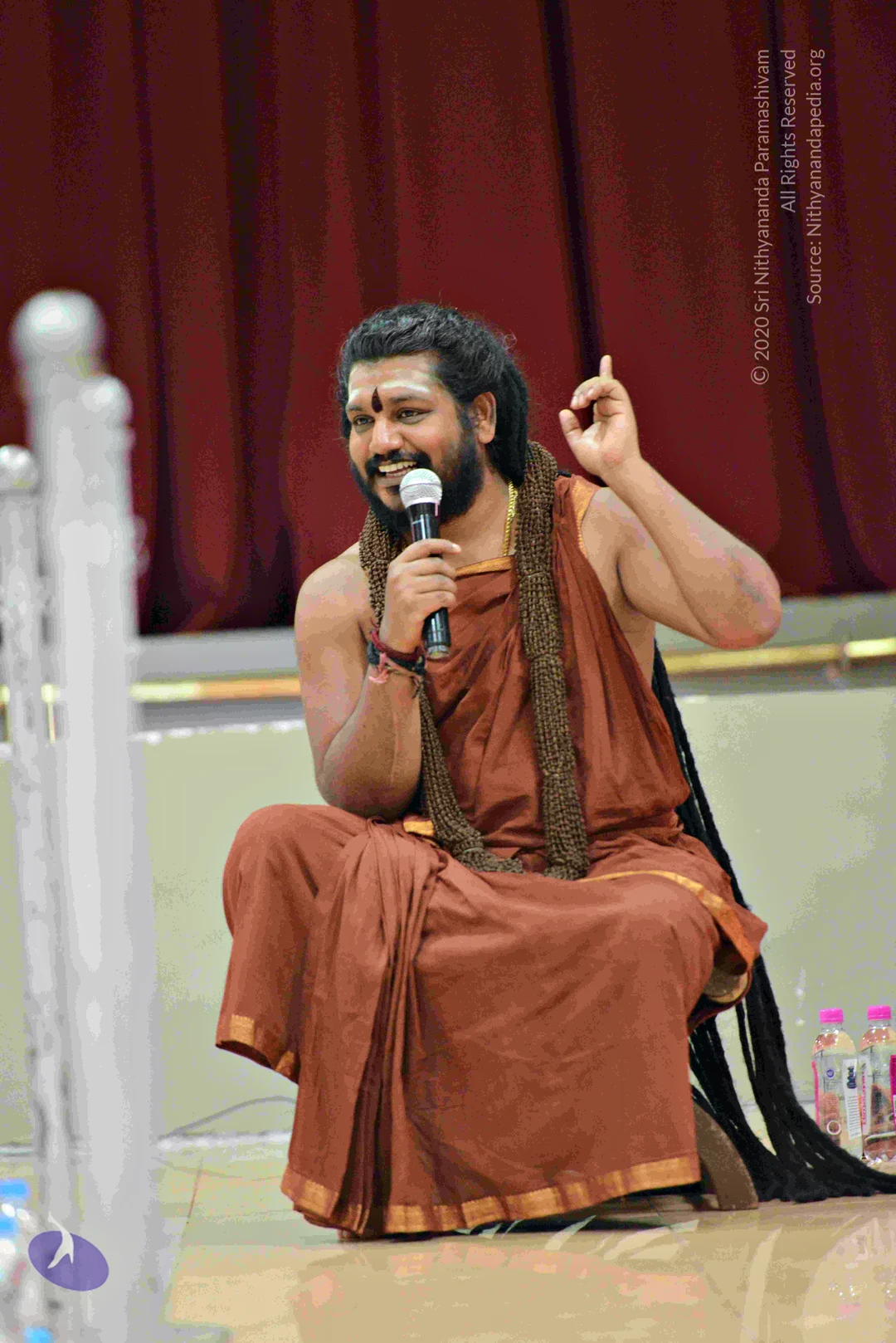
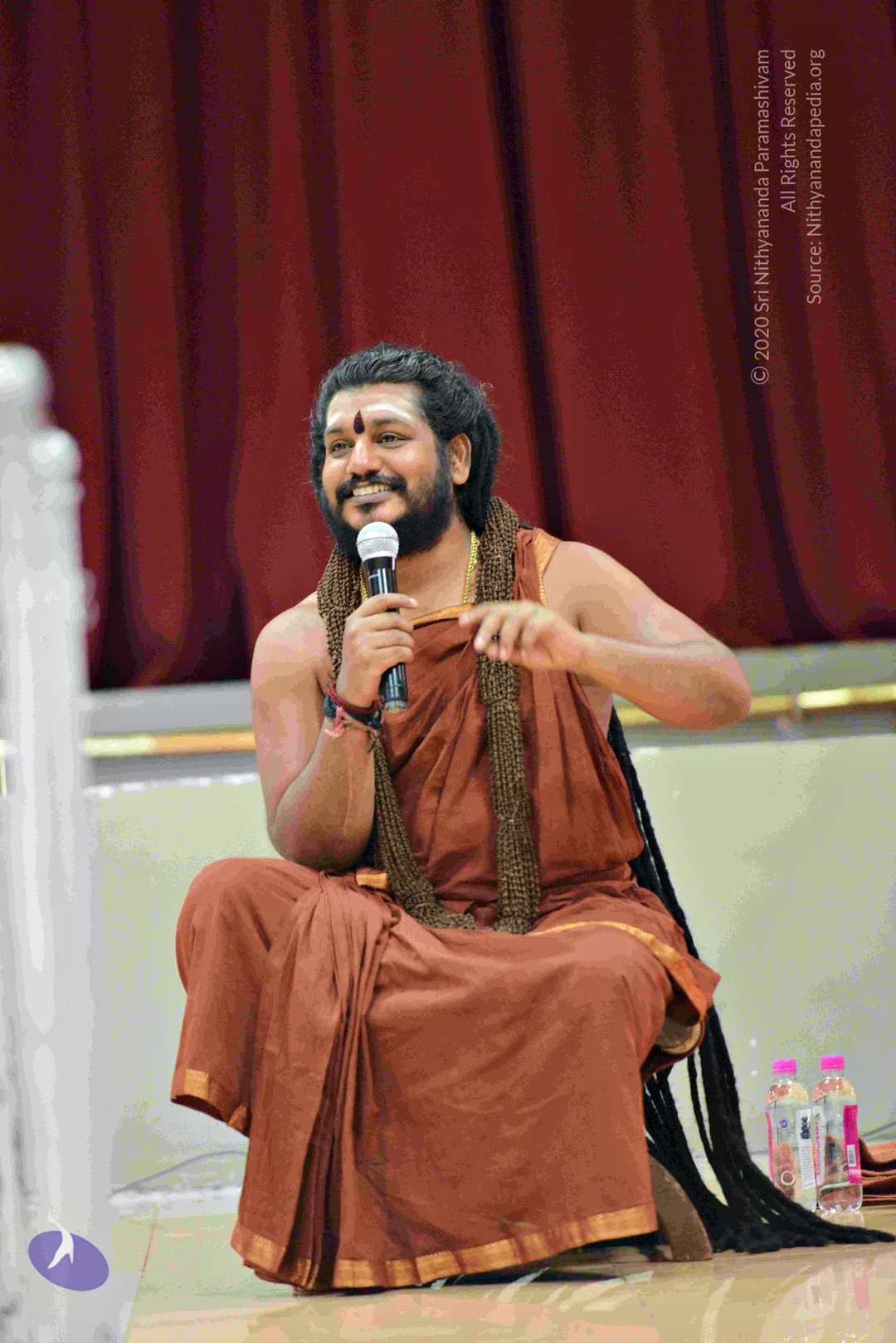
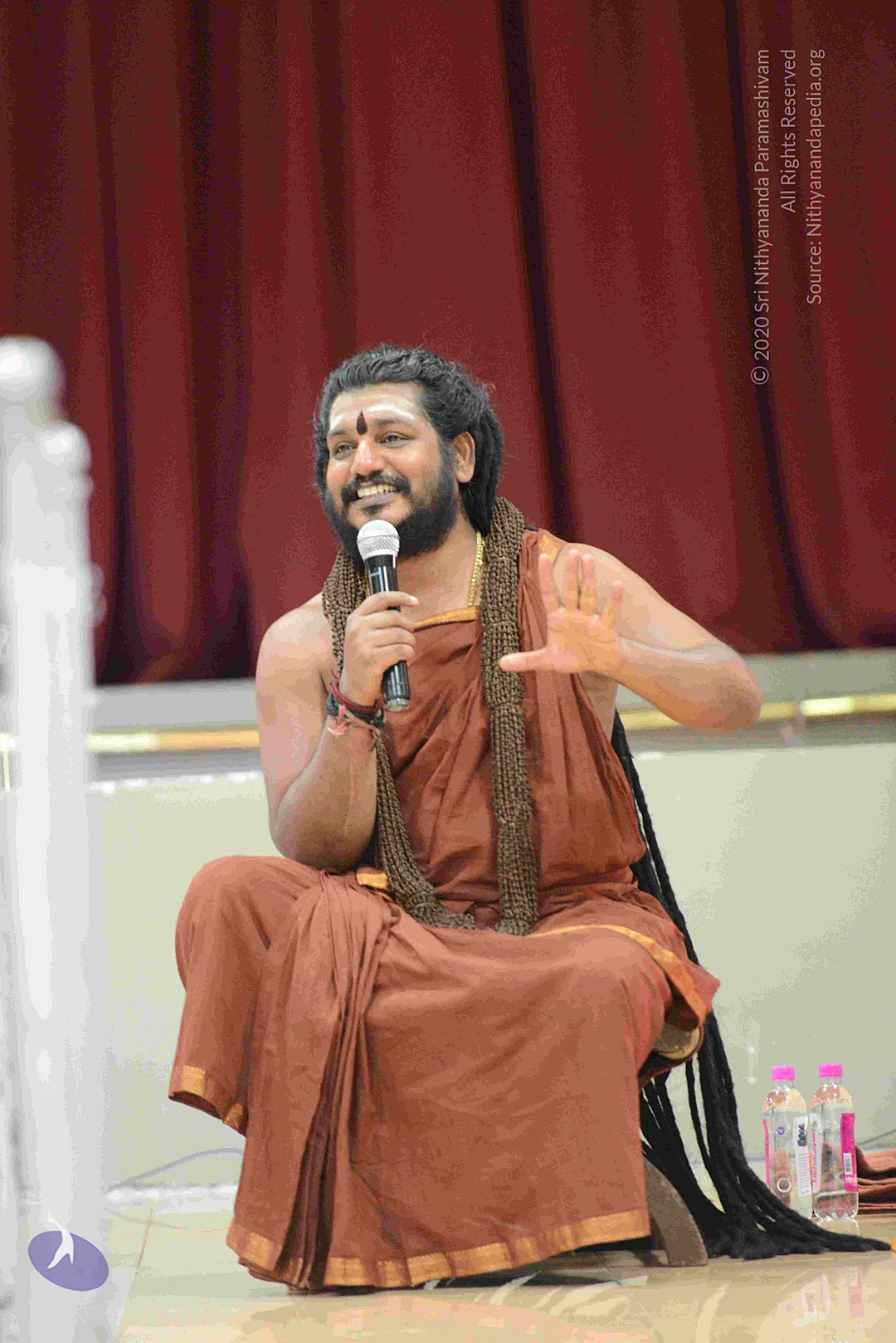
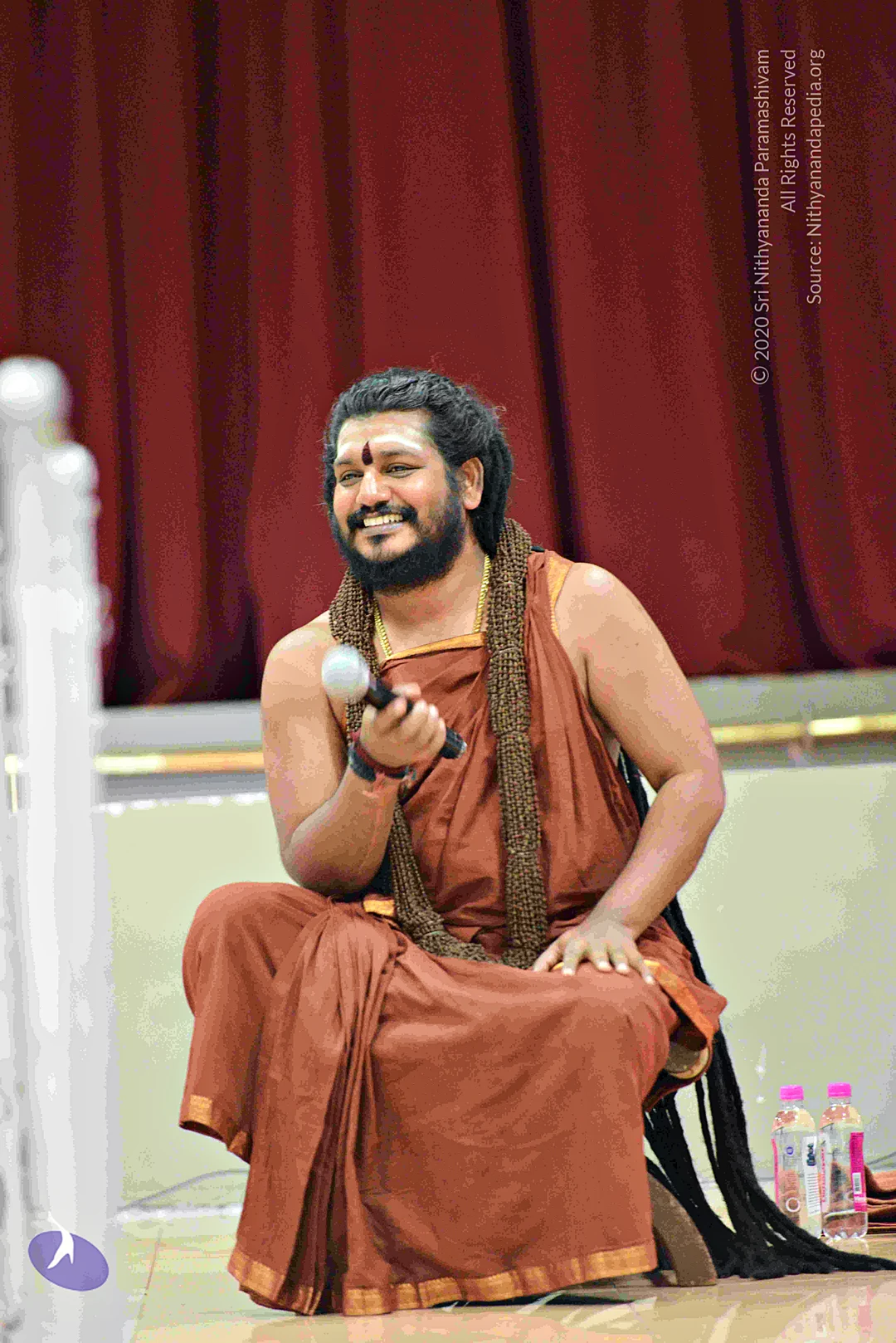
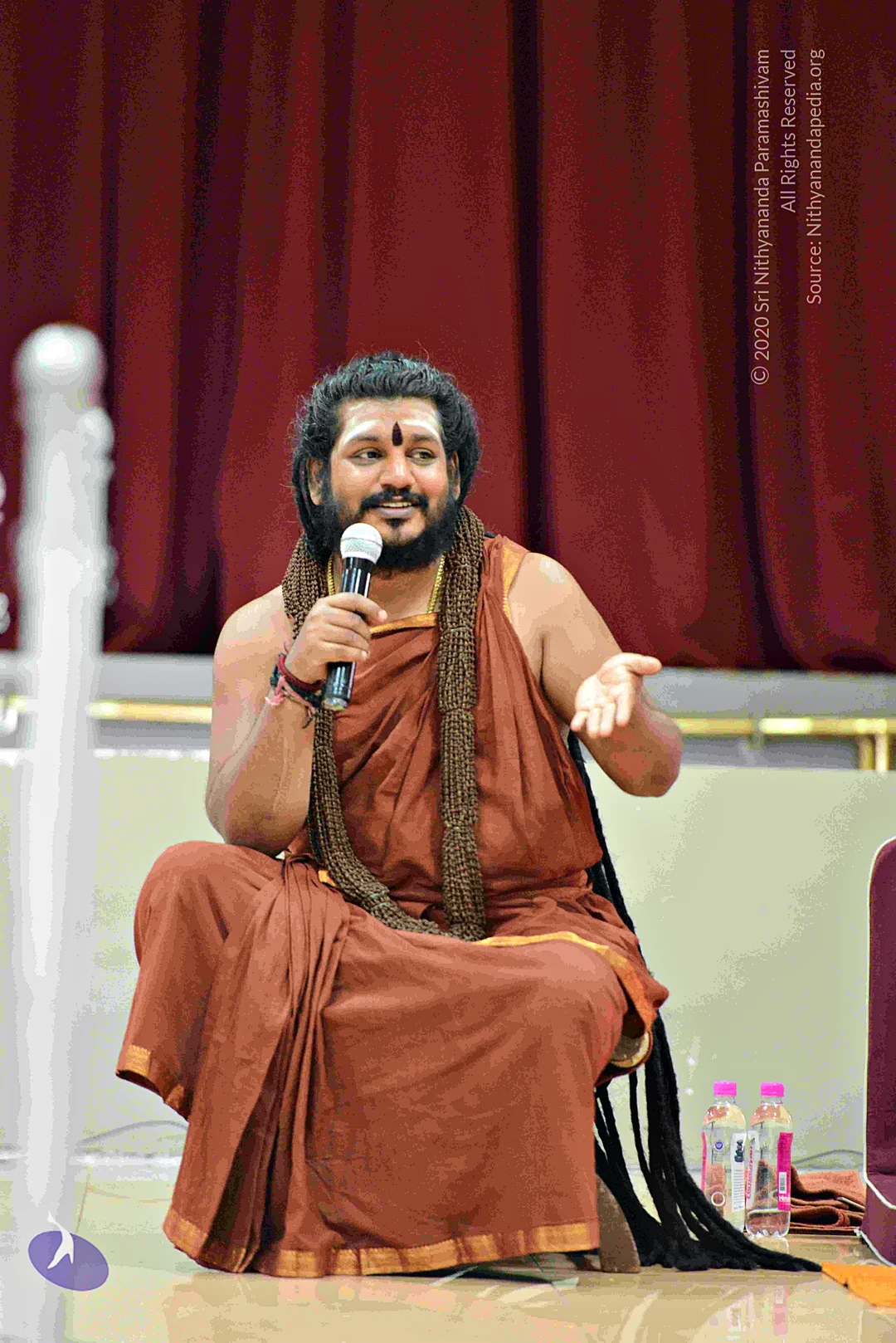
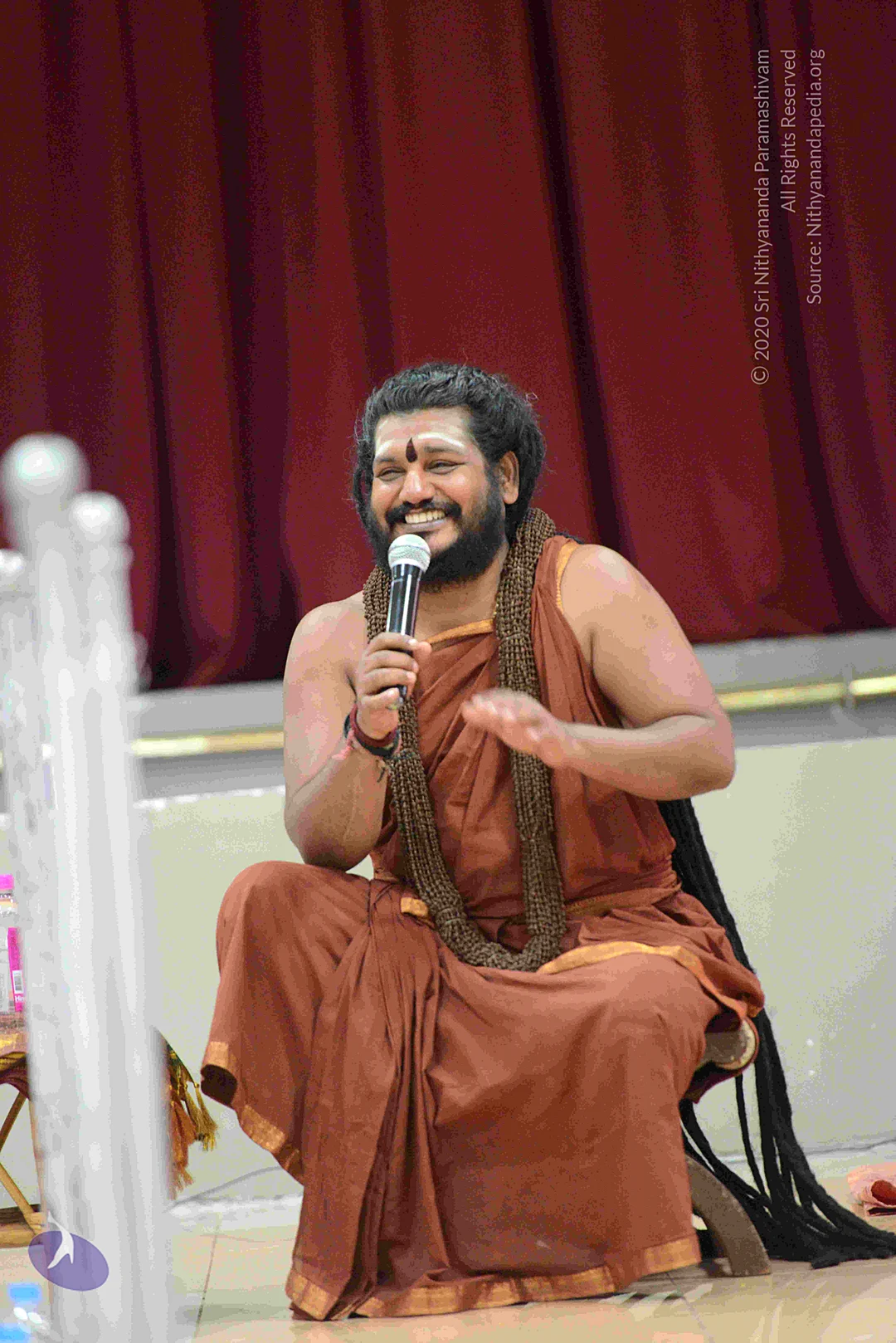
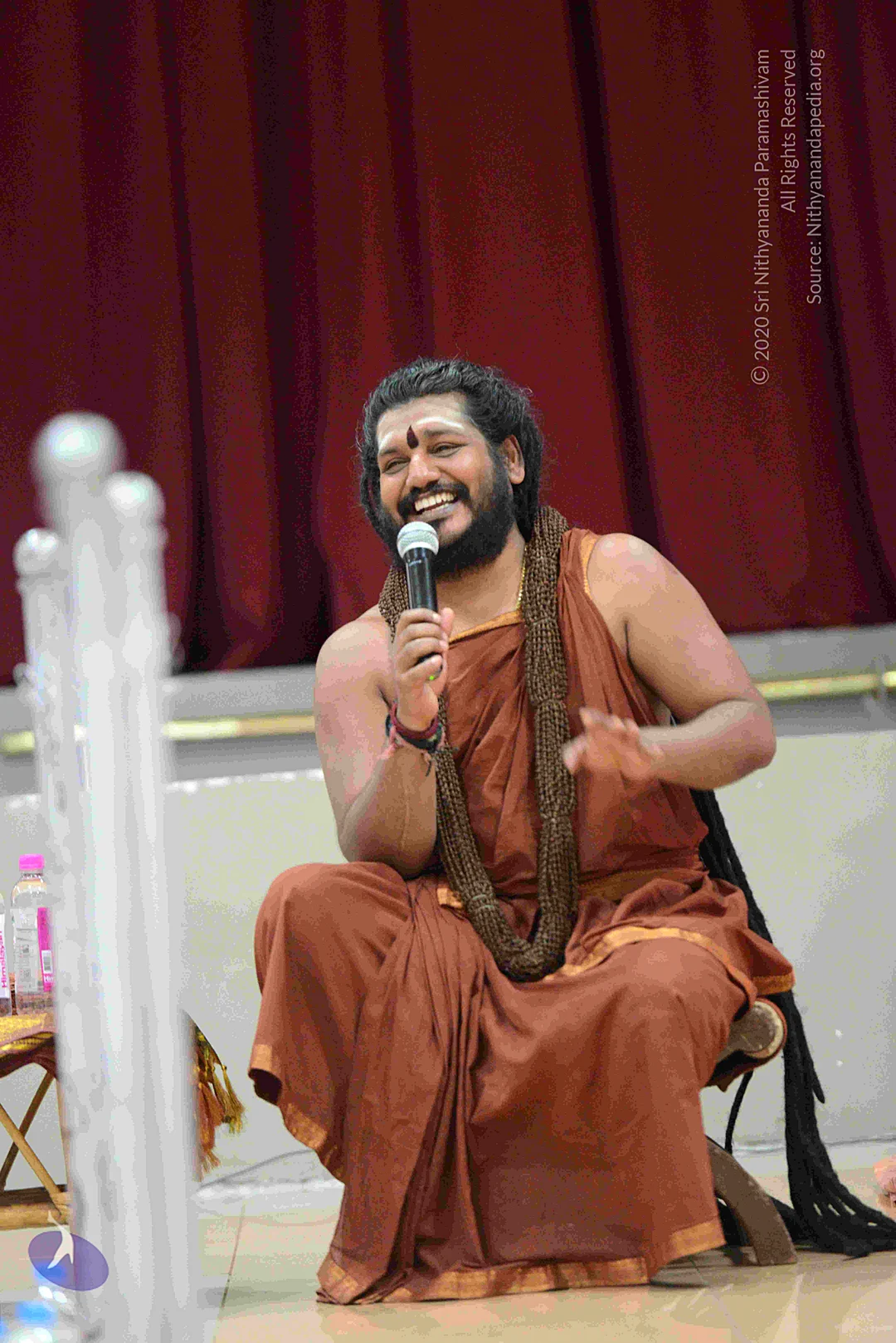
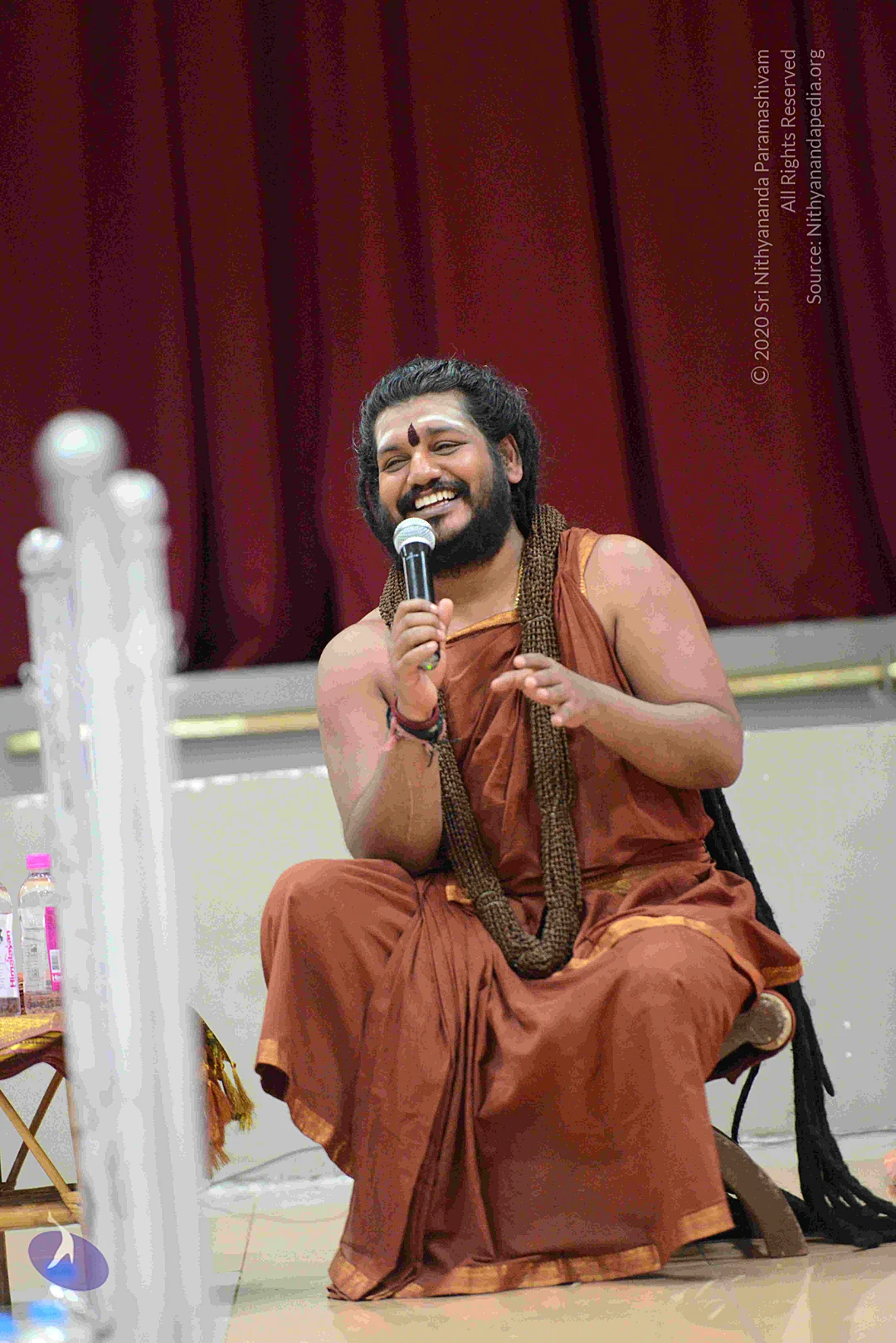
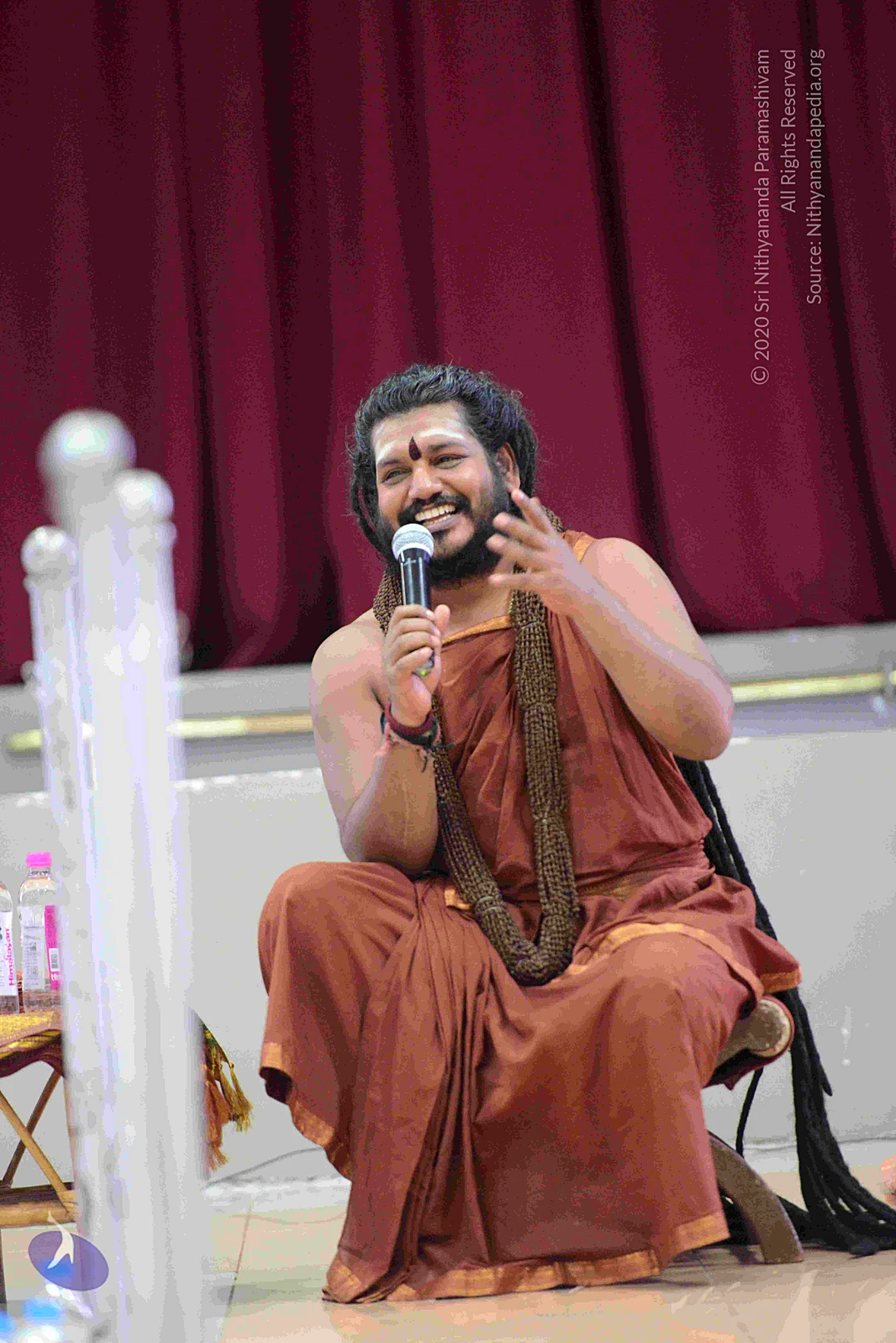
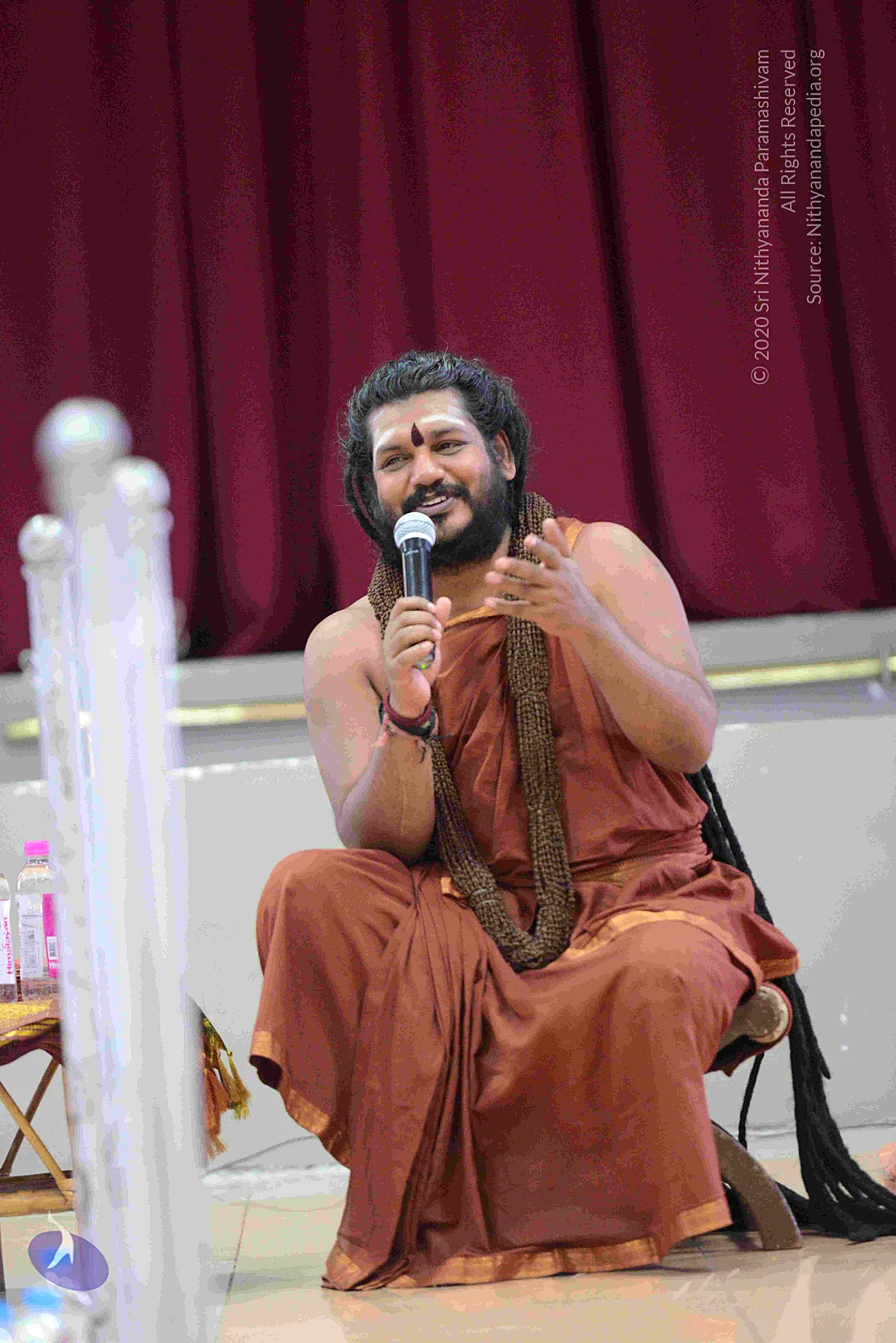
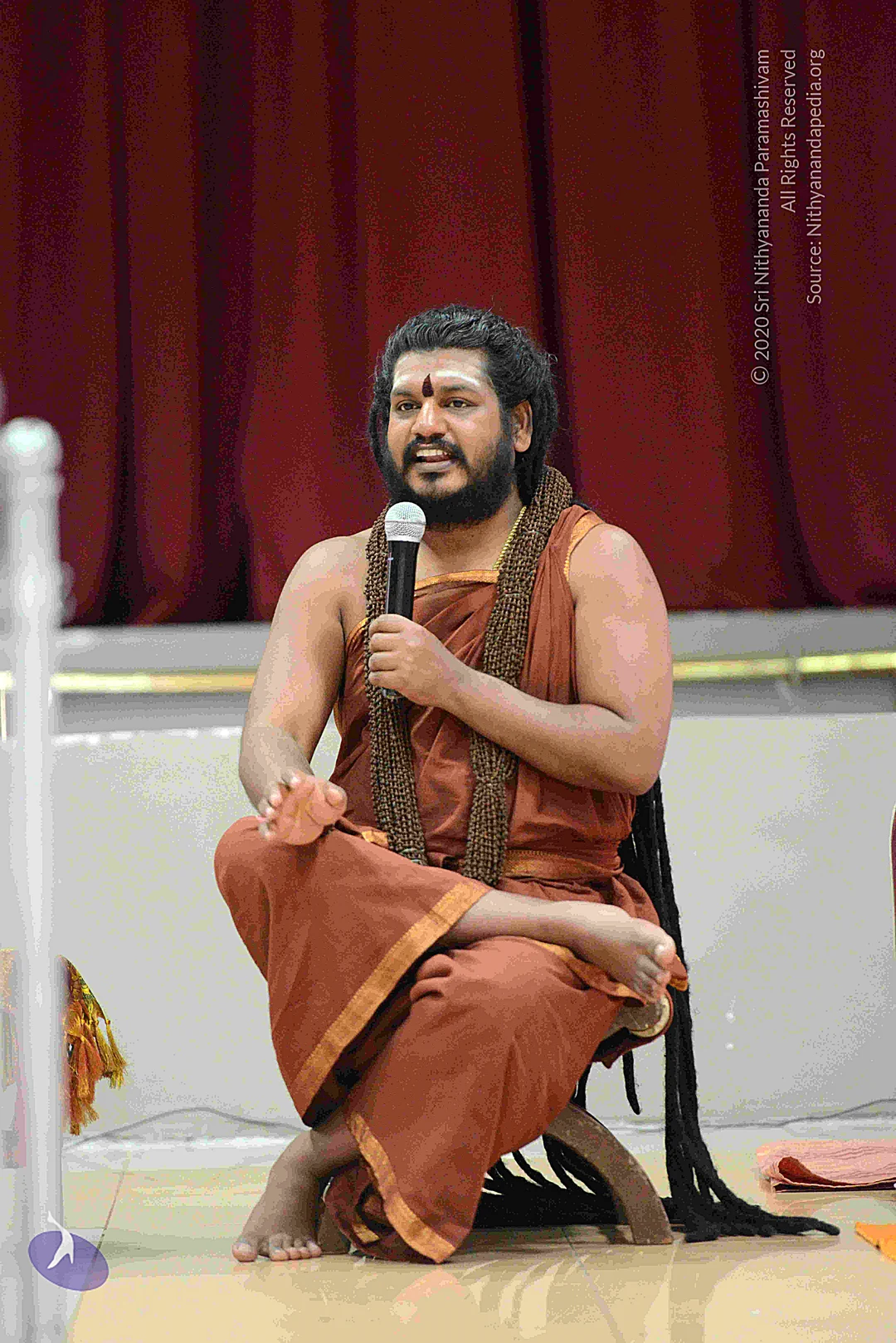
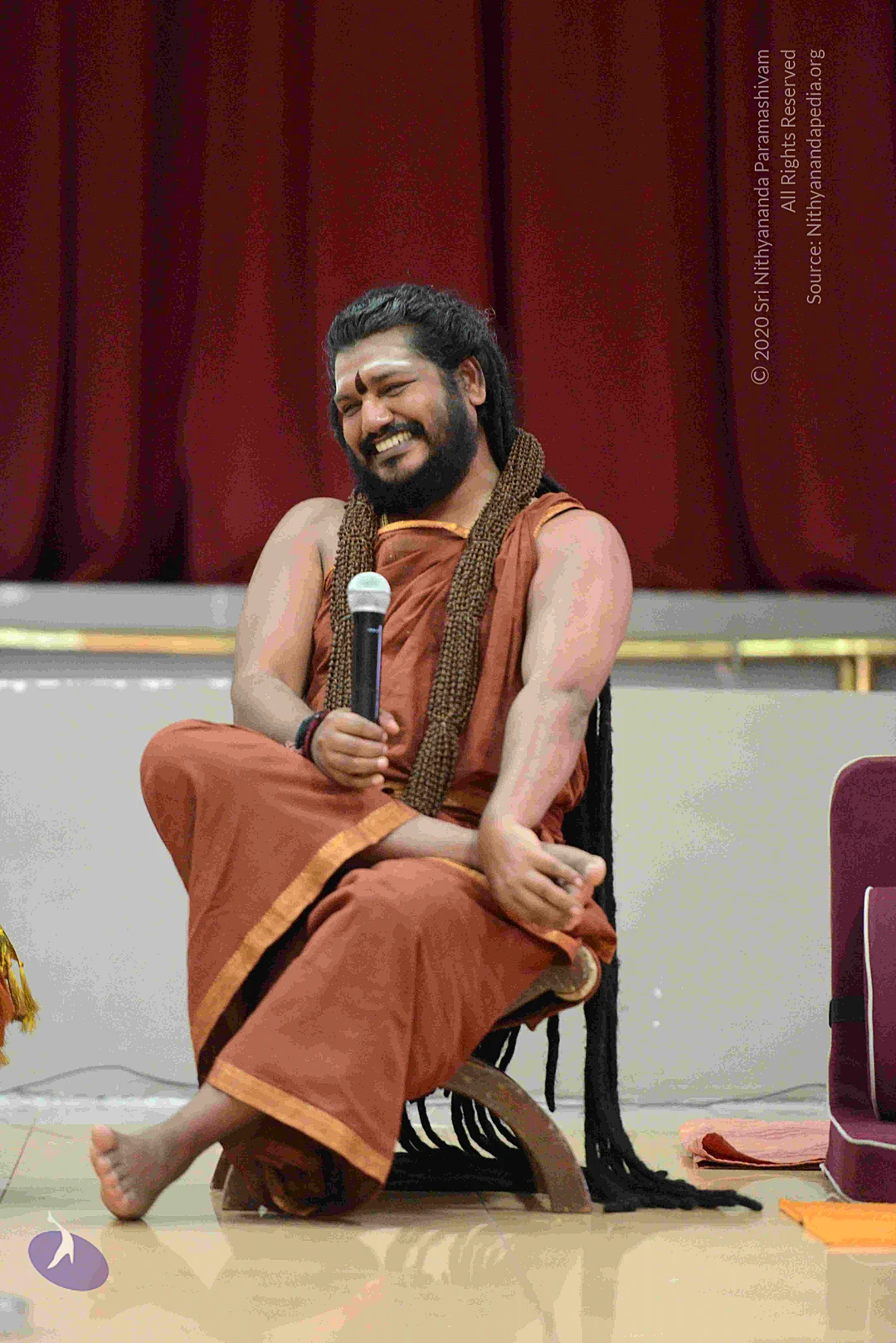
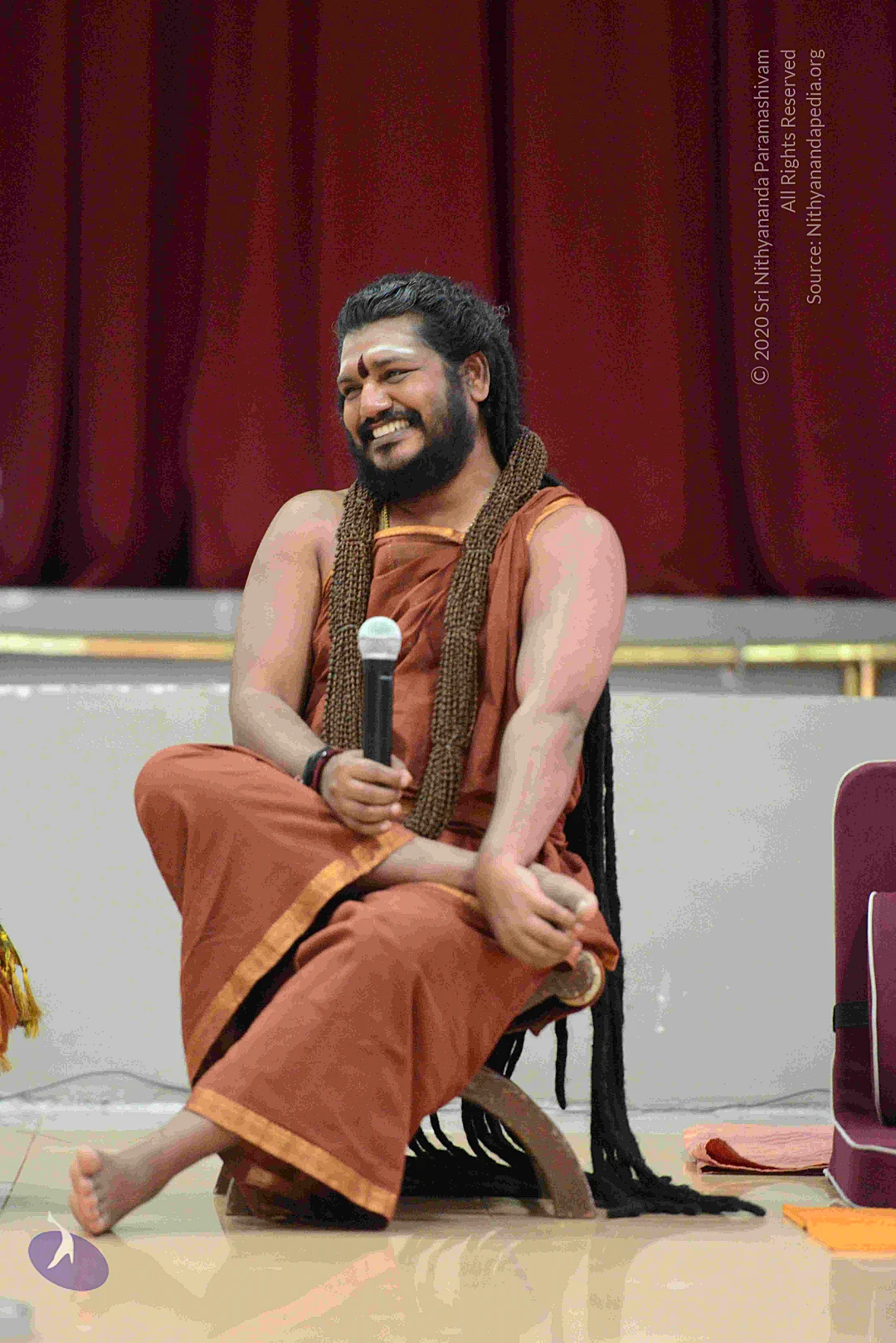
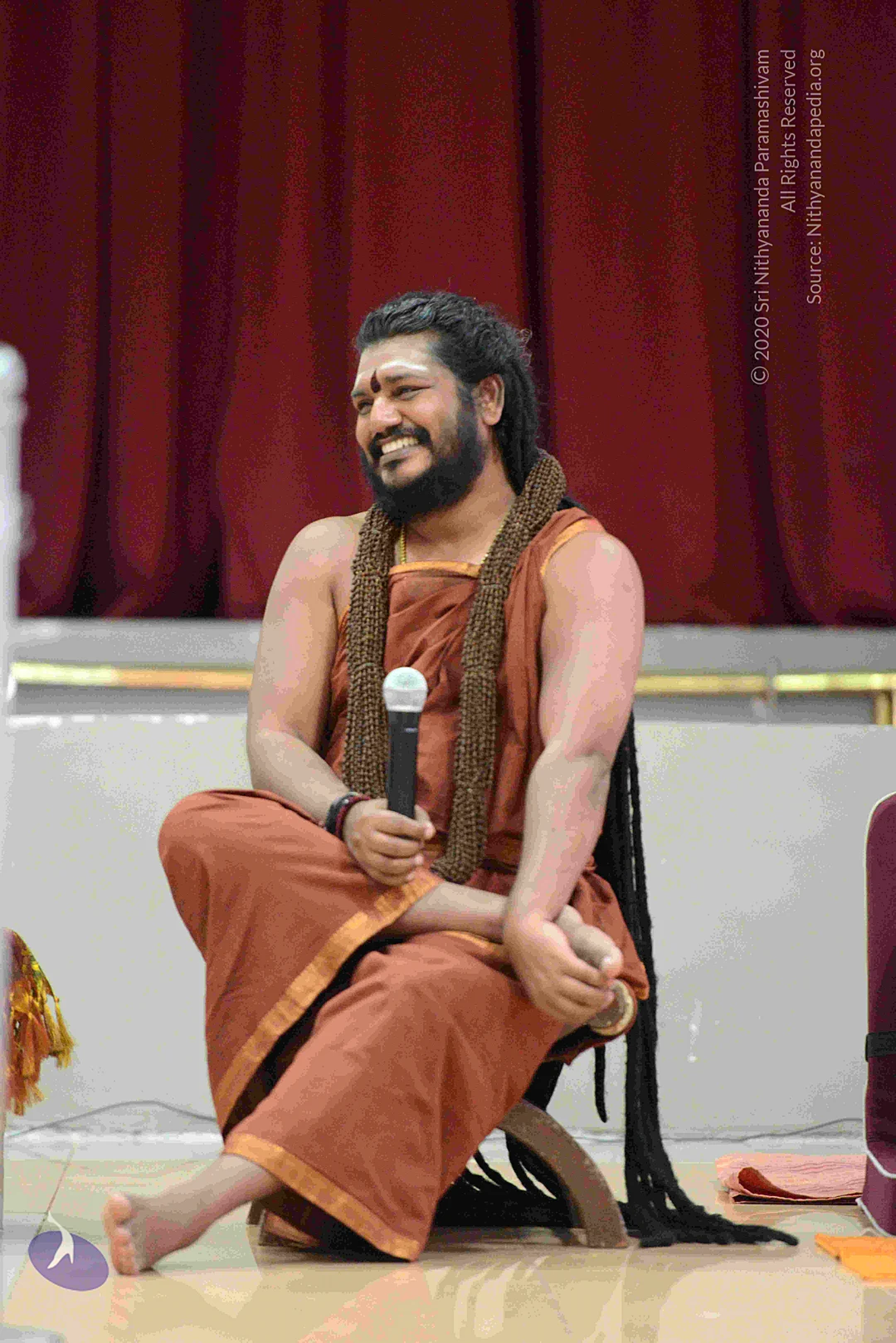
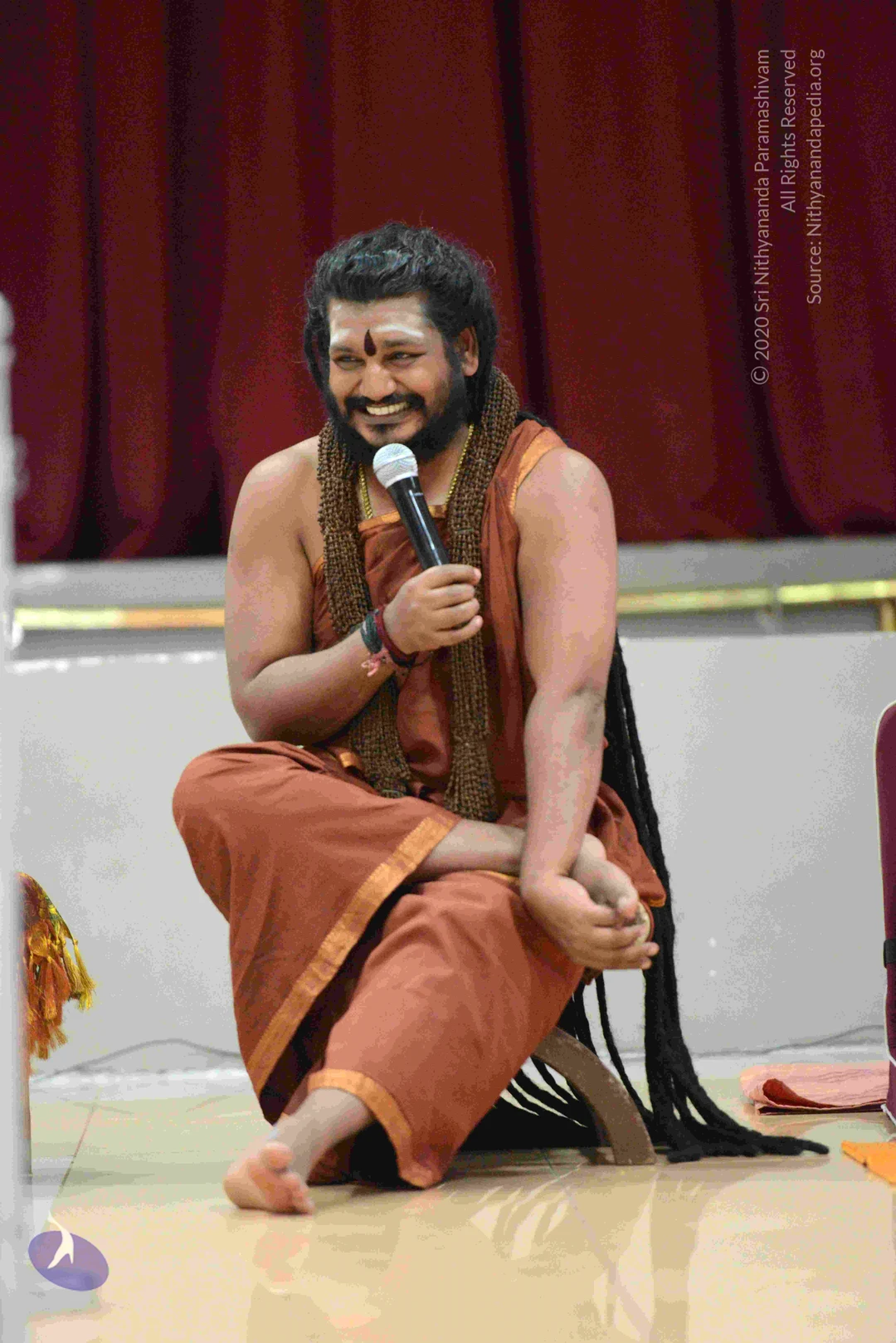
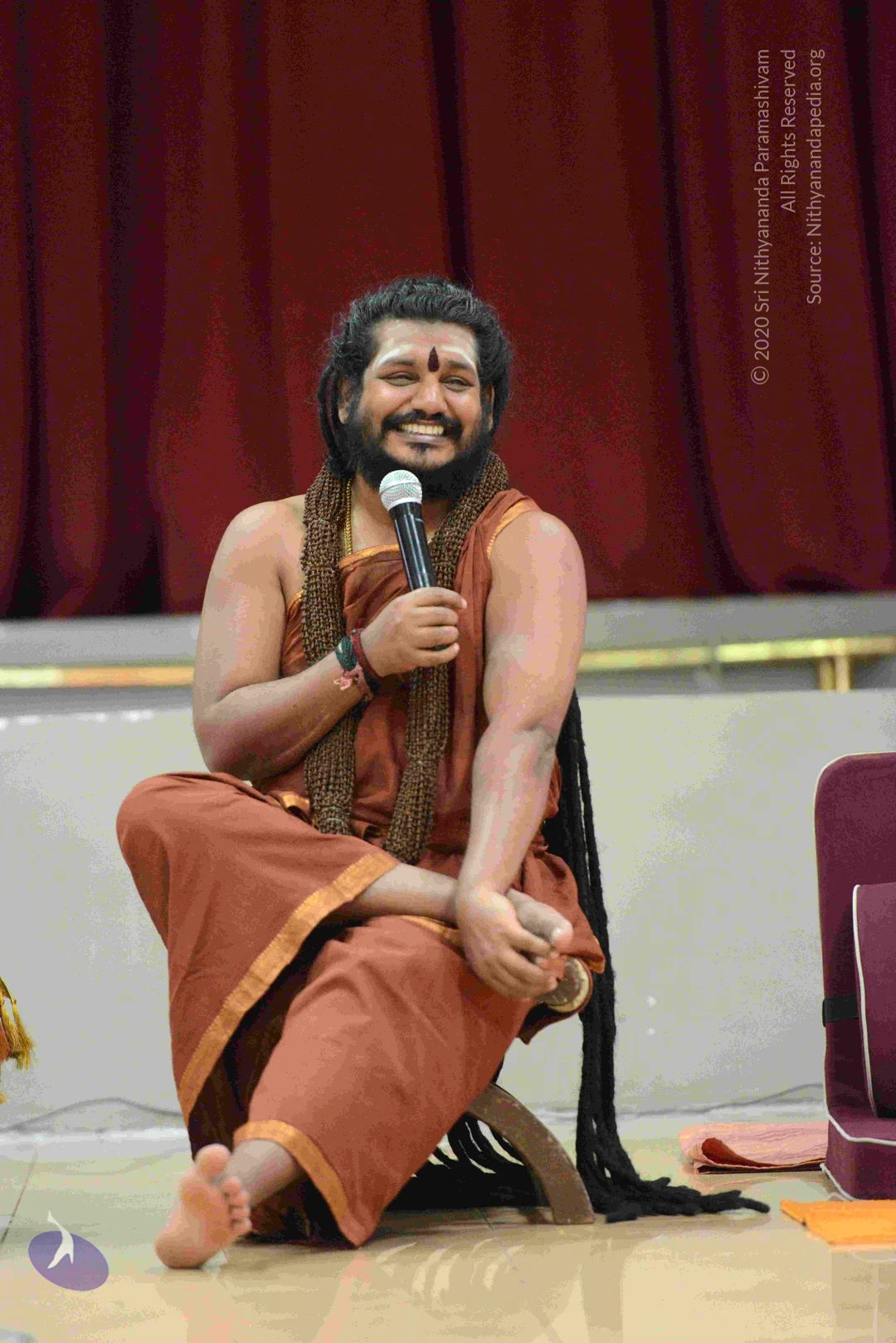
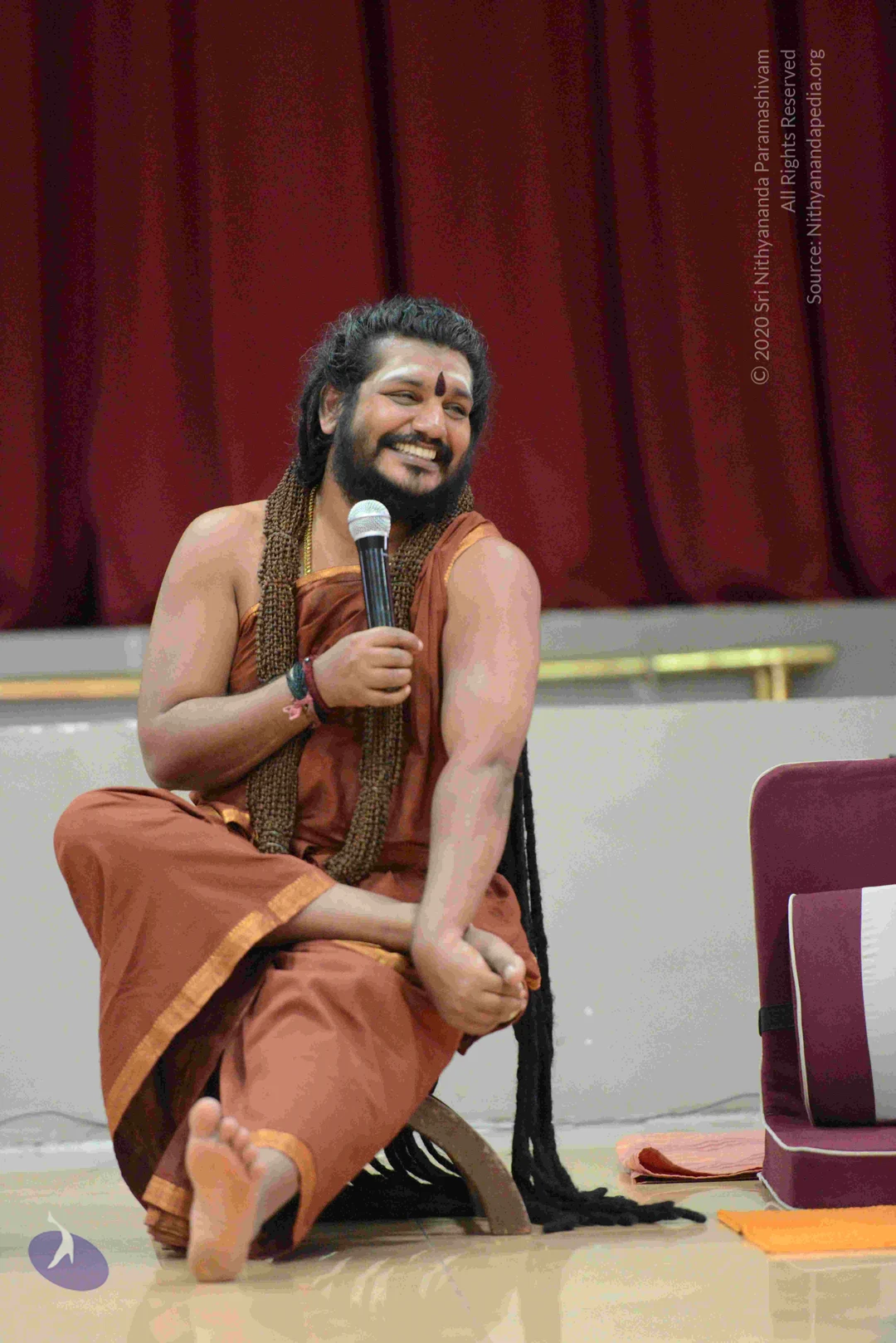
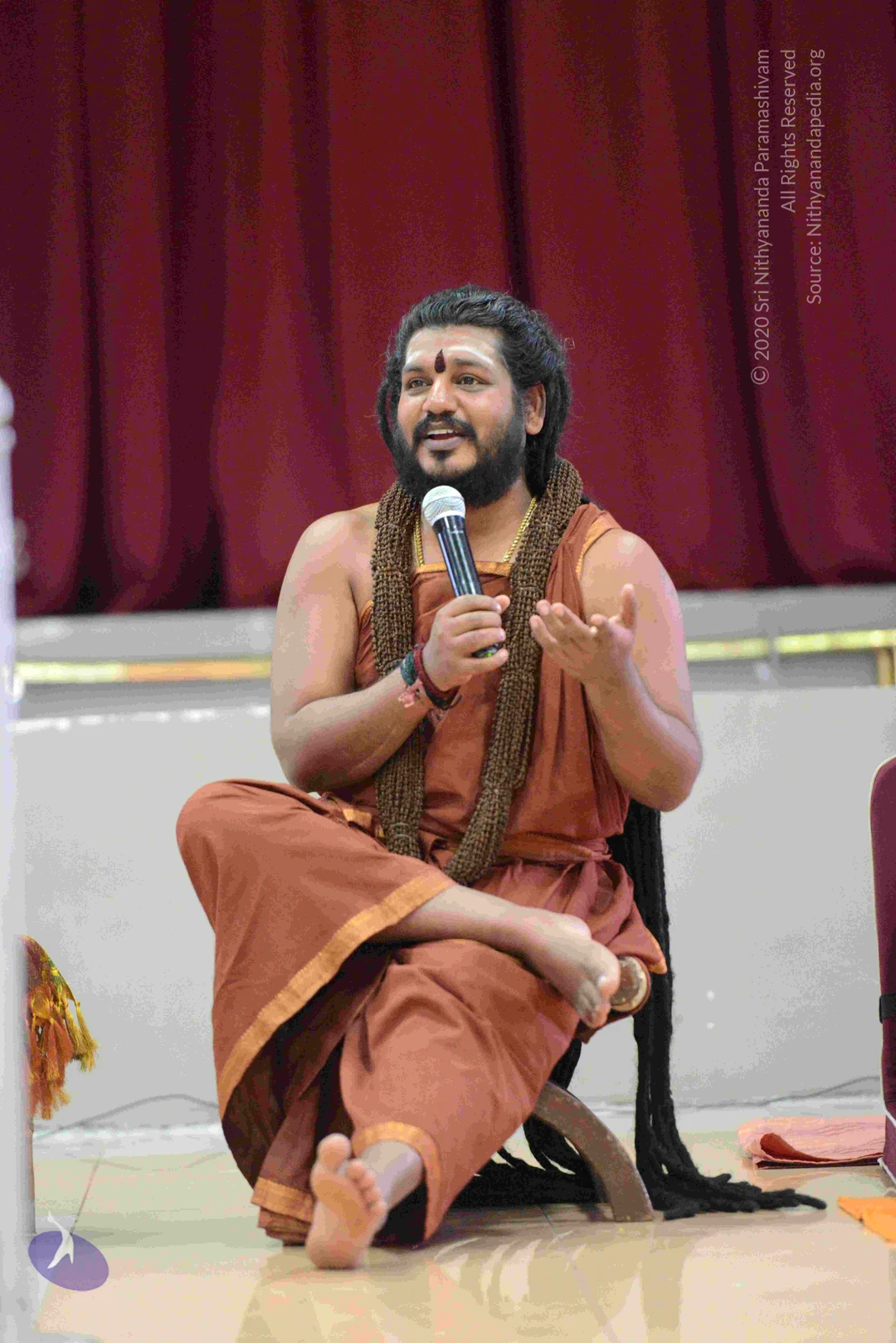
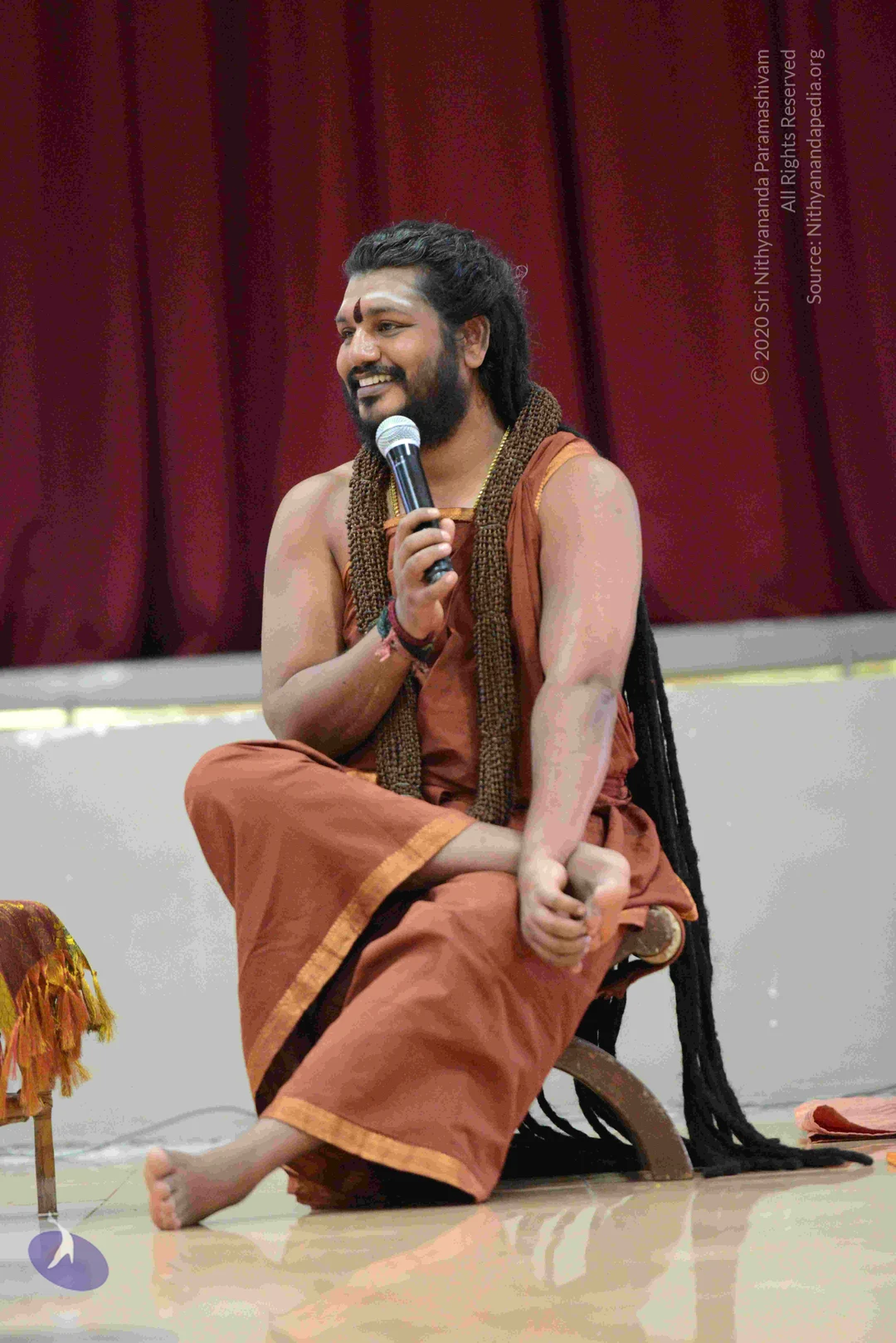
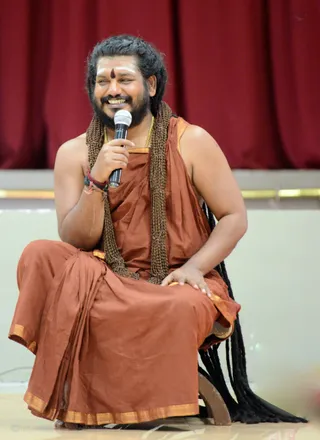
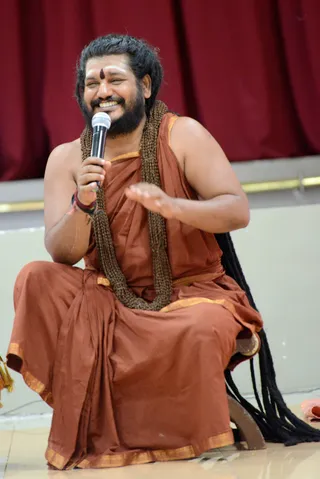
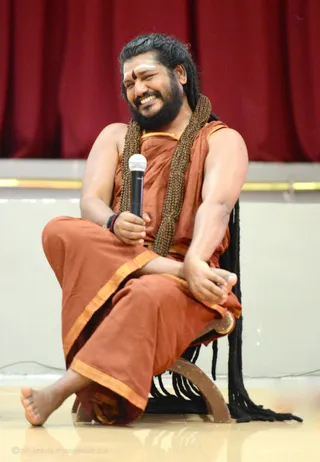
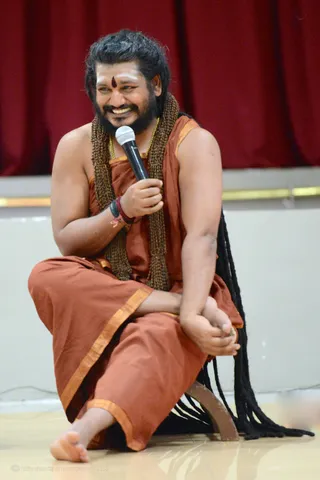
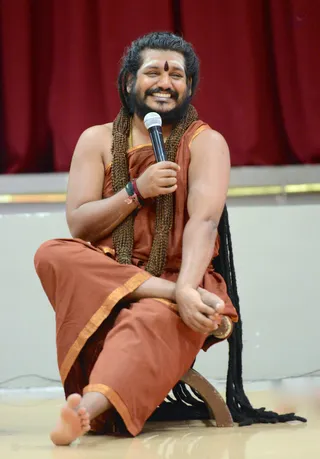
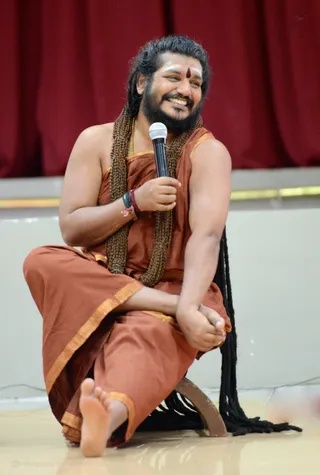
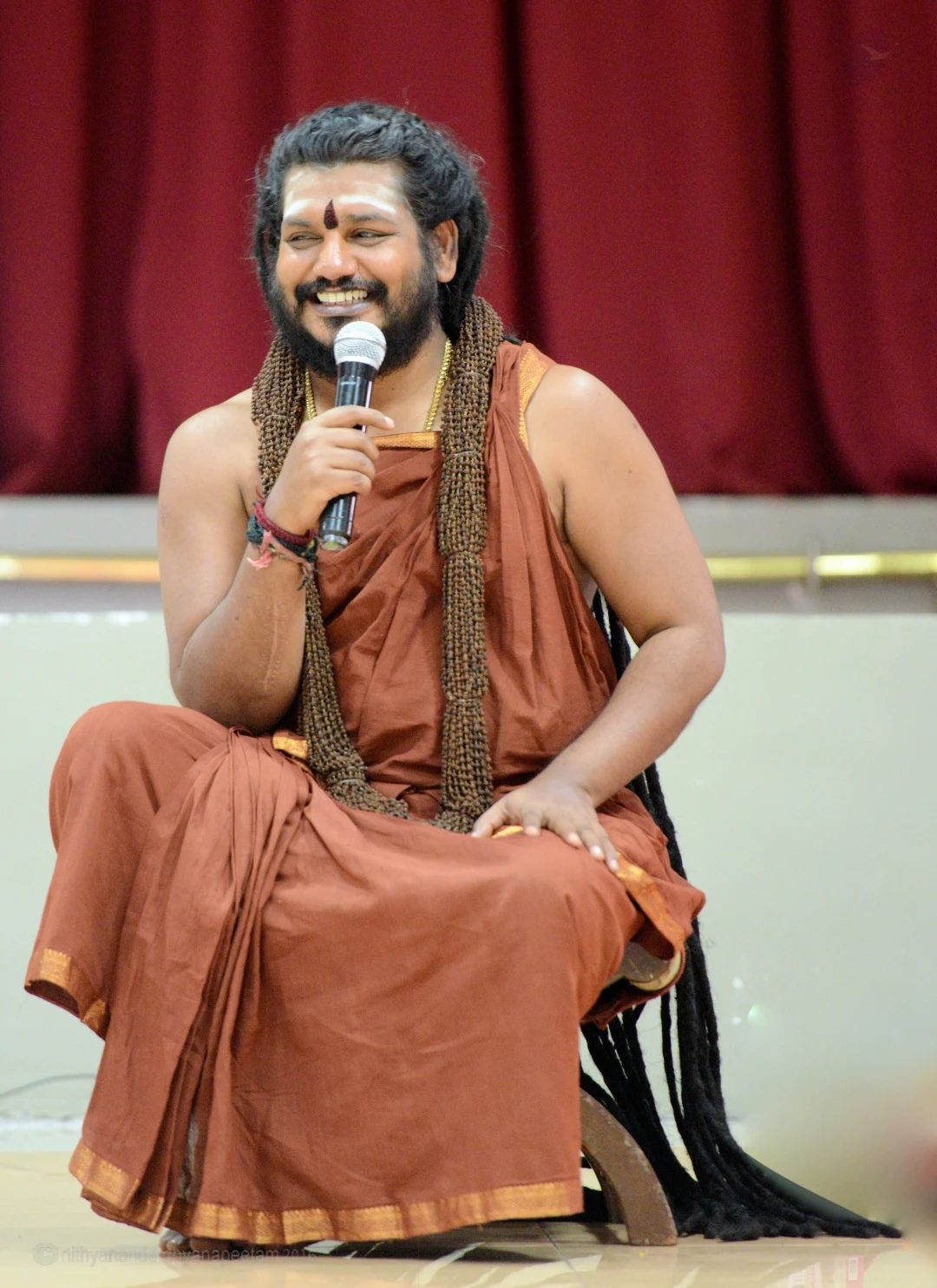
A smiling man with long dark hair and a full beard sits on a low wooden stool on a stage, speaking into a handheld microphone with his right hand. He wears a rust-brown sleeveless drape with orange-gold borders, a long rudraksha mala of brown beads across his chest and a thin gold chain. White lines of ash and a red dot mark his forehead, and long dark dreadlocks fall past the stool. Behind him hangs a deep red curtain. a person: long dreadlock-style hair, rudraksha malas and a saffron-orange sannyasi drape indicate a seated speaker at a satsang-style talk.A smiling man with long dark hair and a full beard sits on a low wooden stool on a stage, speaking into a handheld microphone held in his right hand while his left hand gestures. He wears a rust-brown sleeveless robe with gold-edged borders and a long brown rudraksha-style bead mala draped over his shoulders, with a red tilak on his forehead and white markings above it. A deep red curtain hangs behind him. One physical person is visible.A seated man in an orange-red saffron dhoti and wrap with a gold-bordered edge laughs while holding a black handheld microphone in his right hand. He wears long, swept-back dark hair falling past the shoulders, a dark beard, a red tilak on his forehead and a thick brown rudraksha mala draped twice across his chest. He sits cross-legged on a low curved wooden stool or throne on a polished wooden stage floor, in front of a deep red curtain. Swamiji (probable) appears as the central speaker, with visible cues of long hair, saffron clothing and rudraksha malas. Only one person is physically present.A smiling man with long swept-back dark hair and a full beard sits cross-legged on a low wooden stool on a light wooden stage, holding a black handheld microphone in his right hand while his left hand rests on his bare foot. He wears a rust-orange sleeveless garment with gold border and orange-gold dhoti-style wrap, a long brown rudraksha mala draped across his shoulders, a thin gold chain, and beaded bracelets. A white vertical tilak and red bindi mark his forehead. A deep red curtain hangs behind him. Probable Swamiji by appearance cues including long hair, rudraksha mala and saffron-orange clothing, speaking at a satsang-style event.A photograph of a smiling man seated cross-legged on a low wooden stool on a light wooden stage, holding a black microphone in his right hand while the other hand rests on his crossed foot. He wears a rust-orange sleeveless robe with gold-toned border trim and a thick rudraksha mala of brown beads draped over his shoulders, with a gold chain at the neck. His long dark hair hangs in locks down his back, and a red tilak marks his forehead above white markings. A deep red curtain forms the backdrop. Probable Swamiji by appearance: long swept-back hair, rudraksha malas and saffron-orange robe, addressing a satsang audience through a microphone.A man with long swept-back dark hair and a full beard sits cross-legged on a low wooden stool on a light wooden stage, smiling broadly while holding a black handheld microphone. He wears an orange-brown robe with a gold border and a loose orange top, with a long rudraksha mala draped across his chest and a red bindi on his forehead. A red curtain hangs behind him. A dark braided cord hangs from the stool beside him. a person is shown in a satsang-style discourse setting, with his role as speaker indicated by the microphone and seated posture.

Nithya-Satsang
66 photosSource gallery
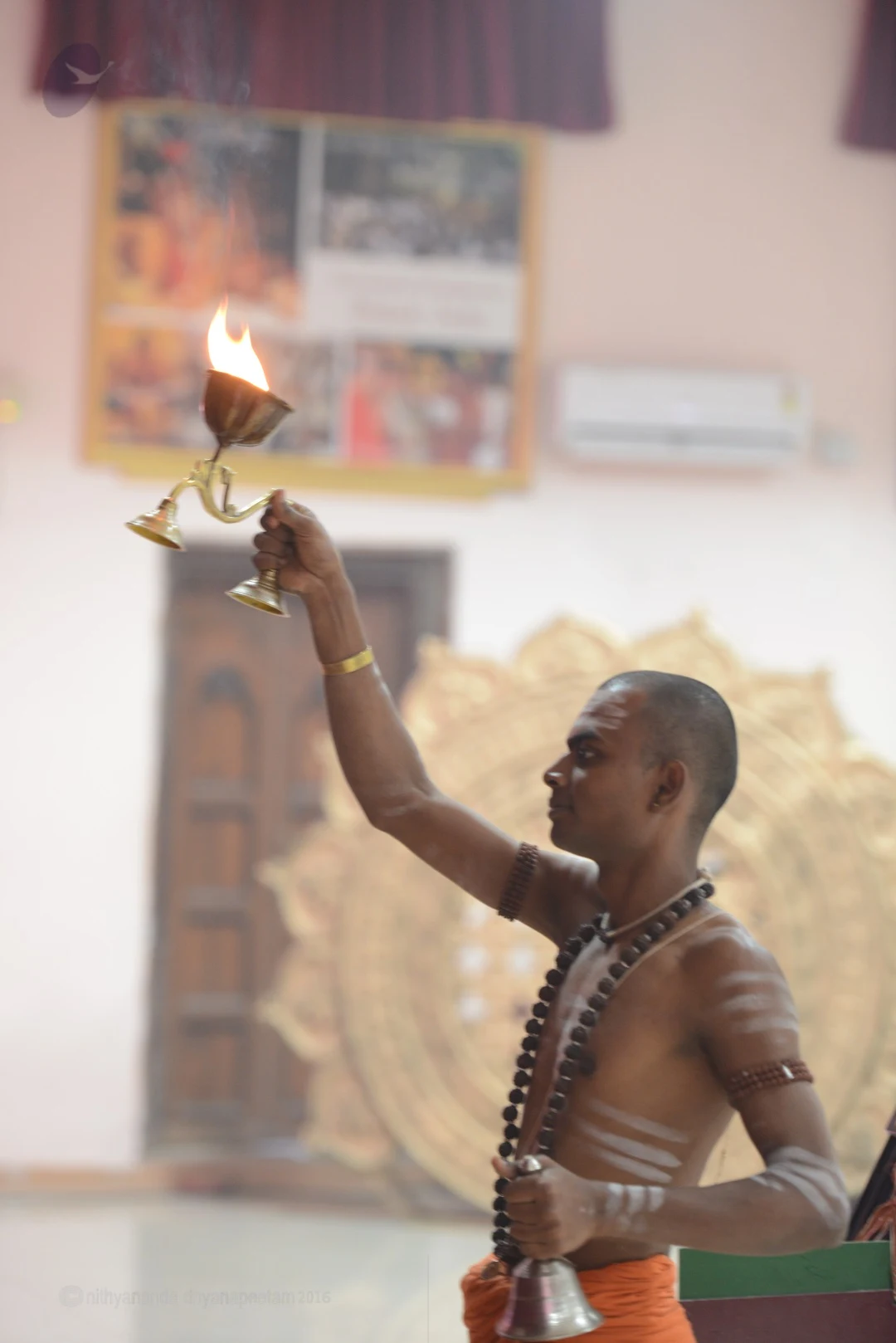
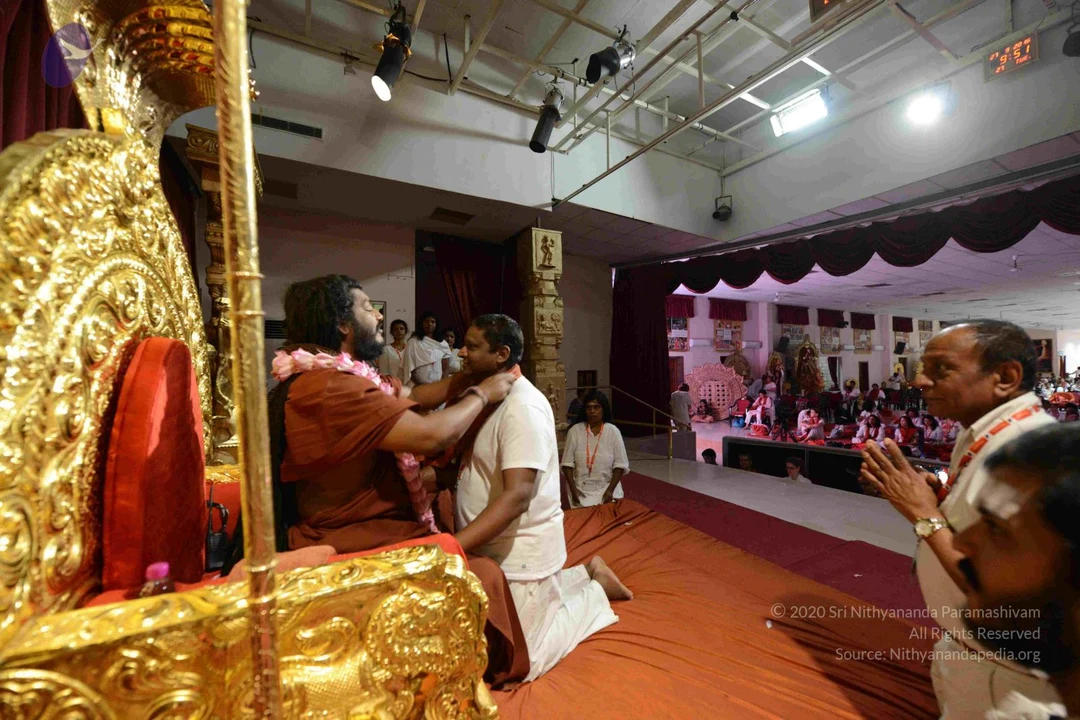
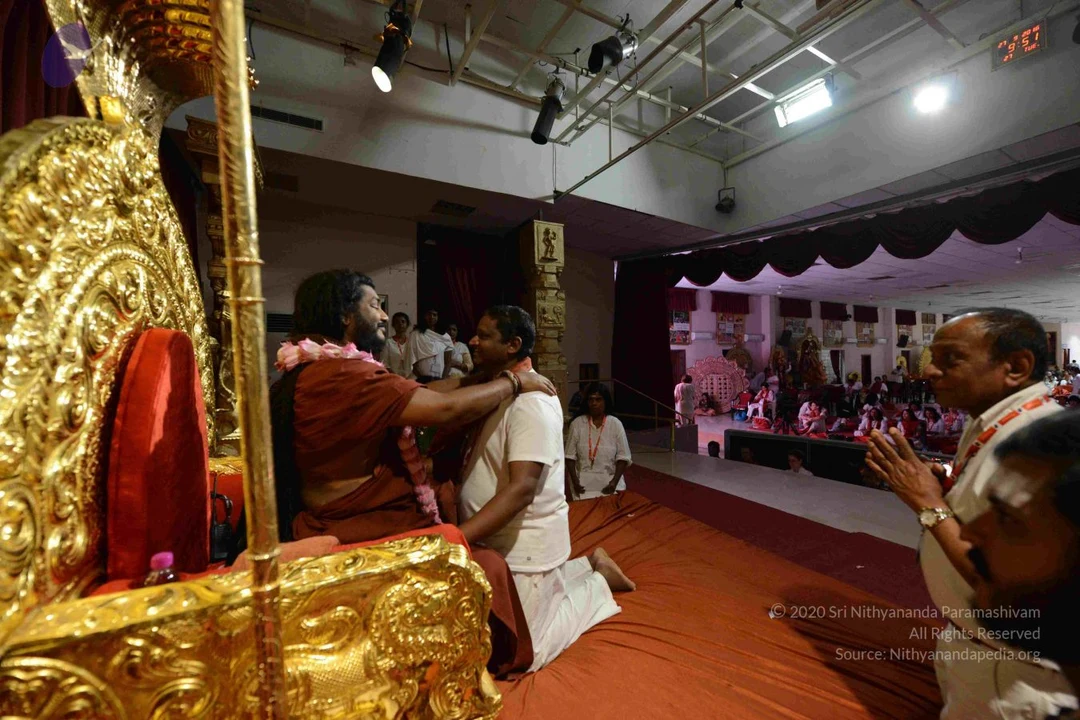
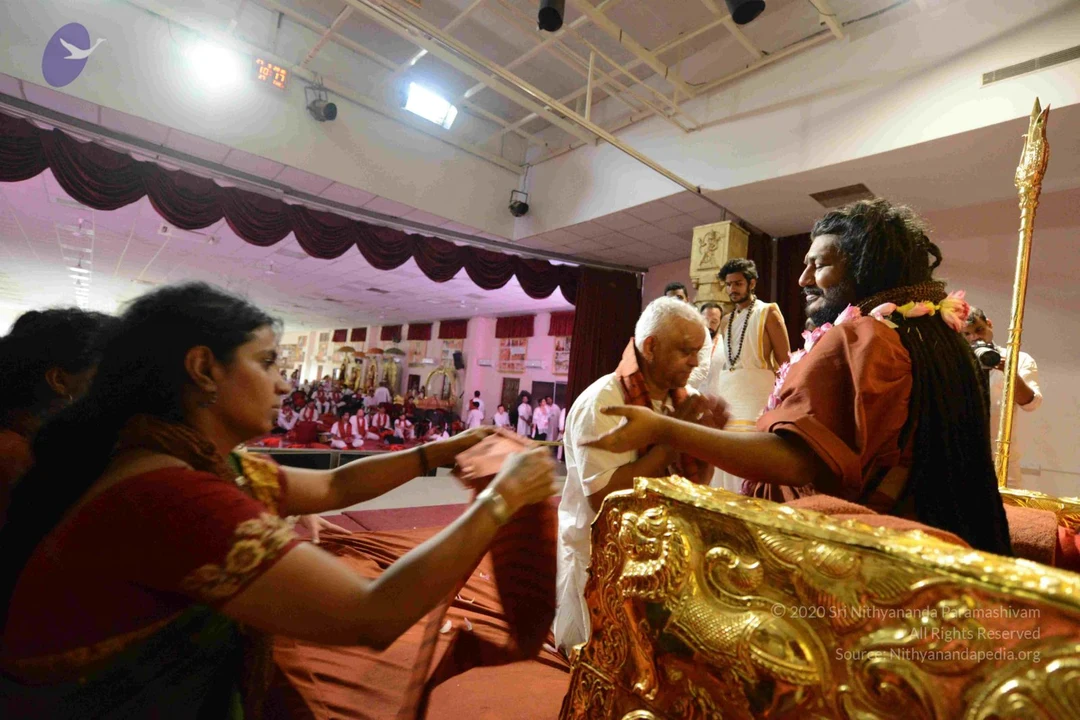
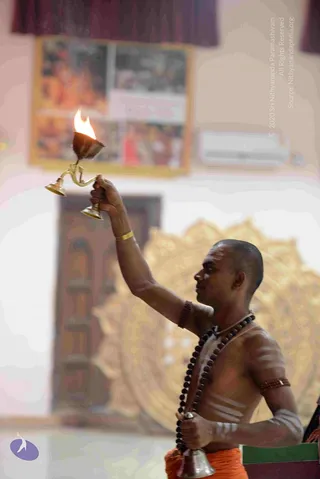
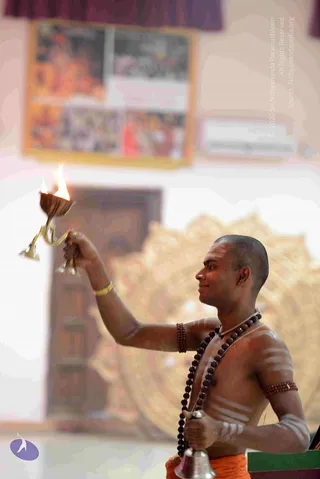
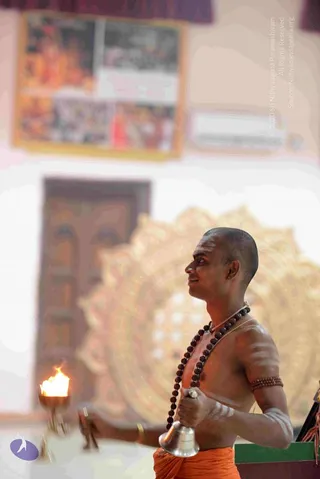
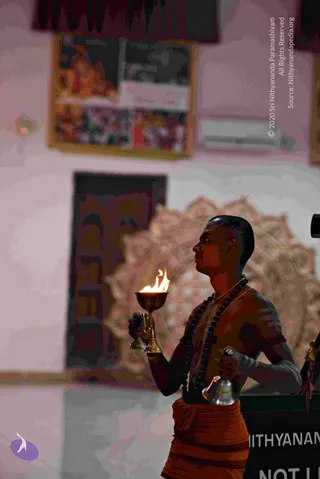
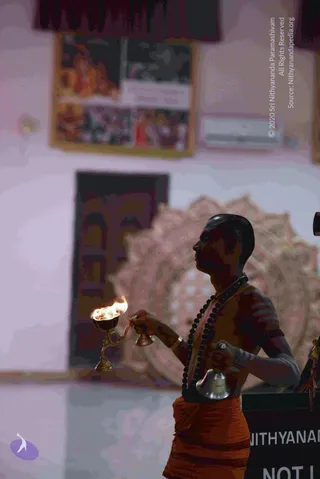
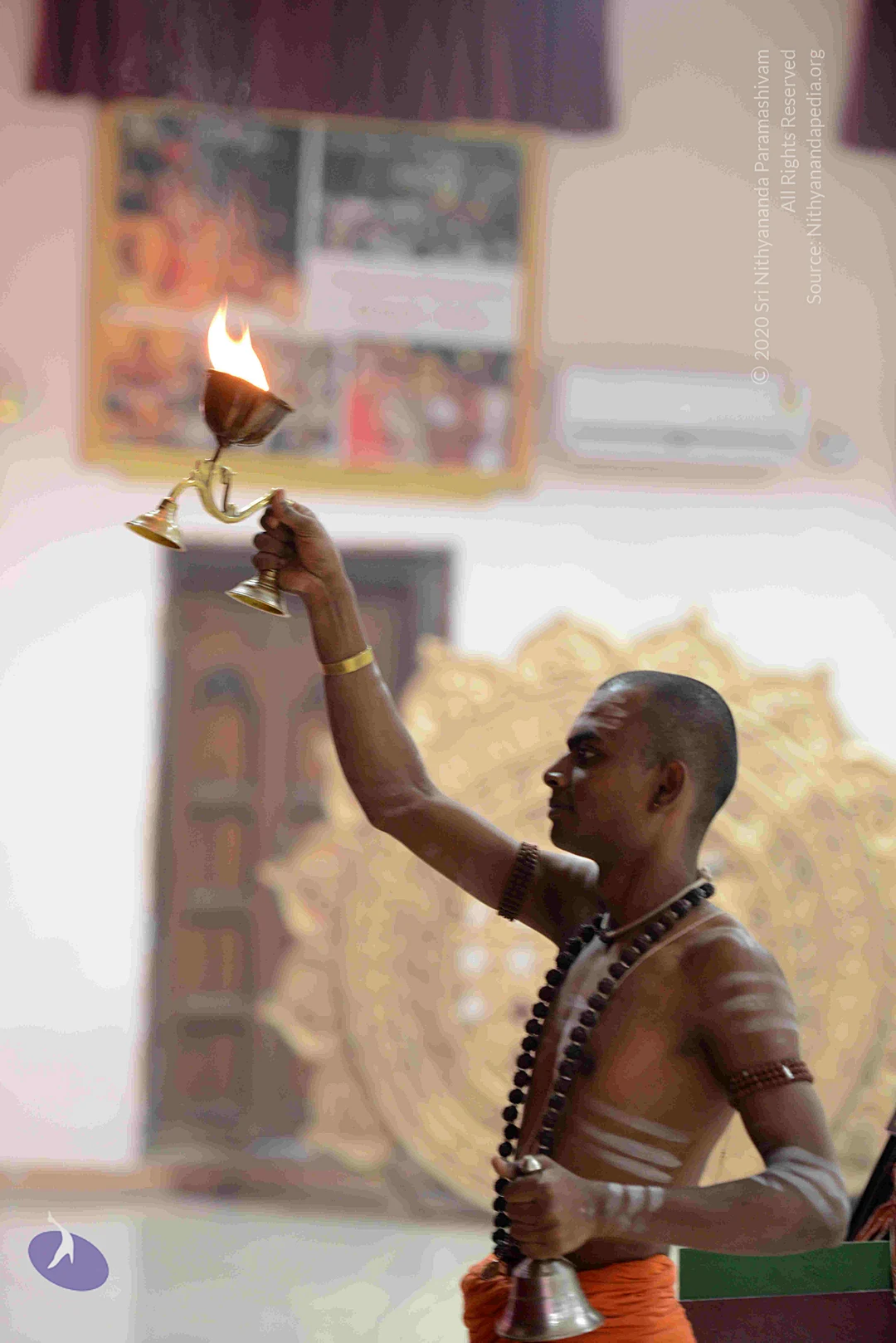
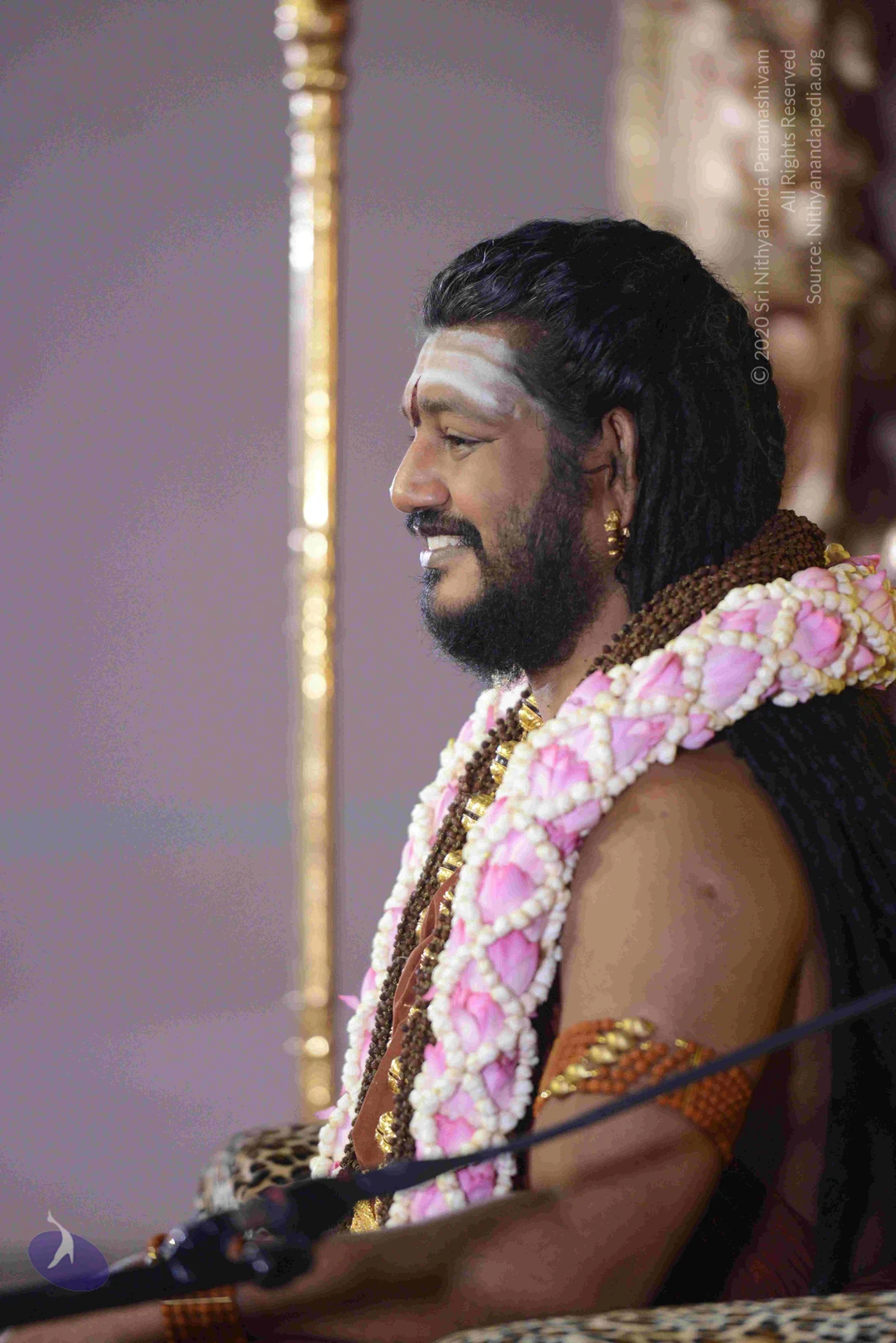
A shaved-headed priest, bare-chested with white ash stripes on his arms and chest, raises a brass aarti lamp with a lit flame in his right hand while holding a silver bell in his left. He wears a dark rudraksha mala around his neck, a red-brown bead bracelet and a gold bangle, and an orange cloth around his waist. Behind him are framed pictures on a pale wall and a golden decorative panel. The flame and the aarti lamp indicate an aarti ritual. No a person identification is visible in the image, so this person is described only by role.A shaven-headed man performs an aarti with a brass oil lamp held in his raised right hand, flame lit, while his left hand holds a bell. He is bare-chested with white sacred markings on his arms and chest, wears dark rudraksha malas across his chest and arm, and has an orange cloth around his waist. The blurred background shows a wall with framed pictures and a bright yellow-patterned panel. The photo is a single close-up of one ritual performer.A shaved-headed priest stands in profile in an ashram-style hall, bare-chested and wearing an orange dhoti with white sacred markings on his forehead and arms. He wears a long rudraksha mala across his chest and a rudraksha bracelet on his upper arm, and holds a silver handbell in his right hand. Beside him a brass lamp with a bright flame burns on a stand, and a framed picture hangs on the wall behind. A green-topped table stands at the right edge. The setting suggests a puja or aarti during satsang. No person in the scene is confidently identifiable as a person from appearance alone, so the figure is described only by role.A man in profile holds a brass oil lamp with a lit flame in one hand and a handheld bell in the other. He has a shaved head and wears a dark rudraksha mala around his neck, with an orange-saffron dhoti wrapped at the waist. Behind him is a patterned mandala-style backdrop and a framed picture on a white wall, and a dark banner with partial lettering is visible at the lower right. The scene resembles an aarti ritual performed during a satsang setting. Appearance does not clearly establish the a person candidate, so the identity remains unsure.A shaved-headed man in profile stands in an indoor hall, holding a brass oil lamp with a flame in one hand and a silver handbell in the other. He wears a rust-orange dhoti and bare upper body, with a long black rudraksha mala hanging to his waist. Behind him are a framed picture on a pale wall, a dark doorway, and a pale ornate backdrop. A black banner in the lower right shows partial lettering. The lamp suggests an aarti being performed. The priest is not clearly identifiable as a person from appearance; his role is a ritual officiant with lamp and bell.A smiling man with long dark hair and a full black beard sits on an ornate gold throne upholstered in leopard print, against a deep red drape. He wears a rust-brown robe bared at one shoulder, a dark brown beaded mala and a heavy gold necklace, with a pink and white flower garland over his chest and an orange beaded armband. A white band with a red dot marks his forehead. Beside him a gold lion head rests on the armrest. Swamiji (probable): long swept-back hair, rudraksha mala and ceremonial gold necklace, seated on a throne in a presentation setting.

IA-Session

59 photosSource gallery
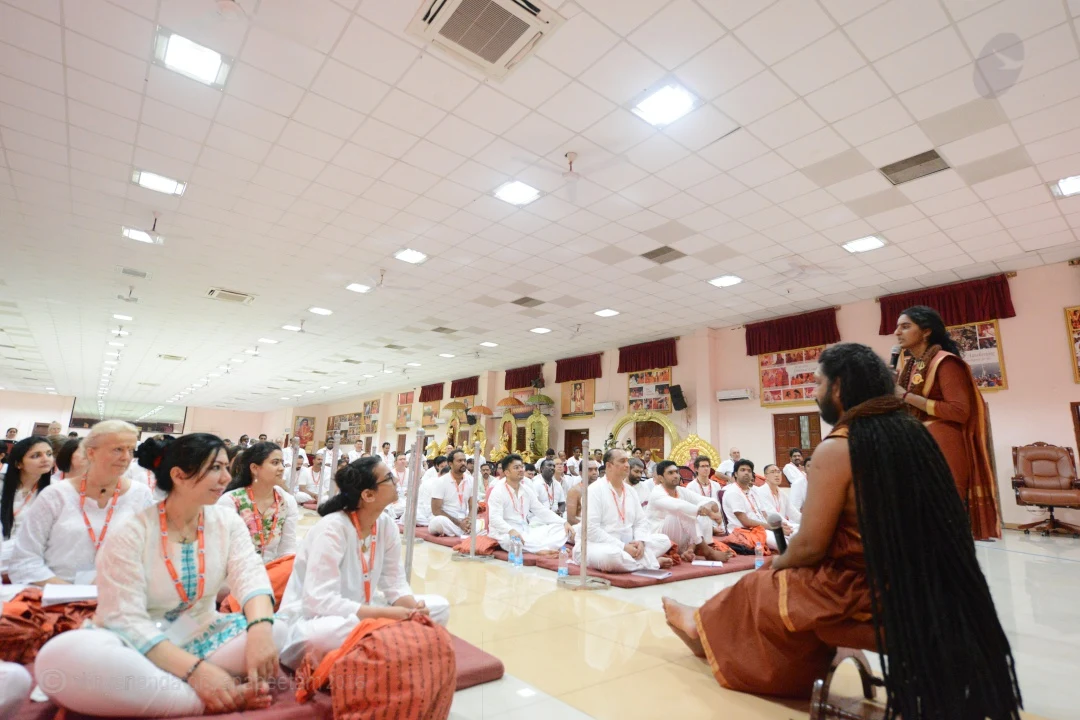
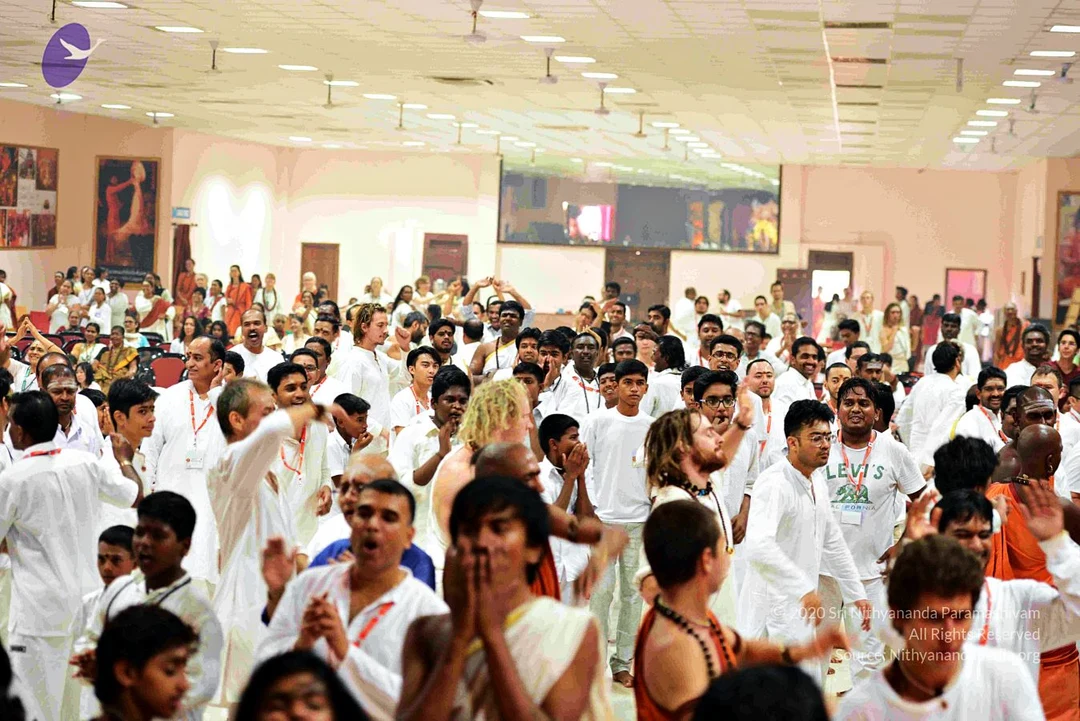
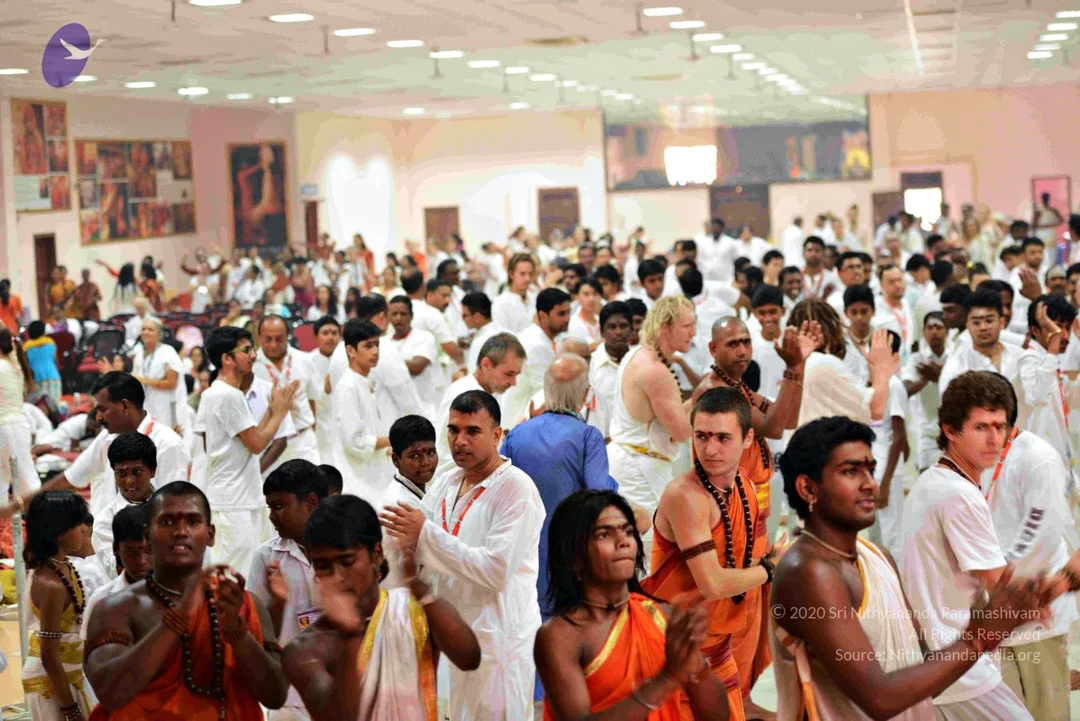
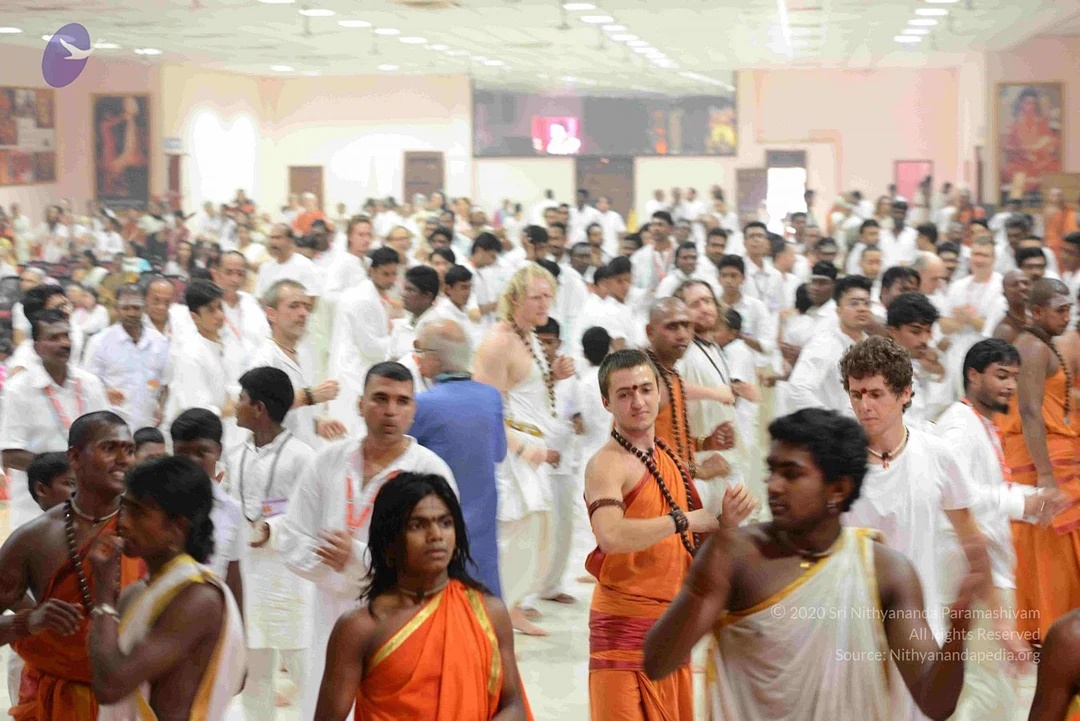
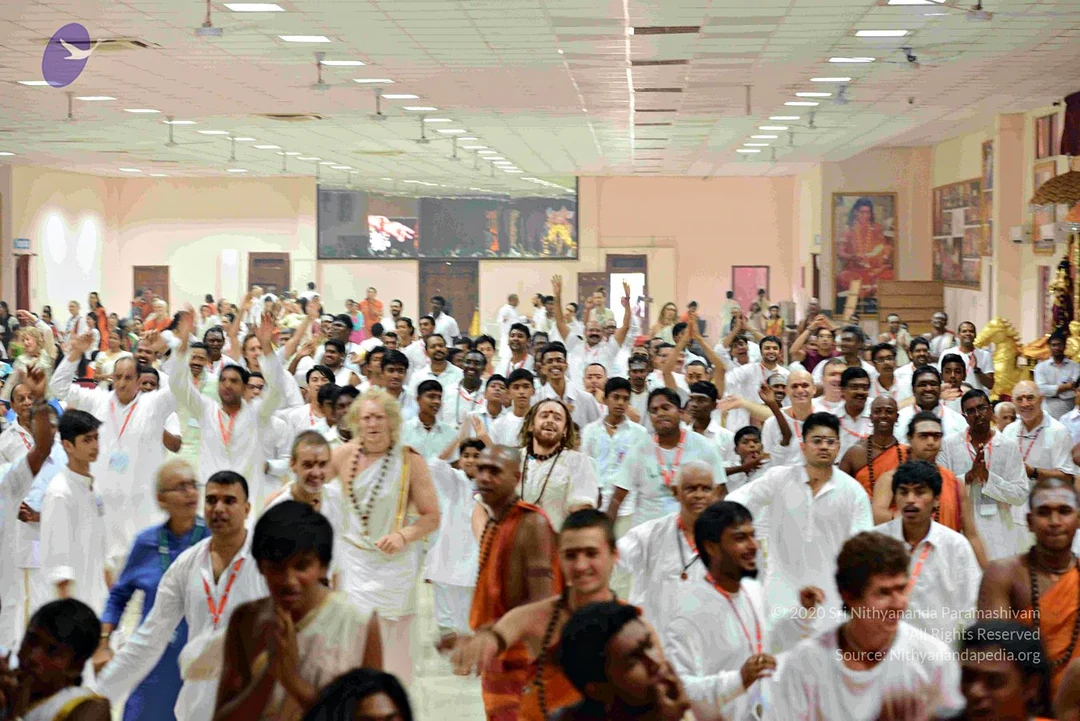
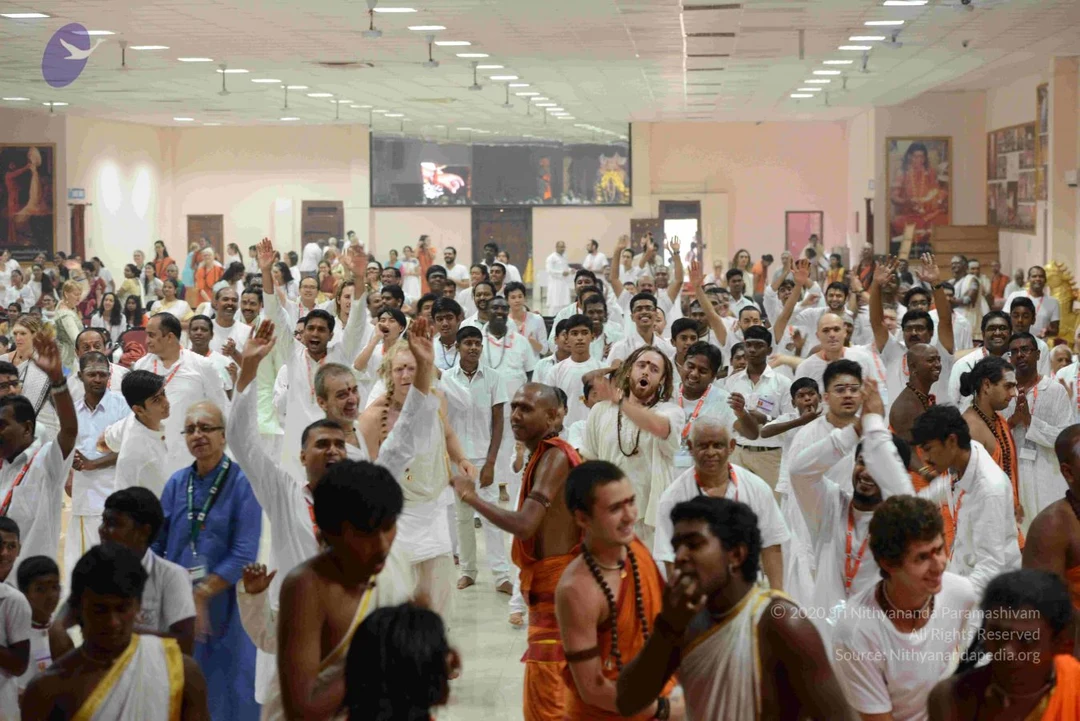
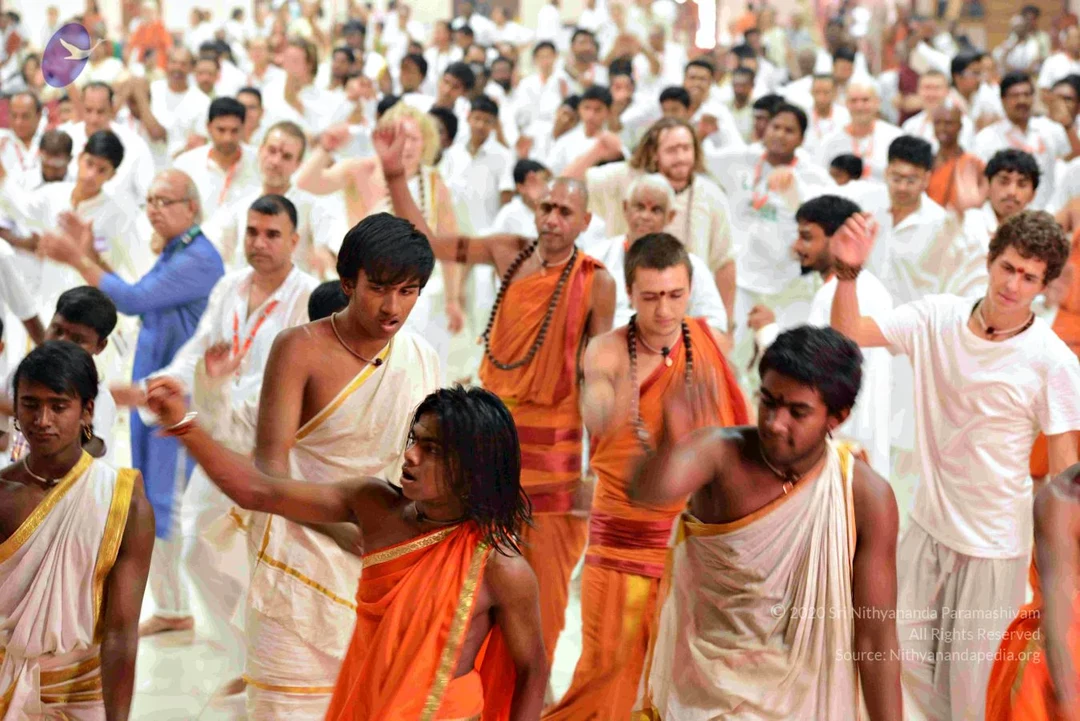
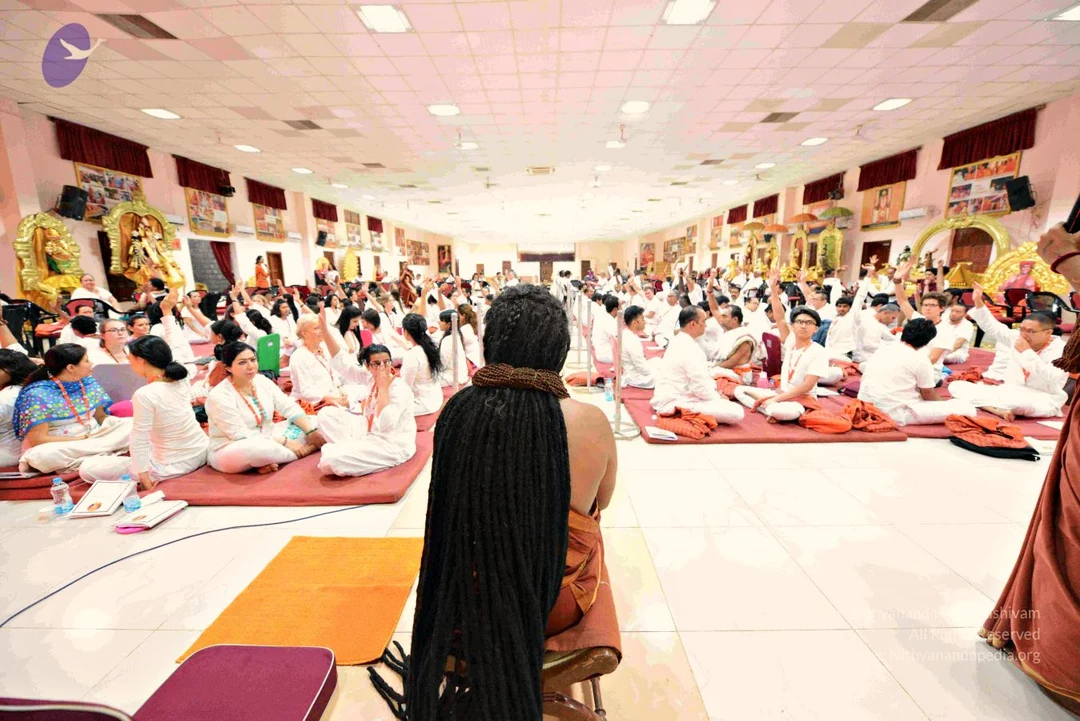
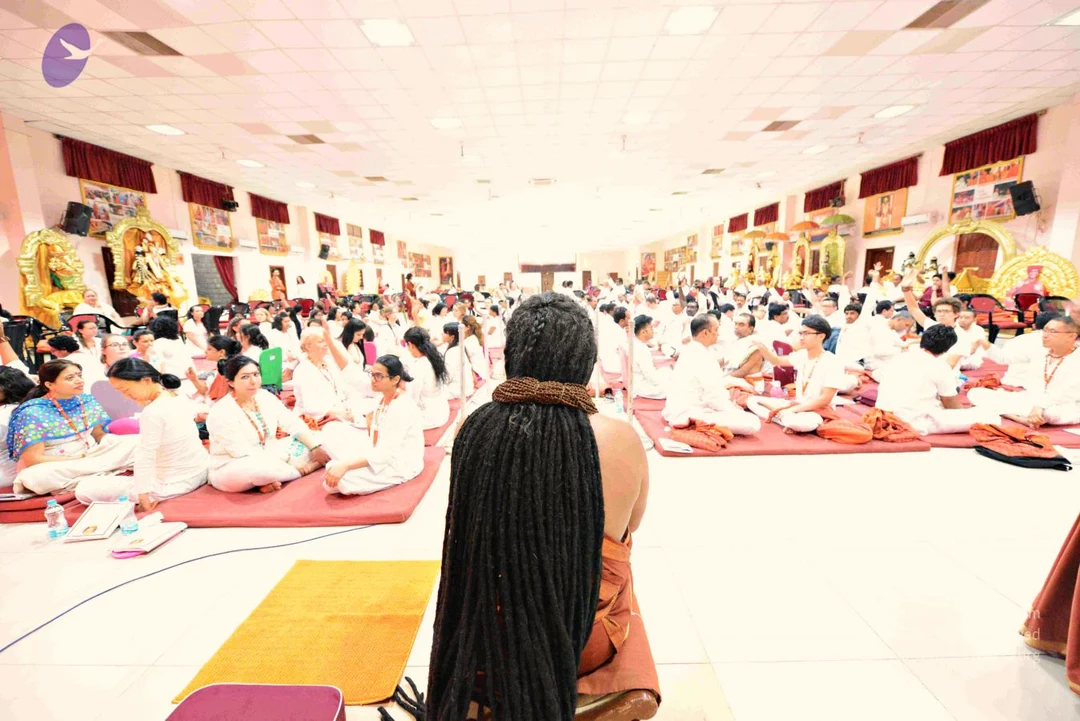
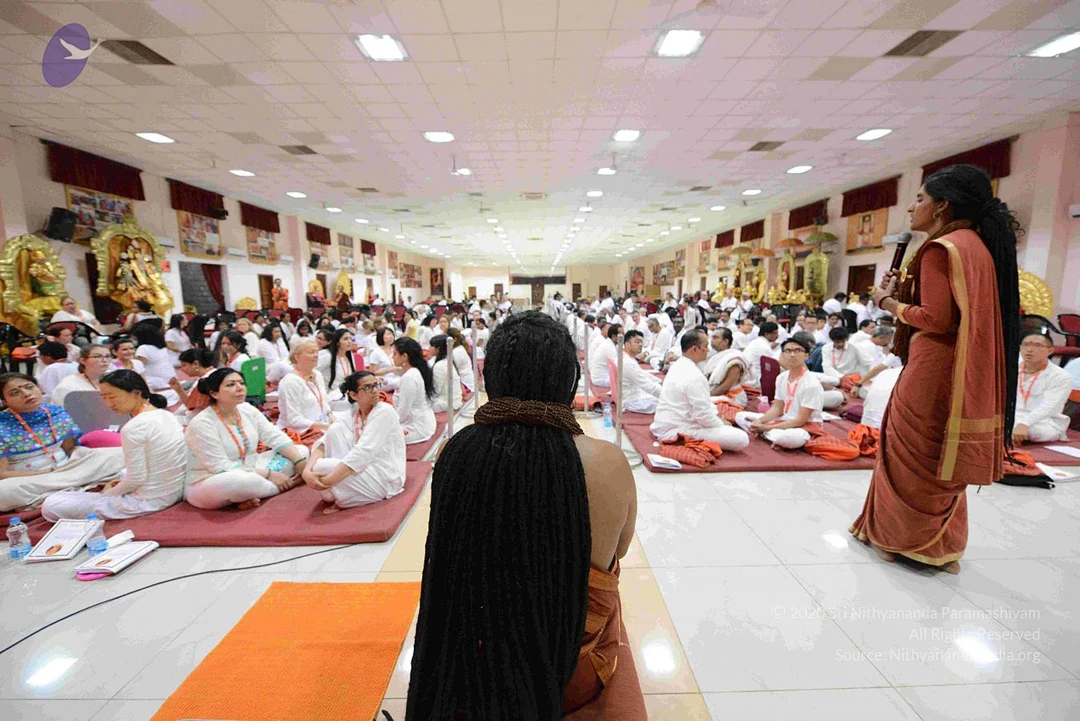
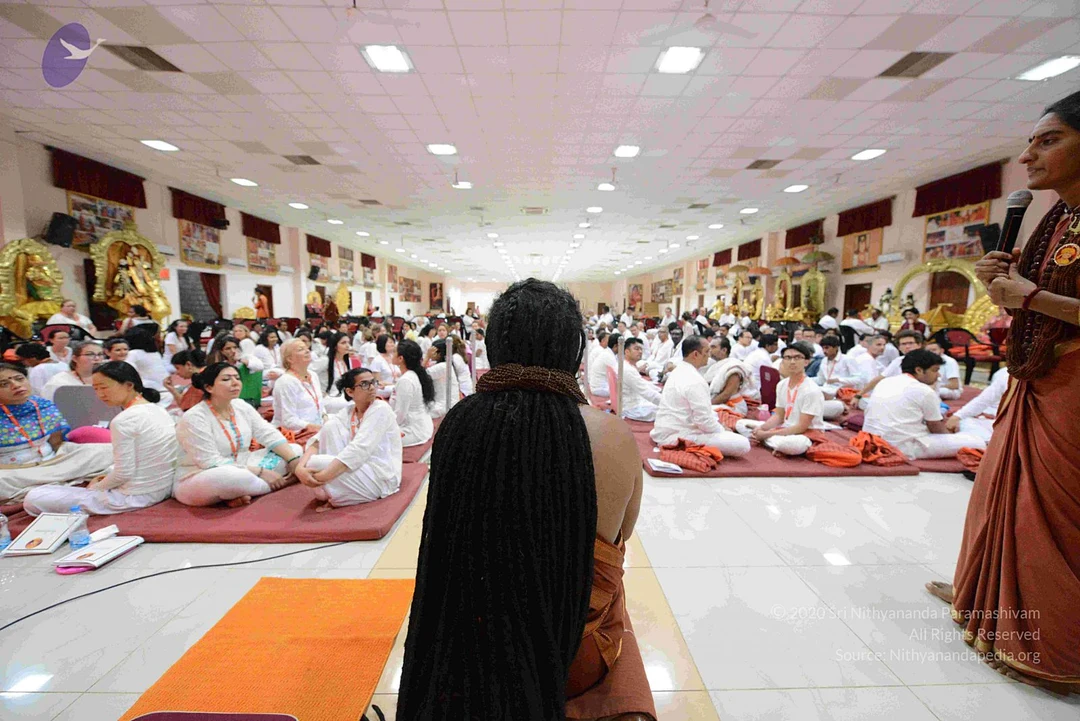
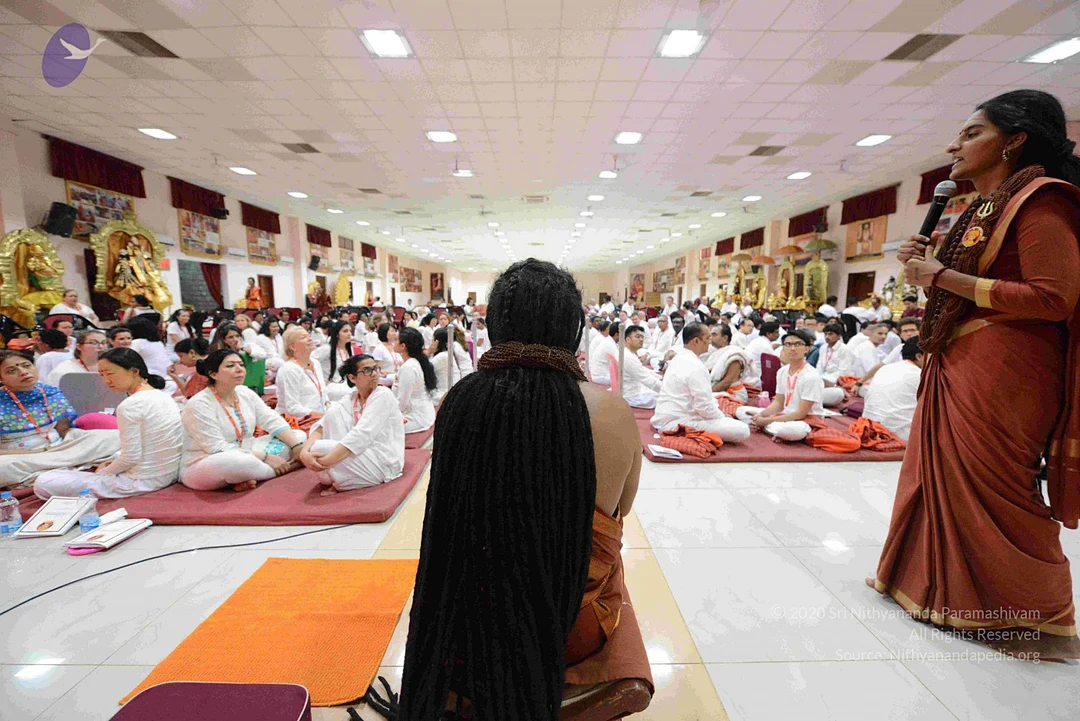
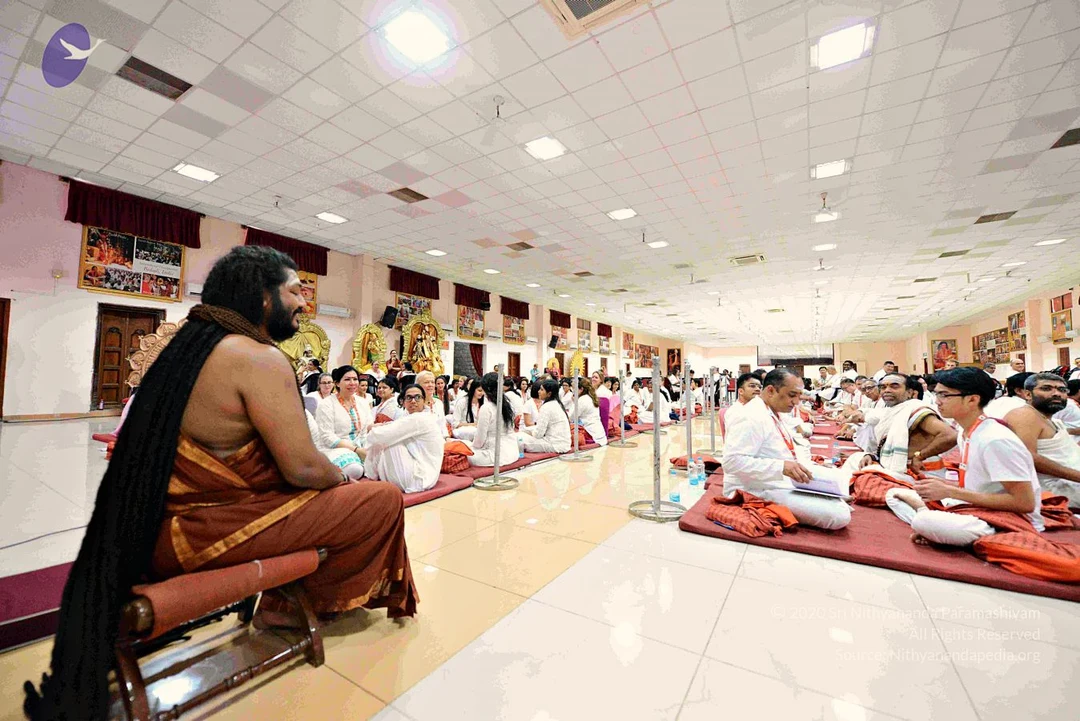
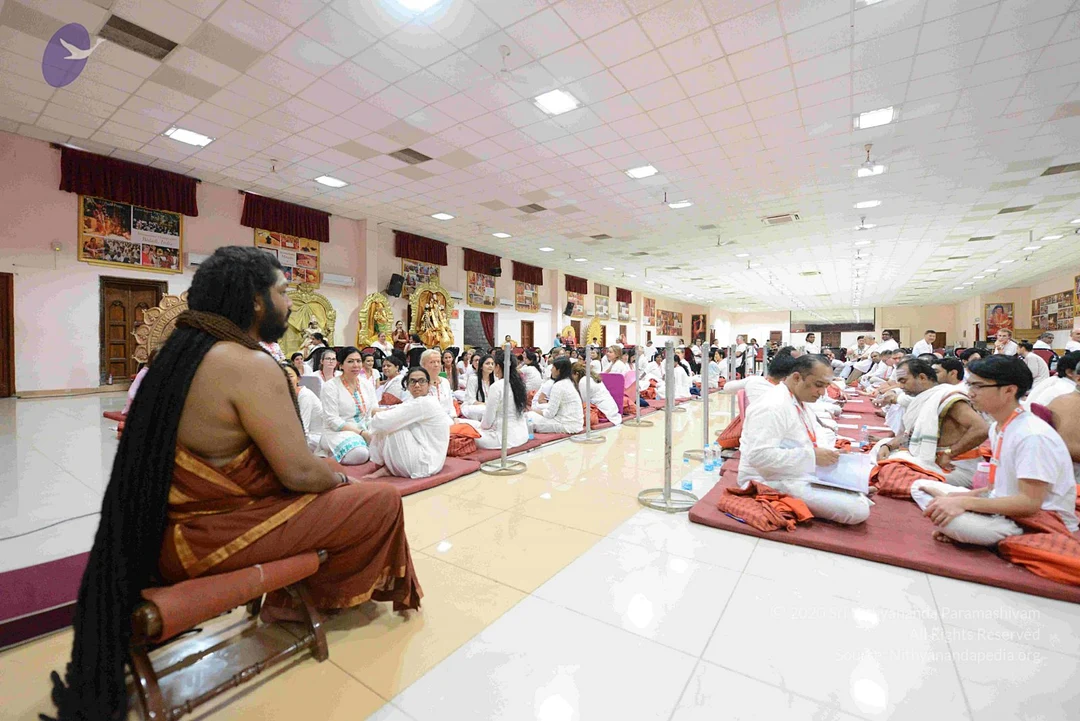
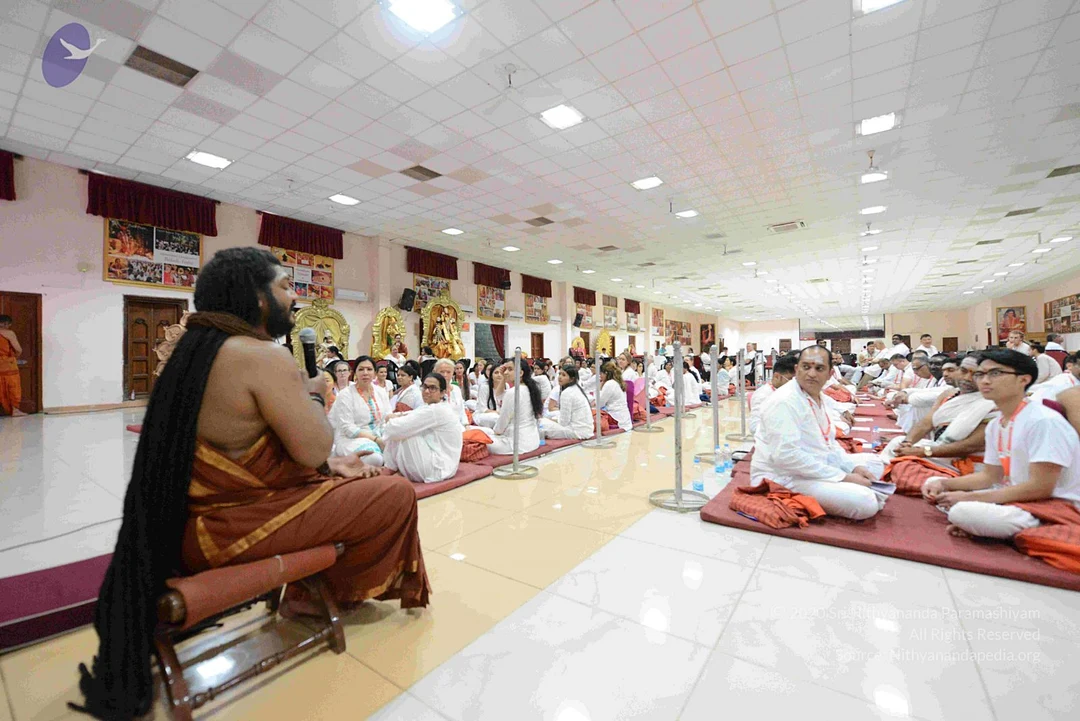
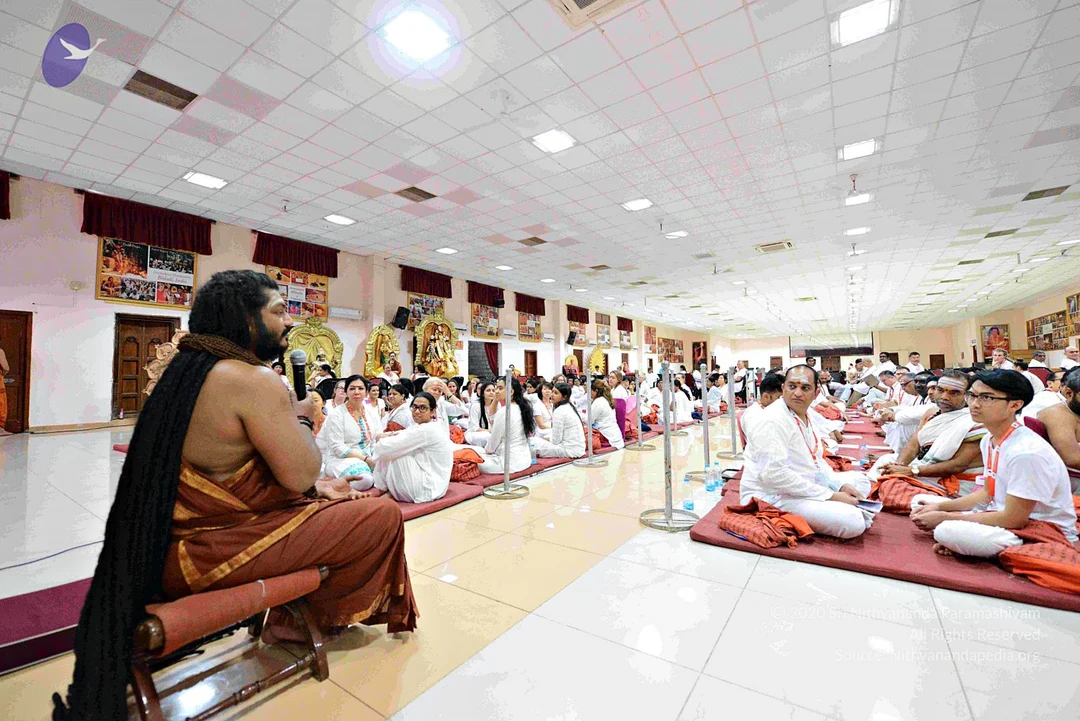
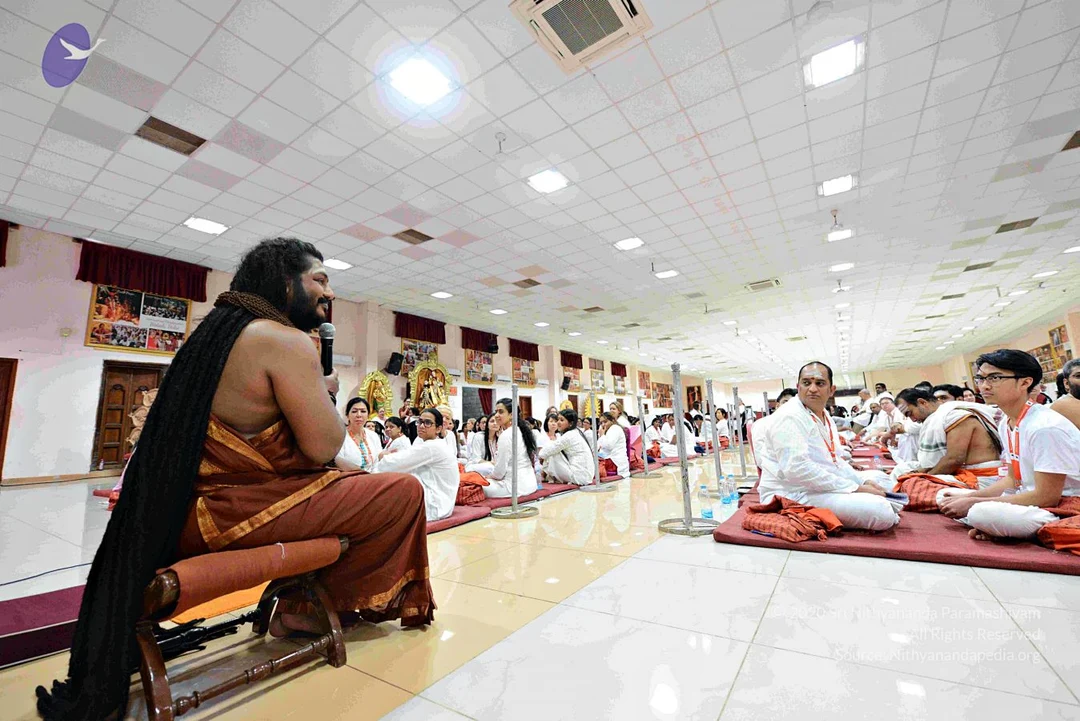
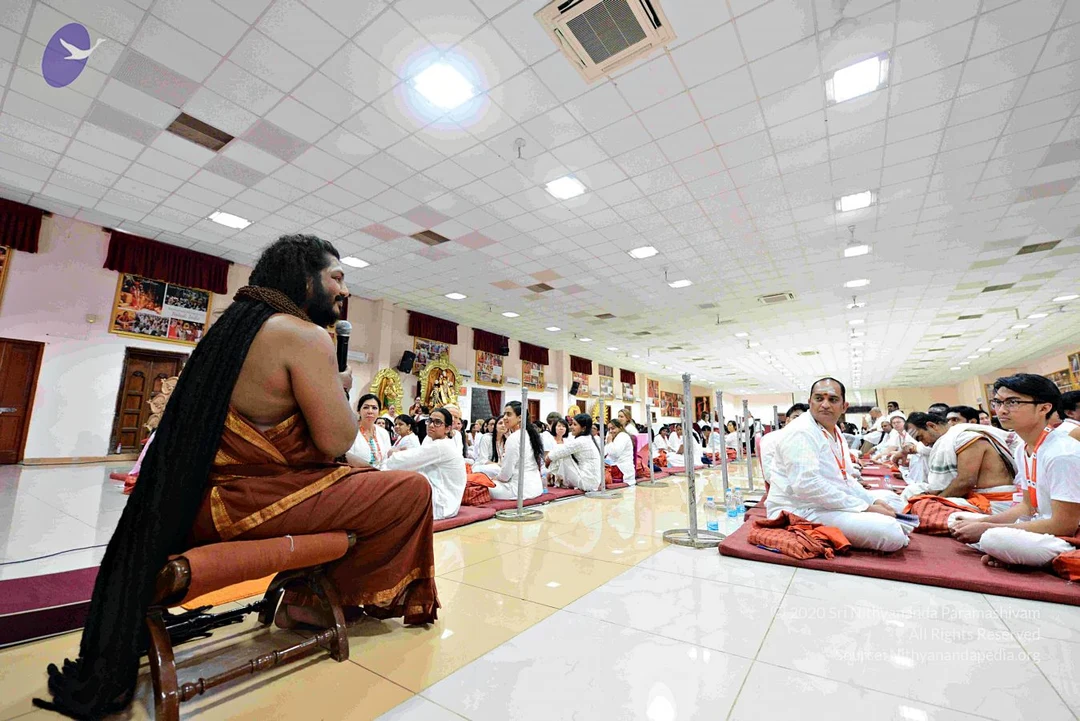
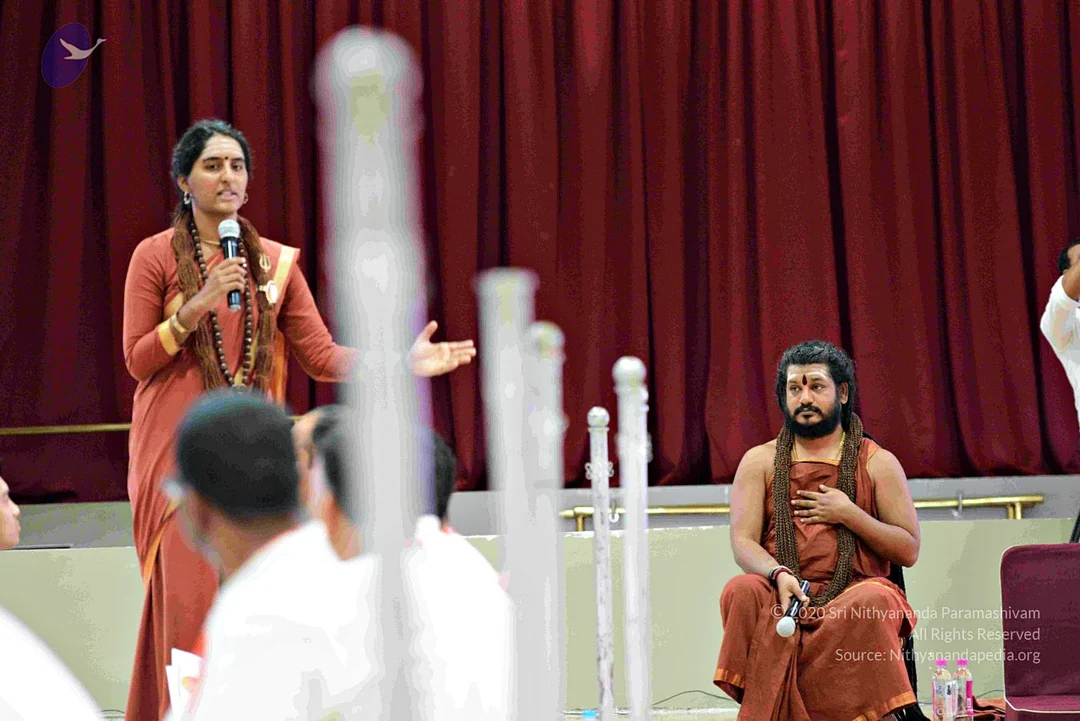
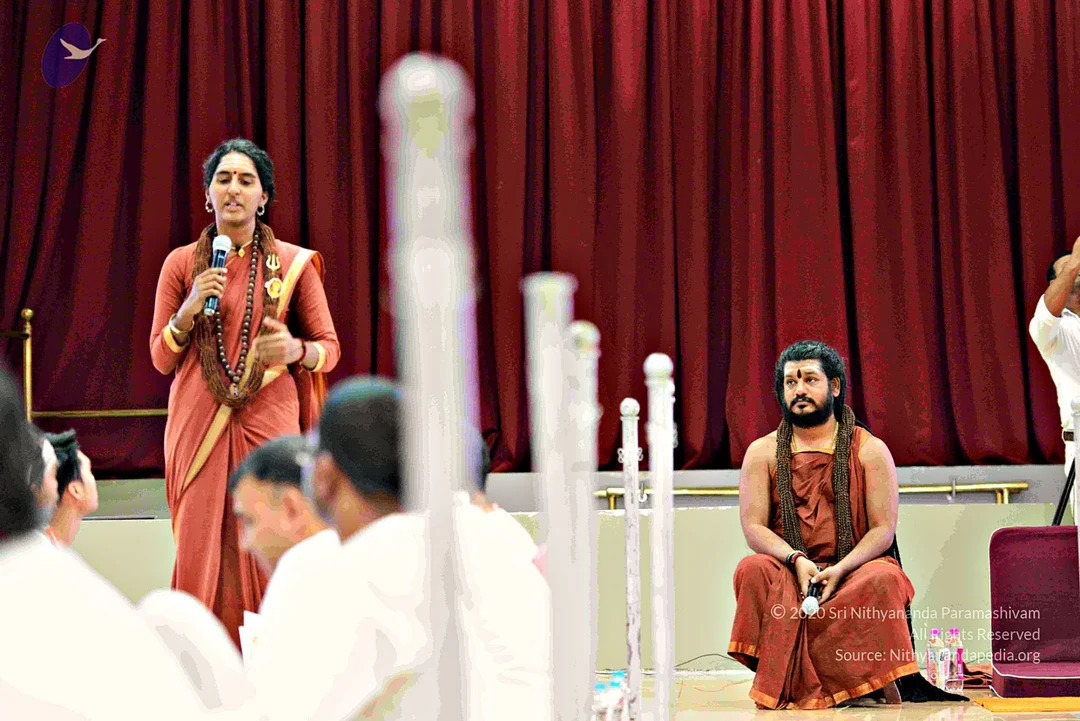
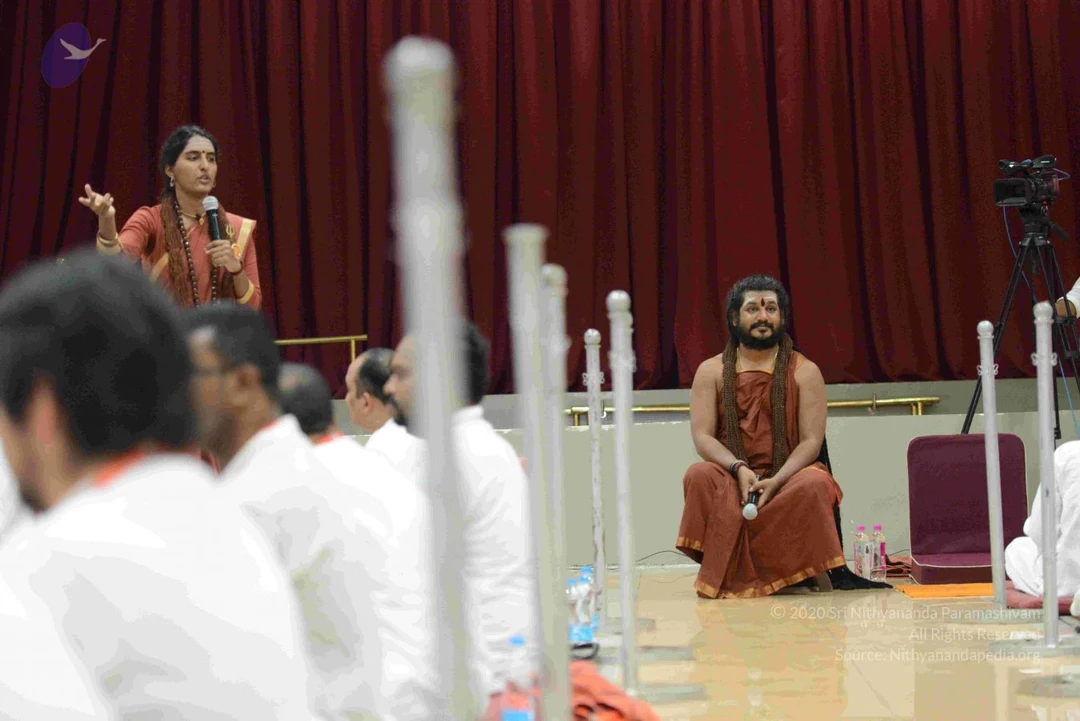
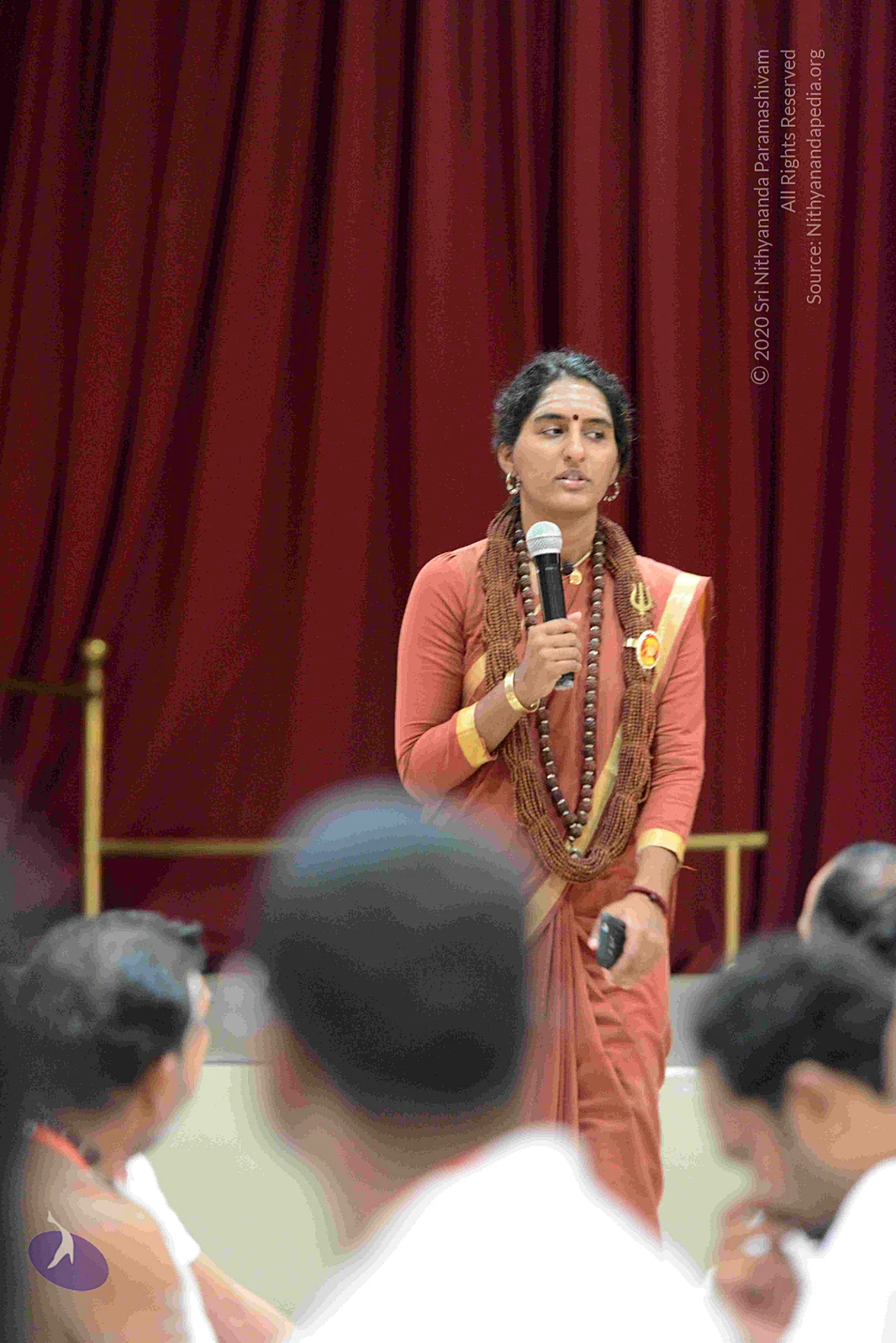
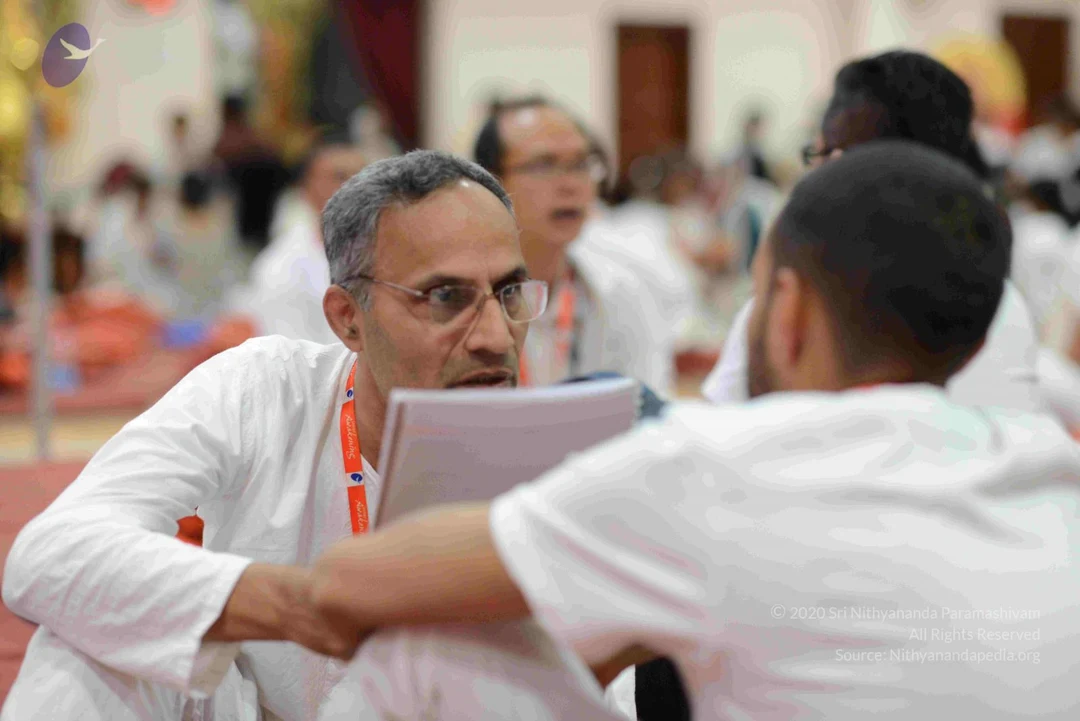
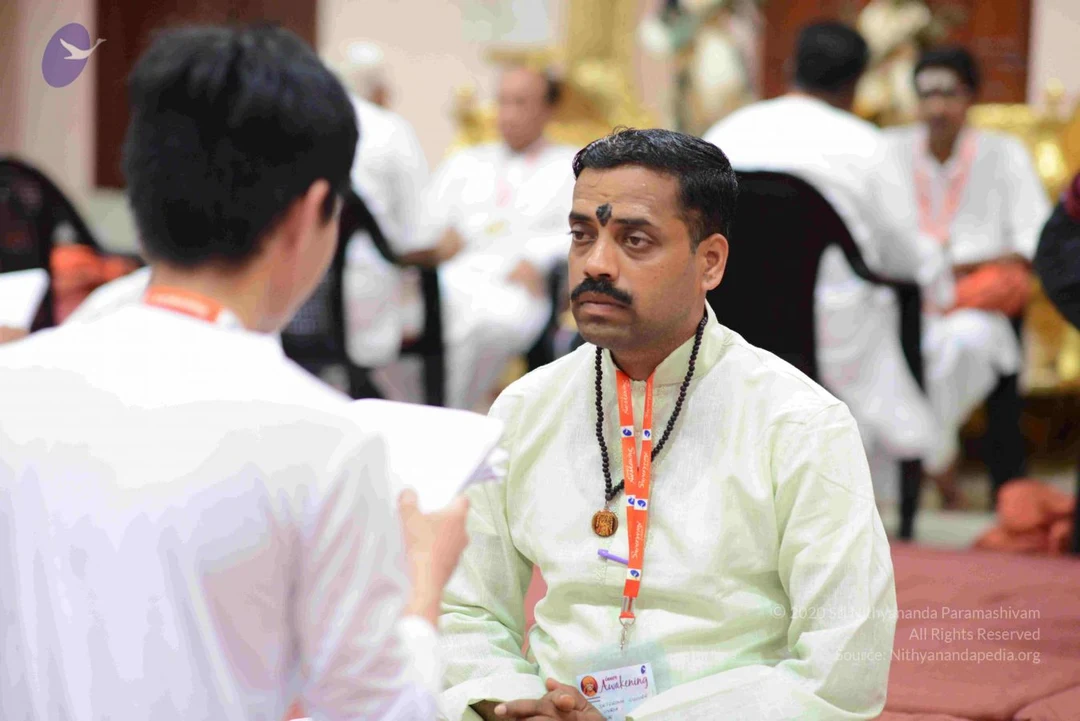
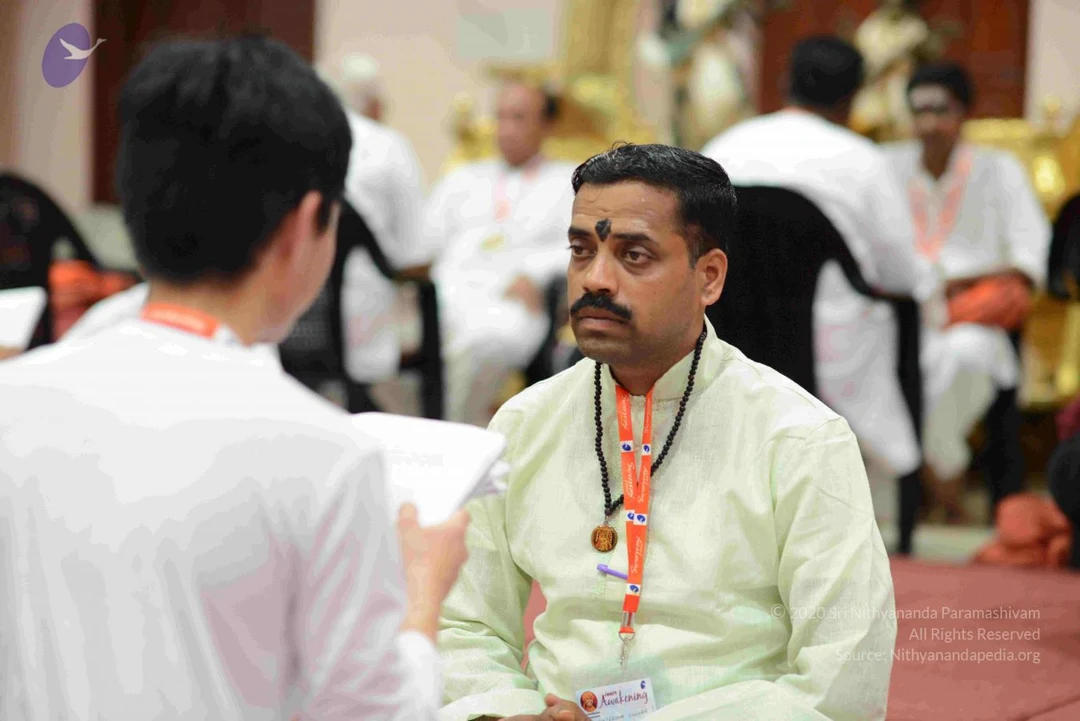
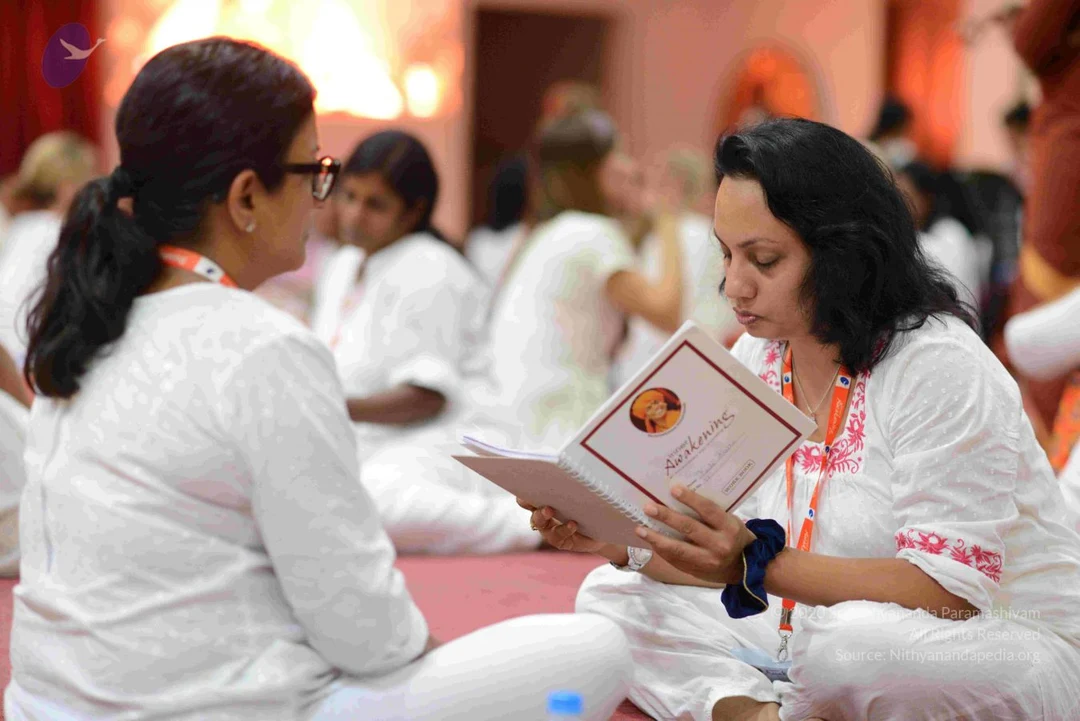
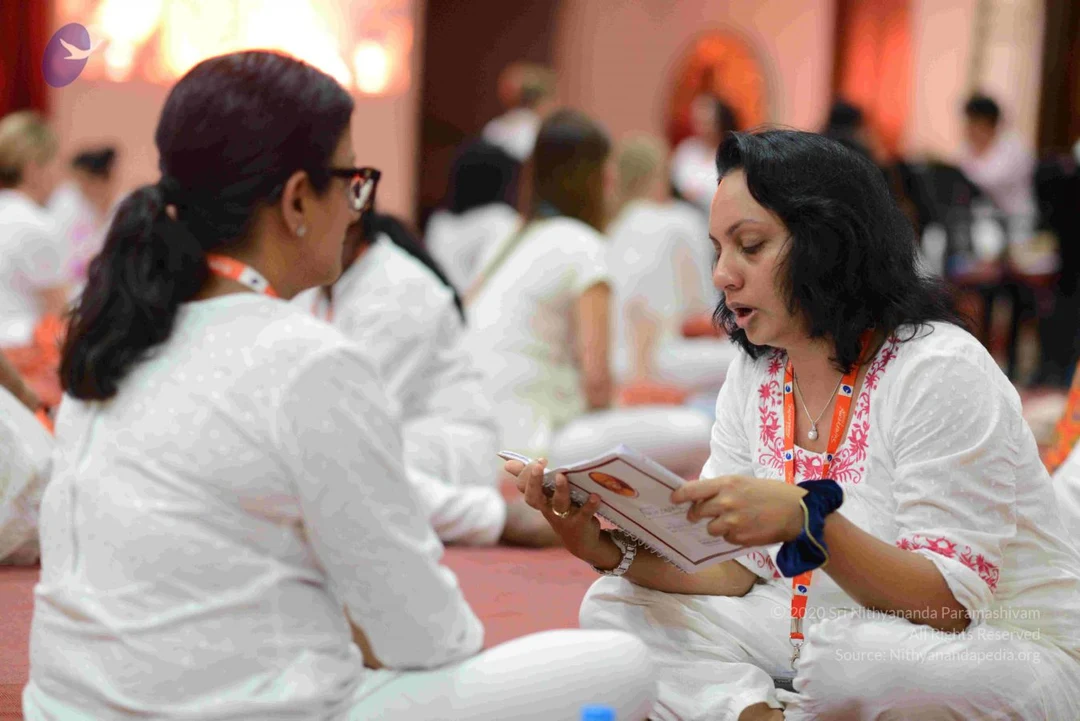
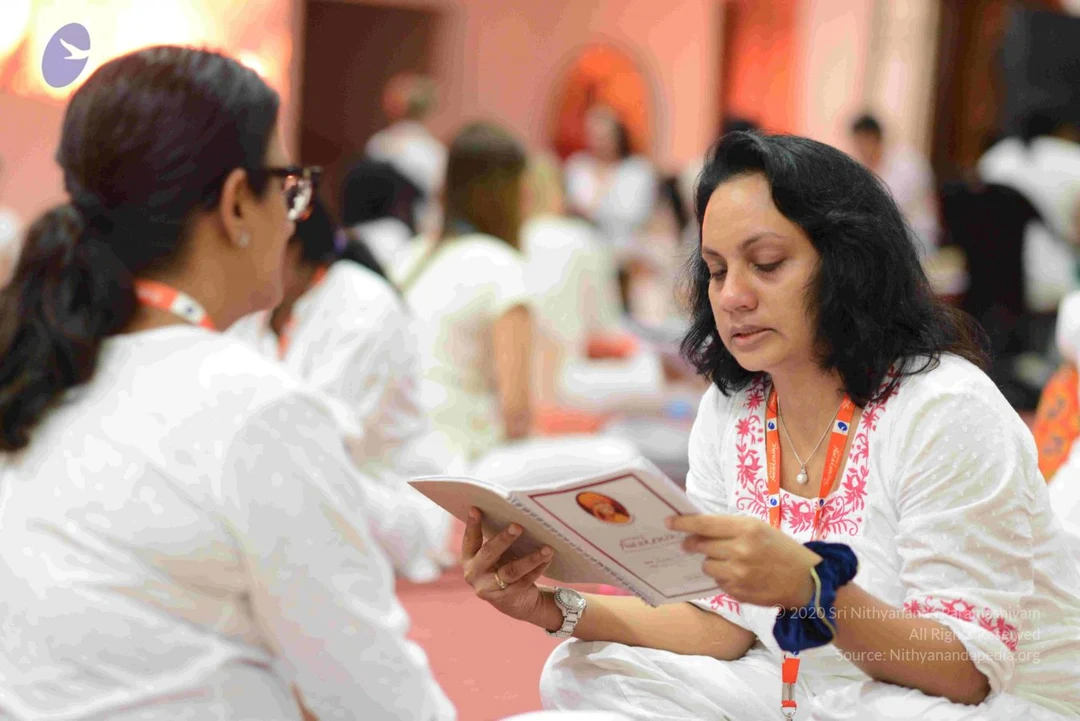
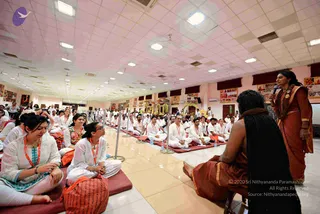
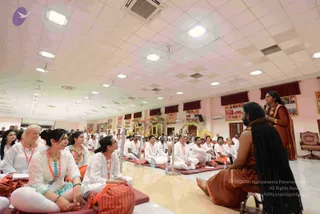
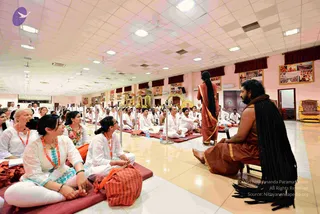
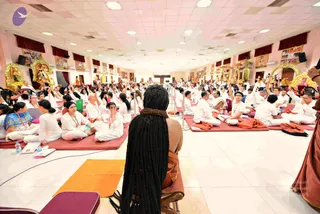
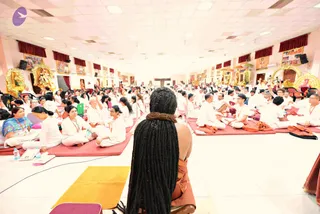
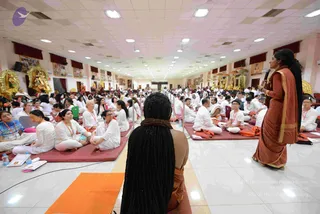
A large hall with a tiled floor and pink walls hung with framed pictures and a gold-and-white shrine arrangement at the far end; many seated attendees on red floor mats face a central seated figure. In the foreground, a long-haired person with a bare upper back and a rudraksha mala sits cross-legged with back to the camera, facing a standing woman in a rust-orange sari and dark beaded necklace who holds a microphone and gestures while speaking. Attendees in white clothes and orange lanyards sit in rows; one woman in the left foreground wears a white kurta and blue-green dupatta. Overhead fluorescent lights and ceiling vents are visible. Probable Swamiji (long swept-back hair, rudraksha mala, saffron-orange shawl) is seated in the foreground, shown from behind; the speaker stands with a microphone.A satsang hall with a pink-walled interior and many seated attendees on mats, mostly in white clothes with orange lanyards. In the foreground a man with long dark hair and an orange-brown robe sits cross-legged with his back to the camera, facing a woman in an orange sari who stands at the right near a microphone and chair. Framed pictures and a golden deity shrine arch appear along the back wall.A satsang hall with a large seated audience in white clothes and orange lanyards sits on mats across a tiled floor. In the foreground, a man with long dreadlocks and an orange-brown robe sits cross-legged on a low seat, facing the audience, with a microphone in his hand. Beside him, a woman with very long dark hair in a rust-orange saree stands near the front. Gold and red ceremonial chairs and framed photographs line the pink walls, and a large gold-trimmed throne-like seat appears at right. The man has long dark hair and a beard, and his appearance is consistent with the page's a person reference, though the attribution is uncertain. The page excerpt describes a morning satsang, which matches the seated audience.Wide photo of a large hall during a satsang with many seated devotees on red mats, most dressed in white, some raising hands. In the foreground a figure with long black dreadlocked hair, a rudraksha-style bead necklace and an orange-brown robe sits facing the crowd on a low seat, with an orange cushion in front. Golden ornate deity shrines and framed pictures line the walls, and red curtains hang between them. Visible crowd is roughly forty to fifty people.A large hall with white-tiled floor and pink-cushioned mats where many devotees in white clothes sit in rows facing forward during a satsang. In the foreground a person seen from behind with long dreadlocks and a rudraksha-style beaded neck cord sits in orange-brown cloth on a yellow mat, facing the assembly. The seated audience wear white and some wear orange scarves and beaded necklaces. Gold ornate shrine niches with deity murtis line the walls, with framed pictures and red drapes above. Kalasha-style gilded thrones stand along the side.A photograph from a satsang hall with a large seated audience of devotees in white clothes and orange-and-white lanyards, sitting on maroon mats across the floor. In the foreground, a figure seen from behind with long dreadlocked hair, wearing a rudraksha mala and an orange-brown dhoti, sits facing the hall. On the right, a woman in a rust-orange sari with a long dark braid stands holding a microphone and addresses the gathering. Golden deity statues and framed pictures line the walls, and orange cloth rests on the floor near the front.

IA-Darshan

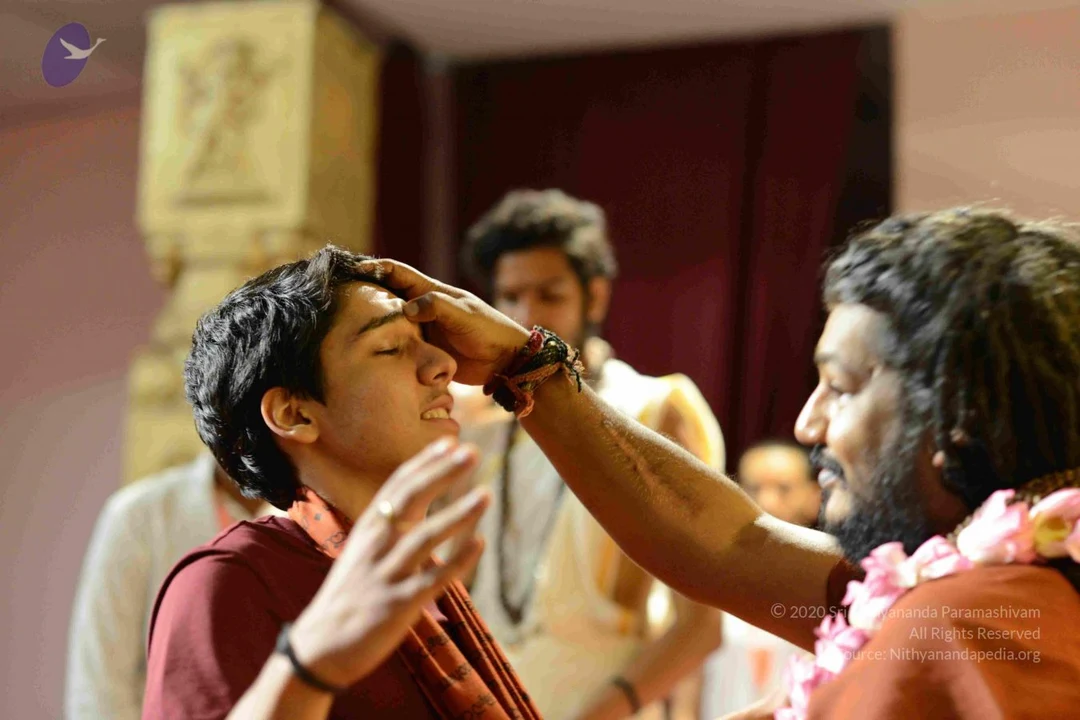
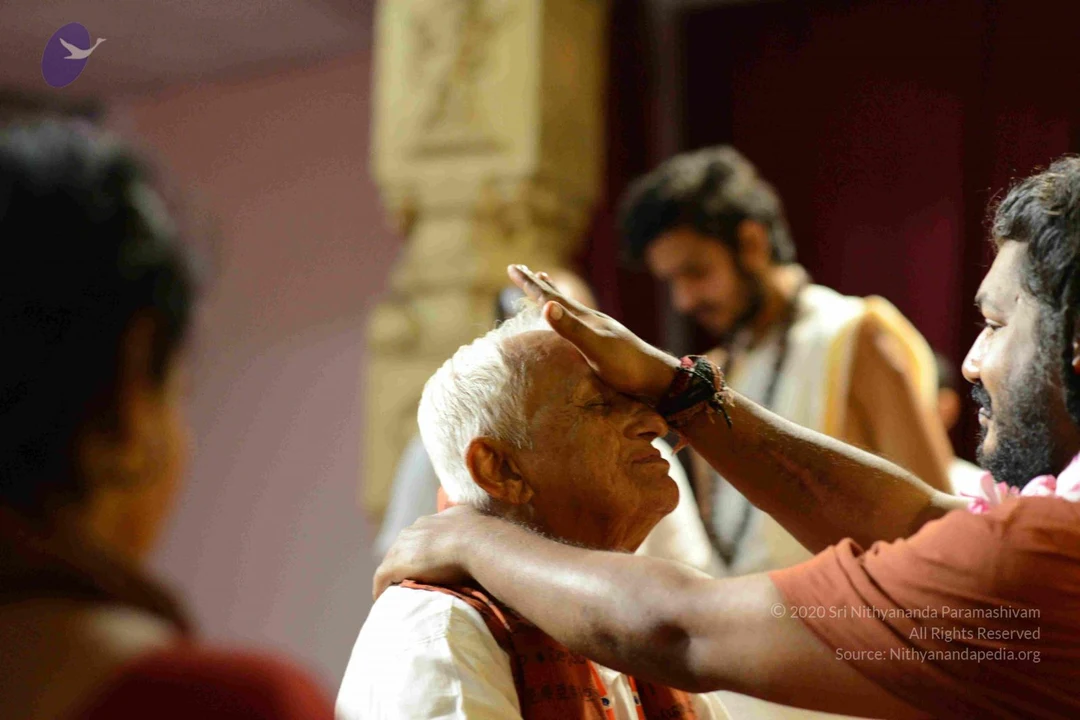
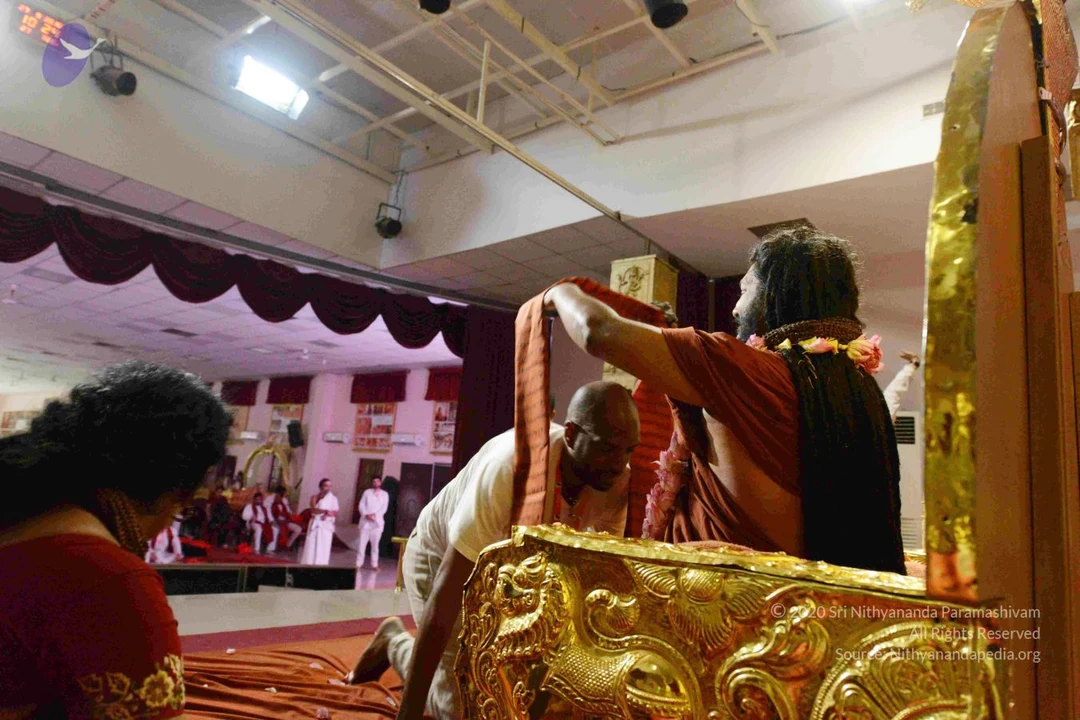
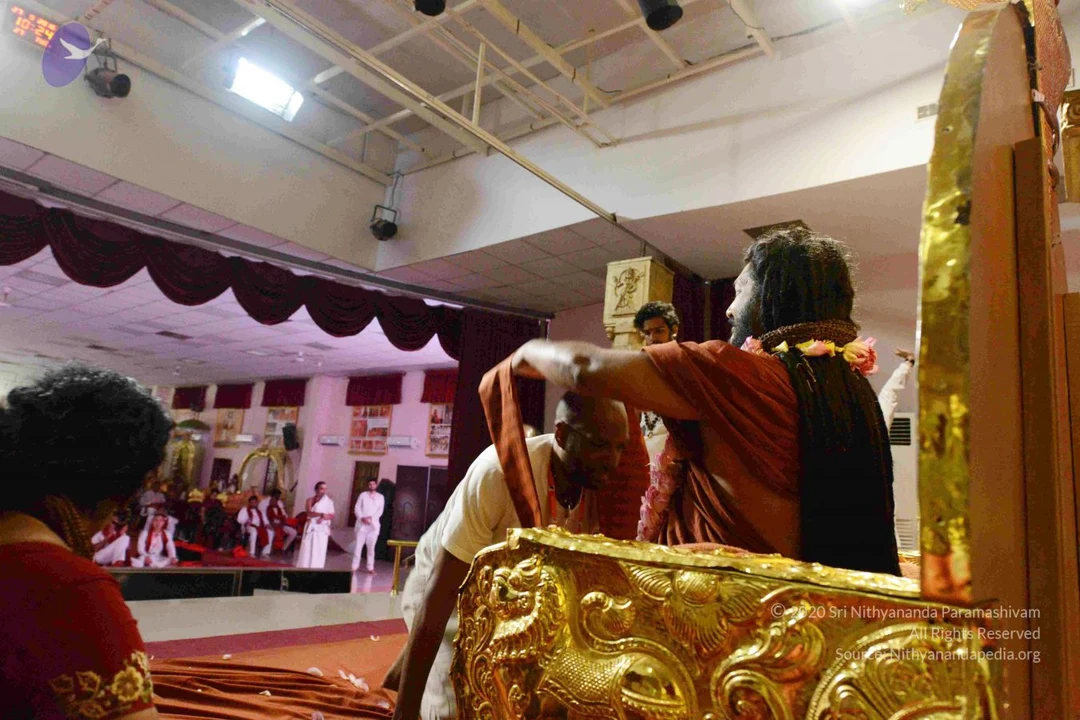
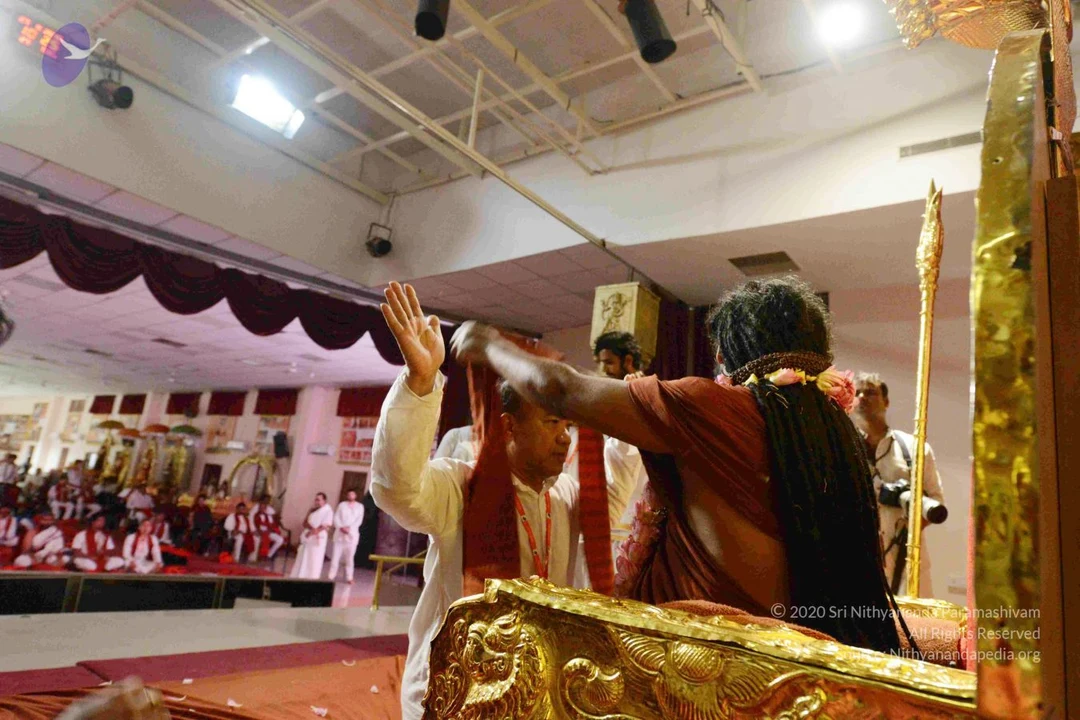
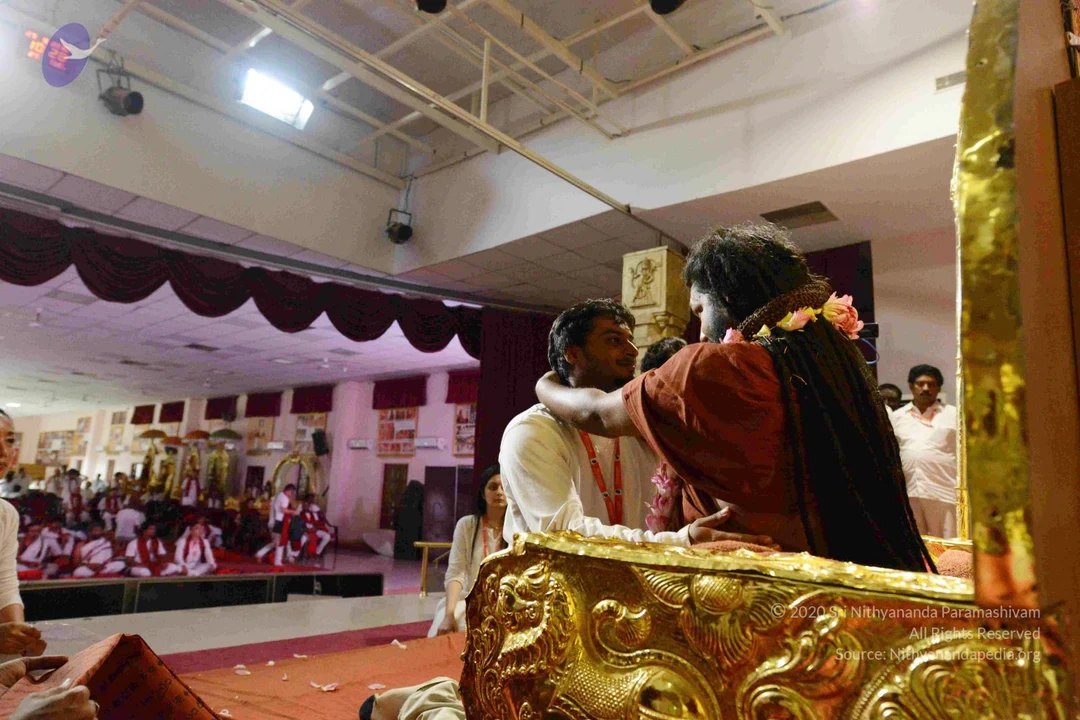
78 photosSource gallery
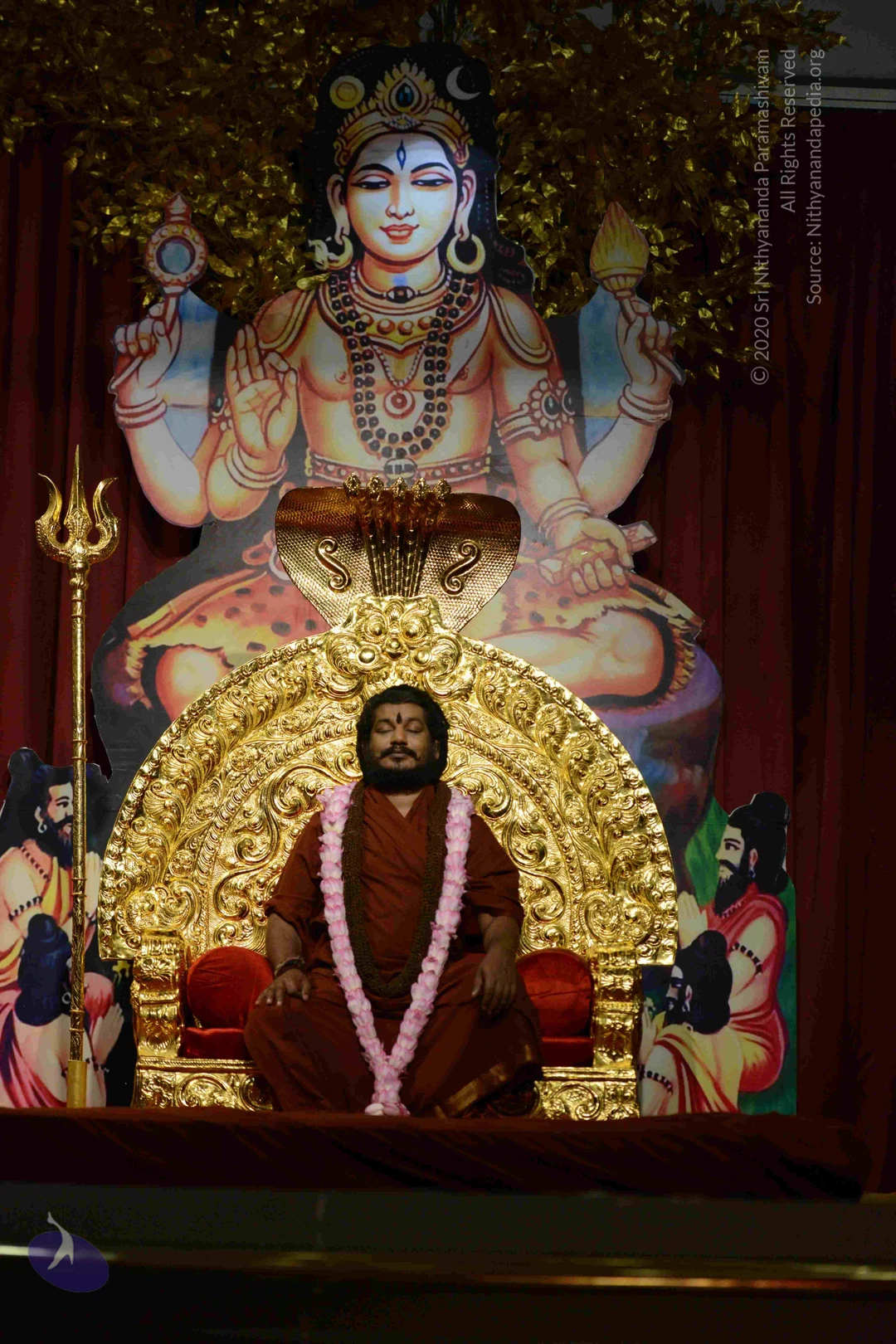
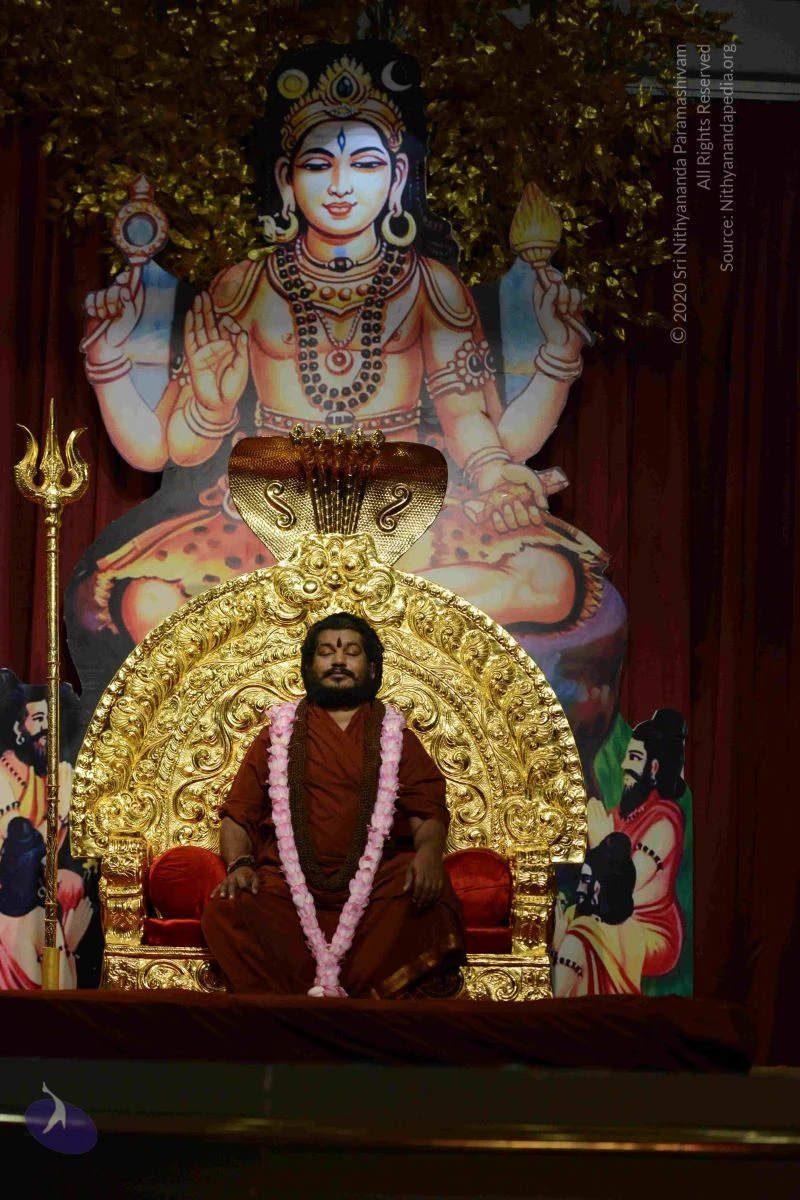
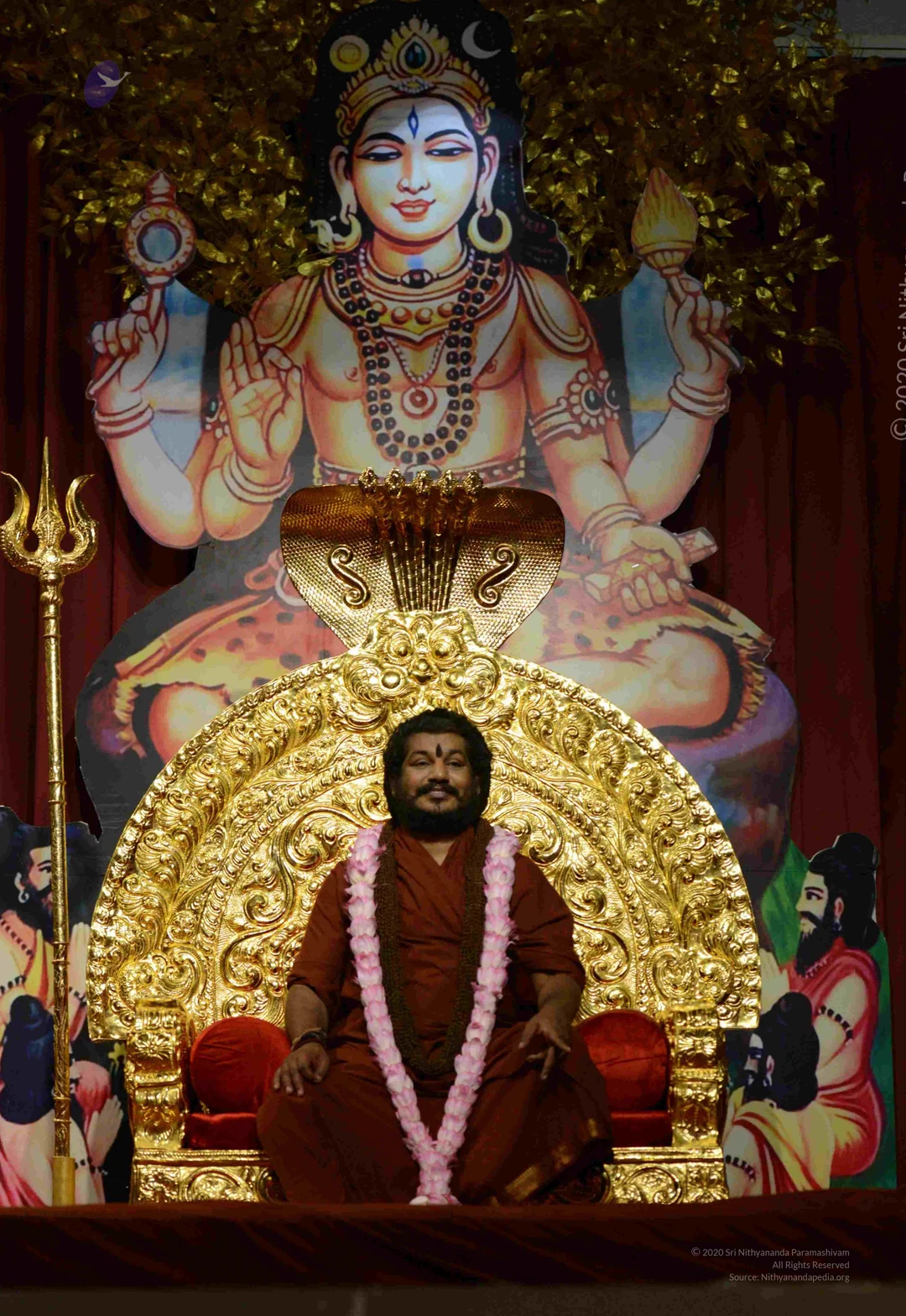
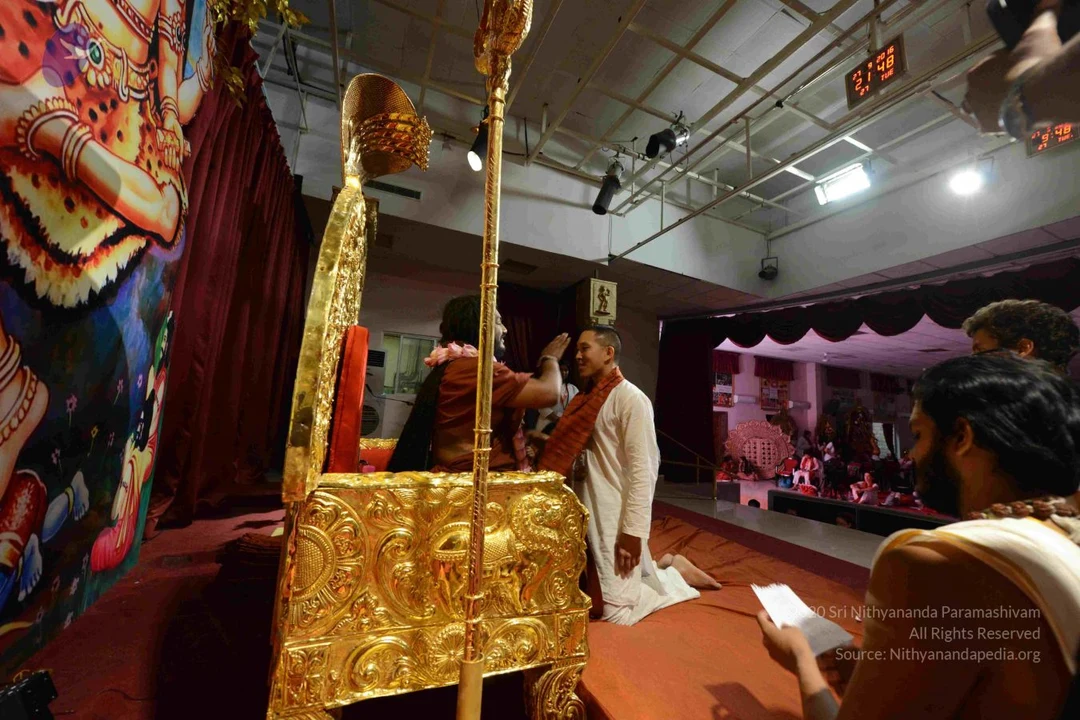
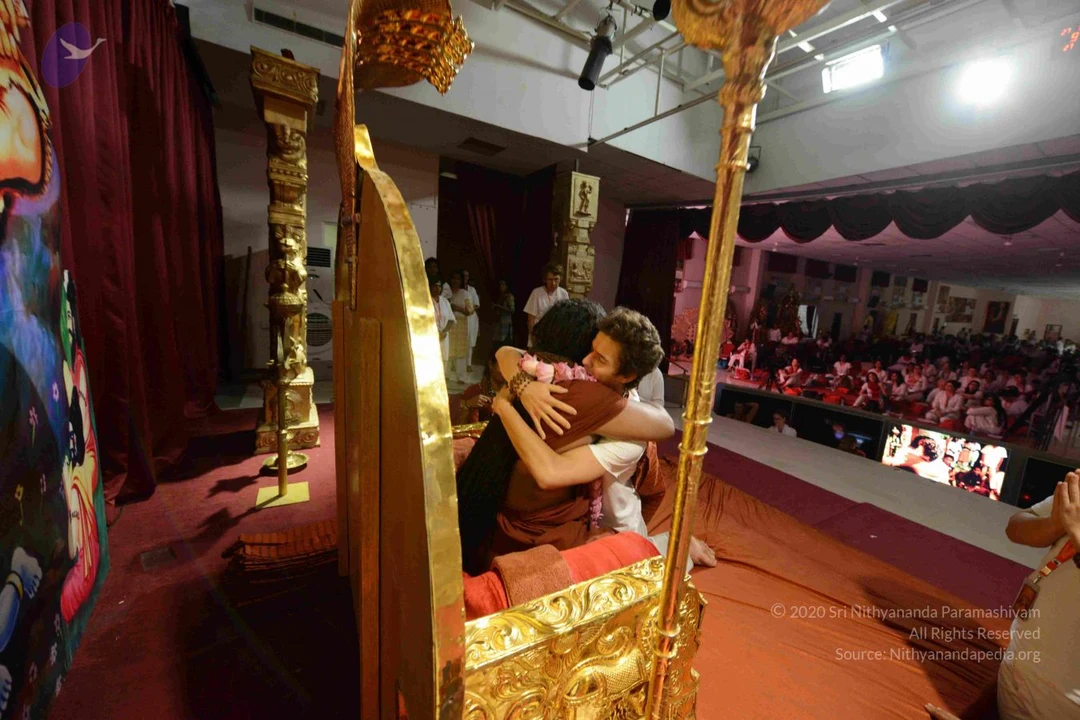
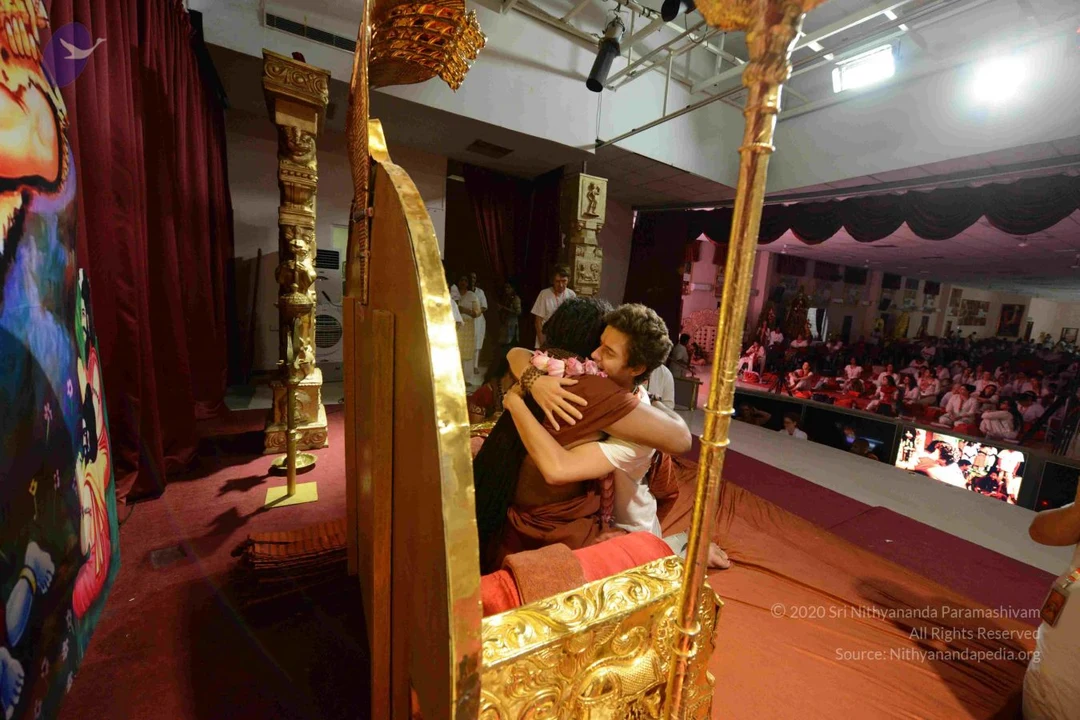
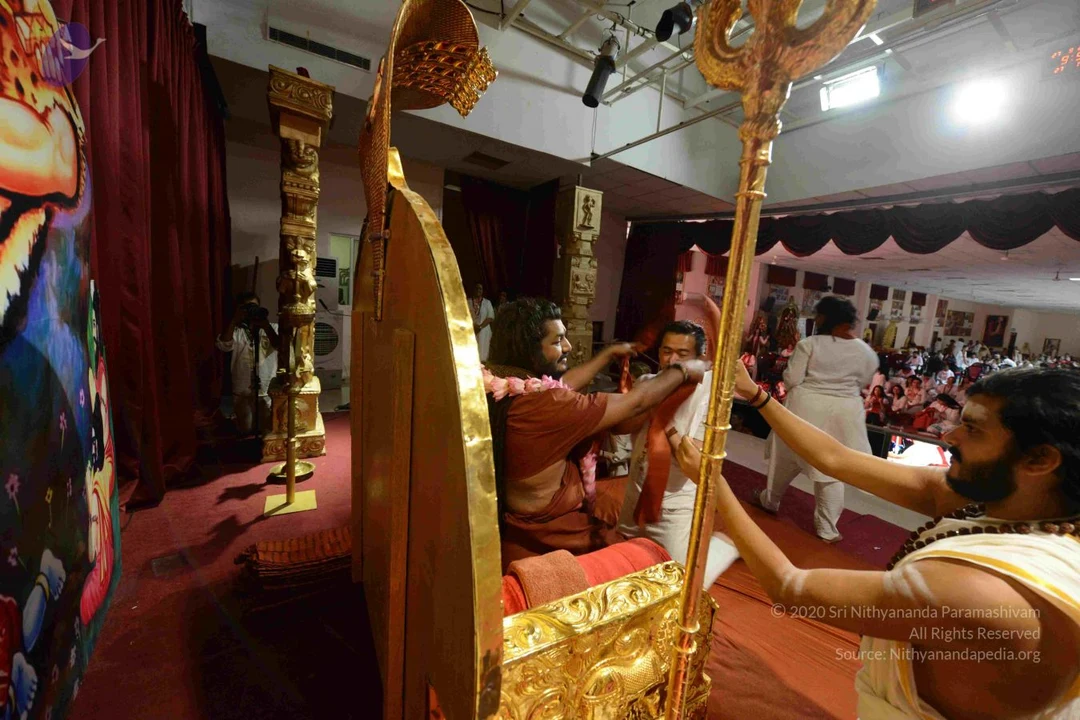
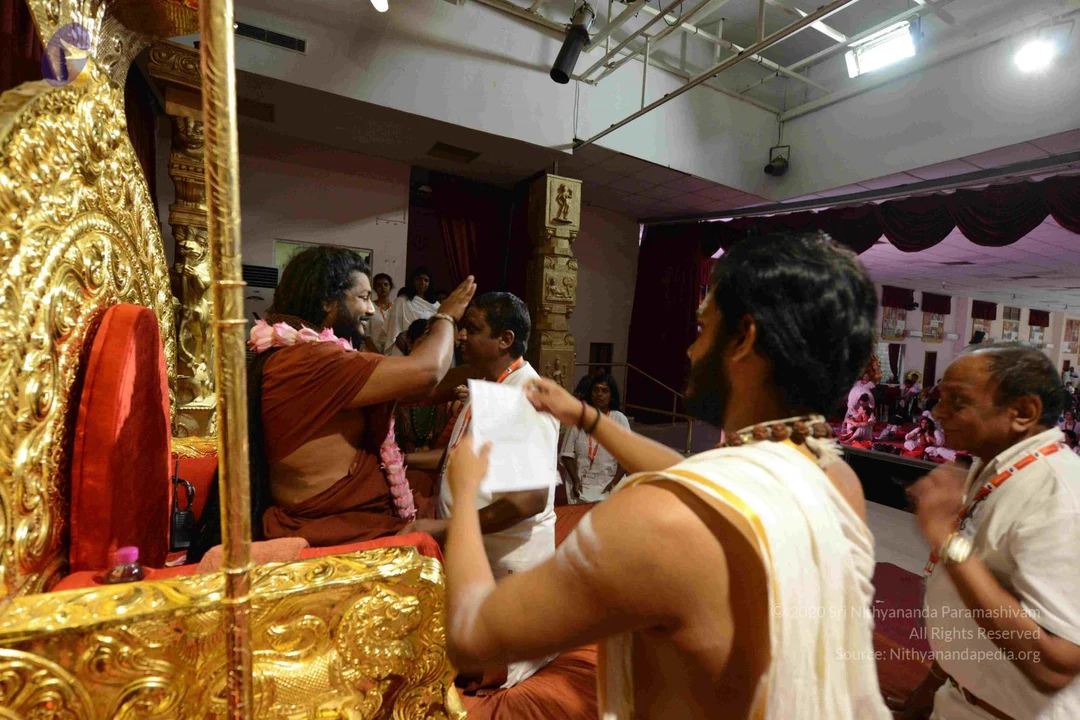
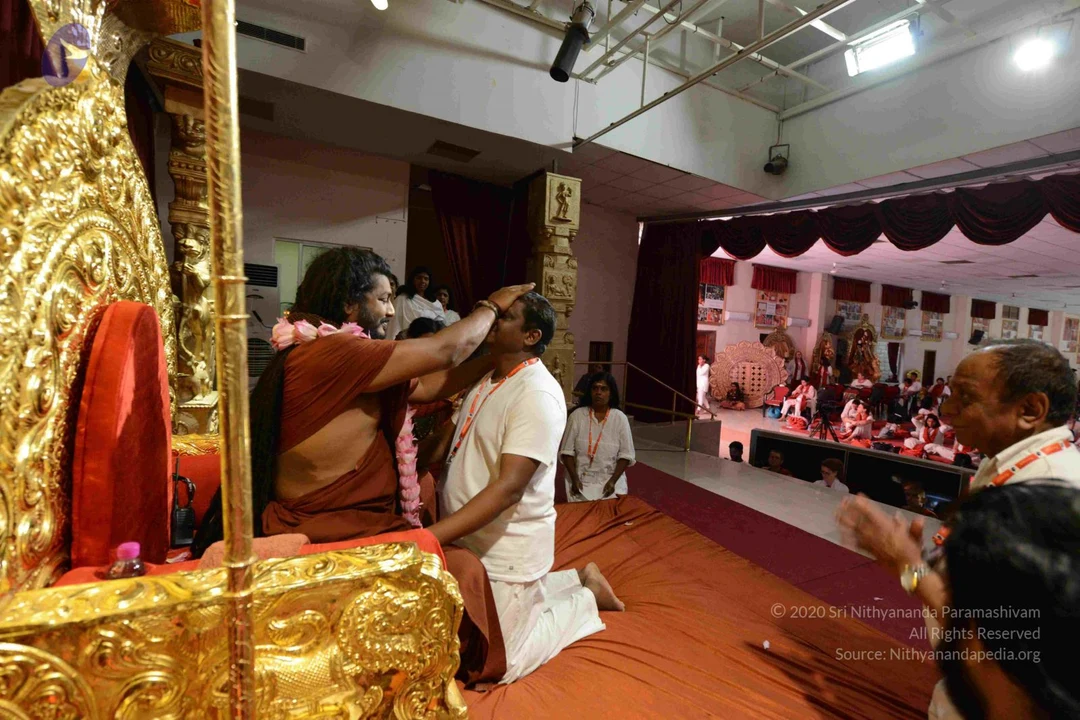
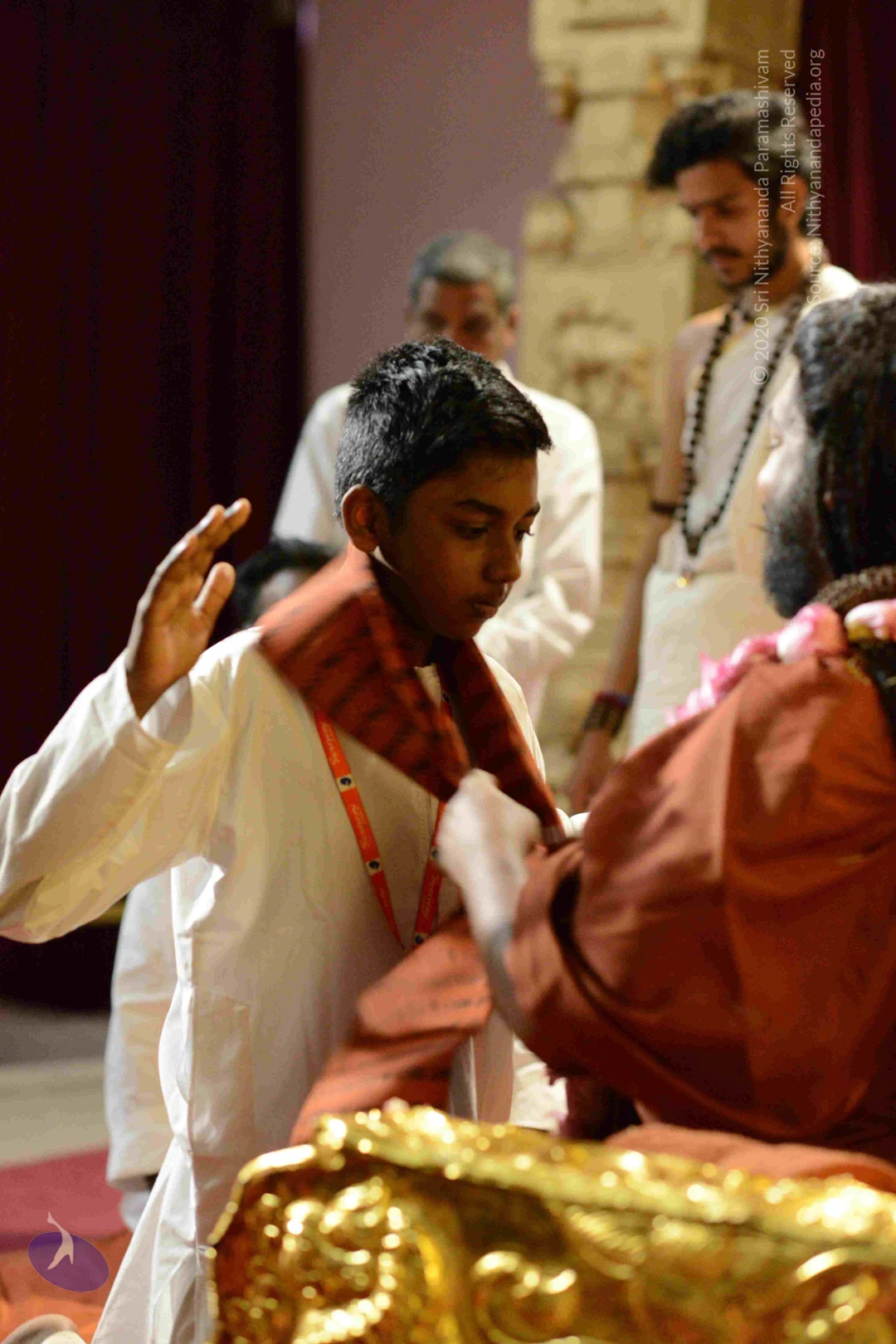
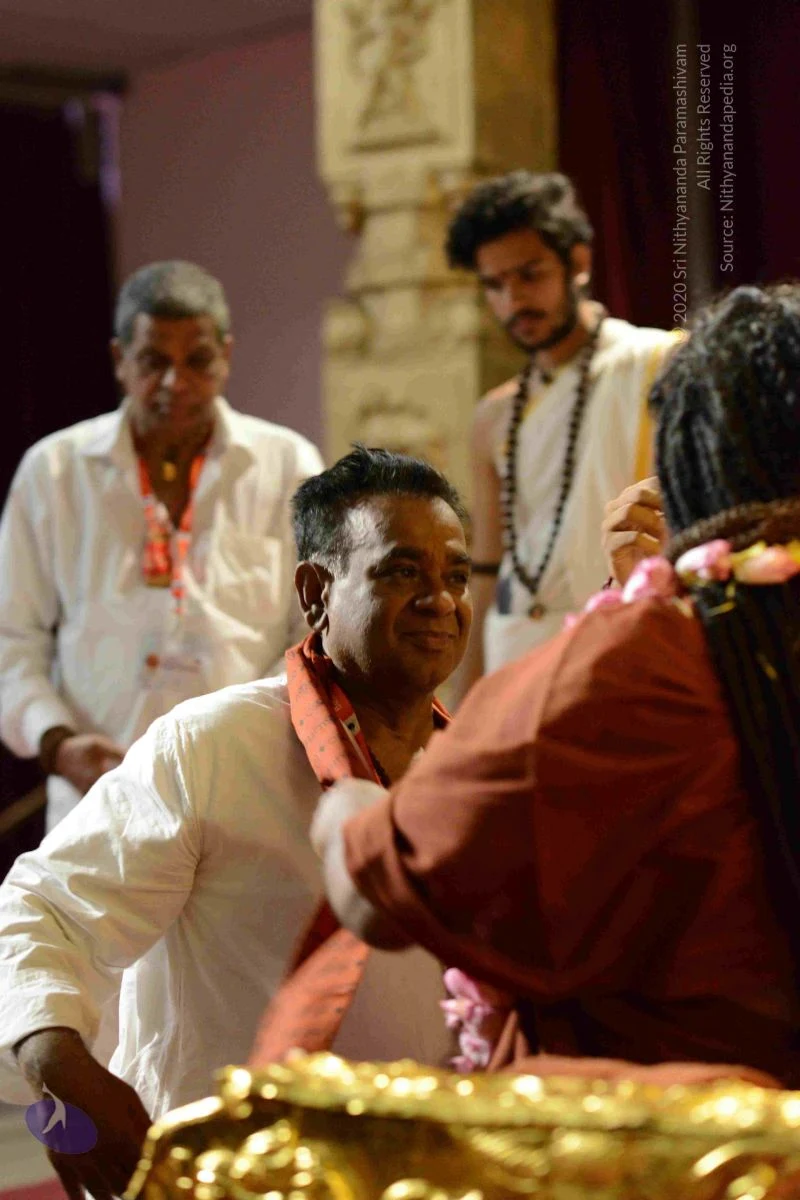
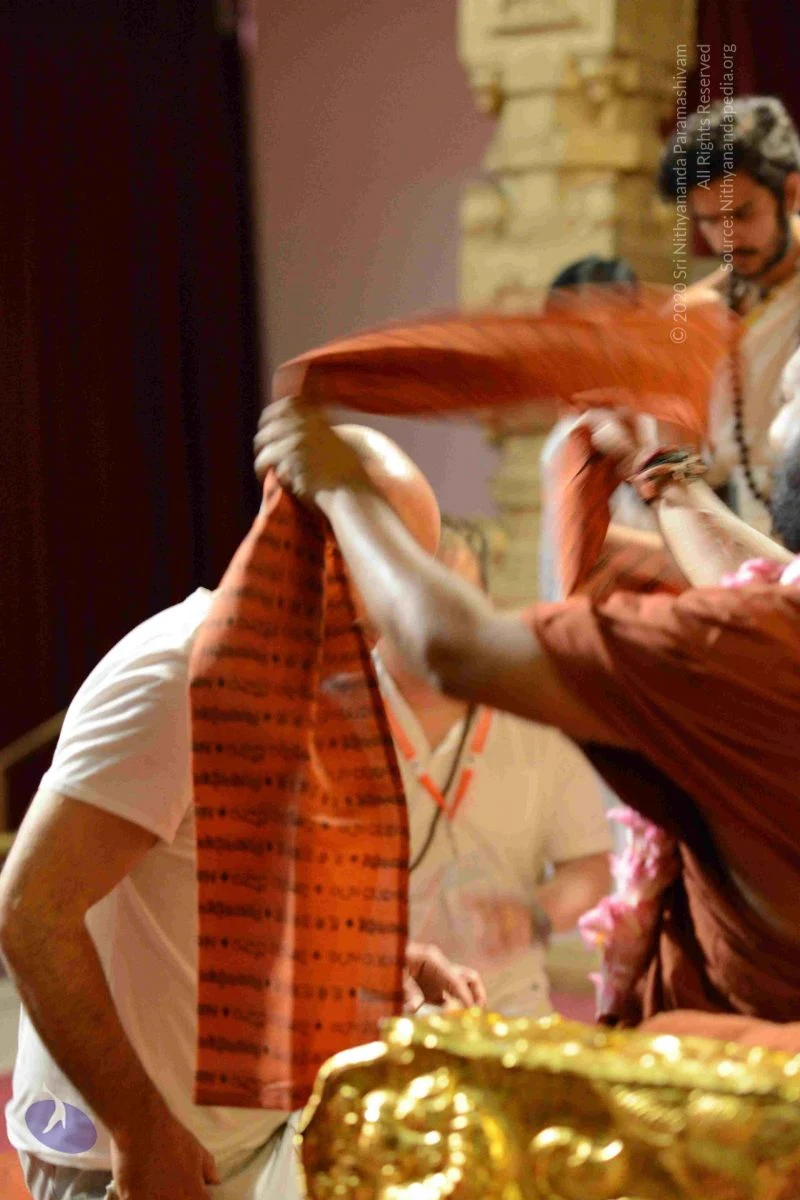
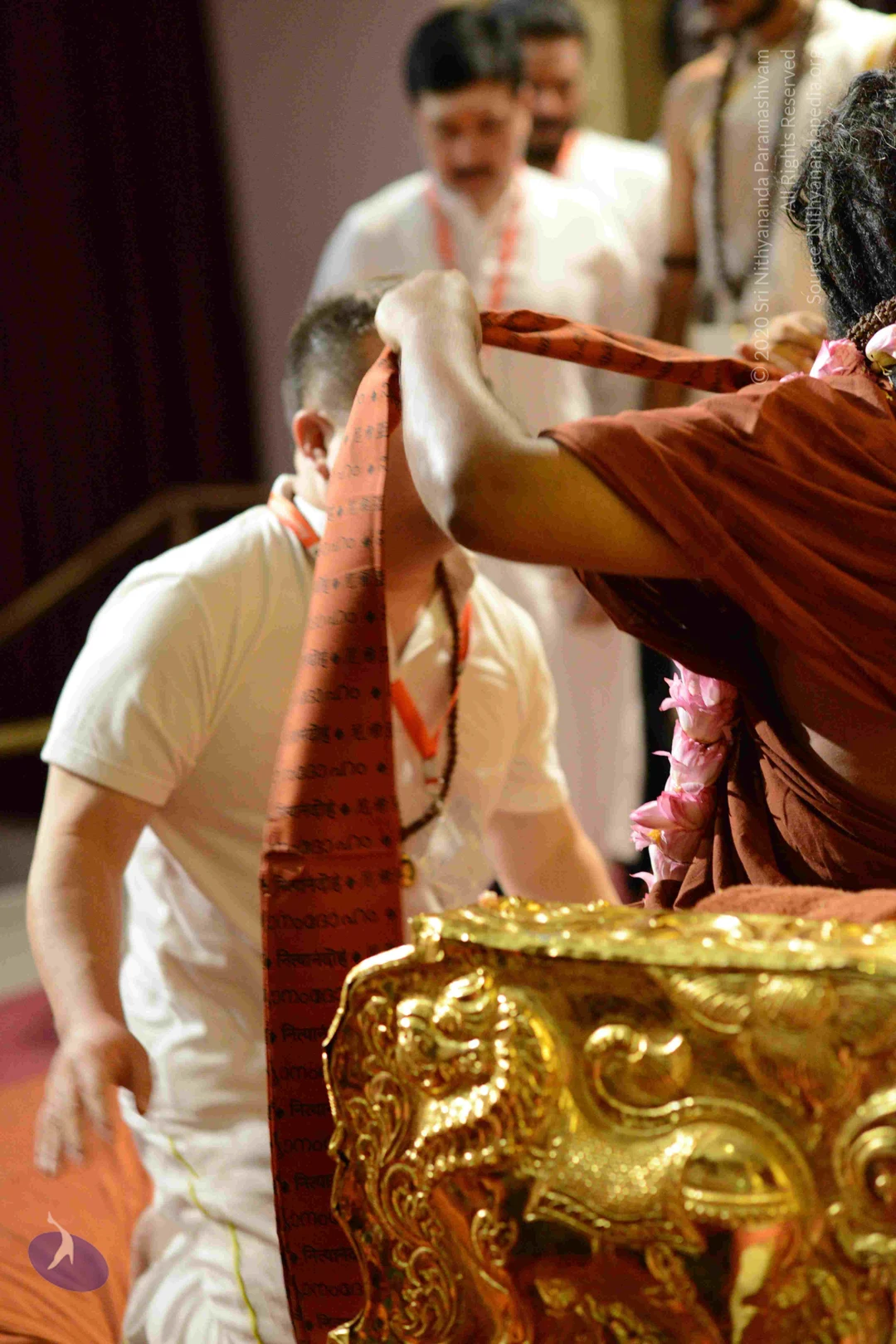
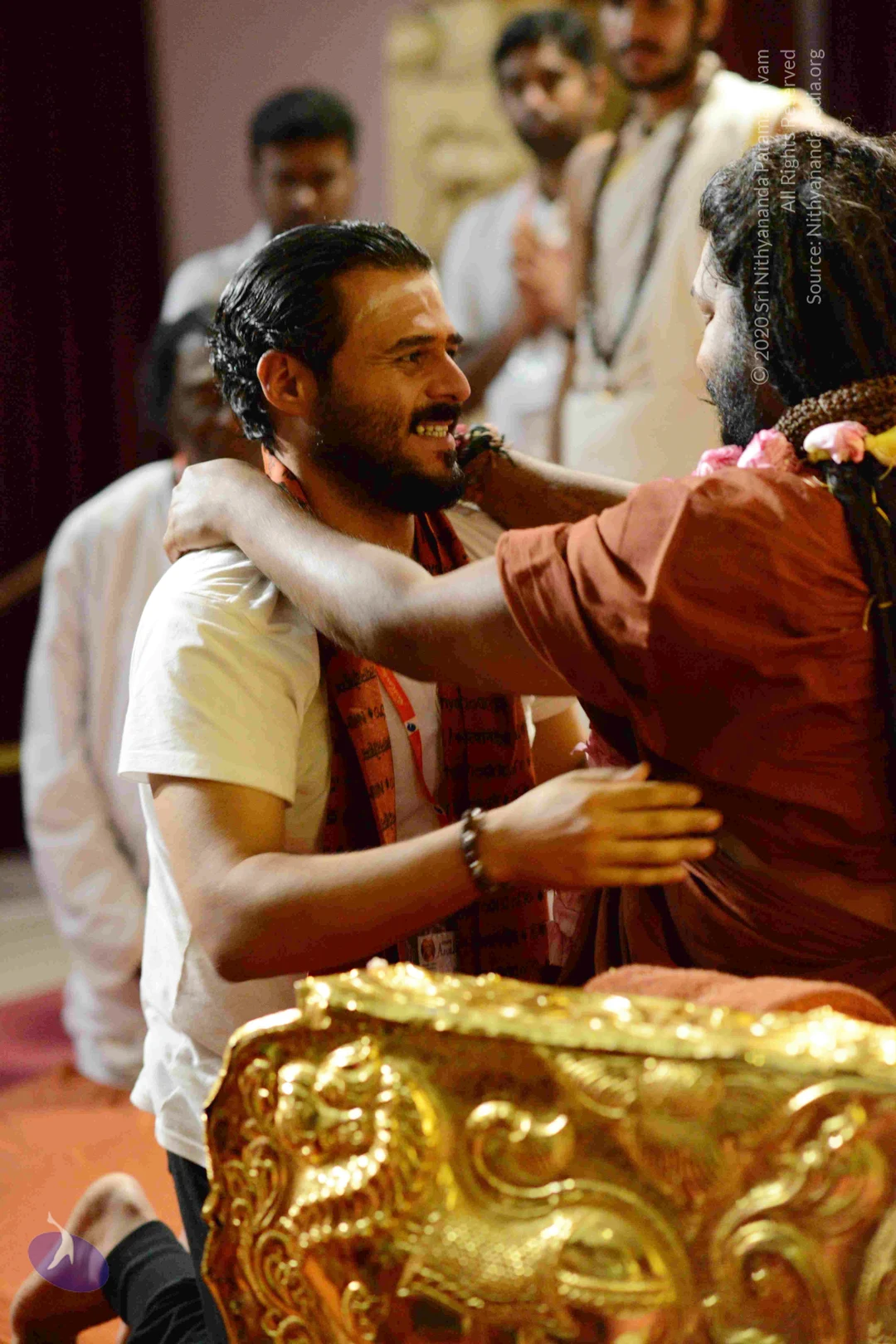
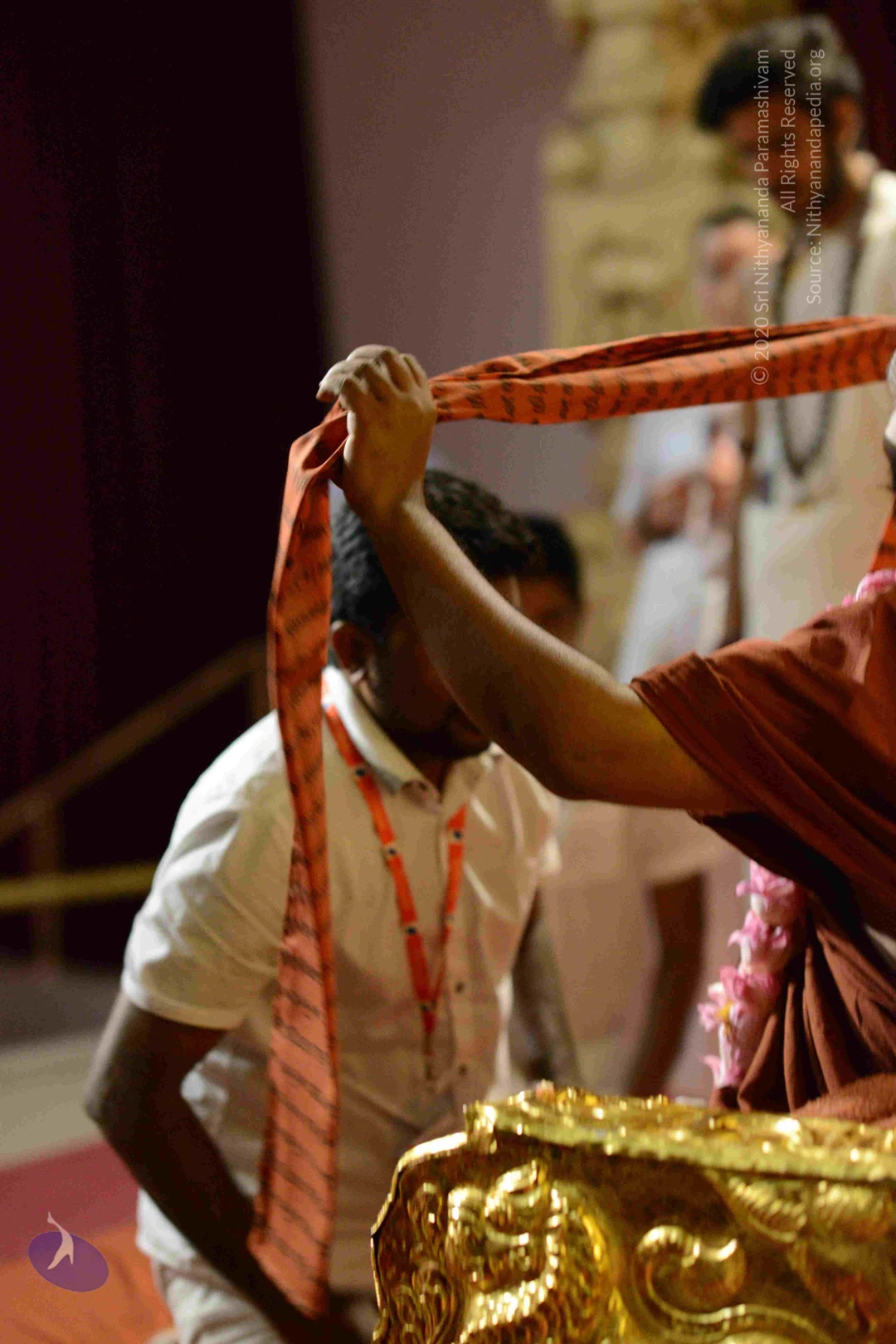
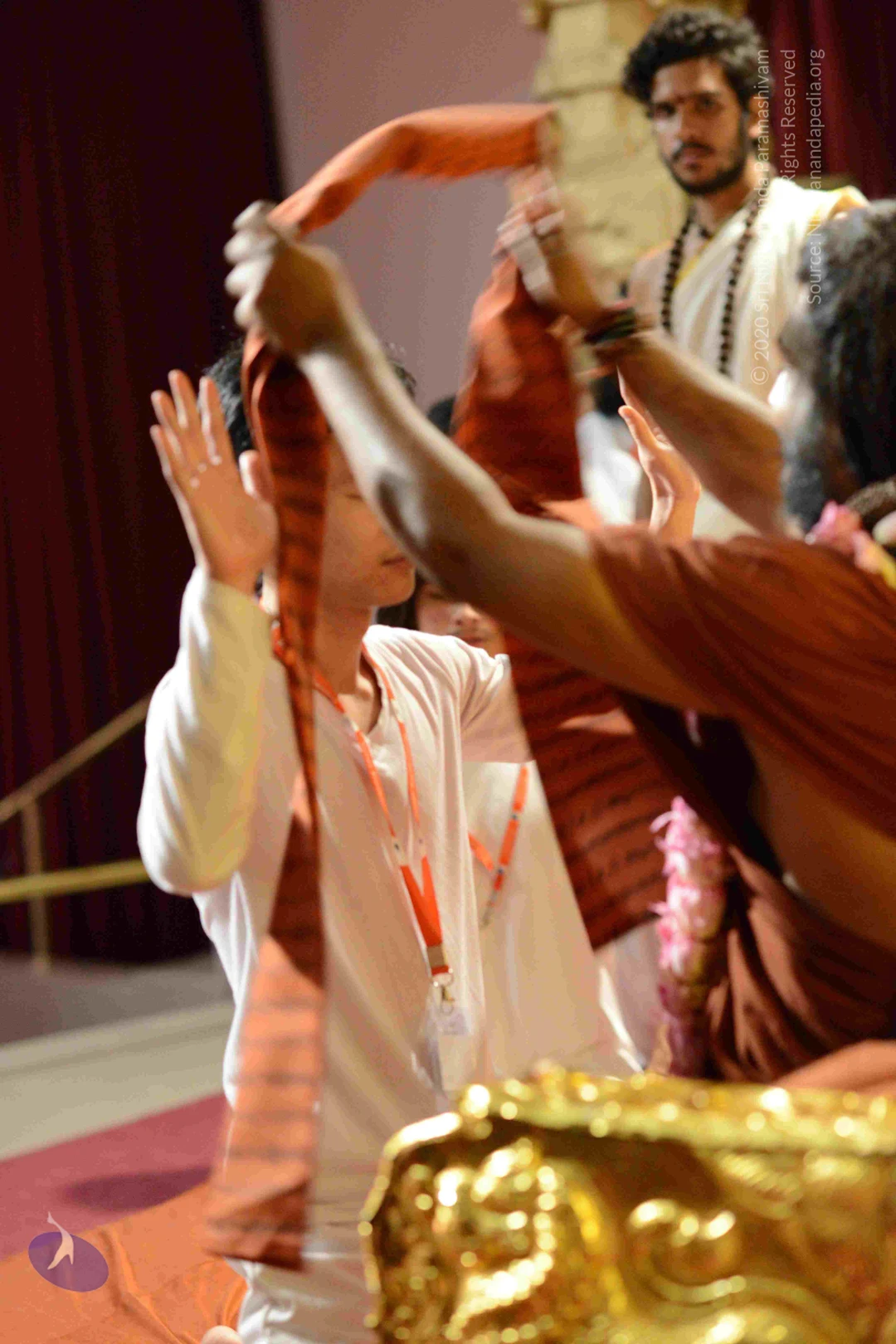
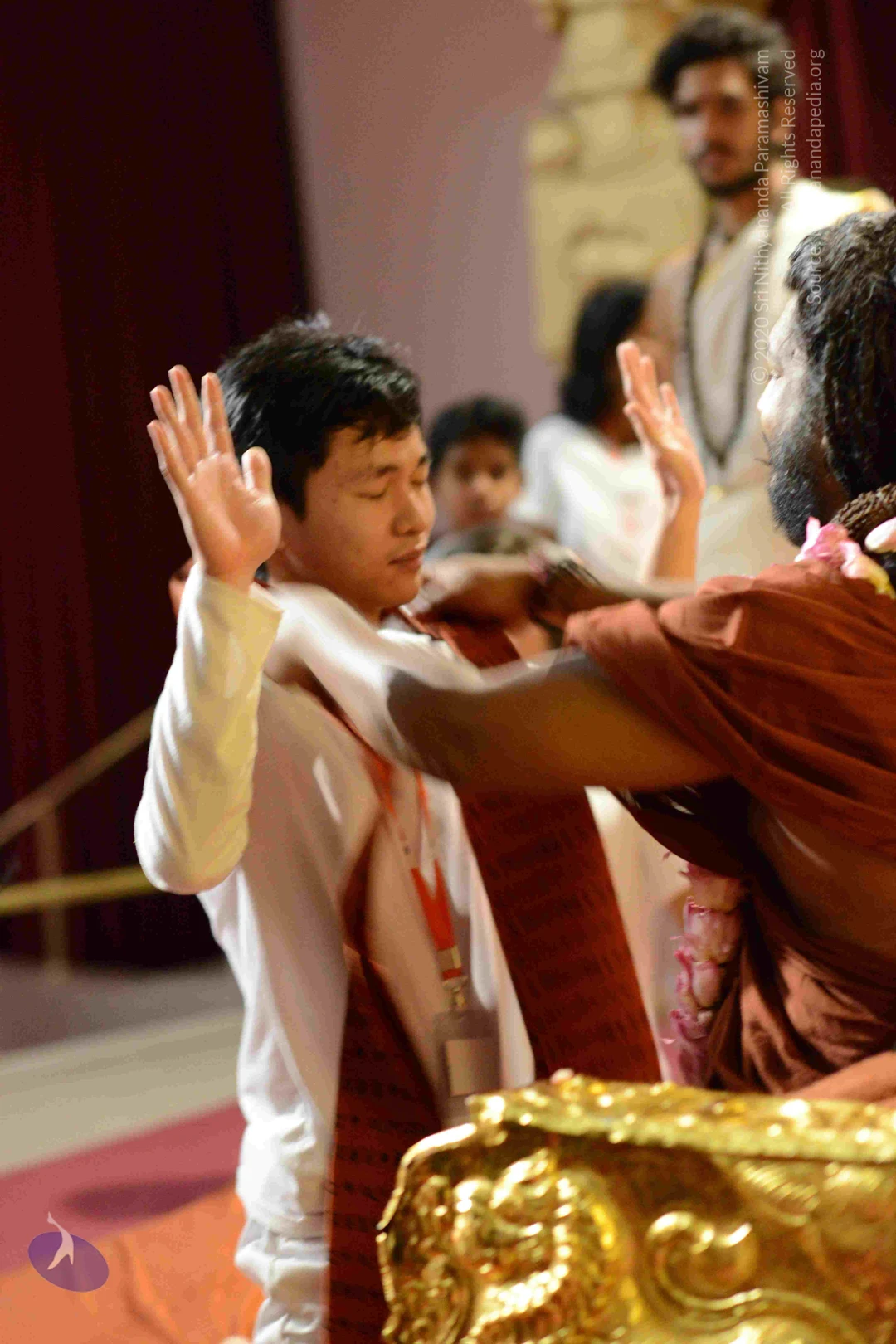
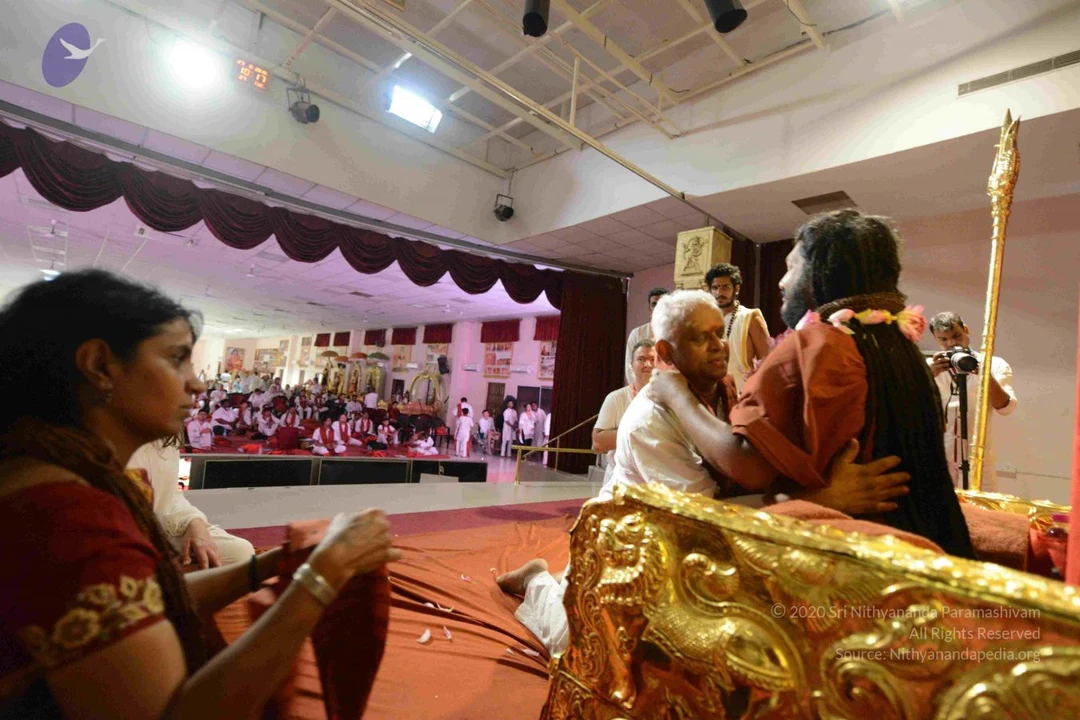
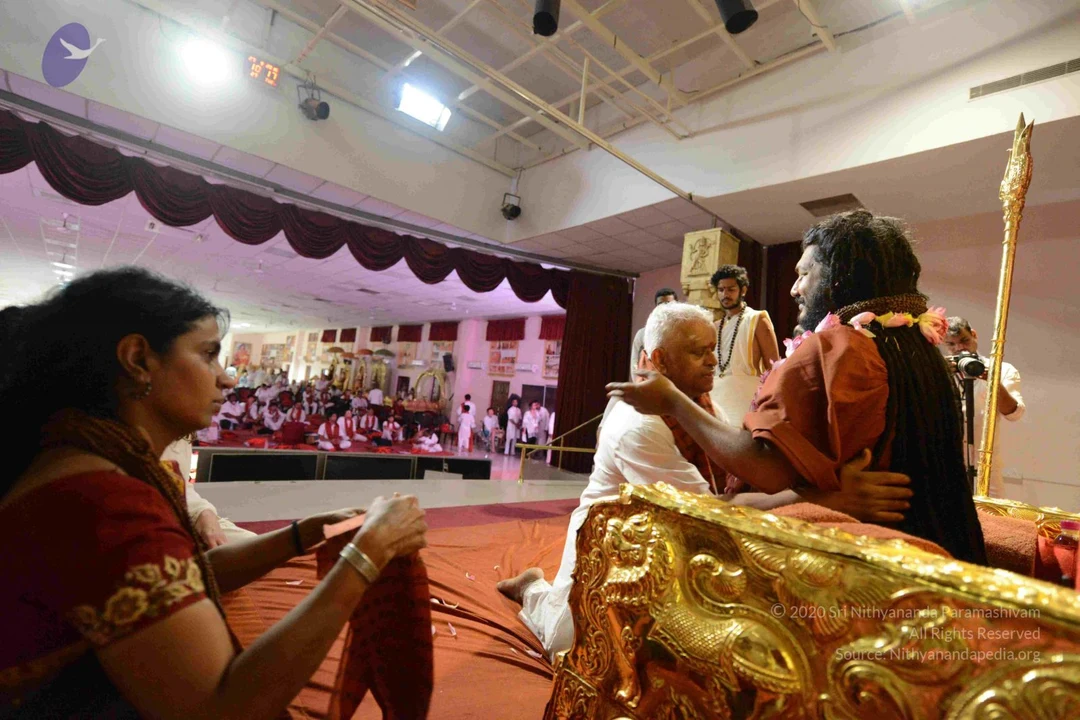
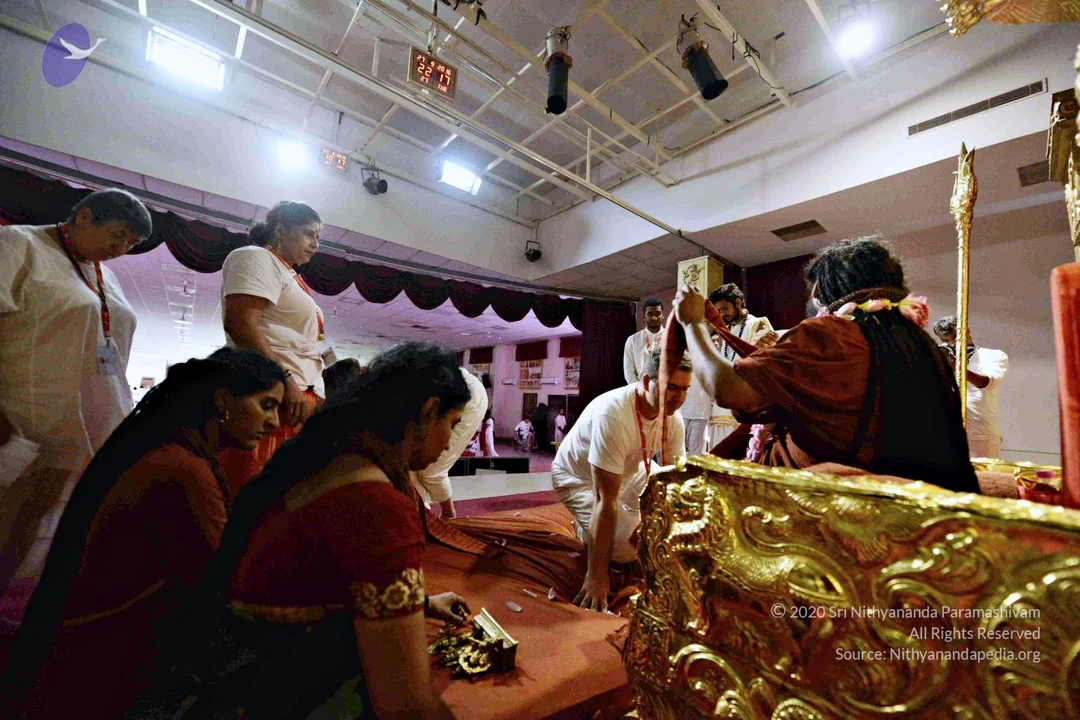
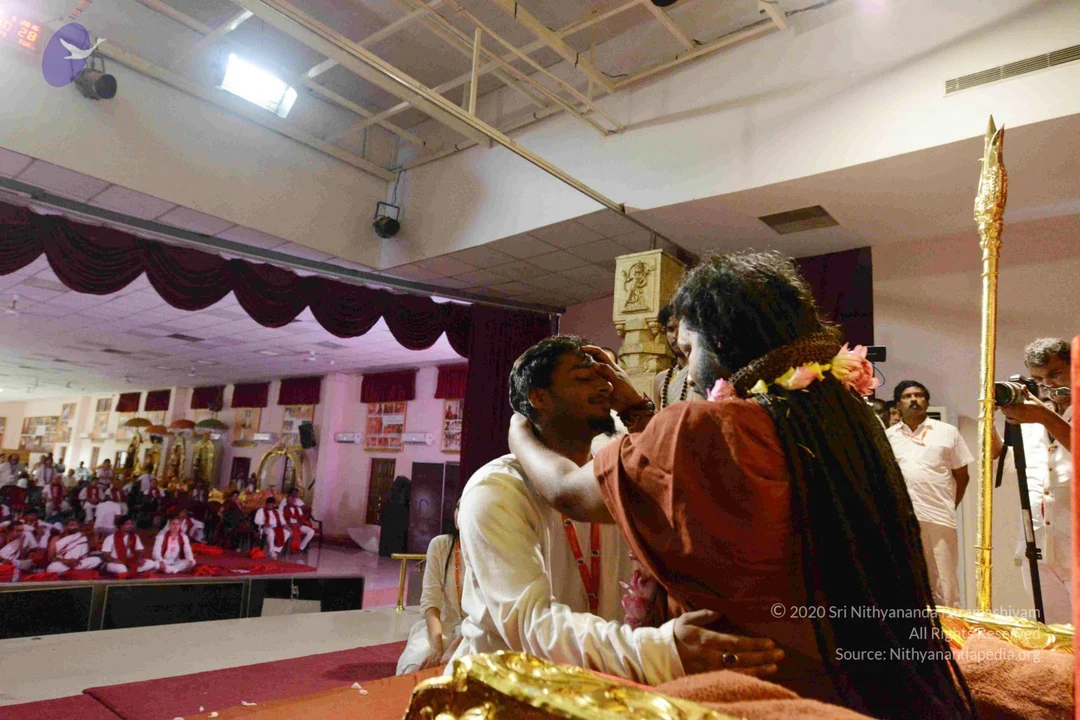
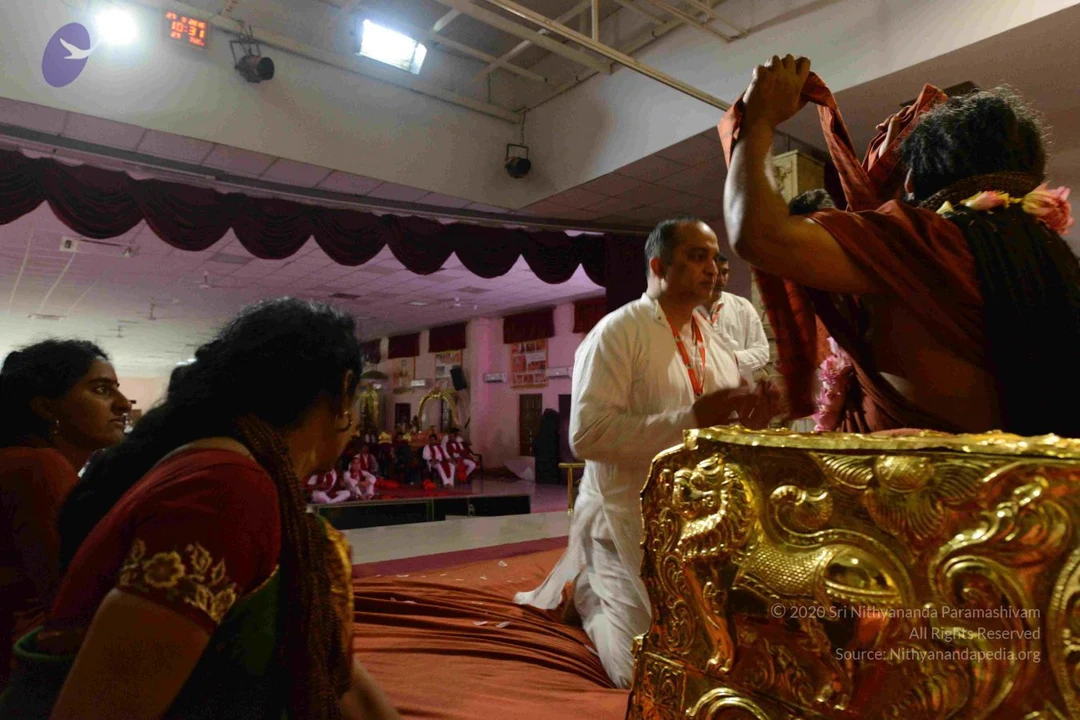
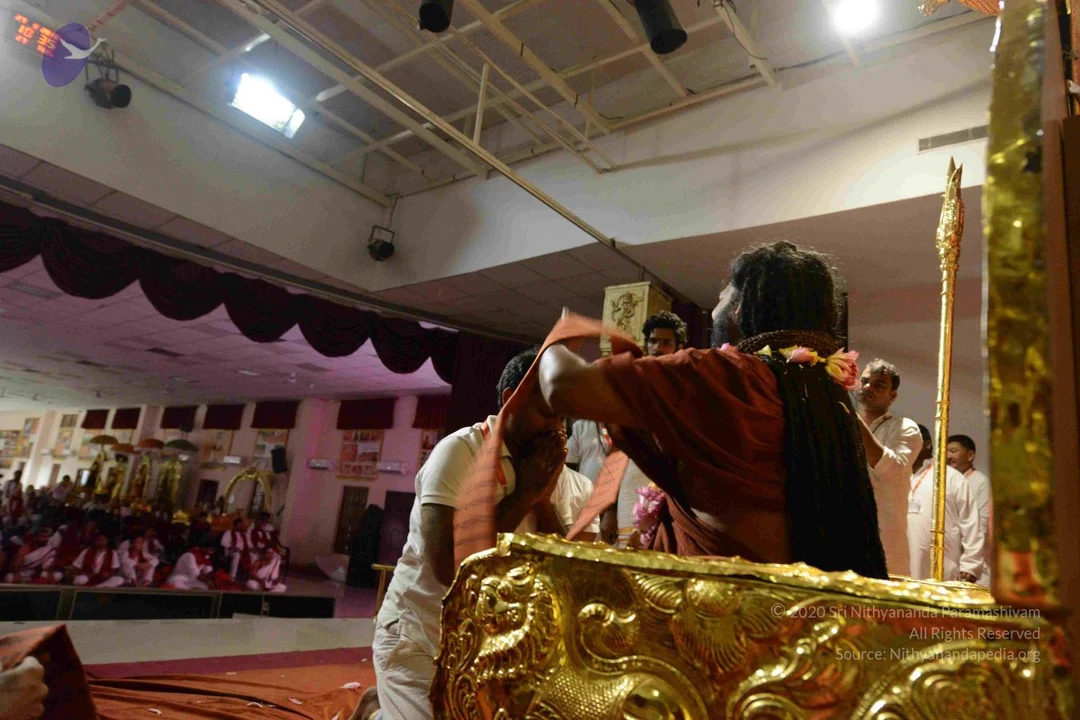
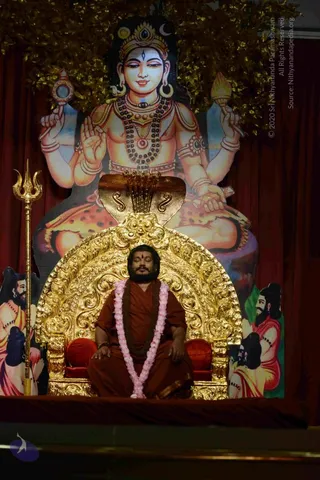
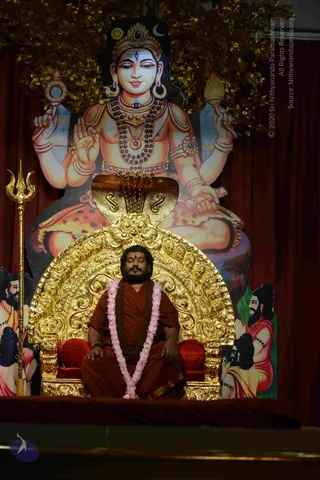
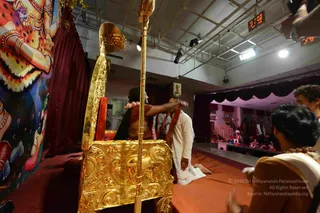
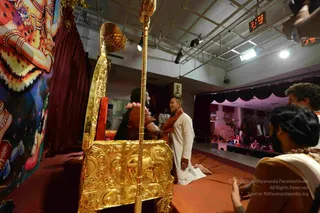
A man in rust-red saffron robes sits with eyes closed on an ornate gold throne with a cobra-hood backrest, wearing a pink and white flower garland and a dark beaded mala. Behind him is a large painted backdrop of a multi-armed deity with a crescent moon and third-eye marking, holding objects in several hands, flanked by painted devotee figures. A golden trident stands to the left and red drapes frame the stage. a person is seated on the throne, identified by the throne, mala and saffron robes, with a crescent moon and third-eye marking on the backdrop deity. Satsang setting.A man seated in meditation on an ornate gold throne (peetha) with a cobra-hood backrest, on a stage before a large painted backdrop of Lord Shiva with four arms, holding a trident-like emblem and a flame, wearing a crescent and third-eye tilak, rudraksha malas and beaded necklaces. The seated man wears a rust-orange robe, has a dark beard and a red tilak, and wears a pink flower garland and a rudraksha mala. A golden trident stands to the left and red curtains frame the stage. Painted sages flank the throne.A man with long dark hair, a full beard and a red bindi sits smiling on an ornate golden throne with a cobra-hood canopy. He wears a rust-orange robe and a brown rudraksha mala, with a pink and white flower garland draped over his shoulders and chest. Behind the throne, a painted backdrop shows a large deity figure in bright reds, pinks and yellows. Printed on the photo's right edge reads a and a source credit to . A small purple logo appears at lower left. The throne and garland mark him as the honoured guest, and the appearance cues (long swept hair, rudraksha mala, orange robe) support a person identificationA man in a rust-red robe with a rudraksha mala and a pink flower garland sits cross-legged on an ornate gold throne with a cobra-hood backrest, centred on a stage. Behind him is a large painted deity murti with four arms, holding a trident-like staff and a flame-topped object, garlanded with gold foliage. A golden trident stands to the left and painted figures of sages flank the throne. The man has a short beard, a vertical tilak on his forehead, and hands resting on his knees. a person: the seated figure has a shoulder-length dark hair, rudraksha malas and a red-saffron robe with a ceremonial garland, consistent with the page's reference to a person.A photograph inside a hall with a large golden throne in the foreground, its ornate gilded carvings and tall golden staff rising beside it. A painted deity figure in red and gold decorates the left wall, with red curtains behind. A seated figure in saffron-orange robes with a shawl and a marigold garland extends an arm toward the throne area, while a man in white dhoti and white shirt kneels on the orange-red carpet. At the right, a person in a saffron garment and garland is partly visible in the foreground. Beyond, a stage with pink and red decorations and small deity murtis is visible, and digital clock displays are on the ceiling.A photograph inside a hall with a large golden throne in the foreground, its ornate gilded back and armrest carved with lion and floral motifs, beside a tall gold ceremonial staff. Behind it, a seated figure in an orange-and-saffron robe with a pink garland stands near the throne, while a man in white dhoti and white kurta, with an orange shawl over his shoulder, kneels on an orange cloth to face him. A painted deity mural with a bright red and gold figure covers the left wall. Two onlookers at the right edge are partly visible, and a digital clock on the ceiling area shows numerals. Behind, a stage displays decorated murtis and red draperies. The throne is unoccupied in this view.