Skip to content
Tuesday

10 June 2014

Self drive from the right context

Dated photos
64
Source pages
1
Media
2
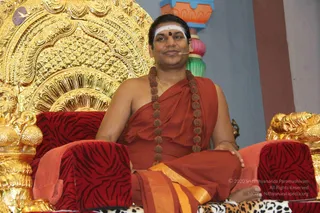
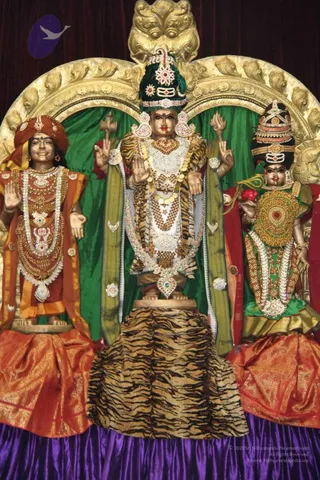
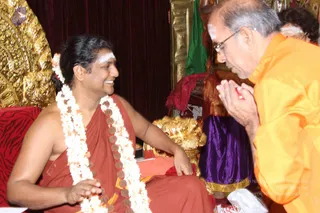
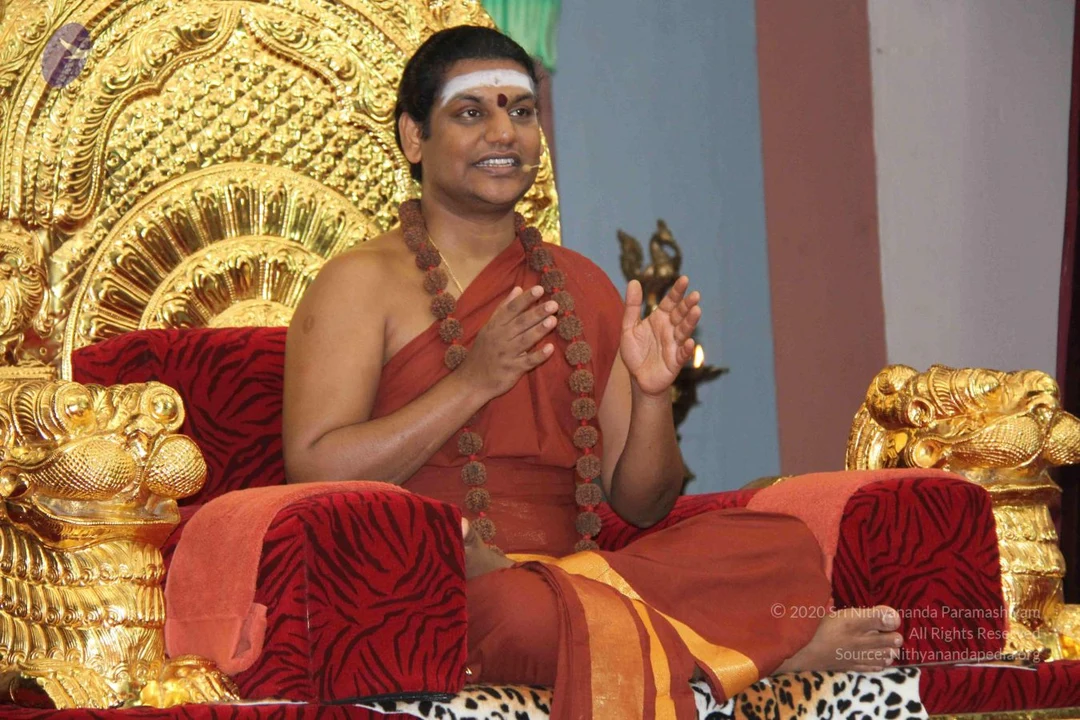
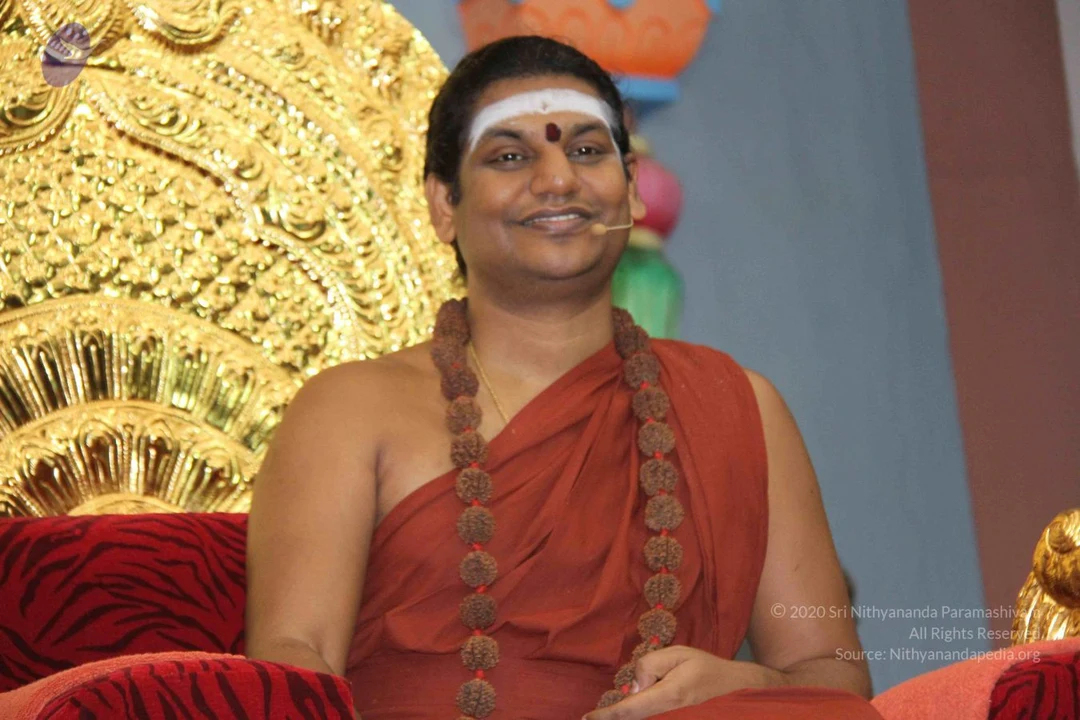
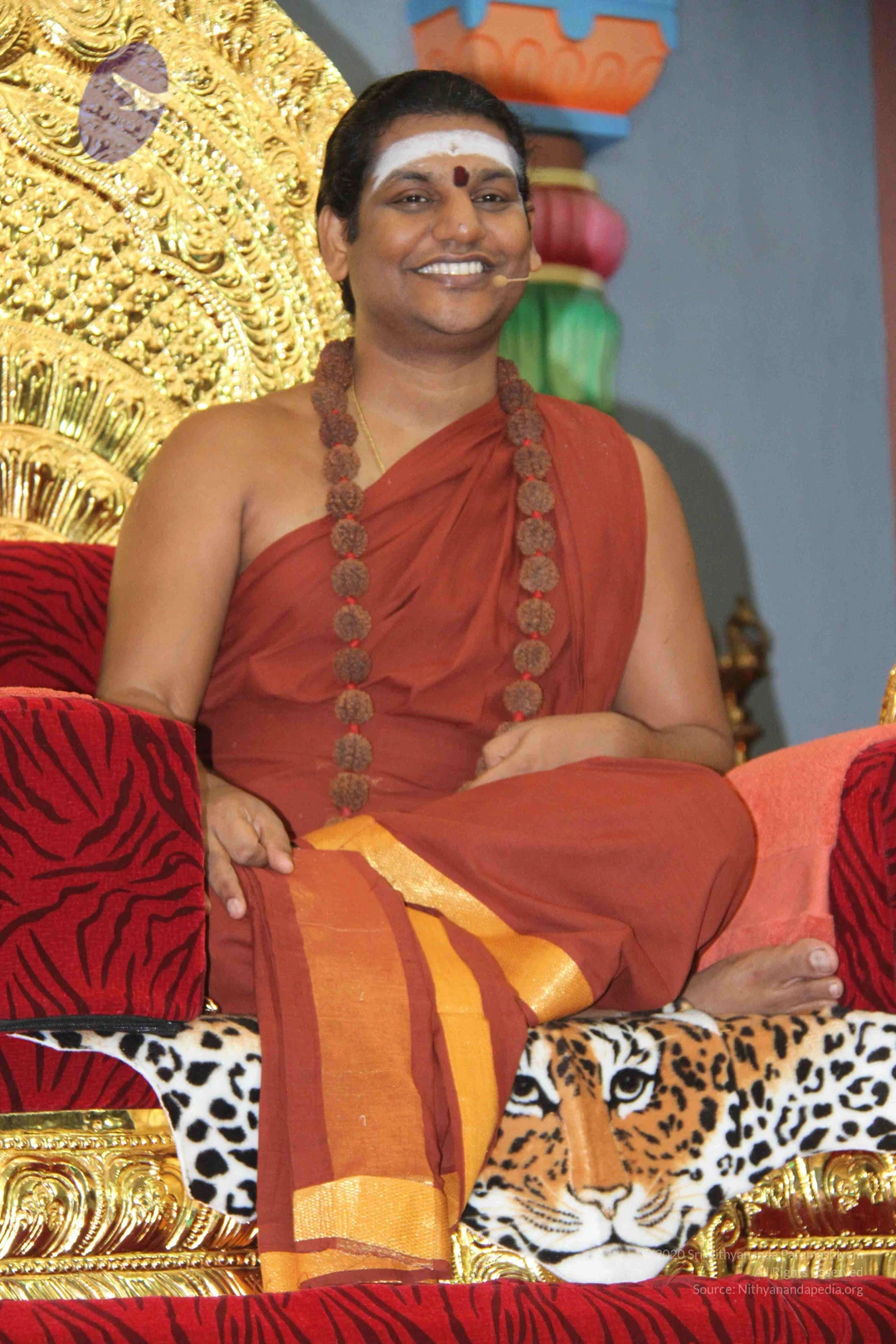
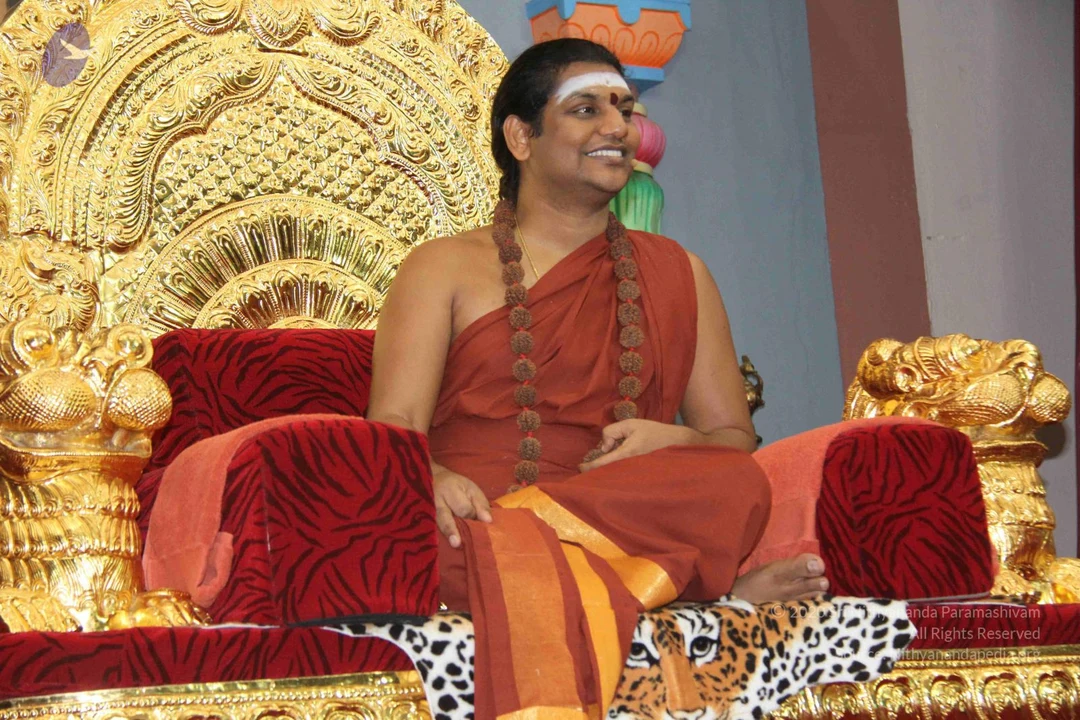
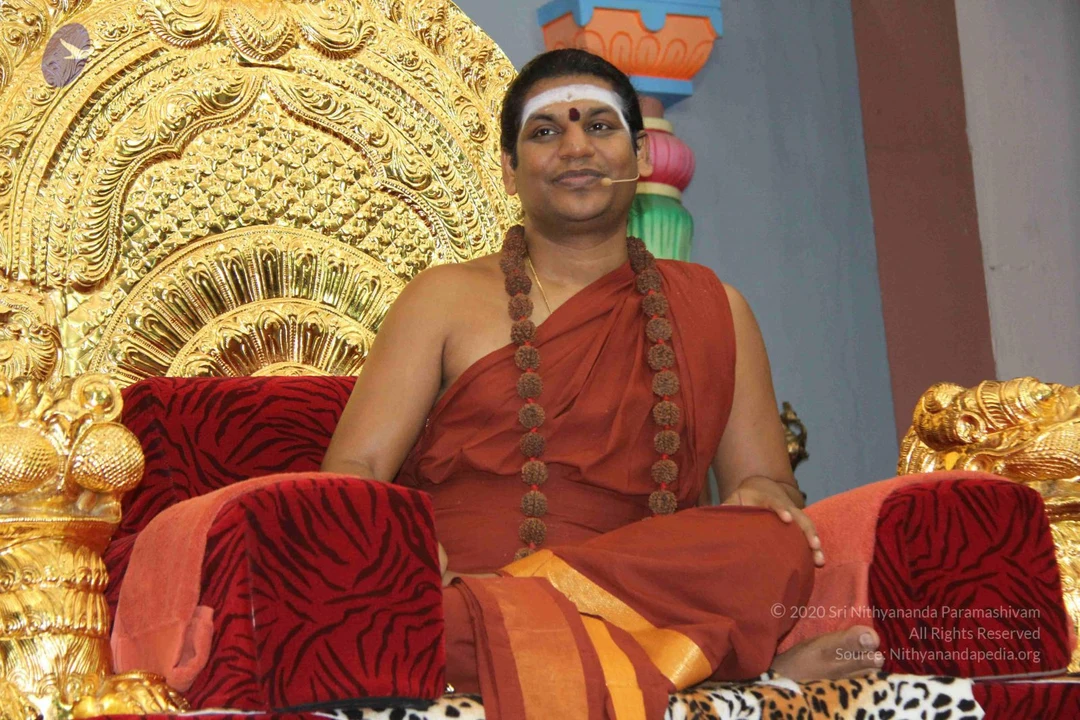
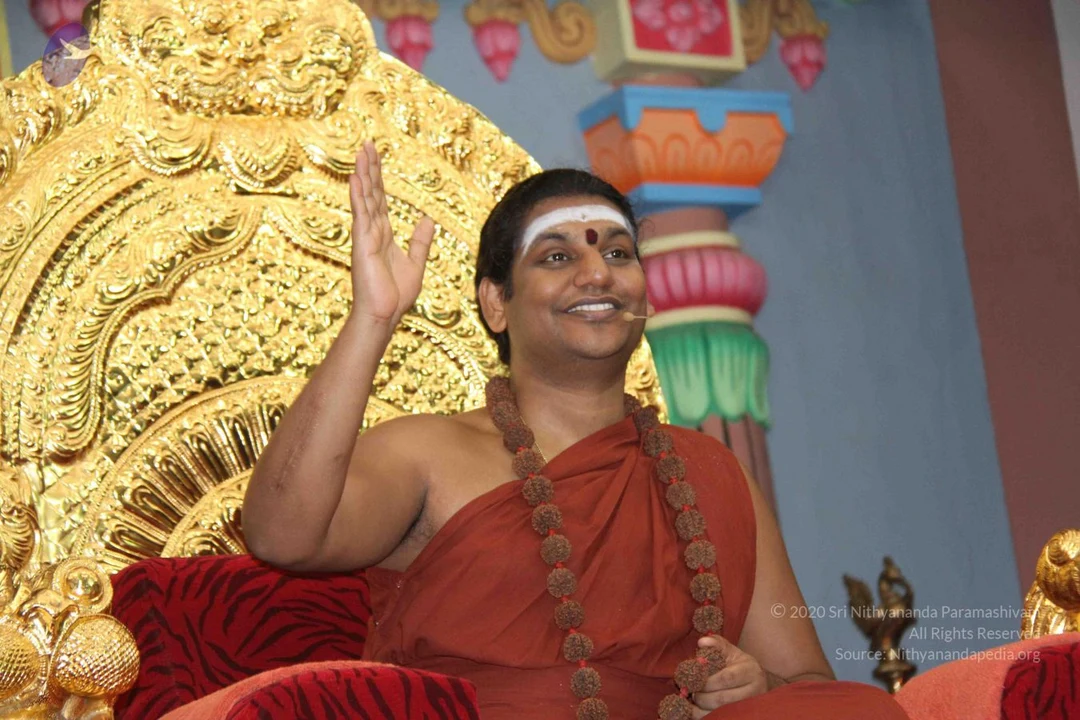
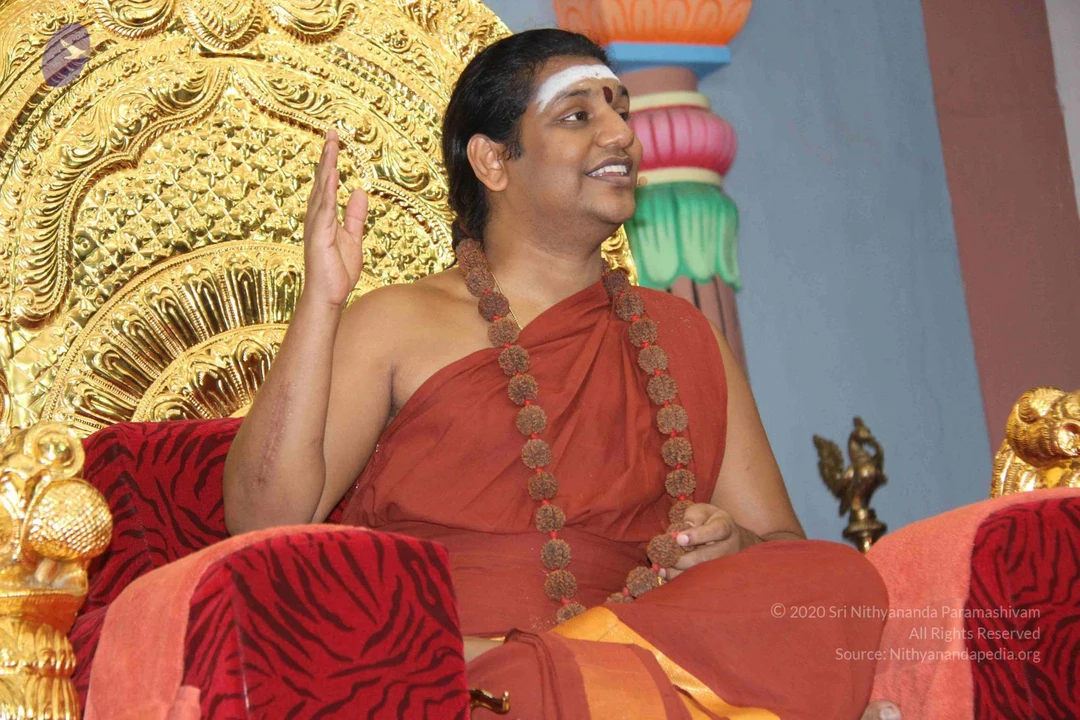
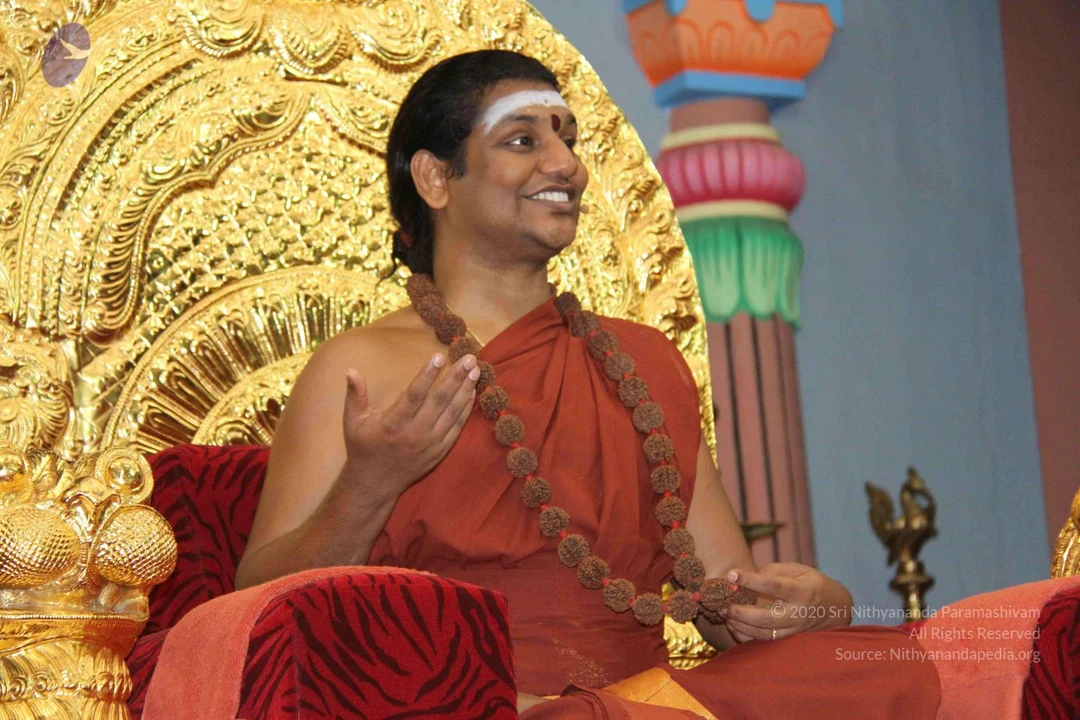
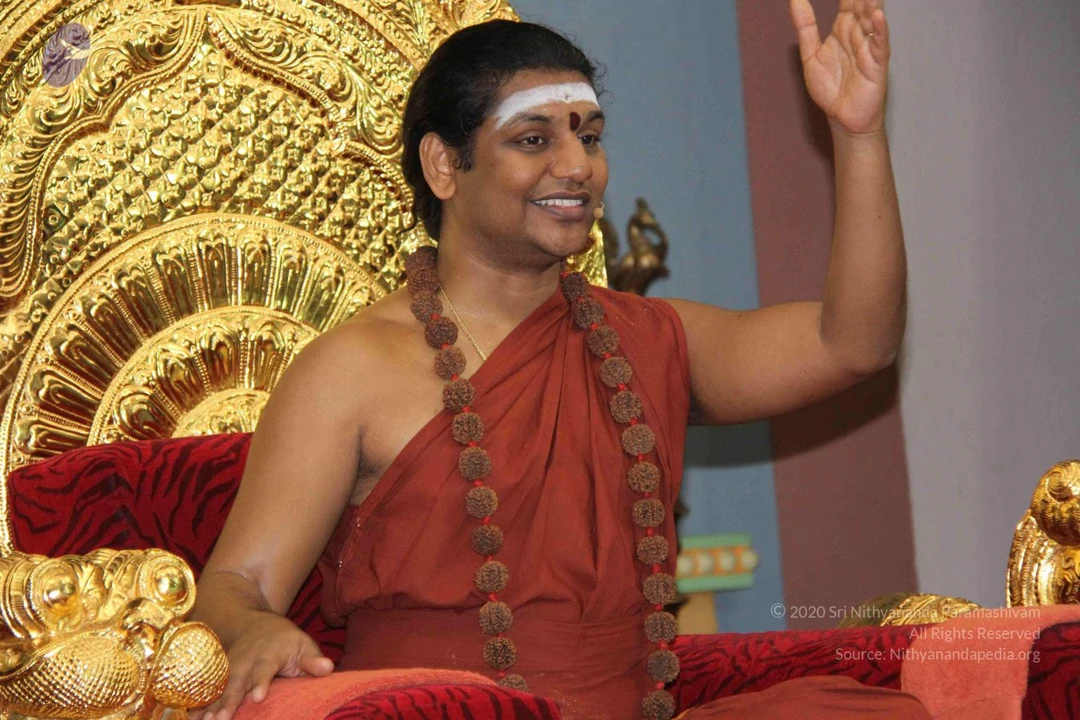
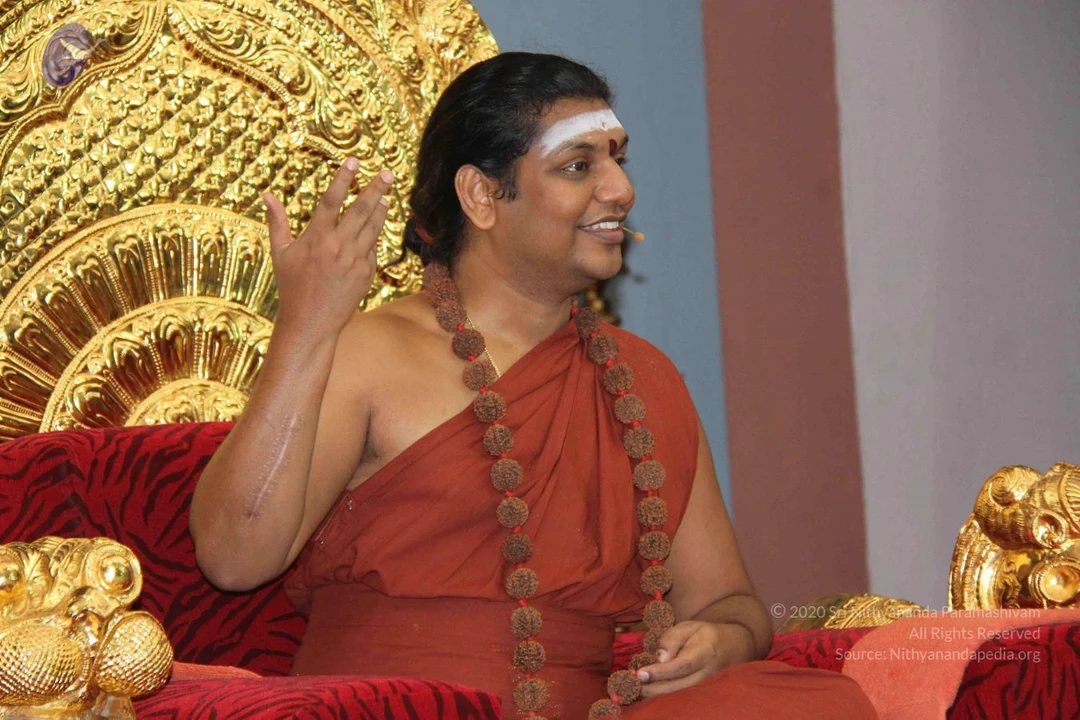
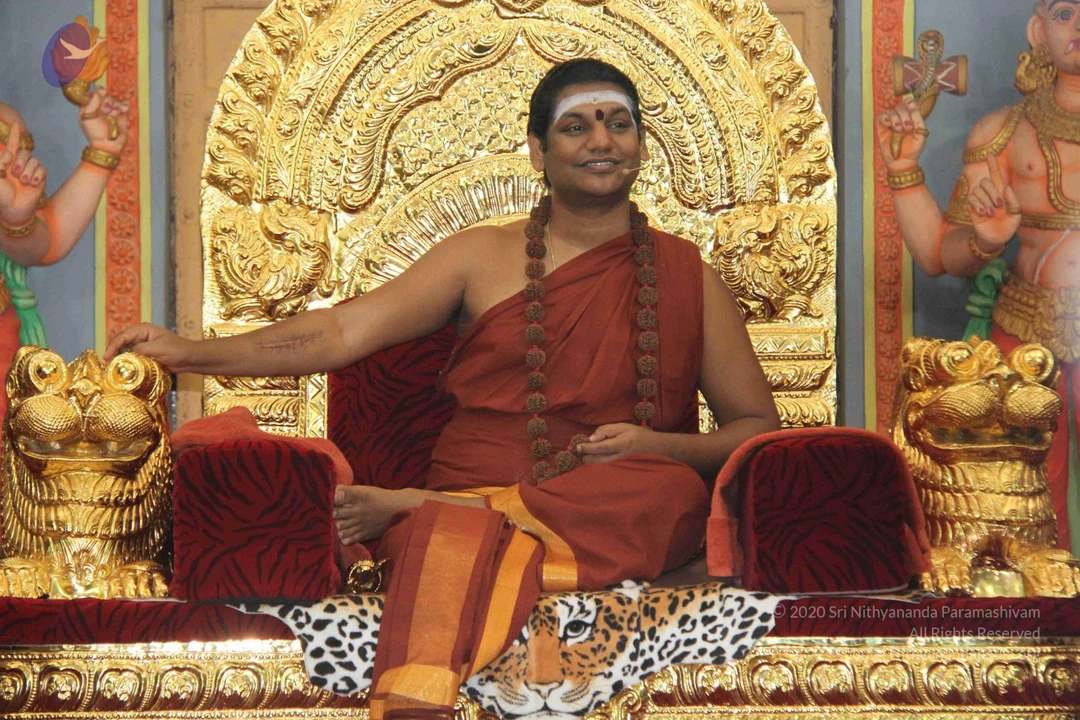
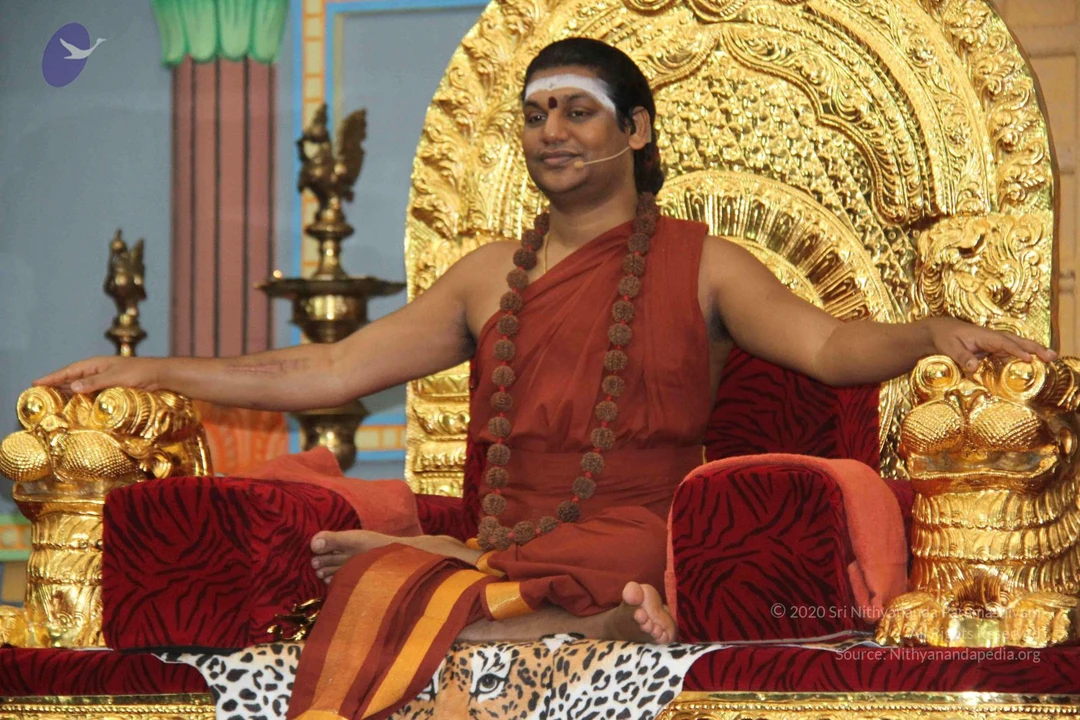
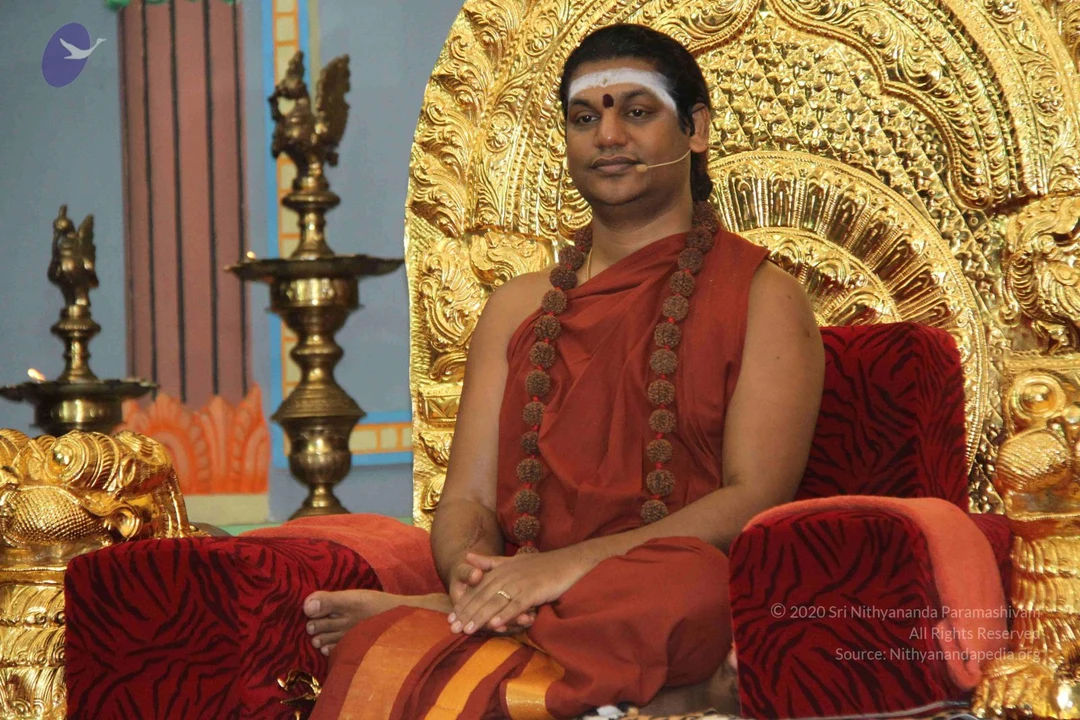
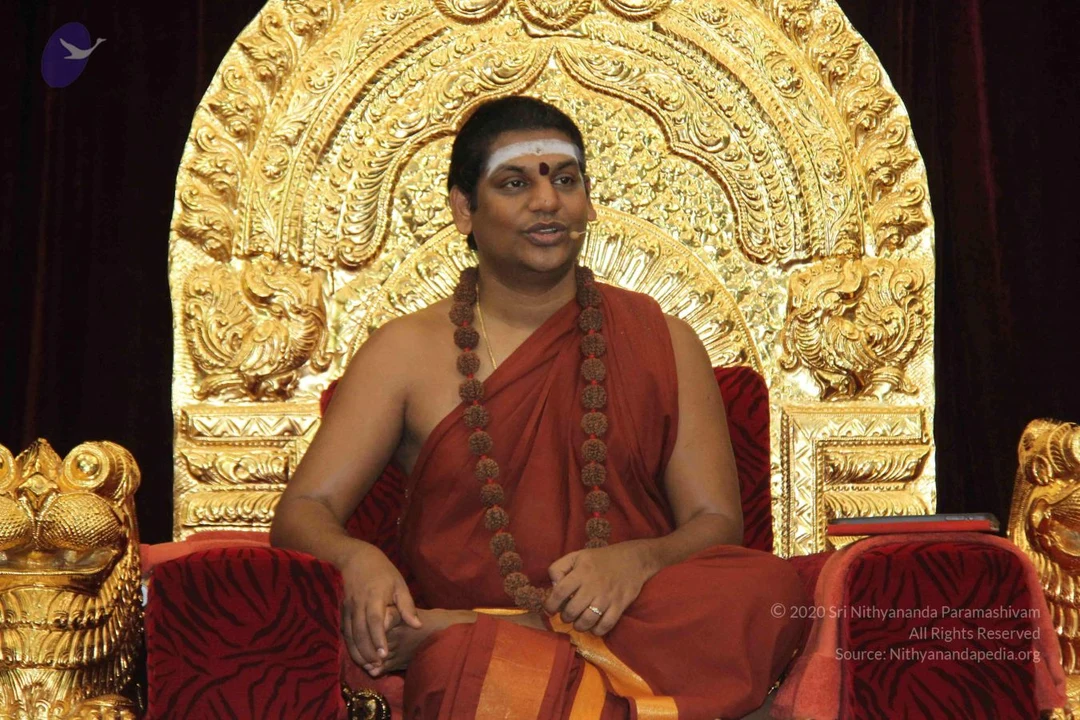
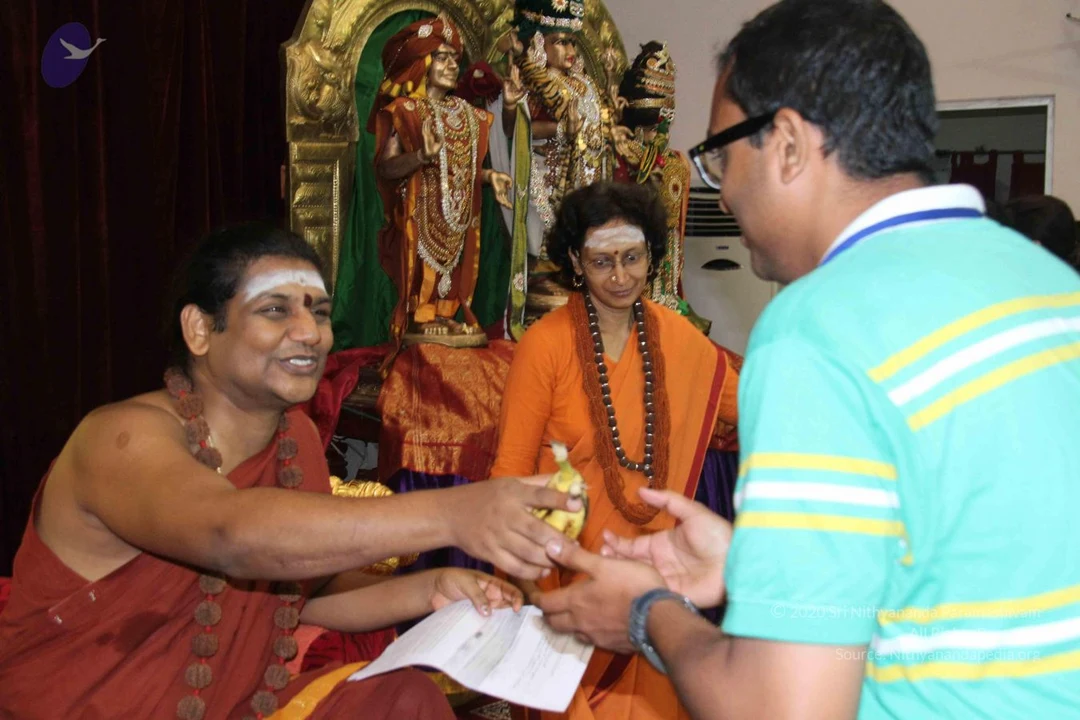
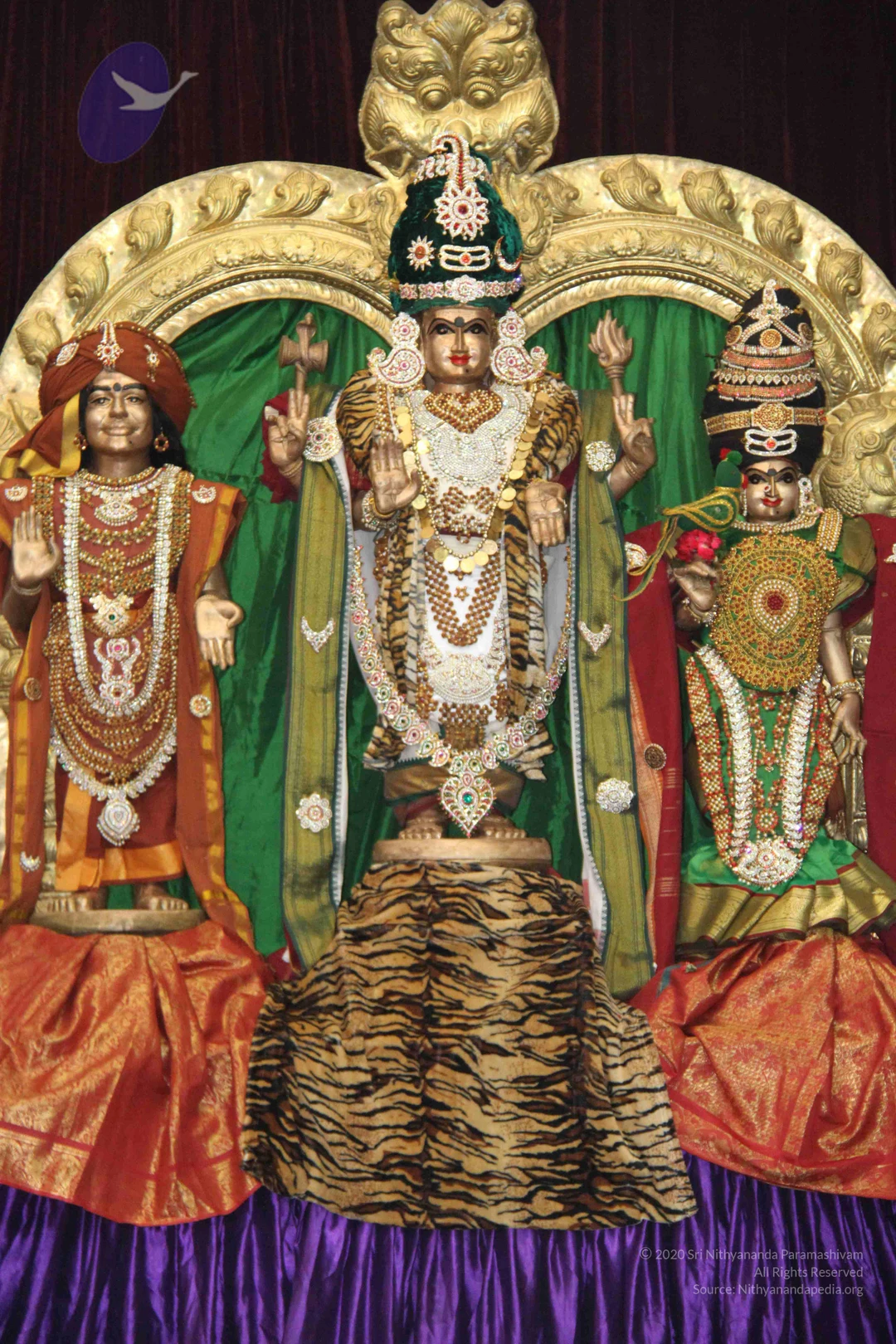
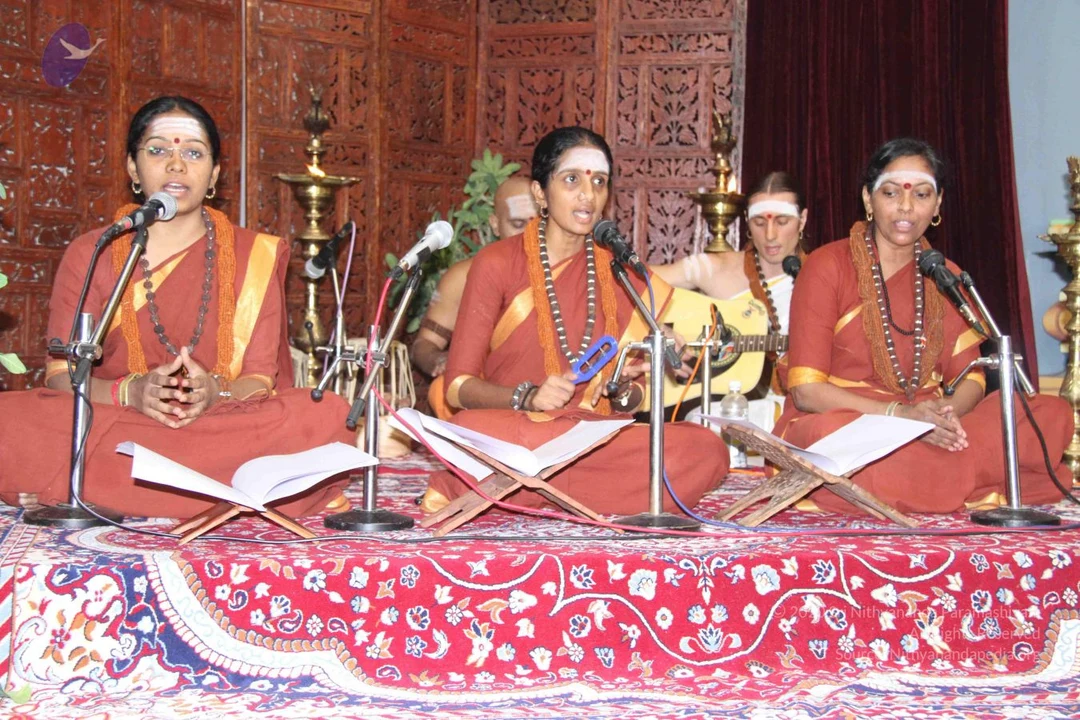
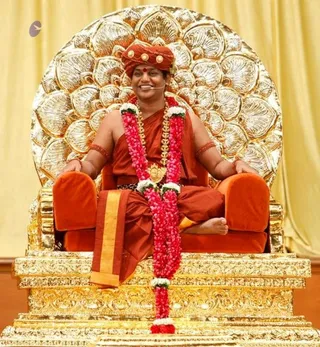
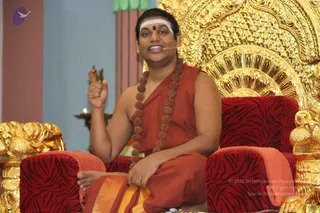
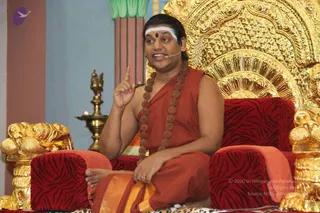
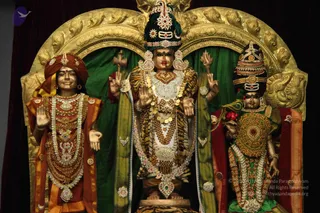
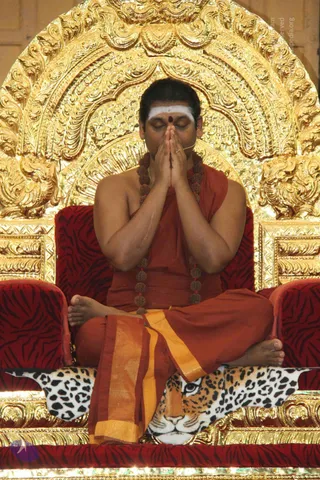
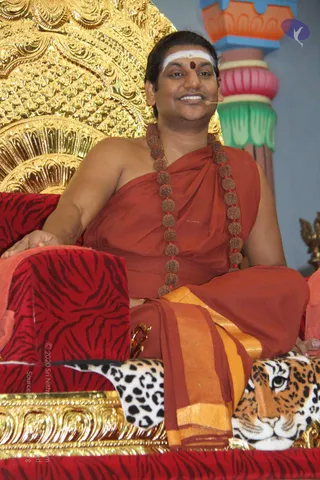
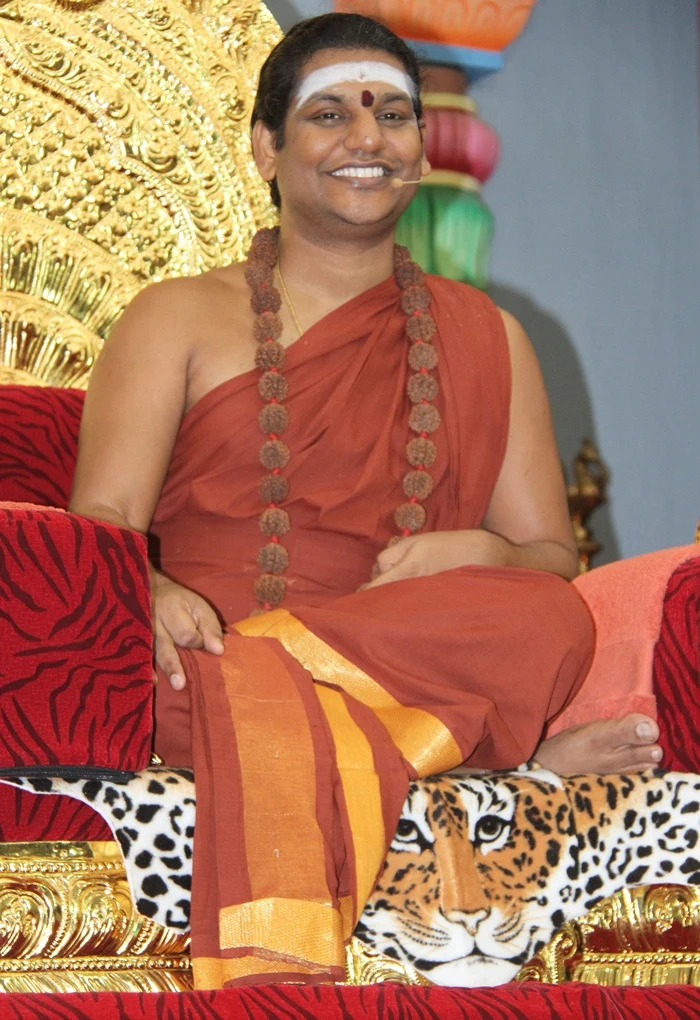
A seated man in an orange-red robe and a long rudraksha mala sits on a red and gold throne with an ornate gilded backrest and tiger-striped red cushions. He has a white tilak with a red dot on his forehead and wears a small microphone at his cheek, and his hands rest on his knee. Behind him stands a colourful orange, pink and green pillar. a person: he wears a saffron-orange robe, a rudraksha mala and a throne setting, and is seated as a speaker.Three decorated murtis stand on a purple cloth before a gold arched backdrop with a green curtain. The central figure wears a tall green jewelled crown with a Shiva-lingam-style emblem, layered gold and pearl necklaces, and a tiger-striped shawl over white, holding a trident-like staff in one hand and a drum-like object in another. To the left stands a figure in orange and saffron robes with a red turban, ornate beaded garlands and a gold pendant. To the right stands a female deity in a green and red sari with a gold-embellished cap and a red flower in hand. A tiger-skin cloth covers the central pedestal. Only statues are present, with no physical people.A photograph of a seated man in a red-orange robe with a white flower garland and a rudraksha mala, with a white vertical mark on his forehead, smiling at an older man in a bright orange shirt who stands bent slightly forward with palms pressed together in greeting. The seated man sits on a red throne-like seat with a zebra-print cushion in front of an ornate gold carved backdrop and maroon curtain. Other gold and purple decorations are visible behind them. The standing man wears glasses and has a white tilak on his forehead.

June 10 2014

Original wiki page
Contents

Title:

Self drive from the right context

Description

In this (10th June, 2014) morning’s satsang, Paramahamsa Nithyananda spoke about Self ‘Drive. He explained that Self Drive is the source of the knowledge we hold; Saraswathi and if self drive dries up it is from violence or greed. The reason for acquiring knowledge is to be sure you have the right context for self drive. Self drive is the only energy you have and it can be brought forward to the next life. Self drive in the right context is Living Advaitha and the scale to measure integrity, authenticity, responsibility and enriching.

Link to Video:

VideoAudio

Transcript:

ithyanandeshwara Samaarambhaam Nithyanandeshwari Madhyamaam |

Asmath Aachaarya Paryanthaam Vandhey Guru Paramparaam ||

I welcome all the devotees, disciples, samajis, satsanghis, Shrimahants, Mahants, Kotharis, Thanedars, sitting with us all over the world through Nithyananda TV, Sadhna TV, two-way video-conferencing having Nayana Deeksha. Cities sitting with us in two-way video-conferencing having Nayana Deeksha: Guadeloupe-Rameshwaram, Ohio-Prayag, Houston-Kalahasti, Nithyananda University-Los Angeles, Nithyananda Nagaramu-Hyderabad, Oklahoma-Somanatham, San Jose-Madurai, Seattle-Chidambaram, Brahmasukhi Gurukul Batch-Bangalore, Nithyananda University-Paris, Kuala Lumpur-Palani, Gyaneshwor-Nepal, Tuen Mun-Hong Kong, Hyderabad-Gupta Kashi, London-Kashi, Dubai-Vaidyanatham, Winston-Salem-North Carolina, Oman-Sivagangai, High Point-North Carolina, Toronto-Kailasam...........

I welcome all of you with my love and respect.

Today I wanted to expand on this one word, SELF-DRIVE.

Please understand, self-drive is the source of the knowledge a human-being has. Means, that is Saraswathi. Knowledge is not the number of books you read, Knowledge is not the number of concepts you know; Knowledge is the amount of self-drive you have. Understand, giving the right context to the self-drive is only the job of Saraswathi, Knowledge. When there is a right context, self-drive never gets dried up. If it gets dried up, it is from the wrong context, it is the lower level pleasures; it is not self-drive. Self-drive which gets dried up is from violence, or from greed.

Please understand, the self-drive which comes out of fear and greed gets dried up just in a few days. Giving the right context for your self-drive is the job of Saraswathi. All the knowledge, the reason for all the knowledge, reason for all the books, reason for all the knowledge-transmission mechanism is to give you the right context for your self-drive....to give the right context for your self-drive! Giving the right context for your self-drive is the source, purpose, reason, cause, sole cause of your knowledge. And, I tell you, your self-drive is the greatest wealth you can have which will never be lost, which will come with you for births after births after births! Self-drive is the one and only wealth you can carry from one birth to another birth.

Please understand, if you want to go to the U.S., you have to change Indian currency to U.S. currency. If you want to come from U.S. to India, you have to change U.S. currency to Indian currency. The same currency will not be useful in the other country. Same way, when you leave the body, whatever you accumulated in this birth wealth, love, relationships, properties nothing will be useful in the next birth, but the self-drive you accumulated will be there with you in your bio-memory as your asset. I tell you, self-drive is Lakshmi. Self-drive is the ultimate wealth, ultimate asset anyone can accumulate, anyone can acquire. Not having self-drive is nothing but deep hatred towards you or towards others, life.

I tell you, whoever does not have self-drive has a deep negative pattern about life and others. They are constantly abusing life and others, criticizing life and others, have deep incompletion with others and life. Self-drive is the highest wealth anyone can accumulate. I tell you, you can lose anything, but don't lose your self-drive, and especially in the right context. Setting up the right context for your self-drive and, listen, and driving yourself continuously is the greatest wealth.

I wanted to remind all of you, all tiredness, all boredom, is nothing but the self-conflicts and self-contradictions, self-conflicts and self-contradictions. Self-conflicts and self-contradictions! People with self-drive are rewarded by Kaalabhairava with life. People who don't have that are slammed by life, Kaala. Understand, self-drive is life. From the right context, self-drive from the right context, self-drive from the right space! Self-drive is the only energy, Durga, you can have. Nothing else is energy. Not your muscle power, or your thinking power, all that is not the top energy.

Self-drive is THE energy of life, understand? Self-drive is Saraswathi. Self-drive is Lakshmi. Self-drive is Durga. Driving yourself constantly! I tell you, anything which stops your self-drive from the right context is incompletion; immediately complete it and get rid of it. It is your incompletions; immediately complete it and get rid of it. Self-drive from the context of Advaitha is what I call Advaithic Activism. I request the Sangha, Nithyananda Sangha to start using more and more the word Advaitha, Living Advaitha, Science of Living Advaitha. Advaitha, the word Advaitha should replace the word Enlightenment in our Sangha, because the word Enlightenment is loaded with too much of corruption. It is hijacked and loaded, polluted, corrupted with so much of meaning, and so much of difficulty, so much of fear. I think, for what I am offering to the world, not only the truths, even the title has to be something original.

So, we will make this word Advaitha itself as English word, and WE will give the meaning to it! Advaitha looks more Sanatana Hindu than the word Enlightenment. So, I request the Sangha Publications and all the departments to start using more and more the word Living Advaitha, Advaitha replacing the word Enlightenment, because Living Advaitha seems to be more closer to the heart of Sanatana Hindu than the word Enlightenment. Living Advaitha, Living Advaitha is so easy, and, I tell you, having self-drive to live Advaitha is Advaithic Activism. That IS Advaithic Activism. Having self-drive to live Advaitha is Advaithic Activism. Advaitha becoming life, lifestyle, Advaitha becoming thinking style, Advaitha becoming your cognition!

I tell you, the only obstacle you have to live Advaitha is not having self-drive. When you are having intense self-drive, you reach the heights of life, possibilities of life. When your self-drive reduces, reduces, reduces, when it becomes zero, you are dead, that's all! When your self-drive to breathe, if it is taken over by impossibility, you are dead; if that is more alive than your impossibility, then you are alive; that's it!

Understand, your self-drive is very, very, very important. Your self-drive is the most powerful, important component of life. Highest self-drive is life, youth energy. In our Sangha, I understand whether somebody is growing spiritually or not, only based on their self-drive. I understand whether a spiritual process is working on them or not based on their self-drive. It is self-drive that makes you a leader. It is self-drive that makes you a successful being. It is self-drive that makes you an Advaithi. It is self-drive that makes you Living Advaitha. It is self-drive that makes you a Jeevan Muktha.

Self-drive from the right context makes you a Jeevan Muktha. Anywhere you read any concept against self-drive from the right context, be very clear, it is not spiritual teaching. Self-drive from the wrong context can be criticized; that needs to be completed. Self-drive from fear and greed should be completed, but self-drive itself should not be given up.

It is very unfortunate, the Vedantic books have spoken so ill of self-drive from fear and self-drive from greed, self-drive from the wrong context; finally, you gave up self-drive itself....which is completely wrong....which is completely wrong! If I visualize Mahadeva, I will visualize him as the embodiment of self-drive. This is the best way I wanted to be known by the world, this is the best anyakaara I wanted to have, this is the best way I wanted people to see me as the embodiment of self-drive! Embodiment of self-drive! Understand, self-drive from the right context, self-drive from the right context!

Our Sangha is nothing but I am giving an opportunity for everyone to set their self-drive from the right context and explode....set their self-drive from the right context and explode. Whether it is Gurukul, or the schools, colleges we are running, or the.......

Nithyananda Dhyanapeetam itself, Nithyananda Sangha itself should be the symbol of self-drive from the right context. The Bhagwa Jhanda (saffron flag) of Nithyananda Sangha flies on self-drive from the right context. The kaavi flag of Nithyananda Sangha flies high from the right context of self-drive. Self-drive, listen, self-drive from the right context, self-drive from the right context, self-drive from the Advaithic space to live and radiate Advaitha, self-drive from the Advaithic space to live and enrich yourself and others is the goal of life; that is the purpose of life; that is the reason for life; that is why life exists. Person with self-drive is alive. Person who loses the self-drive is dead. Person with self-drive lives the highest space. Person who loses self-drive destroys himself.

The verse in Bhagavad Gita, the words of Sri Krishna:-

Uddhared atmanatmana? natmanam avasadayet | atmaiva hyatmano bandhur atmaiva ripur atmana? || 6-5 ||

This is the exact interpretation I will give: Raising your self-drive by yourself by setting the right context, you will be a great friend for yourself. If you cannot raise your self-drive by yourself by setting the right context, you are the greatest enemy for you. It is self-drive that makes you king or beggar. It is self-drive that gives you self-respect or not. It is self-drive that gives you the ability to exist, self-drive that gives you the strength to live. Self-drive is the love for life. Self-drive is the devotion for life. Self-drive is the commitment towards life. Self-drive is the scale to measure your Authenticity, Integrity, Responsibility and Enriching.

Last three days, in the Nithya Dhyan Yoga, I have defined Integrity, Authenticity, Responsibility clearly: Aligning your inner-image and outer-image is Integrity. If inner-image and outer-image are aligned, you will never tell a lie. That is Integrity. Building your others-image is Responsibility. How you want others to perceive you, working for building it is Responsibility. How you want to perceive others, building that kind of a personality, incident, situations around you is Enriching. Aligning all the four identities to the highest possibility is Authenticity.

Listen! Listen! Whether it is Integrity, or Authenticity, or Responsibility, or Enriching, it all boils down to self-drive! When you have self-drive from the right context, you are young and you don't have death! Please understand, even after death, you will exist in that eternal silence and do what you need to do, do what you decided to do. I am very clear, even if I leave this body, I will never disappear; I will be available in all my deities; through all my deities I will continue to be available and do what I have to do, and do what I decided to do. Whether I have this body or the body of my deities, I won't disappear. As long as I have this body, I work through this body.

When I leave this body, I will work through all my deities. Even now I work through all my deities, that's different. Even after I leave my body I will just continue to exist through all my deities and do what I need to do, because my self-drive cannot be reduced even by death.

See, self-drive cannot be reduced by anything is Amara, eternal life. If your self-drive cannot be taken away by anything, disease or death, even death cannot touch your self-drive, means you are Amara, you will exist forever! If you have set the right context for your self-drive, you will be in Kailaasa, Nithyananda Loka. If you have set fear as the context for your self-drive, you will be in Paathaala, like Raakshasaas, demons. If you set greed as the context for your self-drive, you will be in Indra Loka, singing and dancing and enjoying. If you have set Advaitha as the context for your self-drive, you will be in Nithyananda Loka, Kailaasa.

People with highest self-drive don't die. Mara never happens to them. Marana (death) never happens to them. They become Amara (immortal). Self-drive is the solution for the problems as simple as boredom, and that is the strategy planning for as highest as crossing death! Whether you want to cross your simple day-to-day boredom, tiredness, or you want to cross death itself, self-drive is the solution, self-drive is the solution, self-drive from the right context is the solution, self-drive from the right context is the solution, self-drive from the right context is the solution. Now I tell you all, self-drive from the right context is Living Advaitha!

The essence of today's satsangh: Self-drive from the right context! Let you all radiate with Integrity, Authenticity, Responsibility, Enriching and Causing eternal bliss, Nithyananda! Thank you!

Photos From The Day:

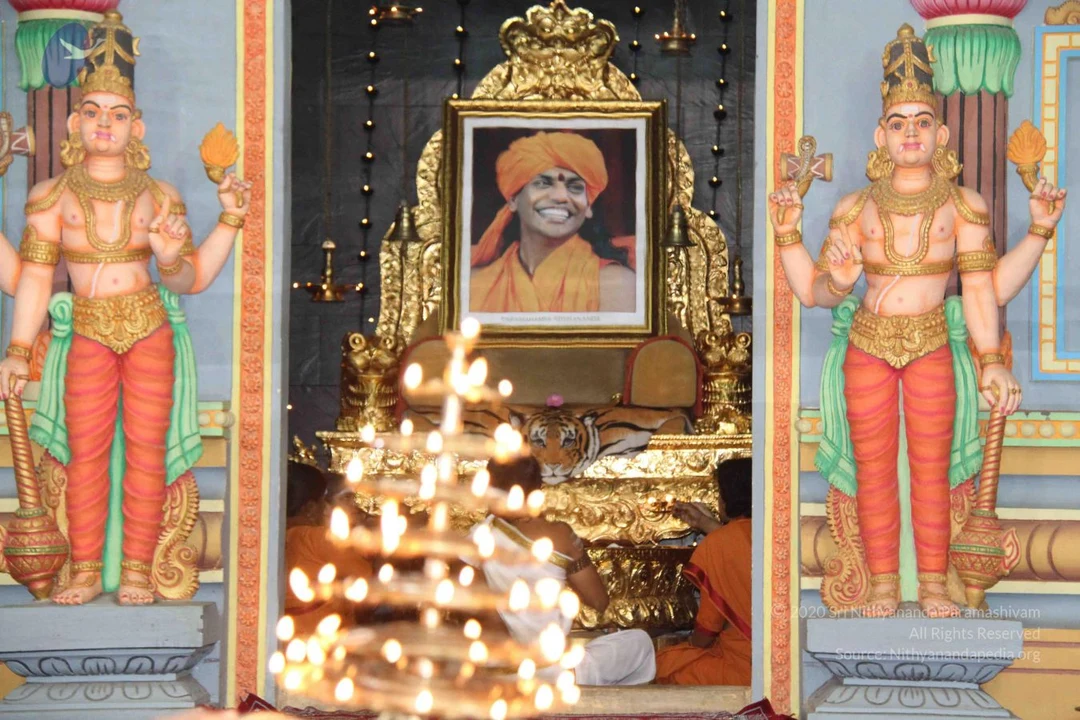
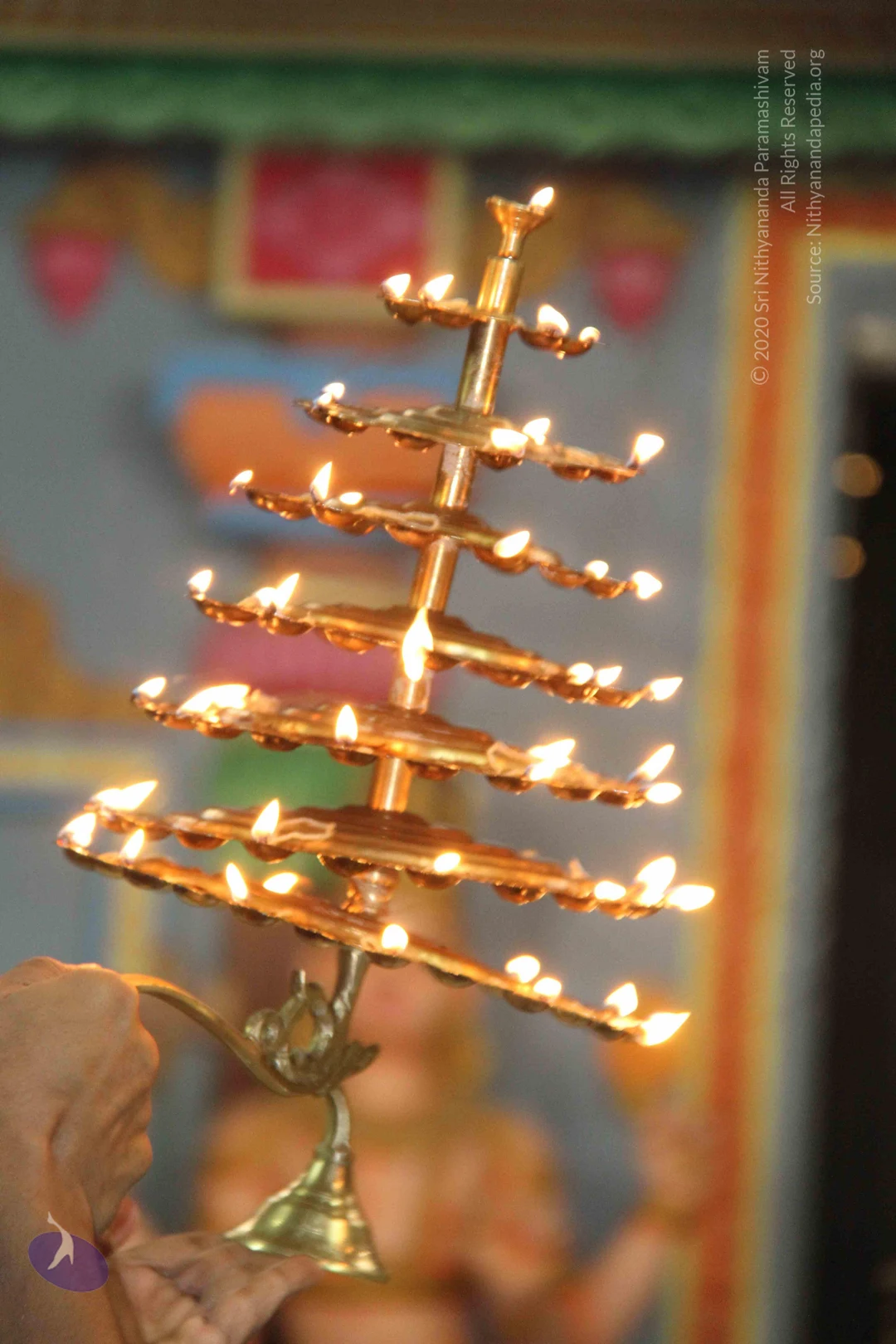
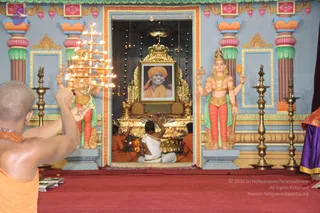
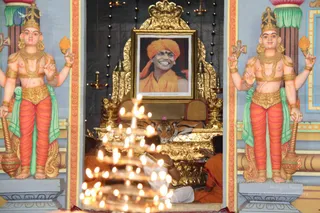
Aarthi to Guru moorthi
Nithya Satsang and Kalpataru Darshan
Temple Glimpses

Tags:

Paramahamsa Nithyananda, self Drive, source, knowledge, Saraswathi, context, energy, brought forward, next life, Living advaitha, scale to measure, integrity, authenticity,responsibility, enriching.

Photos Of The Day:

FB-photo-of-the-day

Photos Of The Day:

Satsang

Darshan

Photos Of The Day:

Temple Seva

Satsang

Darshan

Photos Of The Day:

Bidadi-Temple-Seva

Satsang

Photos from this day

View all 64 photos

Aarthi to Guru moorthi

2 photosSource gallery
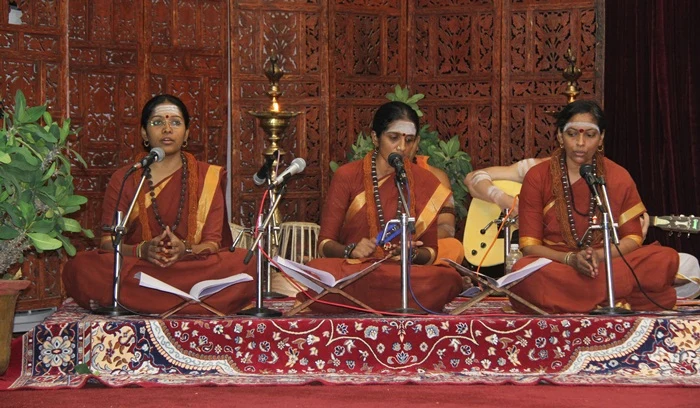
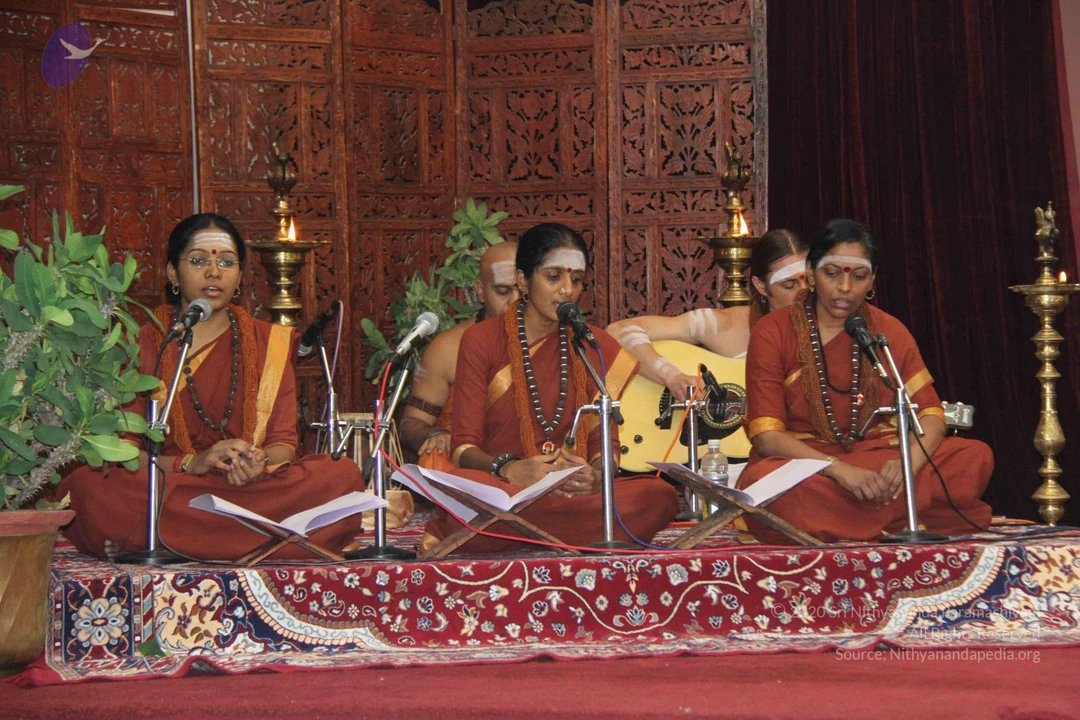
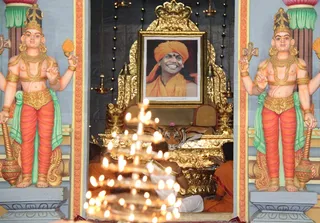
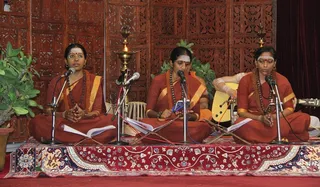
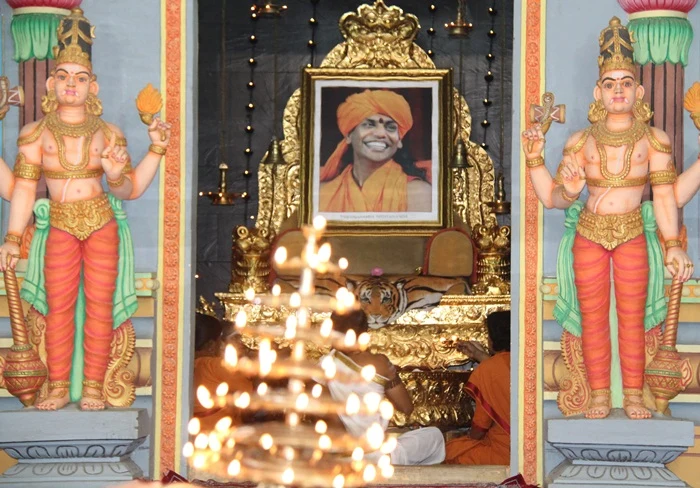
A photograph inside a temple shrine with a large golden framed portrait at the centre, showing a smiling man in an orange turban and orange garment, labelled with printed text at the bottom of the frame. The portrait sits above a golden throne-like seat draped with a tiger-skin cloth. In the foreground, a tall row of lit oil lamps blurs across the lower left. Two colourful painted guardian figures flank the shrine, each with multiple arms, gold necklaces and armbands, orange-red dhotis and green sashes. Partially visible seated figures in orange and white clothing attend the shrine at the bottom, with brass lamps and a kalasha visible. The portrait is a depiction, not a physical person, so no physical person is counted as a person.Three women in orange-red saris sit cross-legged on a red and cream patterned rug before a carved wooden screen, singing at floor microphones with open songbooks on small stands. Brass oil lamps stand behind them and a lute-like stringed instrument rests at the right. A potted plant sits at the left edge. No a person candidate is visible.

Nithya Satsang and Kalpataru Darshan
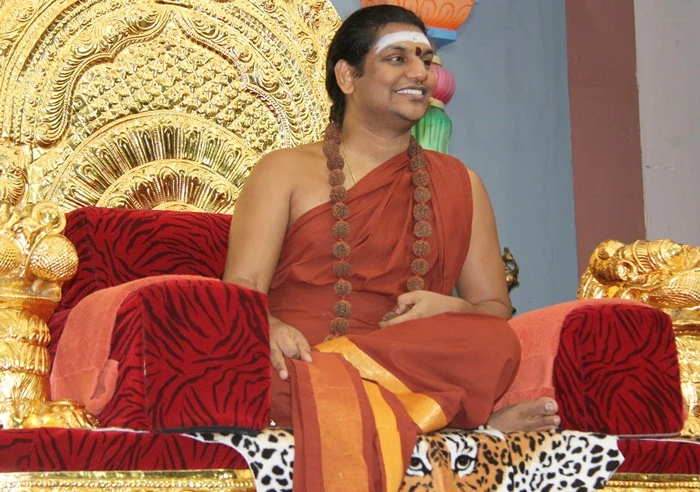
3 photosSource gallery
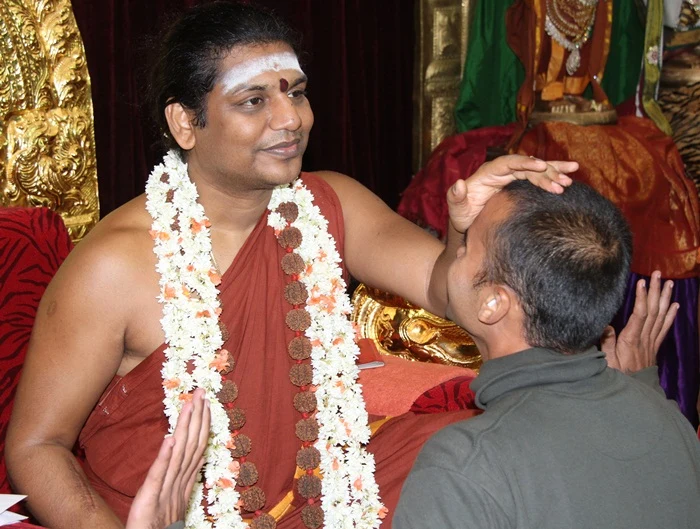
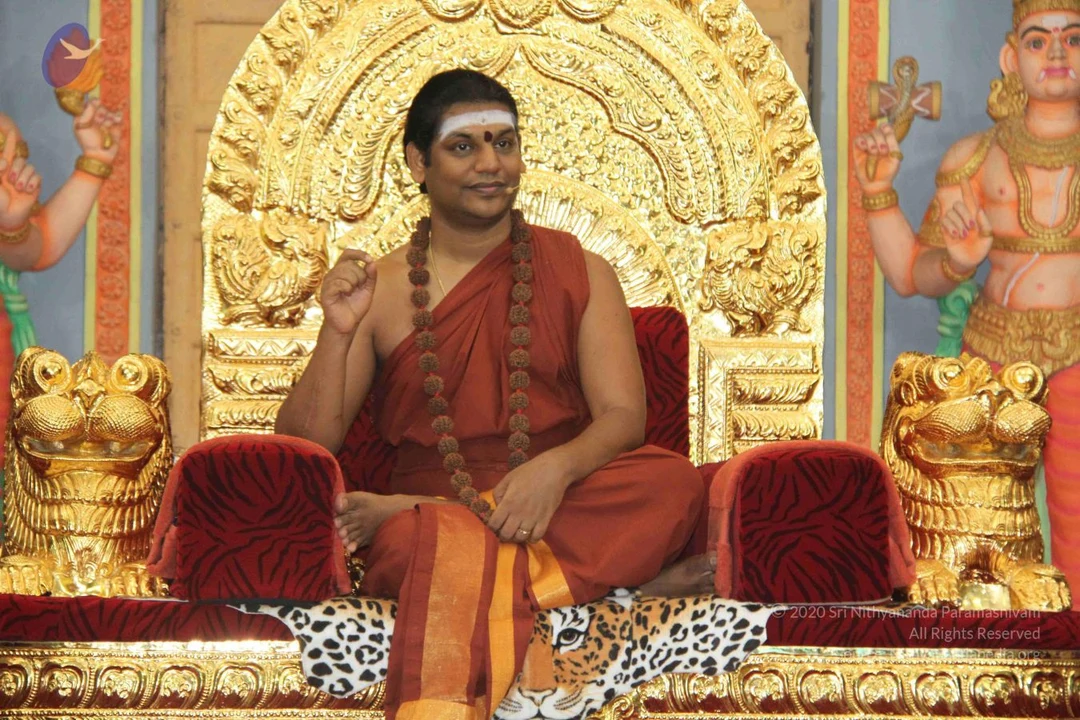
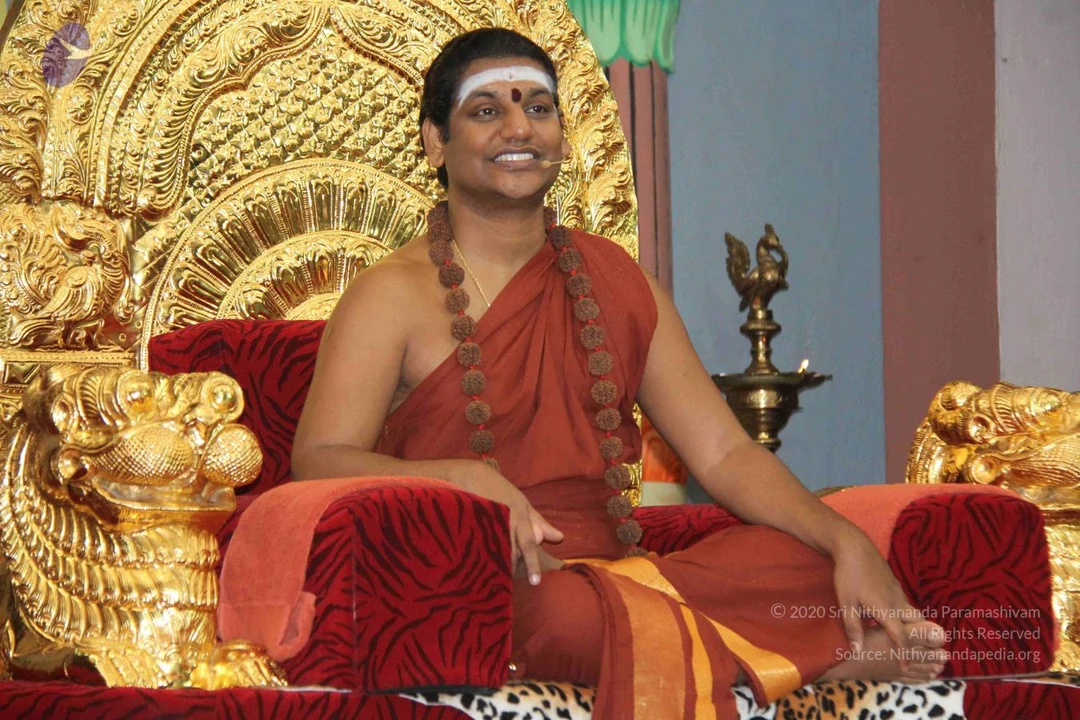
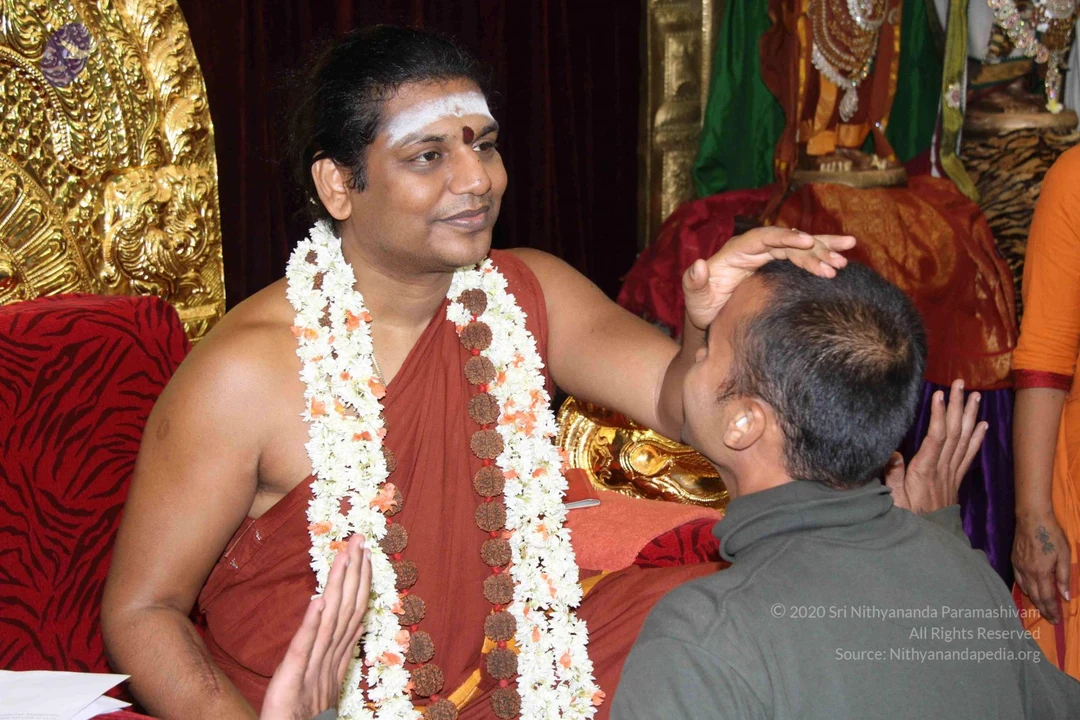
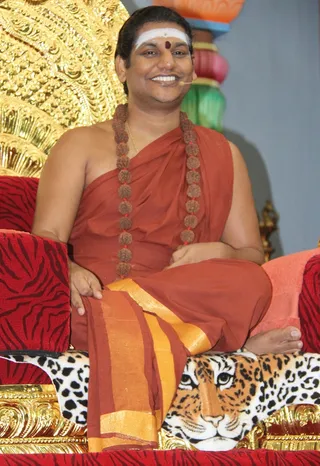
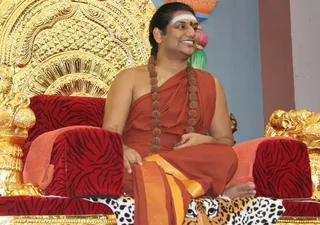
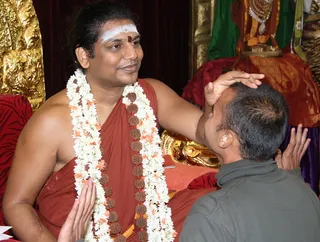
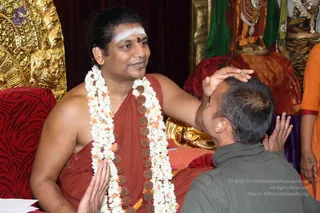
A smiling man seated cross-legged on an ornate gilded throne with red tiger-striped cushions and a leopard-print cloth draped over the seat. He wears a saffron-orange robe with a gold-bordered dhoti, a long rudraksha mala hanging to his waist, and a white tilak with a red dot on his forehead. He sits with one hand resting on his knee and looks off to the side. Behind him are a golden carved backrest and a glimpse of colourful decorations.A photo of a seated man in a rust-red saffron-toned robe, wearing a double garland of white and orange flowers and a long rudraksha mala with large beads, with white vibhuti and a red bindi on his forehead. He touches the head of a short-haired man in a grey top who bends forward toward him, with a second person's hands visible at lower left and right. Behind them are gold-coloured ornate decorations, a red draped cloth and a deity murti partly visible in green and red. Swamiji (probable) appears in person, and the appearance-based cues are the swept-back hair, rudraksha mala, saffron robe and flower garlands, while he is performing a blessing gesture of the head touch.

Temple Glimpses

8 photosSource gallery
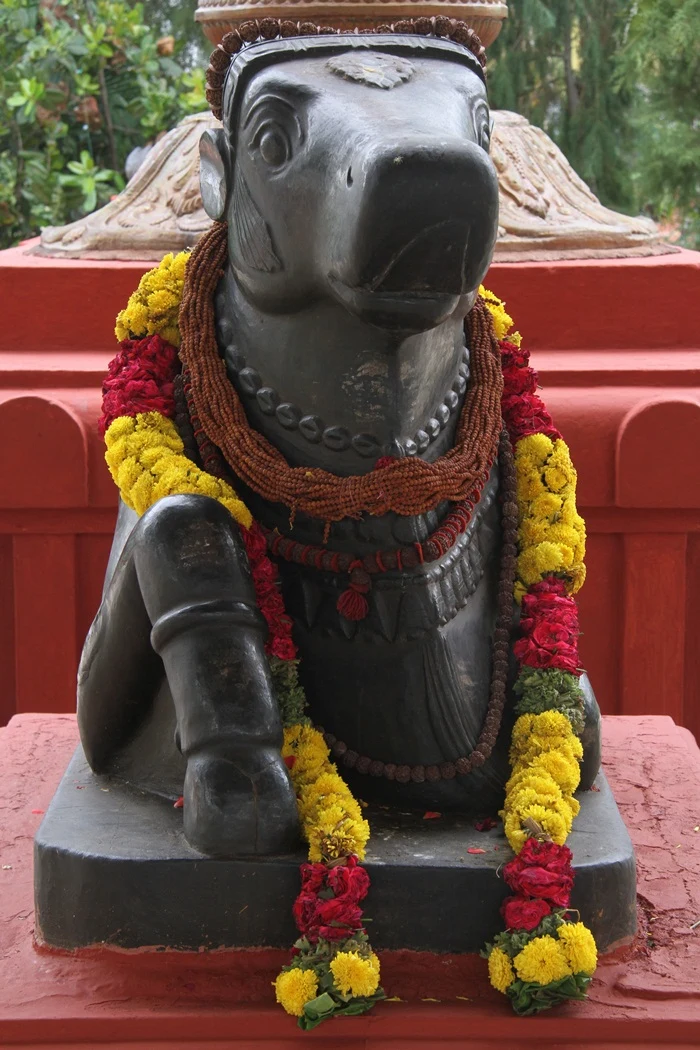
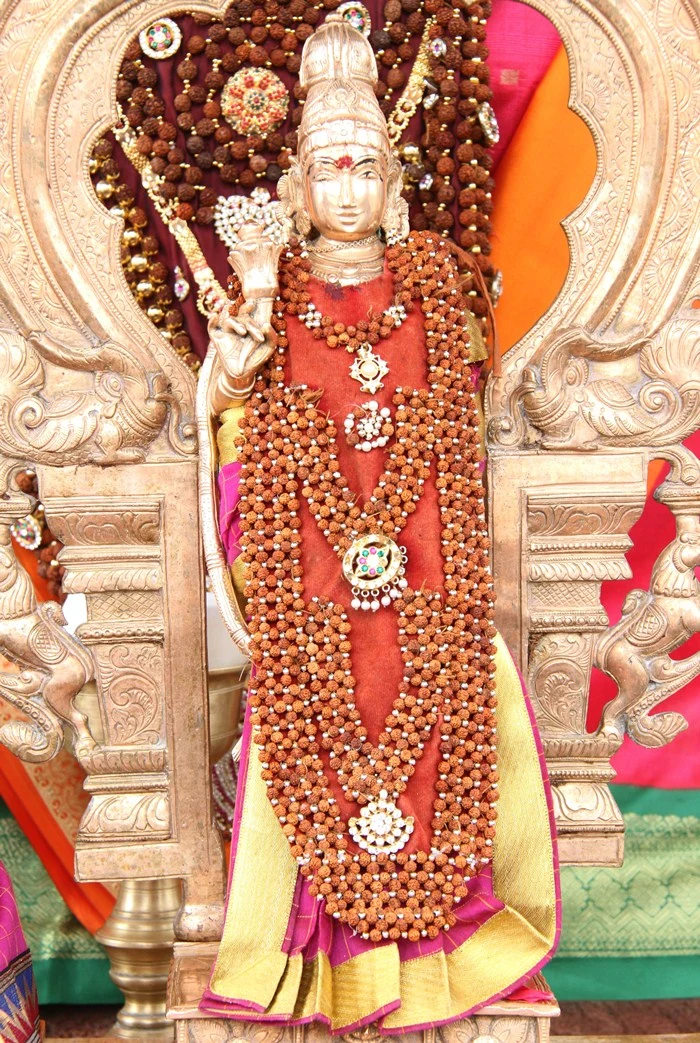
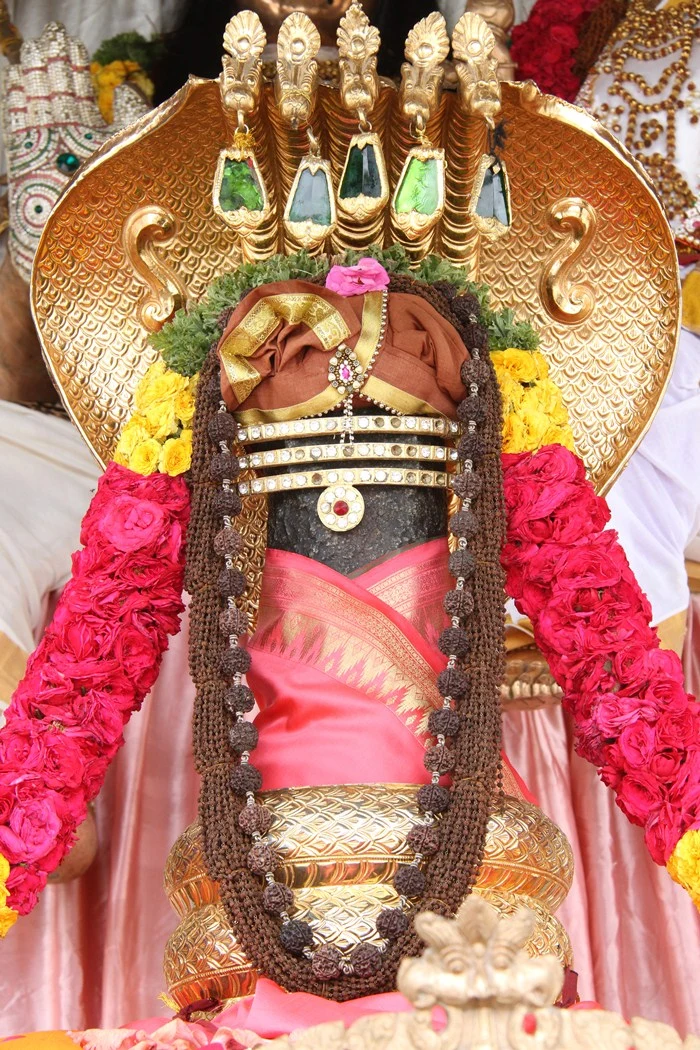
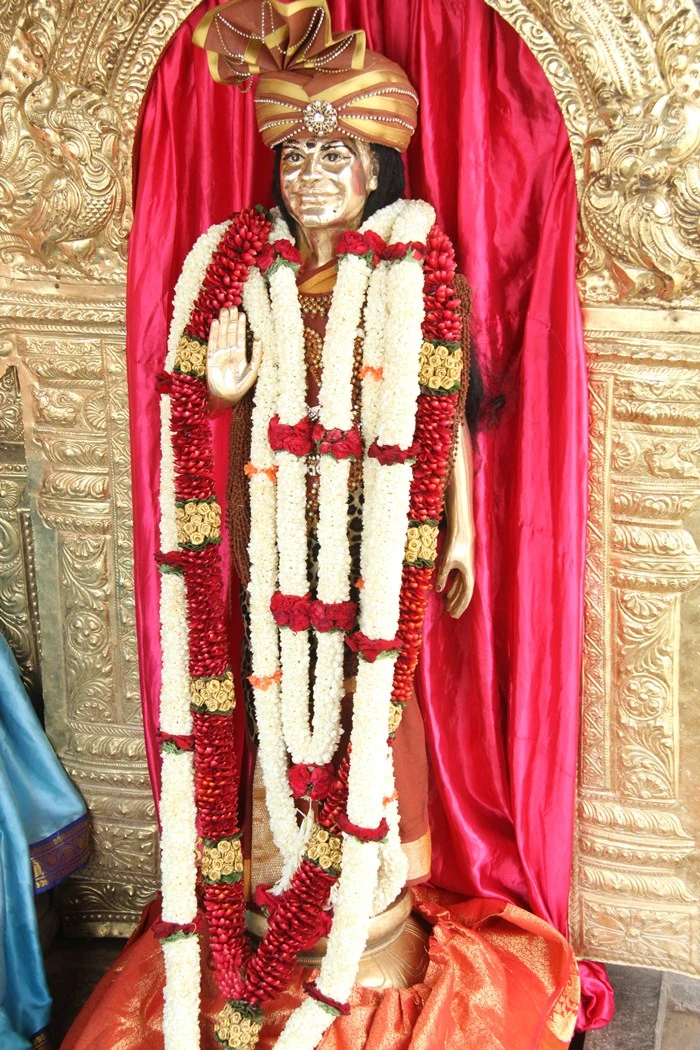
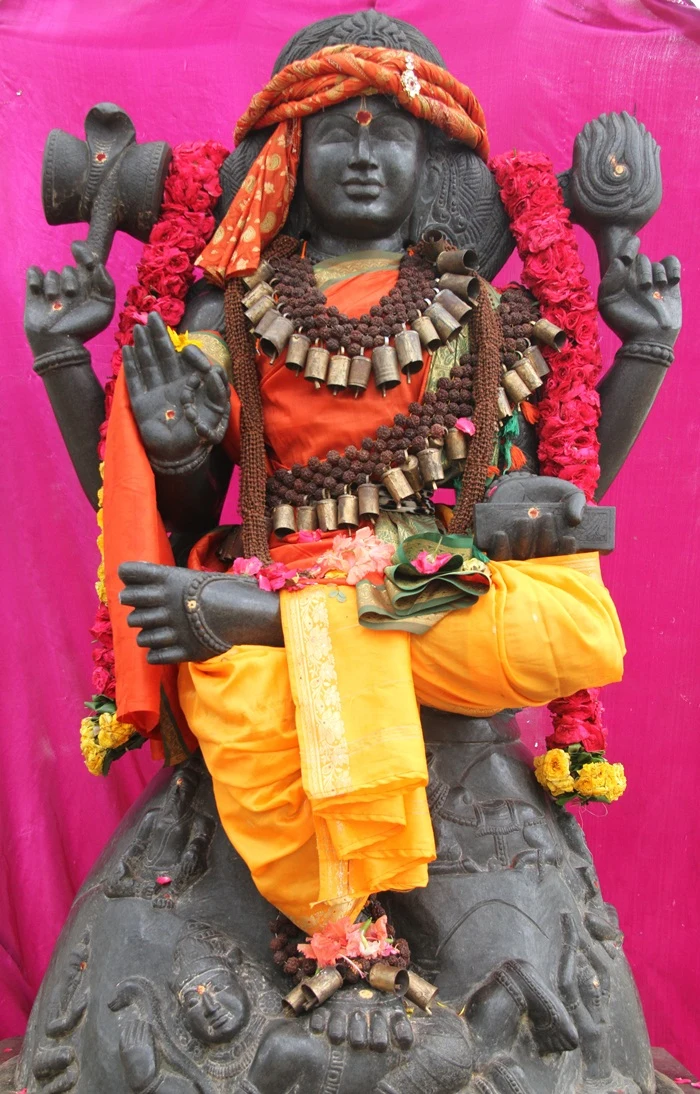
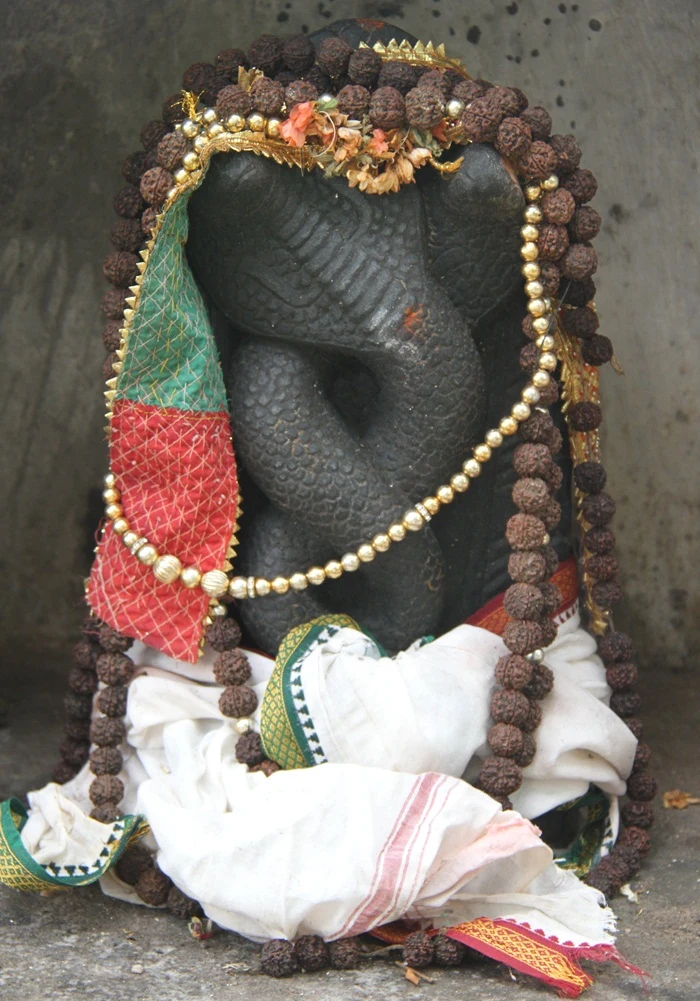
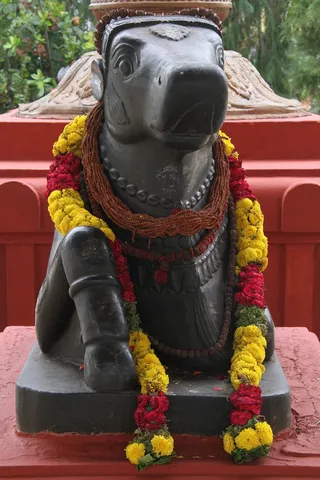
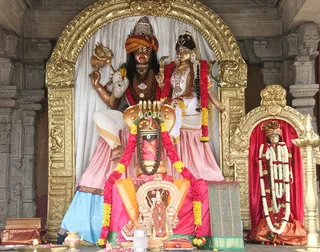
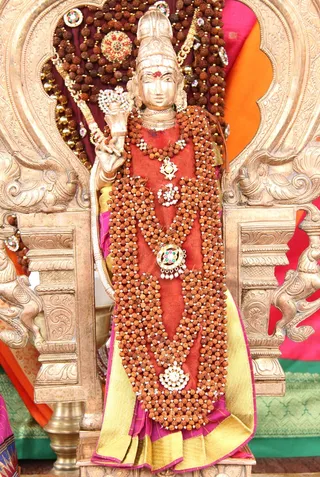
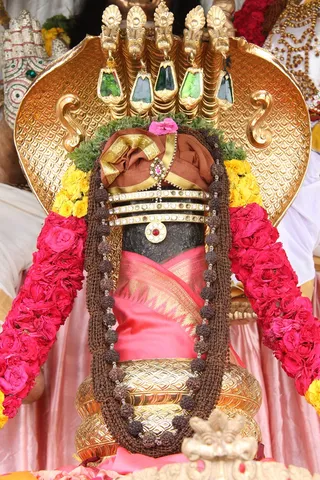
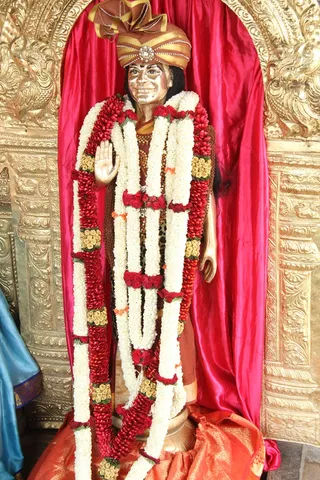
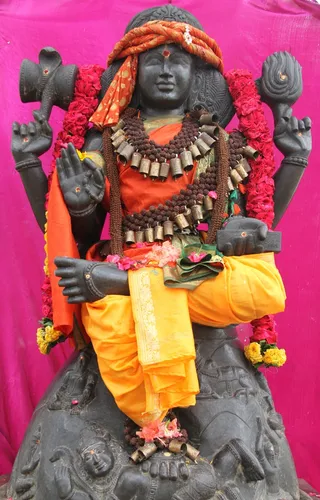
A black stone Nandi bull statue sits on a dark pedestal before a red-painted wall at an outdoor temple setting. The bull wears a brown rudraksha mala draped across its chest, a red-and-white beaded necklace, and a grey forehead ornament. Thick garlands of yellow marigolds and red roses hang over its neck and shoulders, with green leaves between them. Green foliage and a carved stone canopy top appear behind it. No people are visible, and no a person candidate appears; the figure is a sacred animal statue.Large temple sculpture group of a seated deity pair decorated with red and orange garlands. The male figure wears an orange turban, holds a trident-like staff and a drum, and the female figure wears a crown and a white garland with a red bead necklace. Between them a tall black lingam with a horizontal band stands on a gold yoni-like base. Golden arch frames the group, a pink and orange cloth backdrop hangs behind, and a smaller shrine to the right holds a garlanded figure in a red niche. Brass oil lamps, a kalasha and flower offerings sit in front. No living people are visible.A silver-toned metal murti of a deity stands in front of an ornate golden throne-like backdrop. The figure wears a tall crown, a red tilak on the forehead, and is draped in a long rudraksha mala with white bead strands and jewelled pendants, over a red garment with a magenta and gold-bordered cloth. One hand holds a staff or weapon. Behind it, rudraksha malas and colourful gem ornaments hang on a maroon and orange backdrop, with green fabric at the lower edge. No physical people are visible.Close-up of a black stone Shiva lingam dressed for worship, framed by a golden five-hooded serpent canopy with green and blue gemstone-set hoods. The lingam wears a brown and gold cloth, a pink silk wrap with gold border, gold bands with jewelled decoration, and a dark rudraksha mala draped down its front. Garlands of bright pink roses and yellow marigolds surround it, with green leaves across the top. No people are visible; this depicts a deity murti in a decorated puja setting.A golden statue of a standing male figure in a shrine niche, lifting its right hand in blessing. The figure wears an ornate gold and maroon turban with a jewelled brooch, a rudraksha-style bead necklace, and a saffron-orange cloth. It is draped in long garlands of white jasmine strands alternating with red flower clusters and yellow rose-like blooms. A deep red satin backdrop and gold-embossed temple carvings frame the murti, with a blue cloth visible at the left edge.A large black stone statue of a four-armed deity sits on a carved pedestal against a magenta backdrop. The murti wears an orange-and-red turban, an orange upper garment, and a saffron-yellow lower cloth with gold border. It is adorned with red rose garlands, yellow marigold garlands, and multiple rudraksha malas strung with brass bells, with pink flower petals scattered at its base. Its upraised hands hold a trident-like staff and a drum-shaped object, while lower hands show abhaya and varada mudras. No physical people are visible.

FB-photo-of-the-day

3 photosSource gallery
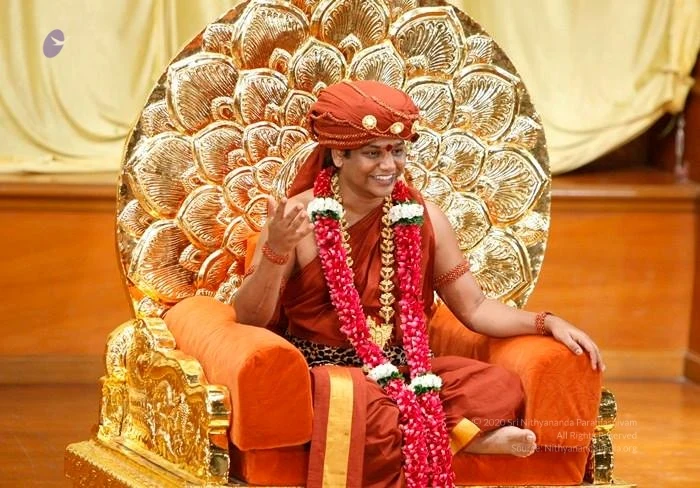
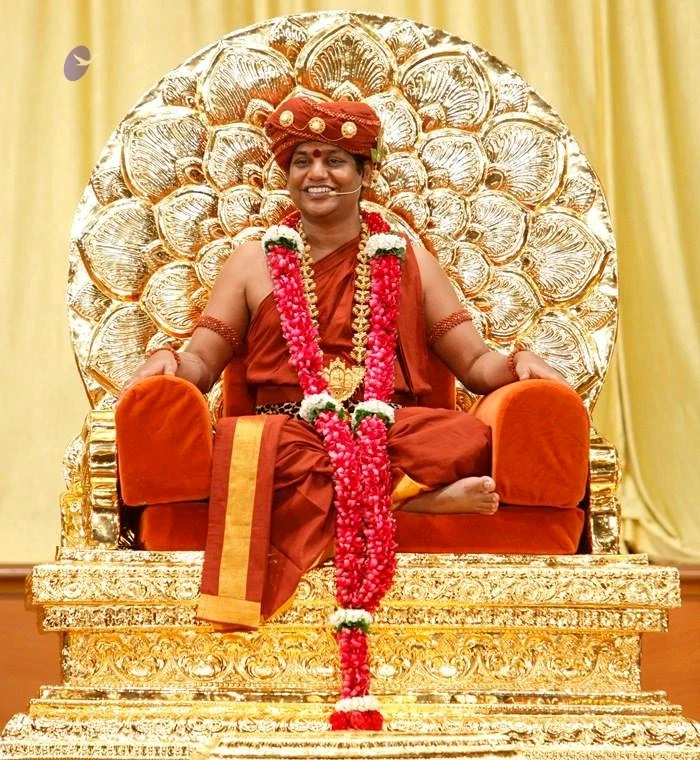
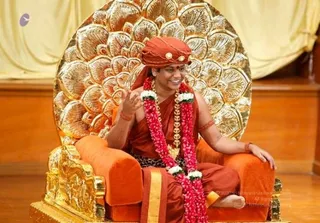
A seated figure in an orange-red turban and saffron robes sits on an ornate gold throne with a large gold lotus-petal backrest, smiling and gesturing with one hand. Red and white flower garlands and a gold ceremonial necklace hang on the figure, who is barefoot with red bangles on the wrists. The throne has orange velvet arm rests and a golden carved base, set against a warm wooden stage and cream drapery. The figure has long swept-back hair and ornate gold necklace and garland cues, so this is a probable Swamiji in person on a throne.A small, low-resolution photograph of a wide hall with a warm, orange-yellow curtained backdrop and a wooden stage floor. A single seated figure in a light-coloured robe sits centrally on the stage facing forward, with a small table or stand in front. The setting resembles a satsang or discourse hall. No readable text is visible. Only one physical person is present.A seated man in saffron-orange robes and a matching orange turban sits on an ornate gold throne with a large gold lotus-petal backrest against a golden curtain. He wears a long garland of red and white flowers draped from his neck to his lap, a gold pendant and beaded necklaces, and bracelets on his wrists. He smiles with hands resting on the throne armrests, and a small microphone is visible near his face. Swamiji (probable): long hair under the turban, saffron robes, ornate gold necklaces and a rudraksha-style mala, seated on a throne in a satsang setting.

Satsang

25 photosSource gallery
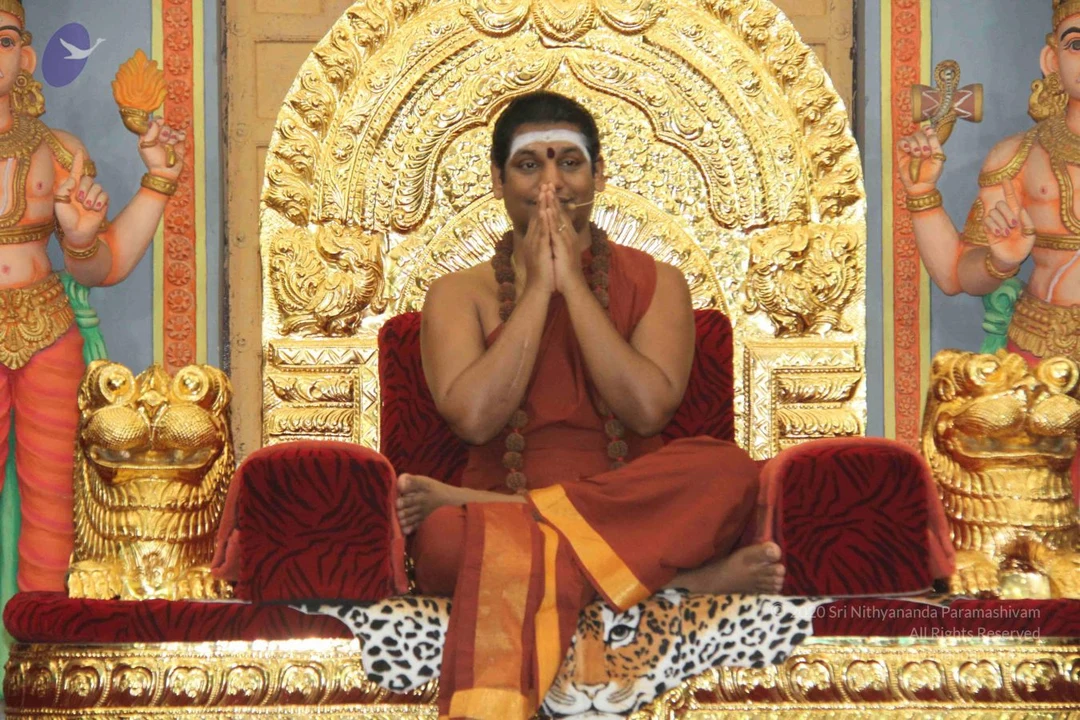
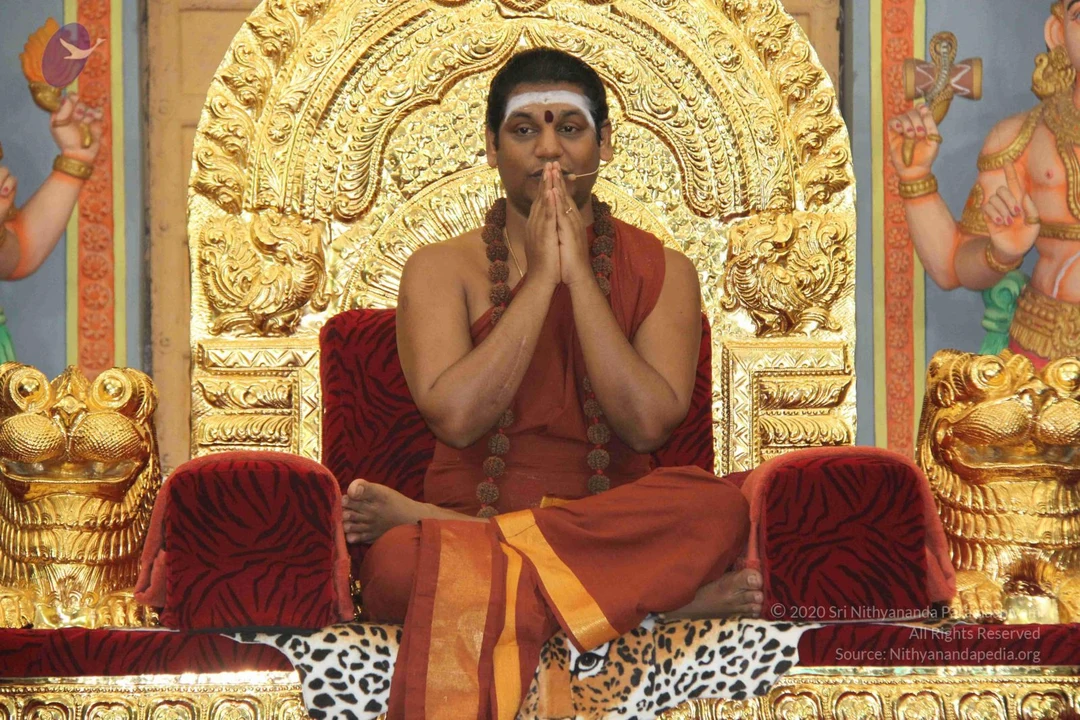
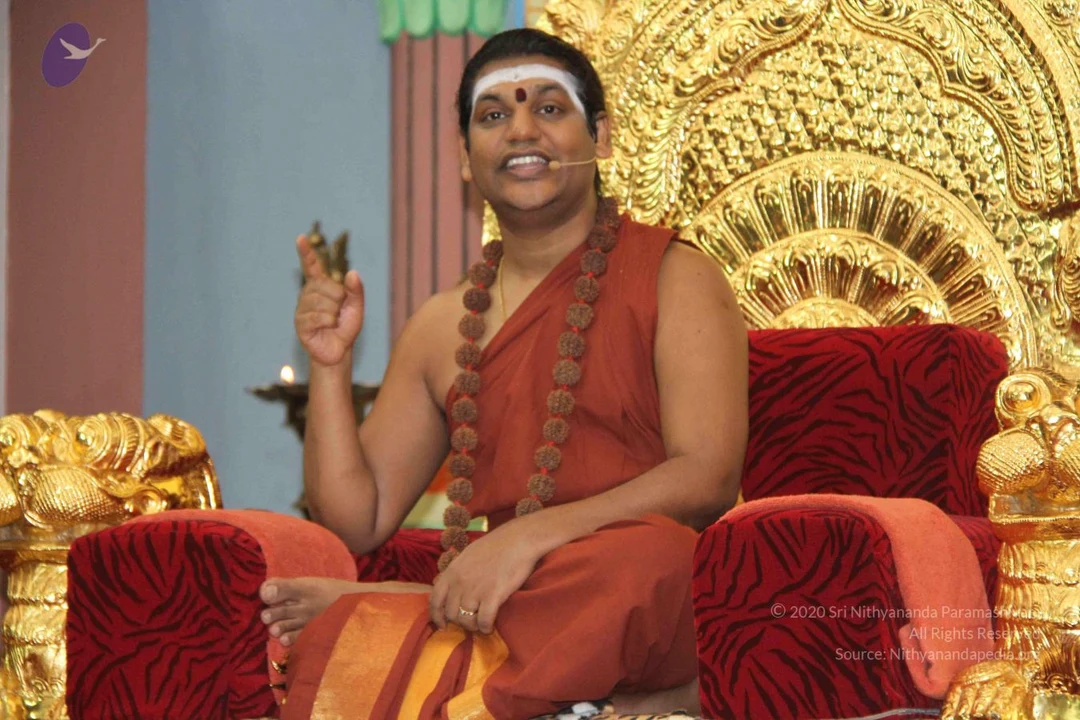
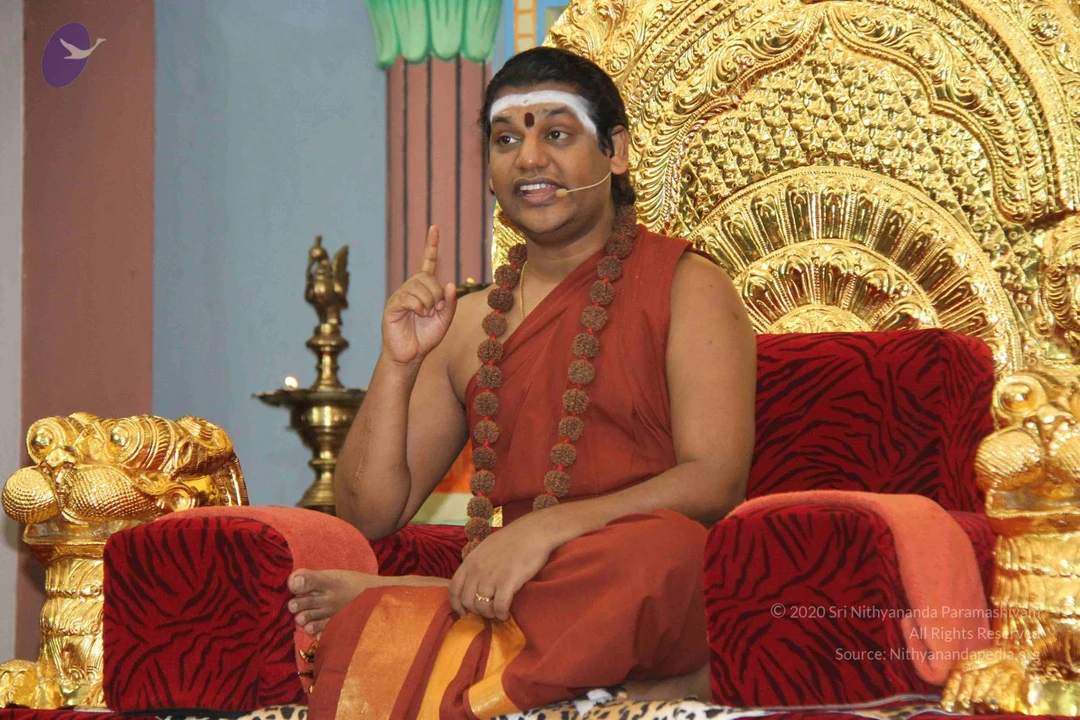
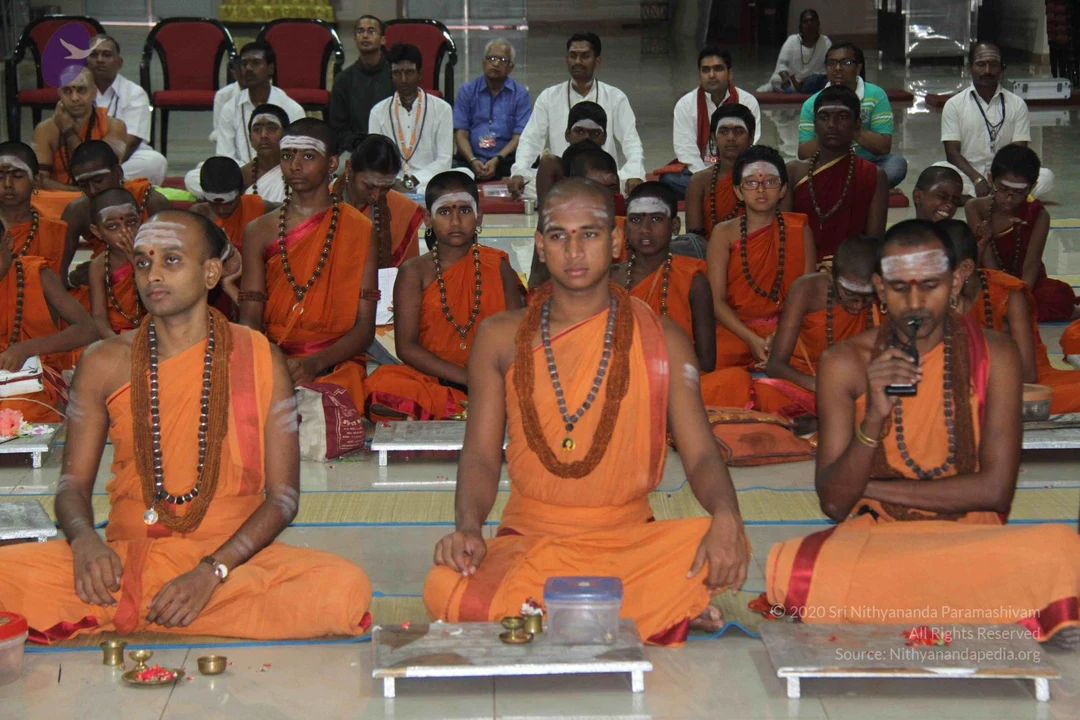
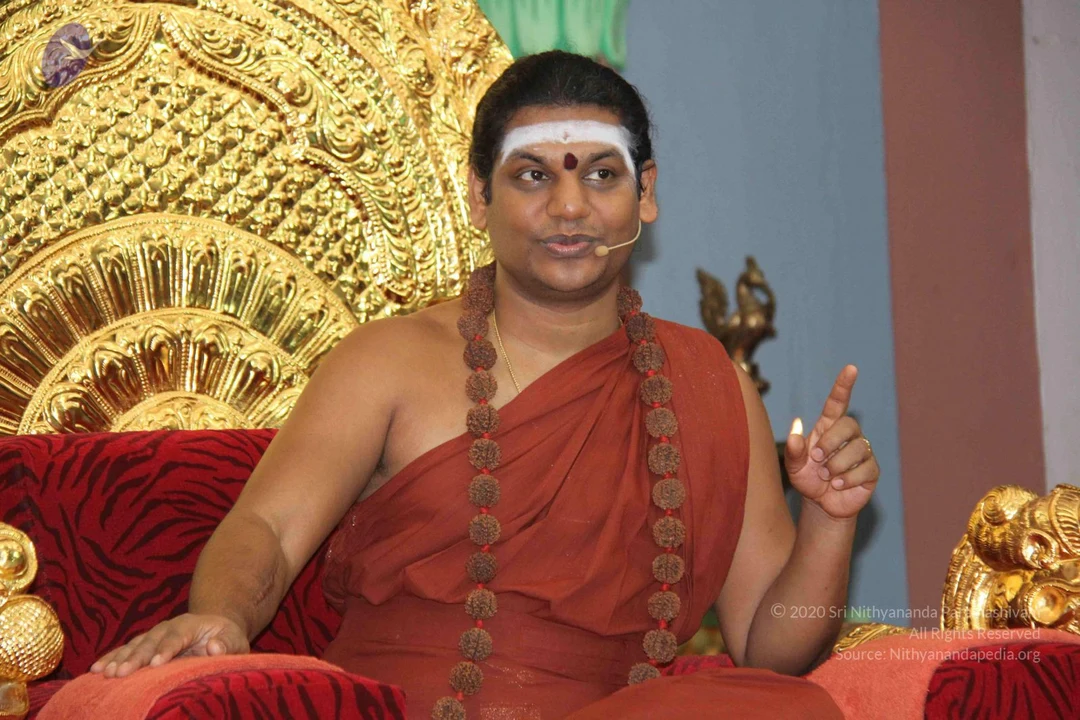
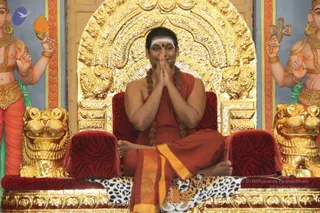
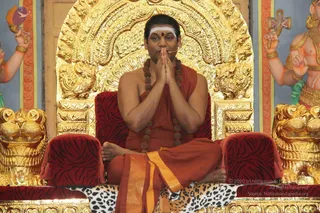
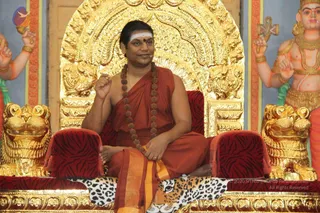
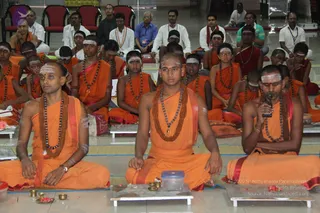
A seated man in orange and saffron robes sits on an ornate gold throne with red tiger-striped cushions and a leopard-print rug, palms pressed together in namaskar. He wears a white tilak with a red bindi, a rudraksha mala, and a thin orange shawl. Gilded lion-head armrests flank him, and carved gold deity figures with raised arms stand on either side against a painted backdrop.A seated man in saffron-orange robes with a gold-bordered cloth sits in a golden ornate throne with red-and-black tiger-striped cushions, palms pressed together in namaskar at chest level. He wears a white tilak with a red bindi on his forehead, a dark rudraksha mala draped over his shoulders, and bare feet resting on a leopard-print cloth. A small microphone clip is visible near his face. Gilded lion heads flank the throne, and painted deity figures with multiple arms stand on either side, one holding a trident-like staff. Appearance suggests a person, seated in a satsang setting with a golden throne, rudraksha mala and saffron robes.A seated man in saffron-red robes sits on an ornate gold throne with red tiger-striped cushions and gilded lion-head armrests, draped over a leopard-print rug. He wears a white forehead stripe with a red bindi, a long rudraksha mala, and a thin gold chain. His right hand is raised in a teaching gesture while he smiles toward the audience. Painted deity figures with raised arms flank the throne on both sides, one wearing gold armlets and a gold necklace. The gilded backrest behind him is carved with floral scrollwork.A man seated on an ornate gold throne with red and black tiger-striped cushions, speaking into a small headset microphone while raising one hand in a teaching gesture. He wears an orange-red sleeveless garment with a dark red and gold dhoti, a long rudraksha mala of brown beads, a white tilak band on the forehead with a red dot, and a gold ring. Behind him are blue and pink walls and a small brass oil lamp. a person is seated in a satsang setting, with the throne and oil lamp visible.A man seated on an ornate gold throne with red zebra-striped cushions speaks while raising his right index finger, as in teaching. He wears an orange-red sleeveless robe with a yellow-orange border, a long rudraksha mala, a white tripundra with a red bindi, and a small headset microphone. Behind him stands a brass oil lamp with a lit flame and a pink-and-blue pillar. The sitter is an appearance-based a person figure, presented as a teacher giving satsang. Gold lion-shaped armrests frame the scene.Seated devotional gathering in a hall with a tiled floor and thin mats. In the foreground, three men in orange saffron robes with rudraksha malas and white vibhuti on their foreheads sit cross-legged behind small metal stands holding brass oil lamps and bowls. The centre man has his hands in a relaxed mudra; the right man holds a microphone near his mouth. Behind them, rows of younger boys in orange and red robes with white forehead marks sit in lines. Further back, men in white shirts and a few in colourful shirts sit on red chairs and benches. Watermarked archive photo; a hanging copyright line appears in the lower right.

Darshan
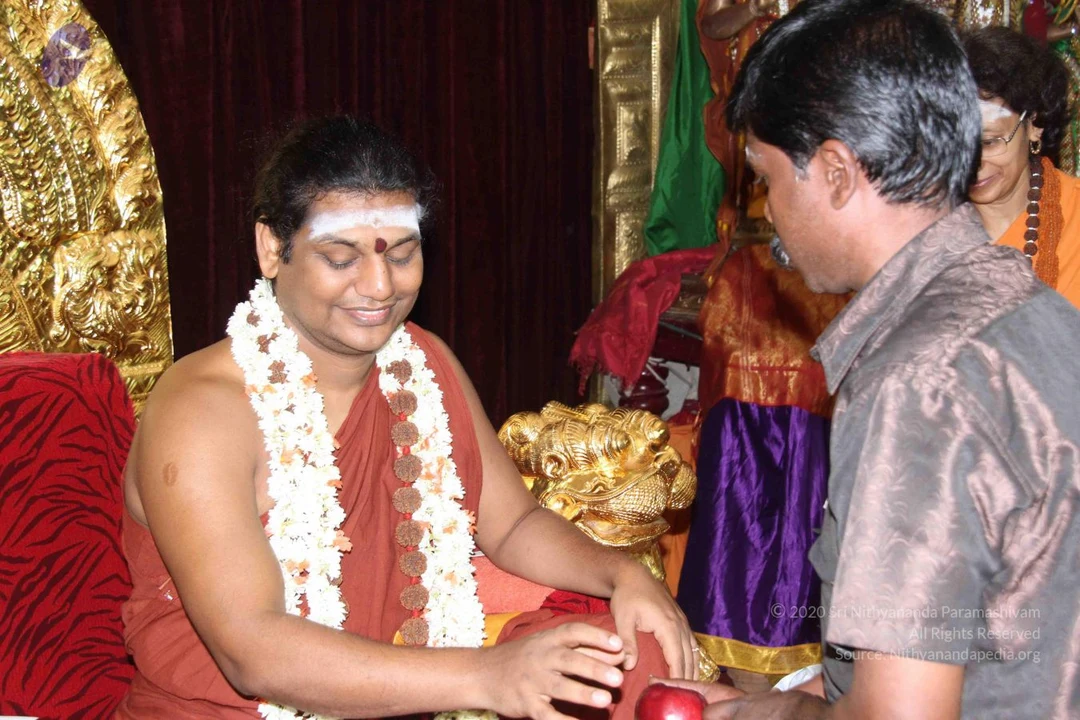
7 photosSource gallery
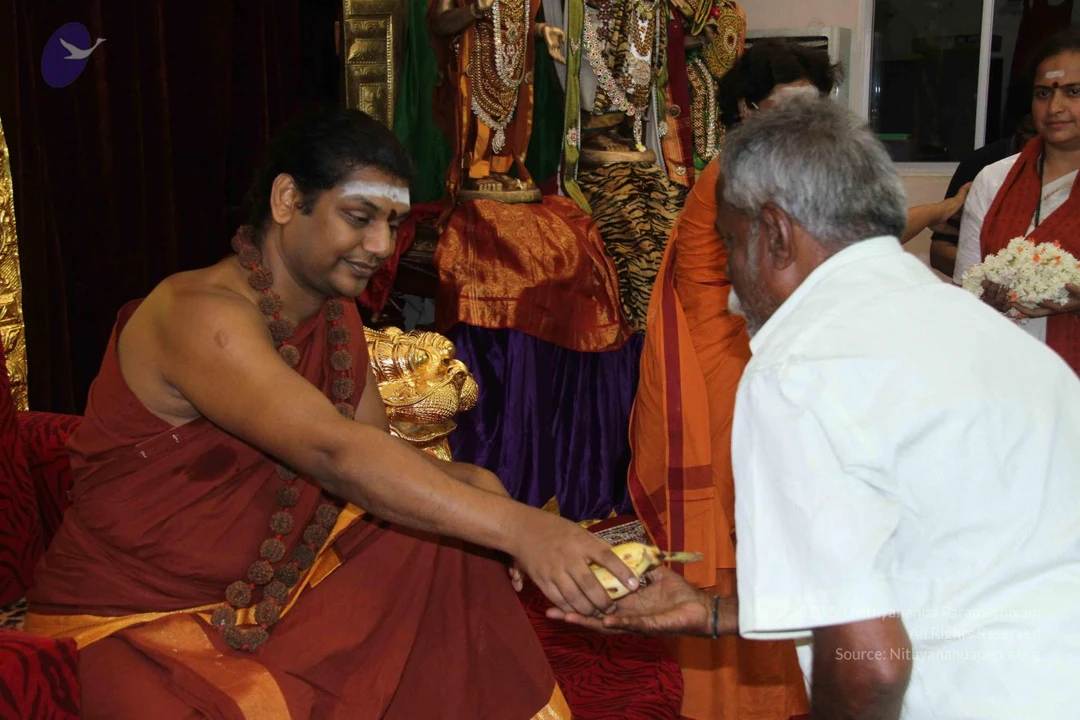
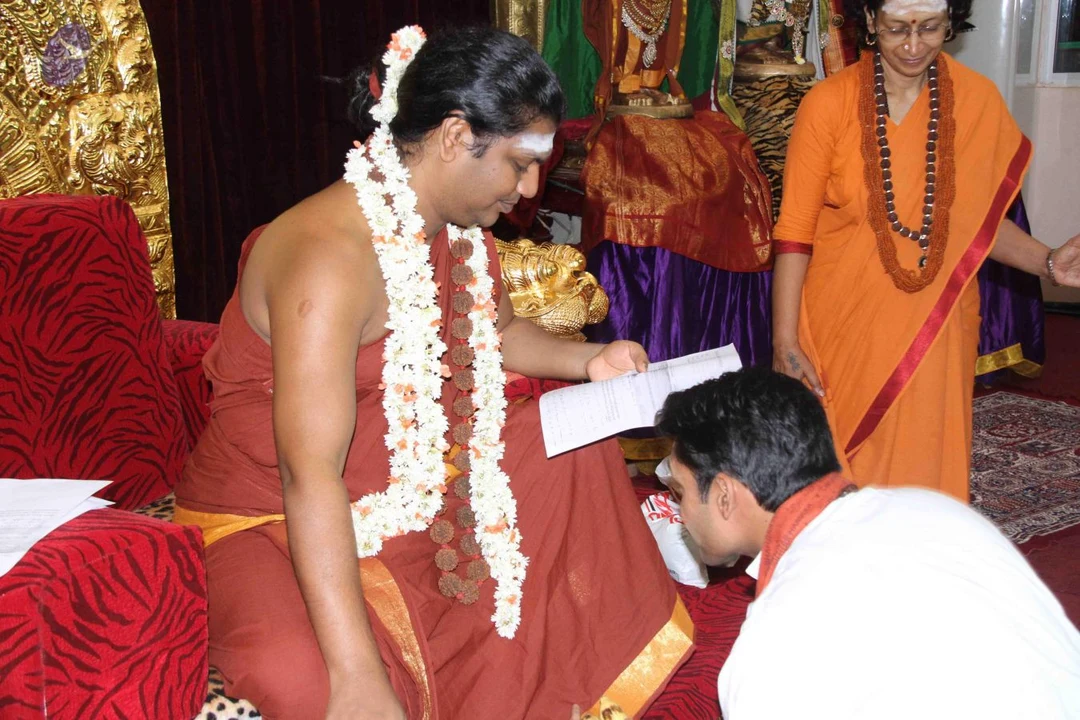
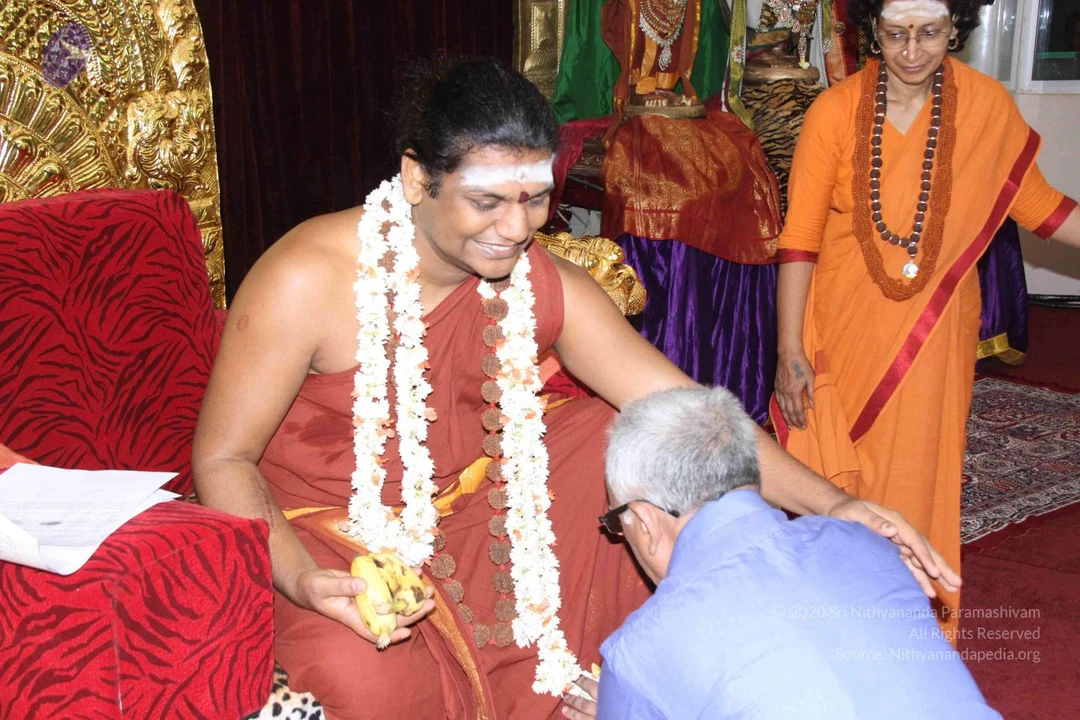
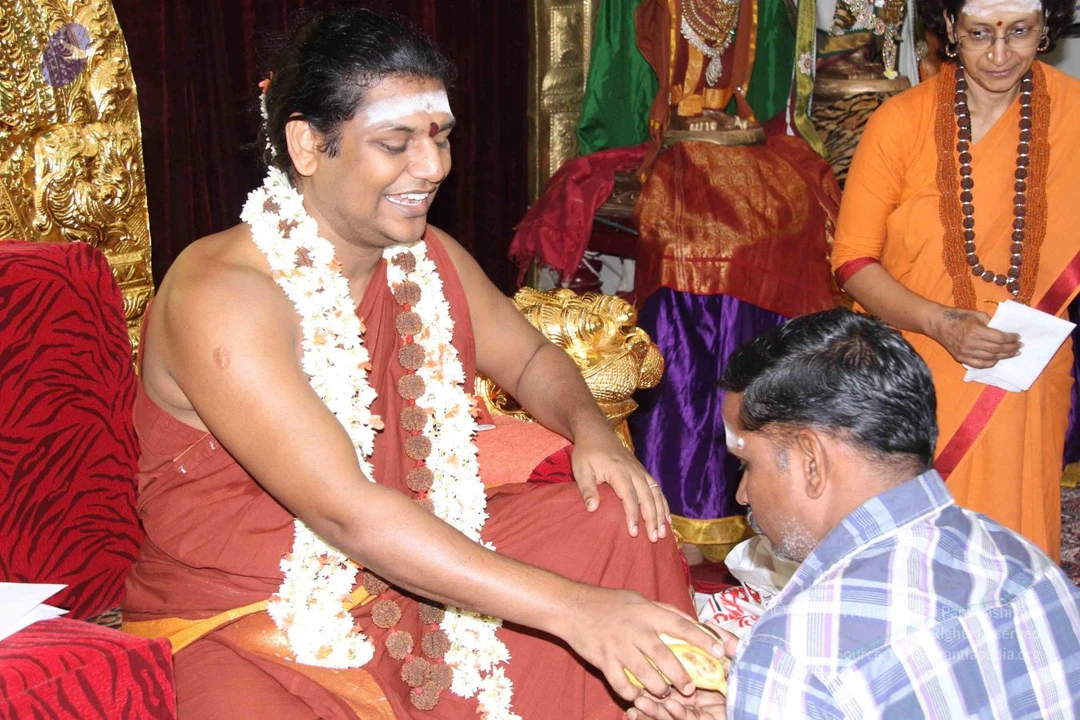
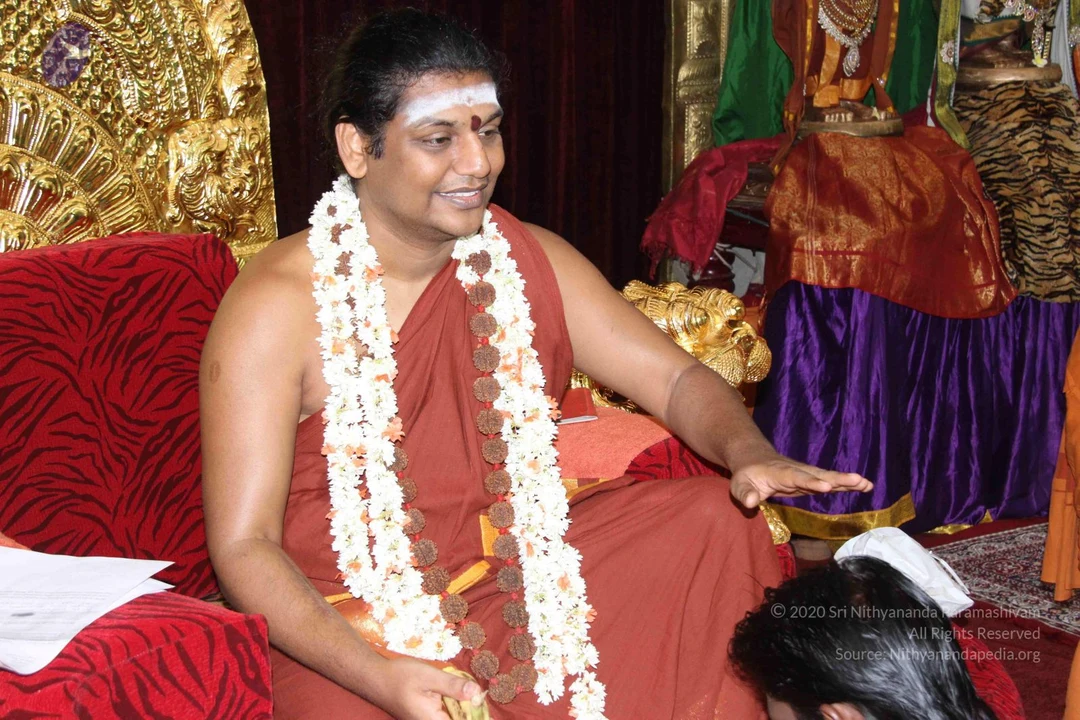
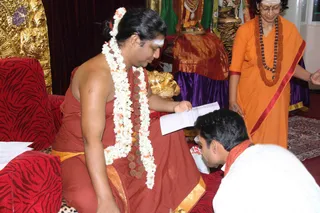
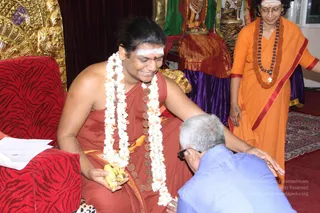
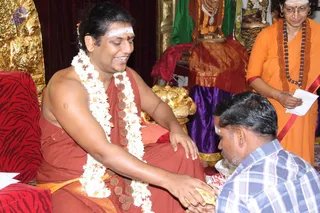
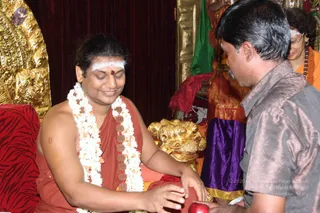
A seated man in a rust-red robe with a gold-edged border and a long white flower garland sits on a red zebra-striped armchair, reading a printed sheet held in his right hand. A devotee in a white shirt with an orange shawl kneels at his feet. Behind them a woman in an orange sari with a rudraksha mala and a vibhuti mark stands beside a gilded backdrop, with a golden lion figure and a draped purple-and-maroon peetha or throne in the background. Red patterned carpet covers the floor.Photograph of a seated man in a rust-red dhoti-style cloth, bare-chested with a long white flower garland and a tripundra-style forehead mark with a red dot, holding a bunch of bananas and smiling. A man with grey hair and blue shirt bows forward, touching his feet. Behind them, a woman in orange sari with rudraksha mala stands beside a golden throne and a red zebra-striped armchair. Deity murti and draped altar cloths are visible in the background. Appearance-based cues suggest a person seated in the centre, though identity is uncertain.A seated man in a rust-red robe with a white and red forehead mark wears long white flower garlands with orange blossoms and a rudraksha mala. He turns to his right, raising one hand to bless the bowed head of a man in a grey top, who kneels before him on a red-and-black striped chair with gold carvings. Behind them stand a gold throne frame, draped fabrics and a deity murti in green and orange cloth.A seated man in a rust-red robe with a white jasmine garland and a large rudraksha mala smiles while a devotee in a checked blue shirt bends forward to touch his feet, with a yellow fruit or offering in the devotee's hand. A woman in an orange sari and rudraksha mala stands behind at right holding a folded white paper. The setting has a red tiger-striped chair, a gold lion-carved seat, a purple draped stand, and a gold-ornamented shrine backdrop with a green cloth. The devotee is partly turned away and the seated man's face is clearly visible. a person is shown in the seated role, identified by his rust-red robe, jasmine garland and rudraksha mala.A seated man in a rust-red sleeveless robe wears long white flower garlands and a rudraksha mala with brown beads, with a white tilak and red dot on his forehead. He sits on a red tiger-striped cushioned seat beside a gold ornate chair, gesturing with his right hand toward a person whose dark head is visible at the lower right. Behind him are draped red, orange and gold fabrics, a purple cloth and a gold-framed shrine with a deity murti. Visible identification probable: a person, given as the seated presenter receiving attention, with rudraksha mala, white garlands and rust-red robe as cues.A photograph of a seated man in rust-orange robes, bare-chested, with a white jasmine garland and a rudraksha mala draped over his shoulders, a white horizontal tilak and red bindi on his forehead, sitting on a red tiger-striped cushioned seat beside a golden lion-shaped ornament. Eyes closed and smiling, he rests his hand on a golden armrest while a man in a grey-brown patterned shirt offers him a red apple. Behind them, a golden throne carving, a maroon curtain, a green and red cloth, and a woman in an orange top and glasses stand in an ornate setting.

Temple Seva

9 photosSource gallery
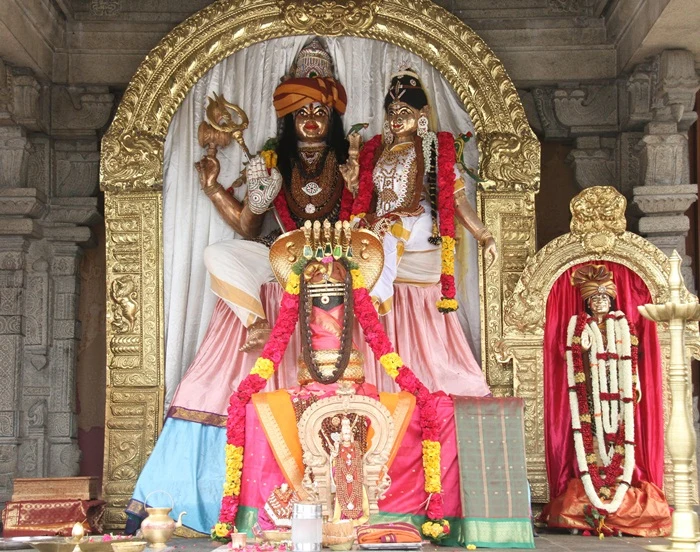
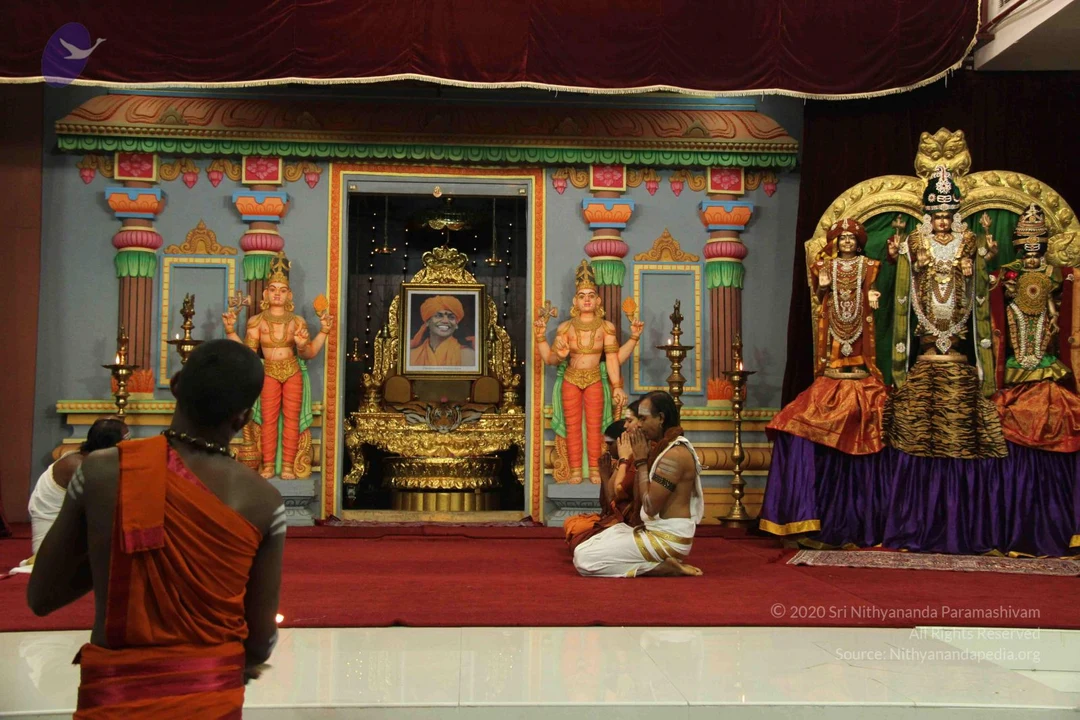
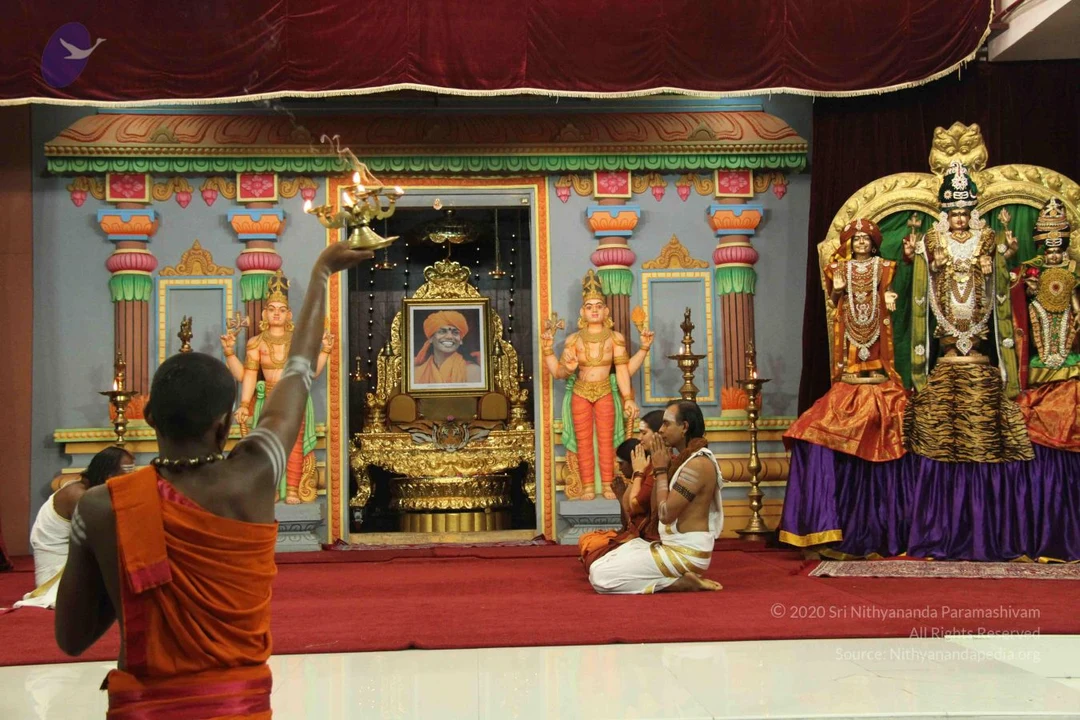
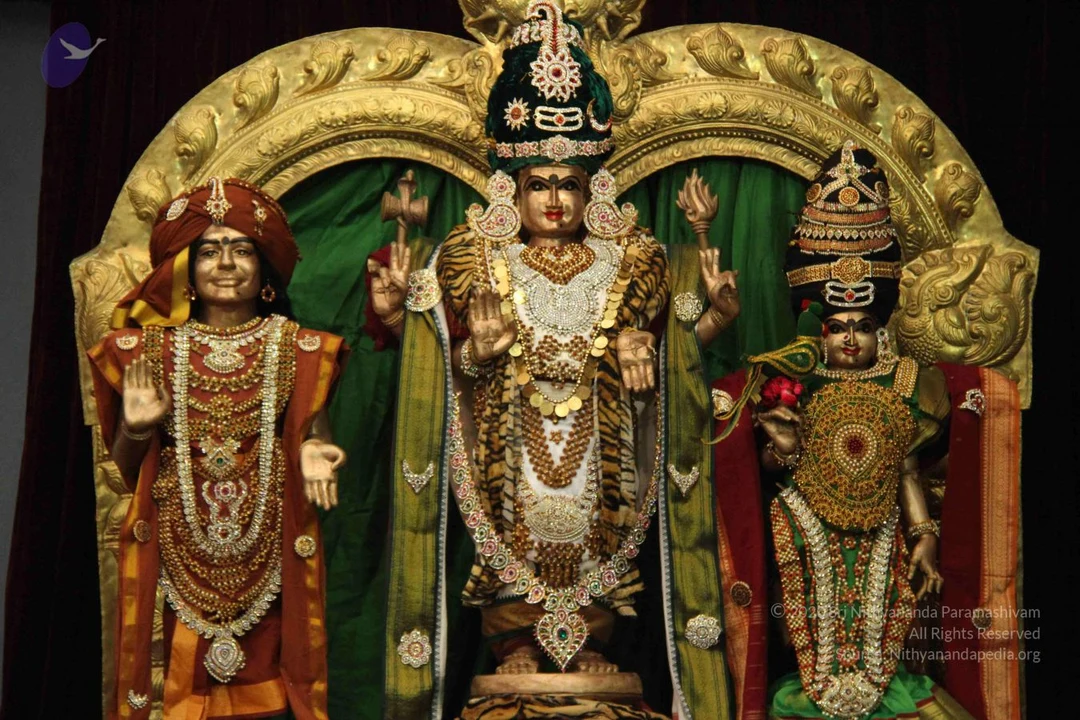
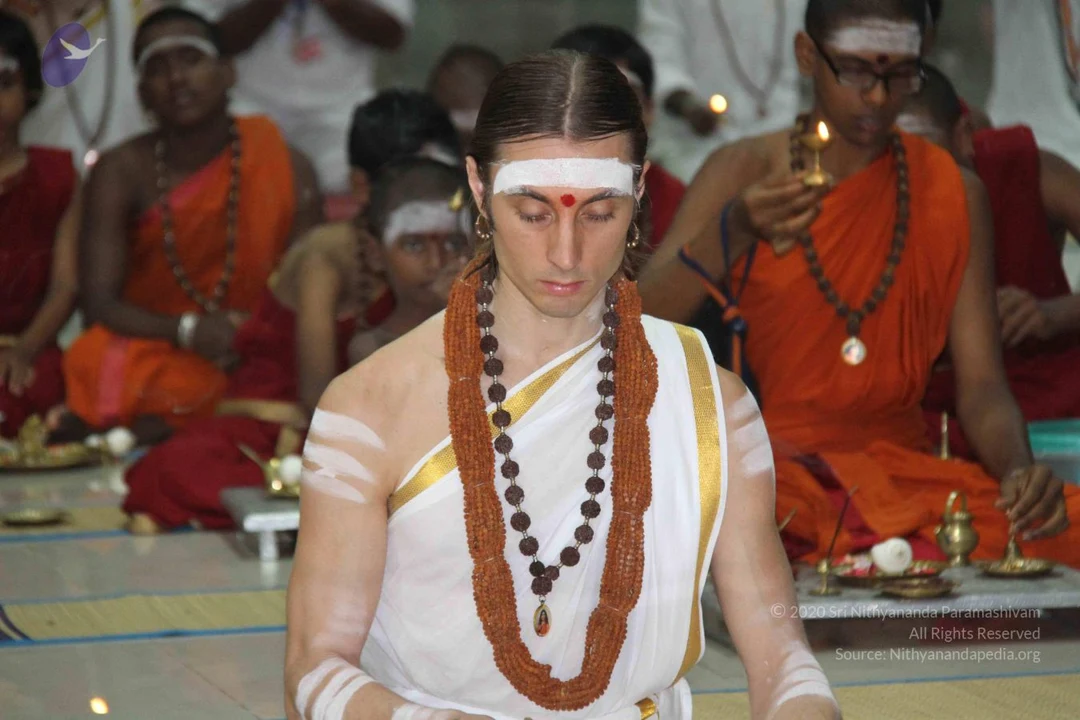
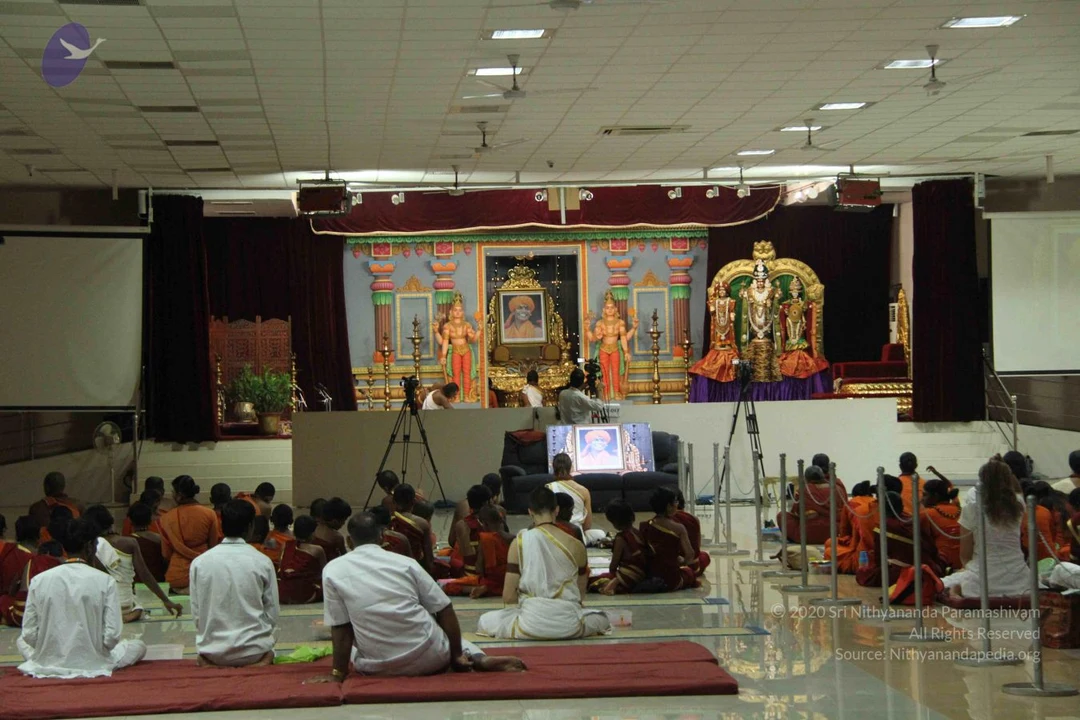
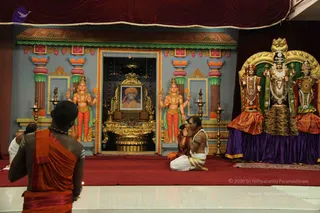
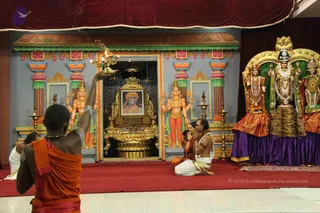
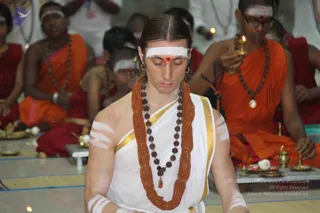
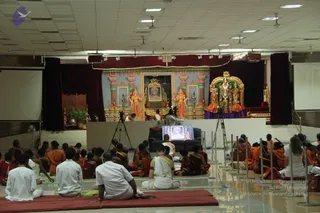
A temple-style stage set with a red carpet and a central gold throne-like seat (peetha) backed by a framed portrait of a bearded man in orange turban and robe, flanked by two painted dvarapala-like guardian figures in orange and green. On the right, a richly decorated gold-framed shrine holds a deity murti with a crown, garlands and ornaments. In the foreground, a man in white dhoti and white shawl with a bare upper body sits kneeling with palms pressed together in namaskar, facing the shrine. Beside him, a figure in orange robe sits at the left edge with their back to the camera, and another person in white kneels further left. Brass oil lamps (deepas) line the stage. Two people are visible.A temple-style shrine room with a red velvet canopy and a painted blue wall flanked by painted guardian figures. At centre is a golden throne-like peetha holding a framed portrait of a smiling saffron-turbaned man, with brass lamps on either side. A man in an orange robe and bare-chested with white body markings raises a lit oil lamp (aarti) toward the altar. Two men kneel on the red carpet with hands folded in prayer: one in a white dhoti with a saffron shawl, another in an orange garment. On the right stands a richly dressed deity murti with a golden crown, garlands, a green and gold backdrop and purple draped base. Brass lamps and a second standing figure appear at the left edge.A photograph of a decorated altar with three large murti statues under a gold arched frame against a green draped backdrop. The central figure wears a tall green crown with jewelled ornaments, a tiger-striped garment and layered gold and bead necklaces, with hands raised in blessing. The figure to the left wears a red-orange turban and saffron-orange robe with a layered rudraksha-style necklace, and the figure to the right wears an ornate crown, a green and red embroidered garment, and holds a red flower. No physical people are visible; all three figures are statues.Three decorated murtis stand on a purple cloth before a gold arched backdrop with a green curtain. The central figure wears a tall green jewelled crown with a Shiva-lingam-style emblem, layered gold and pearl necklaces, and a tiger-striped shawl over white, holding a trident-like staff in one hand and a drum-like object in another. To the left stands a figure in orange and saffron robes with a red turban, ornate beaded garlands and a gold pendant. To the right stands a female deity in a green and red sari with a gold-embellished cap and a red flower in hand. A tiger-skin cloth covers the central pedestal. Only statues are present, with no physical people.A seated man with long hair swept back wears a white dhoti with a gold border and an orange-red rudraksha mala over his shoulder, eyes closed in meditation with a white tripundra and red bindi on his forehead. Surrounding him, several people in saffron and orange robes and red garments sit on a mat, some holding small oil lamps. Brass lamps and offerings lie on a low platform at right. Brass lamps, oil lamps and offerings suggest a puja. Seven or more physically visible people appear in the scene.Wide view of an indoor satsang hall with a raised stage backdrop painted with two tall standing guardian figures in orange and green, flanked by ornate golden thrones. On the left throne sits a framed portrait of a bearded man with a saffron cloth; a gold deity murti with garlands and a crown stands on the right. Rows of seated devotees fill the floor: saffron and orange robed sannyasis, men in white dhotis, and a woman in white on the right. Camera tripods and a small screen displaying a portrait are on the stage; a man in white stands at the stage front. Oil lamps and brass lamps line the stage edges.

Satsang

25 photosSource gallery
A seated man in orange and saffron robes sits on an ornate gold throne with red tiger-striped cushions and a leopard-print rug, palms pressed together in namaskar. He wears a white tilak with a red bindi, a rudraksha mala, and a thin orange shawl. Gilded lion-head armrests flank him, and carved gold deity figures with raised arms stand on either side against a painted backdrop.A seated man in saffron-orange robes with a gold-bordered cloth sits in a golden ornate throne with red-and-black tiger-striped cushions, palms pressed together in namaskar at chest level. He wears a white tilak with a red bindi on his forehead, a dark rudraksha mala draped over his shoulders, and bare feet resting on a leopard-print cloth. A small microphone clip is visible near his face. Gilded lion heads flank the throne, and painted deity figures with multiple arms stand on either side, one holding a trident-like staff. Appearance suggests a person, seated in a satsang setting with a golden throne, rudraksha mala and saffron robes.A seated man in saffron-red robes sits on an ornate gold throne with red tiger-striped cushions and gilded lion-head armrests, draped over a leopard-print rug. He wears a white forehead stripe with a red bindi, a long rudraksha mala, and a thin gold chain. His right hand is raised in a teaching gesture while he smiles toward the audience. Painted deity figures with raised arms flank the throne on both sides, one wearing gold armlets and a gold necklace. The gilded backrest behind him is carved with floral scrollwork.A man seated on an ornate gold throne with red and black tiger-striped cushions, speaking into a small headset microphone while raising one hand in a teaching gesture. He wears an orange-red sleeveless garment with a dark red and gold dhoti, a long rudraksha mala of brown beads, a white tilak band on the forehead with a red dot, and a gold ring. Behind him are blue and pink walls and a small brass oil lamp. a person is seated in a satsang setting, with the throne and oil lamp visible.A man seated on an ornate gold throne with red zebra-striped cushions speaks while raising his right index finger, as in teaching. He wears an orange-red sleeveless robe with a yellow-orange border, a long rudraksha mala, a white tripundra with a red bindi, and a small headset microphone. Behind him stands a brass oil lamp with a lit flame and a pink-and-blue pillar. The sitter is an appearance-based a person figure, presented as a teacher giving satsang. Gold lion-shaped armrests frame the scene.Seated devotional gathering in a hall with a tiled floor and thin mats. In the foreground, three men in orange saffron robes with rudraksha malas and white vibhuti on their foreheads sit cross-legged behind small metal stands holding brass oil lamps and bowls. The centre man has his hands in a relaxed mudra; the right man holds a microphone near his mouth. Behind them, rows of younger boys in orange and red robes with white forehead marks sit in lines. Further back, men in white shirts and a few in colourful shirts sit on red chairs and benches. Watermarked archive photo; a hanging copyright line appears in the lower right.

Darshan
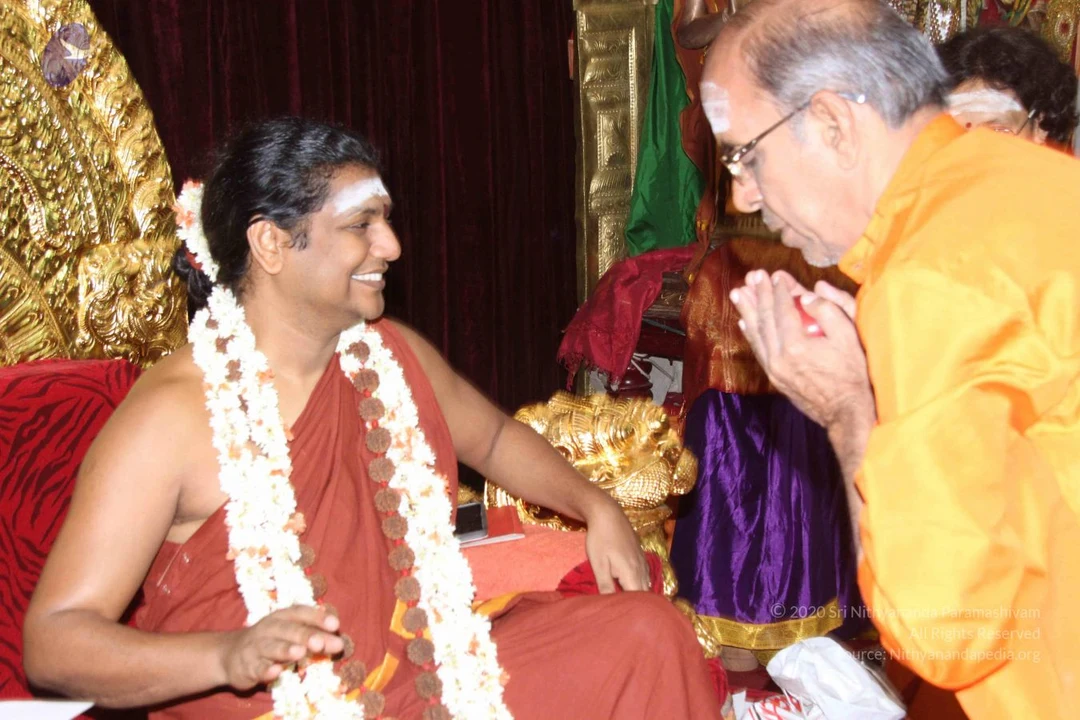
7 photosSource gallery
A seated man in a rust-red robe with a gold-edged border and a long white flower garland sits on a red zebra-striped armchair, reading a printed sheet held in his right hand. A devotee in a white shirt with an orange shawl kneels at his feet. Behind them a woman in an orange sari with a rudraksha mala and a vibhuti mark stands beside a gilded backdrop, with a golden lion figure and a draped purple-and-maroon peetha or throne in the background. Red patterned carpet covers the floor.Photograph of a seated man in a rust-red dhoti-style cloth, bare-chested with a long white flower garland and a tripundra-style forehead mark with a red dot, holding a bunch of bananas and smiling. A man with grey hair and blue shirt bows forward, touching his feet. Behind them, a woman in orange sari with rudraksha mala stands beside a golden throne and a red zebra-striped armchair. Deity murti and draped altar cloths are visible in the background. Appearance-based cues suggest a person seated in the centre, though identity is uncertain.A seated man in a rust-red robe with a white and red forehead mark wears long white flower garlands with orange blossoms and a rudraksha mala. He turns to his right, raising one hand to bless the bowed head of a man in a grey top, who kneels before him on a red-and-black striped chair with gold carvings. Behind them stand a gold throne frame, draped fabrics and a deity murti in green and orange cloth.A seated man in a rust-red robe with a white jasmine garland and a large rudraksha mala smiles while a devotee in a checked blue shirt bends forward to touch his feet, with a yellow fruit or offering in the devotee's hand. A woman in an orange sari and rudraksha mala stands behind at right holding a folded white paper. The setting has a red tiger-striped chair, a gold lion-carved seat, a purple draped stand, and a gold-ornamented shrine backdrop with a green cloth. The devotee is partly turned away and the seated man's face is clearly visible. a person is shown in the seated role, identified by his rust-red robe, jasmine garland and rudraksha mala.A seated man in a rust-red sleeveless robe wears long white flower garlands and a rudraksha mala with brown beads, with a white tilak and red dot on his forehead. He sits on a red tiger-striped cushioned seat beside a gold ornate chair, gesturing with his right hand toward a person whose dark head is visible at the lower right. Behind him are draped red, orange and gold fabrics, a purple cloth and a gold-framed shrine with a deity murti. Visible identification probable: a person, given as the seated presenter receiving attention, with rudraksha mala, white garlands and rust-red robe as cues.A photograph of a seated man in rust-orange robes, bare-chested, with a white jasmine garland and a rudraksha mala draped over his shoulders, a white horizontal tilak and red bindi on his forehead, sitting on a red tiger-striped cushioned seat beside a golden lion-shaped ornament. Eyes closed and smiling, he rests his hand on a golden armrest while a man in a grey-brown patterned shirt offers him a red apple. Behind them, a golden throne carving, a maroon curtain, a green and red cloth, and a woman in an orange top and glasses stand in an ornate setting.

Bidadi-Temple-Seva

5 photosSource gallery
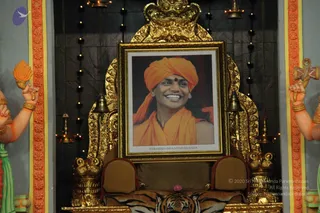
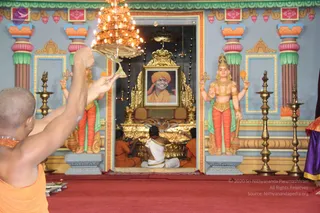
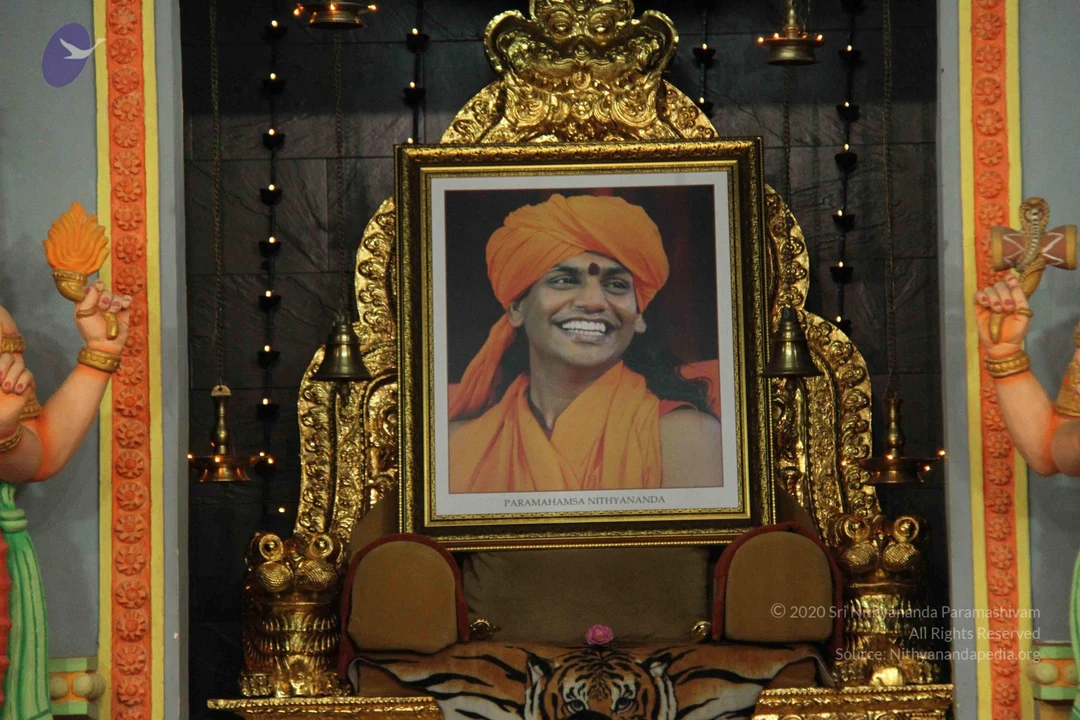
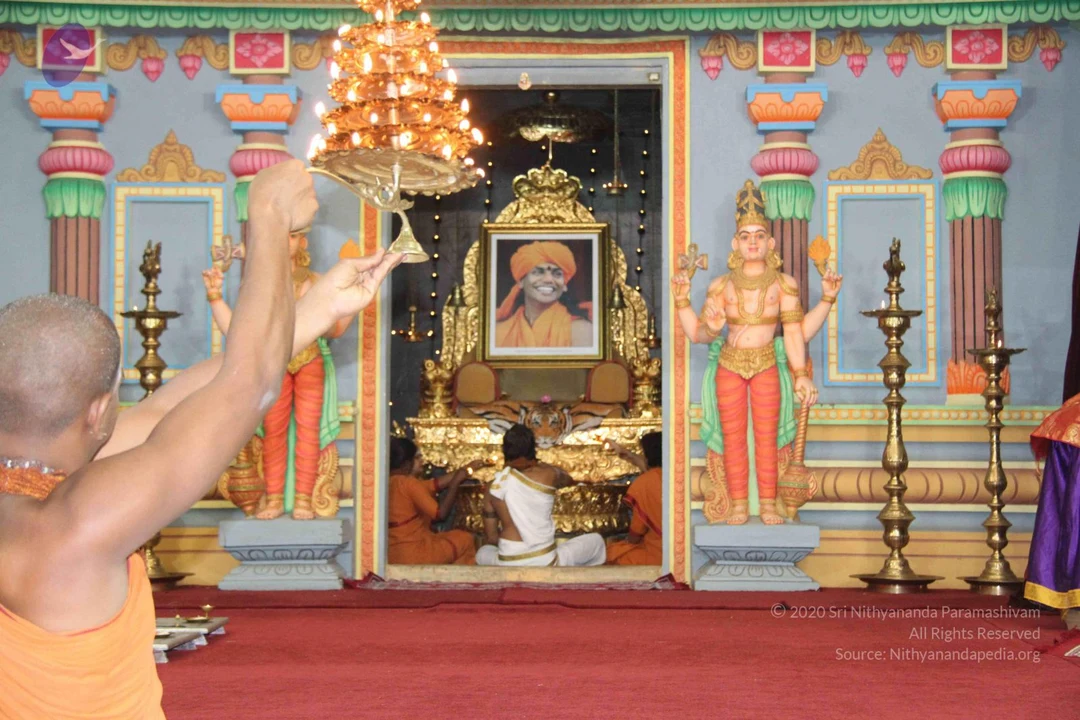
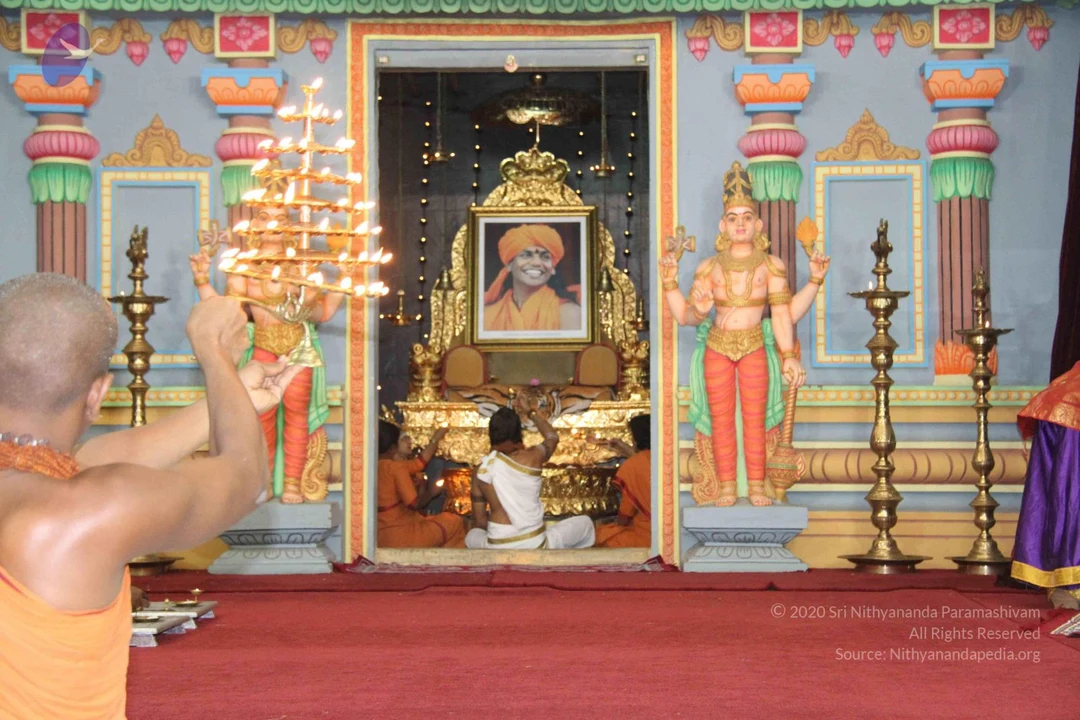
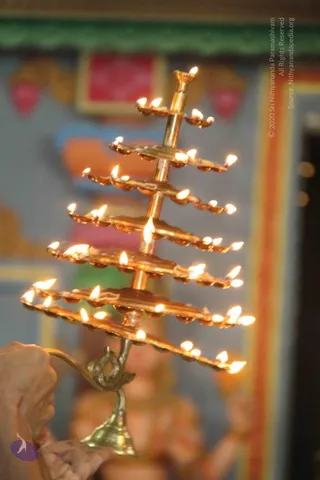
A framed portrait labelled "PARAMAHAMSA NITHYANANDA" sits on an ornate gilded throne with a tiger-skin cushion, set in a shrine niche. The man in the portrait wears an orange turban, saffron robes and a red bindi, and smiles broadly. Flanking the throne are painted statues of deities with raised hands holding a flame and a ritual object, and hanging brass lamps and beaded strands decorate the wall. A pink flower rests on the throne seat. The printed portrait is not a physical person, so no one is physically present in the scene.A photograph inside a temple shrine. In the foreground at left, a bald man in saffron-orange robes with a red-beaded neck garland raises a large tiered brass aarti lamp with a flame toward the shrine. Behind a golden throne with a tiger-skin seat, a framed portrait shows a smiling man in an orange turban and orange garment. Two priests in orange clothes and a figure in white dhoti sit at the throne's base near offerings. Flanking the shrine are two tall painted dvarapala-style guardian figures in orange dhotis holding attributes, and brass oil lamps stand on the red carpet. Pink and green painted columns frame the walls.Photograph of a temple shrine room with a multi-tiered brass aarti lamp held aloft by a shaven-headed man in saffron clothes in the left foreground. Behind him, a framed portrait of a smiling man wearing an orange turban and saffron garment sits atop a gilded throne with cushioned seats. Two painted deity murti figures with gold crowns, multiple arms and green-and-orange dhotis flank the central shrine. Brass lamps stand on either side. Two saffron-clad figures and a figure in white dhoti kneel at a gold-decorated altar performing puja. The floor is covered with red carpet and the walls are blue with ornamental columns.A photograph inside a temple shrine showing two large painted guardian statues flanking the entrance, each with four arms, golden crowns, ornate gold necklaces and armlets, red dhoti-style lower garments and green sashes. Between them stands a golden throne-like seat holding a framed portrait of a smiling man with a saffron-orange turban and saffron robe, with a tiger skin draped over the seat. Tall rows of lit oil lamps glow in the foreground. Two people in orange and white clothing sit at the lower edge near the shrine, one in white and one in orange, apparently performing worship. The printed caption reads "Paramahamsa Nithyananda" below the portrait. Grey background draped with beaded strings.A brass multi-tiered oil lamp, a nilavilakku-style standing lamp with many lit wicks on successive curved tiers, is held aloft by a hand at its lower stem. The flames glow warmly against a blurred background of red and green decorative panels and a soft golden figure. The lamp appears to be used in an aarti or lamp-lighting ritual, with no legible text and no clearly visible people beyond the holding hand.

Satsang

2 photosSource gallery
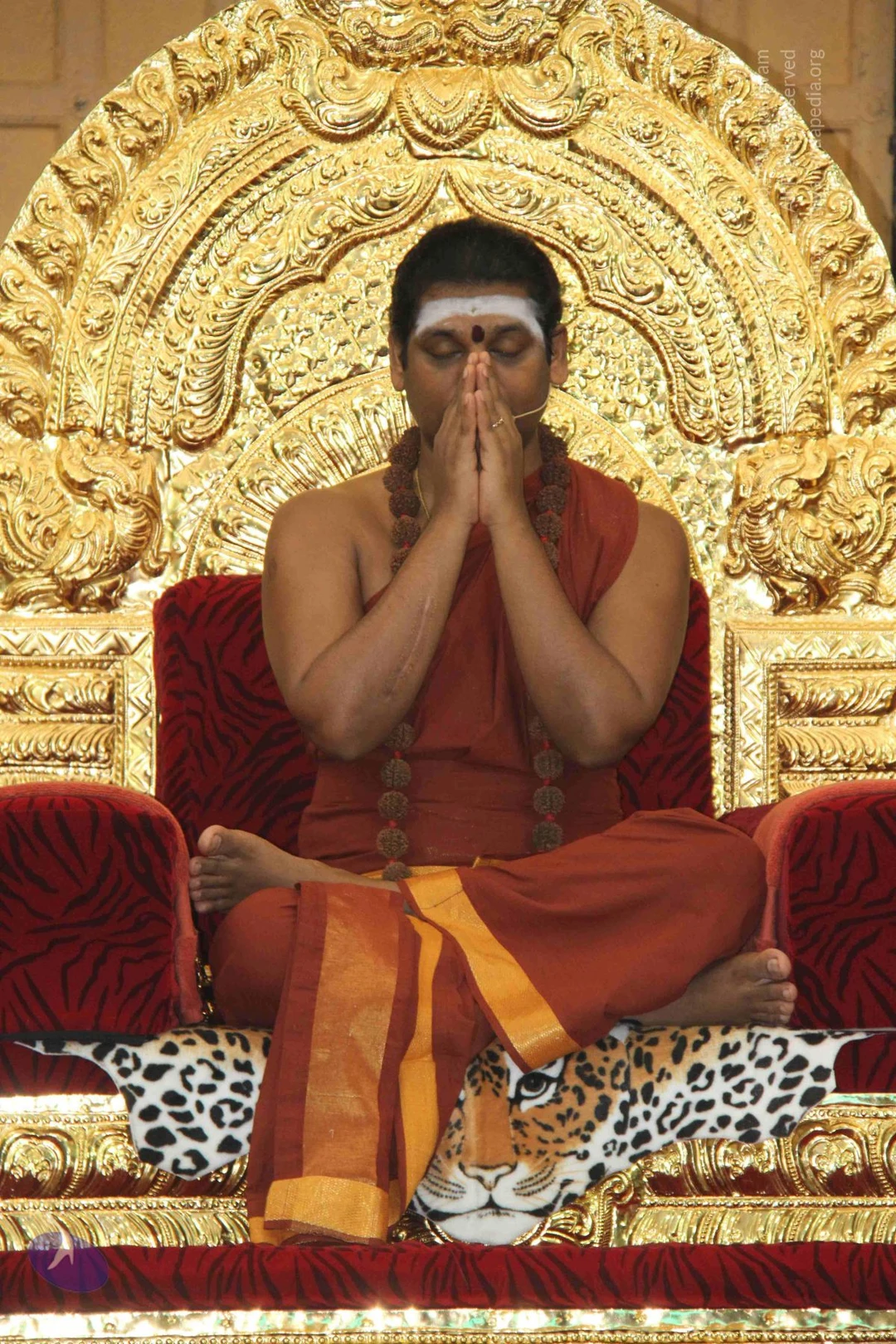
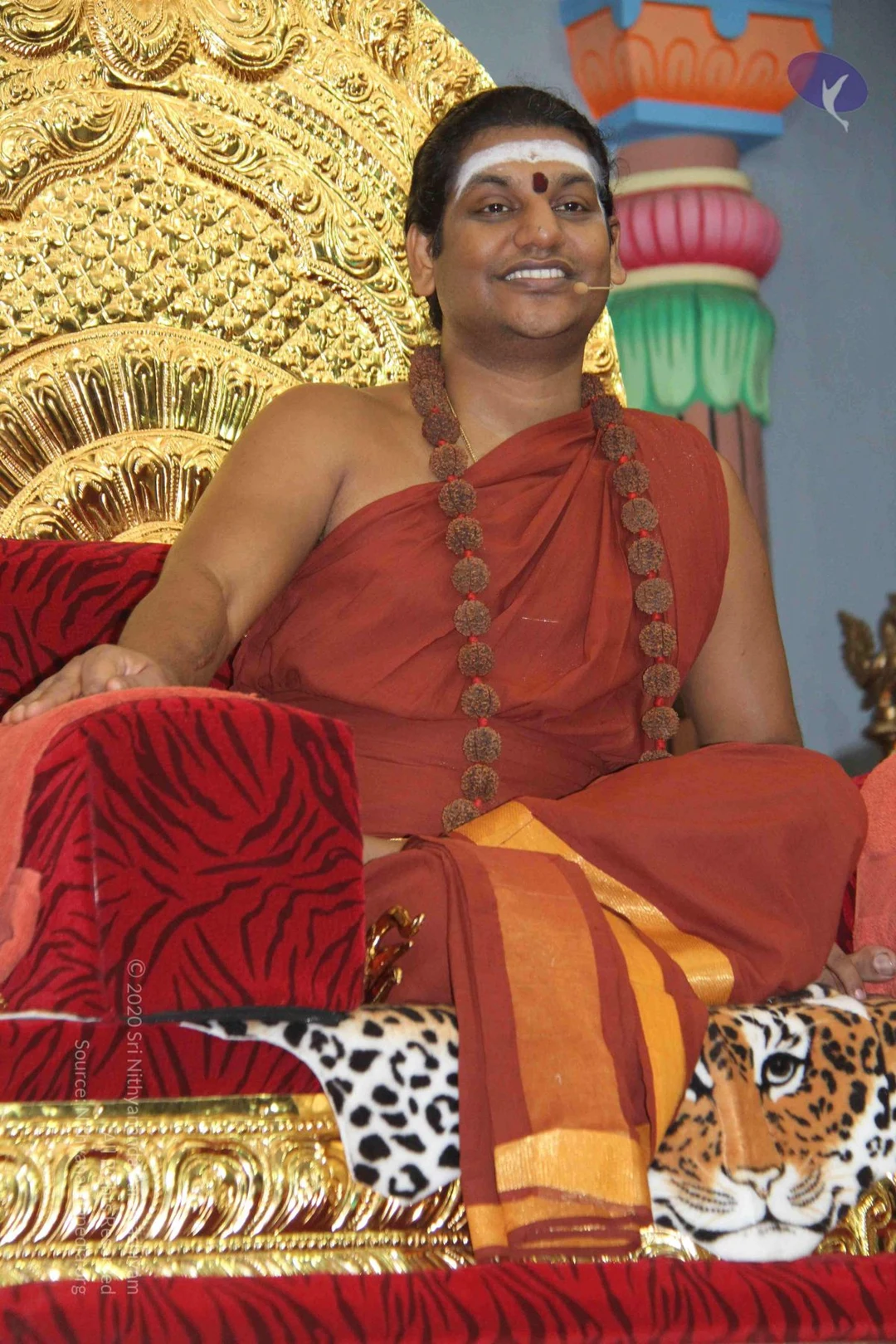
A seated man with a bare upper body and a rust-red and gold-bordered dhoti sits with legs crossed on an ornate golden throne with red tiger-striped cushions and a leopard-print cloth. He holds his palms pressed together in anjali mudra with eyes closed, wearing a white forehead mark with a red dot and multiple rudraksha malas. A small lapel microphone is clipped near his collar. The gilded arched backdrop is richly carved. Identity is not established from appearance and is left to the a person field.A smiling man seated on an ornate gold throne with red tiger-stripe upholstery and a leopard-print cloth draped over the seat edge. He wears a rust-red garment draped over one shoulder with a gold-bordered orange cloth, a rudraksha mala of large beads across his chest, a white tilak with a red bindi on his forehead, and a small microphone clipped near his face. His hand rests on the red armrest. Behind him are a pink and green pillar and a gold ornamental finial. a person is shown in person with ceremonial throne and rudraksha malas, speaking to an audience.