Skip to content
Monday

10 June 2013

Dated photos
380
Source pages
1
Media
2
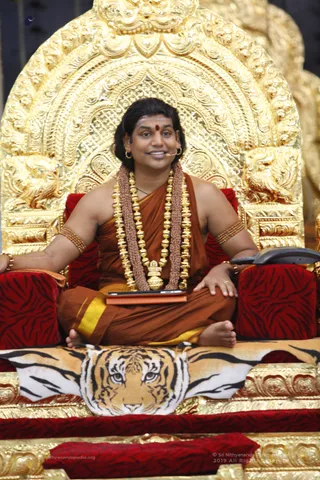
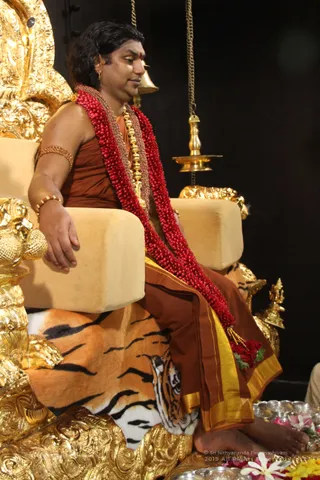
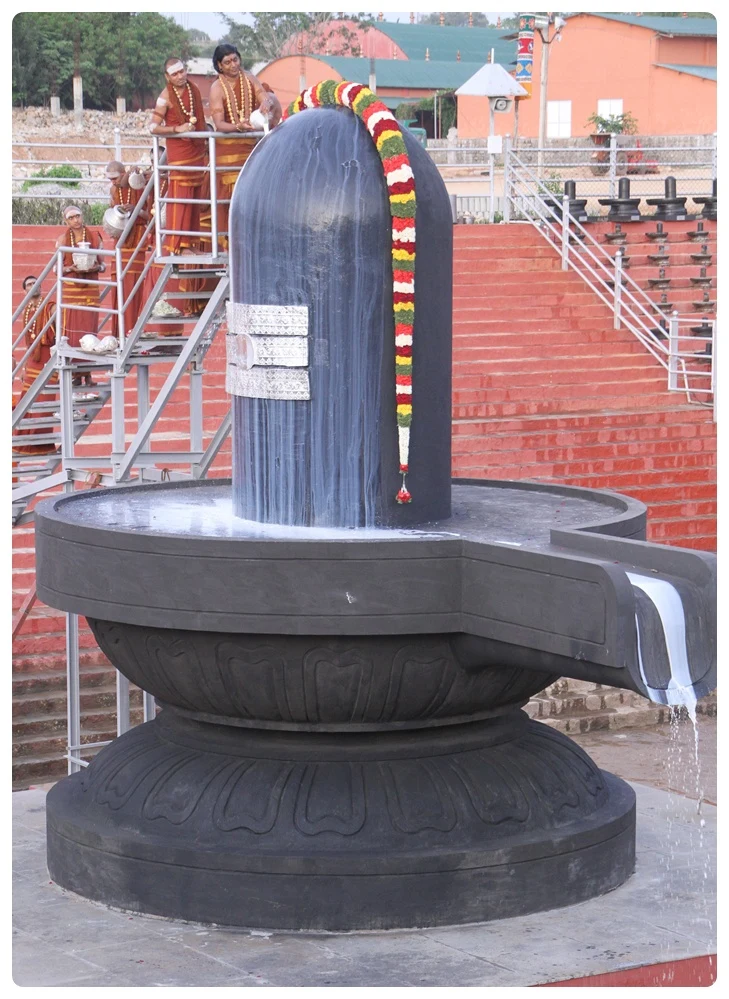
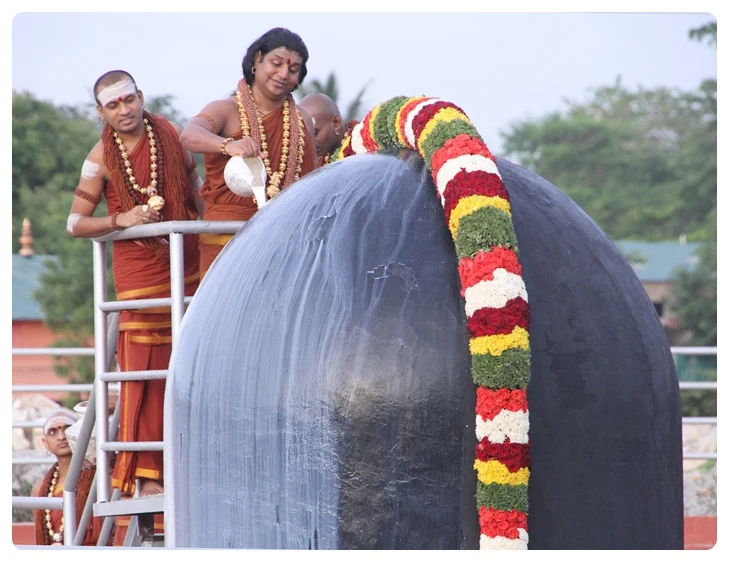
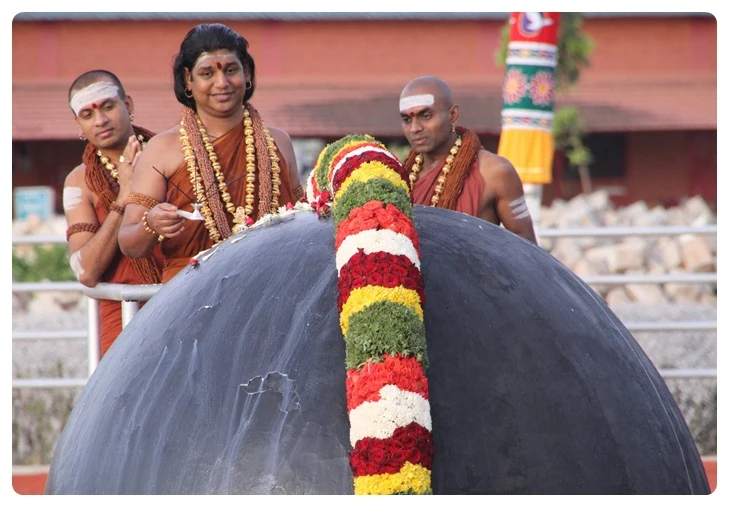
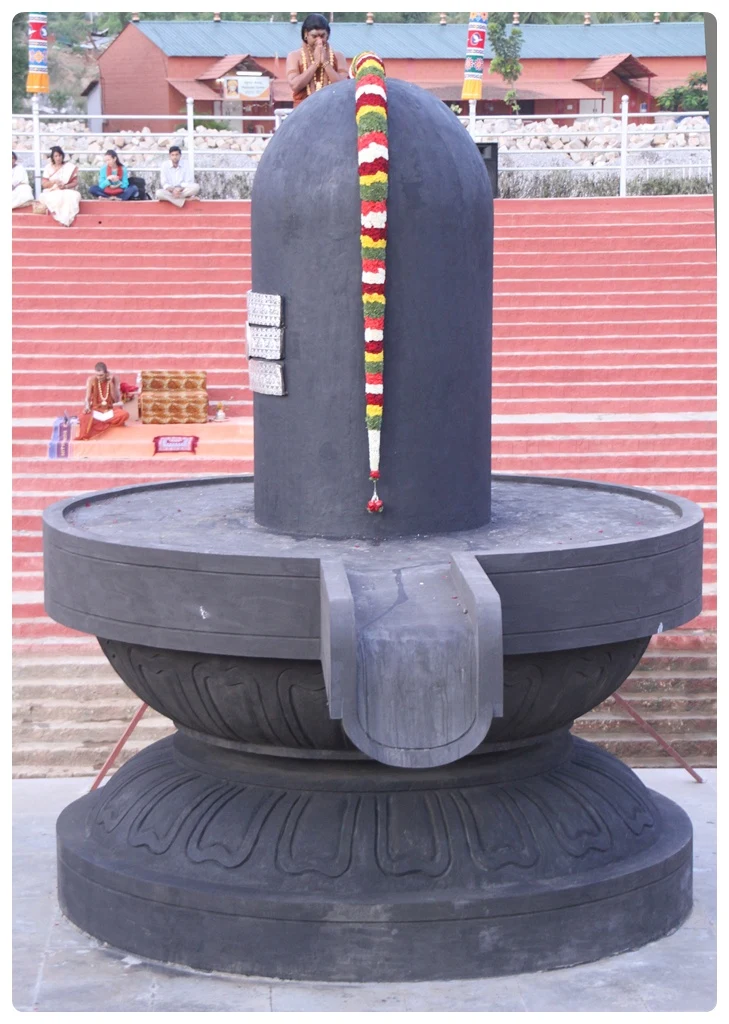
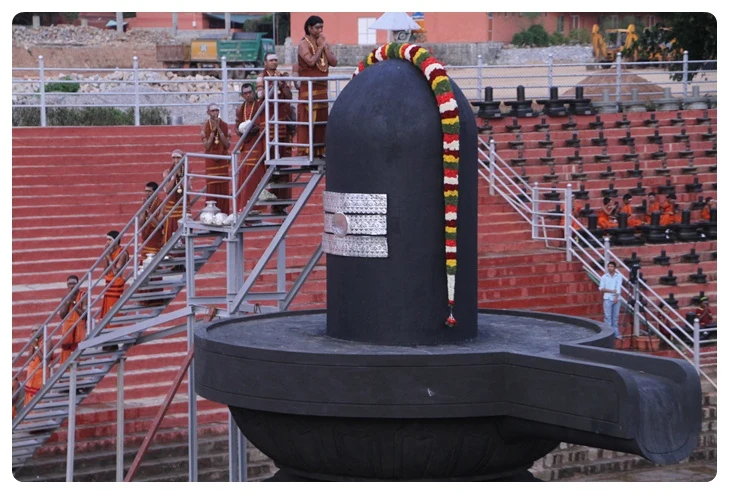
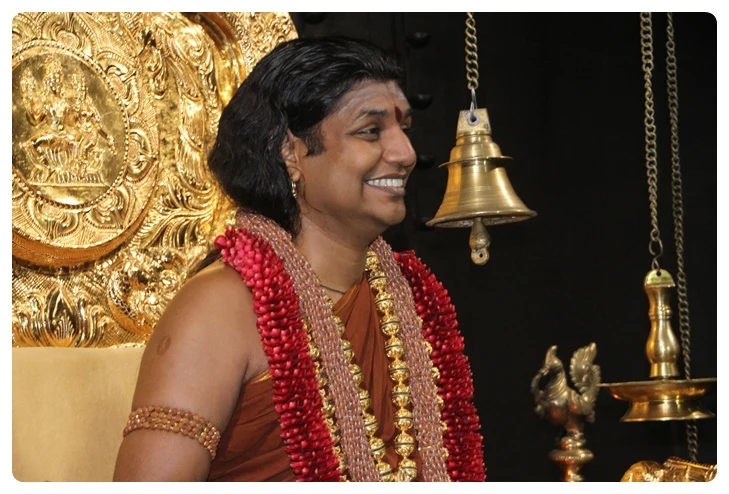
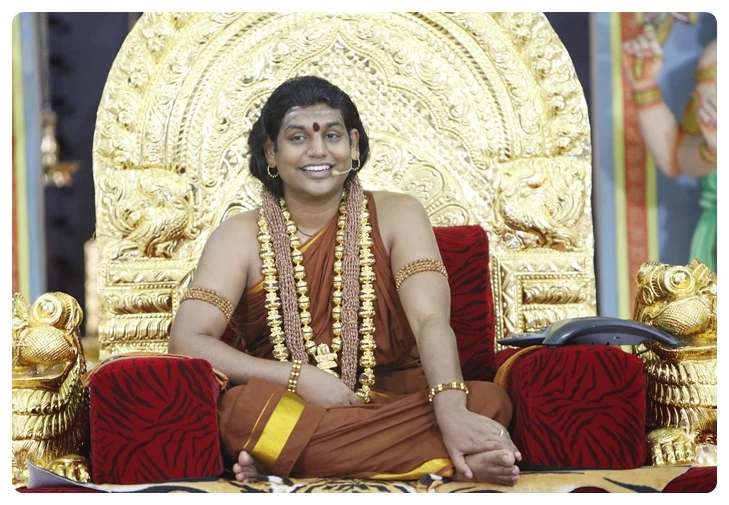
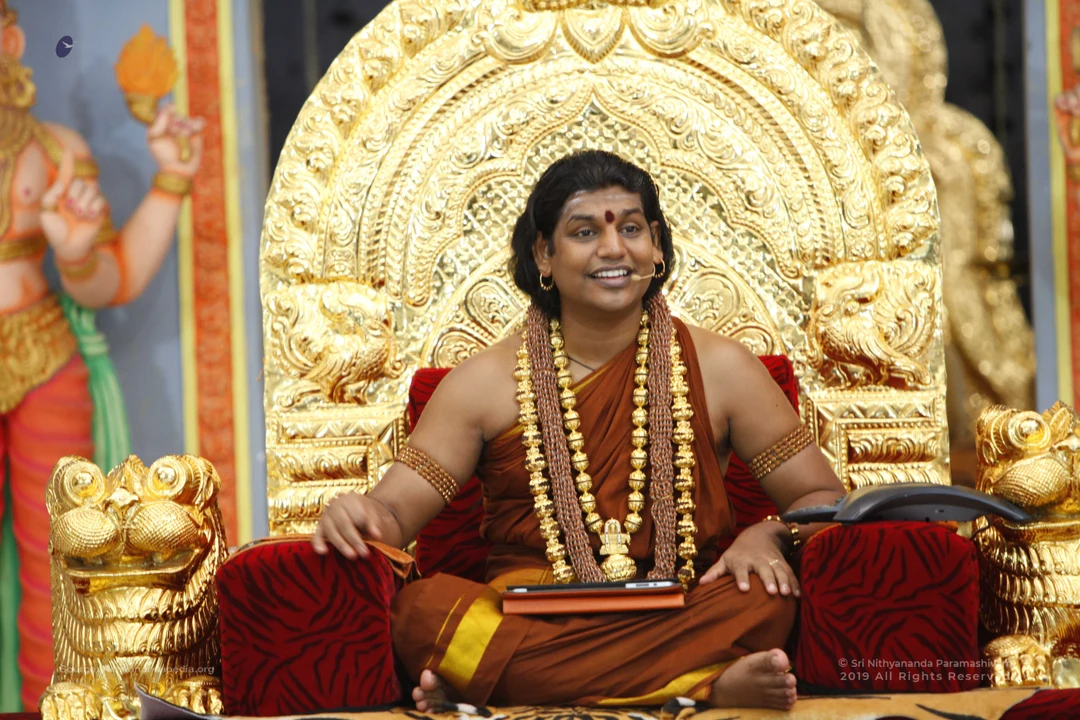
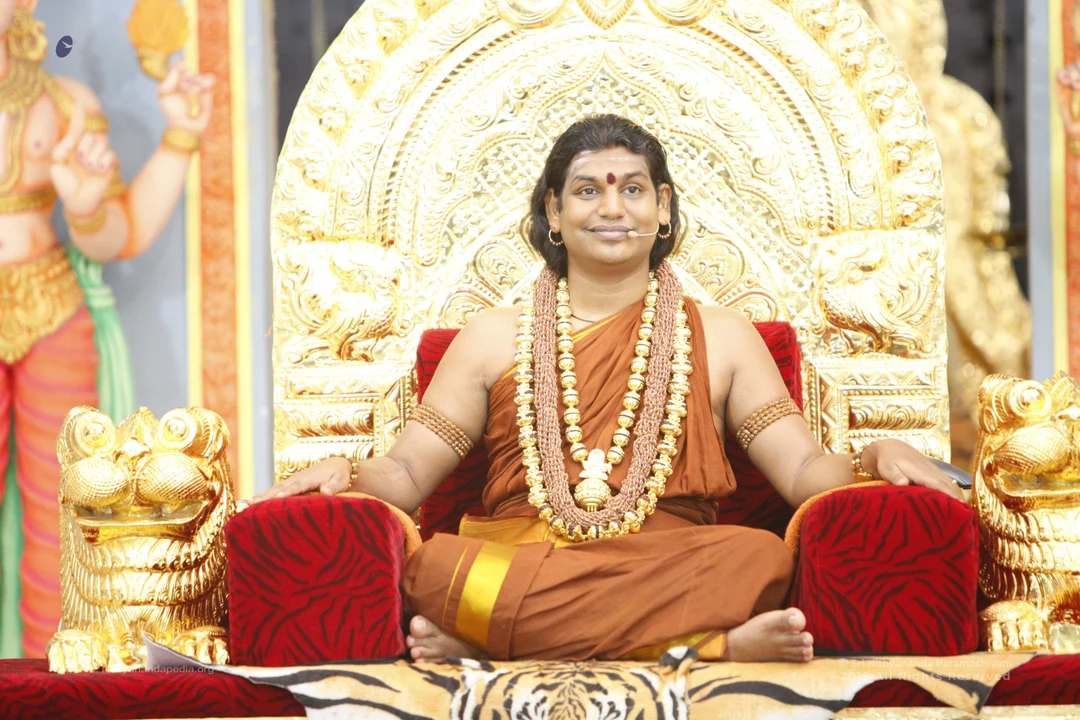
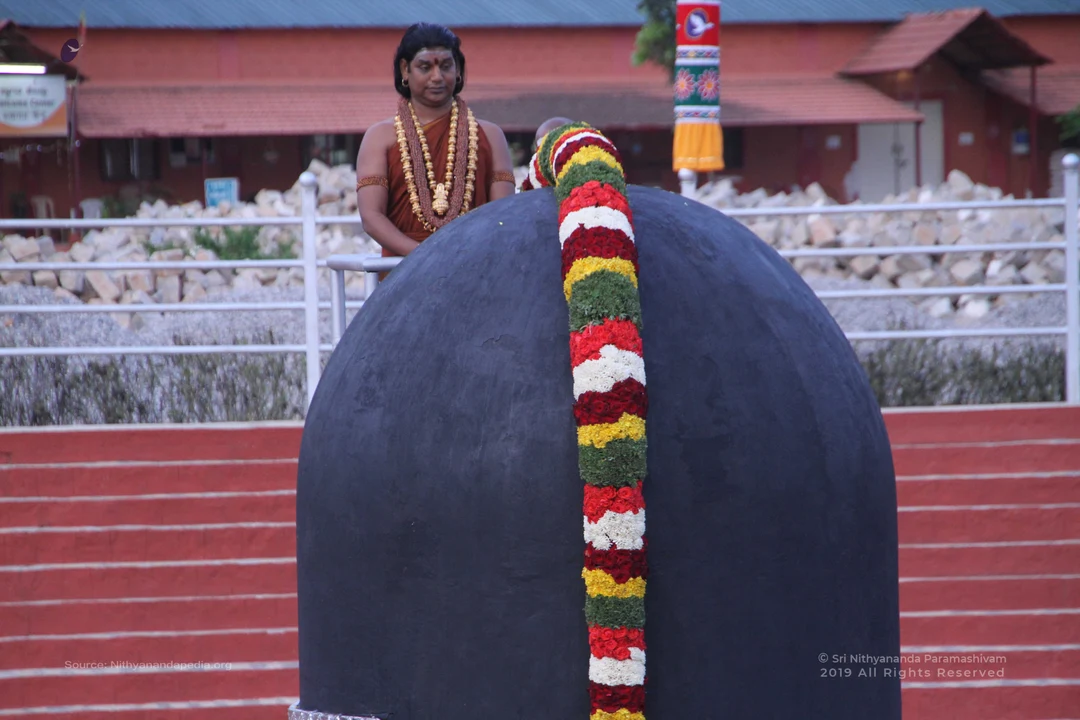
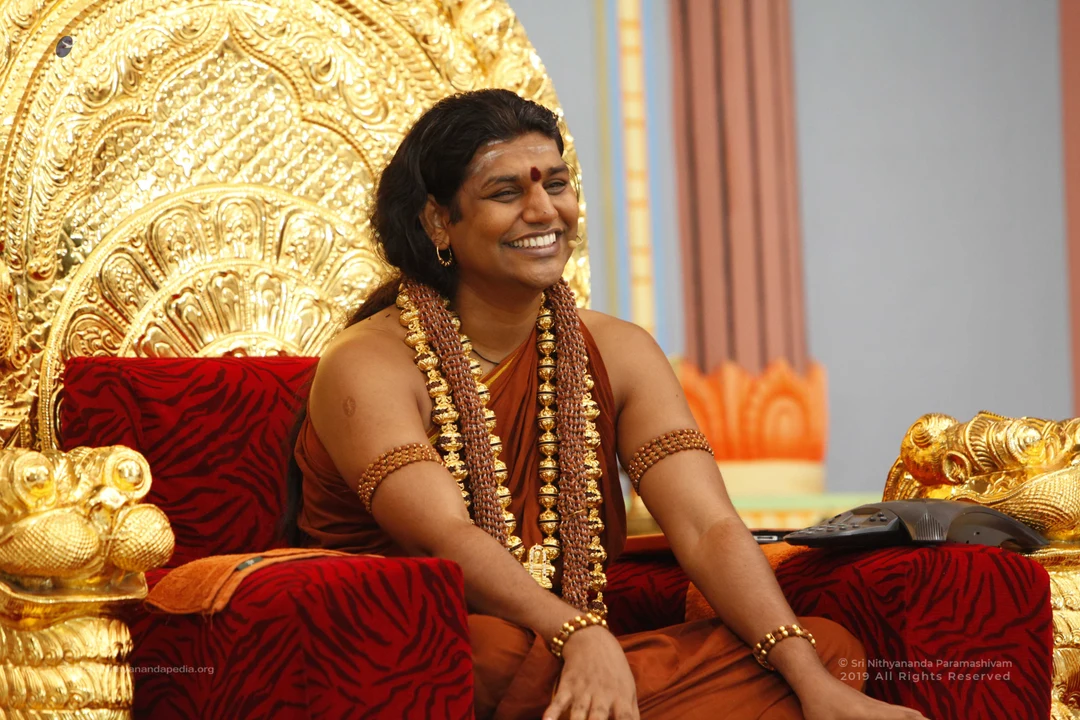
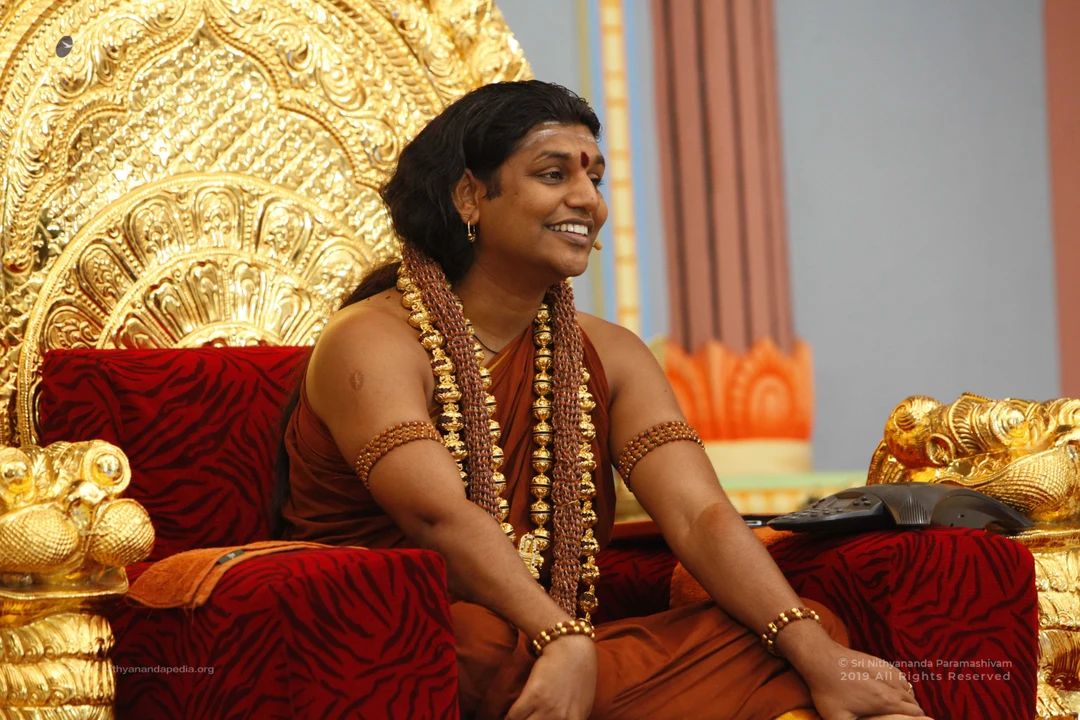
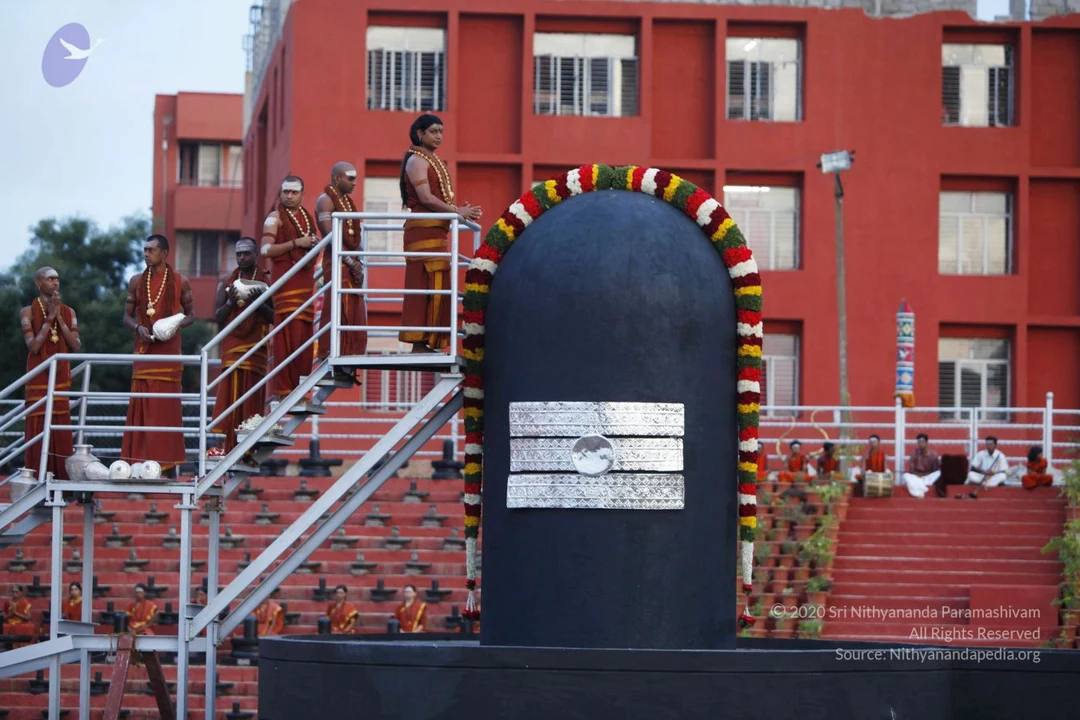
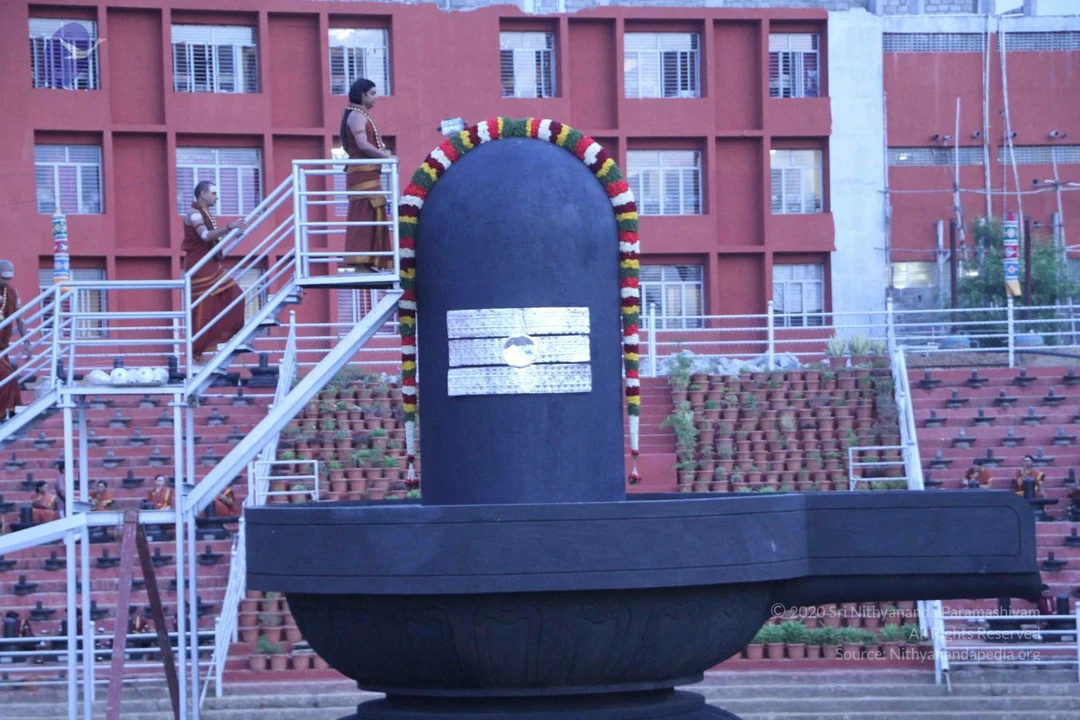
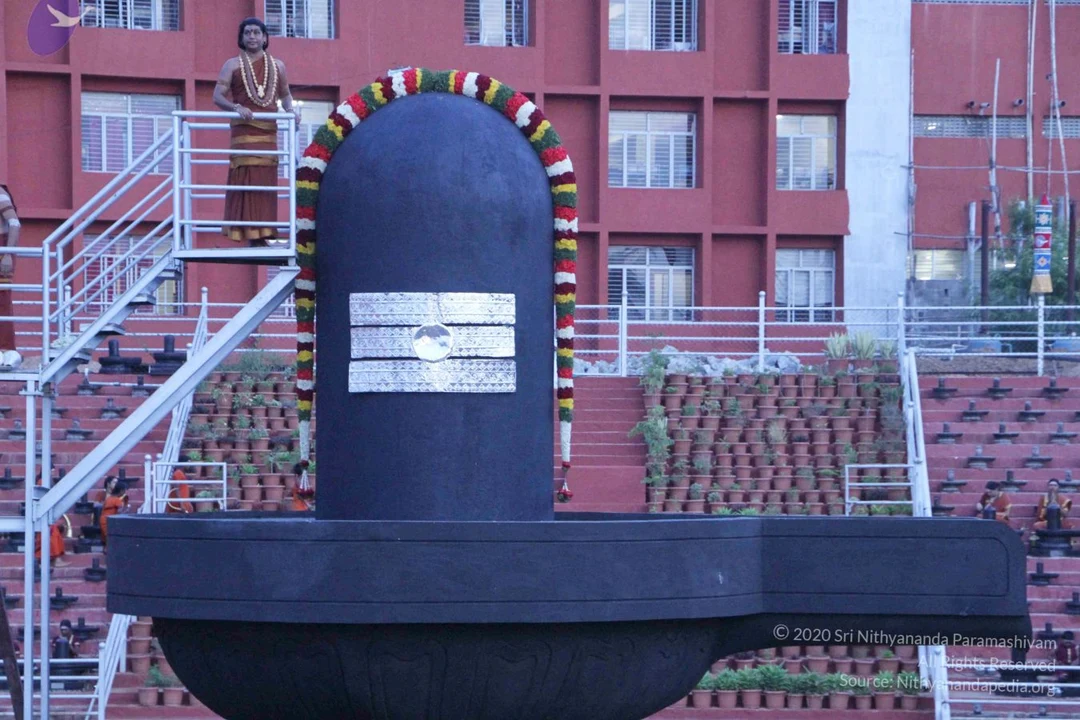
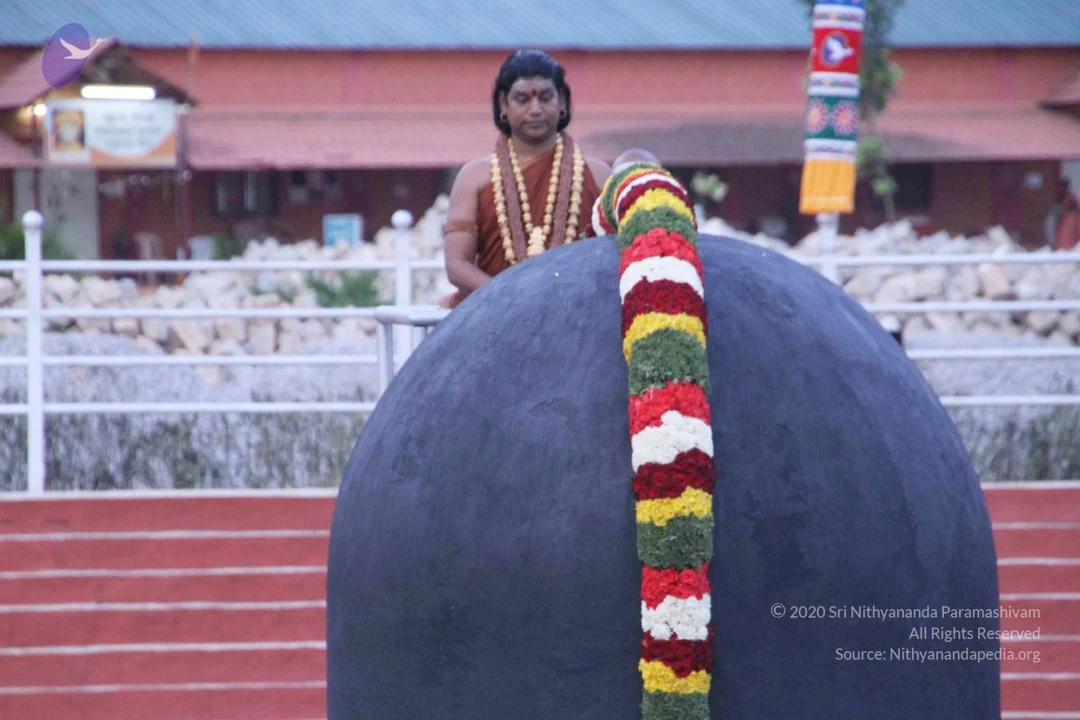
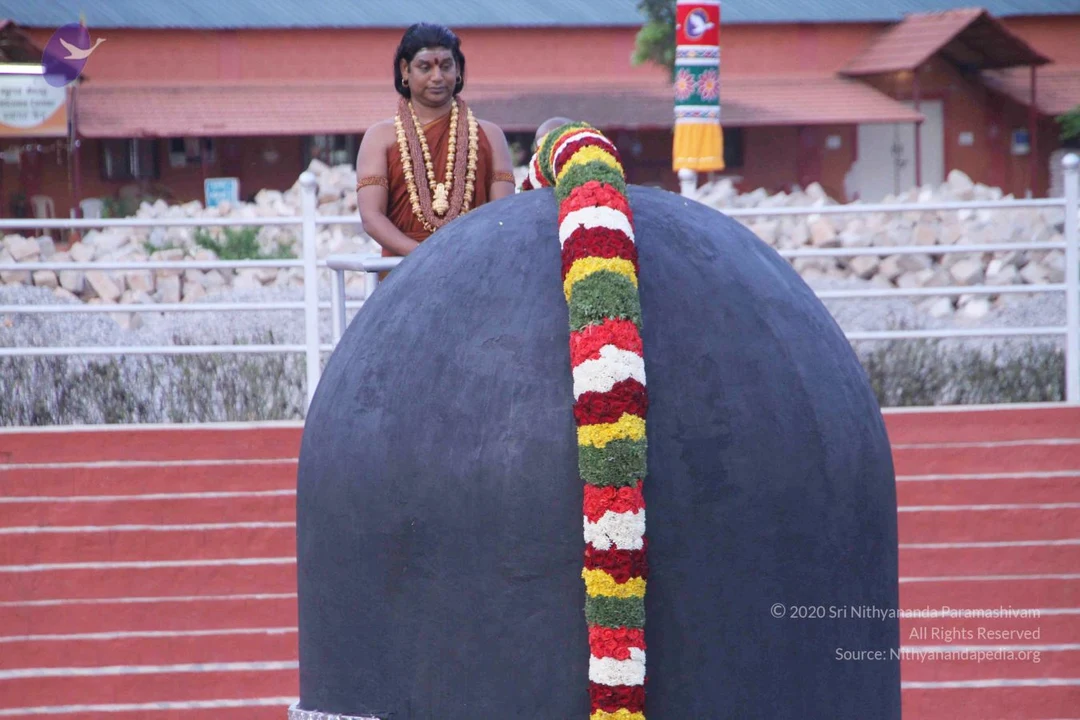
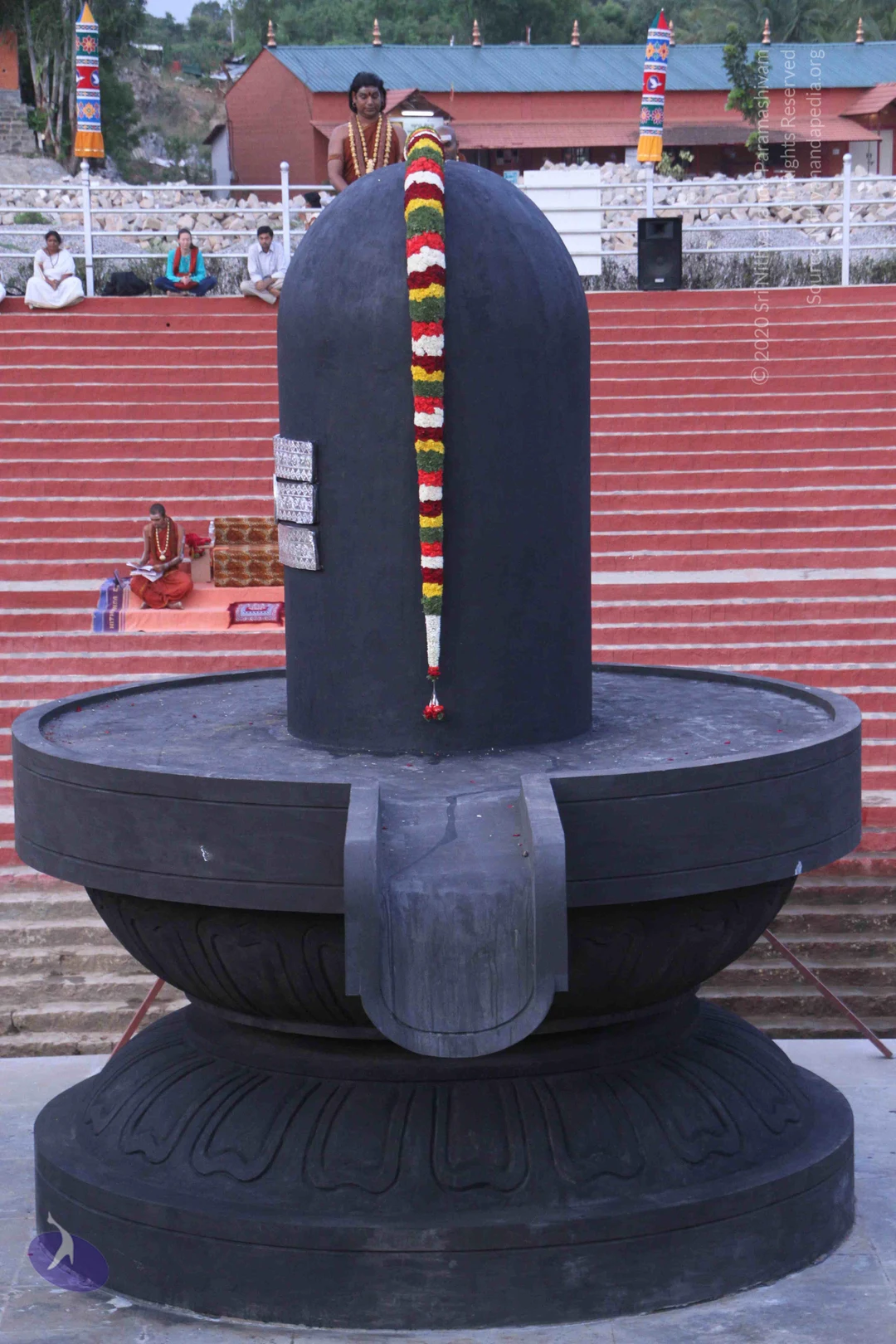
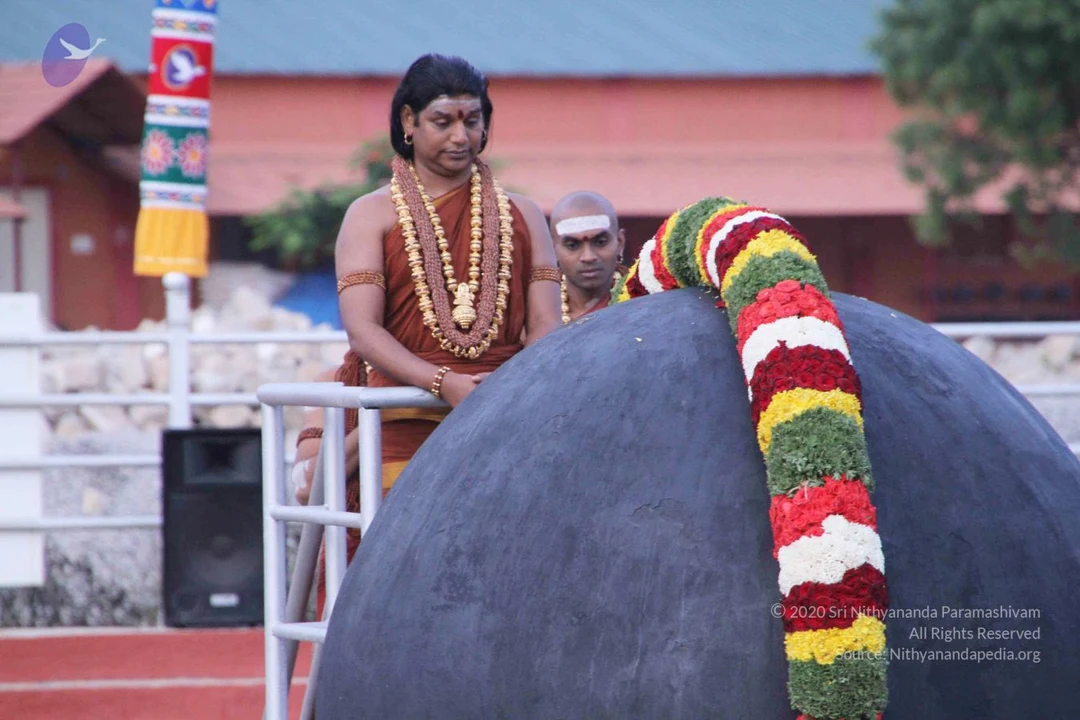
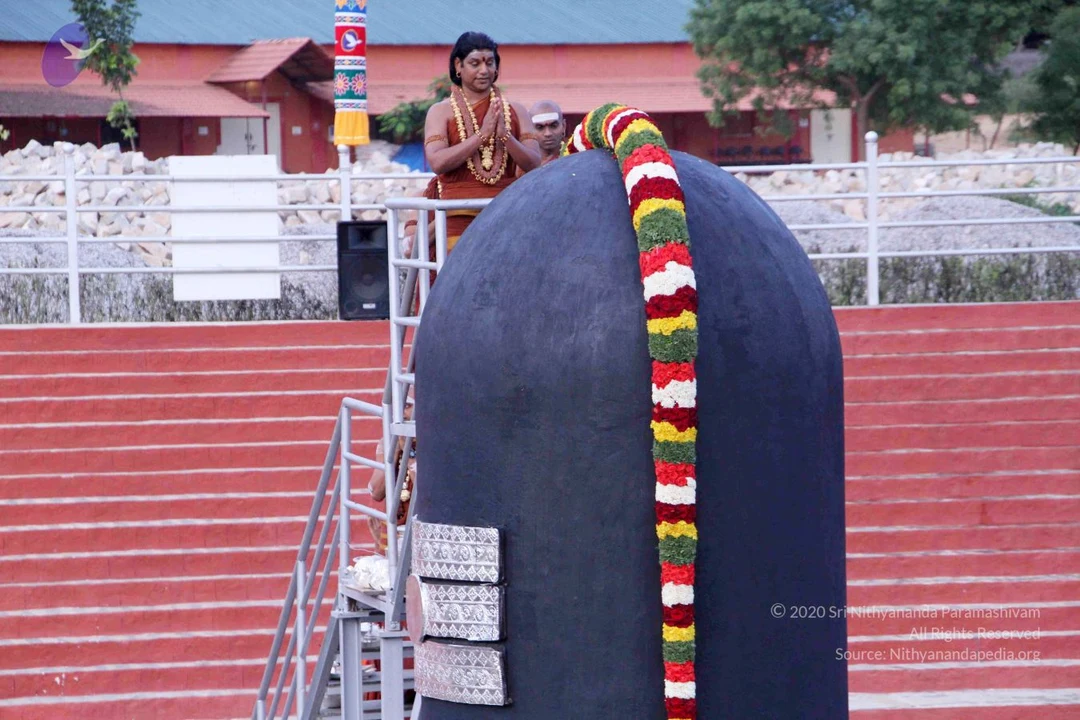
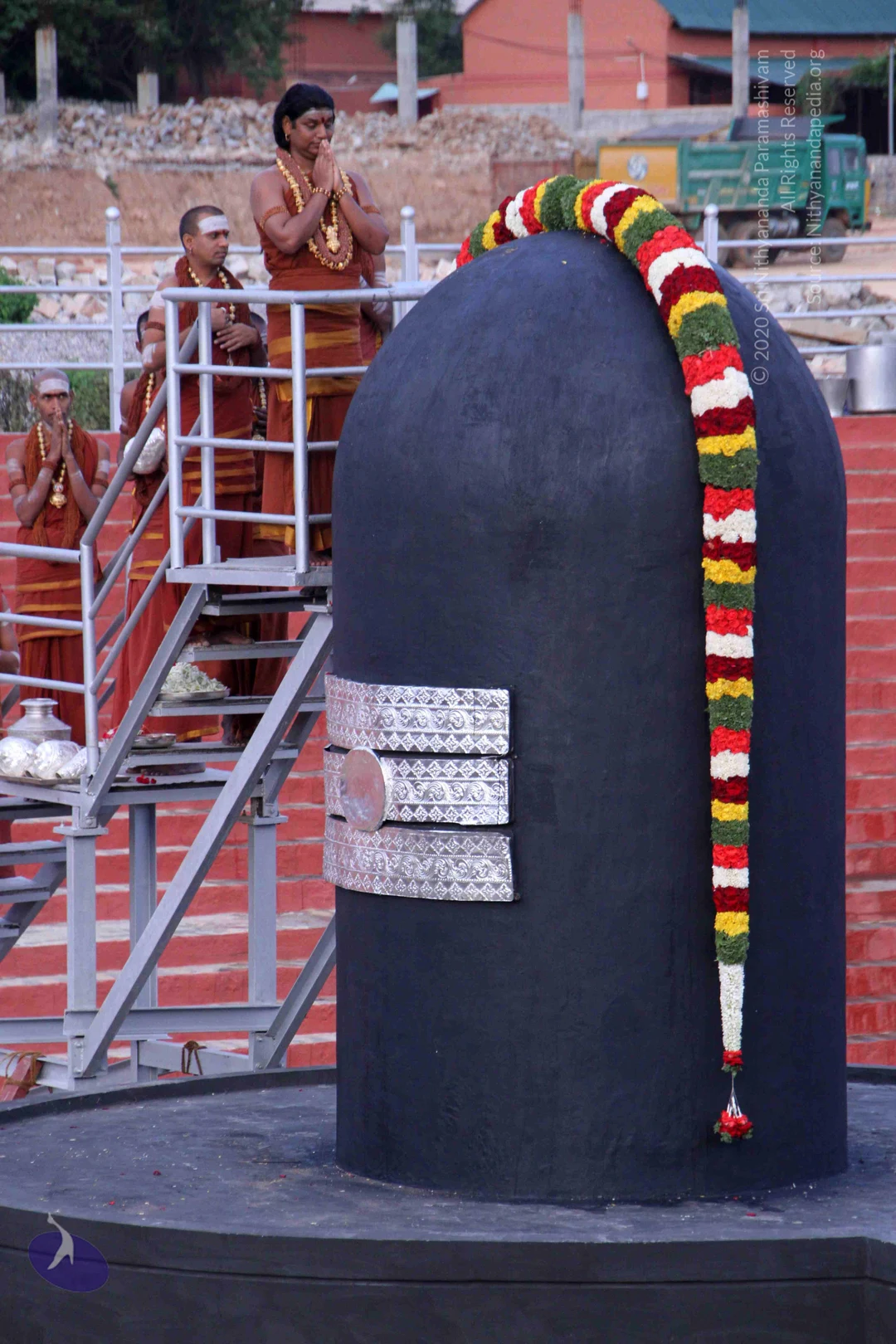
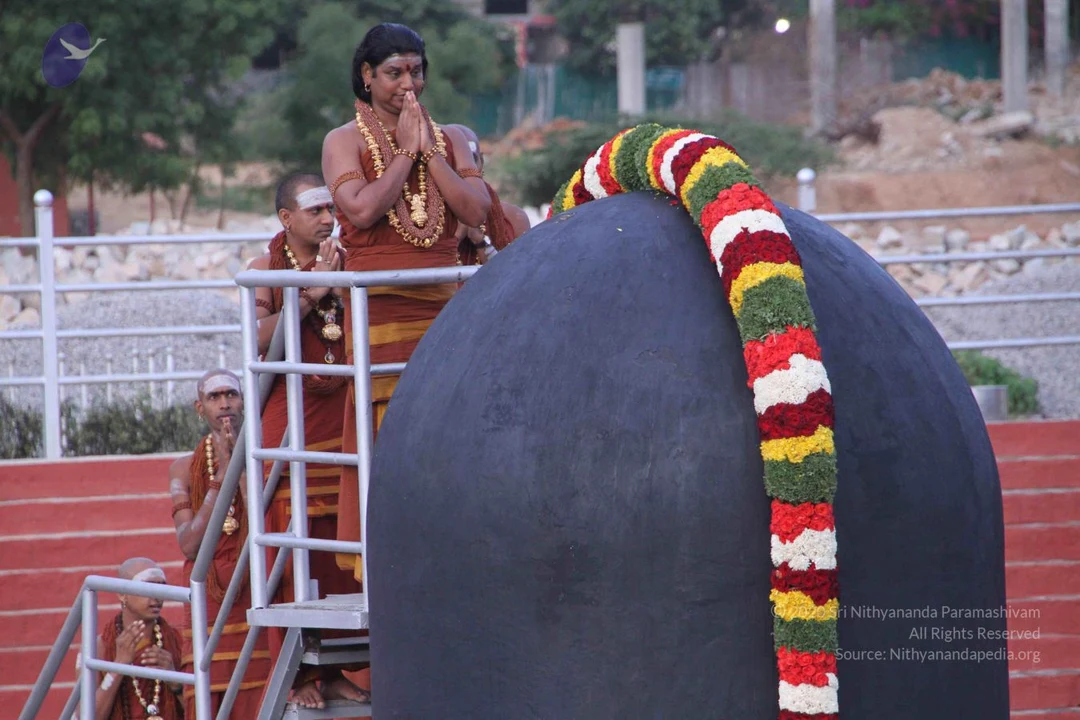
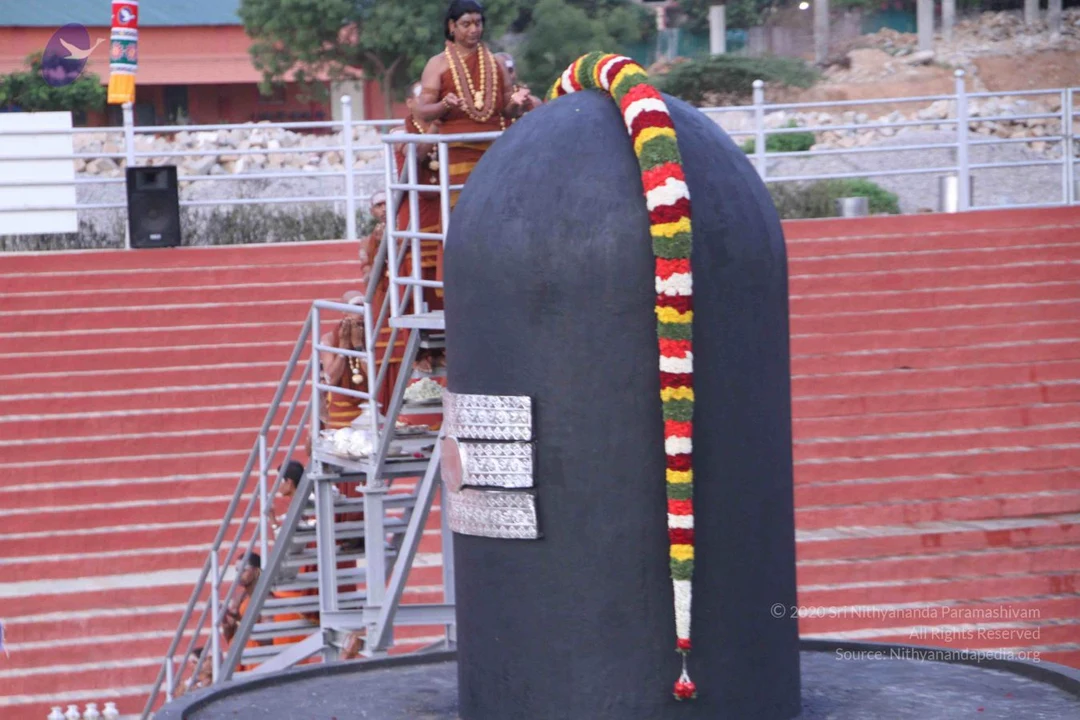
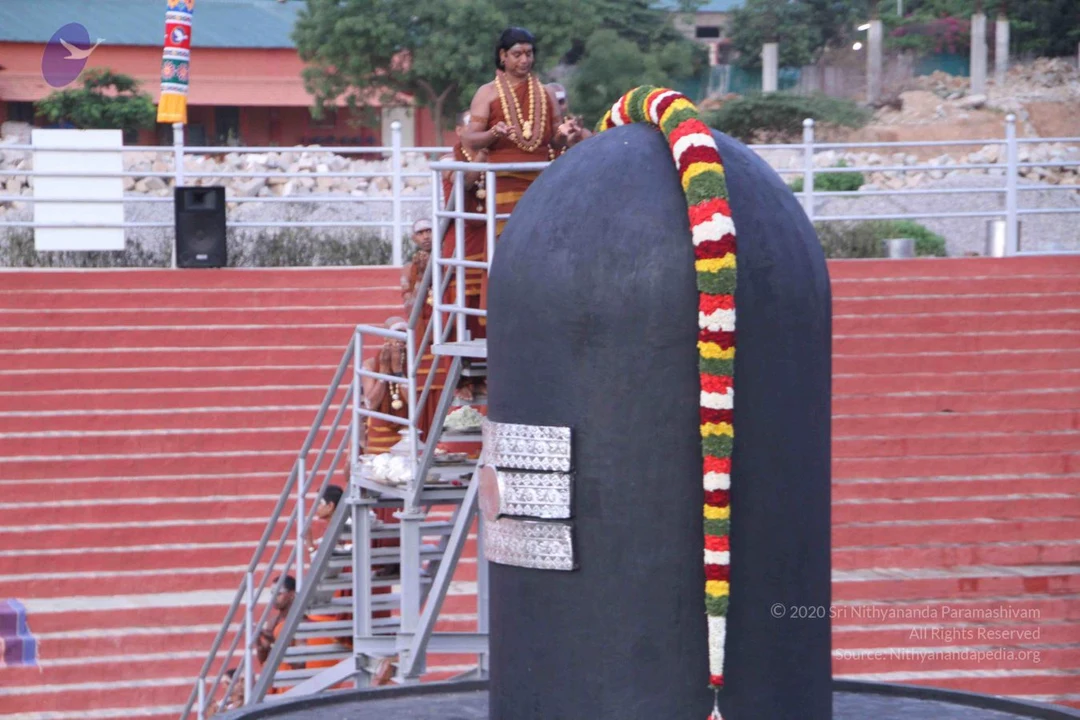
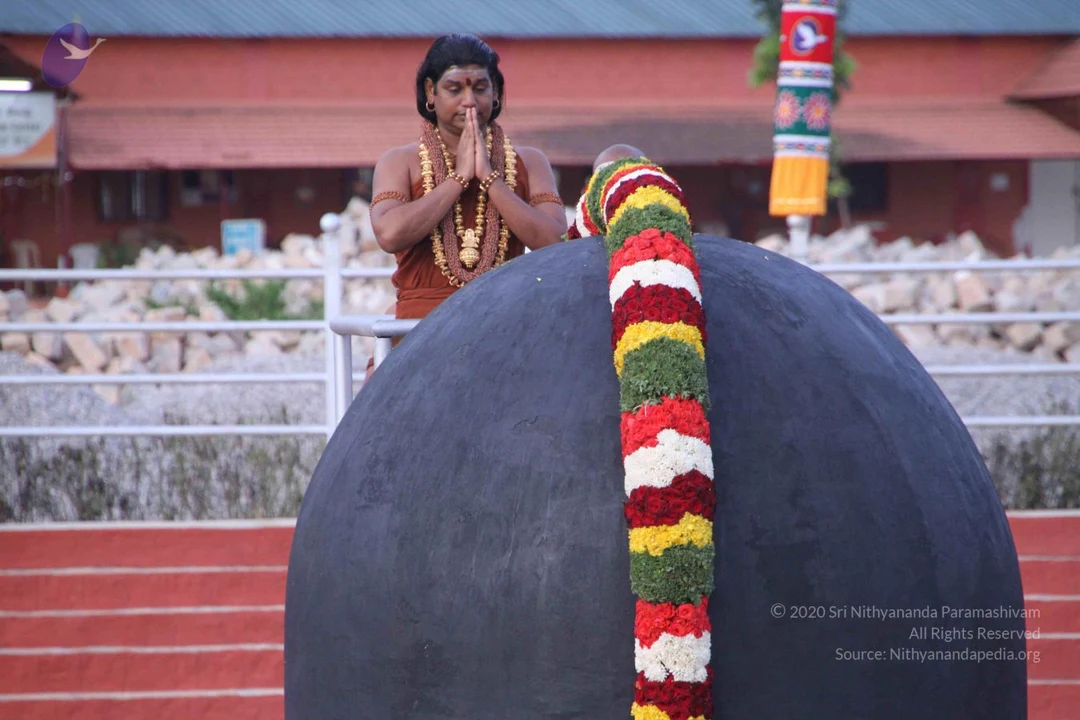
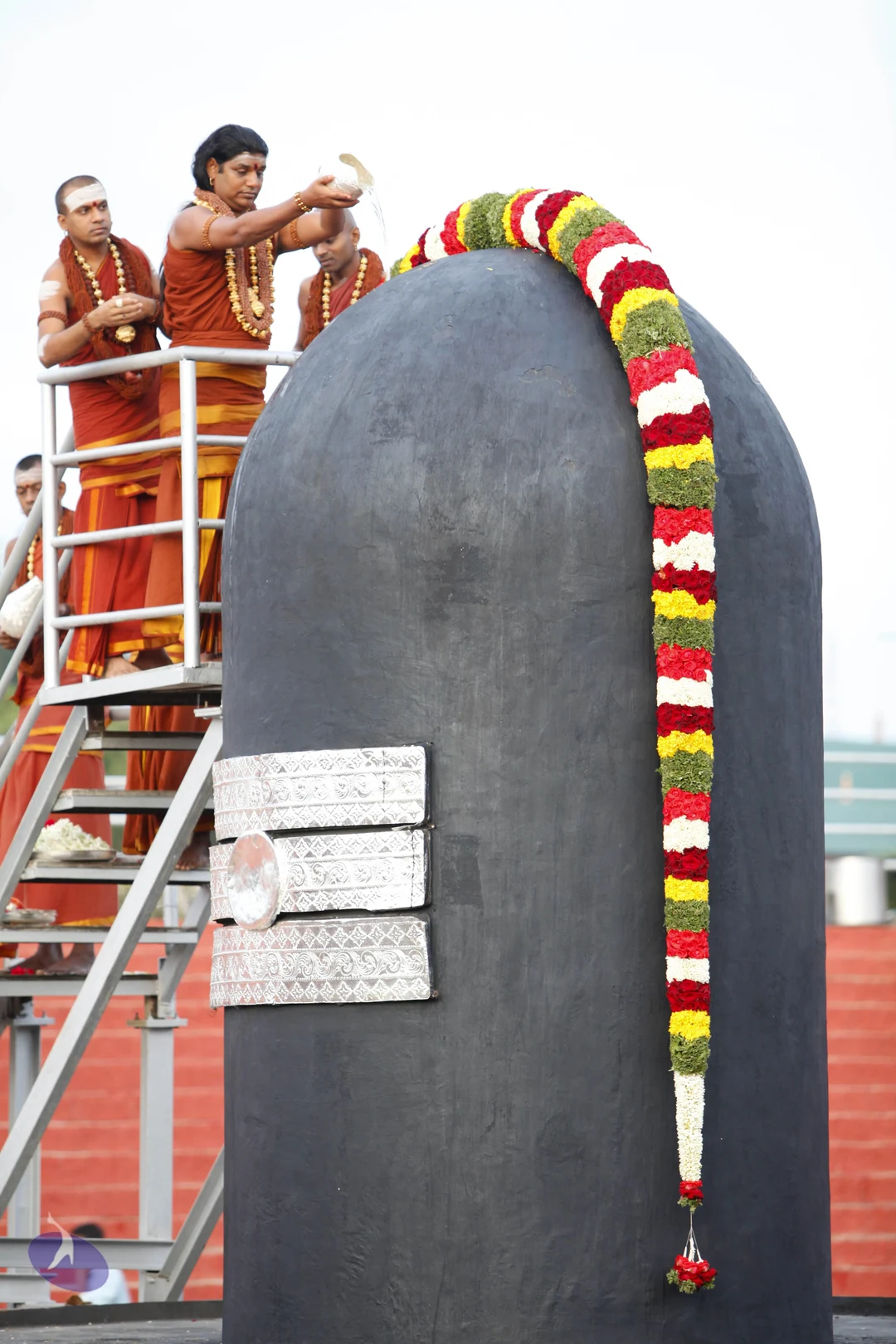
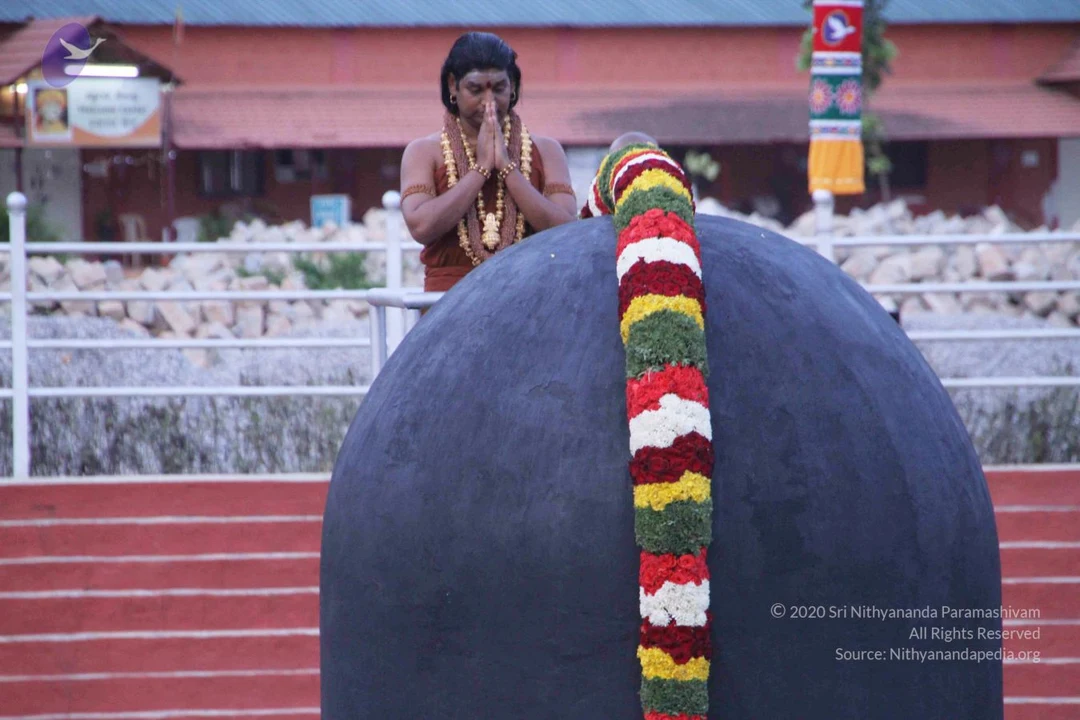
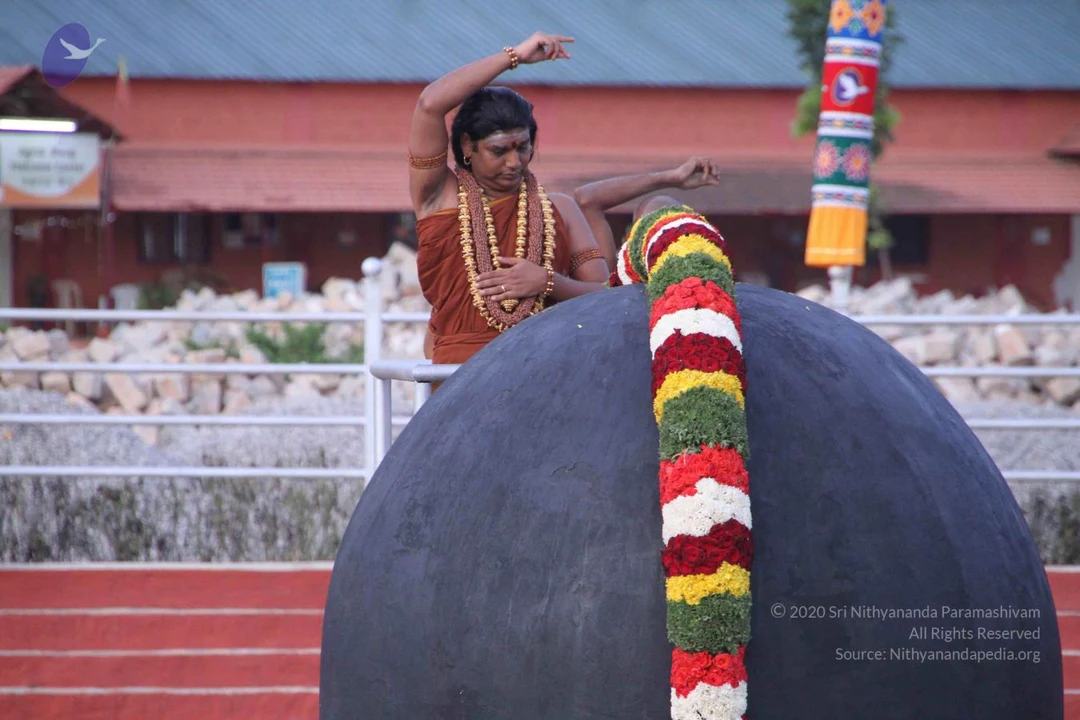
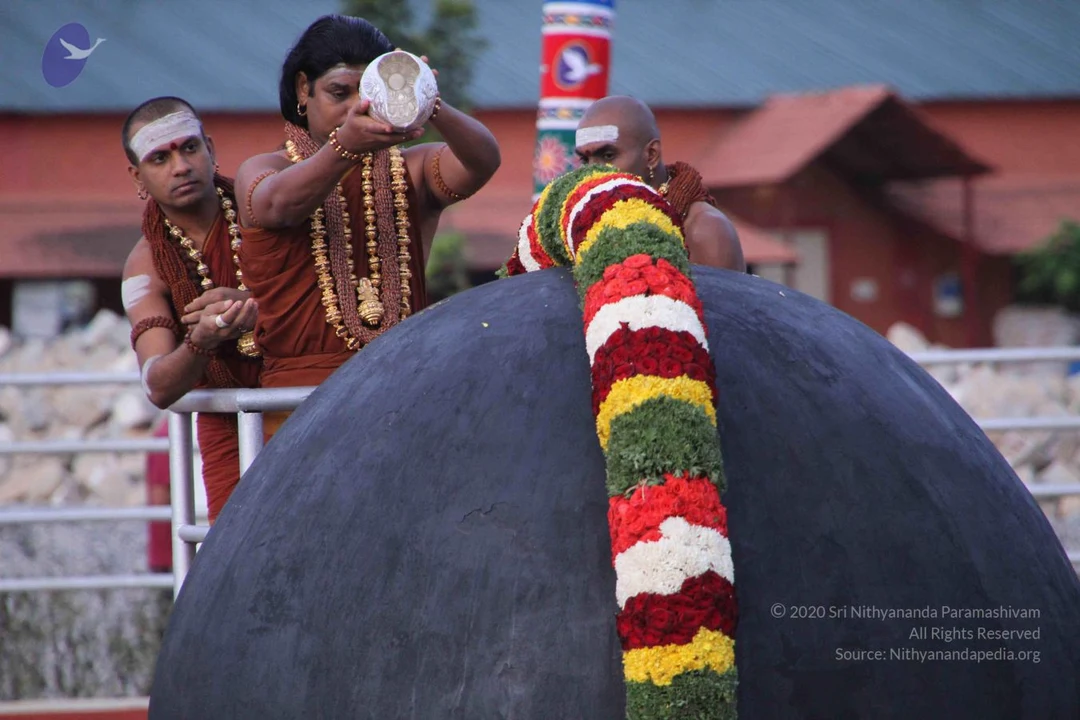
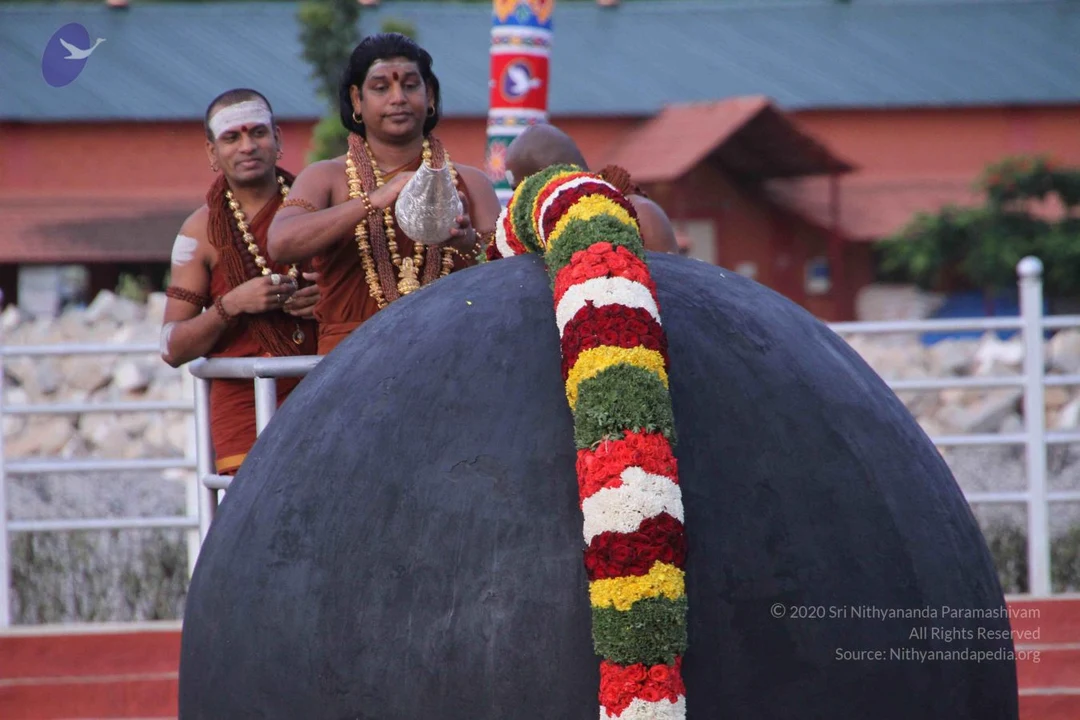
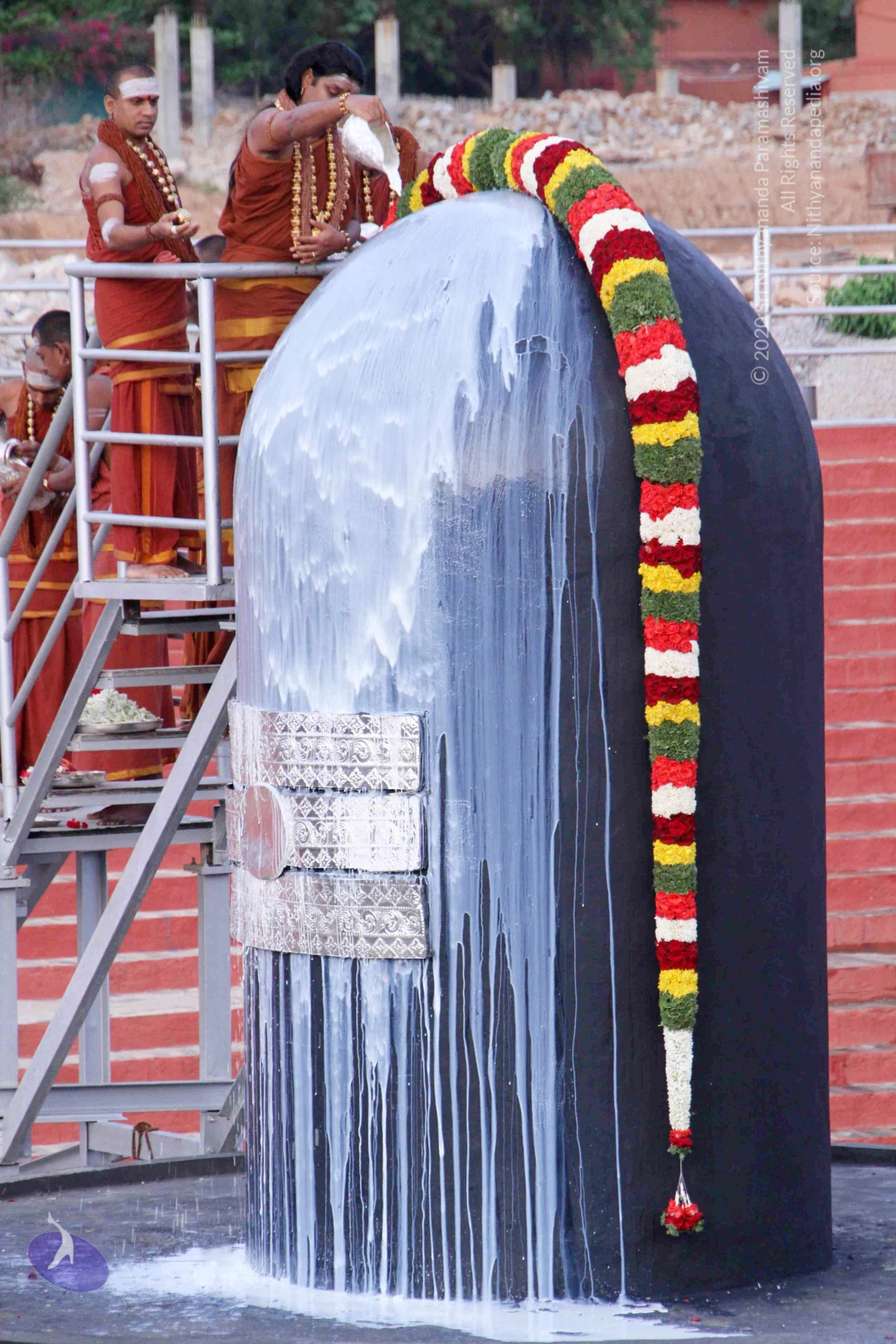
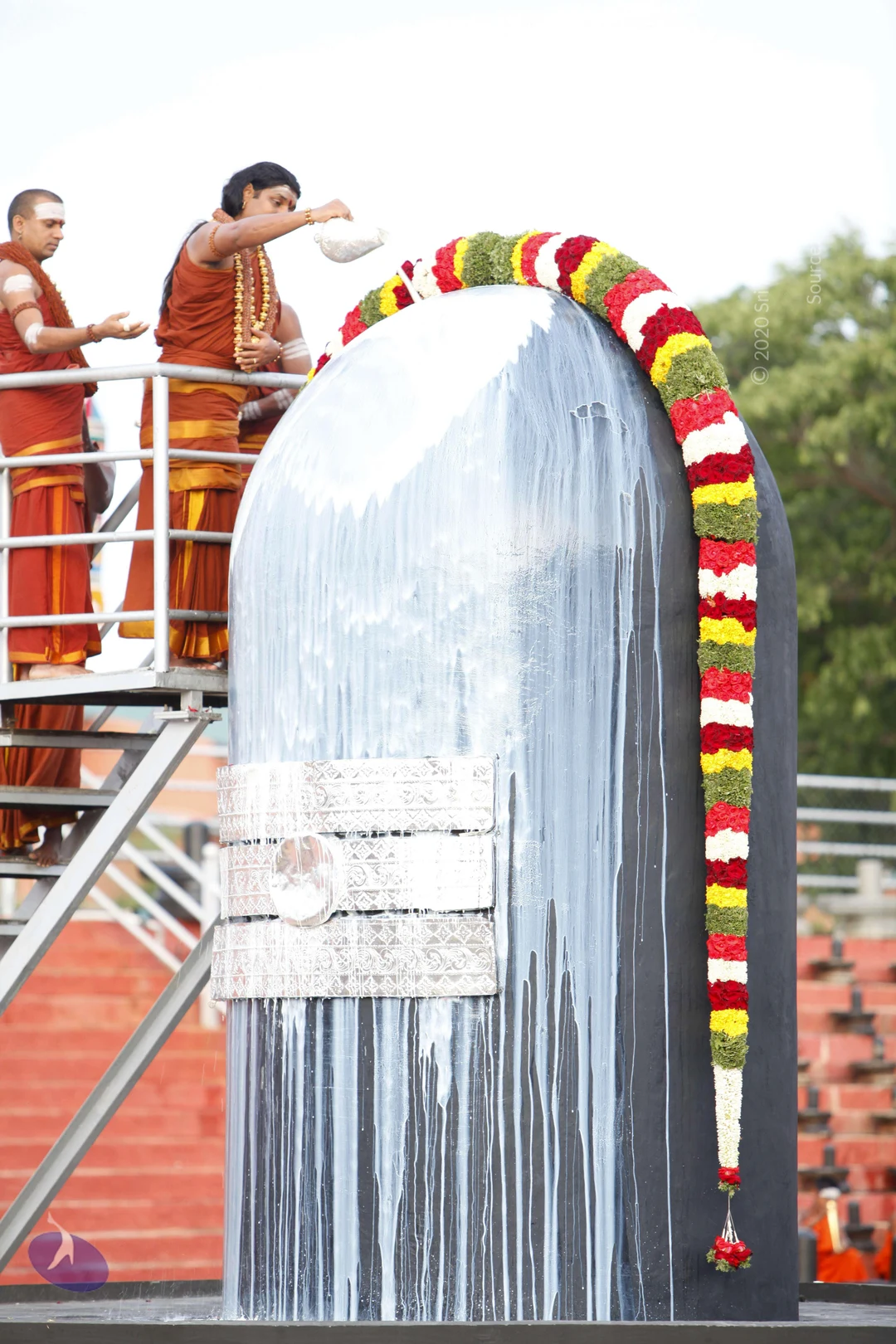
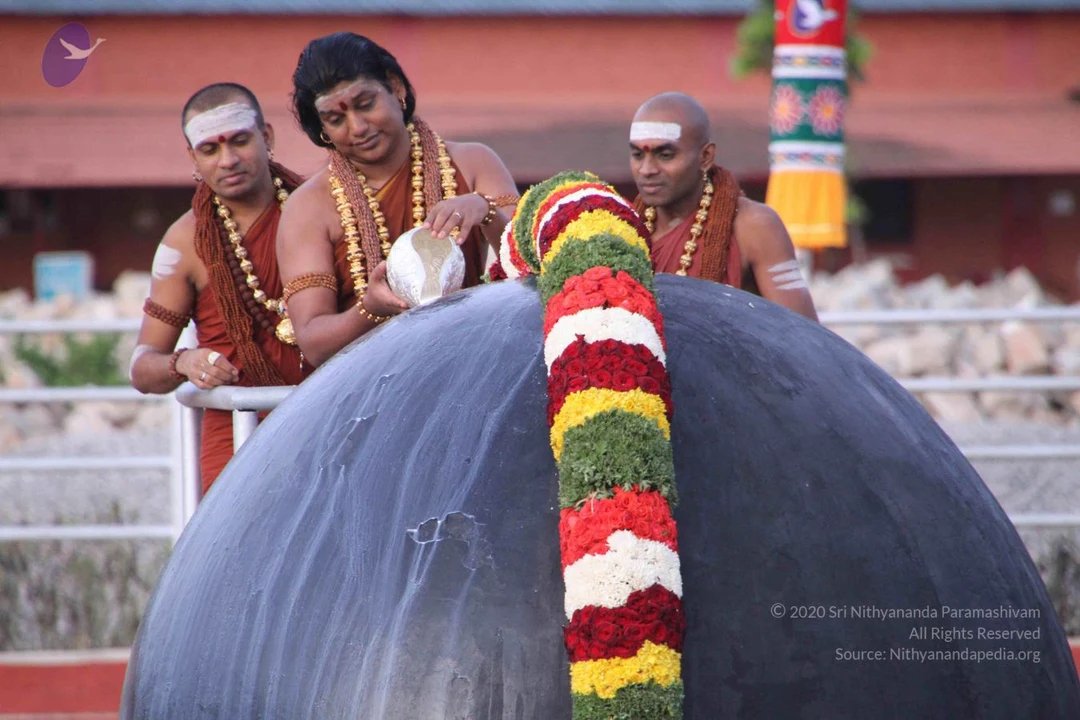
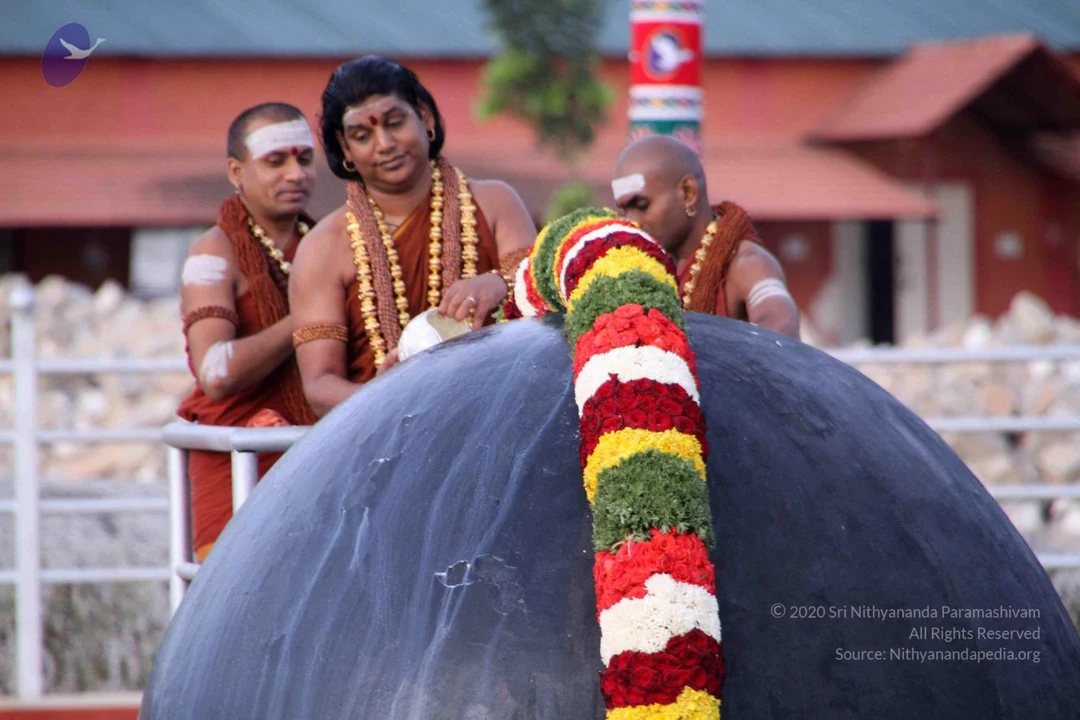
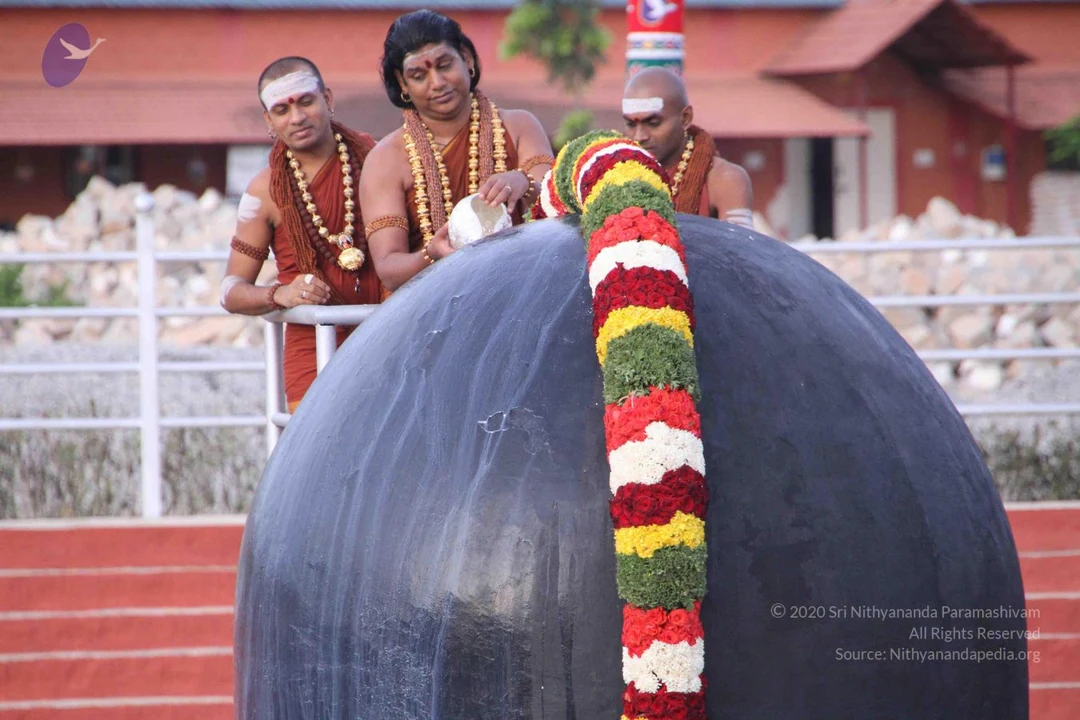
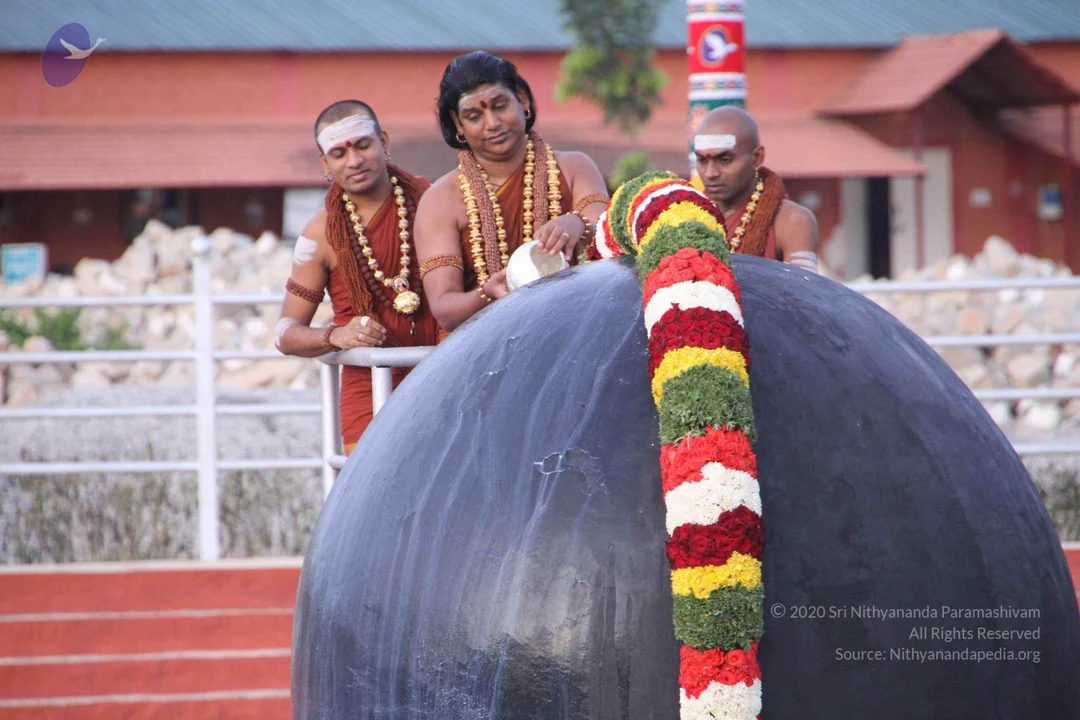
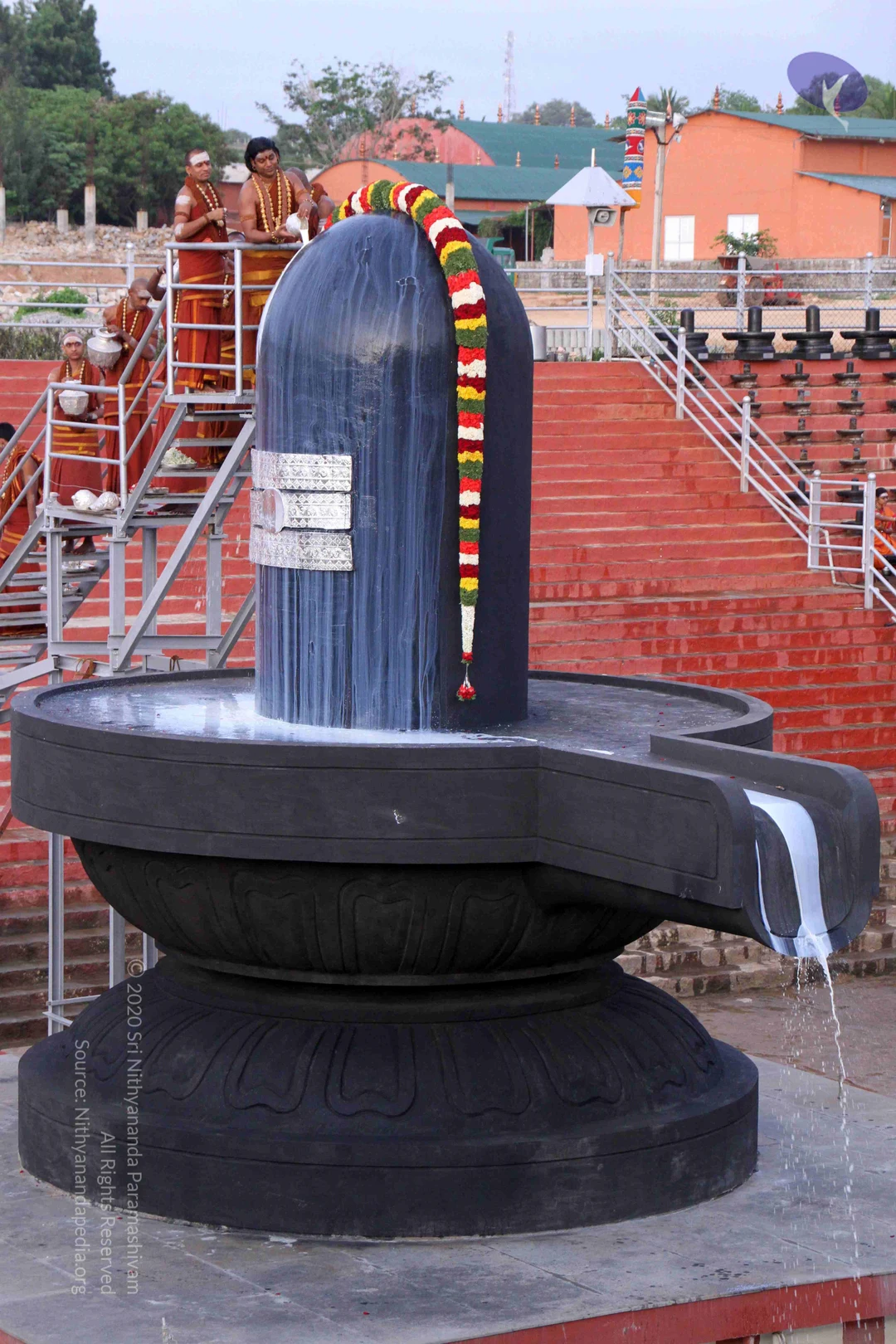
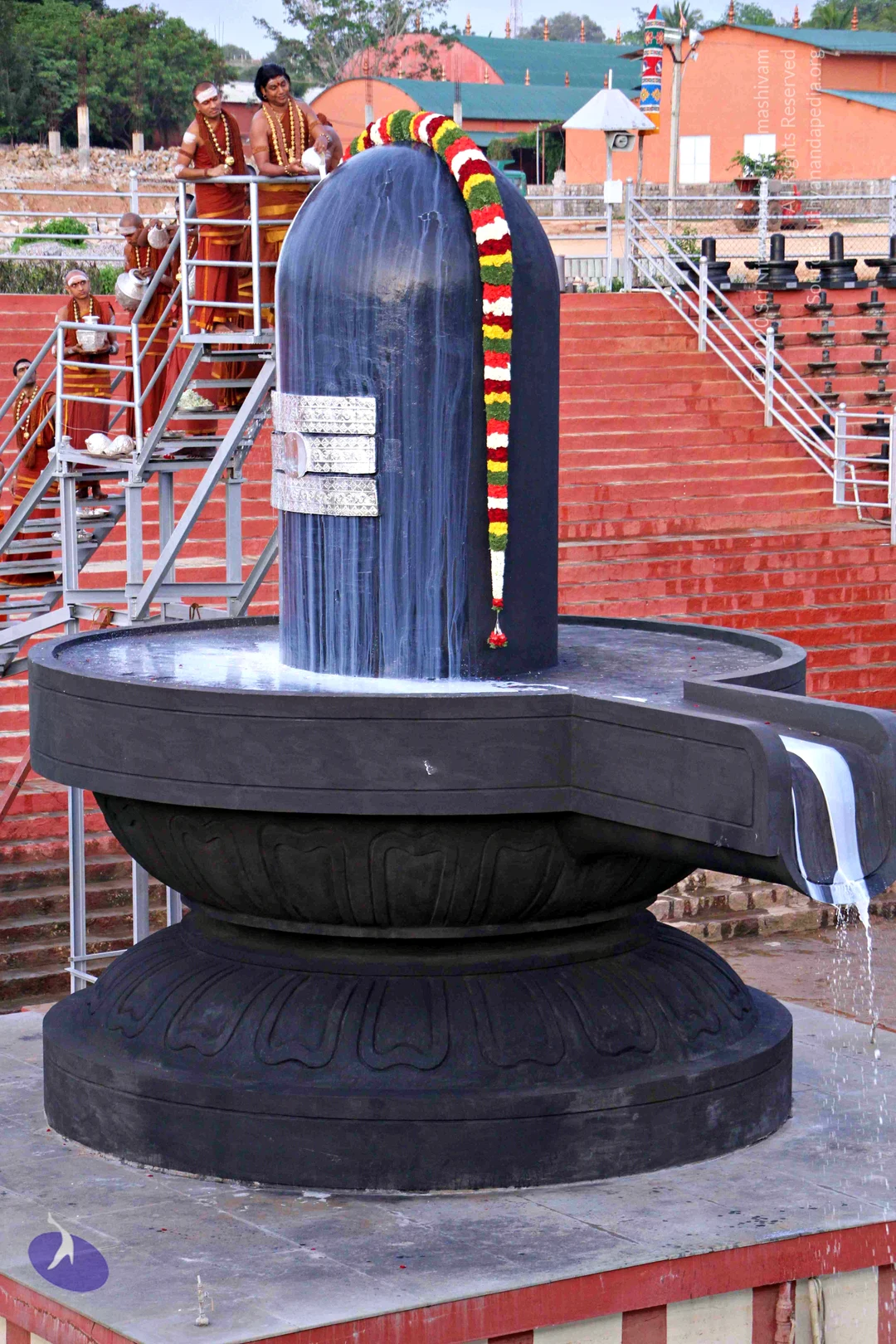
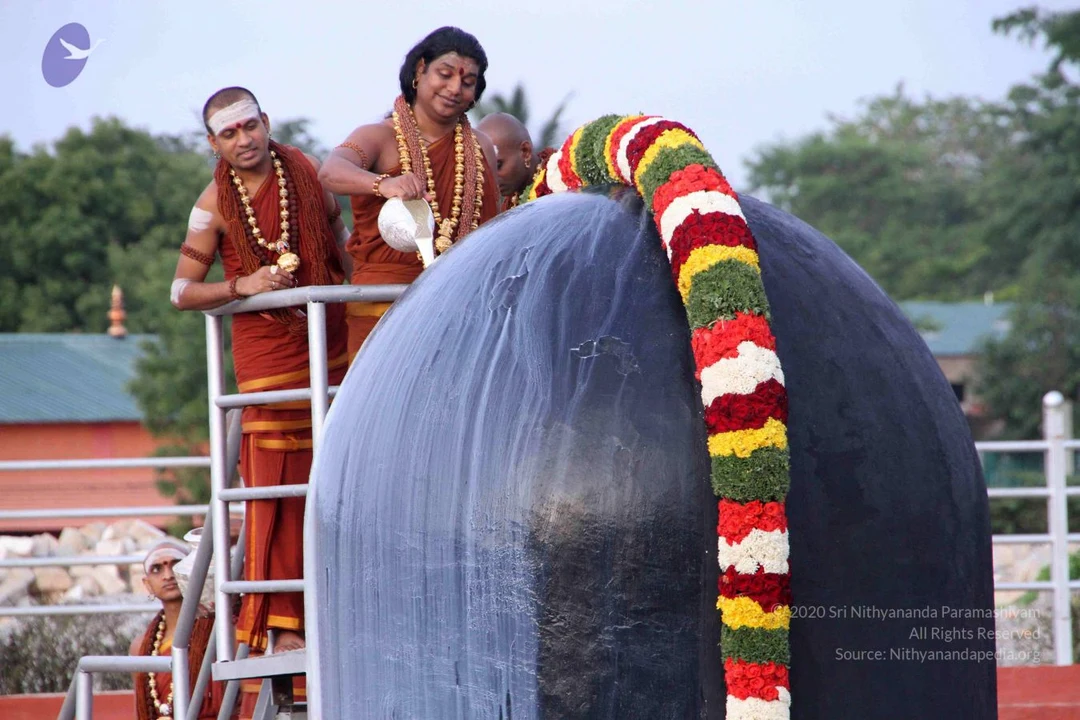
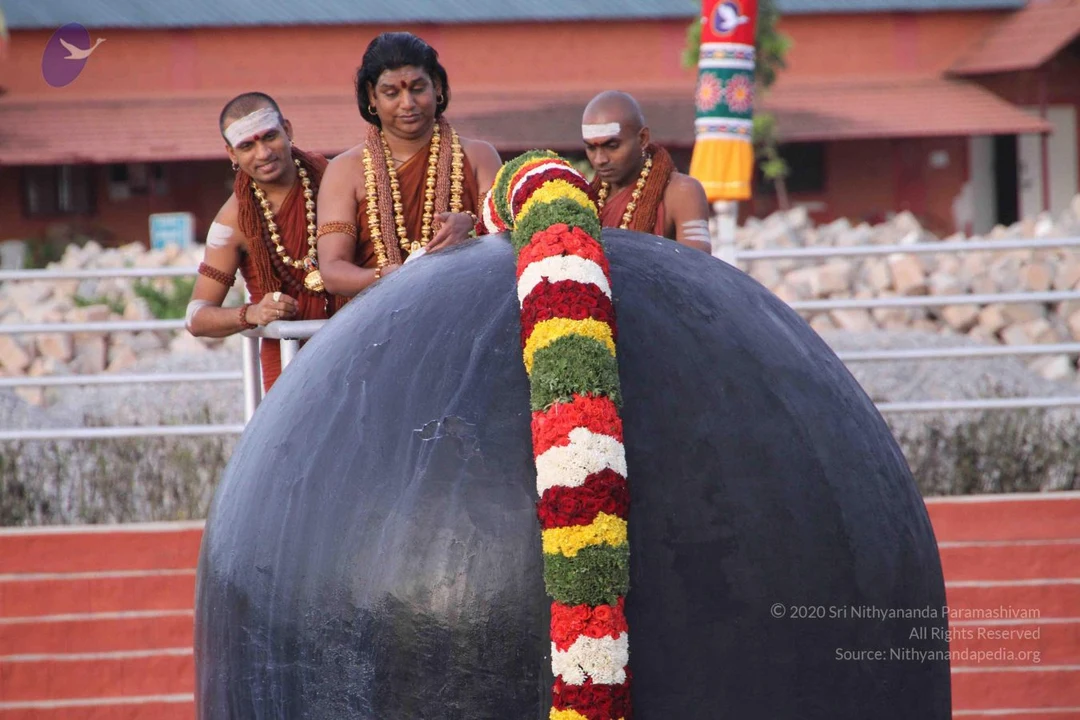
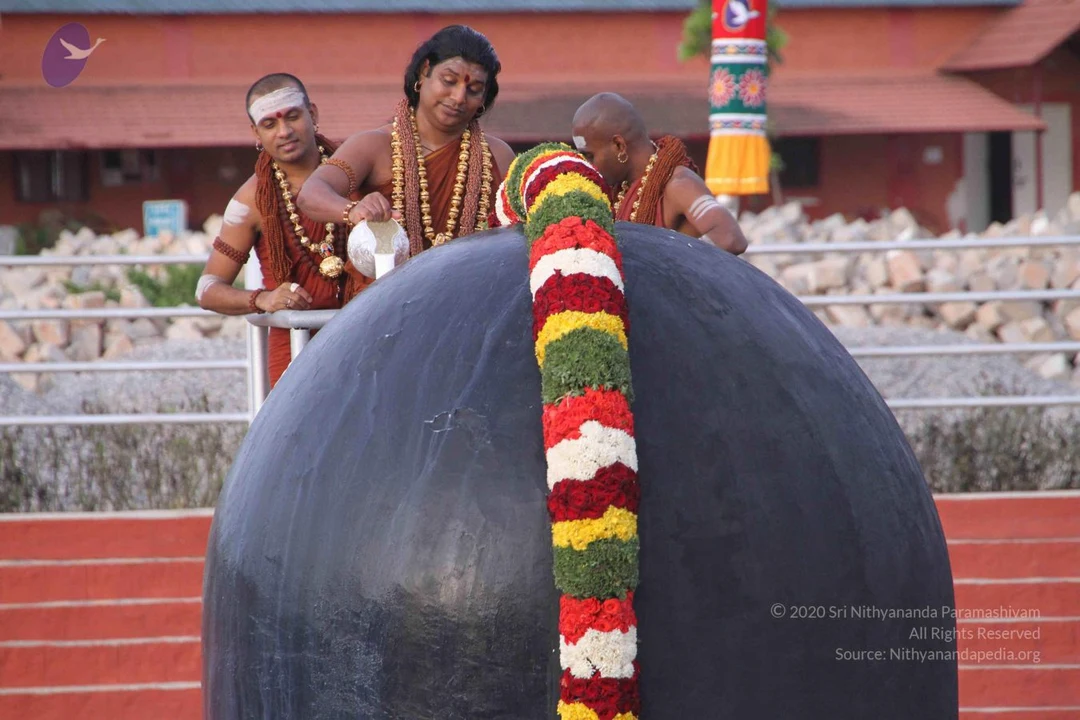
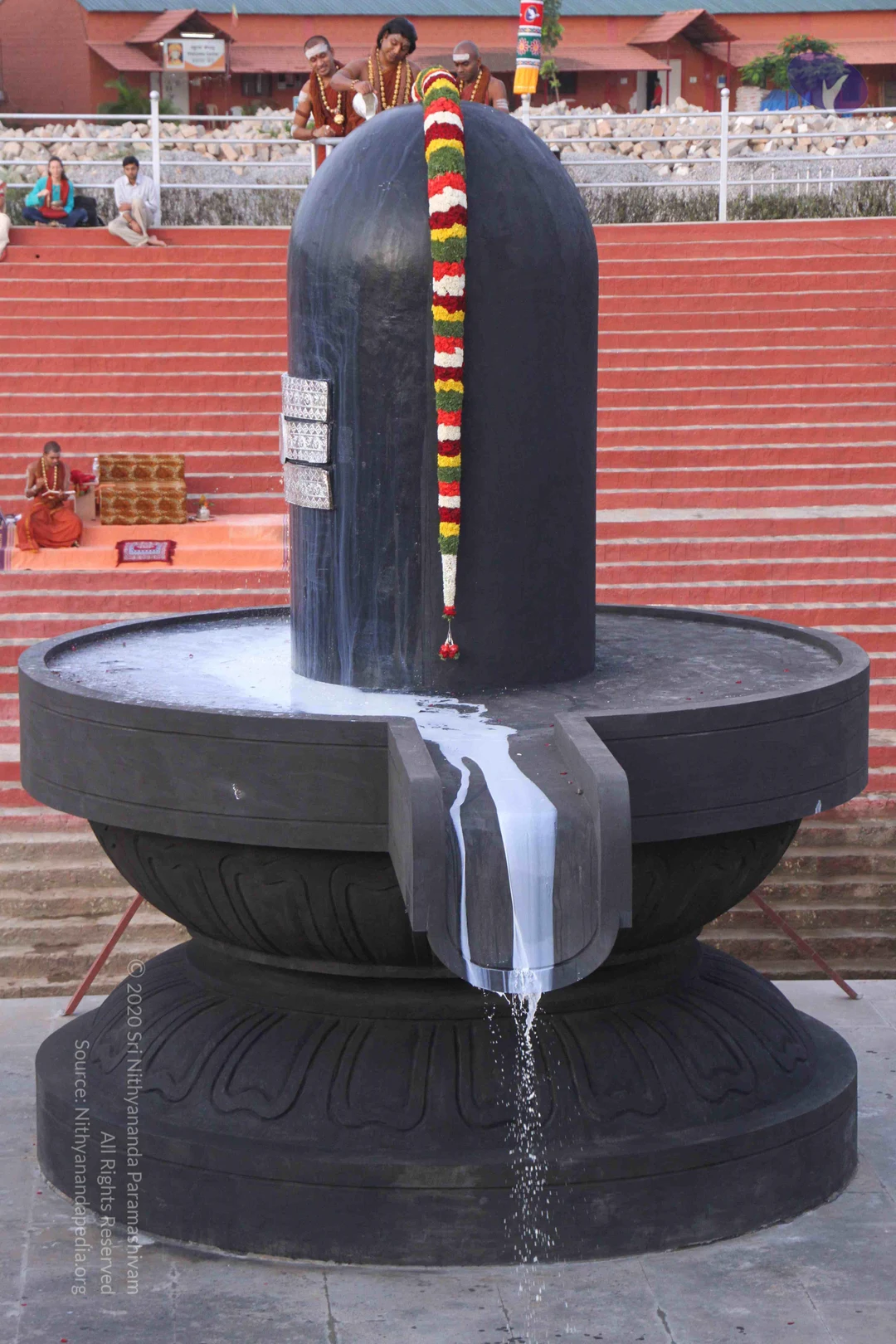
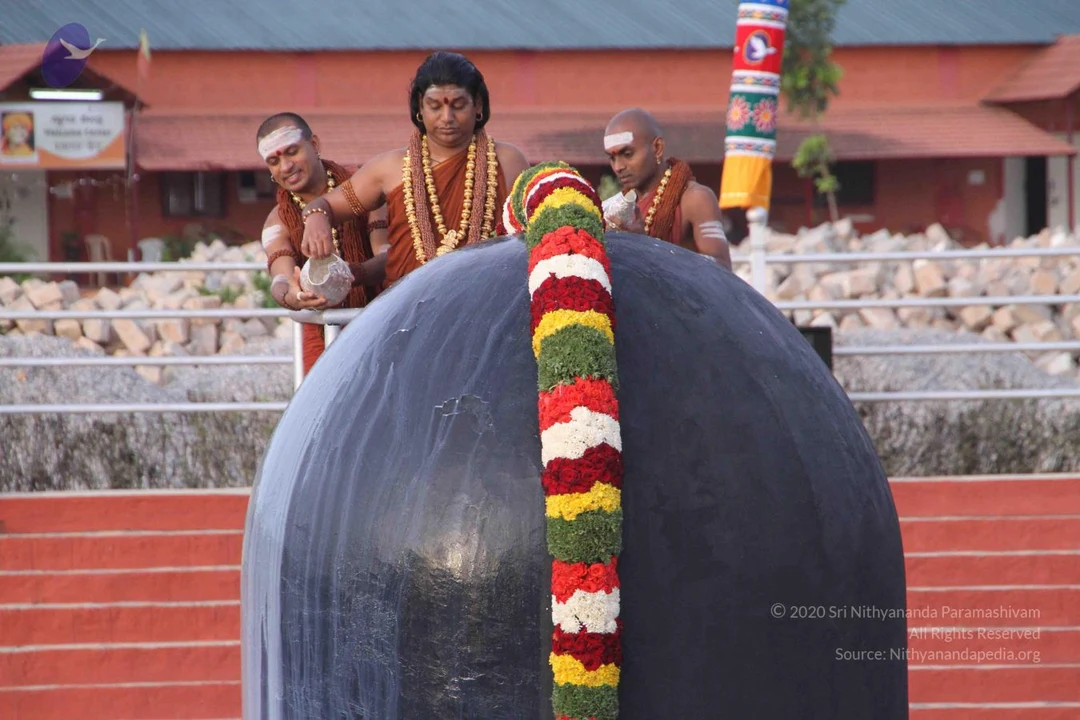
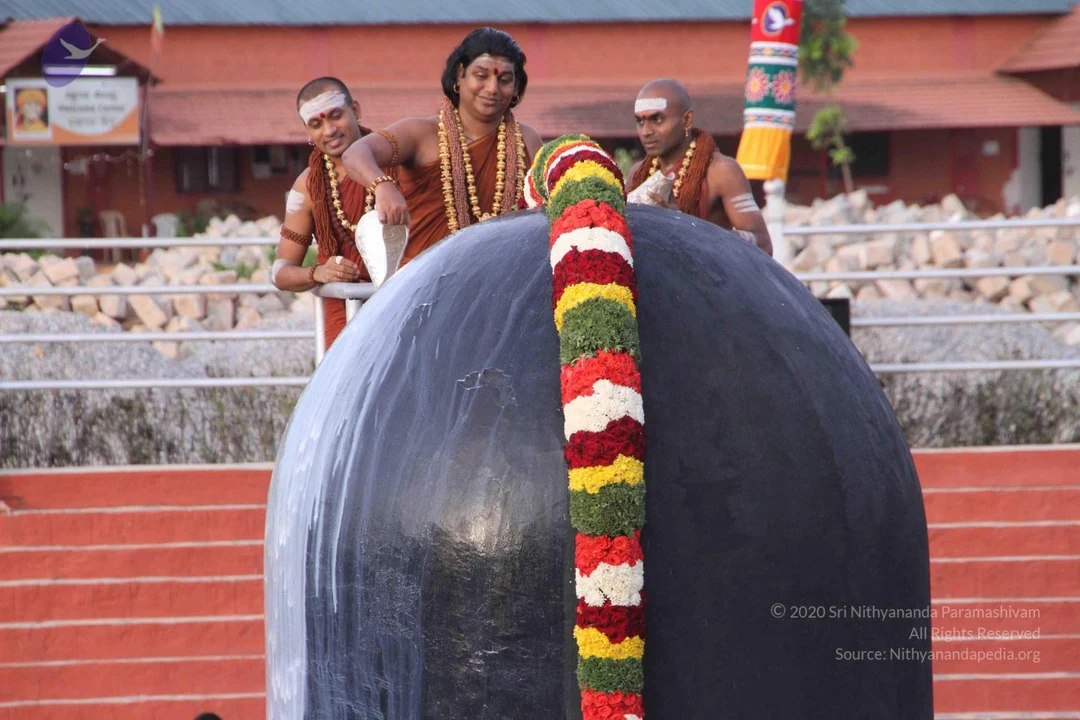
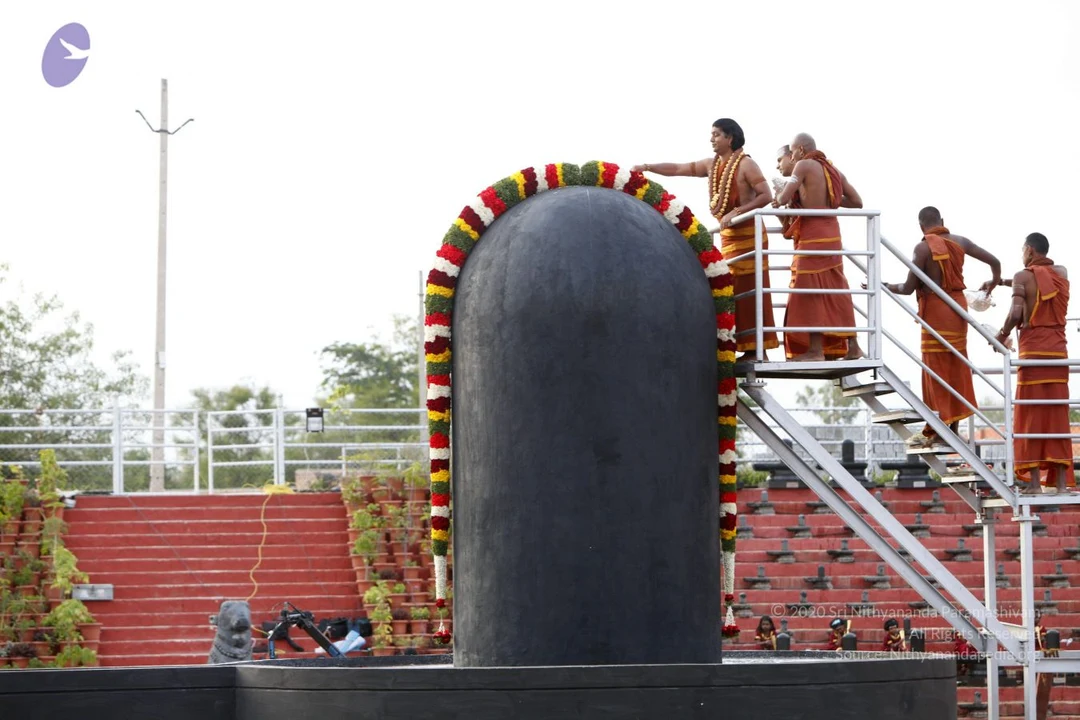
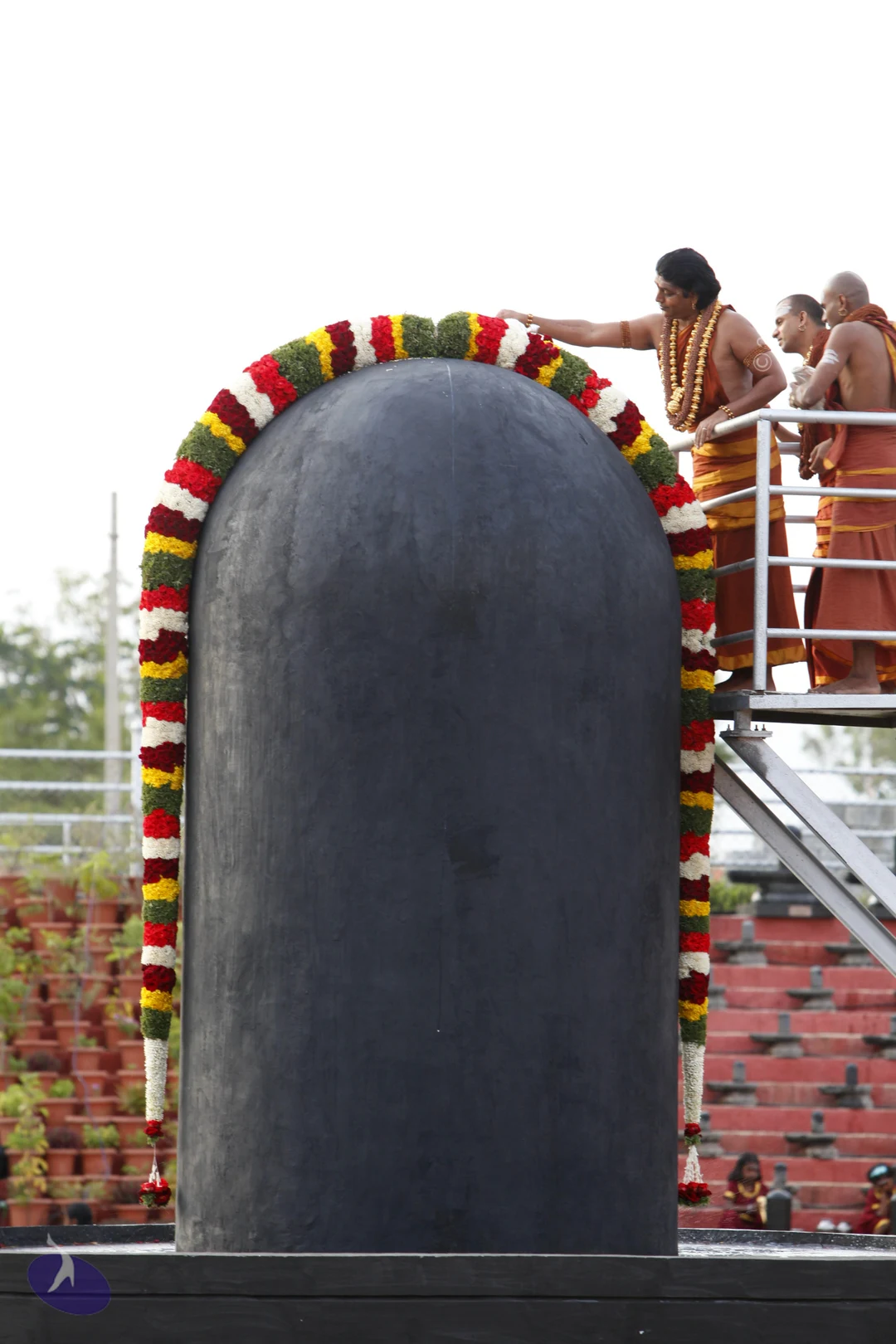
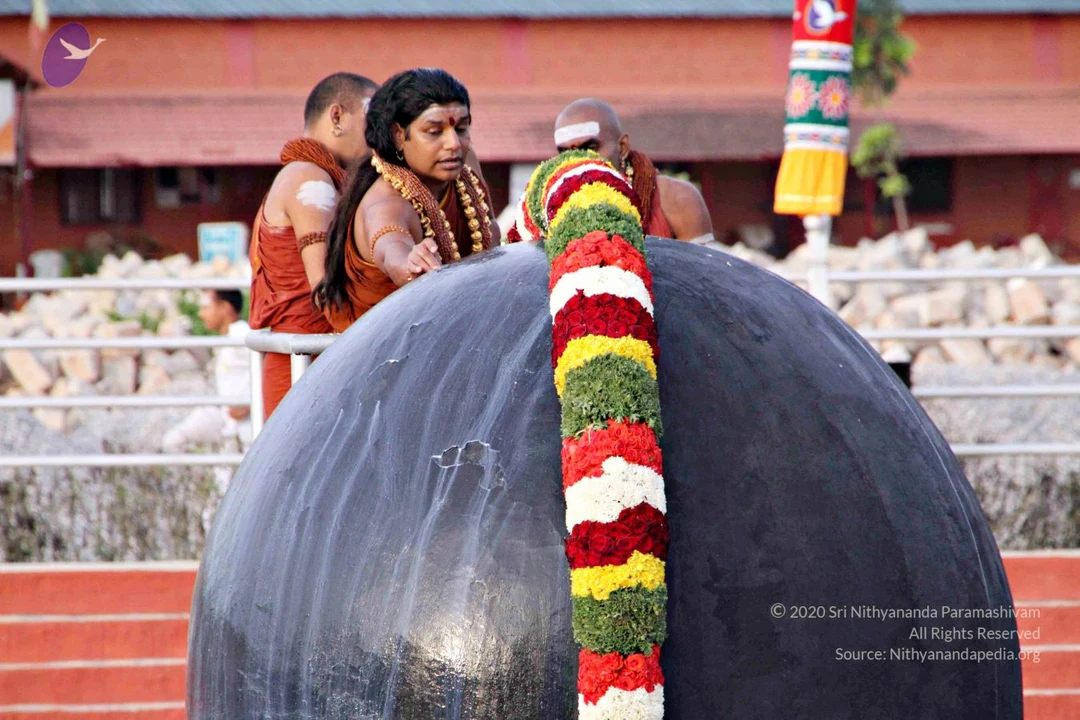
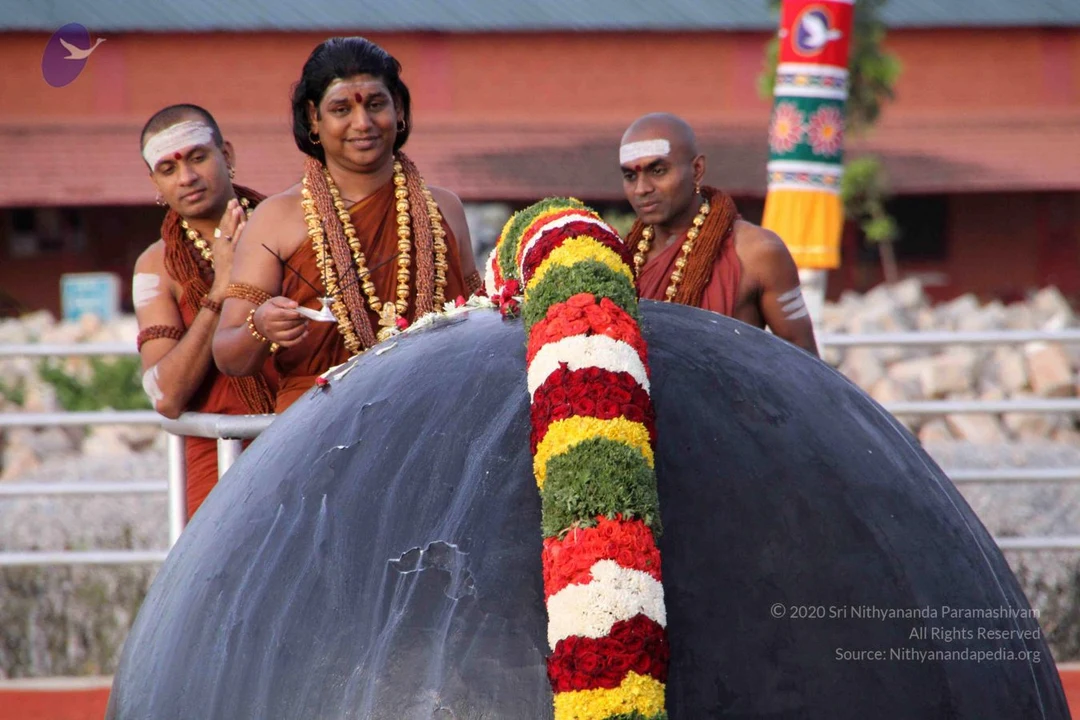
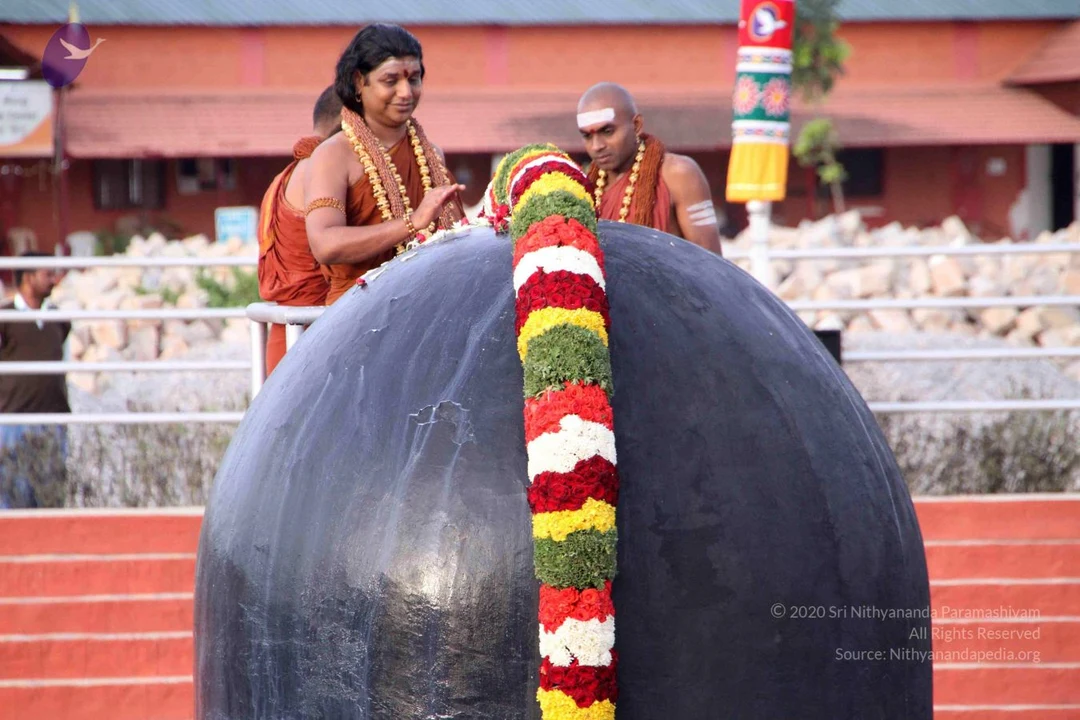
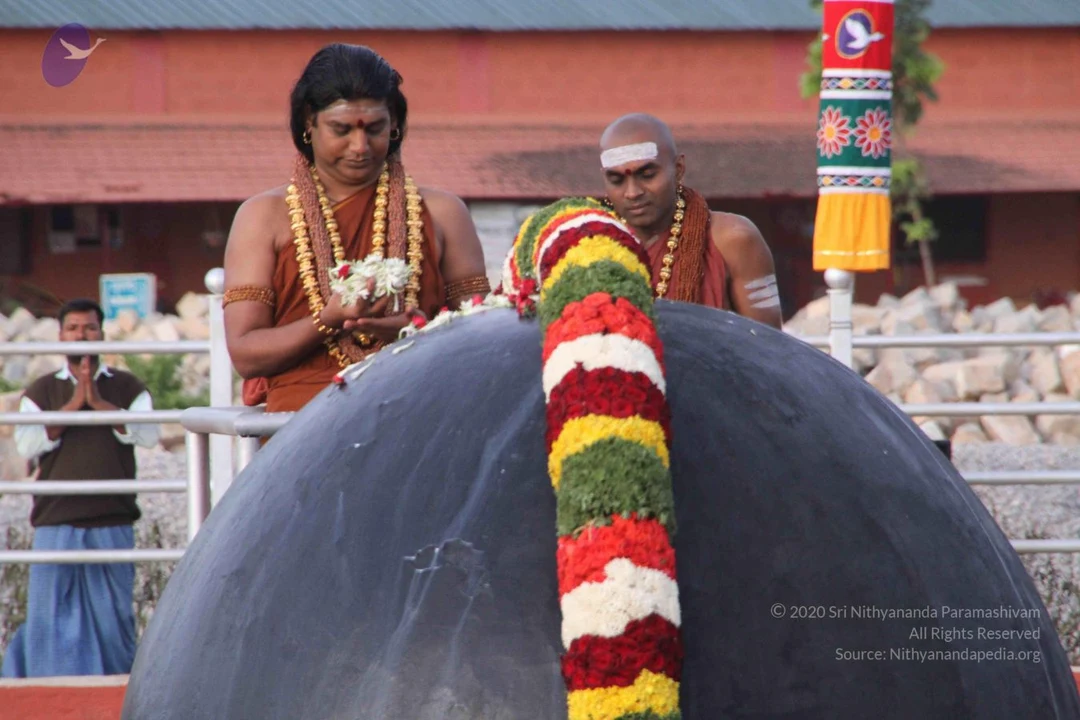
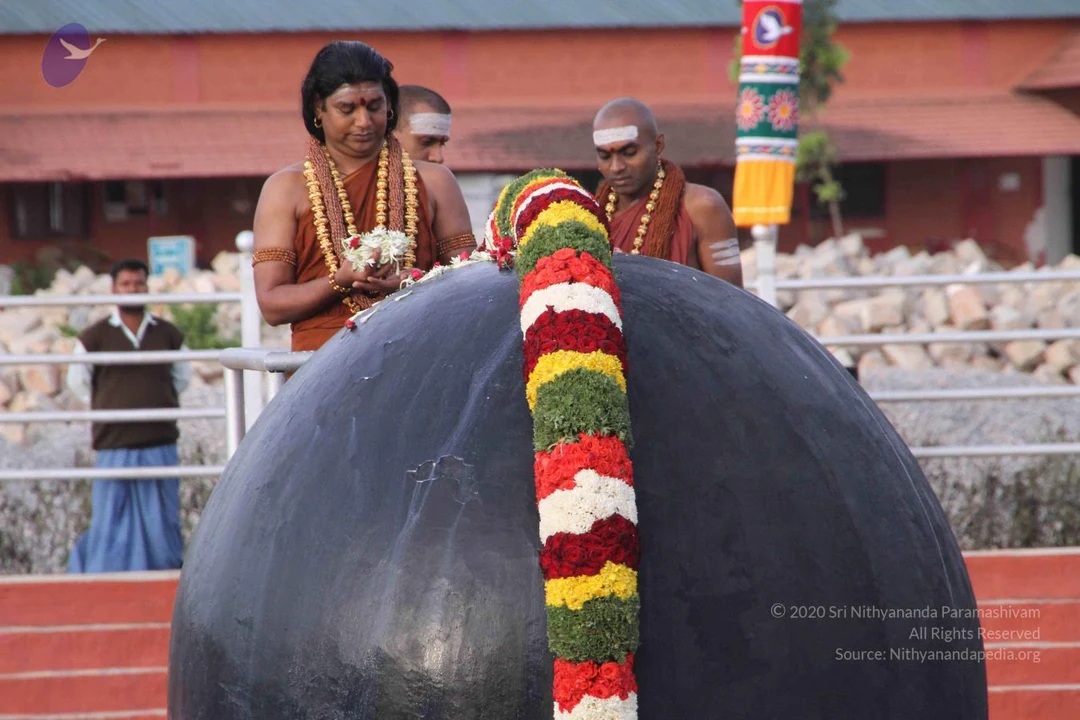
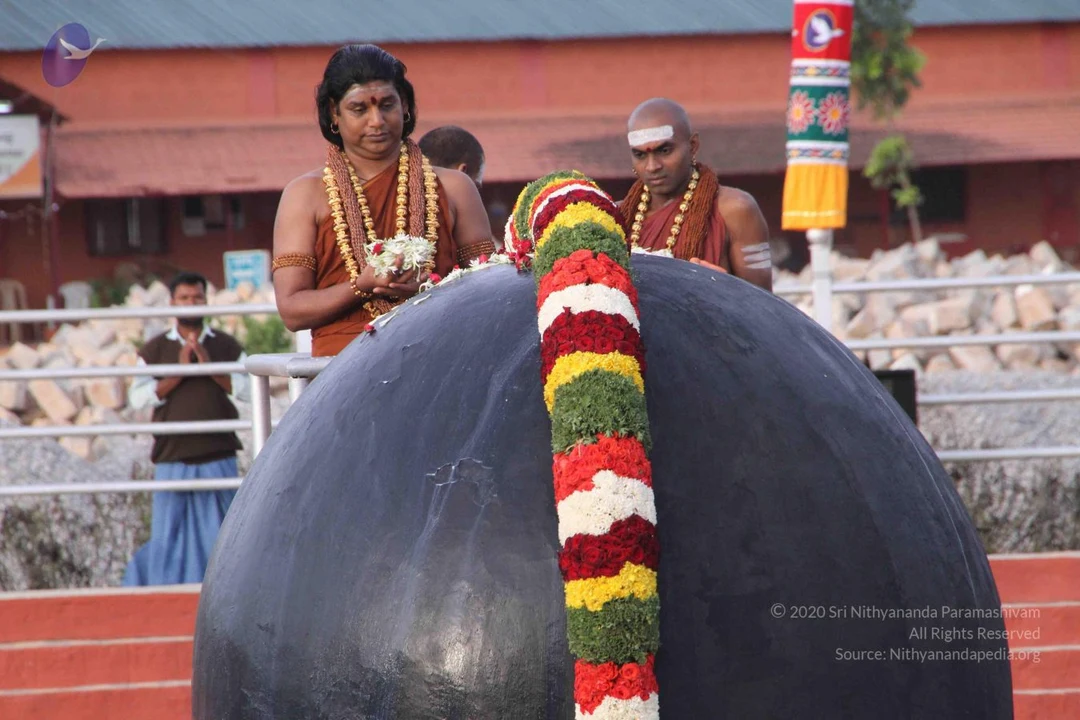
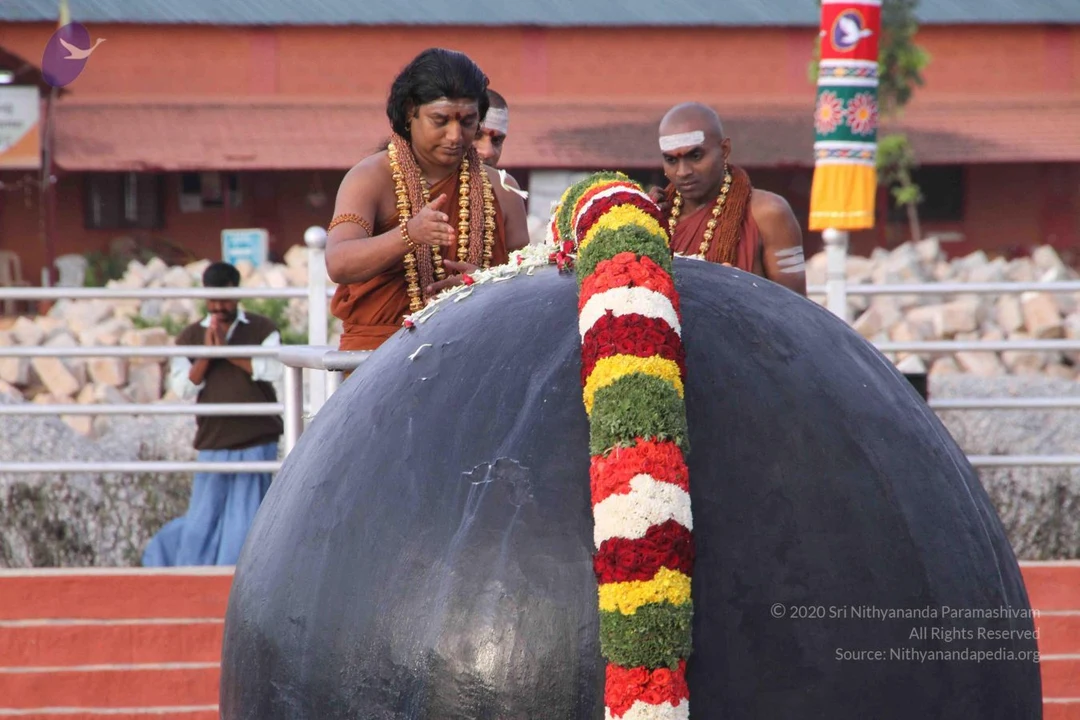
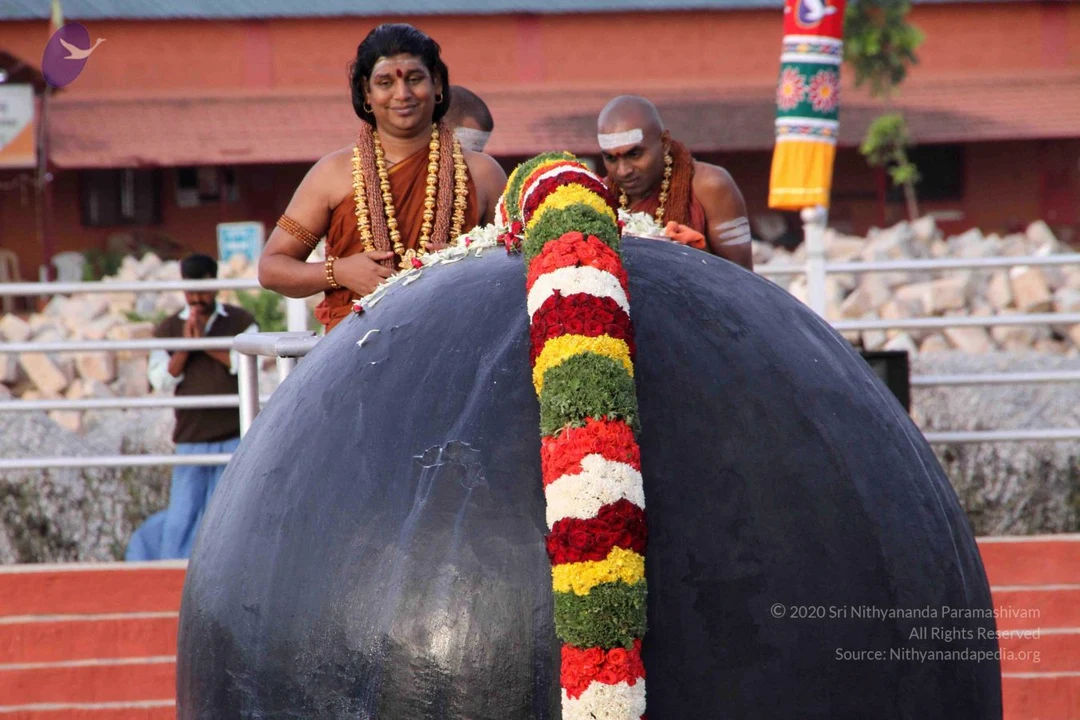
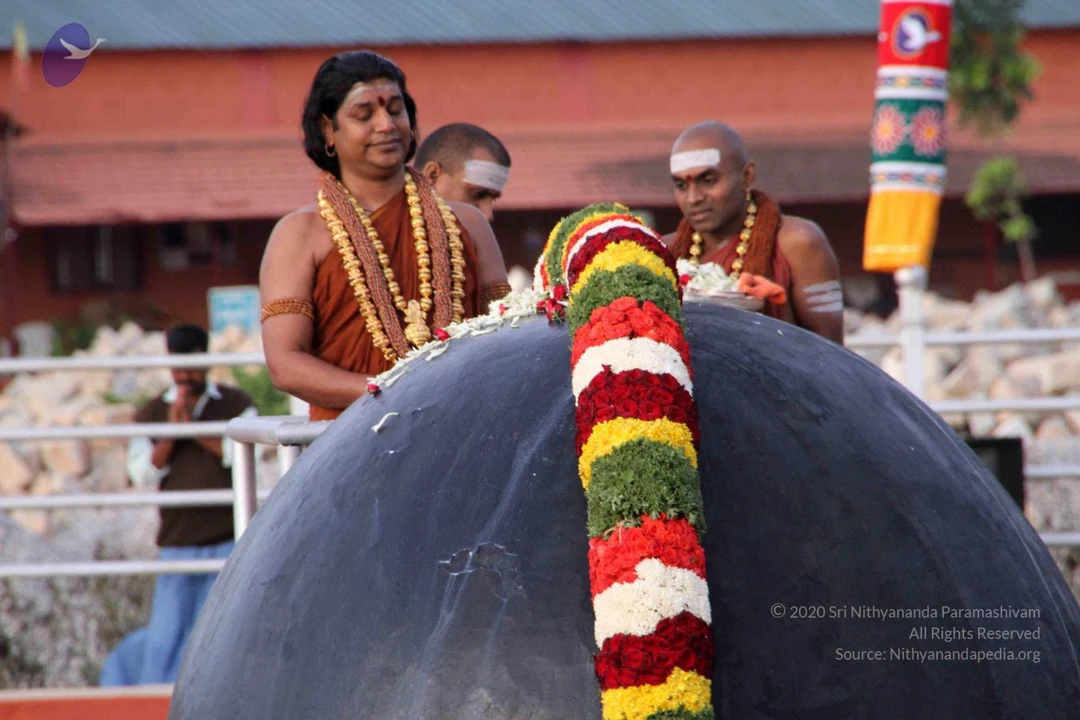
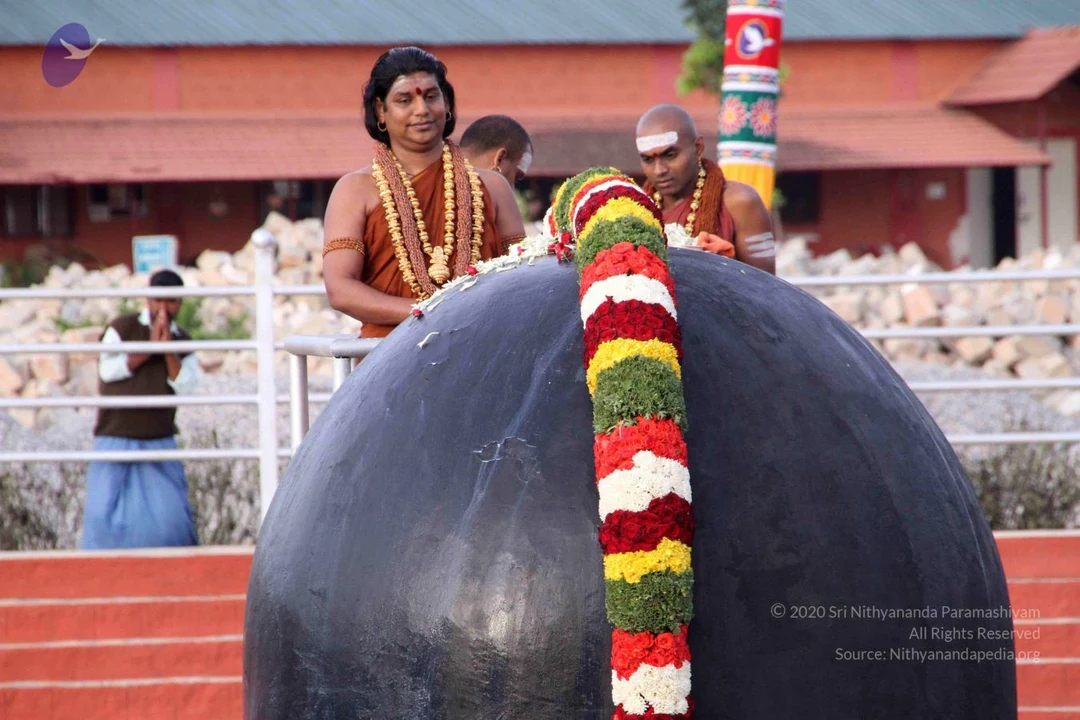
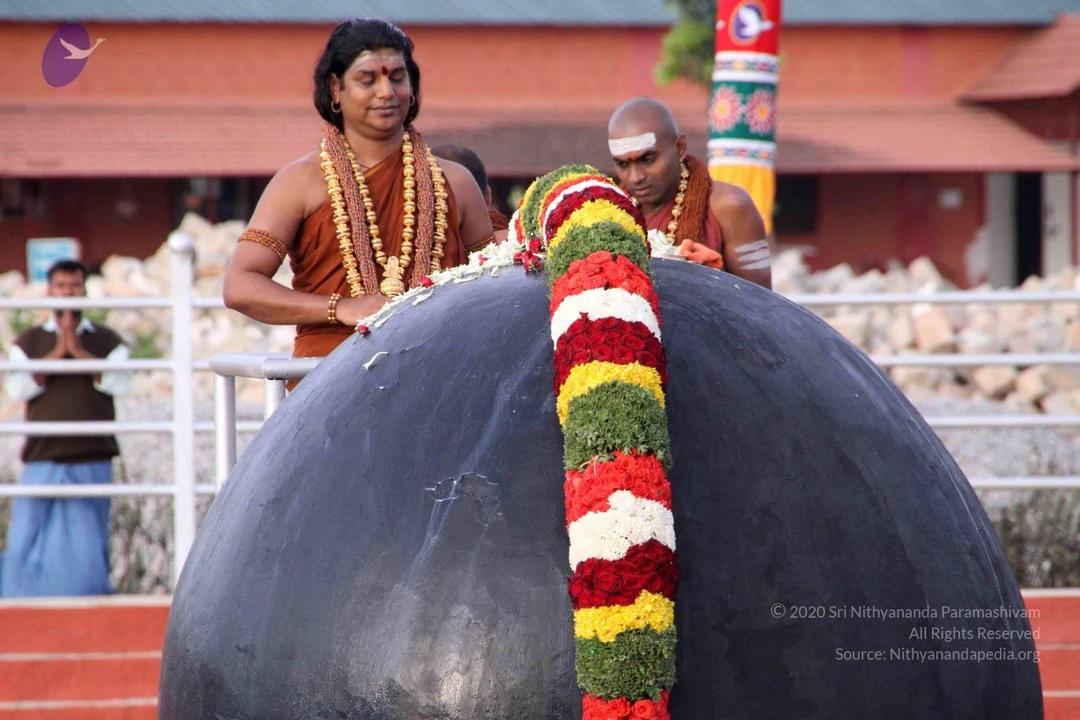
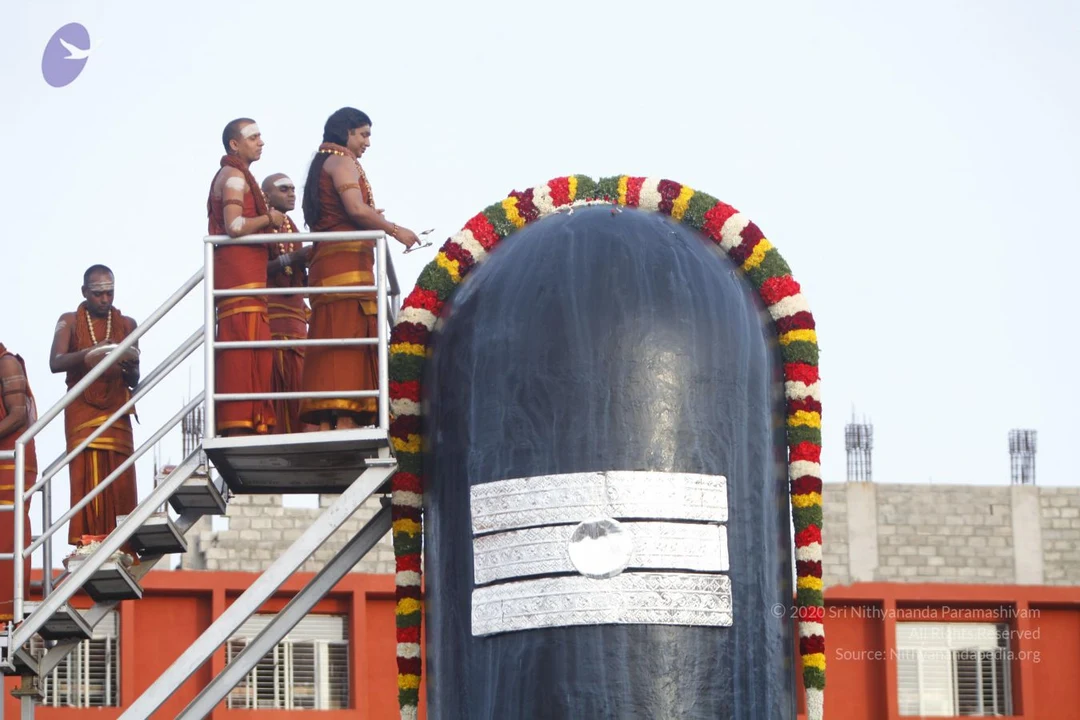
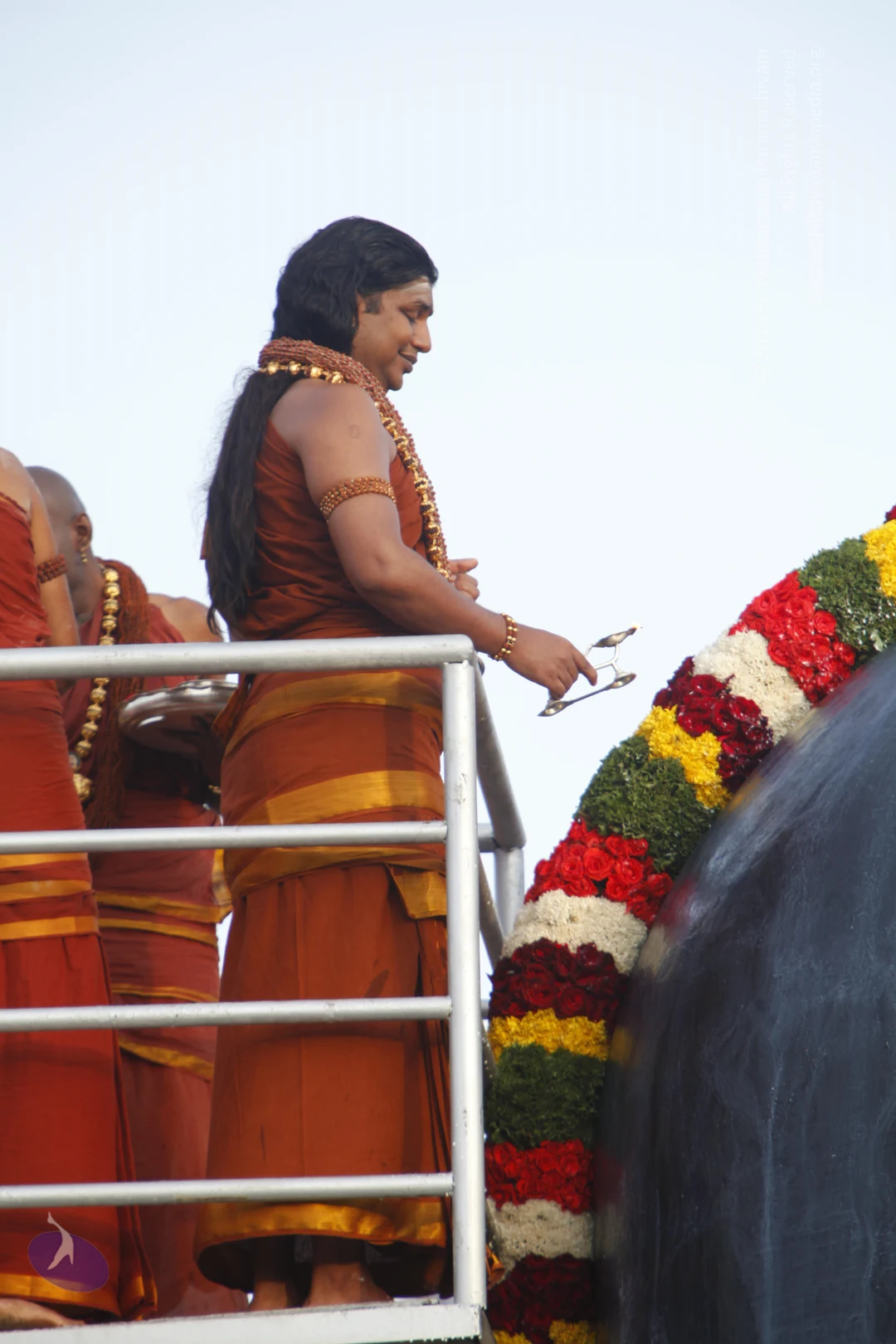
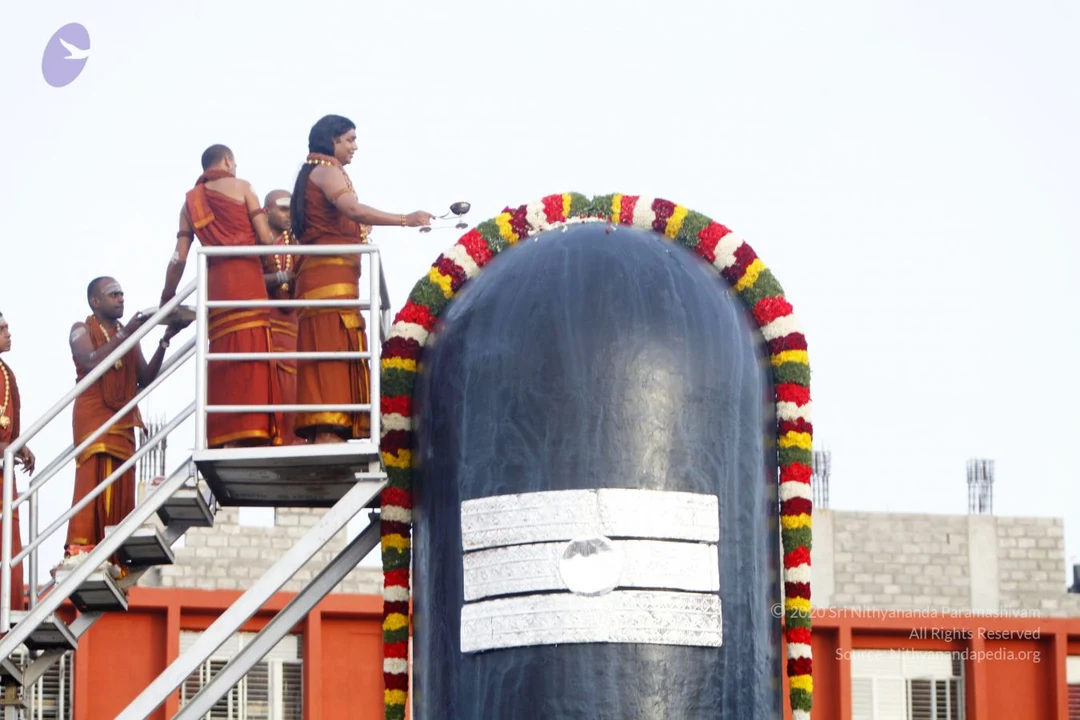
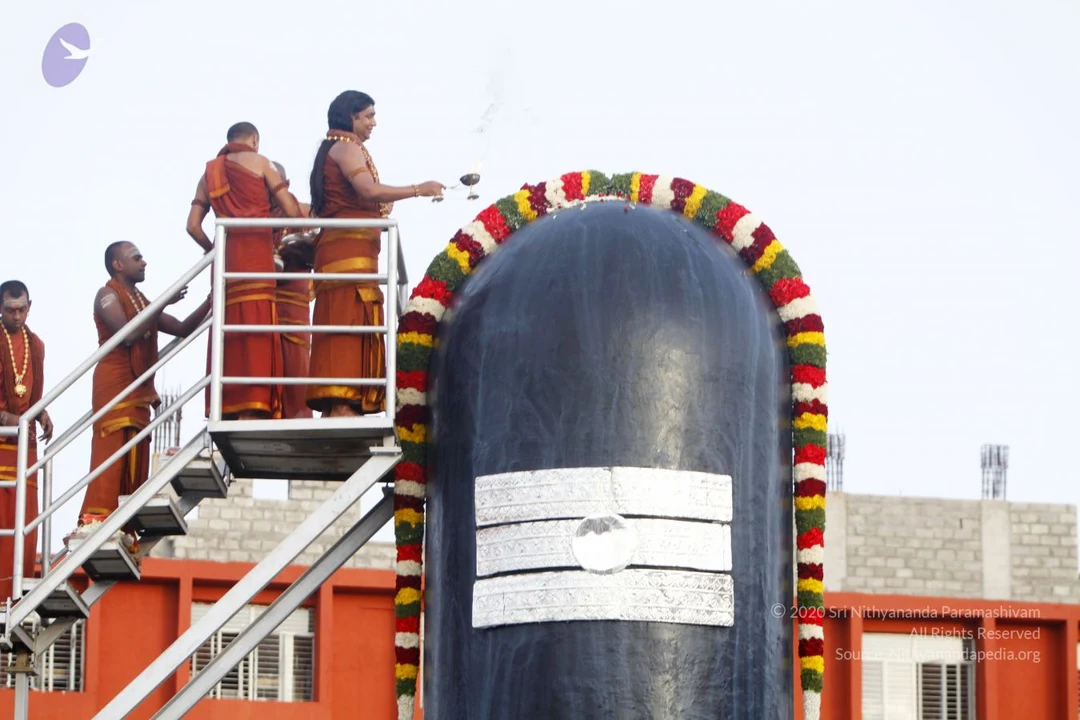
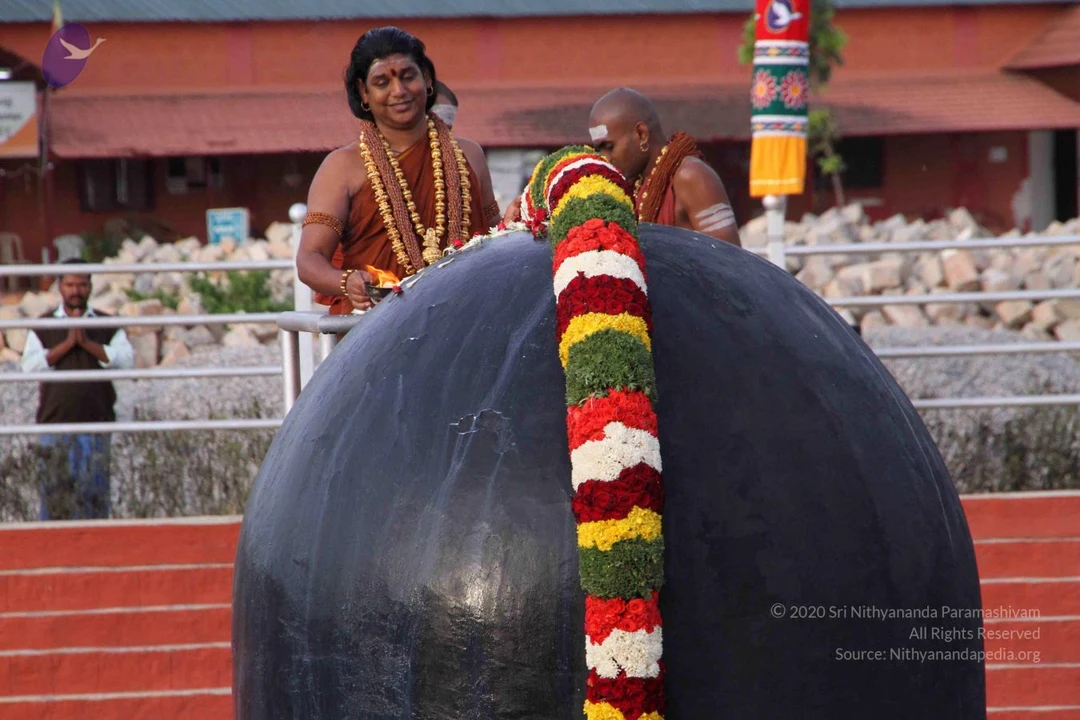
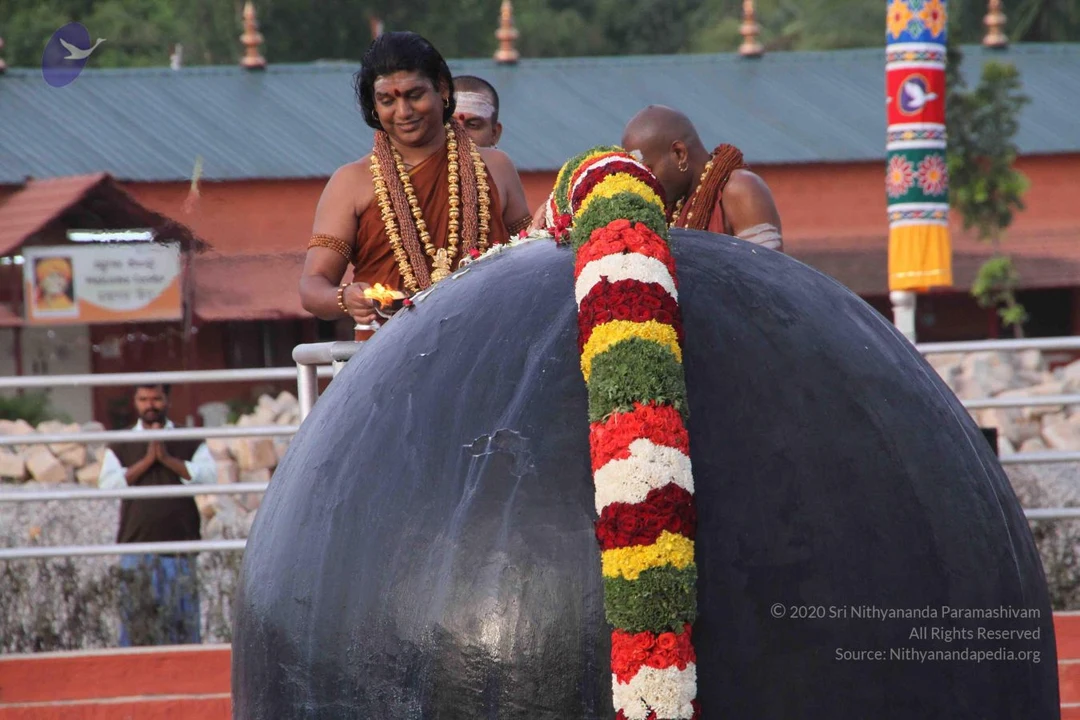
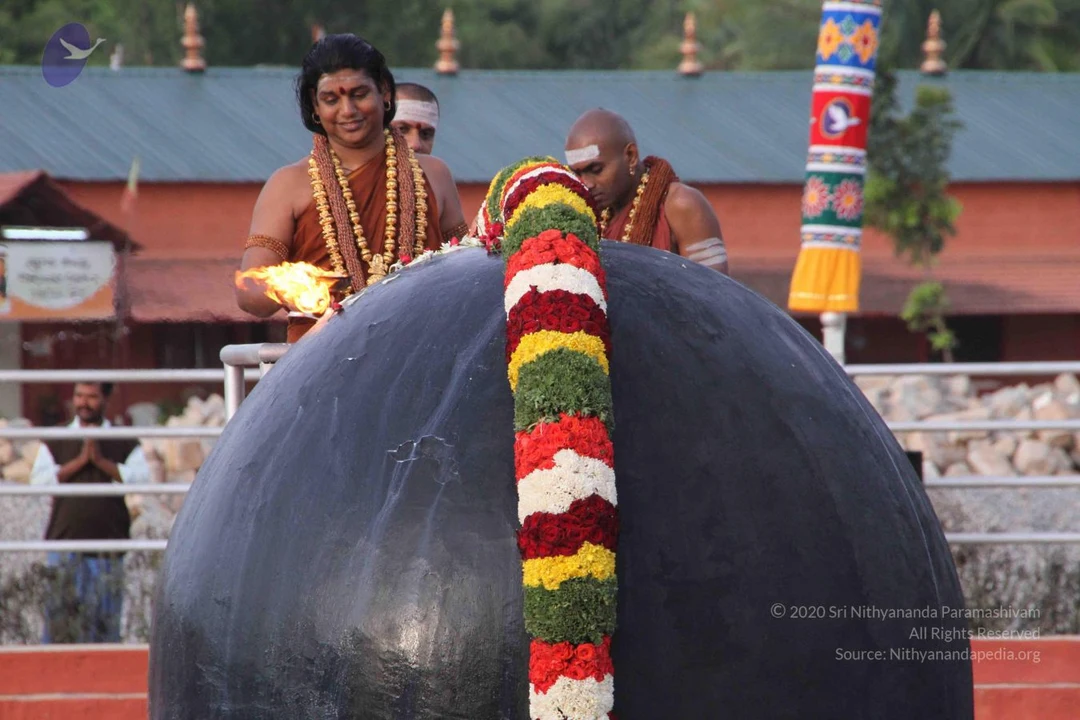
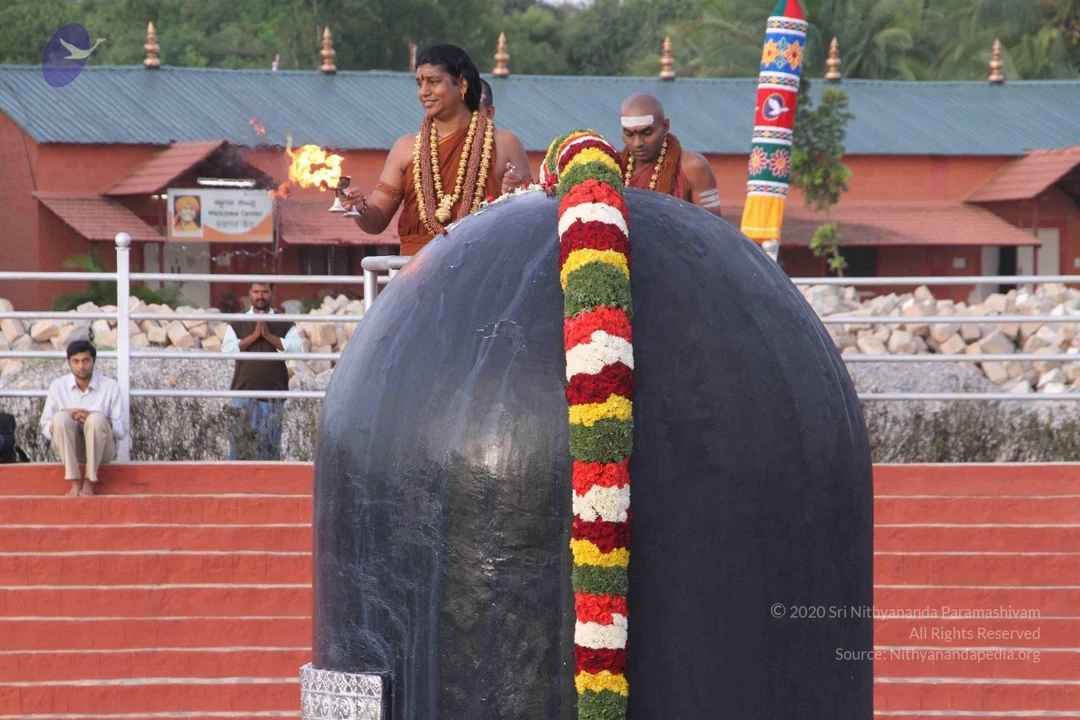
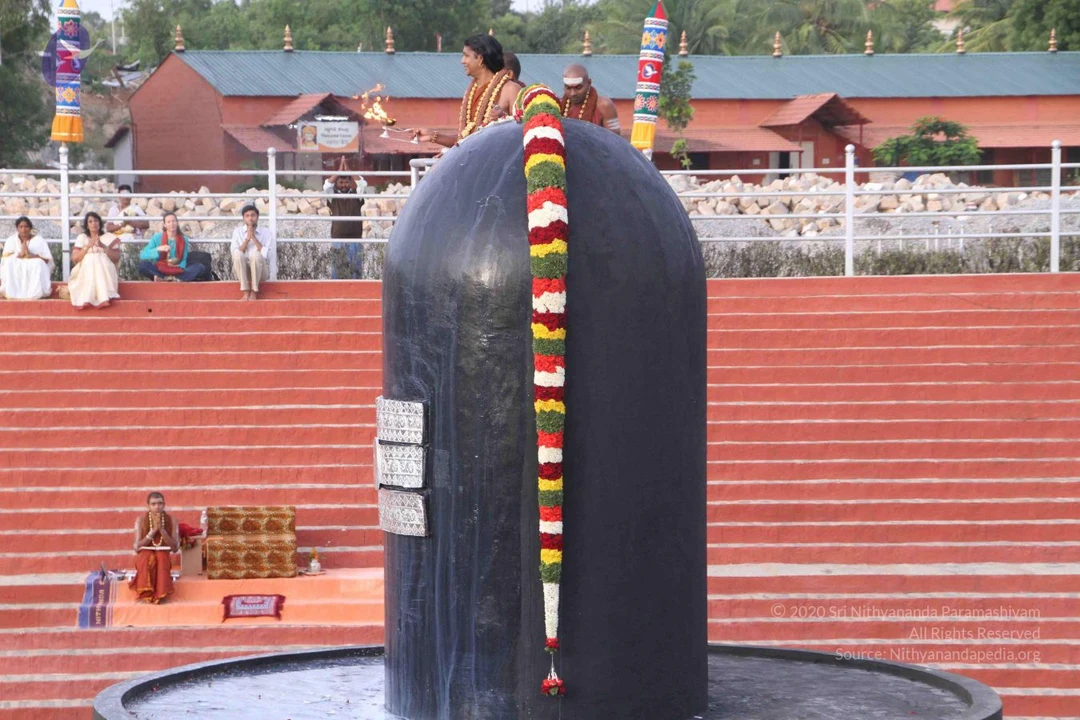
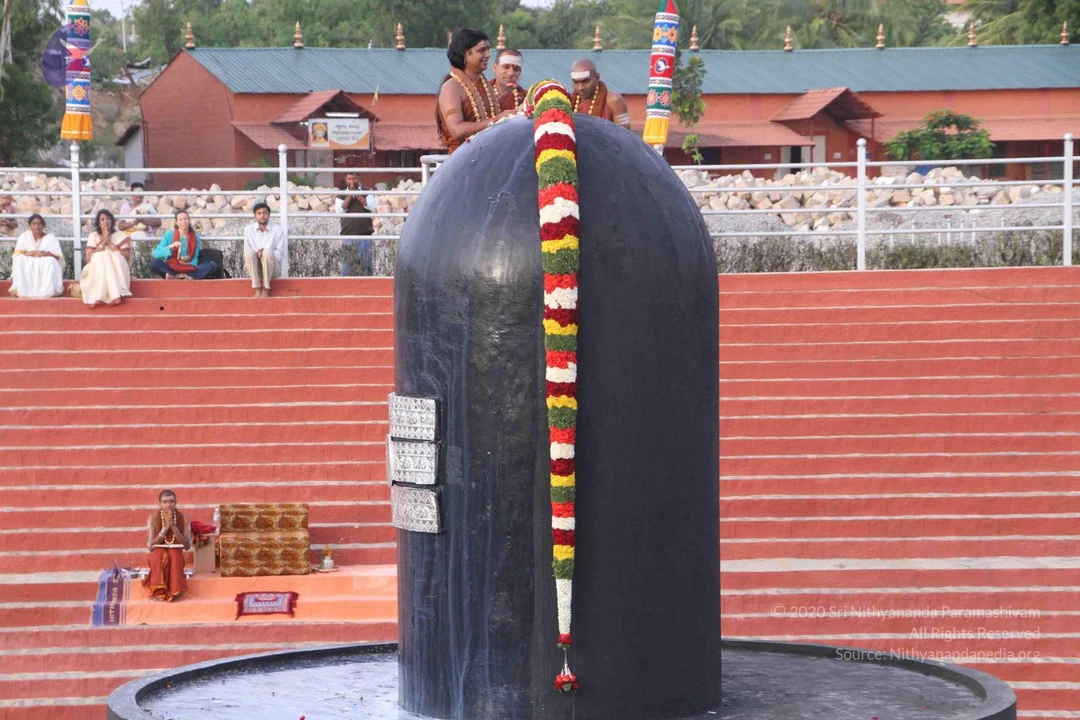
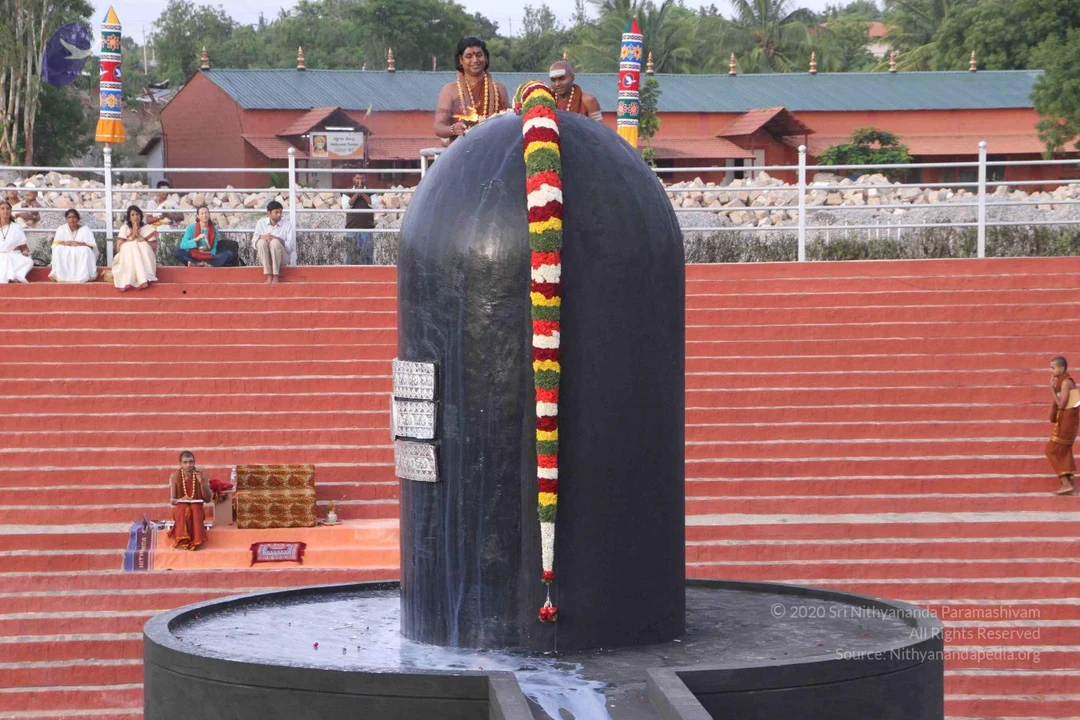
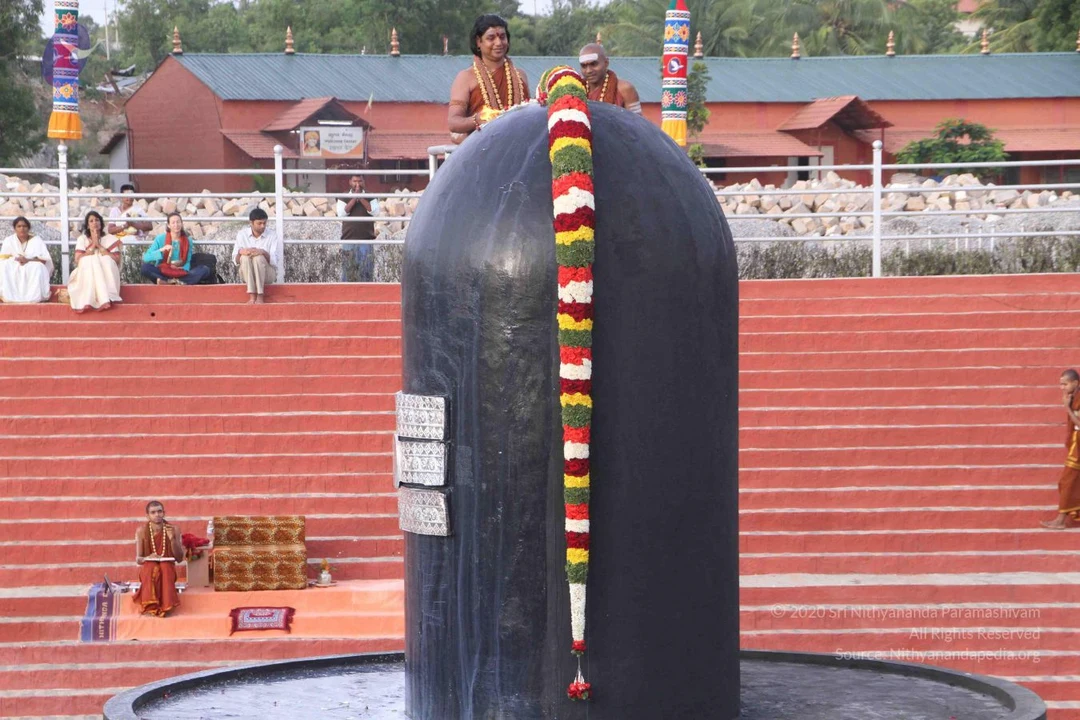
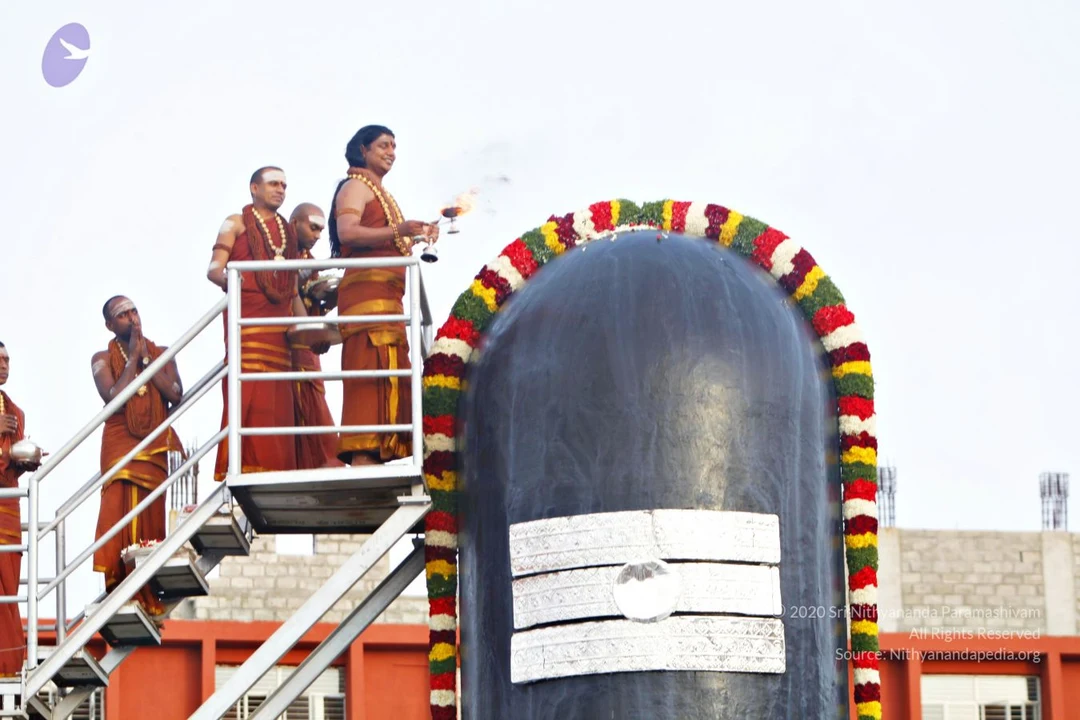
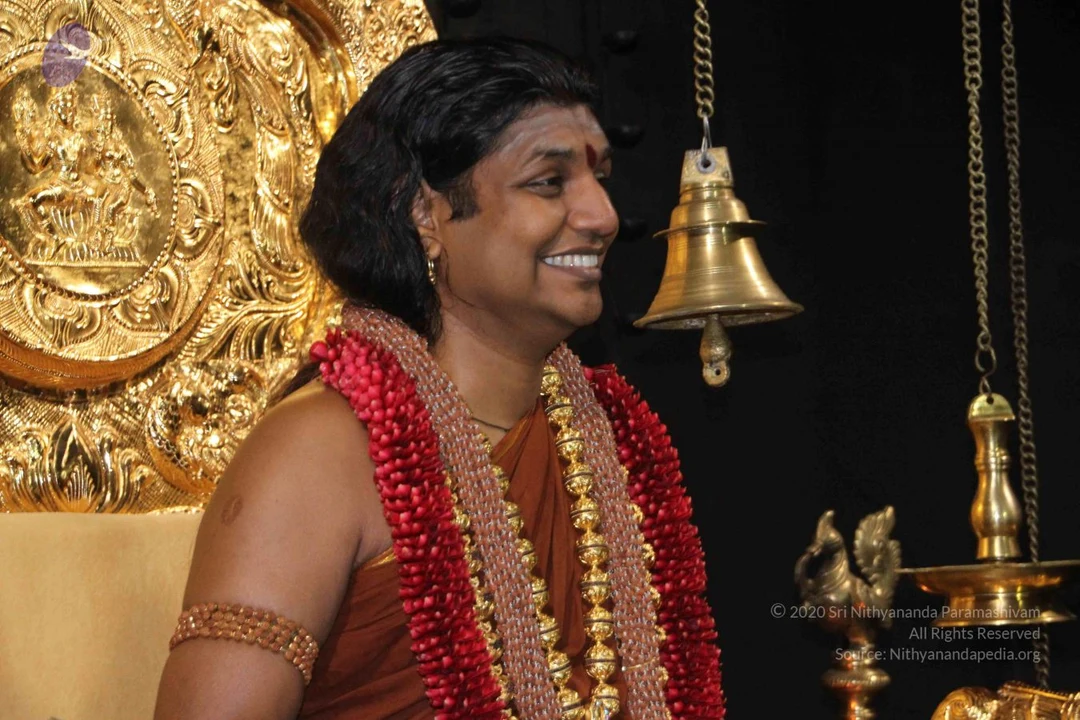
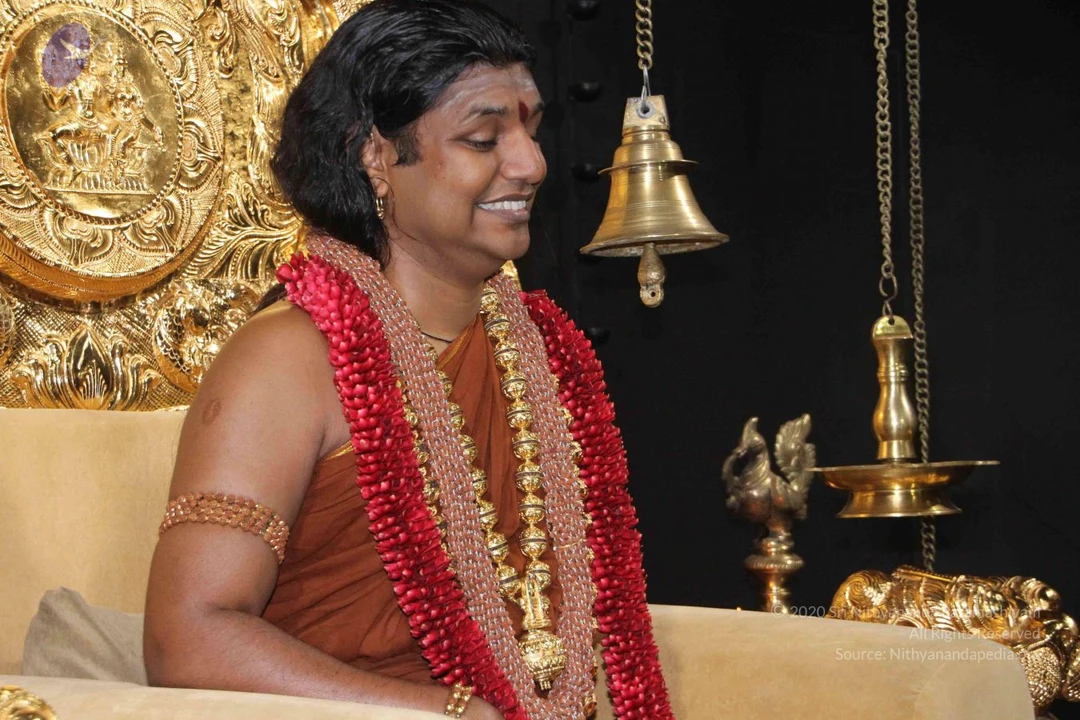
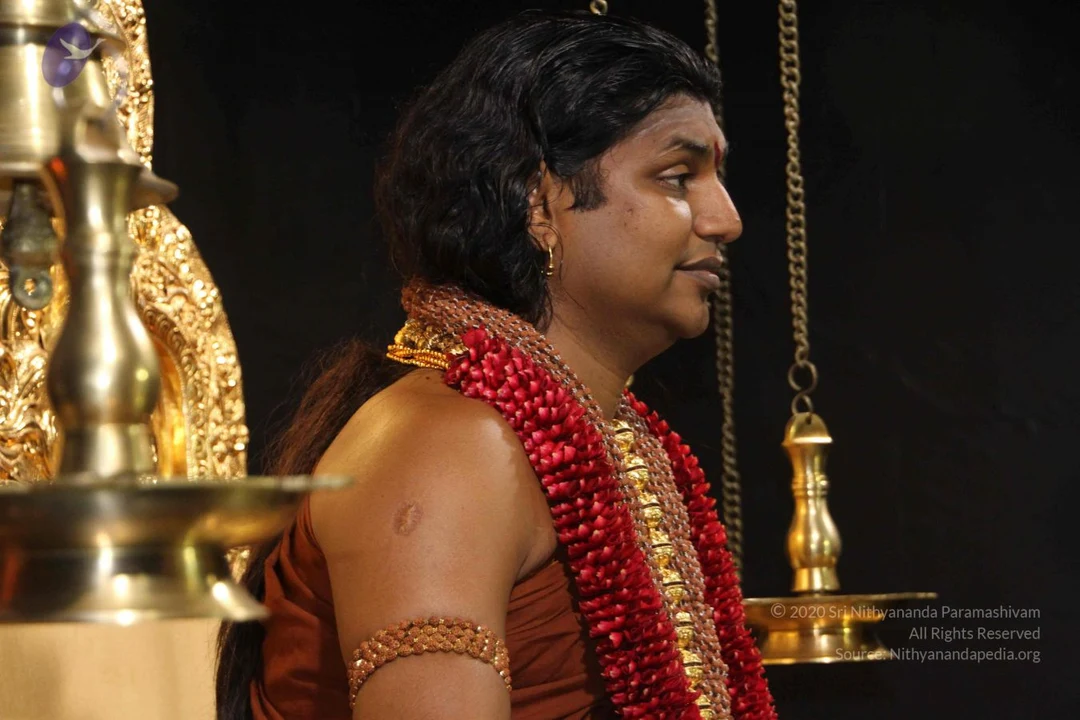
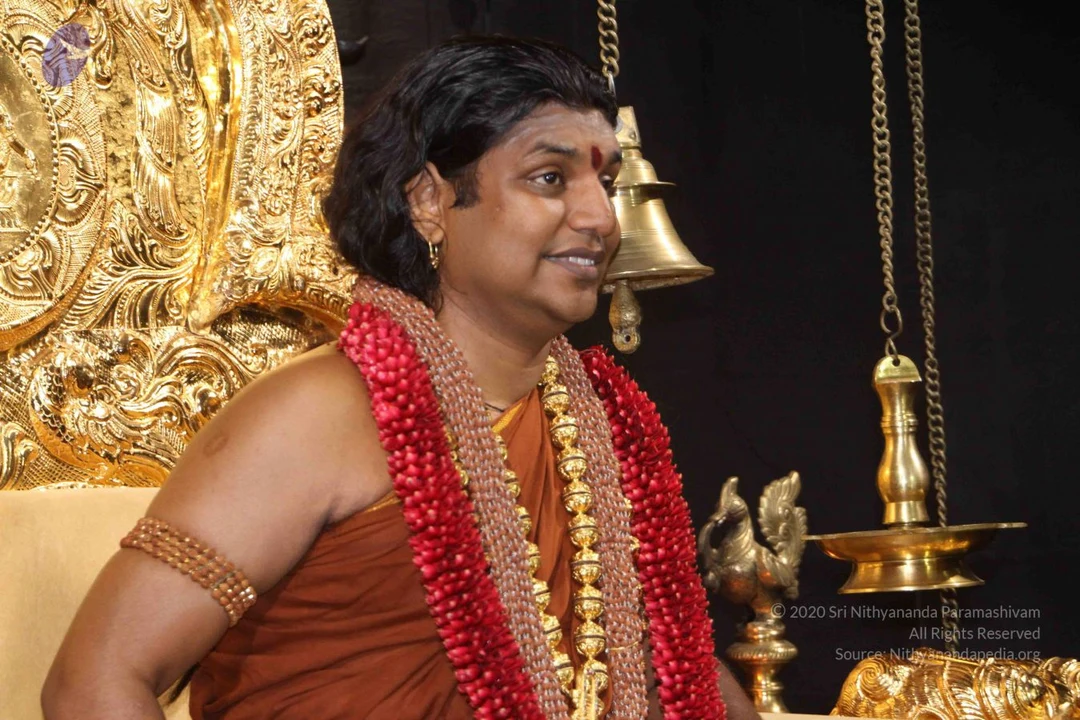
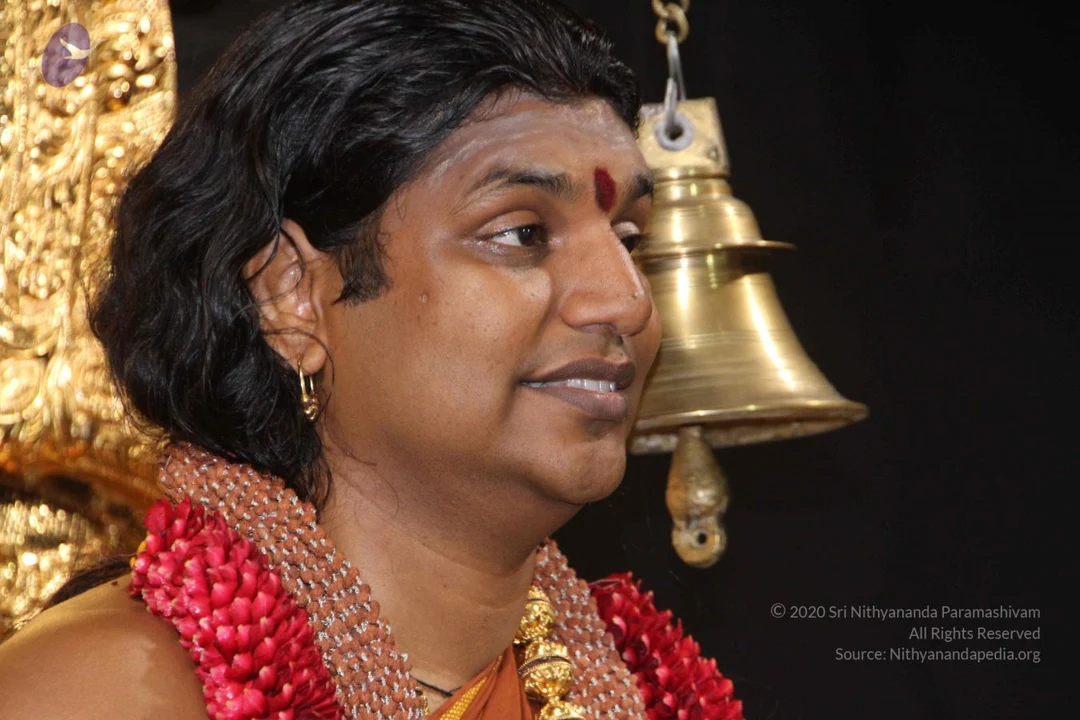
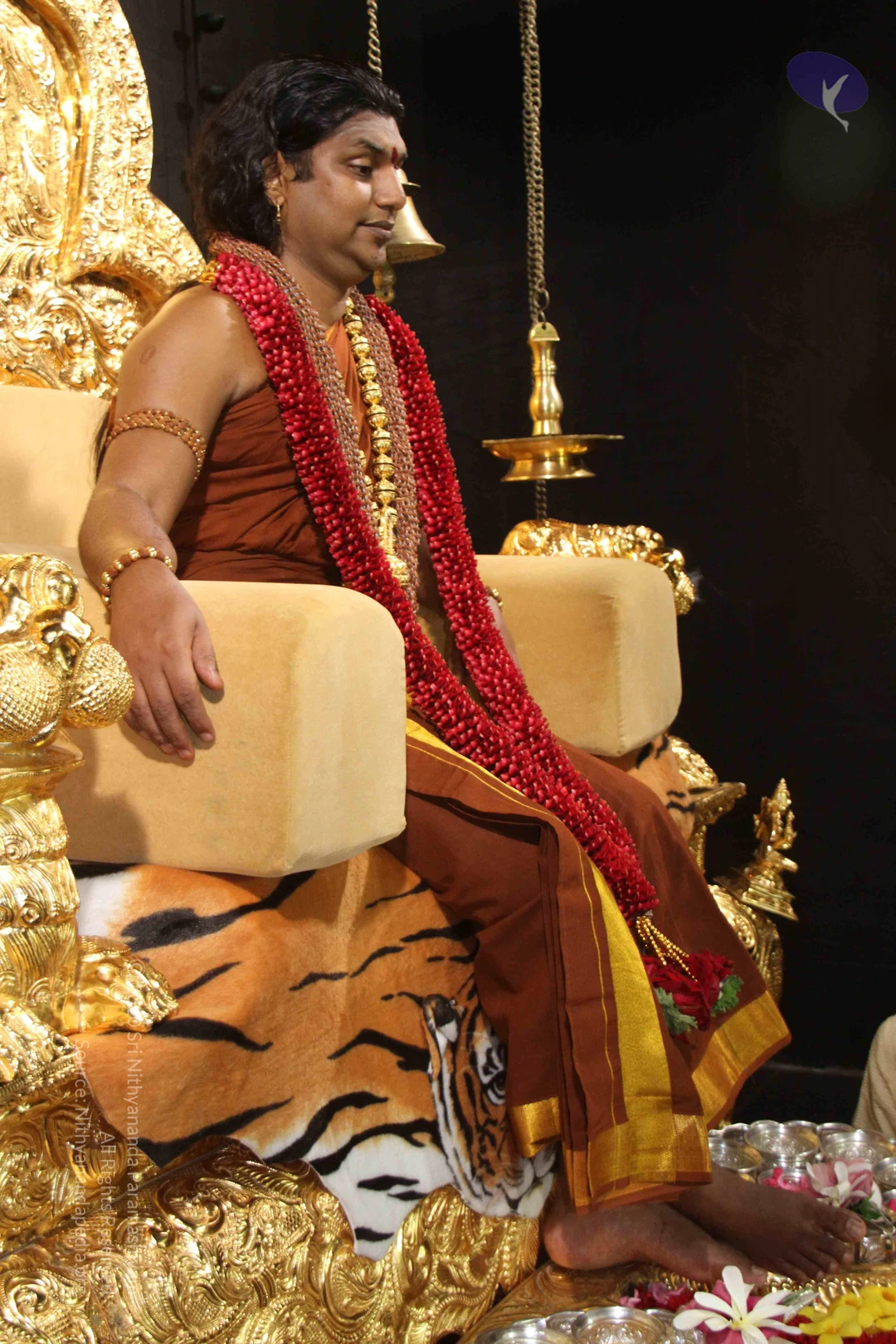
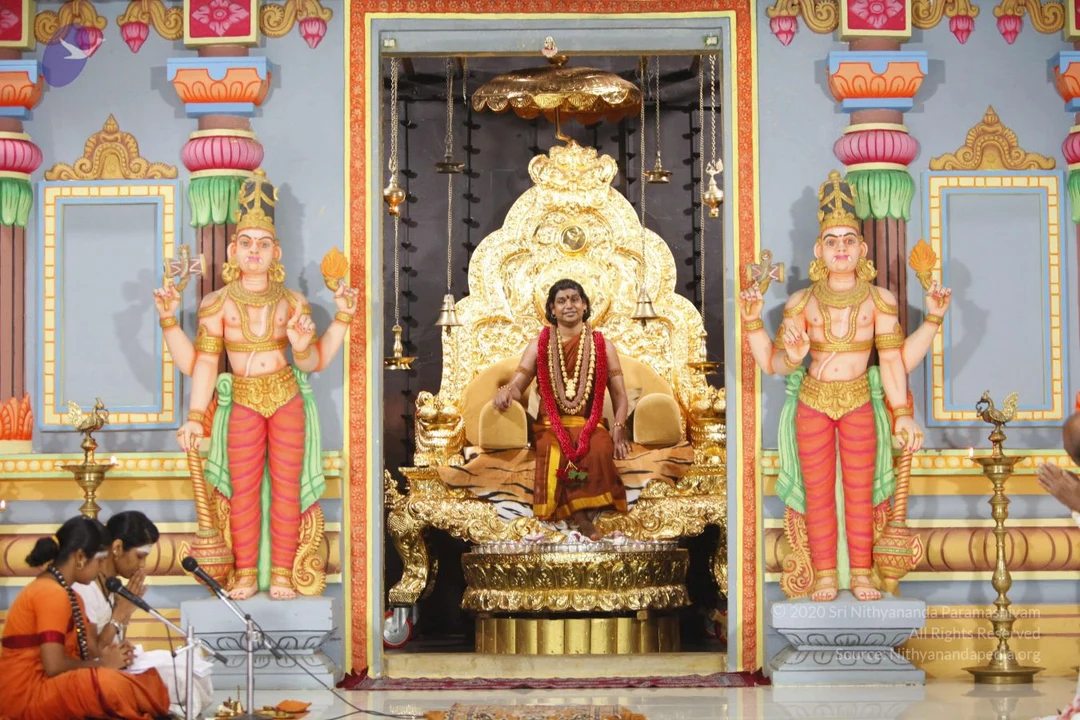
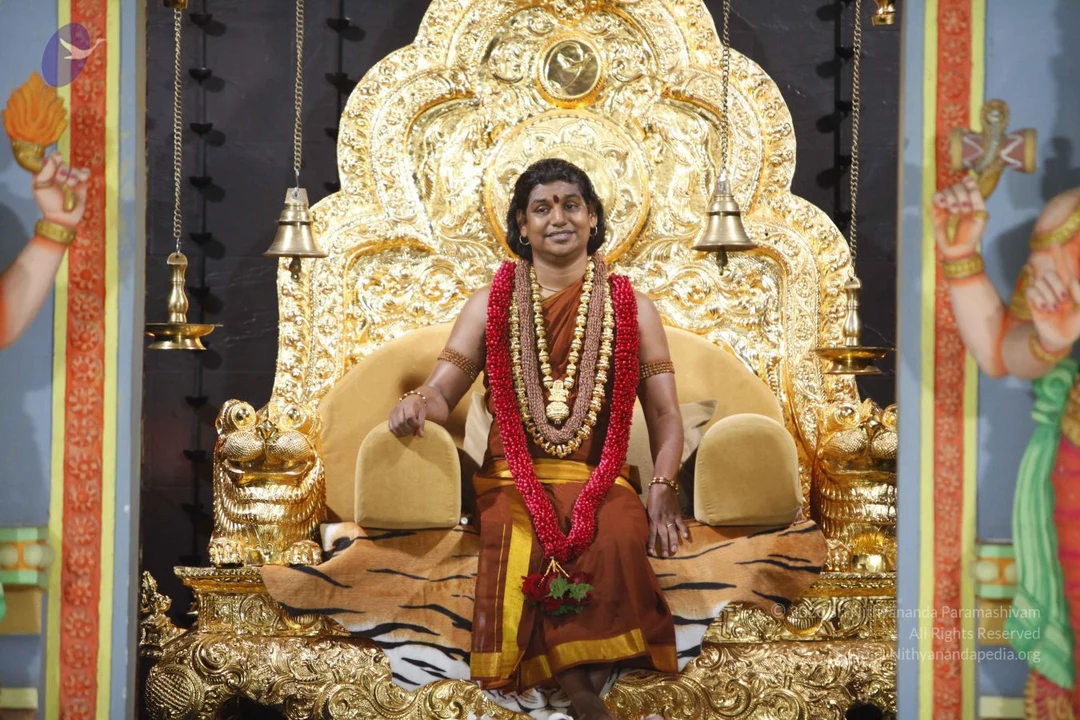
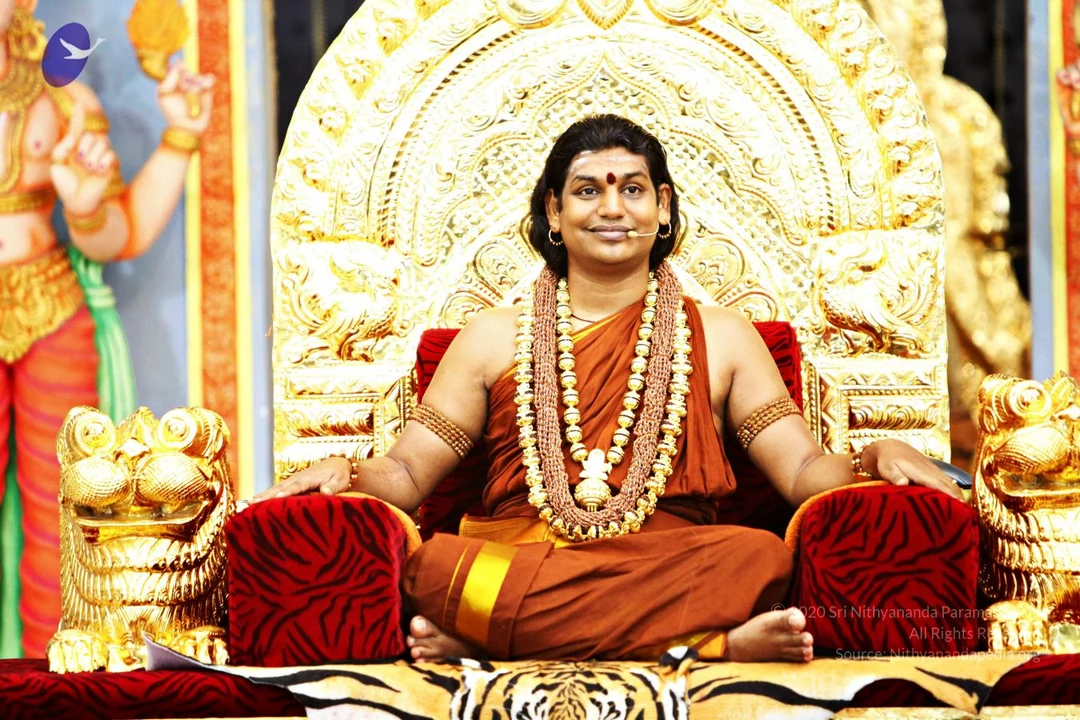
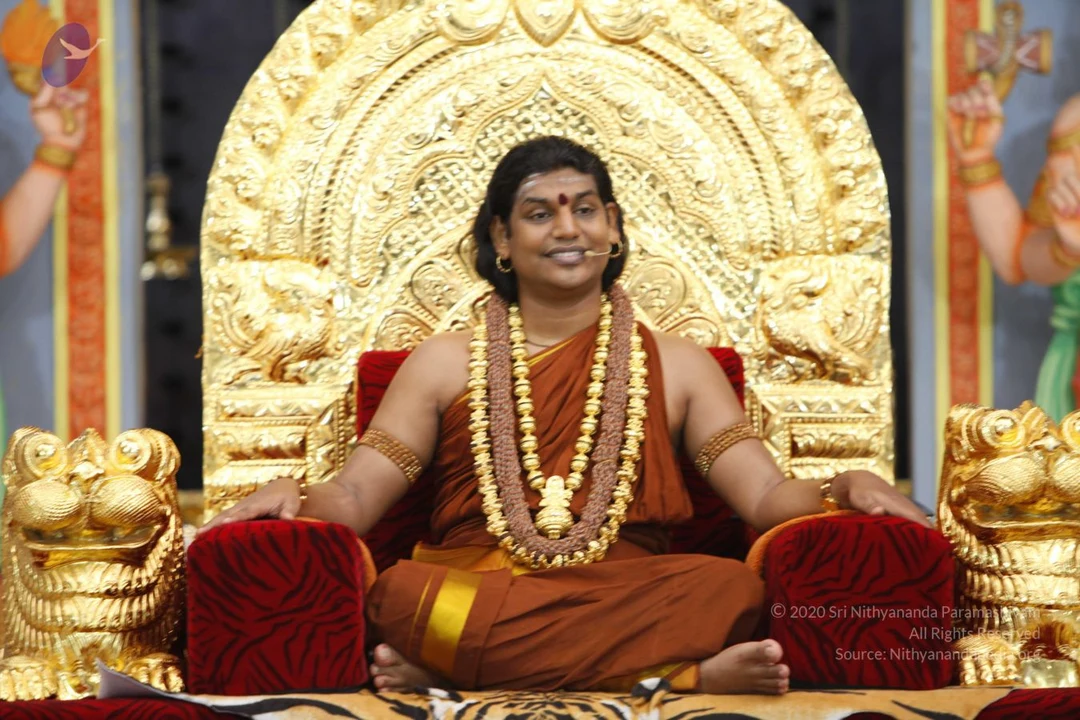
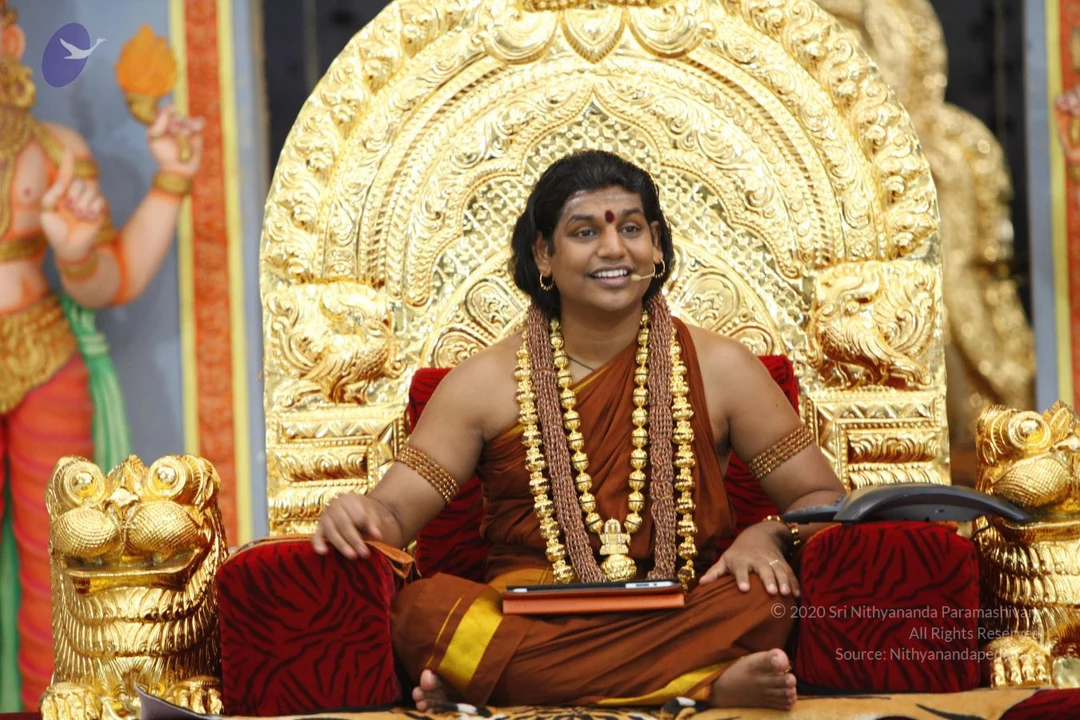
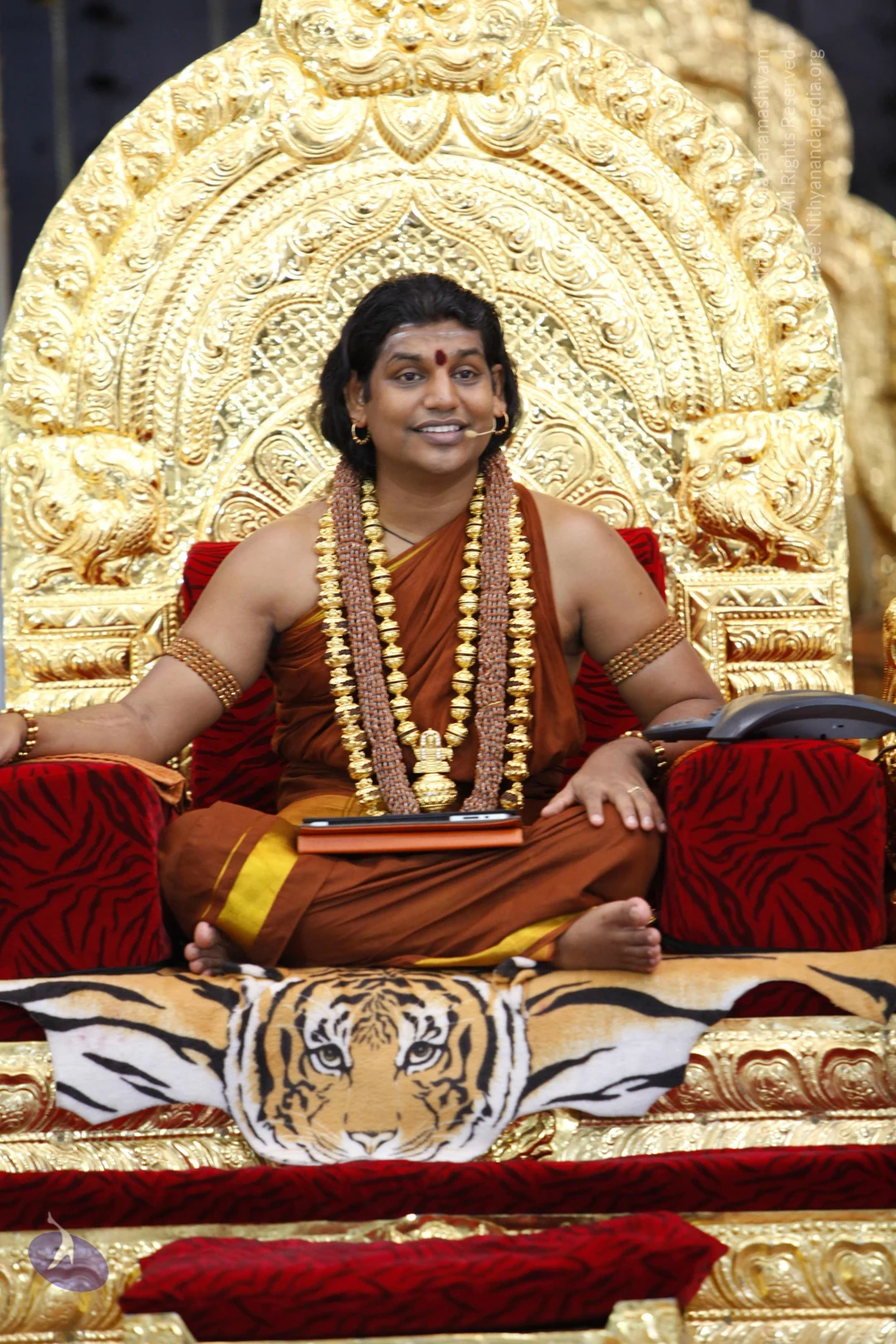
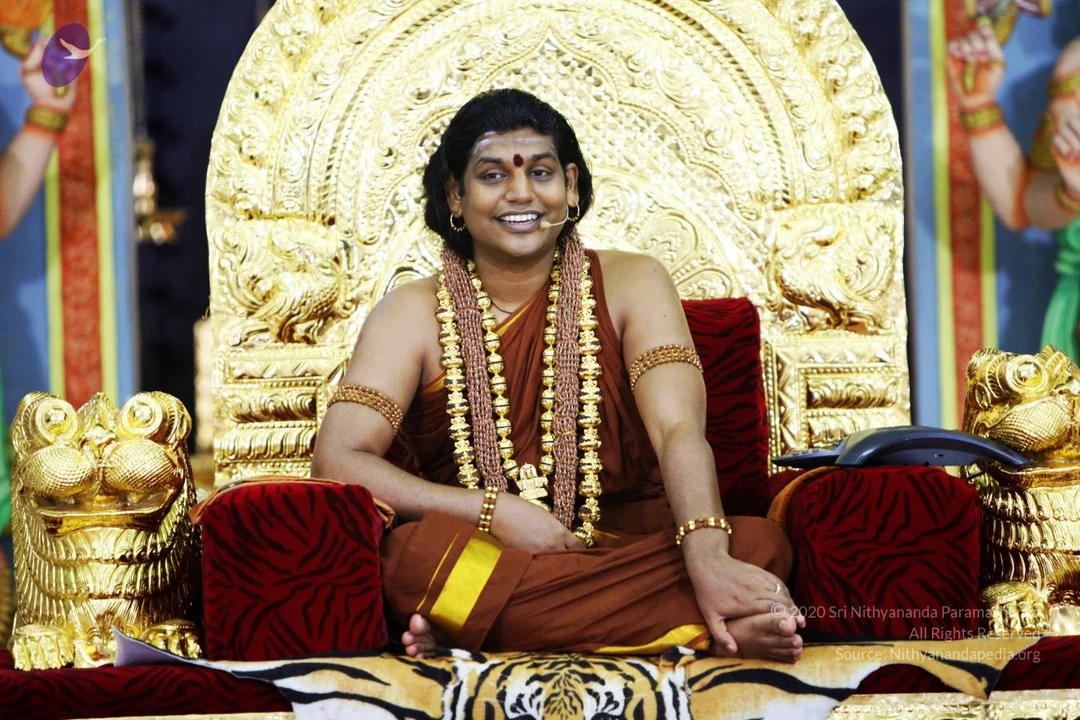
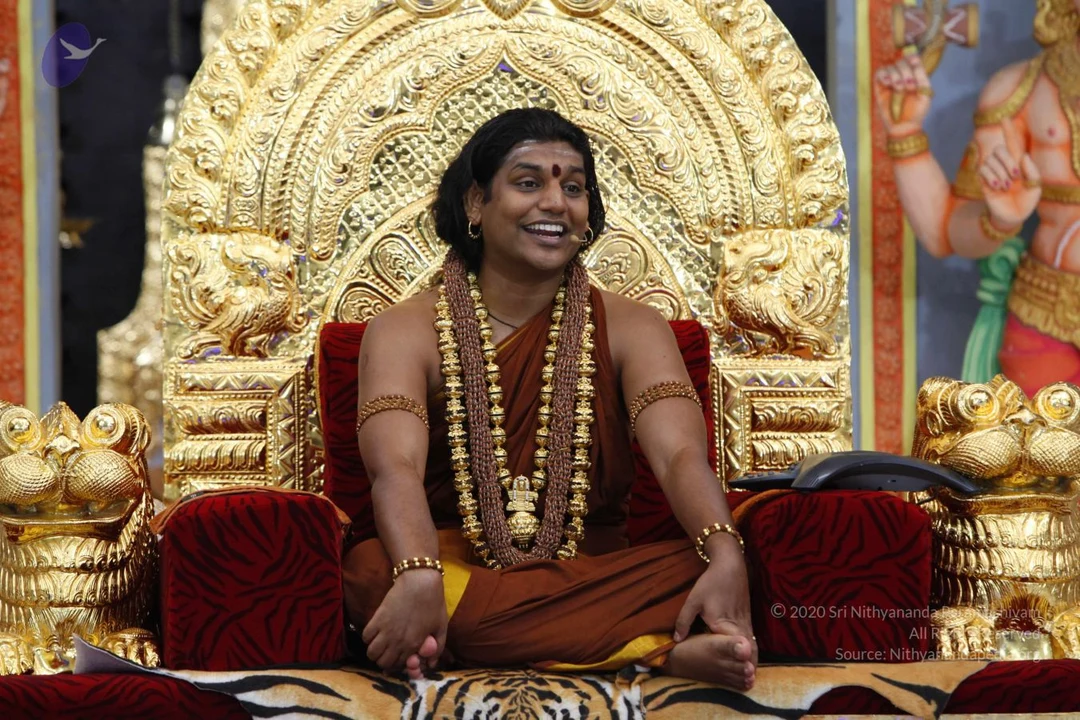
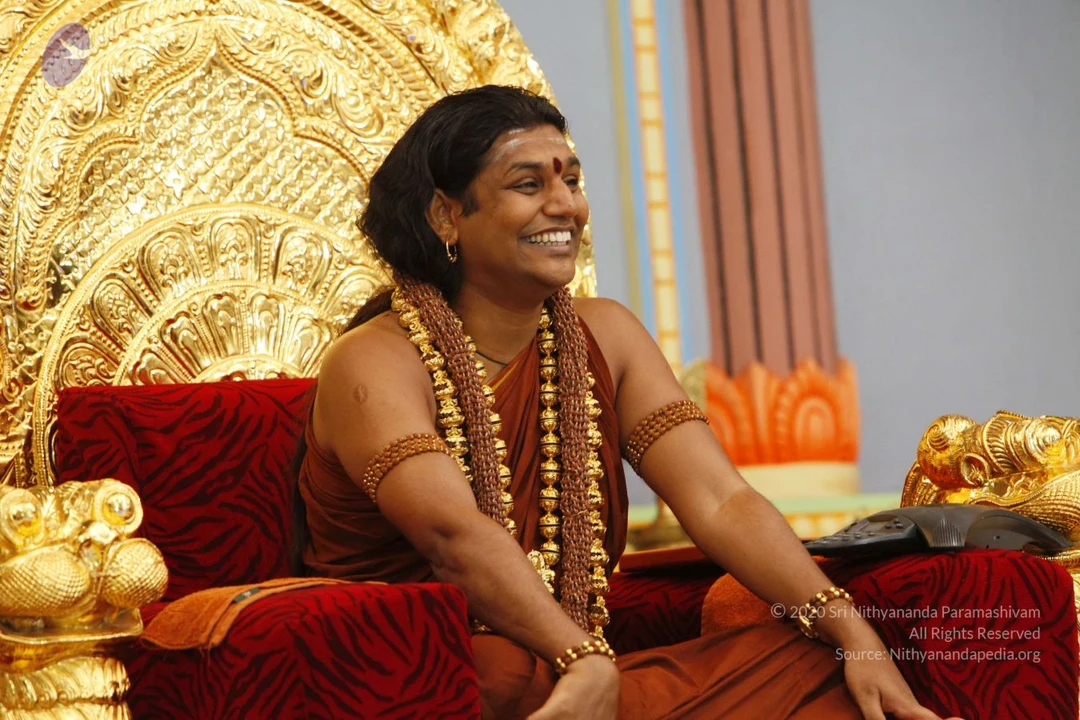
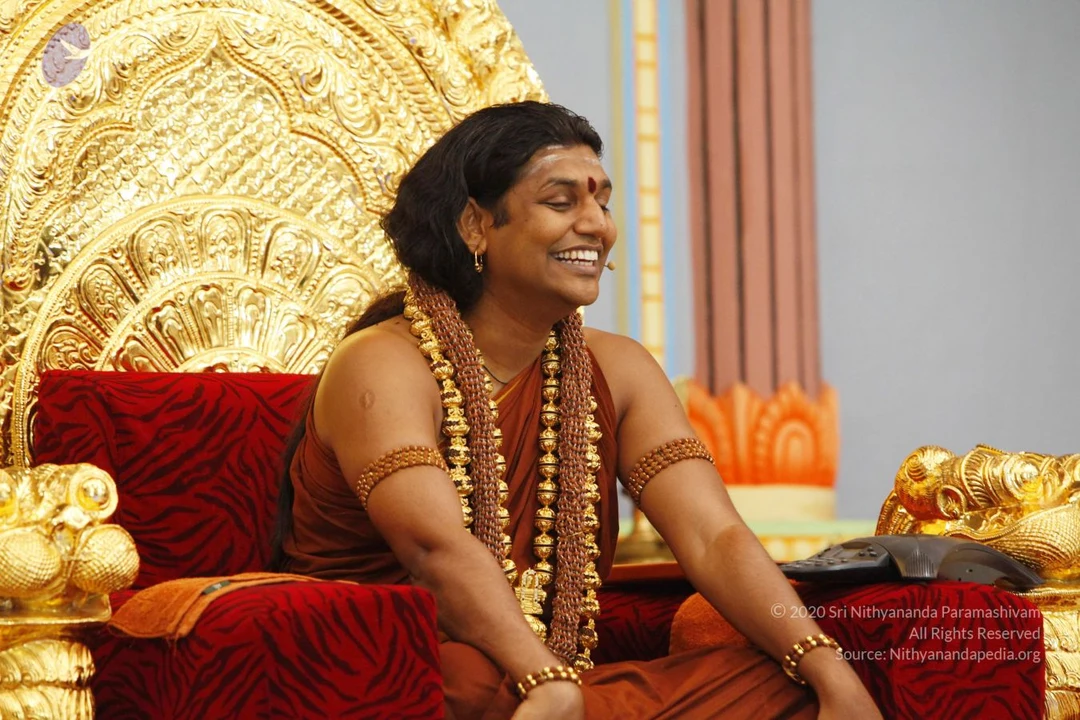
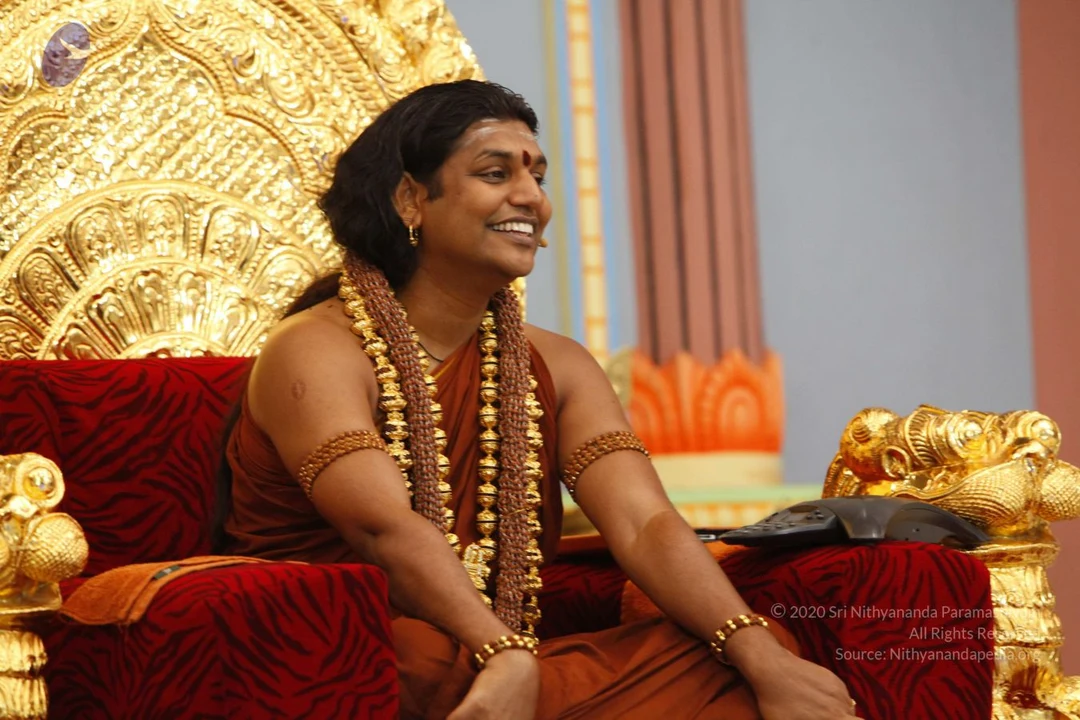
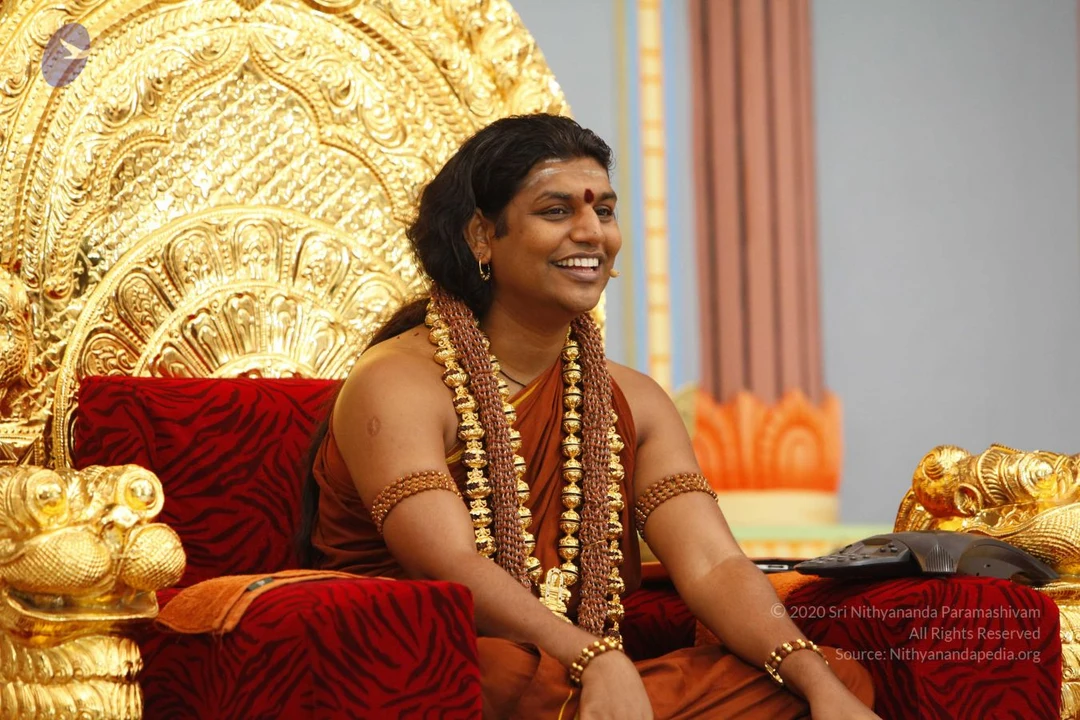
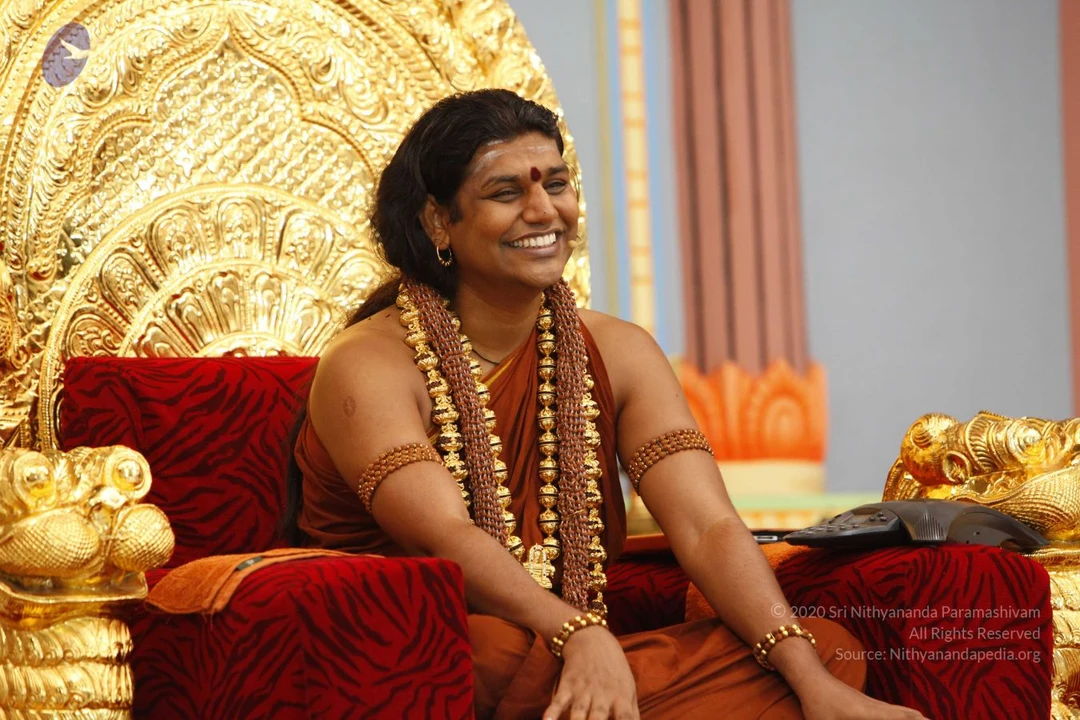
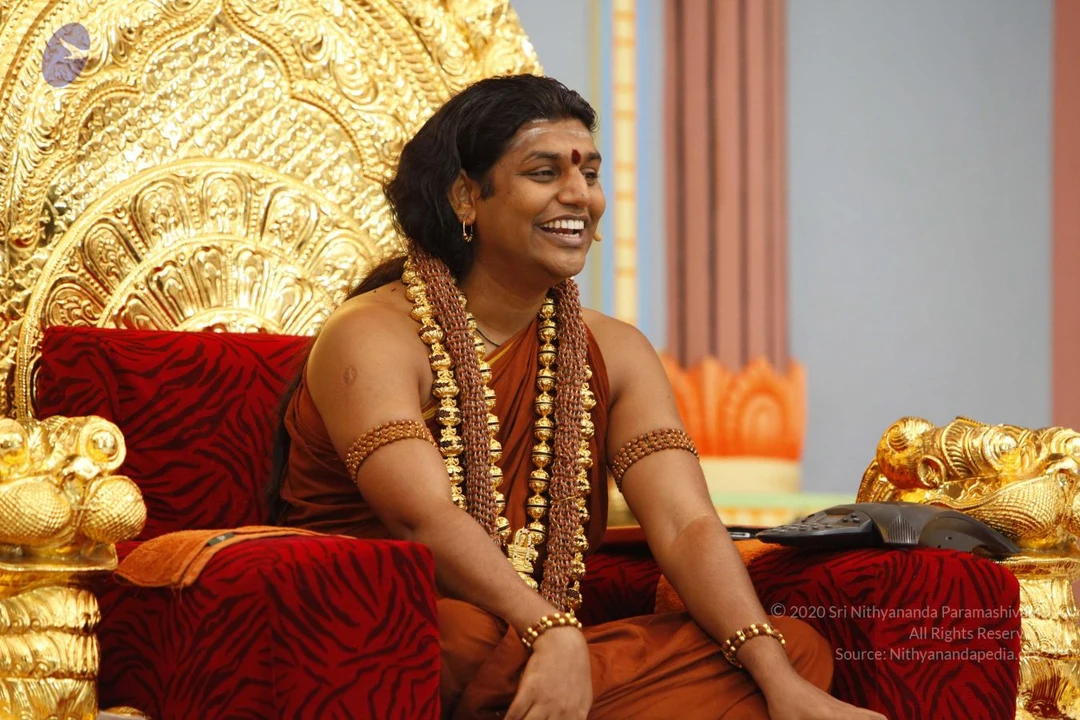
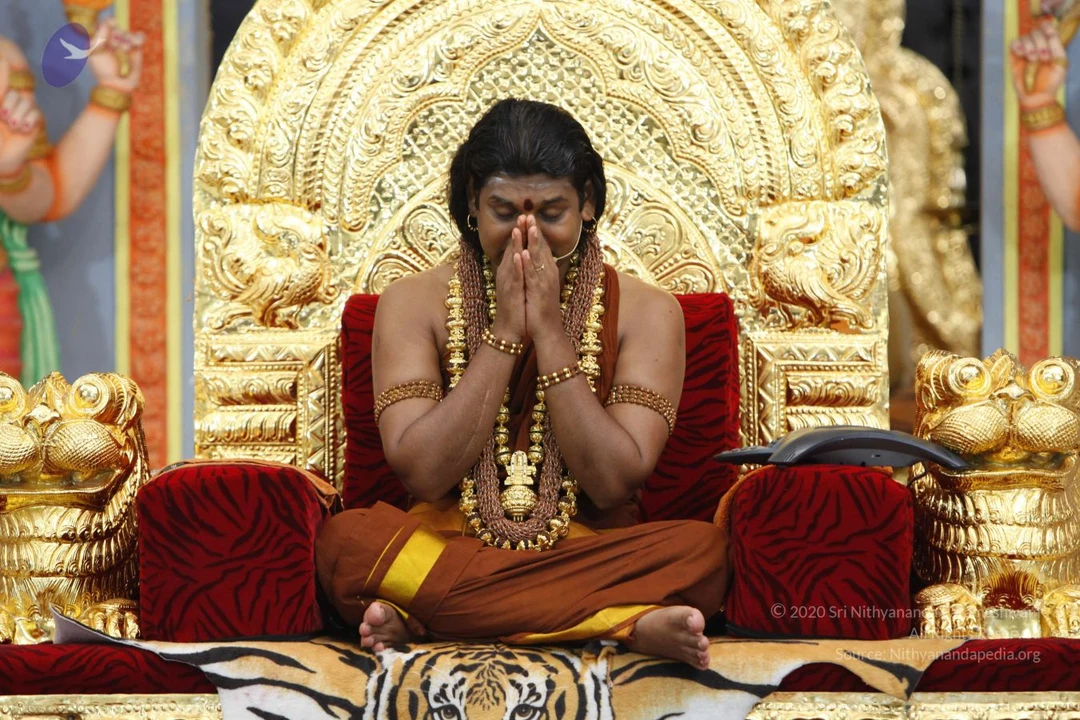
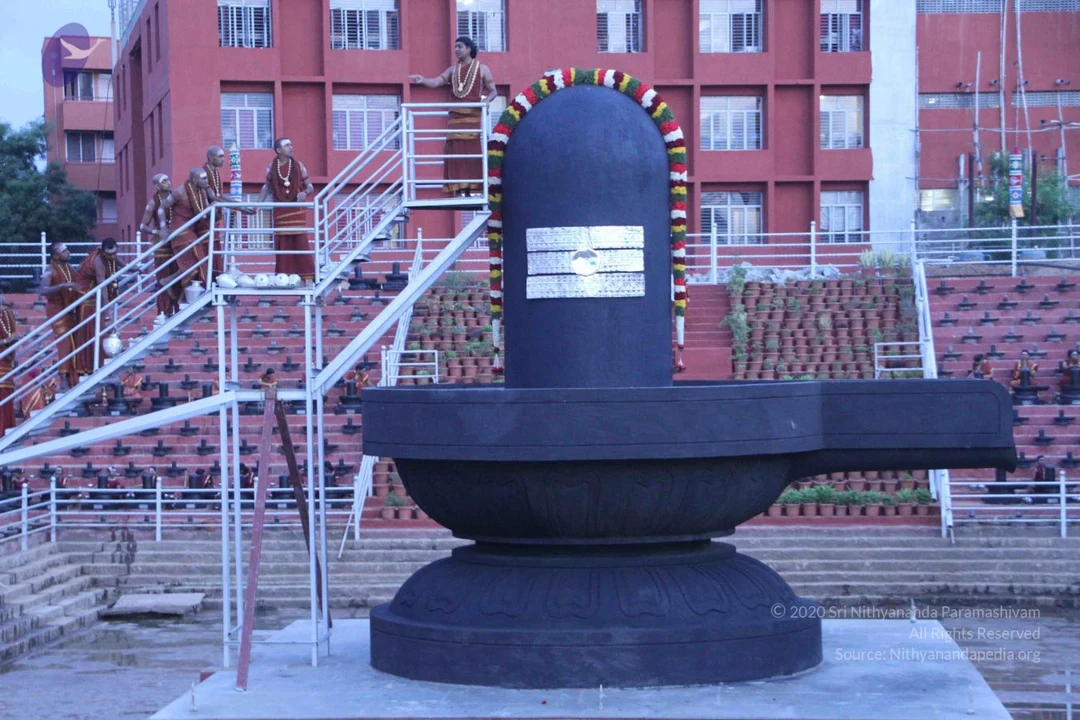
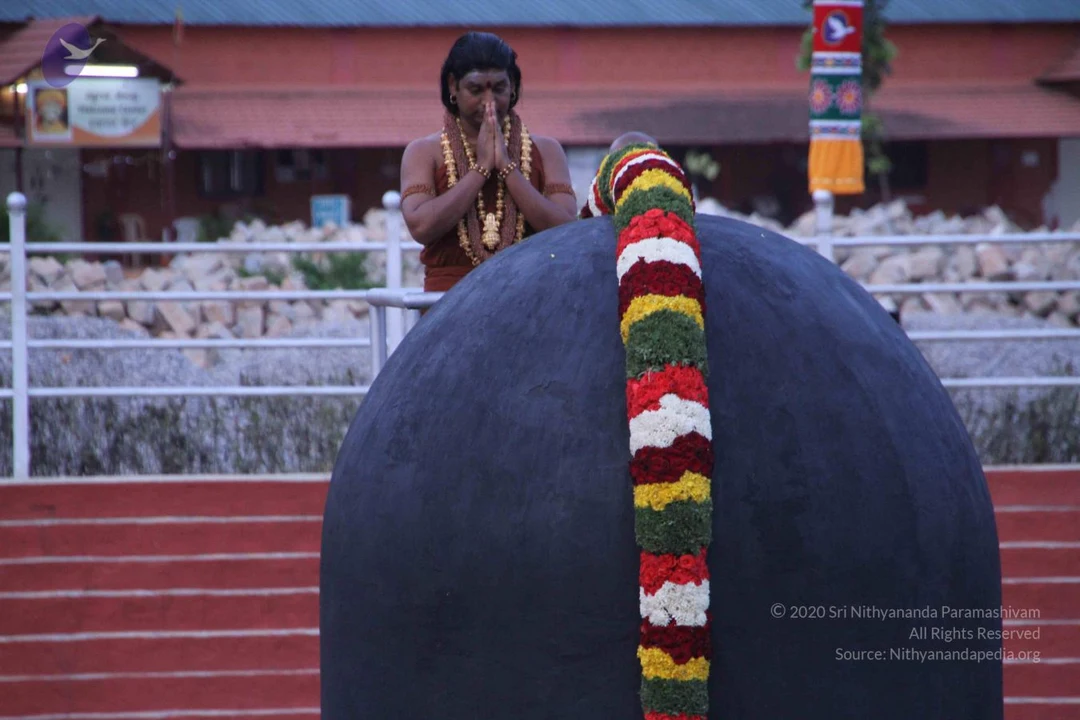
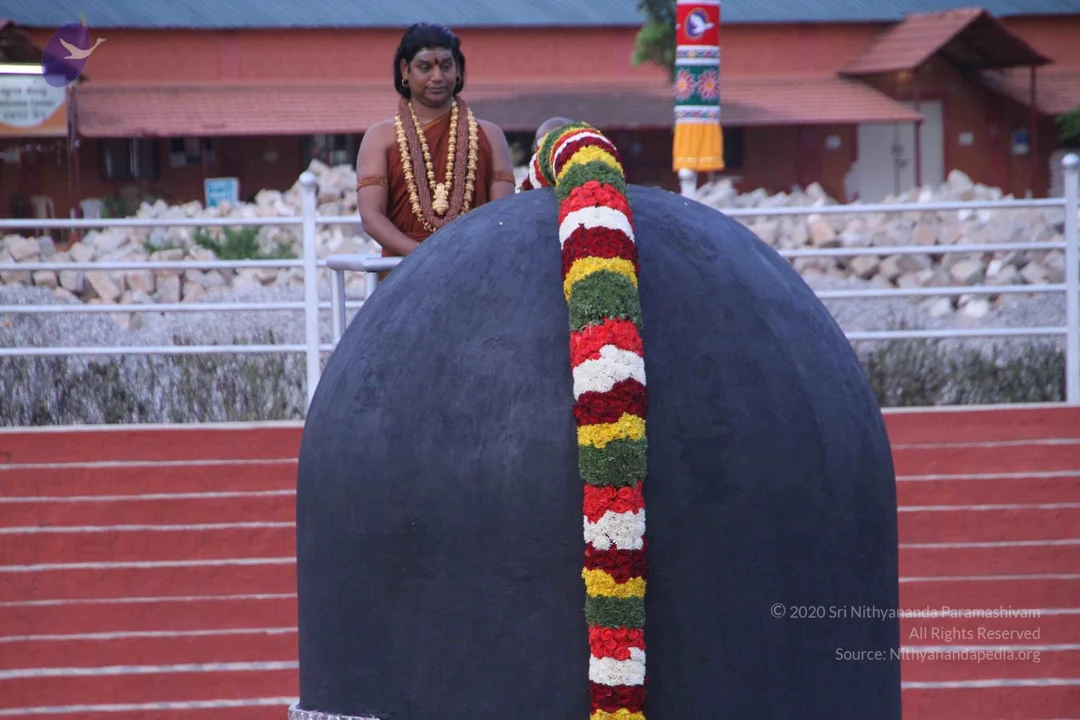
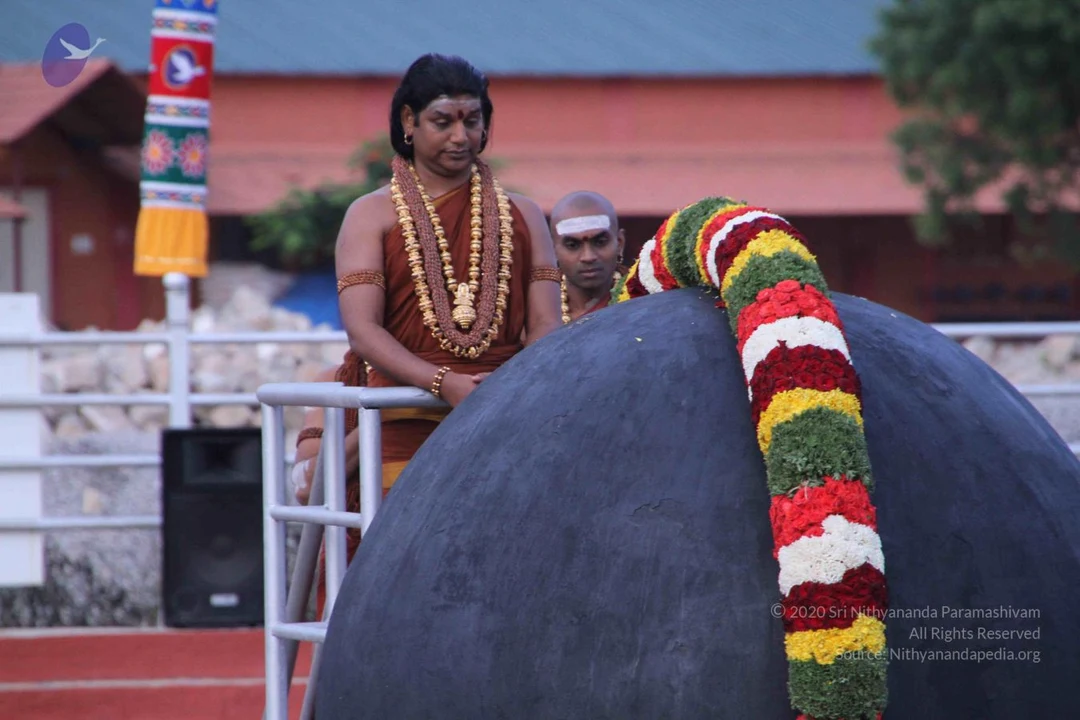
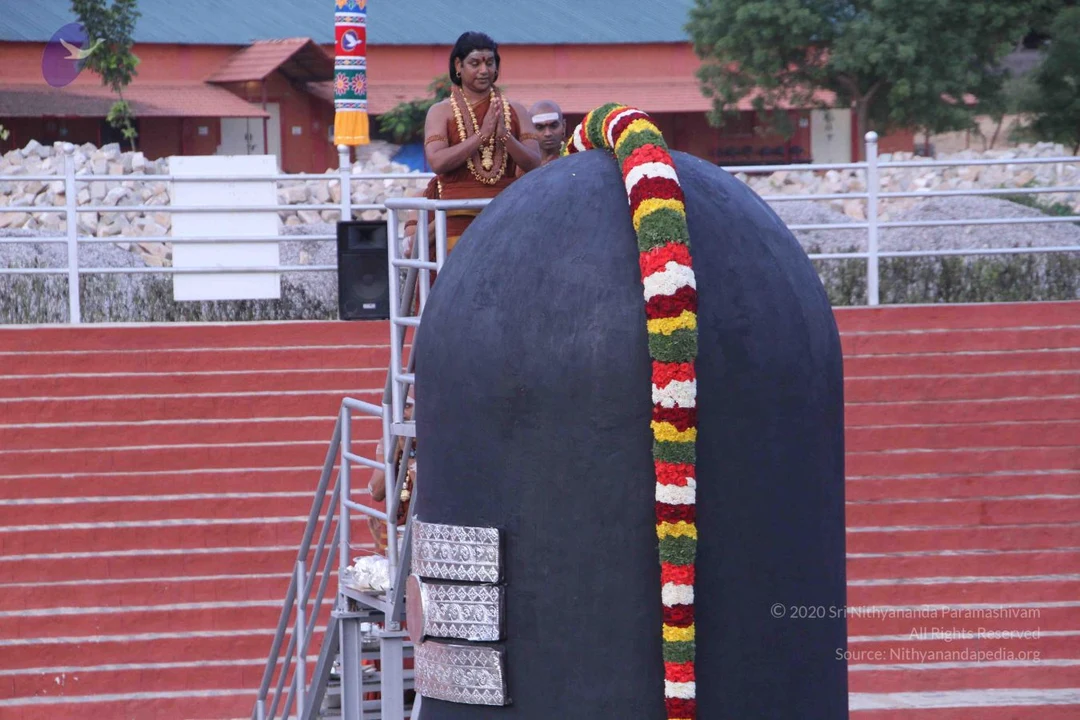
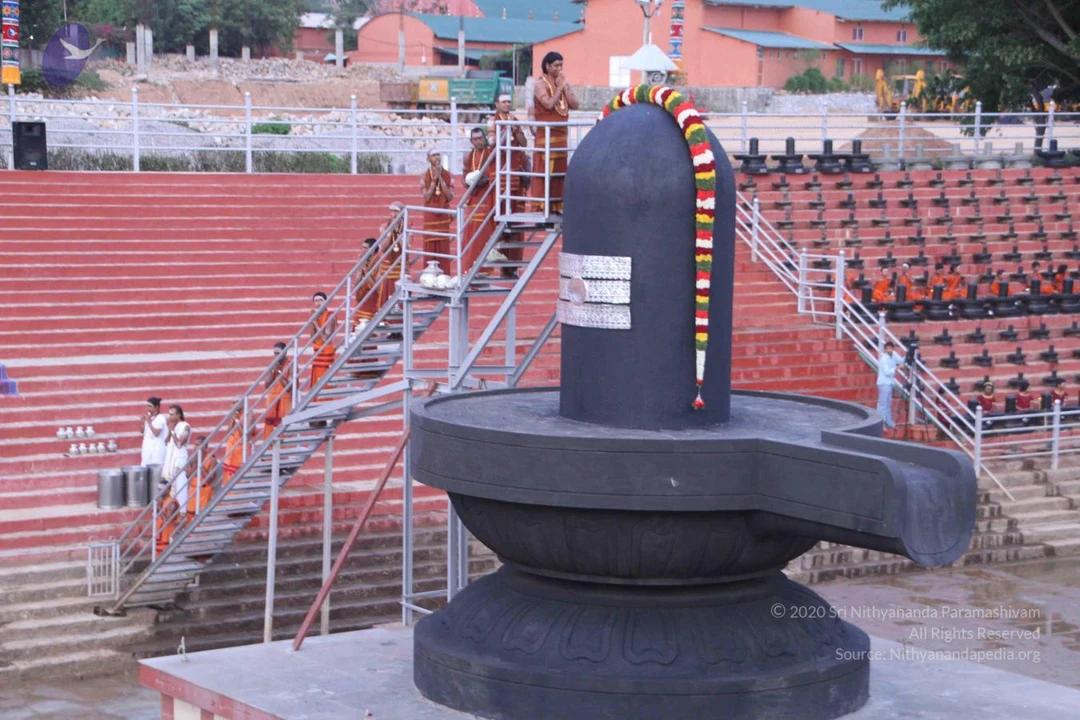
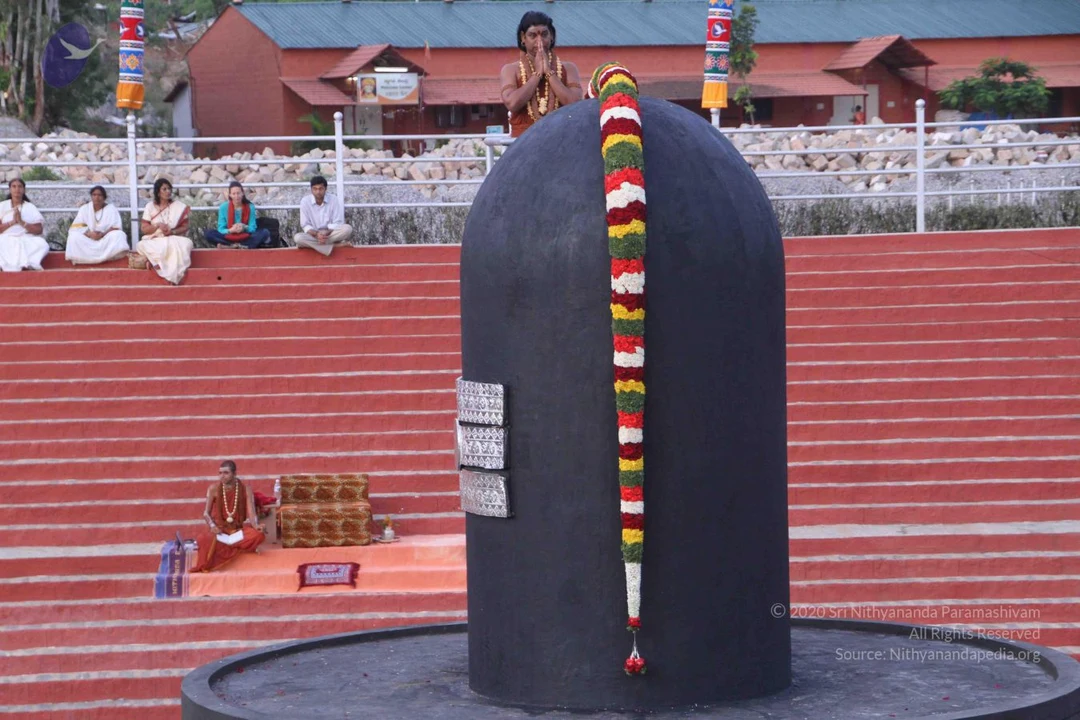
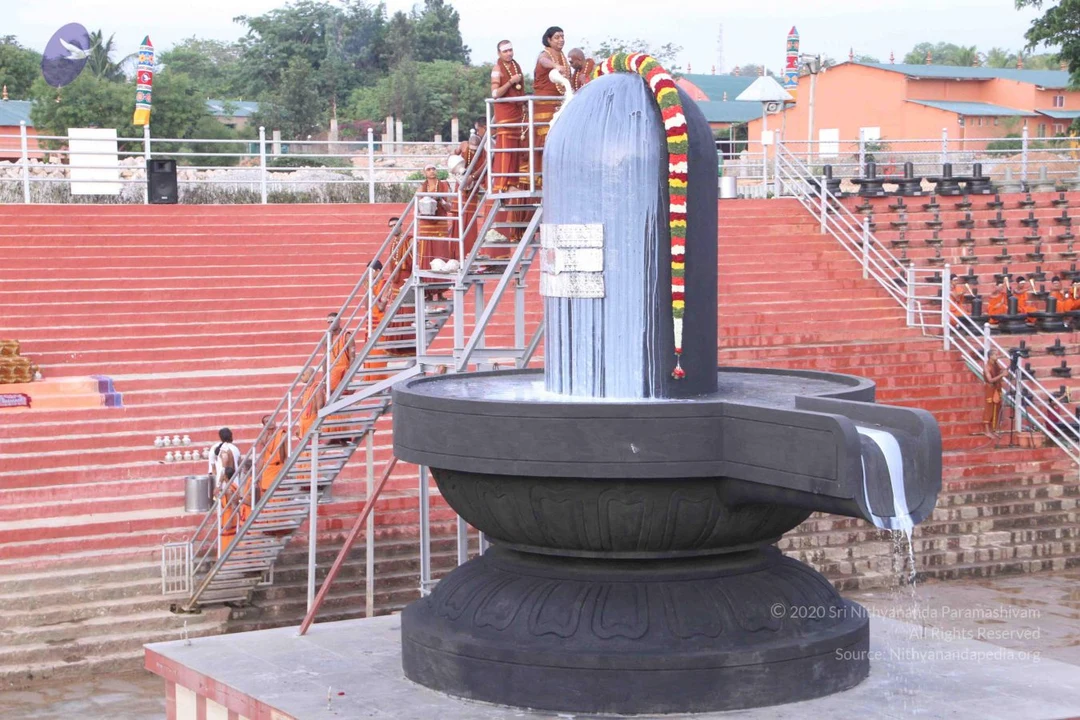
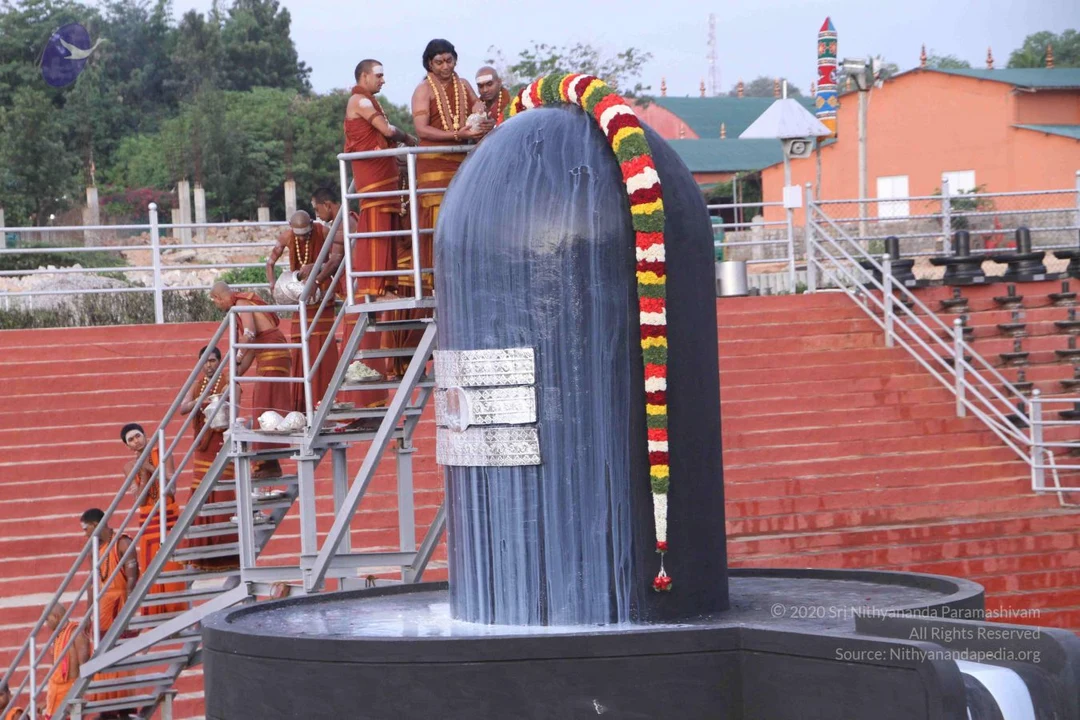
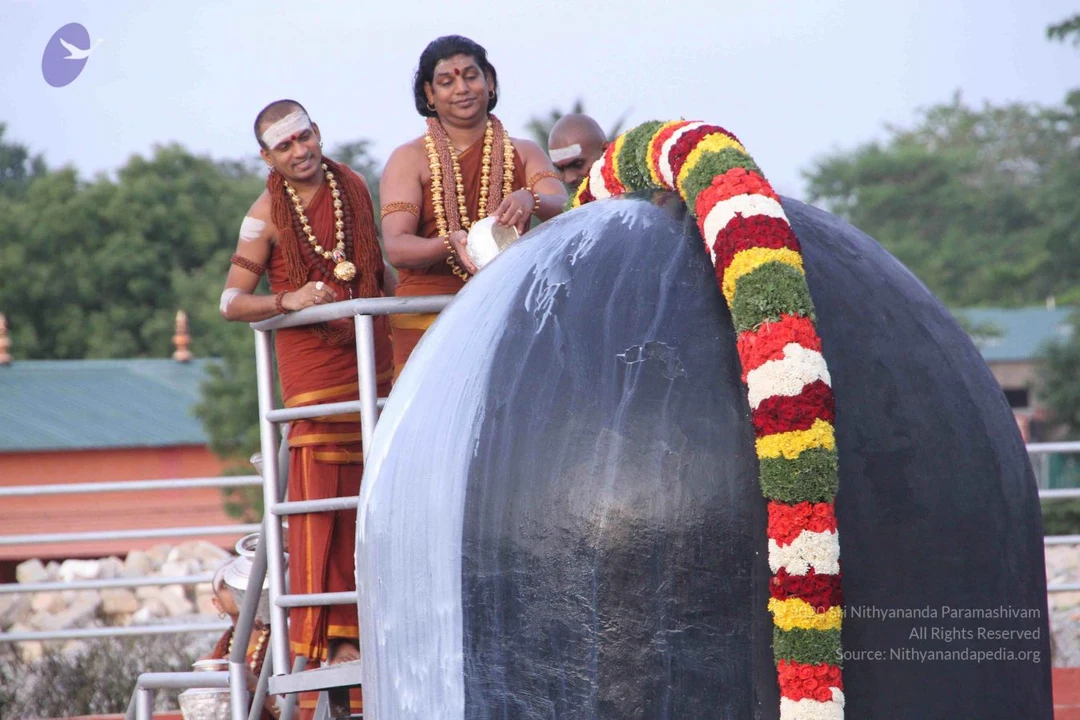
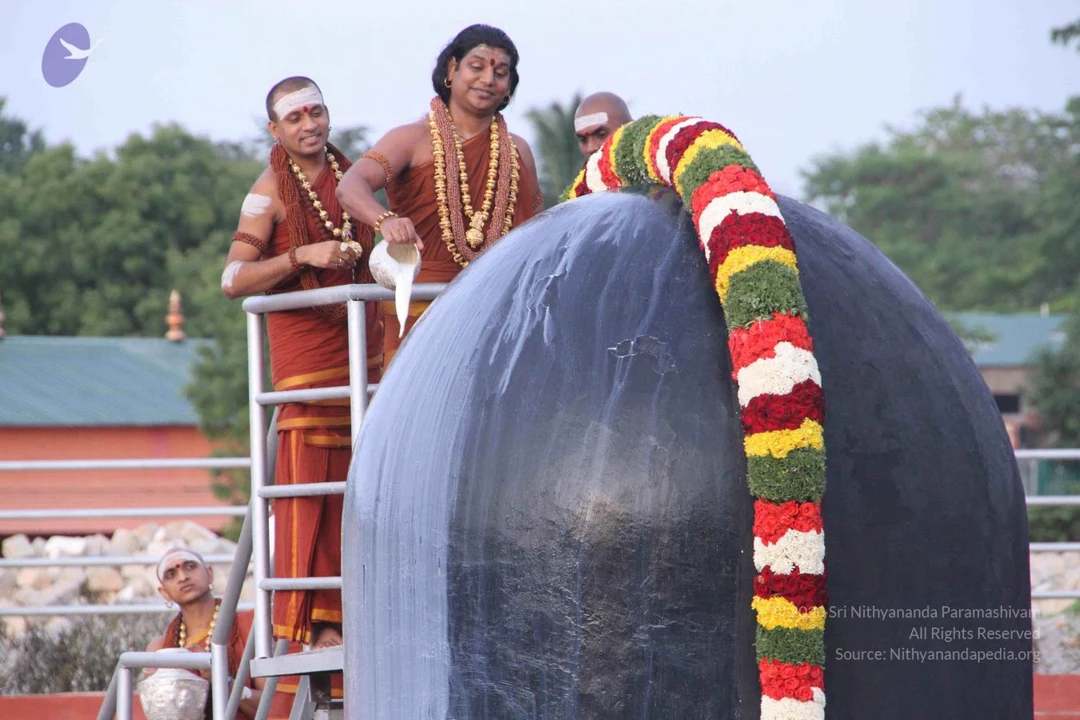
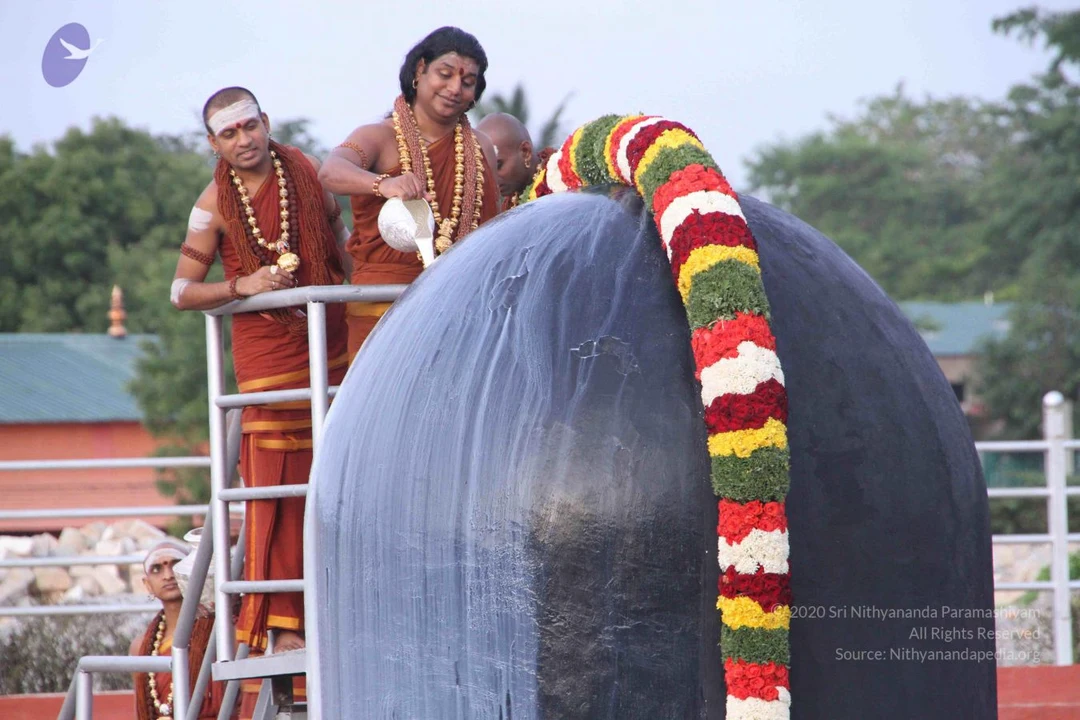
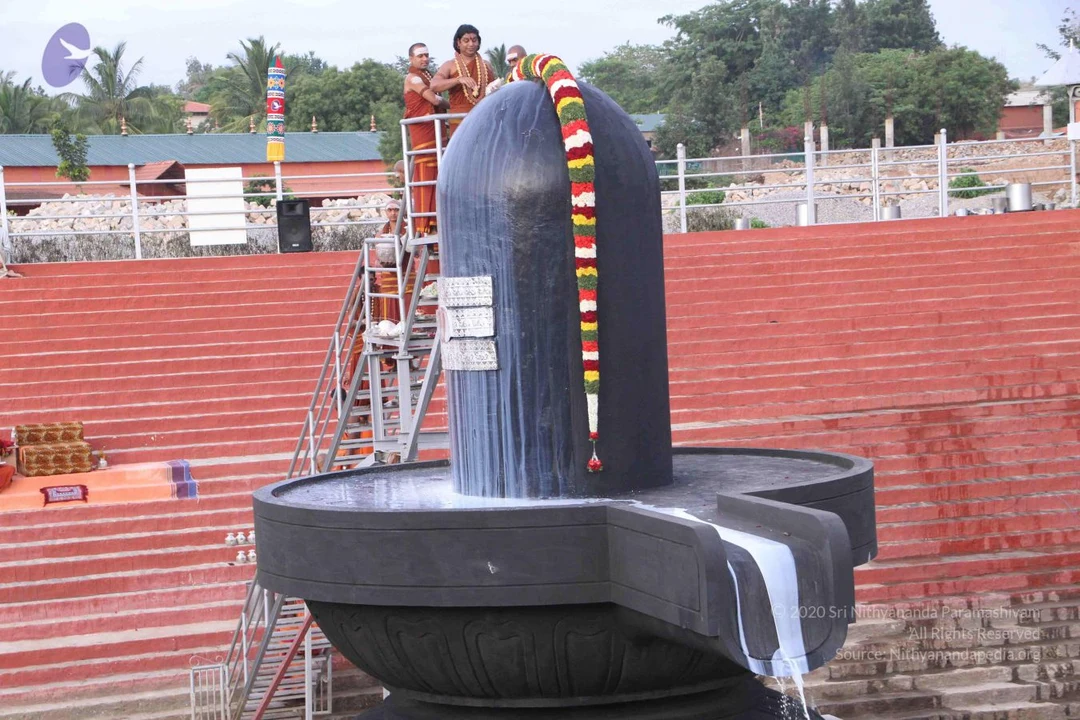
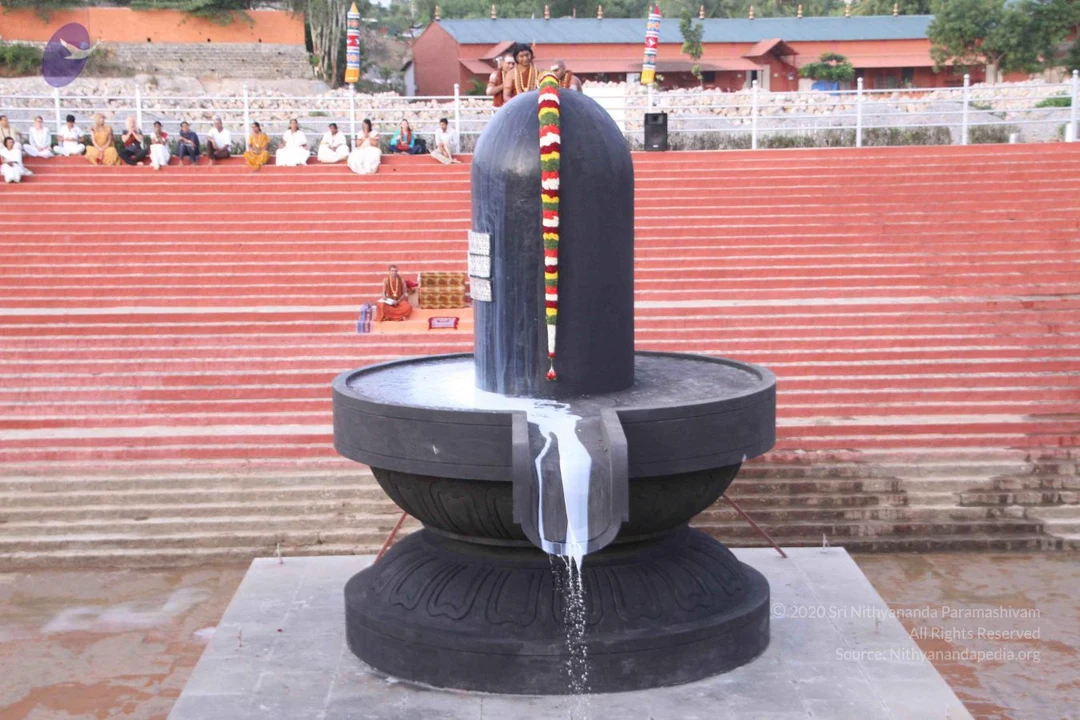
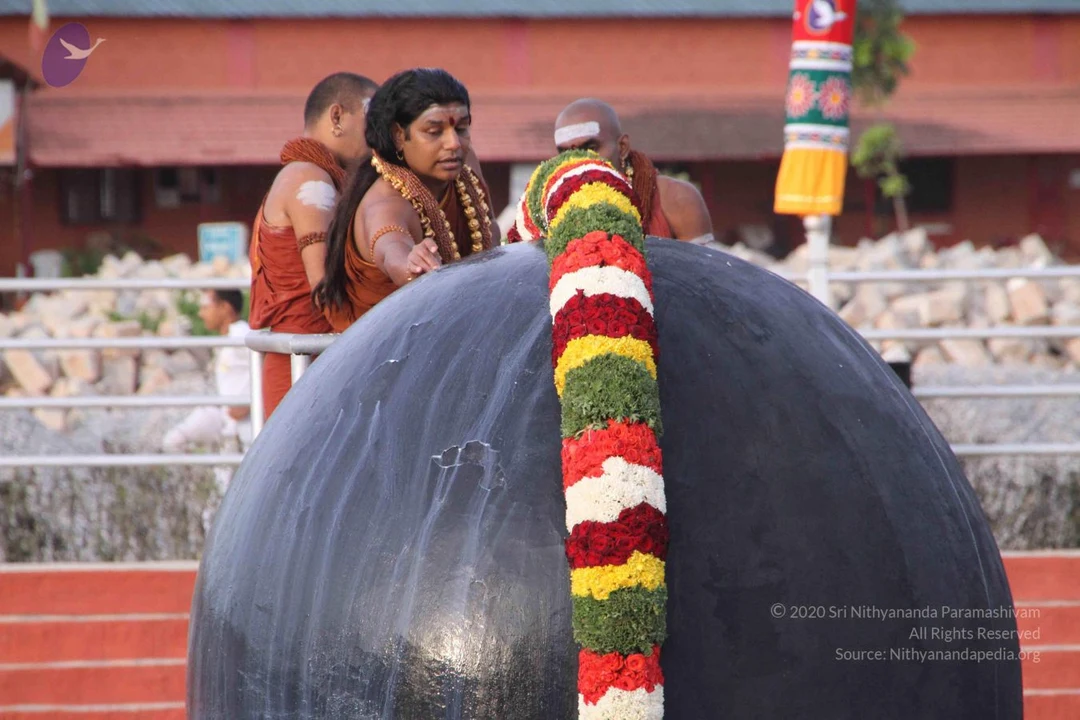
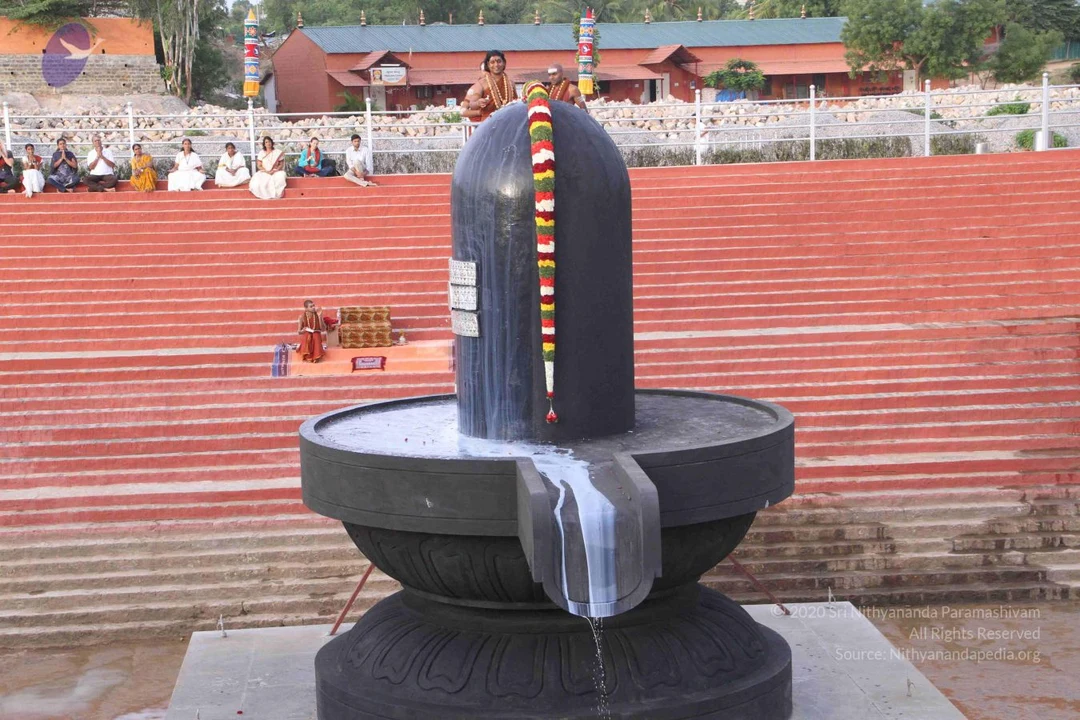
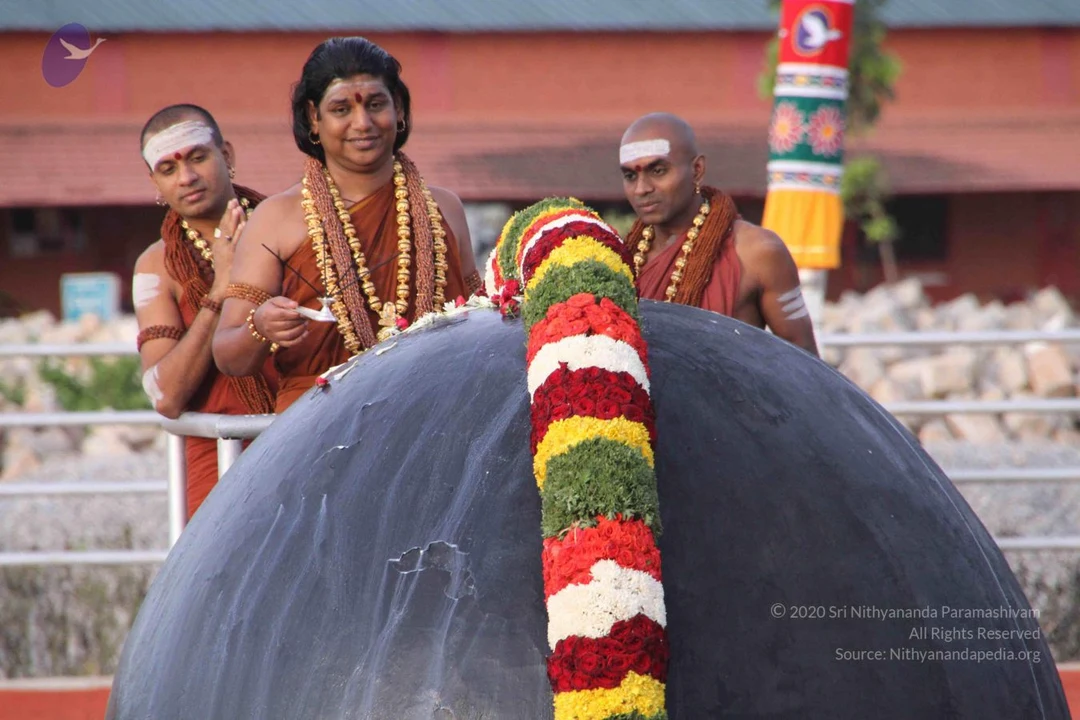
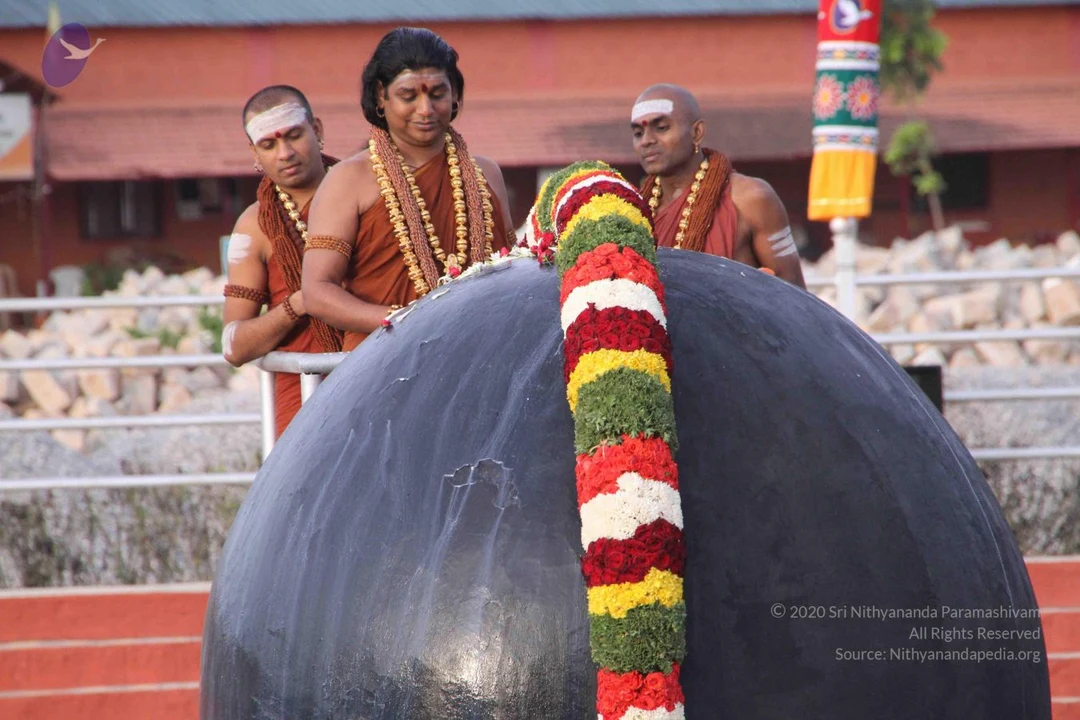
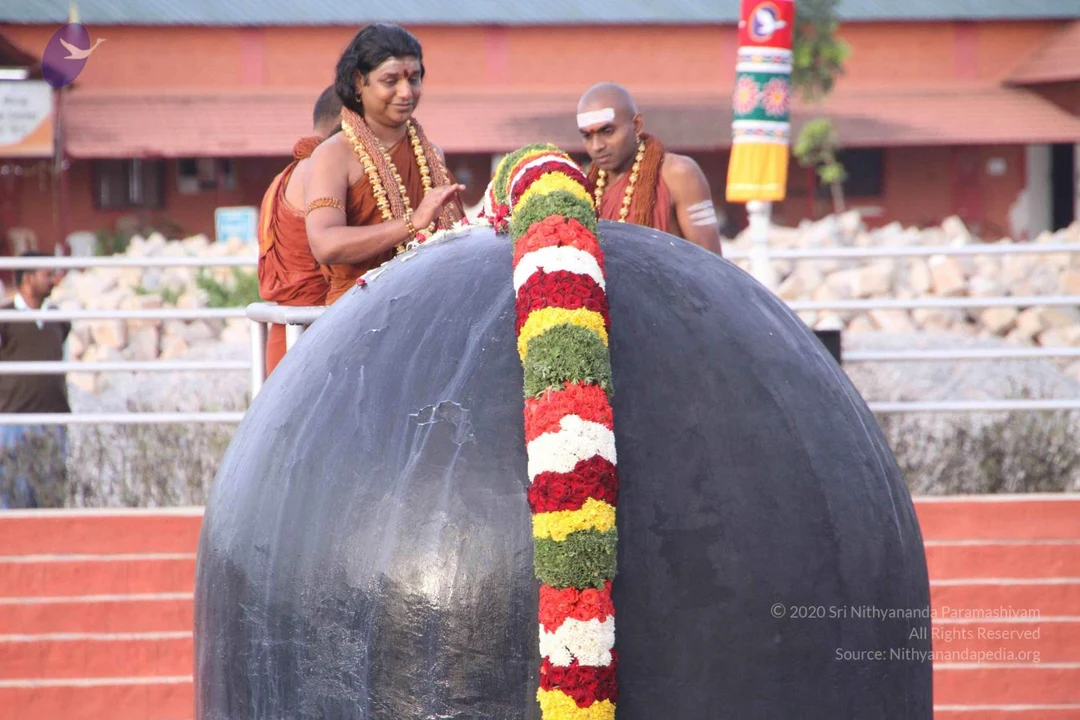
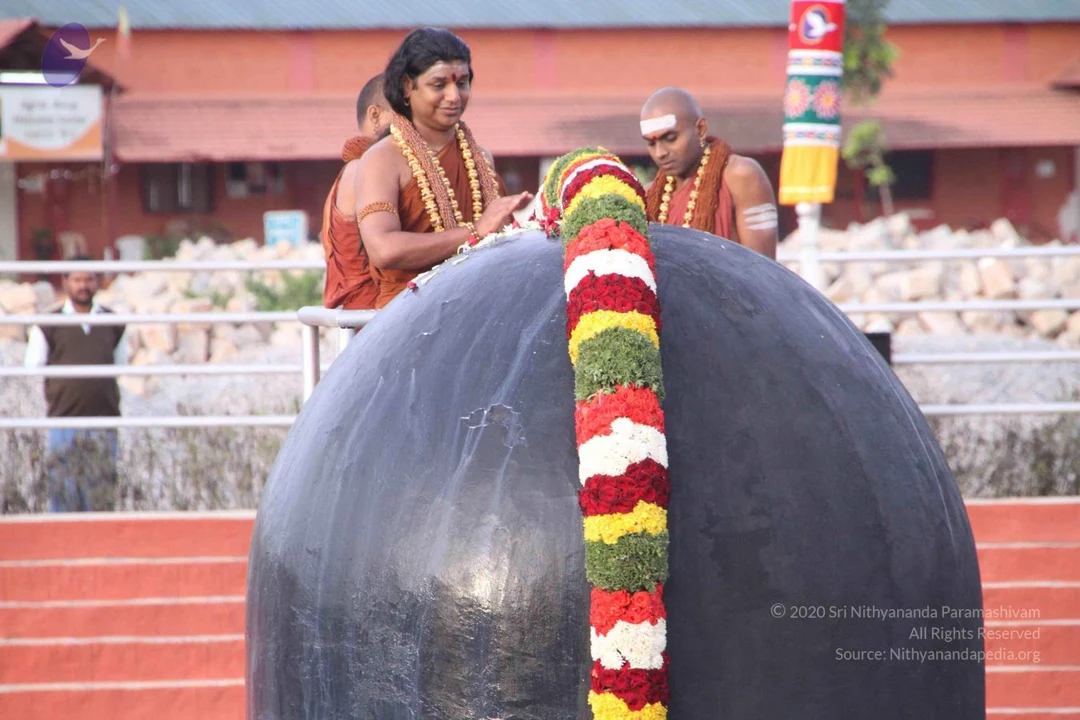
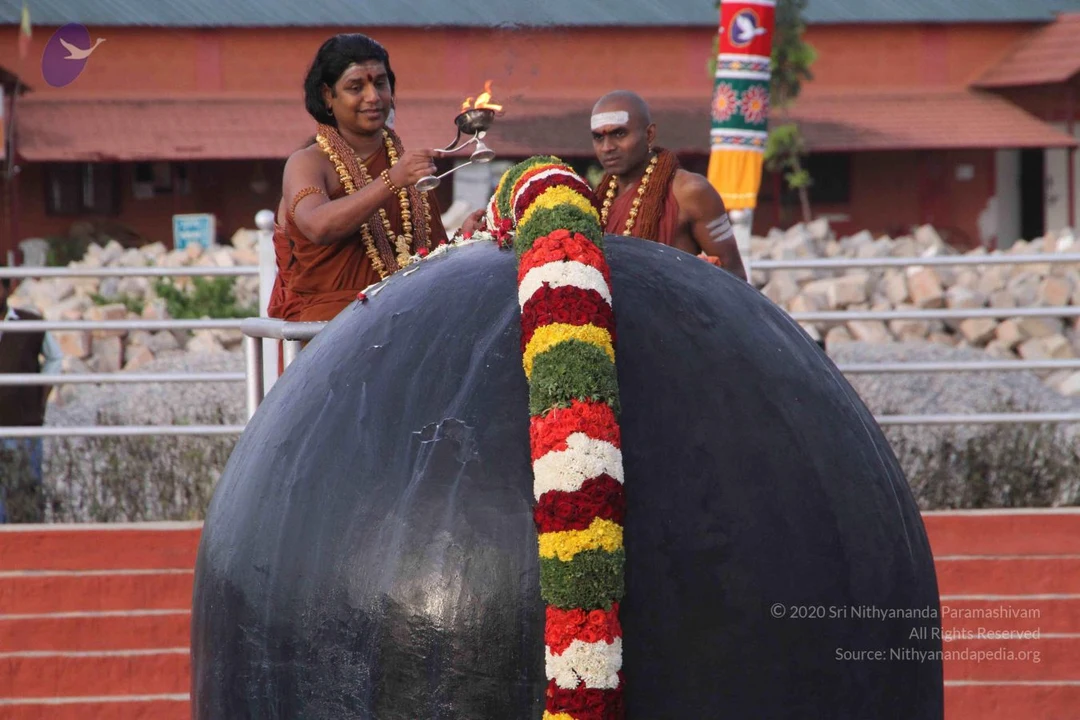
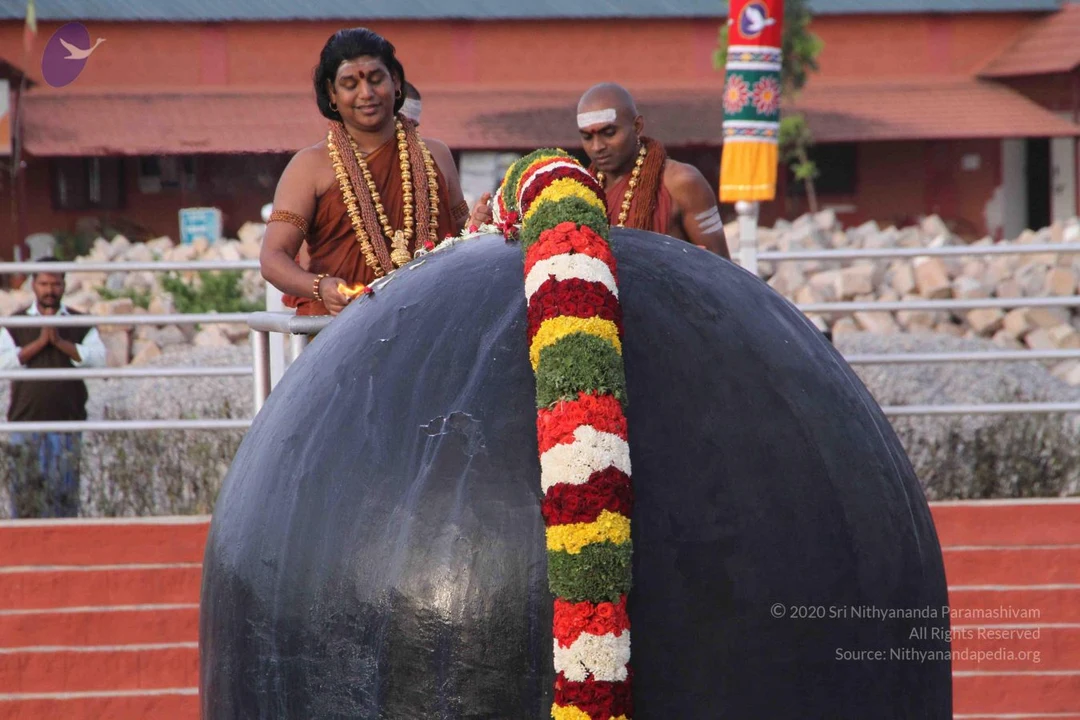
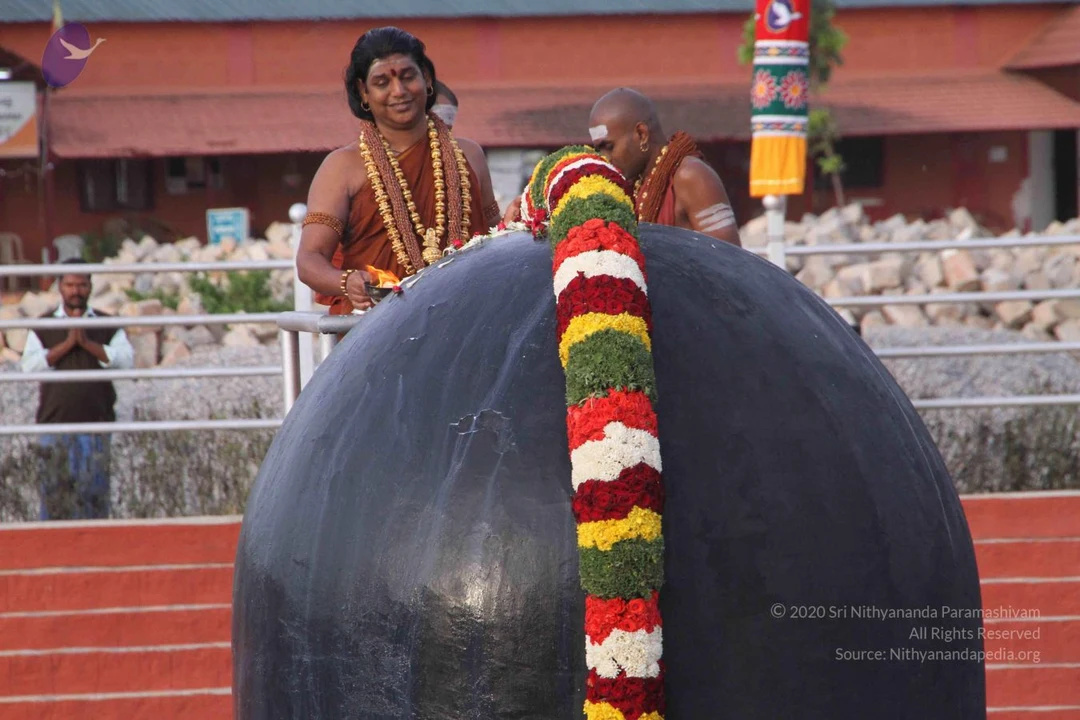
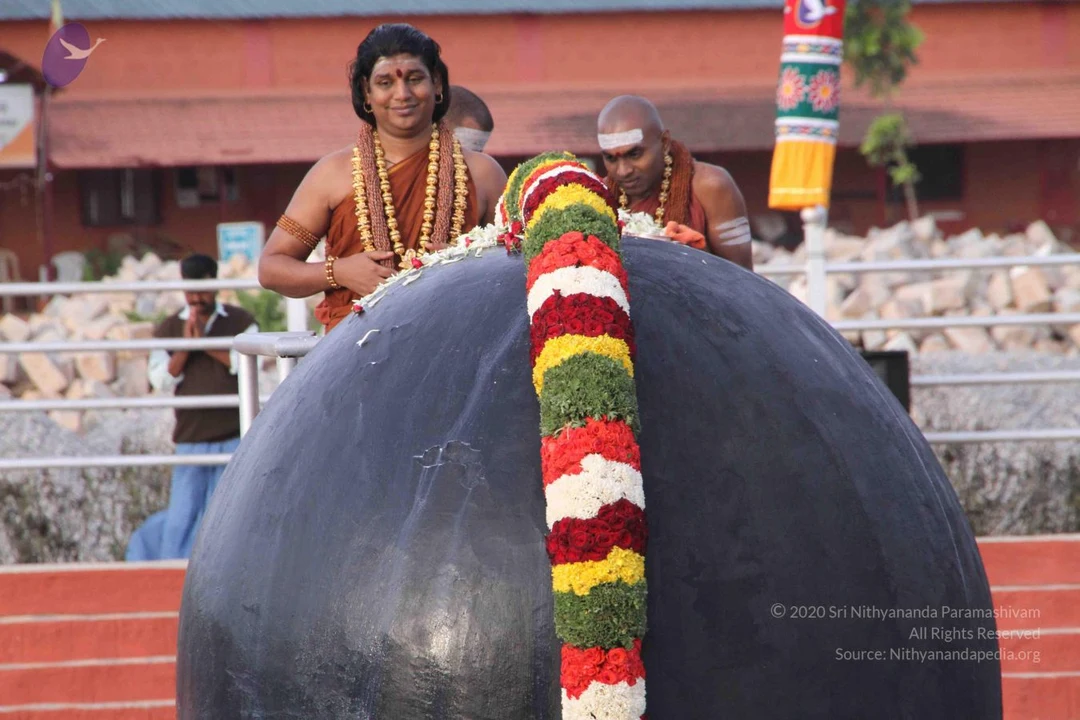
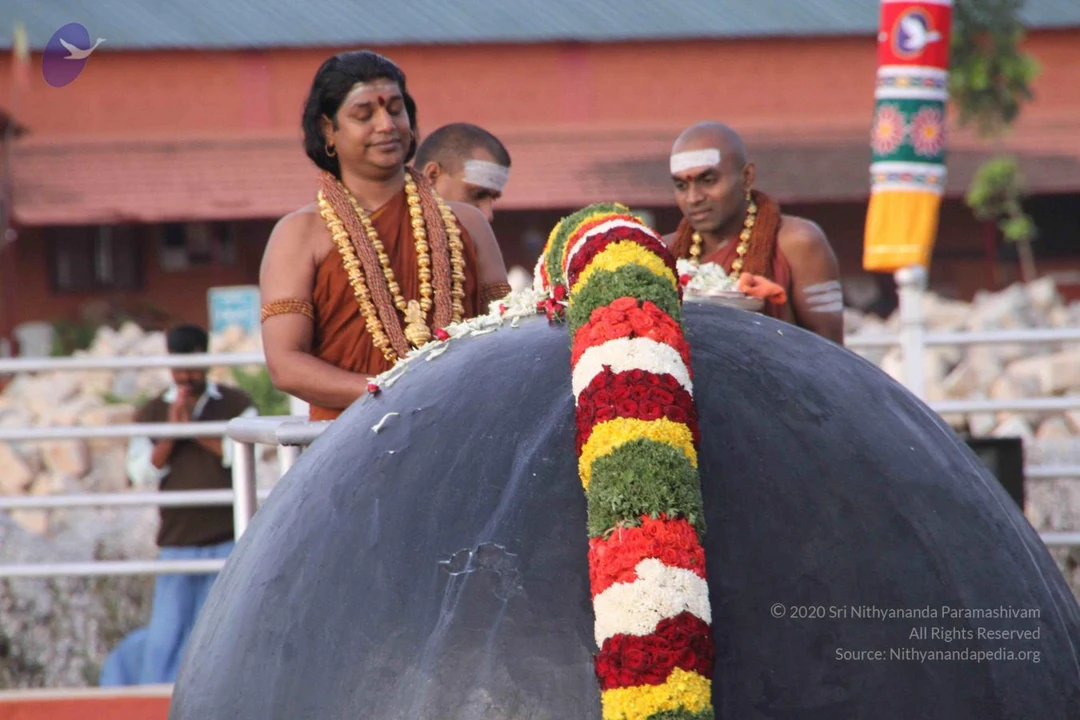
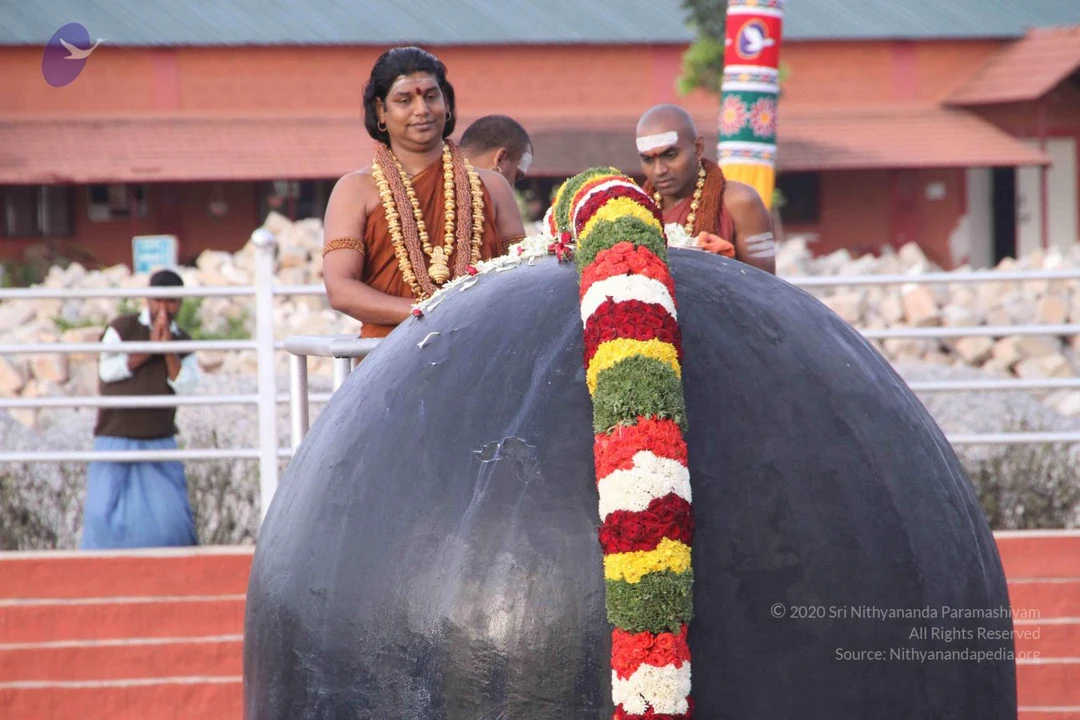
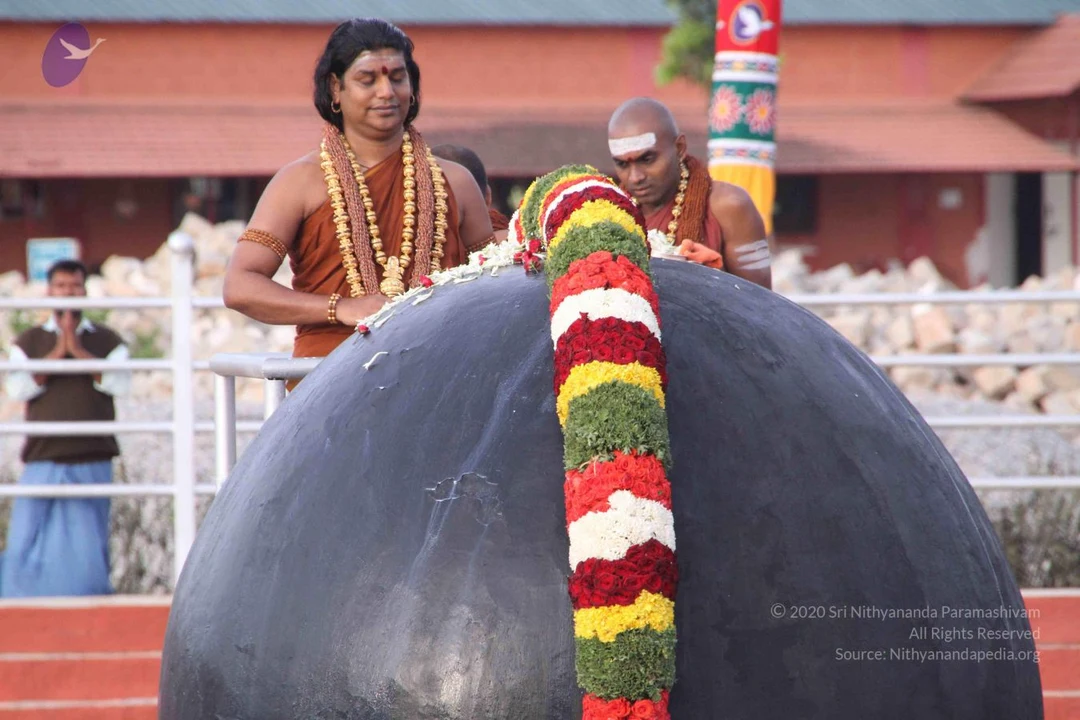
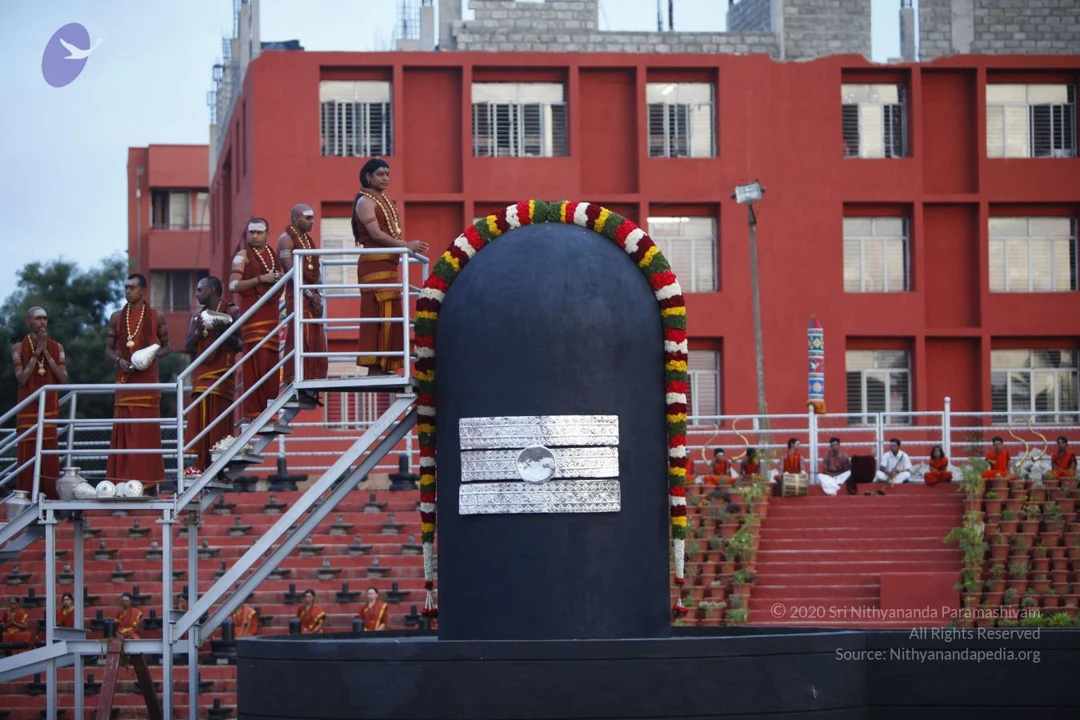
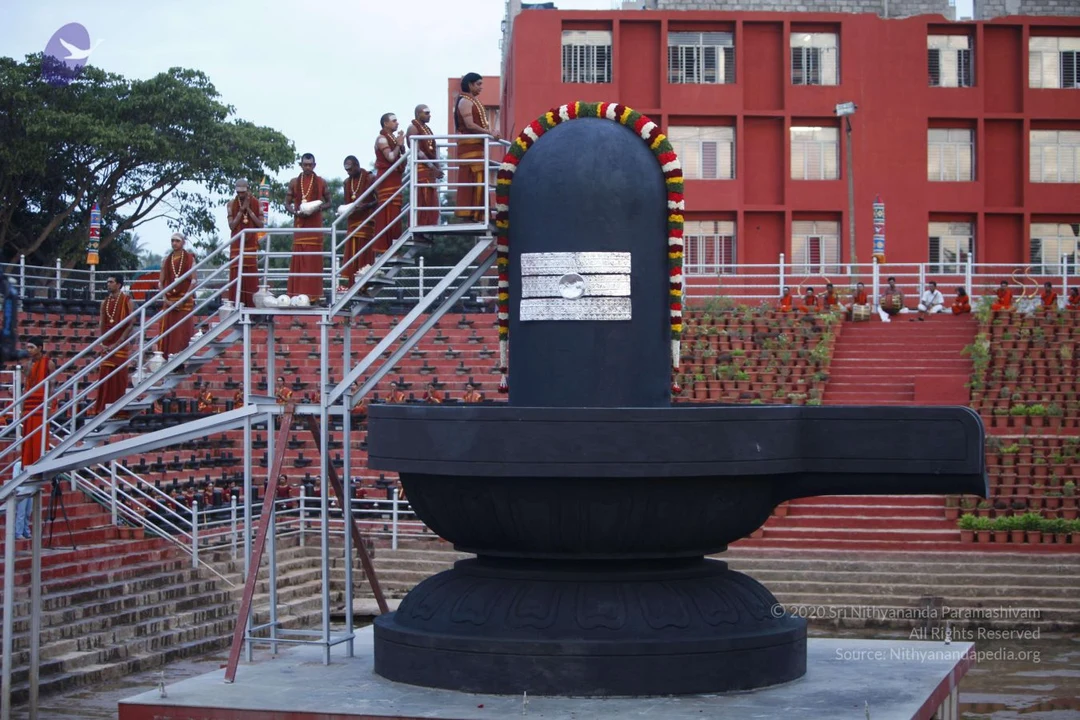
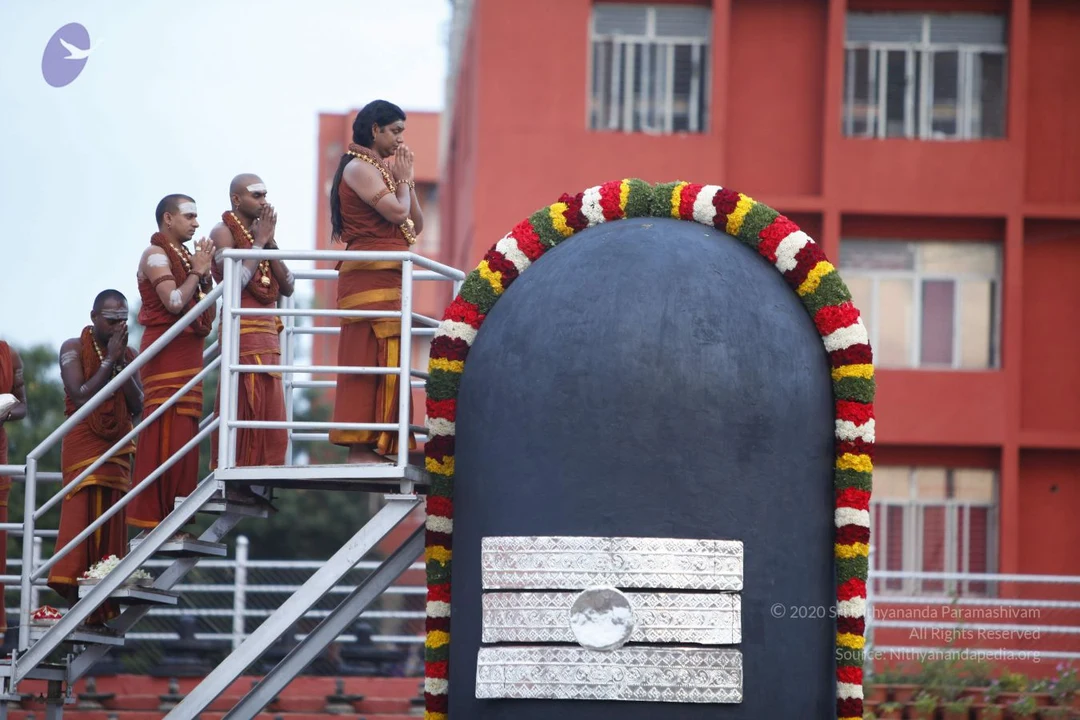
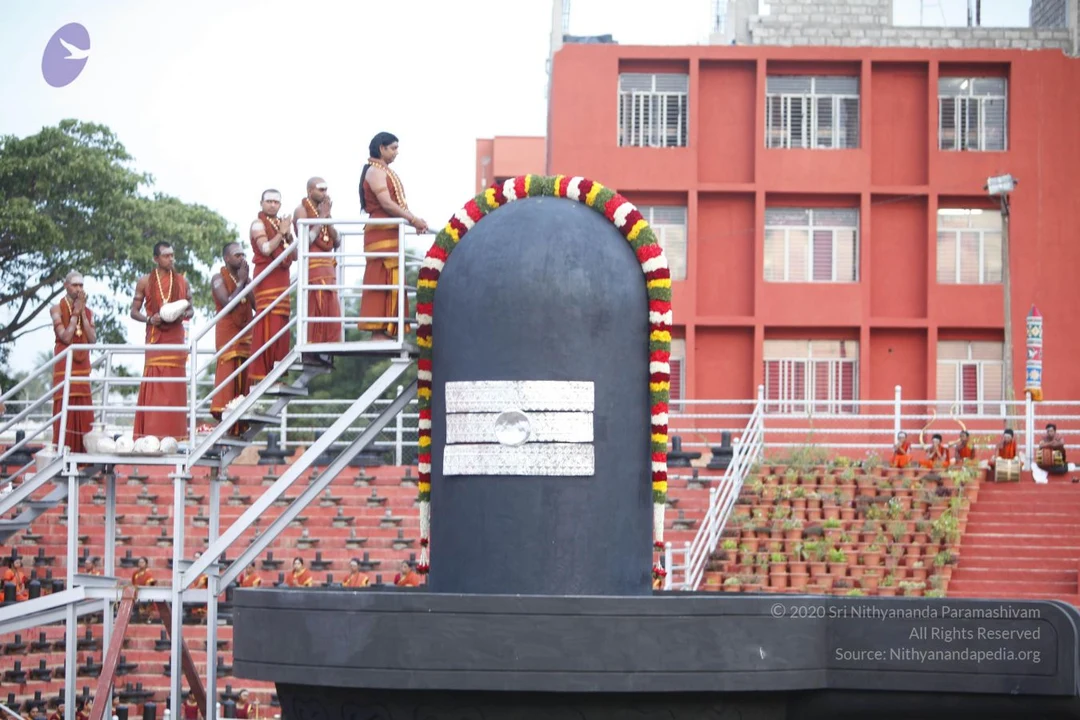
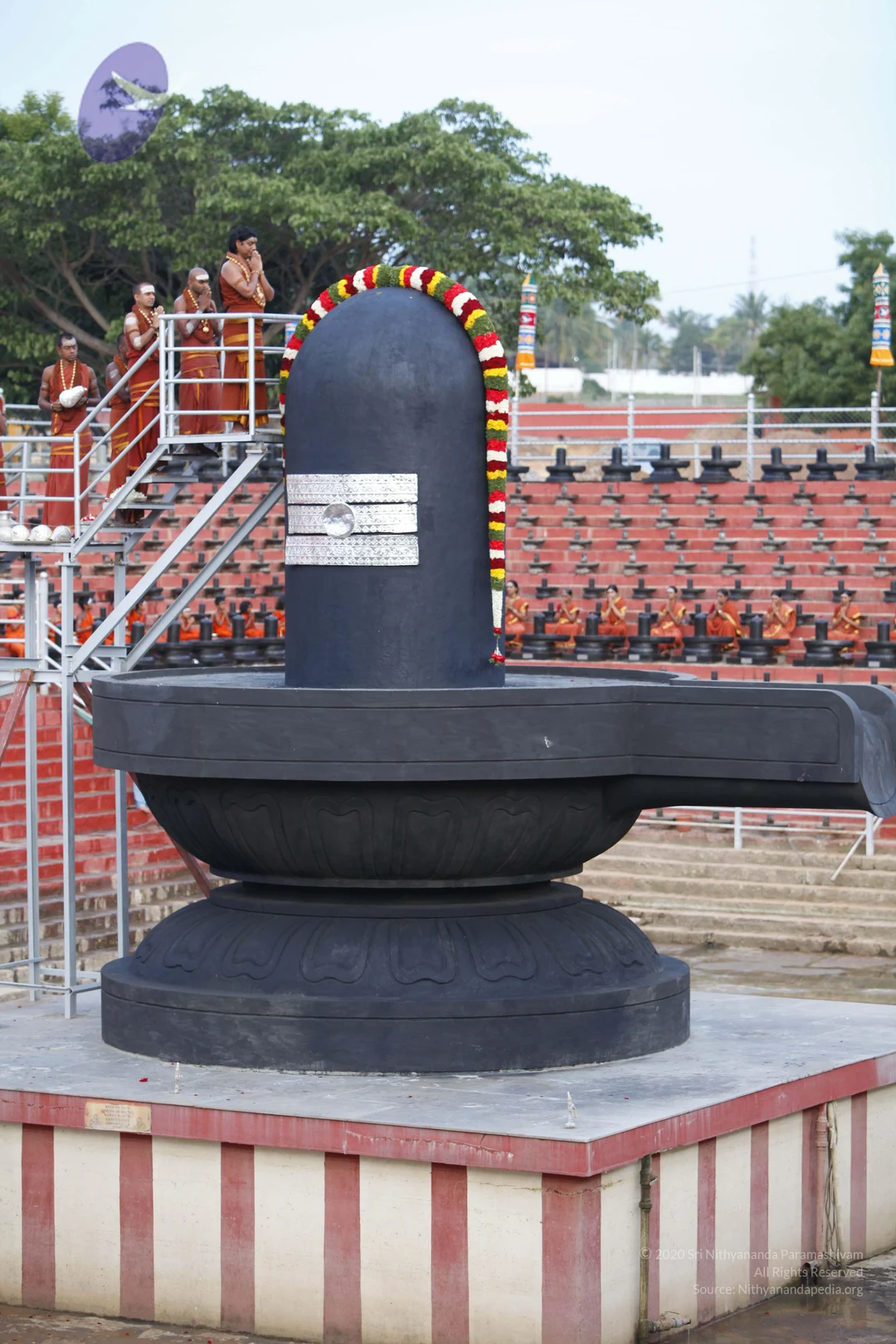
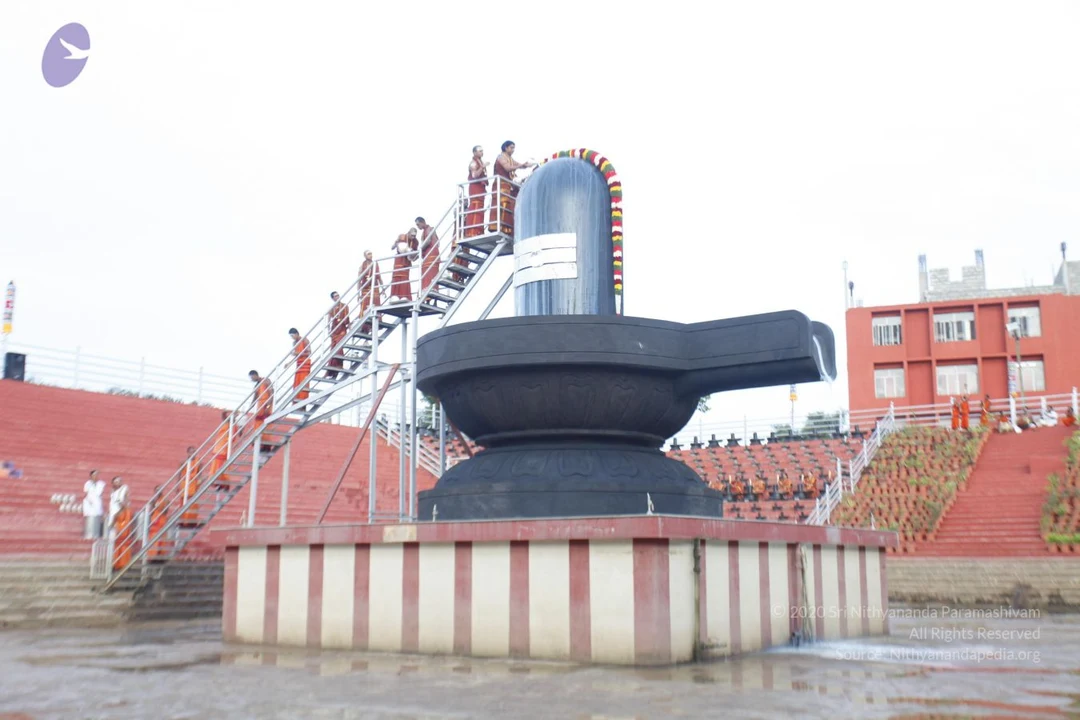
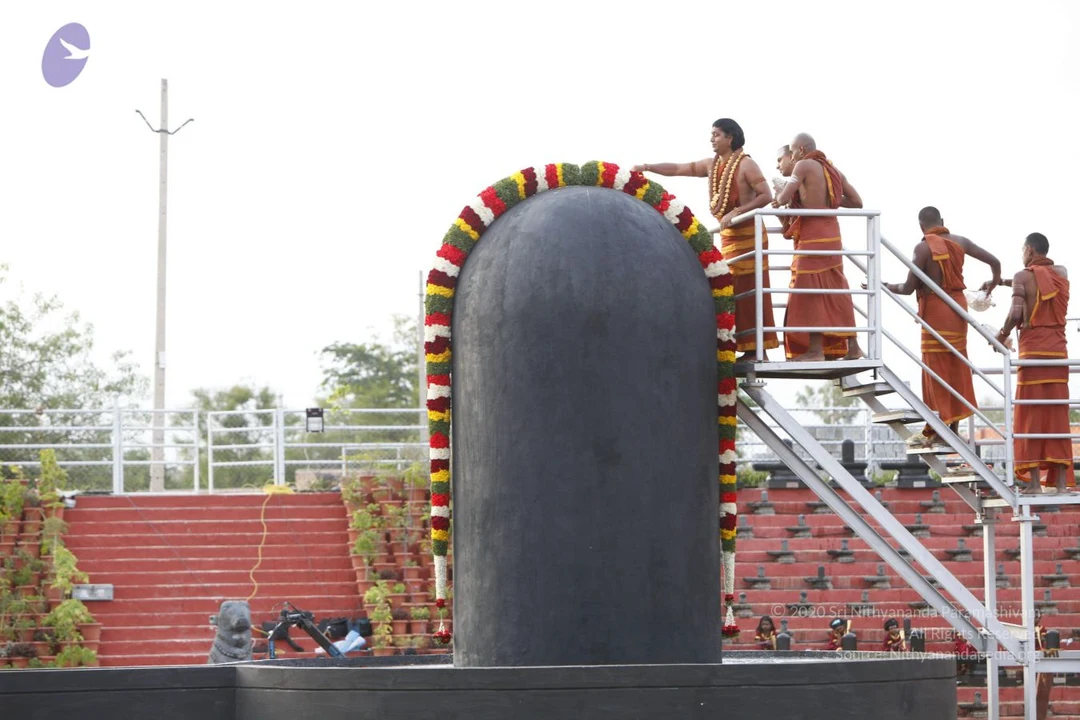
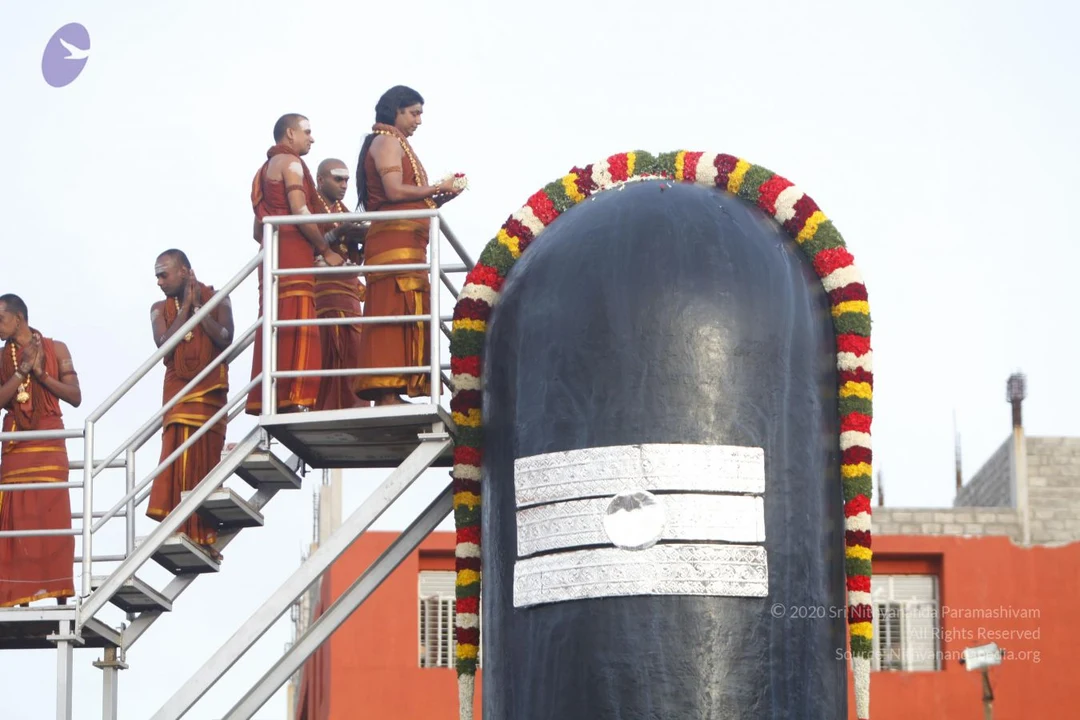
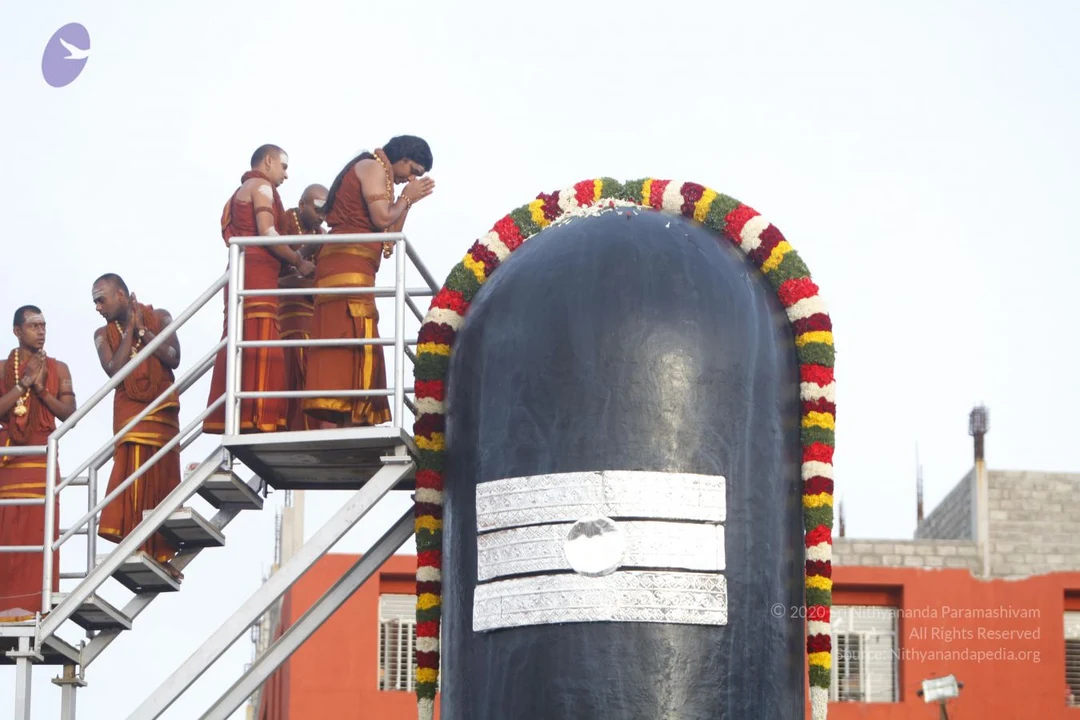
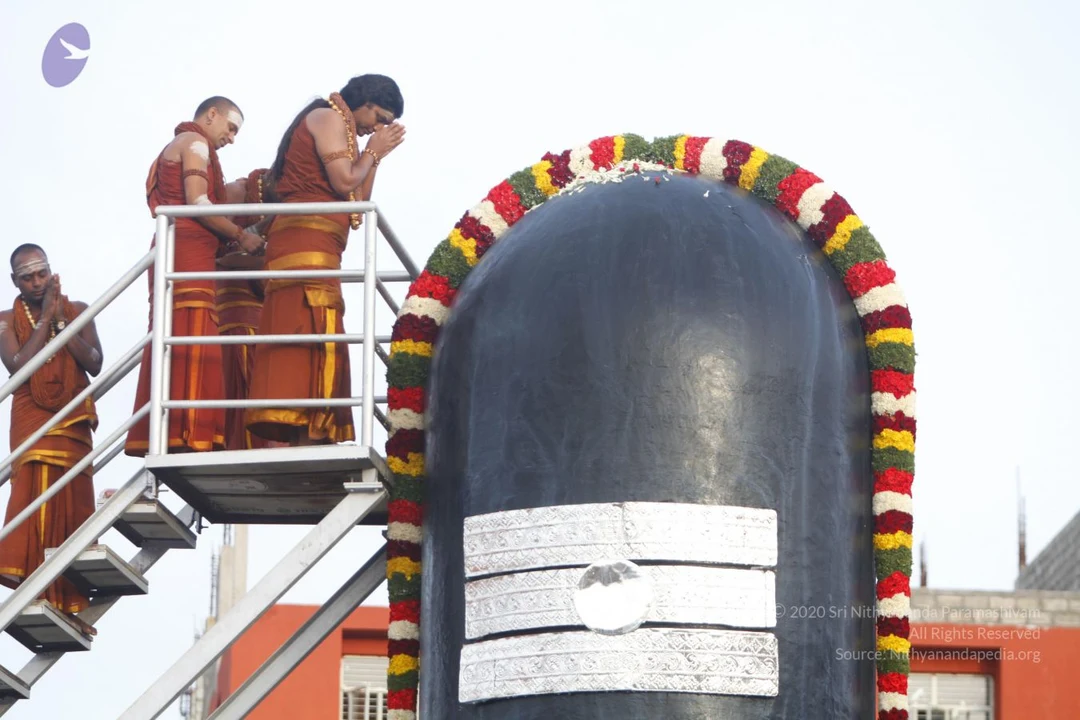
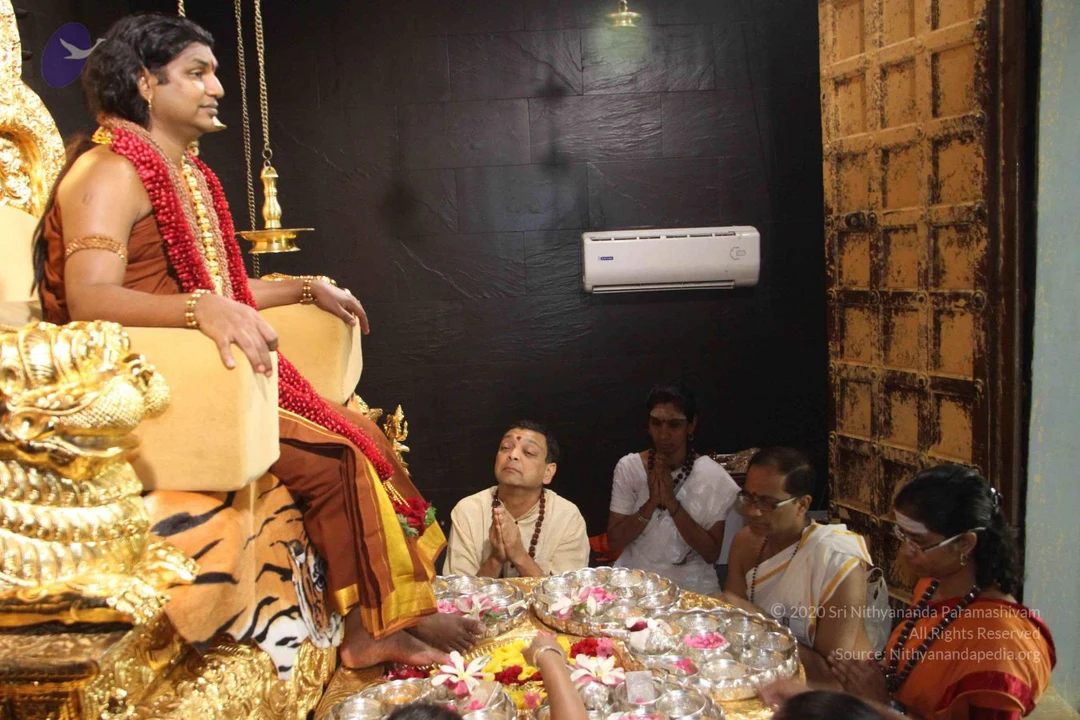
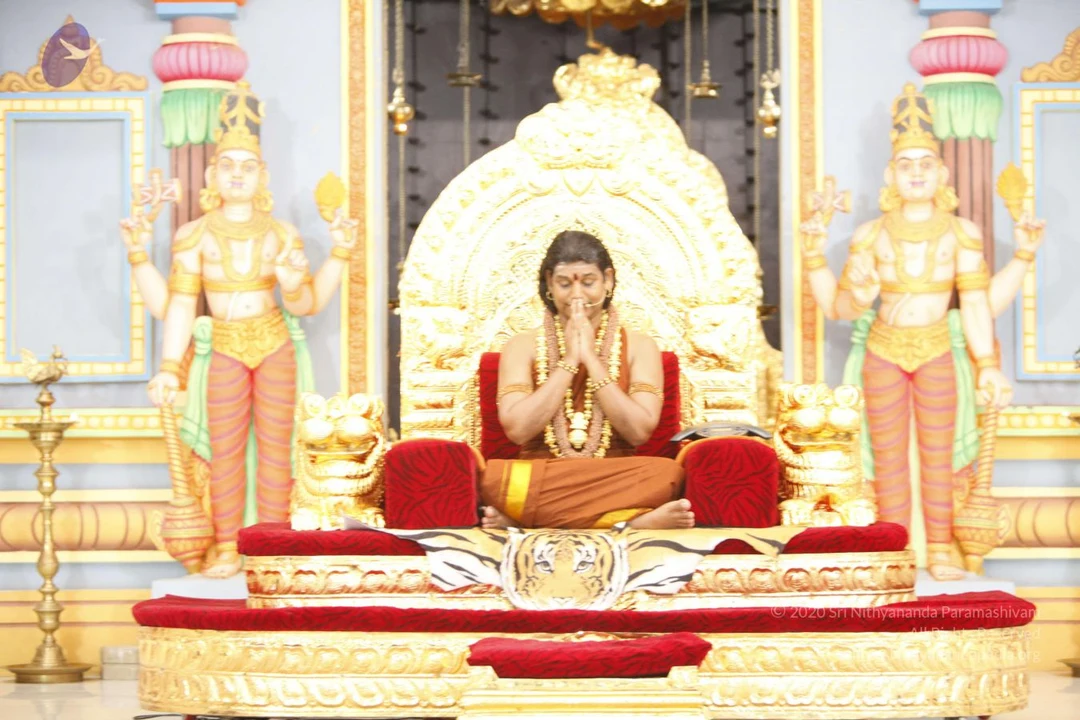
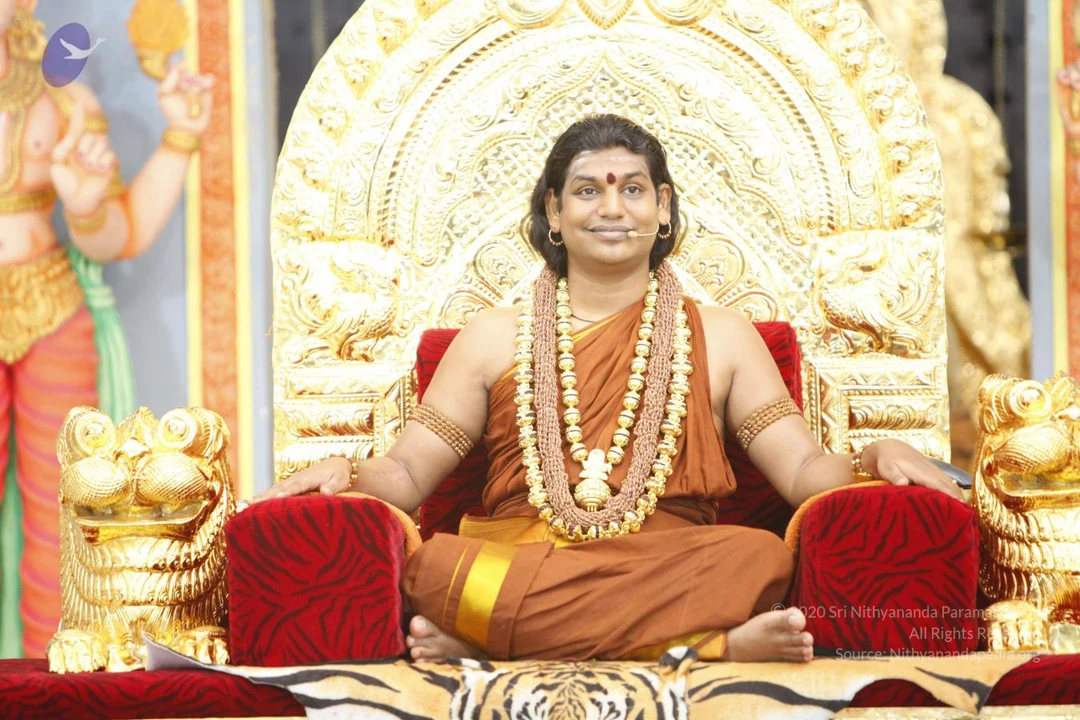
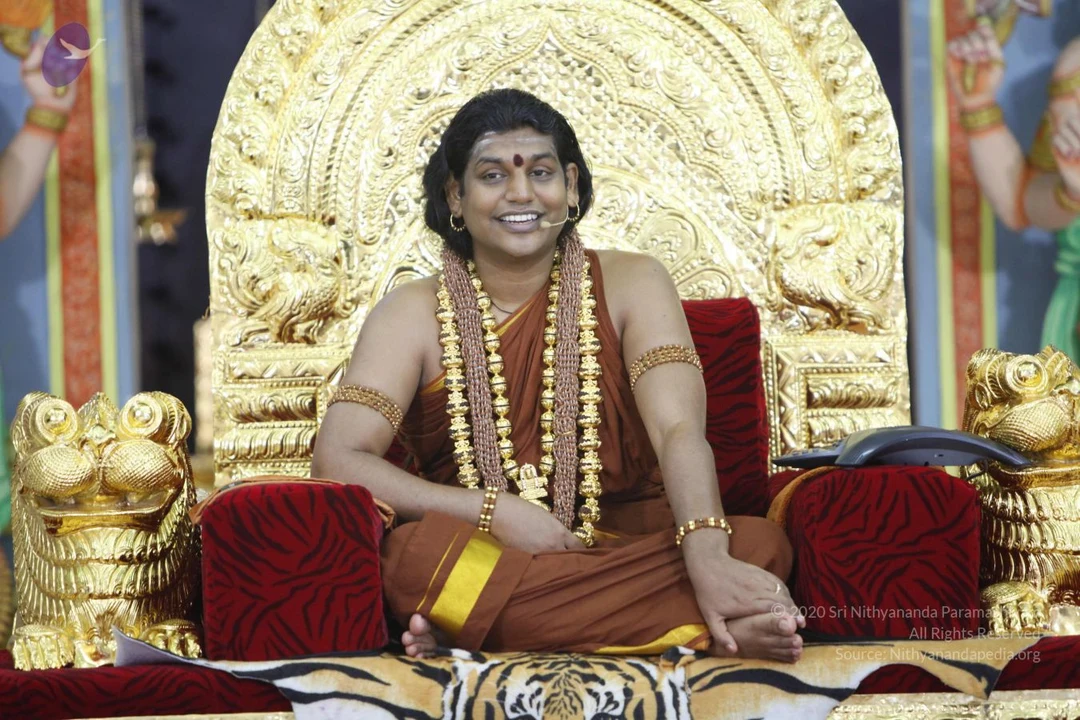
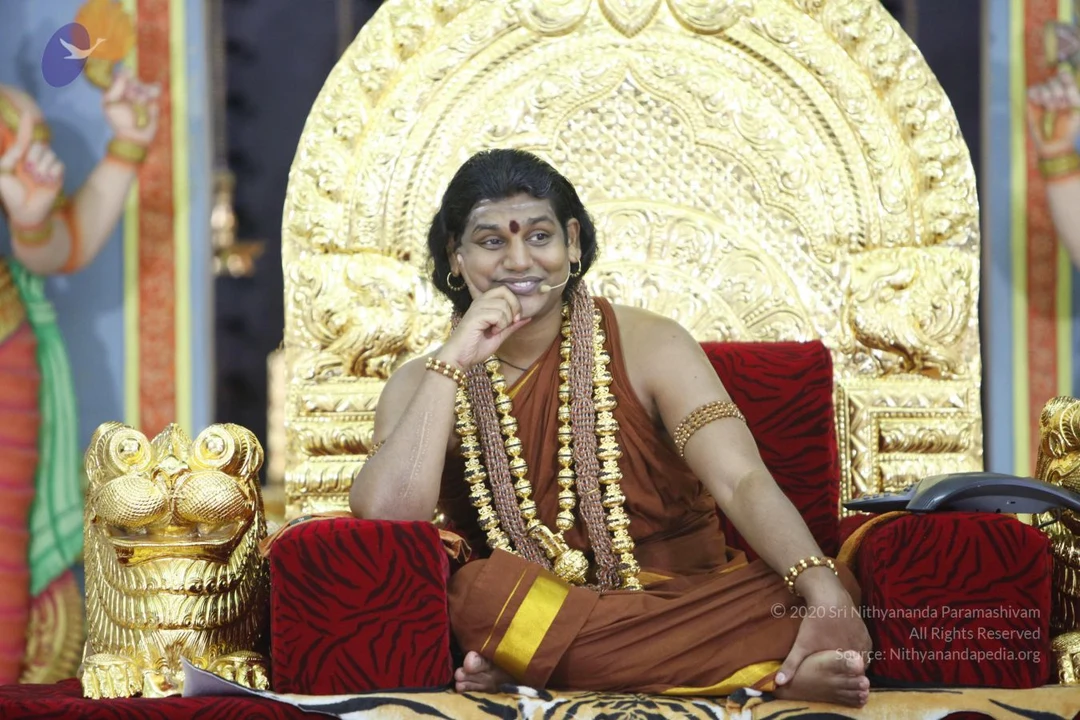
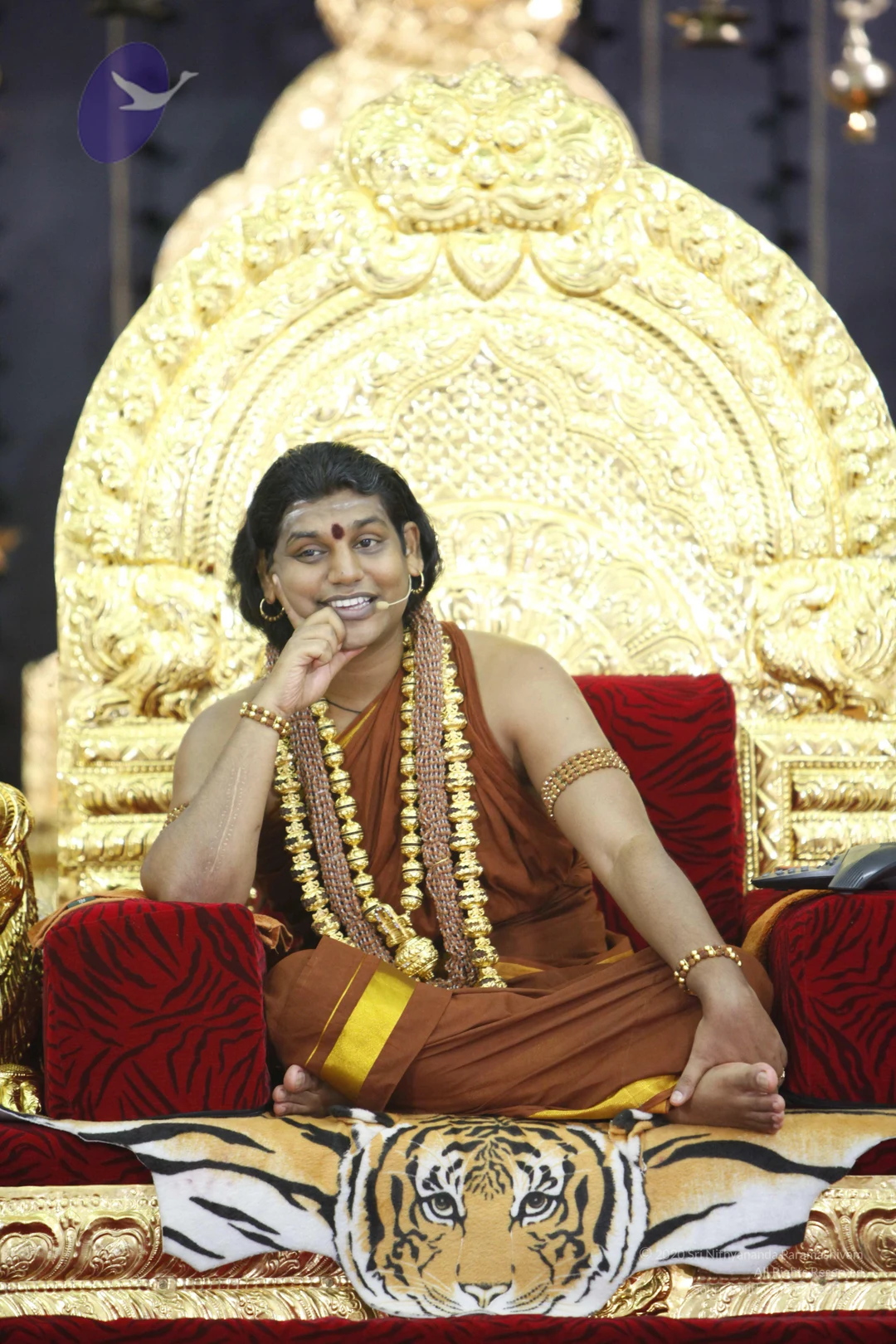
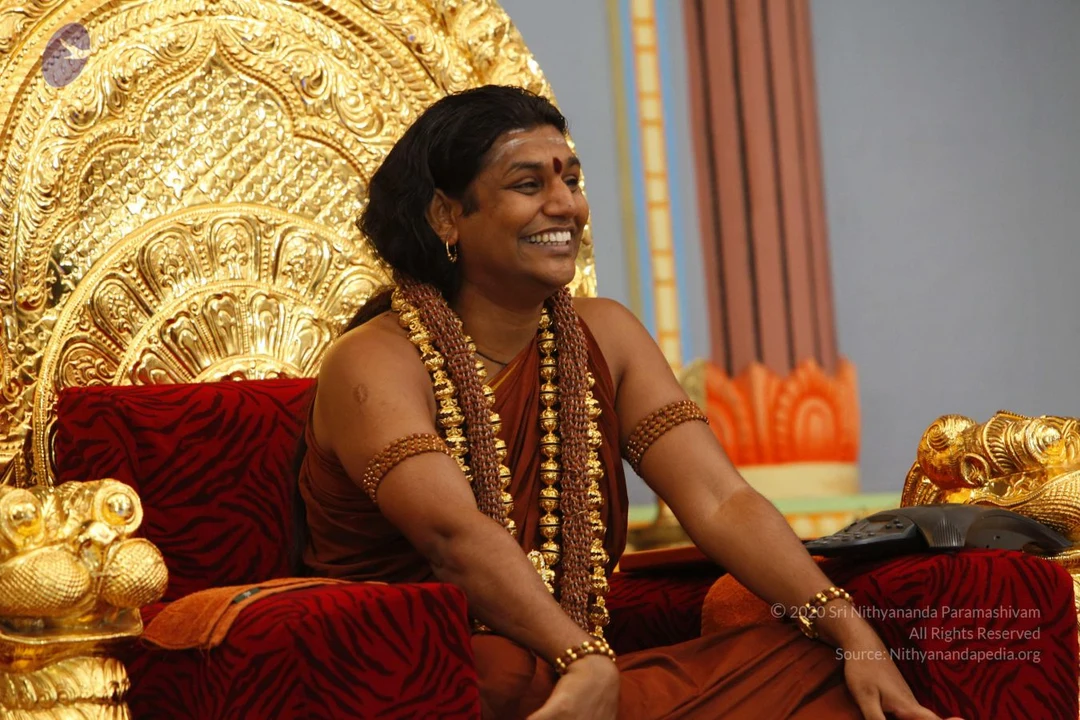
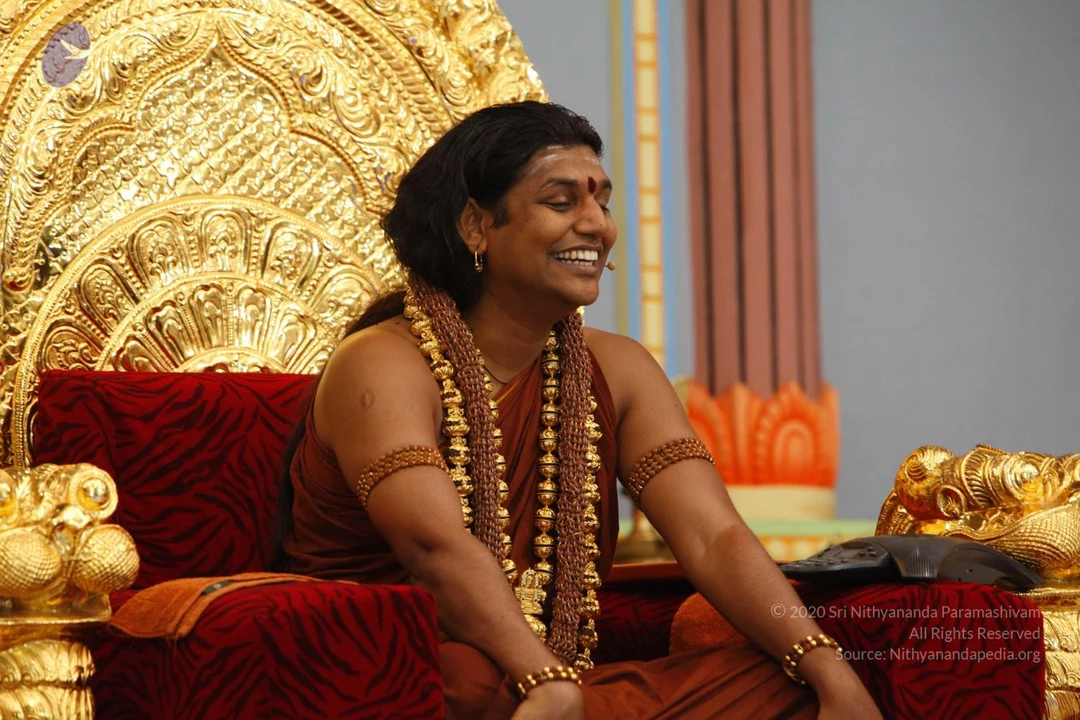
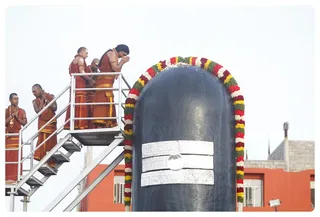
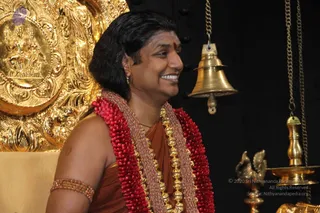
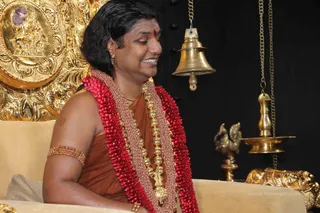
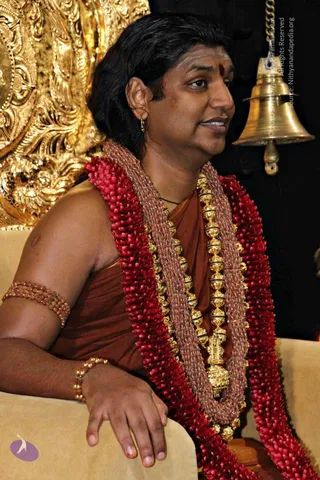
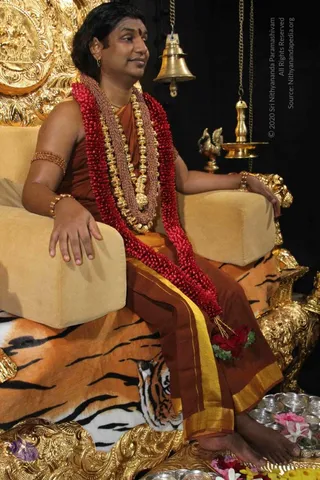
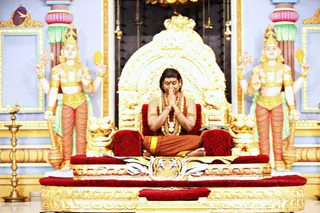
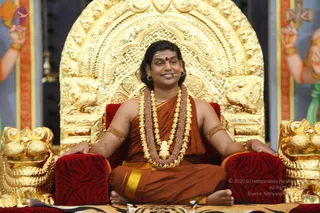
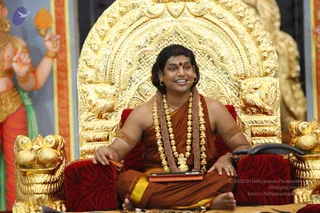
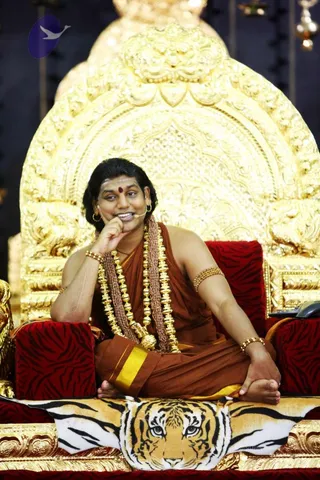
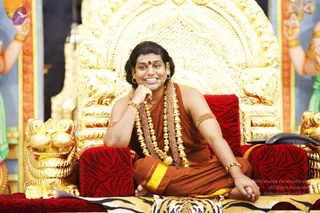
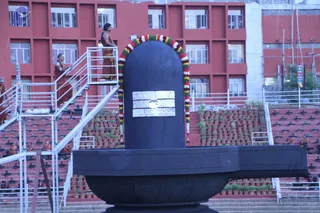
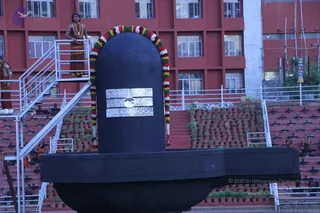
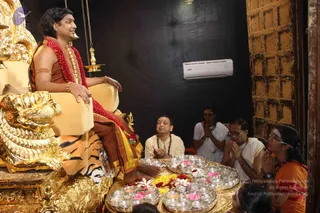
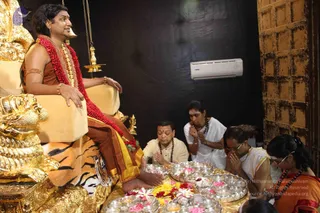
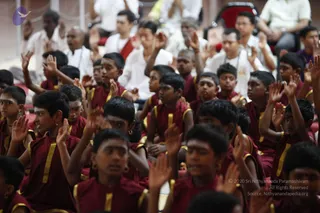
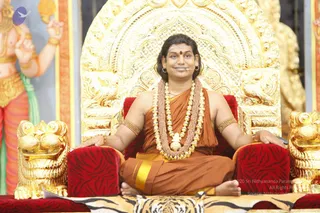
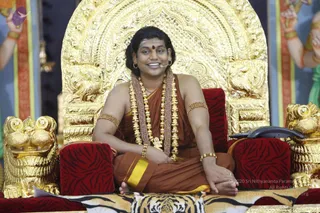
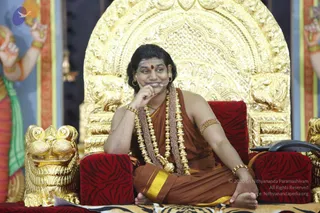
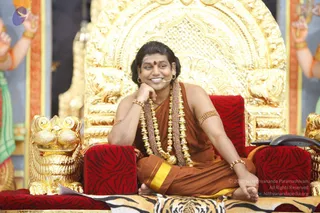
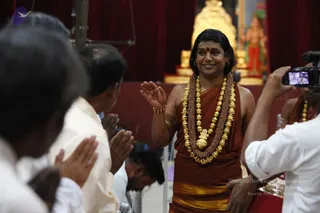
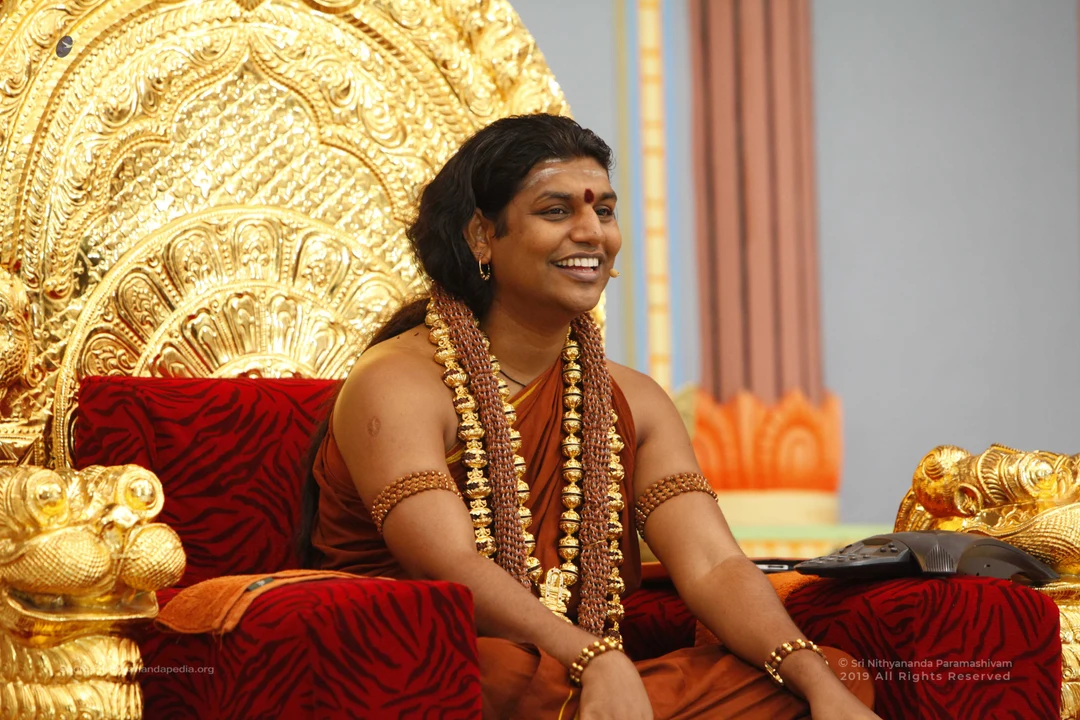
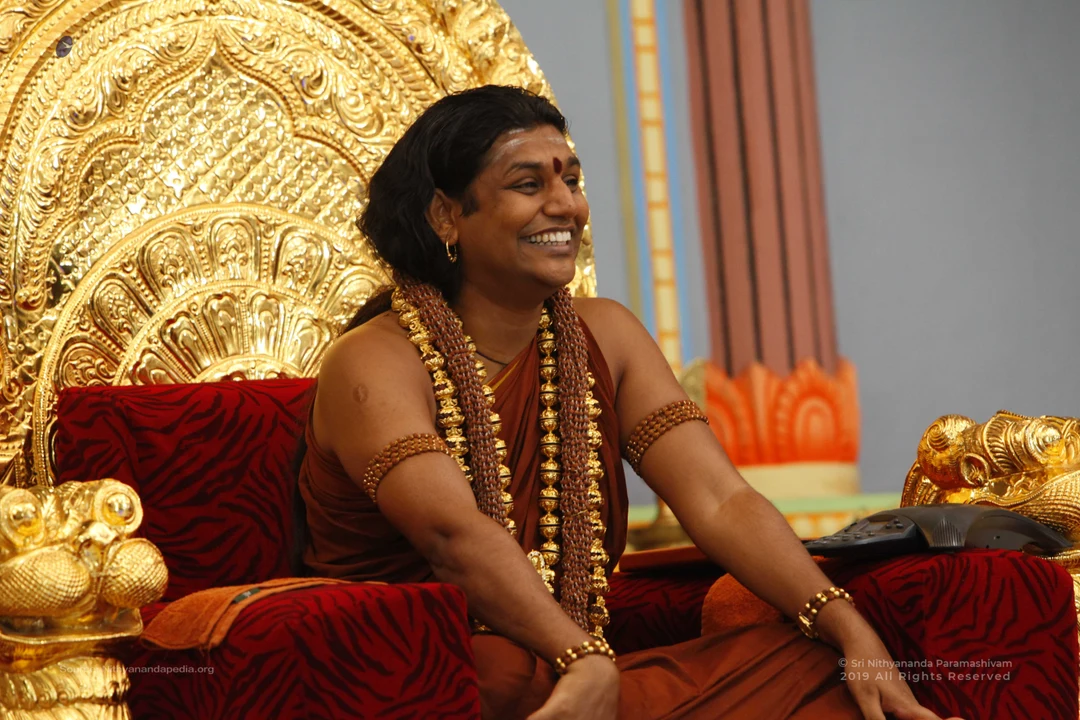
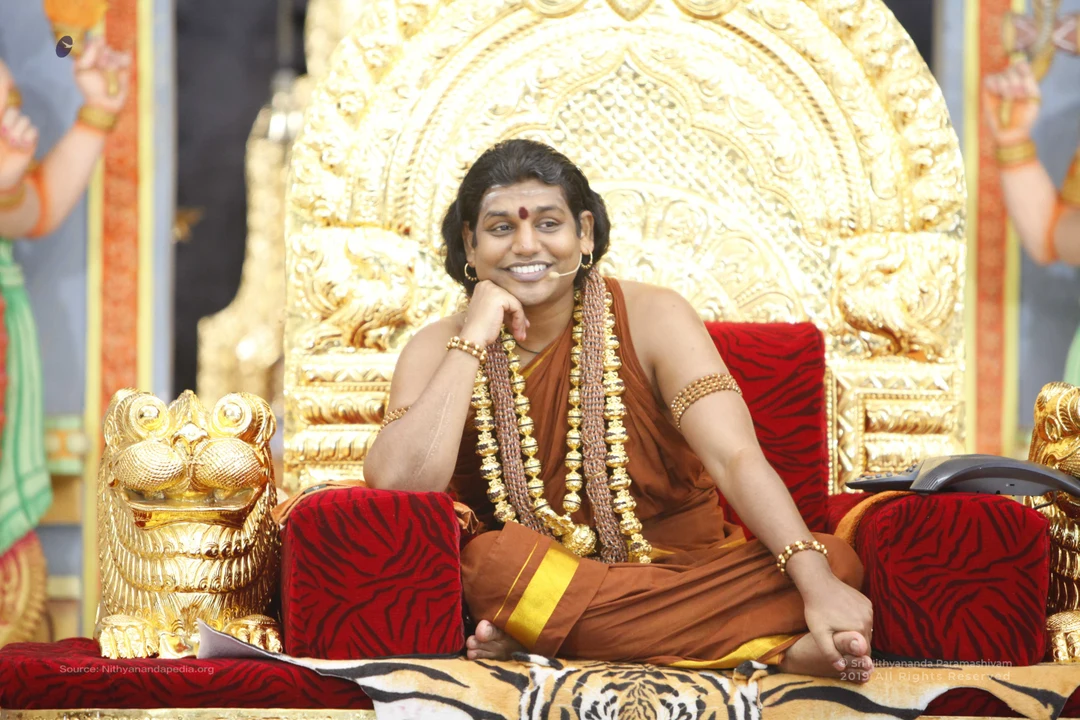
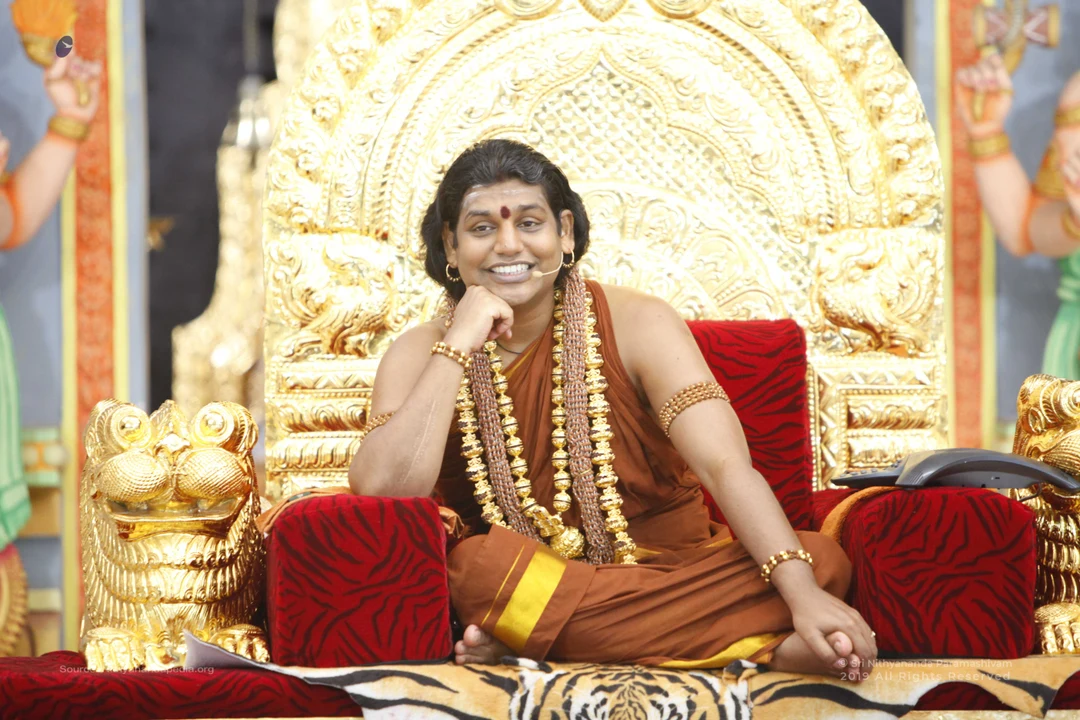
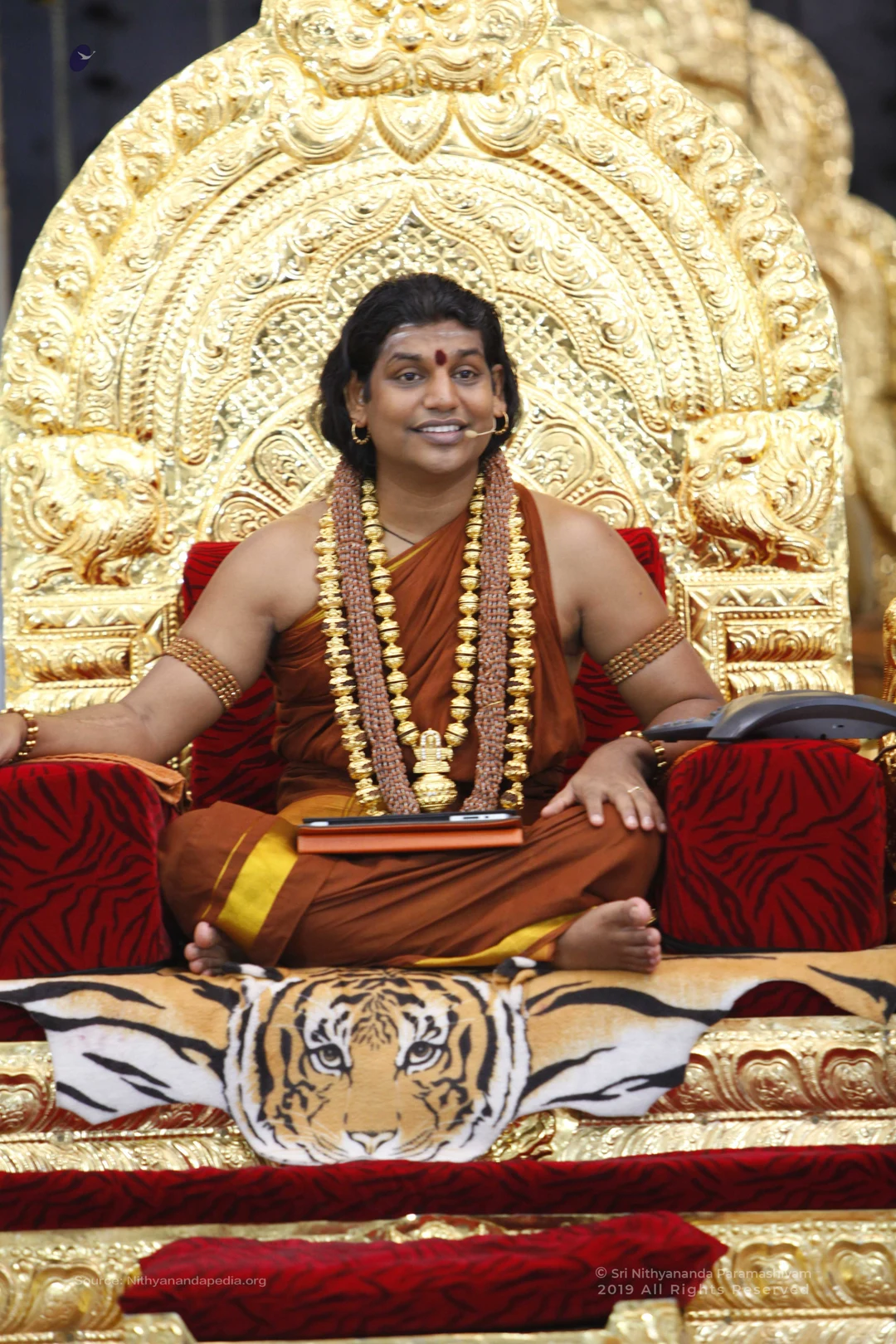
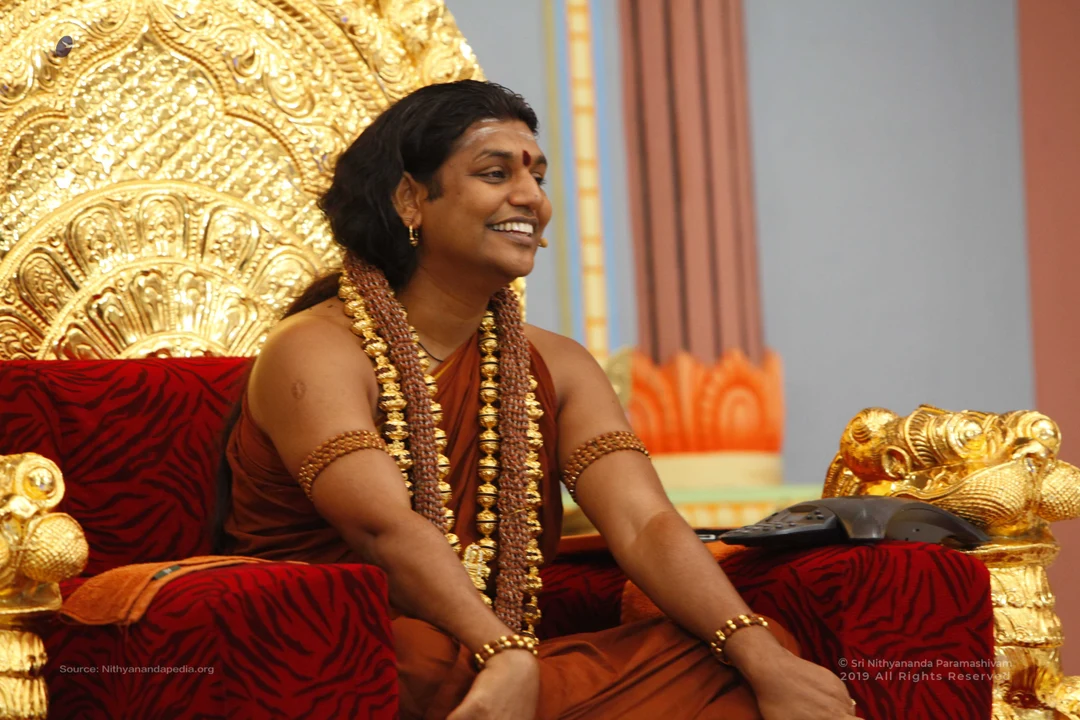
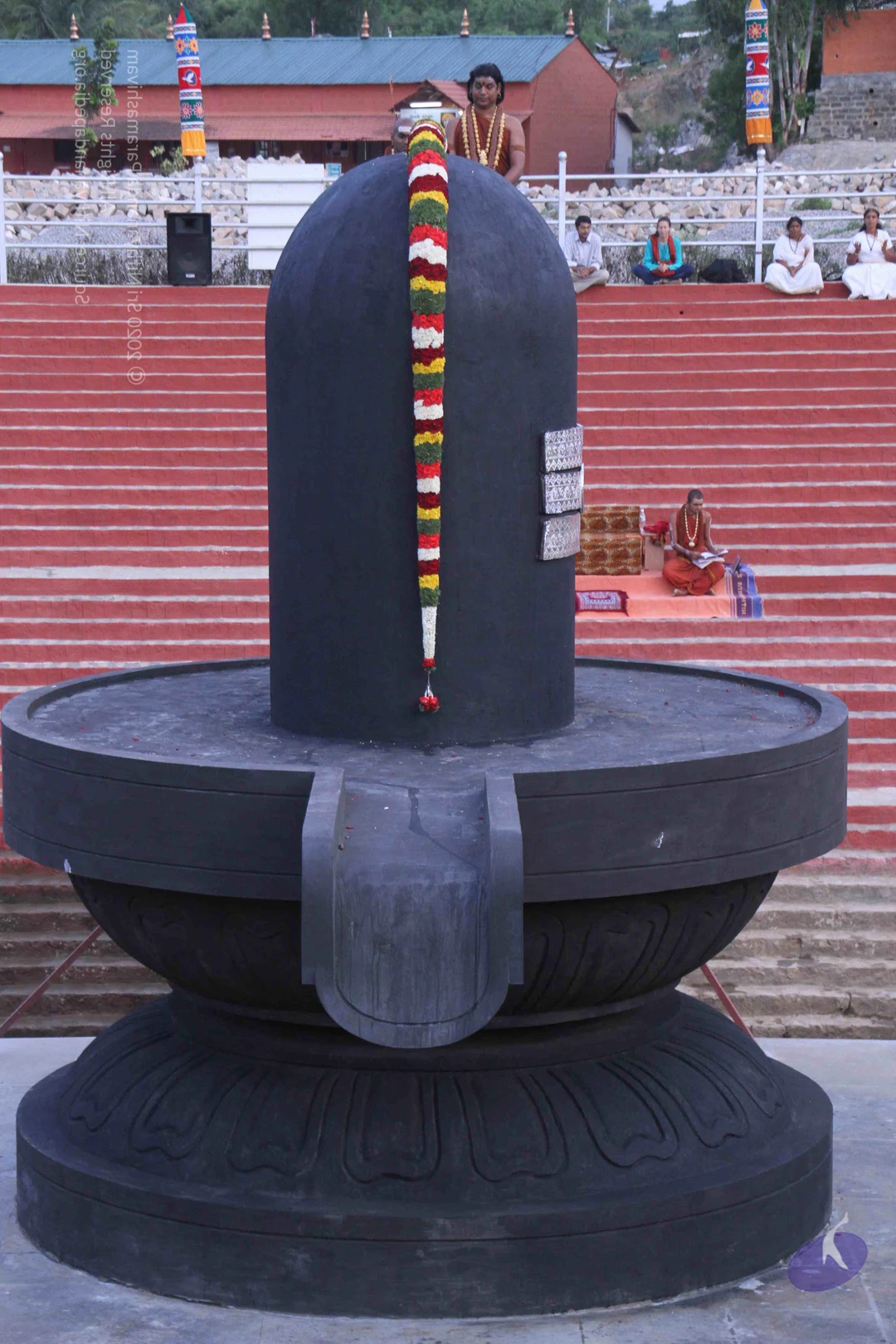
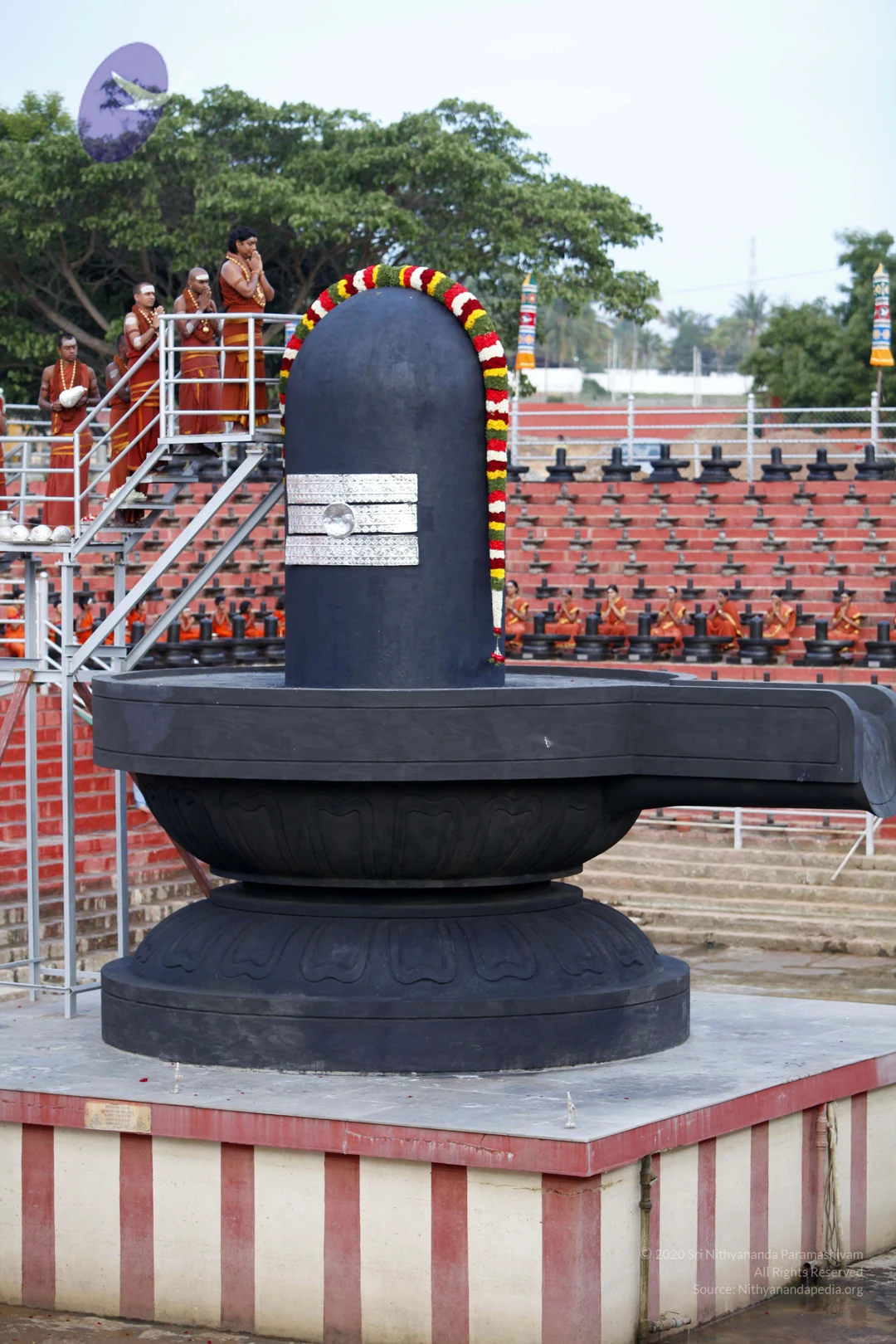
A man with long swept-back dark hair, a red tilak on his forehead, gold hoop earrings, a headset microphone and a rudraksha mala with ornate gold beads sits cross-legged on a gilded throne with red tiger-striped cushions. He wears an orange-brown robe with a yellow border and bare feet, and rests his hands on a tablet. A tiger-skin rug covers the dais in front, and a golden arched backrest carved with lions frames him. a person appears in person, seated as the speaker before a satsang audience.A man with long dark swept-back hair, a red bindi and a red-and-cream rudraksha-style necklace of beads sits on an ornate gold throne draped with a tiger-striped skin. He wears a rust-brown saffron-toned garment with a gold border and gold bangles, and a thick red flower garland hangs over his shoulders. A brass hanging oil lamp and a brass bell hang beside him on chains, with silver bowls of flowers in the foreground. Swamiji (probable) is identified by long swept-back hair, saffron-toned clothing, rudraksha-style beads and ceremonial gold necklaces, seated on a throne.A large dark black stone lingam, dressed with a long garland of red, white, yellow and green flowers draped down its front, stands on a tiered red stone platform. Behind it, a person in an orange-brown sannyasi wrap and gold necklaces stands at the rail, with a dark-haired head and red tilak visible. Another person is partly visible bent over behind the lingam. White railings, white and grey stones, a red-roofed building and a tall red-and-yellow flag pole sit in the background. The lingam is the central subject, shown during an evening temple setting.

June 10 2013

Original wiki page
Contents

Description:

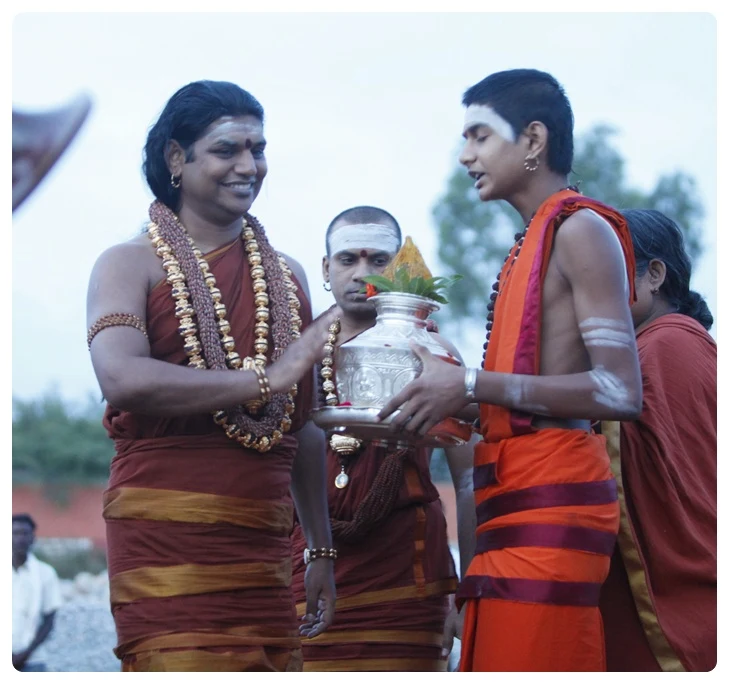
In today’s morning satsang, Paramahamsa Nithyananda explains how to inscribe the Four Principles into our very being. When we repeat any learning or spiritual practice, it enters our memory first at the level of intestine muscle memory. It is first imprinted into the stomach. Thus, whatever we learn will settle and heal the digestion first, if it is beneficial for us. If it is not healthy for us the stomach will only be disturbed. In physical health, the stomach is strong enough to digest anything; in mental health, the mind can digest any concept. Through living the Four Principles and completing our root pattern, even the spiritual digestion becomes completely healed.

Link to Video:

VideoAudio

Transcript:

0-12 mins

Nithyanandeshwara Samaarambhaam Nithyanandeshwari Madhyamaam | Asmath Aachaarya Paryanthaam Vandhey Guru Paramparaam ||

I welcome you all with my love and respects.

48:00- hindi

Today’s subject for Nithya Satsangh: “SPIRITUAL ACTIVISM IN YOUR COGNITION”.

For the next few days, I will continue to speak on Spiritual Activism till it gets drilled into you. Till the Spiritual Activism becomes part of your cognition, I’ll continue, continue, continue on Spiritual Activism.

1:47- hindi

Understand some of these basic truths:

When you continuously internalize some idea, philosophy, concept, truth, first your intestine is the muscle-memory, please listen, the intestine’s muscle-memory starts living that concept. That is why, if that concept is agitating, irritating; first your stomach will be upset, your stomach will be affected. If that concept is healing, soothing, for life; first you will experience healing in your stomach. So, whether to practice certain principle or not, your intestine muscle-memory can be the scale, can be the measurement method, can be the touchstone to find out whether those principles are going to help you, is it going to expand your life, is it going to raise your consciousness…

Even a mantra in tantric tradition, to find your ishta mantra, the Guru will ask you to contemplate on the mantra on navel; because, if you can’t use it on your stomach, you will find out in two days.

I tell you, start bringing this Integrity, Authenticity, Responsibility and Enriching to your intestine. Just start living them for few days. The first thing will happen is a thorough healing of your navel; means, your digestion will increase, cleaning of prana and apana will happen. If you have any disease related to the navel, heartburn, anything related to gas, anything related to…like an ulcer, it will completely be healed.

Please understand, you may wonder why did I bring the four principles of Integrity, Authenticity, Responsibility and Enriching to your navel. I tell you, each concept brings certain taste in your throat, certain breathing pattern in you, and certain experience in your intestine muscle-memory. If you can just make your intestine muscle-memory experience these four principles – Integrity, Authenticity, Responsibility and Enriching – the amount of healing you will experience in the navel will make these four principles as part of your cognition. Anything your navel tastes, will become part of you. Your intestine muscle-memory is the bridge between your body and mind. Please listen, your intestine muscle-memory is bridge between your body and mind. Anything your mind contemplates, works on, whether it is good or bad your intestine muscle-memory will tell you within forty-eight hours. Forty-eight hours is more than enough for your intestine muscle-memory to tell you whether you are on the right track or wrong track, whether you are functioning for life or against life. If you go to the right place, the first thing will happen to you -you will have a settled feeling in your stomach. IF you feel uncomfortable, churning in your stomach, you are in wrong place. Even if you’re here, if your stomach is churning, something is wrong; you have come, may be, late, or ahead of your time. Your intestine muscle-memory will directly tell you what you are doing is right or wrong. Usually, healing of the stomach ulcers, healing of the stomach, healing of the navel-related problems will be the first thing happening when you practice these four tattvas. I tell you, any completion will first cool your stomach.

Ramakrishna says beautifully, ‘When your head becomes cool, your stomach will become cool.’

When you experience completion in the head, your stomach will have completion. If you discover your root pattern and complete with it, the first thing will happen is healing of your navel, healing of your navel, healing of your stomach.

Discovering your root-pattern and completing it is the first step towards Yoga. Please understand, Yoga is not just moving your body or blowing your nose. No! Yoga starts when you discover your root-thought-pattern and complete with it.

I will give you a simple example for root-thought-pattern:

In the young age, if your mother teaches you, ‘Don’t go in the rain; you will catch cold!’; at that age your immune system is naturally yet to be developed; but even after you are twenty-five, when your immune system is in its peak, you don’t even go in the rain, you just see the rain through the window, you start sneezing, ‘Hutchooooo!’. What you internalized in a very young age, what you cognized in a very young age, which has imbalanced your nature, is root-pattern. What you cognized in a very young age, and which has imbalanced your nature, is root-pattern, Your natural existence is root-pattern. Get your root-thought-pattern and complete with it. First thing that will happen is healing in your navel, healing in your stomach, healing in your Manipuraka.

12 – 24 min

Listen! Come to the space of listening! Listen! The first thing you need to become a Spiritual Activist is a strong stomach. Means, only when you practice these four tattwas, you will have a strong stomach which can digest anything.

I can define health:

 Physical health means, stomach which can digest anything.

 Mental health means, mind which can digest any concept. The Mind which can digest any concept is mental health.

 Stomach which can digest anything is physical health.

 Consciousness which can digest anything happening in life is spiritual health.

I tell you, with these four tattvas – Integrity, Authenticity, Responsibility and Enriching – first thing that will happen is you will have physical health. You will have physical health.

If your intestine muscle-memory can taste the healing, pleasant feeling which comes when you practice these four tattvas, I tell you, you are successful in life! You will be successful in life! Because, only when your root-thought-patterns are complete, your intestine can taste the power of these four tattvas. Till then your brain may taste, but not your intestine. Only when you are in completion, your stomach can sit in a relaxed way. Sitting without restlessness can happen only if your navel is cool and healed, only if your navel is complete and healed.

Spiritual Activism starts when your muscle-memory experiences, cognizes Integrity, Authenticity, Responsibility and Enriching. I tell you, if you start living Integrity, Authenticity, Responsibility and Enriching, first thing, the hundreds of questions you have, you will discover answers.

You need to know one important truth. When it comes to the Cosmic question, unless you discover your answer, you will never be in peace. “Why”, the “Why” related to the outer world can be answered by others. “Why should I drive the vehicle in the left?” “Why should I drive the vehicle at all?” “Why” related to the country, related to the outer world, can be answered by the law of the land or the outer world science. Why he should drive in the right or left, the law of the land will answer. Why the vehicle moves when you press the accelerator, engineering field will answer. Many “Whys” can be answered by science and the law of the land. But all the “Whys” related to the Cosmic Law, all the “Whys” related to life can be answered only by yourself by discovering it. I tell you, the religion you discover is your religion, not the religion you are born in is your religion. Answer you discover is your answer. Live this Integrity, Authenticity, Responsibility and Enriching. You will discover the best answers for all the questions you carry about life.

You may ask why somebody is rich, somebody is poor; why somebody is joyful, somebody is sad; why somebody has more power, somebody has less power. All of us may have only two hands; but somebody does job equivalent to having twenty hands; somebody does the job, being handicapped. Some people, even though they have two hands, their whole life, what they have achieved, is equivalent to zero hands! Somebody may have two hands, but what they contributed will be equal to as if they have worked with twenty hands! Why do you think we describe our Gods with twenty hands, sometimes with one-thousand hands? Because, the contribution they did when they were walking on the Planet Earth is so much, you always feel, “Sahasra Seersha Purusha Sahasraaksha Sahasrapaadh” - “Being with thousands of heads, hands, legs”.

All the questions “Why”, why somebody does so much, somebody lives in laziness and dies, all your questions will be answered if you just start living Integrity, Authenticity, Responsibility and Enriching. All your questions can be answered. You will discover the answer, the right answer. I tell you, anything you discover is yours. Anything you have not discovered is not yours. When you discover your root-pattern and complete with it, your whole being will be filled, your being will have the space to live Integrity, Authenticity, Responsibility and Enriching.

24 – 36 min

Discover your root-pattern. Discover the pattern on which, pattern based on which you cognize your whole life. Discover the pattern on which your consciousness functions. When you discover your root-pattern and complete it, only then your life starts; only then your life begins.

I have seen in my own experience, so much of human resource is wasted without discovering and completing with the root-thought-pattern. I tell you, before I helped my sannyasis, my ashramites to discover their root-thought-pattern and complete, we had hundred people, but only ten people’s work was getting done! I am not even talking as the Head of a sannyas organization or spiritual organization. I am talking to you as a boss of an ordinary social organization, any company, any industry. Once I helped my sannyasis to discover their root-thought-patterns and complete, I tell you, the same hundred people now are delivering work which will be done by thousand people! Of course, I am not going to be satisfied with it; that is different! I am not going to be relaxed about it; that is different! I will continue, continue, till each one becomes equivalent to thousand!

I tell you, even to make your organization more productive, not to waste the human resource, help them to find their root-thought-pattern and complete it. It is literally like upgrading yourself from Windows Ver.1 to Windows Ver.8. It is literally upgrading yourself!

If you want any help in discovering your root-thought-pattern and completing it, discovering your root-pattern and completing it, call the number in your screen, appearing in the screen (+91 80 2727 9999). My sannyasis will help you, support you. Whole day they are available. Any time of the day, even late night till 11 o’clock, you can call. They will help you to find your root-thought-pattern, root-pattern and complete with yourself and others.

I will give you a very simple procedure which anyone can use to find your root-pattern:

· Remember the earliest incident happened in your life which has imbalanced you thoroughly; means, which made you feel powerless, cornered, shattered. It may be at the age of three: your mother just made you sit on the dining table so that you will not be playing around, harassing your brother, disturbing your sister. Or it may be a small incident: your younger brother refused ice-cream, did not give you the candy. It can be even that simple an incident. But, first time you felt powerless in your life, try to dig out the earliest incident you remember you felt powerless in your life. Dig up that incident.

· Relive it as if it is happening now. Bring the past to the present.

· And during that incident,

1. what did you think about you,

2. what did you think about life and others,

3. and how you decided to project yourself to others.

Just these three, just these three. That’s all! If you discover these three statements, you will see your whole life is just a reprint of that three statements!

Your whole life is the reprint of just these three statements. Your life is not a newspaper as you think. It is the same book, continuous different editions. Not even revised edition. Same book reprint! What you wrote first time when you felt powerless, that is your fate. But, fortunately, is not written by Brahma; it is written by yourself; so, it can be erased. That is the good news you have! That is the good news you have!

(Speaks in Hindi)

Call the number in the screen (+91 80 2727 9999). My sannyasis will help you discover your root-patterns and complete it.

If you are running any company or industry, if you are a Head of a team, I tell you, first help your team find their root-patterns. That is the best help you can do to them and to you. You will save so much of your time! So much of your time will be saved! You will have so much of life!

(Speaks in Hindi)

I tell you, continuously enrich every human-being to find their root-pattern and complete it, because it is the survival need, it is the basic need! We will offer this as a service to the world. Let’s offer this as a great service to the world. It is time we help people to find their root-pattern and complete it, so that they taste, they taste Jeevan Mukthi, Living Enlightenment! They taste Jeevan Mukthi, Living Enlightenment!

36 min- end

Look! Discover! You will see the same root-pattern is repeating itself again and again in your life. It is time you complete the root-pattern and get out of it; you heal yourself and get out of it. When you heal your root-pattern, you will see the life completely the way you never imagined! You never imagined! Life will be completely new, a new experience! I tell you, only then you will have the strength to be a Spiritual Activist.

37:56- hindi

Only when you completed with your root-pattern, you will be able to help others to find their root-pattern and complete. Only then your life will be filled with Spiritual Activism. Purpose of human life is Spiritual Activism. I can tell you boldly, purpose of any human-being is Spiritual Activism. Don’t even ask me individually, “What is the purpose of my life?”! Now itself I answered this question once for all! Spiritual Activism! purpose of all human life on Planet Earth is Spiritual Activism.

39:35-hindi

Start Swapoornathwa Kriya today. Complete with all your root-patterns. Complete with others and help others to find their root-patterns.

42:34:hindi

I request all of you to take a strong oath. Today declare you will start the completion process from today authentically.

Essence of today’s satsang:

Find your root-pattern and complete with it. Start living Integrity, Authenticity, Responsibility and Enriching and radiate a life of Spiritual Activism.

Photos
Tags:

Paramahamsa Nithyananda, repeat, learning, spiritual practice, memory, beneficial, healthy, physical, strong, mental, concept, healed.

Photos Of The Day:
RudraAbhishekam-Swamiji

Pratyaksha-Pada-Puja

Swasti-Mantra

NithyaSatsang-Swamiji

SarvaDarshan

FinalBlessing

Temple

Photos Of The Day:
Rudrabizhegam

Pratyaksha-Pada-Puja

Swasti-Mantra

NithyaSatsang-Swamiji

SarvaDarshan

Temple

Photos from this day
View all 380 photos
Photos
35 photosSource gallery
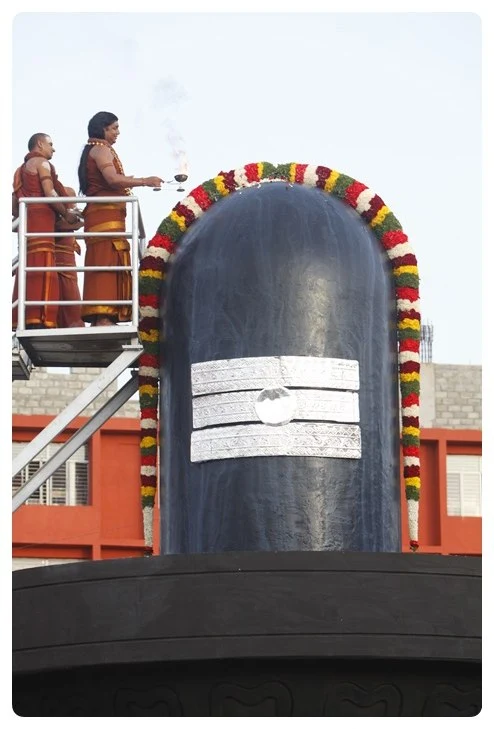
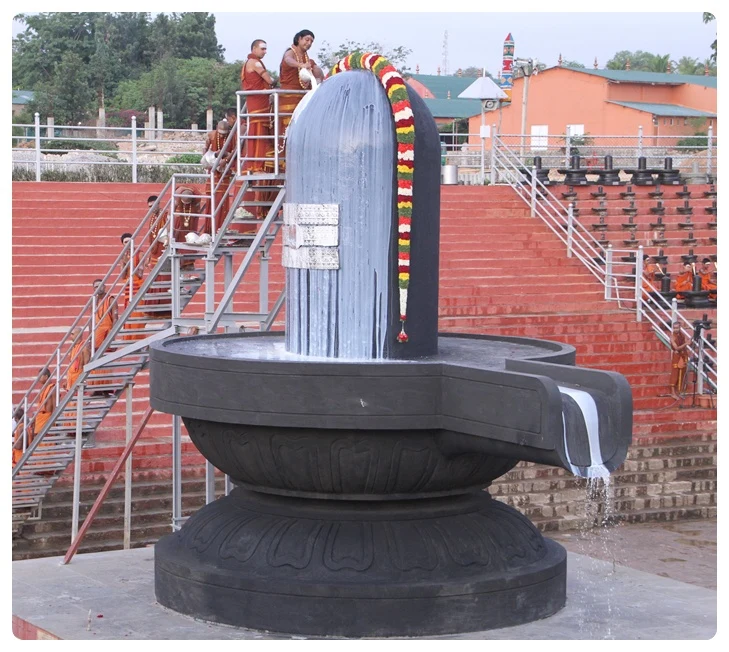
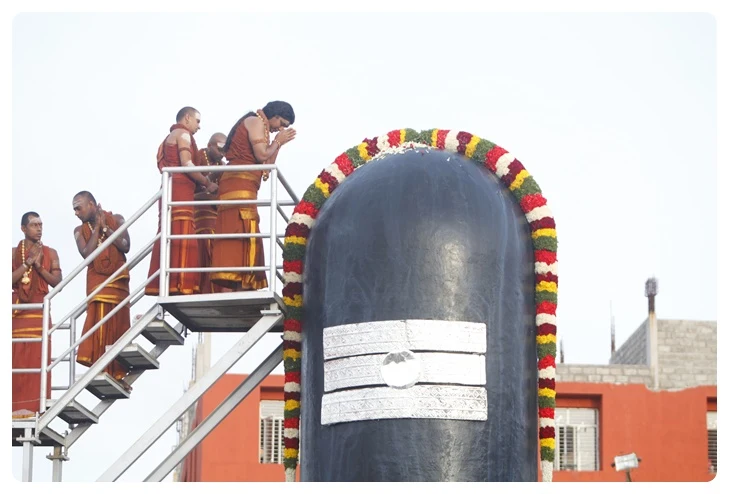
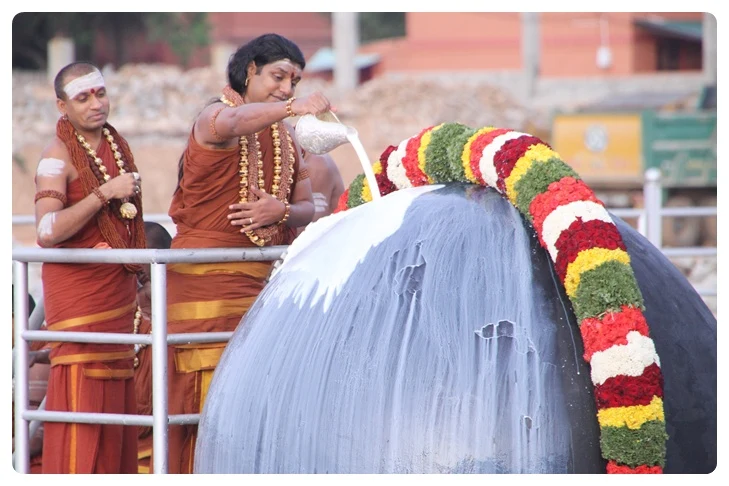
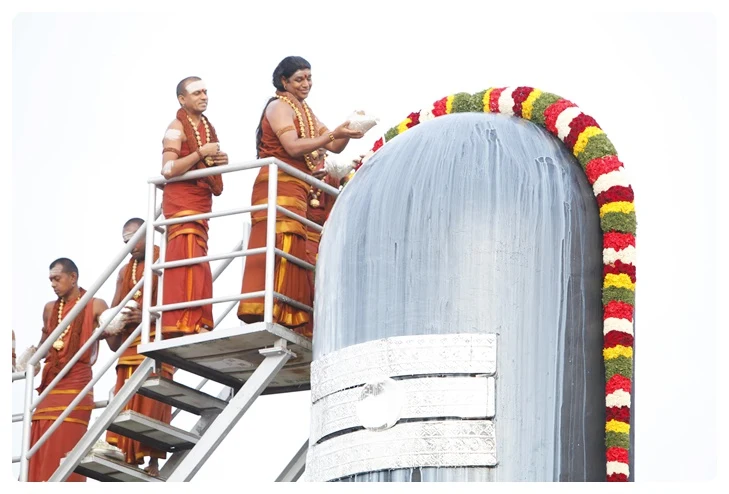
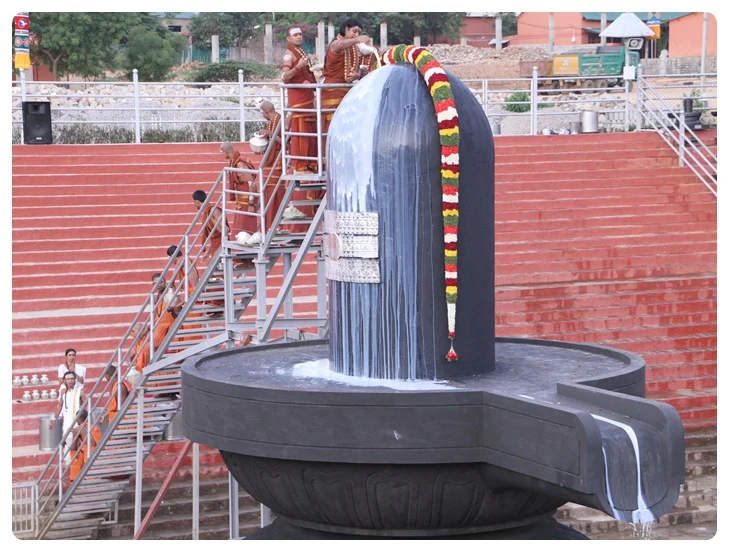
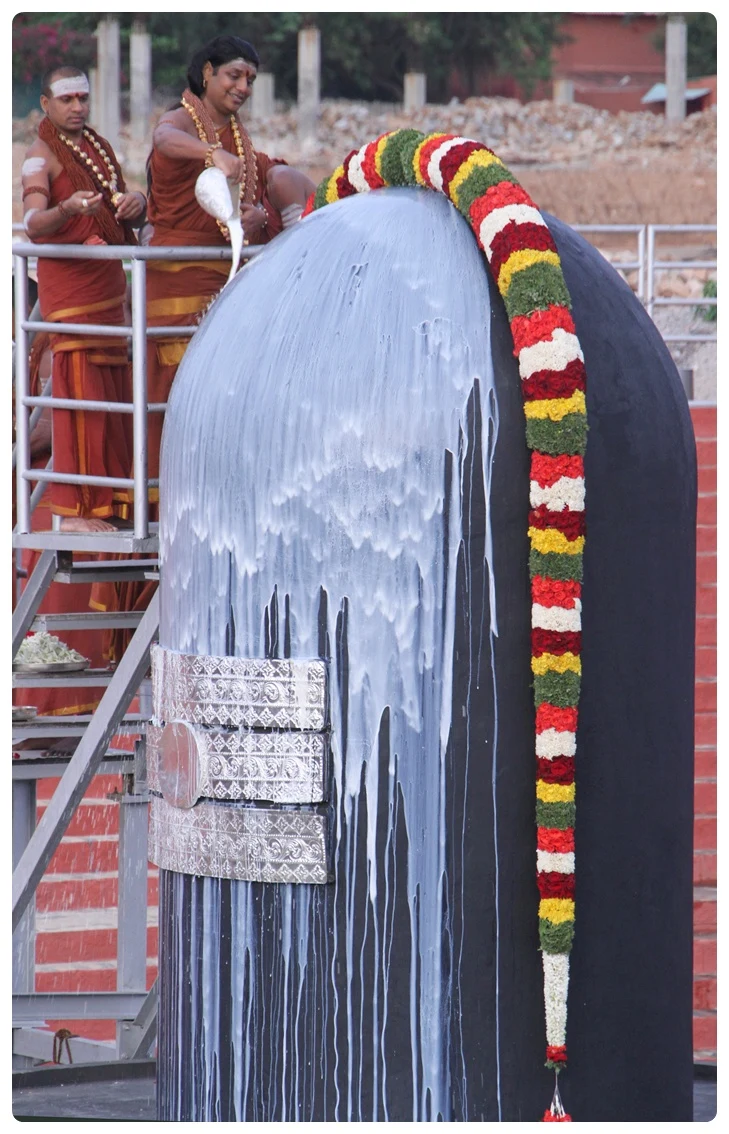
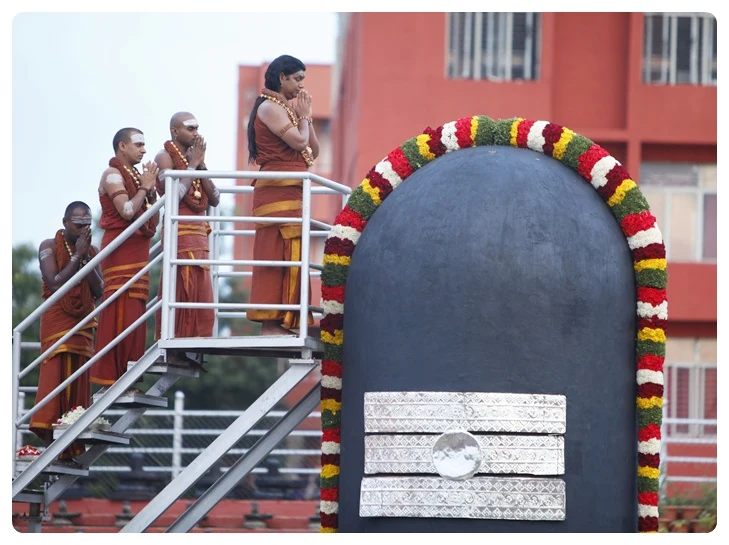
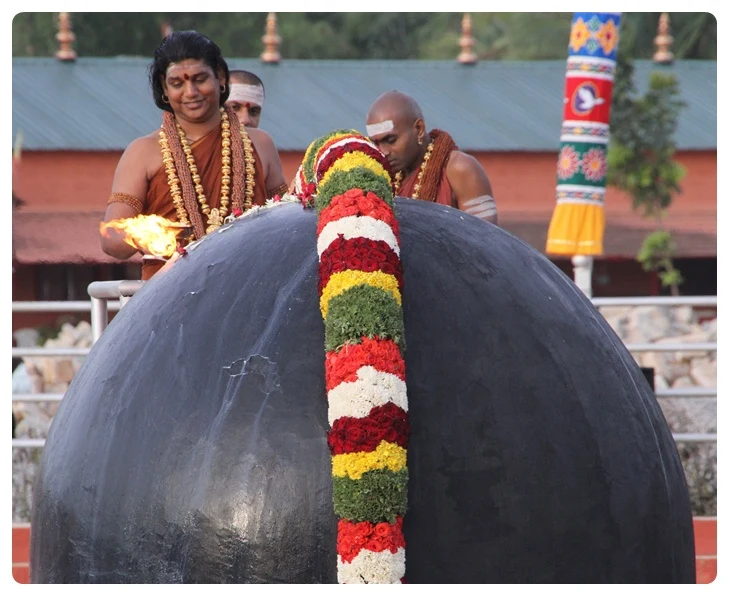
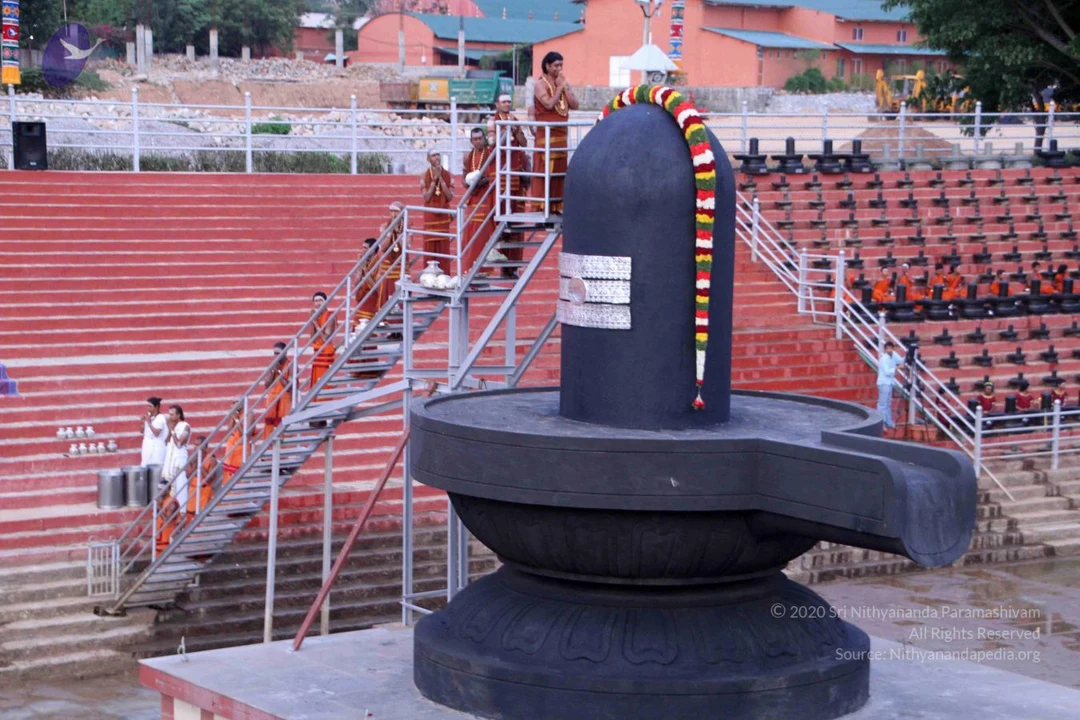
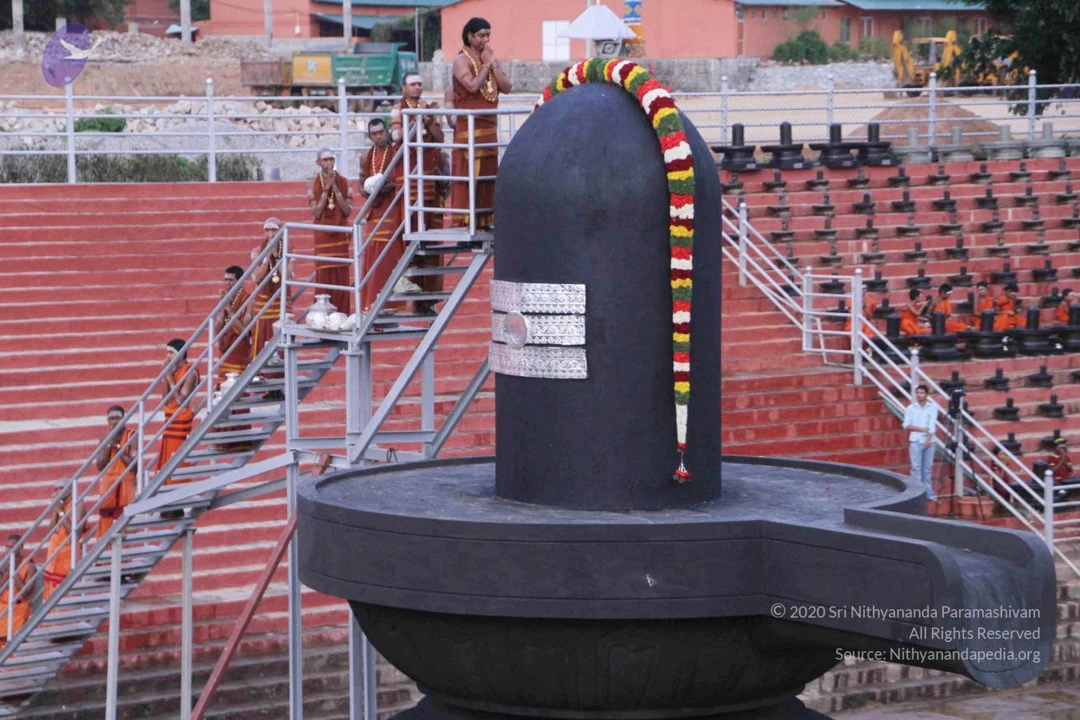
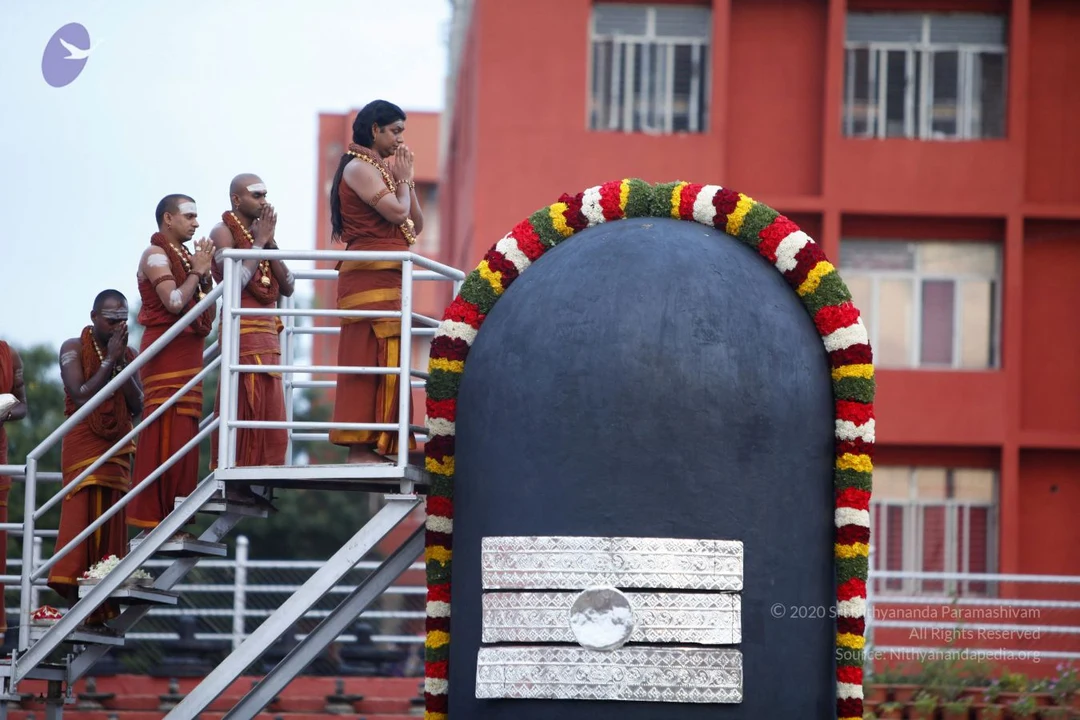
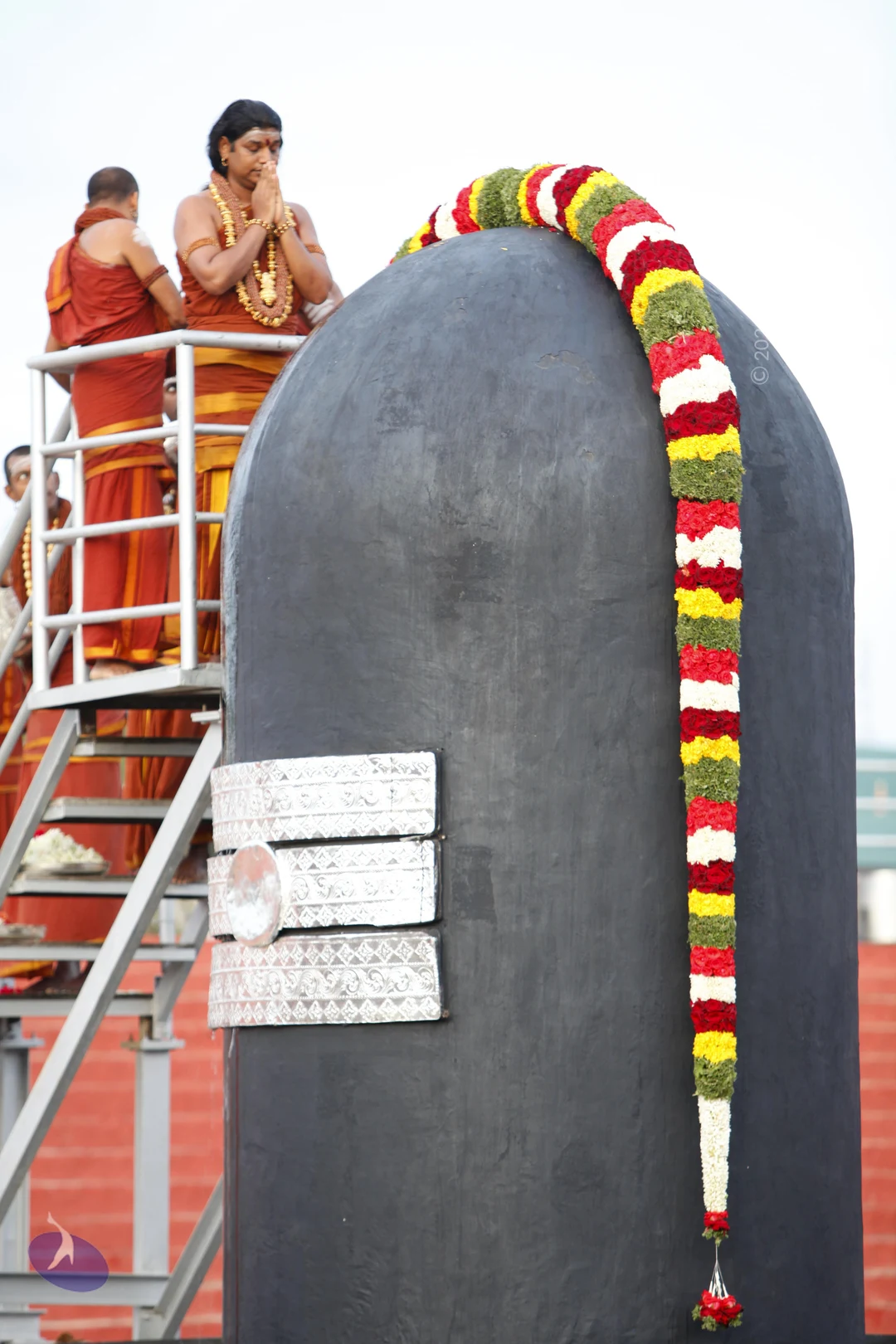
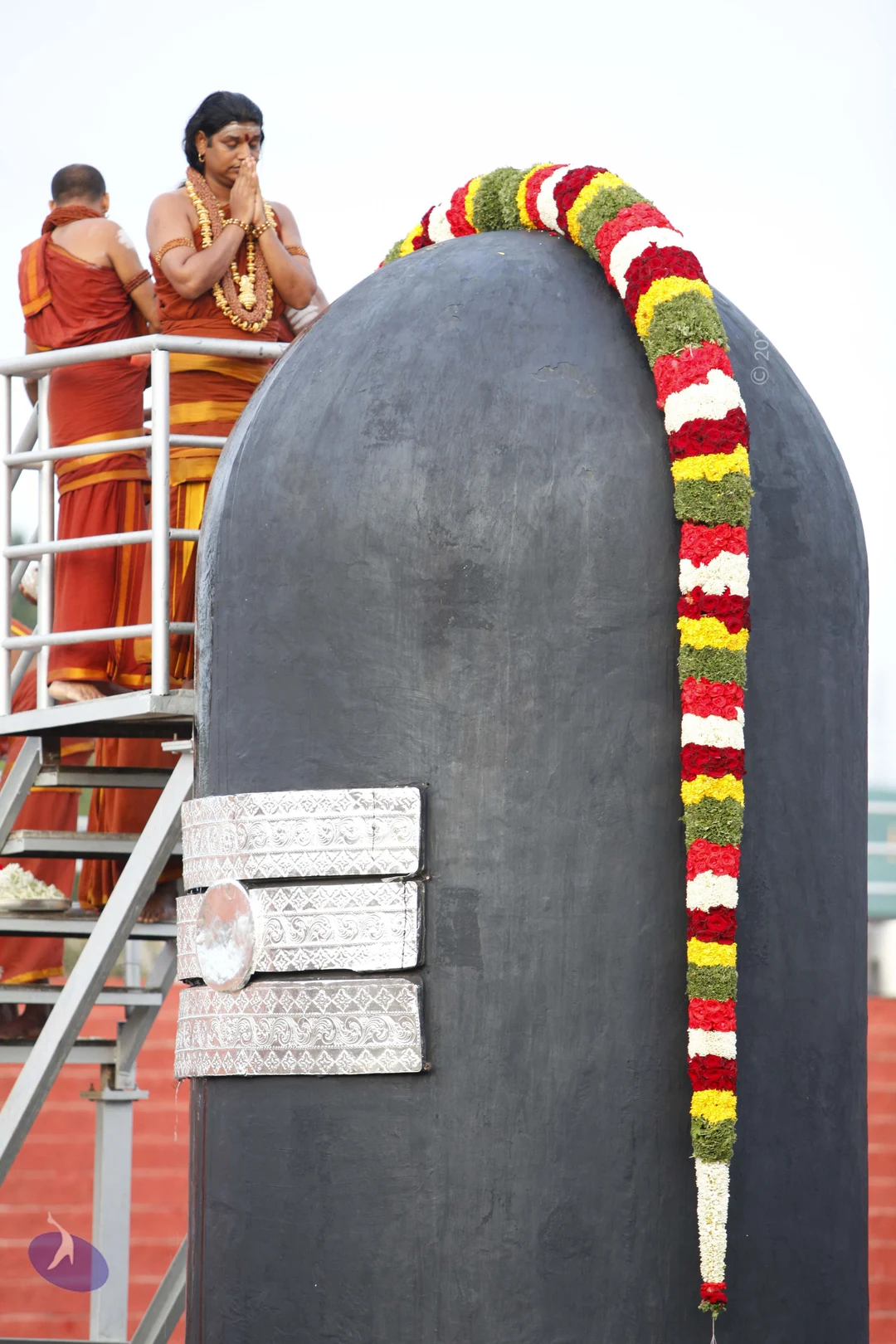
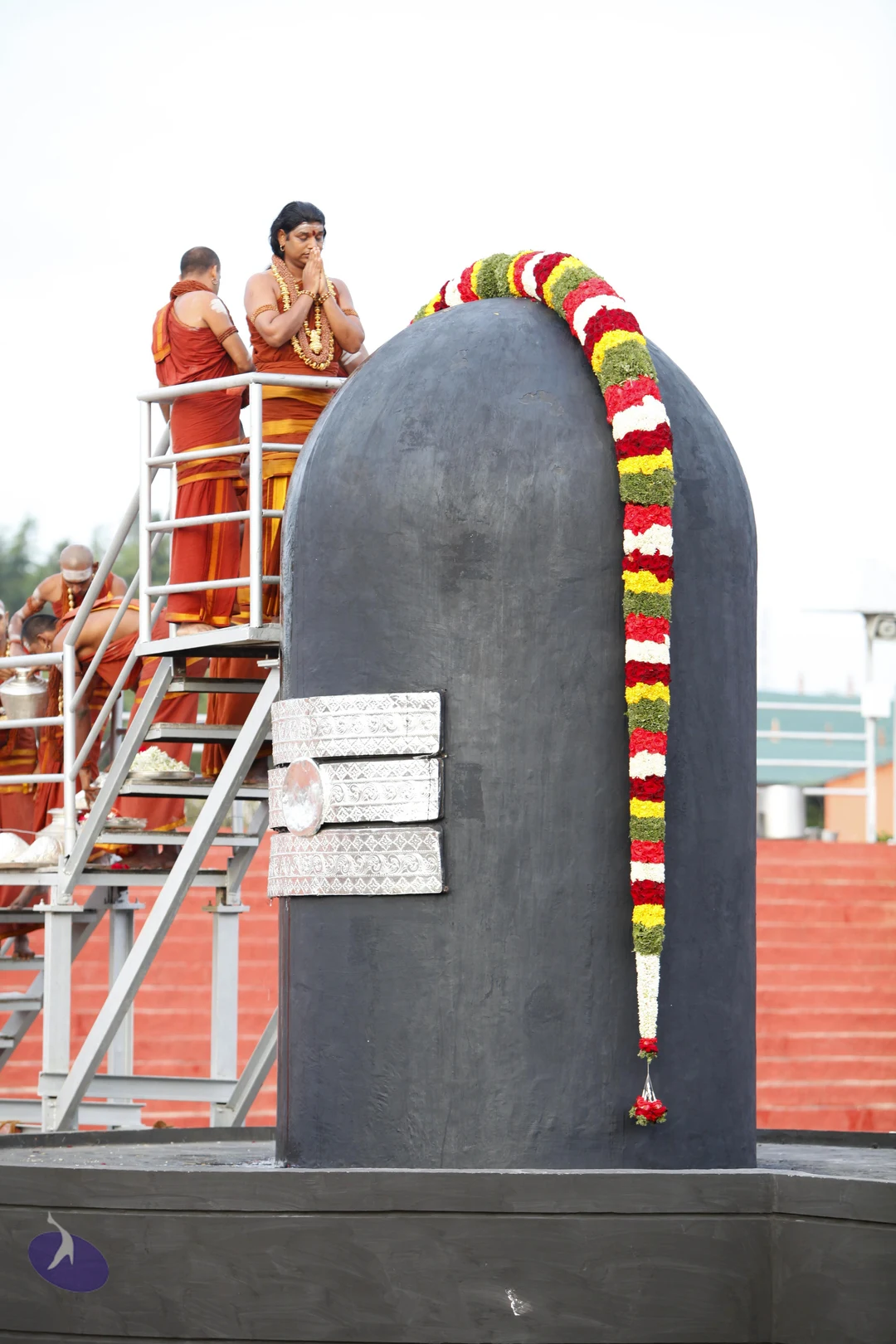
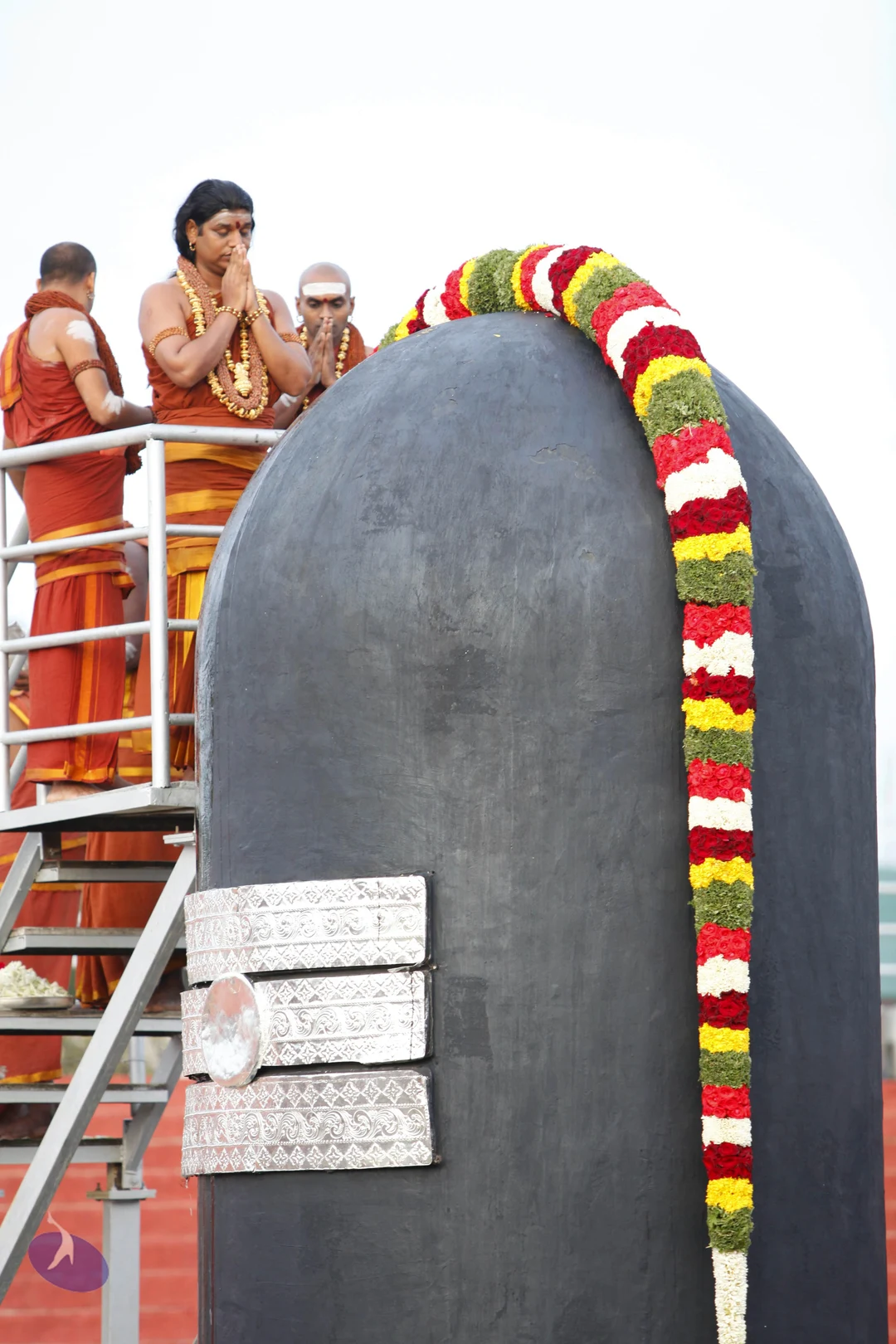
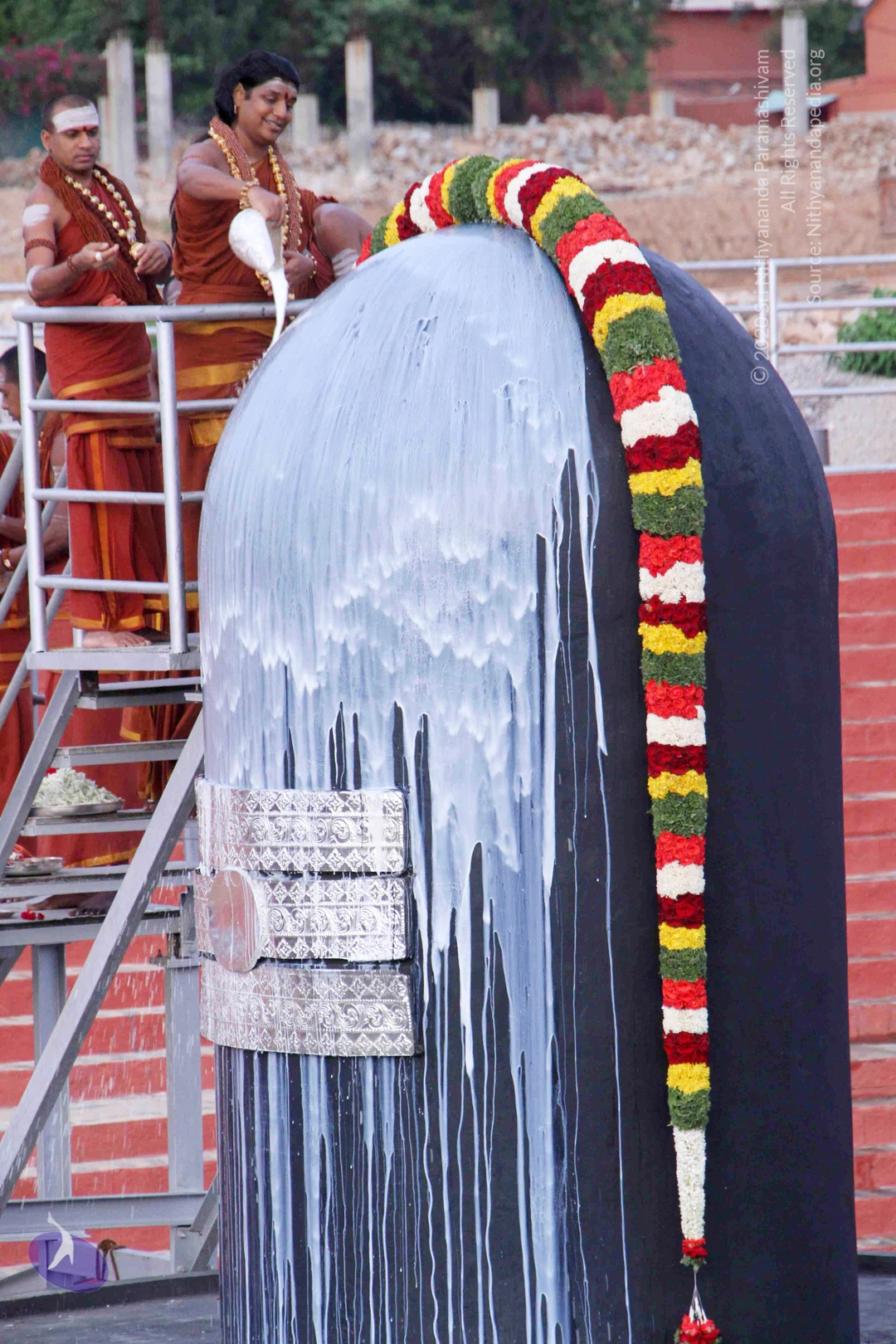
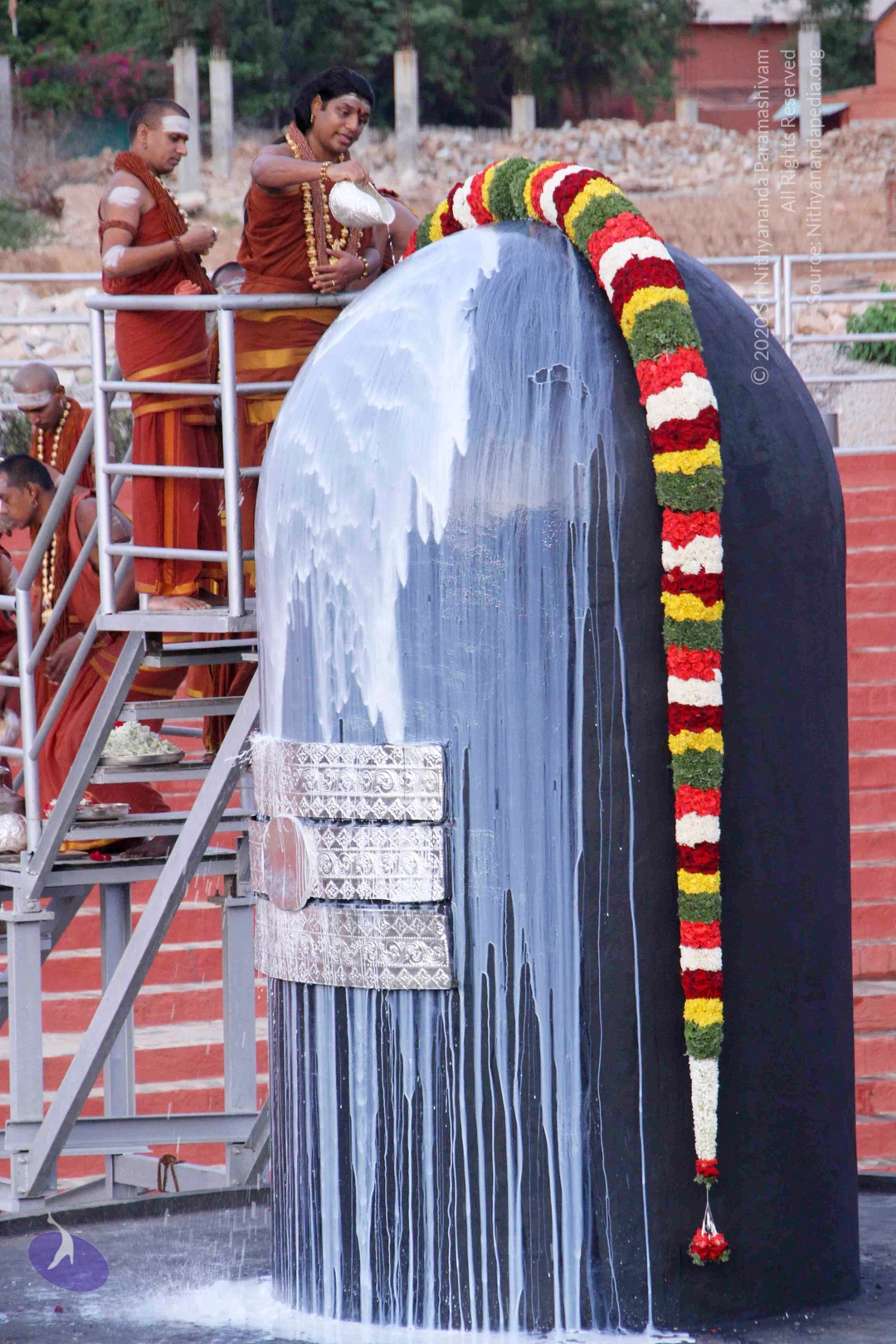
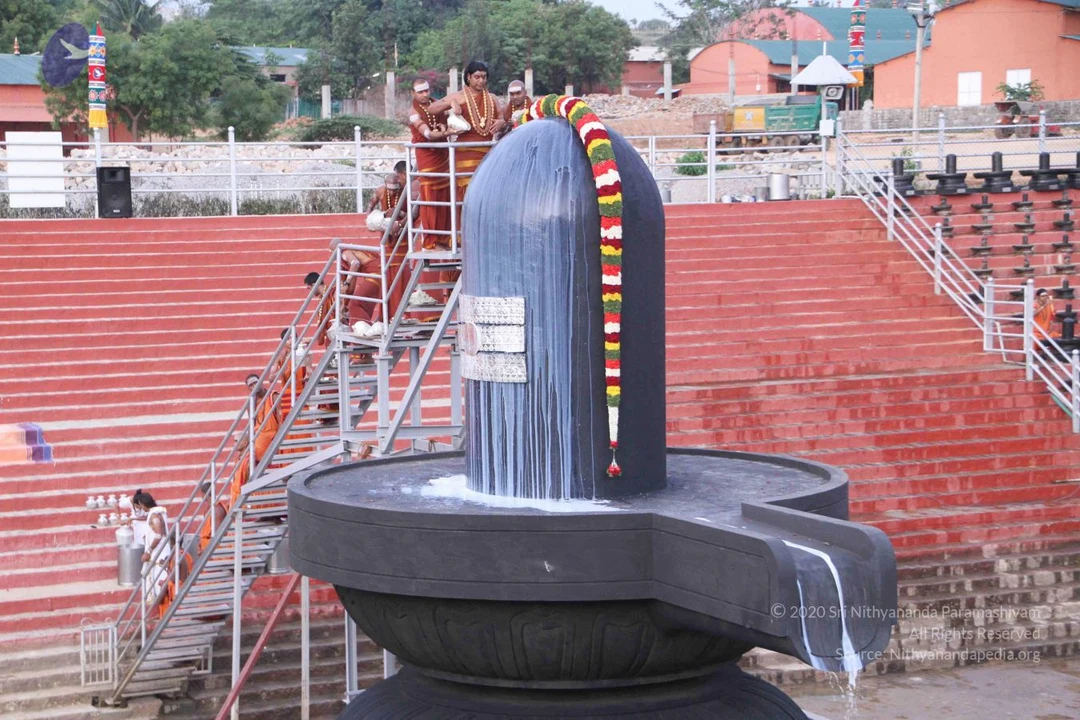
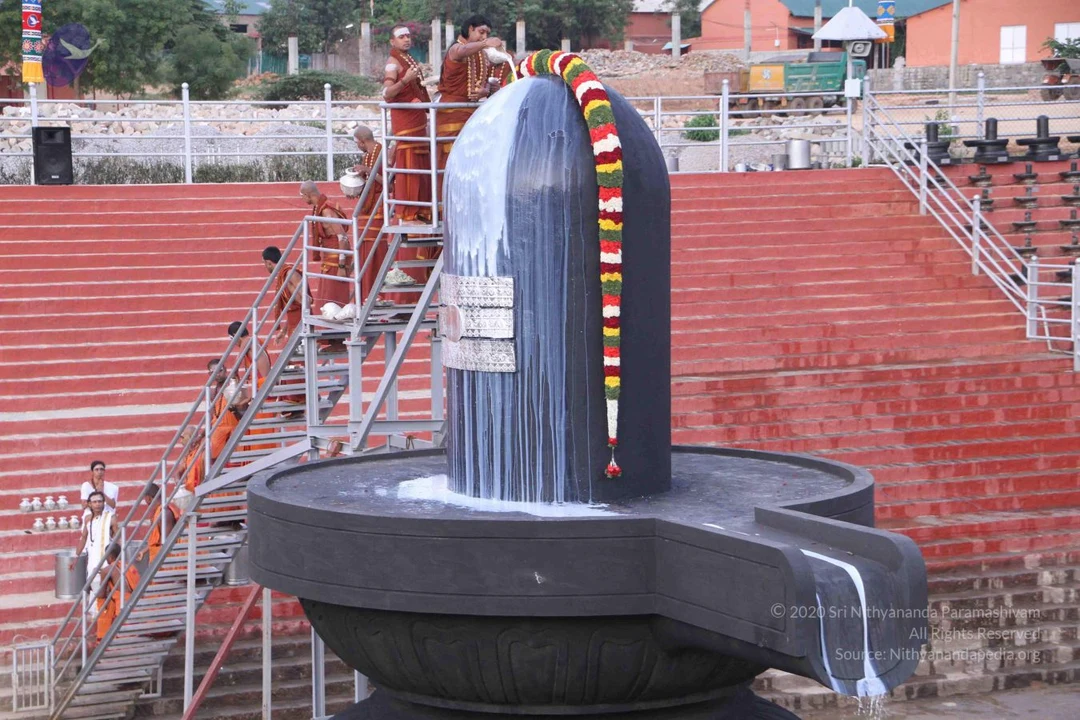
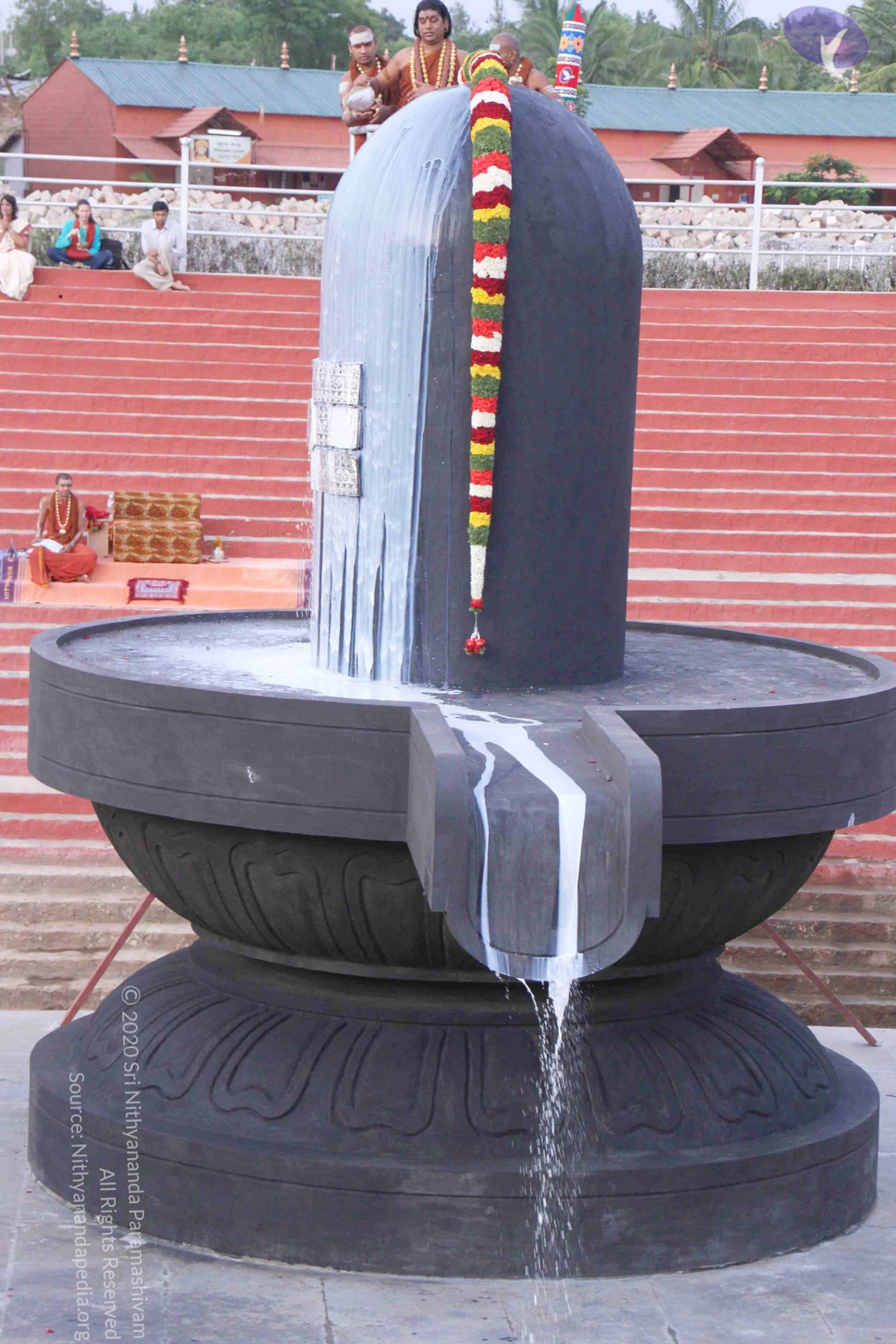
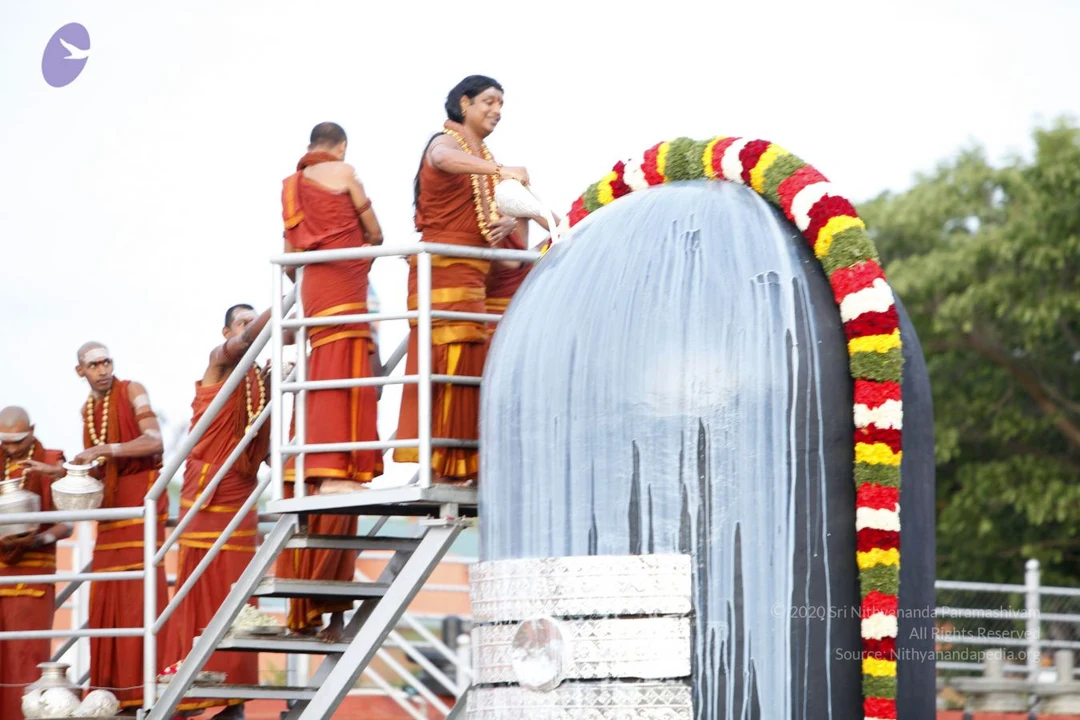
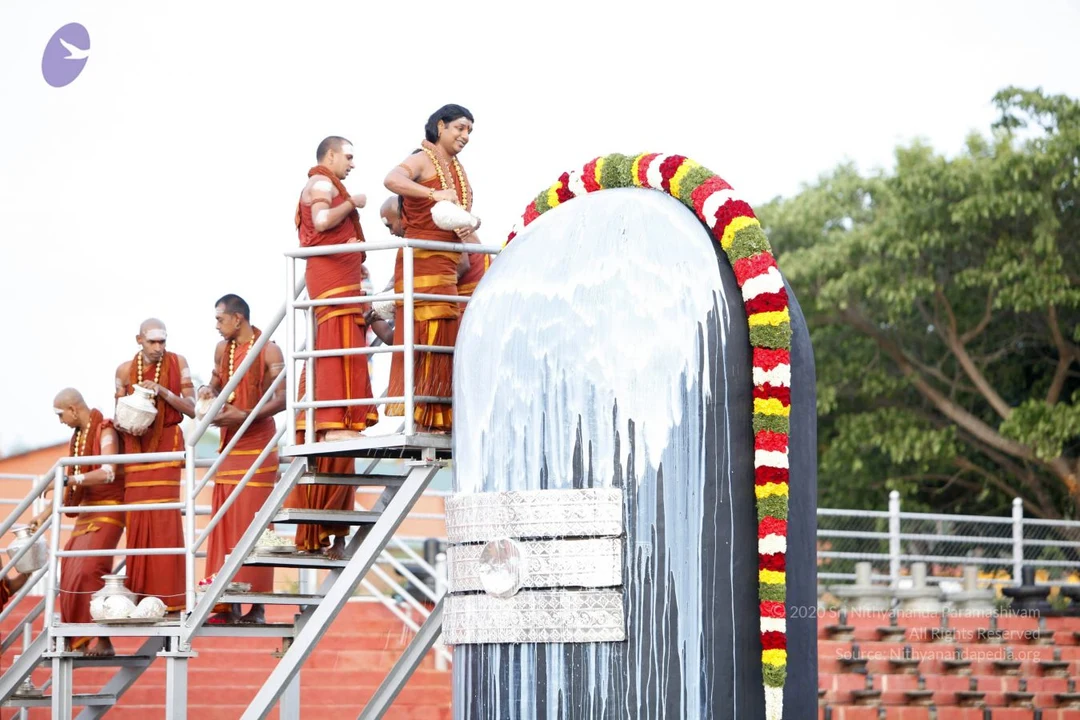
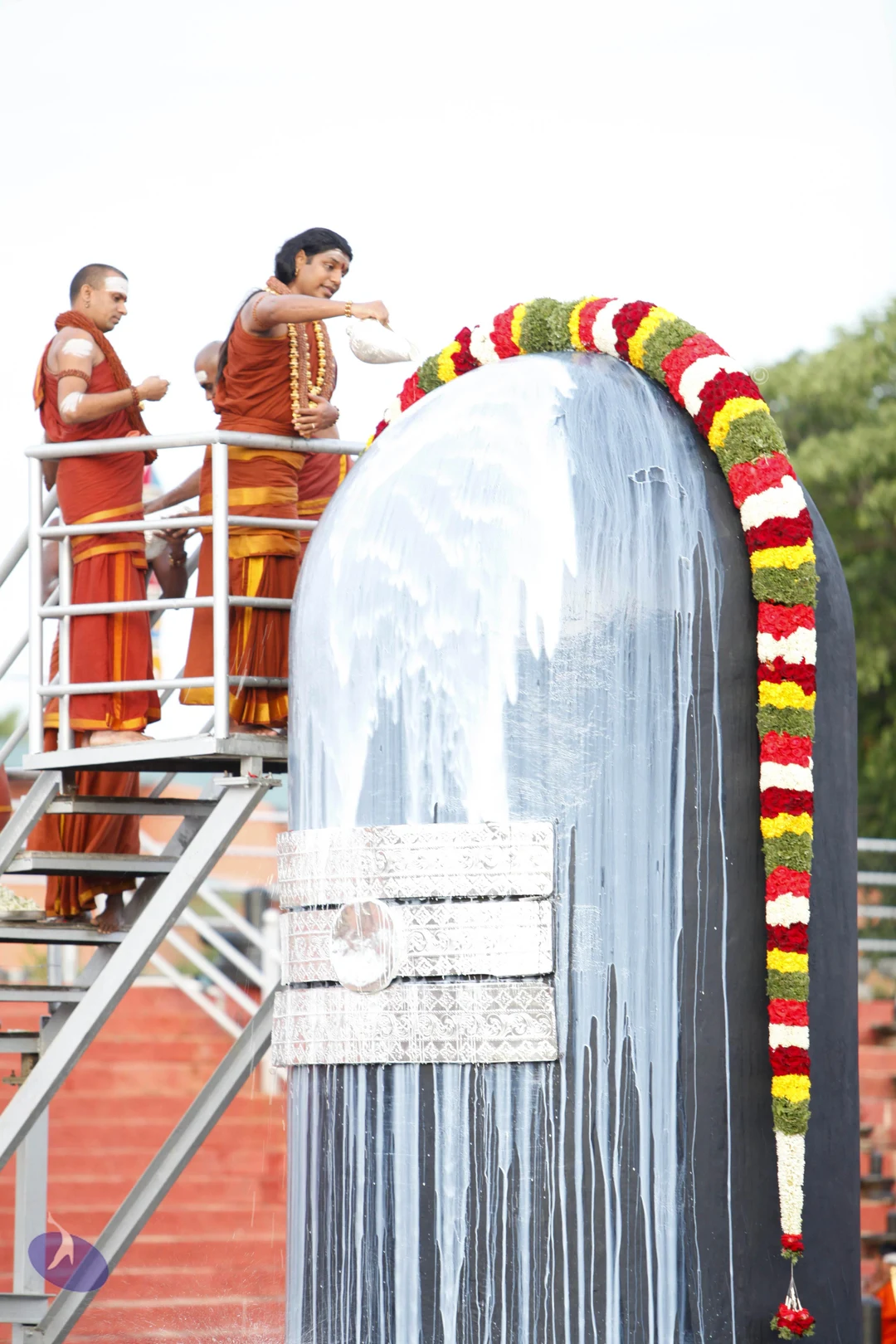
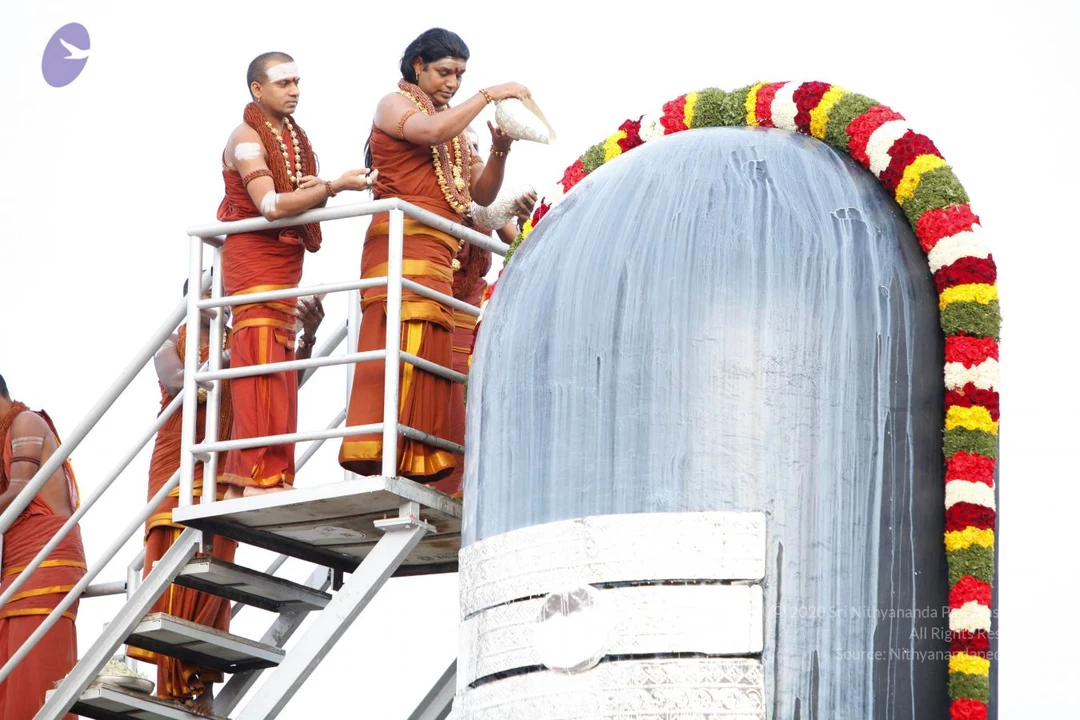
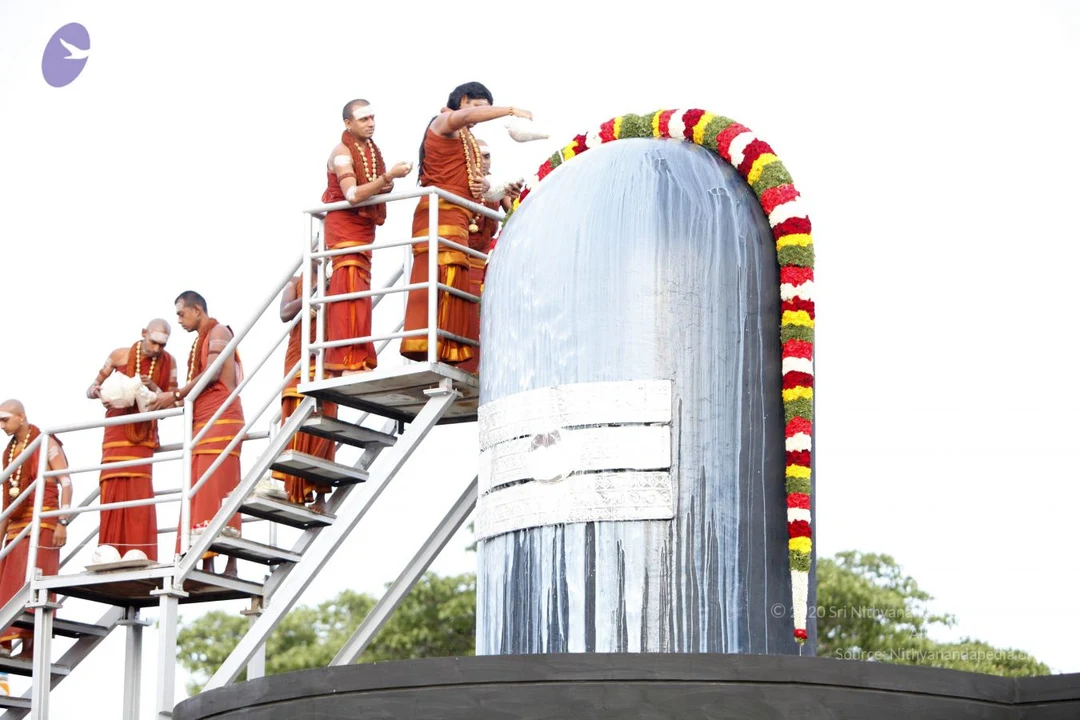
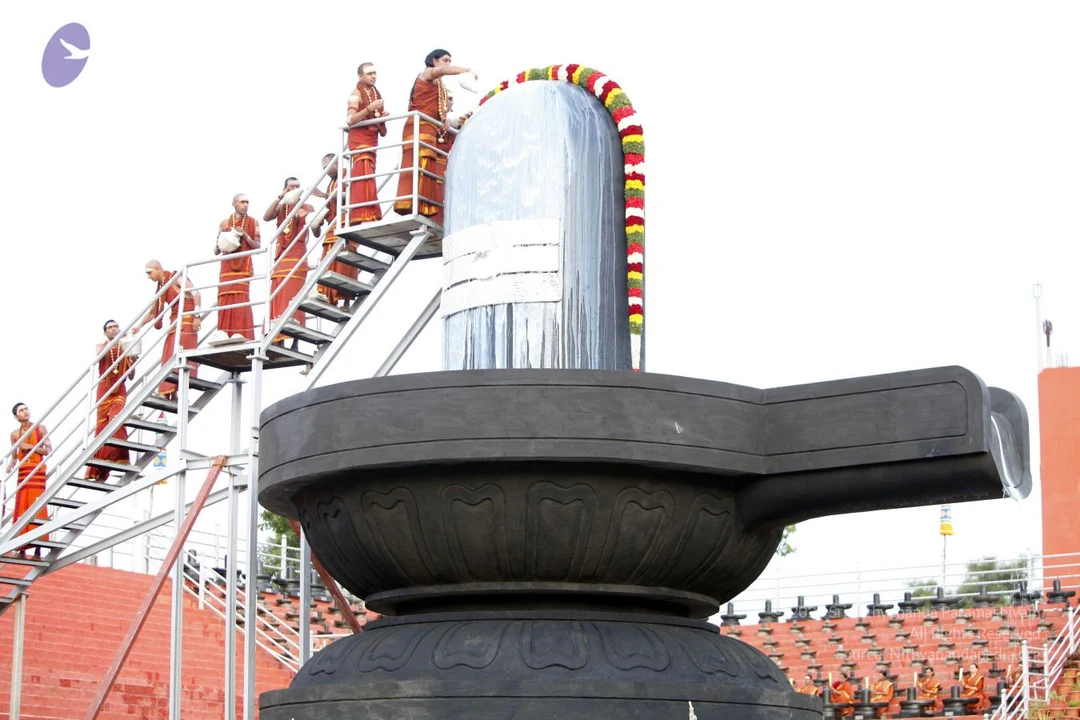
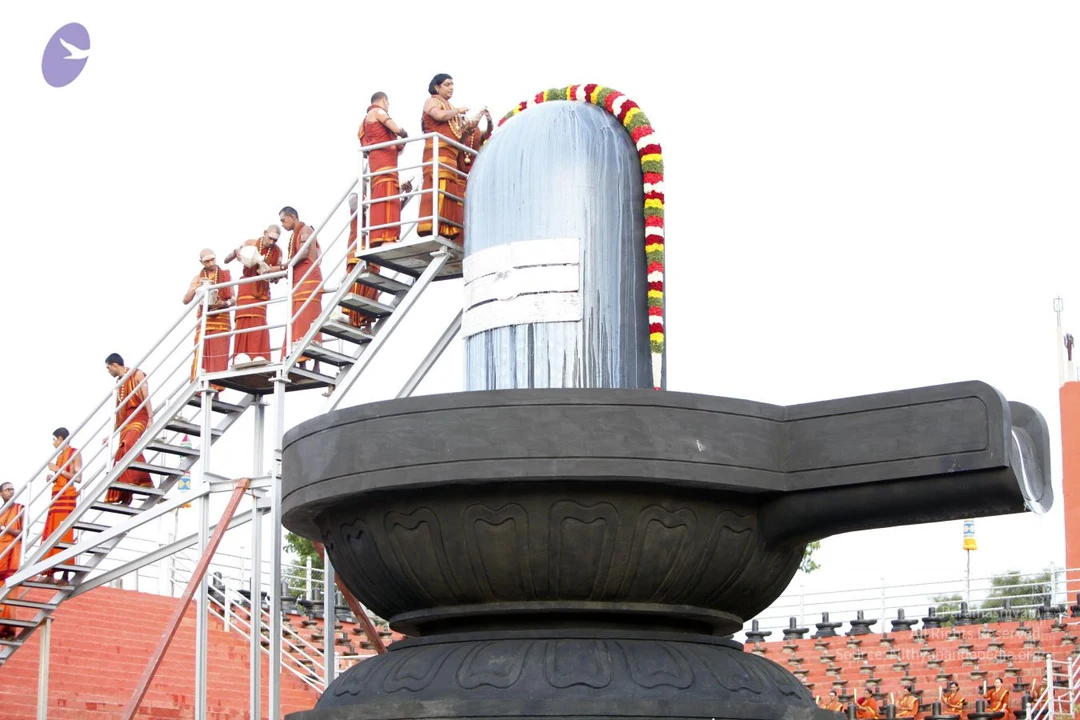
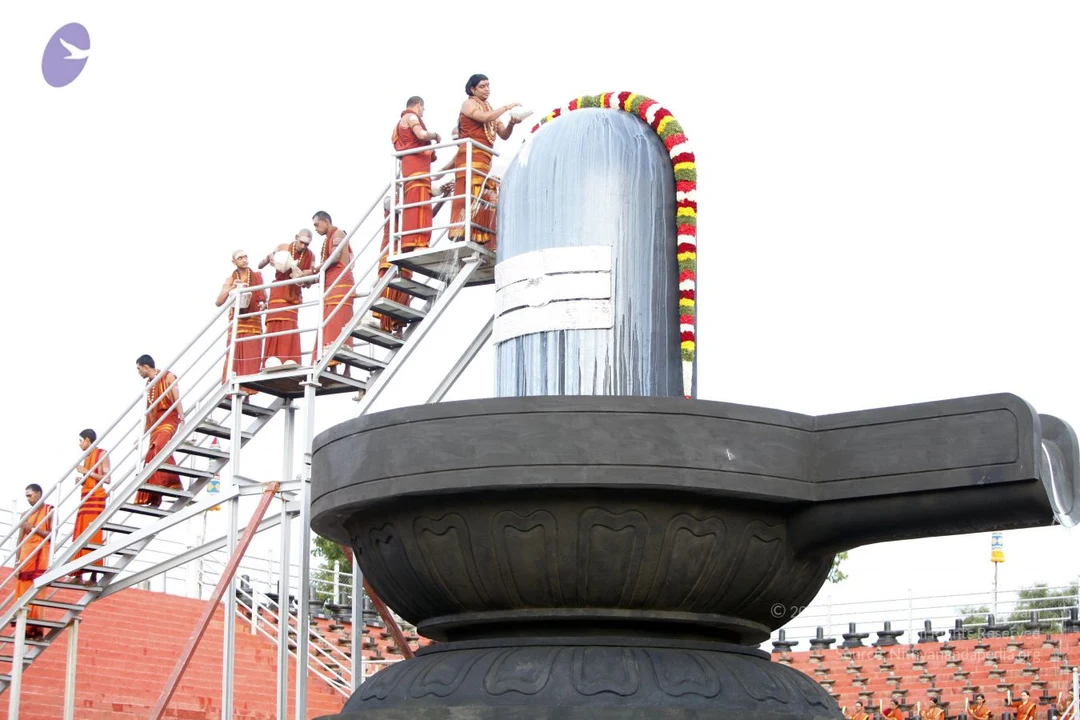
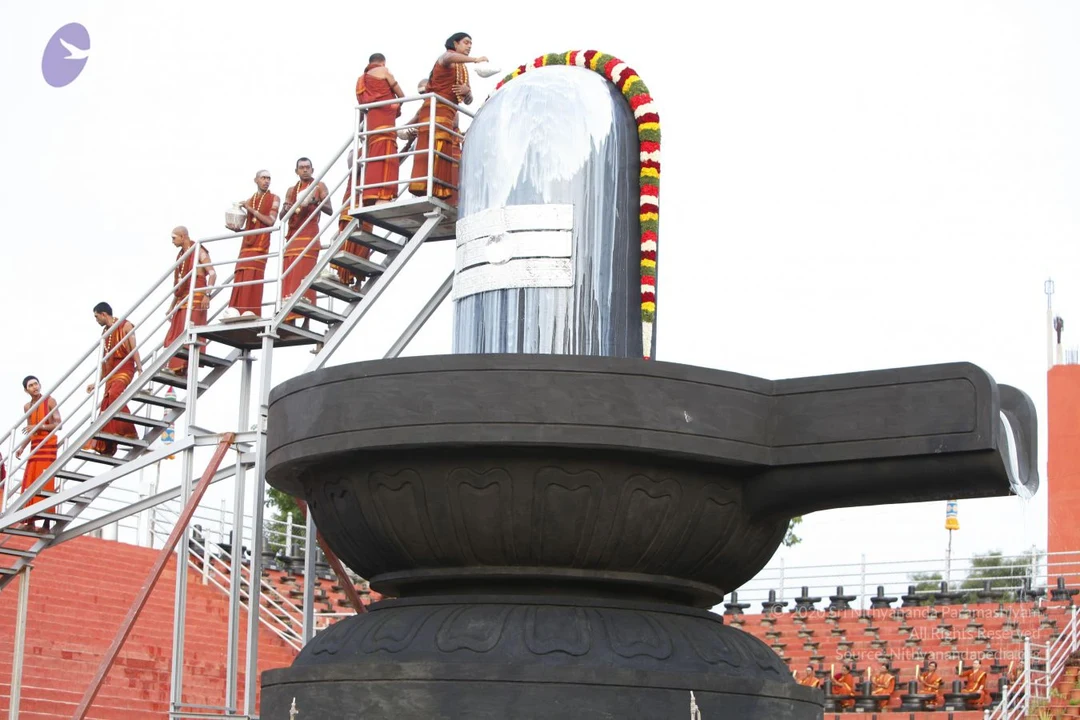
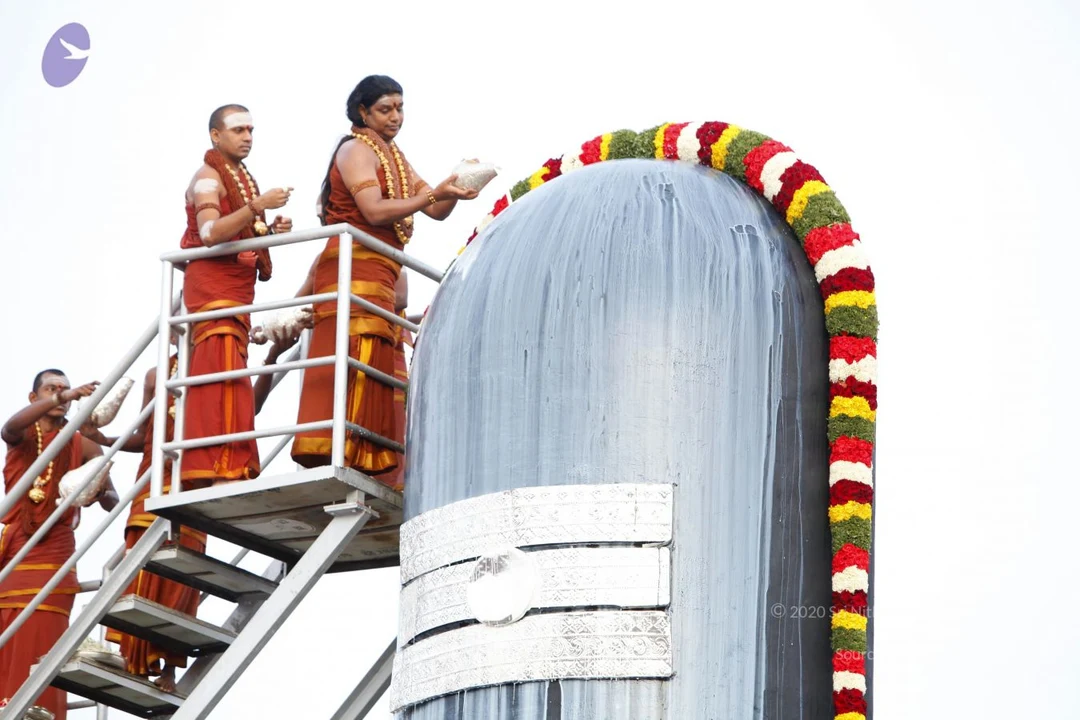
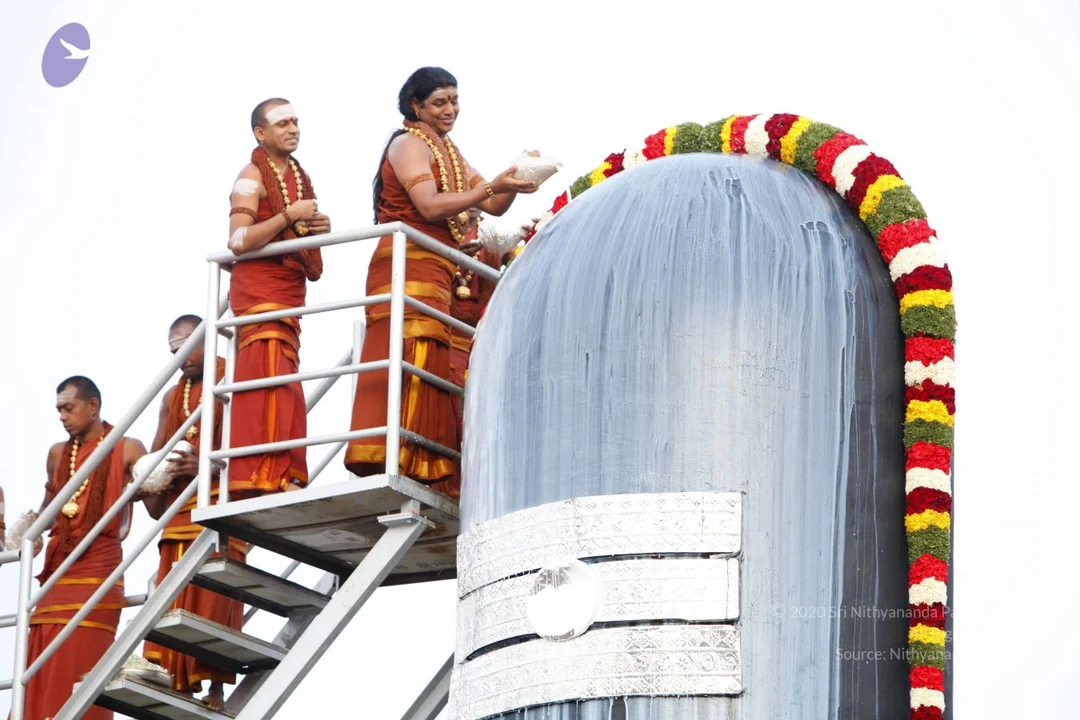
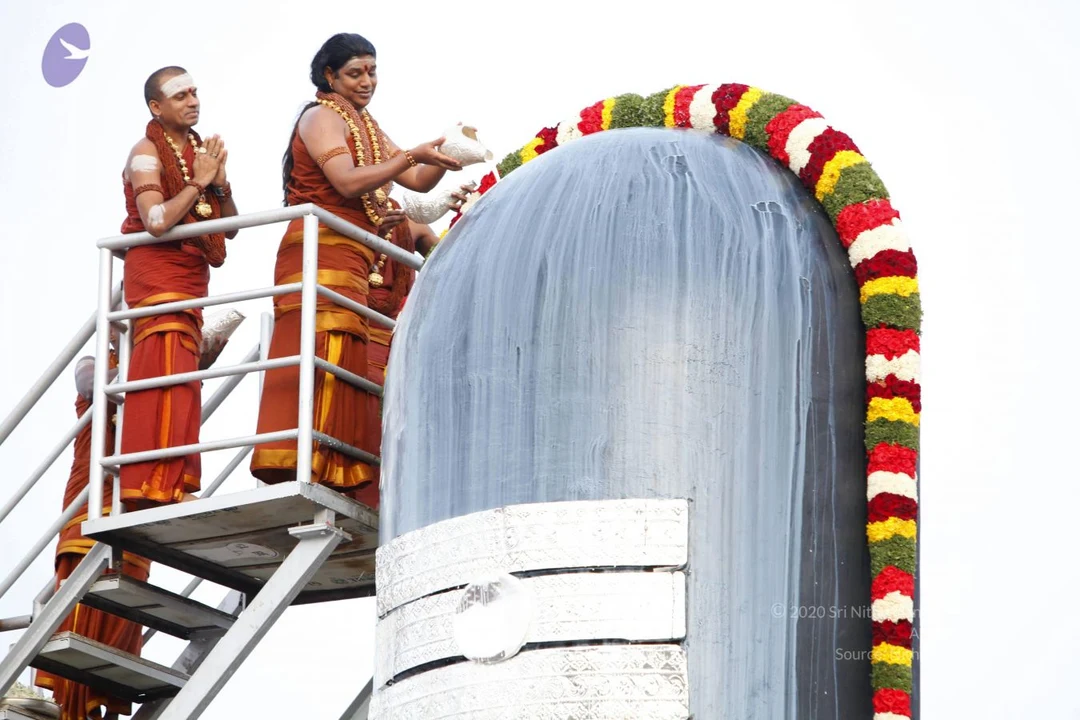
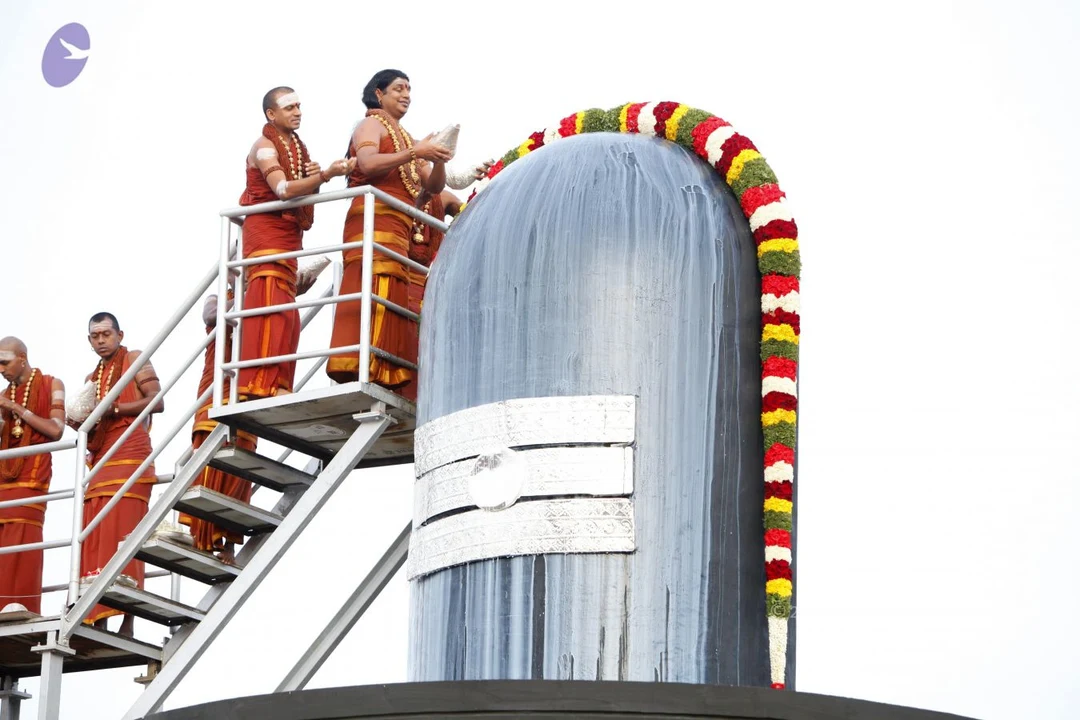
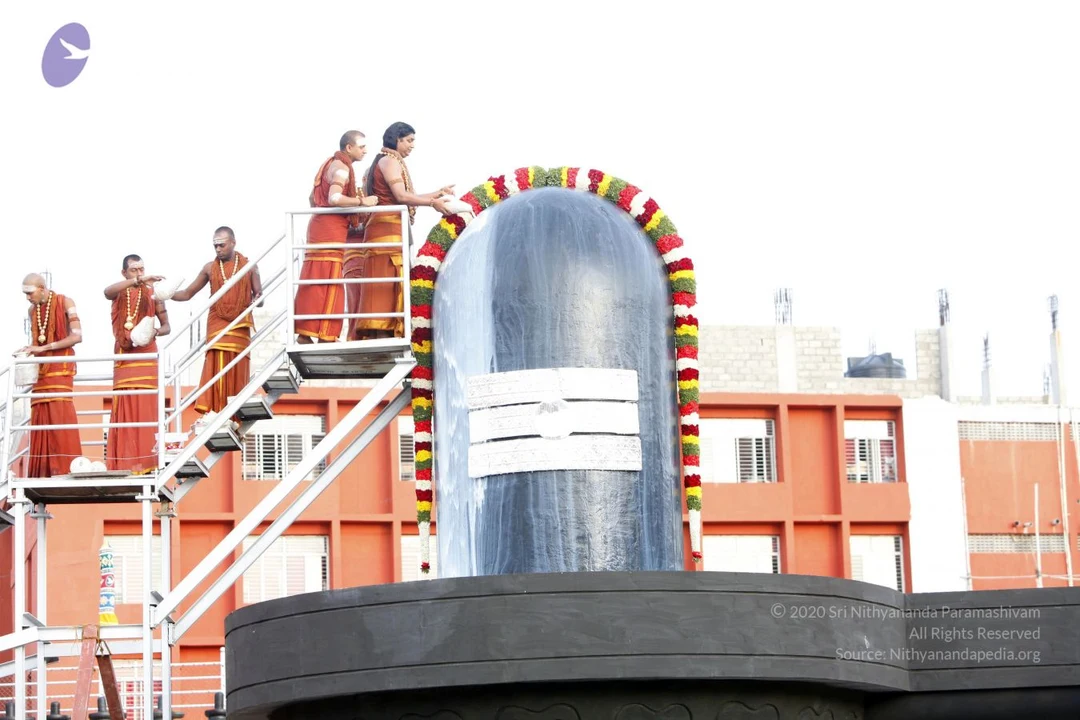
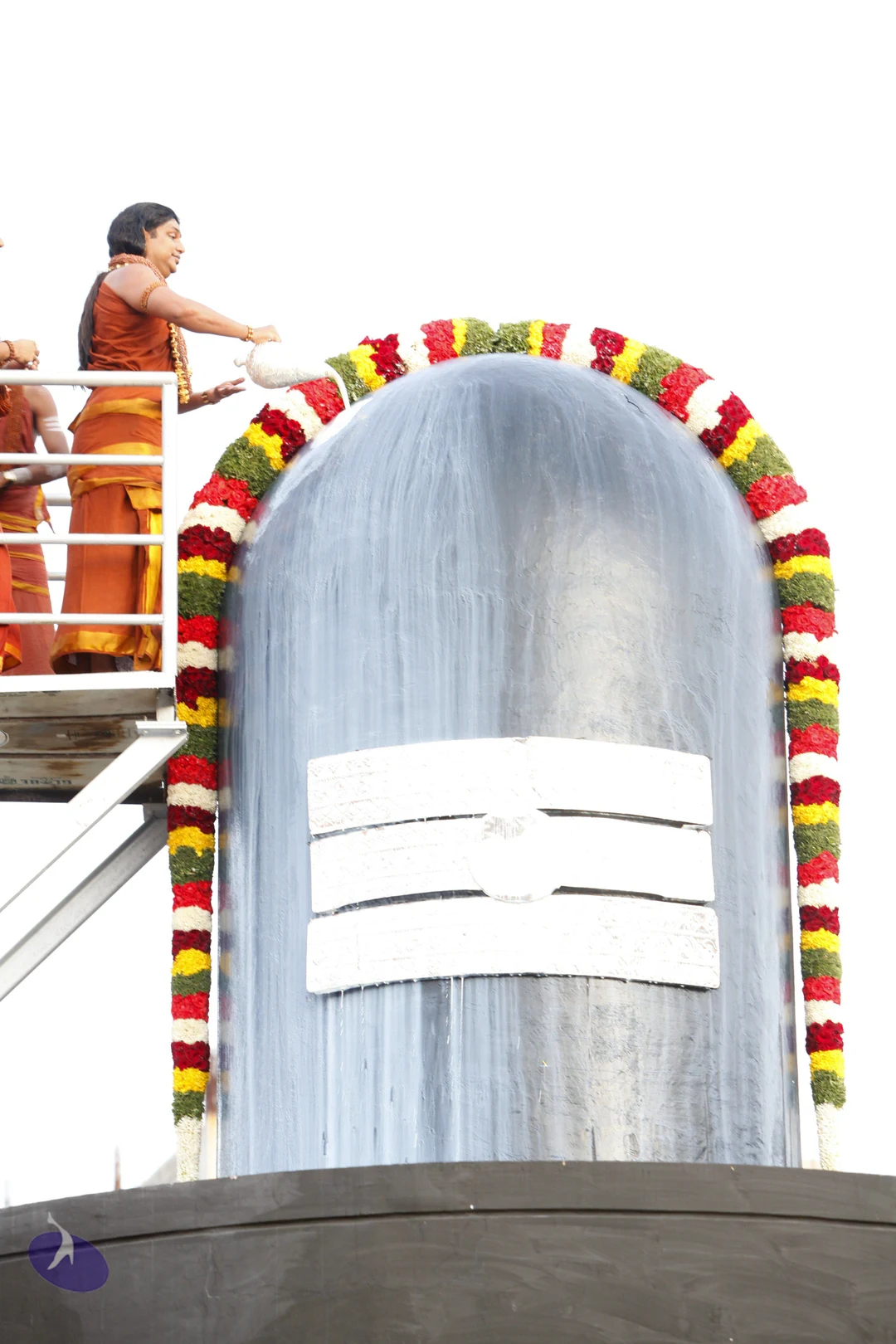
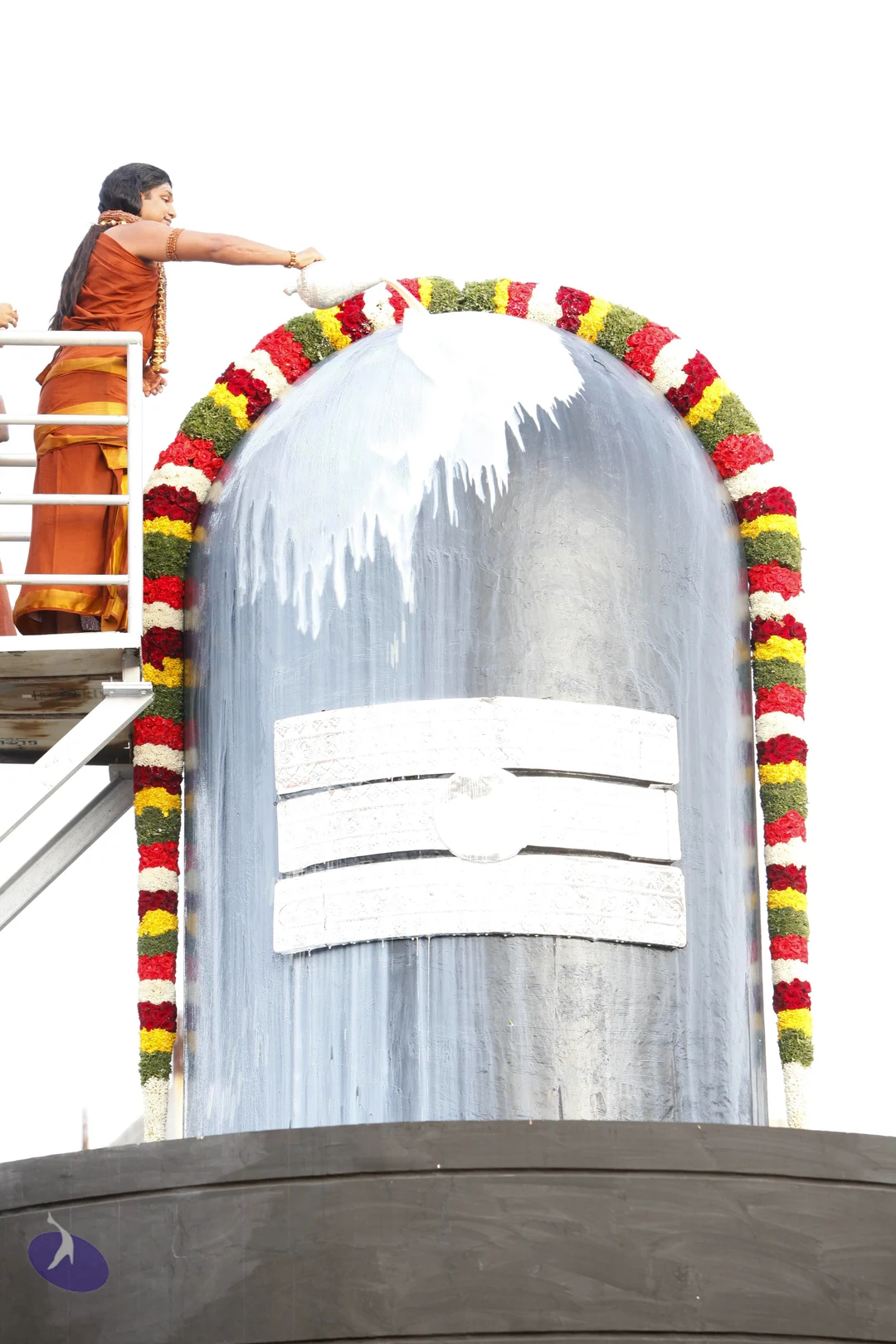
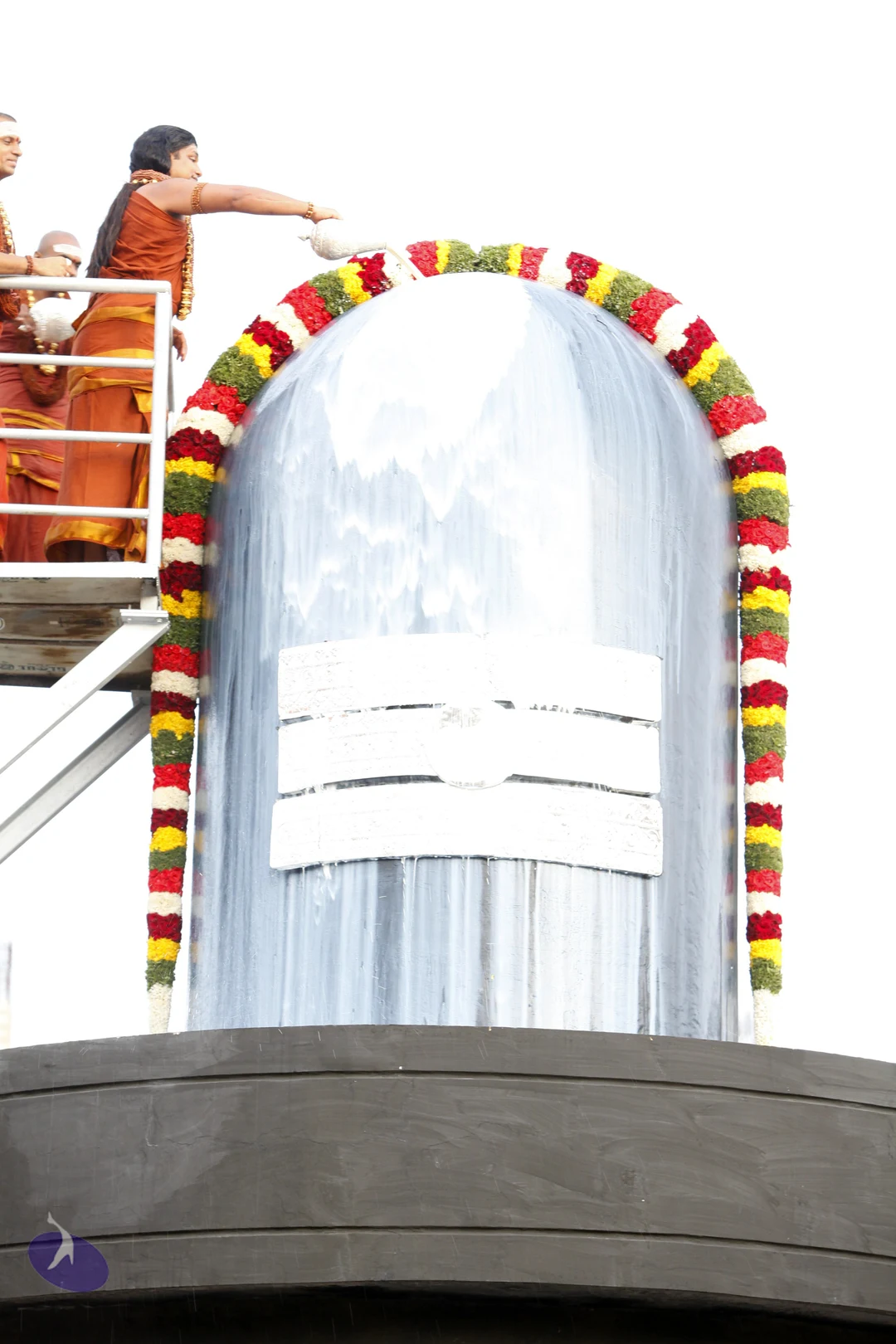
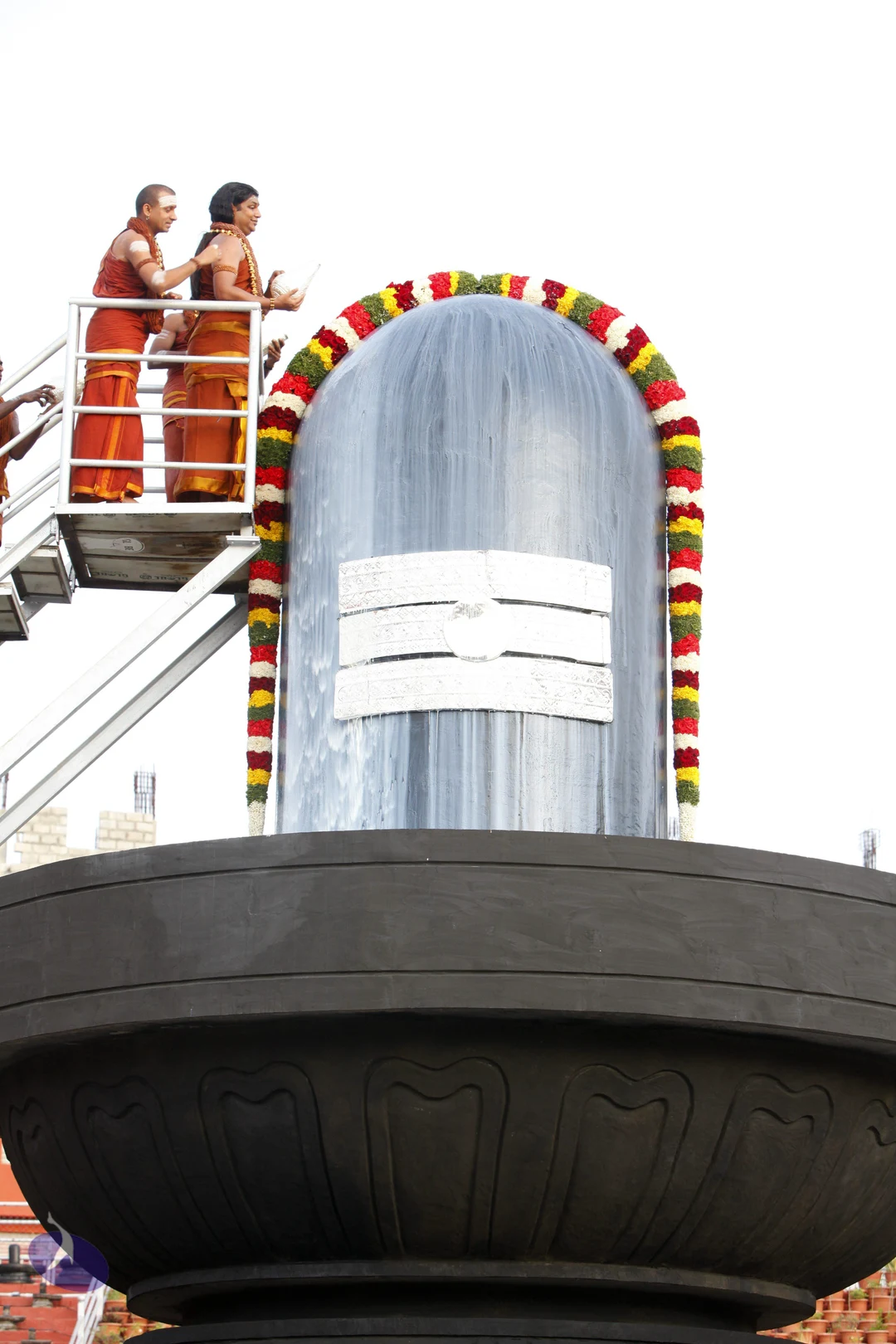
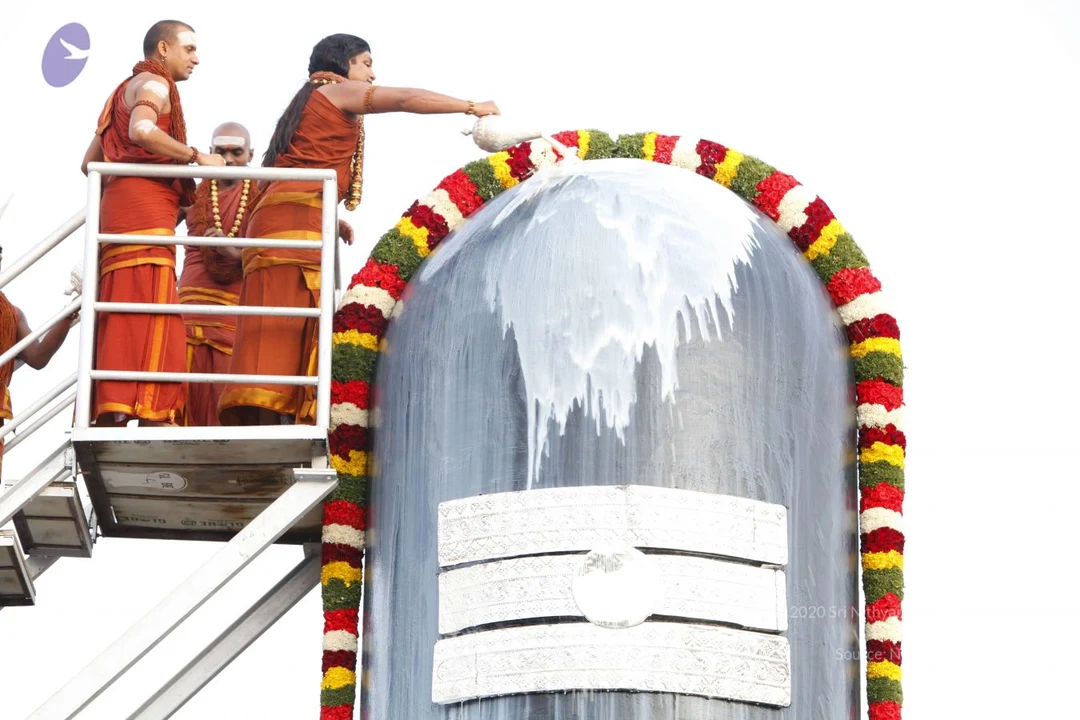
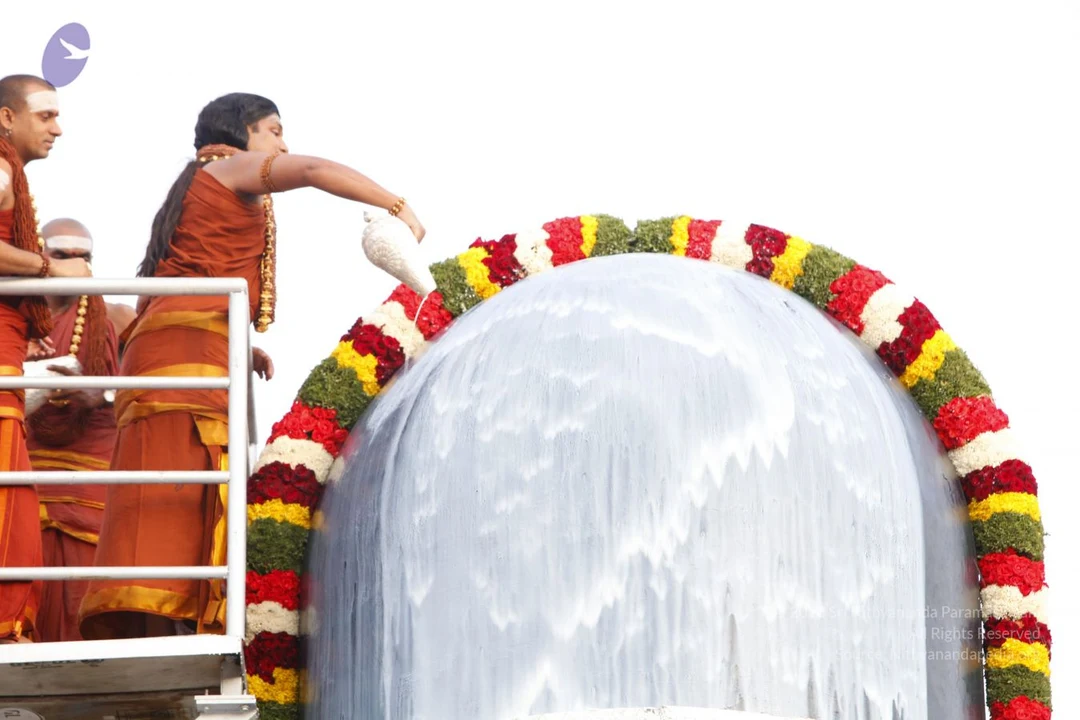
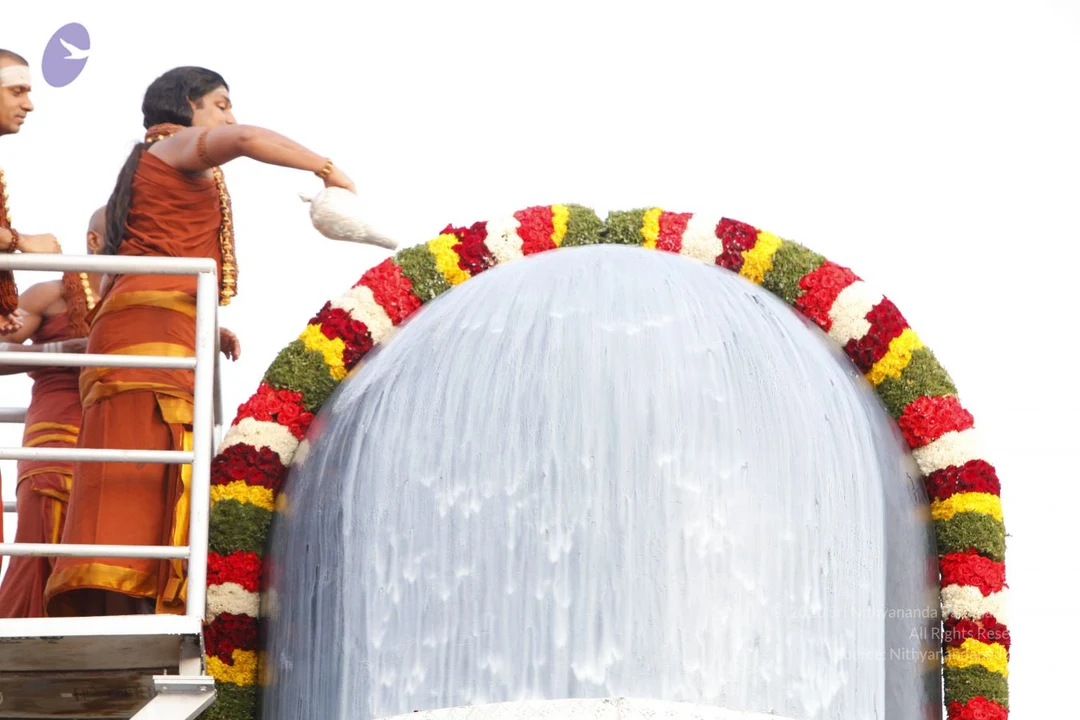
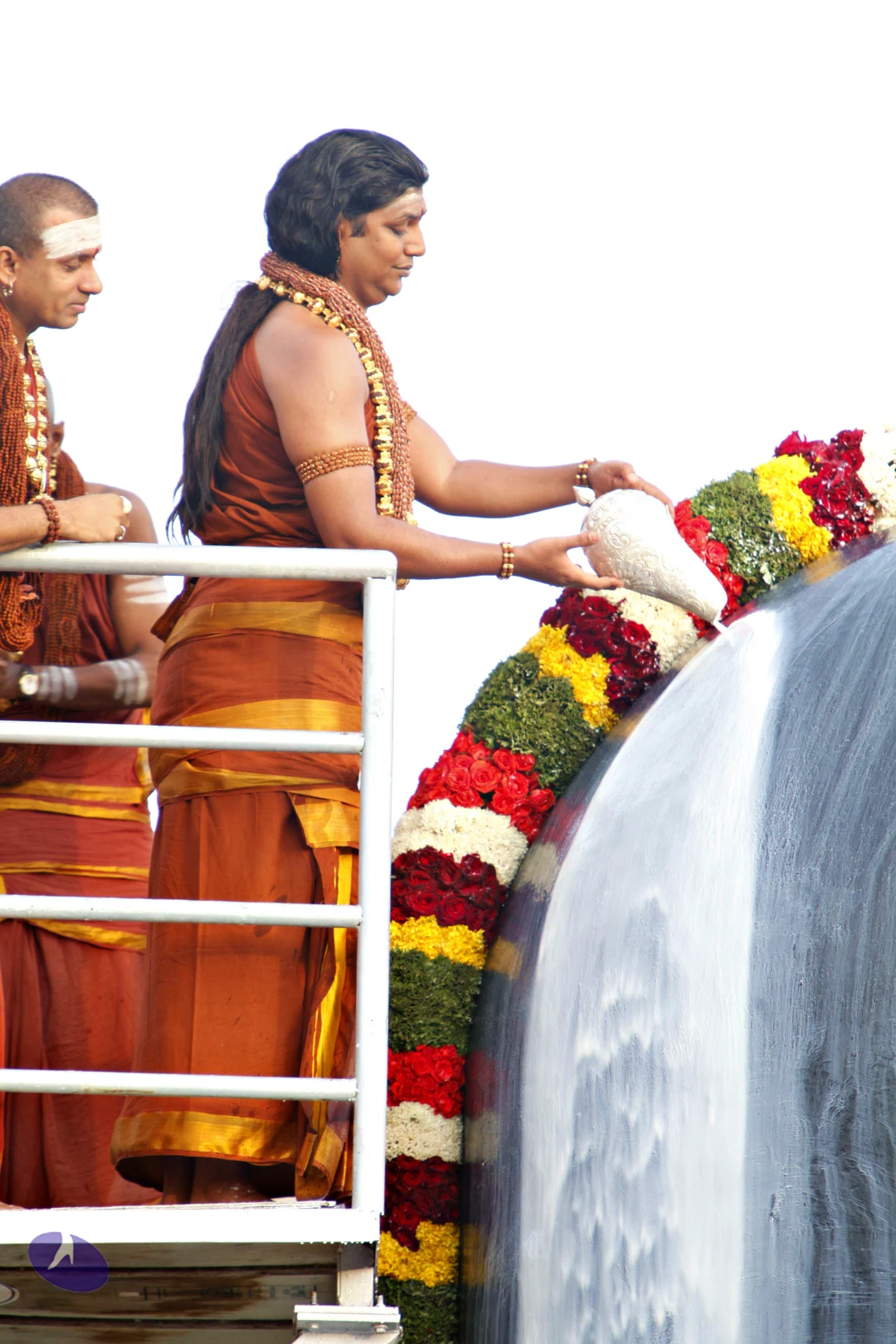
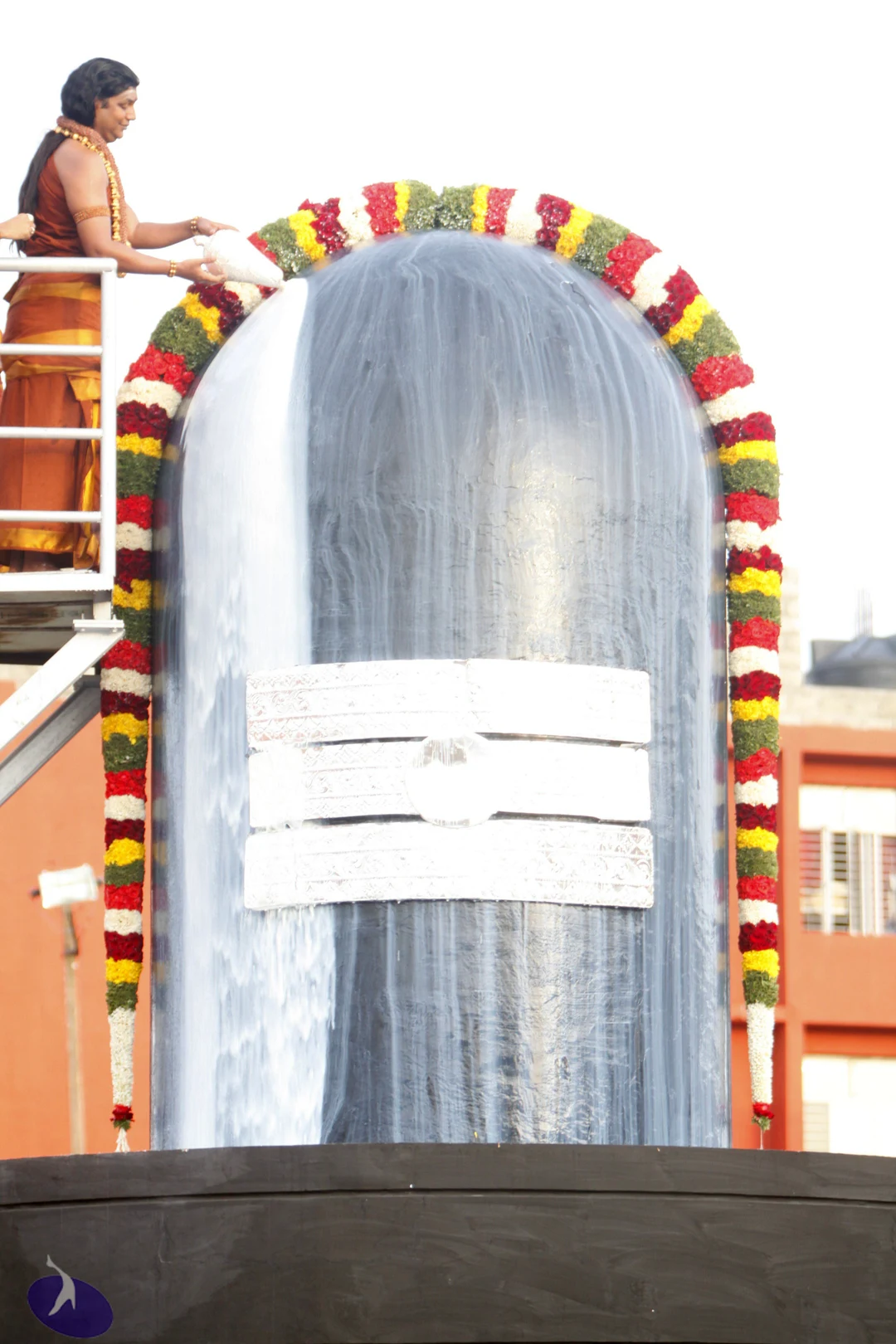
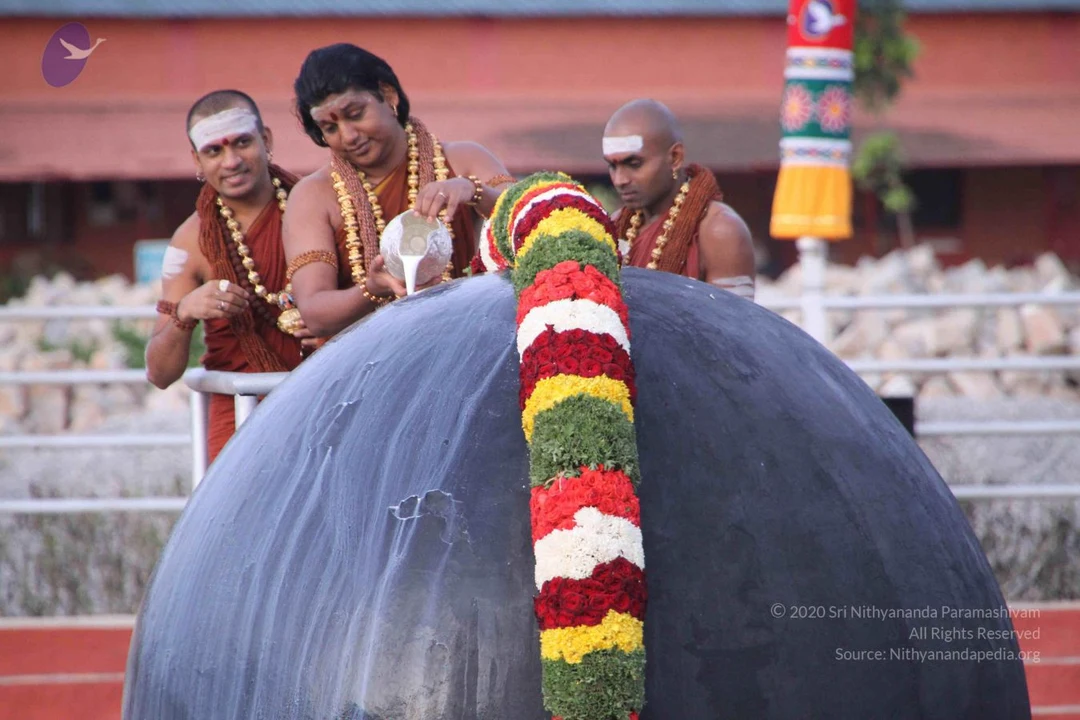
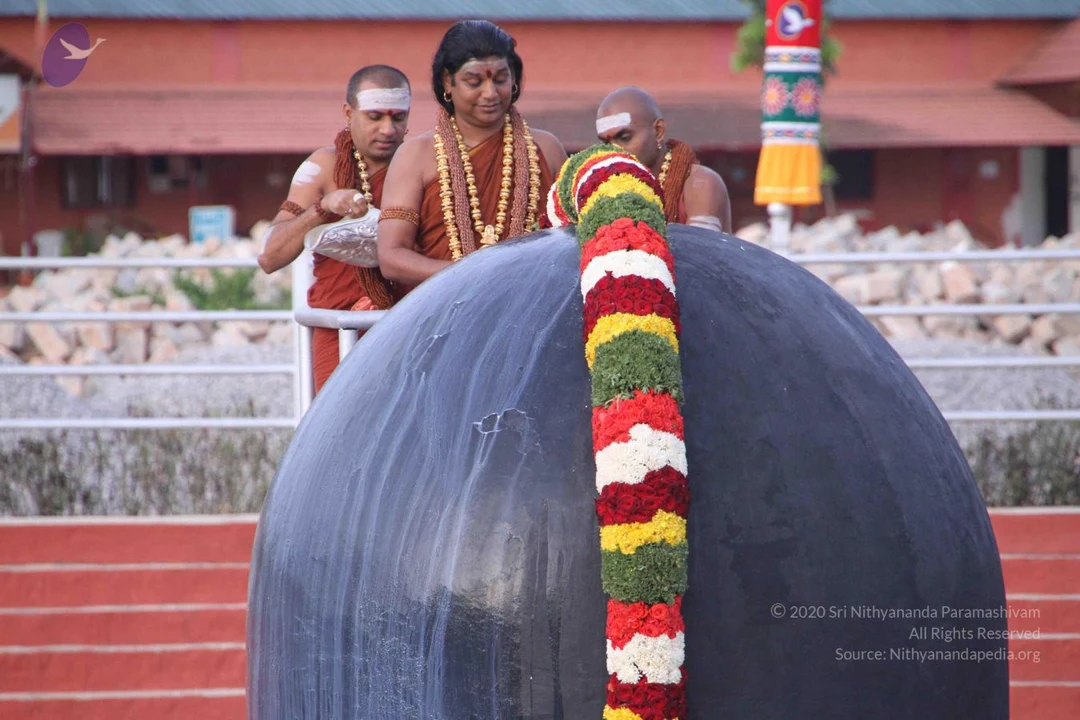
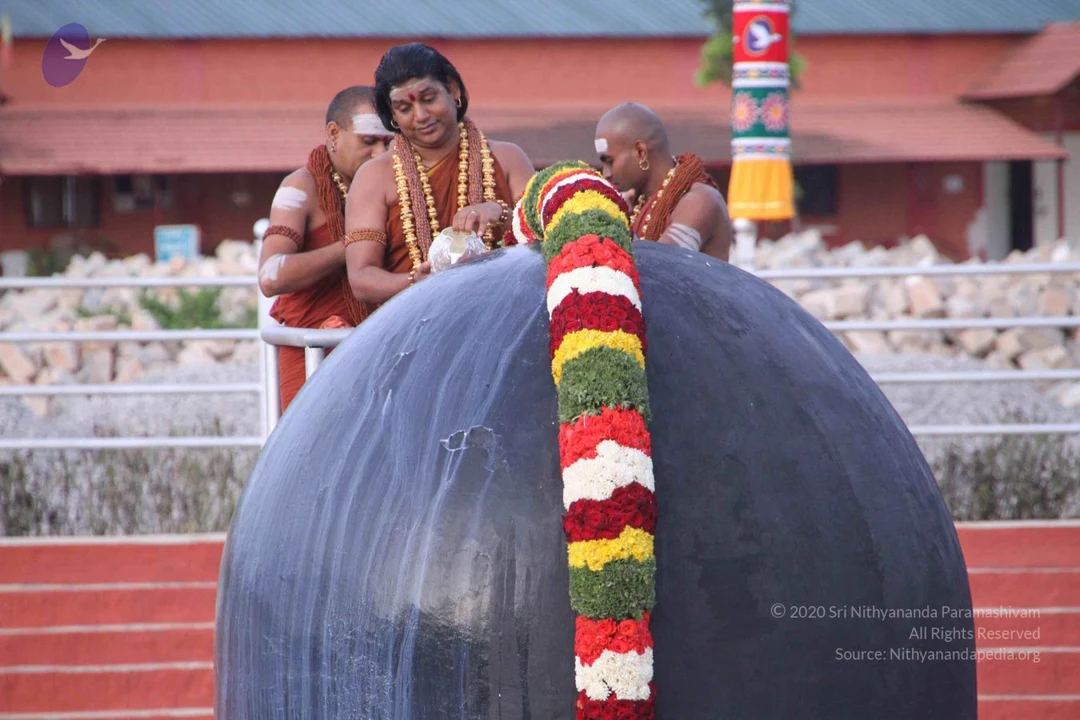
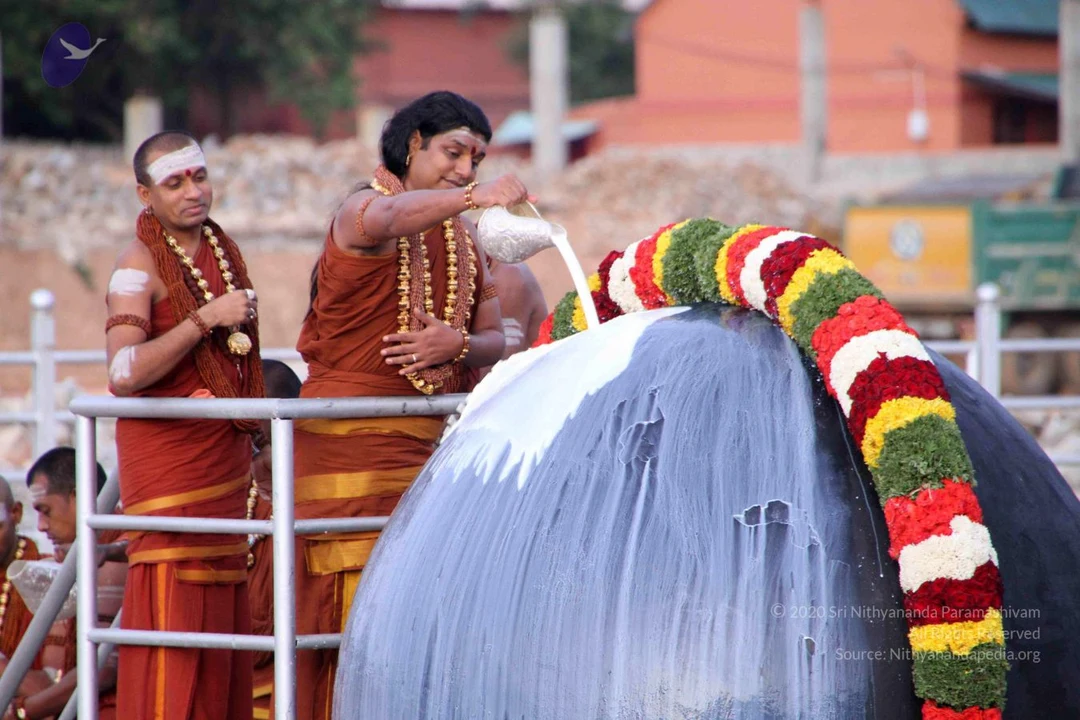
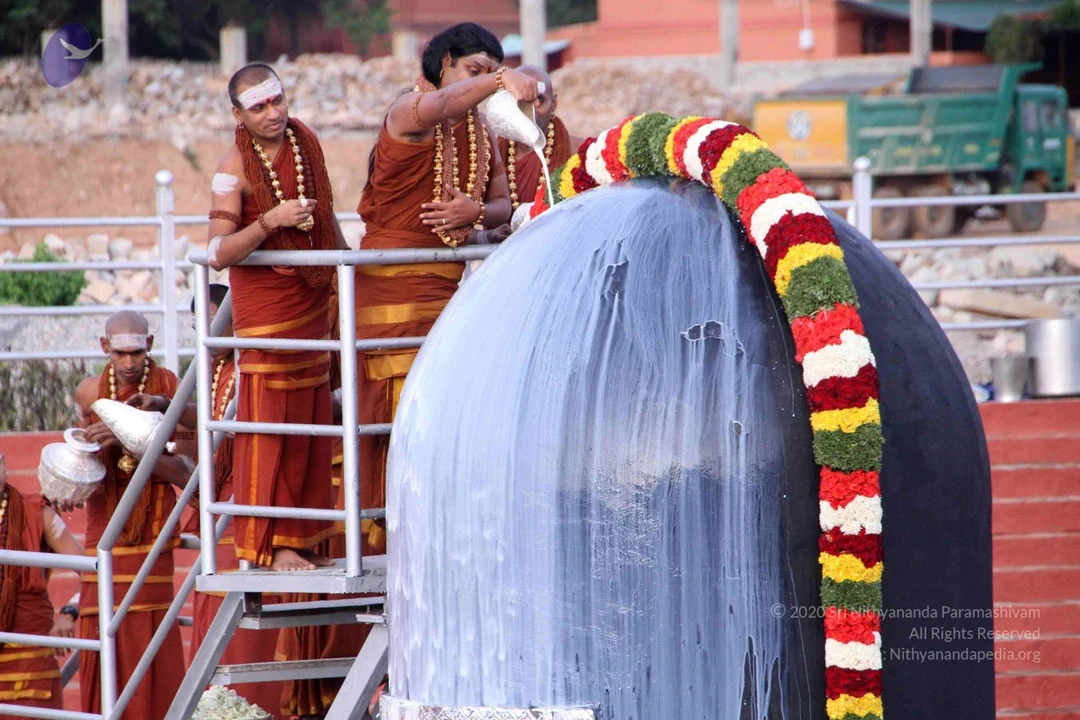
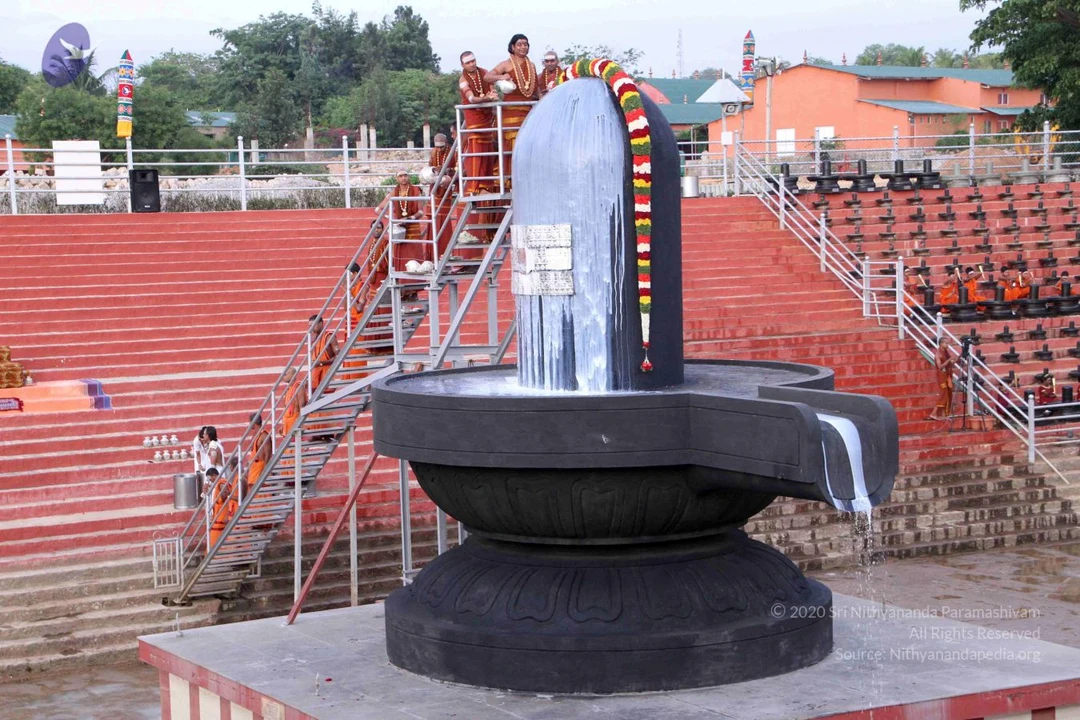
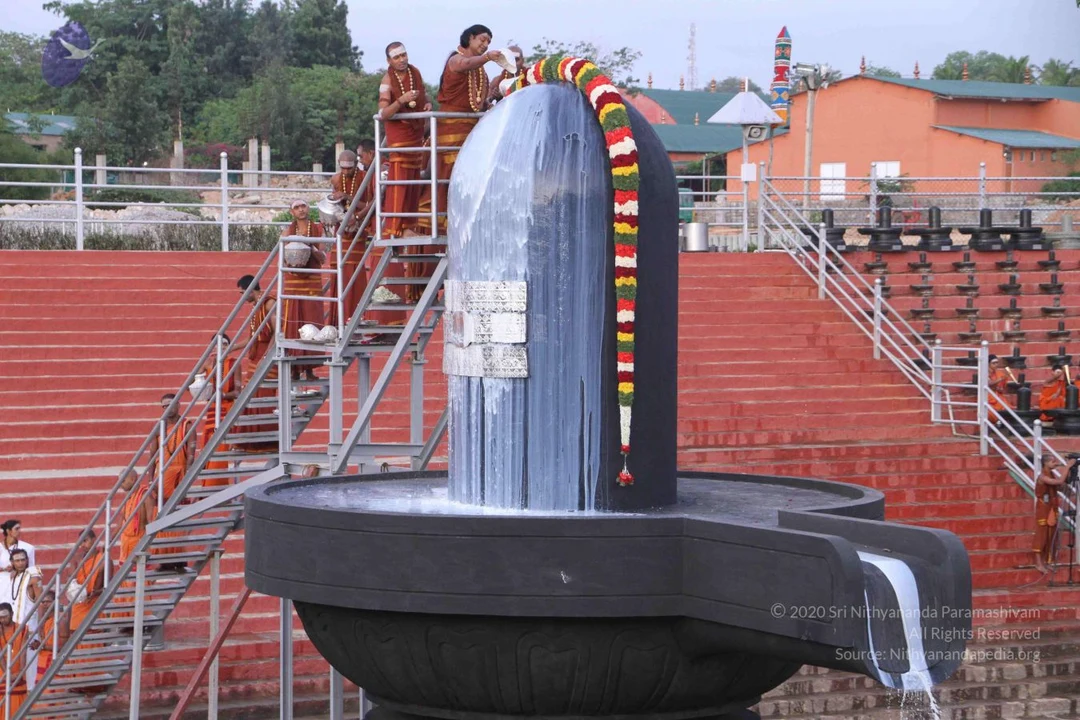
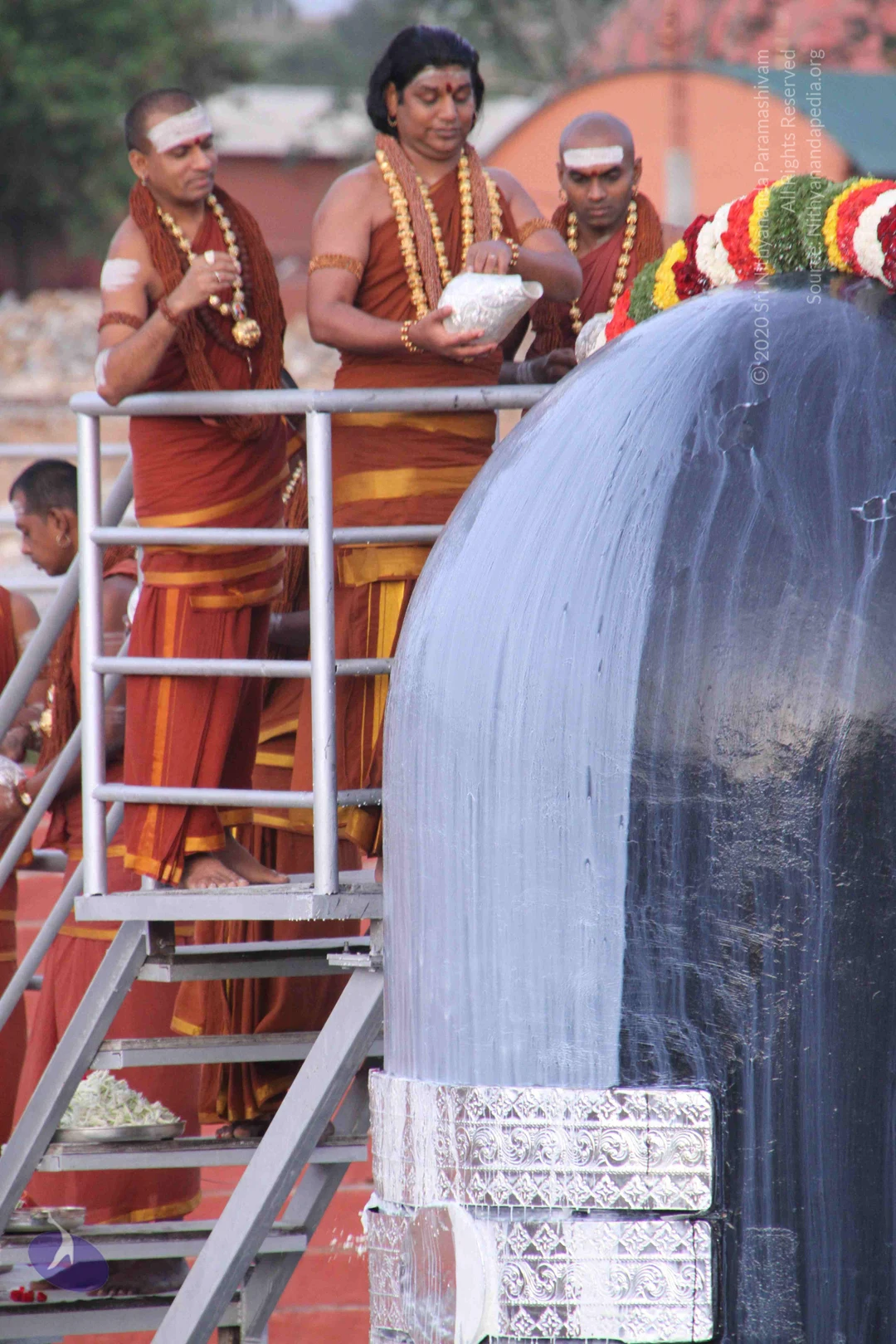
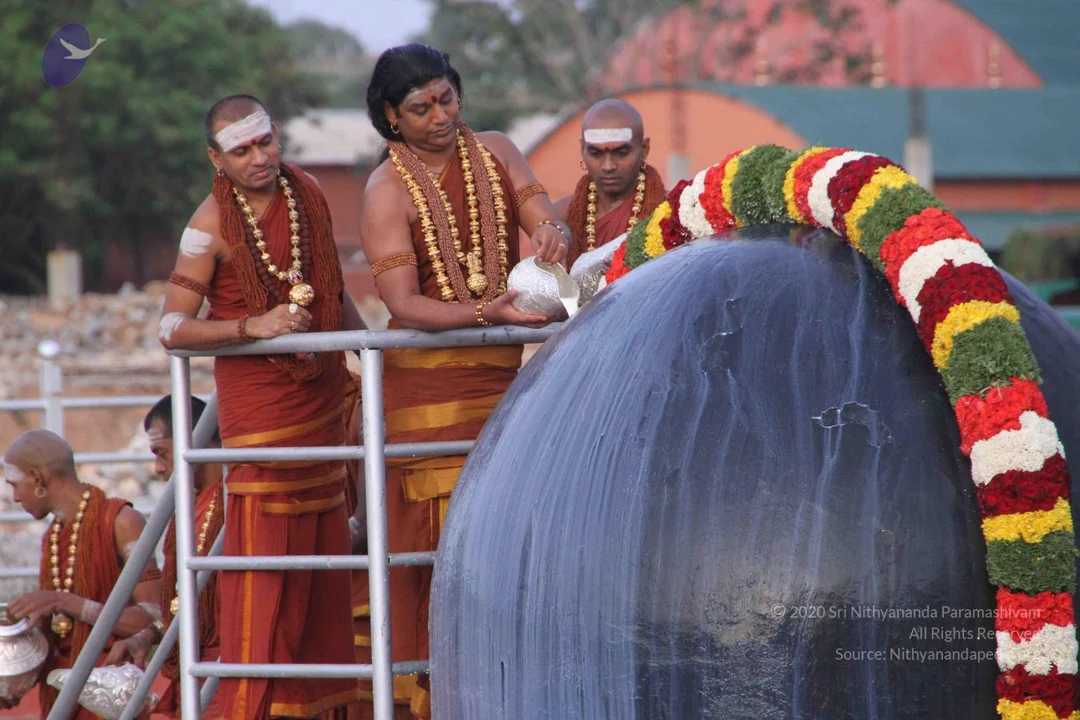
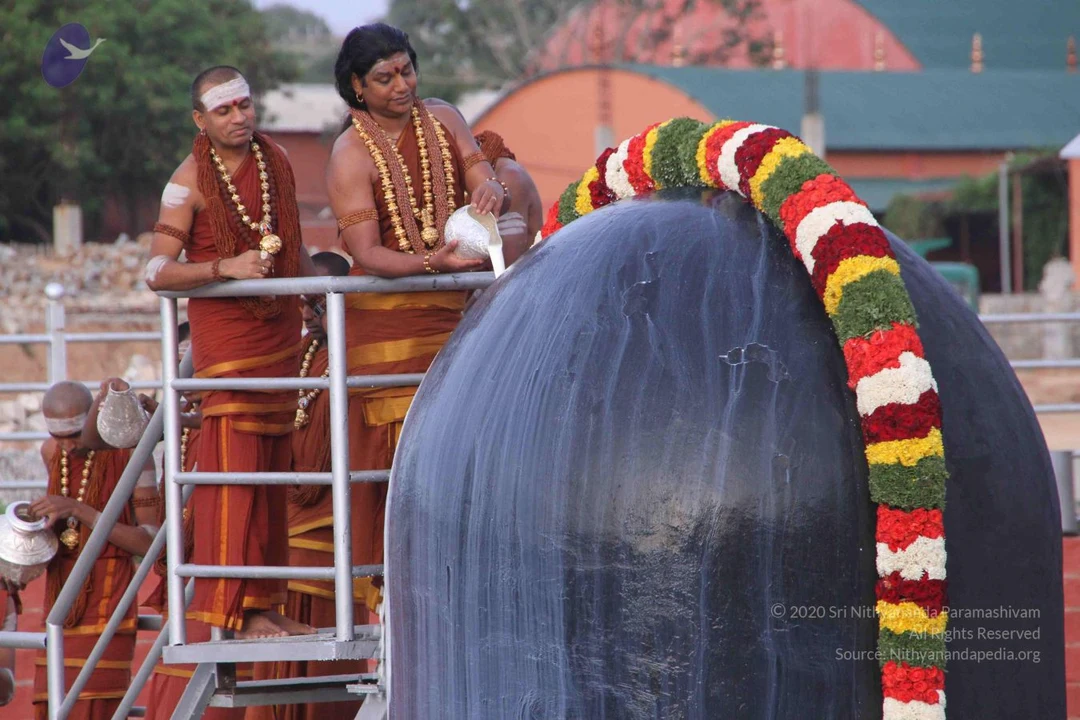
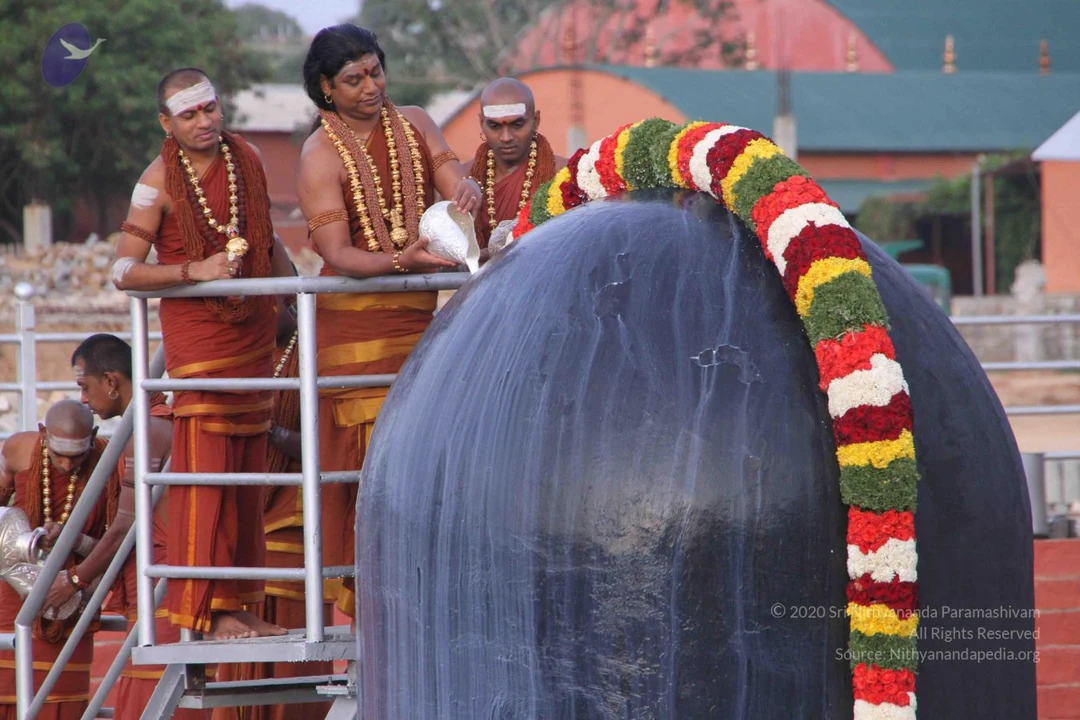
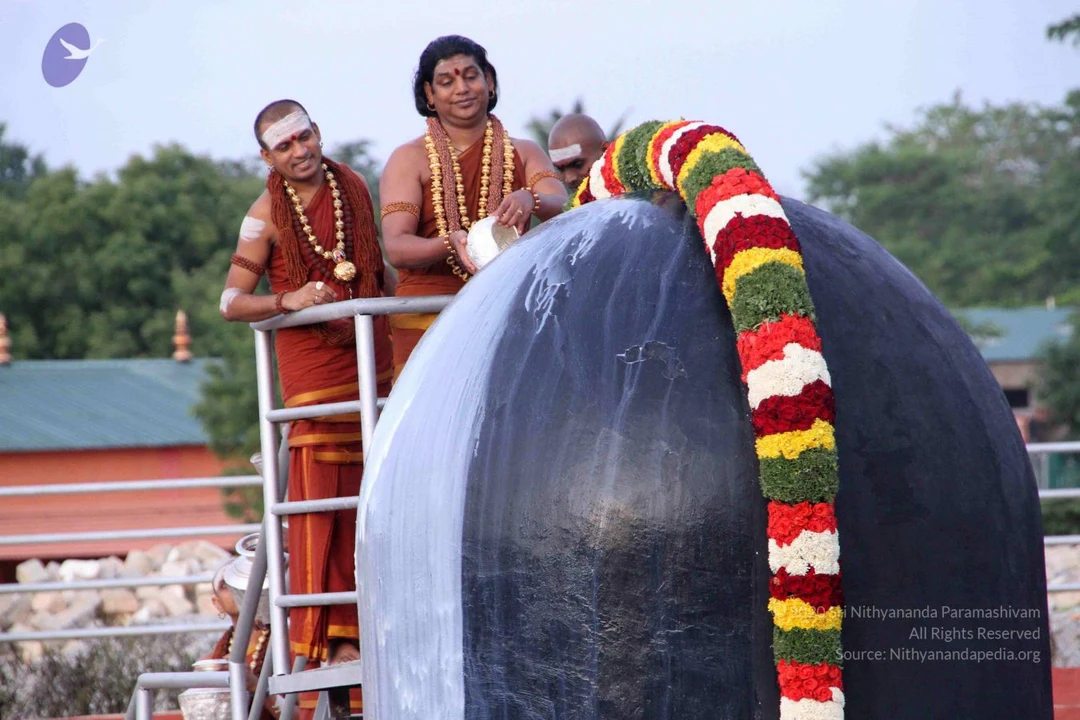
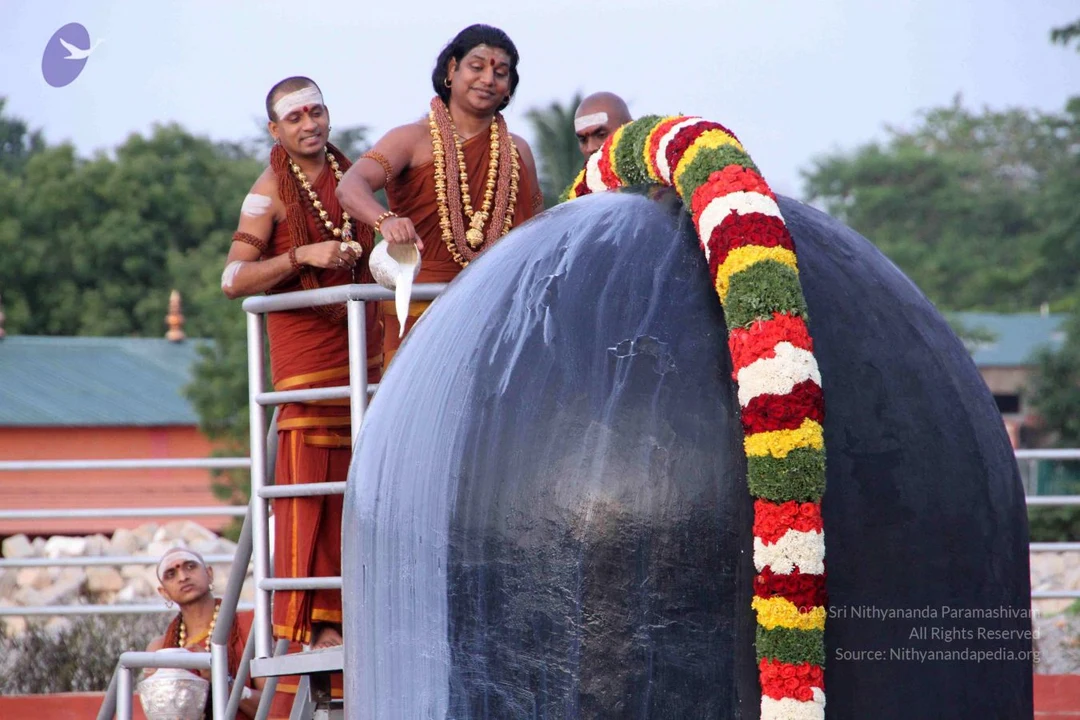
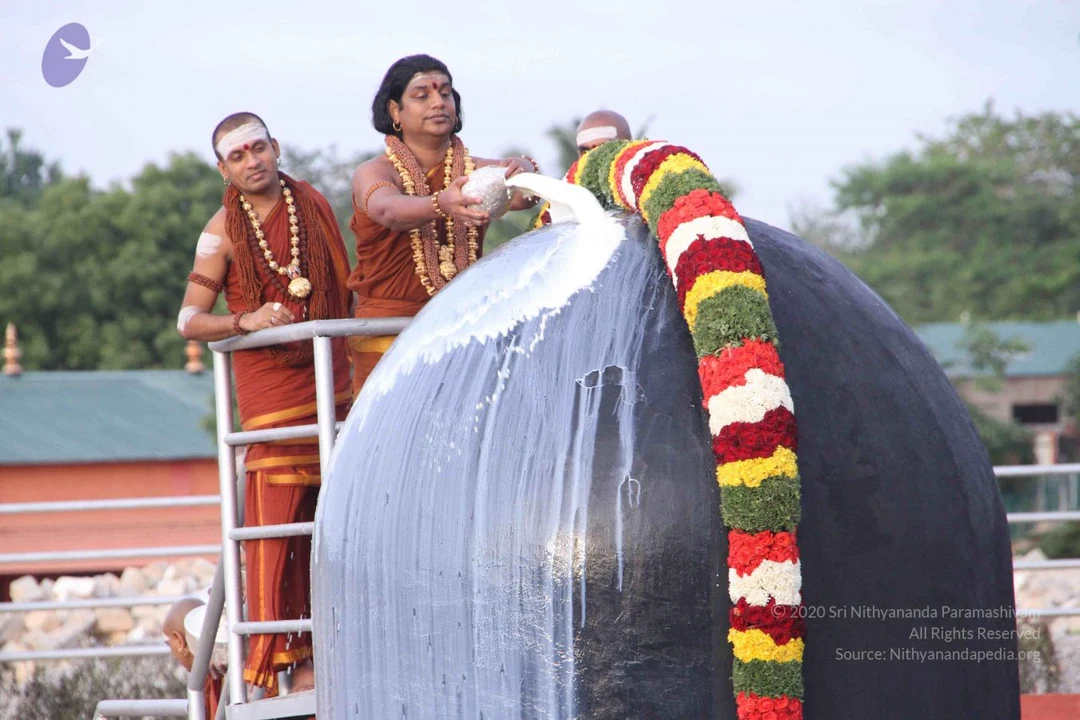
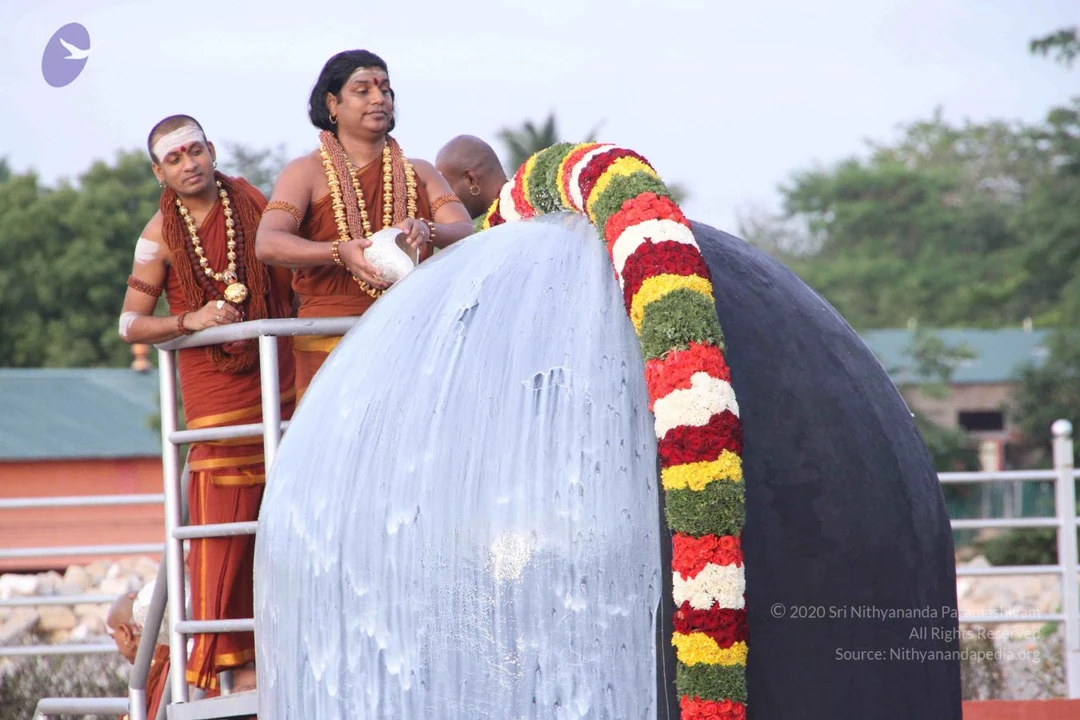
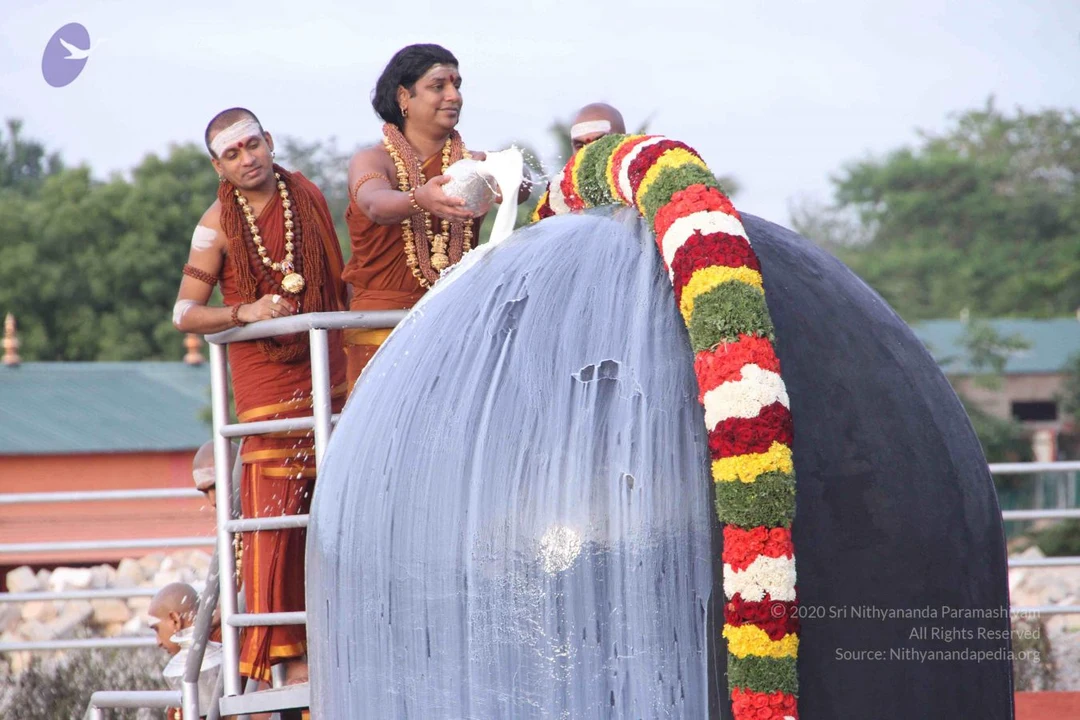
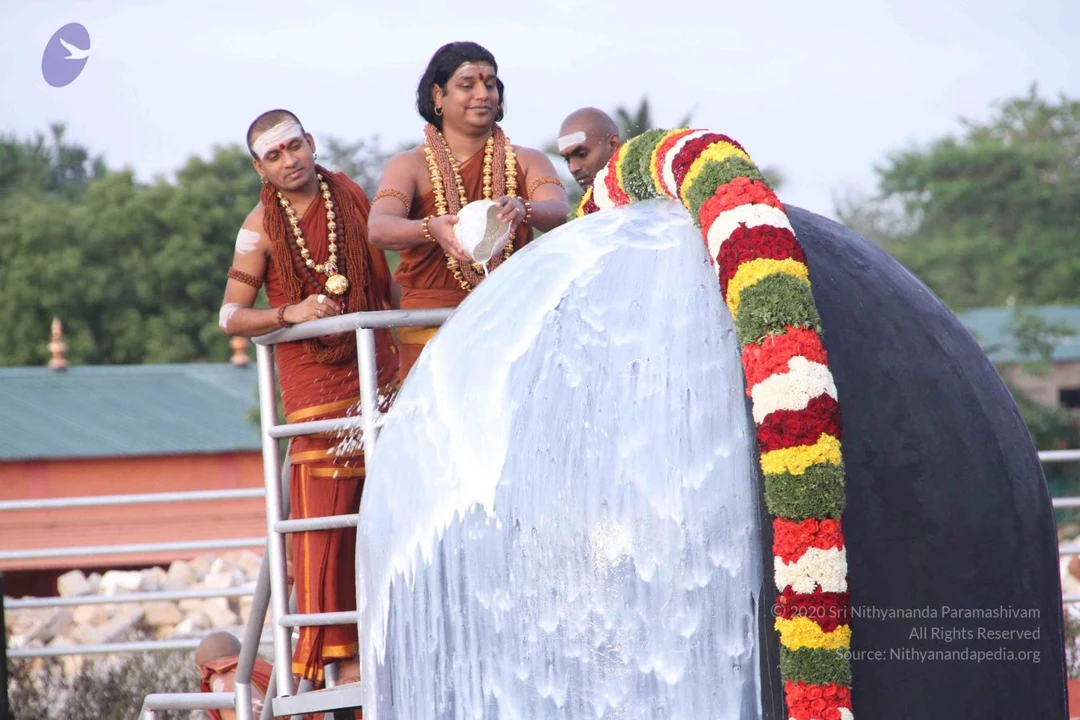
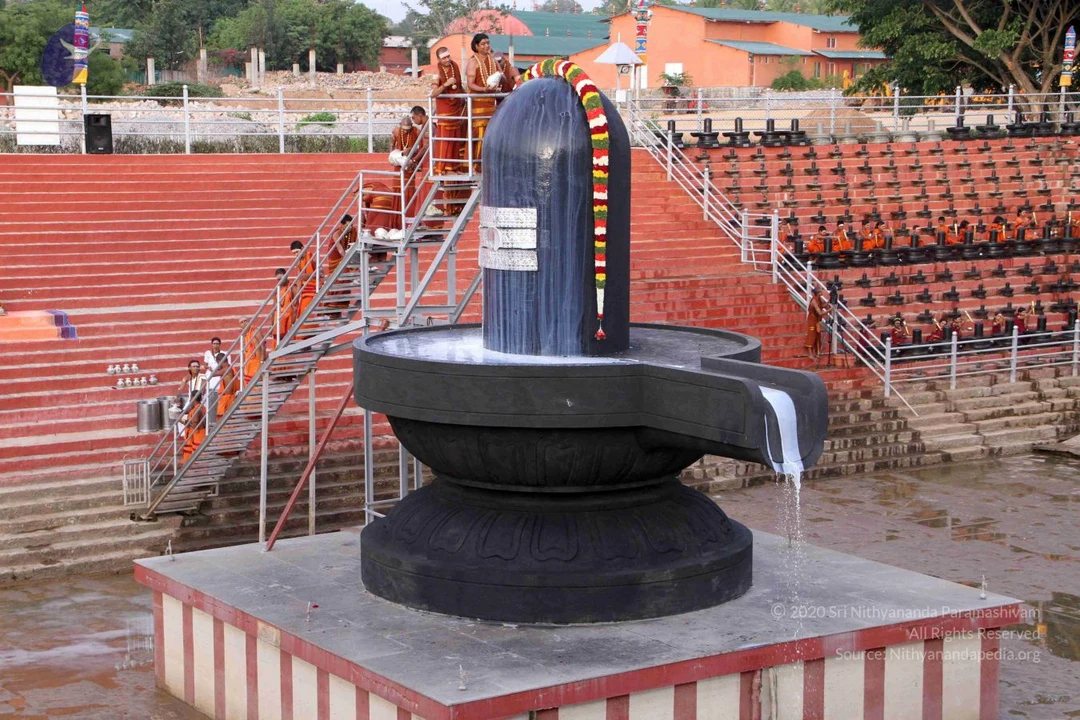
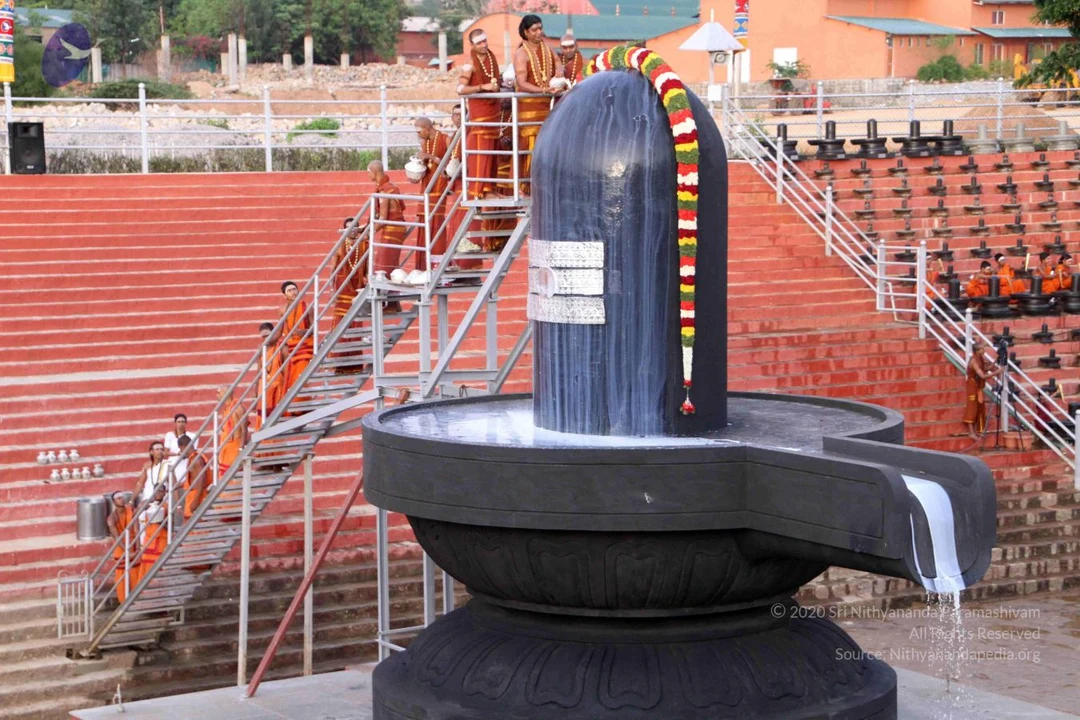
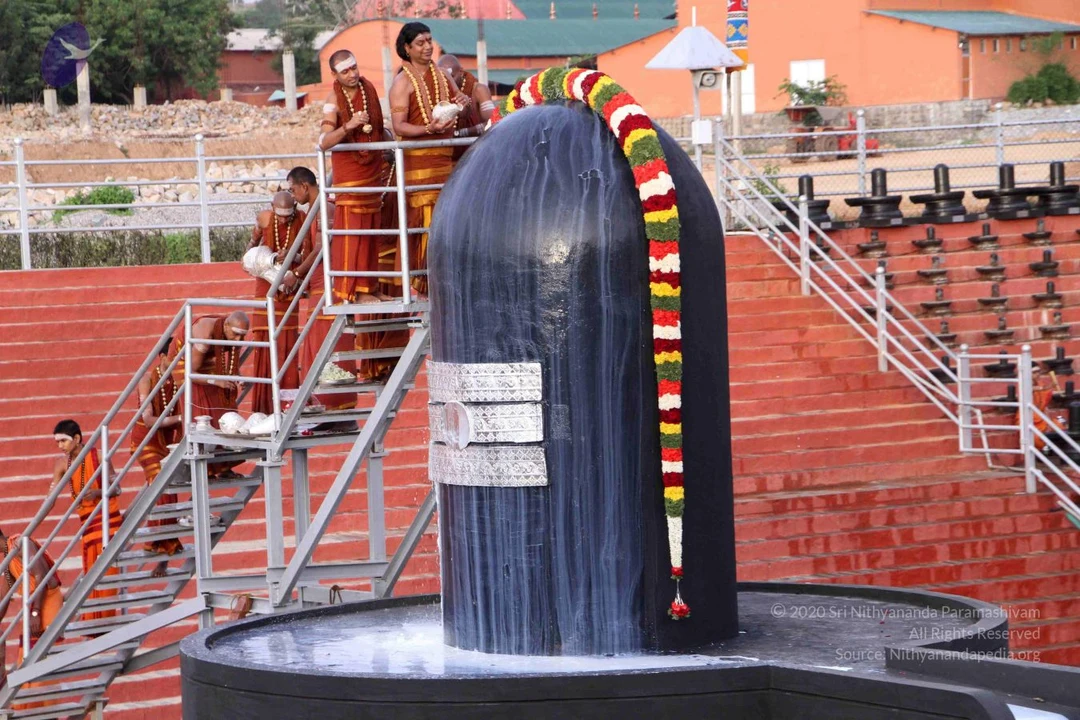
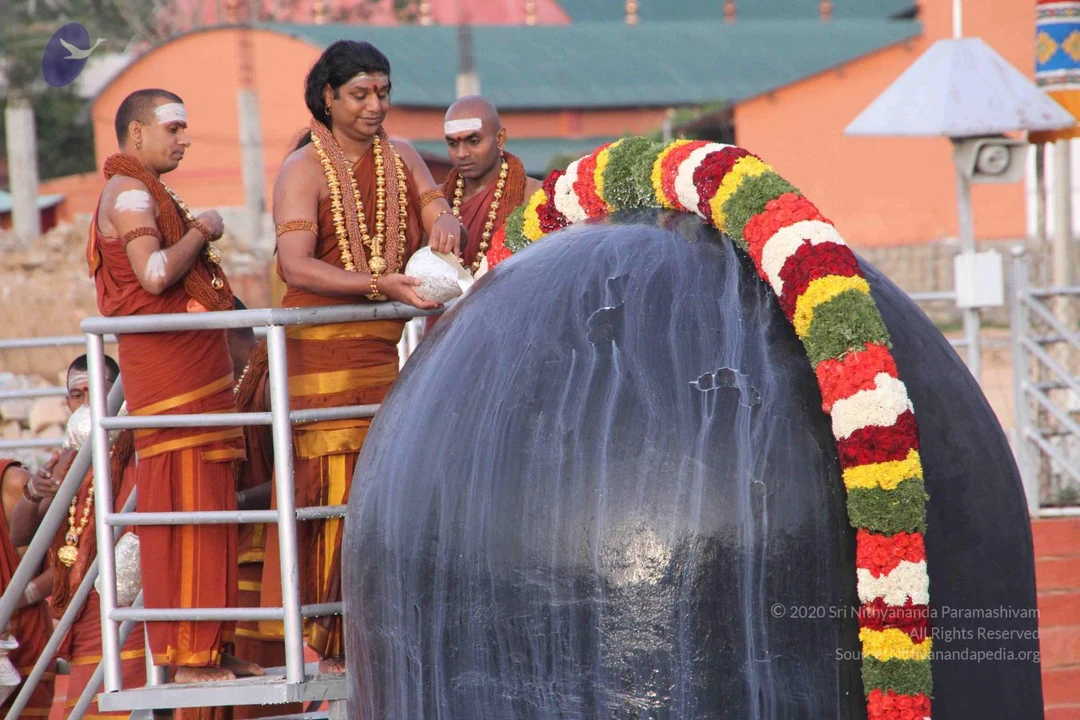
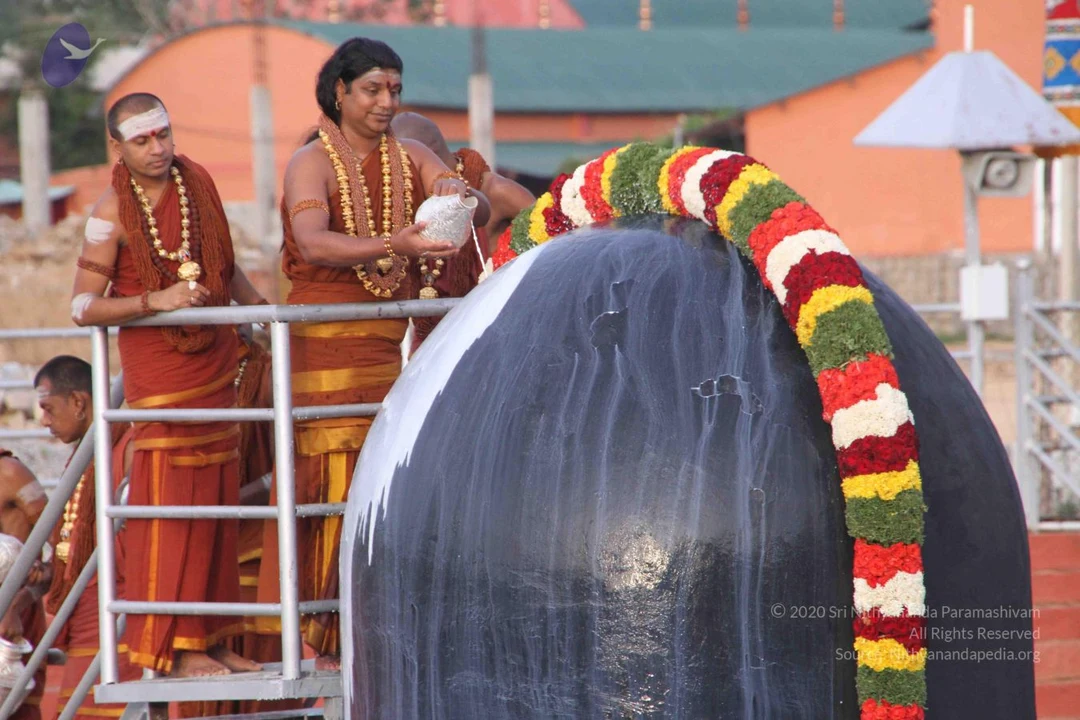
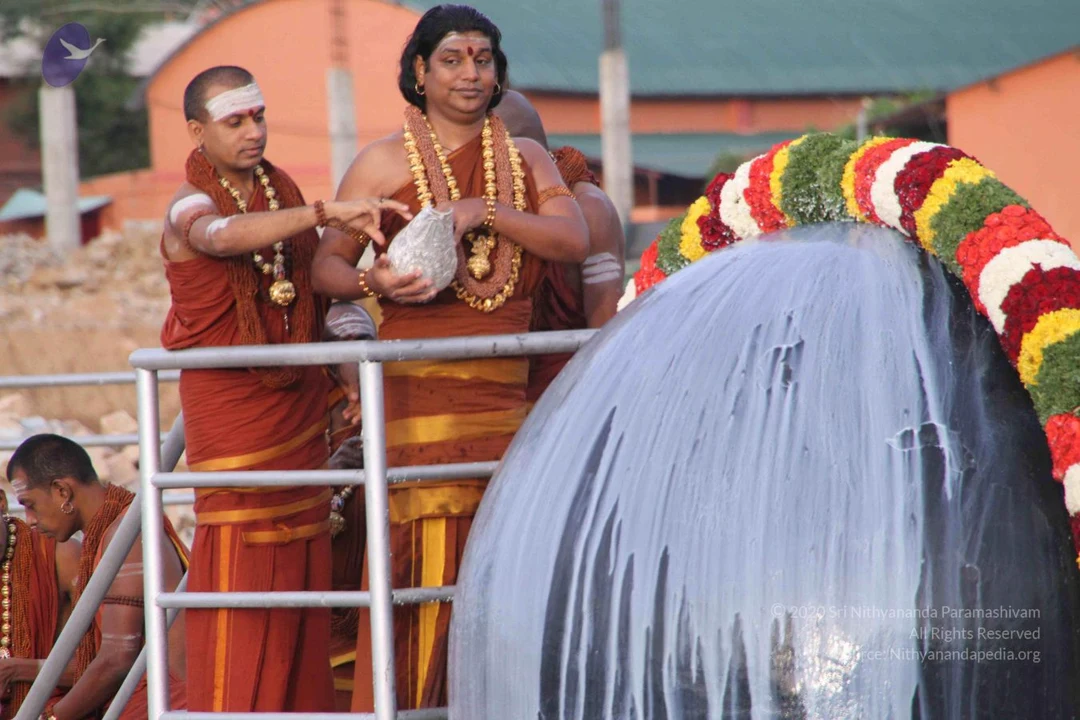
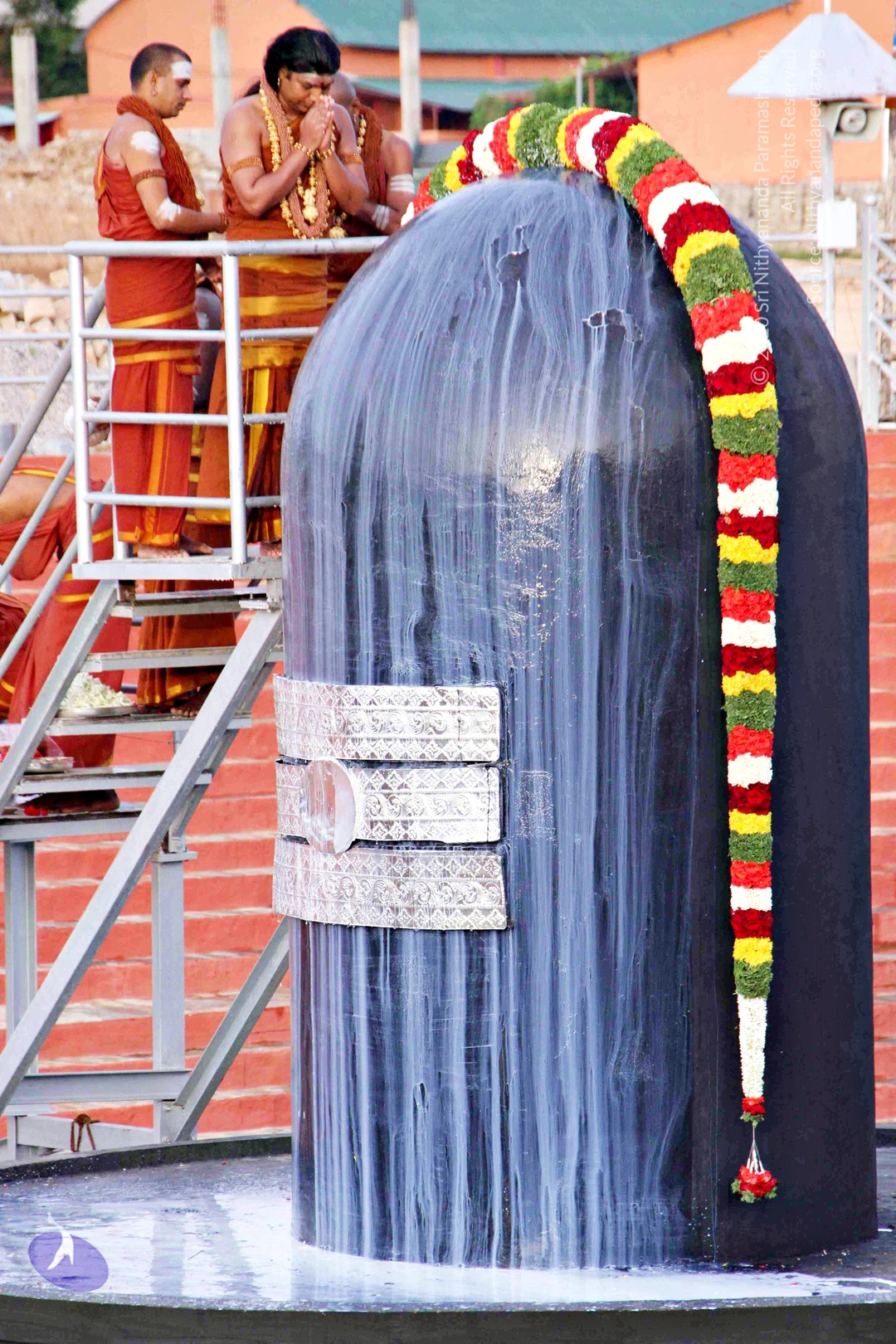
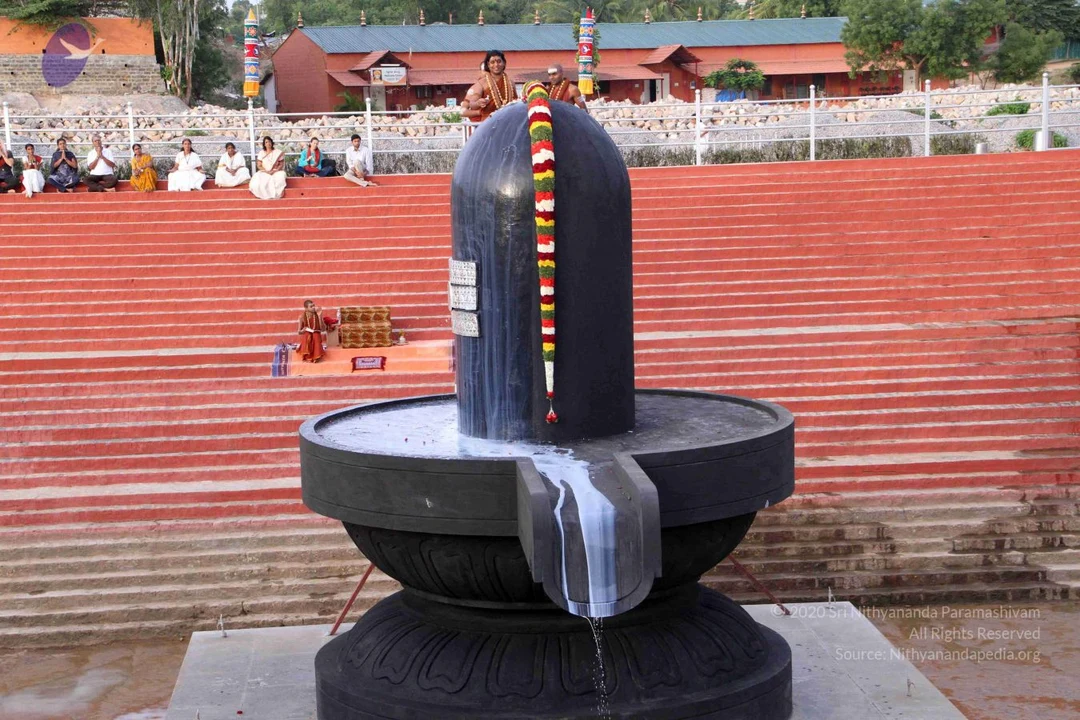
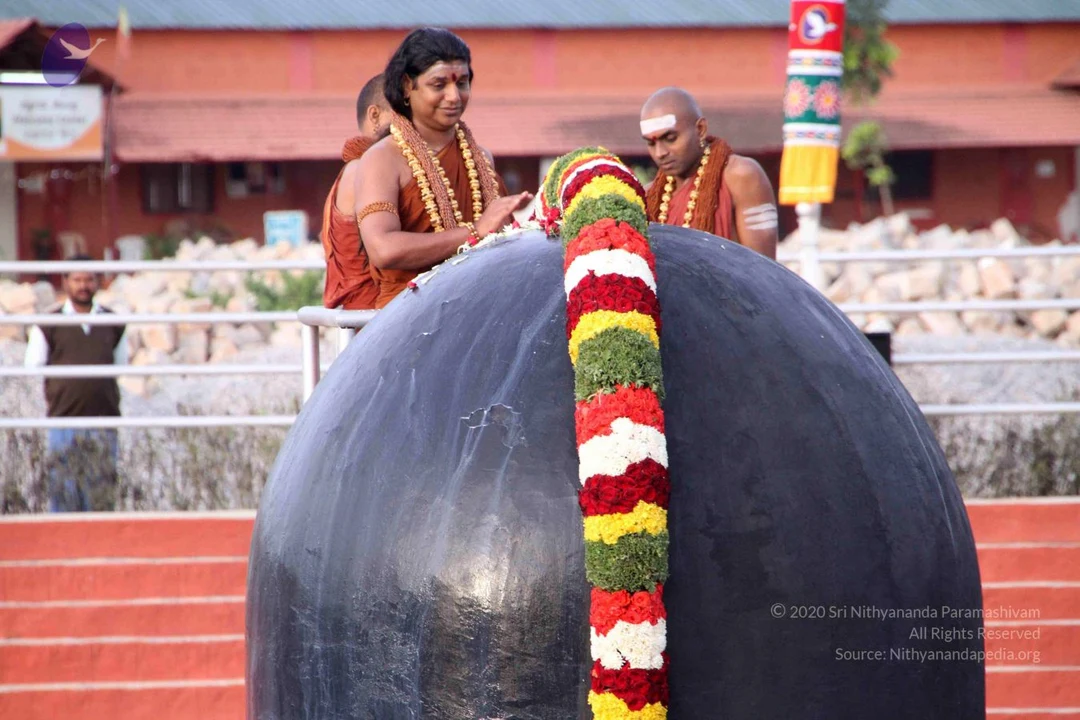
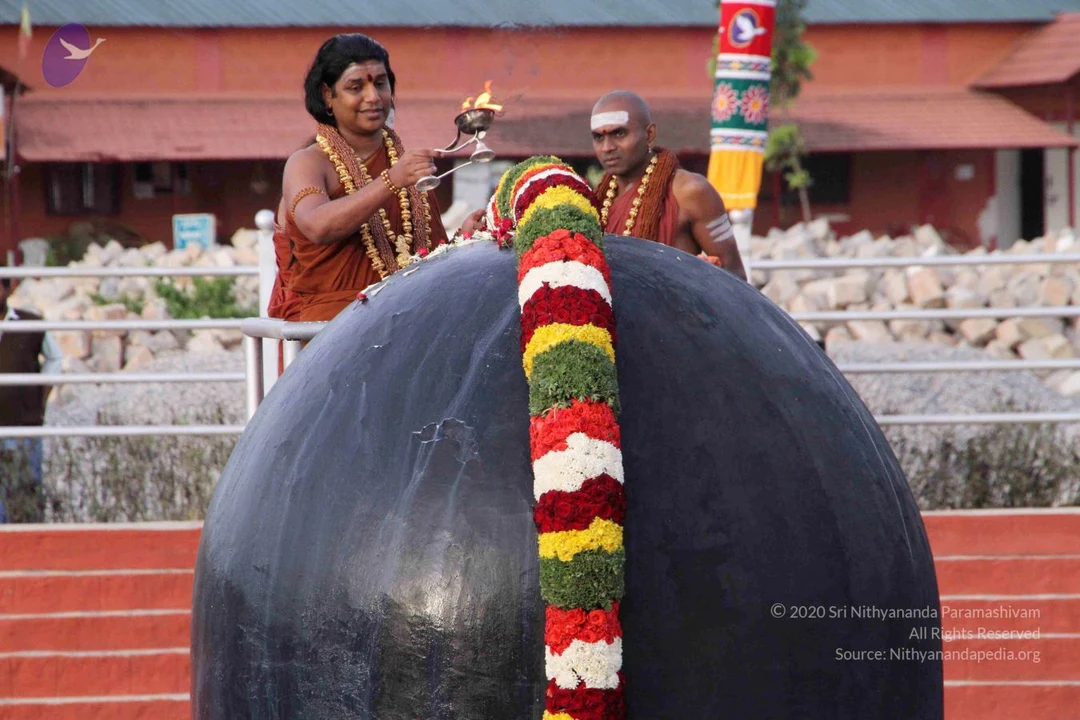
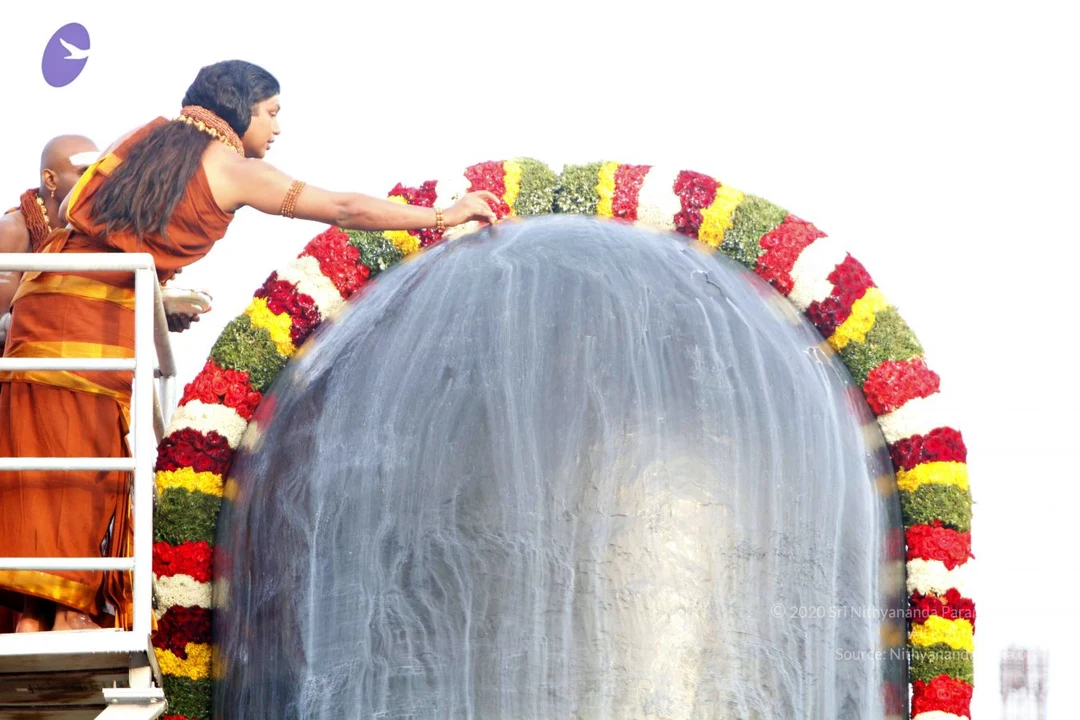
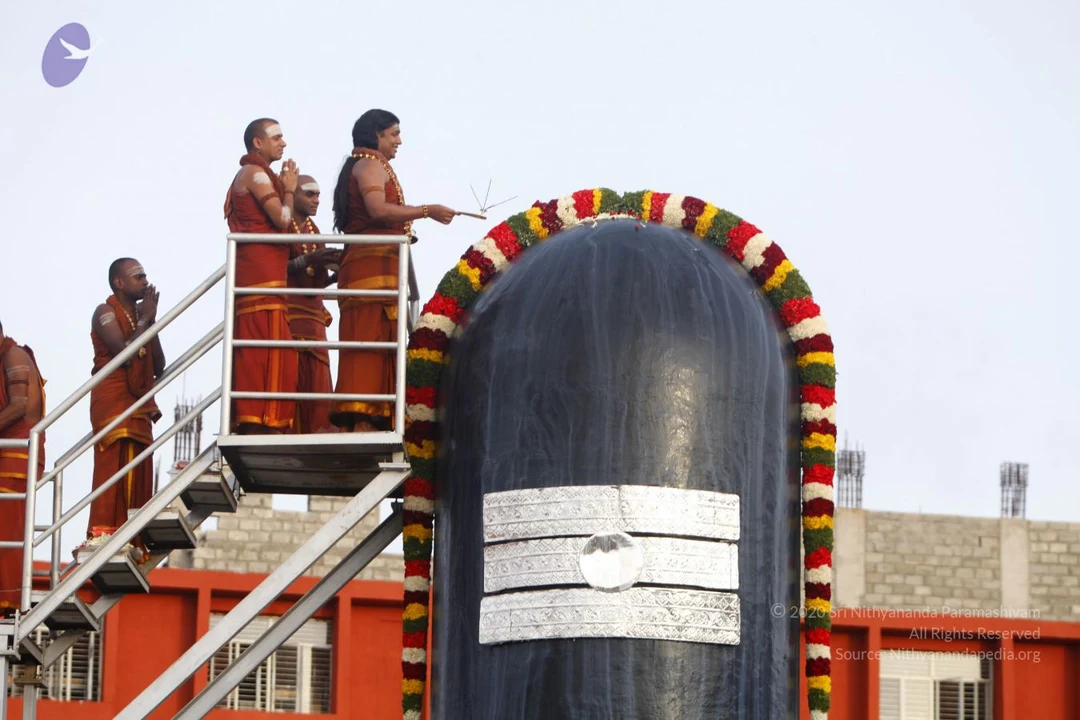
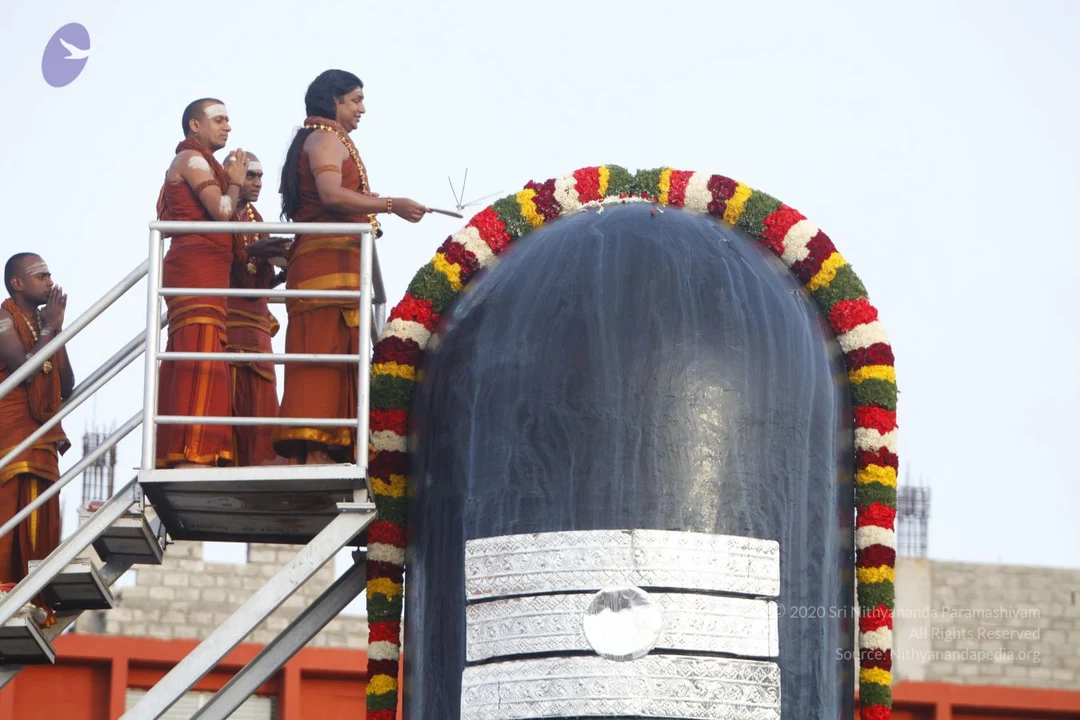
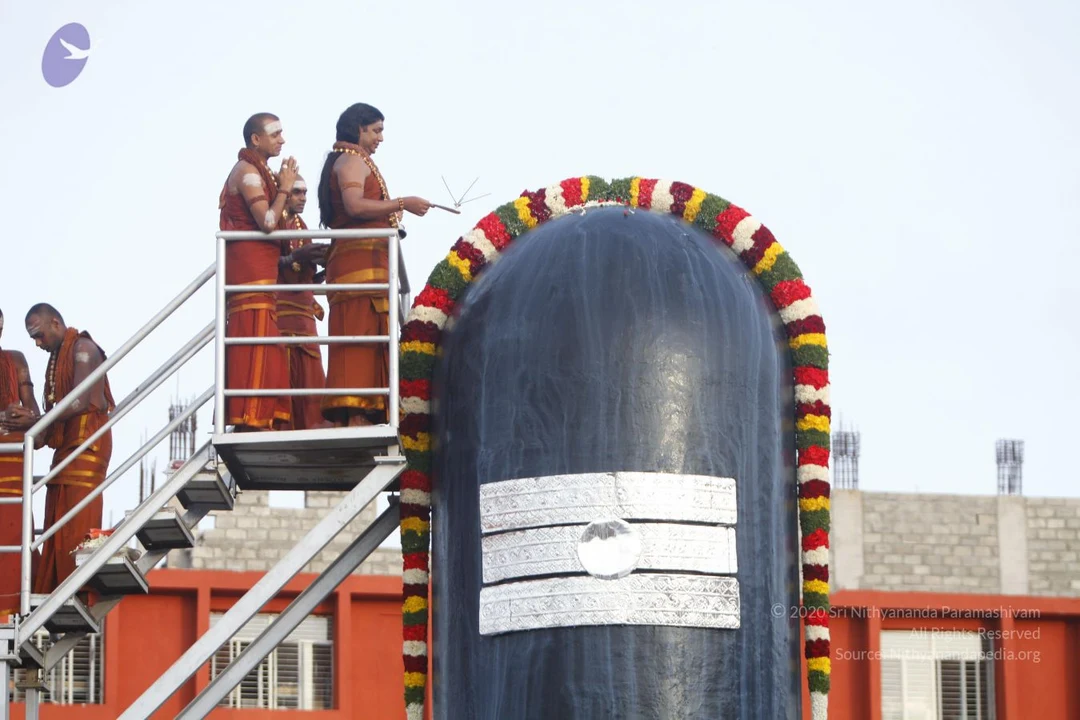
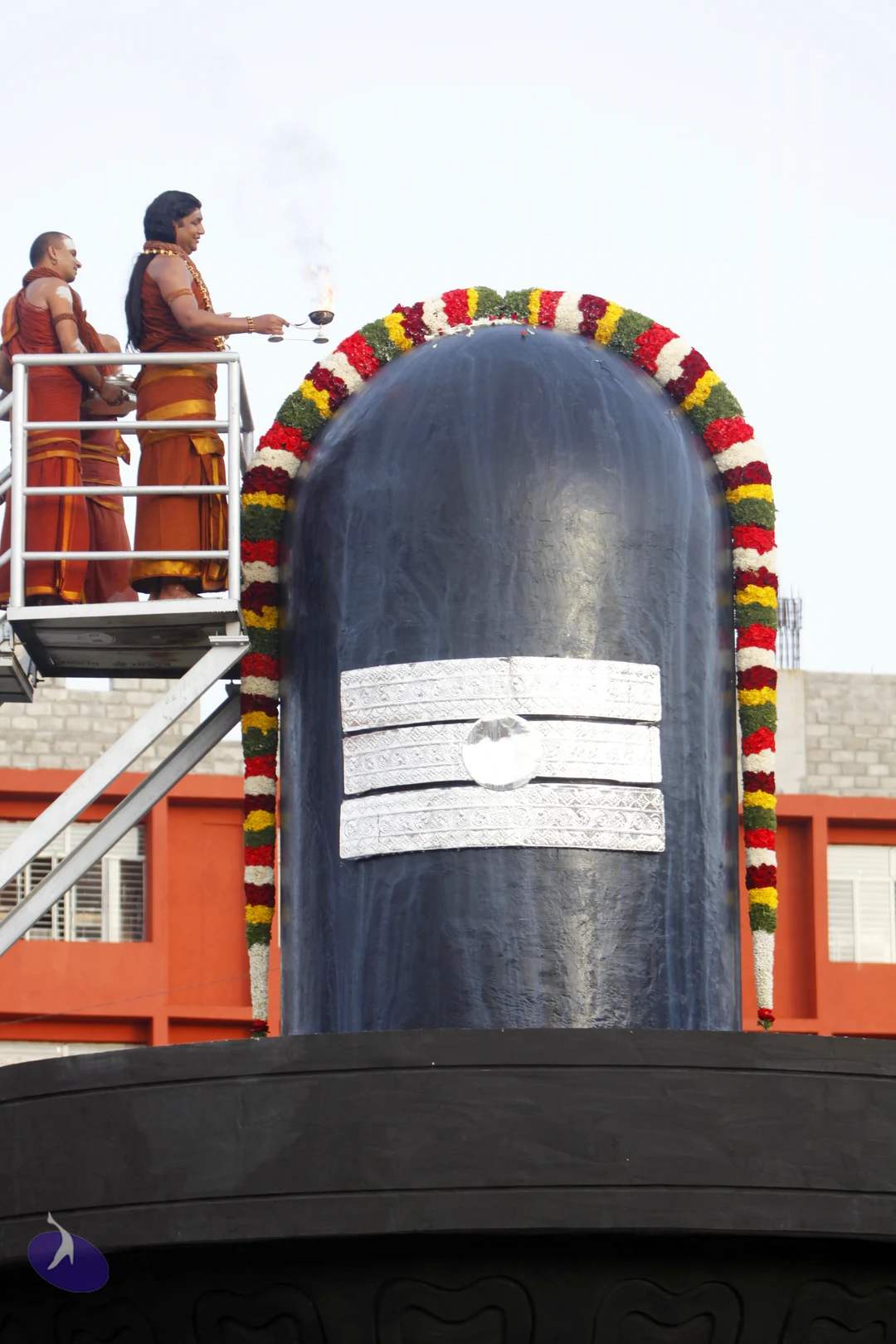
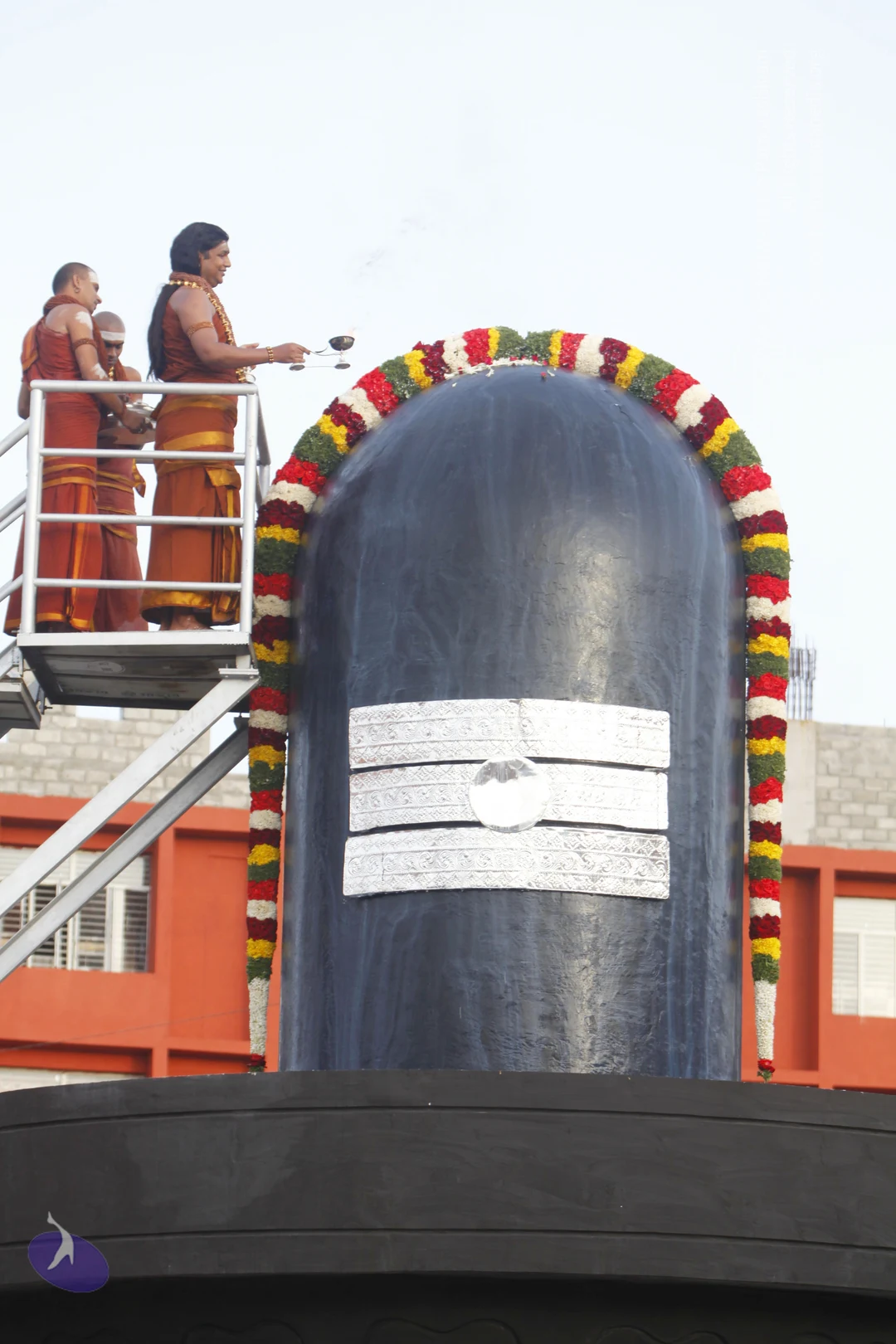
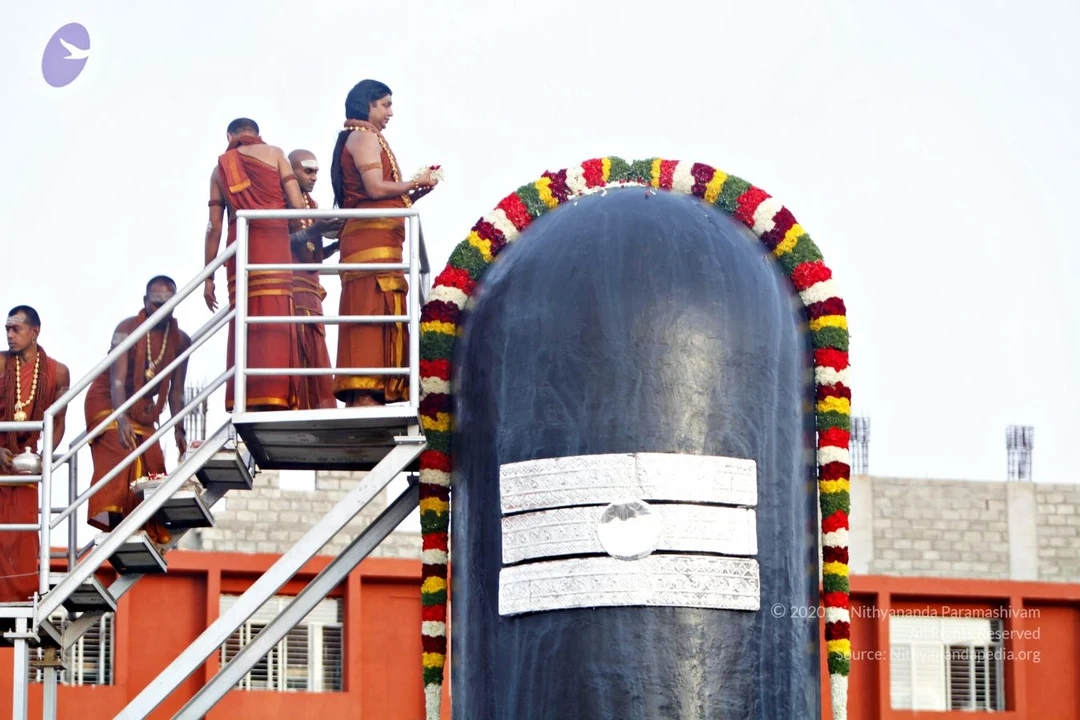
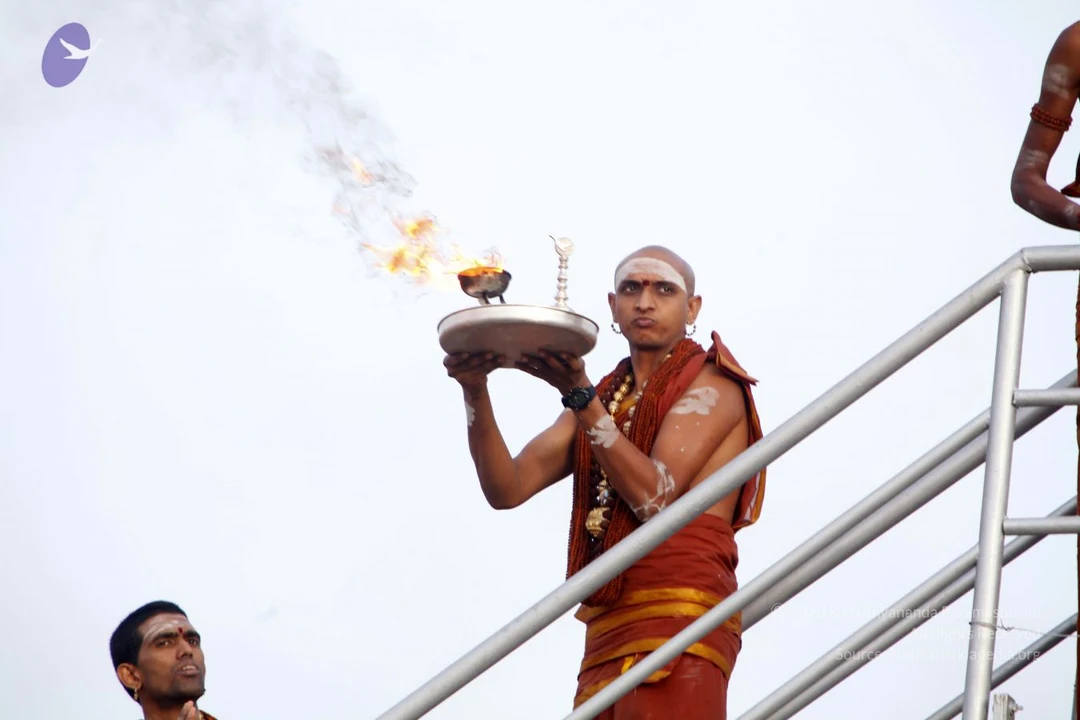
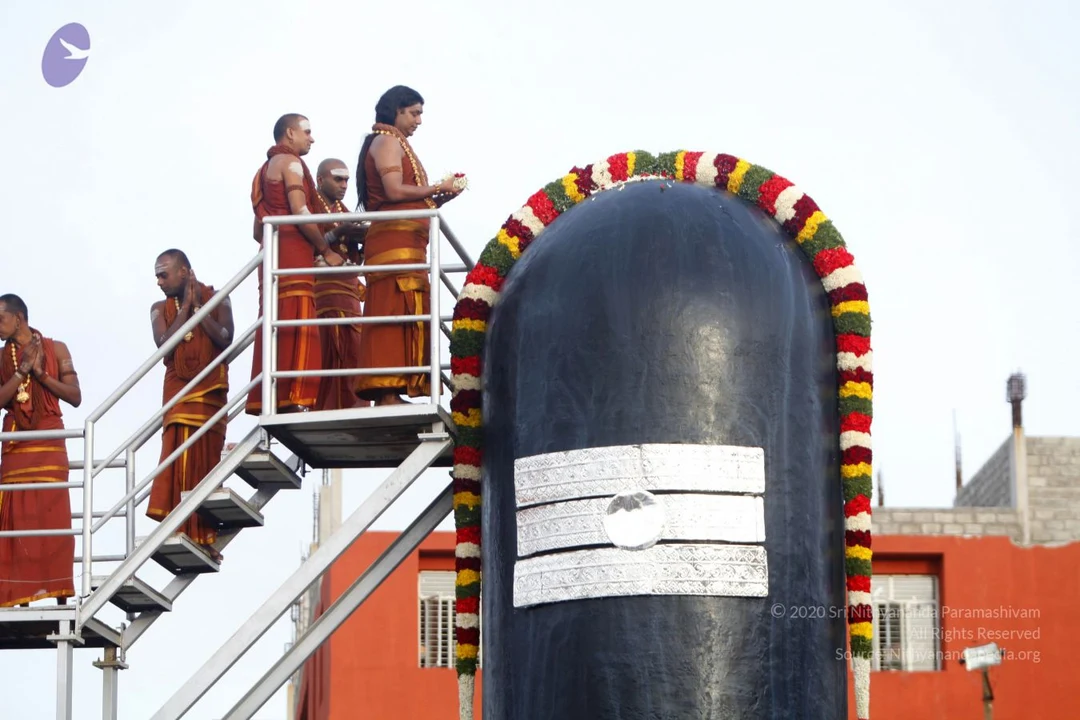
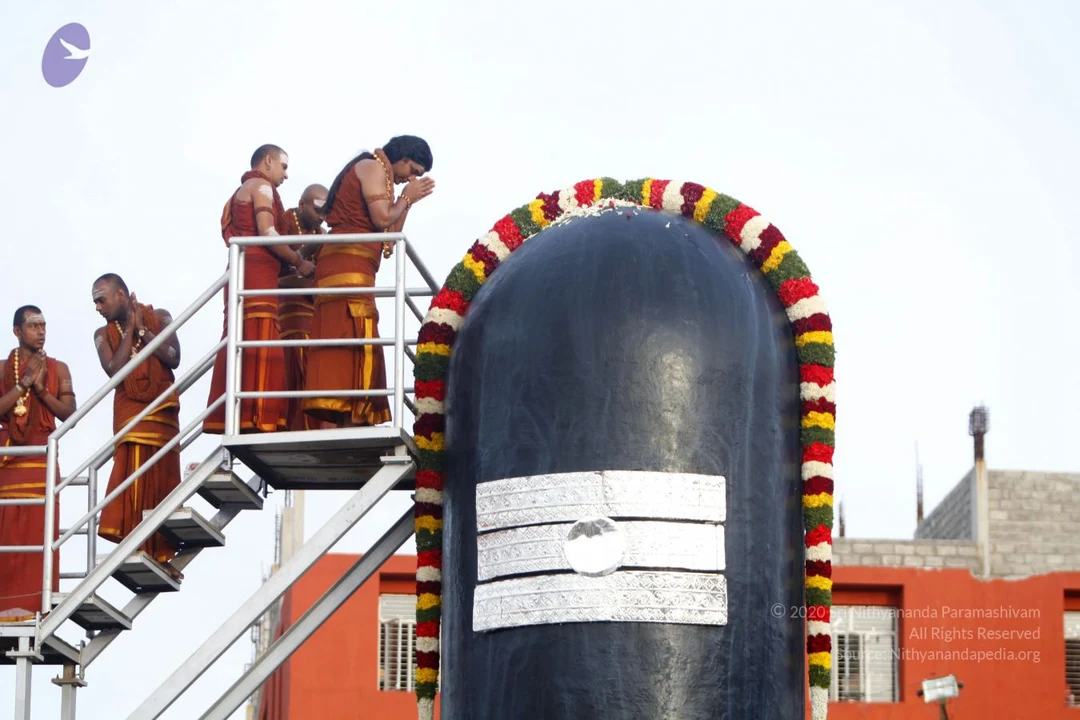
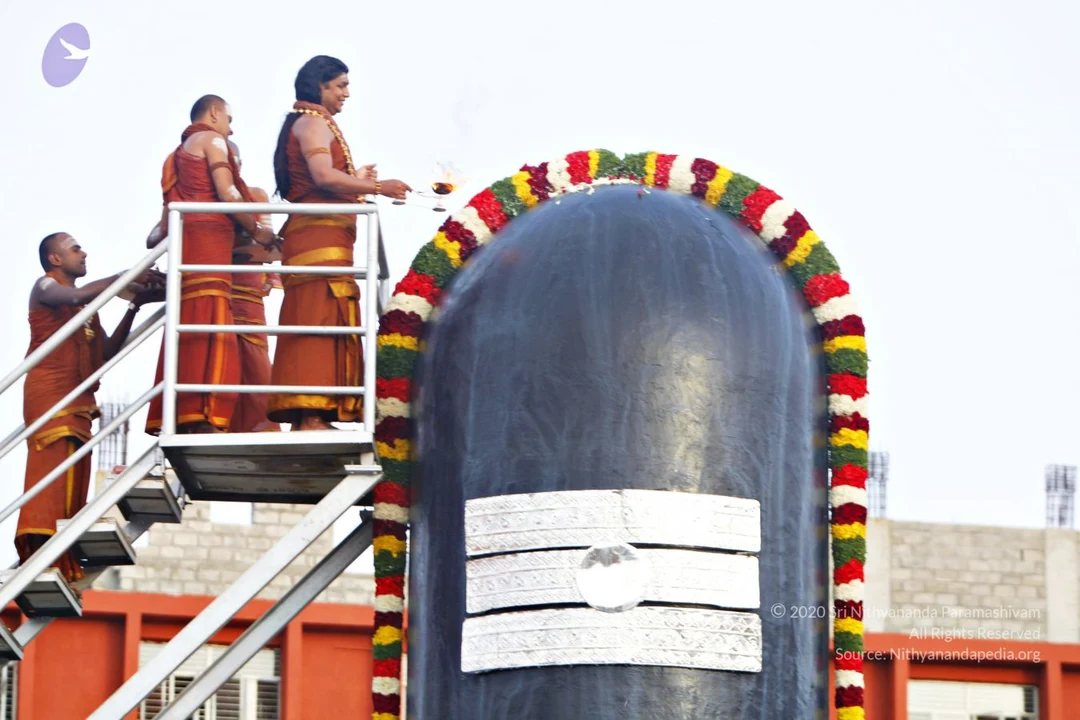
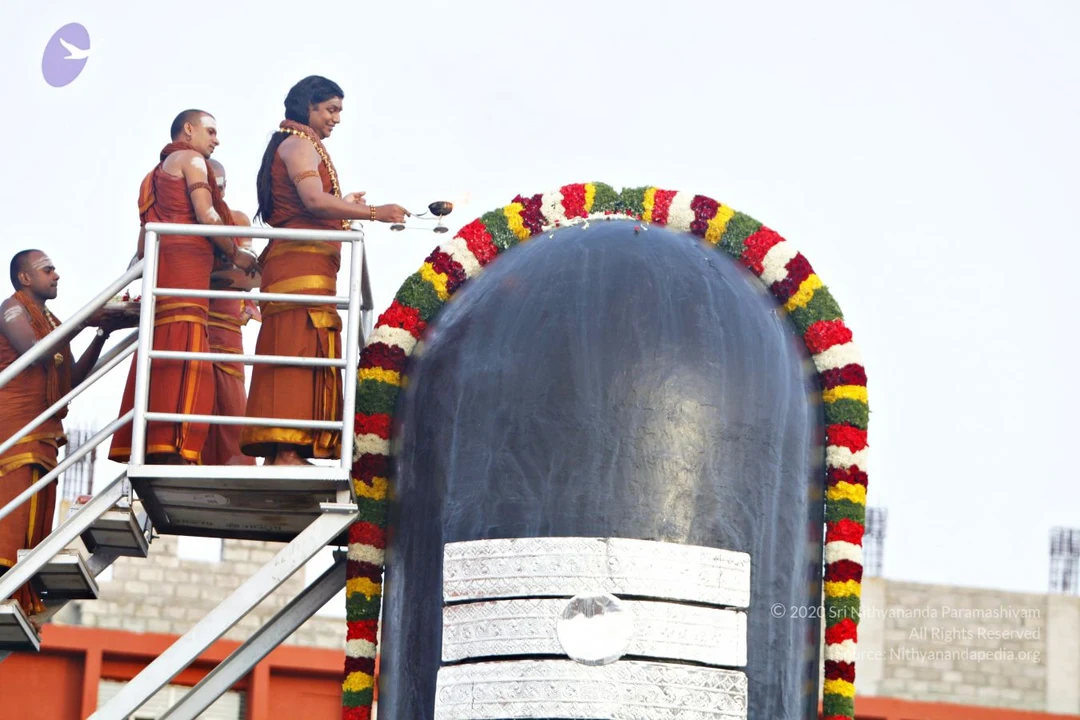
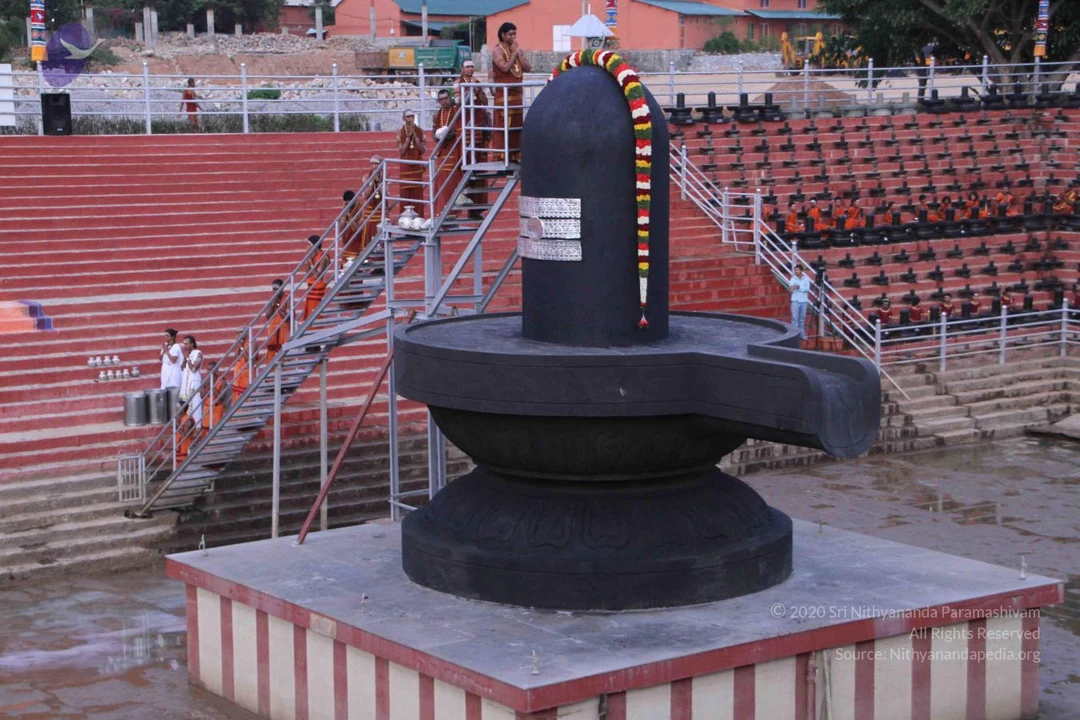
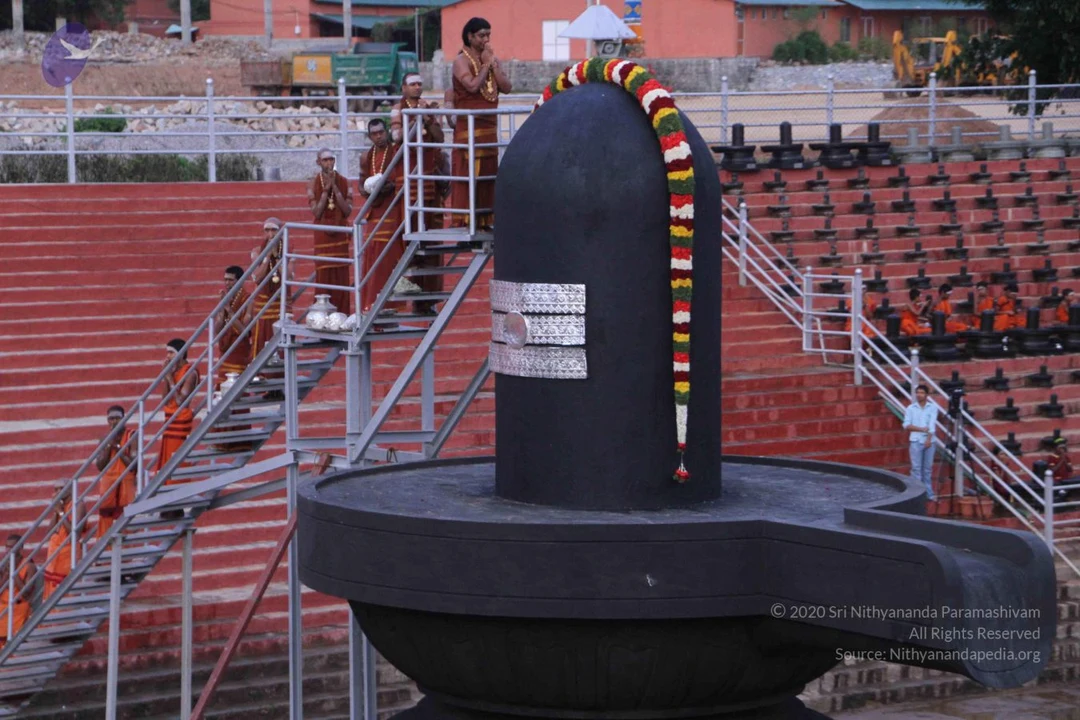
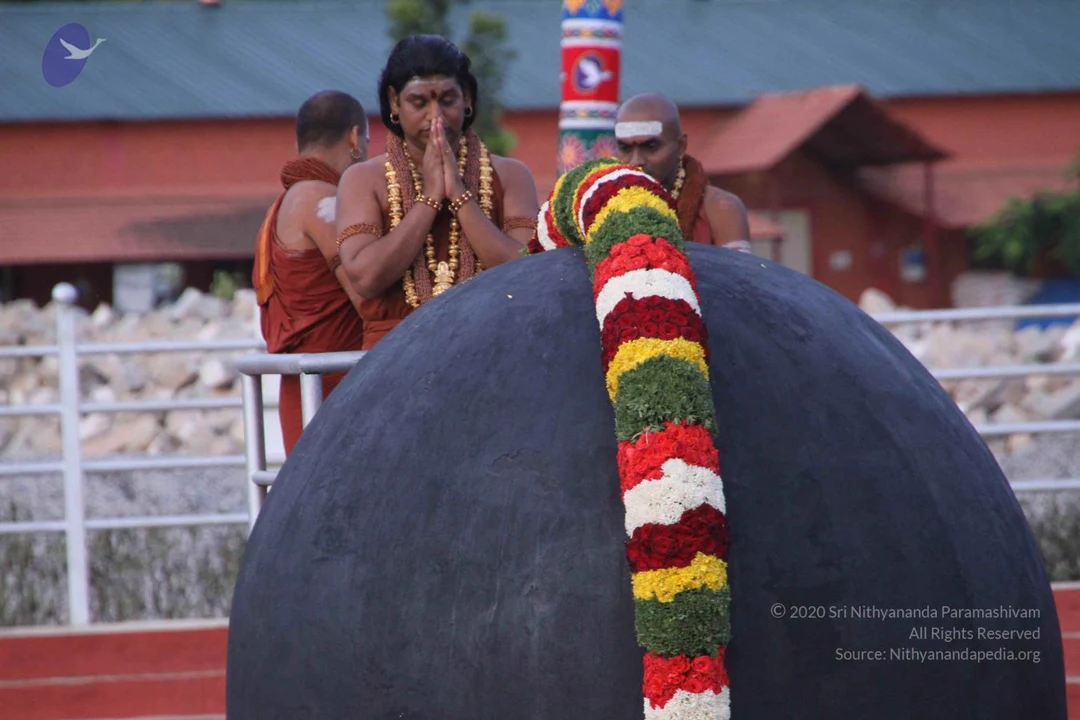
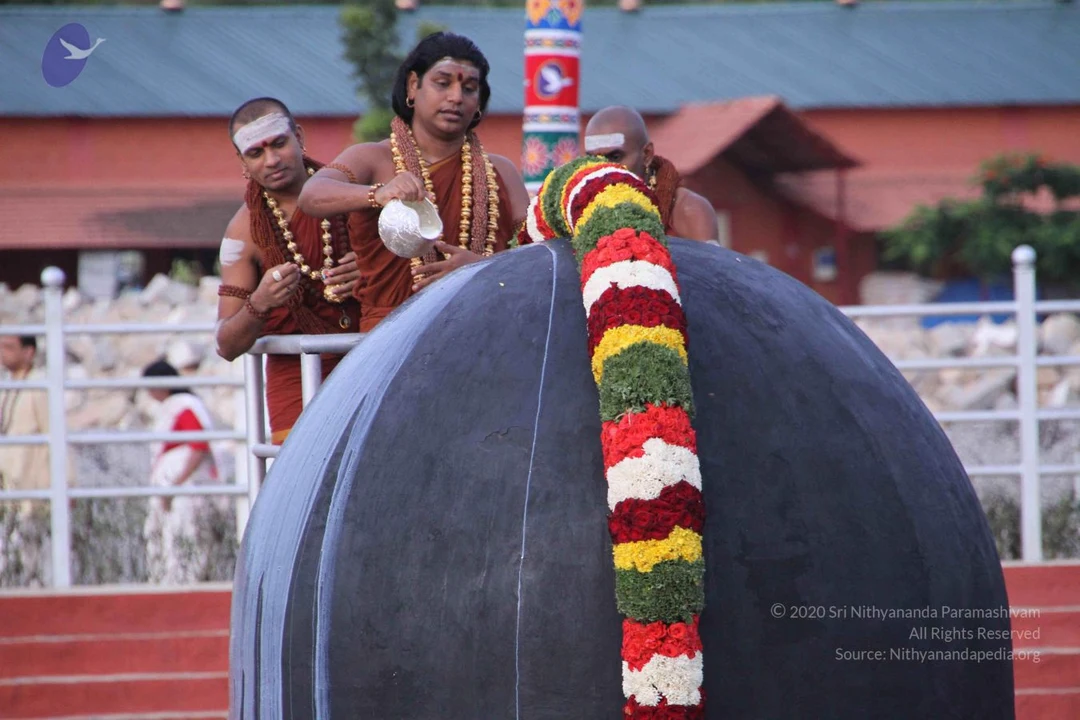
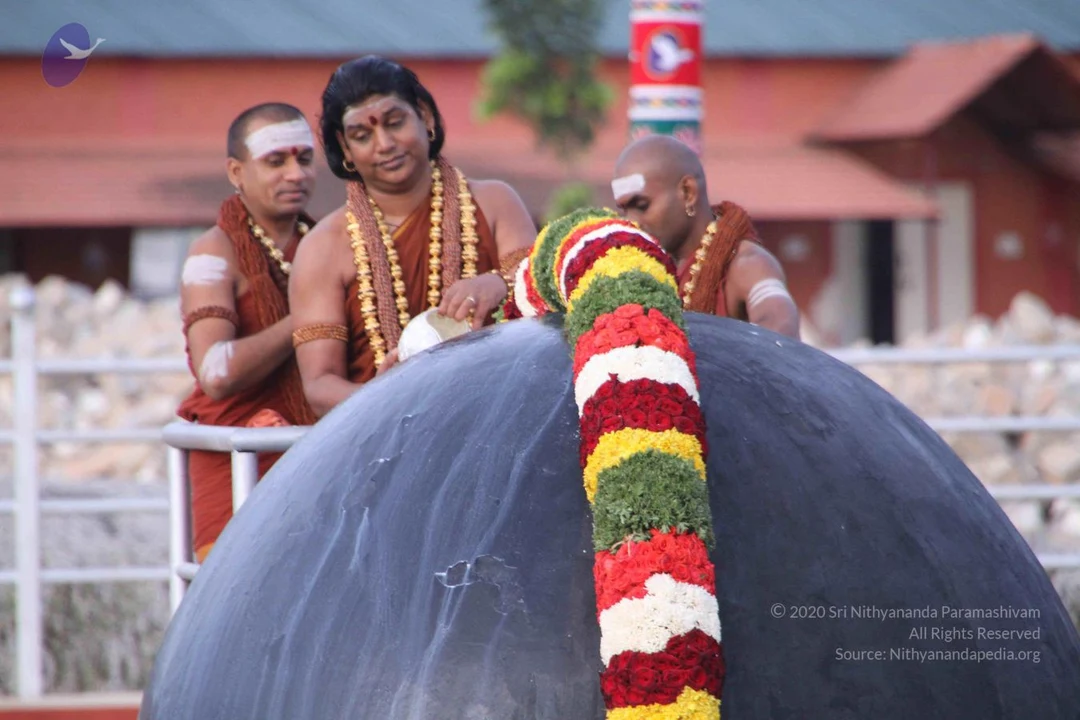
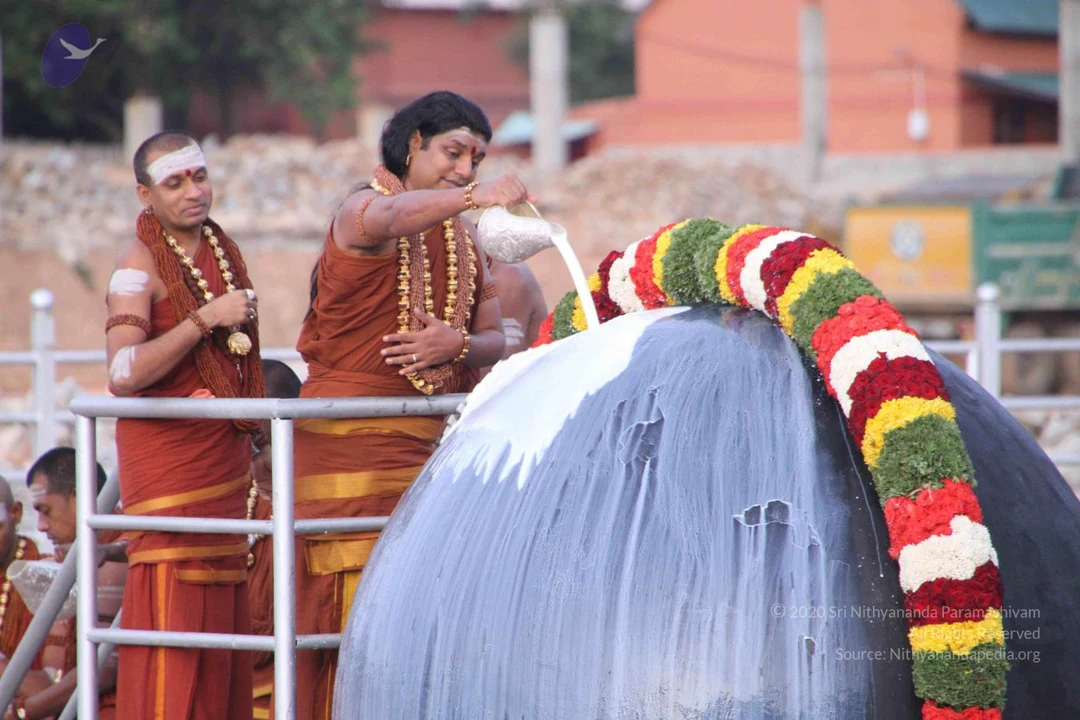
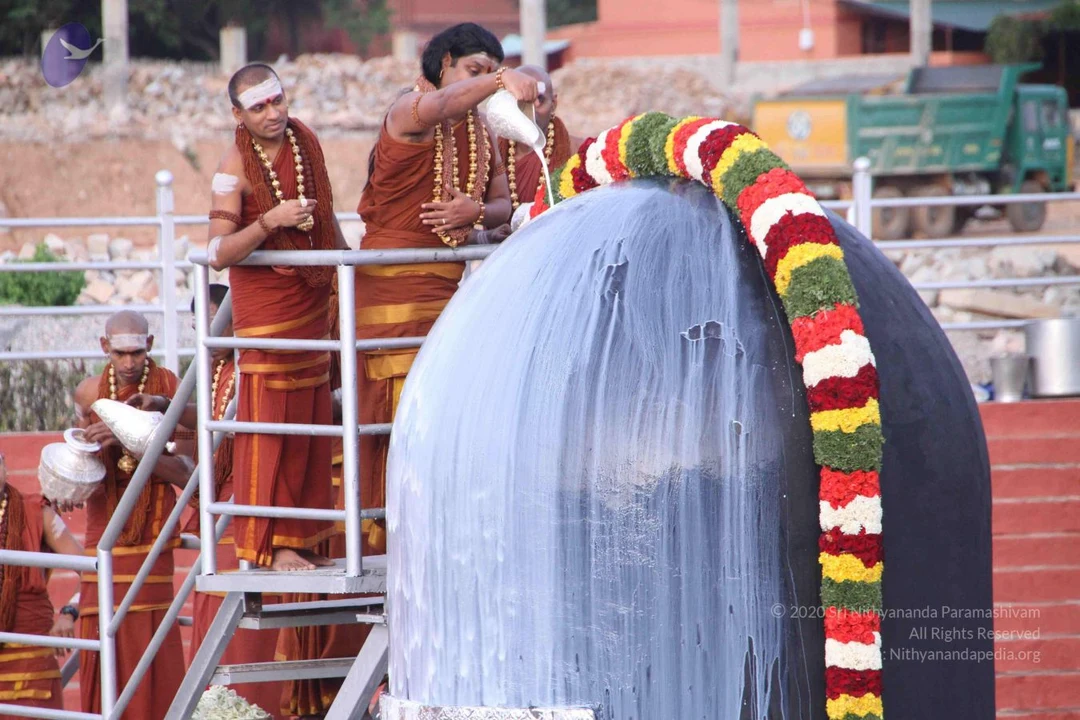
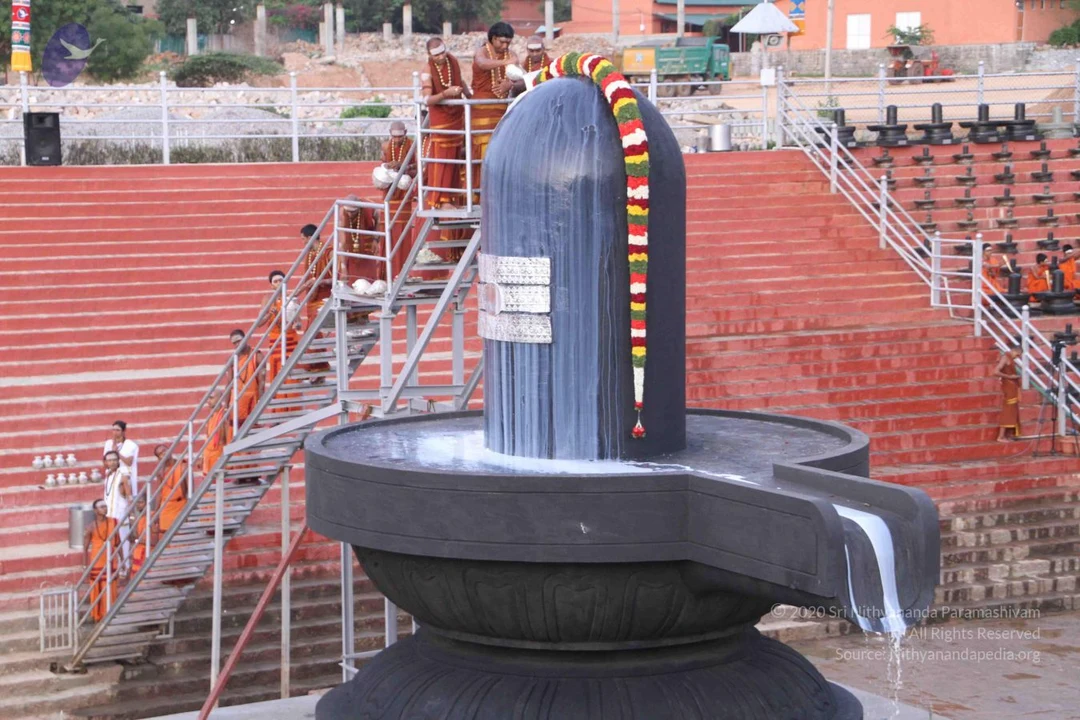
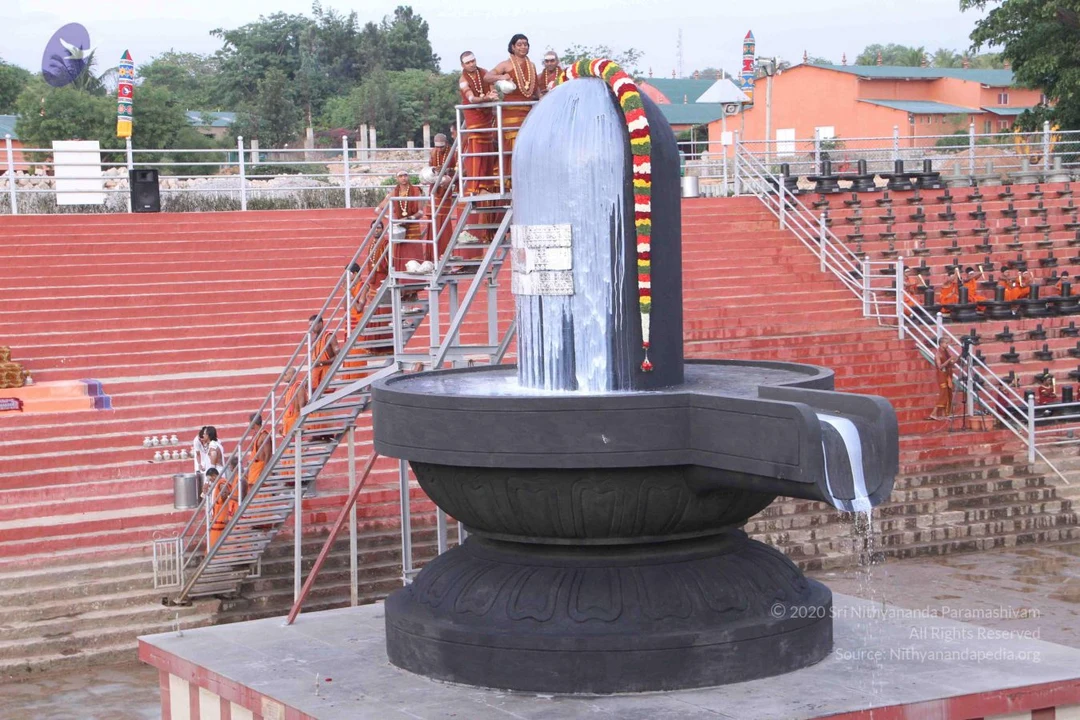
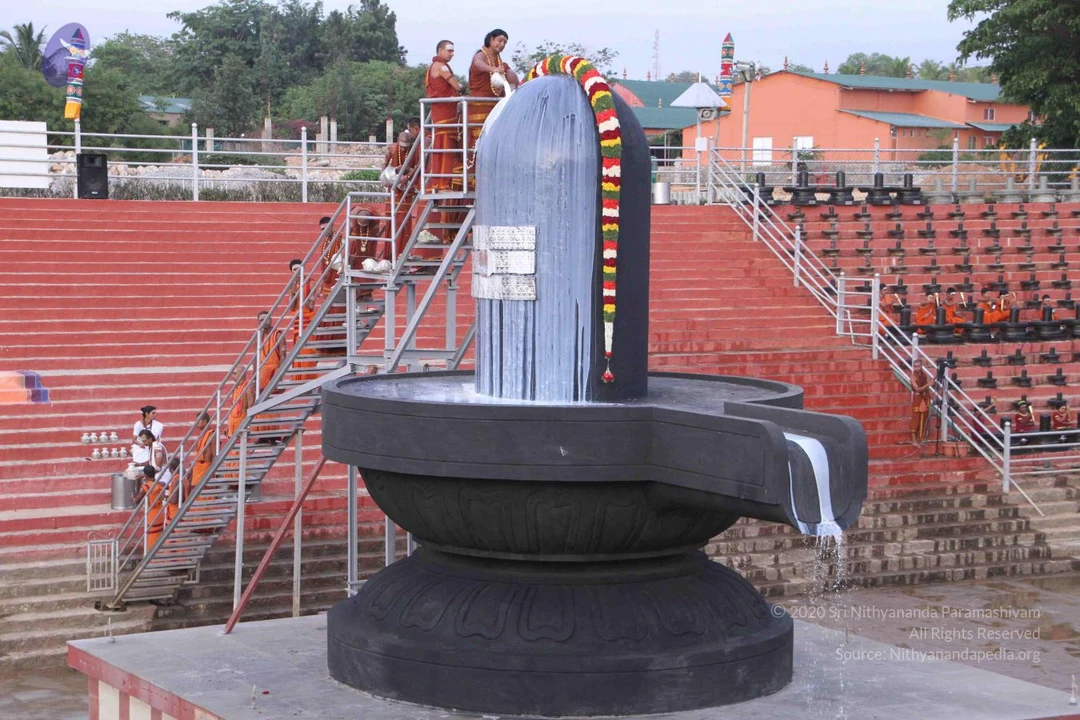
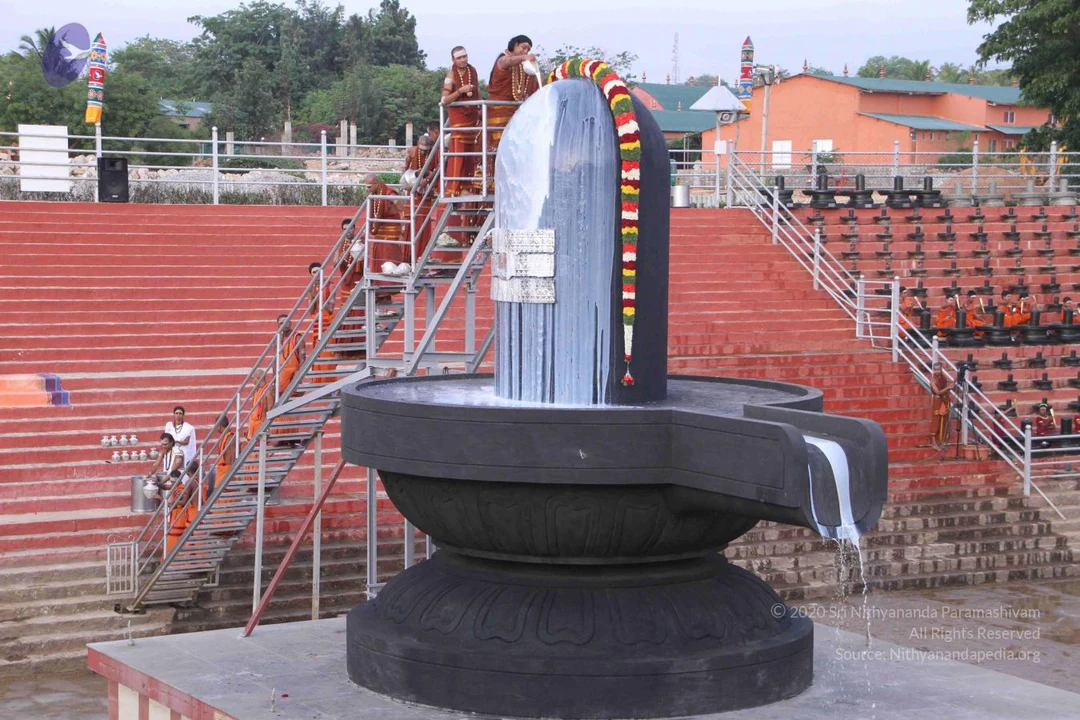
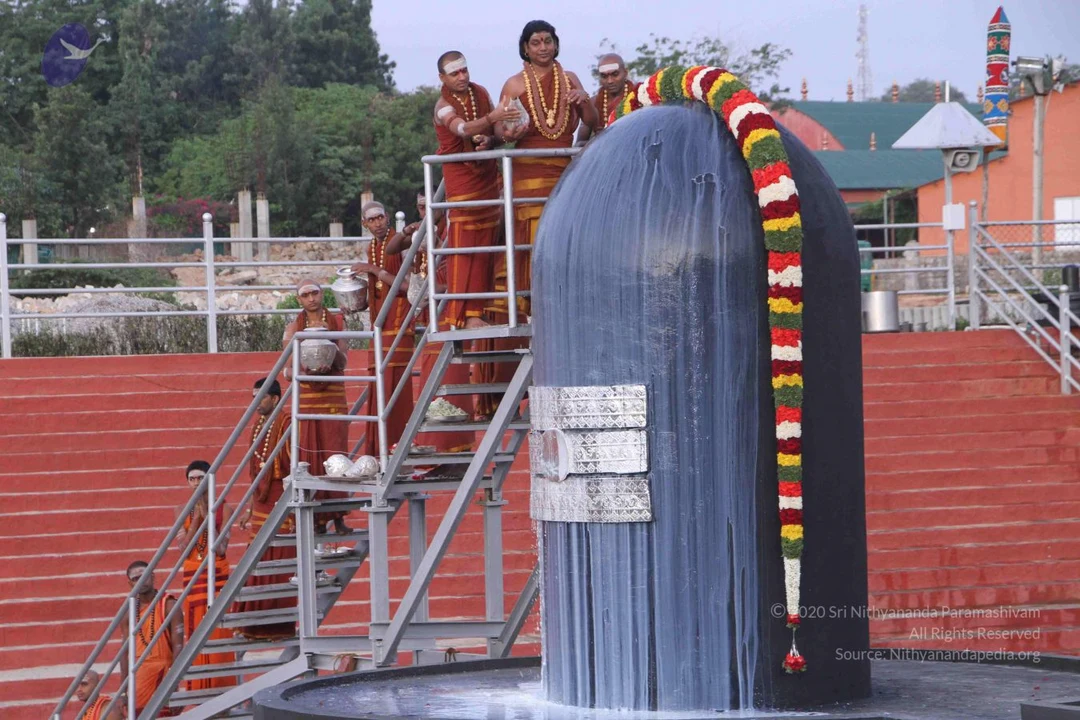
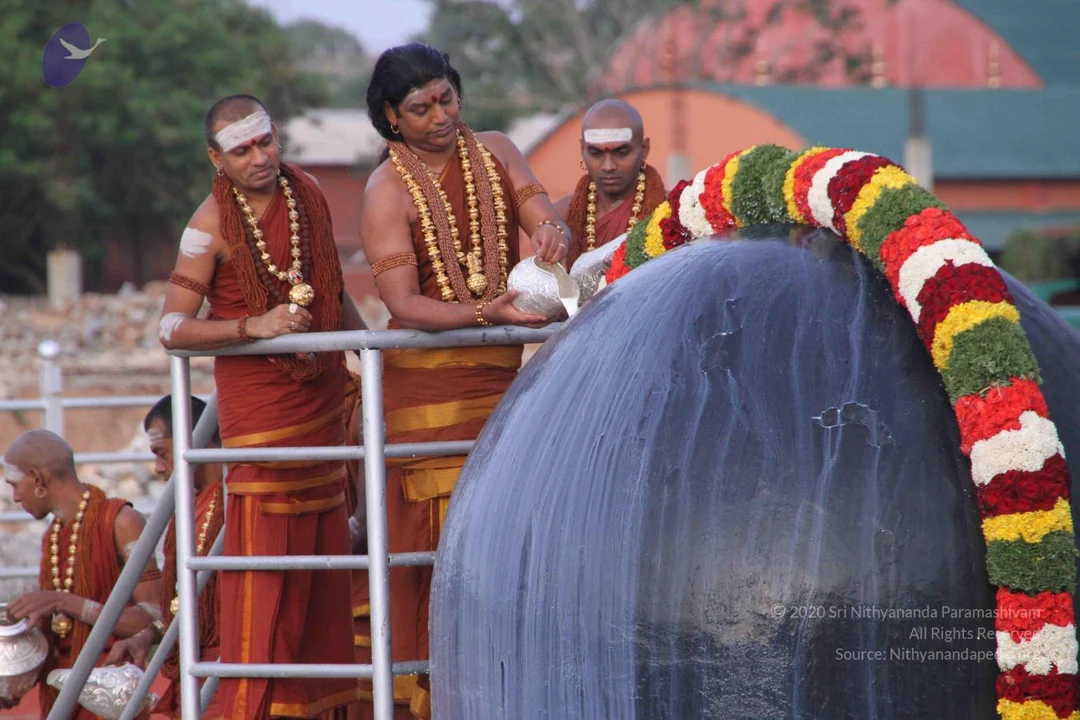
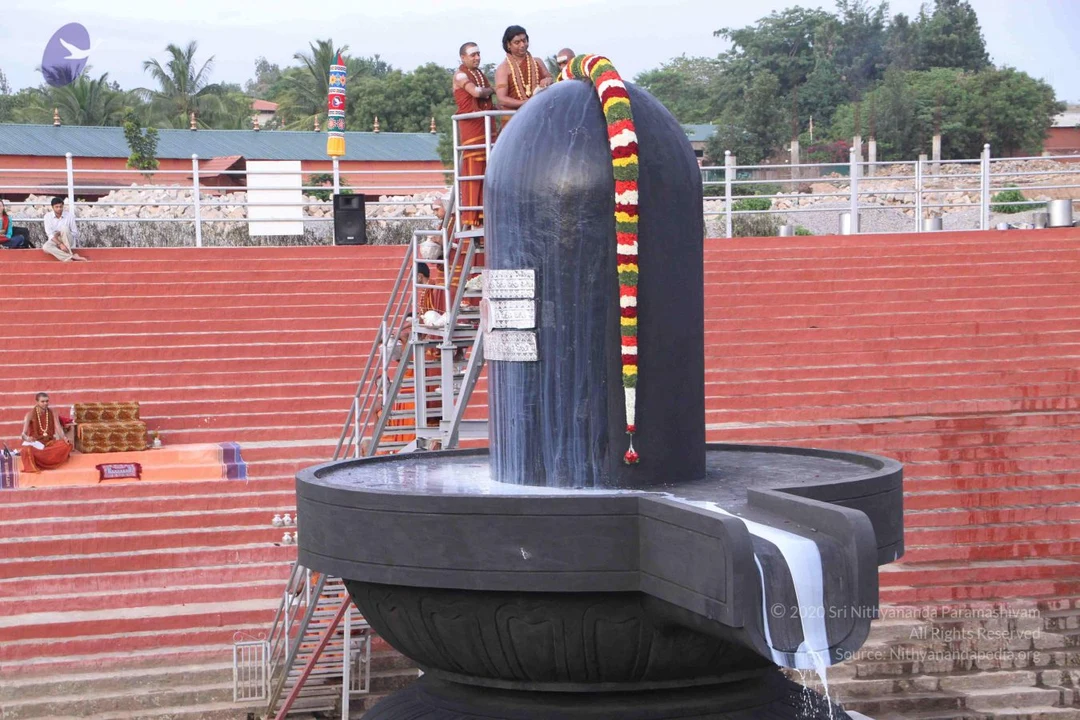
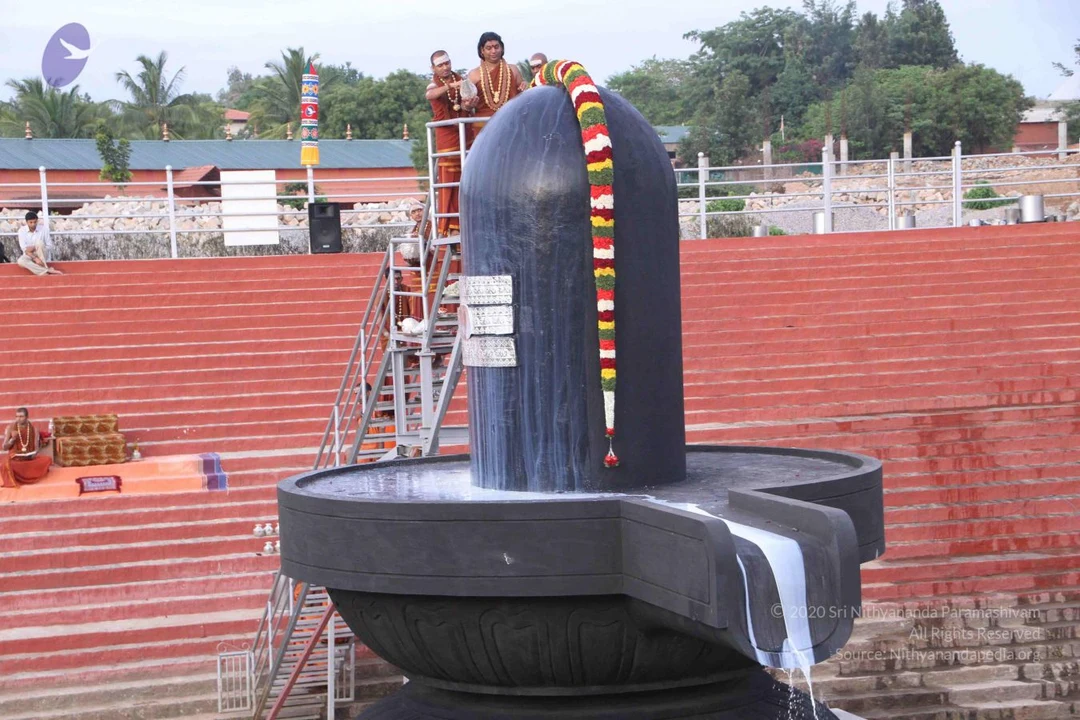
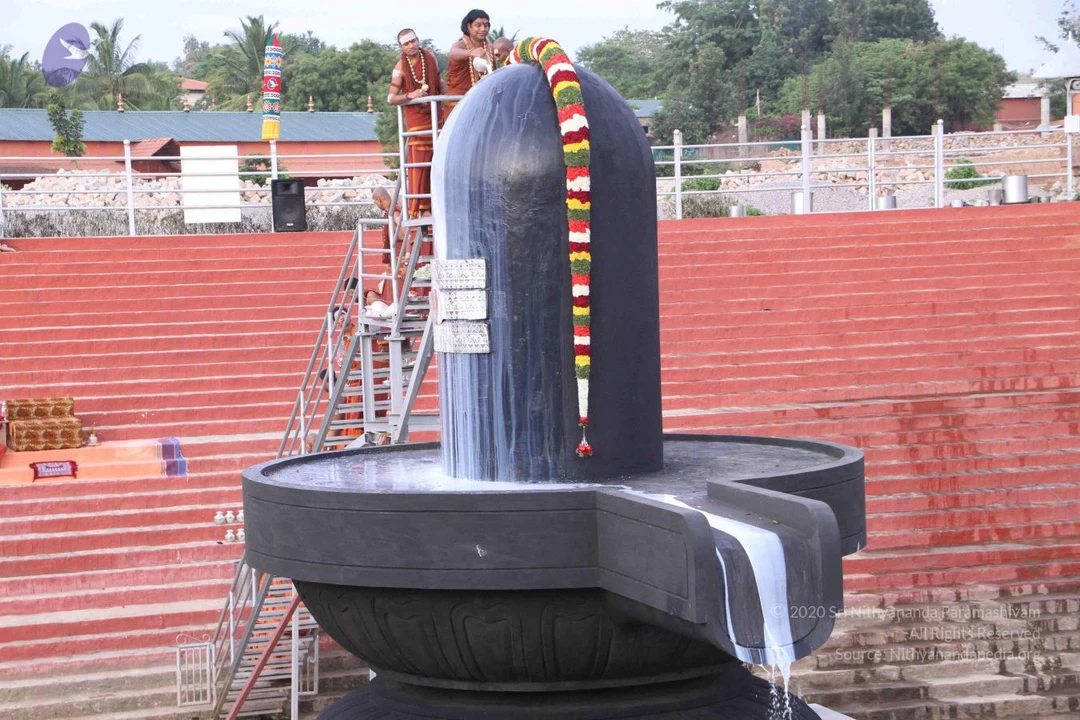
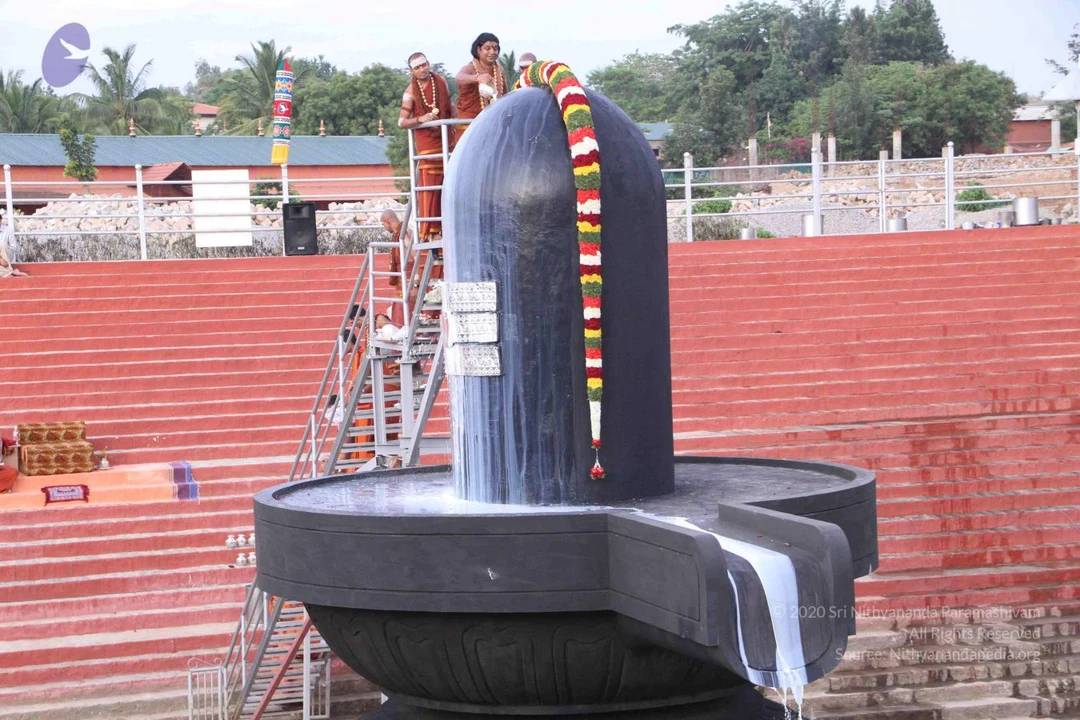
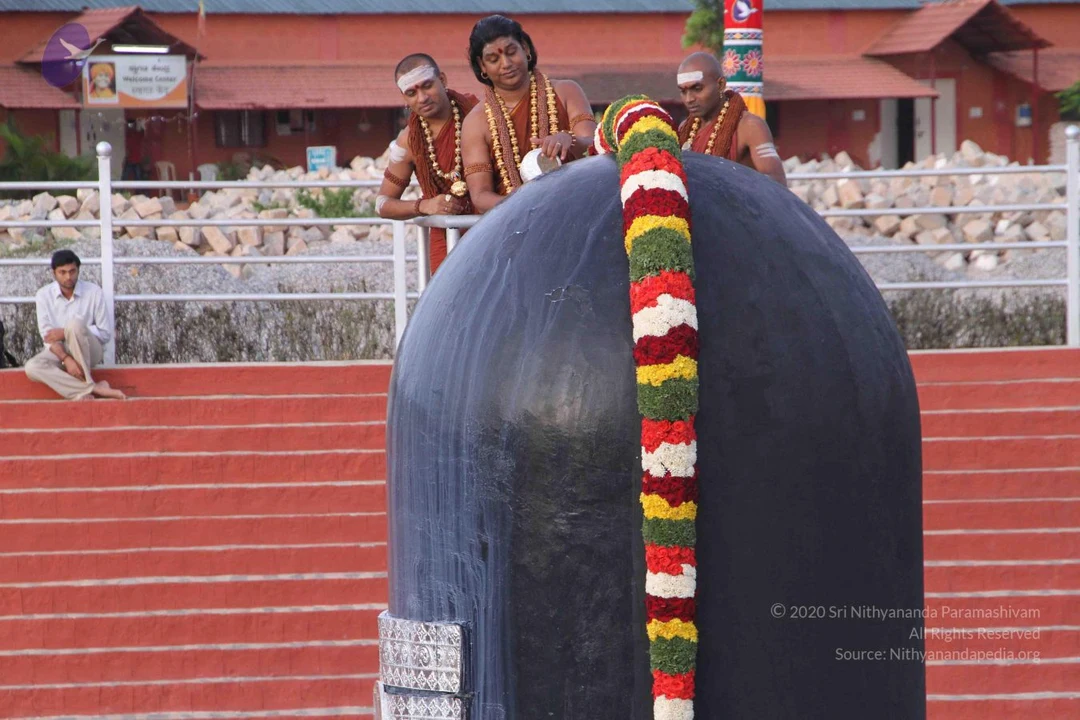
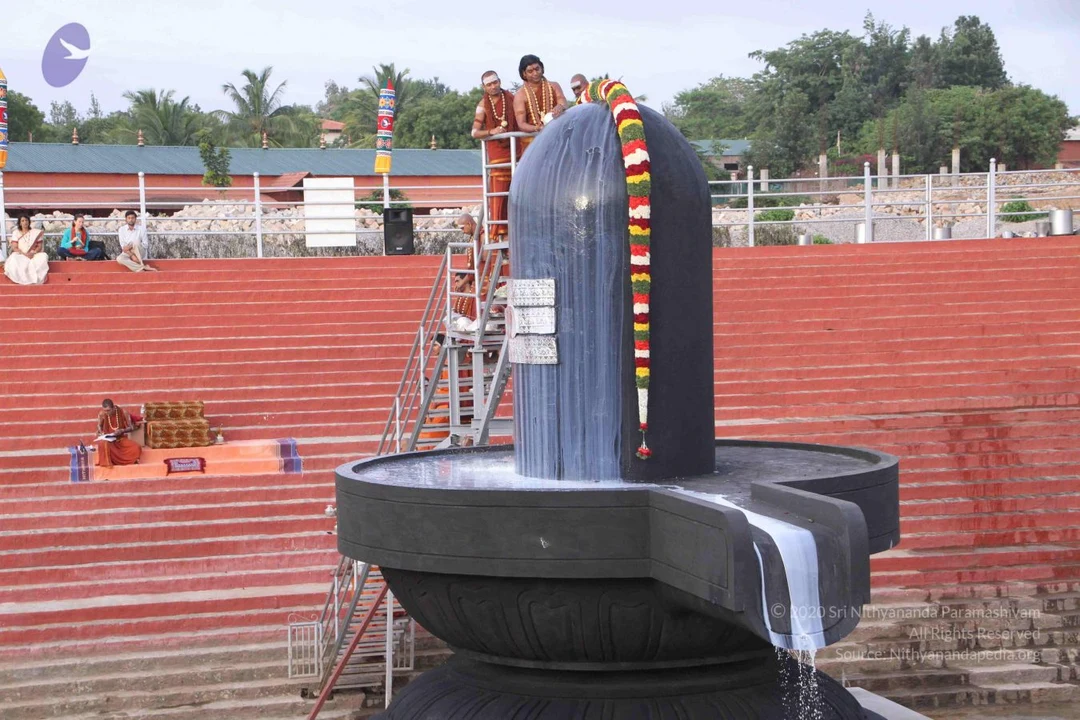
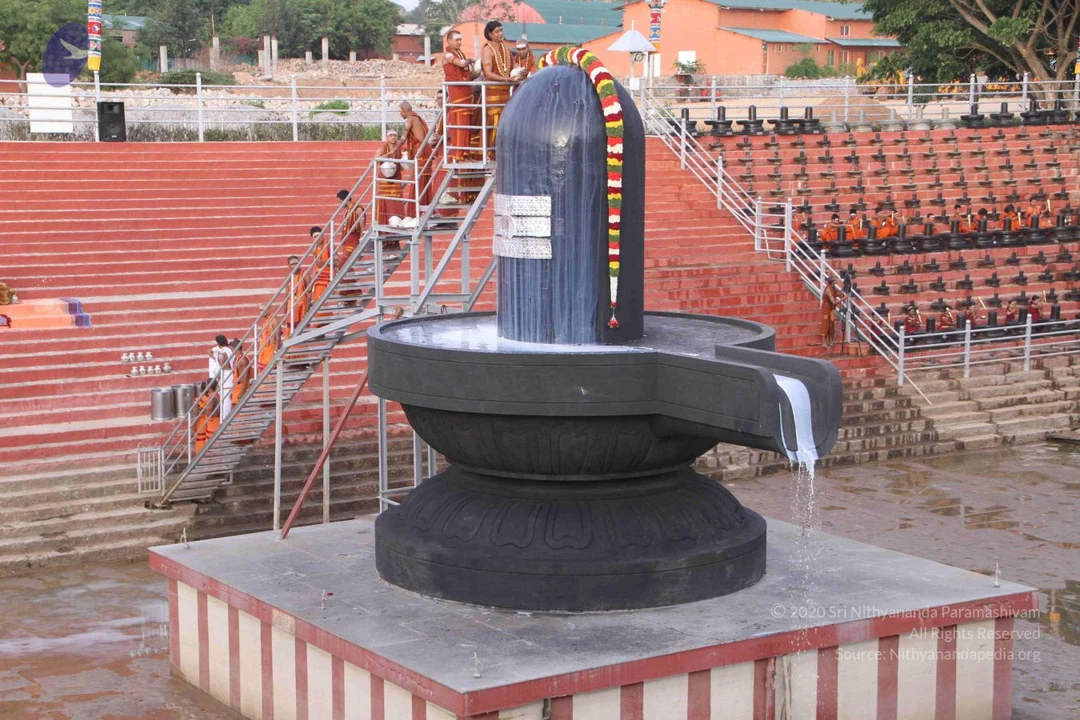
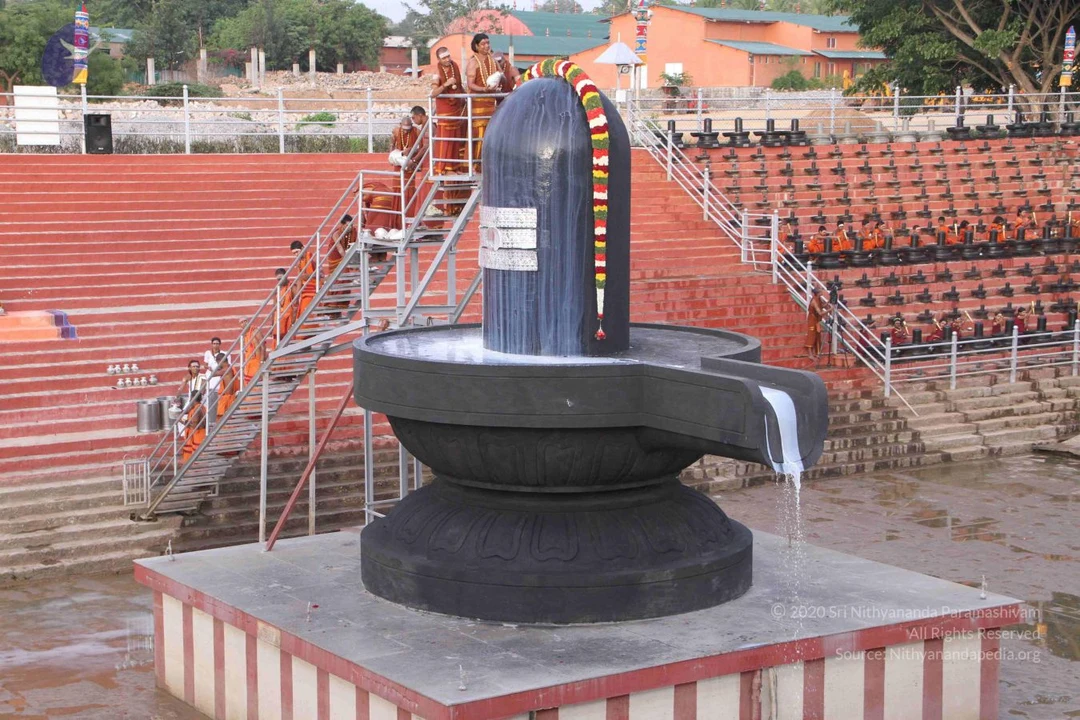
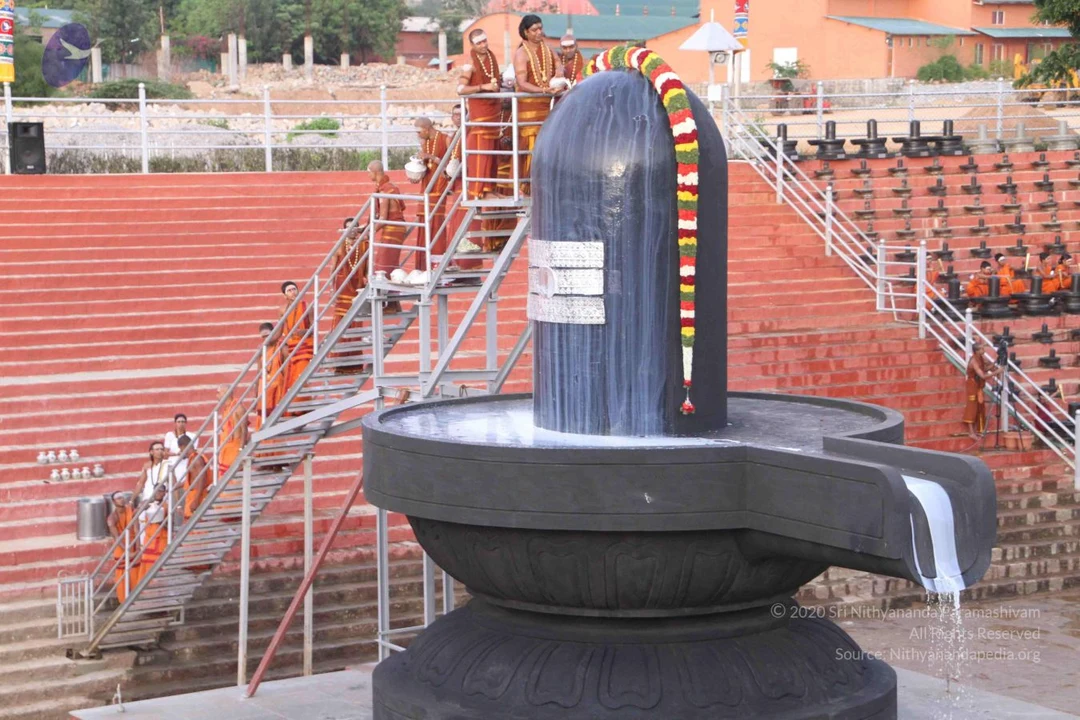
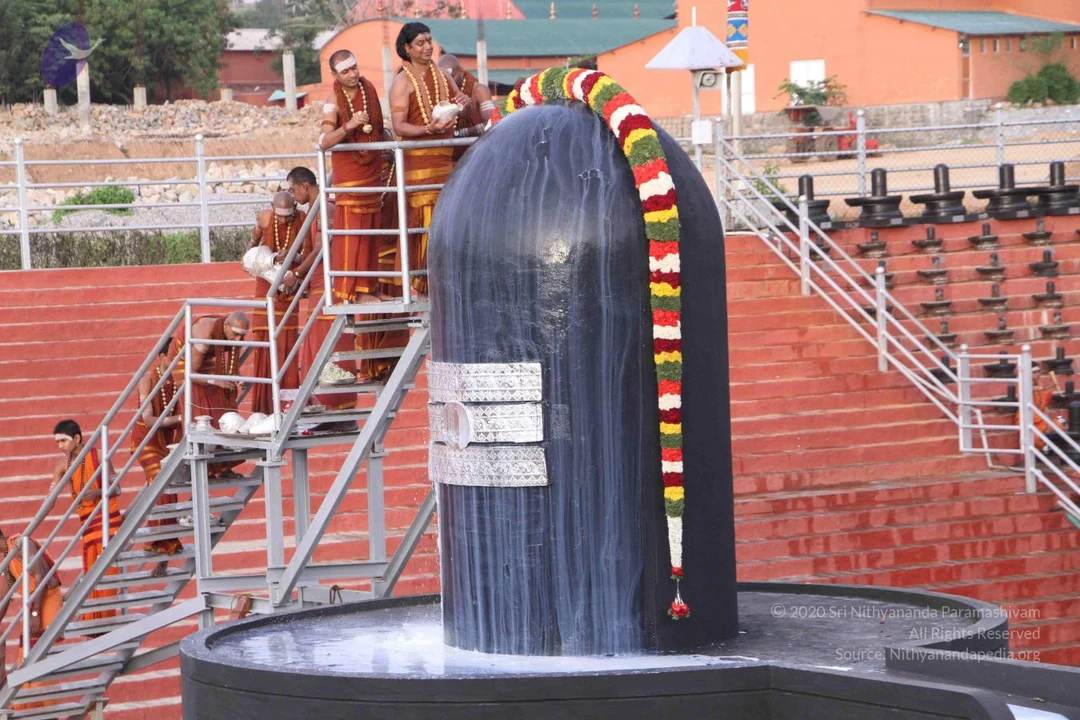
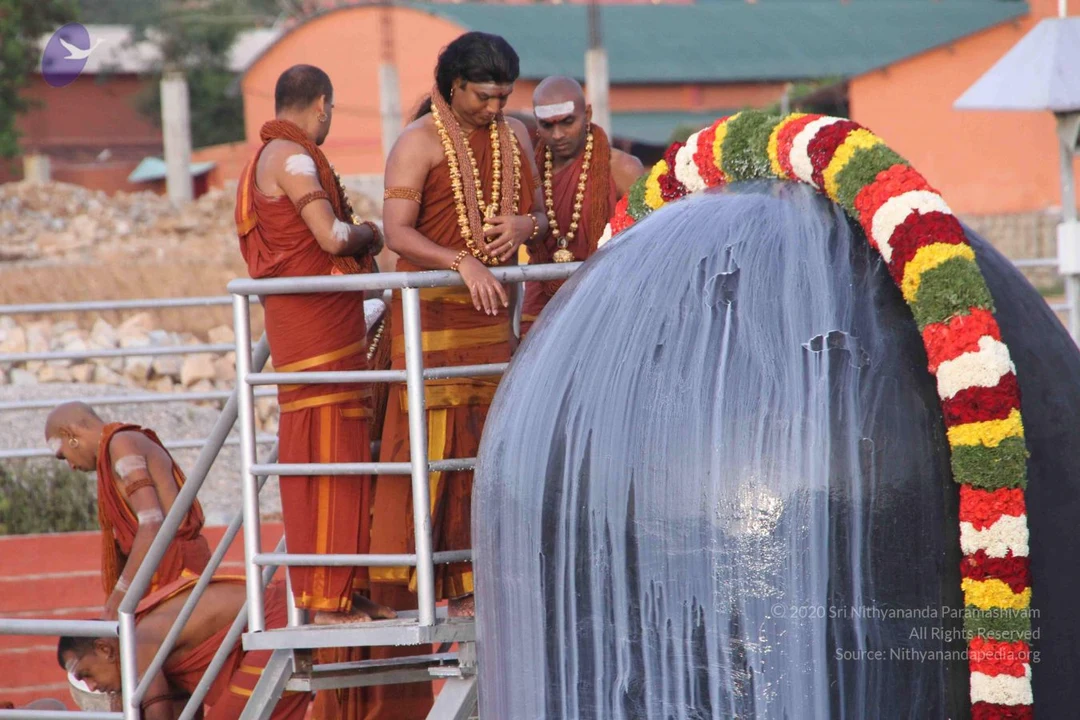
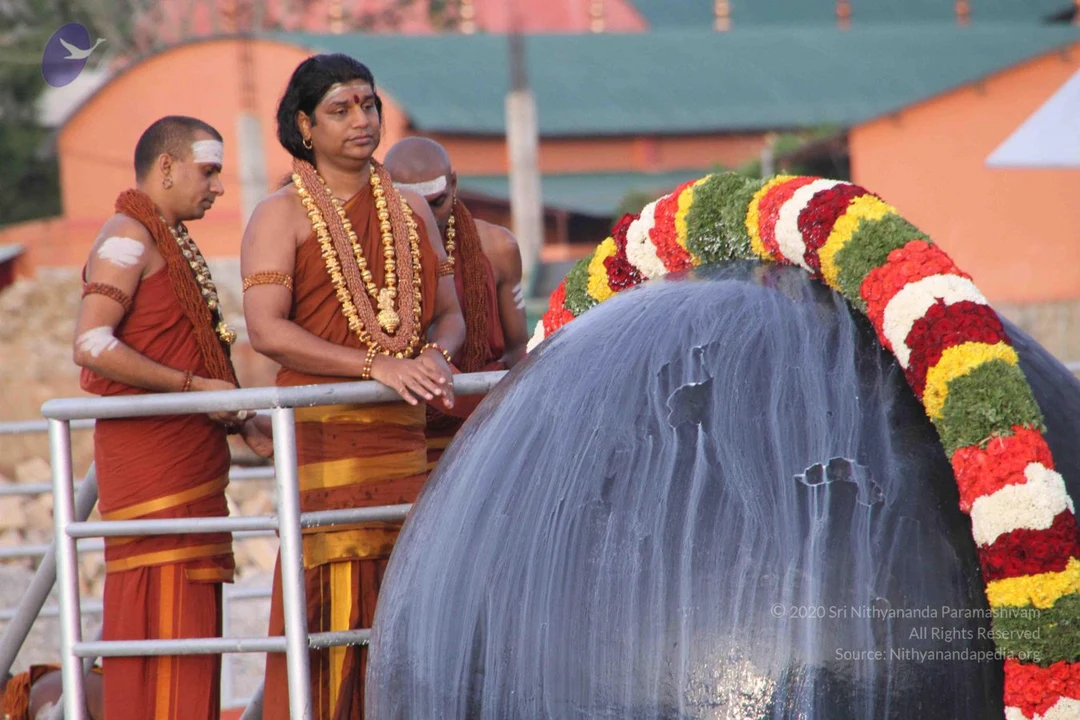
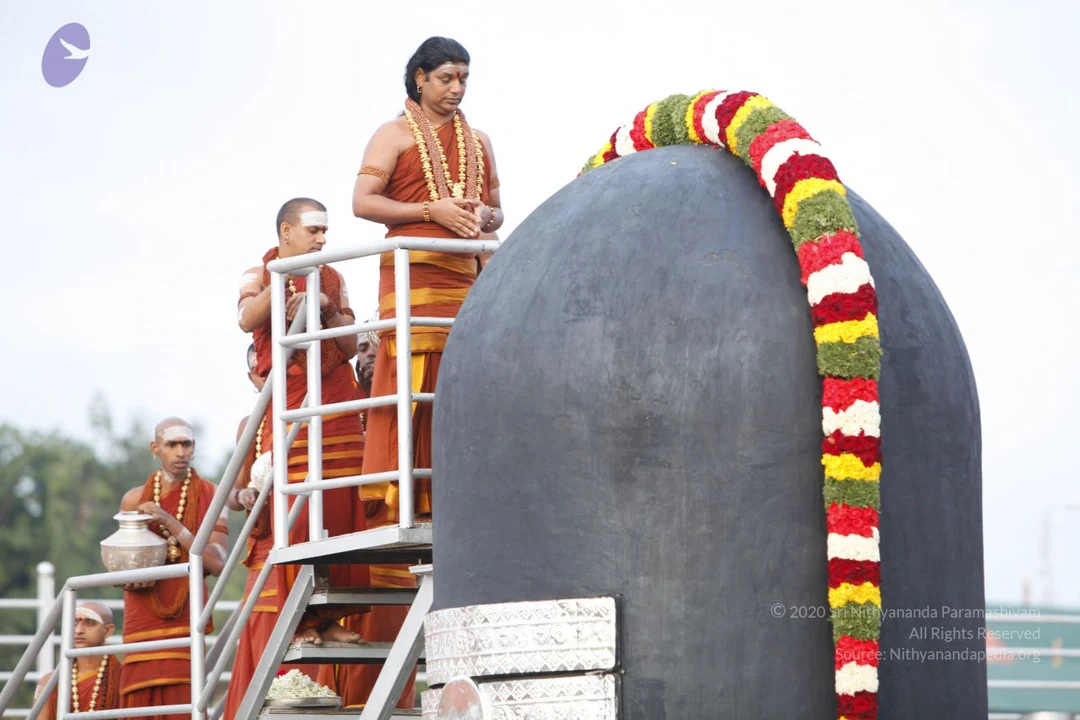
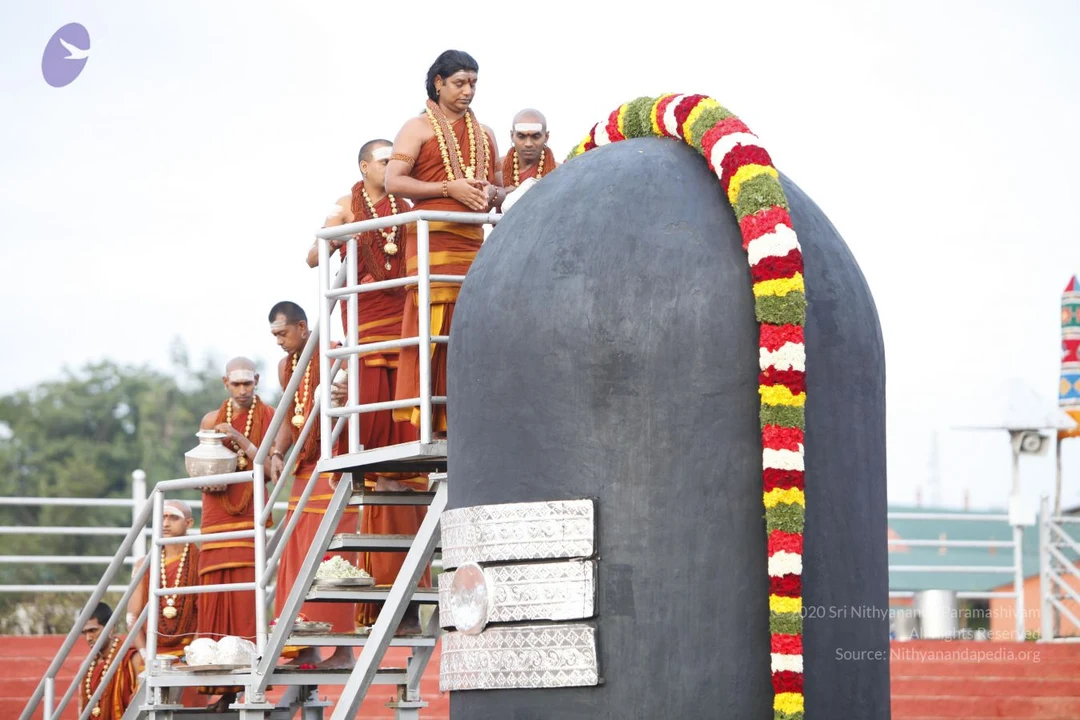
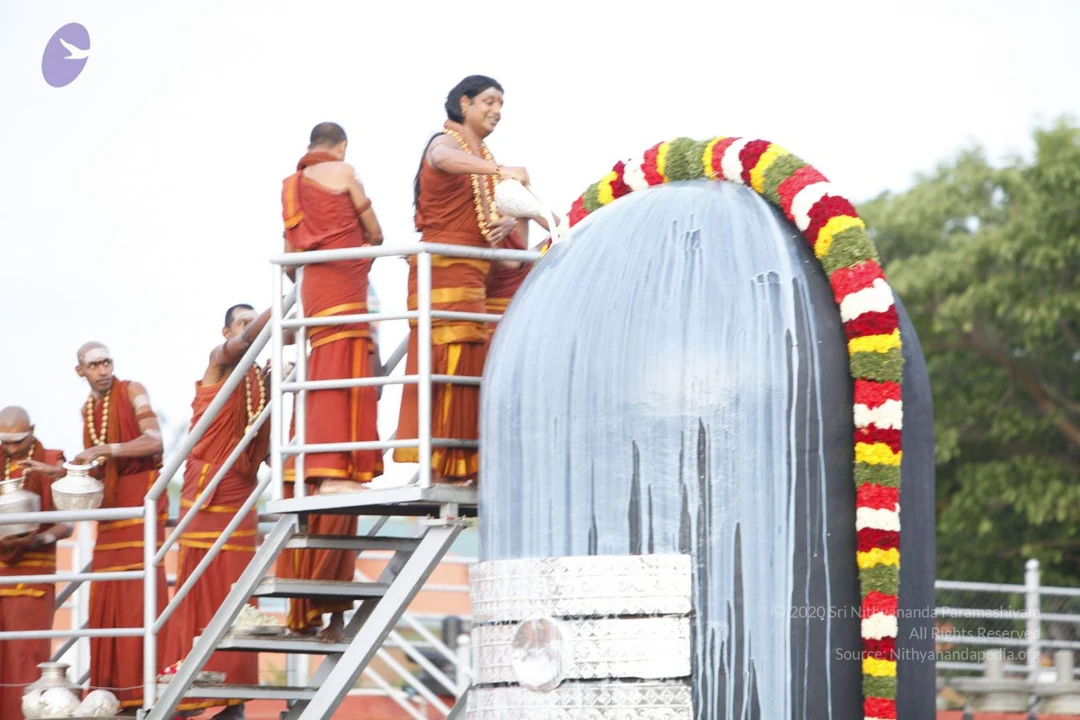
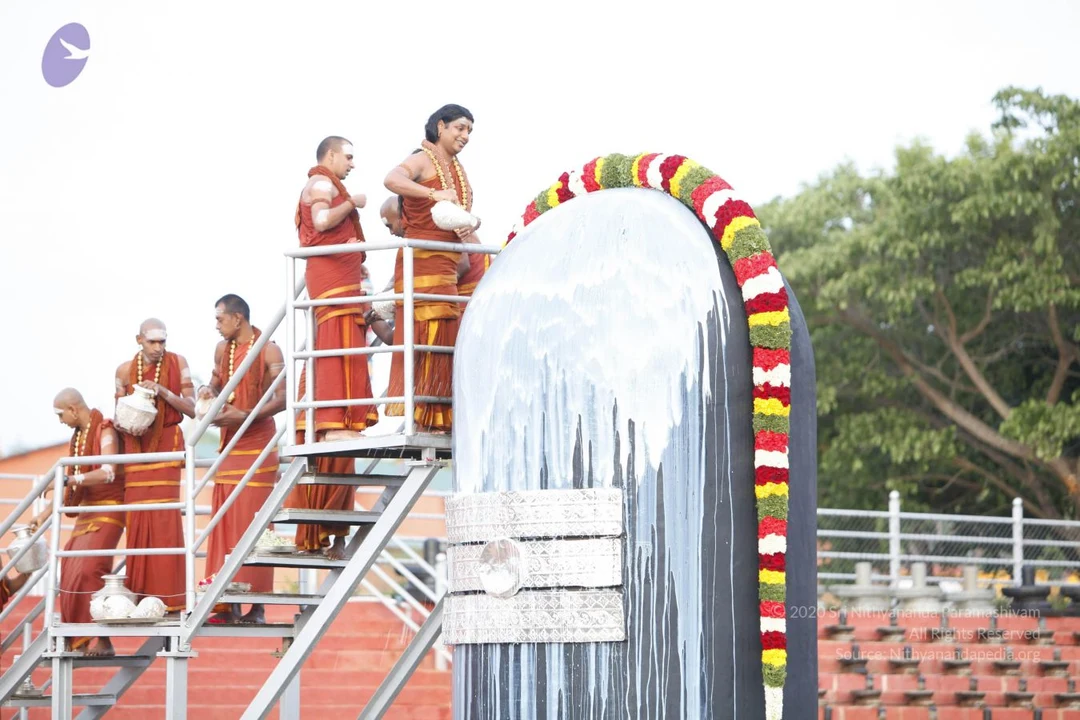
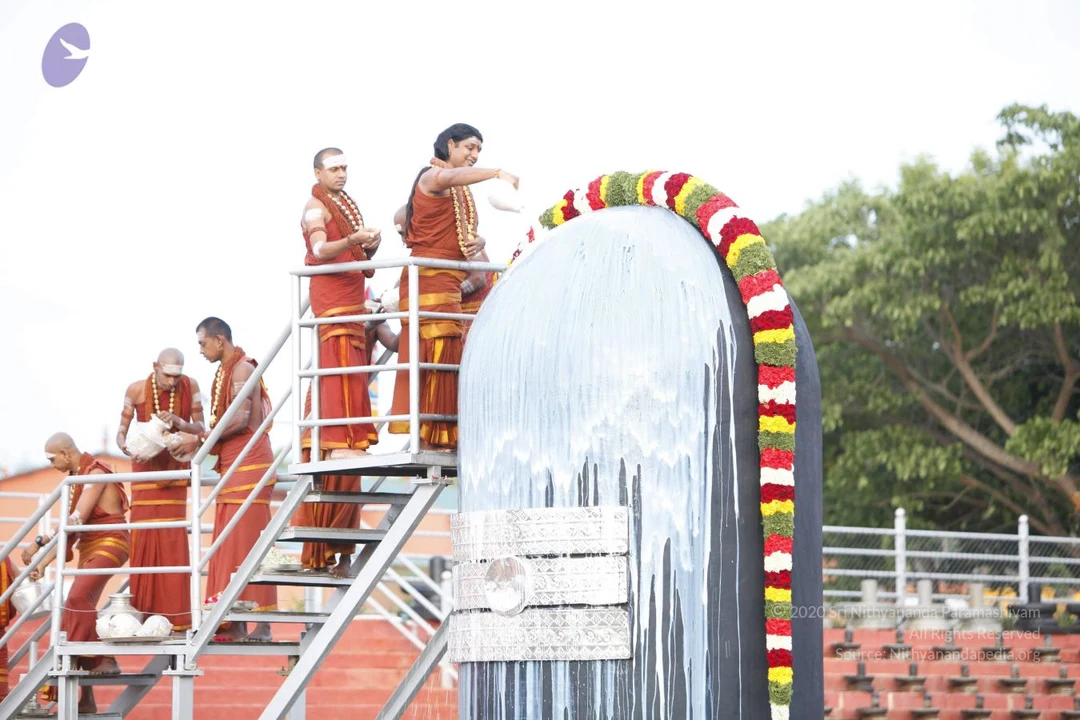
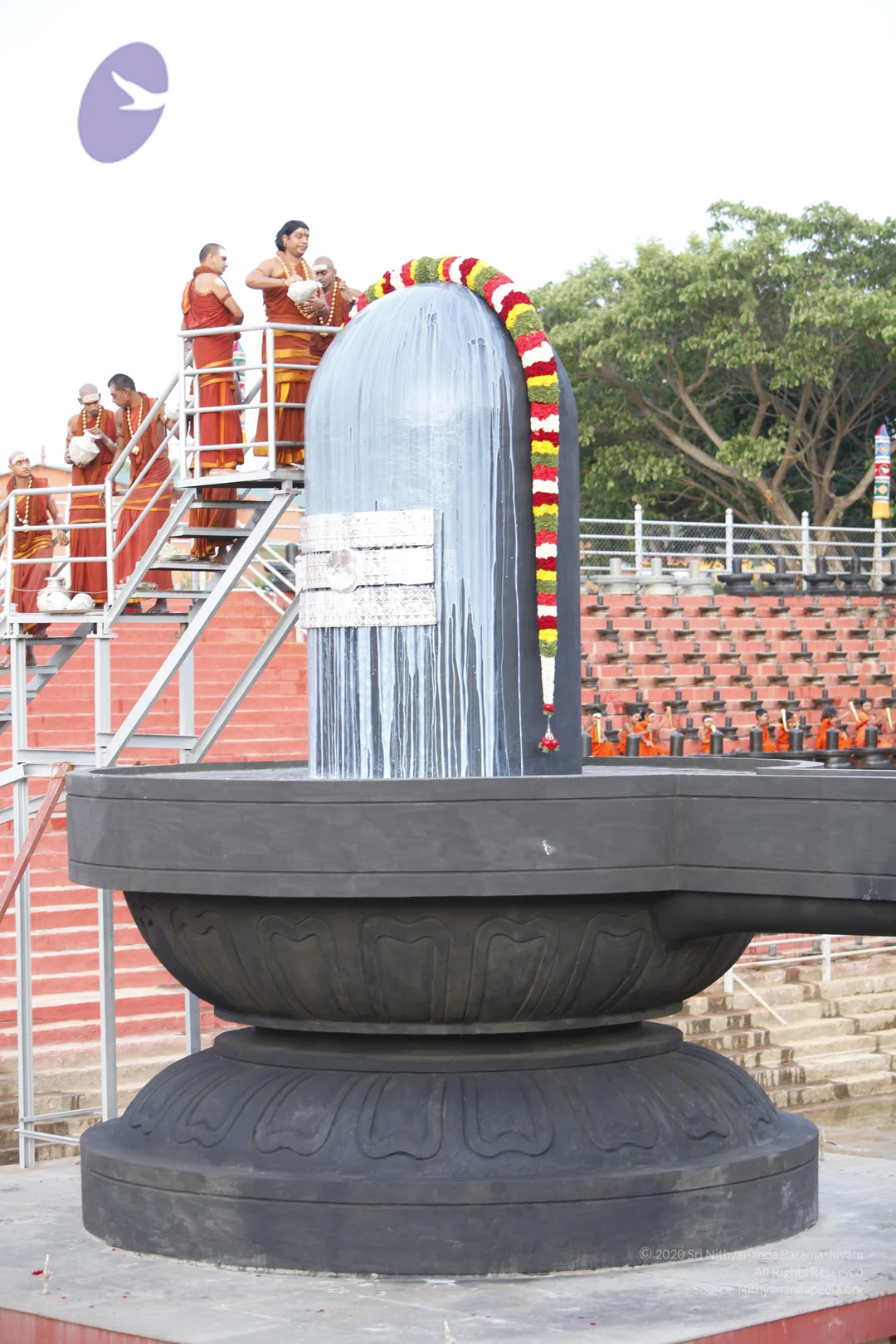
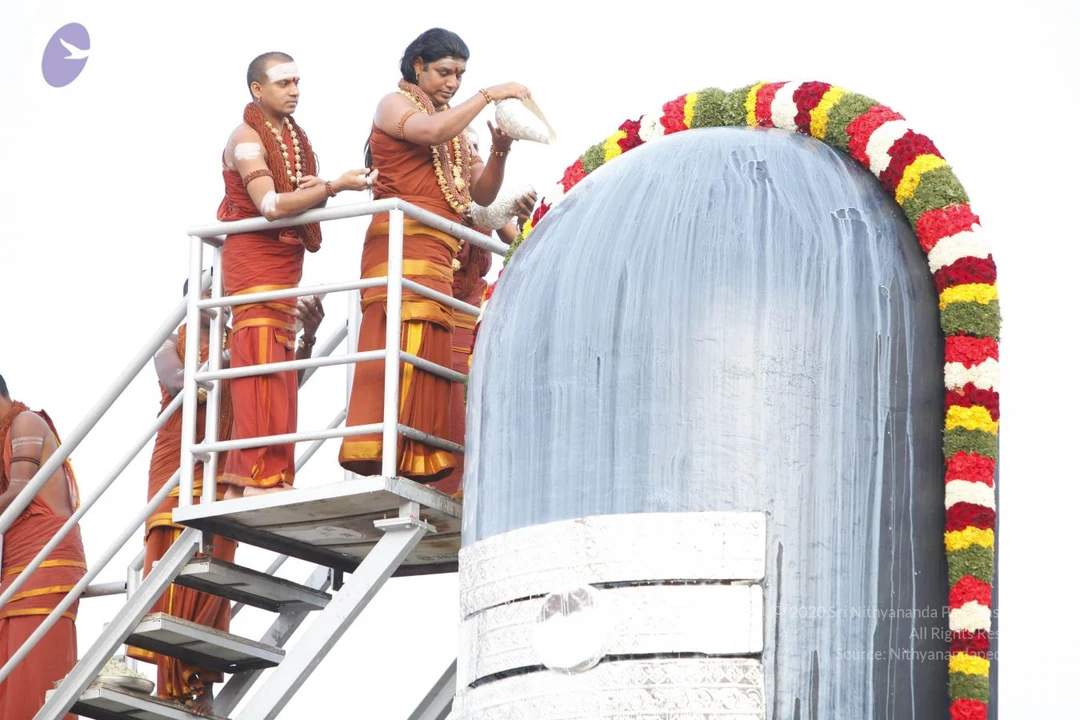
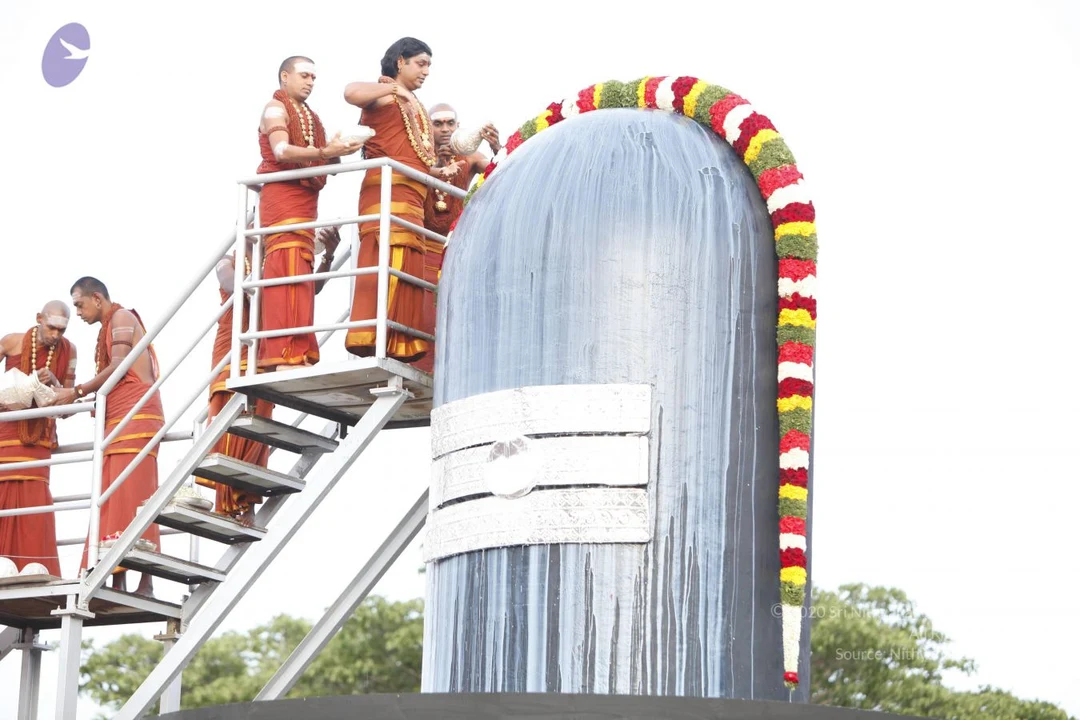
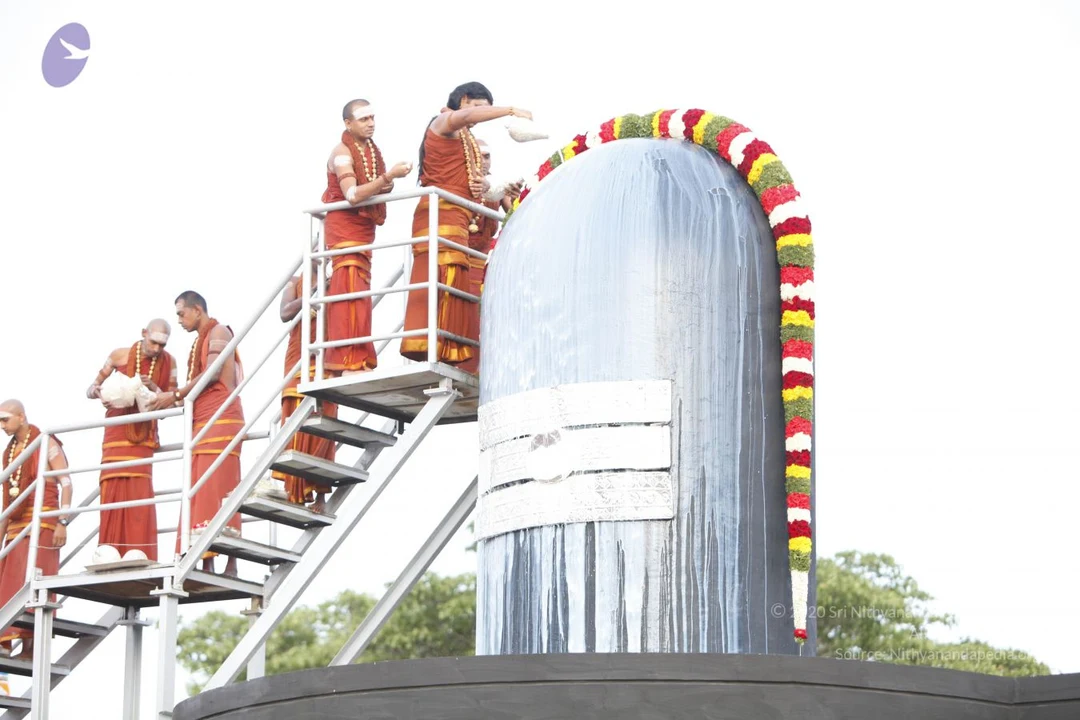
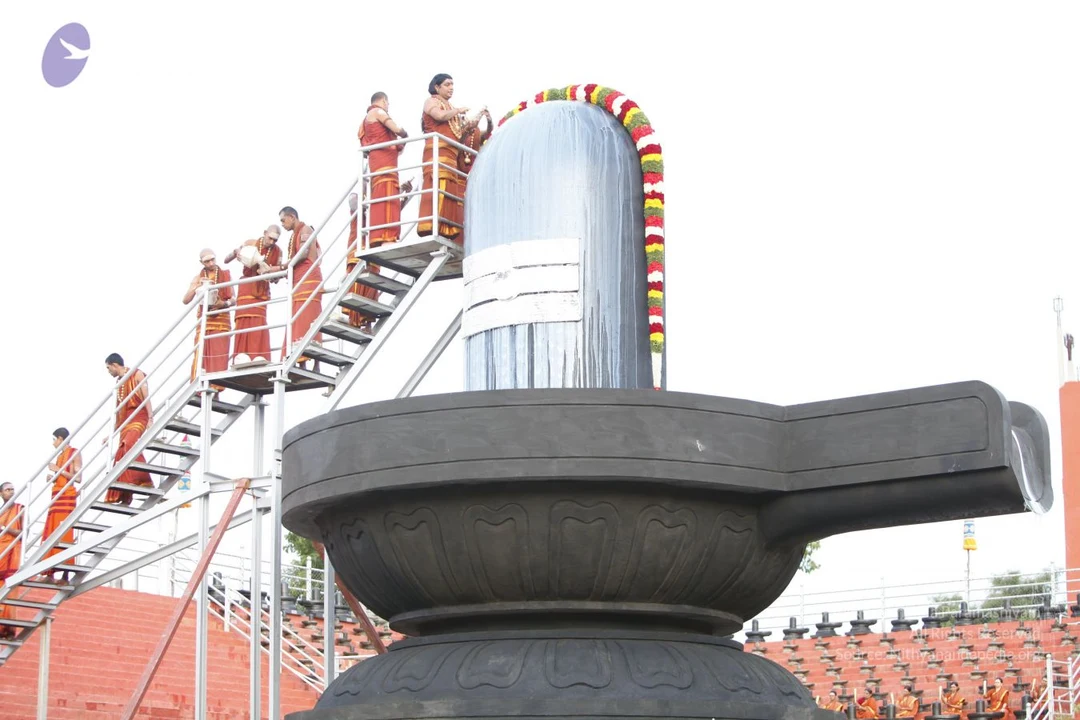
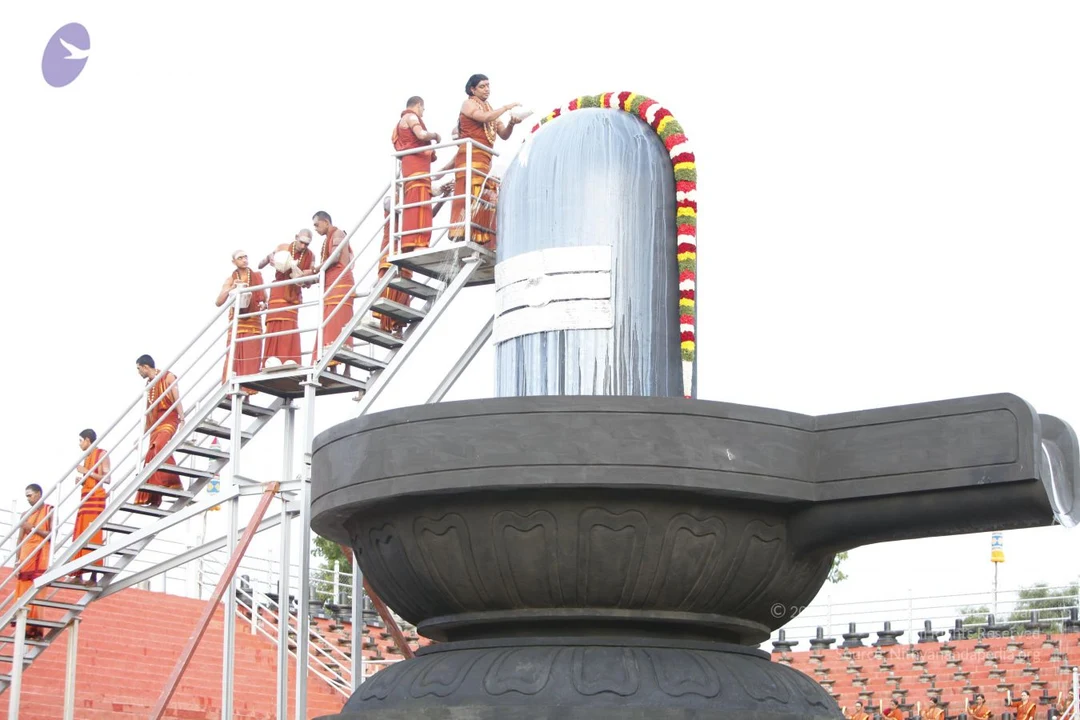
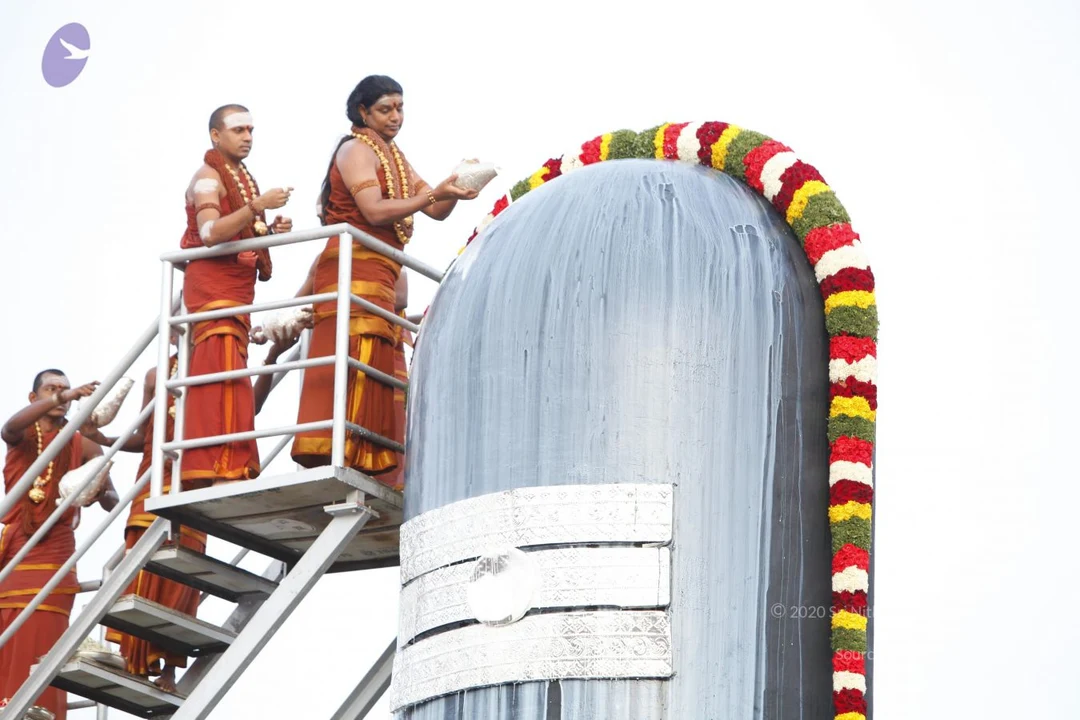
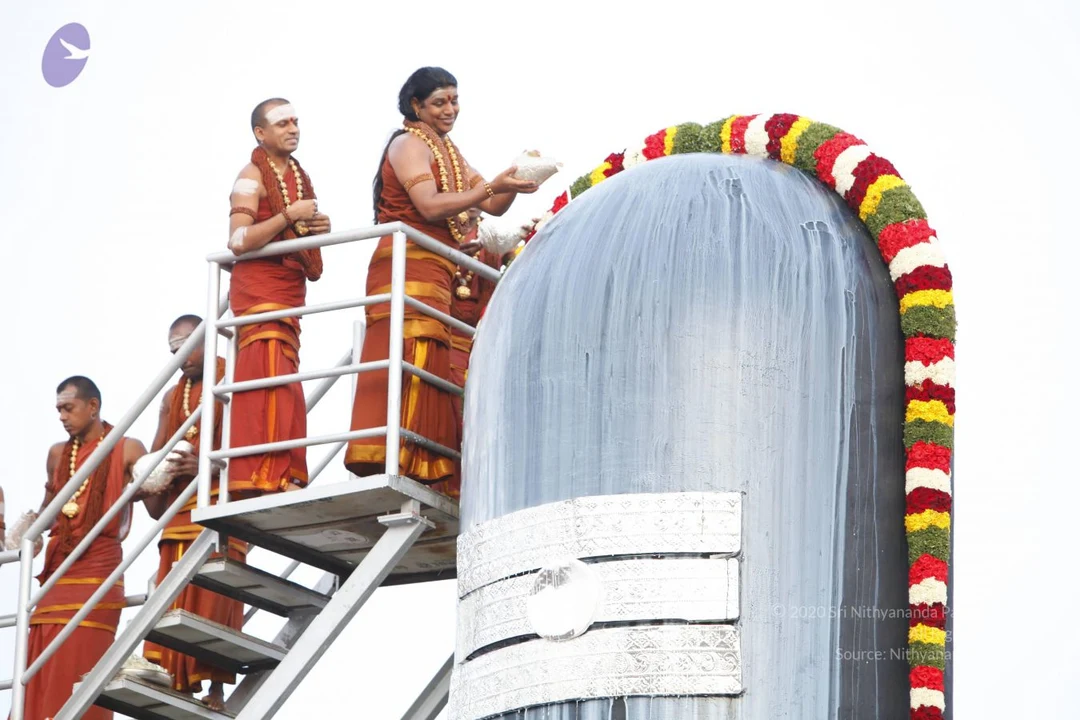
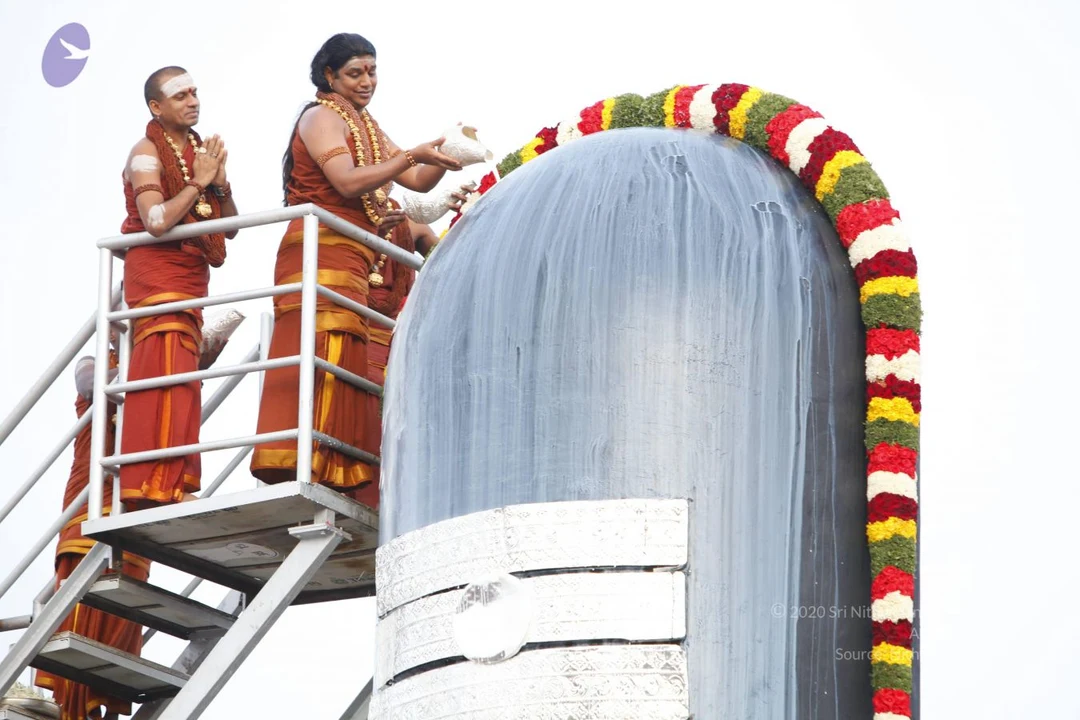
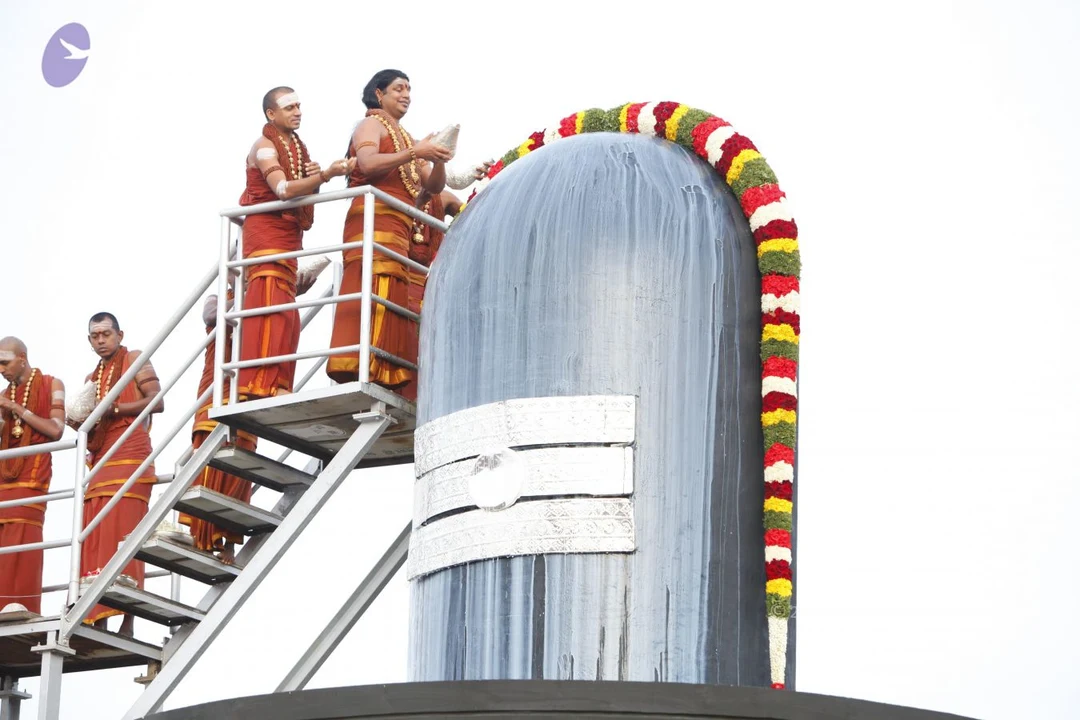
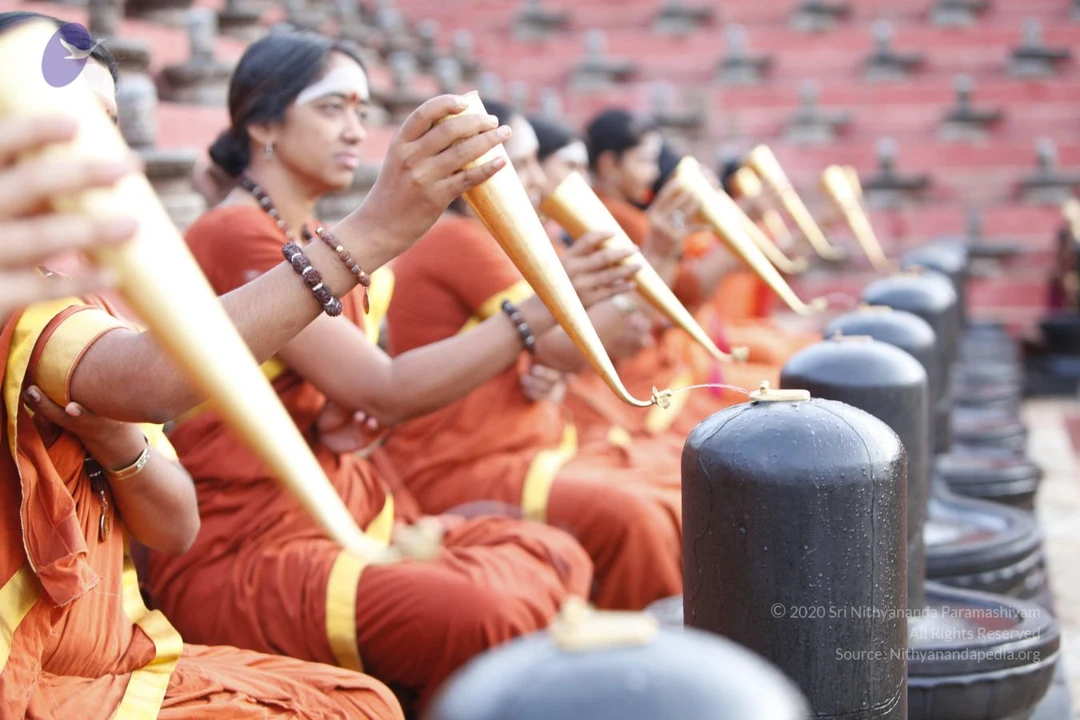
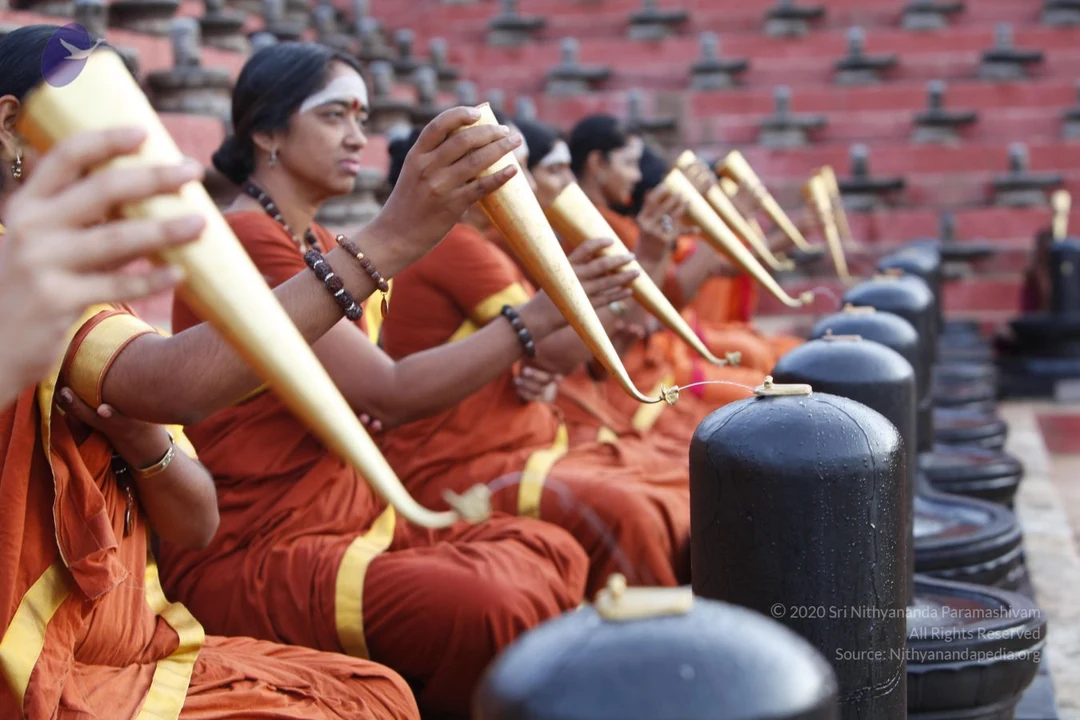
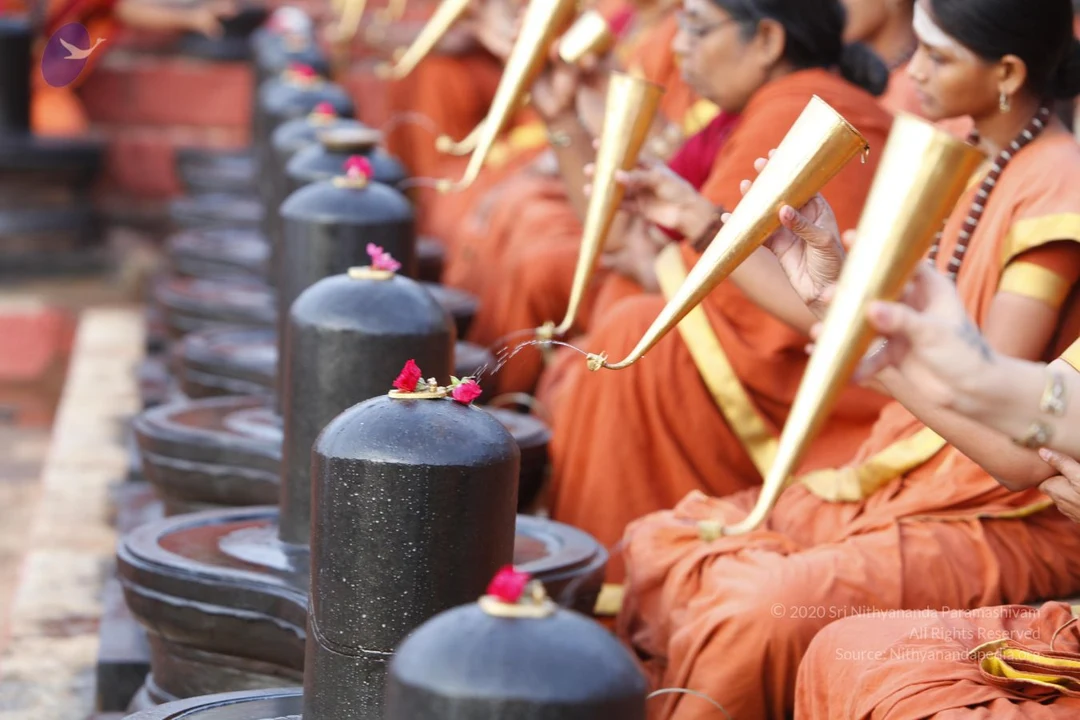
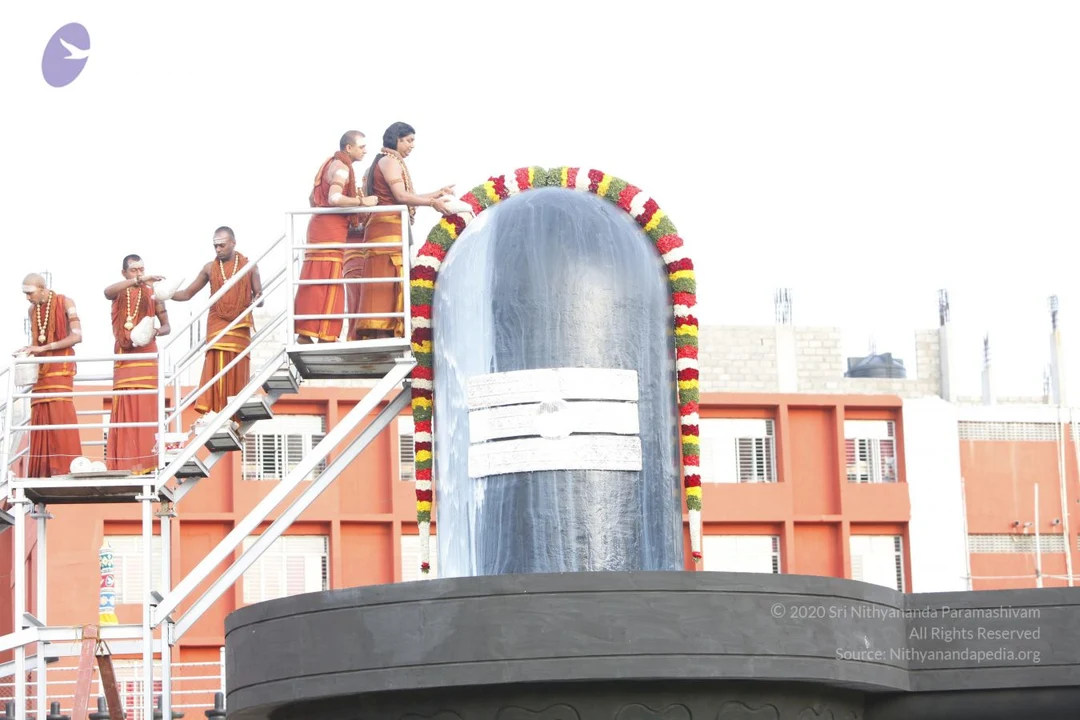
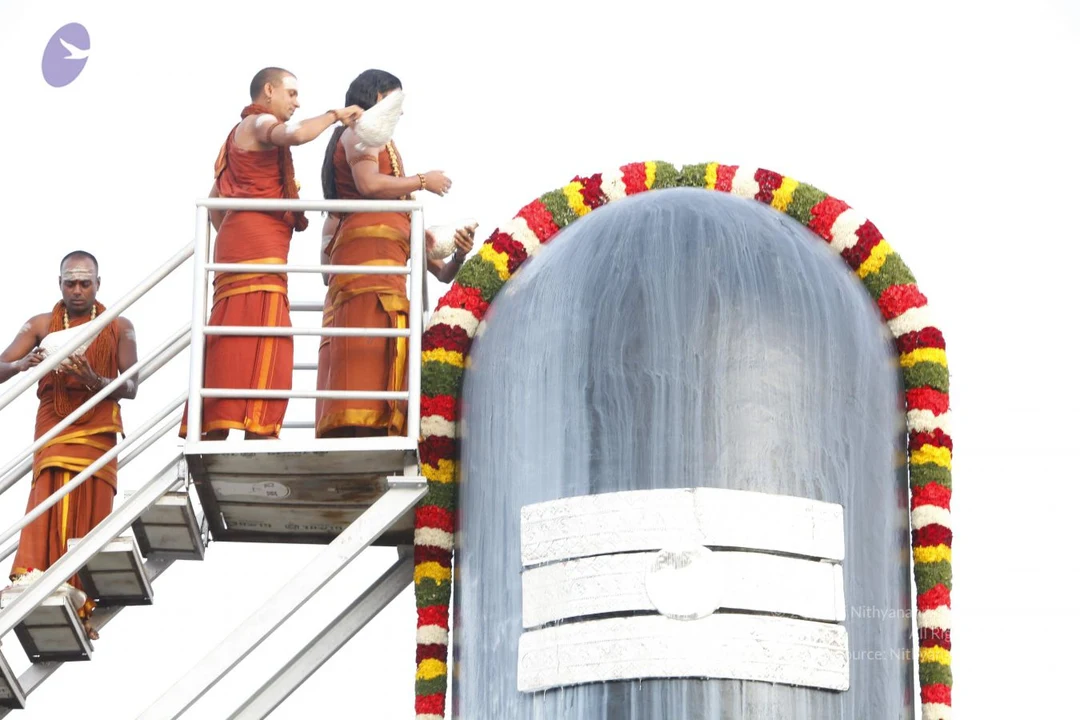
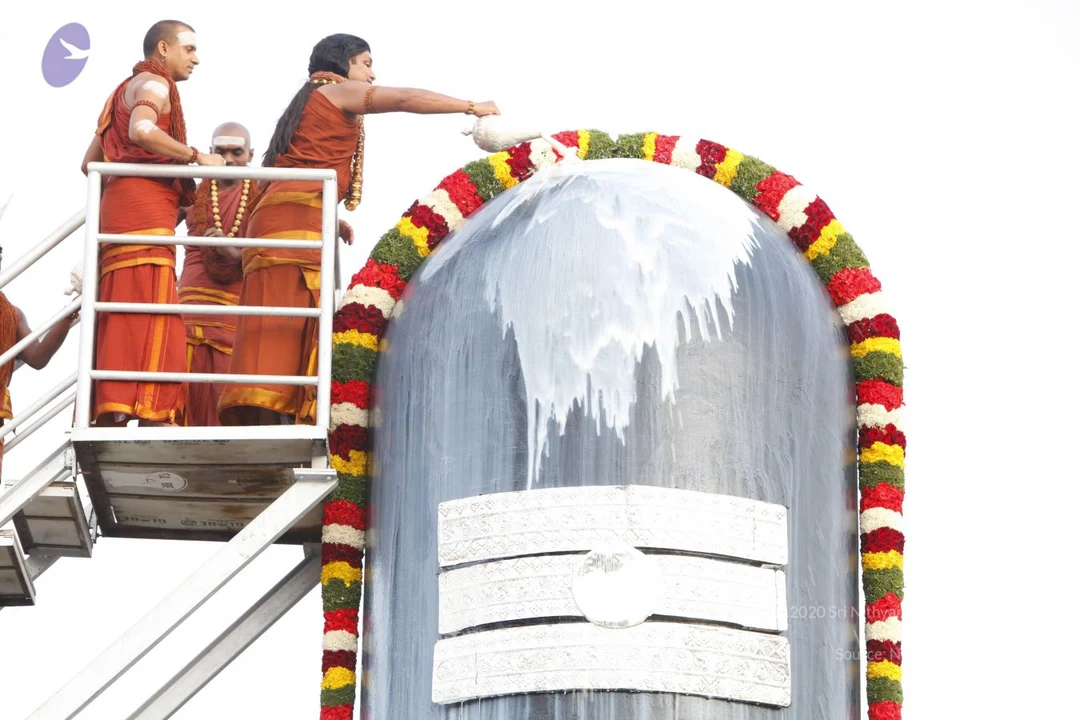
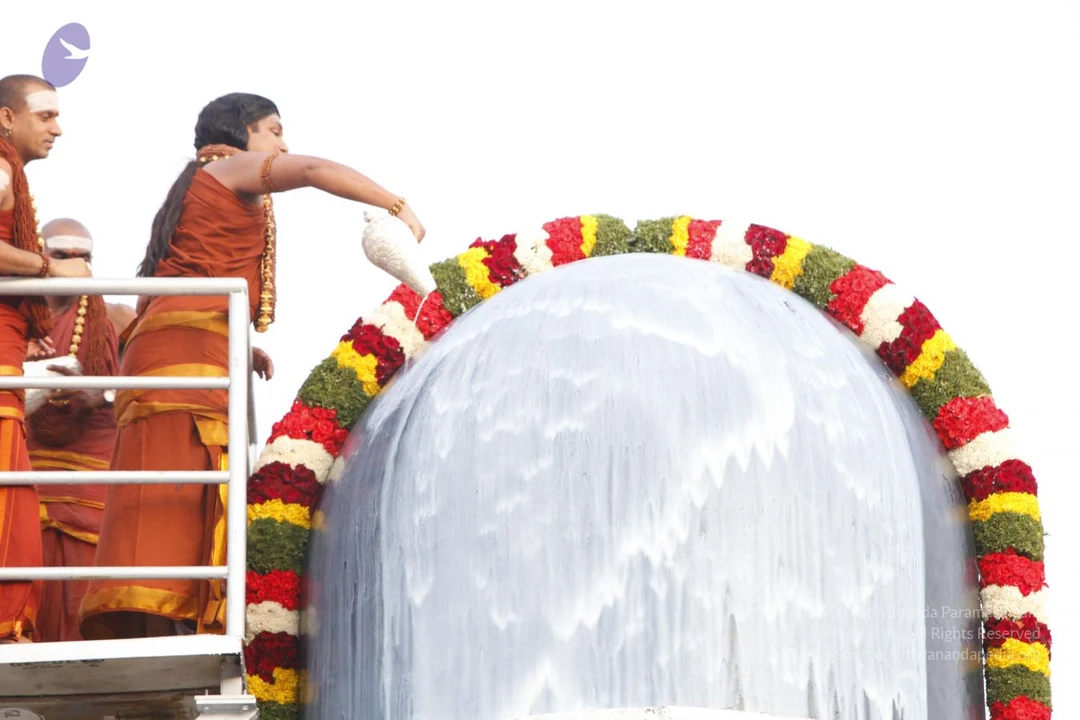
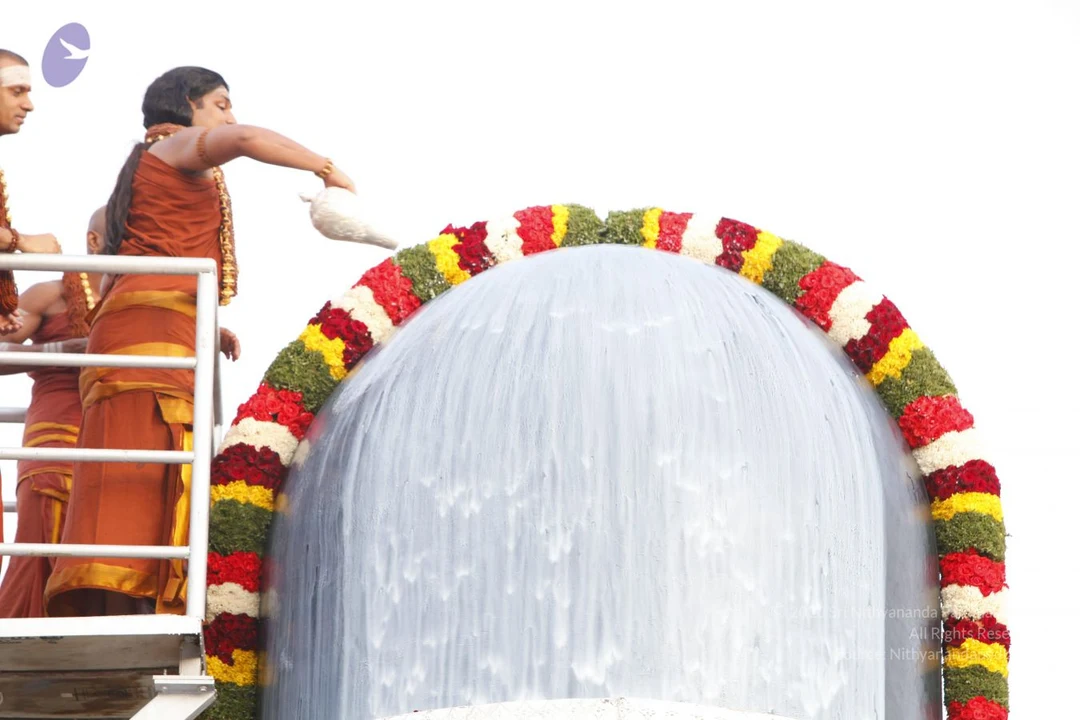
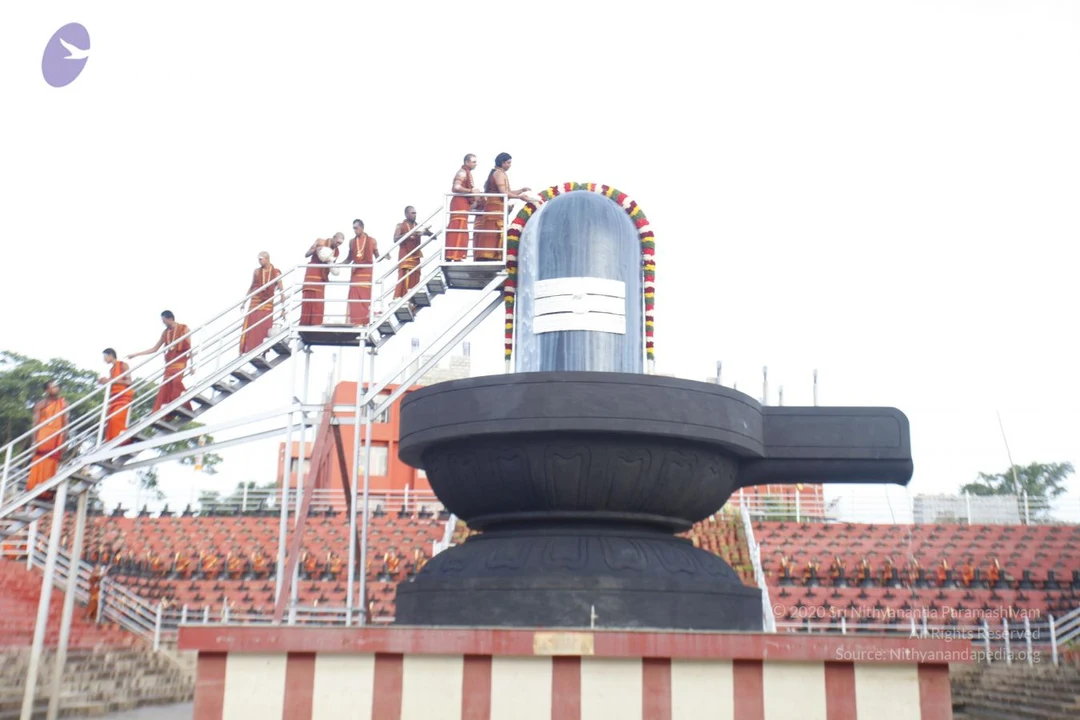
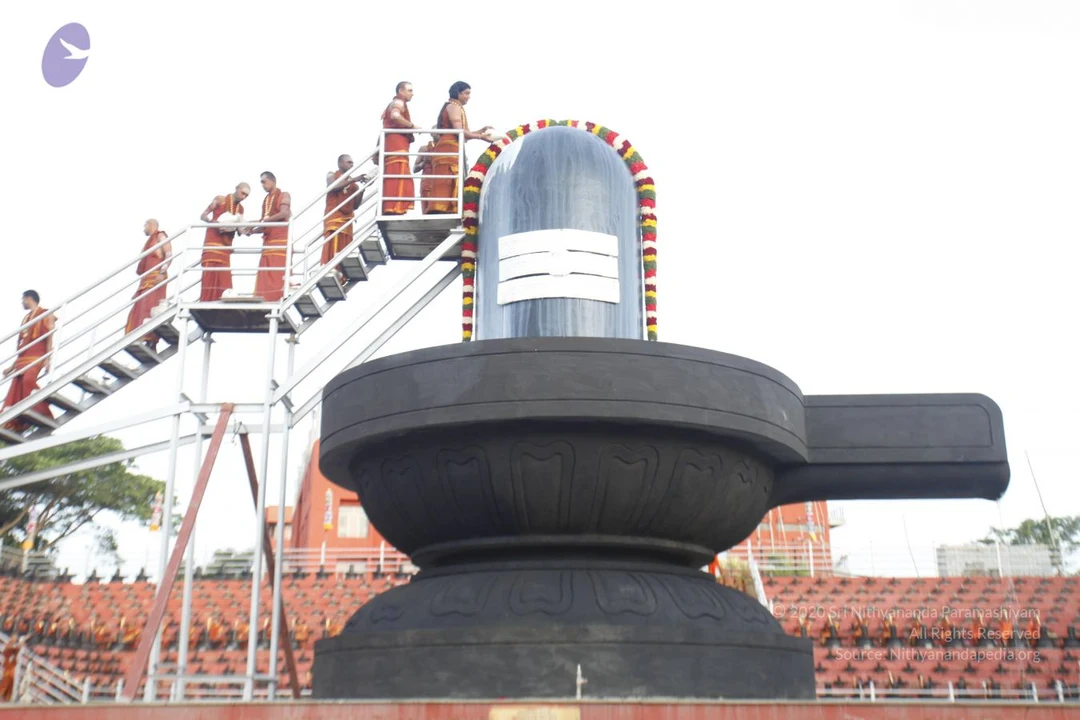
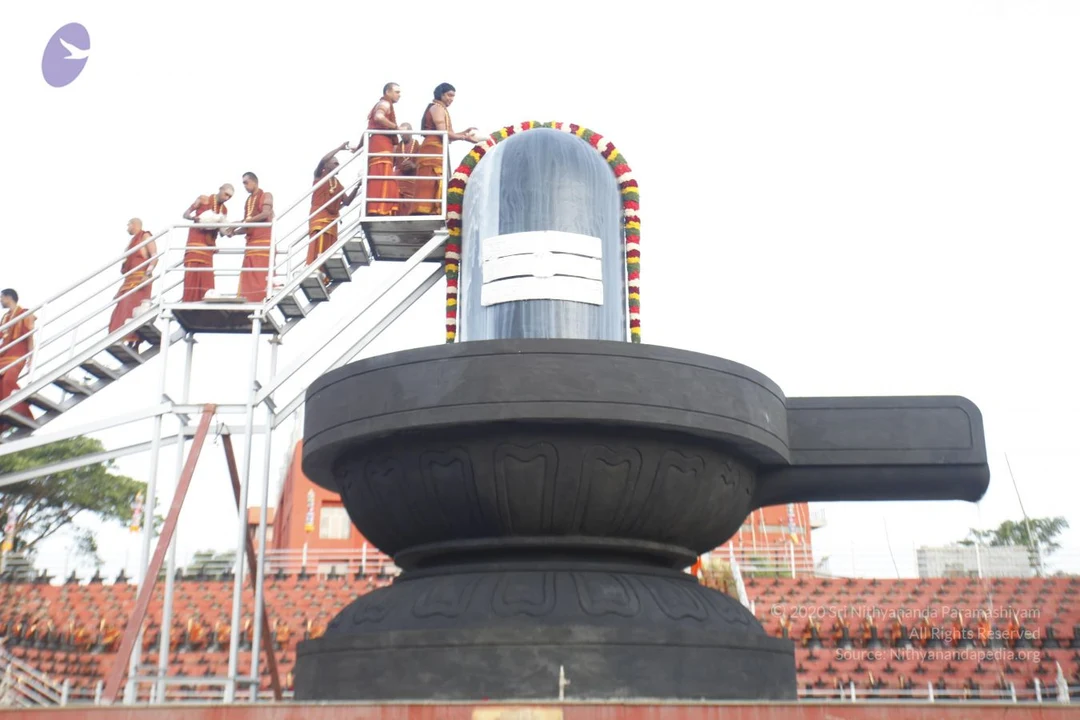
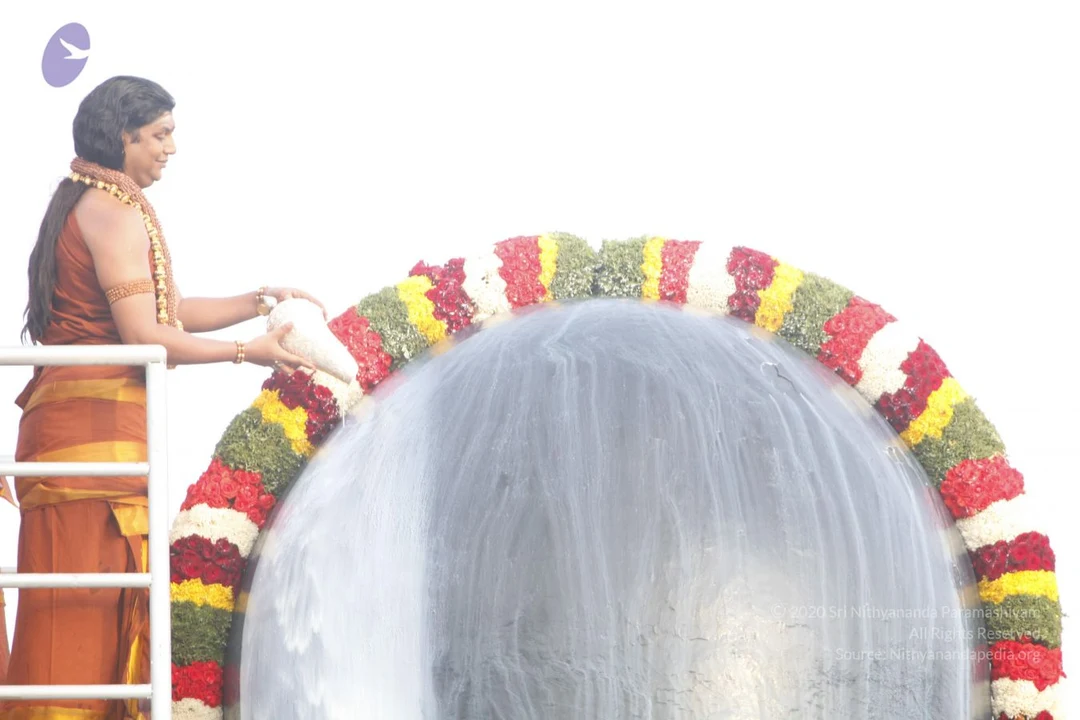
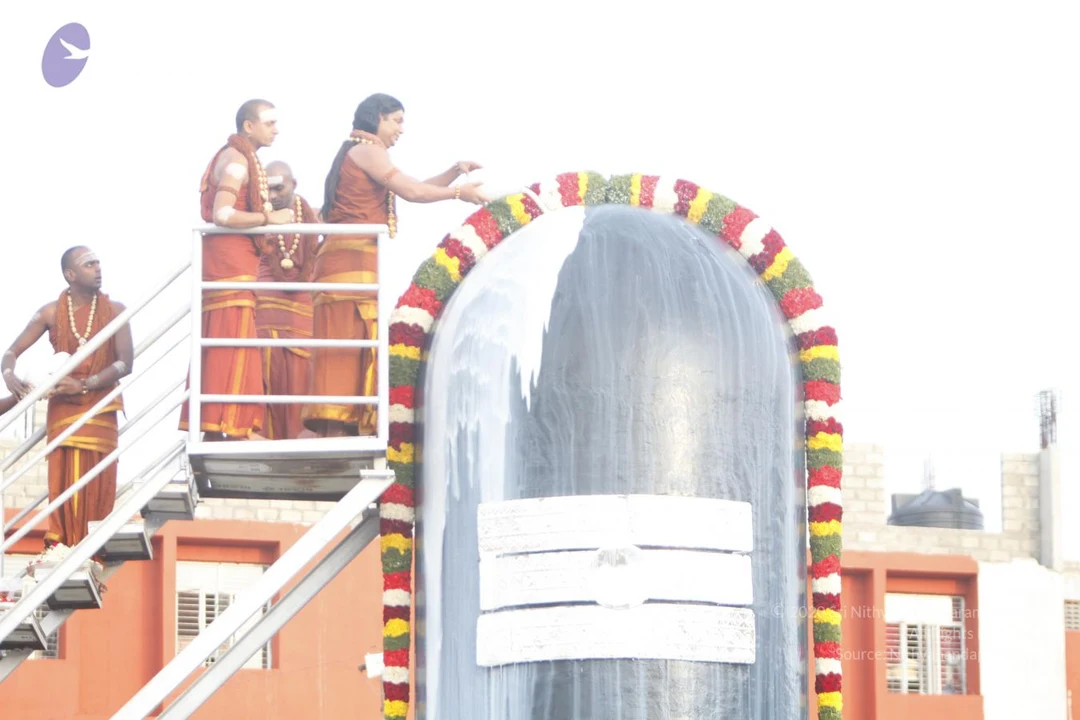
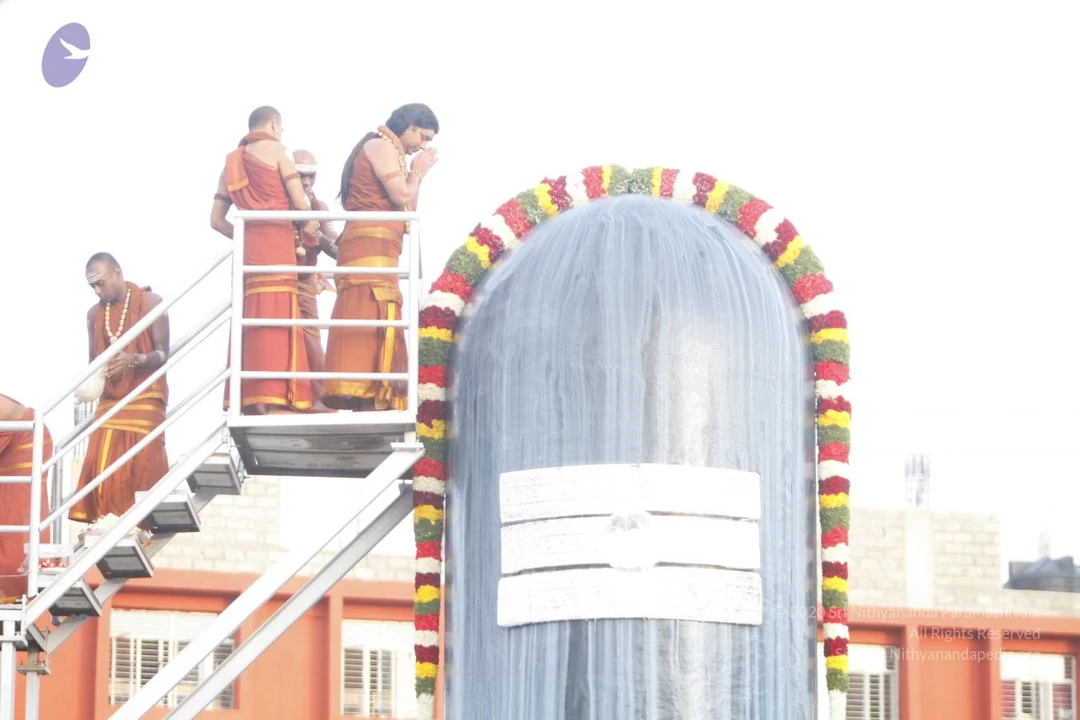
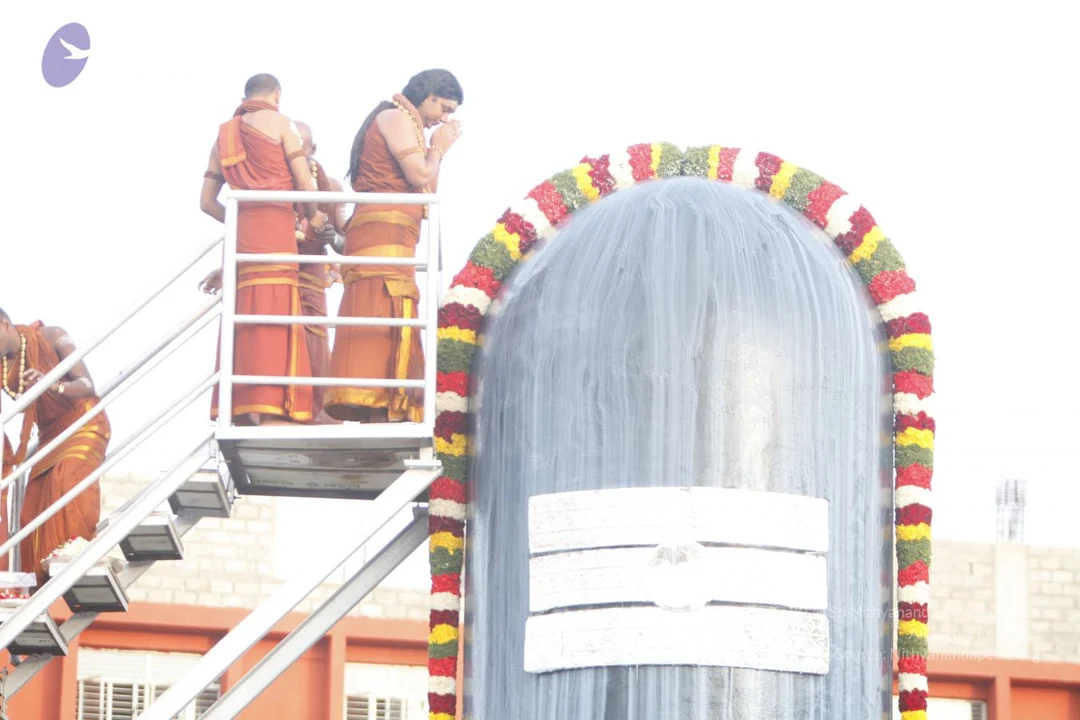
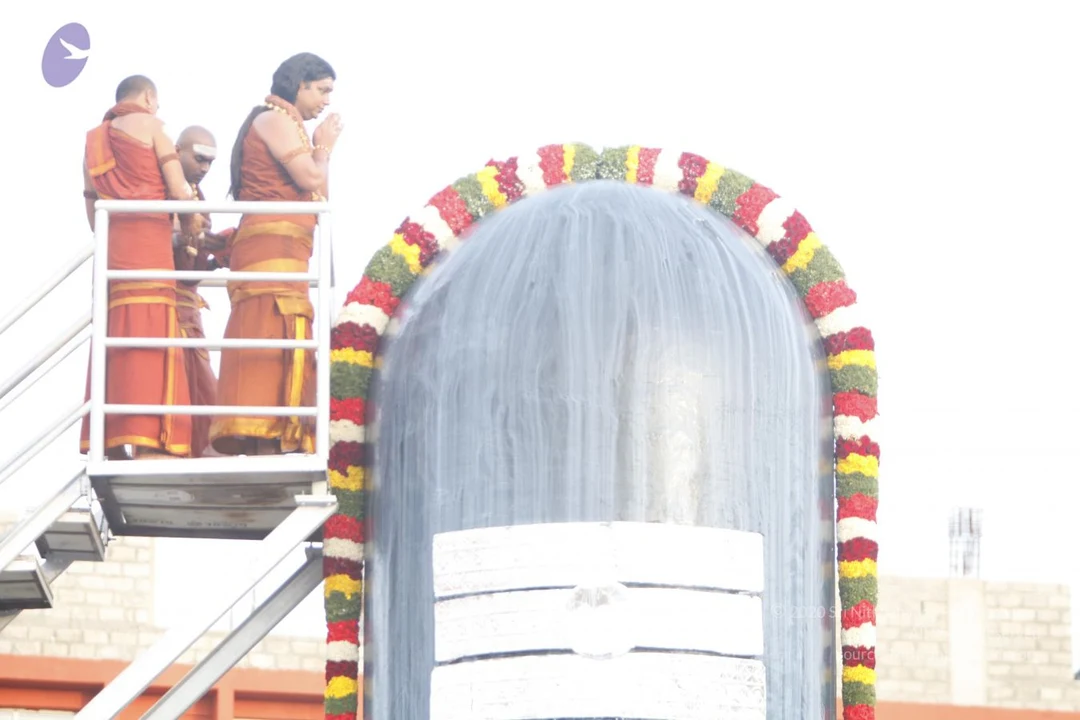
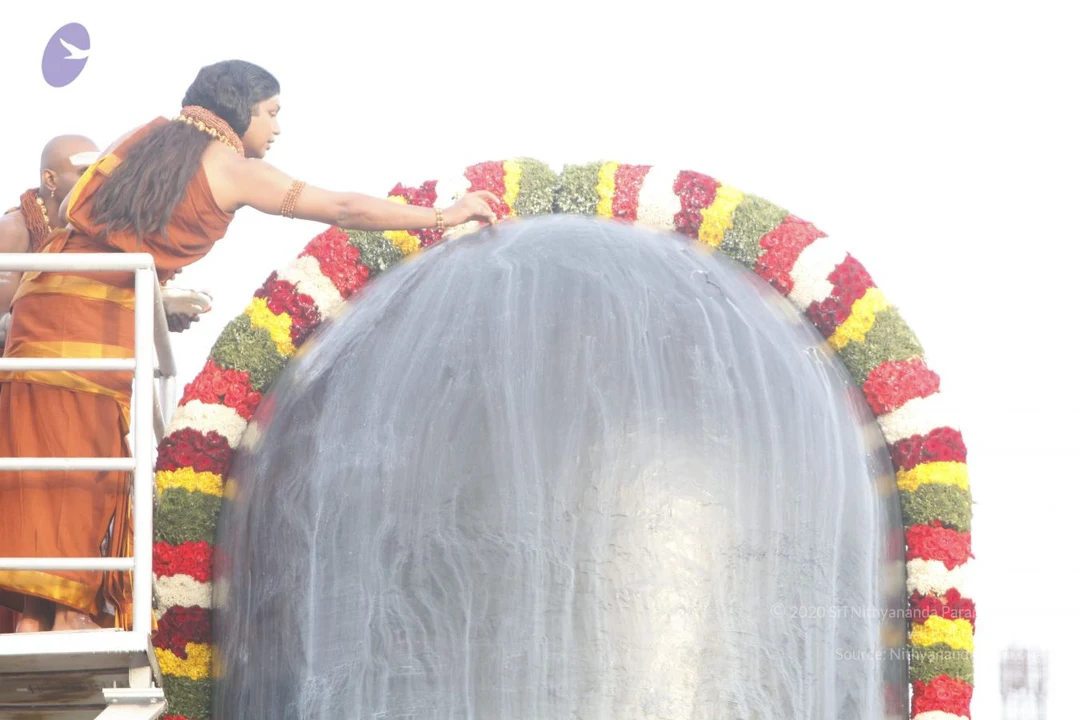
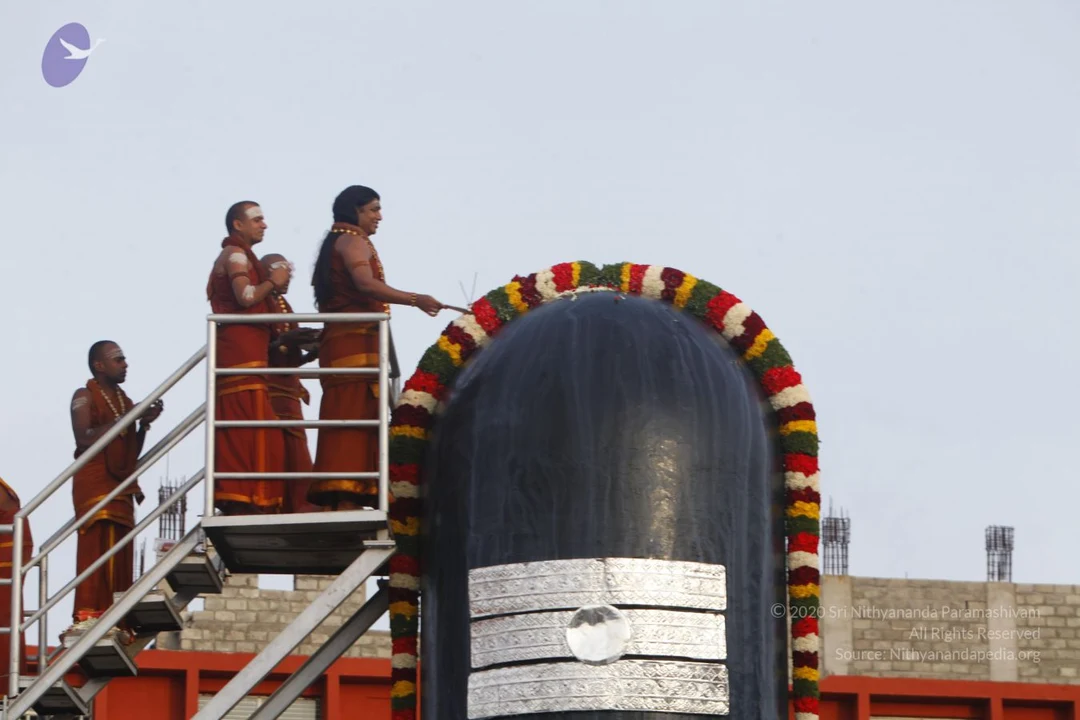
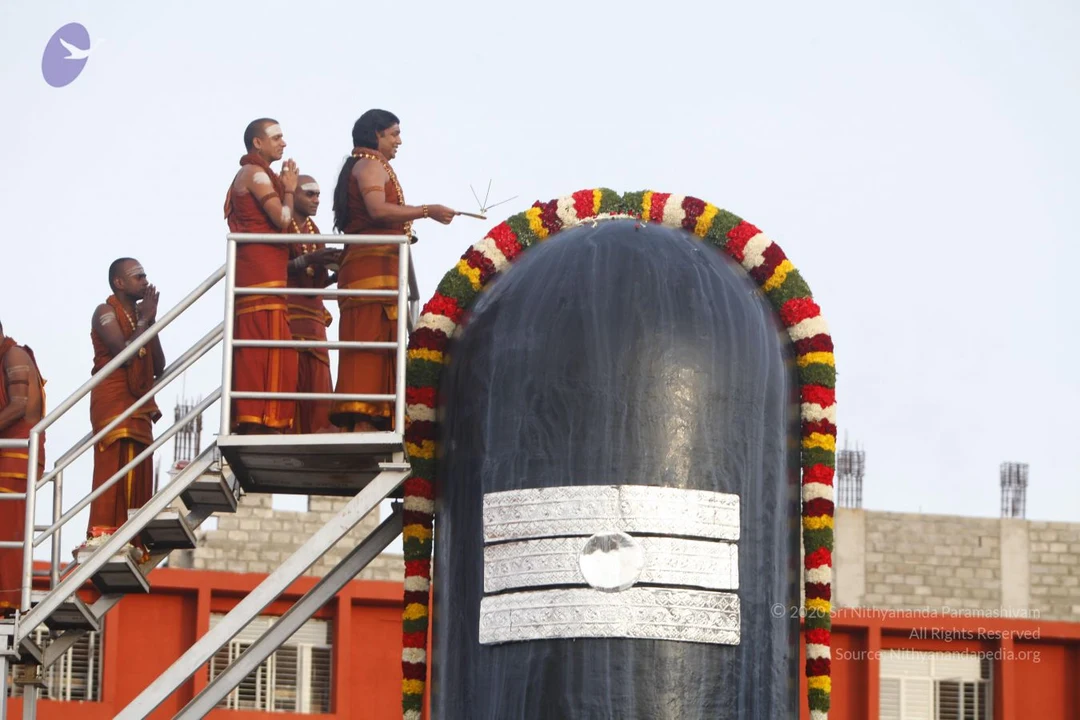
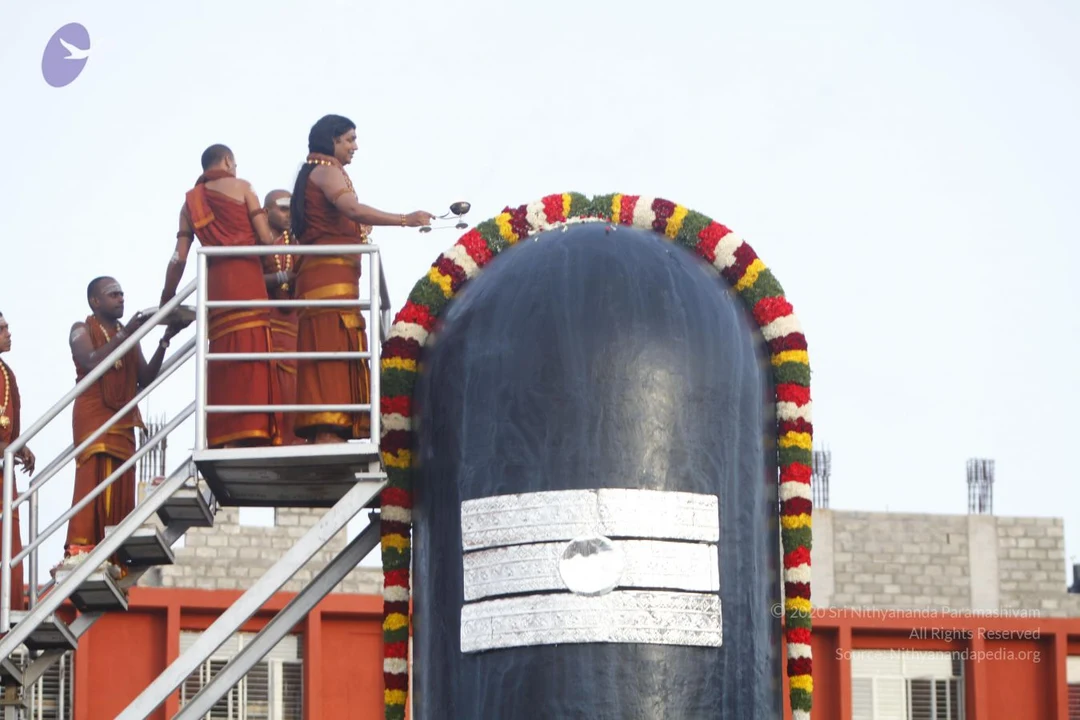
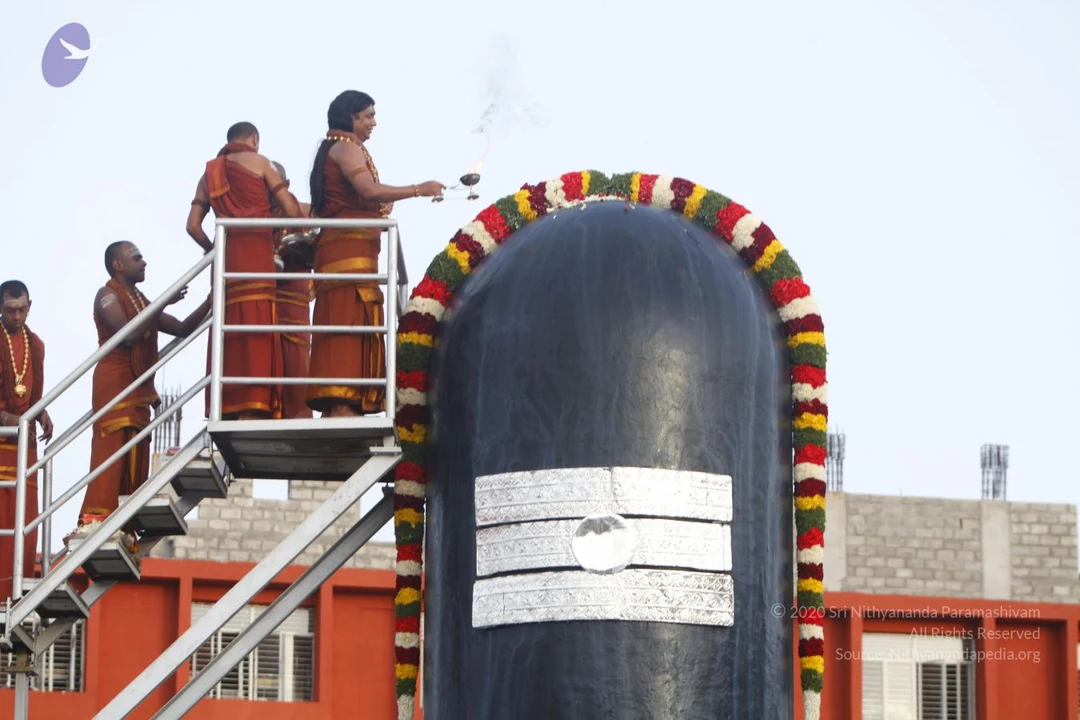
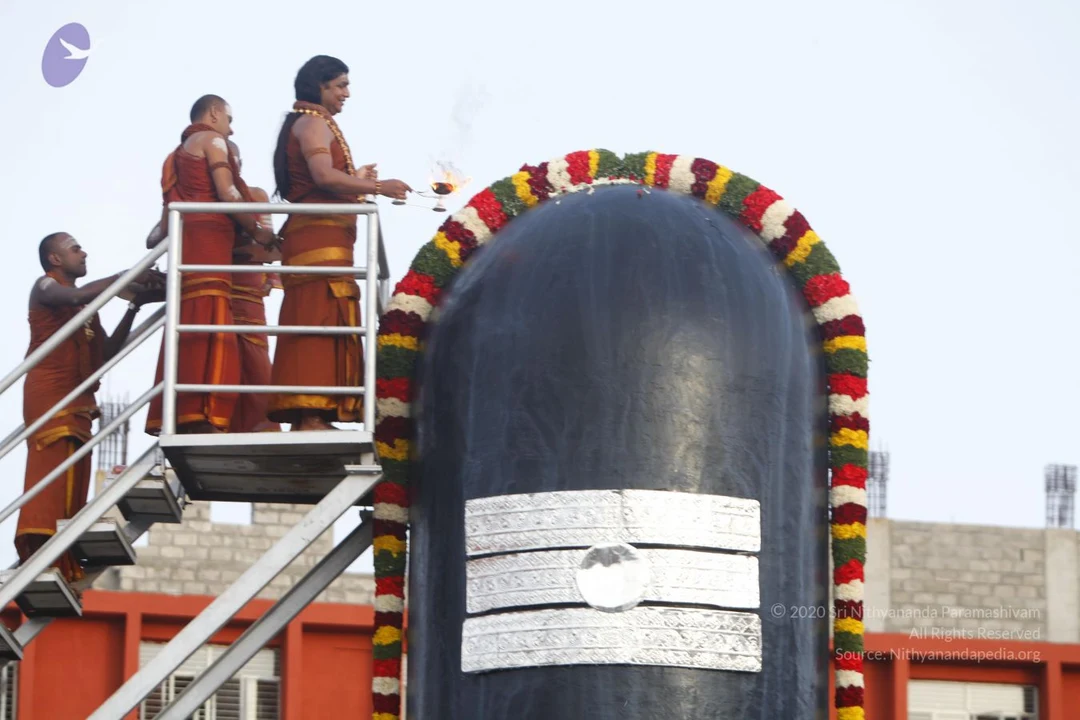
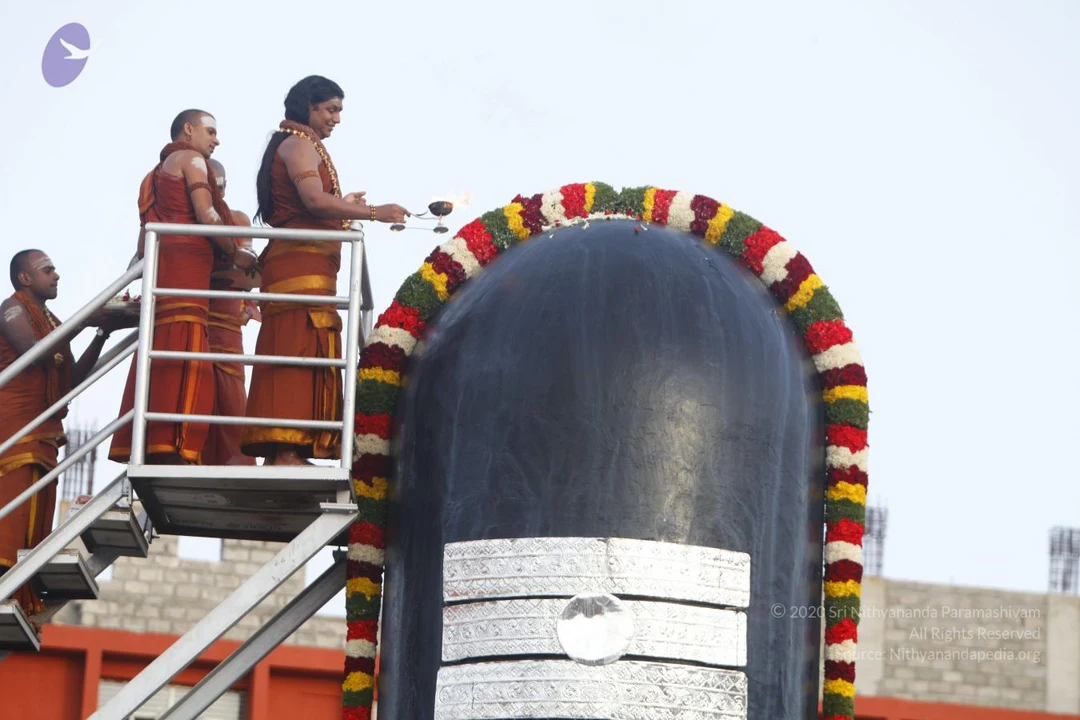
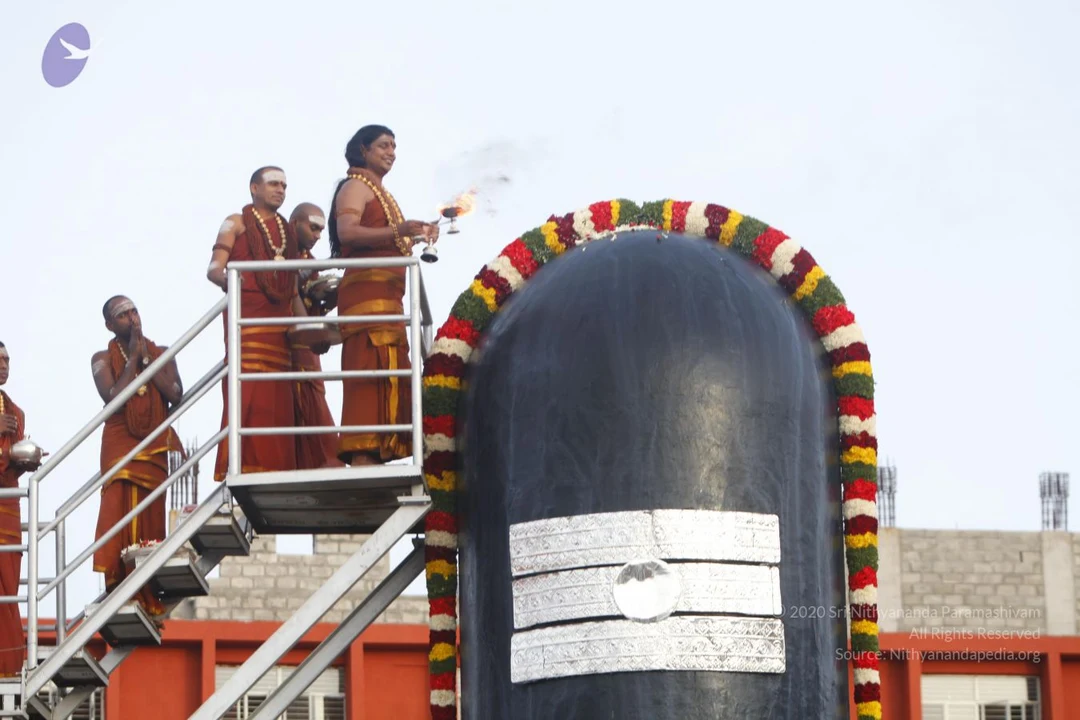
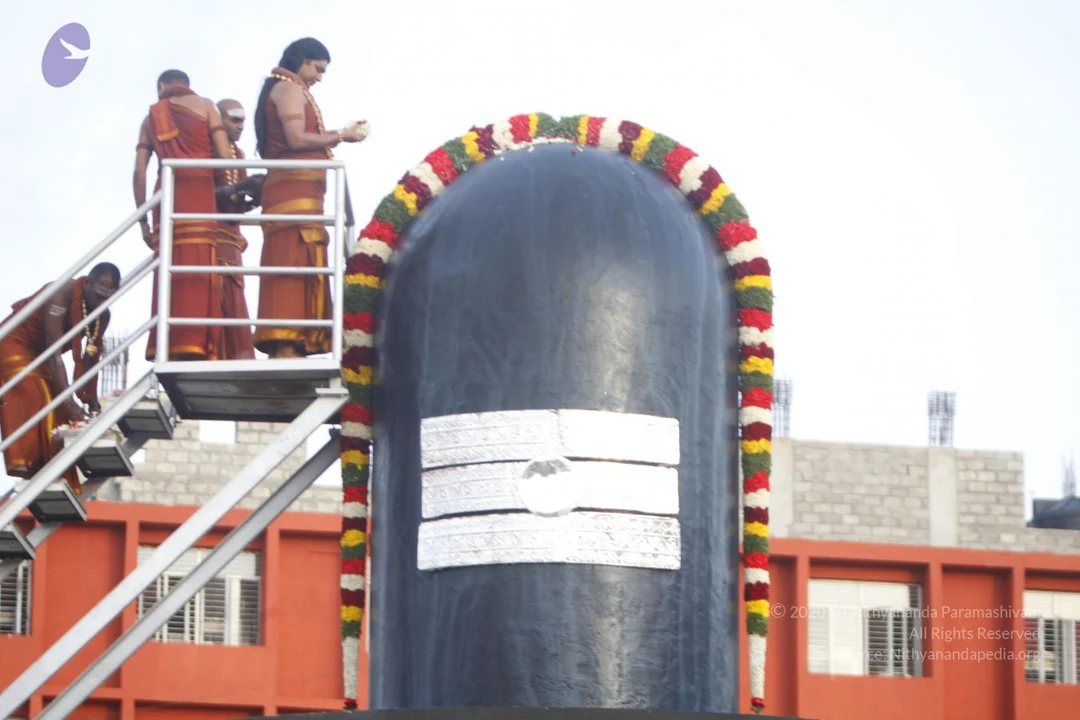
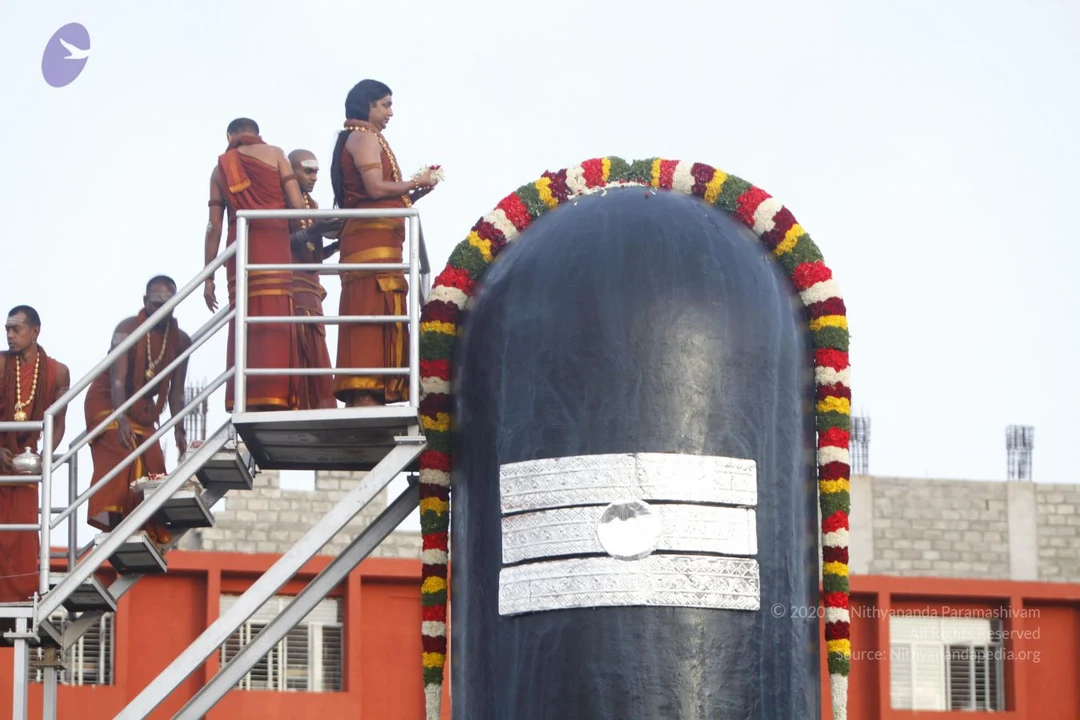
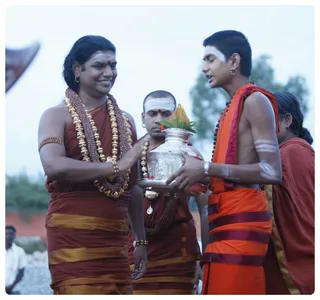
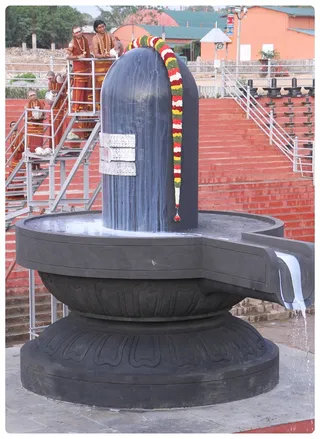
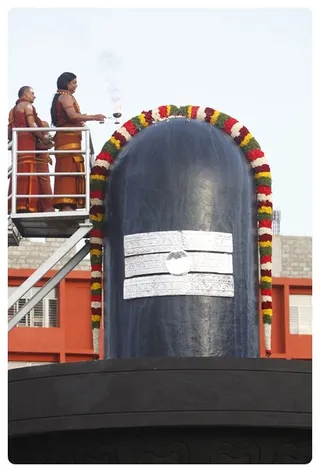
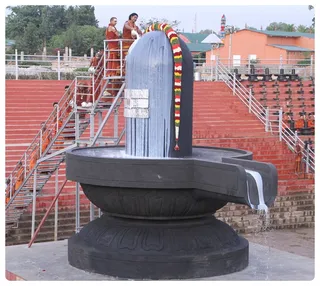
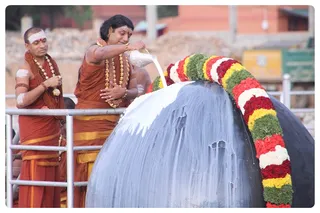
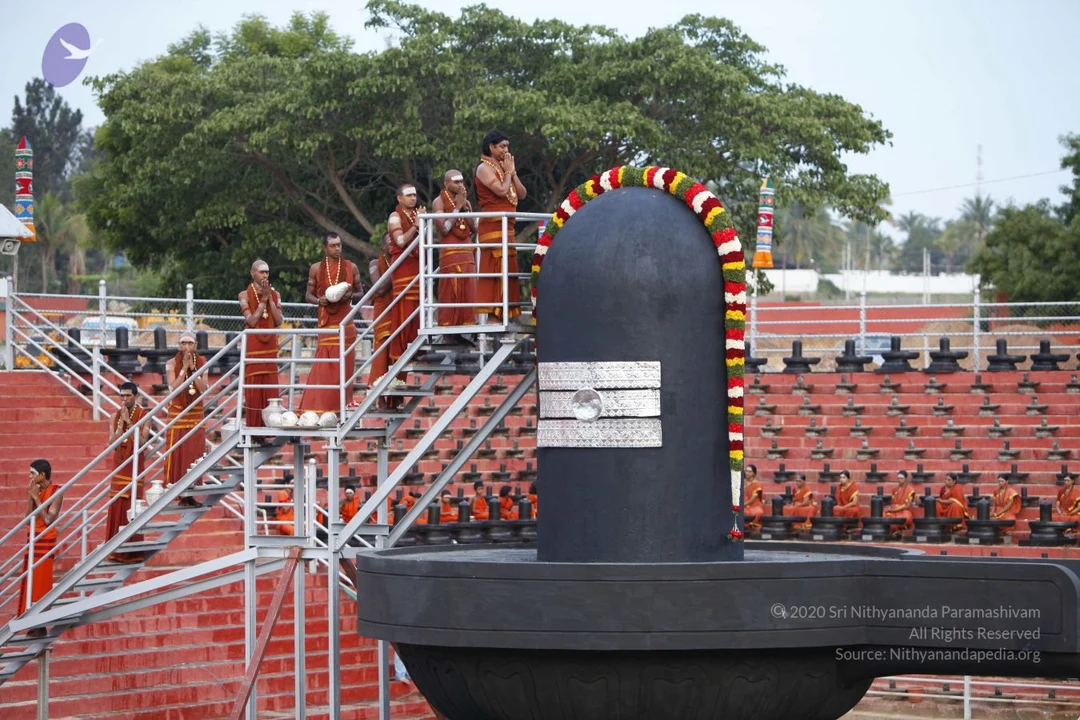
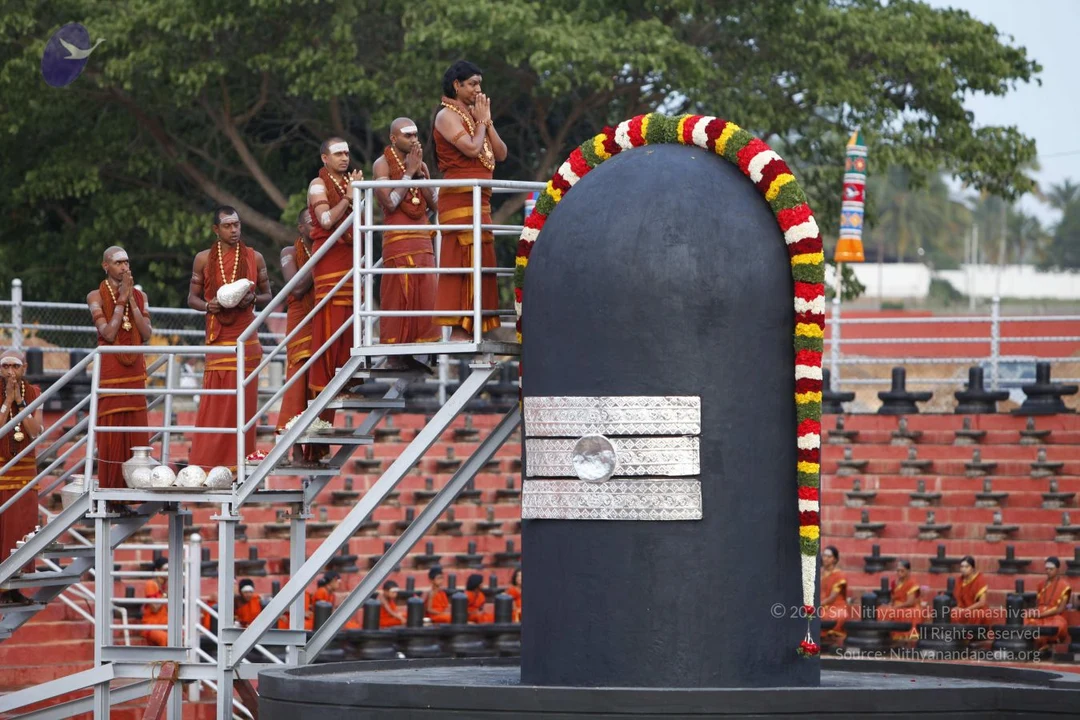
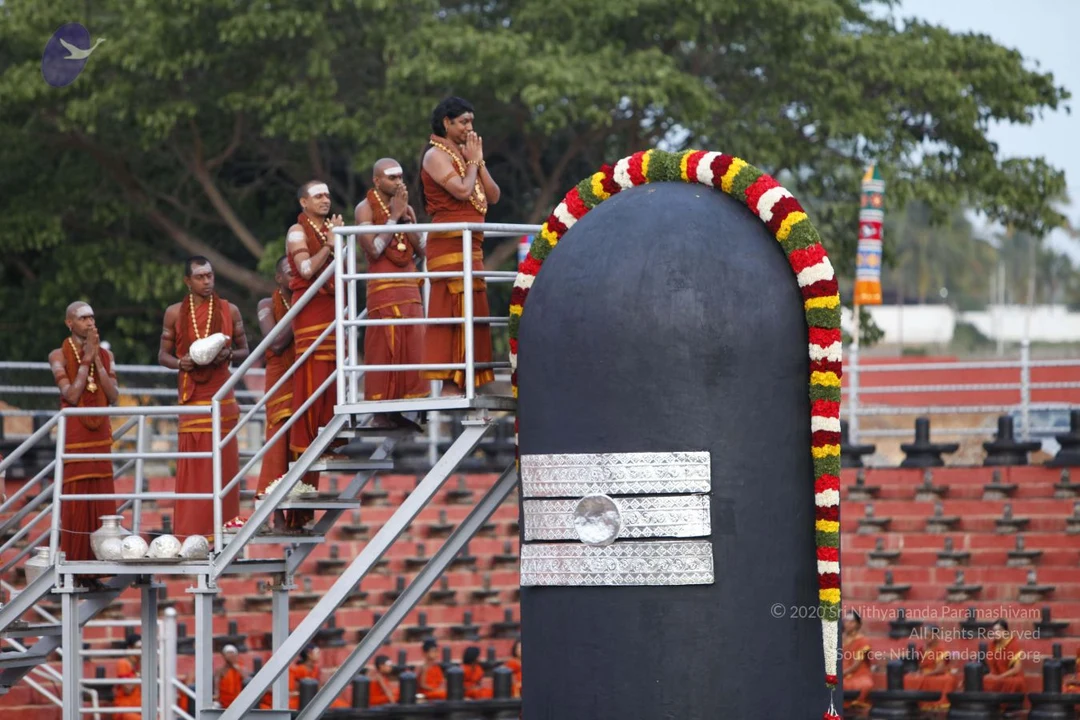
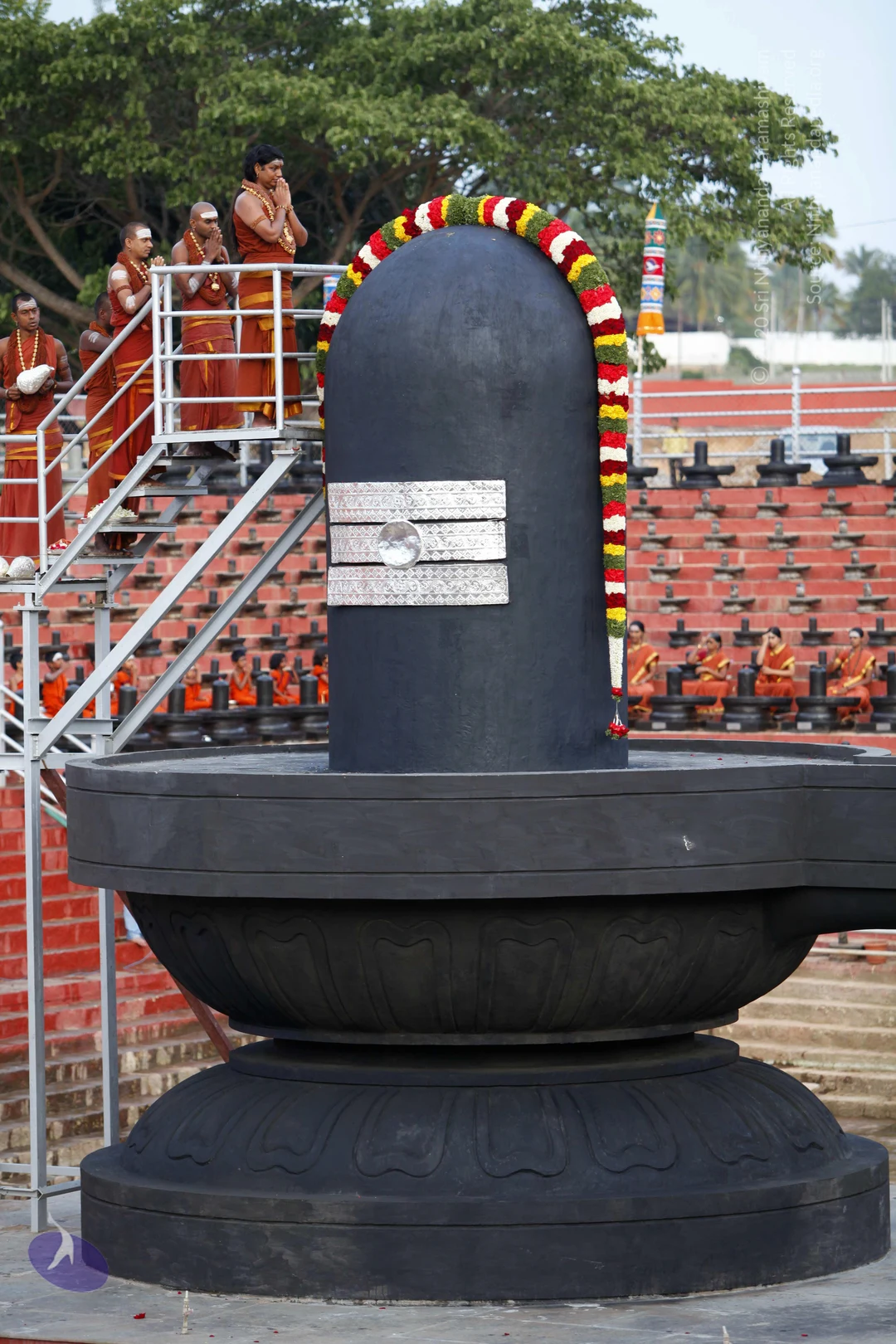
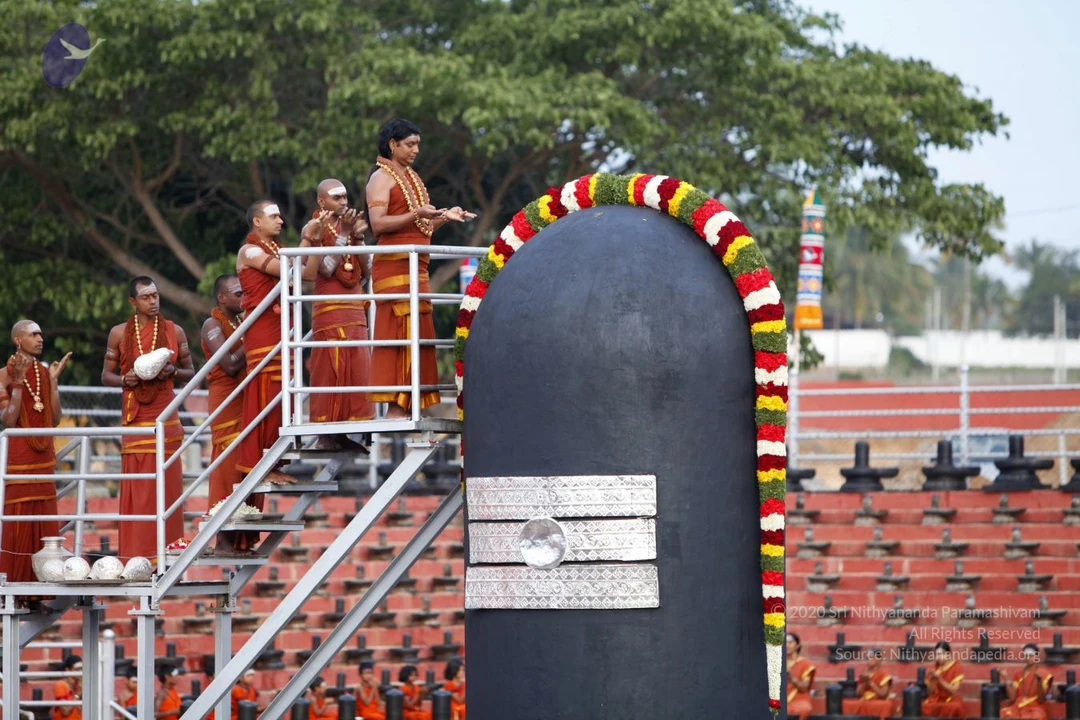
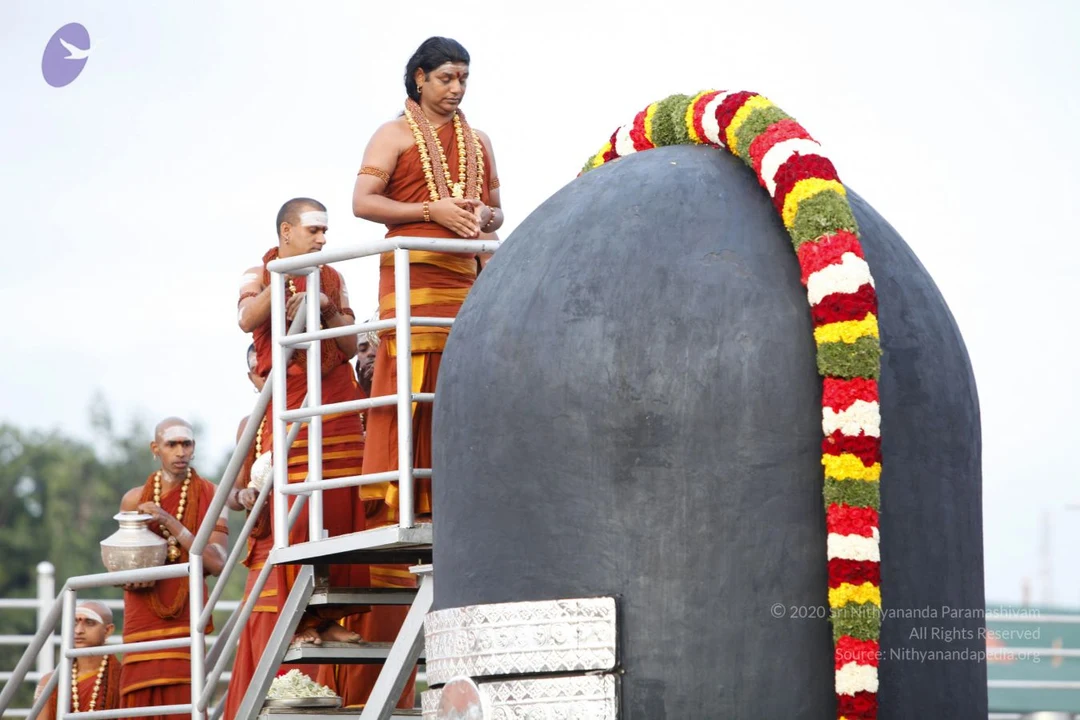
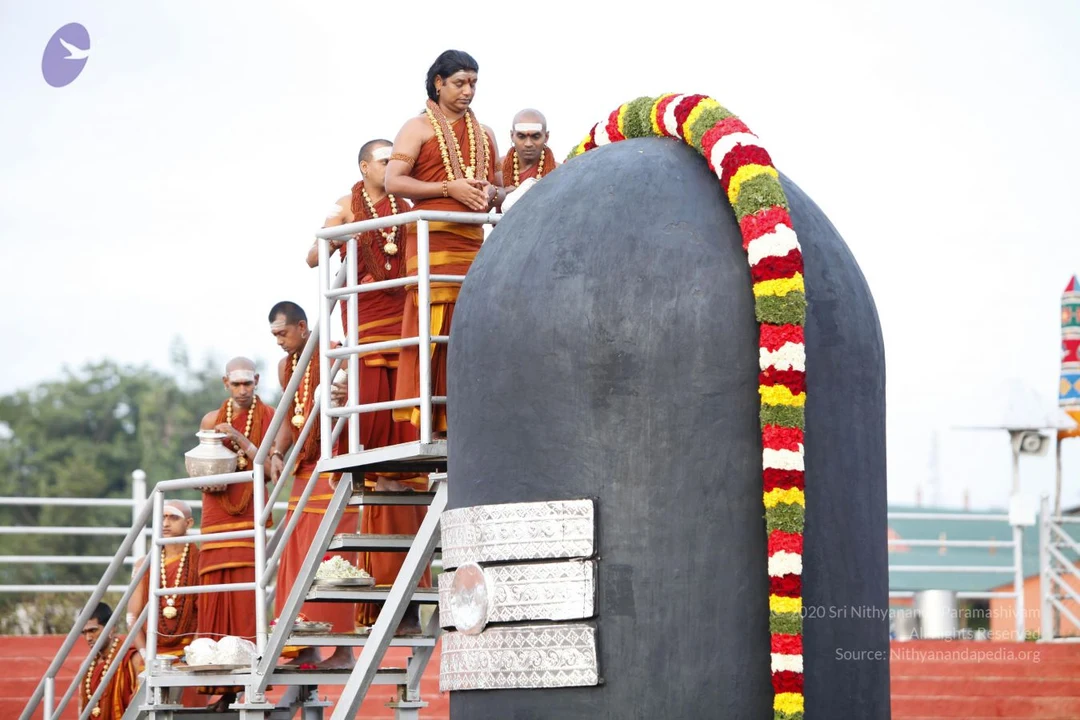
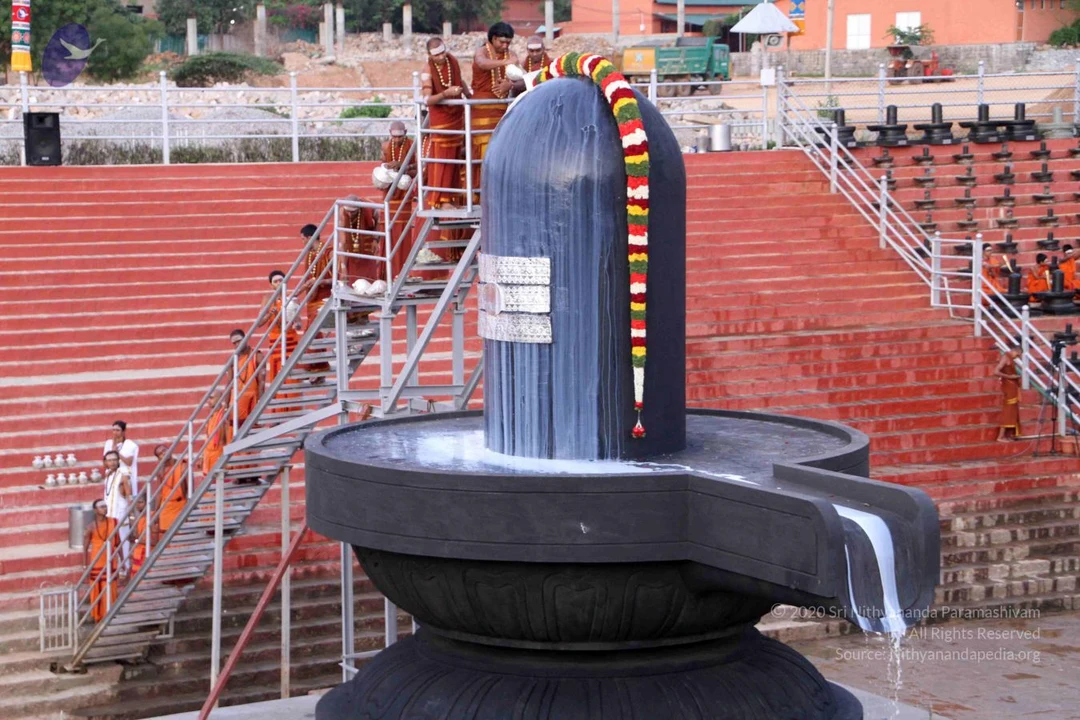
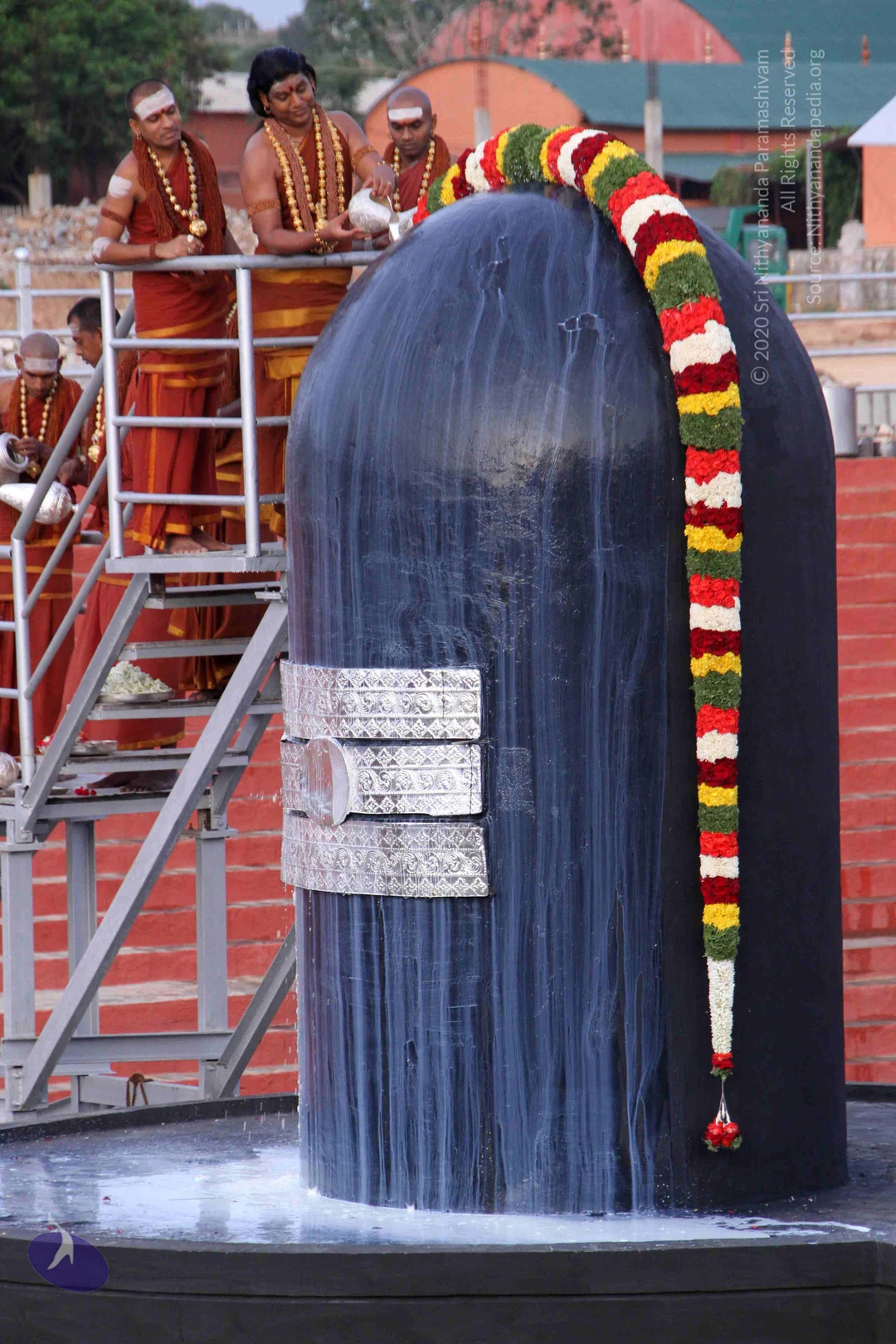
Outdoor ritual photograph of three people in red-brown and orange ceremonial dress holding a polished silver kalasha with a green leaf and yellow flower top. A man on the left wears a rudraksha-style bead mala and ornate gold necklaces, bangles and an armlet over a dark red wrap, with white markings on his forehead. In the center a man in white forehead marks and a dark red wrap holds the vessel's base, with a bead mala and a small pendant. On the right a younger person in an orange robe with a red-and-purple border and beaded necklace holds the kalasha, with white body markings on the arms. Another person in a red shawl stands behind at the right edge. Trees and a red wall form the background.A large dark stone Shiva lingam on a black yoni-shaped base is being bathed with water, which pours over its spout. A red-and-white flower garland with a long tail drapes over the lingam, and three silver horizontal tripundra-style bands are fixed on its front. Several priests in saffron-orange dhotis and rudraksha malas stand on a metal staircase and platform behind it, some holding offering vessels. Red brick steps and orange-roofed buildings sit in the background.A large dark grey Shiva lingam with silver bands and a silver circular emblem is decorated with a garland of red, yellow, green and white flowers arched over its top. Two men stand on a raised white metal platform at the left, both in orange-saffron dhotis and shawls. The taller man in front holds a small lamp or ritual vessel with a plume of smoke rising from it, while the man behind wears a white shirt and rudraksha-style neck adornments. A red brick wall and a black stone base complete the outdoor temple setting under a pale sky.A large black stone Shivalingam with a yoni-shaped pitha base stands in an outdoor courtyard, with white milk-like liquid flowing down its surface and spouting from the spout. A garland of red, yellow and white flowers hangs from its top. On a metal staircase beside it, two people in orange and saffron robes stand near the top, one touching the lingam while the other stands nearby. Several other people in orange robes stand on the steps and along the red-brick stairs on the right. Behind them are orange-walled buildings and trees.A large black stone lingam is decorated with a garland of red, orange, yellow and green flowers arched over its top and marked with white tripundra lines and a central white bindu. Above it, on a raised metal platform with railings and steps, several saffron-robed men stand with hands folded in anjali, some wearing rudraksha malas. The foremost figure, with dark hair and orange robes, bows forward with palms pressed together. The scene shows worship at a Shiva lingam with the sky and a red-brick building behind.A photograph of a large dark grey stone lingam being bathed during an abhishekam. A man with long dark hair, wearing an orange-saffron dhoti and shawl with rudraksha and gold-coloured ceremonial necklaces, pours white liquid from a vessel over the top of the lingam. A bright garland of red, white, yellow and green flowers wraps around the lingam. Beside him a bald priest with white tripundra markings on his forehead and arms wears an orange shawl and beaded necklaces, and a shirtless man stands in the background. Metal railings and a red building appear behind.
RudraAbhishekam-Swamiji
159 photosSource gallery
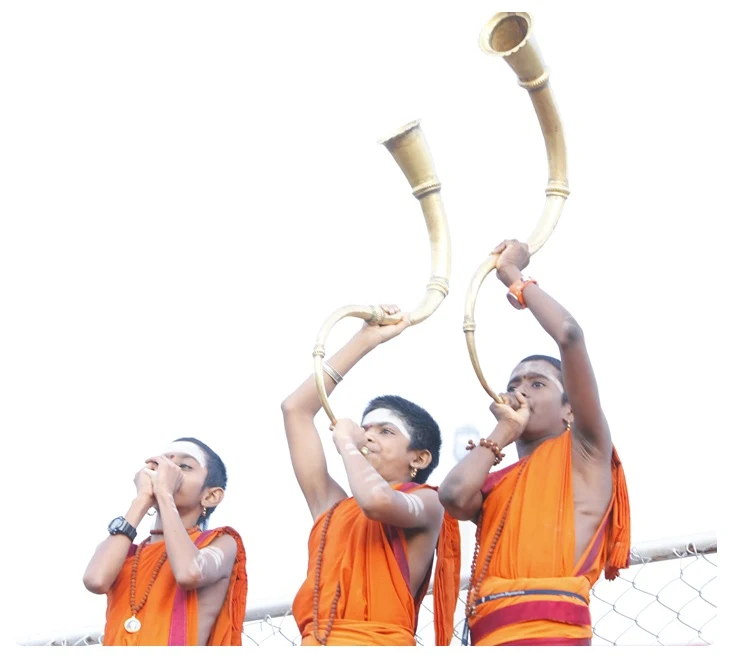
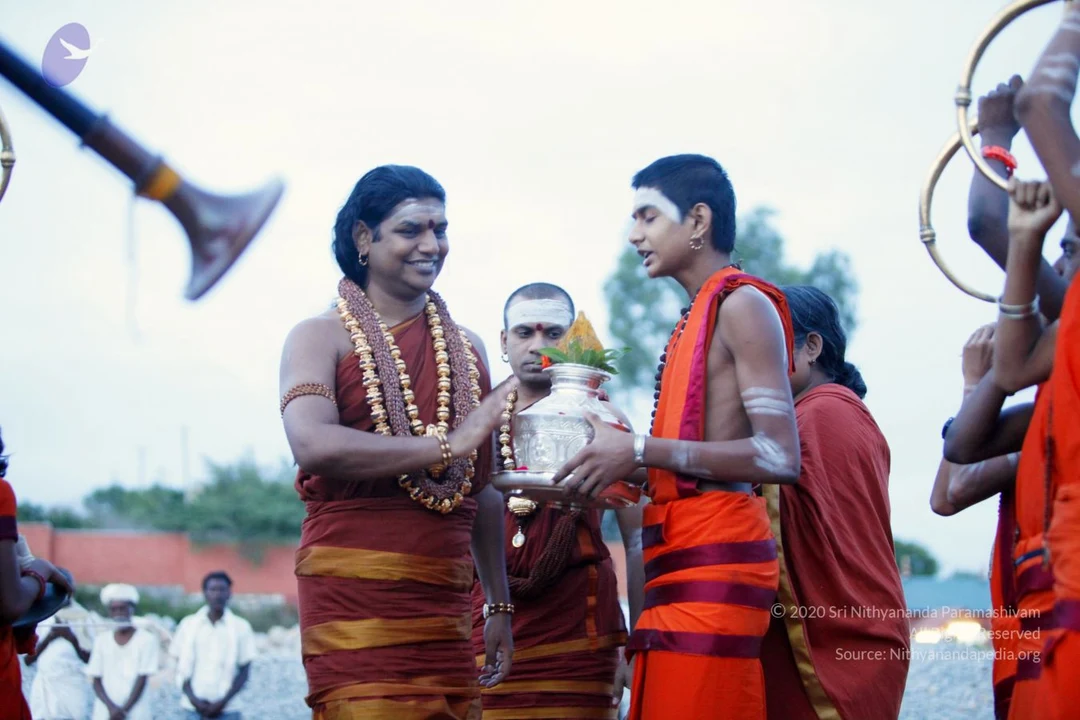
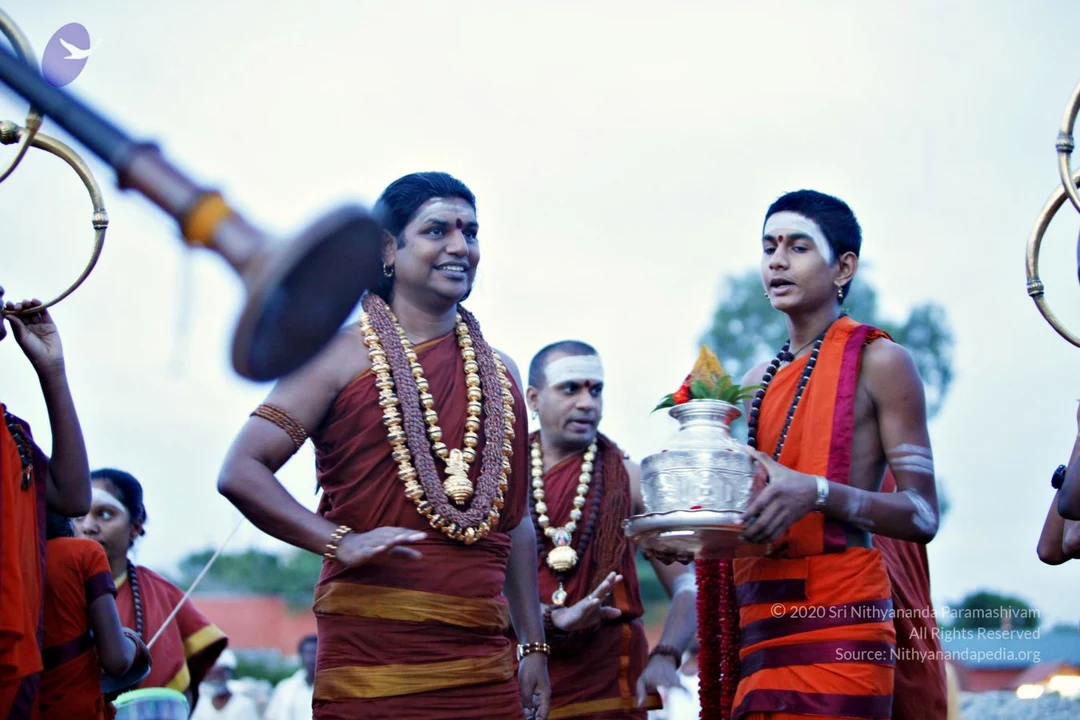
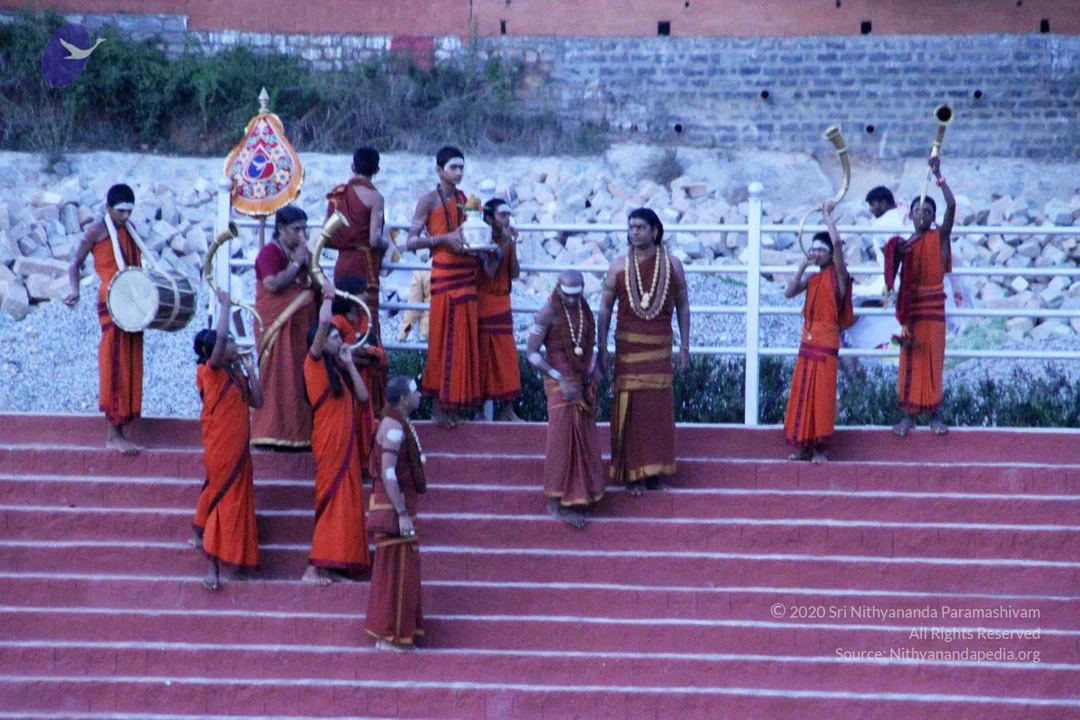
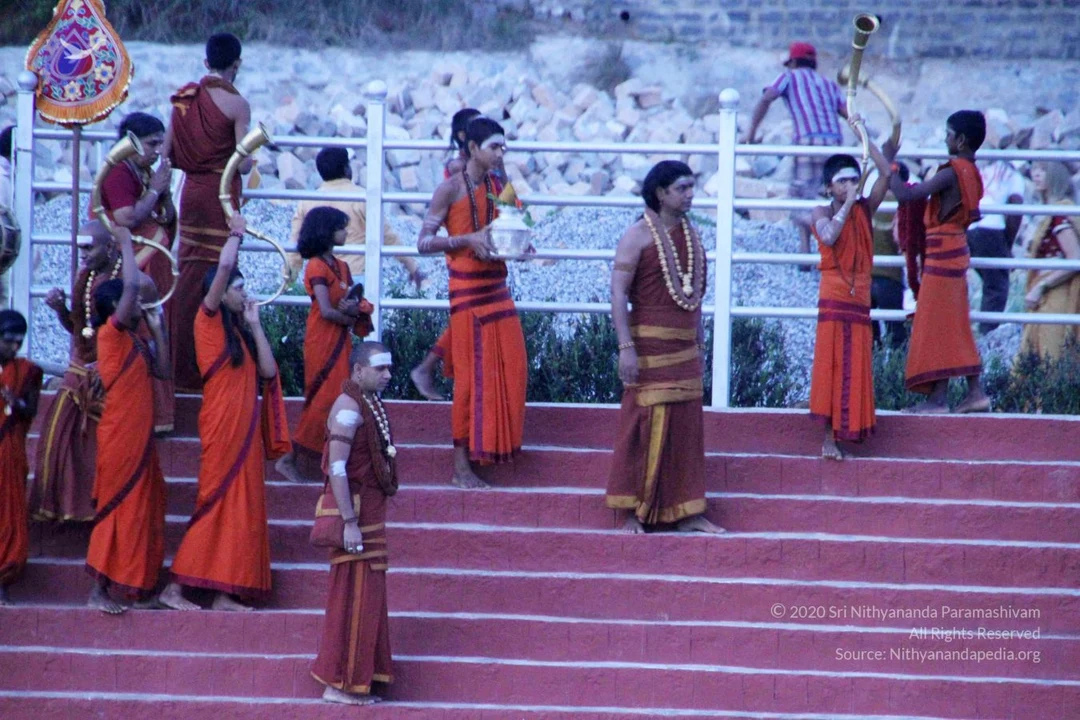
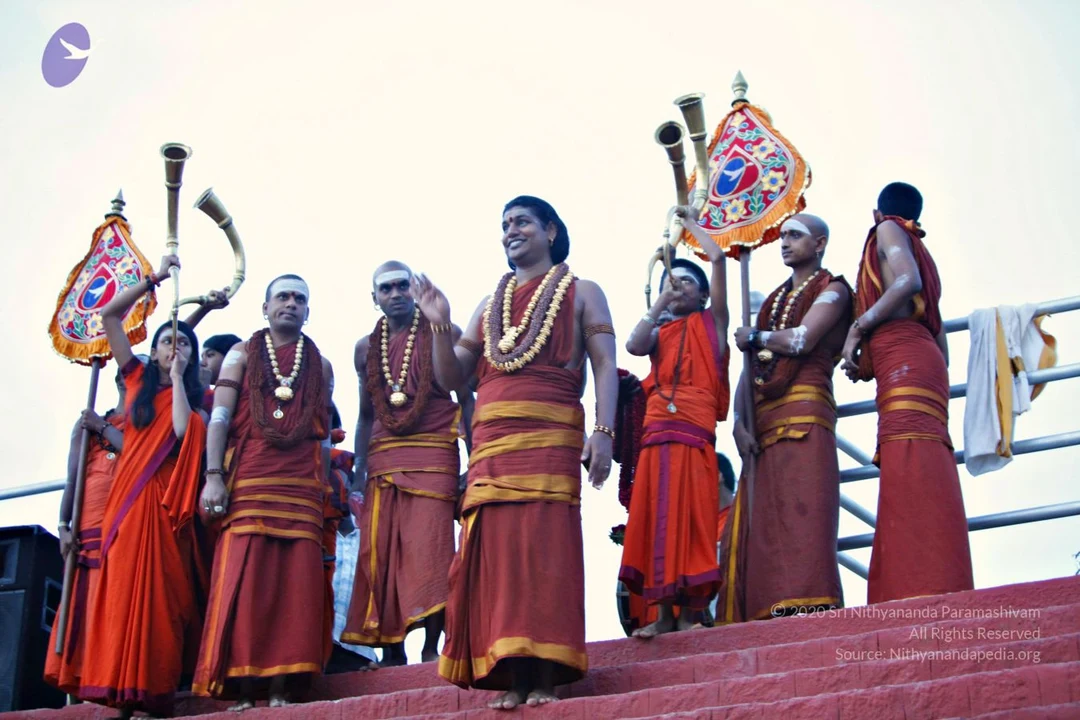
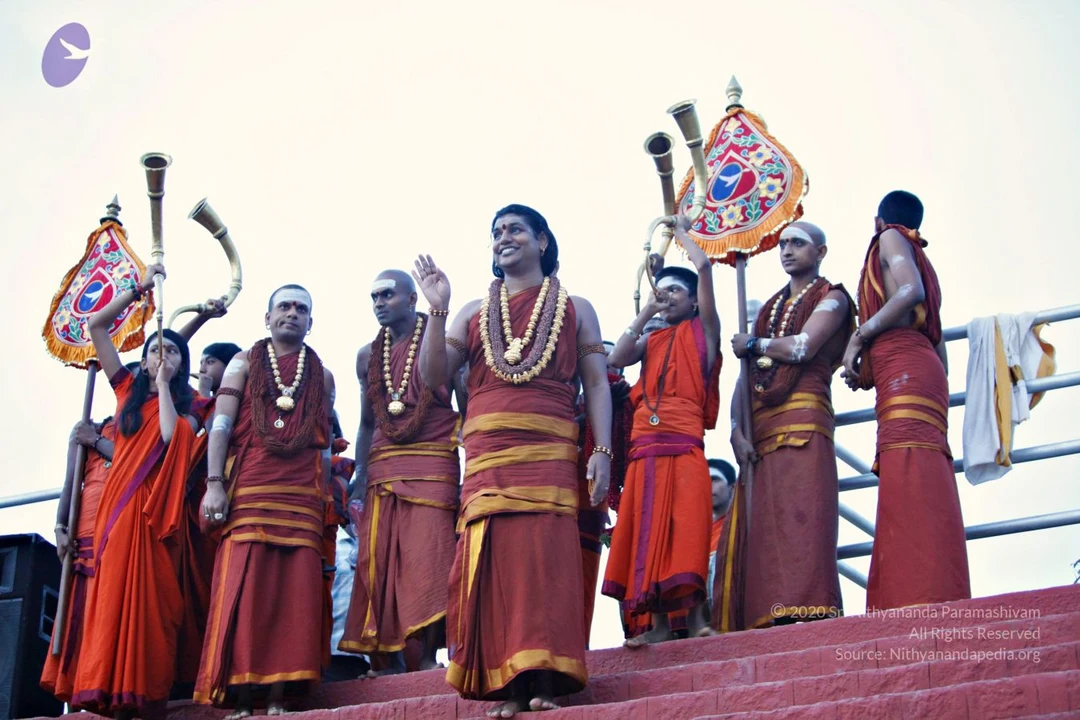
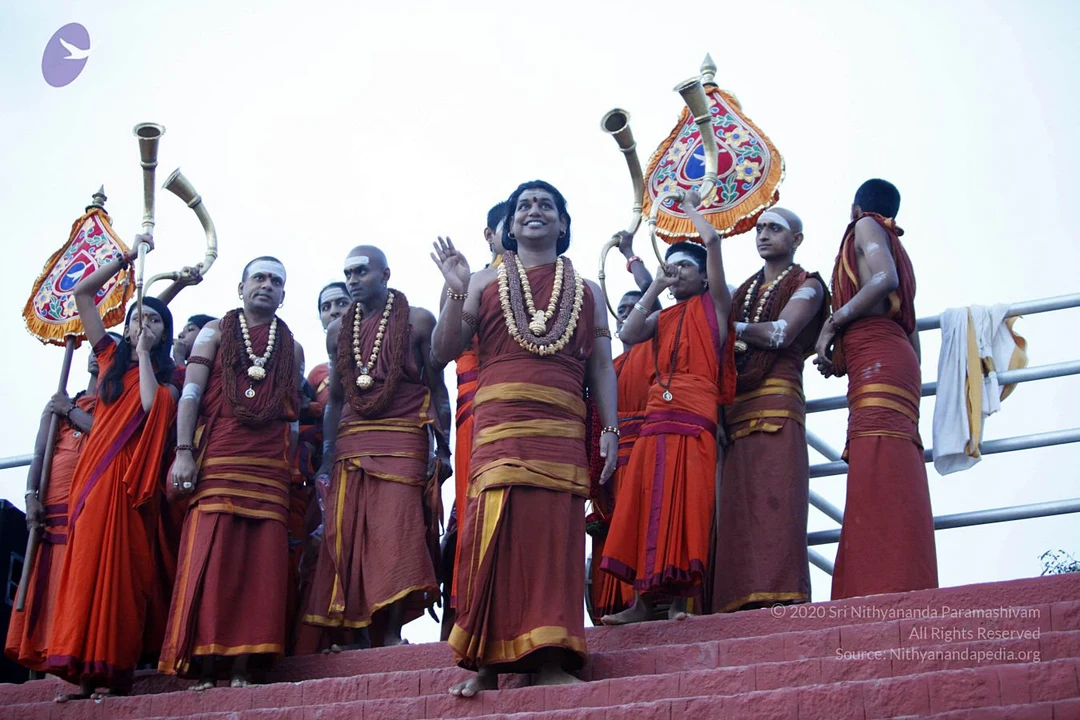
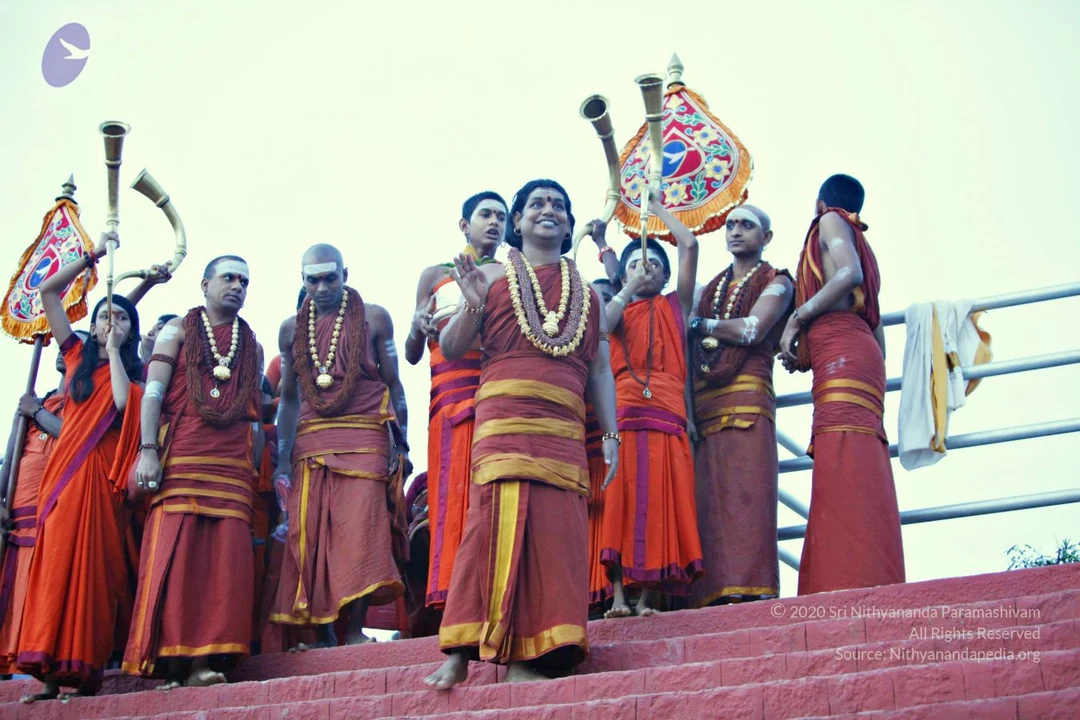
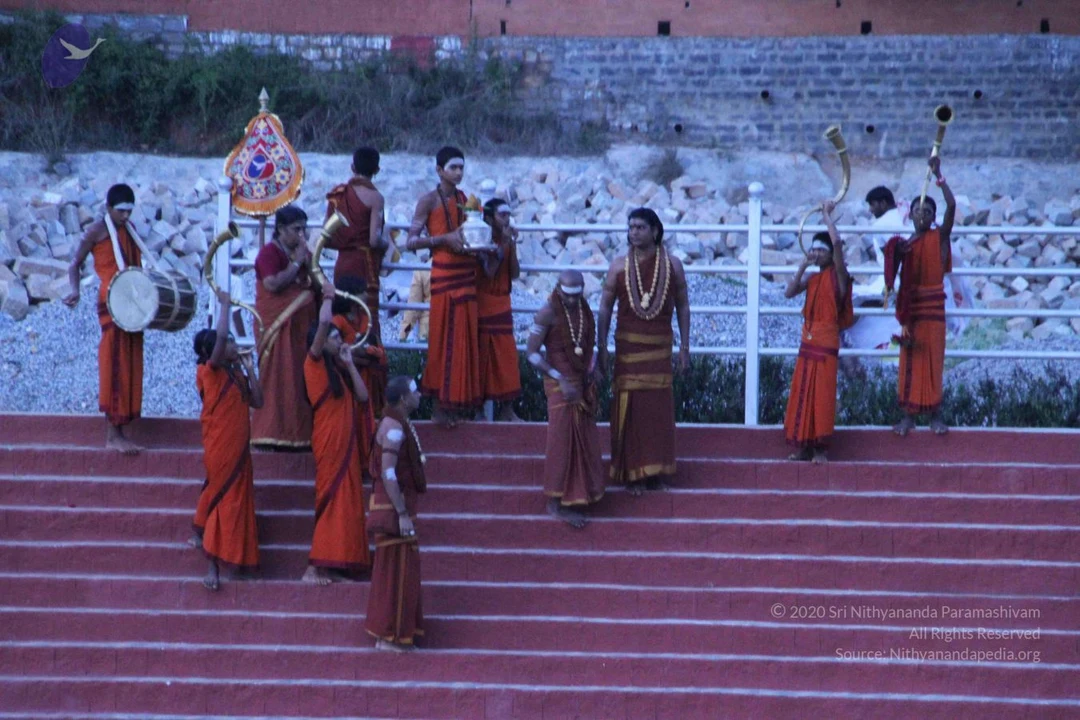
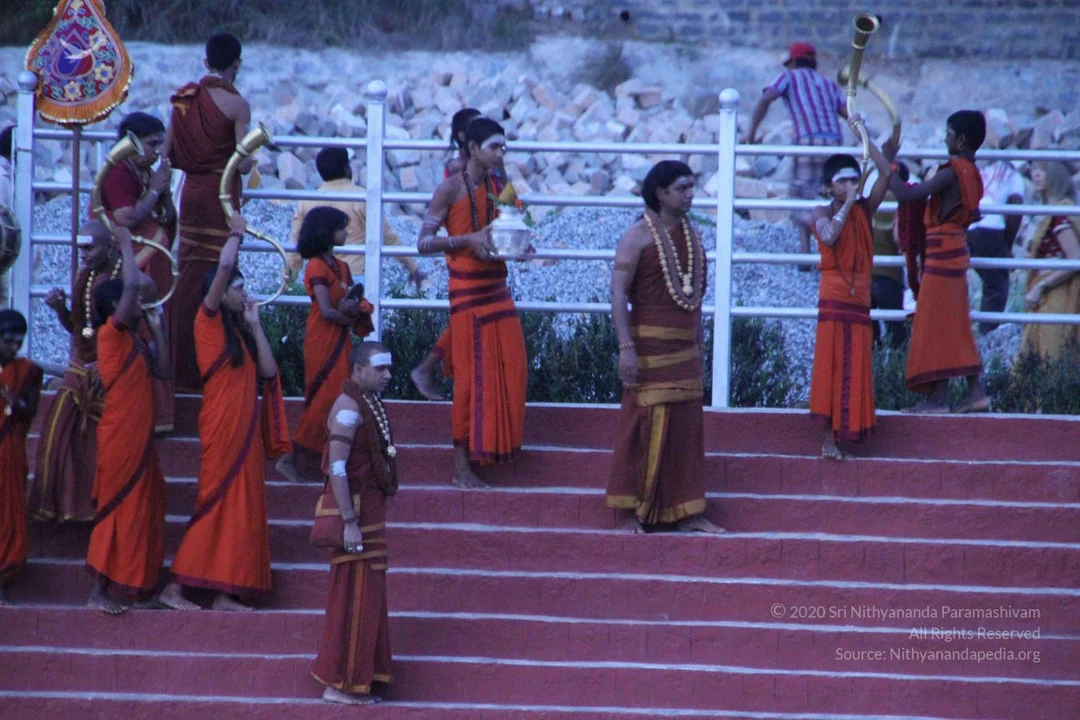
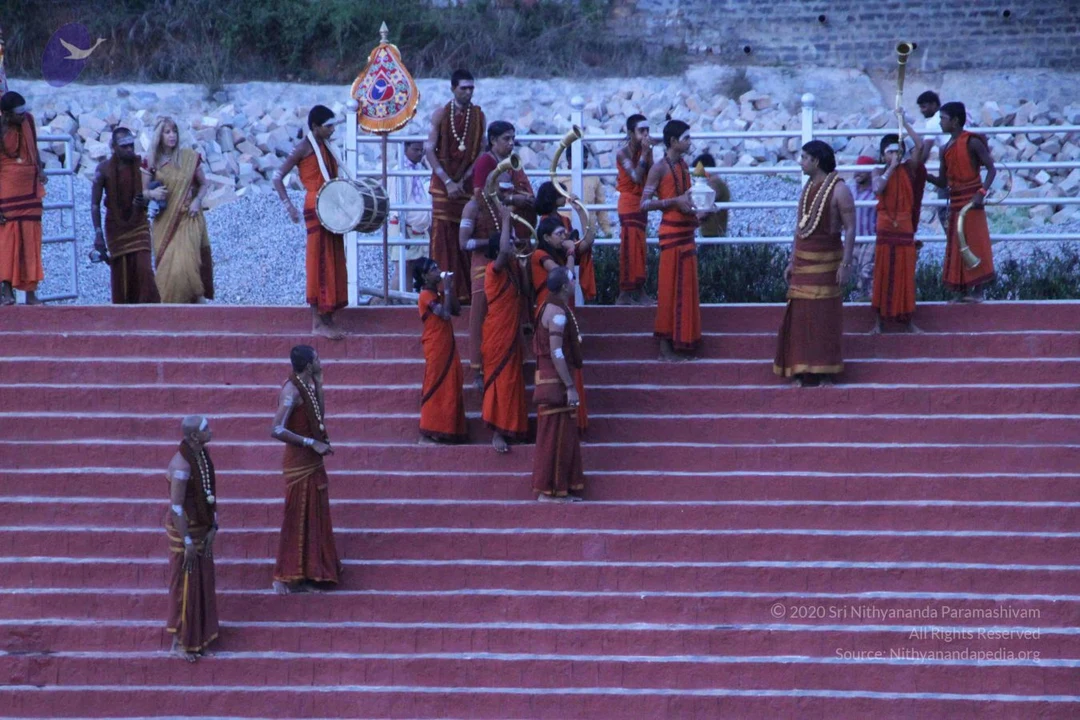
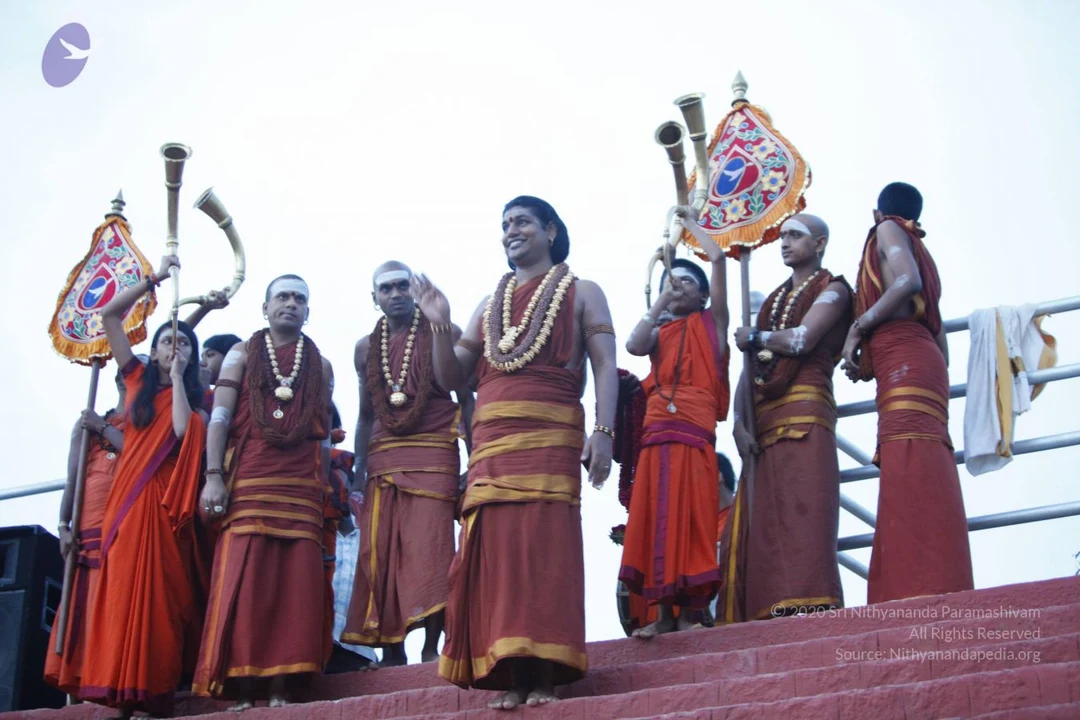
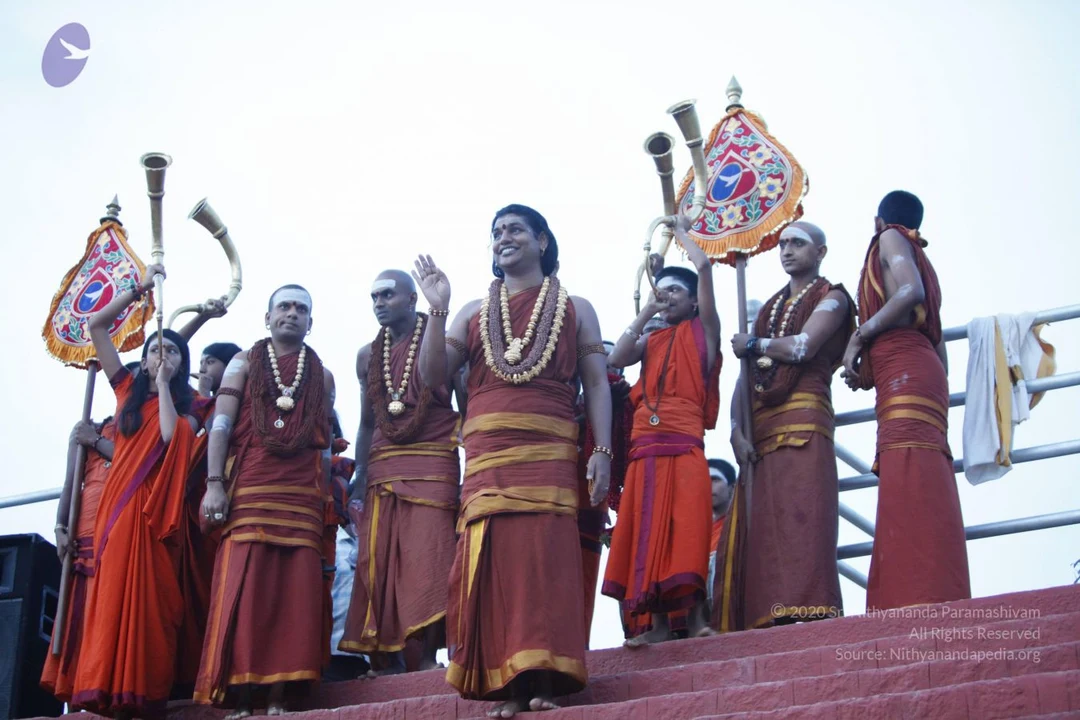
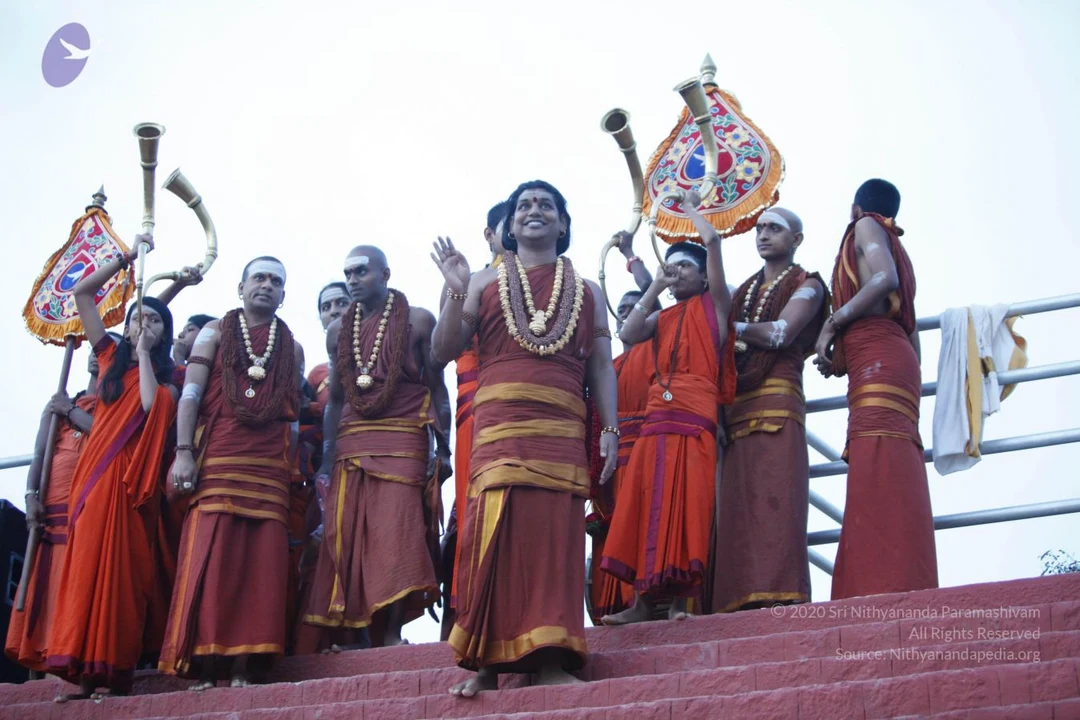
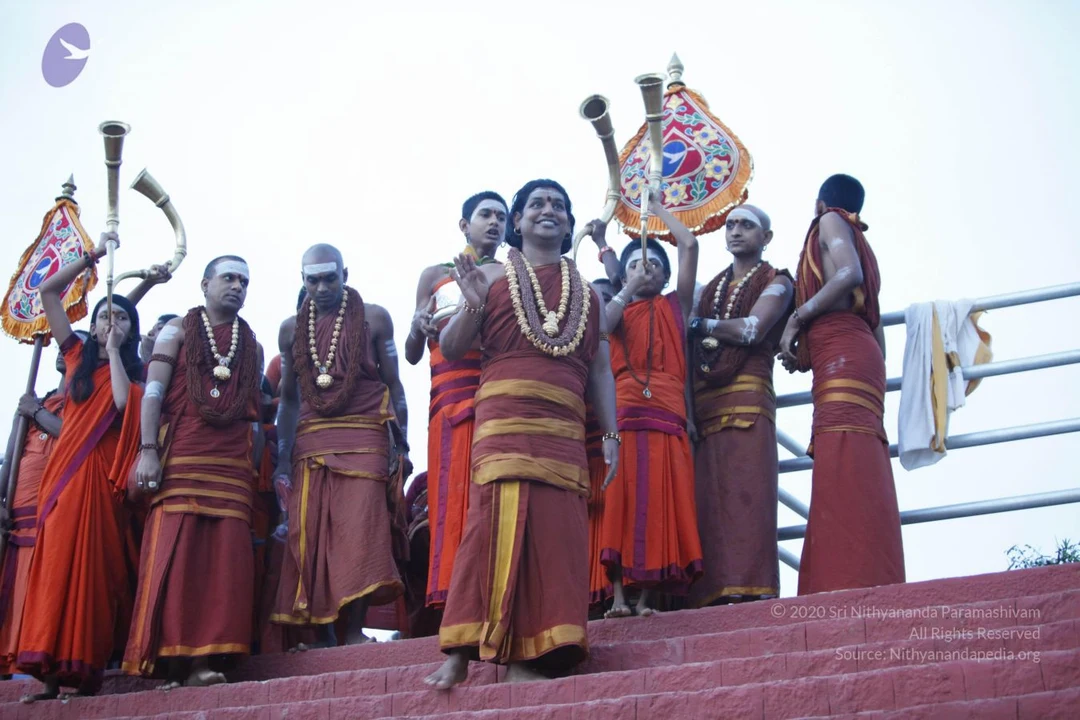
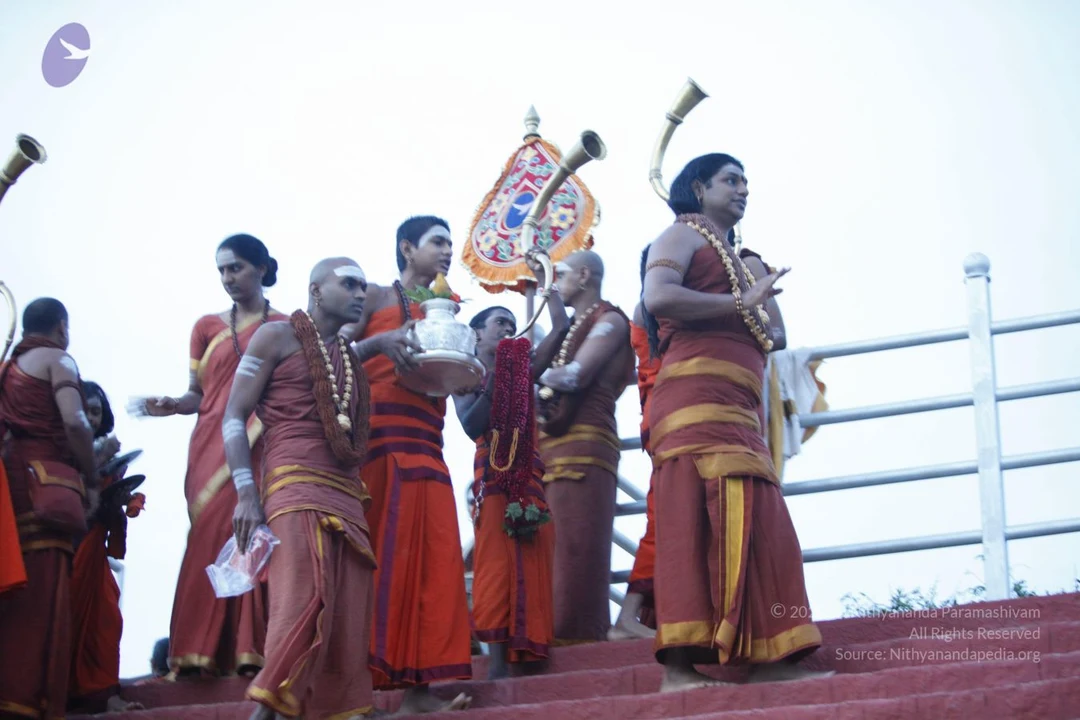
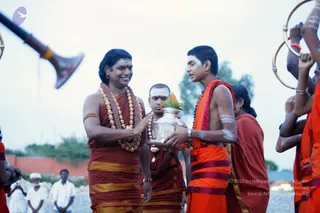
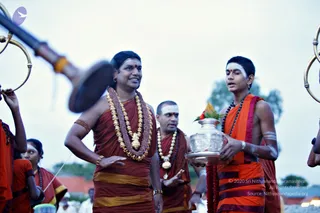
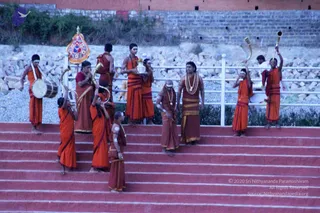
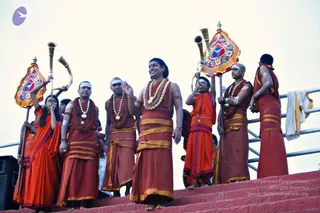
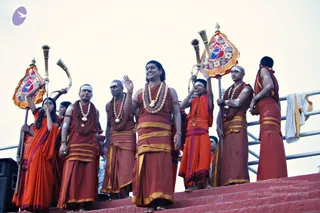
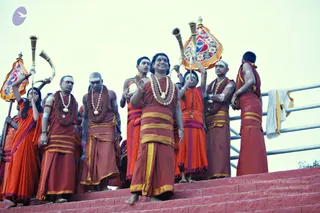
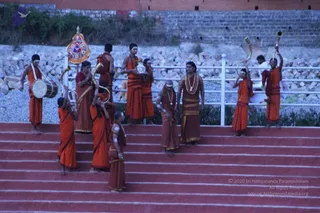
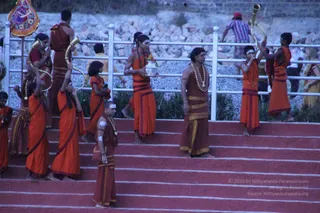
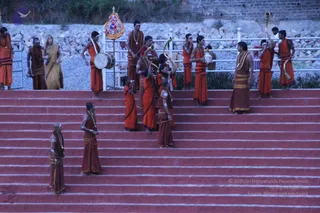
Outdoor ritual scene at dusk with a large ceremonial axe blade at upper left and gold ring-shaped staves at right. A man with long swept-back dark hair, gold necklaces, a rudraksha mala, gold bangles and a maroon-and-gold wrap smiles while holding a silver kalasha topped with green leaves and a coconut-like offering. Facing him, a younger person with short hair, white forehead and body markings, rudraksha beads and an orange-and-maroon wrap receives the vessel. A shaved-headed priest in white-and-maroon stands behind. Several people in orange and maroon garments are at right and in the background, with onlookers in white at left. a person is the central man with long hair, gold garlands and ornate dress, shown in a ceremonial exchange of the kalasha.Outdoor photo of a ceremonial procession at dusk under a pale sky. In the foreground, a man in a rust-red dhoti and shawl wears a long gold-bead necklace with a large gold pendant and a rudraksha mala, with a red bindi and gold bangles; he stands with one hand gesturing outward. Behind him, a man with white vibhuti stripes and a red-and-white forehead mark wears a rust-red garment and a gold-bead necklace. On the right, a young boy in saffron-orange cloth with a dark striped border holds a silver kalasha topped with flowers and a sprig of leaves, with white body stripes and a rudraksha mala. A large brass ceremonial horn-like ring and a long staff are partly visible at the frame edges, and several other people in orange and red clothes are behind them.Photograph of a group of ritual musicians and attendants in saffron-orange dhotis and shawls standing on red-brick steps beside a white railing and a rubble-stone wall. A man in the centre wears a rudraksha mala and a gold necklace, with white markings on his forehead. Others play long brass horns and a barrel drum, and one holds a small saffron-and-red banner on a pole. Several attendants wear white forehead tilaks and bare upper bodies with ash markings. The scene suggests a temple or ashram procession with horn-blowing and drumming. No a person candidate is clearly identifiable from appearance alone.A procession of robed devotees stands on red steps outdoors under a pale sky. Several hold long brass horns and two carry ornate embroidered pennant banners with a red and blue emblem and gold fringe. Most wear rust-red and saffron robes with gold-yellow sashes, rudraksha and flower garlands, and white tilak marks on their foreheads and arms. The central figure, a smiling person with long dark hair, wears a bold garland of white and gold beads and gold armbands, raising a hand in greeting. Standing at the top of the steps, the group is shown in a ceremonial ritual procession.A group of saffron-robed sannyasis stands on red stone steps against a pale sky, several holding long brass horns and ornate fringed pennants with blue-and-red emblems. The central man, in a maroon robe with gold-yellow borders, wears layered rudraksha and gold-bead garlands and waves with a smile. Others around him wear similar red and orange robes, white forehead markings, and beaded necklaces. A metal railing and a folded white cloth sit at the right edge.A procession of saffron-robed sannyasis climbs red-painted steps outdoors under a pale sky. Several hold long brass horns (ceremonial trumpets) raised high, and two carry ornate ceremonial standards with fringed red-and-gold banners embroidered with floral motifs. A central man in an orange-red robe with a yellow-gold border wears a long white-and-orange flower garland and a rudraksha mala, and smiles while raising one hand in greeting. Others wear rudraksha malas, white flower garlands and white ash marks on their foreheads and arms. A metal railing and a folded white cloth appear at right.

Pratyaksha-Pada-Puja

20 photosSource gallery
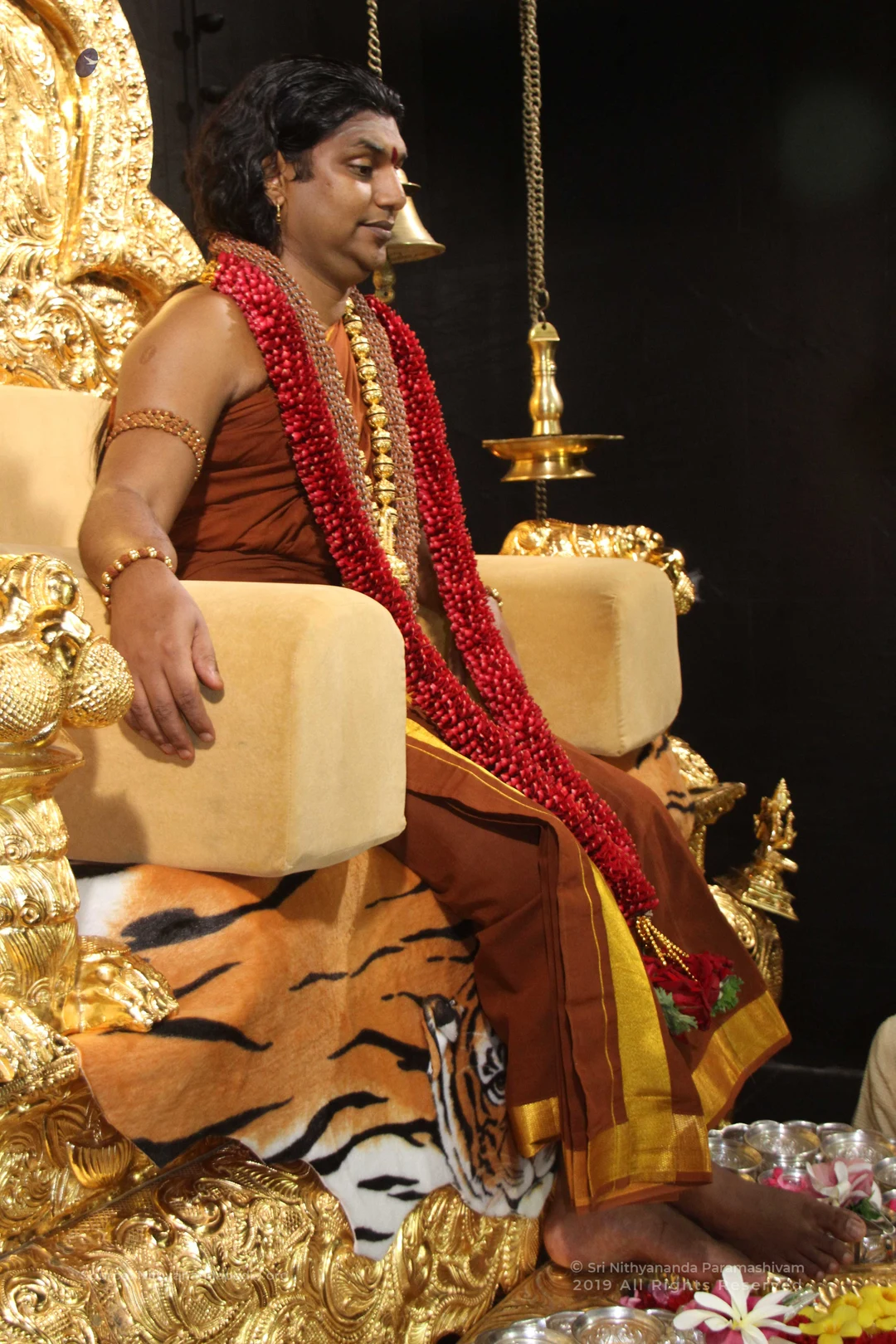
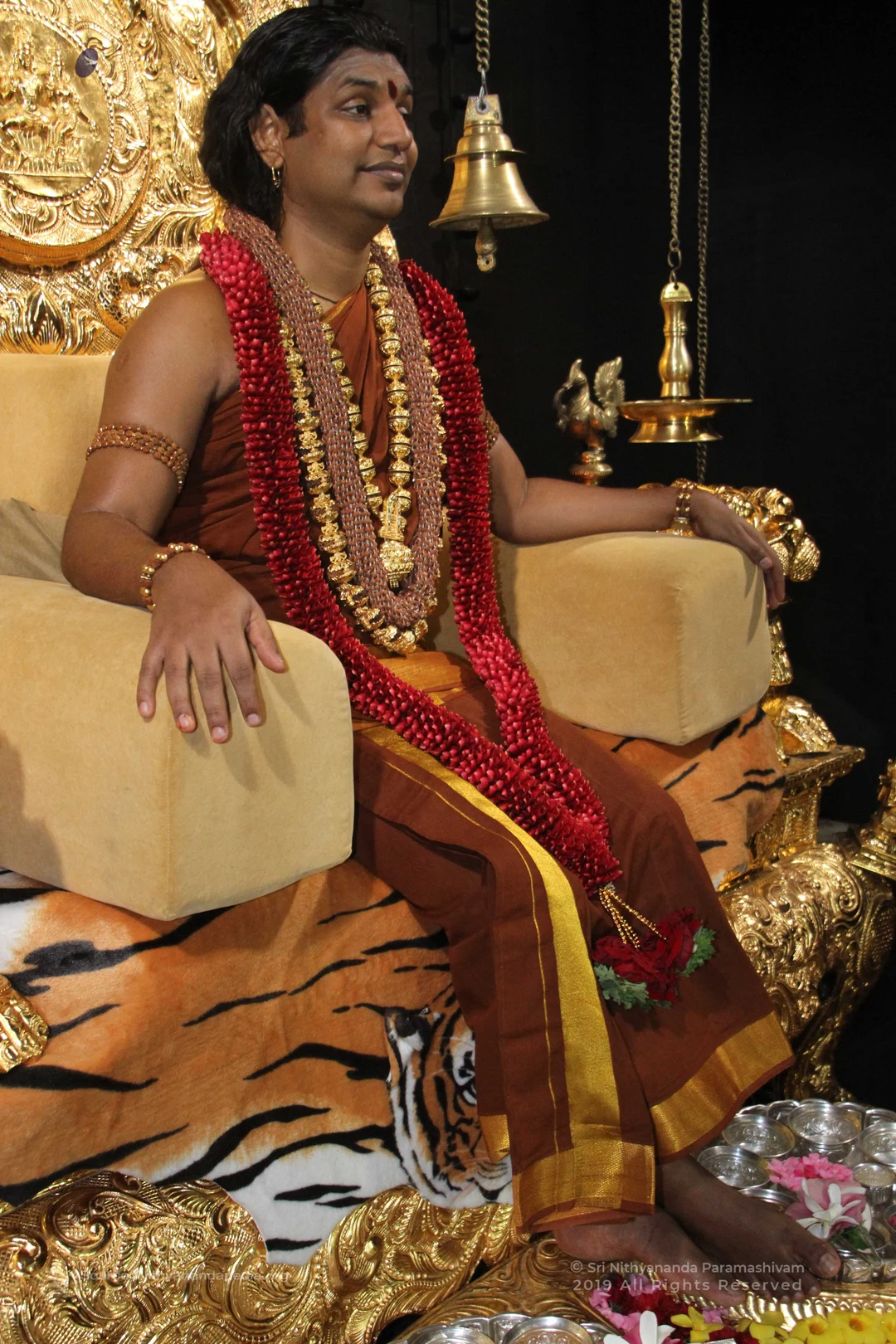
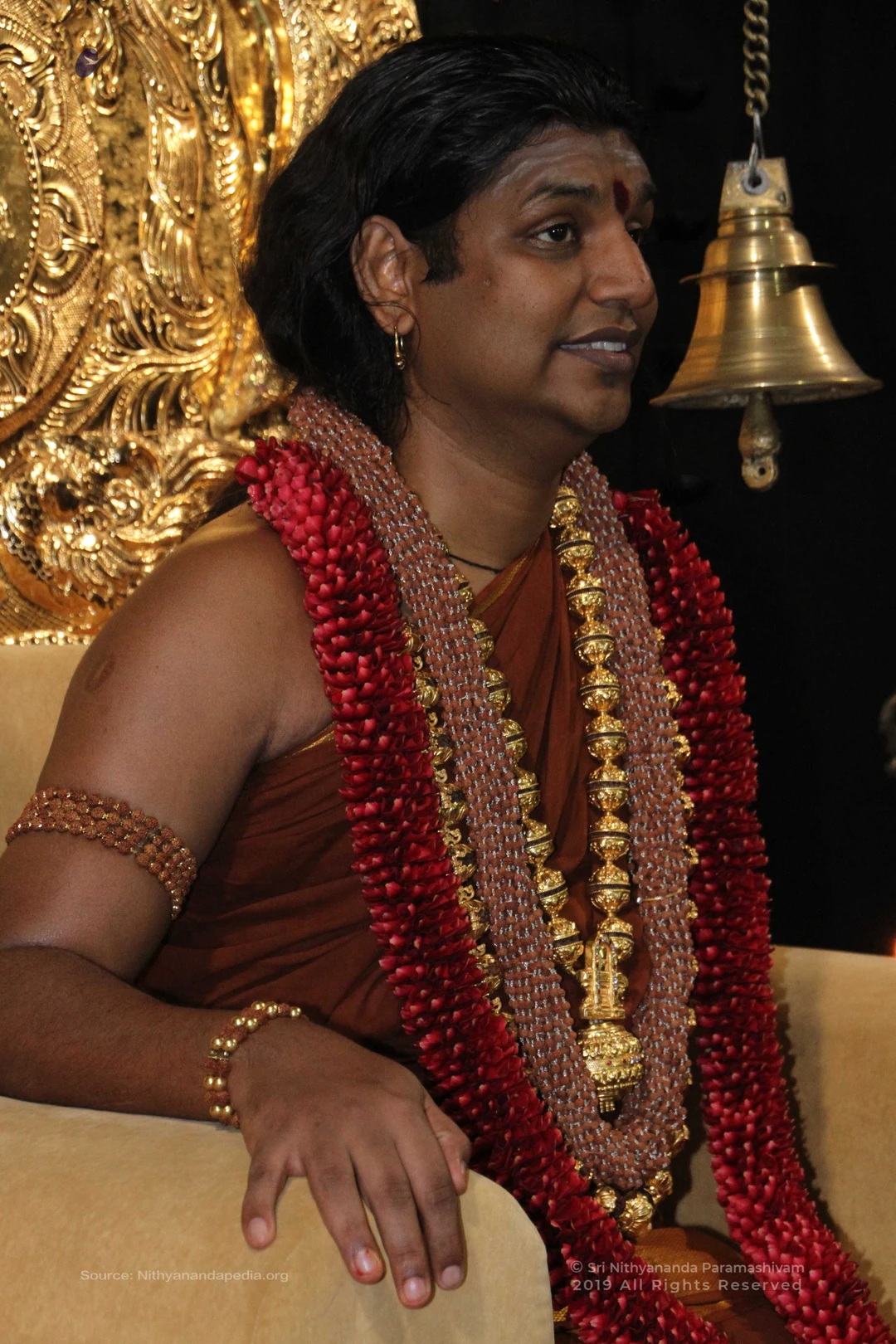
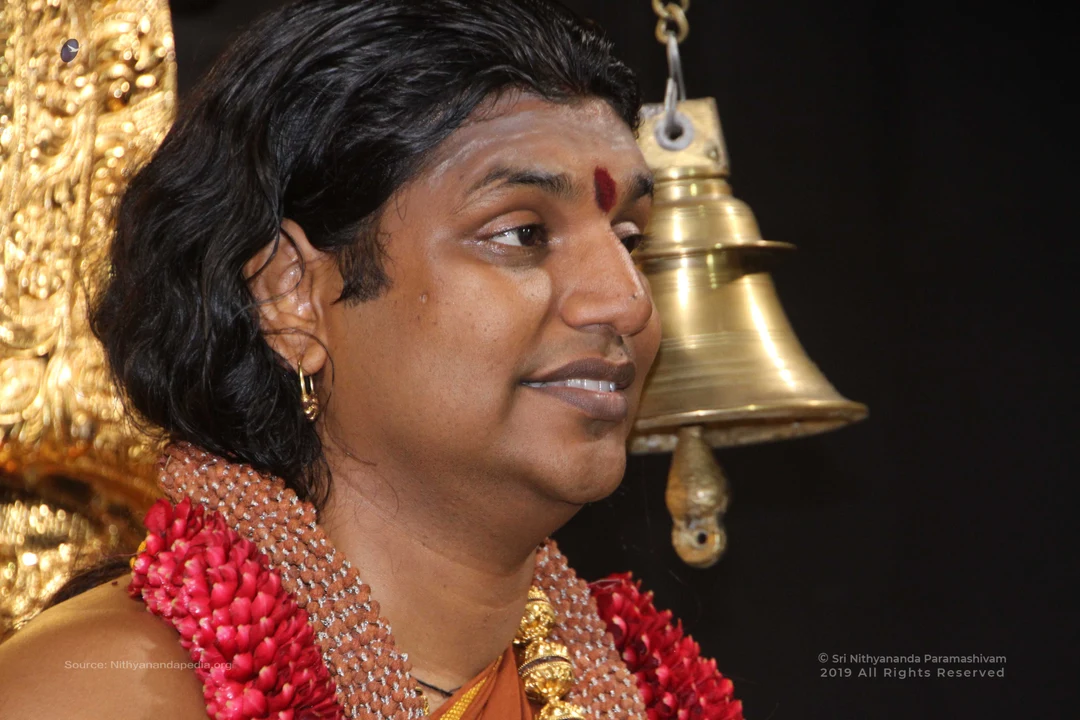
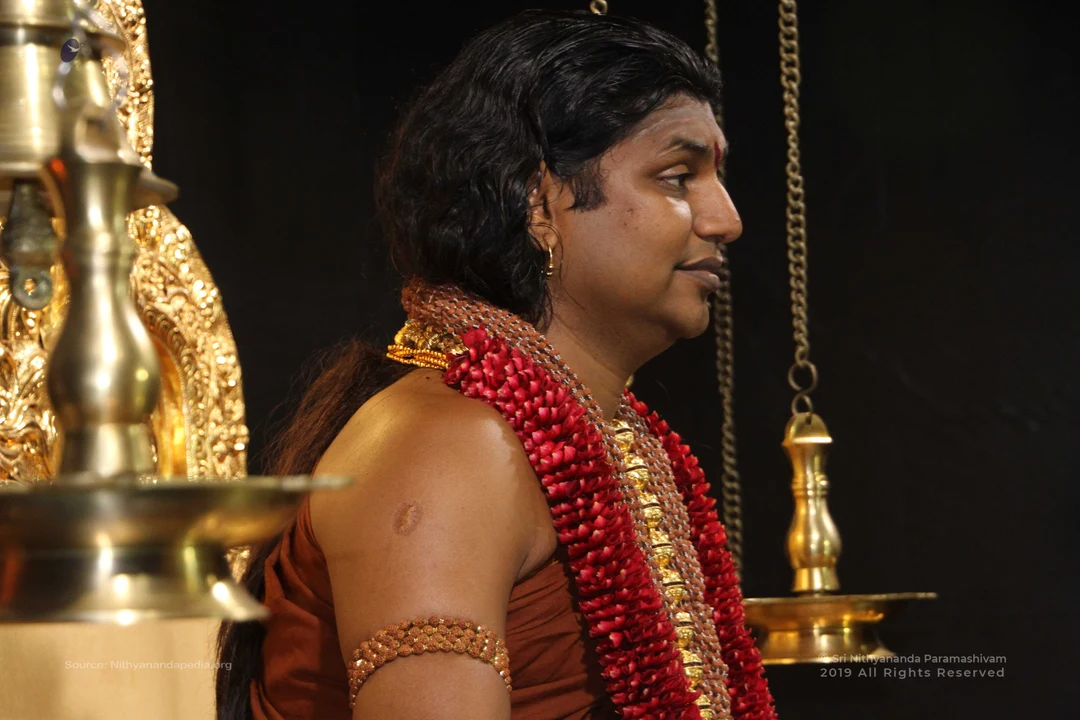
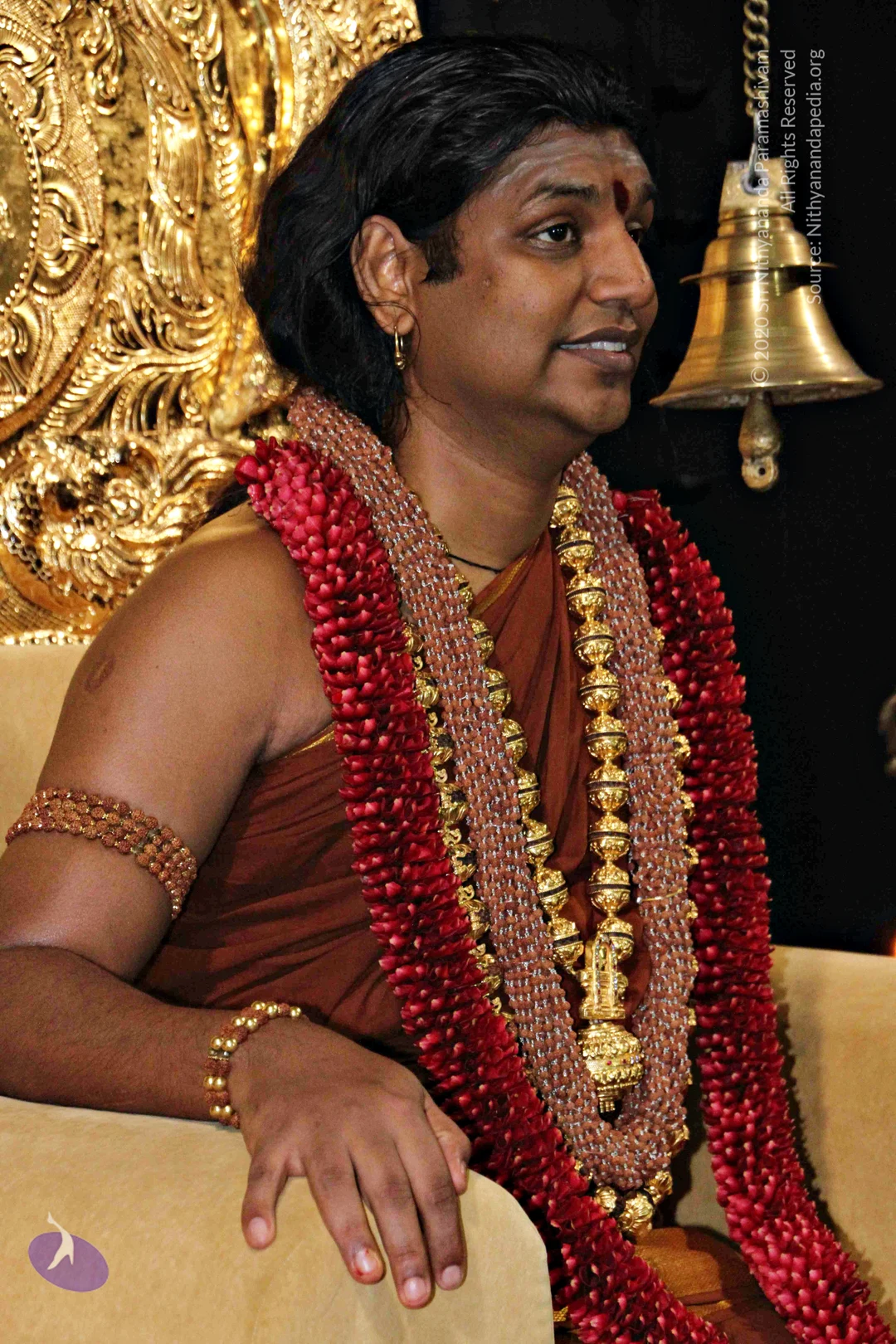
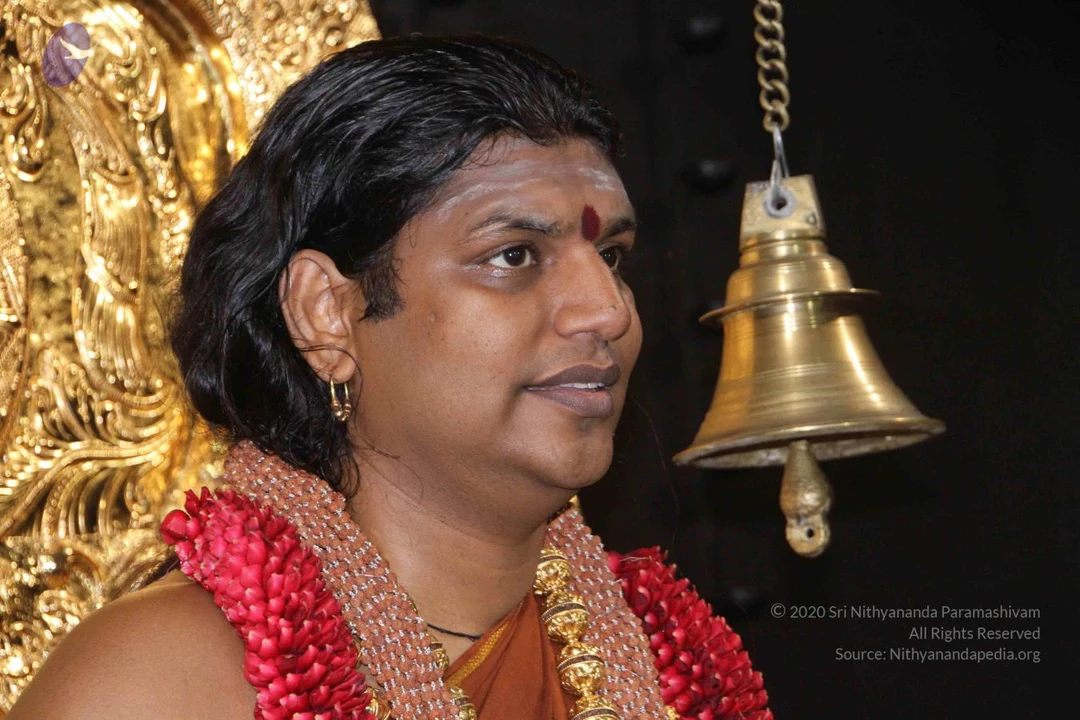
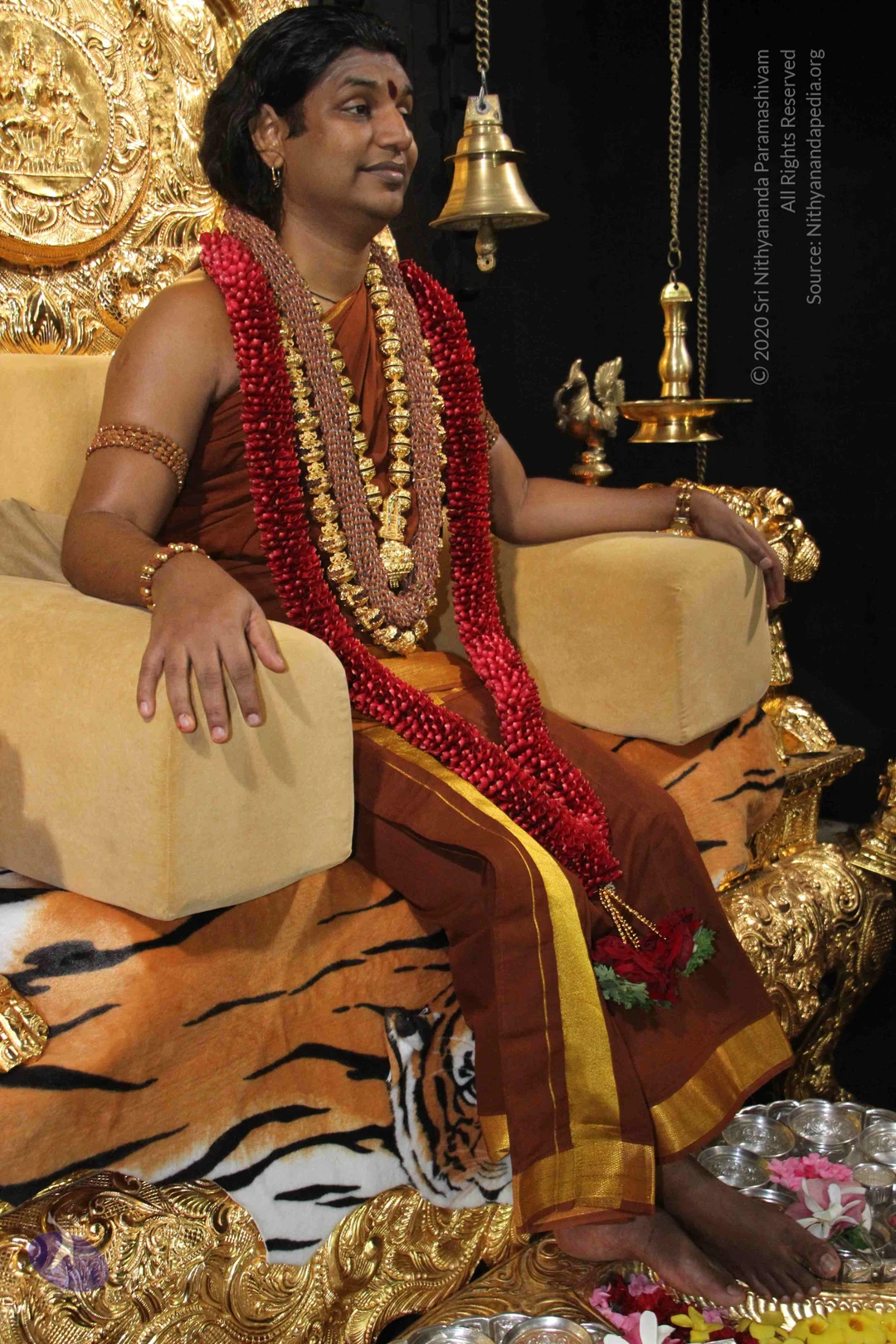
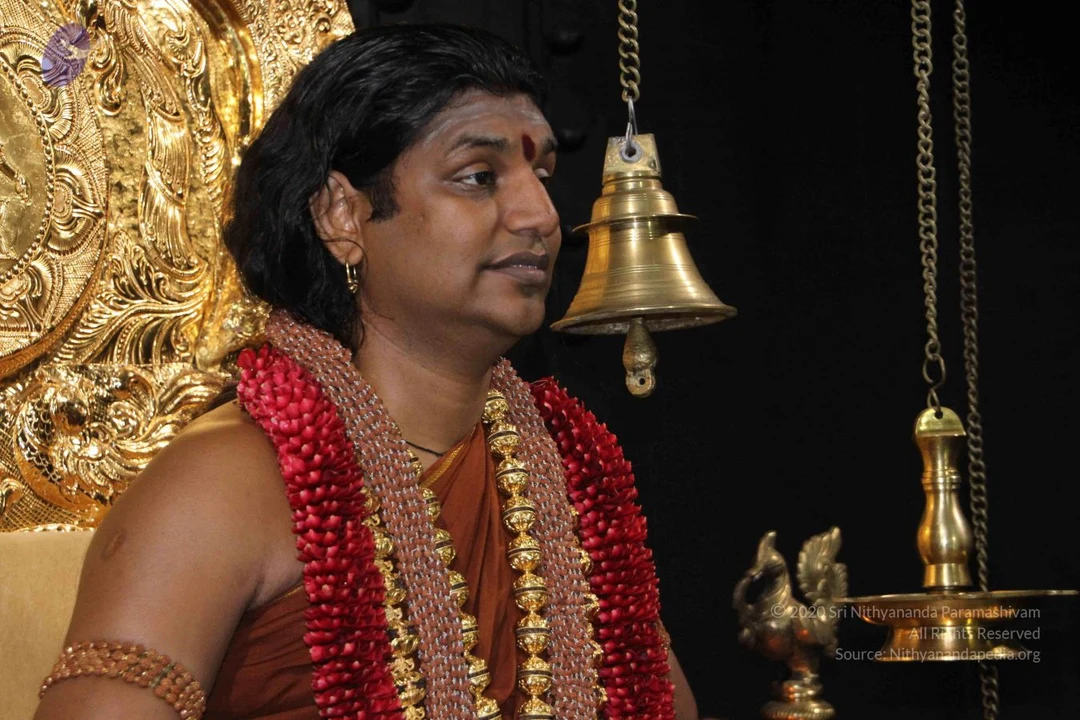
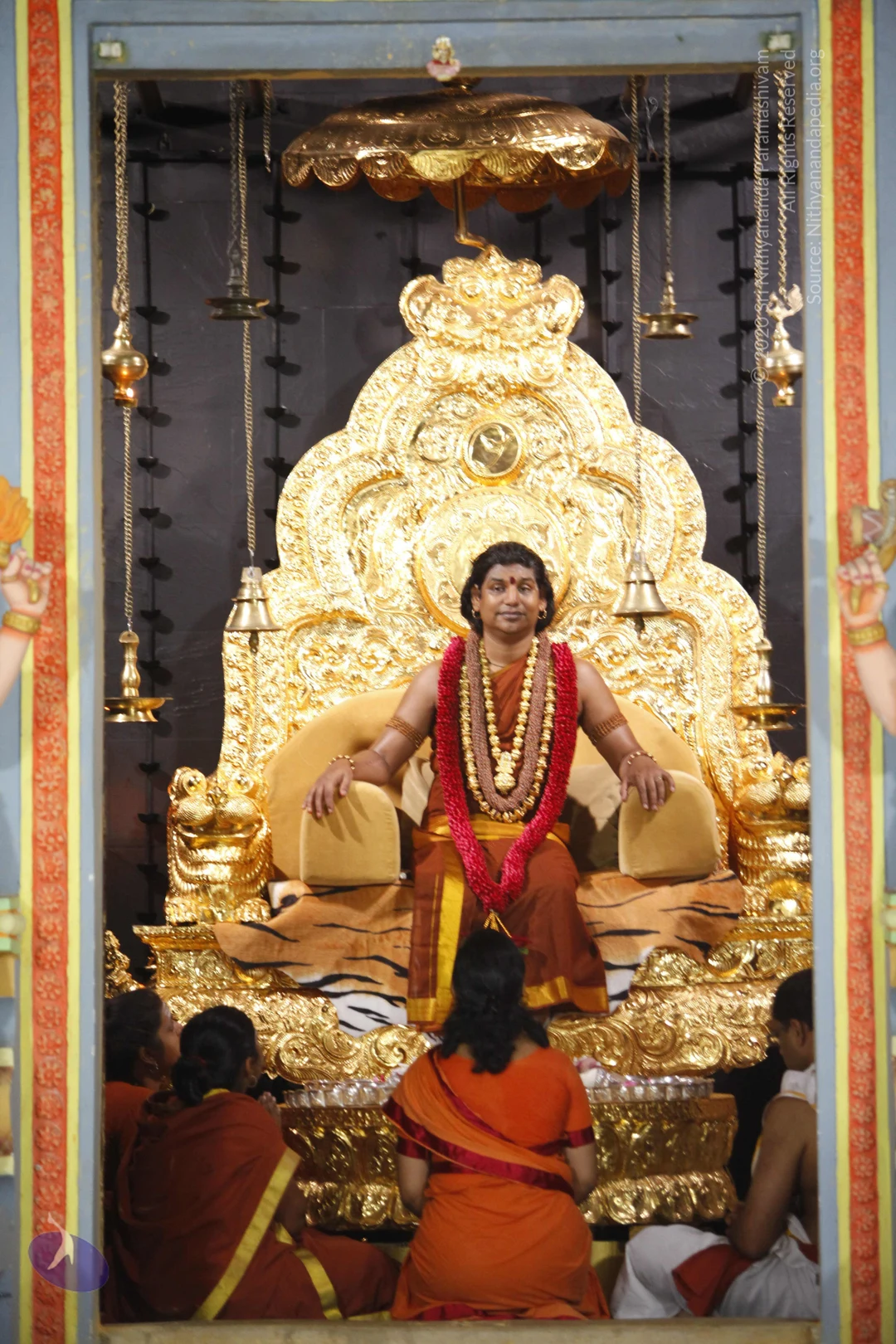
A photograph of a smiling man seated before an ornate gold-embossed throne panel, wearing a rust-orange robe with a red and gold beaded garland, a mesh-woven garland with gold beads, and a beaded bracelet on the upper arm, with a red-orange tilak on the forehead. Beside him hangs a polished brass bell on a chain, and to the right stands a brass lamp with a bird-shaped finial.A seated man in an orange-brown saffron garment smiles softly with eyes lowered. He wears a red flower garland over a beige beaded garland, a long gold chain with ornate gold beads, a gold armlet on his upper arm, and a red kumkum mark on his forehead. He sits on a cream cushioned seat in front of an ornate gold throne backrest decorated with deity relief. Beside him hang a brass bell and a brass oil lamp on chains, with a brass peacock figure in the background. Appearance-based label: Swamiji (probable), seated in person, with long swept-back hair, saffron clothing, a gold ceremonial necklace and rudraksha-style beaded garlands.Close photo of a seated man with swept-back dark hair, a red kumkum dot and white tilak on his forehead, a small gold stud earring, and a rust-brown shawl over his shoulder. Heavy red flower garlands, rudraksha malas and gold bead necklaces hang across his chest, with a rudraksha band on his upper arm and wrist. Behind him, ornate gold carved fabric or throne backing, and at upper right a hanging brass bell. The man is looking to the side with a slight smile, one hand resting on a cream-coloured armrest.Close-up photo of a man with long swept-back dark hair, a red bindi and white forehead markings, wearing red and pink flower garlands, a rudraksha-style gold and beaded necklace, gold earrings and a saffron-orange garment. He looks to the side beside a polished brass hanging bell on a chain, with an ornate gold carved throne or shrine panel behind him.A seated man sits on an ornate gold throne draped with a tiger-striped cloth, with gilded carvings behind him. He wears a rust-brown garment with a gold-bordered dhoti, layered gold chains, and a thick red flower garland falling to his knees, plus gold bangles and a red bindi. A brass bell hangs above the throne beside a brass lamp, and silver bowls with flowers sit at his bare feet. He looks off to the side with a slight smile. Several probable Swamiji cues are present: long swept-back hair, ornate gold necklaces, rudraksha-style beads and saffron-toned clothing, seated in a throne setting.Photo of a man seated on a gilded throne with ornate golden carving behind him, wearing a saffron-orange shawl, a red-and-white flower garland and gold beaded necklaces, with a red bindi on his forehead and a bangle on his upper arm. He has long swept-back dark hair and gazes to the side beside a hanging brass bell and a brass oil lamp on a chain against a black background. Appearance-based label: a person, seated on a throne in an in-person setting.

Swasti-Mantra

7 photosSource gallery
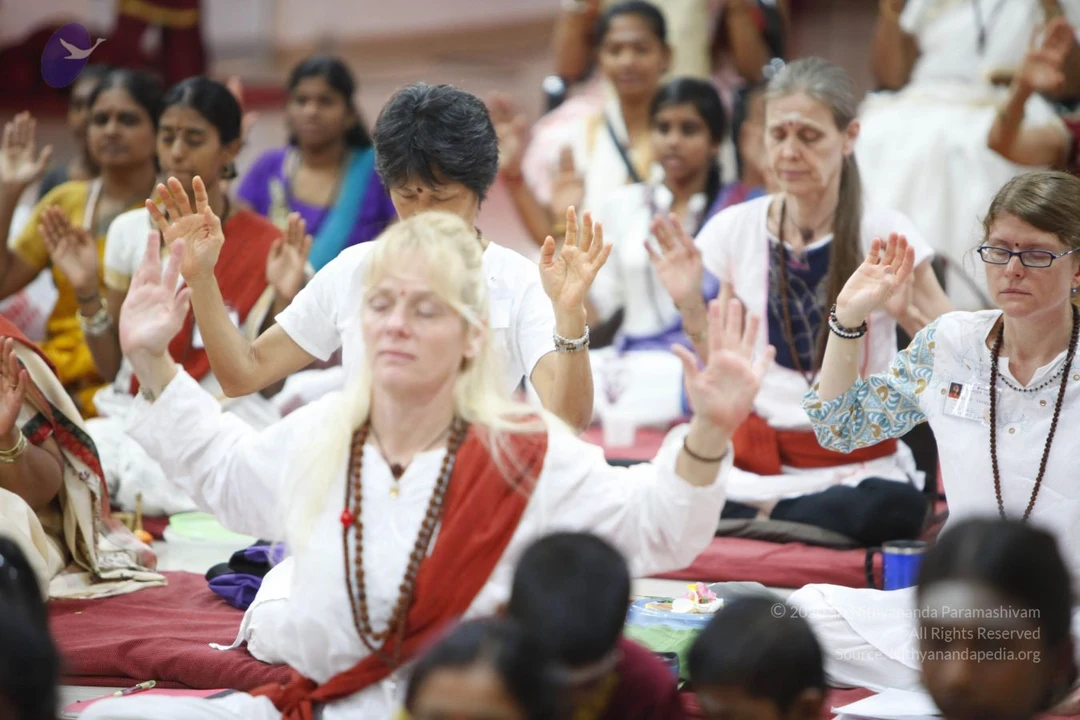
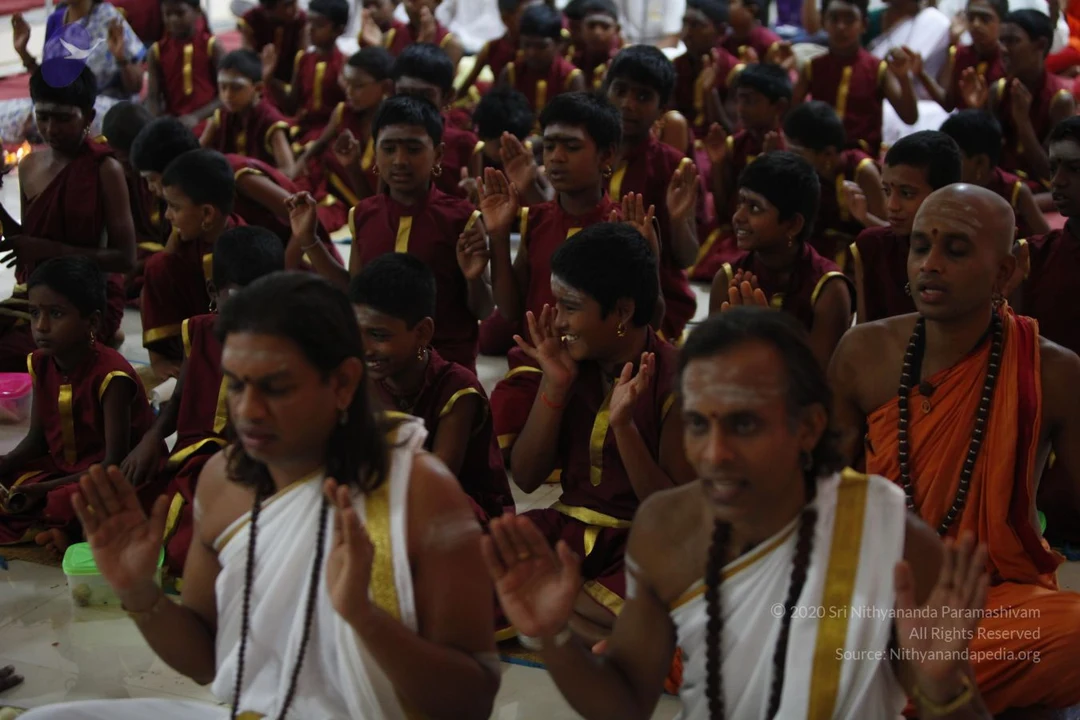
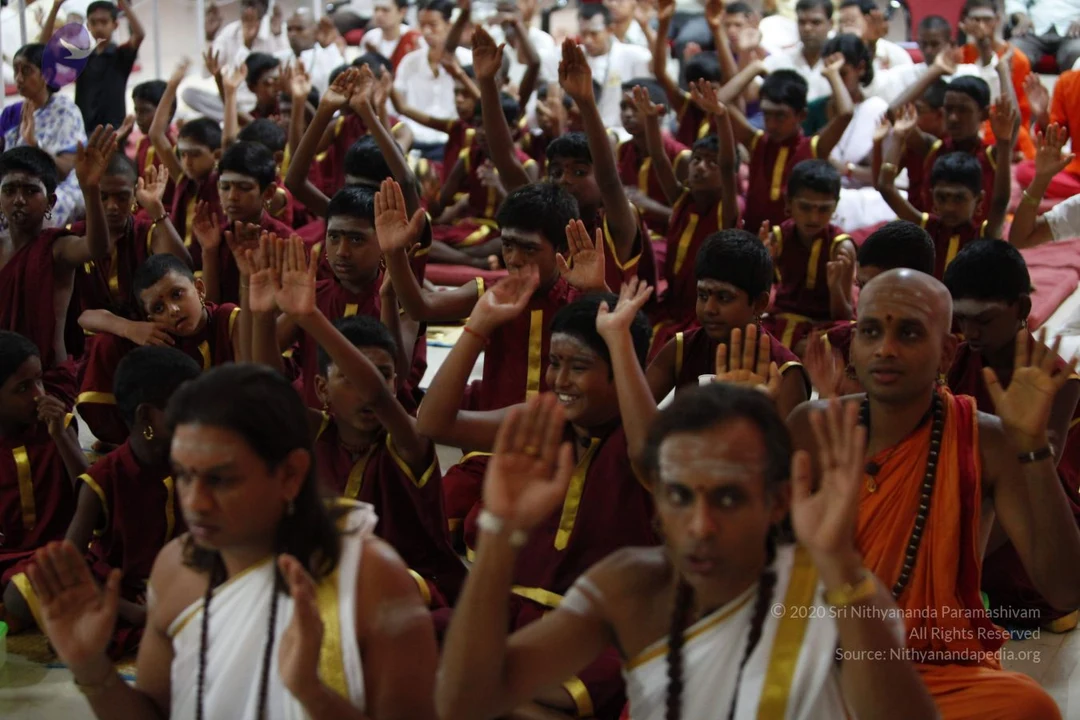
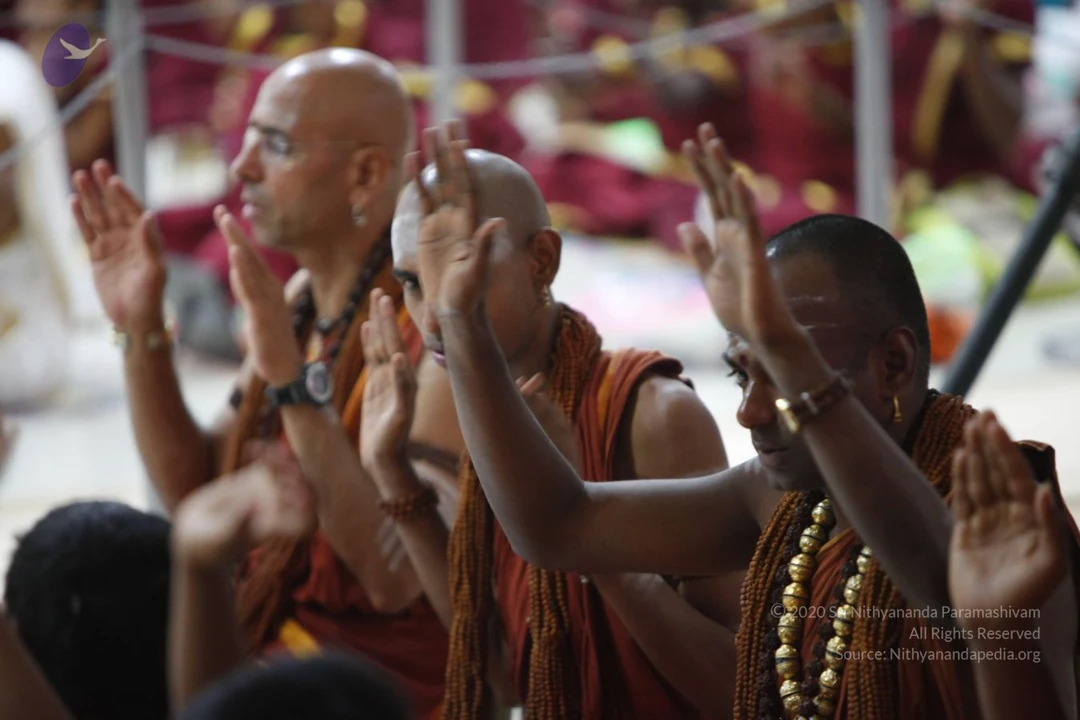
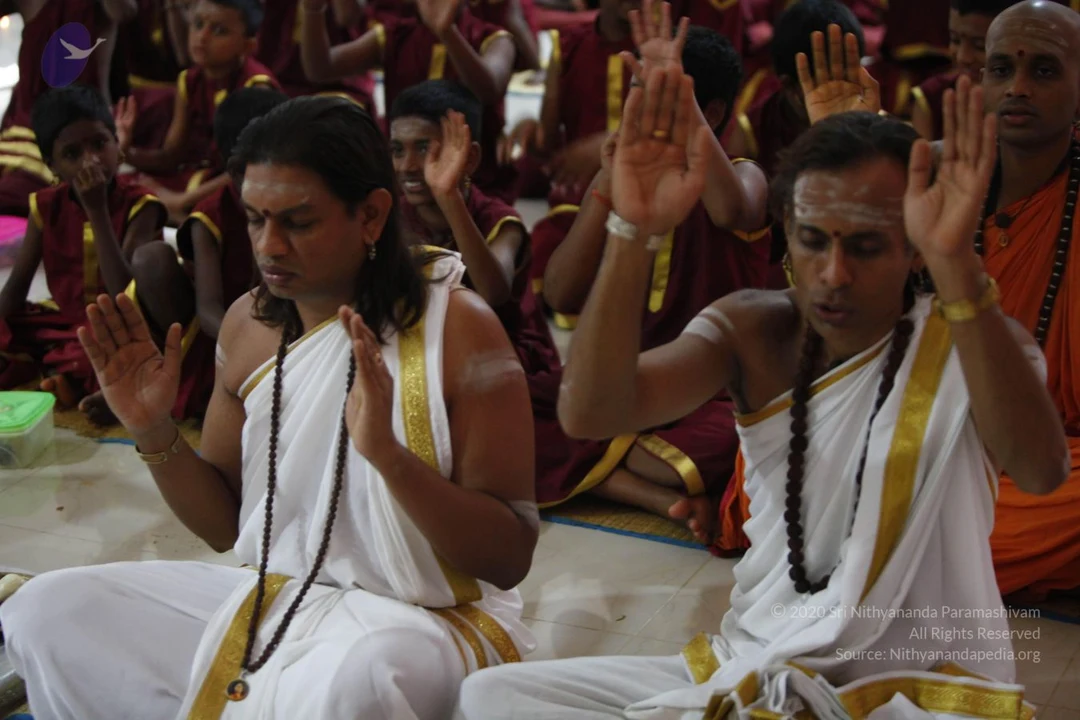
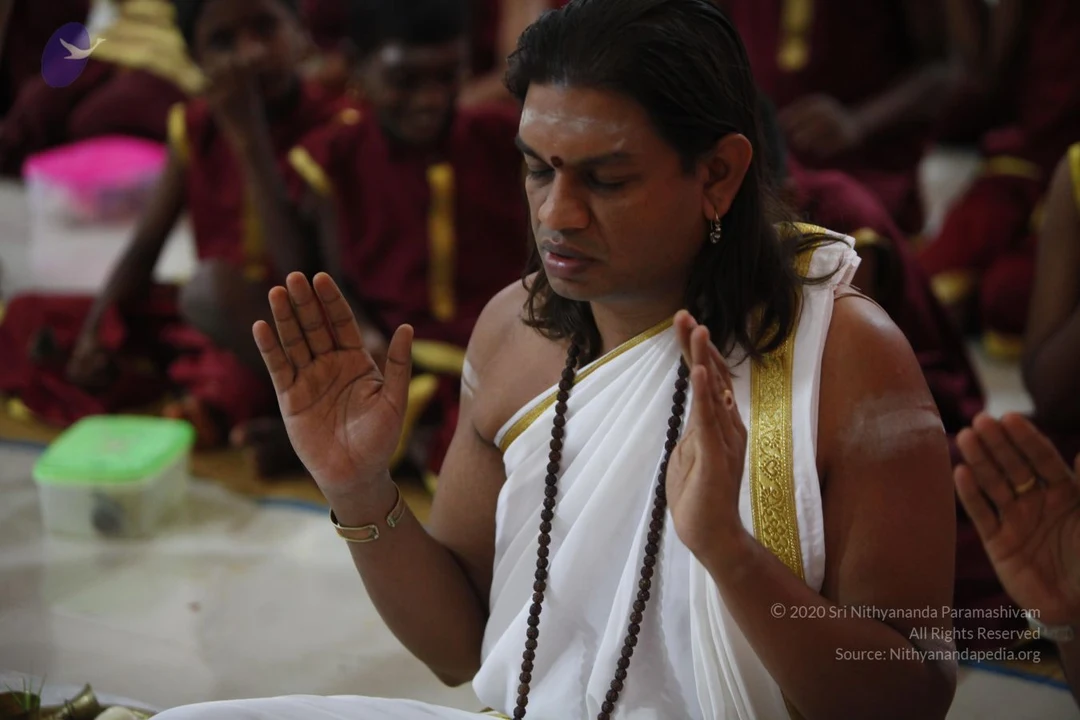
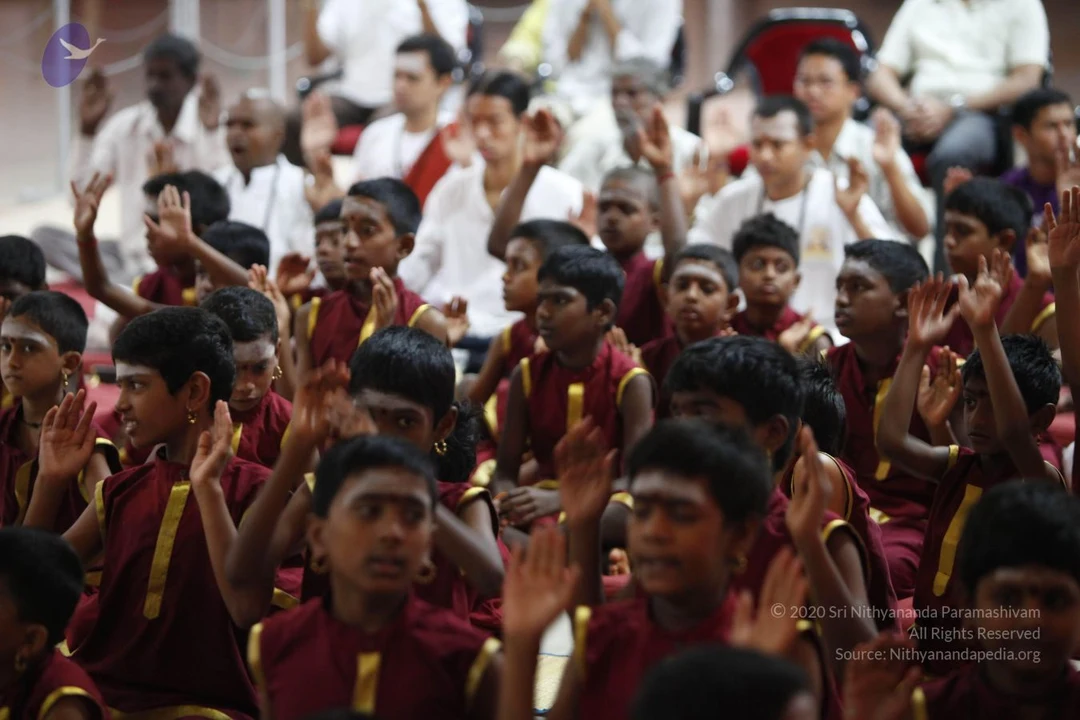
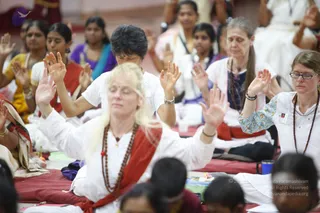
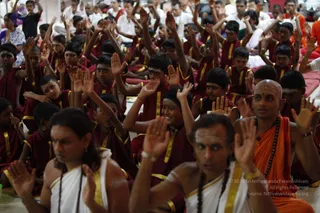
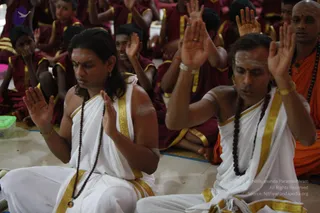
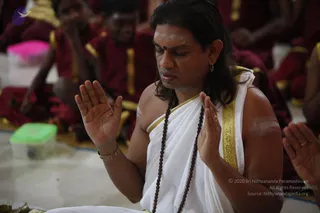
A photograph of a seated group meditation or satsang in a hall with red mats. In the foreground a woman with long blonde hair, eyes closed, wears a white kurta with a red sash over her shoulder and a mala of beads; her hands are raised palms-out. Beside her a woman in a white top and a red-and-white garment raises her hands, and to the right a woman with glasses and a blue patterned top wears a beaded mala and raises both palms. Behind them more participants in white, red and yellow saris and white clothing raise their hands. Blurred figures in the lower foreground and a small puja arrangement with flowers sit on a mat. Dozens of people are visible in the background.Photograph of a large seated group during a devotional gathering. In the foreground, two men in white dhoti-style garments with gold borders sit with palms pressed together in namaskar, one with long hair falling past the shoulders and rudraksha mala beads on his chest. Behind them, rows of young boys and girls wear maroon tunics with yellow trim and sit with hands folded or raised in prayer. On the right, a shaven-headed man wears an orange saffron shawl, a rudraksha mala and a gold-coloured chain, and sits in a meditative posture. A small oil lamp burns at the upper left edge. The mood is attentive and devotional.A photograph of a large seated group during a satsang, with many young boys in maroon robes trimmed with gold raising their open palms in the air. In the foreground, two men with long braided hair and white ritual dress bordered in gold raise their hands, one with a tilak on his forehead. To the right, a shaven-headed man wears an orange-saffron robe and a rudraksha mala, also raising his palms. Behind them, more seated devotees in white and dark clothing fill the hall. The atmosphere reads as a group chant or devotional gesture.A photograph of a seated group of devotees in saffron-orange robes with rudraksha malas, raising their hands in a gesture of prayer or salutation during a satsang. Several men are visible; the foreground figure has a shaved head and wears gold beaded necklaces, another wears a long-haired saffron wrap and a bead mala, and a bald man on the left wears a wristwatch. Blurred maroon-clad devotees and a yellow-flowered backdrop fill the background, and a corner logo mark appears at top left.Seated ashram group with hands raised in mudra-like gesture during satsang. Two men in front wear white dhotis with gold-bordered shawls and rudraksha malas; the man on the left has long hair and a gold-tipped mala, the man on the right has a white forehead marking and braided hair. Behind them, a row of boys in maroon robes with gold trim sit cross-legged with raised palms, and an older man on the far right wears saffron/orange robes and a rudraksha mala. Tiled floor with a green plastic container at left. No identity is confirmed by appearance; the scene shows devotees in satsang posture.A seated man in a white dhoti and shawl with a gold border, wearing a rudraksha mala, sits with palms raised in a devotional gesture while his eyes are lowered. Behind him, several seated people in maroon and gold-bordered garments fill the hall, and a green container and a pink box sit on the floor in front. A brass vessel and leaves are visible at the lower edge. a person appearance cues include the long swept-back hair, a rudraksha mala and gold-bordered white ritual clothing, but the identification is uncertain.

NithyaSatsang-Swamiji
11 photosSource gallery
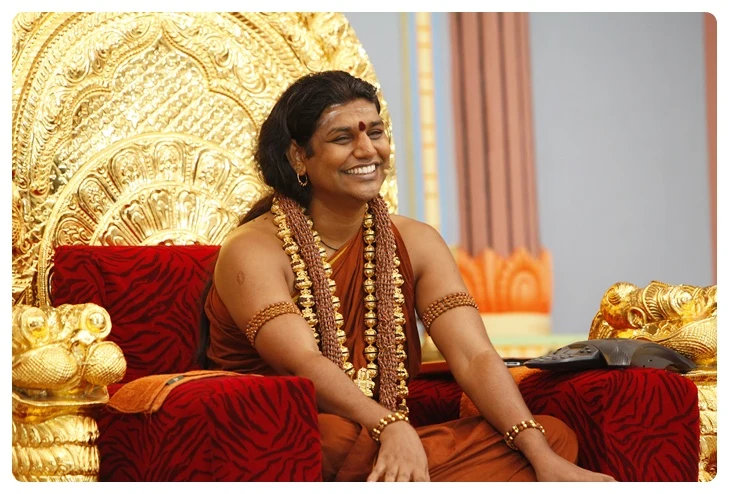
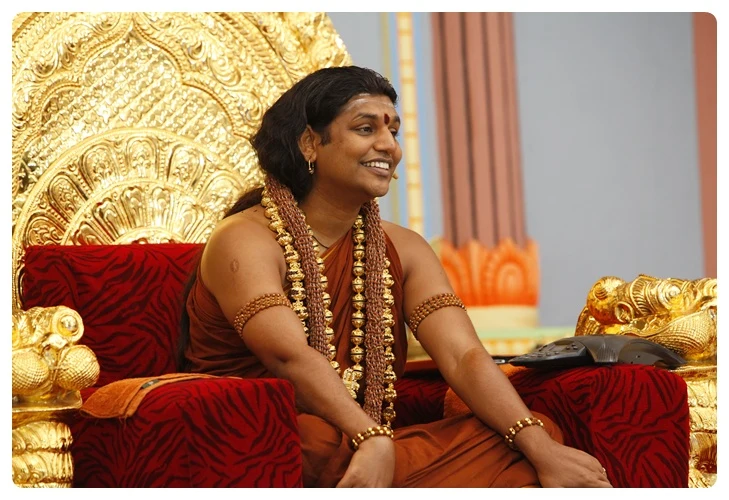
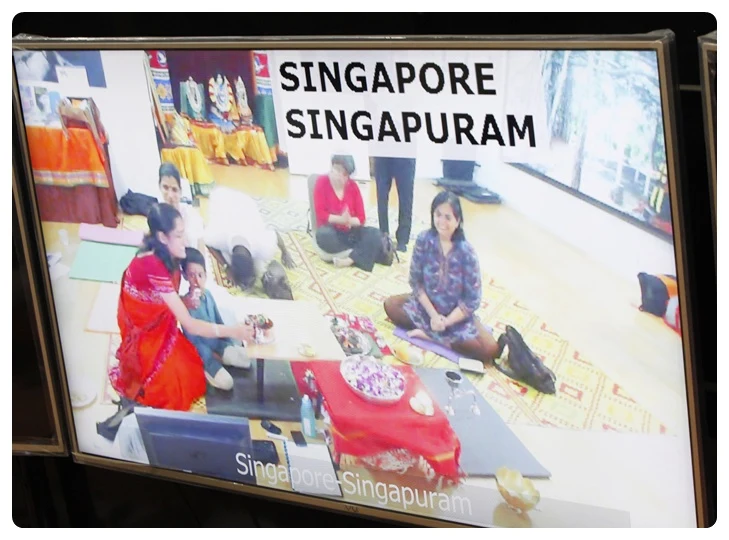
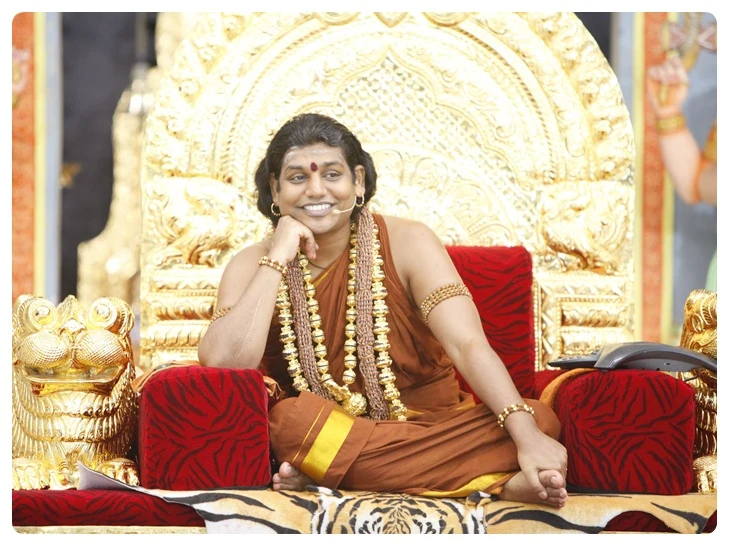
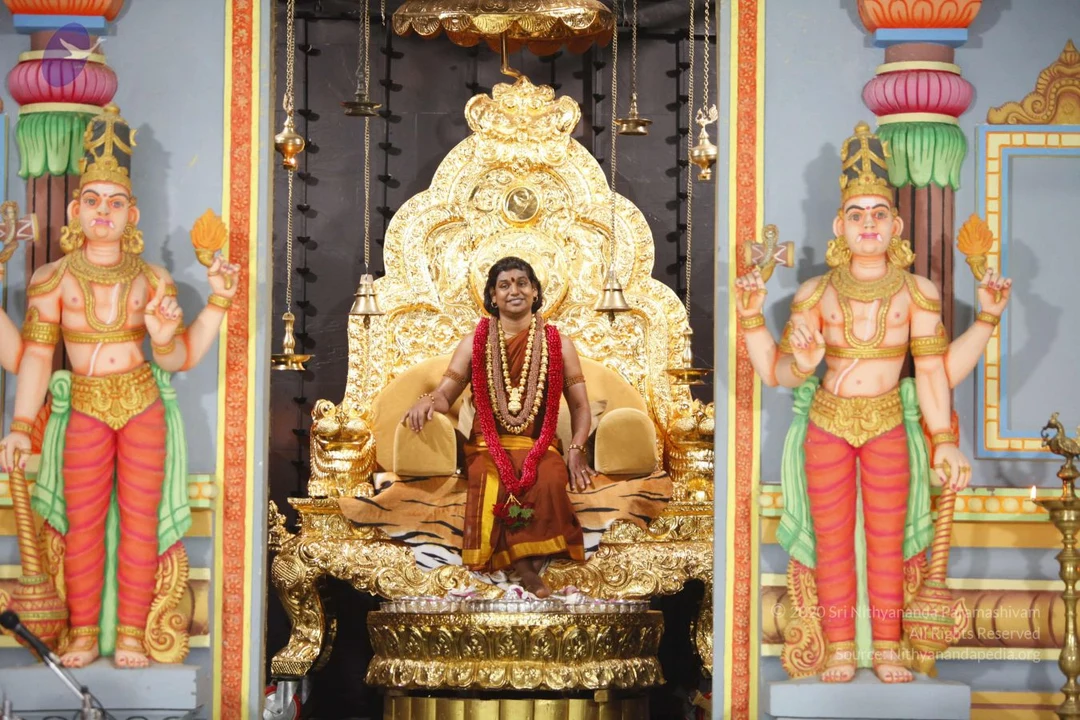
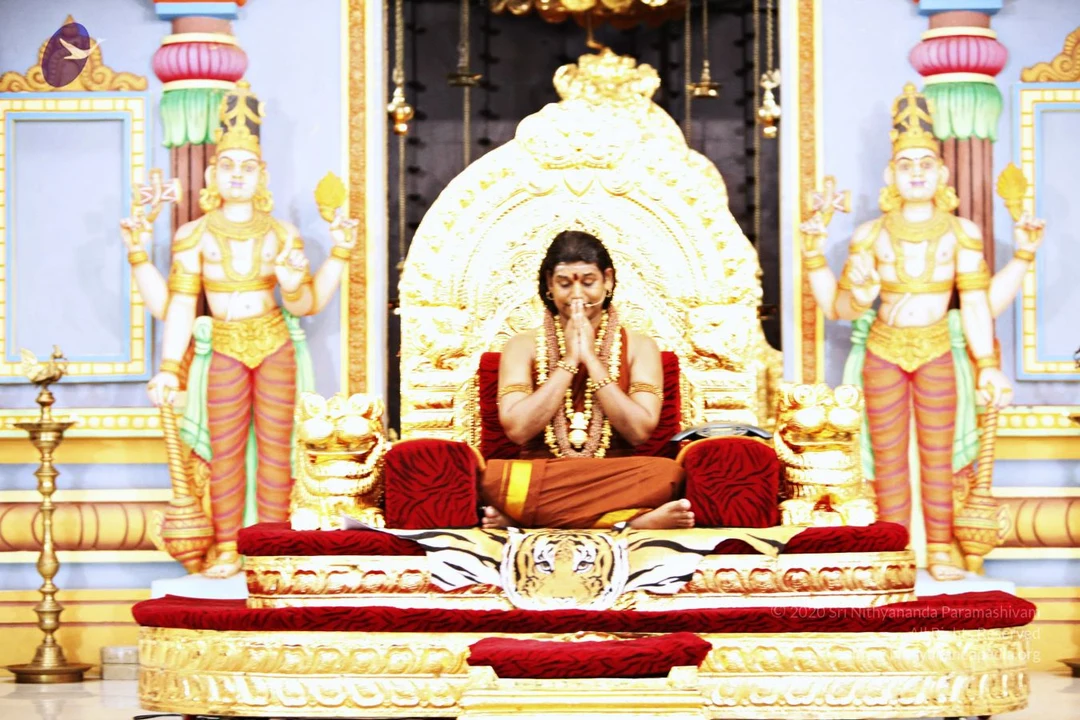
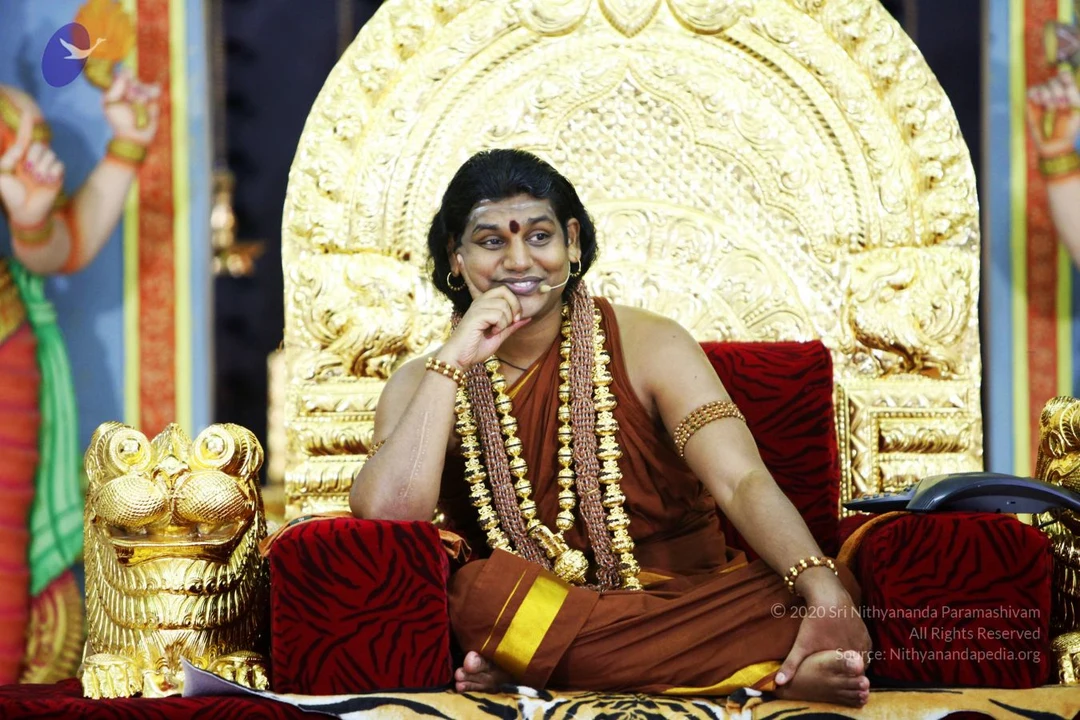
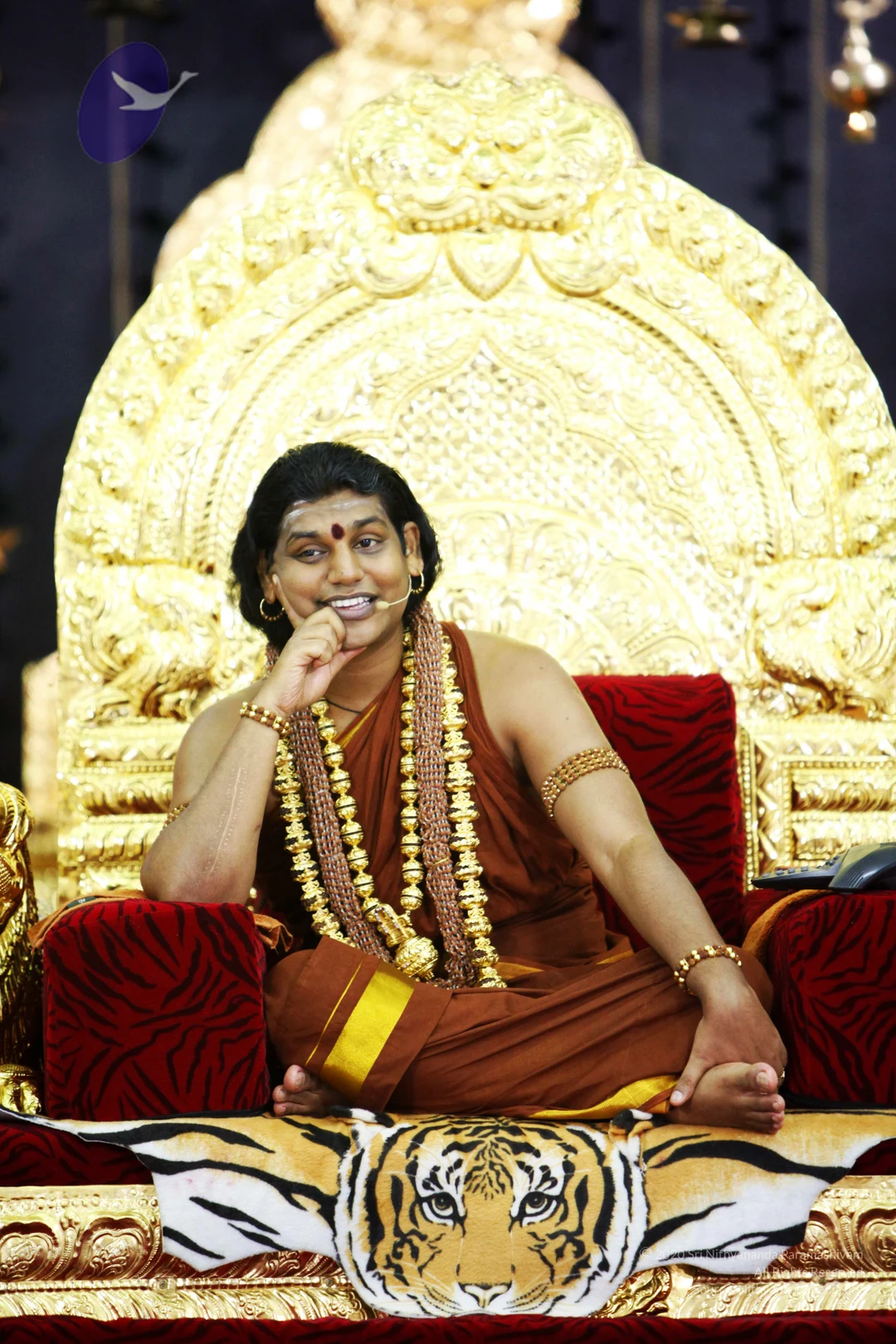
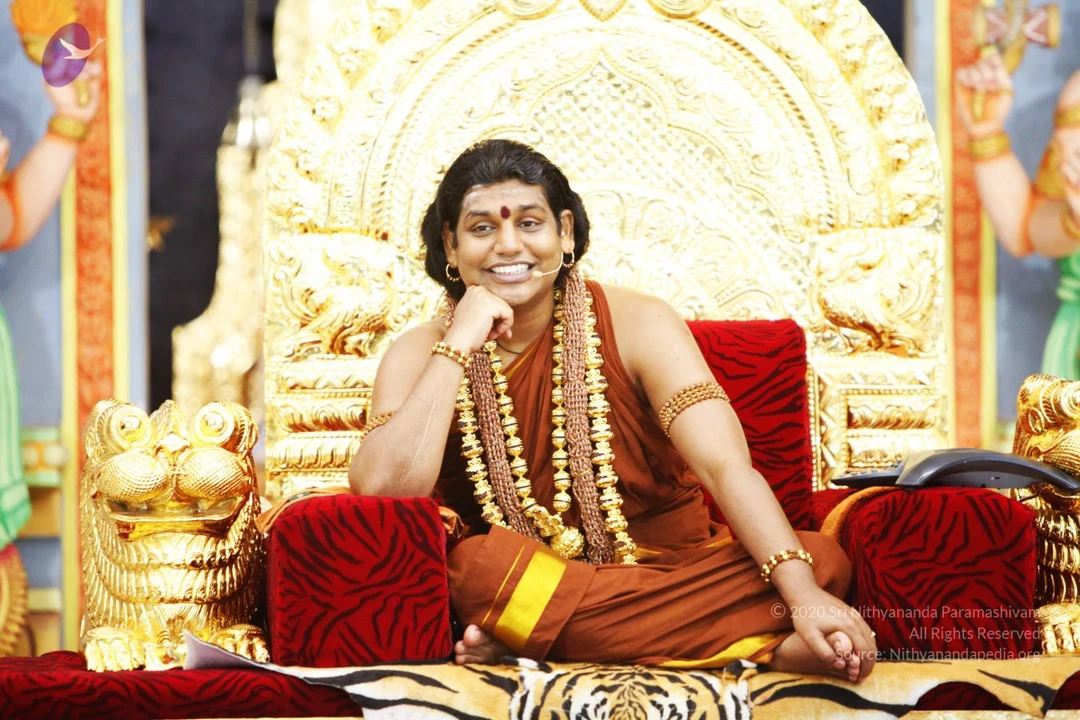
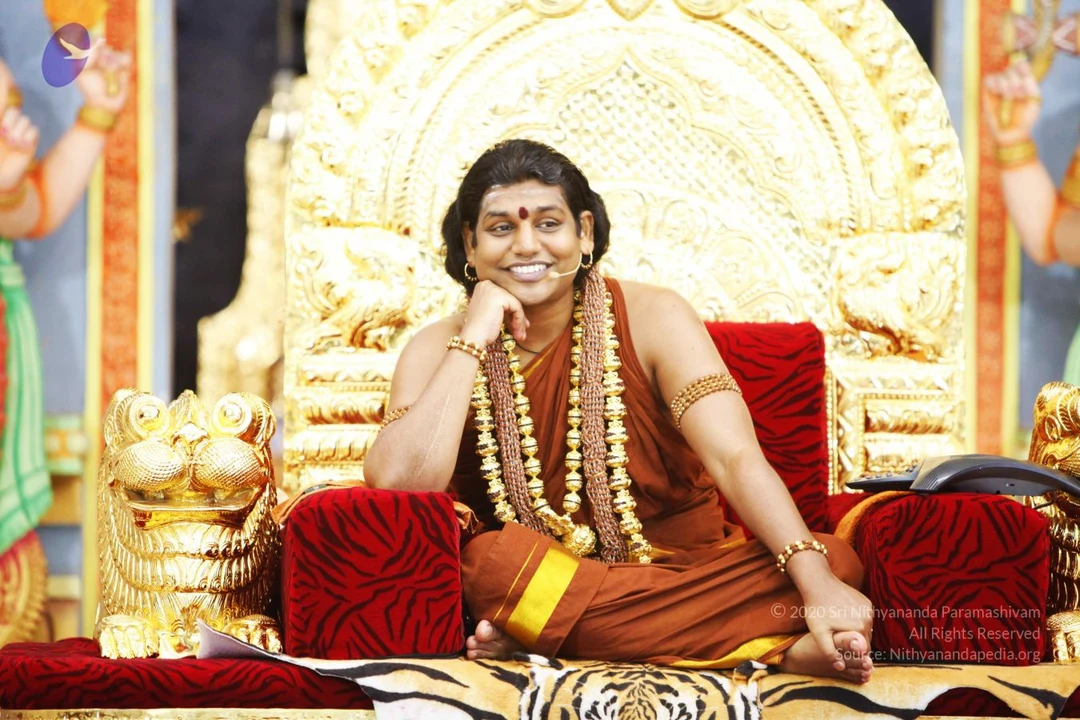
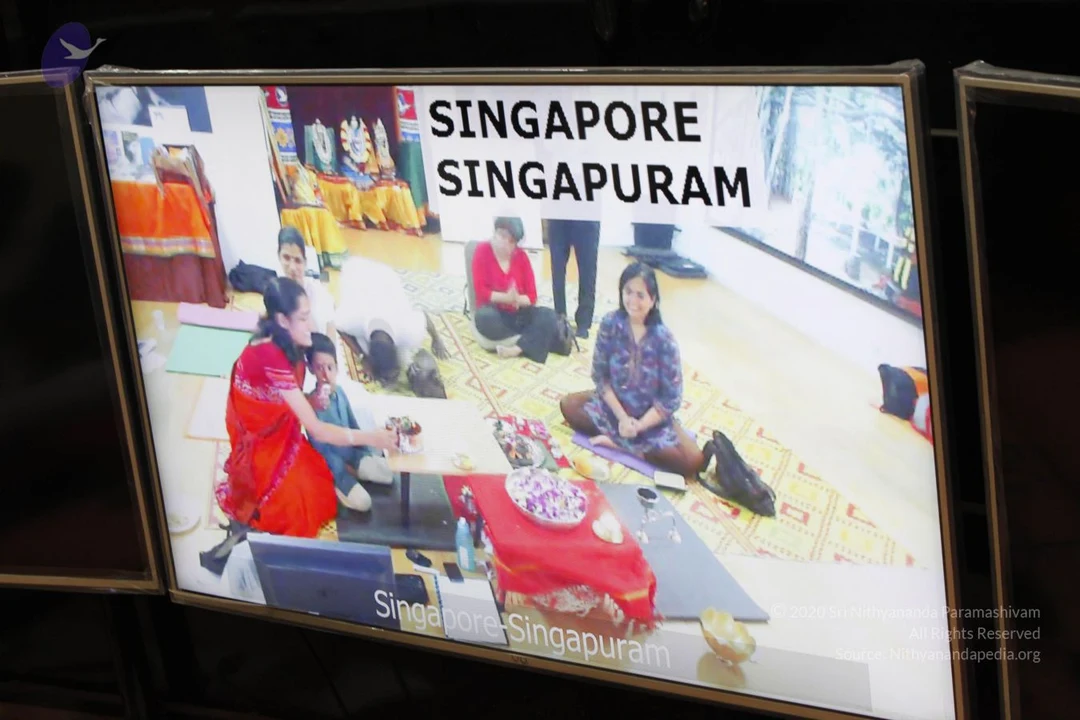
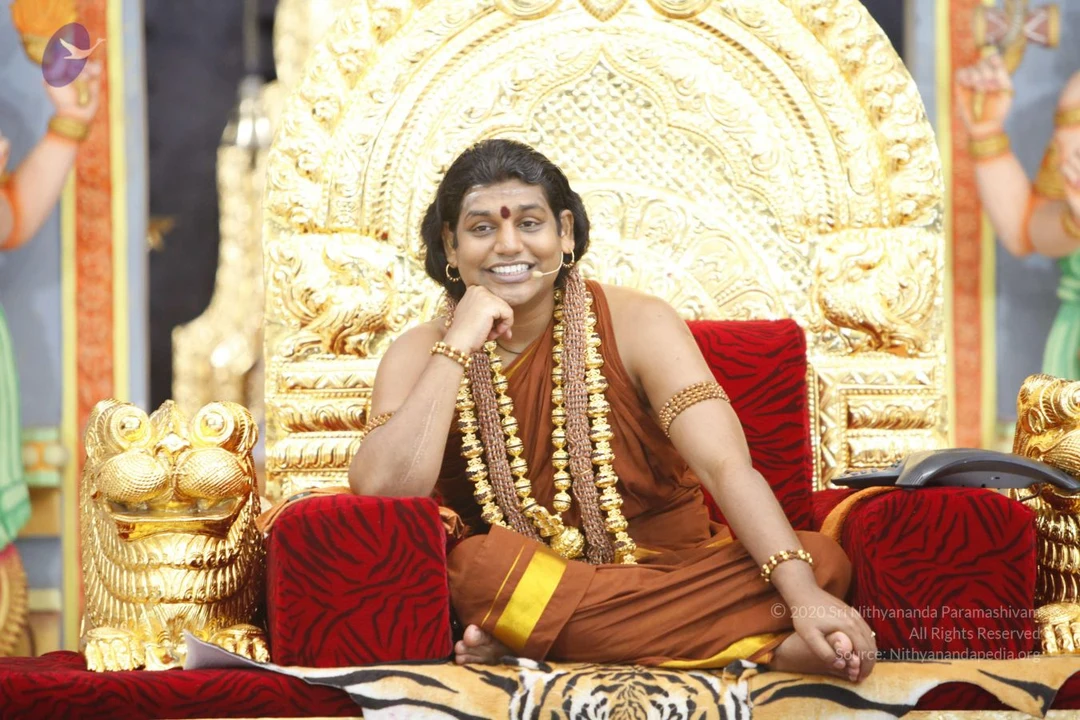
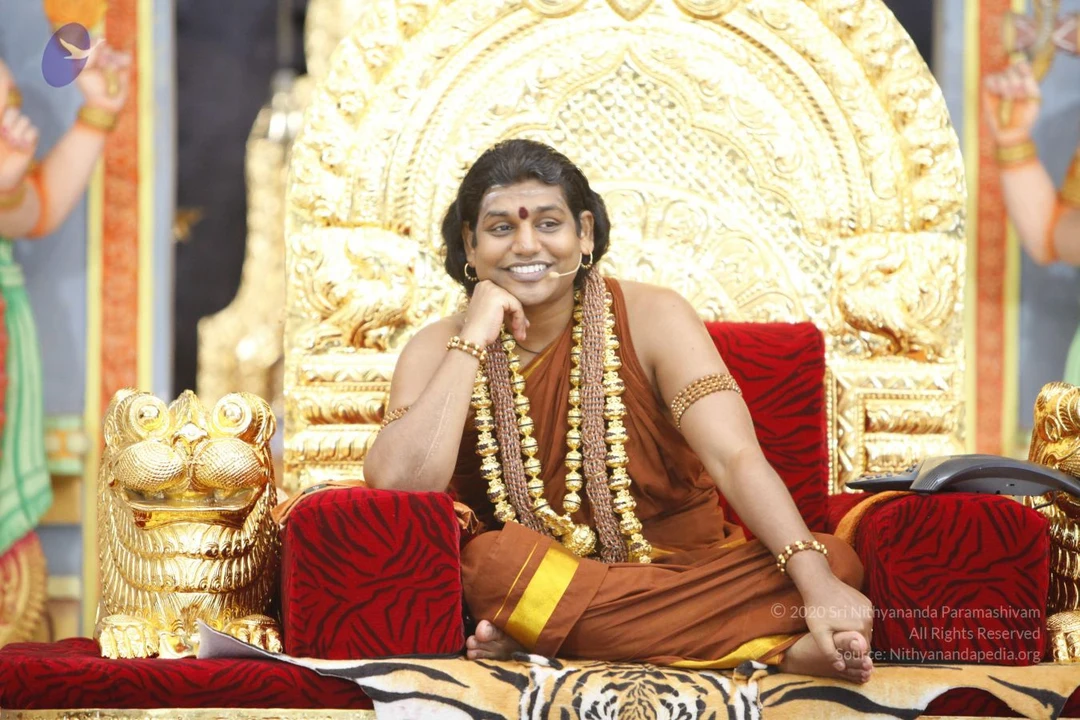
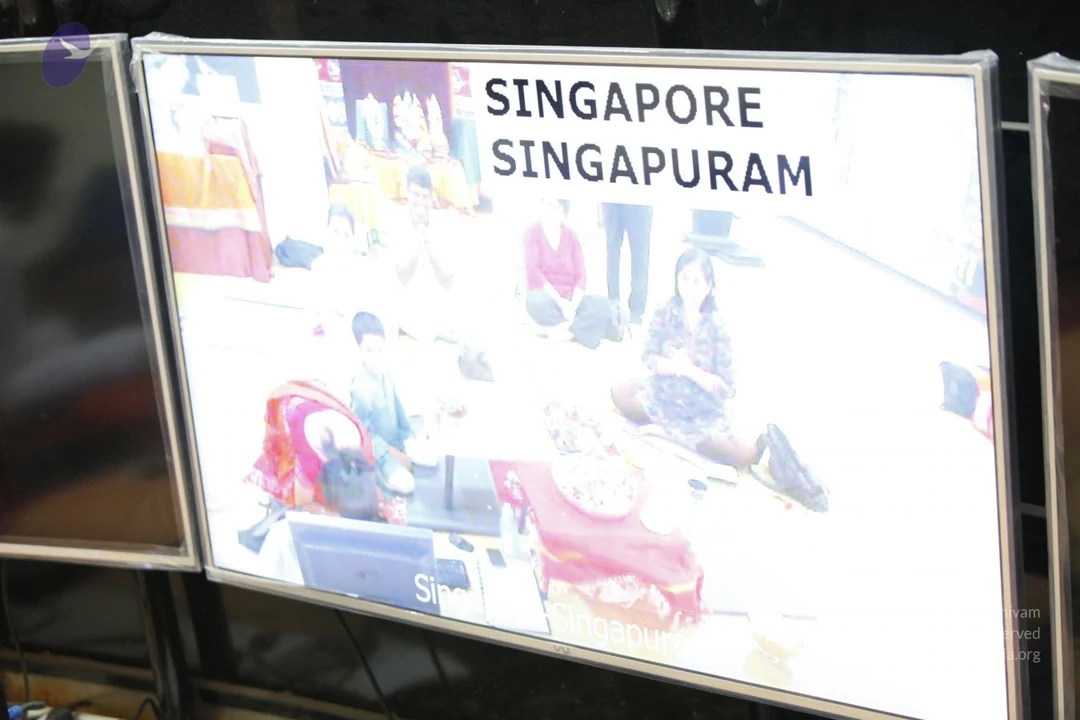
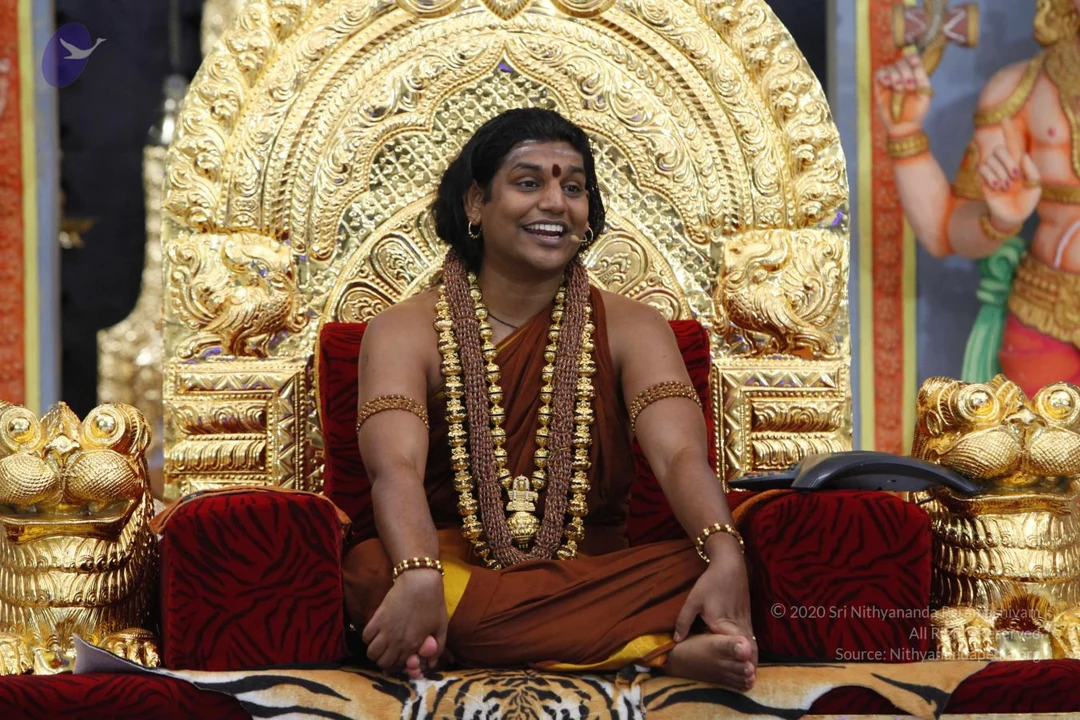
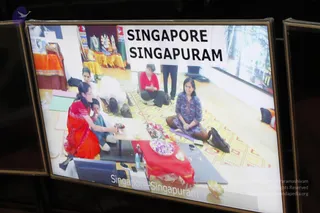
A seated man in saffron-orange robes sits cross-legged on an ornate golden throne with red cushions, a tiger-striped cloth draped over the seat, and lion-headed armrests. He has his palms pressed together in namaste, wears a rudraksha mala and ceremonial gold necklaces, and has a red tilak on his forehead. Two tall painted attendant figures with multiple arms stand on either side, and a brass oil lamp stands at the left edge. The setting is a temple-like hall with gold-framed pale blue walls. The figure matches the cues for a person, seated in an in_person appearance.A photograph of a seated figure on an ornate golden throne with a high arched back carved with lion-like motifs and flanked by gilded lion armrests draped in red tiger-striped fabric. The person wears a rust-orange robe over one shoulder, a heavy gold necklace and a rudraksha mala, gold armbands and gold earrings, with a red bindi on the forehead. Dark hair is swept back and the figure sits cross-legged on a striped cloth, hands resting on the armrests. Painted deity figures with multiple arms appear at the left and right edges.A man seated cross-legged on an ornate golden throne with a high arched back, flanked by gilded lion-head armrests and red velvet cushions with tiger-stripe patterns. He wears a saffron-orange garment with a gold border, a long multi-strand rudraksha mala with ceremonial gold necklaces, gold armbands, and a red bindi, and holds a small tablet on his lap. He has long swept-back hair and wears a headset microphone, appearing to speak. To the left stands a painted deity figure with multiple arms and a flaming torch-like object, and gilded figures appear at the right edge.A seated man in a rust-orange robe and gold dhoti border sits cross-legged on a red velvet throne with a tiger-striped cushion, rising in front of an ornate gold carved backrest. He wears multiple gold beaded necklaces with rudraksha-style mala strands, gold armbands and bangles, a red bindi and white tilak, and gold earrings, and rests one hand against his cheek while smiling. A small lapel microphone is clipped near his face. A tiger skin rug with a painted tiger face lies in front of the seat, and a telephone sits on the right armrest. Swamiji (probable): long swept-back hair, saffron-orange robes, rudraksha malas and ceremonial gold necklaces are consistent with the page's description of him seated during satsang.A seated man in a saffron-orange robe rests his chin on one hand and smiles toward the camera on an ornate golden throne with red tiger-striped cushions. He wears multiple strands of gold beads and rudraksha malas, gold armbands and a small red bindi, with a headset microphone visible near his ear. A golden lion-footed armrest and a tiger-striped rug lie in front of the throne, and a gold-coloured deity figure stands at the left edge. a person: he is wearing saffron/orange clothing, a rudraksha mala and ceremonial gold necklaces seated on a throne in a stage setting.A photograph of a large screen showing a live video feed of a room labelled SINGAPORE SINGAPURAM, with a banner of those words across the top. Inside, a woman in an orange-red sari leans forward to offer something on a low table, beside a small child in blue. A woman in a blue patterned top sits cross-legged on a yellow-patterned mat, and another woman in red sits nearby. A red cloth-covered table holds a bowl of flowers, a small lamp and a conch-like object. Orange and gold drapes and decorated deity murti stand at the back of the room. The screen's frame and nearby dark monitors are visible in the foreground.
SarvaDarshan

4 photosSource gallery
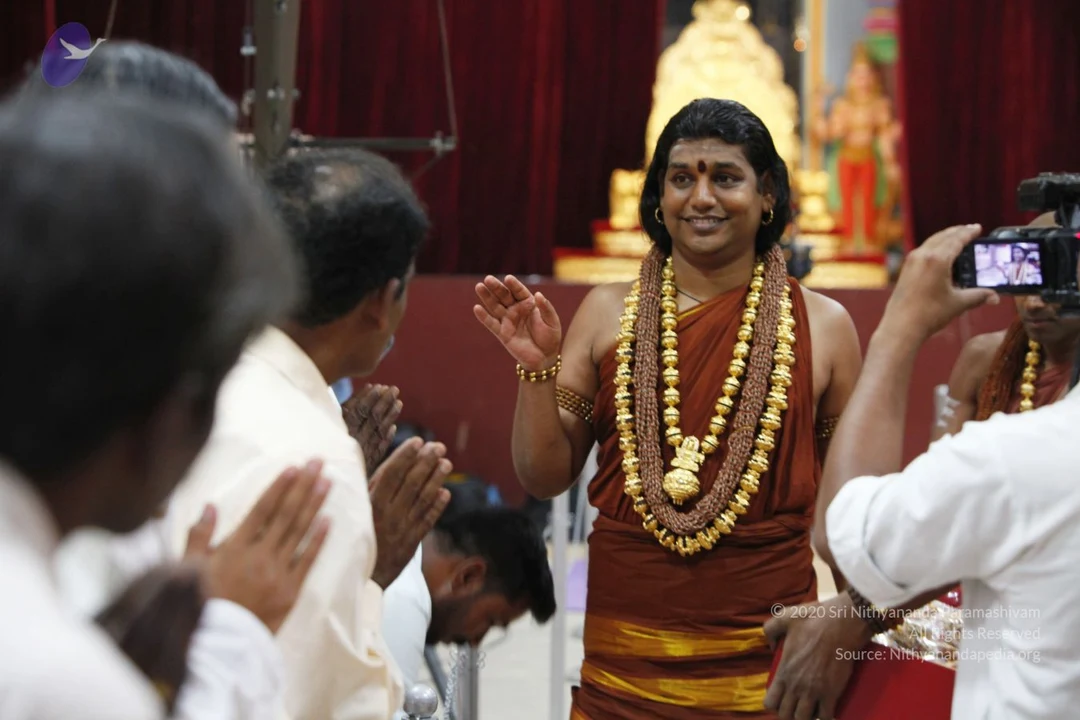
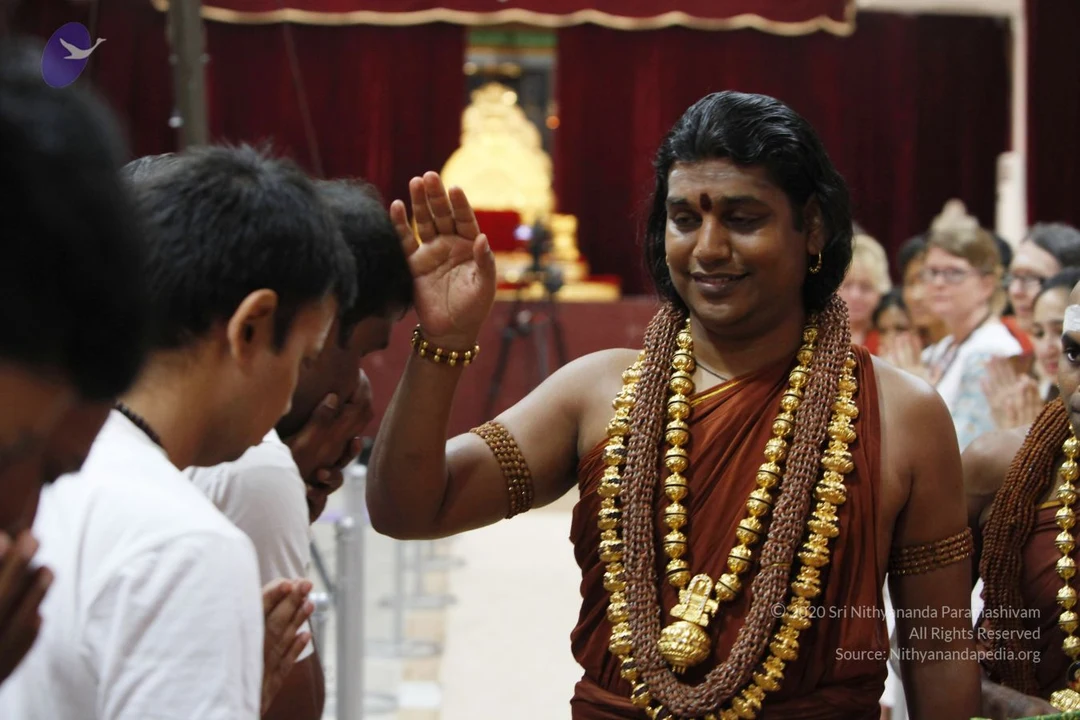
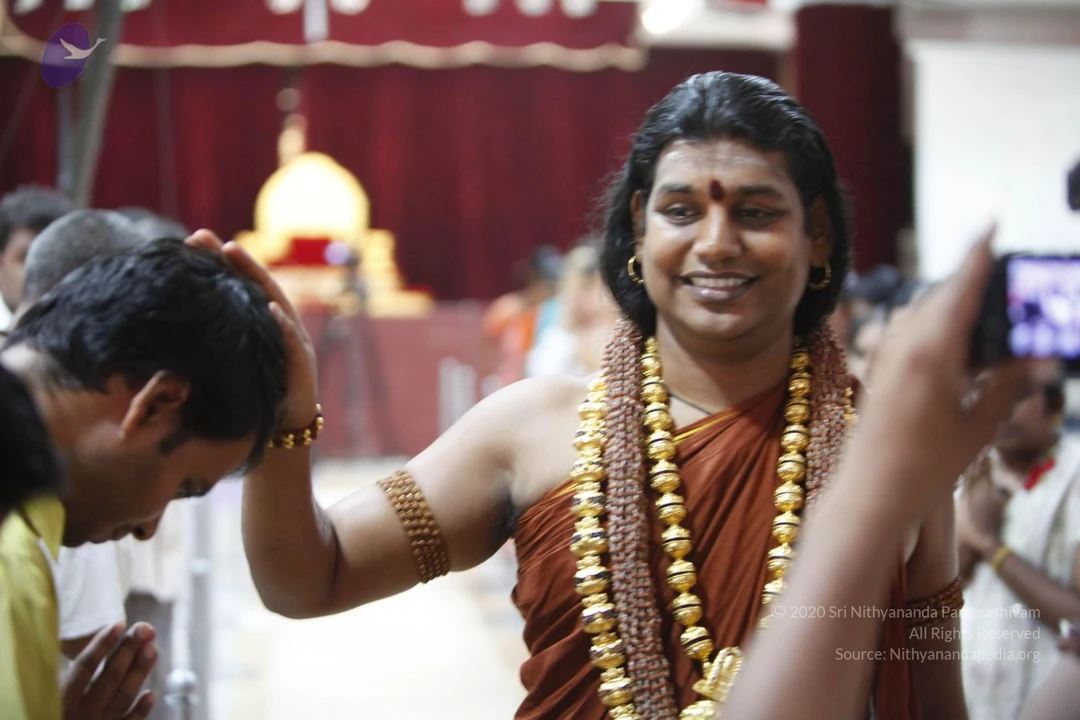
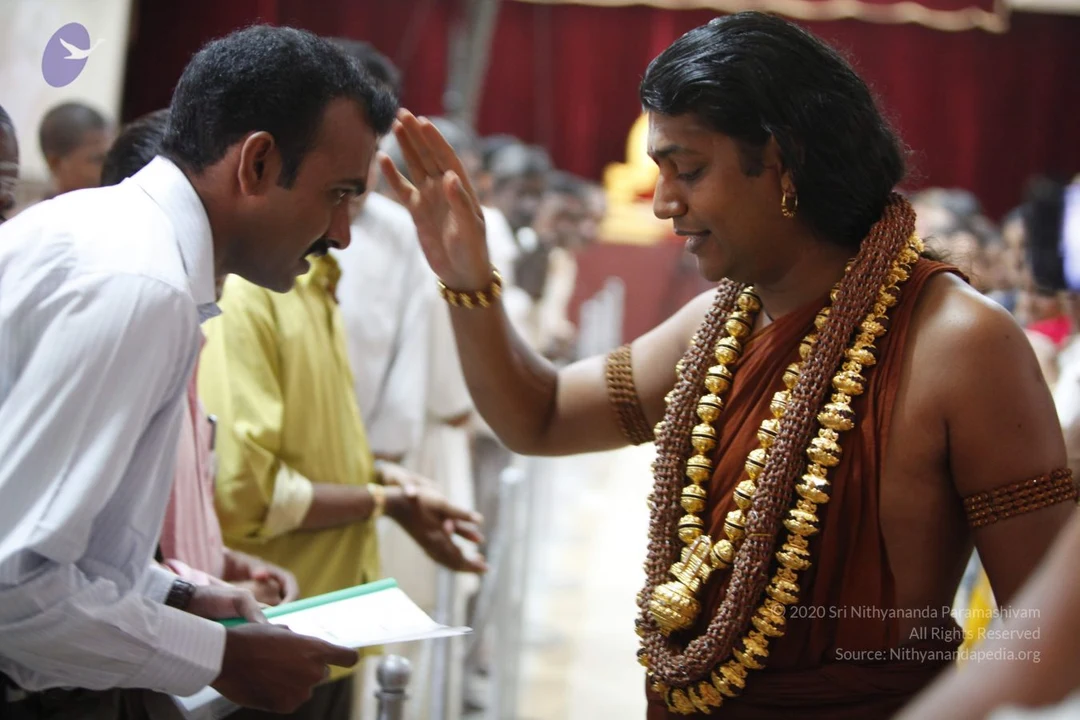
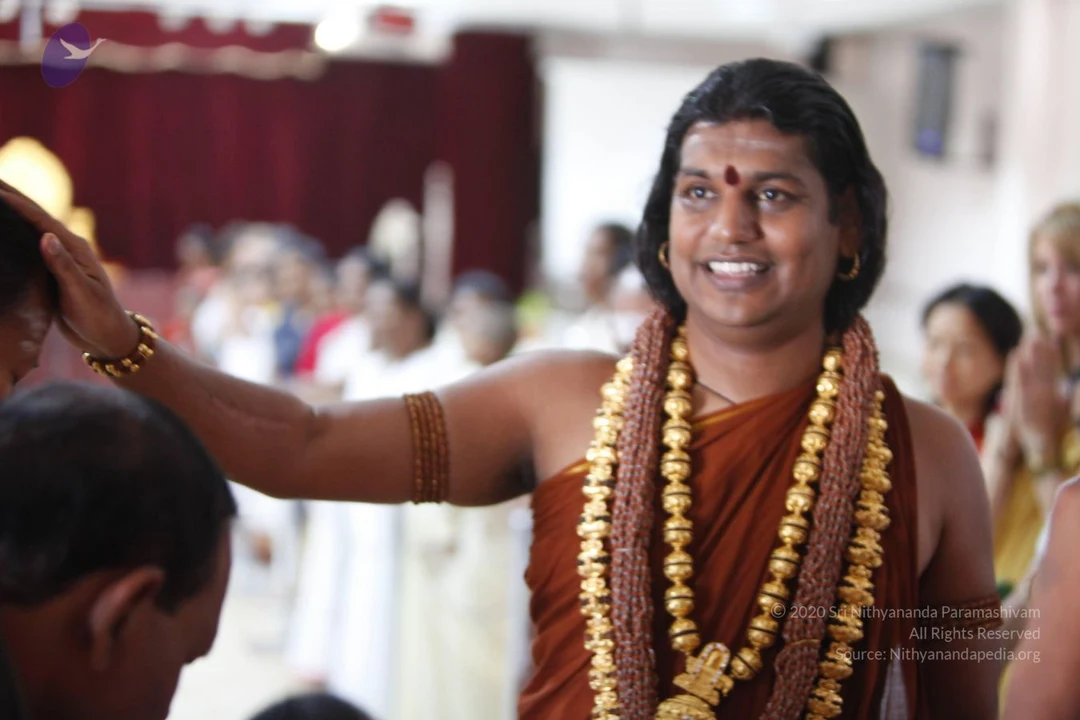
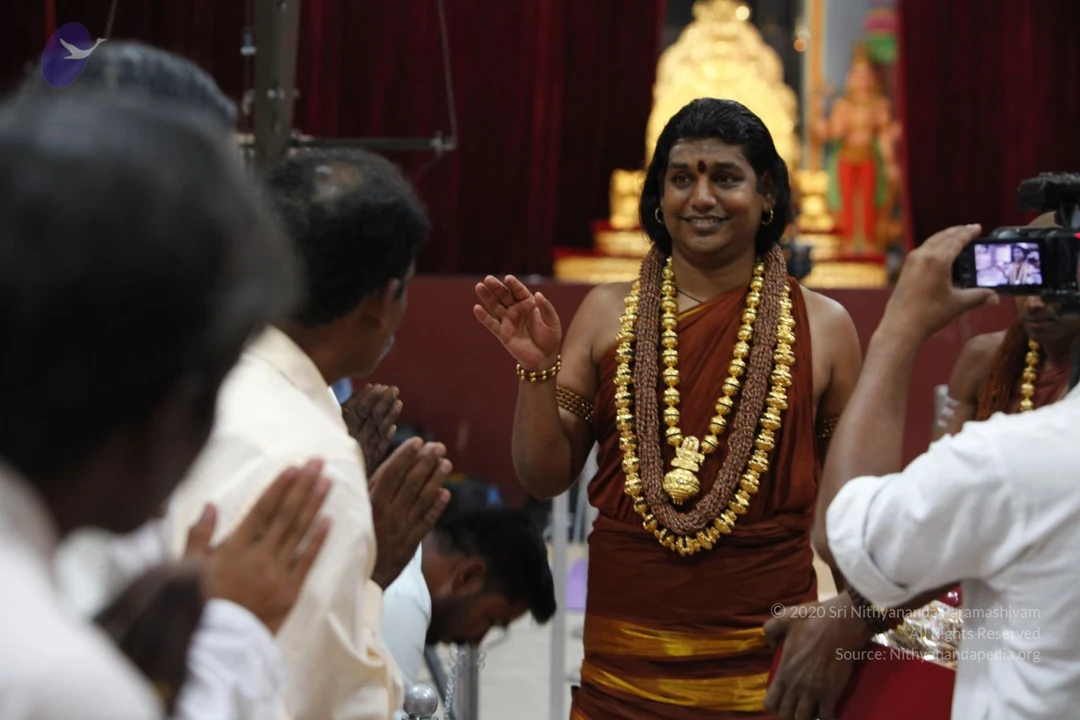
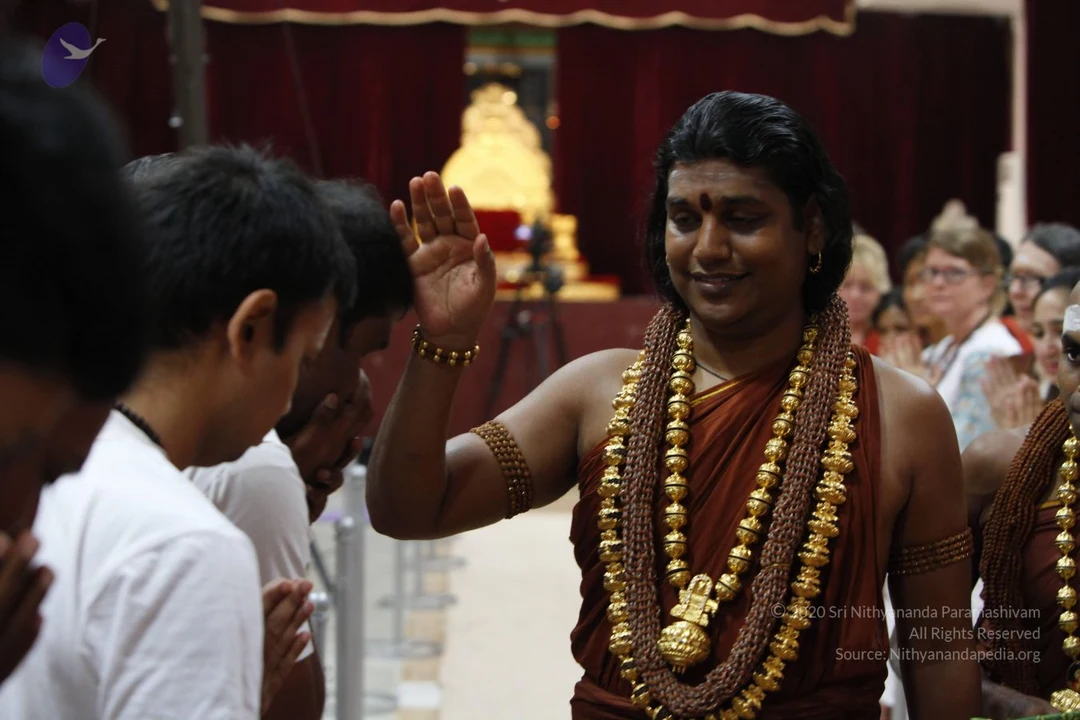
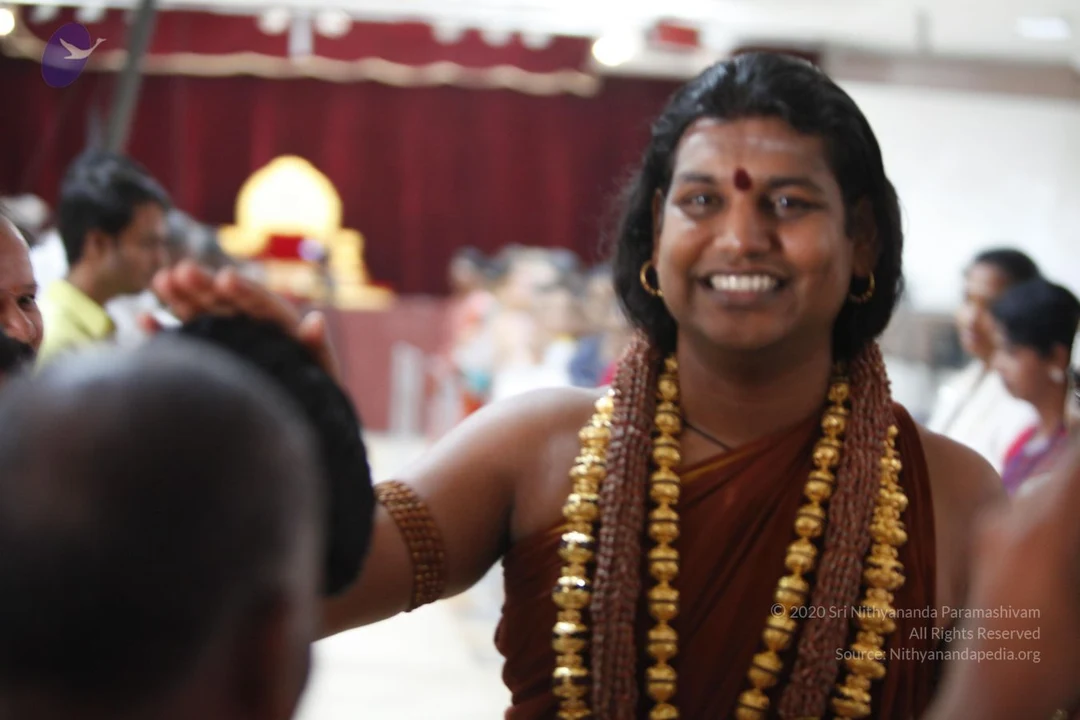
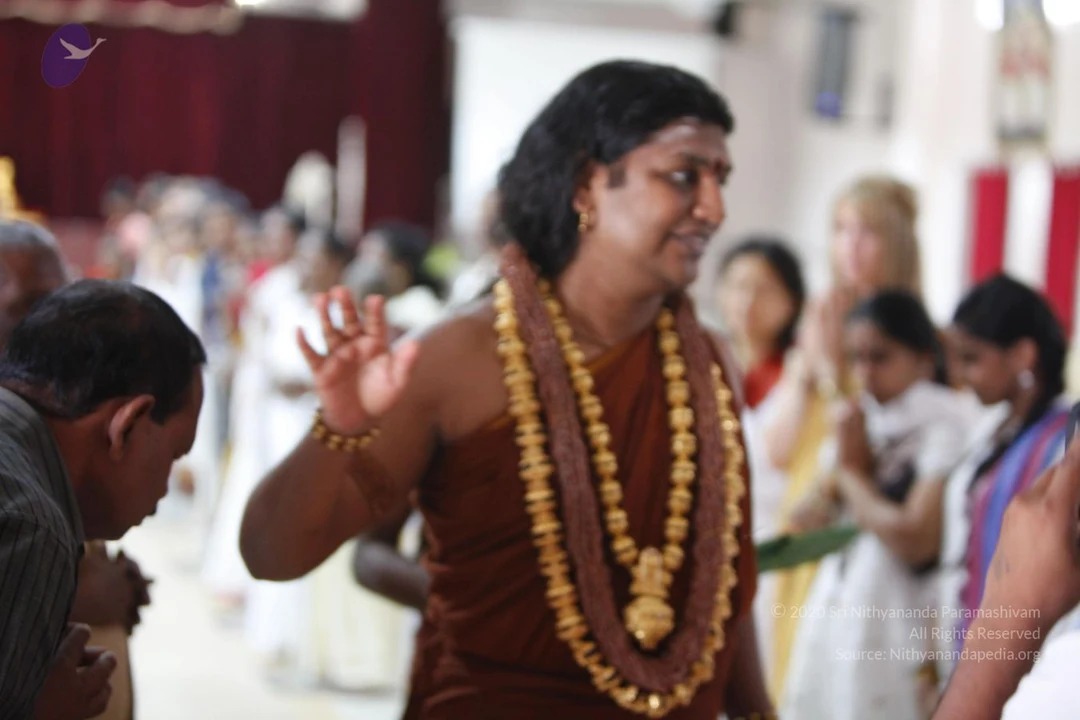
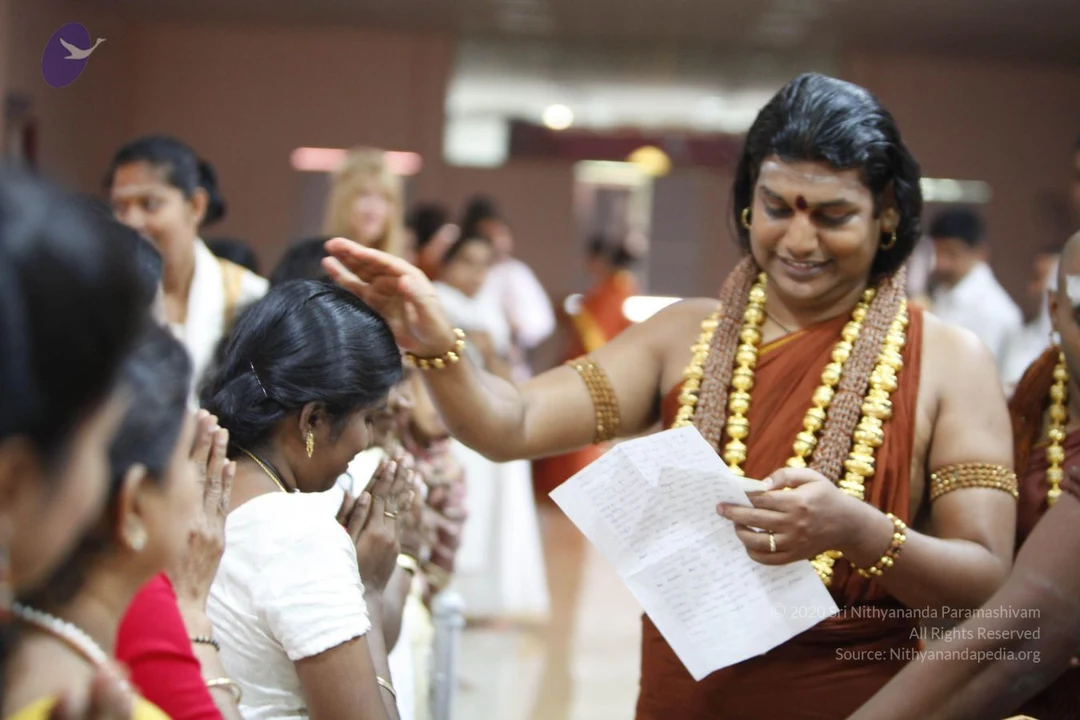
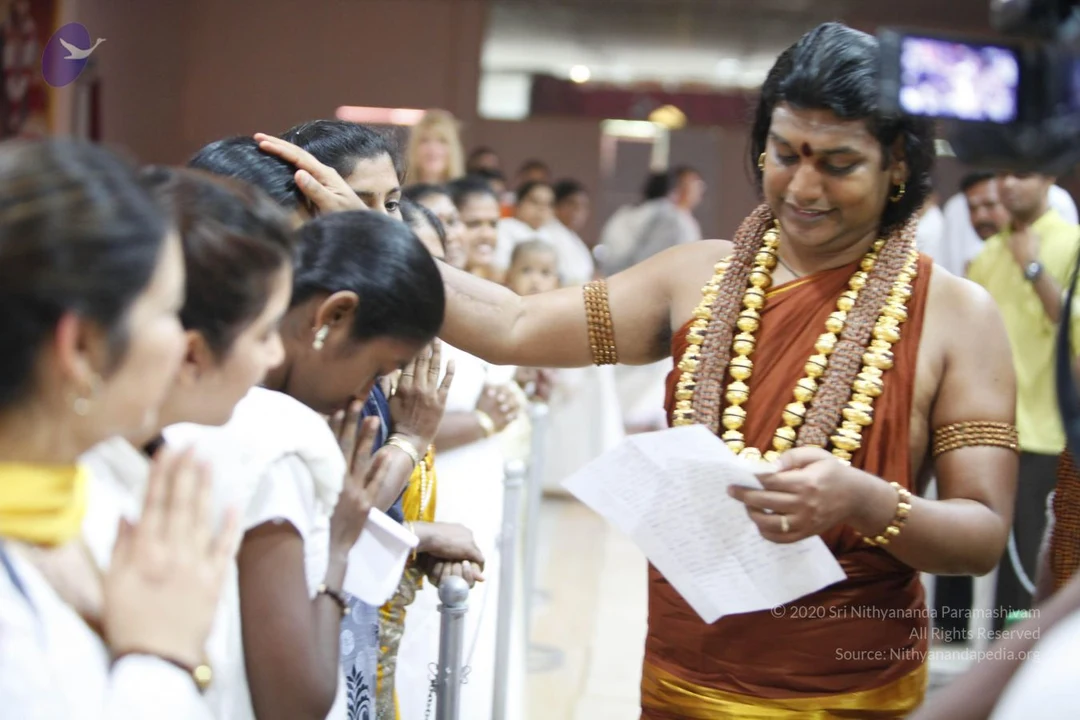
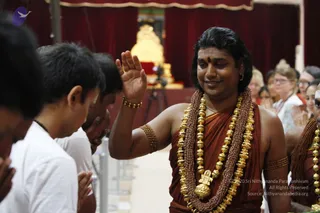
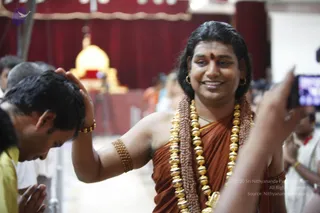
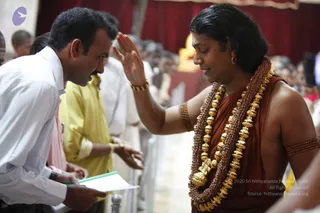
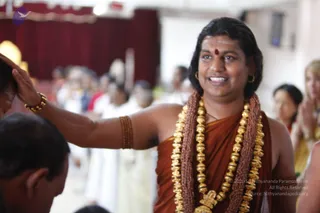
A photograph inside a temple hall with deep red drapes and a gold-covered throne in the background. A man with long swept-back dark hair, a red bindi, rudraksha mala and heavy ceremonial gold necklaces, wearing a rust-orange wrap and gold armbands, raises his right hand in blessing and smiles. Several young men in white shirts stand before him with hands folded in anjali, and seated devotees in white clothing with folded hands are visible at right. Visible people: about six.A smiling person in a rust-orange saffron wrap with a red bindi and layered gold bead necklaces and rudraksha-style mala beads stands at center, one arm raised with a gold-bead bracelet and bangle. He rests his hand on the head of a man bowing with hands folded, wearing a yellow shirt. Behind them a blurred hall shows red drapes and a golden throne-like seat, with other people and a hand holding up a phone at right. Swamiji (probable): the orange wrap, long swept-back hair, ornate gold necklaces and rudraksha malas match the cues attributed to the Nithyananda Paramashivam page.A photograph of a long-haired figure in an ochre-saffron shawl draped over bare shoulders, wearing layered rudraksha-style brown beads and a heavy ceremonial gold necklace, gold earrings and gold armbands, raising one hand in blessing toward a man in a white collared shirt who leans in with a folded paper in hand. Behind them stands a crowd, with a man in a yellow shirt at left and a red curtain and gold-coloured decor in the background.A photograph of a smiling man with long dark hair, a red bindi on his forehead, and rudraksha malas with ceremonial gold necklaces over a rust-orange shawl and bare shoulders. His right hand rests on the head of a seated devotee in the lower left, giving blessing. Behind them, people in white and light clothing stand in a hall with a deep red curtain and white walls. The man has distinctive adornments matching the a person description, with the rudraksha malas, gold necklaces and saffron-orange clothing. Approximately 6-20 people are visible in the background and foreground.
FinalBlessing

3 photosSource gallery
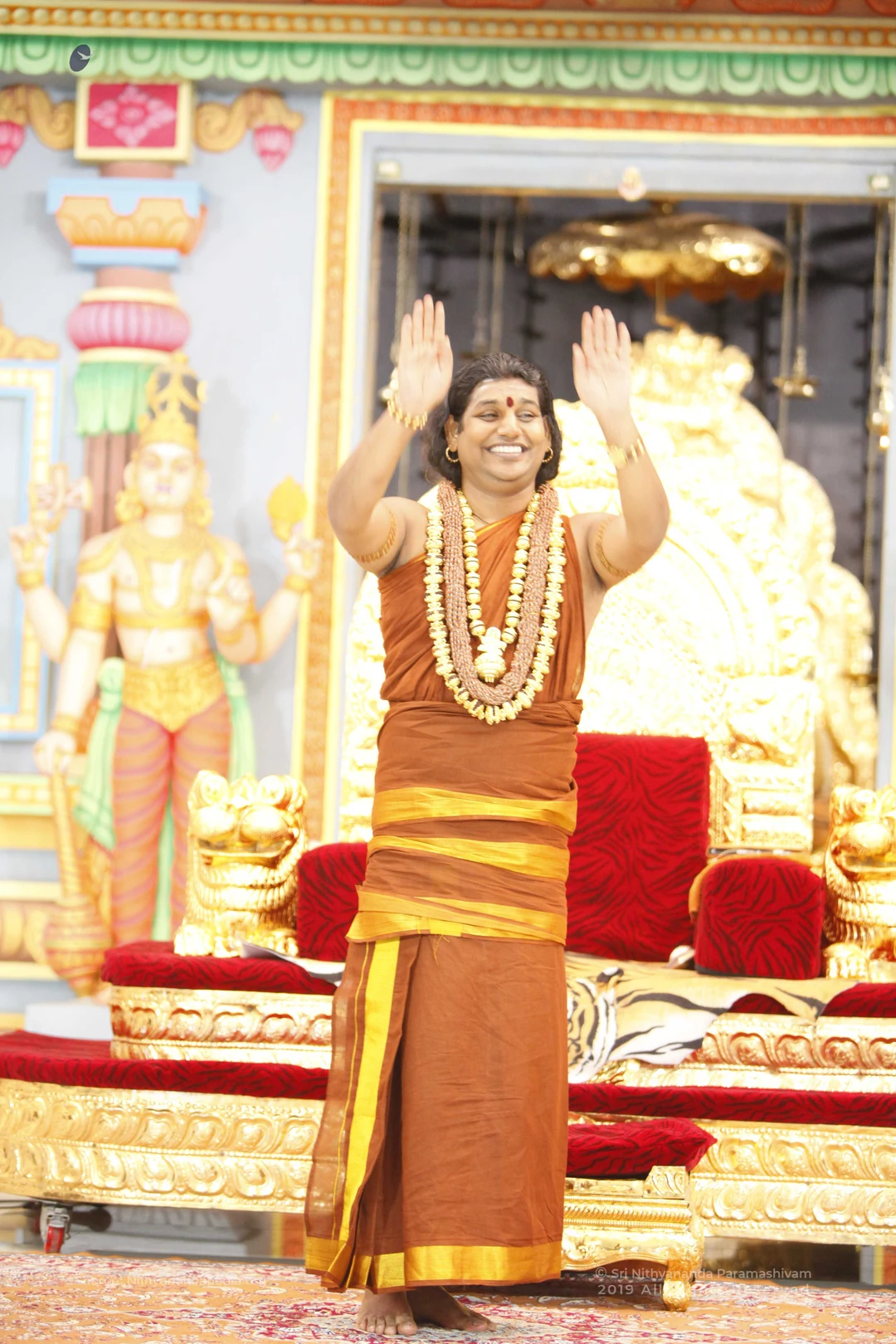
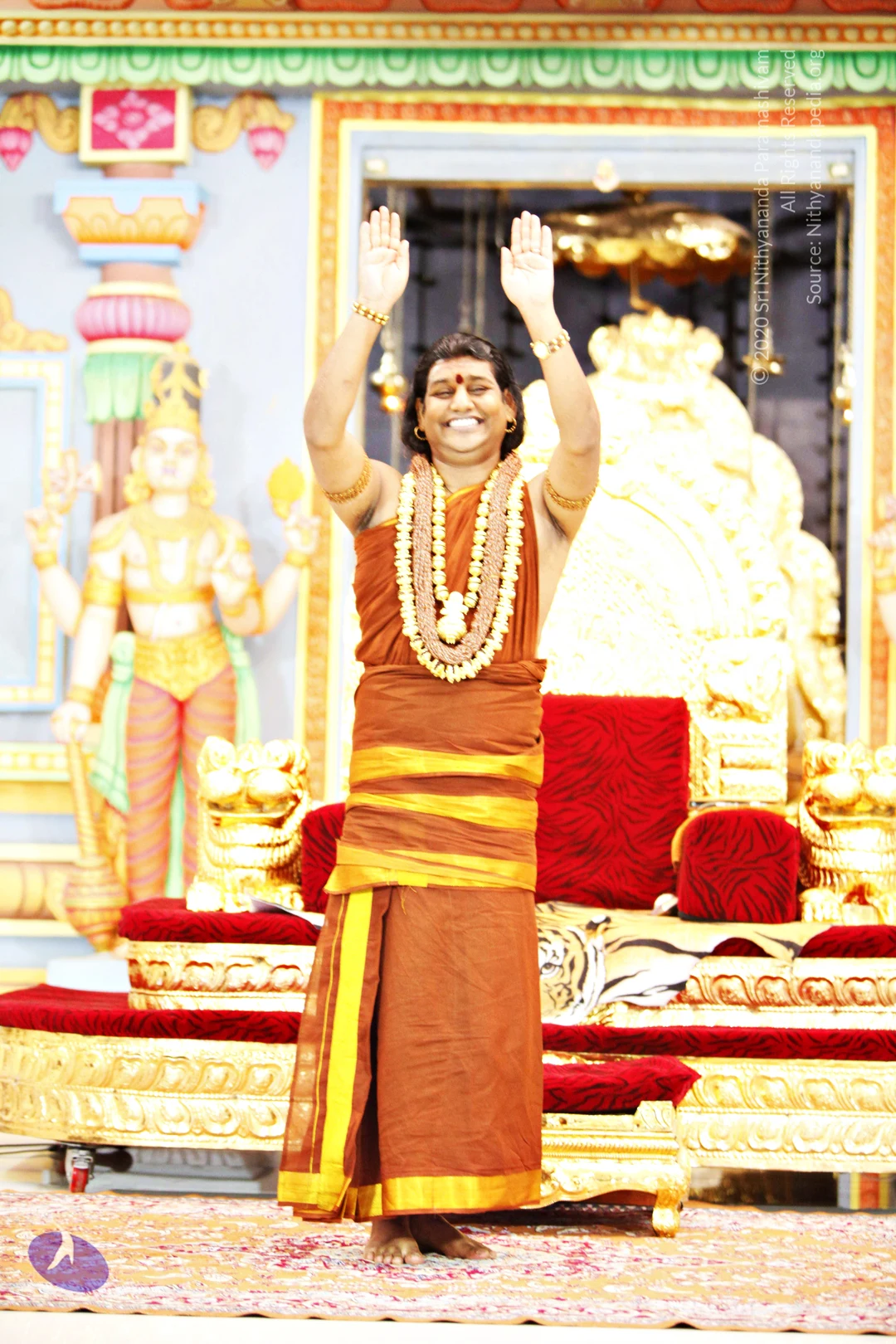
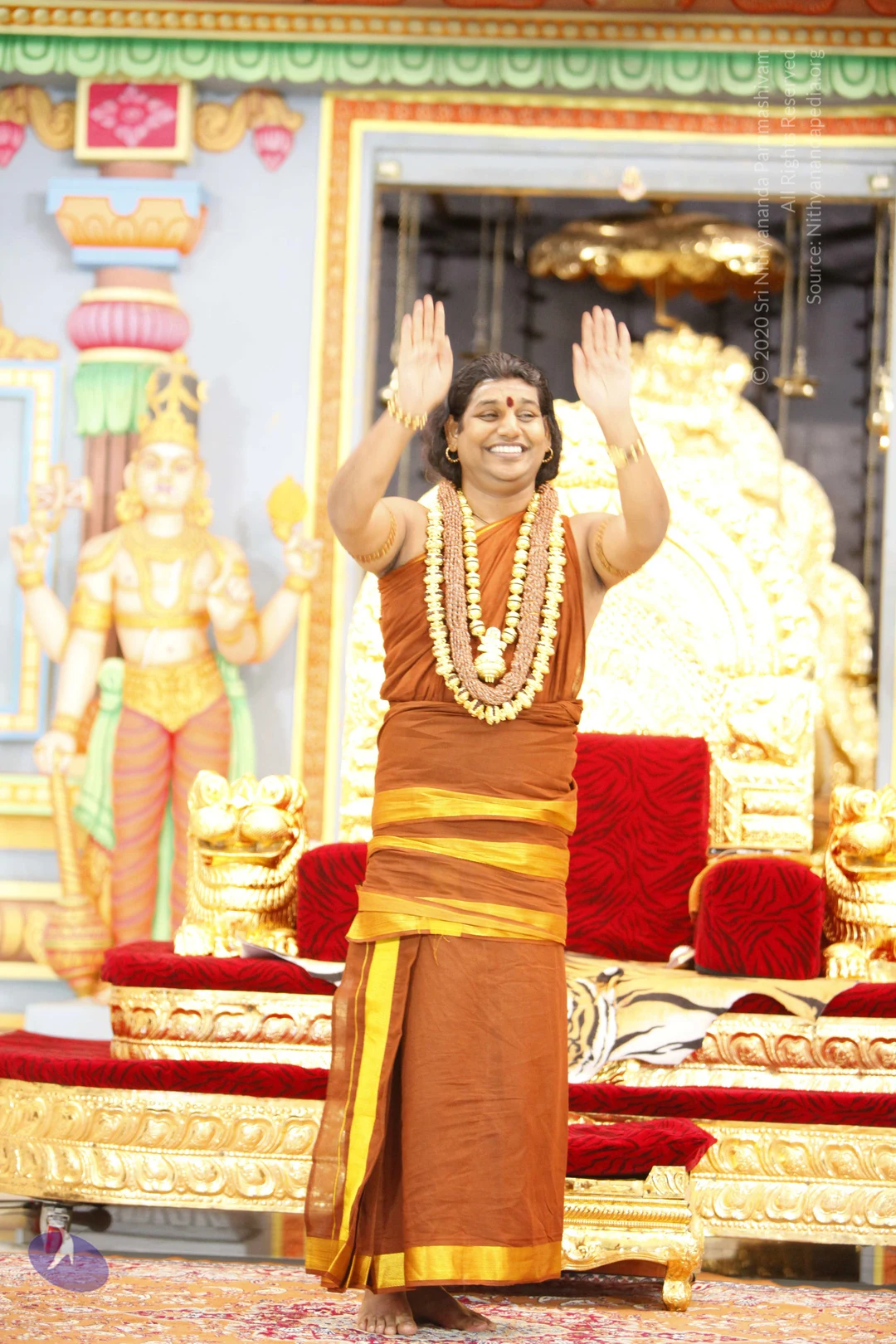
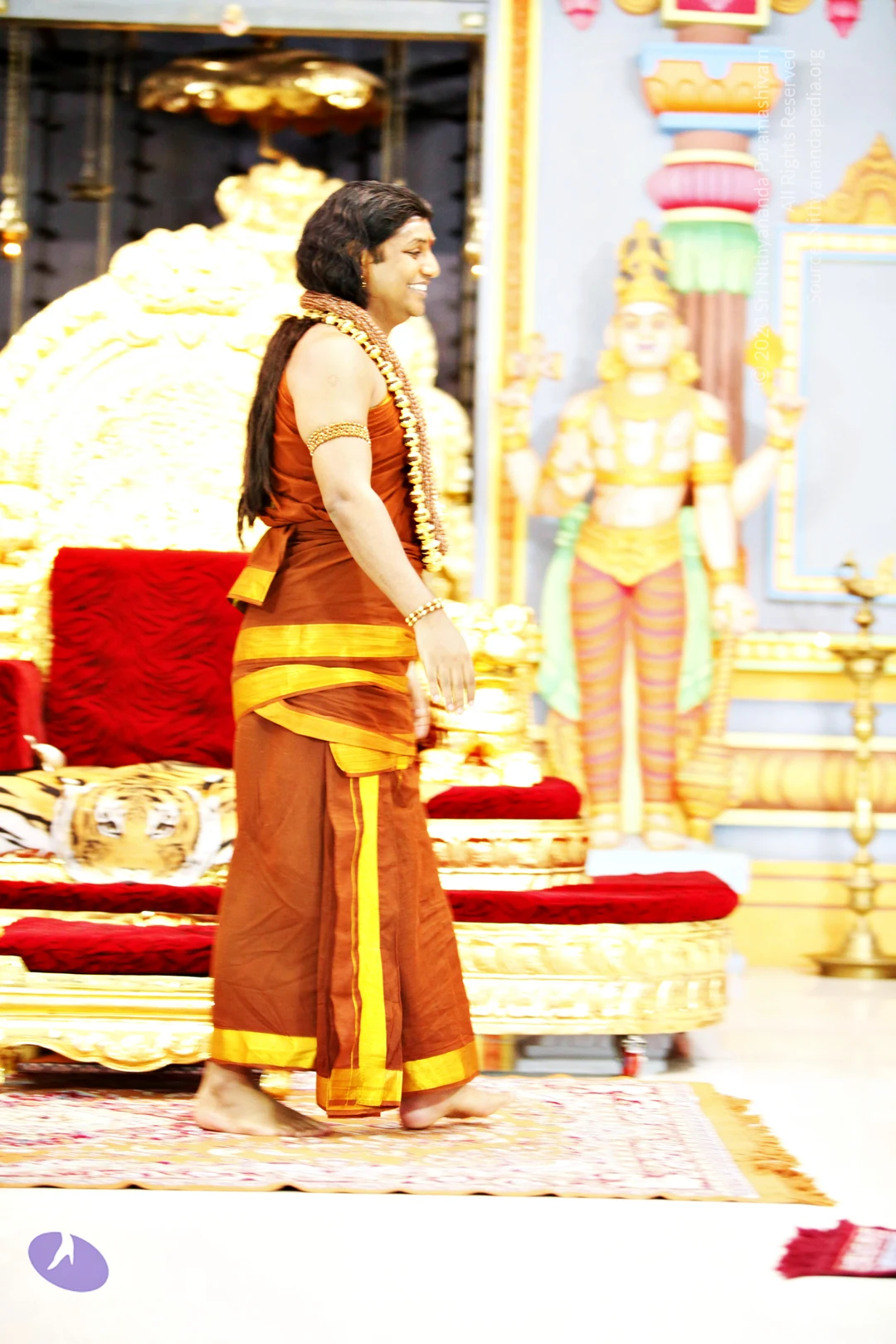
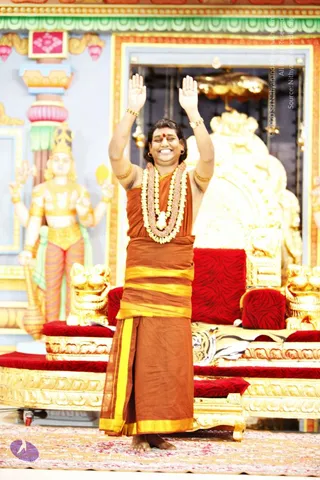
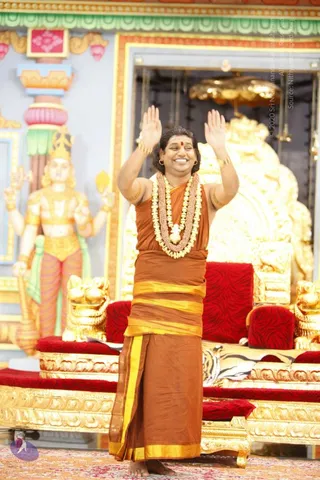
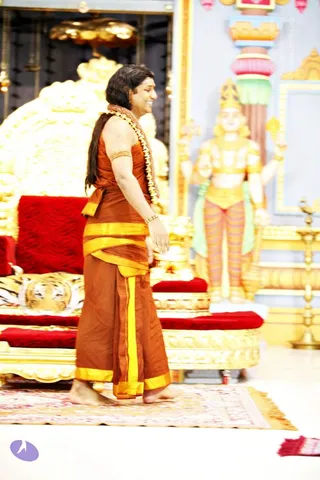
A smiling man in an orange-brown dhoti and shawl with gold-yellow borders stands barefoot on a red patterned rug, arms raised with palms open in a welcoming gesture. He wears layered white flower garlands and a rudraksha mala, gold bangles and earrings, and a red bindi. Behind him stand a golden throne with red velvet cushions, a tiger-skin cloth and golden lion-head armrests. A painted deity figure with four arms and a crown stands to the left, and a gilded canopy hangs in the background.A smiling man in a rust-brown dhoti and shawl with gold borders stands barefoot on a patterned rug, arms raised with palms open in greeting. He wears a large double-strand rudraksha mala with gold beads and a gold pendant, gold bangles and a red bindi. Behind him stands a gold throne with red cushions and gold lion-head armrests, flanked by a painted deity murti with a crown and multiple arms. A gold canopy hangs above. The swami figure matches the page's a person reference through his rudraksha mala, ornate gold ornaments and ceremonial saffron-brown clothing, so this is a probable in-person candidate.A person with long dark hair walks barefoot across a patterned red carpet on a gilded stage, wearing a rust-brown wrap with gold borders and a bare left arm with a gold armlet, plus a rudraksha mala with ceremonial gold beads. Behind them stand a gold-painted deity murti with raised arms and a crown, a large gold throne with red cushions and a tiger-striped seat cover, and a tall gold lamp stand. a person appears as the walking figure, based on long swept hair, rudraksha and gold adornments; role is a speaker or teacher moving across the dais.

Temple

23 photosSource gallery
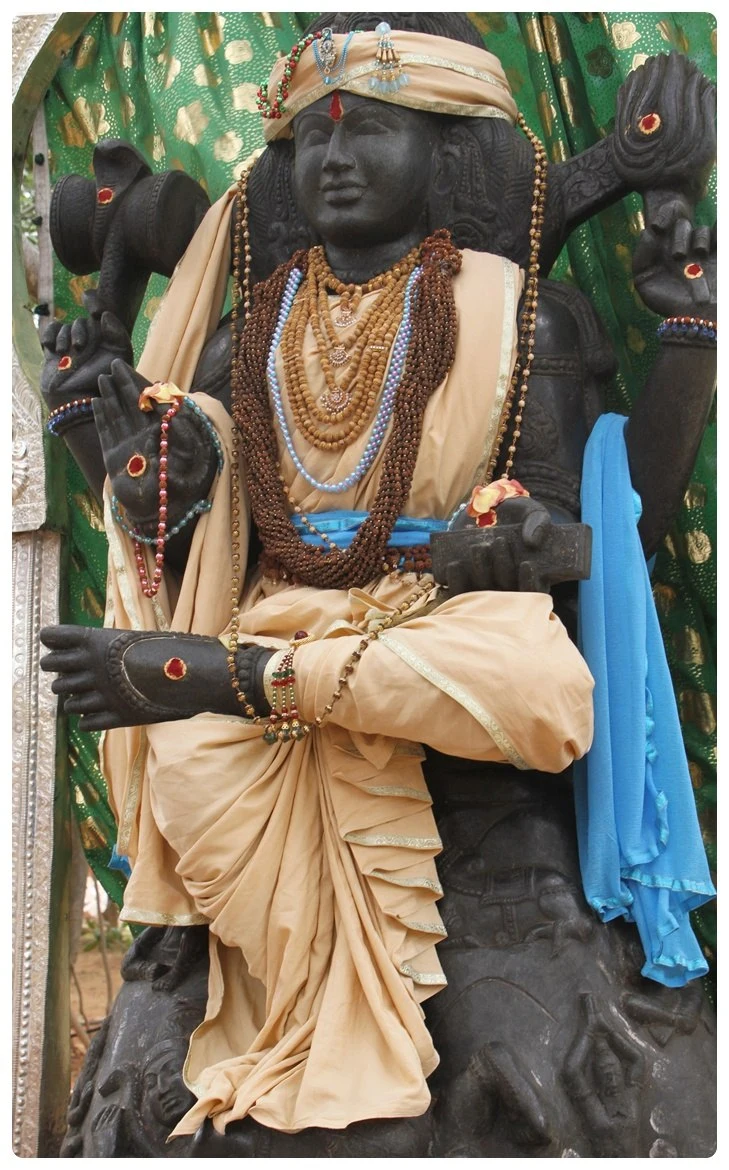
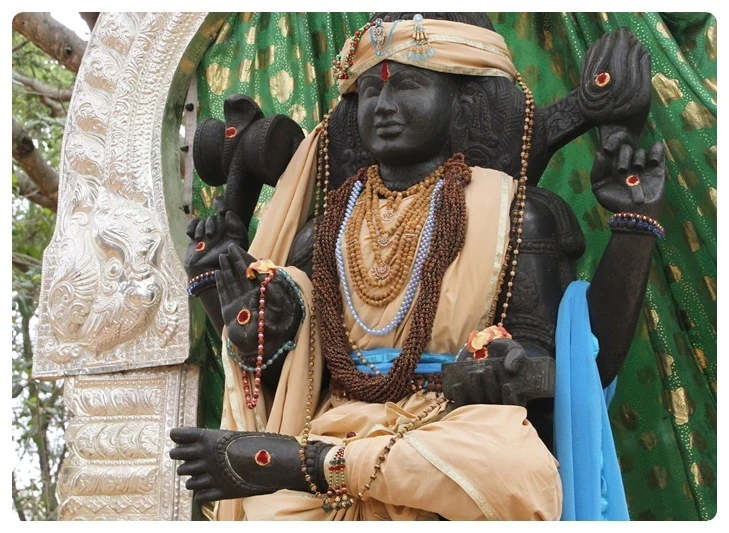
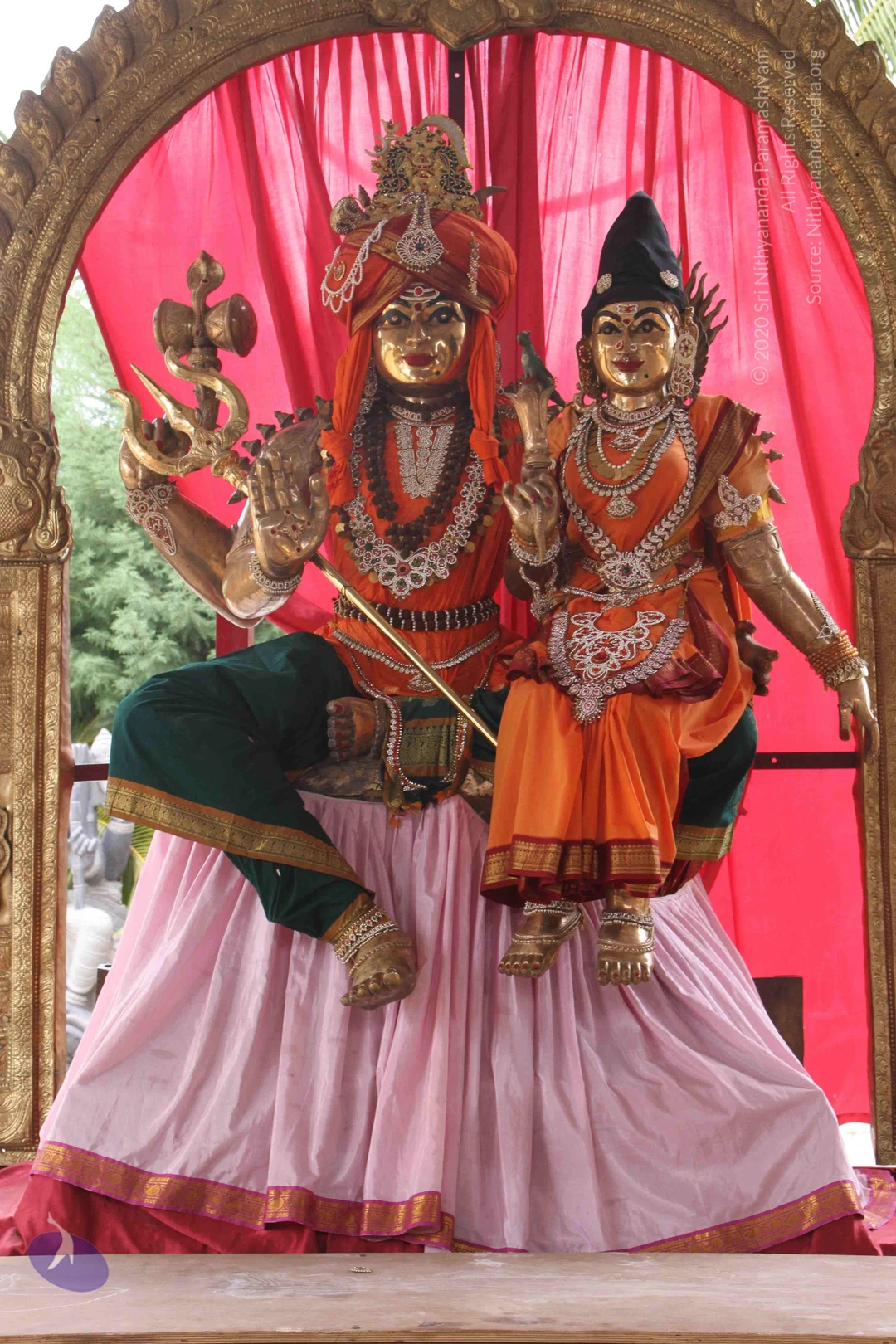
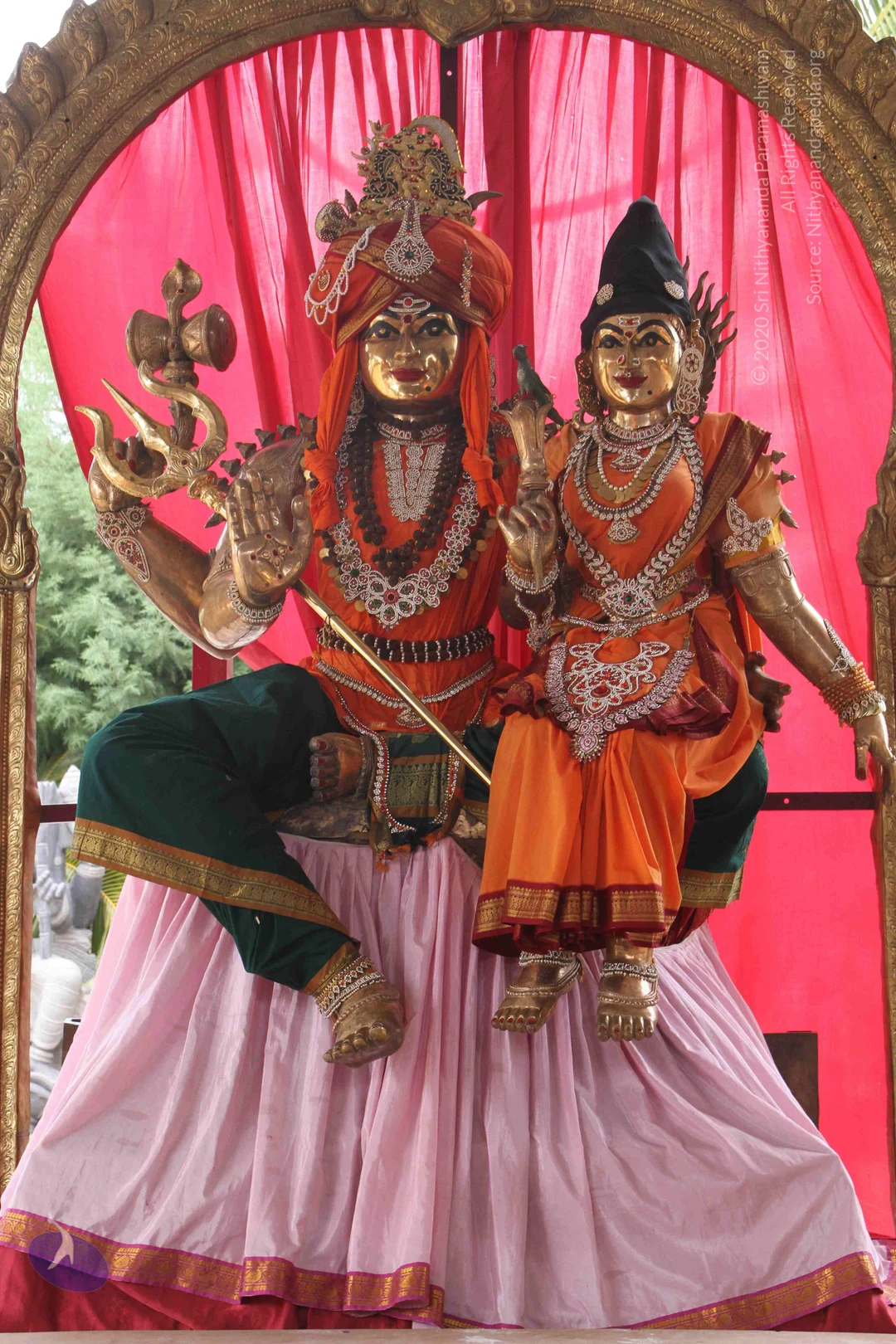
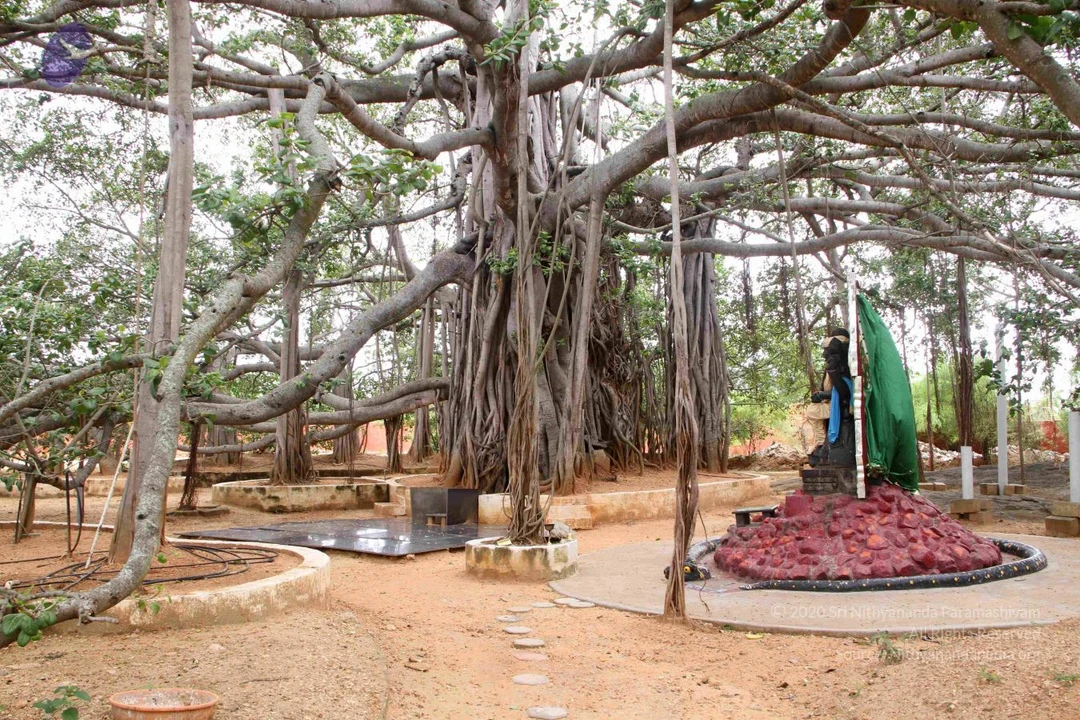
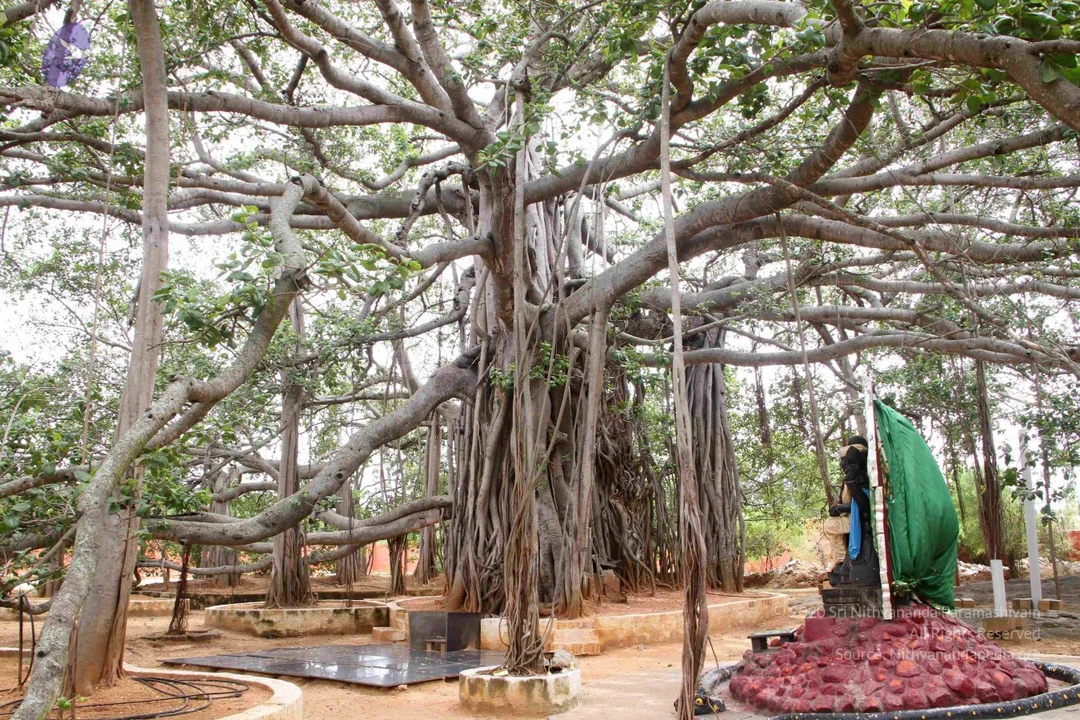
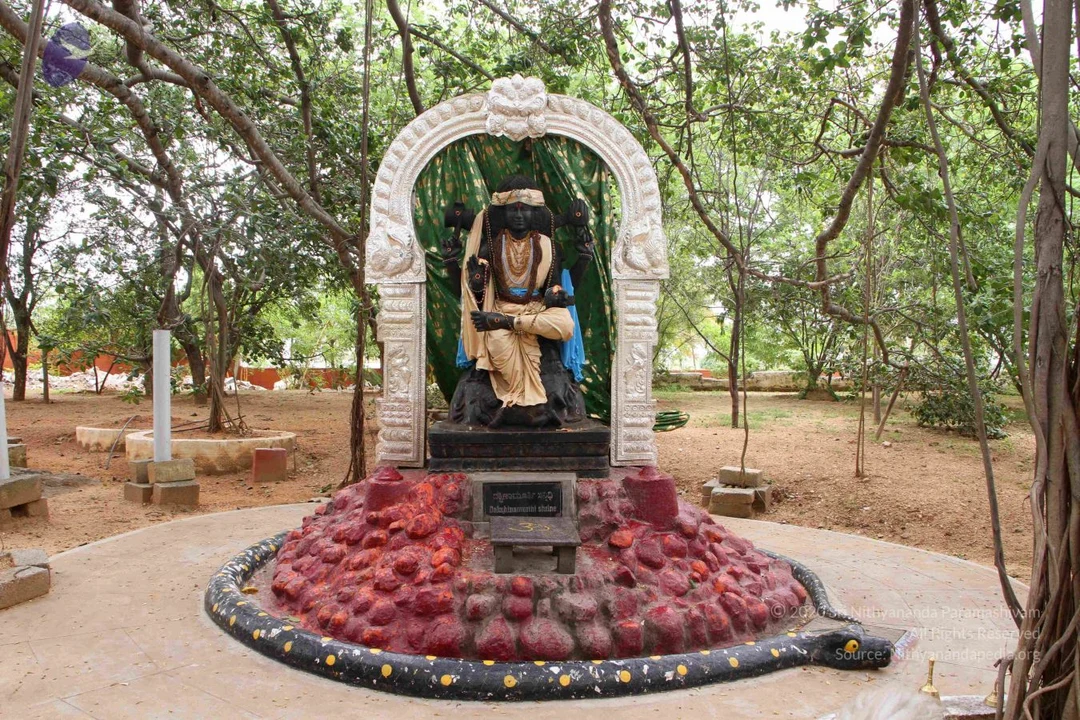
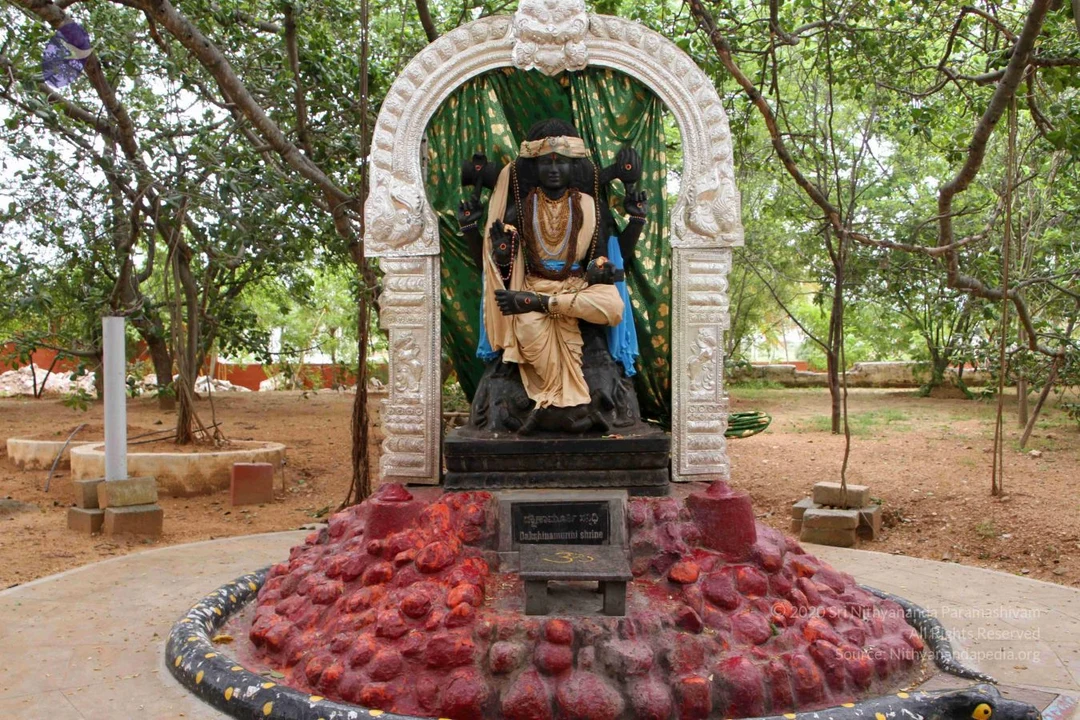
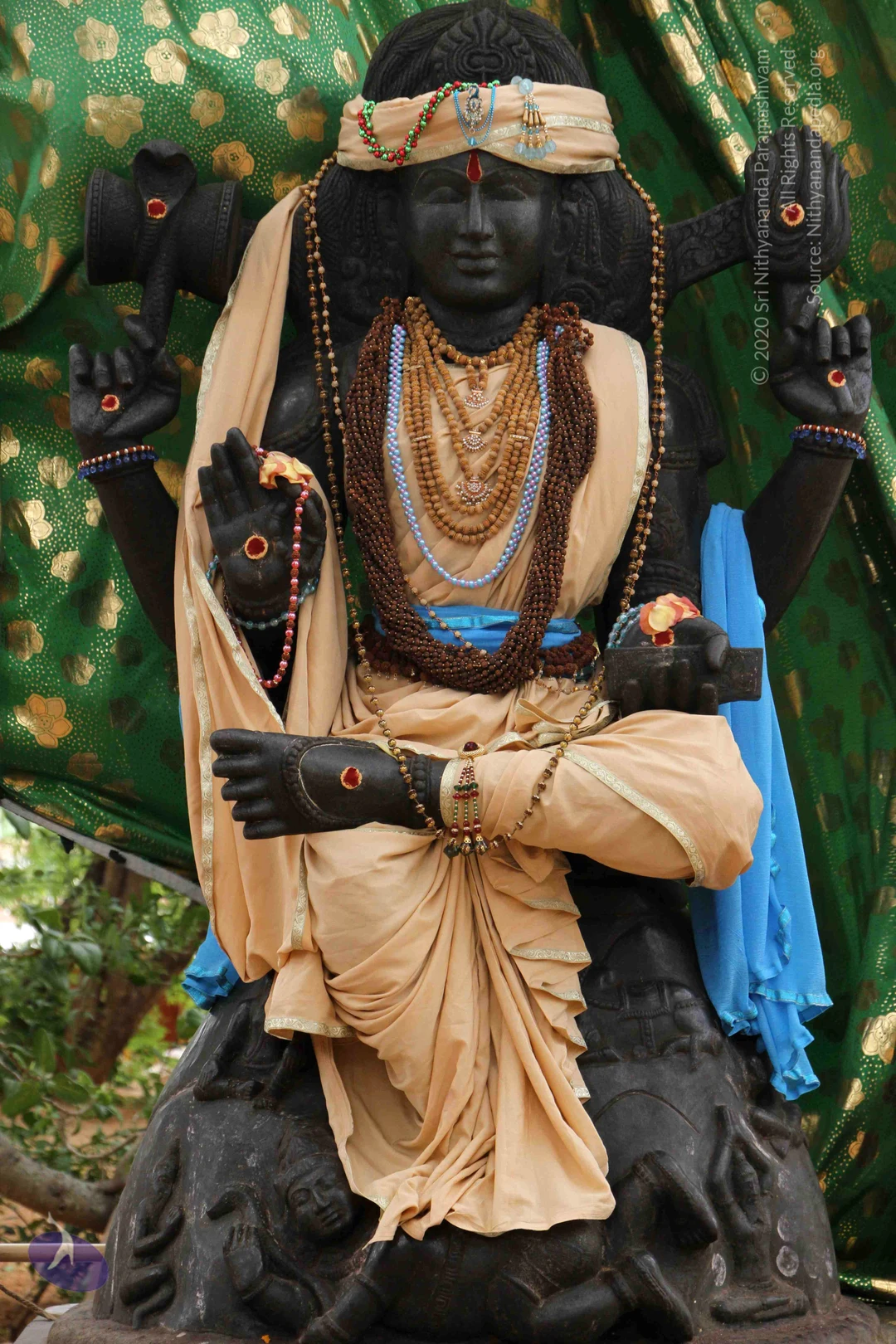
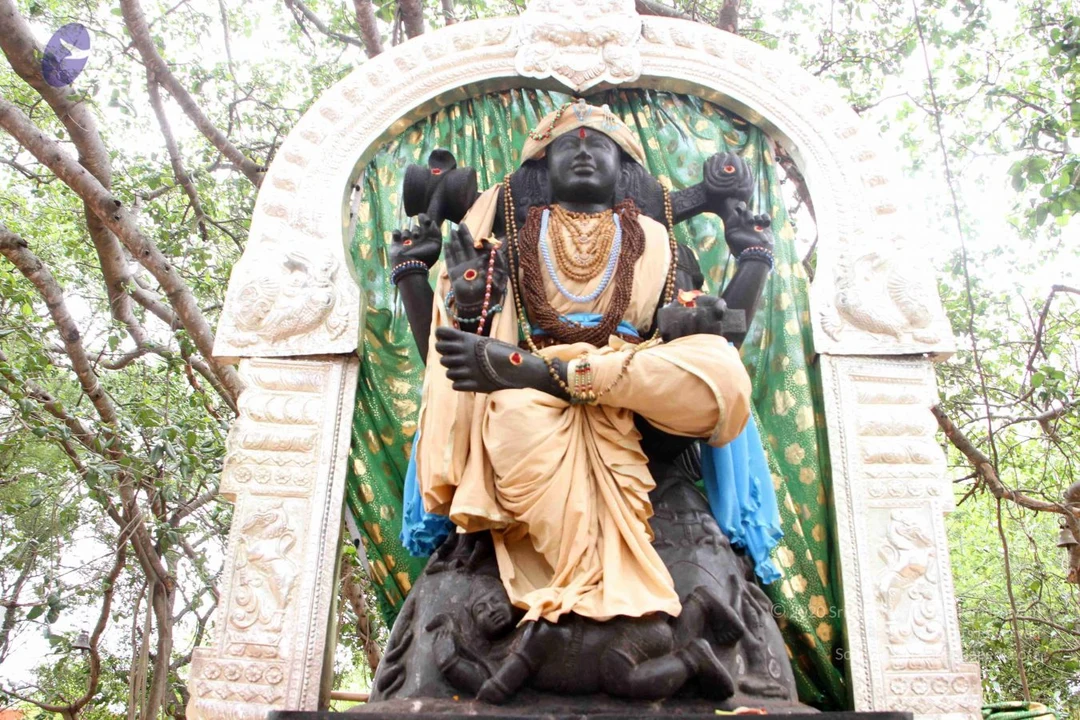
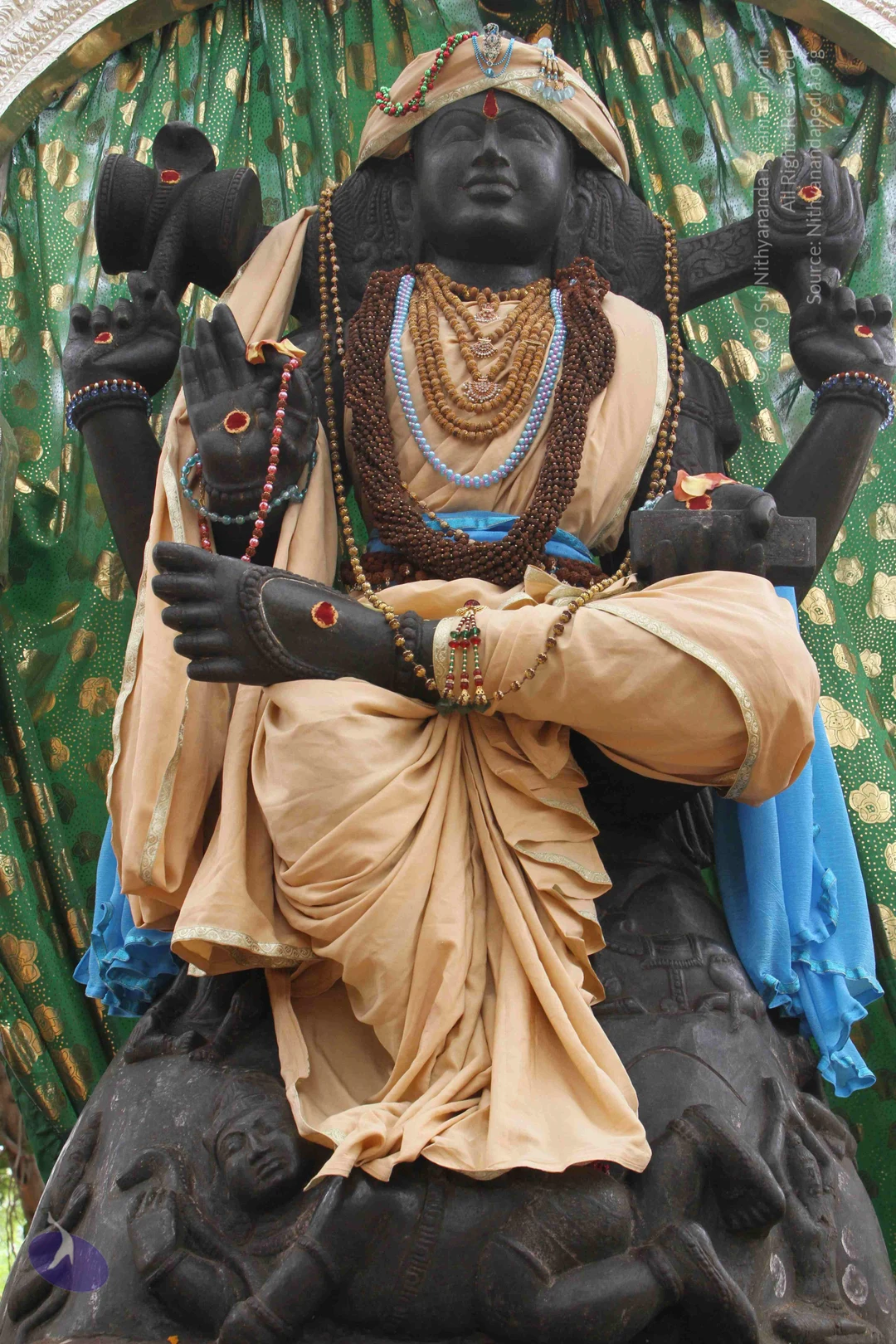
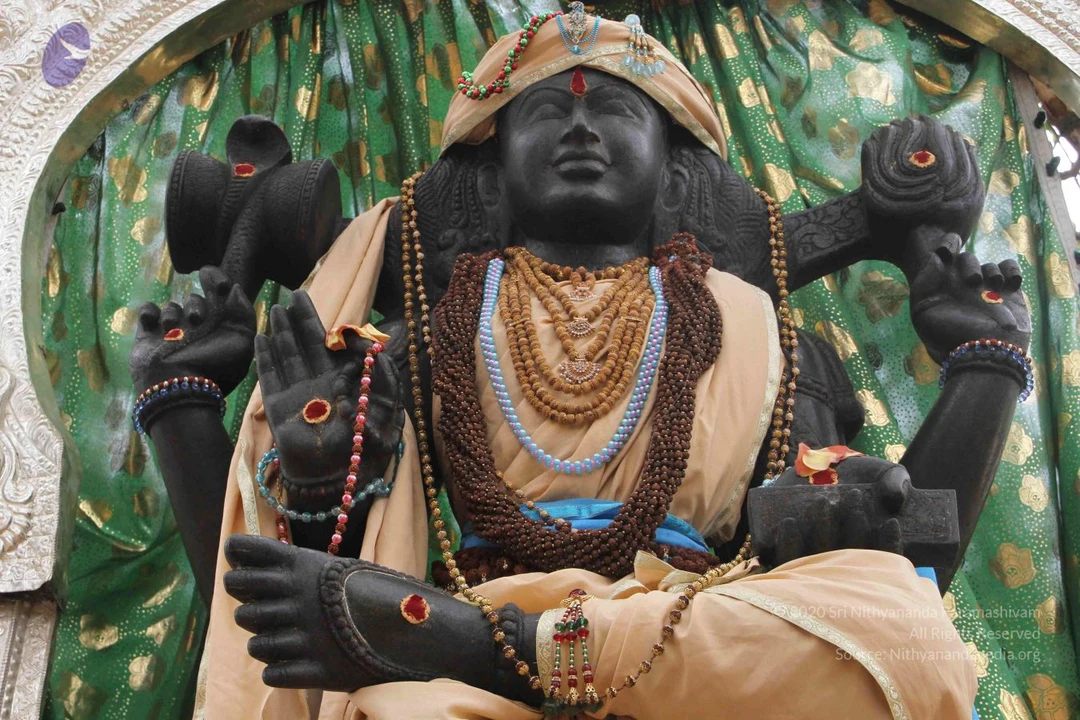
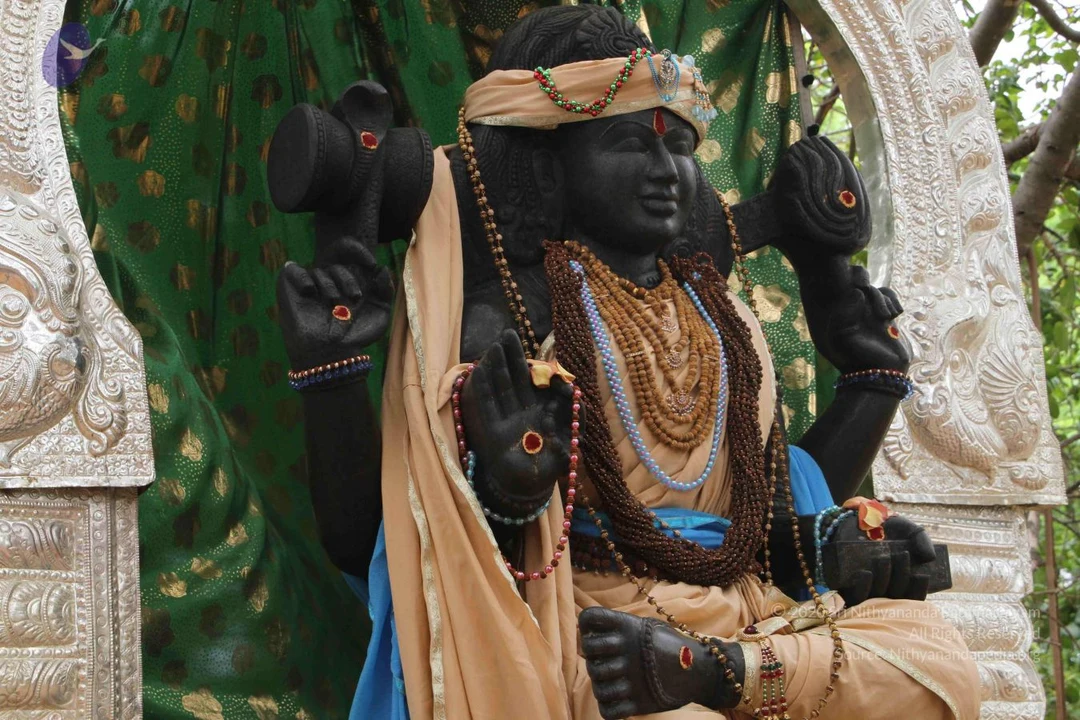
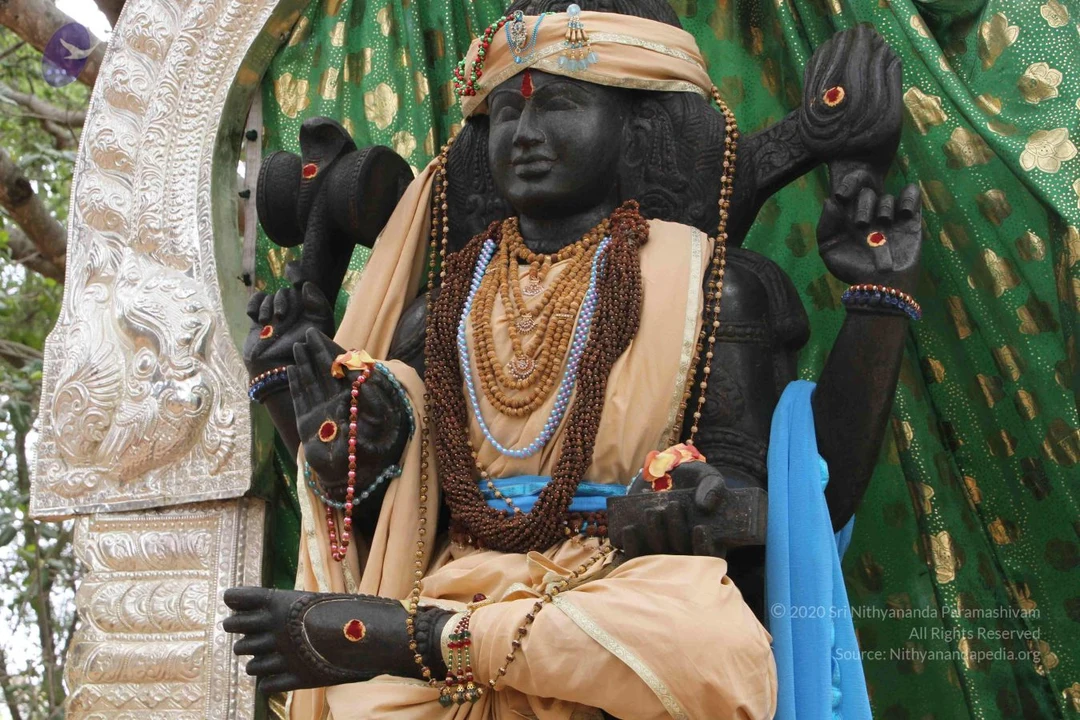
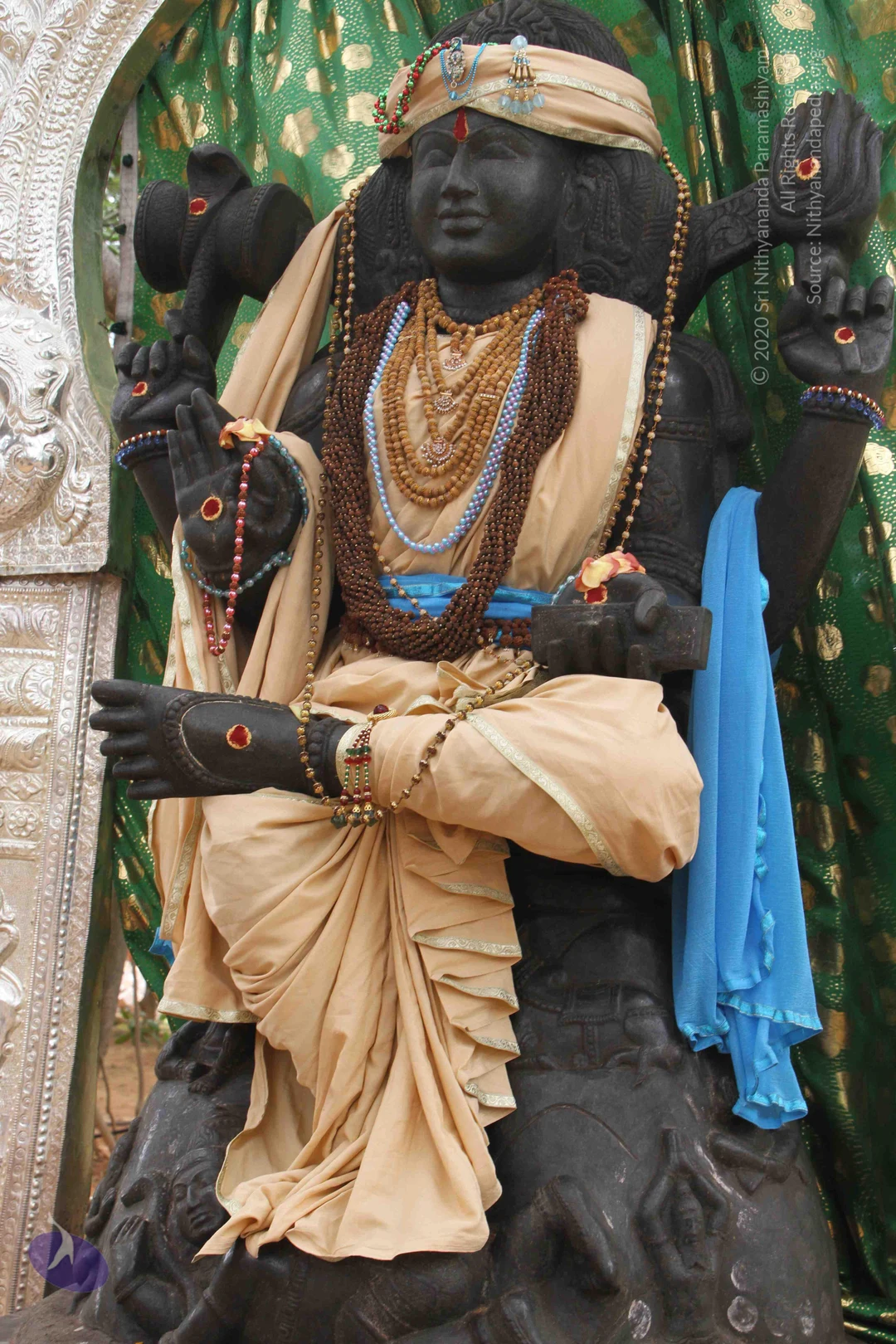
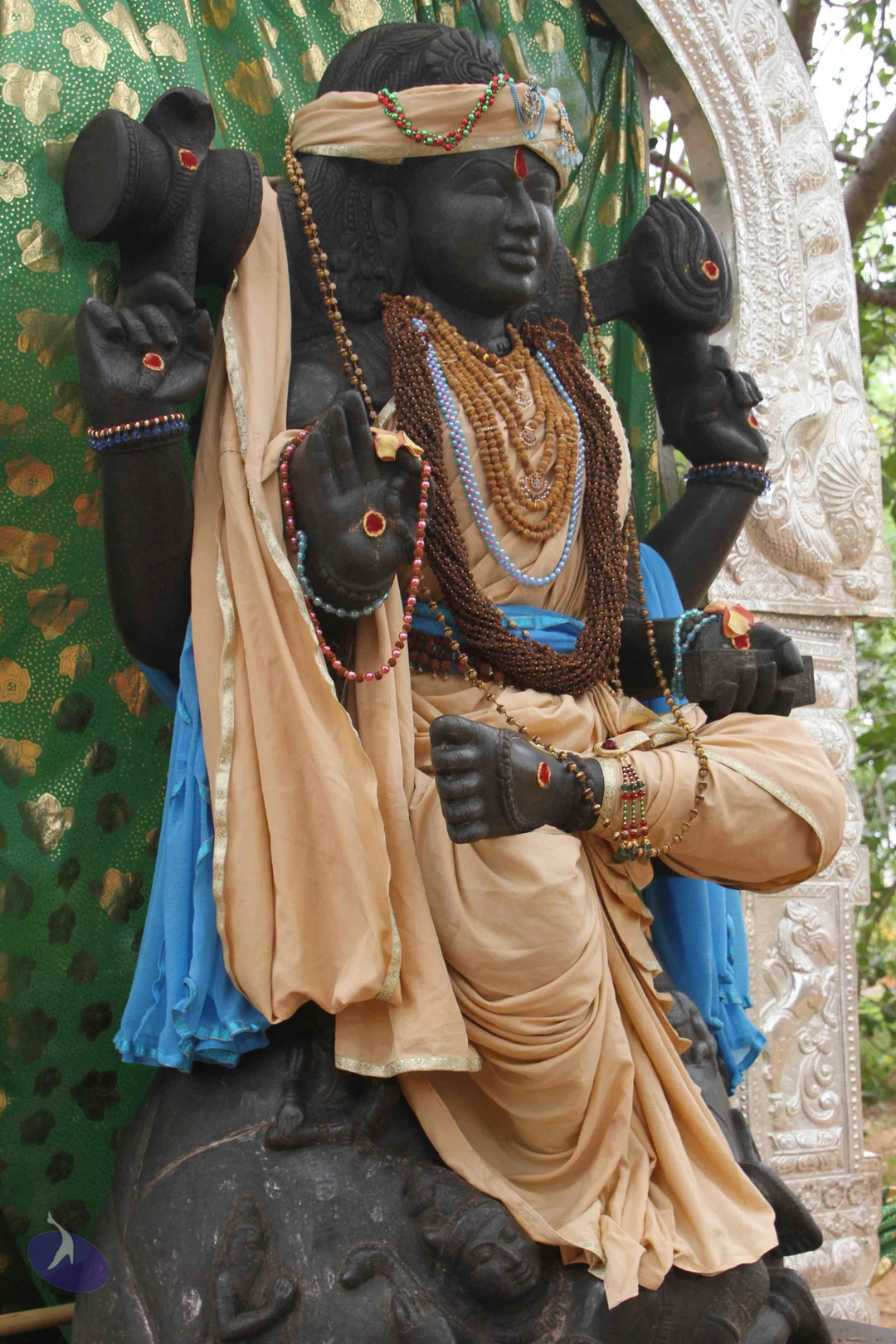
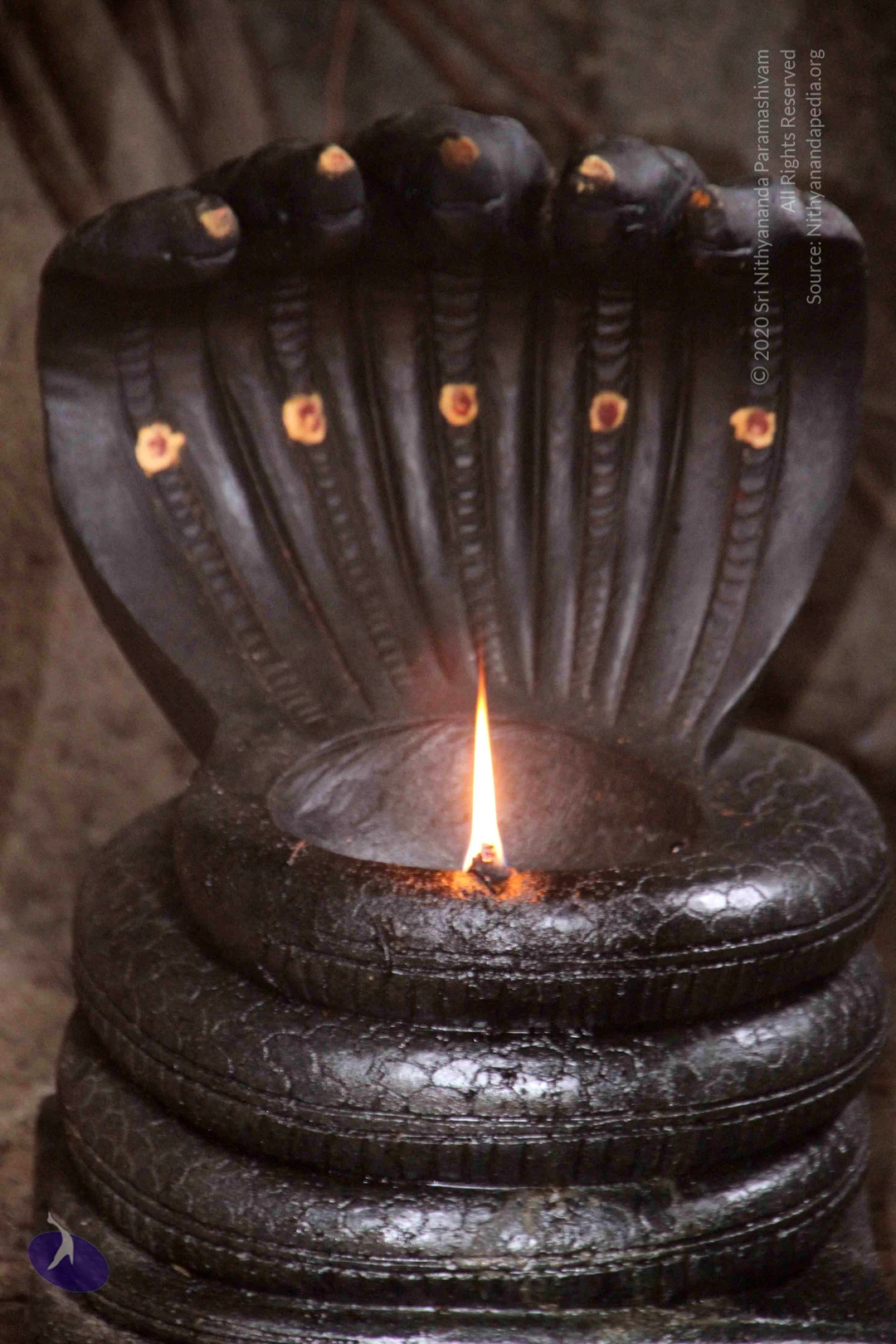
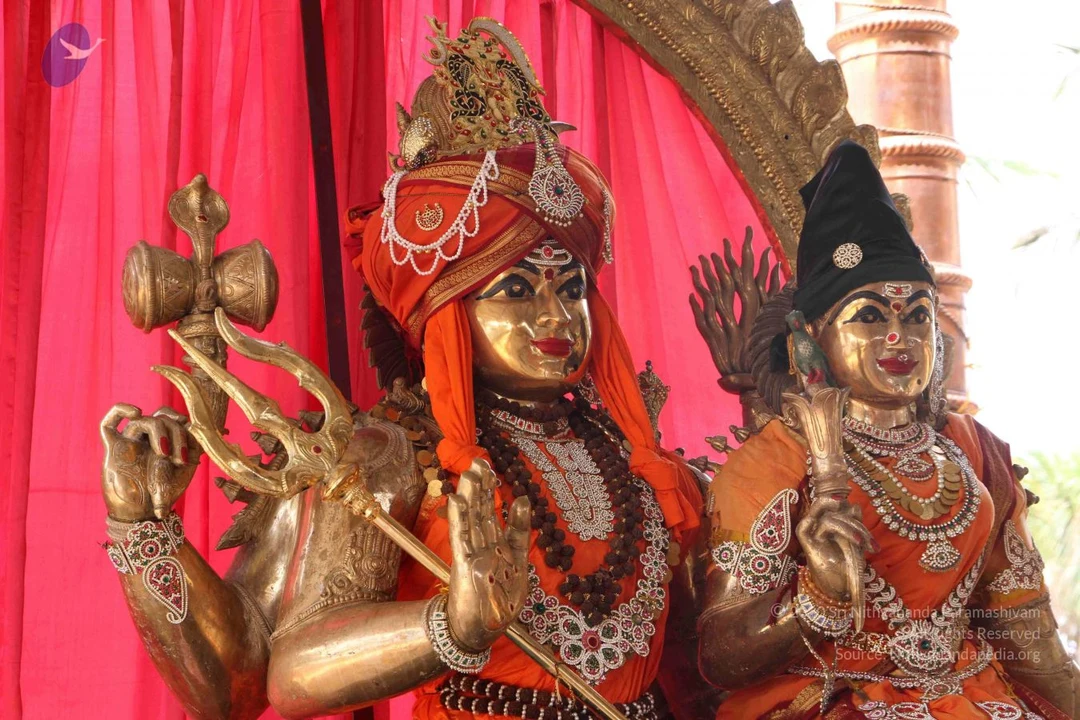
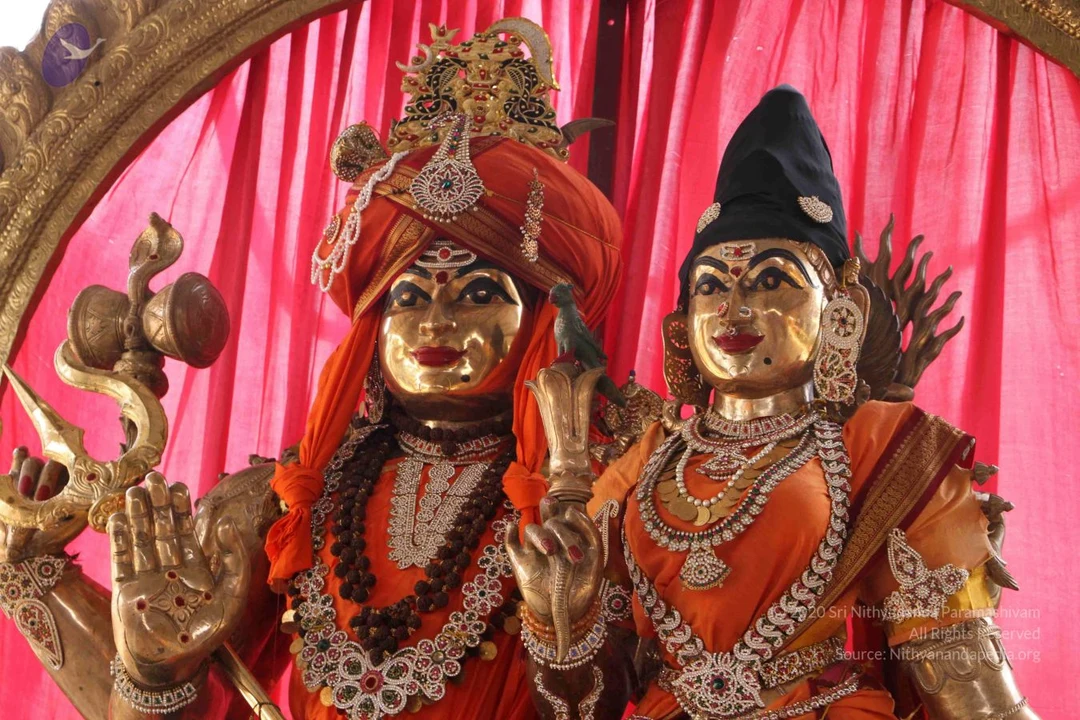
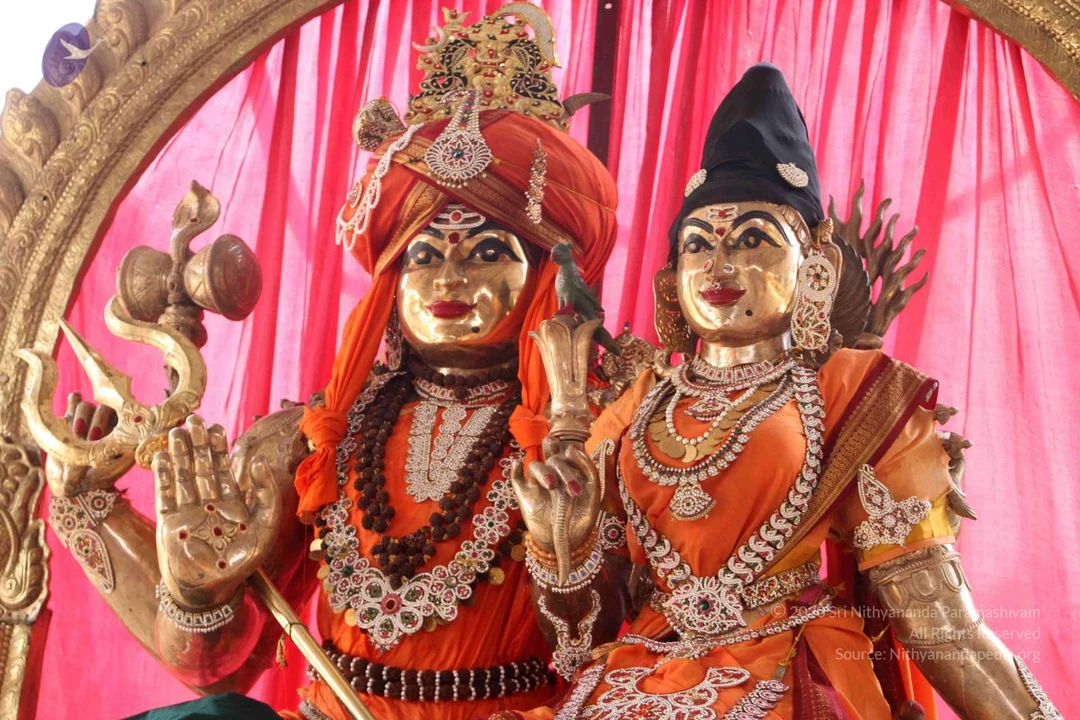
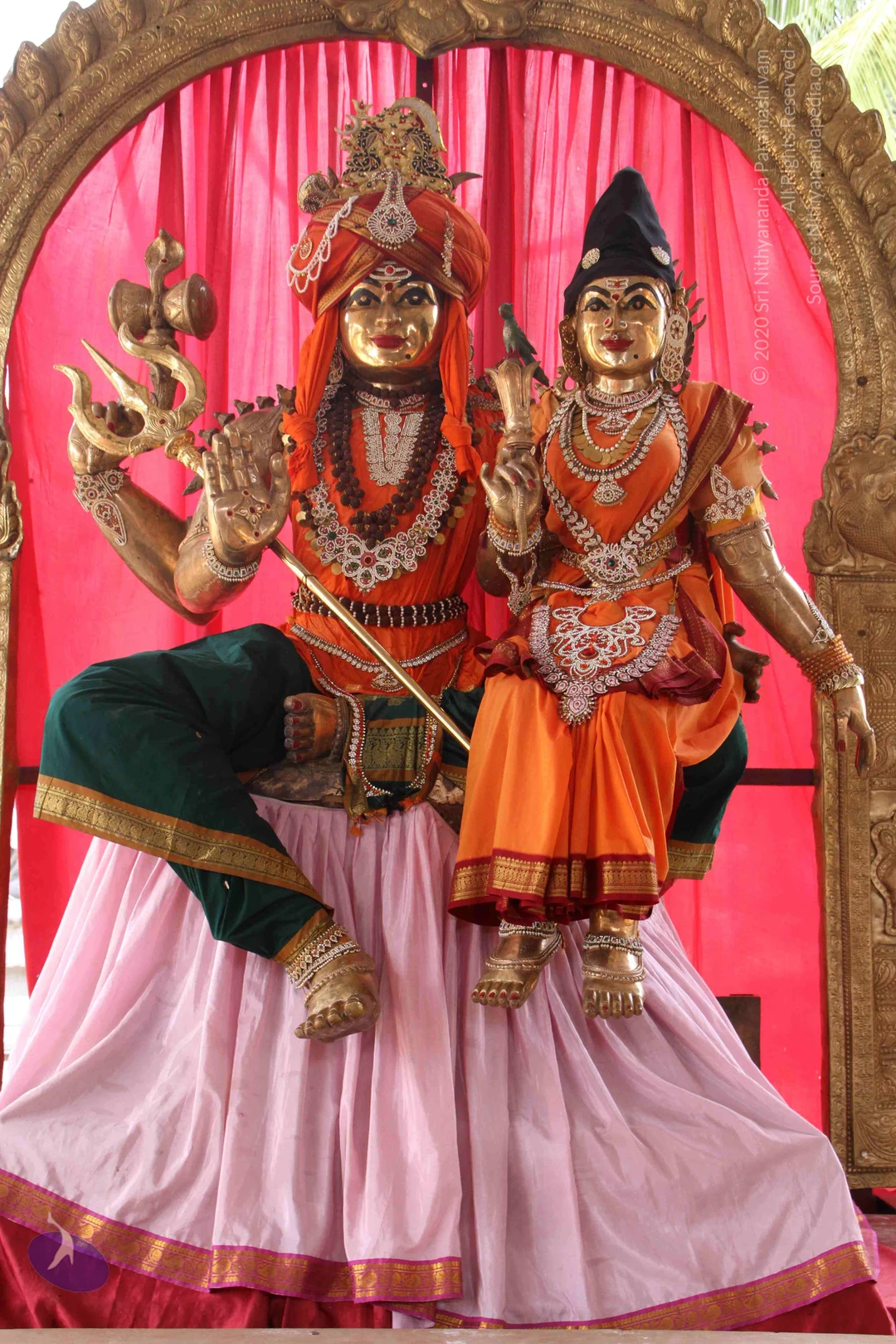
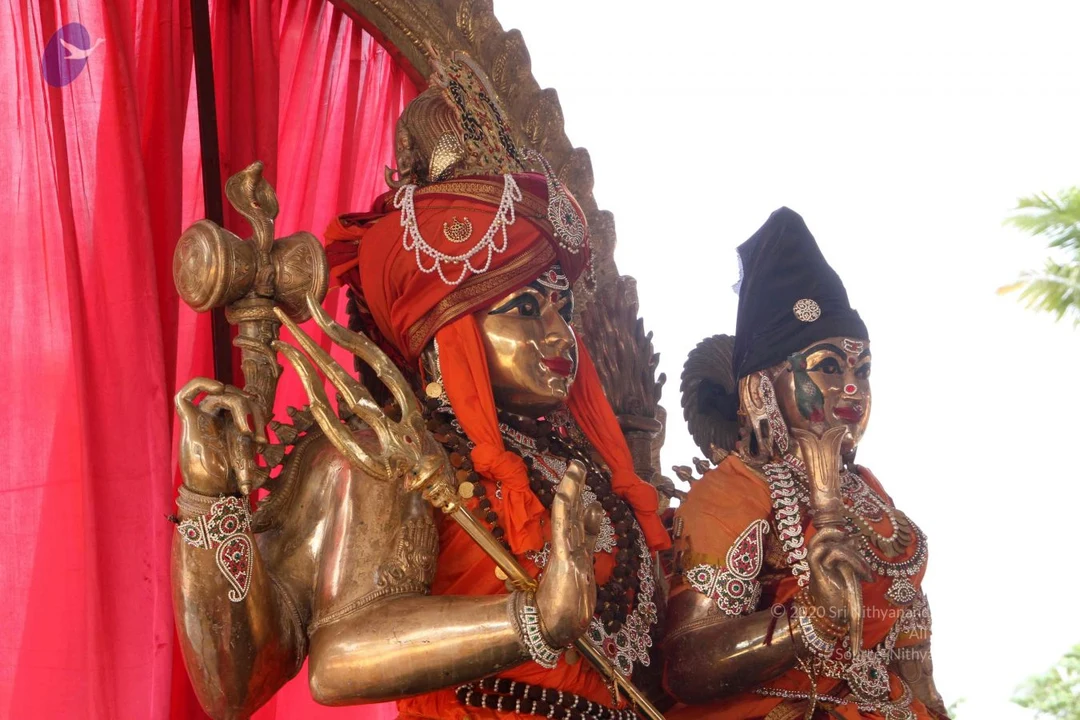
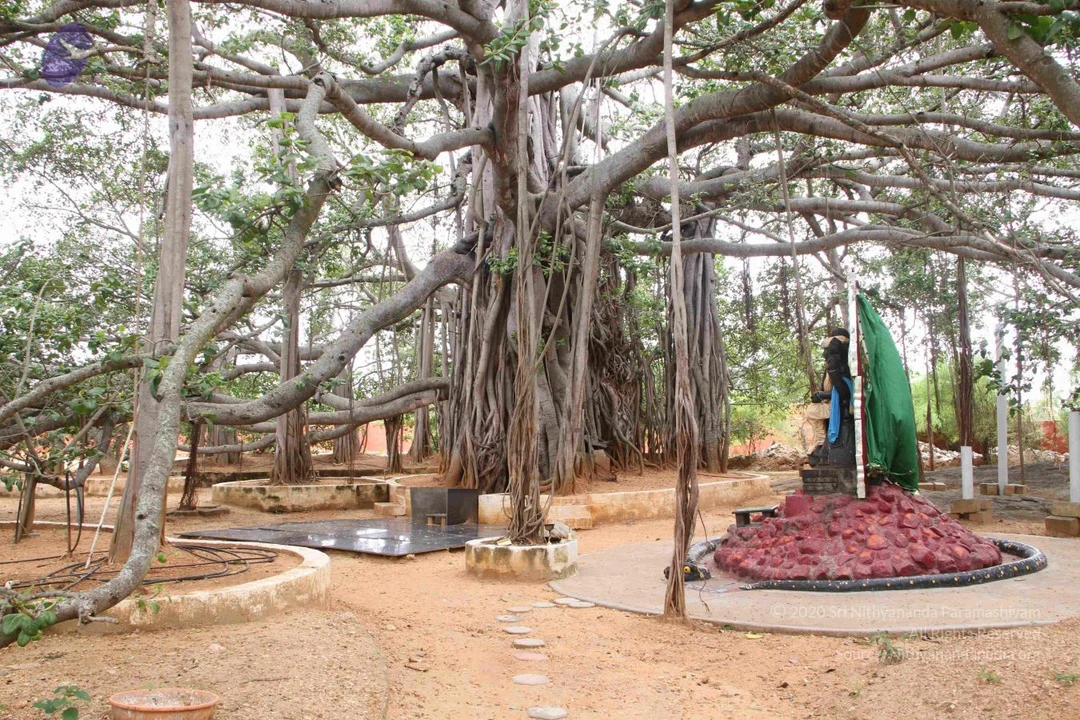
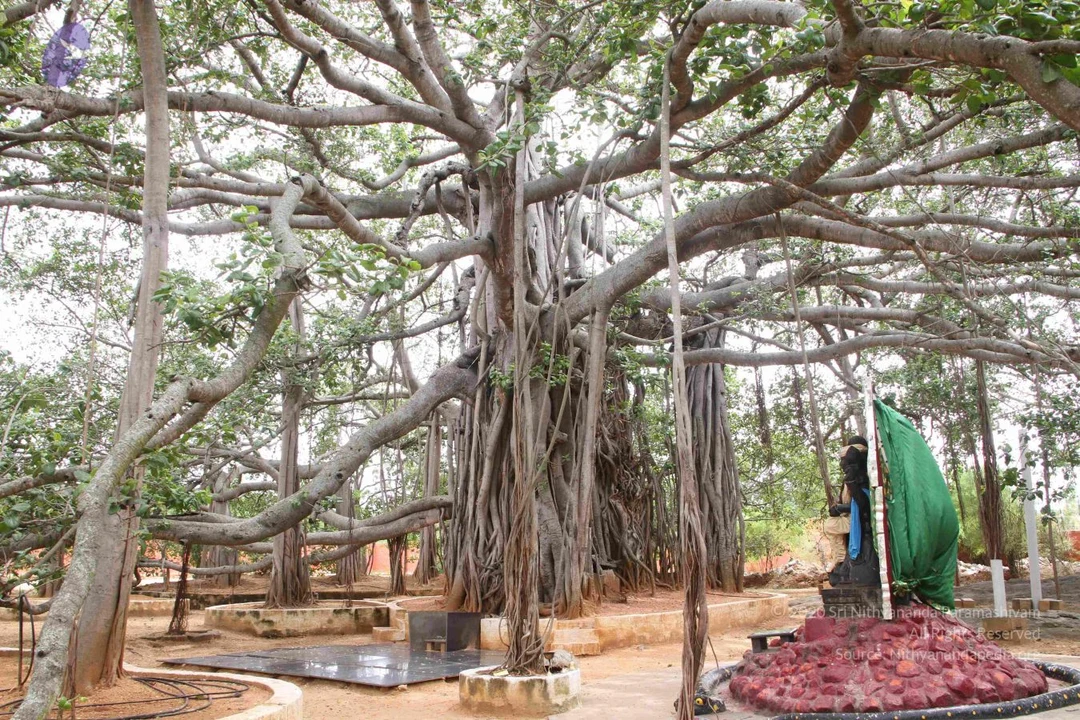
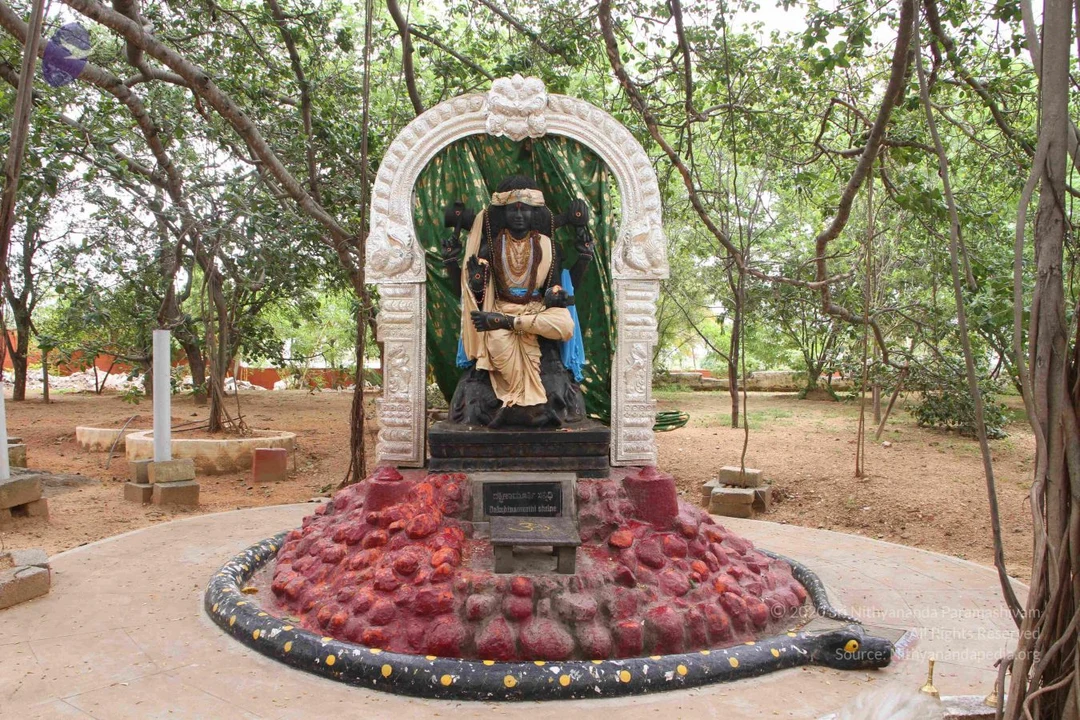
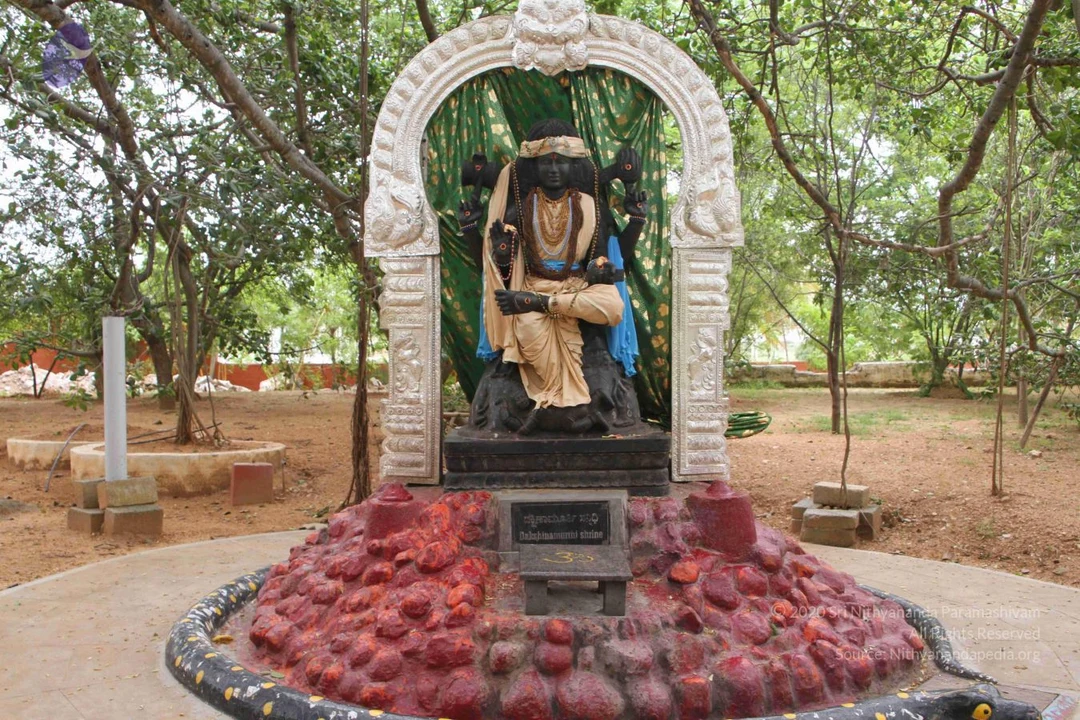
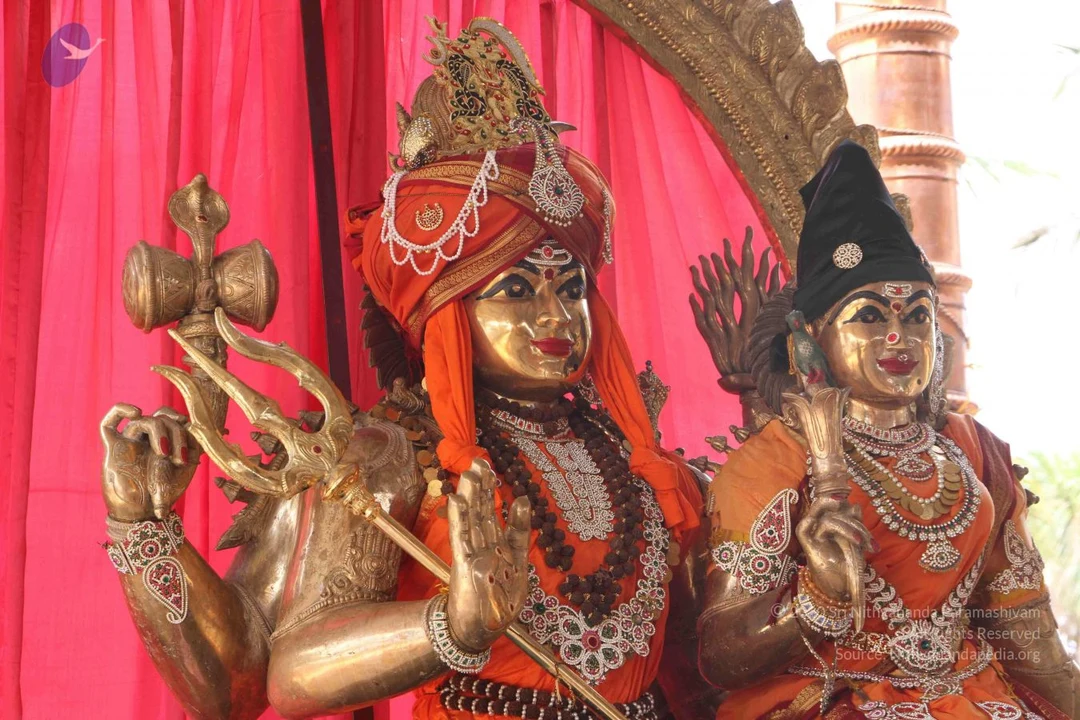
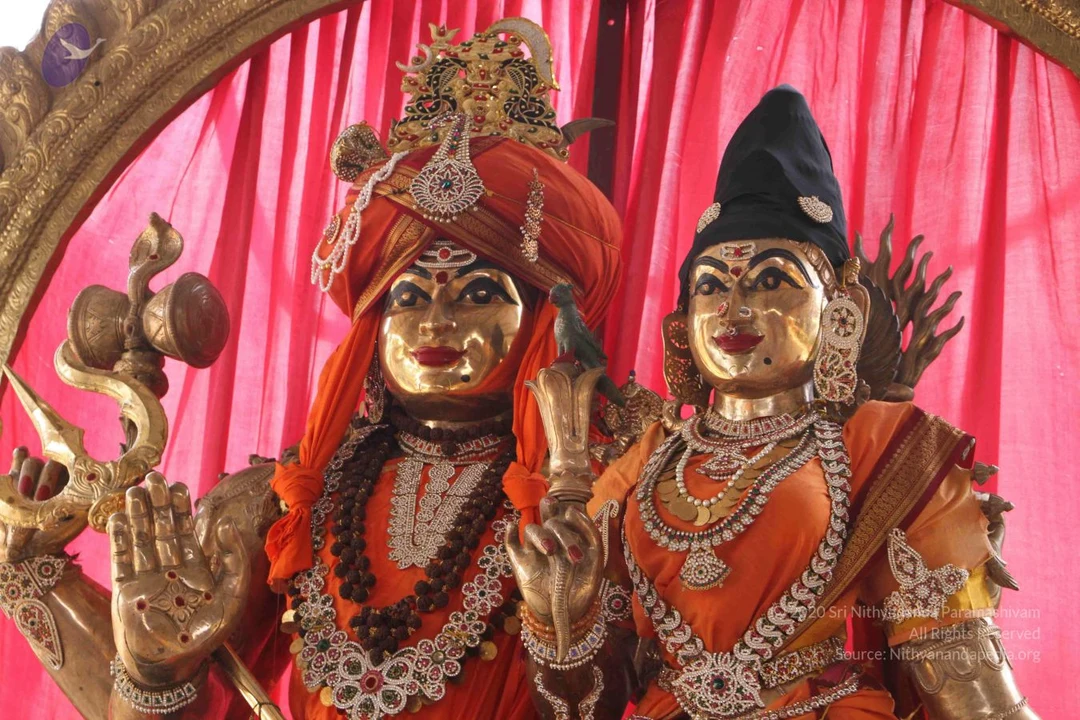
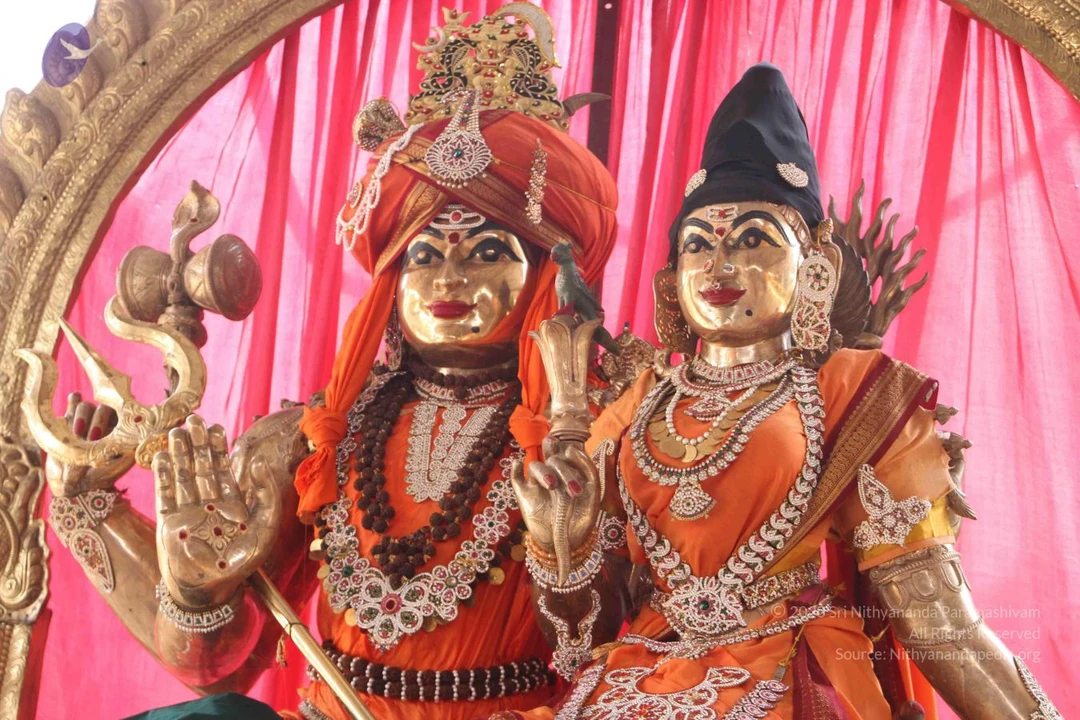
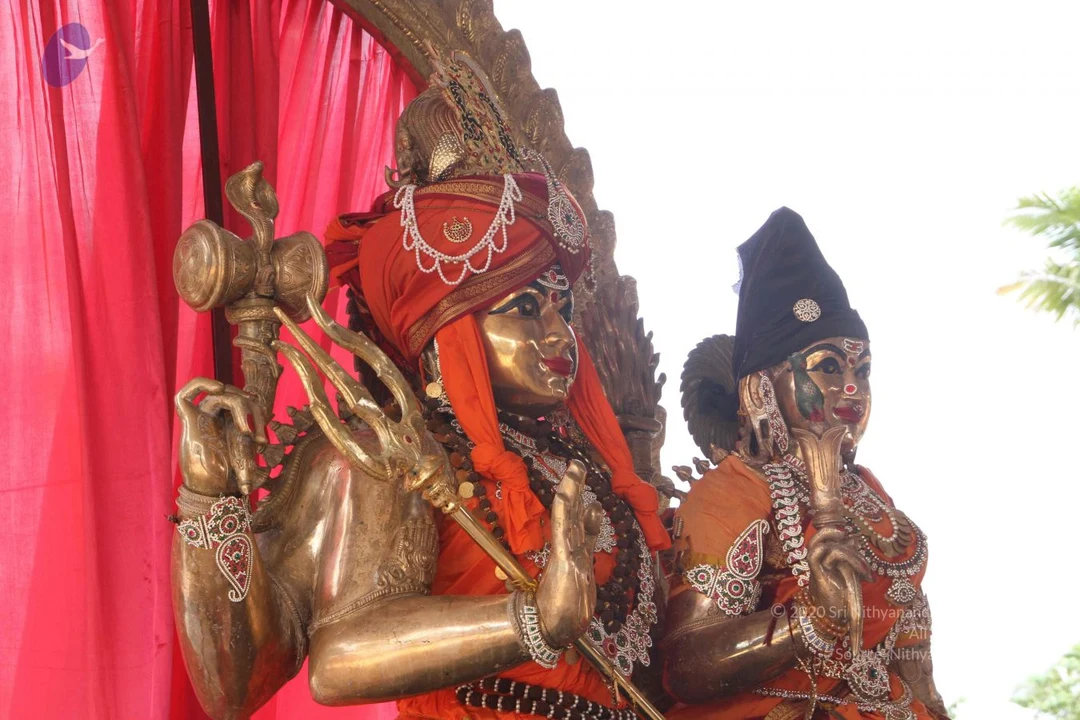
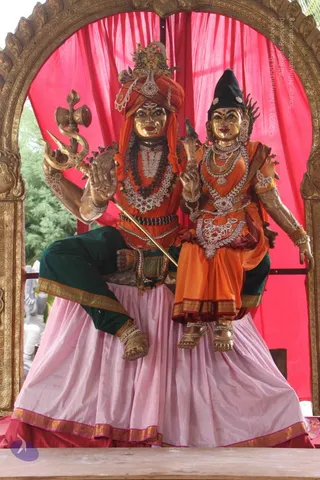
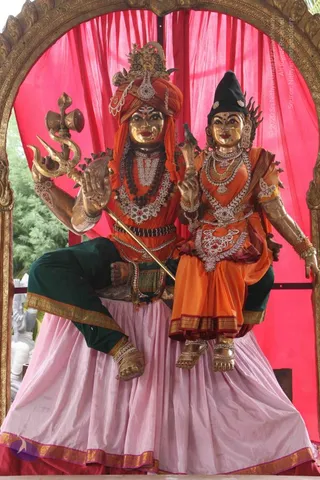
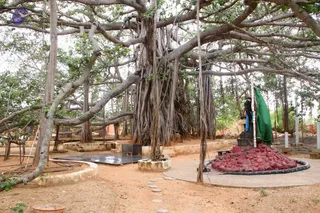
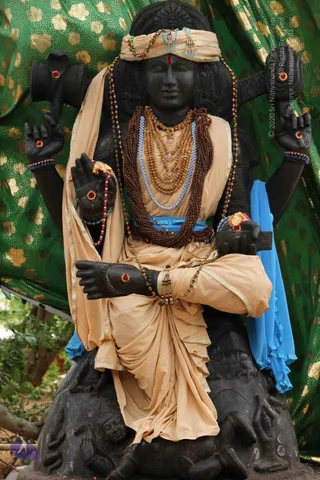
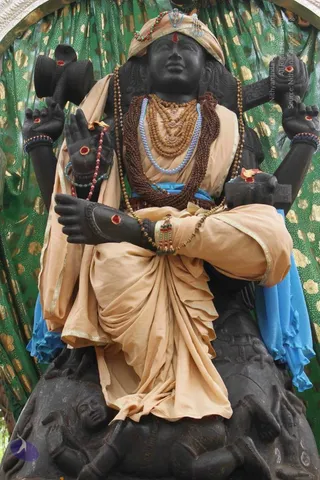
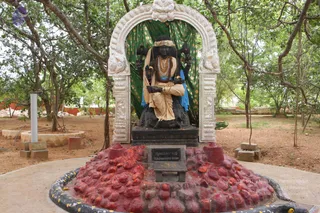
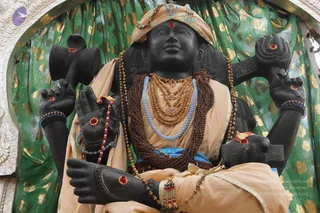
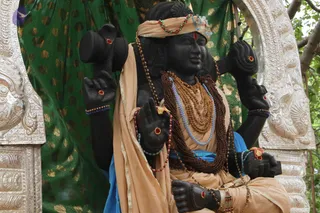
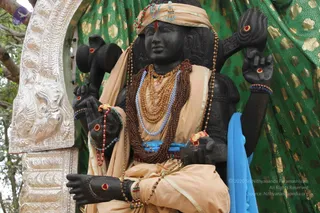
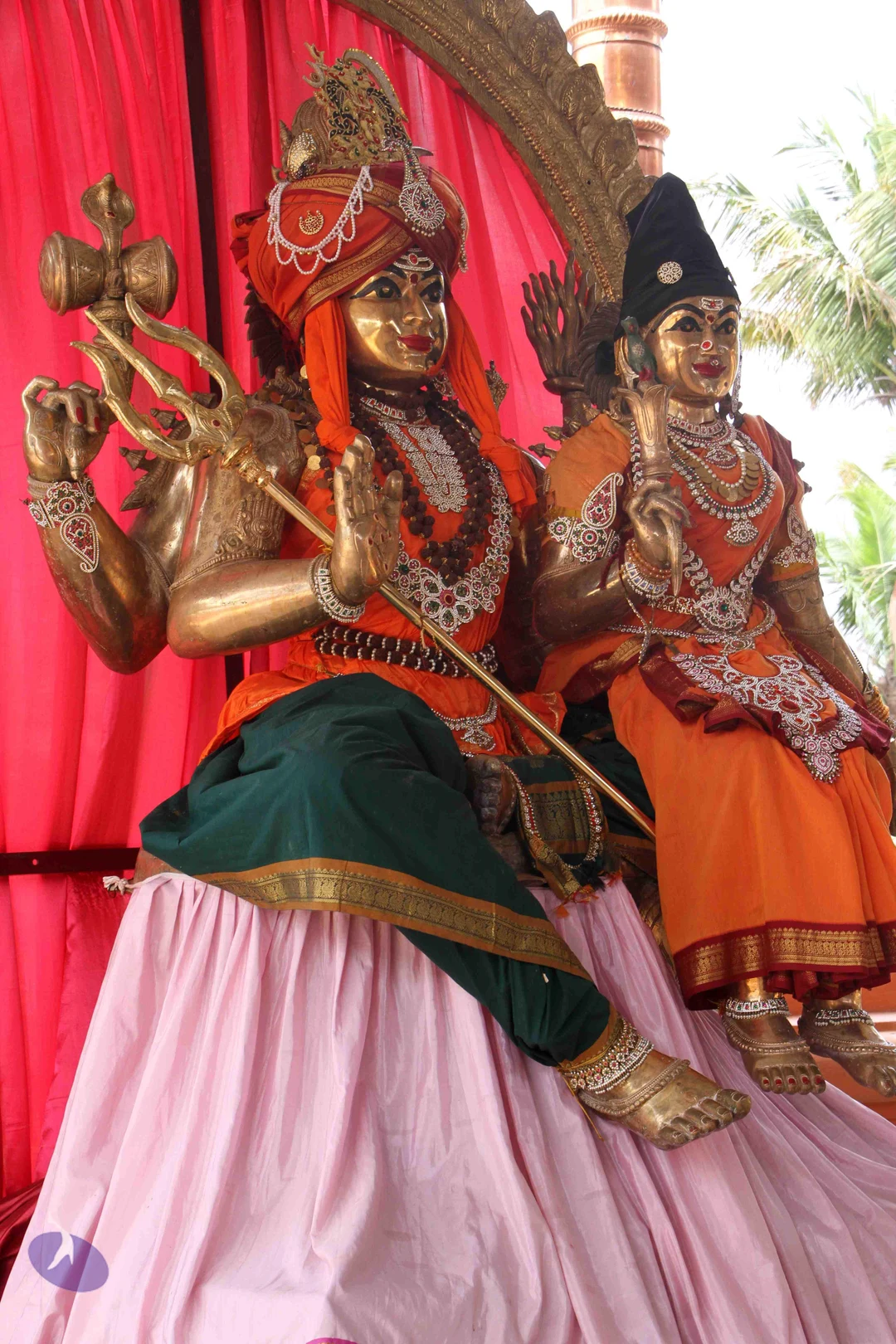
Photograph of a pair of large golden deity murti statues seated together on a pink draped platform inside an ornate gold arched frame with red cloth backdrop. The male figure wears an orange turban with a jewelled crown, orange garment, dark green trousers, rudraksha mala and silver necklaces, and holds a trident. The female figure wears a black tall headdress, orange sari with gold border, and layered silver necklaces. Trees and a stone sculpture are visible outside the arch. No living people are visible.Two gilded statues seated on a pink-draped platform within an ornate gold arched frame against a red curtain. The male figure wears an orange turban with a jeweled crown, orange garment, dark green trousers, rudraksha malas and a silver ceremonial necklace, holding a trident and a damaru-like drum. The female figure wears a black-topped headdress, orange sari with gold border and layered silver necklaces, holding a small ritual object. The statues are a deity murti pair, not living people, so the scene contains no physical people.An outdoor shrine beneath a large banyan tree with sprawling, aerial-rooted branches and hanging roots. On the right, a dark stone deity murti stands on a raised mound of red-brown stones, draped with a green cloth and a blue cloth, beside a small wooden stand. A pathway of flat stepping stones leads across bare reddish-brown earth. Concrete platforms and low curbs surround the tree trunks, with a dark stone slab on the left. No people are visible.A black stone statue of a four-armed deity seated on a carved rock base in front of a green fabric backdrop with gold flower motifs. The murti wears a peach-coloured draped cloth with gold border, a blue sash and blue shawl, multiple strands of rudraksha and bead malas, and a peach and red headband with a red tilak. Its hands hold a trident-like staff and other objects, with red dots and flowers on the hands and a decorative bracelet. No living people are visible. The statue is a deity murti, not a living person.A dark stone statue of a multi-armed deity sits within a white carved stone arch set among trees. The figure wears a tan or saffron-coloured draped cloth, layered gold and beaded necklaces, rudraksha-style beads, and a red bindi on the forehead with a golden crown-like headdress. Its raised hands hold a trident-like weapon and other ritual objects. A green fabric backdrop with gold spots and blue cloth flank the murti, and a small figure lies beneath its feet. No people are present.A large black stone statue of a multi-armed deity murti stands against a green backdrop with gold floral print. The figure wears a peach-coloured draped garment edged with gold border and a blue sash, with layered rudraksha and wooden beaded necklaces, a blue and white bead necklace, and a red and green beaded turban-like headdress. Several hands hold ritual objects, one bearing a red dot marking and a small drum-like instrument. A carved stone base beneath shows a small reclining figure. No physical people are visible.

Rudrabizhegam

156 photosSource gallery
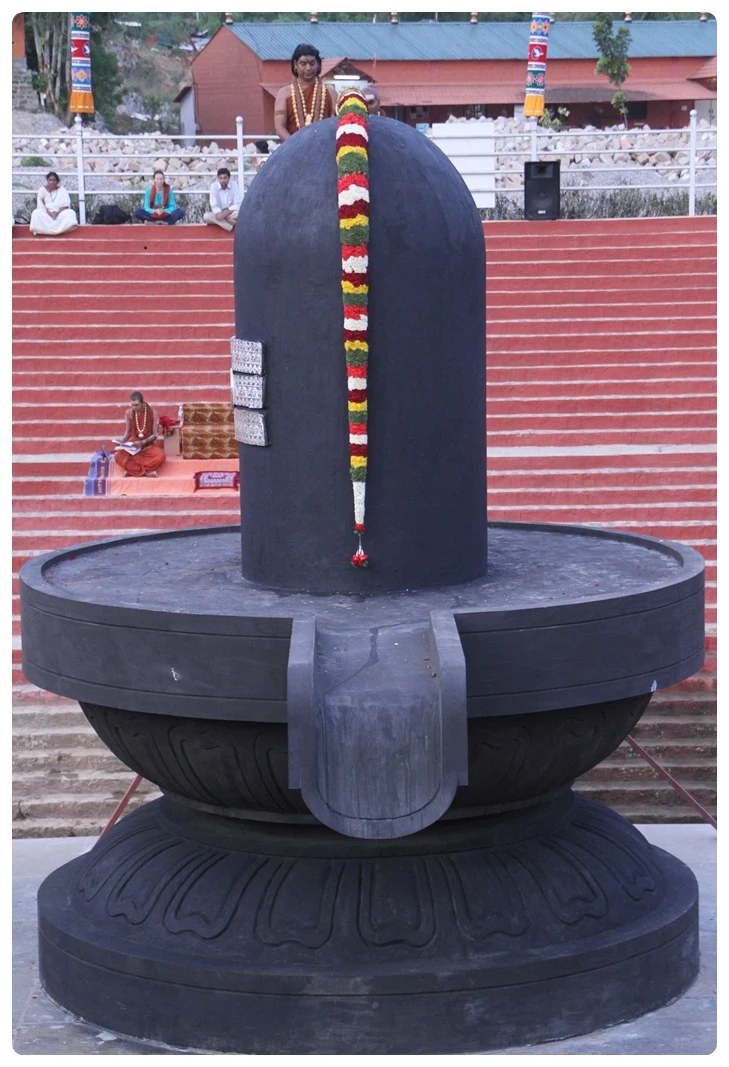
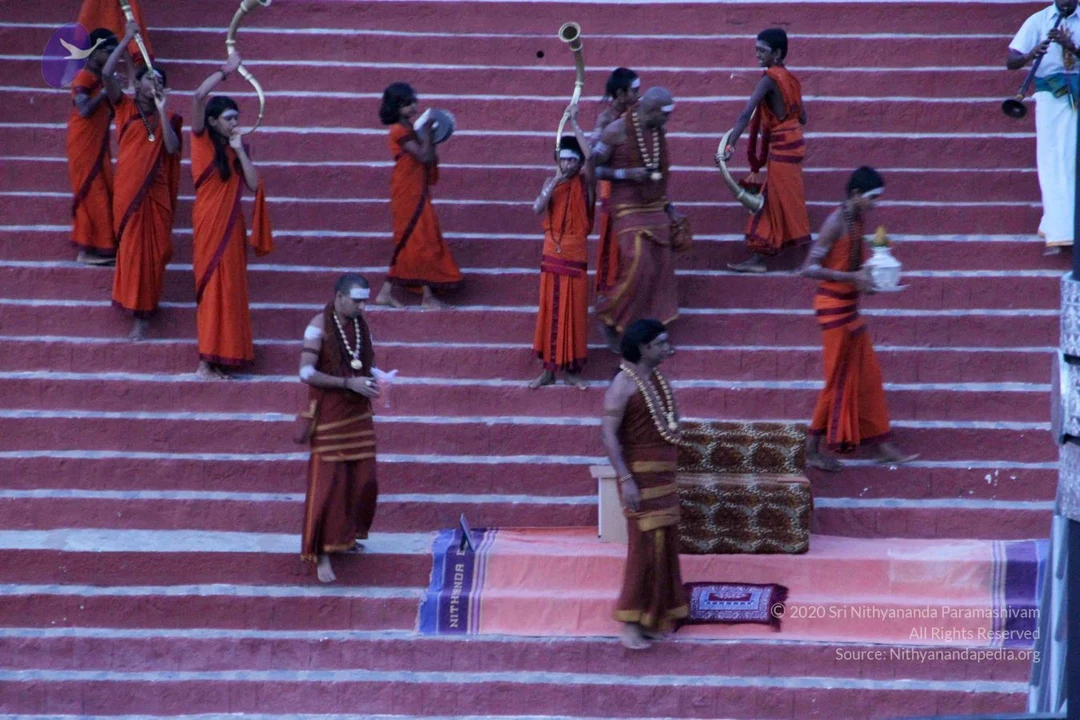
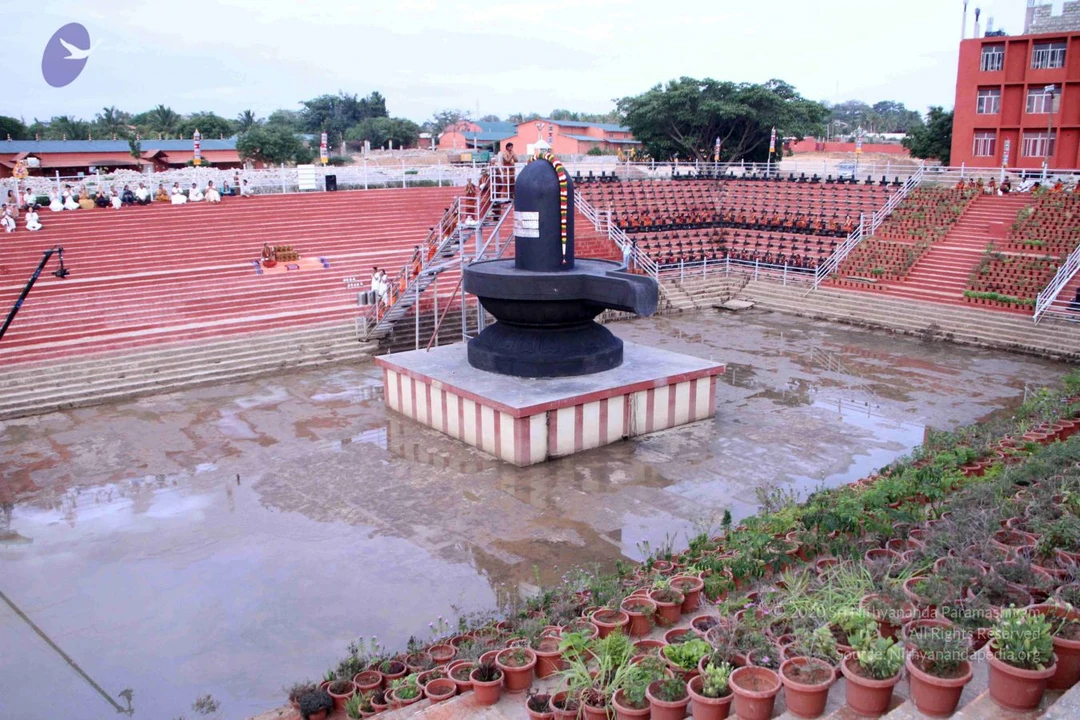
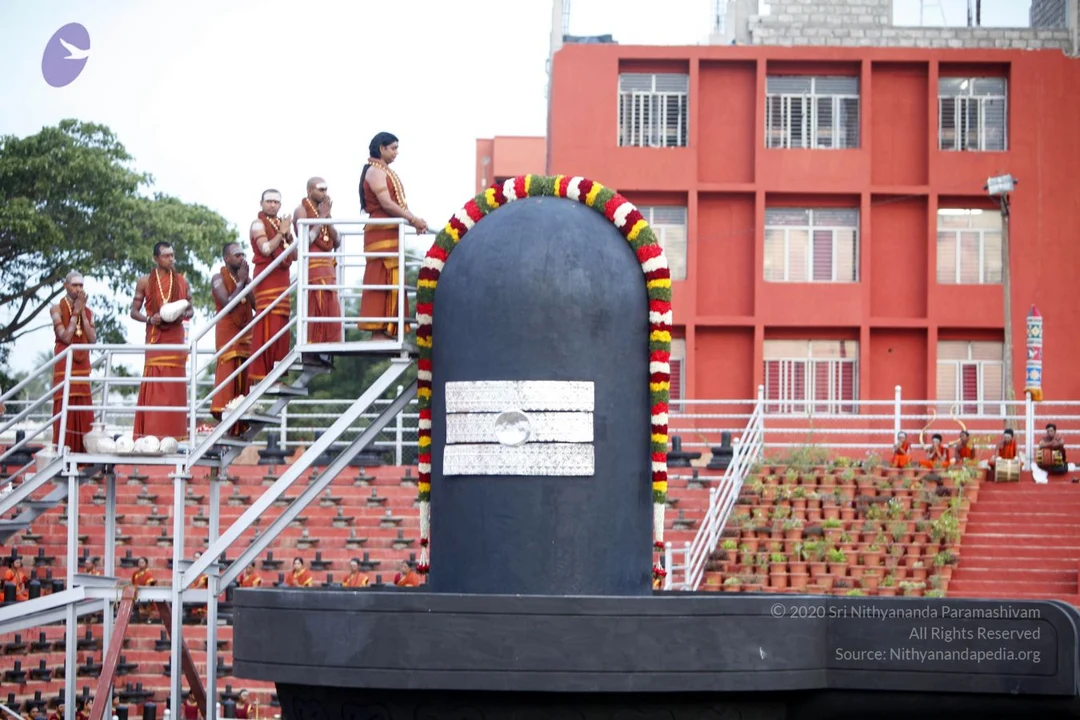
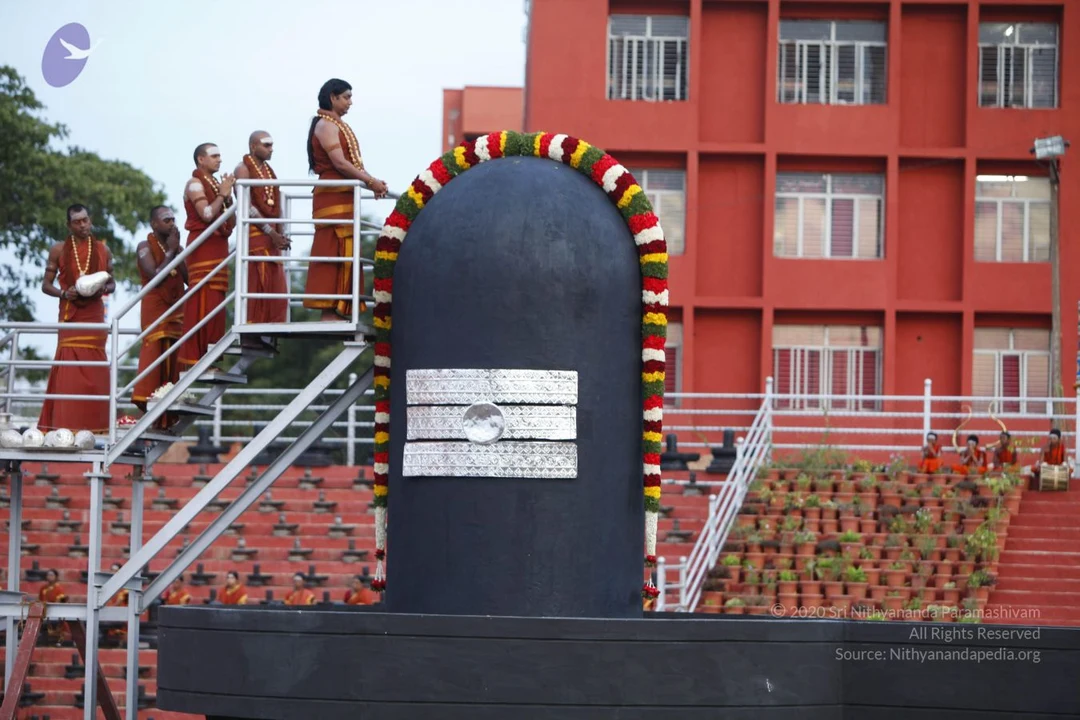
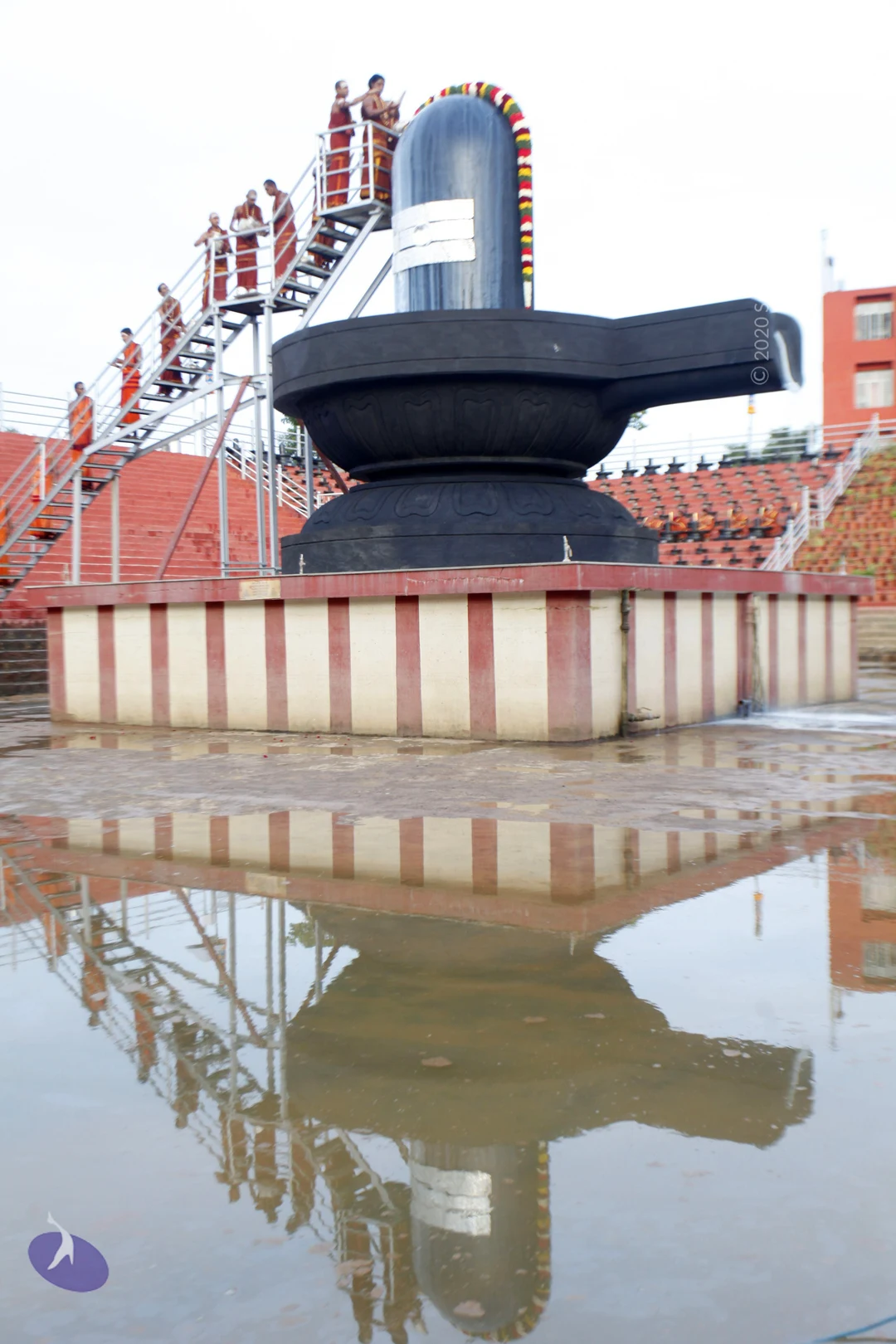
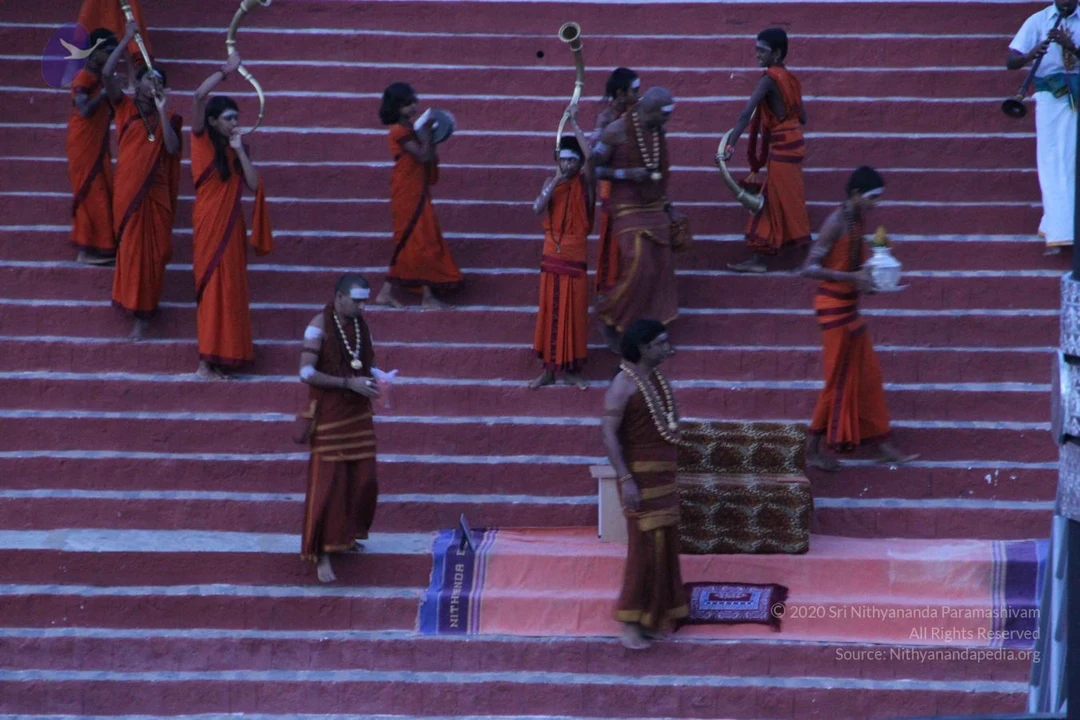
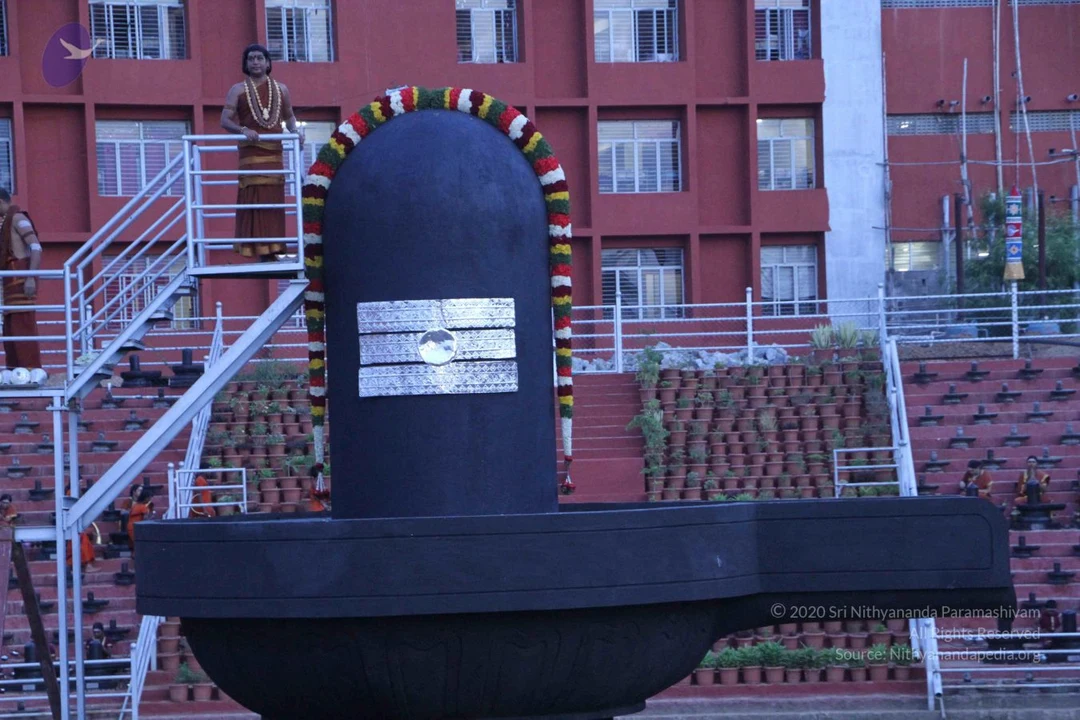
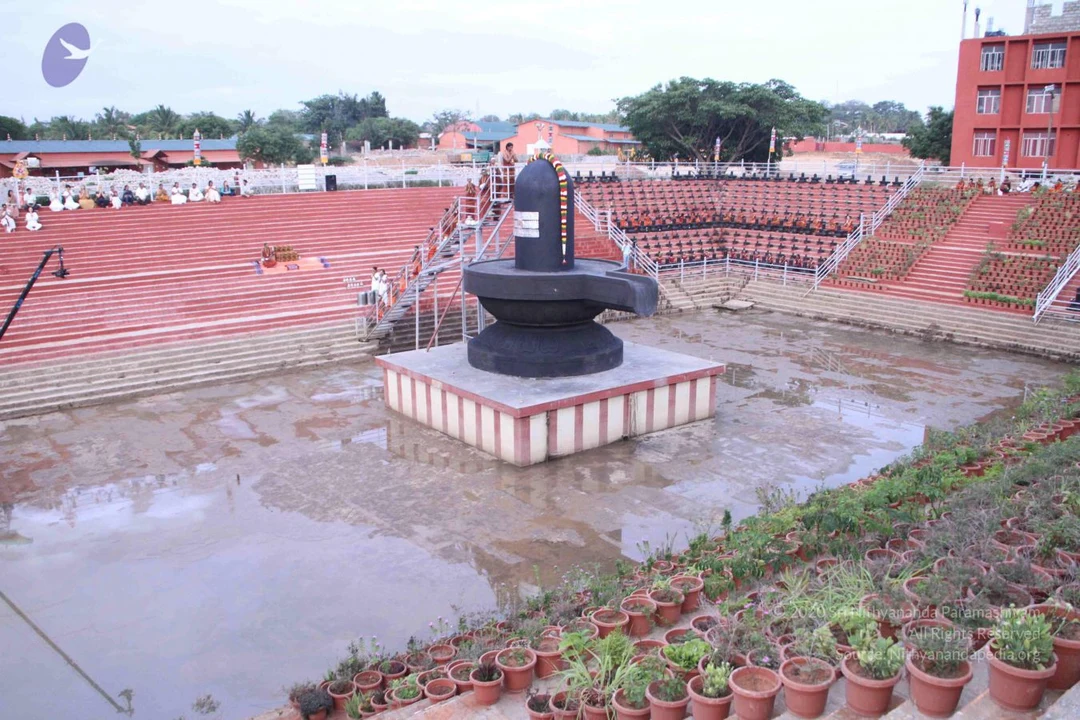
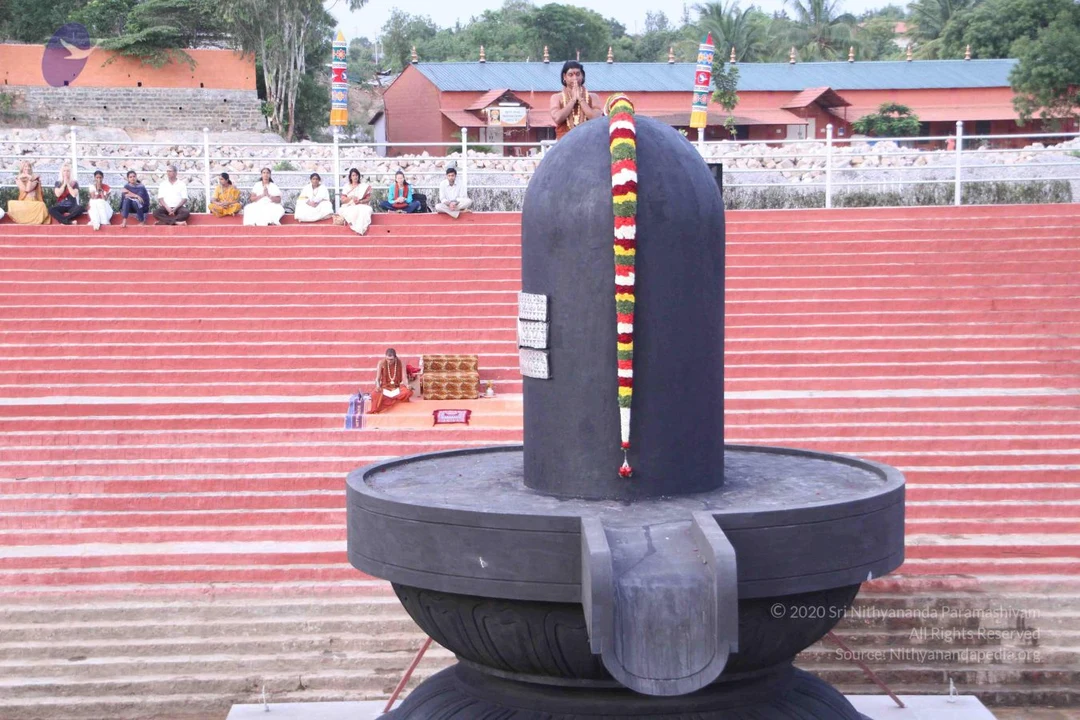
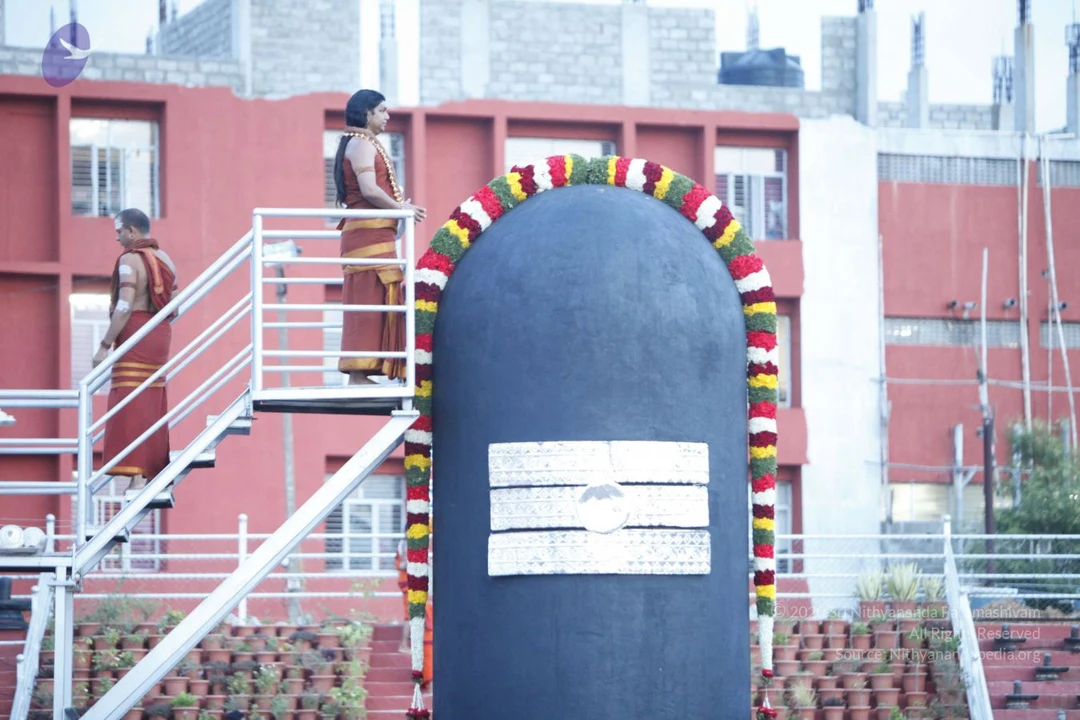
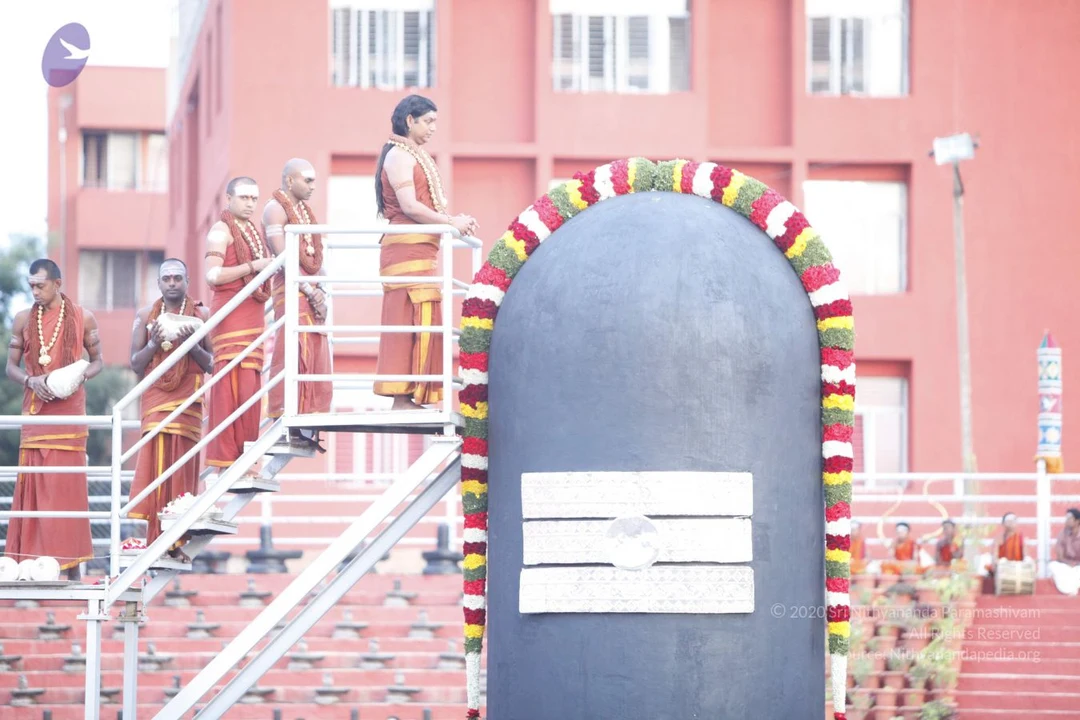
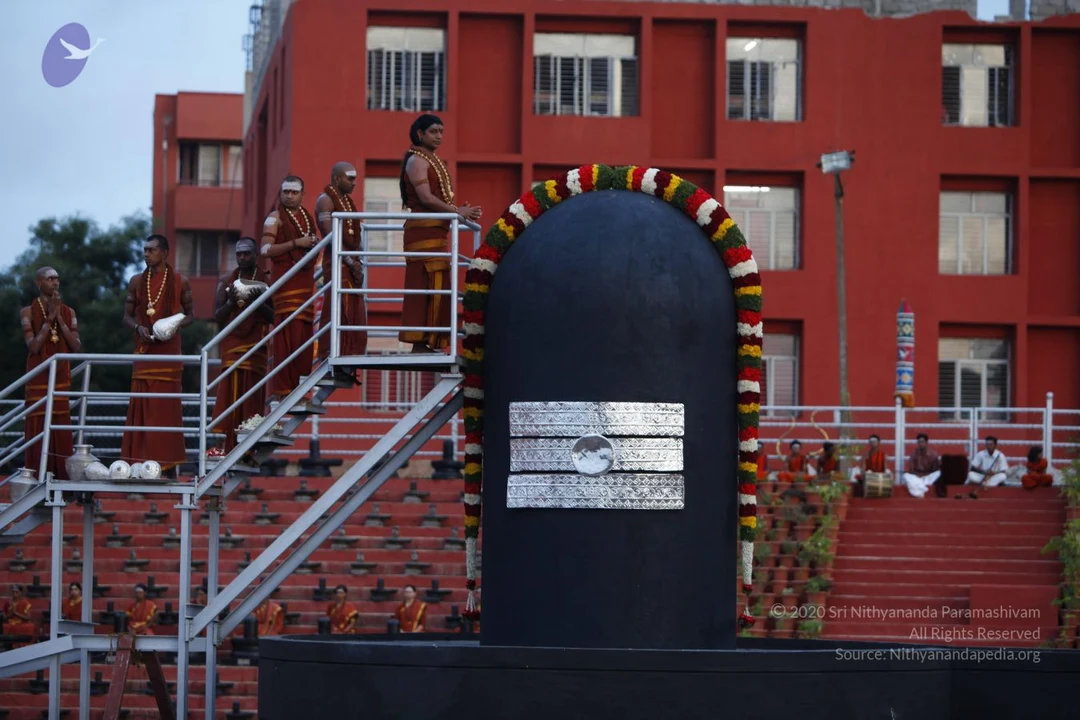
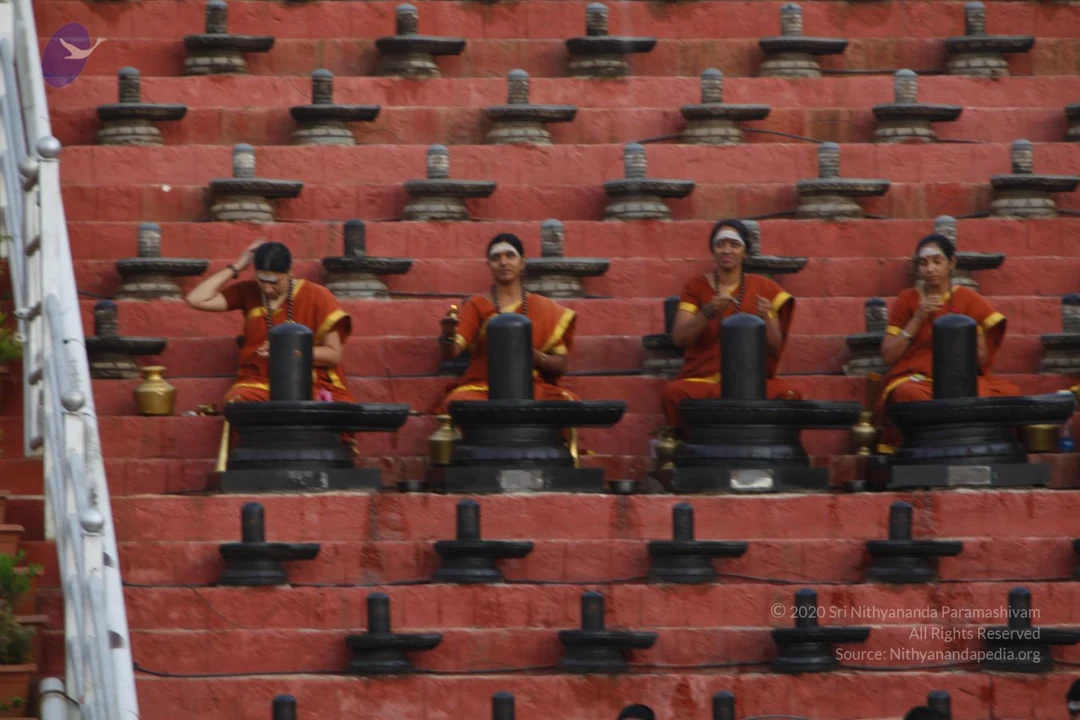
Photograph of a ceremonial procession descending or standing on red-painted stone steps in front of a brick wall and a white railing, with a rubble embankment behind. About a dozen men in saffron-orange and rust-coloured dhotis and wraps stand in a group. Several play long curved brass horns (ramsinghas or similar) raised to the mouth or held aloft, and one plays a drum at the left. A tall ceremonial banner with a red and gold emblem on a pole is carried at left. Some men wear white forehead markings, rudraksha-style beaded necklaces and gold ornaments; one central figure wears a long beaded necklace over bare chest with a mustard-yellow cloth. A man in white stands at the far right edge.A photograph of a procession of young men and women in saffron-orange and maroon robes ascending red-painted stone steps. Several figures blow long brass horns (ceremonial trumpets), one holds a silver kalasha-style vessel, and a central figure in a maroon garment with a gold-bordered cloth and white bead necklaces carries an offering. Some participants wear white forehead markings and white armbands. A white railing and a red banner with a gold fringe appear at the top left, with onlookers in the background. Ceremonial procession with horn players and kalasha bearers.Photograph of a procession on a wide red-stone staircase at dusk, with a white railing and rubble wall behind. About sixteen people in saffron-orange and maroon robes with rudraksha malas move and stand along the steps. Several play long curved brass horns and a large drum with a stick; one carries a tall ornate banner with a red and blue emblem on a pole, and another holds a small pot. A woman in a yellow-gold sari stands at upper left, and a few onlookers are visible at the railing.A photograph of a procession of saffron-robed men and women ascending red stone steps. Several in orange and maroon cloth carry long curved brass horns raised overhead, and one man beats a hand drum. A bare-chested man in front of the group wears a rudraksha mala and walks ahead. A white-clad attendant at upper right plays a long horn, and a woman in orange carries a silver kalasha-style vessel. Near the bottom, a man in maroon with a rudraksha mala stands beside a low seat draped with patterned cloth and a blue and orange runner bearing the printed word a person. The scene is a ceremonial procession with horn players and offerings. No a person candidate is clearly identifiable from appearance.A large black stone Shivalinga stands on a black circular yoni-peetha base in an open courtyard before a red multi-storey building with many windows. A rainbow-coloured floral garland arches over the lingam. Its face bears white patterned adornments. Two men in orange-red dhoti-style garments stand on a white metal staircase platform beside it. One, bare-chested with a long pulled-back hair and a rudraksha mala, stands at the top. Rows of small clay pots with green plants fill the tiered red steps, and seated devotees in orange robes line the stairs.A large black Shiva lingam stands on a black yoni-pitha base in an outdoor courtyard, decorated with a multicoloured marigold-and-leaf garland arched over its top and silver-plated panels across its face. Behind it, rows of small potted plants fill tiered red steps, and a red multi-storey building rises in the background. On the left, a life-sized statue in orange-saffron dhoti and a long beaded necklace stands on a metal railing platform beside a staircase, with another statue in a similar orange dress at the far left edge. Smaller statues in orange clothing sit on the steps at the right. No living people are visible in the scene.

Pratyaksha-Pada-Puja

16 photosSource gallery
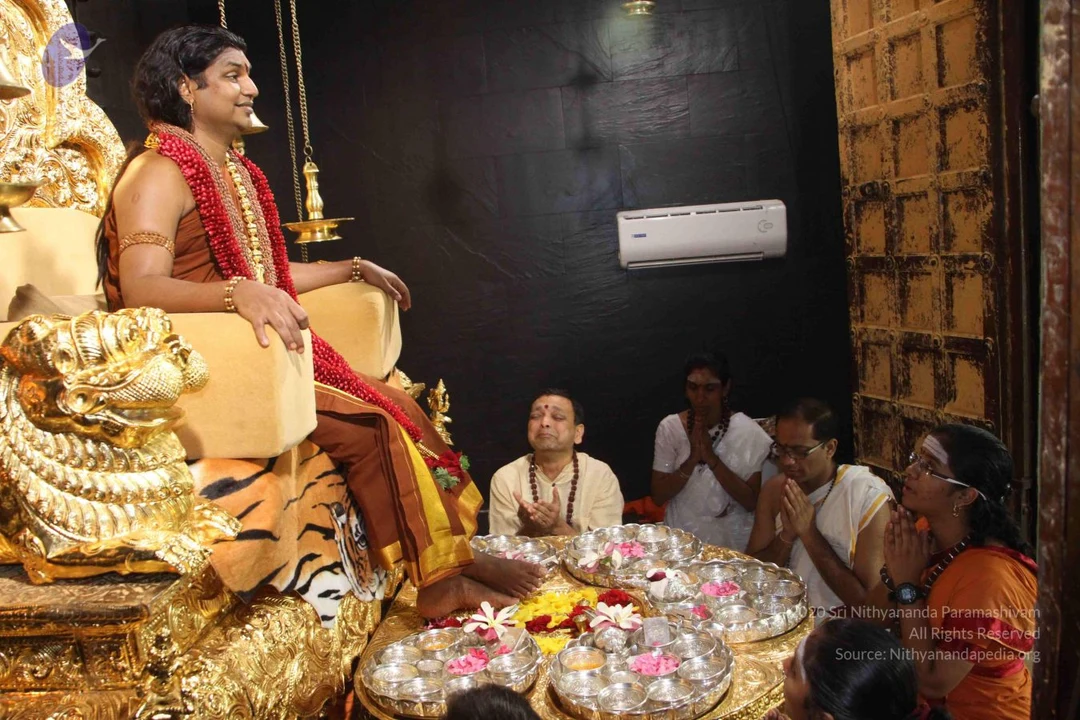
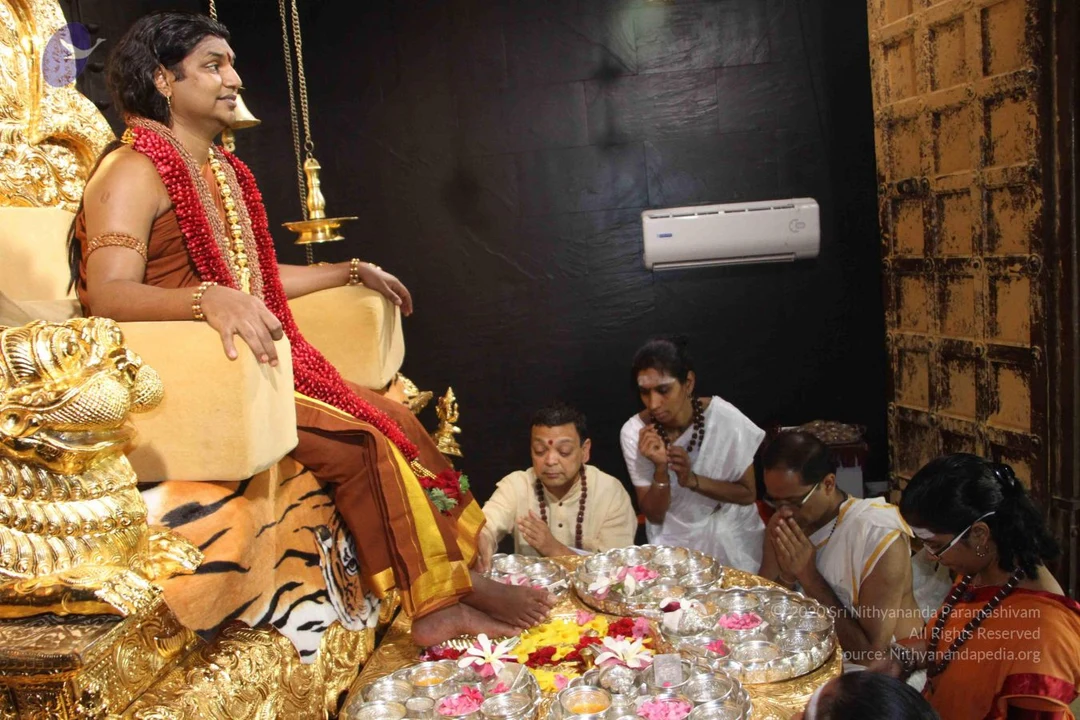
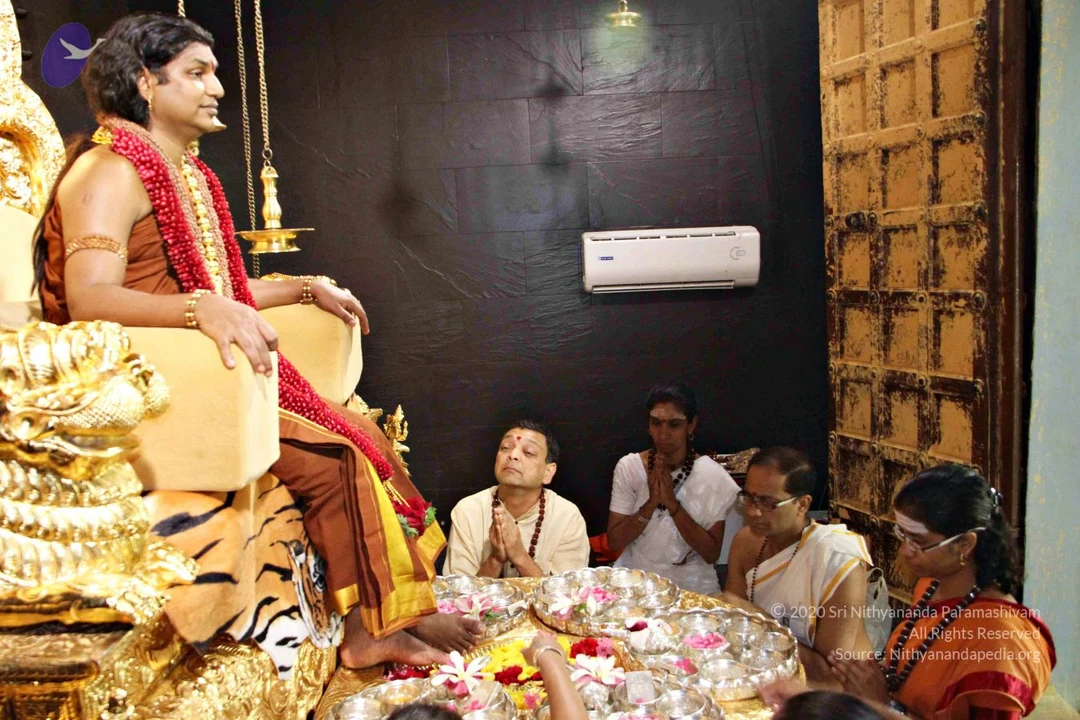
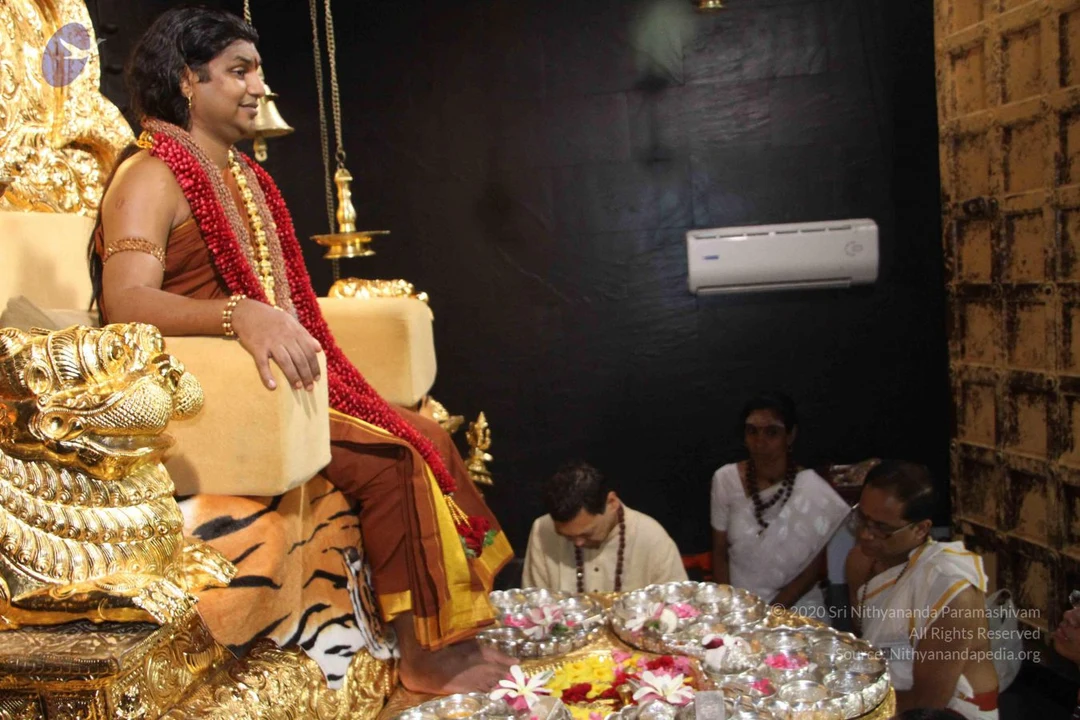
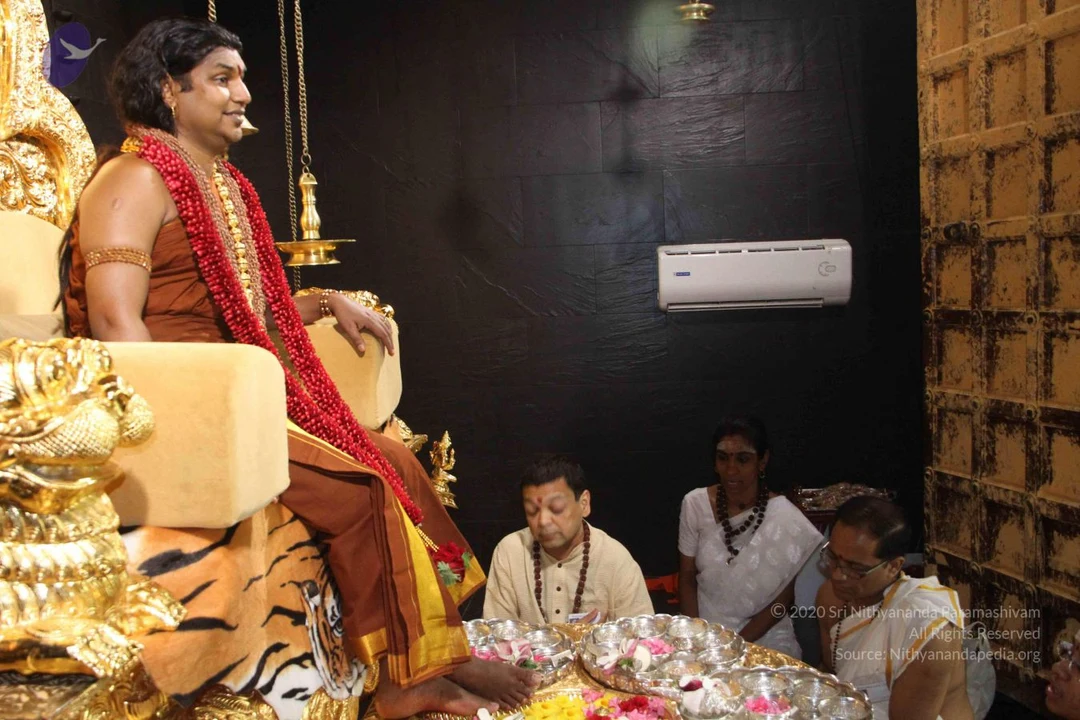
A photograph of a smiling man seated before an ornate gold-embossed throne panel, wearing a rust-orange robe with a red and gold beaded garland, a mesh-woven garland with gold beads, and a beaded bracelet on the upper arm, with a red-orange tilak on the forehead. Beside him hangs a polished brass bell on a chain, and to the right stands a brass lamp with a bird-shaped finial.A seated man in an orange-brown saffron garment smiles softly with eyes lowered. He wears a red flower garland over a beige beaded garland, a long gold chain with ornate gold beads, a gold armlet on his upper arm, and a red kumkum mark on his forehead. He sits on a cream cushioned seat in front of an ornate gold throne backrest decorated with deity relief. Beside him hang a brass bell and a brass oil lamp on chains, with a brass peacock figure in the background. Appearance-based label: Swamiji (probable), seated in person, with long swept-back hair, saffron clothing, a gold ceremonial necklace and rudraksha-style beaded garlands.Close-up photo of a man with long swept-back dark hair, a red bindi and white forehead markings, wearing red and pink flower garlands, a rudraksha-style gold and beaded necklace, gold earrings and a saffron-orange garment. He looks to the side beside a polished brass hanging bell on a chain, with an ornate gold carved throne or shrine panel behind him.Photo of a man seated on a gilded throne with ornate golden carving behind him, wearing a saffron-orange shawl, a red-and-white flower garland and gold beaded necklaces, with a red bindi on his forehead and a bangle on his upper arm. He has long swept-back dark hair and gazes to the side beside a hanging brass bell and a brass oil lamp on a chain against a black background. Appearance-based label: a person, seated on a throne in an in-person setting.A seated man with long dark hair, wearing a rust-brown garment with a yellow border, red coral beaded mala and gold ornaments, sits on a gold throne with a carved golden lion head and a tiger-skin cushion, gesturing with a raised hand. a person: long swept-back hair, a red coral mala and gold ornaments, appearance consistent with the claimed identity. Before him on a gold tray are many small brass bowls holding offerings with pink and white flowers and yellow marigold petals. Around the tray, a man in a white ritual cloth with a rudraksha mala sits with hands pressed together, another man in white with folded hands stands nearby, and a woman in an orange sari with a tilak sits with joined palms. A hanging brass lamp and an air conditioner are on the dark wall, and an ornate wooden door is at right.A photograph of a seated man on an ornate gold throne draped with a tiger-skin cushion, wearing a rust-orange dhoti-style garment, a red coral bead mala with gold ornaments, gold bangles and an arm band. He sits with hands resting and gazes to his left. Before the throne, on a gold-trimmed floor, stand silver thalis of flowers, petals, and lit oil lamps. Four people kneel in prayer or namaskar: a man in cream kurta with rudraksha mala, a man in white dhoti with rudraksha beads, a bald man in white with glasses, and a woman in orange sari with glasses at the right edge. Behind them is a dark wall, a wall-mounted air conditioner, and a carved wooden door. A gold lion-head armrest is at left. The seated figure's appearance matches the page's a person reference through his distinctive long hair, red mala and ornate gold throne, so he is treated as a person in person.
Swasti-Mantra

6 photosSource gallery
A photograph of a seated group meditation or satsang in a hall with red mats. In the foreground a woman with long blonde hair, eyes closed, wears a white kurta with a red sash over her shoulder and a mala of beads; her hands are raised palms-out. Beside her a woman in a white top and a red-and-white garment raises her hands, and to the right a woman with glasses and a blue patterned top wears a beaded mala and raises both palms. Behind them more participants in white, red and yellow saris and white clothing raise their hands. Blurred figures in the lower foreground and a small puja arrangement with flowers sit on a mat. Dozens of people are visible in the background.Photograph of a large seated group during a devotional gathering. In the foreground, two men in white dhoti-style garments with gold borders sit with palms pressed together in namaskar, one with long hair falling past the shoulders and rudraksha mala beads on his chest. Behind them, rows of young boys and girls wear maroon tunics with yellow trim and sit with hands folded or raised in prayer. On the right, a shaven-headed man wears an orange saffron shawl, a rudraksha mala and a gold-coloured chain, and sits in a meditative posture. A small oil lamp burns at the upper left edge. The mood is attentive and devotional.A photograph of a seated group of devotees in saffron-orange robes with rudraksha malas, raising their hands in a gesture of prayer or salutation during a satsang. Several men are visible; the foreground figure has a shaved head and wears gold beaded necklaces, another wears a long-haired saffron wrap and a bead mala, and a bald man on the left wears a wristwatch. Blurred maroon-clad devotees and a yellow-flowered backdrop fill the background, and a corner logo mark appears at top left.Seated ashram group with hands raised in mudra-like gesture during satsang. Two men in front wear white dhotis with gold-bordered shawls and rudraksha malas; the man on the left has long hair and a gold-tipped mala, the man on the right has a white forehead marking and braided hair. Behind them, a row of boys in maroon robes with gold trim sit cross-legged with raised palms, and an older man on the far right wears saffron/orange robes and a rudraksha mala. Tiled floor with a green plastic container at left. No identity is confirmed by appearance; the scene shows devotees in satsang posture.A seated man in a white dhoti and shawl with a gold border, wearing a rudraksha mala, sits with palms raised in a devotional gesture while his eyes are lowered. Behind him, several seated people in maroon and gold-bordered garments fill the hall, and a green container and a pink box sit on the floor in front. A brass vessel and leaves are visible at the lower edge. a person appearance cues include the long swept-back hair, a rudraksha mala and gold-bordered white ritual clothing, but the identification is uncertain.A seated group of boys in maroon tunics with gold vertical stripes raises their open hands in a satsang-style gathering. Many boys wear white sacred marks on their foreheads and some have gold earrings. Behind them, adults in white shirts and white clothing also raise hands or sit with palms up. The setting appears to be an indoor hall with red seating. No identifiable a person figure is clearly visible in the frame.

NithyaSatsang-Swamiji
16 photosSource gallery
A seated man in orange-brown ochre robes with a gold-bead and rudraksha mala necklace sits centrally on an ornate gold throne with red velvet armrests carved as golden lion heads. A small red bindi marks his forehead and a microphone is clipped near his face. He rests his hands on the armrests and smiles, with bare feet on a tiger-striped cloth. Behind him stand golden deity statues and painted figures of a multi-armed deity with ornamental bangles. The gilded setting suggests a satsang stage. Swamiji (probable): long swept-back hair, saffron-ochre robes, rudraksha and gold-bead mala, and a bindi, with a throne setting consistent with the page's description.A photograph of a seated figure on an ornate golden throne with a high arched back carved with lion-like motifs and flanked by gilded lion armrests draped in red tiger-striped fabric. The person wears a rust-orange robe over one shoulder, a heavy gold necklace and a rudraksha mala, gold armbands and gold earrings, with a red bindi on the forehead. Dark hair is swept back and the figure sits cross-legged on a striped cloth, hands resting on the armrests. Painted deity figures with multiple arms appear at the left and right edges.A man seated cross-legged on an ornate golden throne with a high arched back, flanked by gilded lion-head armrests and red velvet cushions with tiger-stripe patterns. He wears a saffron-orange garment with a gold border, a long multi-strand rudraksha mala with ceremonial gold necklaces, gold armbands, and a red bindi, and holds a small tablet on his lap. He has long swept-back hair and wears a headset microphone, appearing to speak. To the left stands a painted deity figure with multiple arms and a flaming torch-like object, and gilded figures appear at the right edge.A seated man with short dark hair and a red bindi smiles broadly on an ornate gold throne with carved lion-head arms, its red velvet cushions patterned in black stripes. He wears a rust-orange wrap over the shoulders, a rust-orange dhoti with a gold border, thick gold bead necklaces, a brown rudraksha mala, gold bangles and armbands, and a small lapel microphone. He sits cross-legged with bare feet, and a tiger-striped cloth covers the dais. a person is seated in the center of the frame, identified by the orange-saffron clothing, rudraksha mala, gold necklaces and throne.A seated man on an ornate golden throne with red tiger-striped cushions and gold lion-head armrests. He wears a saffron-orange garment with a gold-bordered cloth, a red-brown rudraksha mala with gold beads and a long gold pendant necklace, gold bangles and an armlet, and a red bindi on his forehead. He rests one hand on his chin in a thoughtful pose, with a small microphone on his cheek. Swamiji (probable) is seated in the centre, with long swept-back hair, rudraksha mala and ornate gold jewellery.A man sits cross-legged on an ornate golden throne with red tiger-striped cushions and a tiger-skin rug, resting his chin on one hand and smiling. He wears a rust-orange robe with a yellow-gold border, multiple rudraksha malas and a heavy gold necklace, gold armbands and bangles, and a red bindi on his forehead, with a small headset microphone at his ear. Golden lion-head armrests flank the throne, and gold deity figures with raised arms stand at the edges. A tiger-stripe pattern and a copyright notice appear in the frame. The photo appears to show a satsang discourse; the seated figure is an appearance-based a person (a person), recognized by his distinctive saffron-orange attire, malas and ceremonial gold necklace on a throne.
SarvaDarshan

8 photosSource gallery
A photograph of a smiling man with long swept-back dark hair, wearing a rust-brown saffron-toned dhoti-style garment, a thick gold-bead necklace with a large gold pendant over a rudraksha mala, gold armlets and gold bangles, and a red bindi on his forehead. He raises his right hand in a greeting gesture toward a seated group of devotees in white clothes with palms pressed together in namaste. A cameraman on the right films him. Behind him stands a golden deity murti in an ornate shrine and a red curtain backdrop. a person on the left at the front of the satsang setting, with a cameraman and devotees in white visible.A smiling person in a rust-orange saffron wrap with a red bindi and layered gold bead necklaces and rudraksha-style mala beads stands at center, one arm raised with a gold-bead bracelet and bangle. He rests his hand on the head of a man bowing with hands folded, wearing a yellow shirt. Behind them a blurred hall shows red drapes and a golden throne-like seat, with other people and a hand holding up a phone at right. Swamiji (probable): the orange wrap, long swept-back hair, ornate gold necklaces and rudraksha malas match the cues attributed to the Nithyananda Paramashivam page.A photograph of a long-haired figure in an ochre-saffron shawl draped over bare shoulders, wearing layered rudraksha-style brown beads and a heavy ceremonial gold necklace, gold earrings and gold armbands, raising one hand in blessing toward a man in a white collared shirt who leans in with a folded paper in hand. Behind them stands a crowd, with a man in a yellow shirt at left and a red curtain and gold-coloured decor in the background.A smiling man with long swept-back dark hair and a red tilak on his forehead stands in the foreground, wearing a rust-brown saffron-toned cloth, multiple strands of rudraksha beads, and layered ceremonial gold bead necklaces, with gold hoop earrings and a beaded bracelet on his raised arm. His hand rests on the head of a seated person with short dark hair in the lower left foreground. Behind him, a red draped backdrop and a gold and red throne-like seat are visible, with several other people blurred in the background.A photograph of a smiling man with long dark hair, a red bindi on his forehead, and rudraksha malas with ceremonial gold necklaces over a rust-orange shawl and bare shoulders. His right hand rests on the head of a seated devotee in the lower left, giving blessing. Behind them, people in white and light clothing stand in a hall with a deep red curtain and white walls. The man has distinctive adornments matching the a person description, with the rudraksha malas, gold necklaces and saffron-orange clothing. Approximately 6-20 people are visible in the background and foreground.A man with long swept-back dark hair wears a rust-orange saffron-toned shawl over a bare upper body, with a thick gold necklace and a rudraksha-style bead mala across his chest. He raises one hand in a blessing gesture while turning toward a bent-over devotee in grey striped clothing at the lower left. Behind him, people in white and colourful saris stand in a hall with red draped curtains and white walls.
Temple
14 photosSource gallery
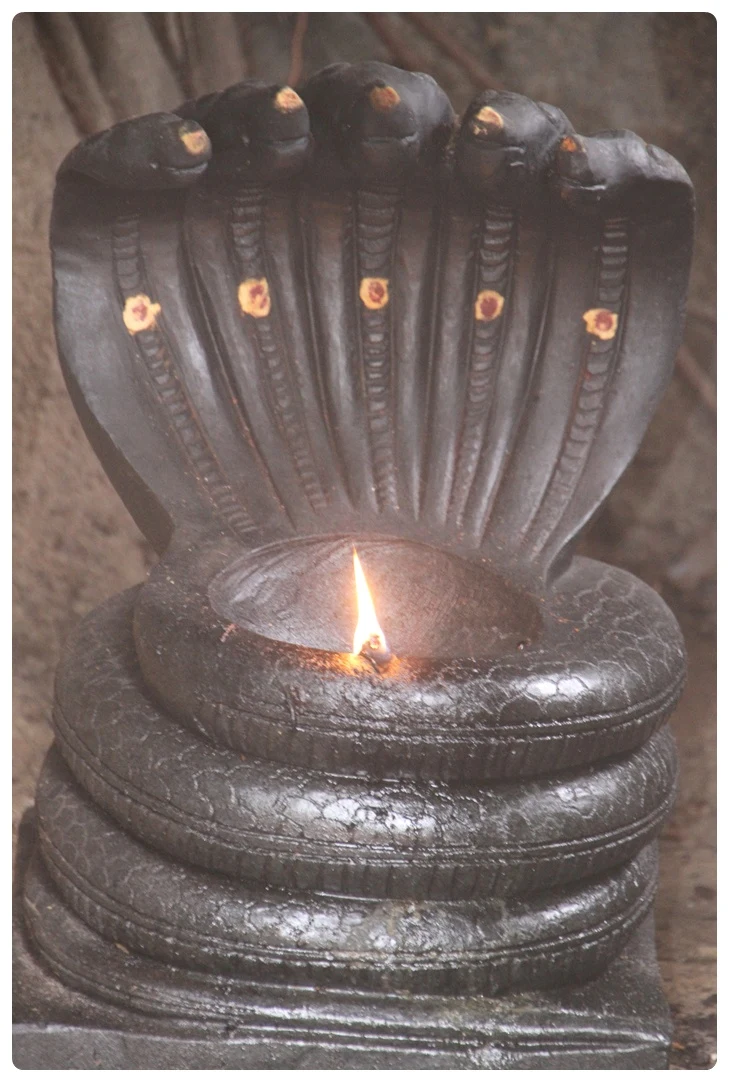
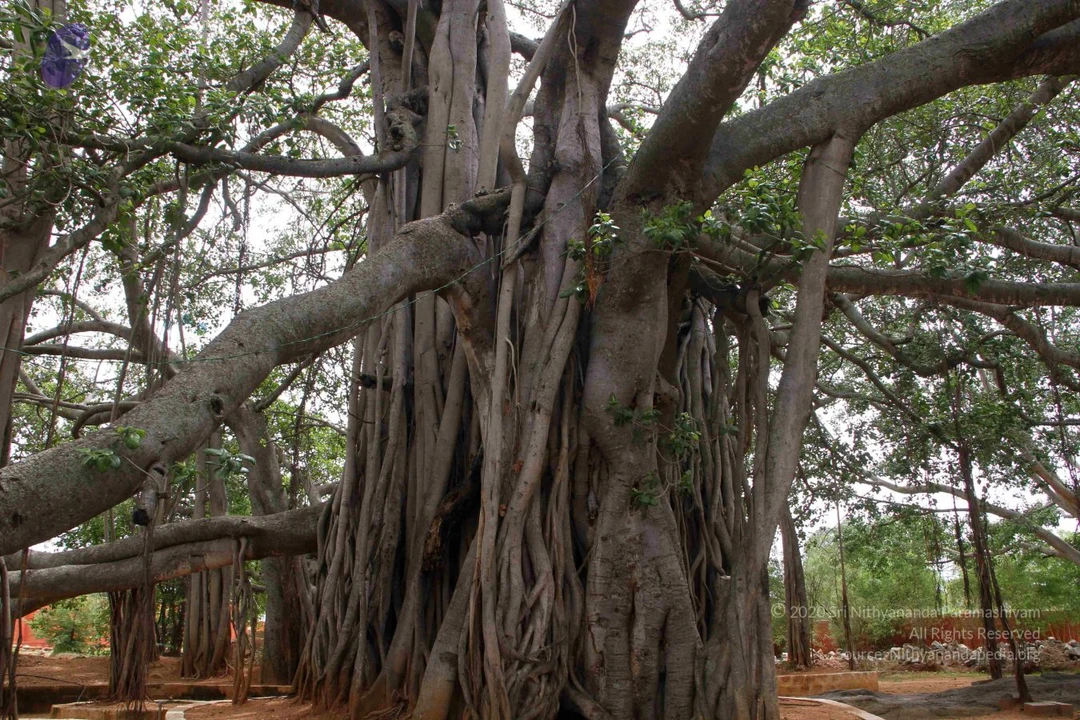
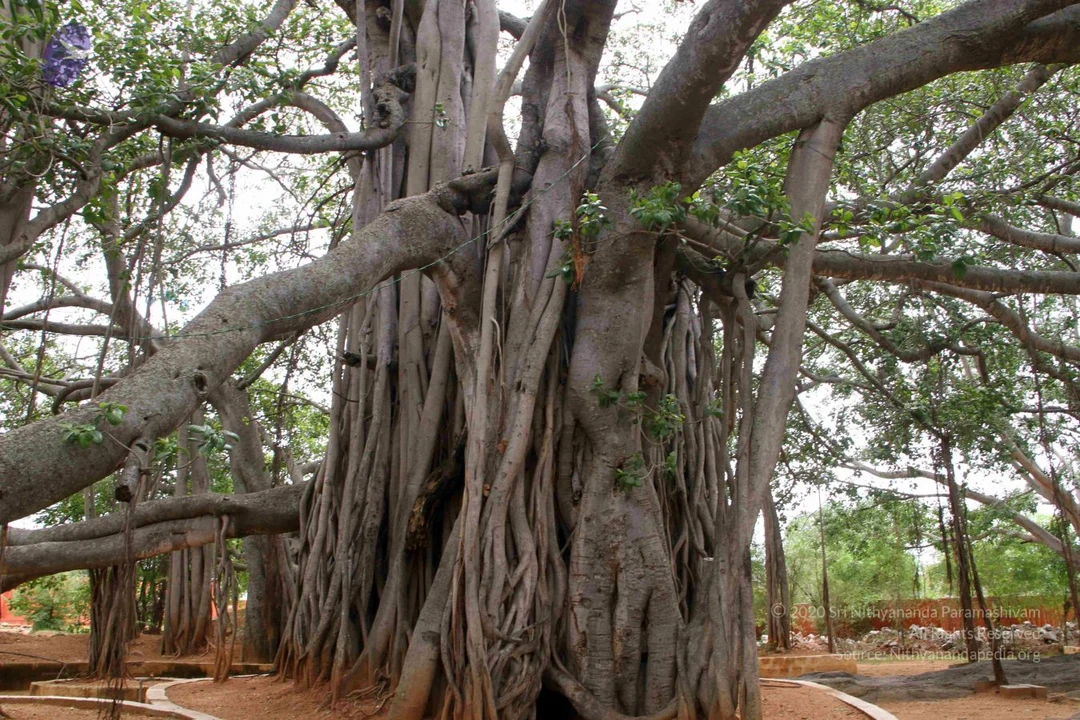
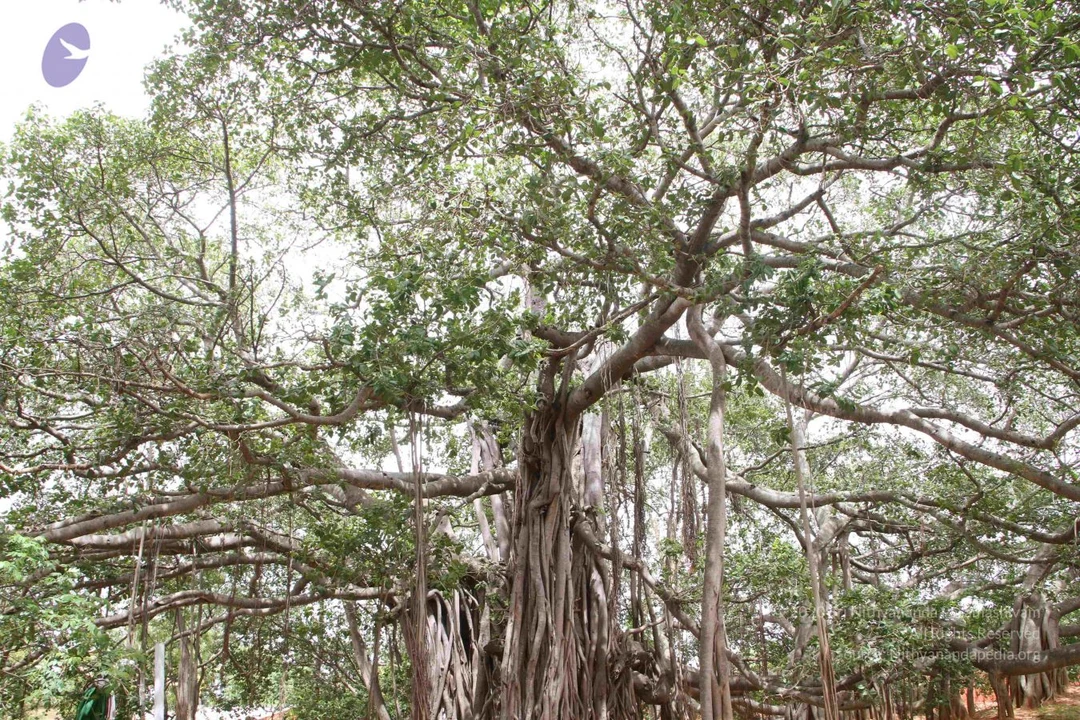
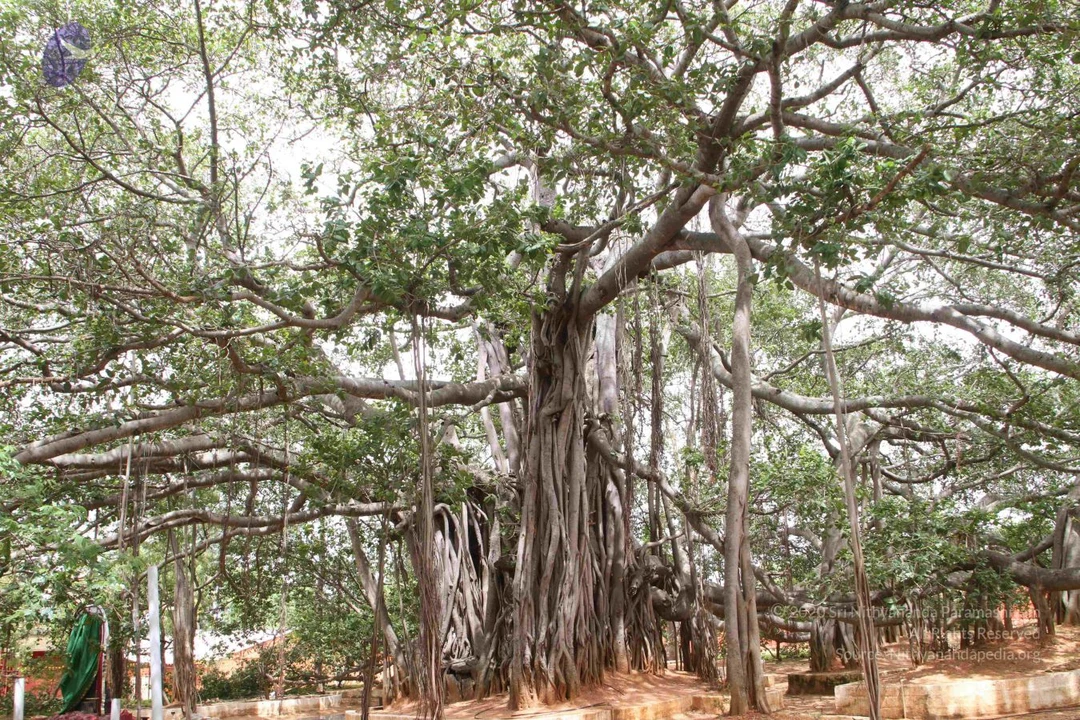
A large, sprawling banyan tree dominates the scene, its many thick branches spreading wide over a sandy, open courtyard with hanging aerial roots forming multiple trunks. At the lower right stands a small black stone statue of a seated figure draped with a green cloth, set on a raised red-stone platform with a low circular rim. Pale stone slabs and a dark mat lie on the ground near the tree trunk. No people are visible in the frame.A dark stone statue of a seated deity murti sits within a white carved arched niche in an open, tree-shaded courtyard. The figure wears a cream dhoti and a long garland of beads, with a green curtain behind it. Its base is heaped with red-painted stones or offerings, and a small placard in front bears a line of text. Thick banyan-type trees and a paved circular platform surround the shrine.A black stone murti of a deity stands inside a white ornate arch set before a green cloth backdrop with gold motifs, under shady trees in an outdoor garden. The figure has multiple arms, a yellow-orange shawl draped over the body, a blue sash, a rudraksha mala and gold necklaces, and a gold band across the forehead. A raised circular platform with a black border holds a base covered in red-stained stones, and a small plaque sits in front. No physical people are visible.Close-up of a large black stone murti of a four-armed deity seated against a green curtain with gold dots and an ornate silver-tone frame. The statue wears a peach-coloured dhoti-style cloth with a blue waist sash, multiple strands of brown rudraksha malas, a blue-and-cream bead necklace, and a tilaka-like red mark on the forehead. Its hands hold a drum, a trident-like staff, and make a blessing gesture, with red-dotted bangles and a sprinkling of red petals at the base. The statue is an image, not a living person, and no physical people are visible.A large black stone statue of a four-armed deity murti seated in a silver-framed niche before a green cloth with gold dots. The figure wears a peach-coloured shawl, a blue waist cloth, a peach headband with a red-and-green bead garland, and many layers of rudraksha and beaded necklaces with gold pendants. Red tilak and red gemstone-like dots decorate the hands and arms, and several hands display ritual gestures and objects. Trees appear at the right edge.A dark stone statue of a seated deity murti with four arms and a serene face, wearing a peach-coloured dhoti-style wrap and a peach headband. Multiple rudraksha malas and beaded necklaces in brown, orange and blue hang across the chest, with gold pendants. Red kumkum dots mark the forehead and hands. Behind the figure is a green fabric backdrop with gold floral motifs, and a carved silver panel with ornate floral and bird relief stands at the left edge. A blue cloth drapes at the right. No physical people are visible.