Skip to content
Saturday

1 October 2016

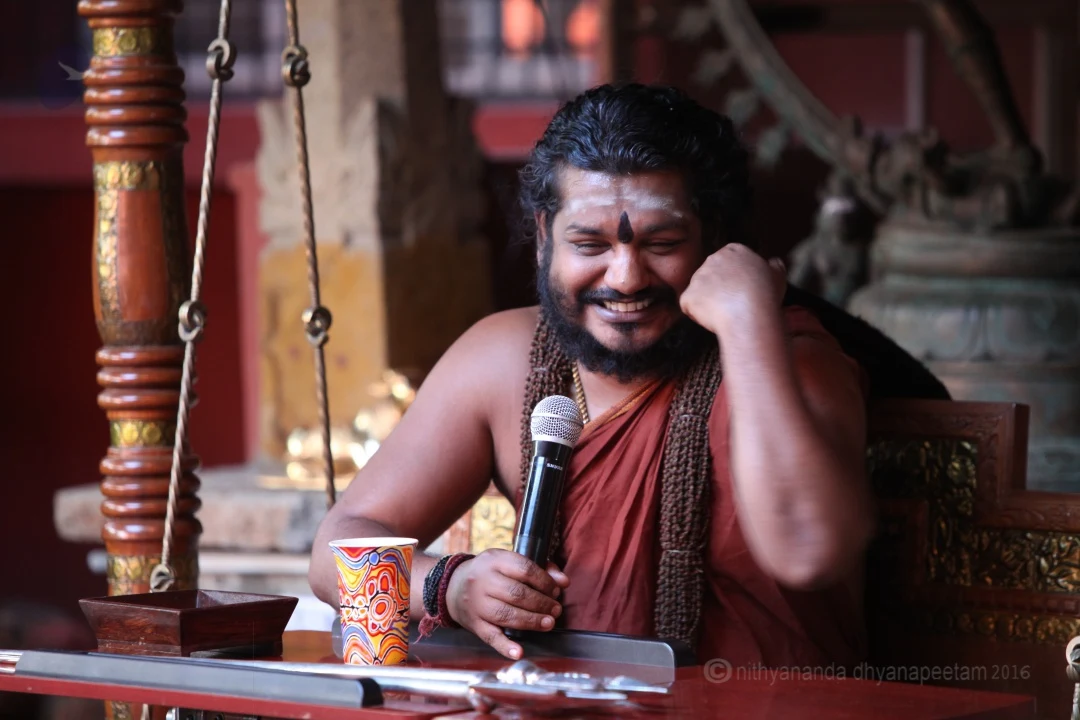
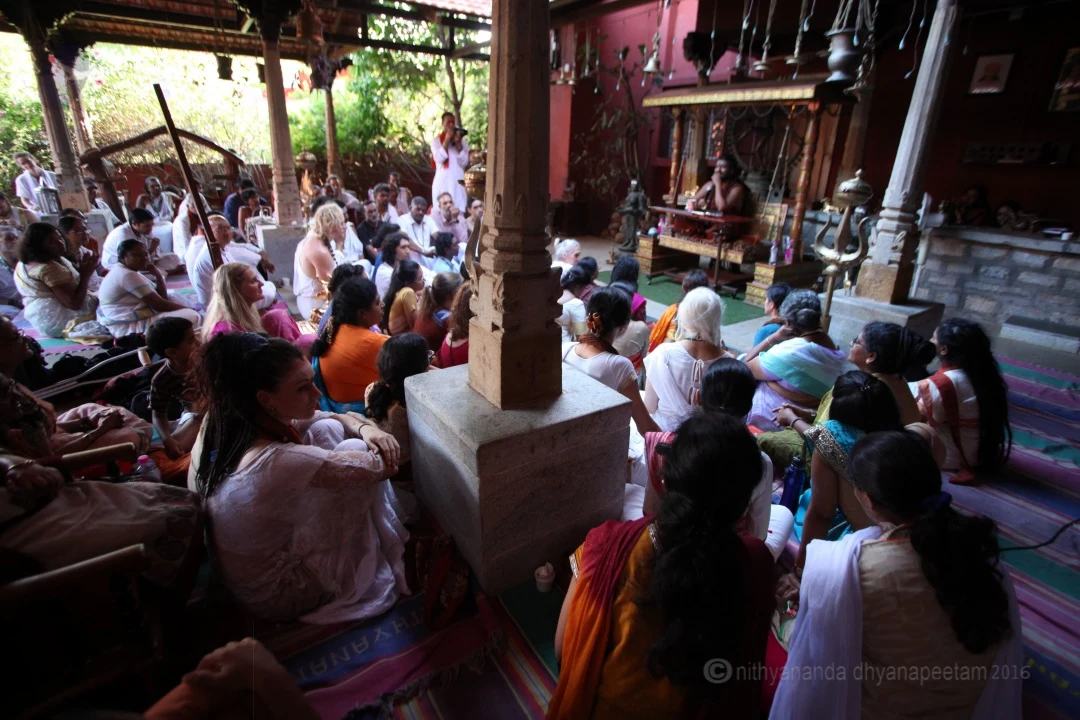
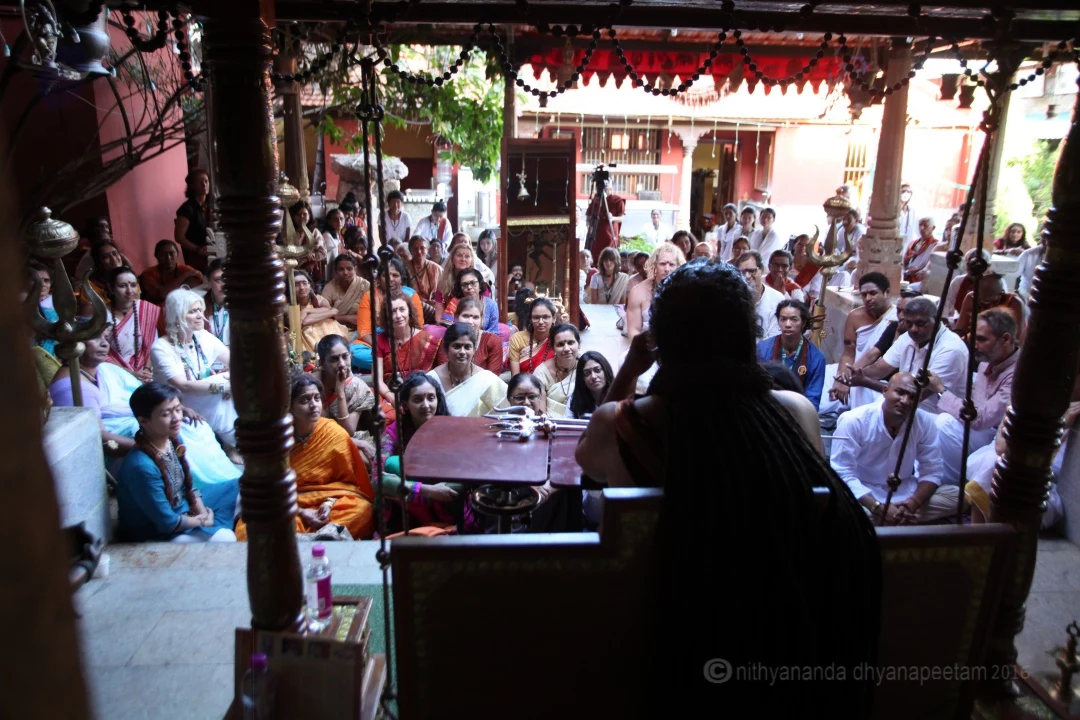
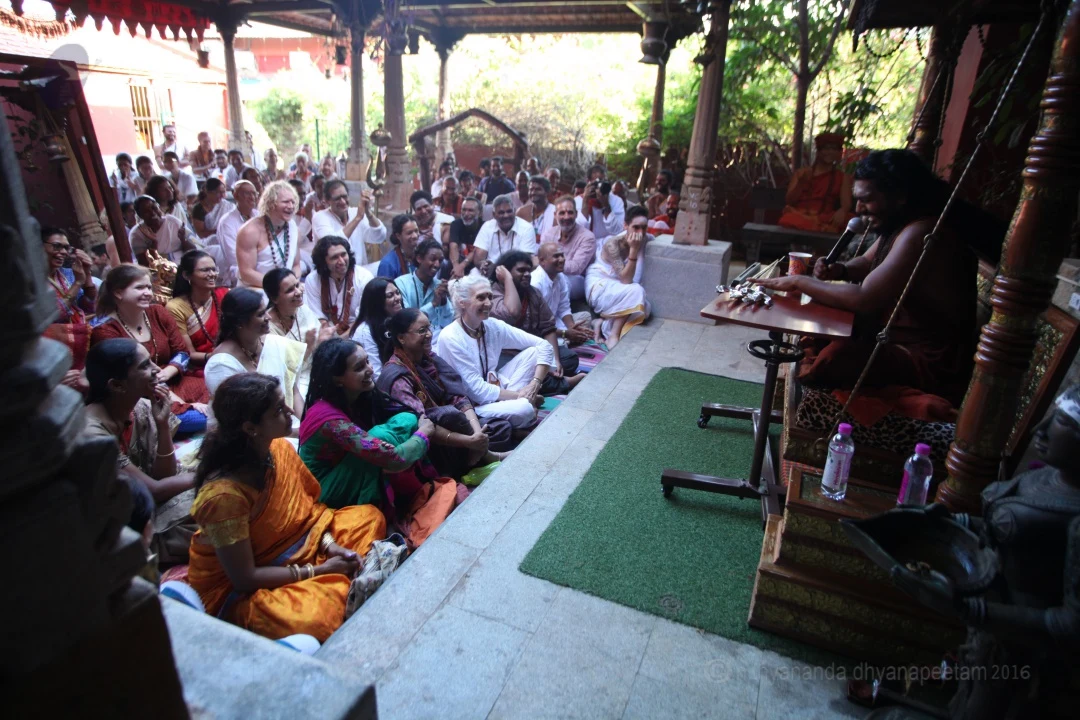
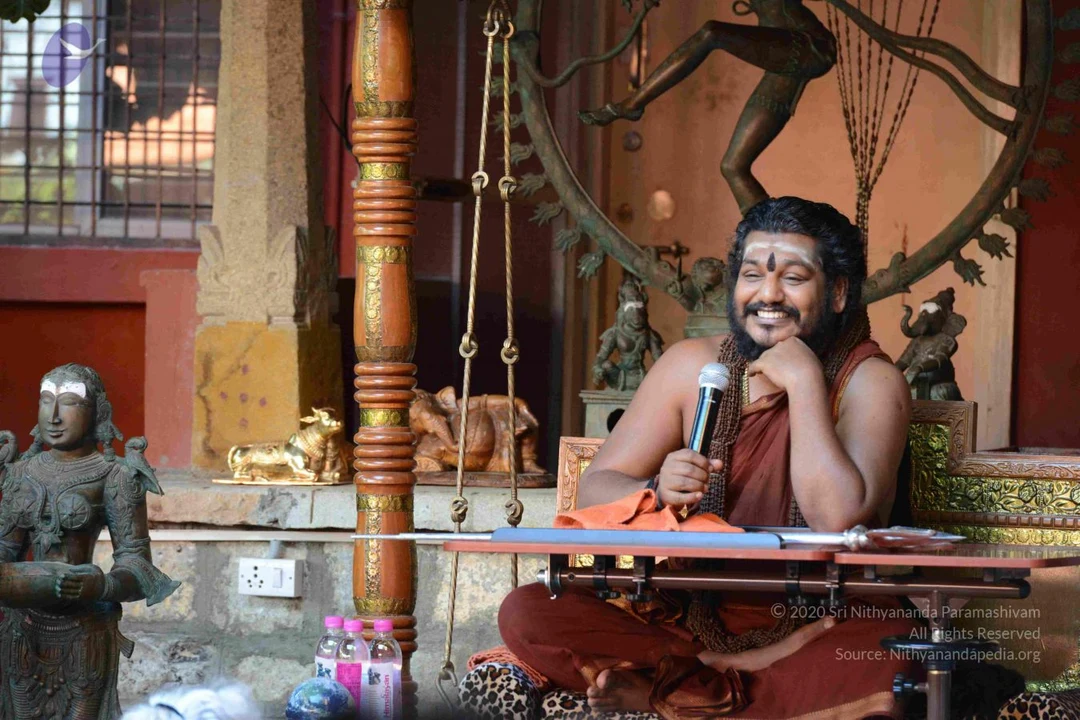
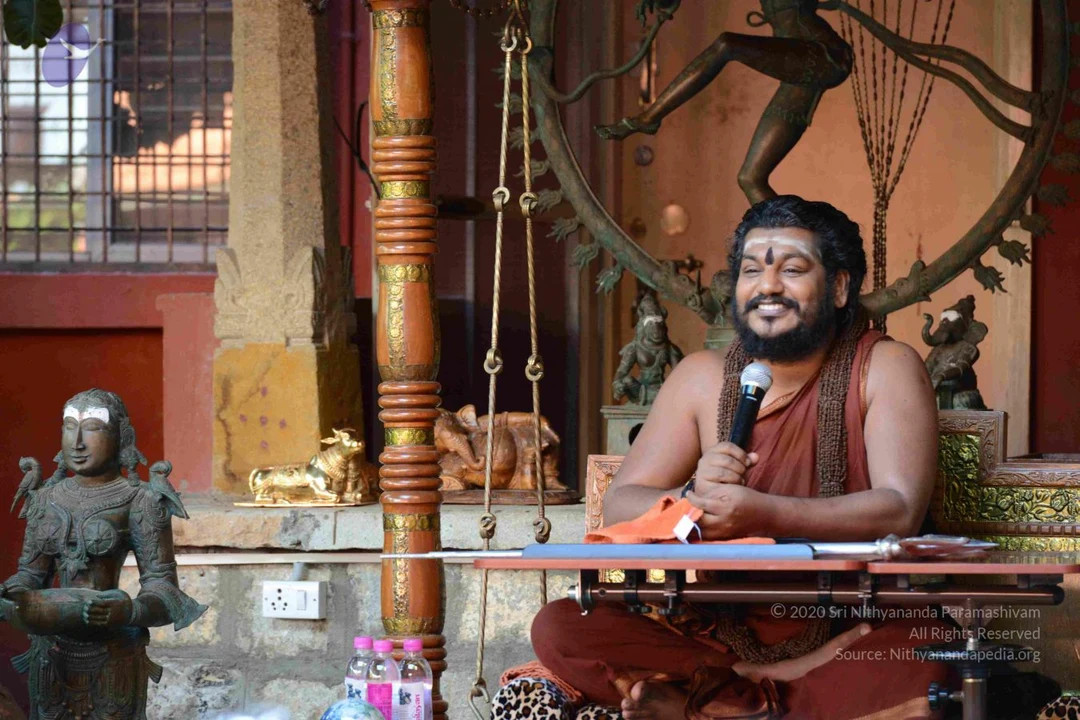
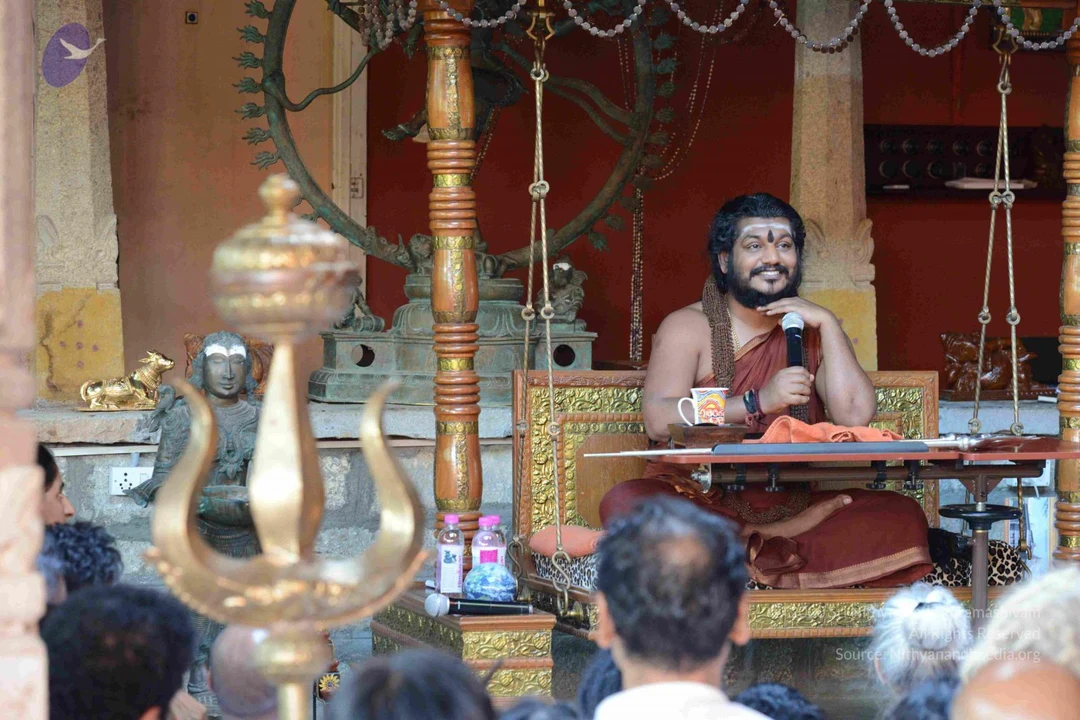
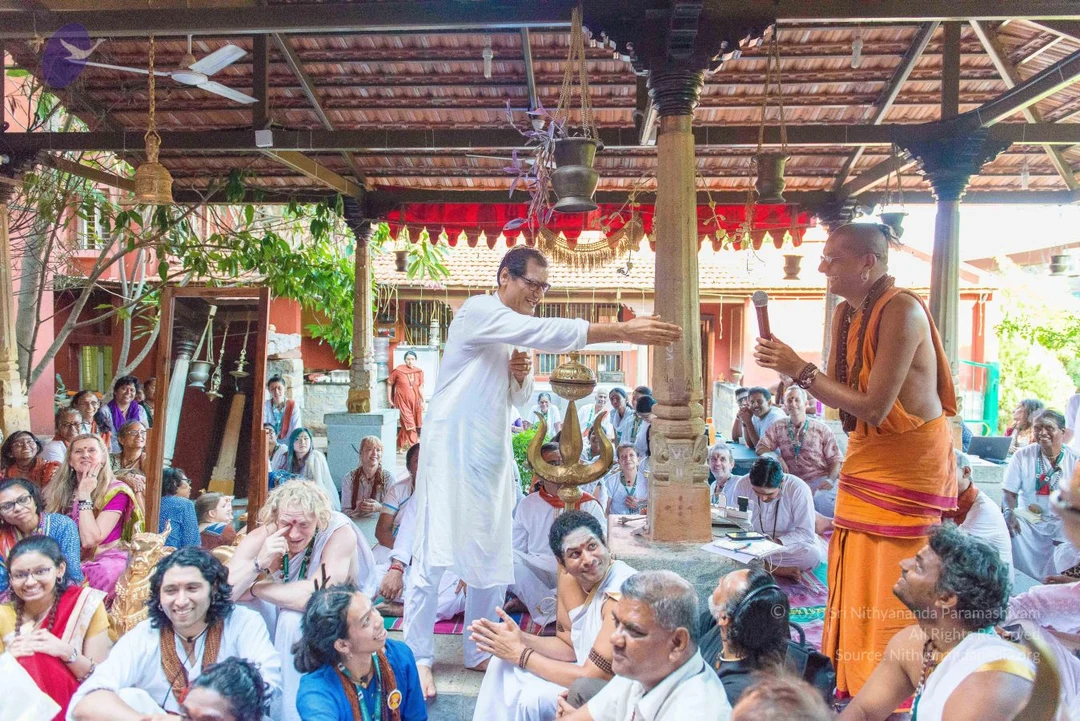
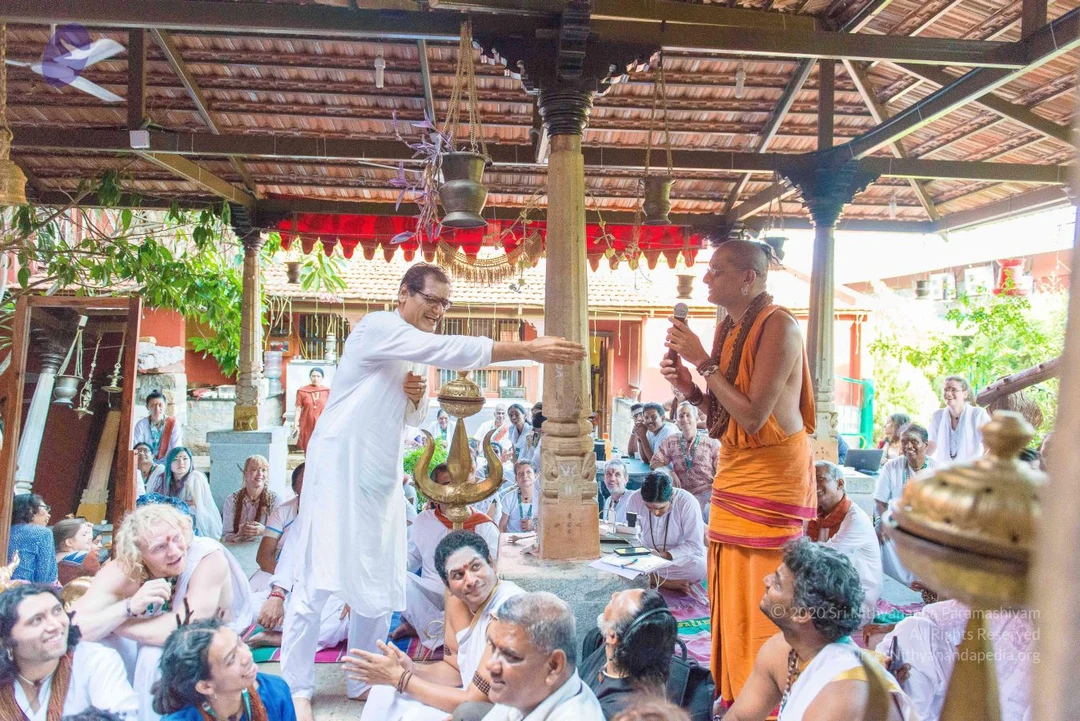
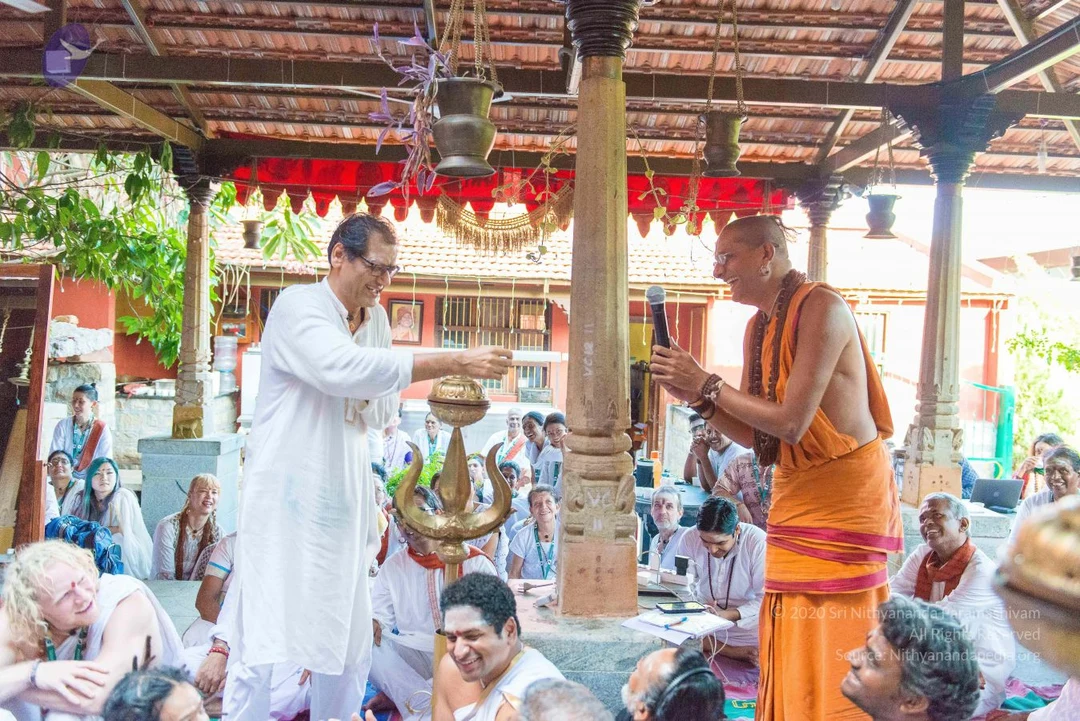
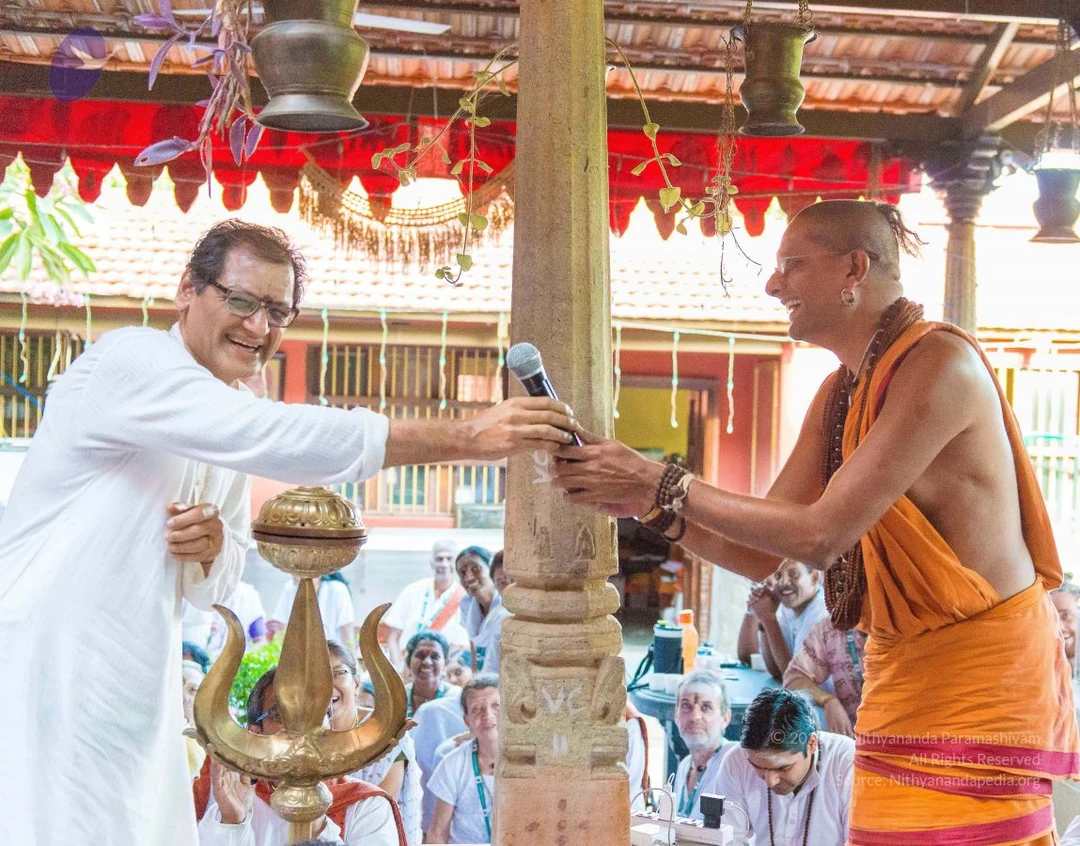
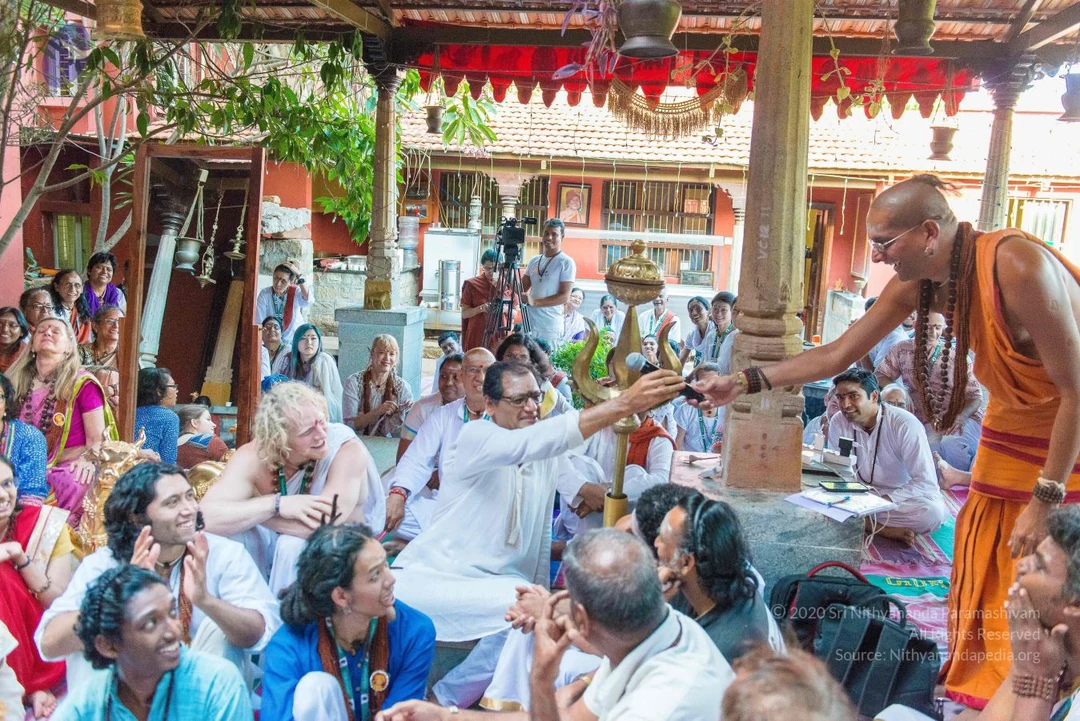
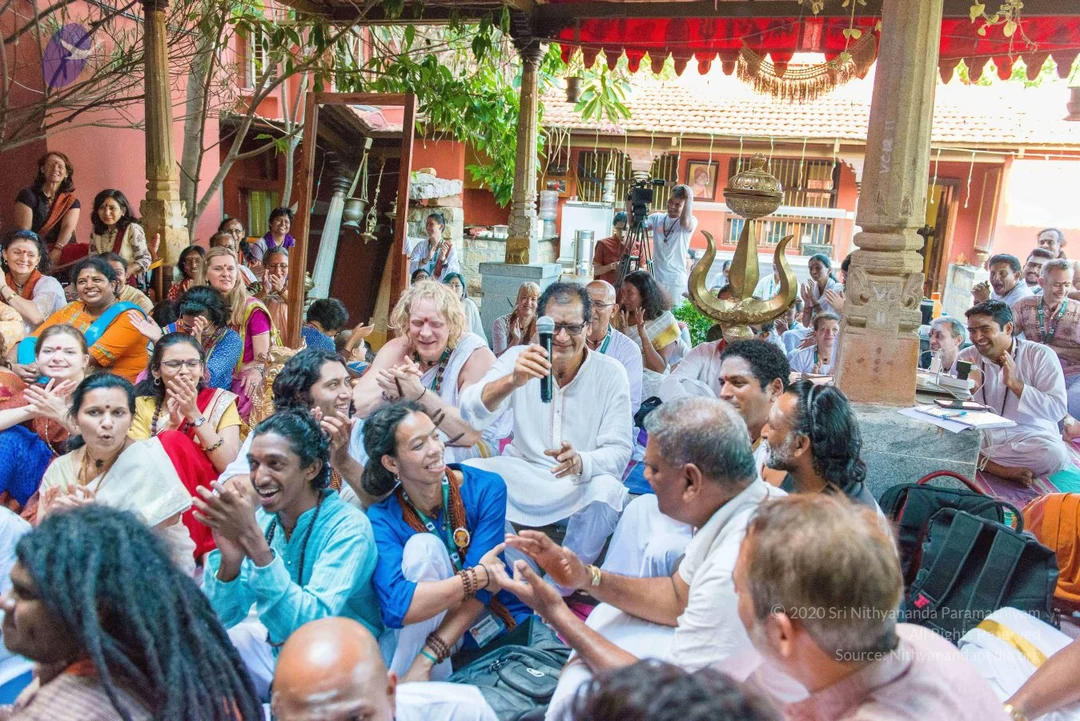
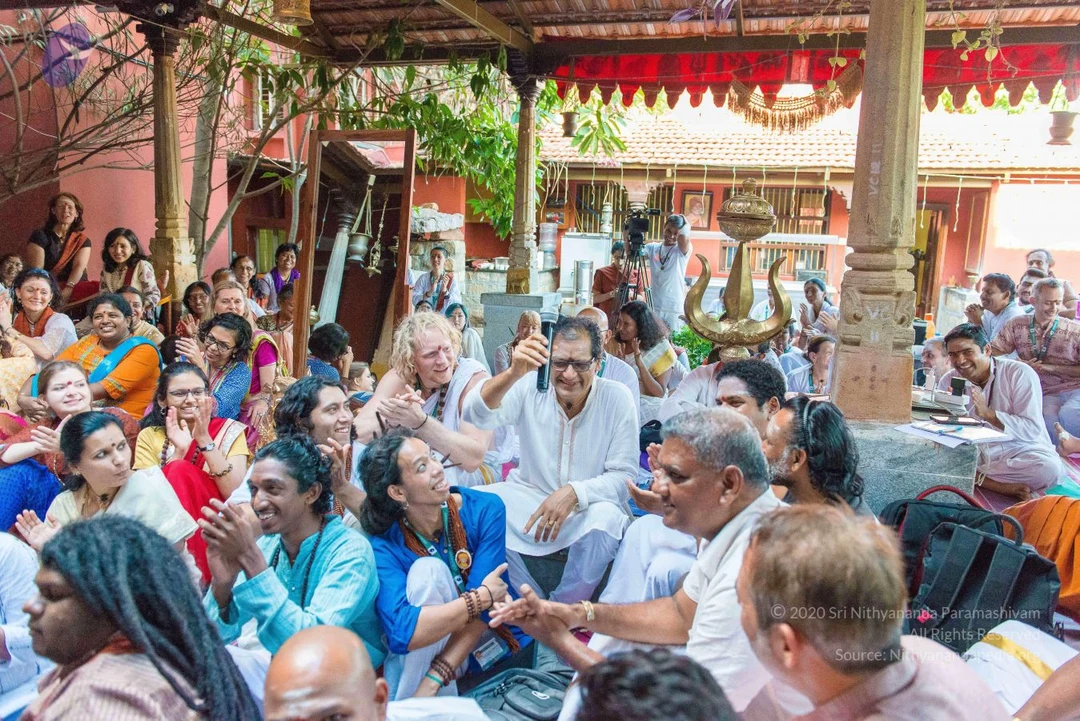
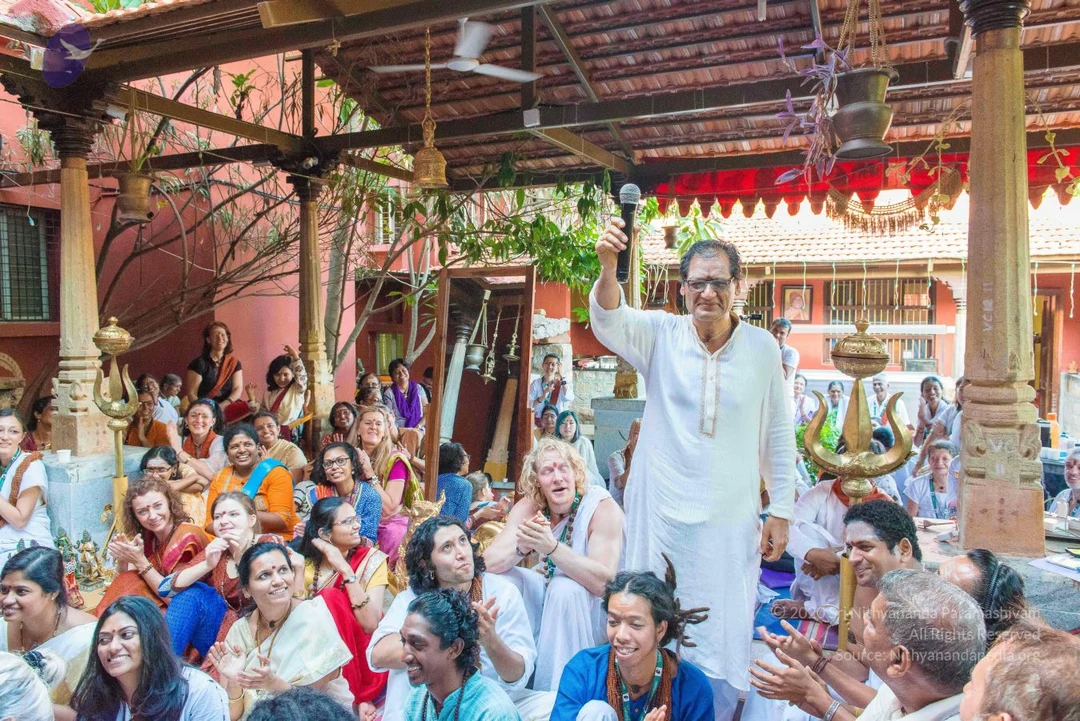
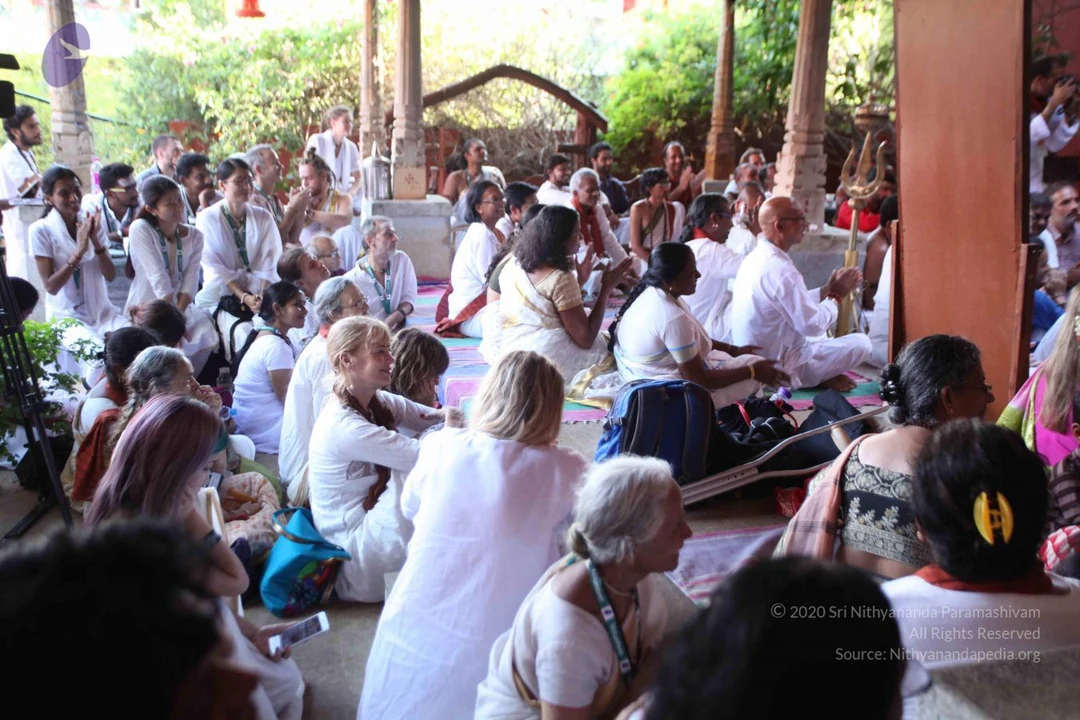
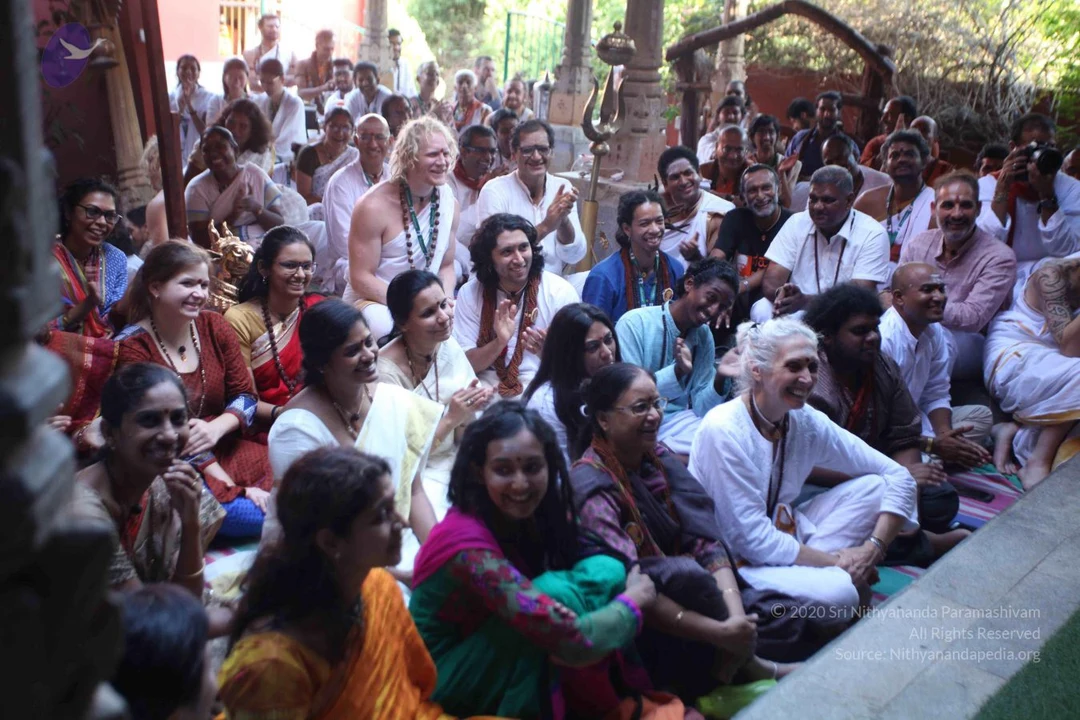
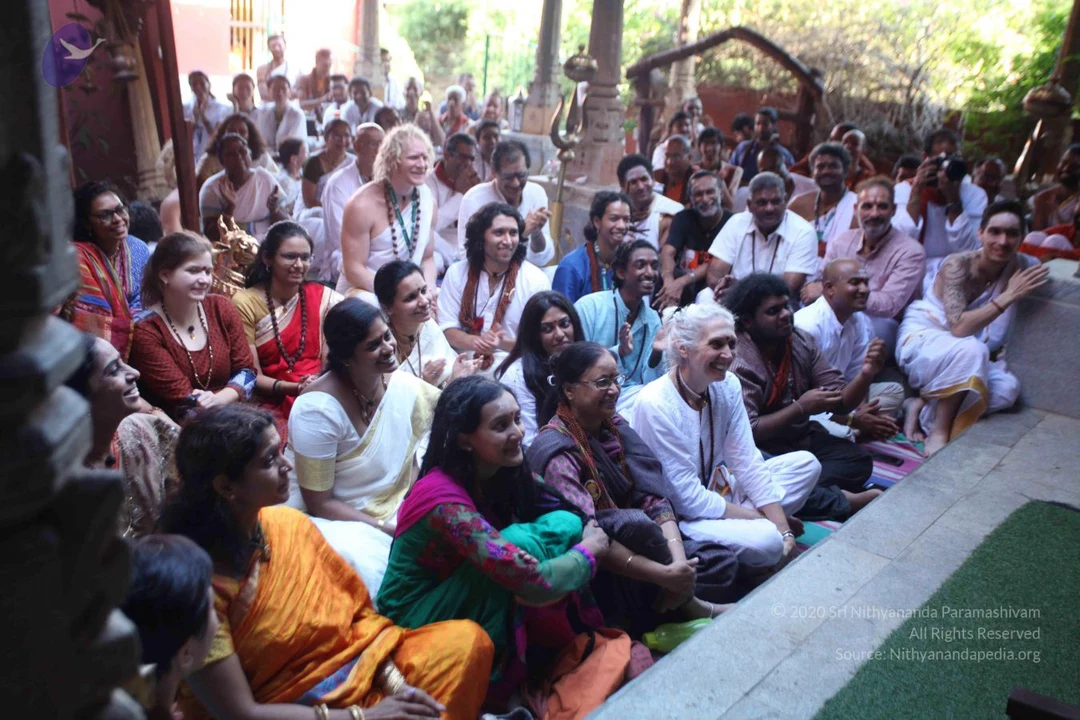
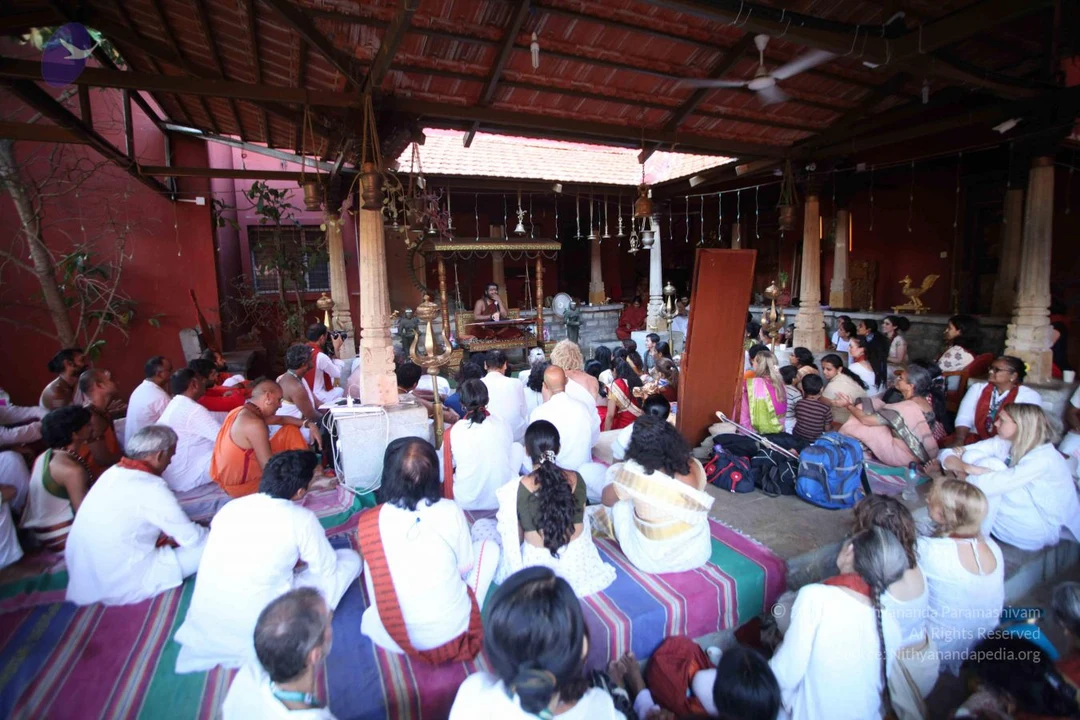
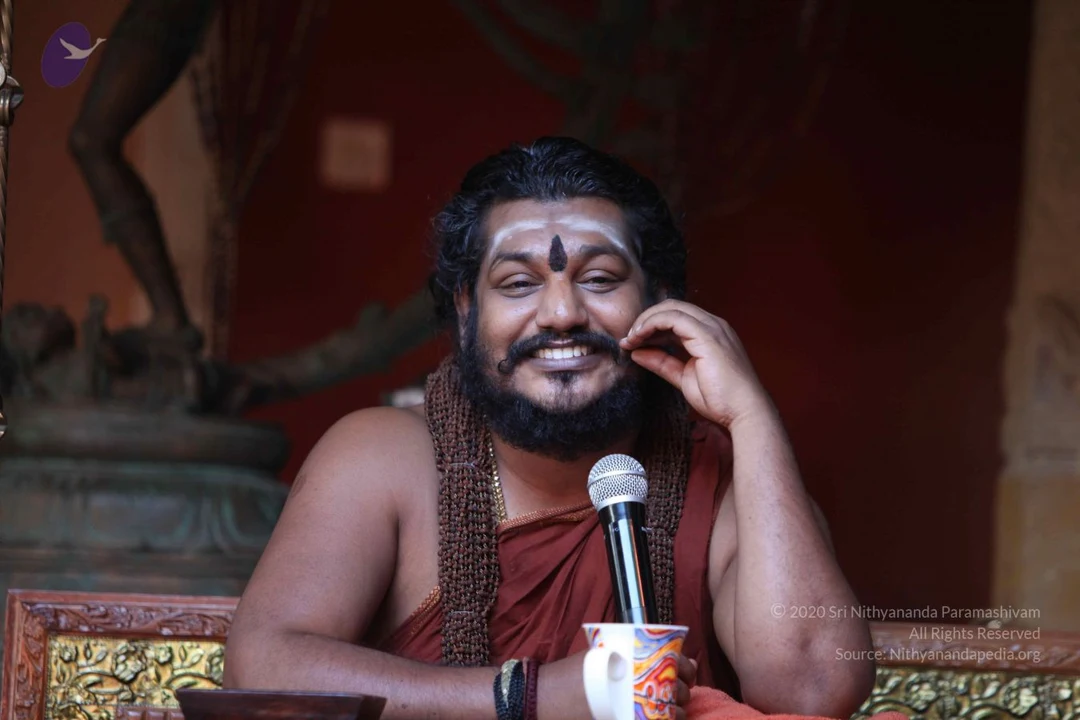
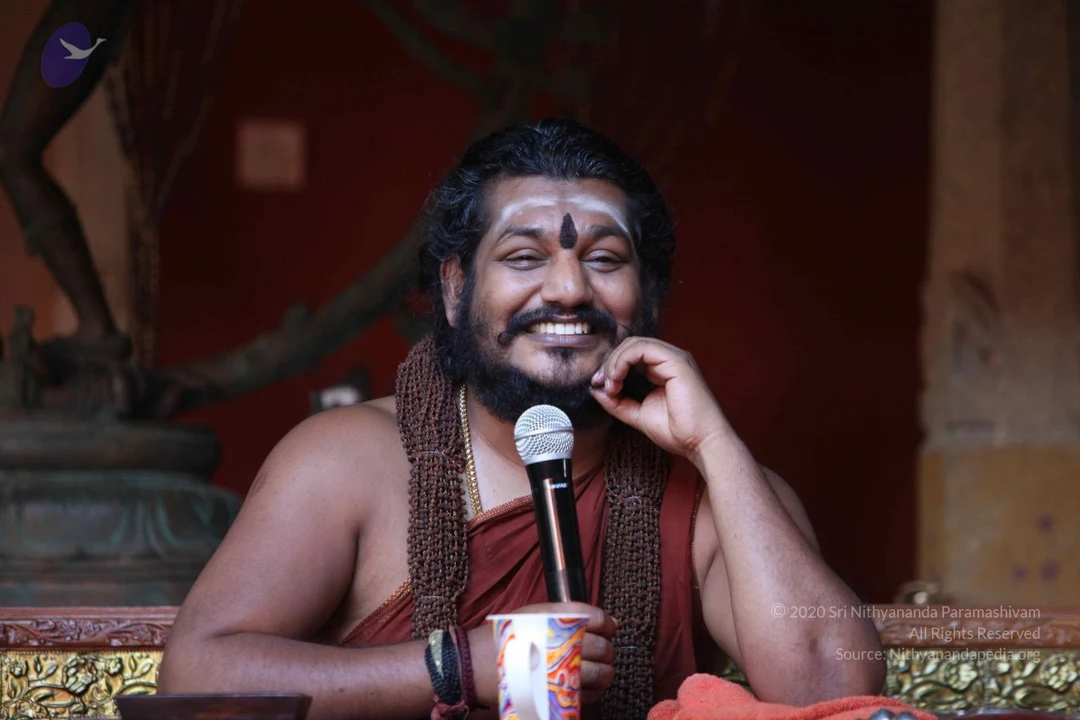
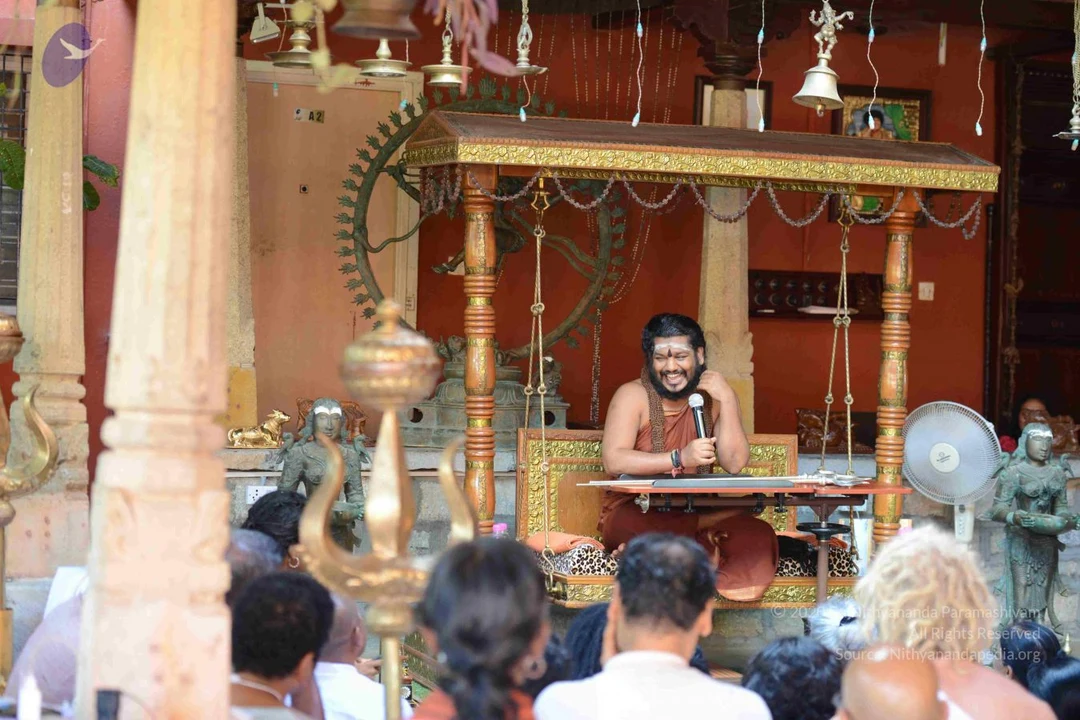
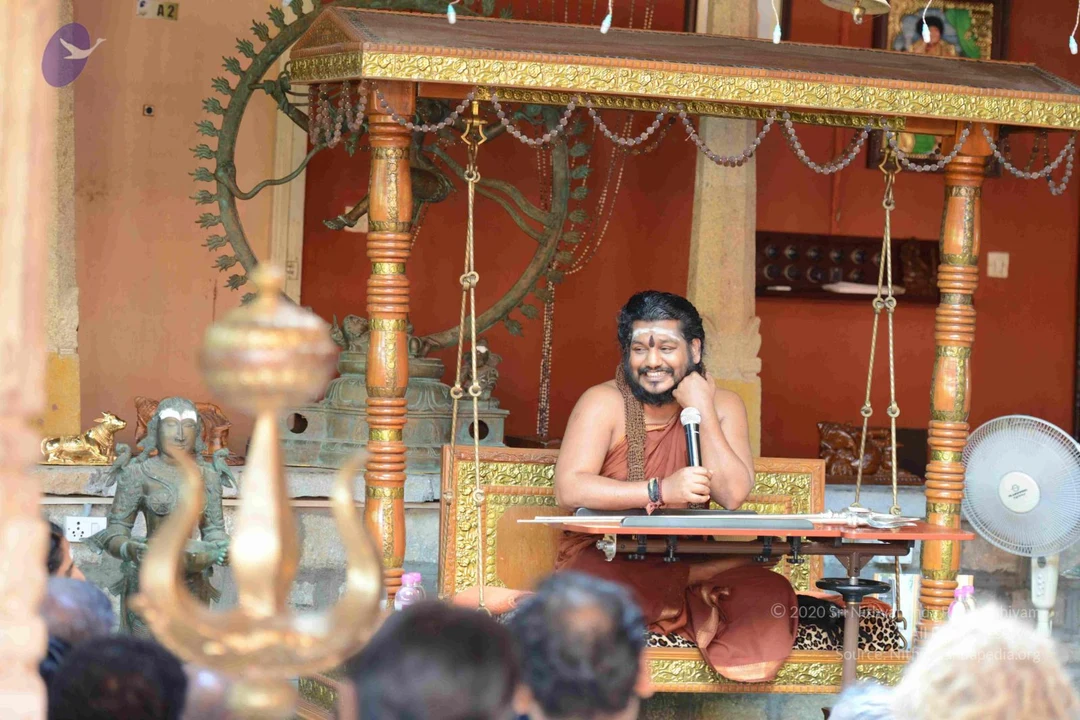
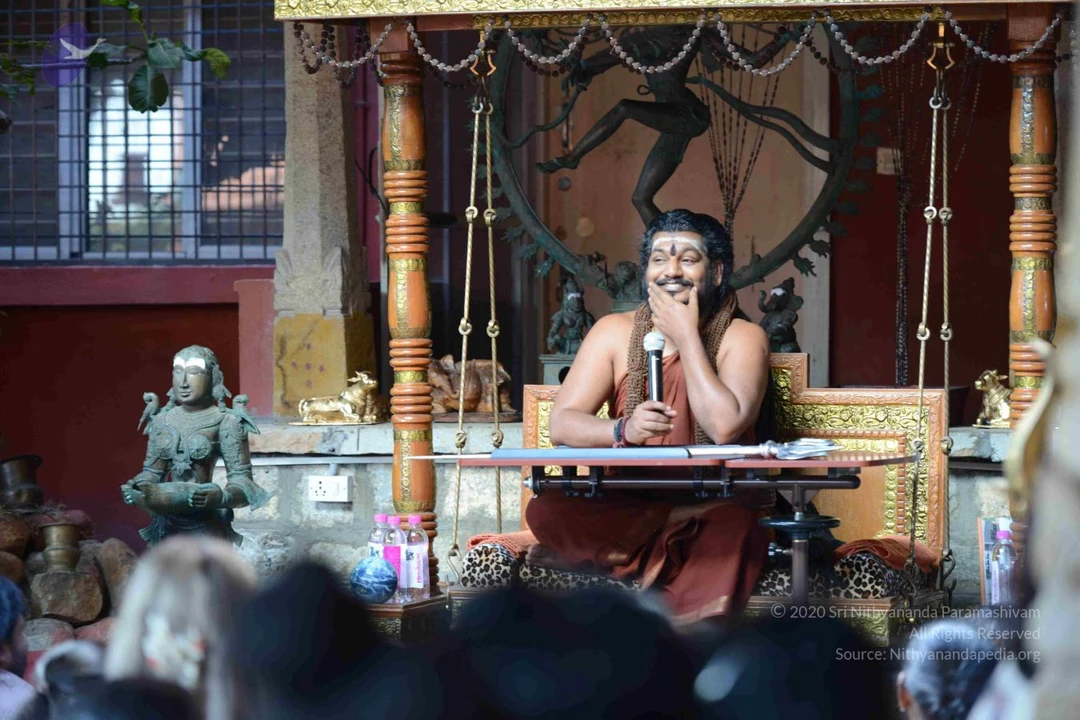
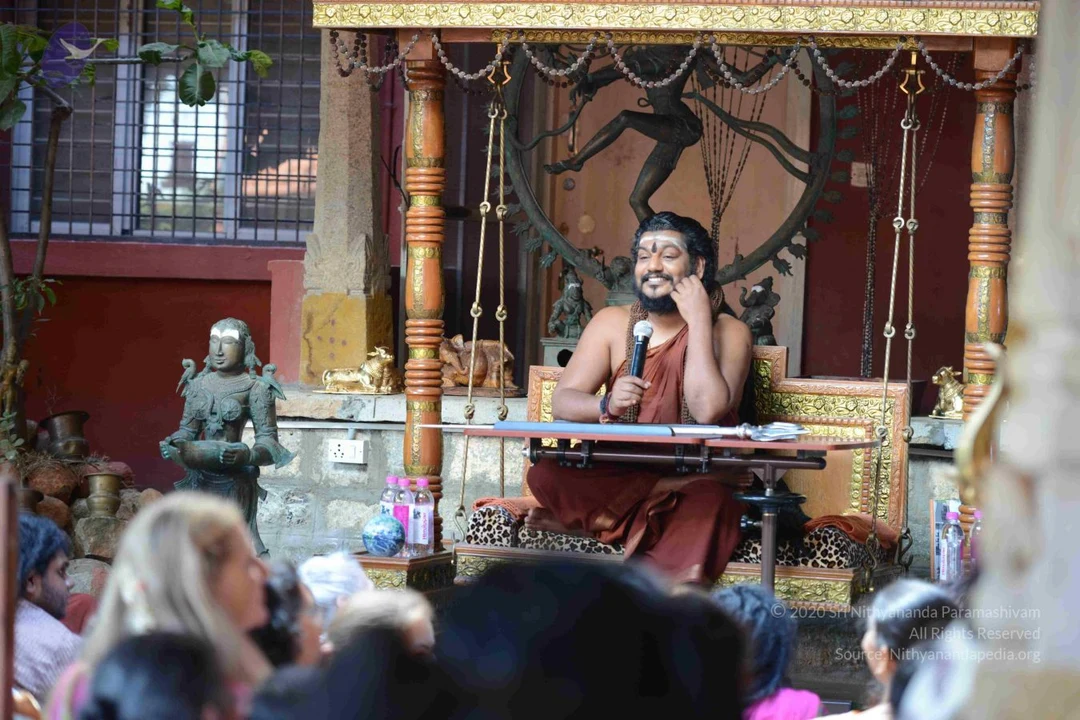
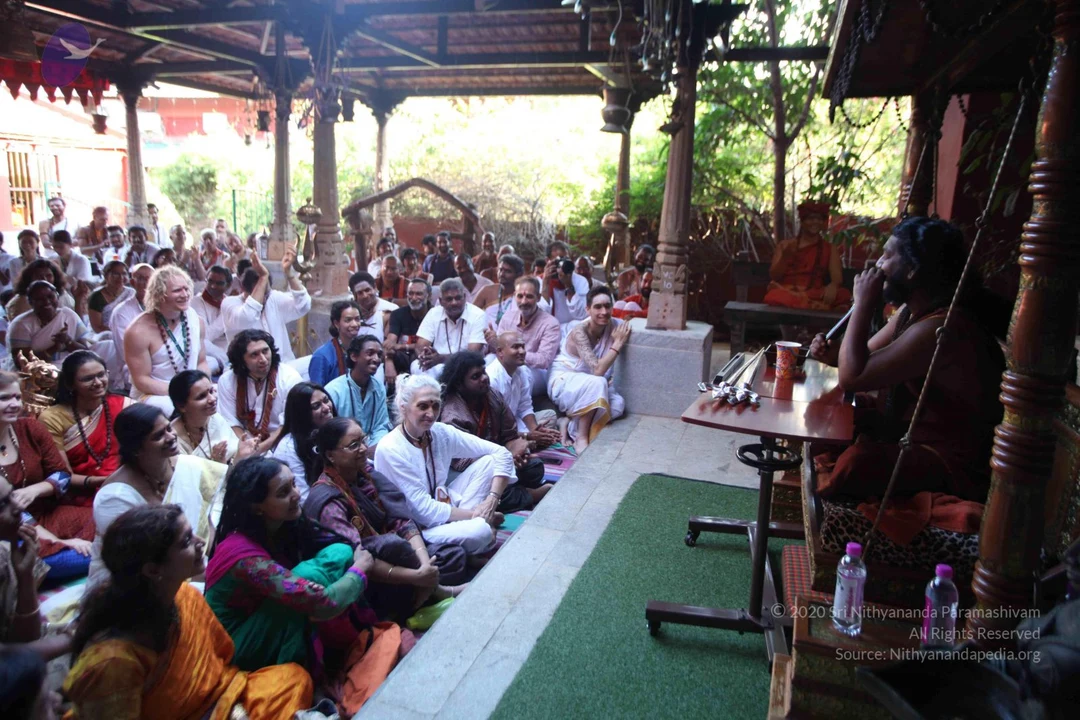
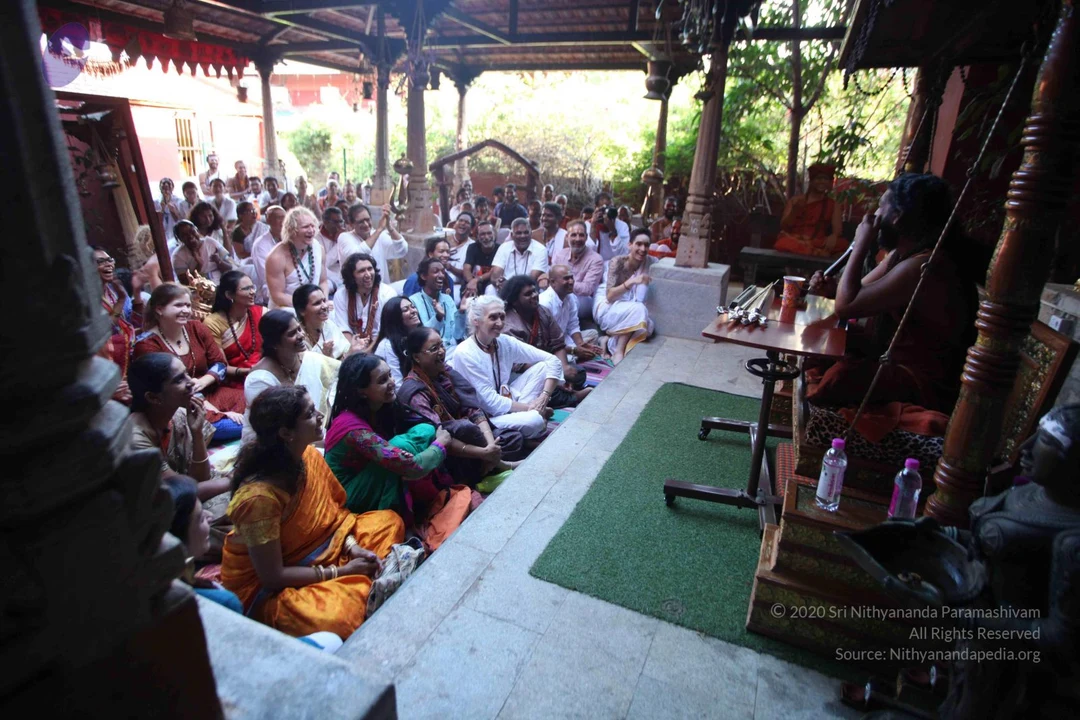
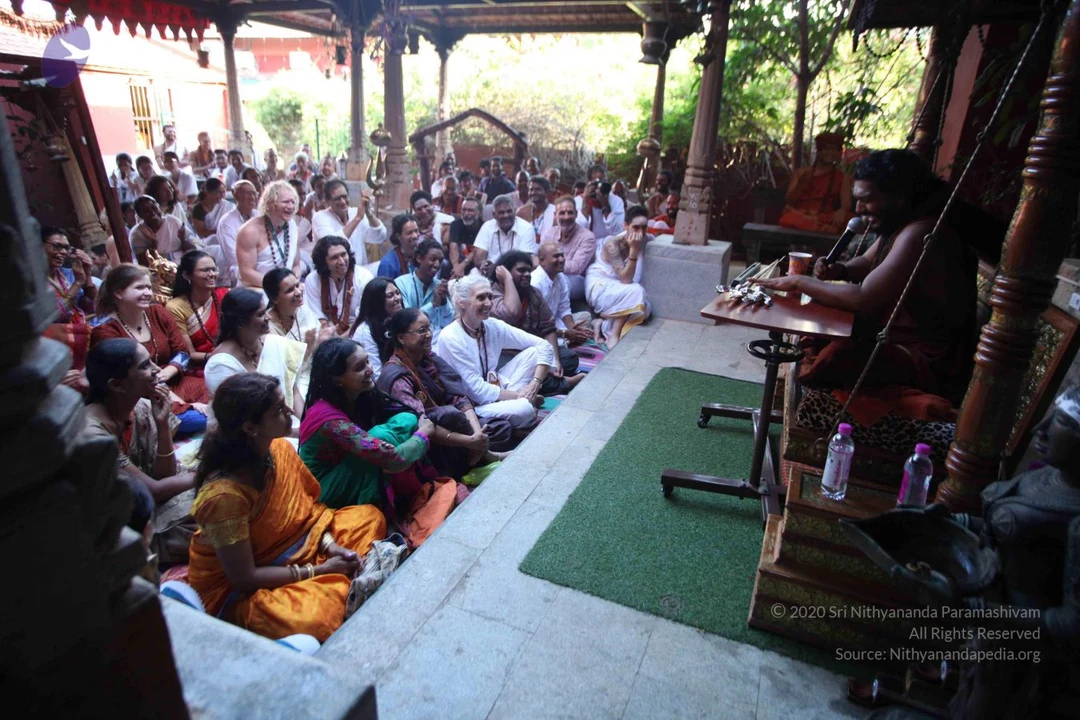
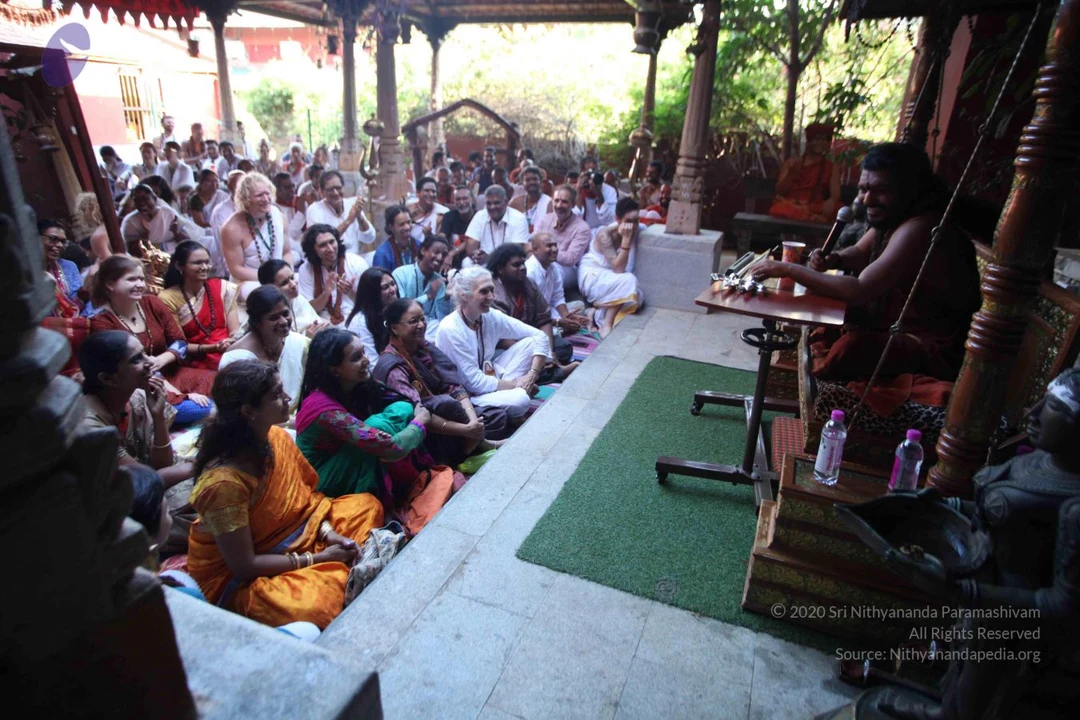
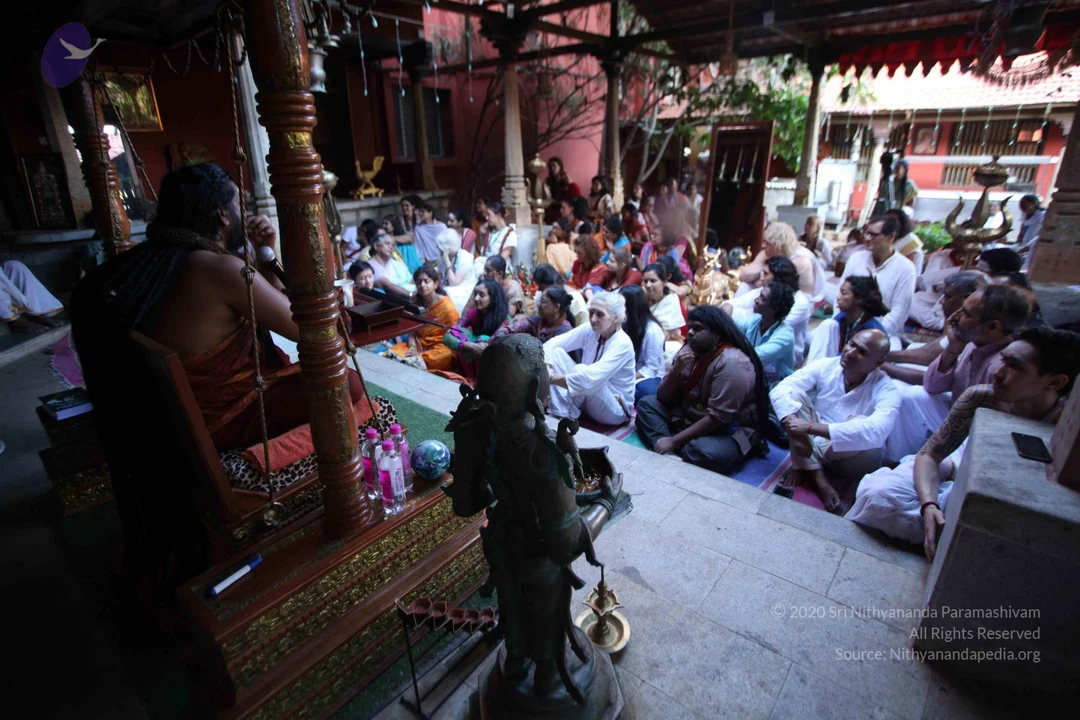
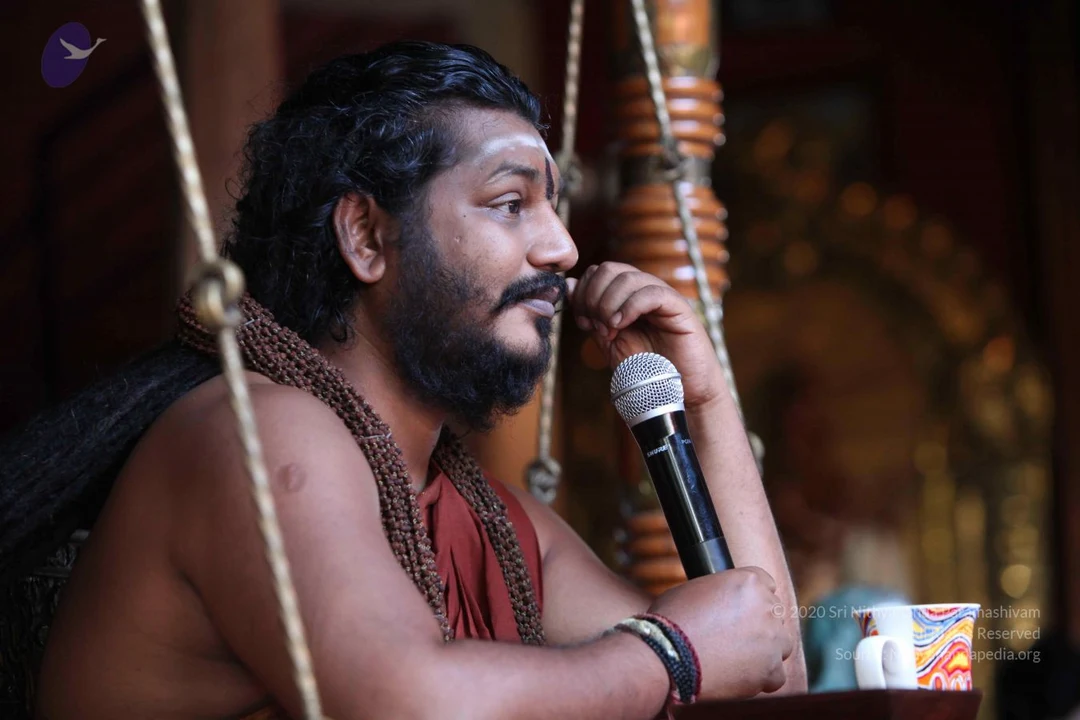
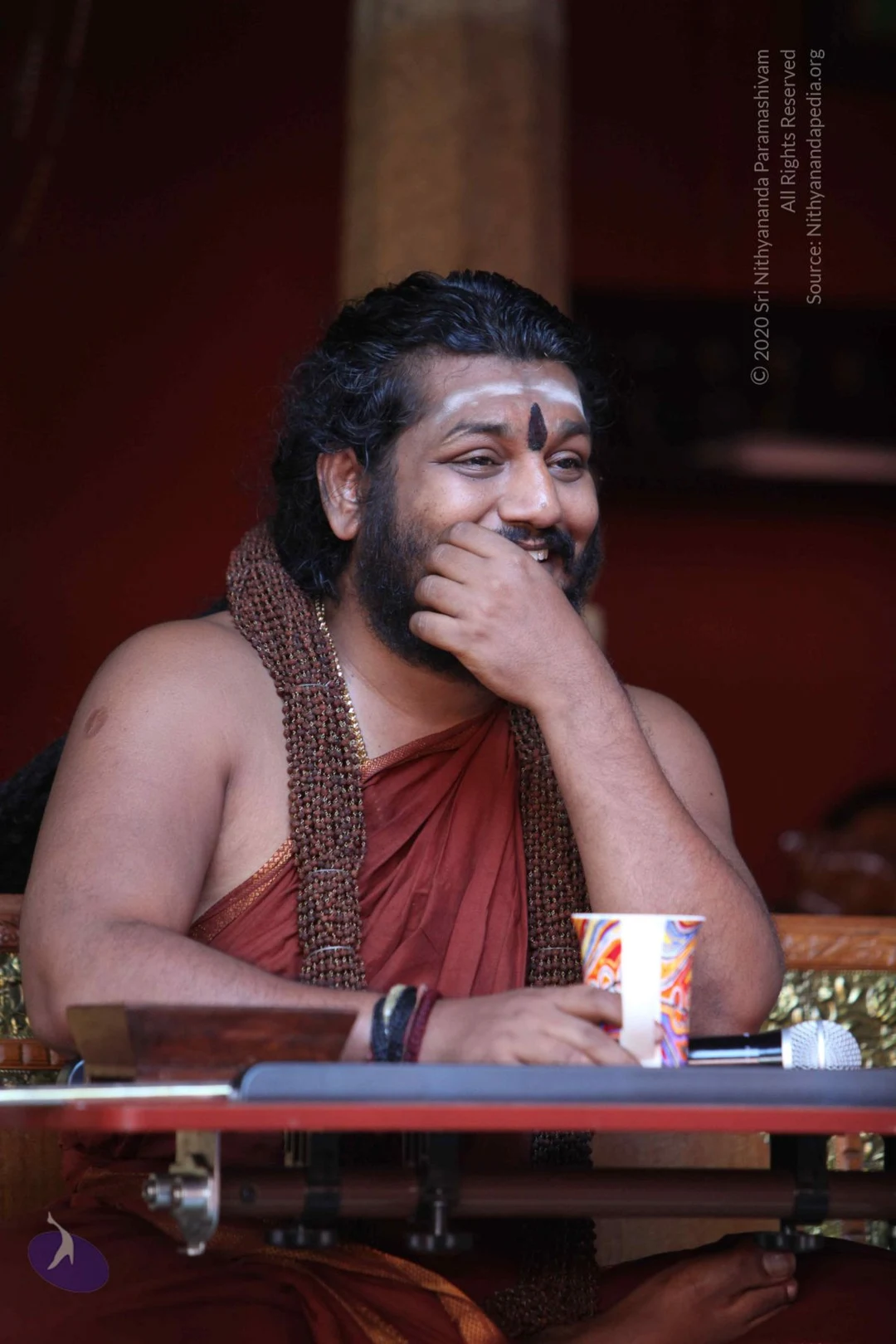
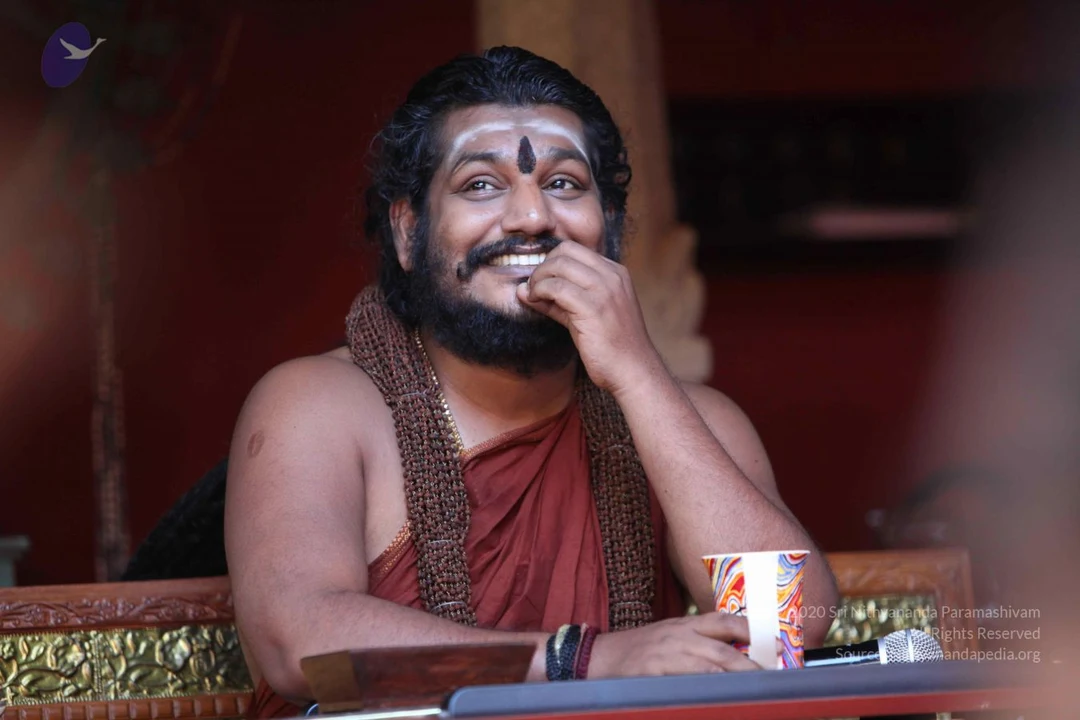
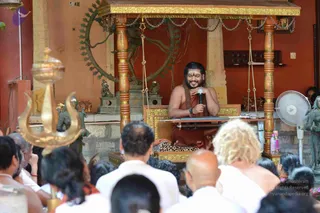
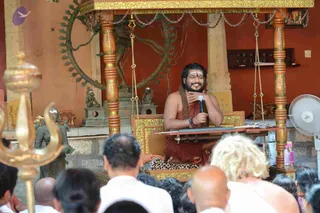
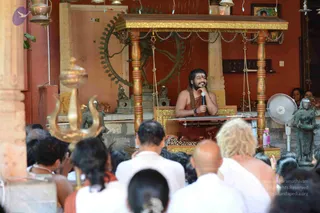
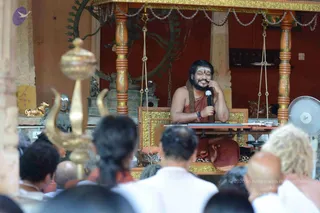
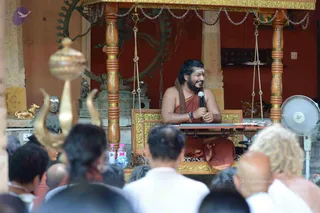
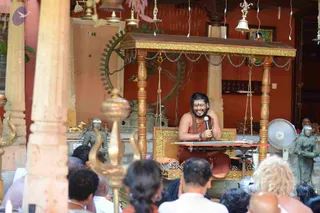
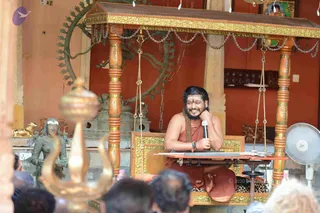
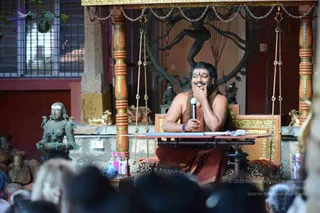
Welcoming Nithyananda Yogam participants and details of Swamiji's profound experiences with Arunagiri Yogeshwara, Sadashiva himself

Dated photos
409
Source pages
1
Media
2
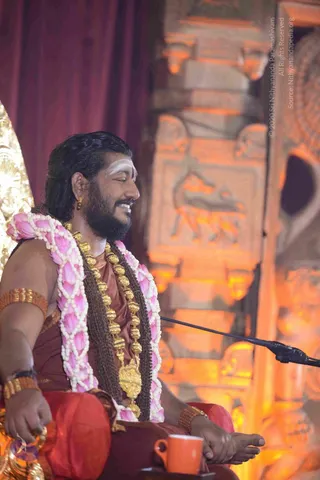
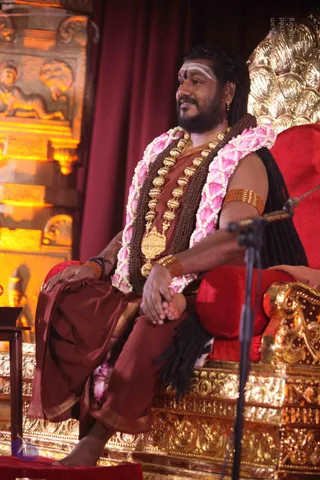
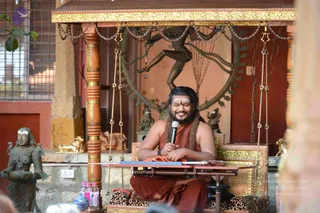
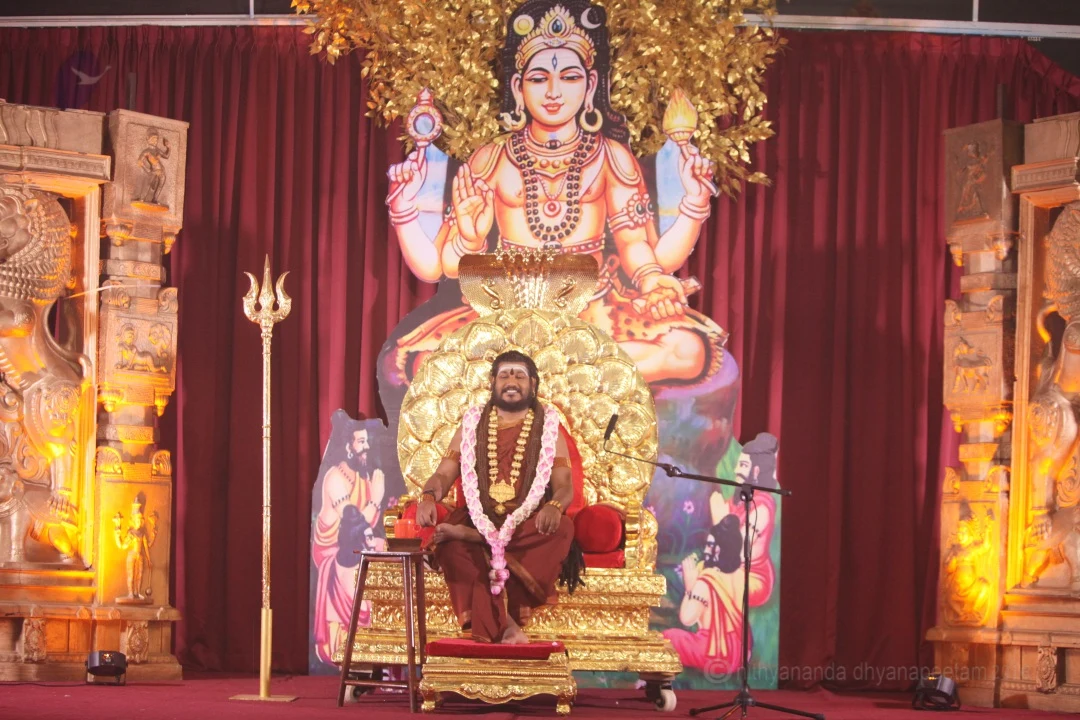
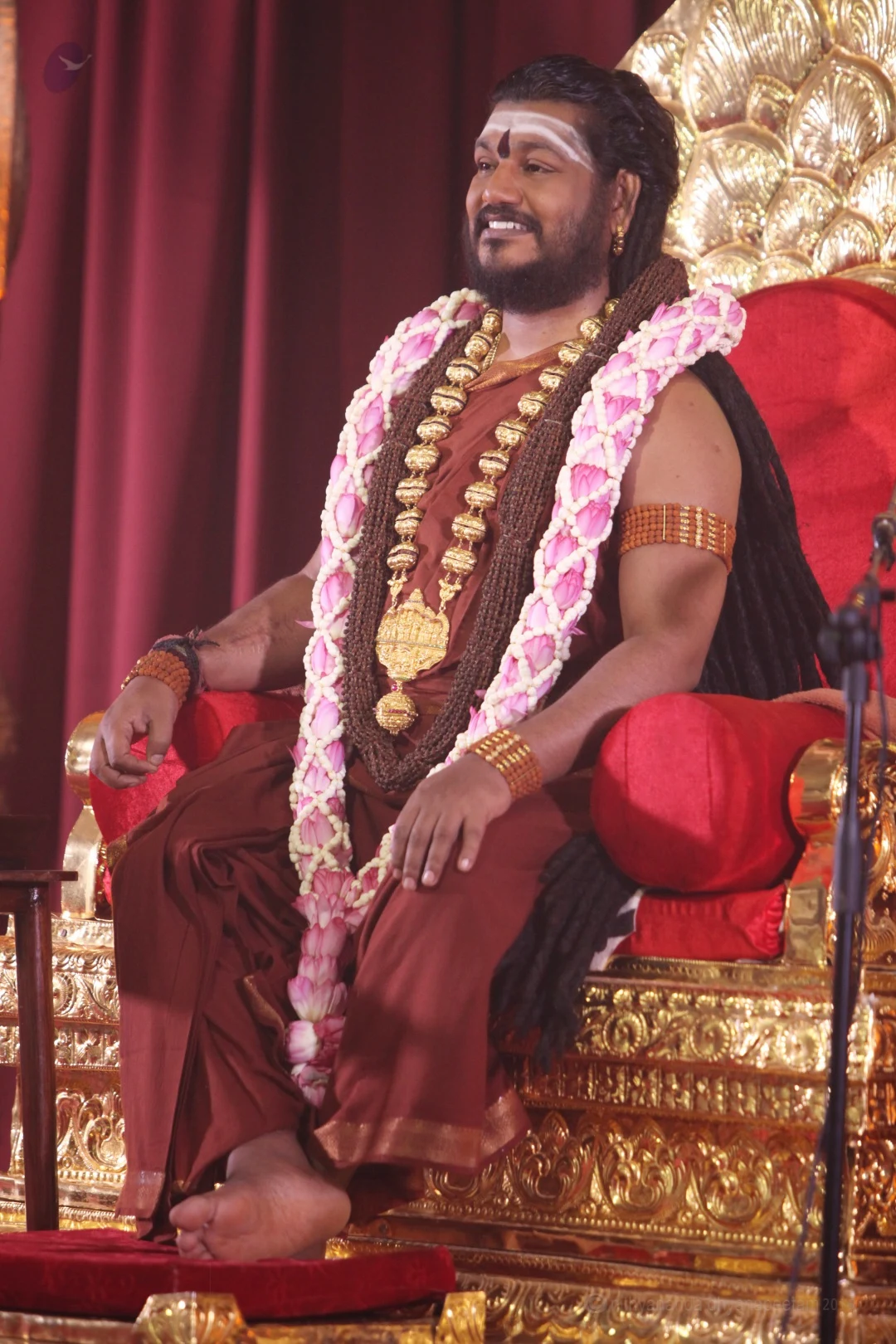
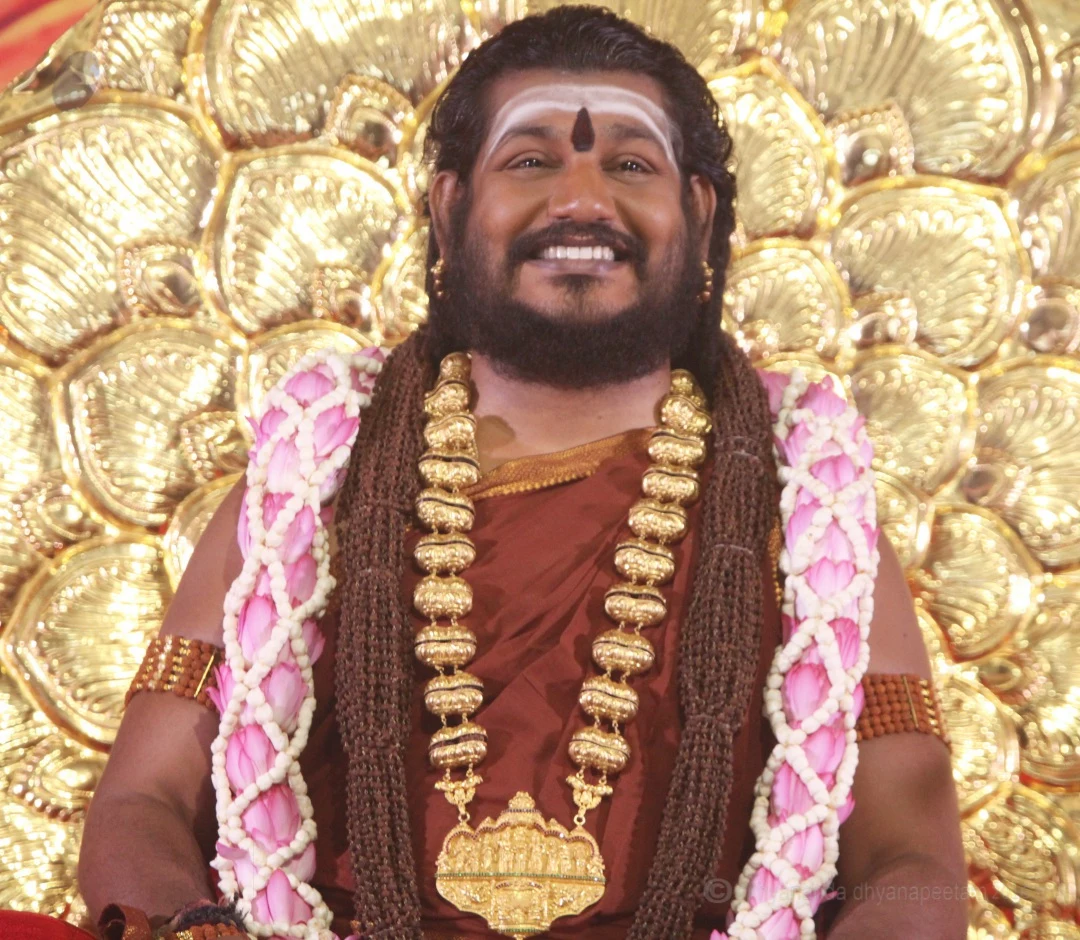
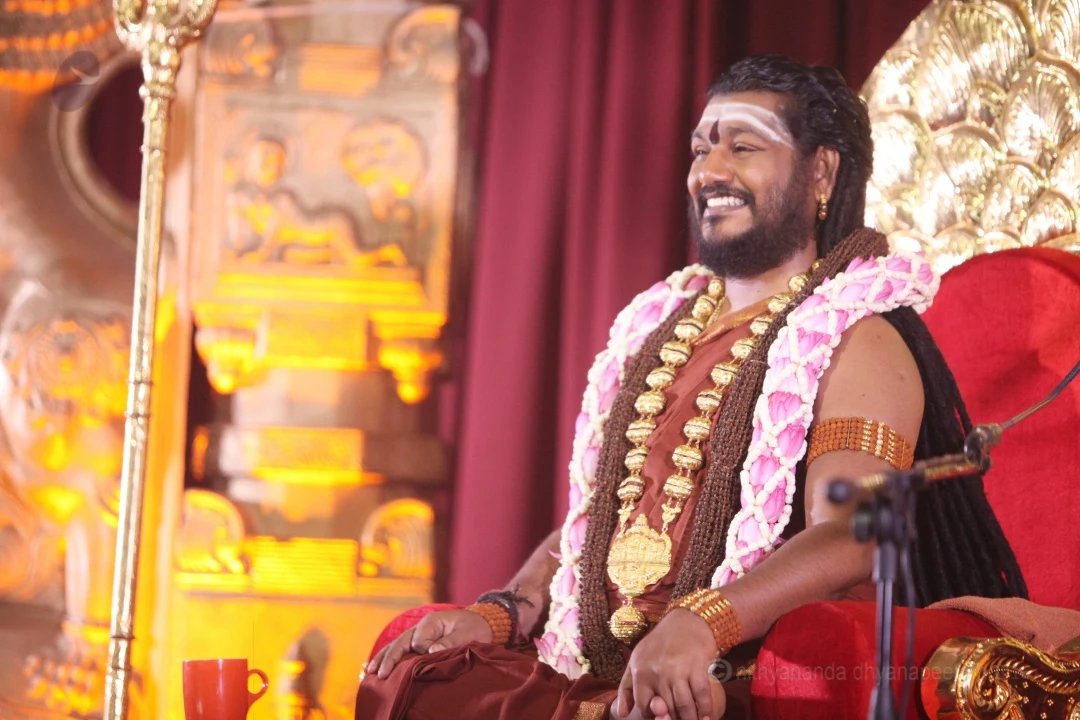
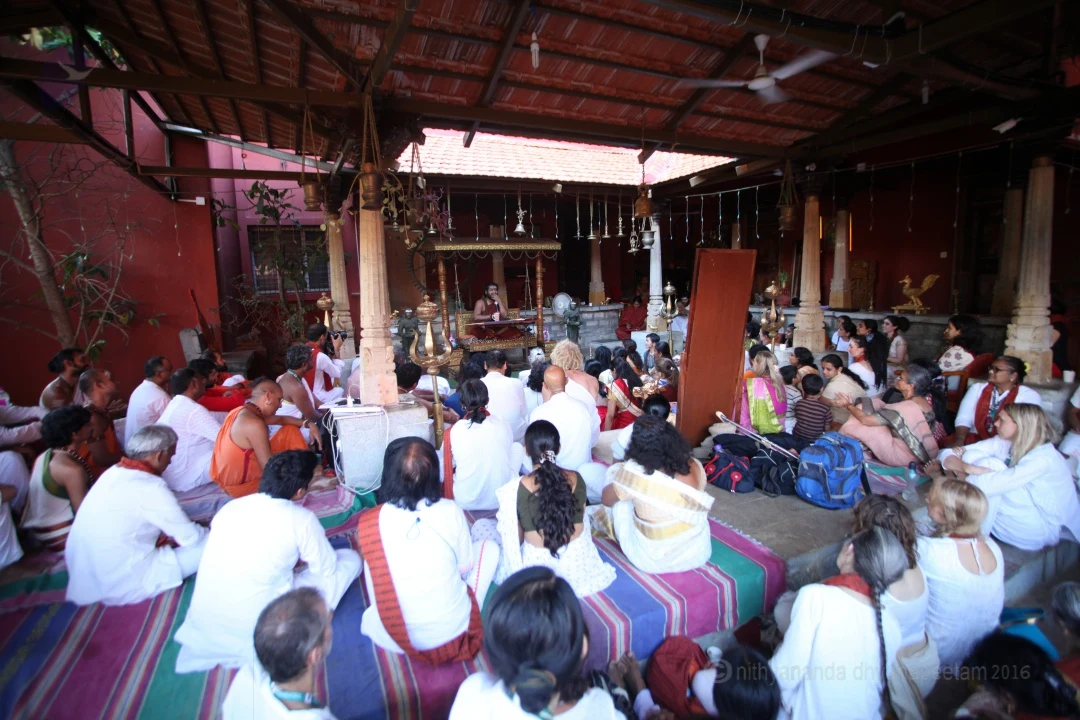
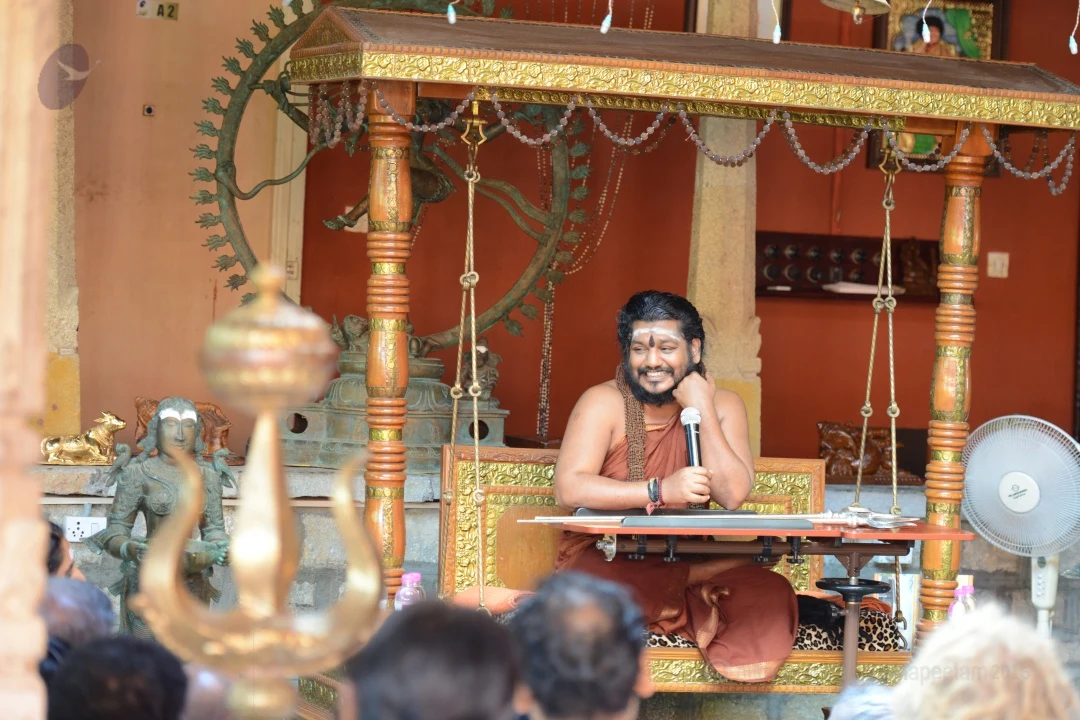
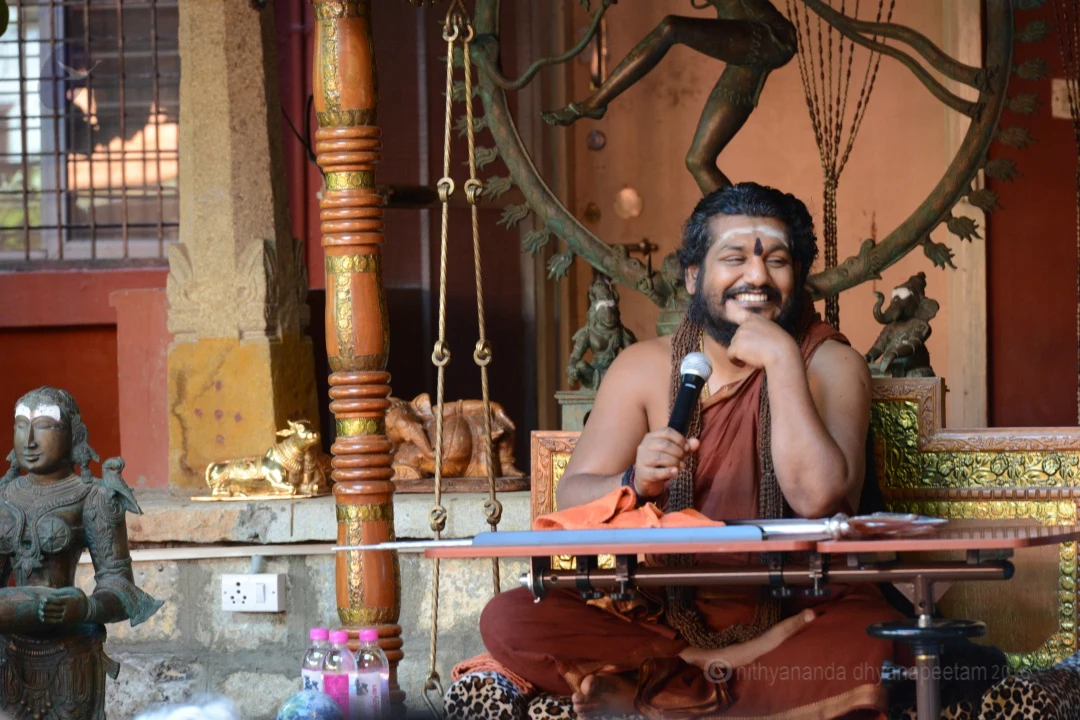
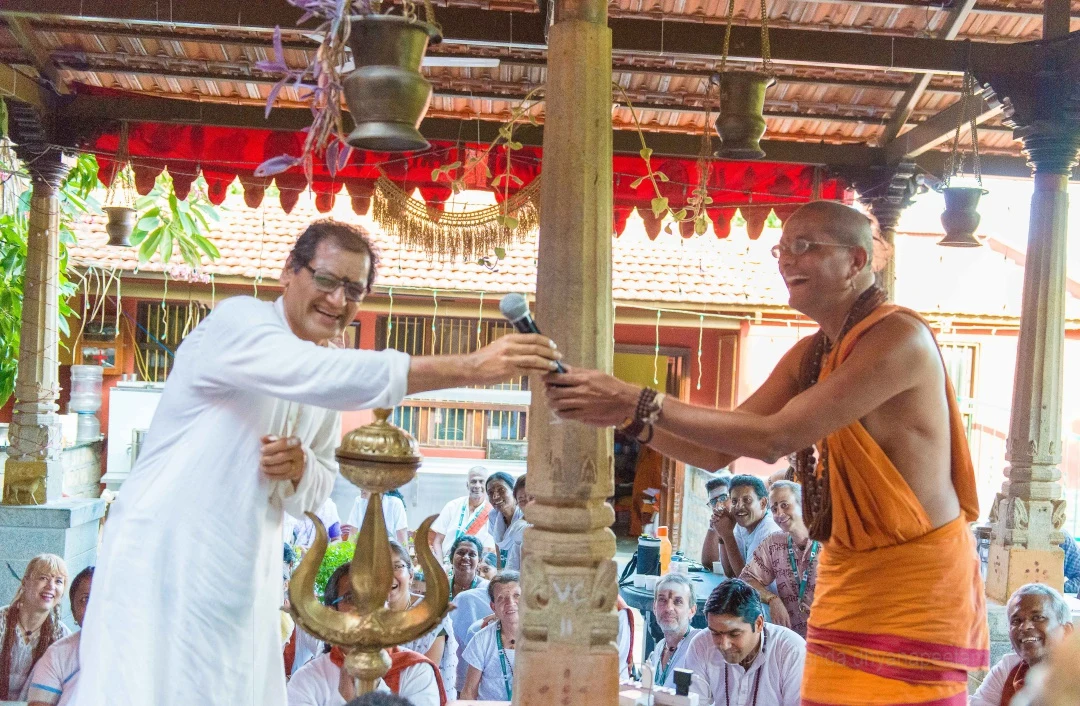
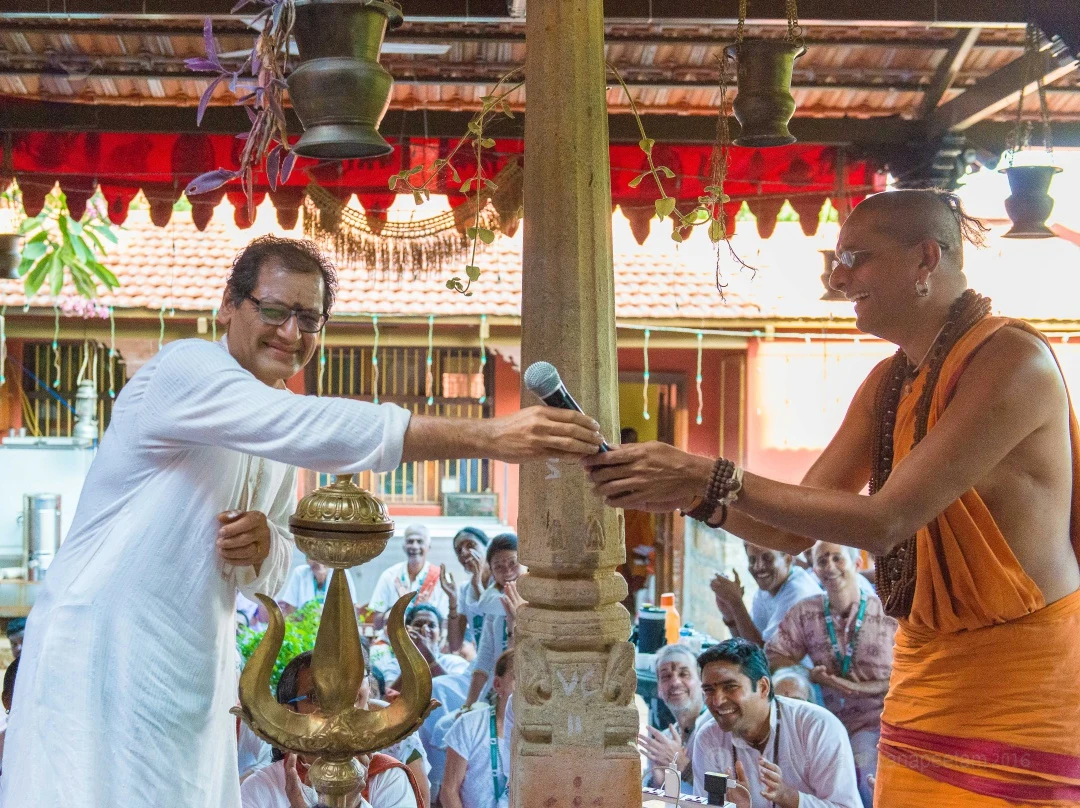
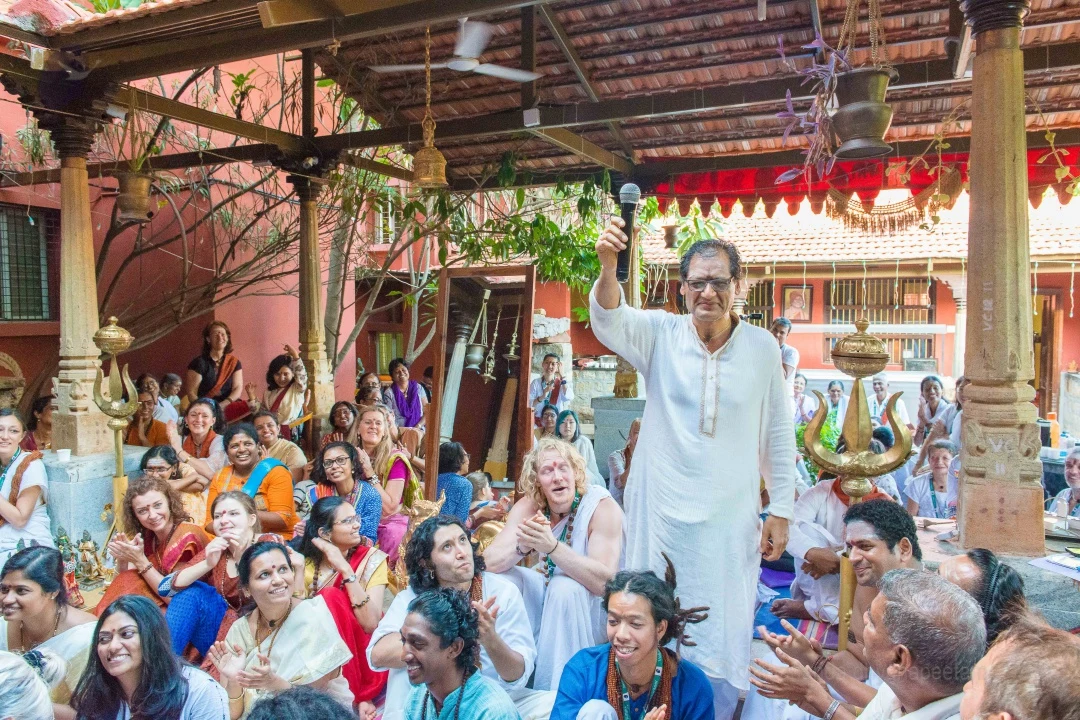
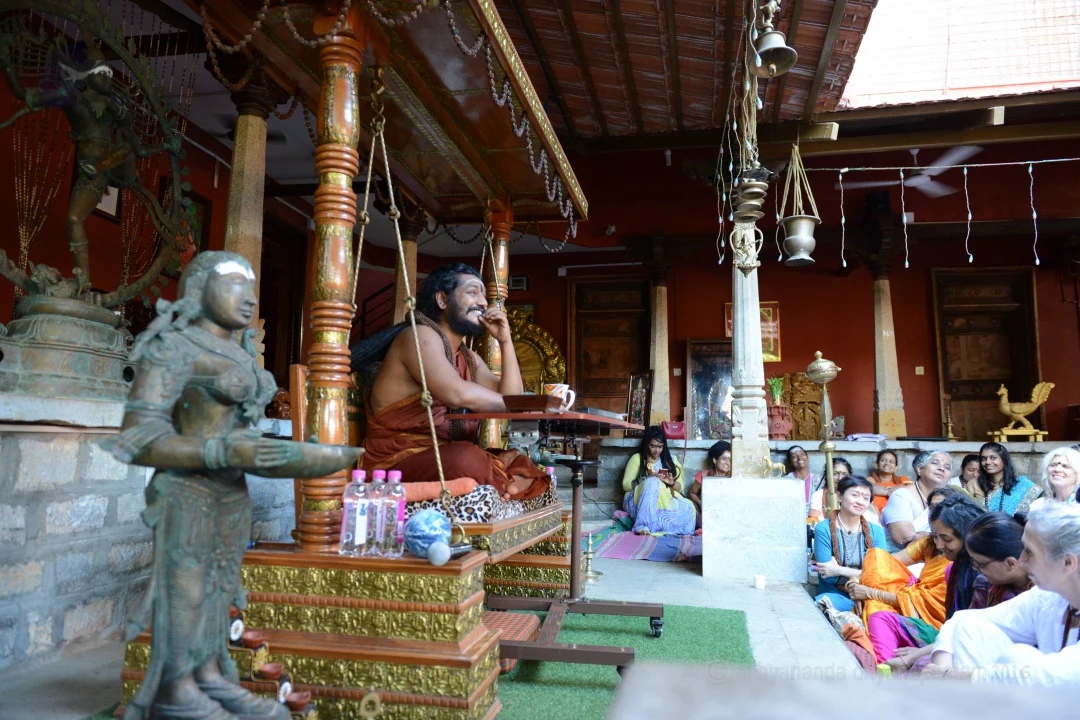
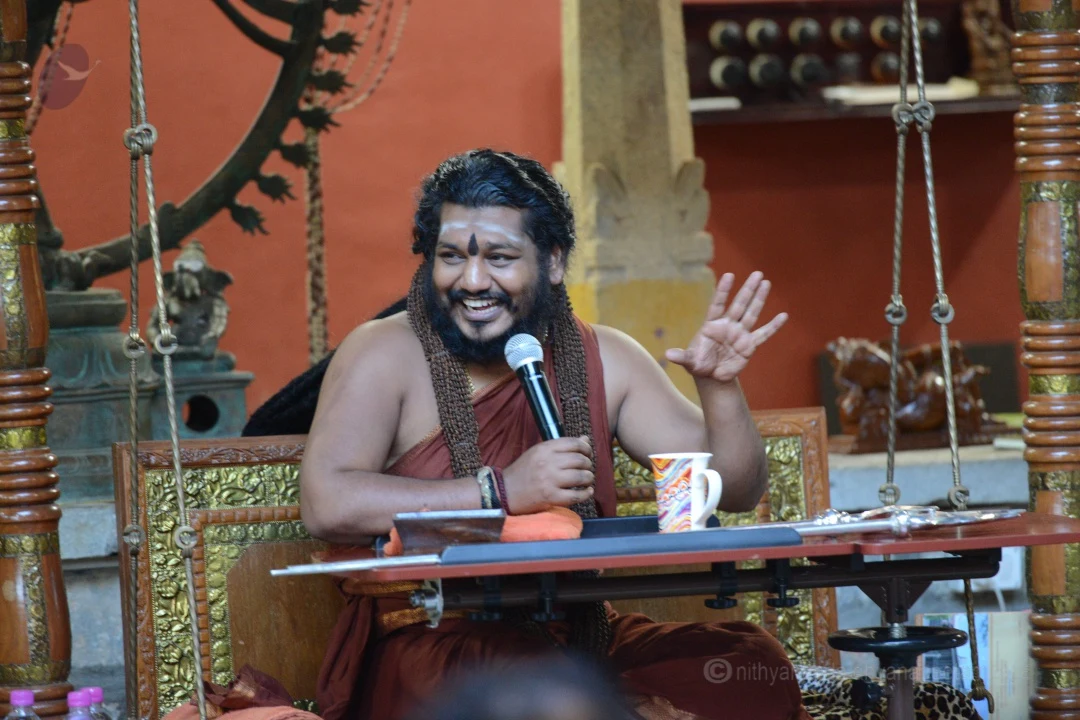
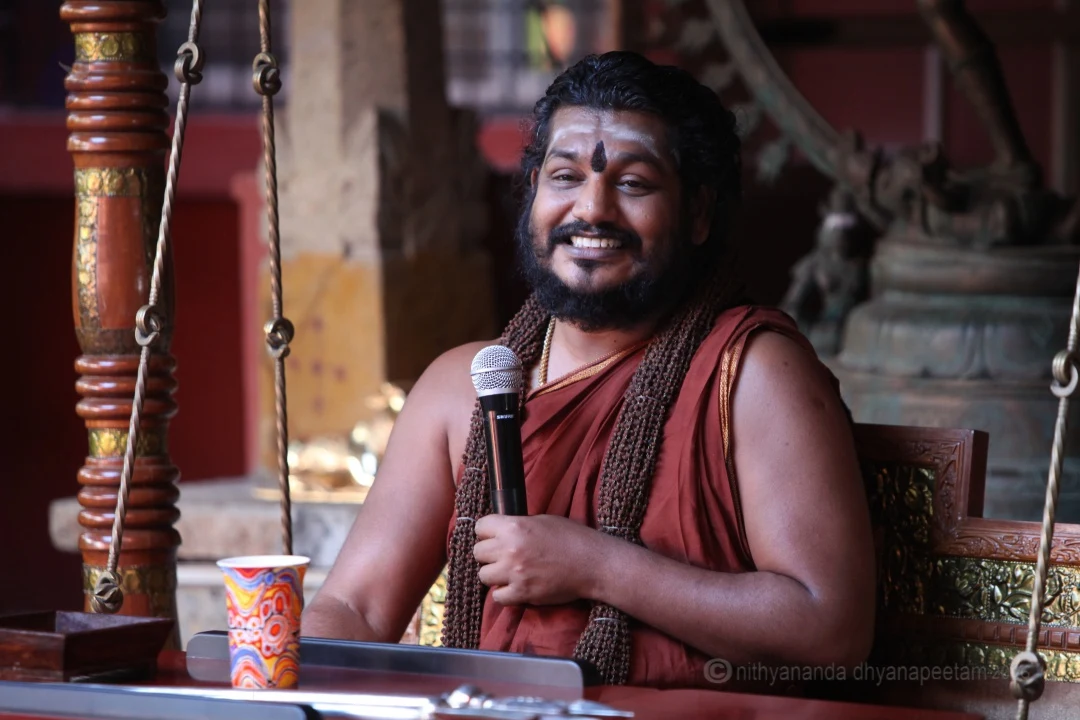
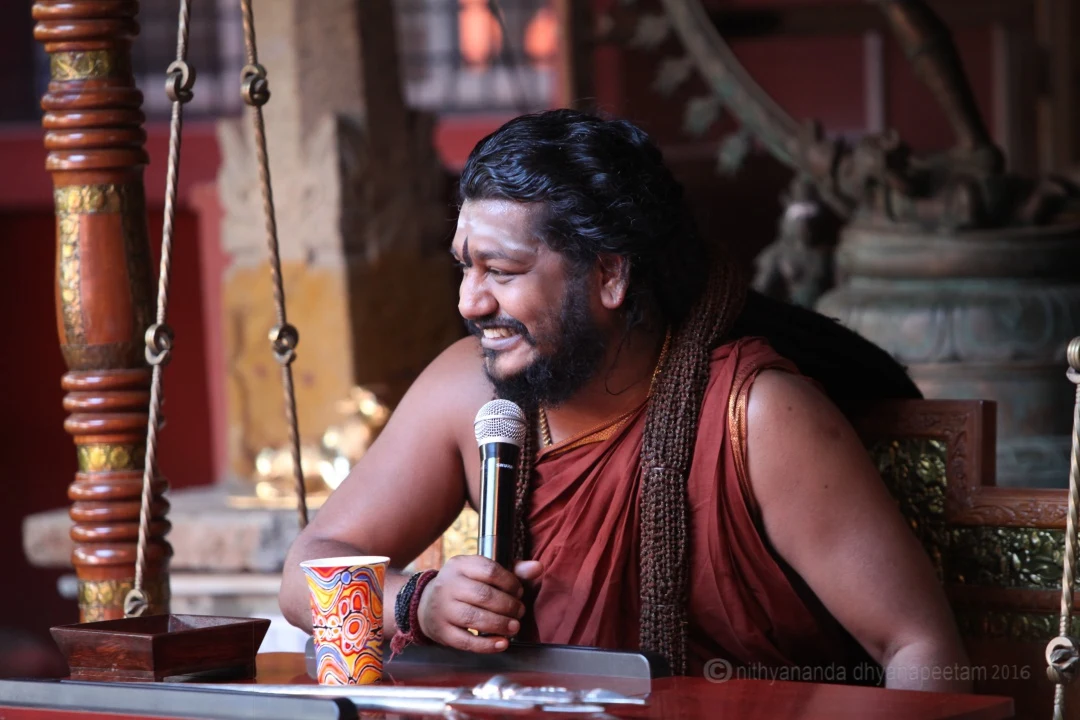
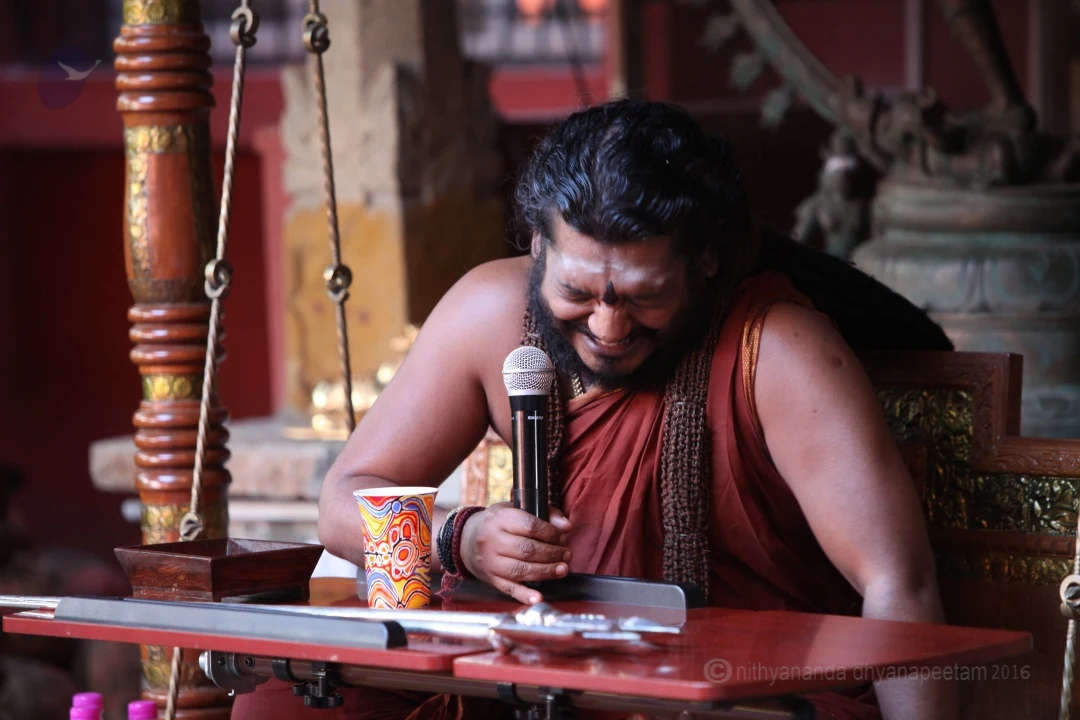
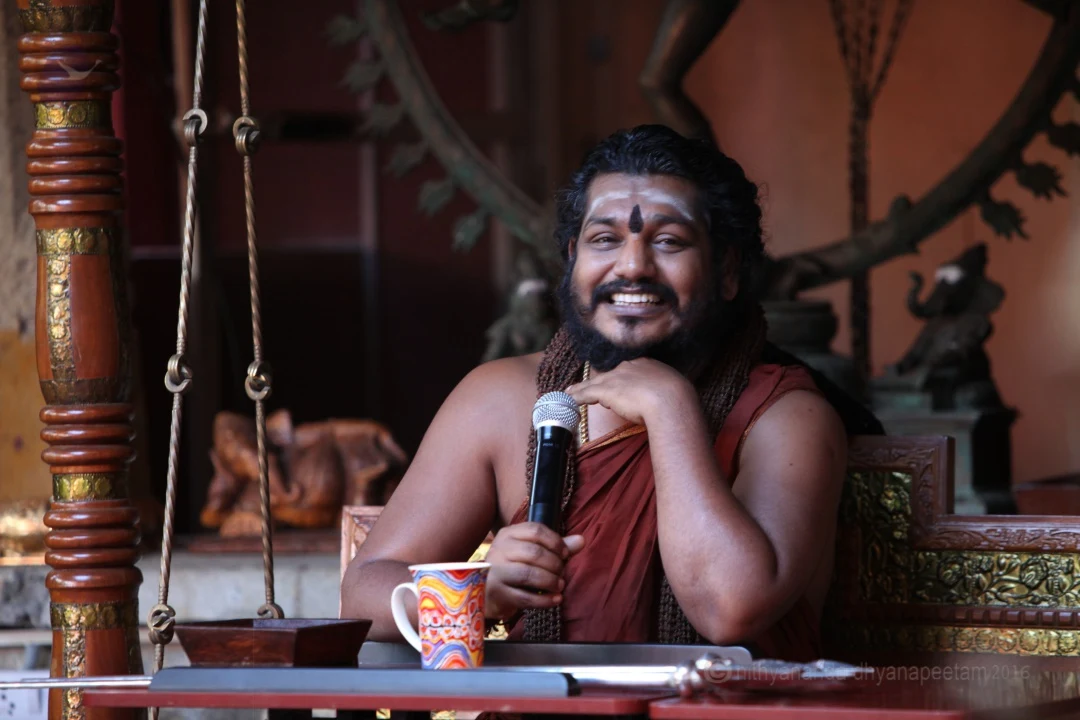
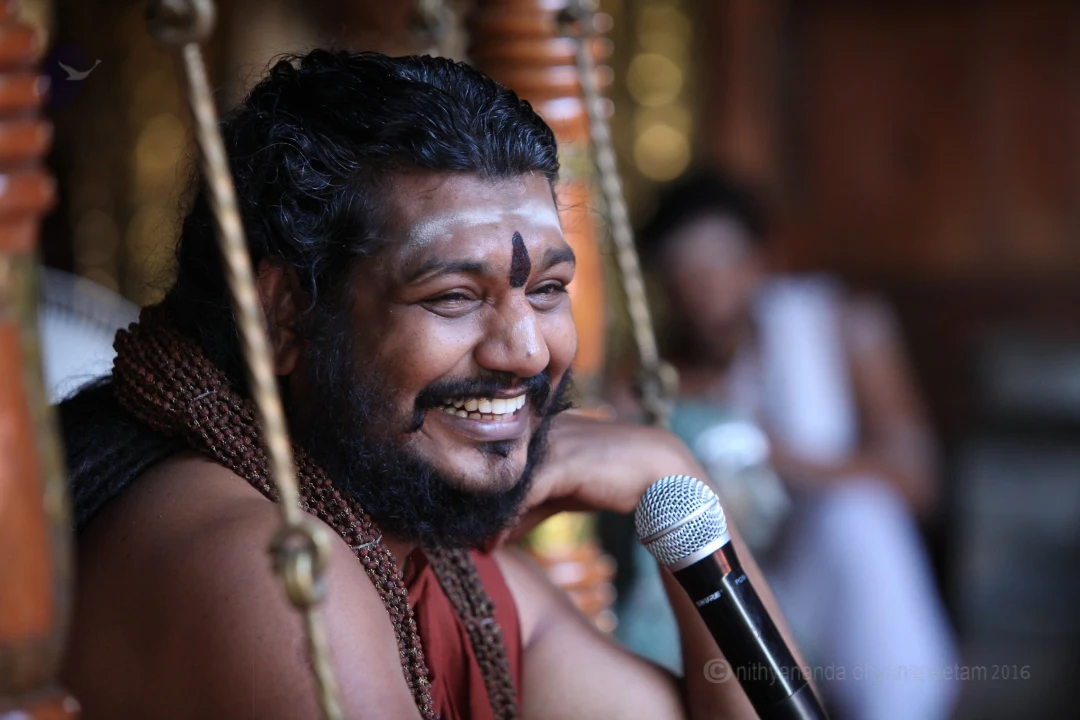
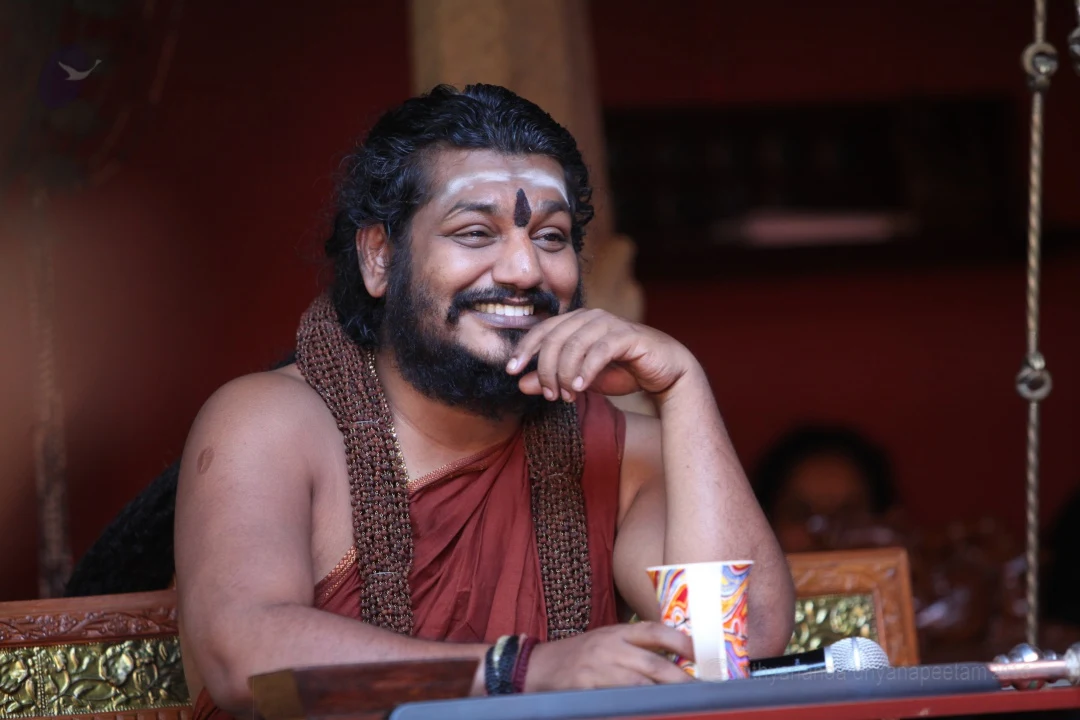
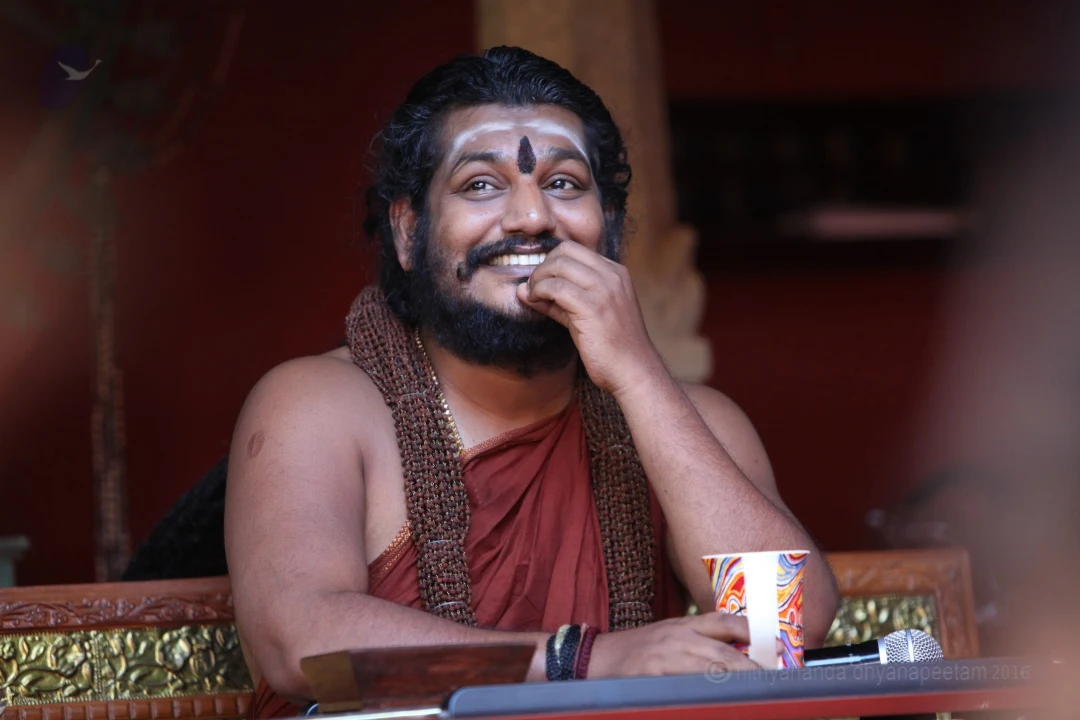
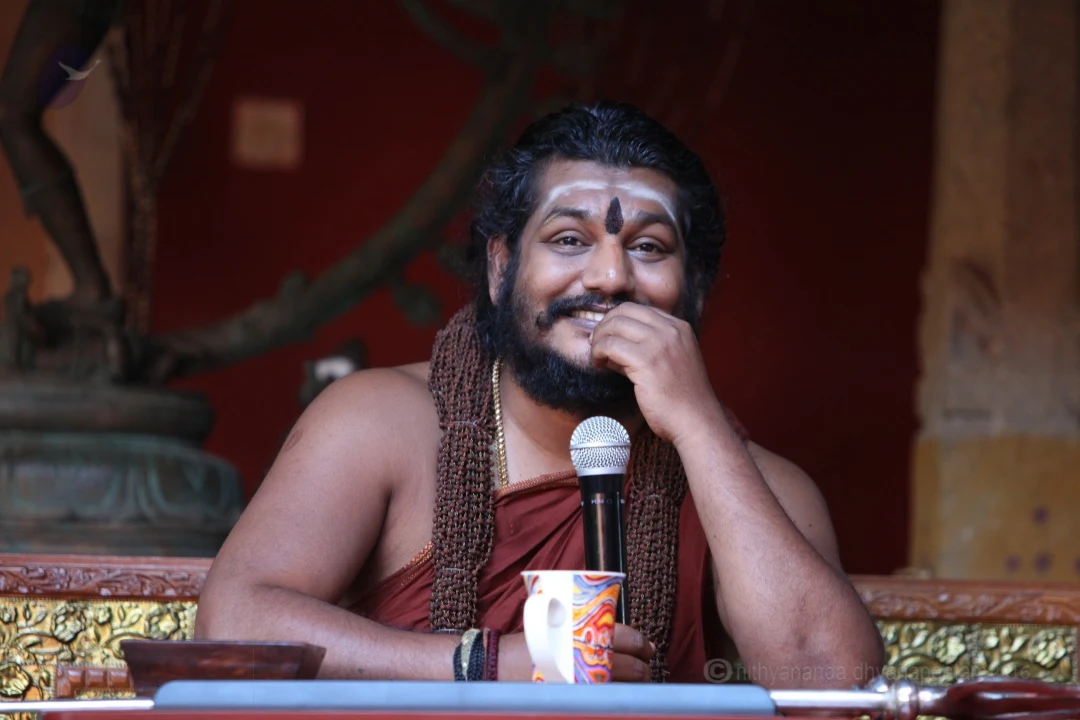
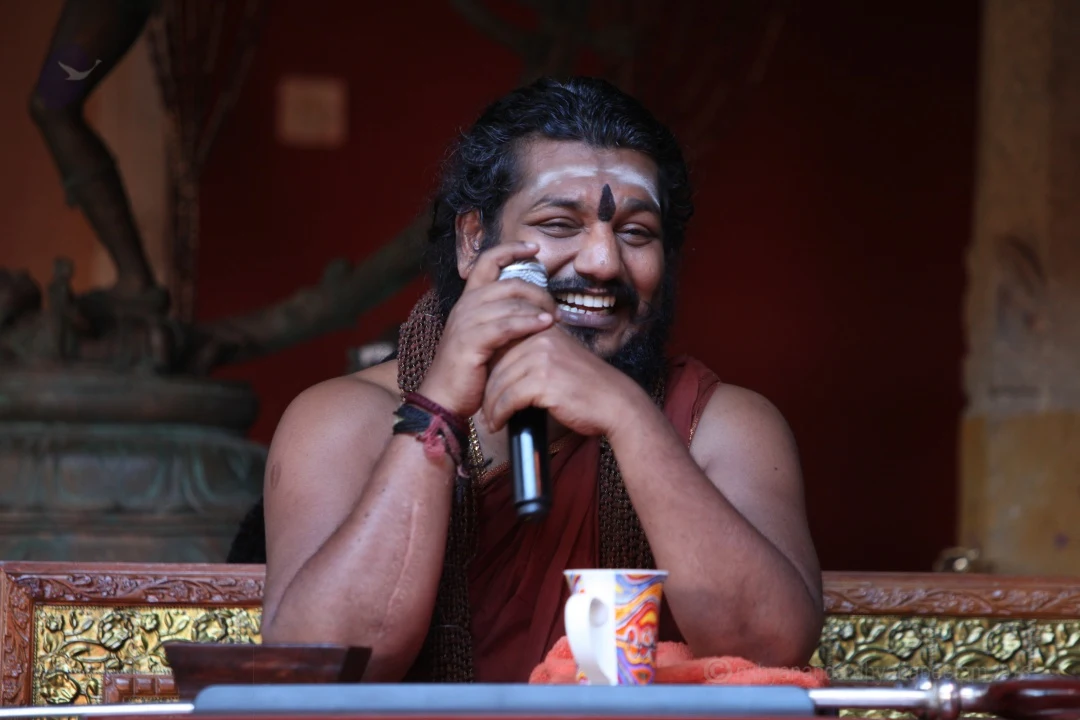
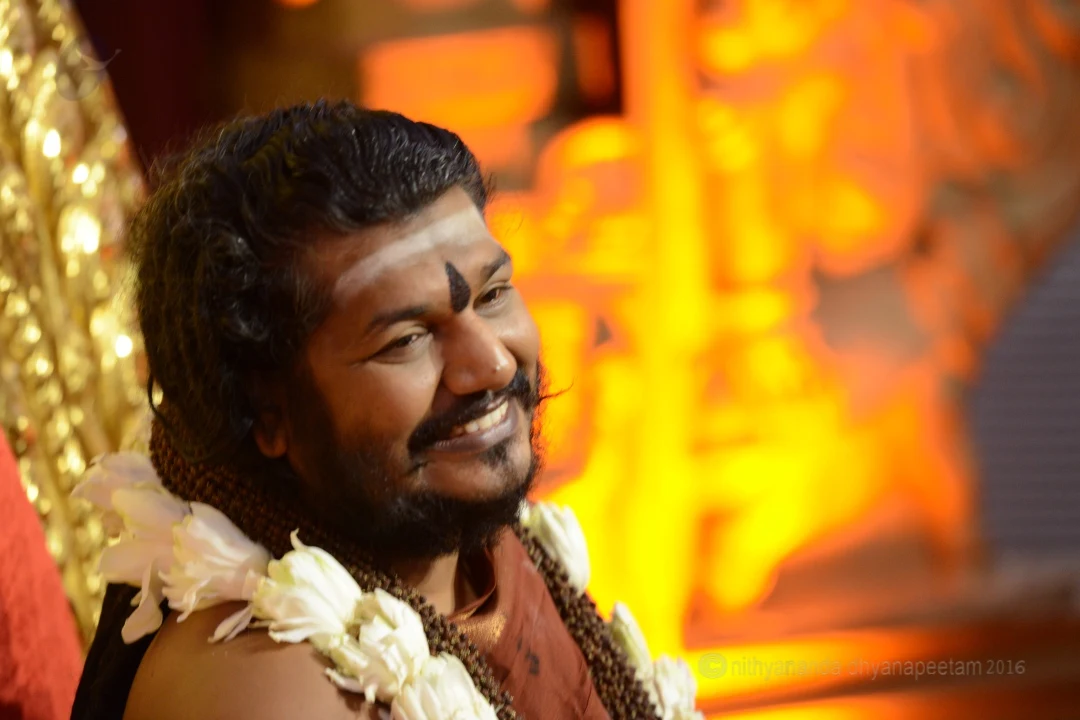
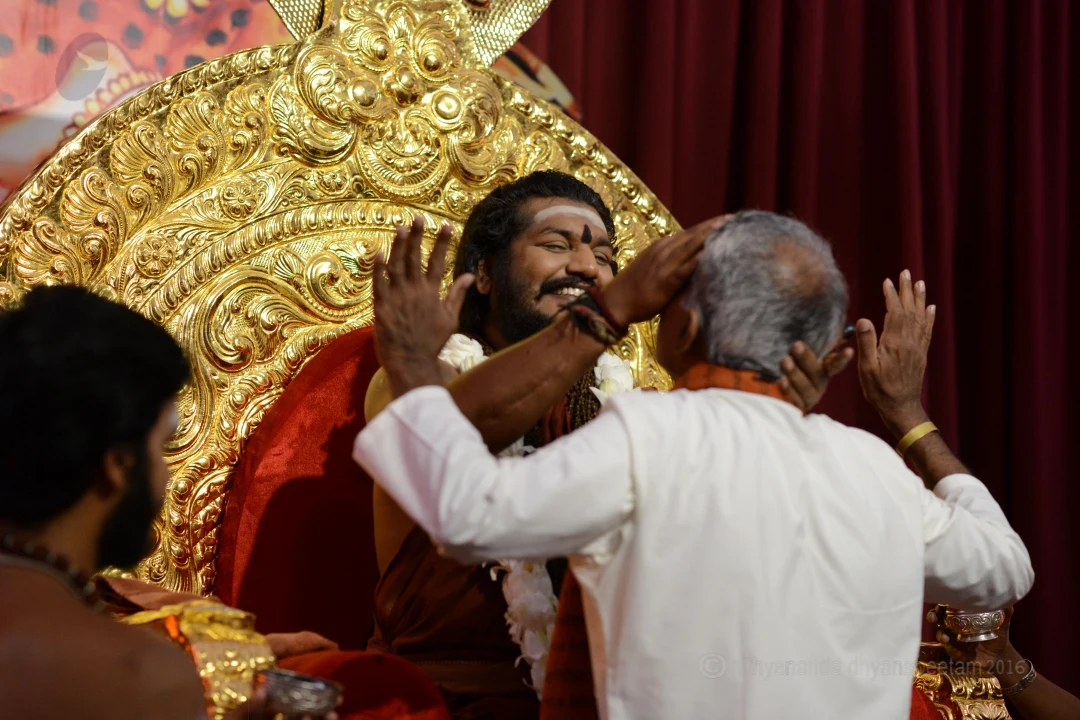
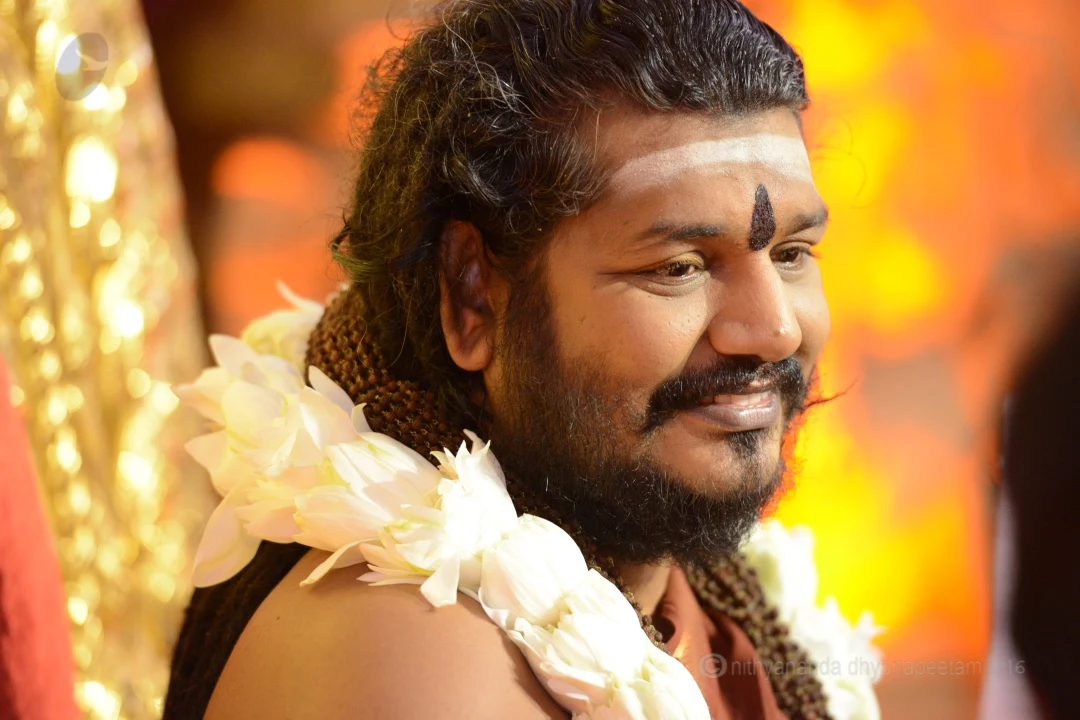
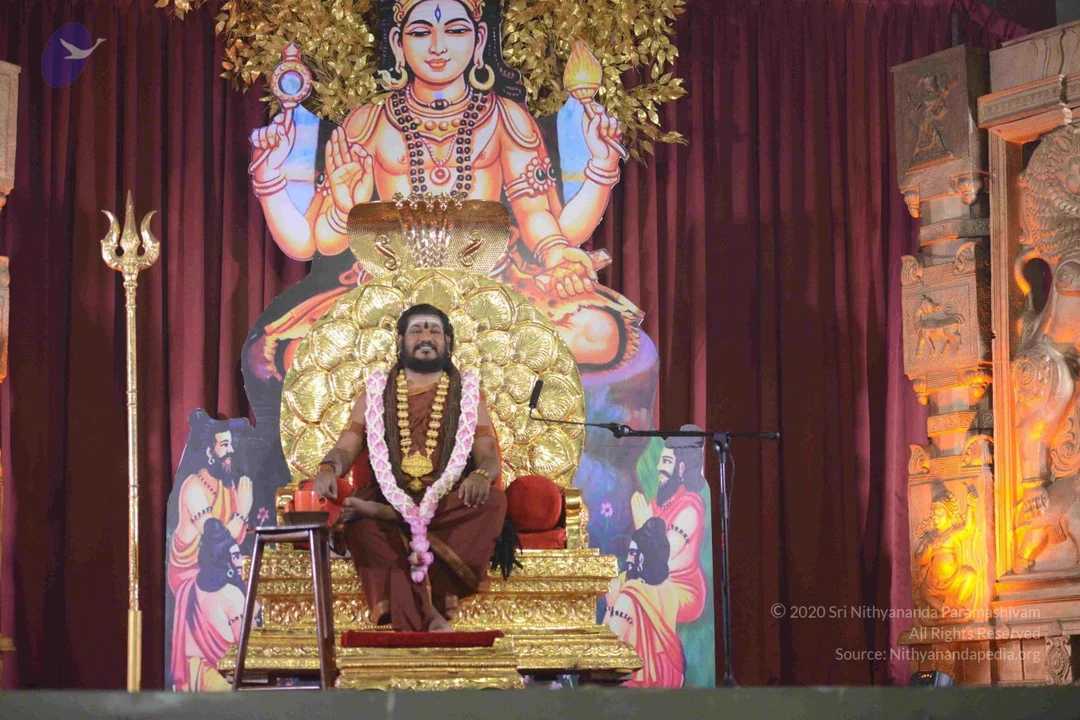
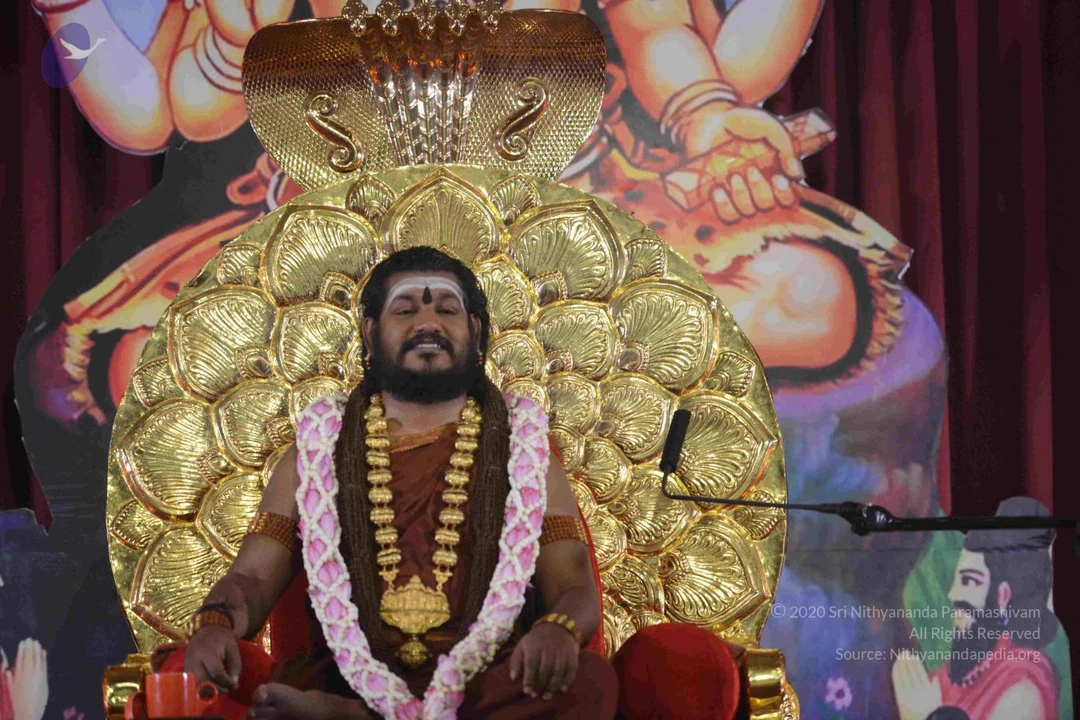
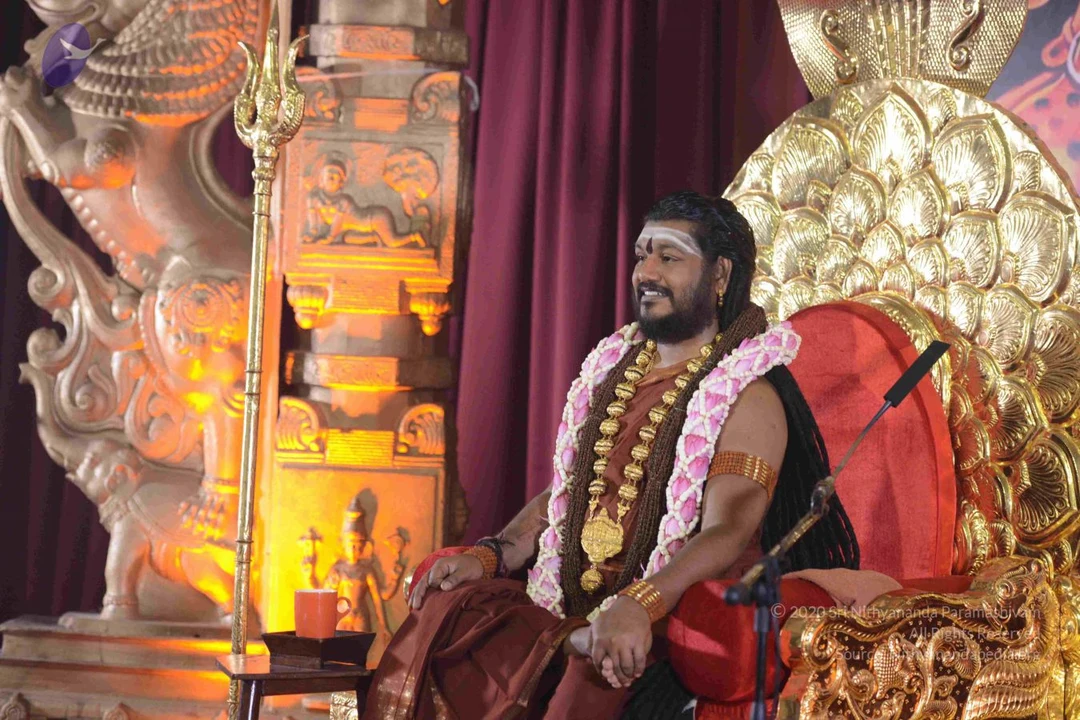
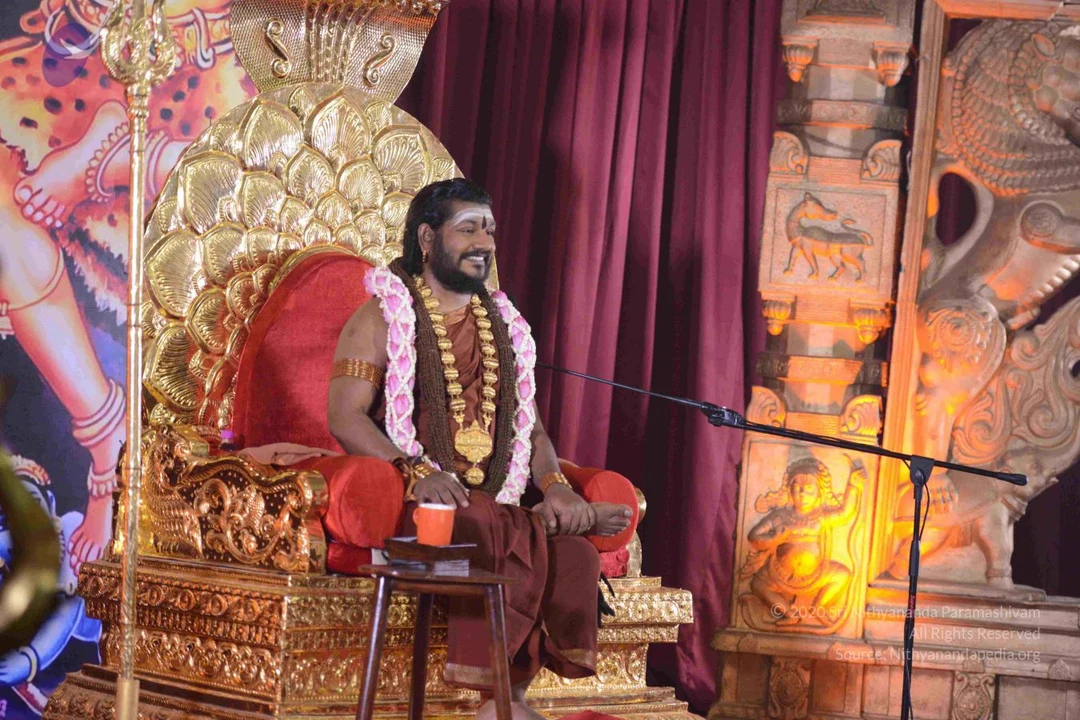
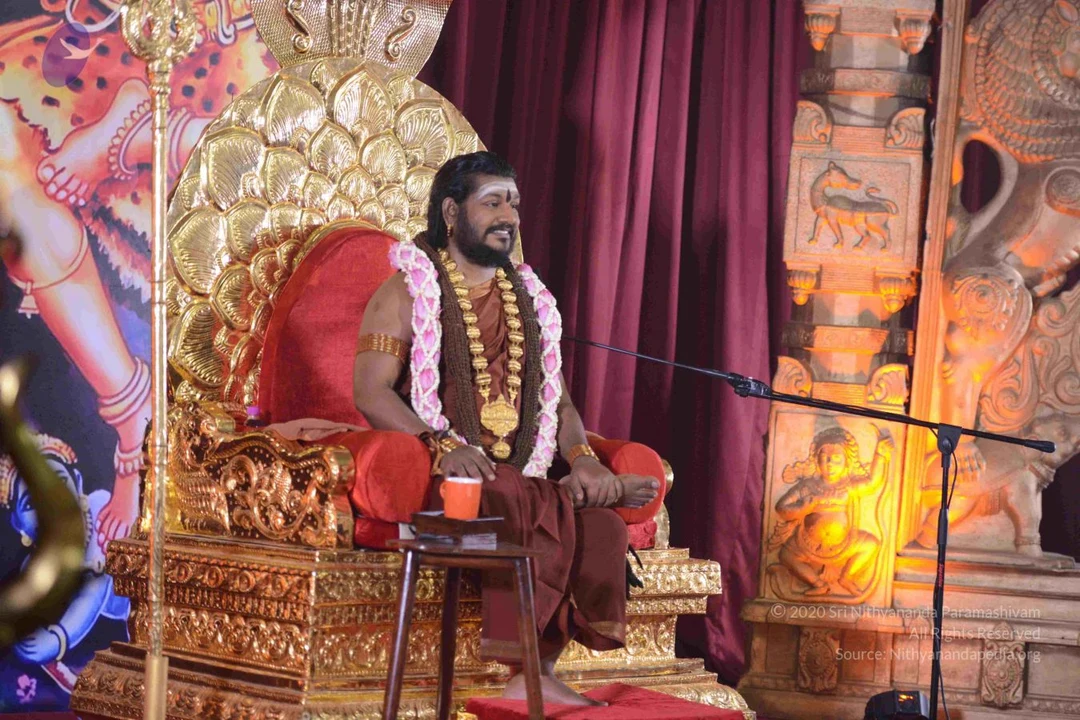
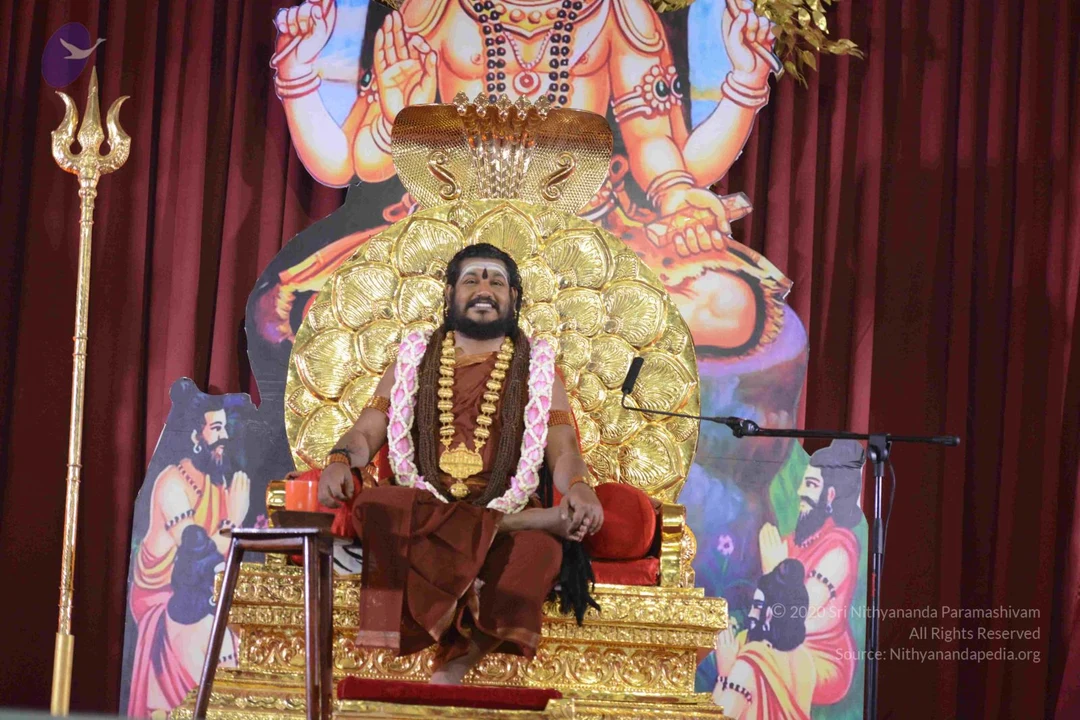
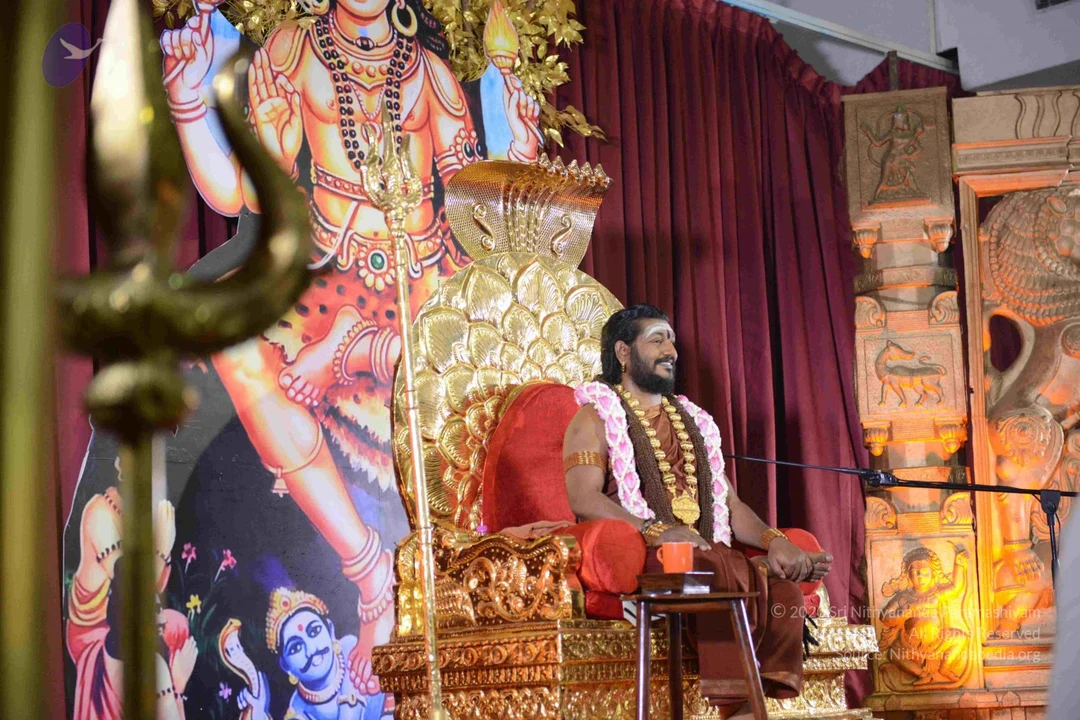
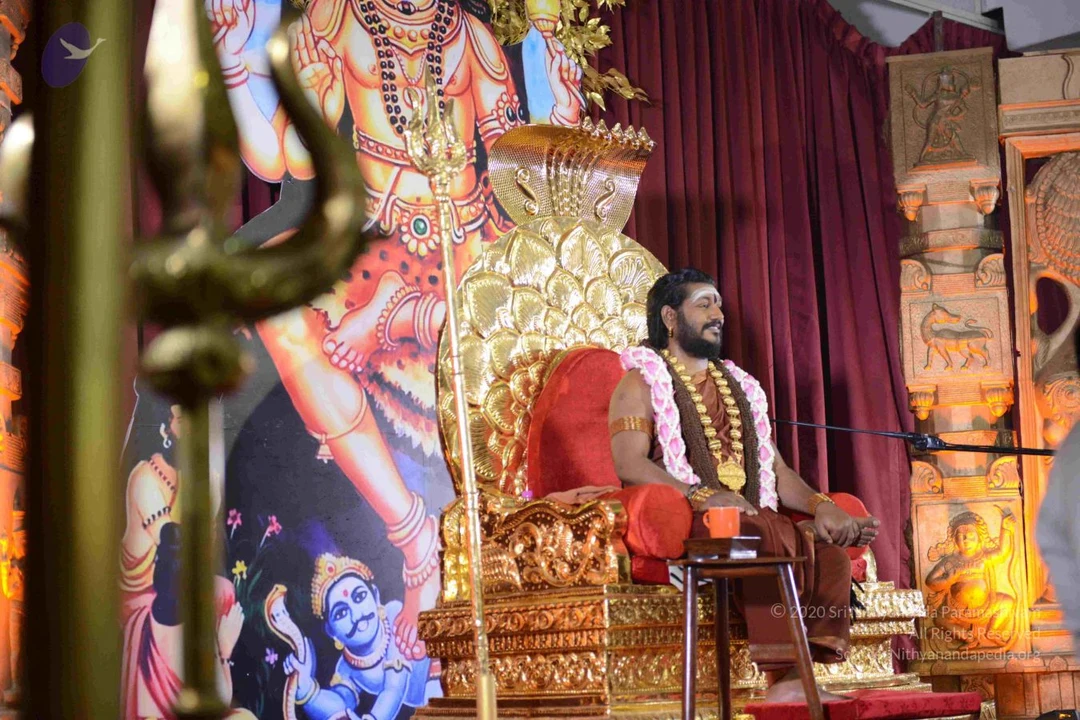
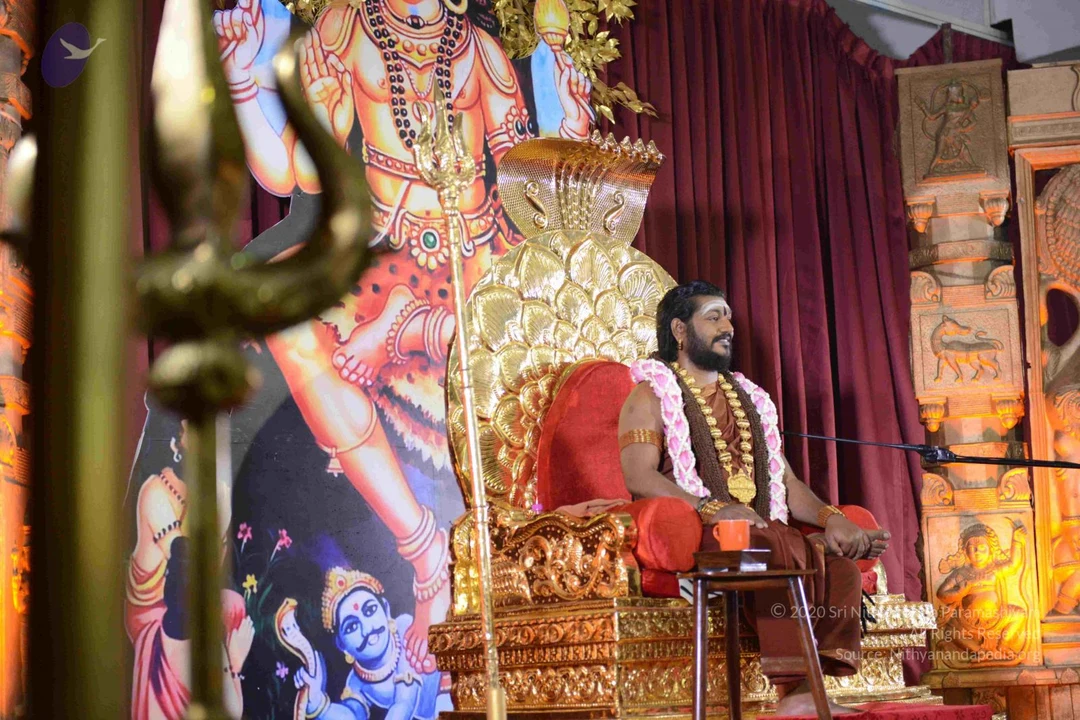
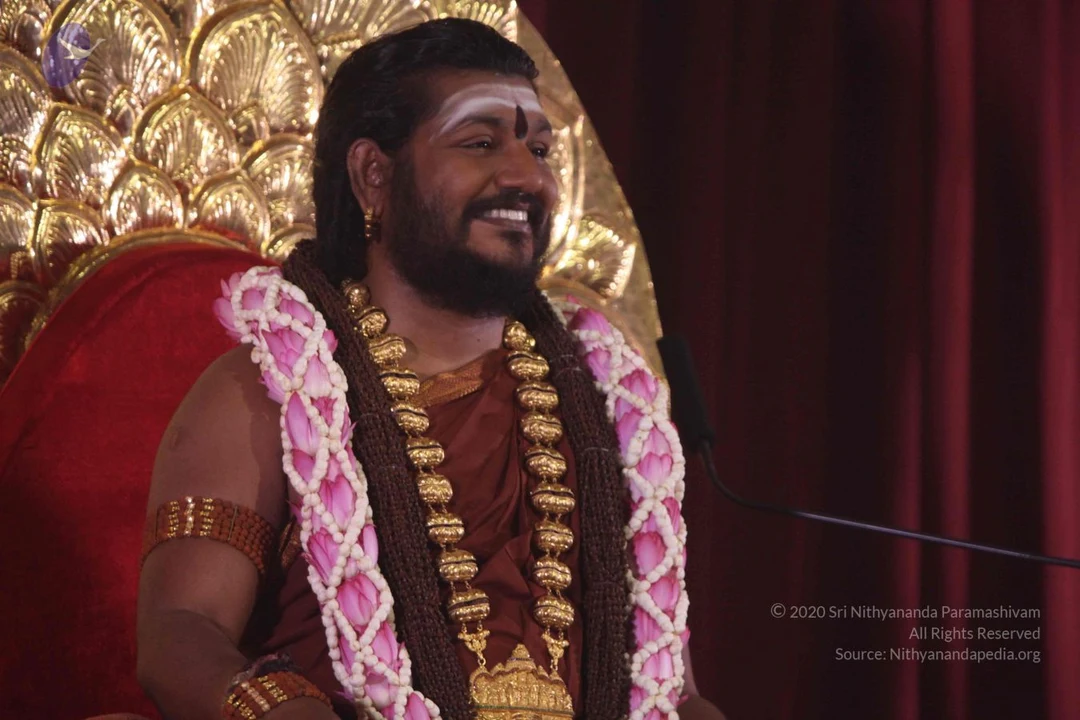
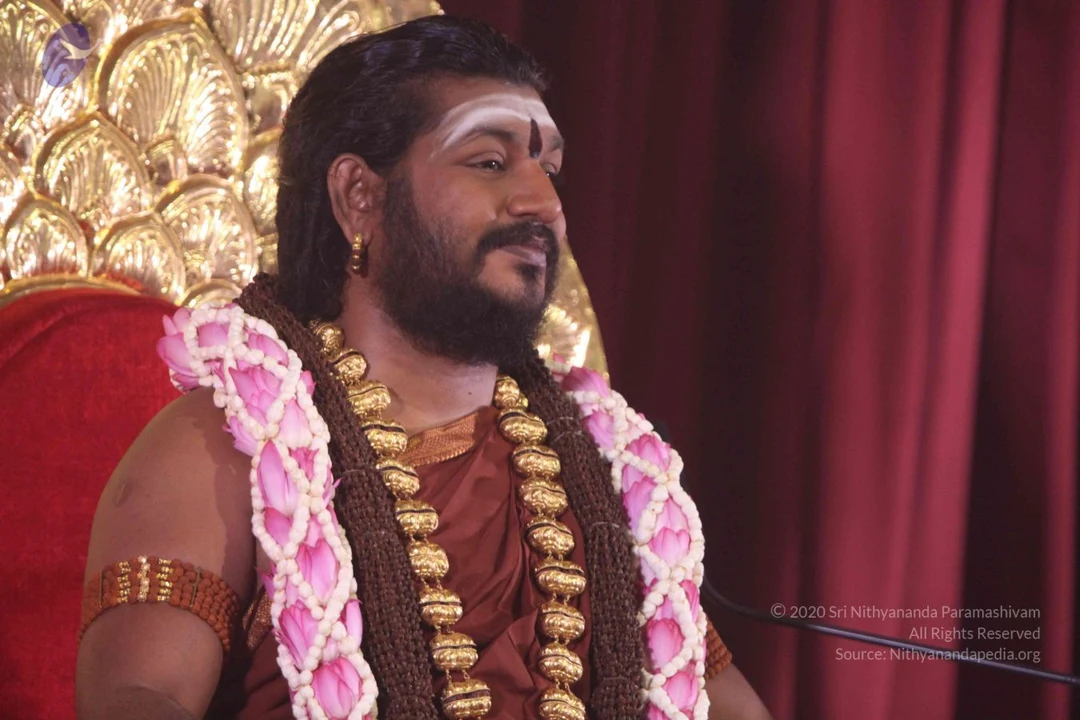
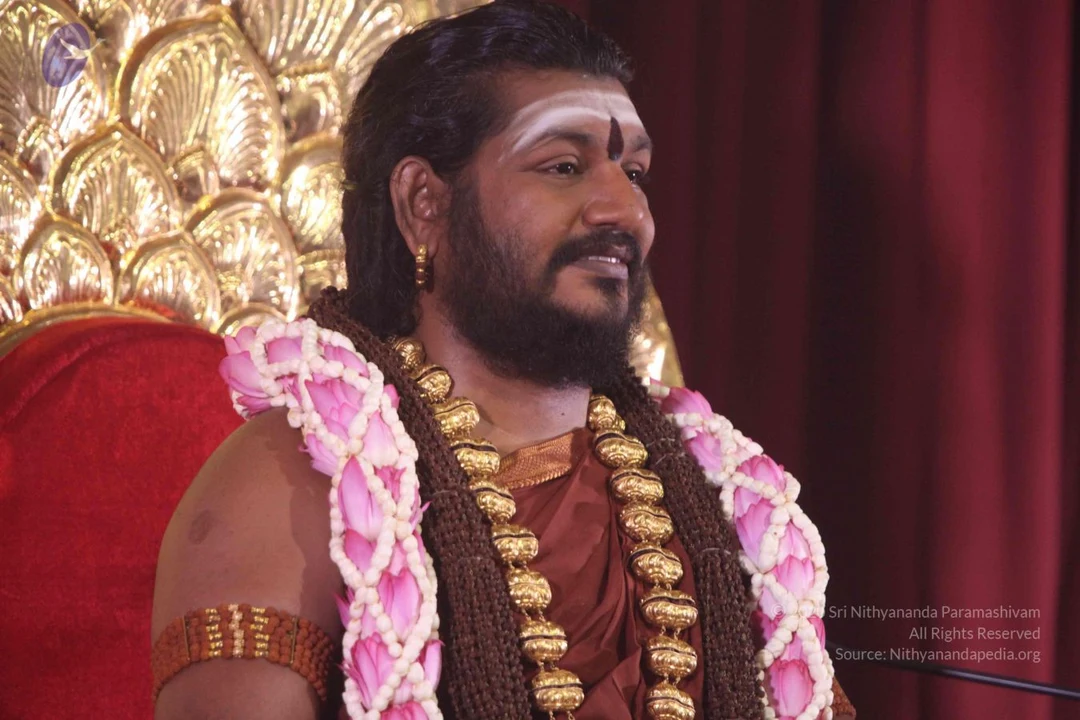
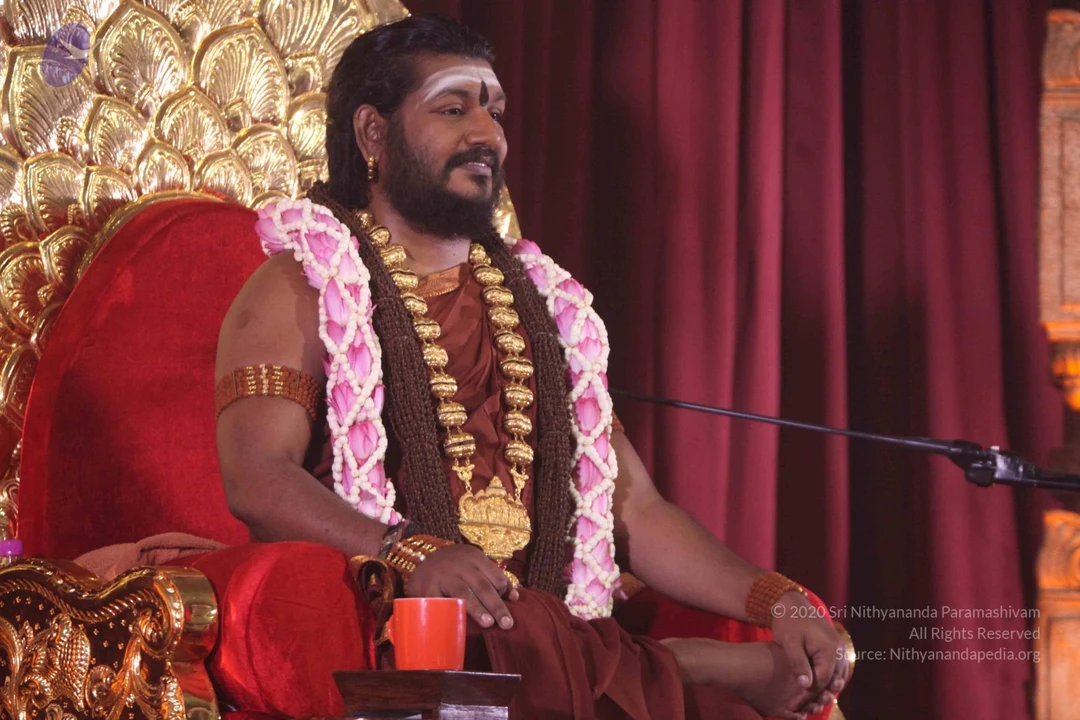
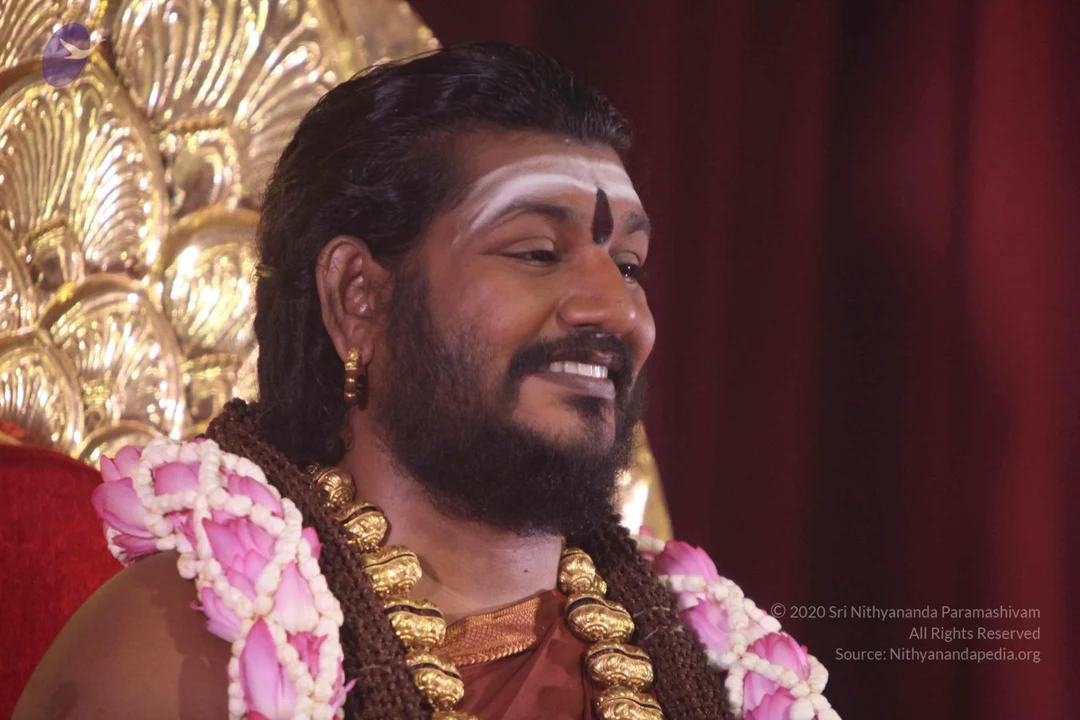
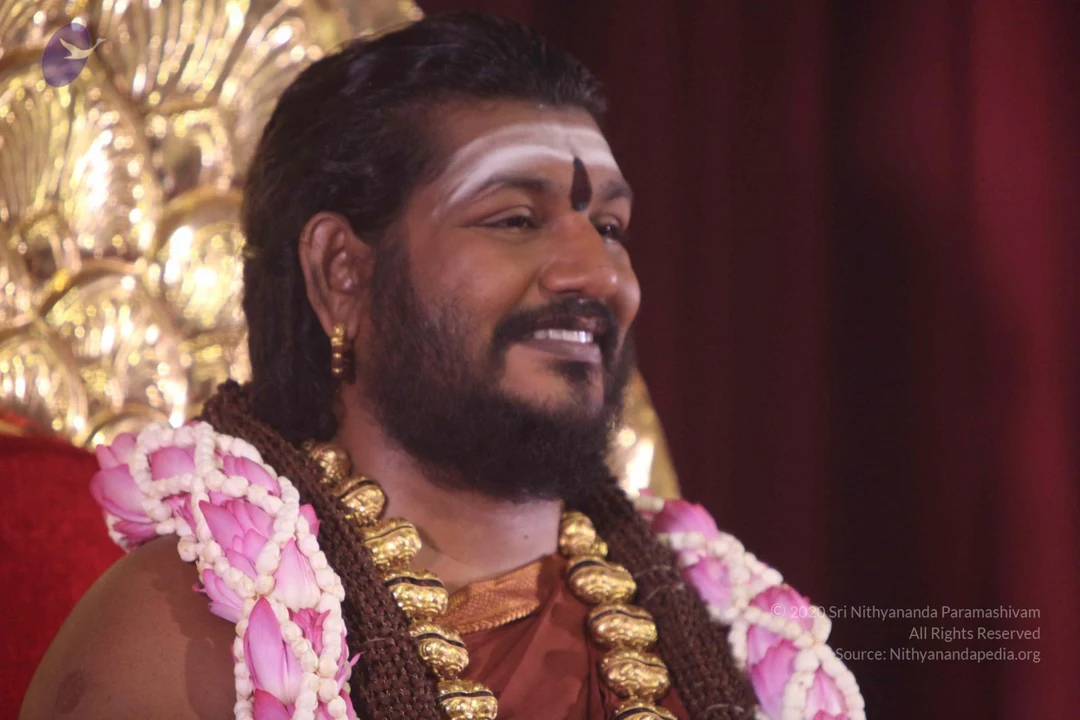
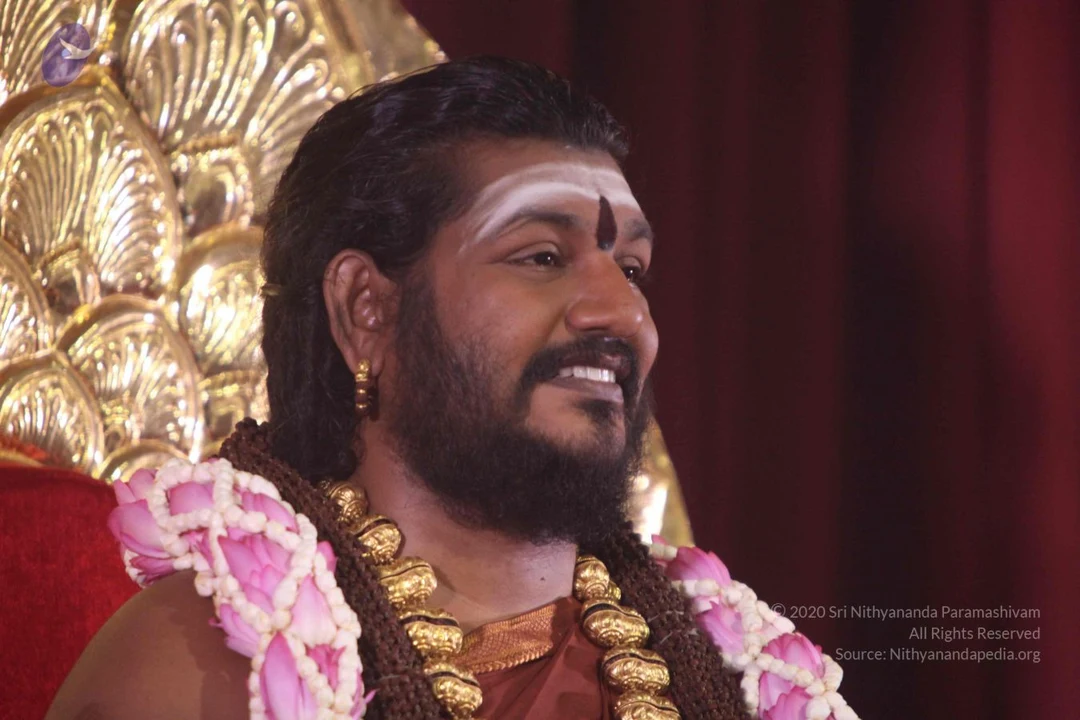
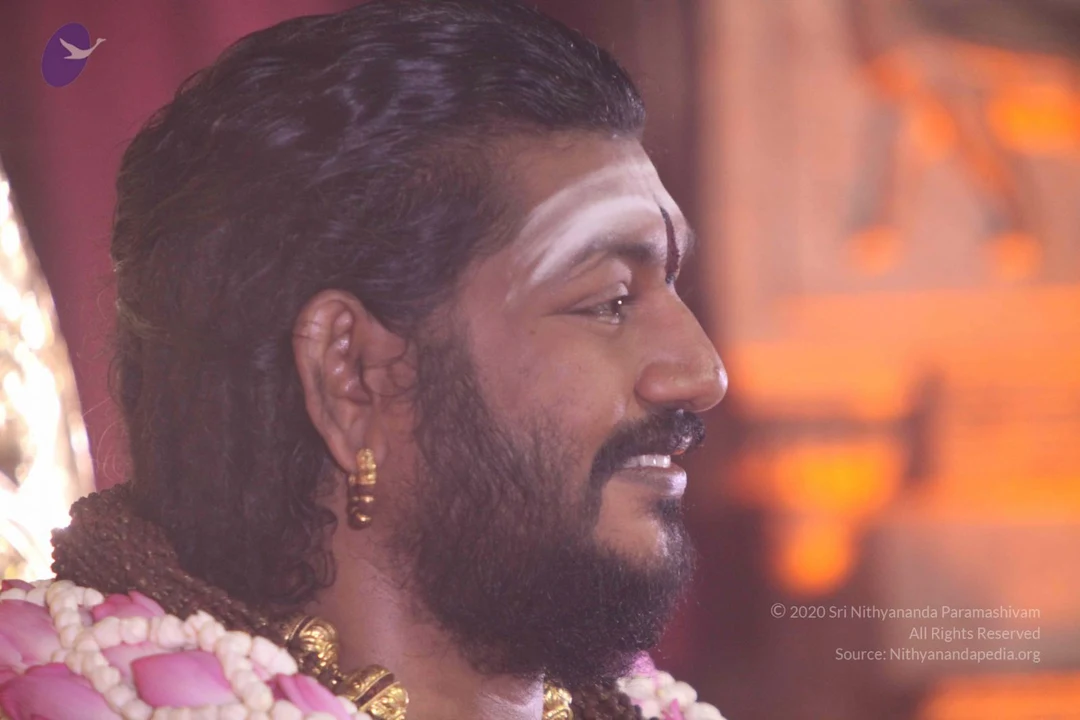
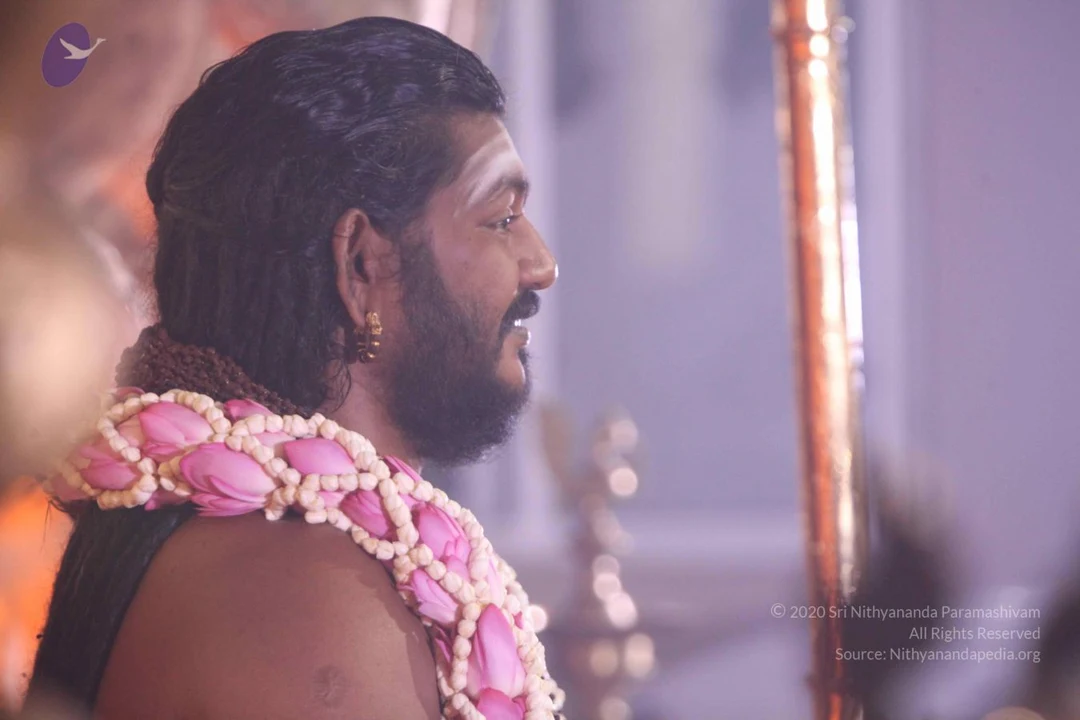
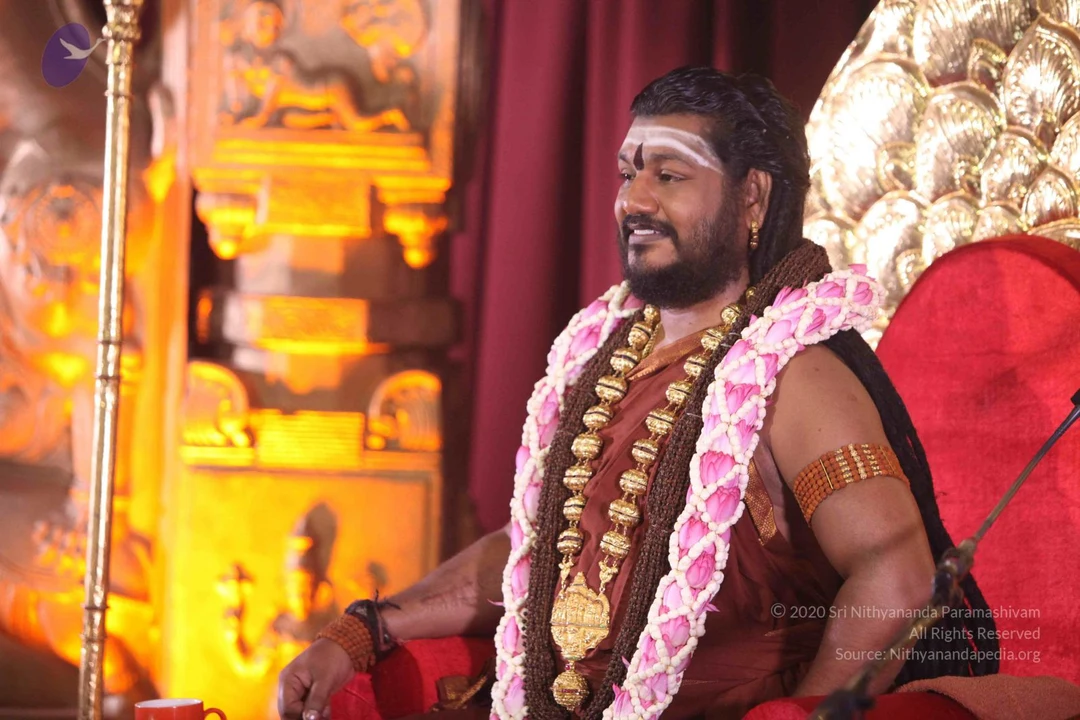
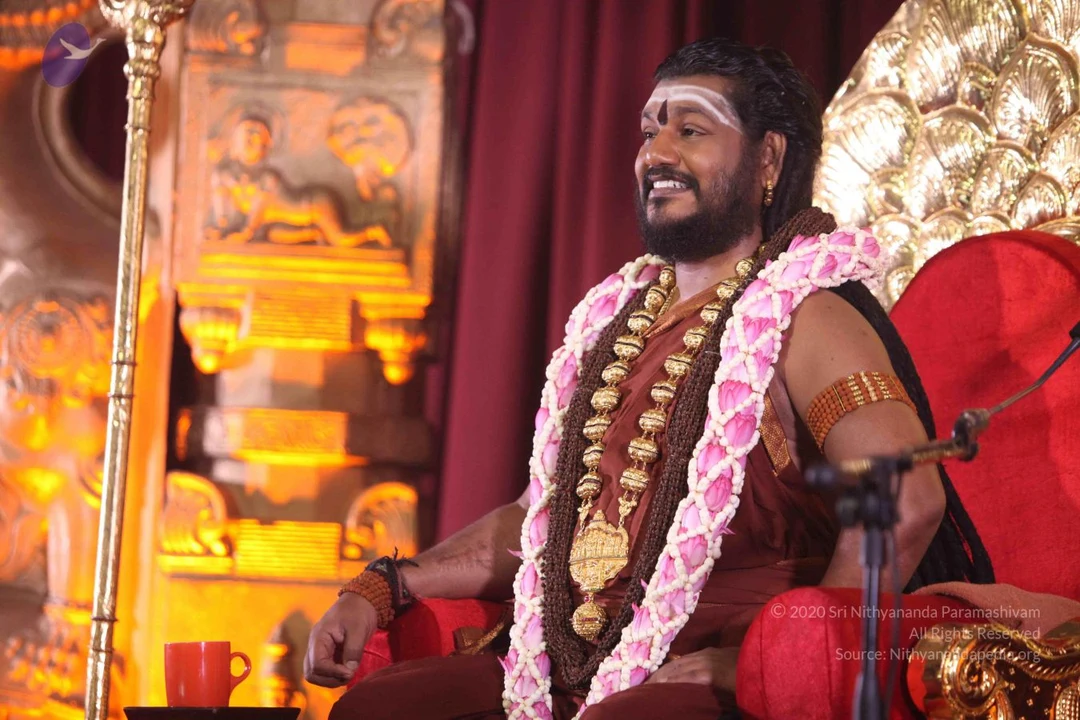
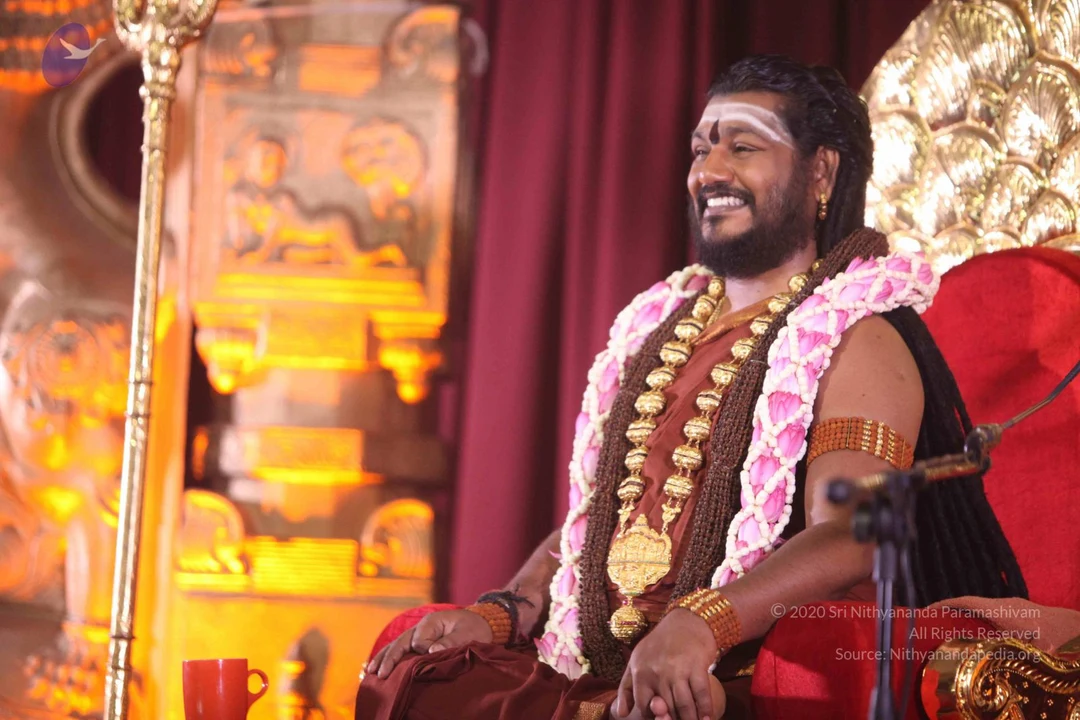
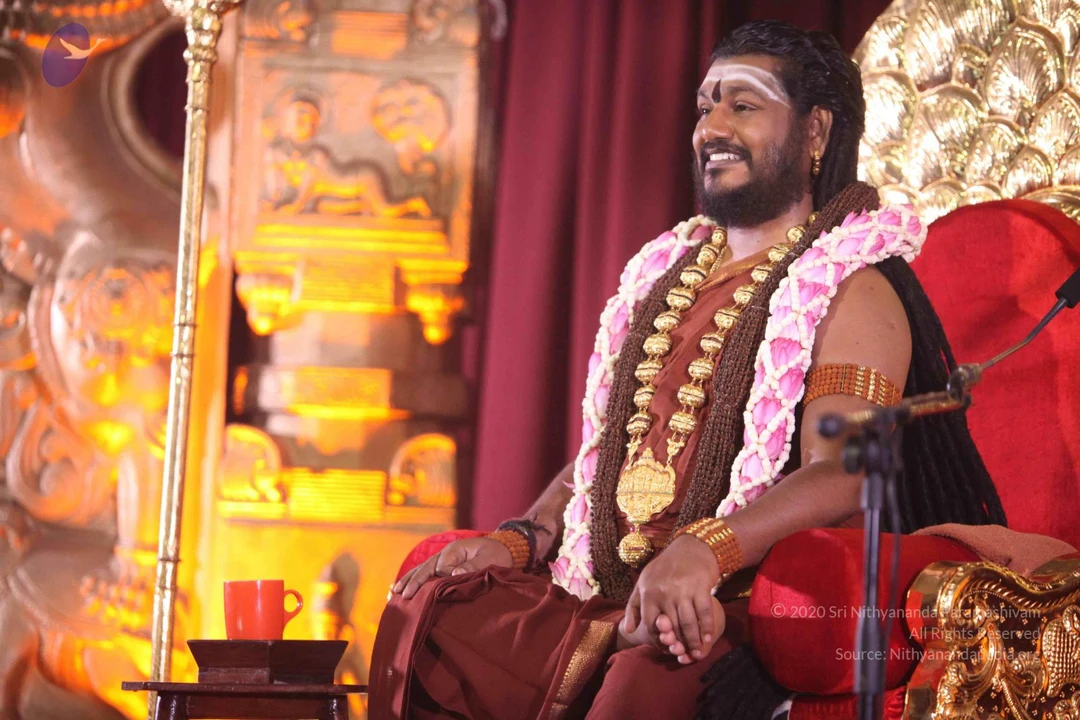
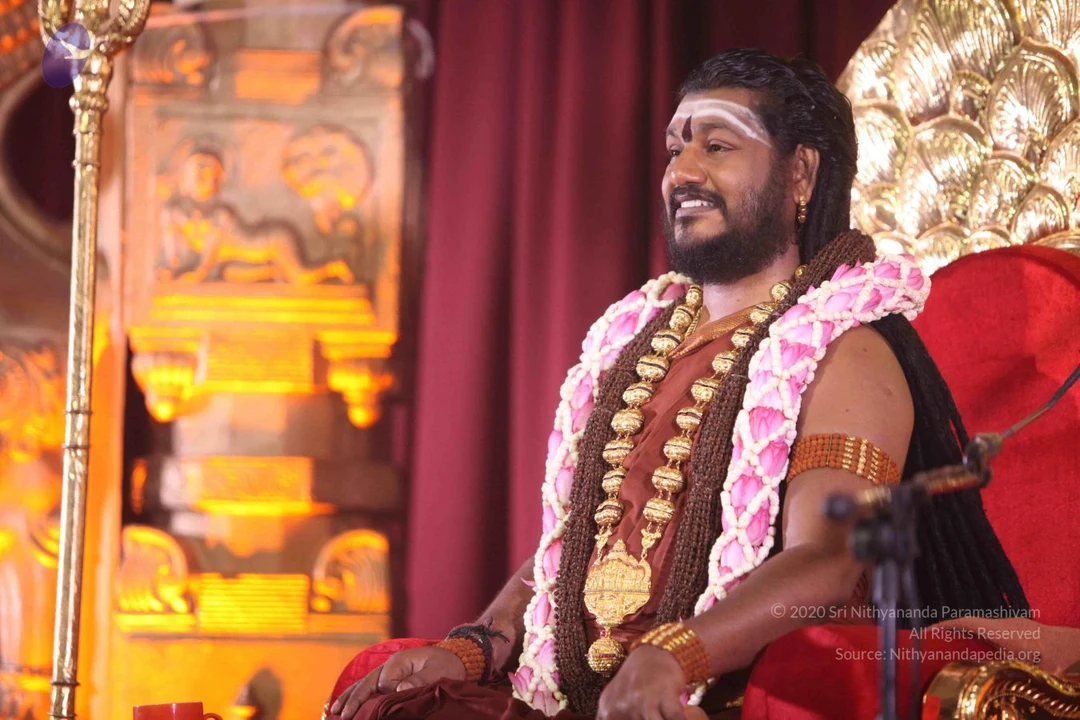
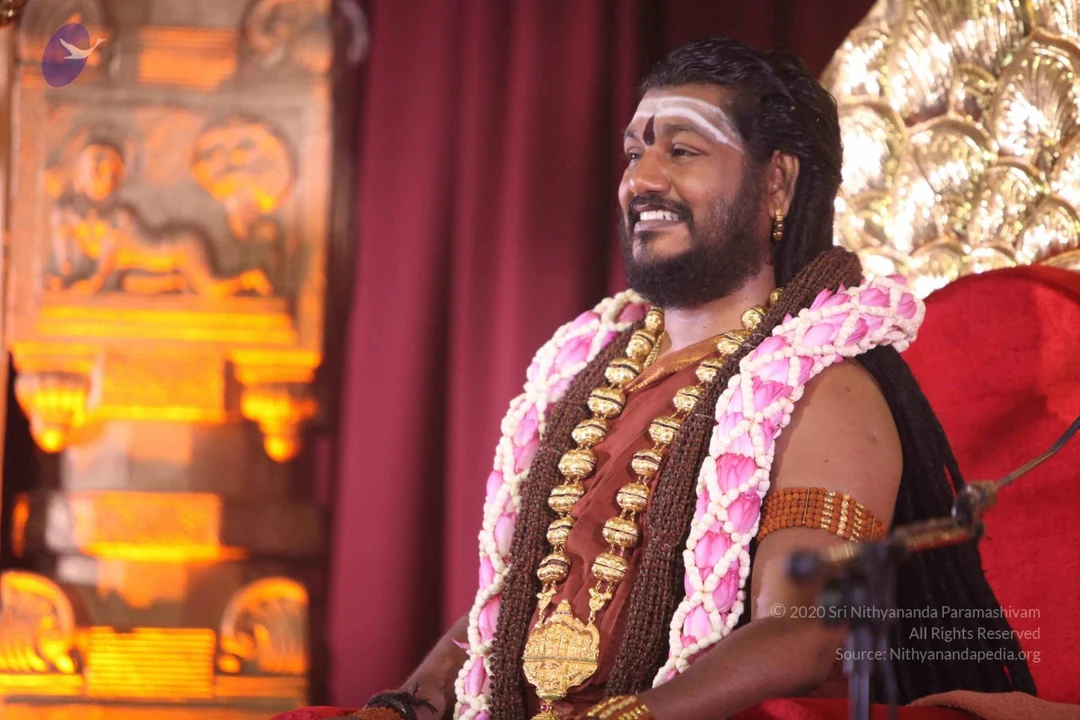
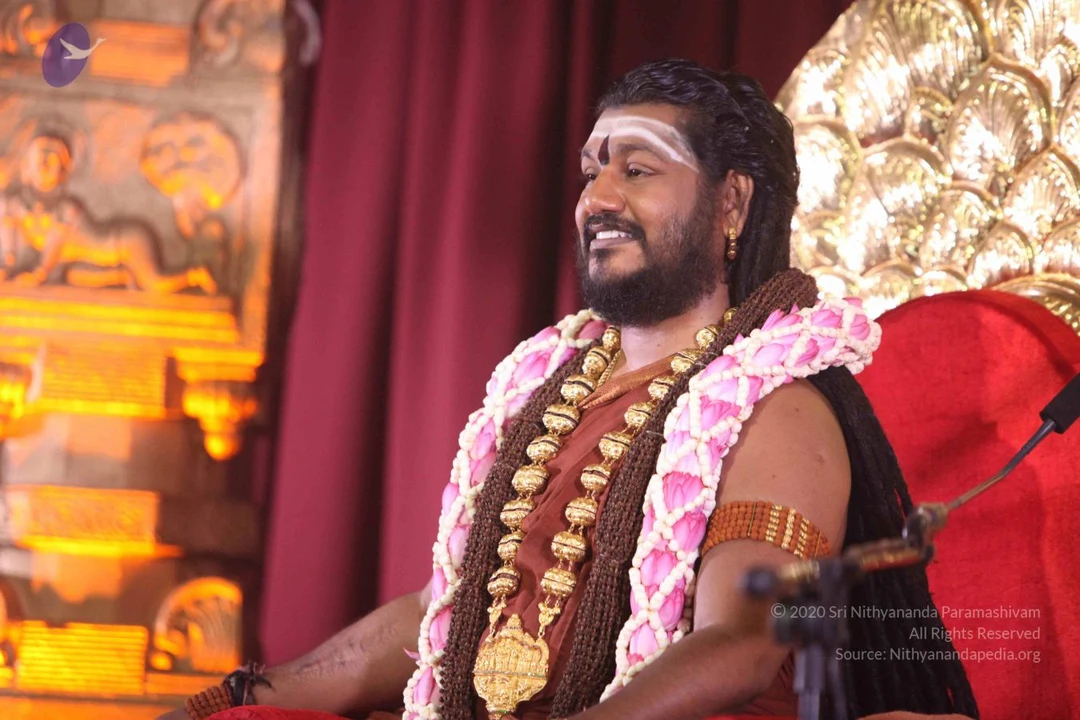
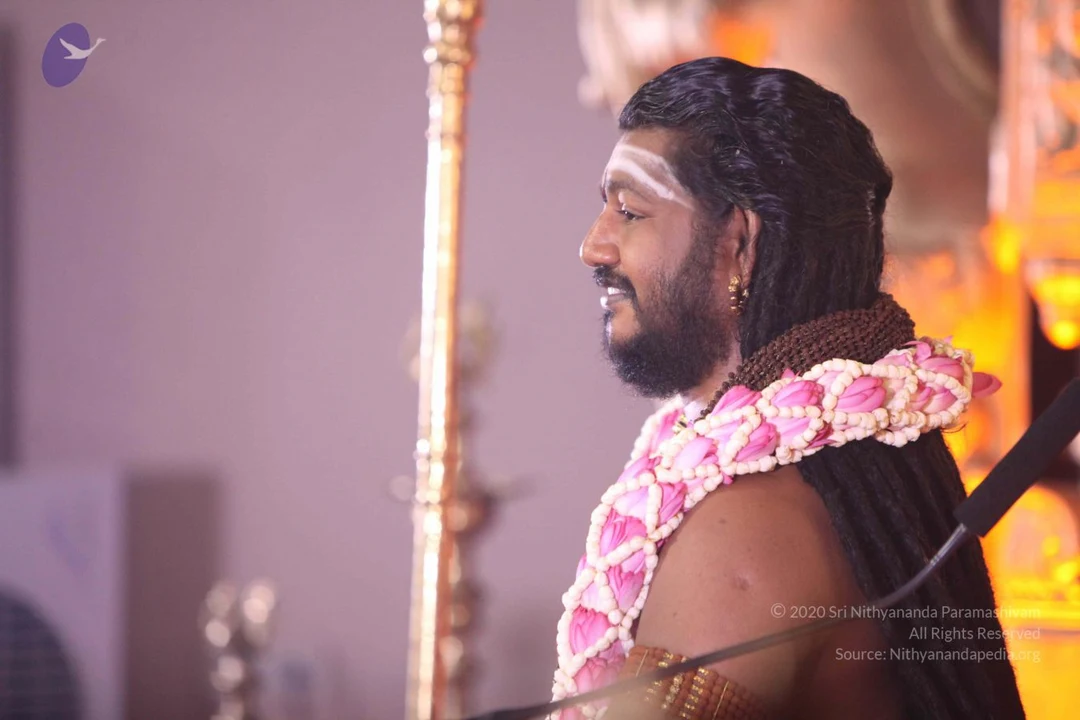
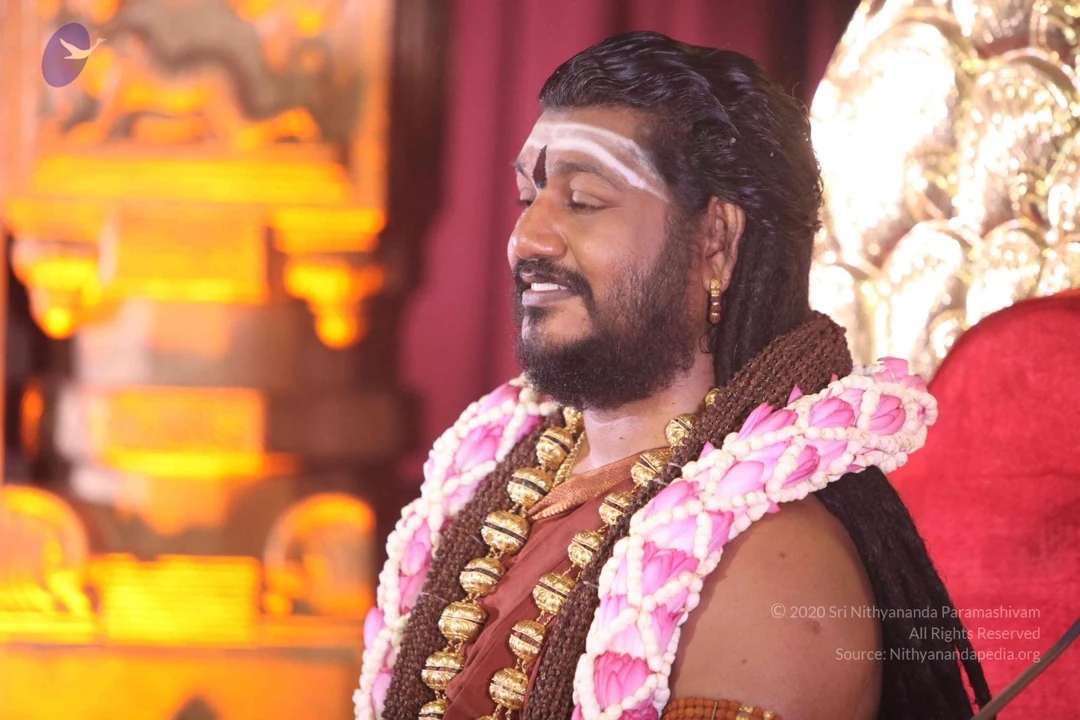
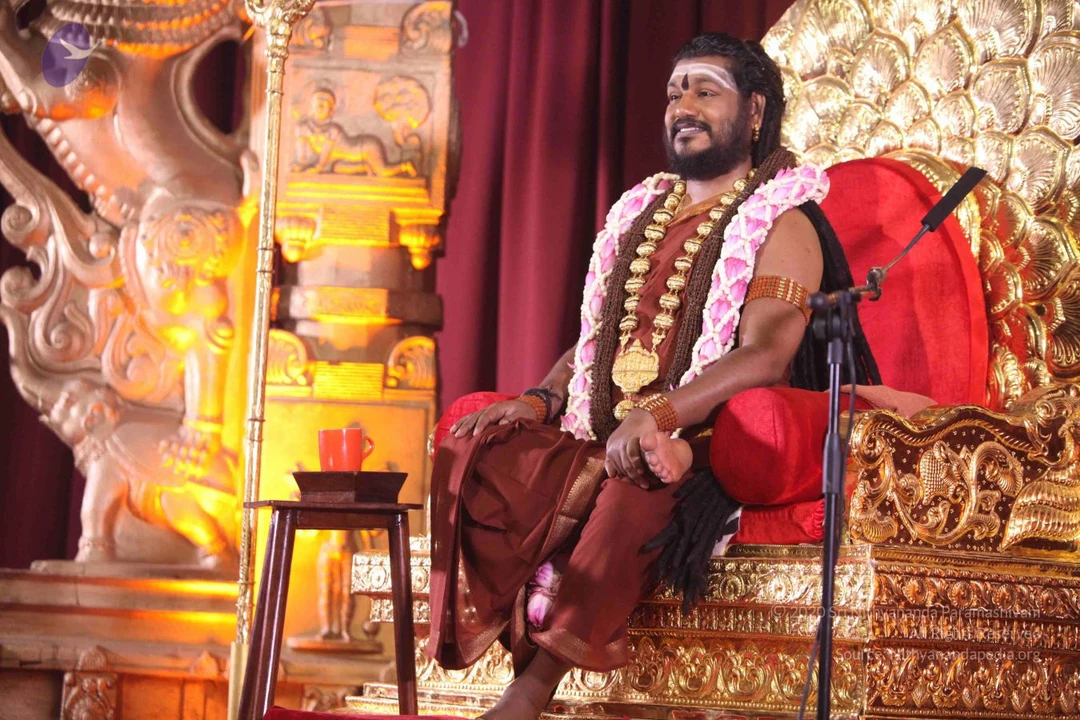
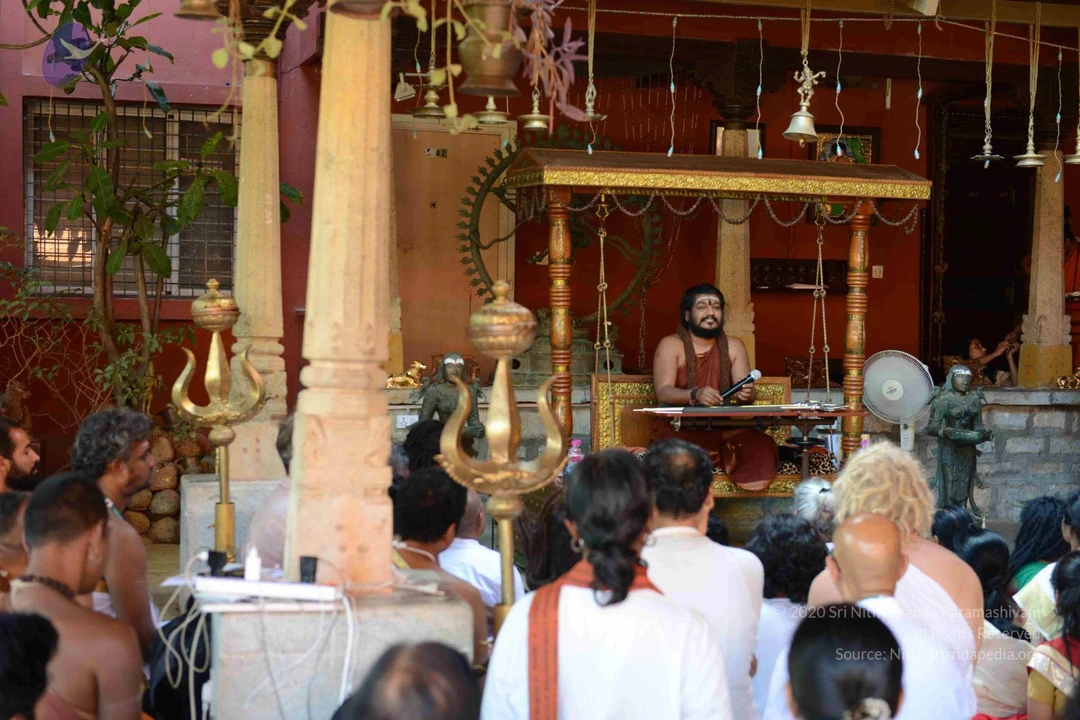
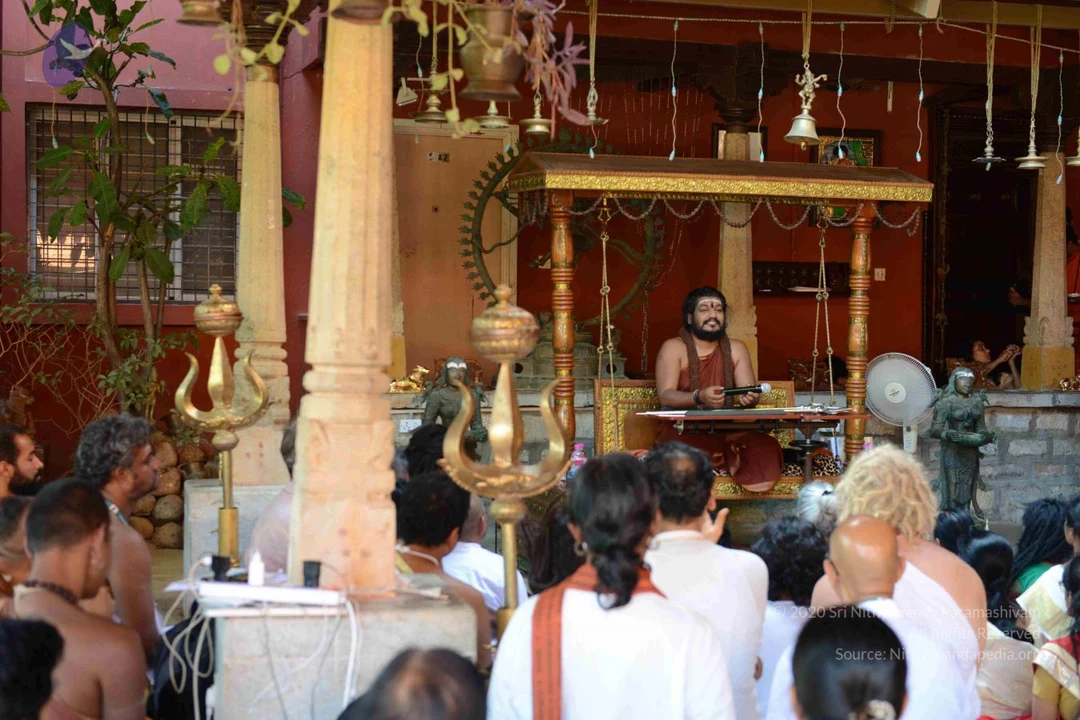
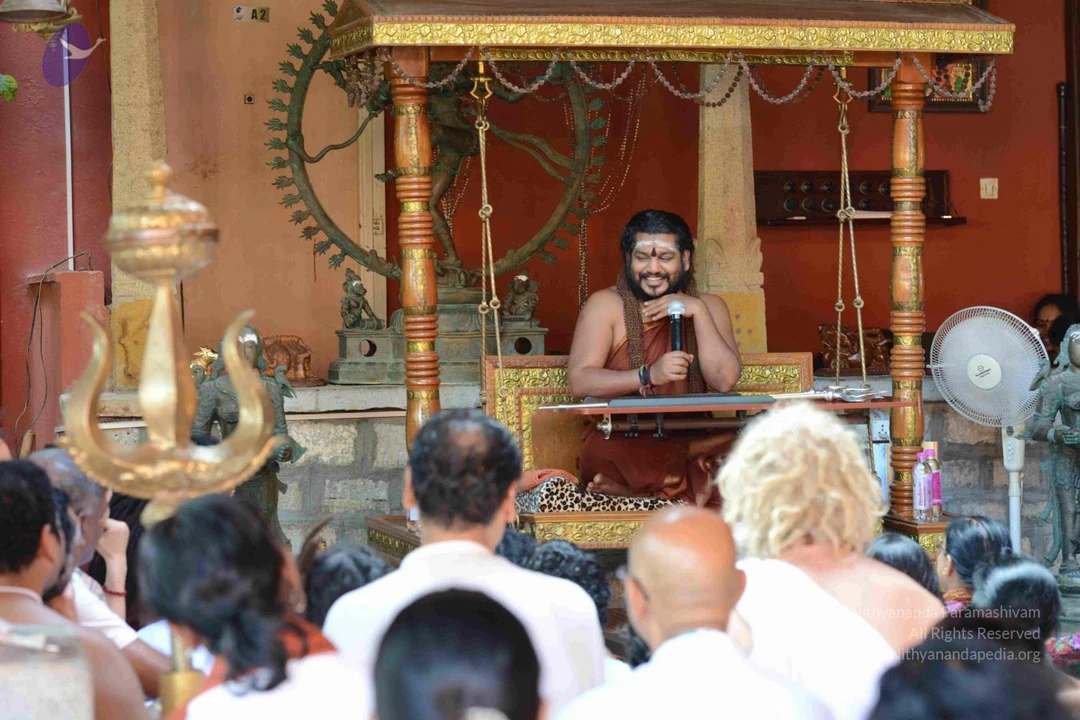
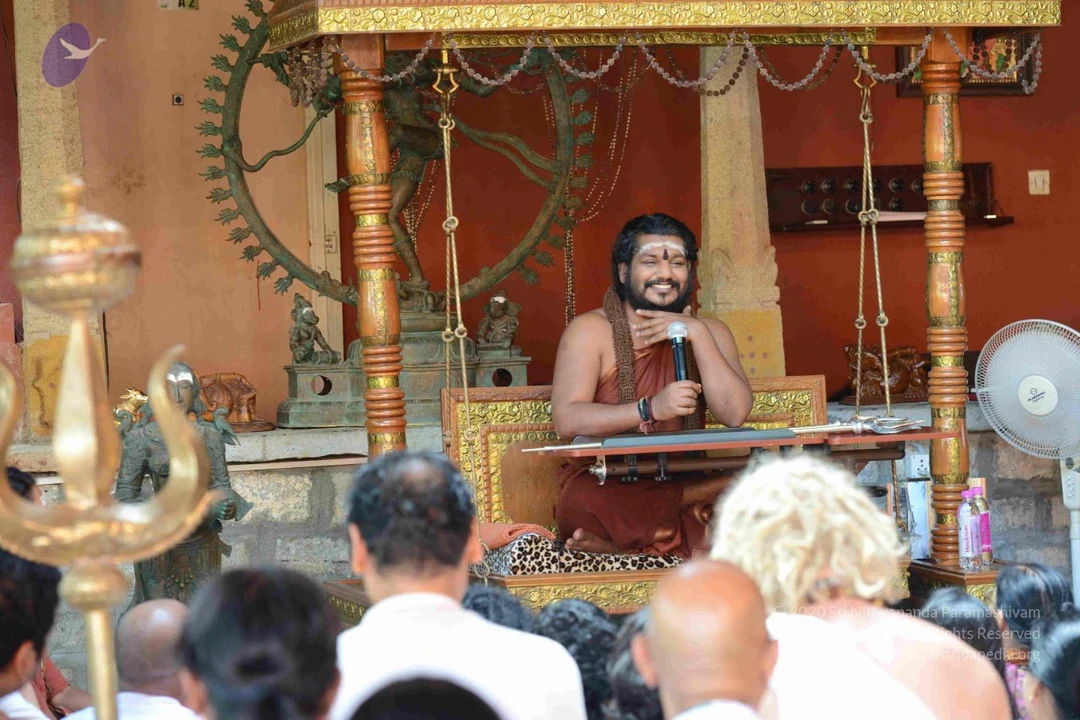
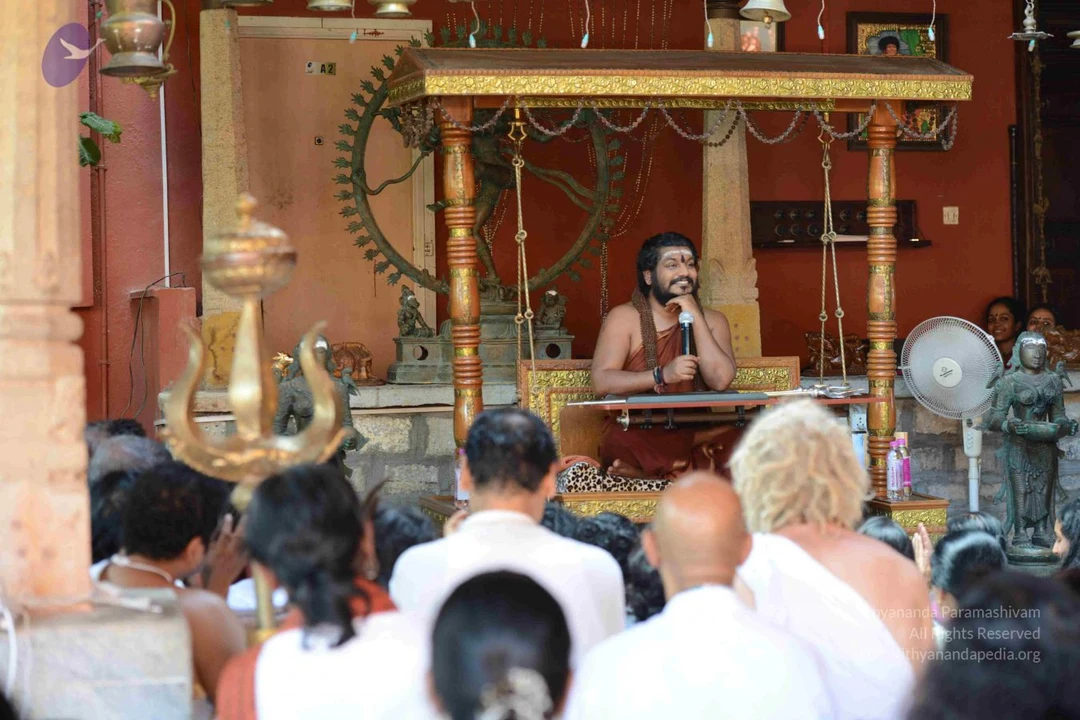
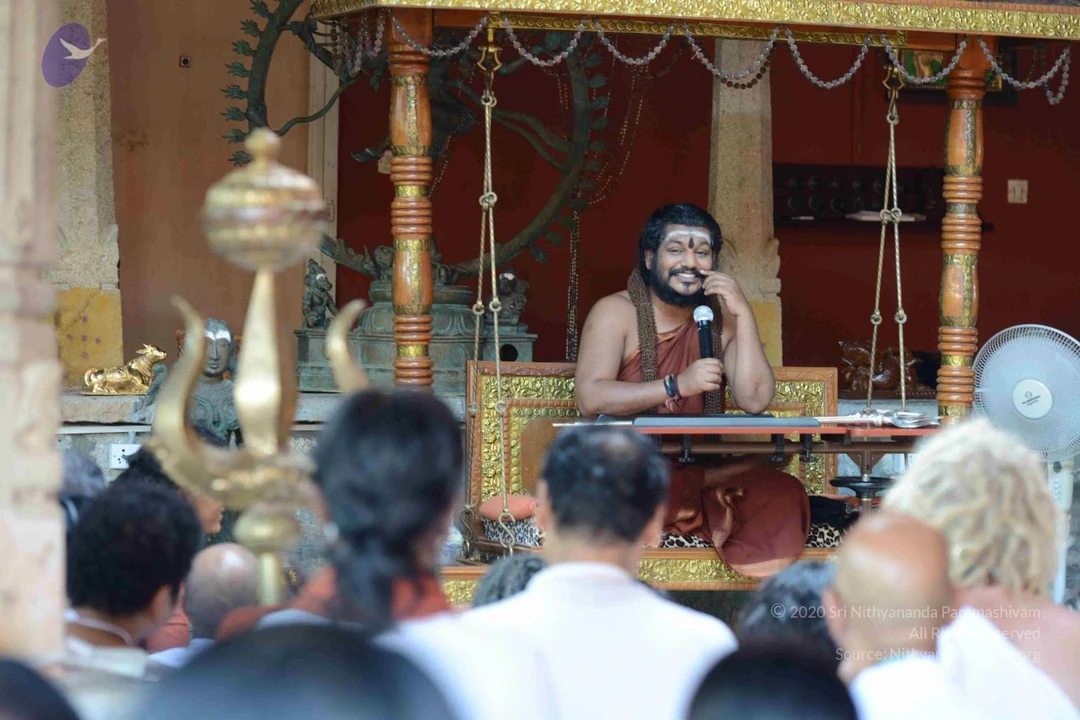
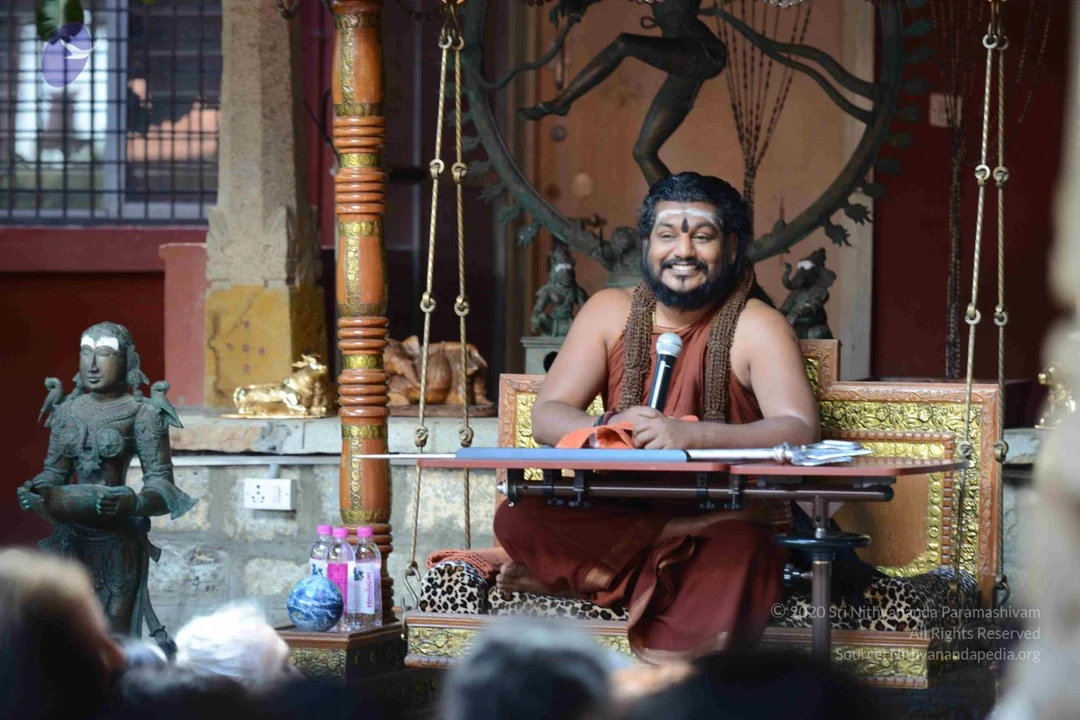
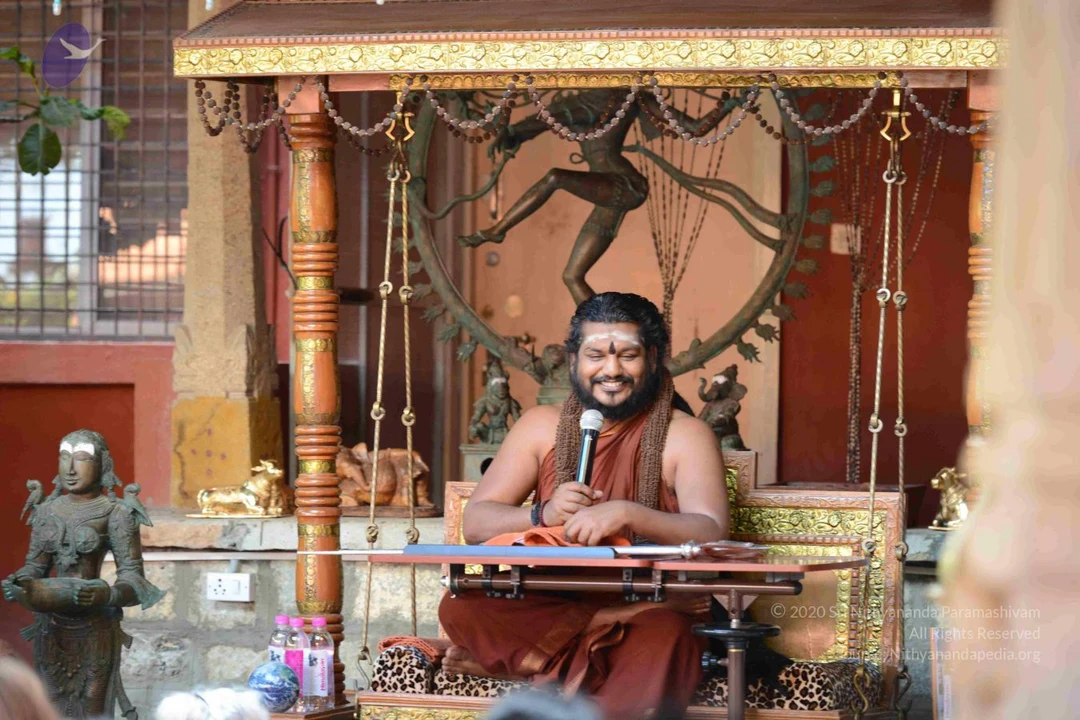
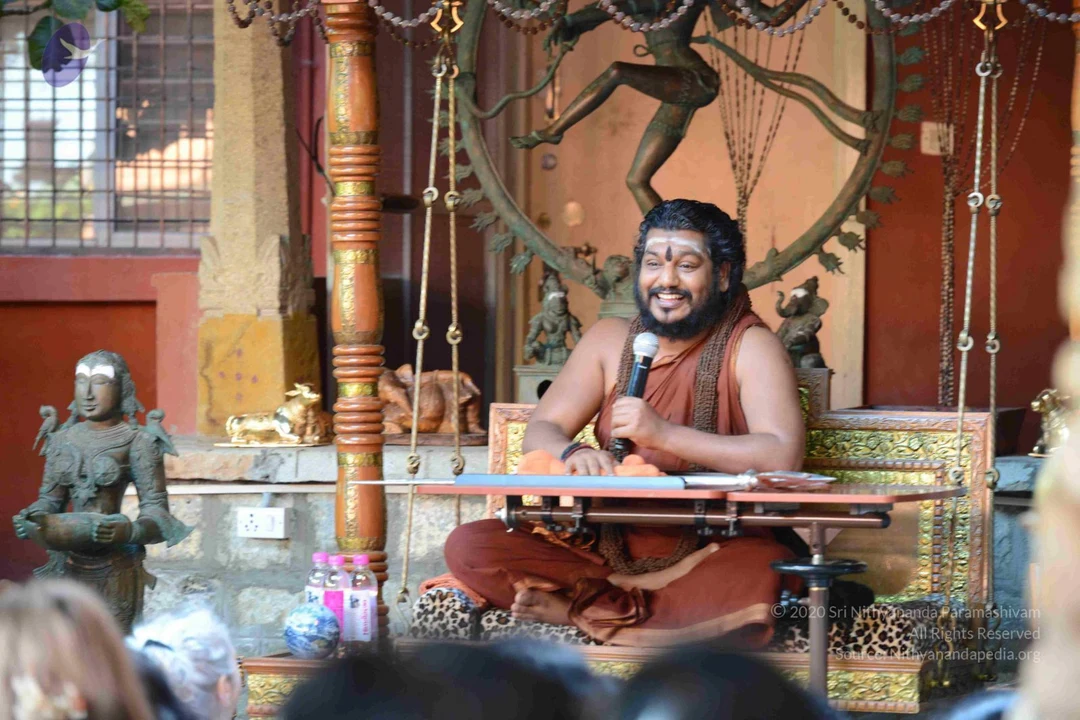
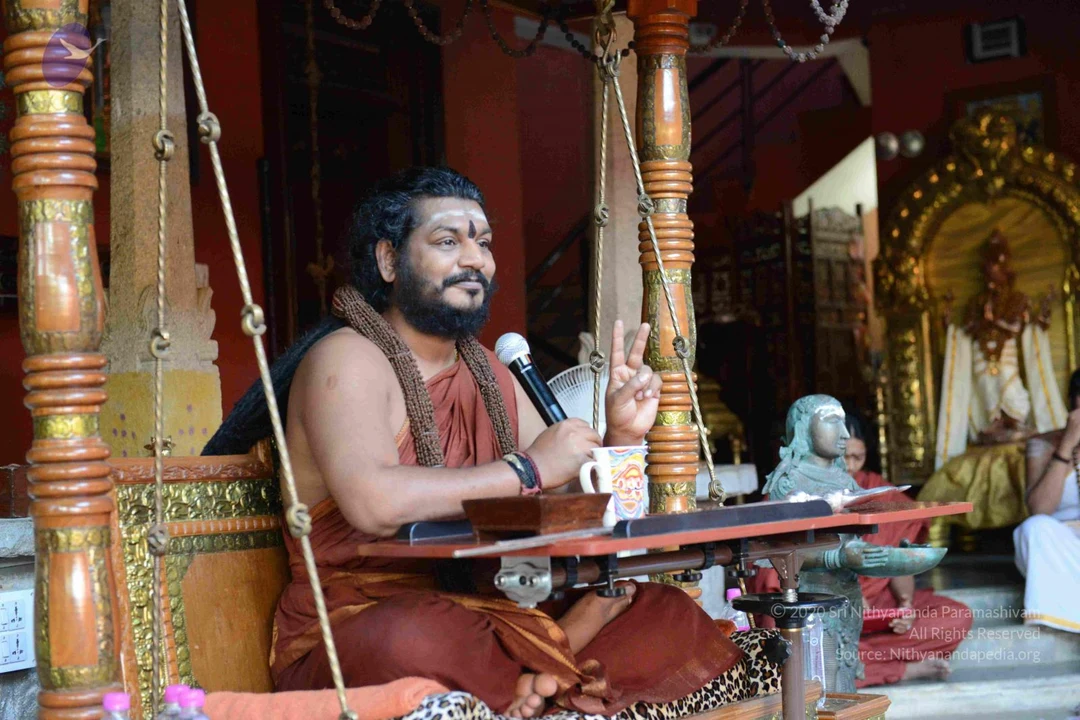
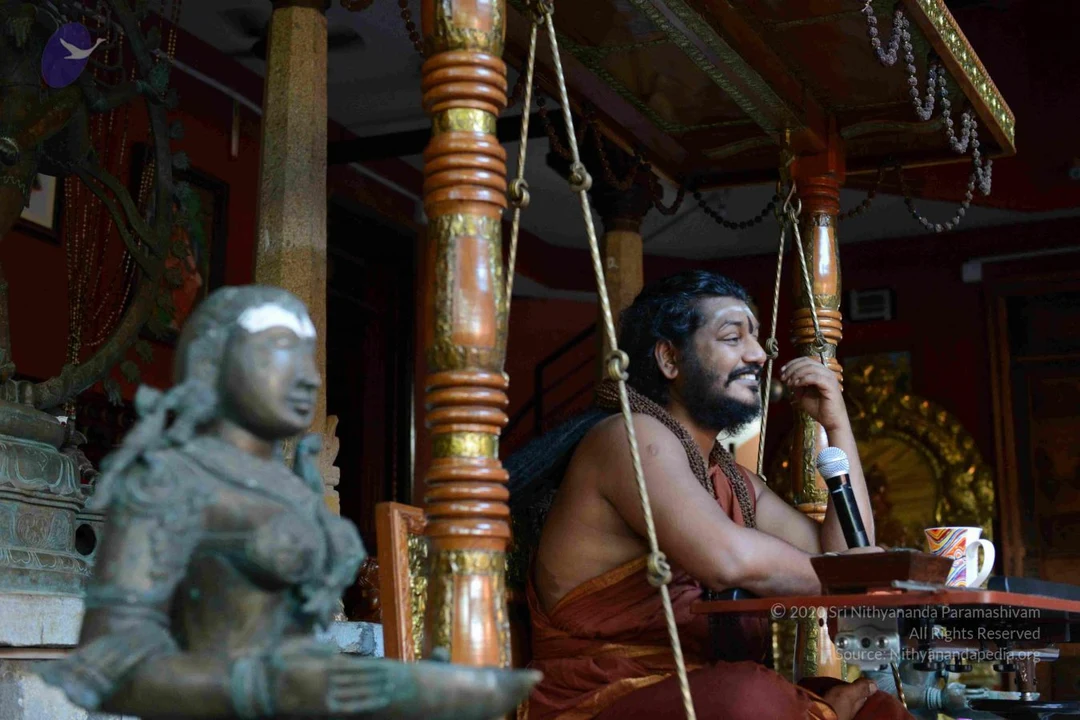
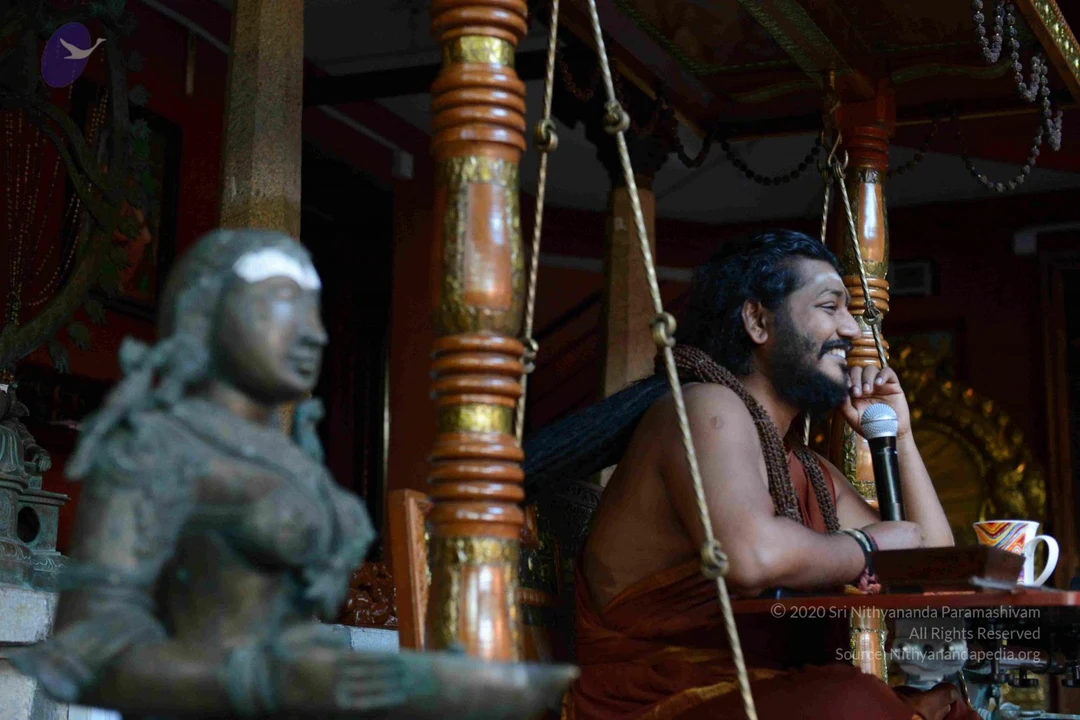
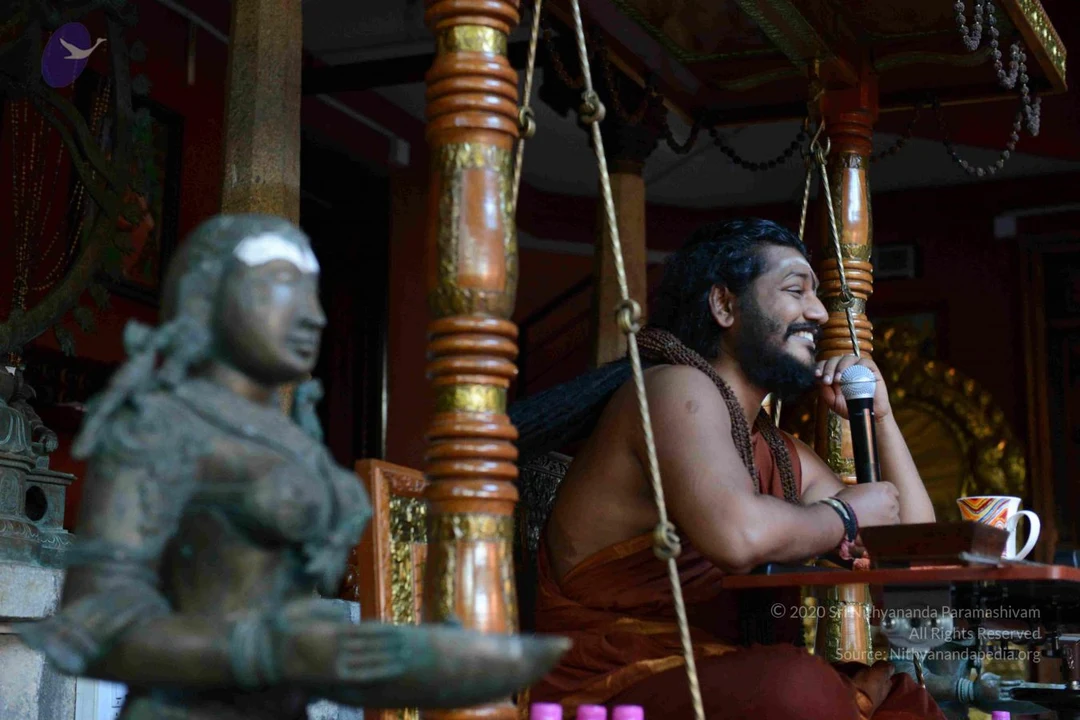
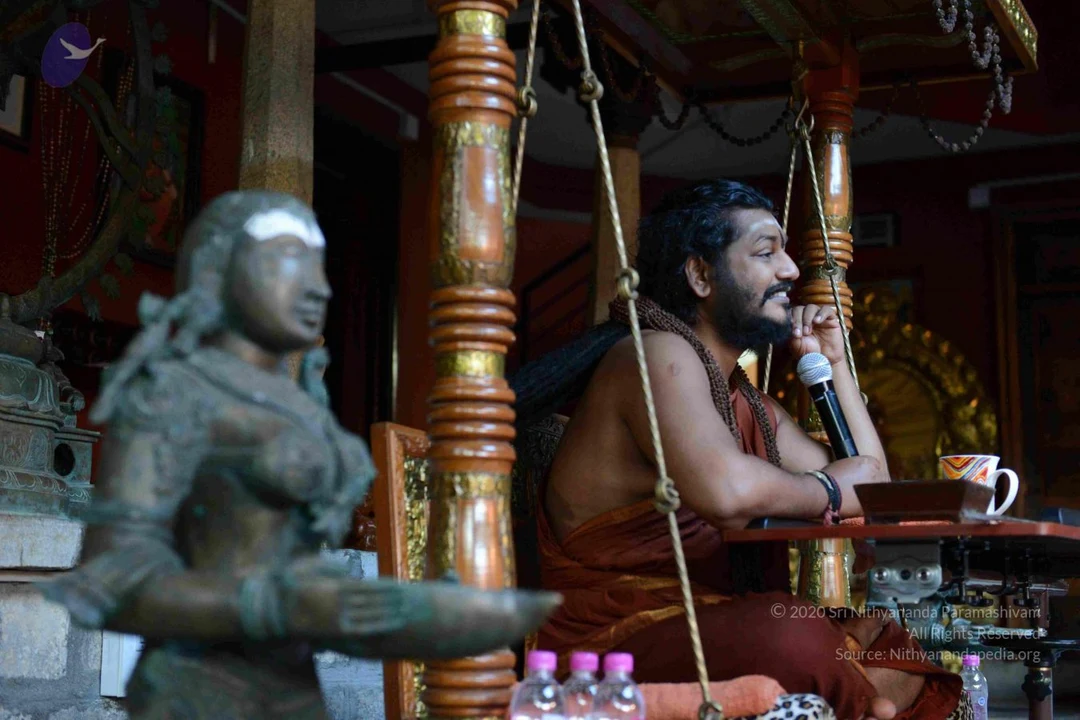
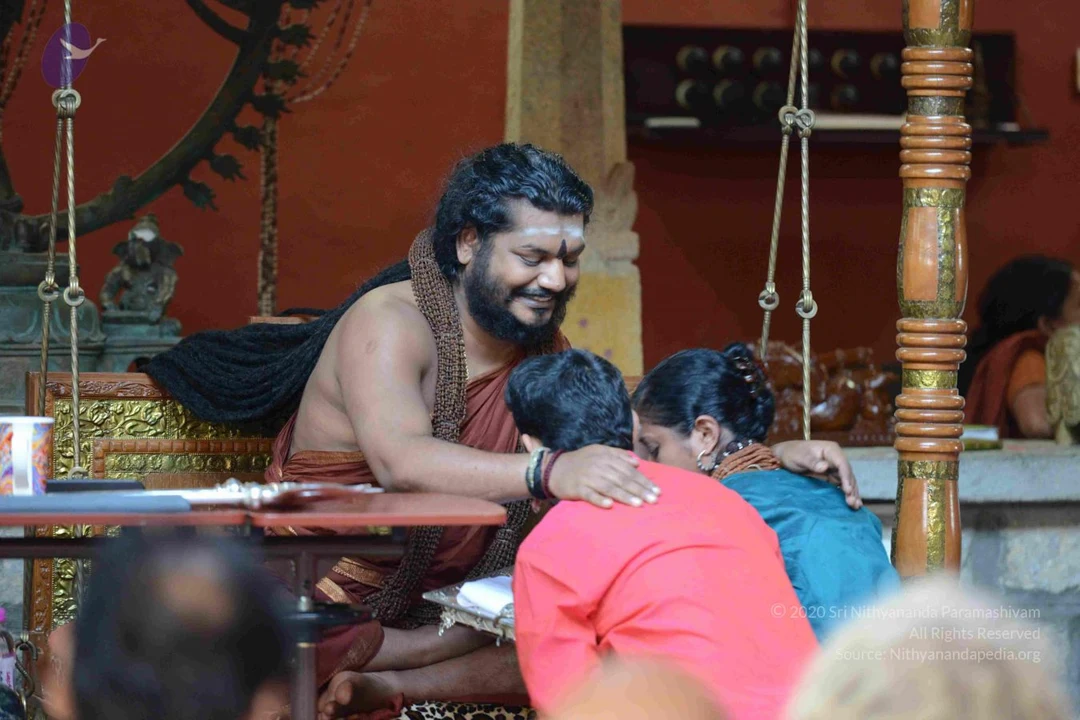
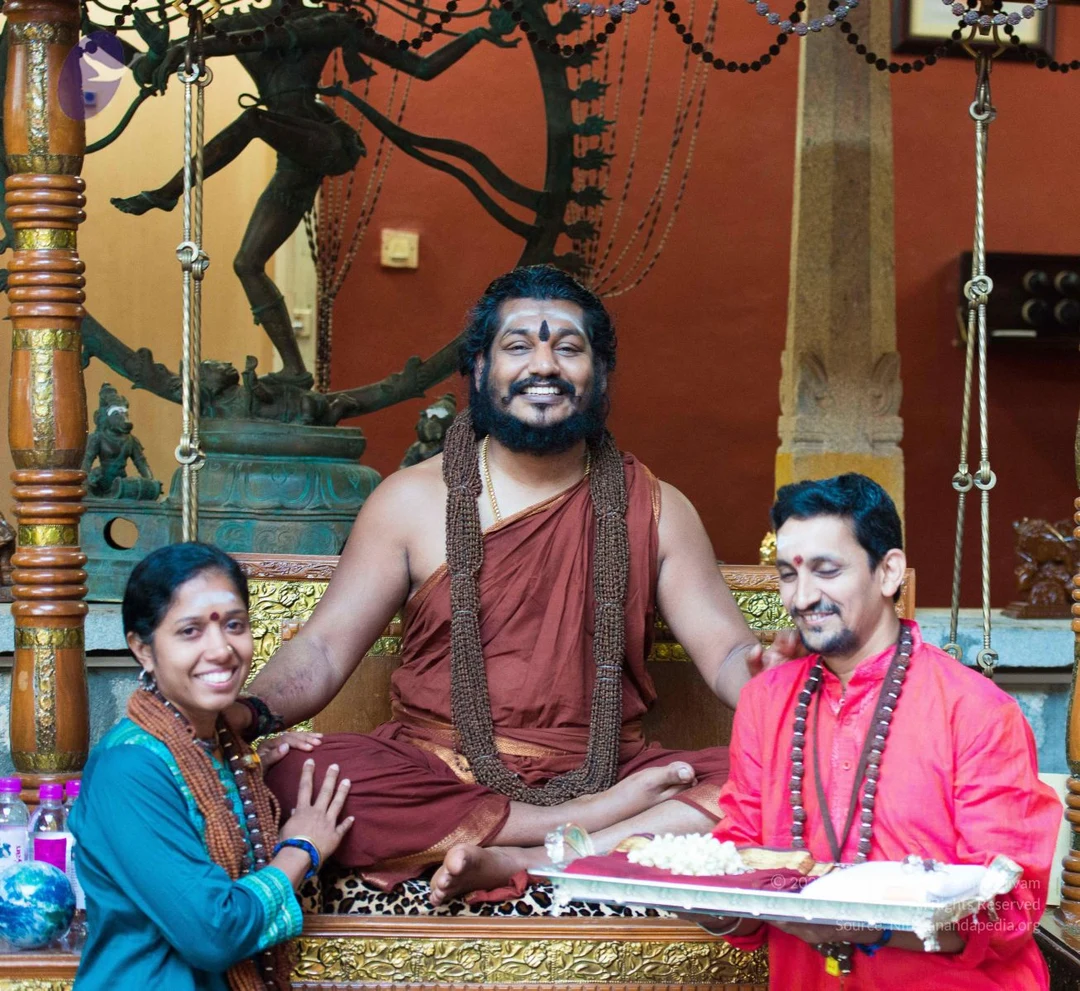
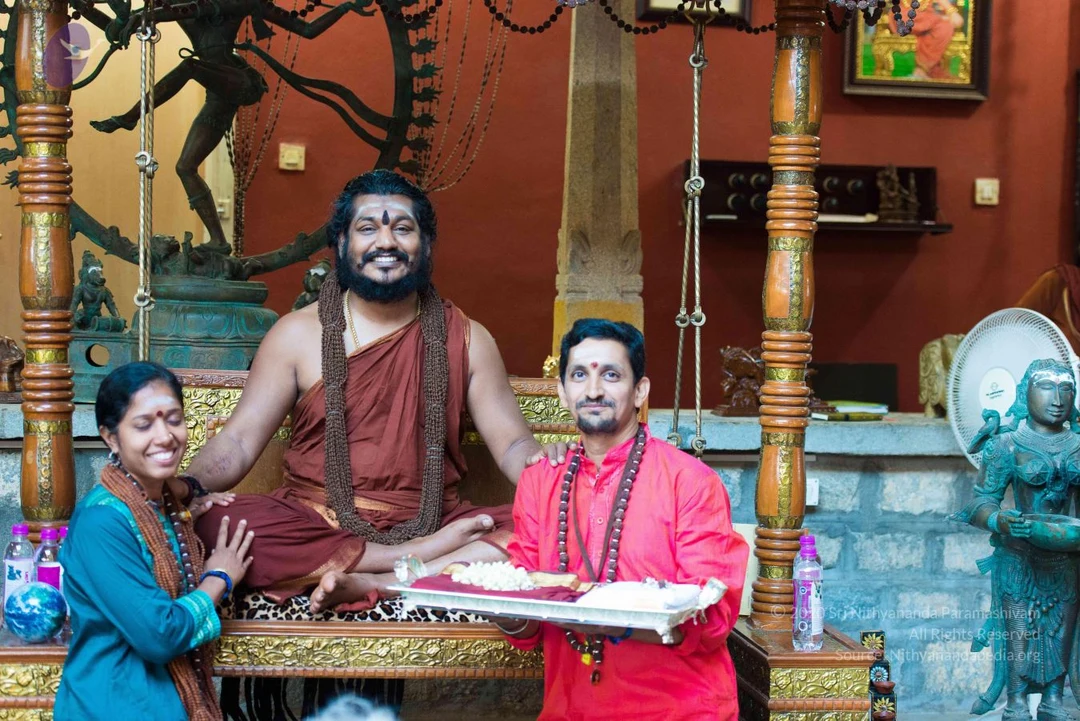
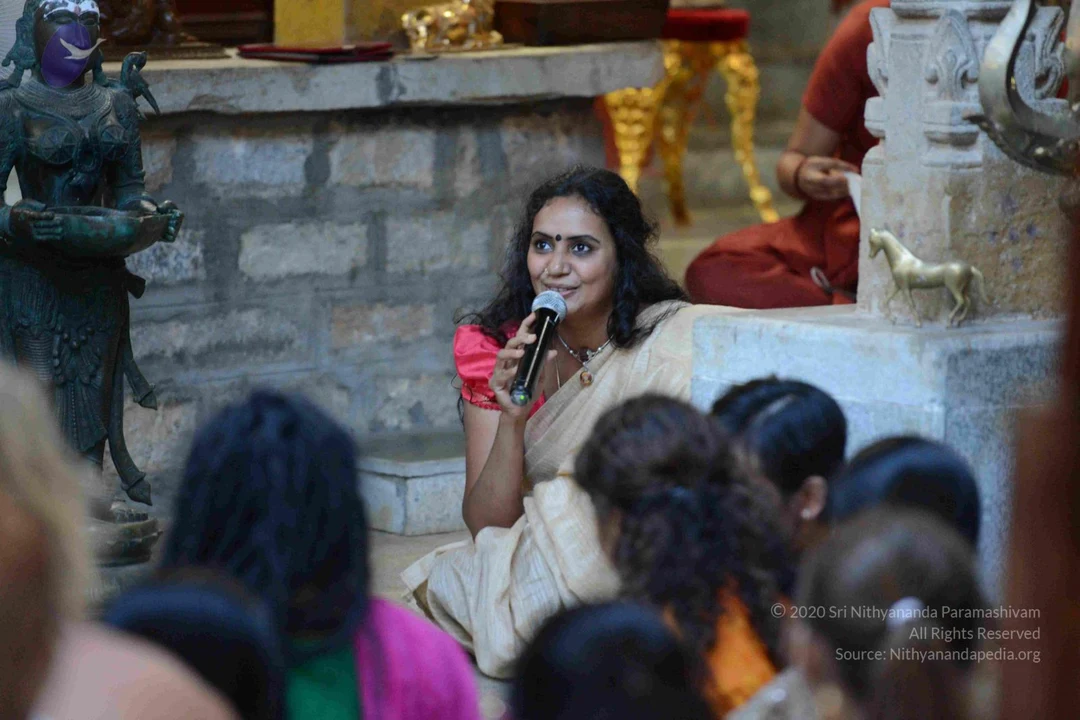
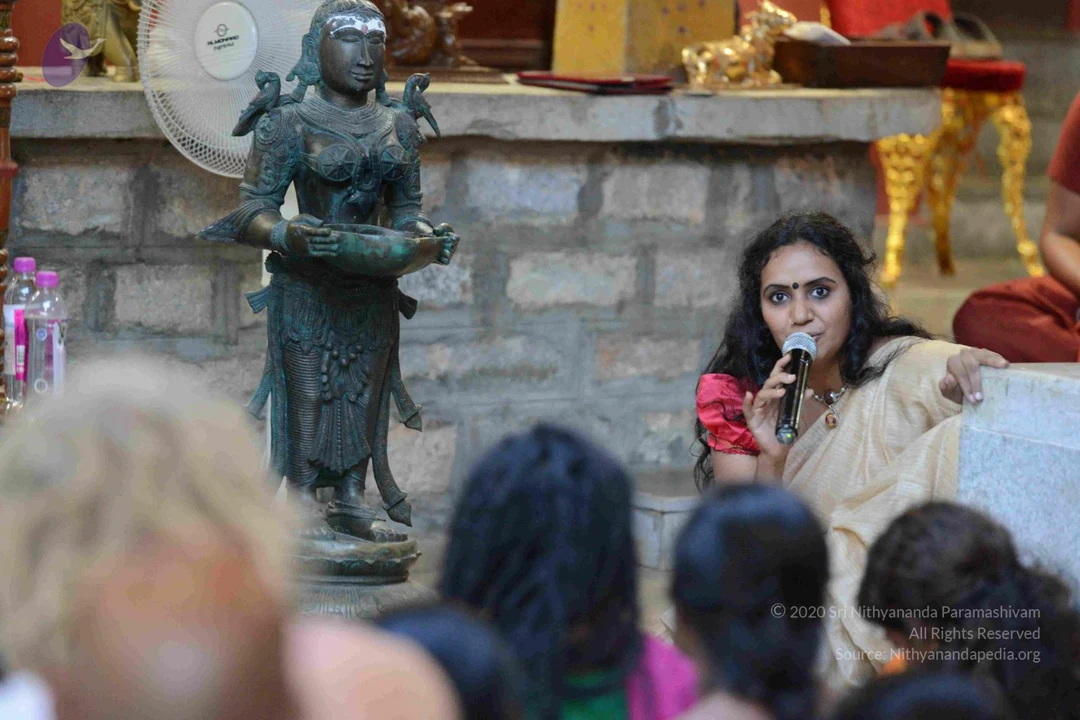
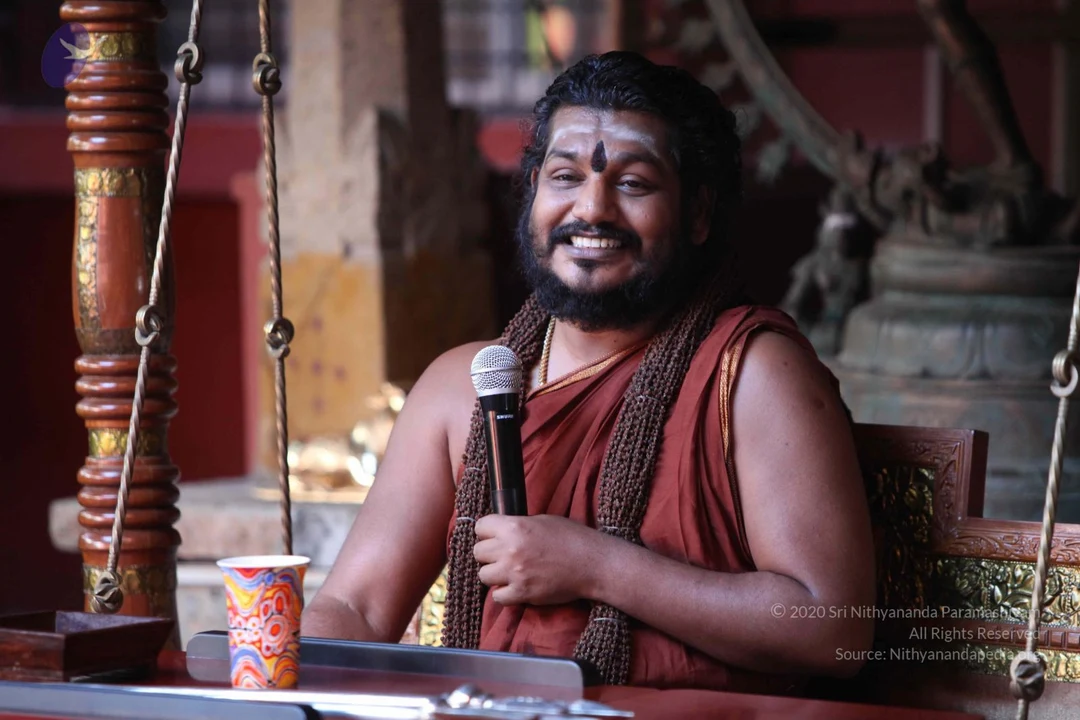
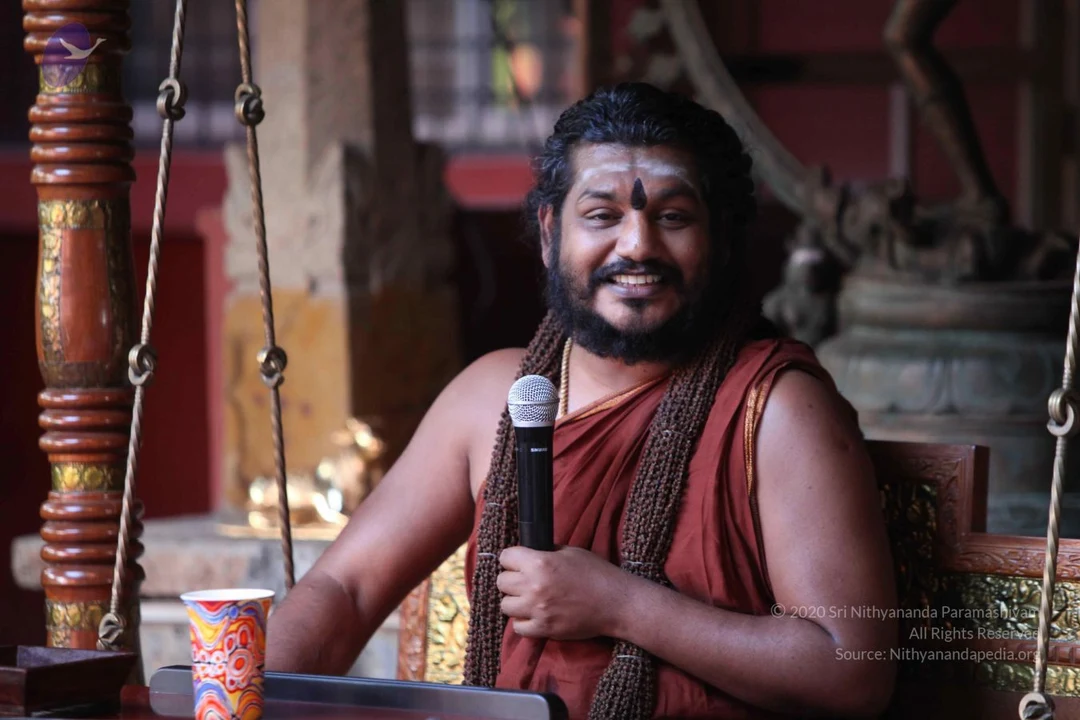
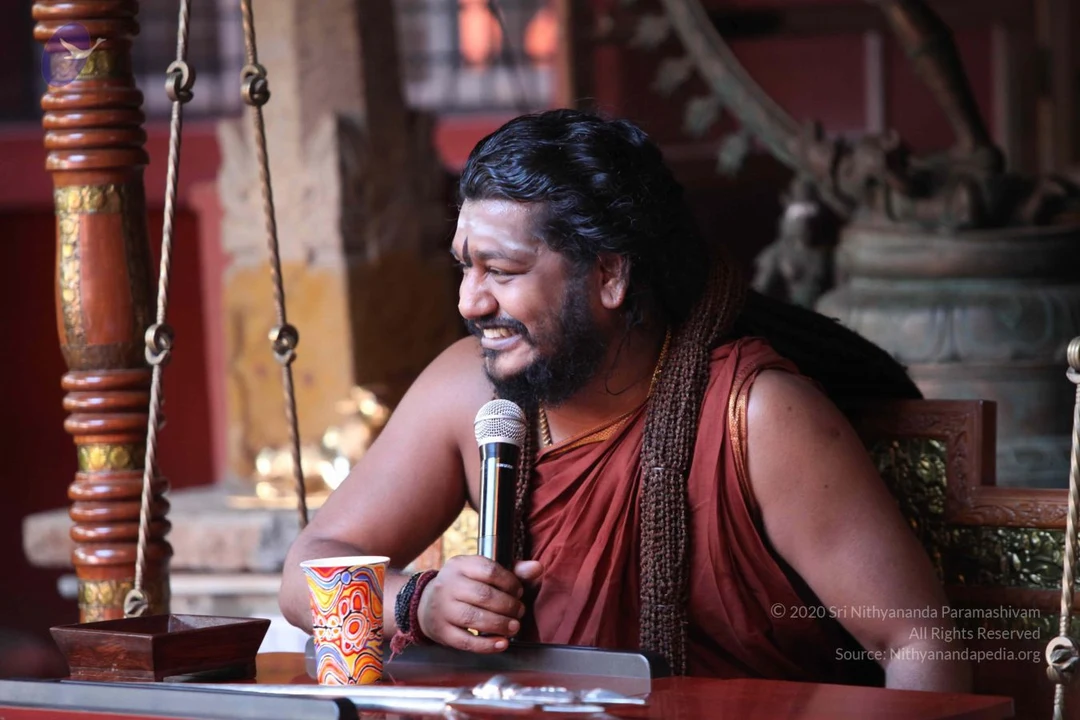
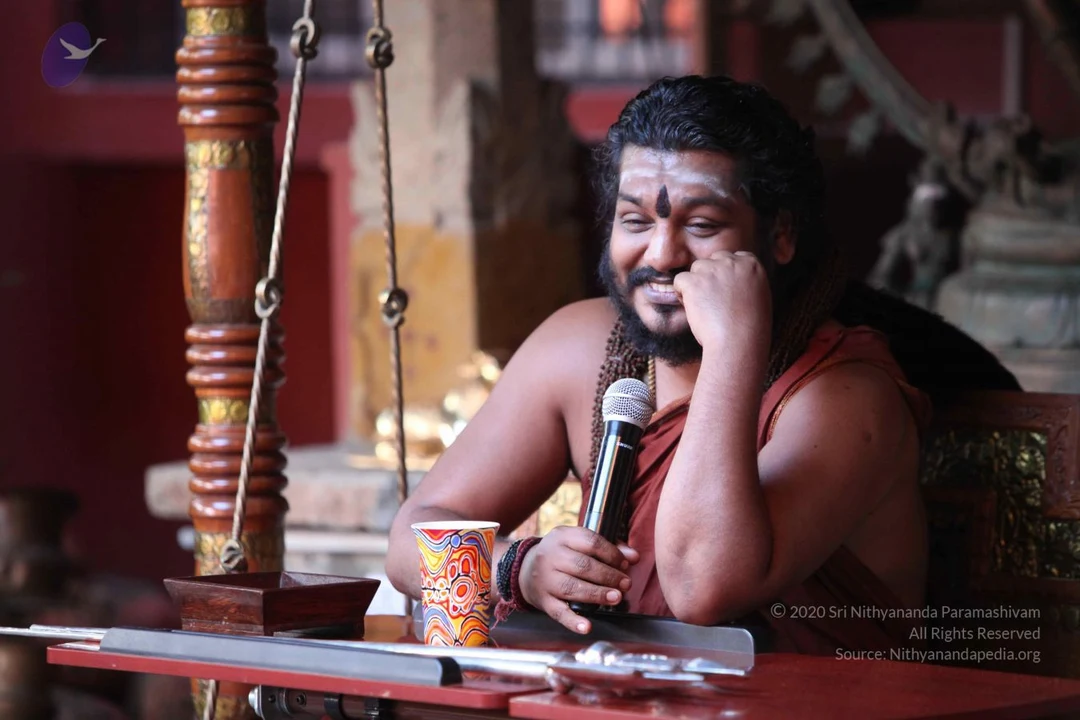
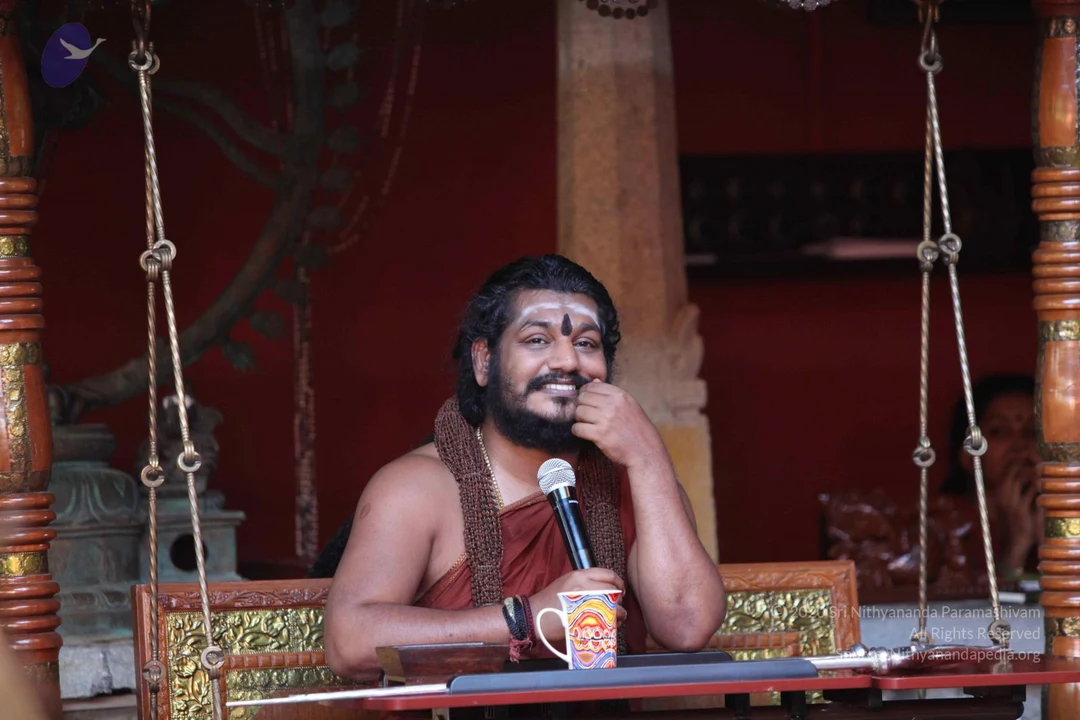
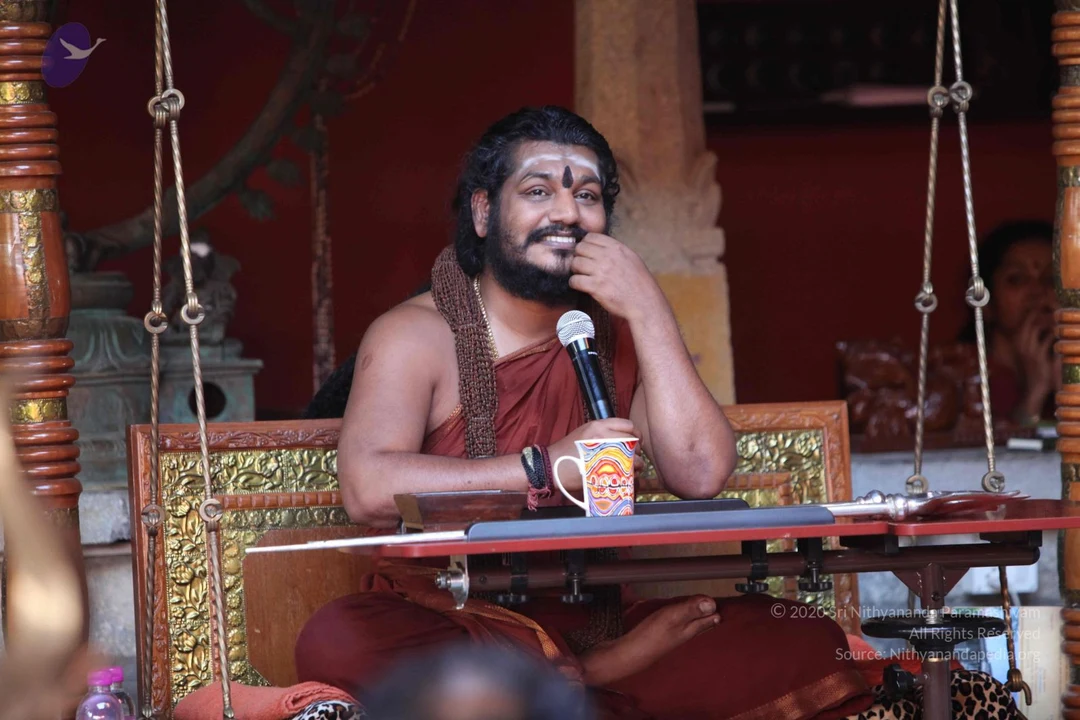
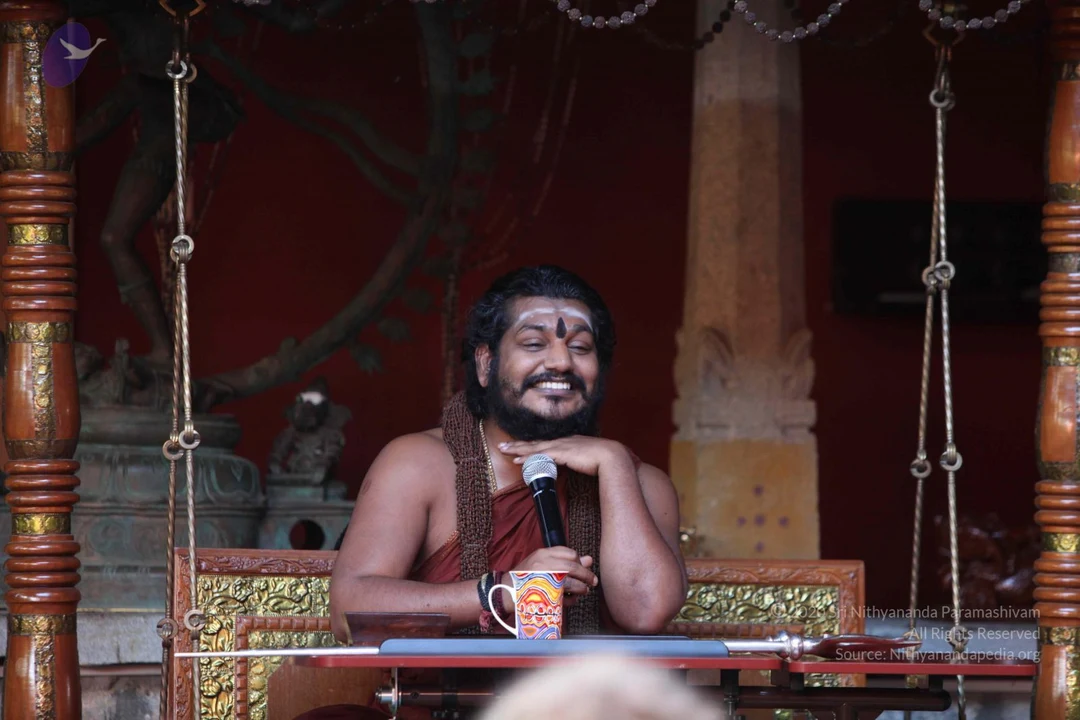
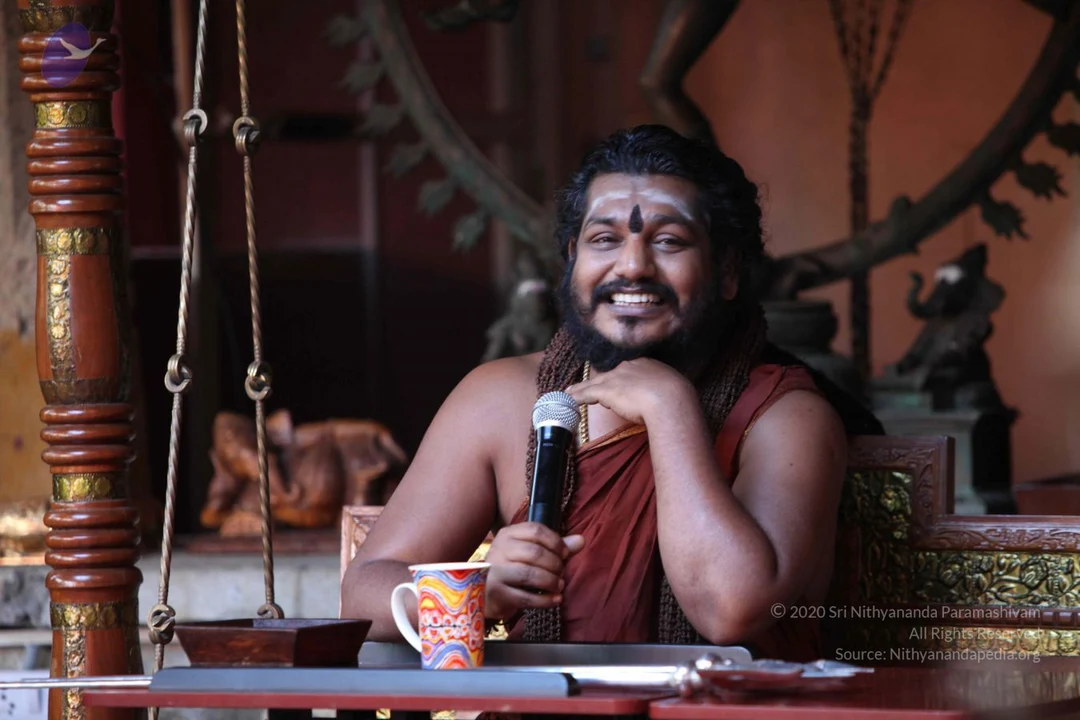
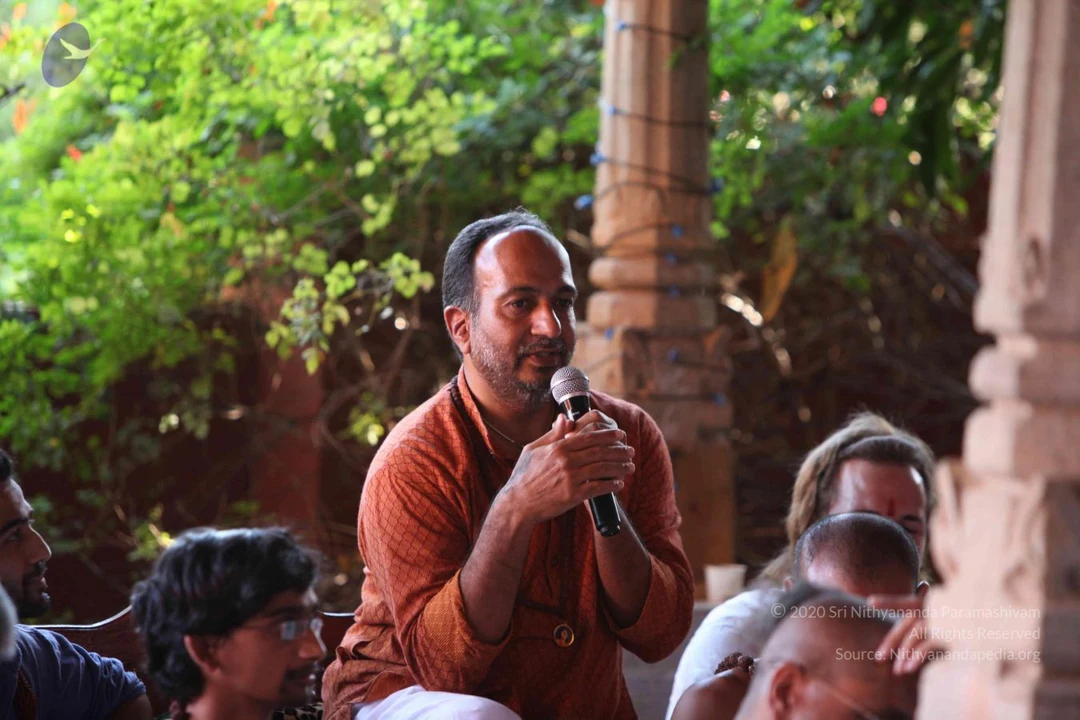
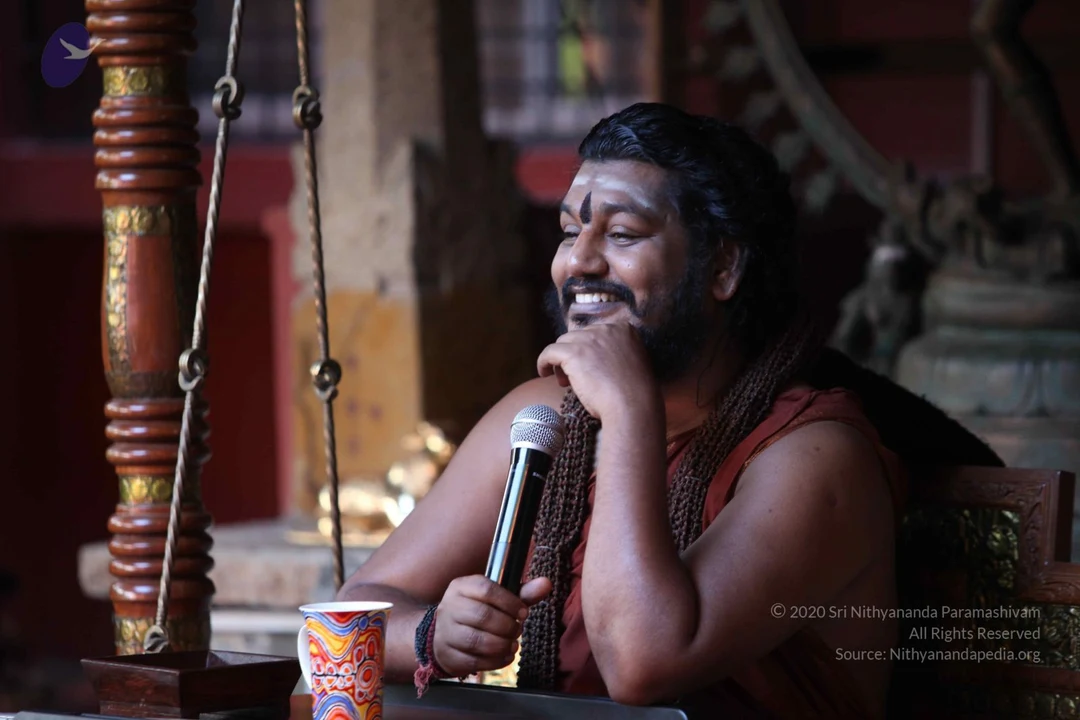
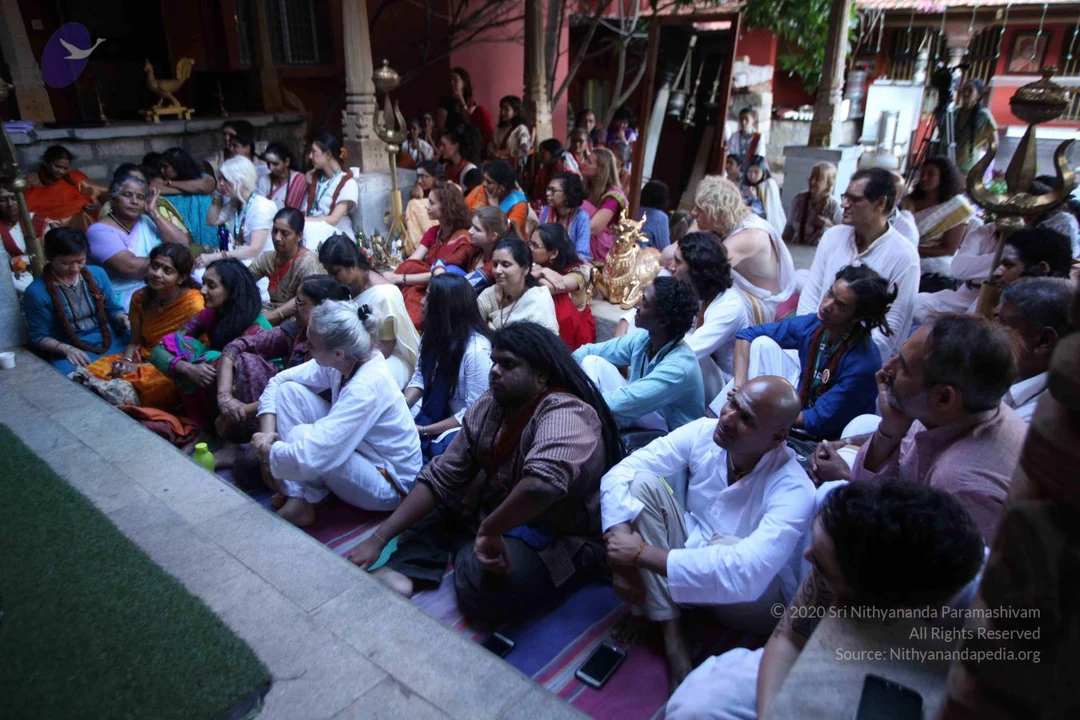
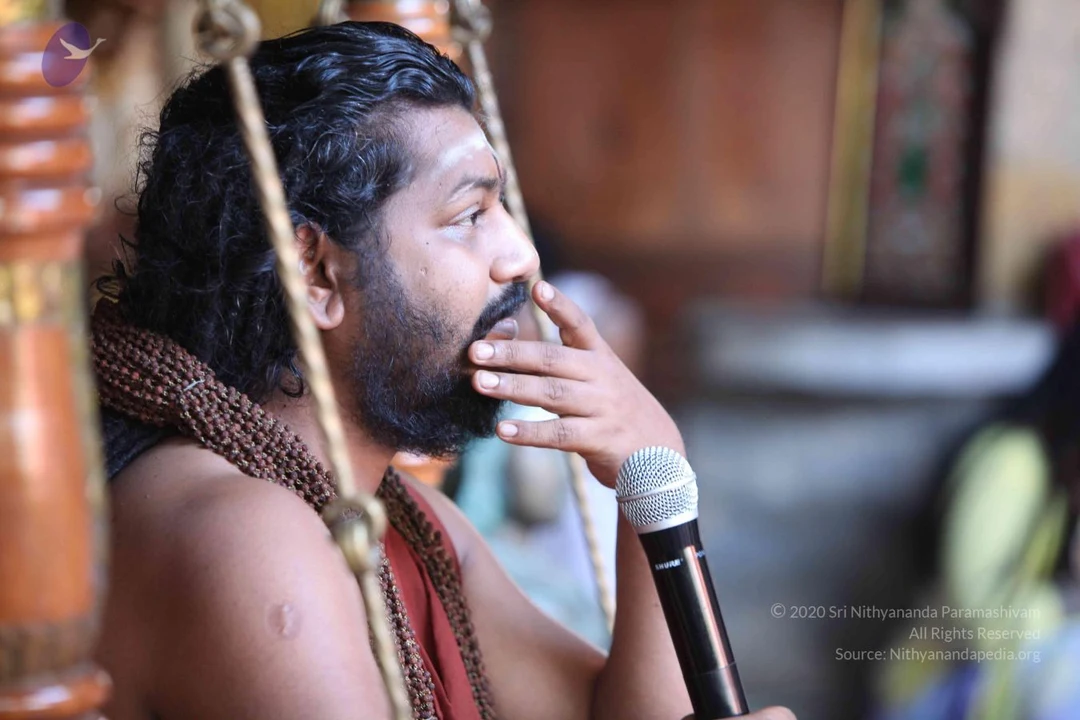
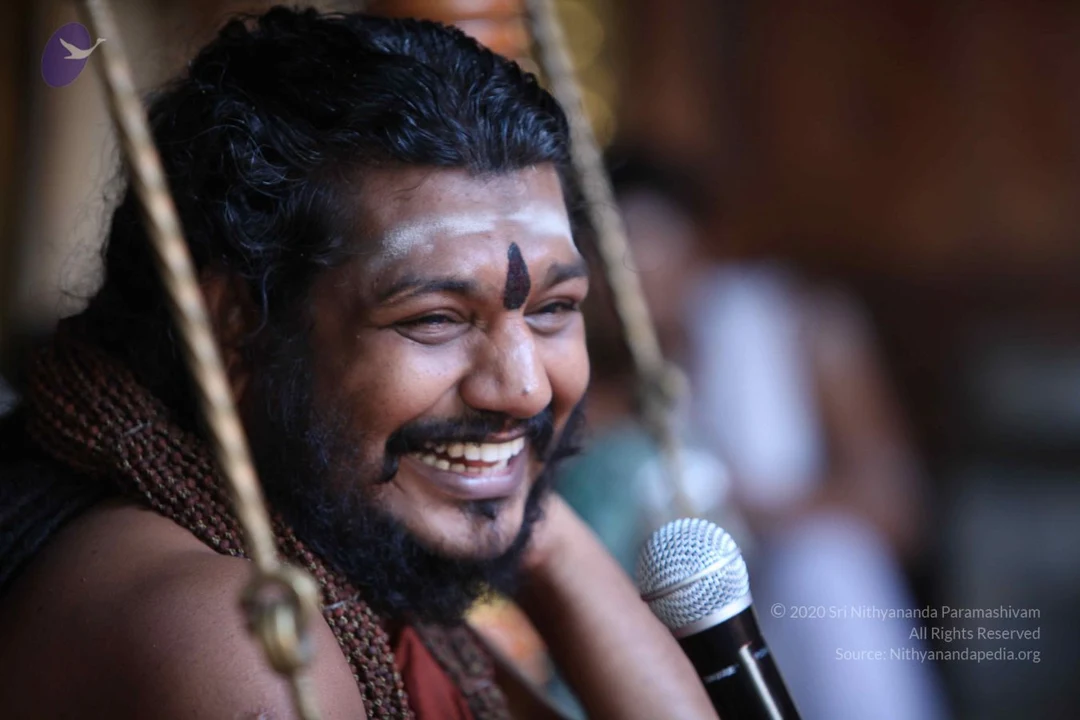
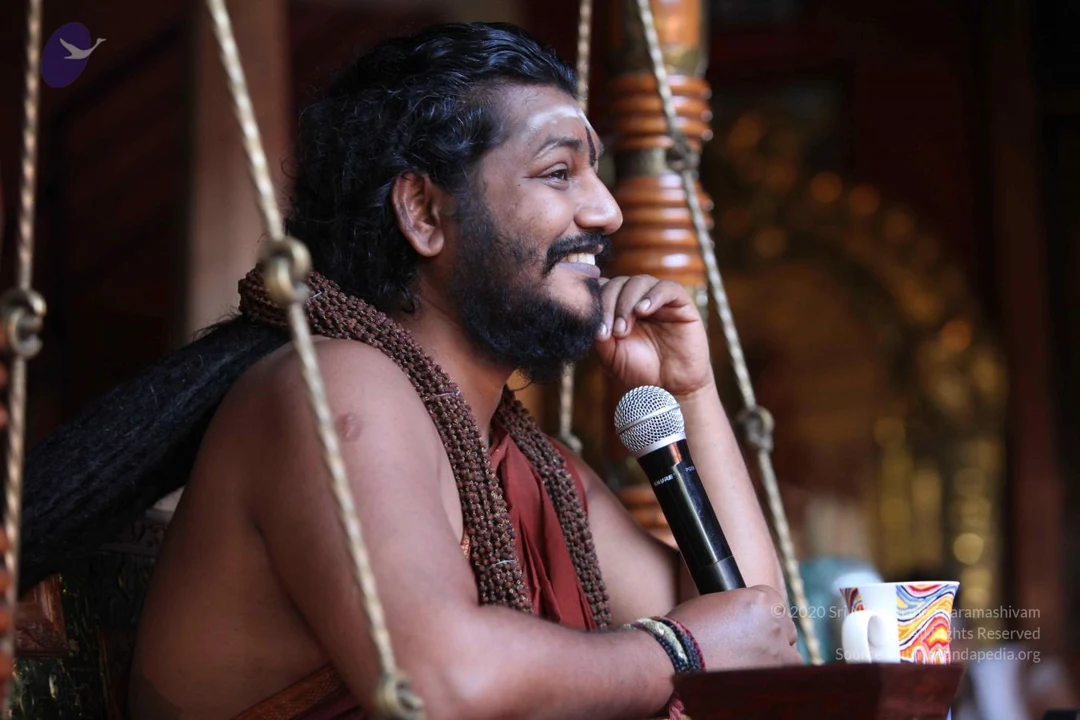
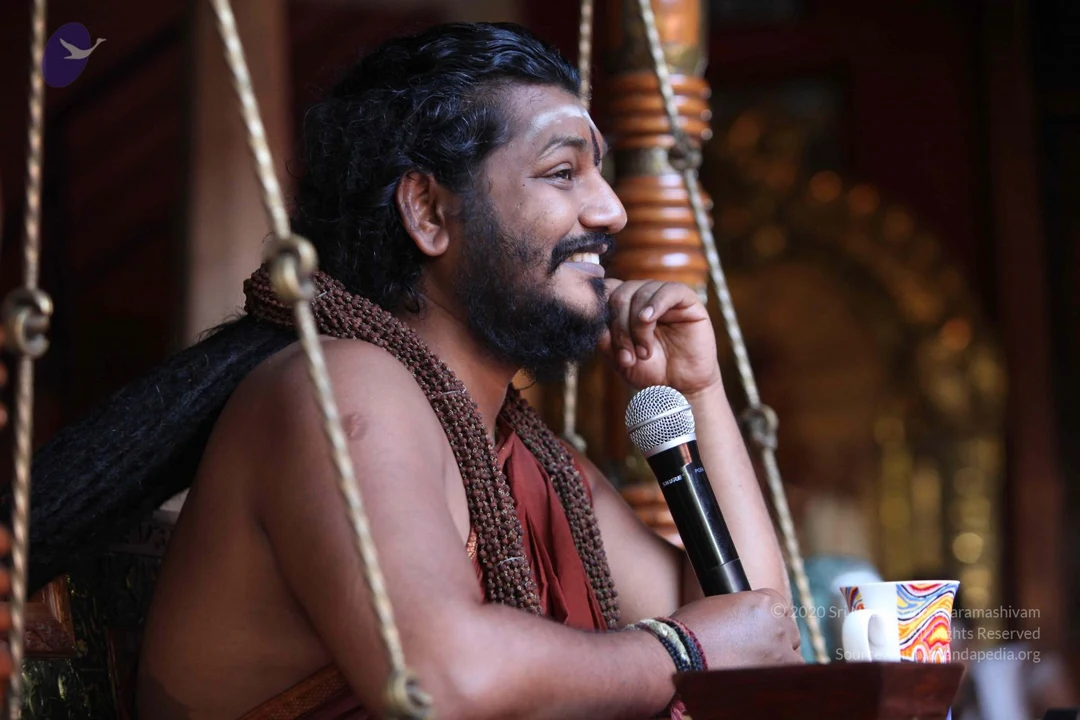
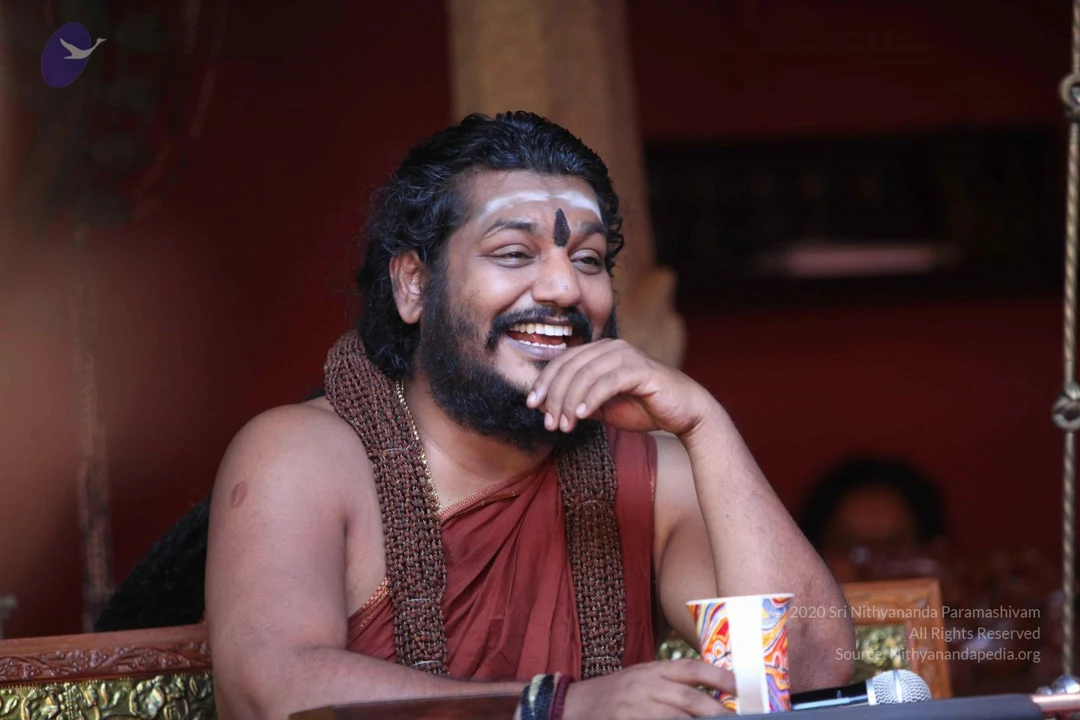
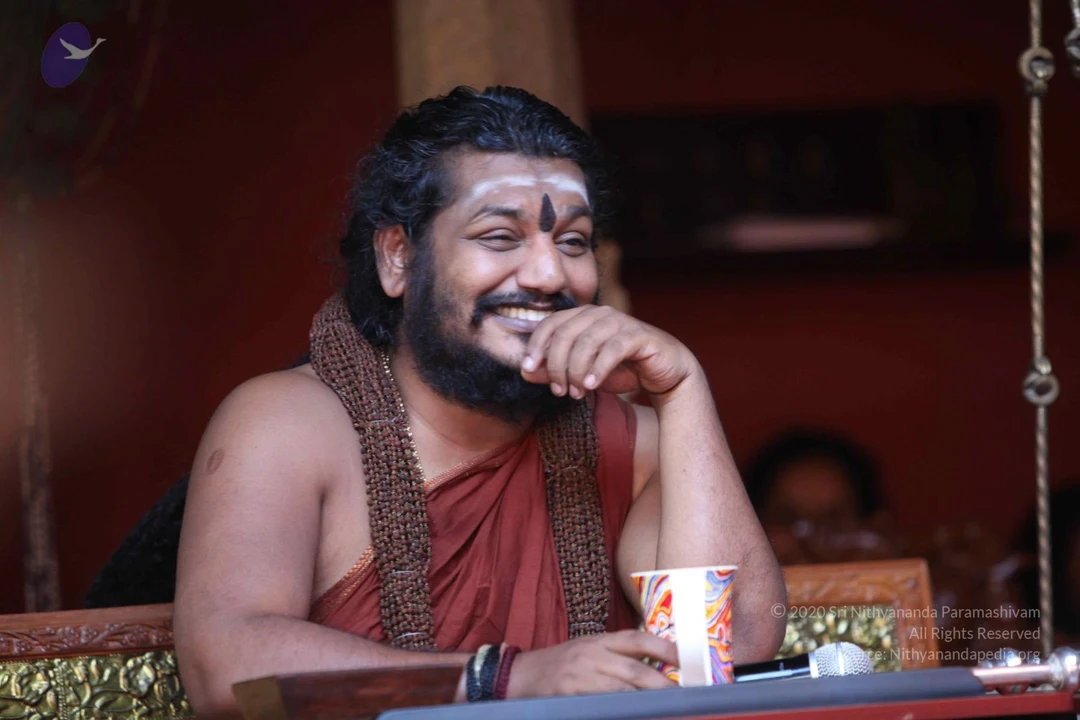
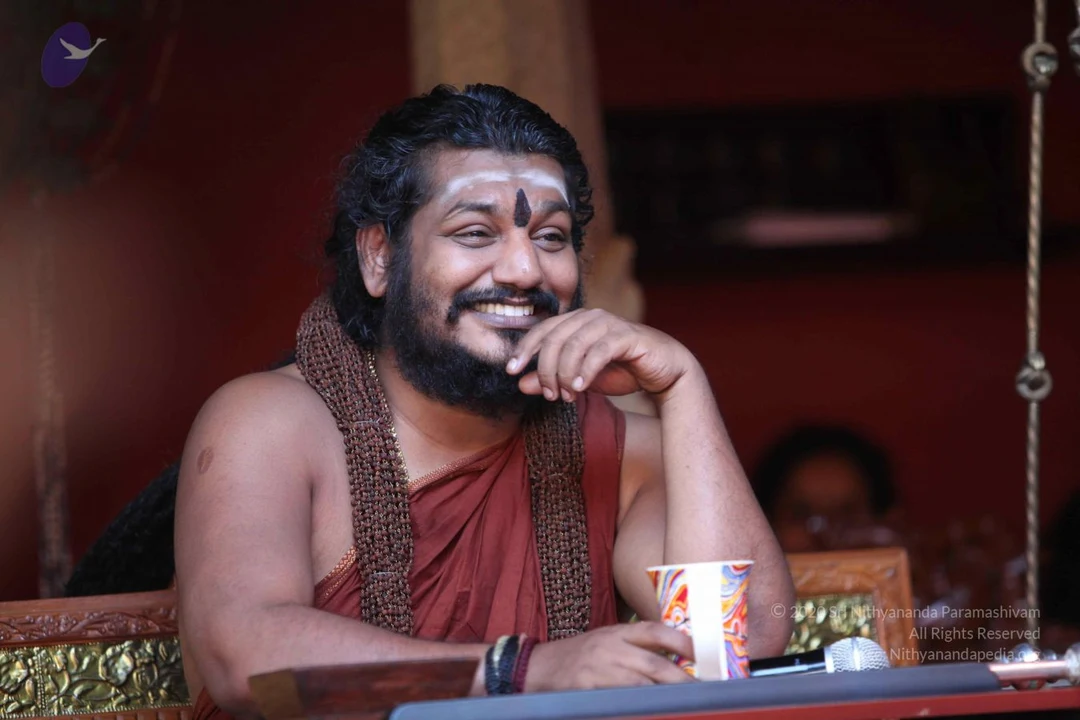
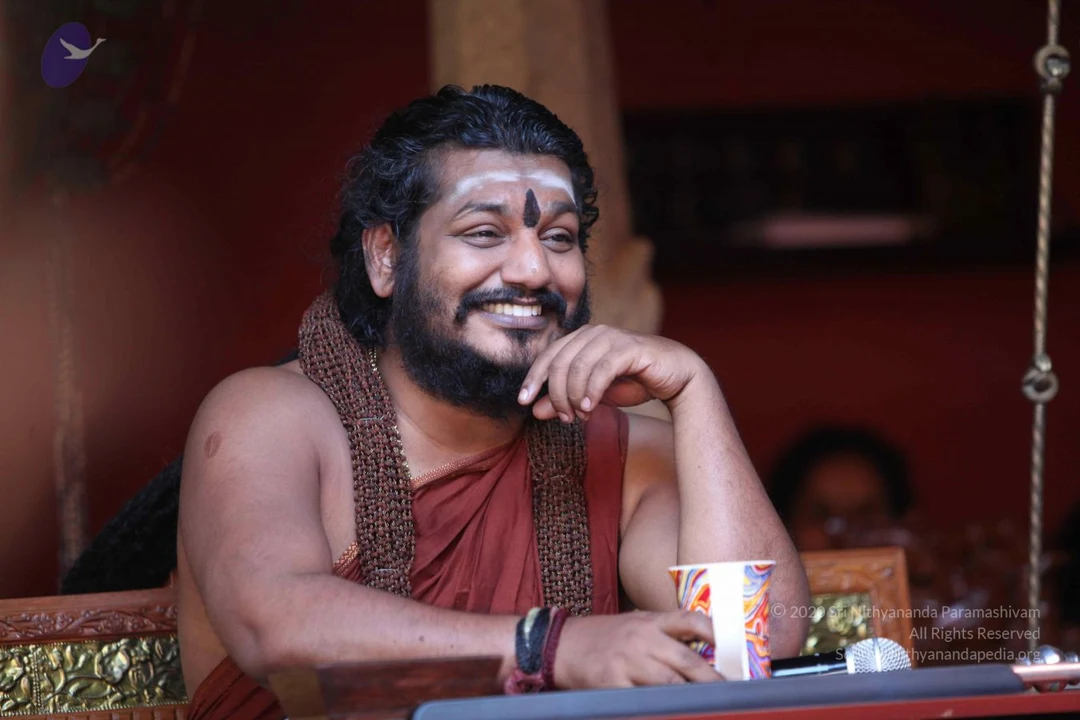
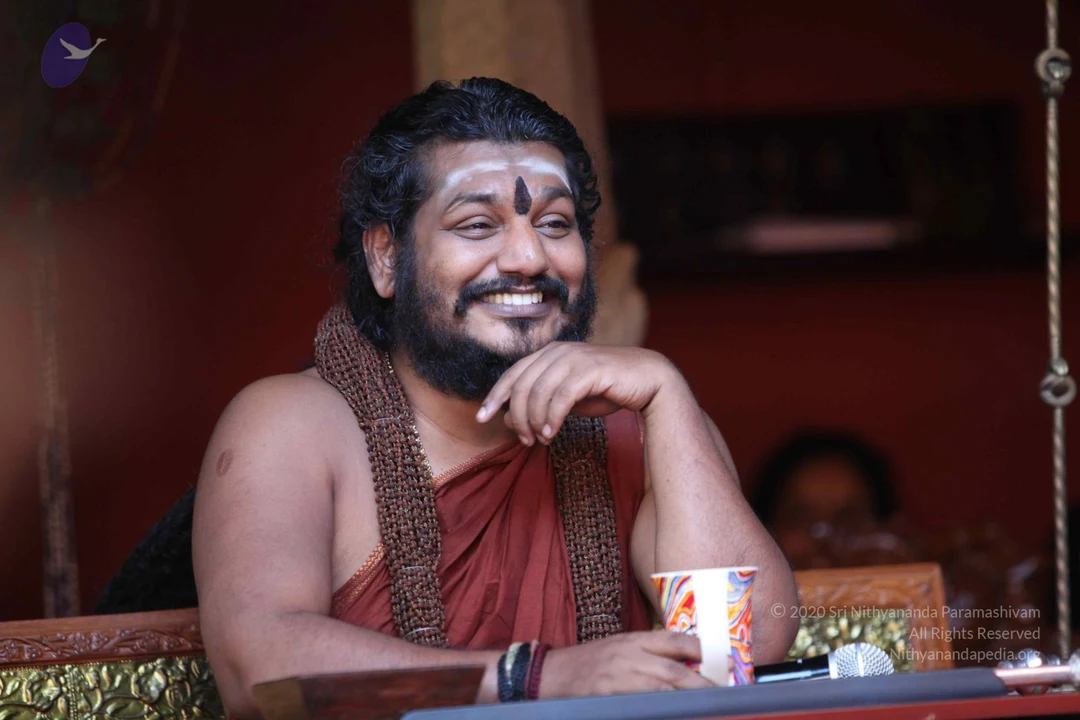
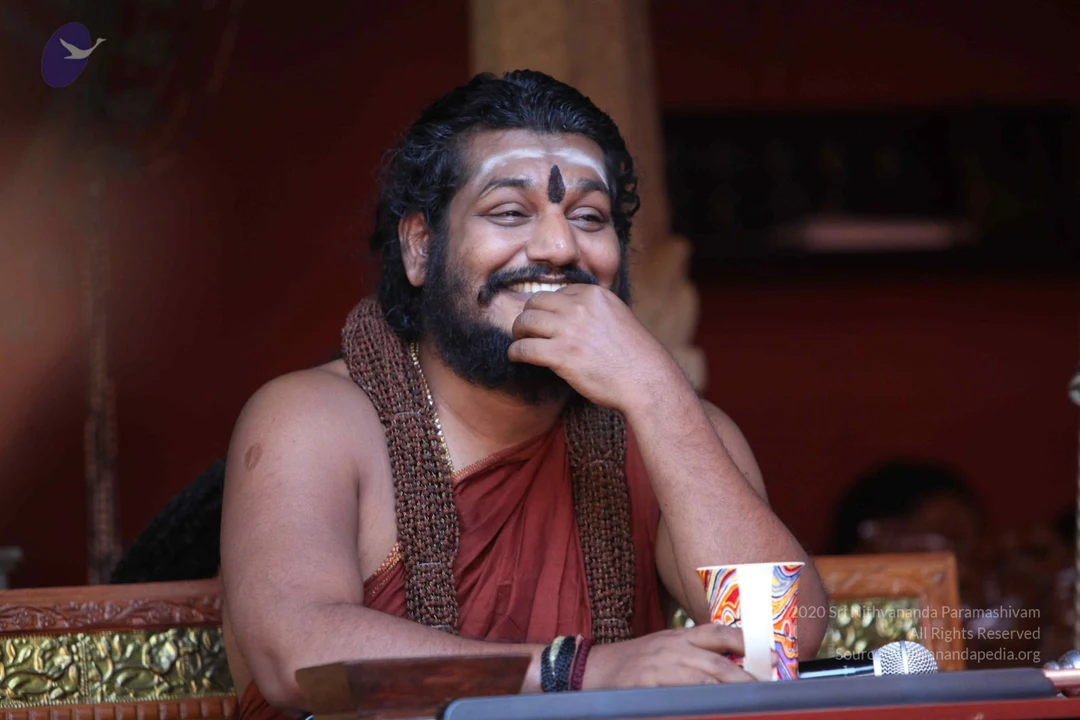
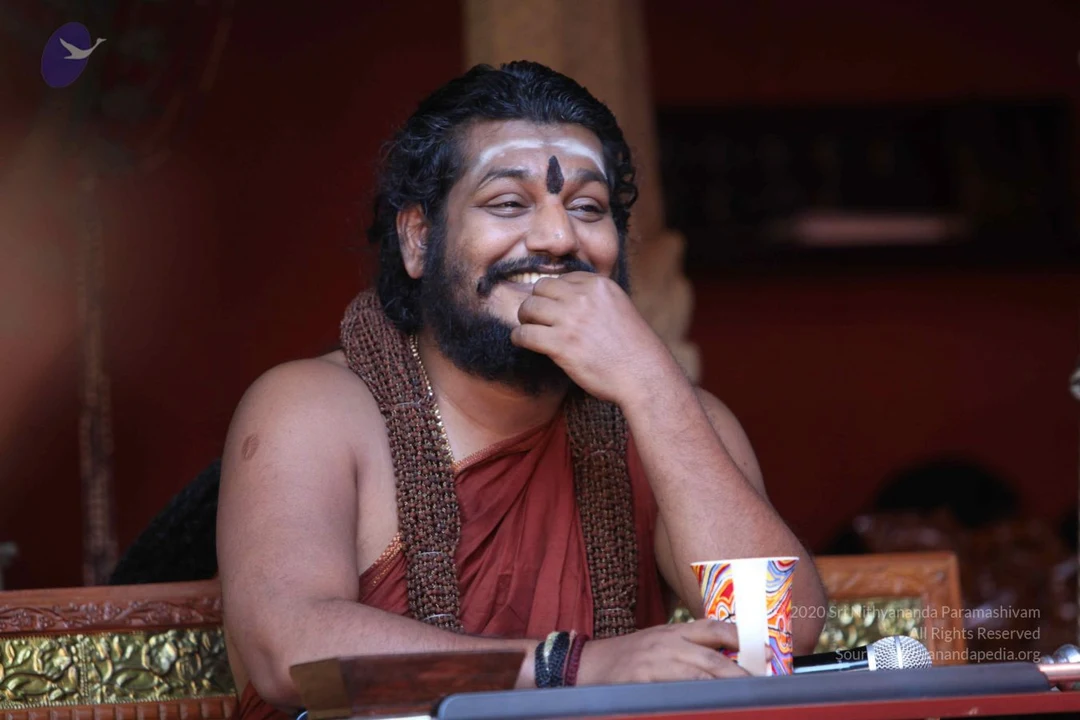
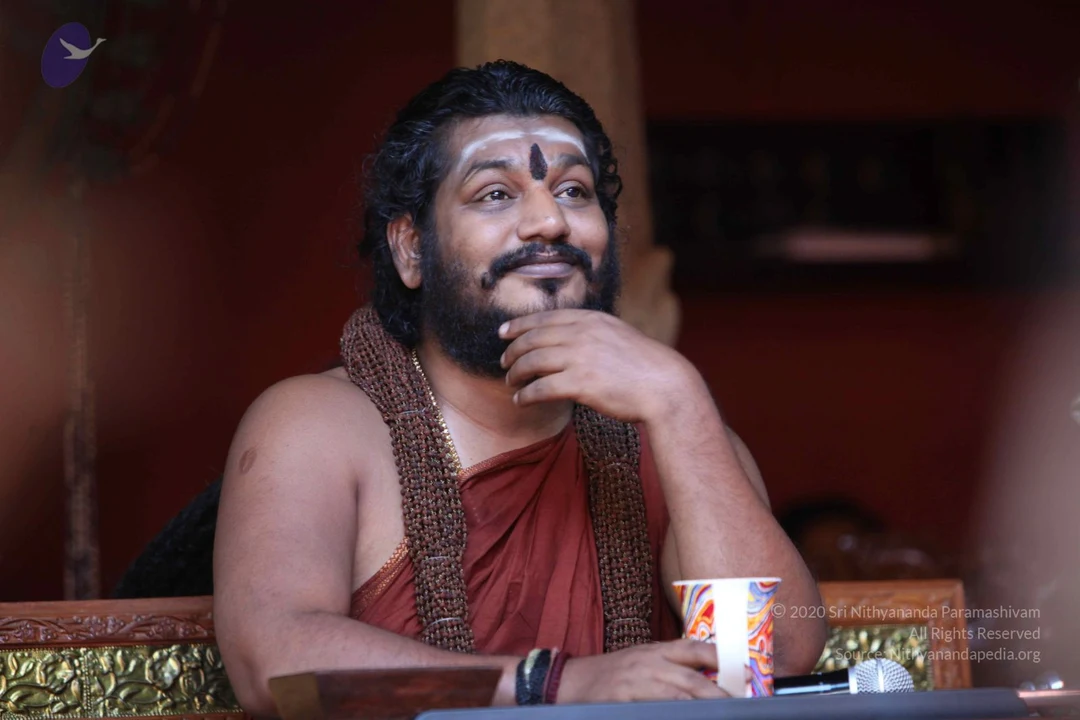
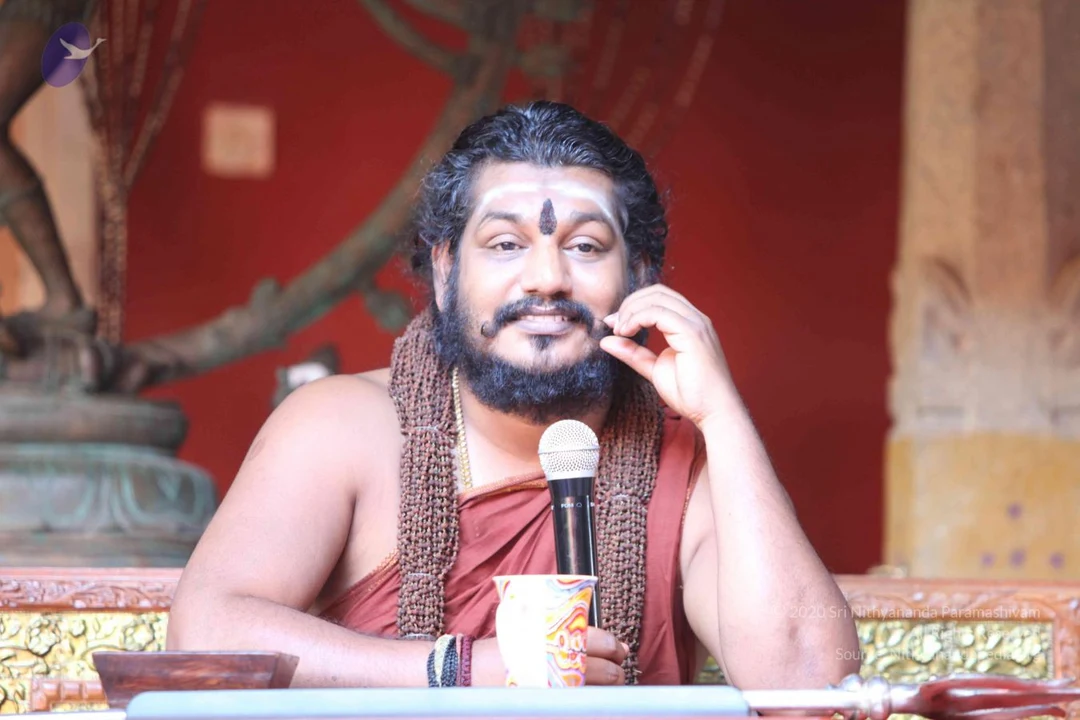
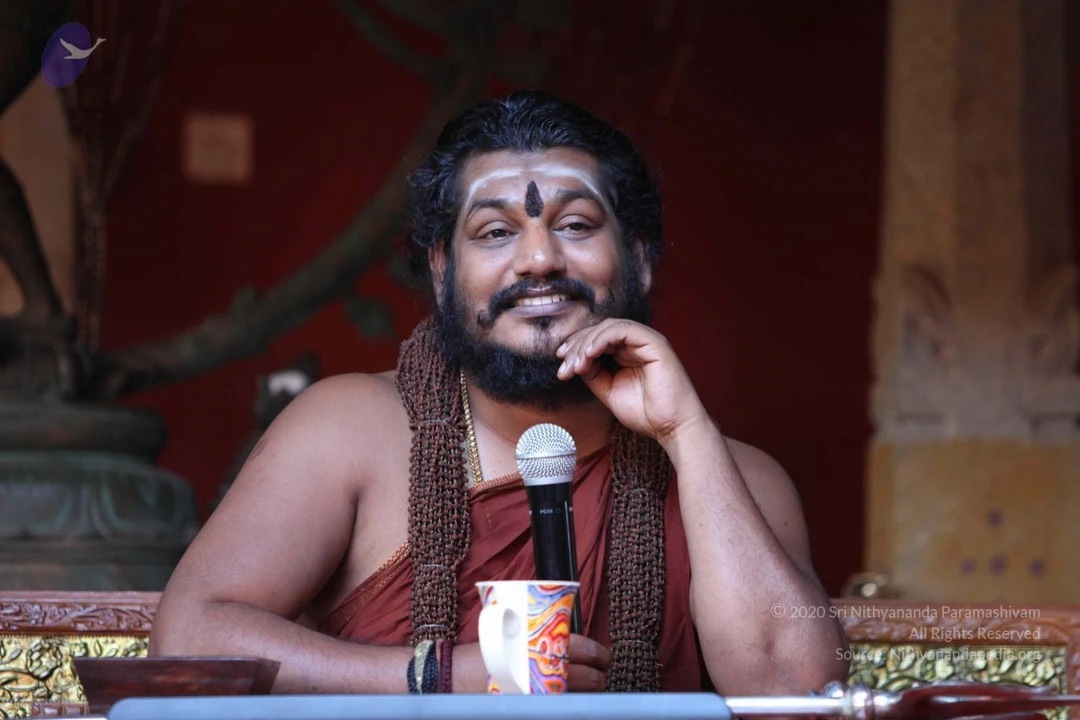
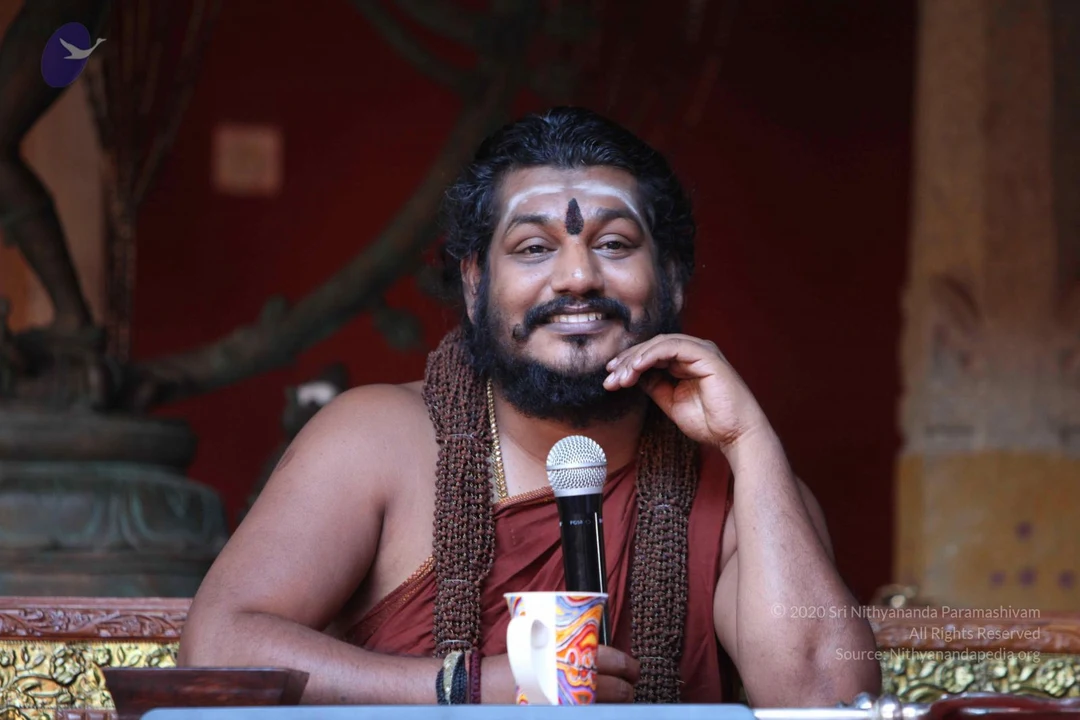
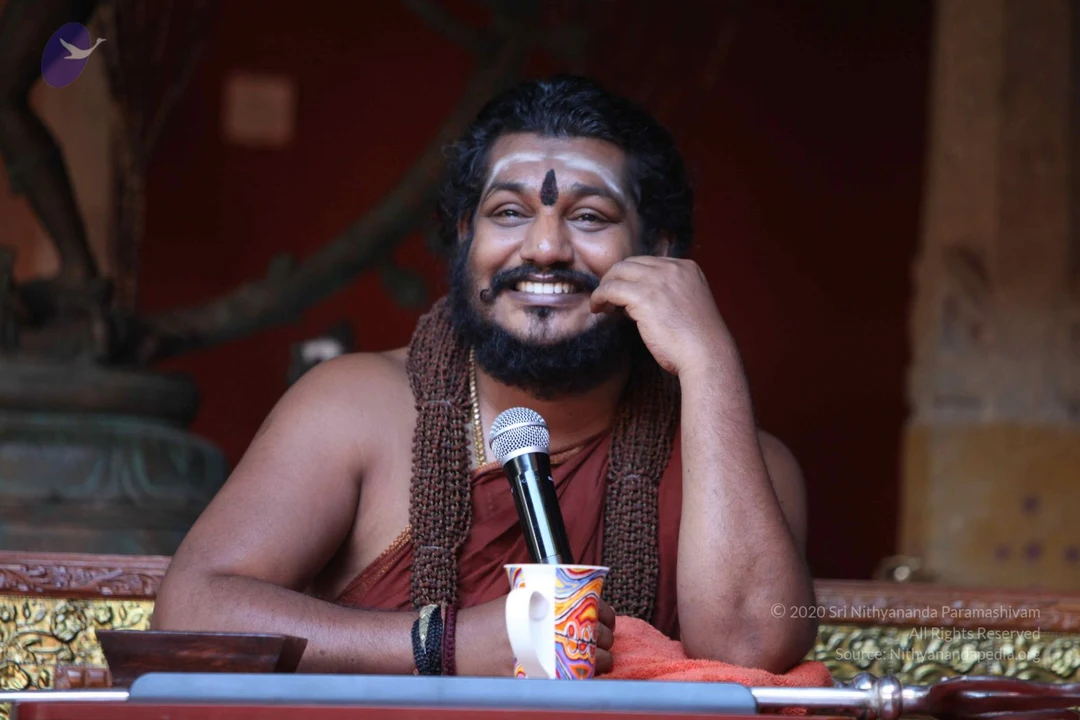
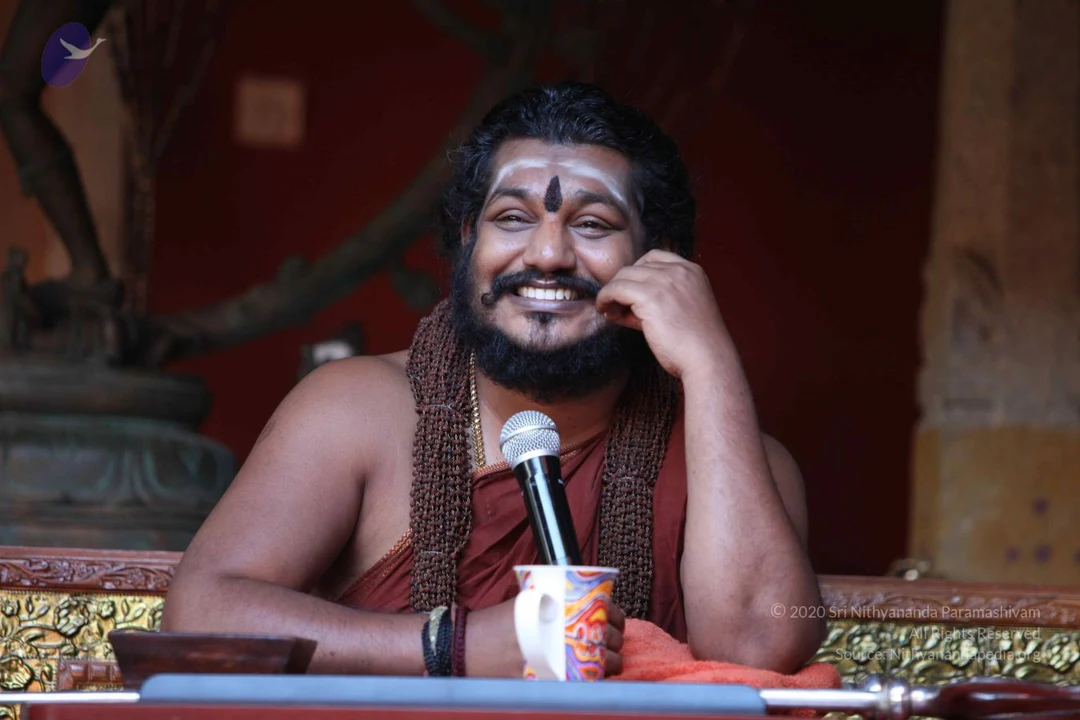
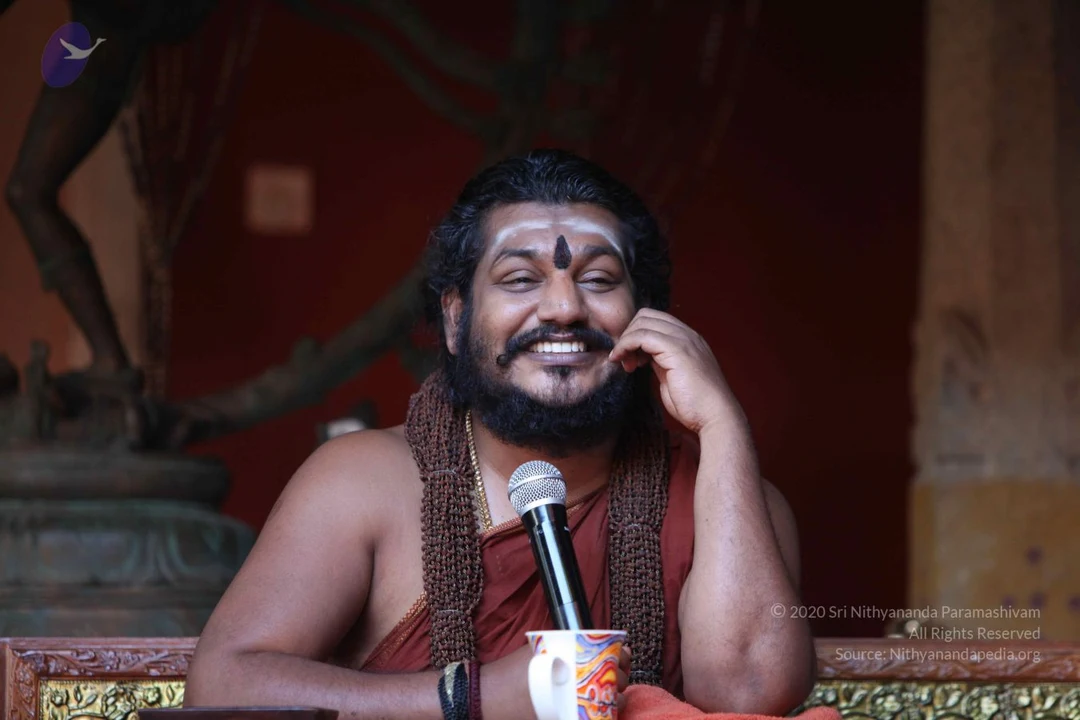
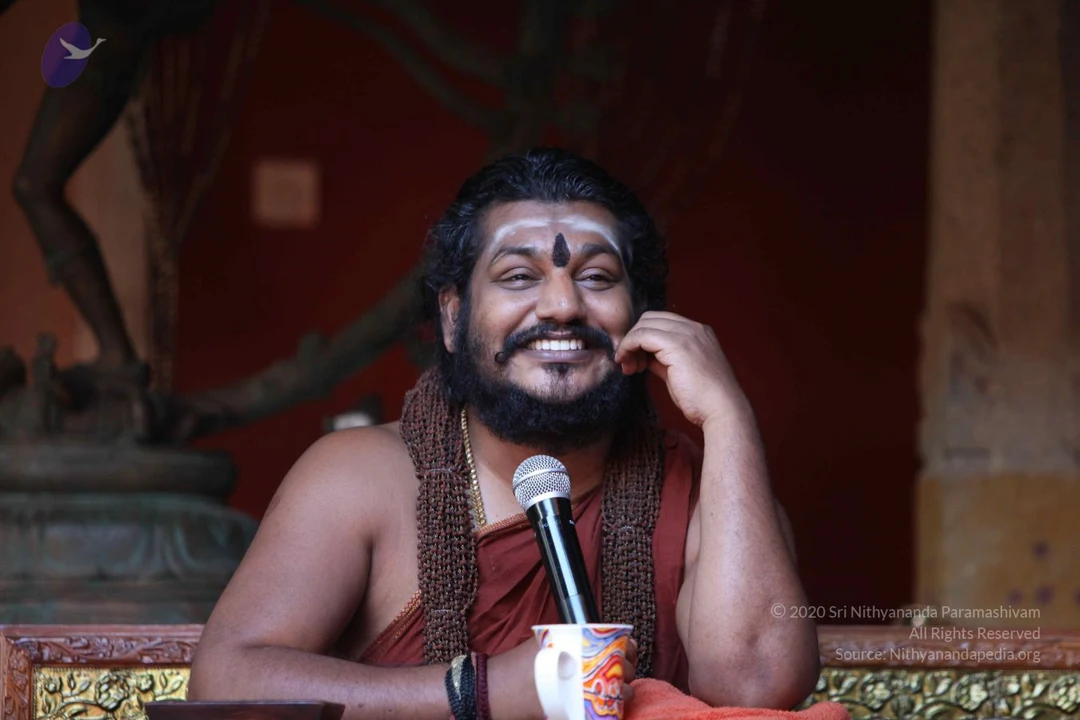
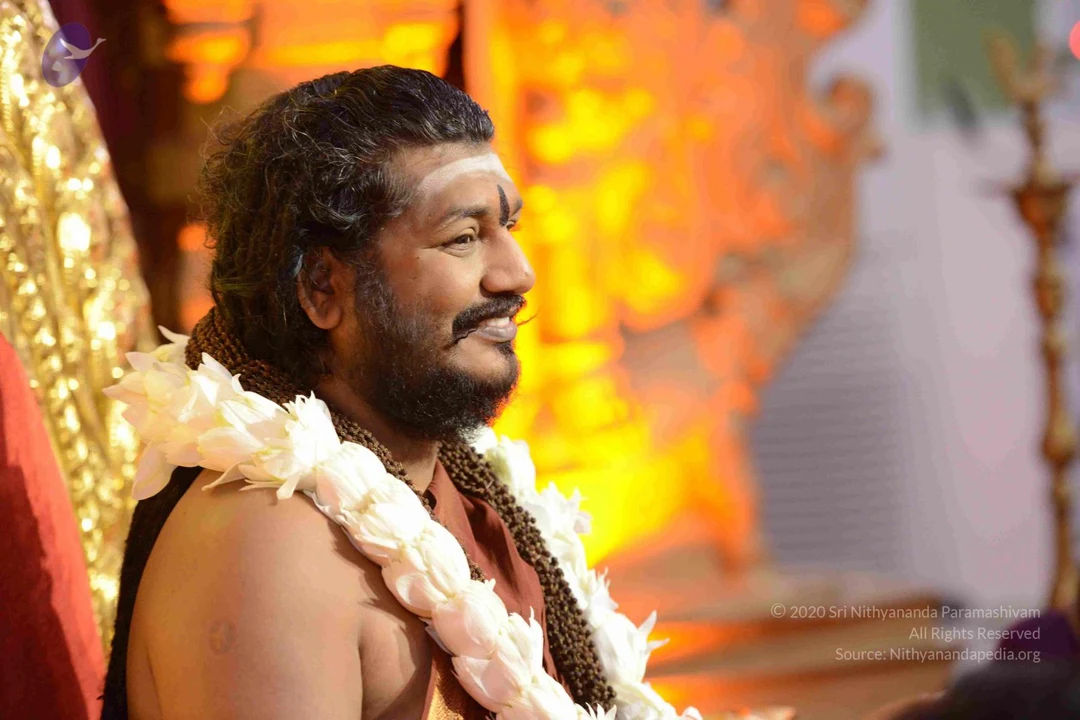
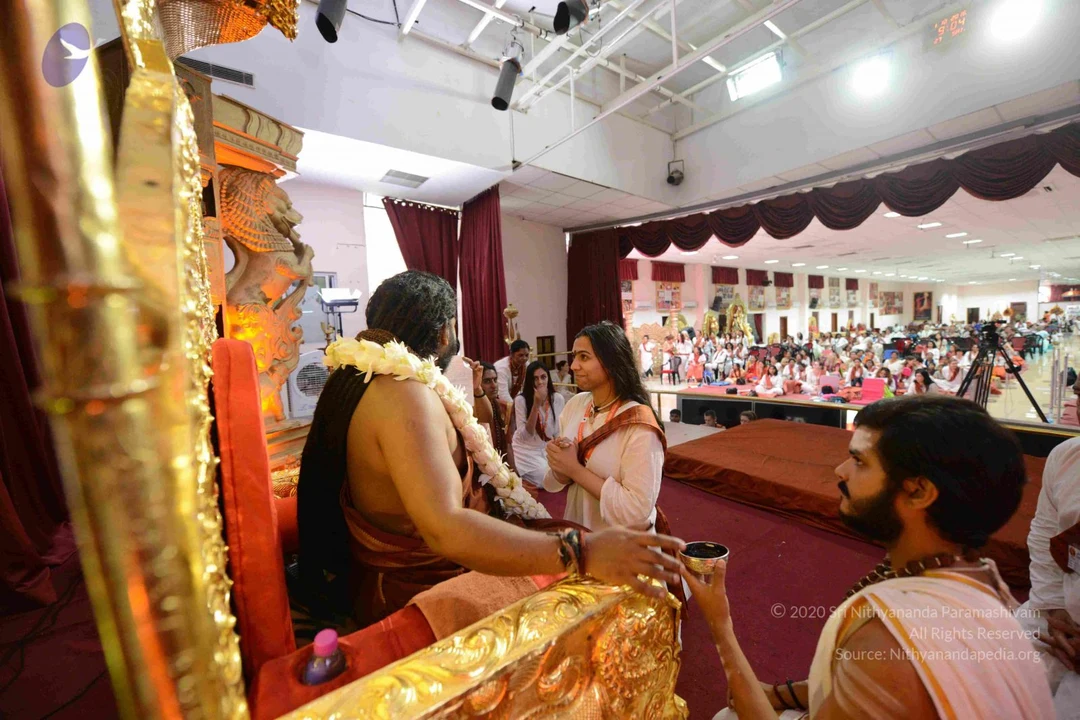
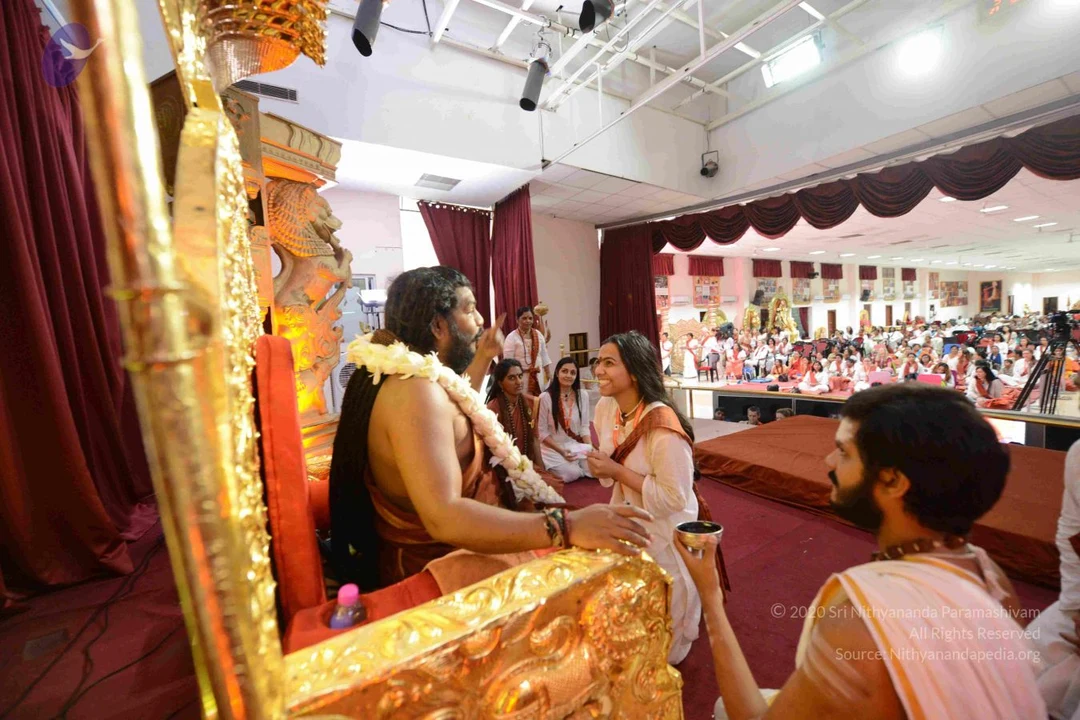
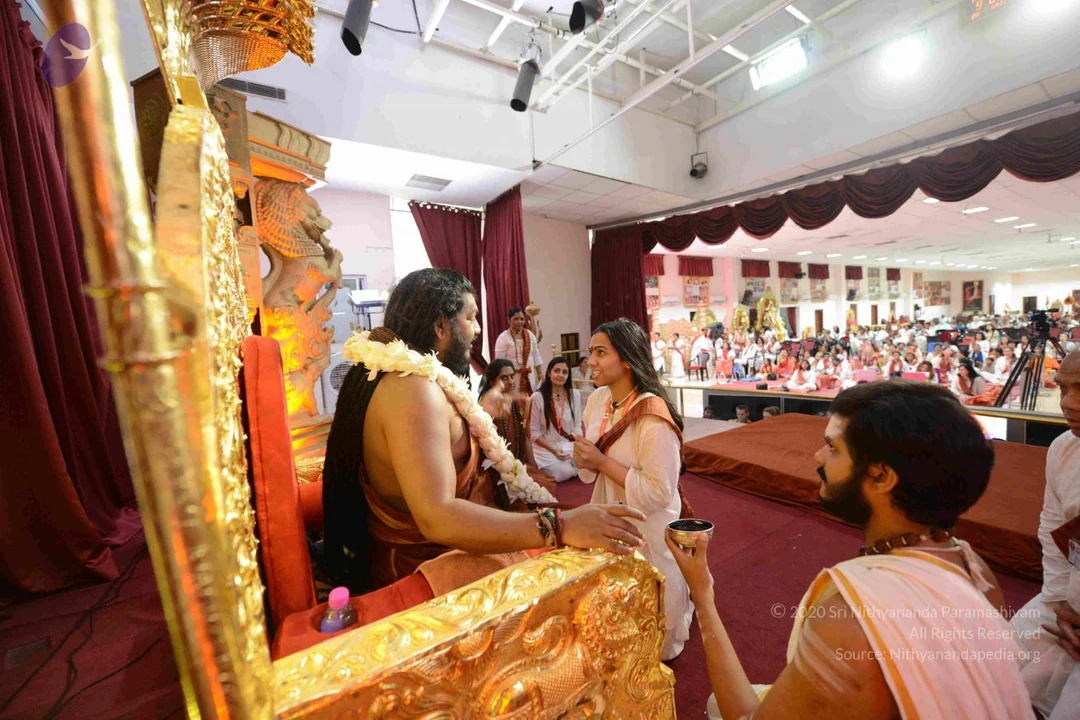
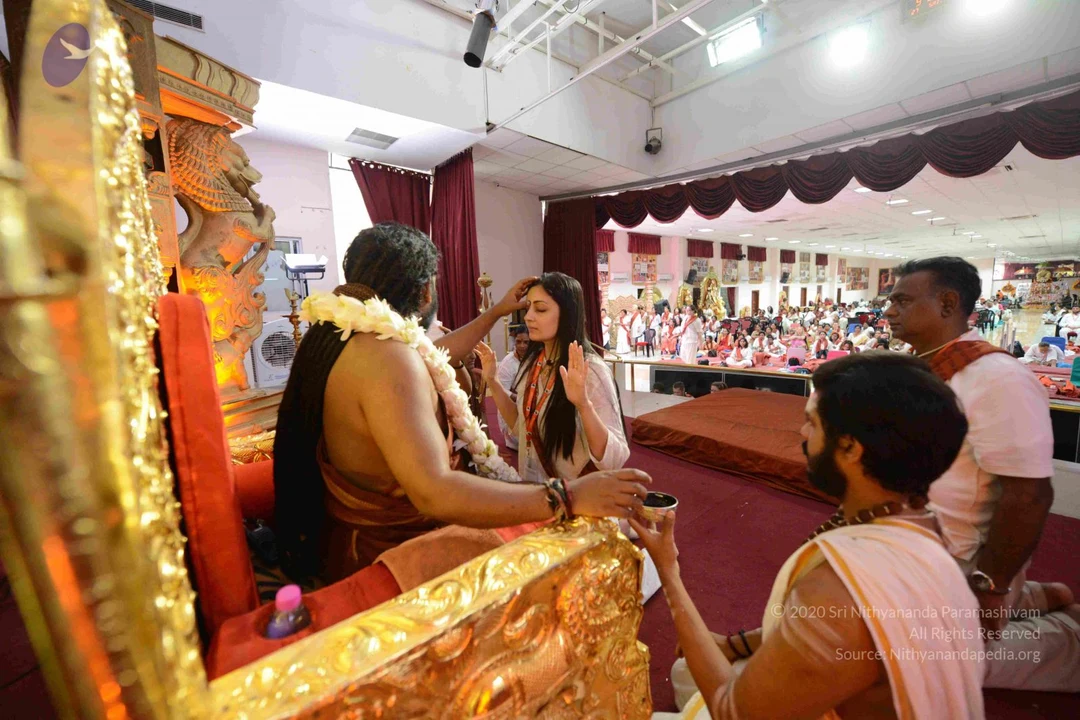
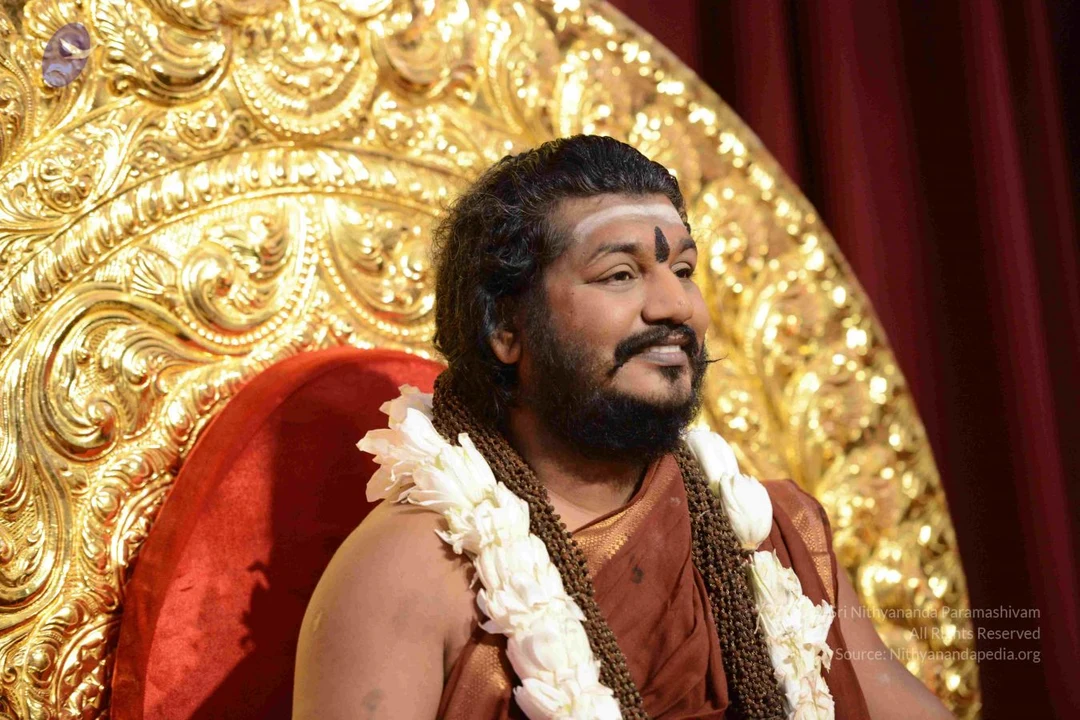
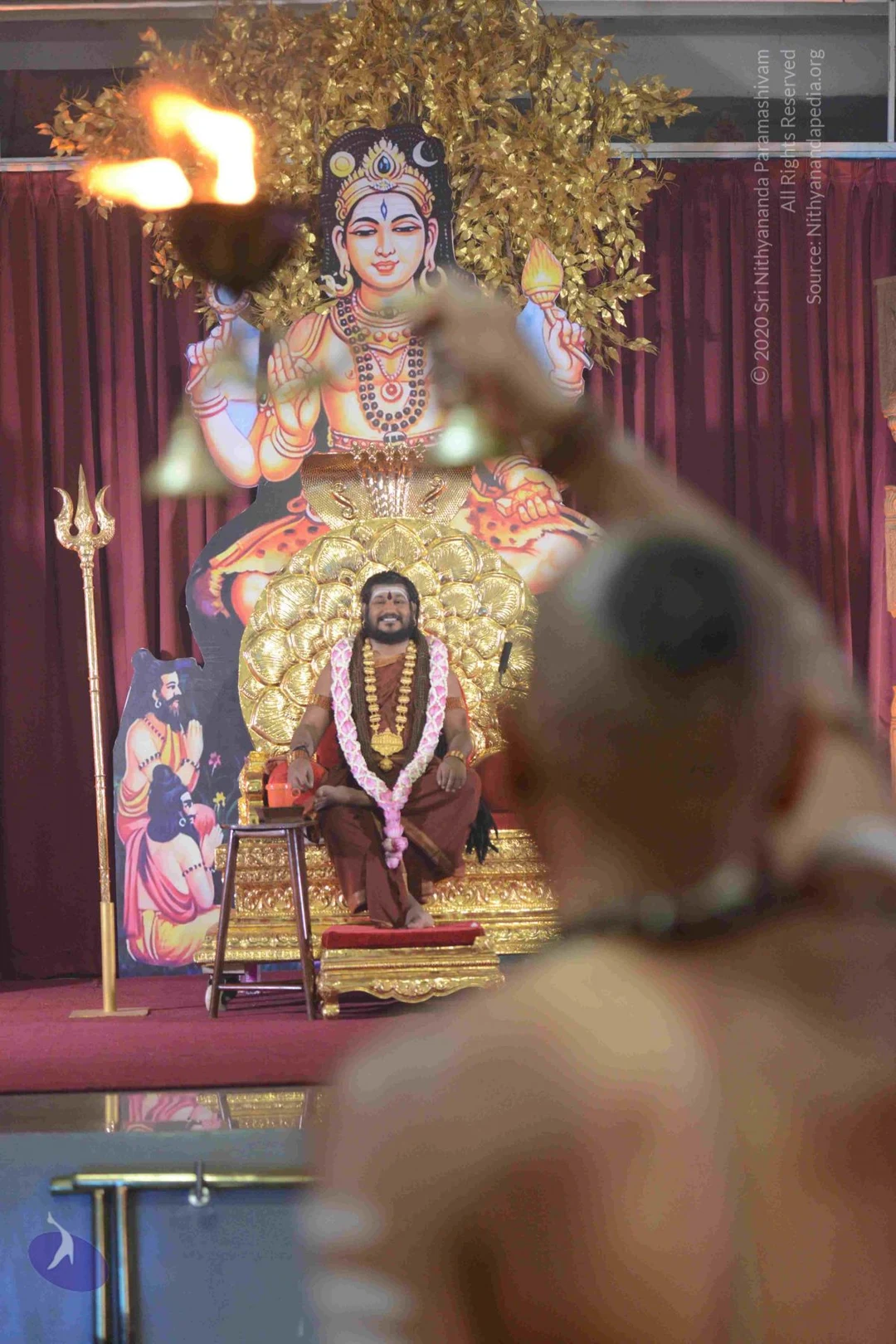
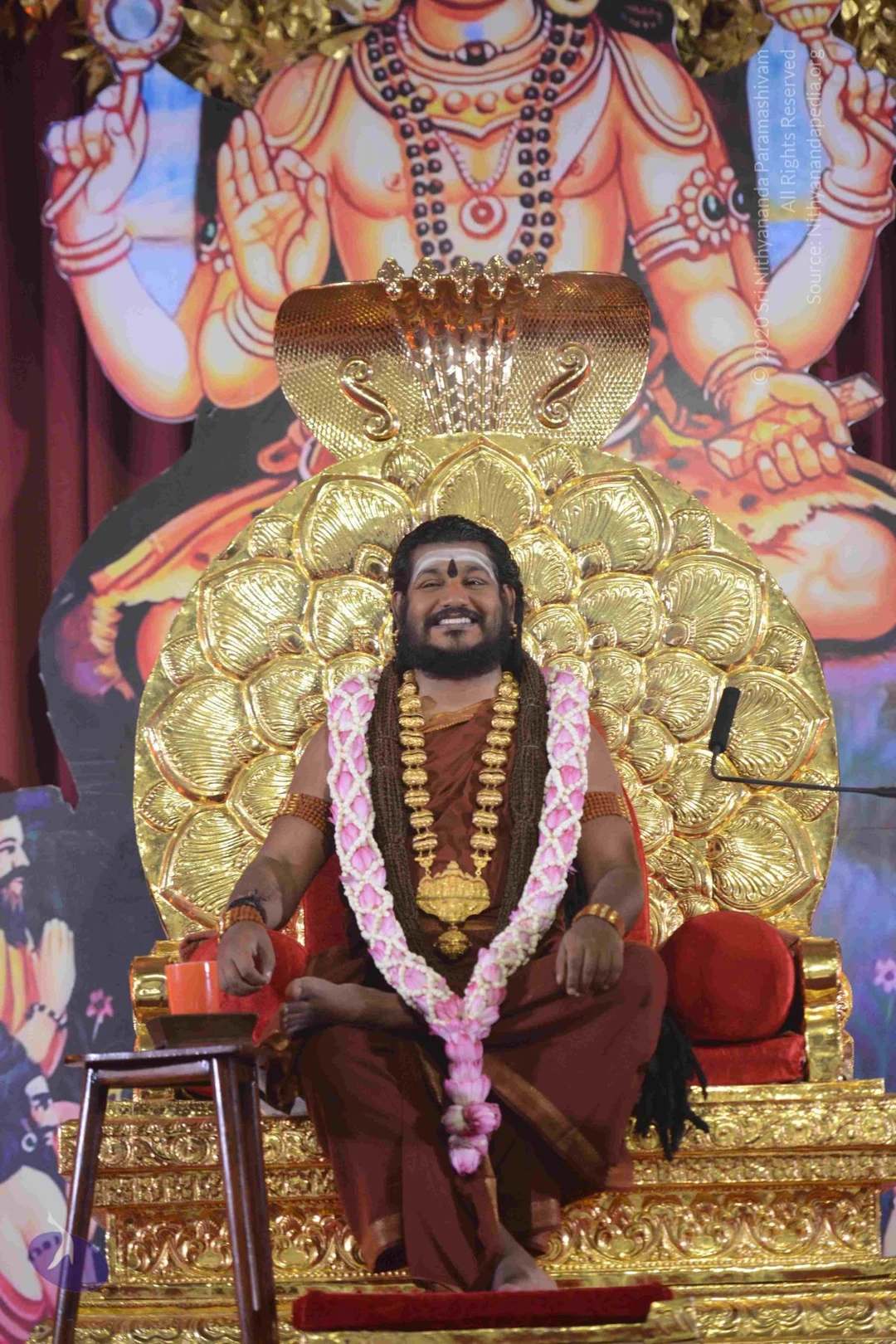
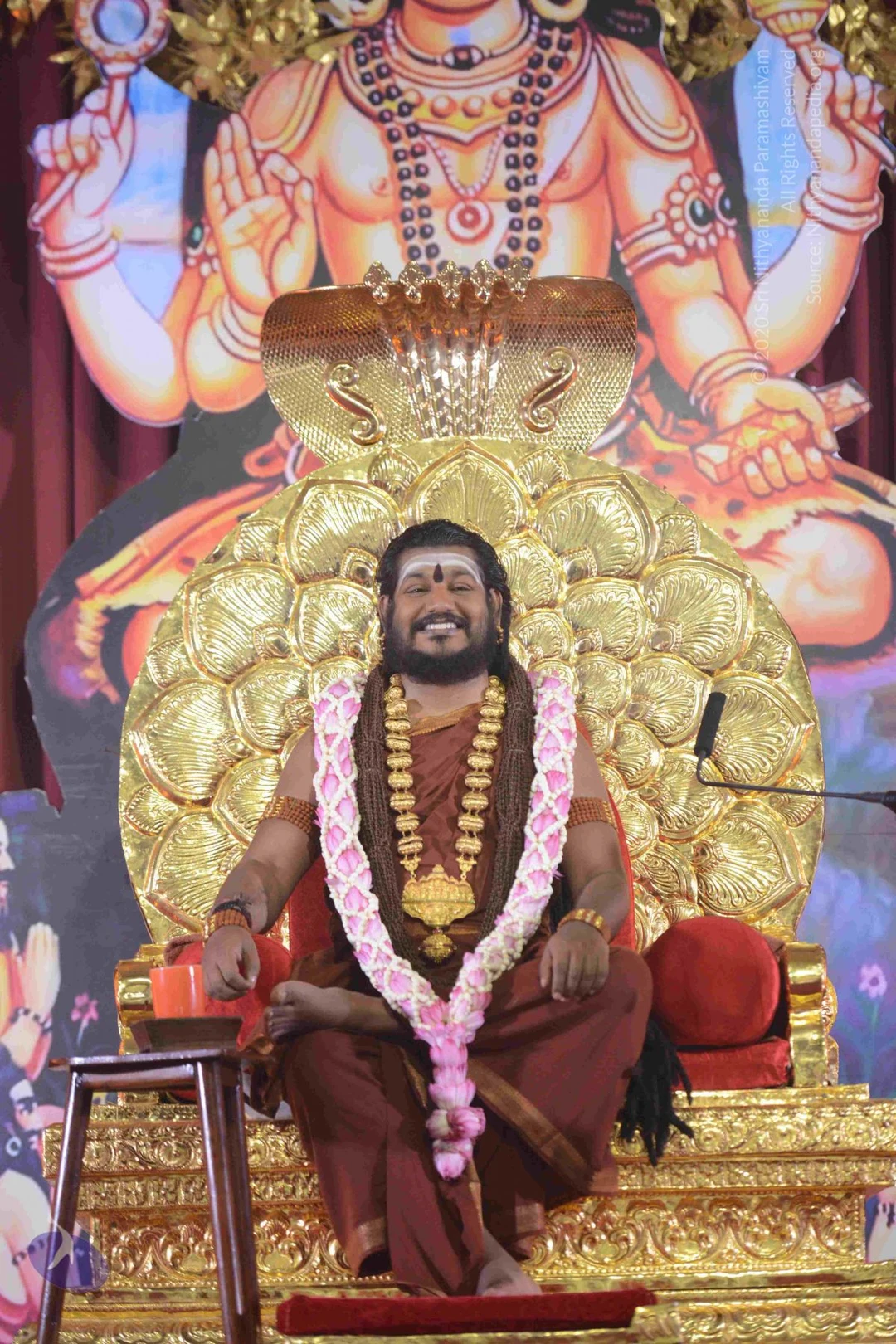
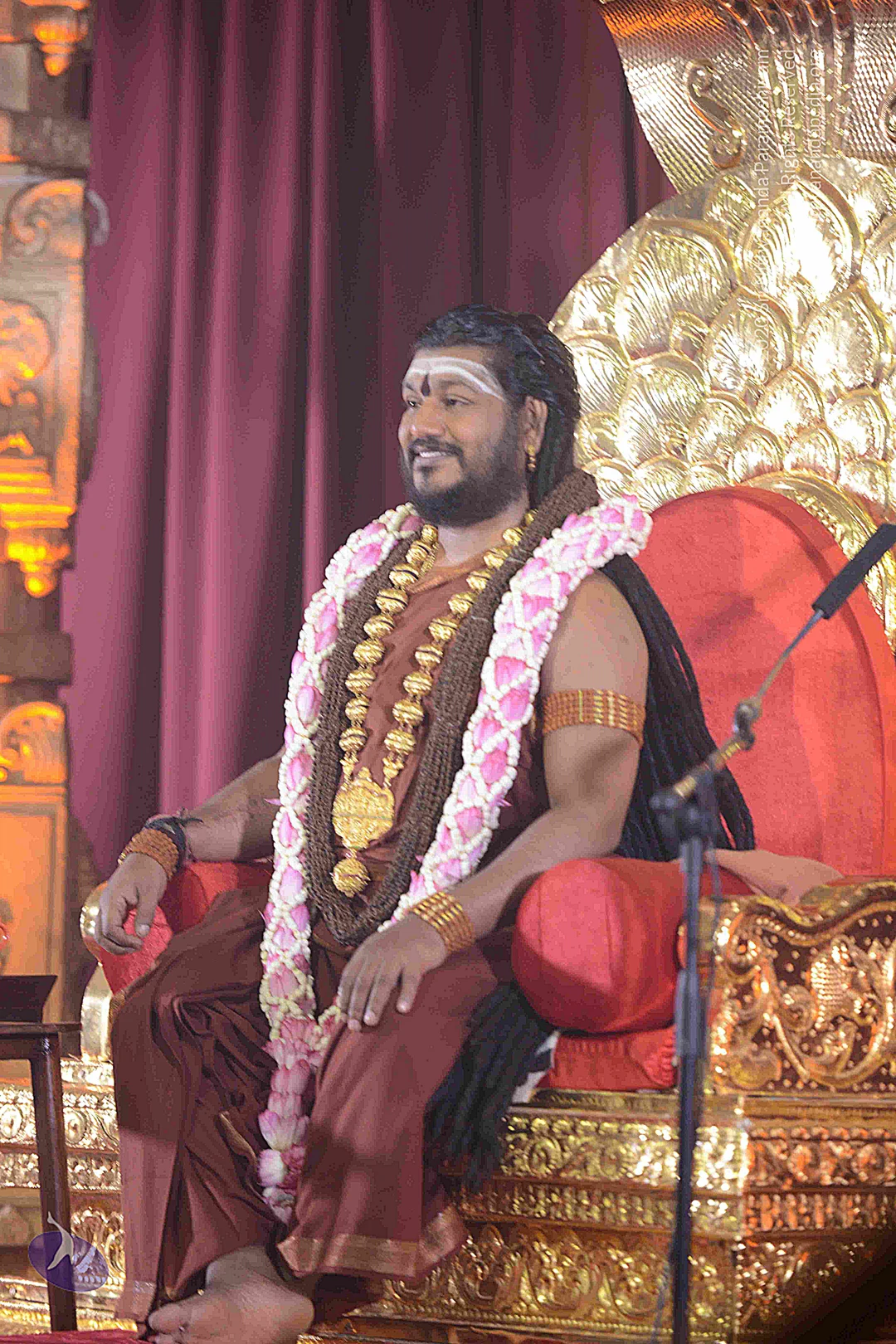
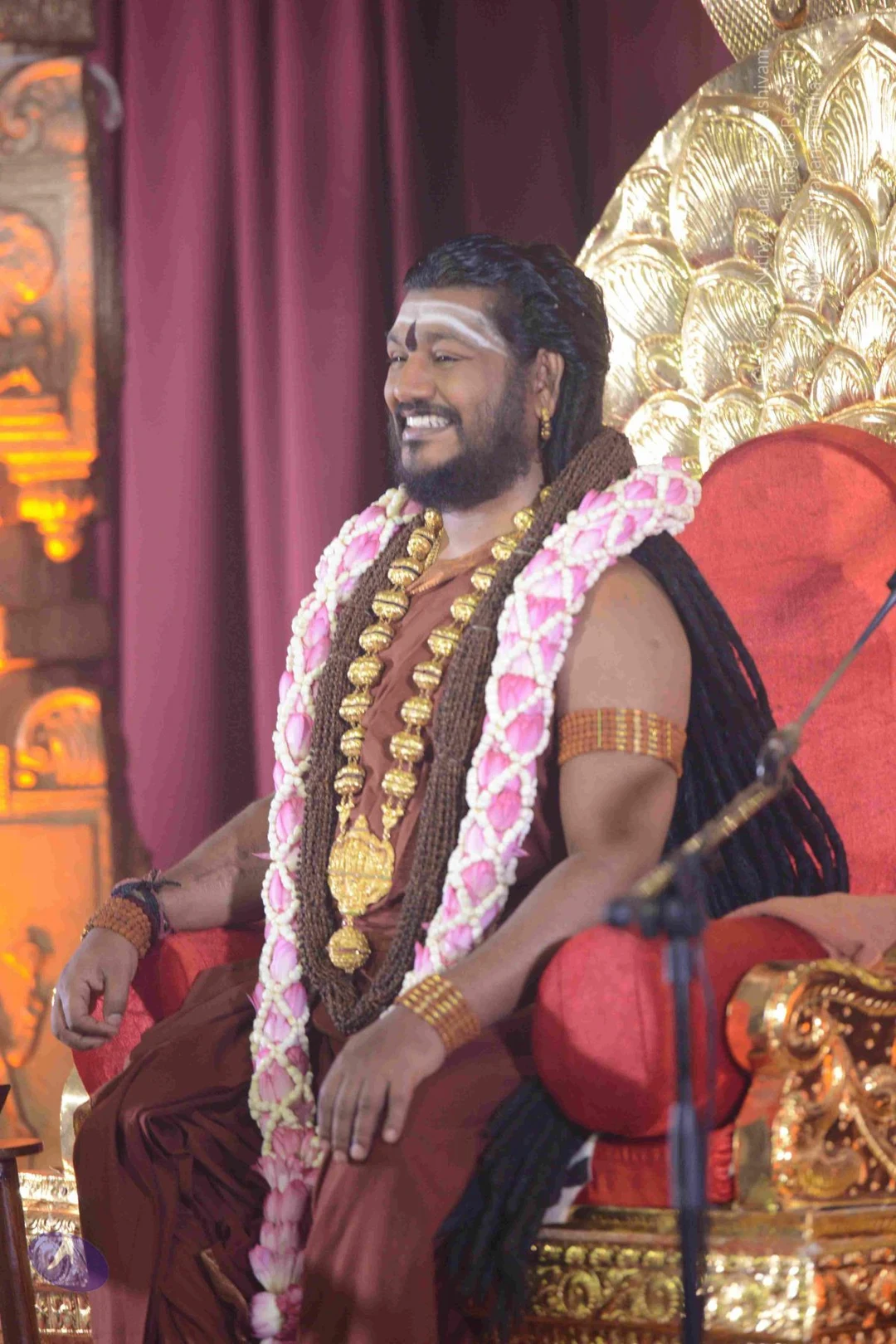
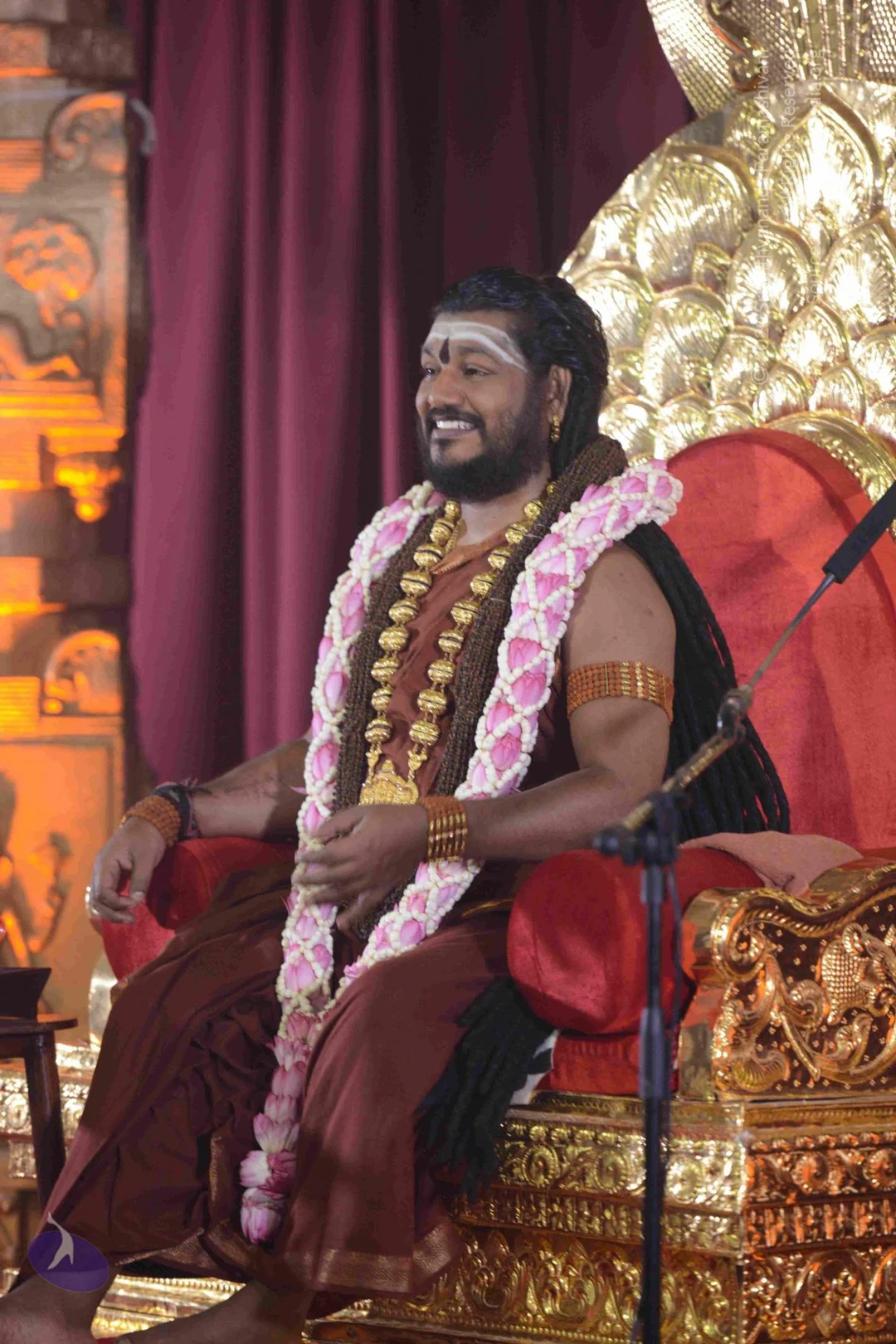
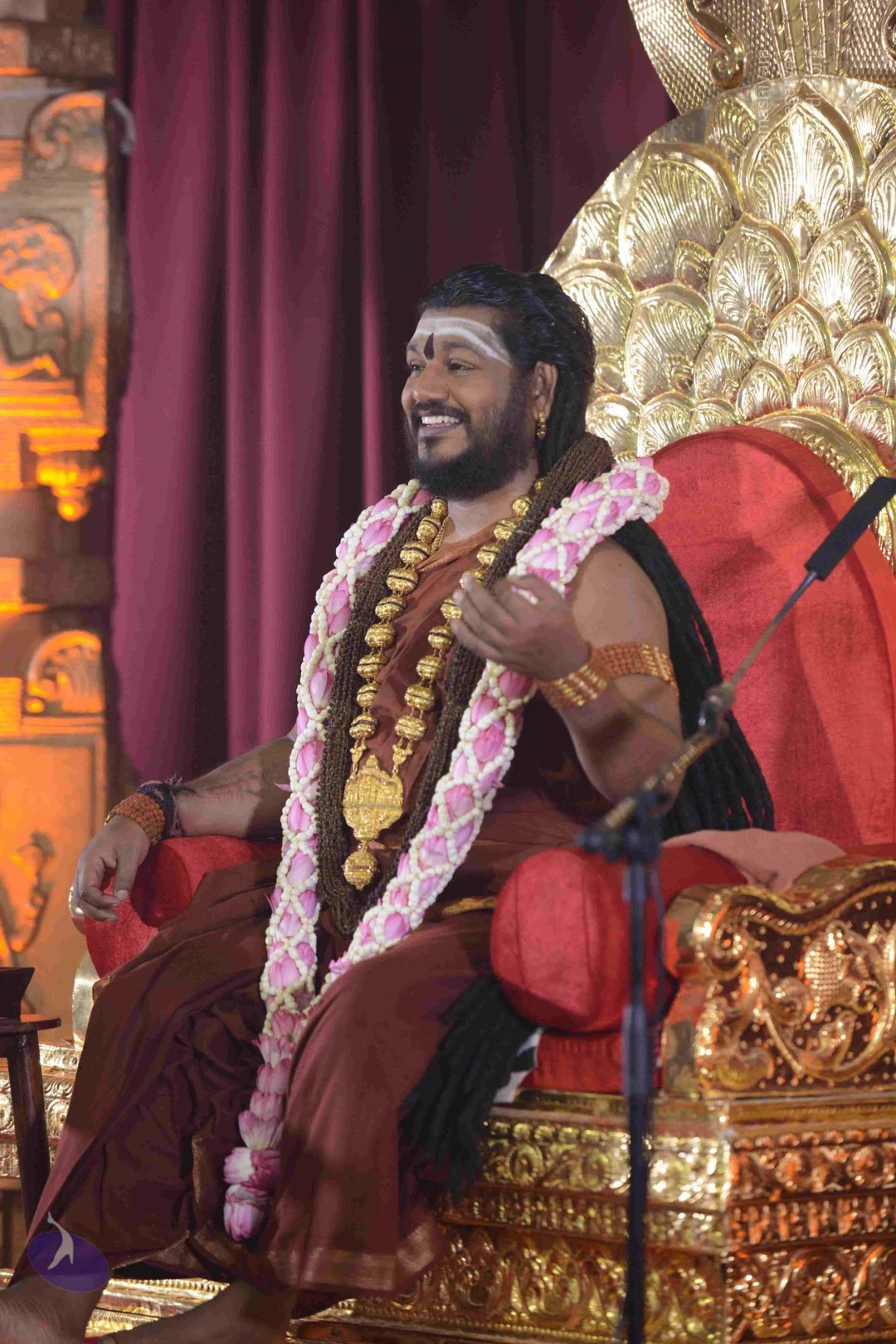
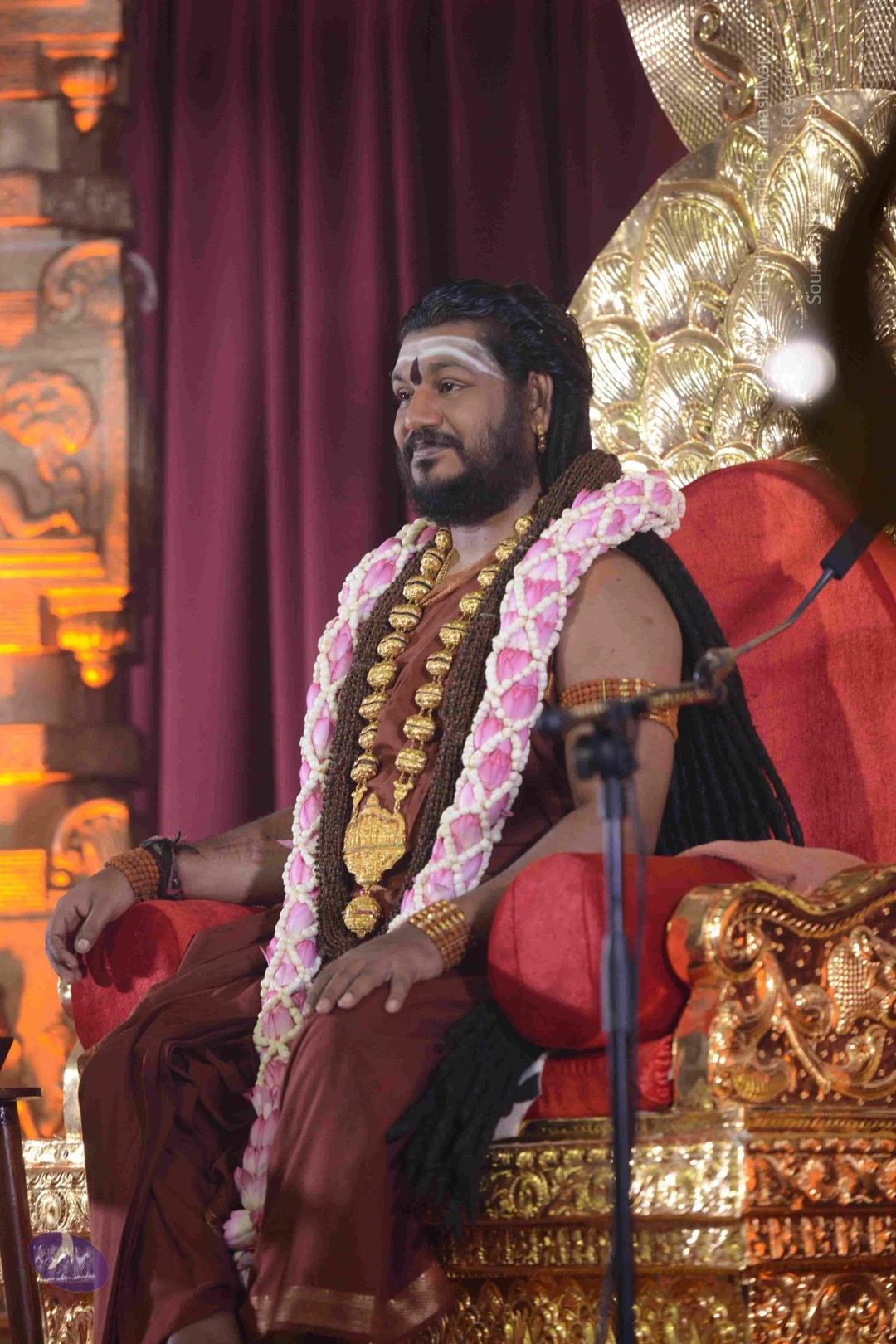
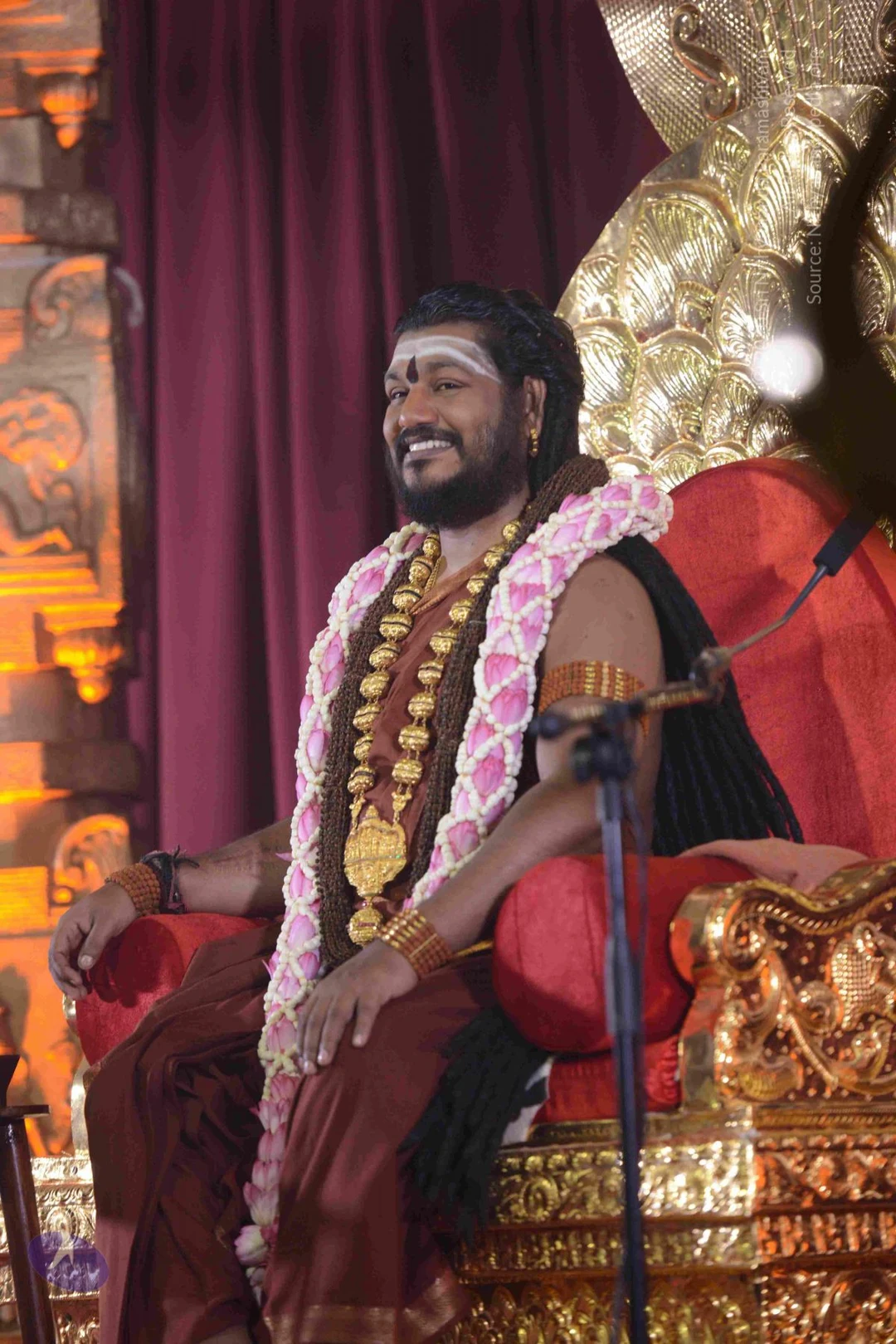
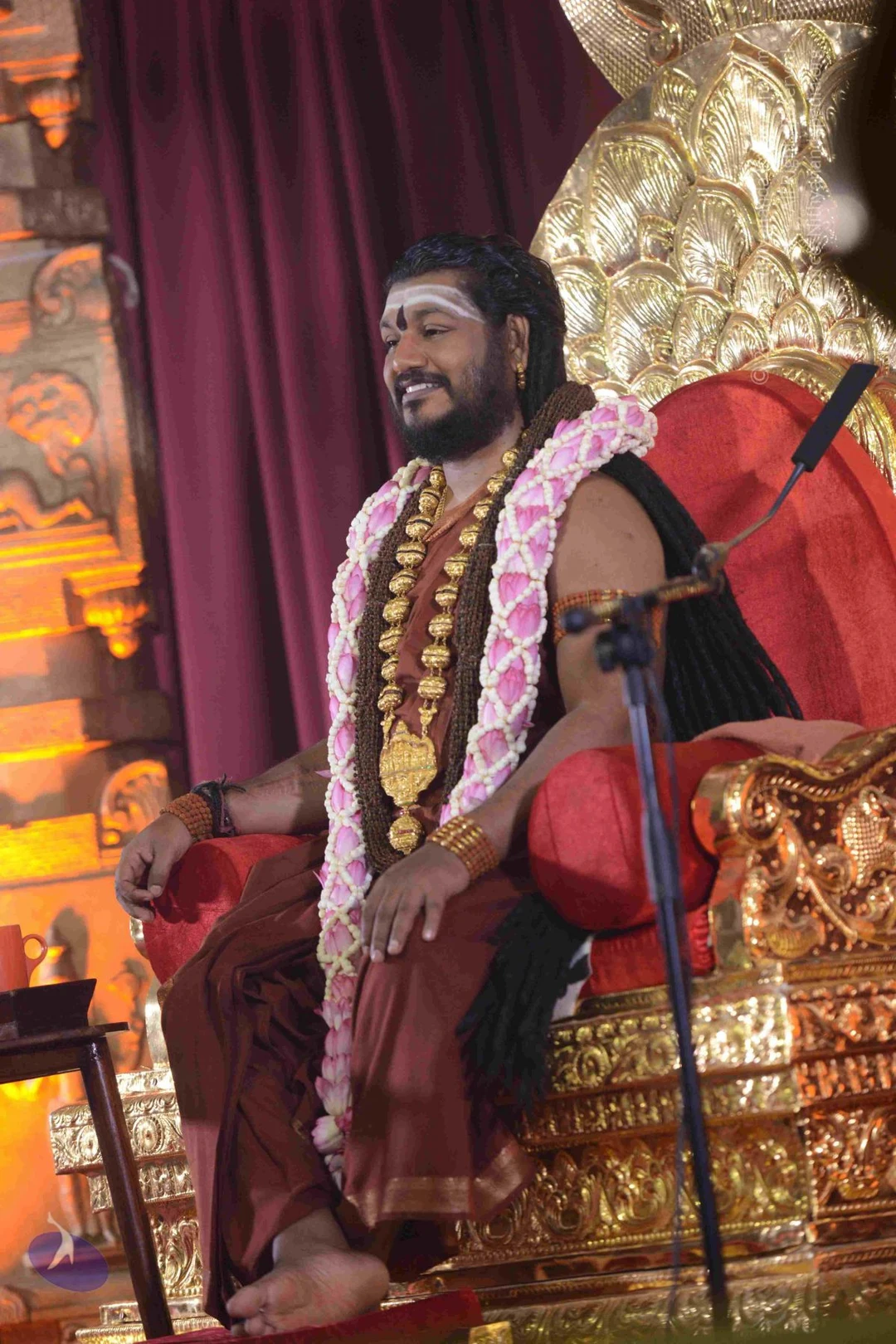
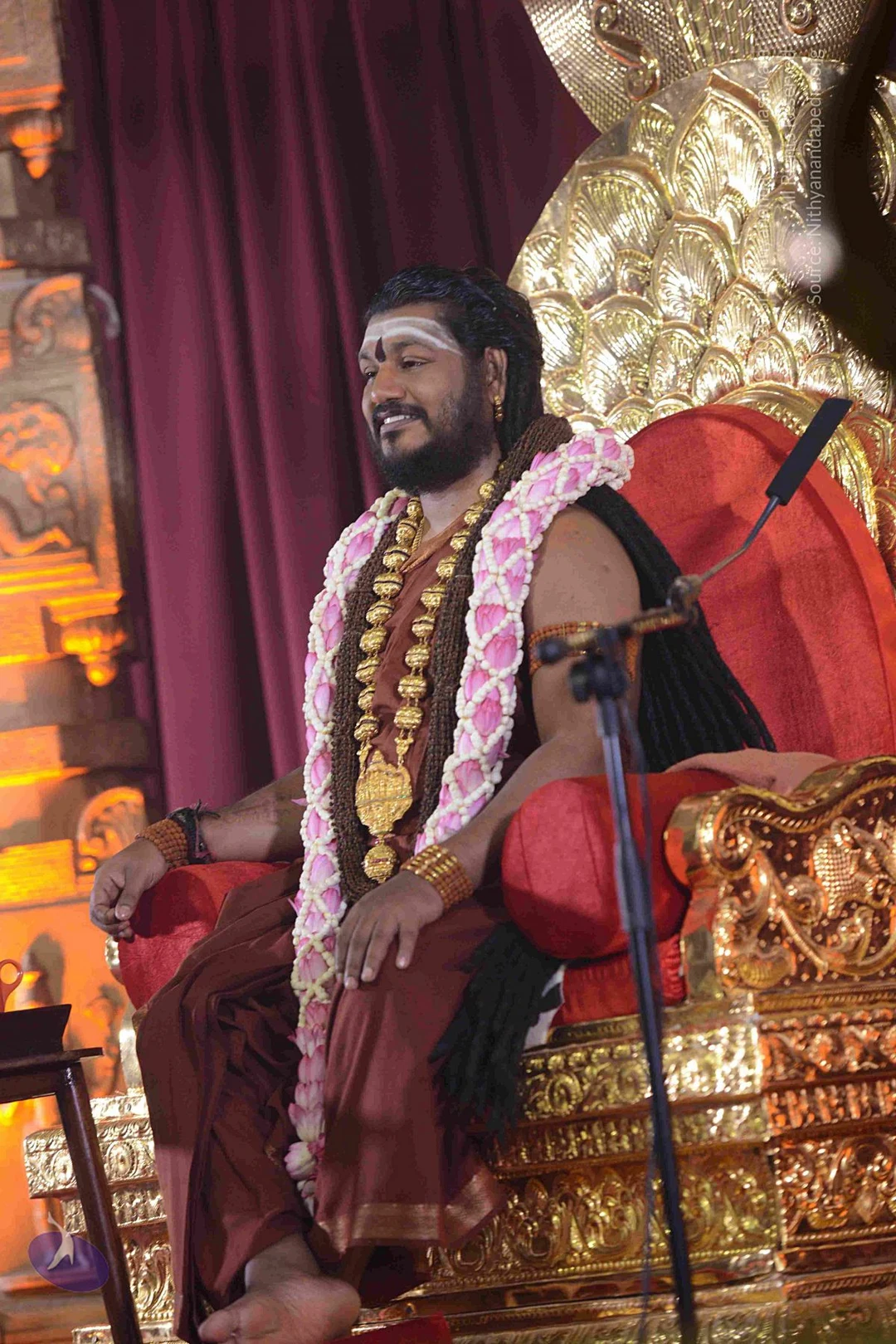
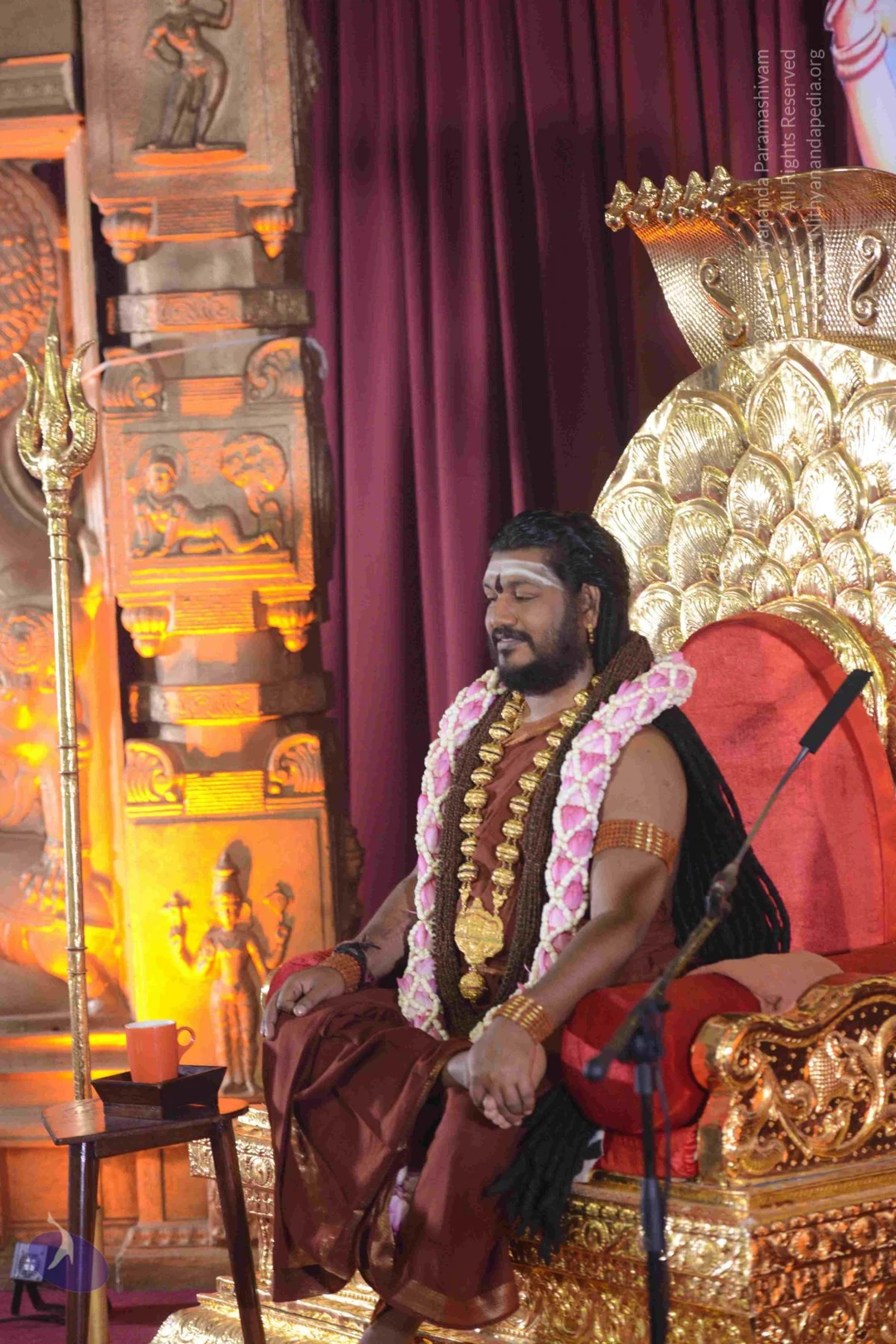
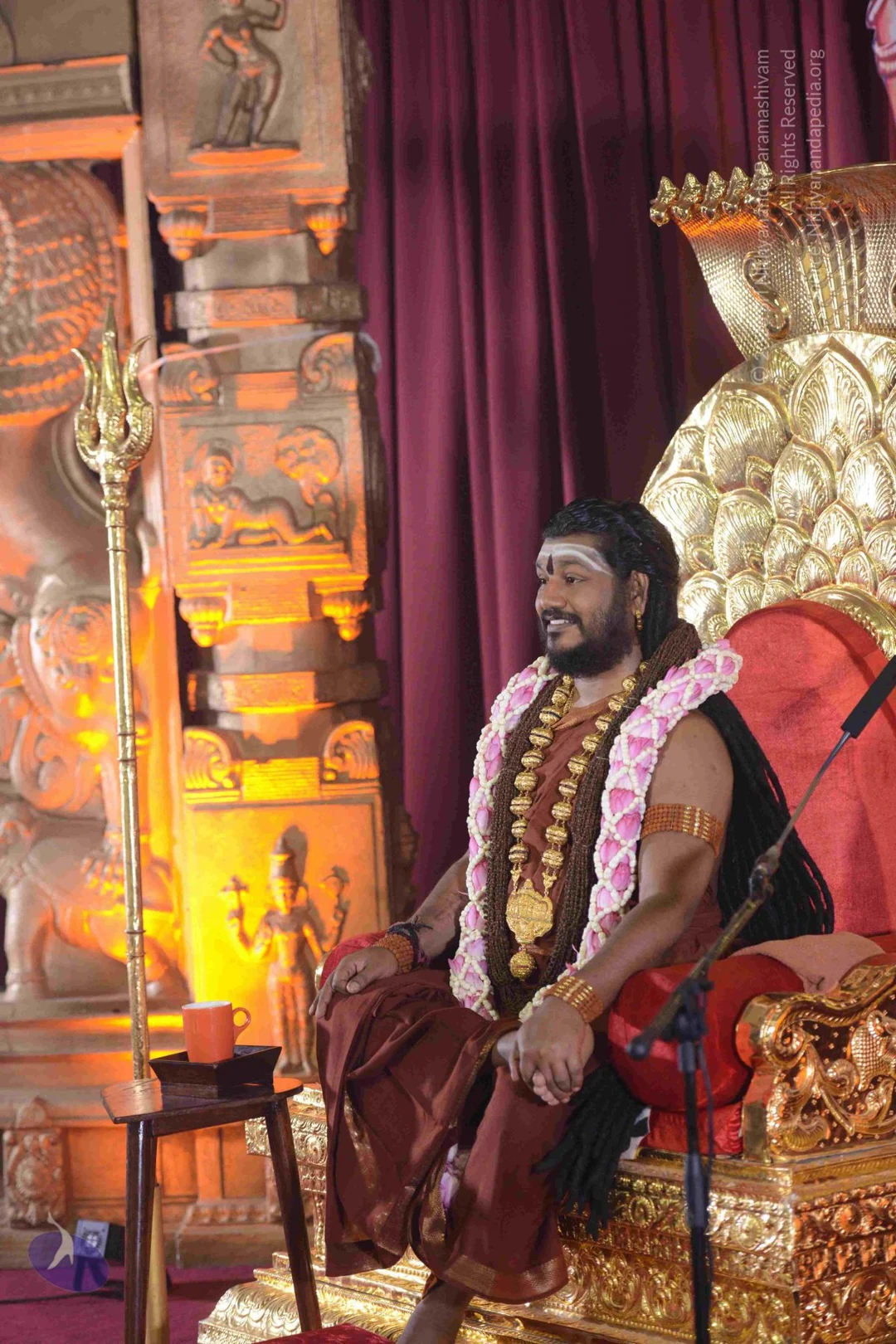
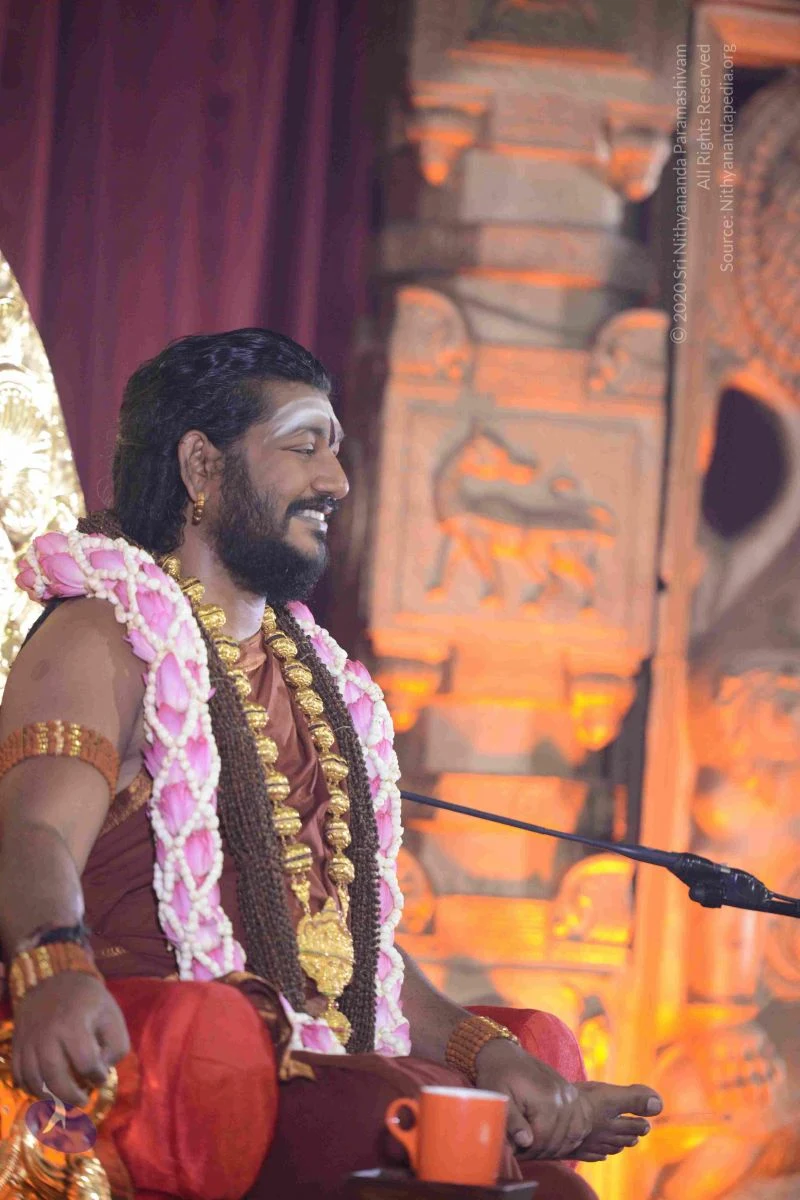
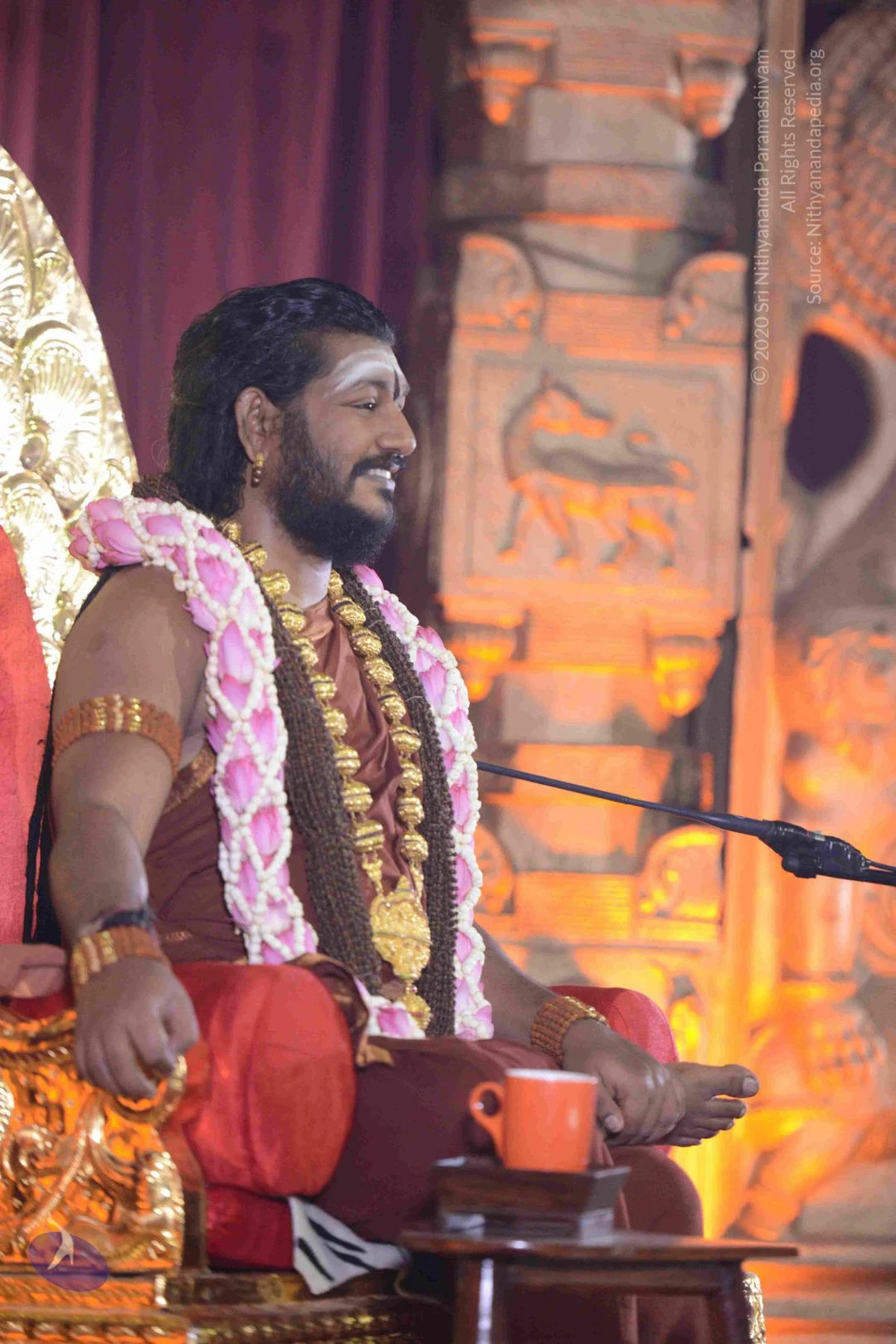
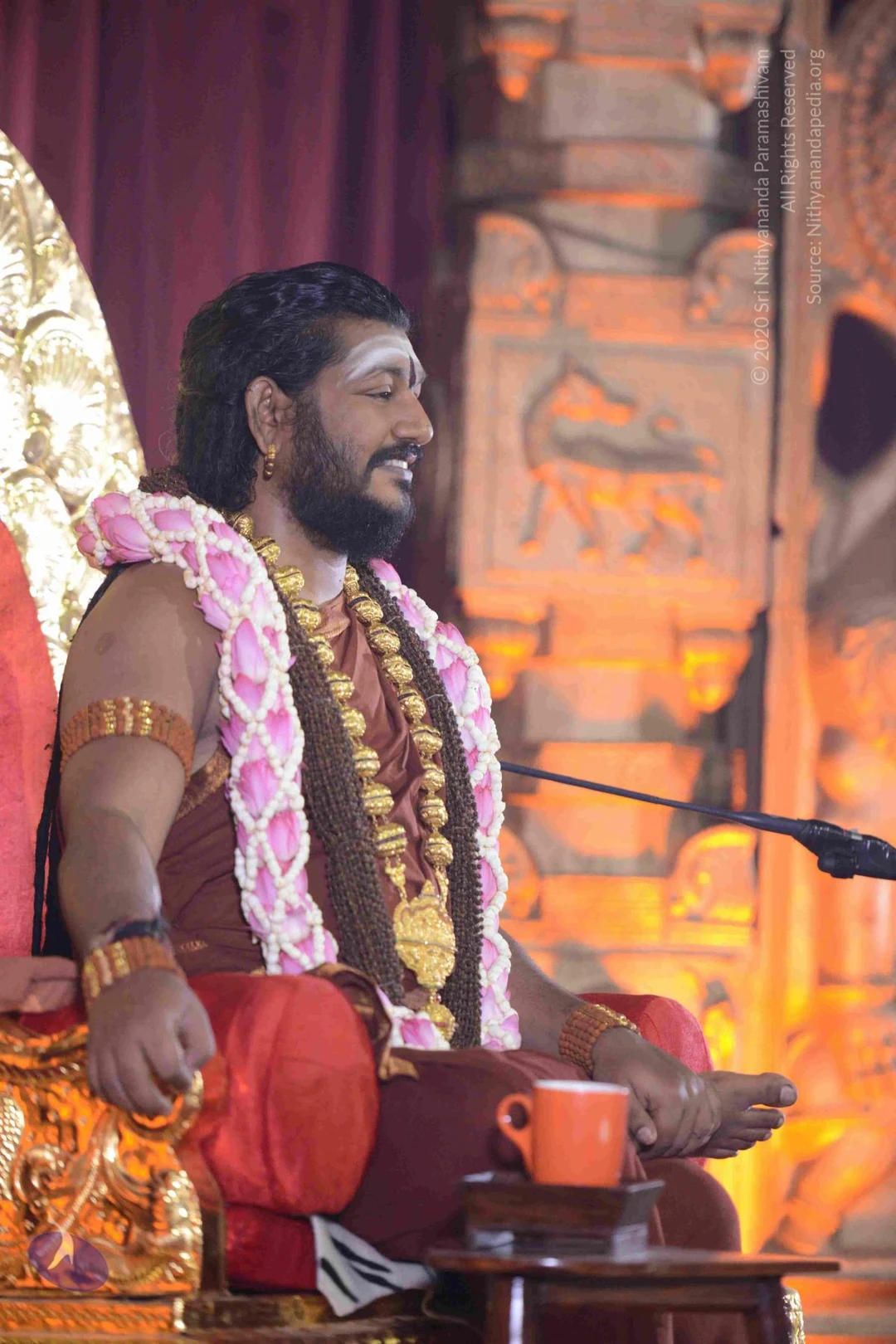
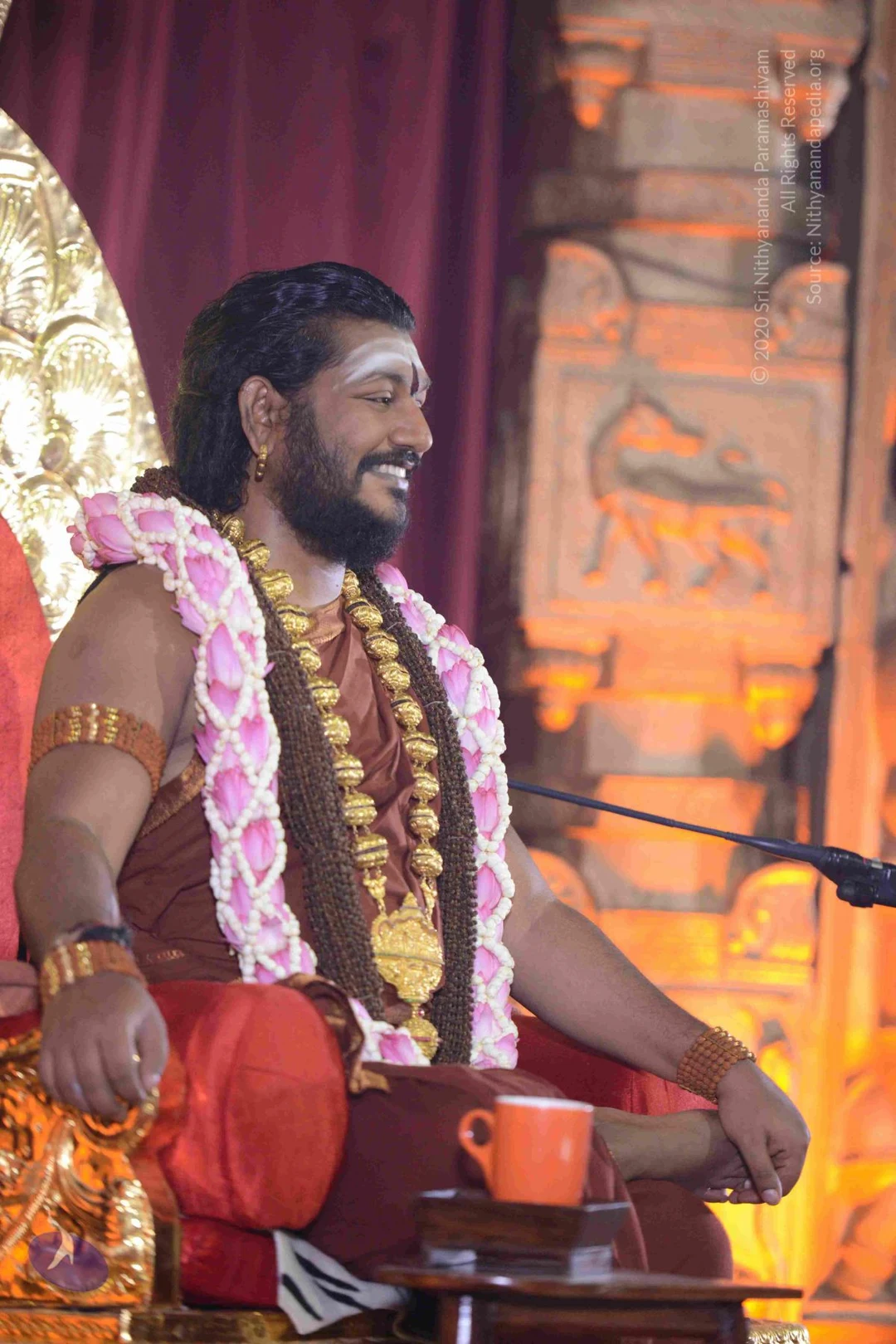
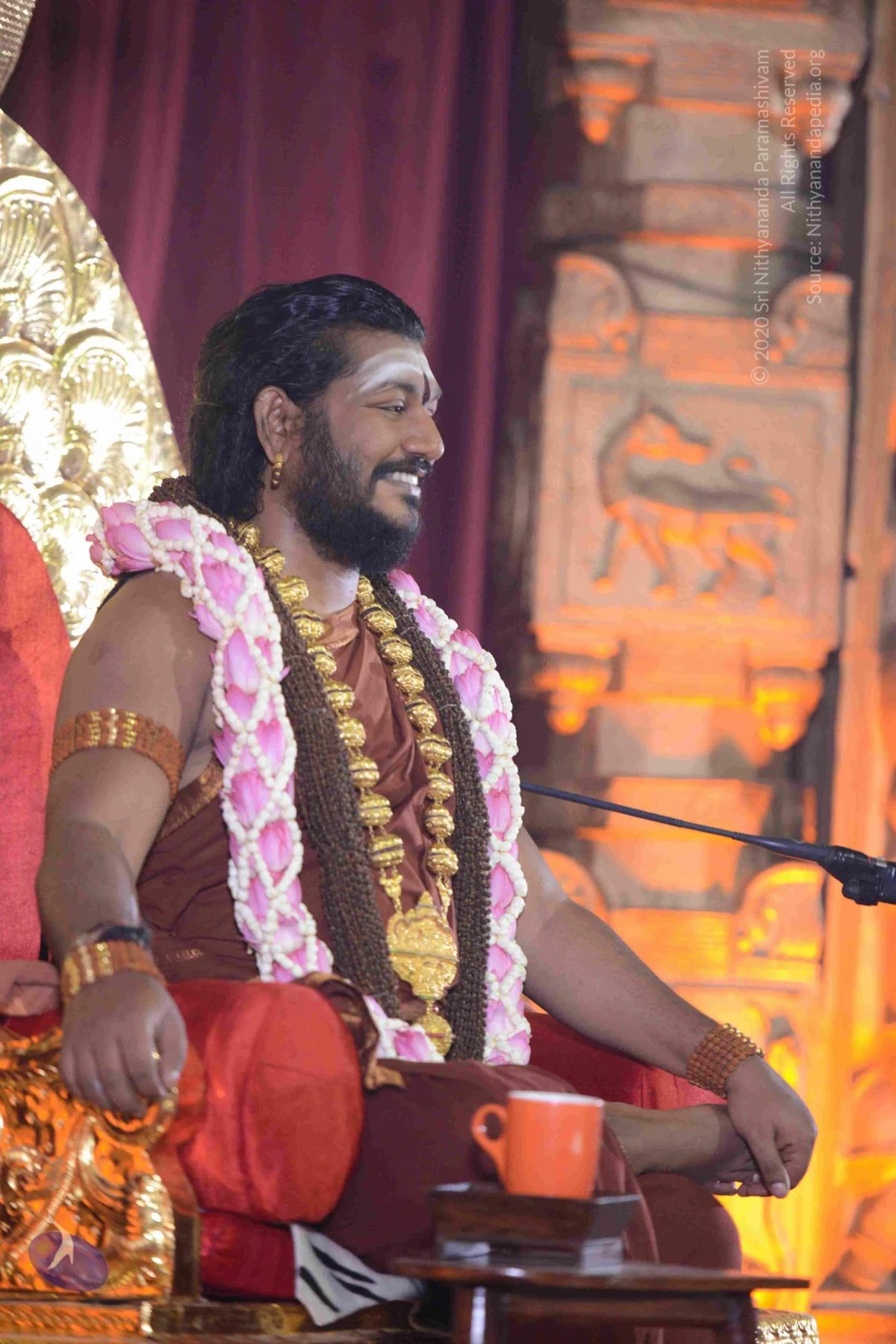
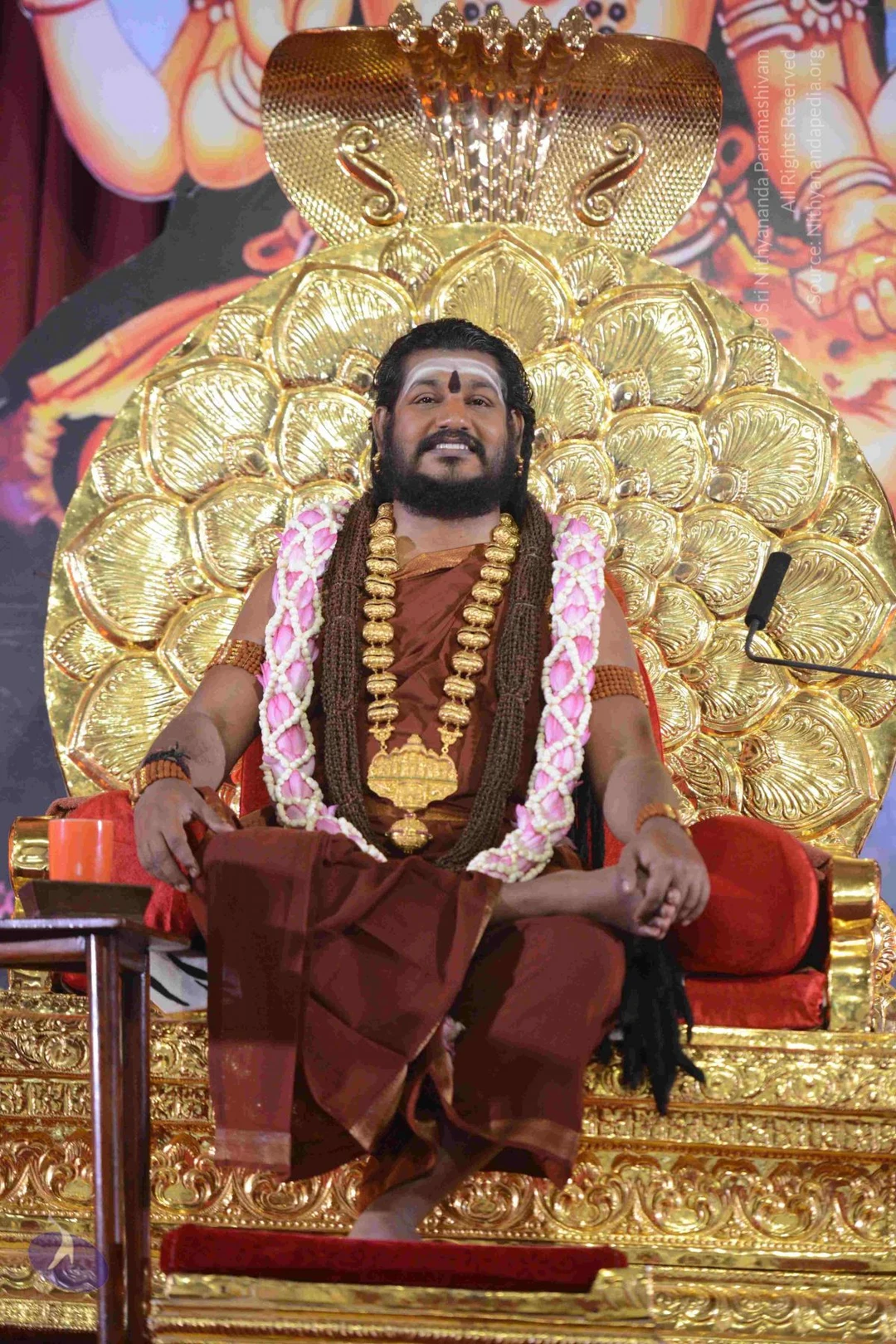
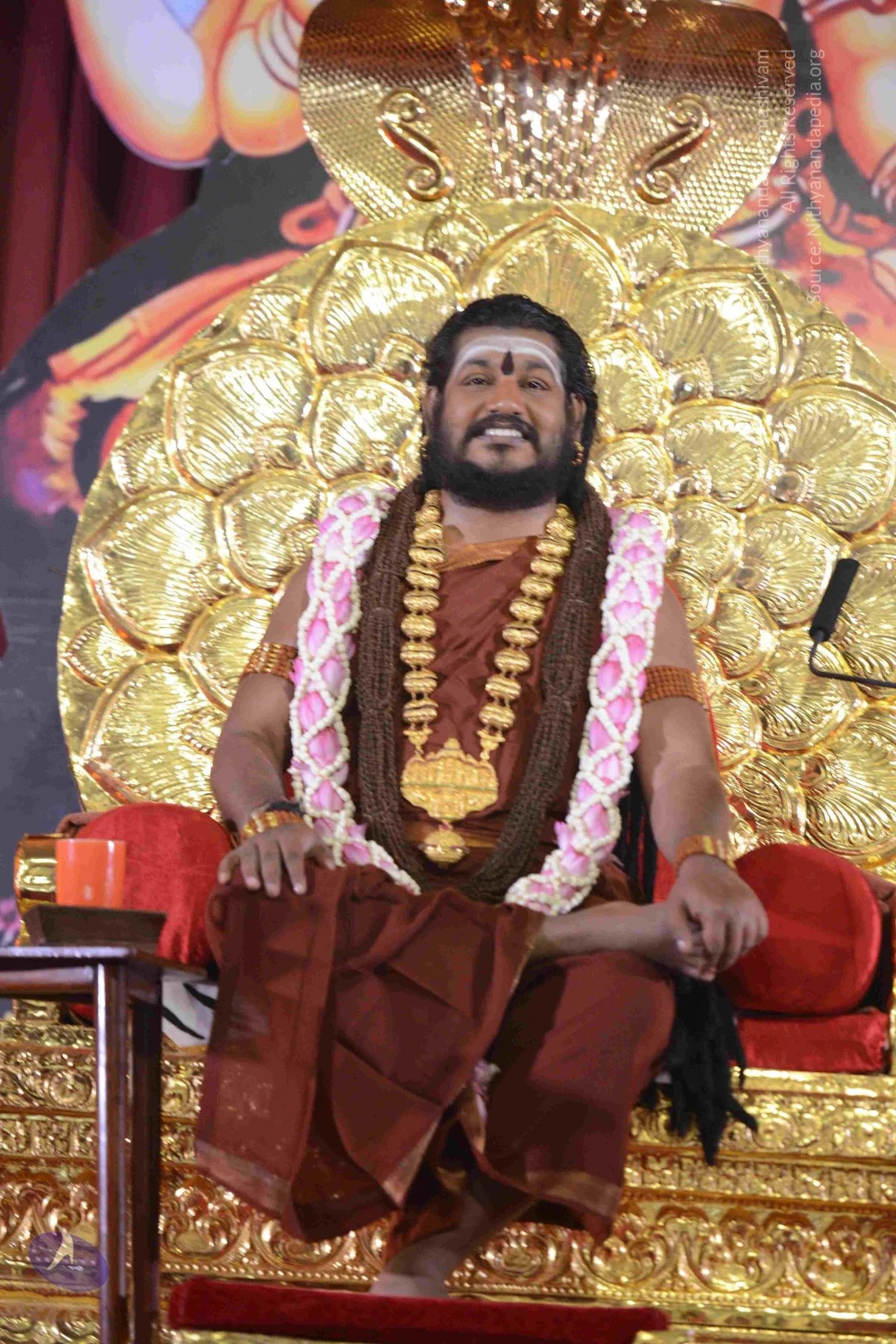
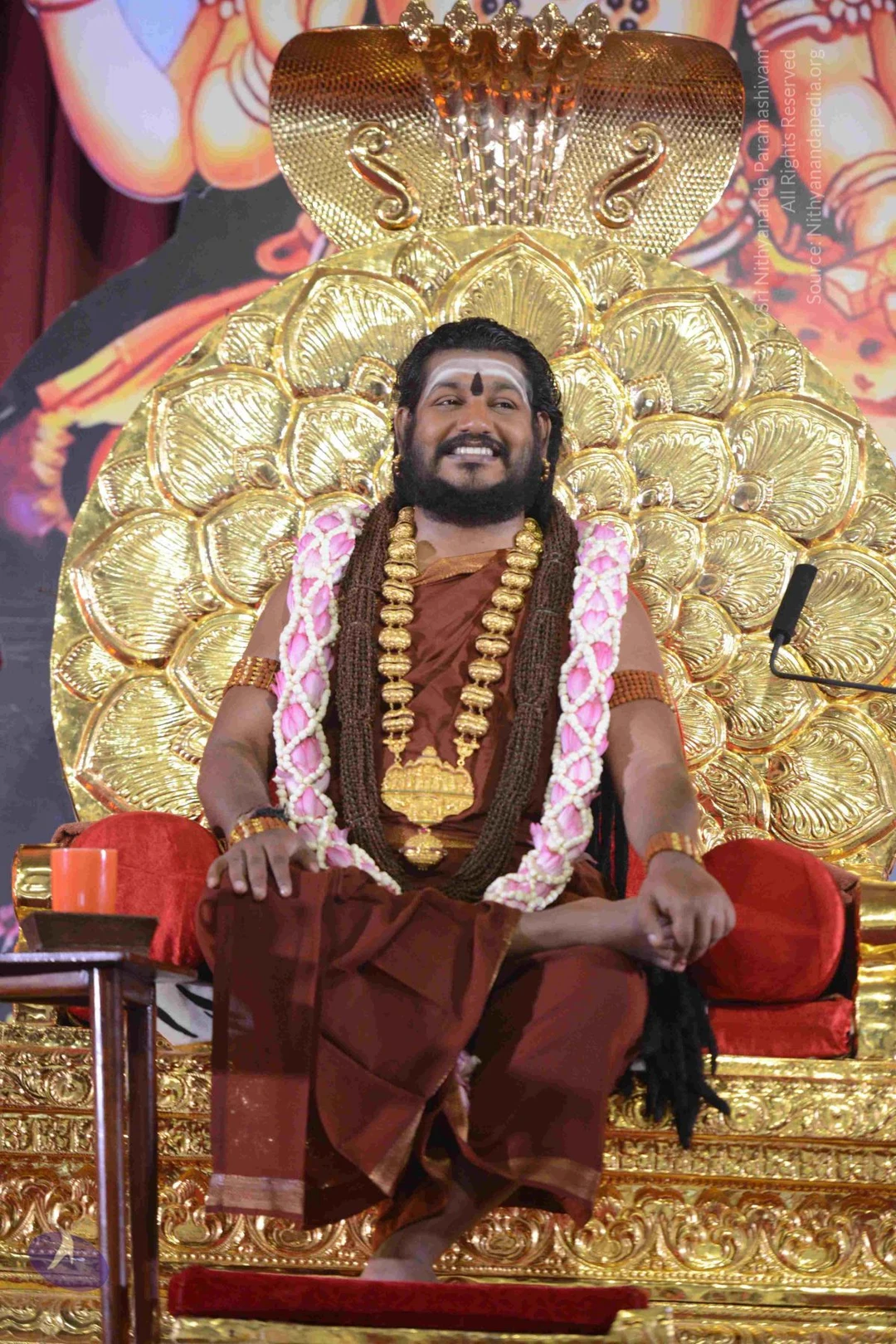
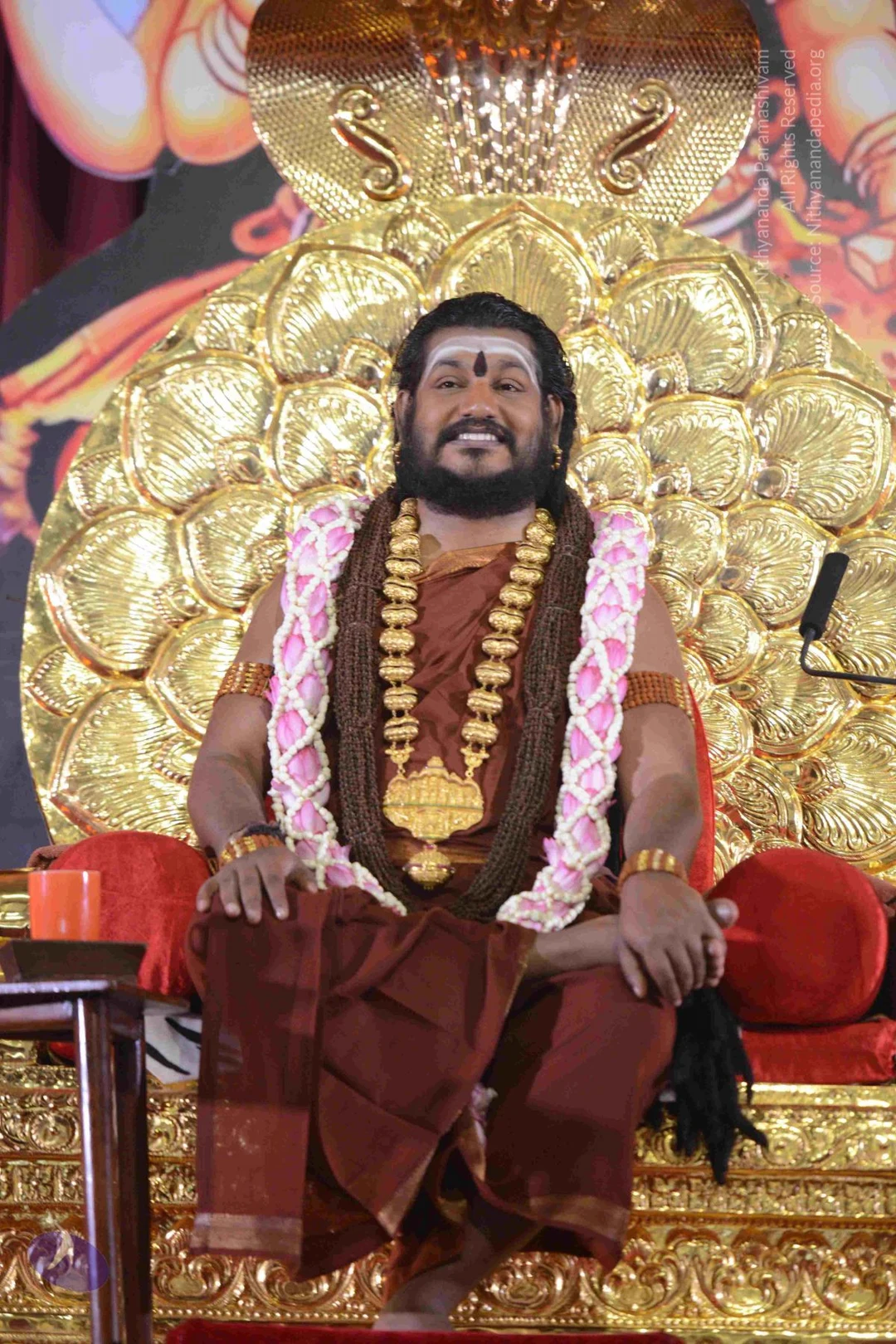
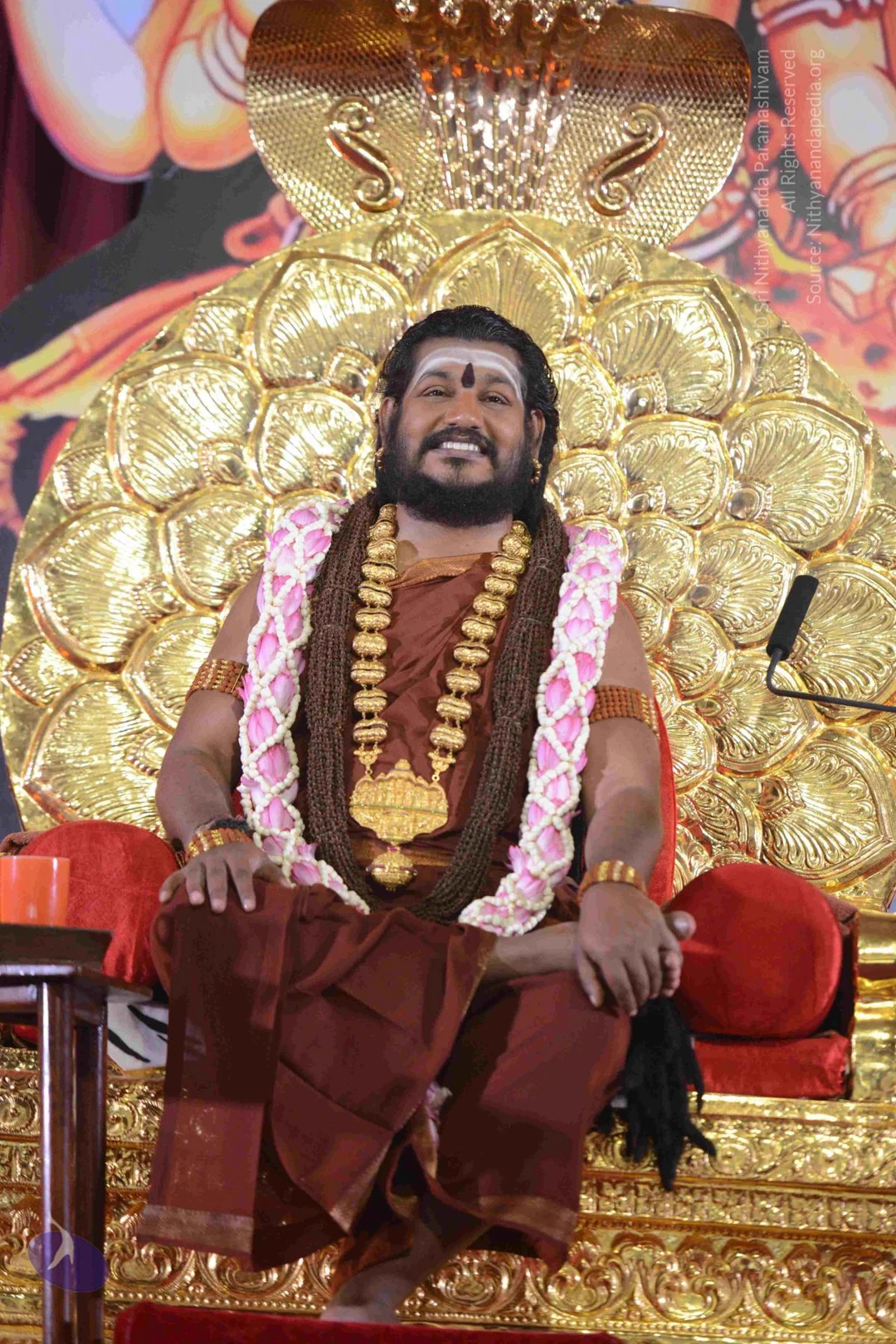
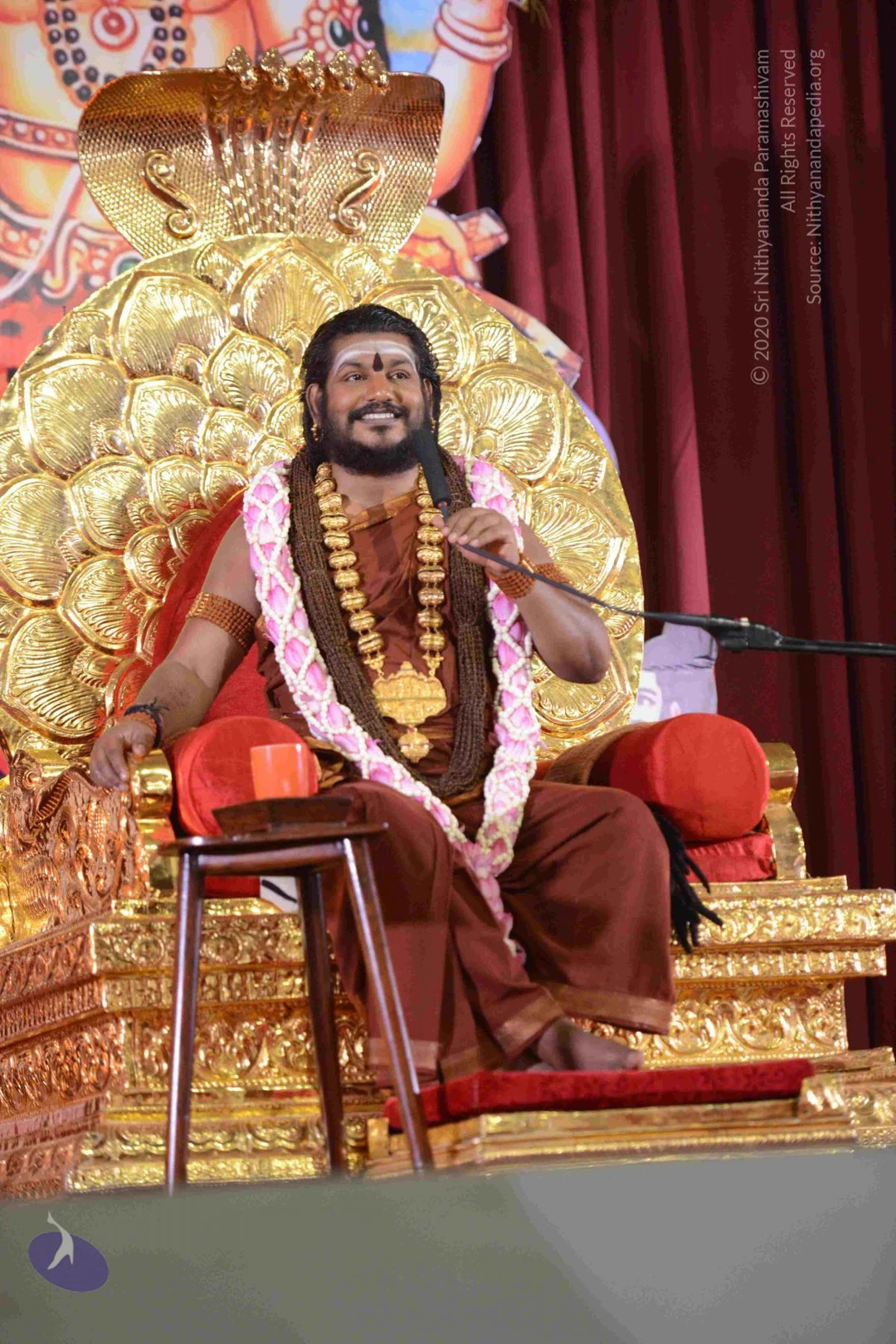
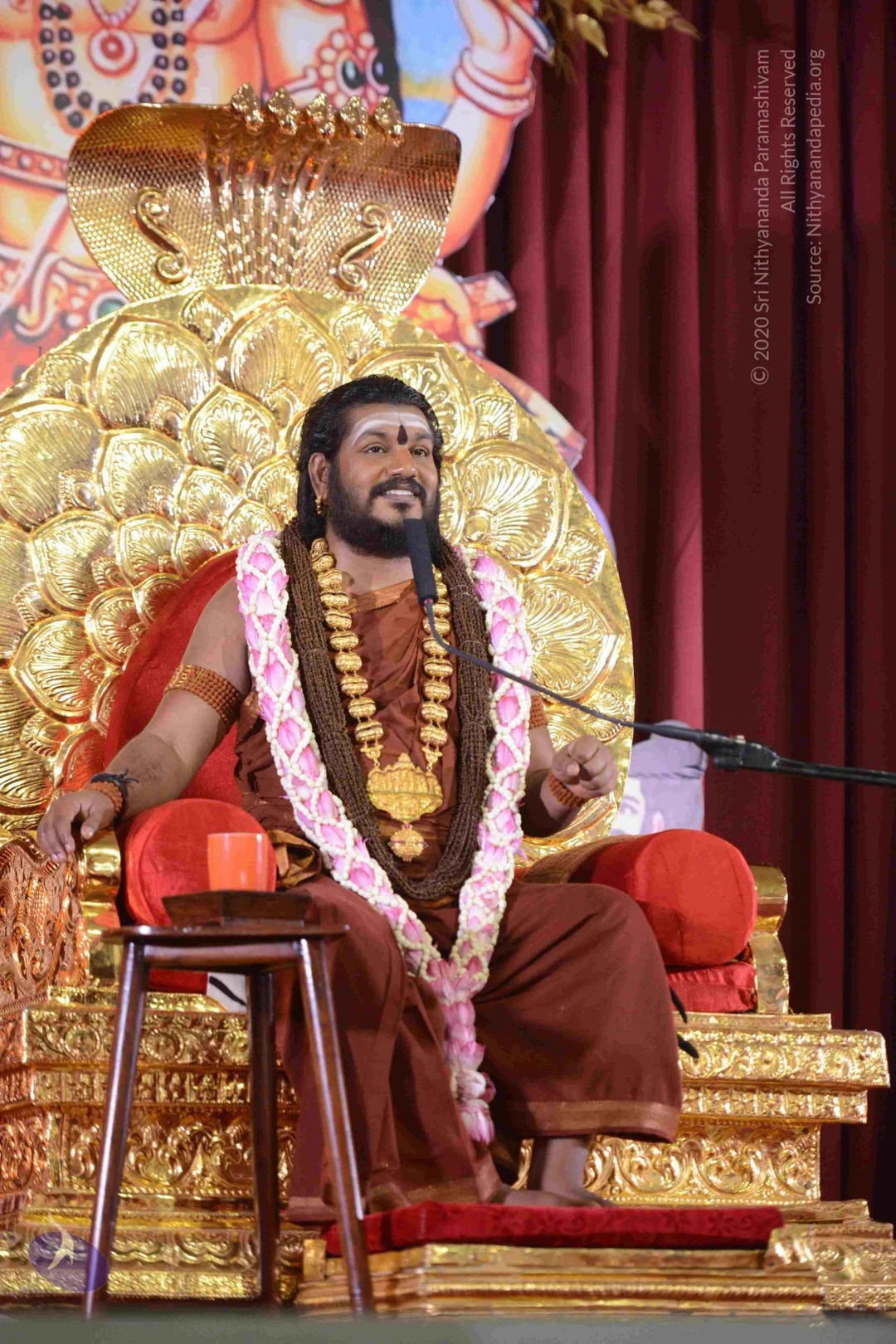
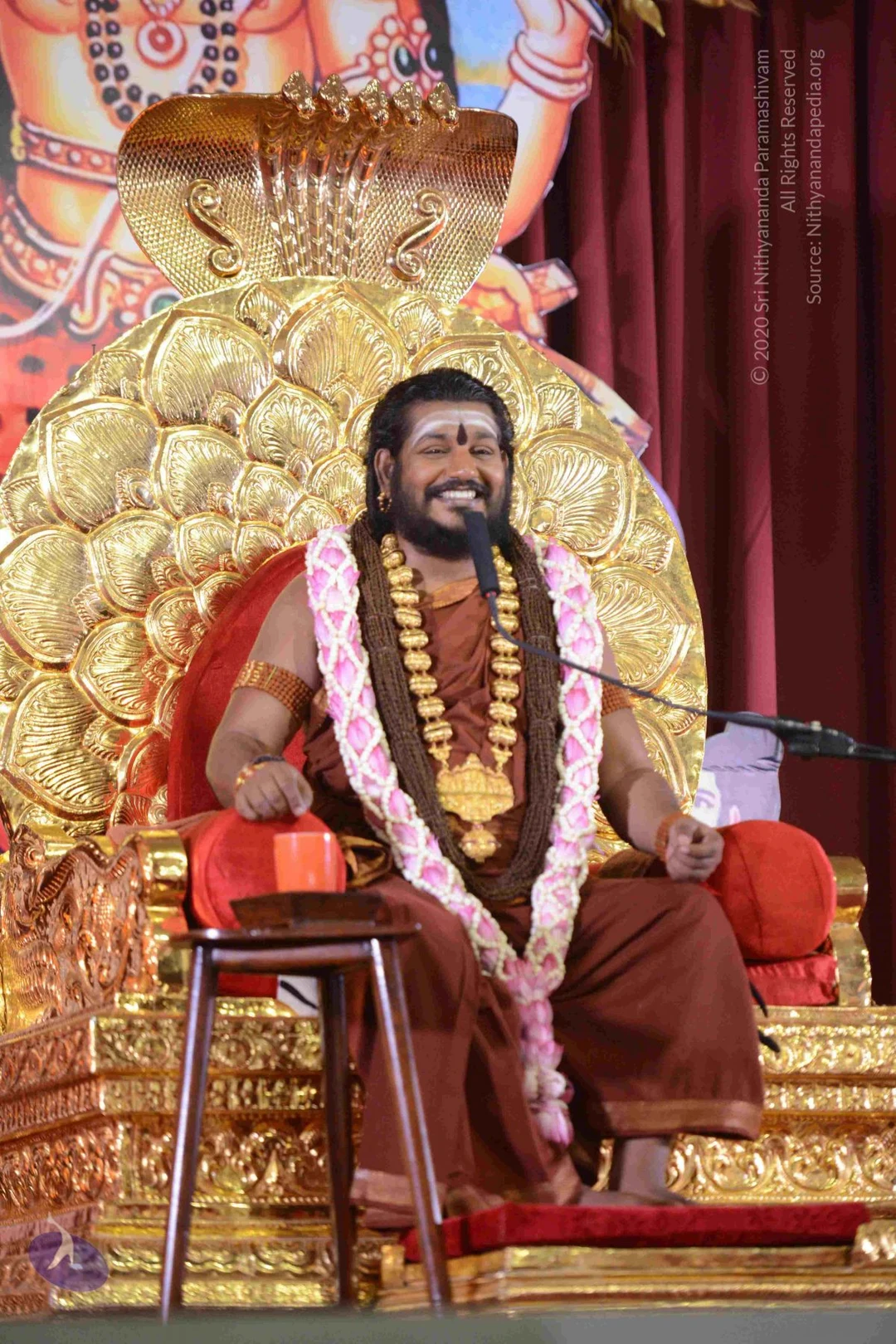
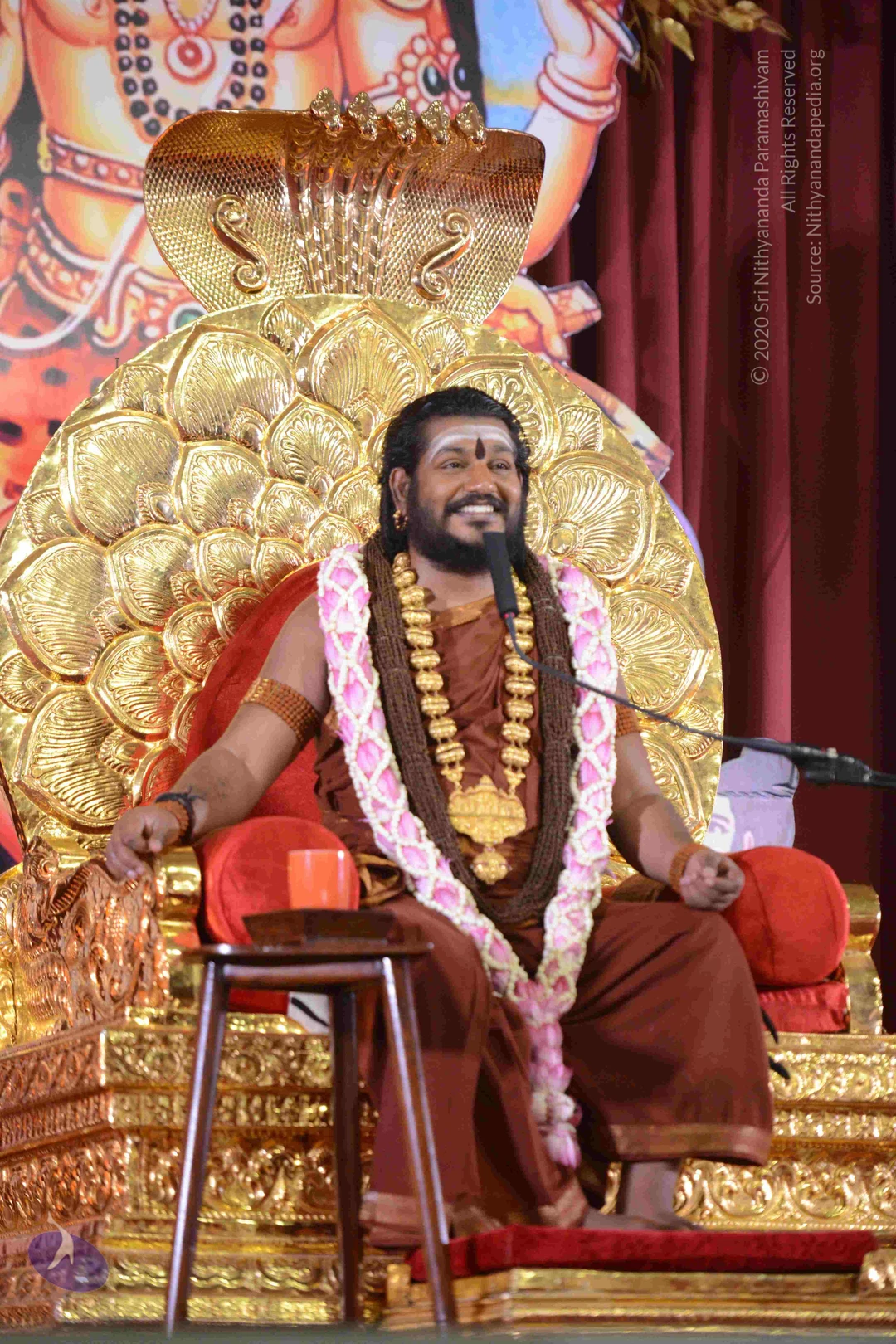
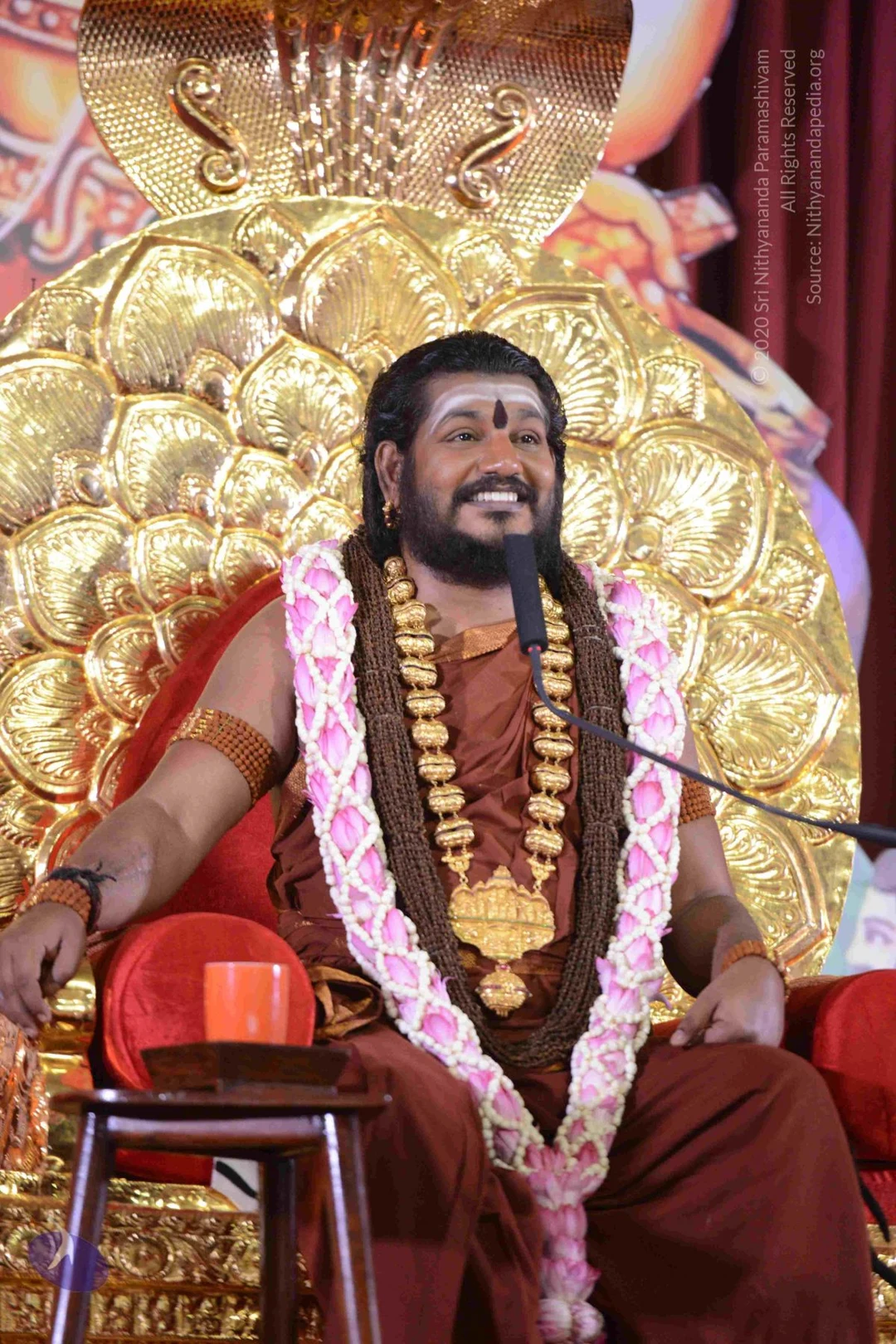
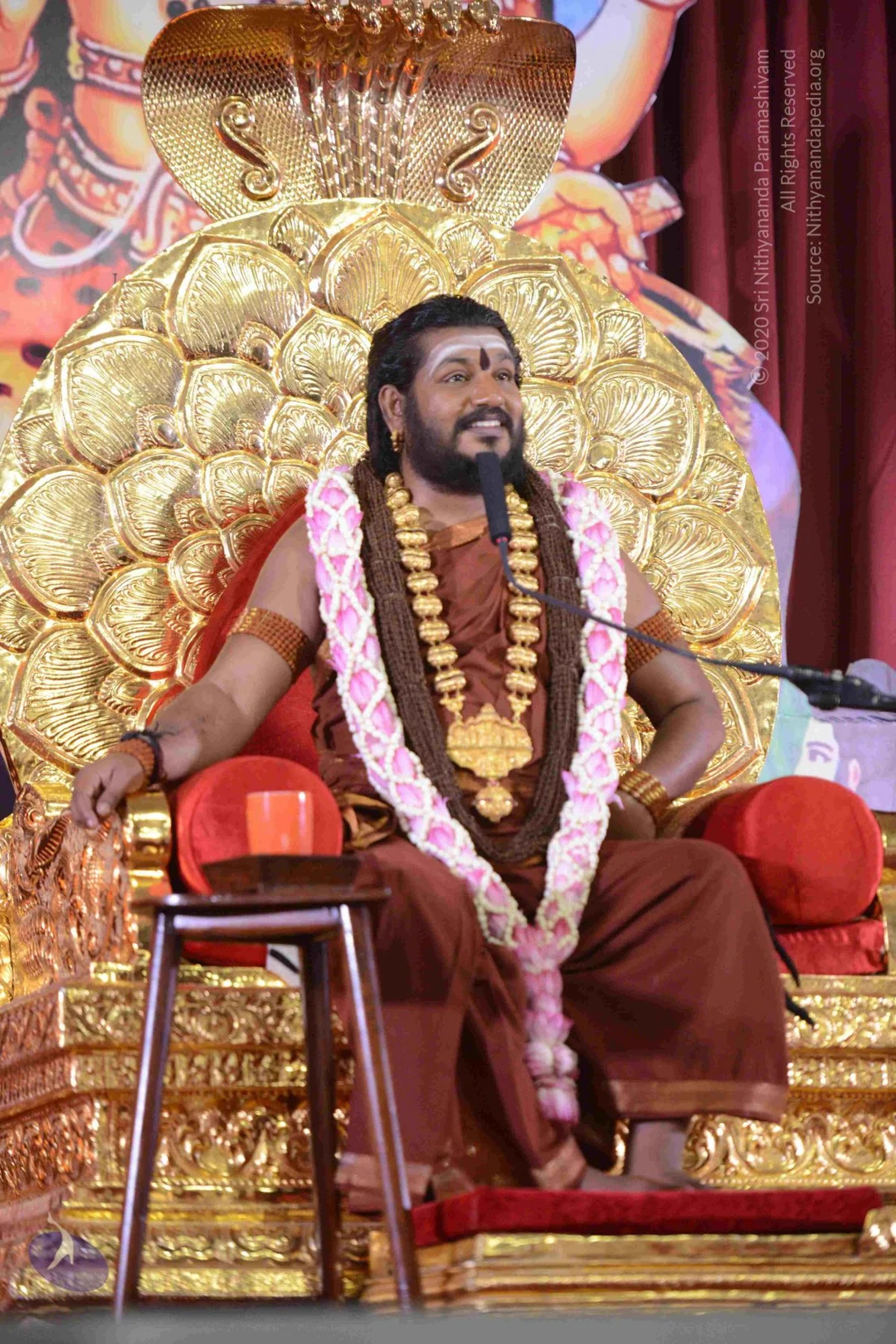
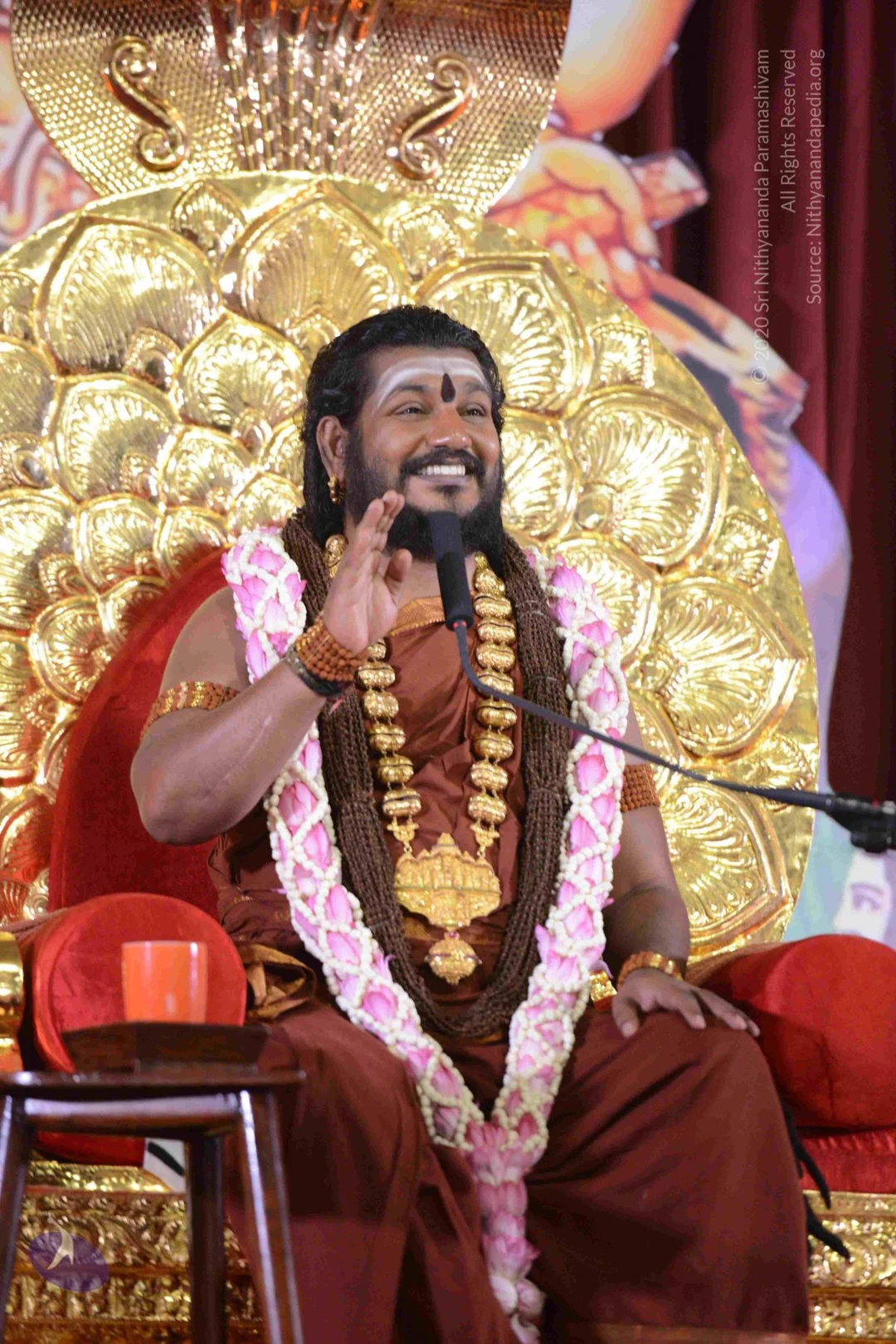
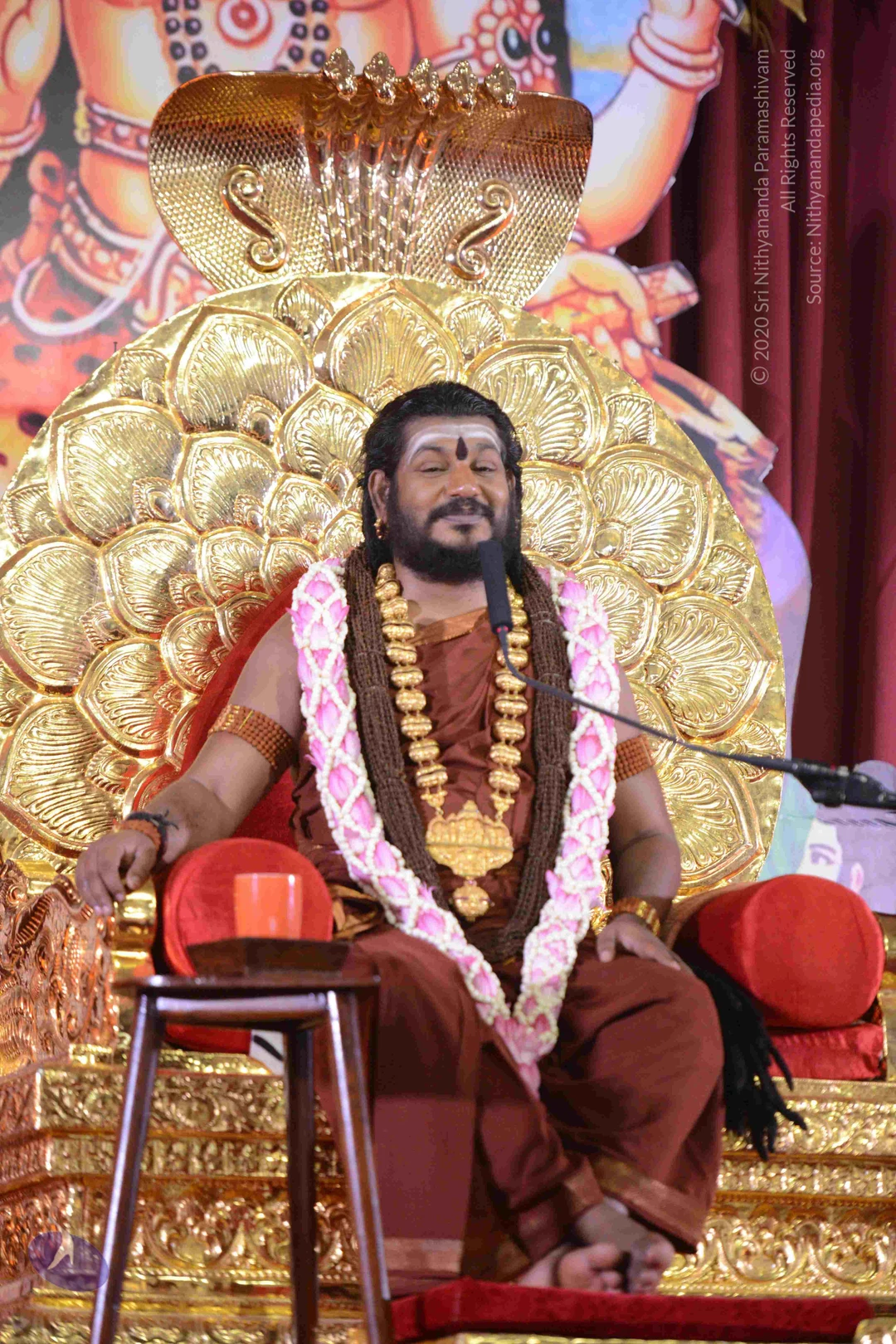
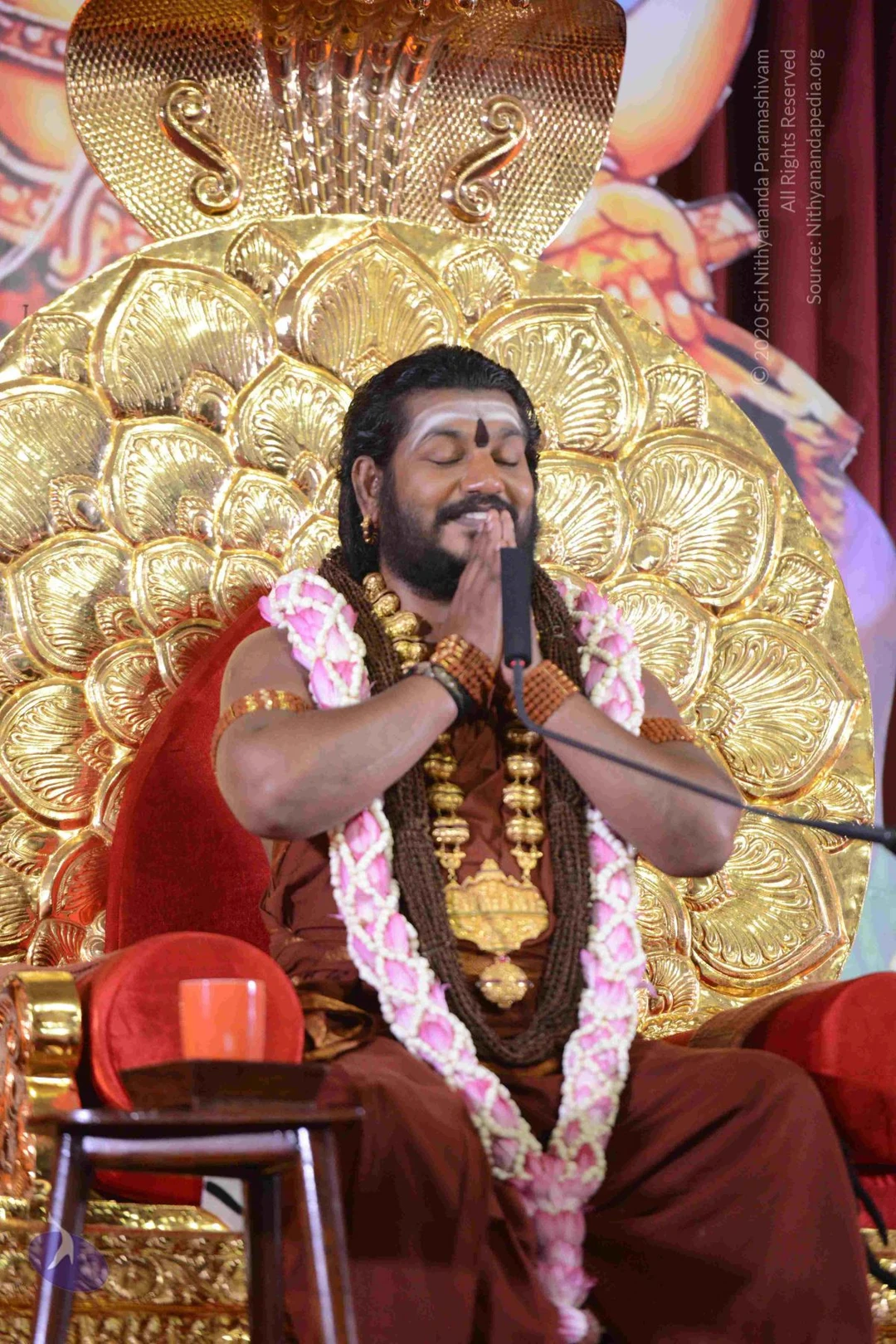
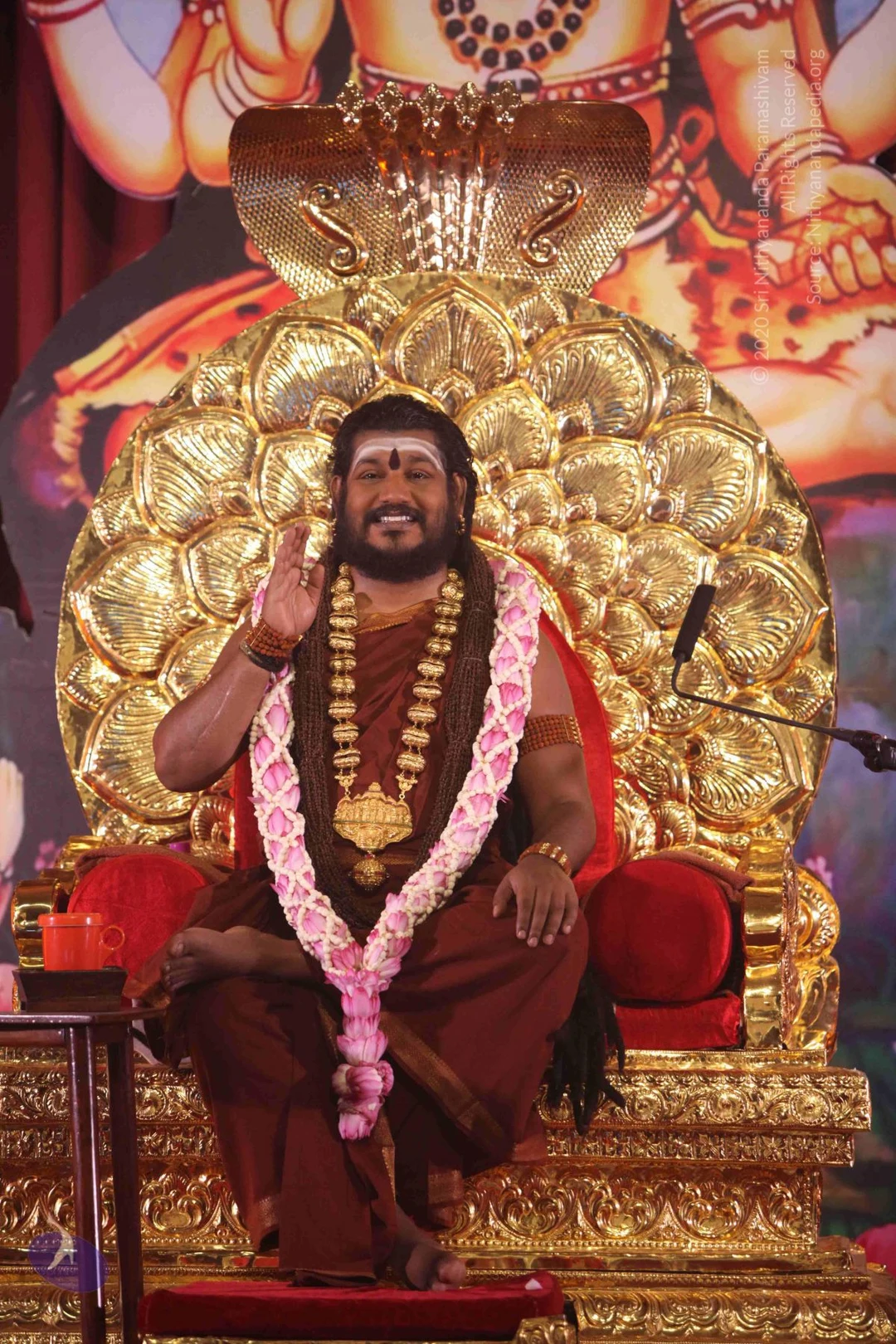
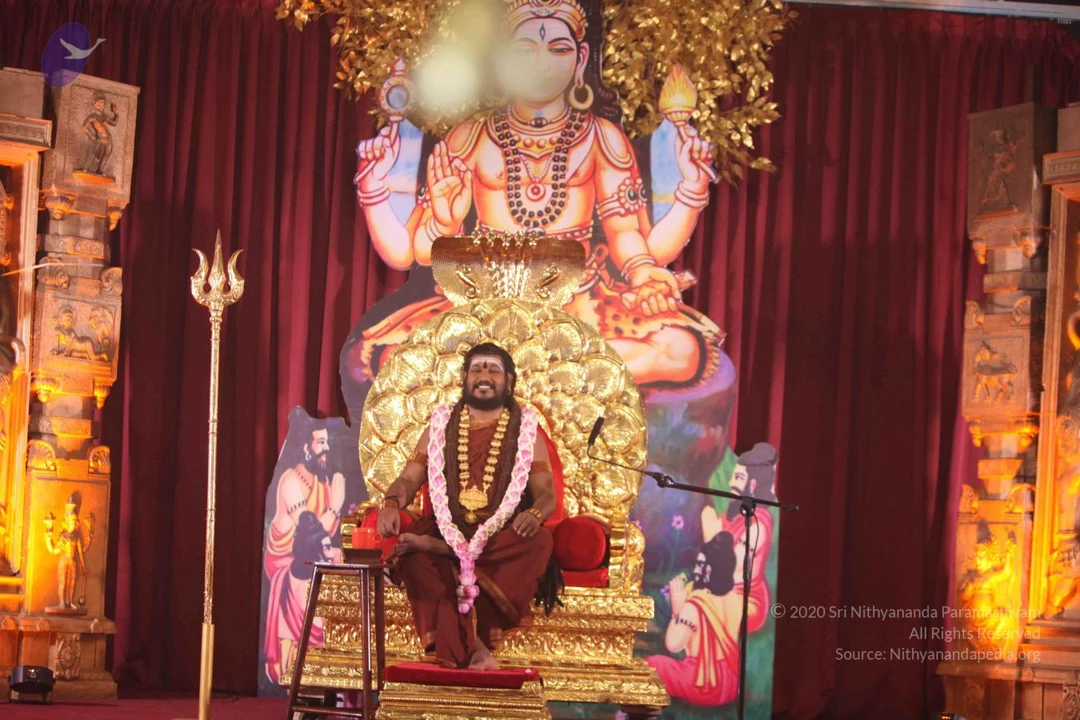
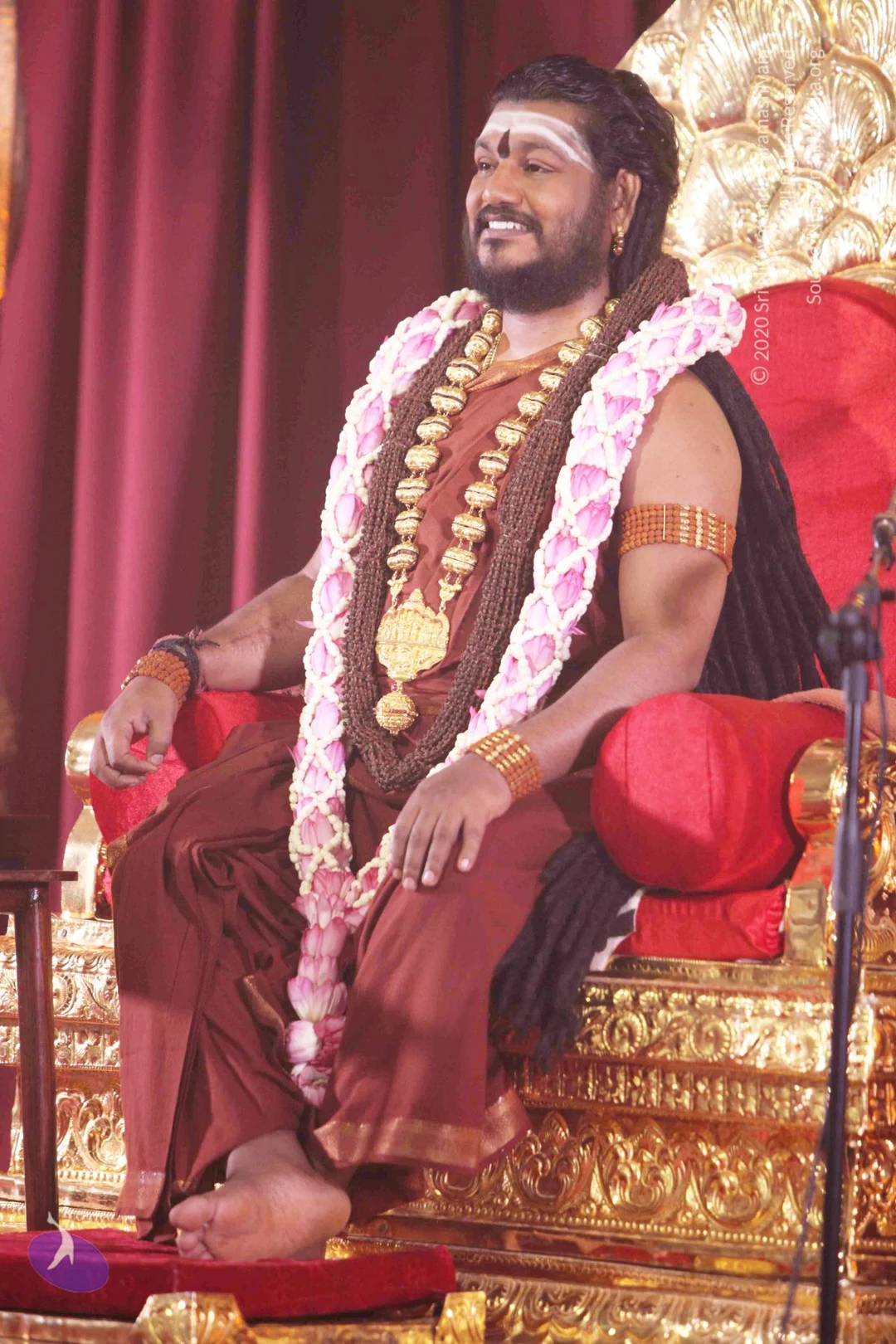
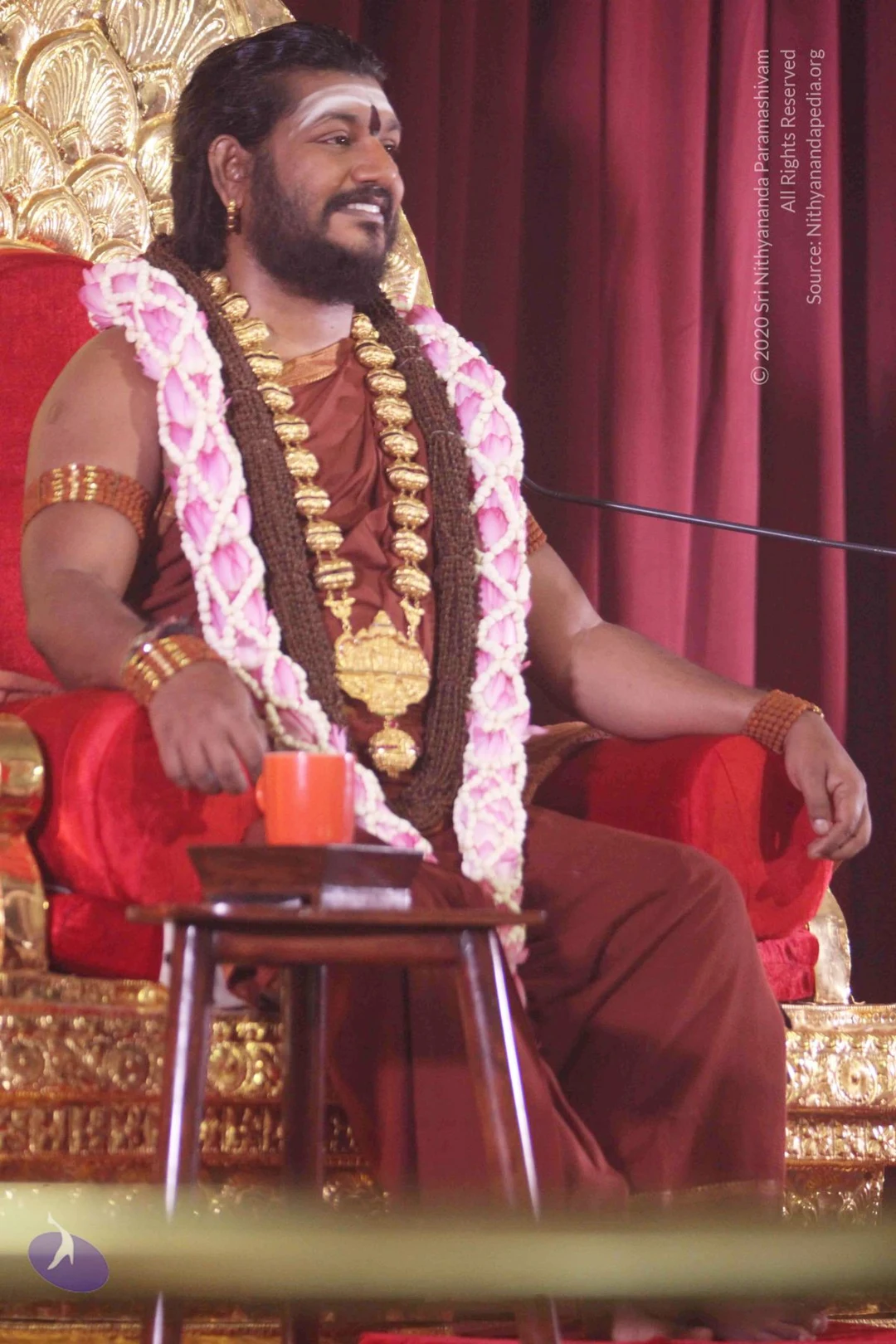
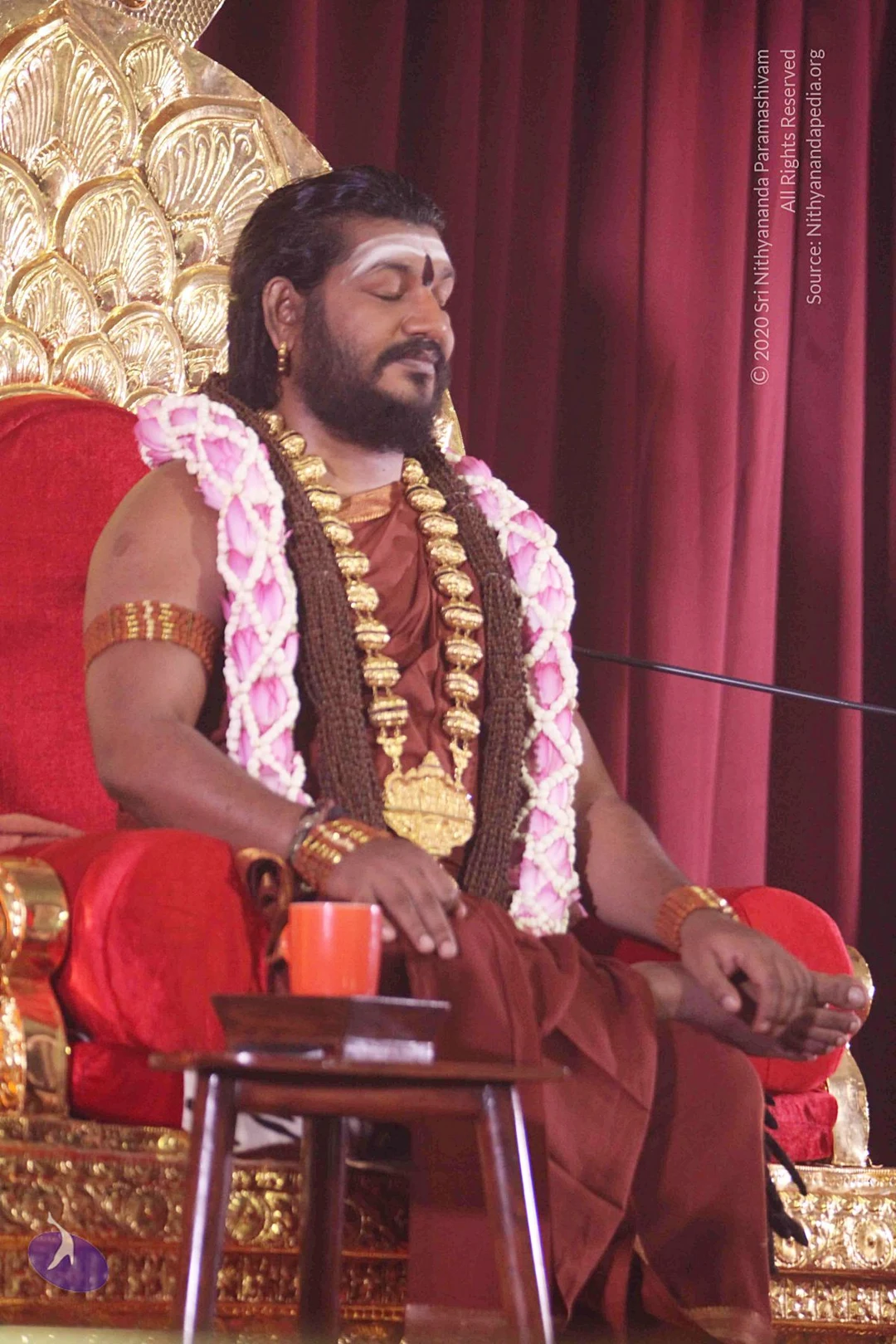
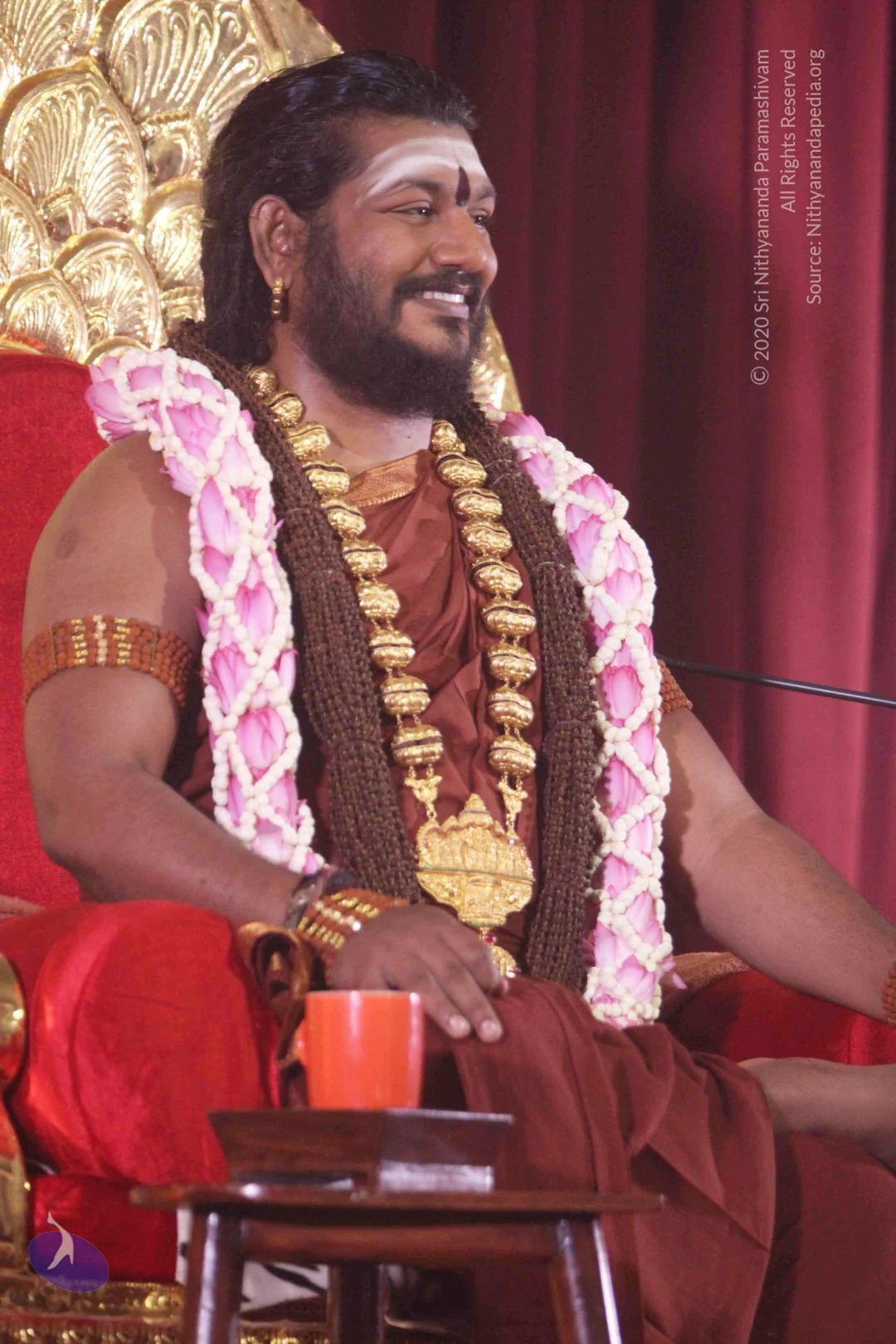
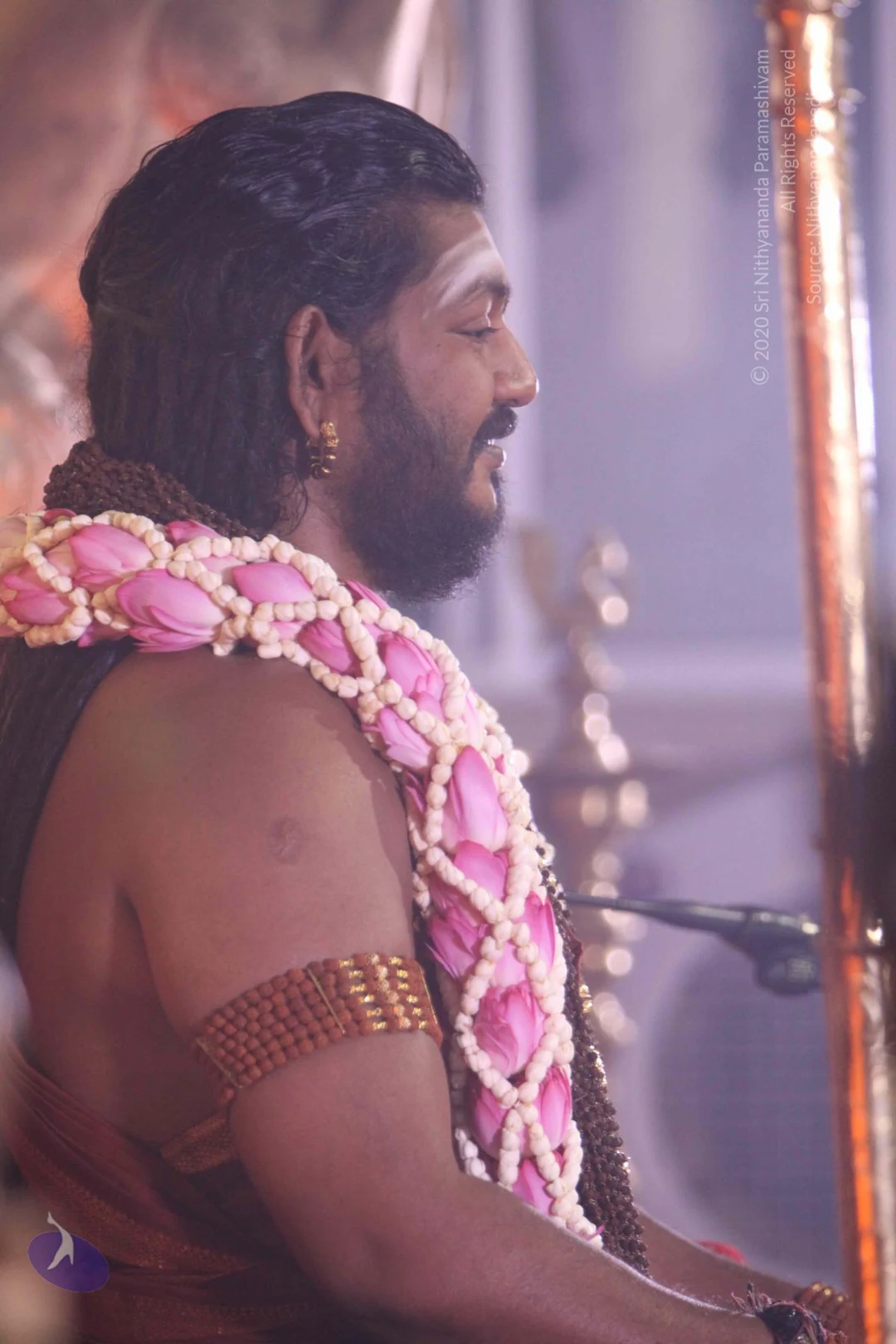
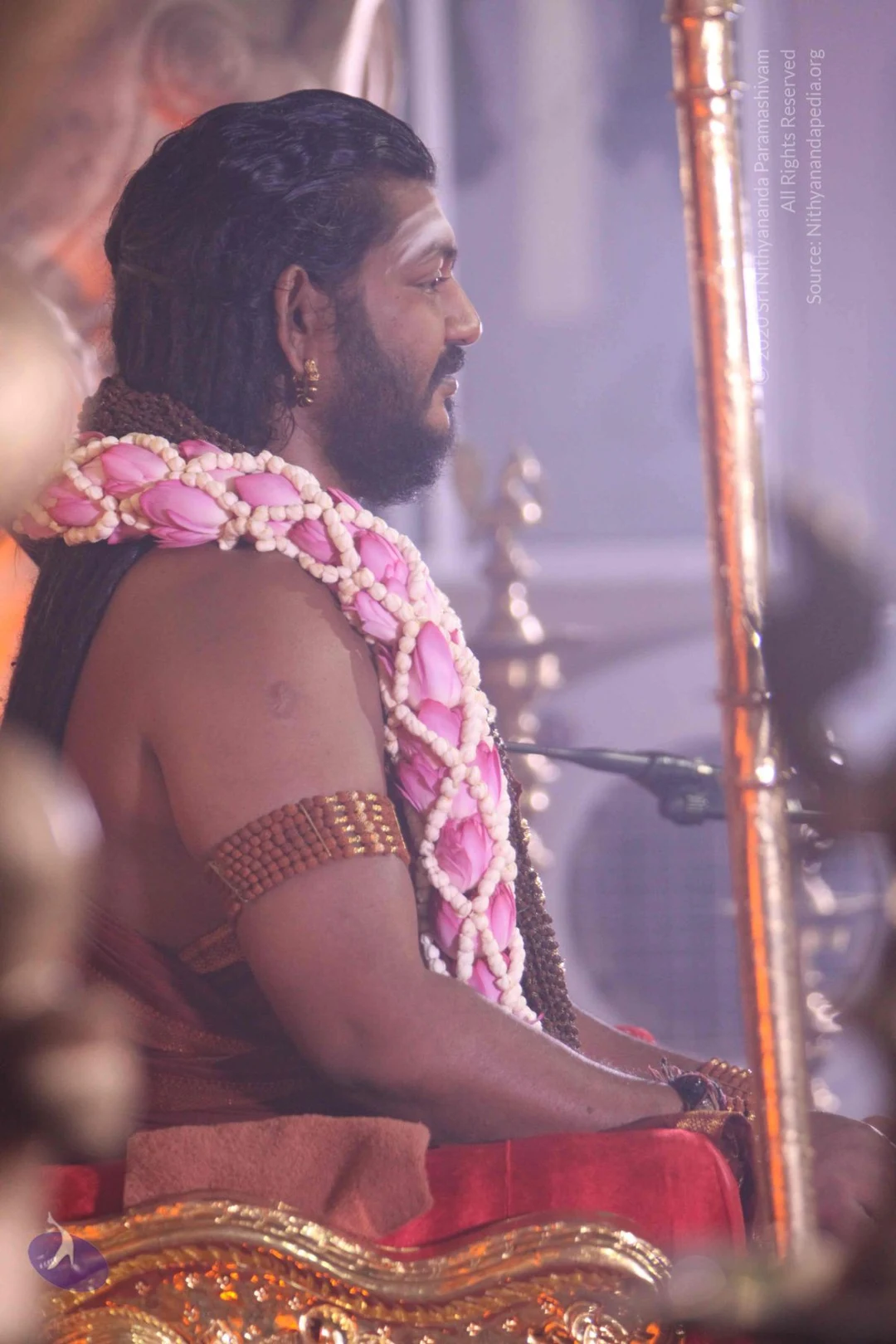
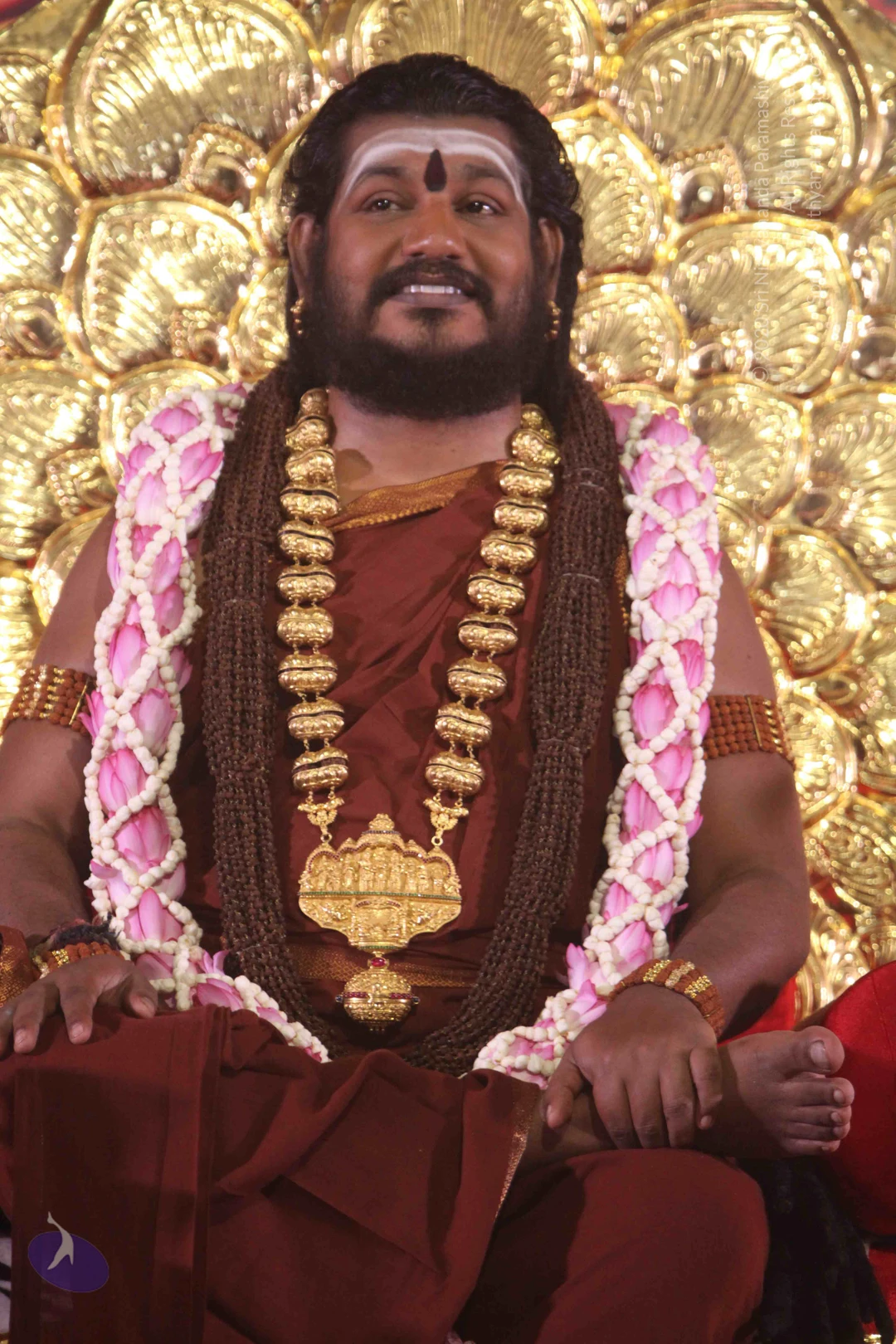
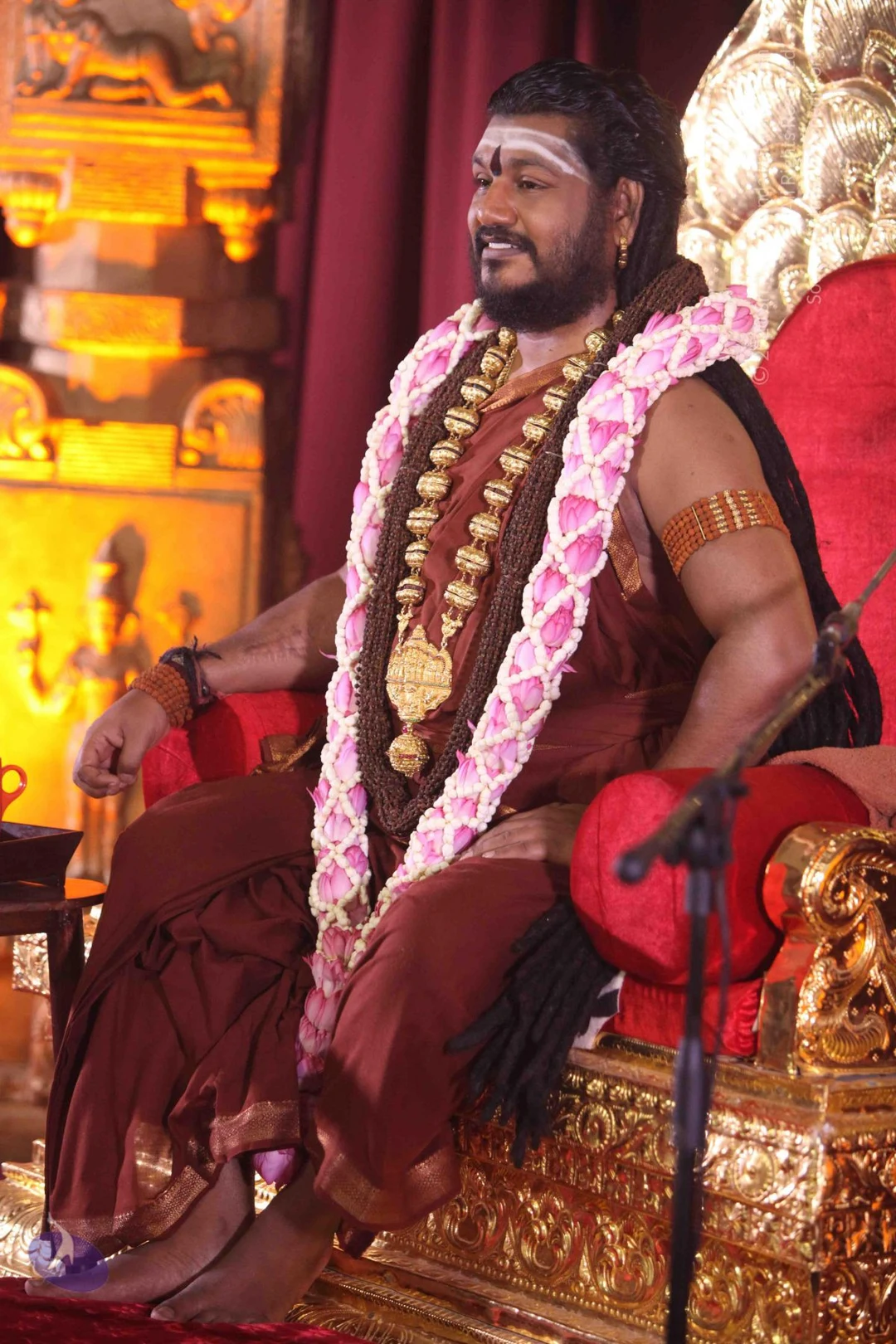
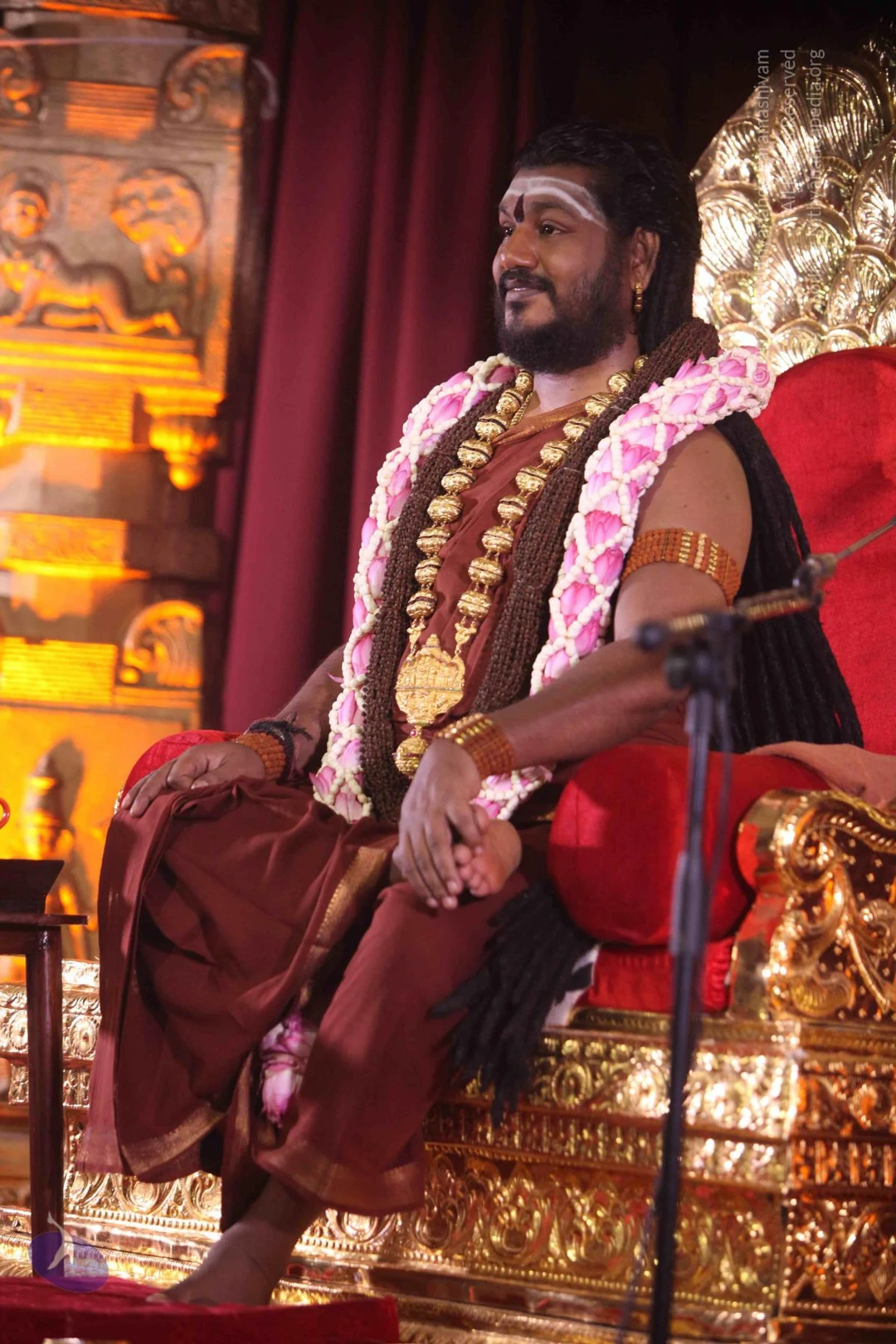
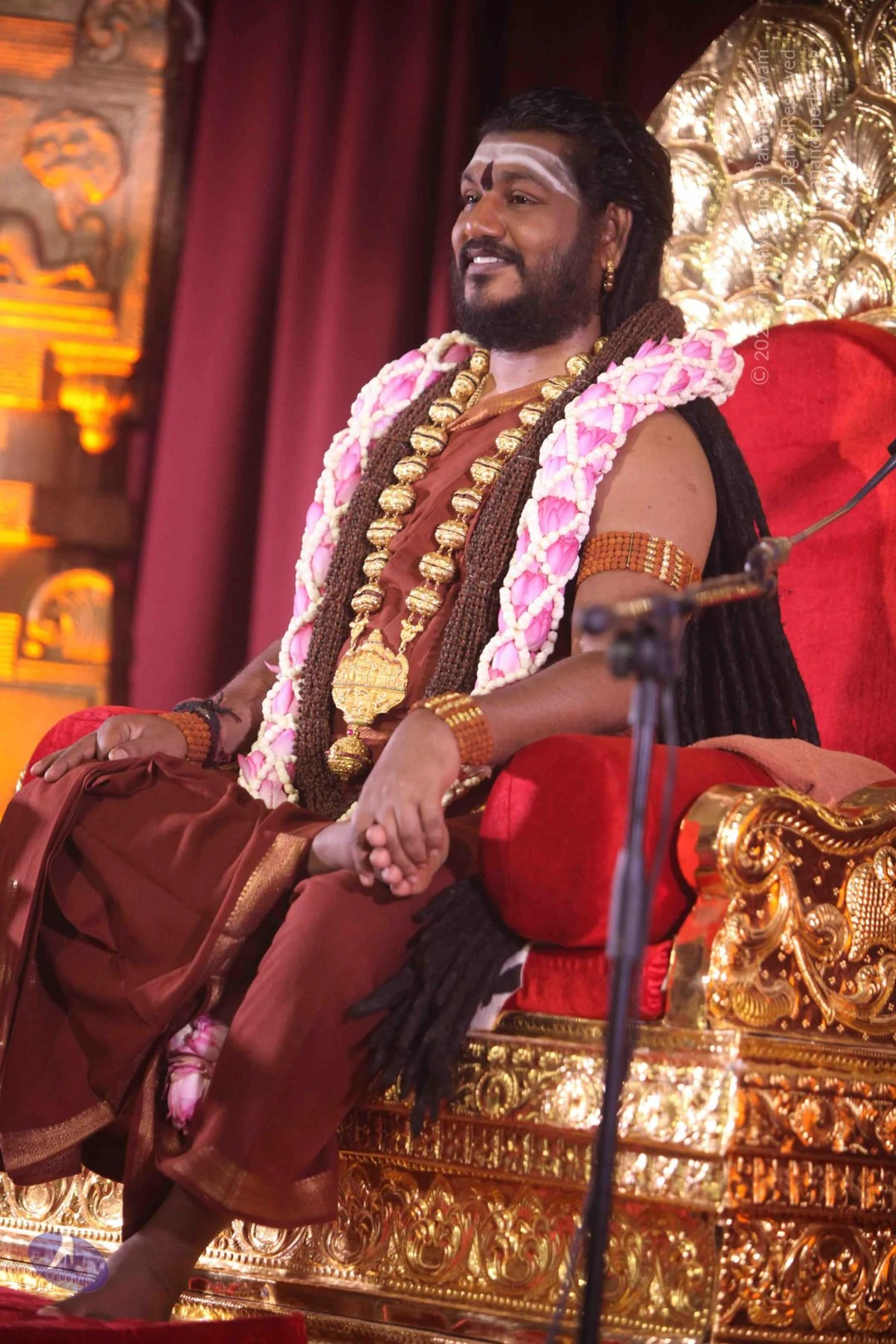
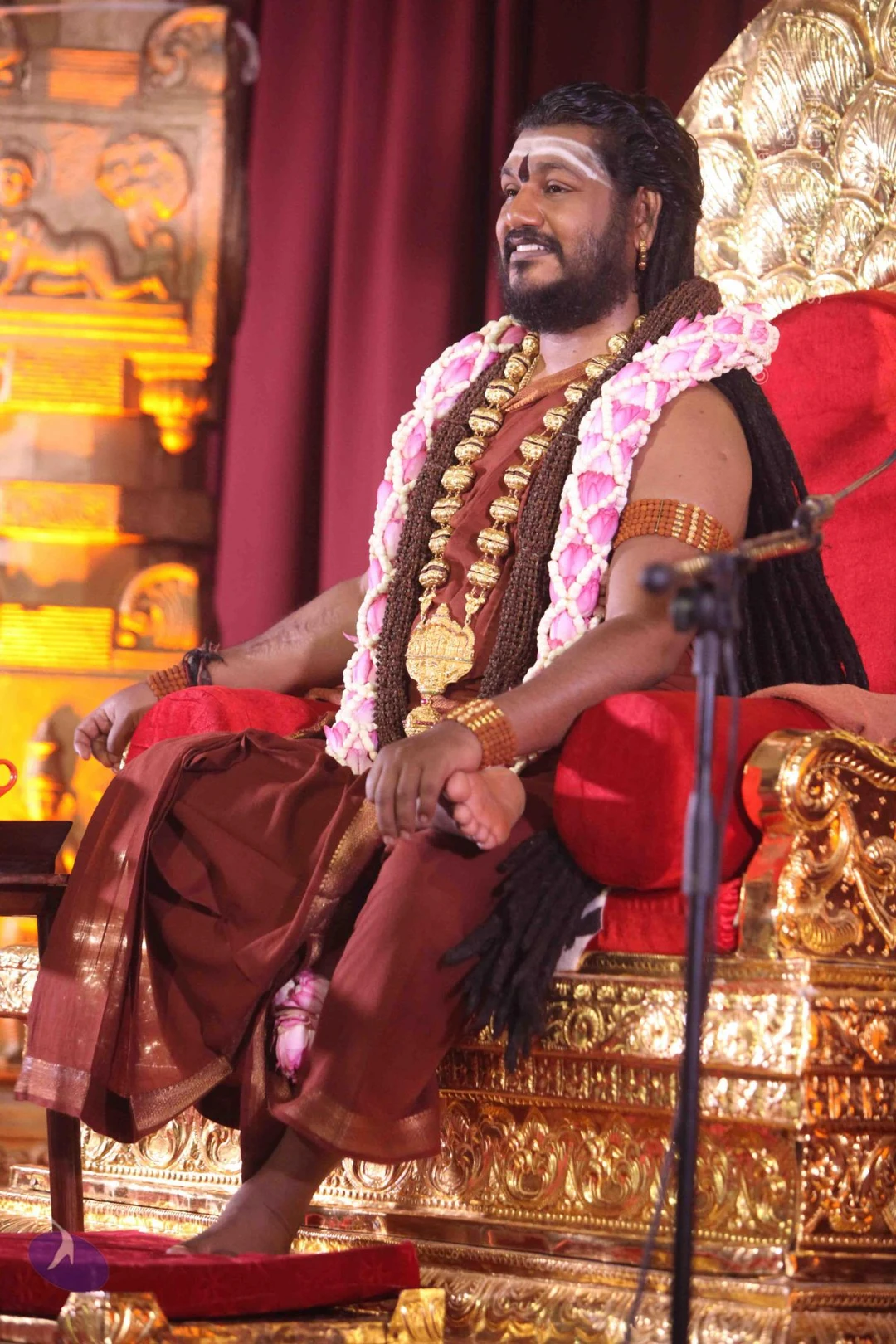
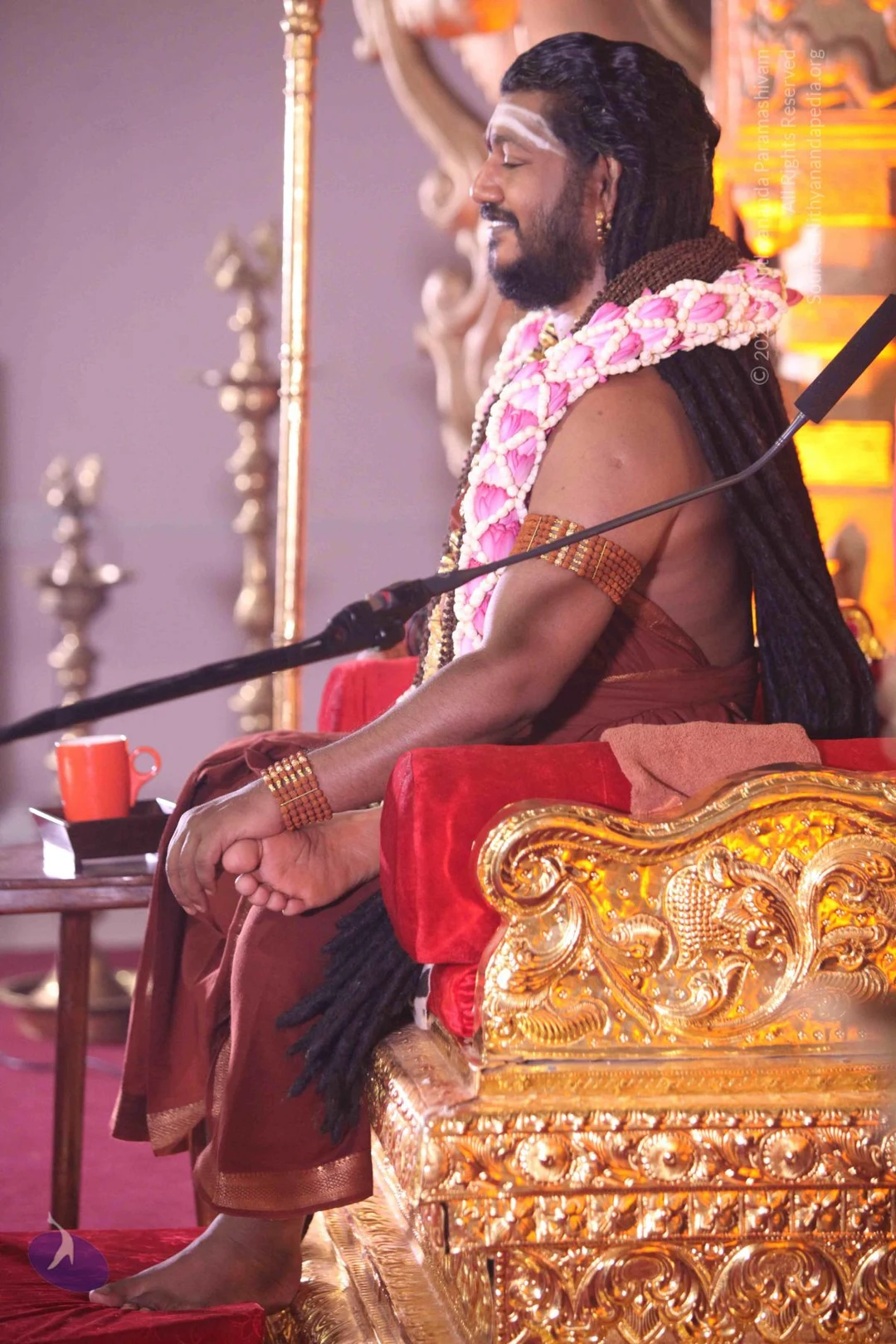
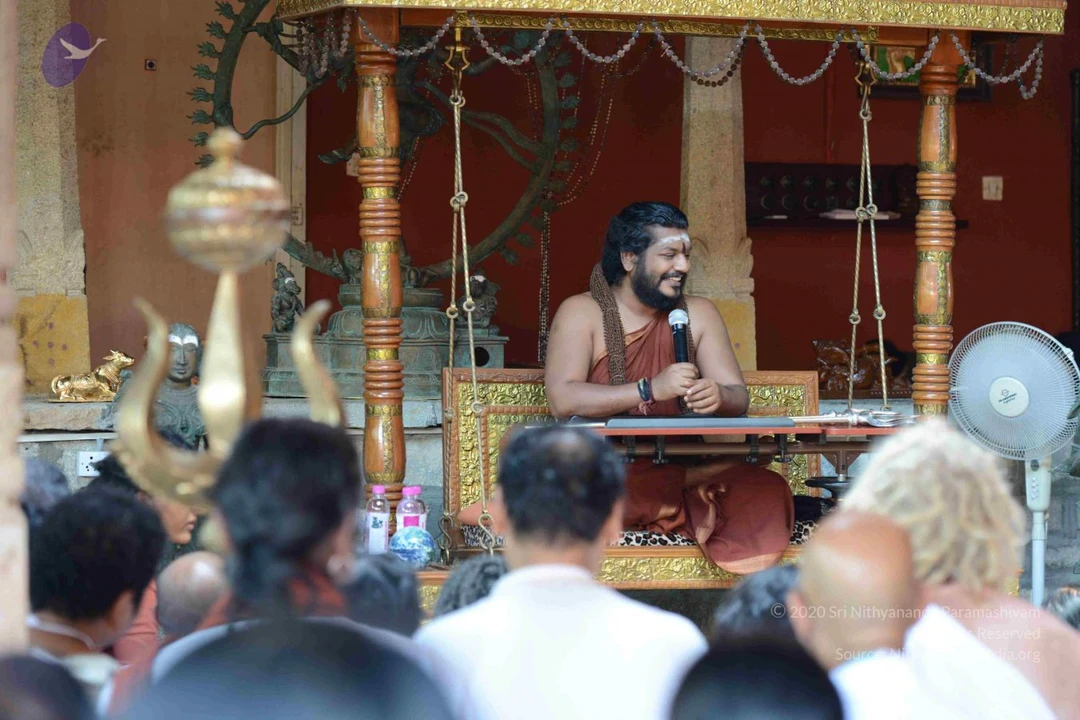
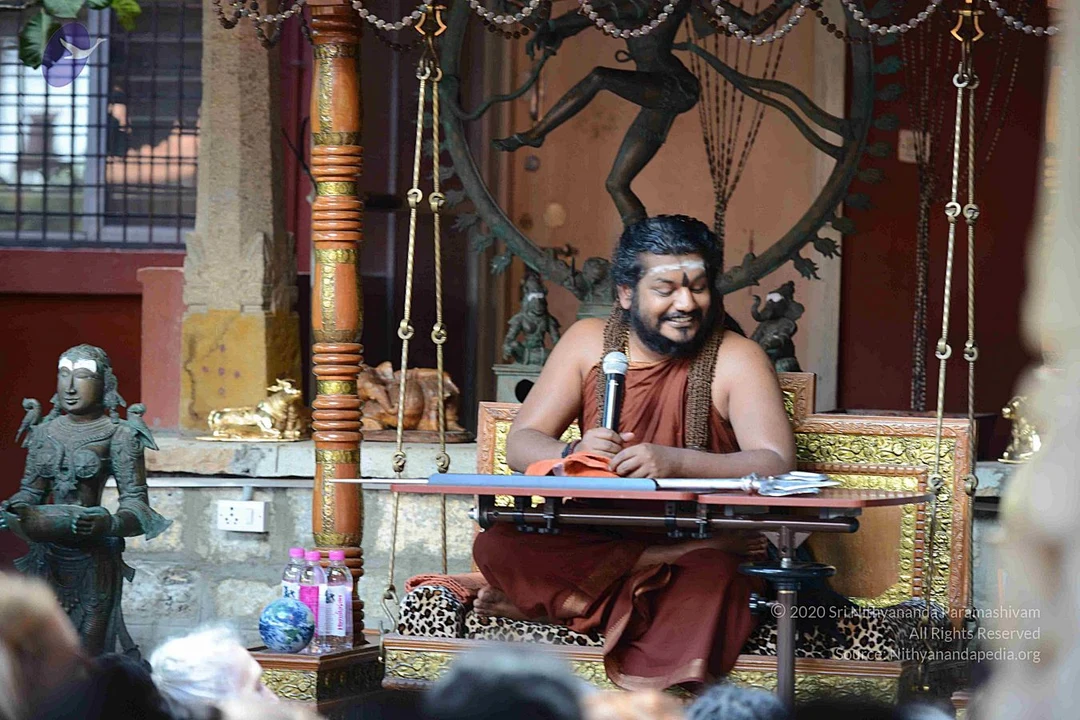
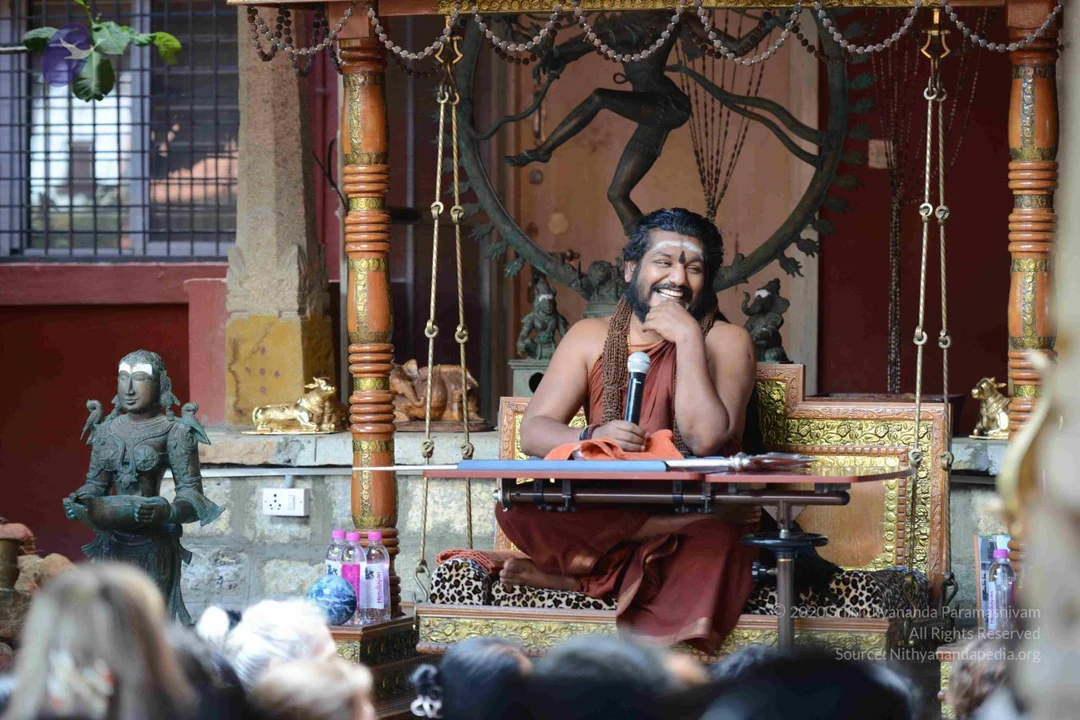
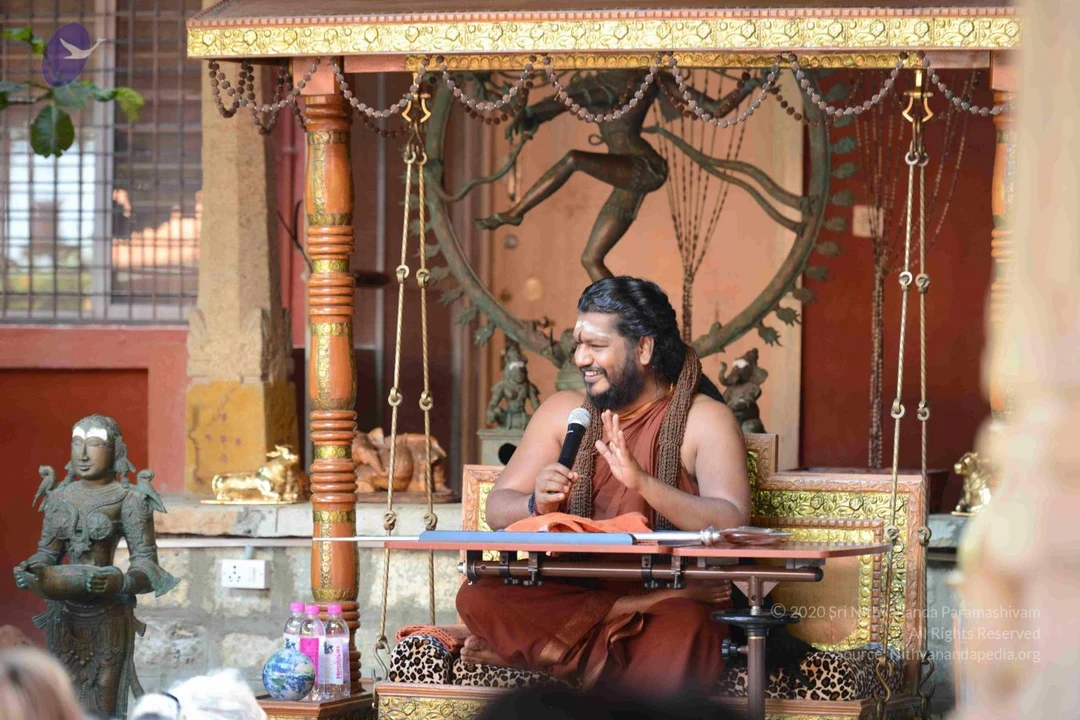
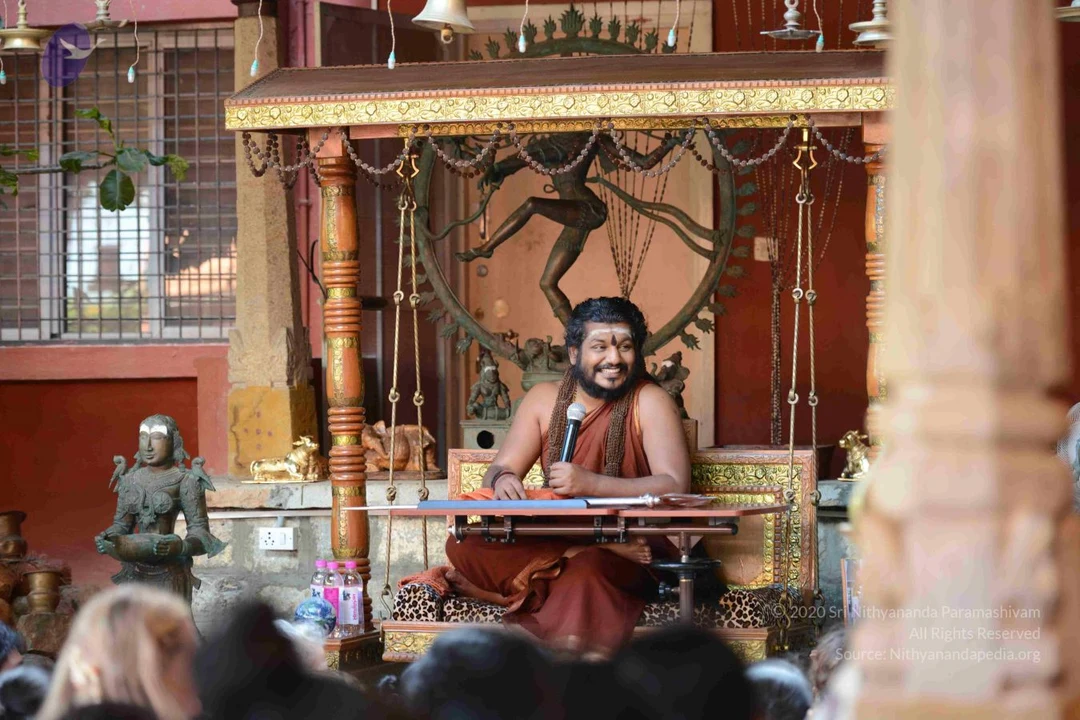
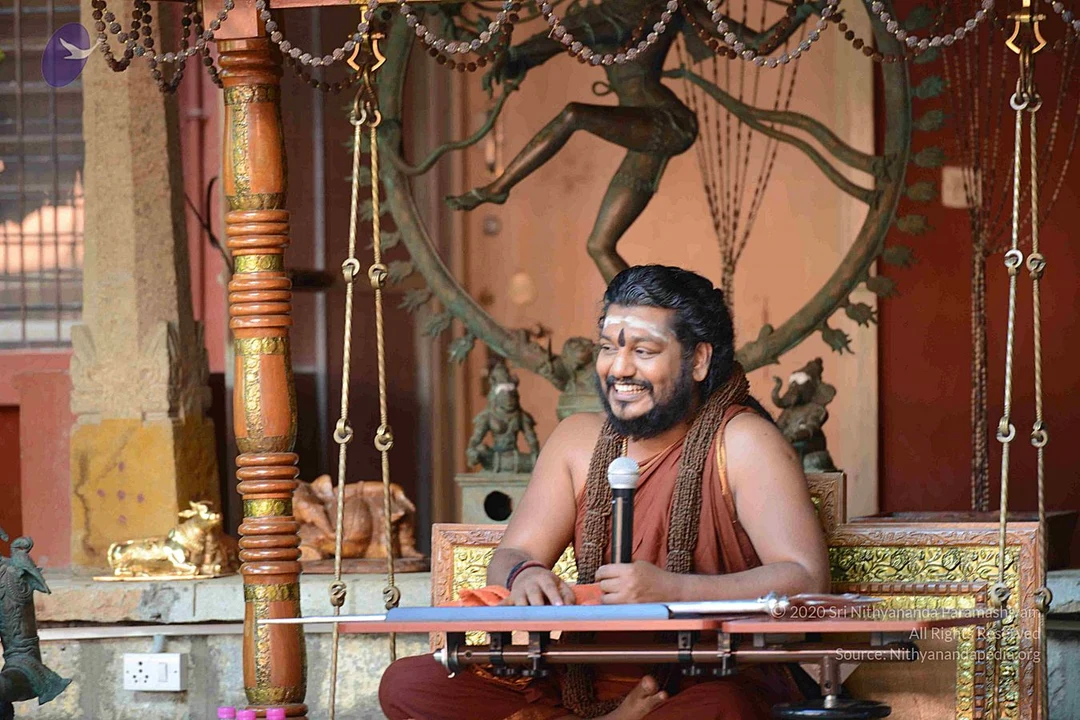
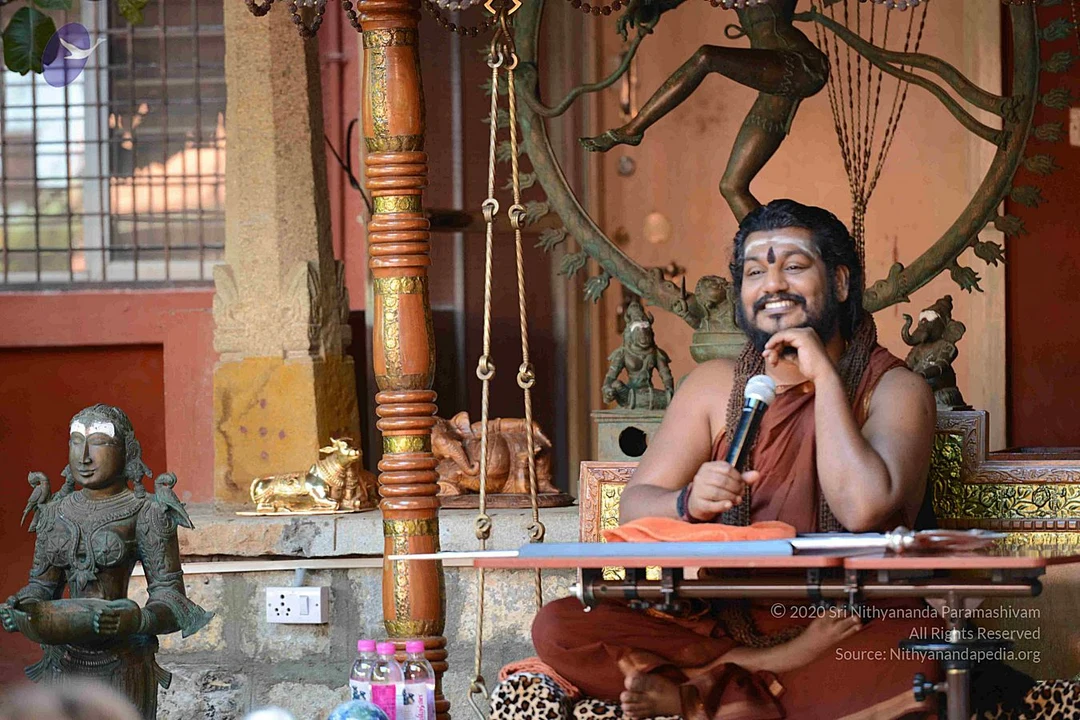
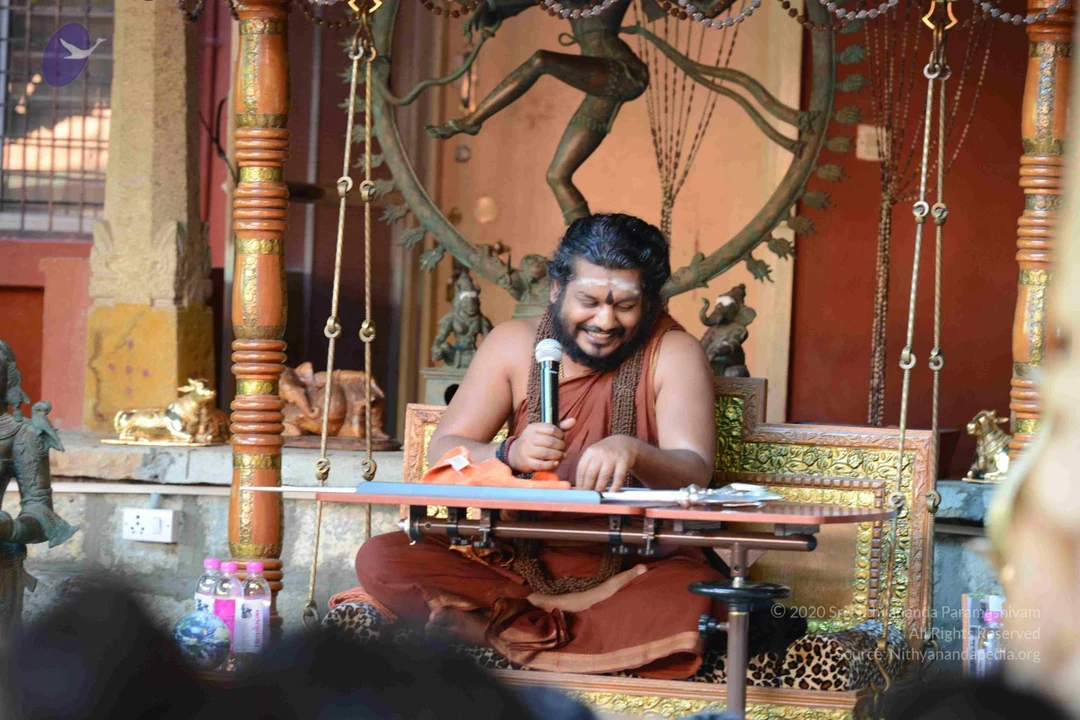
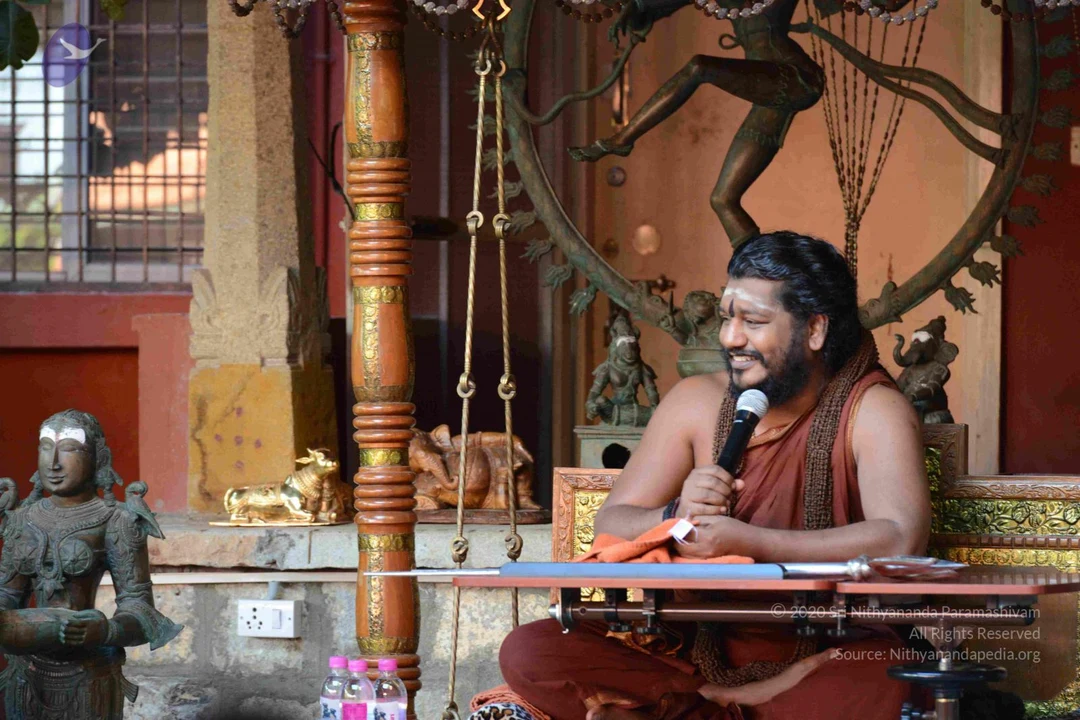
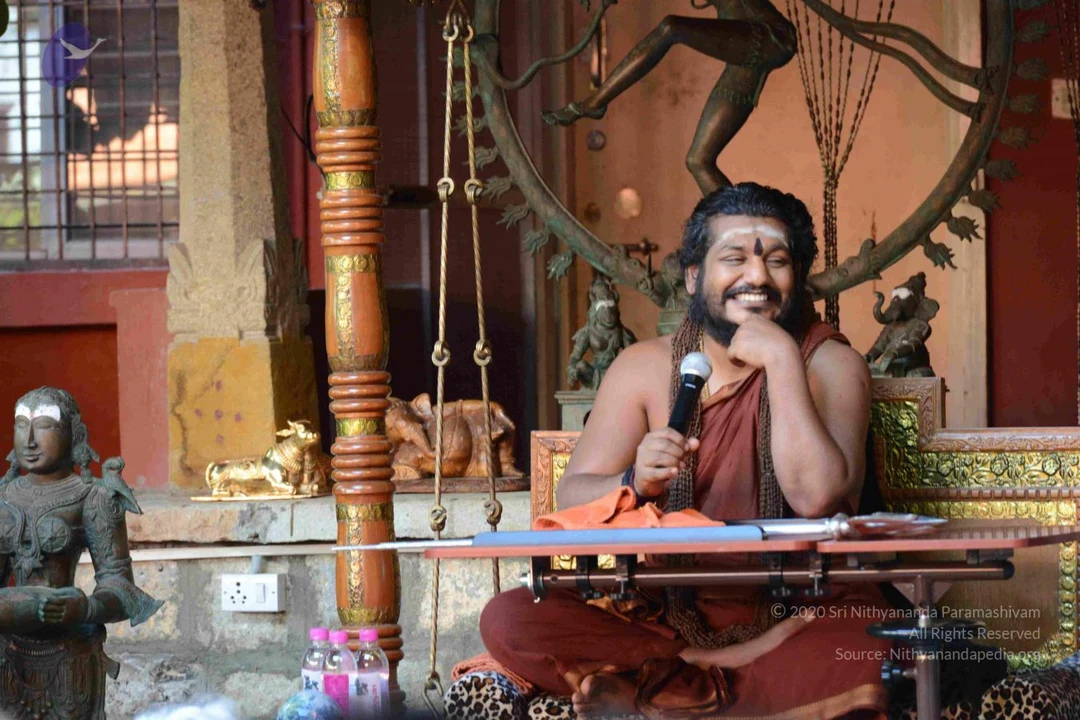
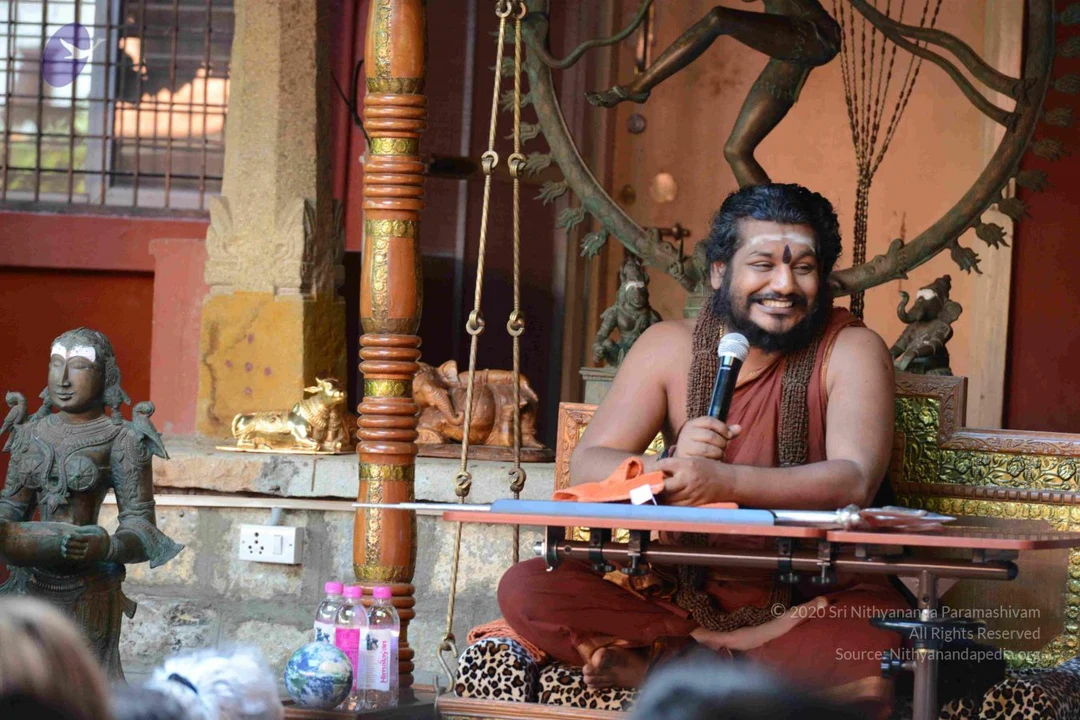
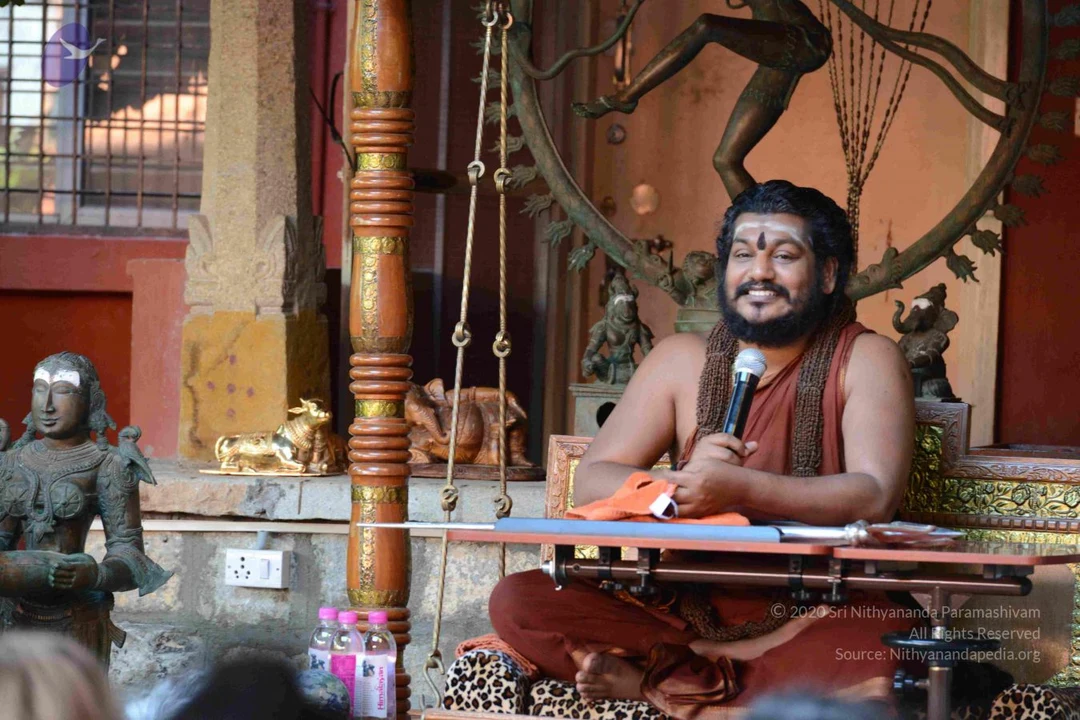
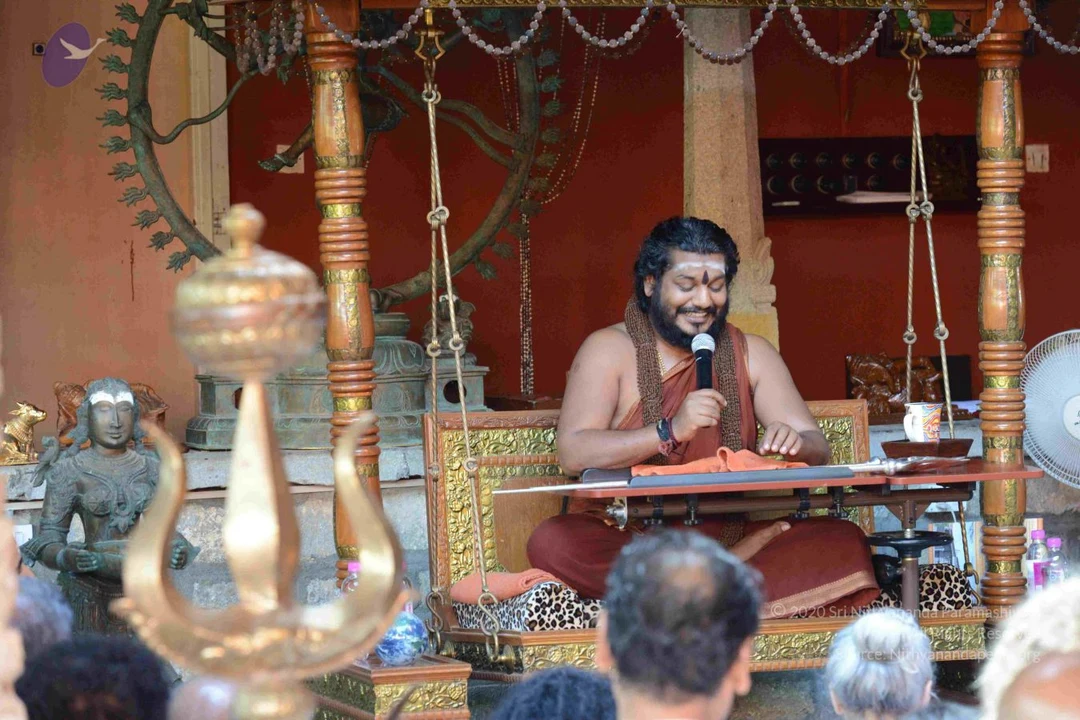
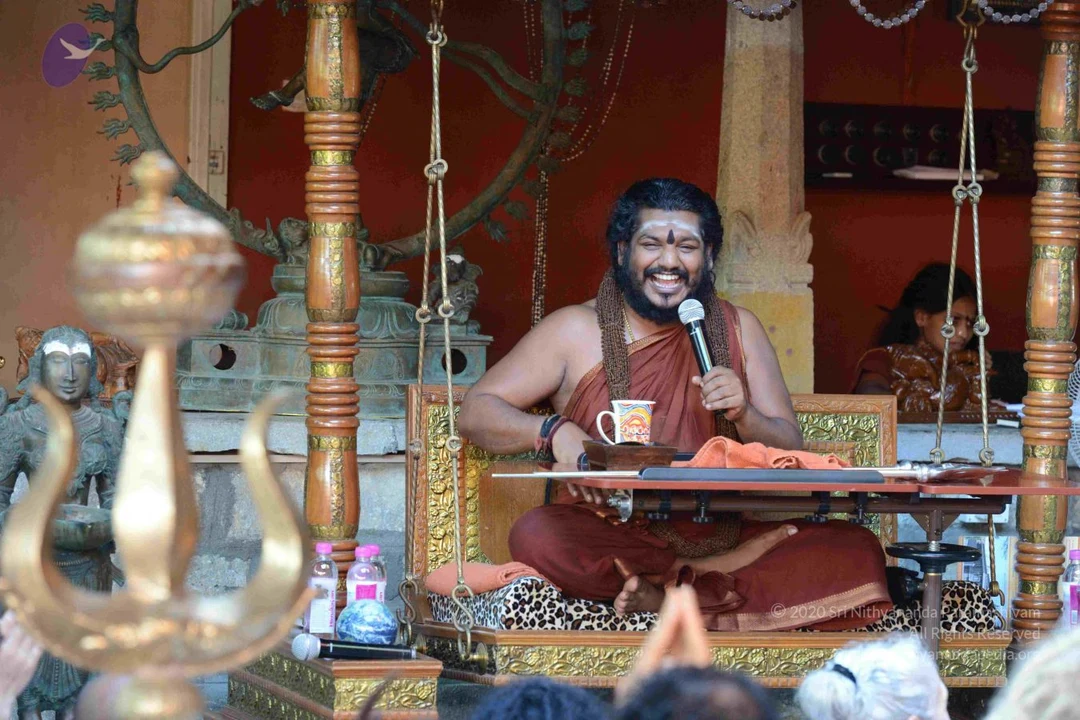
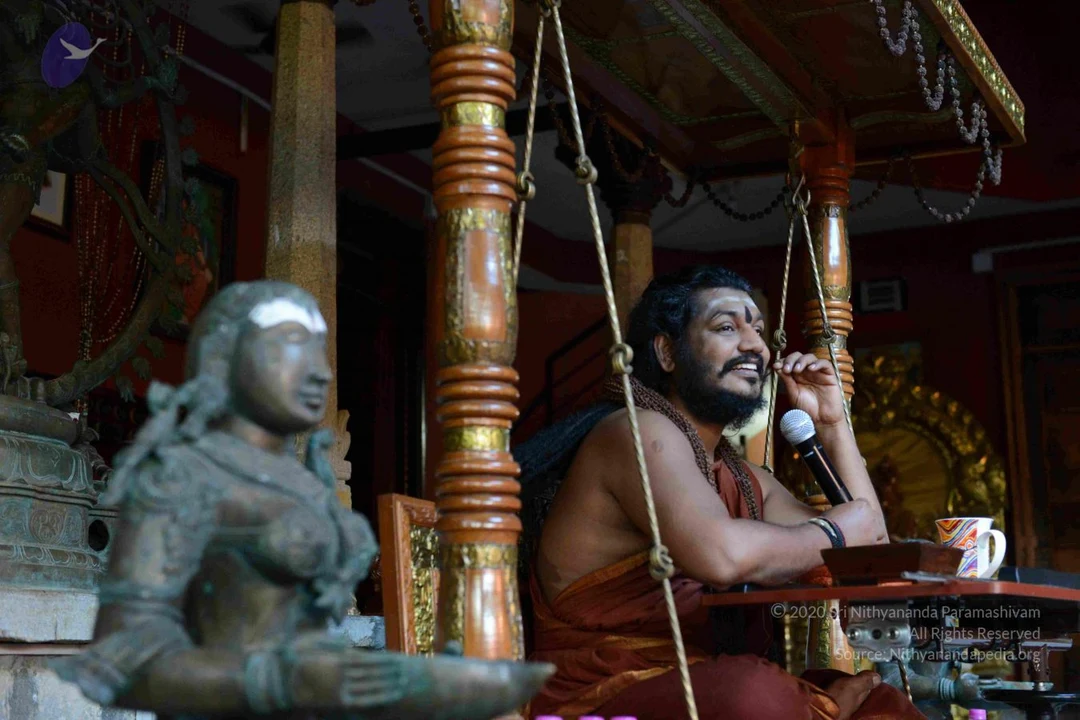
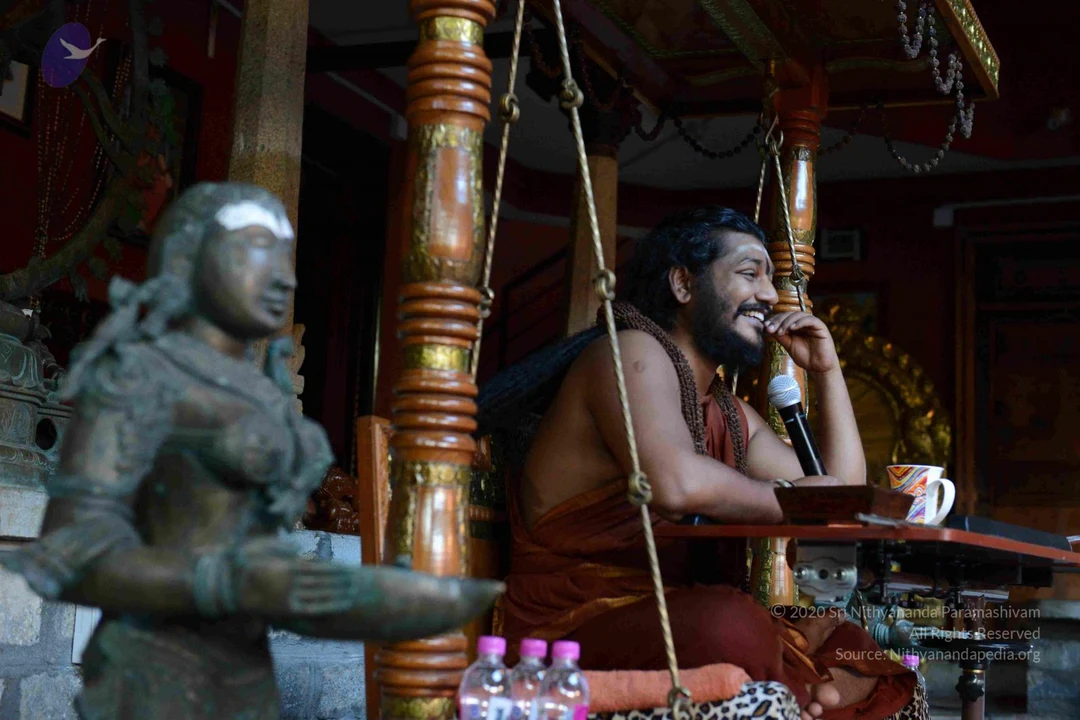
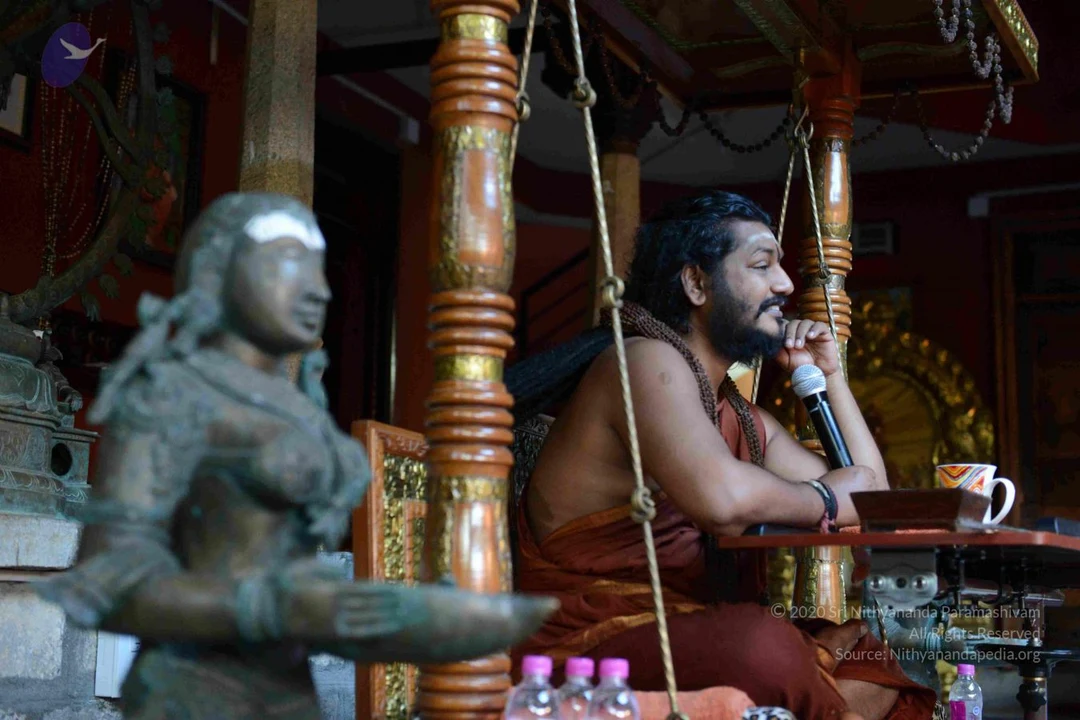
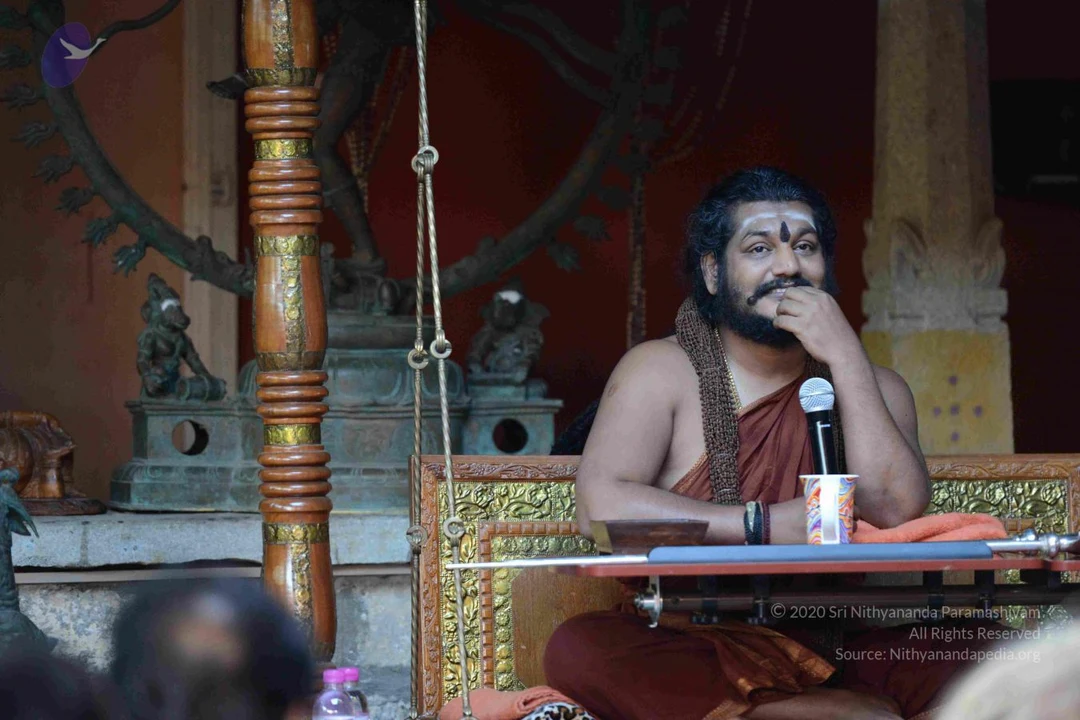
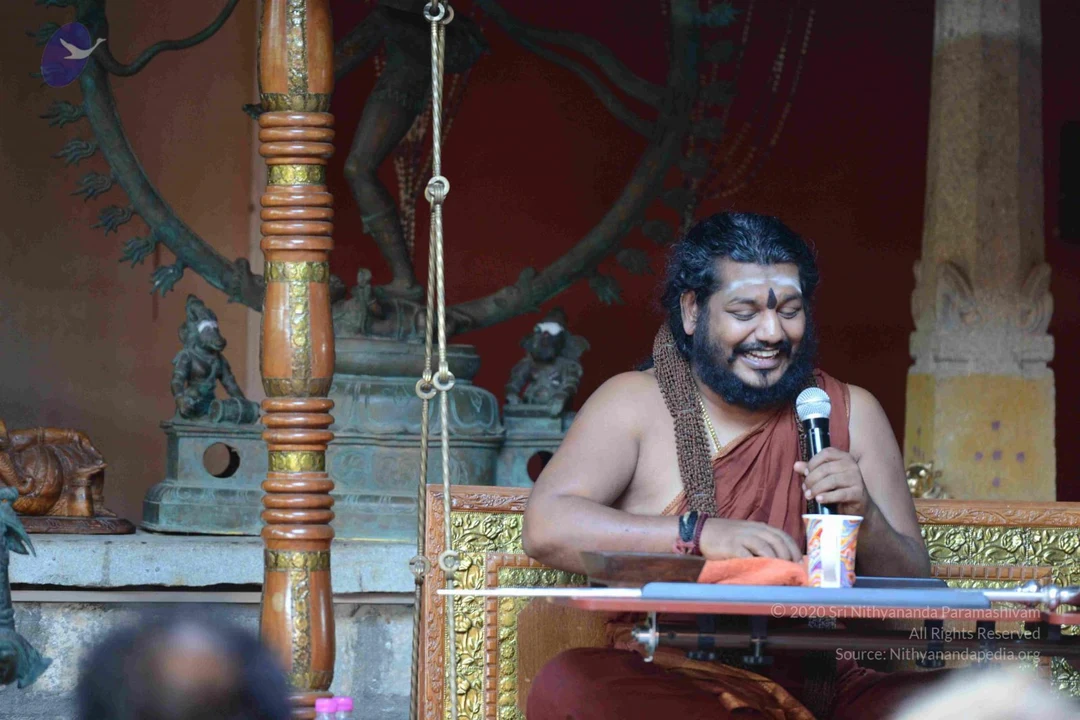
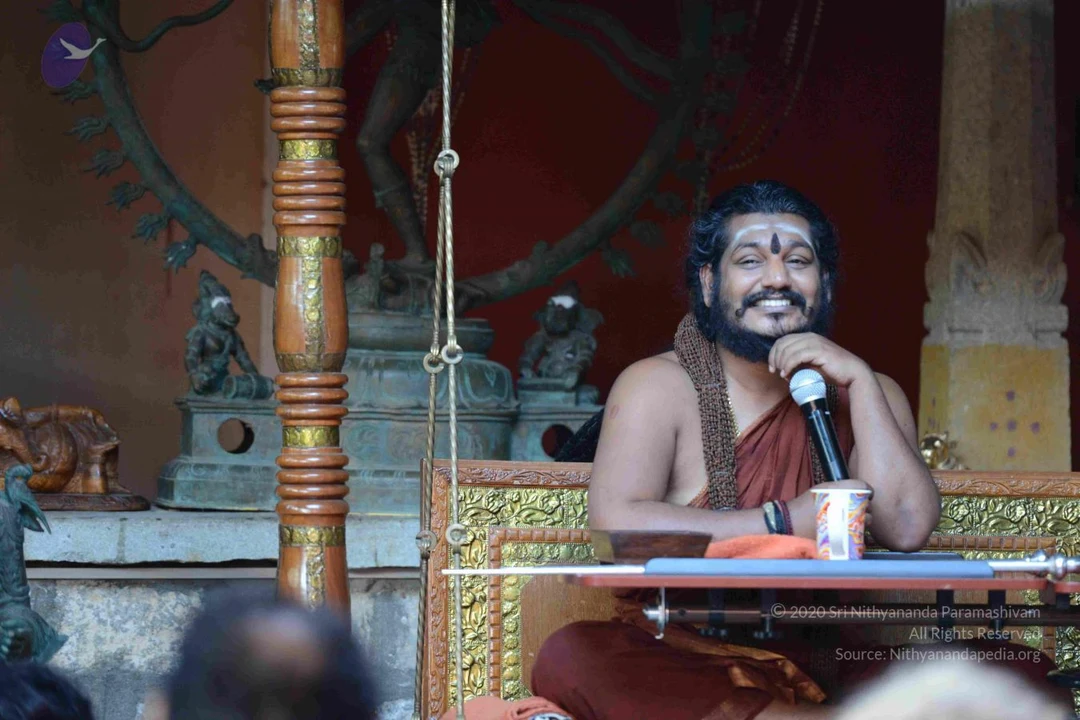
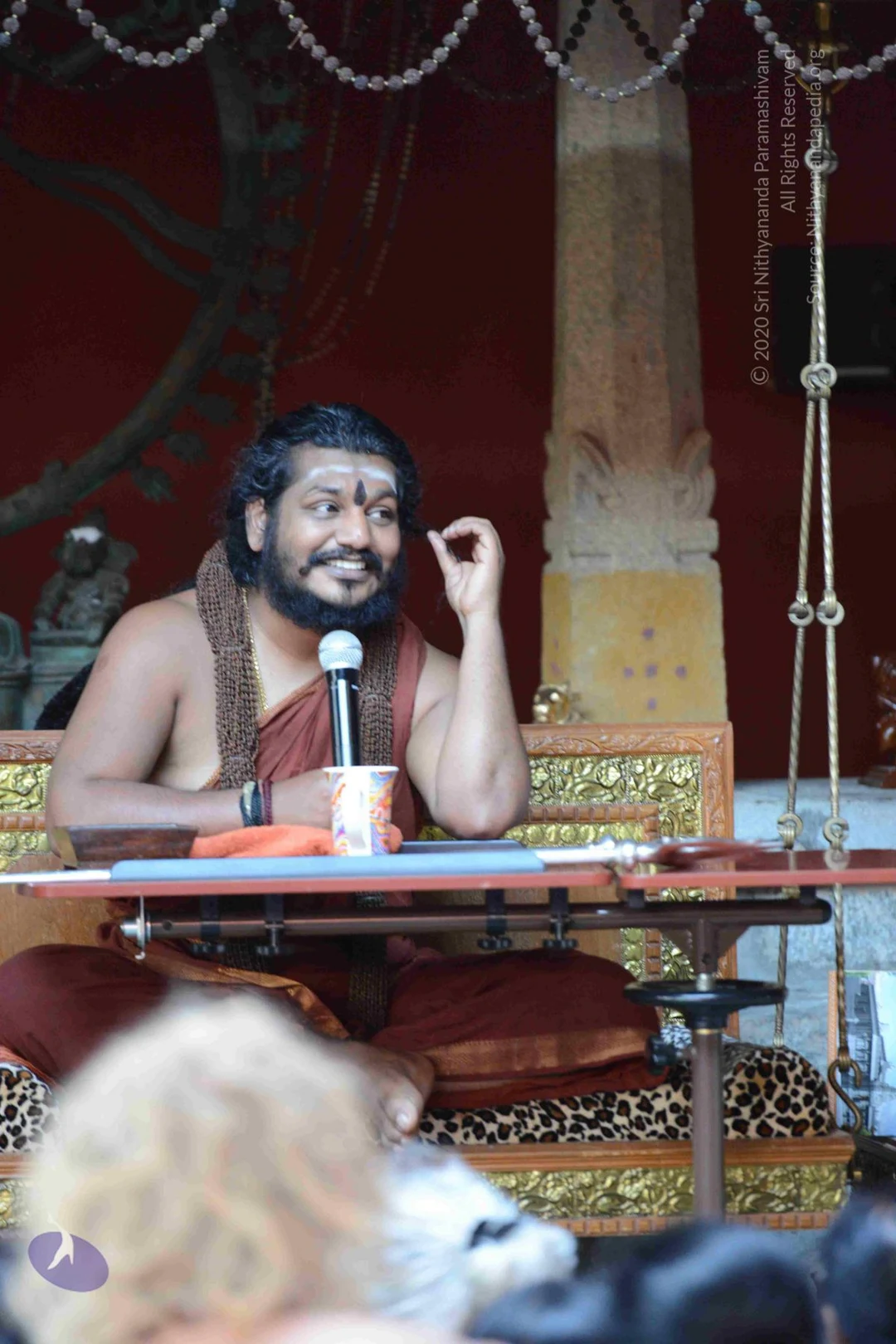
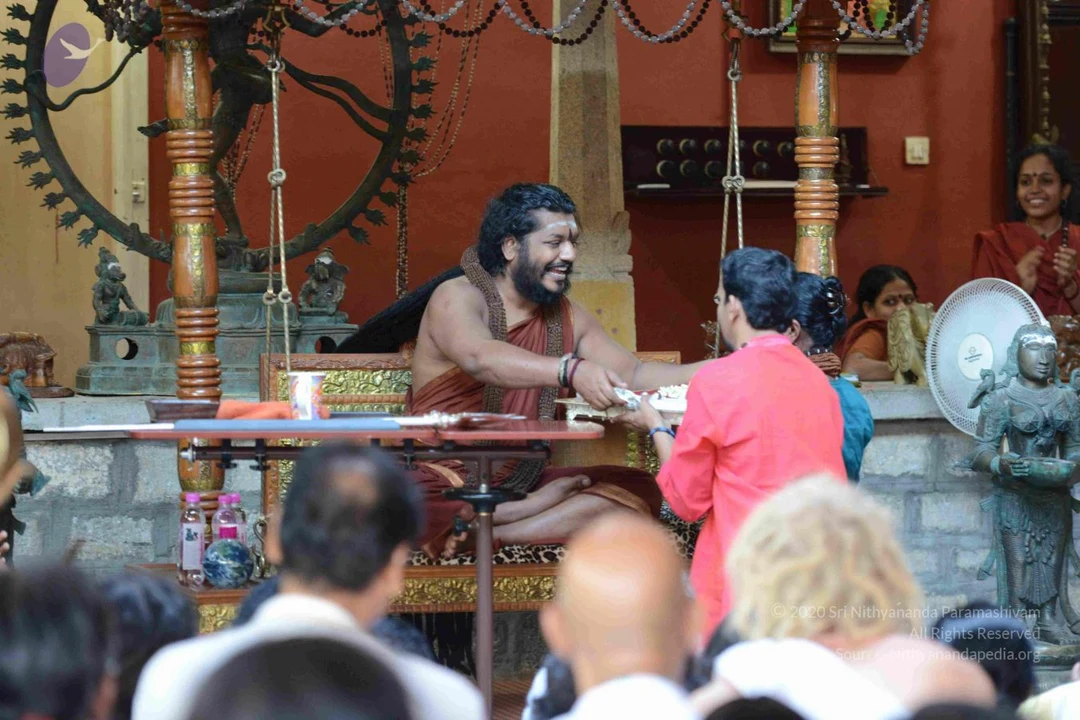
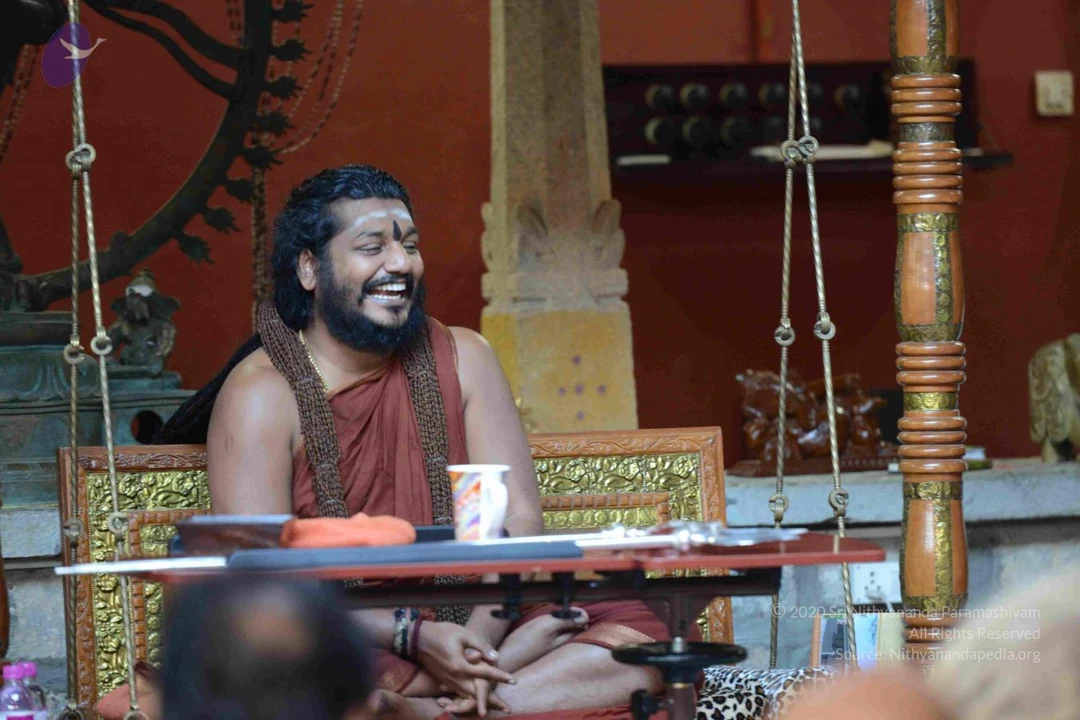
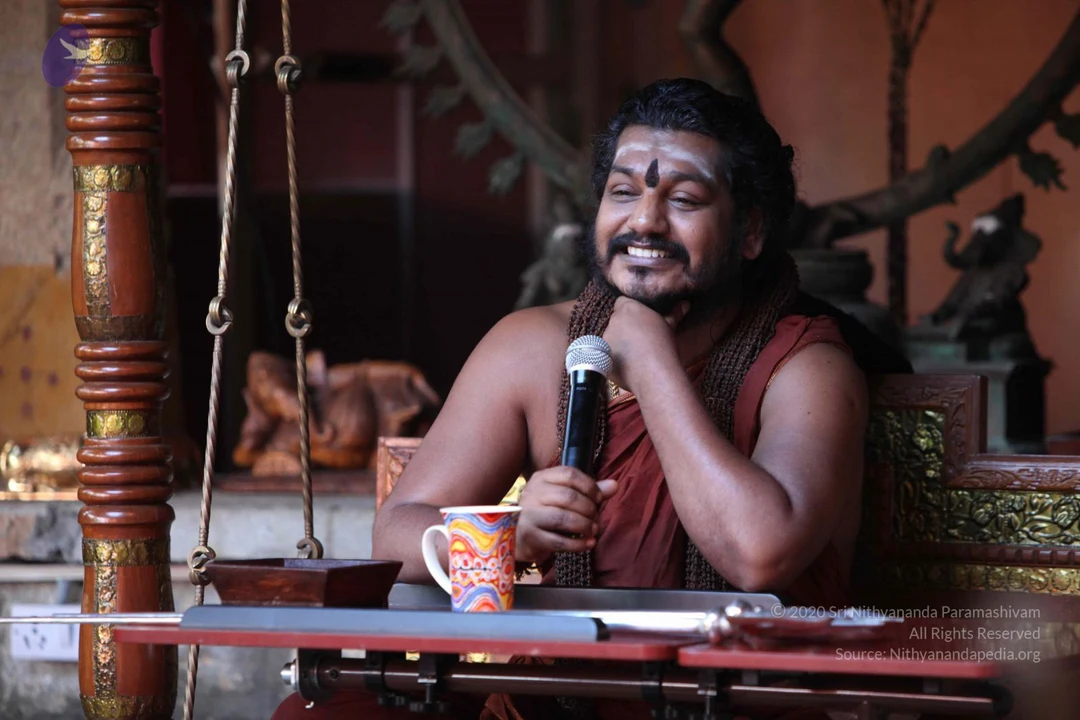
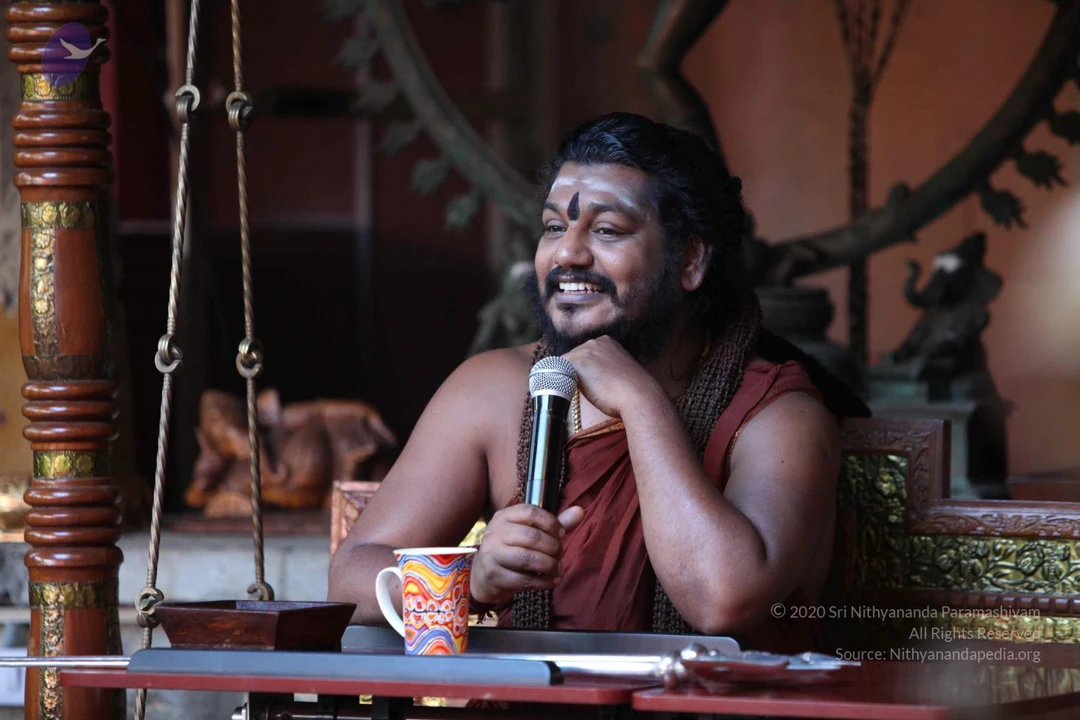
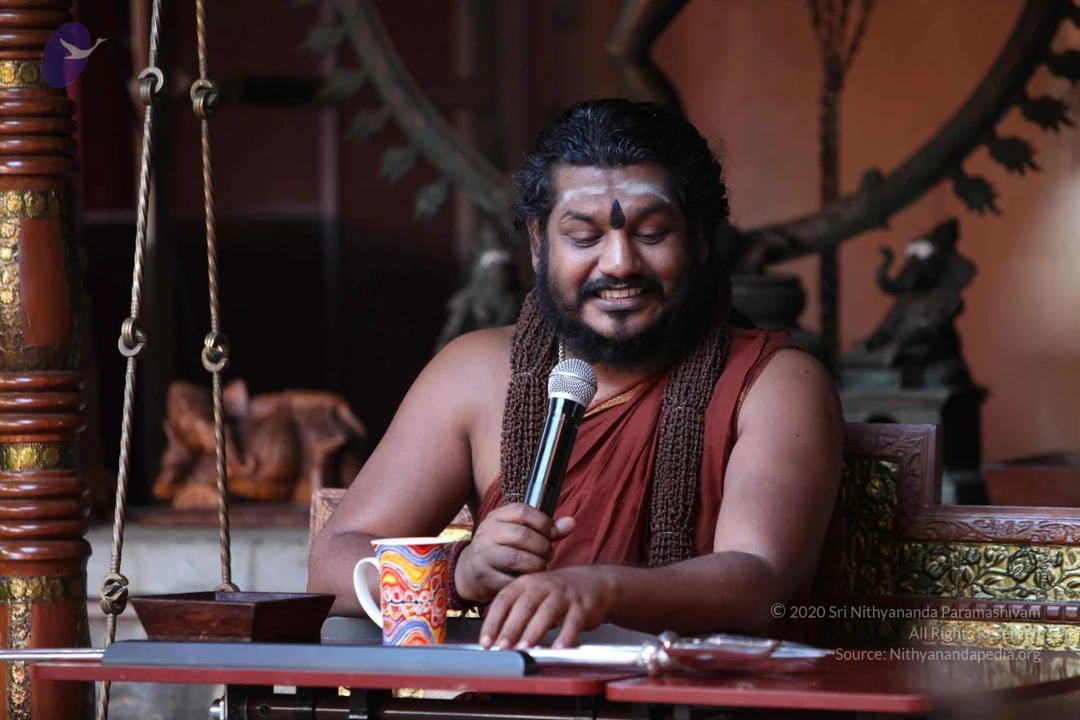
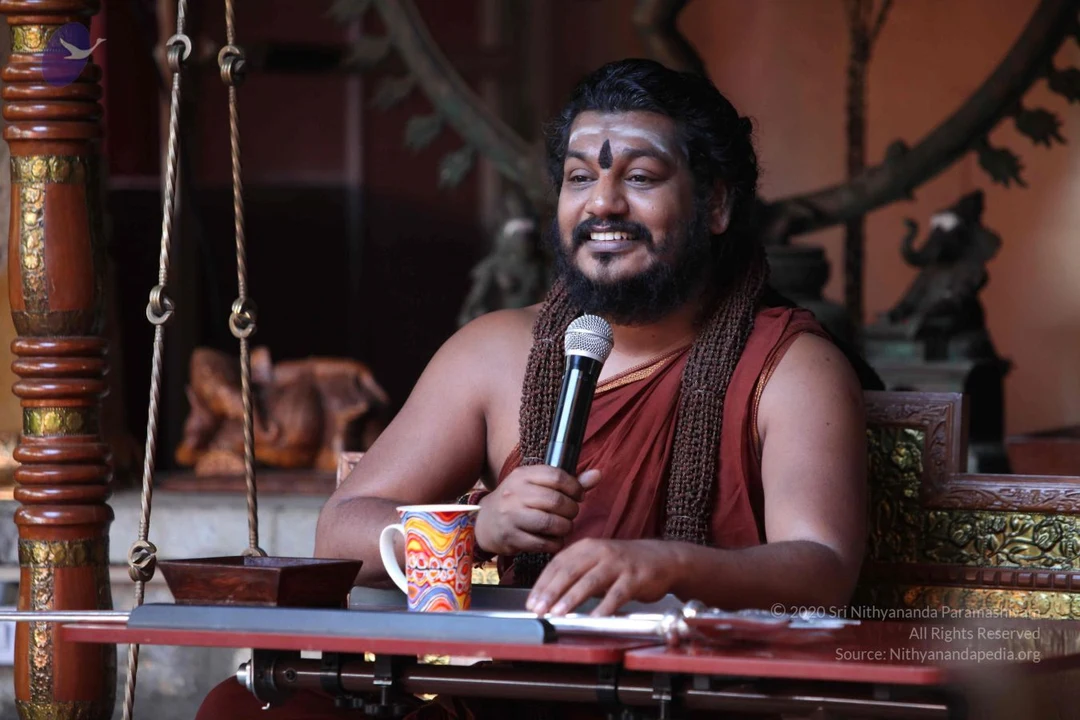
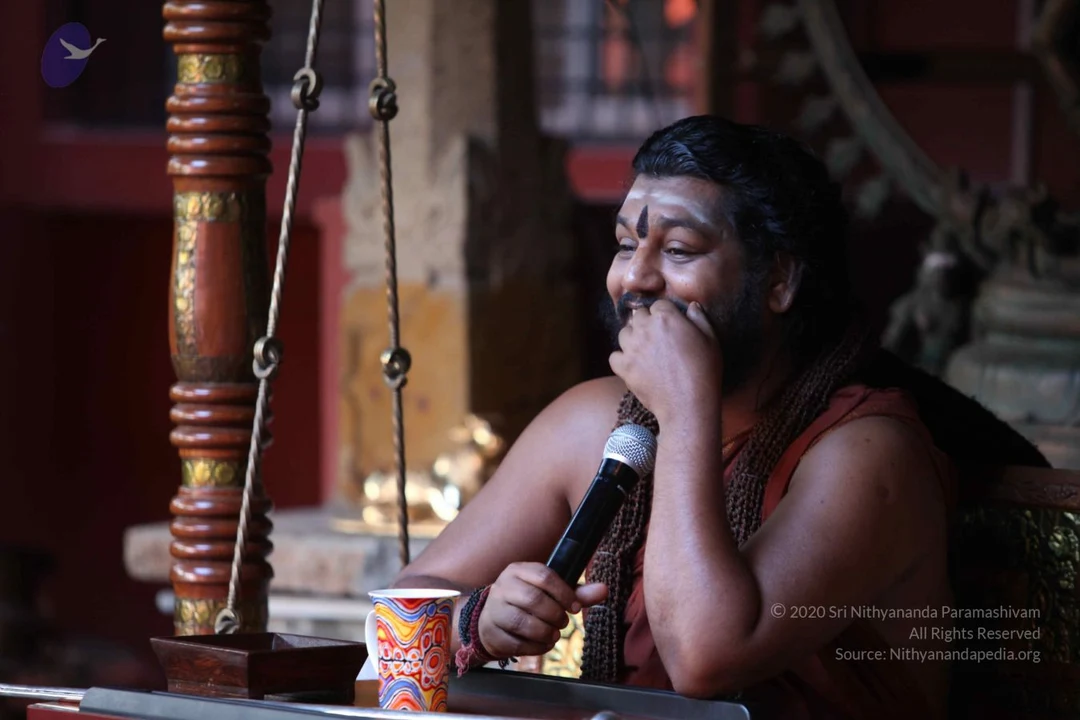
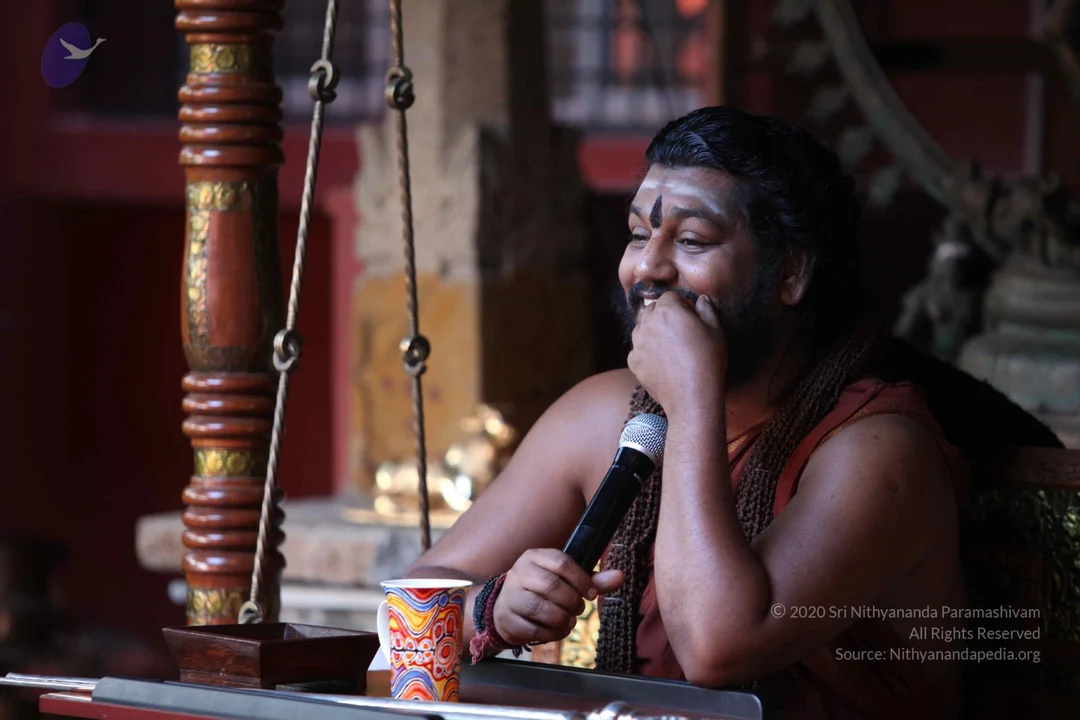
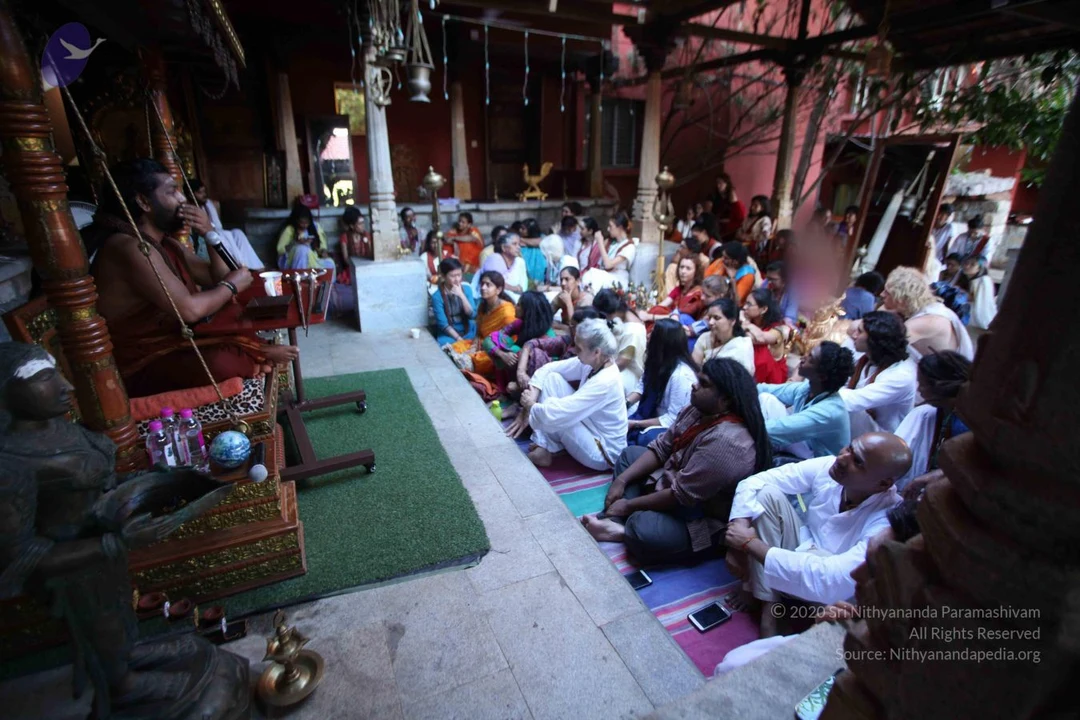
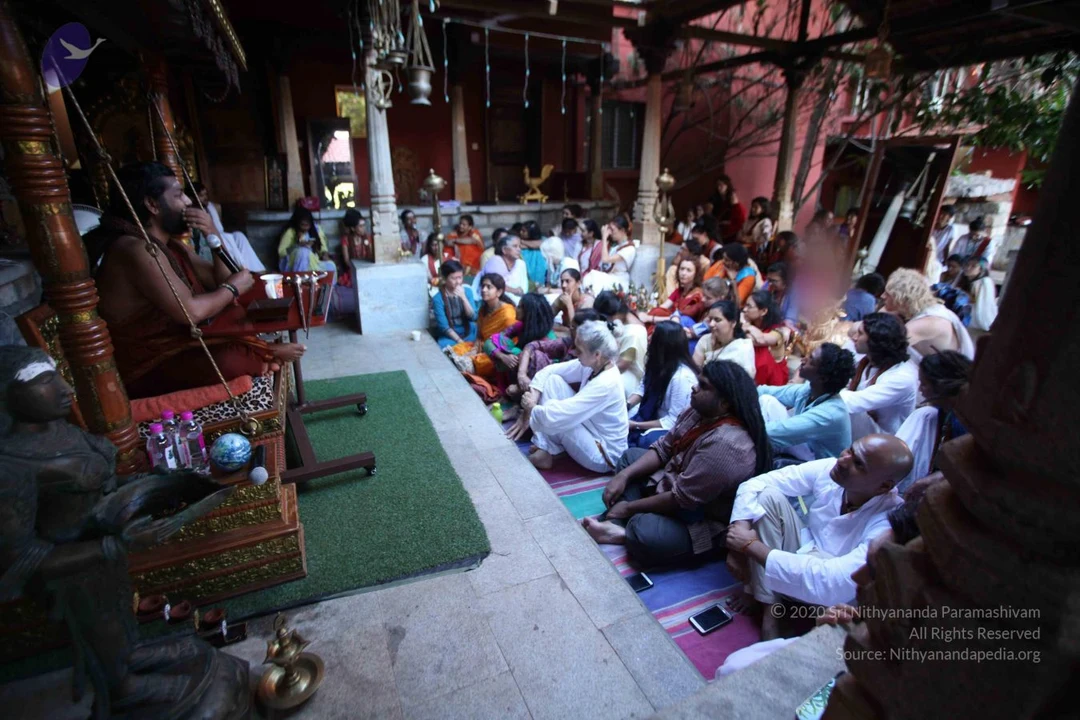
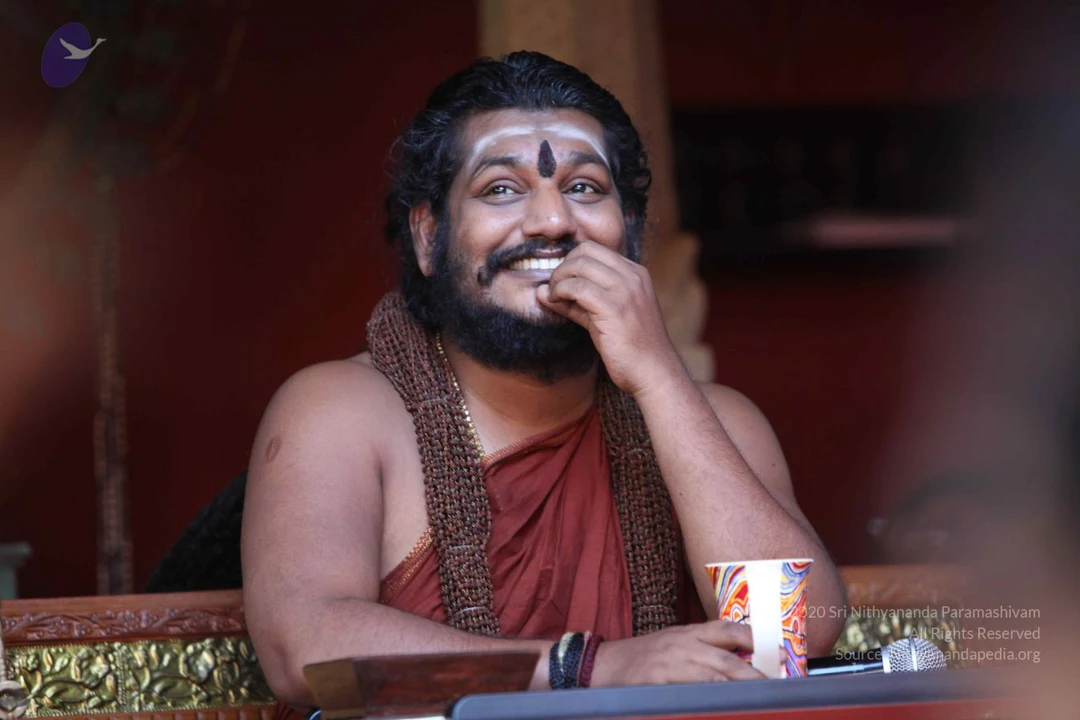
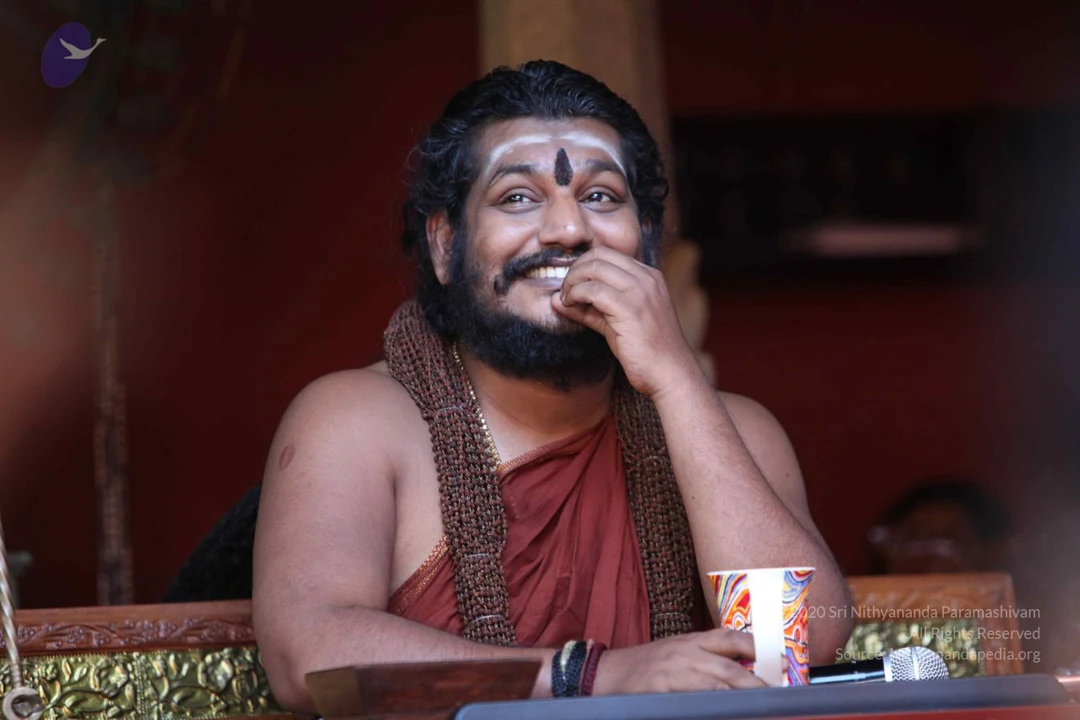
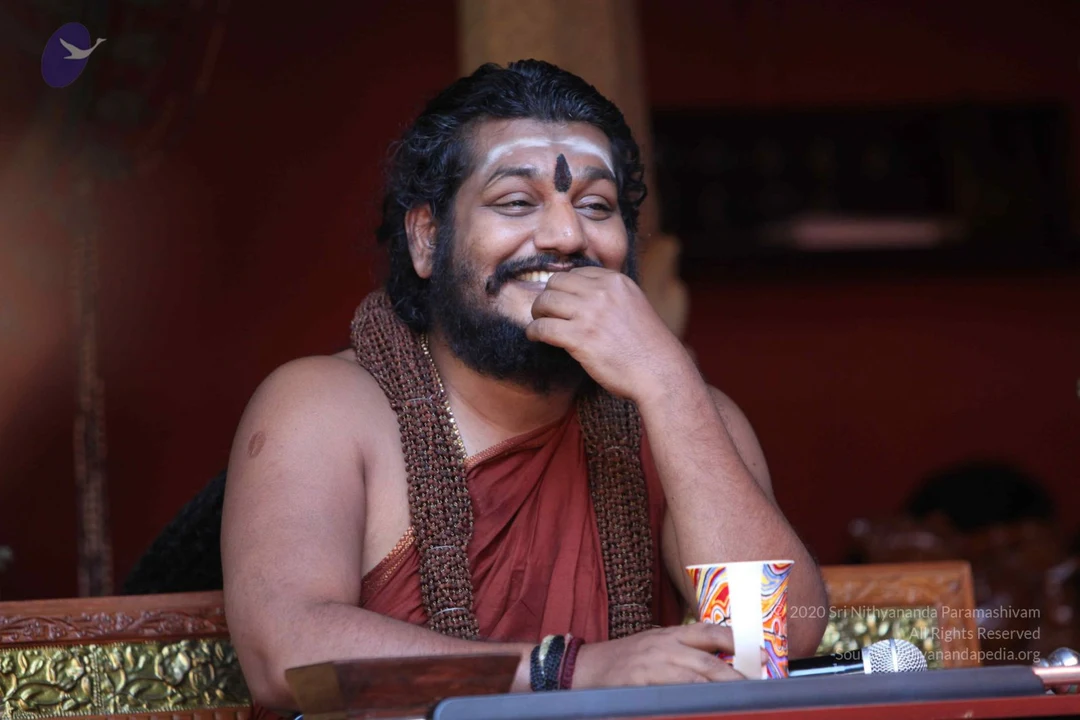
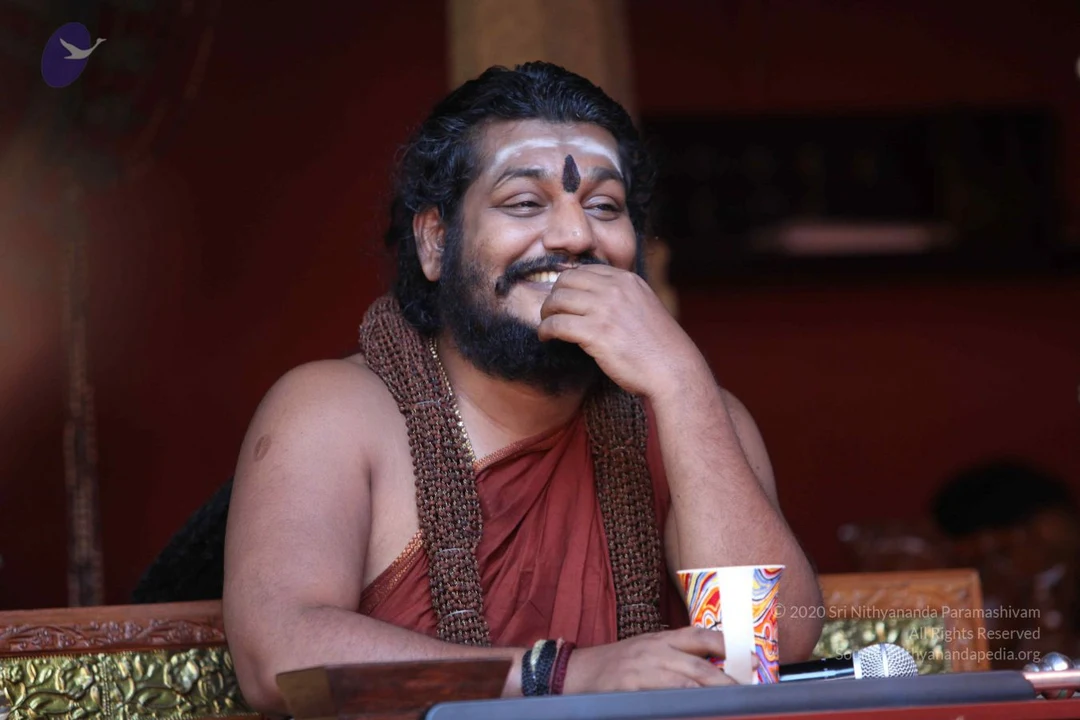
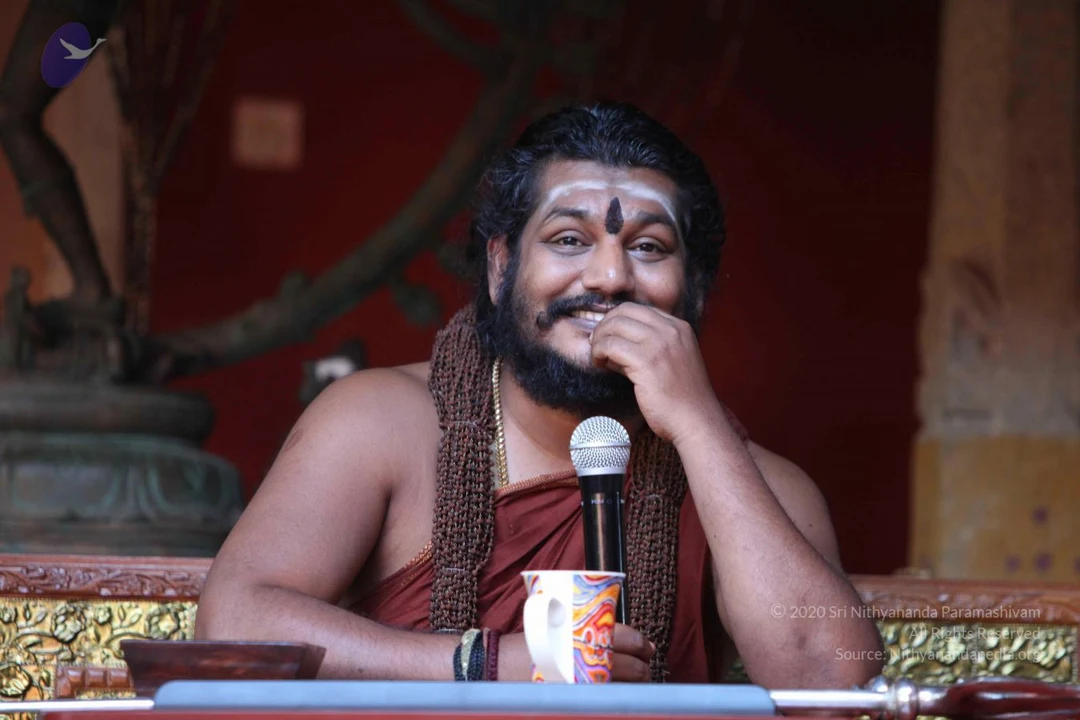
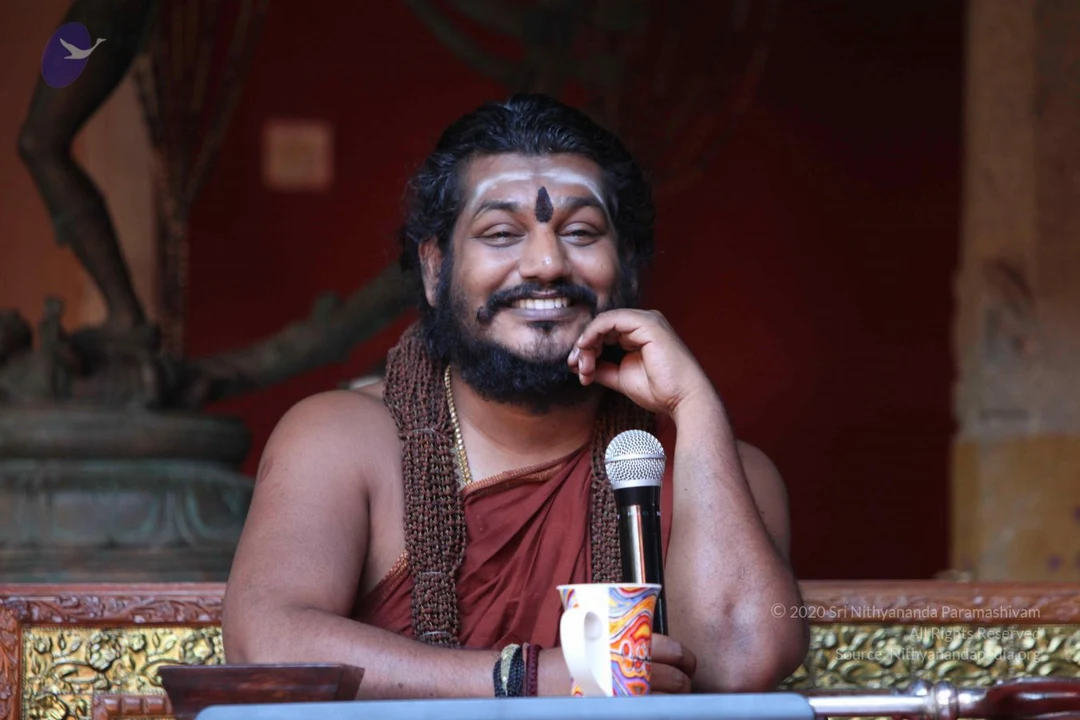
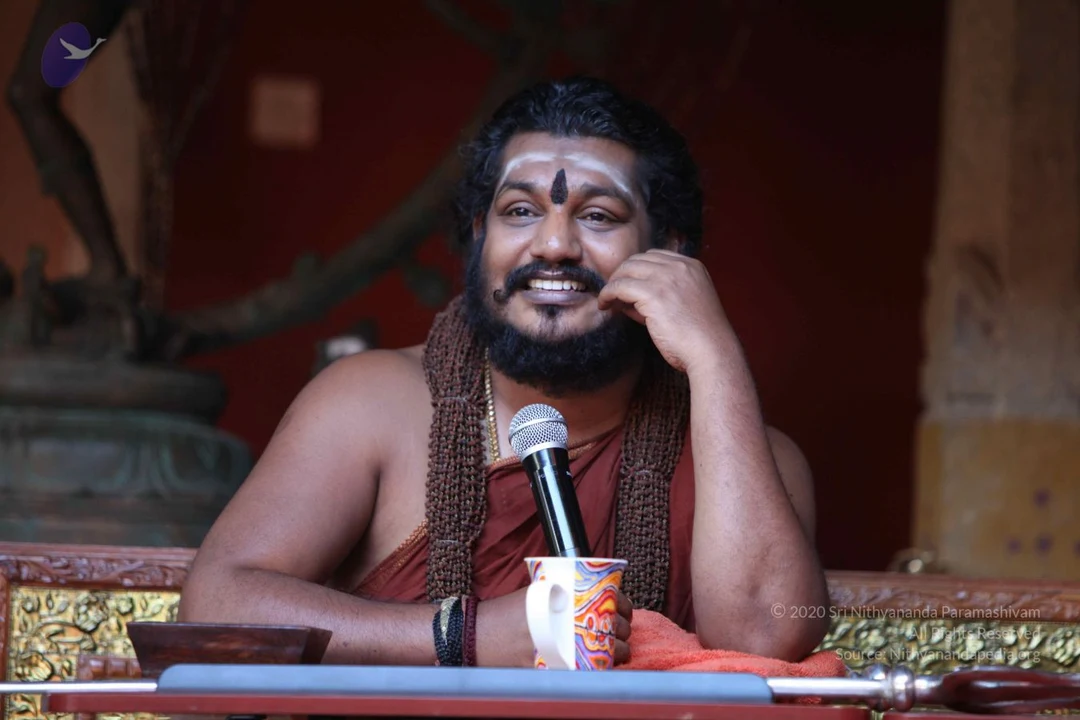
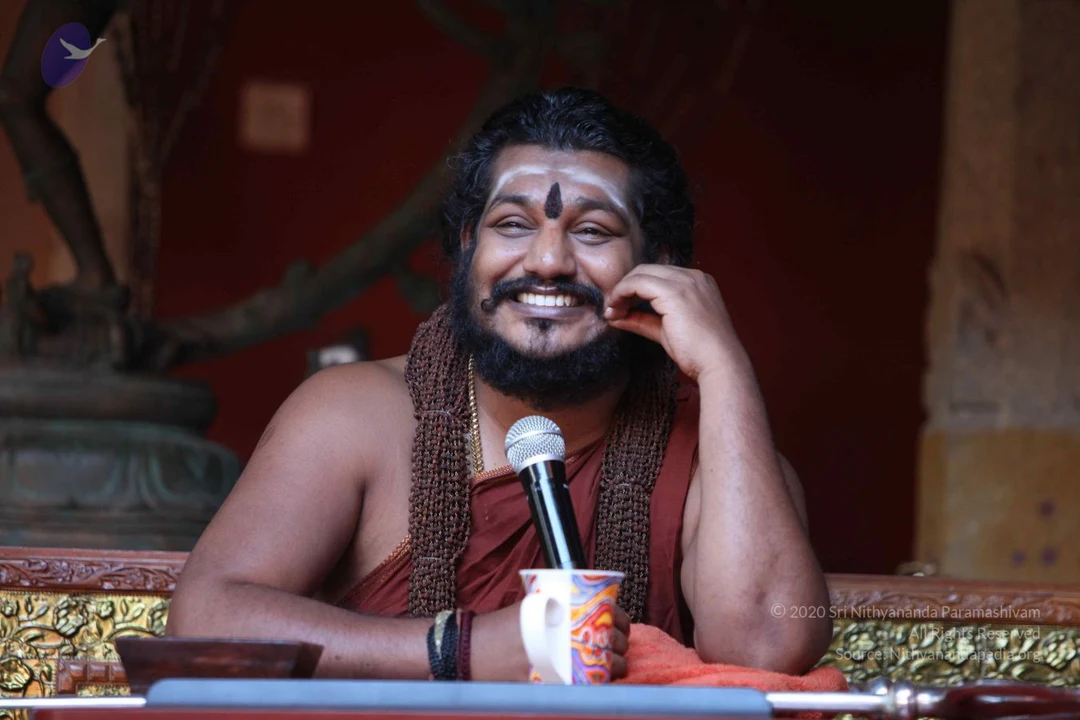
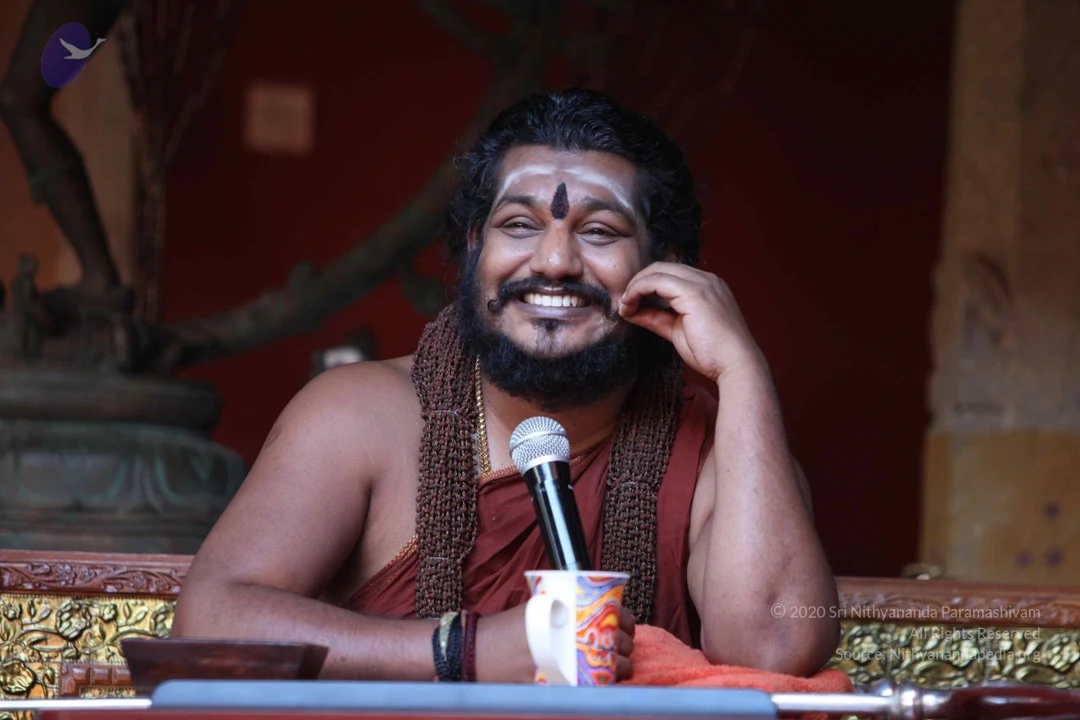
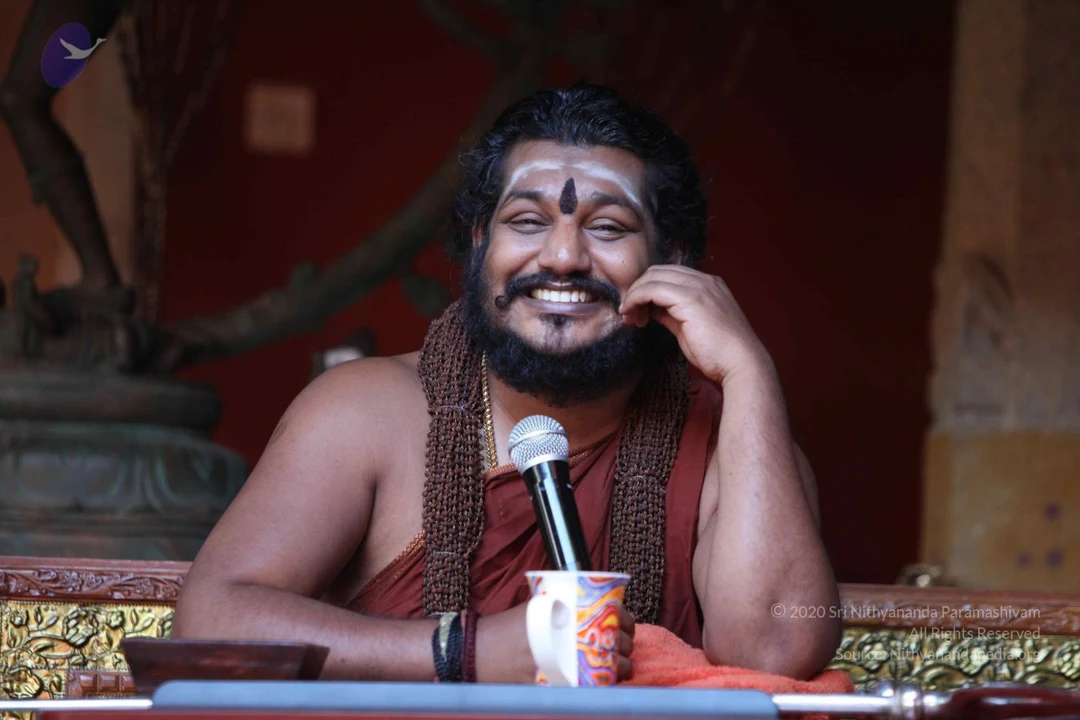
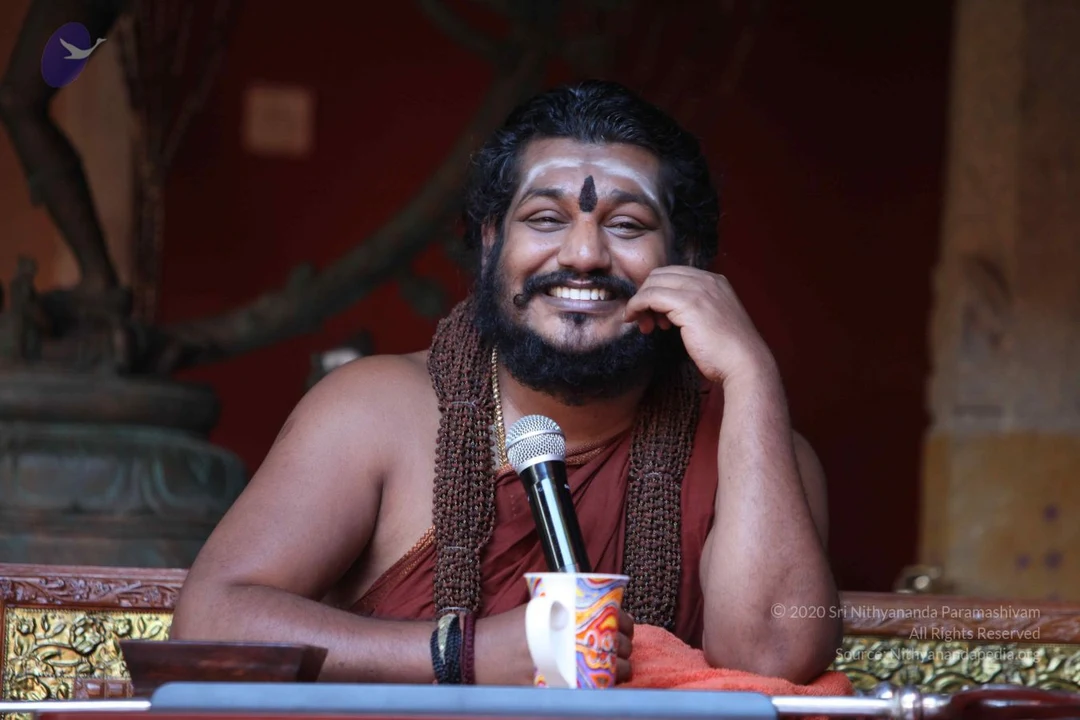
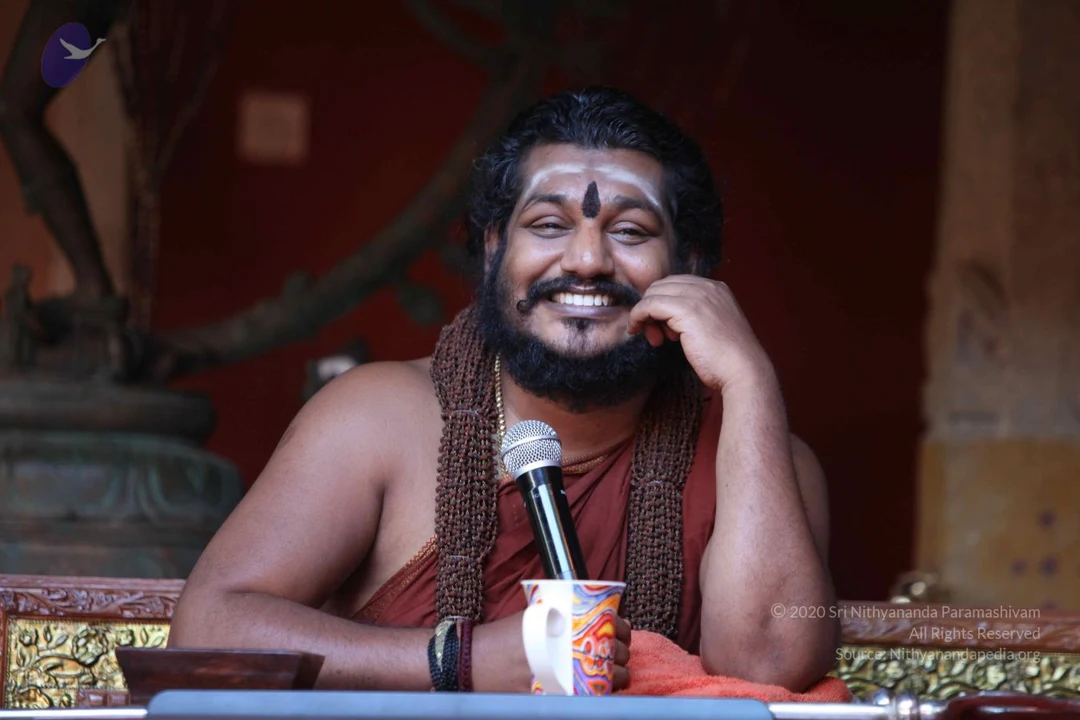
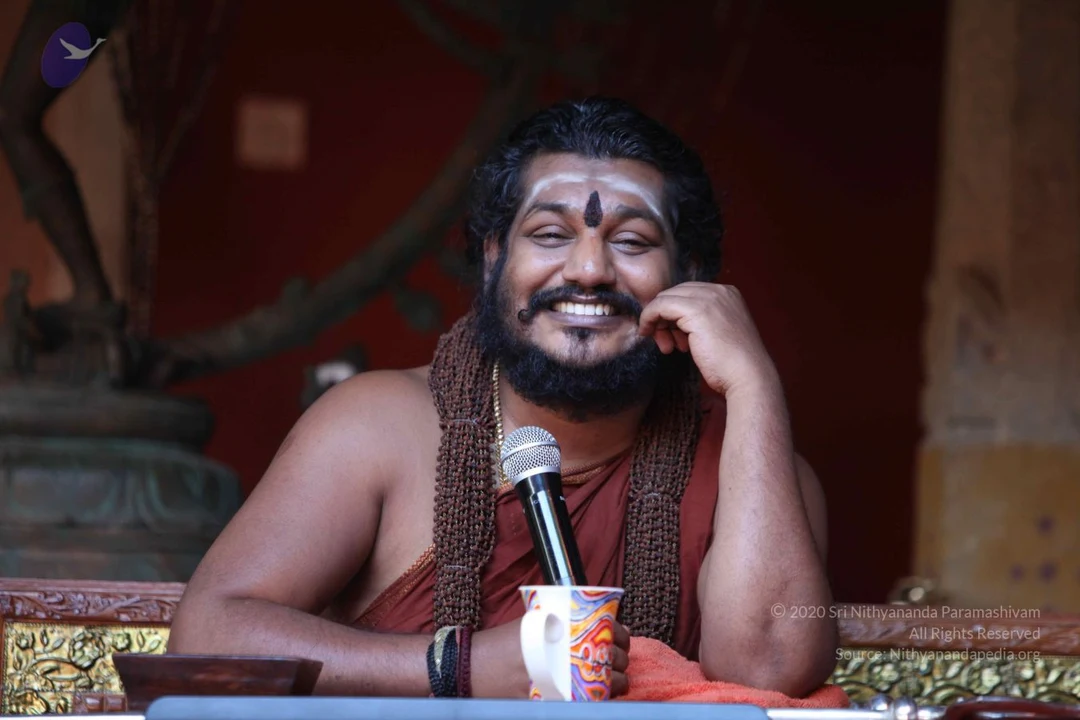
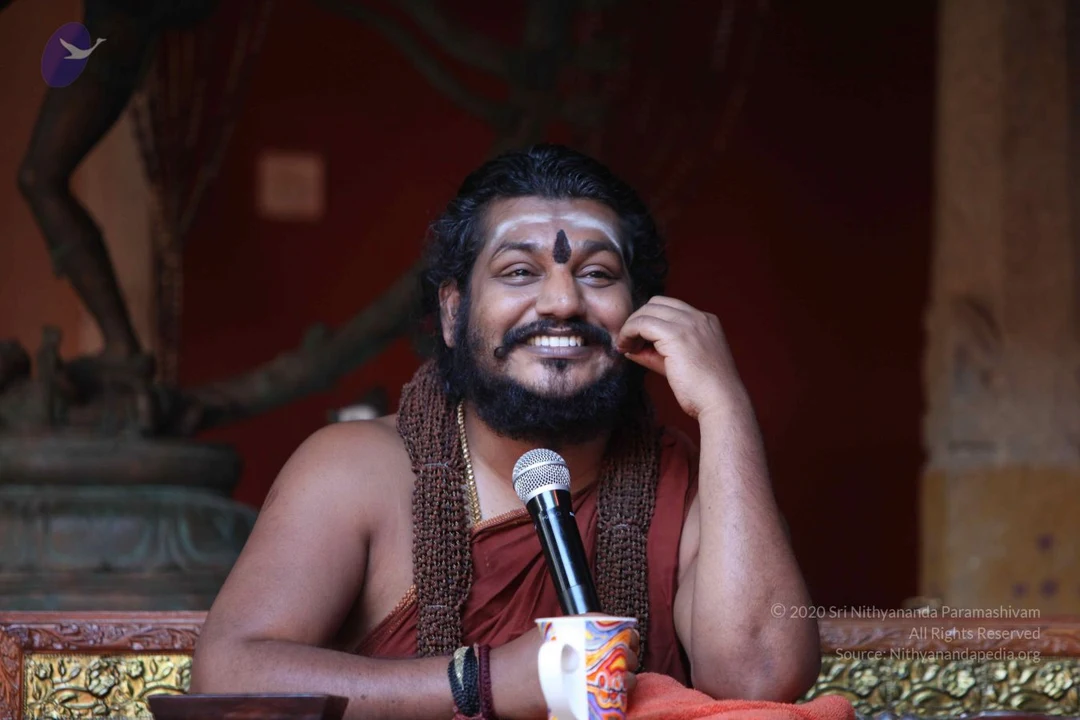
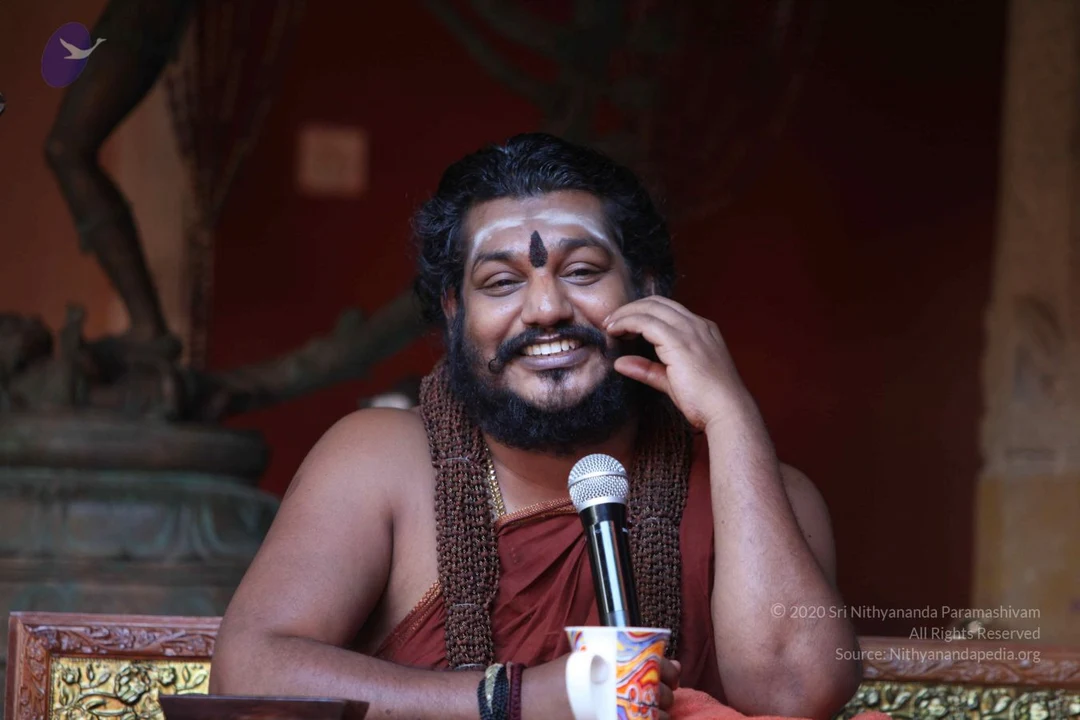
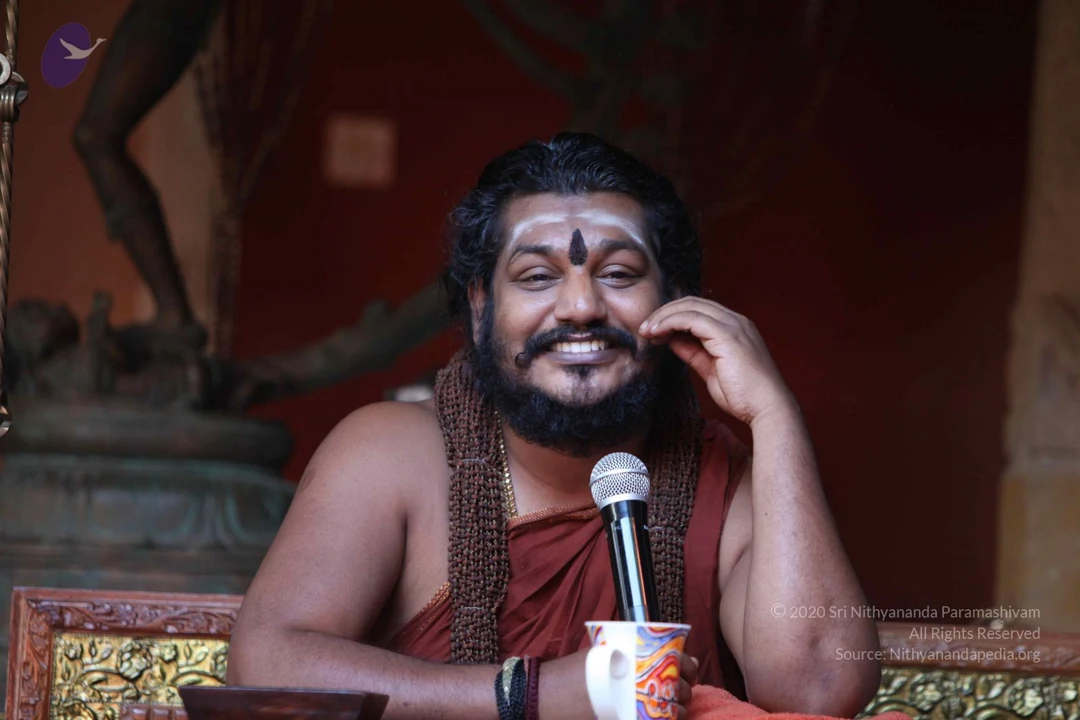
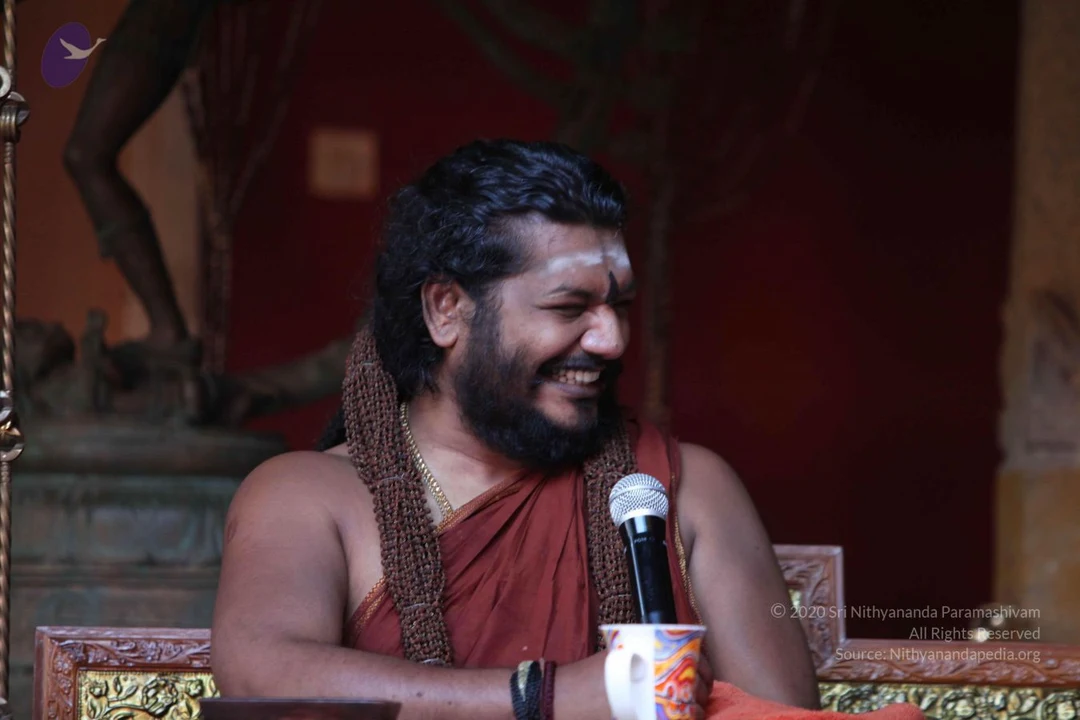
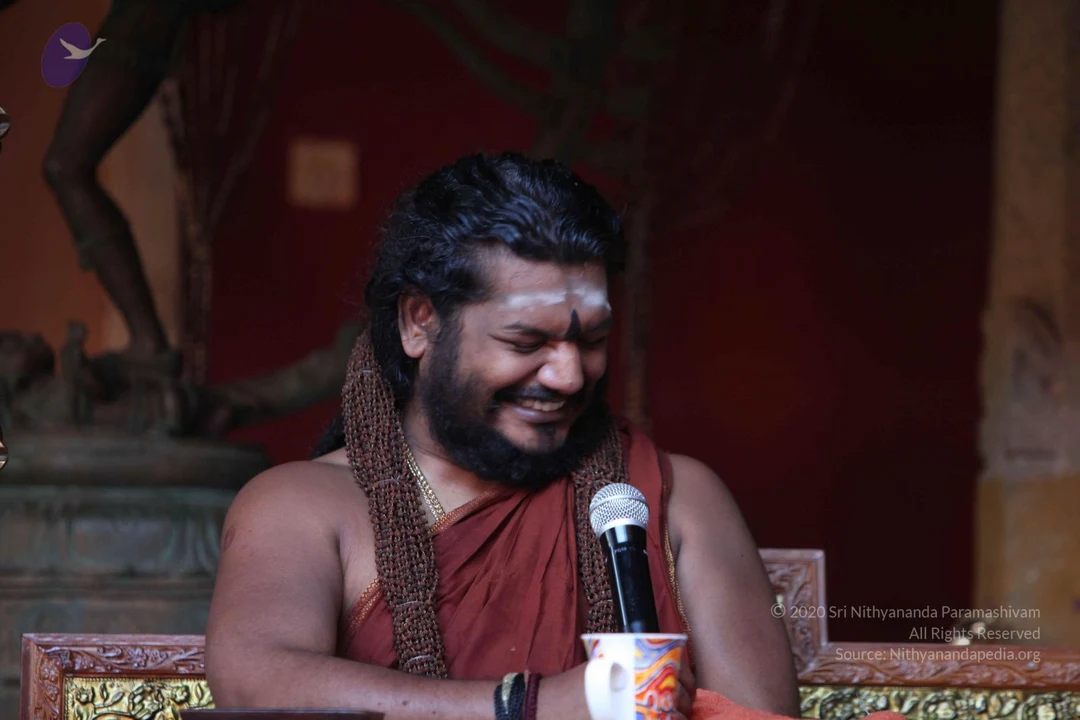
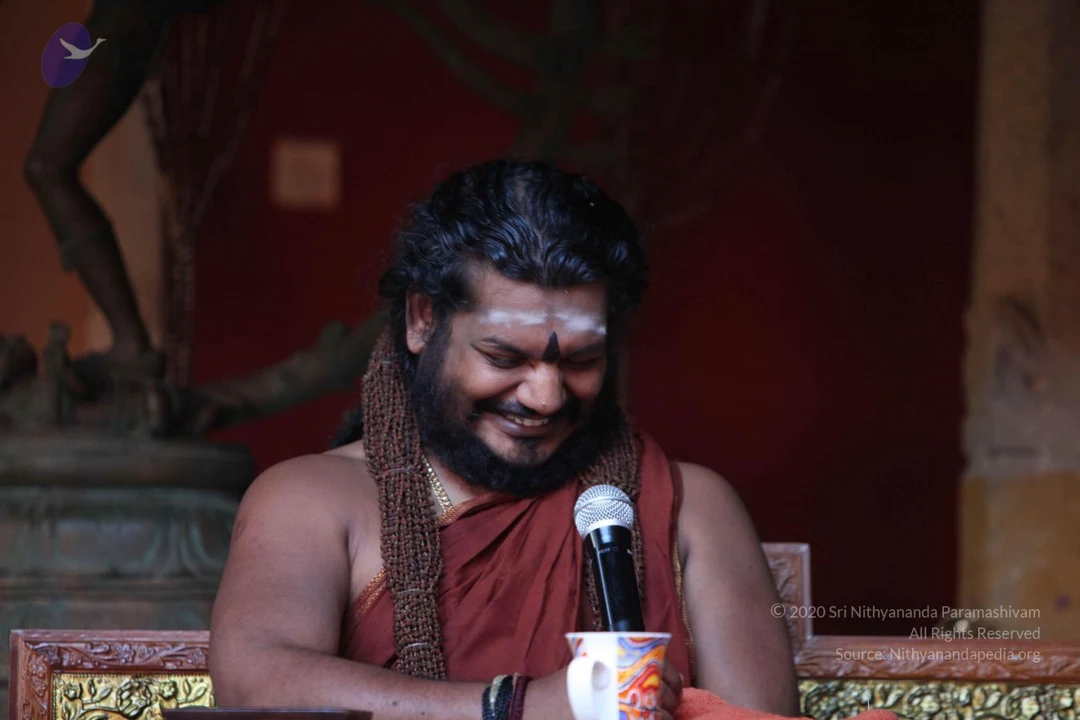
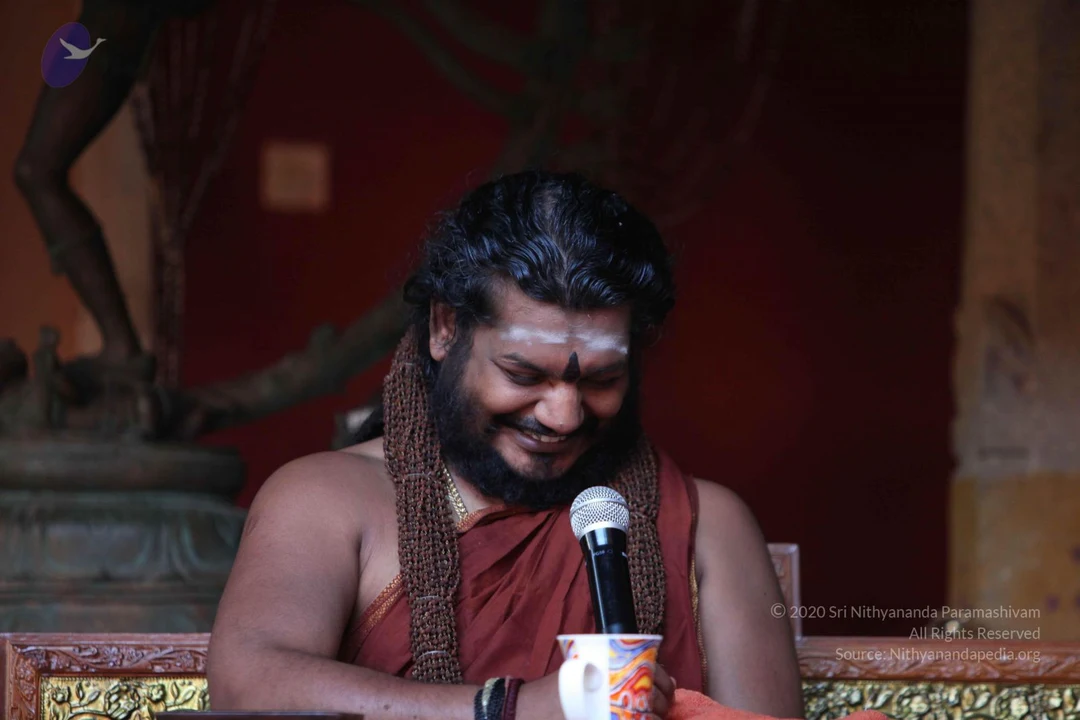
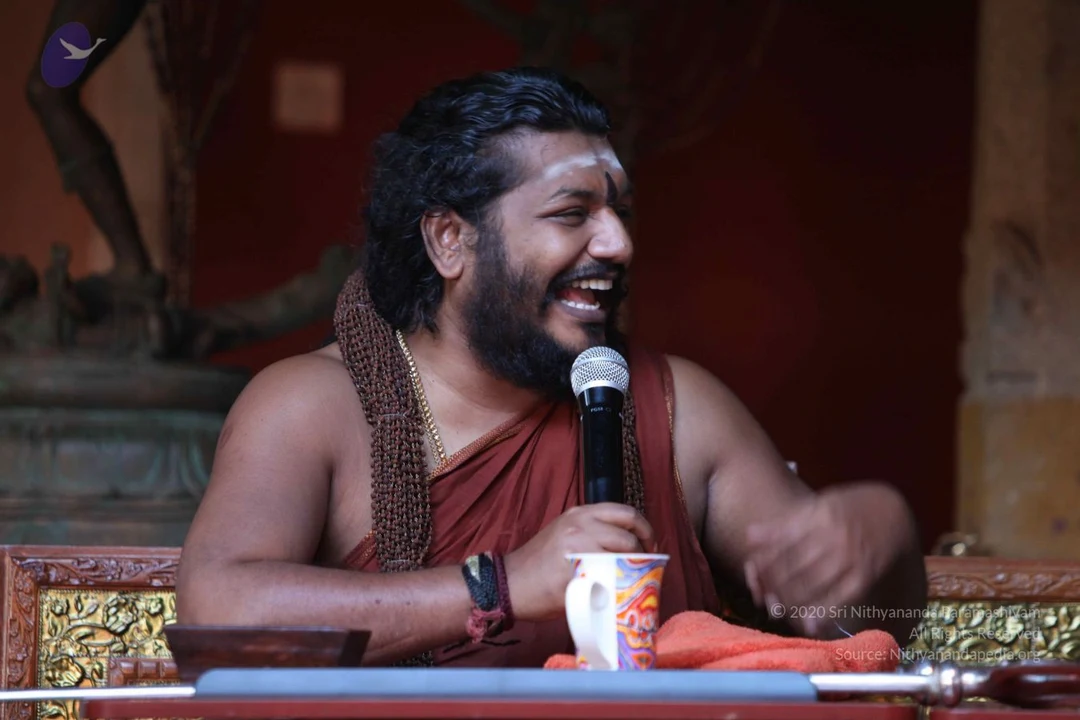
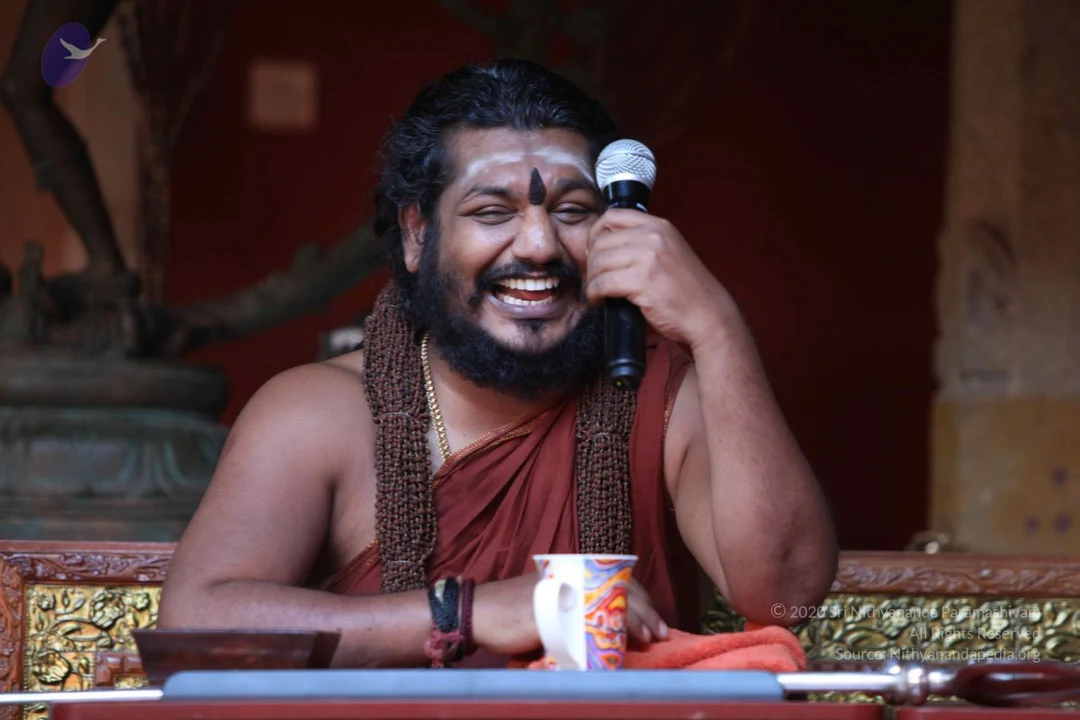
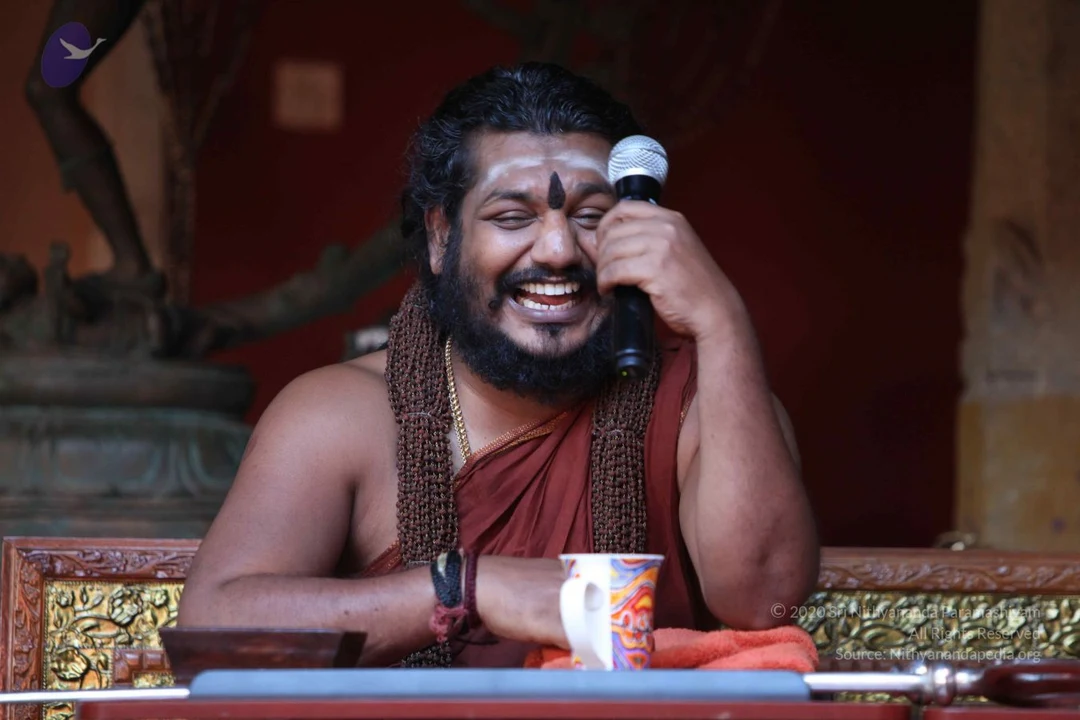
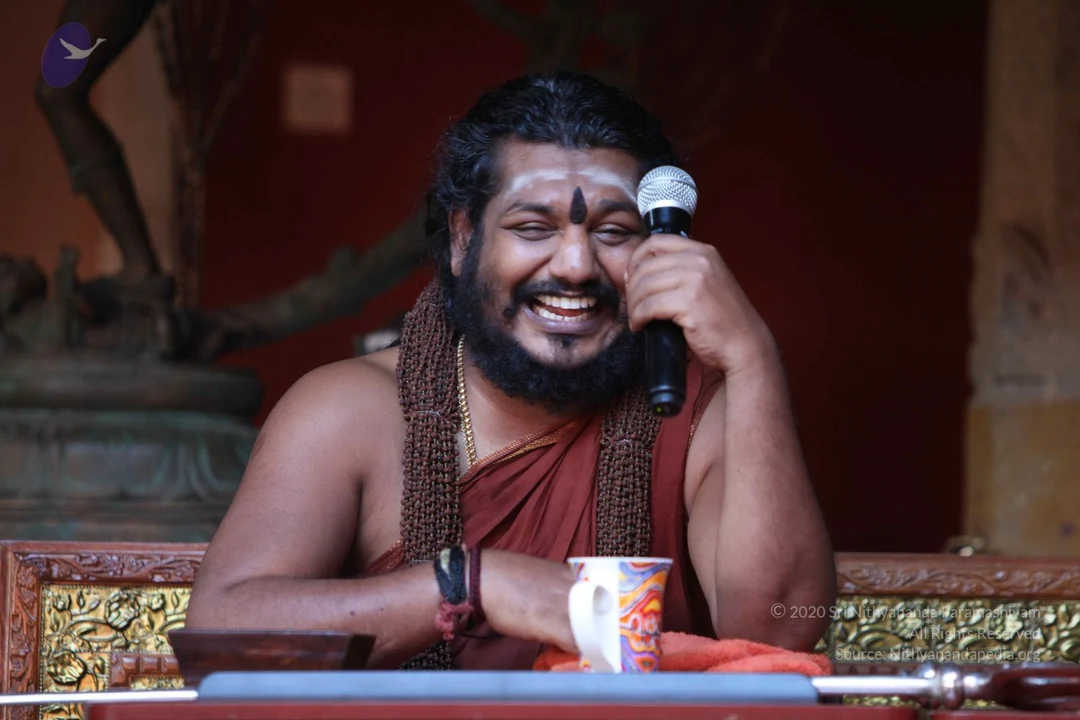
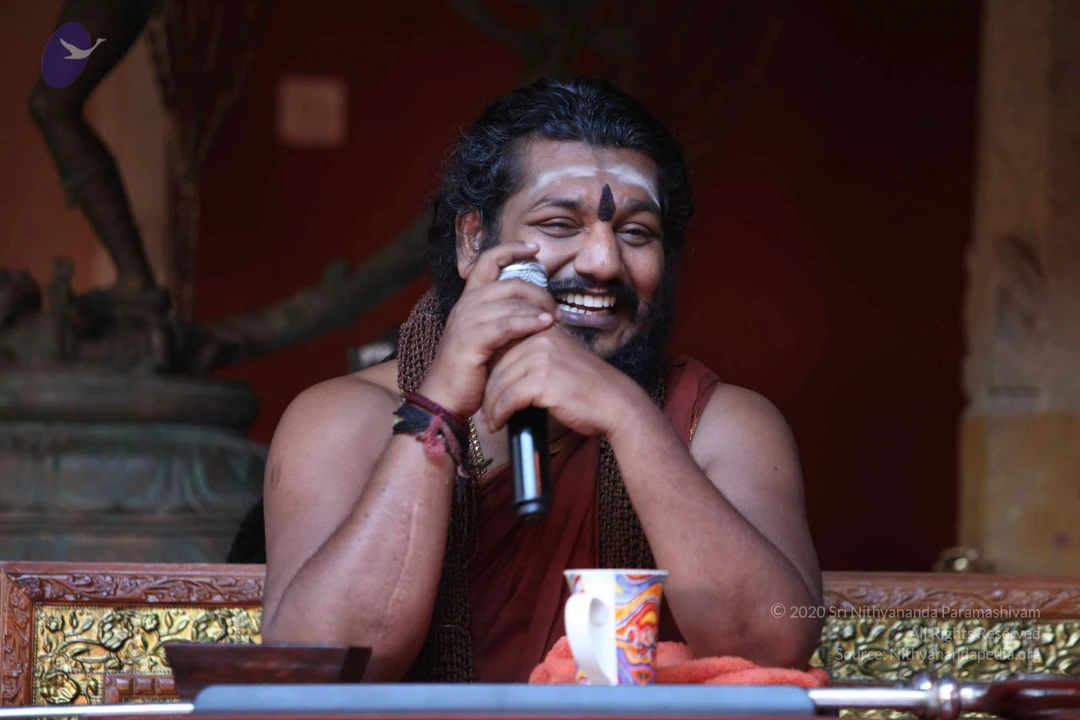
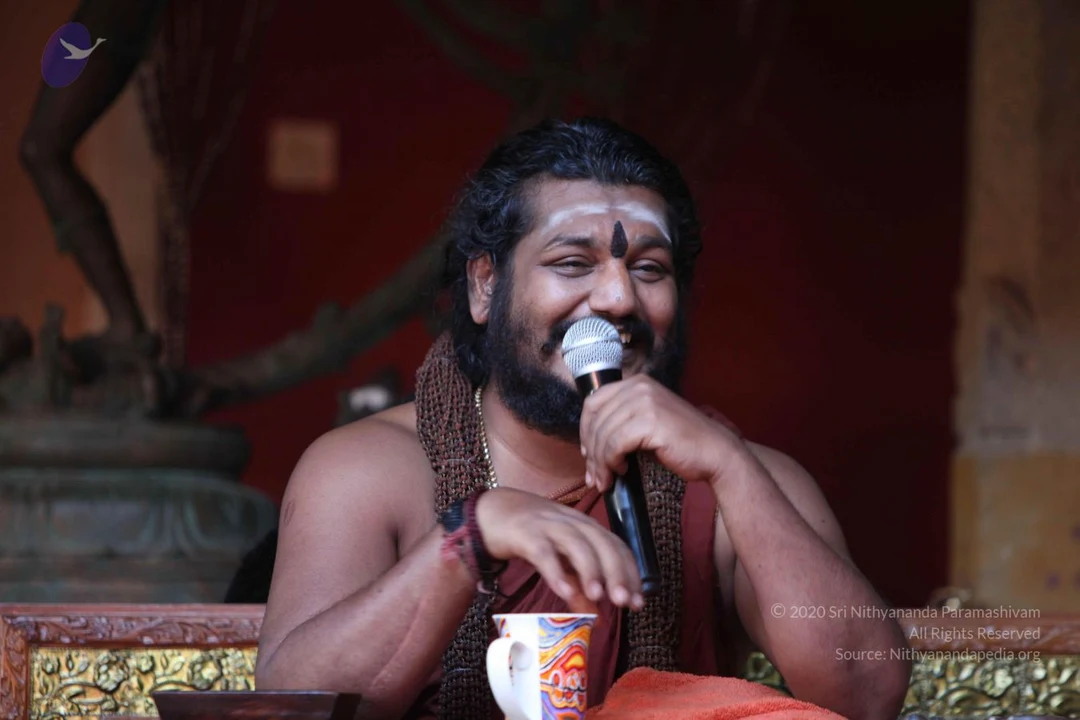
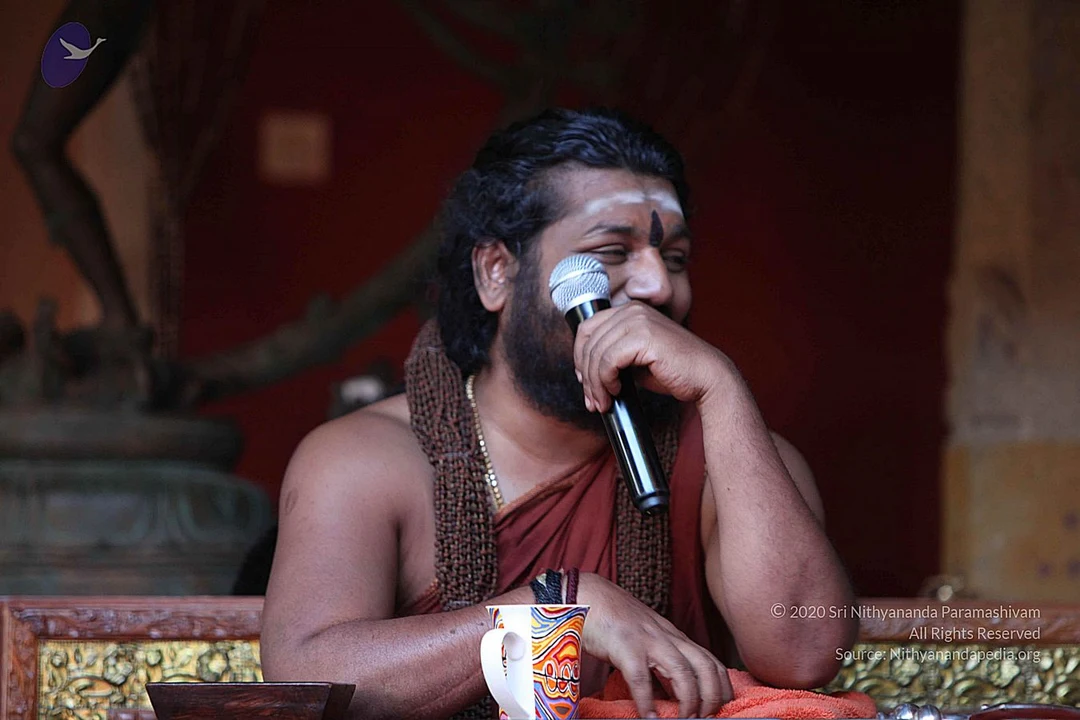
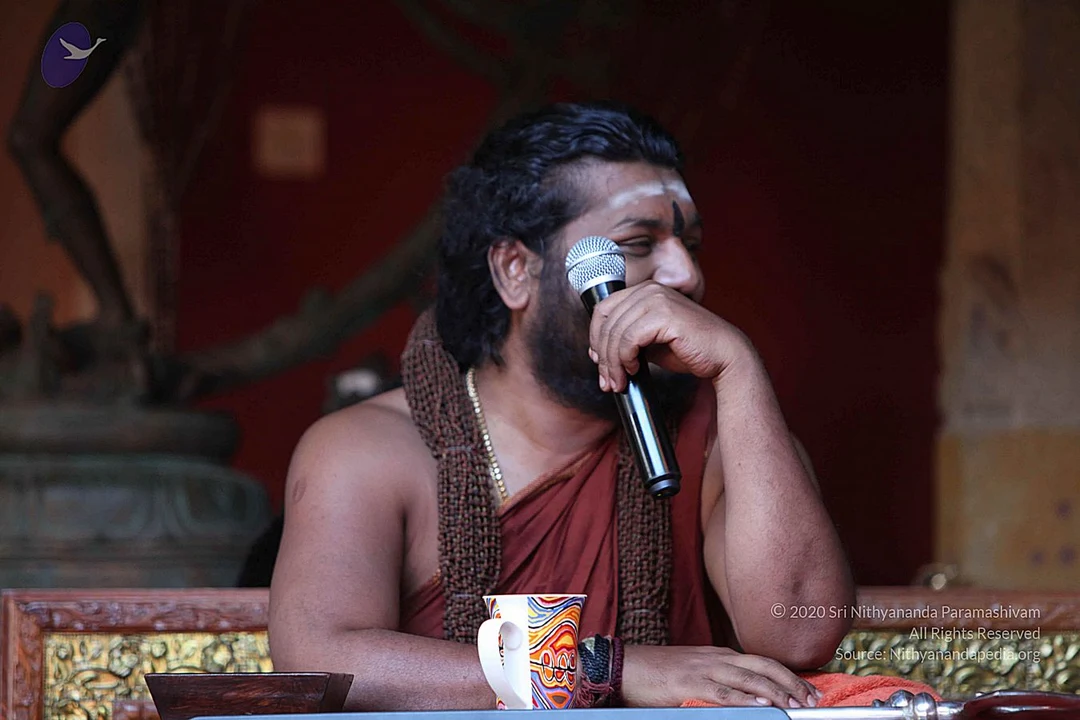
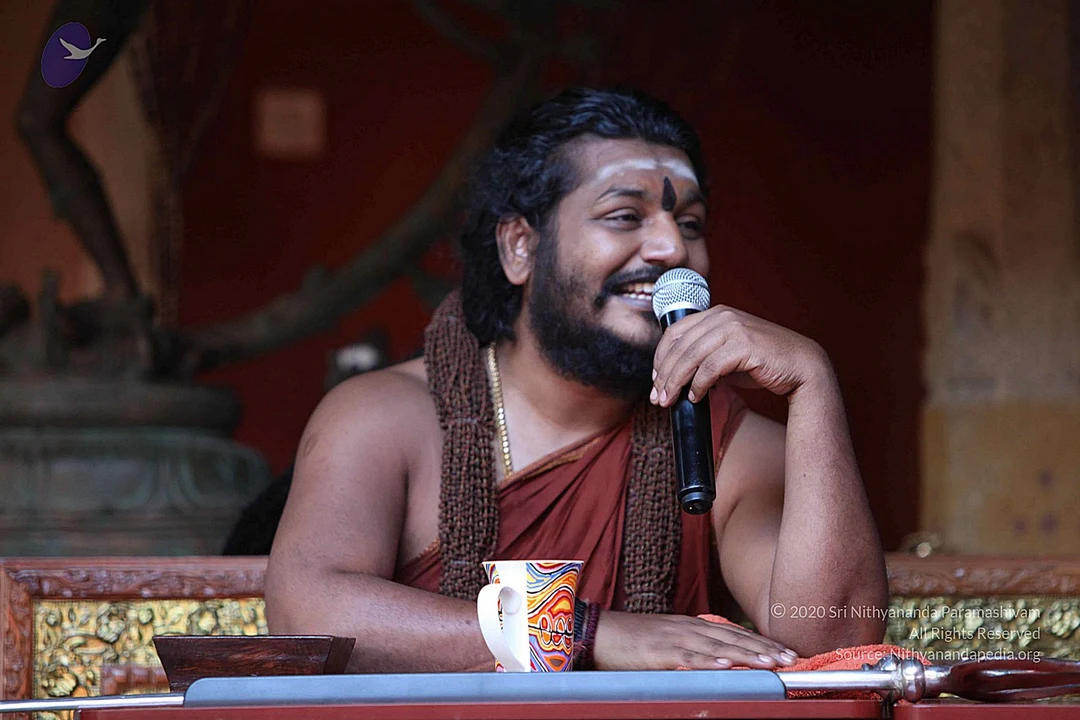
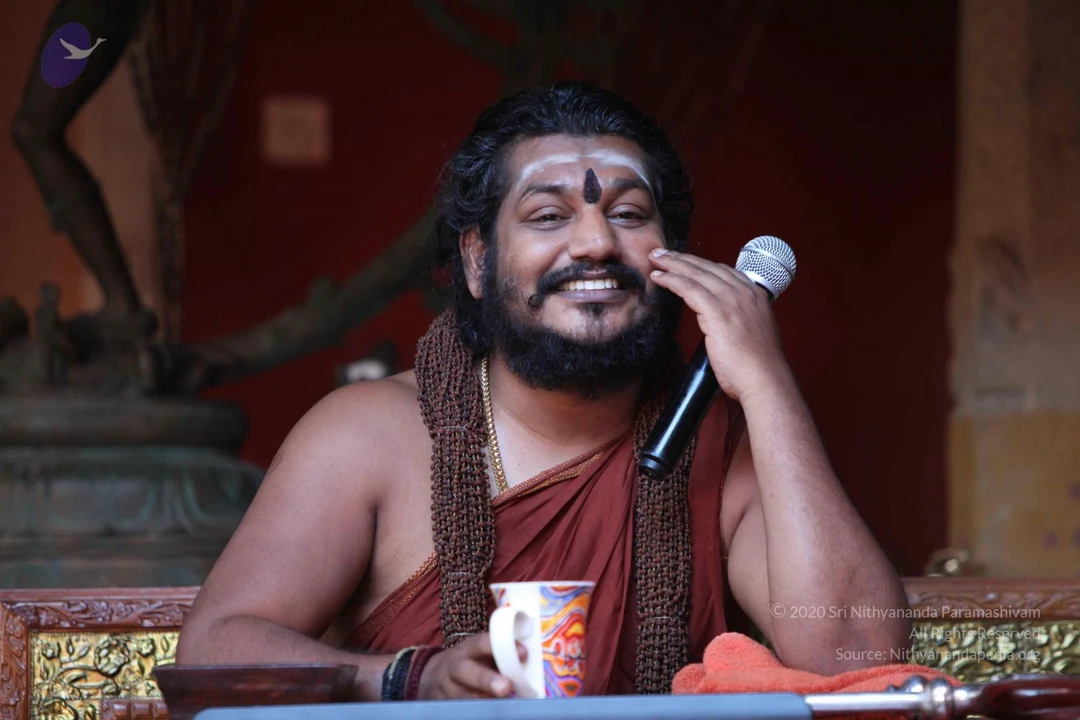
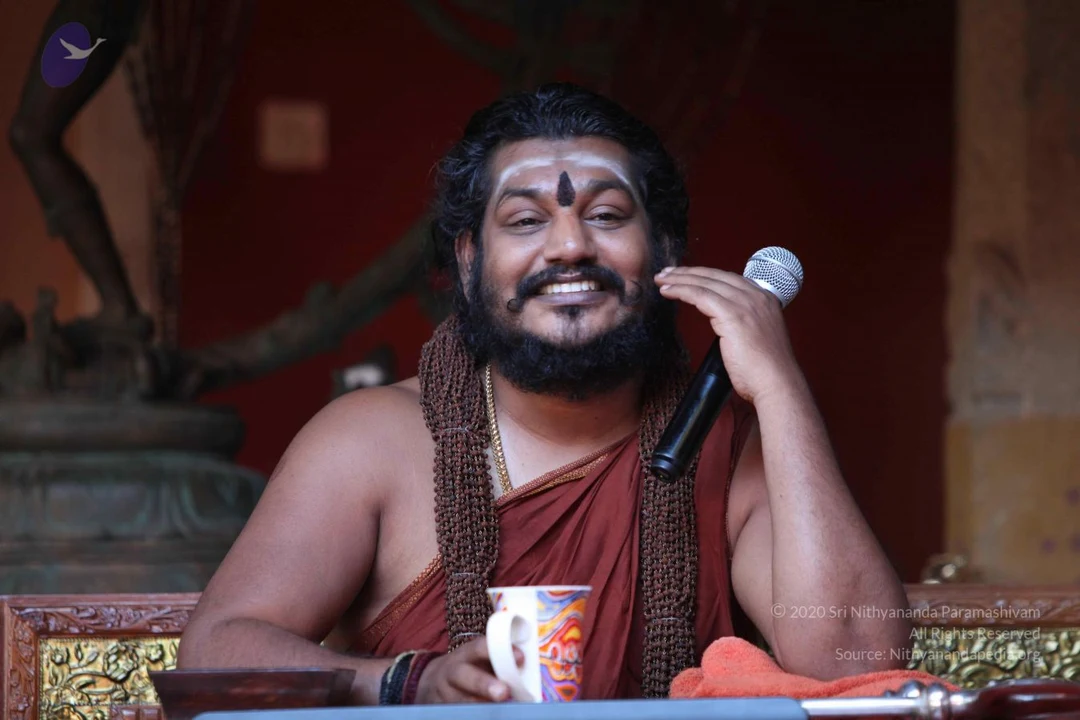
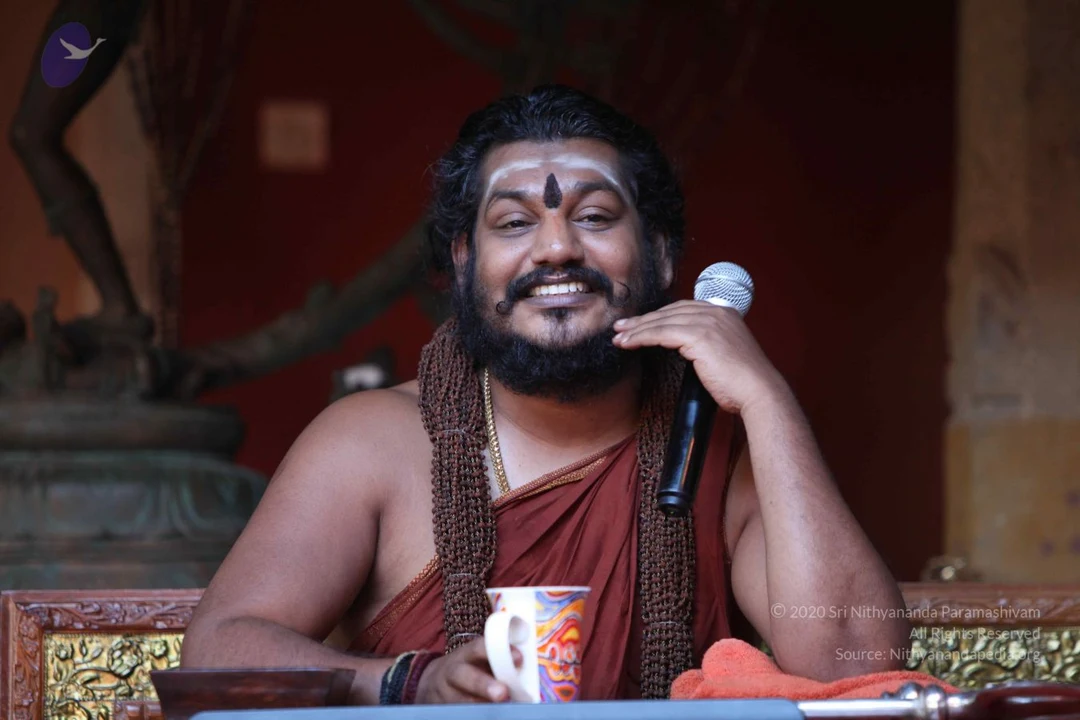
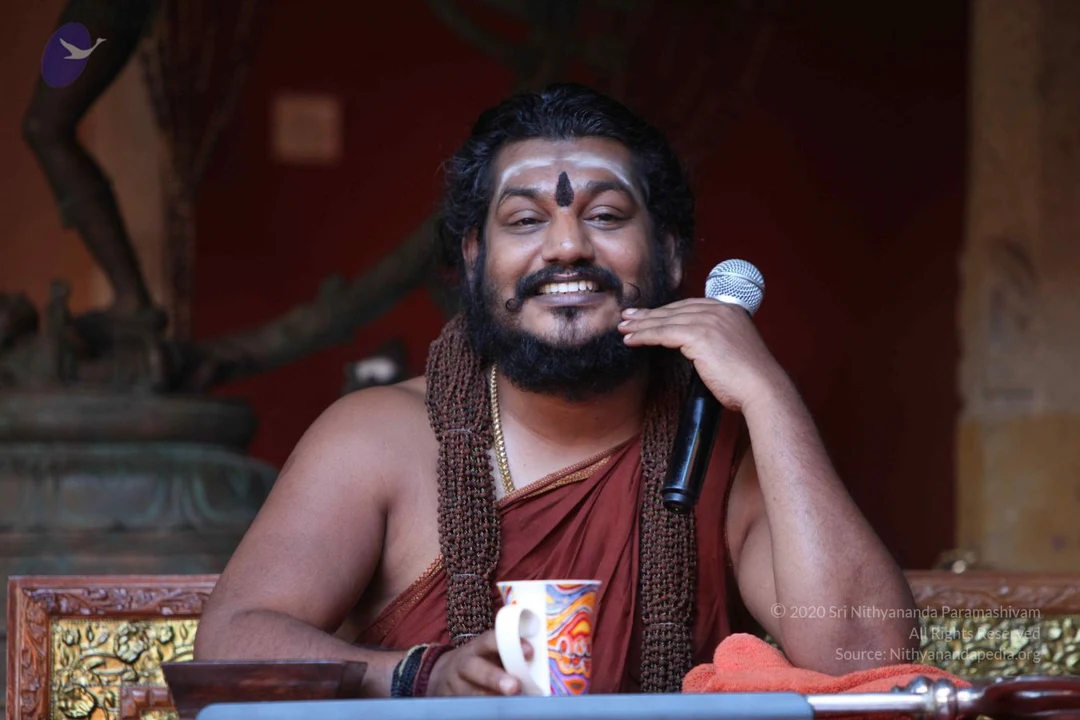
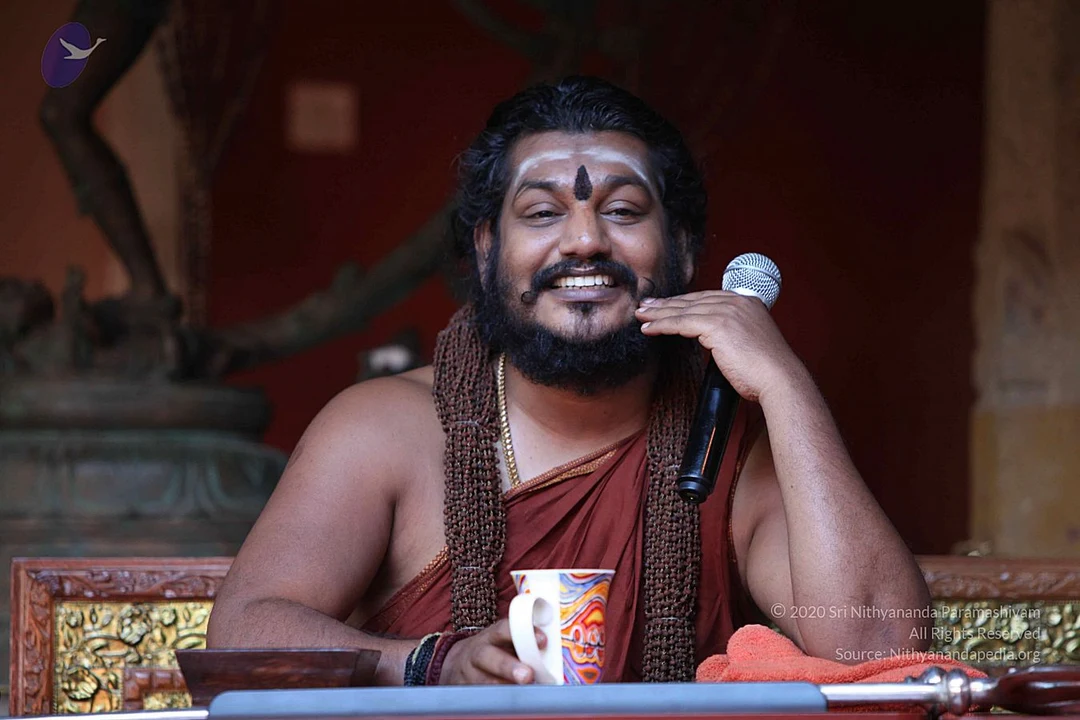
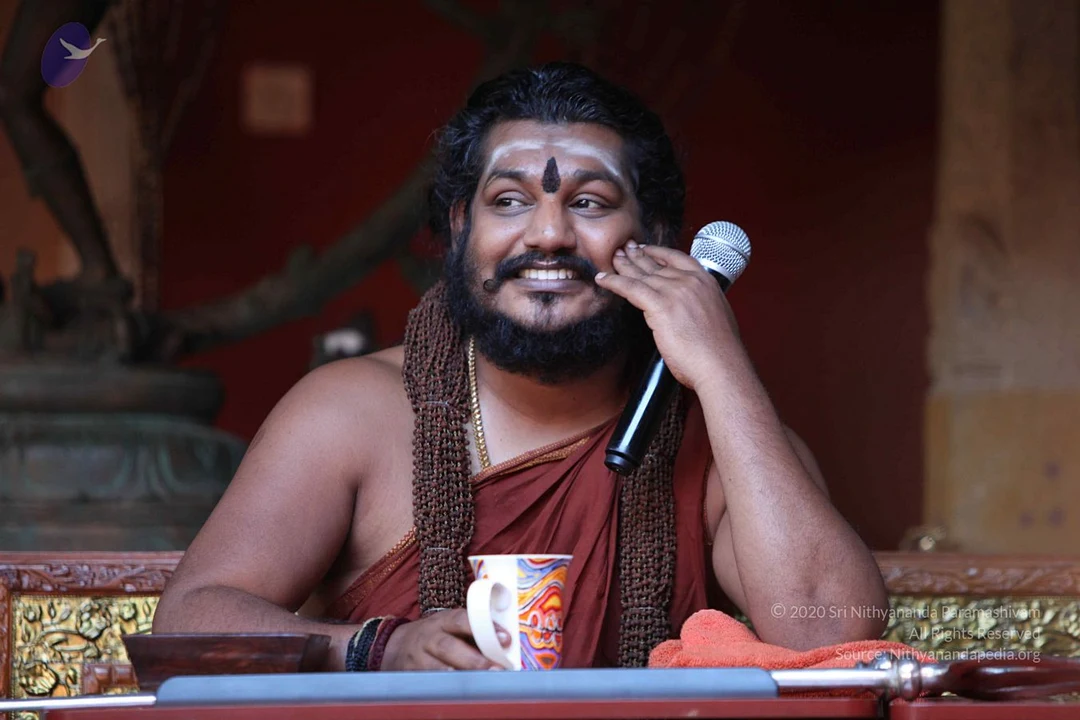
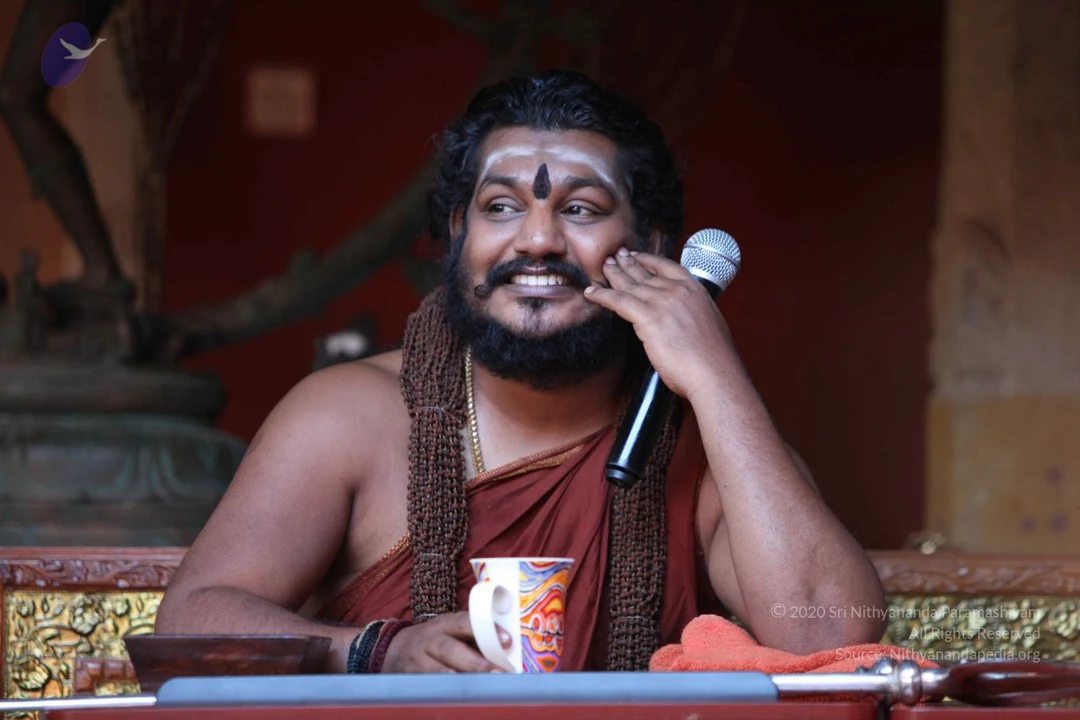
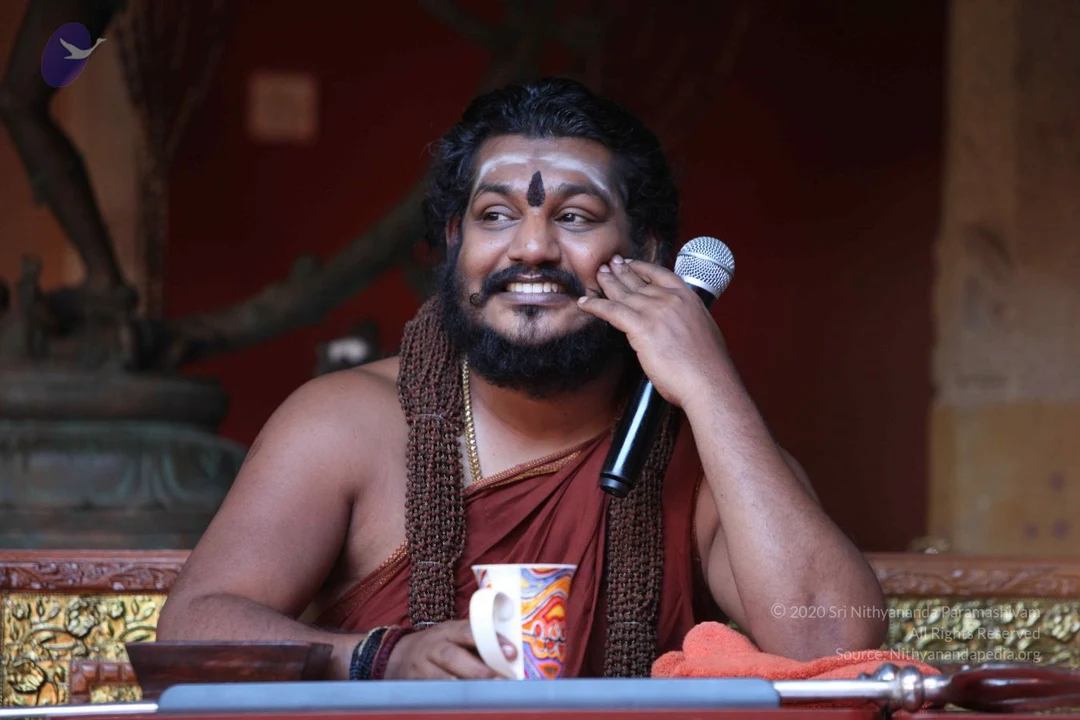
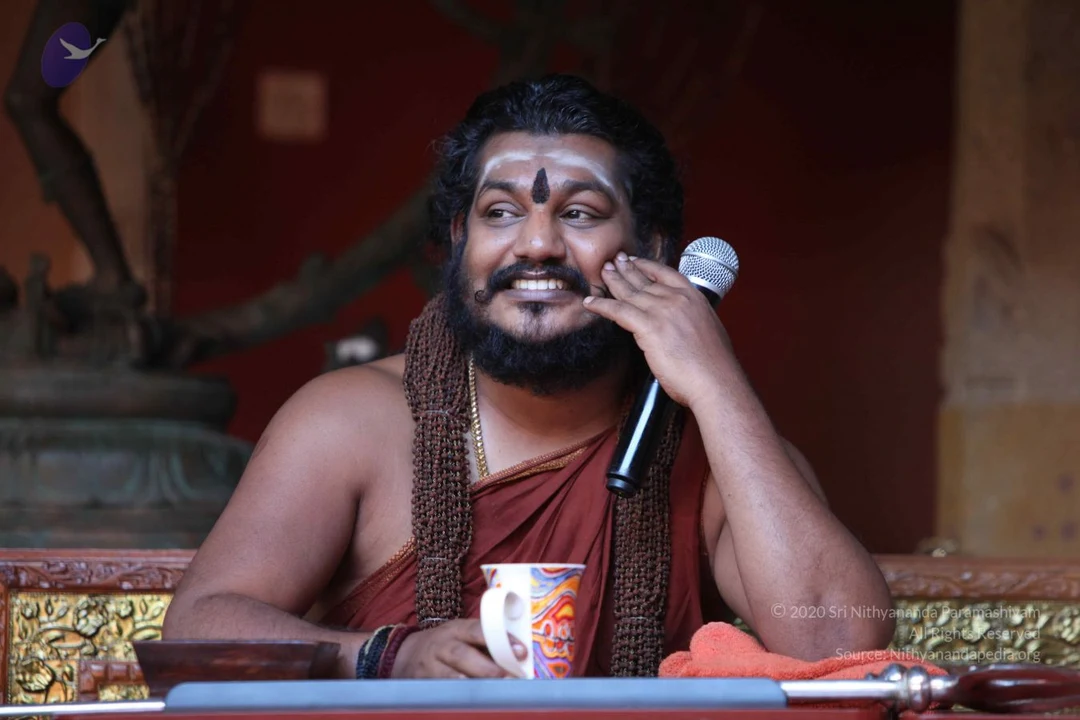
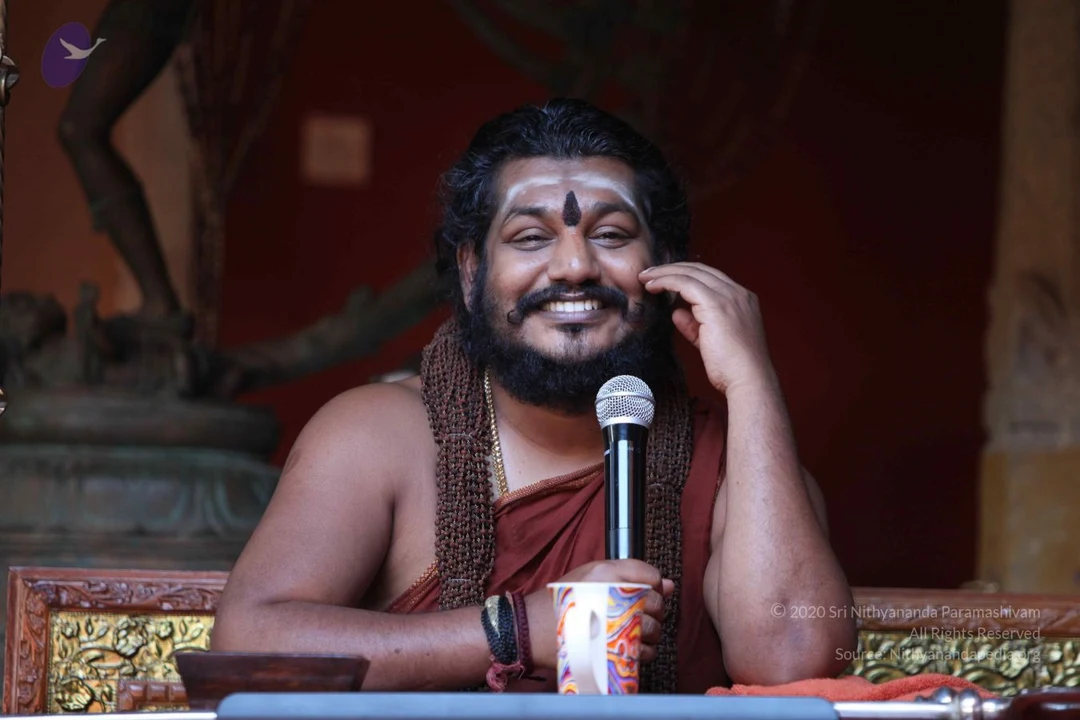
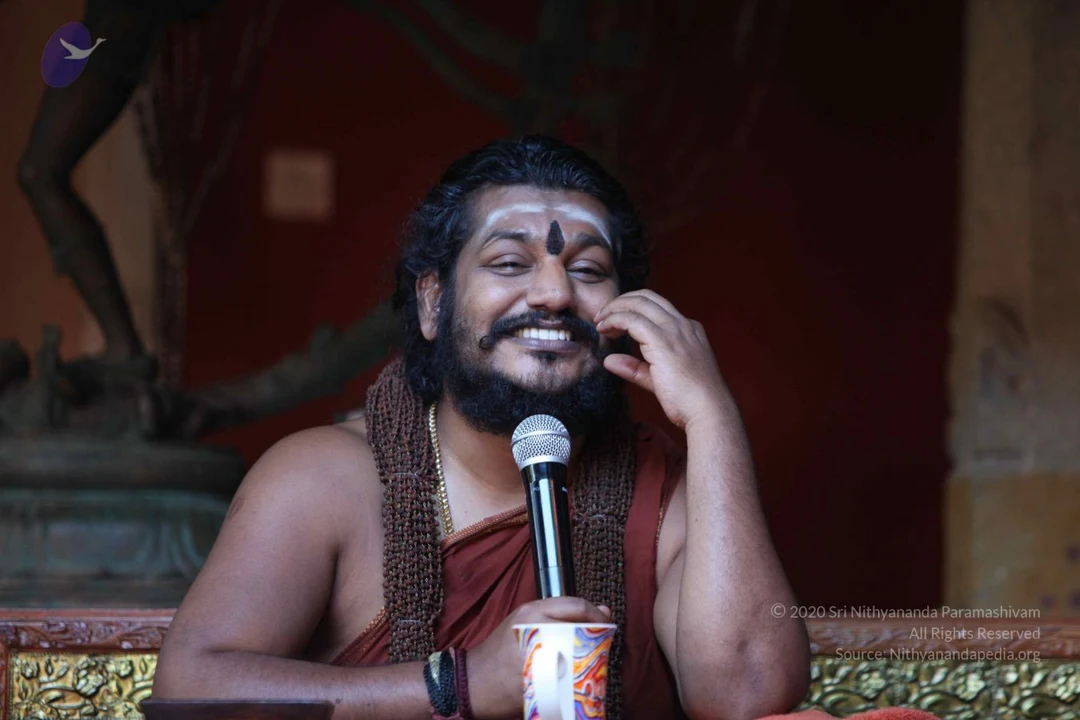
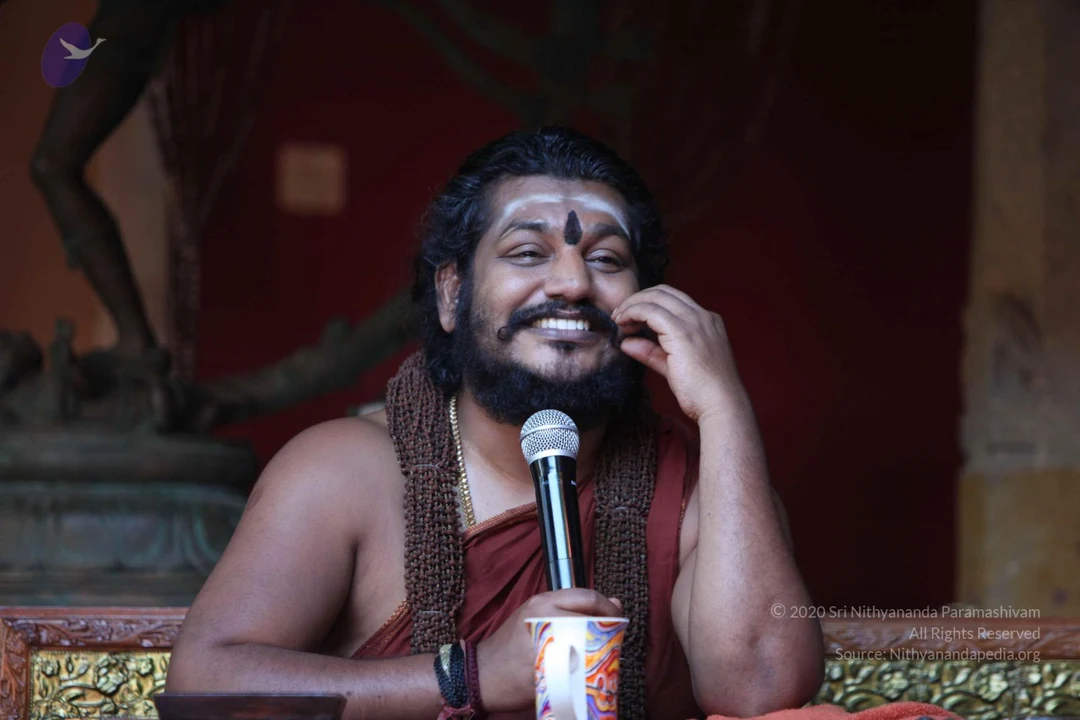
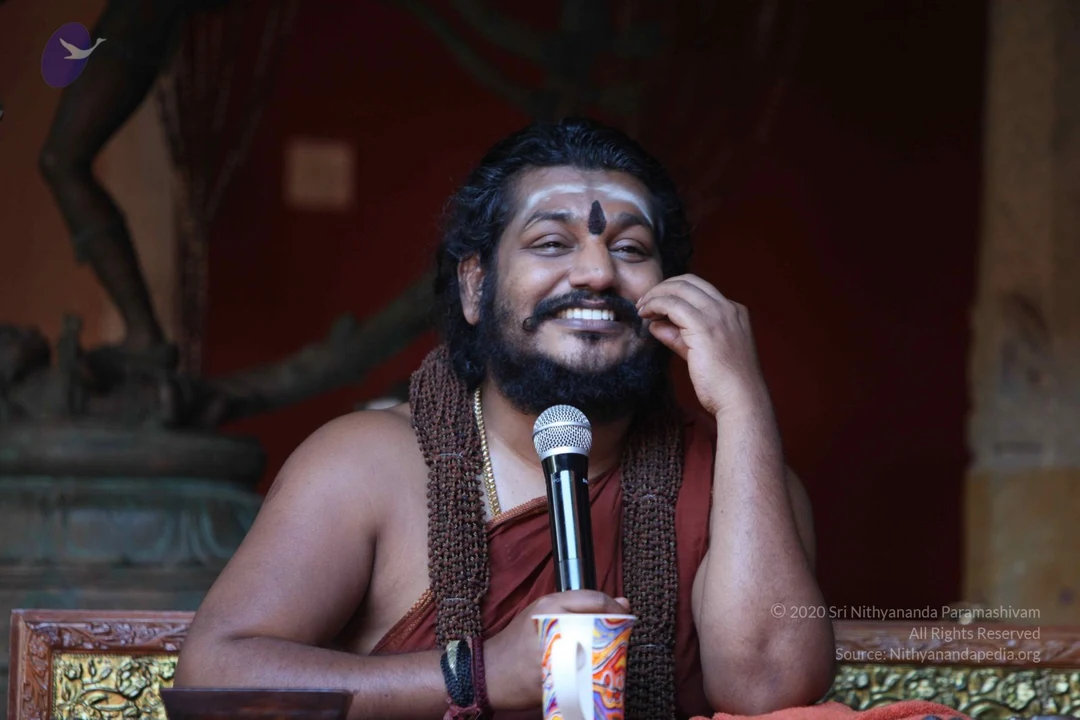
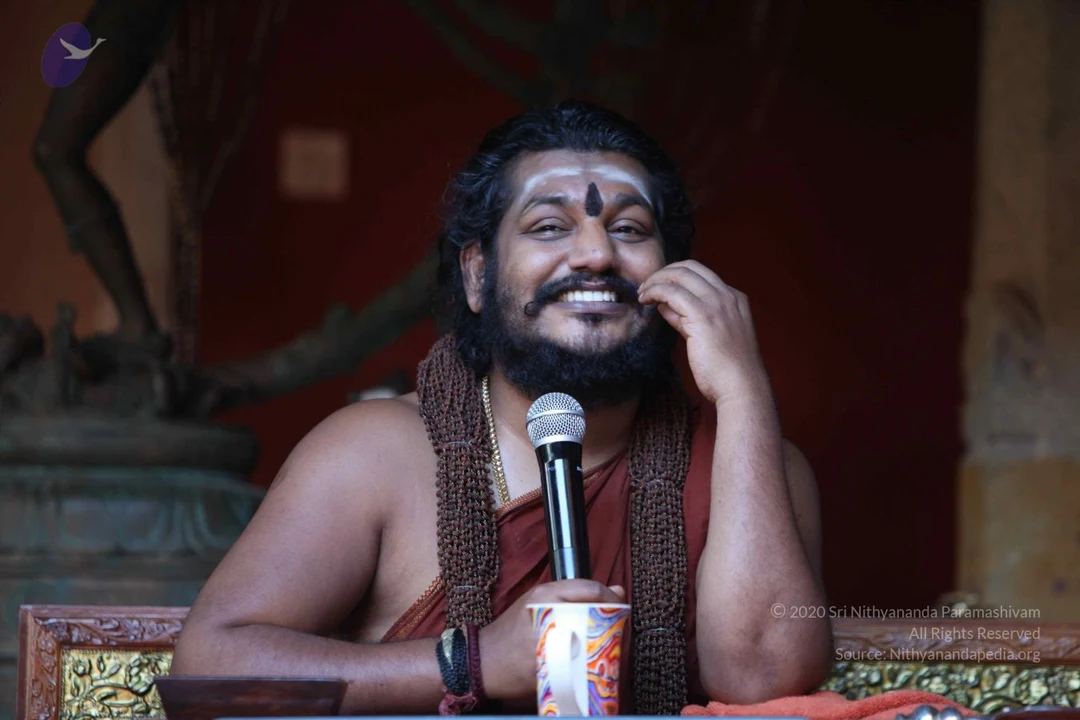
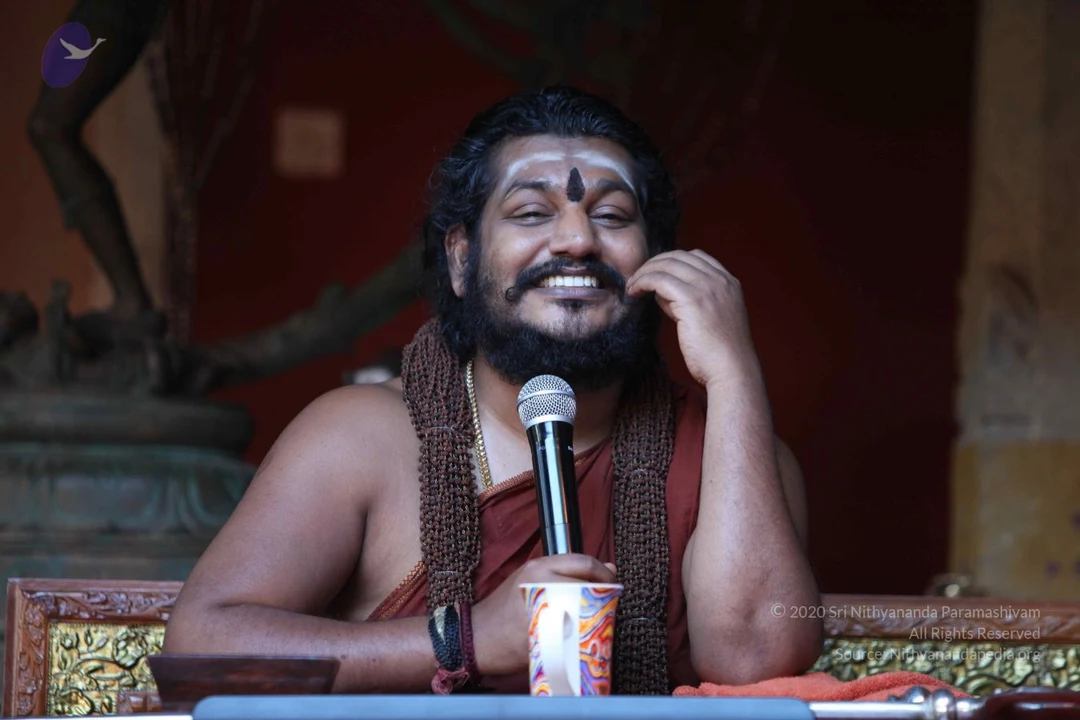
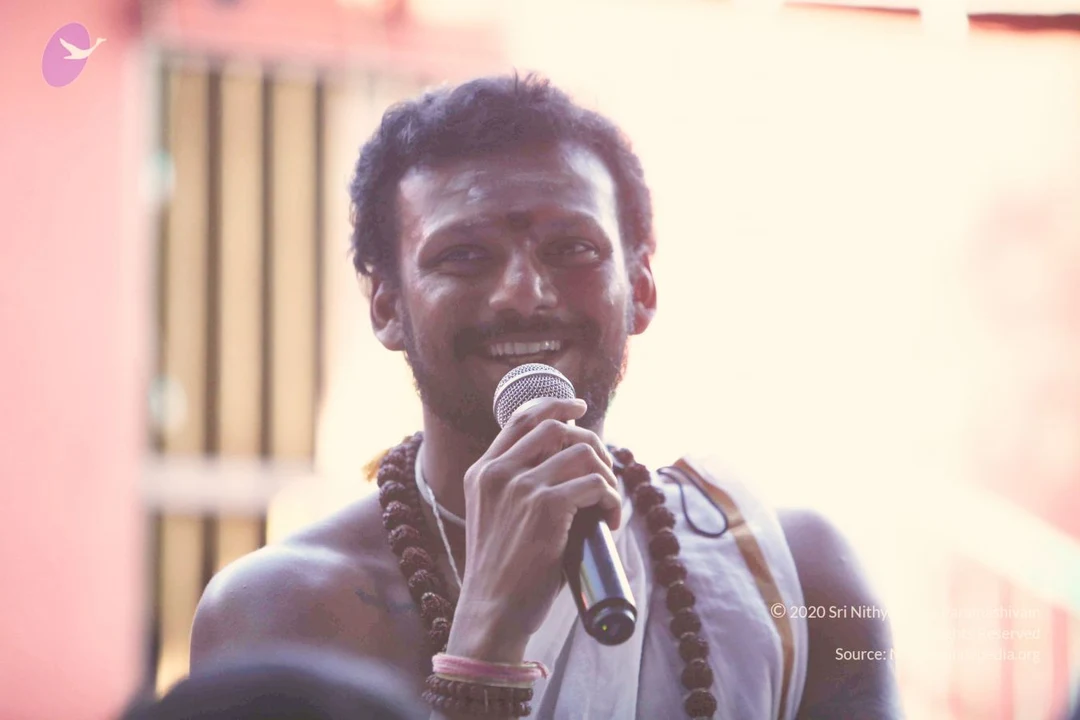
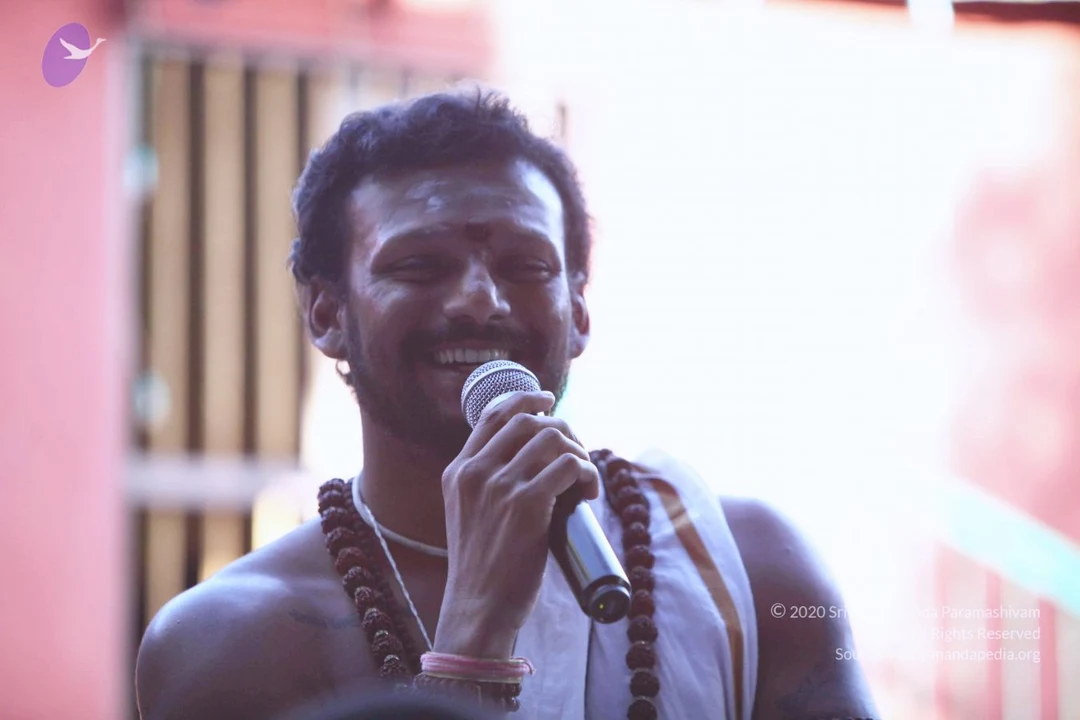
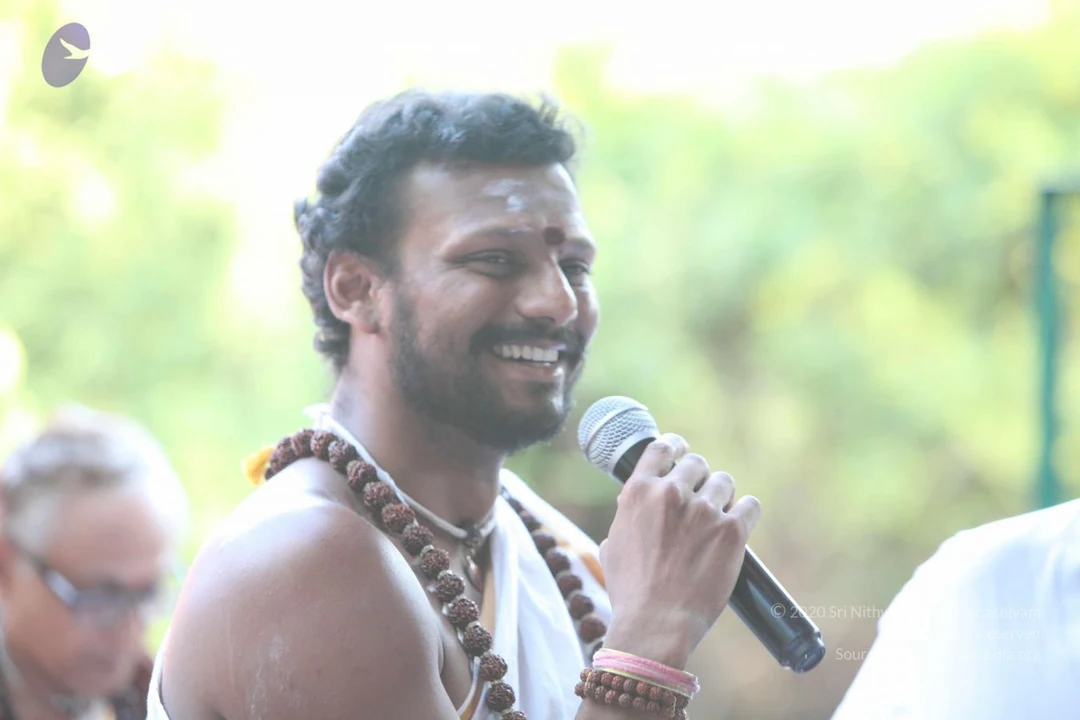
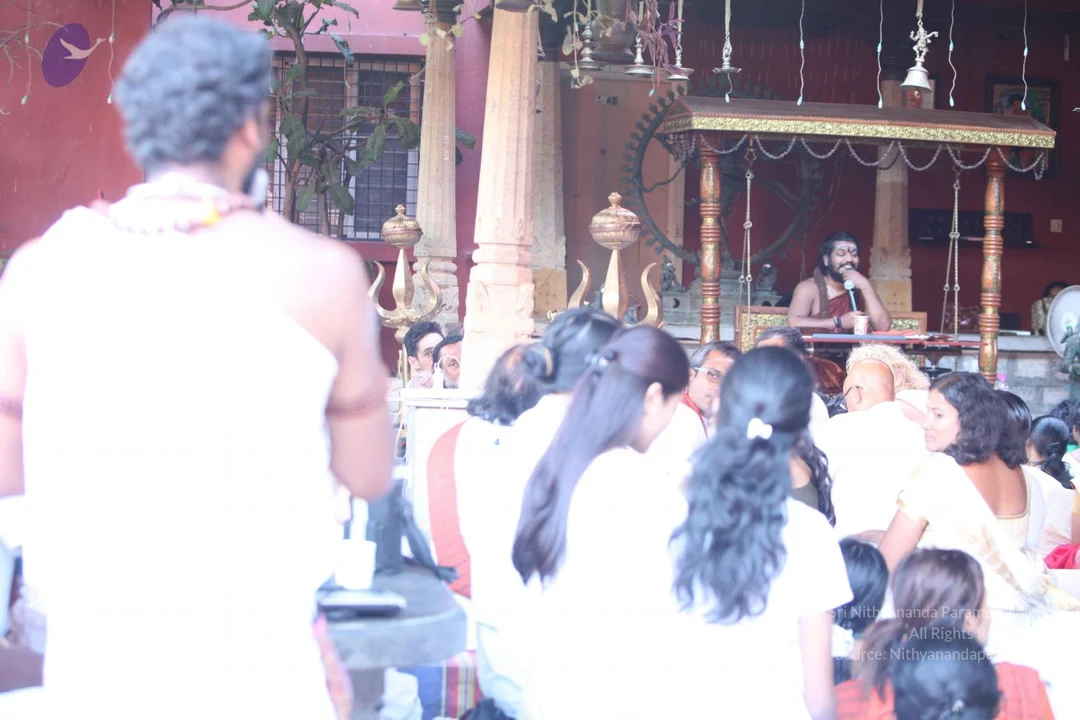
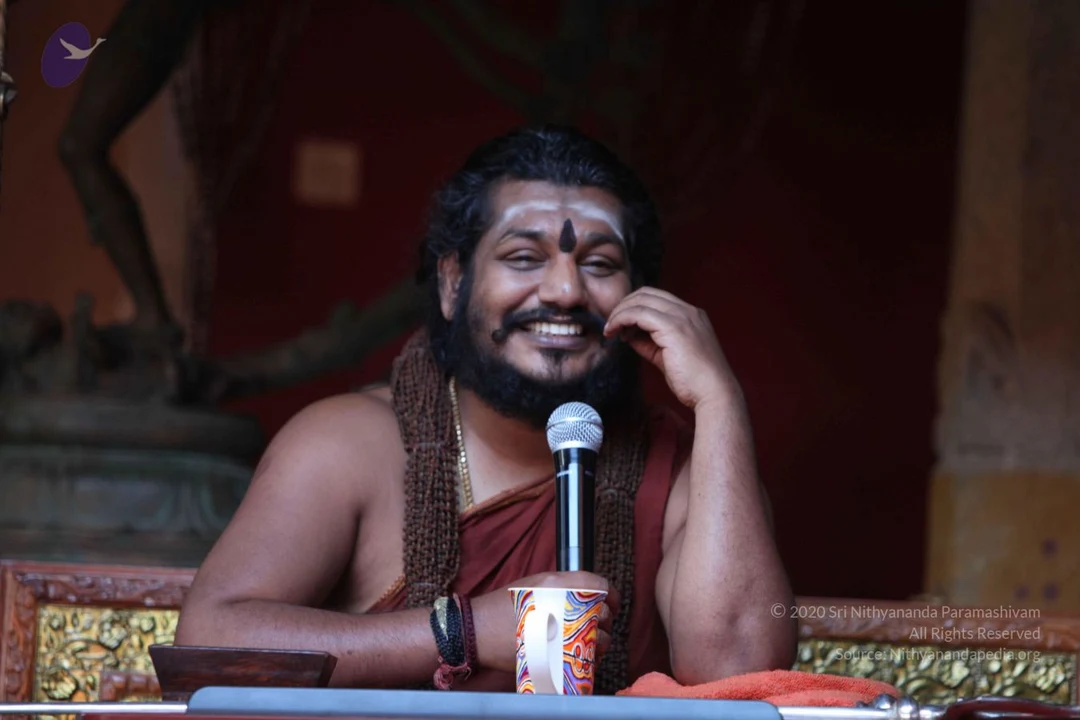
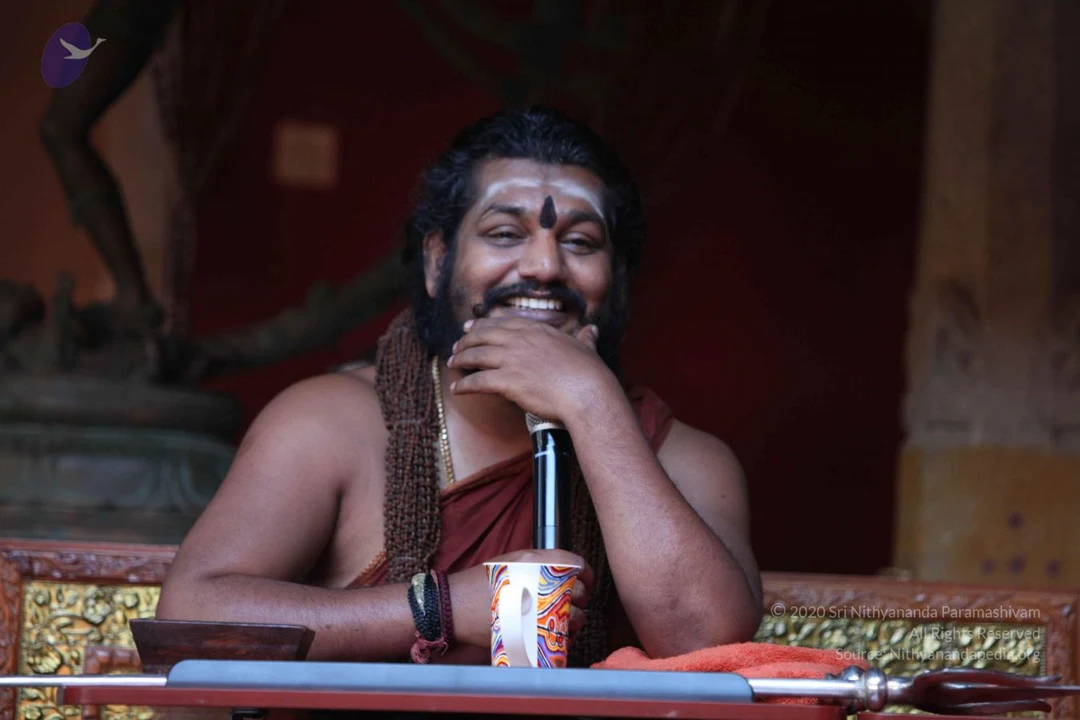
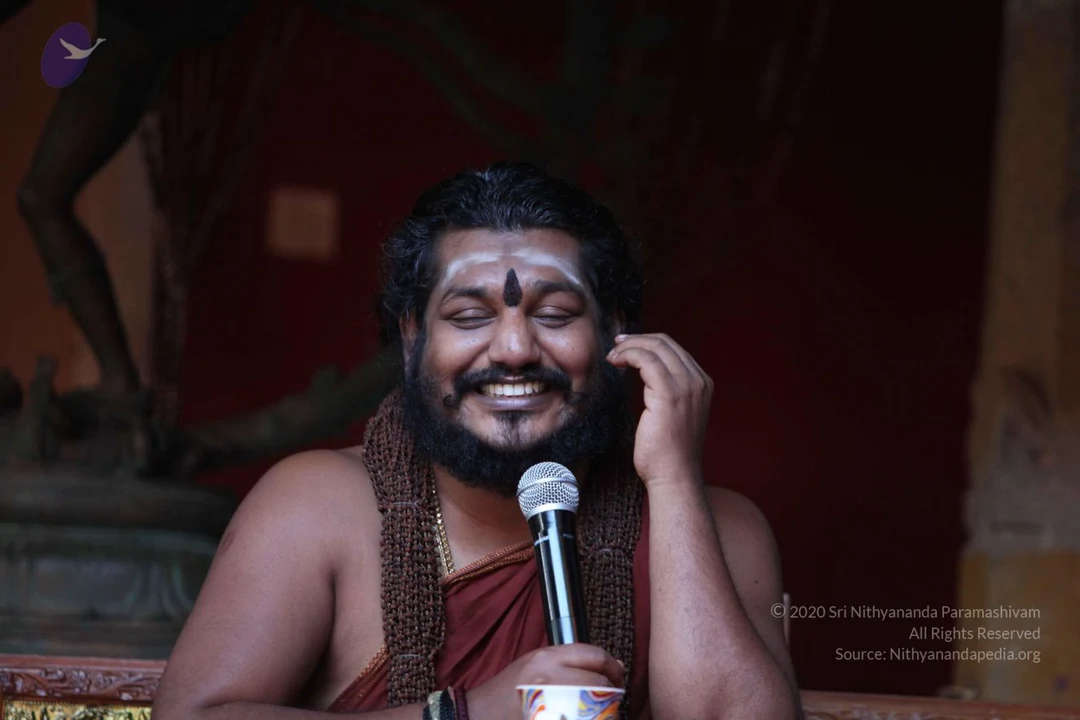
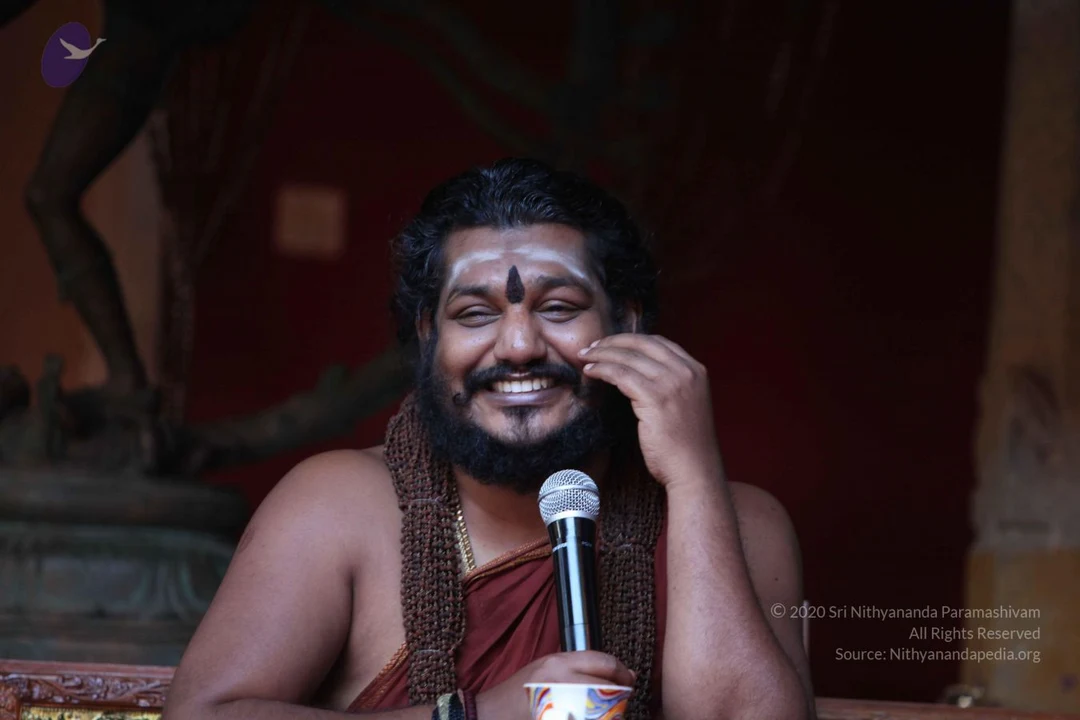
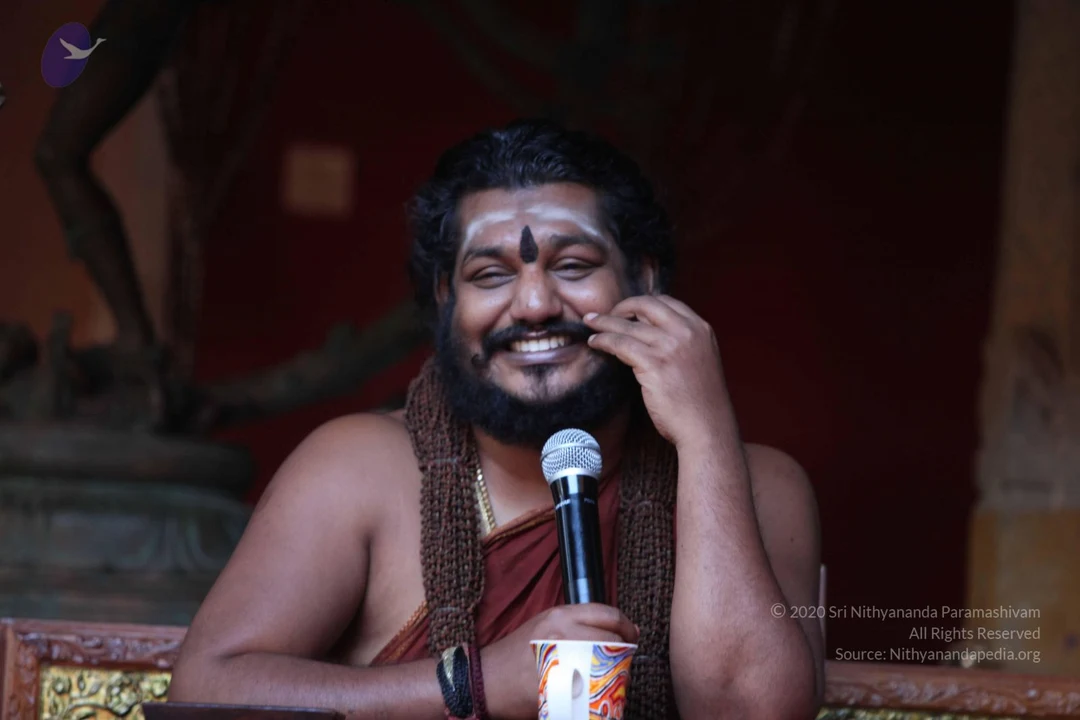
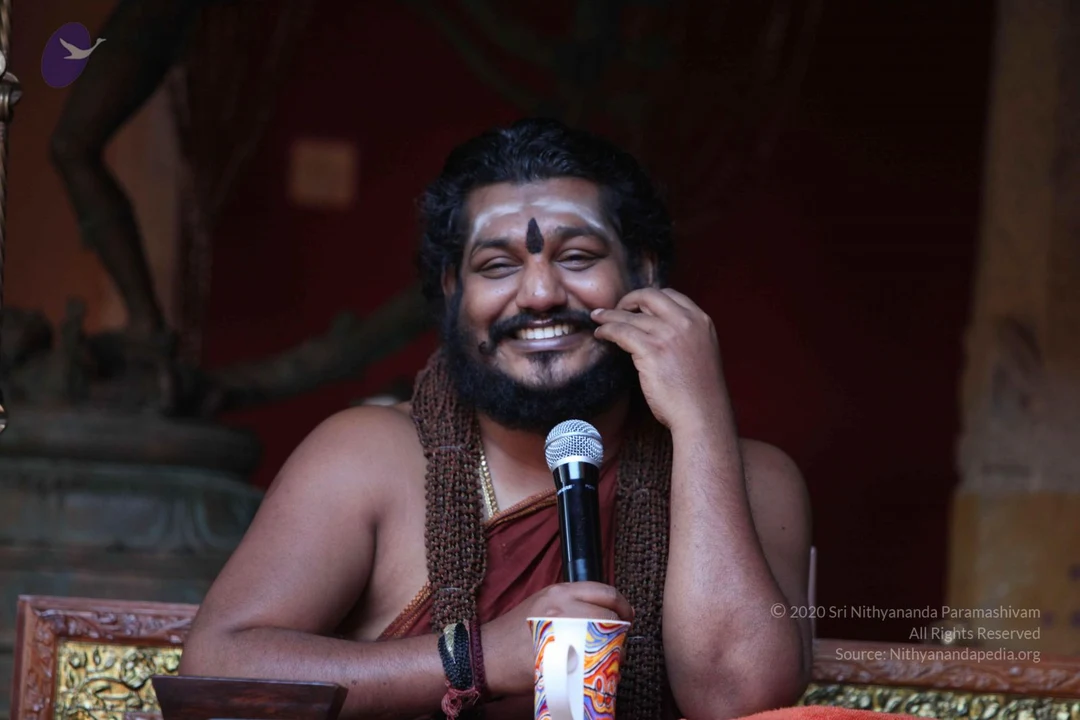
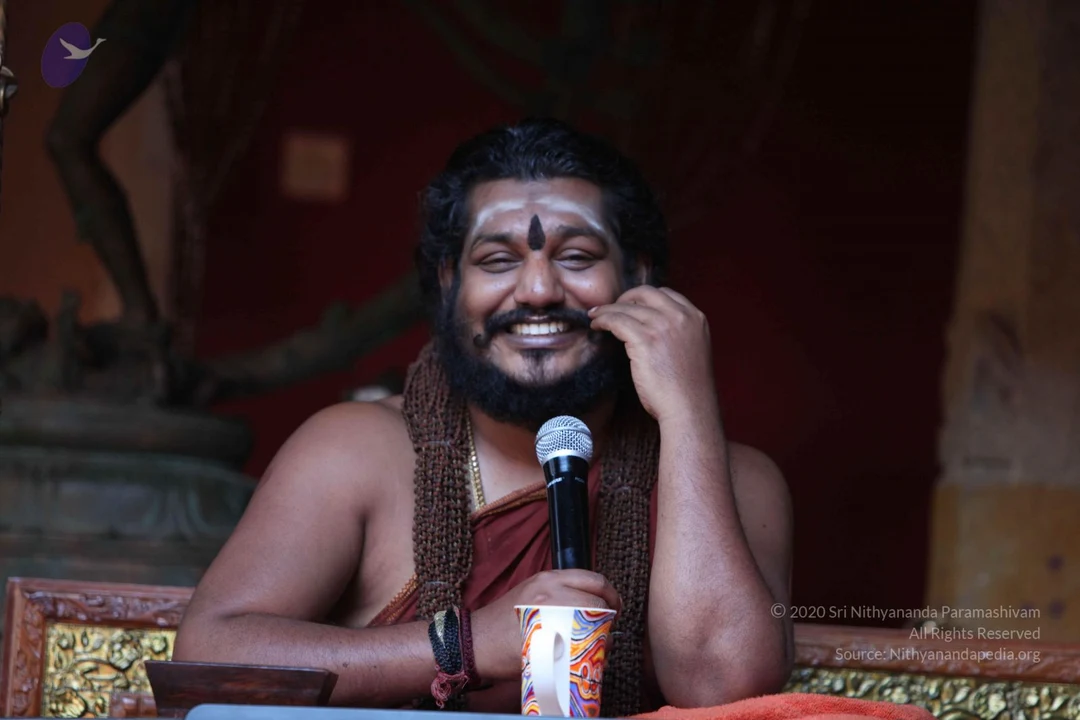
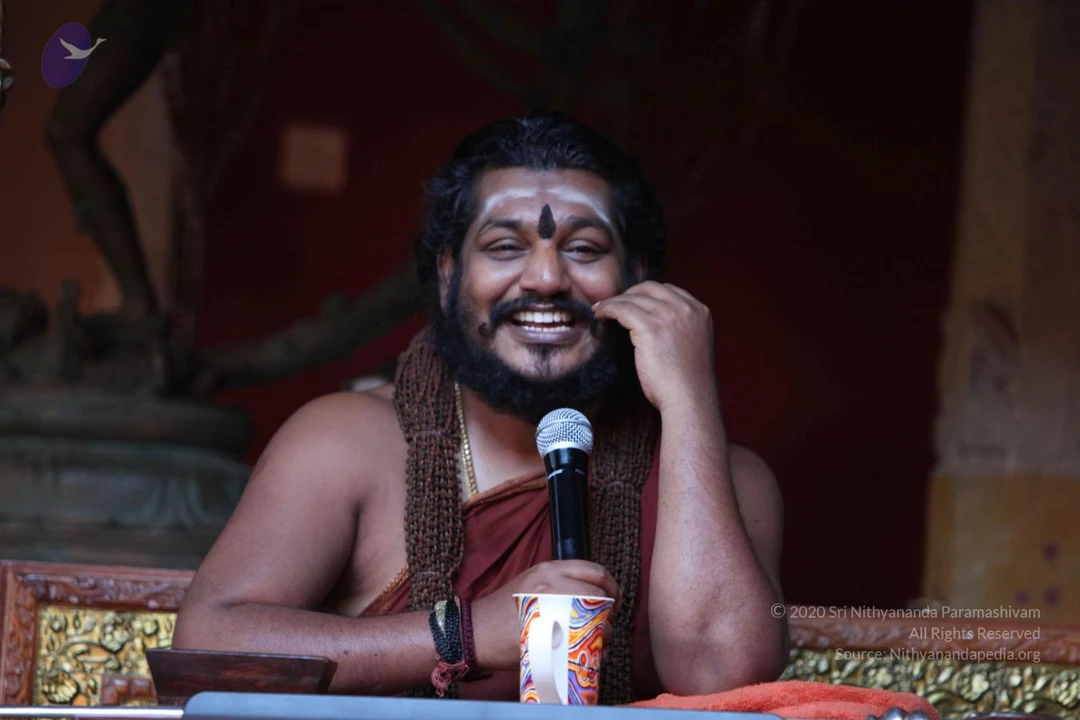
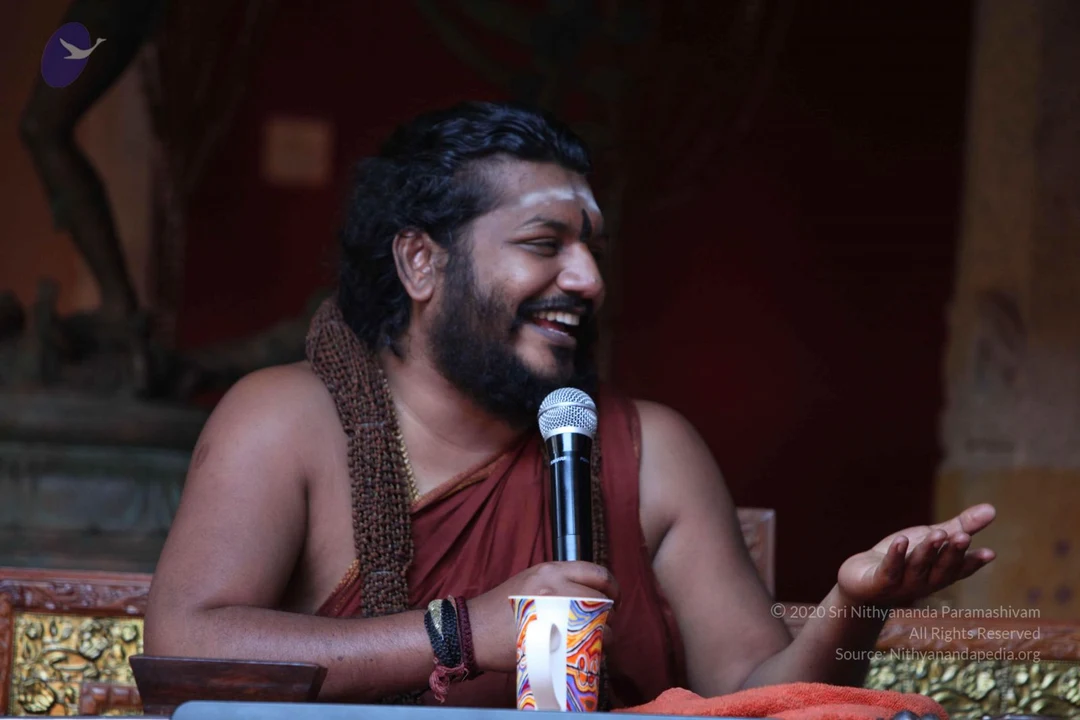
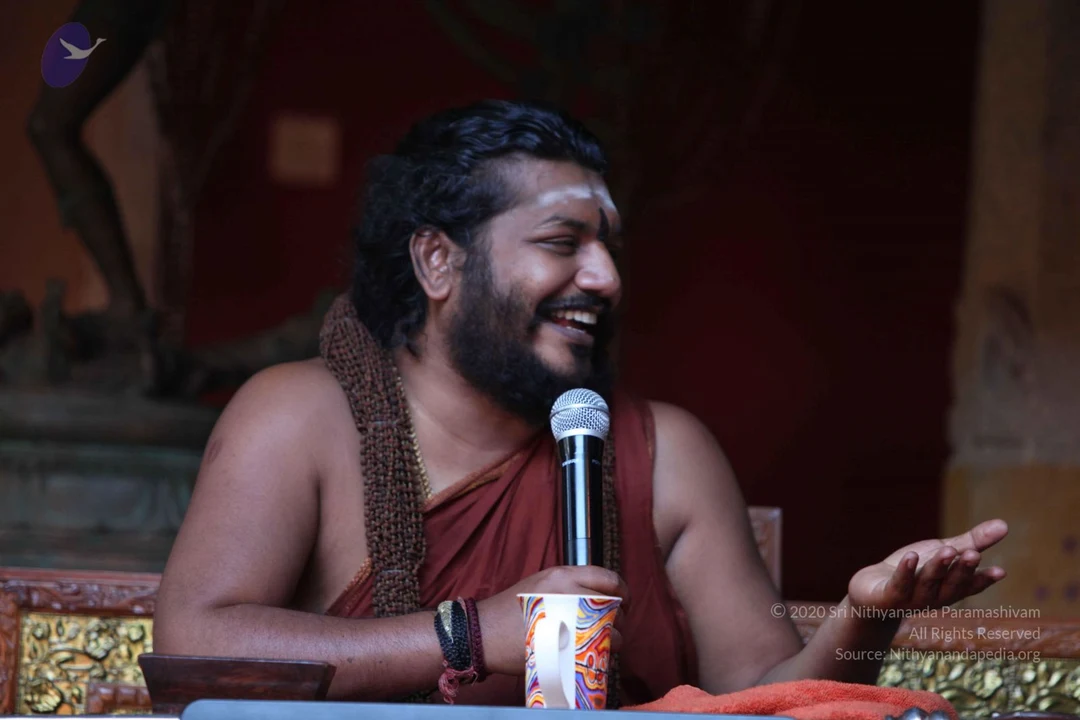
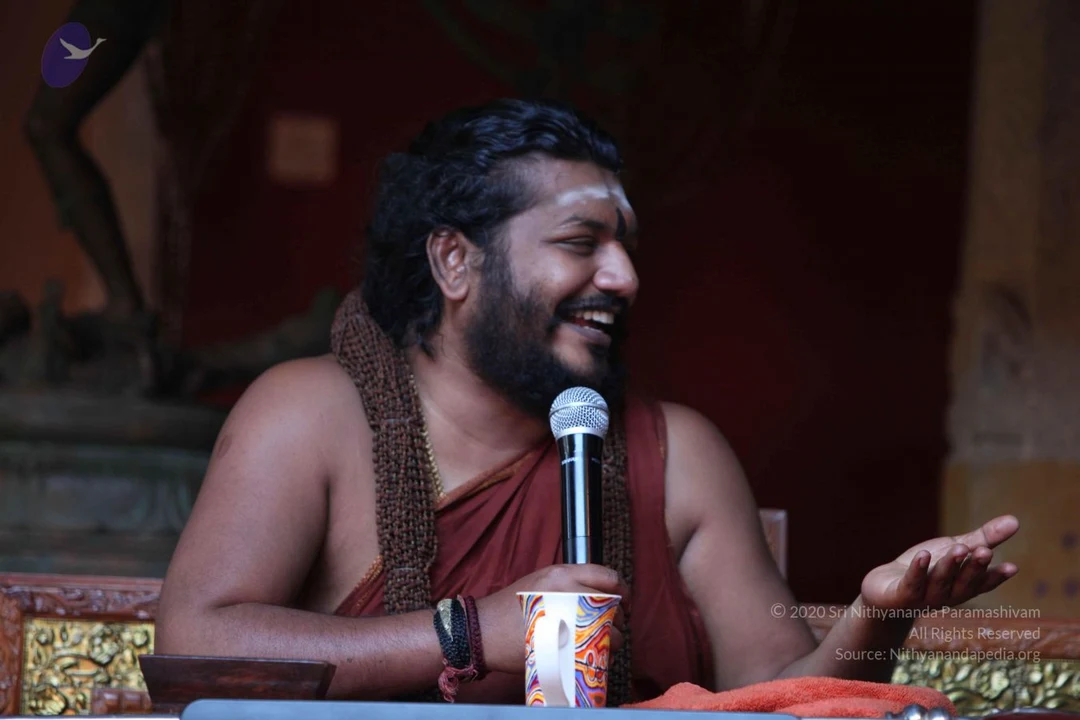
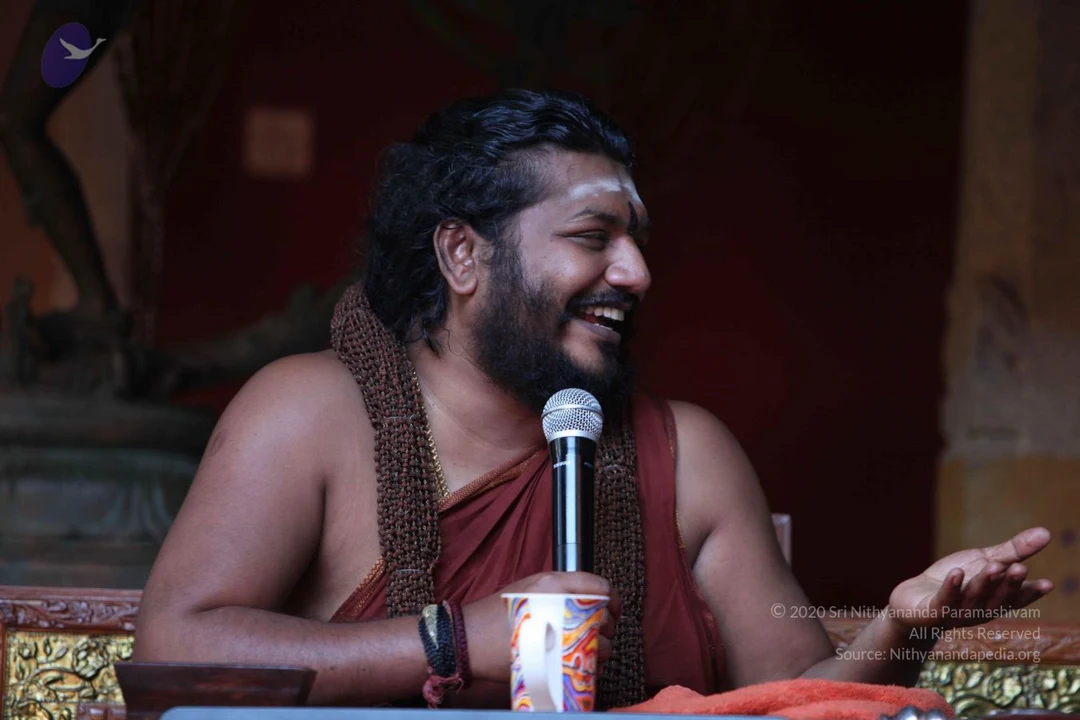
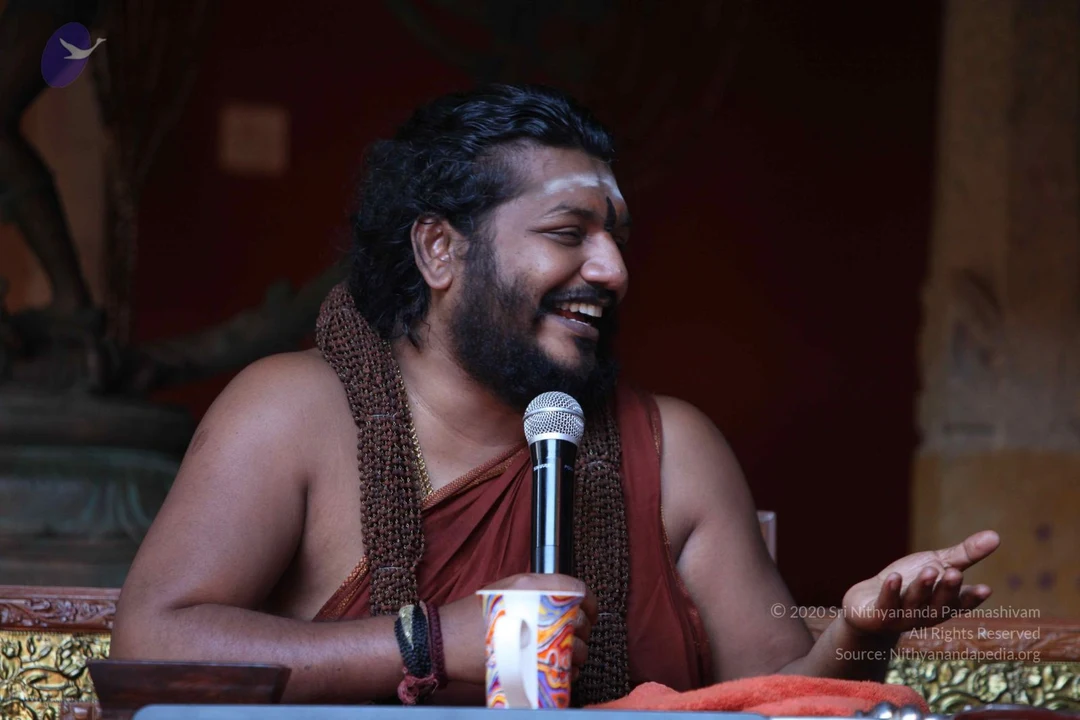
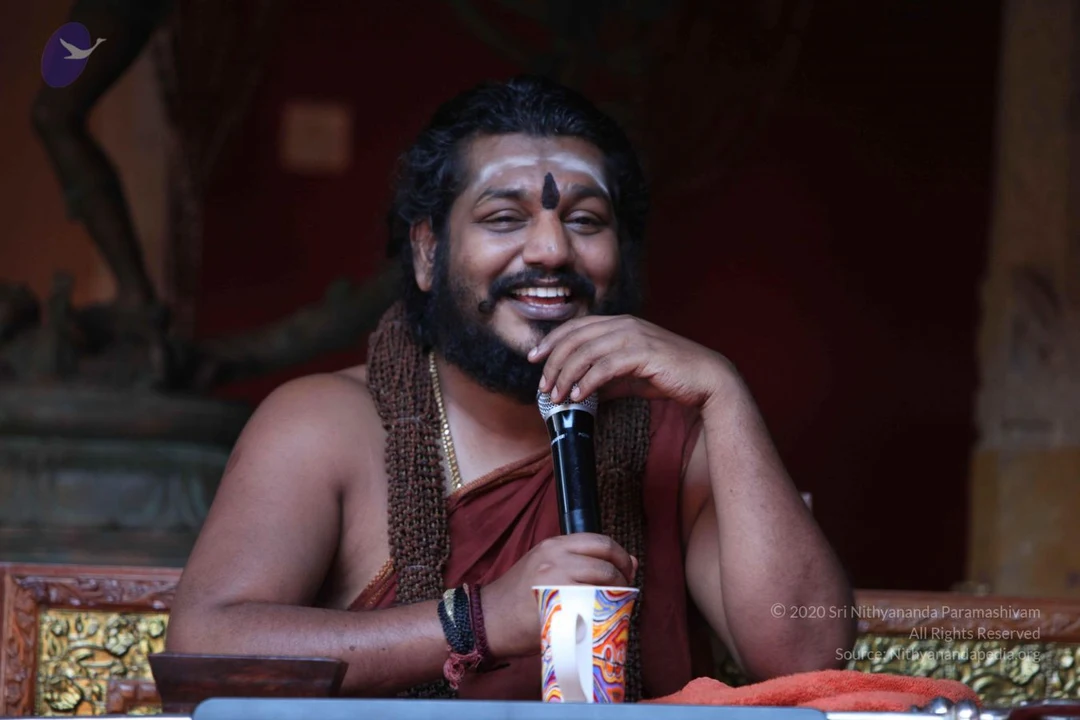
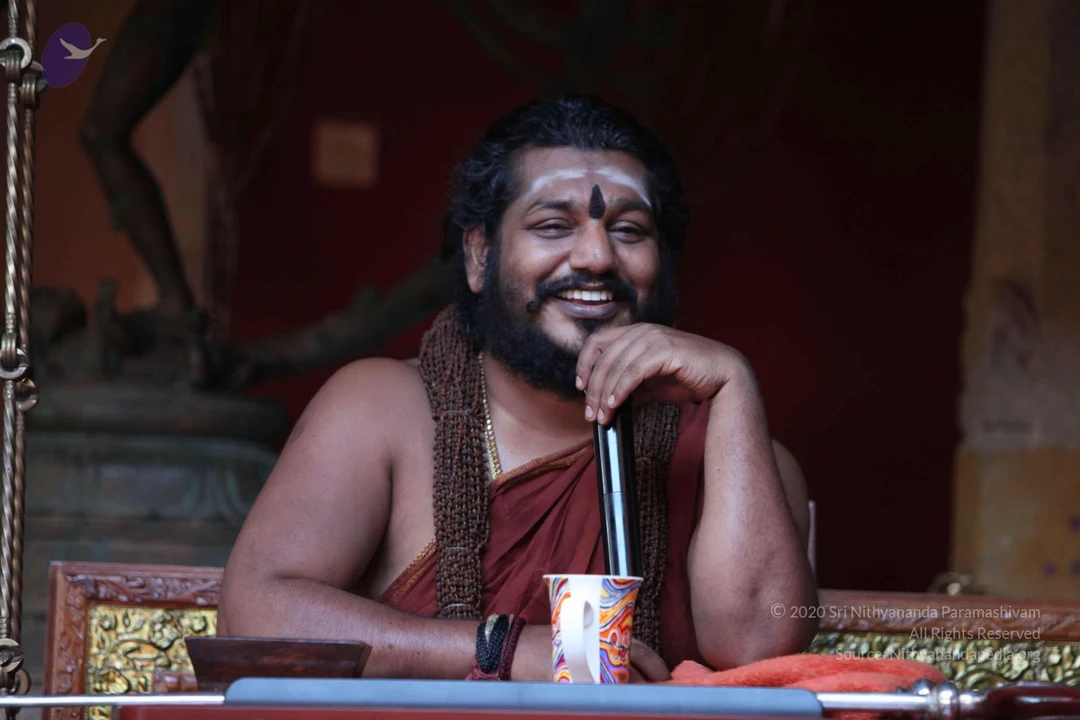
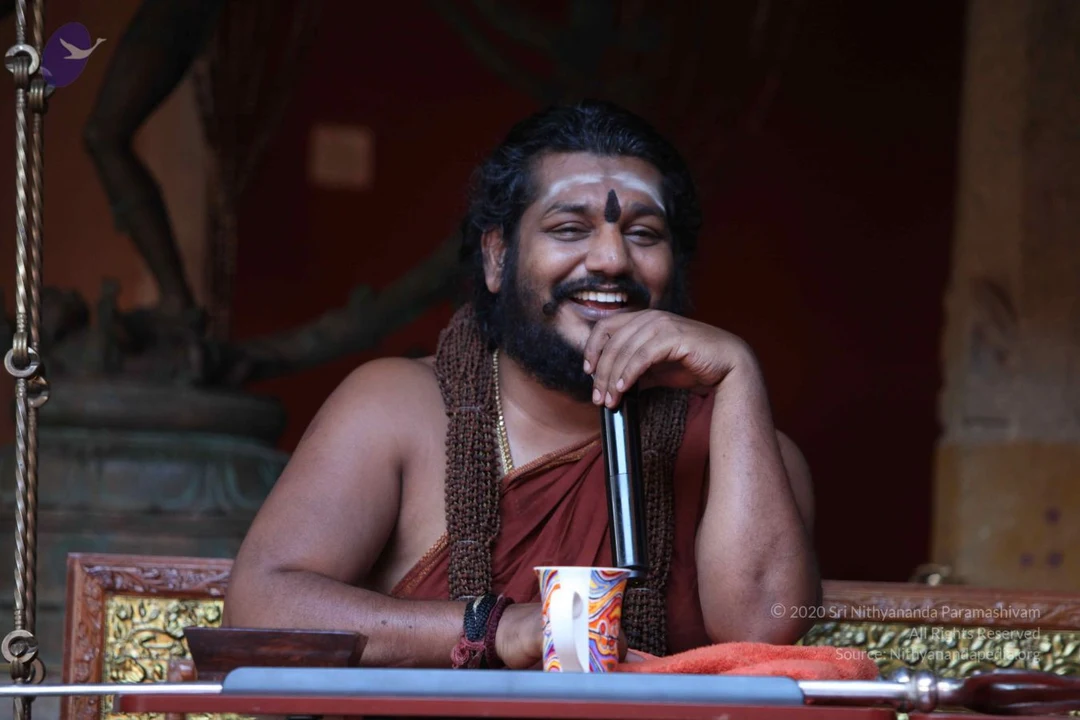
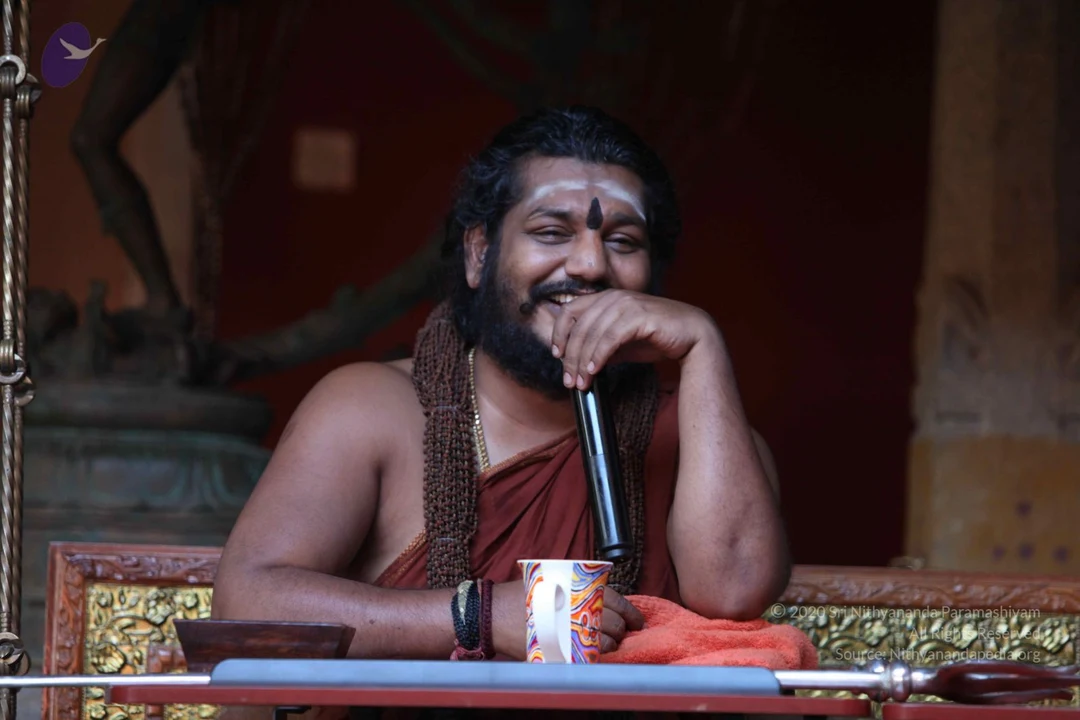
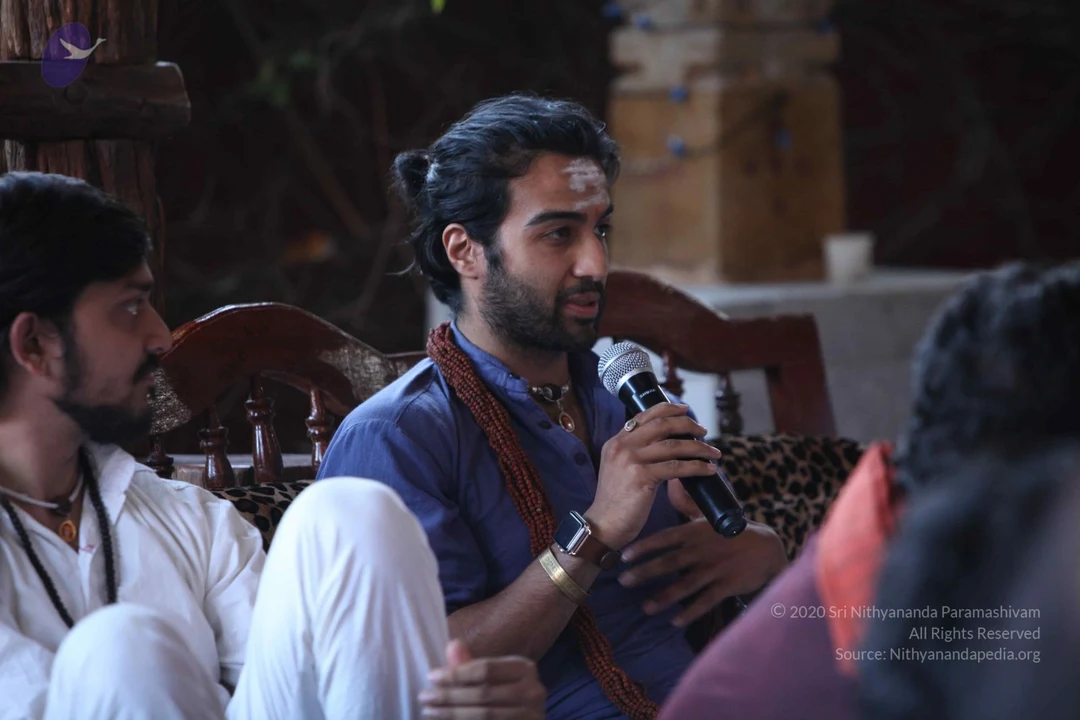
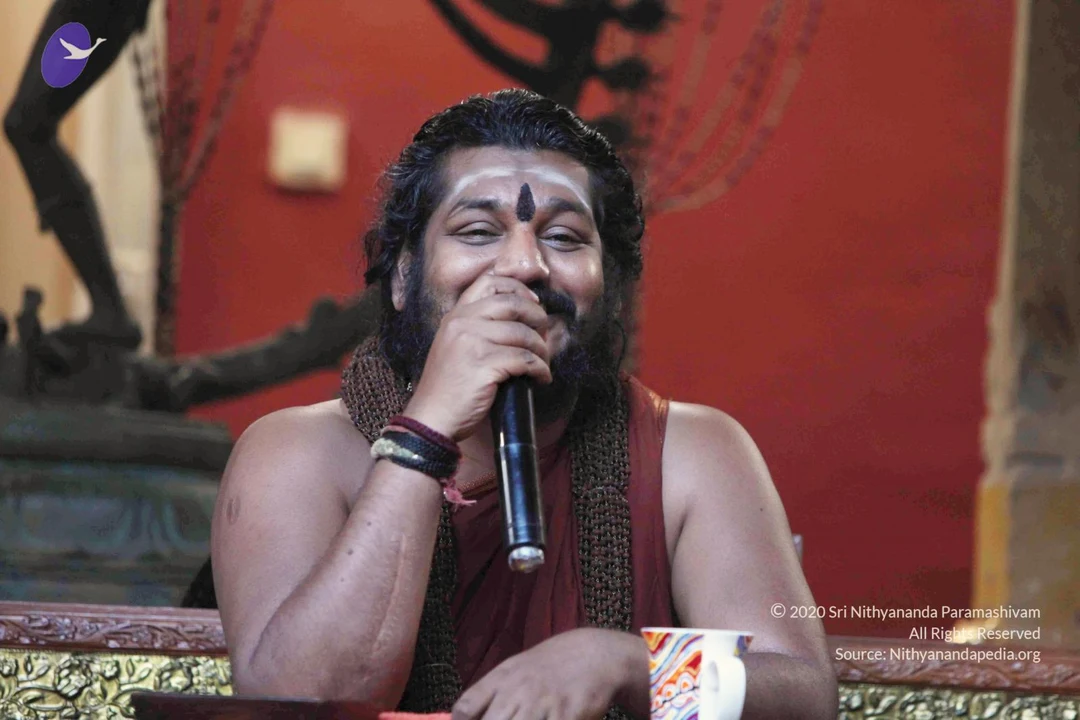
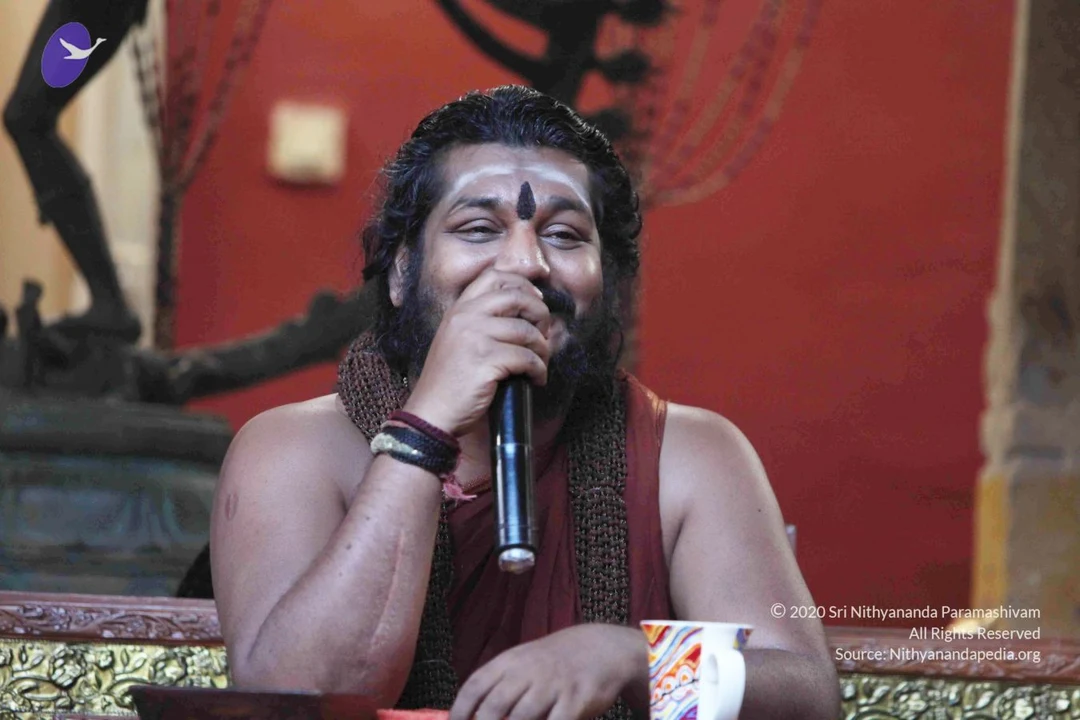
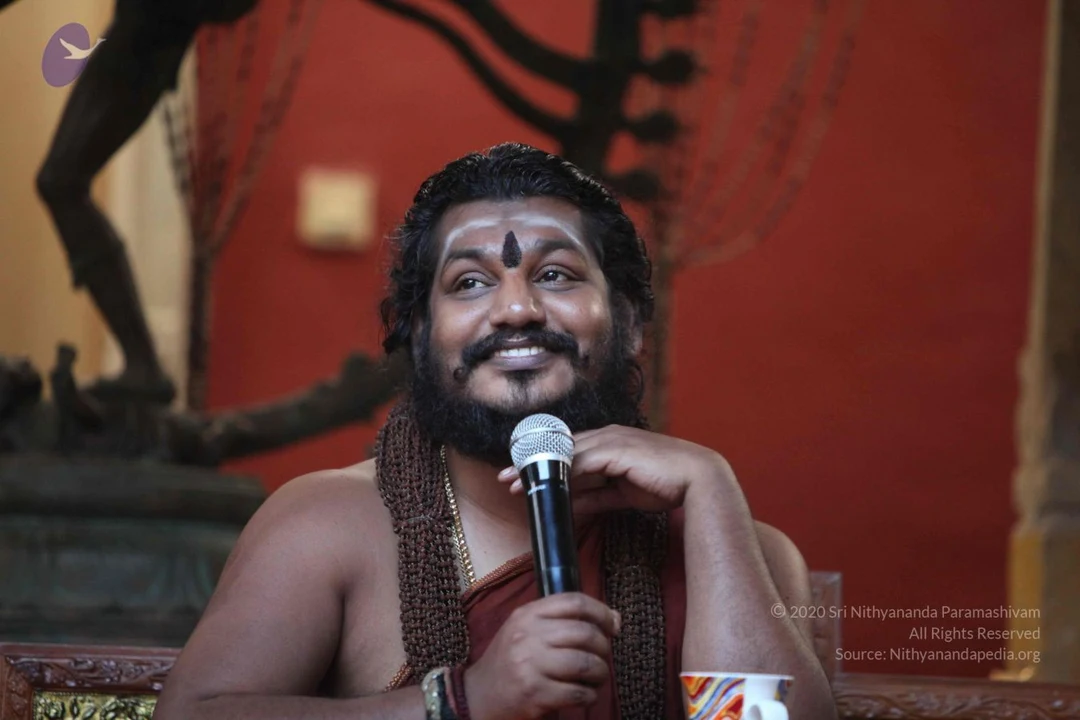
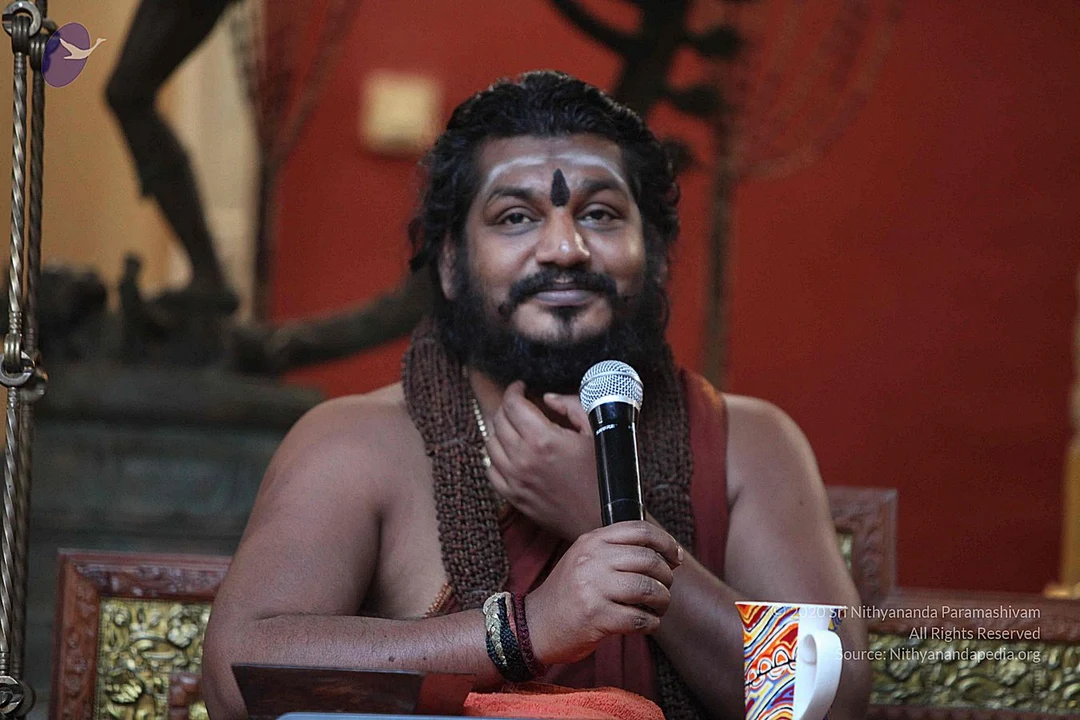
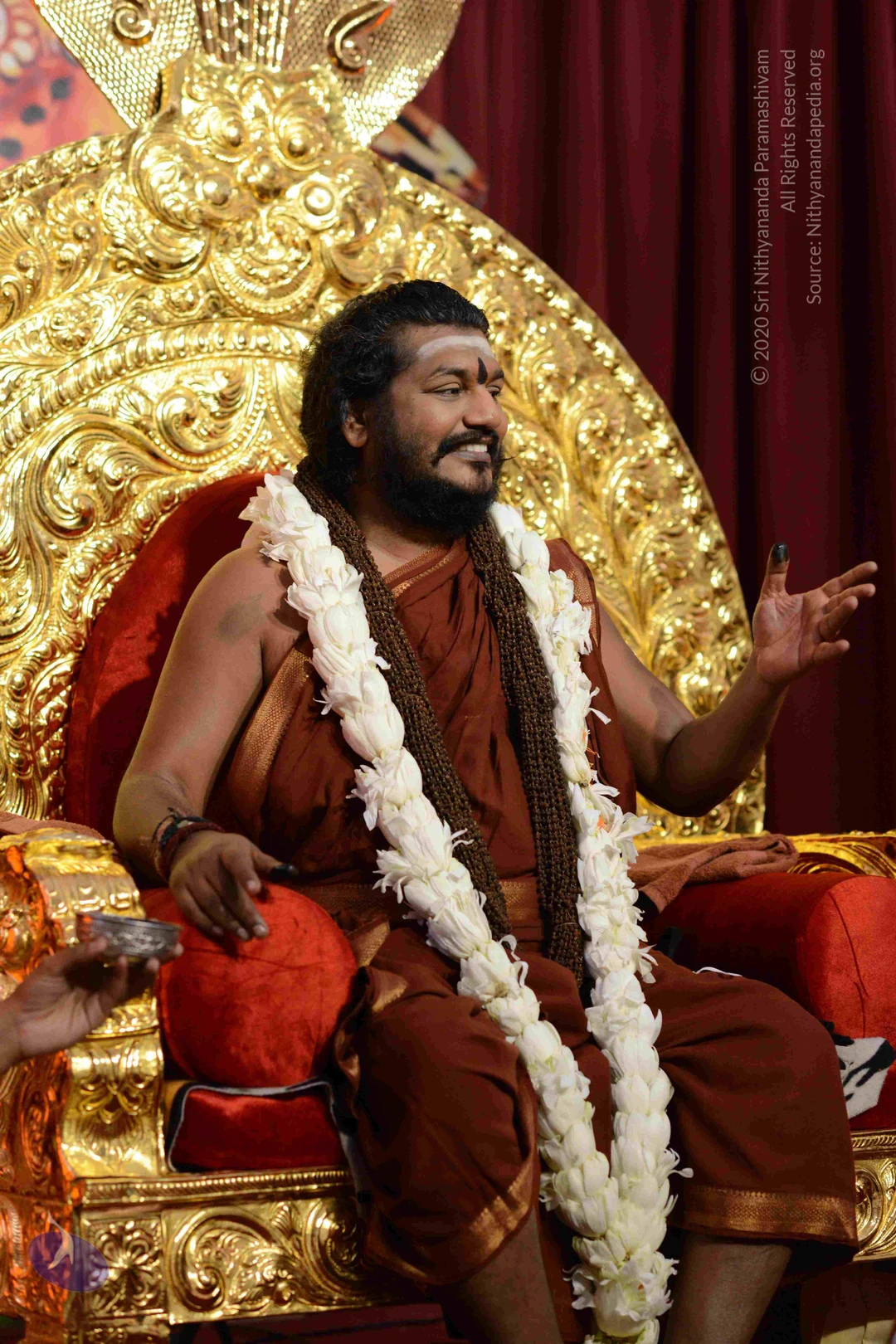
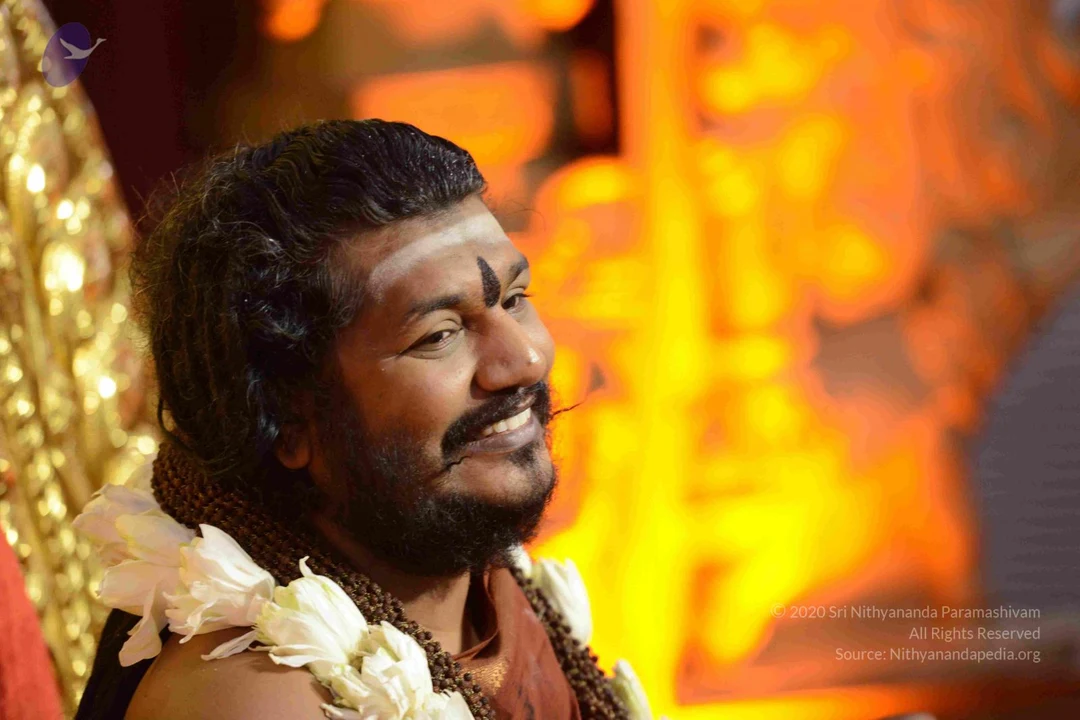
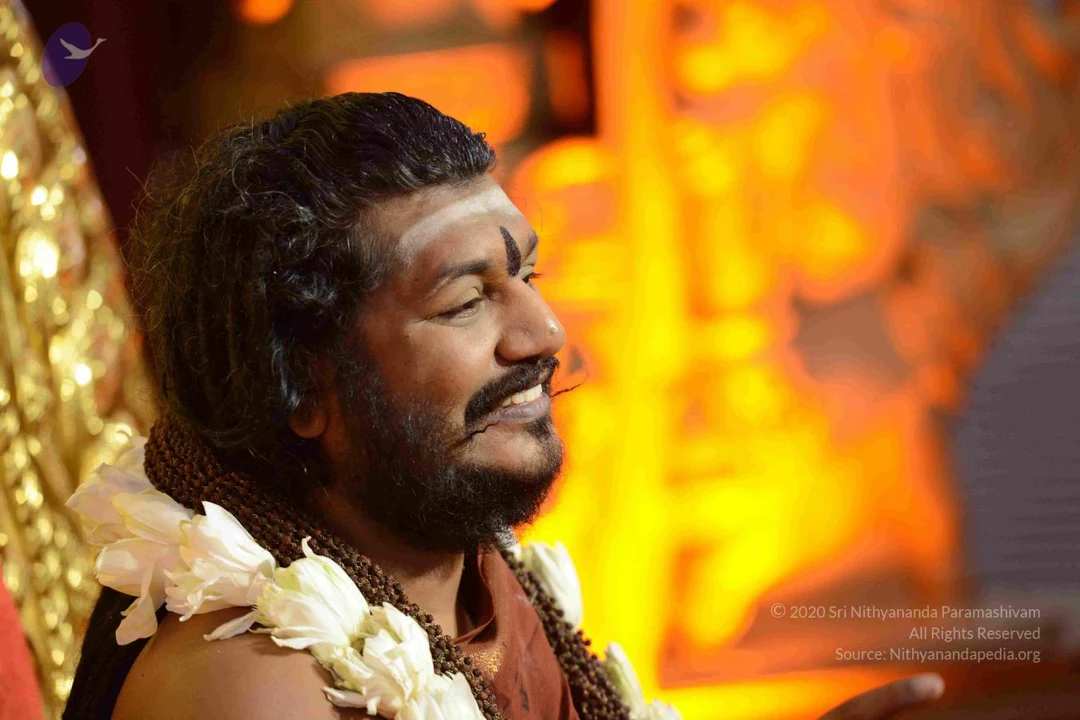
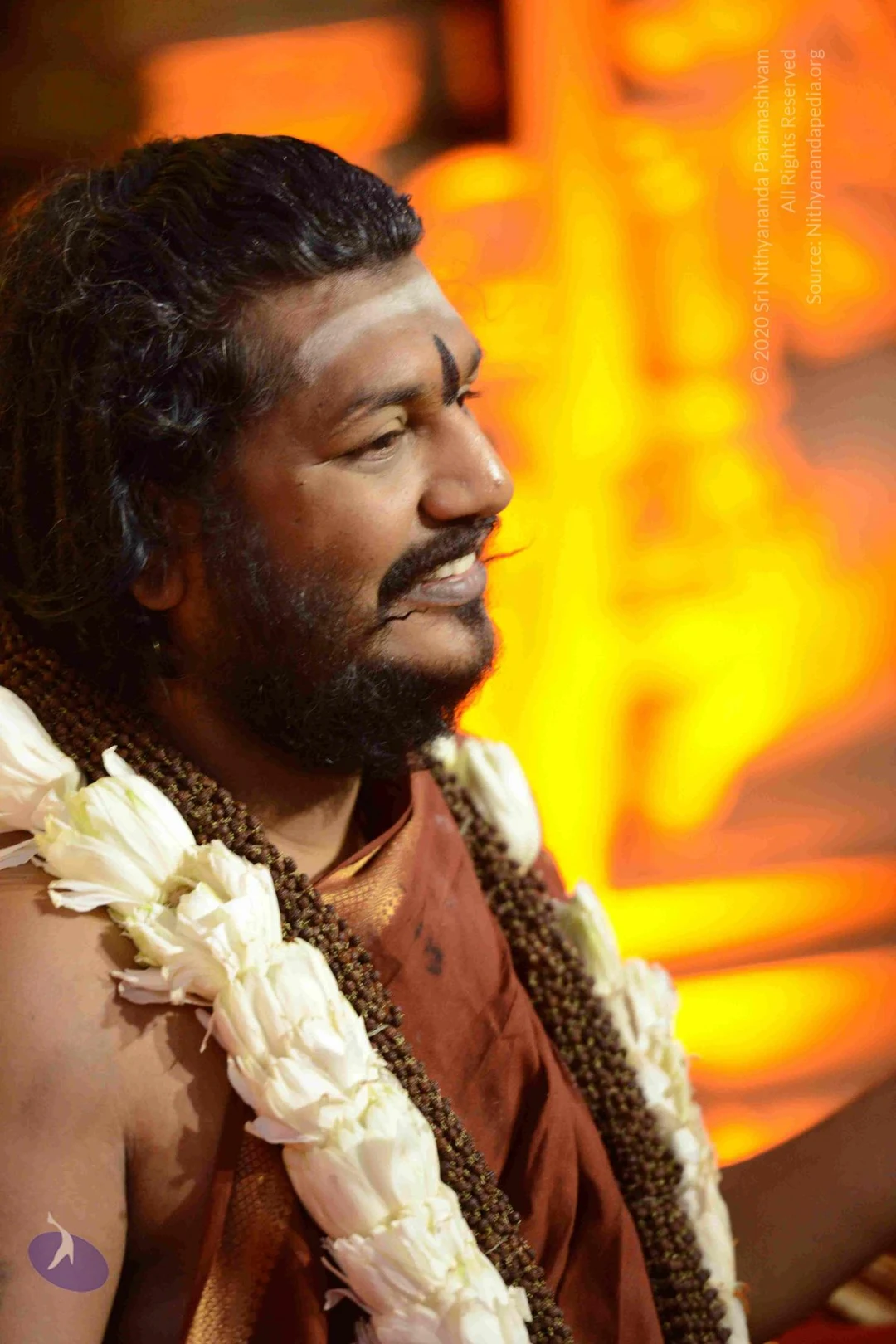
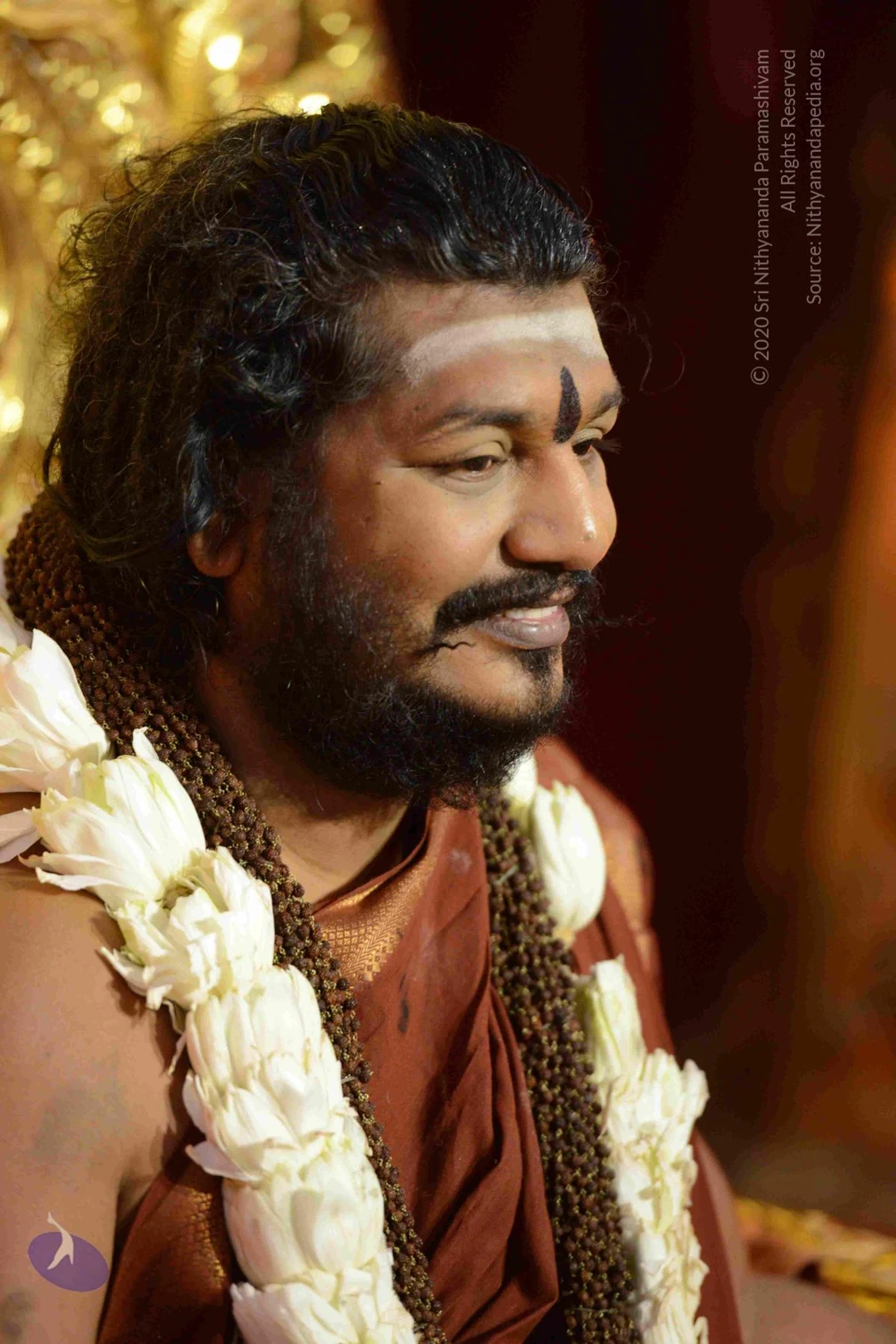
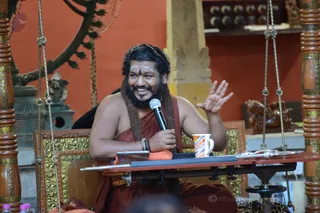
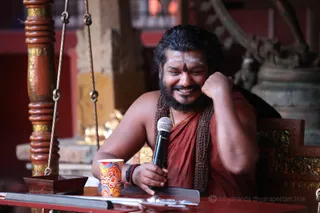
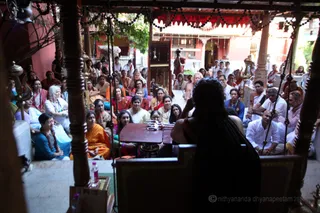
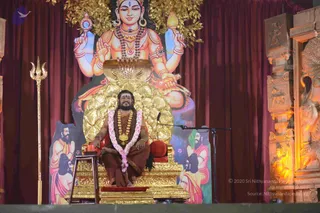
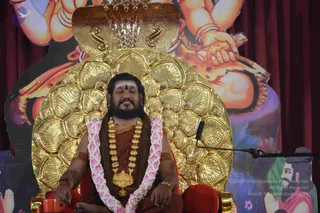
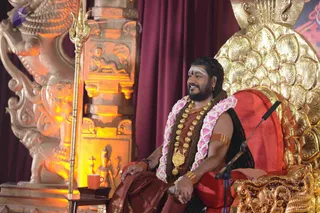
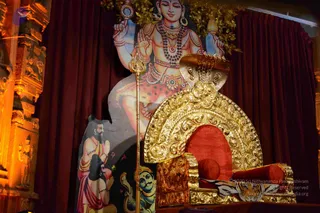
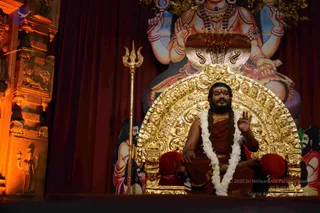
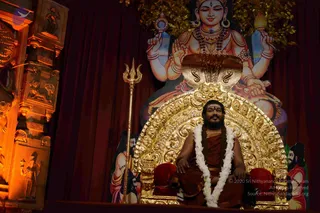
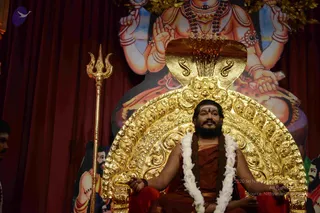
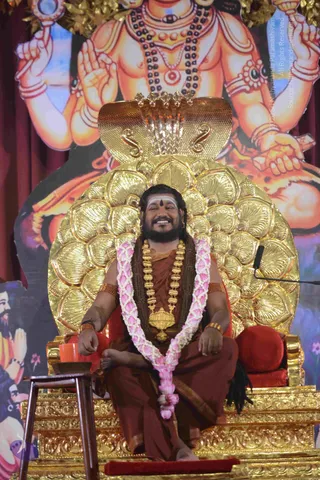
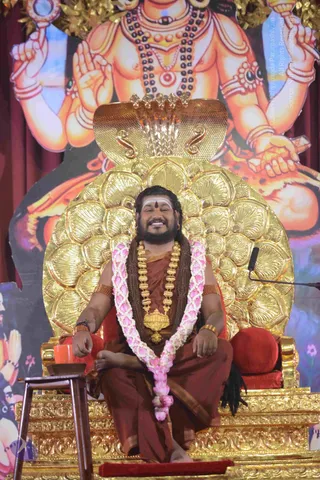
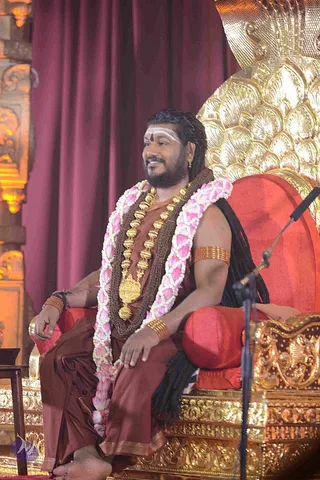
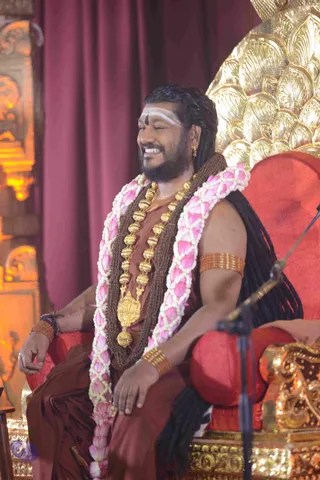
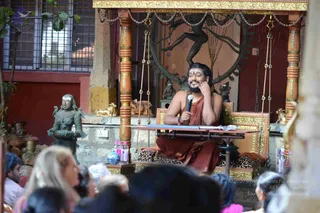
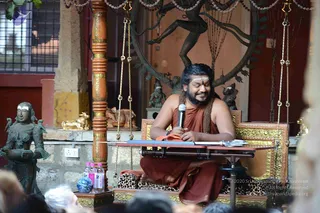
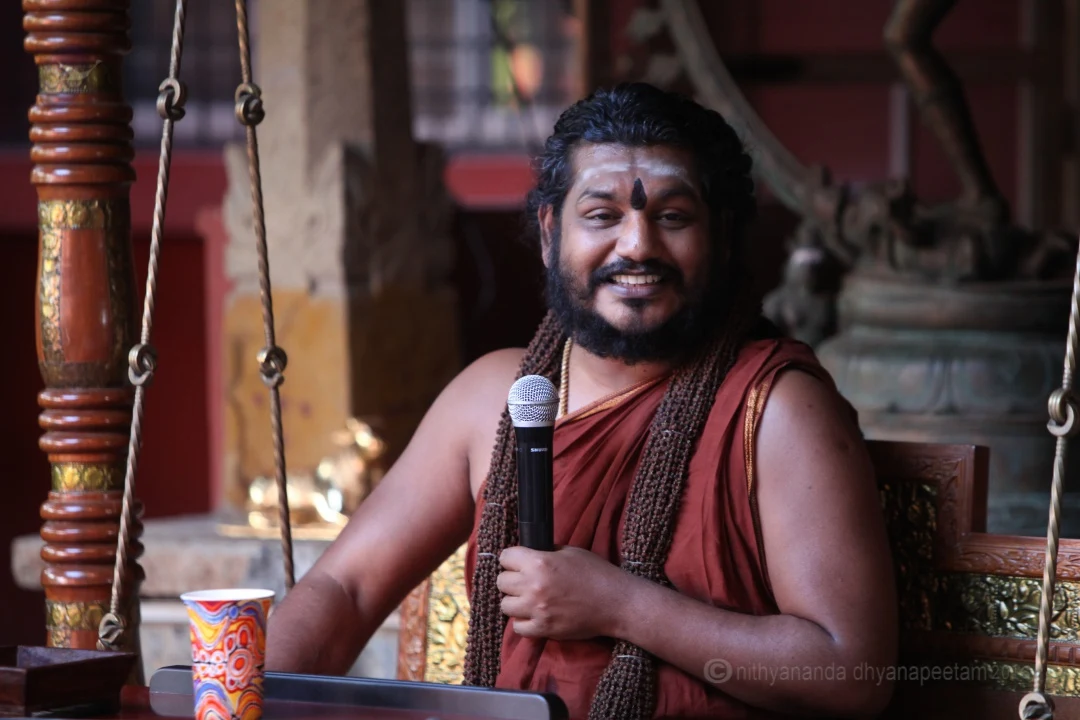
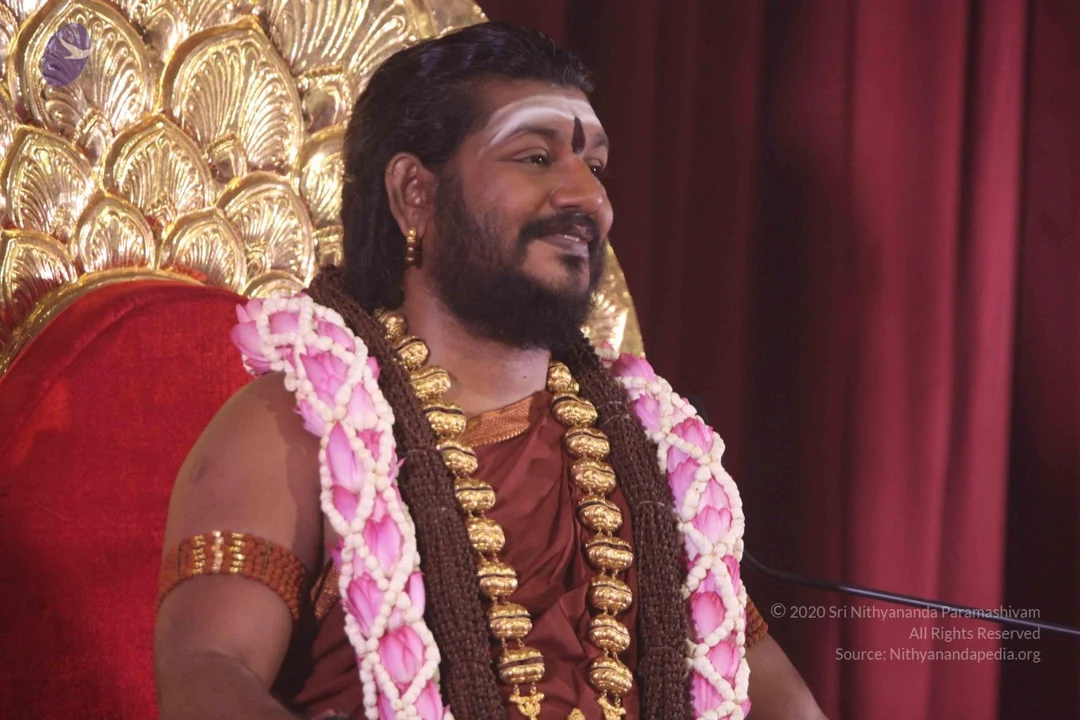
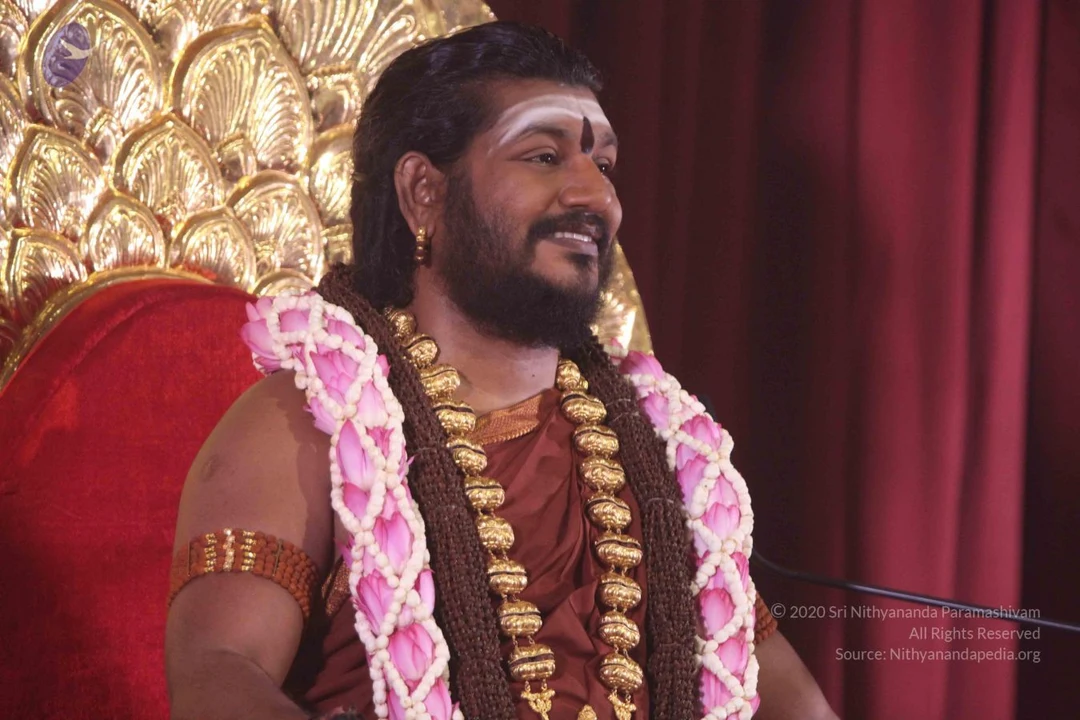
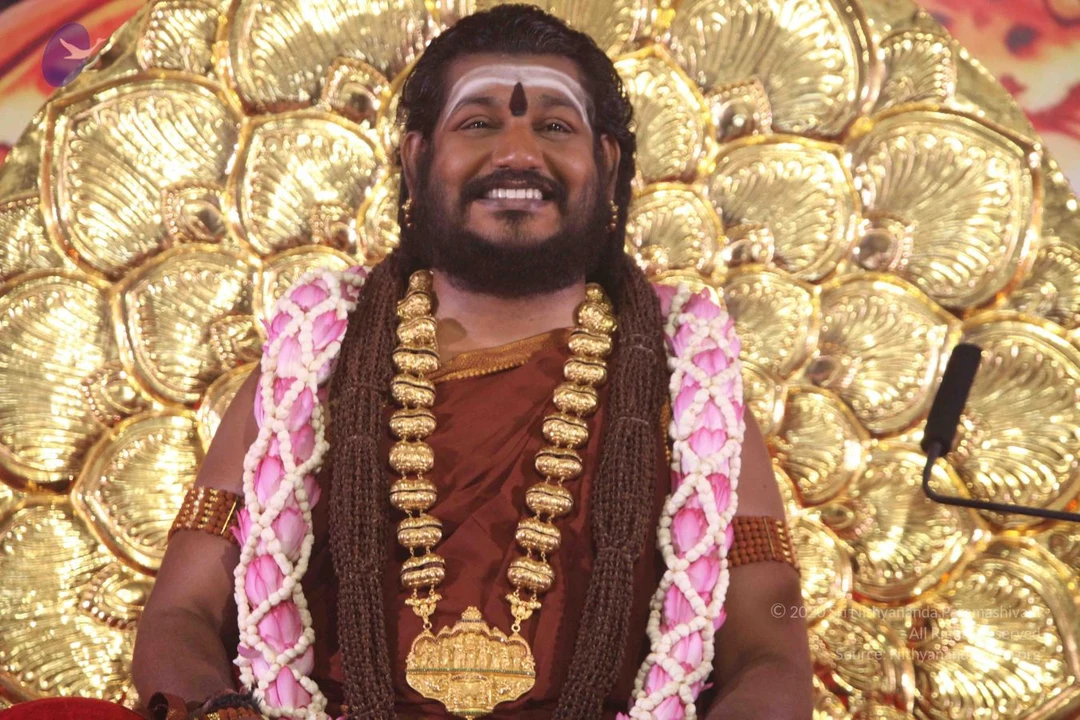
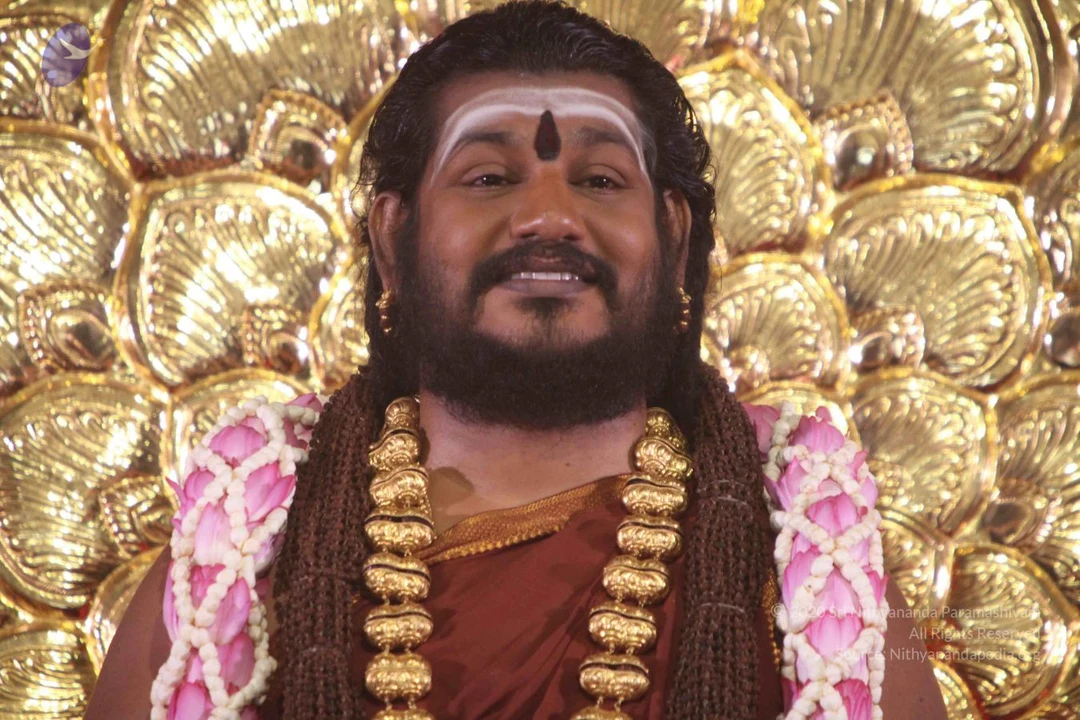
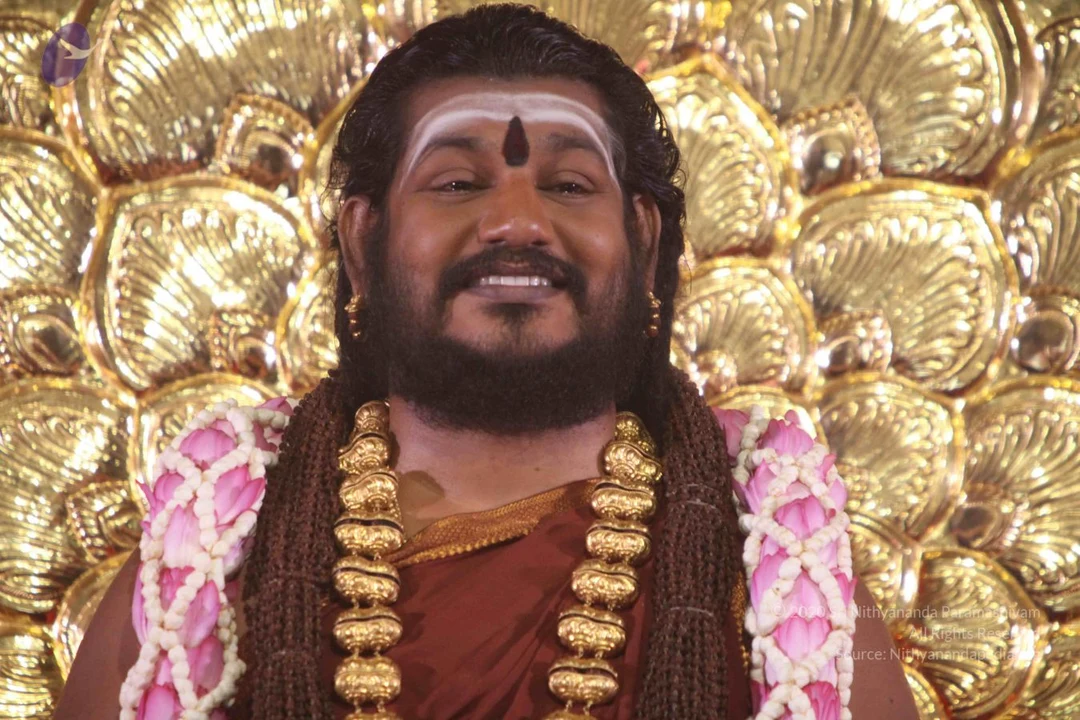
A photograph of a bearded man with long dark swept-back hair and a white tilak on his forehead, seated on a raised stage in a rust-red robe with a pink and white flower garland draped over his shoulders and a long gold and rudraksha-style necklace. He wears gold bangles and an earring, and smiles while looking to the side. A microphone stand is in front of him, and a small orange cup sits on a table at lower left. Behind him are ornate carved stone pillars and reliefs lit in warm orange light beside red drapery.A man with long dark hair and a full beard sits on an ornate gold and red throne, wearing a reddish-brown robe with a gold border and a gold-embossed pendant. Long rudraksha-style beaded malas and a multi-strand gold chain hang from his neck, with a white-and-pink flower garland draped over his shoulders and gold armbands on his upper arms. A white tilak marks his forehead. Behind him stand carved stone pillars with warm lamplight, a deep red curtain, and a microphone stand is in the foreground. The scene appears to be a satsang or discourse stage. Swamiji (probable): the seated man wears long swept-back hair, a tilak, rudraksha malas, ceremonial gold necklaces and saffron-toned ornate clothing, seated on a throne as the speaker.A seated man in an ochre-orange robe with a brown shawl draped over his shoulders smiles while holding a handheld microphone, a tilak marked on his forehead and long dark hair swept back. He sits on a gilded, ornately carved wooden throne with a golden canopy hung with bead chains, a leopard-print cushion beneath him and a small wooden stand with a book in front. Behind him a bronze Nataraja dancing figure within a flaming arch is visible, with a bronze Ganesha-like figure and a bronze seated figure on a low wall to the side. A bronze female figure stands at the left edge holding a bowl, and a gilded bull figure rests nearby. Water bottles sit on the floor at lower left. Behind the man a faint seated audience is partly visible at the bottom edge.

October 01 2016

Original wiki page
Contents

Title

Welcoming Nithyananda Yogam participants and details of Swamiji's profound experiences with Arunagiri Yogeshwara, Sadashiva himself

Description:

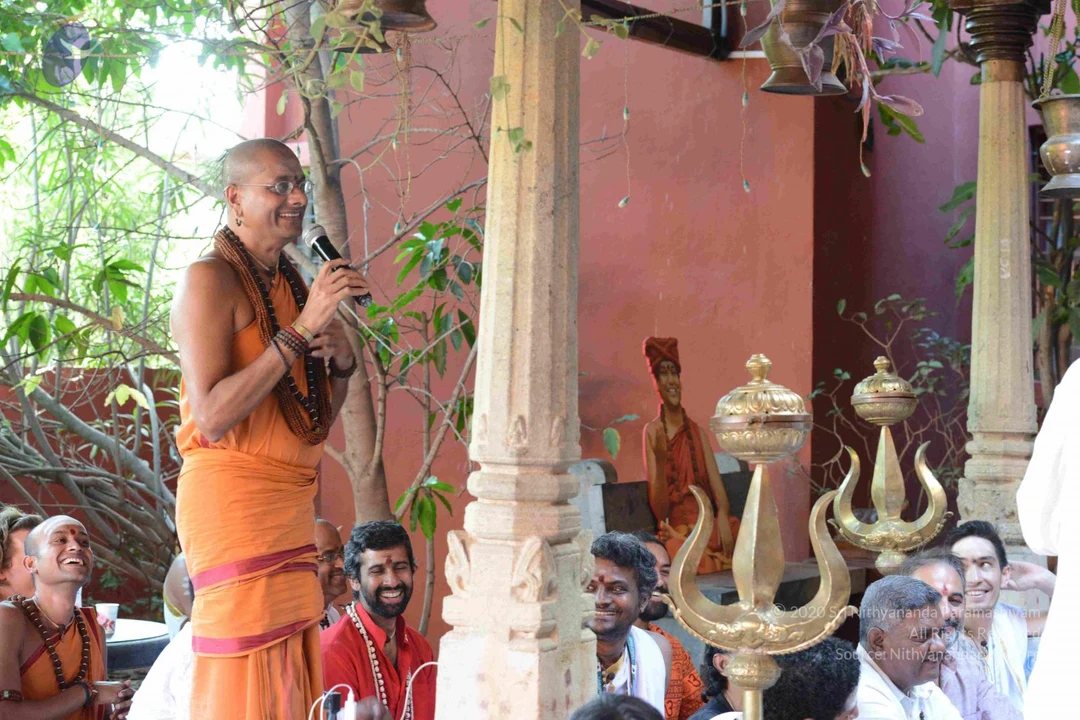
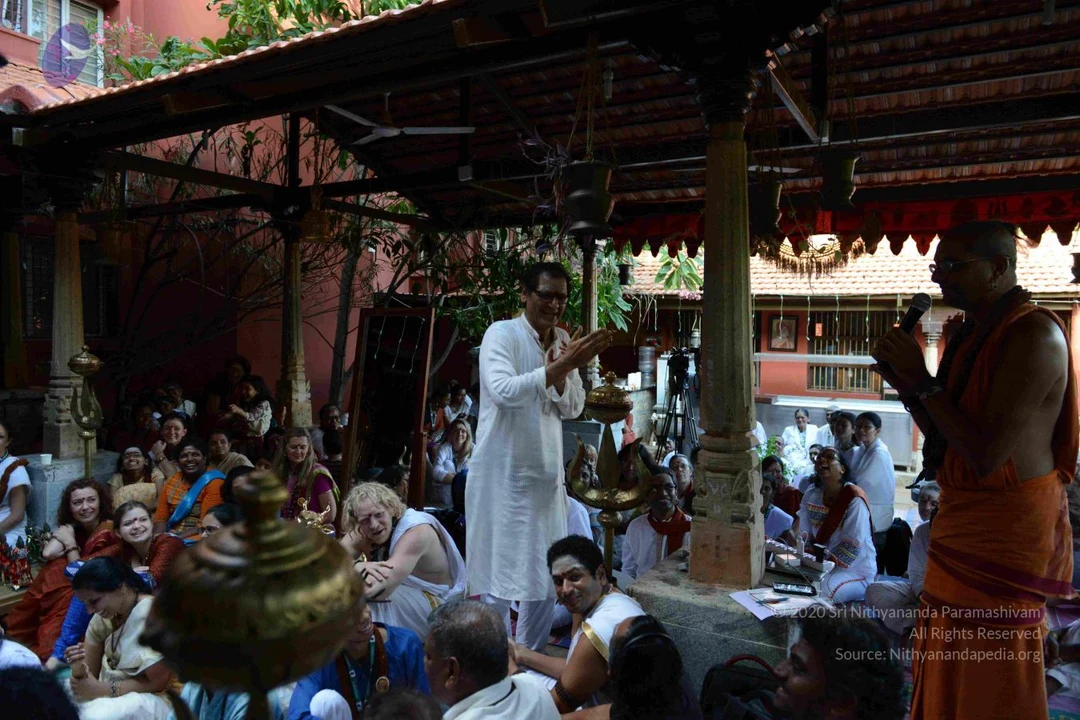
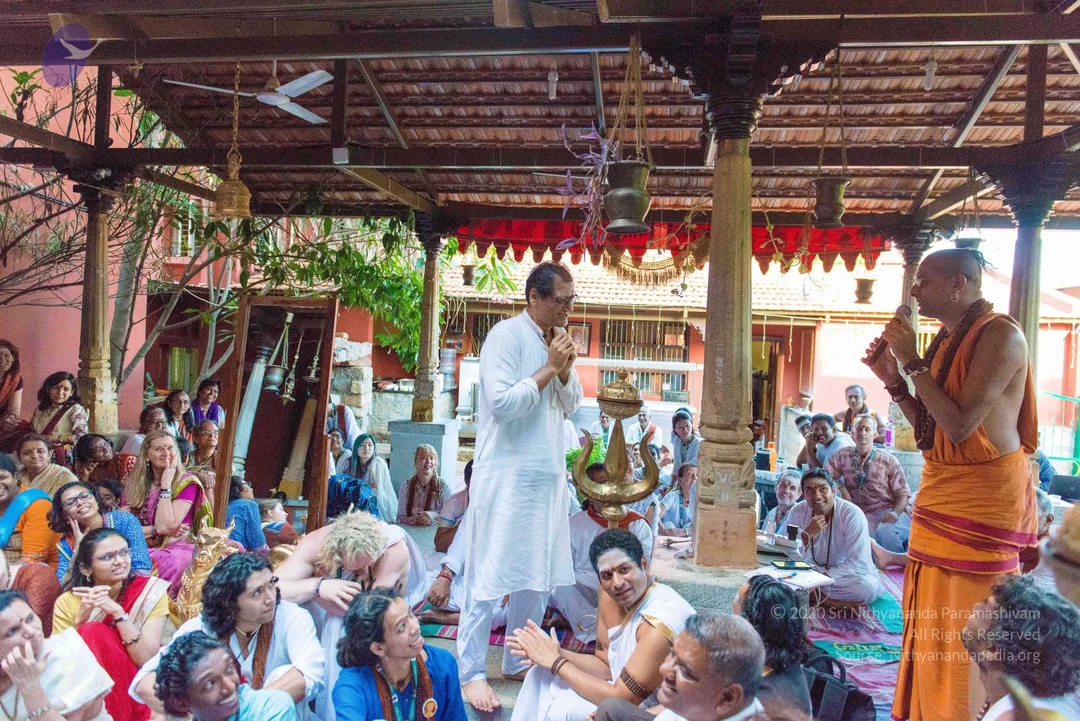
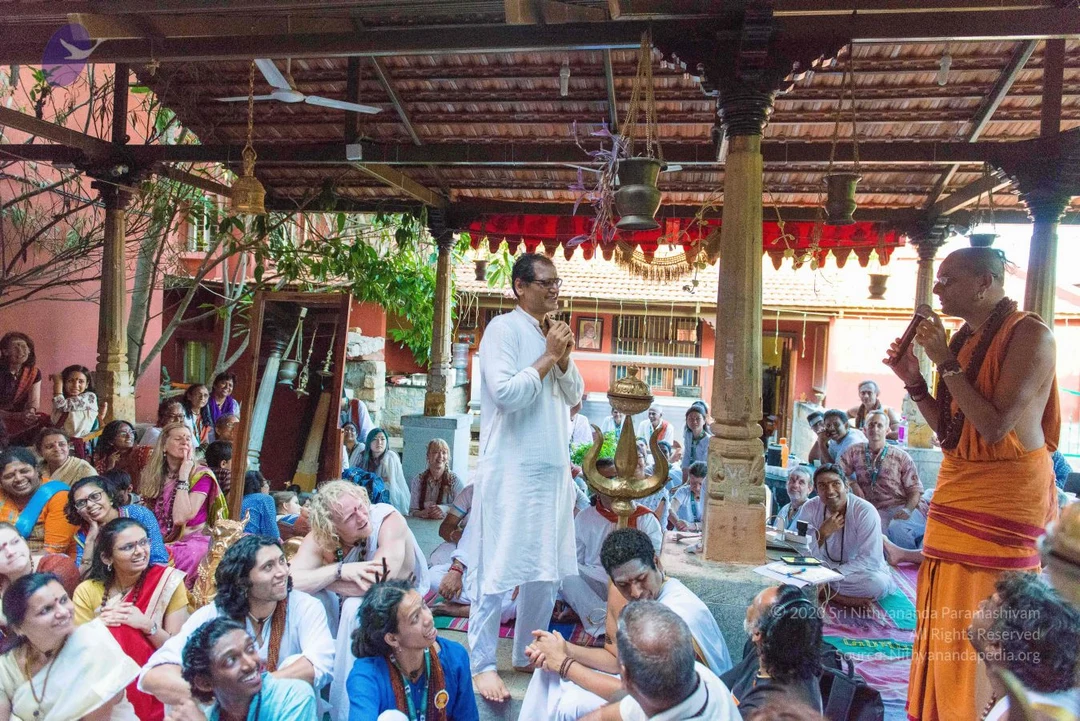
During today’s morning Satsang, His Holiness Paramahamsa Nithyananda welcomes the next batch of Nithyananda Yogam participants who have just arrived at the Aadheenam. He goes on to reveal the deeper more intimate details of his profound experiences with Arunagiri Yogeshwara, Sadashiva Himself, and blesses all the Nithyananda Yogam participants to live in that Space."

Link to Video:

VideoAudio

Transcript:

Nithyānandeśvara samārambhām Nithyānandeśvari madhyamām | Asmadāchārya paryantām vande Guru paramparām ||

I welcome all of you with My love and respects. I welcome all the Devotees, Disciples, Samajis, Satsanghis, Sri Mahants, Mahants, Kotharis, Thanedars, sitting with us all over the world, through Nithyananda TV, Facebook Live, YouTube Live and through Two Way Video Conferencing having Nayana Deeksha.

(1.18)

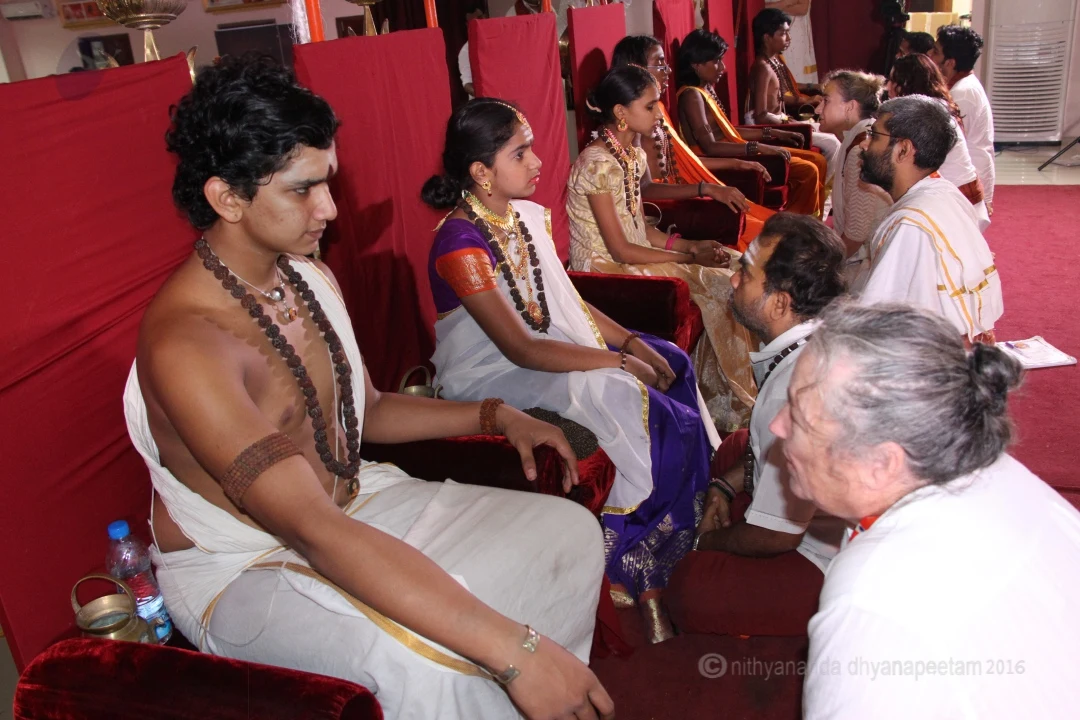
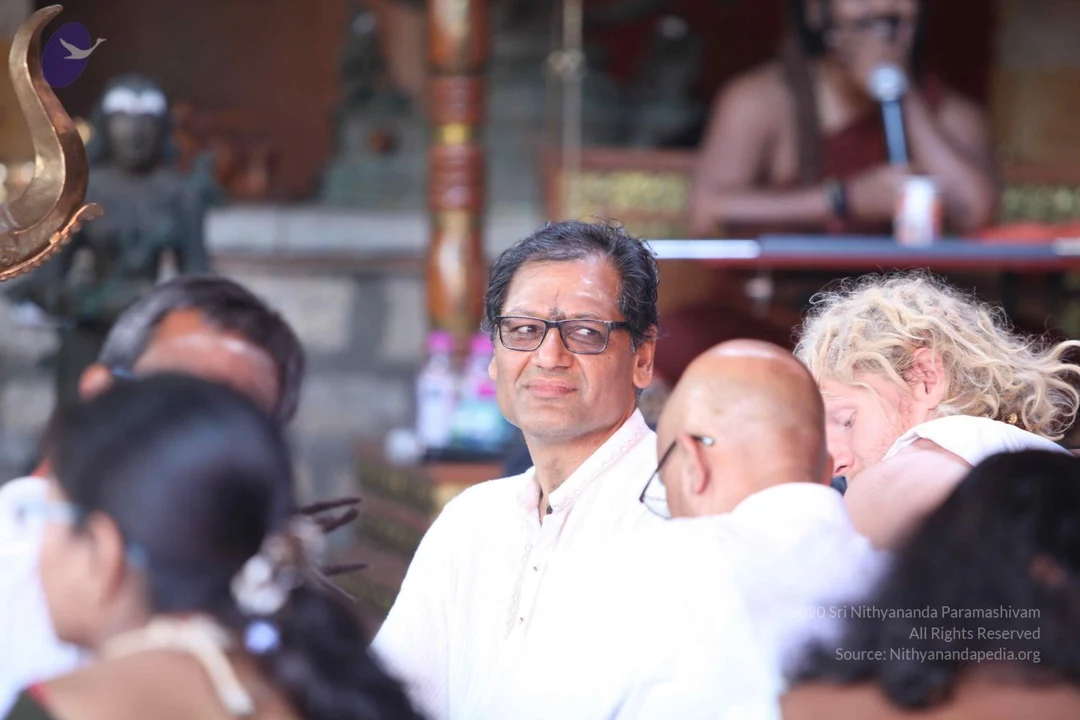
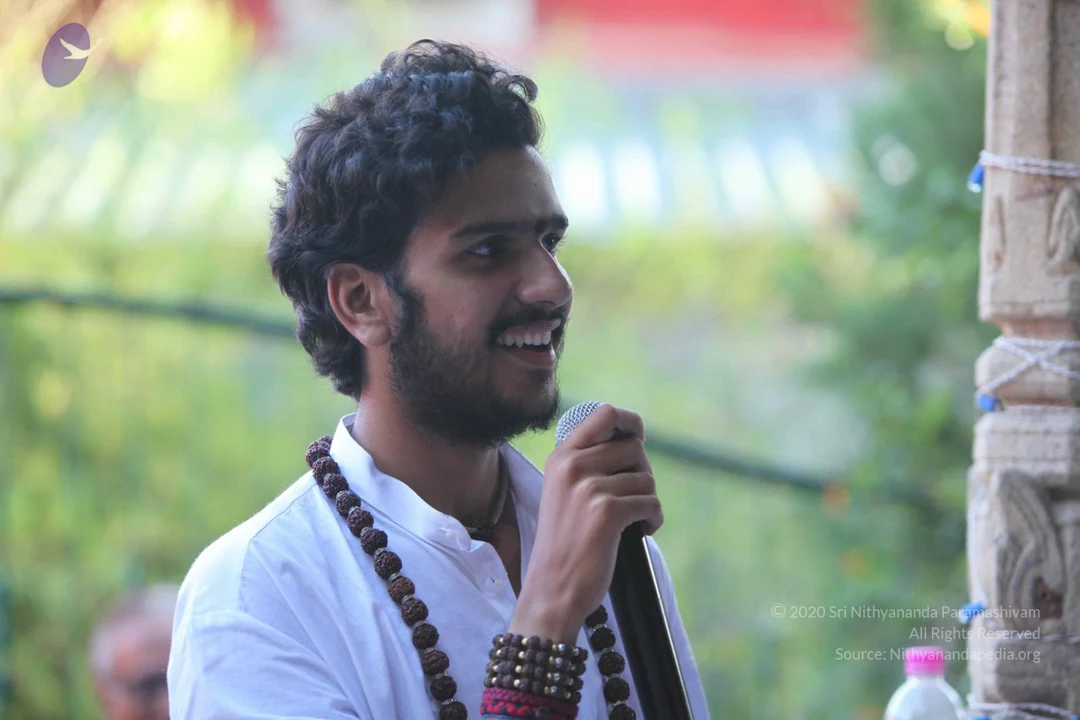
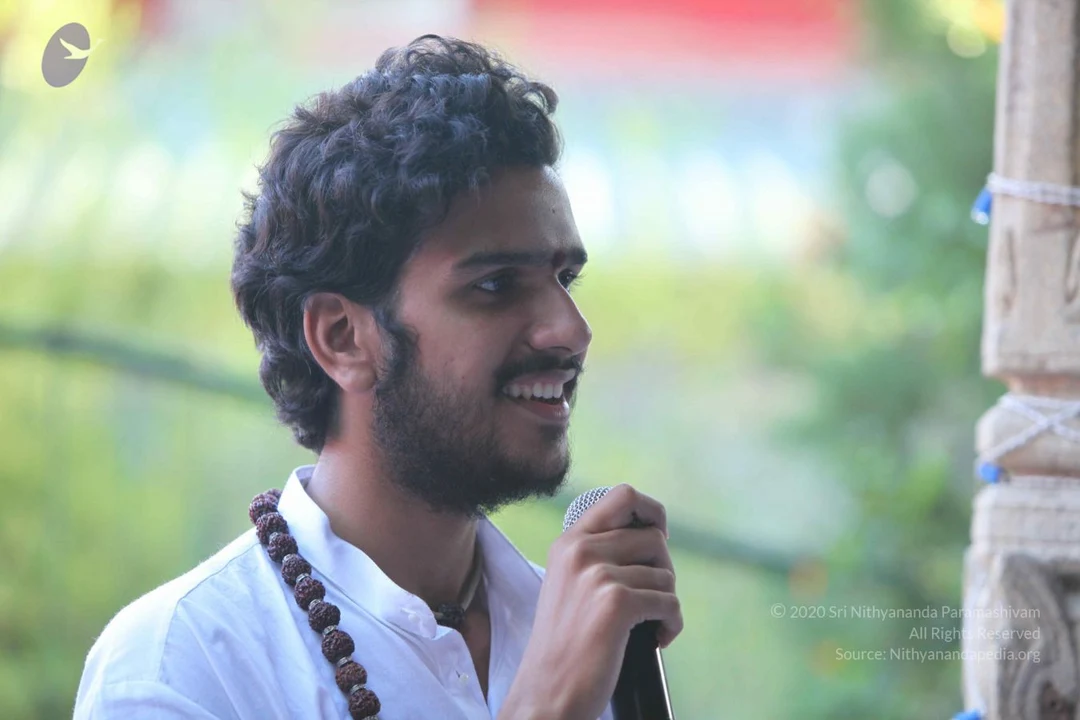
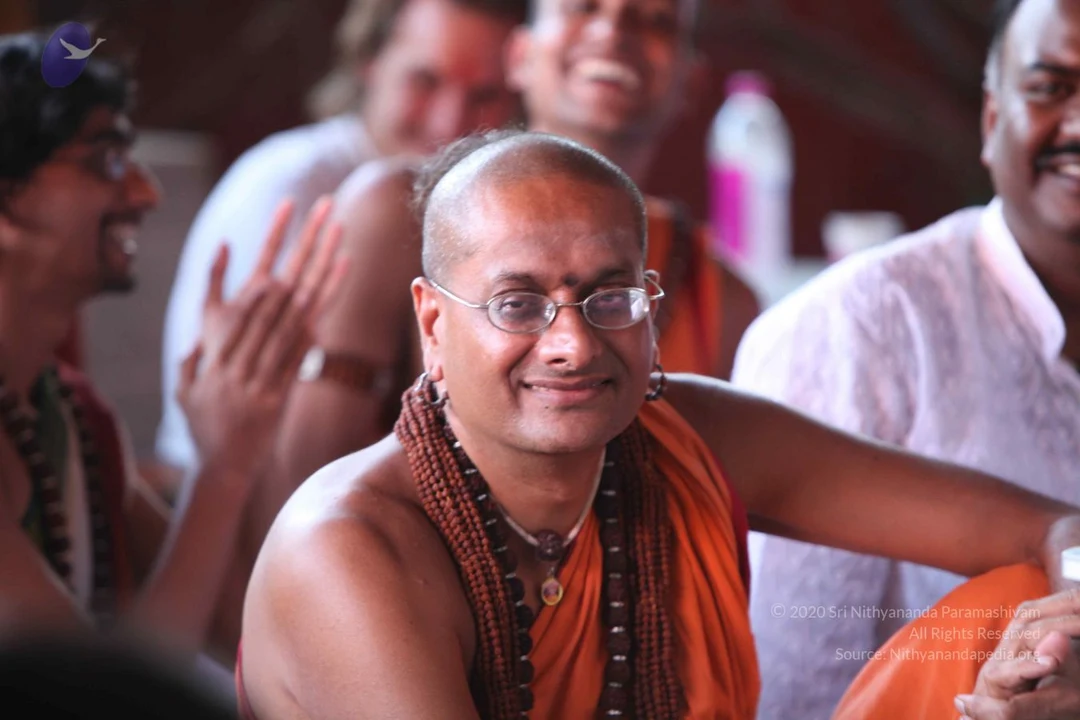
First thing, I welcome all the Nithyananda Yogam Participants—the participants who have been invited. To tell you honestly, personally handpicked. Only 102 were handpicked, from the database of 17,000. The 17,000 was the database, presented to Me and 102 were handpicked and 90 of you have made it. Welcome home! The purpose of the Nithyananda Yogam is - what I experienced with Arunagiri Yogishwara, I want all of you to experience that. I did not have a structured class with Him, but it was a no break Inner Awakening. It was literally no break Inner Awakening. Only one thing I have not seen - He going for 1,2,3, I have not seen, that’s all. And I am very sure because of Divya Sharira, He does not have. Other than that, I have seen everything. It’s literally 24 hours, life with Him. His classes when He teaches, if He talks 10 word, at least 10 terabytes material will be downloaded. Understand. If He talks 10 word to Me, 10 terabytes material will be downloaded into My brain.

(3:57)

The way He taught Me, trained Me, it was a unique style. You should actually call that as a Arunagiri Yogishwara’s style. He had His own unique style. So much has been transmitted, so much has happened. Physically, I enjoyed him only for 11 ½ months, less than 12 months. If I have to put it more precise, 9 ½ months. If I have to count exact dates, because there were few days gap. Only when I was looking to put the whole thing for autobiography— I was seeing, there were few days when the temple had festival, where they will bring the Deity in that area, He will not come out and sit. Sometimes He use to take Me for a walk and we’ll sit near the hill and listen, I’ll listen to Him. So much has happened. That 9½ months spread in that 1 year, 11 ½ months spread but only 9 ½ months was the….if I have to remove all the holidays, are the days where we did not spend together. It was not a structured…such a spontaneous transmission.

(5:52)

Just that 9 ½ months has done so much in Me, still I am singing His glory, building 1000s of temples for Him. The devotion He commands over Me, and the loyalty I carry, it is literally loyalty towards Myself. That space of Sadāshivoham, loyalty towards that experience, joy and gratitude towards that space.

Thousands and thousands of unsaid happenings and tons of things, not only I have not said, I’ll never be able to say, because when He utters a word, for example: if He says, “Atharvan Veda,” the chapter where the Science of Sound is explained, by the time He completes His word, that whole Veda is downloaded already. When He gives the reference, I can just verify internally and see the chapter and the sloka. I don’t know how I can even say it, make you guys understand. Maybe when I do the same thing with our Balasants, and they demonstrate it, then you will be able to understand what I am saying.

(8:04)

See, in 2003 I told I had my Third Eye awakened at the age of 12. People were “Hmmm? Ammmm?” Some believed, some trusted, some had a hope it may be true, many had eyebrows raised, many had their reactions, but now when I make the Balasants do it, when 1000s manifest it, the statement looks very…..12 why? Why 12? Looks too late! For Swamiji, 12! Looks too late. When I uttered these same word in 20….sorry in 2003, “Eh! He claims at the age of 12, he had Third Eye awakening!” And now it seems to be, “12, too late, I think Swamiji is junior to me,” many of the Balasants will say. “I am much senior to Swamiji, I am only 7-6, I am doing 360. 12! I think Swamiji is a little late.”

Maybe when my Balasants manifest, what I am saying now, that when He uttered the word, “Atharvan Veda and the chapter, it just like a electric shock, something will happen and I’ll know the whole Atharvan Veda. When He utters the word,” Maha Nirvana or Kularnava,” immediately it’ll be like a…..it will land on Me like a huge, a powerful spiritual shock and I’ll just know the whole content and thought current of it.

(10:31)

And when says, “7th chapter 3rd verse says,” I’ll just….I can see clearly in My inner space, “Yes, that book exist, this is the chapter and this is the verse.” I tasted Sarvajnattva [all-knowingness] during that period. Please understand. I got it permanently, when He merged into Me, He is different, that is separate, but tasting it physically where you can hold the hand of the Sarvajnattva. I picked up the habit of this biting nail by biting His nail only and He will be so sweet and polite. I’ll be sitting and cleaning His nail and remove….cutting His nail by My own hand, cleaning it and biting it and removing. The extreme patience of Sadashiva. In those days, nail cutter and all, was not lifestyle for us. The big...it is...it use to be...I think 7 or some...7 o’clock something was the name of that razor, blade. It used to be popular in those days. With that blade only we’ll cut the nail. In the school, we used to have a pencil sharpener. That sharpener, there will be a small blade on that sharpener, so from the broken sharpener, I’ll get that small blade, with that only I’ll remove His nail, cut His nail. And what doesn’t come out, I’ll put the teeth and pull it out, bite and pull it out. He will just be sitting with all that patience and a smile in His face, “Alright, do.” I literally tasted the Sarvajnattva. I literally wanted, what I went through, what I experienced, what I enjoyed with Arunagiri Yogishwara to become your experience. That is why I invited all of you for Nithyananda Yogam.

Sitthano! seevan muktano! pitano! etthano! Aethum theiriyatha kaalathum, athane vanthu arulai

atkonda, jnana siththane arunagiri yogiyae!

taduthatkolla kooda thavaru seiya poga vendum, thavaru seiya povatharku theiriyatha vayathunile

vanthu aduthatkondavan ambalavanan.

thavaru seiya pogum velaiyil varuvathu thaduthatkollal, athu theriyatha vathil vanthu aduthatkondavan.

(14:12)

He is the symbol of Guru-disciple relationship. He is symbol of all the best things you can see in the planet earth, whether it is patience, love, compassion, sacrifice, joy, knowledge, power, the complete manifestation of Sadashivatva, complete manifestation of Sadashivatva, whatever said-unsaid, which can’t be said, let all the greatest, best happening, happened in Sadāshivatva, between Me and Arunagiri Yogishwara, let it happen between Me and you all.

(15:42)

I welcome all the Nithyananda Yogam Participants to enjoy the space of Arunagiri Yogishwara, Sadashiva. I was so enamored by Him. Literally He bundled up Himself into this body. Like how 10 gunny bag of cotton gets bundled up into 1 gunny bag - imagine - that is exactly the way He made himself so thicker and thicker and thicker, and poured it in this one body and bundled Himself up completely in this one body. Being in love and all is too small word to describe that relationship between Me and Arunagiri Yogishwara. He just bundled up Himself into this one body. I think maybe when you experience, you’ll understand. See only when I make thousands of people radiate the experience I had, that is the evidence that I had the experience, because till then it can only be story. So whatever I went through with Arunagiri Yogishwara, let it happen in all of you. You guys will tell the world, it is true!

(17:42)

That is why I am saying the Balasants will be the biggest Nithyananda’s witnesses. Most sweetest, greatest Nithyananda’s witnesses. Navaratri Utsavam is beginning. Yesterday with Mahalaya Amavasya, the rituals, the preliminary rituals, Purvanga Puja has started formally. The precise, exact, Navaratra - 9 nights, starts from tomorrow. Navaratri starts from tomorrow but with the Mahalaya, the preliminary rituals start.

(18:55)

I bless you all, let’s all radiate with Integrity, Authenticity, Responsibility, Enriching, Causing, Living Shuddhadvaita Saivam, the Eternal Bliss - Nithyananda.

Thank you. Be Blissful.

(19:10)

Photos From The Day:

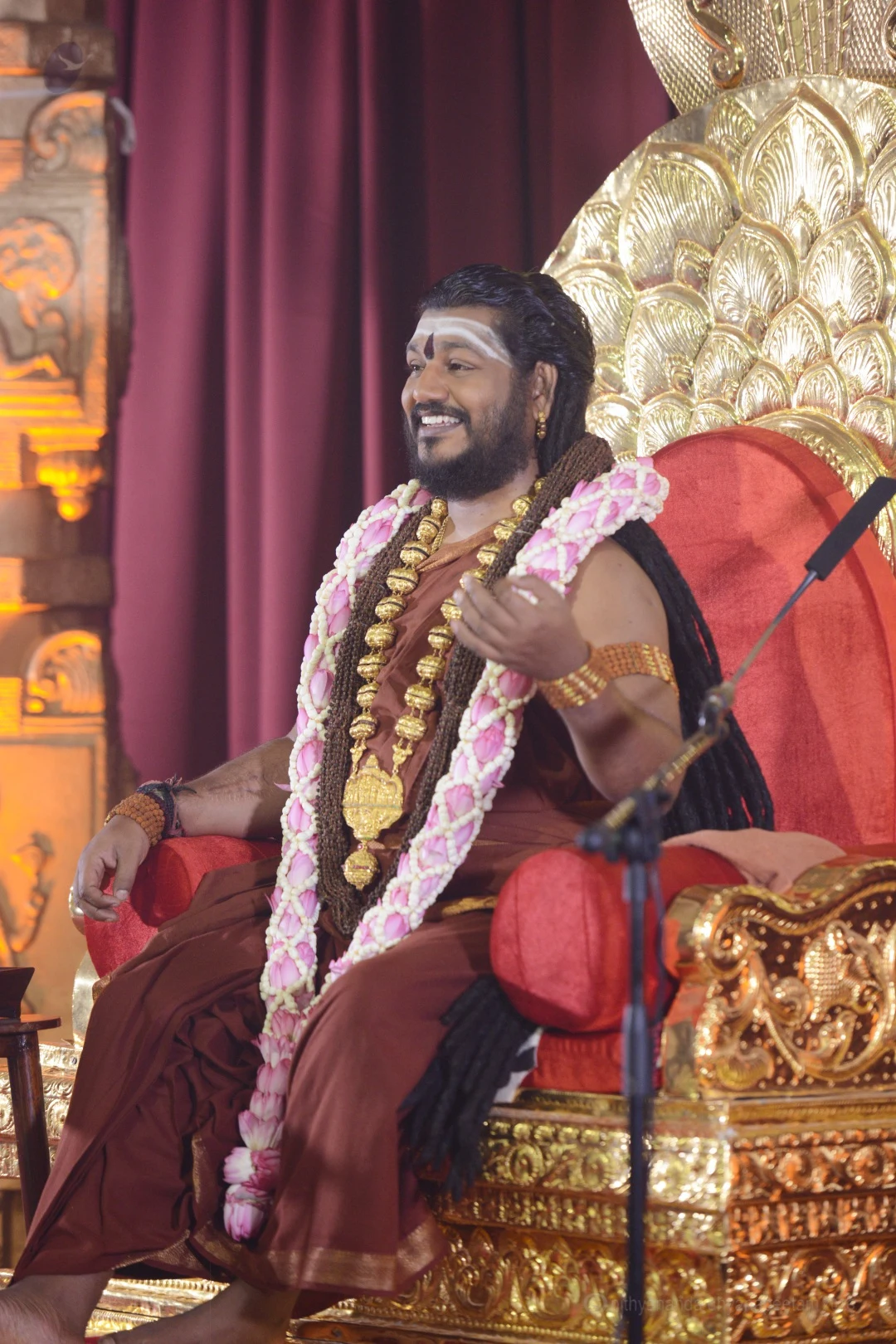
Satsang
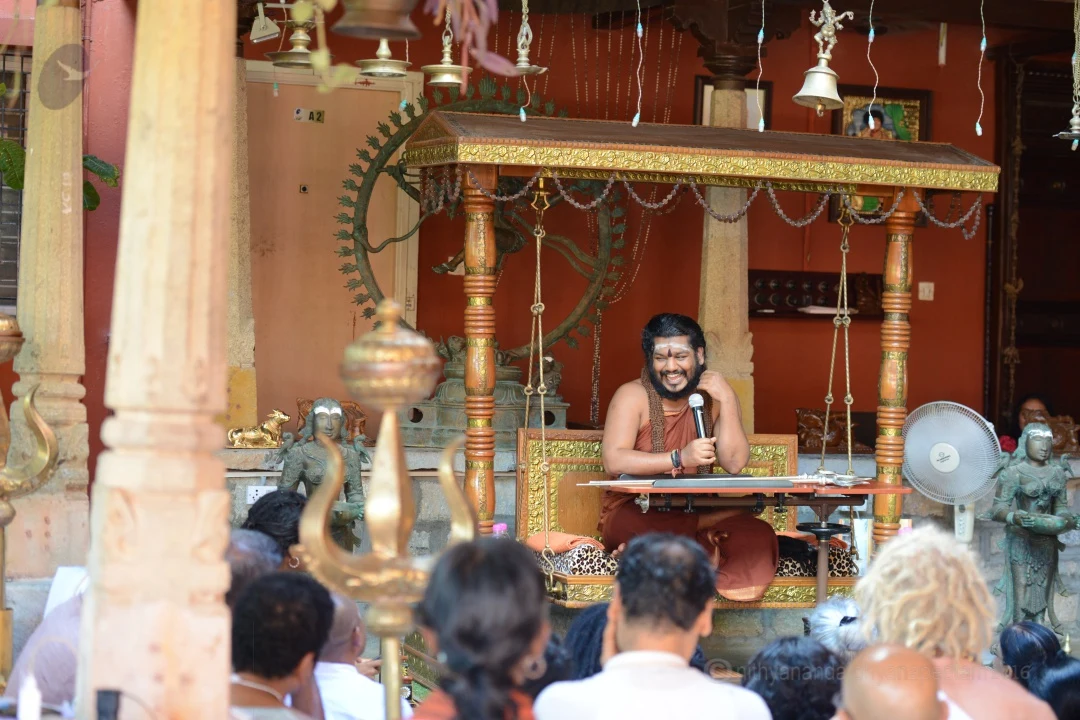
Akashic Reading
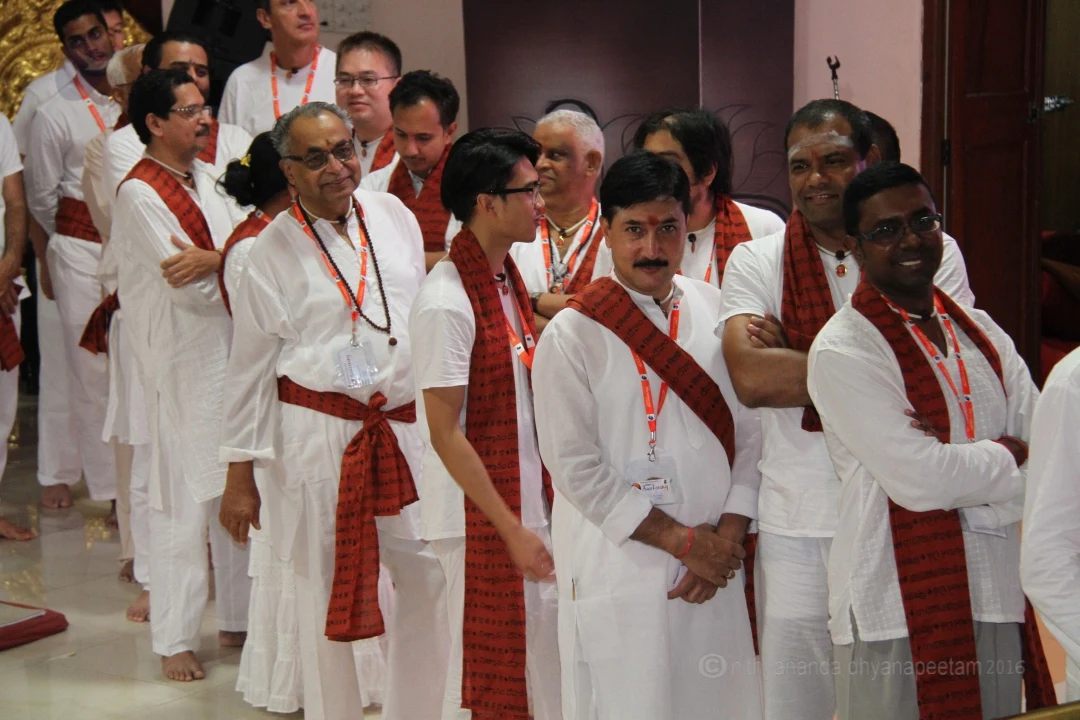
Nithyananda Yogam Session
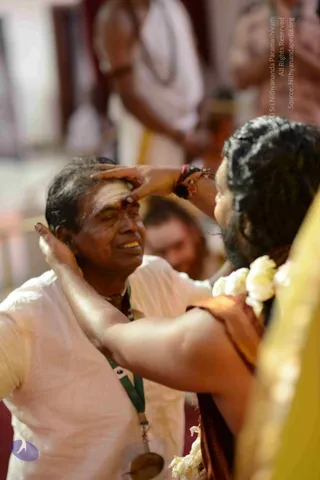
Energy Darshan

Tags:

Paramahamsa Nithyananda, Nithyananda, Sadashiva, Sadashivoham, Third Eye Awakening, See, Ultimate Truth, Supreme Truth, Turiyatita, Hindu God, There is No Suffering, Dream State, Delusion, Guru, Energy Darshan, Inner Awakening, Manifest Sadashiva, Akashic Reading, Balasants, Analogy of Pot and Sadashiva

Photos Of The Day:

Nithya-Satsang

Nithyananda-Yogam-Welcome

IA-Gurukul-Akashic-Reading

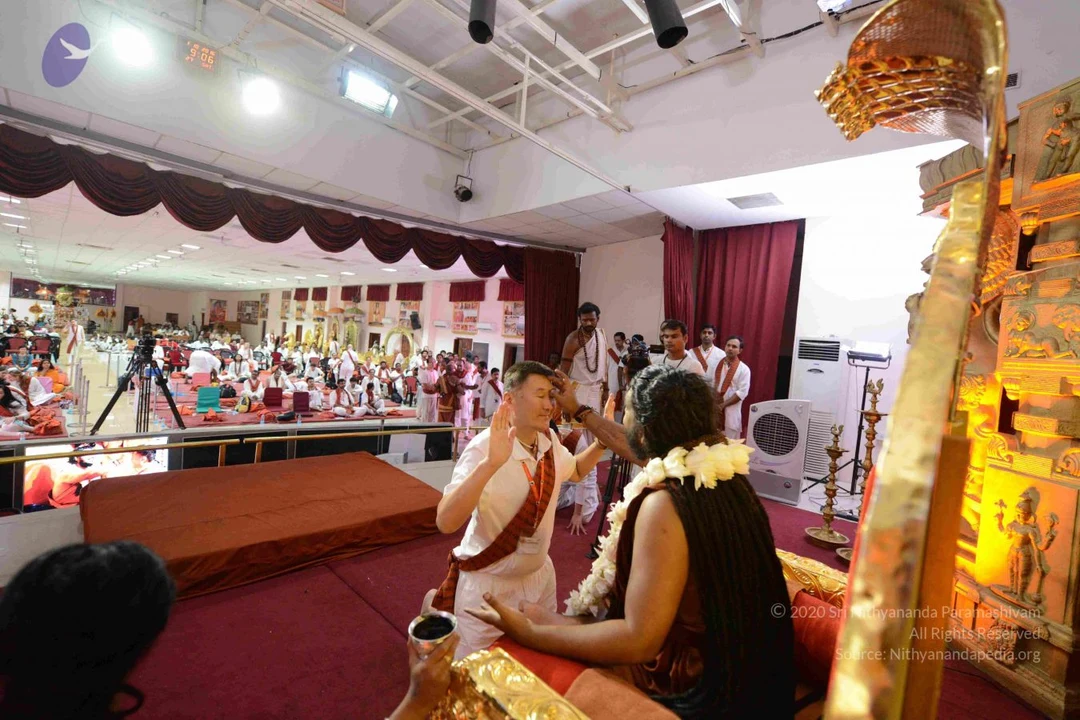
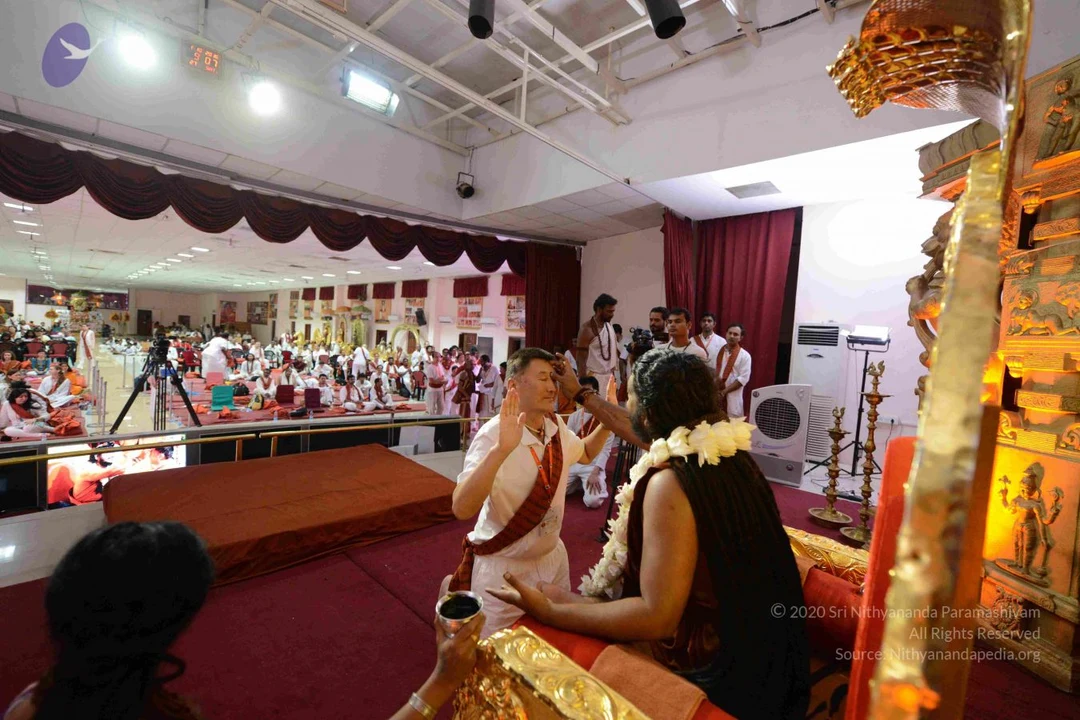
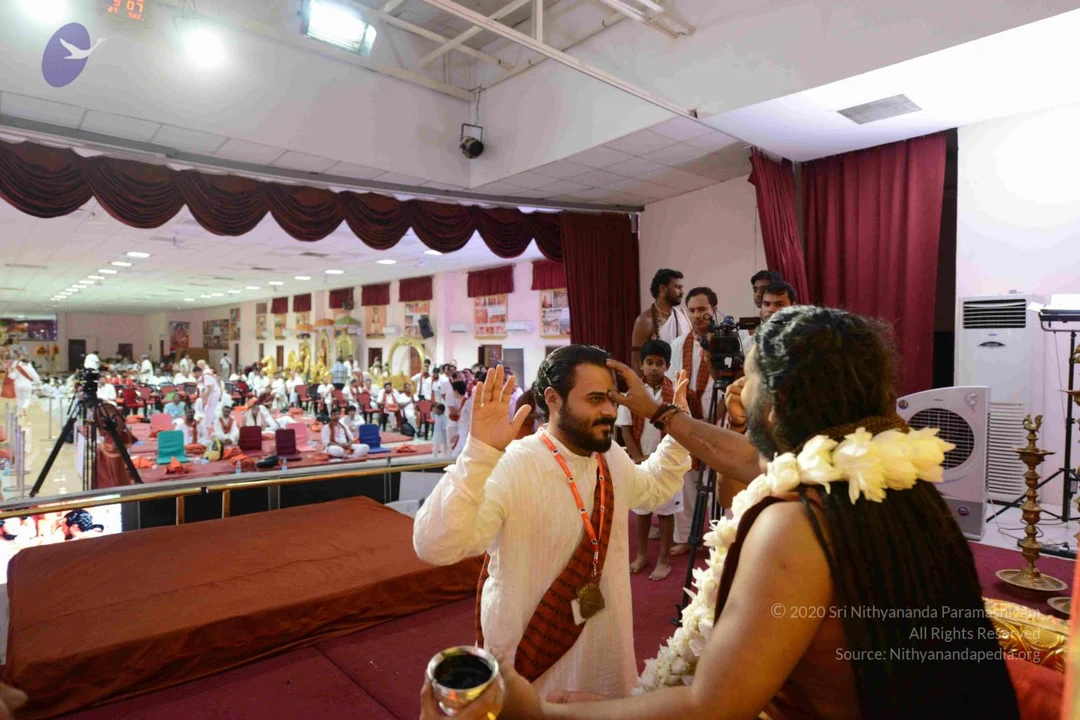
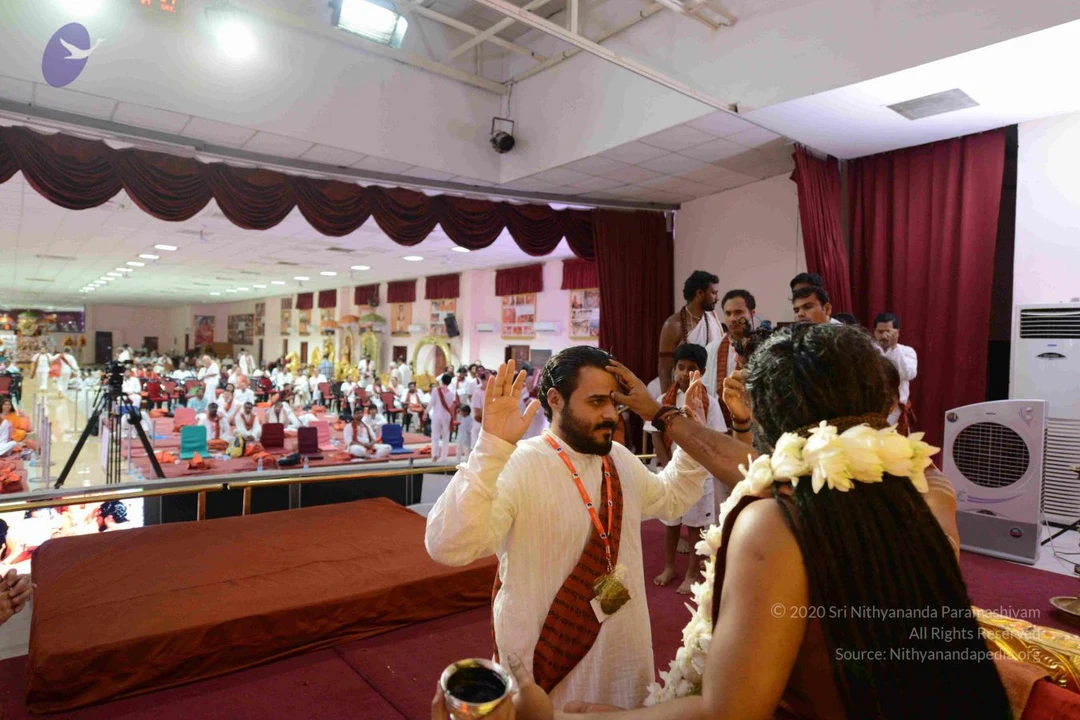
IA-Jnananjana-Initiation

Photos Of The Day:

Nithya-Satsang

Nithyananda-Yogam-Welcome

IA-Gurukul-Akashic-Reading

IA-Jnananjana-Initiation

Photos from this day

View all 409 photos

Satsang

2 photosSource gallery
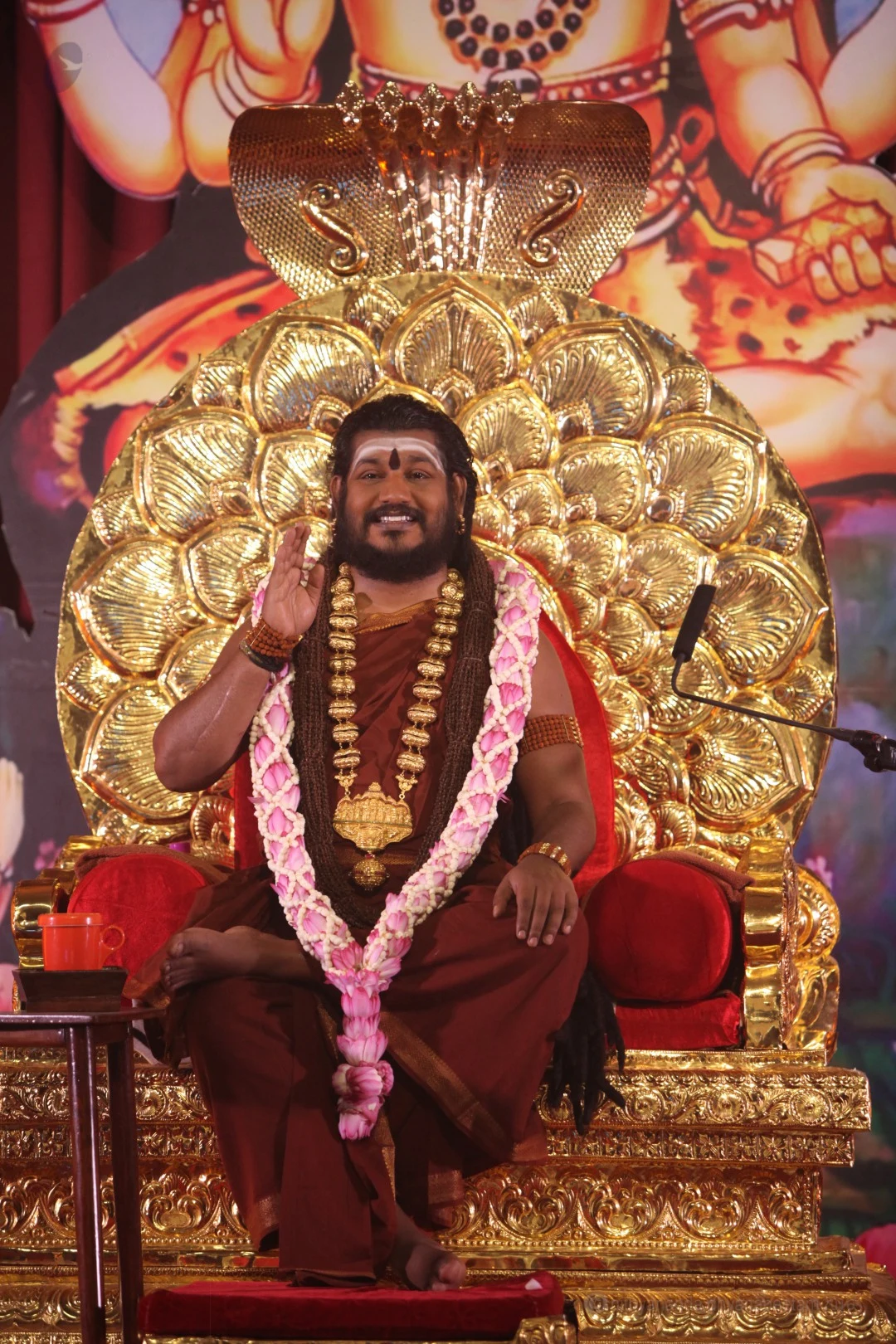
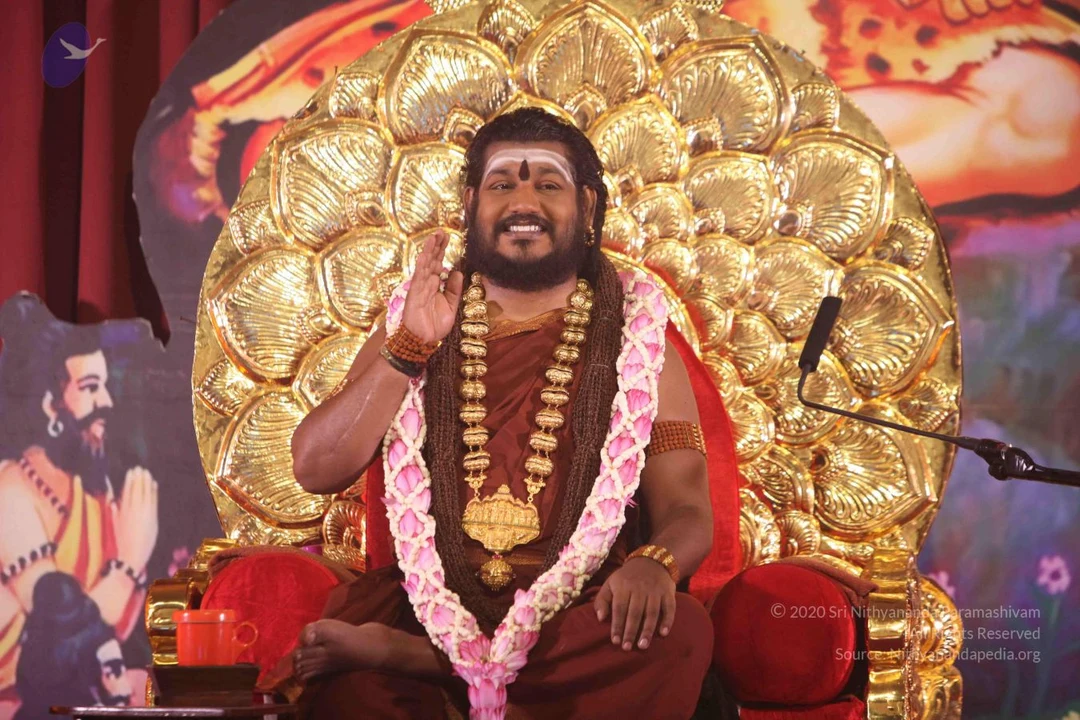
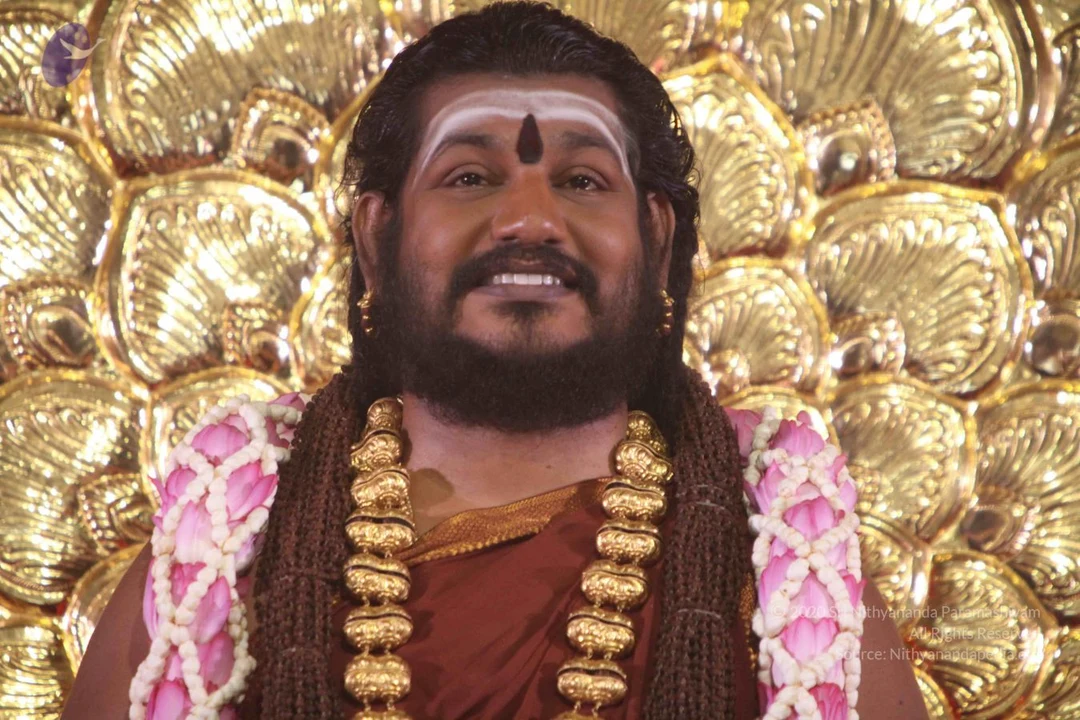
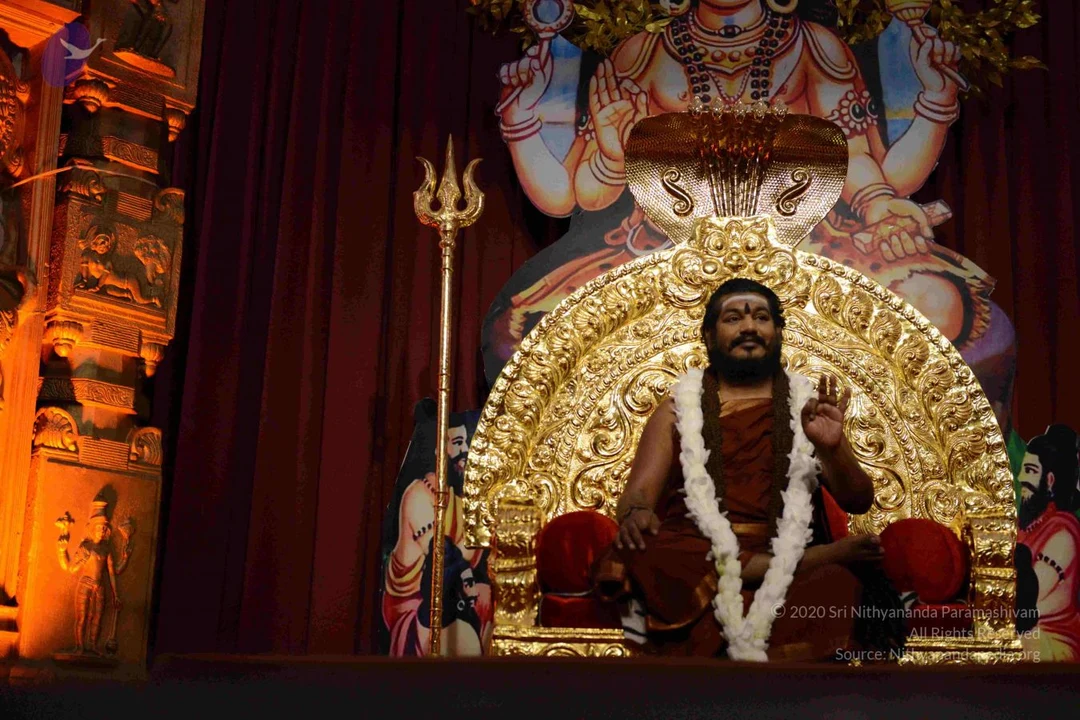
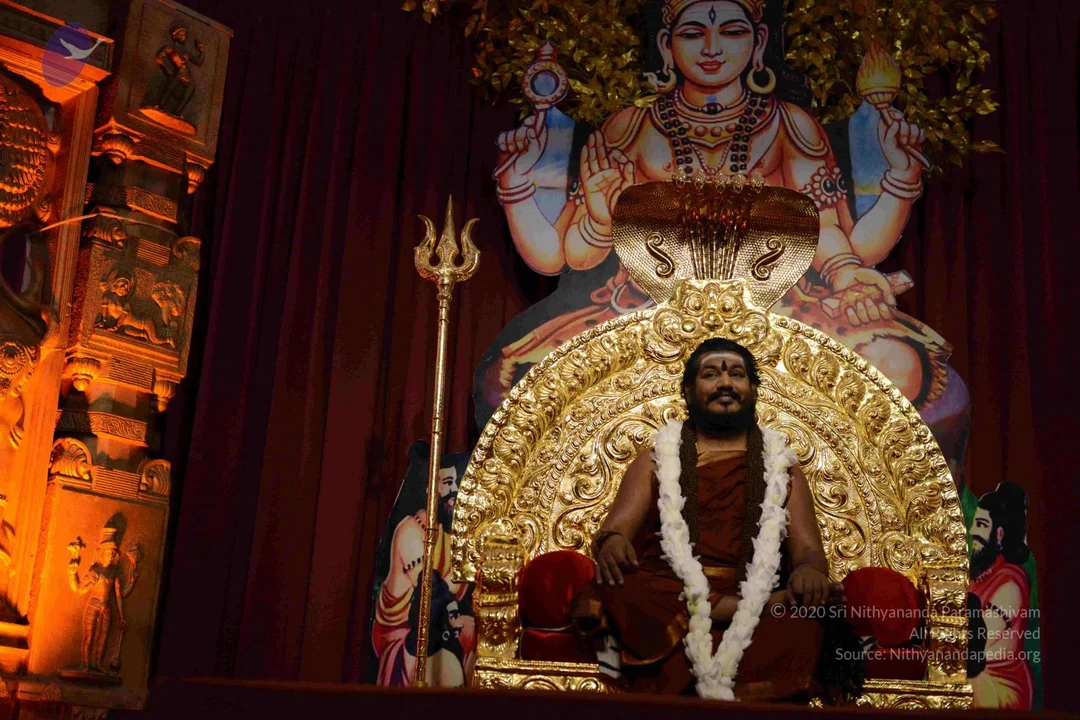
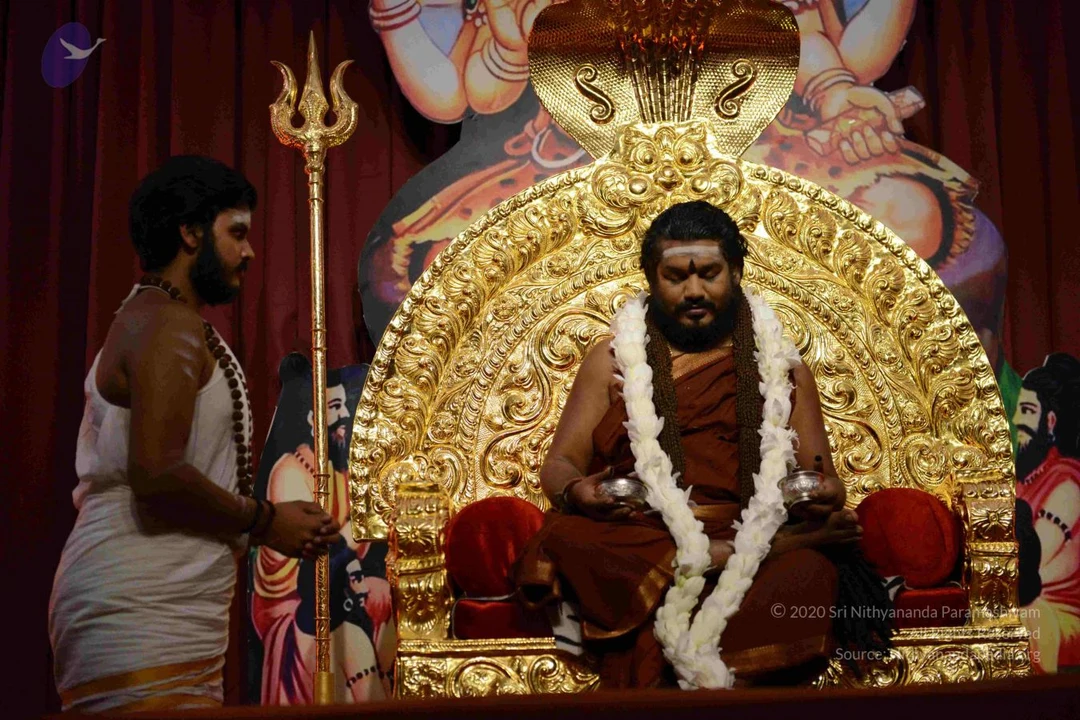
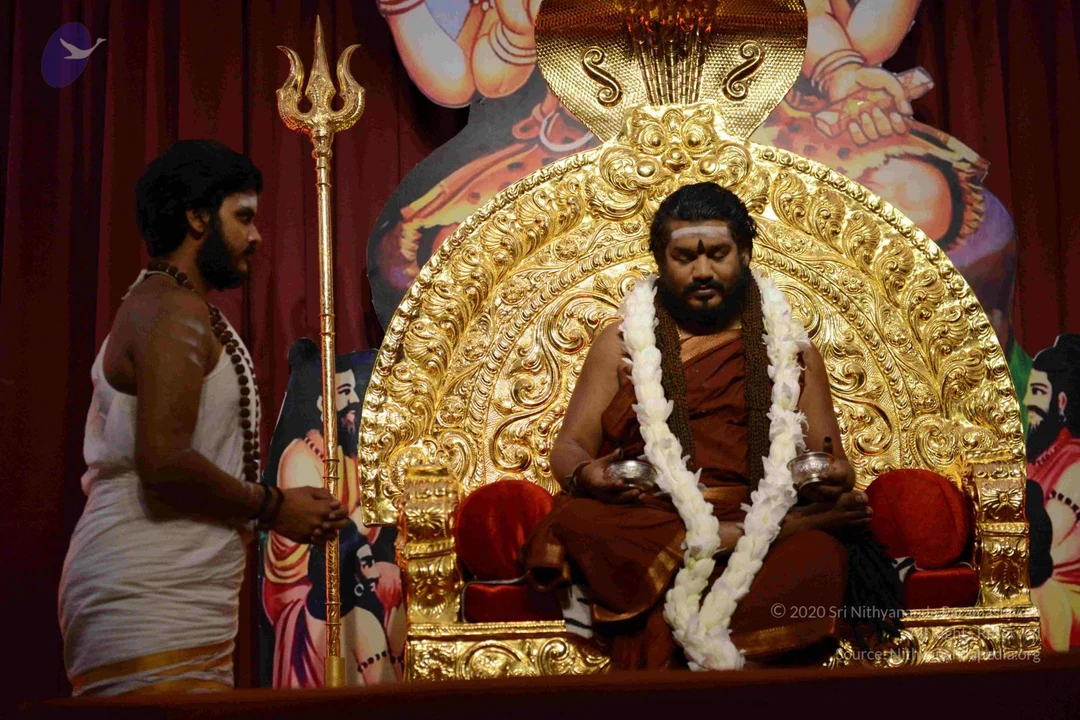
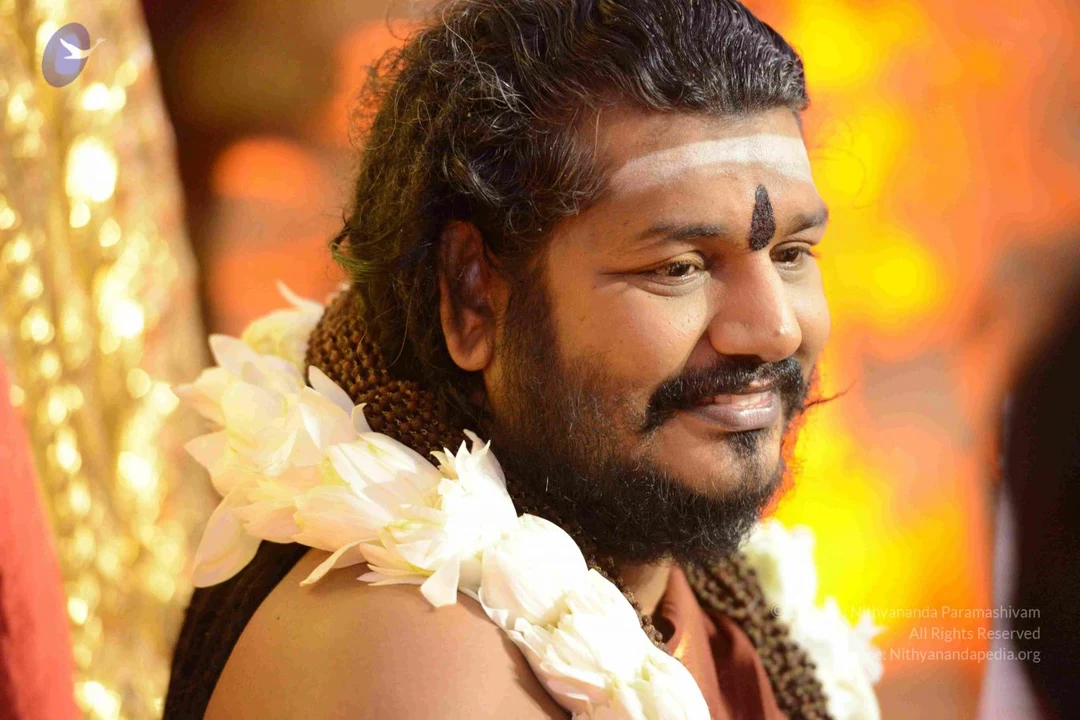
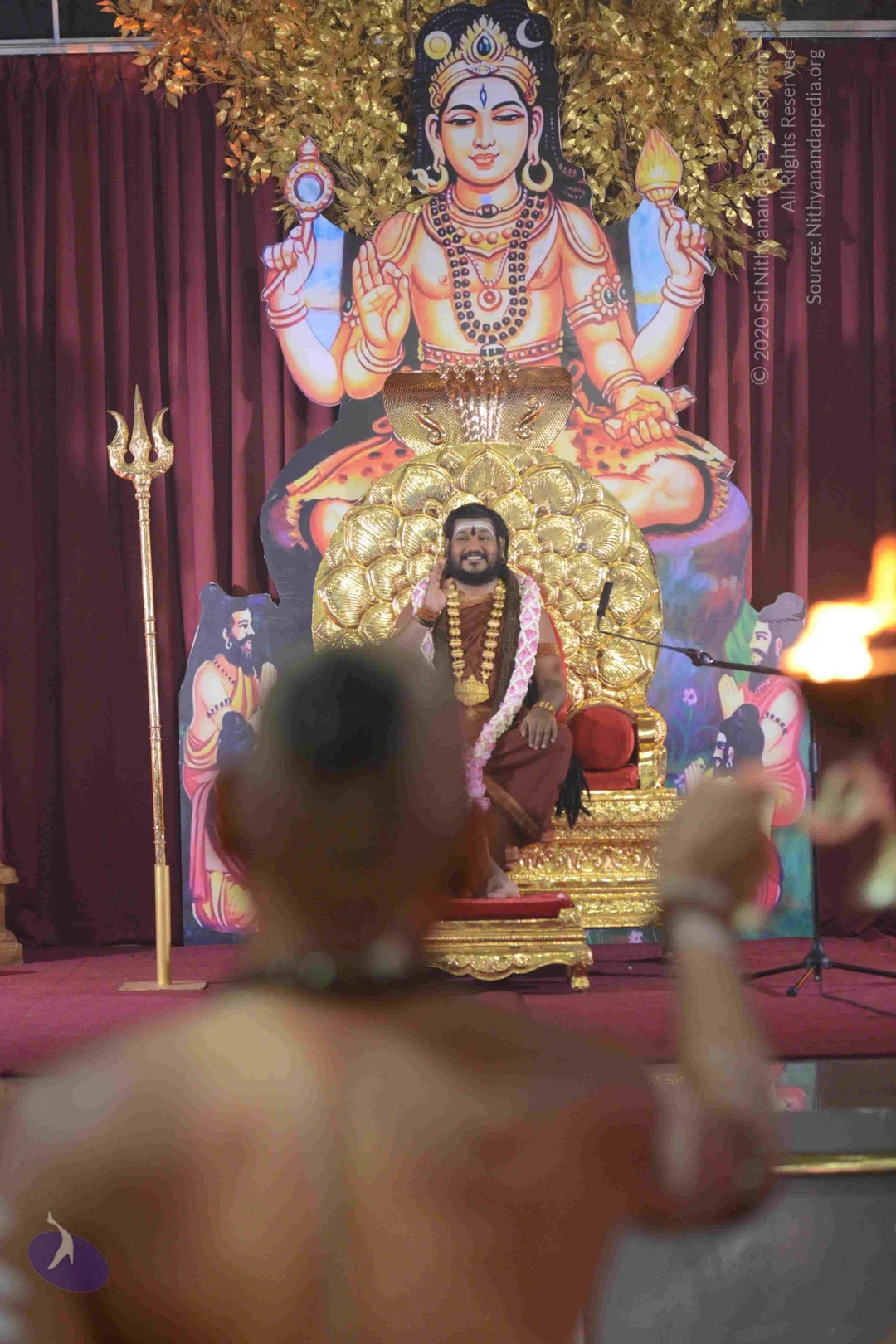
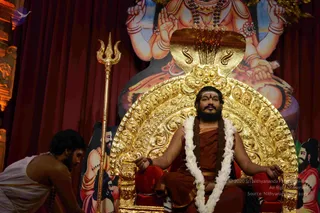
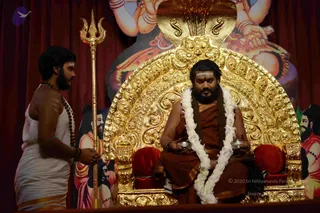
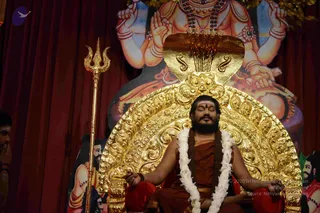
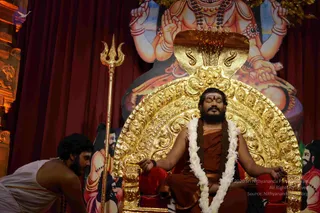
A seated man in saffron-brown robes sits on an ornate gold throne with a red cushioned seat on a raised stage. He wears a rudraksha mala and a gold necklace, with a pink-and-white garland draped over his shoulders, and a red tilak on his forehead. Behind him a large painted backdrop shows a multi-armed deity with a gold crown, holding a lotus-like object and a flame, with gold leaf foliage above. Golden carved pillars flank the stage, a golden trident stands to the left, a microphone stands on the right, and a deep red curtain hangs behind. The scene is a satsang discourse setting.A smiling man with long dark hair and a full beard sits before a large golden repoussé backdrop of stylized shell or petal patterns. He wears a rust-brown silk garment, a thick gold necklace of barrel-shaped beads with a gold temple-shaped pendant, and a long rudraksha-style mala of dark beads. A pink-and-white lotus flower garland drapes over his shoulders and he has a white tilak with a dark central dot on his forehead. Matching beaded armbands are on his upper arms. a person is present with the cues of long swept hair, ornate gold jewellery and rudraksha beads, seated as a central figure.

Akashic Reading

1 photoSource gallery
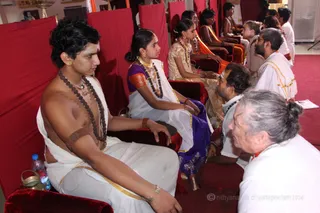
A photograph of seated participants in a hall with red-draped partitions and red velvet chairs. In the foreground a young shirtless man in white dhoti with gold border wears a long rudraksha mala and a bangle, sitting upright and looking to the side. Beside him a young woman in a white and purple sari with gold-bordered pallu wears a layered bead necklace, gold jewellery and a bindi. Behind them, rows of other seated participants in white, saffron and gold-bordered attire, and a grey-haired woman in white in the lower right corner, sit among red-cloth dividers. A water bottle and brass vessel rest on the floor.

Nithyananda Yogam Session
10 photosSource gallery
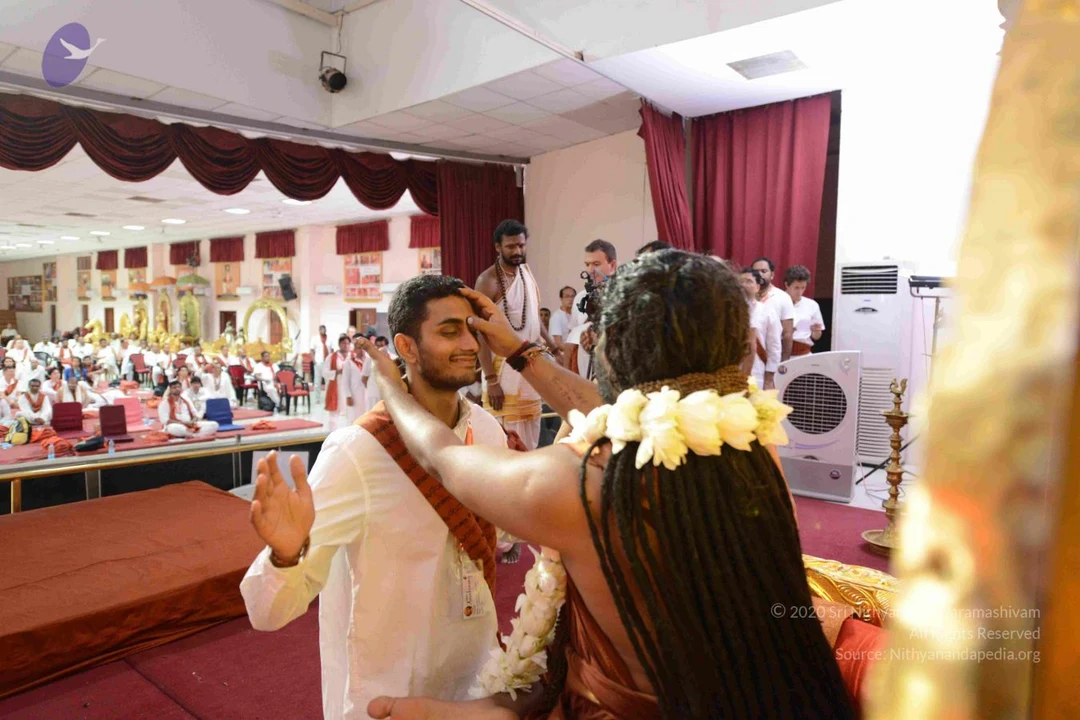
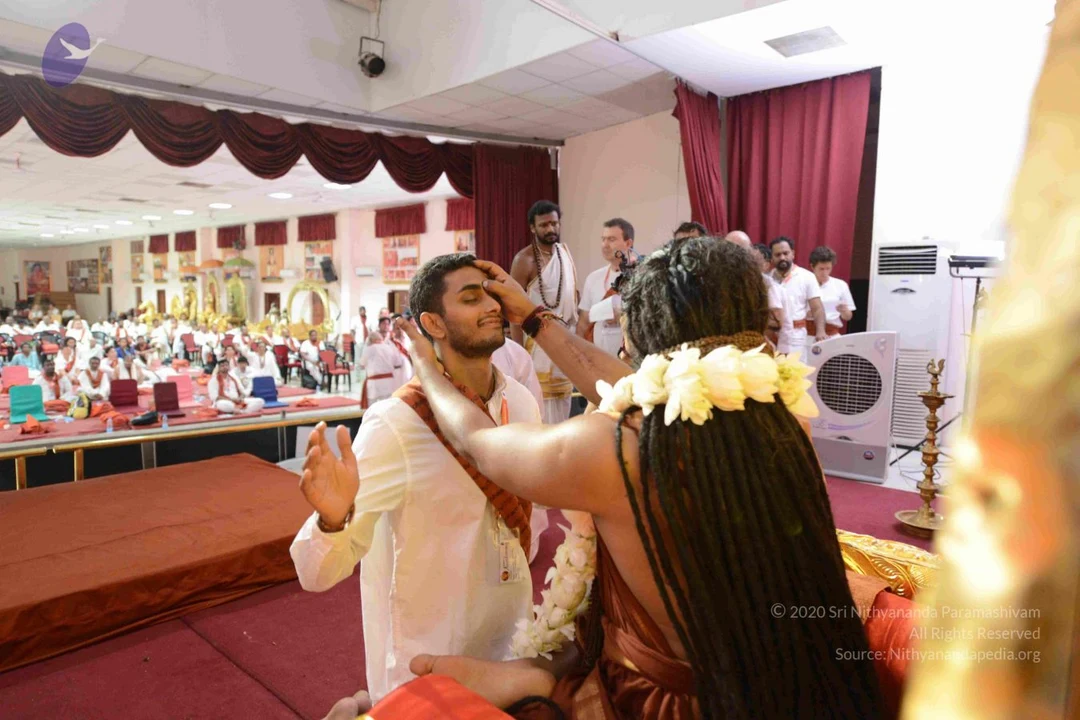
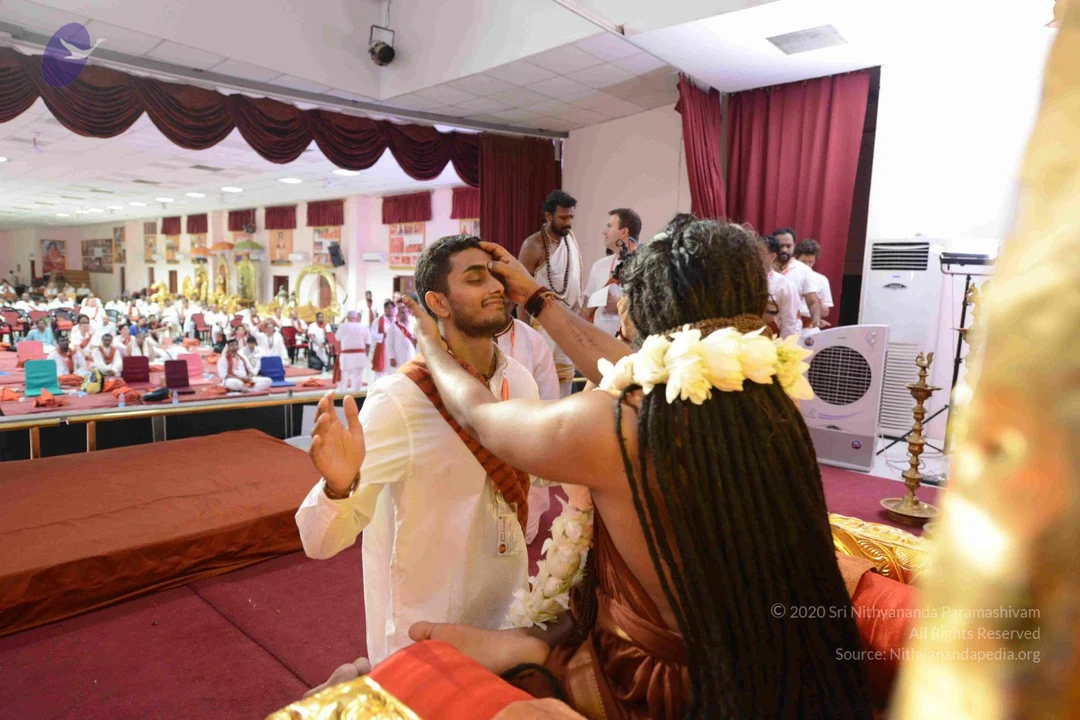
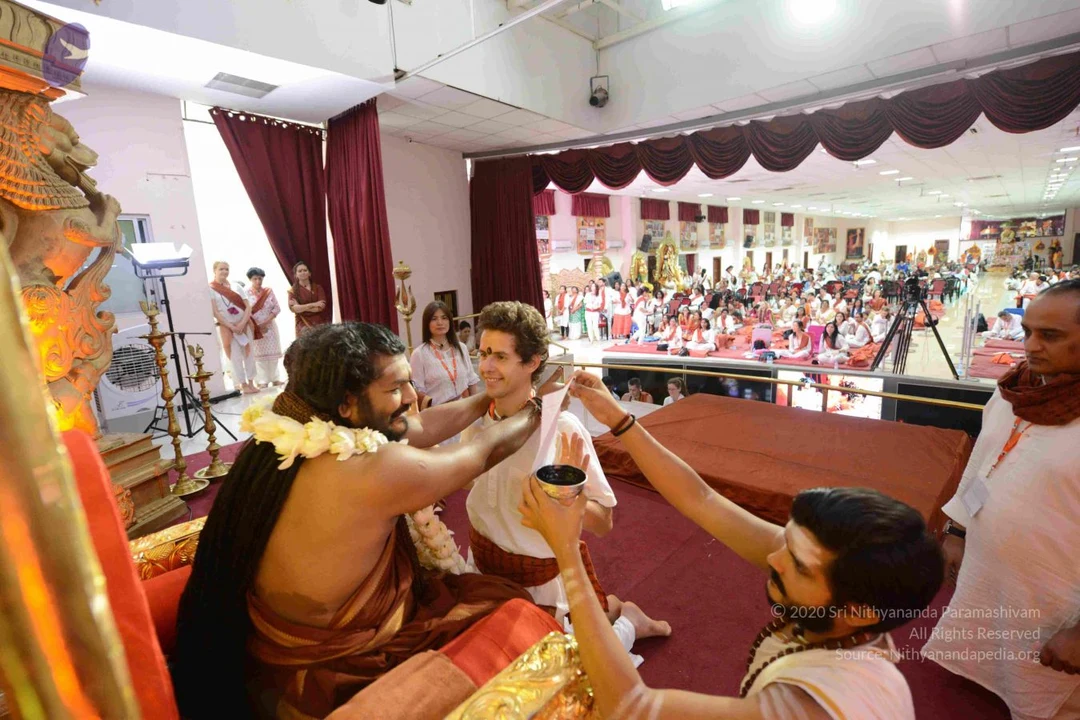
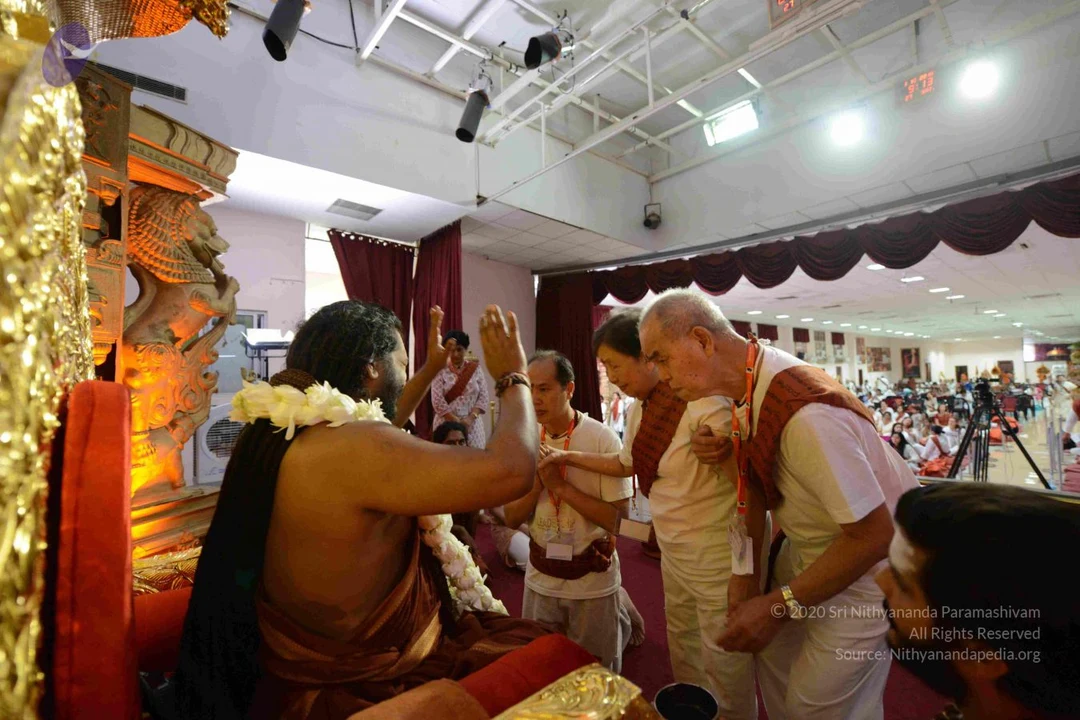
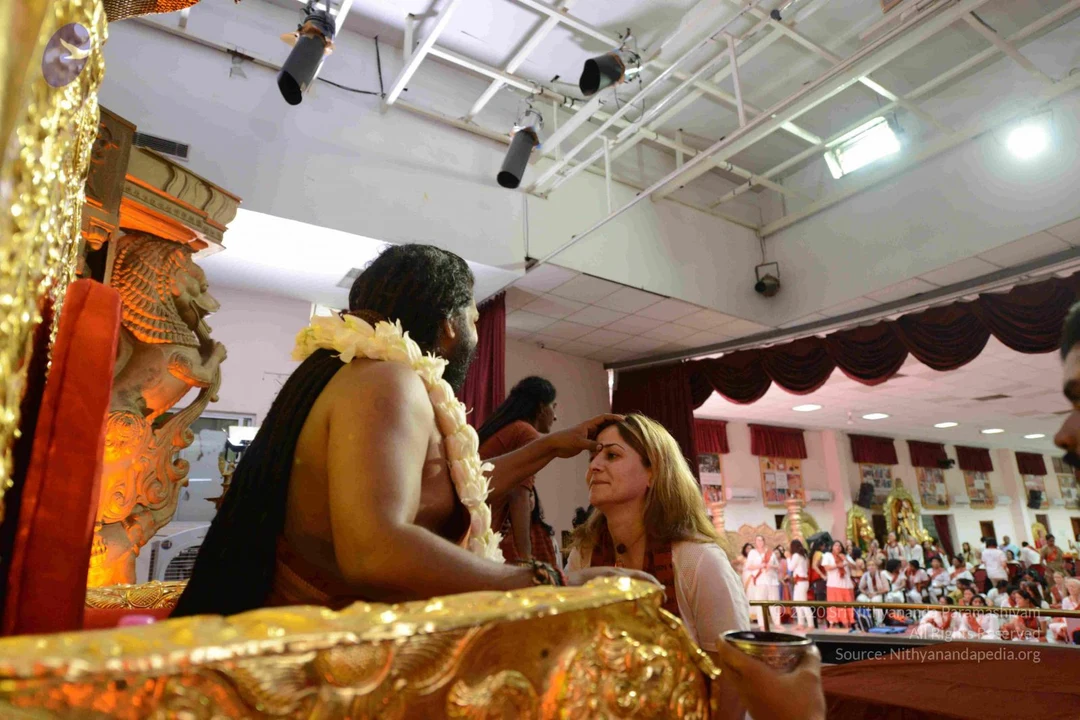
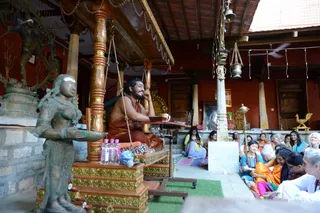
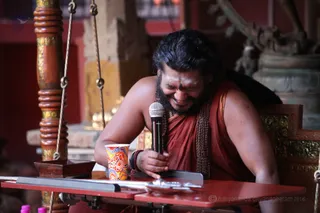
A seated bearded man with long dark hair in an orange-brown robe sits on a gold-and-brown carved throne-like seat in a red-walled temple hall, holding a cup and gesturing near his face. Beside him stands a bronze statue of a female figure holding a lamp-like object. Seated women in saris and white clothes listen in front of him on green mats; one wears an orange sari. Hanging brass lamps and bells, a golden bird ornament and wooden pillars fill the courtyard-style setting, with water bottles on a low table. a person is the seated man, identified by long swept hair, saffron-orange robe and a seated position in the speaker's place. He is giving a satsang discourse to participants.A smiling man with long, swept-back dark hair and a full beard sits on an ornate gold-carved chair, speaking into a handheld microphone while raising his other hand in an animated gesture. He wears a maroon-red wrap over his bare shoulder, a long rudraksha-style mala of beads hangs across his chest, and a vertical tilak mark is on his forehead. A decorated white-and-multicolour mug and a small orange cloth sit on a wooden lectern-style table in front of him. Behind him stand a bronze figure, a carved wooden ornament and a shelf of brass pots against a red-orange wall with yellow pillars and wooden railings.A bearded man with long swept-back hair and a vertical tilak on his forehead sits smiling and laughing on a carved wooden seat, holding a handheld microphone. He wears a rust-orange saffron wrap and a brown rudraksha mala around his neck, with a red wooden lectern and a colourful patterned paper cup in front of him. Behind him are a wooden pillar wrapped with rope, a bronze vessel and ornate golden carvings. Swamiji (probable): the swept-back hair, saffron wrap and rudraksha mala match the Nithyananda Paramashivam appearance cues, and the page notes him speaking at the morning satsang. The dhyanapeetam 2016 at the lower rightA smiling man in a rust-orange robe sits on a carved wooden throne-style chair with gold-patterned panels, holding a black microphone in his right hand and resting his left fist against his cheek. He has a full dark beard, a white-painted forehead with a dark vertical mark, and a brown beaded rudraksha-style mala around his neck. A colourful patterned paper cup and a small wooden box sit on a red table in front of him. Behind him stand a carved wooden pillar with gold bands and a bronze vessel. Swamiji (probable): the man has long swept-back dark hair, a rudraksha mala and orange robes, consistent with the page's reference to Swamiji at this satsang.A satsang gathering under a wooden-roofed open pavilion with red walls and carved pillars. Many seated devotees, mostly women in saffron, orange, white and pink saris and salwars, face a raised platform at right where a figure with long hair and light-coloured clothing sits on a low seat beside brass lamps and ritual implements. Foreground women sit on striped cloth mats; a stone pillar stands in the centre. A few people in white kurtas are seated nearer the platform. The total visible people is in the 21-100 range.A satsang held in a covered pillared hall with wooden columns and hanging garlands. Seen from behind, a long-haired figure in a dark robe sits on a raised wooden seat before a small wooden lectern with a microphone and a bell. Seated before him is a large audience of devotees: women in saris of orange, red, blue and white, and men in white kurta-style clothes and some in pink. Brass lamps and a brass kalasha-style vessel stand near the front pillars. Behind the crowd is a red-trimmed temple building with a bell hanging in the doorway. The figure's outline is visible but the appearance is not clear enough to confirm identity; the page links him to a person, but he is shown only from behind, so the identification is uncertain.

Nithya-Satsang
55 photosSource gallery
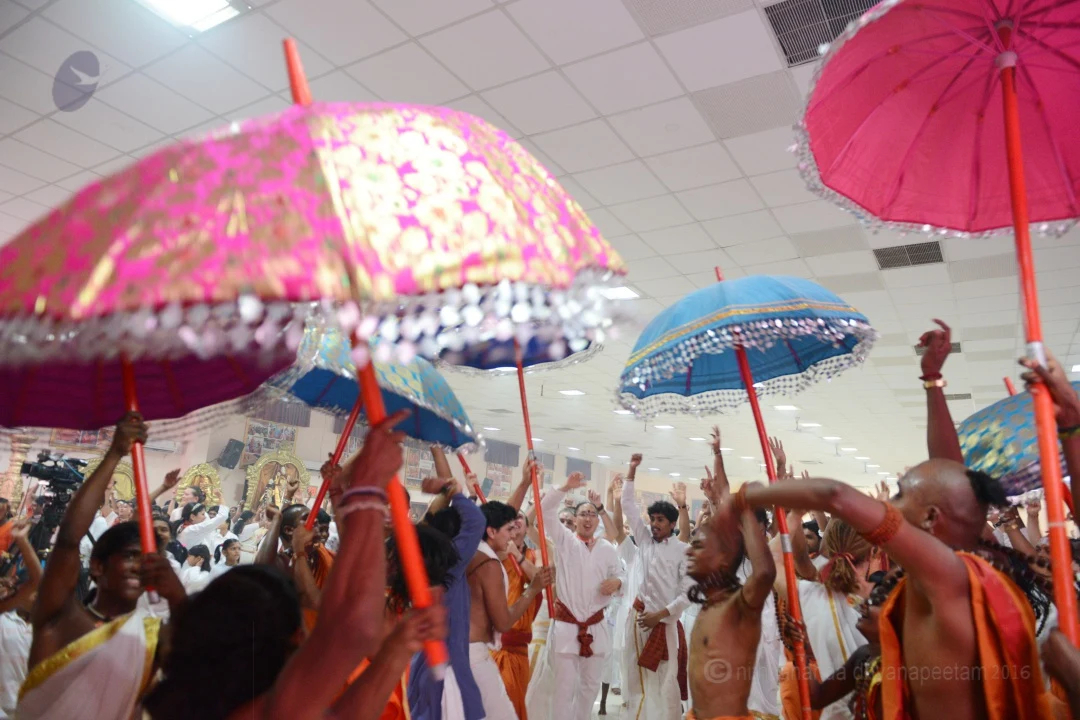
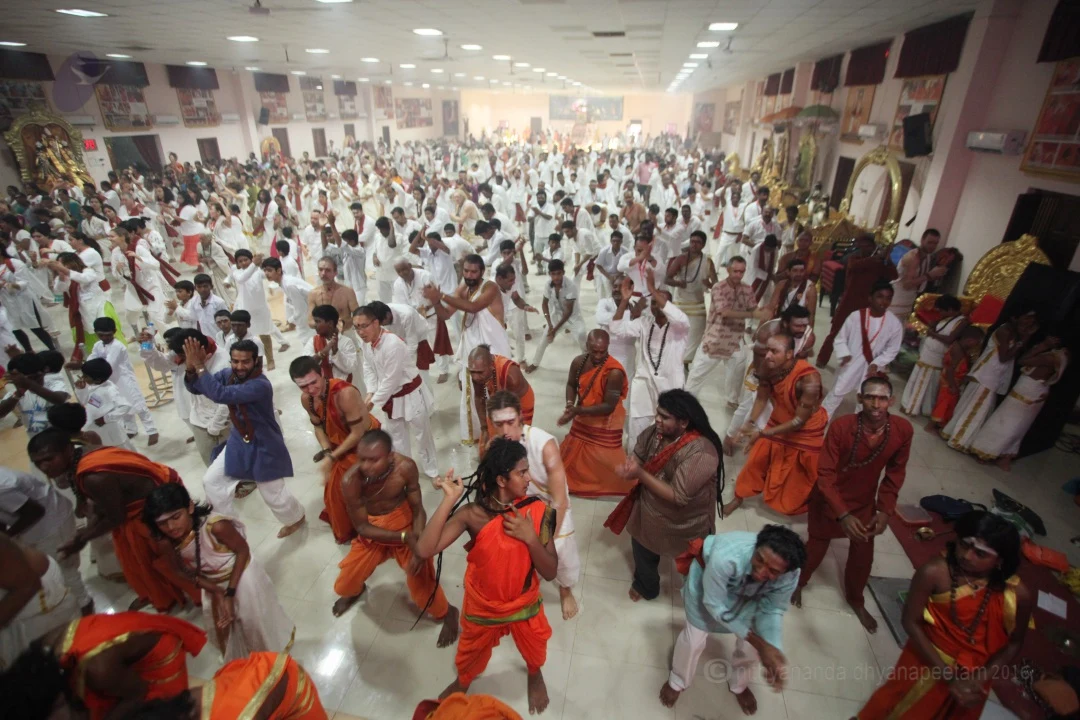
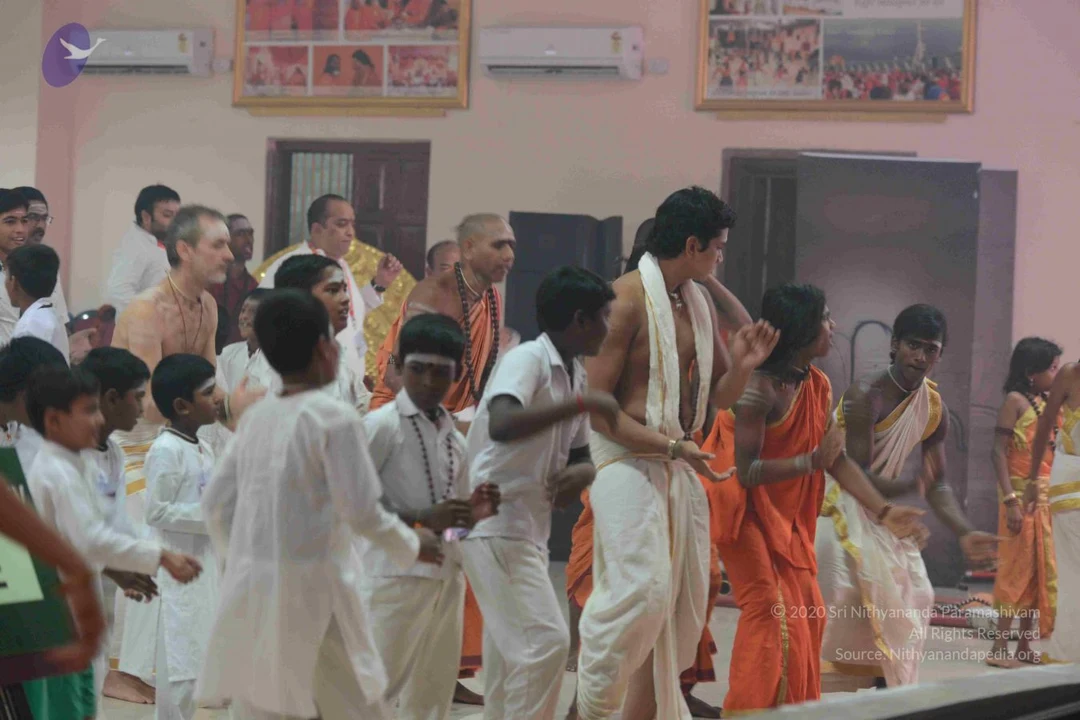
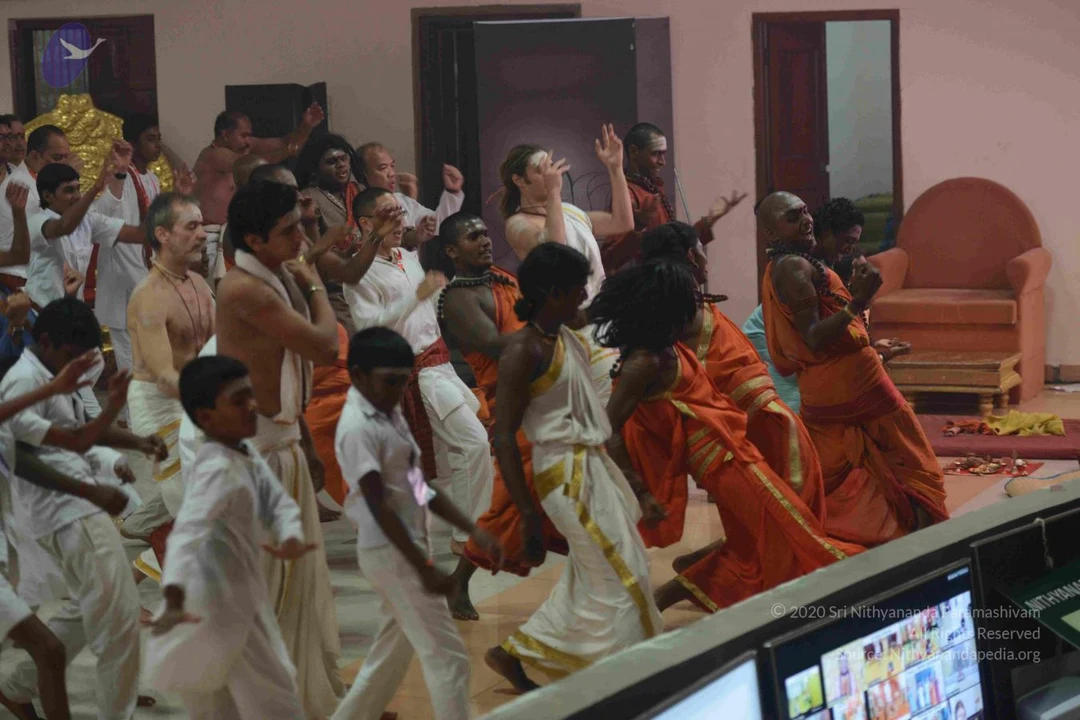
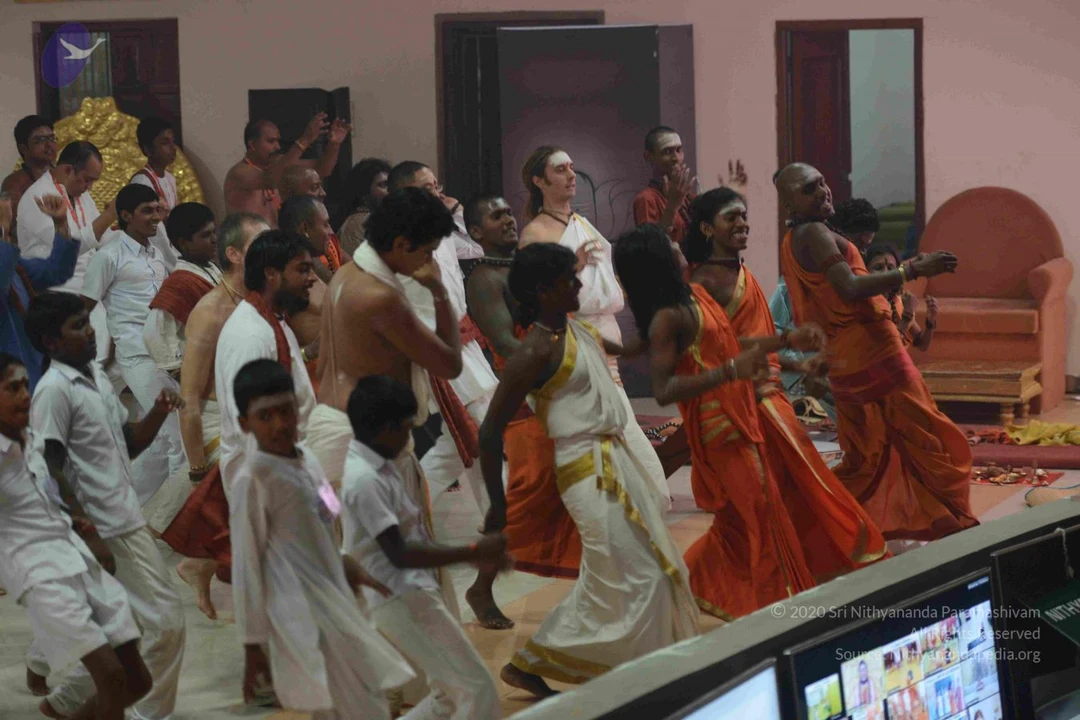
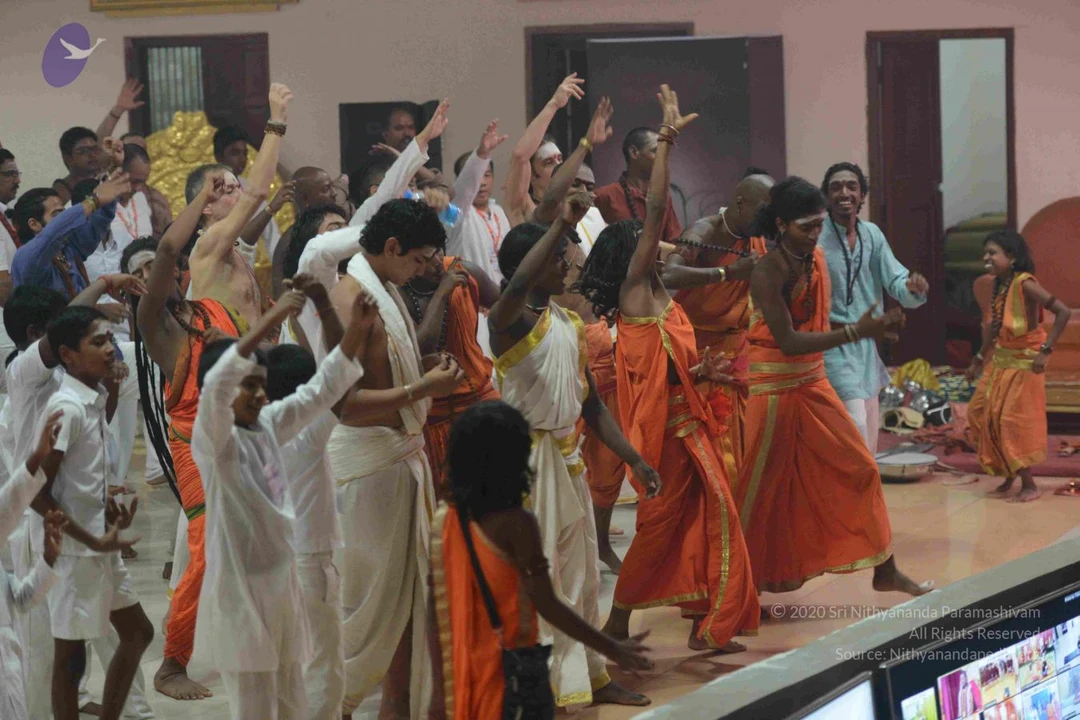
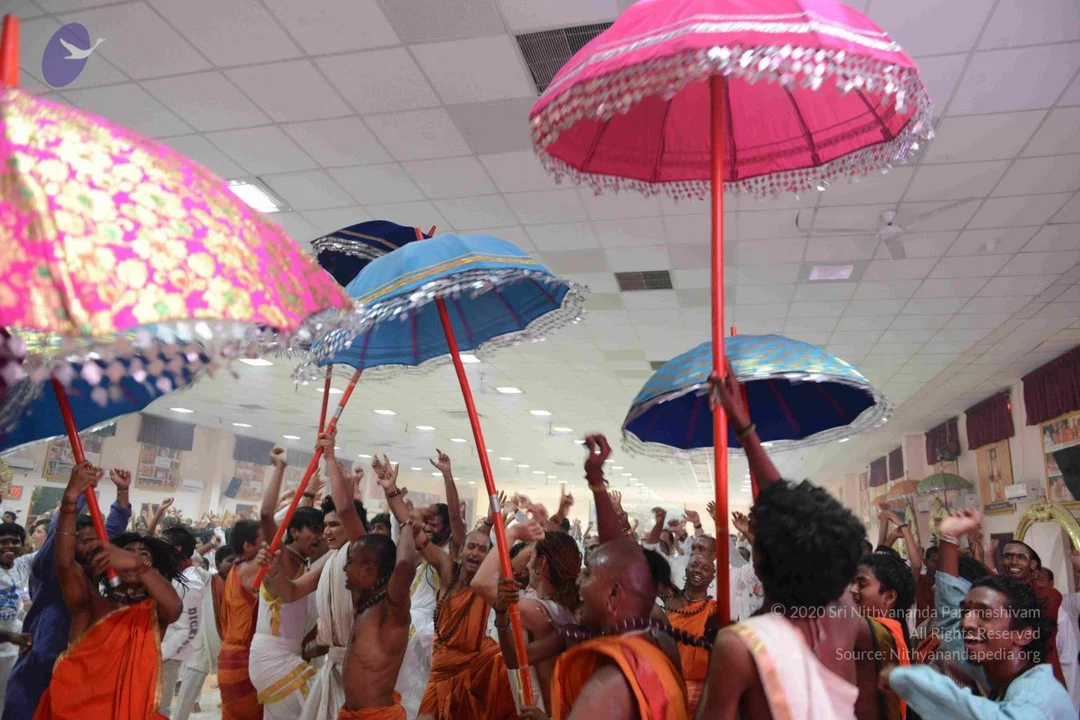
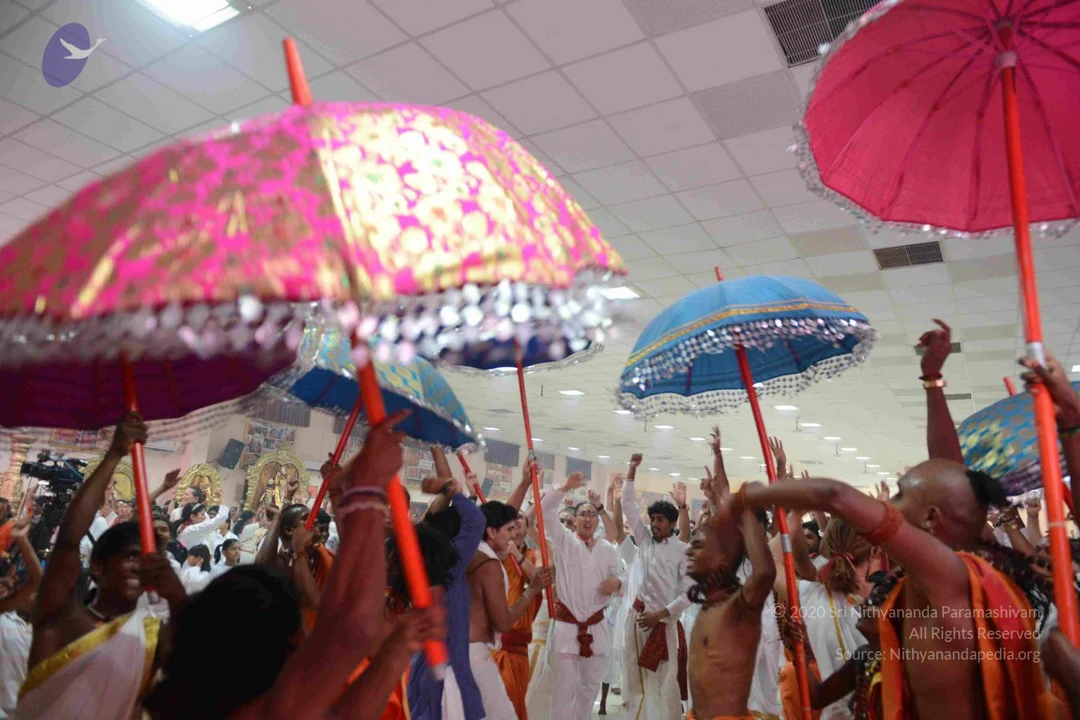
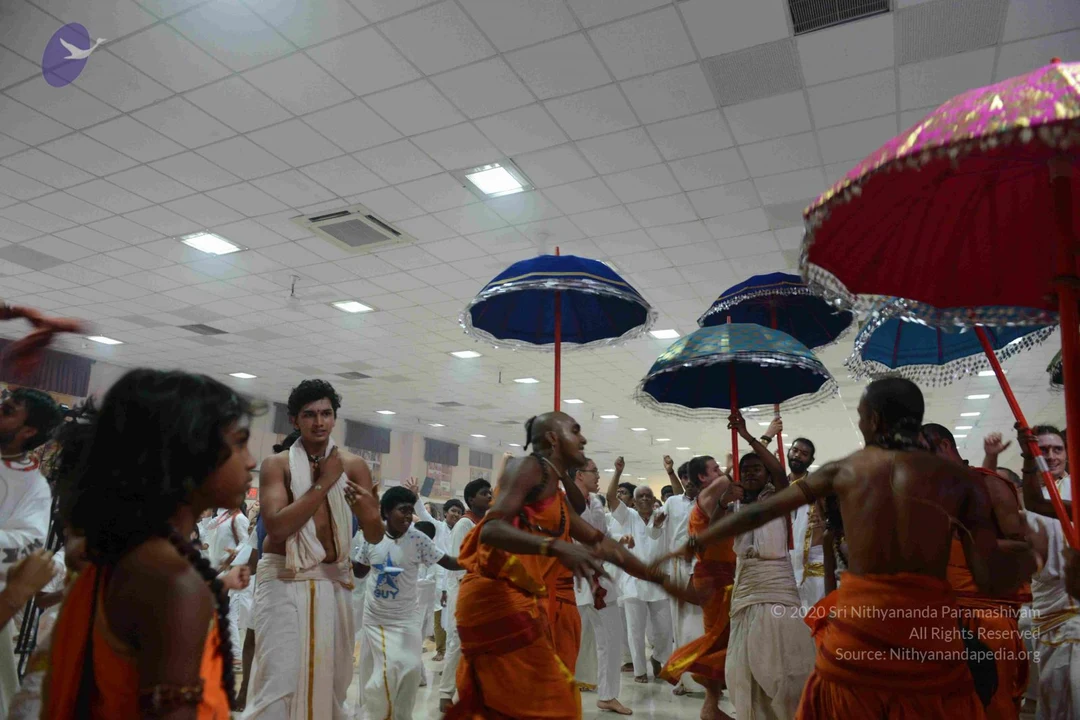
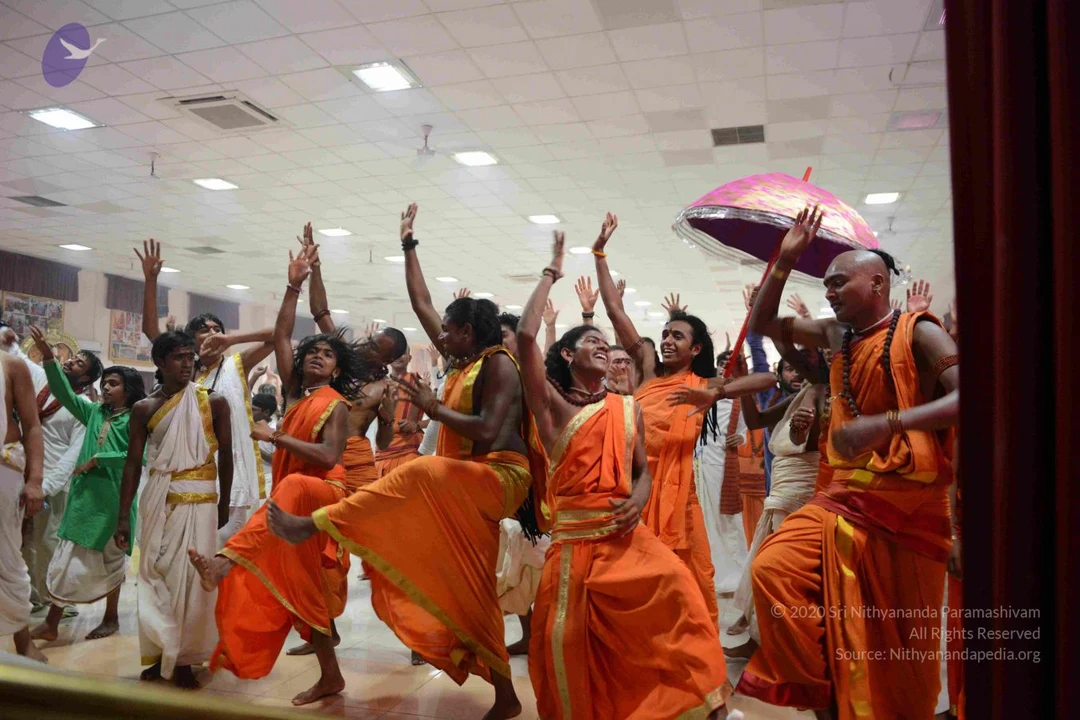
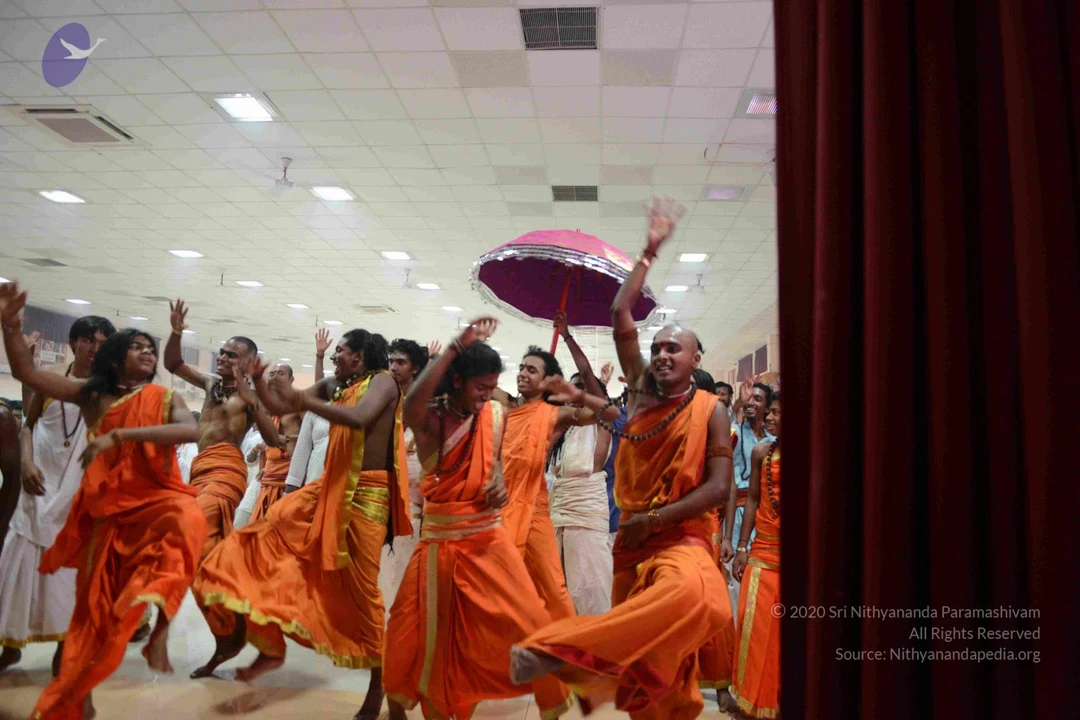
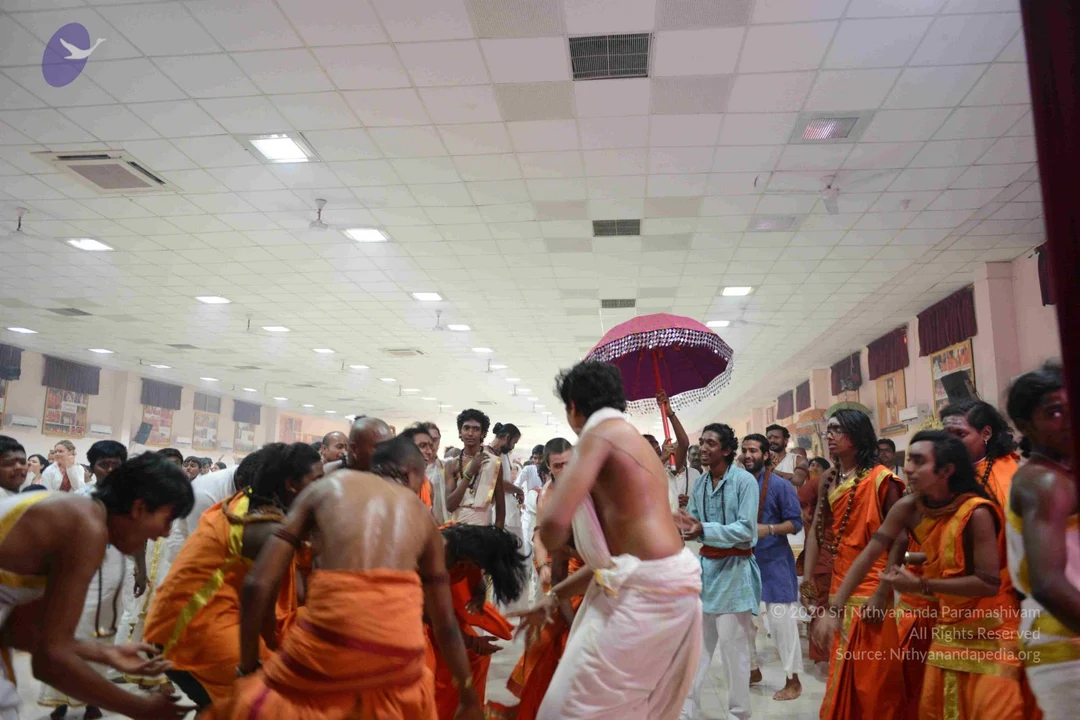
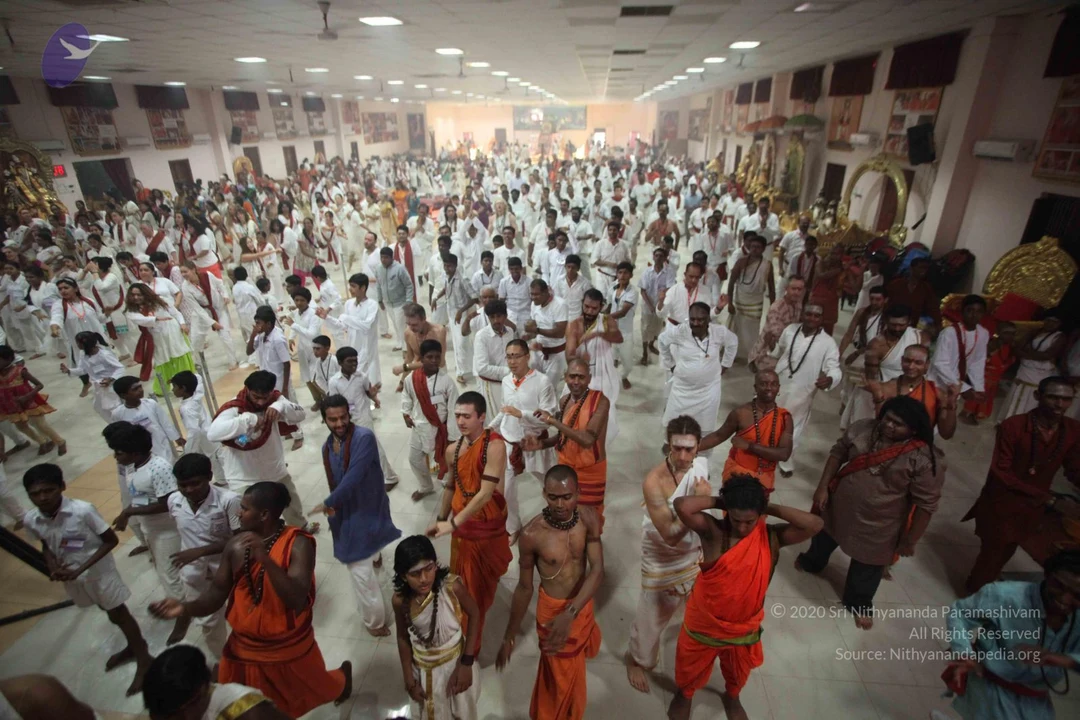
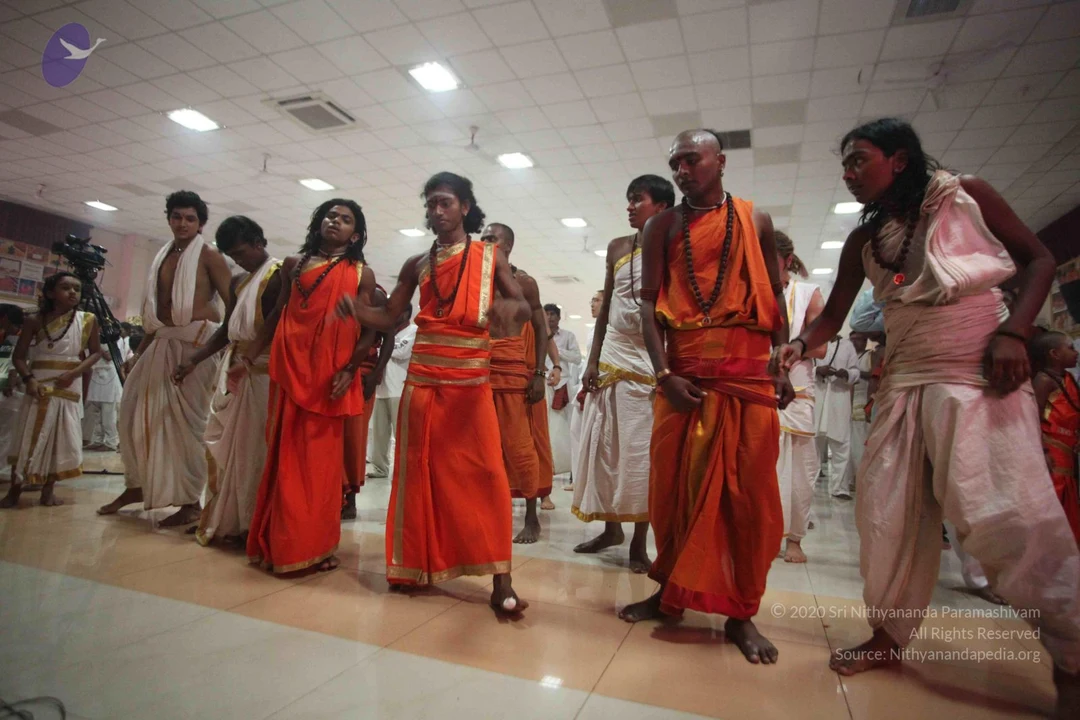
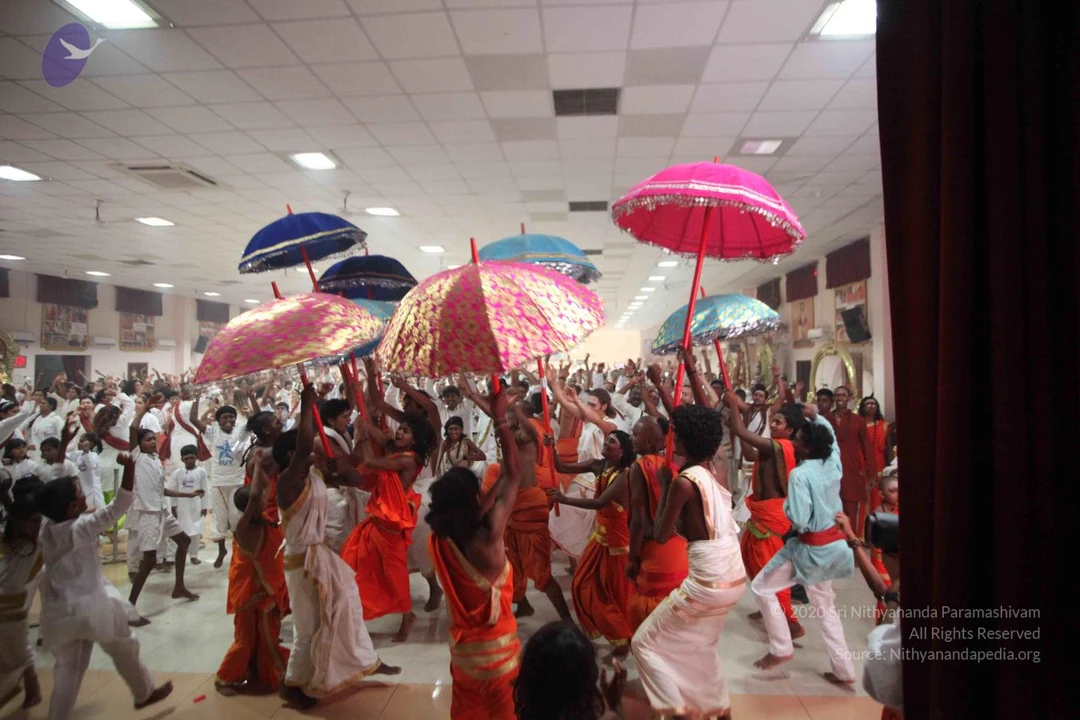
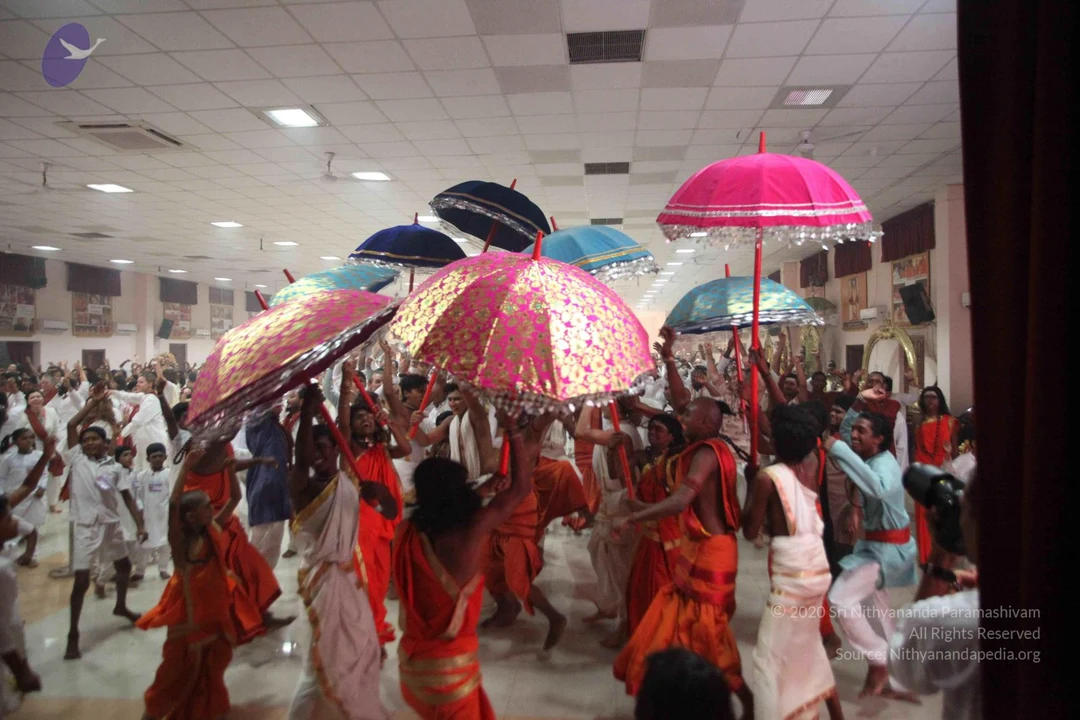
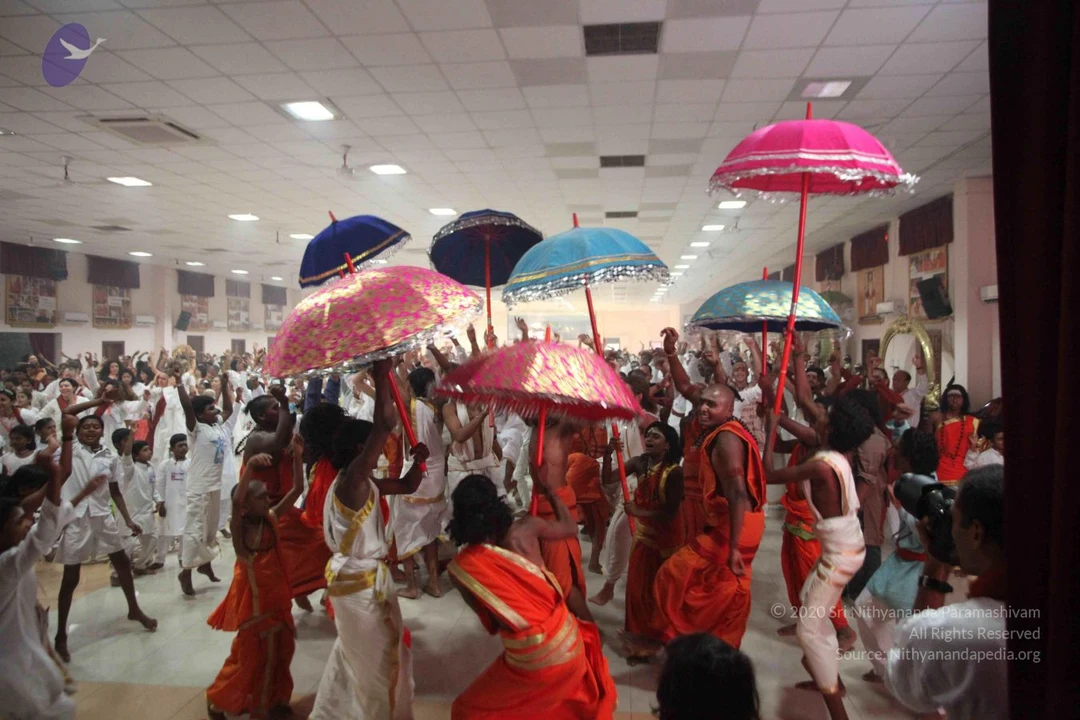
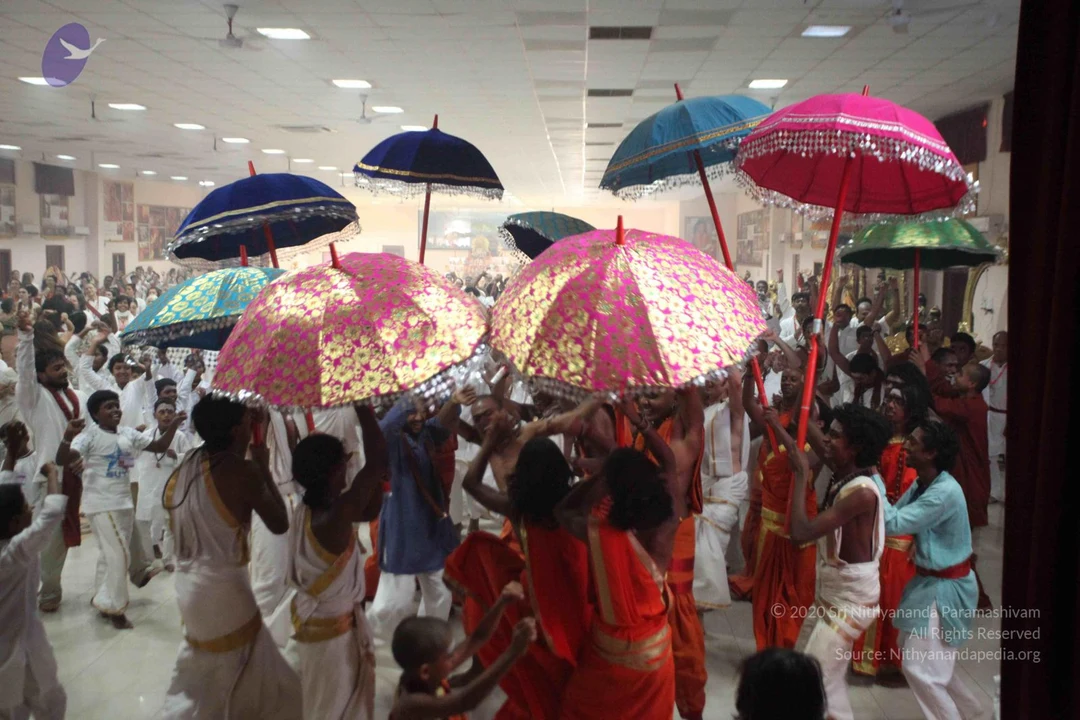
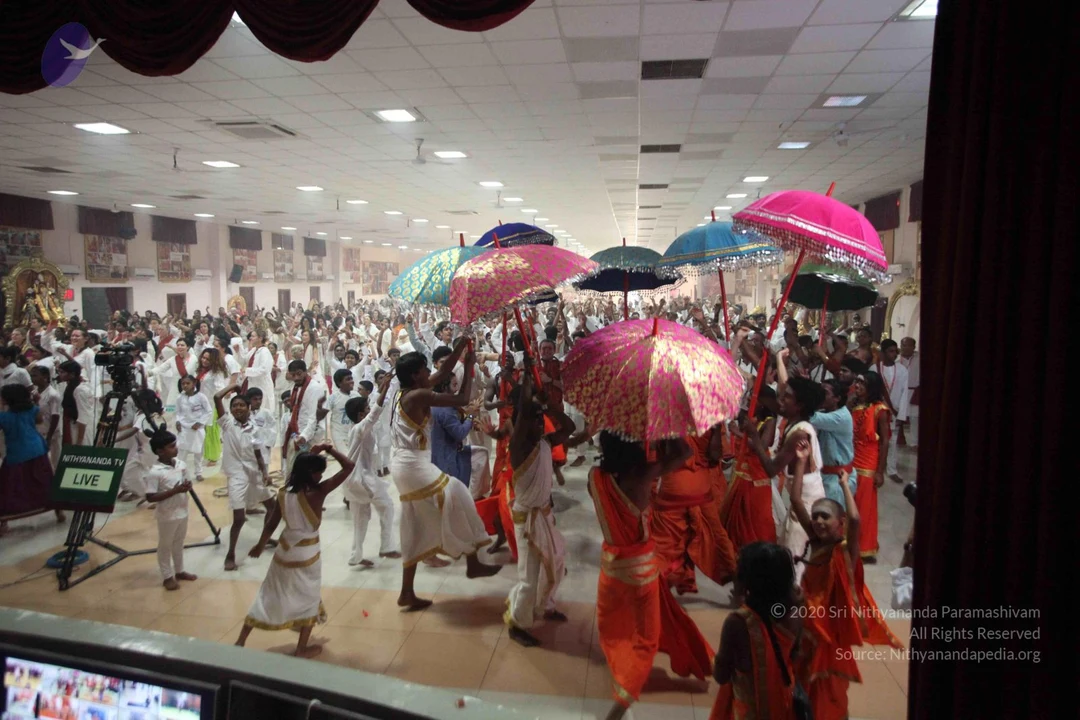
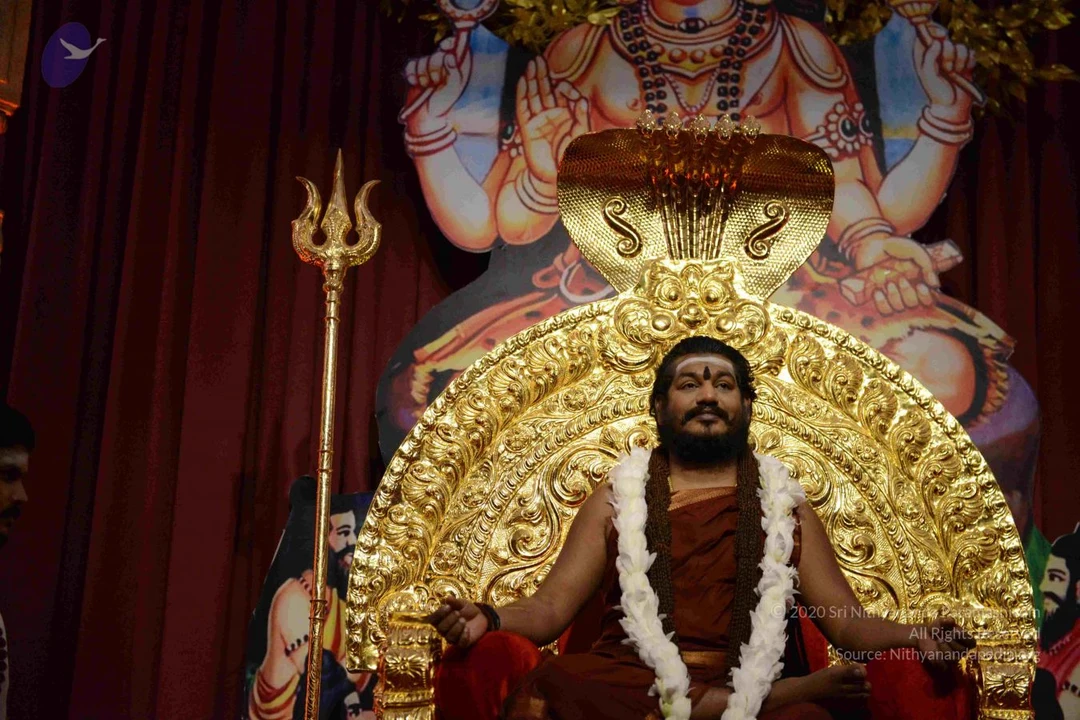
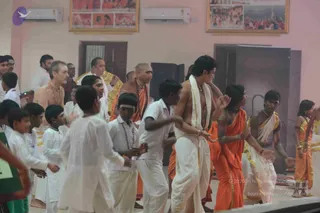
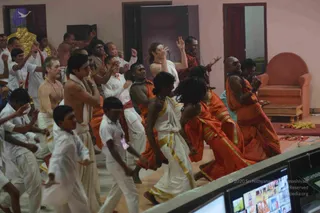
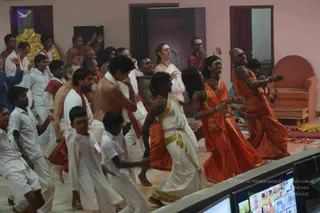
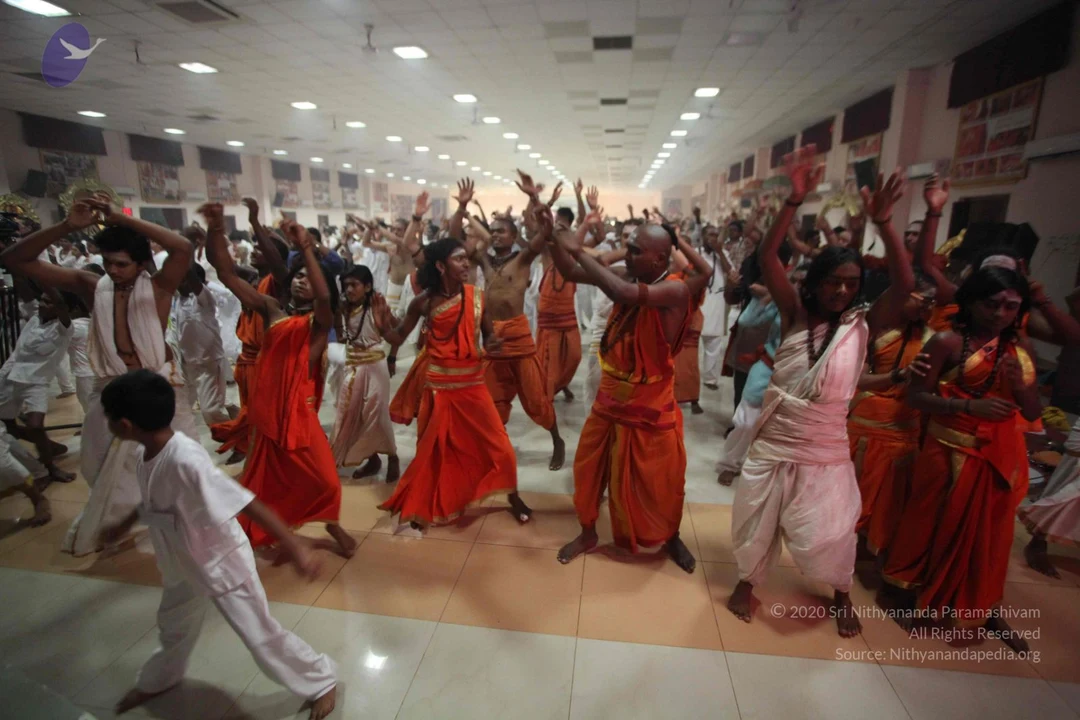
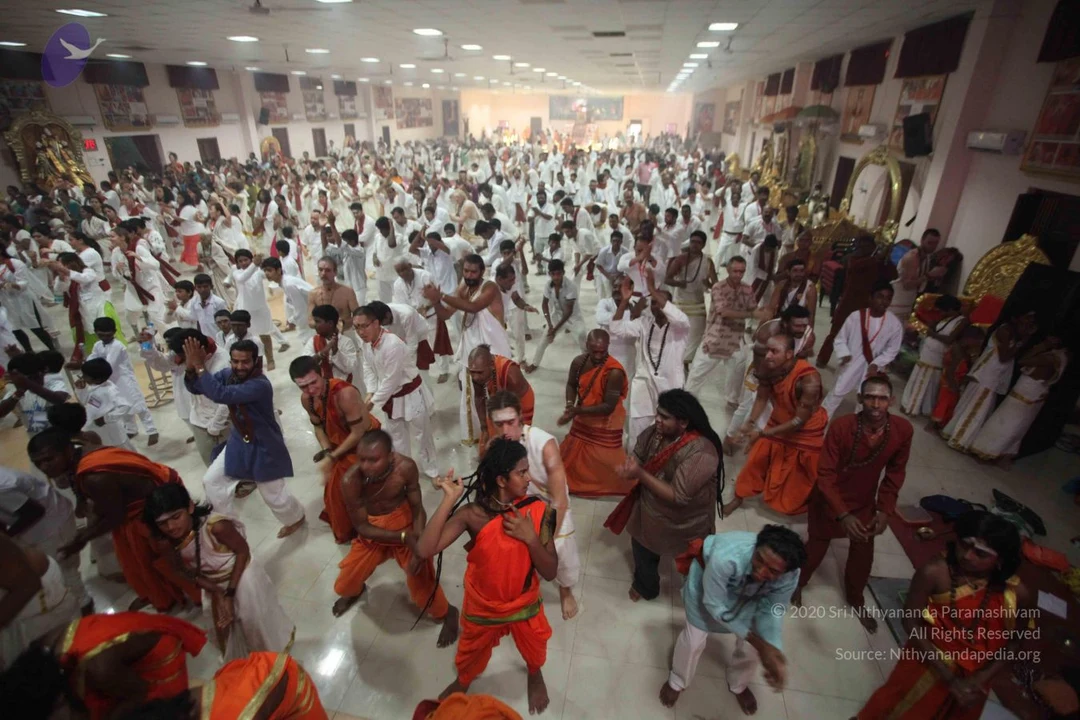
A seated man in saffron-and-maroon robes sits on an ornate golden throne (peetha) on a stage before maroon drapes. He wears a gold necklace, a rudraksha mala and a pink-and-white flower garland, and has long dark hair and a full beard. Behind the throne stands a large painted deity murti with four arms, holding a mirror-like object and a flame, with a golden leafy canopy above. A golden trident stands to the left and carved stone pillars flank the right. Two painted attendant figures with folded hands stand beside the throne. A microphone stands at the front of the stage. Swamiji (probable): the seated figure has long swept-back hair, rudraksha and gold adornments, saffron-toned robes and a throne setting, matching the page's reference to a satsang.A bearded man with long dark hair and a white-and-red forehead mark sits cross-legged on an ornate golden throne with a cobra-hood canopy and a large lotus-petal backrest. He wears an orange-brown robe, a heavy gold necklace with a pendant, rudraksha beads, and a pink-and-white flower garland, with his eyes closed as if in meditation. Behind him is a large painted backdrop of a multi-armed deity figure holding objects, and a microphone stands at the right. A single person is present.Indoor photo of a crowded hall with pink walls, framed photographs and wall-mounted air conditioners. In the foreground a group of boys and young men in white dhotis and kurtas move energetically, several with rudraksha malas and one with a white headband. Beside them a shirtless young man in a white dhoti with a white shawl stands among women in saffron-orange sarees with gold borders. Behind them a bald man in orange clothes wears a rudraksha mala, and a shirtless man with a grey beard stands among devotees. Further back a man in white holds a gold-coloured cloth. Several people are visible, and the scene appears to be a ritual procession or activity in an ashram hall.A photograph of a seated man on an ornate gold-carved throne with a red cushion, in a richly decorated hall. He wears a rust-orange garment, a long rudraksha mala with gold ceremonial pendant and necklace, a pink-and-white flower garland, gold armlets and bangles, and a white-and-red forehead mark. A gilded trident leans nearby, beside a carved stone pillar with figures and a lion relief. A red cup sits on a small wooden table. A microphone stand is at right. Captioned copyright text appears at lower right. a person, seated in a satsang setting.A large group of devotees dances energetically in a hall with pink walls and a red armchair at the right. Many men wear orange or saffron robes with gold borders, while others wear white dhotis and kurtas; some are bare-chested with rudraksha malas and raise their arms. A monitor in the foreground shows small live video feeds. A golden throne-like seat is visible at upper left, and a low table with flower offerings sits near the armchair. No distinctive a person candidate is clearly identifiable from appearance, so the identity is left unsure.A crowded ashram hall with pink walls and a golden throne at upper left. Many people in white dhotis and shirts, some bare-chested, and others in orange and saffron robes move energetically in a dancing or procession-like group. A tall man near center wears a white cloth with a gold border and has a white marking on his forehead. Women in orange saris with gold borders stand at right beside a man in orange with arms extended. A red armchair sits at right, and a monitor in the foreground shows video feeds of participants. Red and orange cloths lie on the floor. a person candidates are not clearly identifiable from appearance, so no probable identification is made.

Nithyananda-Yogam-Welcome

77 photosSource gallery
A photograph of a satsang inside a red-walled hall with a golden-canopied raised seat. A figure with long dark hair and a beard, bare-chested and wearing a saffron-orange shawl, sits on a gold-trimmed seat holding a microphone, with a small lectern in front. Brass bells, hanging chains, a golden trident-topped stand and a bronze deity figure frame the stage. Seated devotees in white and cream clothing face the stage, some in orange shawls, and a bald man in white sits near the front. A small electric fan and a bronze figure stand to the right. The swamiji cues are the long hair, saffron shawl and ornate gold-canopied seat, which fit a probable Swamiji (probable) presiding over the satsang as speaker.A satsang in an open red-walled pavilion with gold trident-topped poles and hanging brass bells. A bearded man with long dark hair, a tilak on his forehead and an orange-red shawl sits cross-legged on a raised gold-trimmed seat behind a small lectern, holding a microphone. A large audience of devotees sits on the floor in the foreground, many in white clothes, with one man in an orange-red shawl and others wearing white kurtas. Behind the seat stand a bronze deity murti and a green painted metal wheel motif. Visible people: about 15 to 20 in the foreground and background, including partially visible figures.A photograph of a satsang at an ashram hall. A man in an orange-red robe with a brown shawl sits on a gold-trimmed throne-like seat under an ornate golden canopy with hanging chains, holding a handheld microphone and smiling, with a music stand before him. Behind him is a large bronze Nataraja-style dancing Shiva arch with flame border and bronze figures, against a red wall. In the foreground, seated devotees in white and light clothing are seen from behind, including a bald man in white and a person with curly blond hair. A golden trident stands at left and a golden kalasha finial is visible, with a white electric fan at right.A seated man in saffron-orange robes with a brown shawl and a tilak mark on his forehead sits on an ornate golden throne-like seat under a gilded canopy supported by carved wooden pillars with hanging chains. He smiles while holding a handheld microphone to his chin, speaking to an audience. Behind him stands a bronze Nataraja statue within a flaming arch and a red wall. A golden trident sits in the left foreground, and several seated devotees, some in white clothes, are visible from behind in the lower foreground. A pedestal fan and water bottles are at right. The seated man is an appearance-based a person candidate with long hair, a beard, and saffron robes, but the appearance cues are not distinctive enough to confirm identity, so the label is uncertain.A photograph of a satsang held under a gilded canopy with hanging chains and wooden pillars, set before a red-walled hall with a bronze Nataraja-style dancing Shiva arch behind. A man with long dark hair and a beard, wearing an orange-brown robe and a rudraksha-style cord, sits on an ornate throne-like seat holding a microphone and smiling. Seated devotees in white clothes face him from the foreground, including a person with light curly hair in white and another with a shaved head. A standing bronze deity murti and a white pedestal fan appear at the right, and a golden trident-topped ritual object stands at the left edge. A caption reading Nithyananda Paramashivam and a mark are visible on the right sideA seated man in saffron-orange robes speaks into a microphone from an ornate golden-framed throne-like seat under a gilded canopy with red and gold pillars. He has long dark hair, a short beard, a white vertical forehead mark and a rudraksha-style brown cord around his neck, and he smiles with one hand raised near his face. In front, a row of seated devotees in white clothing face him, with a golden trident-topped ritual object in the foreground. Behind him stand a bronze sculpture and a golden figurine, and a standing fan is at the right.

IA-Gurukul-Akashic-Reading

6 photosSource gallery
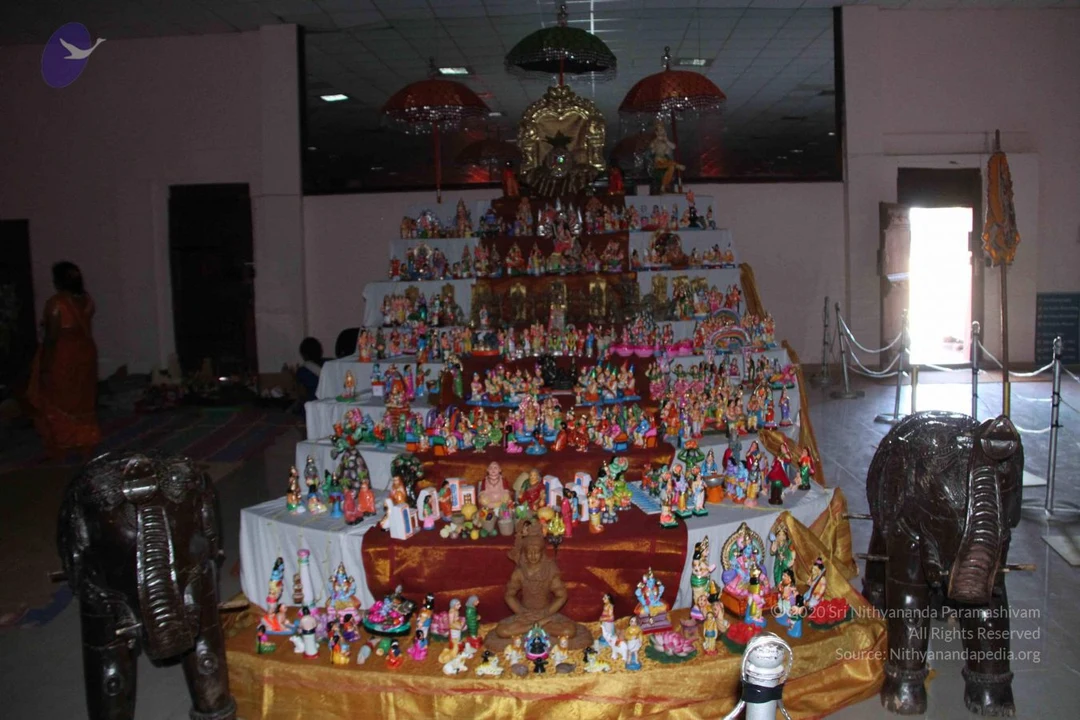
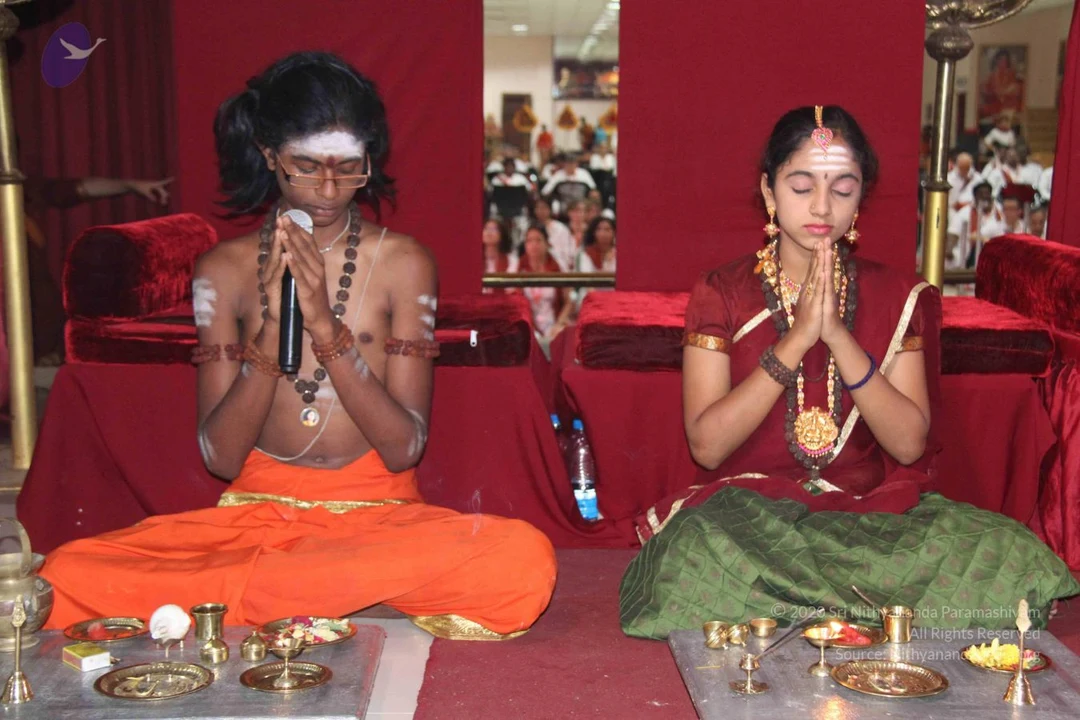
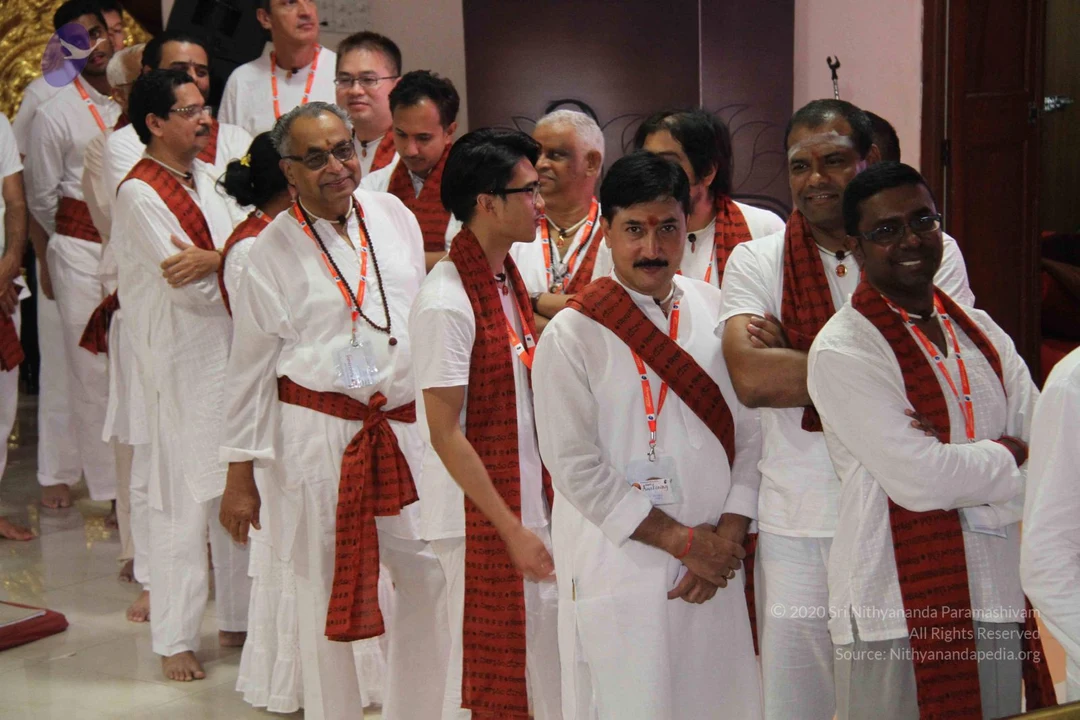
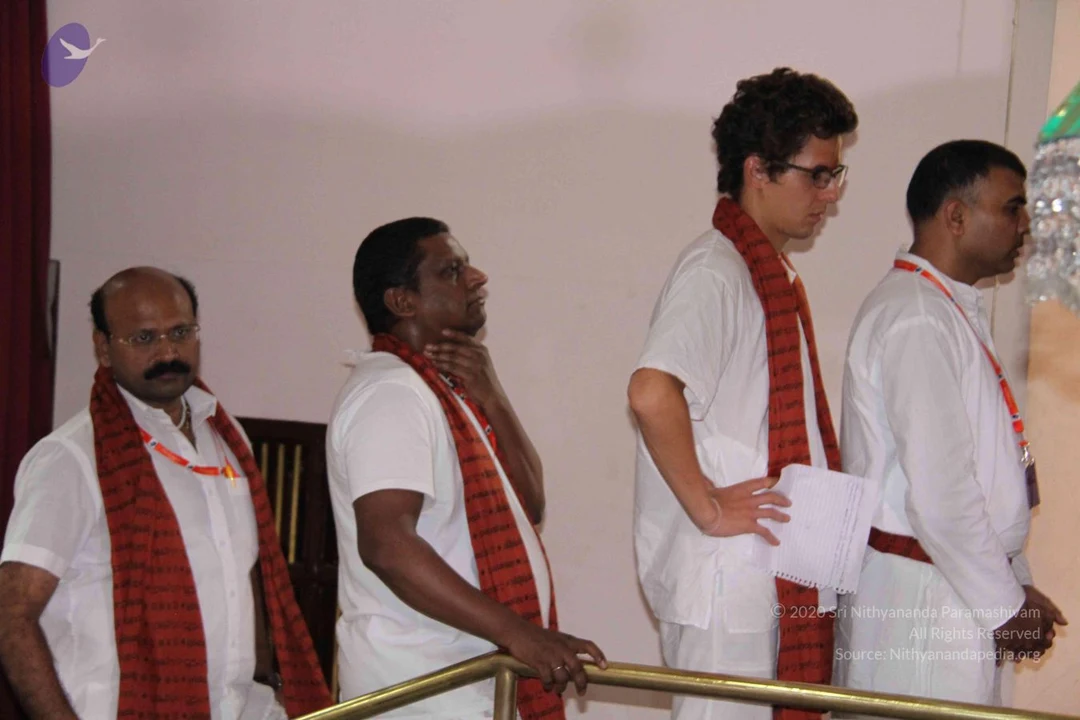
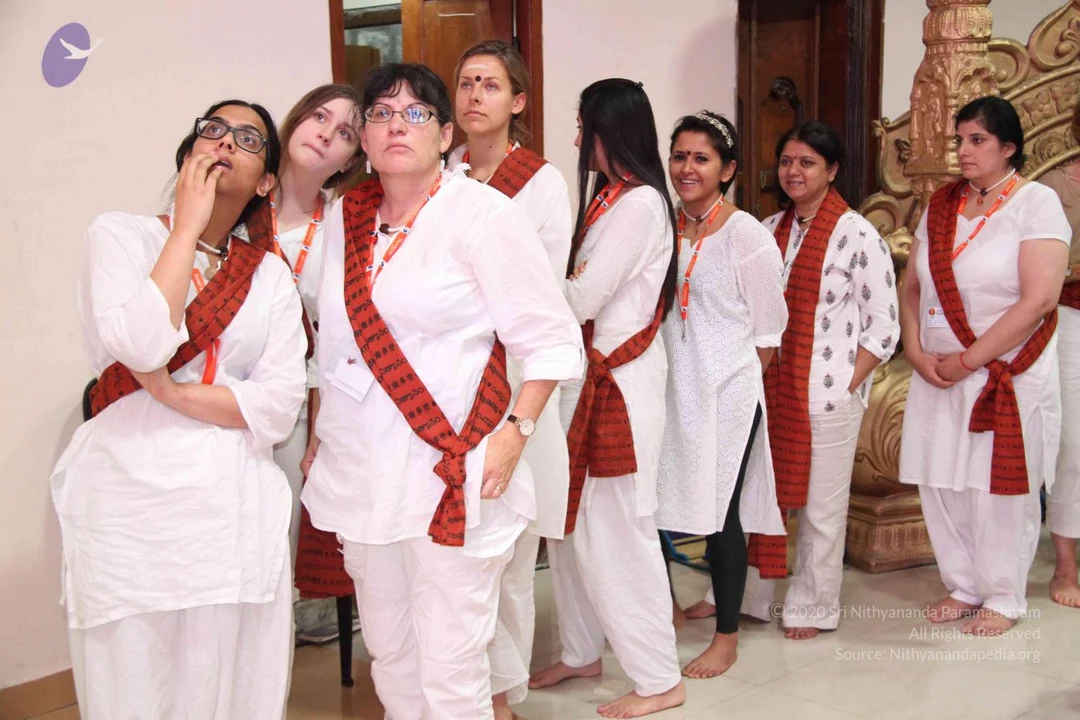
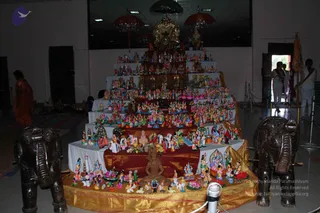
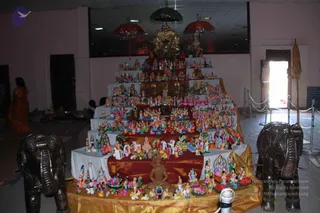
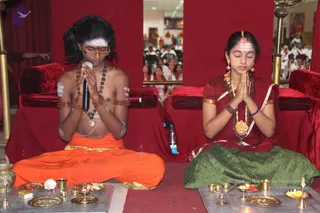
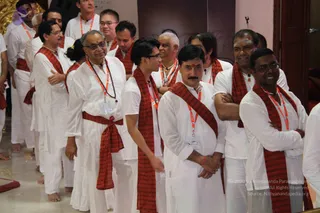
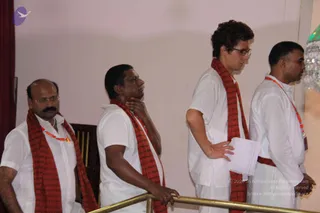
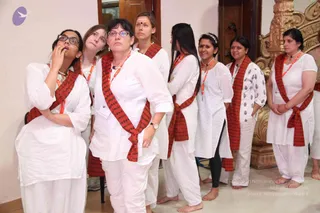
A tiered Golu-style display of painted clay dolls and deity figurines arranged on stepped white-draped platforms with red and gold cloth. A large central shrine-like altar with a golden arch sits at the top, flanked by hanging red umbrella-shaped canopies. Two dark metal elephant statues stand at the foreground corners on a gold-bordered cloth. A seated deity murti in brown stone or wood sits at the front center. In the background two people in white dress stand near a doorway, and one person in an orange garment stands at the left edge. Visible figures include painted dolls of Hindu deities and attendants.A large tiered display of colourful clay dolls and figurines, a Golu-style arrangement, rises in steps across a hall. Multiple tiers hold small deity and mythological figures painted in bright reds, greens and yellows, set on white and red cloths. Two dark carved wooden elephants flank the base, and a seated meditating figure with a brown carved finish sits near the bottom front. Gold-framed canopies with red umbrellas hang above, and a golden deity murti sits at the top centre. A woman in an orange sari stands at the left edge beside a doorway with light streaming in. No people are seated at the display, and the scene shows no visible ritual action.Two seated devotees in a ritual hall with red velvet cushions and draped red fabric. On the left, a young man with swept black hair and white vertical forehead marks, wearing bare-chest orange dhoti with gold border, a rudraksha mala, and holding a microphone with pressed palms. On the right, a young woman in a maroon sari with gold border, green patterned skirt, gold necklace, earrings and bangles, with a red bindi and sandalwood marks, hands in anjali. Brass puja plates with flowers, a small lamp, a bowl, kumkum and cups sit before them. Seated devotees in white fill the background, along with a pictured deity and brass lamp stands.A photograph of a crowd of men dressed in white kurta-style clothing with red-and-maroon patterned shawls draped over their shoulders, several wearing orange lanyard badges. In the foreground a smiling man with glasses and a rudraksha mala stands beside a younger man in glasses, while a man with a trimmed moustache in white holds his hands together. A man at right with a white forehead mark and arms folded smiles, and a man at far right with glasses also wears a red shawl and lanyard. Behind them more participants stand in a gold-accented hall, and a wall-mounted fixture is visible at upper right.Four men stand in a row in a plain room with pale pink walls and a red curtain at the left edge. All wear white shirts or kurta-style tops and red-orange shawls with woven dark patterns, and several wear orange lanyards. The man at far left wears glasses and has a moustache and a white shirt. Next, a man with short dark hair rests his hand near his chin while looking to the side. Third, a young man with curly hair and glasses holds a folded sheet of paper at his waist. The man at far right has short hair and wears an orange lanyard with a white dhoti-style garment. A brass handrail runs along the bottom of the frame.A photograph of a group of women in identical white kurta-and-pant ensembles, each wearing a red woven shawl tied at the waist and an orange lanyard with a badge, standing indoors in a line before a golden carved wooden structure. The woman at far left in glasses and a white kurta rests her fingers near her mouth and looks upward; beside her a woman with light brown hair looks up with an alert expression. In the centre, a woman in glasses and a white outfit with a wristwatch looks up, while behind her a woman with a red bindi stands near a doorway. Further right, a woman with long dark hair stands with her back partly turned, another smiles beside a woman with a jewelled hairband, and a woman in a white dotted kurta stands on the far right. Seven people are visible, arranged on a pale tiled floor.

IA-Jnananjana-Initiation

49 photosSource gallery
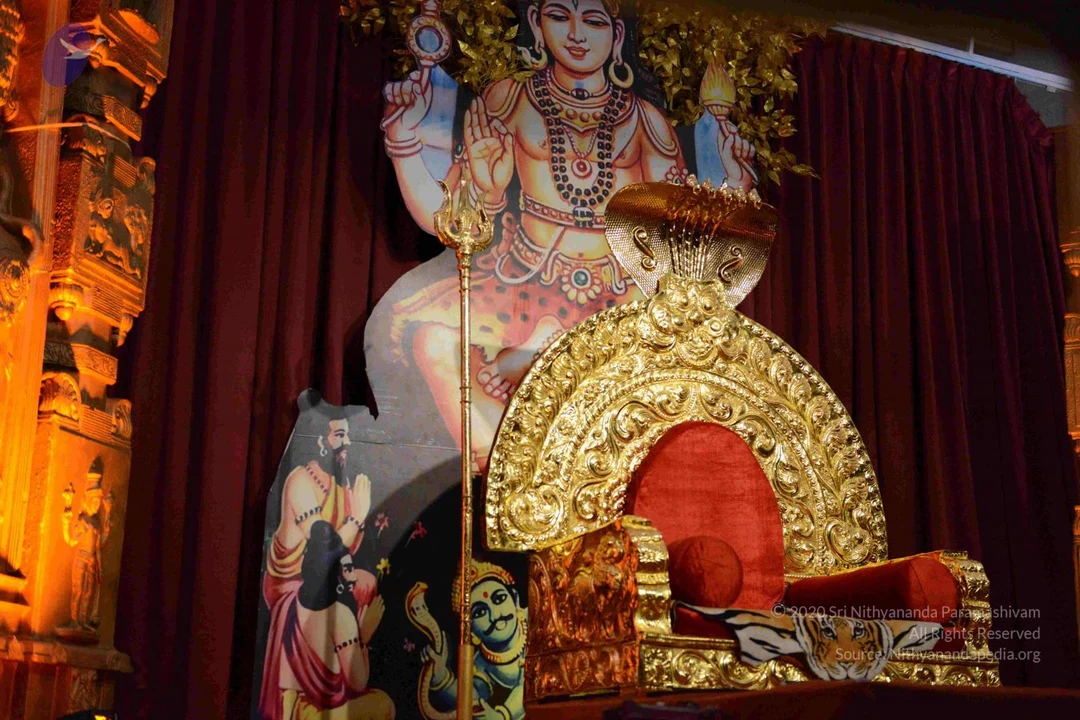
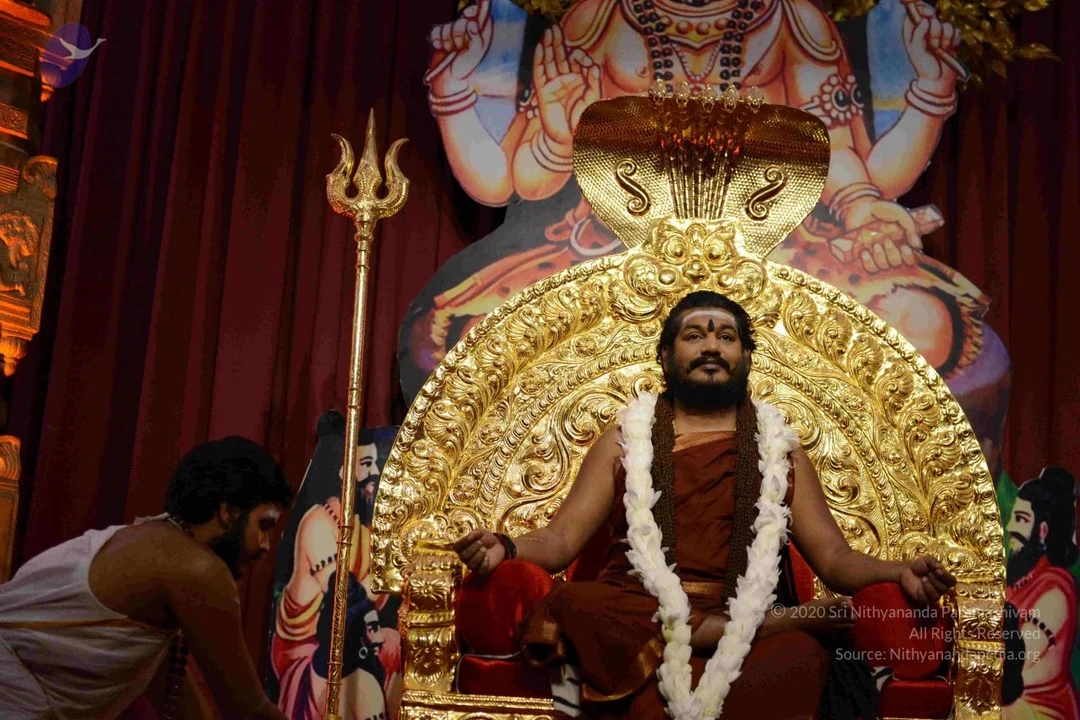
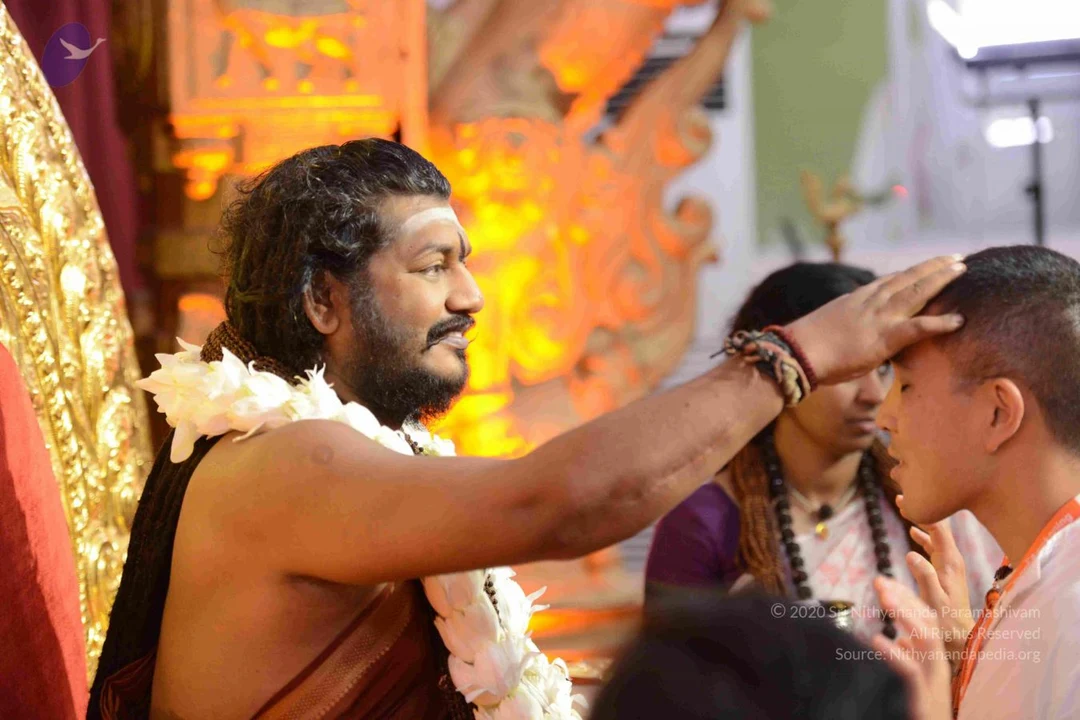
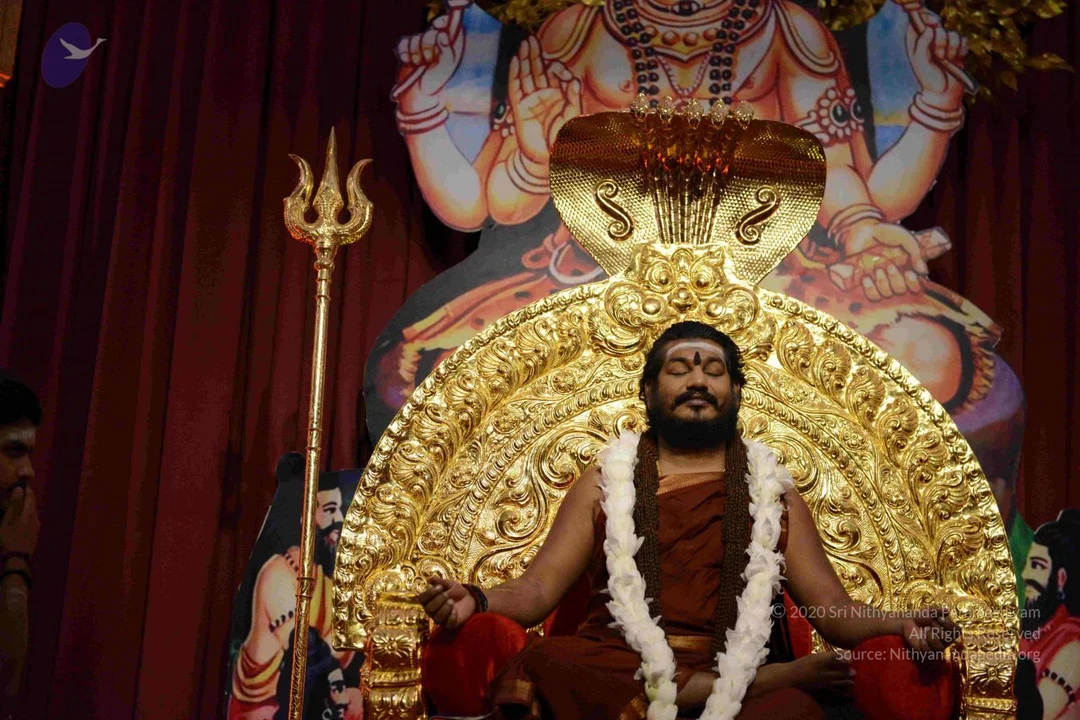
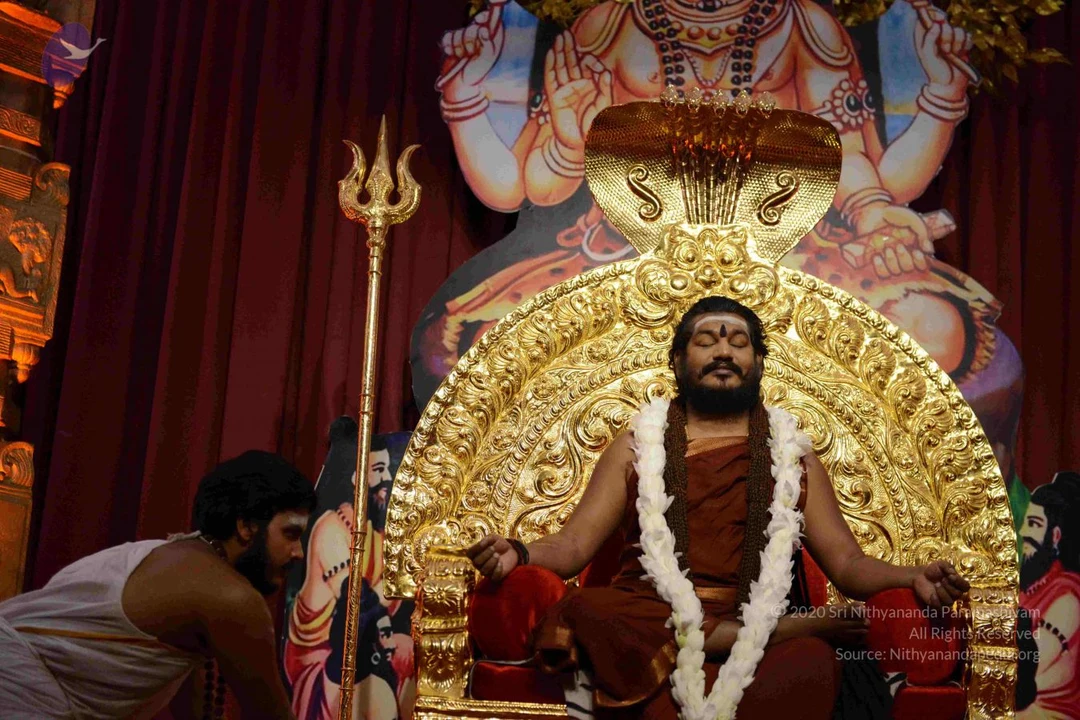
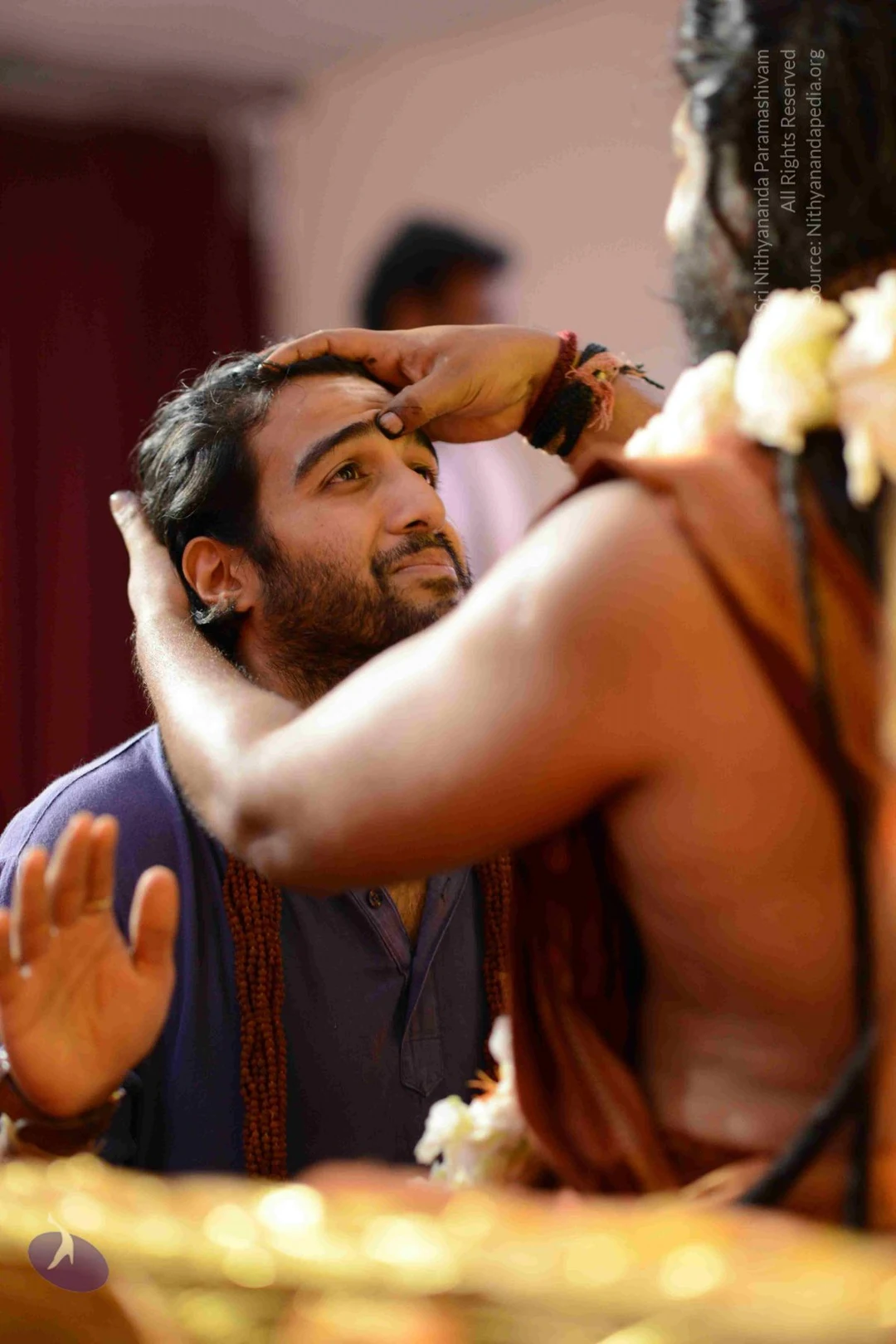
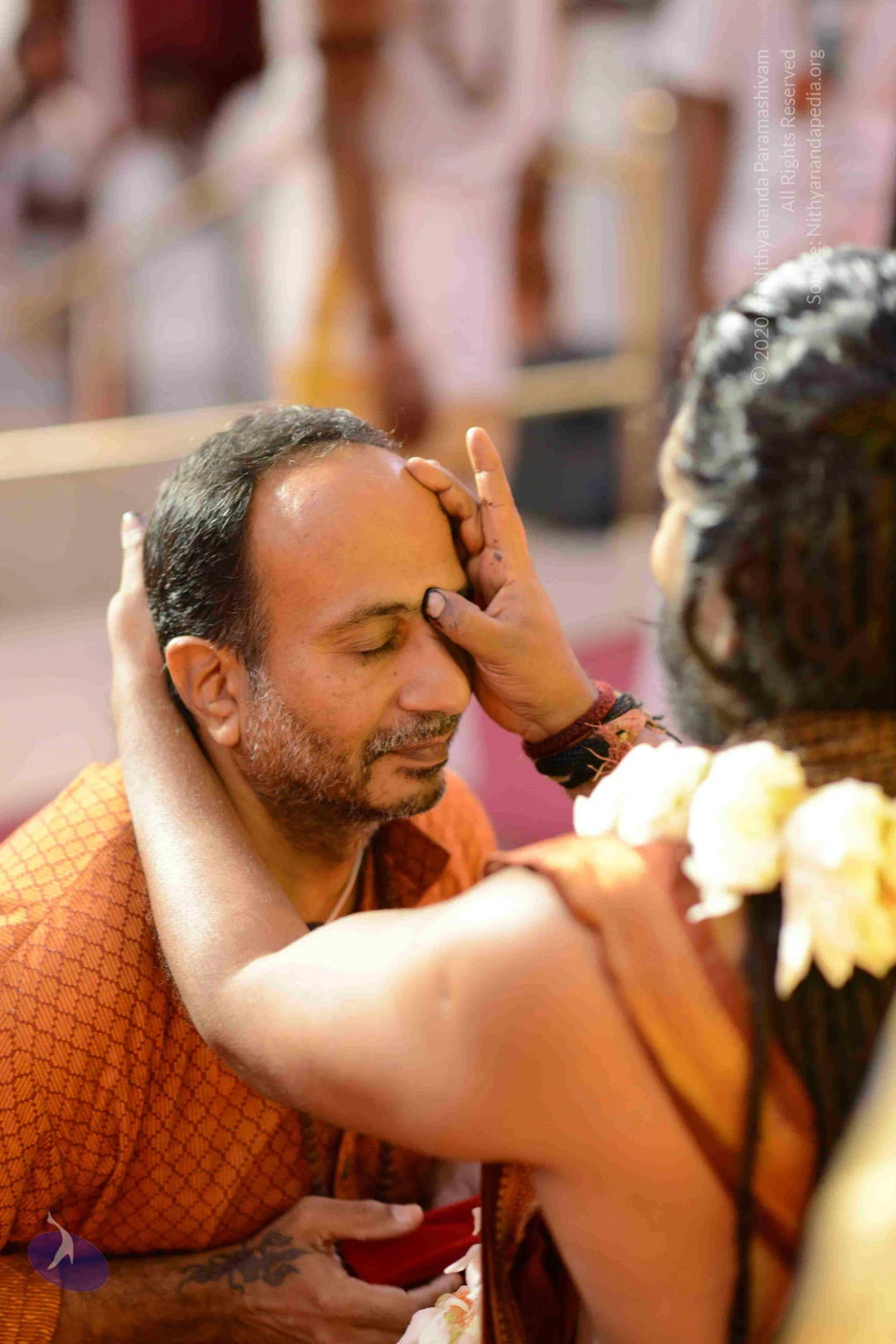
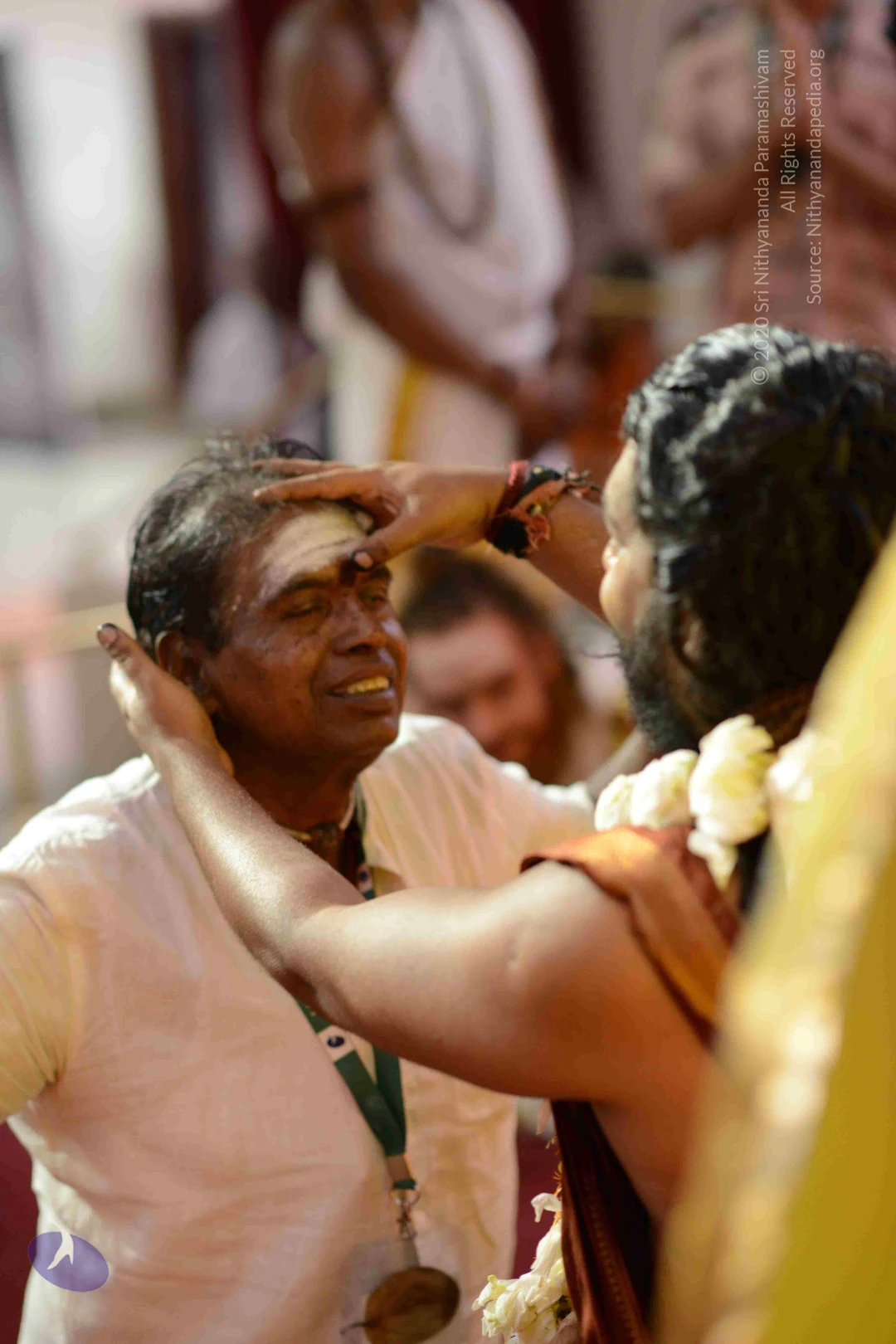
A photograph of an empty ornate golden throne (peetha) with a red velvet seat and cushion, backed by a golden arched frame carved with scrollwork and a cobra-hood canopy. A tiger-skin cloth drapes the base. A golden trident stands beside the throne. Behind it hangs a large painted cutout of a deity with a raised hand and a flaming lamp, wearing rudraksha malas, with a standing devotee figure in saffron-coloured clothing with folded hands and a monkey-faced figure at lower left. Dark red velvet curtains and carved temple pillars frame the stage. No people are present.A seated man in saffron-orange robes sits on an ornate gold throne carved with floral scrollwork and topped by a golden cobra hood. He wears a white flower garland draped over his shoulders, a tilak mark on his forehead, and a long dark rudraksha-style mala. His right hand is raised in a blessing gesture. Behind him a large painted deity murti with multiple arms holds ritual objects, and a golden trident stands to the left beside an orange-lit carved temple pillar. Deep red curtains frame the stage. A probable Swamiji is seated on the throne, identified by the long hair, saffron robe, rudraksha mala and gold-cobra throne cues, and no other people are visible.A seated man in saffron-orange robes and a white flower garland sits on an ornate gold throne with a carved cobra hood canopy. He wears a rudraksha-style necklace and a red tilak on his forehead, with long hair past his shoulders. Behind him stands a large painted deity image of a multi-armed figure holding a flame and other ritual objects, framed by an elaborate tree-like backdrop. A golden trident leans beside the throne, and painted standing figures in dark red curtains flank the stage. Swamiji (probable): the seated man has long hair, saffron robes, rudraksha beads and a ceremonial garland on a throne, consistent with a satsang setting. The image shows one person on stage.A seated figure in saffron-orange robes, wearing a white flower garland and a rudraksha mala, sits on an ornate gold throne carved with foliage and topped by a cobra hood. A tall gold trident stands at the left against a deep red curtain, and a large painted deity mural with multiple arms and jewelled ornaments fills the background. A sacred ash or kumkum mark is visible on the forehead. The scene is a ceremonial throne setting with a statue-like seated figure and several painted portraits at the lower left.A seated man in an ornate golden throne with a carved cobra-hooded canopy sits at the centre of a stage, wearing a rust-orange robe, a long white flower garland, and a long rudraksha mala draped down his chest; a red forehead mark is visible. A golden trident stands to the left, and a large painted backdrop of a multi-armed deity and robed figures frames the scene behind red drapery. A second man in a white dhoti and white sleeveless top, with a shaved-looking head, kneels at the lower left beside the throne. Swamiji (probable): the seated figure's long hair-free head is not the cue; the cues are the orange robe, layered rudraksha malas and ornate throne of honour. Relevant to a satsang setting.A photograph of a seated man on an ornate gold throne with a carved cobra hood canopy, dressed in rust-brown ochre robes with a white flower garland around his neck, eyes closed, holding two small silver bowls in his hands, with a forehead tilak and long hair. Beside him stands a clean-shaven-looking attendant with a beard, wearing a white dhoti and shawl with a rudraksha mala, holding a tall golden trident. Behind them is a painted backdrop of devotional figures in red and yellow tones and a maroon curtain. The throne and seat are red velvet cushioned. The man on the throne is an appearance-based probable candidate for a person given the saffron-ochre robes, long hair and ornate gold throne and garland; the attendant in white is a devotee.

Nithya-Satsang
52 photosSource gallery
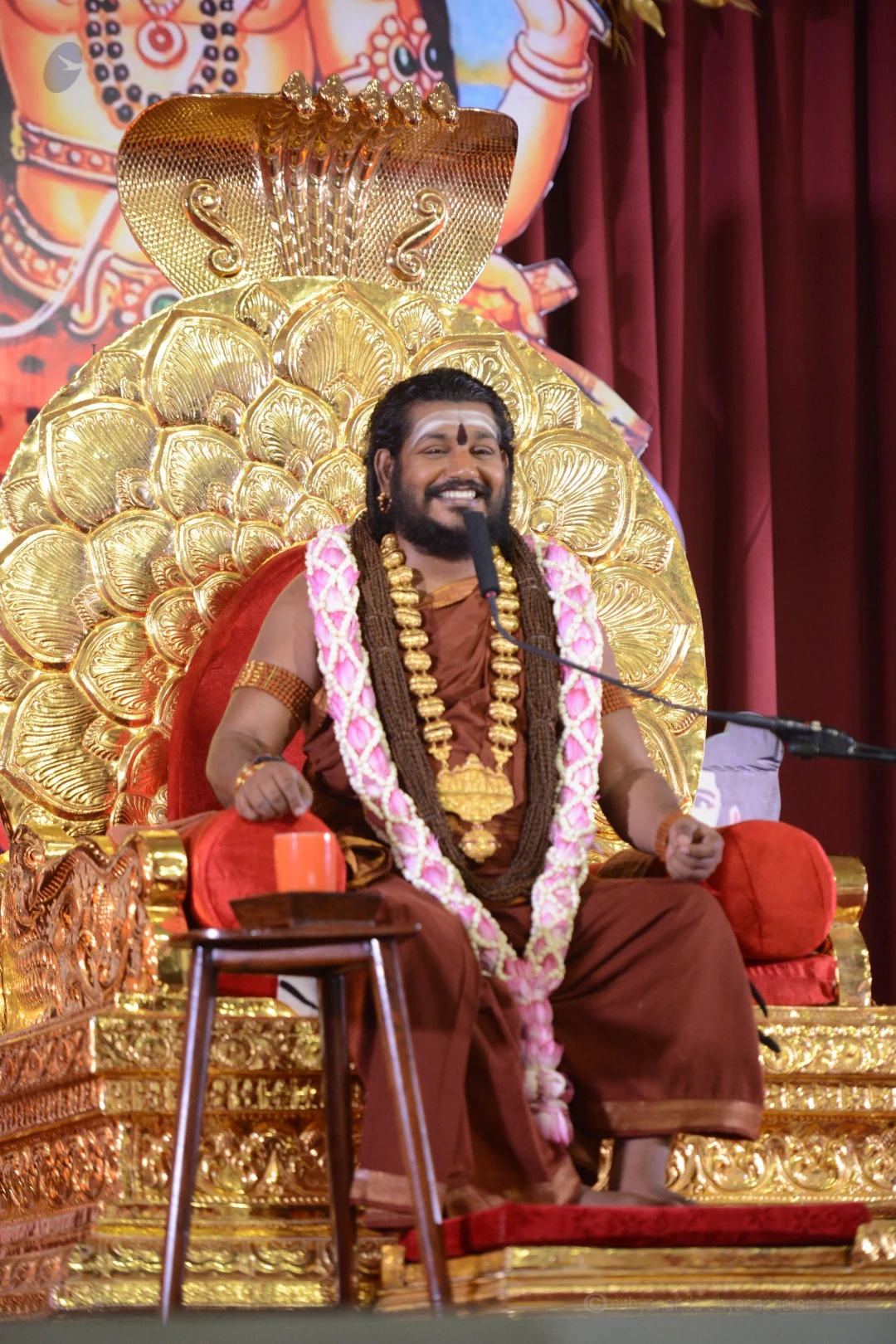
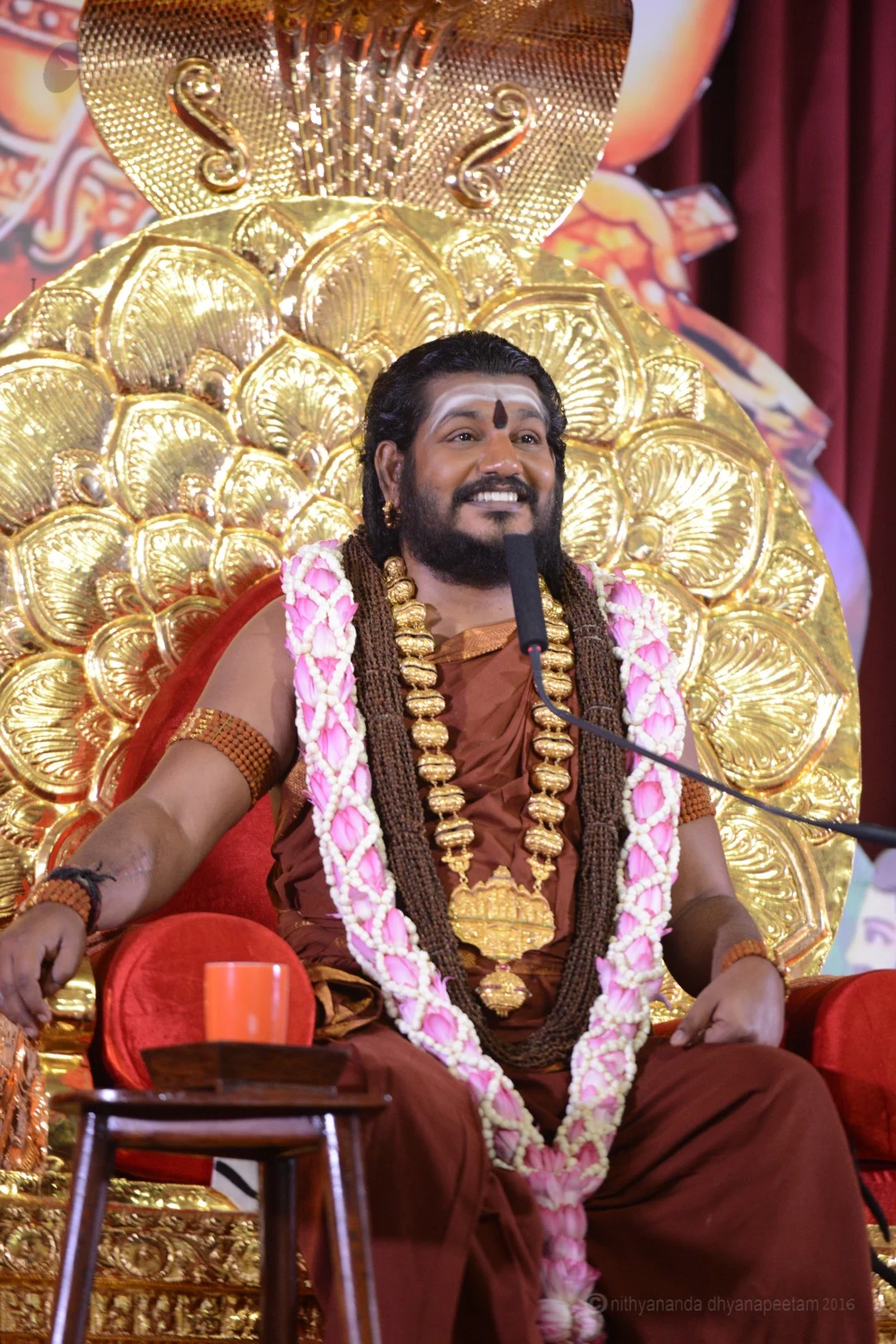
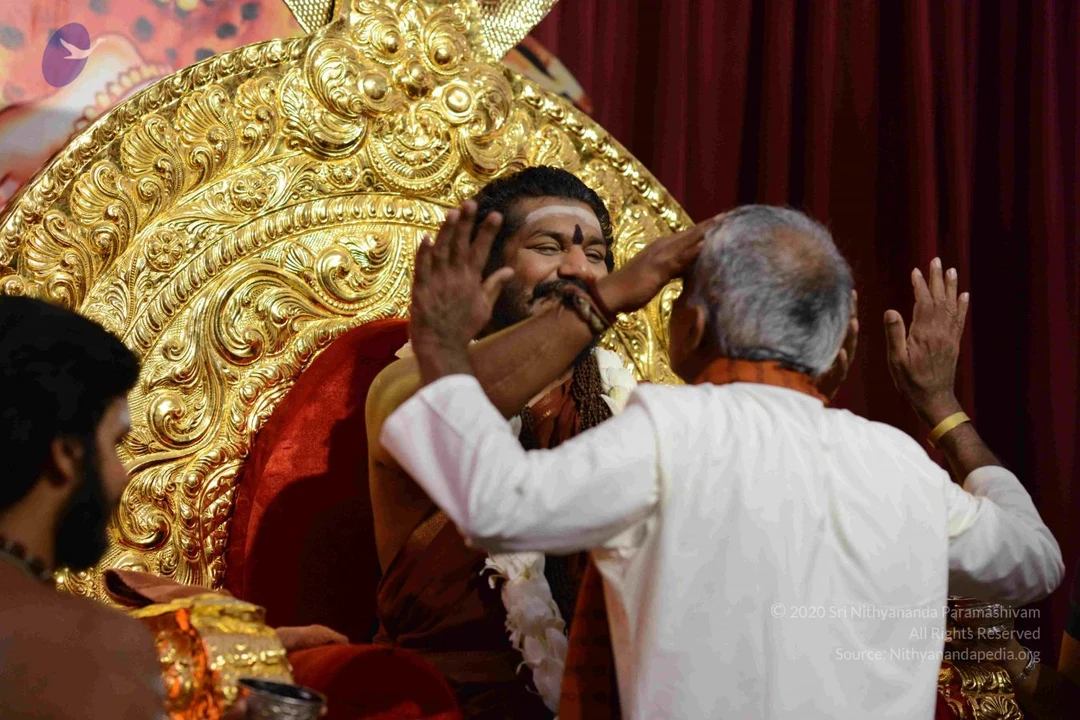
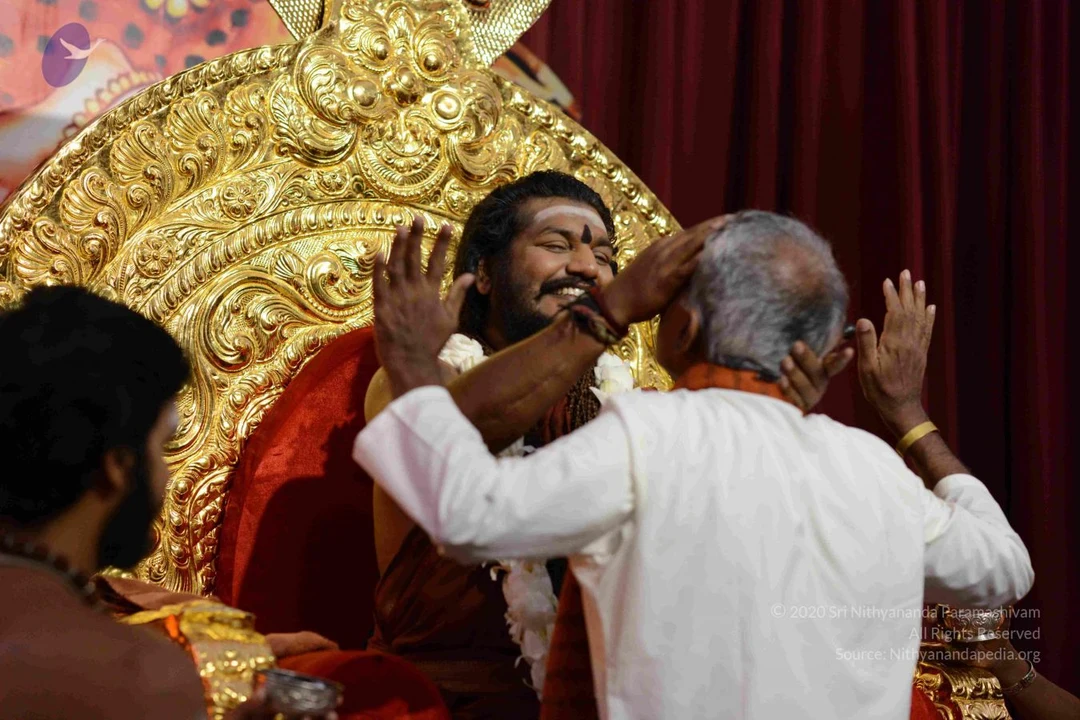
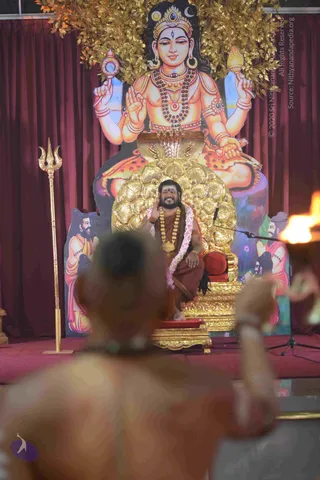
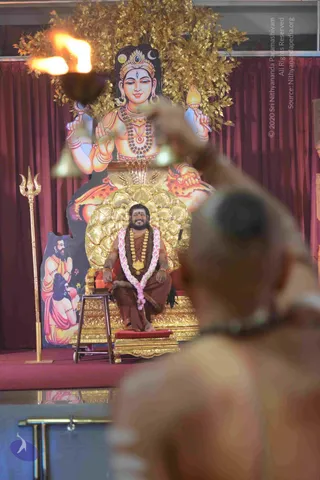
A seated man in a rust-brown robe wears a long gold necklace, a pink-and-white flower garland and a forehead tilak, seated on an ornate golden throne with a cobra hood above it. Behind him a large painted image of a four-armed deity murti, with a trident and flame in its hands, is framed by golden leaves. A golden trident stands to the left of the stage. In the foreground, blurred devotees raise their arms toward him, and a flame from an oil lamp appears at the right edge. a person is seated on the throne, addressing the gathering as the central figure.A photograph of a seated man on a golden throne in front of a large painted deity murti of Shiva with a crown, trident-like adornments and golden leaf backdrop. The seated man wears a rust-orange robe, a pink and white flower garland, a gold necklace and a rudraksha mala, with a red tilak on his forehead. A standing figure with a shaved head and bare upper body in the foreground holds a lit oil lamp aloft toward the throne. Red drapes, a golden trident and a painted panel of a kneeling devotee with a deity frame the scene. The seated man is a candidate for the a person of this page, with cues of a rudraksha mala, ceremonial gold necklace and orange robe, so he is identified as a person in an in-person setting, and the shaved-head figure in the foreground is a priest performing aarti.A smiling man with long dark hair and a full beard sits cross-legged on an ornate gold throne shaped like a cobra hood with a red cushioned seat. He wears a rust-brown robe, a heavy gold pendant necklace, a dark rudraksha mala, gold armlets and a pink-and-white flower garland draped over his chest. A red cup sits on a small wooden stool beside him and a microphone stand is visible at right. Behind him is a large painted backdrop of a multi-armed deity with a snake-like crown and a jewelled necklace.A seated man in rust-red robes sits on an ornate gold throne carved with scalloped petals and a cobra hood canopy. He wears a pink and white flower garland, a gold necklace with a large pendant, rudraksha beads and gold armlets, and has long hair, a beard and a white and red forehead mark. He smiles as he sits with a small orange cup on a side table, and a microphone stand is visible at the right. Behind him, a large painted deity murti with four arms holds ritual objects against a red and blue backdrop.A bearded man with long dark hair sits on an ornate gilded throne with red cushions, smiling and turned to his left. He wears a rust-brown robe, a long brown rudraksha-style mala with gold bead ornaments and a large gold pendant, a gold armband and gold bangles, and a pink and white flower garland over his shoulders. A white vibhuti marking with a red dot is on his forehead. A microphone stand stands at right and a dark-red velvet curtain with carved gold panels fills the background. Appearance-based identification is probable: a person, seated in a dais role with long hair, ceremonial gold ornaments and a garland. No other people are visible.A smiling man with long dark hair and a full beard sits on an ornate red and gold throne with a golden peacock-feather backrest. He wears a rust-brown robe, a long brown rudraksha mala with heavy gold bead and pendant necklaces, a gold armlet and bangles, and a pink and white flower garland draped over his shoulders. A white tilak is painted on his forehead. Behind him hangs a maroon curtain, and a microphone stand stands beside the throne.

Nithyananda-Yogam-Welcome

142 photosSource gallery
A photograph of an outdoor satsang discourse under a gold-trimmed canopy supported by carved wooden pillars with hanging chains. A bearded man with long dark hair, a forehead tilak and a rudraksha-style mala over saffron-orange robes sits on an ornate gold-edged throne, holding a microphone and smiling. Before him a small table holds a notebook and water bottles. A bronze sculpture of a deity and a golden bull figurine stand nearby. In the foreground, seated devotees in white and light clothing, partly seen from behind, face the dais, with a white pedestal fan at right and a golden ceremonial finial at left.A man seated cross-legged on an ornate golden-wooden canopied dais speaks into a handheld microphone while smiling broadly. He wears a saffron-orange cloth draped over his shoulders and a bare upper body, with white tripundra markings on his forehead and a rudraksha-style mala around his neck. A small pair of brass bells and hanging garlands decorate the canopy, and a Nataraja dancing Shiva relief stands behind him against a red wall. Two standing bronze devotional figures flank the dais, and a brass lamp stand and a table with a laptop are in front. Seated devotees fill the foreground, some with their backs to the camera, and a white desk fan sits at the right edge.A man seated on a gilded wooden swing-throne under an ornate golden canopy, speaking into a handheld microphone with his hand resting on his chin. He wears a saffron-orange dhoti and shawl, a rudraksha-style beaded necklace, and a white-and-red sacred mark on his forehead; his long dark hair falls to his shoulders. A small wooden table with a microphone stand and a leopard-print cushion sit before him. Behind him are a bronze Nataraja-style dancing Shiva mounted in a circular arch, a bronze figure of a standing deity, and a golden bull, against a red-orange wall. A gold oil lamp stands in the foreground, with several audience members' heads visible at the bottom edge. A pedestal fan is at the right. The scene reads as a satsang or discourse.A man with long swept-back dark hair and a forehead tilak sits on a gilded wooden throne-like seat under an ornate golden canopy, holding a cordless microphone to his chin and smiling broadly. He wears a rust-orange robe and a beaded brown shawl draped over his shoulders. Behind him hangs a dark bronze Nataraja dancing Shiva figure within a circular arch, with a small brass bull statue on the right. A bronze figure of a seated deity holding a bowl stands at the left edge beside brass kalasha-style pots. Bottles of water sit on a low table, and blurred heads of seated audience members fill the bottom of the frame.A bearded man in a rust-orange robe sits on a gilded throne-like seat with leopard-print cushions, holding a microphone and smiling with his hand raised to his cheek. A bronze Nataraja dancing Shiva figure stands in a circular arch behind him, and a bronze seated deity figure and a small bronze bull sit at left. Gold-trimmed wooden pillars with hanging chains frame the seat, and a wooden lectern with a ceremonial staff rests in front. Seated audience members in silhouette and in partial view occupy the foreground.Outdoor satsang on a raised golden-framed seat draped with a leopard-print cushion. A bearded man with swept-back dark hair and a white tilak sits cross-legged in a rust-orange robe with a brown beaded shawl, holding a microphone and smiling with eyes closed. Behind him is a bronze Nataraja statue dancing within a flame arch, with a small bronze Ganesha and a gilded bull figure nearby. A bronze standing deity murti stands at left beside water bottles and a blue globe on a low table. Ornate gold-trimmed swings and chains frame the seat. Audience heads appear in the foreground at the bottom edge.
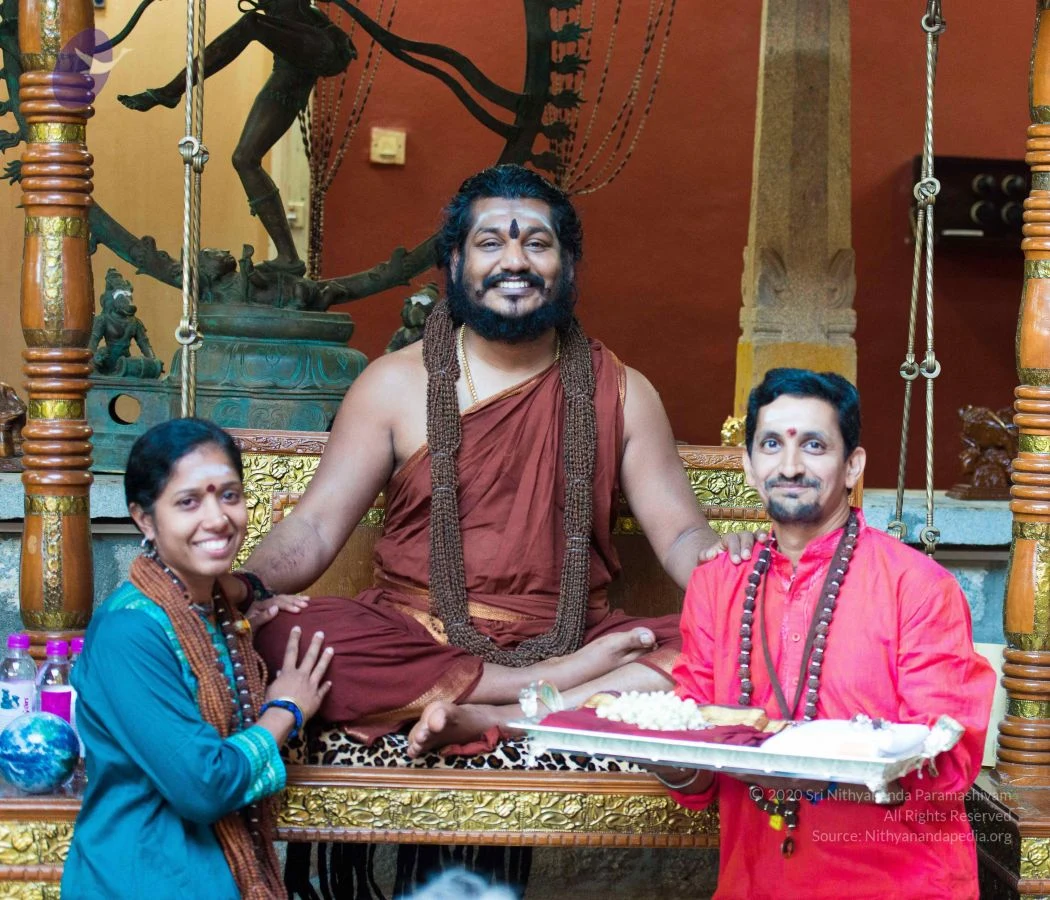
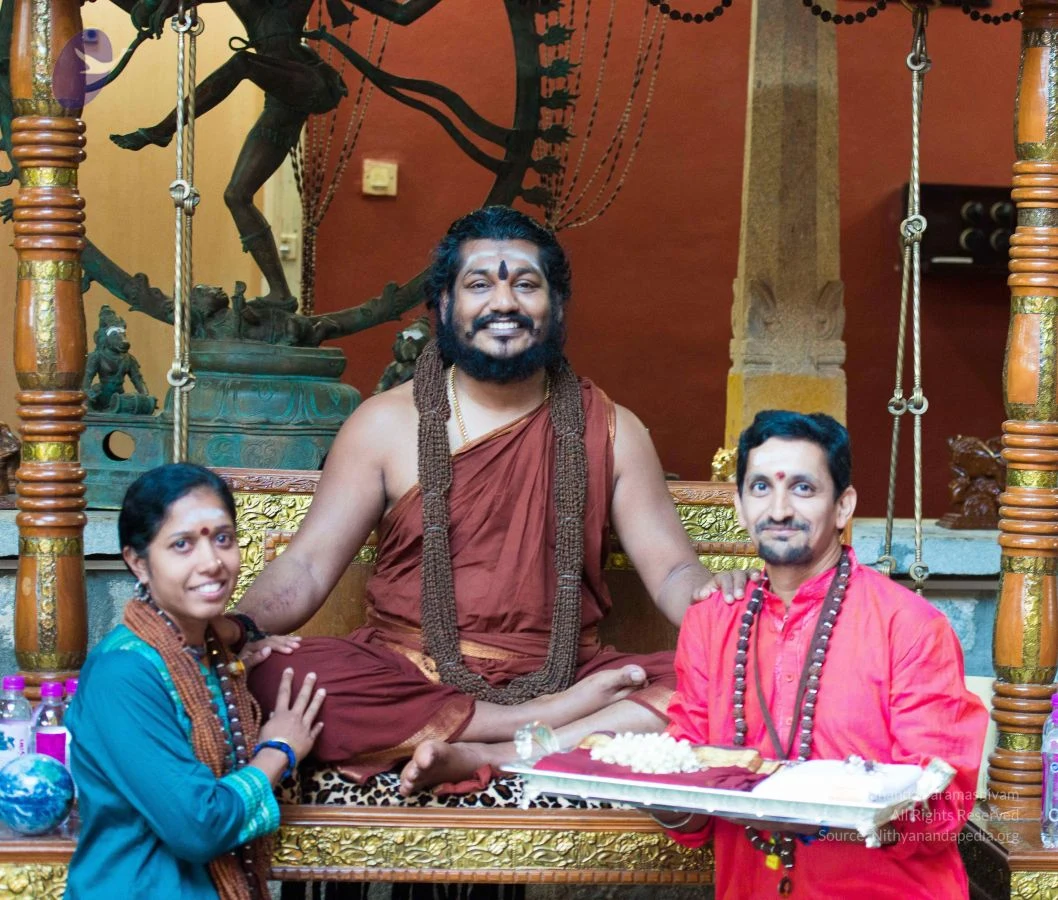
IA-Gurukul-Akashic-Reading
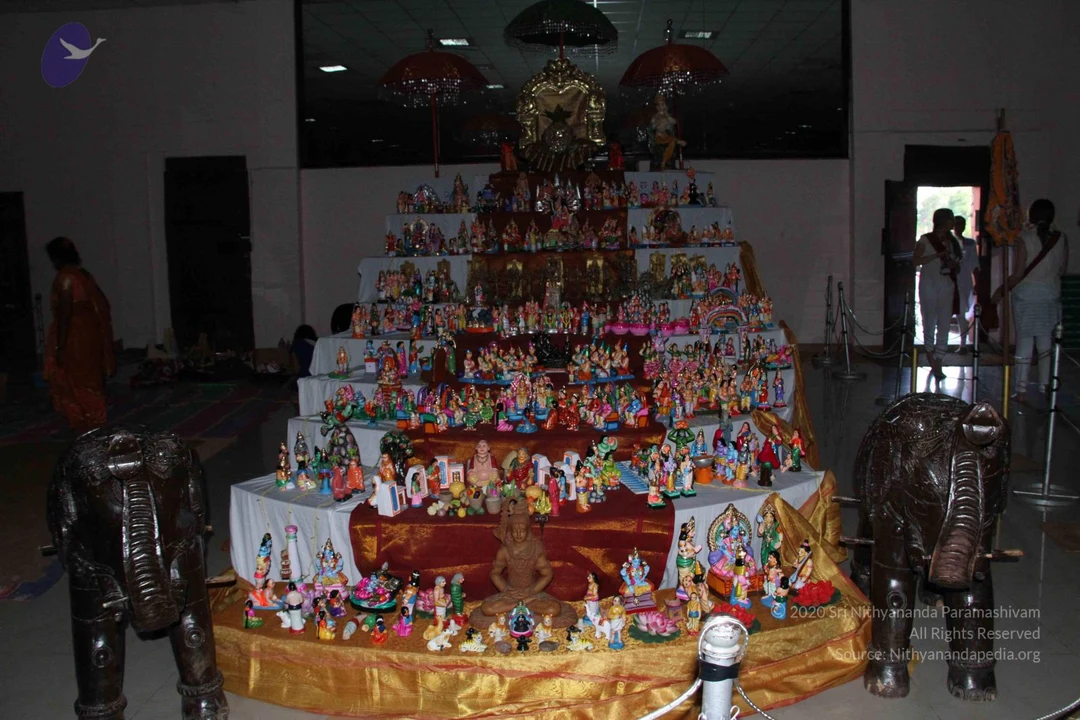
1 photoSource gallery
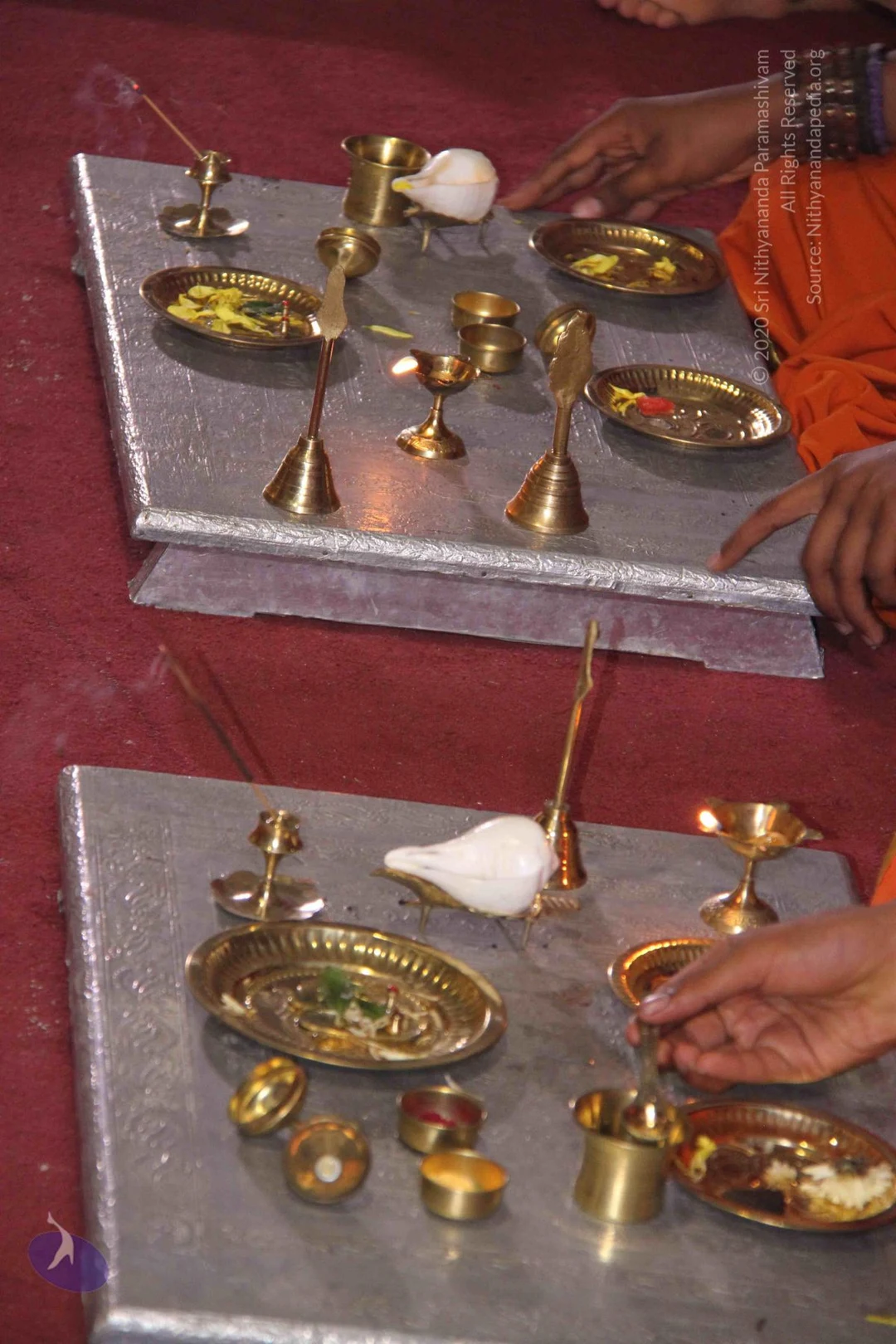
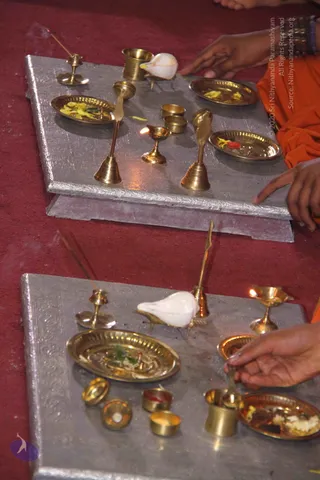
Close-up photograph of two silver-coloured metal trays set on a red cloth, holding brass puja items: a white conch shell, brass bells with handles, oil lamps with lit wicks, incense sticks sending up smoke, brass plates of yellow turmeric or flower petals, small brass cups, and a brass spoon. Hands of people in orange robes reach in from the edges, one hand touching a bell and another arranging items. Only partial arms and hands are visible, so the people are counted as one. The scene looks like a ritual preparation or puja setup.

IA-Jnananjana-Initiation
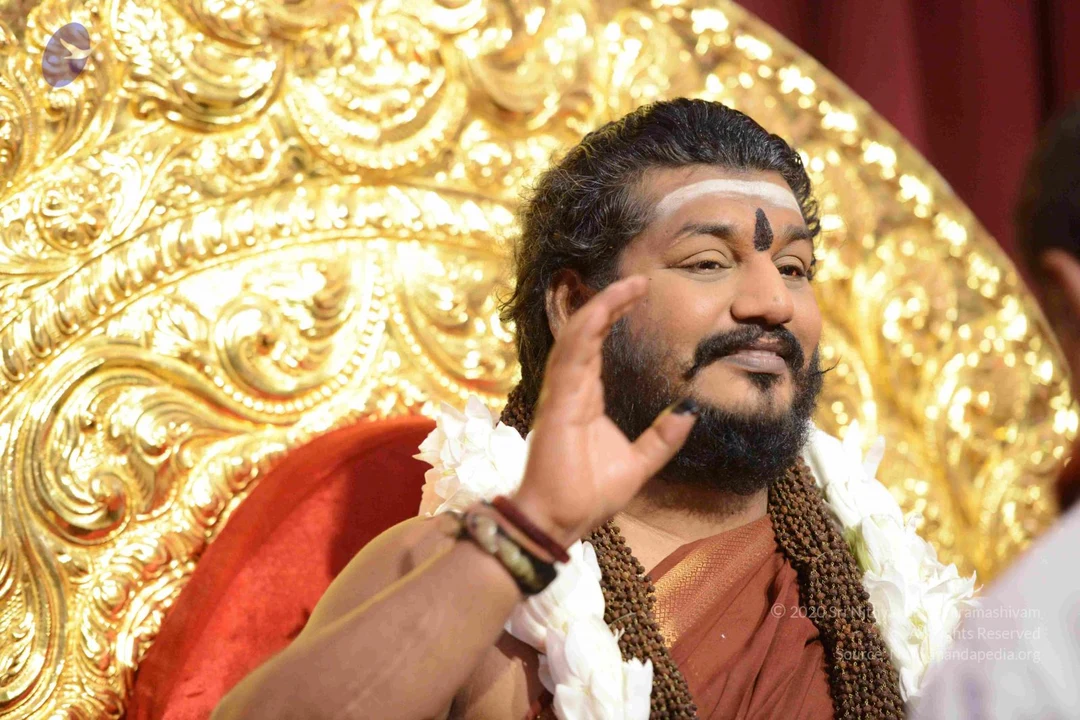
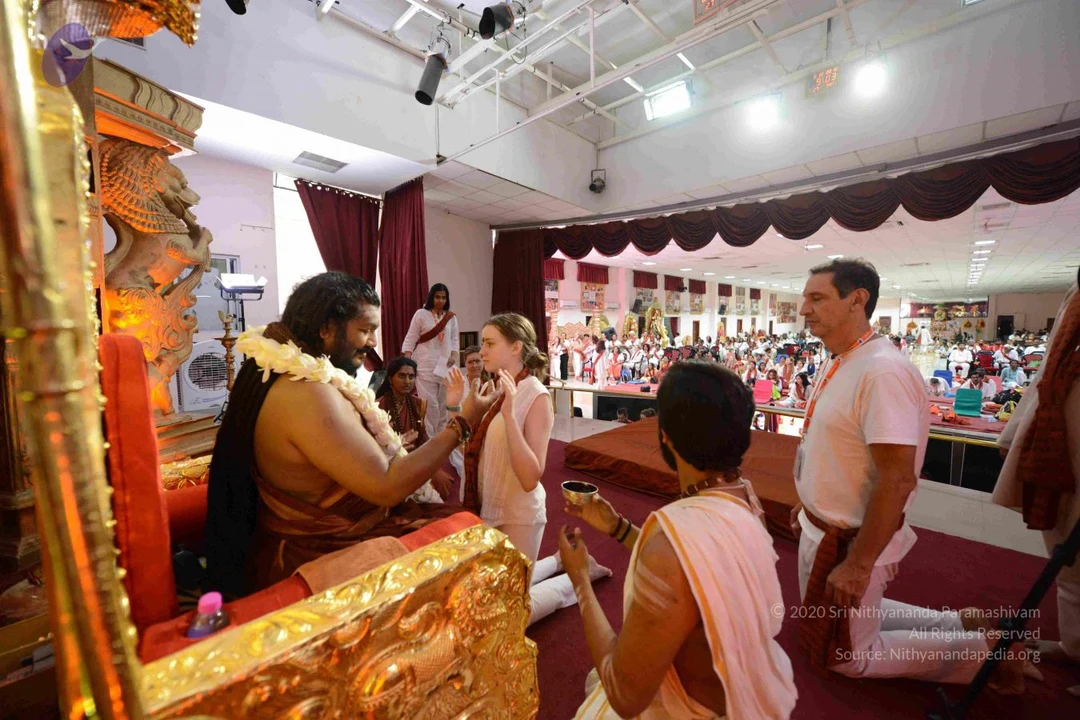
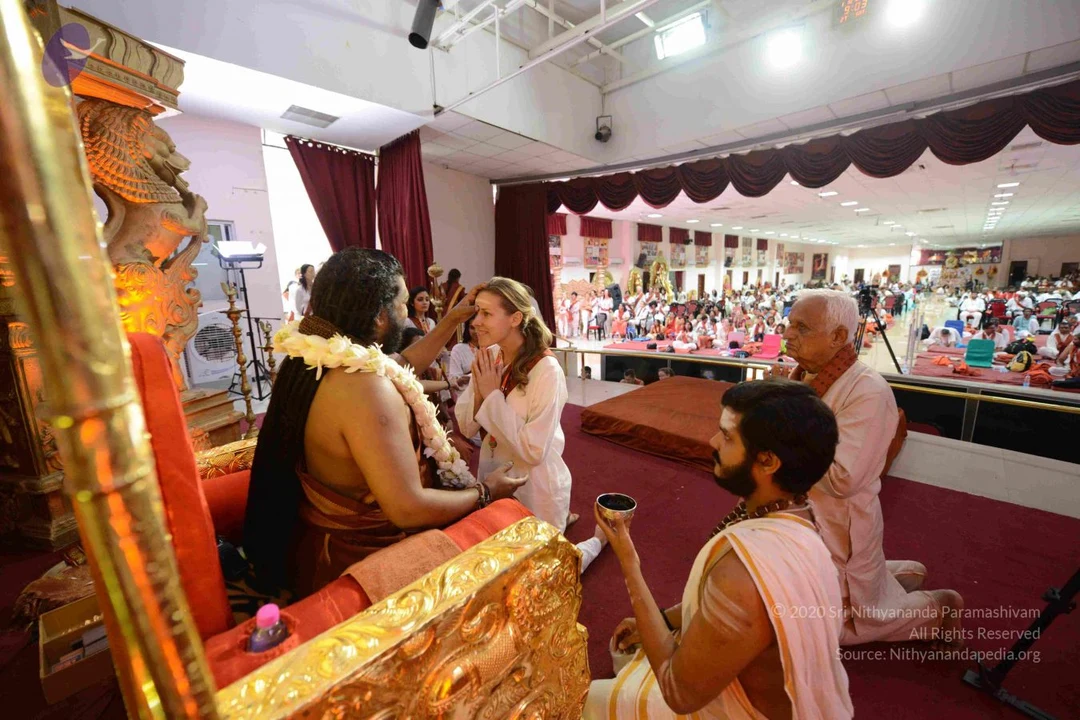
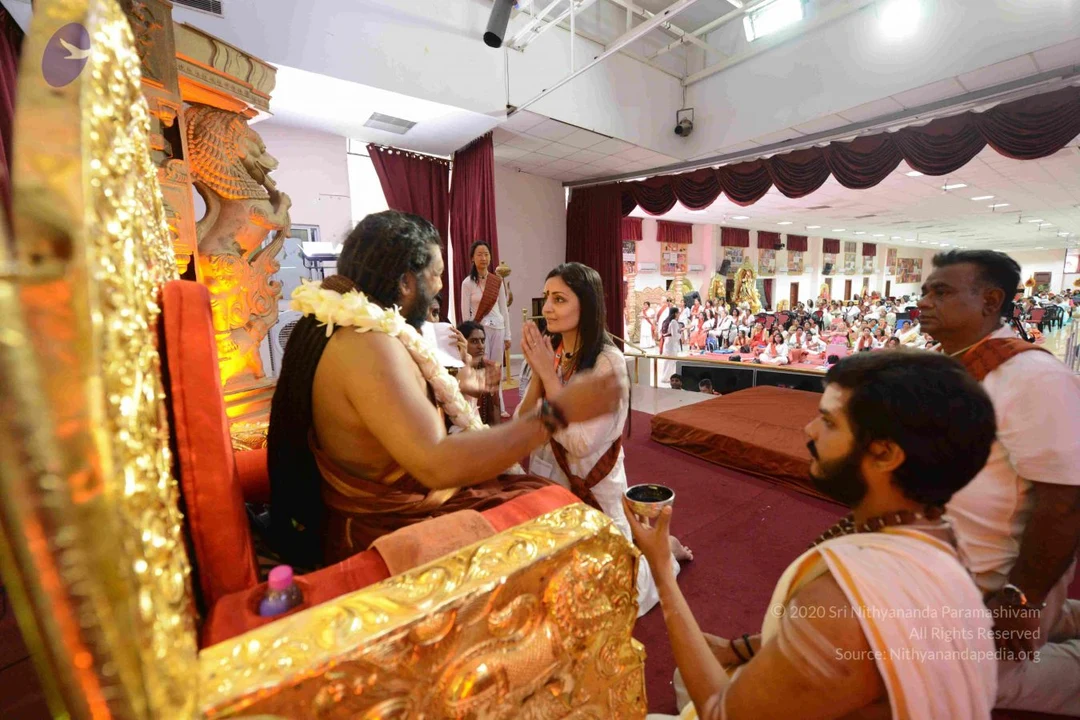
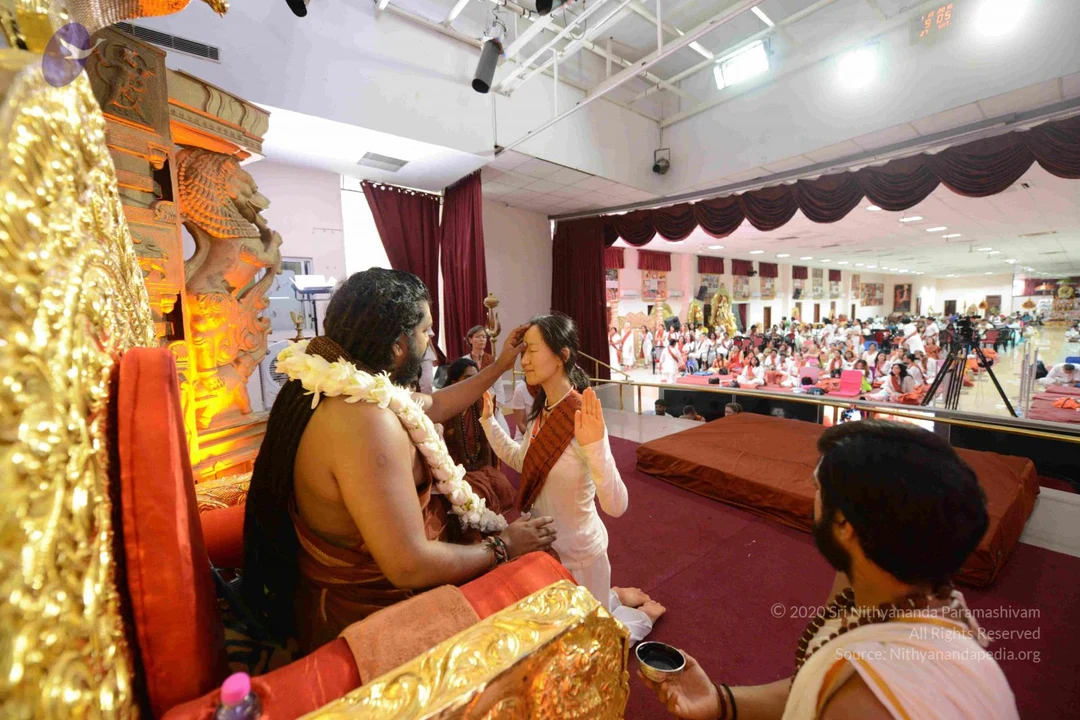
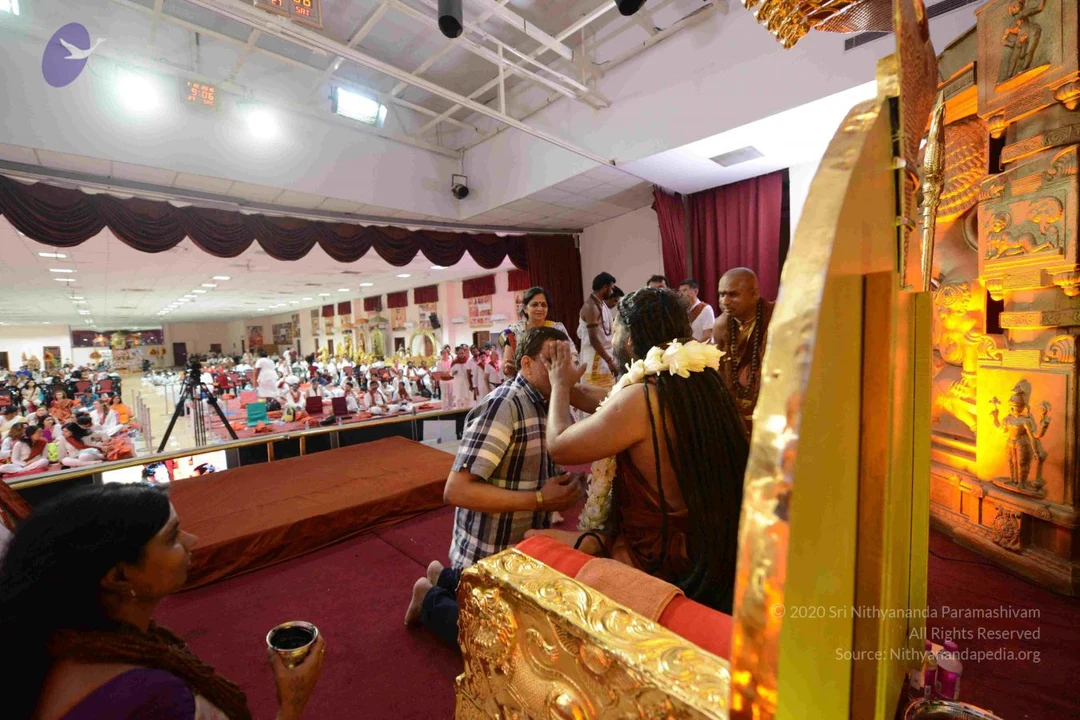
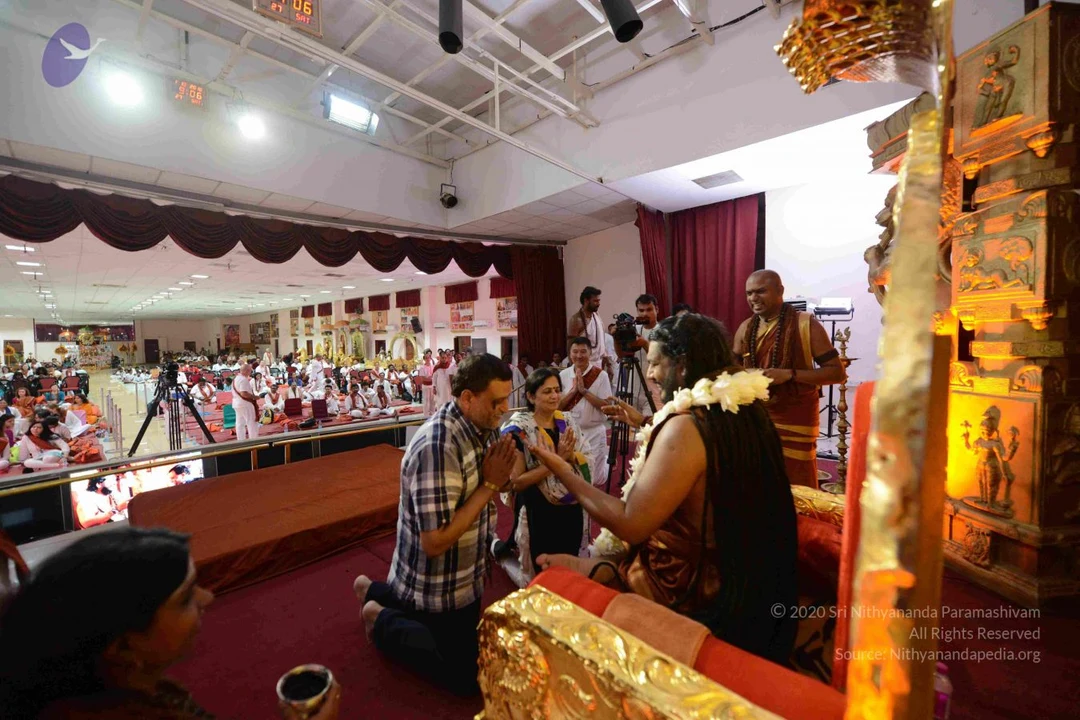
14 photosSource gallery
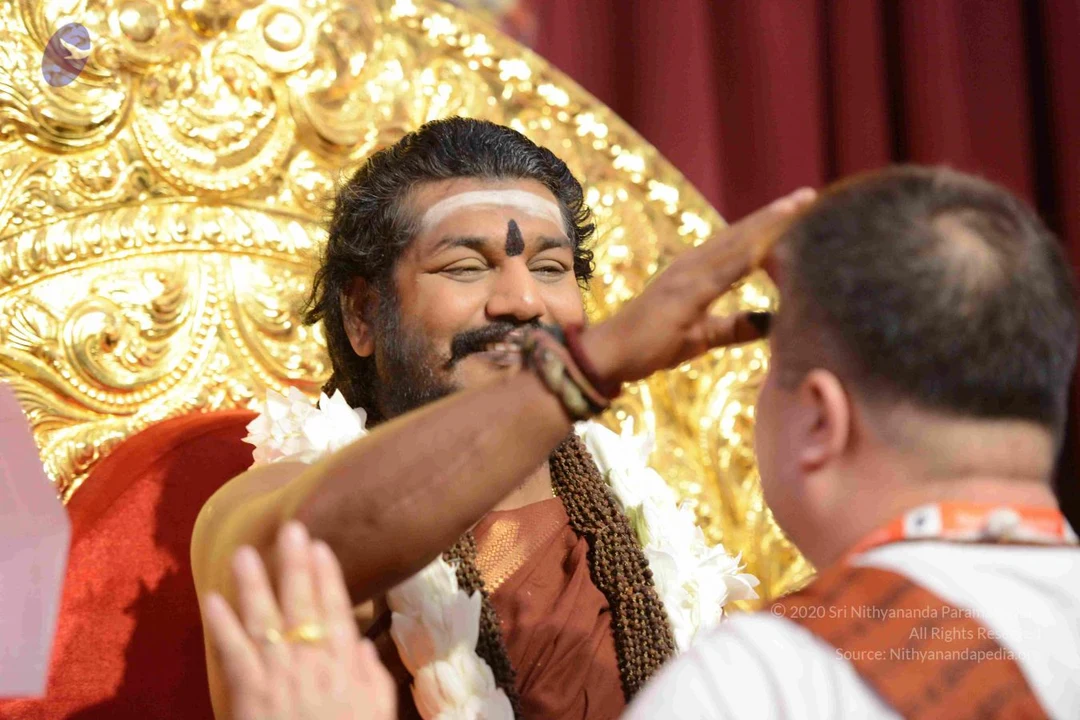
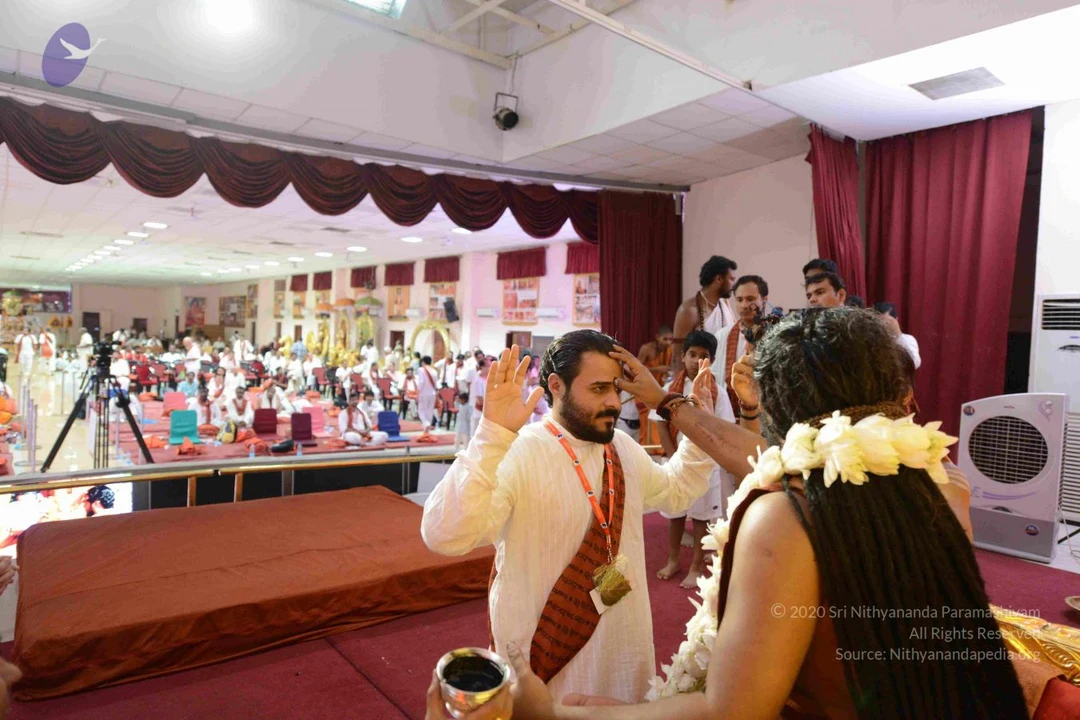
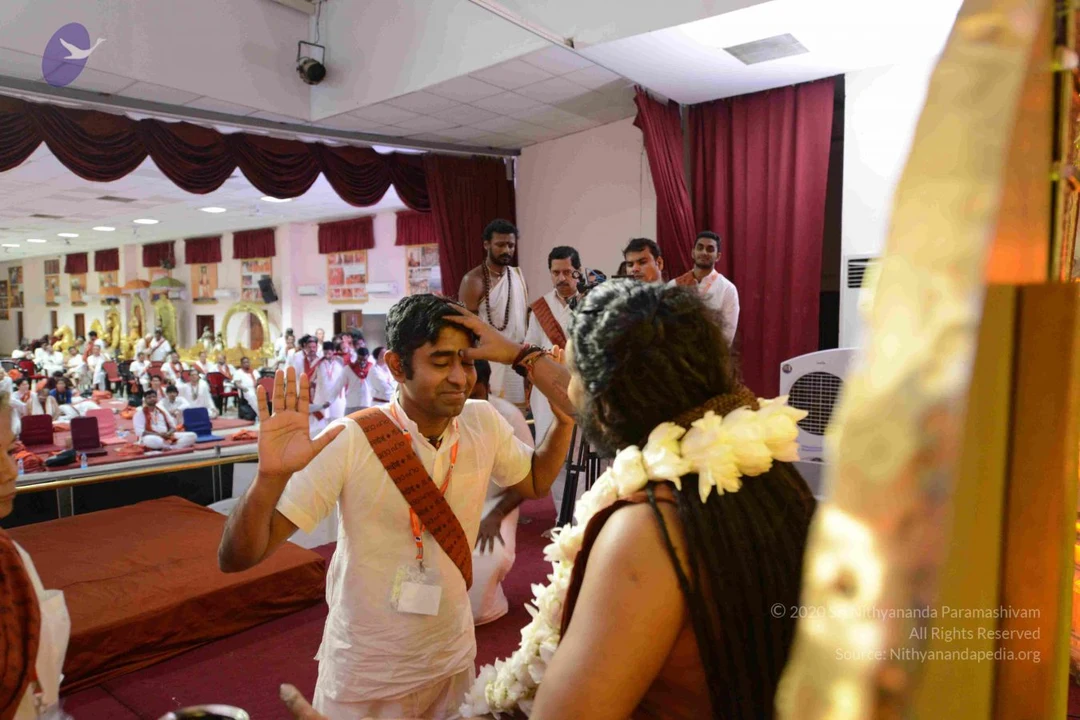
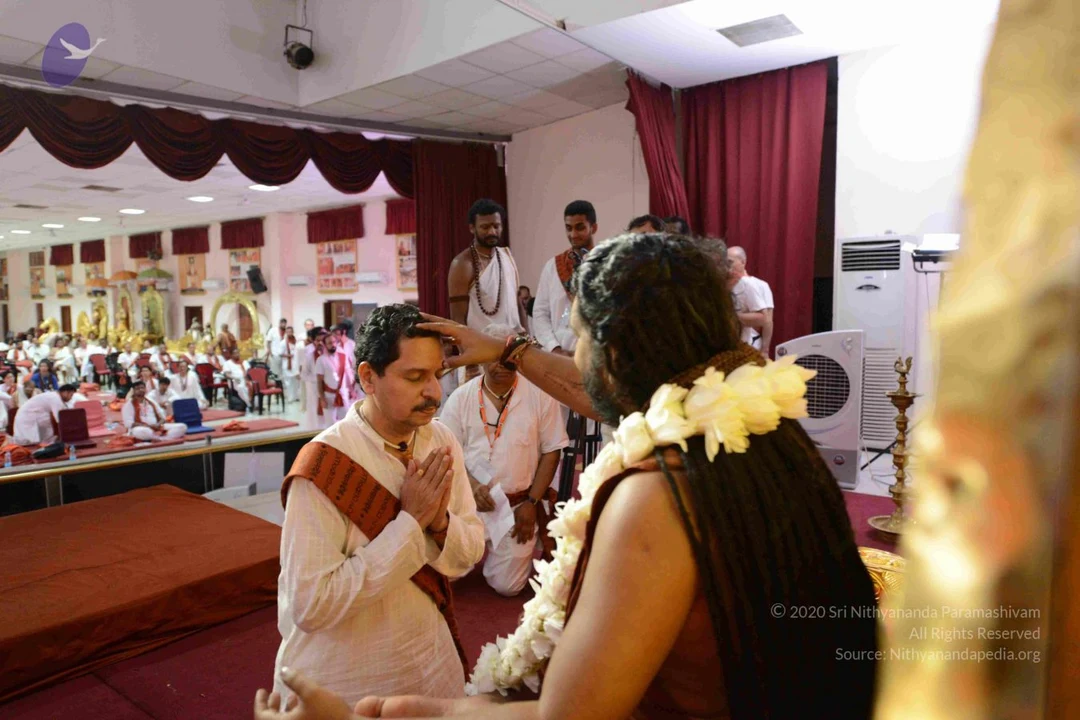
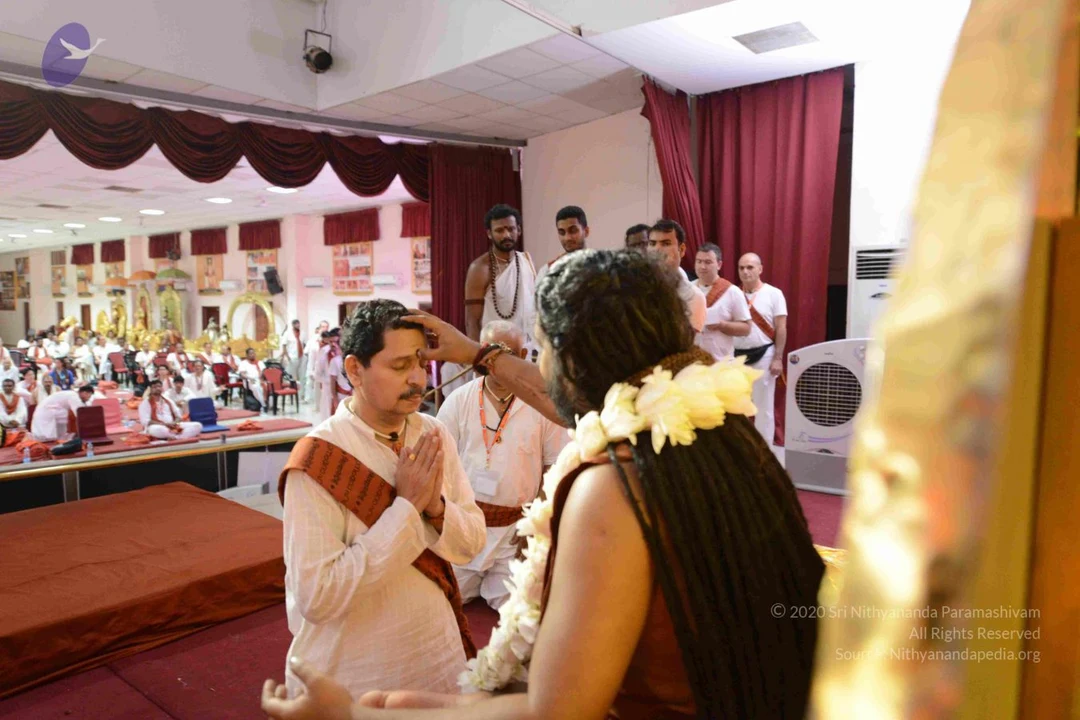
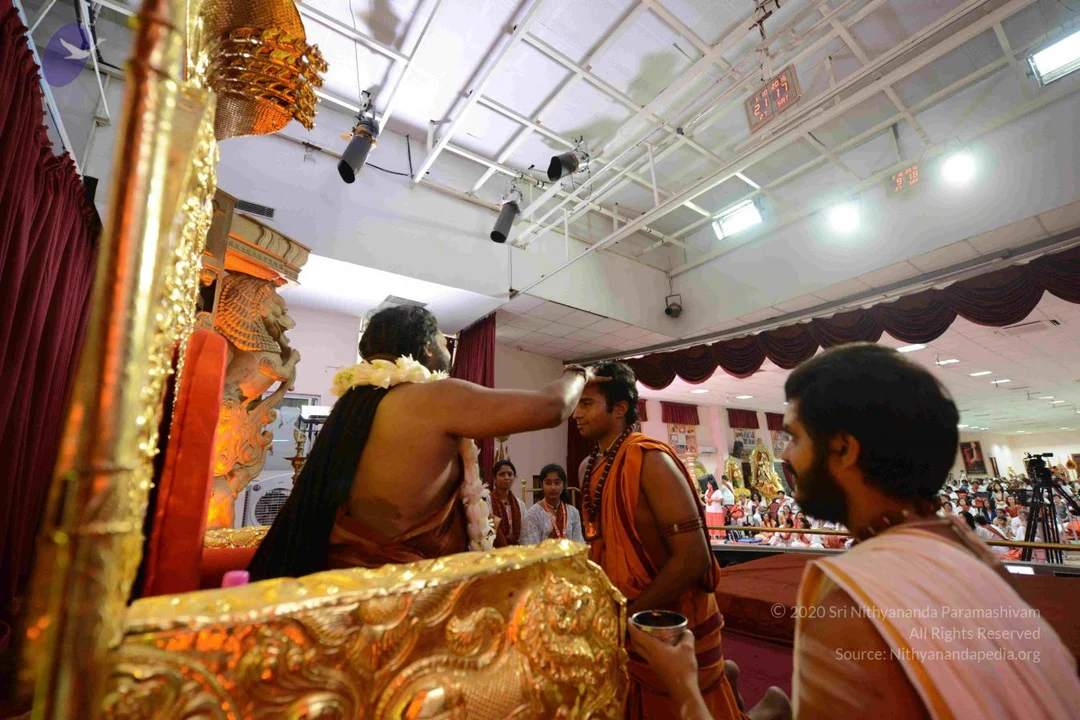
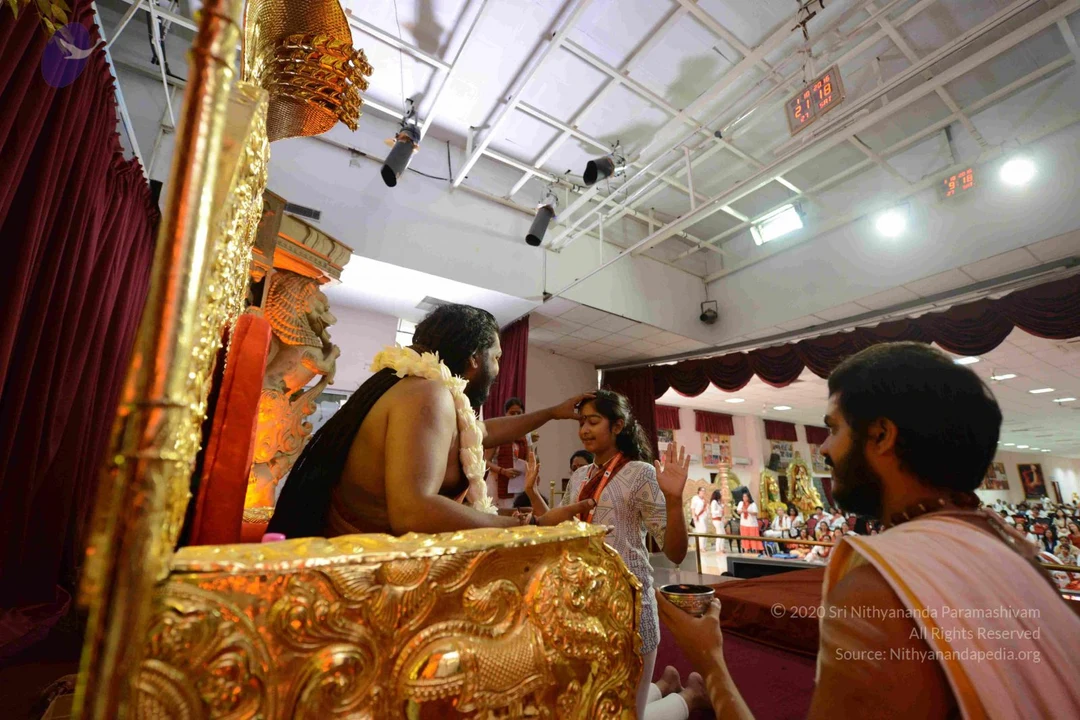
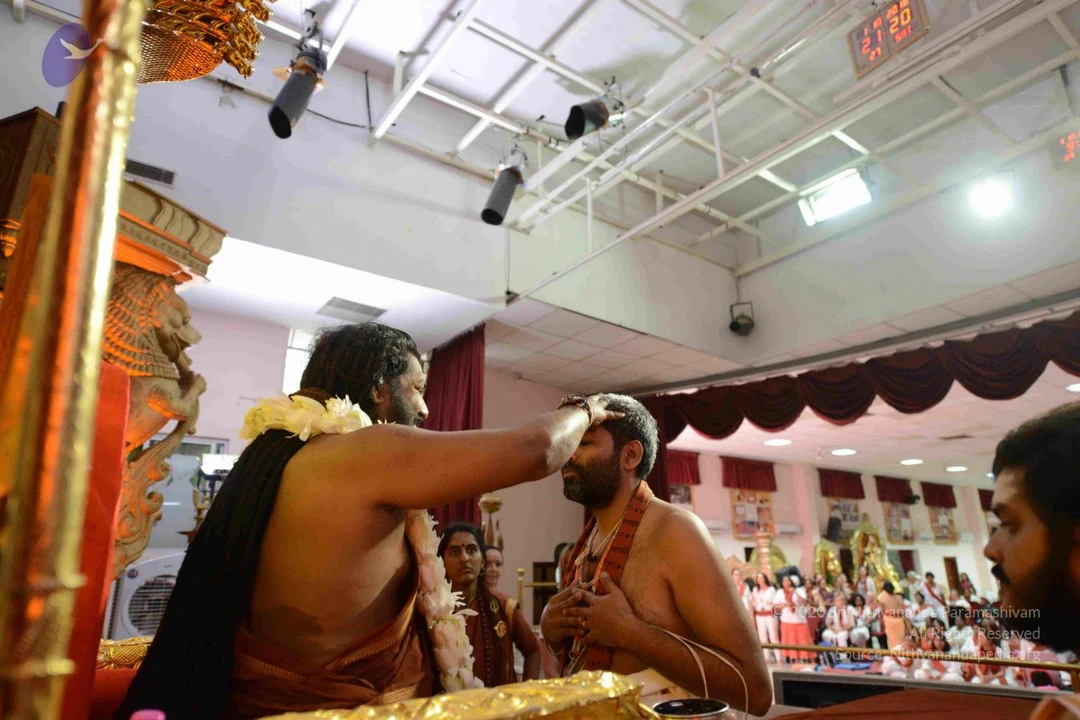
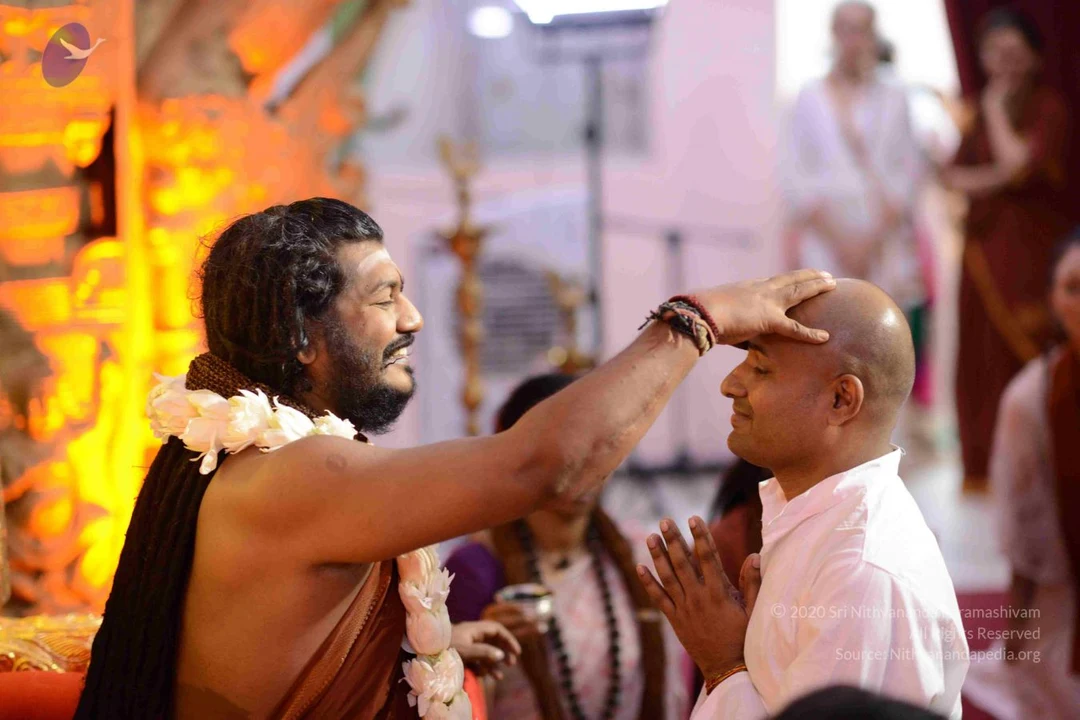
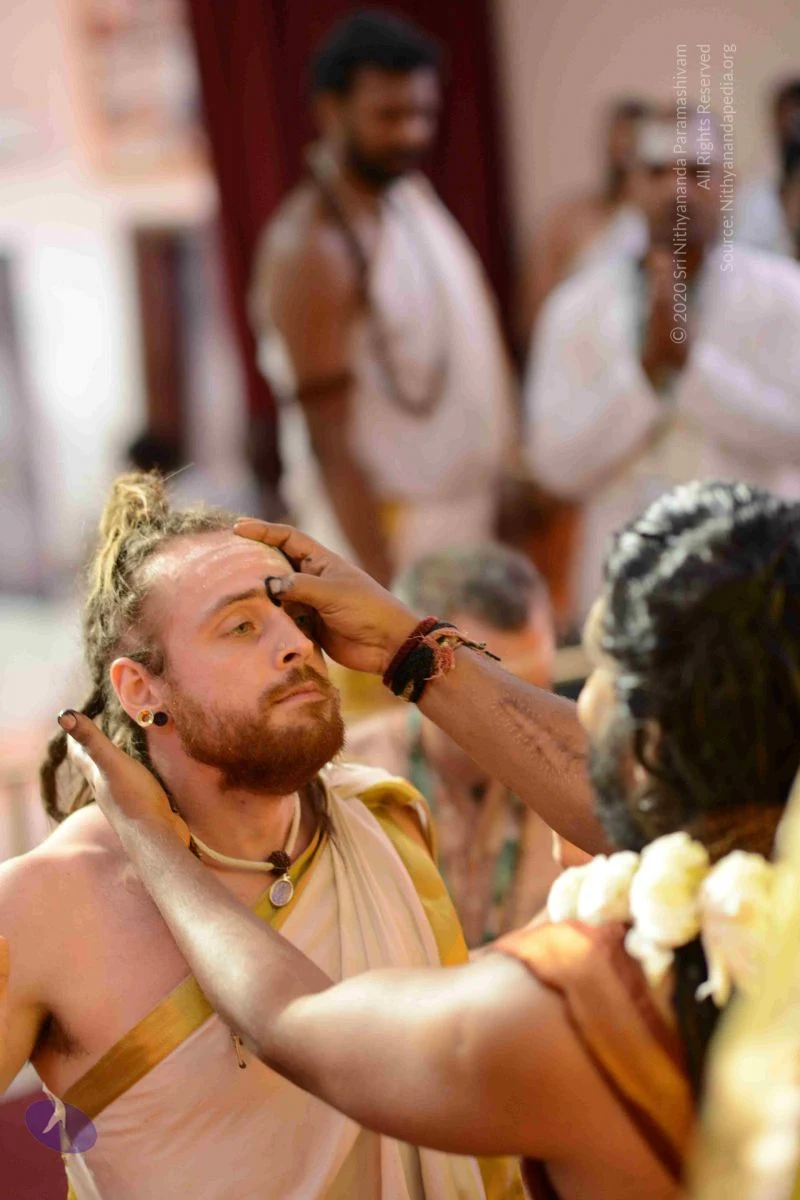
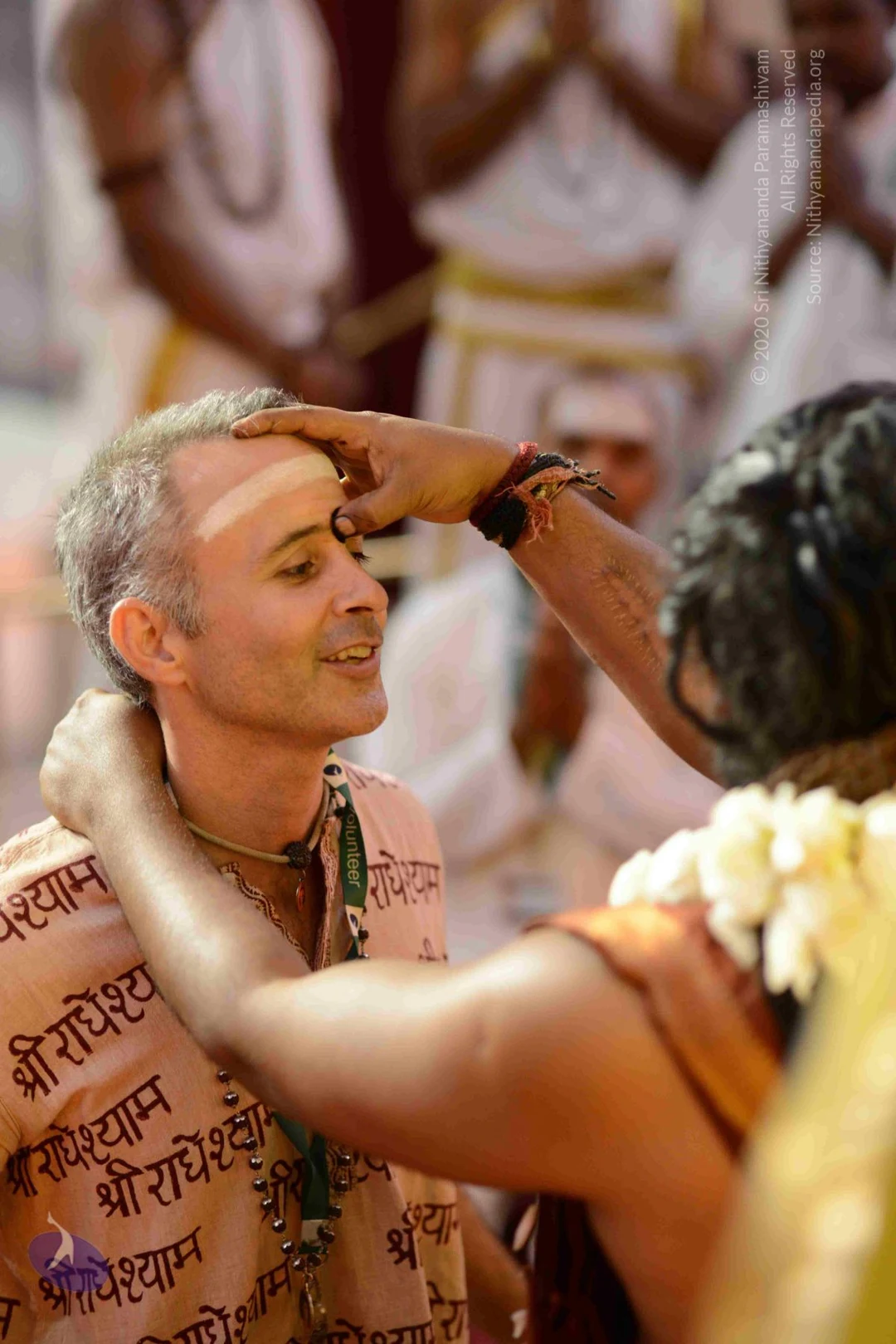
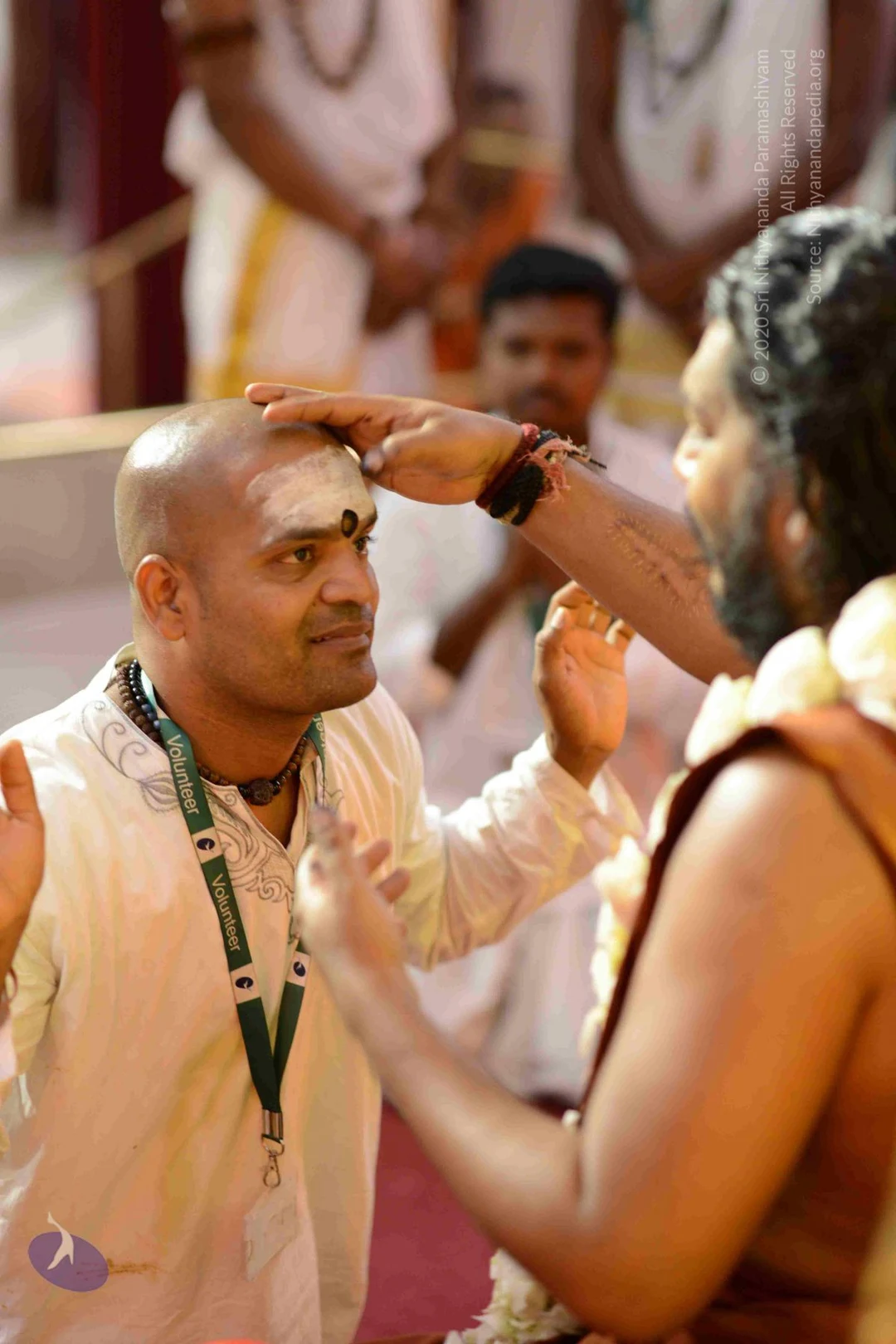
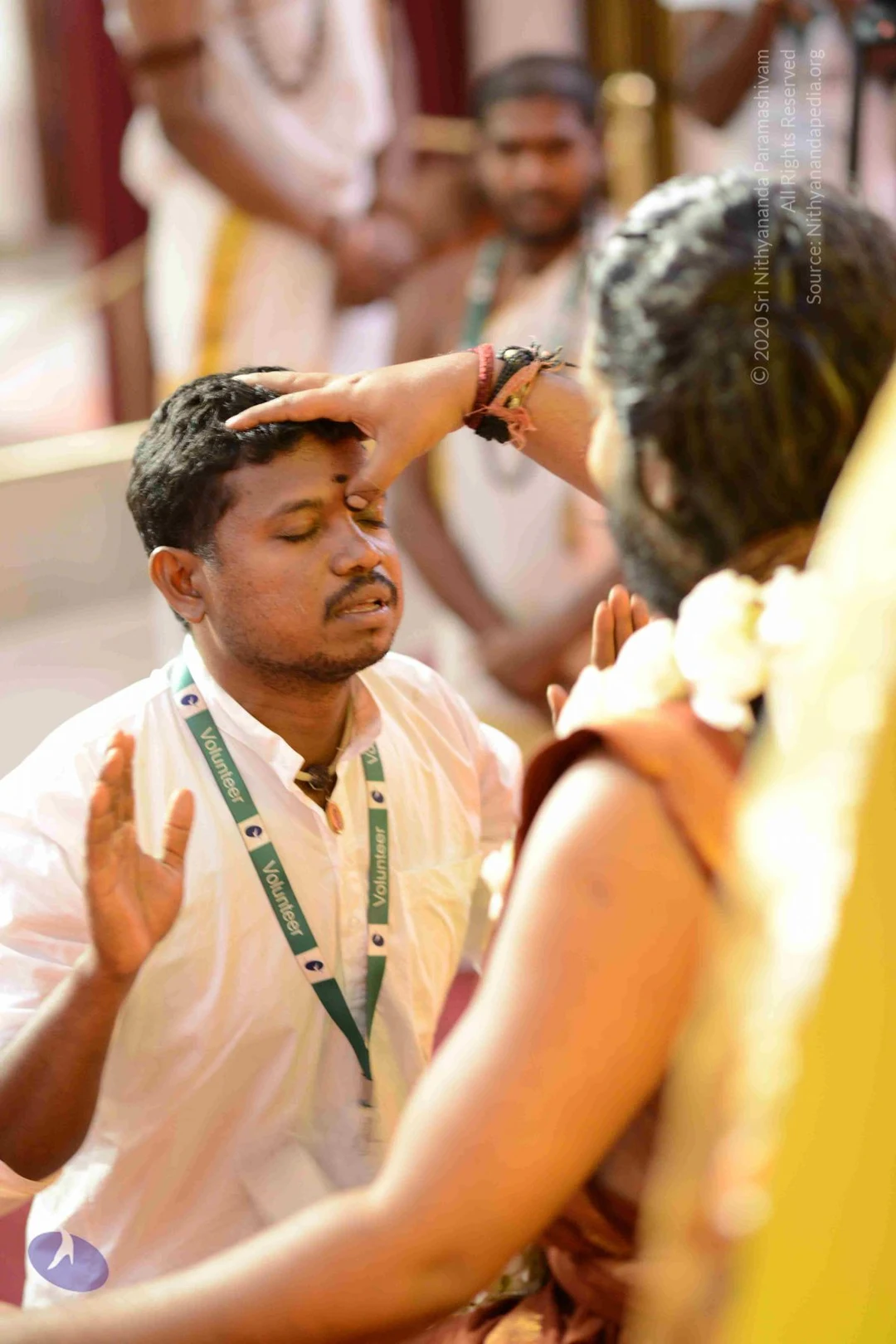
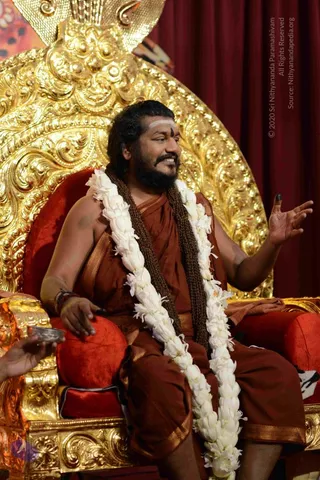
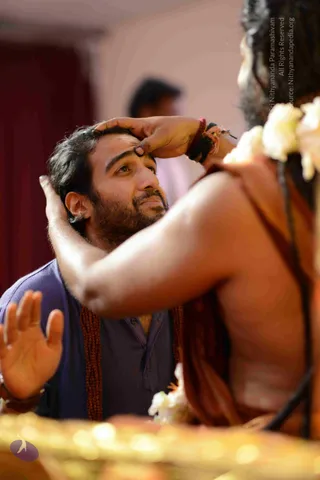
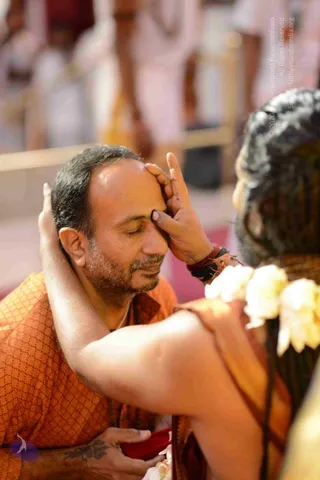
A photograph of a man seated in meditation on an ornate golden throne (peetha) with a cobra-hood canopy above him, eyes closed and hands resting on his lap. He wears an orange-red robe, a long rudraksha mala, a white flower garland and a white tilak on his forehead. A golden trident stands to his left against deep red drapery, and a large painted deity murti with multiple arms fills the background, along with smaller painted figures at the edges. a person seated on the throne with rudraksha mala, orange robe and garland as the central figure of a satsang.A seated man with a shaved-looking head, a vertical white tilak and a full dark beard sits eyes closed on an ornate gold throne with a carved cobra hood at its top. He wears an orange-red robe with a white floral garland over his shoulders and a rudraksha mala at his chest. Behind him a large painted deity murti with raised hands and ornaments fills the backdrop beside red drapes. To the left a man in a white dhoti bends forward near a gold trident, and in the lower right a small figure in red stands at the edge of the frame. Watermarked archive photo of a ritual sitting.A man seated on an ornate golden throne with a red velvet cushion, smiling and gesturing with one open hand during a satsang. He wears a rust-red robe with a gold border, a long white jasmine garland, and long brown rudraksha mala strands across his chest. He has a white and vertical tilak on his forehead and long dark hair. A hand holding a small silver bowl enters from the left edge. Behind him are a red curtain and a large golden carved backrest.Close photograph of a bearded young man in a navy blue kurta with a dark rudraksha mala draped over his chest, eyes lifted upward as a hand presses a mark to his forehead. In the foreground, a bare-shouldered figure with long dark hair and an orange-brown cloth wrap is seen from behind, wearing a garland of white flowers around the neck. The second person's face is only partly visible at the upper edge. A blurred red curtain and a golden object sit in the lower foreground. The setting suggests a blessing or initiation moment in a ritual setting. Visible physical people: two.Close photograph of a bearded man in an orange patterned shawl with eyes closed, kneeling while another person in orange robes and a white flower garland on dark hair presses a hand to his forehead. The blurred background shows other people in white clothing.Close photo of a smiling middle-aged man in a white kurta with a green lanyard and a wooden pendant, eyes closed, while a long-haired person in an orange-brown garment decorated with white flower garlands presses a hand to his forehead, which bears a vertical mark. Blurred figures in white clothing stand behind.