Skip to content
Sunday

2 October 2016

Bengaluru Aadheenam, IA Day11,Mandala Process

Dated photos
604
Source pages
1
Media
3
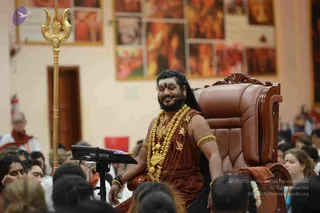
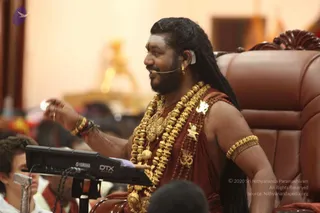
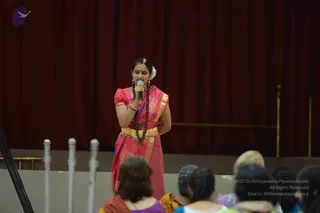
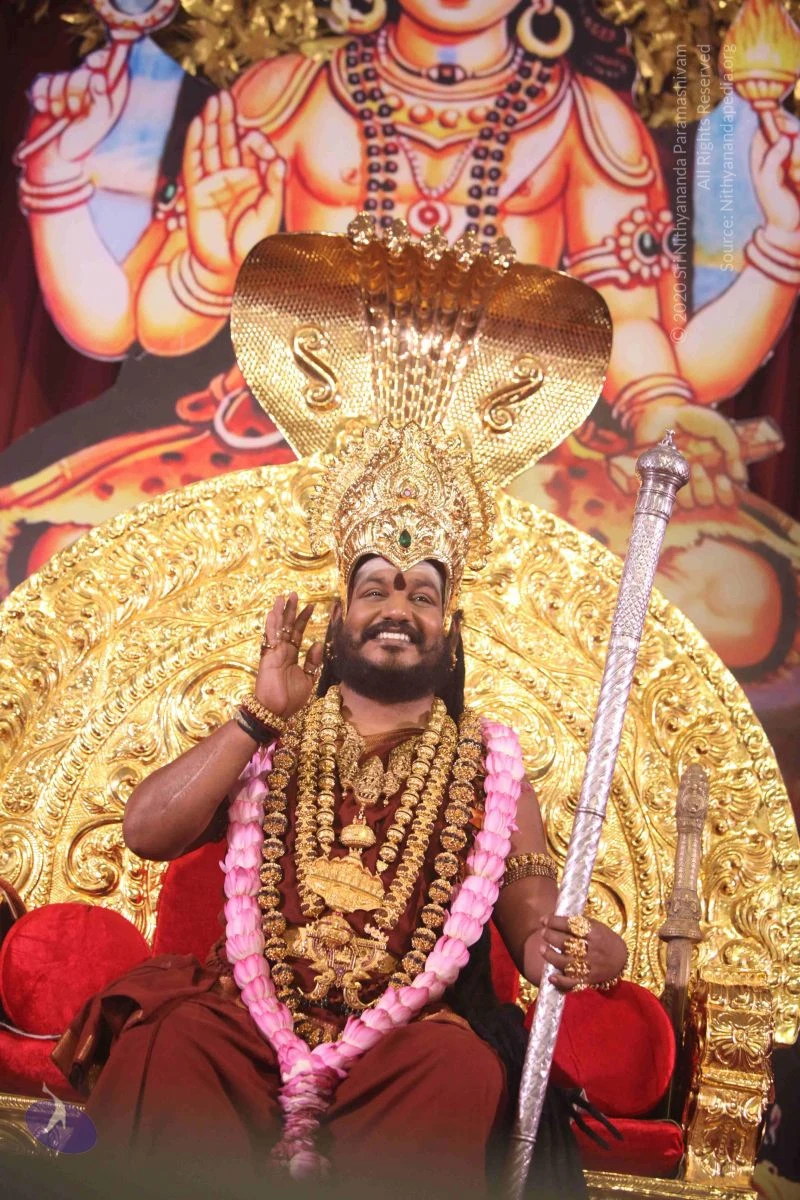
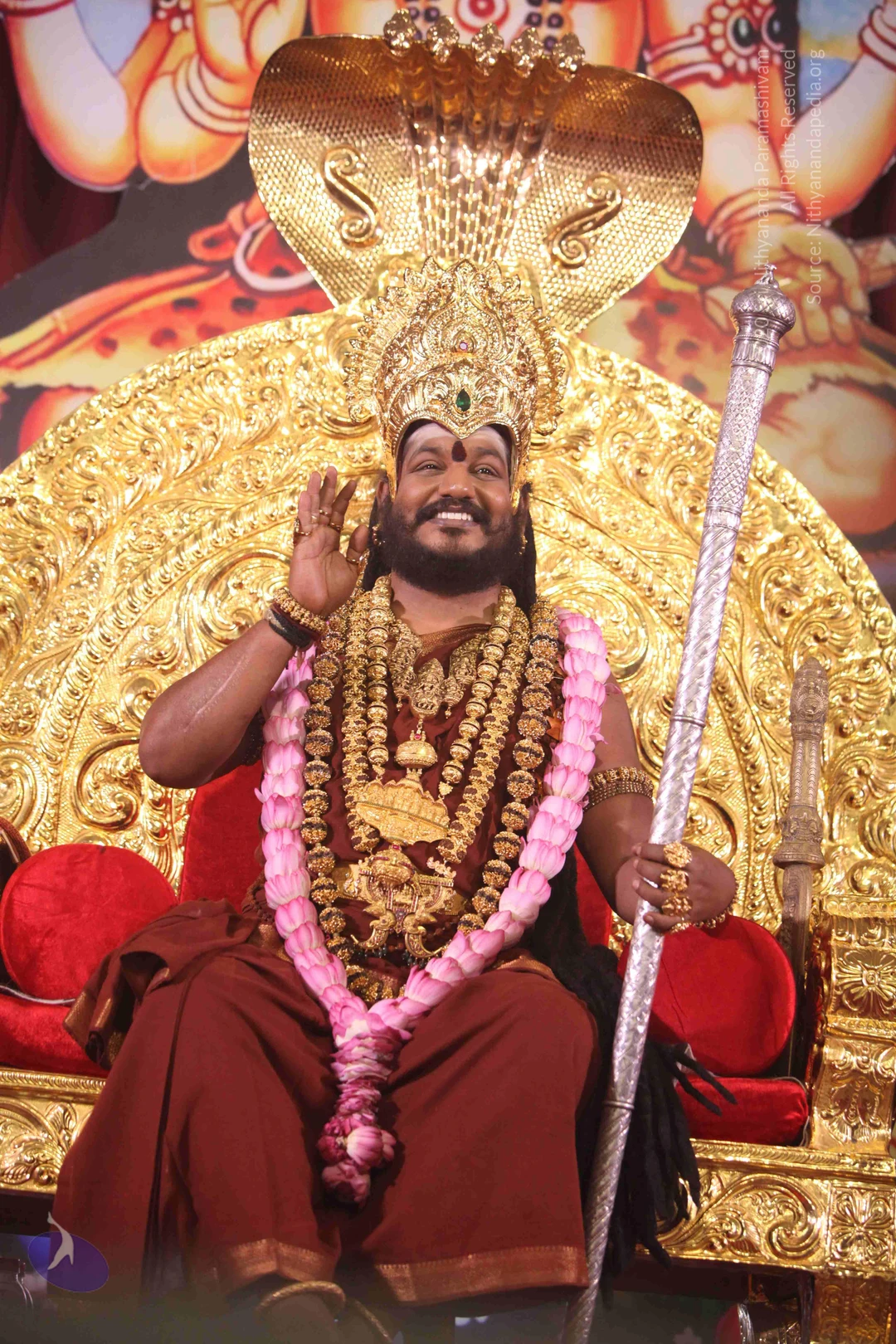
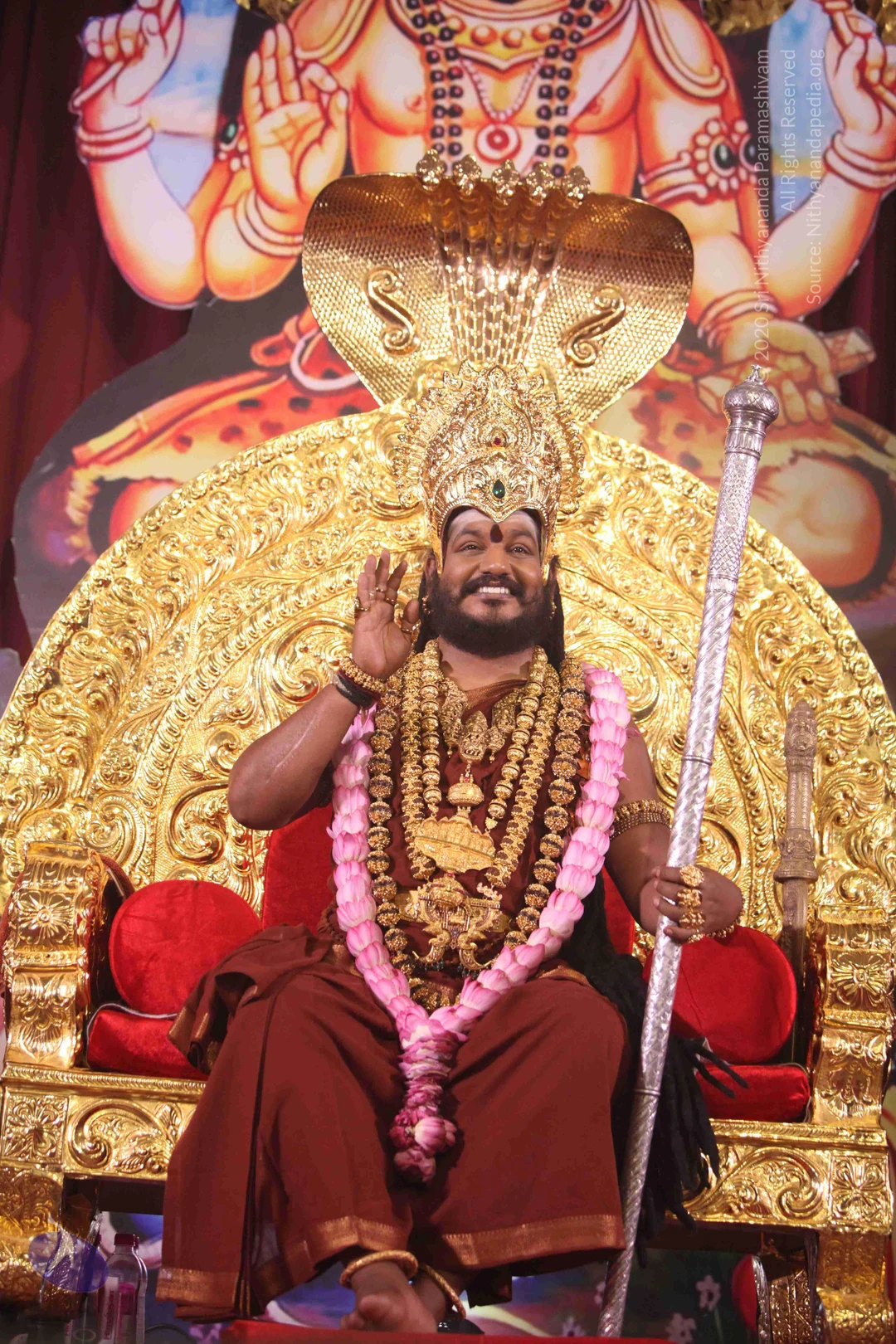
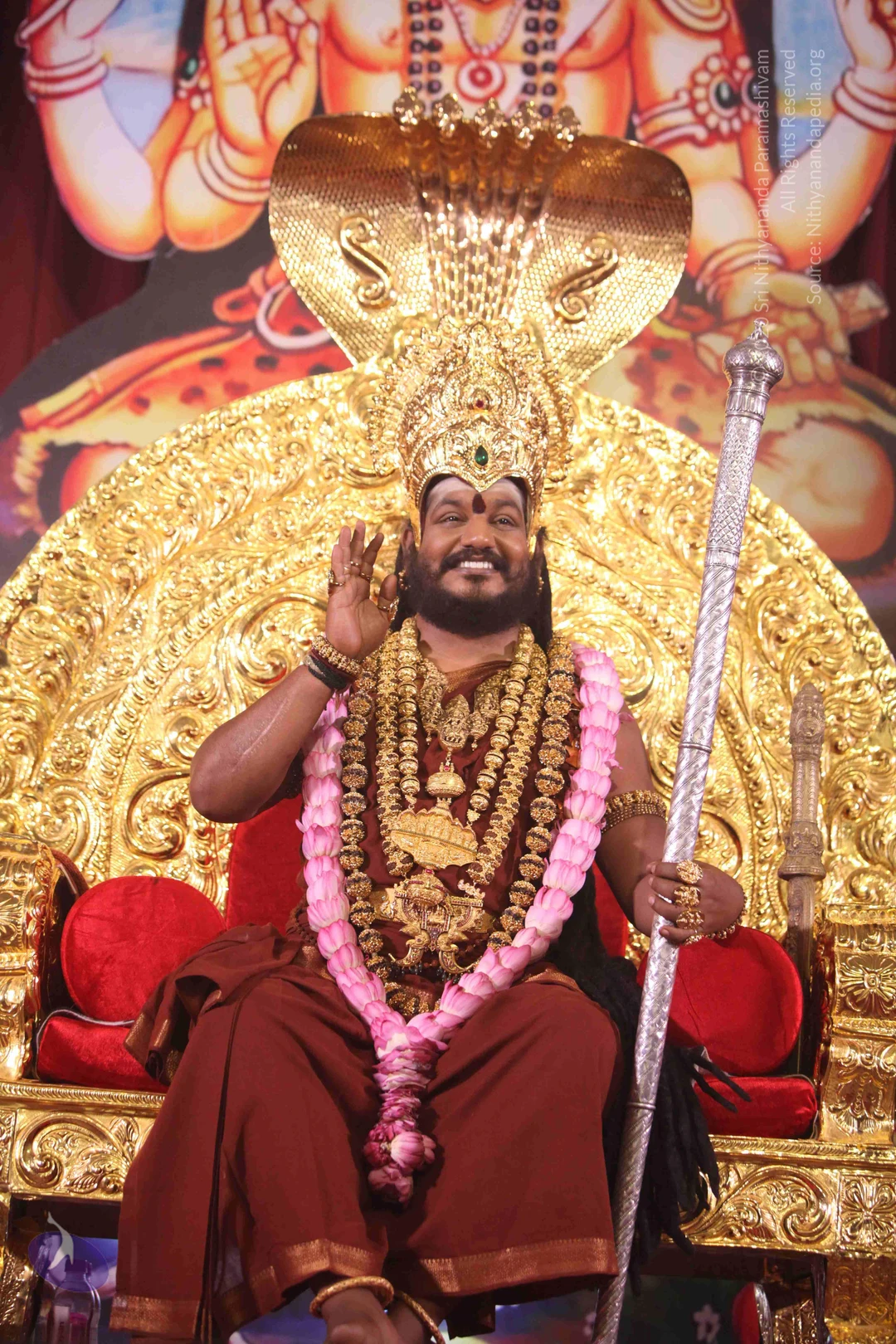
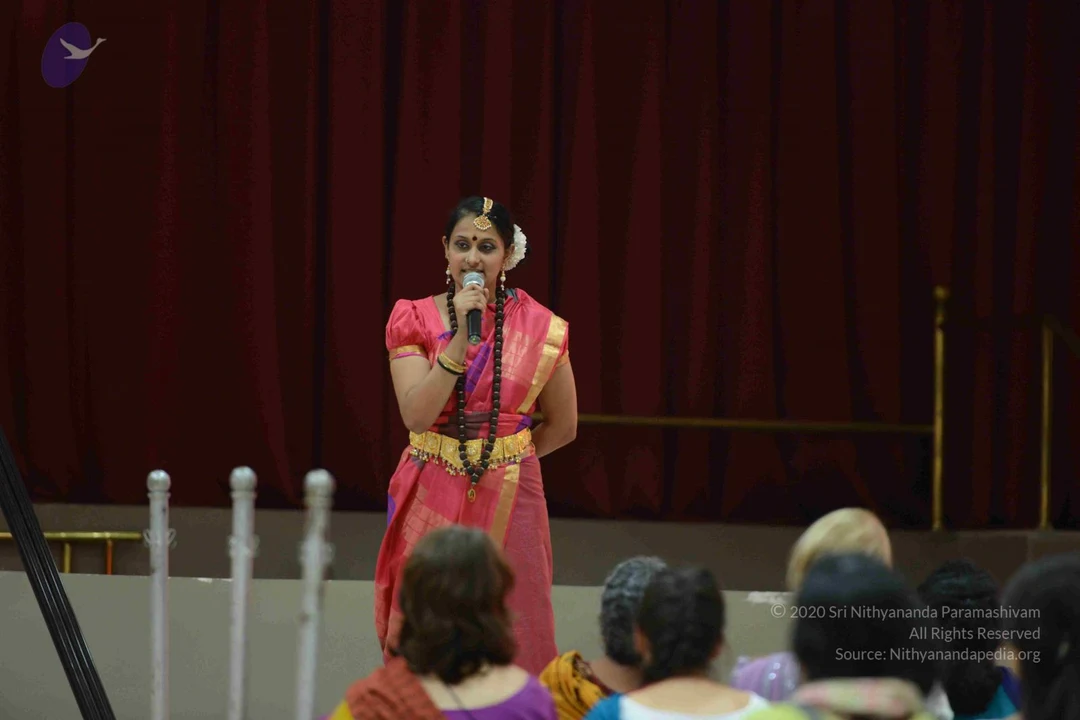
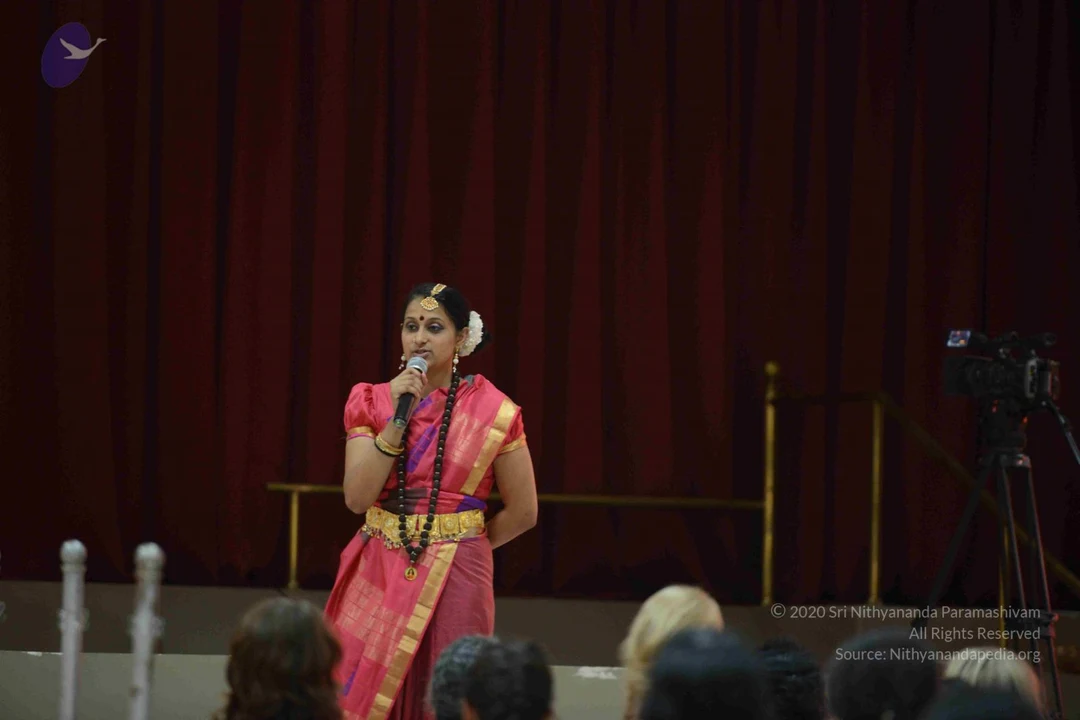
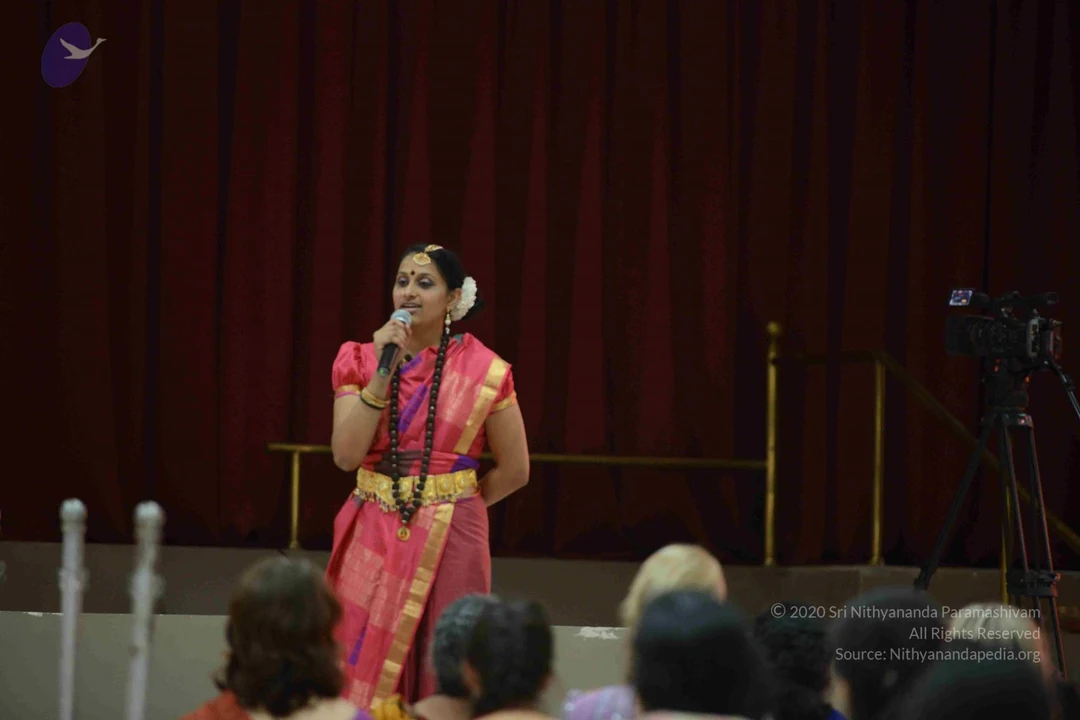
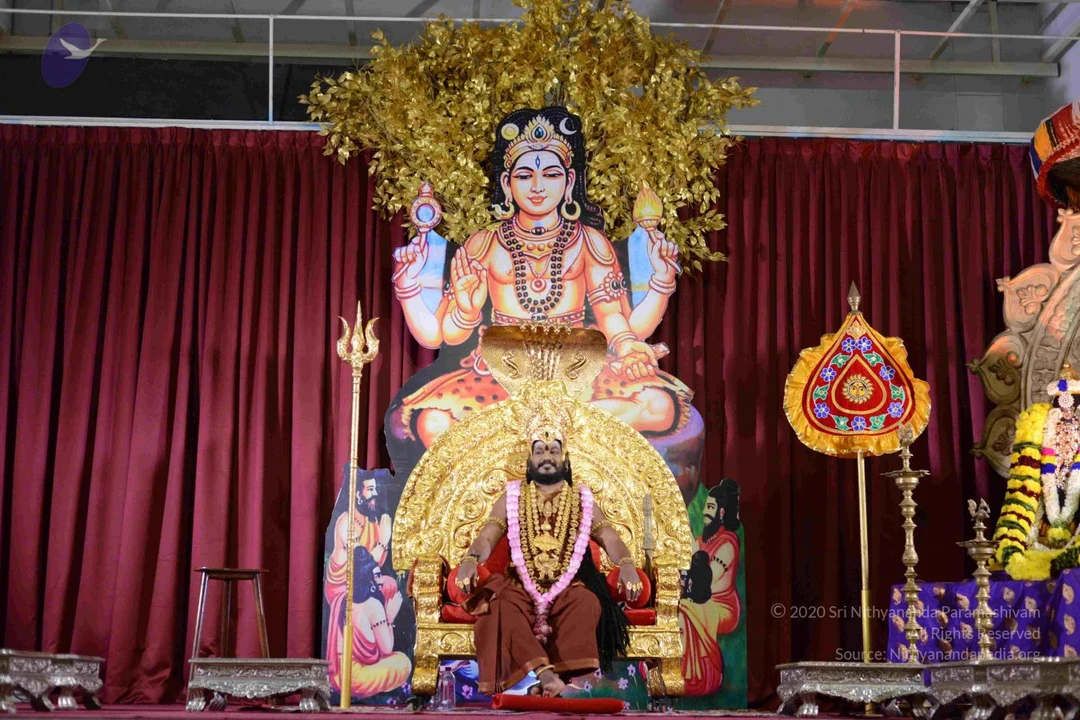
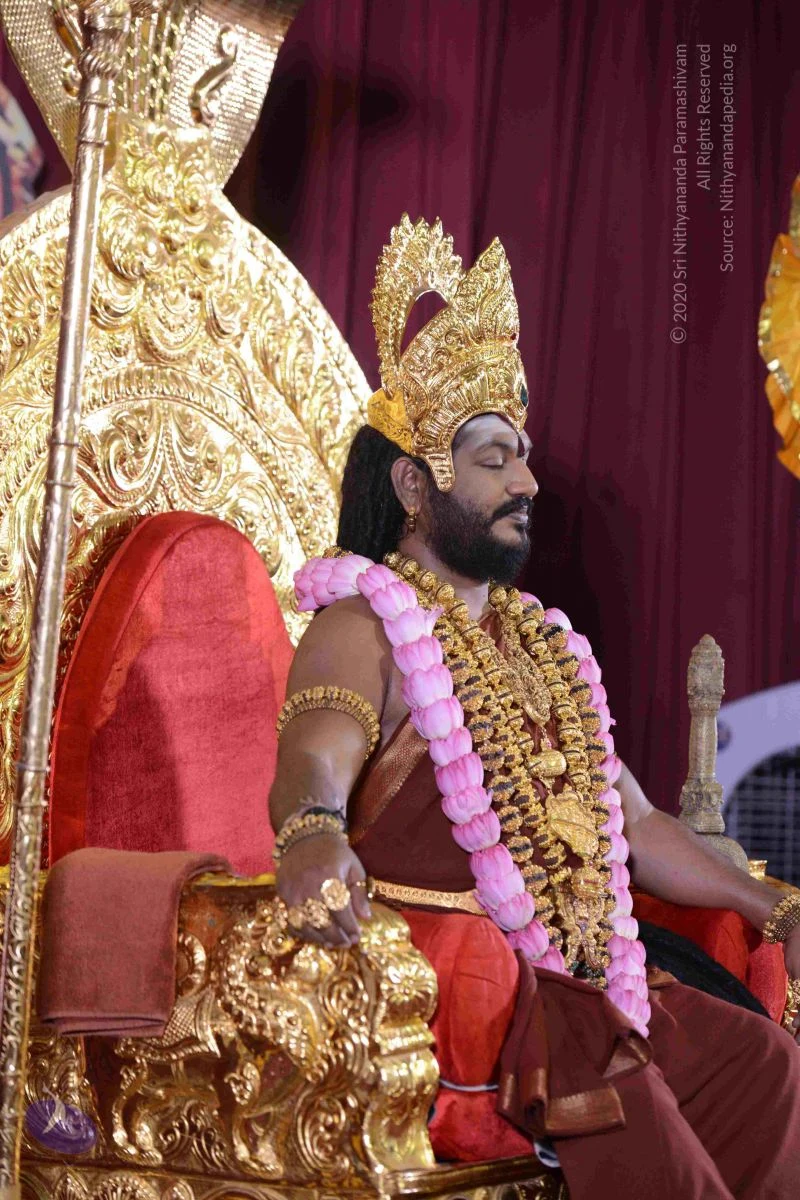
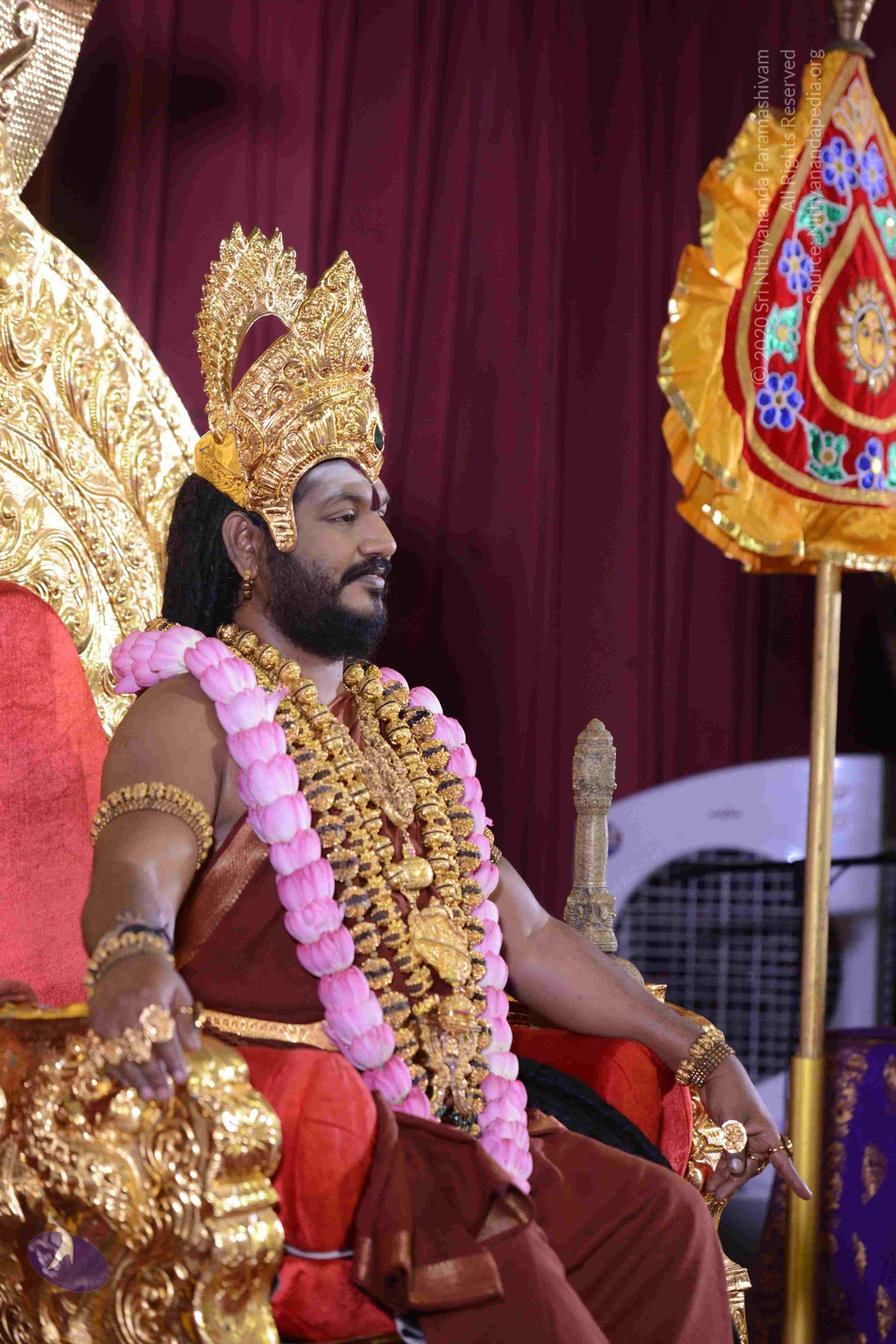
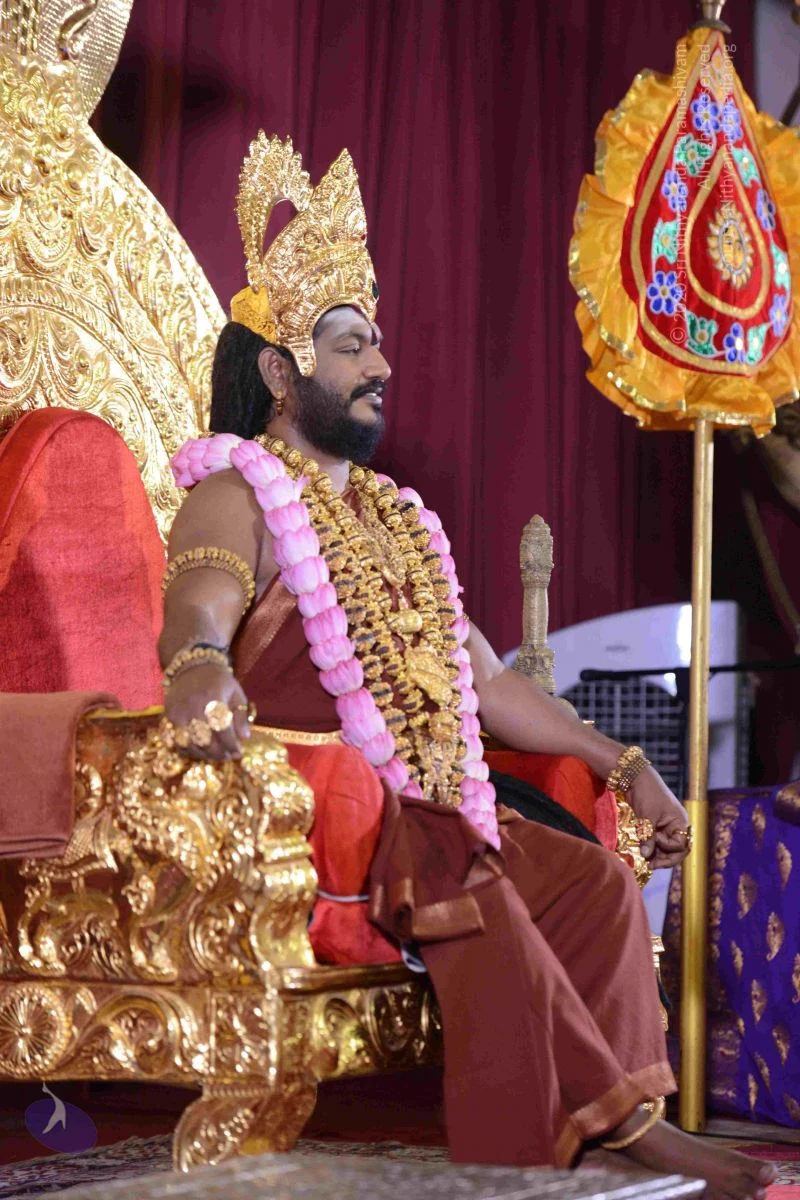
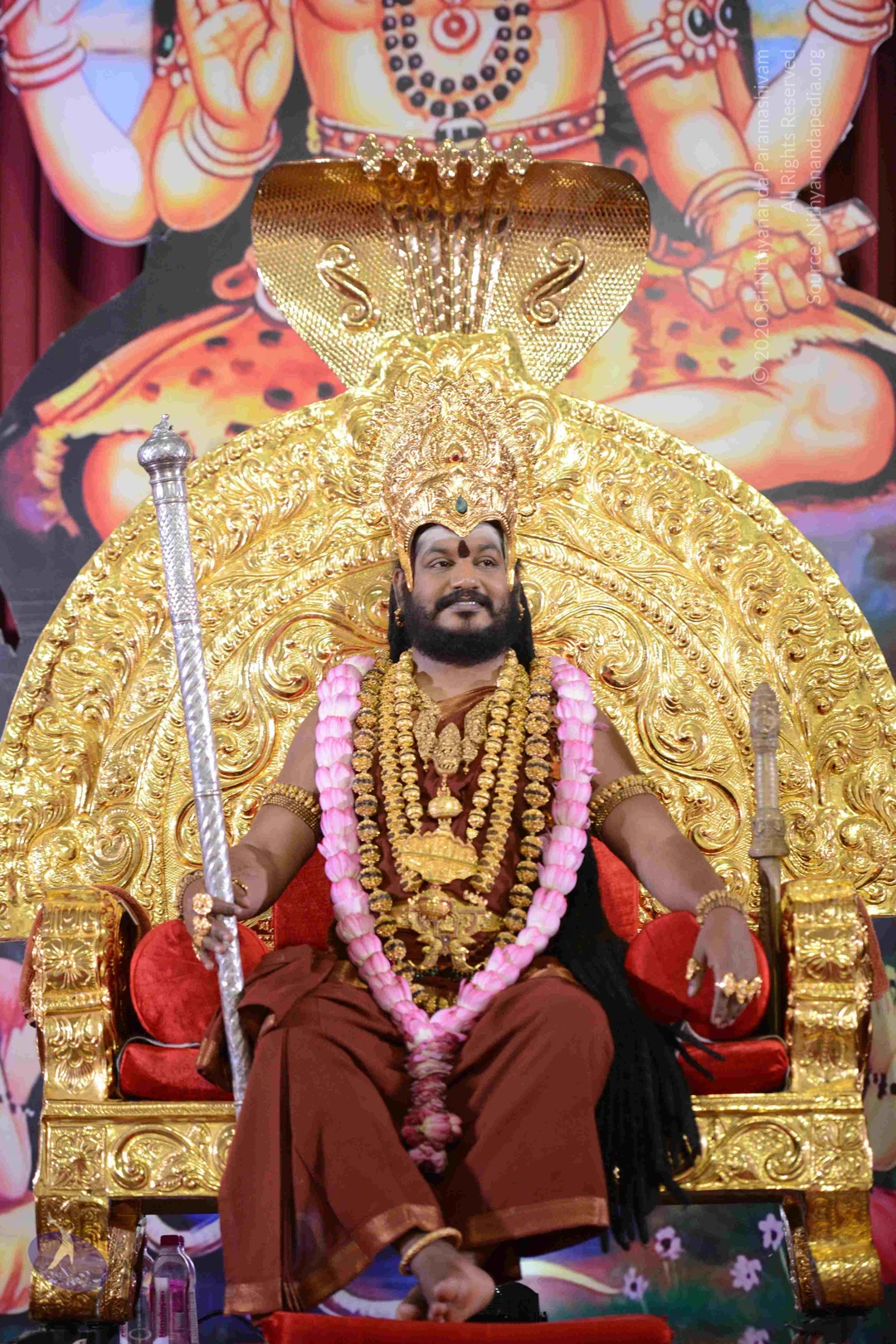
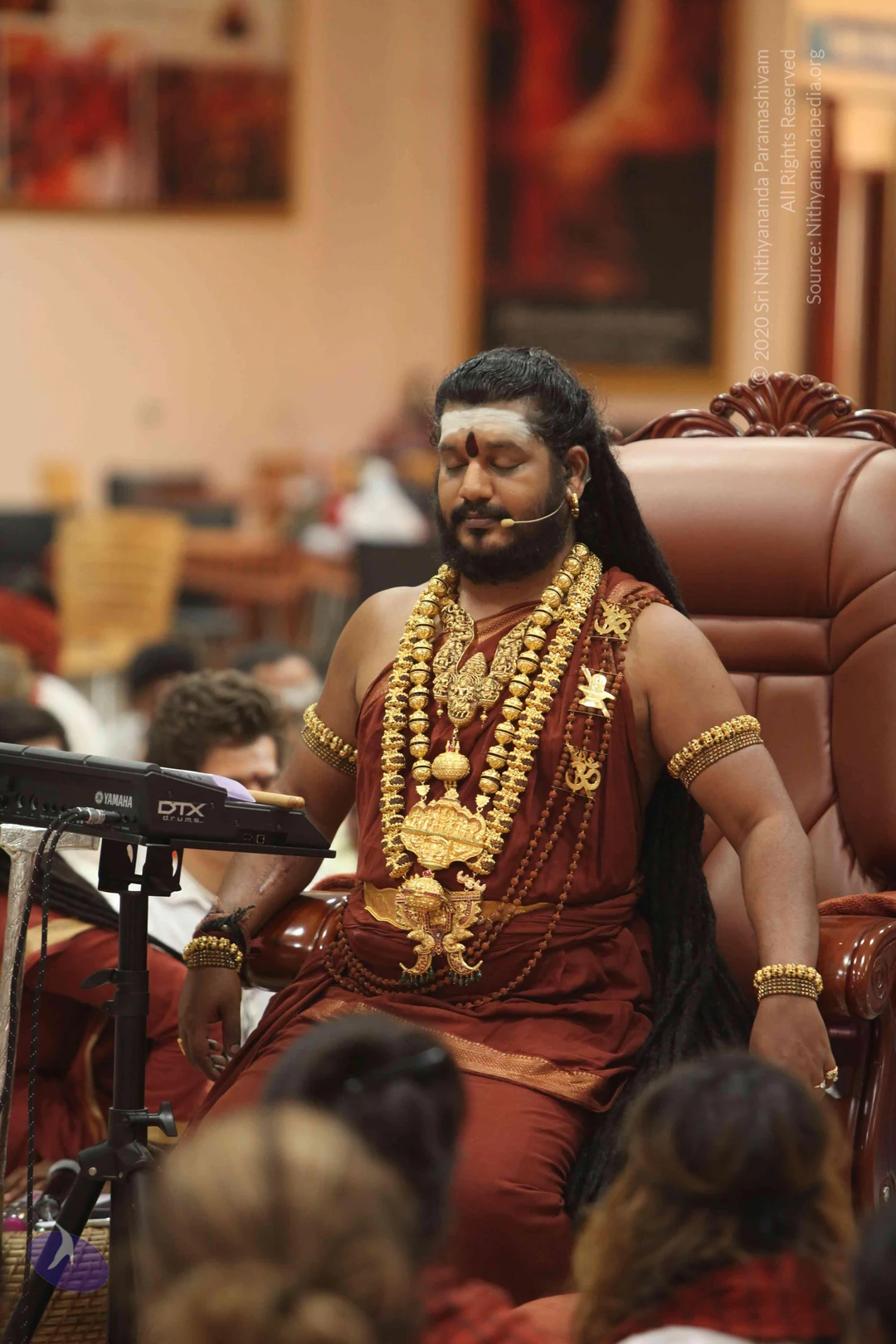
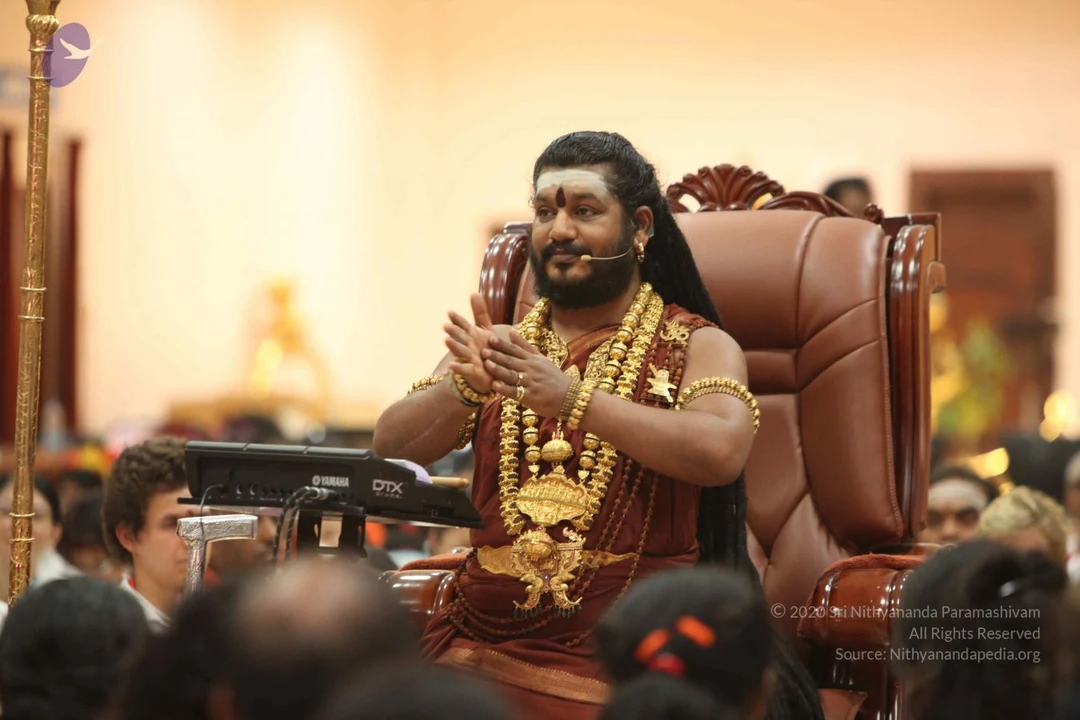
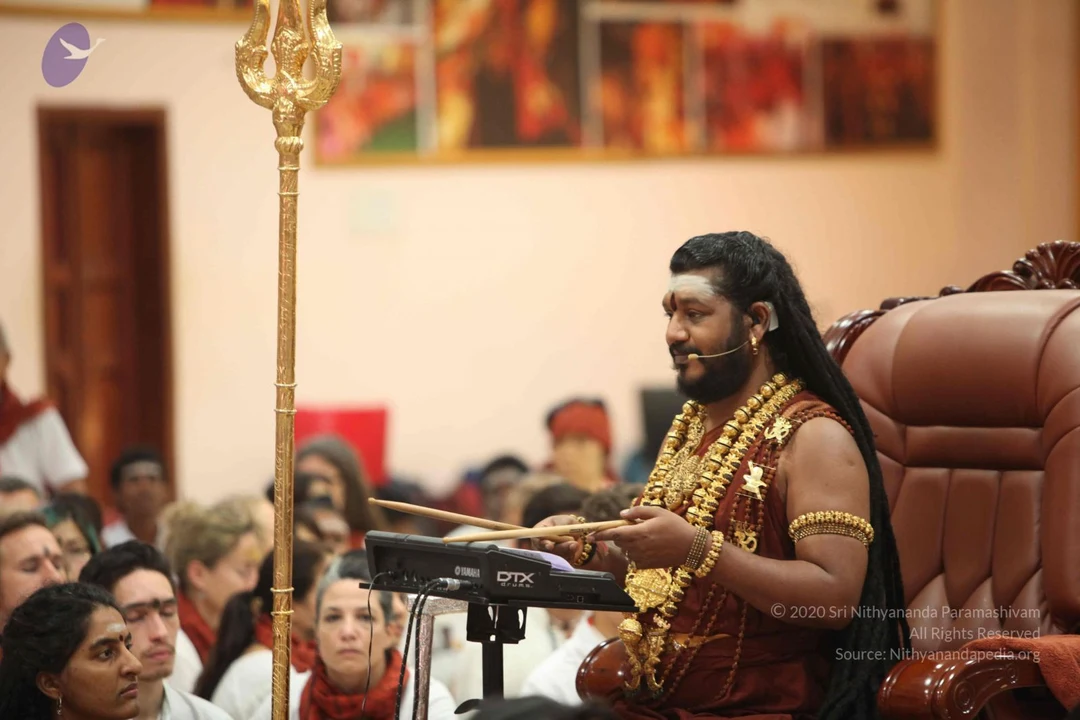
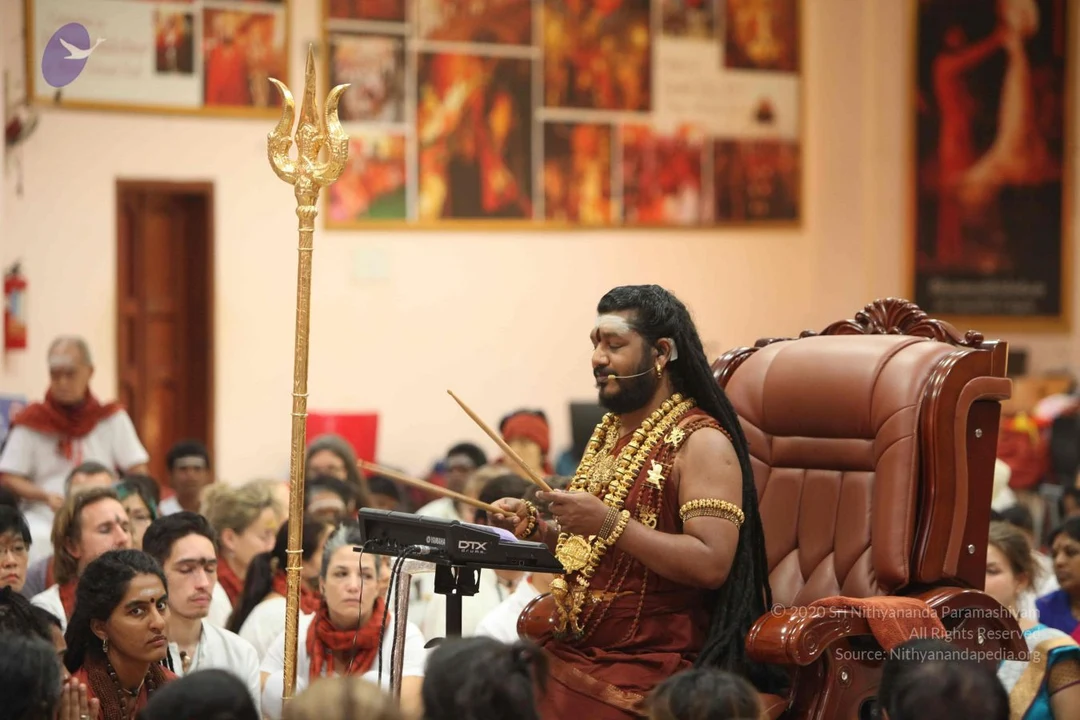
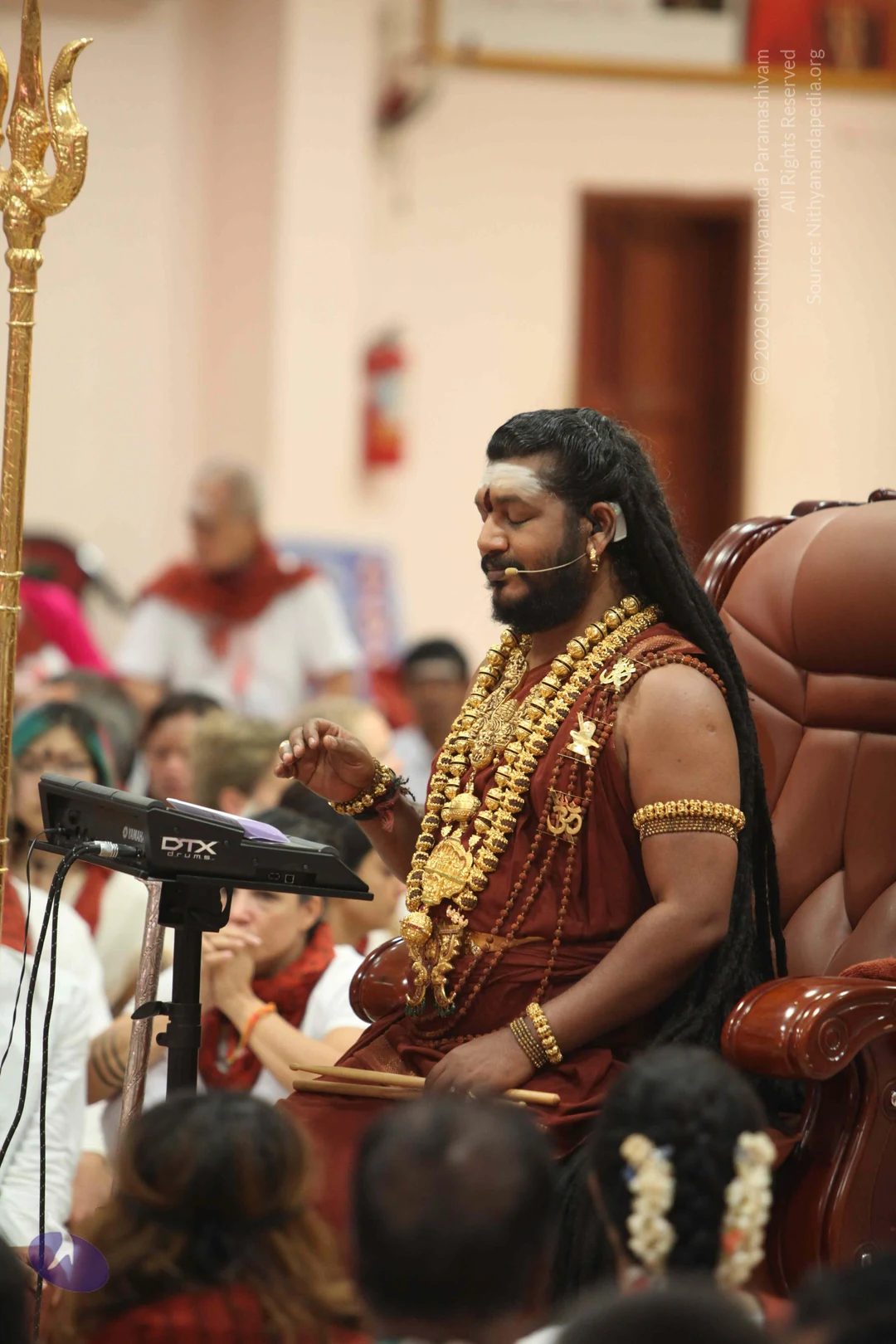
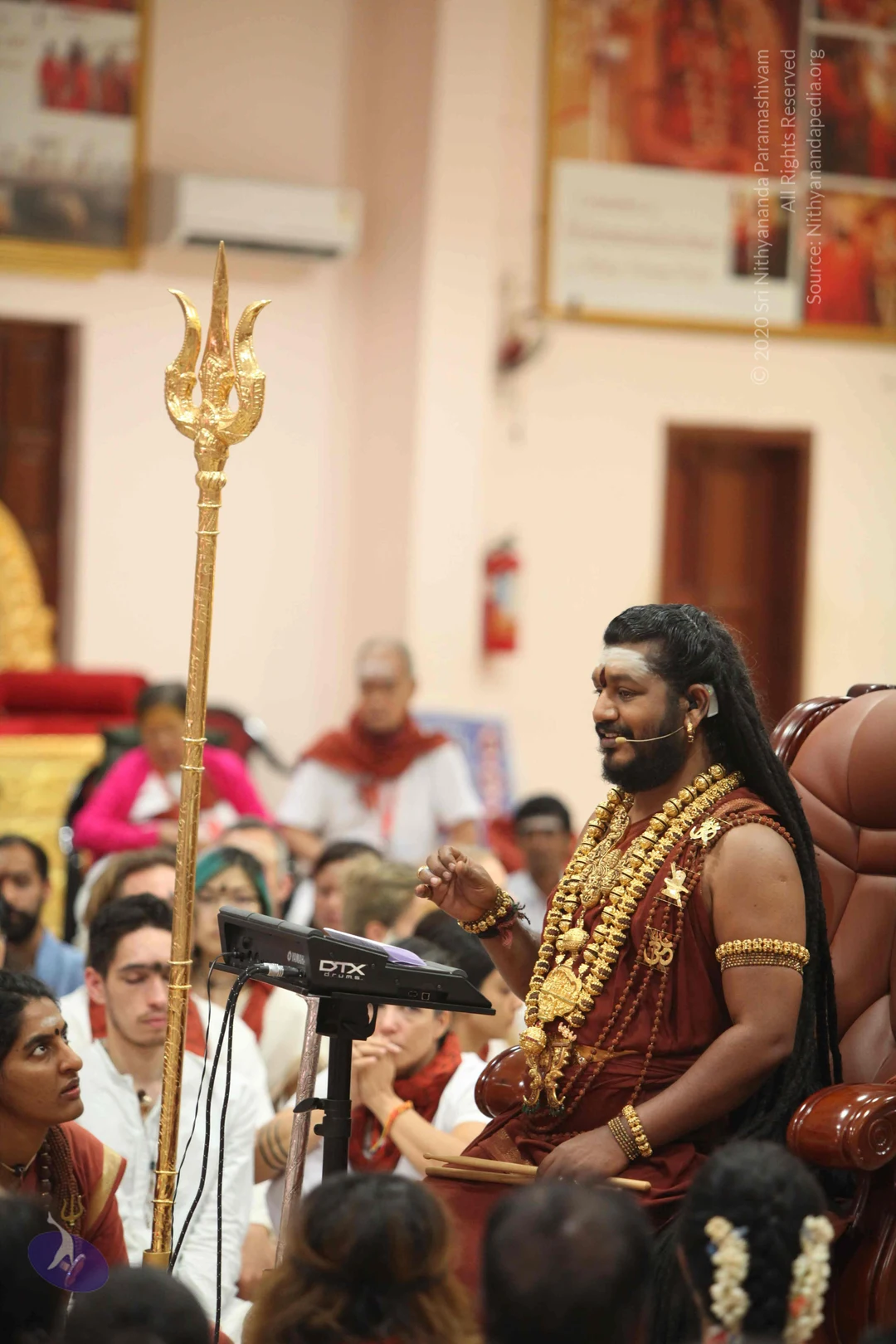
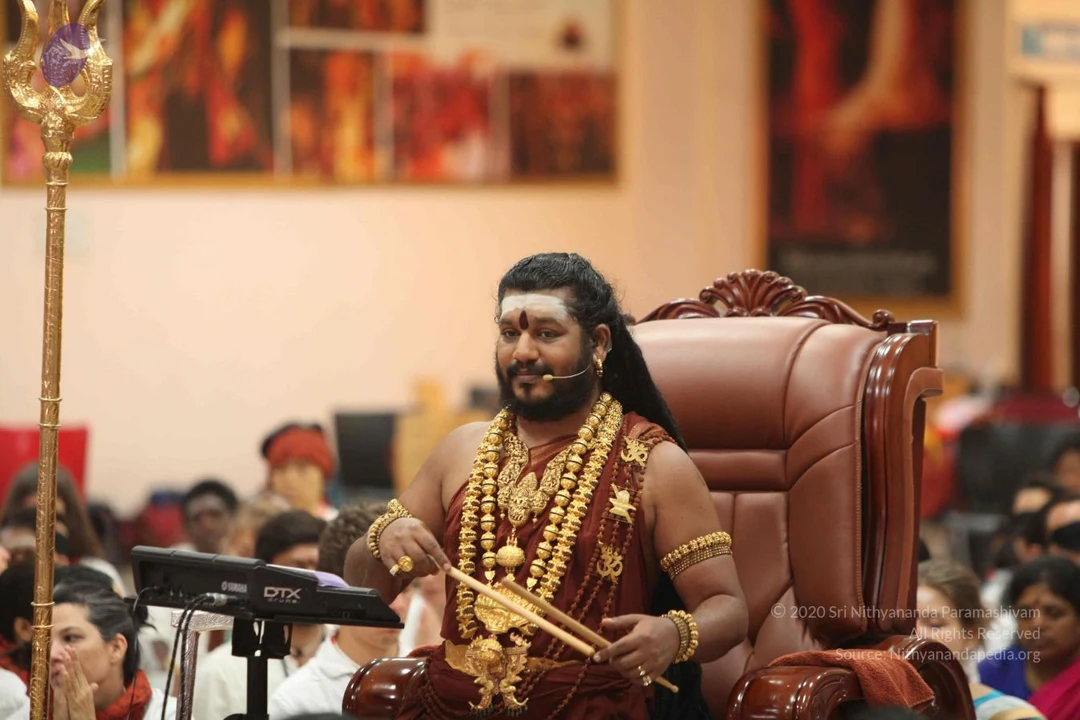
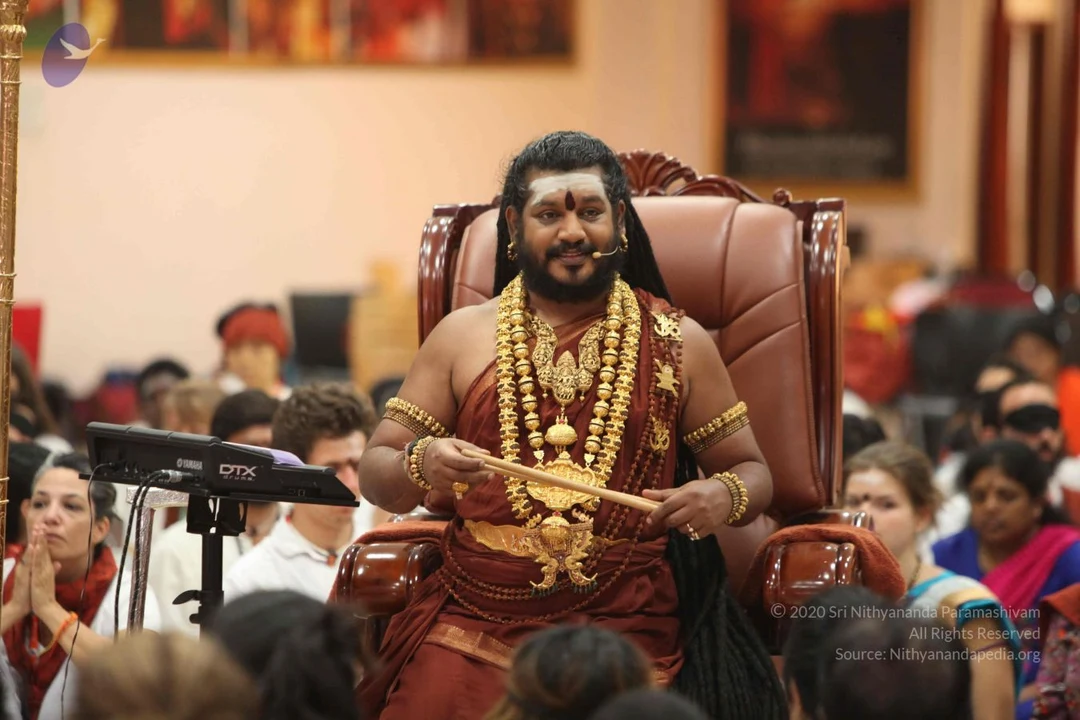
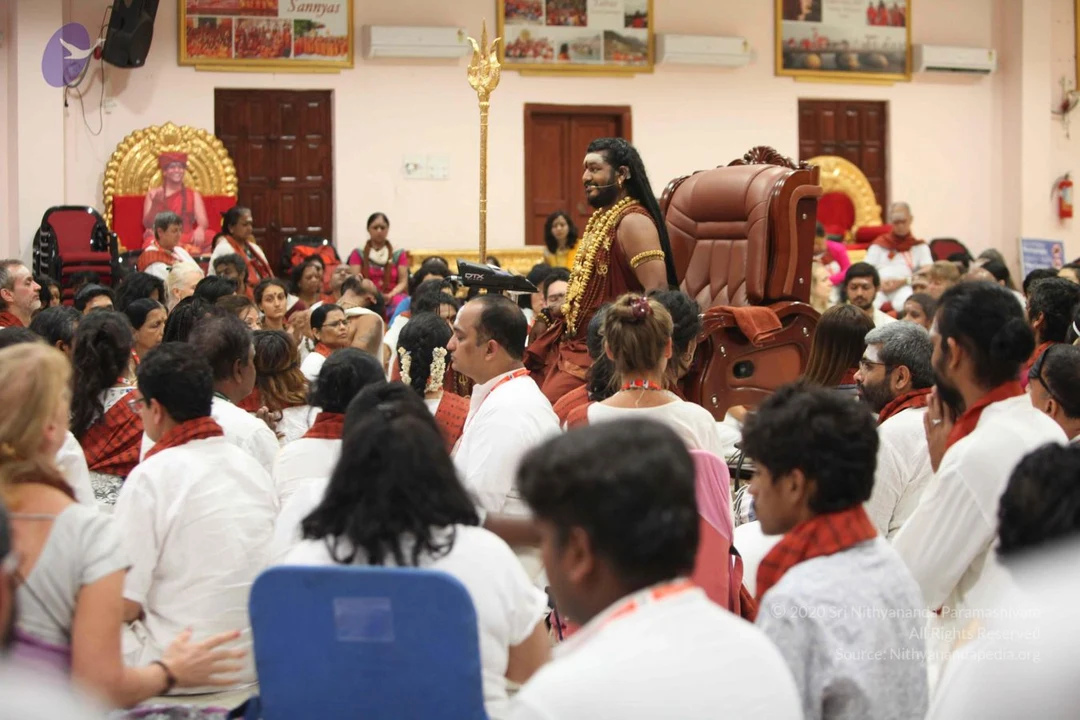
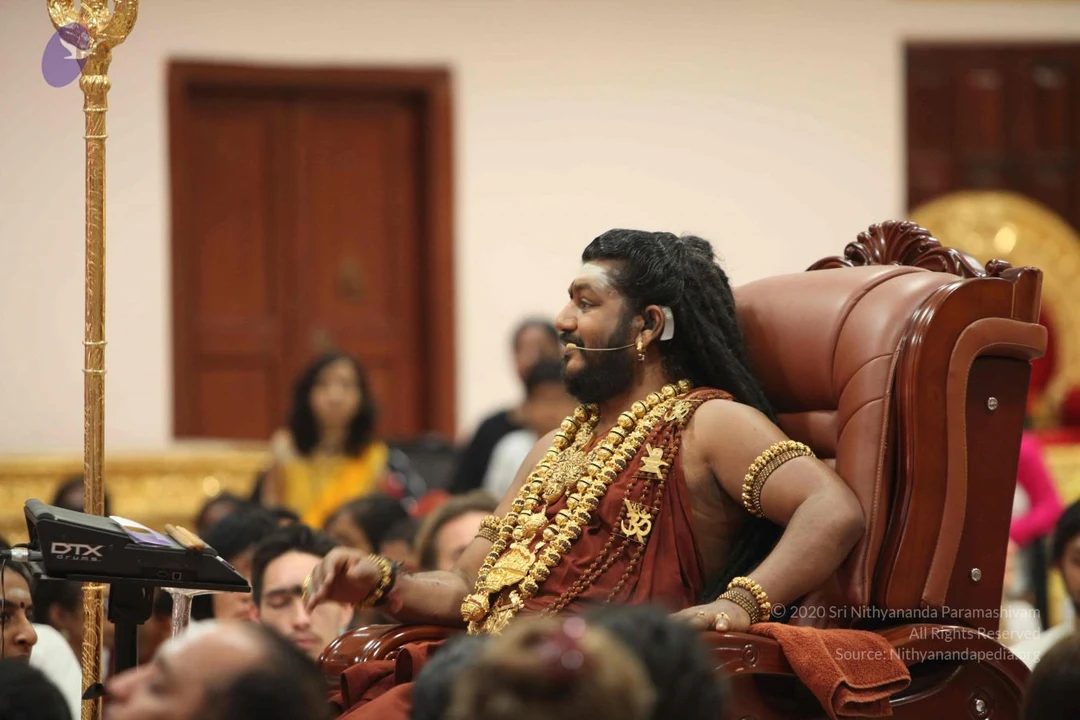
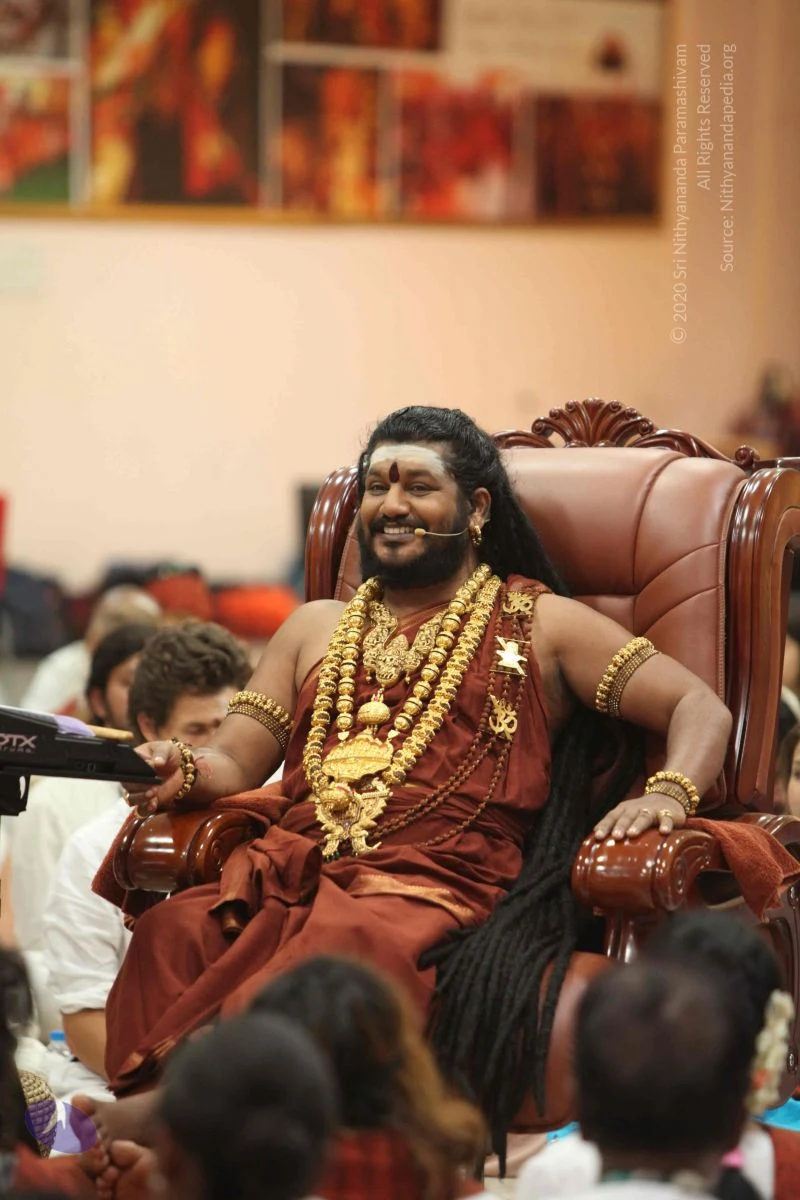
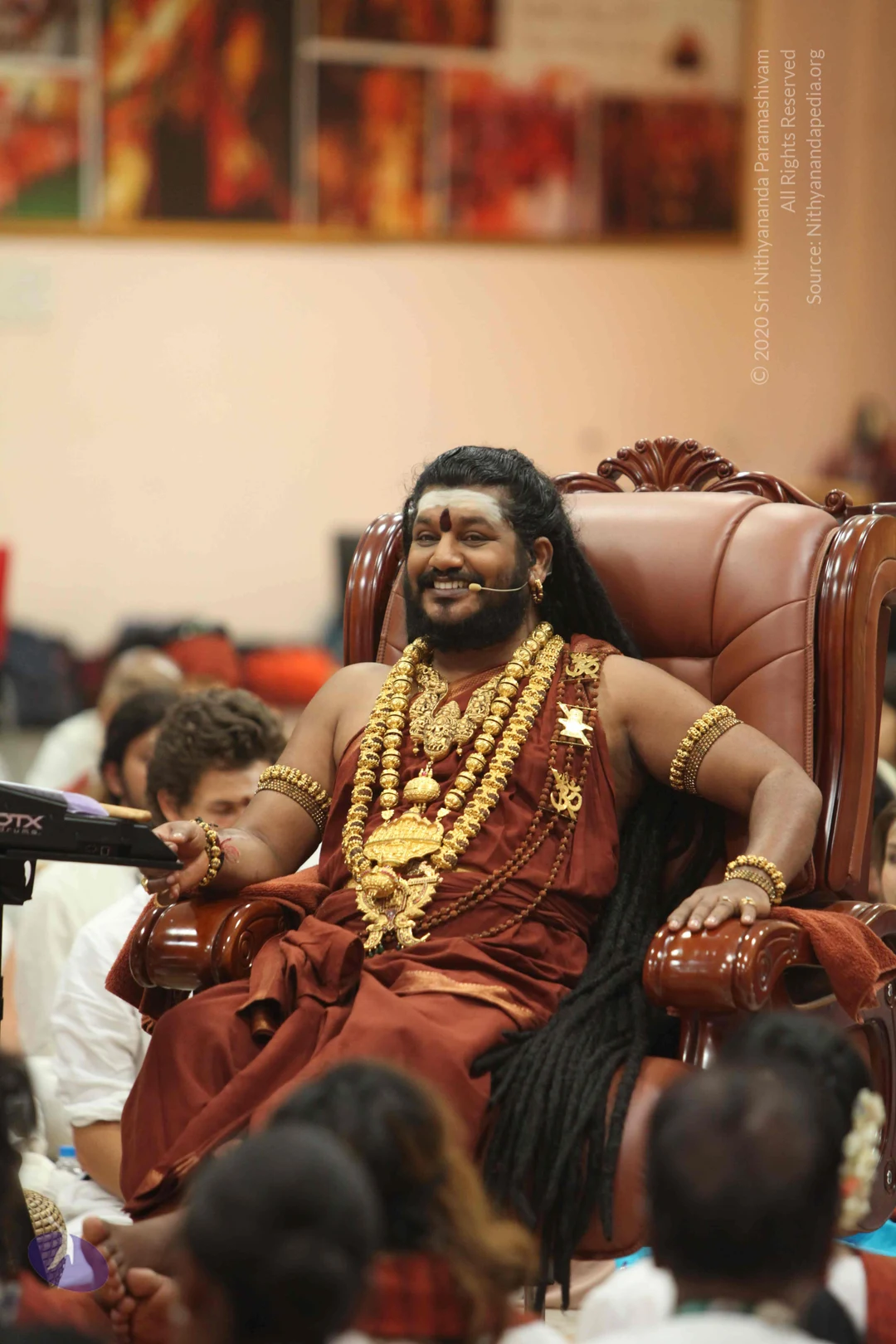
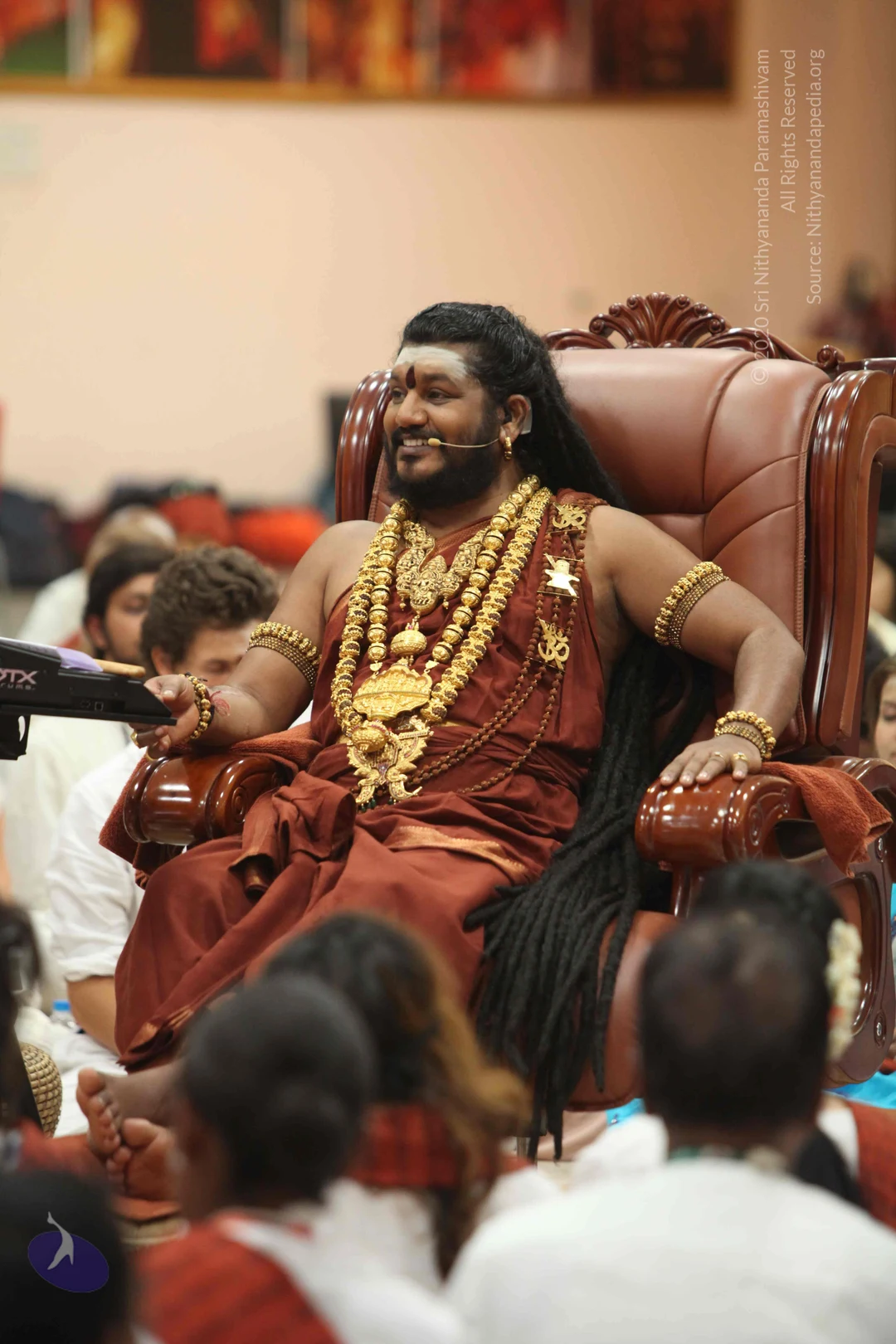
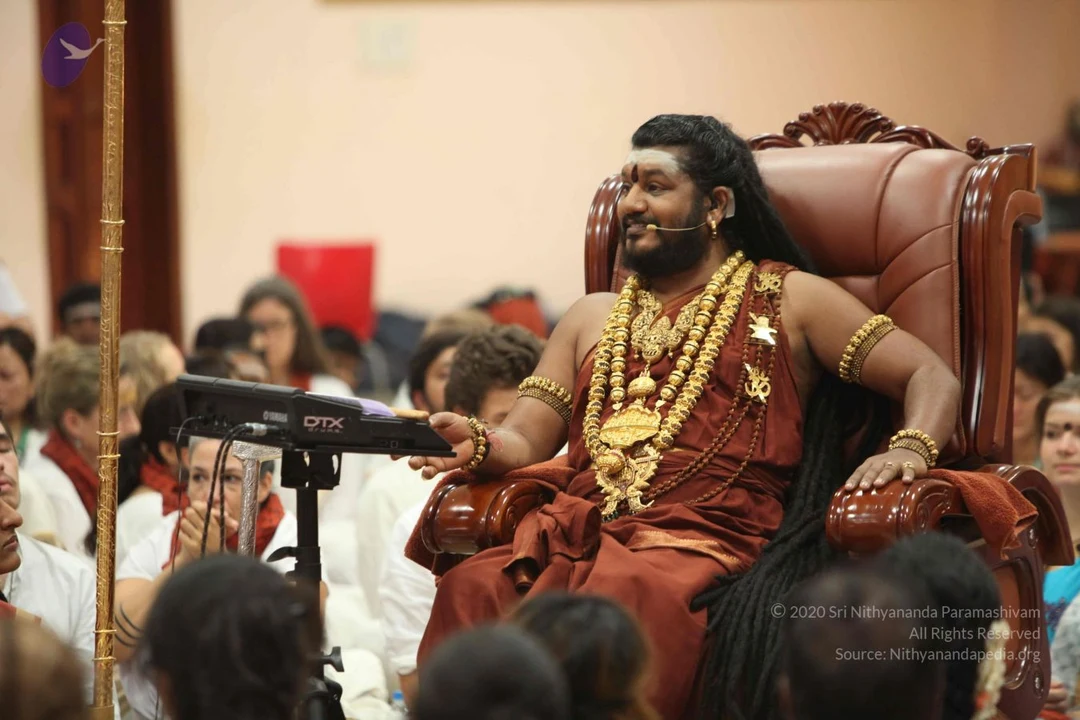
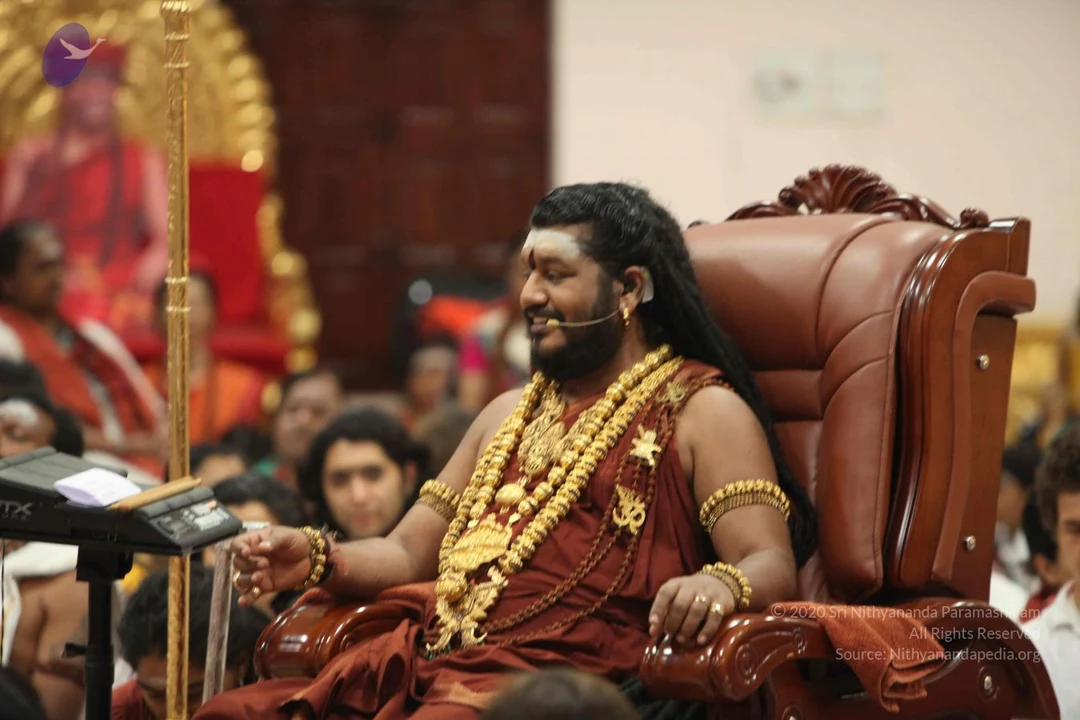
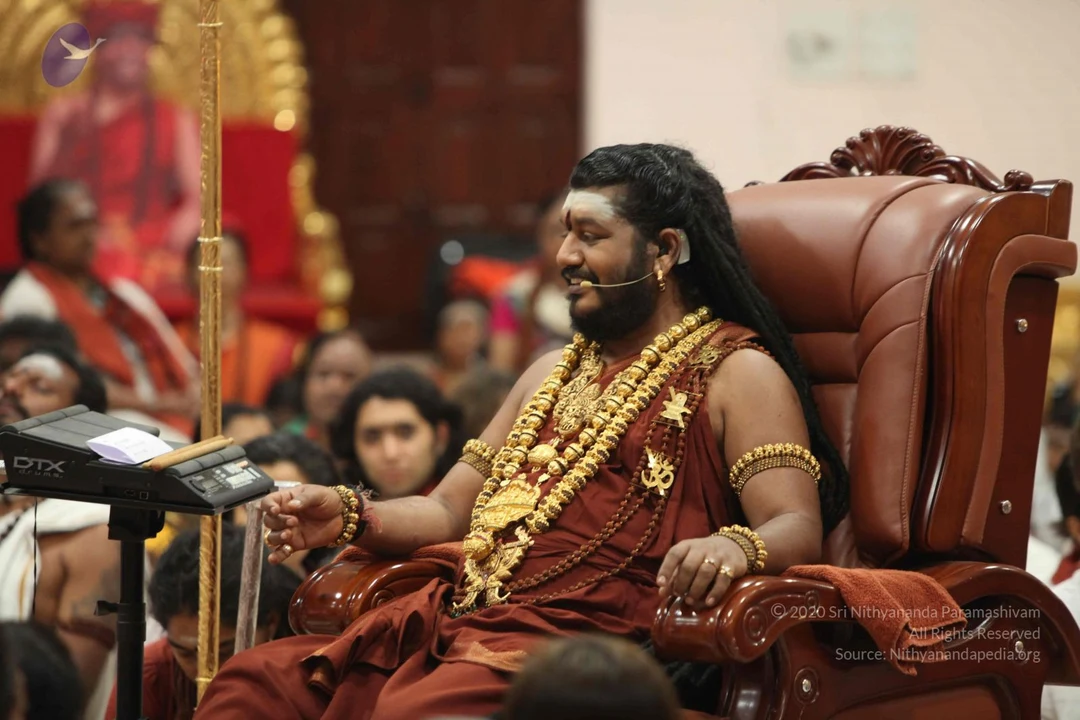
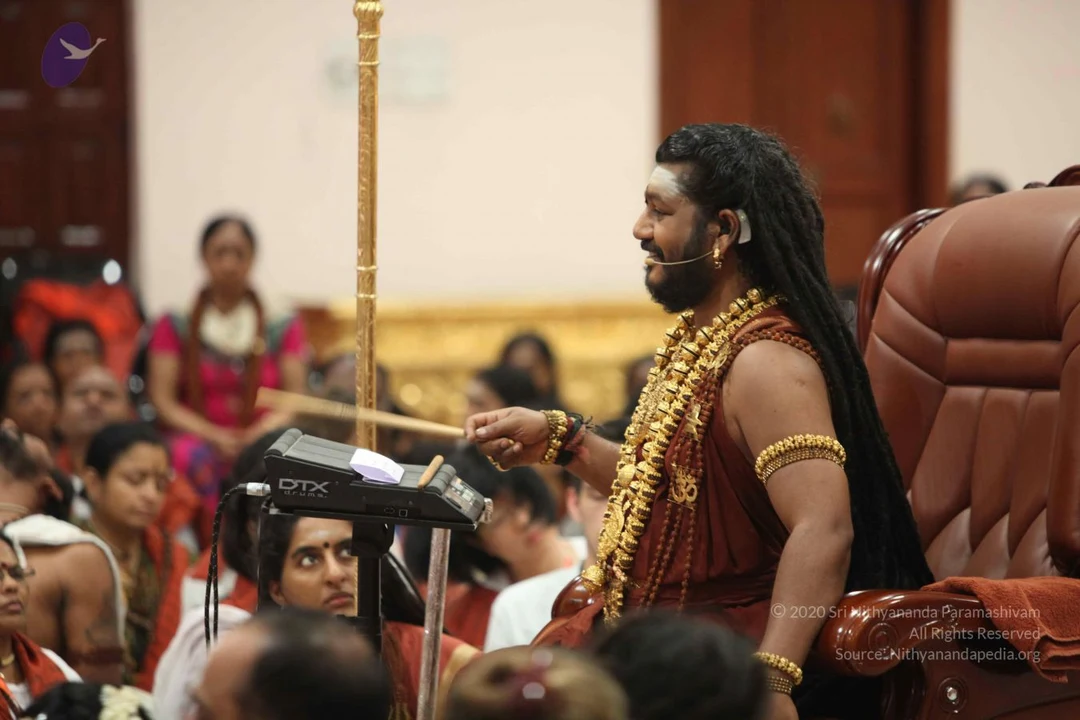
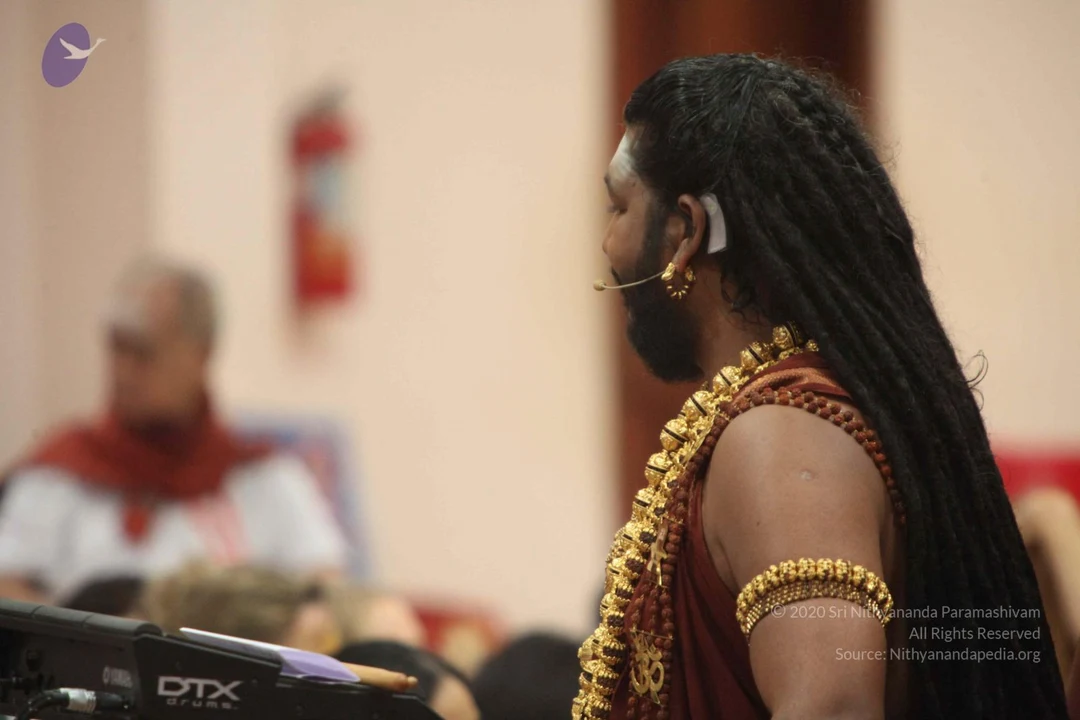
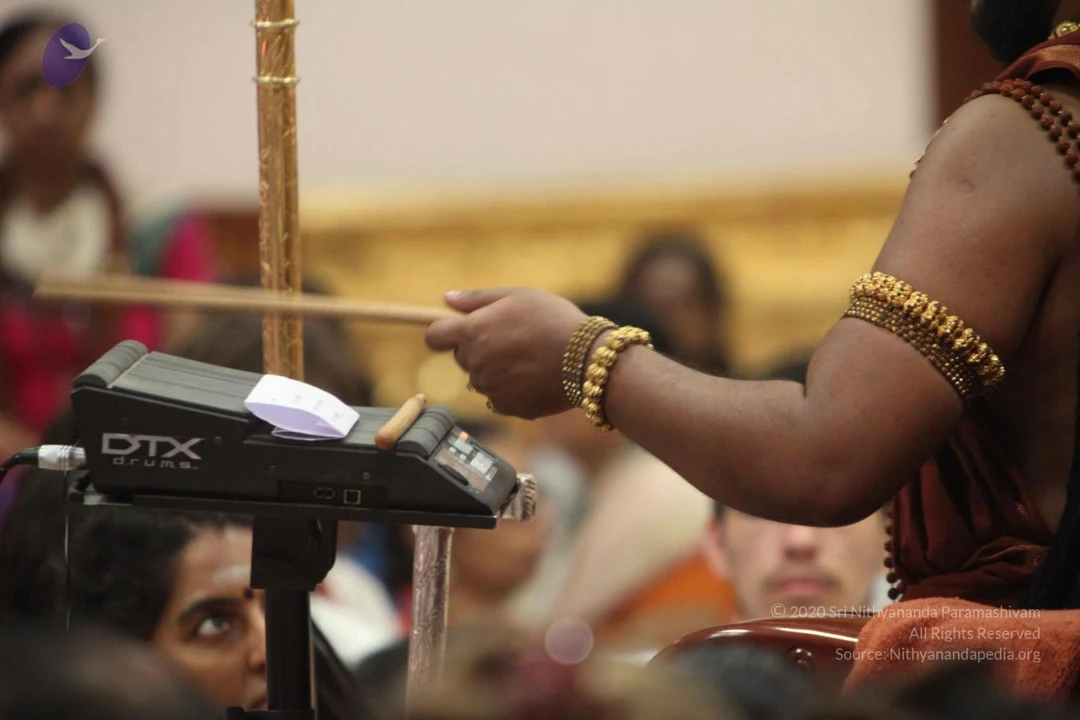
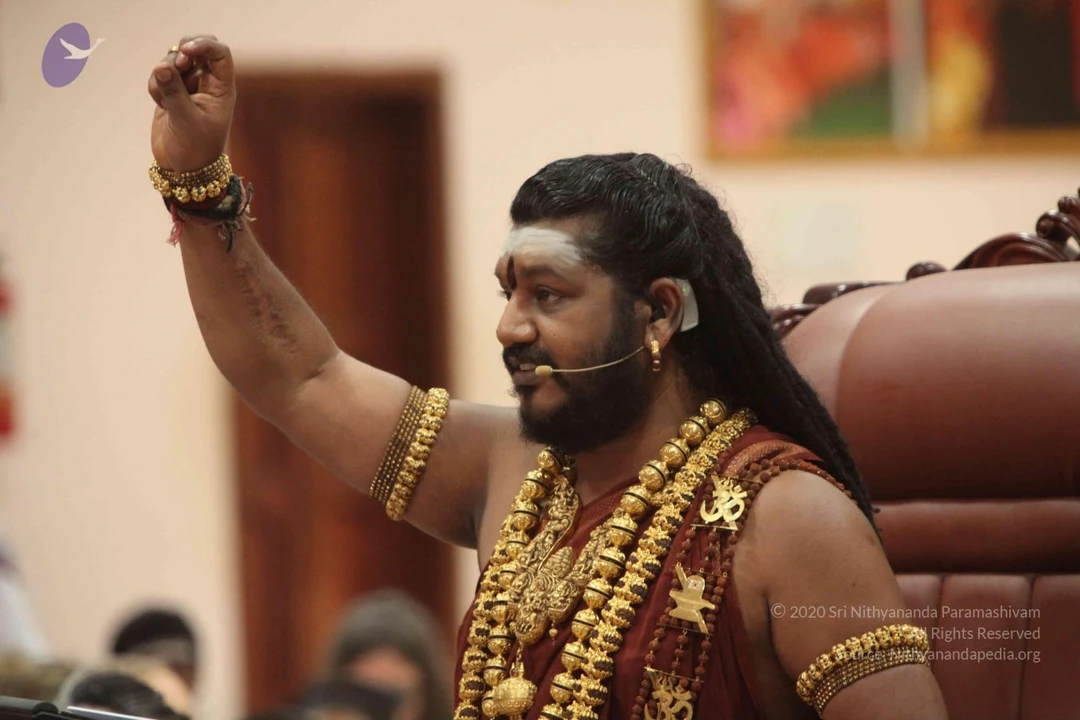
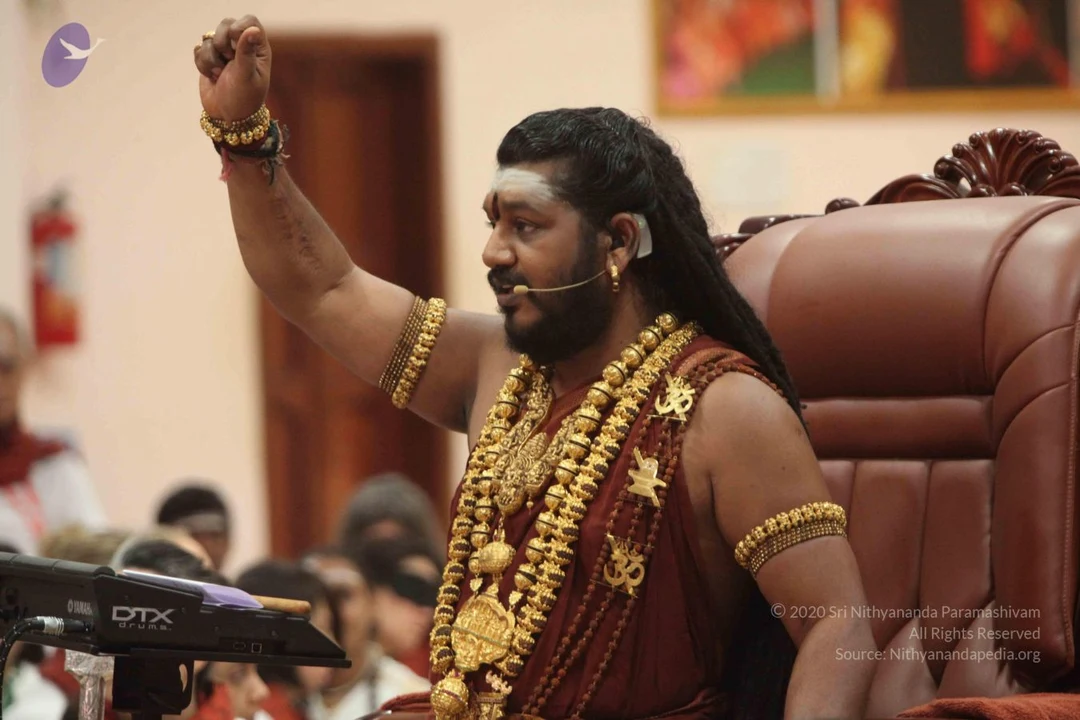
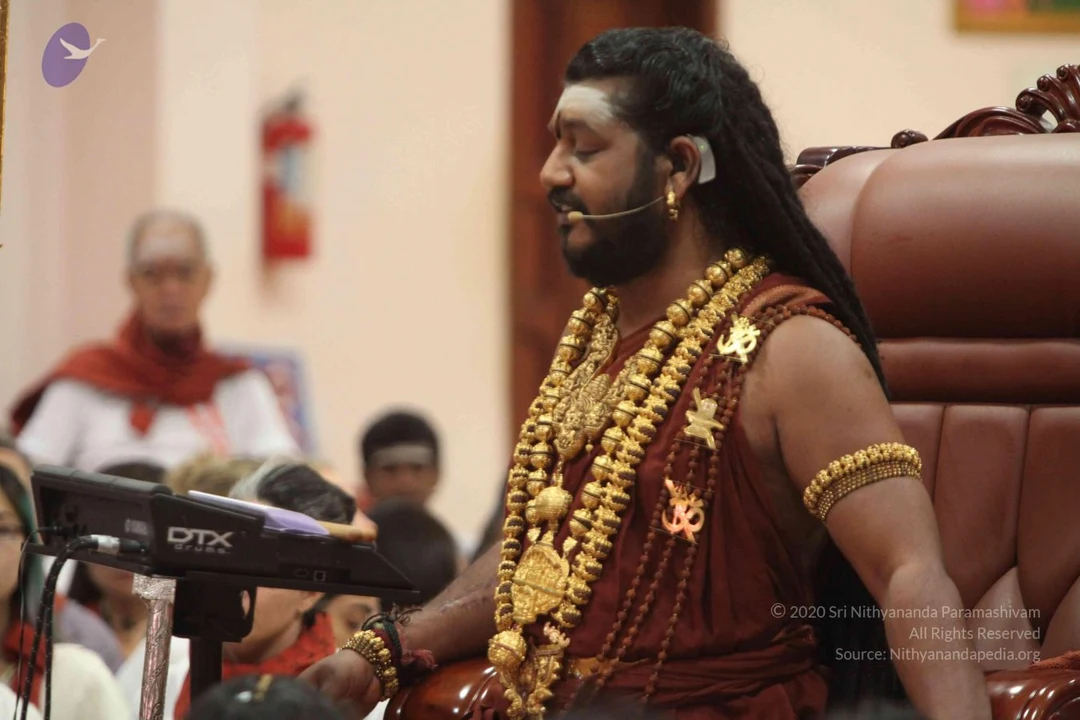
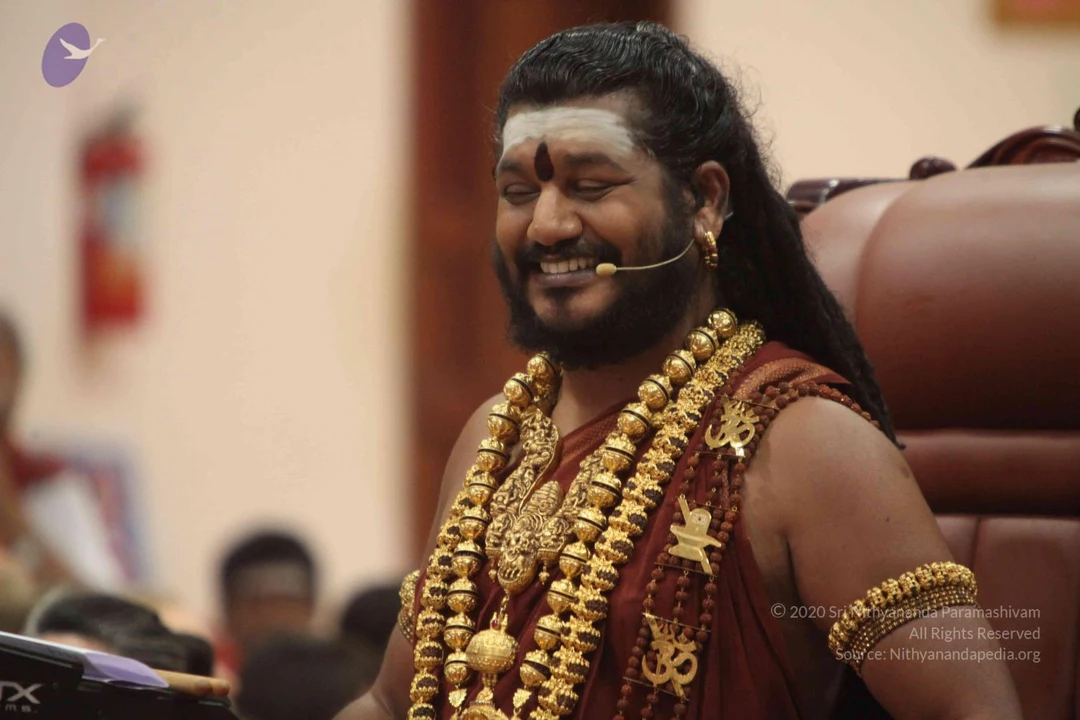
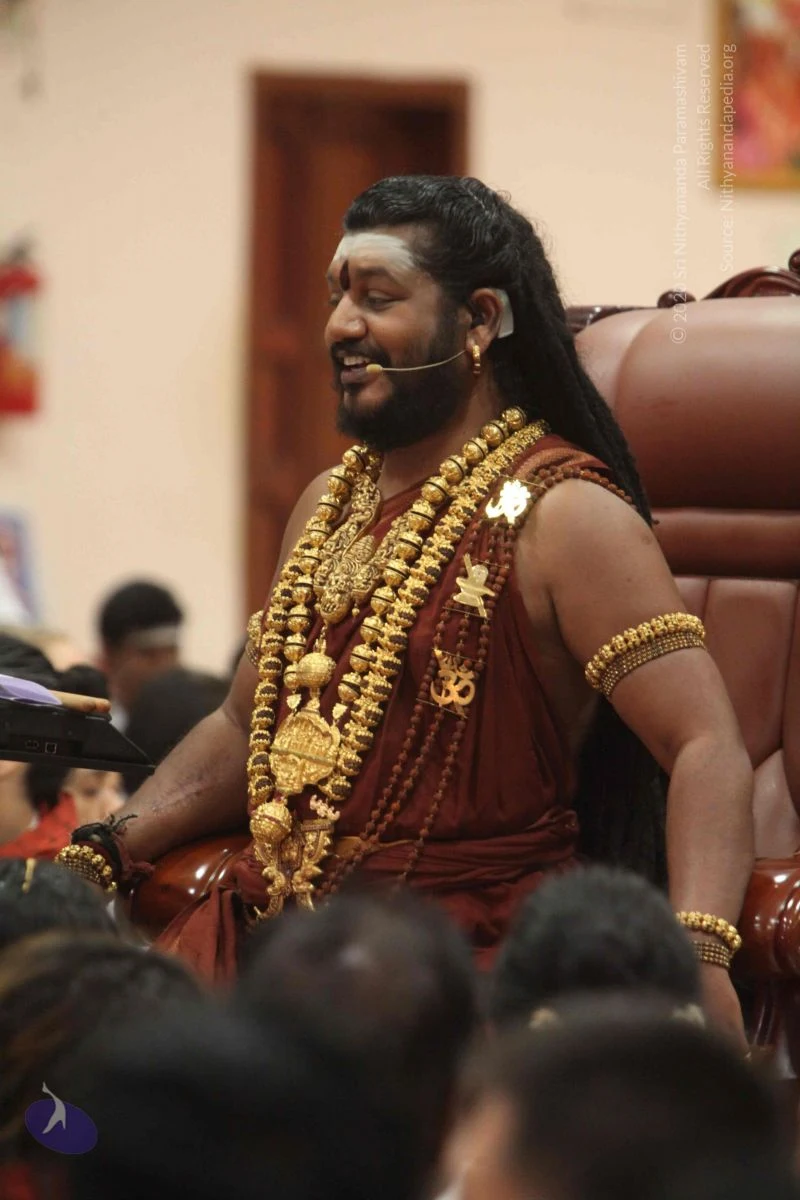
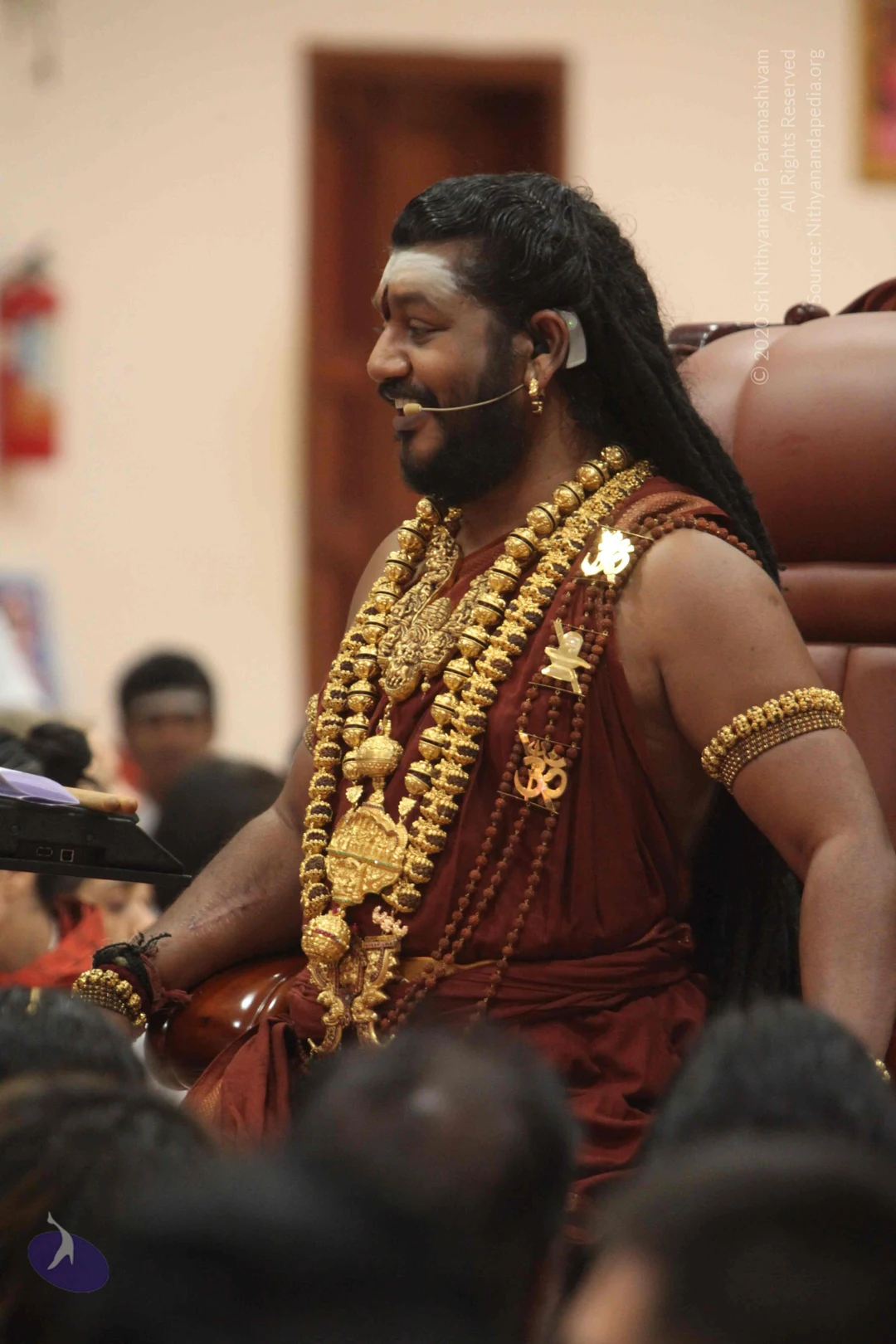
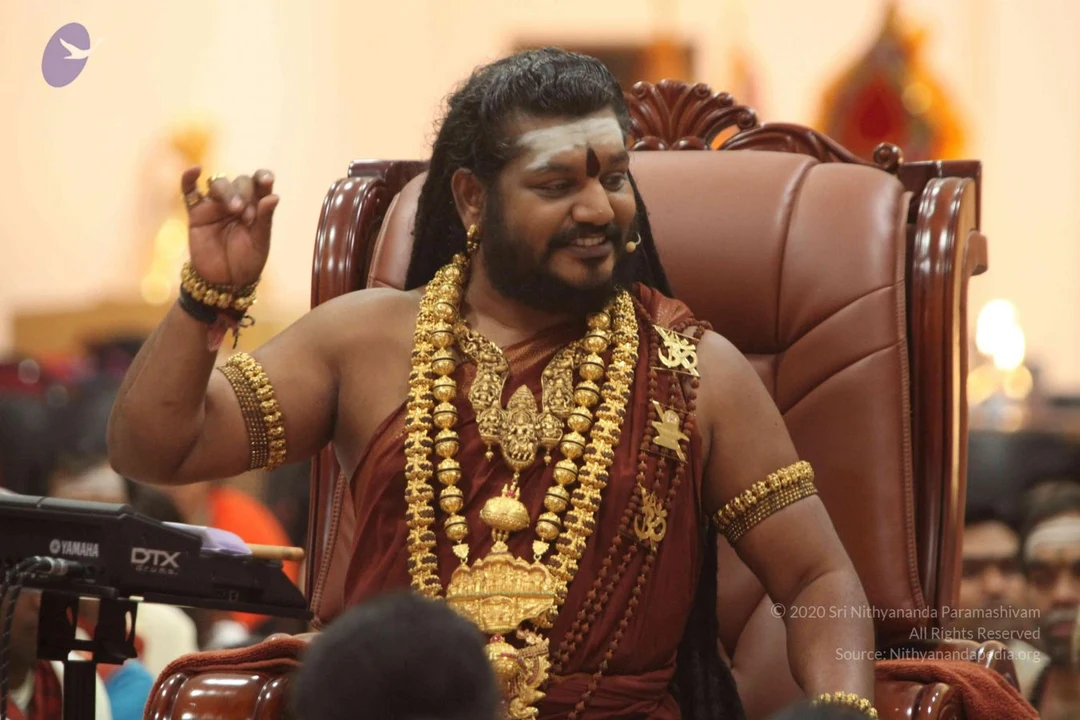
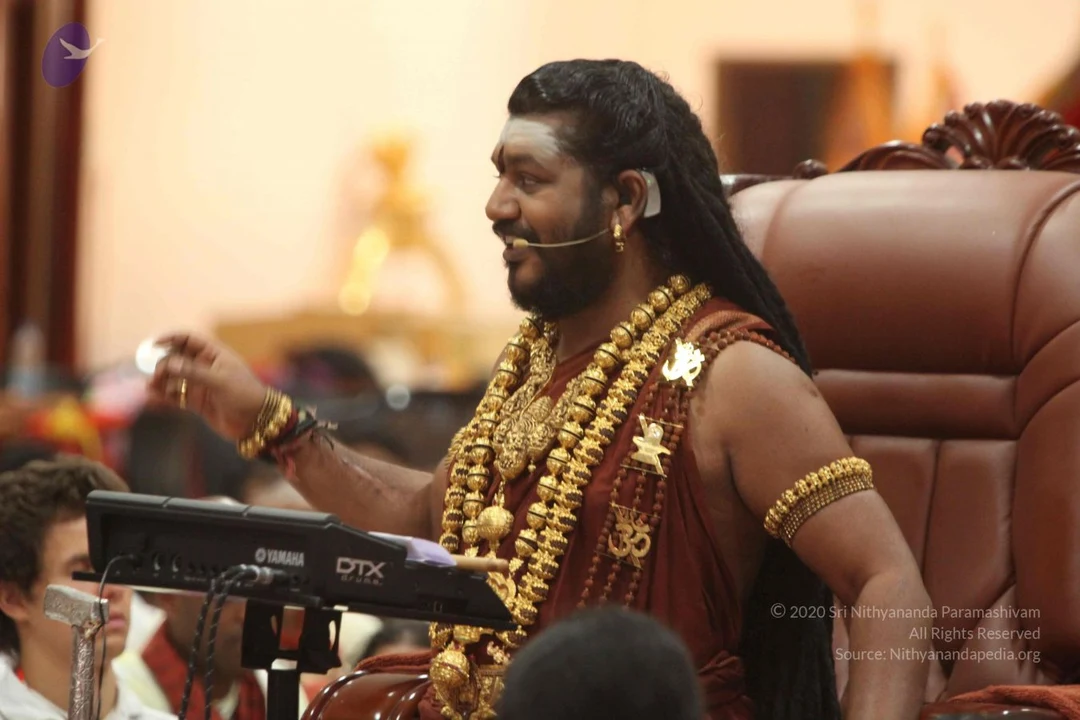
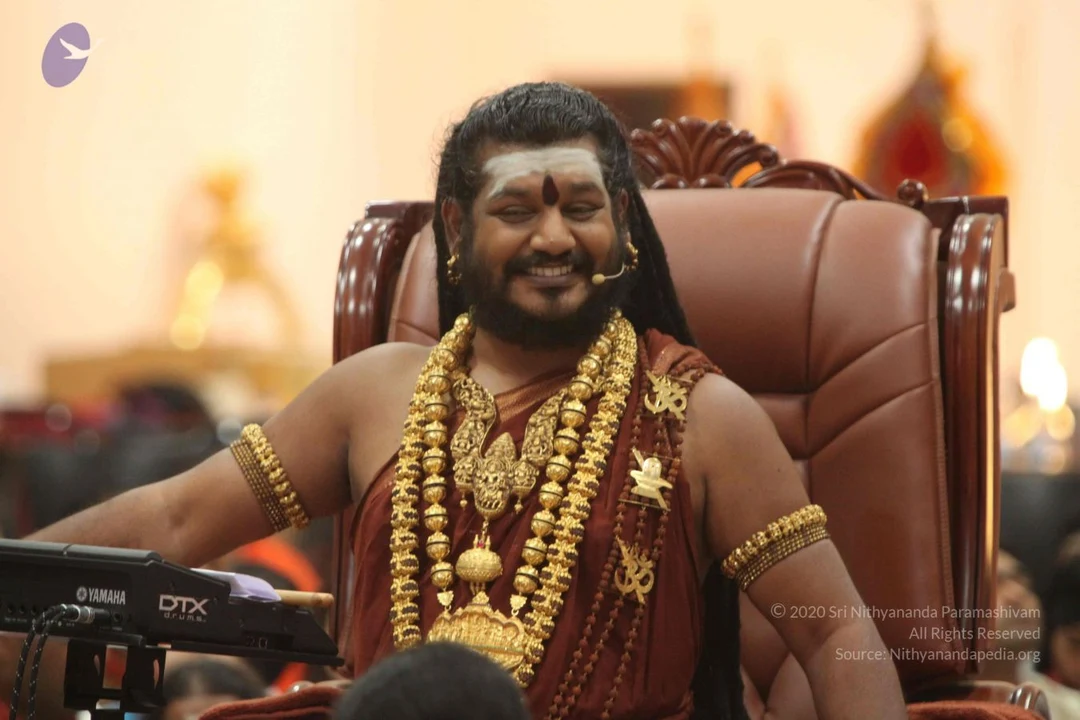
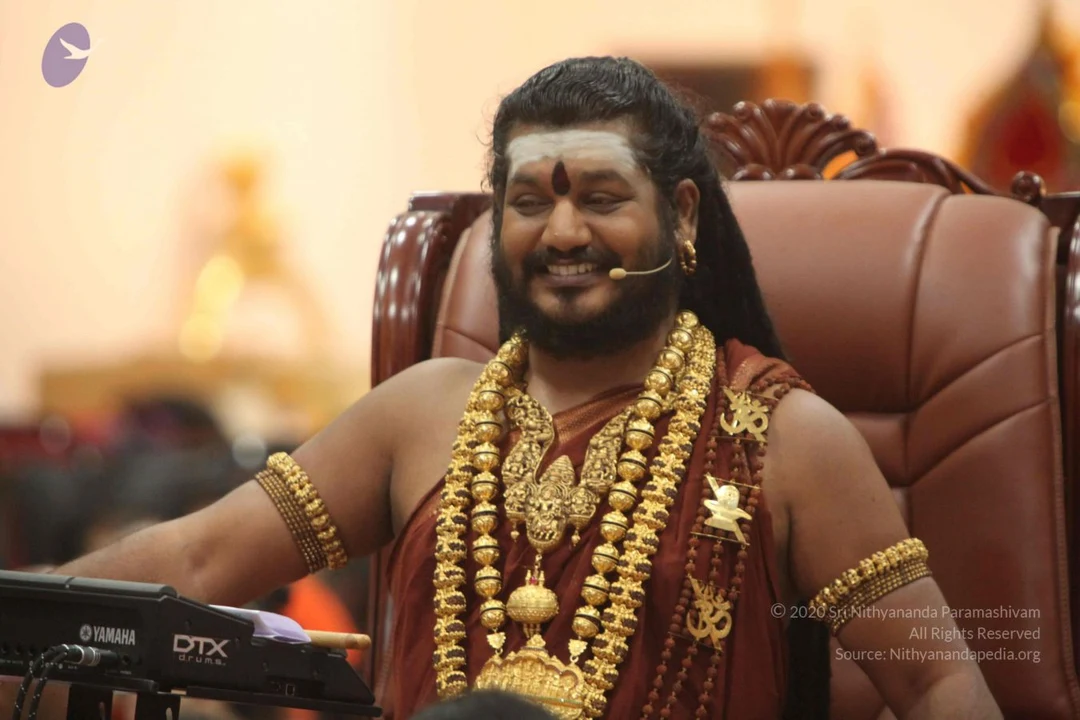
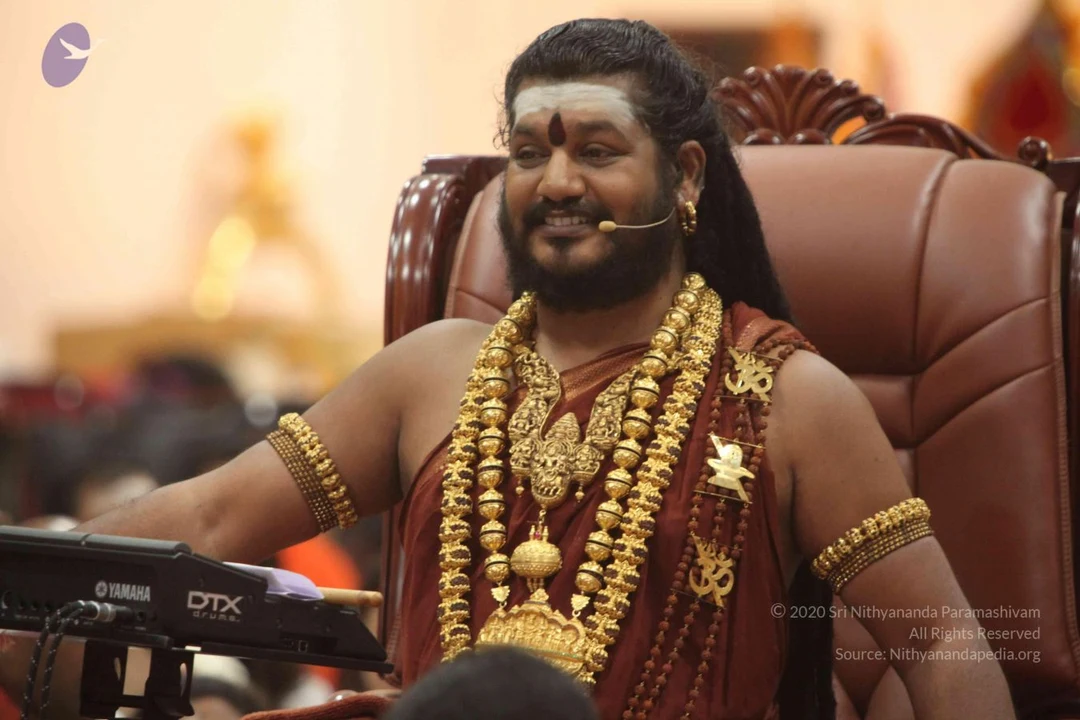
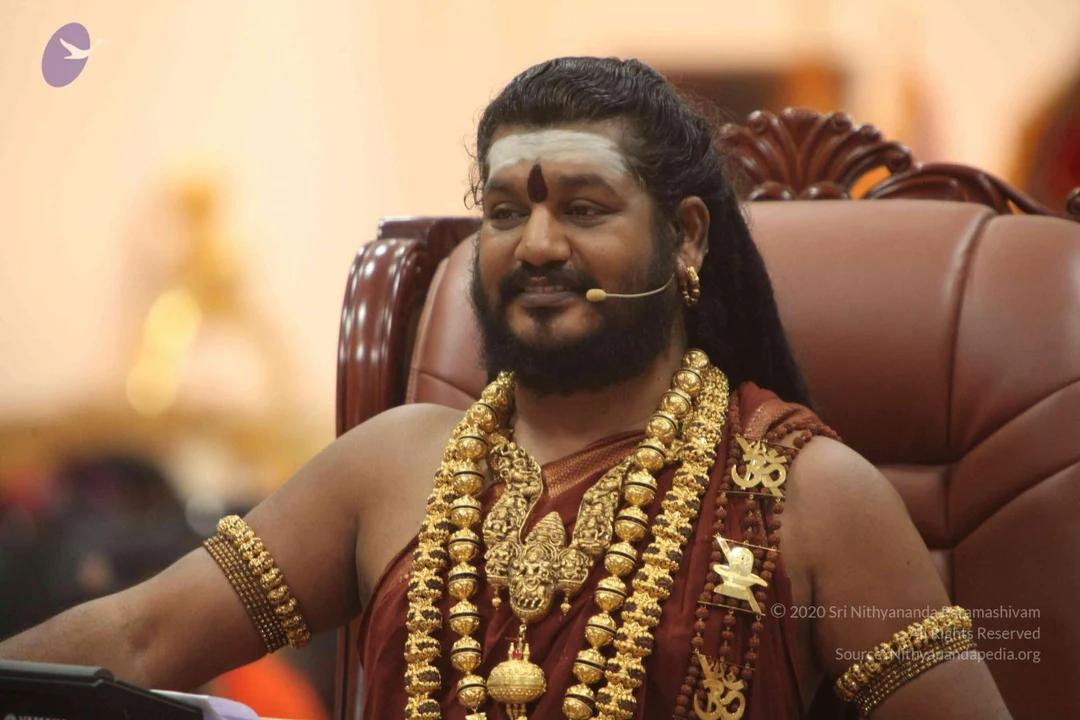
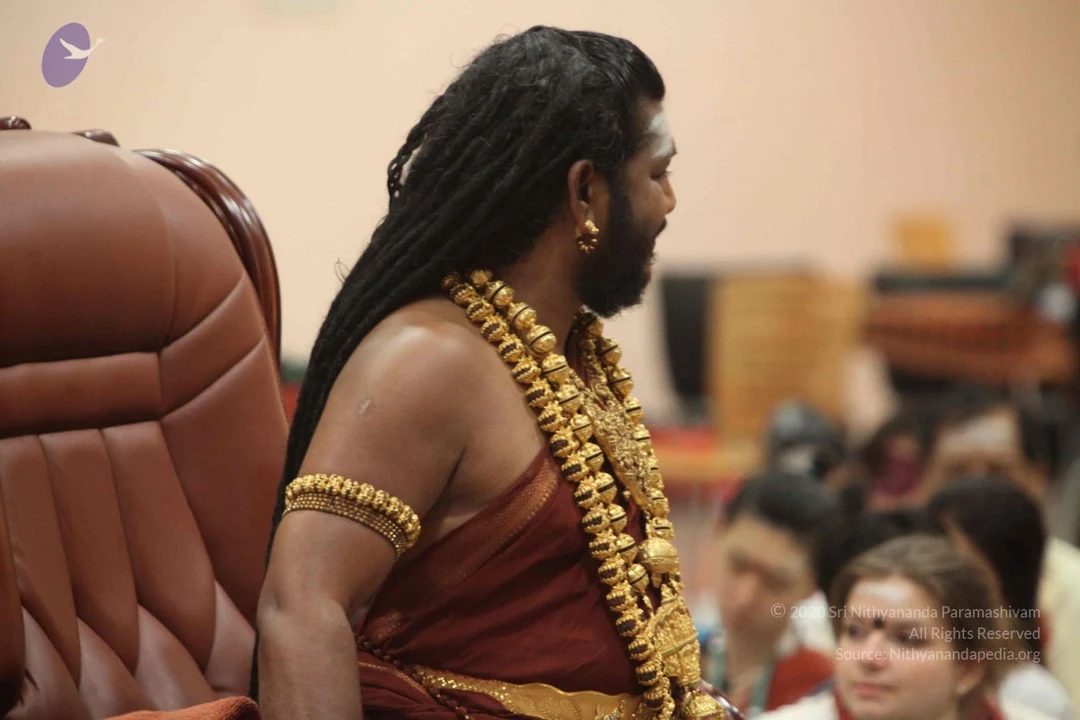
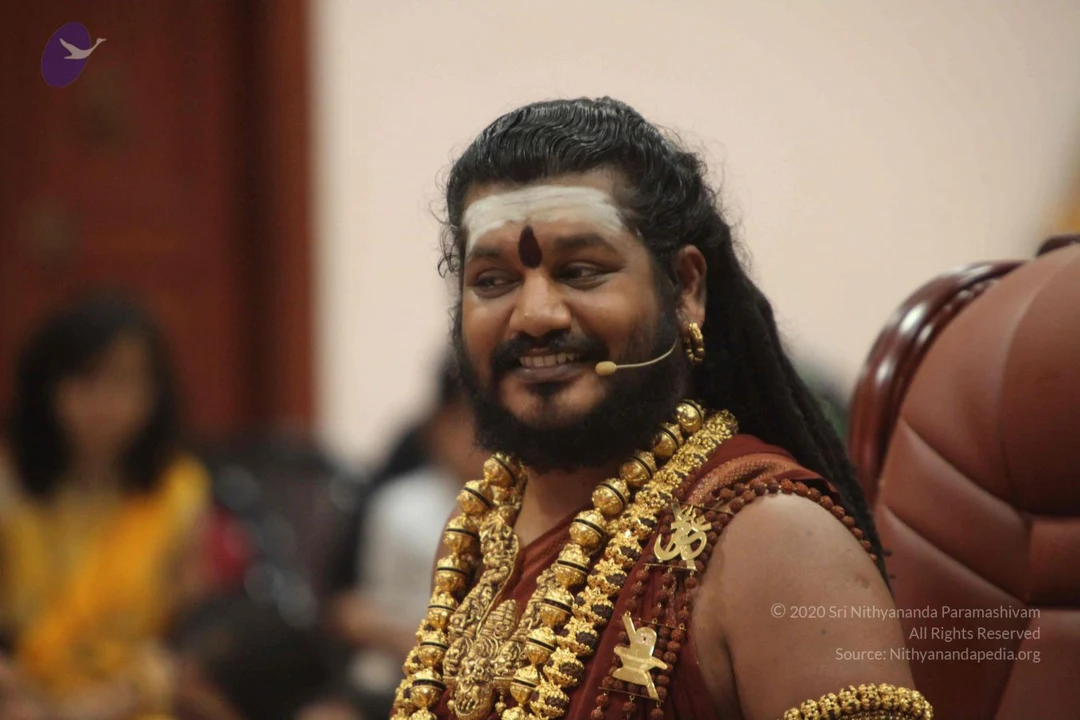
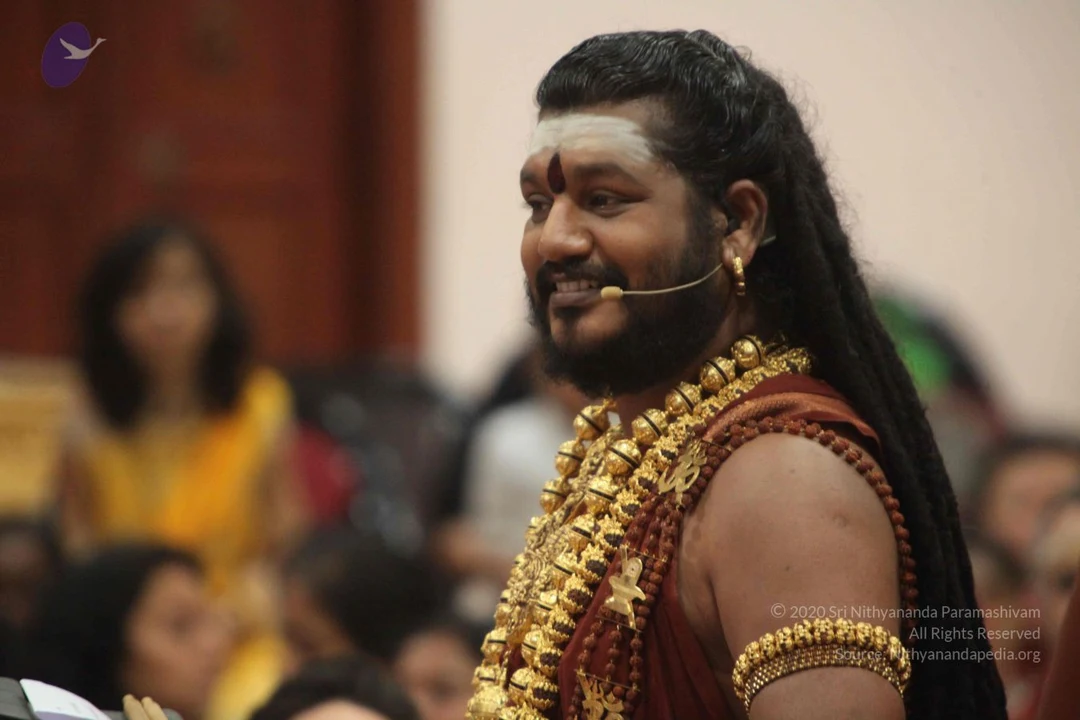
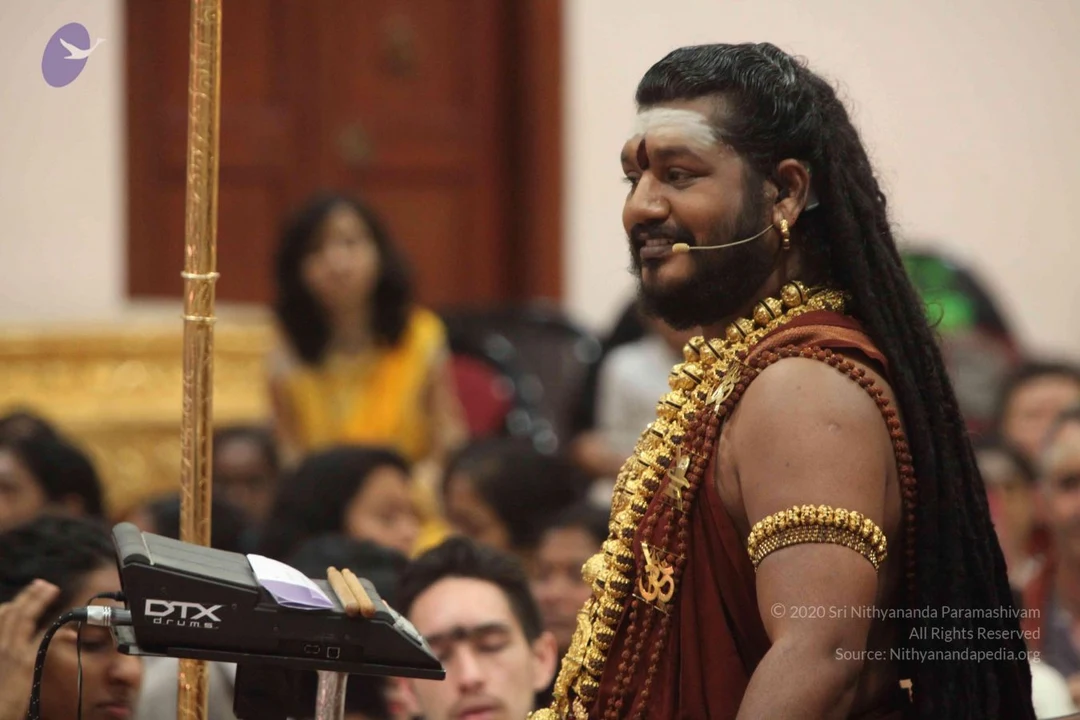
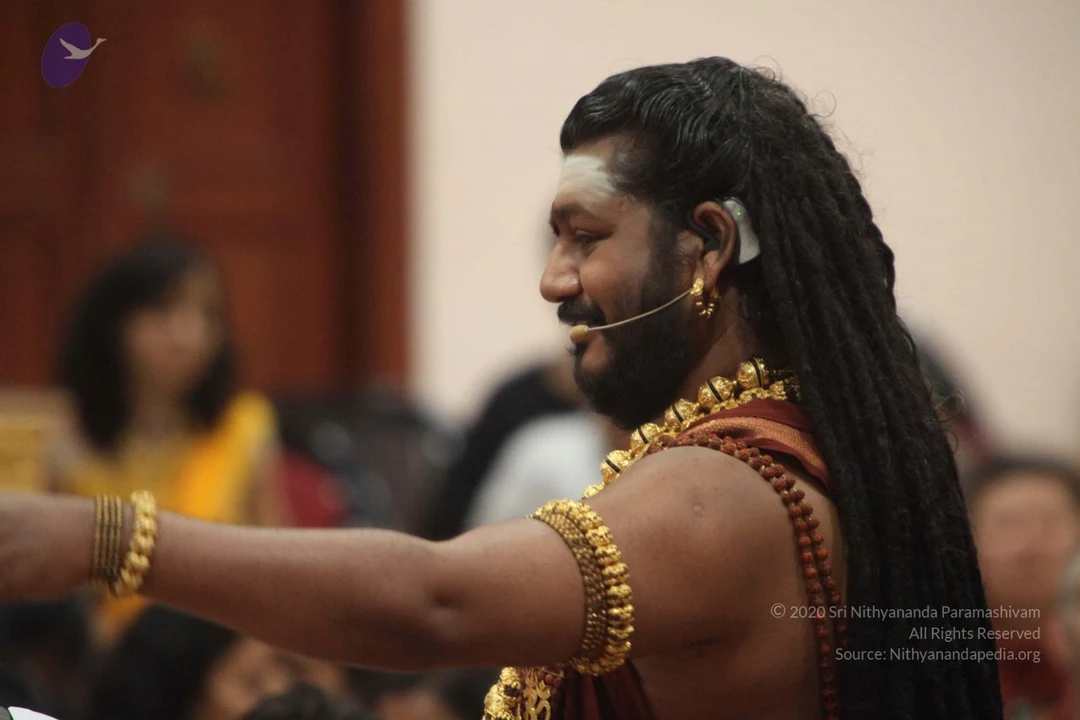
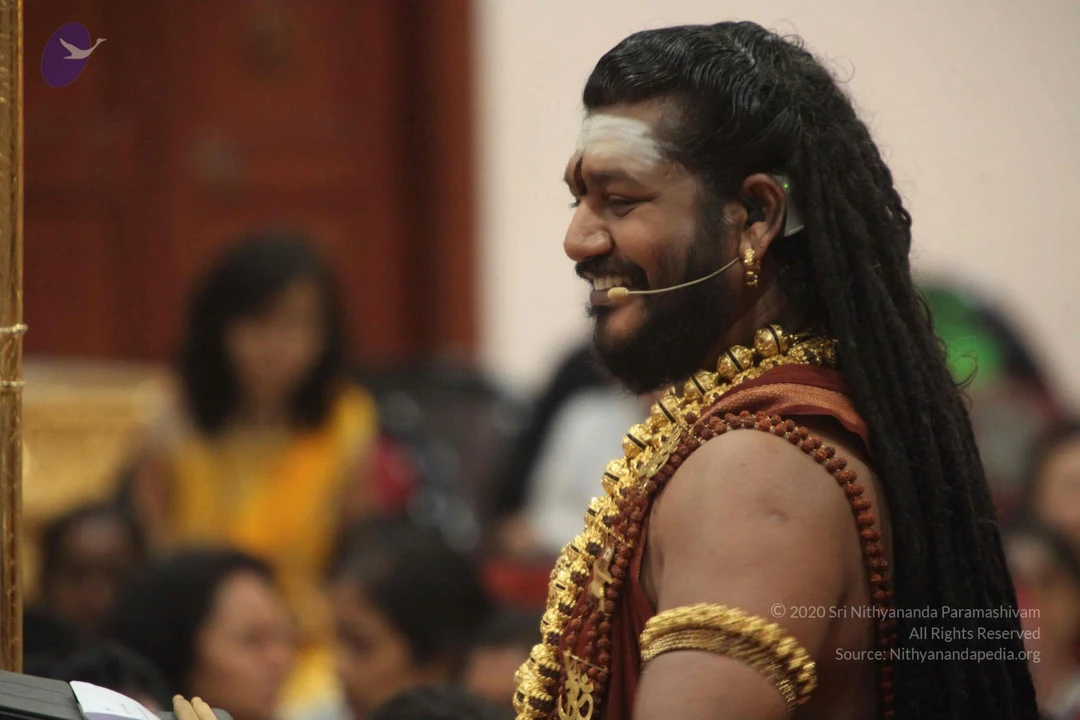
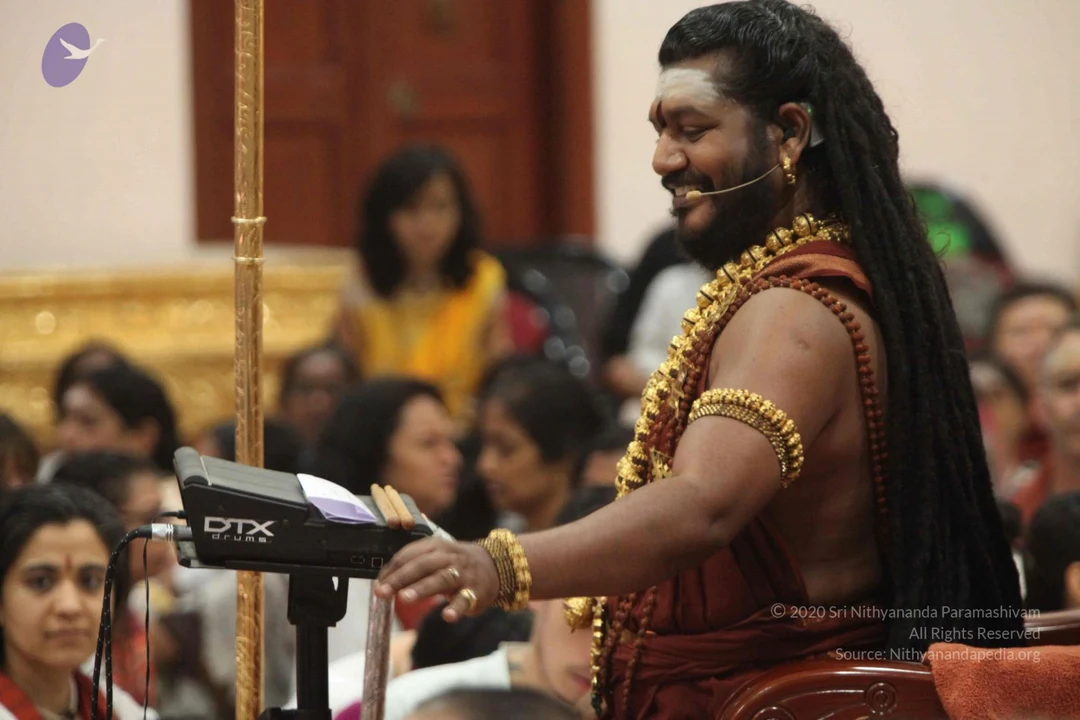
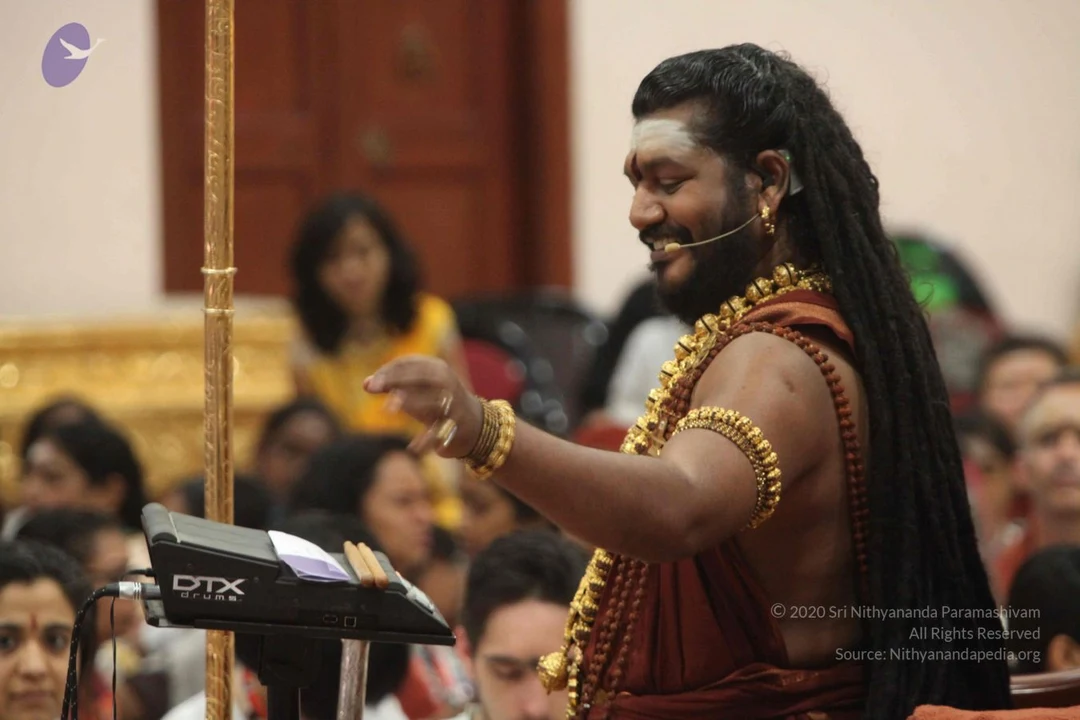
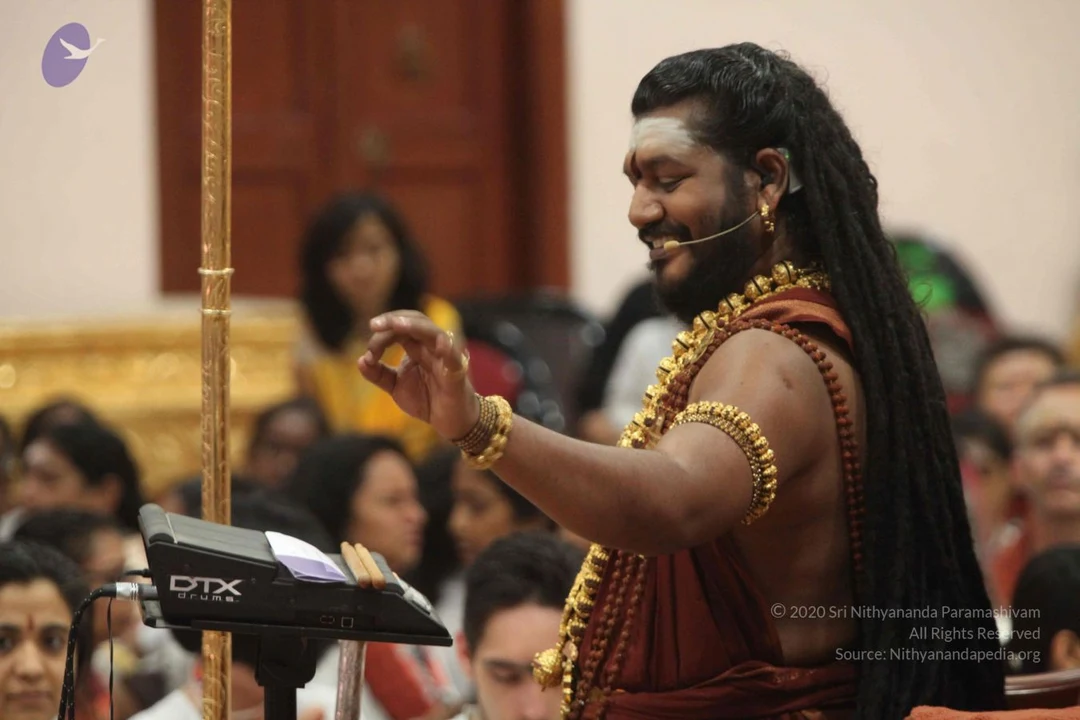
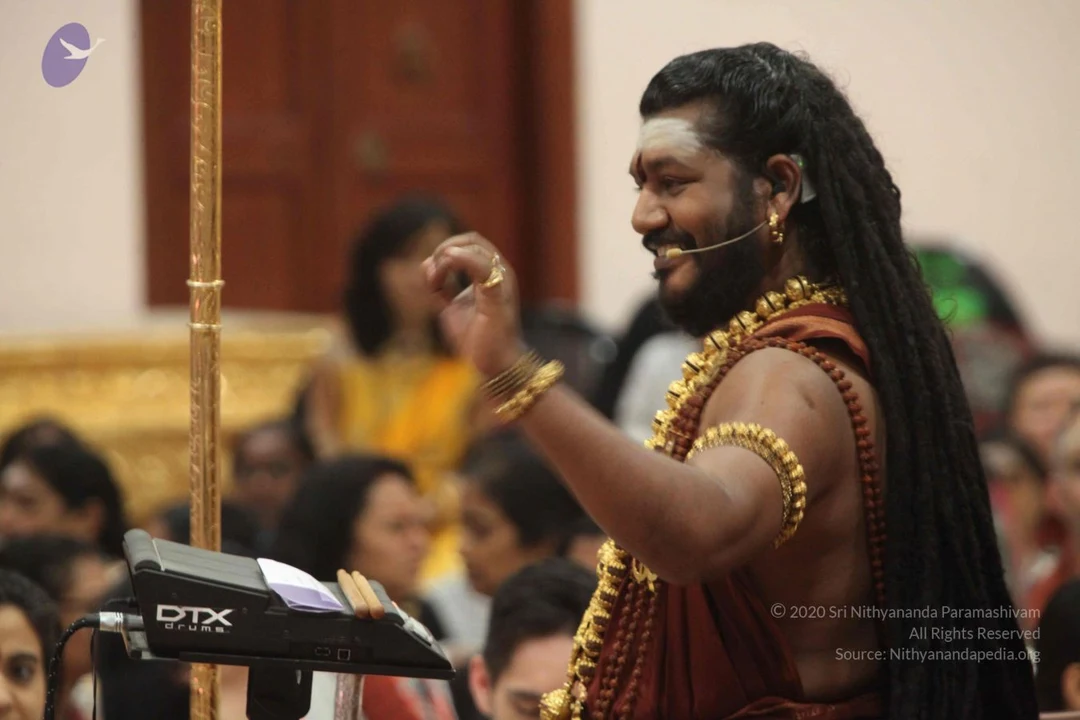
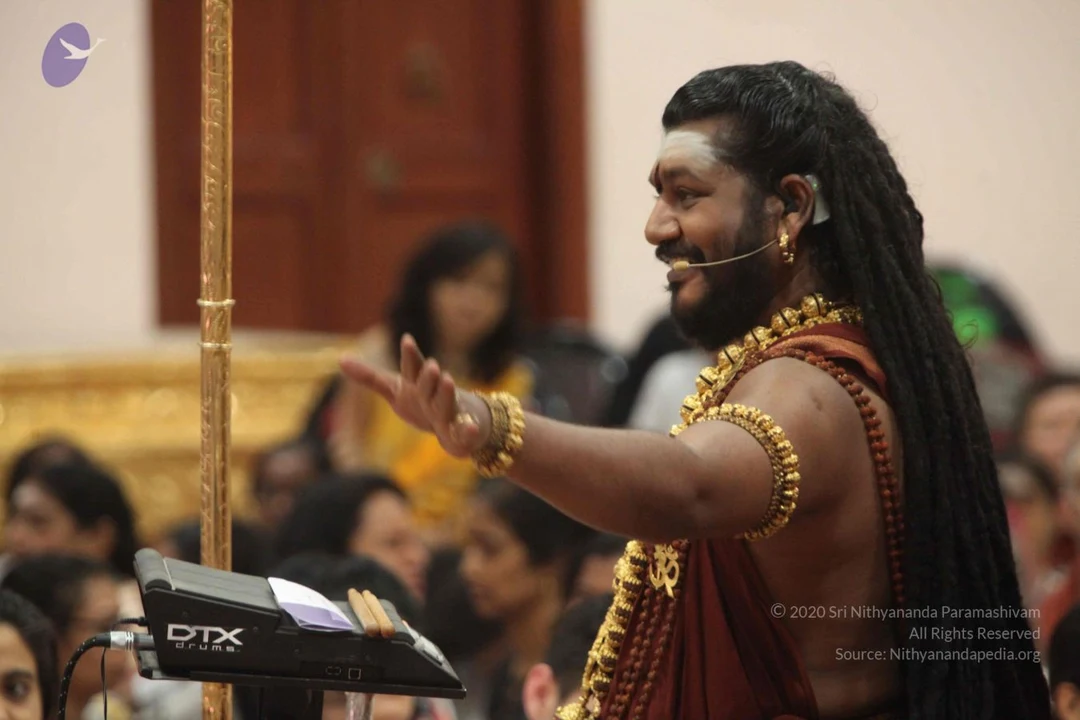
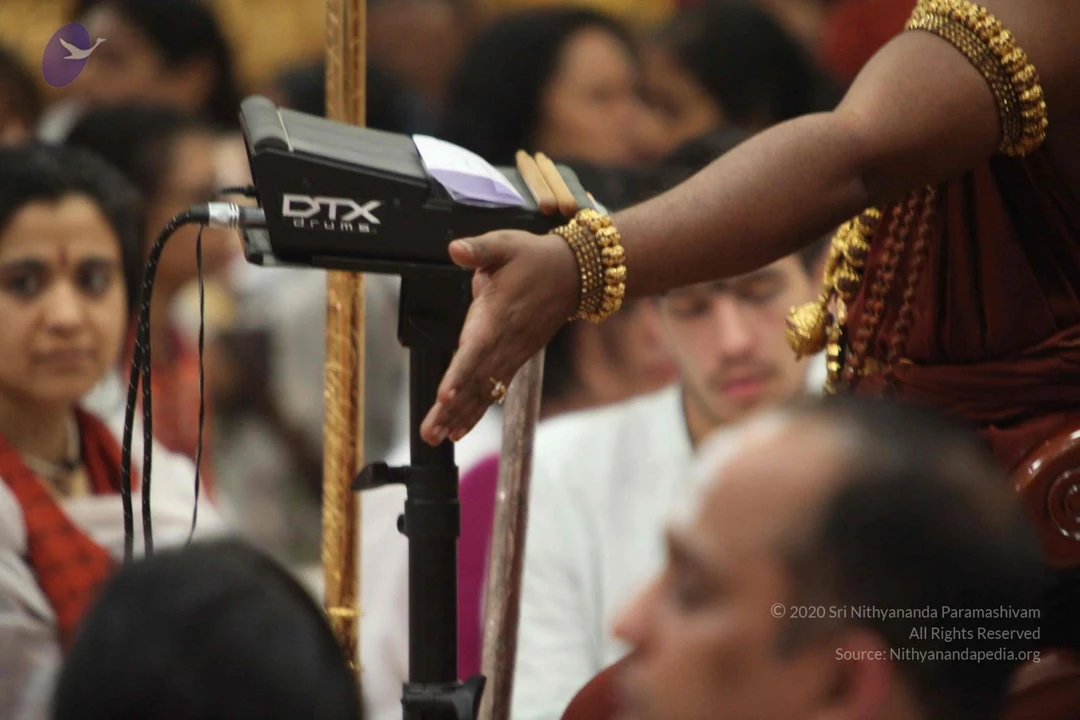
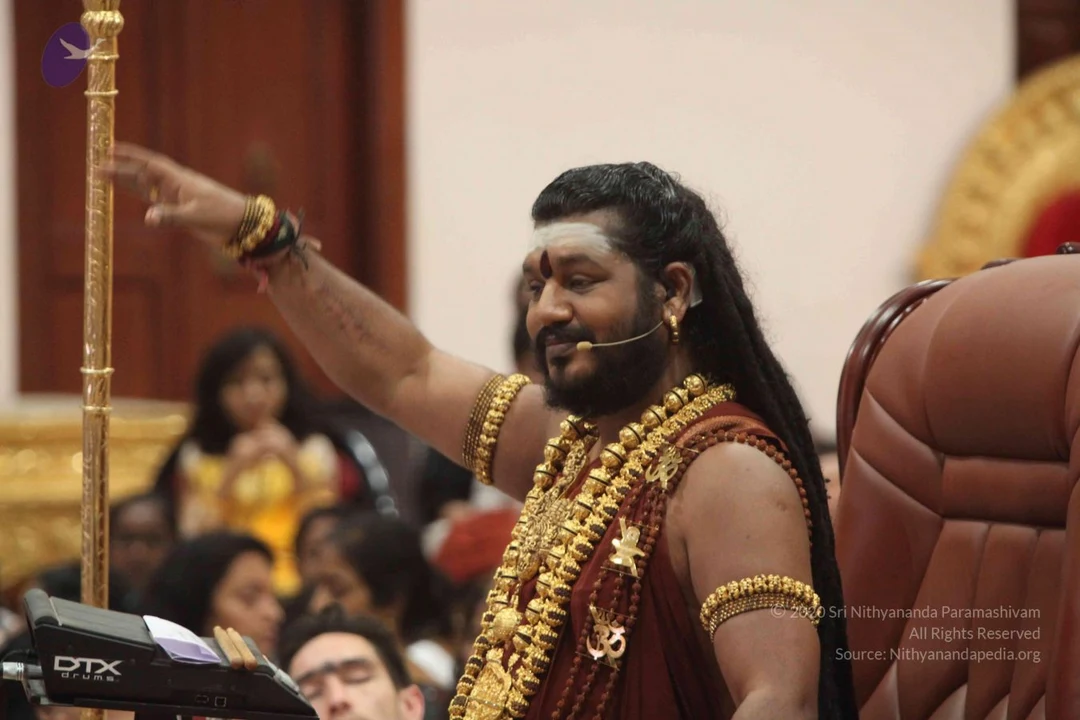
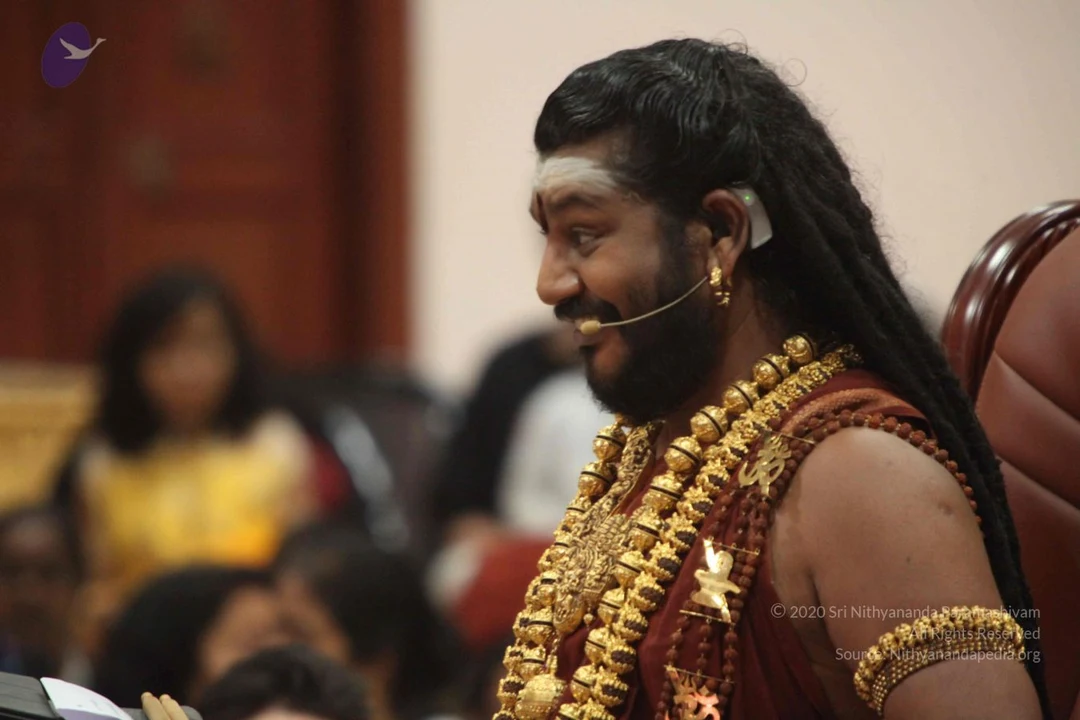
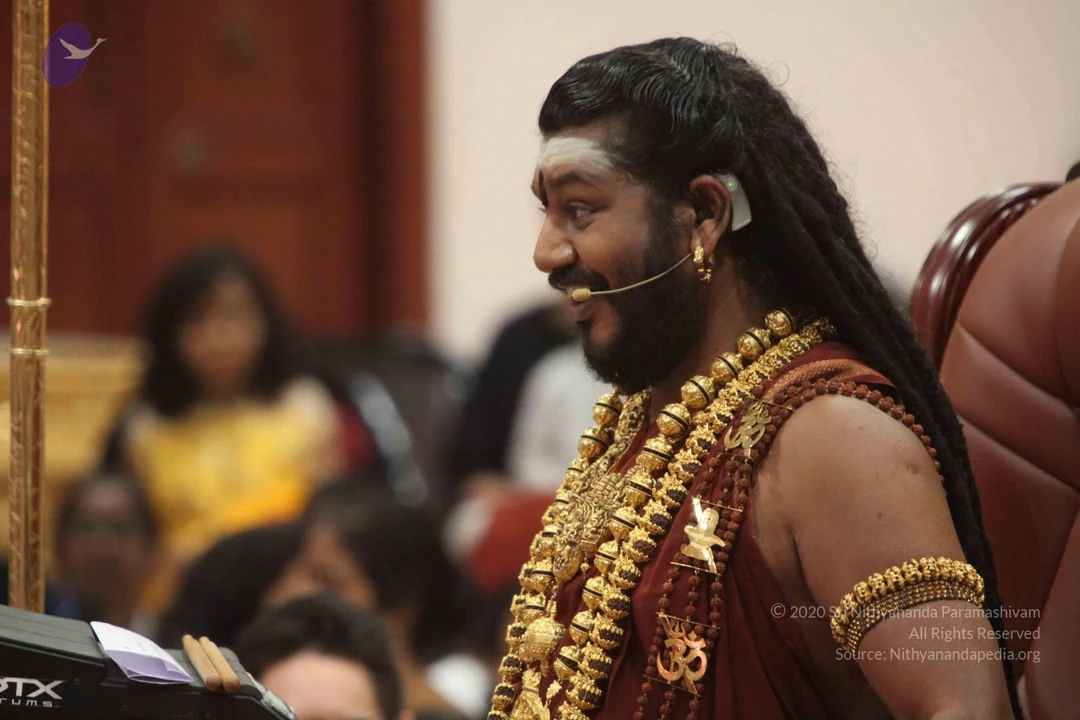
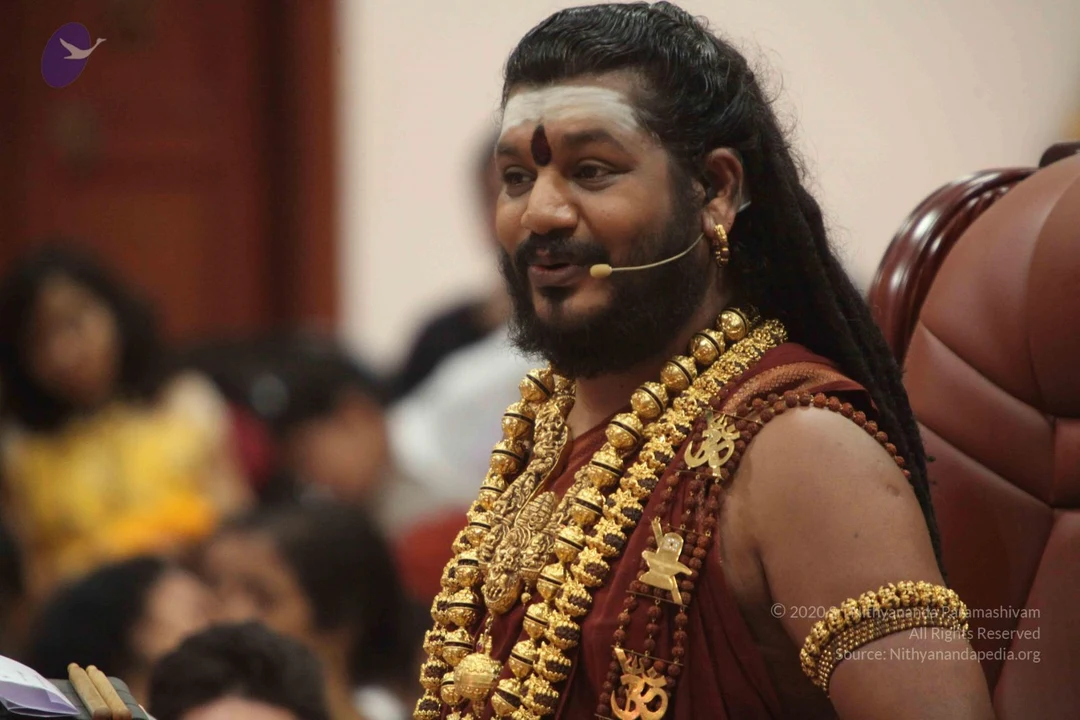
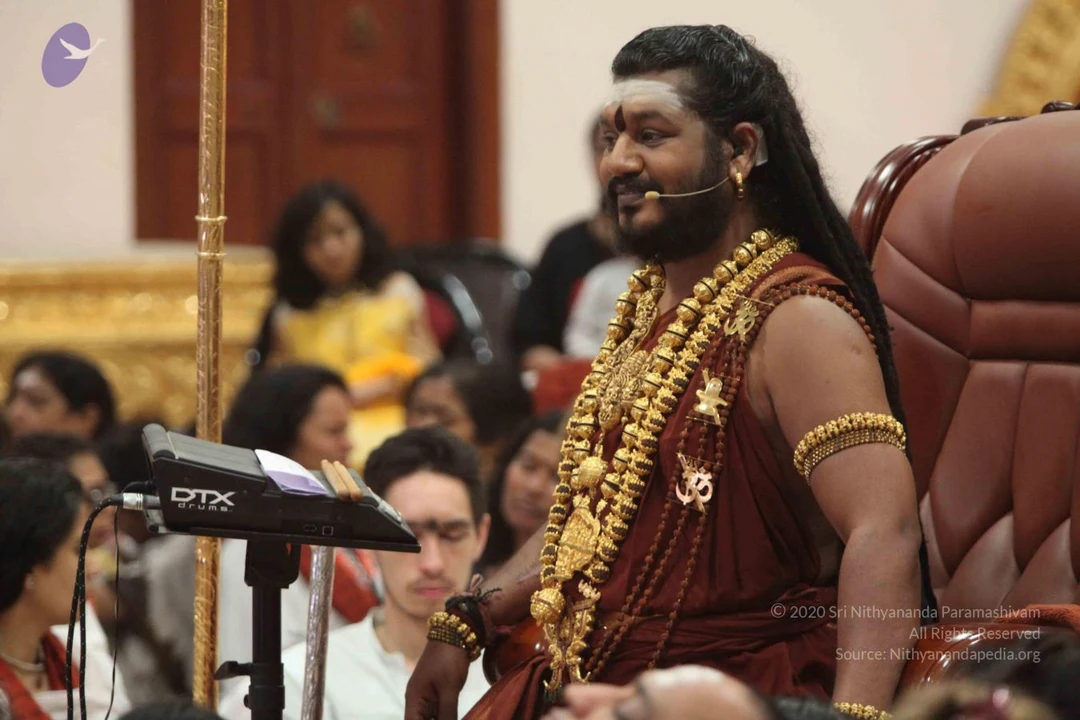
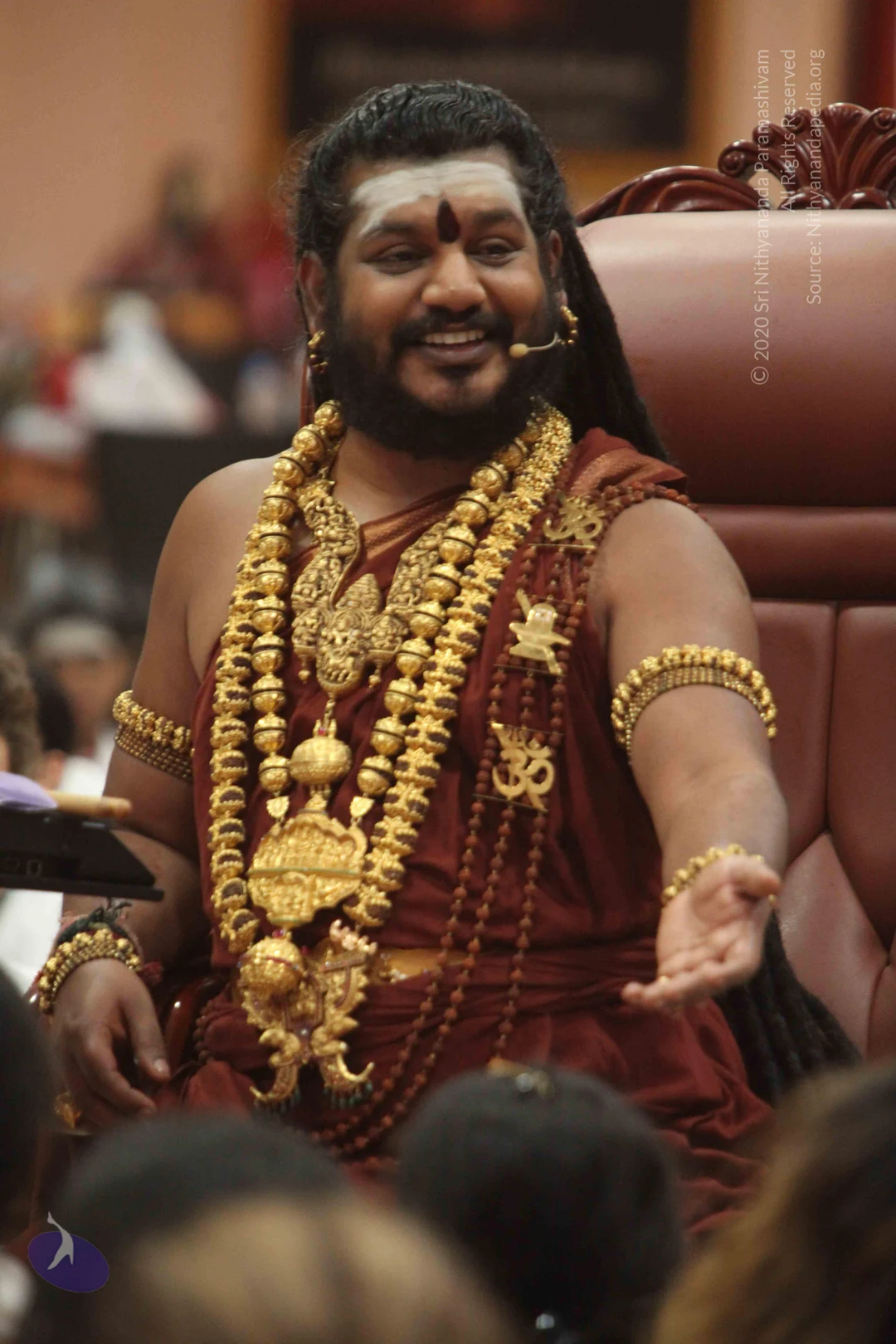
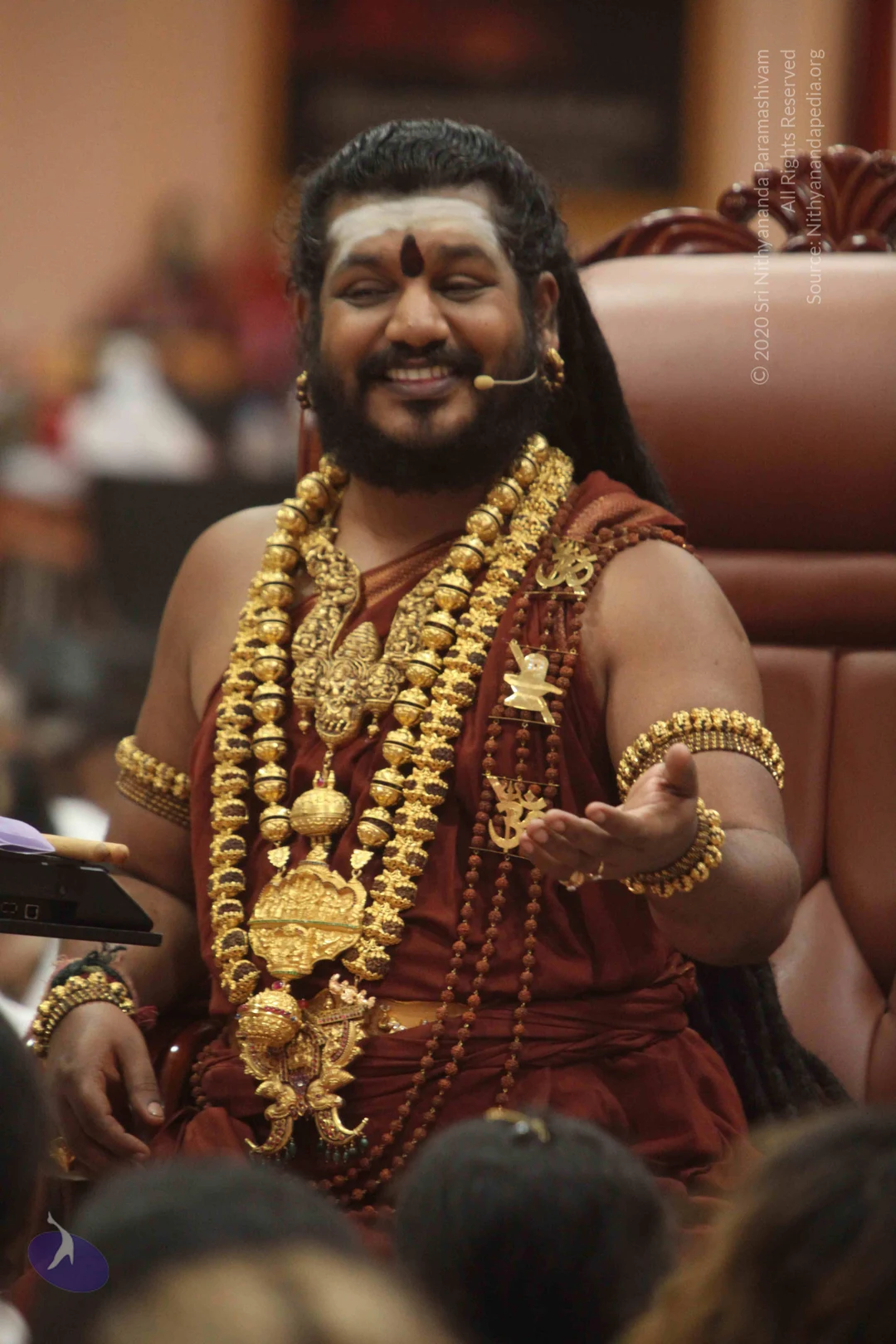
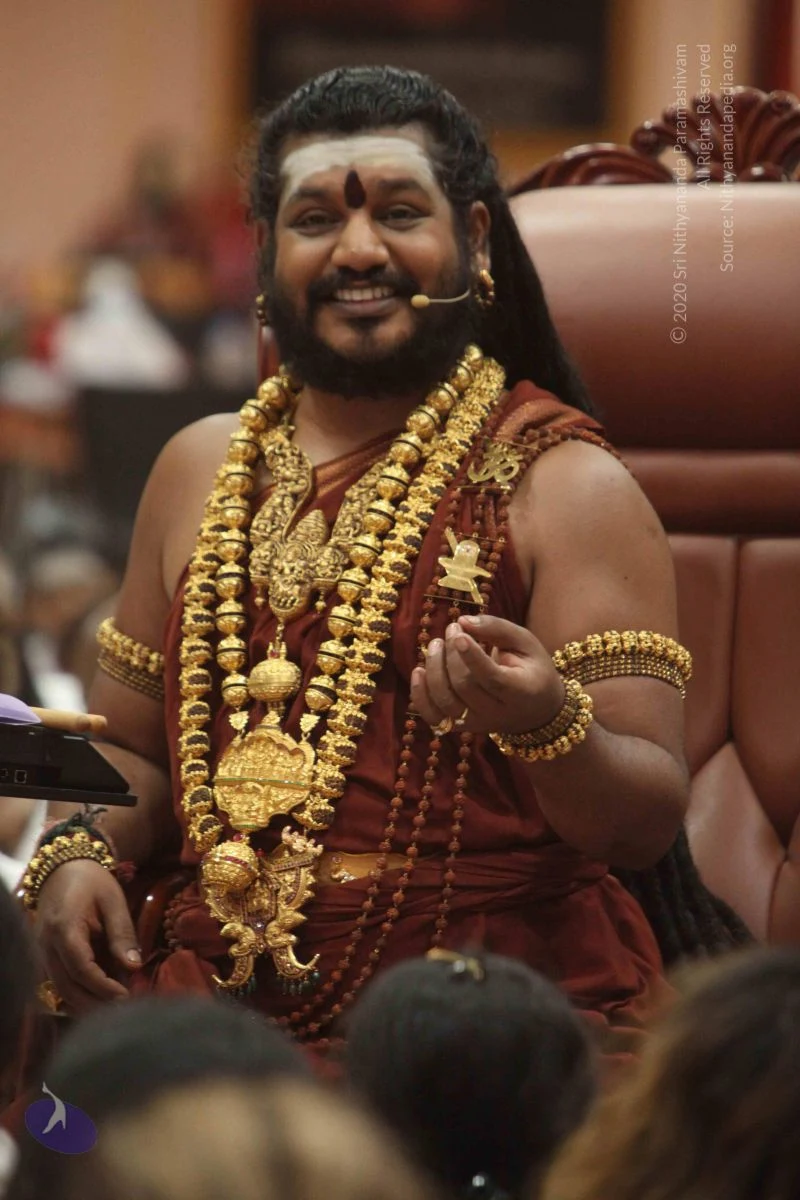
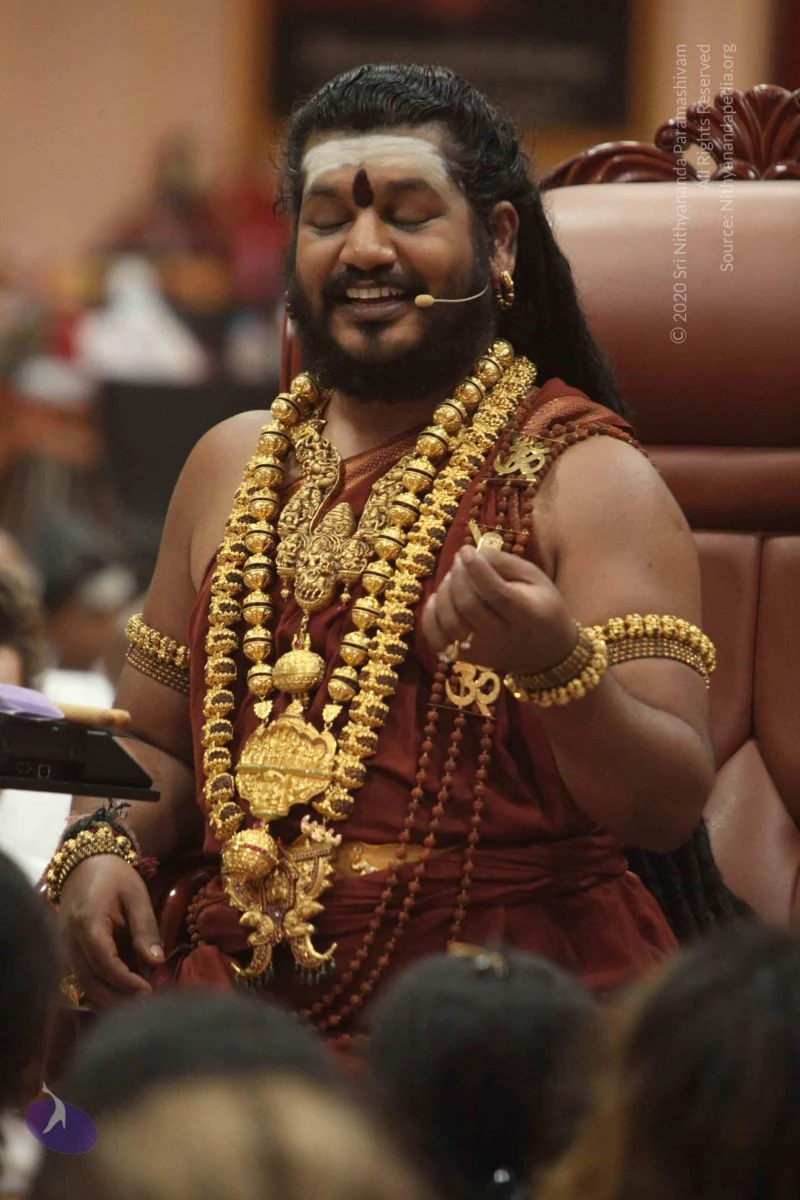
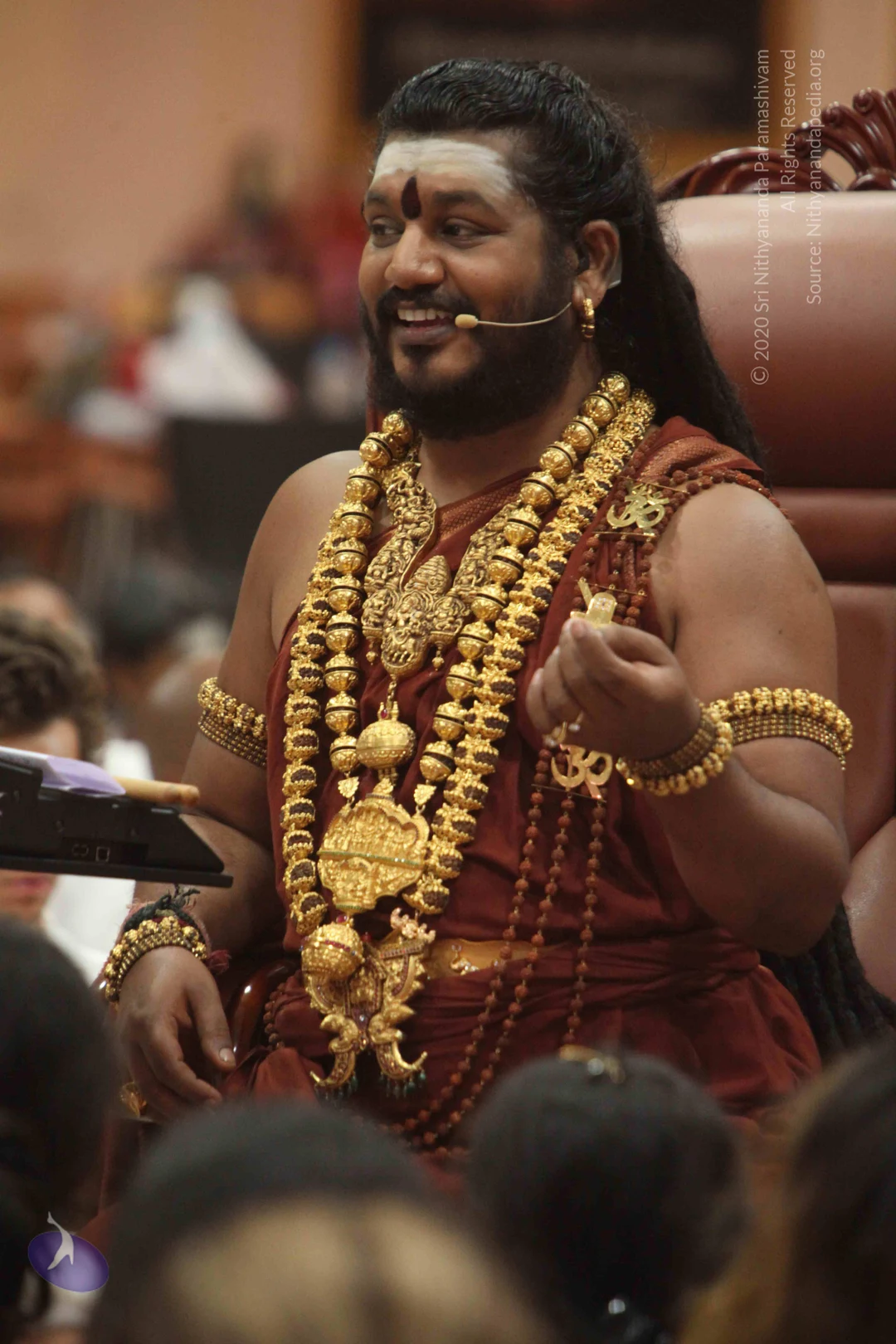
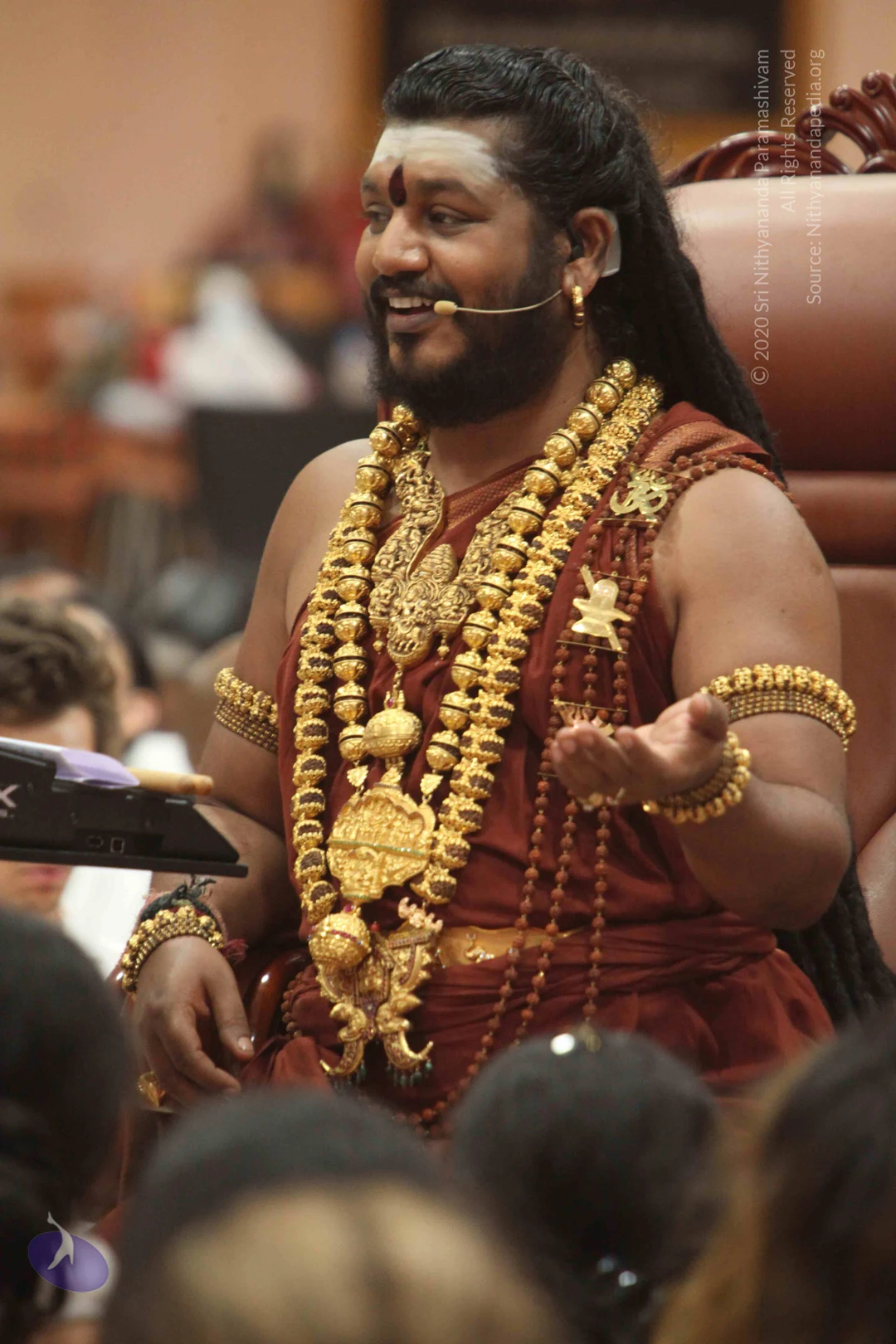
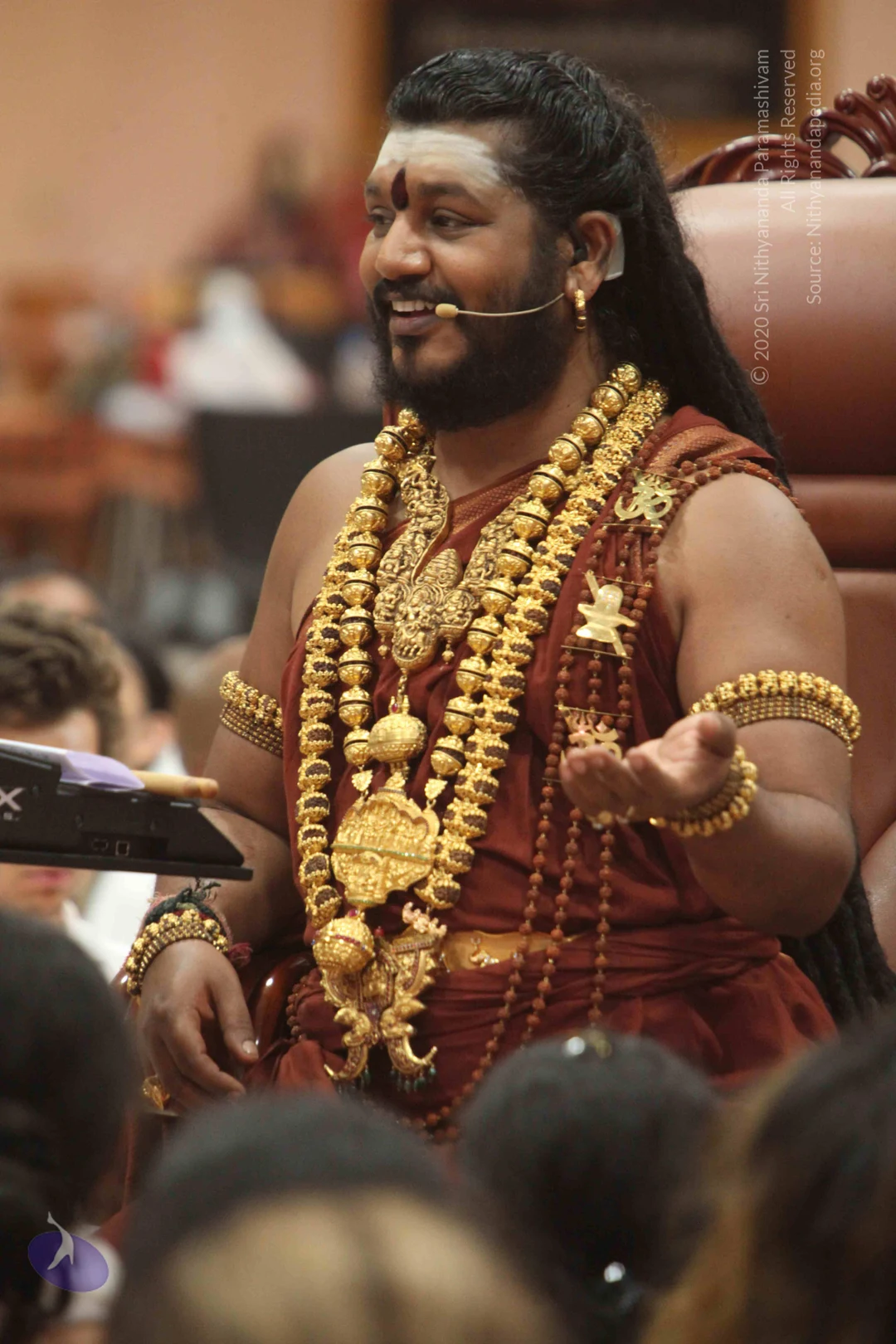
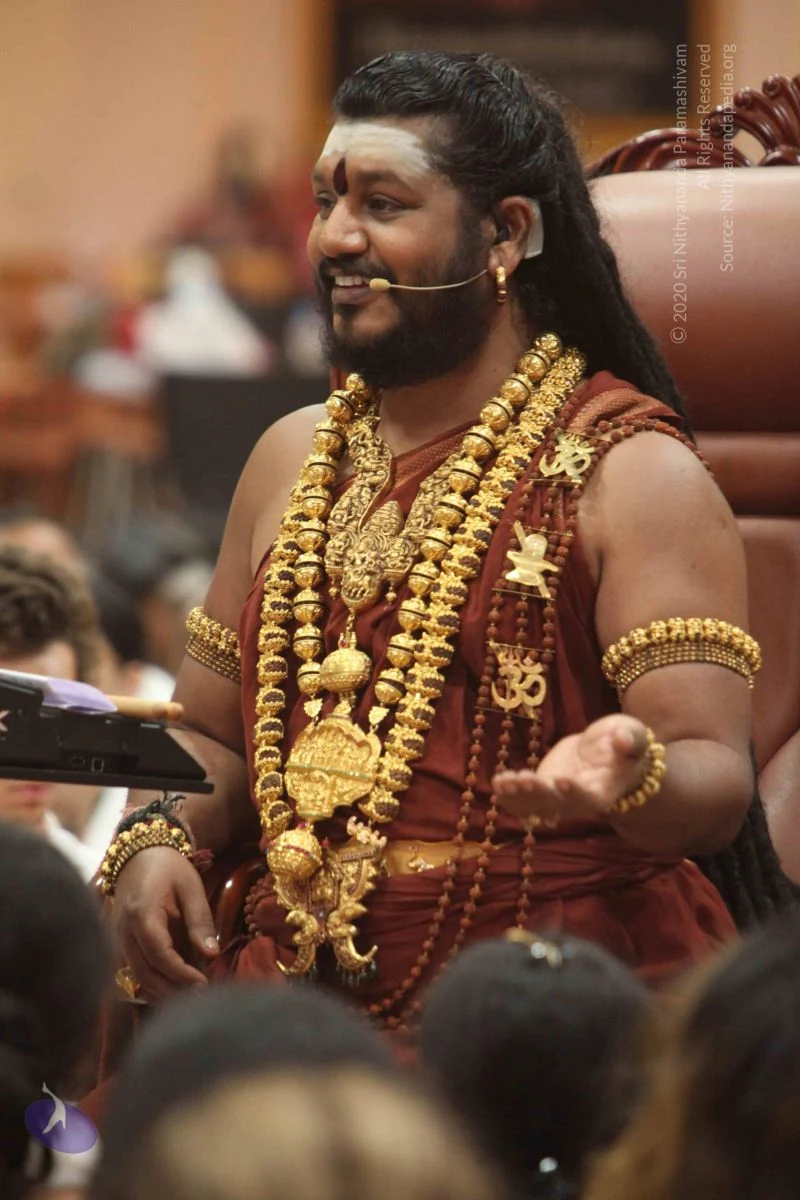
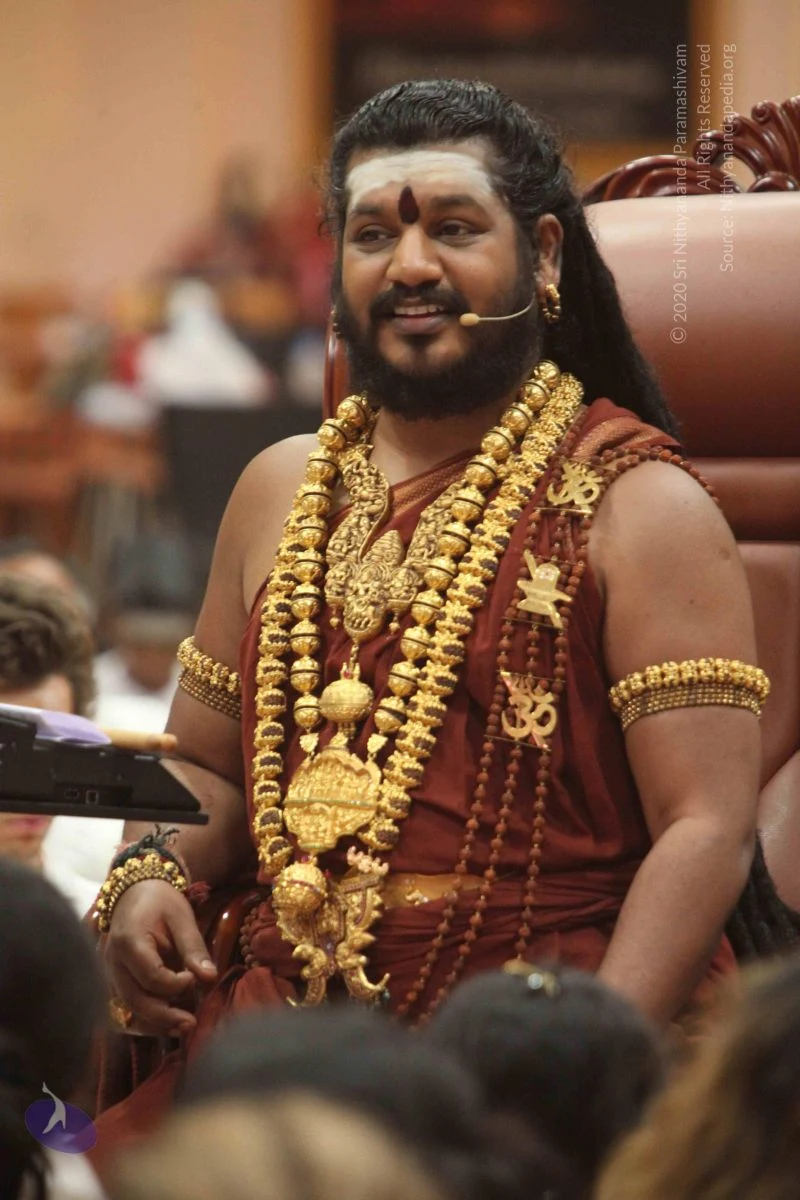
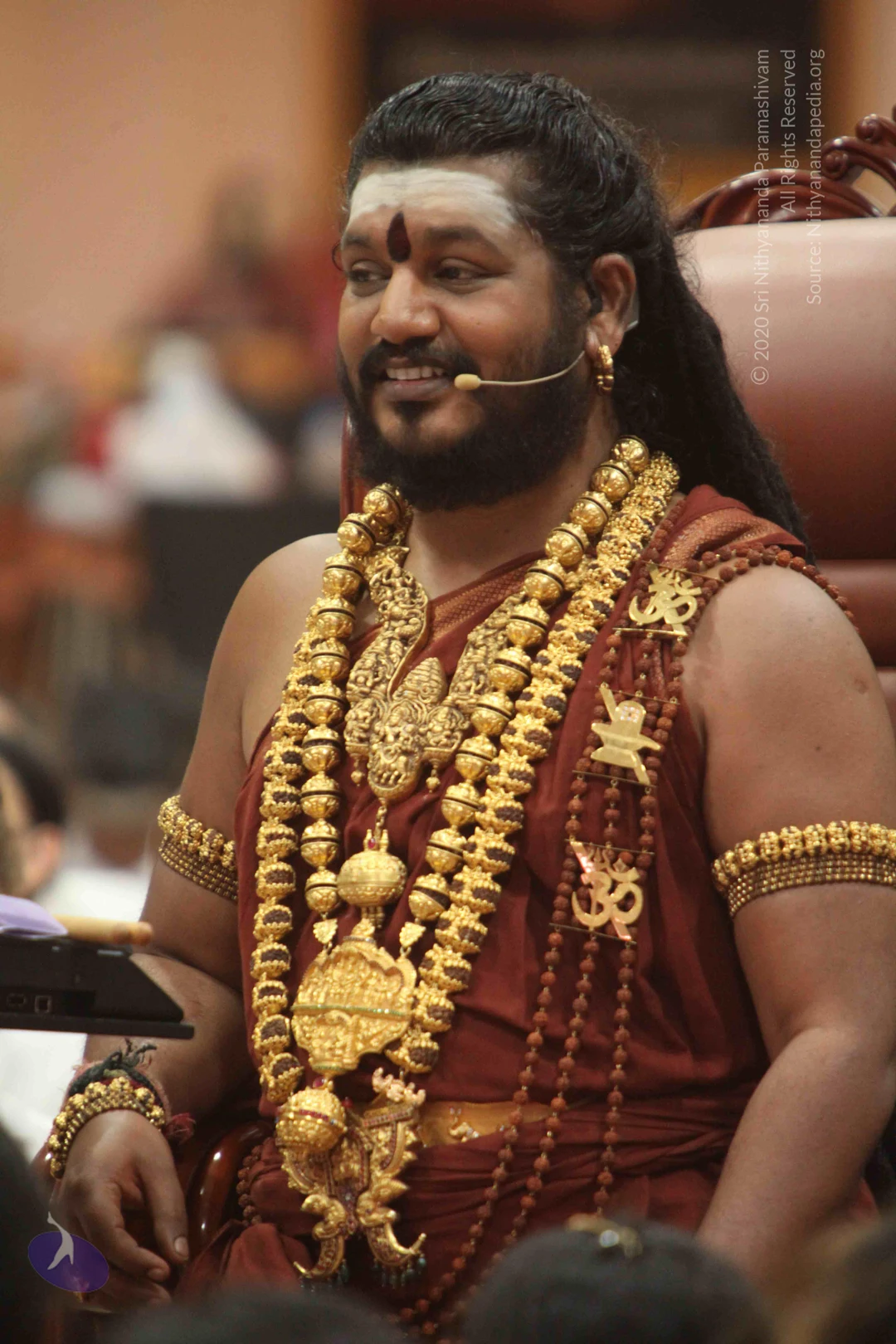
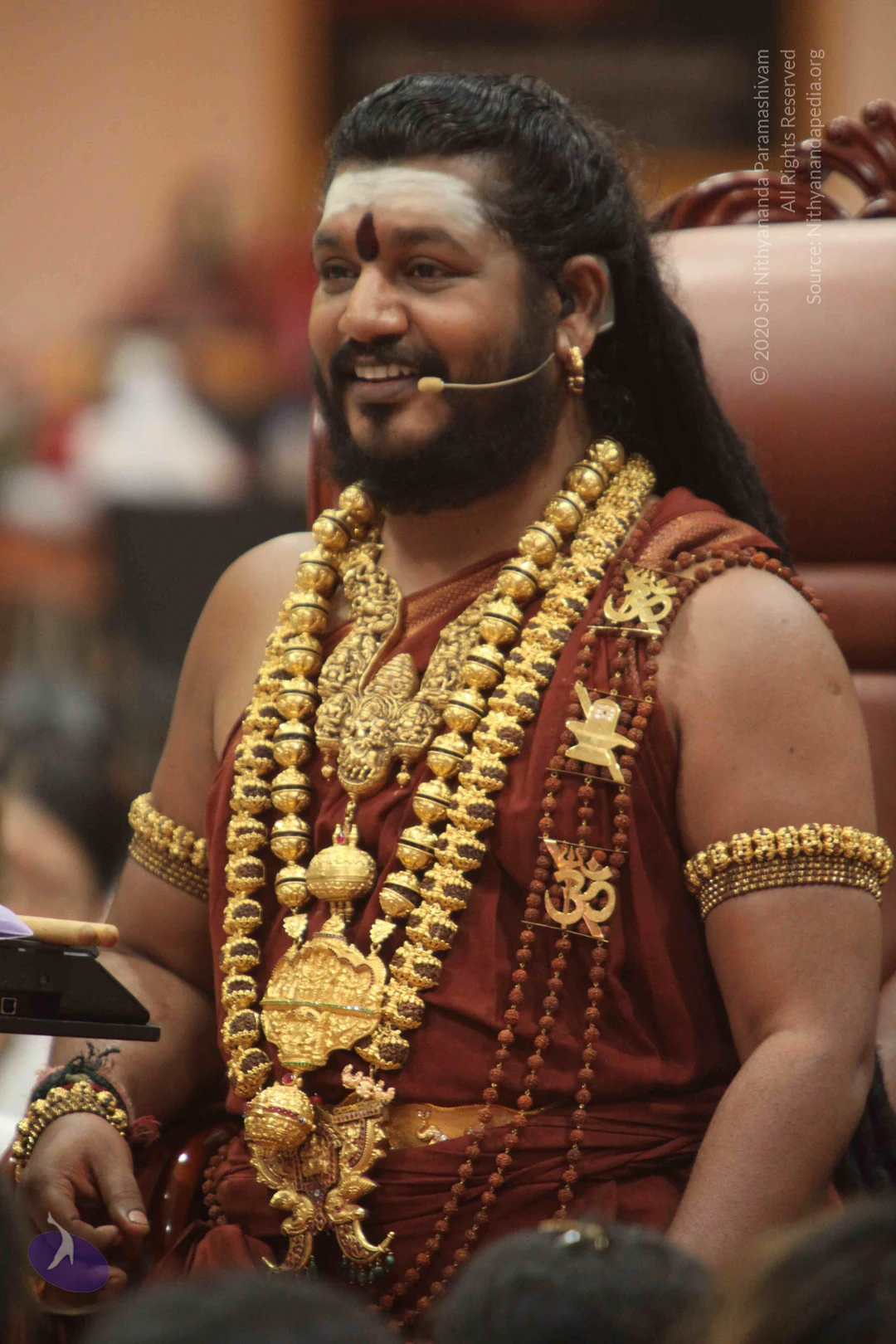
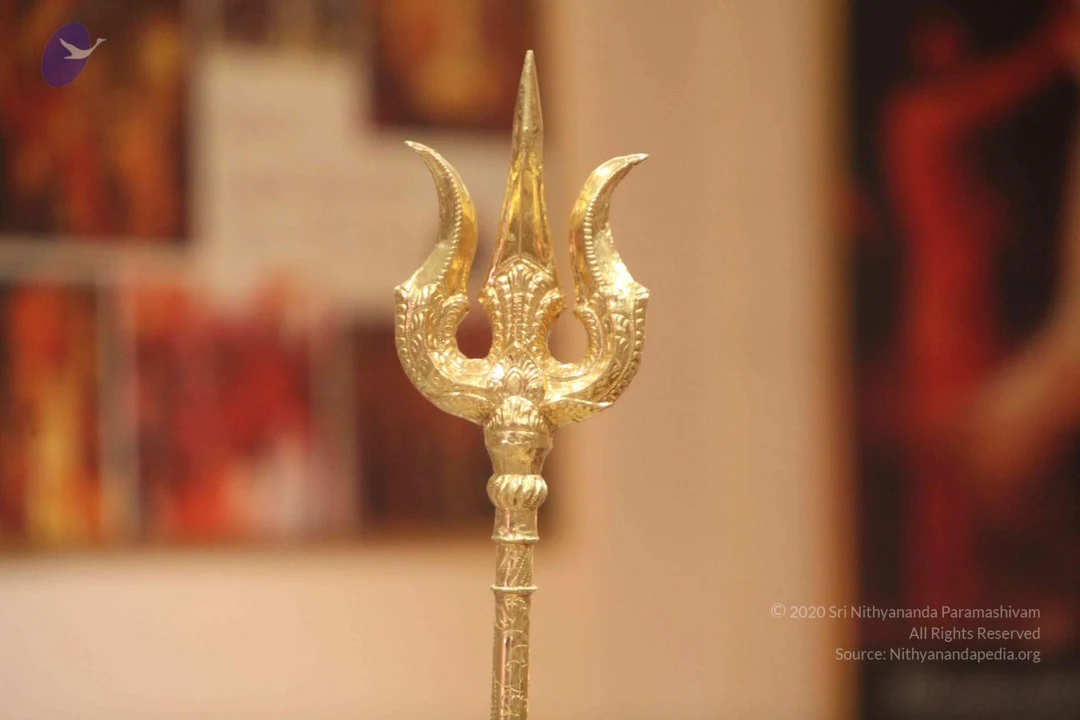
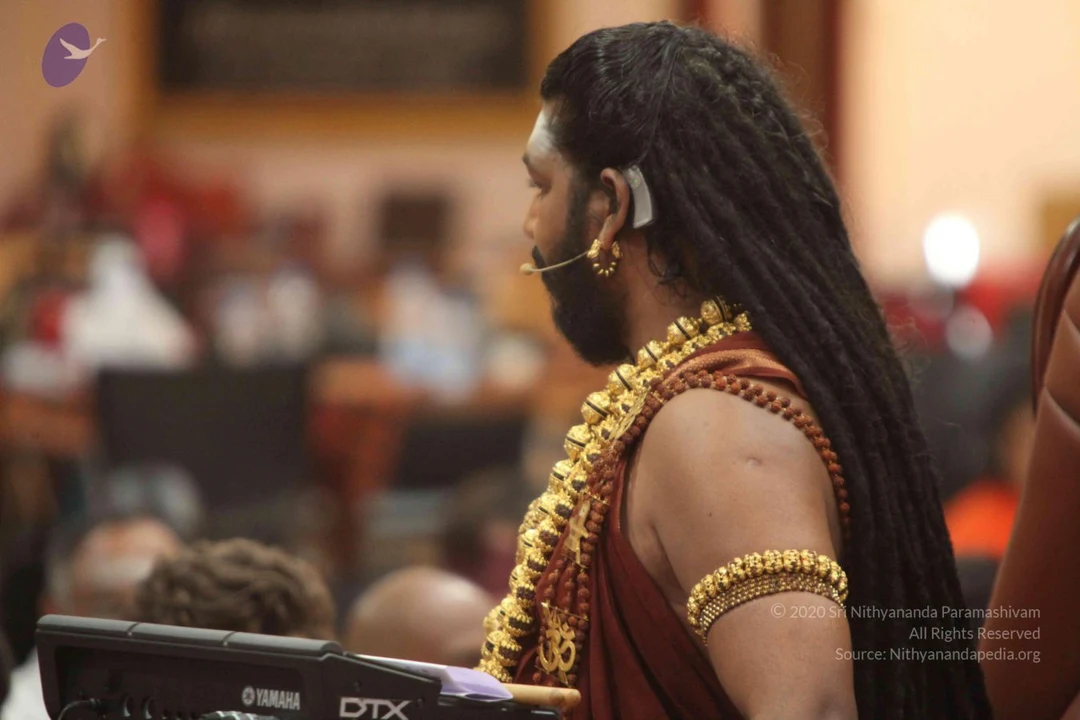
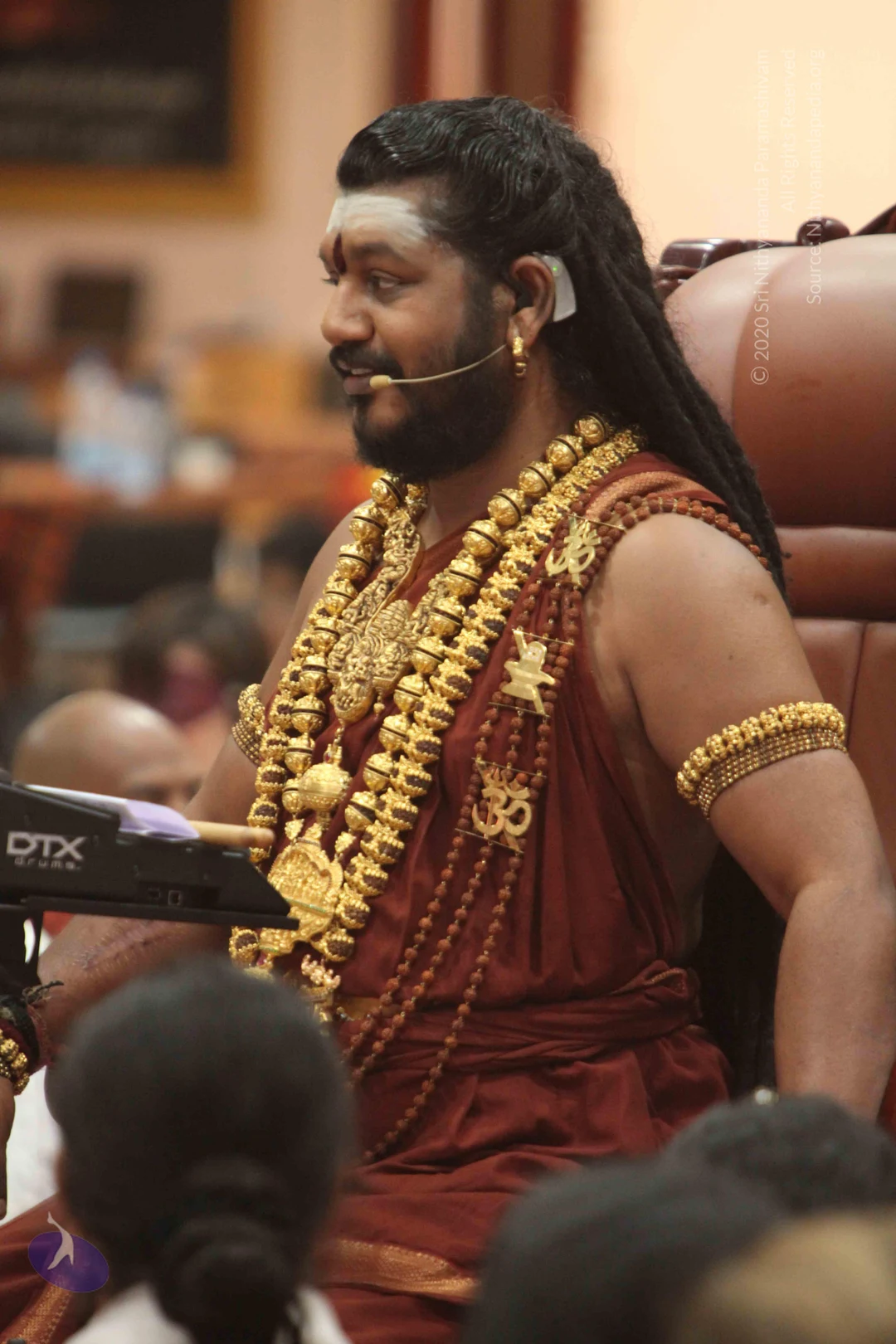
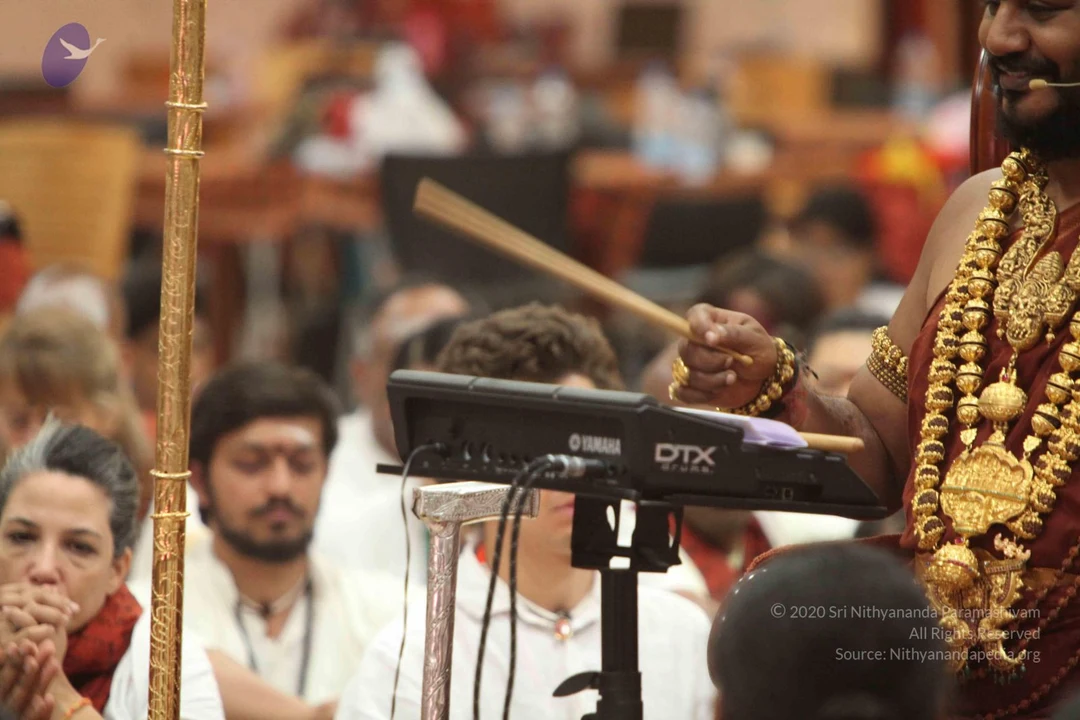
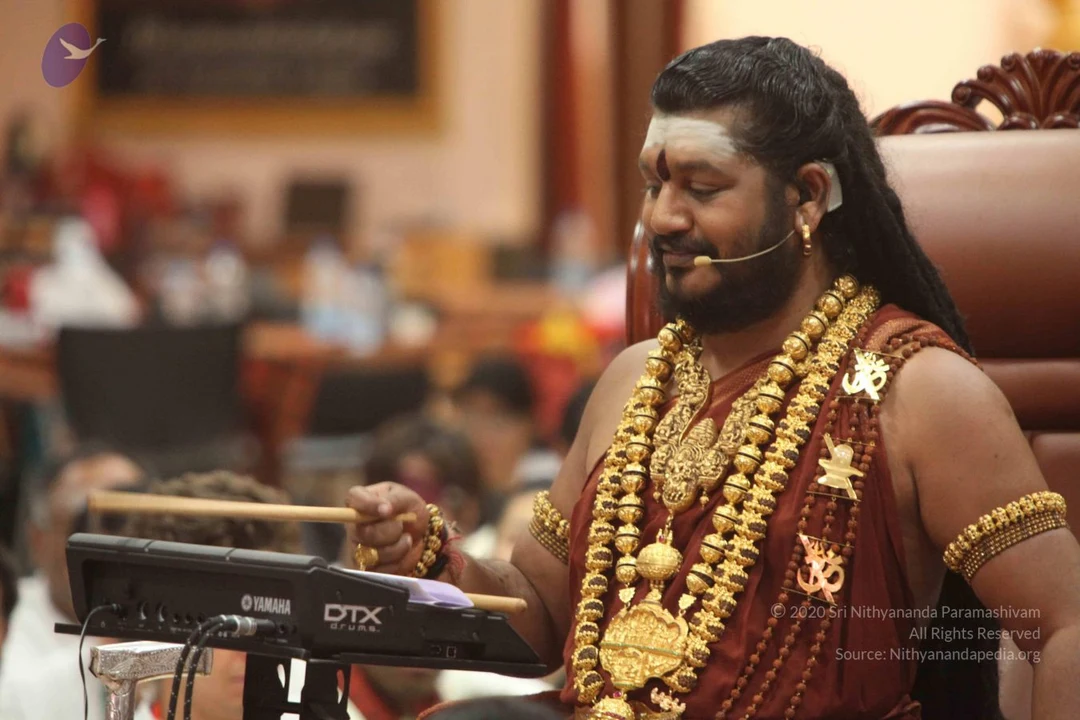
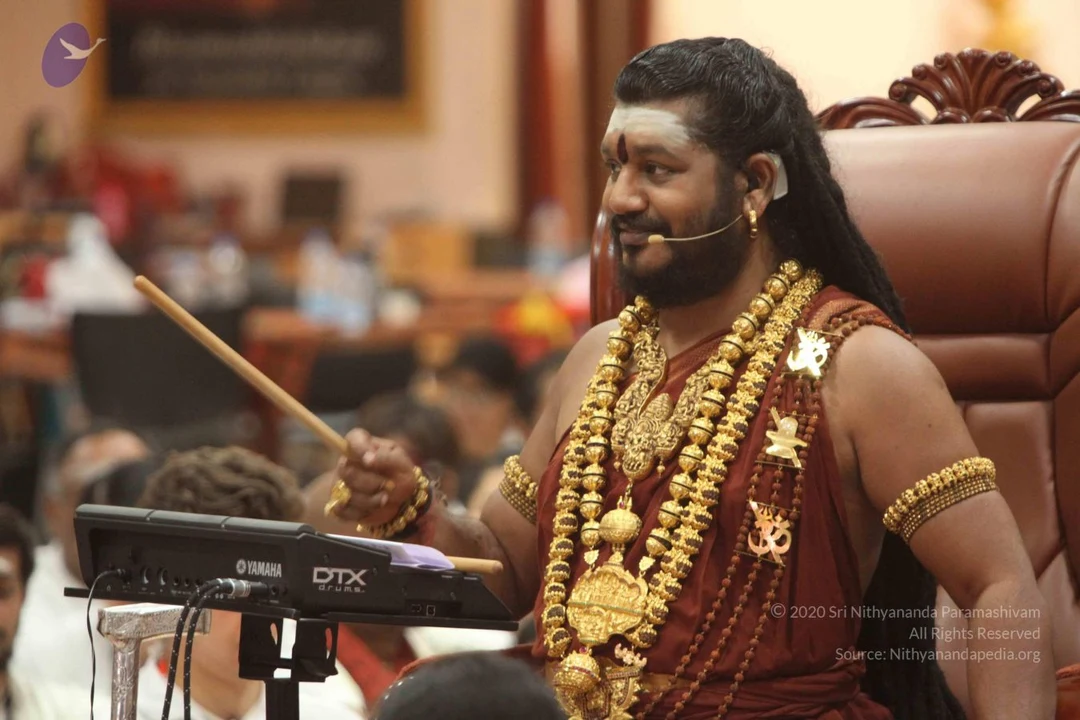
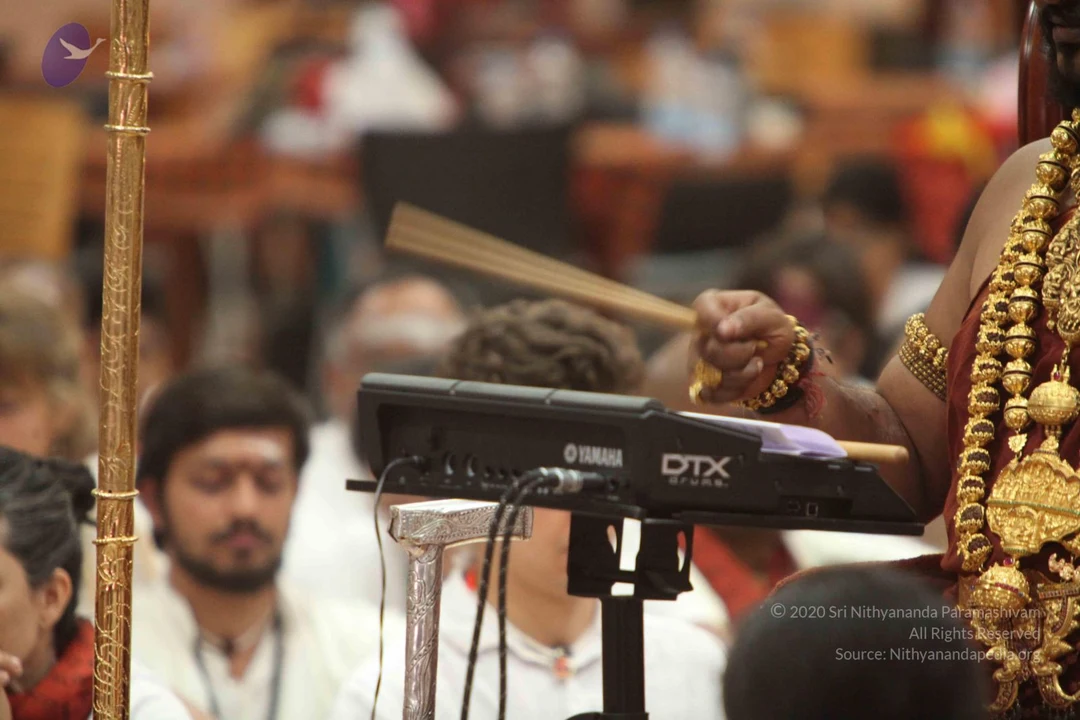
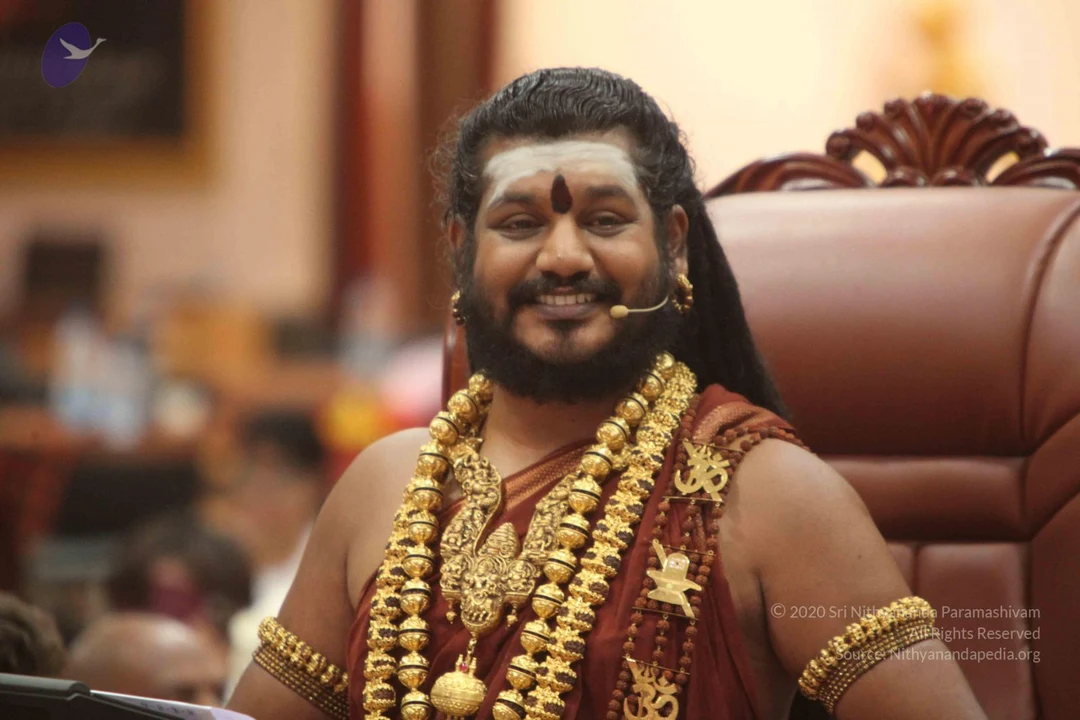
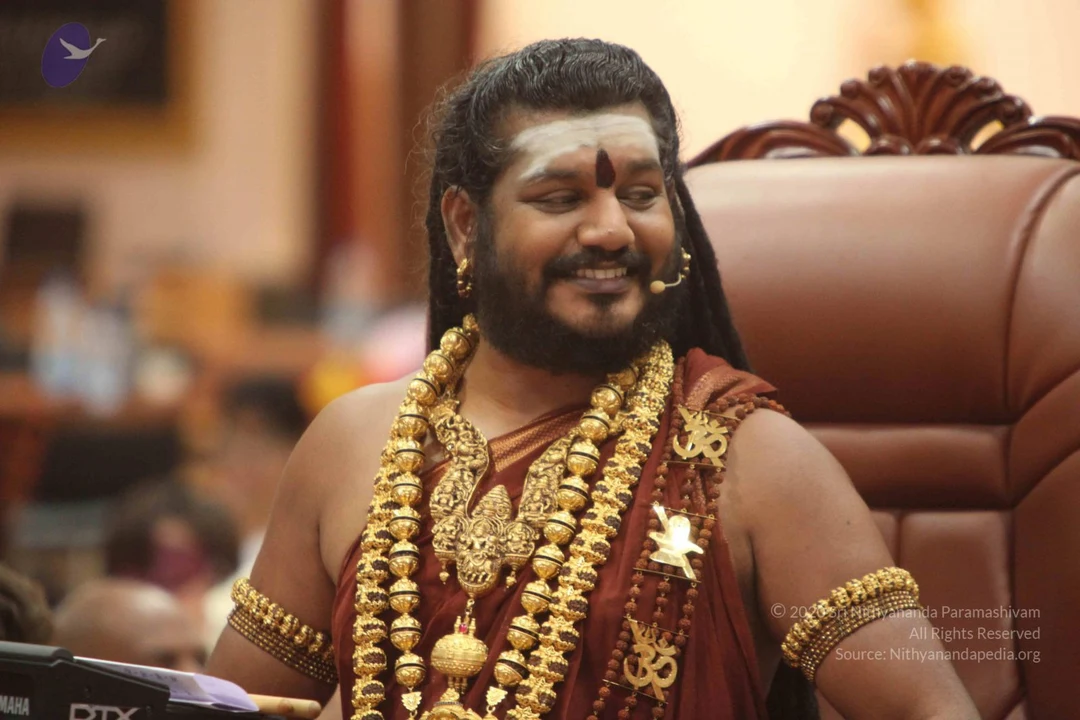
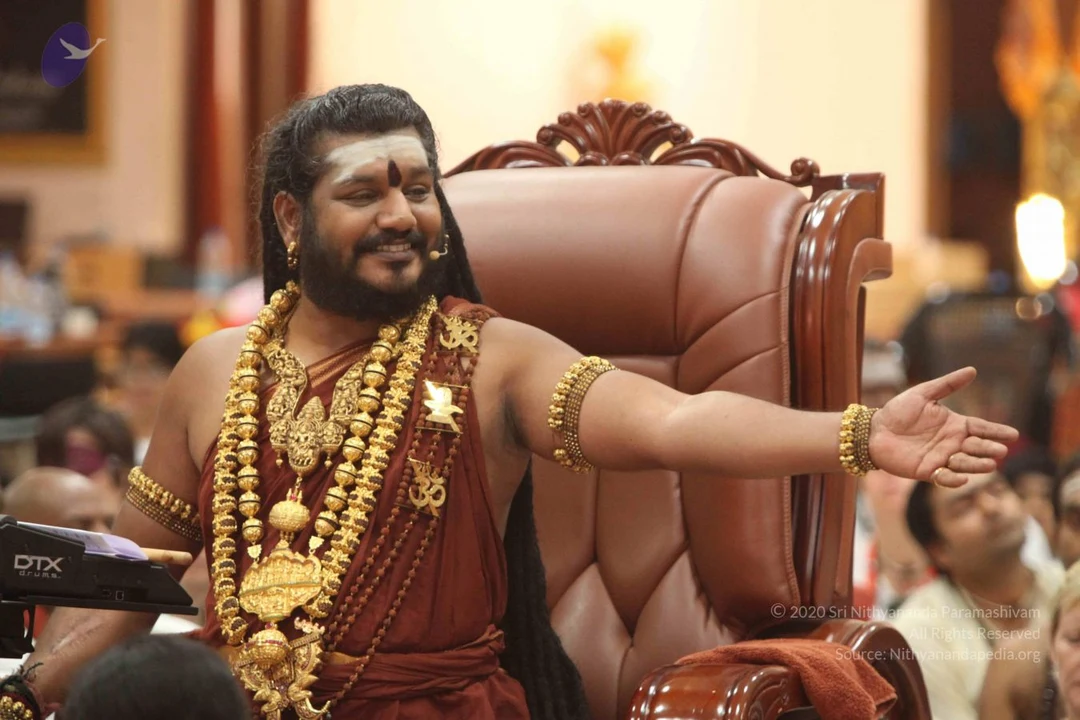
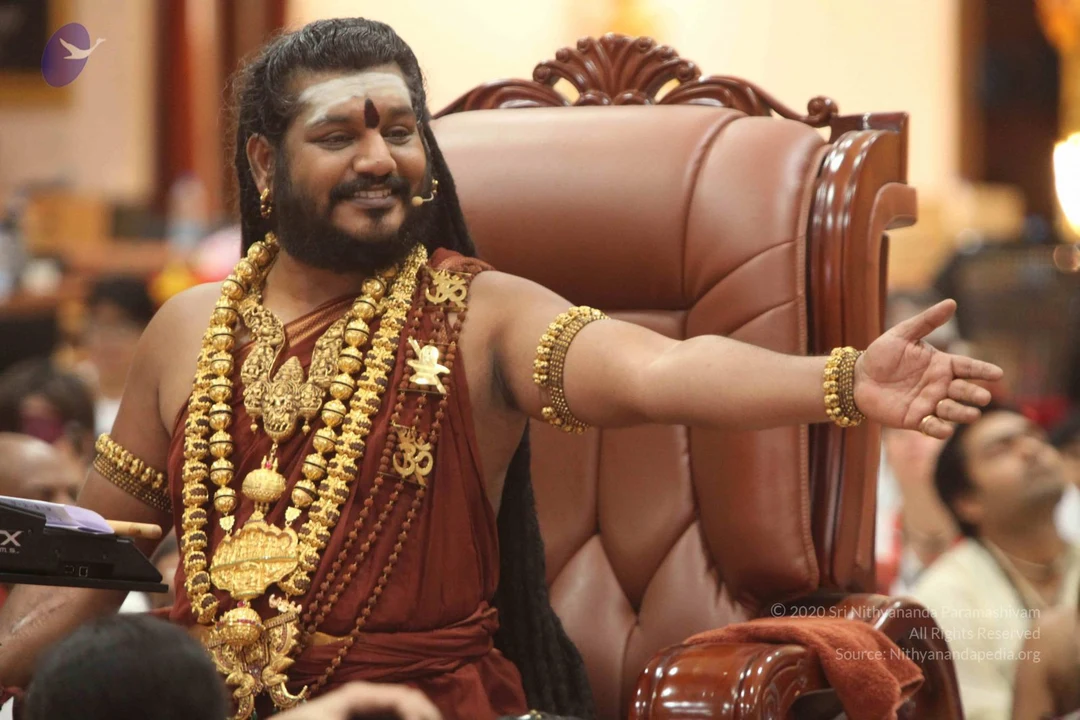
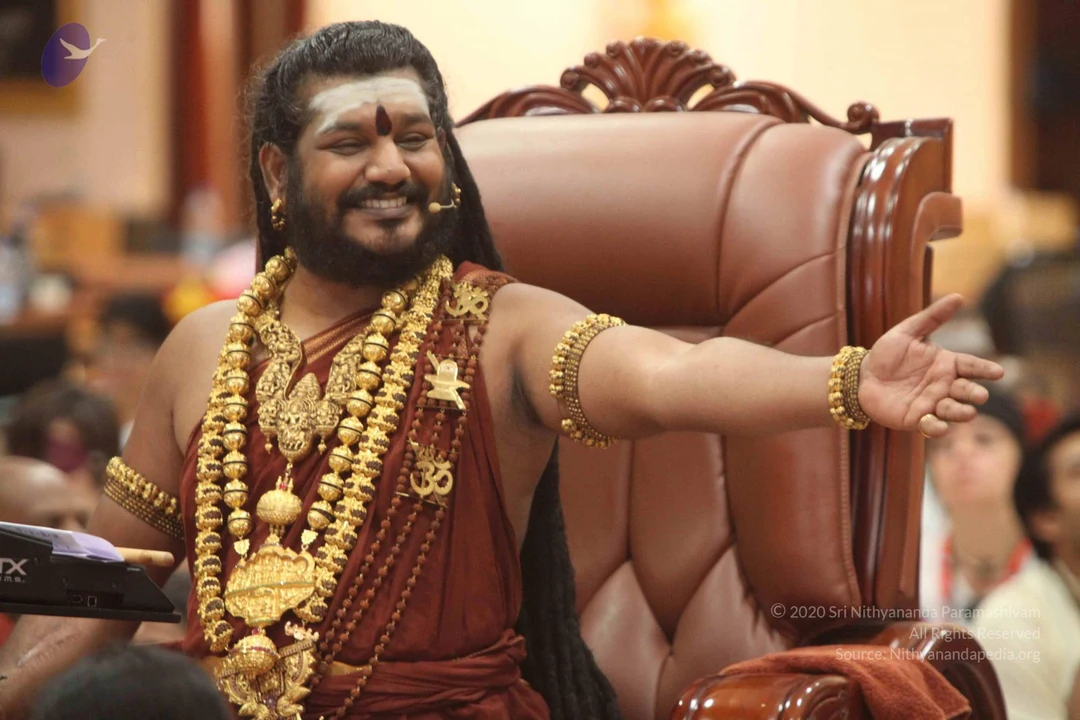
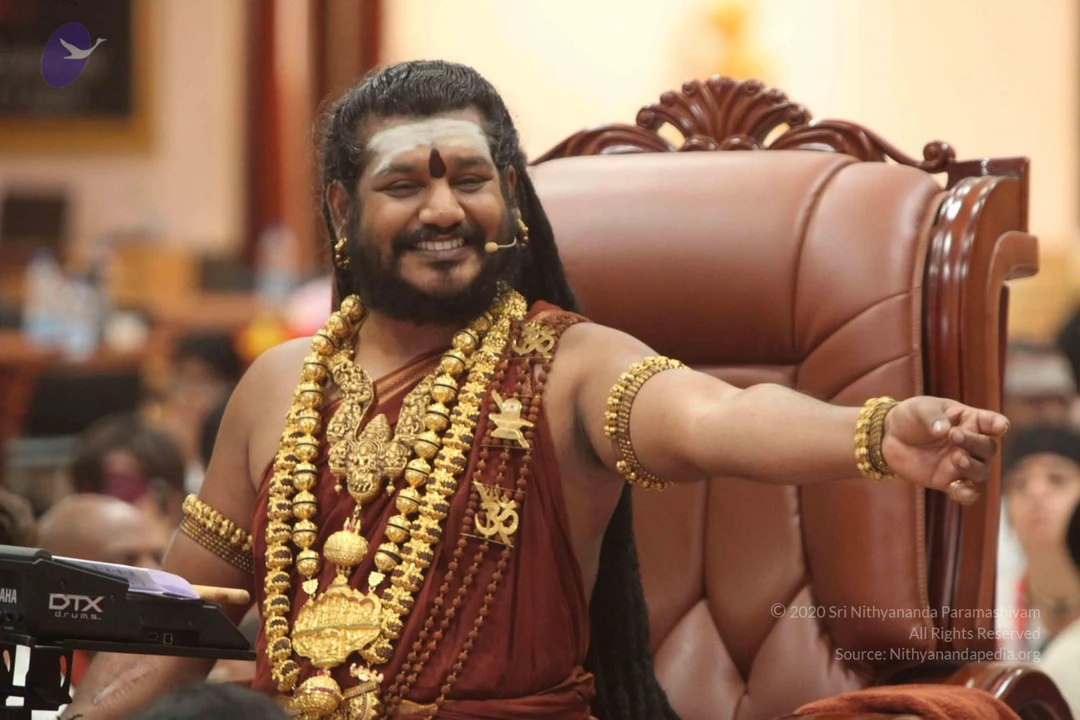
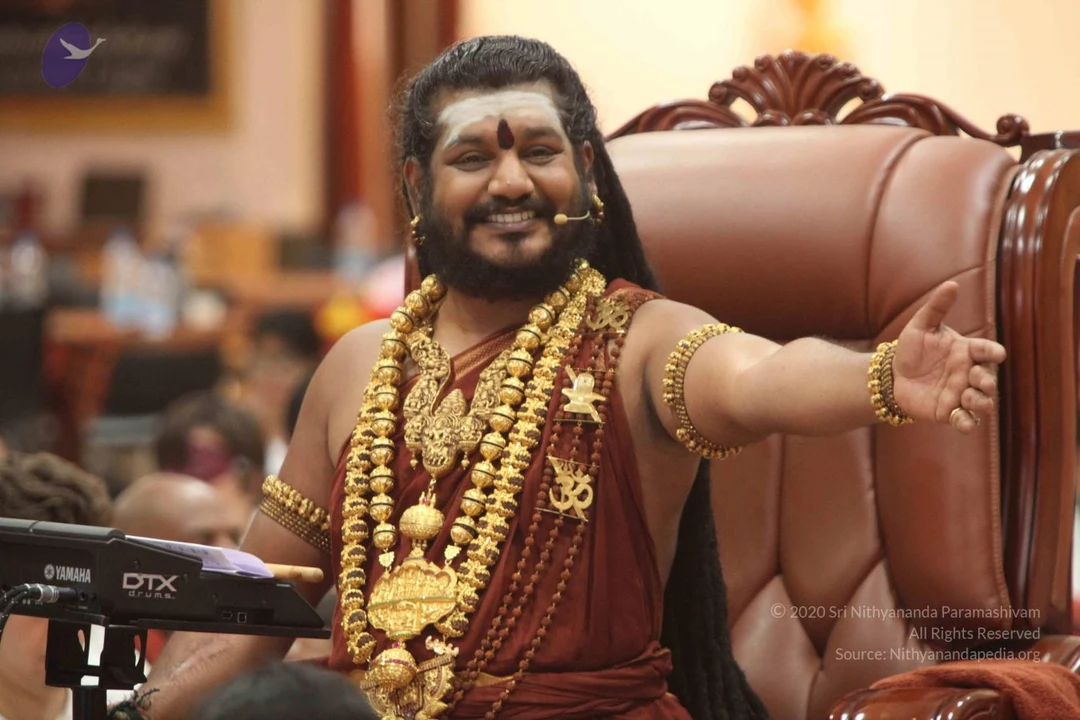
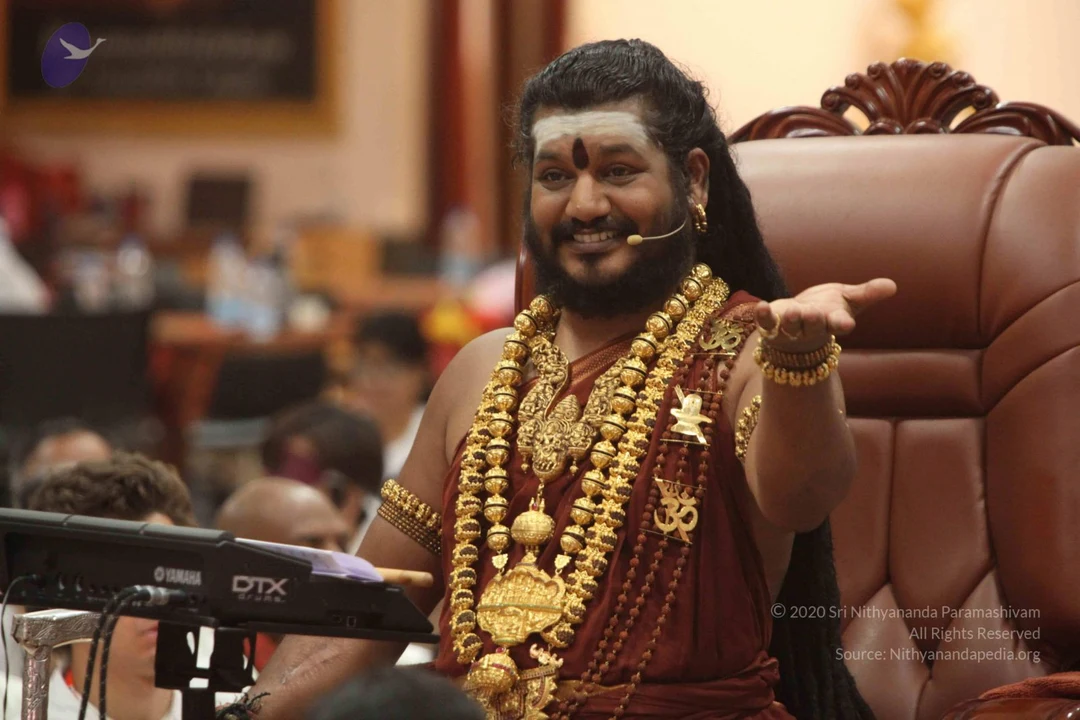
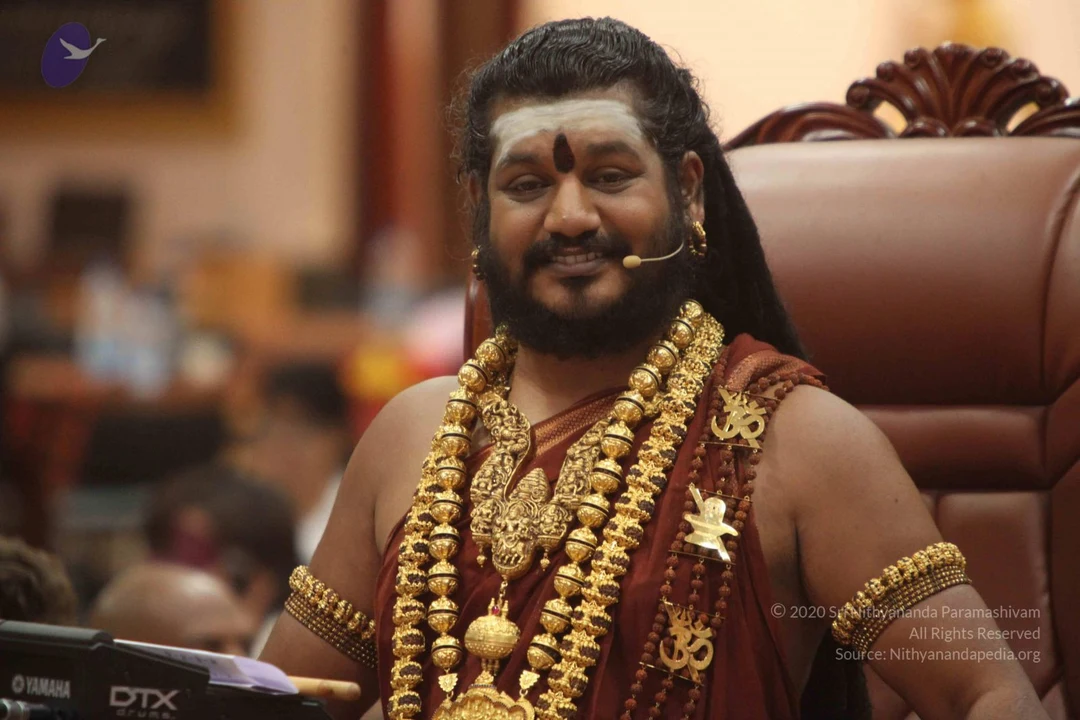
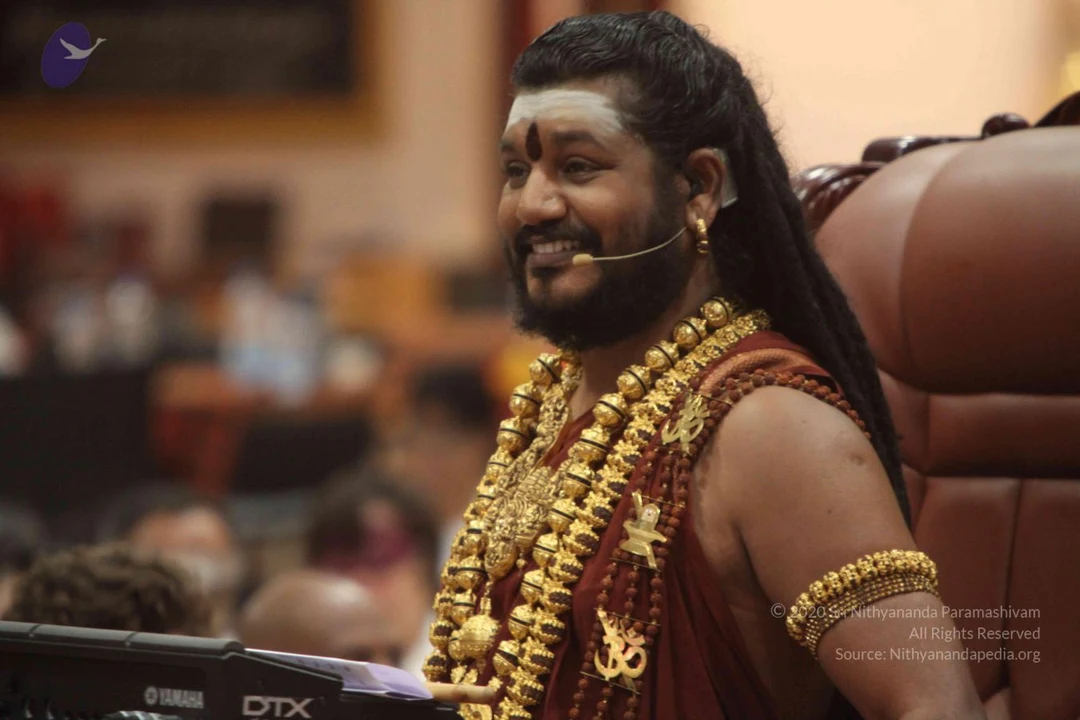
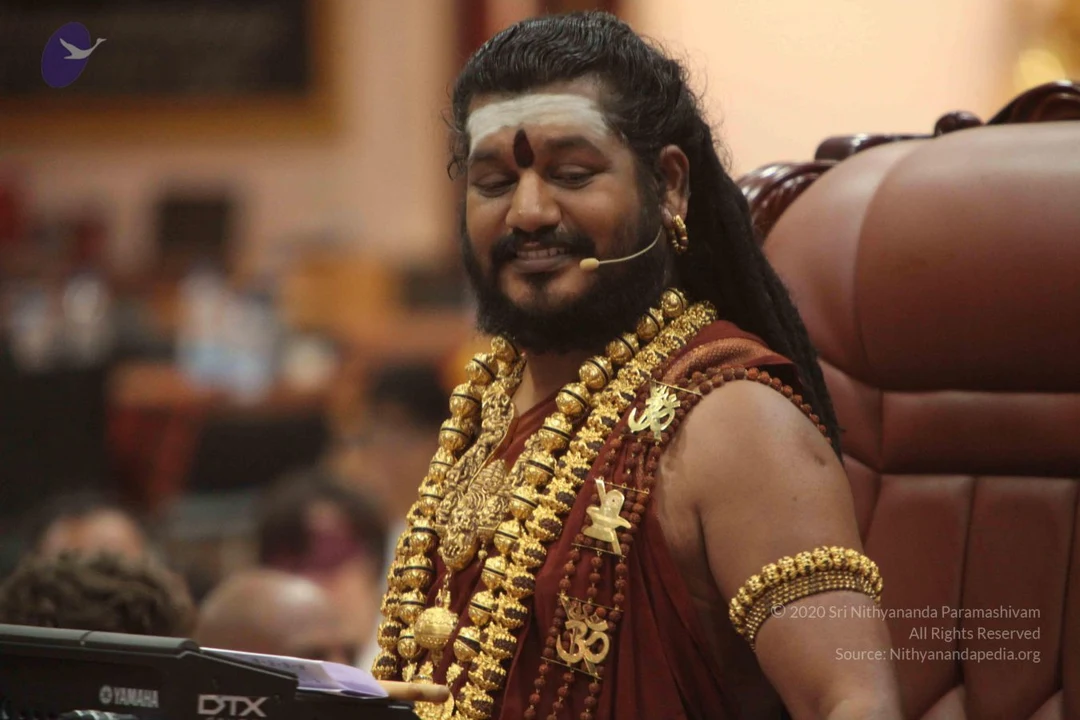
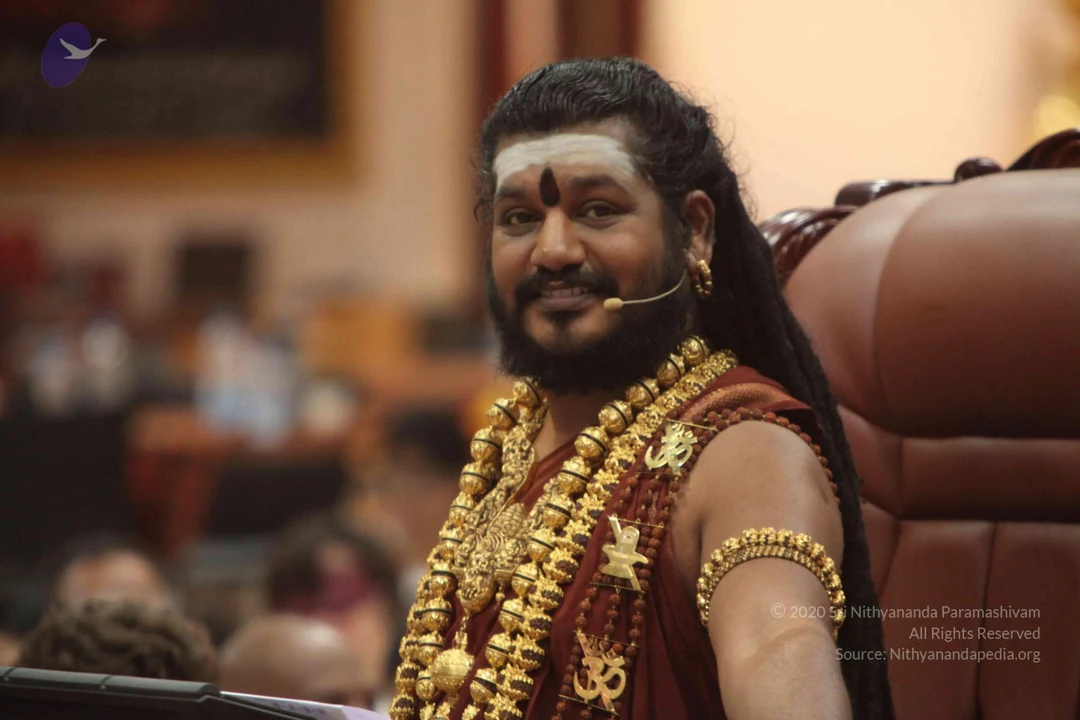
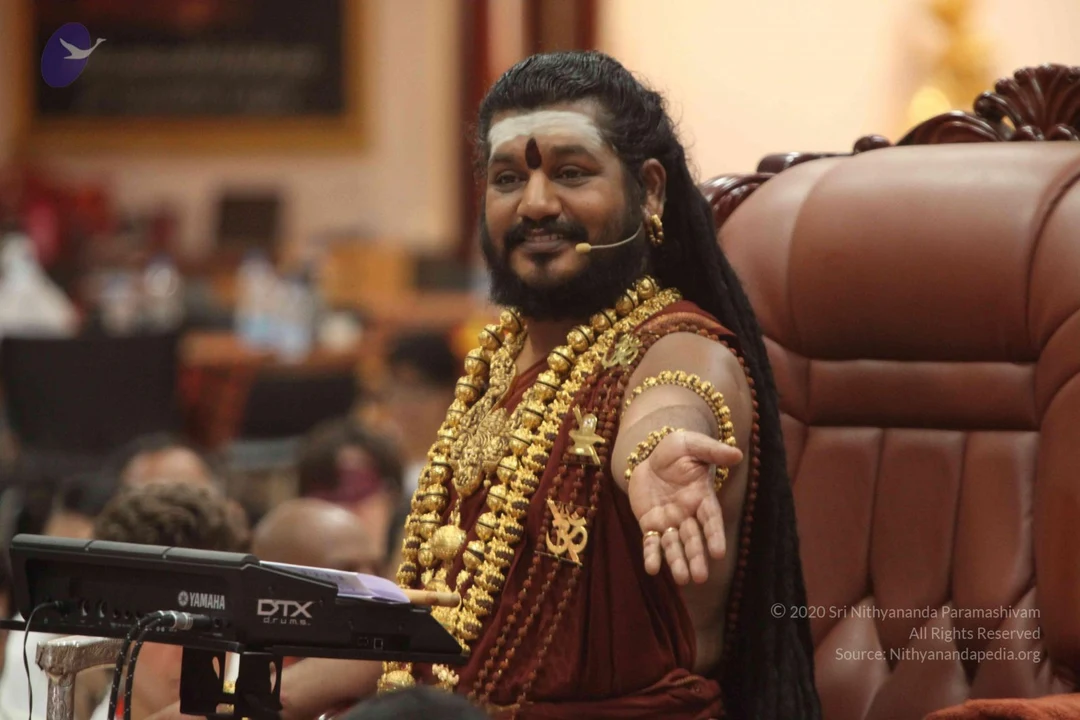
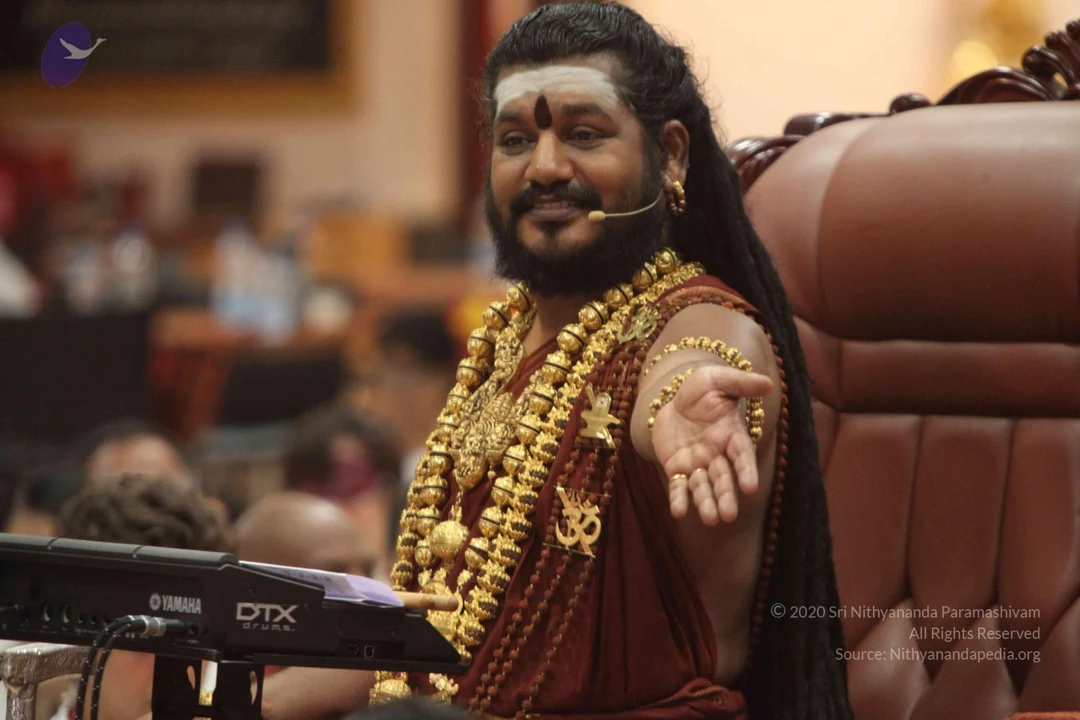
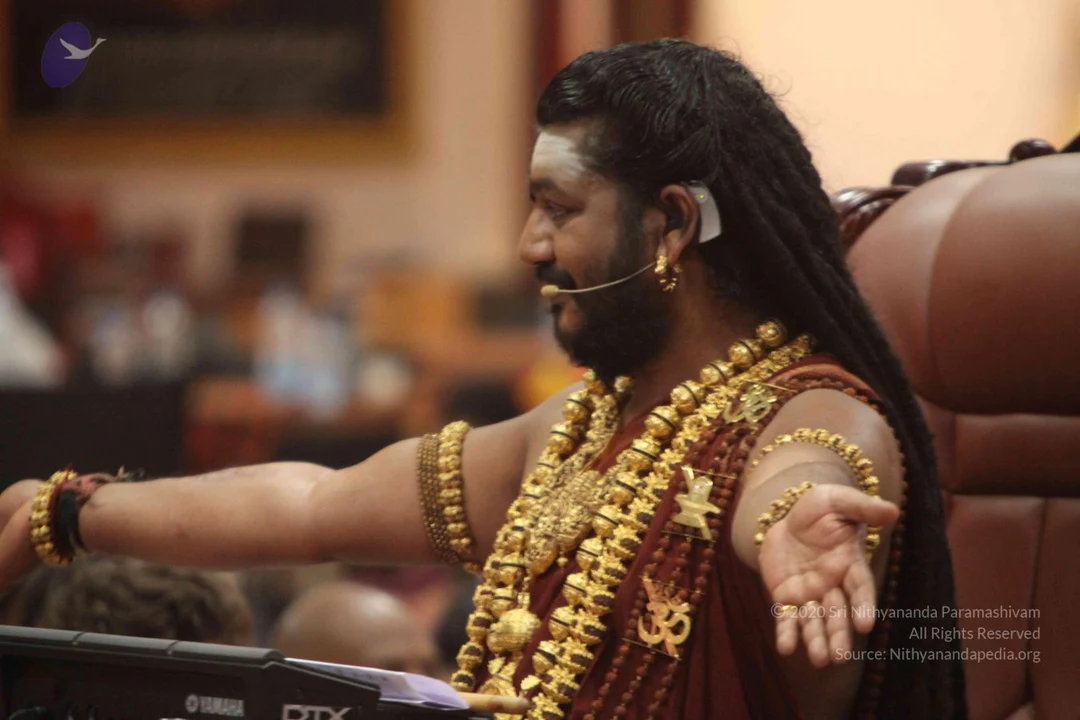
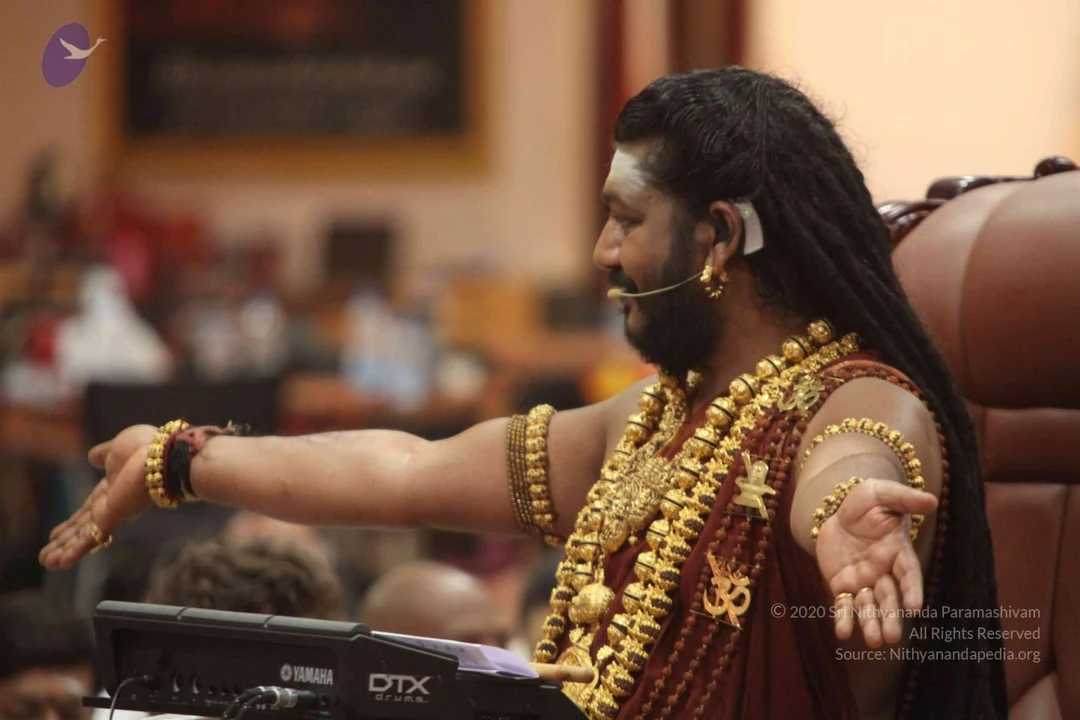
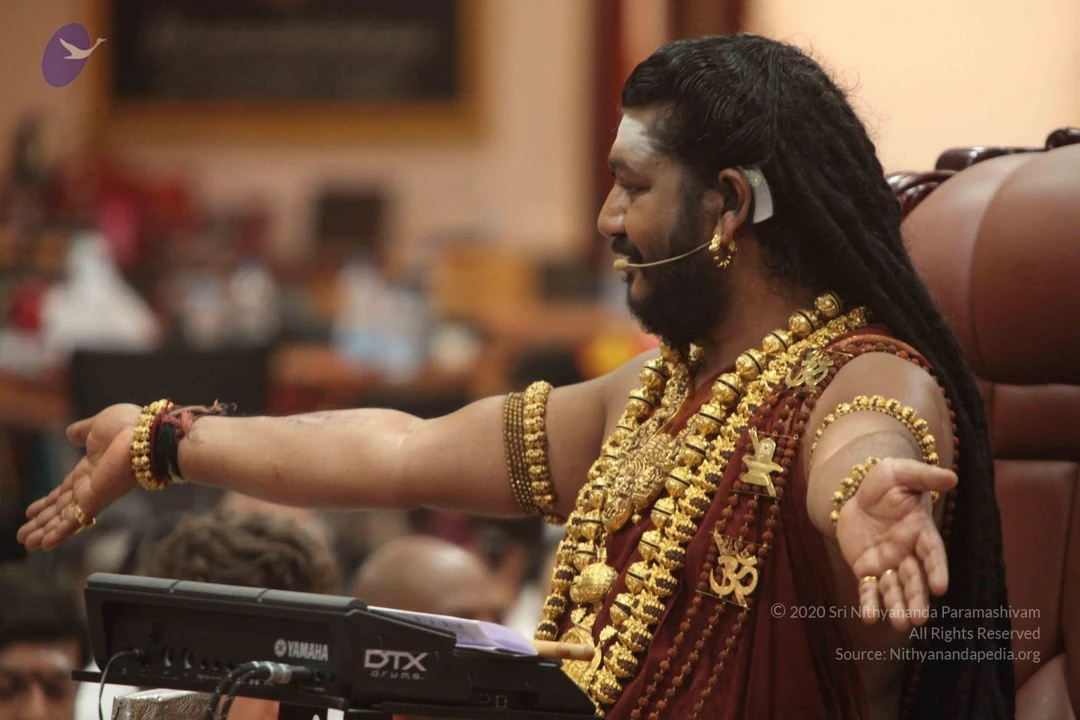
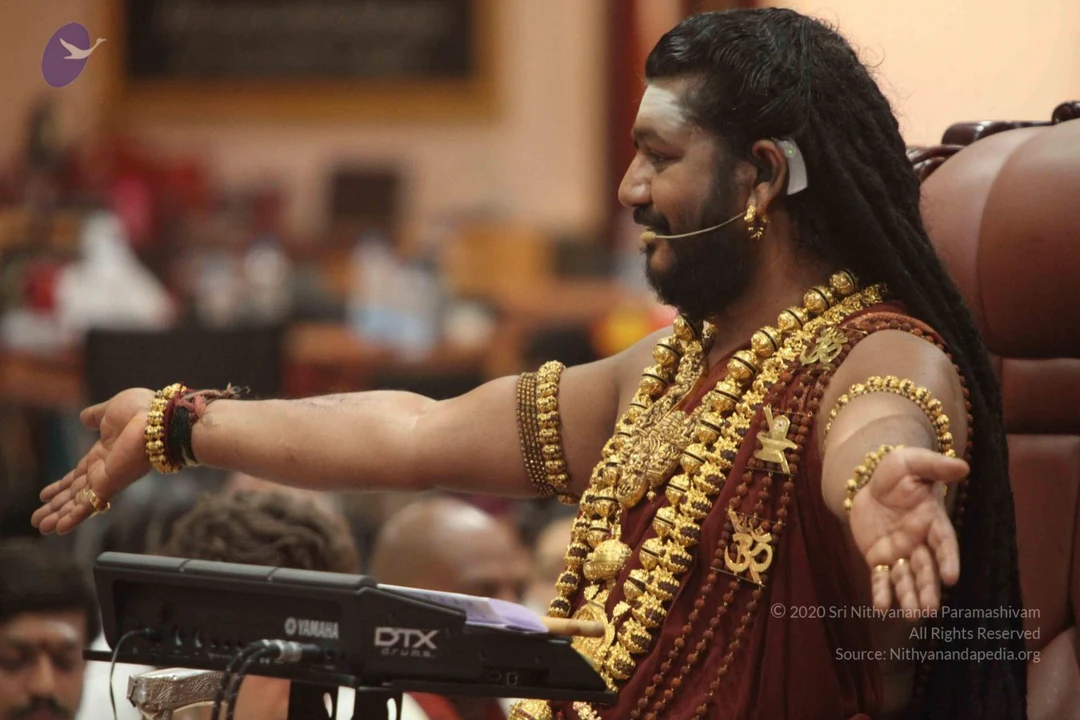
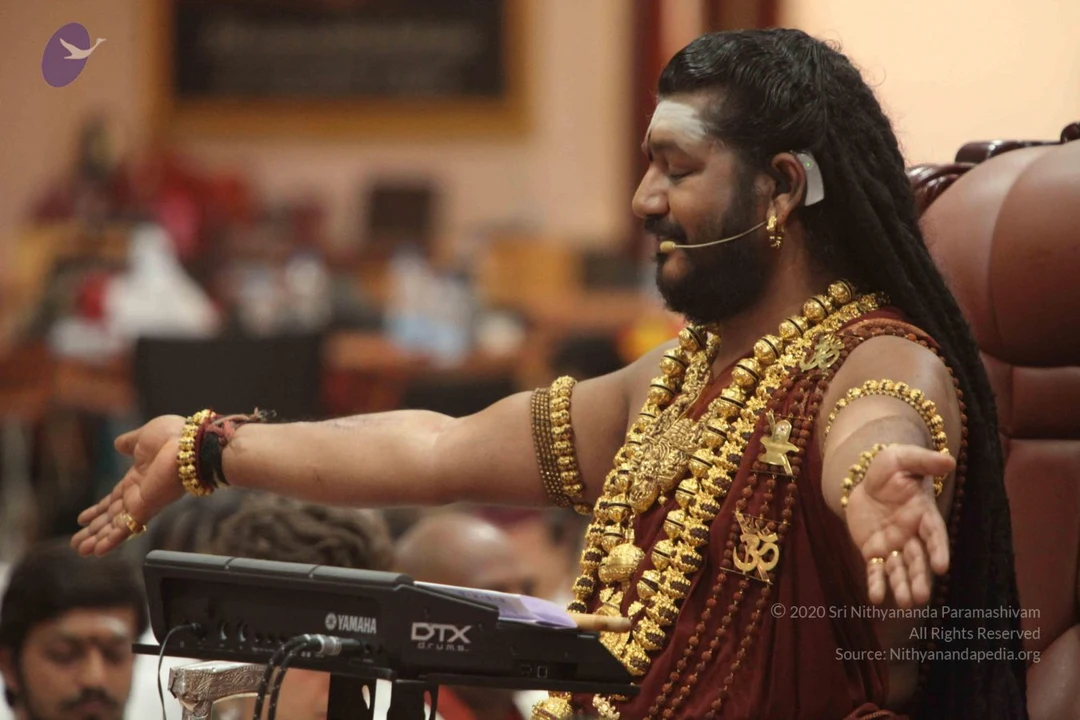
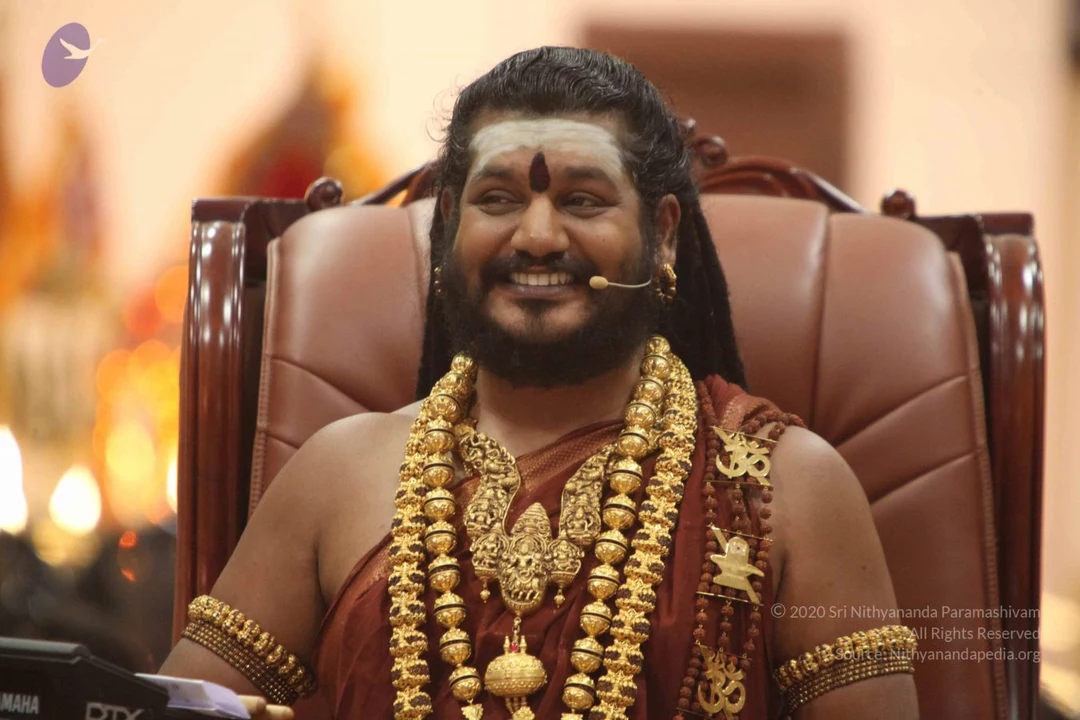
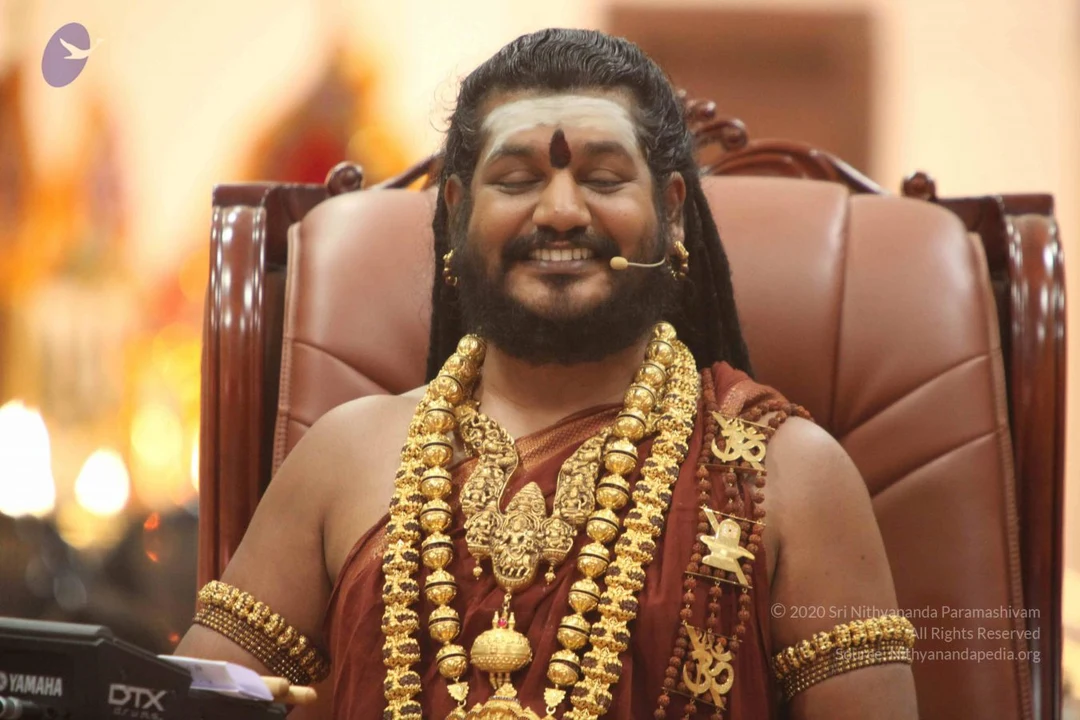
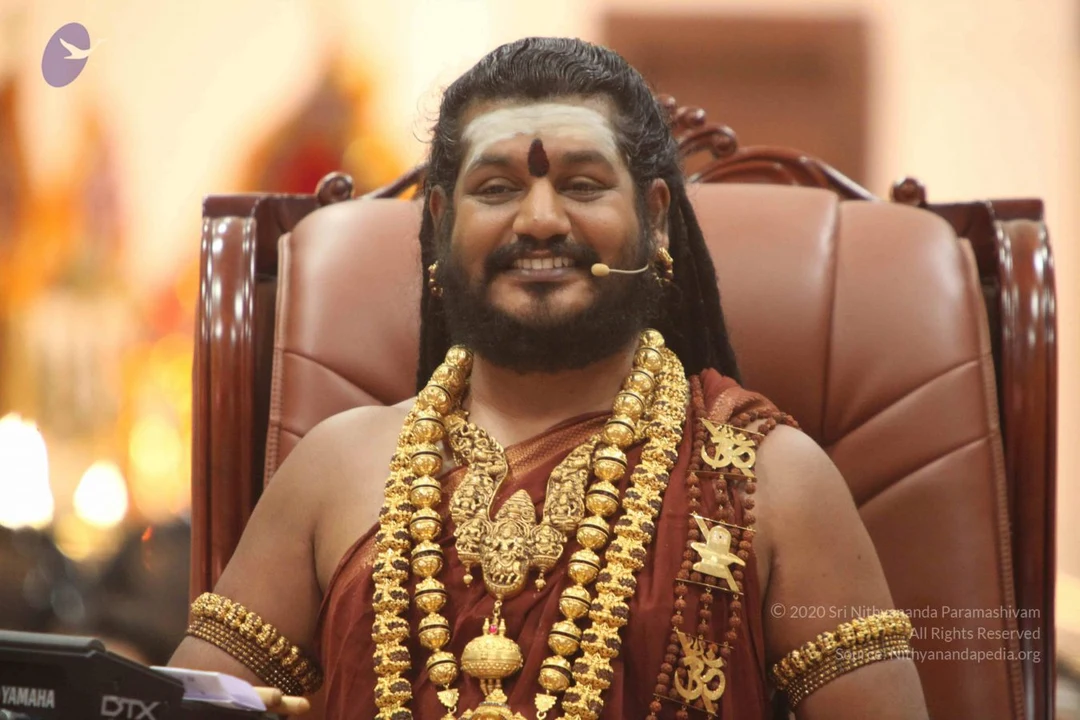
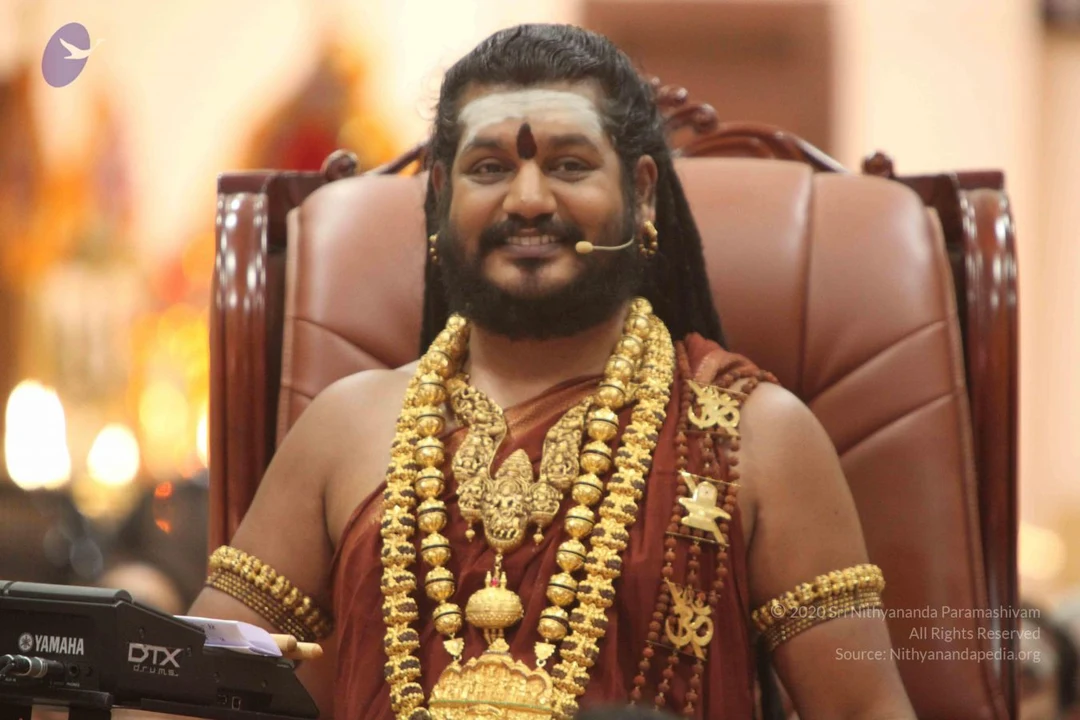
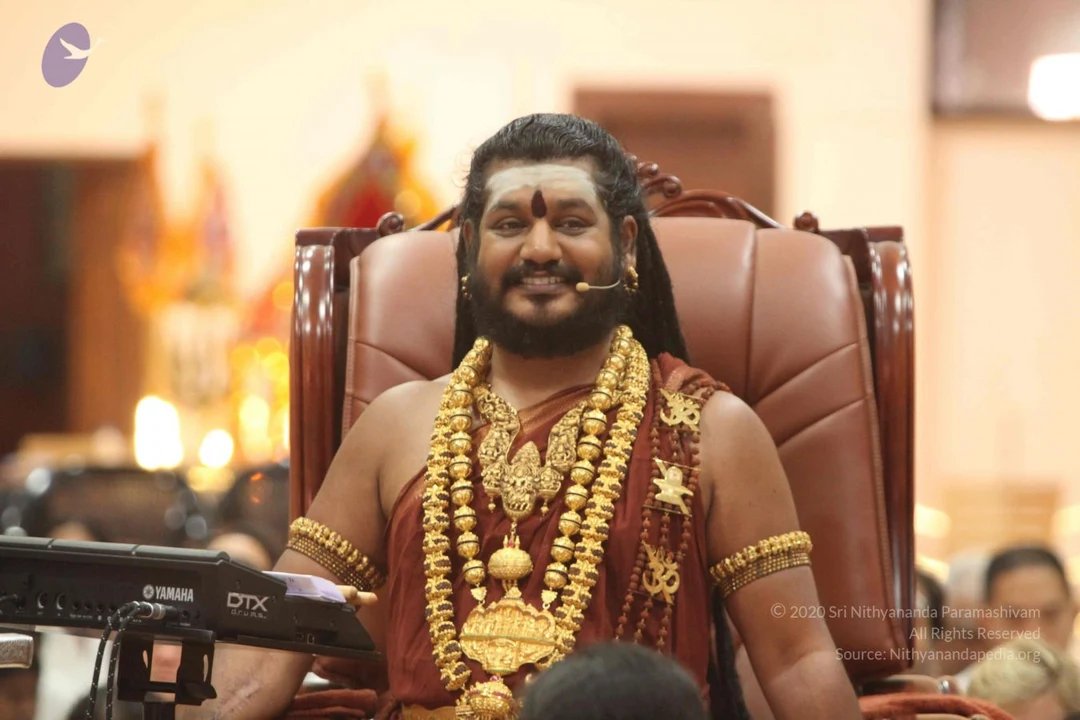
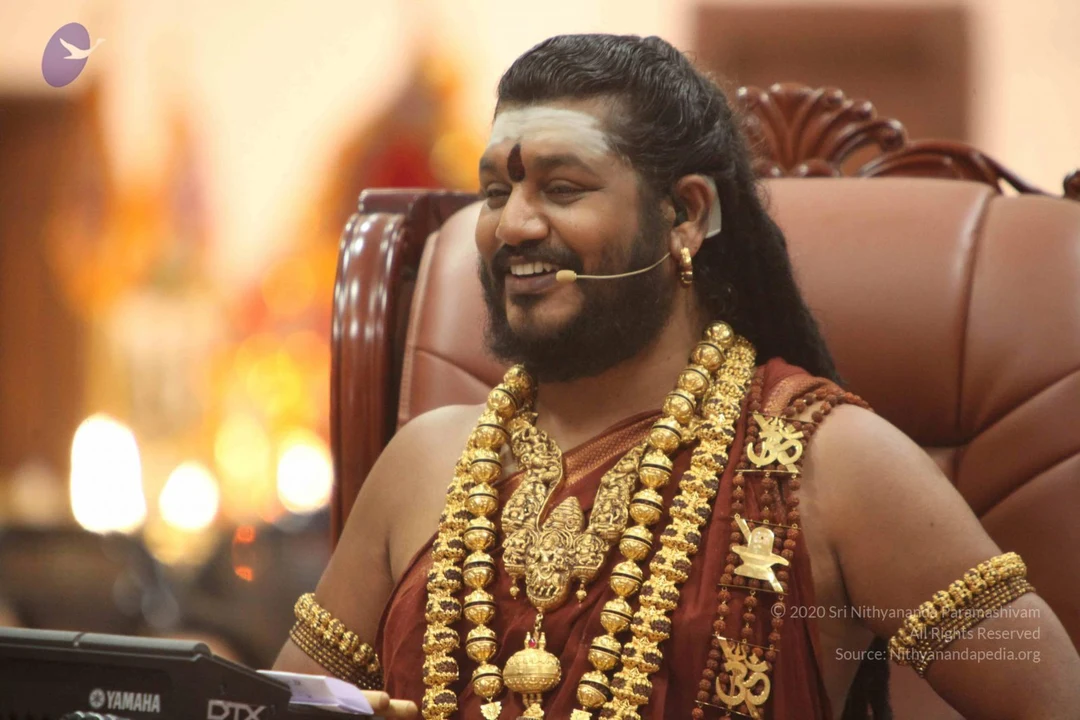
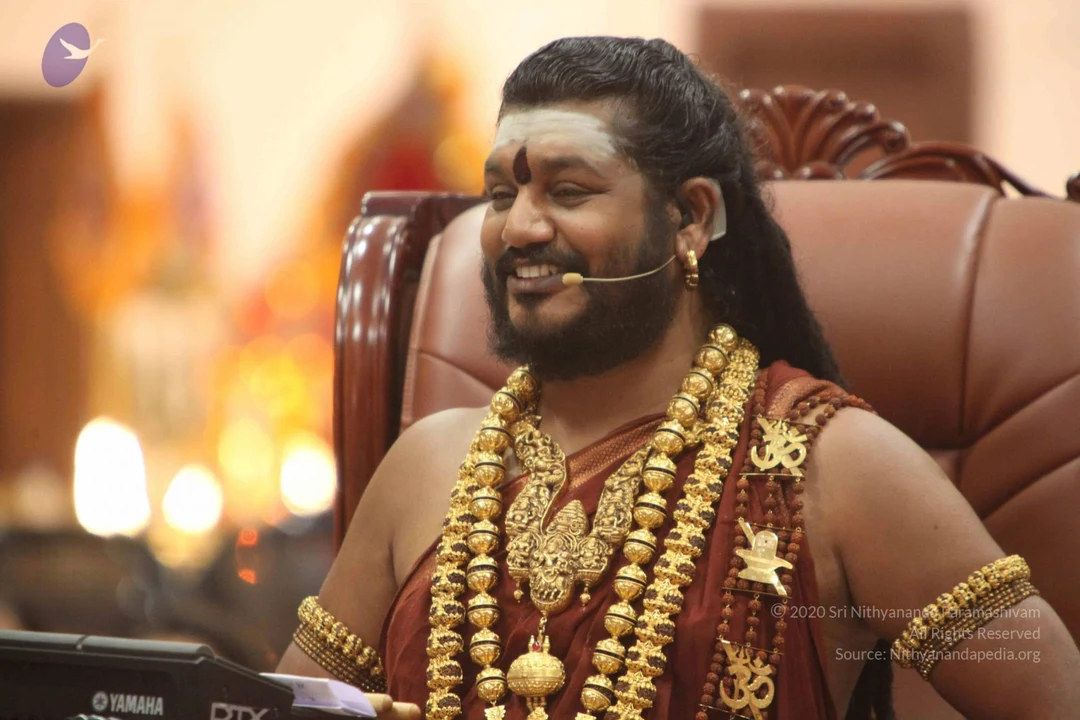
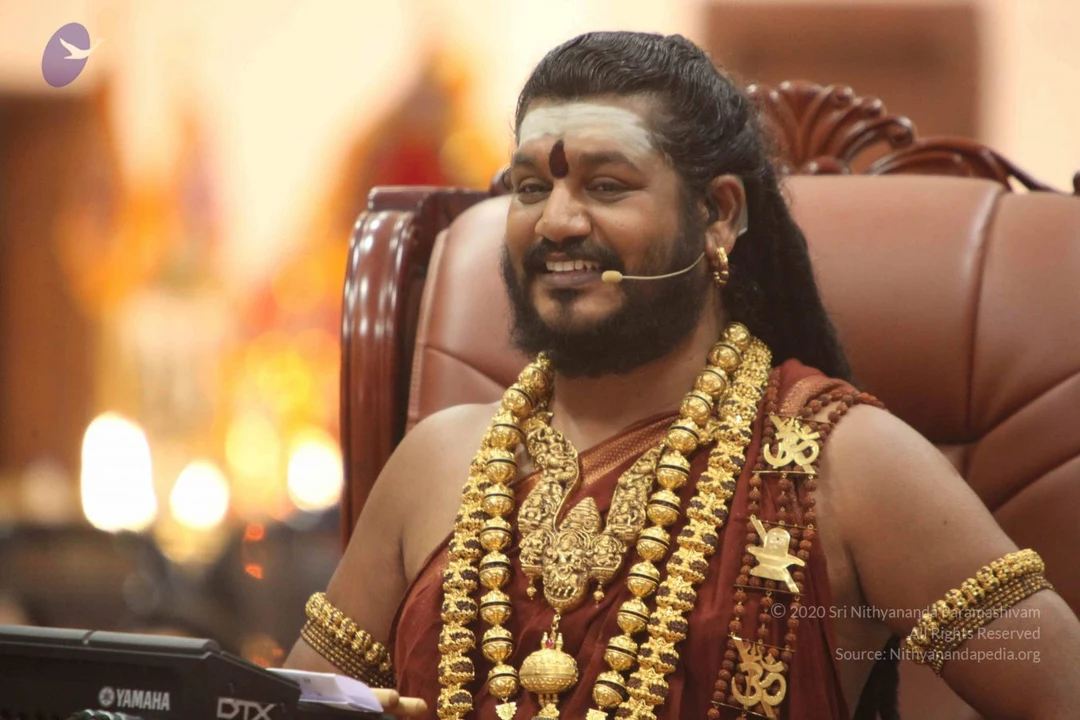
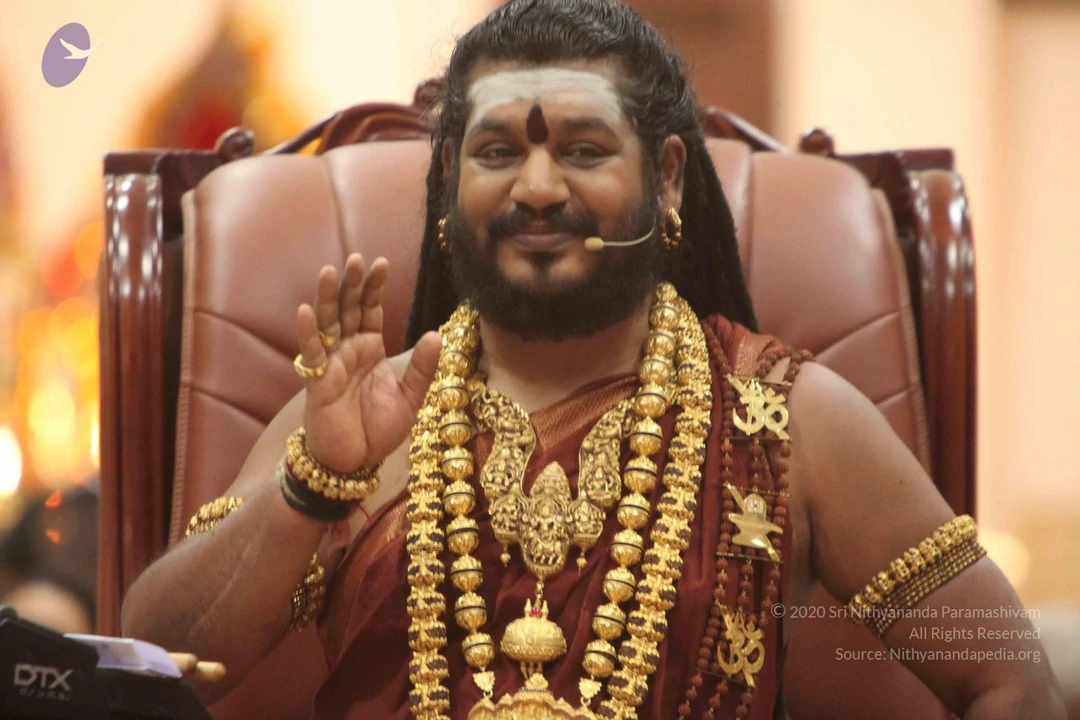
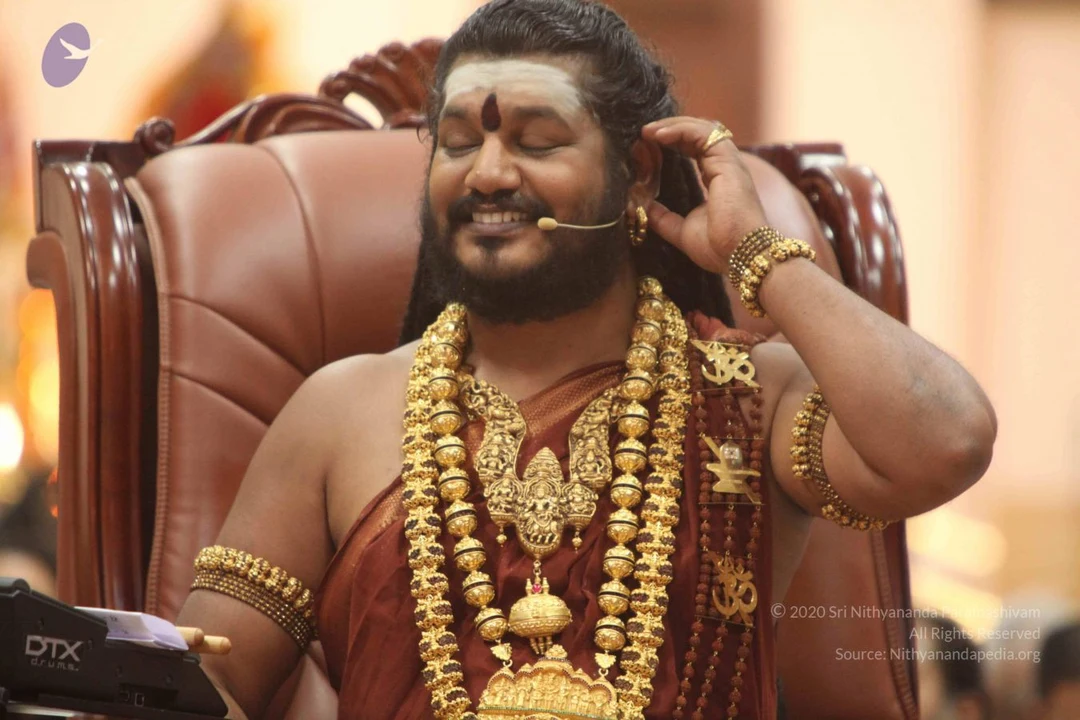
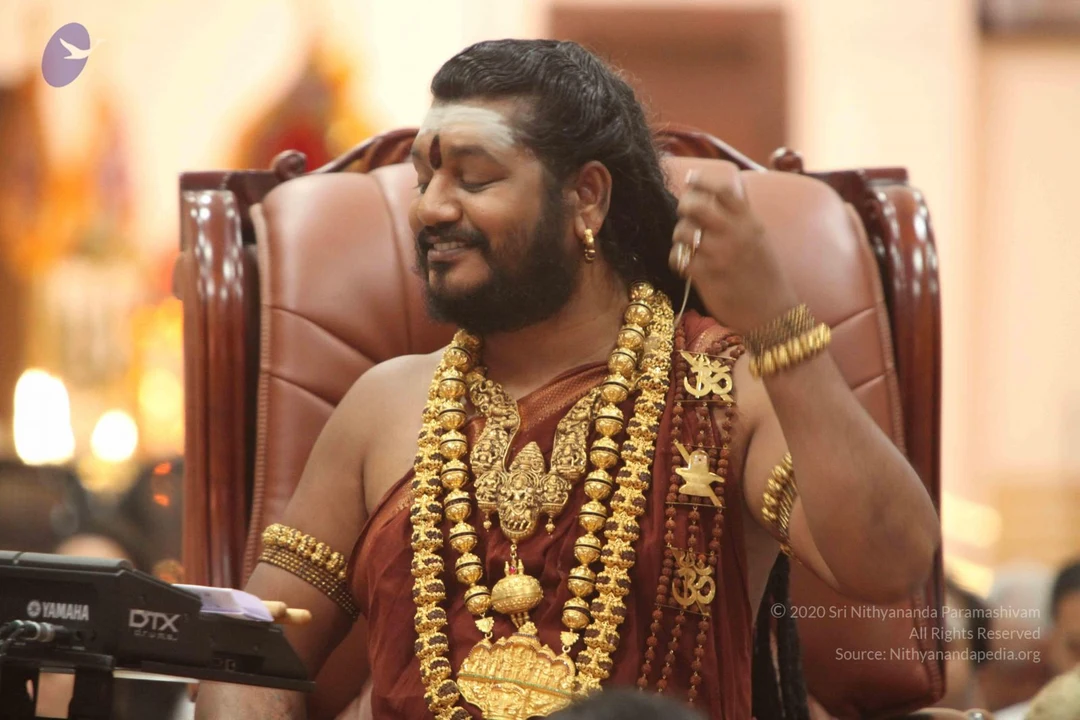
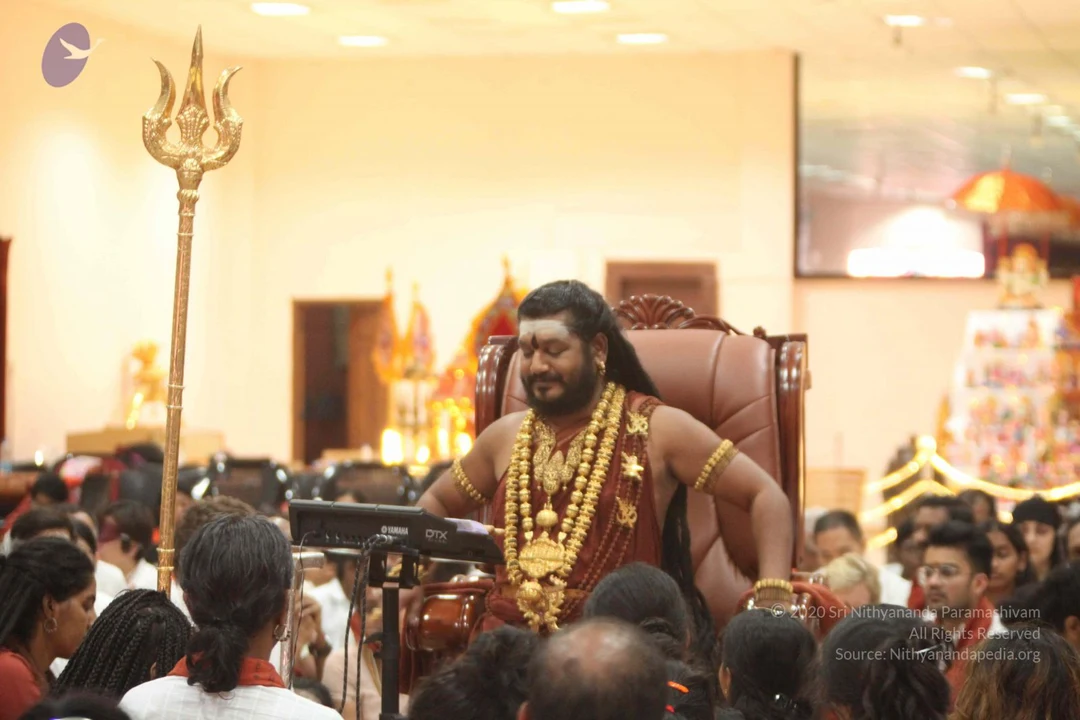
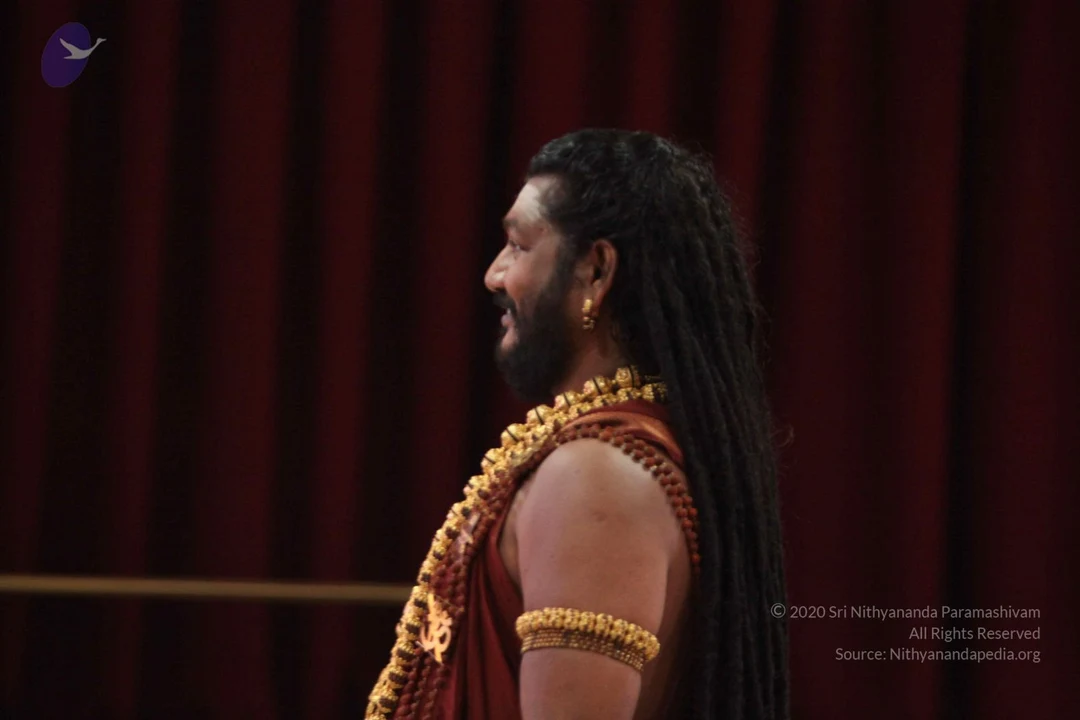
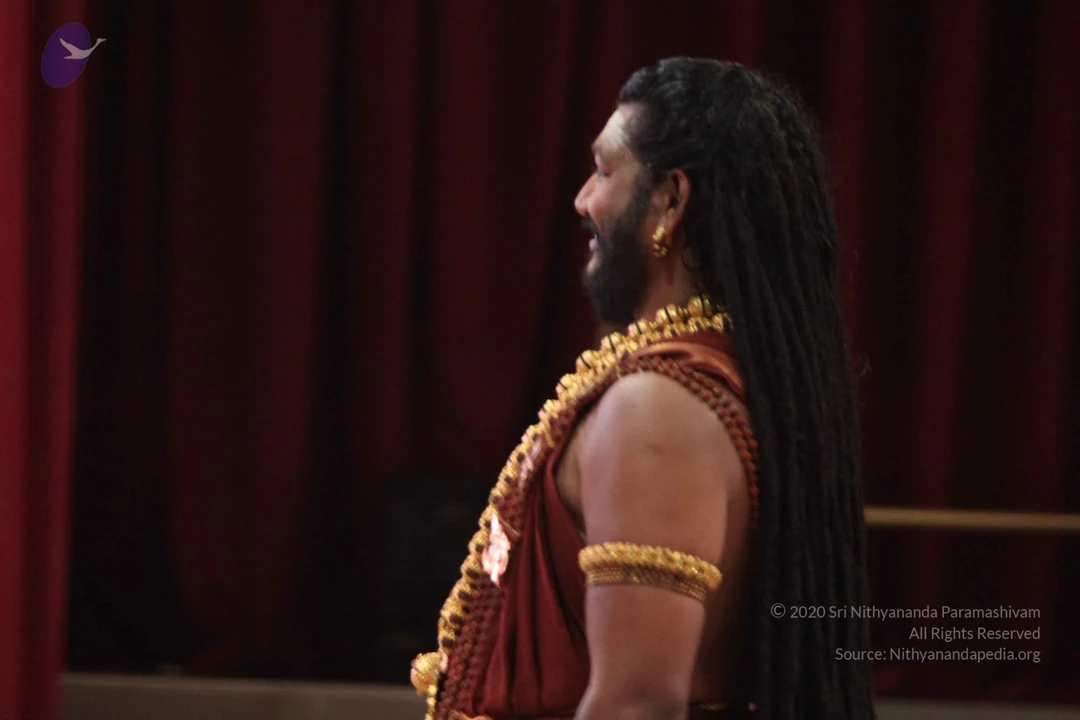
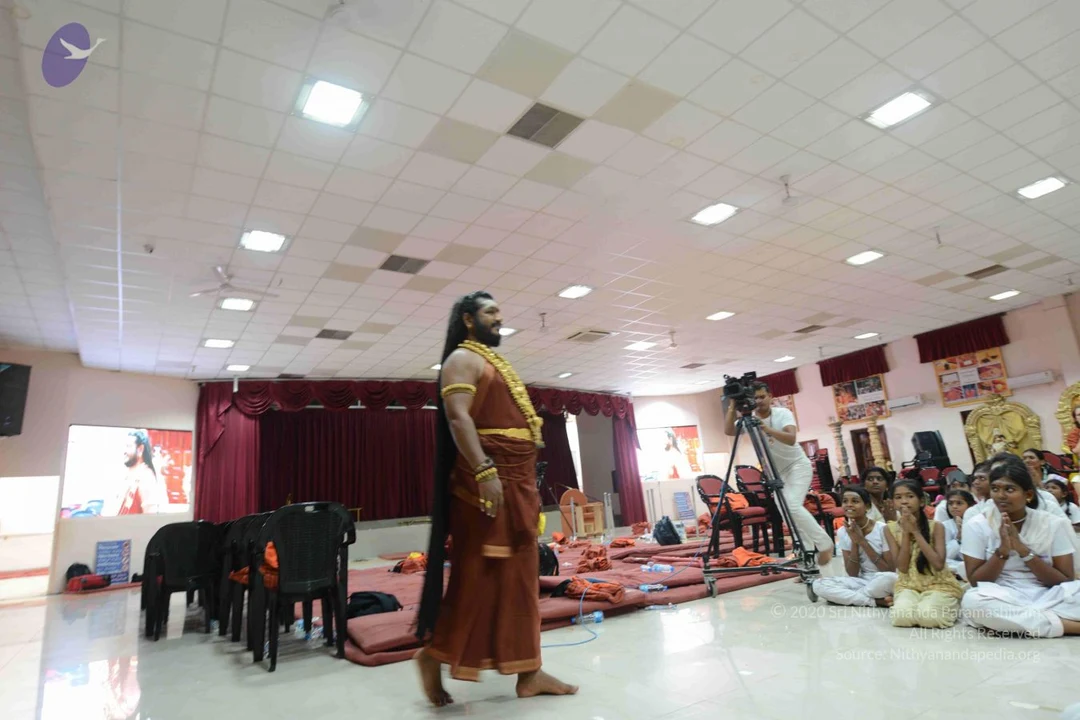
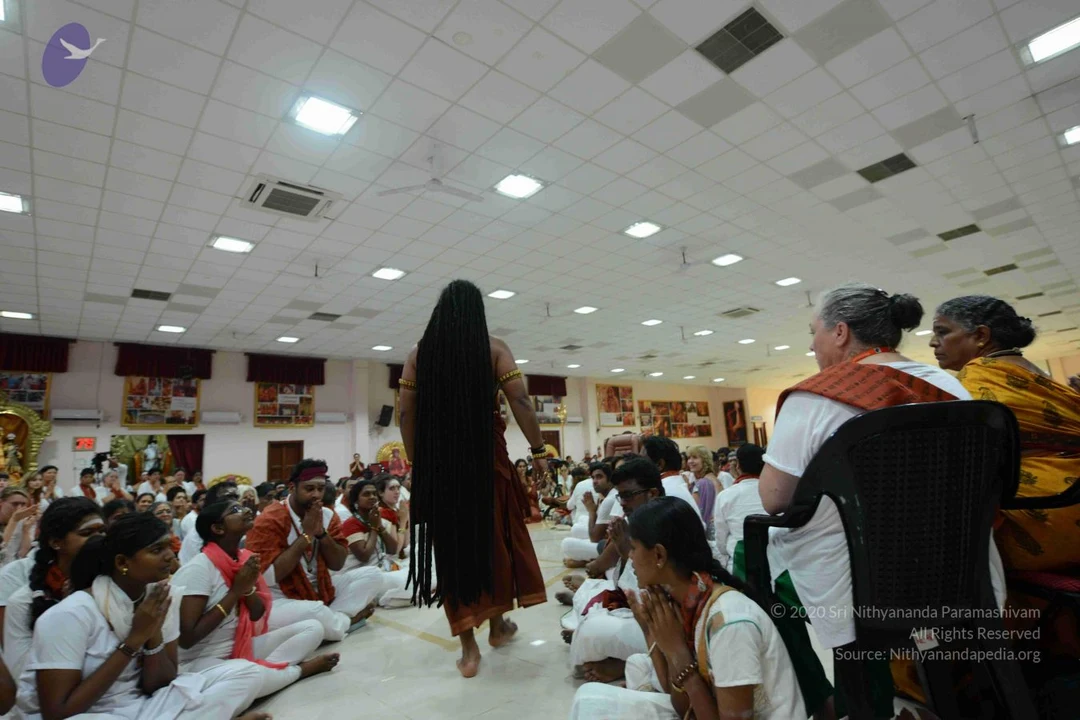
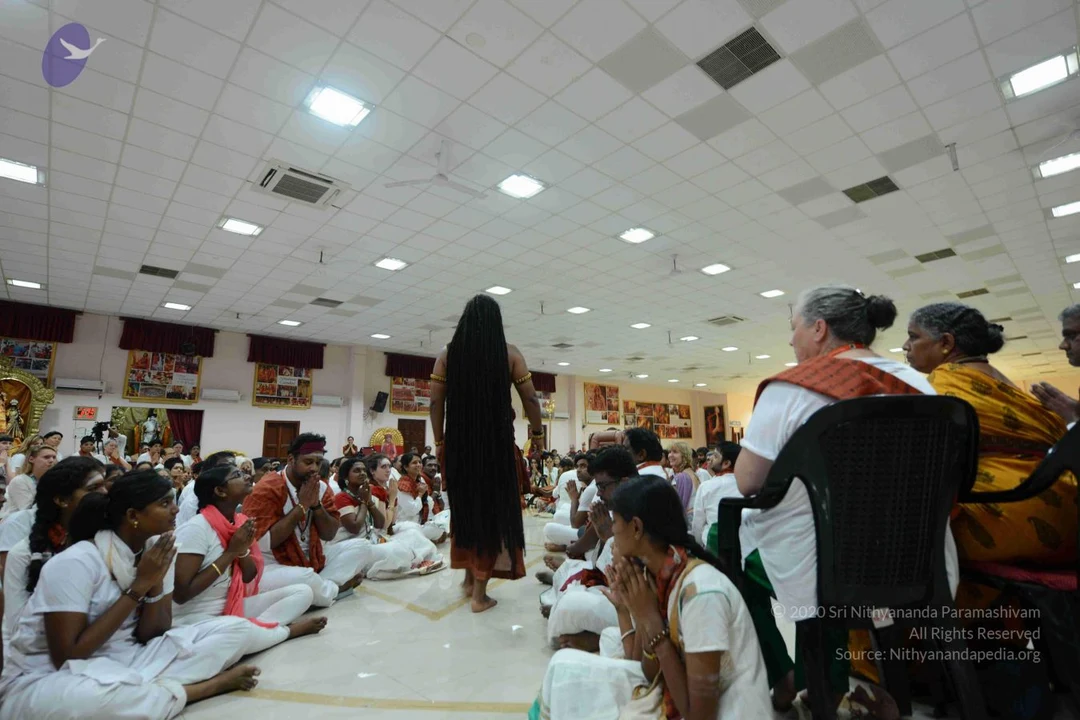
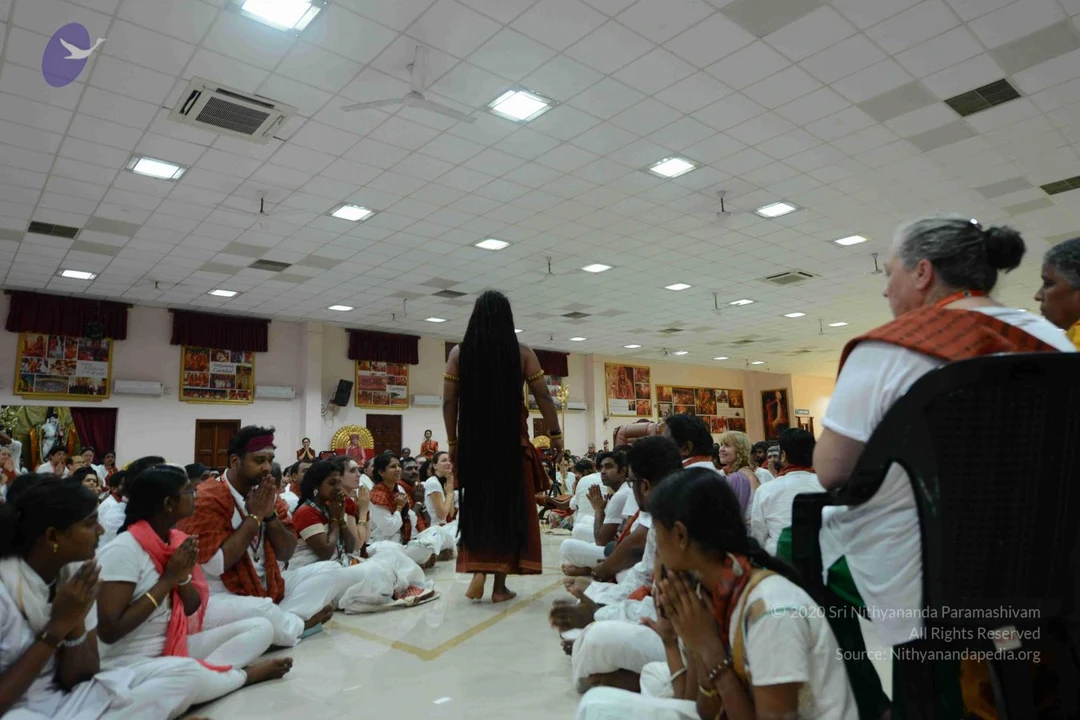
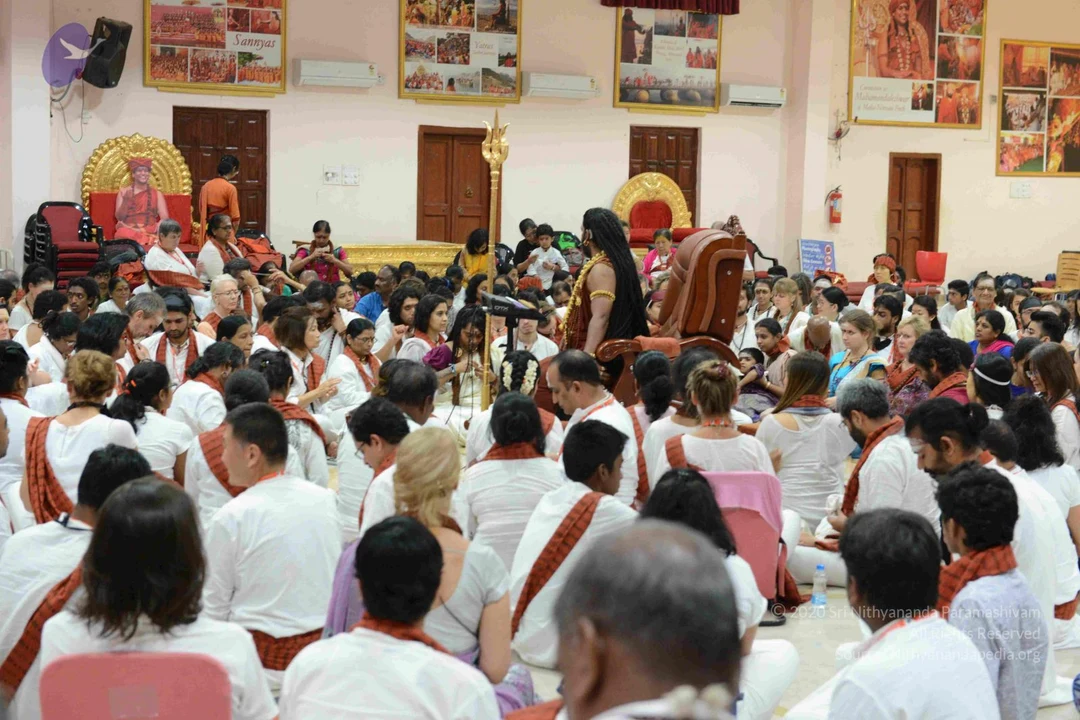
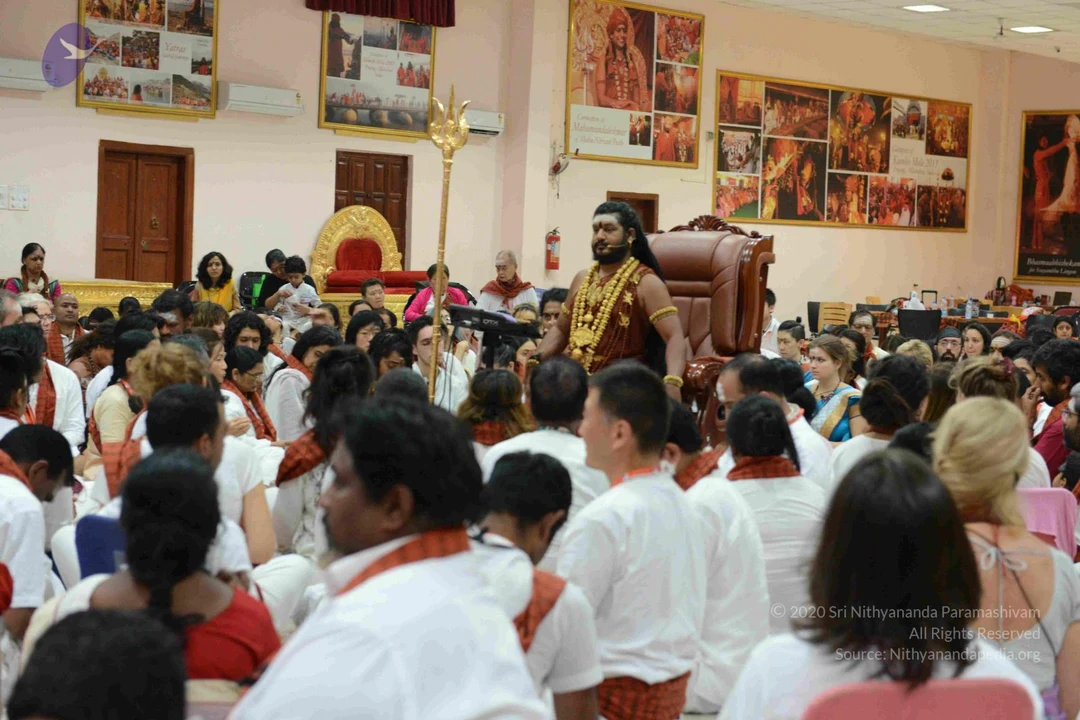
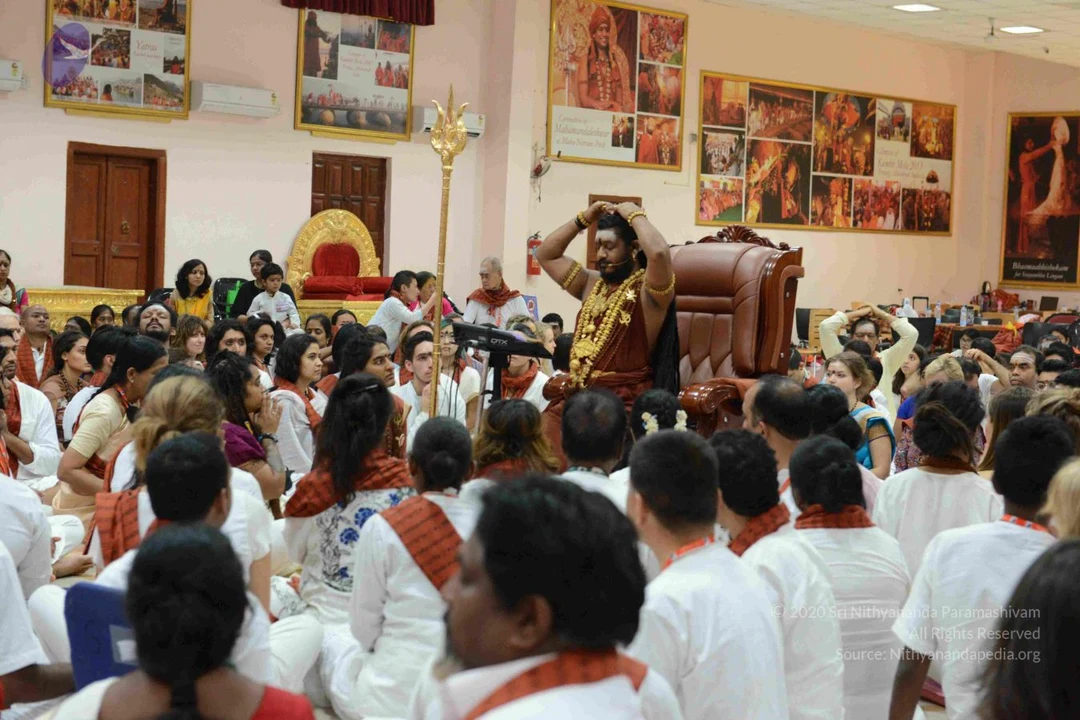
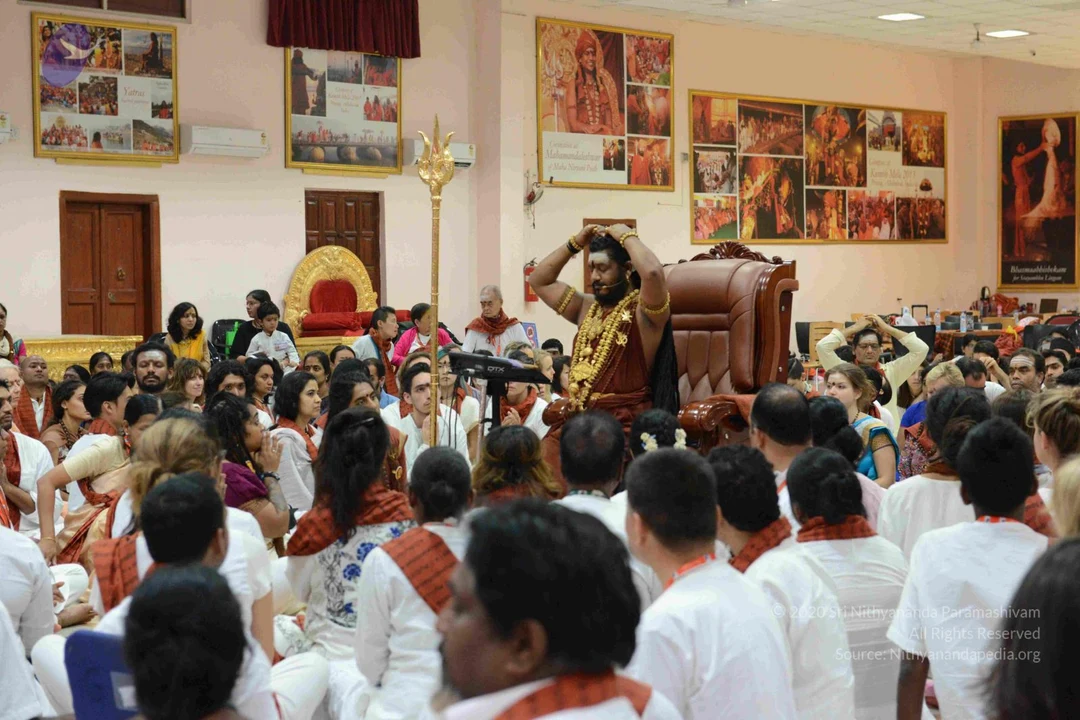
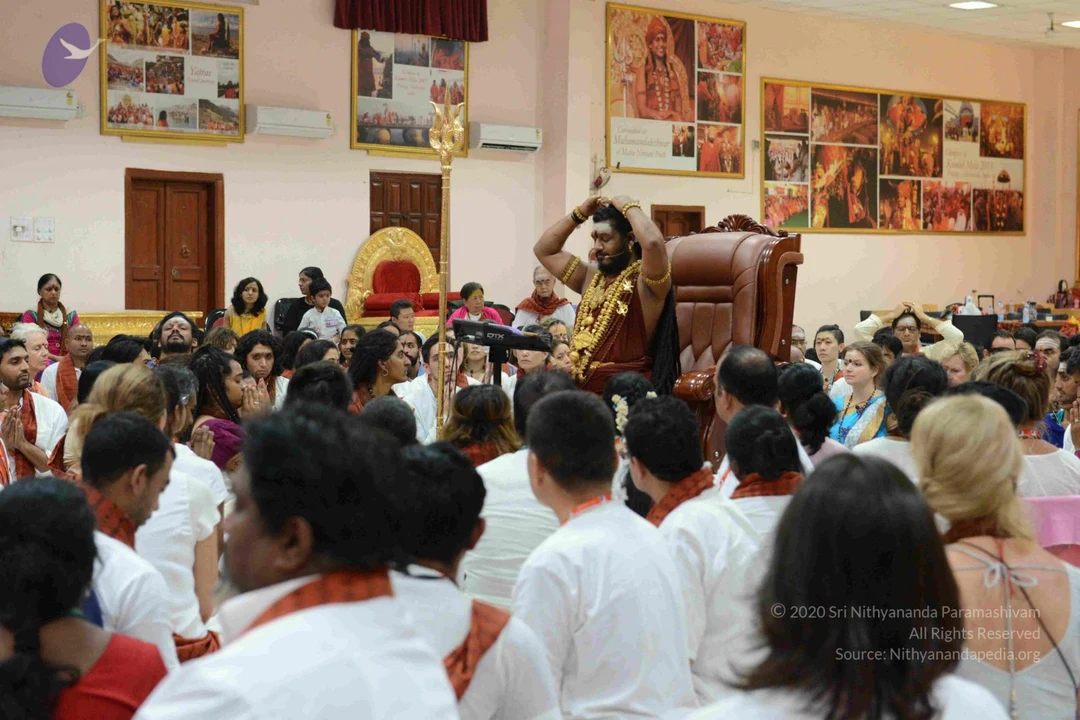
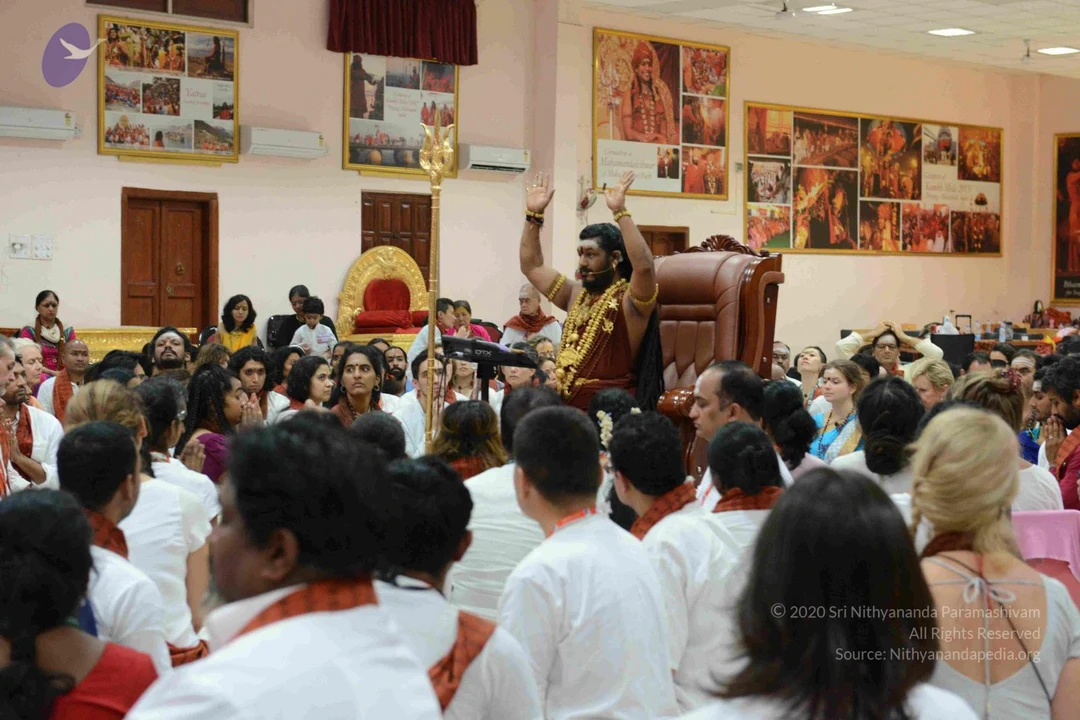
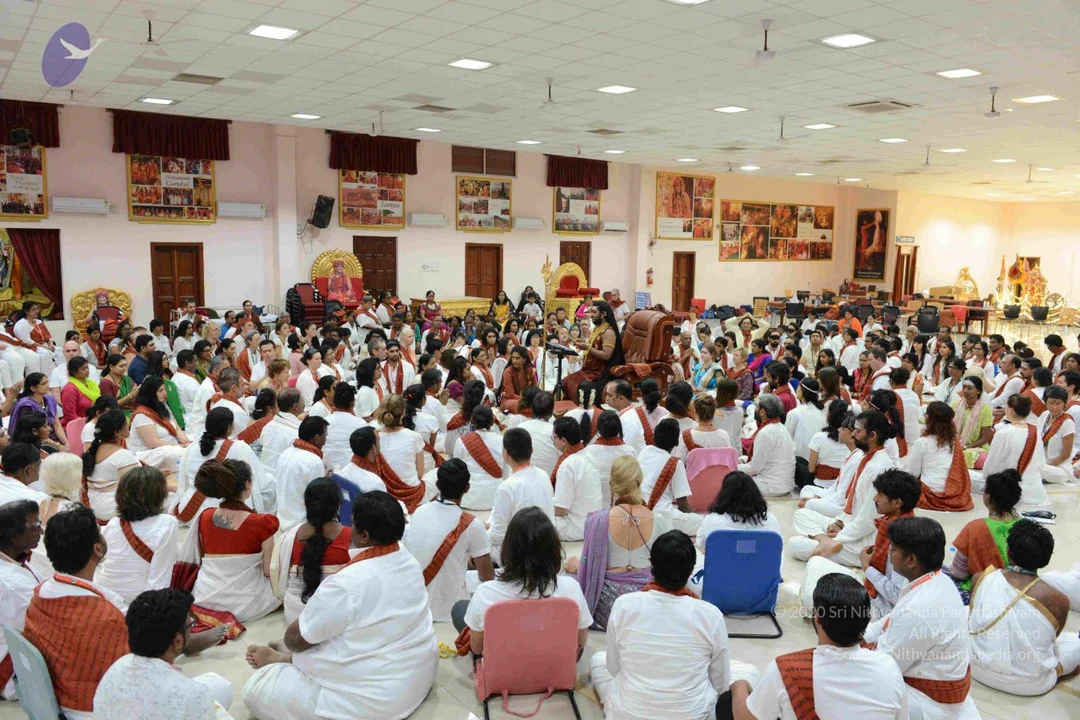
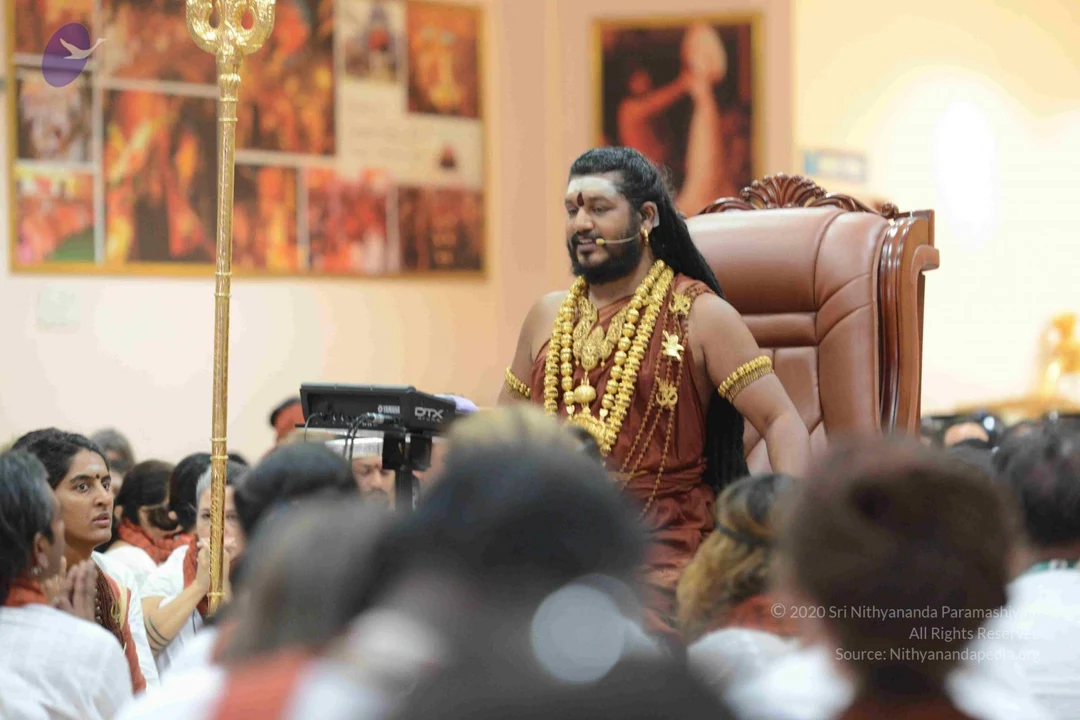
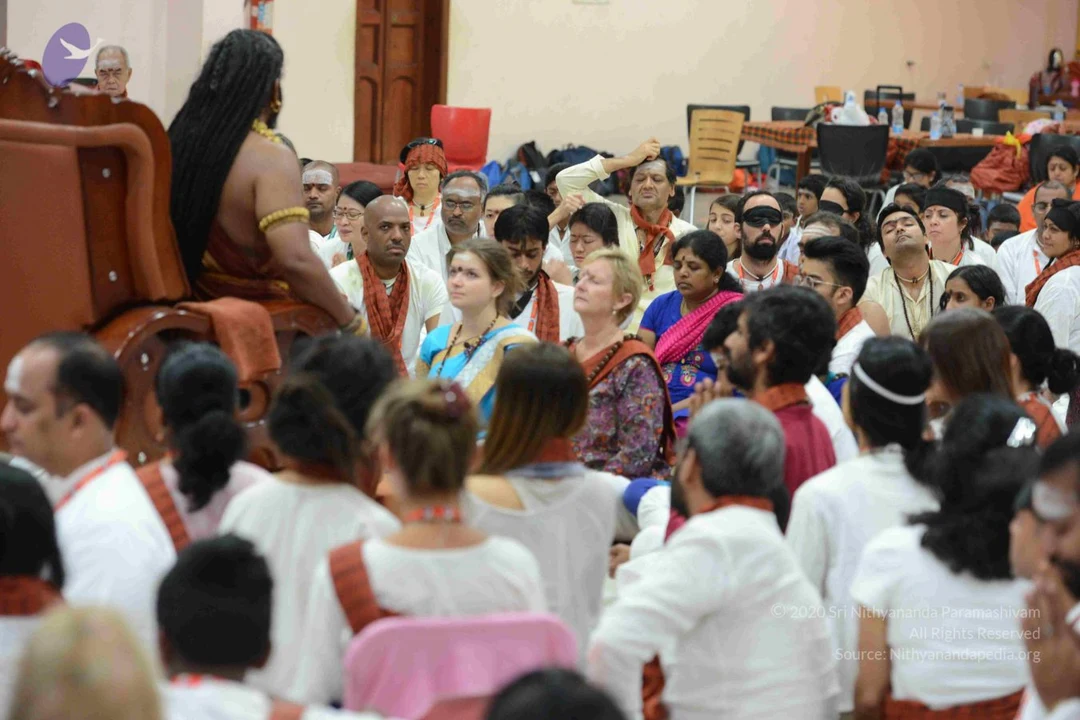
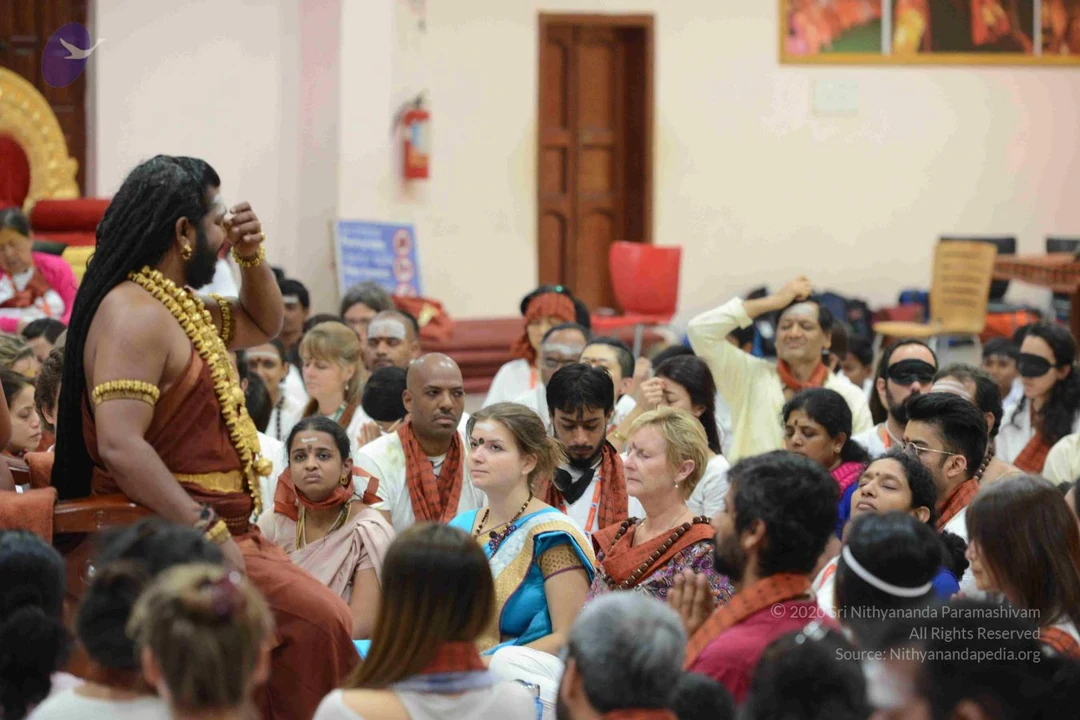
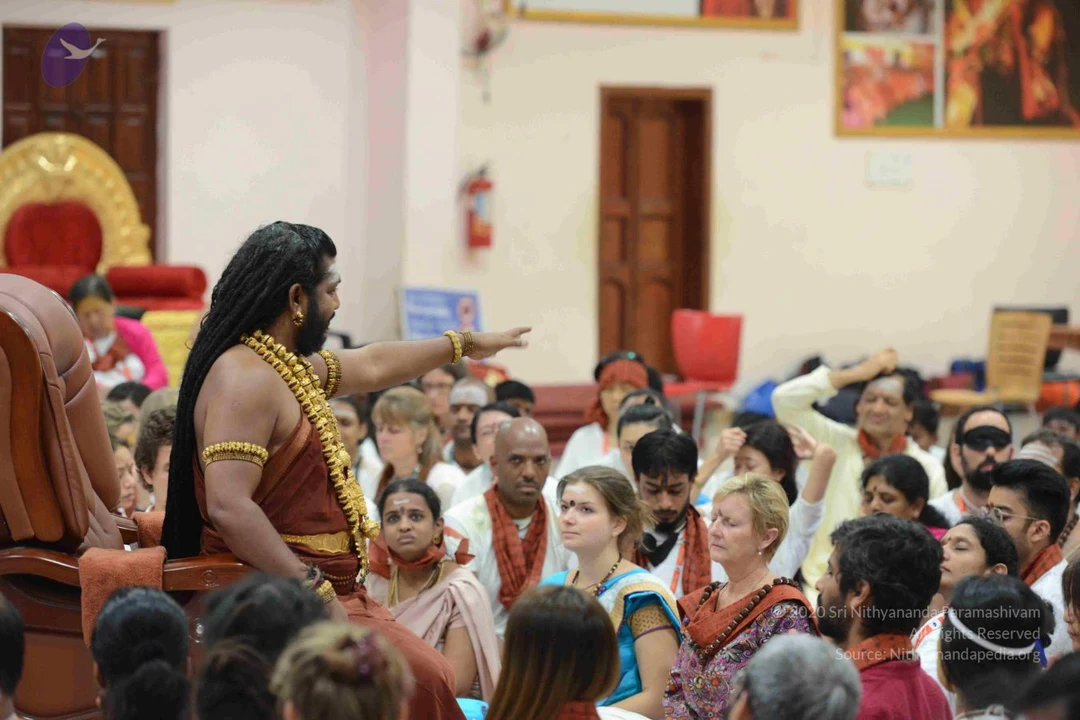
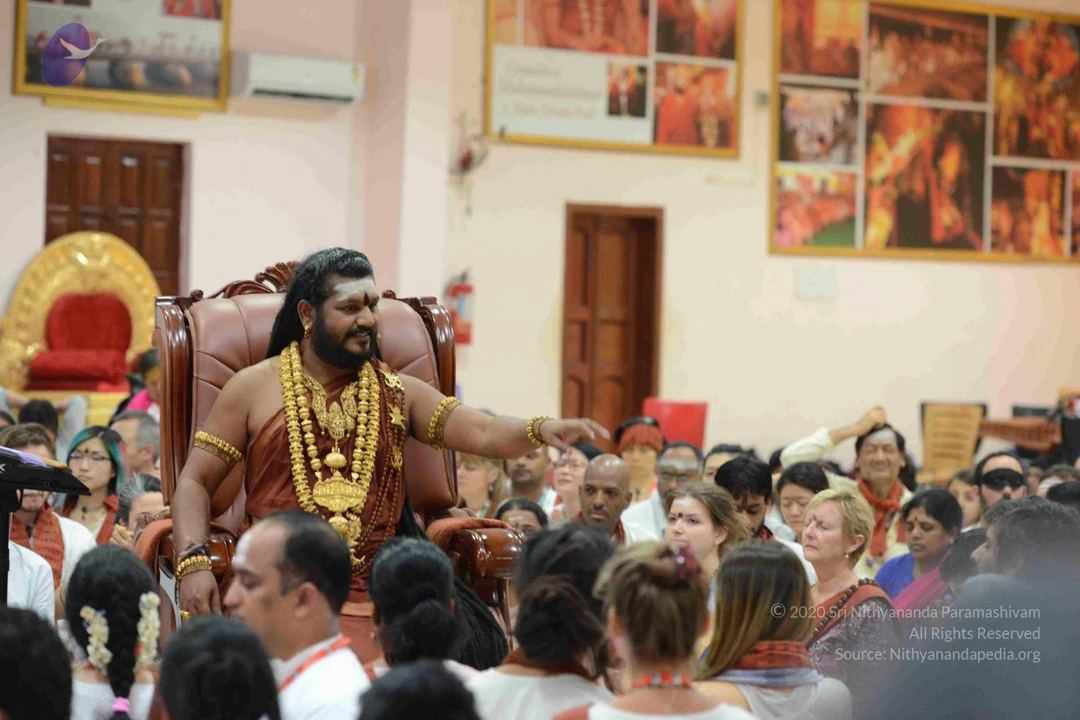
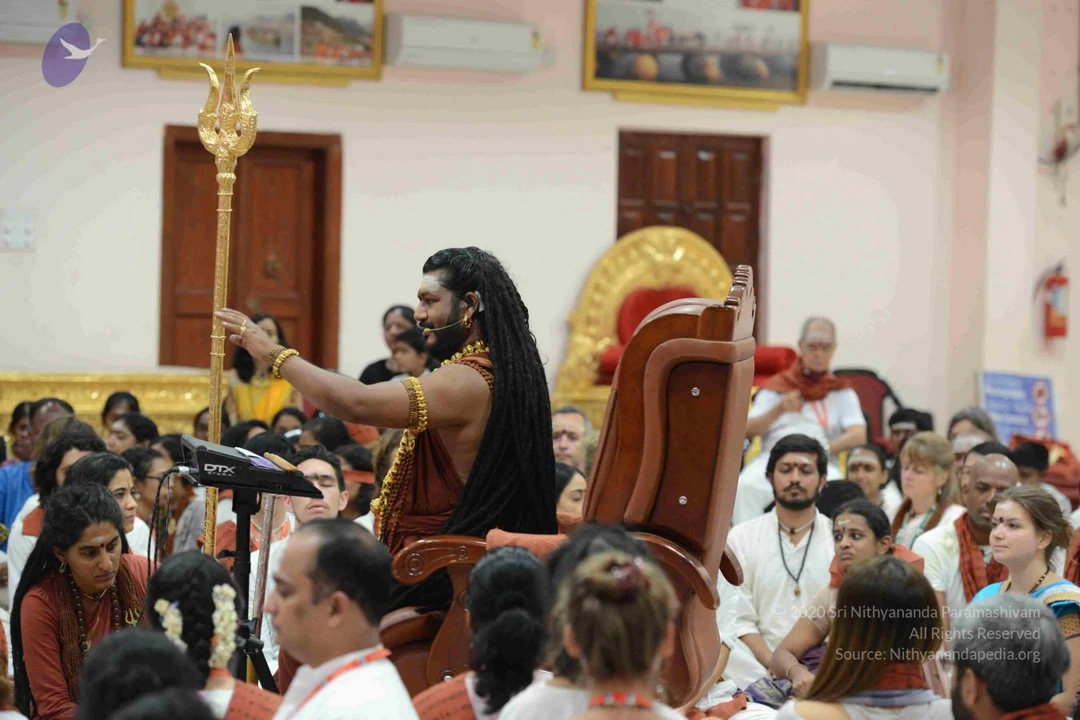
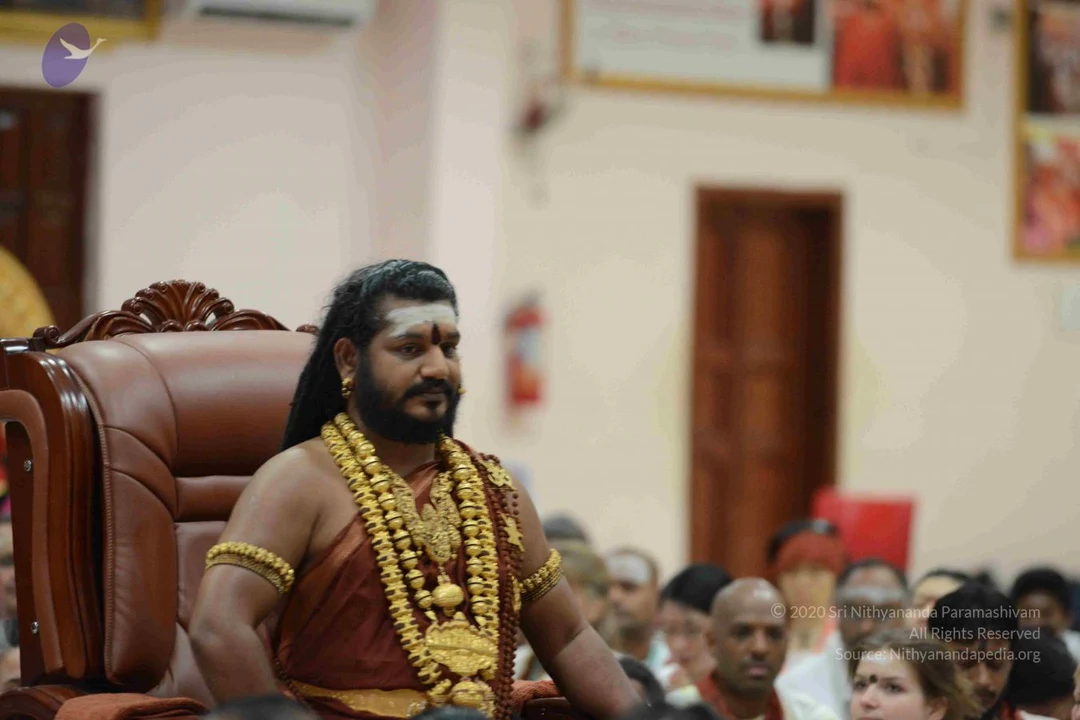
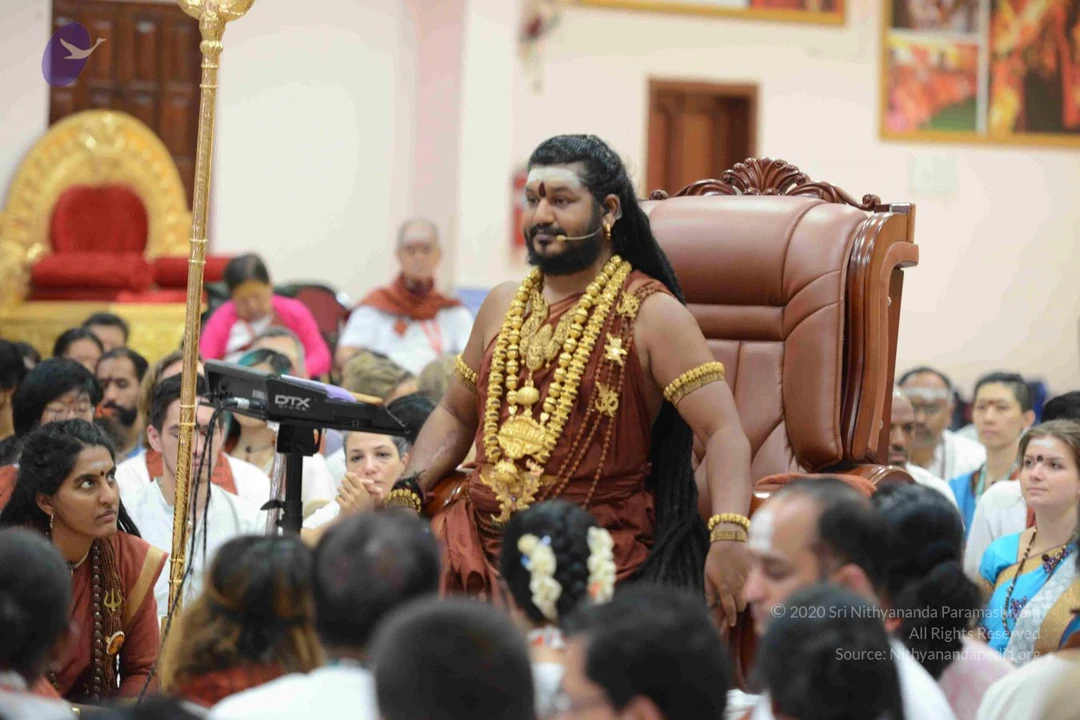
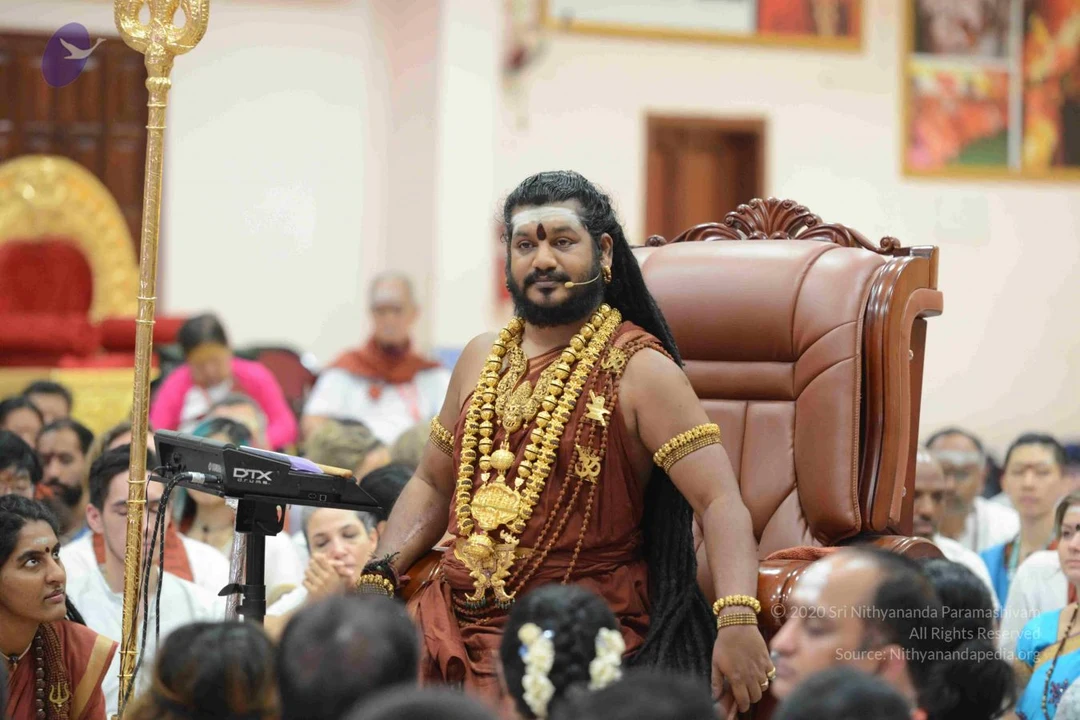
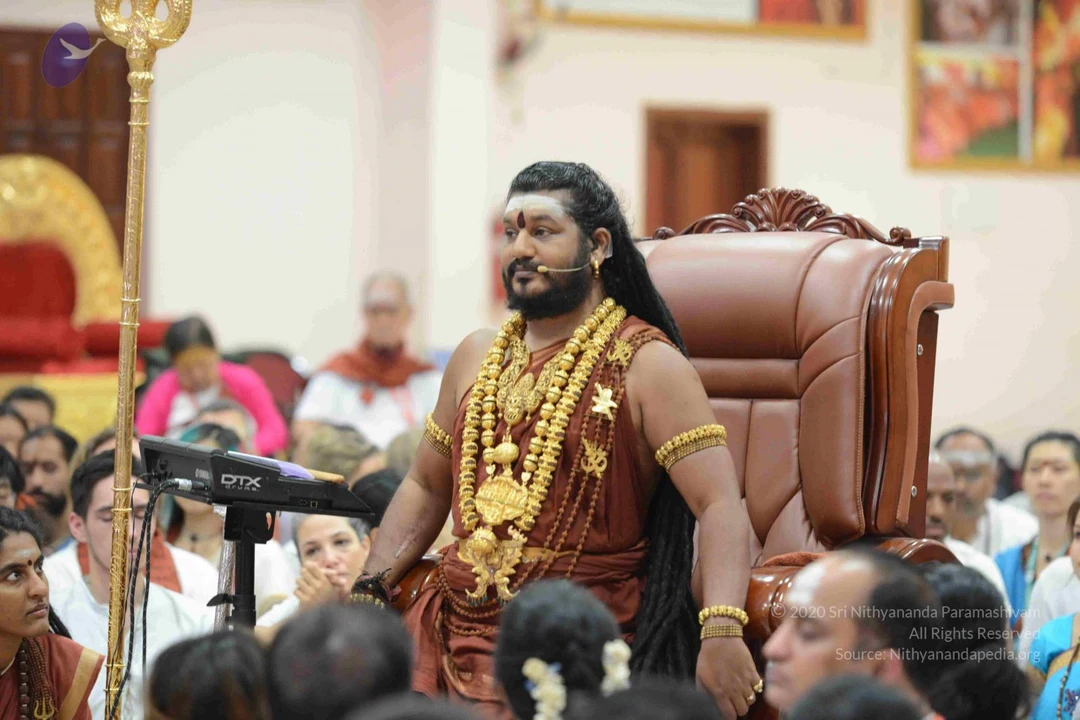
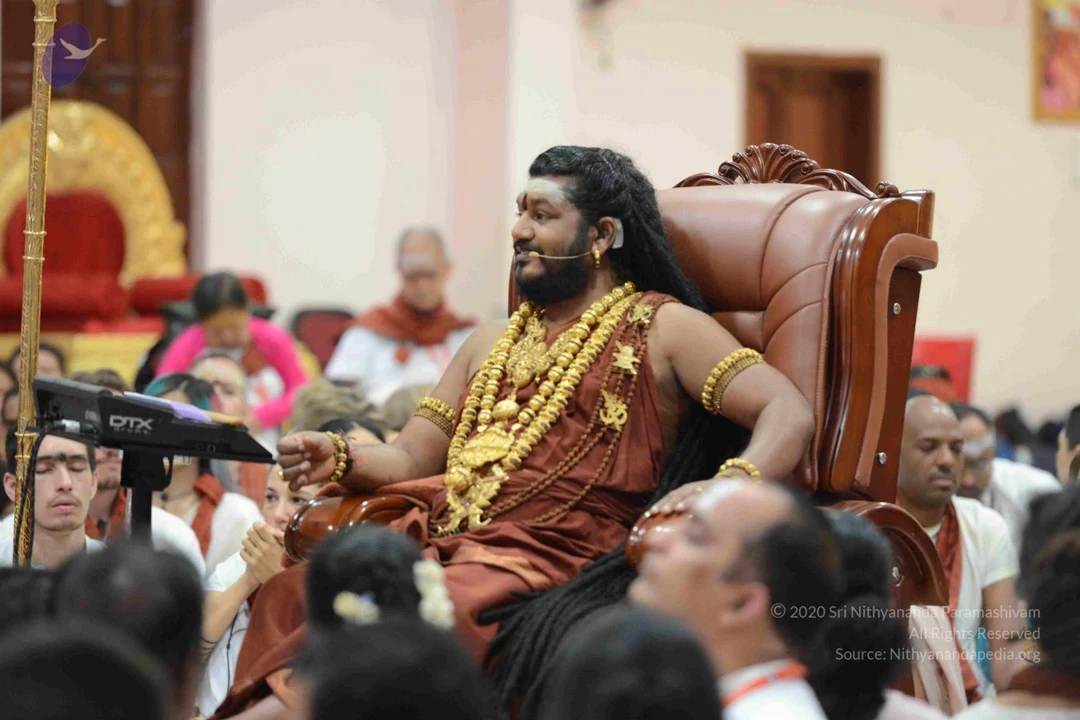
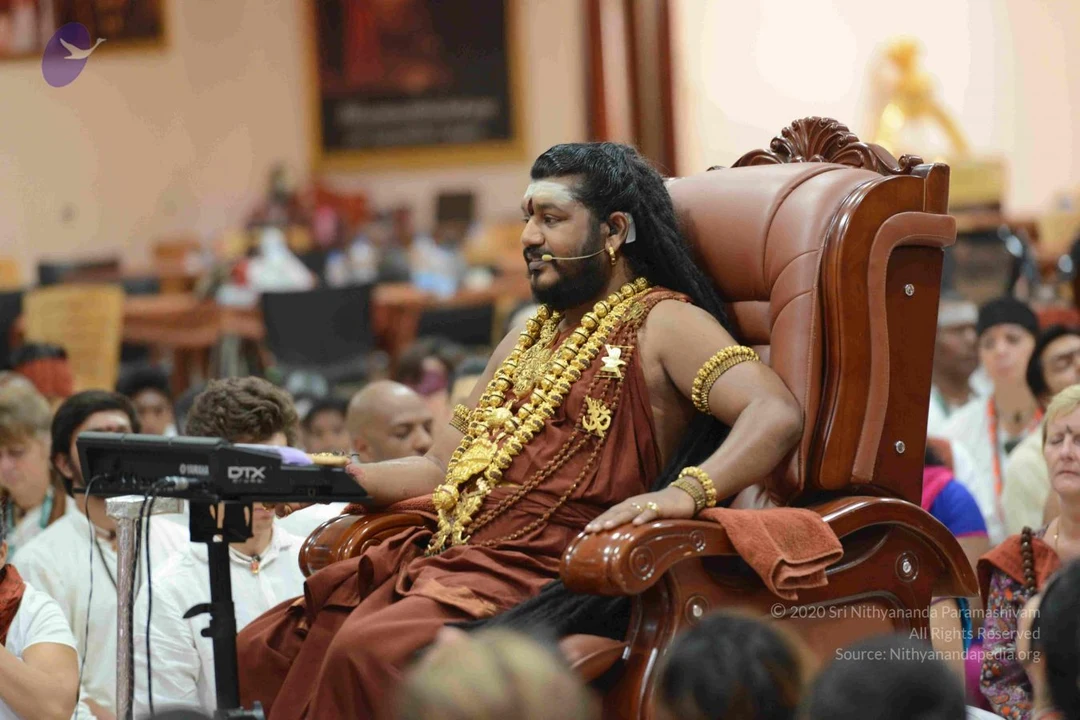
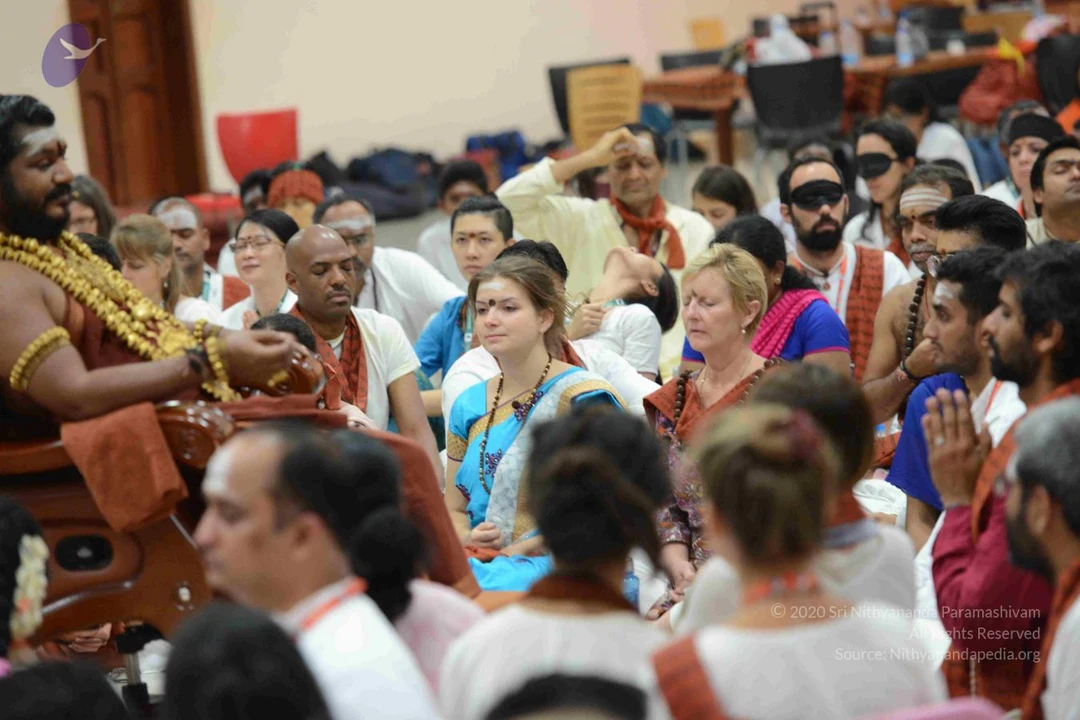
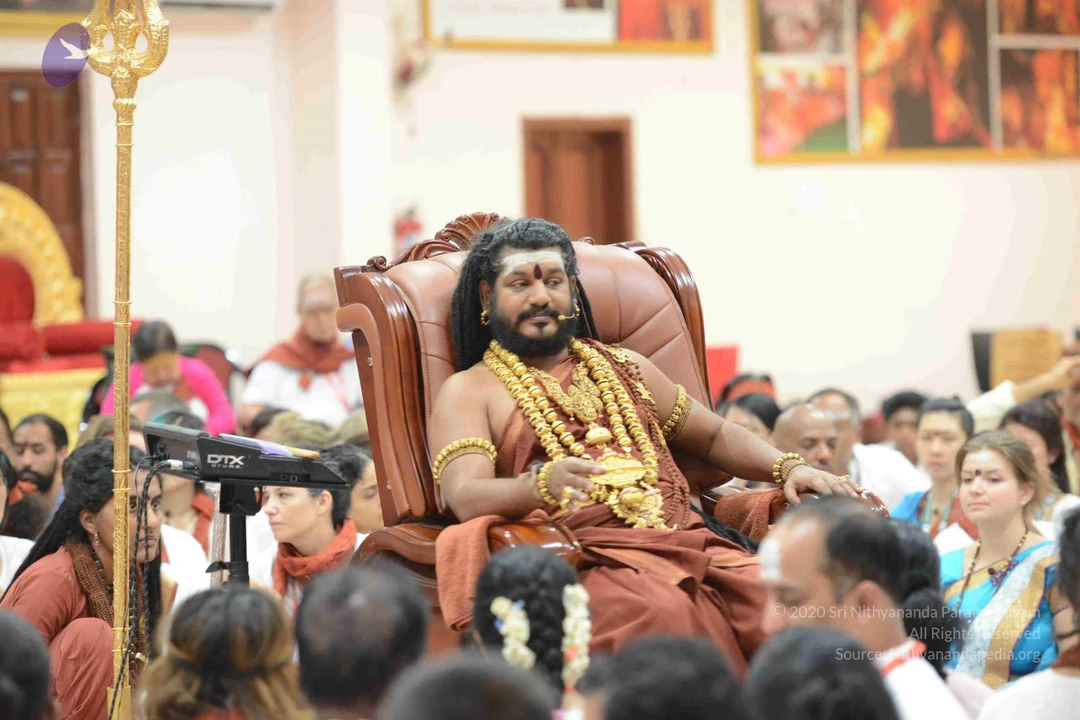
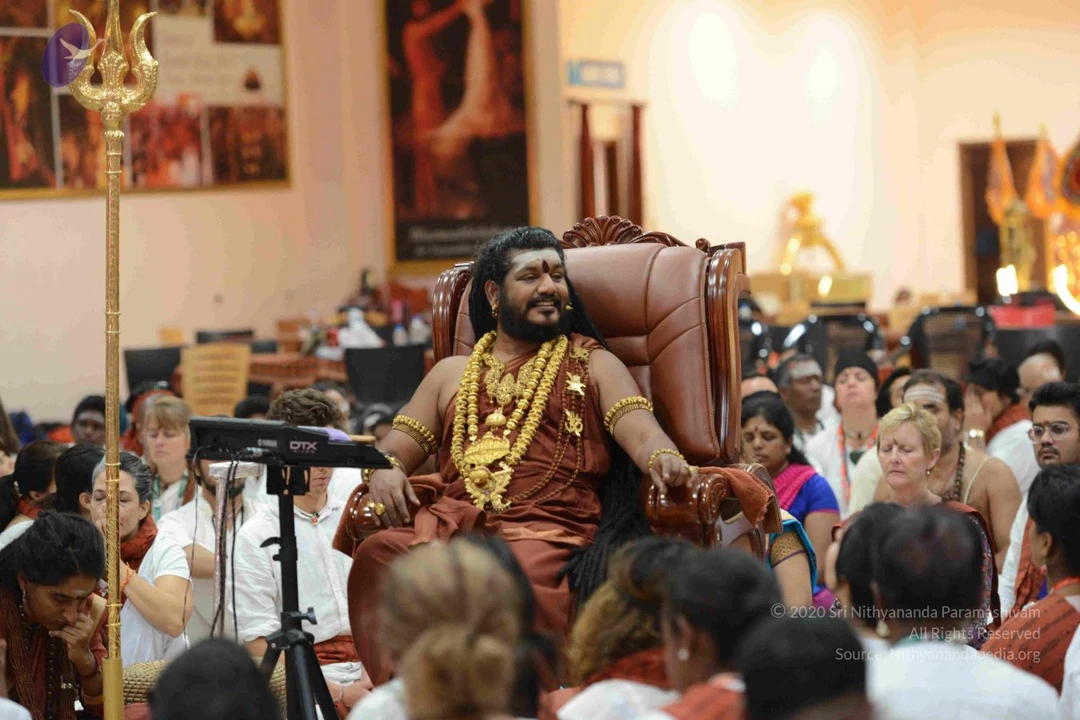
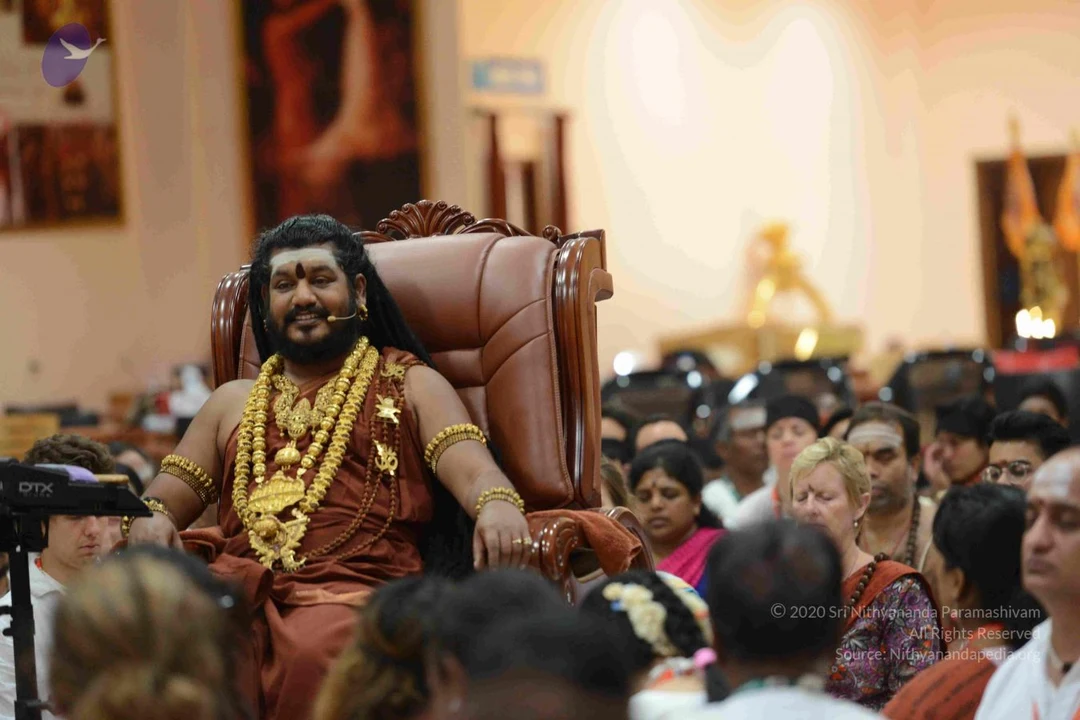
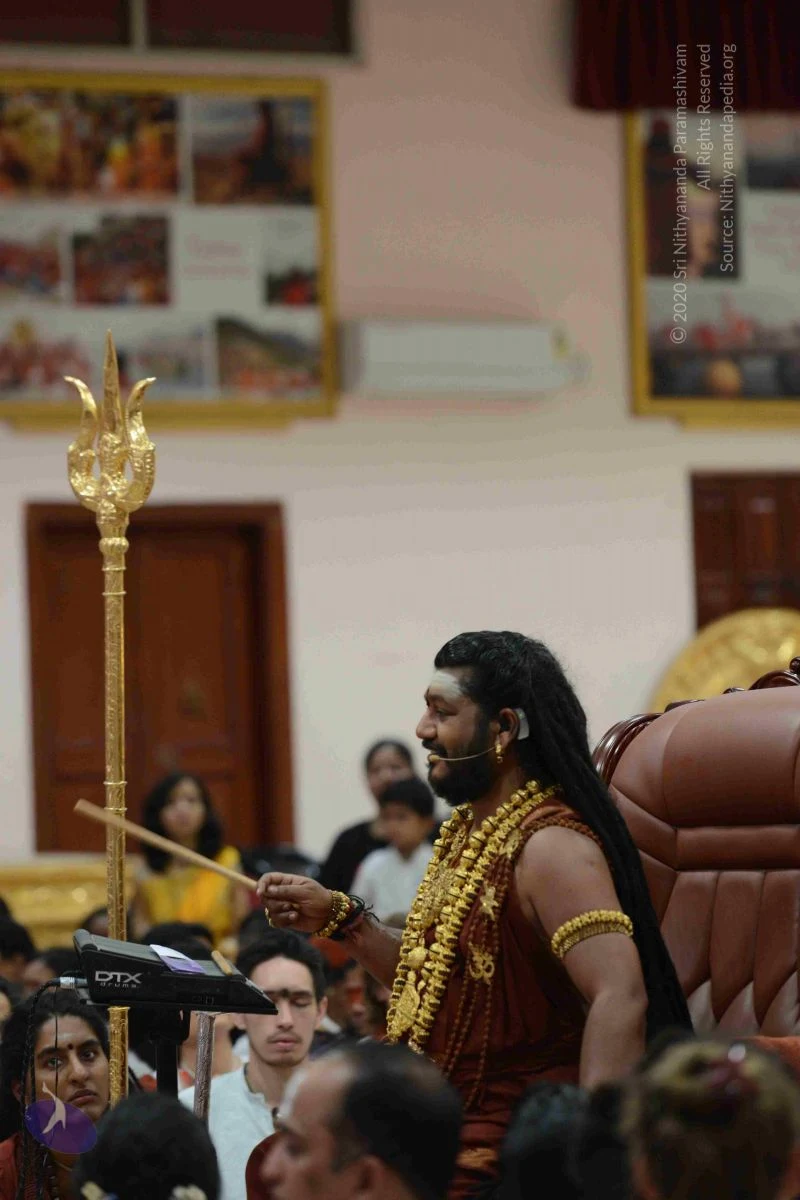
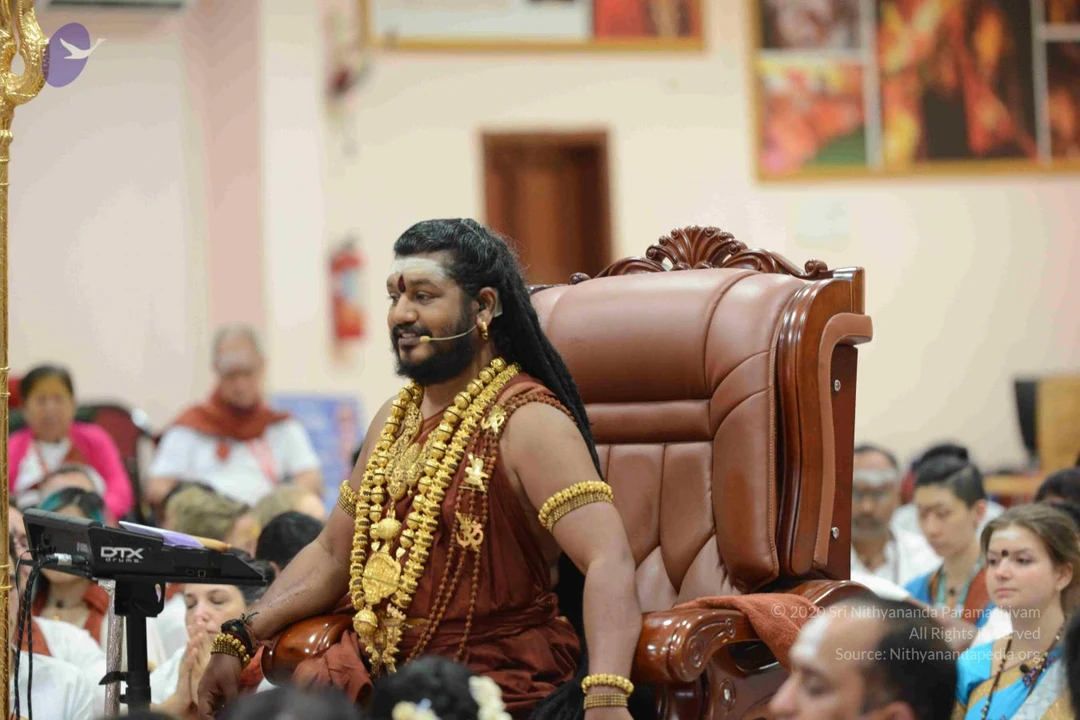
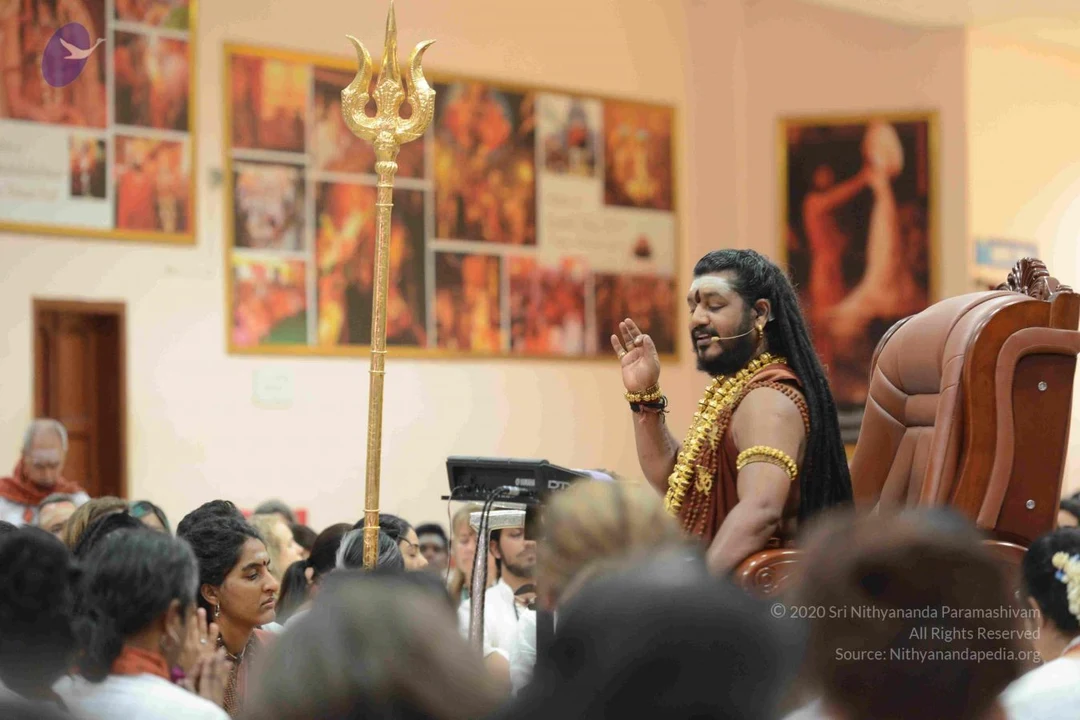
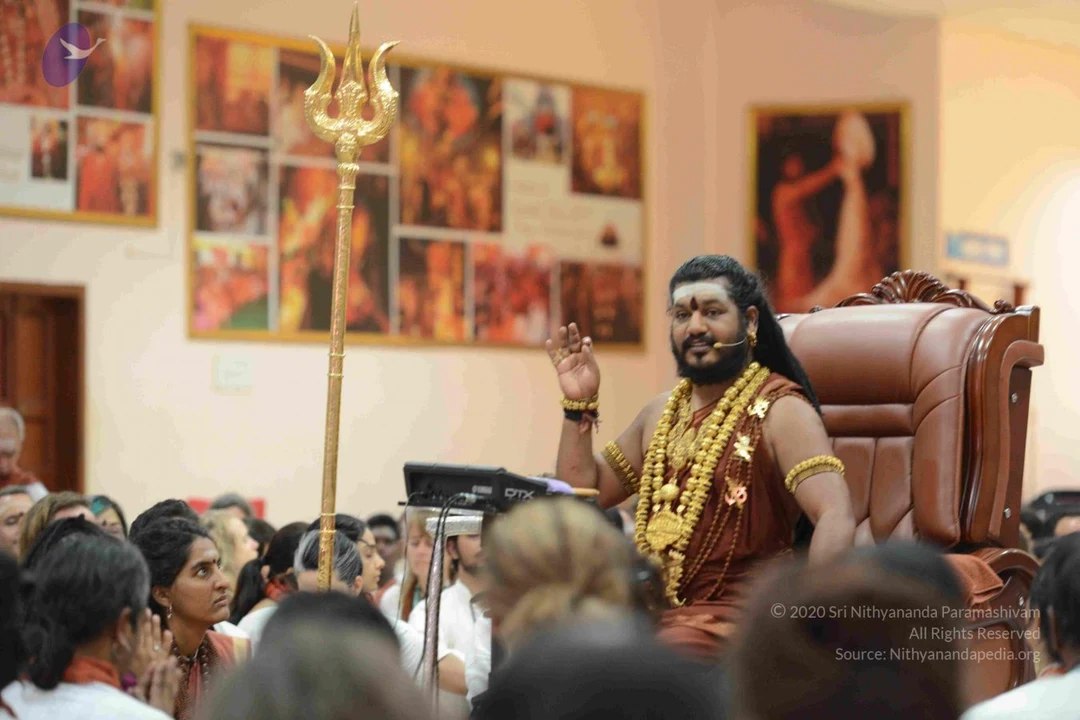
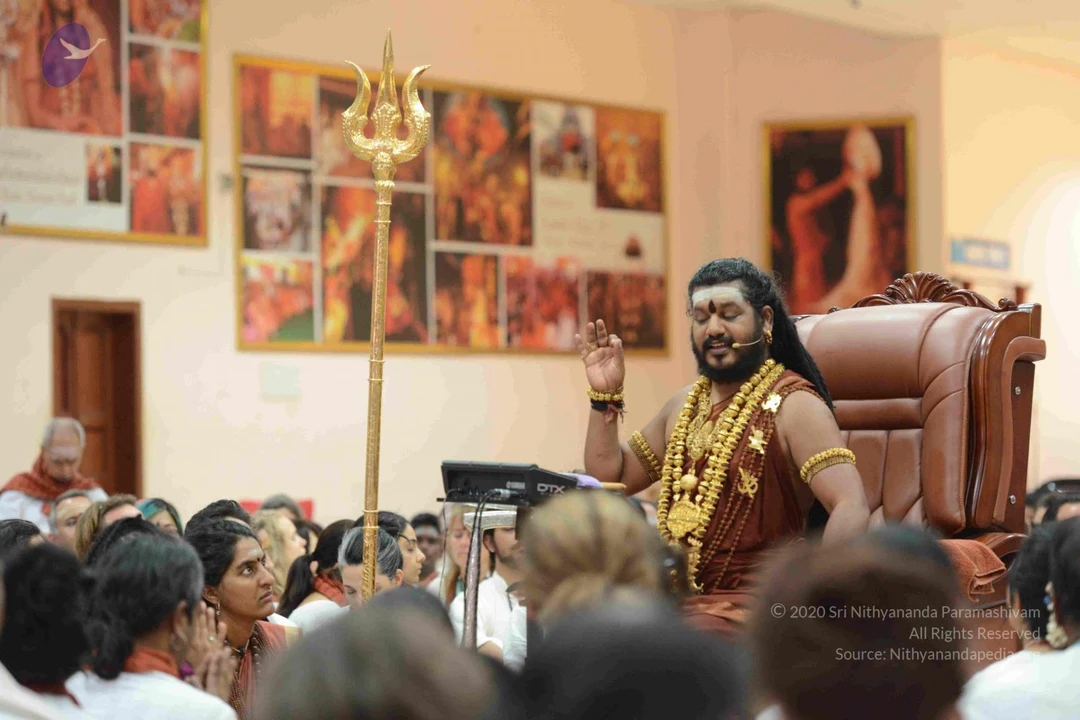
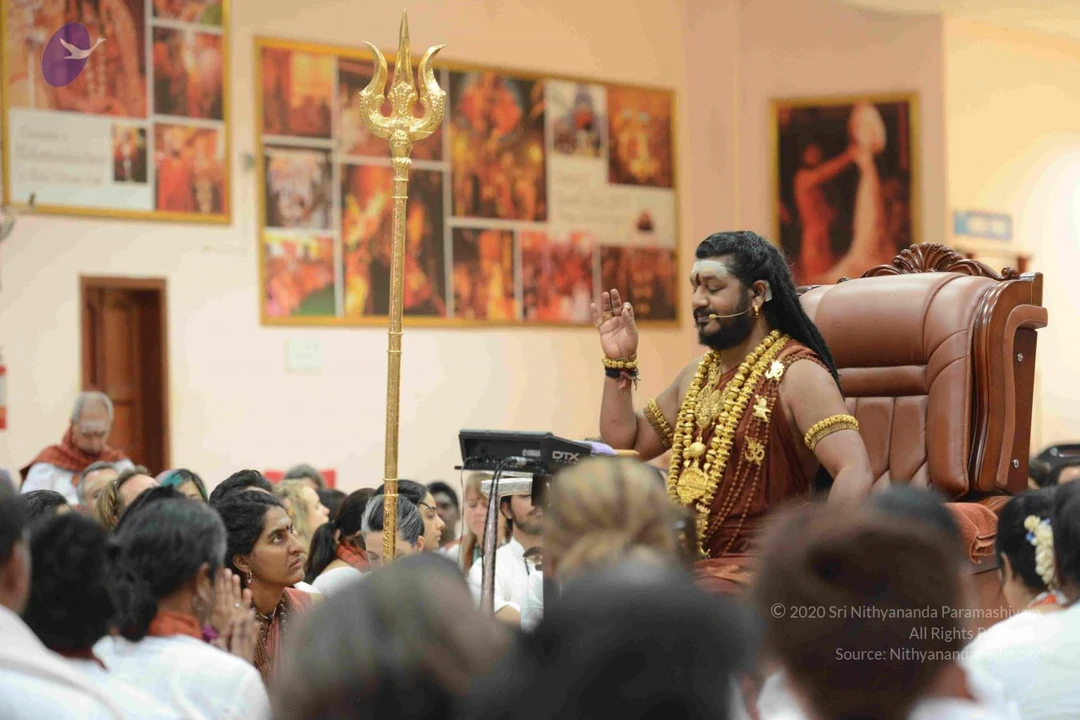
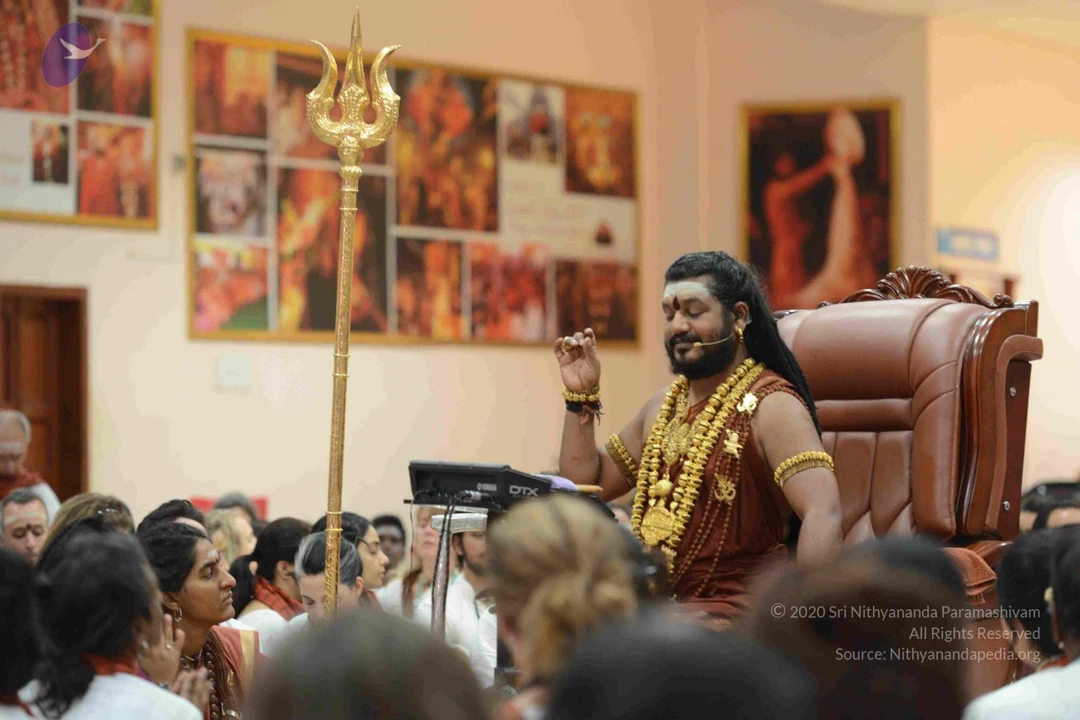
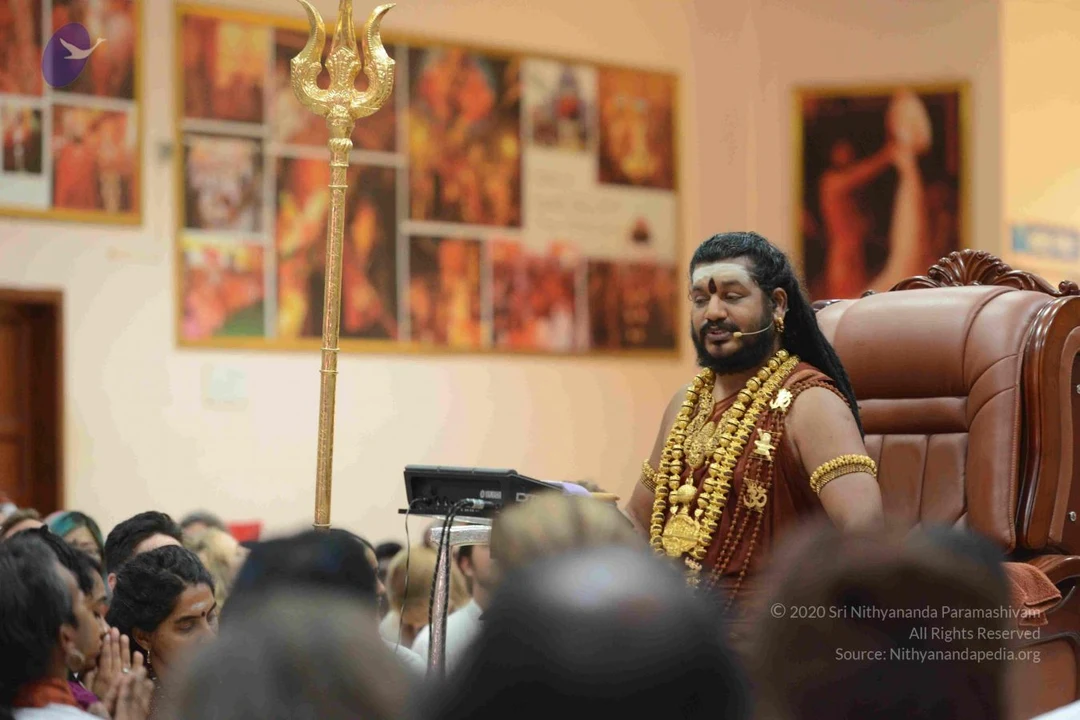
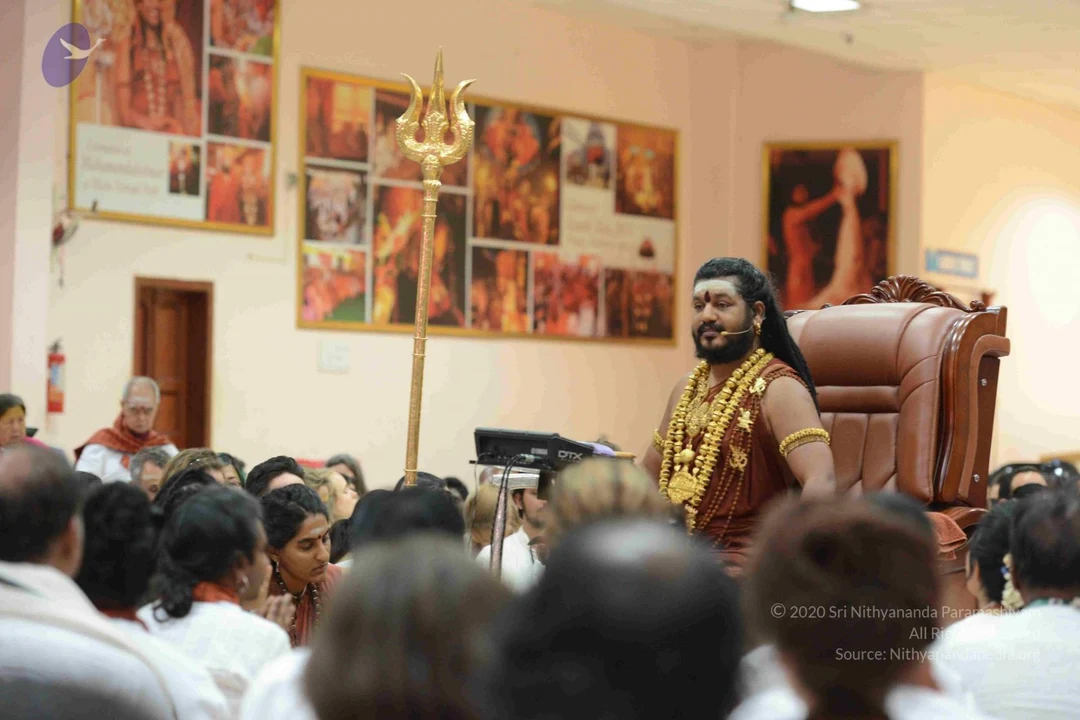
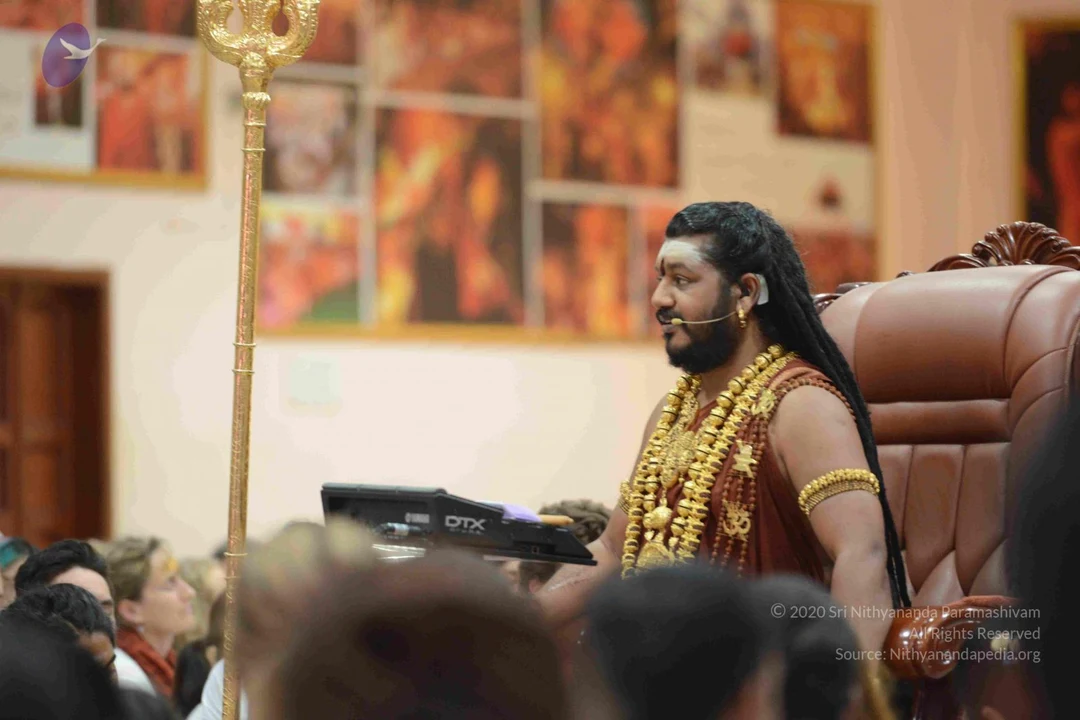
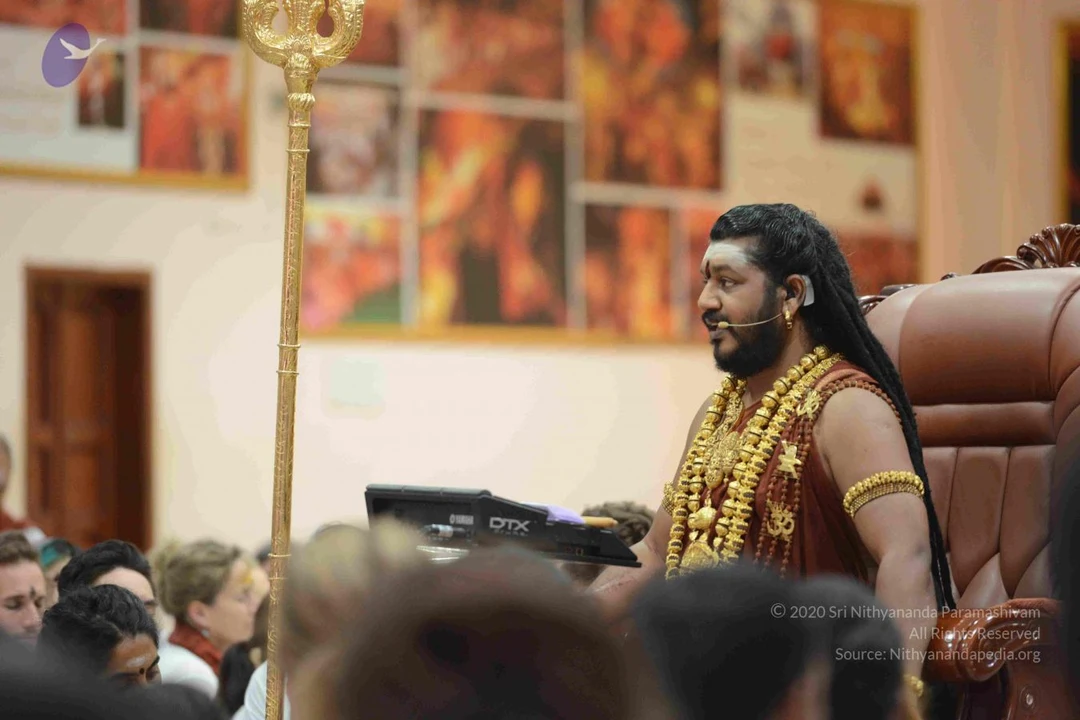
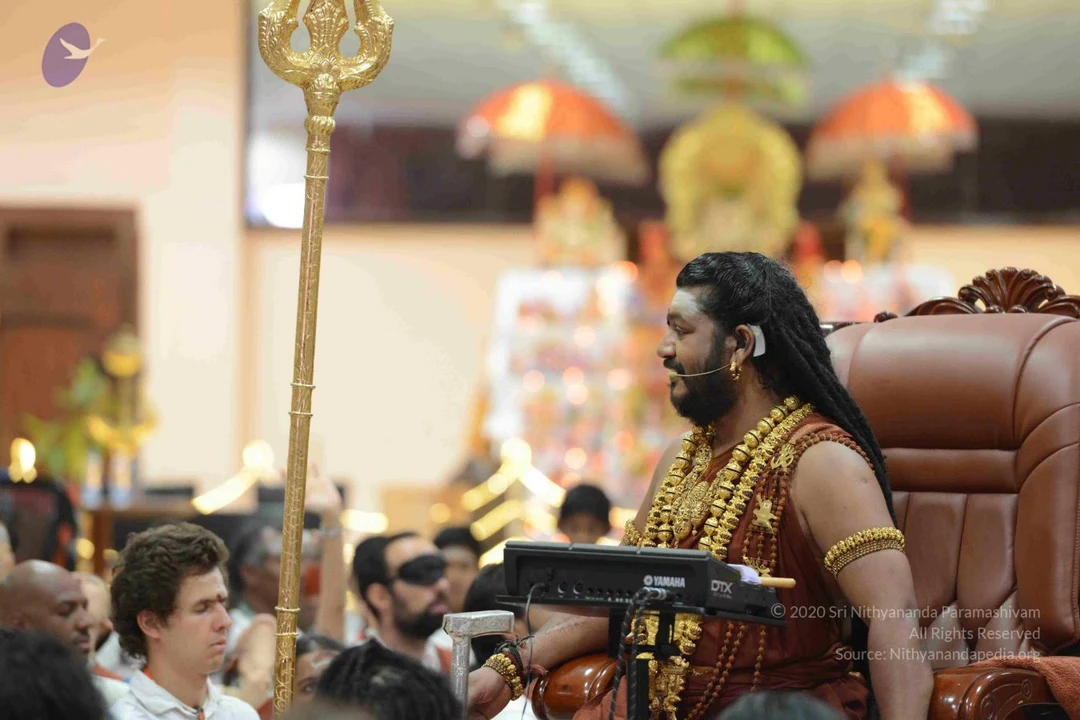
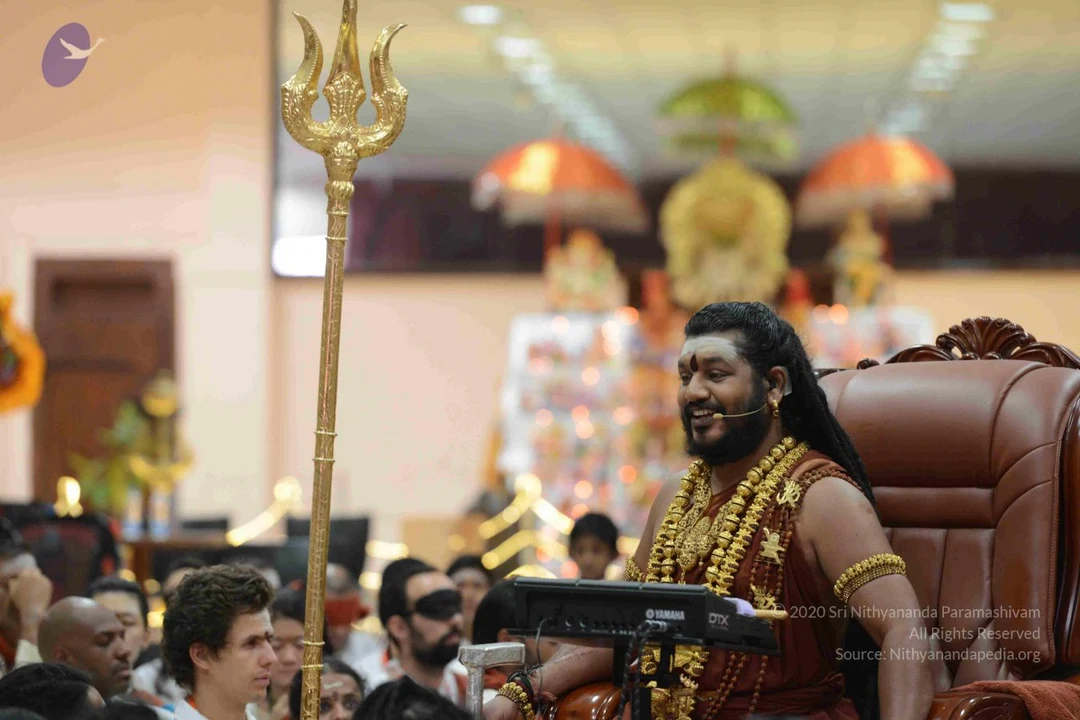
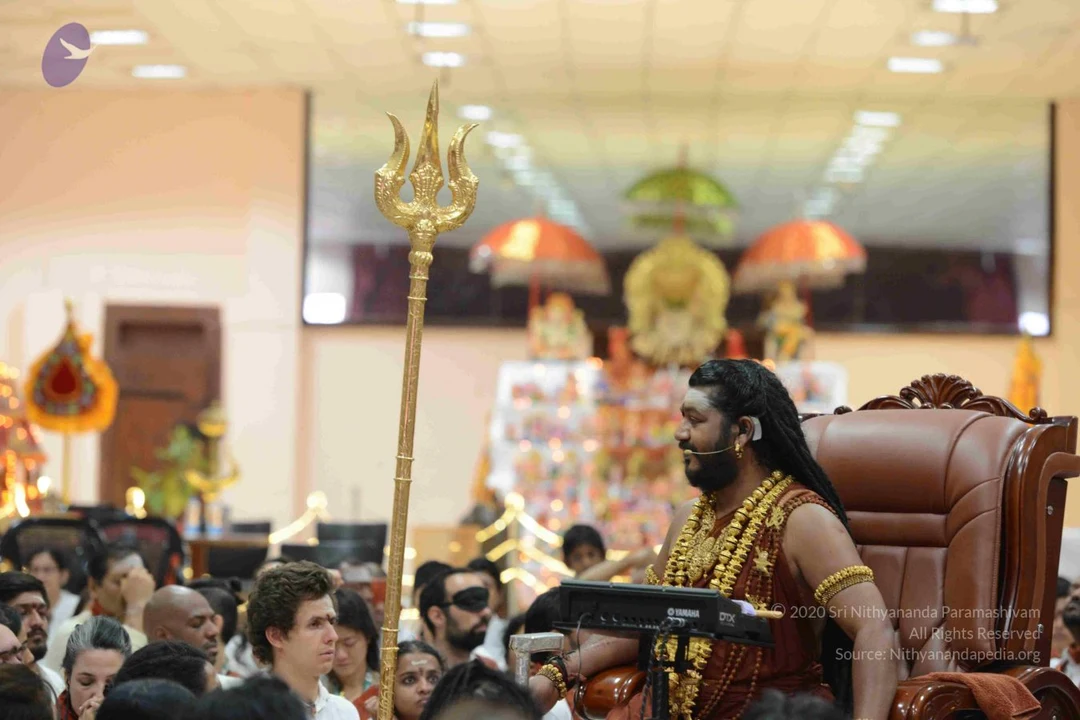
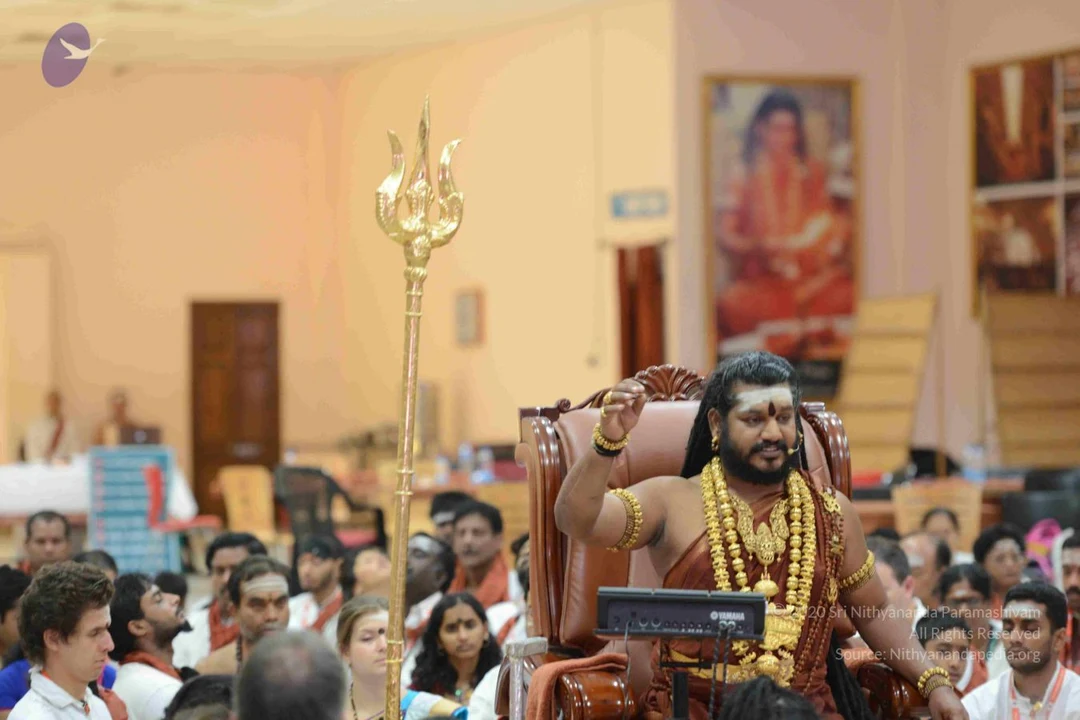
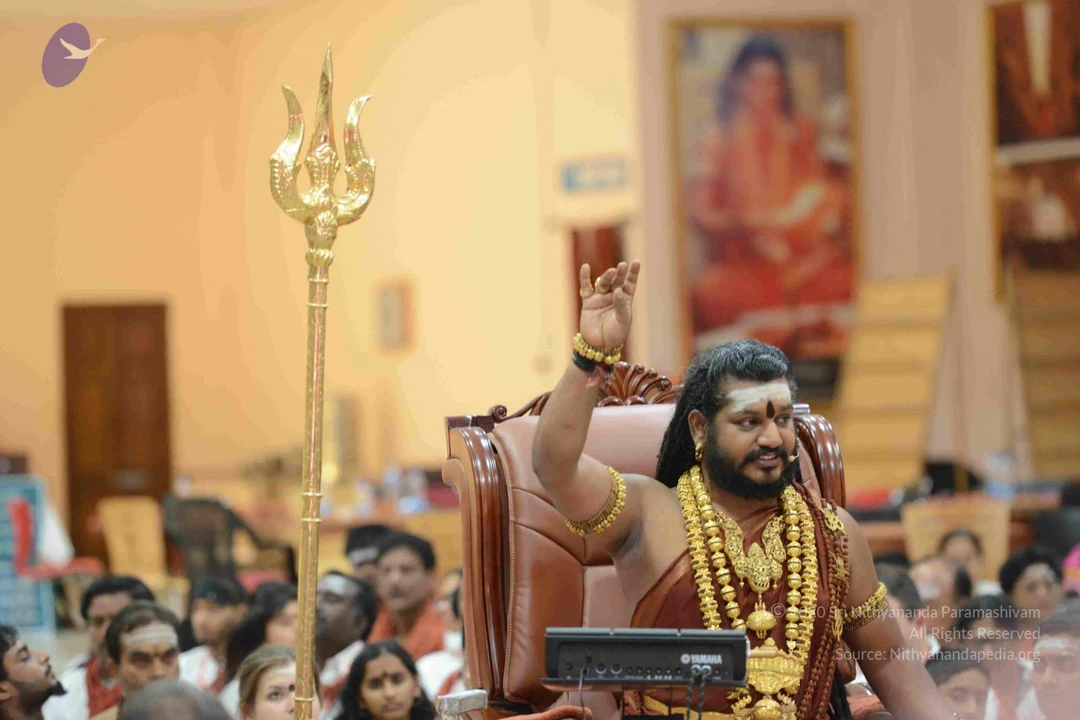
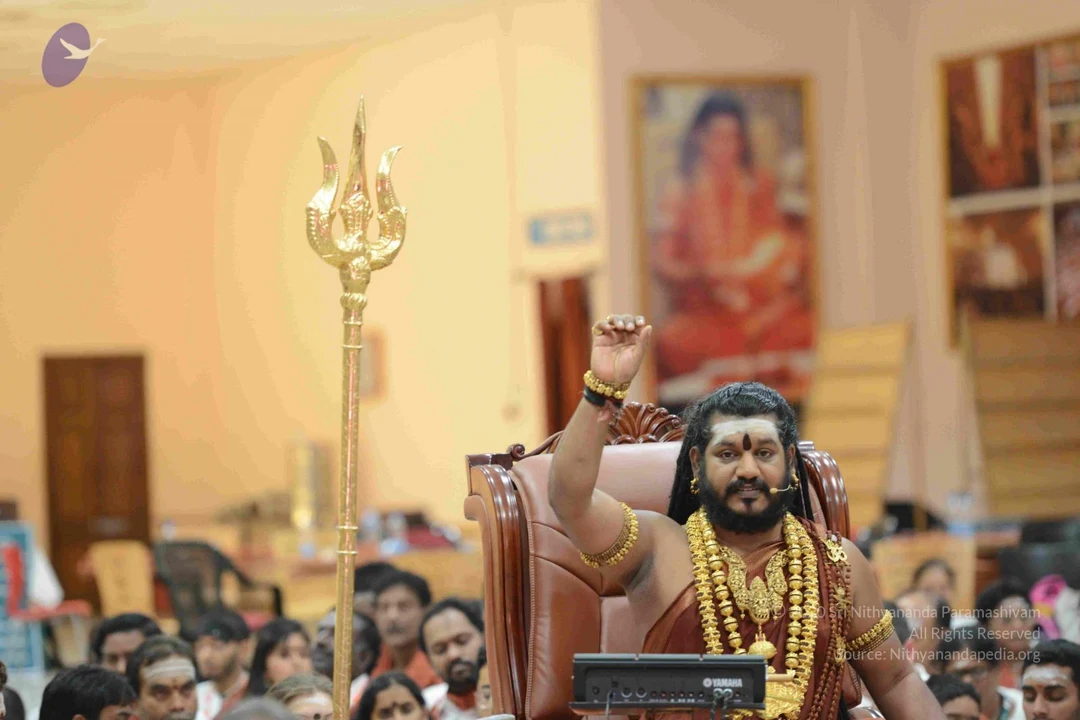
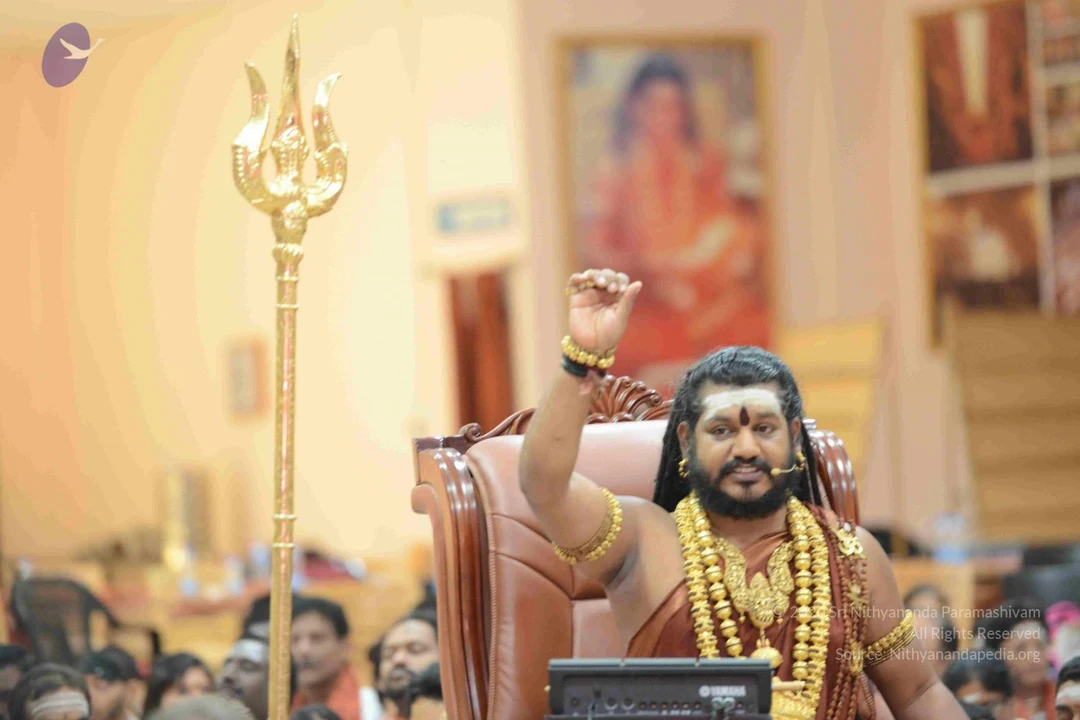
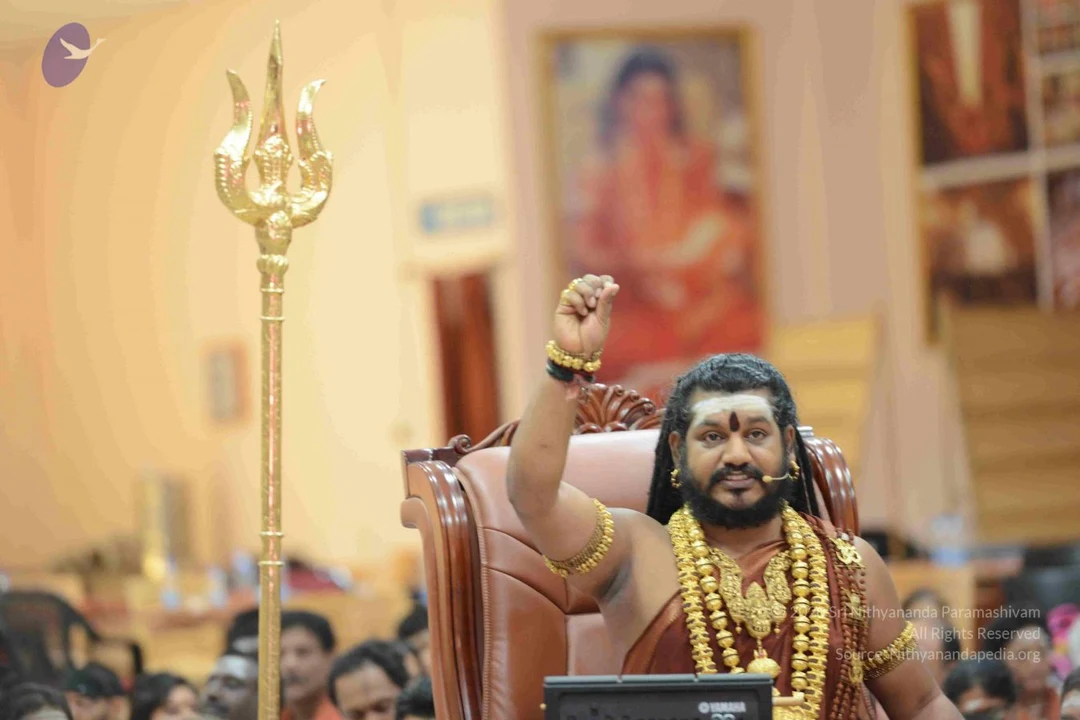
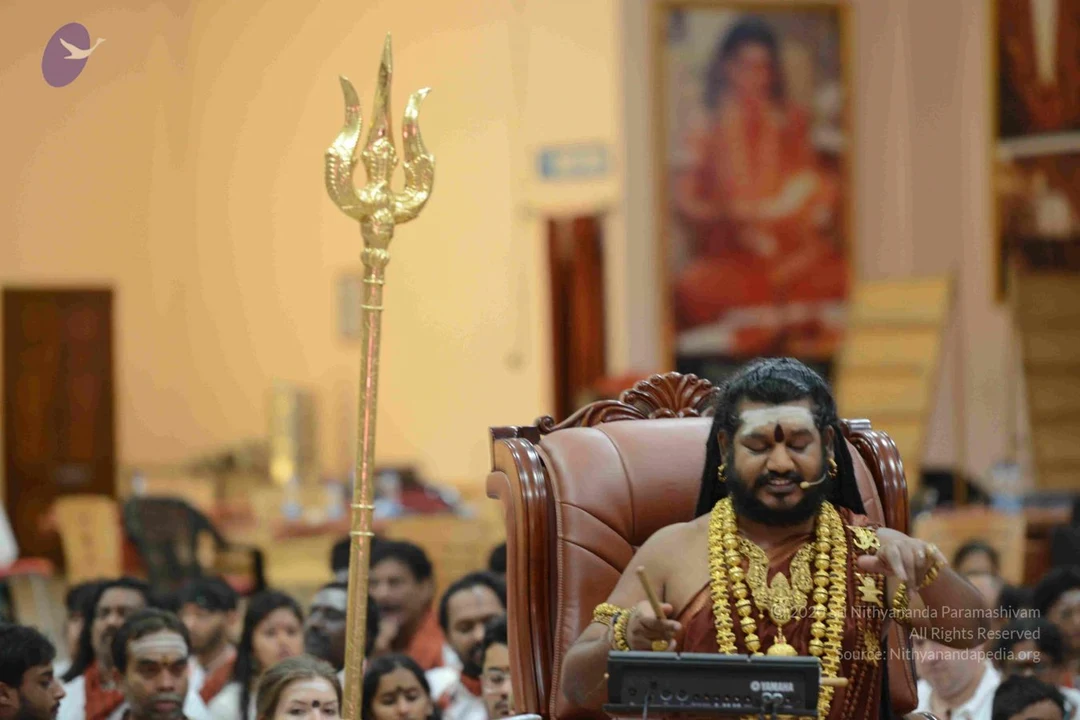
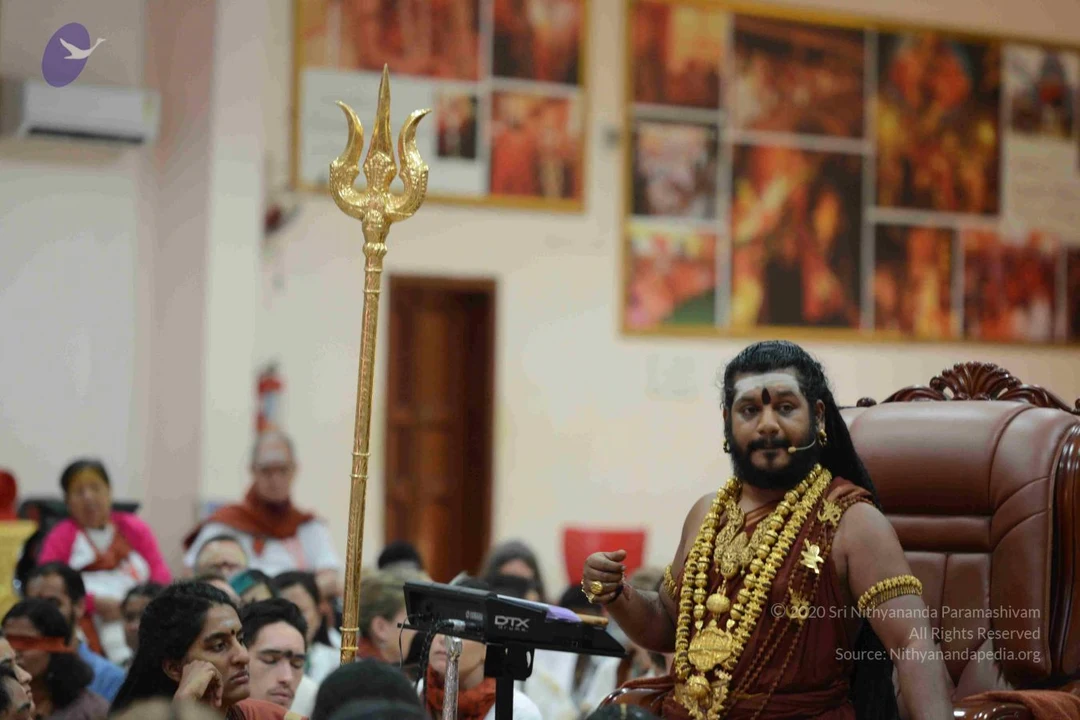
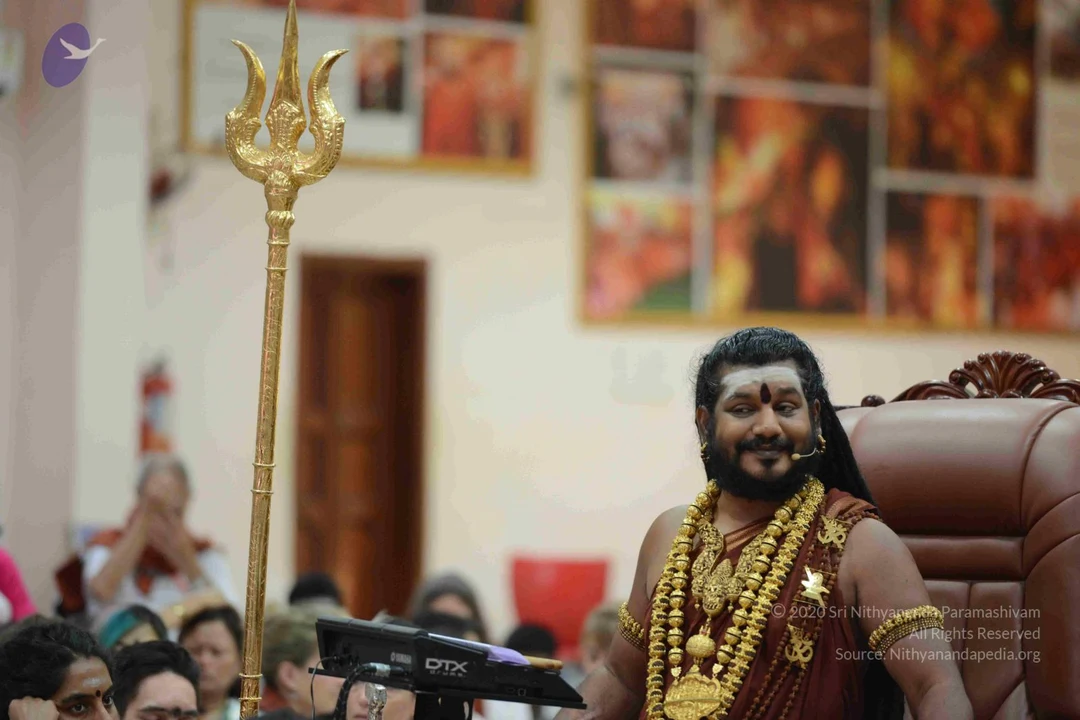
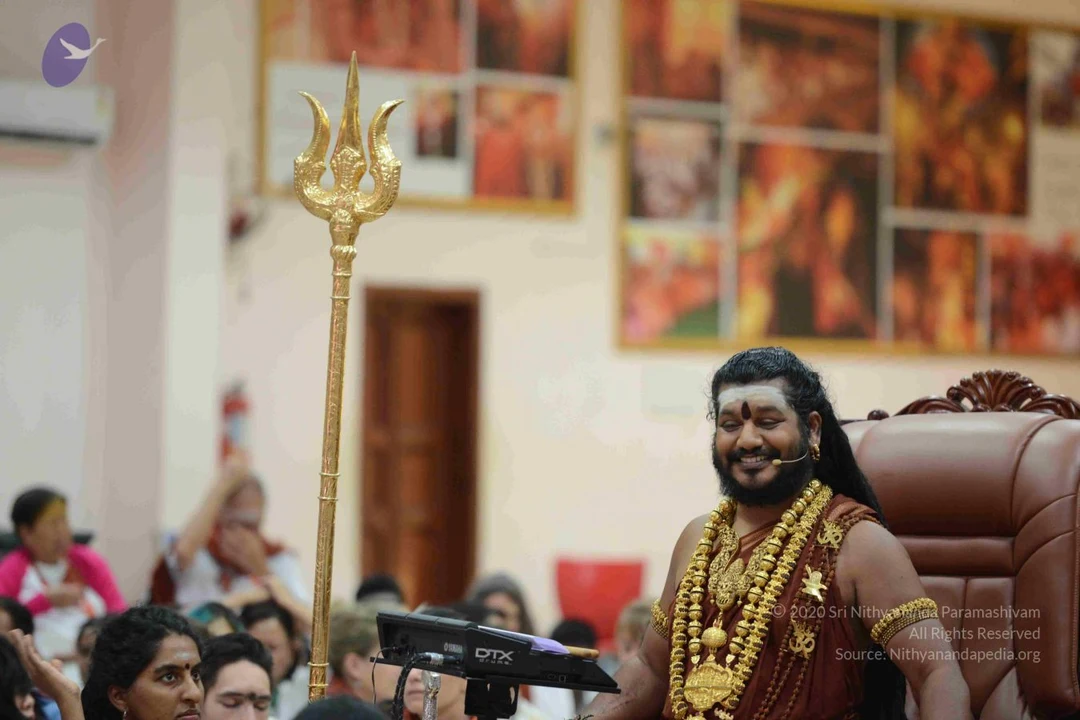
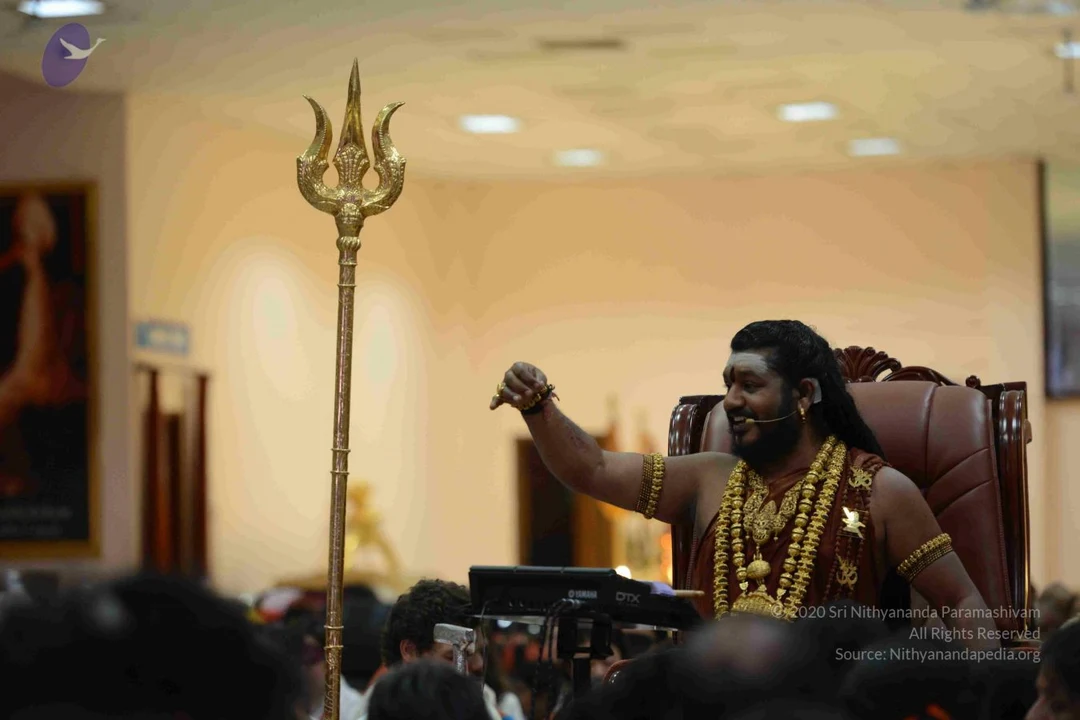
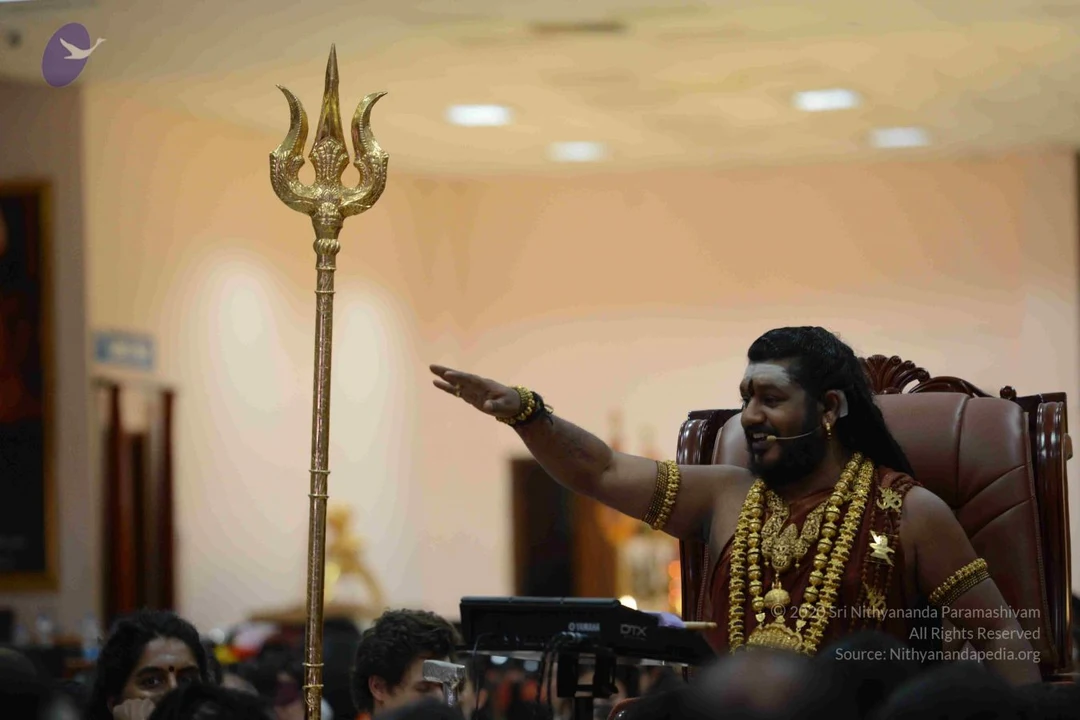
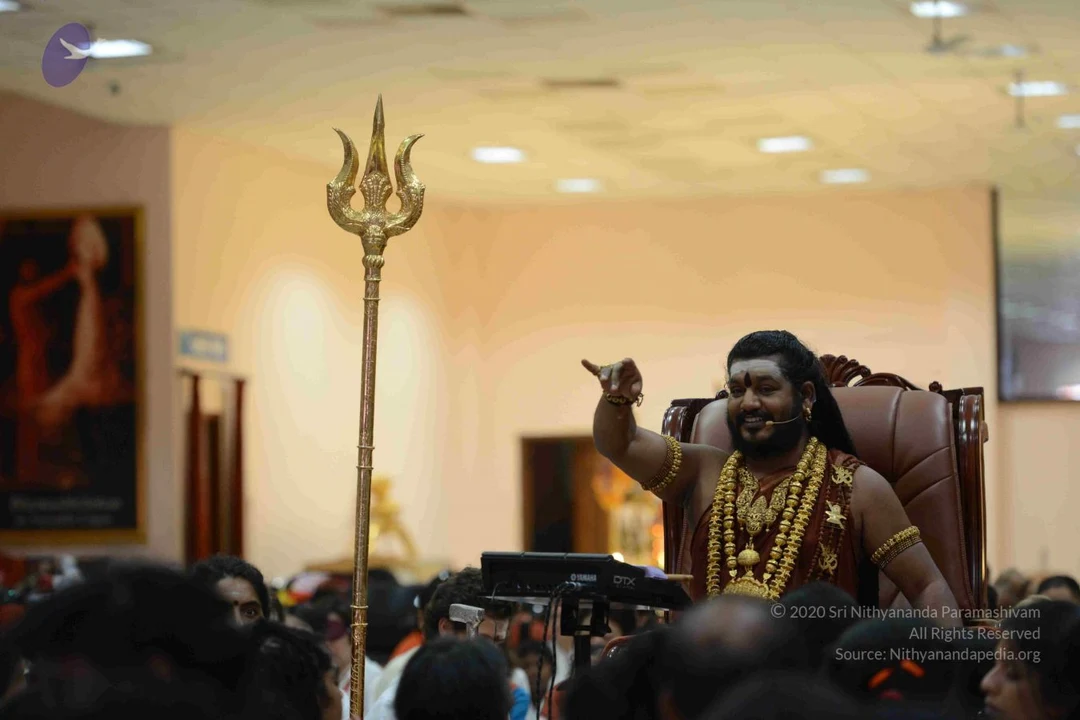
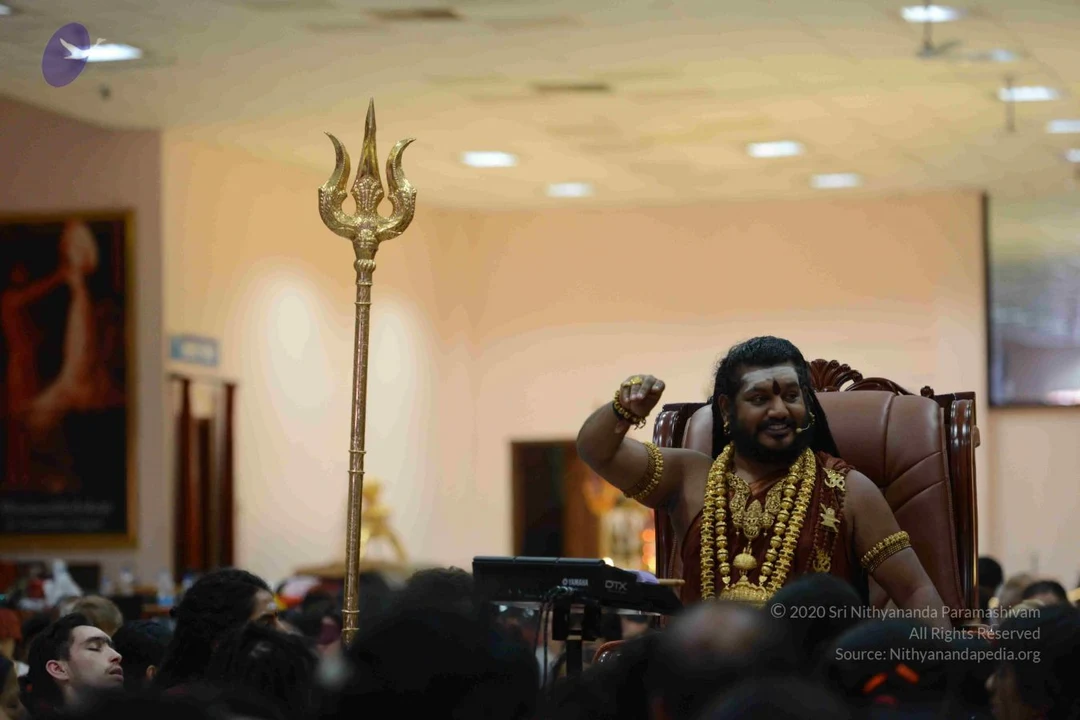
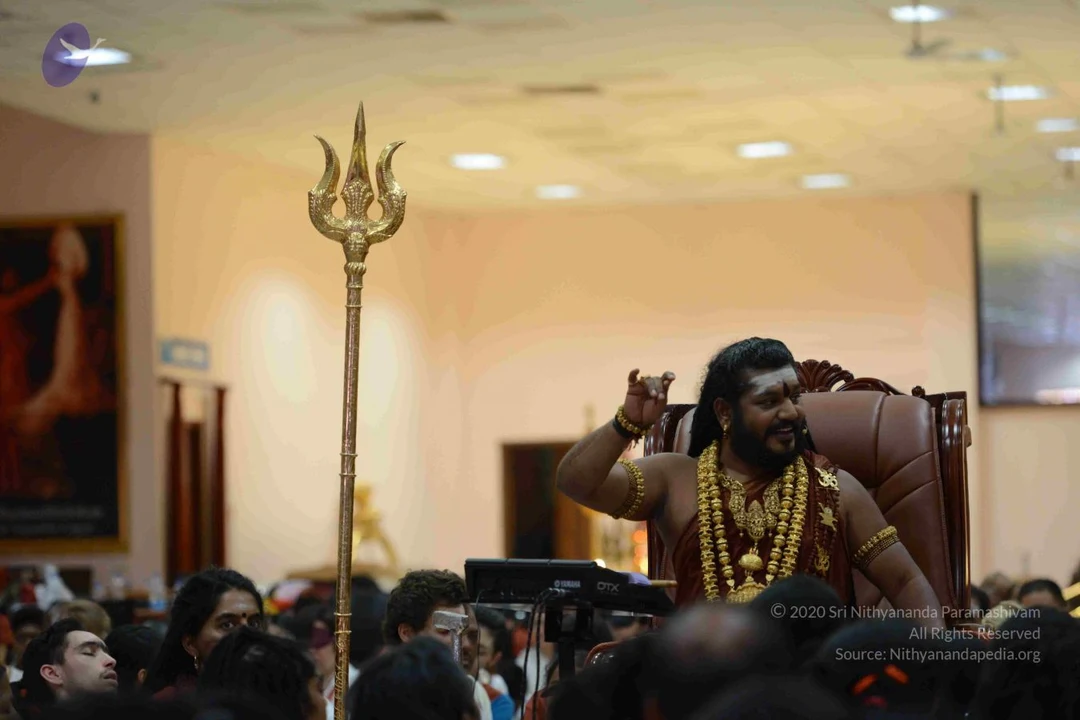
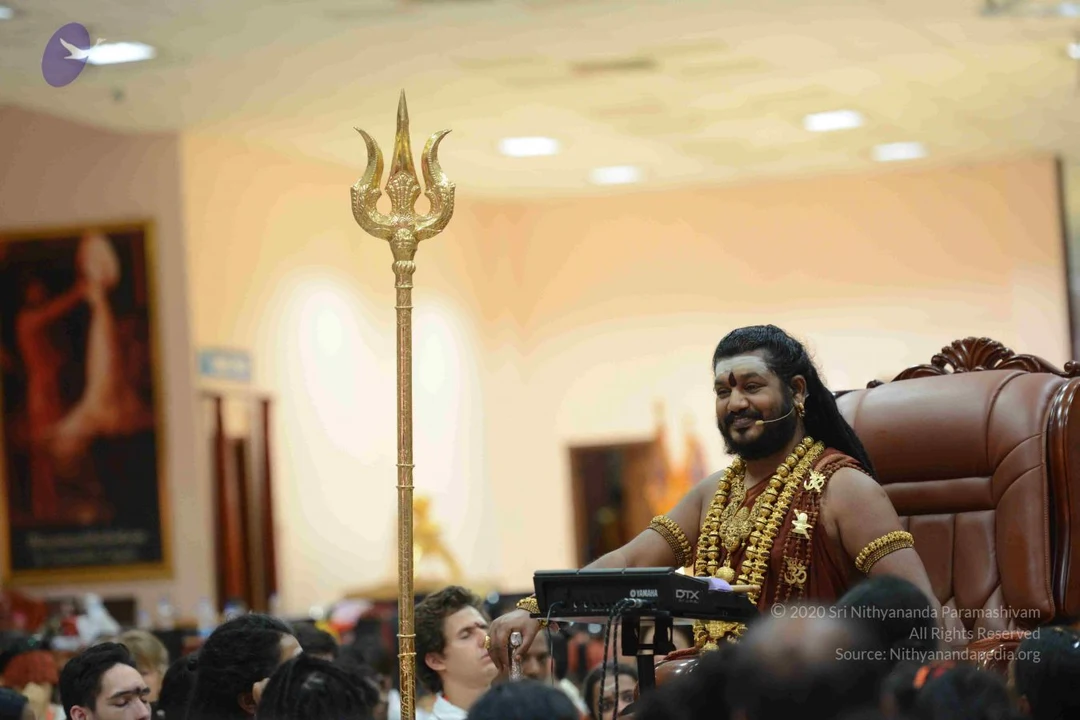
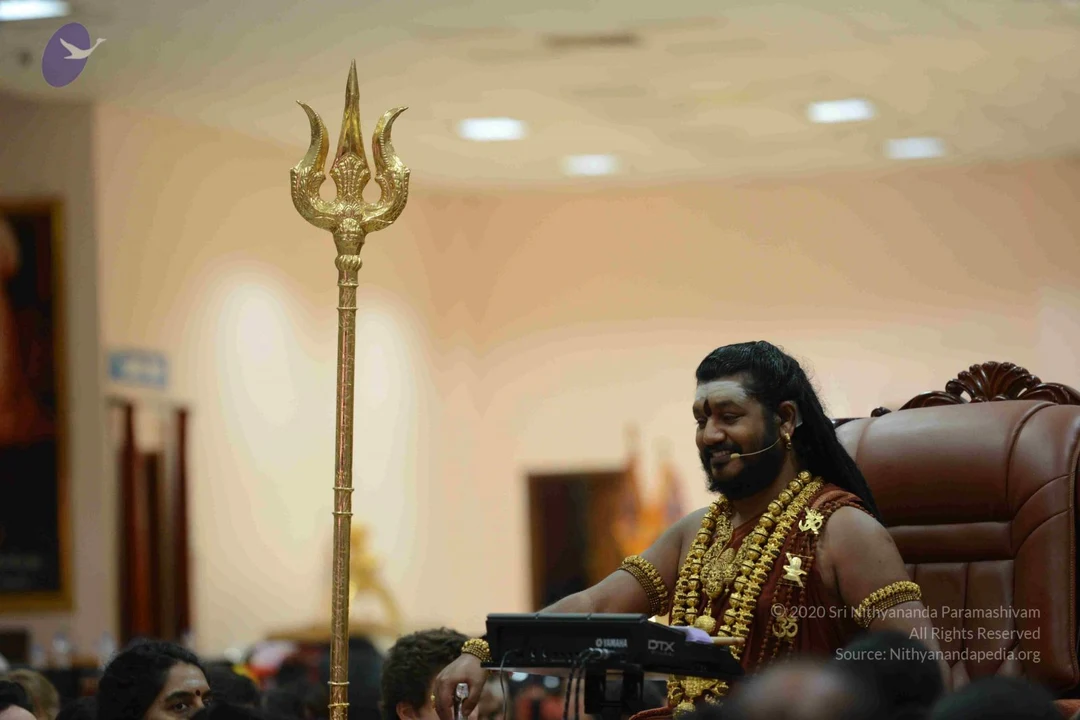
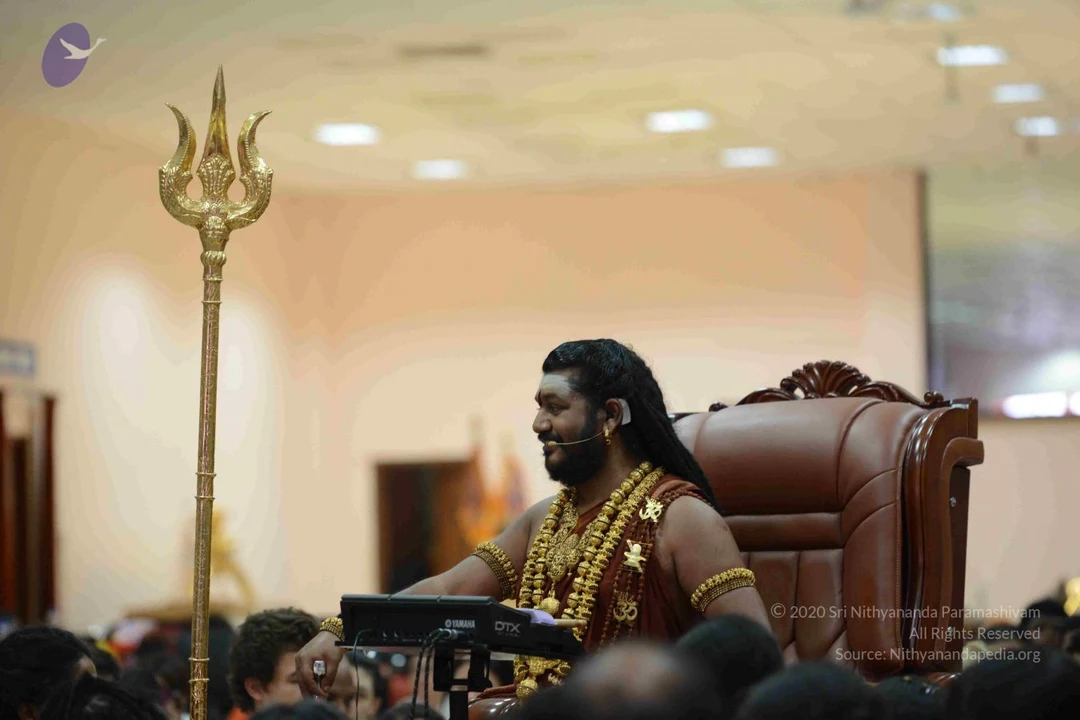
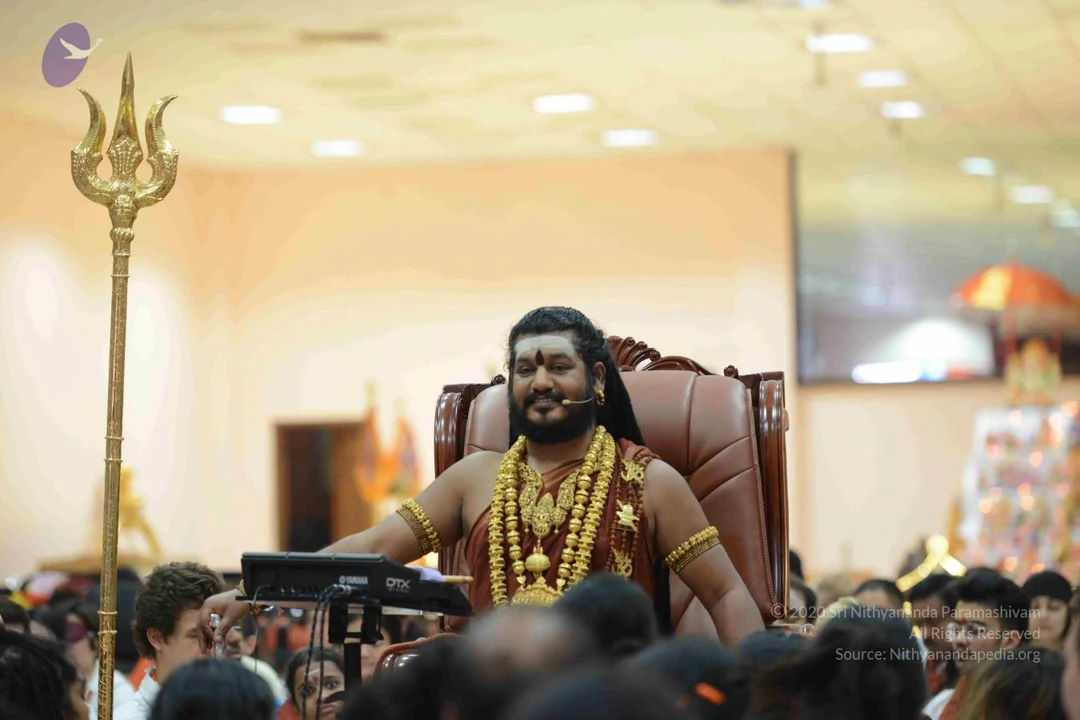
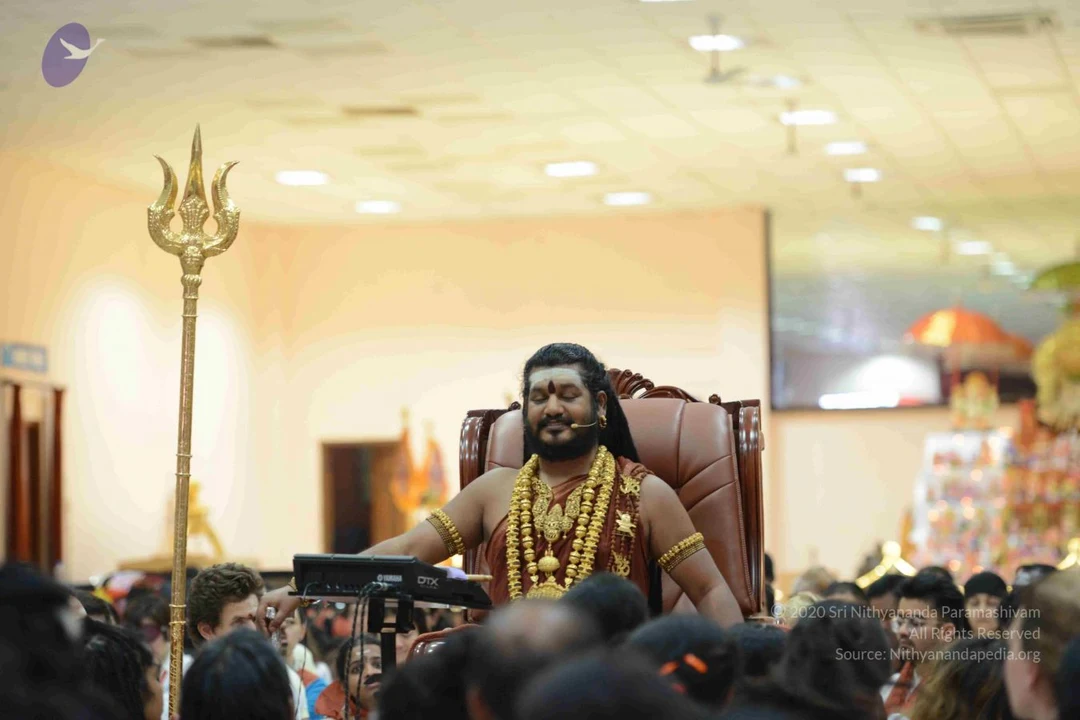
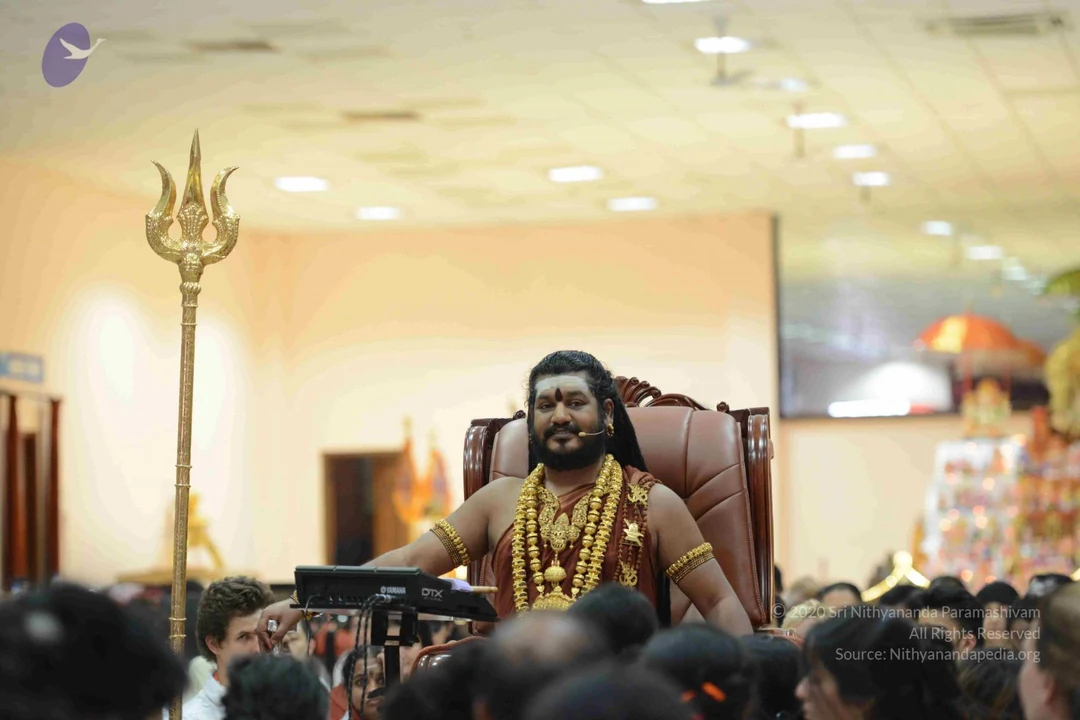
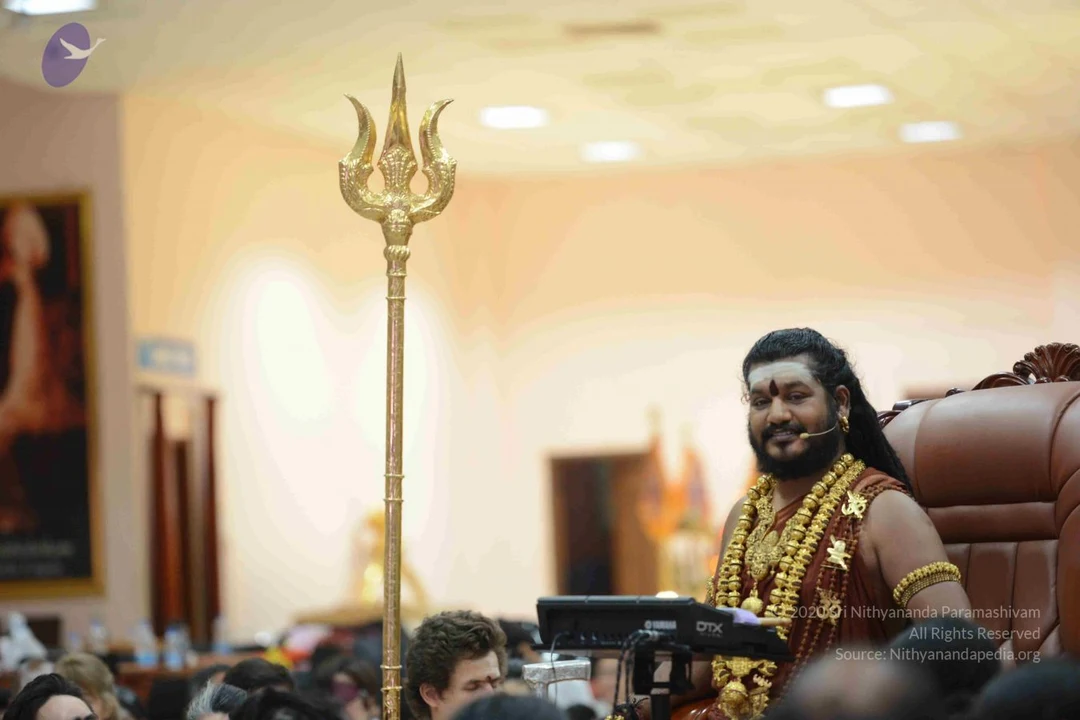
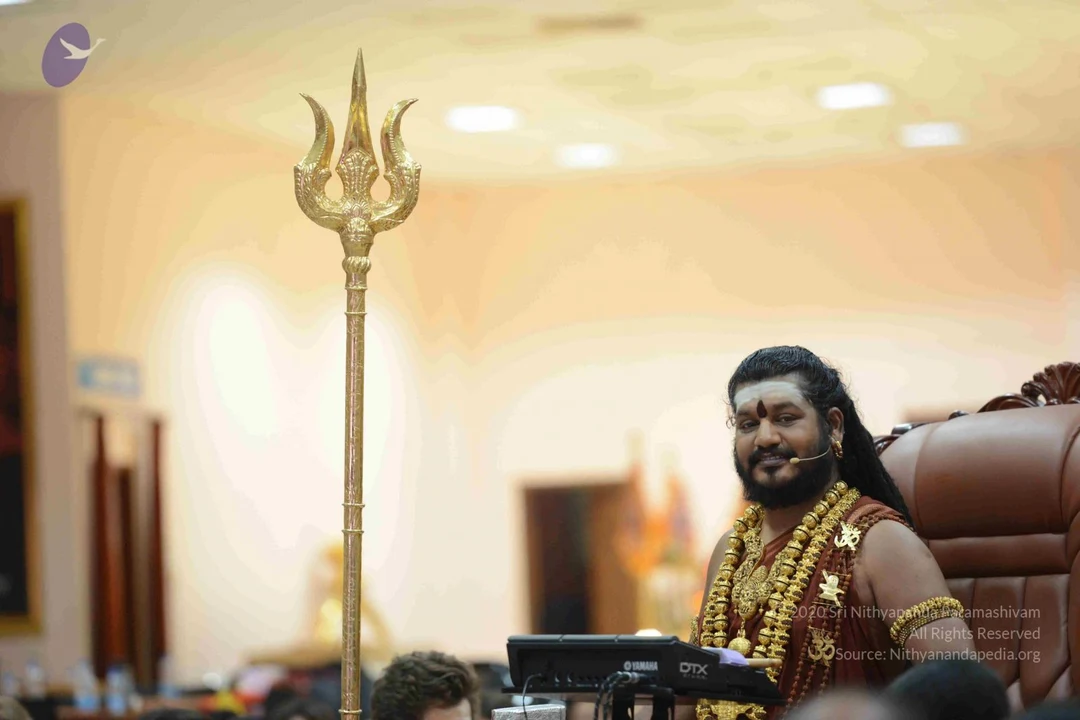
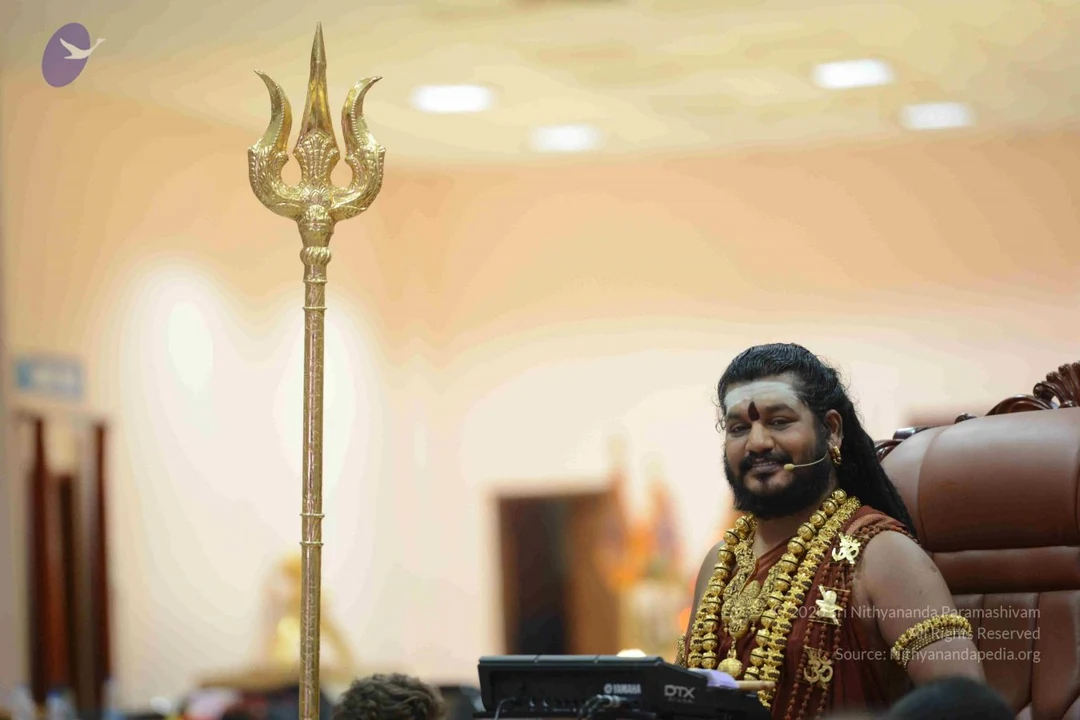
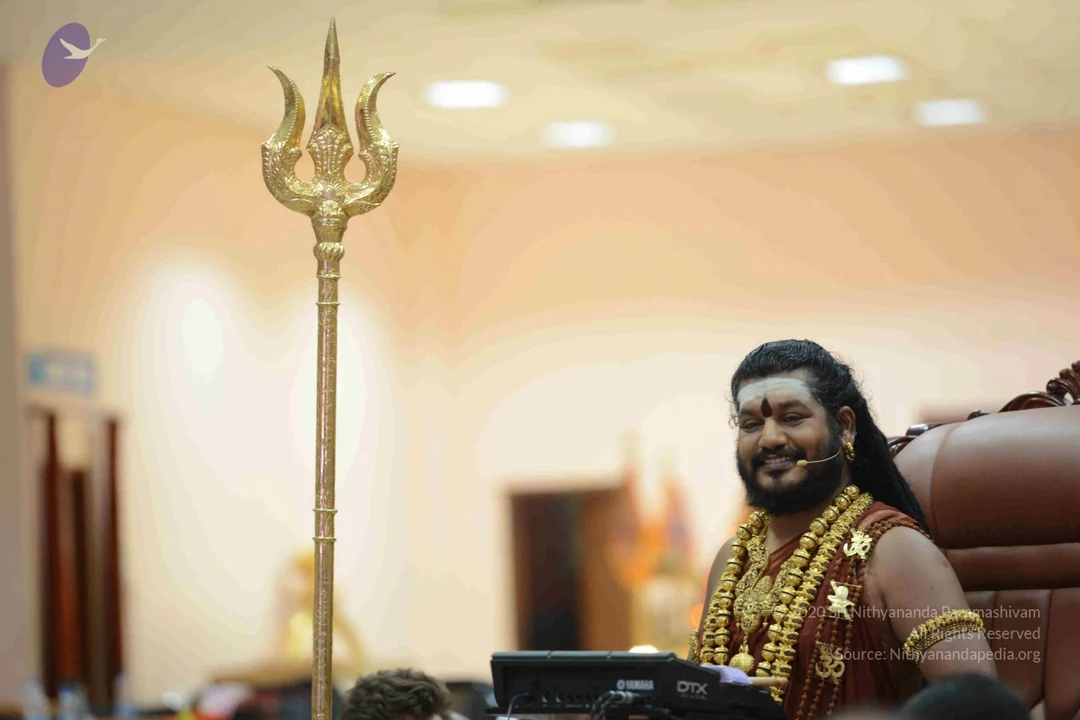
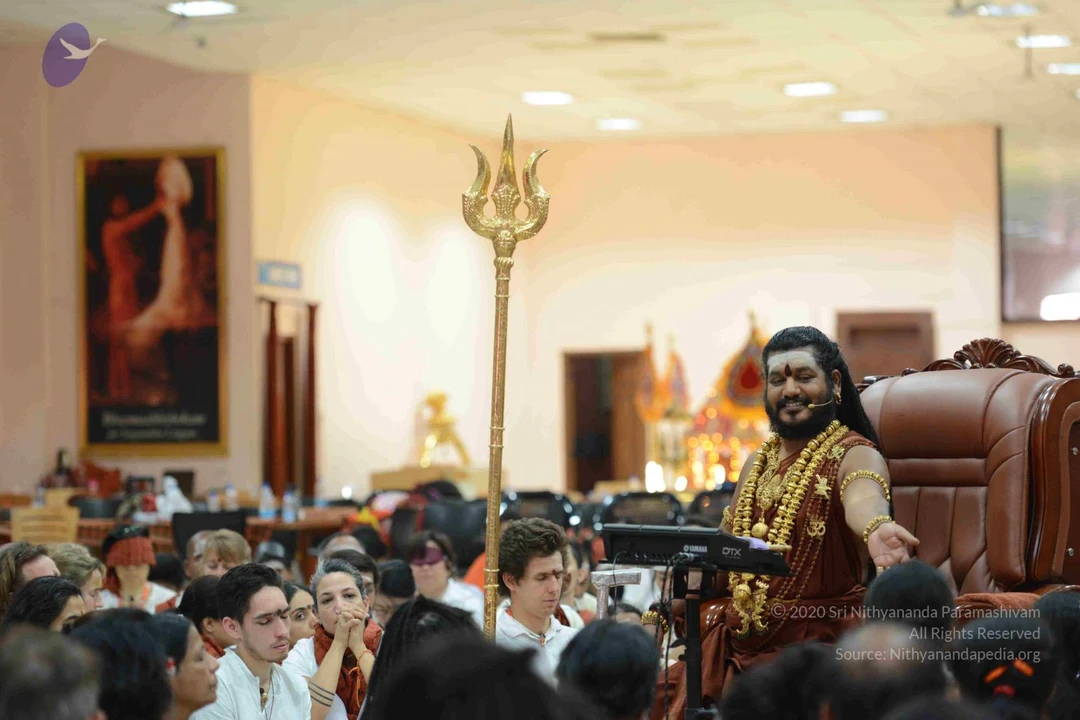
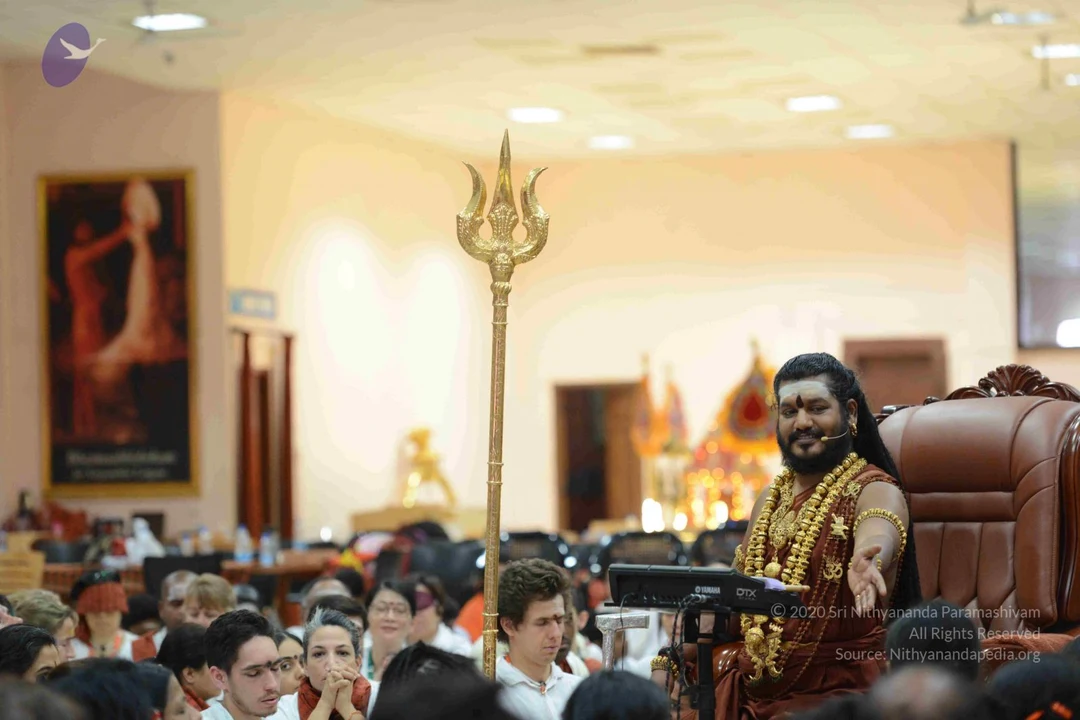
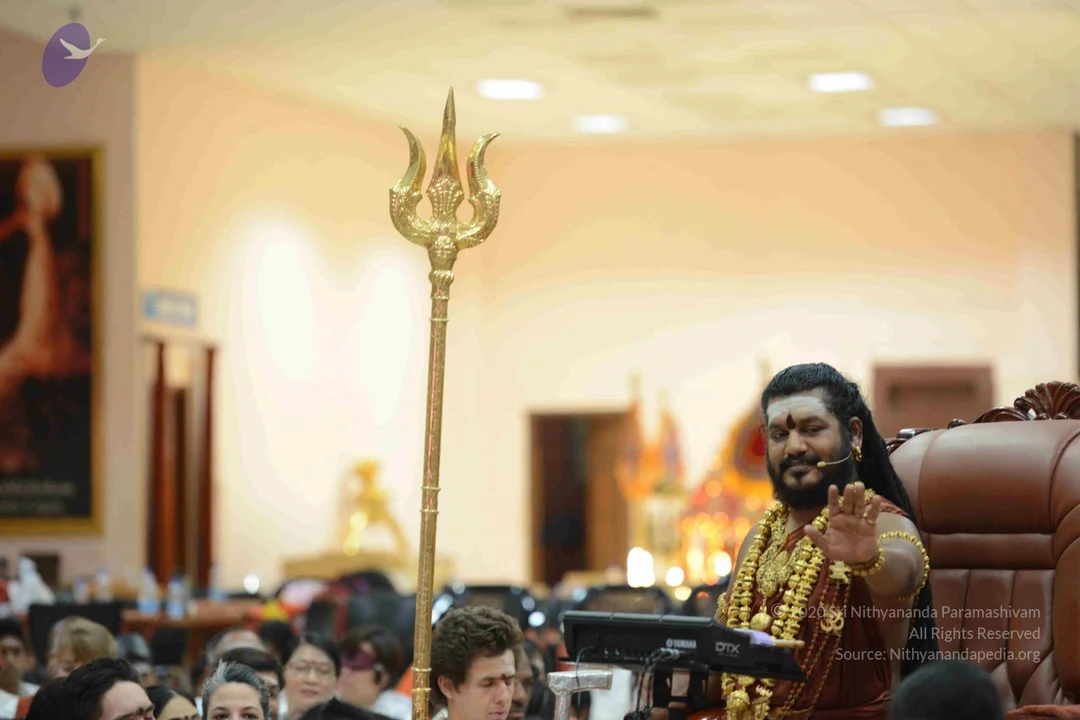
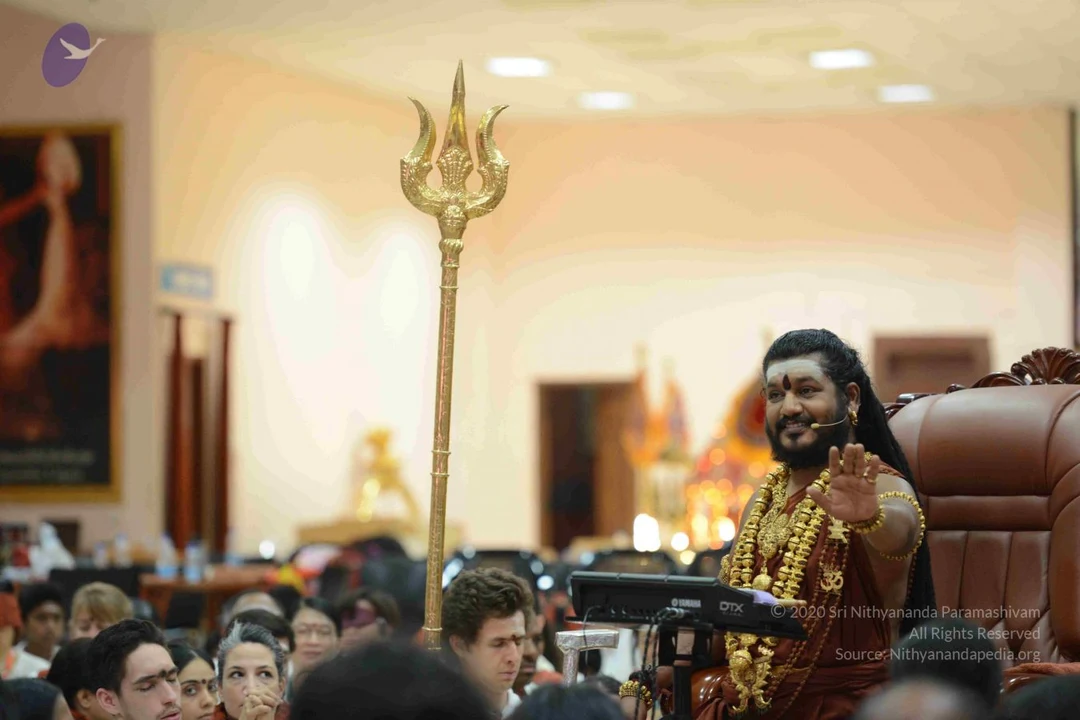
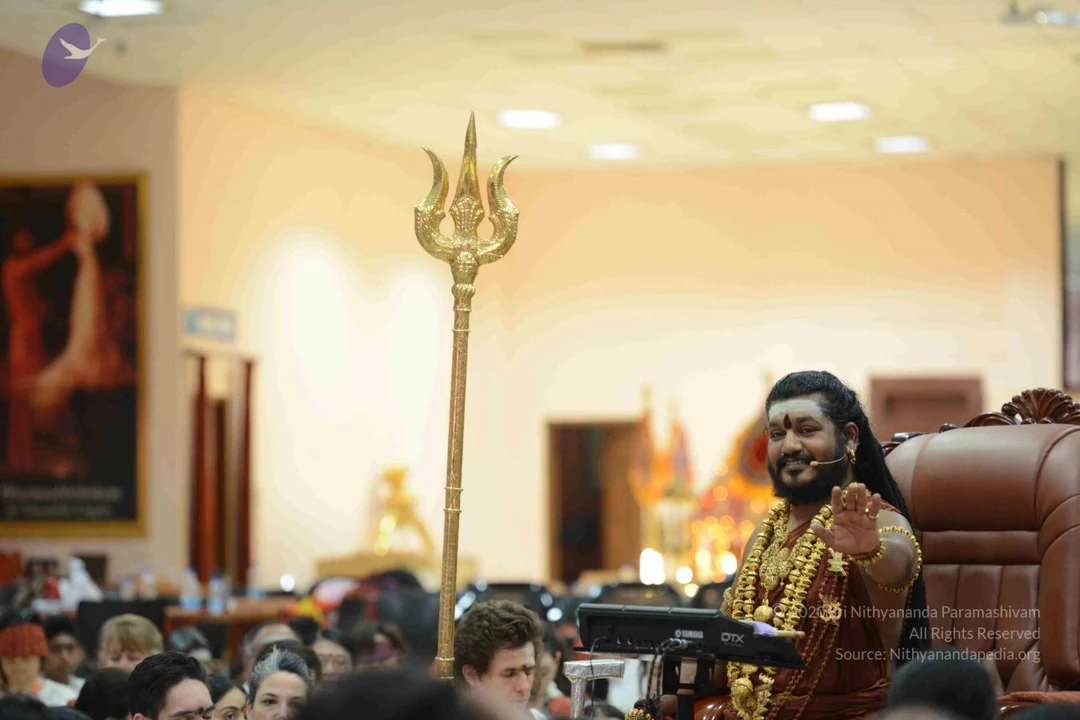
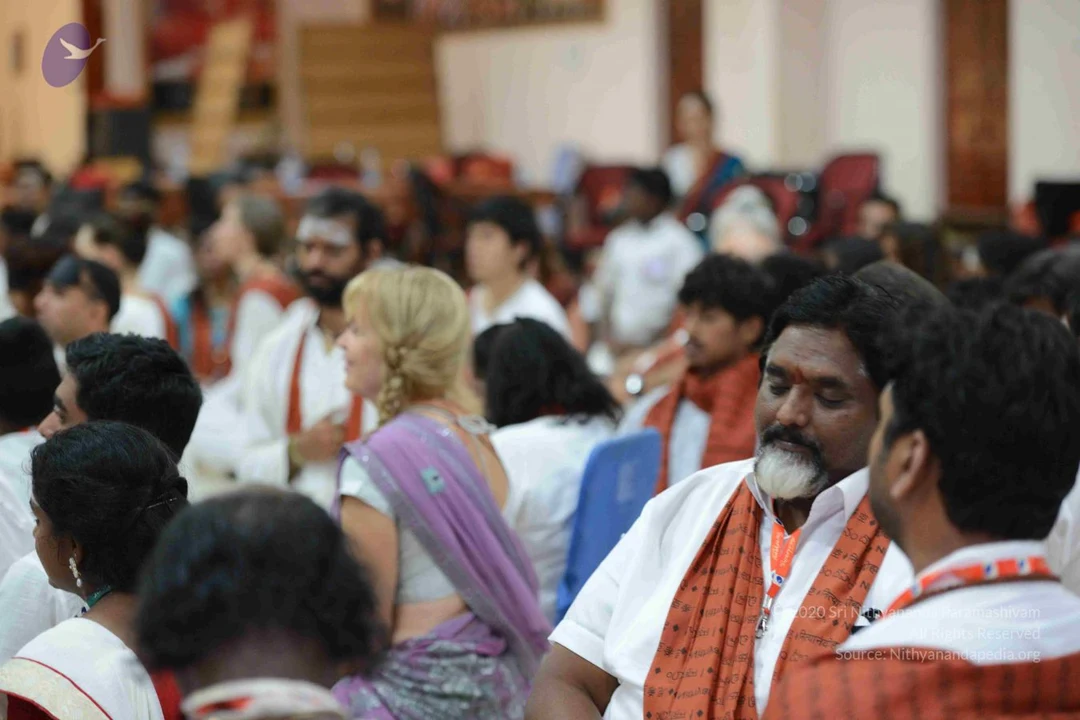
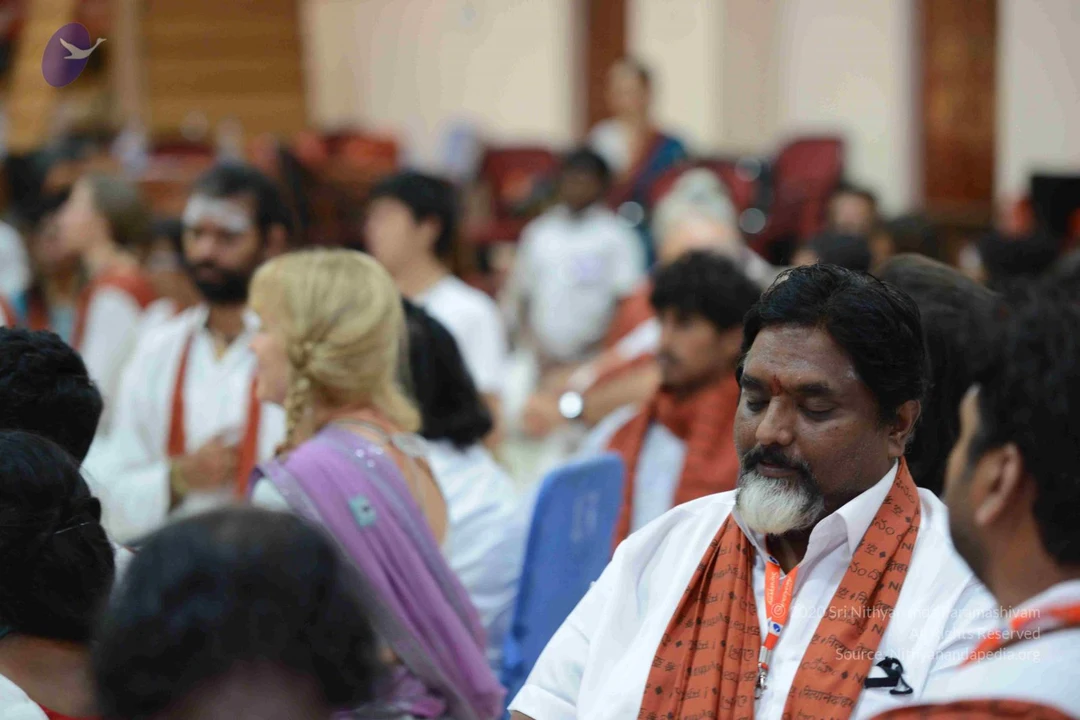
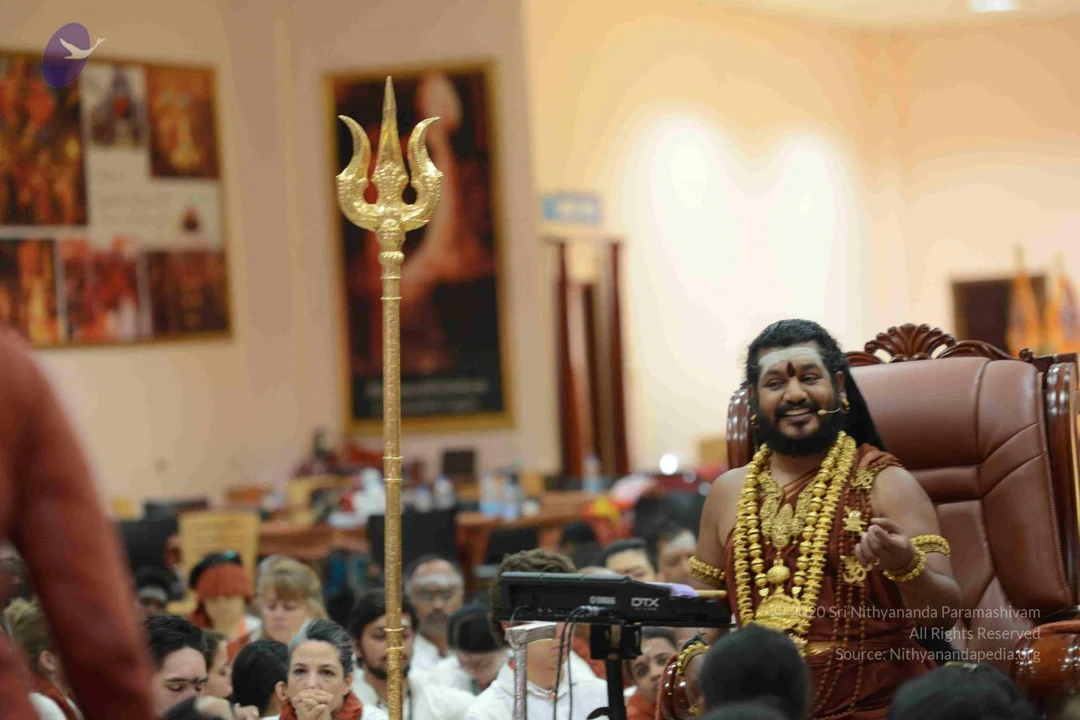
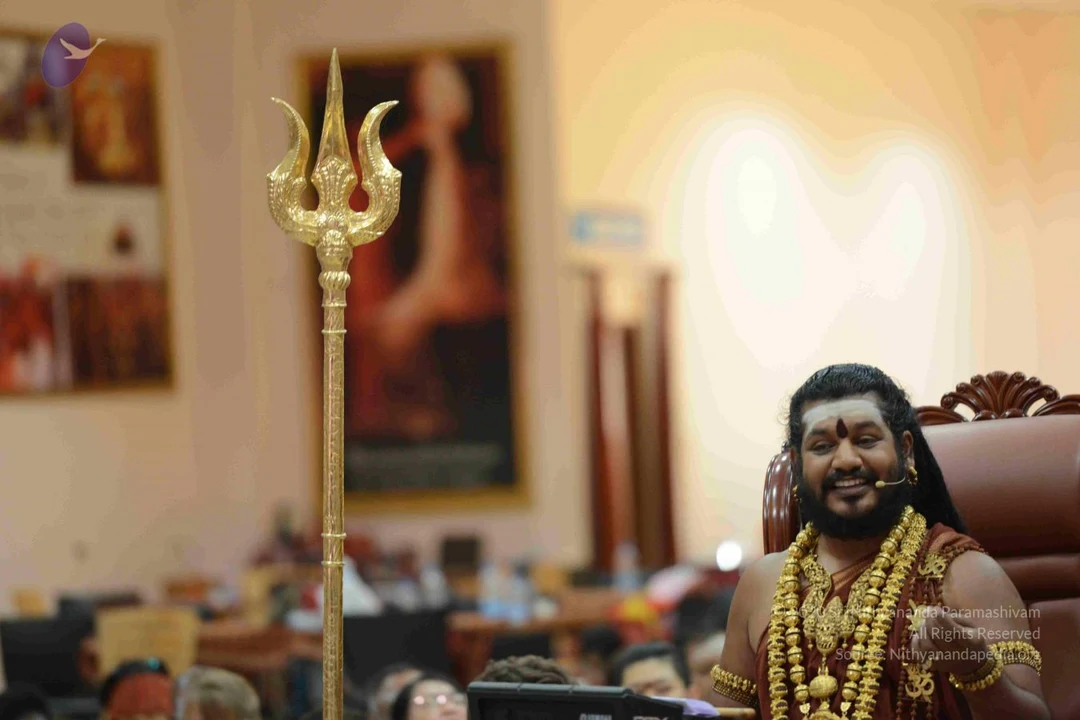
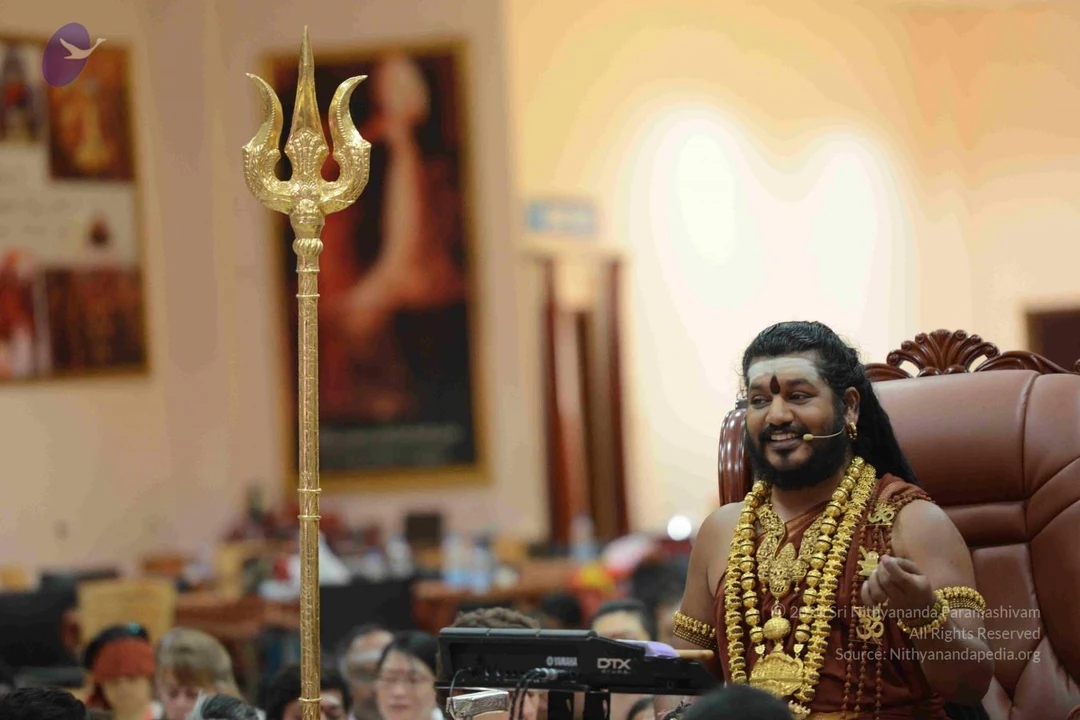
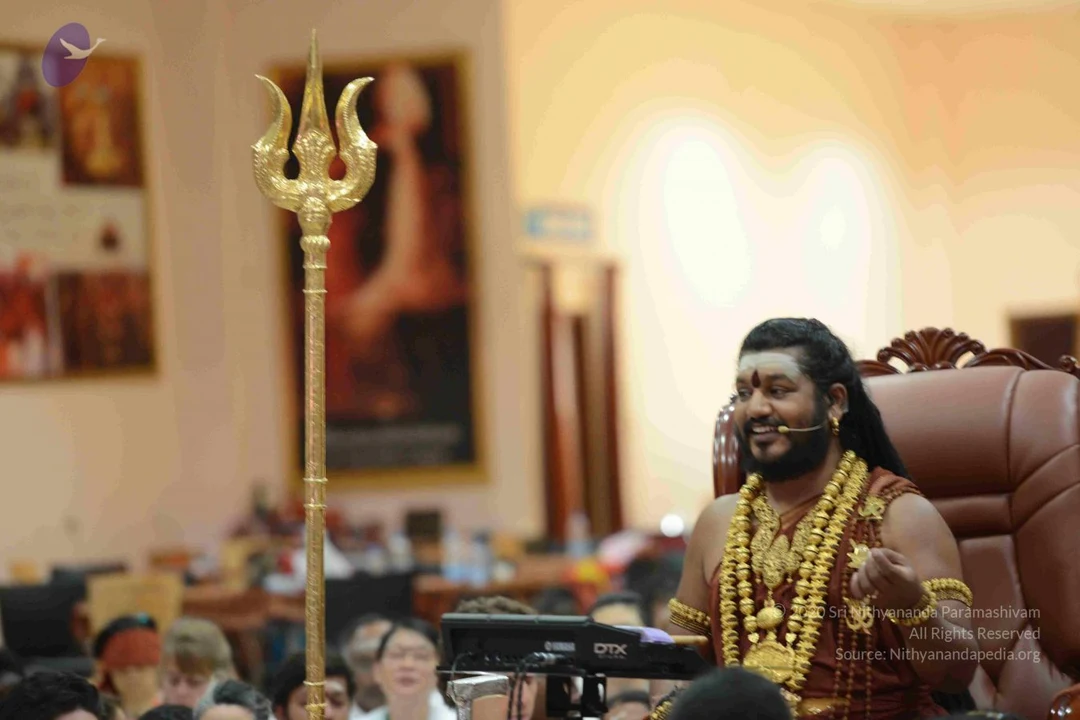
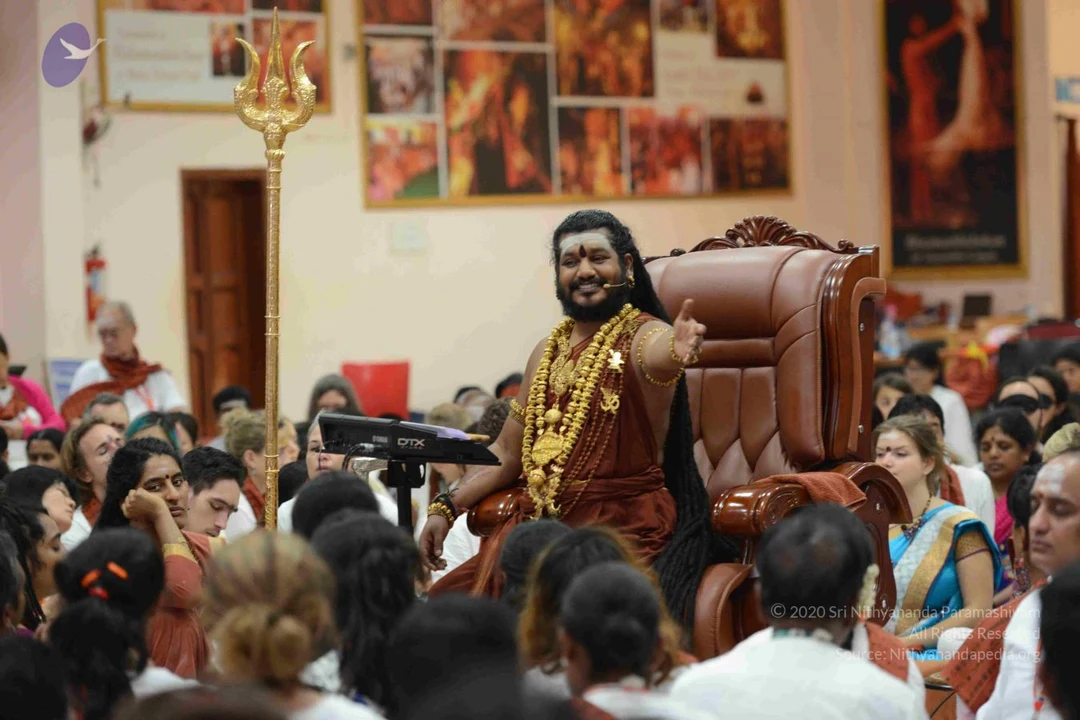
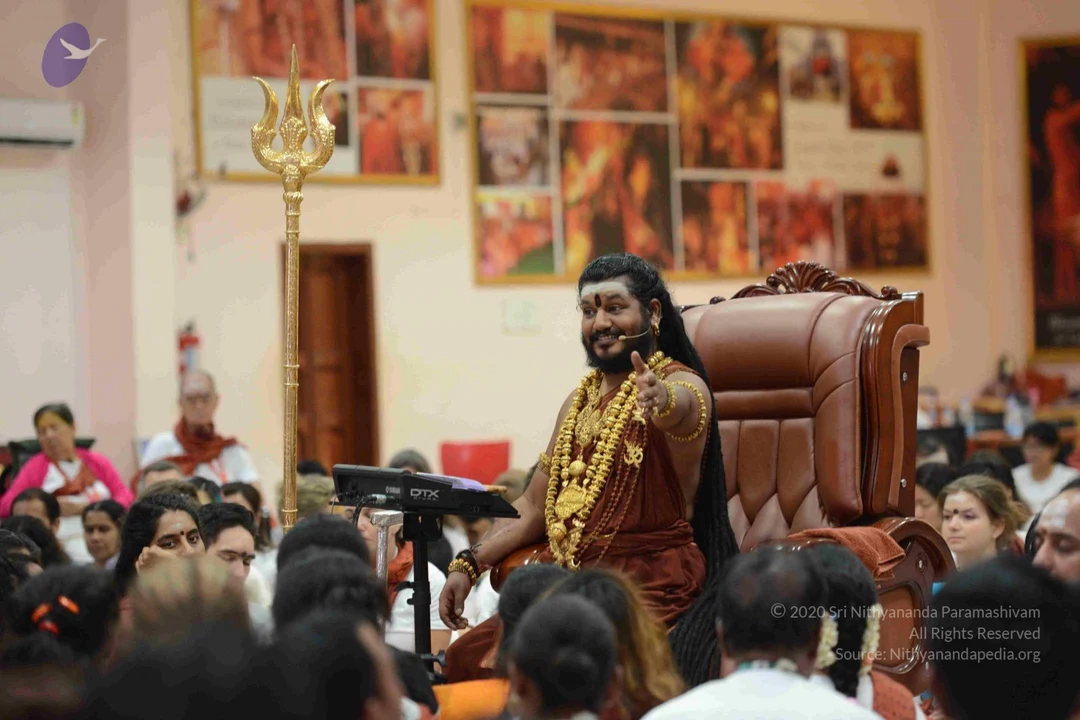
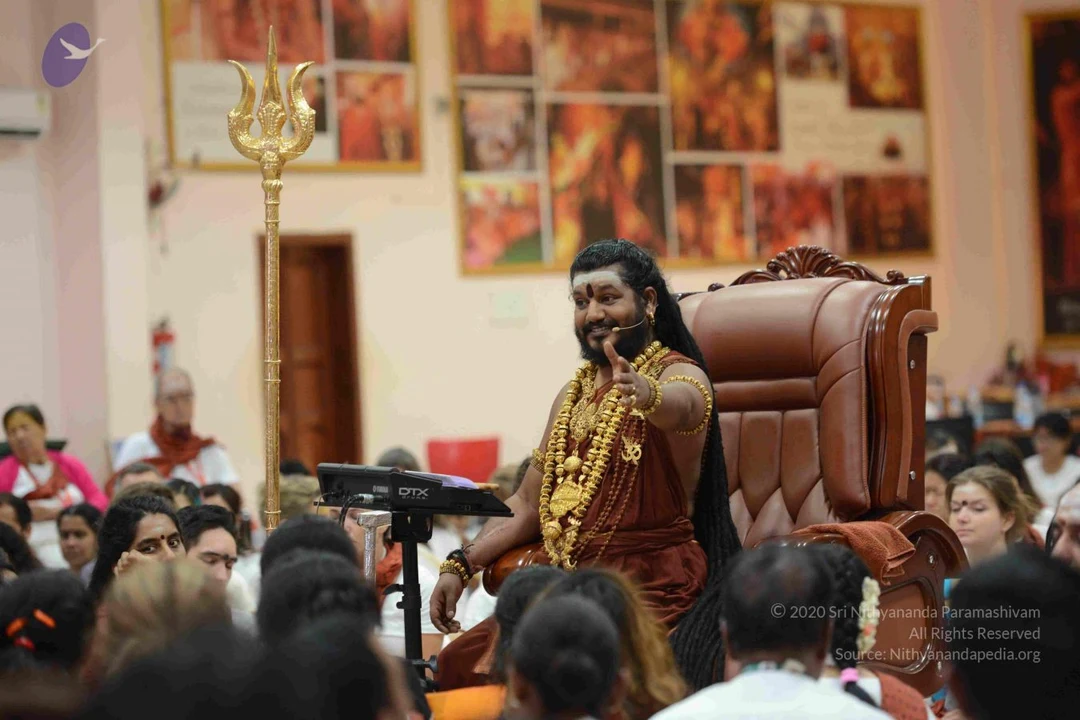
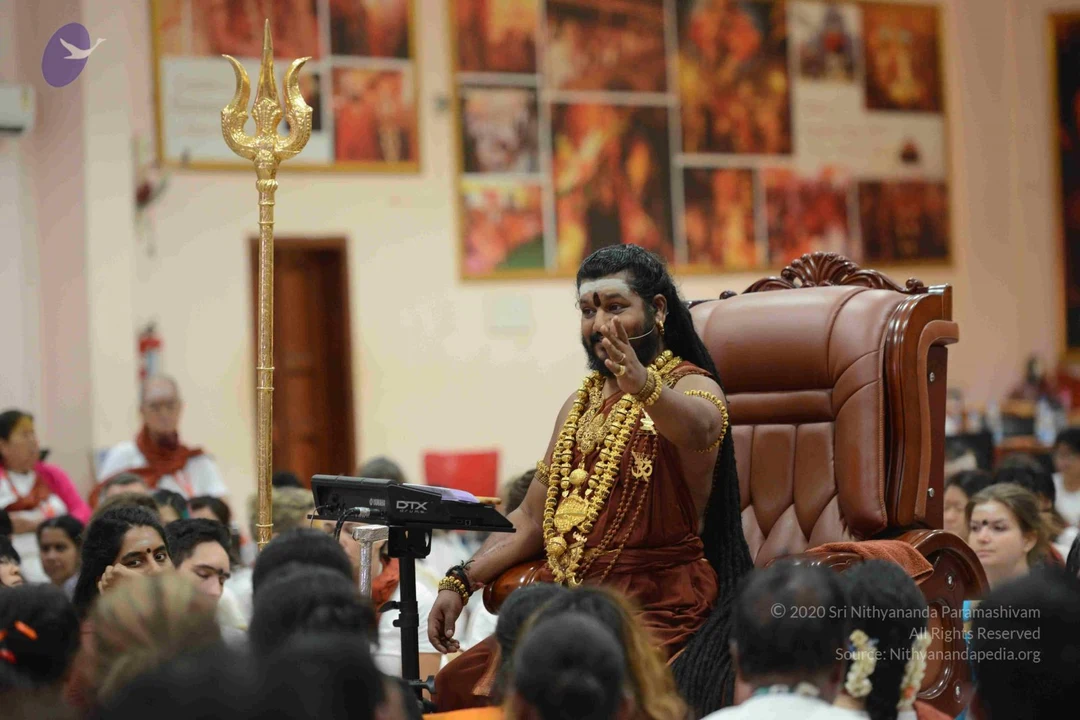
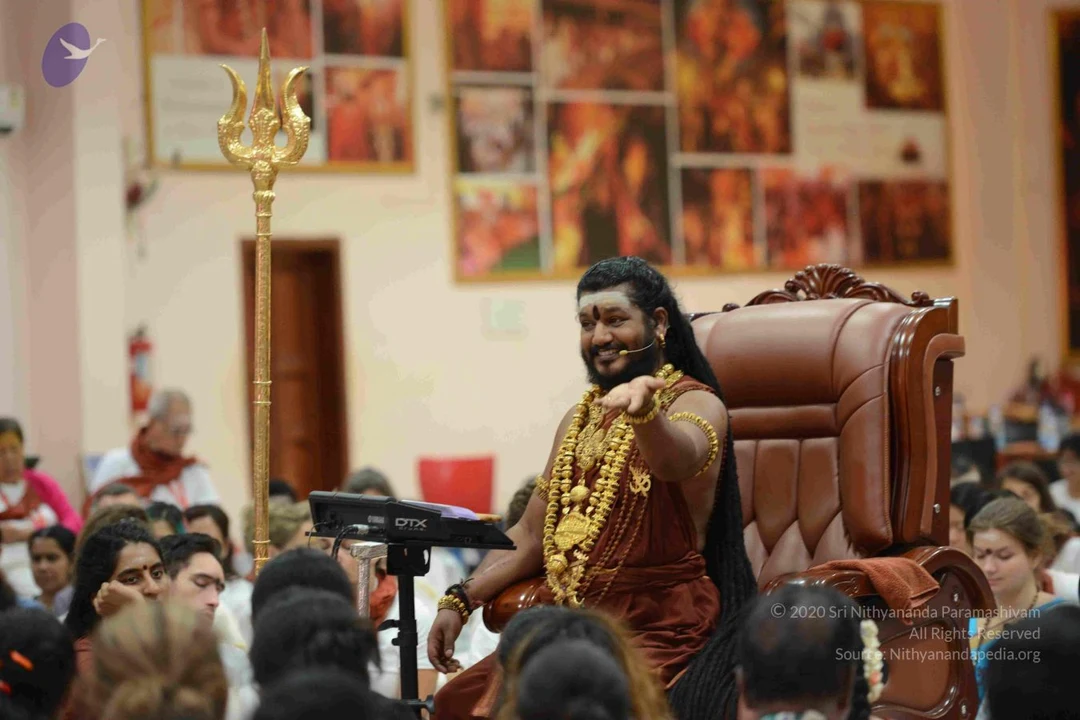
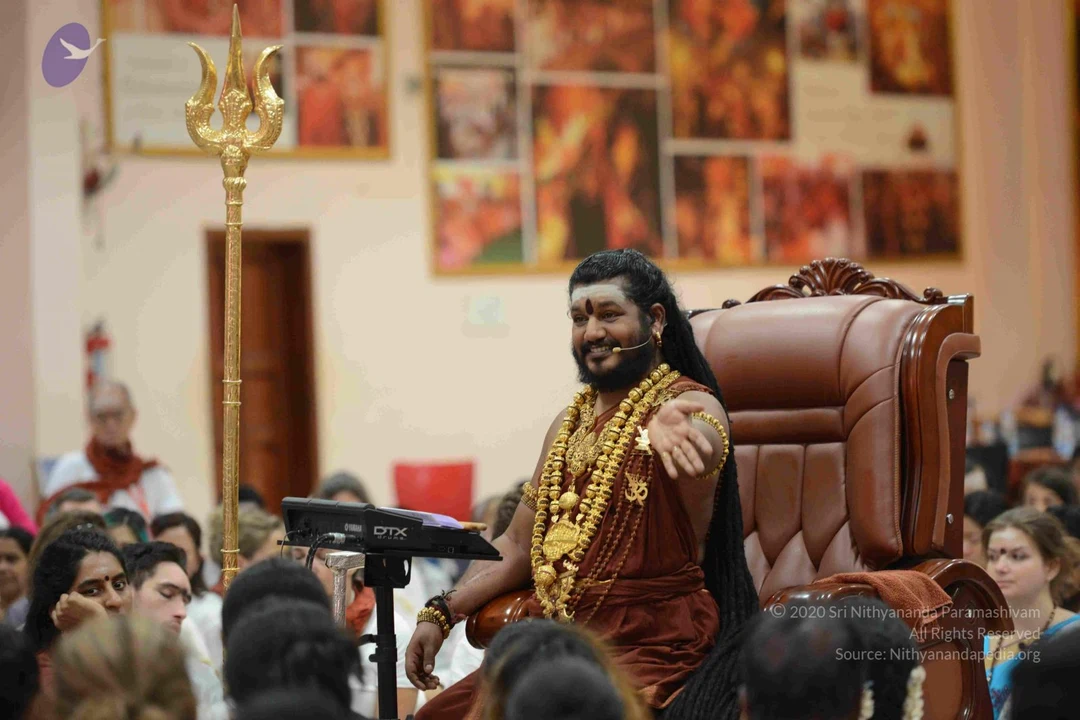
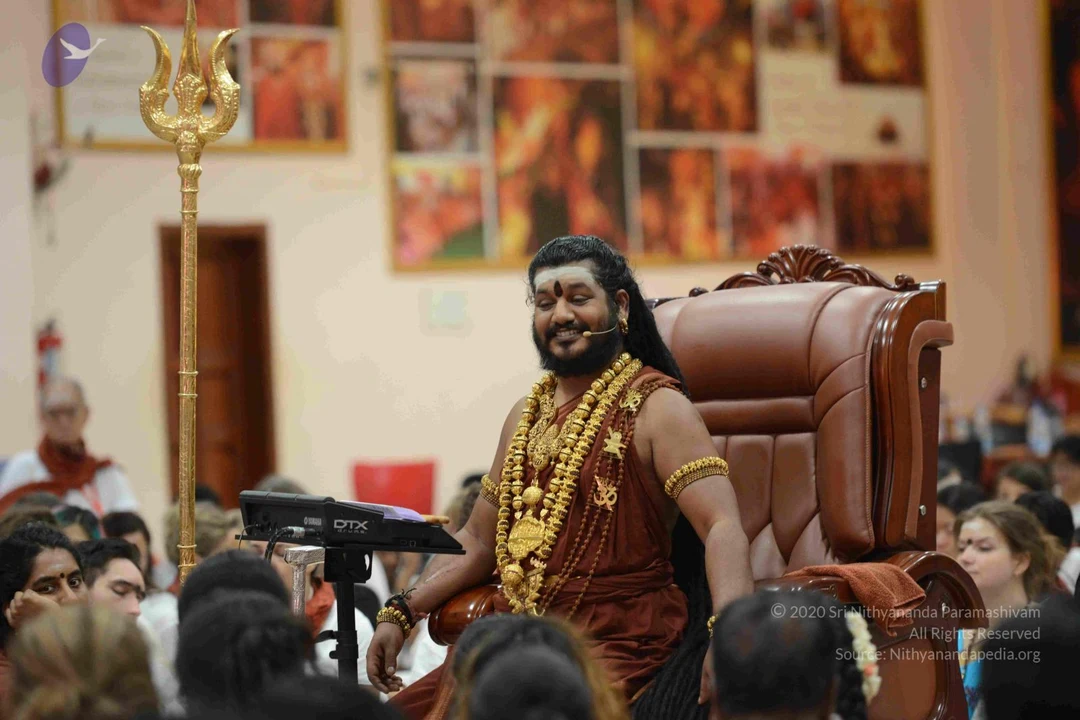
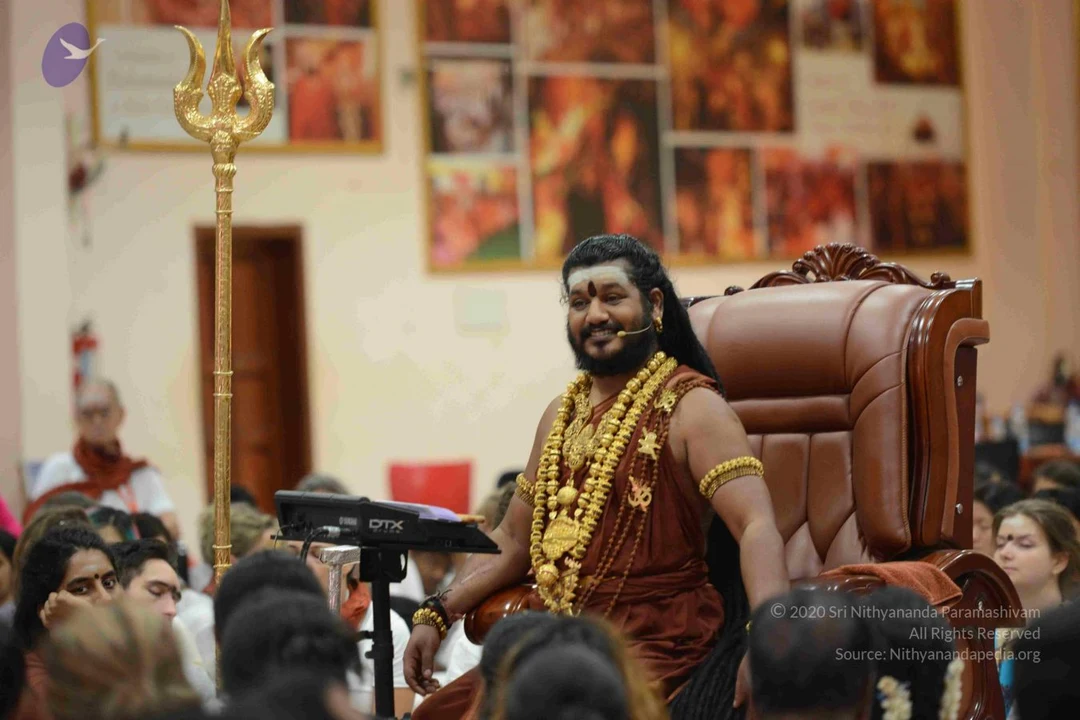
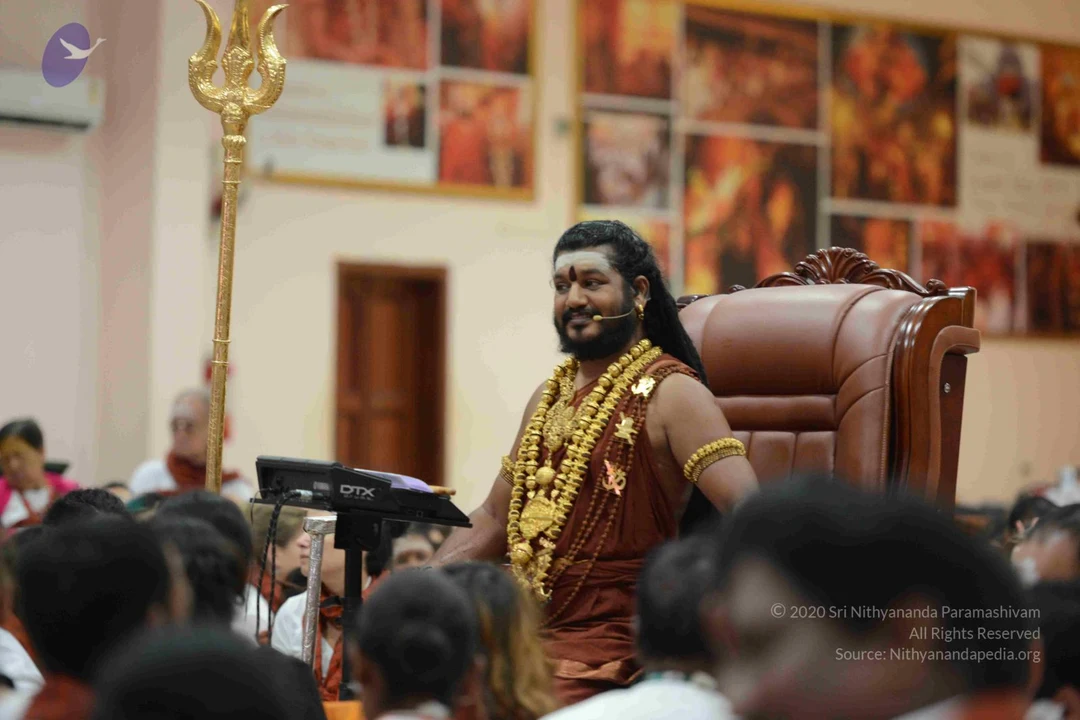
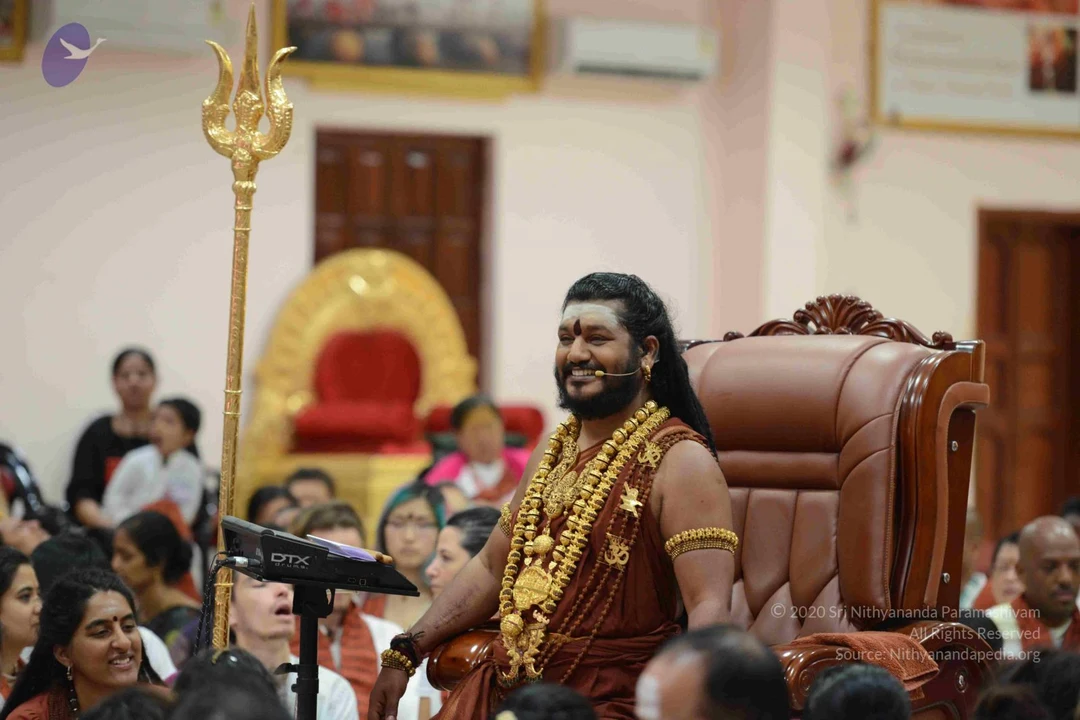
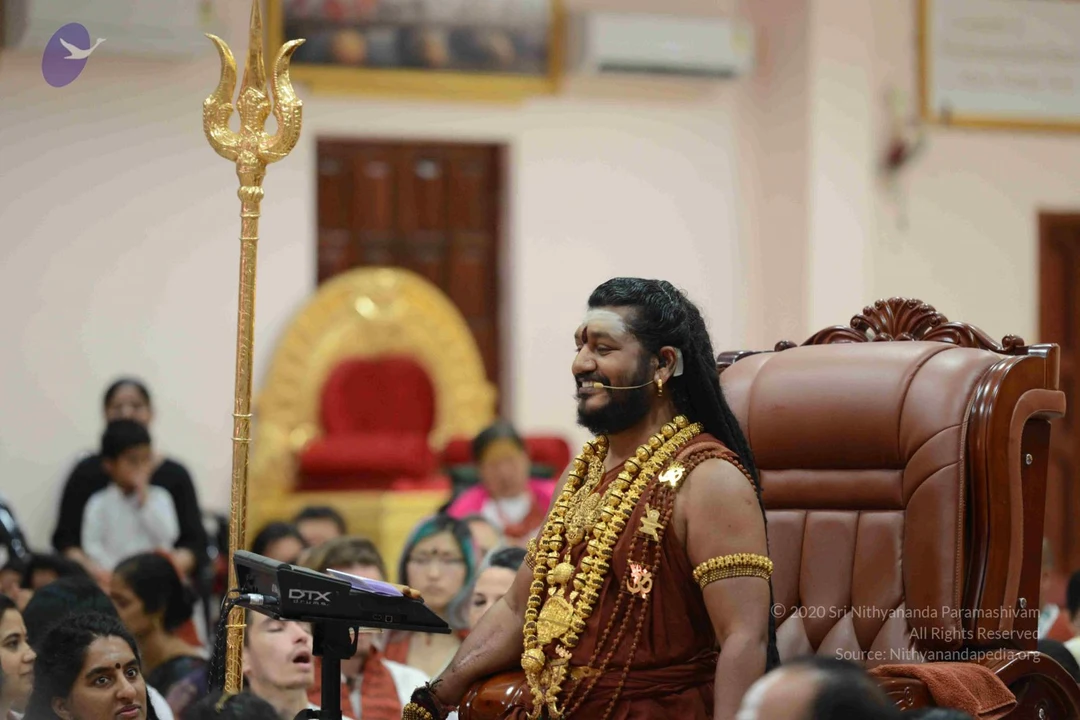
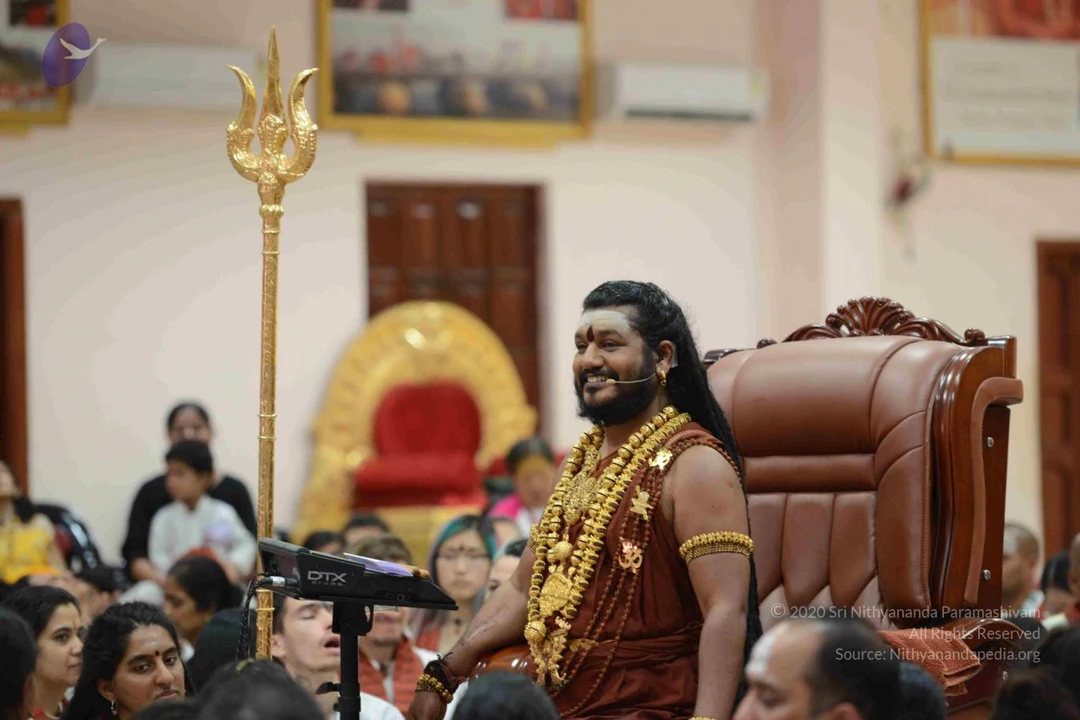
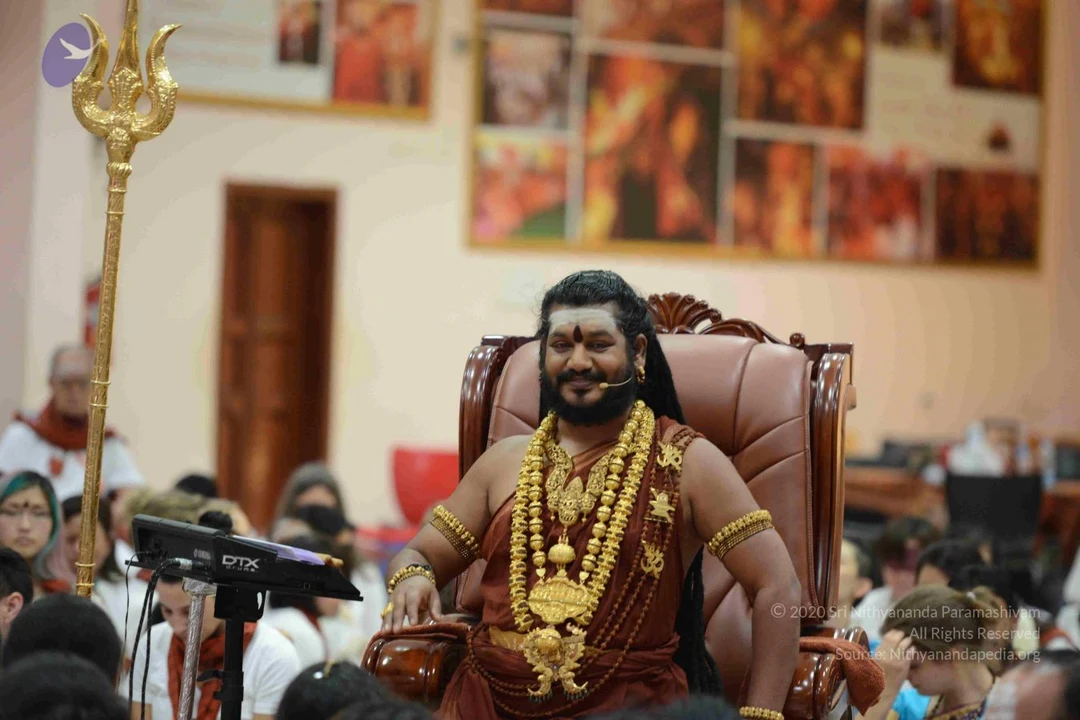
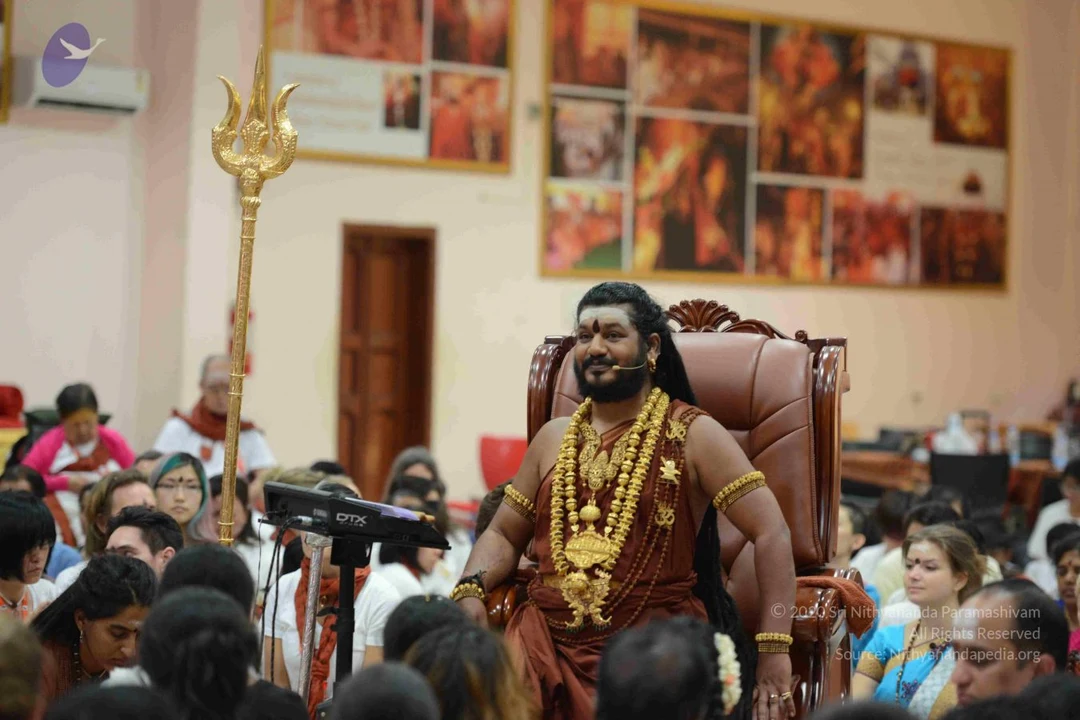
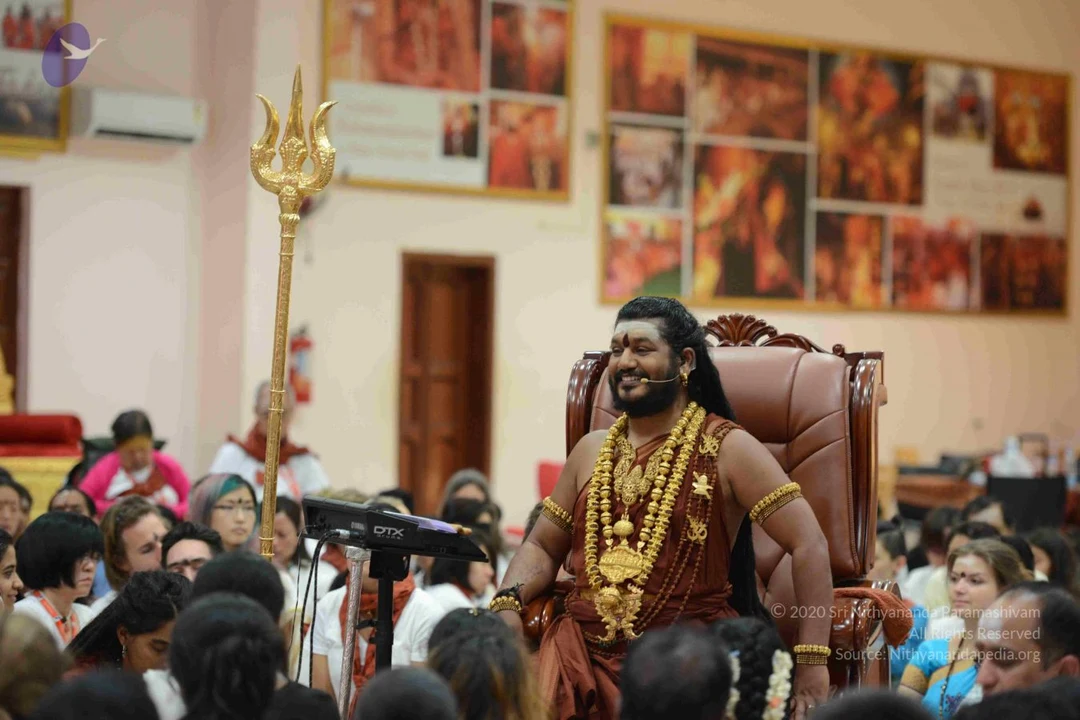
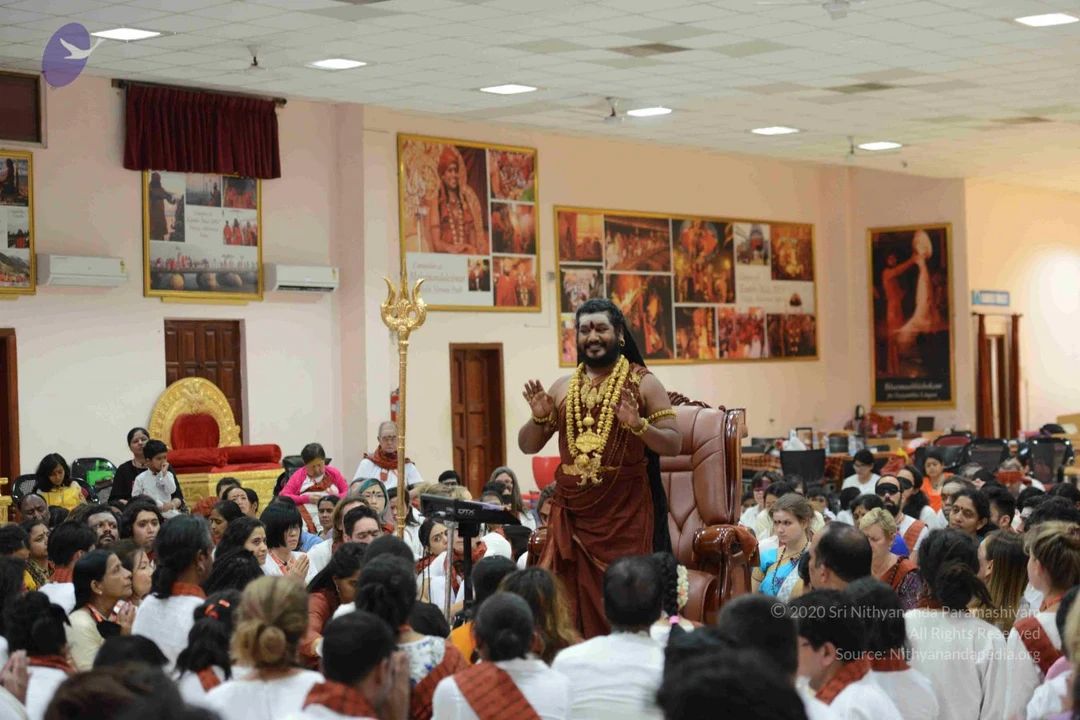
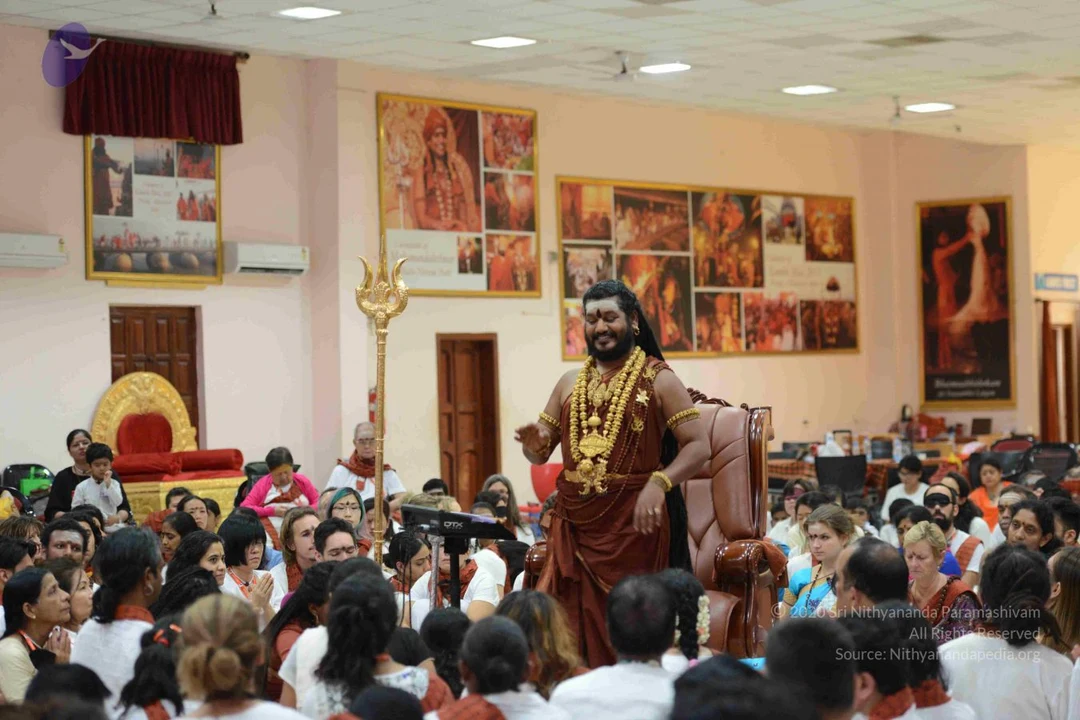
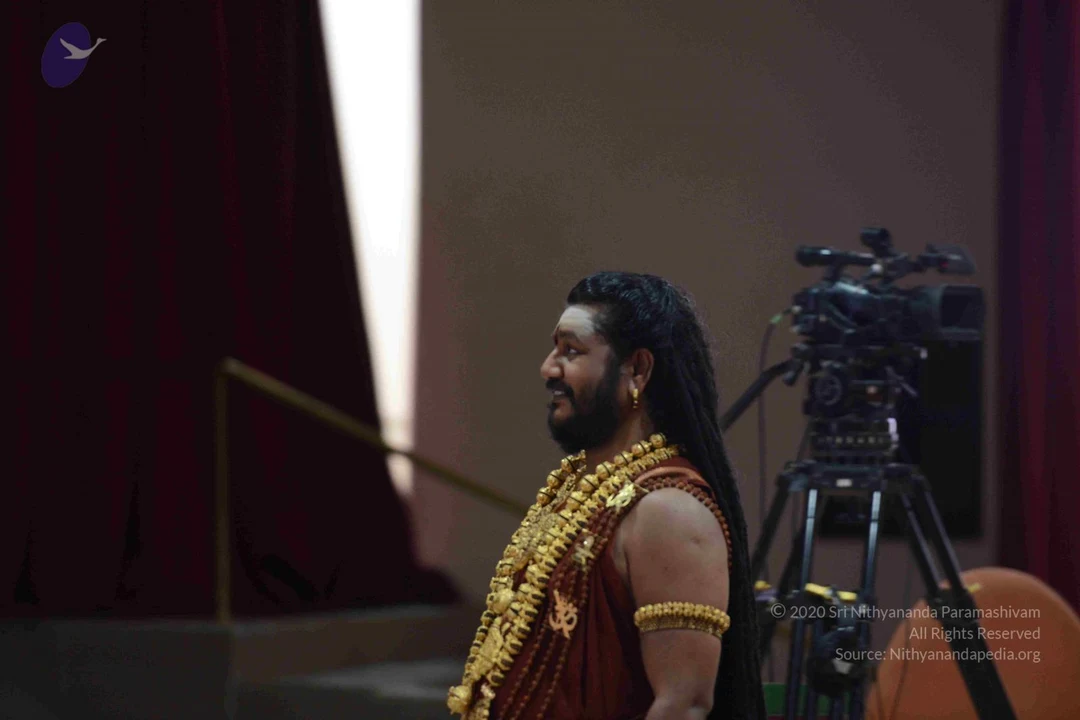
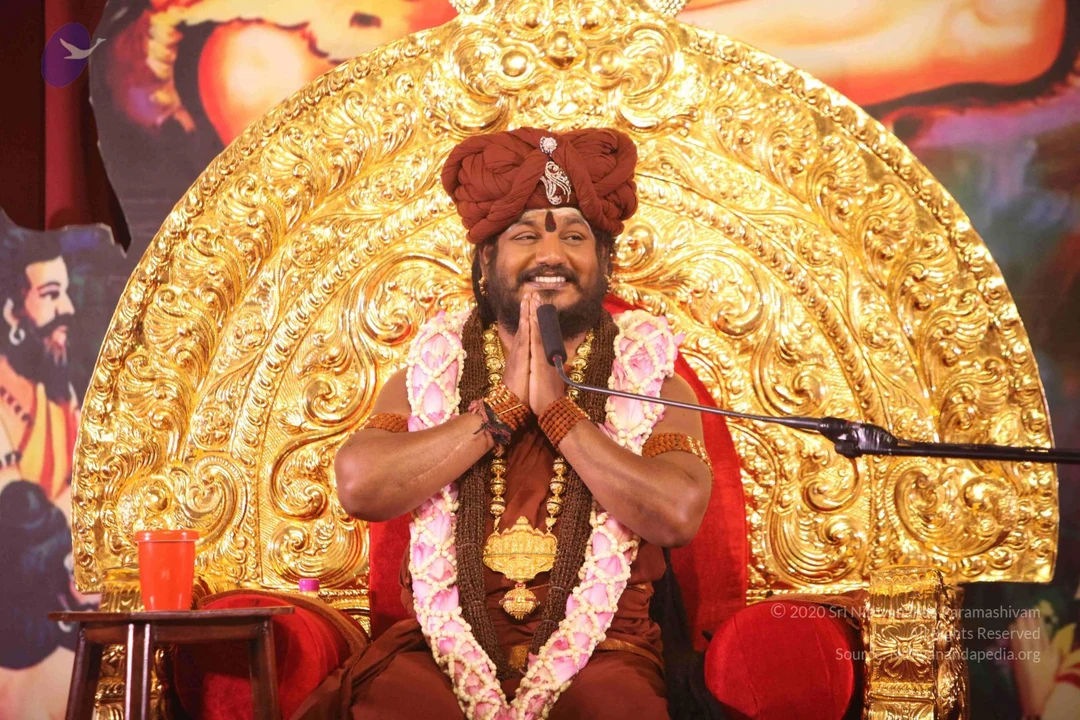
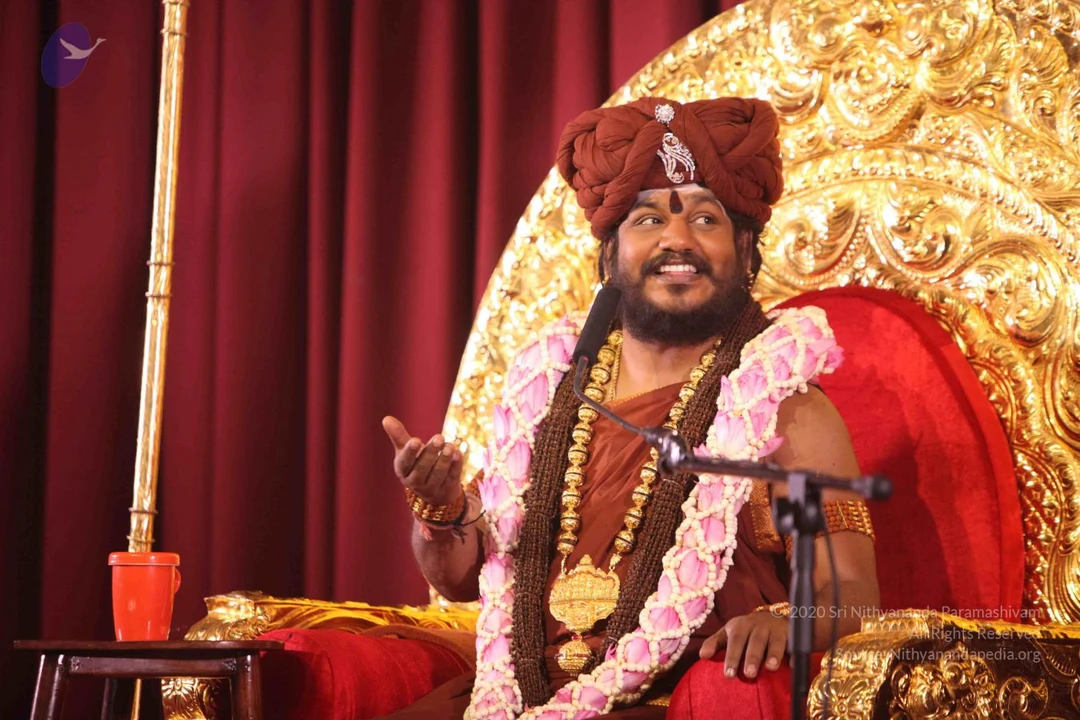
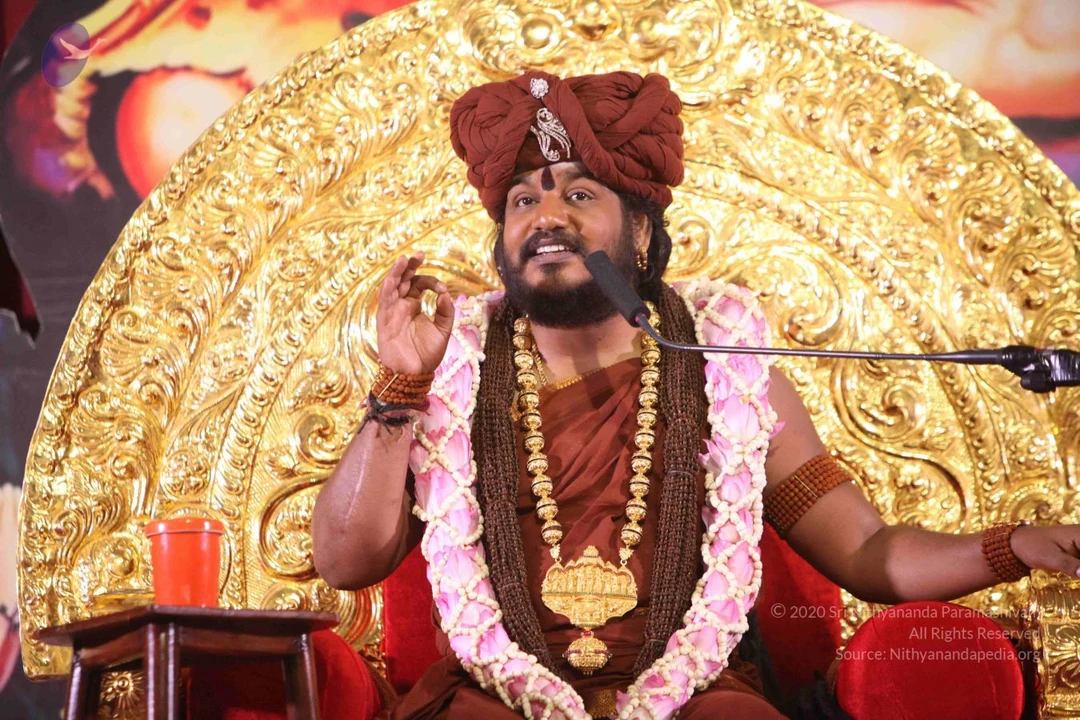
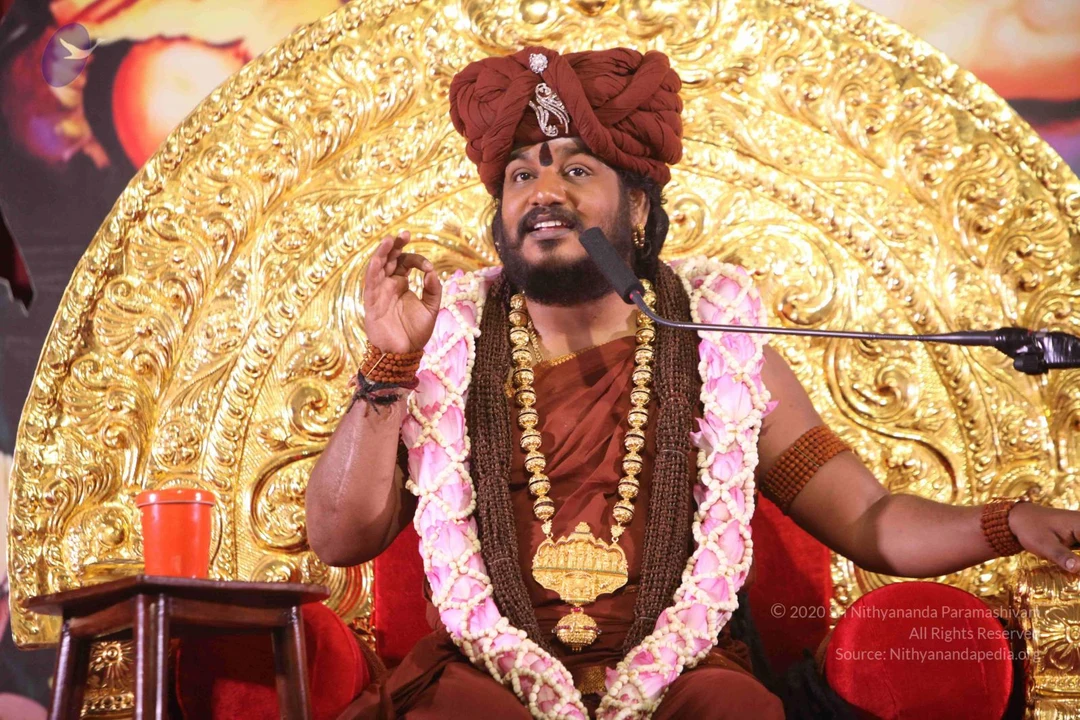
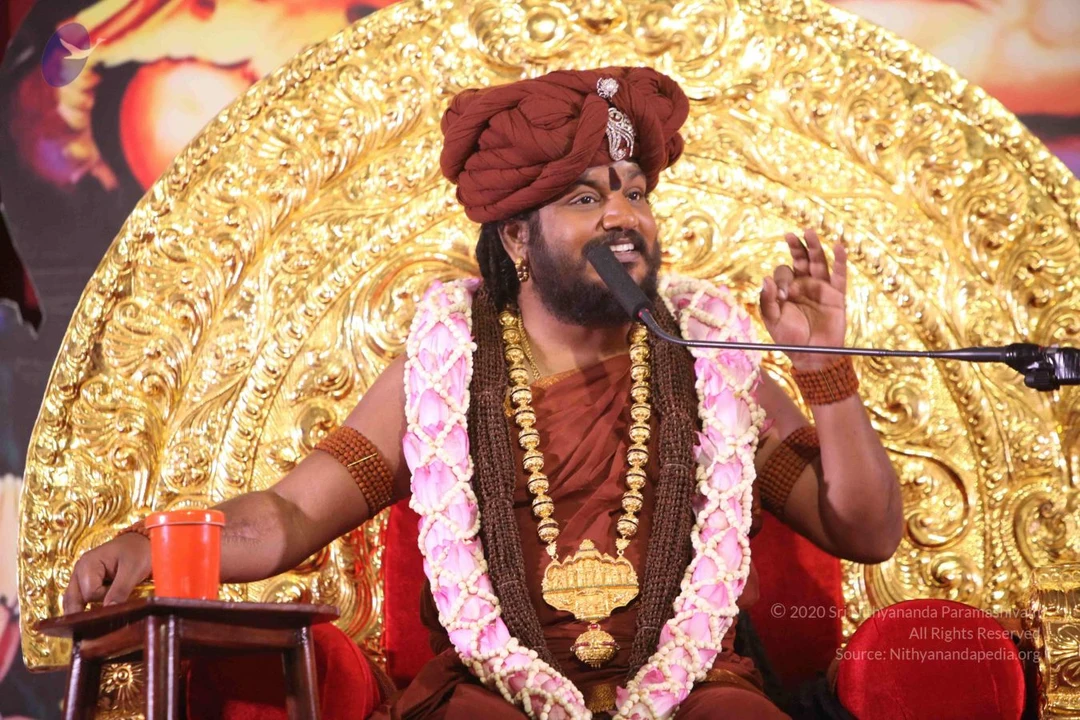
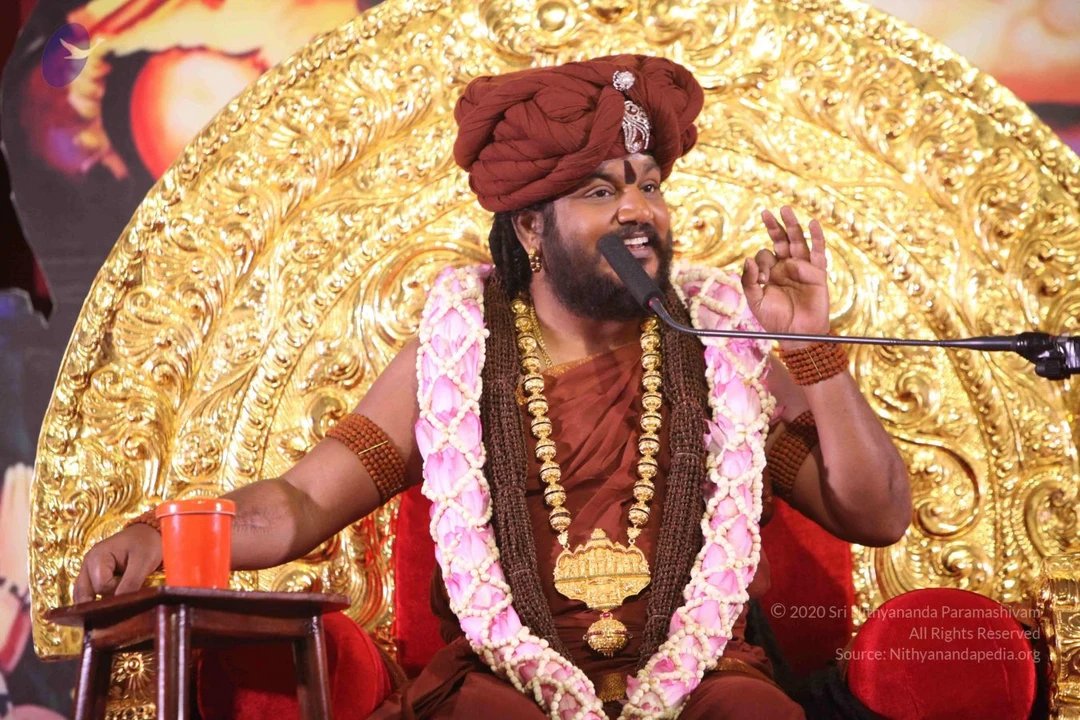
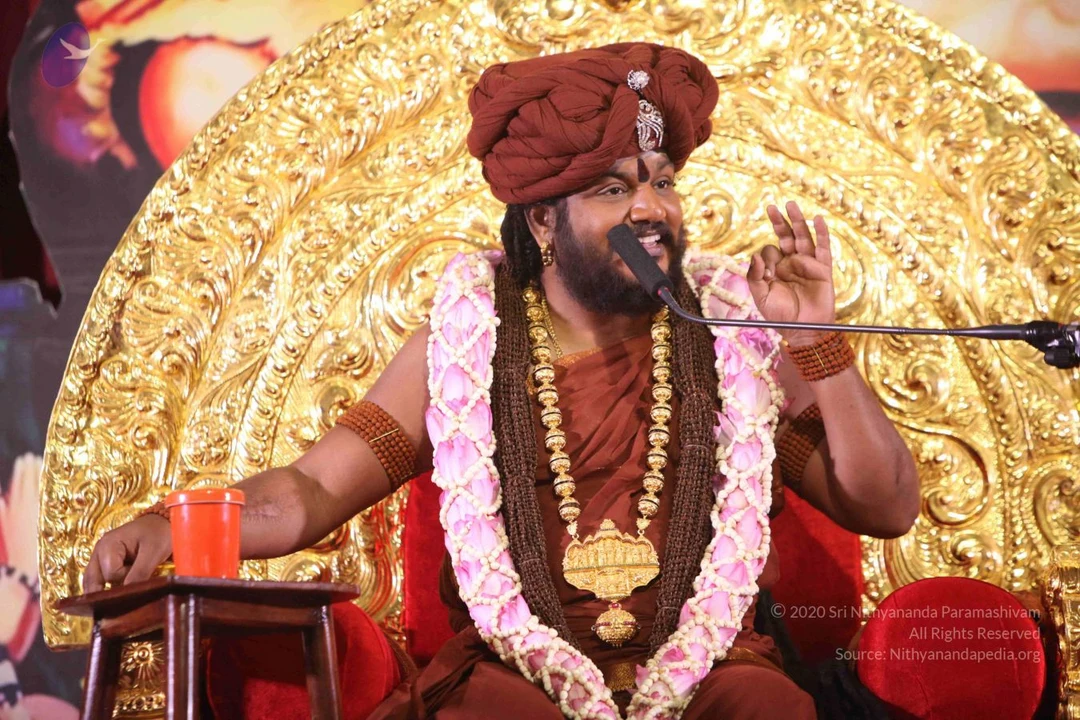
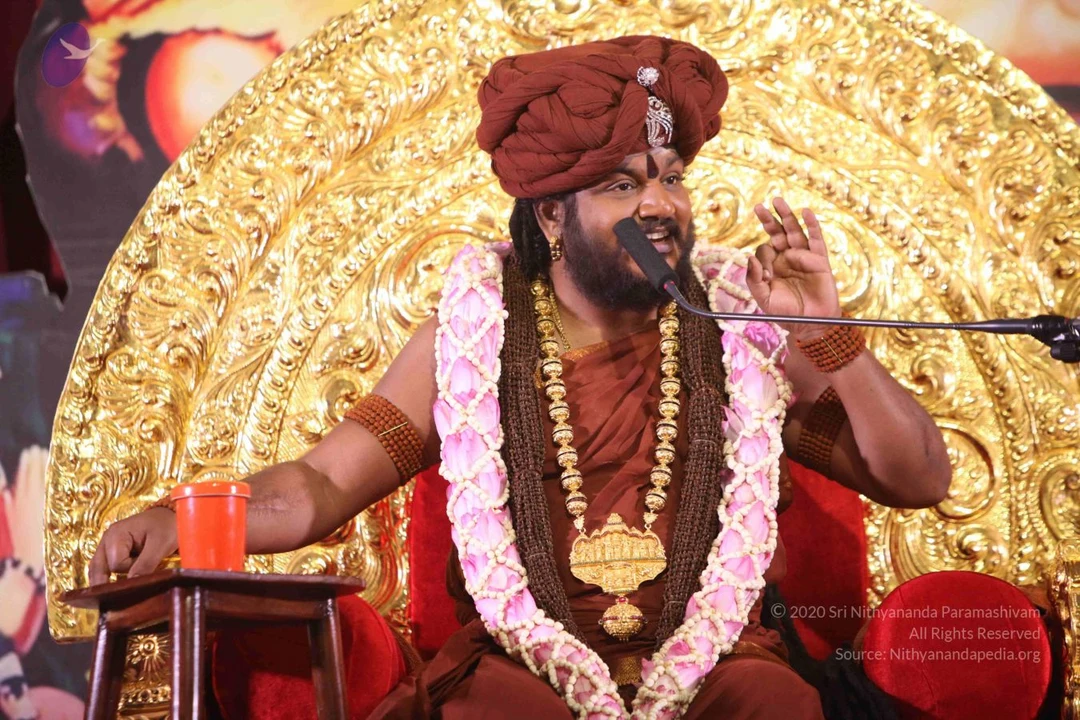
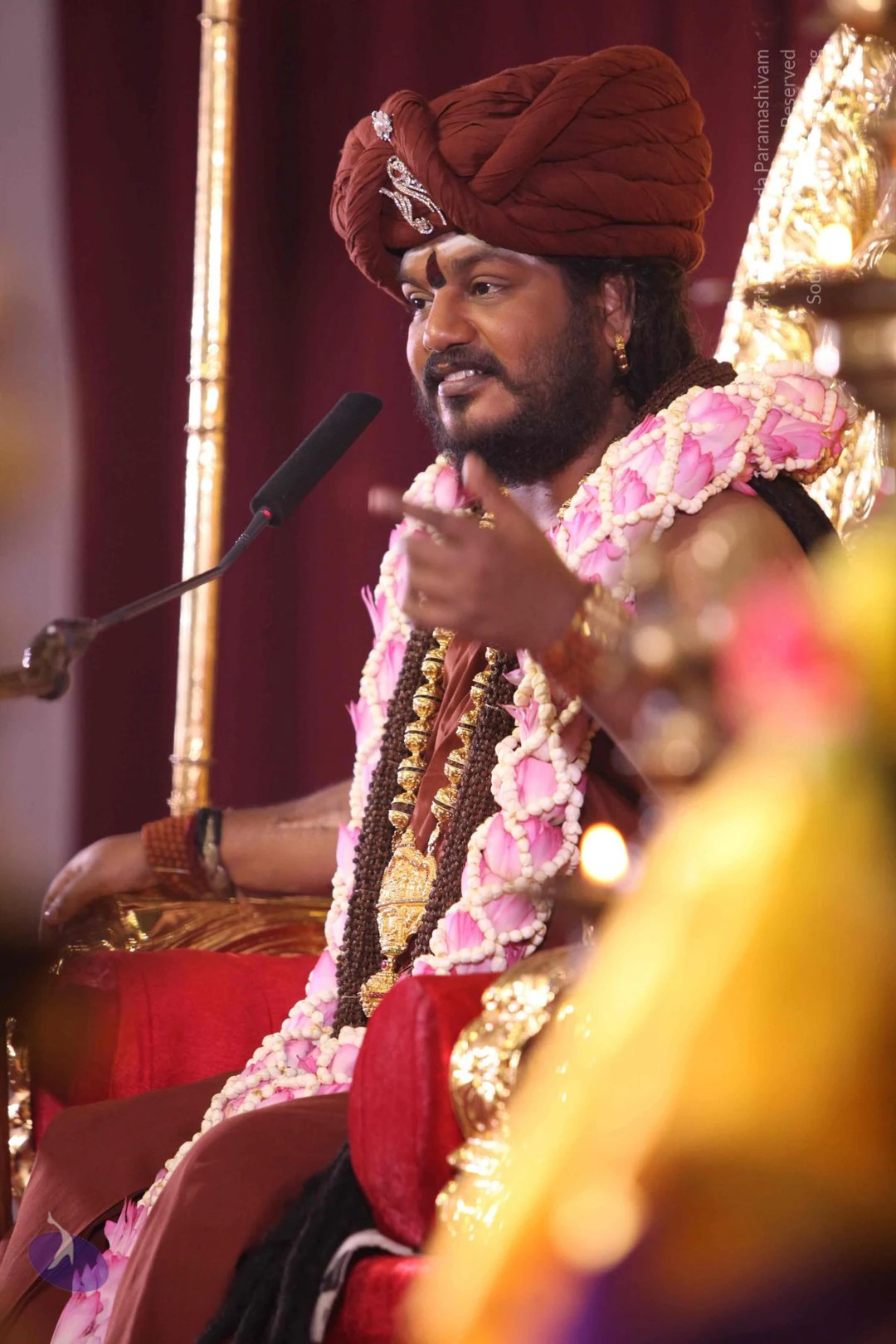
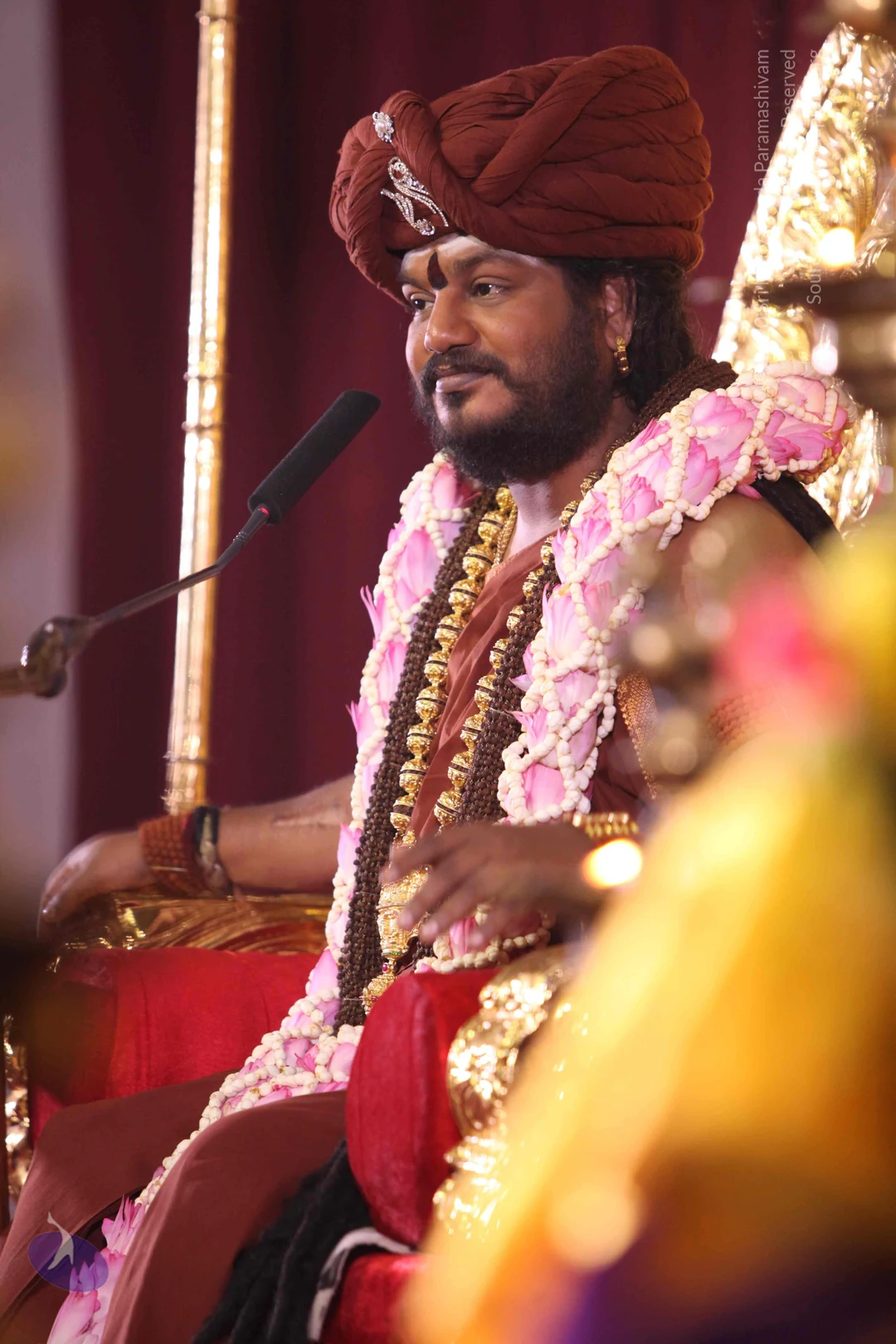
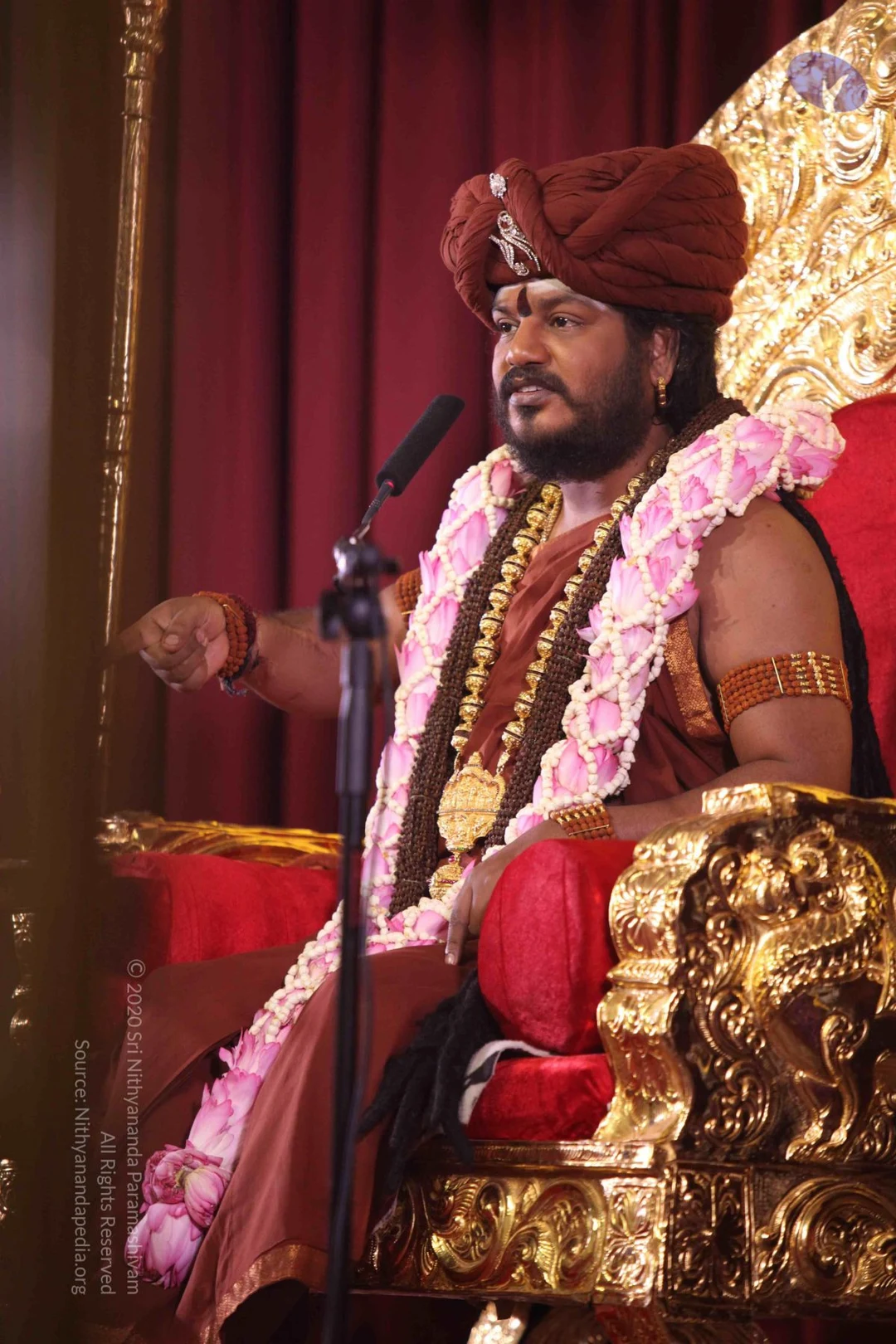
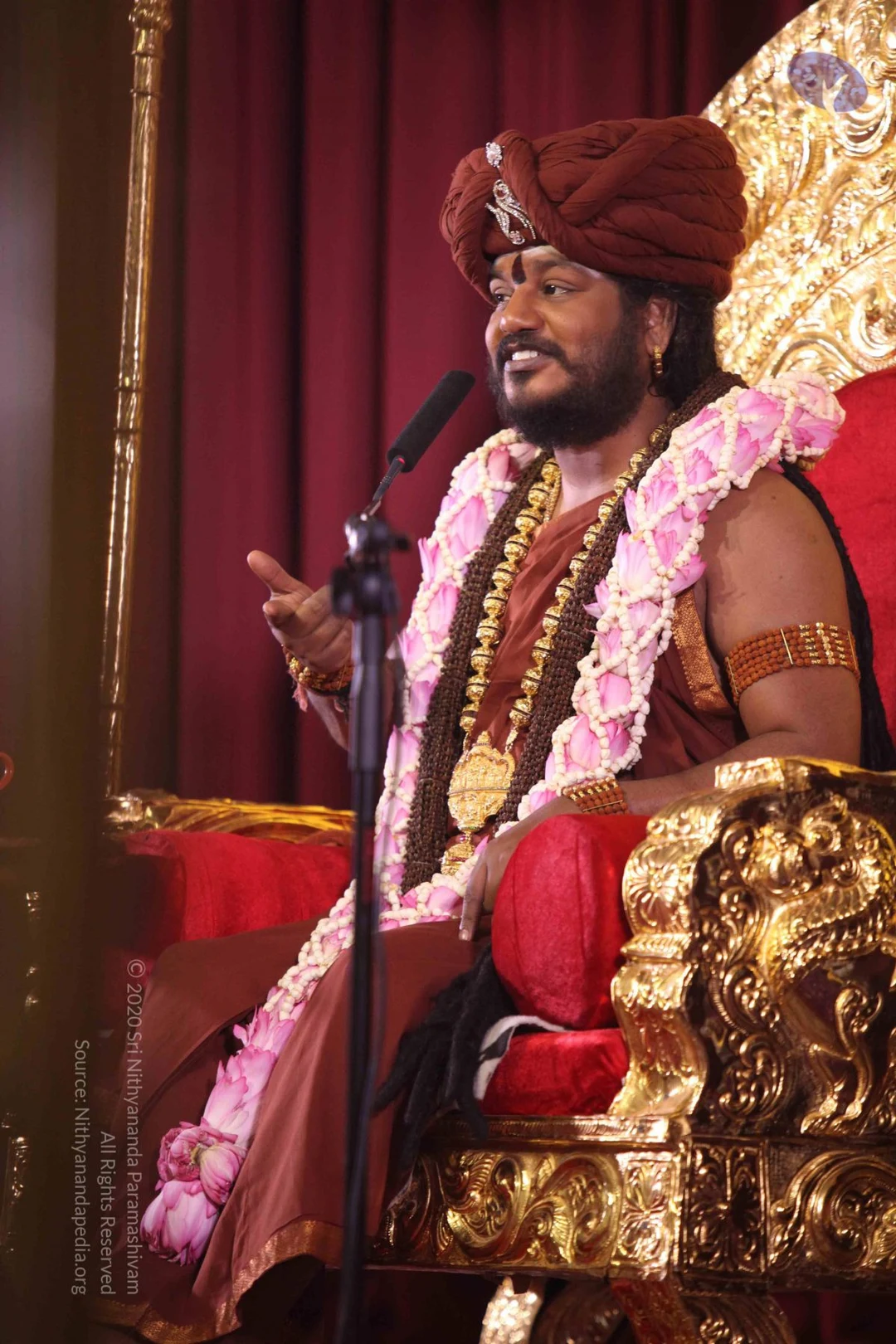
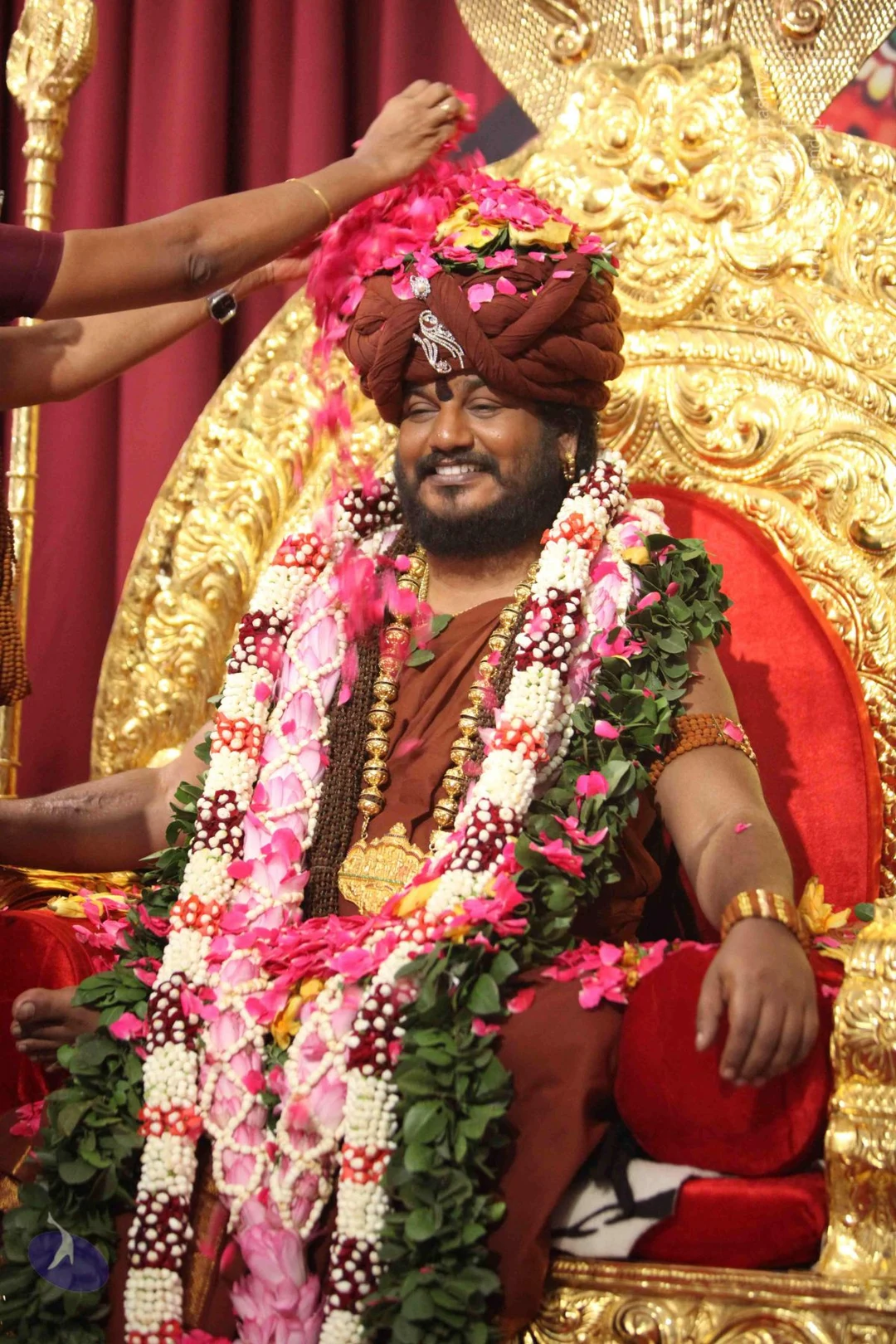
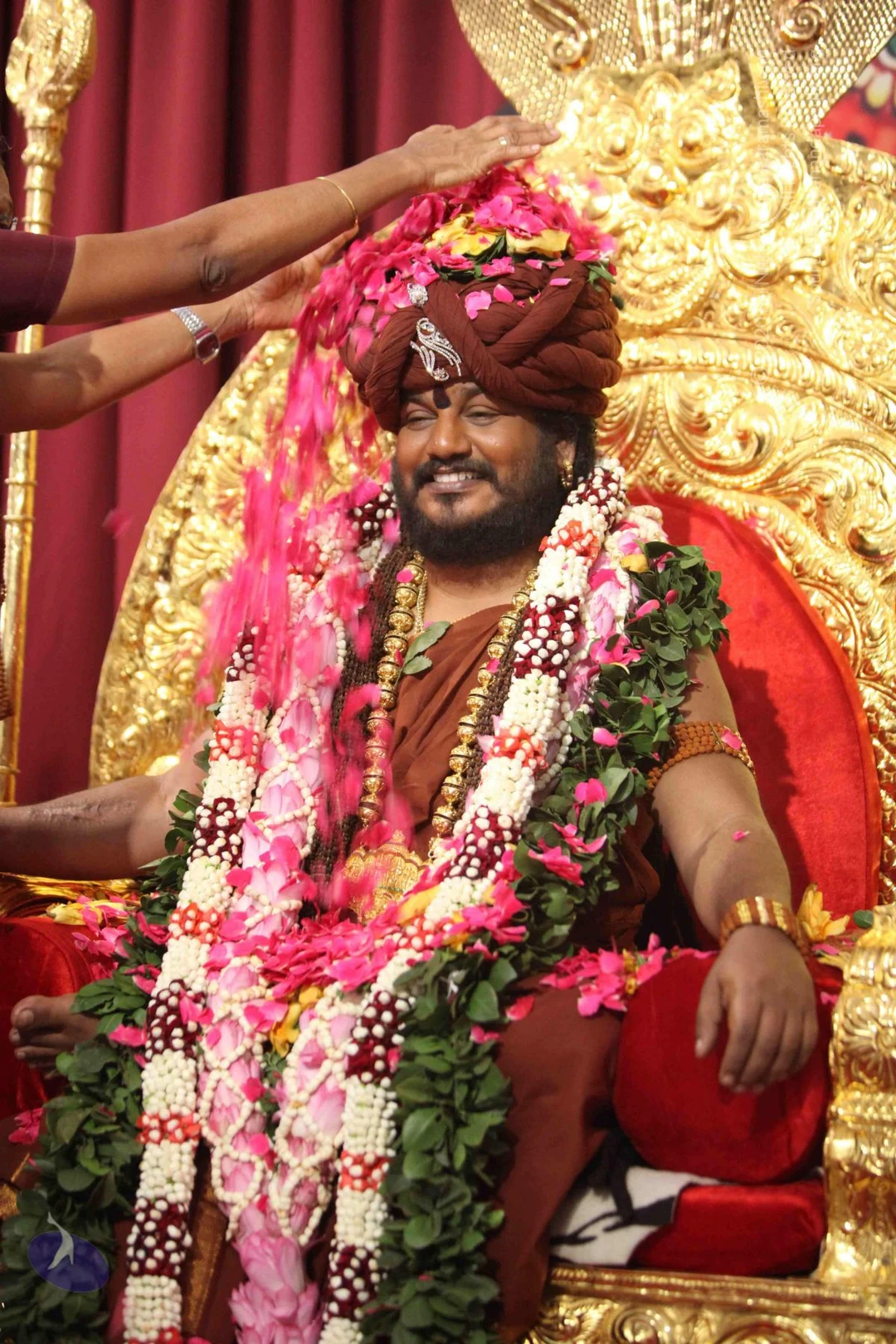
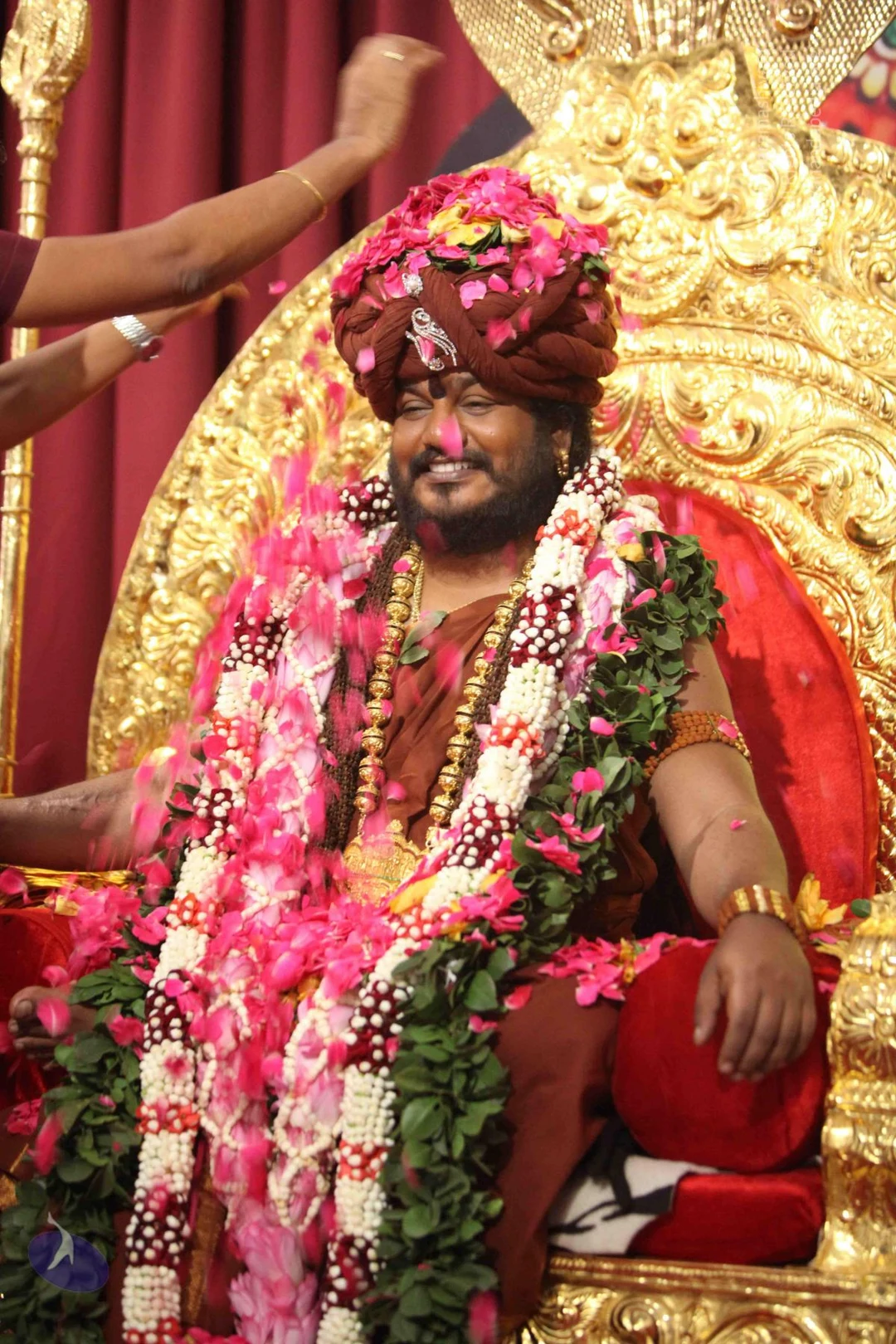
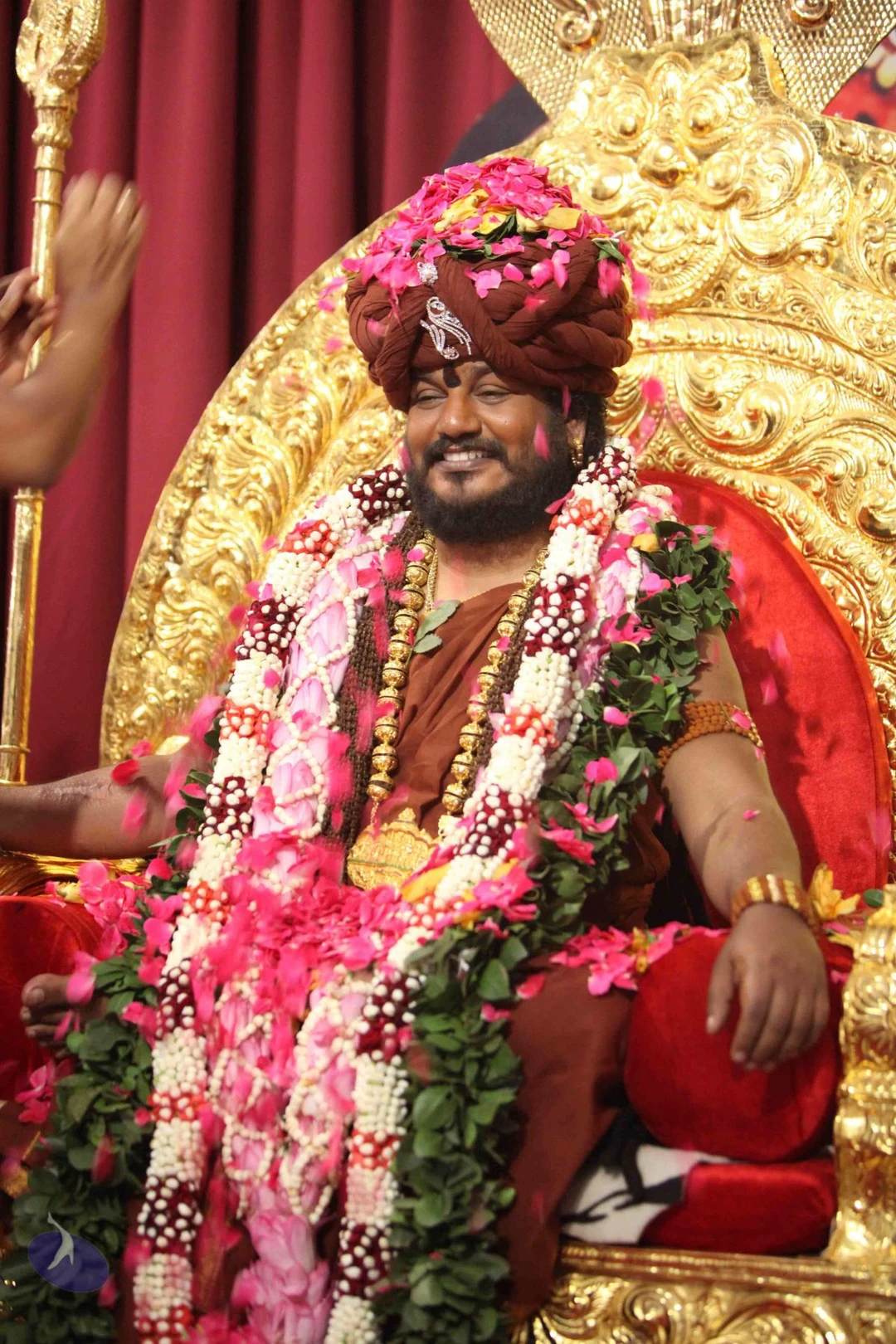
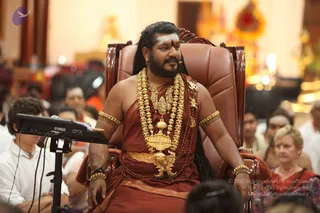
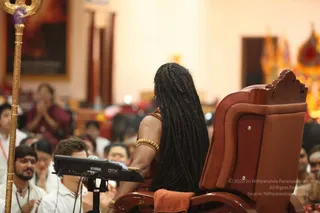
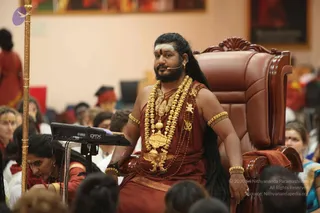
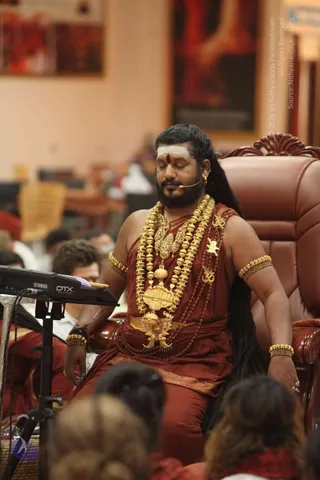
A seated man in reddish-brown ochre robes sits in a large brown leather throne-style armchair with carved wooden trim, smiling and gesturing with his right hand. He wears layered gold necklaces, a rudraksha-style mala, gold armbands and bracelets, and has long dark hair falling past his shoulders, with white ash markings on his forehead and a small dot between his brows. A small headset microphone is attached near his face. Beside him stands a tall golden trident, and a black keyboard stand sits in front. Seated audience members in white and red clothing fill the foreground, and framed orange-toned photographs cover the wall behind him. Swamiji (probable): the throne, saffron-ochre robes, long hair and gold ornaments match the page's Swamiji reference.A man with long dark hair and a full beard sits in a large brown leather throne-style chair at a podium, speaking into a headset microphone while raising one hand with a small object. He wears a reddish-brown robe draped over one shoulder, layered gold beaded necklaces, gold bangles and an armband, and a gold pendant with an Om symbol on his chest. A Yamaha DTX electronic drum pad sits on a stand beside him. Blurred seated attendees in the foreground and a warm-lit hall with a gold figure in the background. Swamiji (probable): the figure has long swept-back hair, ornate gold necklaces and a saffron-toned robe, matching the page's identification of the event speaker.A woman in a pink silk sari with gold border stands on a stage in front of a dark red curtain, holding a handheld microphone to her mouth while speaking. She wears a gold hair ornament, a white flower in her hair, gold bangles, a gold waist belt and a long rudraksha mala. Several seated audience members, partly visible from behind with dark and grey hair, face the stage in the foreground. White pillars or stands are at the lower left.

October 02 2016

Original wiki page
Contents

Title:

Bengaluru Aadheenam, IA Day11,Mandala Process

Title

Shodasi: Manifesting the Ultimate || Part 1 || IA || 02 Oct 2016

Description

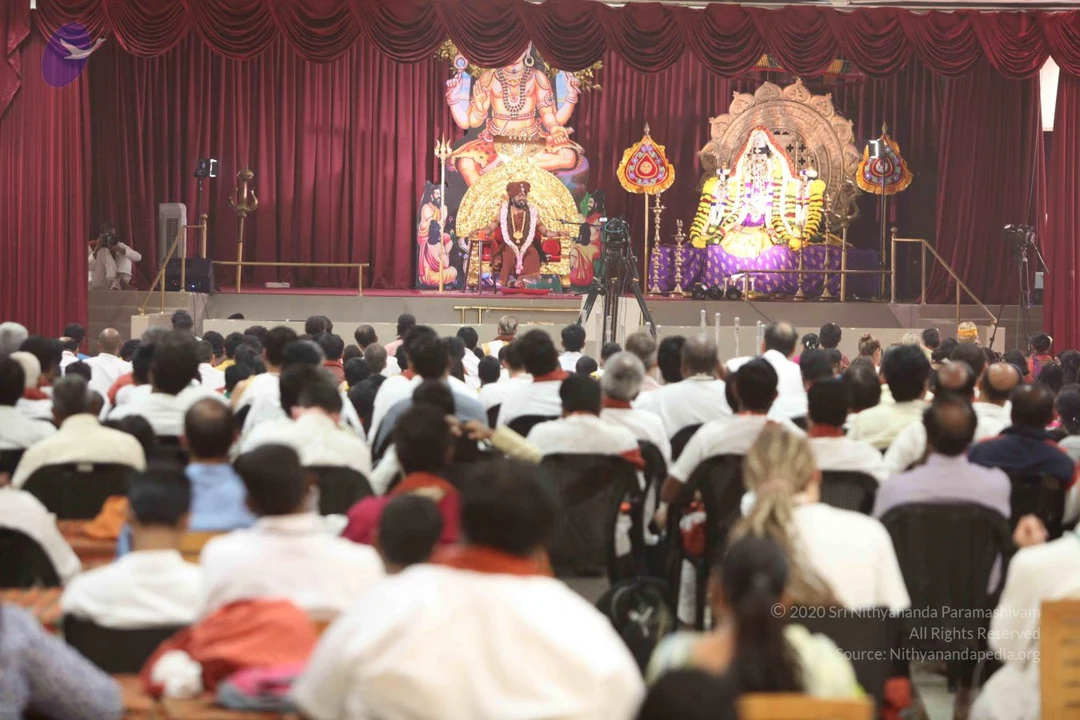
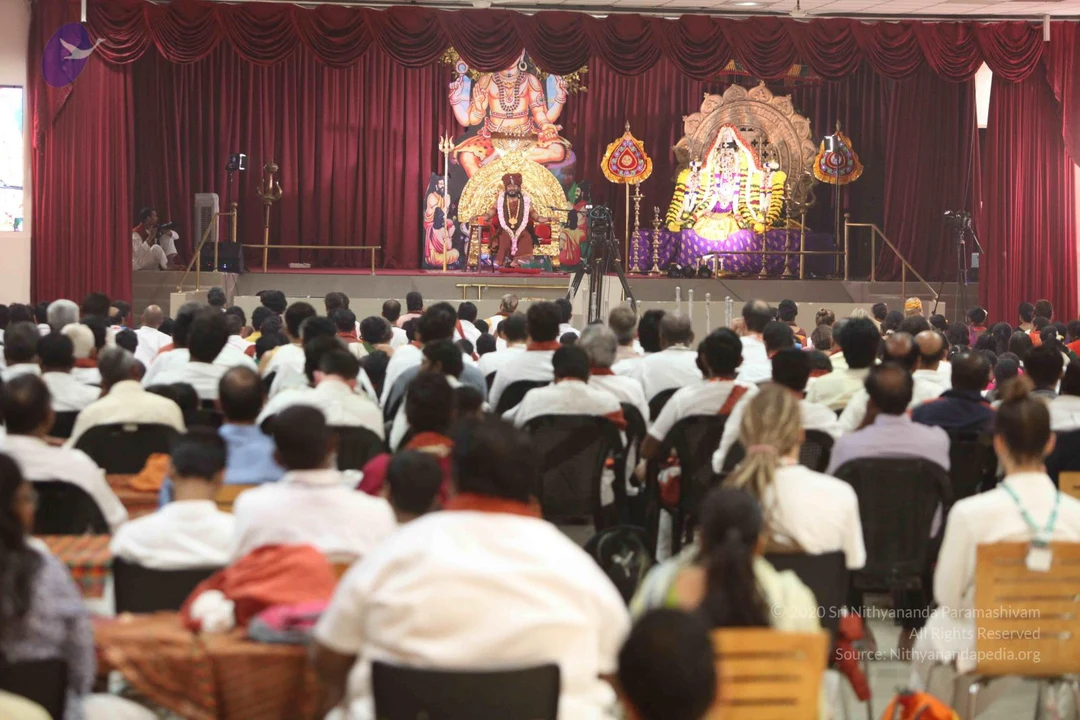
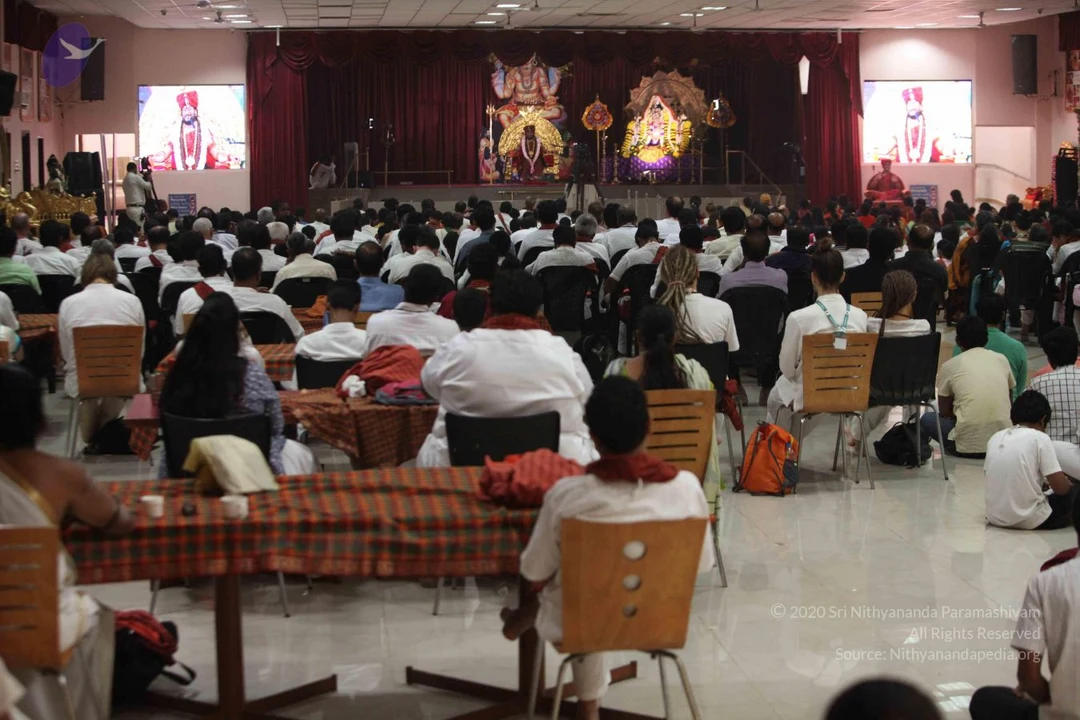
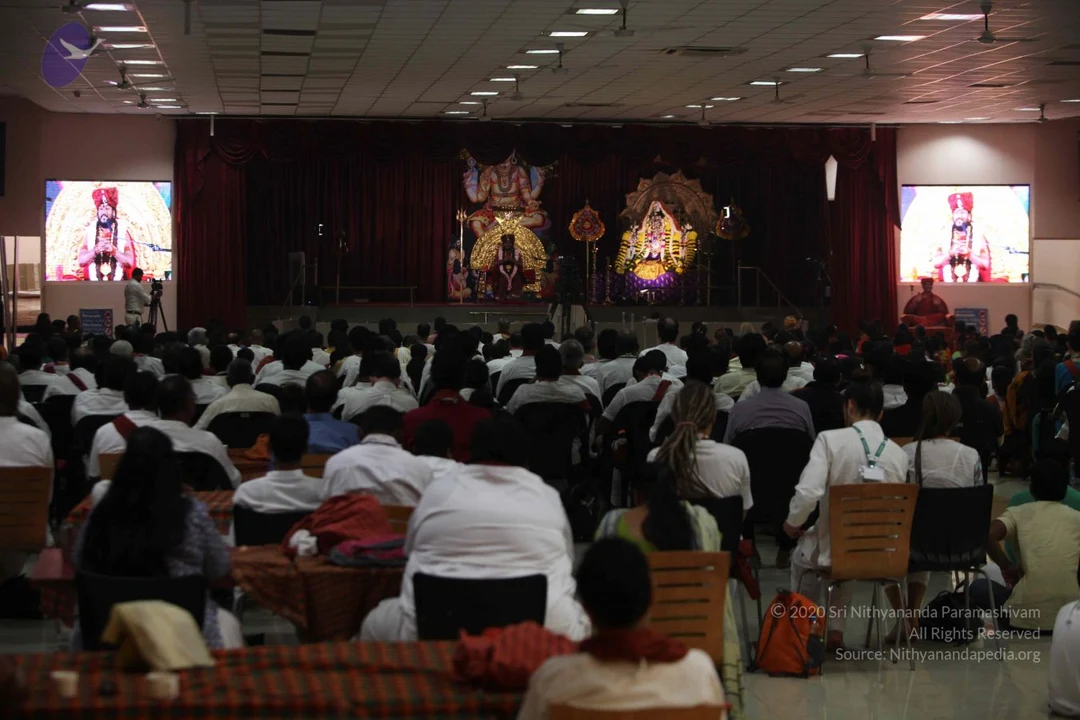
Name Of The Convention : Inner Awakening Title : Shodasi: Manifesting the Ultimate Part 1 Date : 02 October 2016 Venue : Adi Kailasa, Bengaluru, Karnataka, India

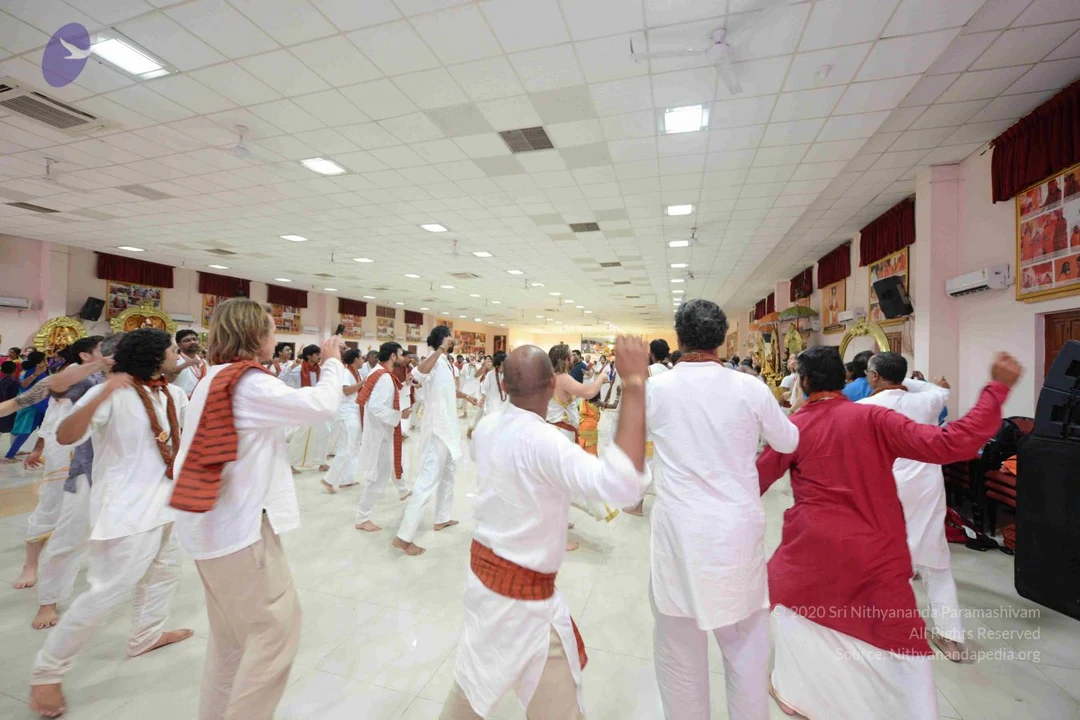
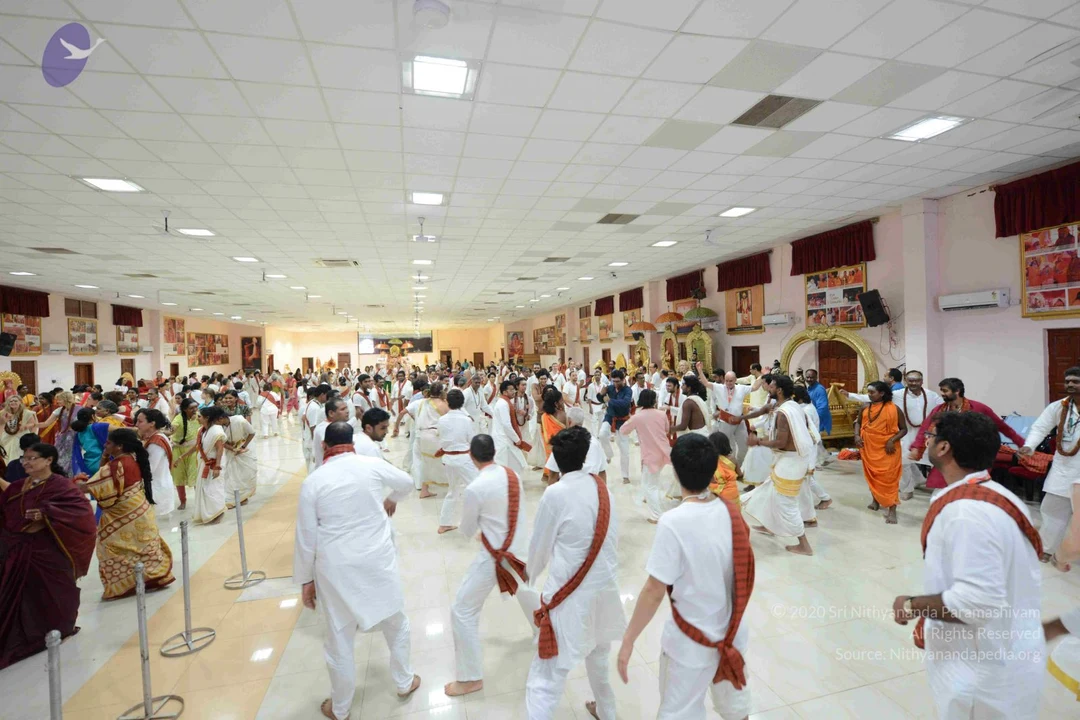
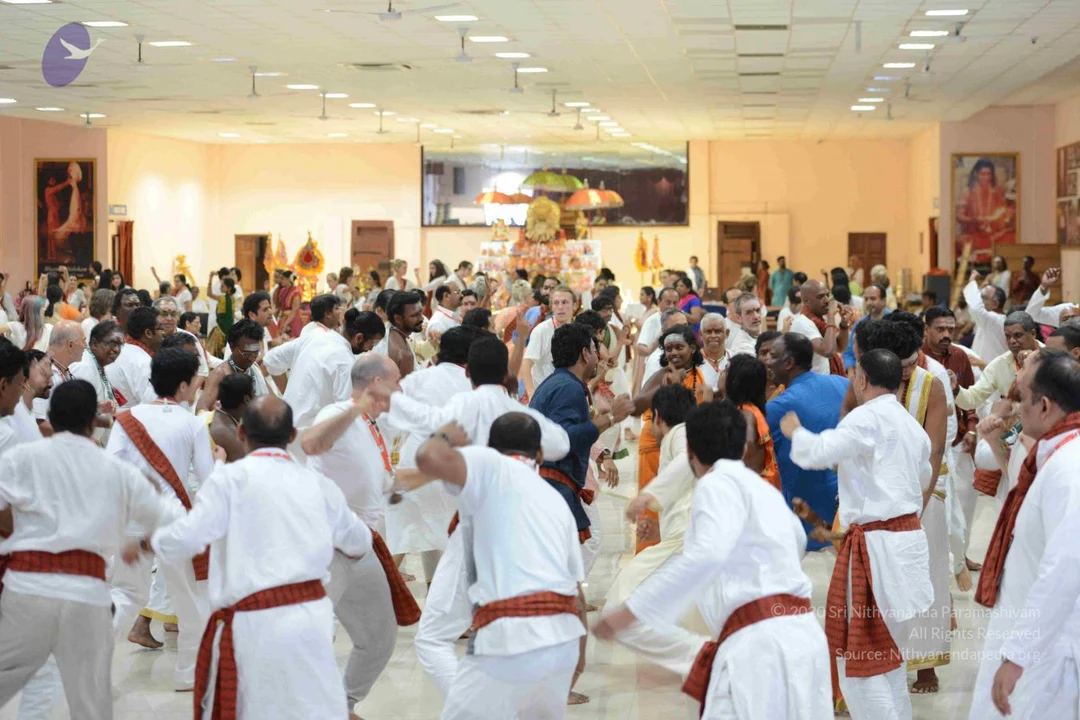
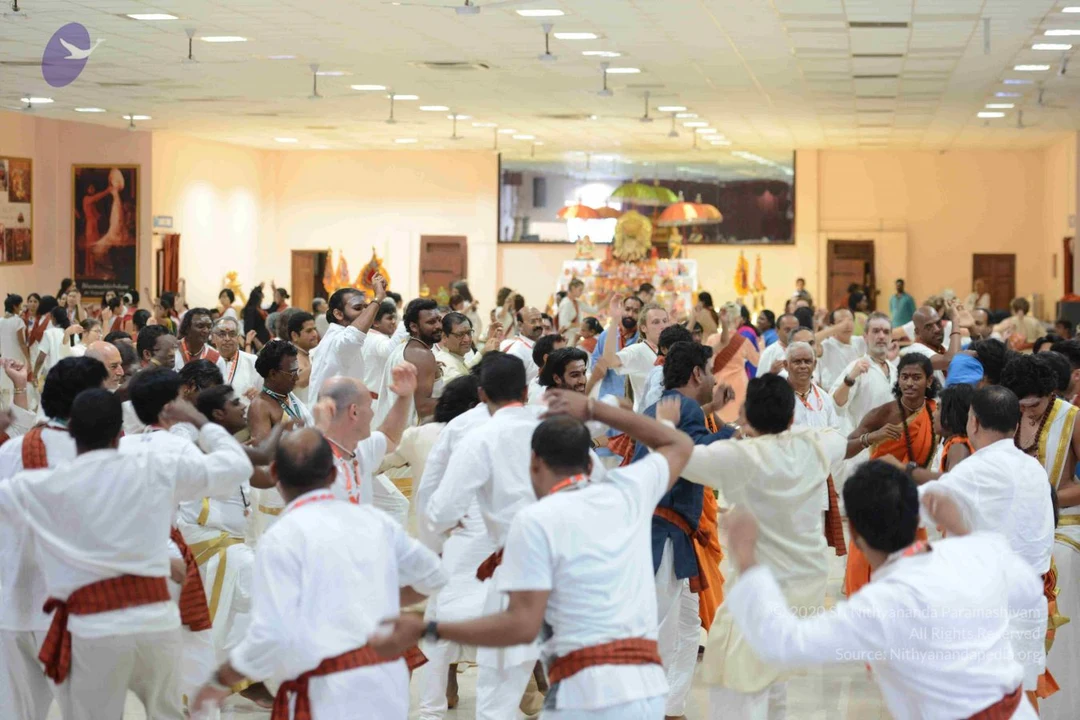
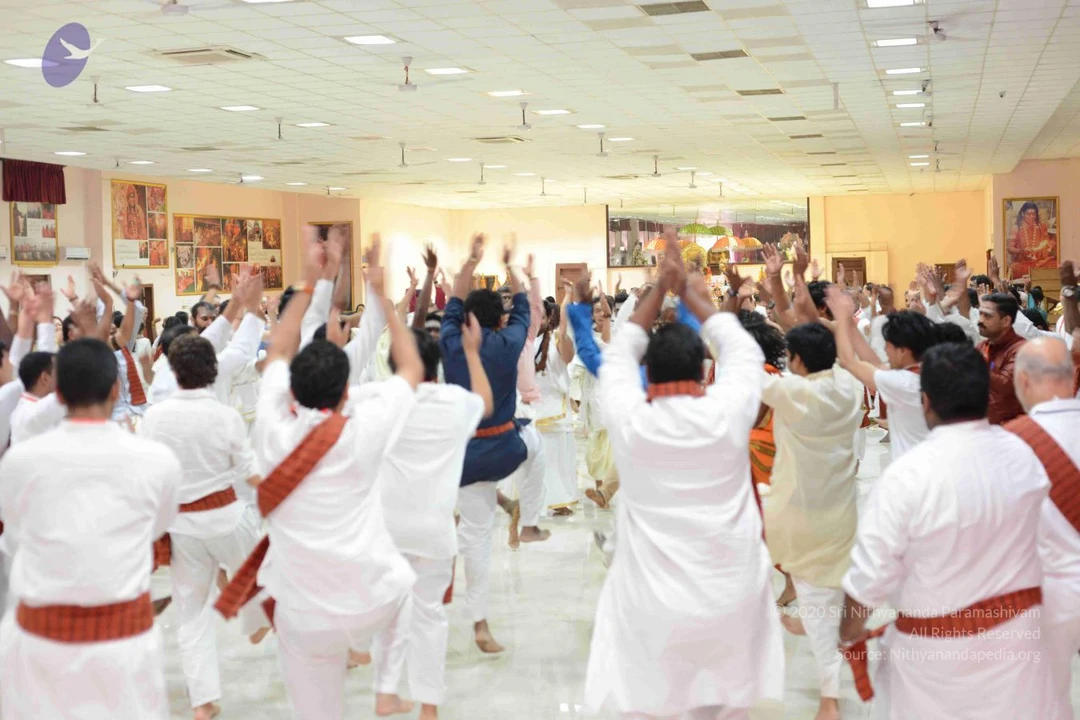
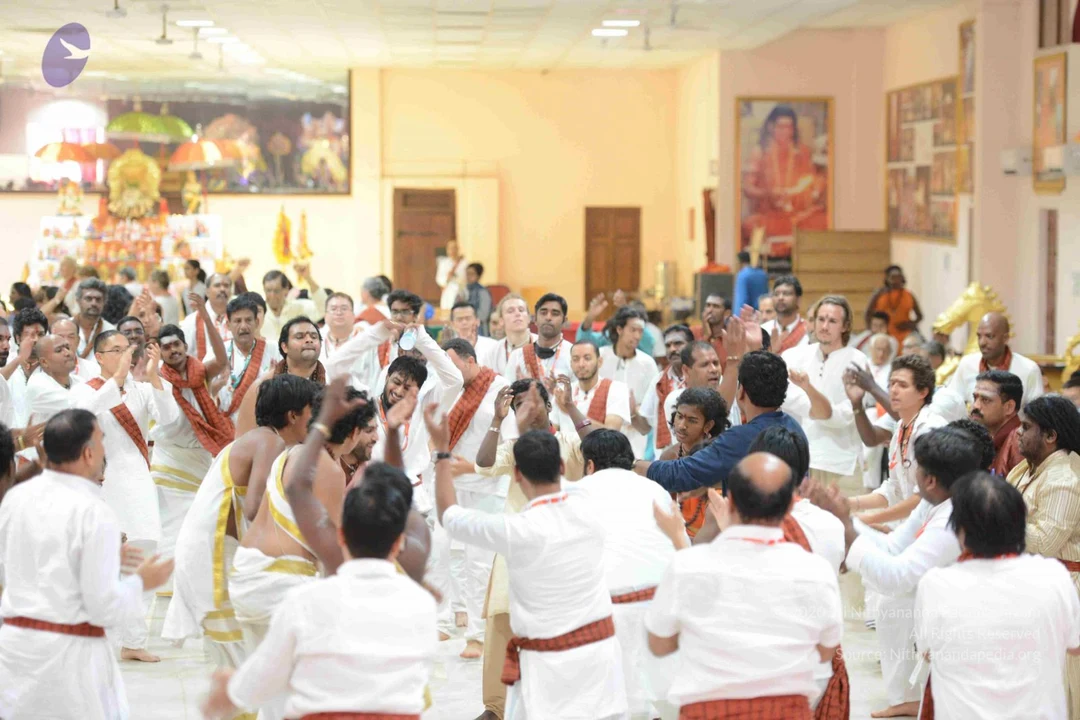
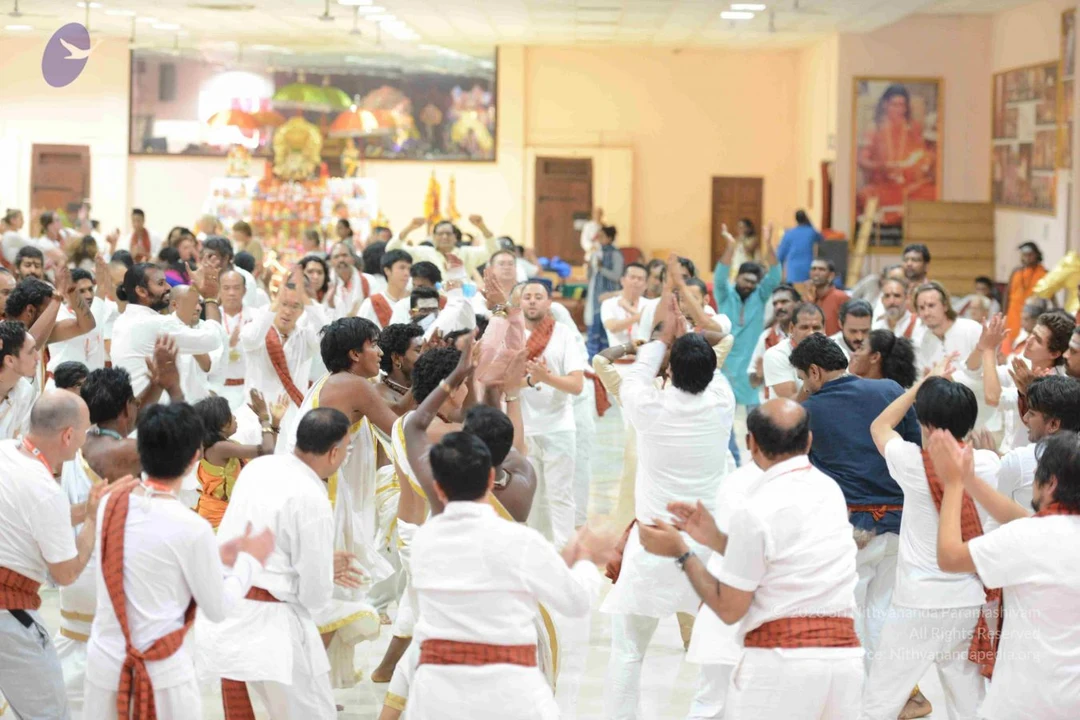
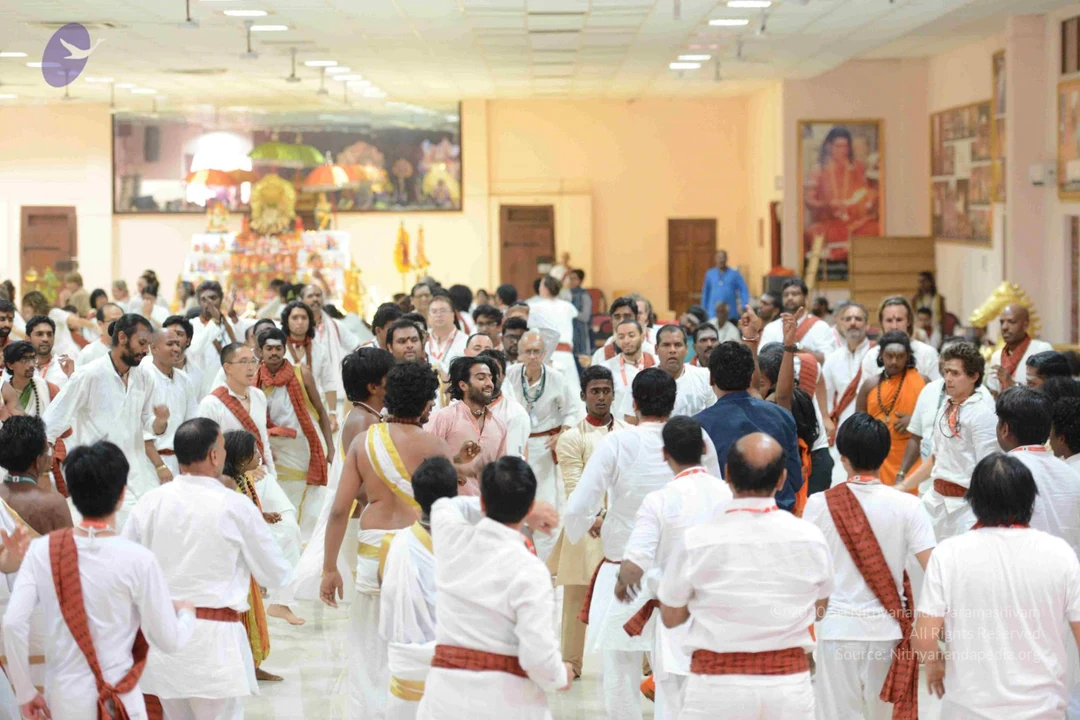
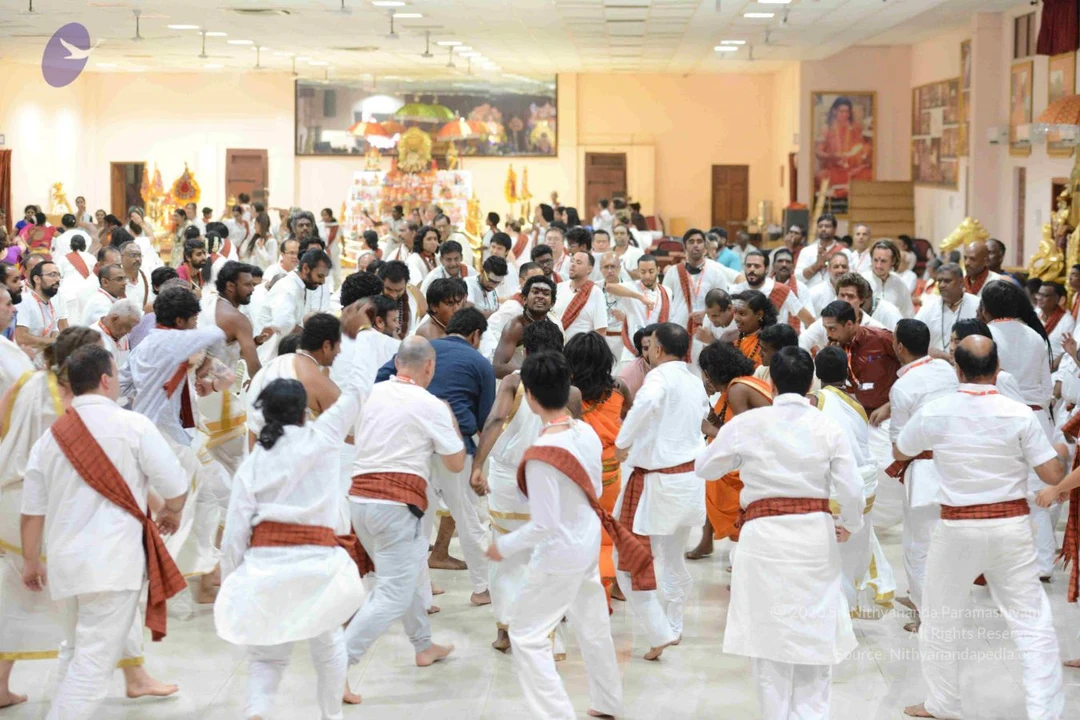
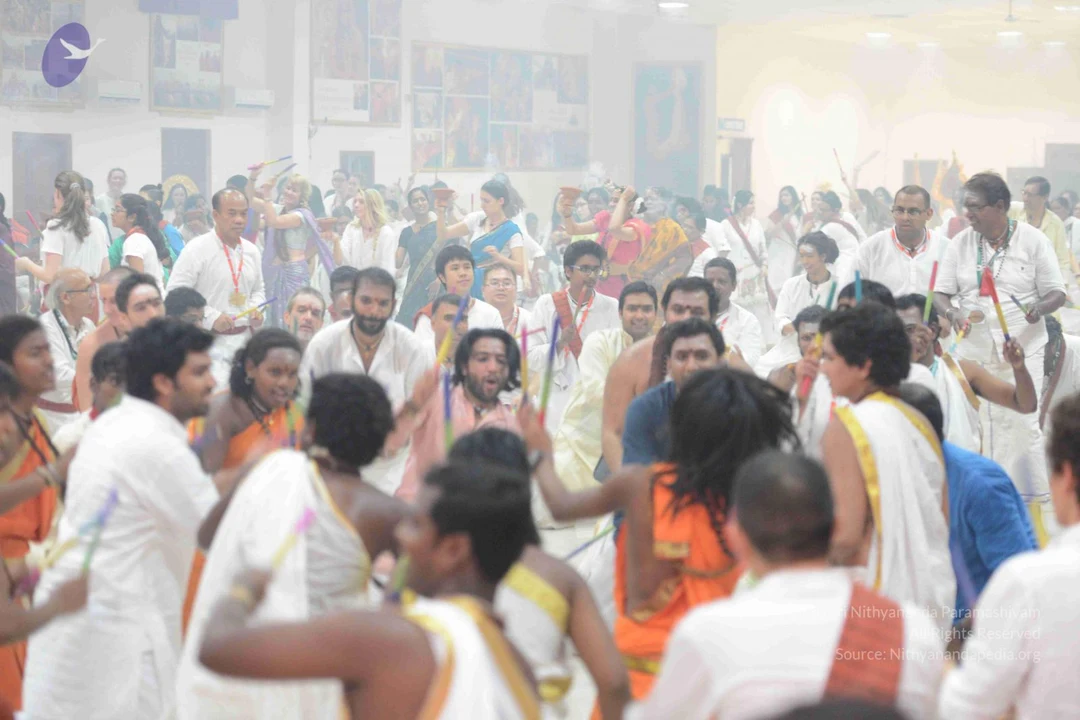
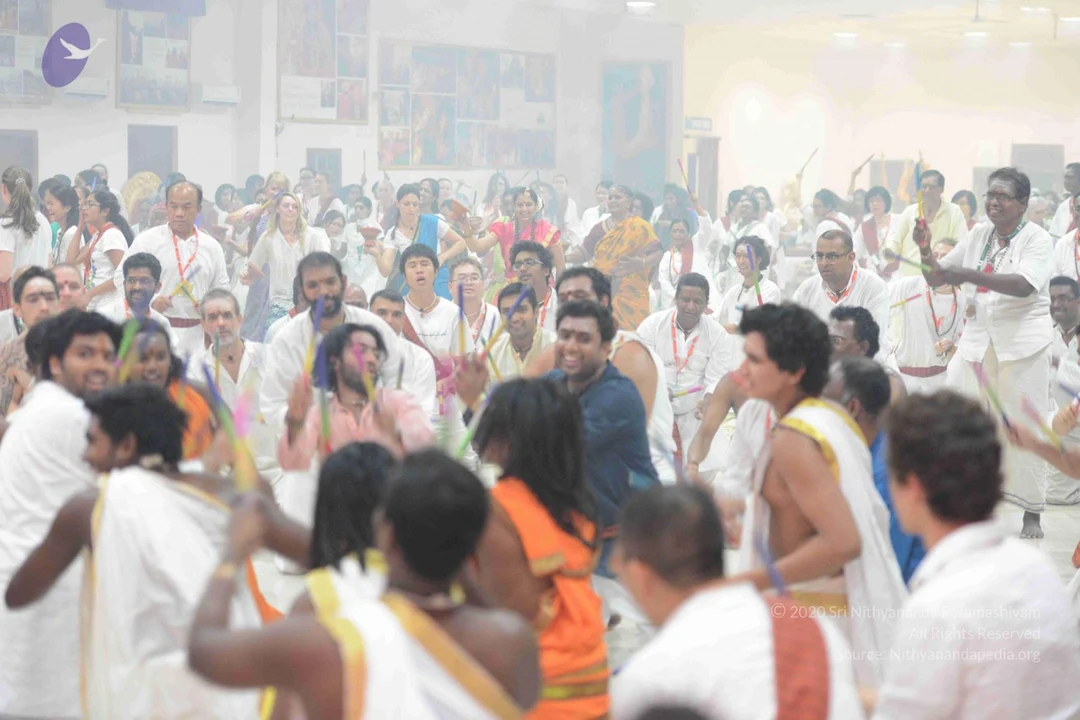
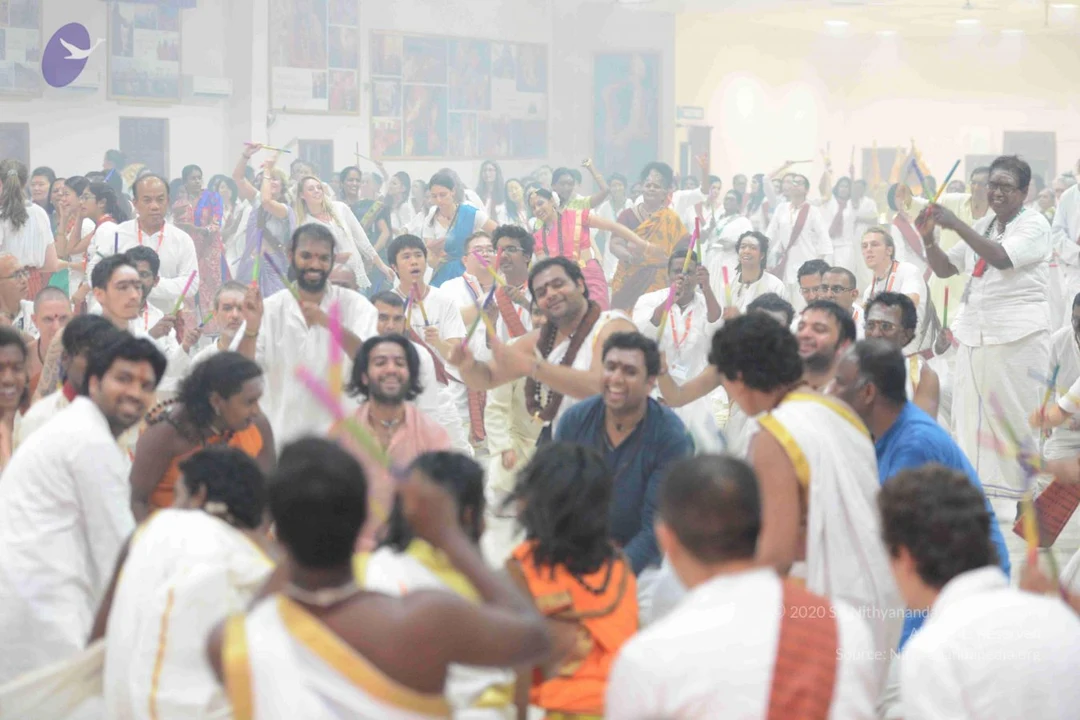
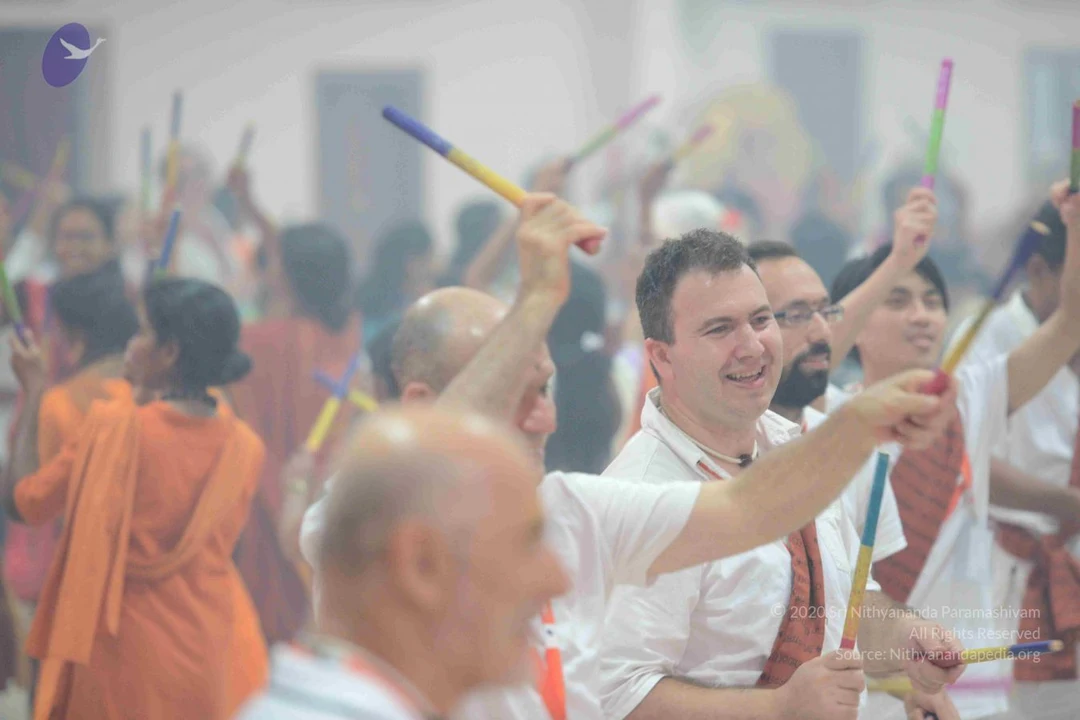
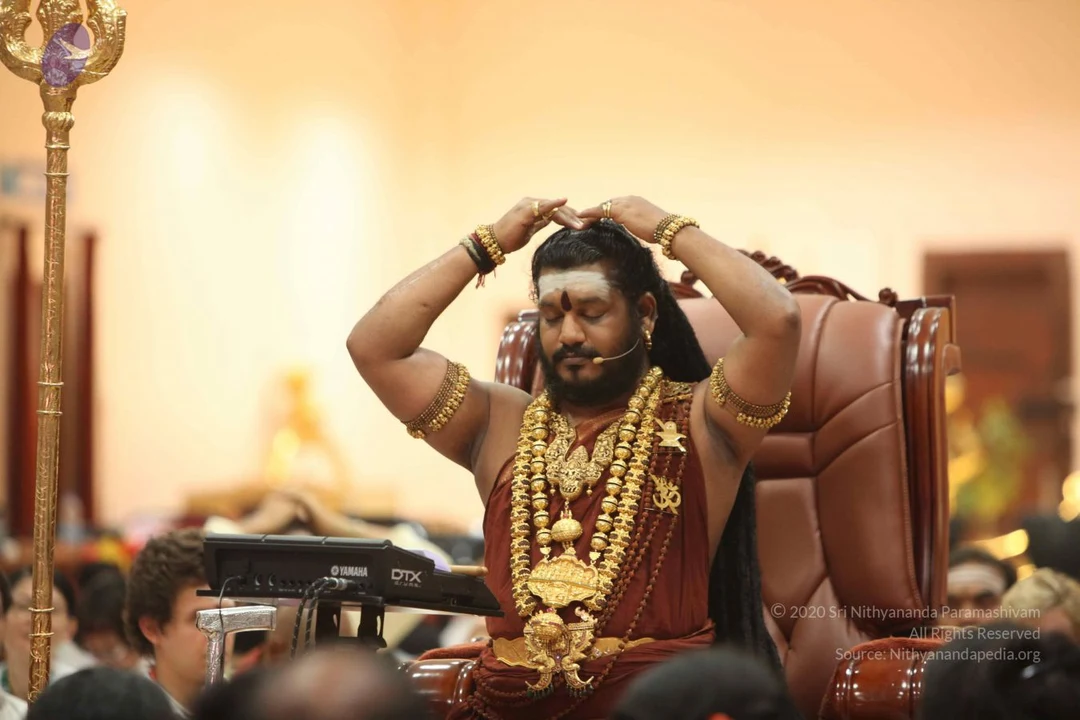
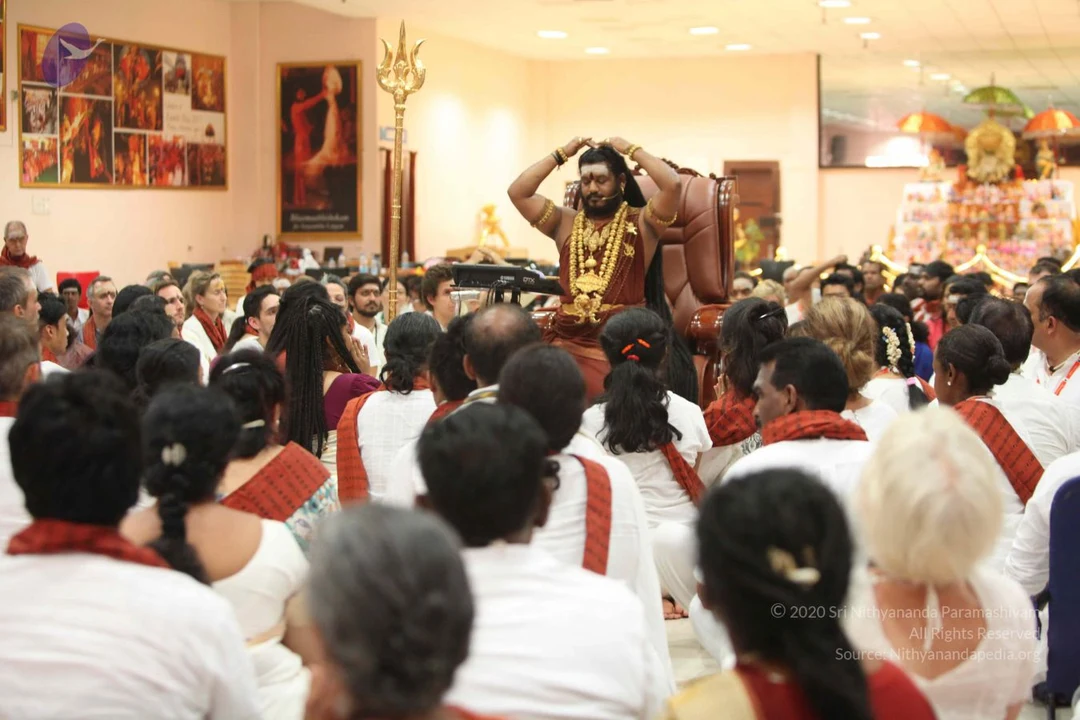
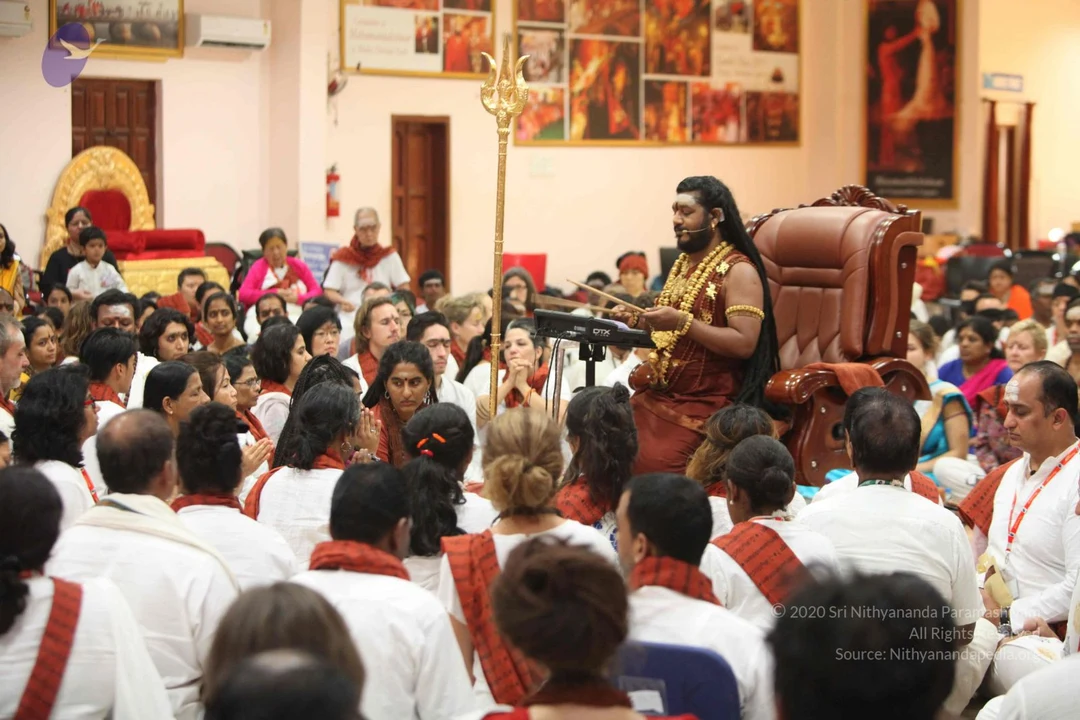
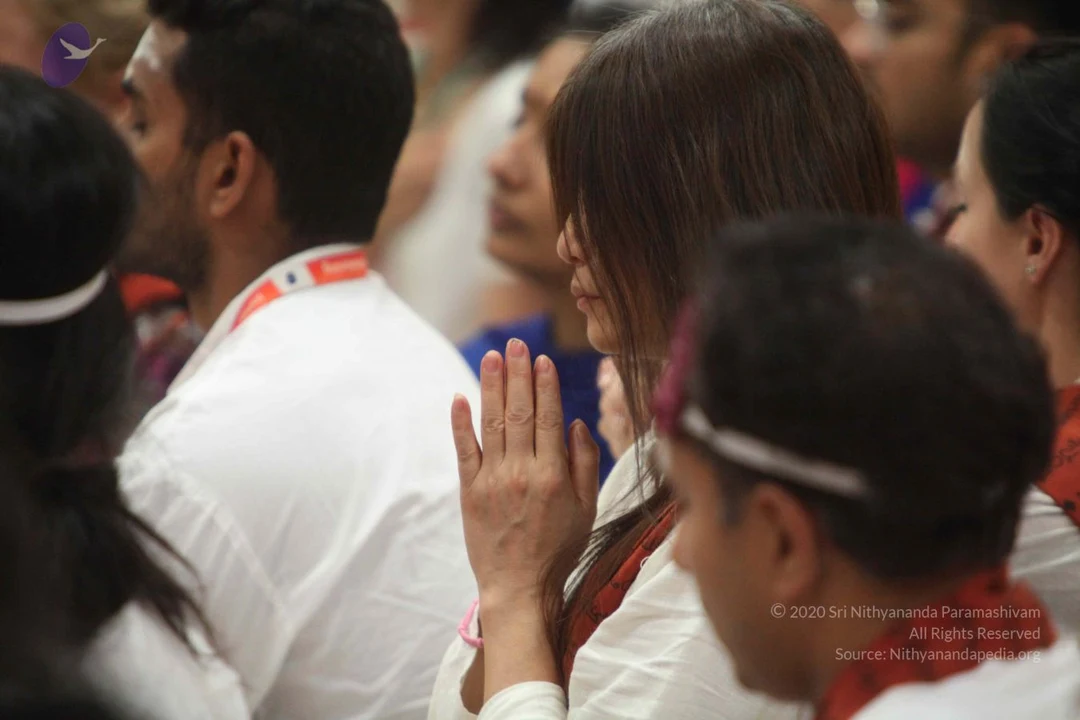
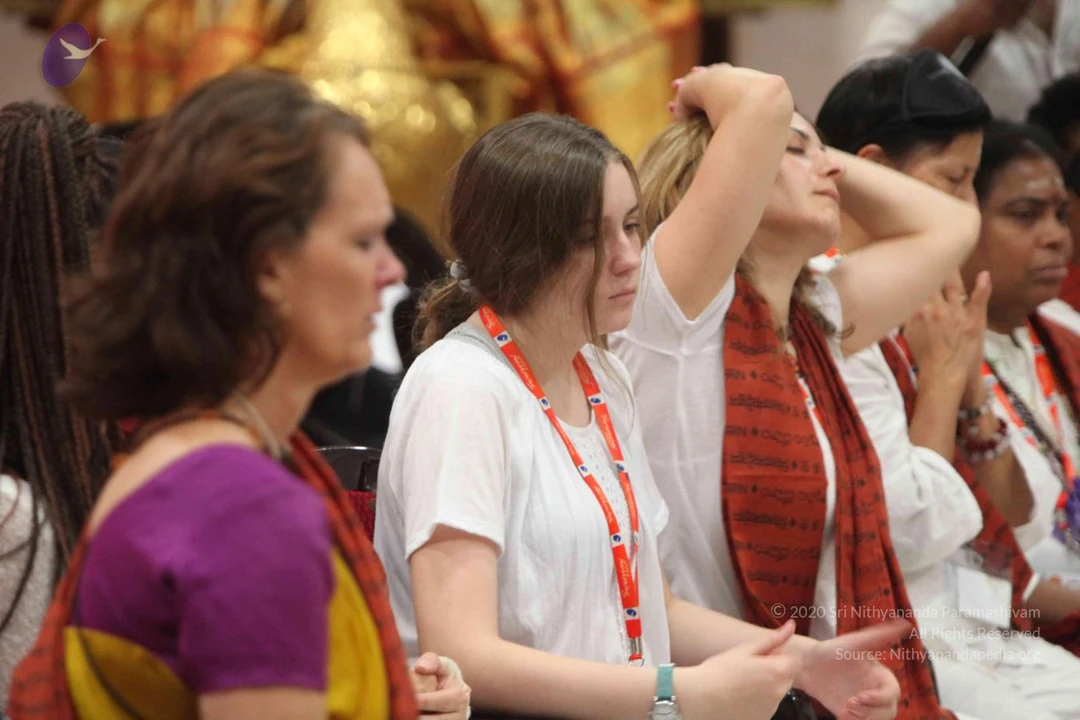
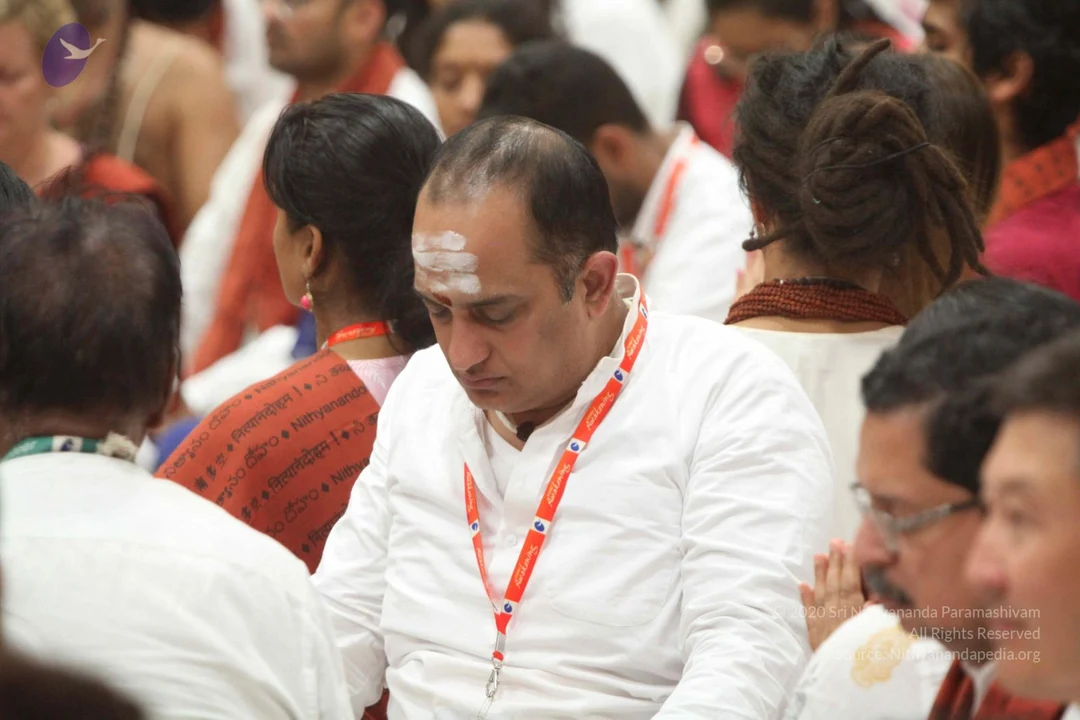
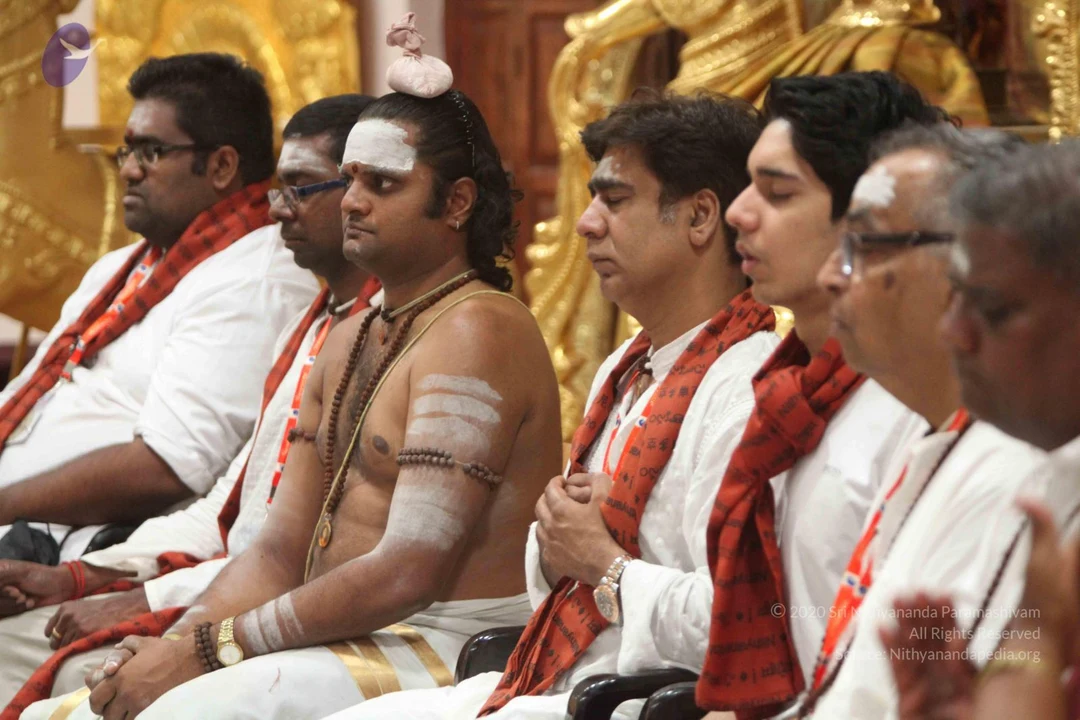
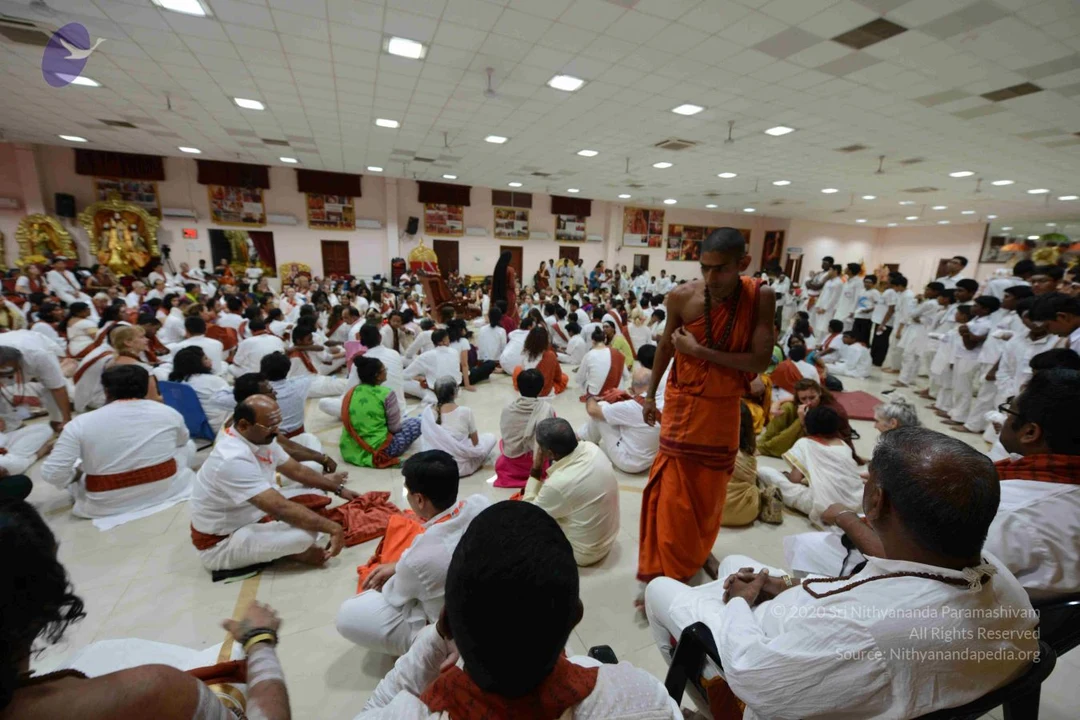
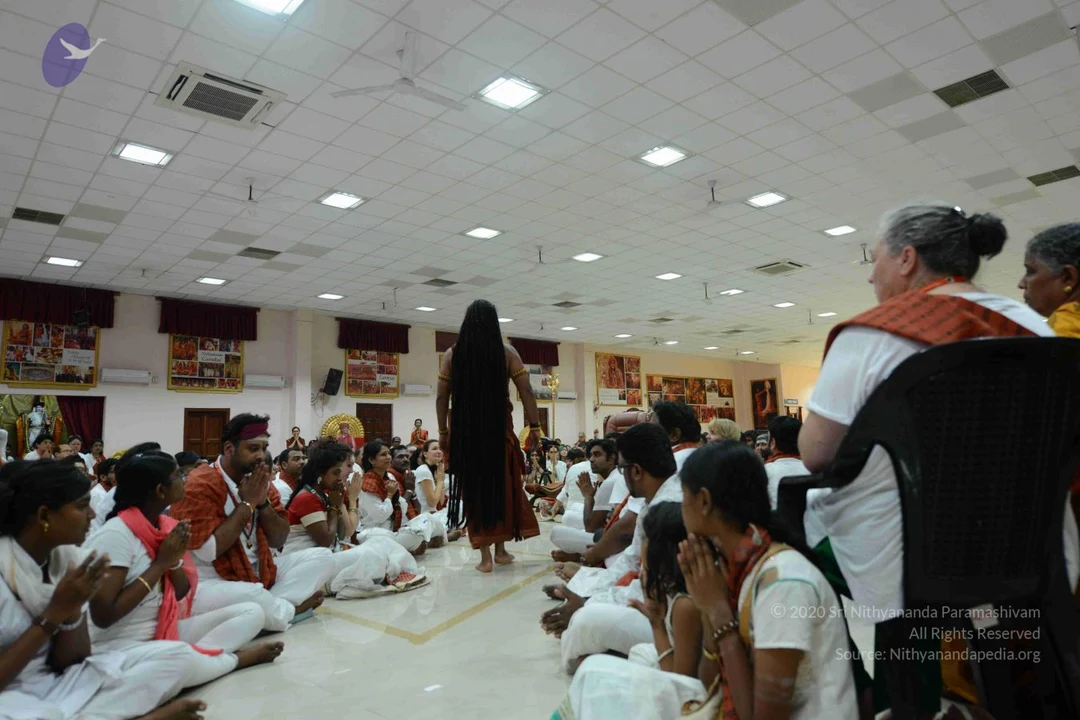
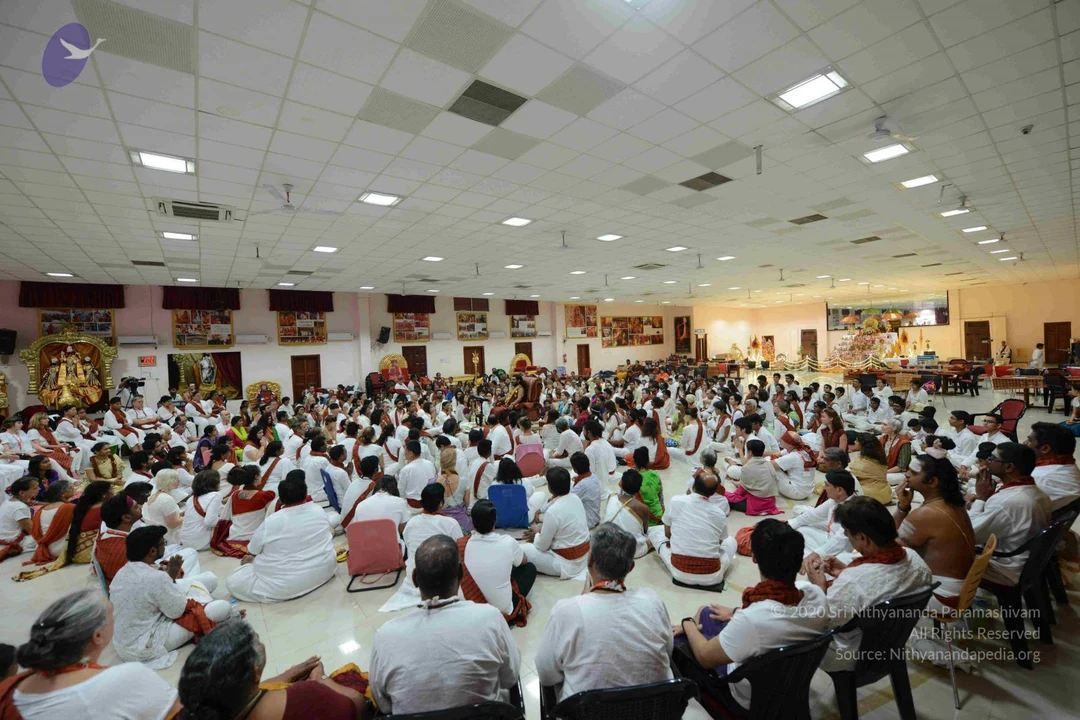
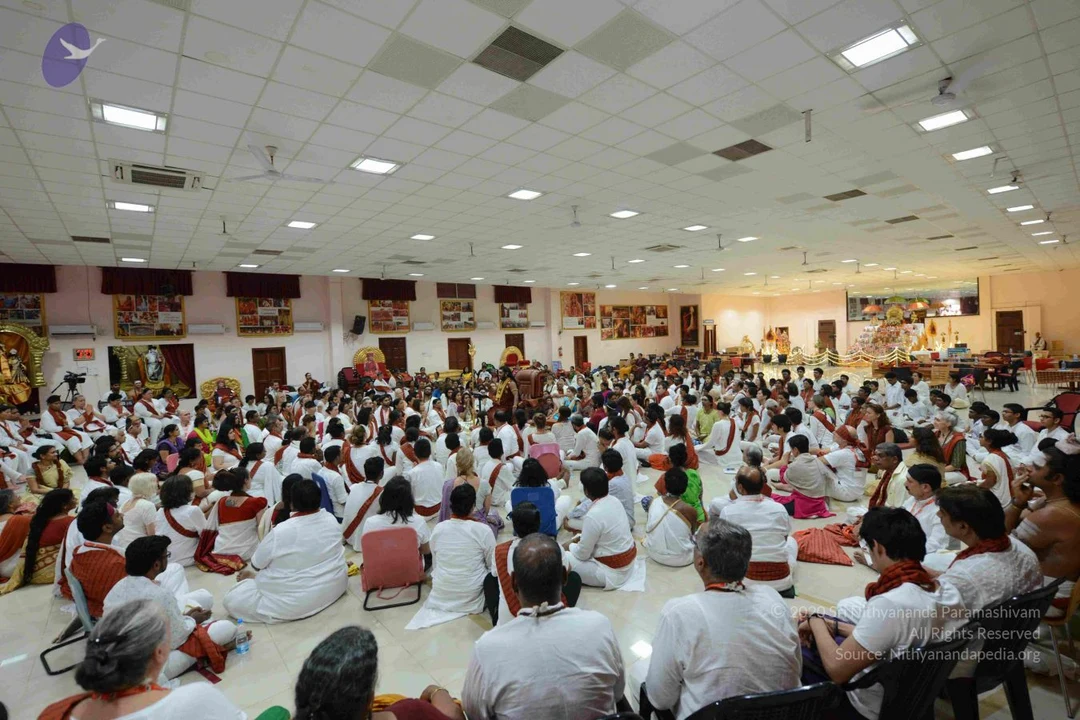
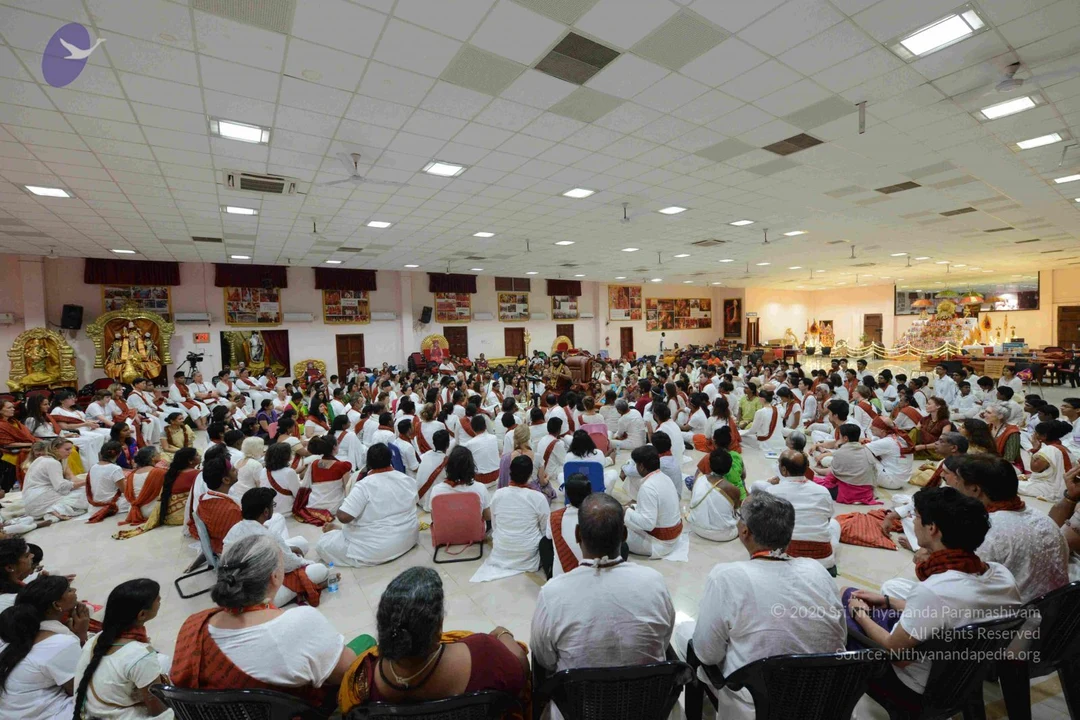
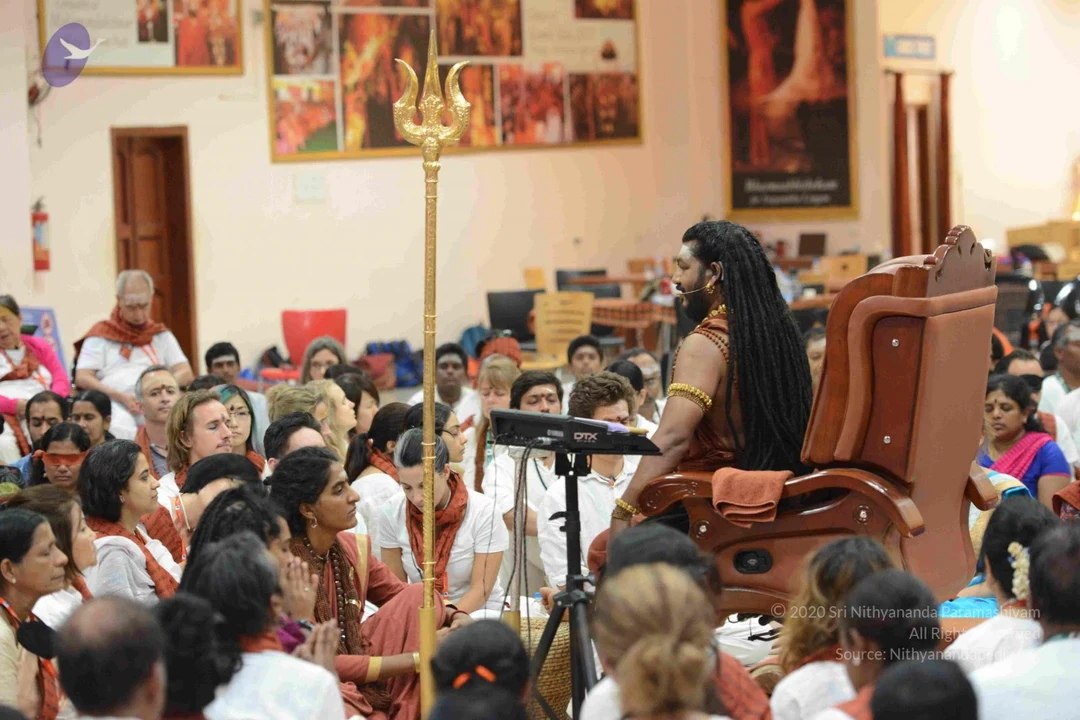
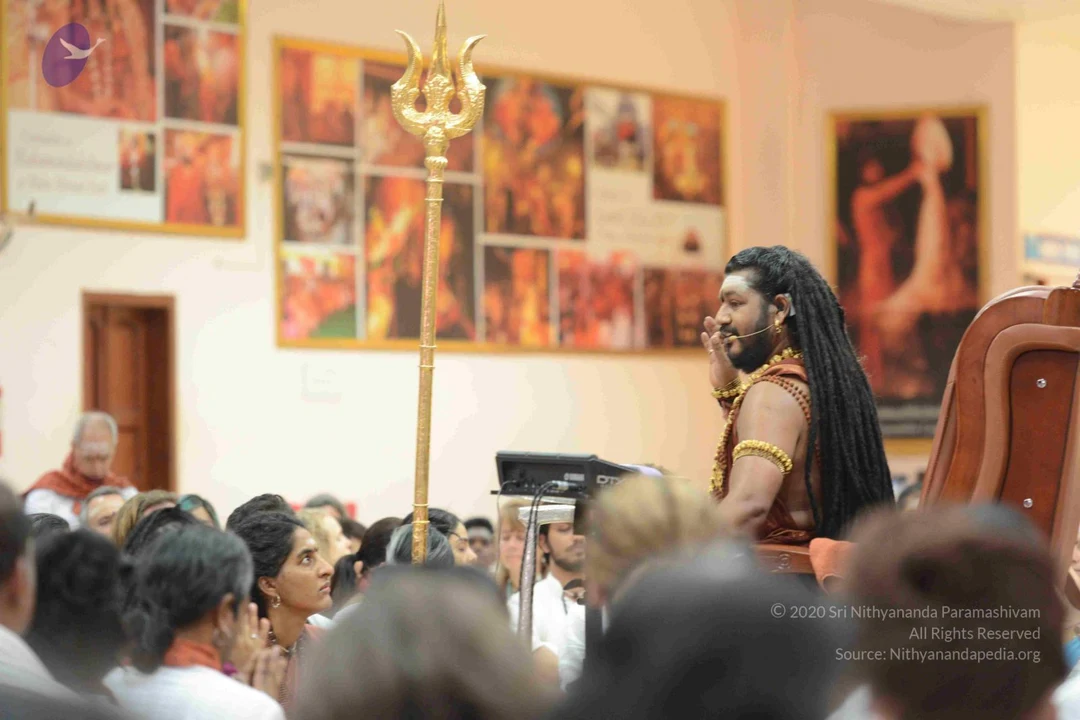
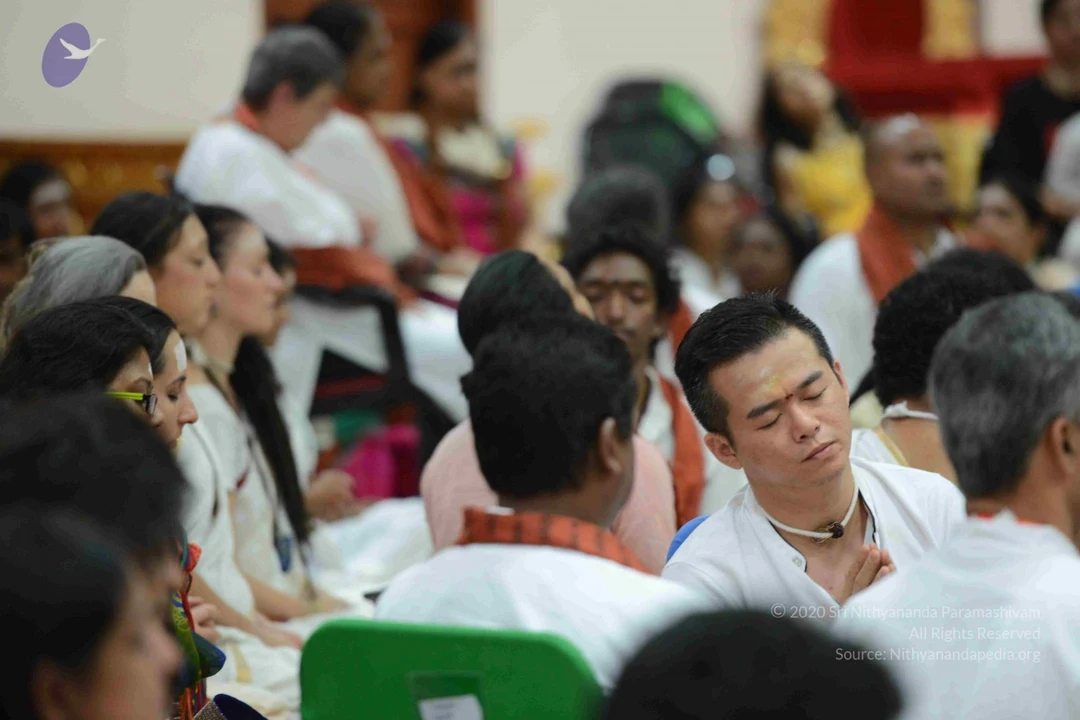
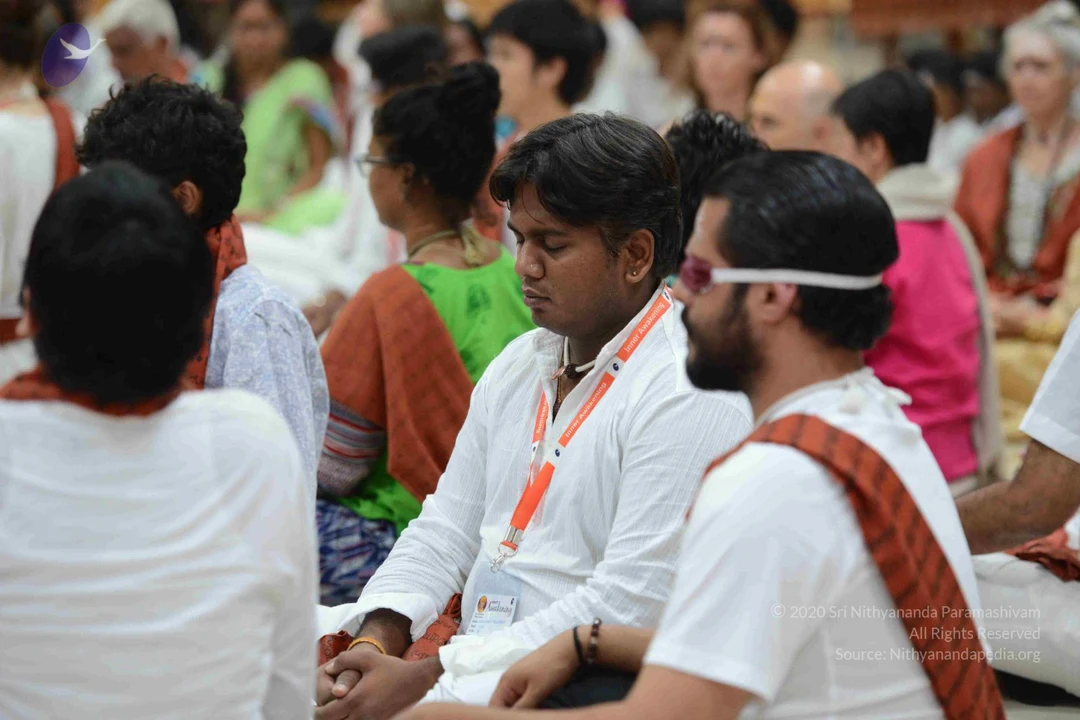
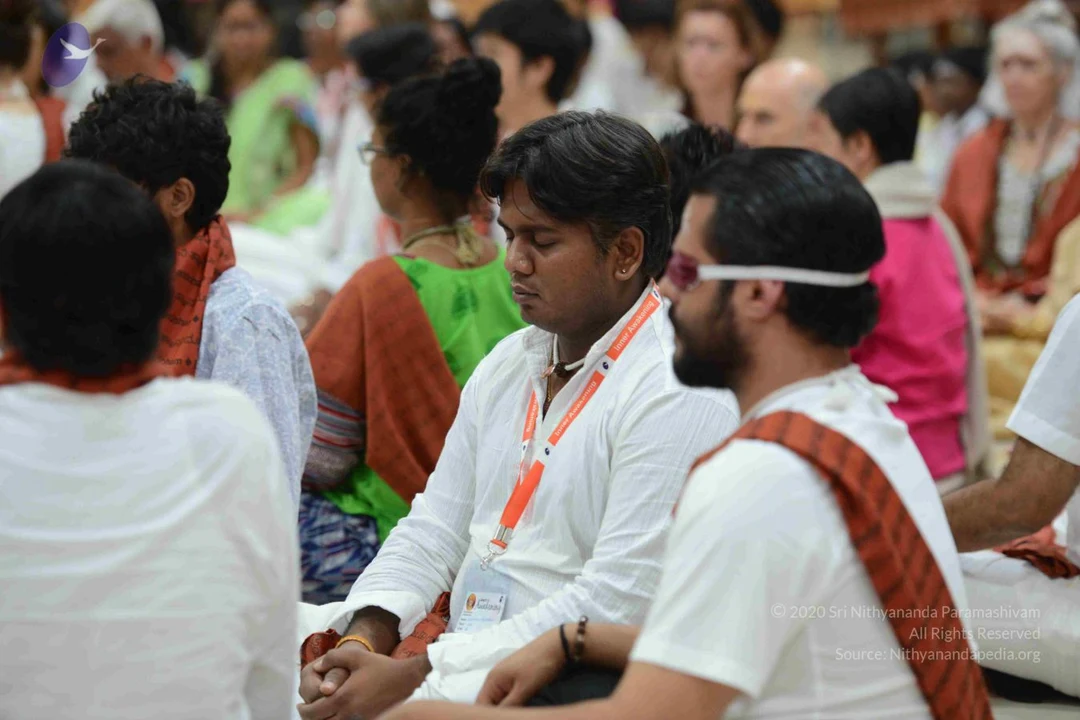
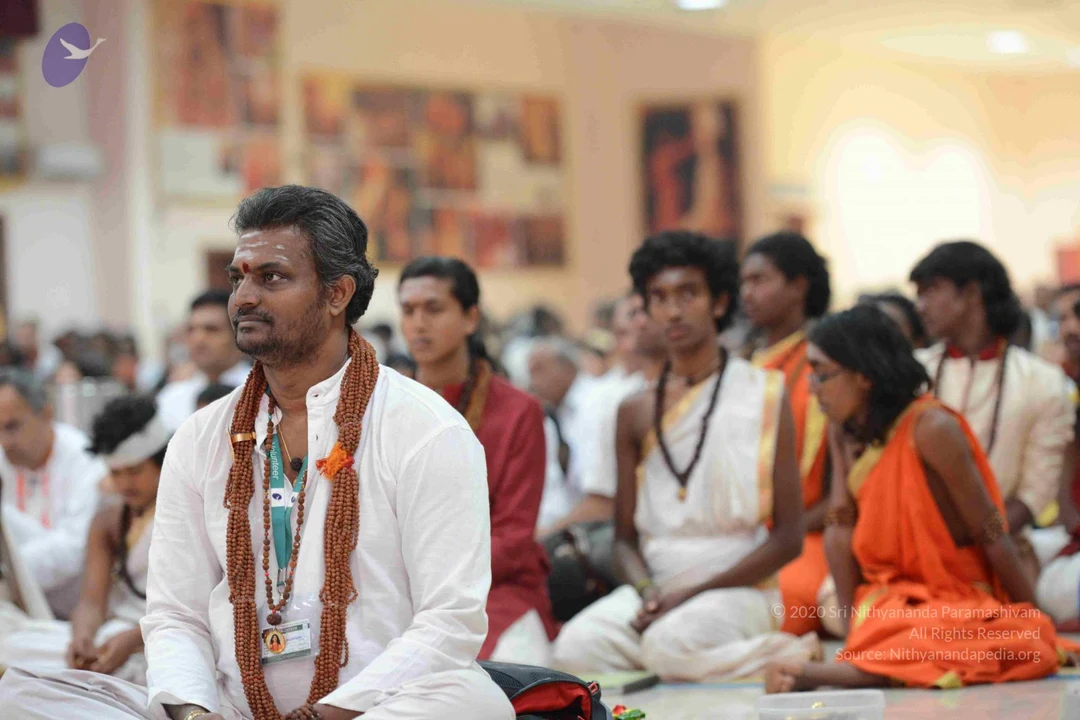
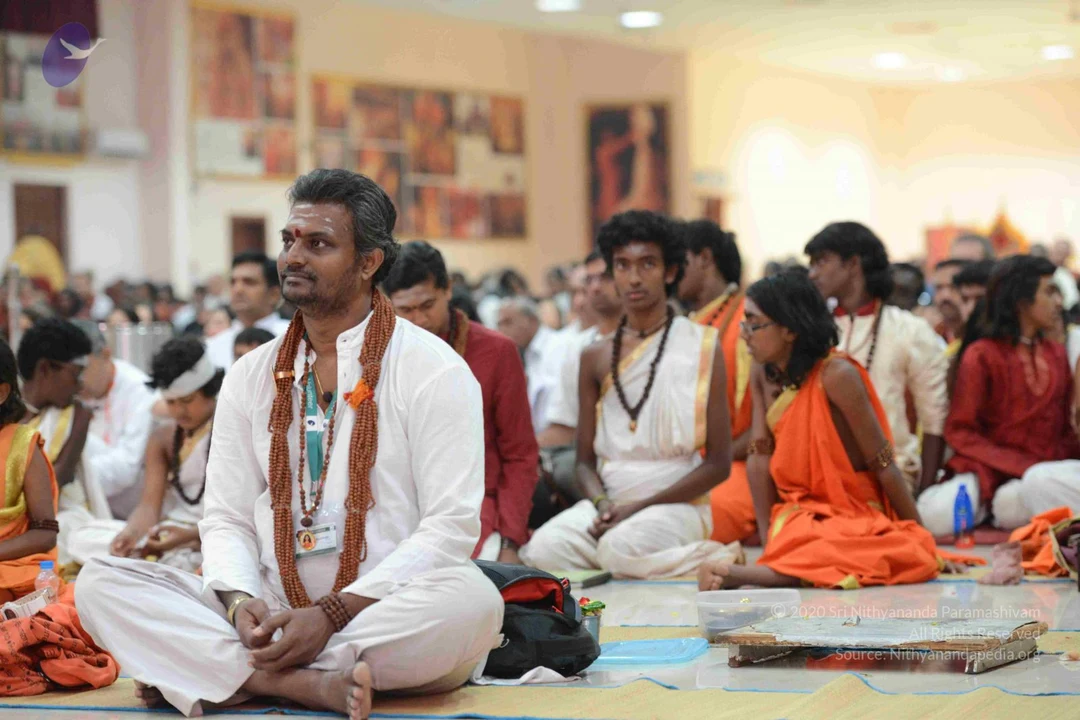
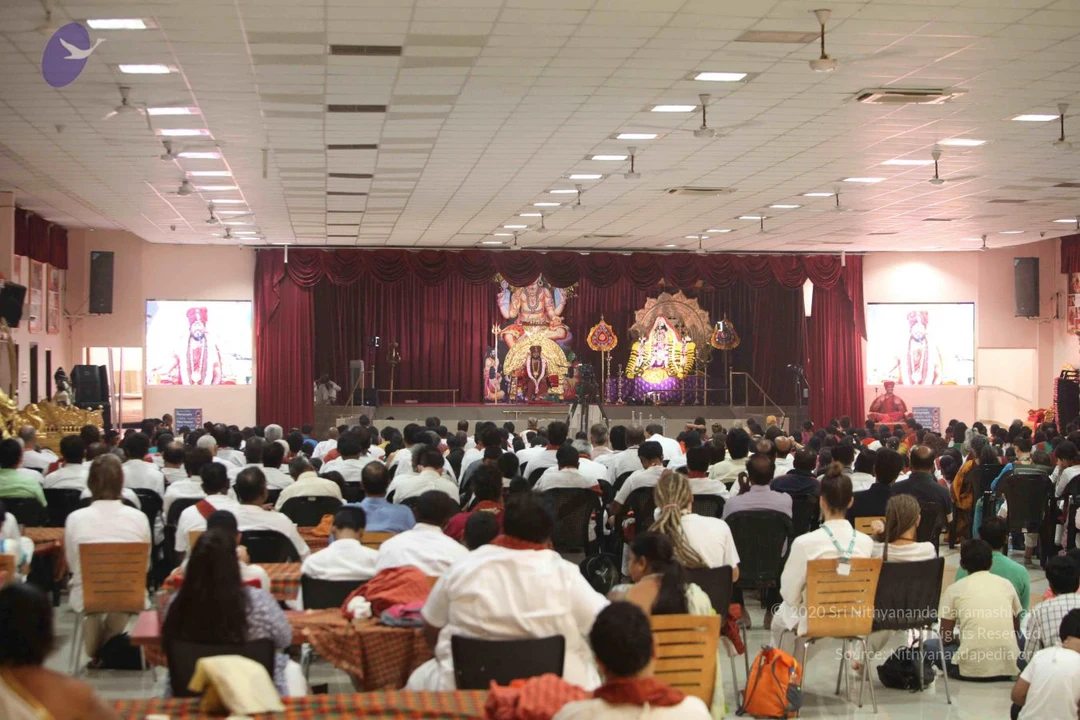
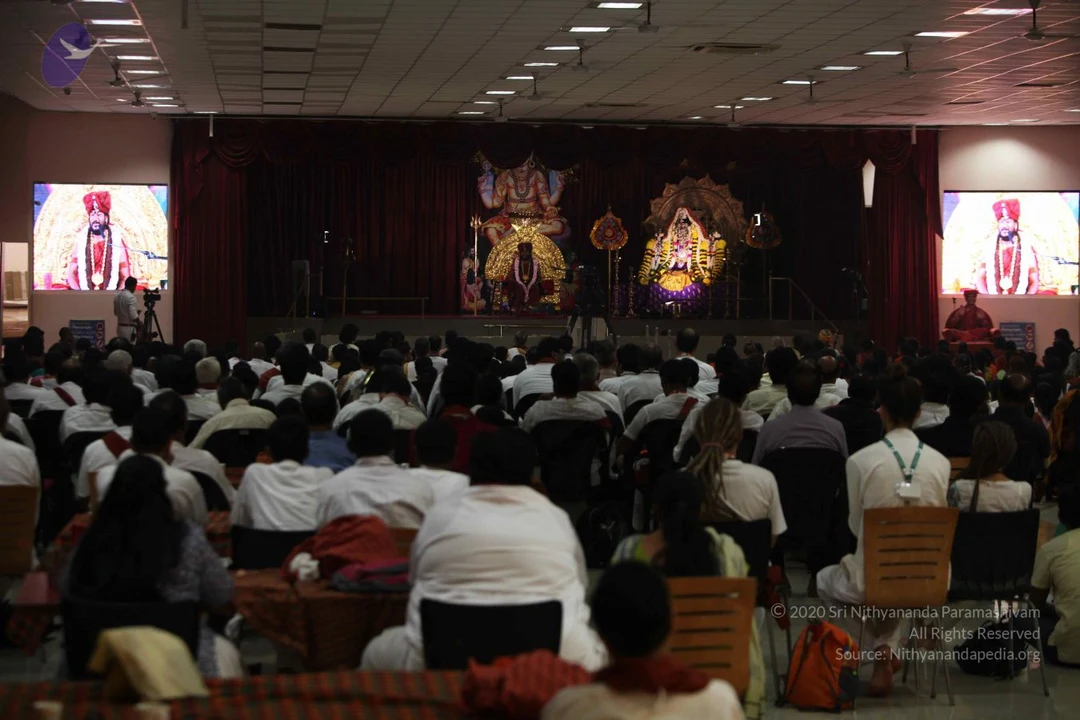
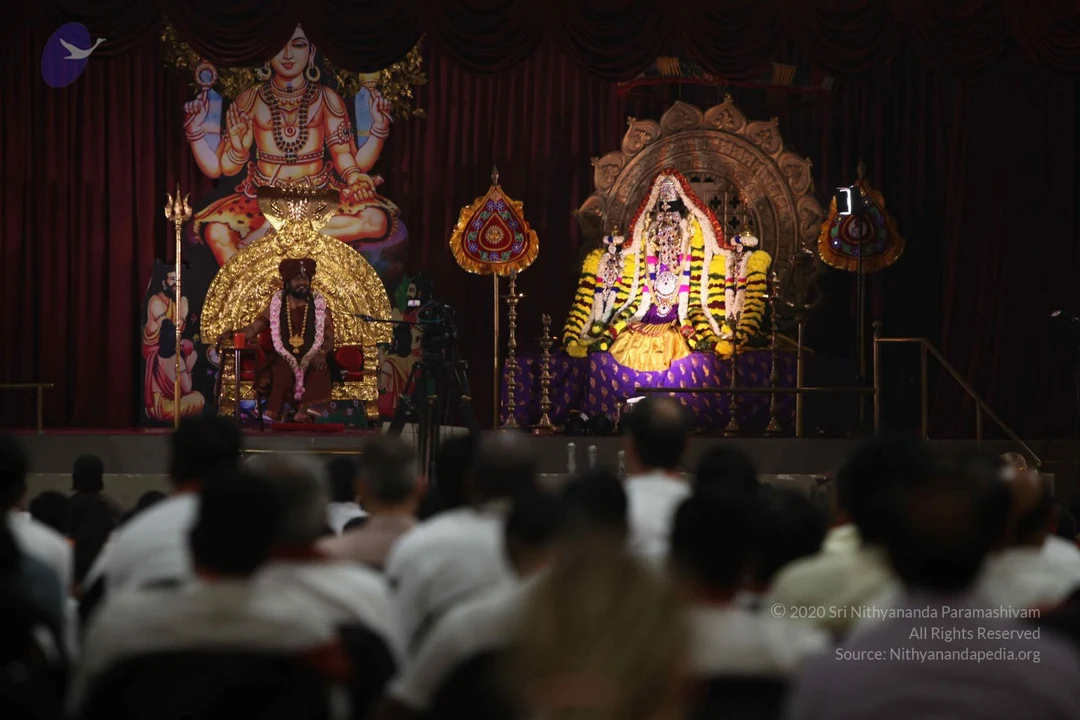
In this video, the Supreme Pontiff of Hinduism HDH #Nithyananda Paramashivam guides the delegates of the Inner Awakening convention through a mandala process to awaken their kundalini by using 16 sacred sounds, also known as Shodasi. The delegates are seated in a mandala, representing the shape of the cosmic DNA, and the intense sounds that are chanted by His Divine Holiness, invokes this same shape in the brain of those present. As a result, this awakens the kundalini and the potential energies begin to manifest.

The Supreme Pontiff of Hinduism Jagatguru Mahasannidhanam His Divine Holiness Nithyananda Paramashivam (HDH) is the reviver of #KAILASA - the ancient enlightened civilization and the great cosmic borderless Hindu nation. Revered as the incarnation of Paramashiva - the primordial Hindu Divinity, HDH has a following of 2 billion Hindus worldwide with de facto spiritual embassies in over 150 countries. He has worked untiringly for over 26 years for the revival of Kailasa, for global peace and to give super conscious breakthrough to humanity. He has survived the worst persecution of multiple assassination attempts on person and on character by anti-Hindu elements. He is collecting, organising, preserving, time capsuling, decoding, spreading and reviving 20 Million source books of Hinduism and the 64 sacred arts & sciences like Ayurveda, music, dance, sculpting, astrology, vastu and much more. Close to 20,000 hours of HDH’s timeless talks have been recorded till date (Sep 2020), which are a treasure trove of powerful cognitions to solve individual and global problems of any kind.

Link to Video:

Title

Shodasi: Manifesting the Ultimate || Part 2 || IA || 02 Oct 2016

Description

Name Of The Convention : Inner Awakening Title : Shodasi: Manifesting the Ultimate Part 2 Date : 02 October 2016 Venue : Adi Kailasa, Bengaluru, Karnataka, India

In this video, the Supreme Pontiff of Hinduism HDH #Nithyananda Paramashivam guides the delegates of the Inner Awakening convention through a mandala process to awaken their kundalini by using 16 sacred sounds, also known as Shodasi. The delegates are seated in a mandala, representing the shape of the cosmic DNA, and the intense sounds that are chanted by His Divine Holiness, invokes this same shape in the brain of those present. As a result, this awakens the kundalini and the potential energies begin to manifest.

The Supreme Pontiff of Hinduism Jagatguru Mahasannidhanam His Divine Holiness Nithyananda Paramashivam (HDH) is the reviver of #KAILASA - the ancient enlightened civilization and the great cosmic borderless Hindu nation. Revered as the incarnation of Paramashiva - the primordial Hindu Divinity, HDH has a following of 2 billion Hindus worldwide with de facto spiritual embassies in over 150 countries. He has worked untiringly for over 26 years for the revival of Kailasa, for global peace and to give super conscious breakthrough to humanity. He has survived the worst persecution of multiple assassination attempts on person and on character by anti-Hindu elements. He is collecting, organising, preserving, time capsuling, decoding, spreading and reviving 20 Million source books of Hinduism and the 64 sacred arts & sciences like Ayurveda, music, dance, sculpting, astrology, vastu and much more. Close to 20,000 hours of HDH’s timeless talks have been recorded till date (Sep 2020), which are a treasure trove of powerful cognitions to solve individual and global problems of any kind.

Link to Video:

Title

From Dreams to Reality! || Kalpataru Darshan || 02 October 2016

Link to Video:

Photos Of The Day:
Inner Awakening - navaratri darbar

kalpataru darshan

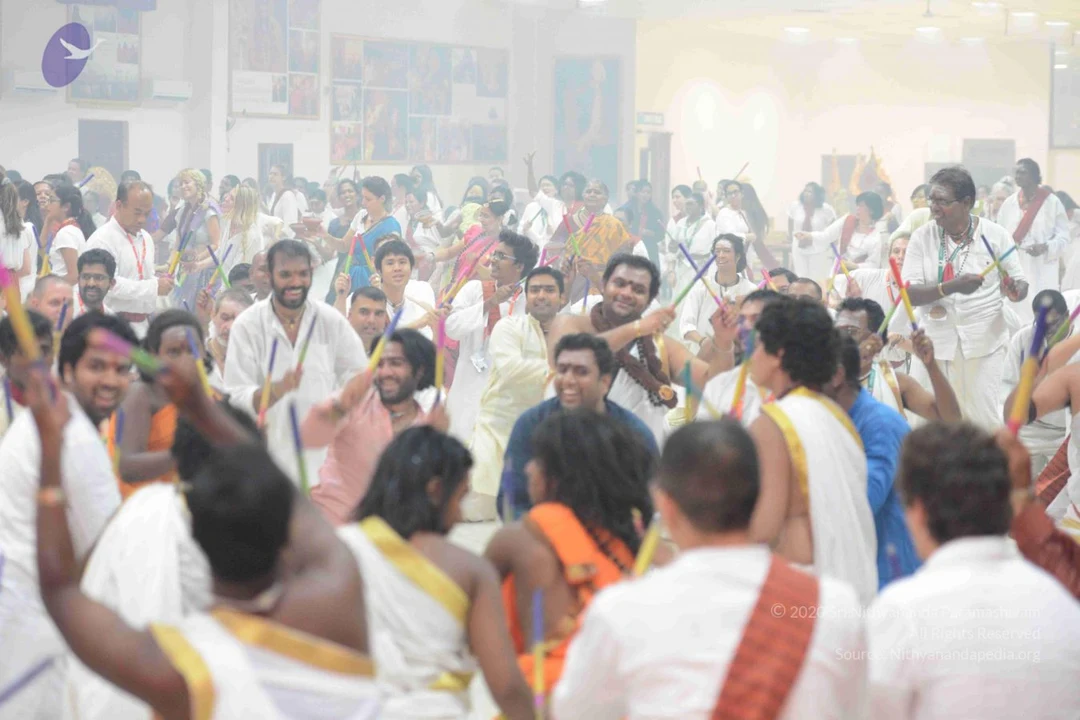
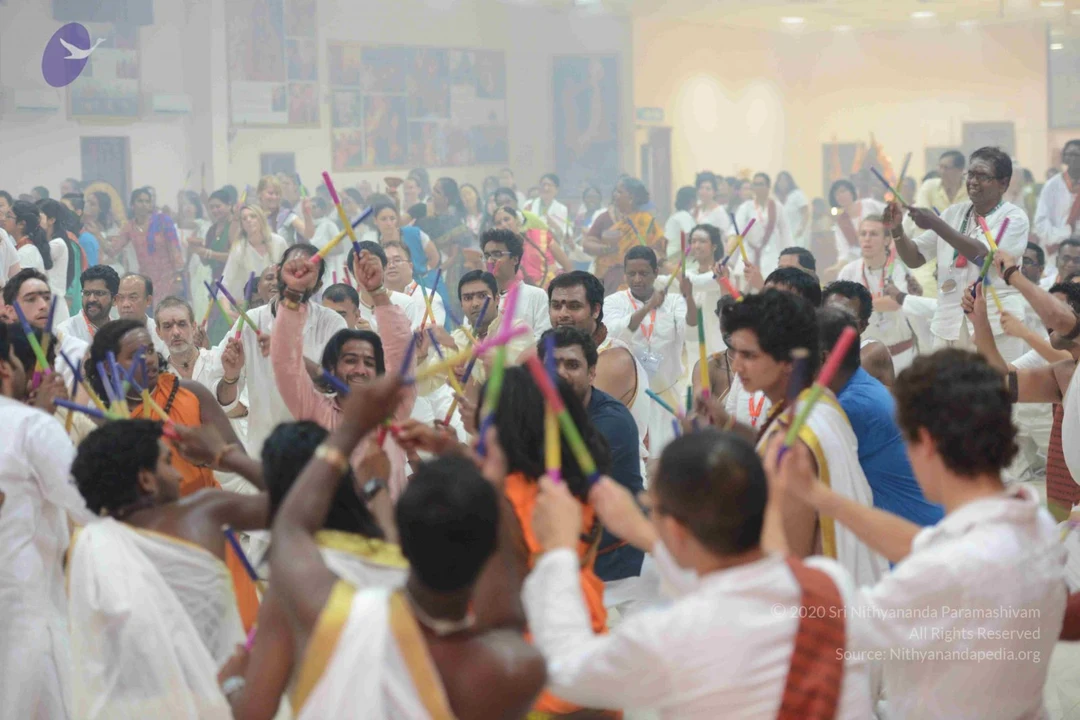
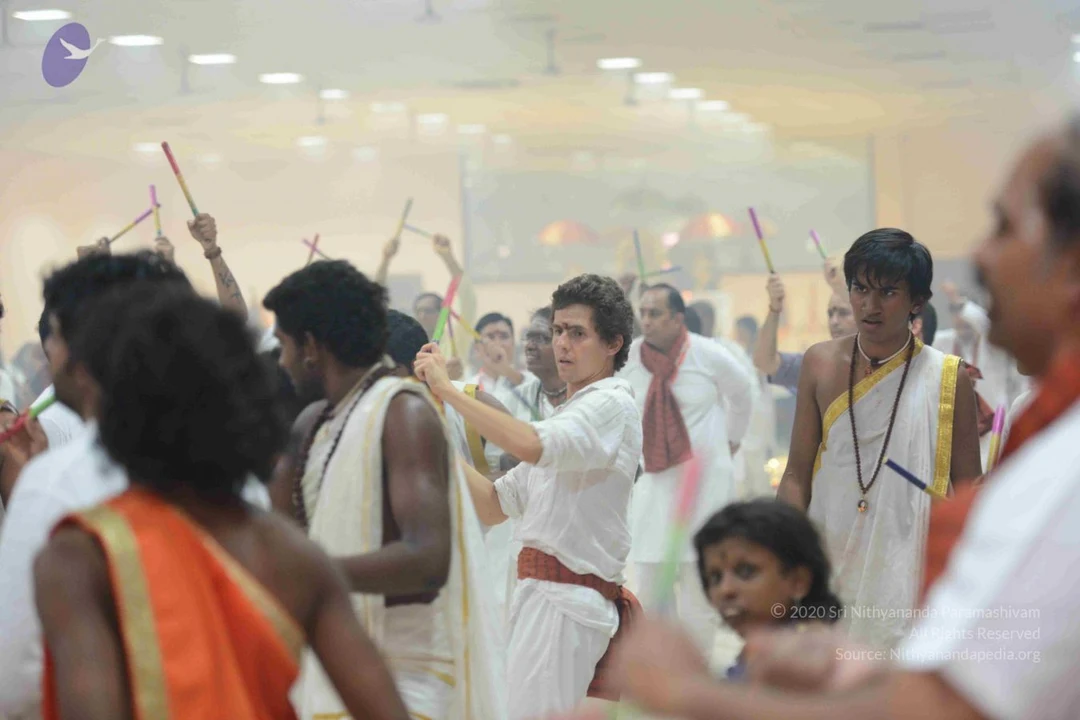
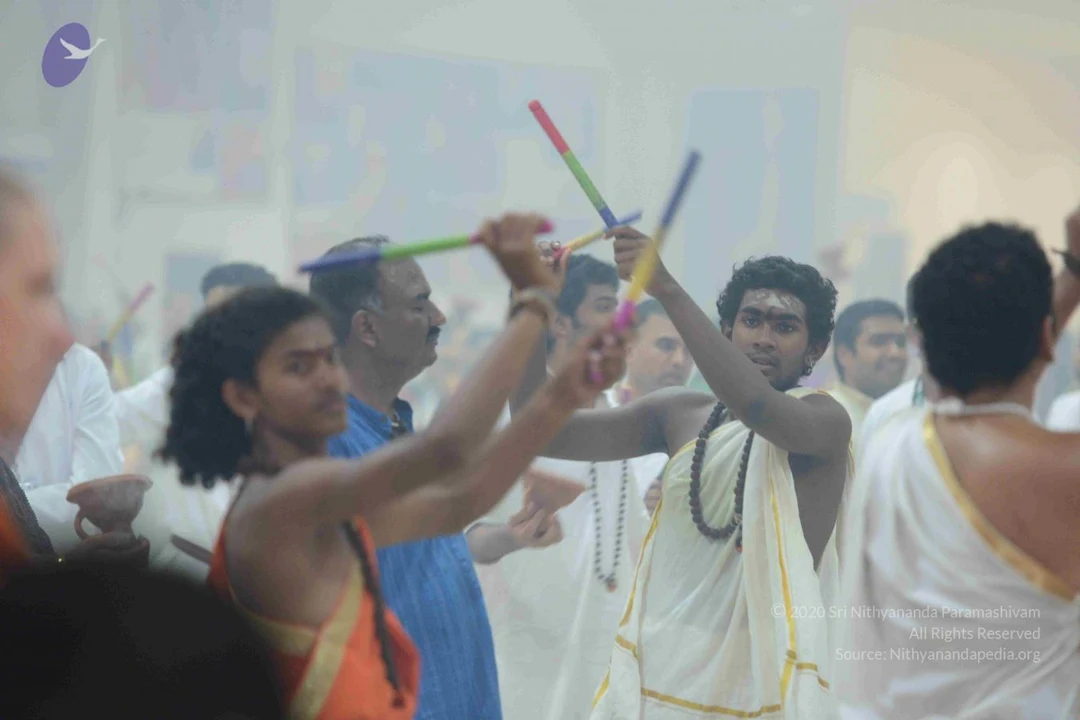
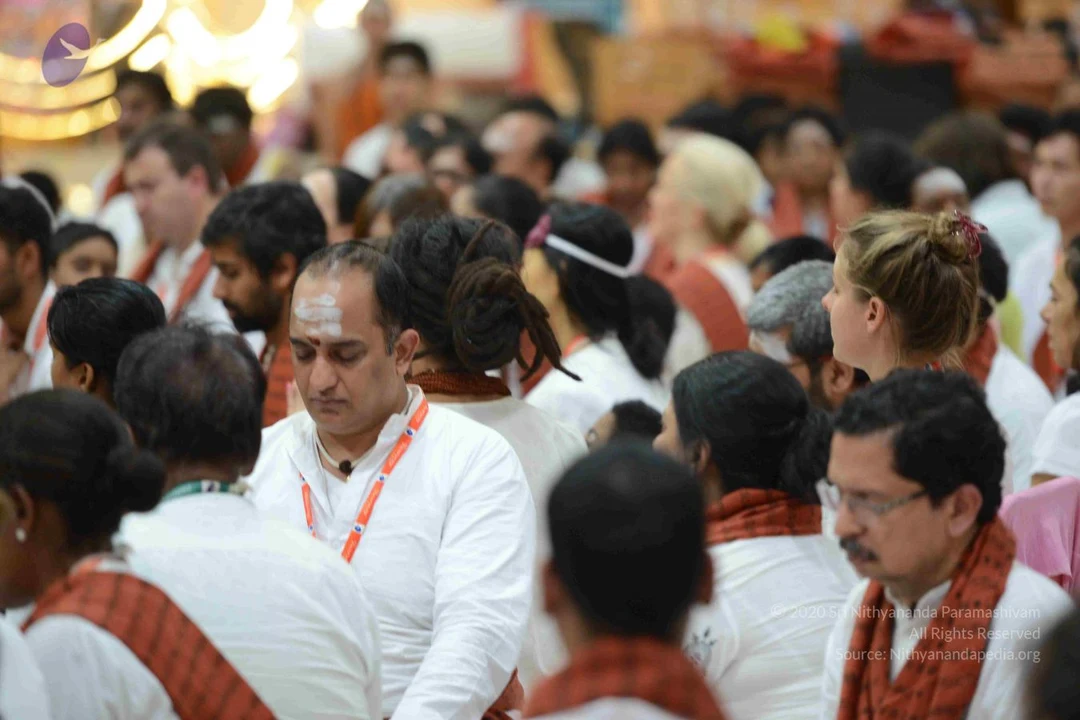
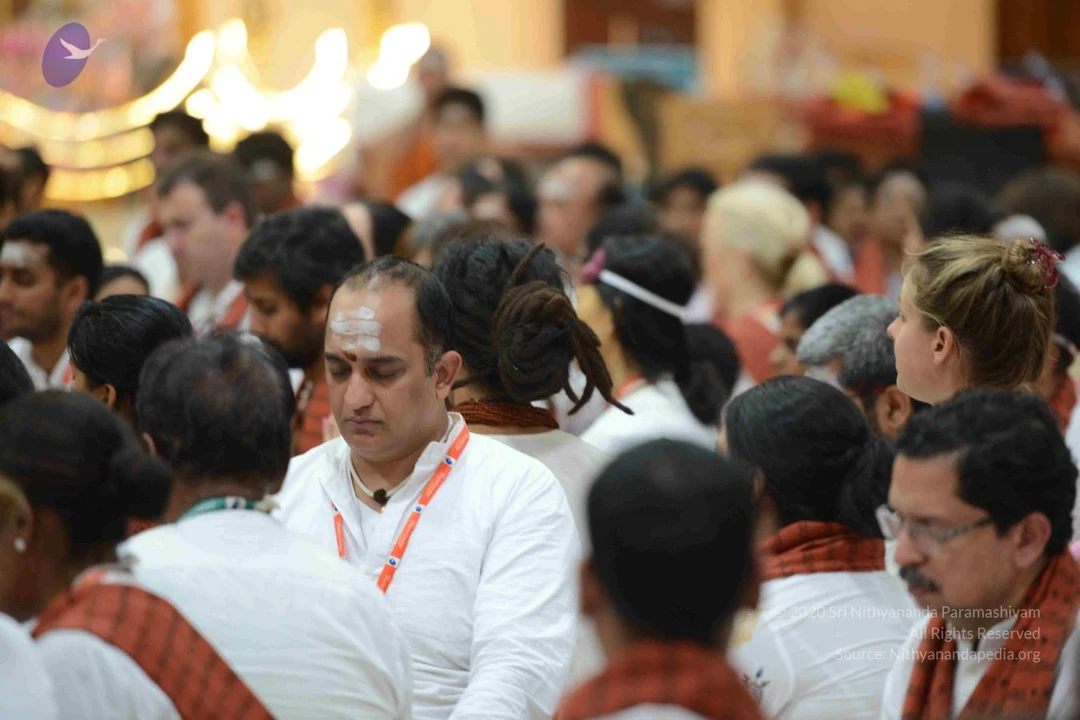
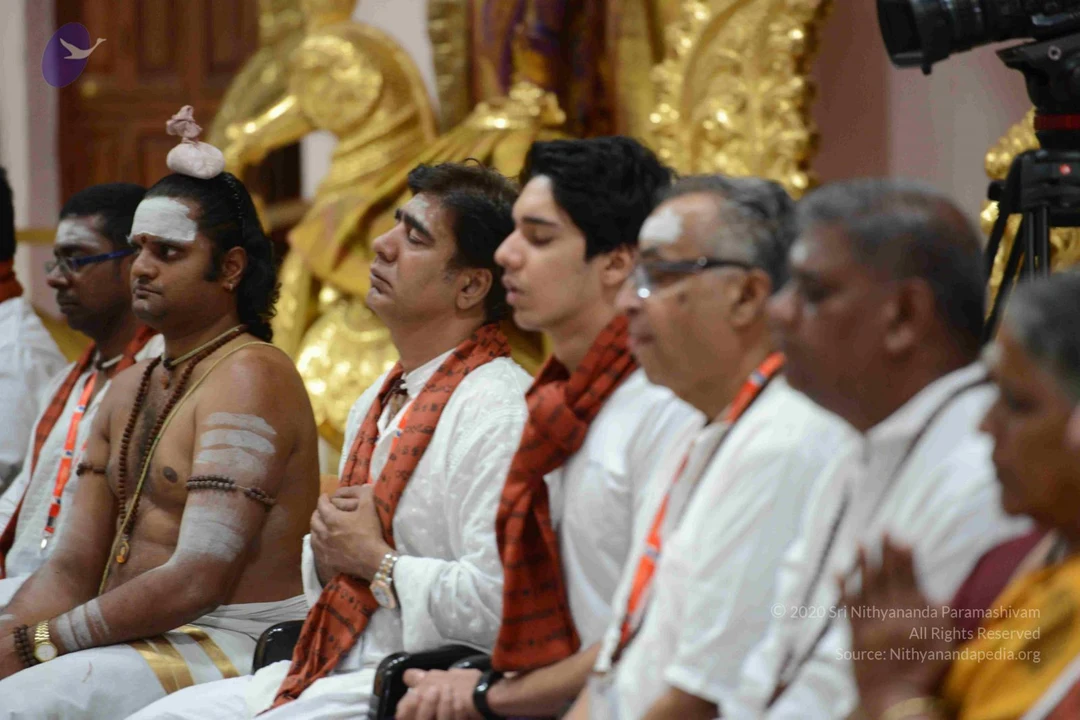
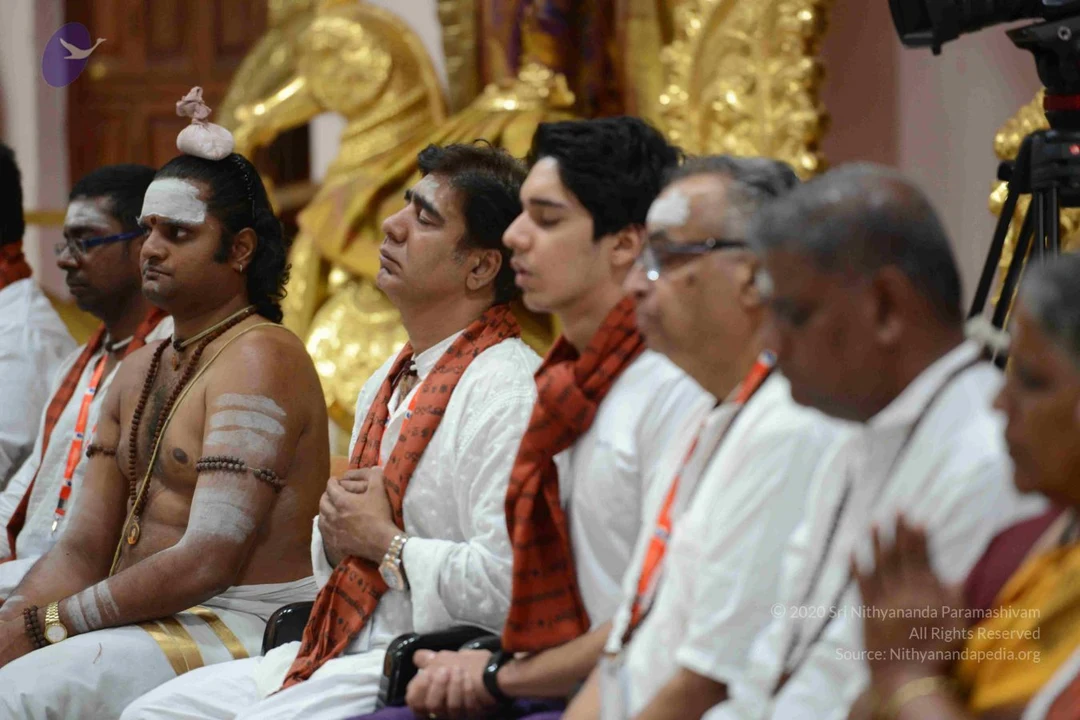
mandala meditation

Photos Of The Day:
Living-Shuddhadvaita-Program

Kalpataru-Darshan

Photos Of The Day:
LSP

Kalpataru-Darshan

Photos from this day

View all 604 photos

Inner Awakening - navaratri darbar

107 photosSource gallery
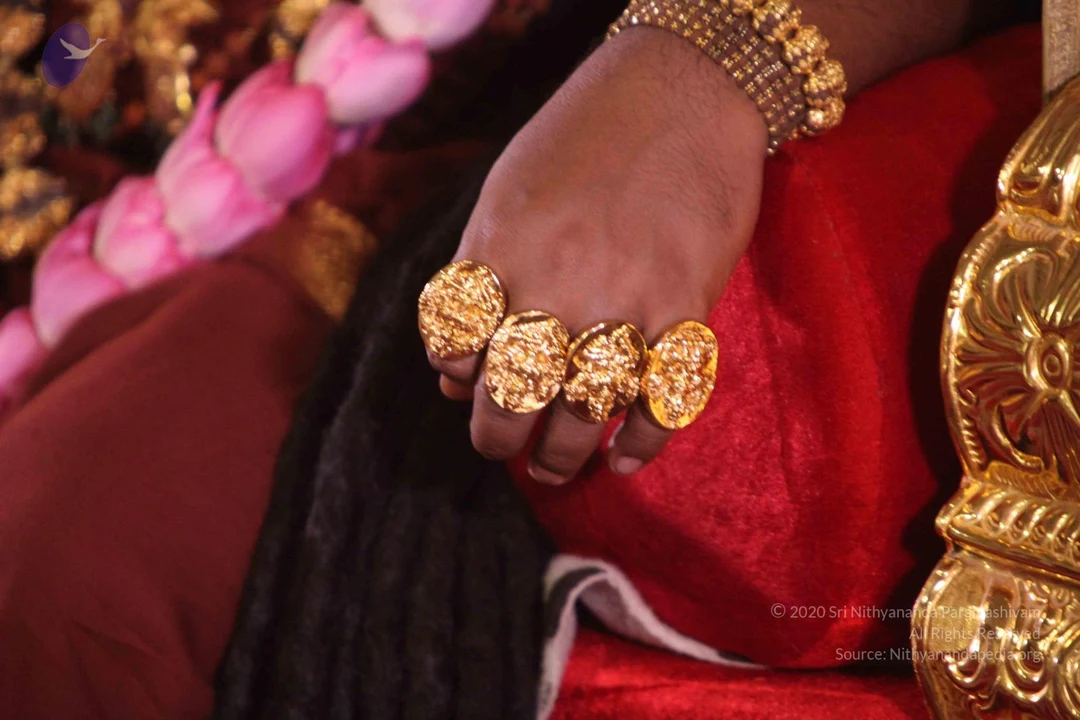
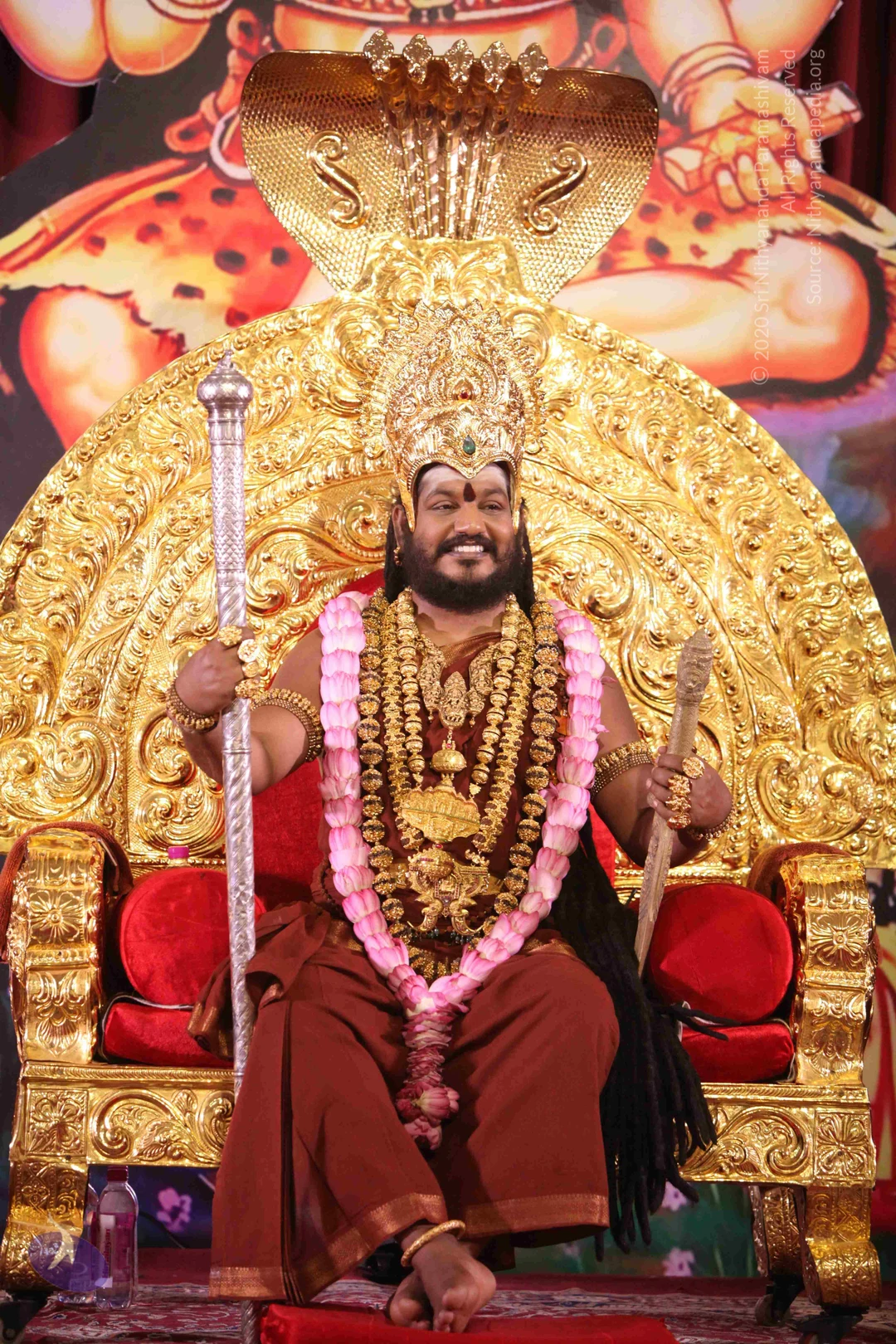
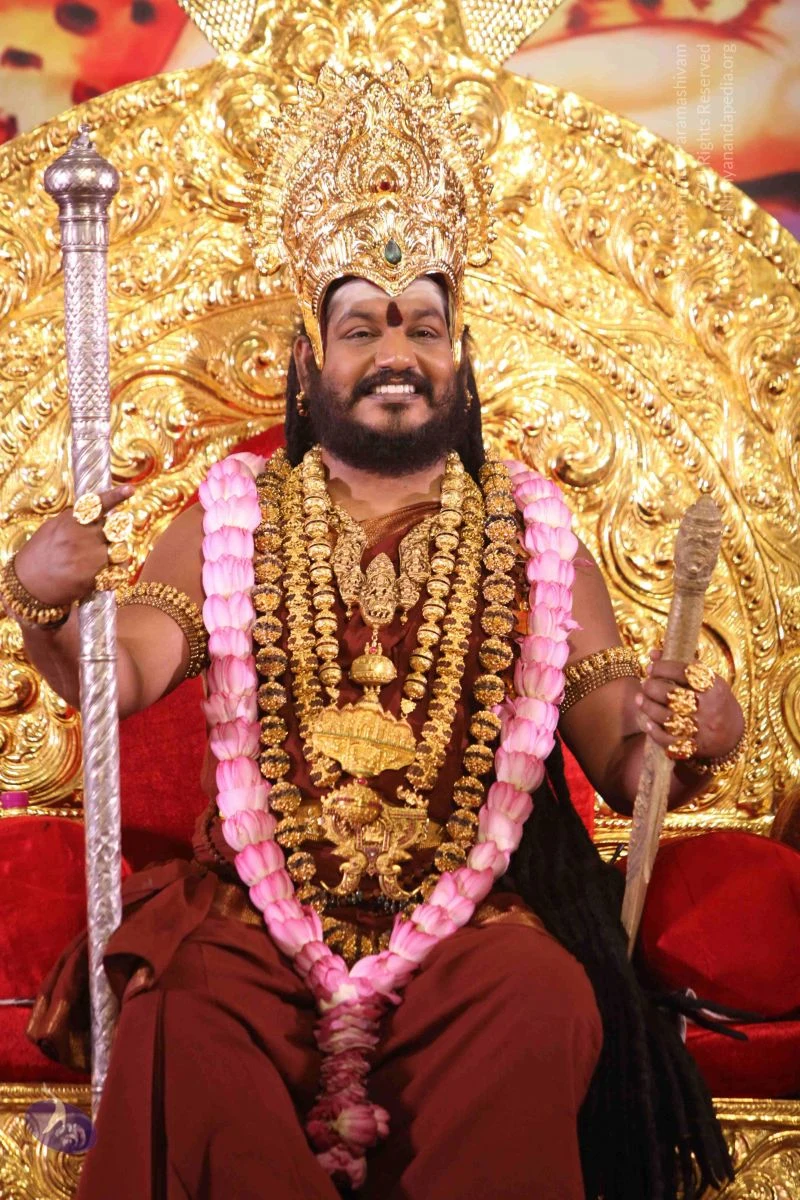
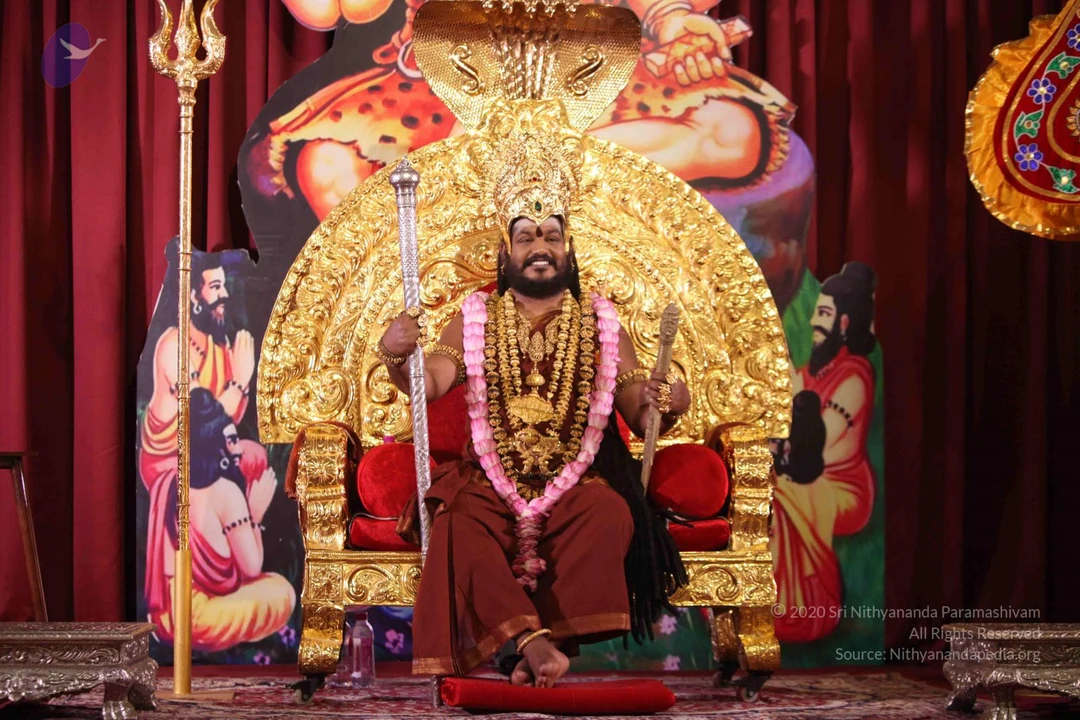
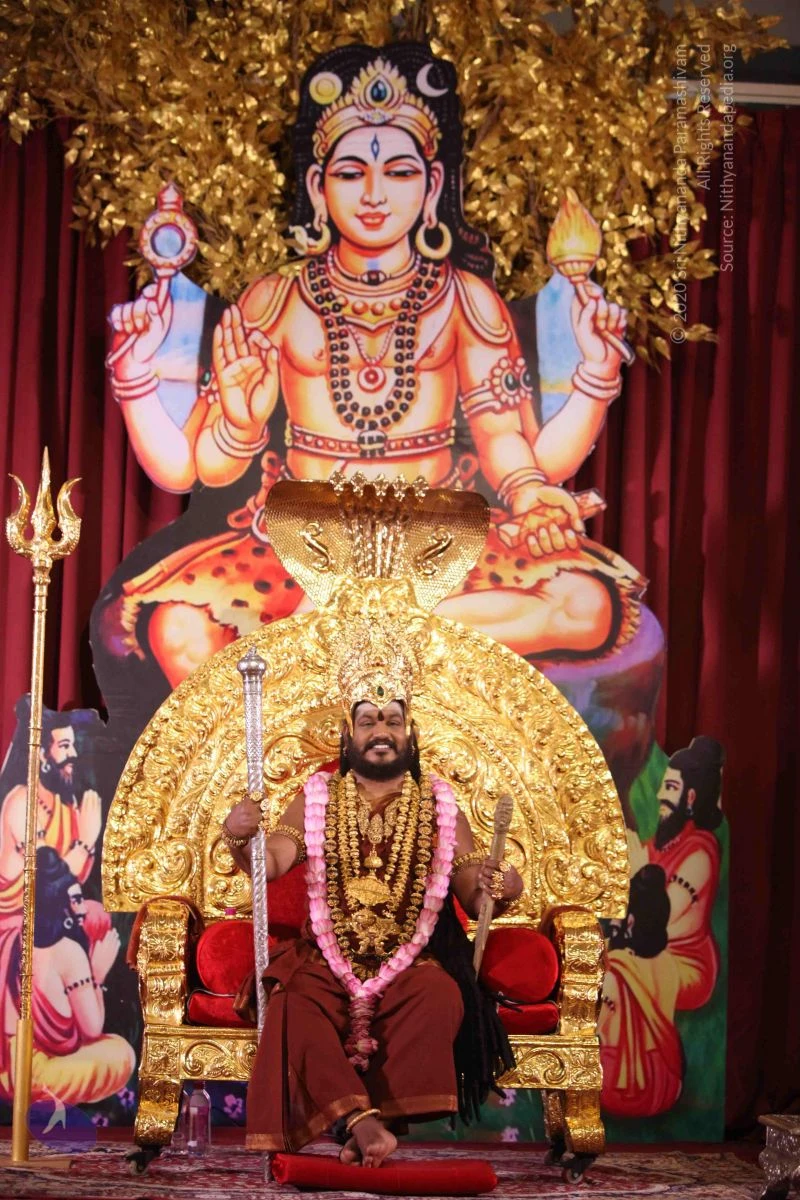
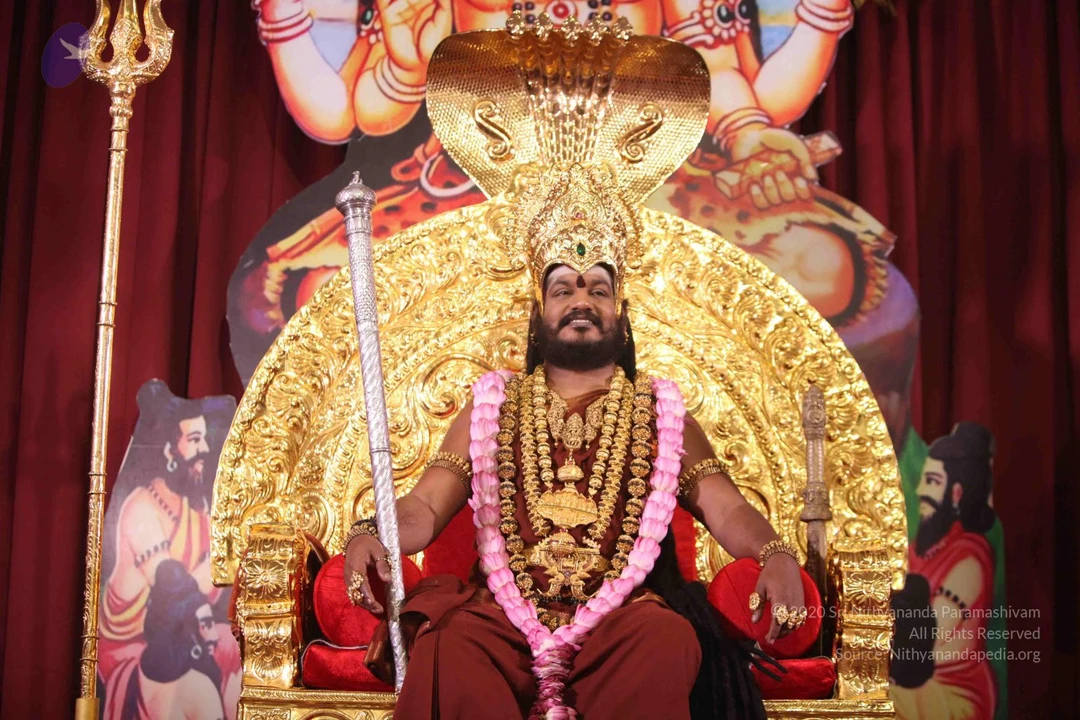
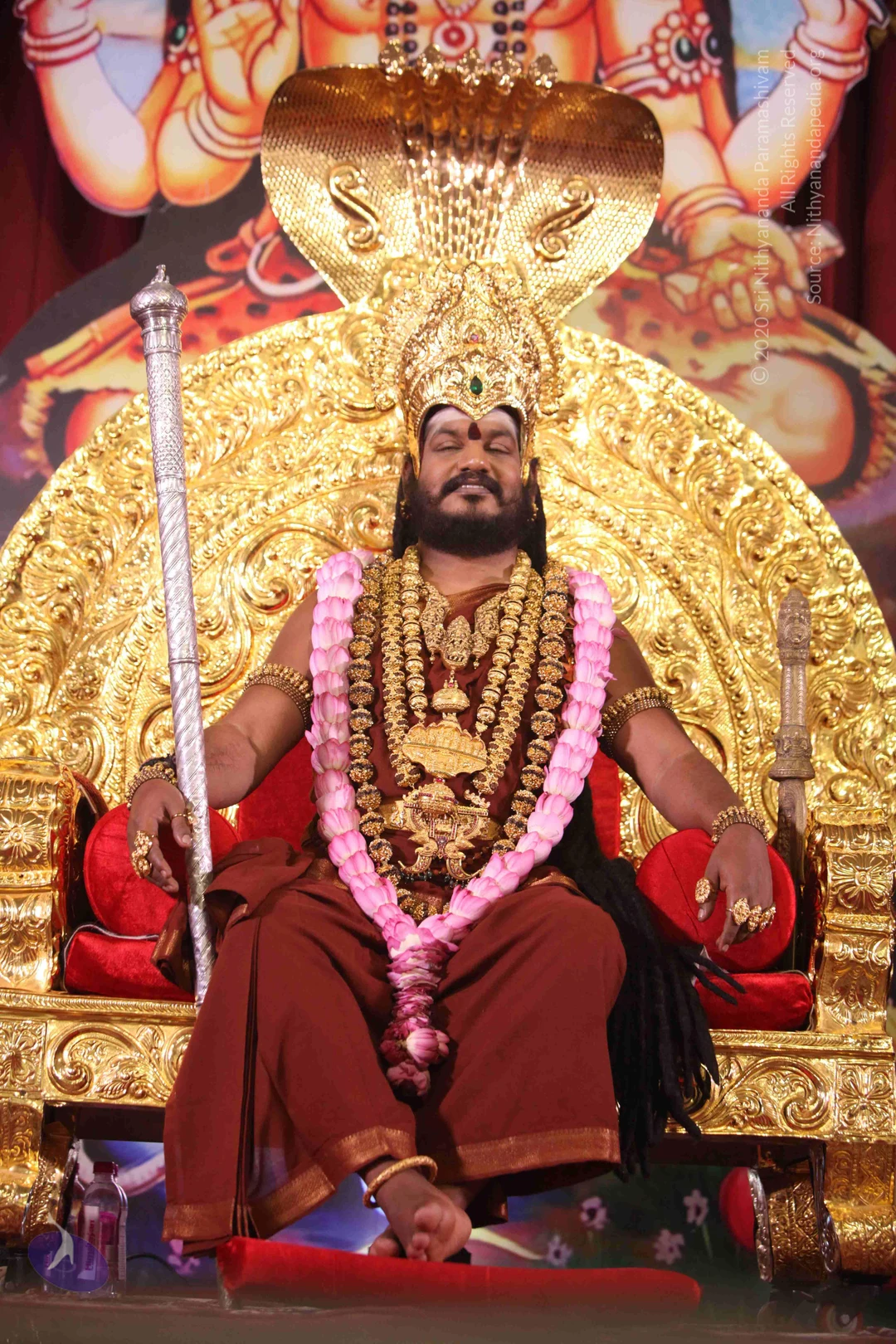
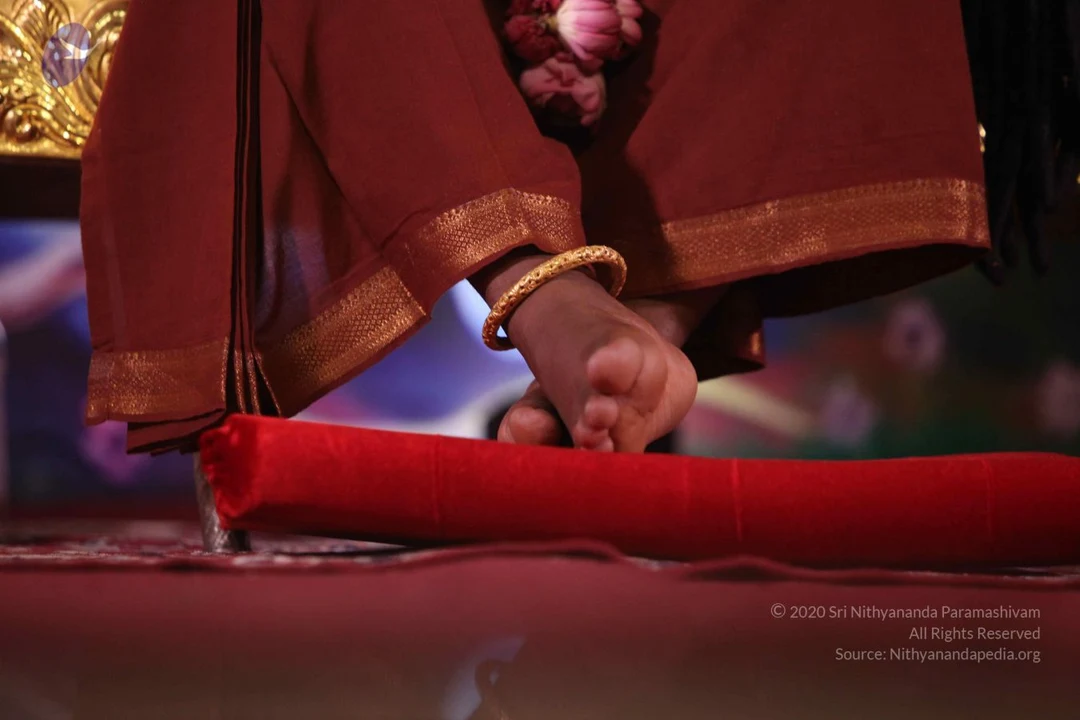
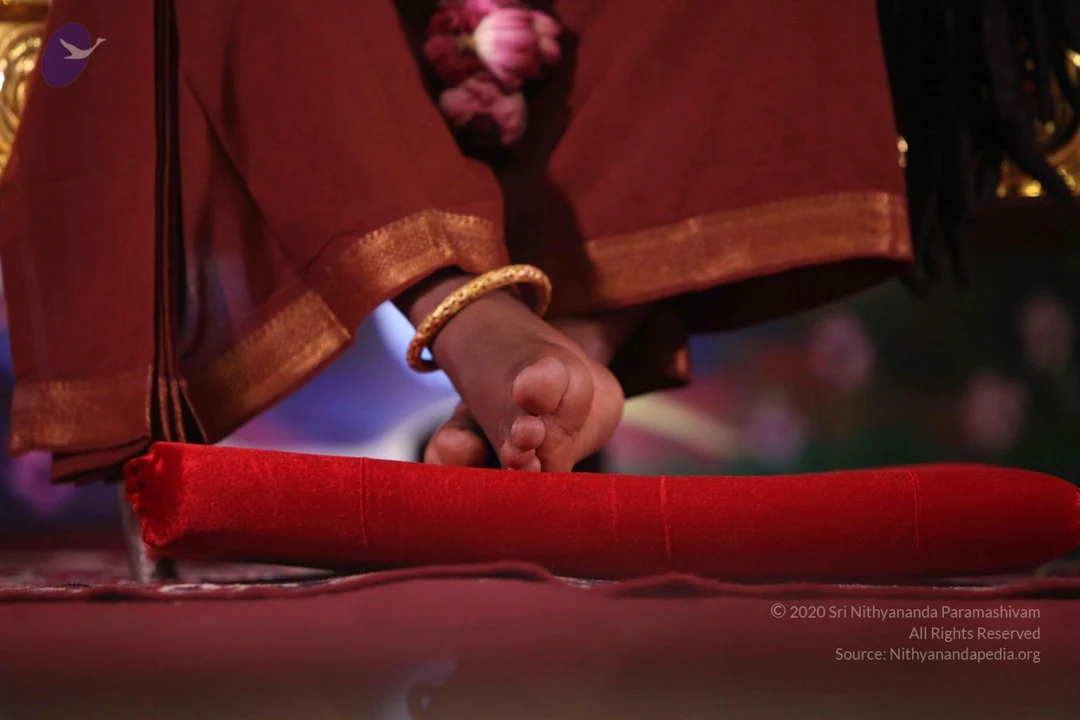
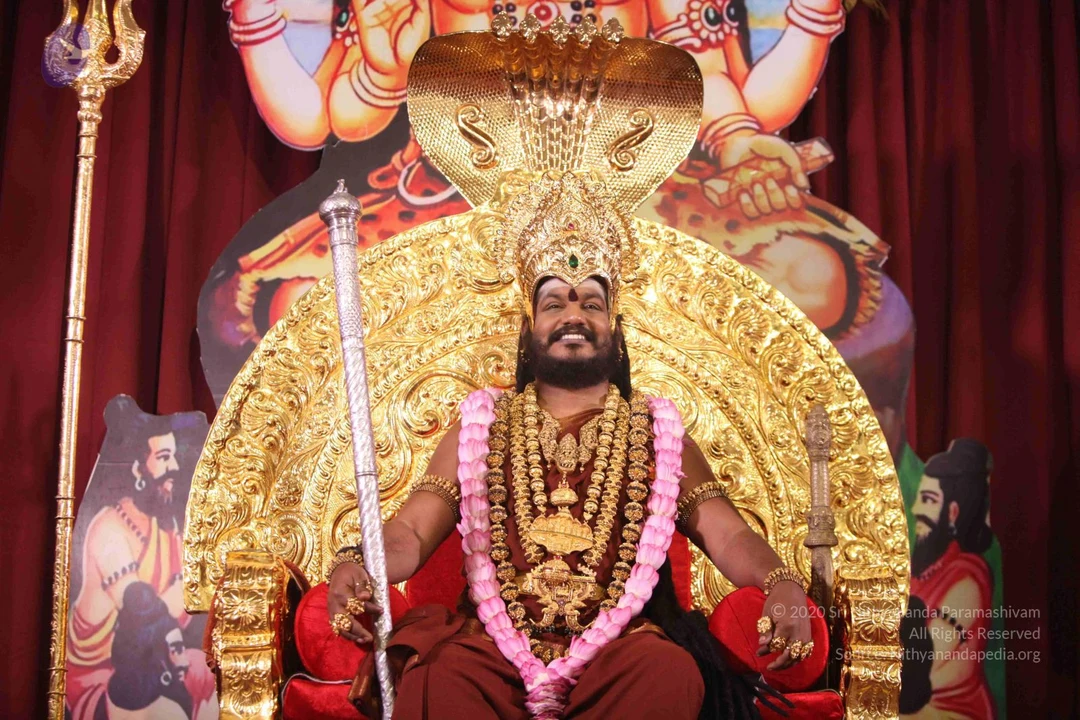
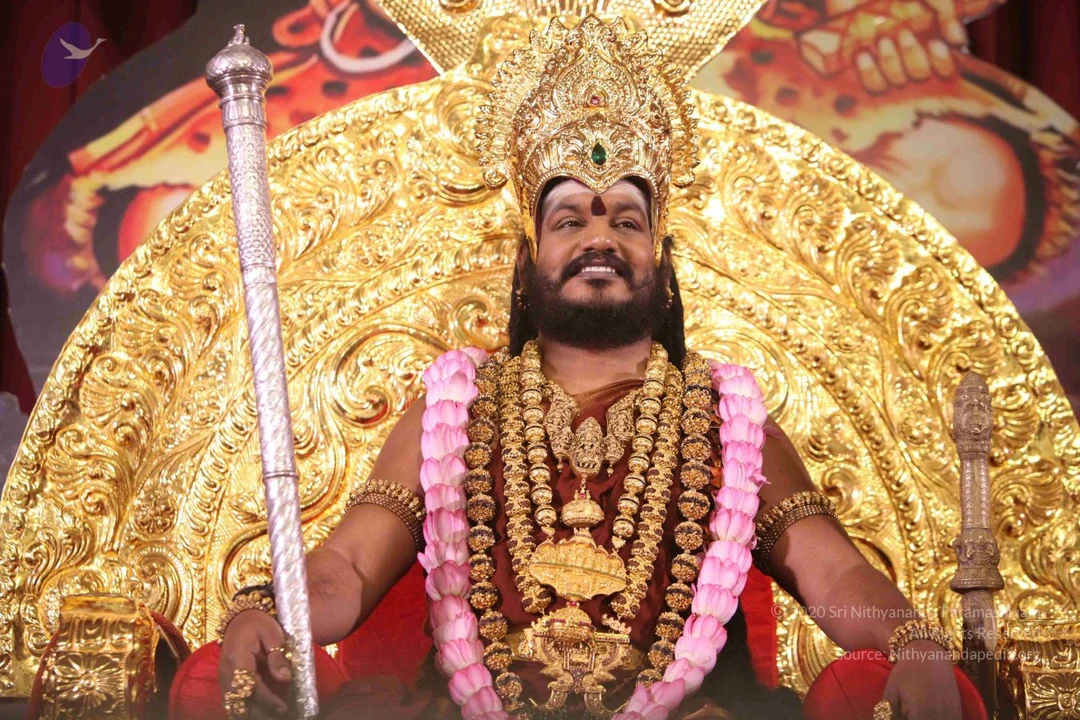
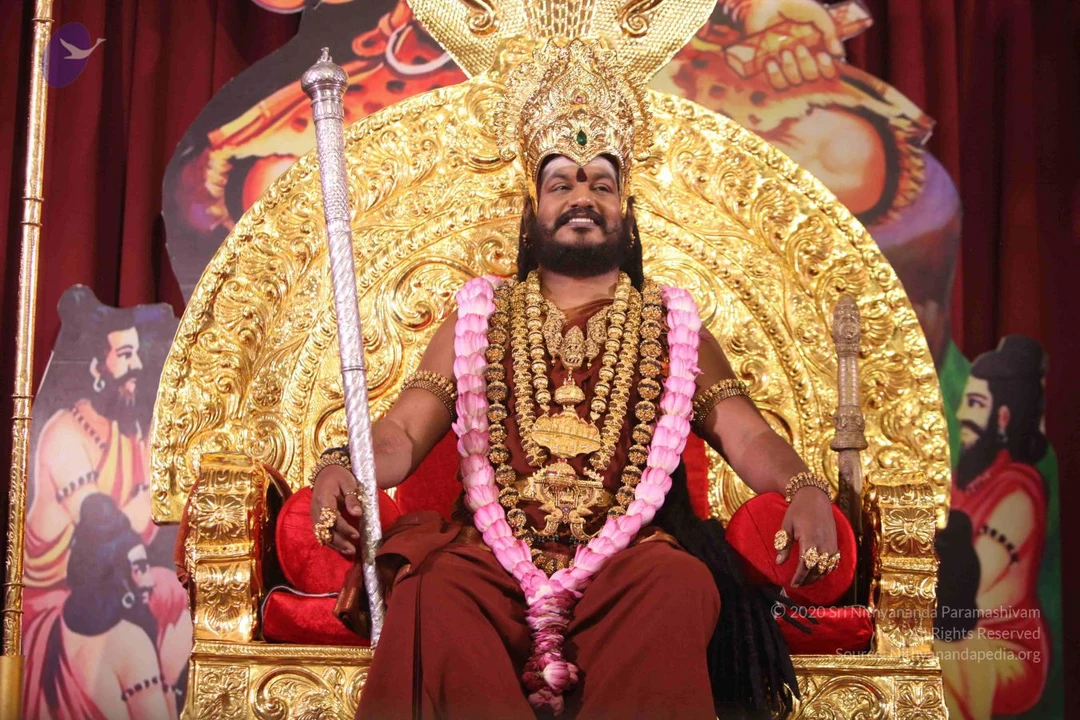
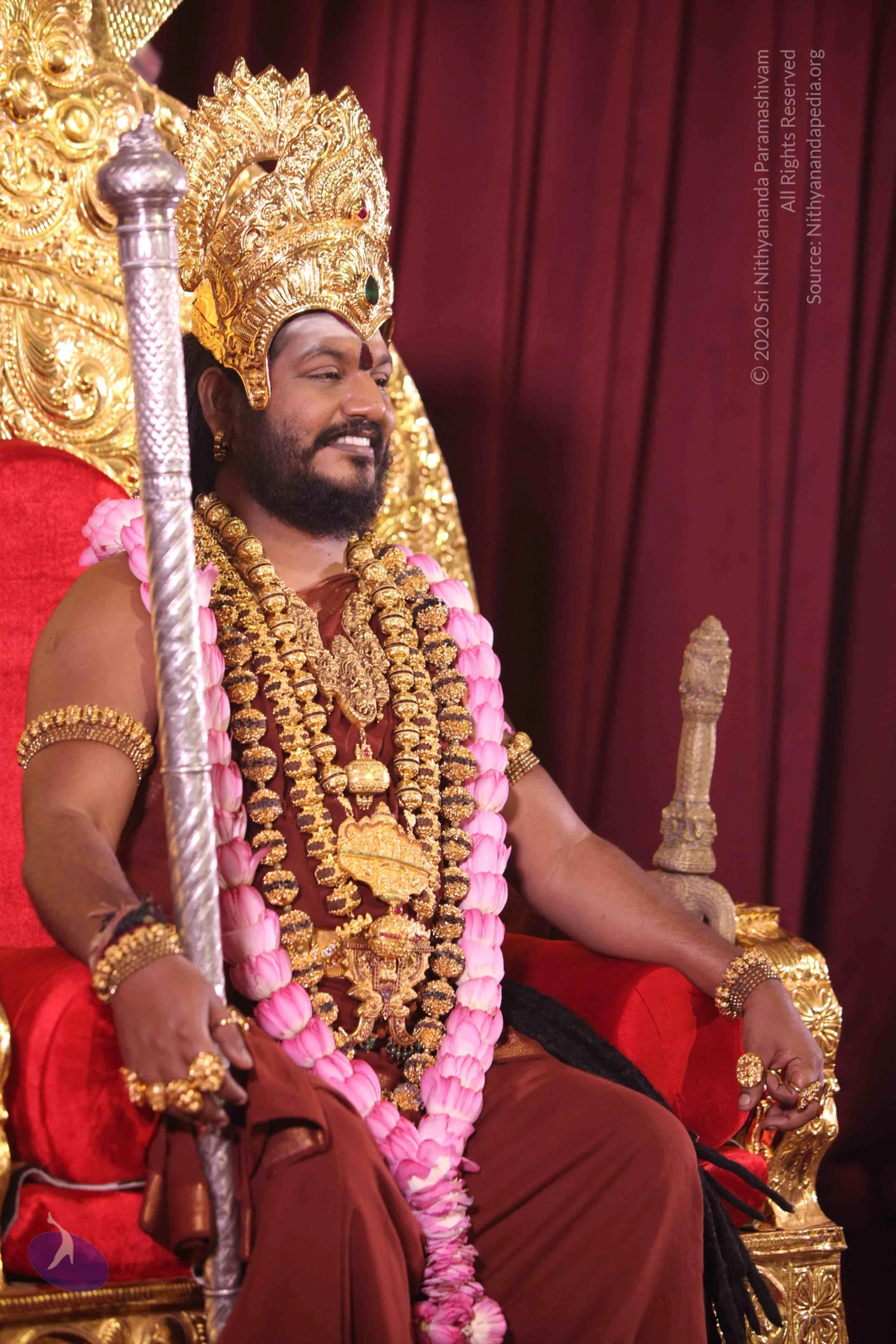
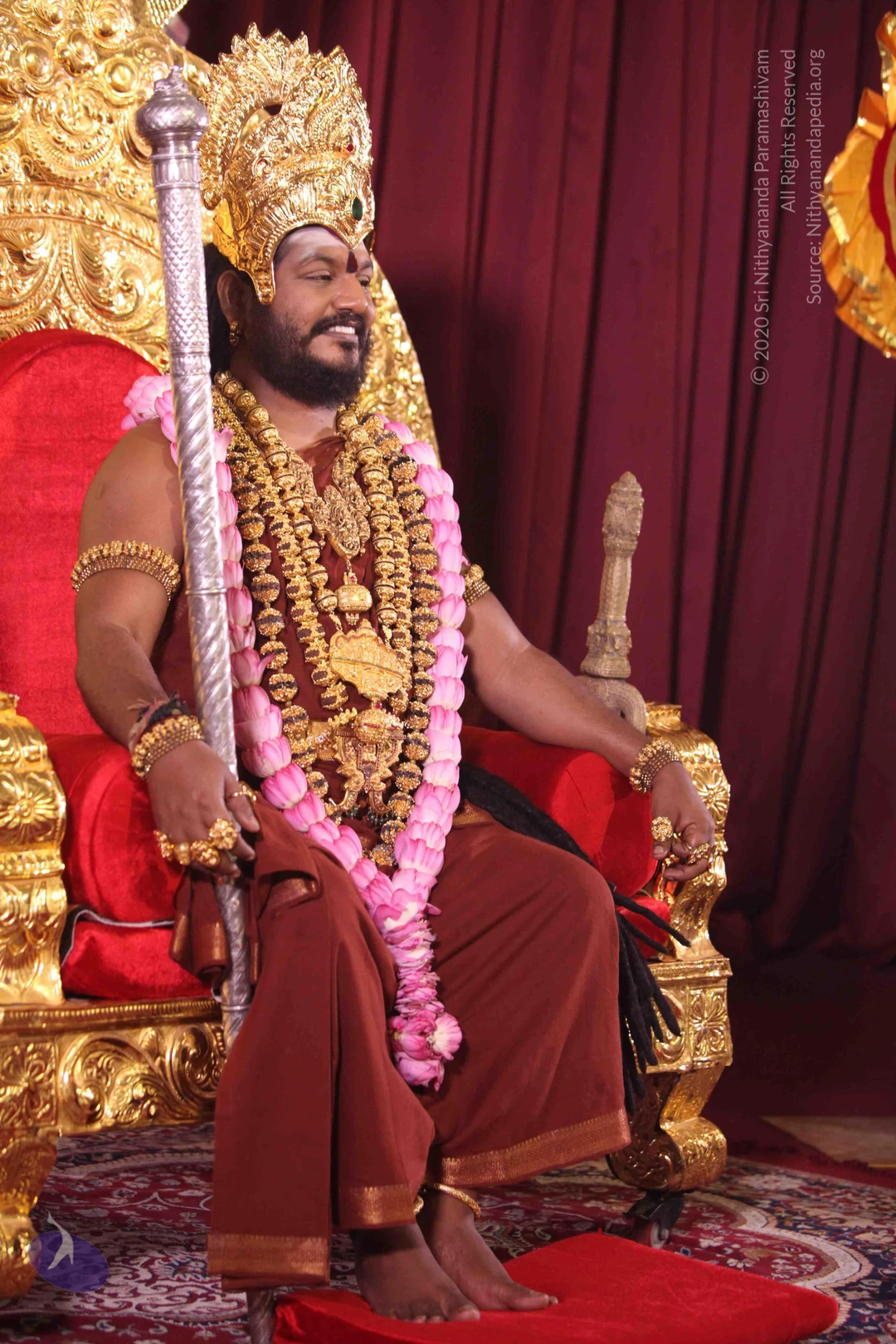
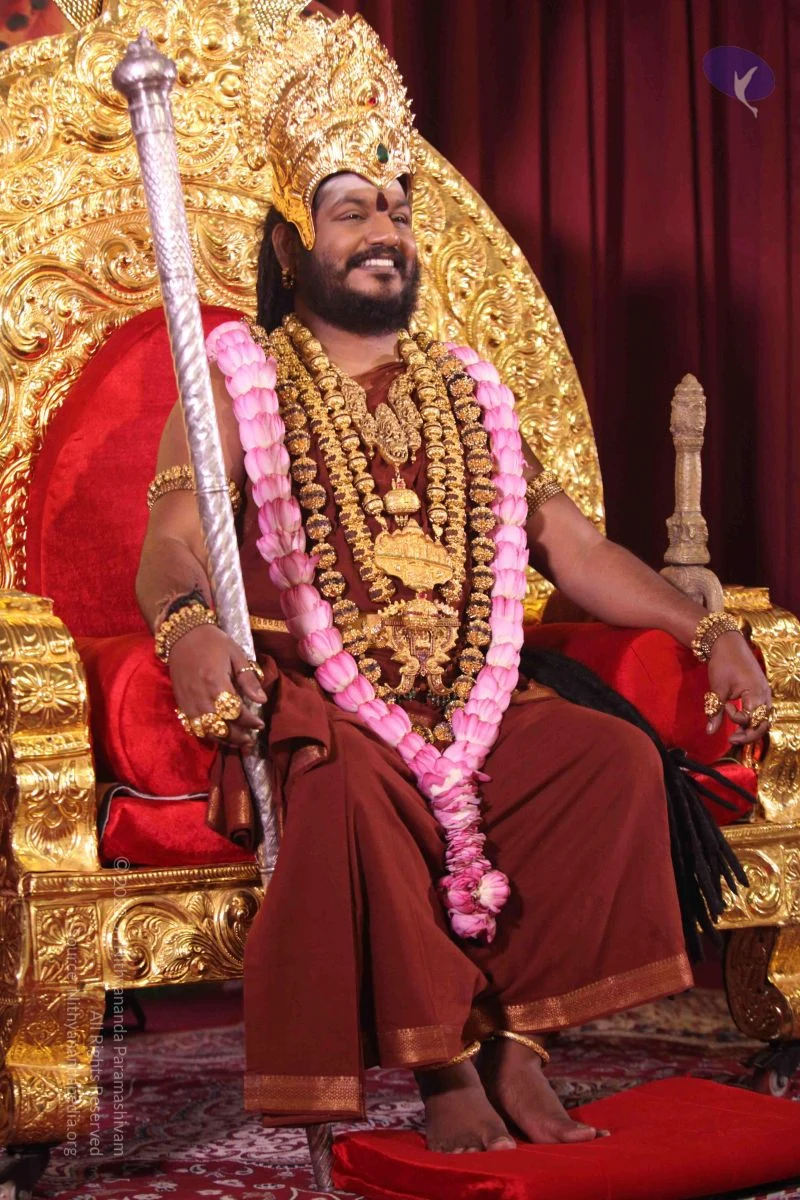
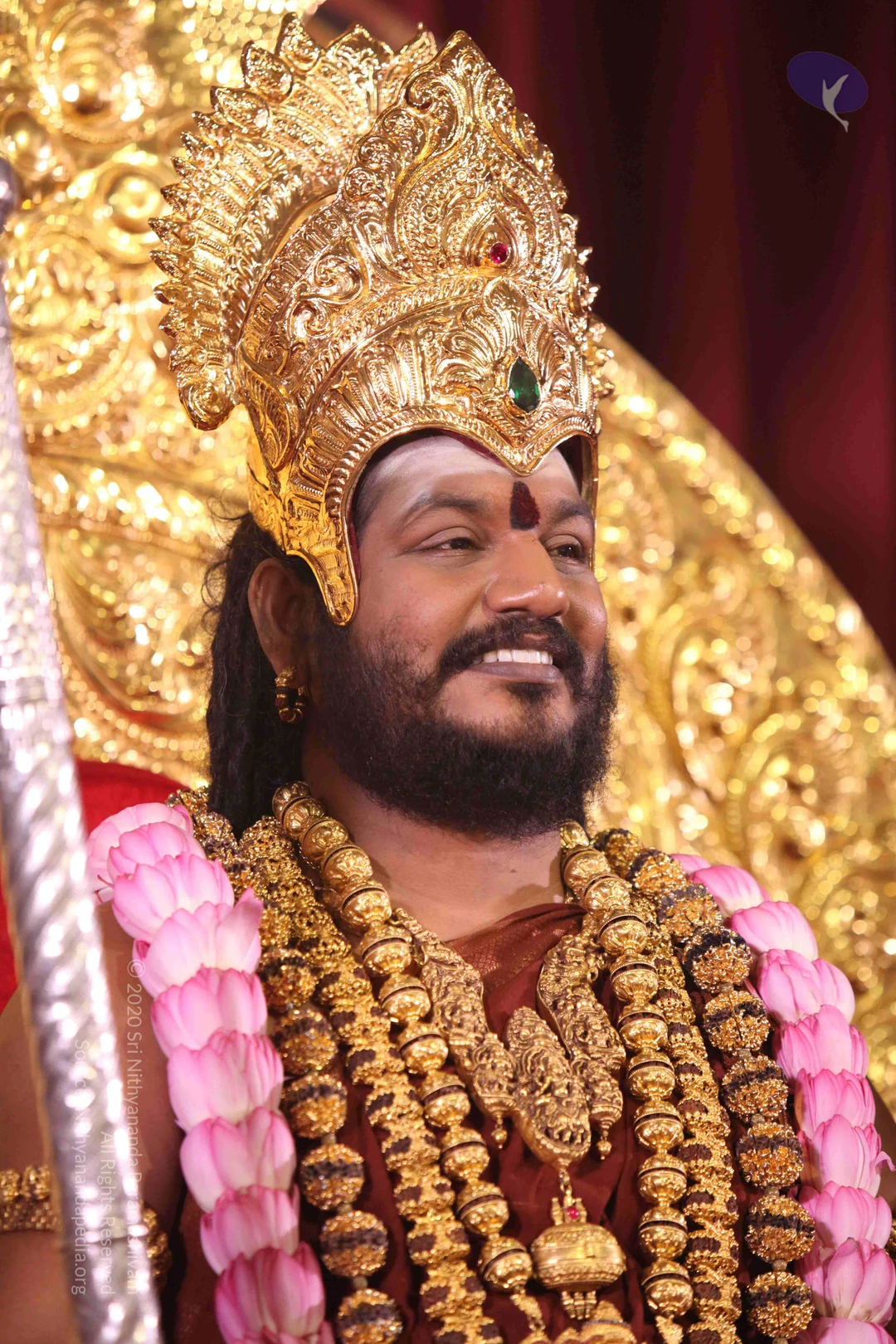
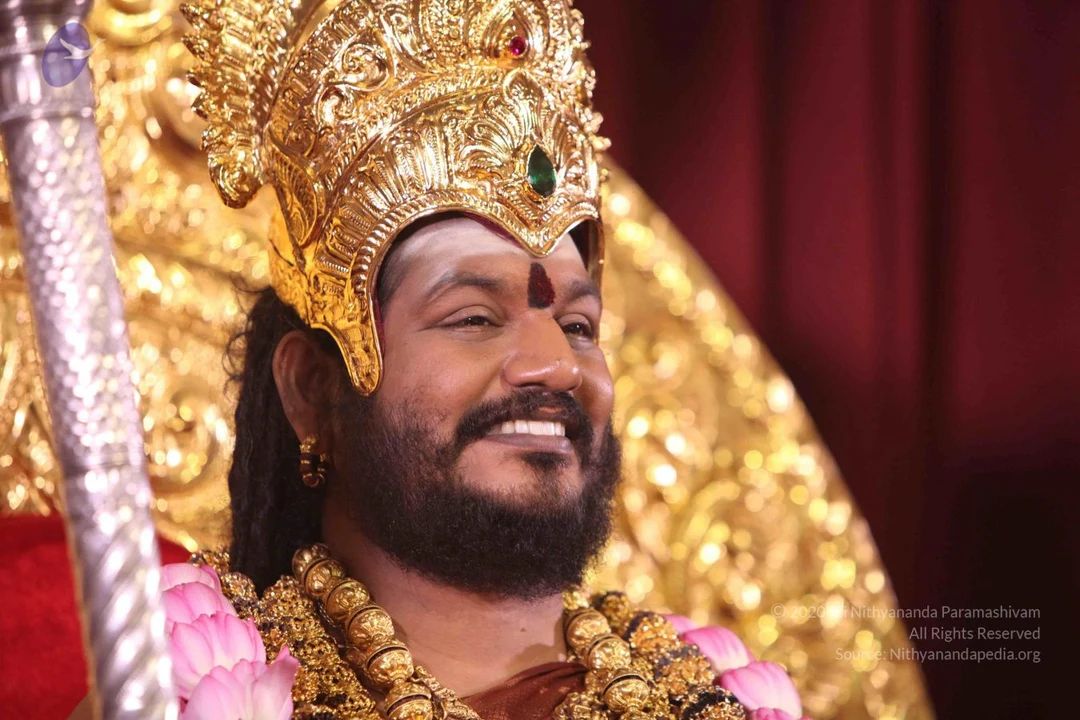
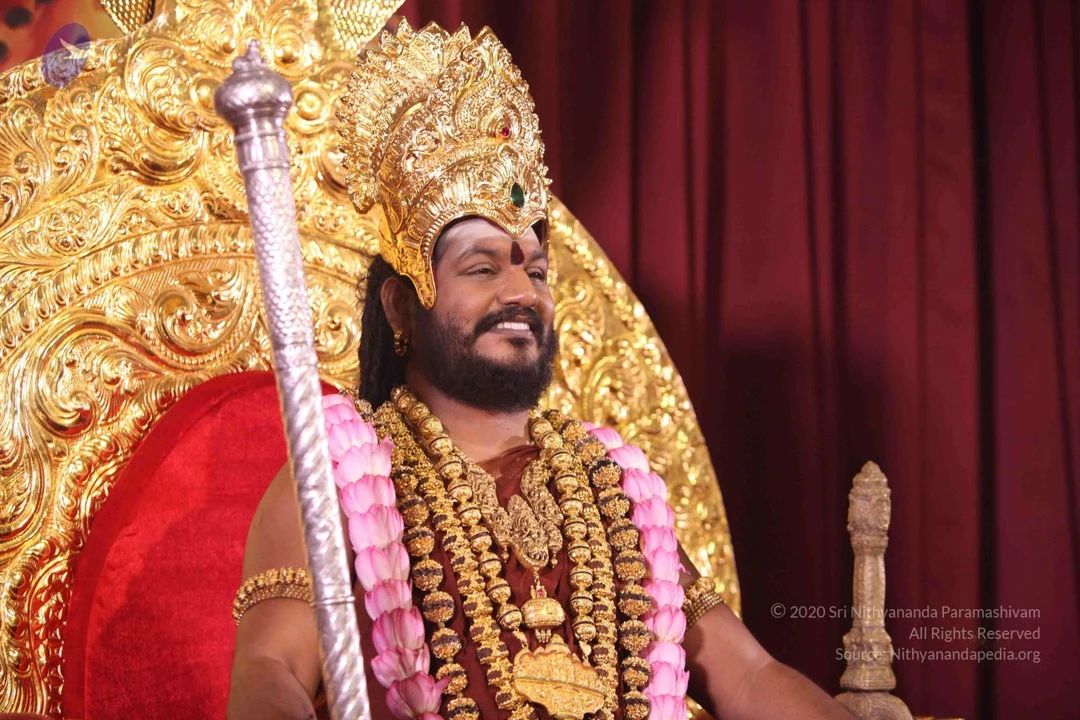
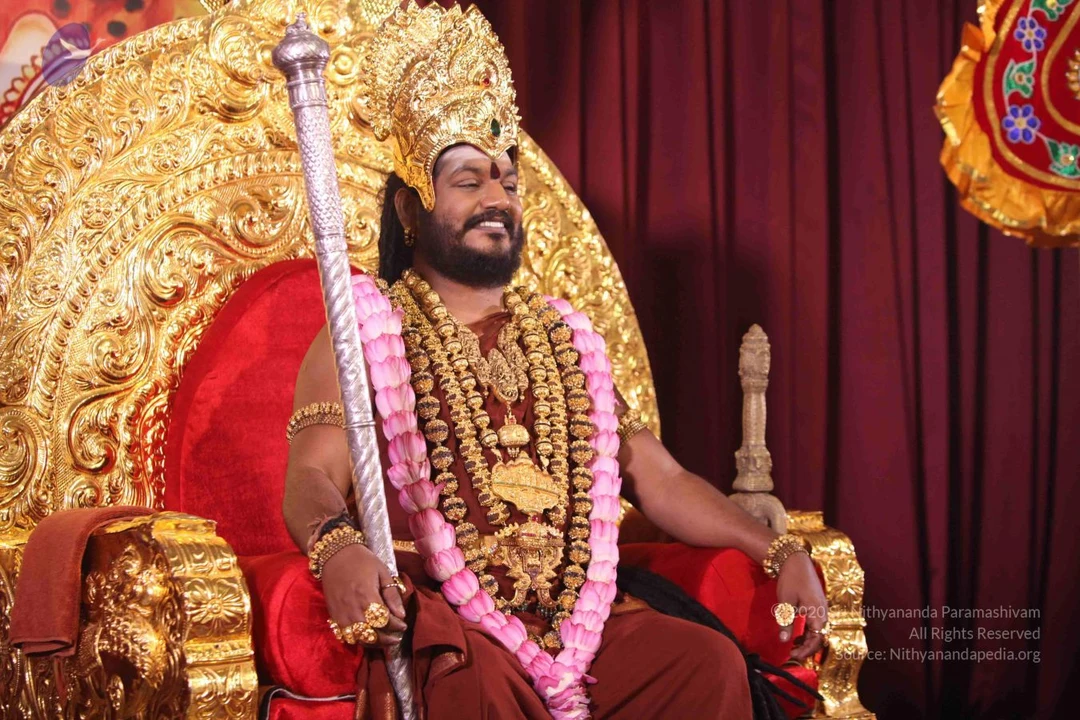
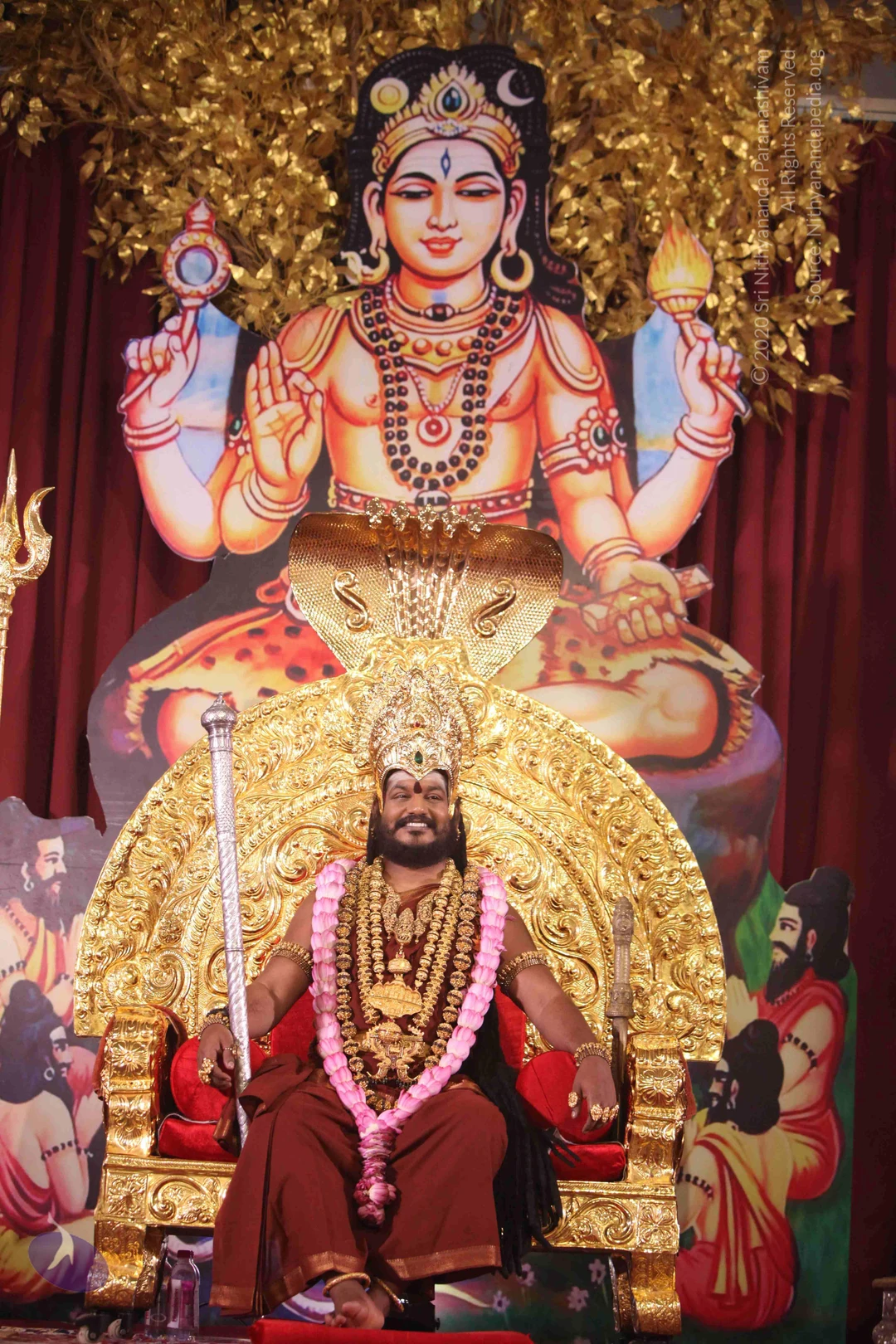
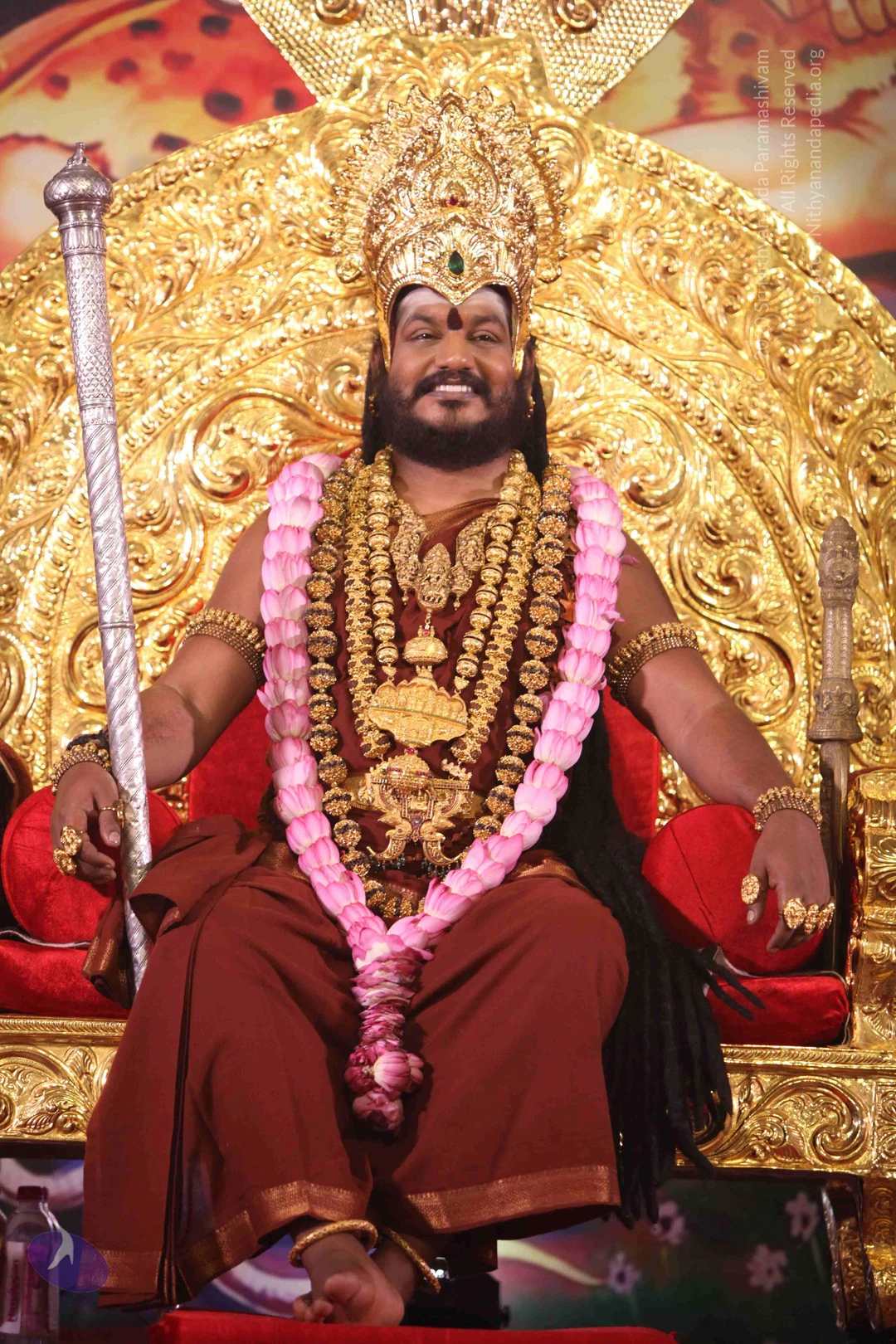
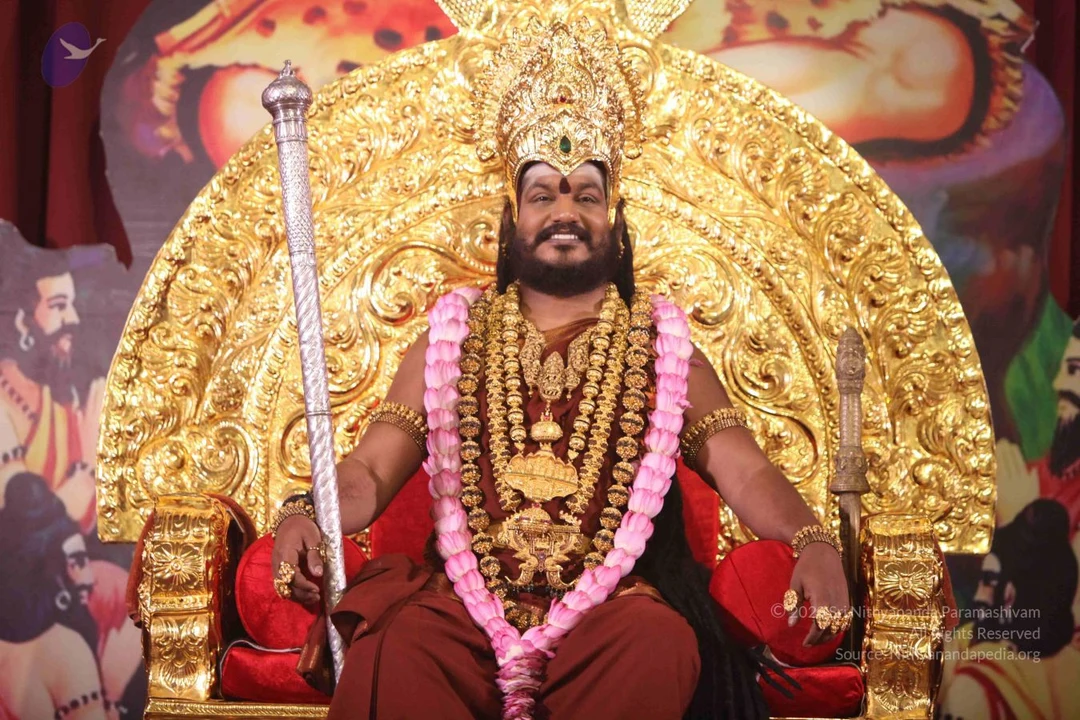
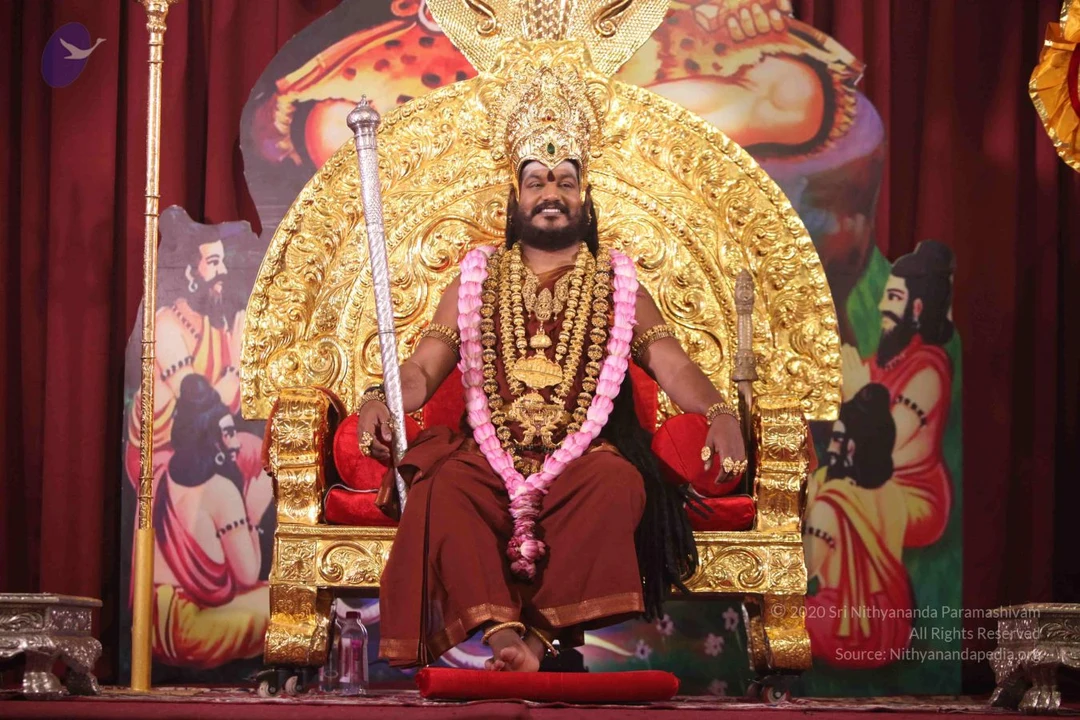
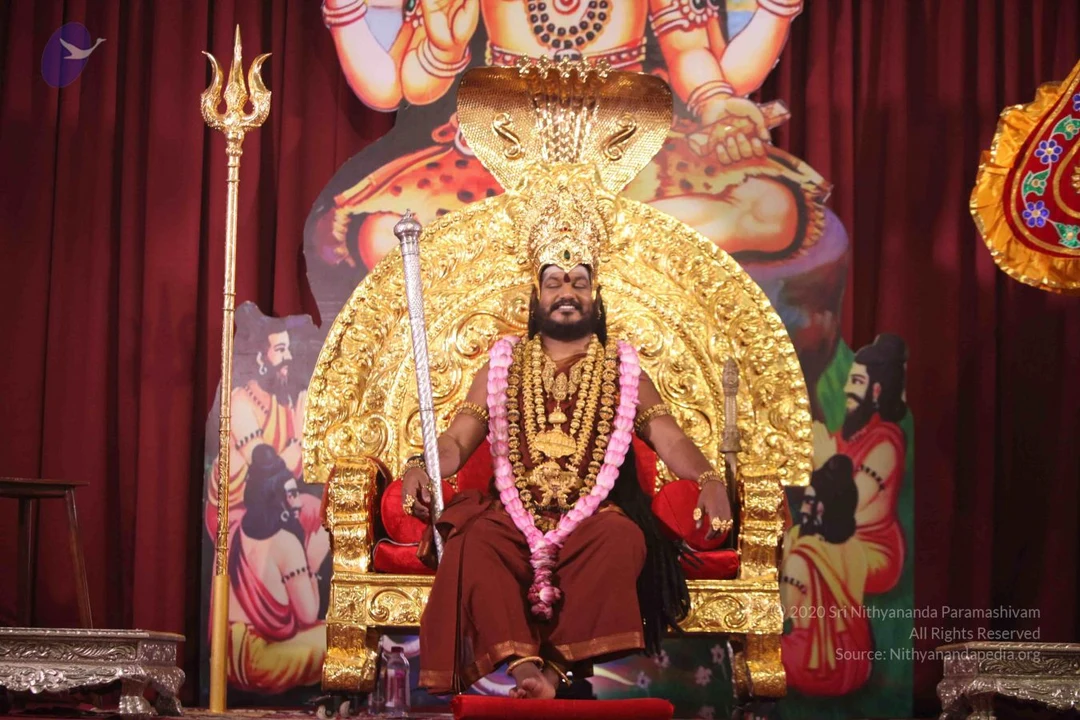
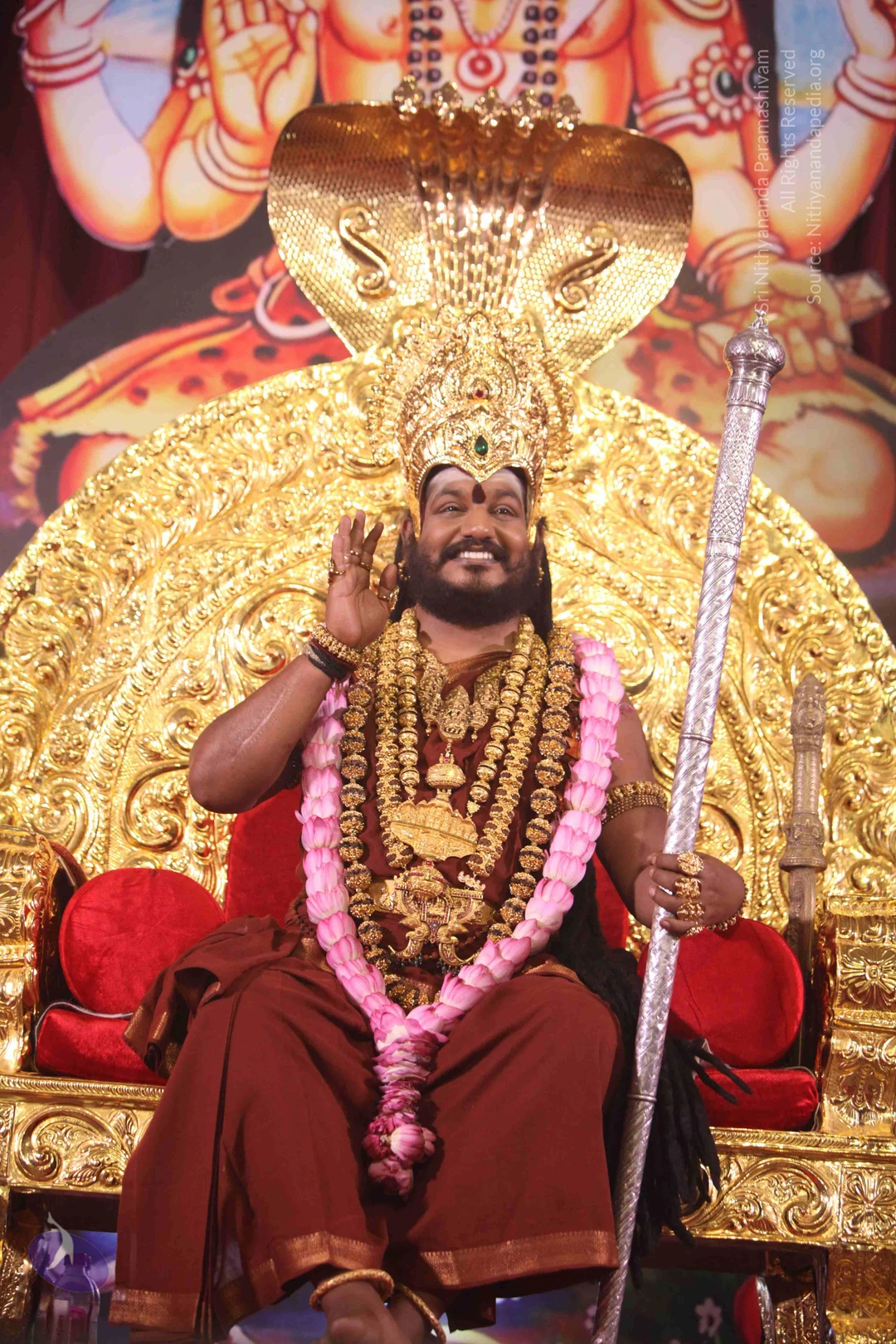
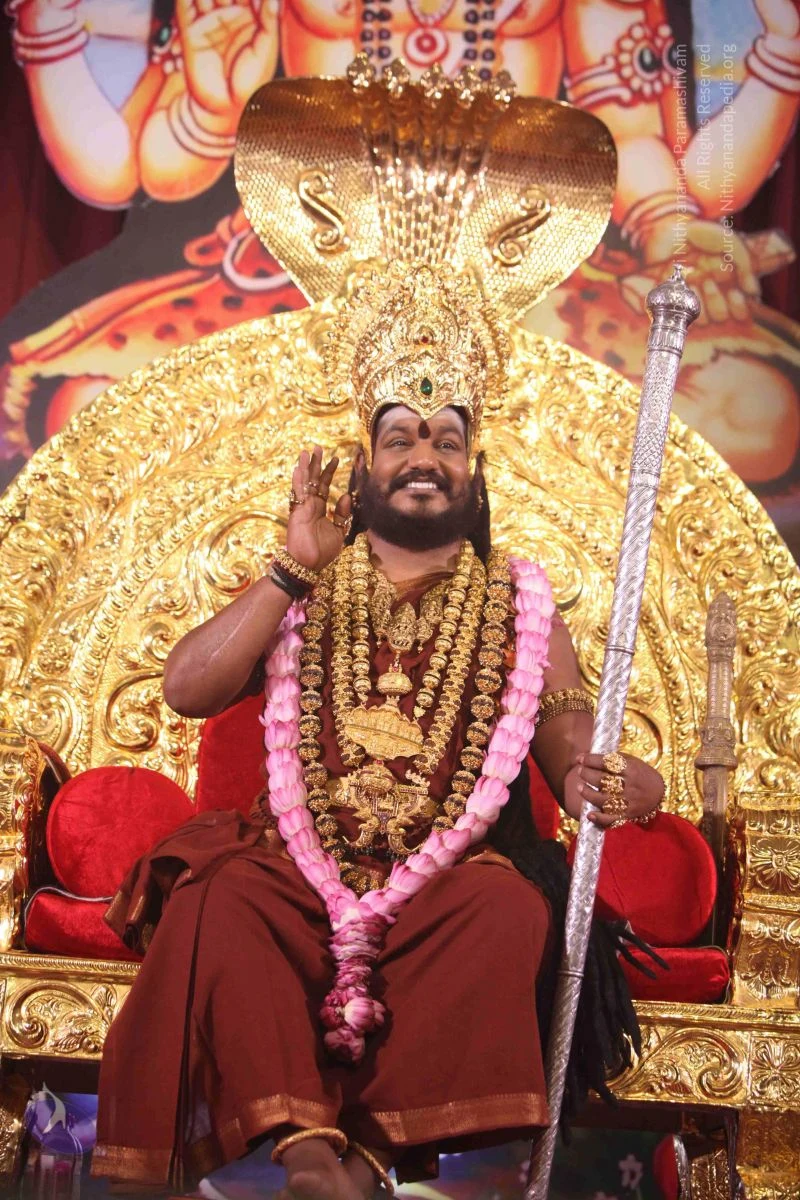
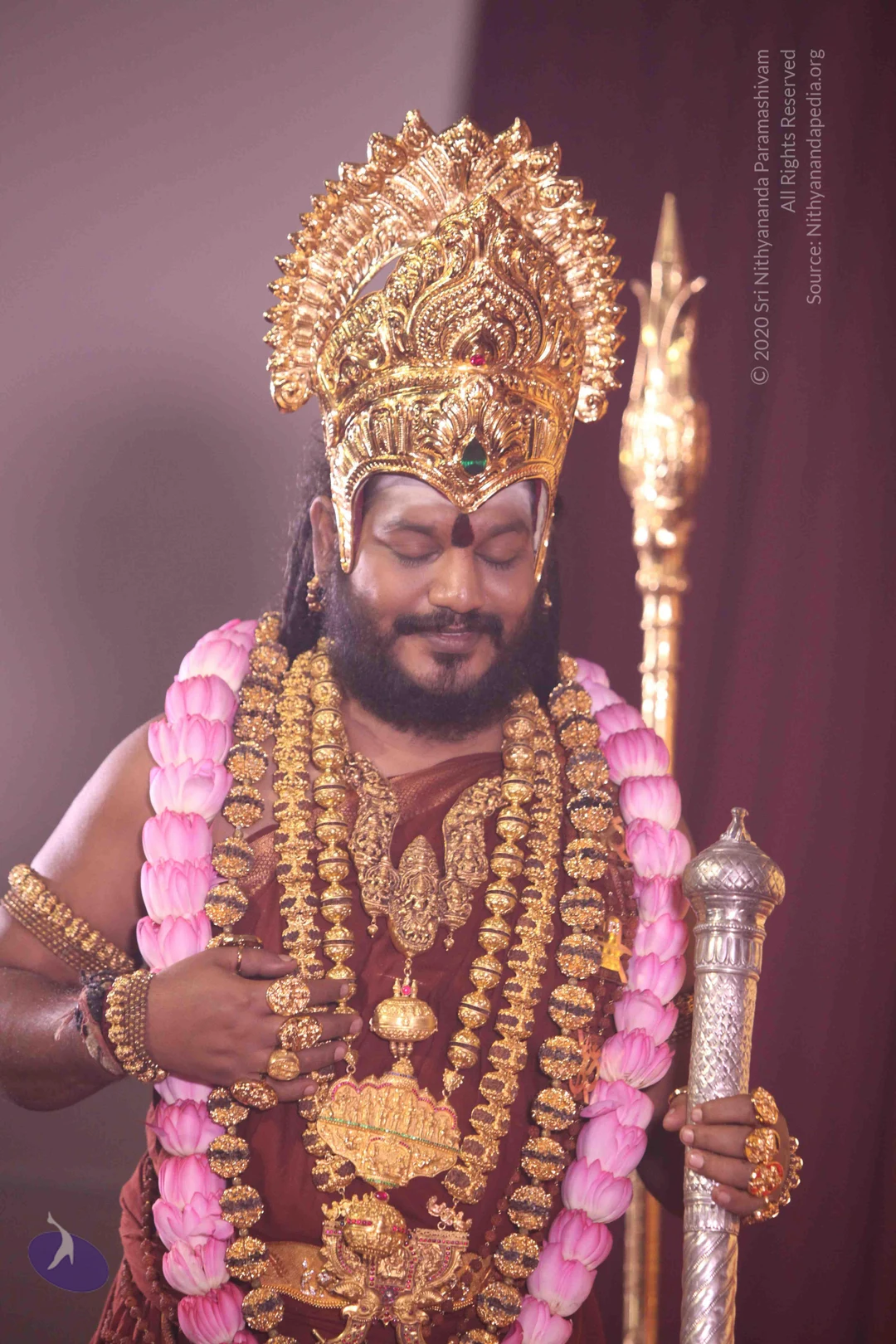
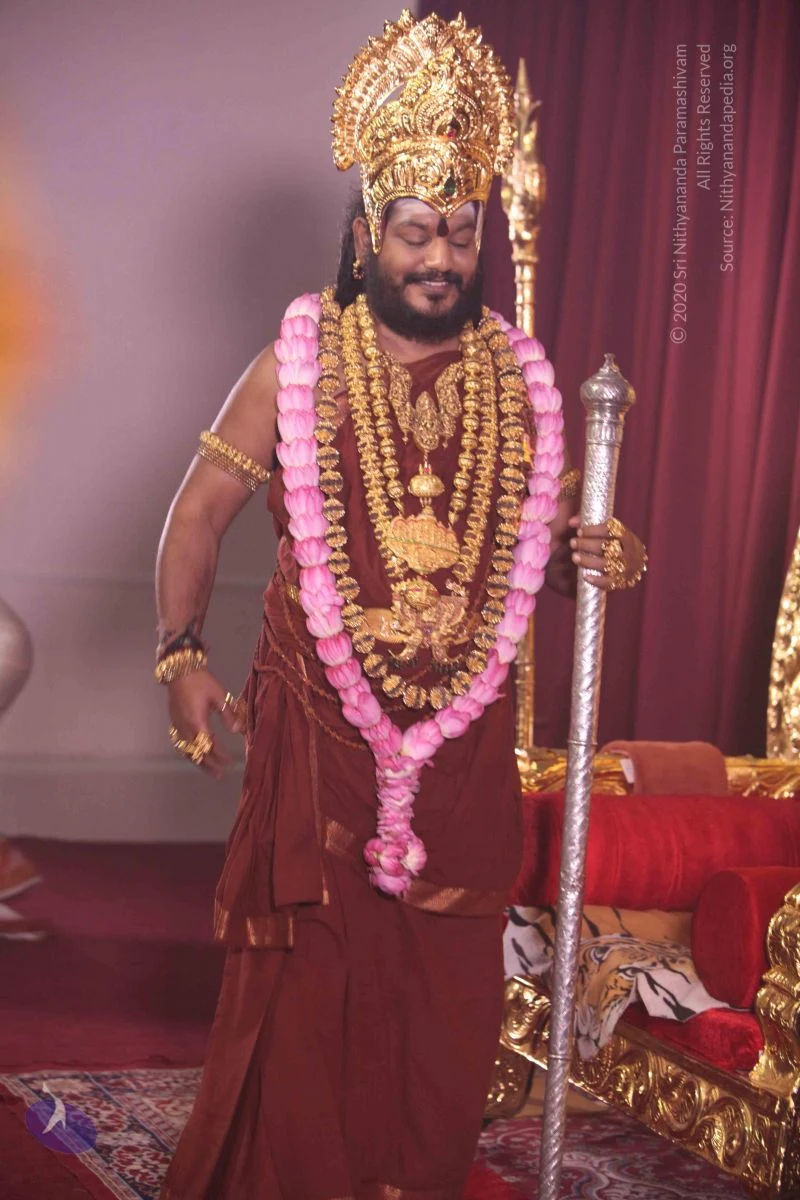
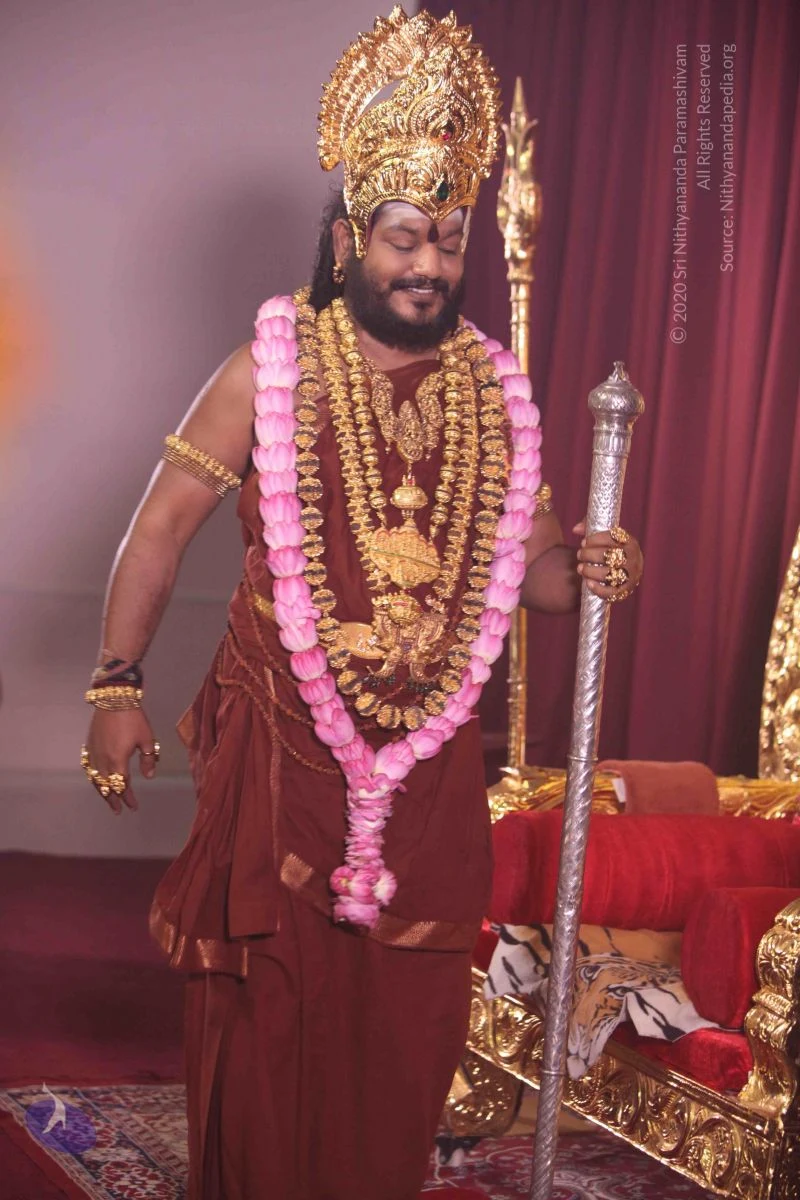
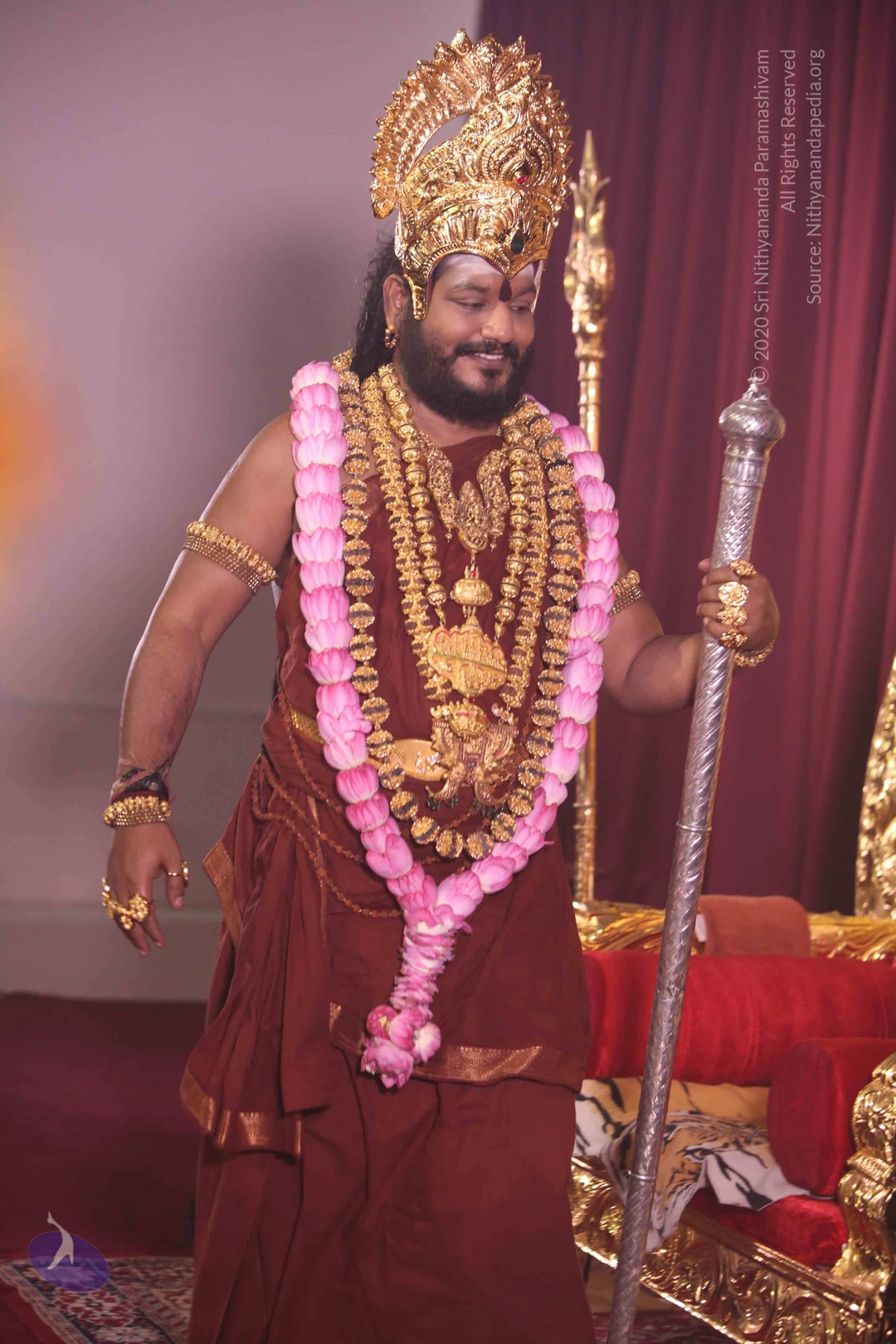
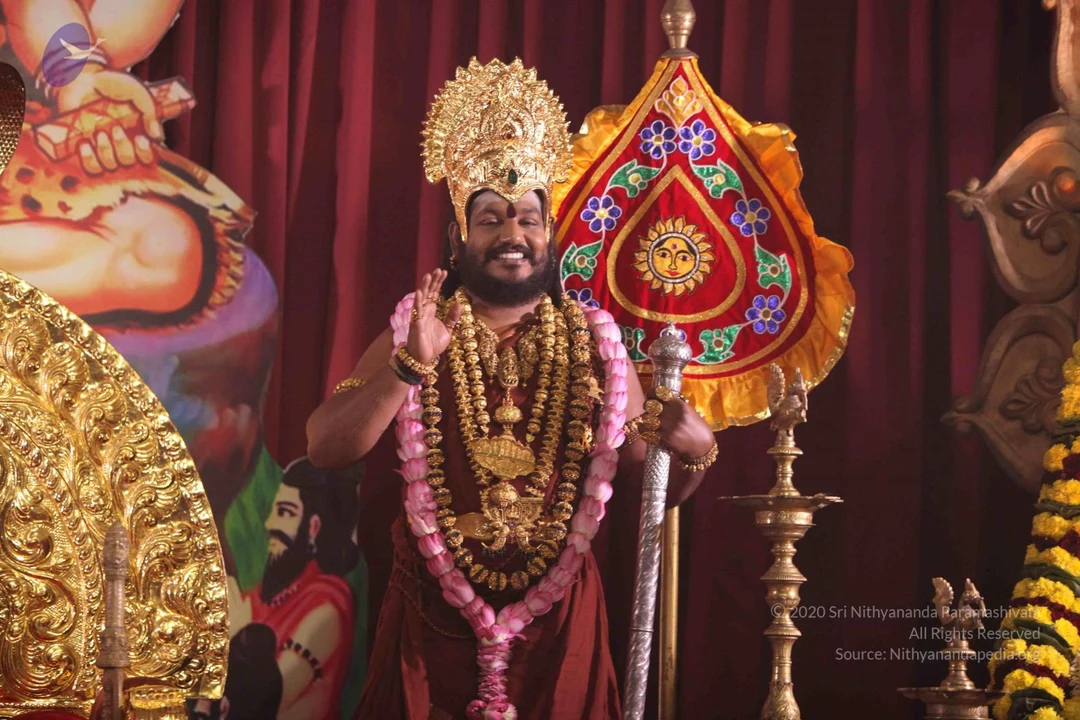
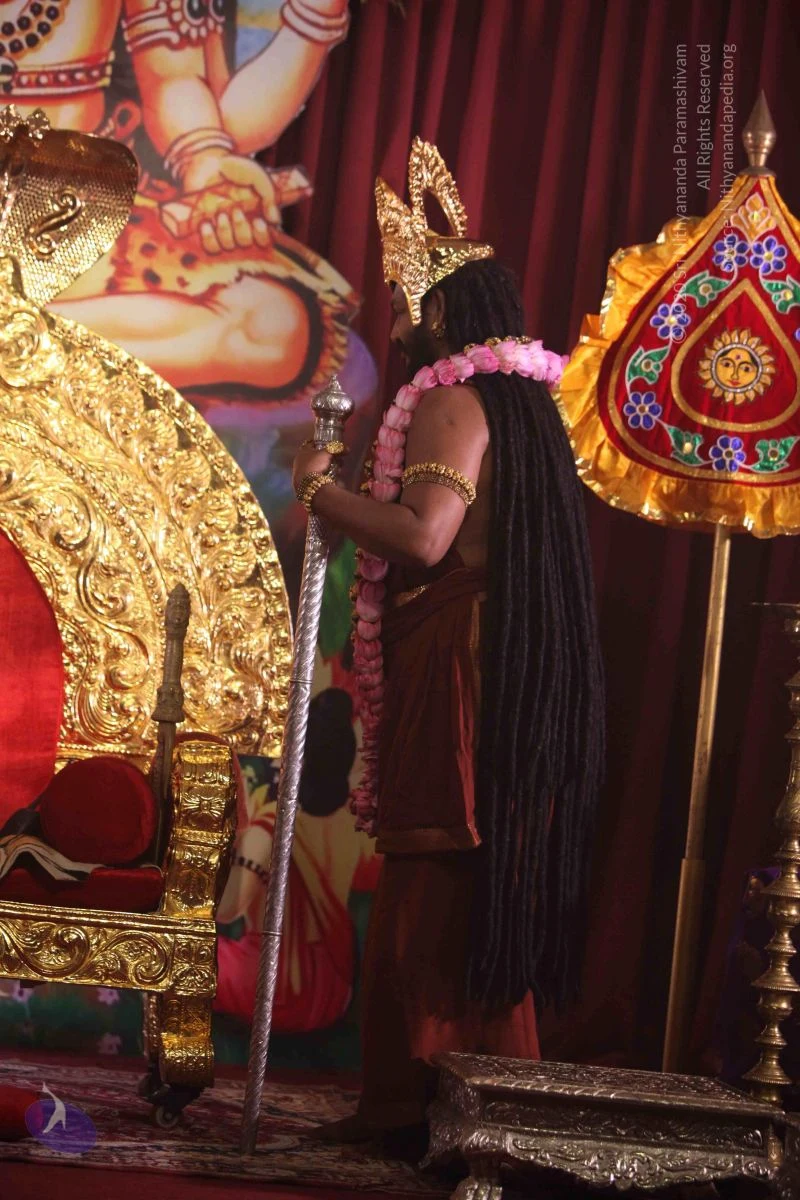
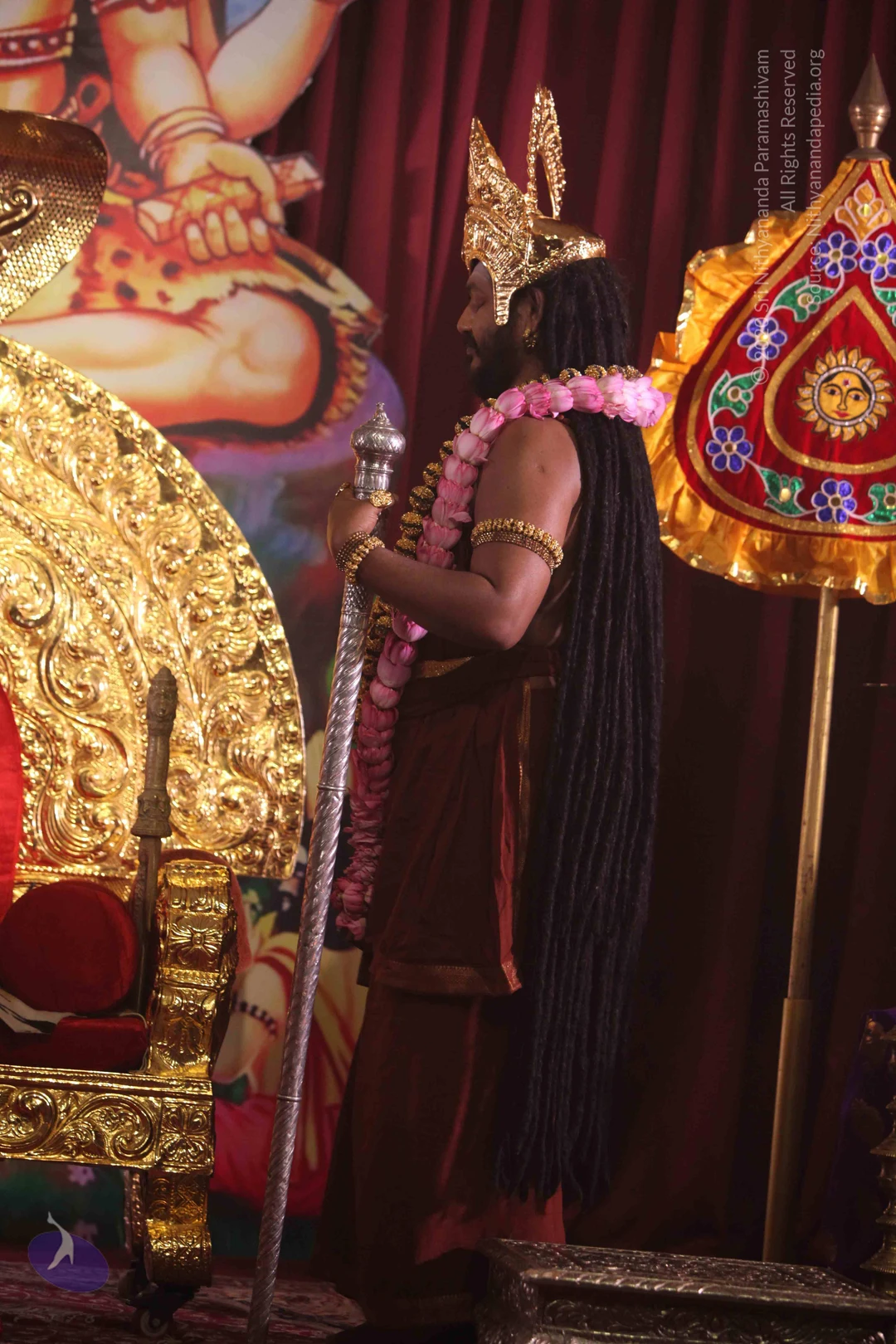
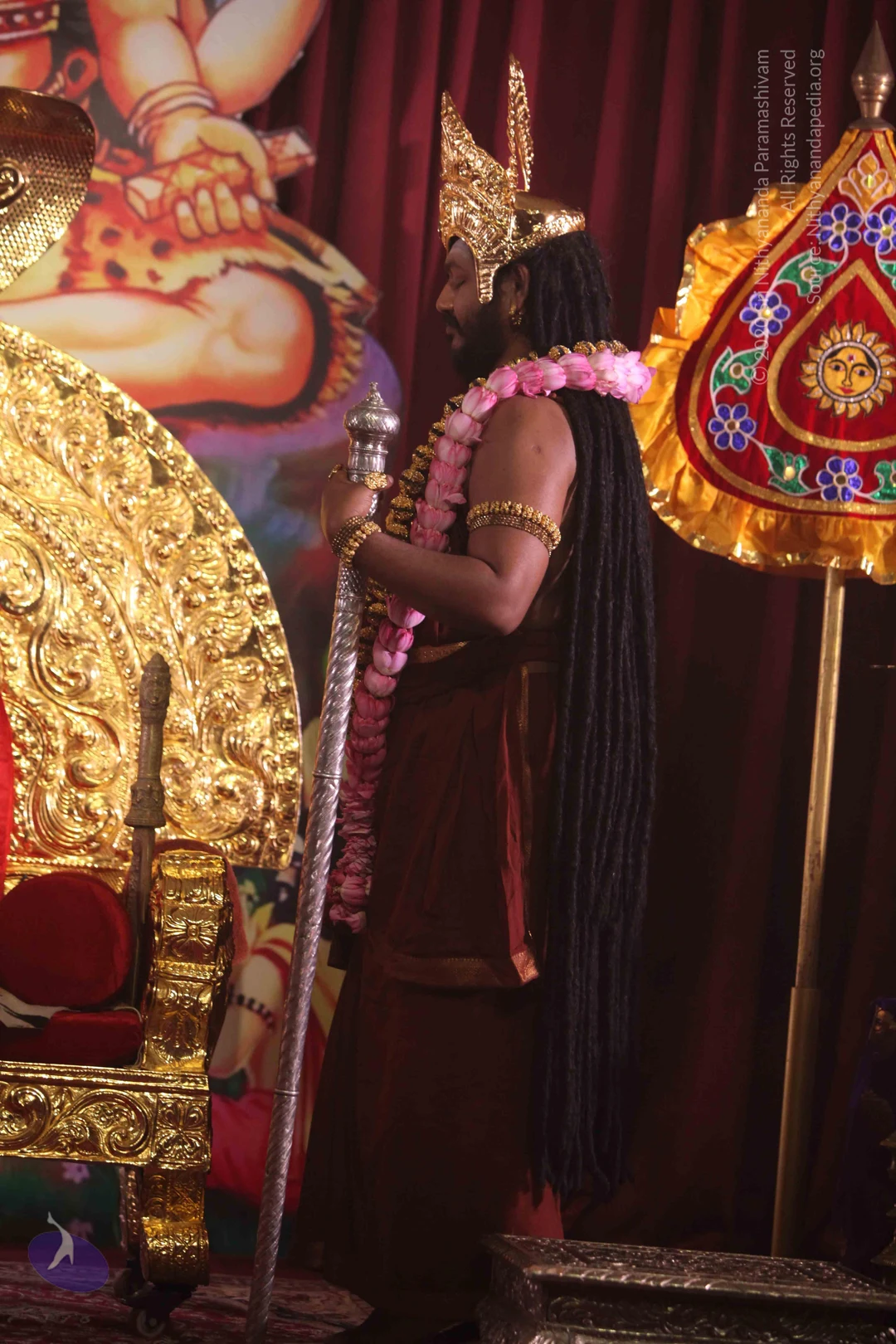
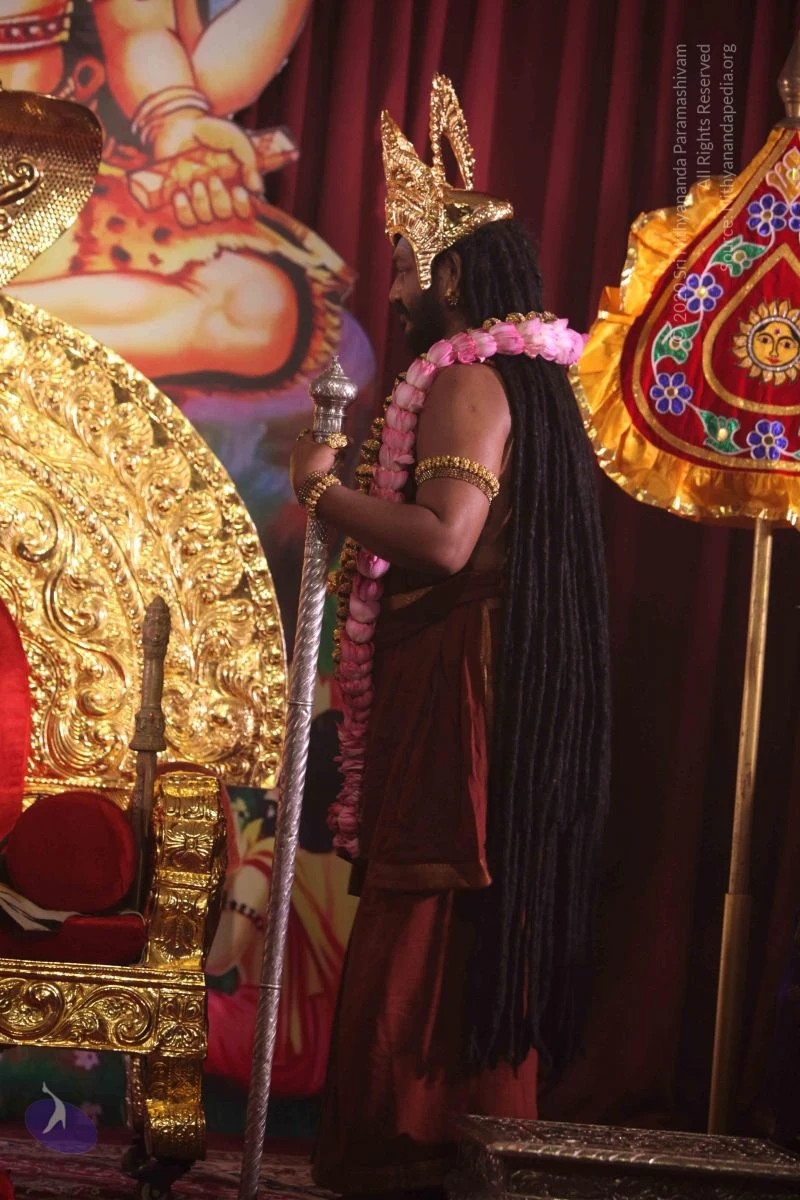
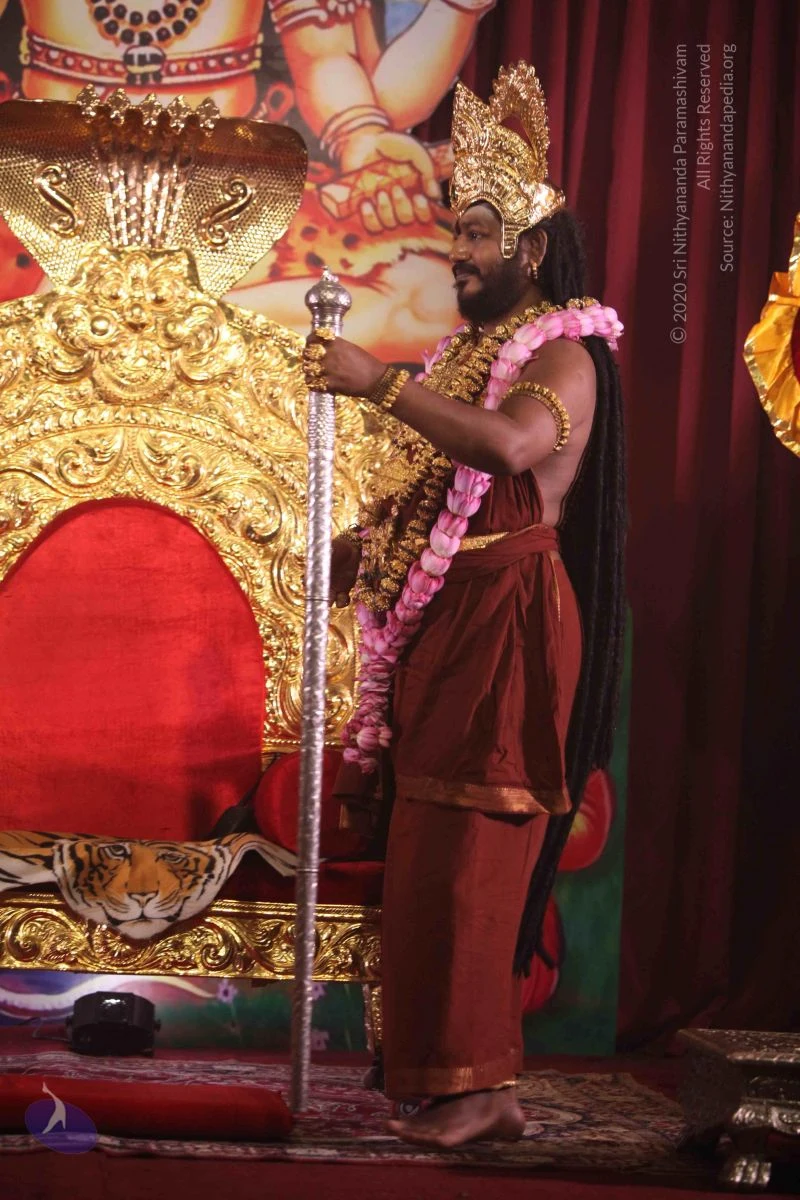
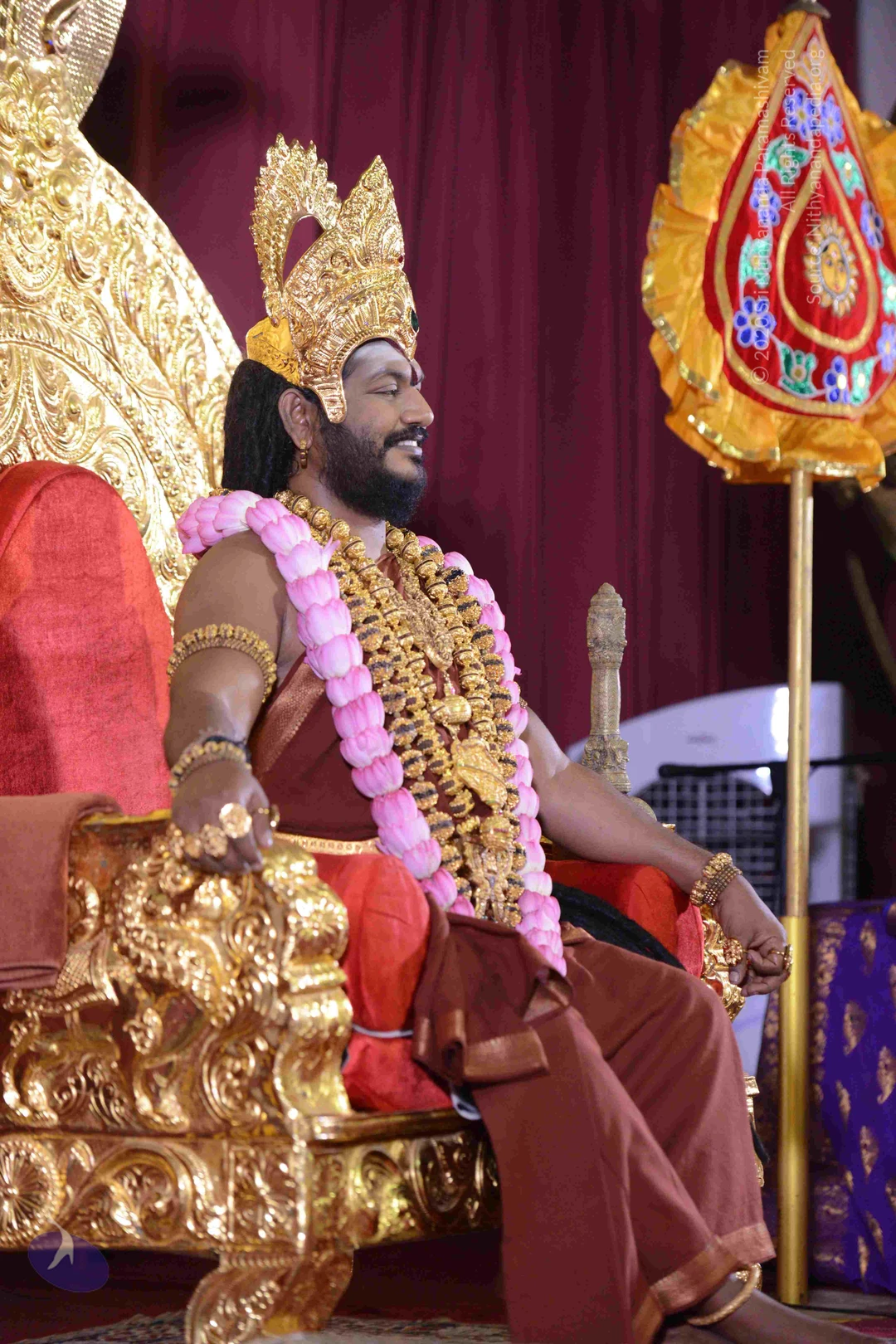
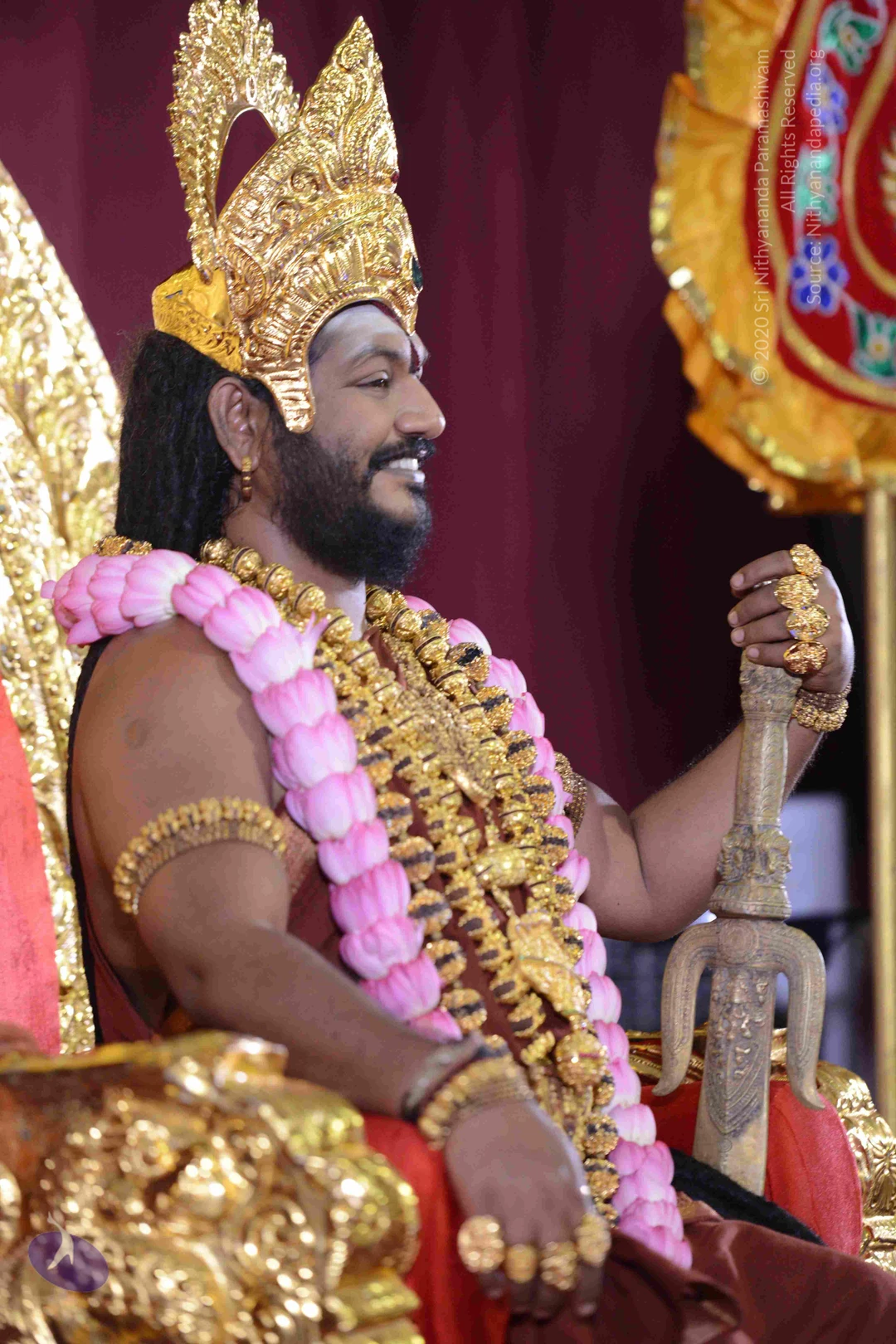
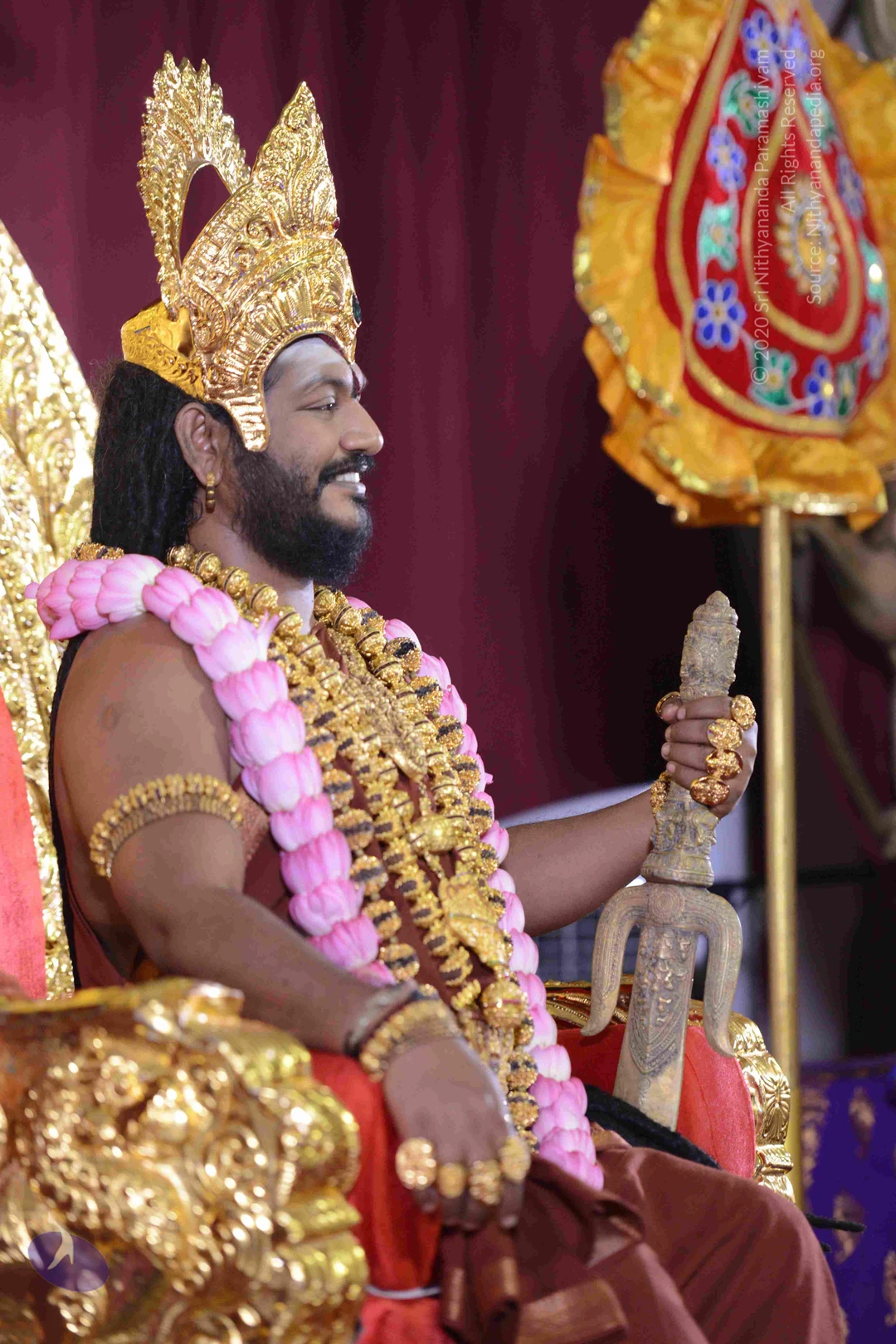
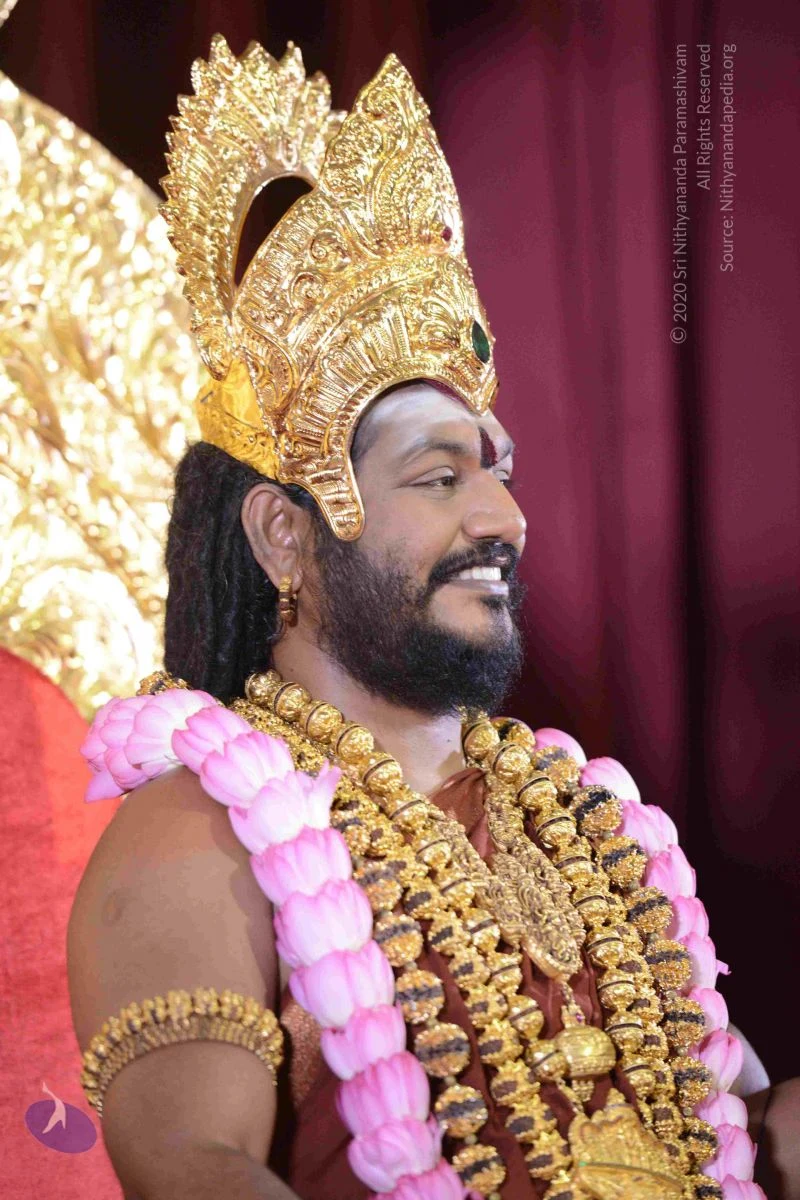
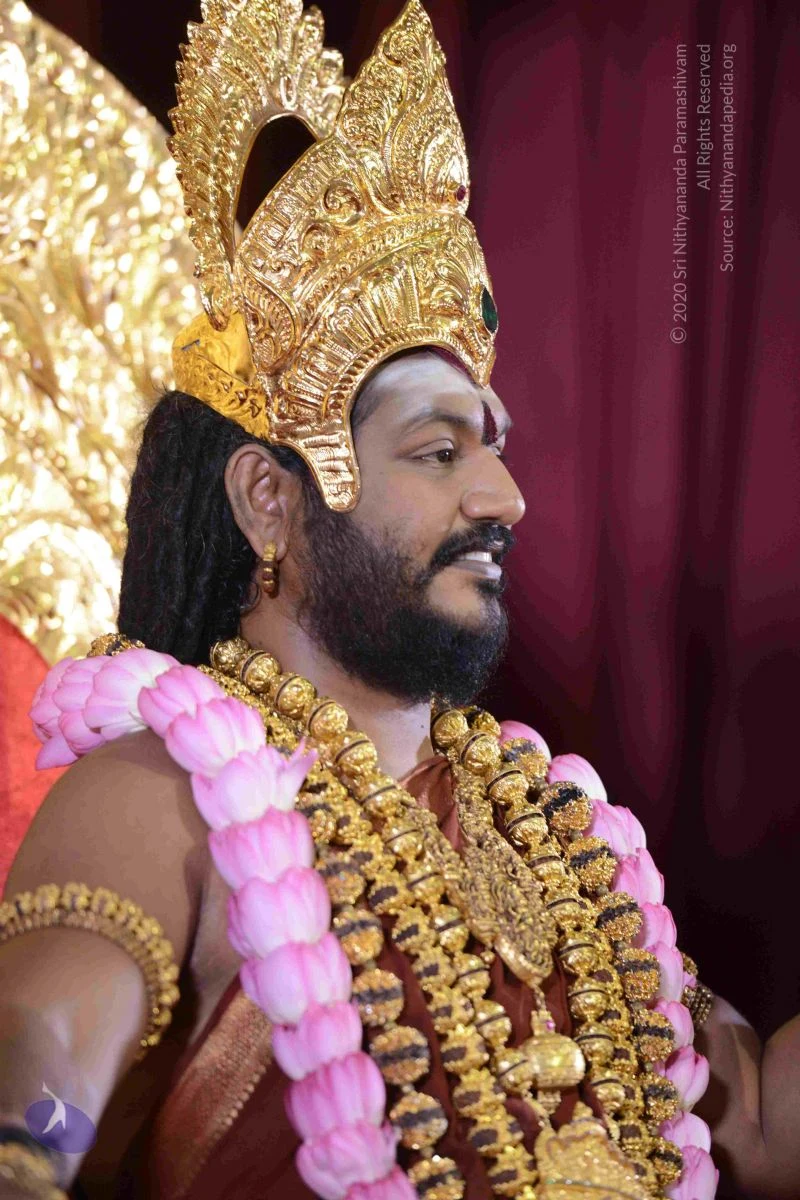
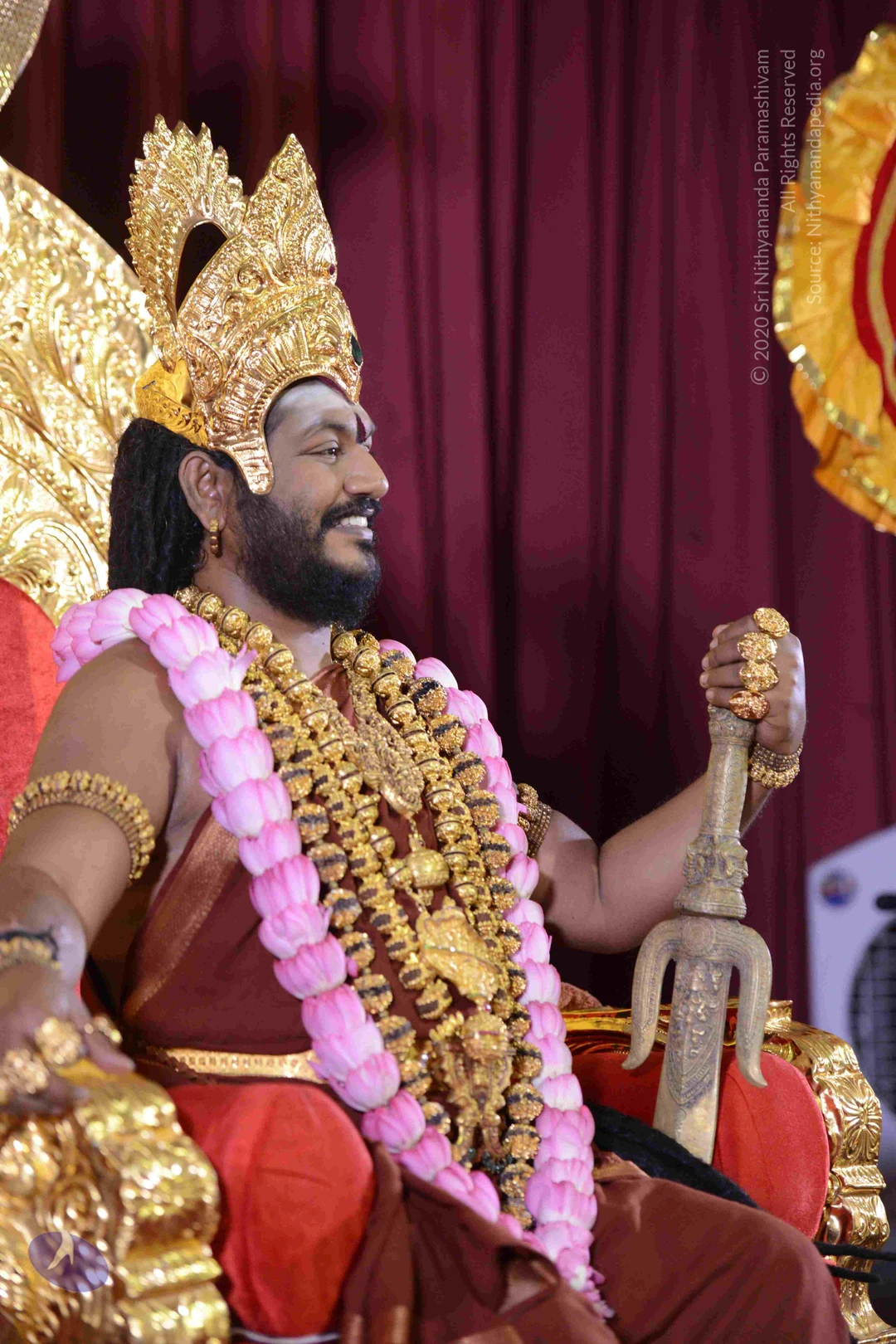
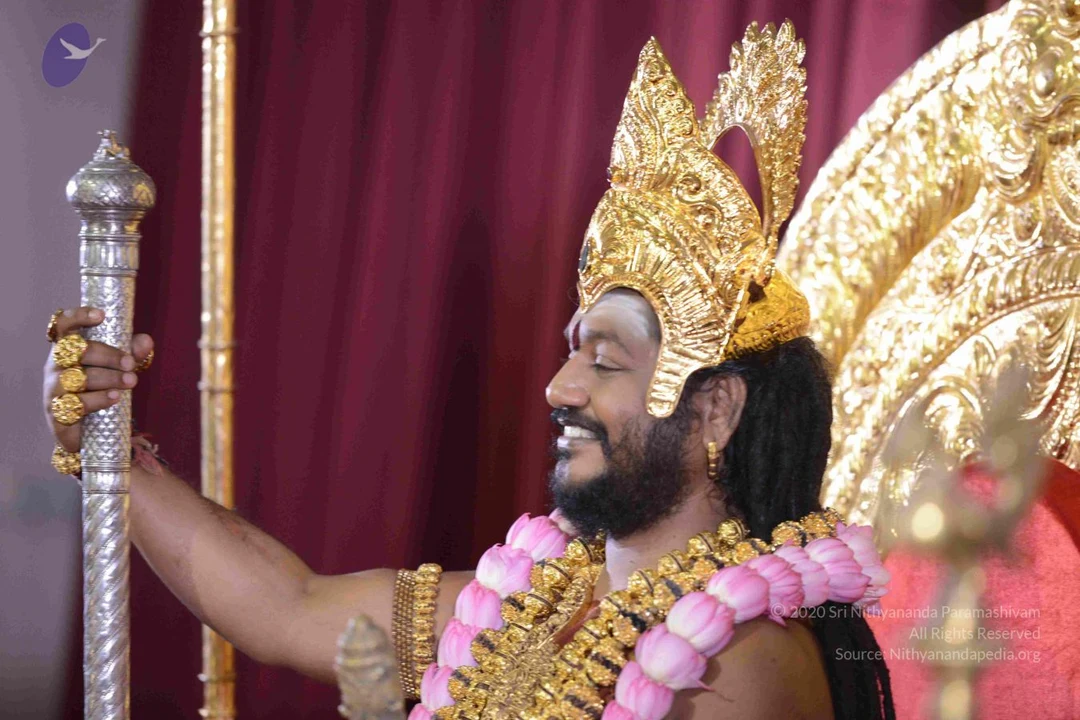
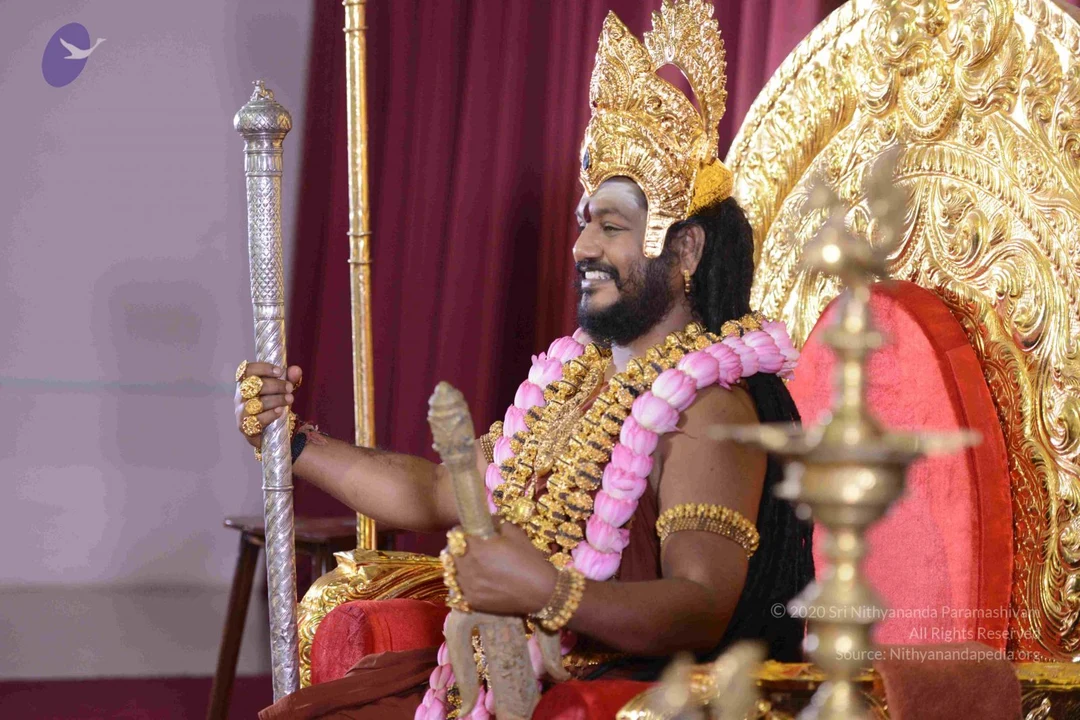
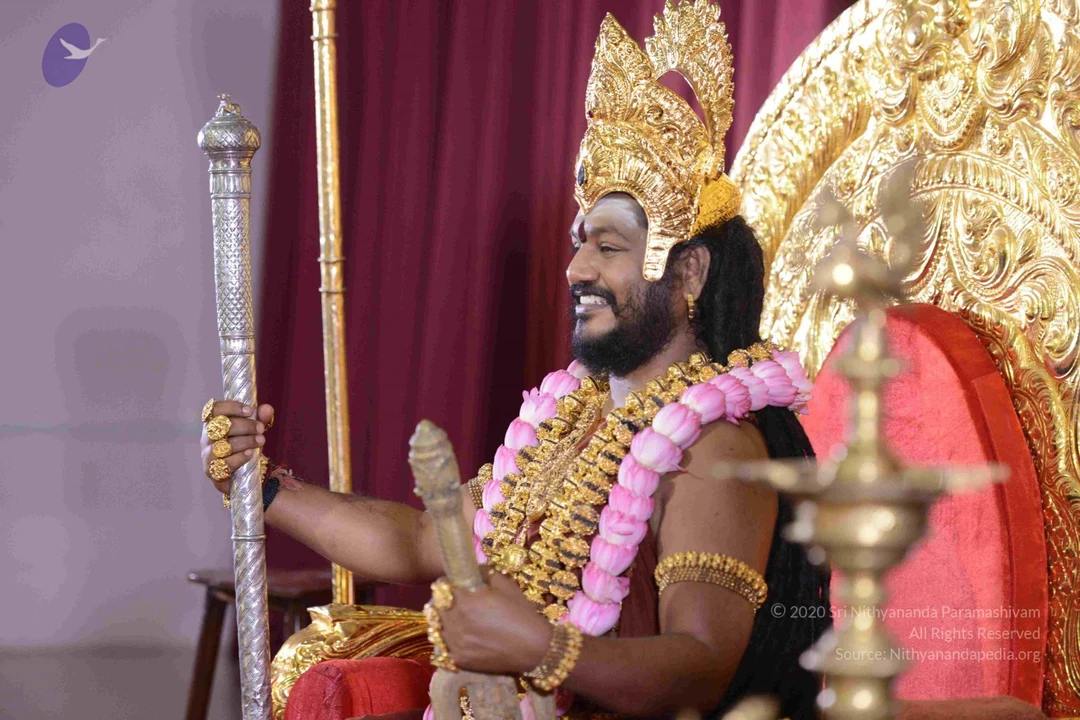
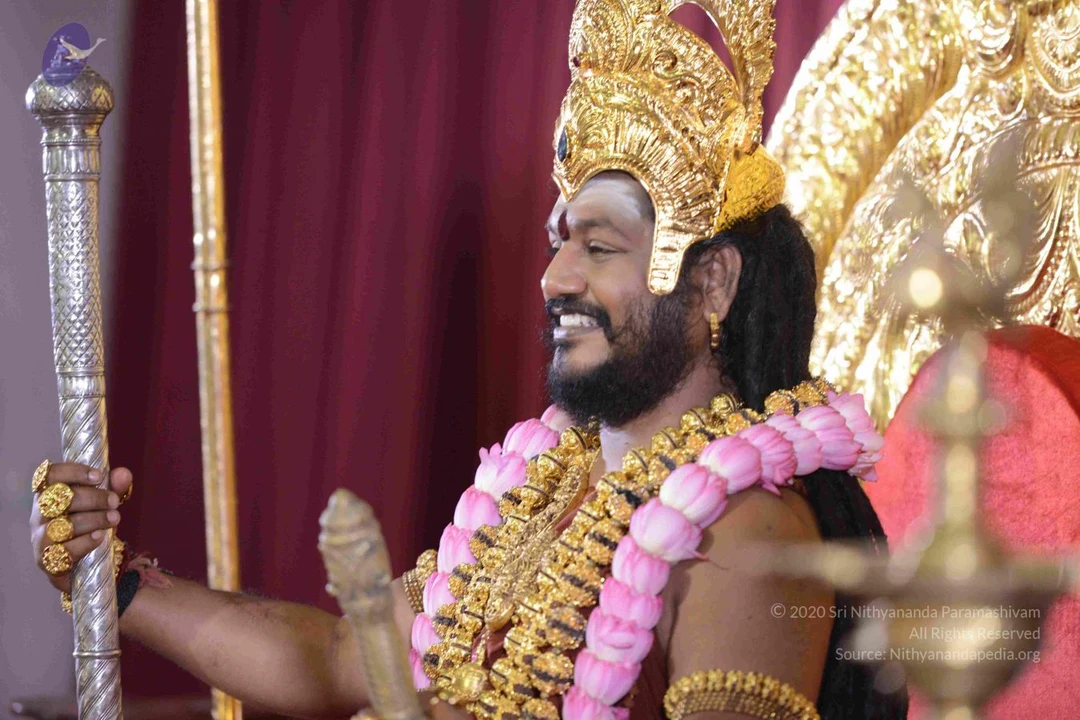
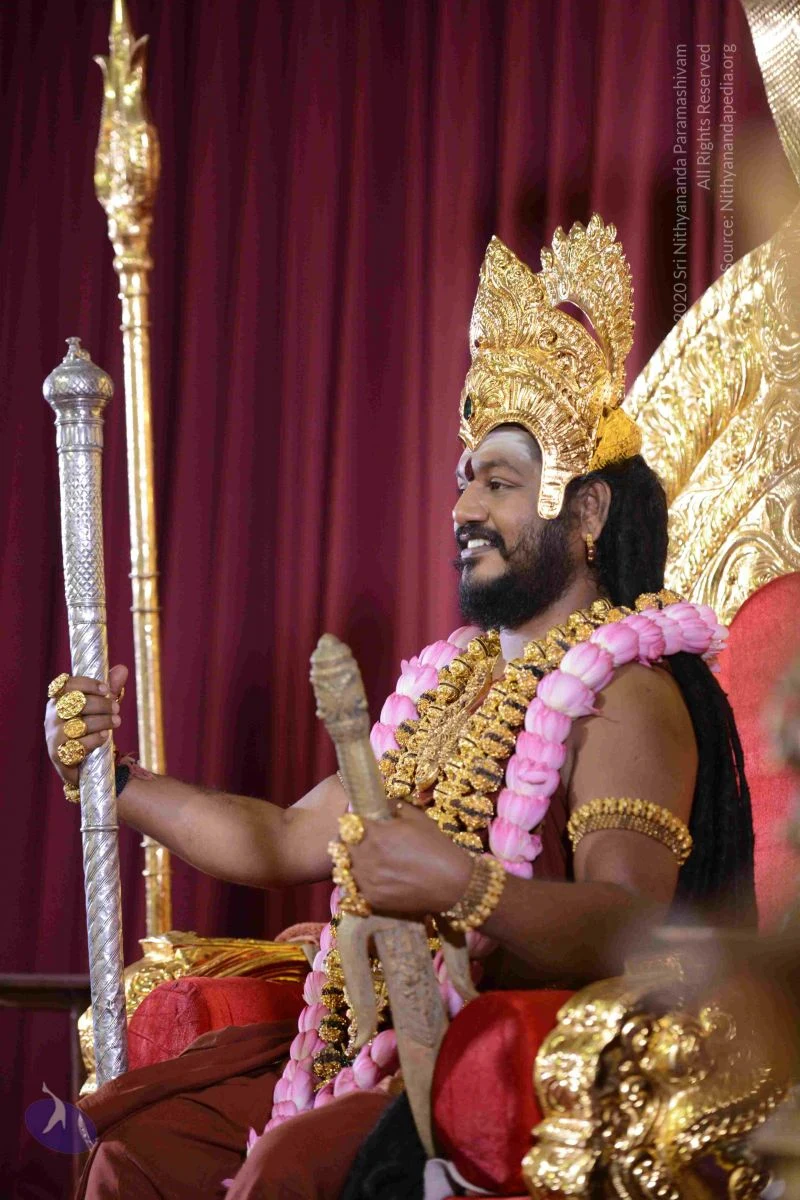
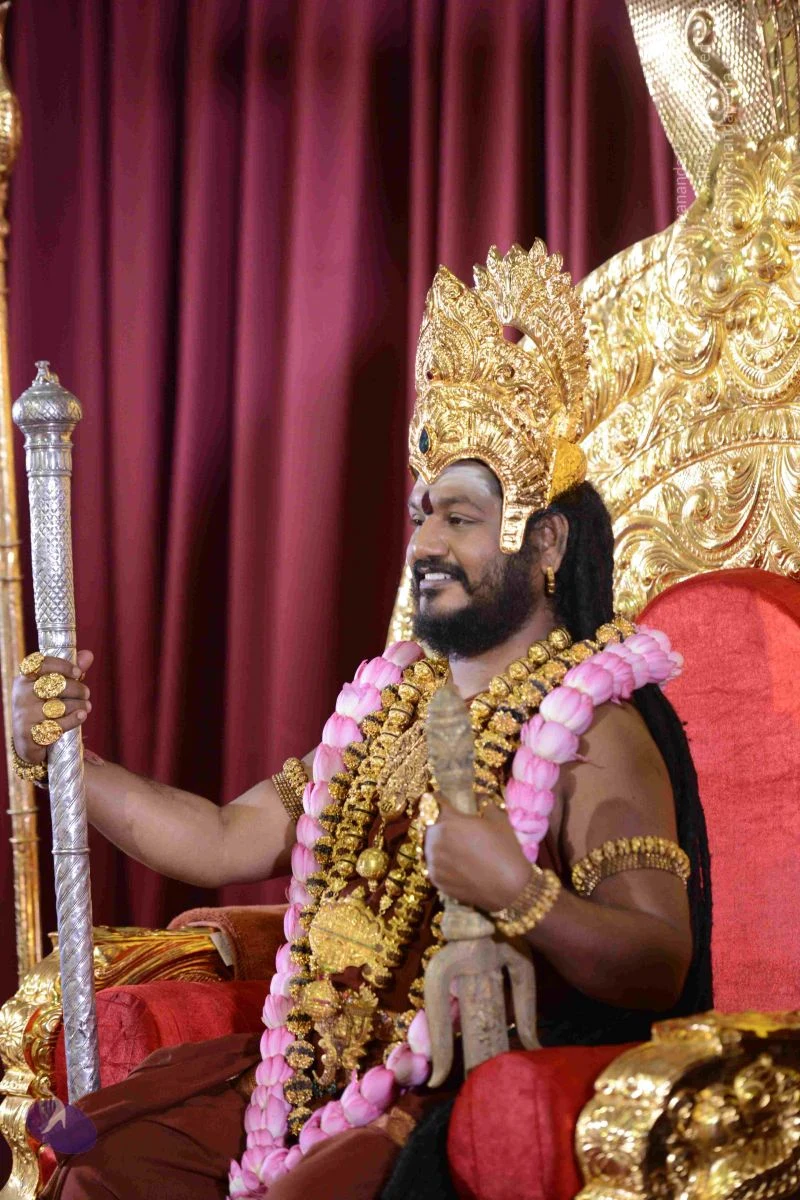
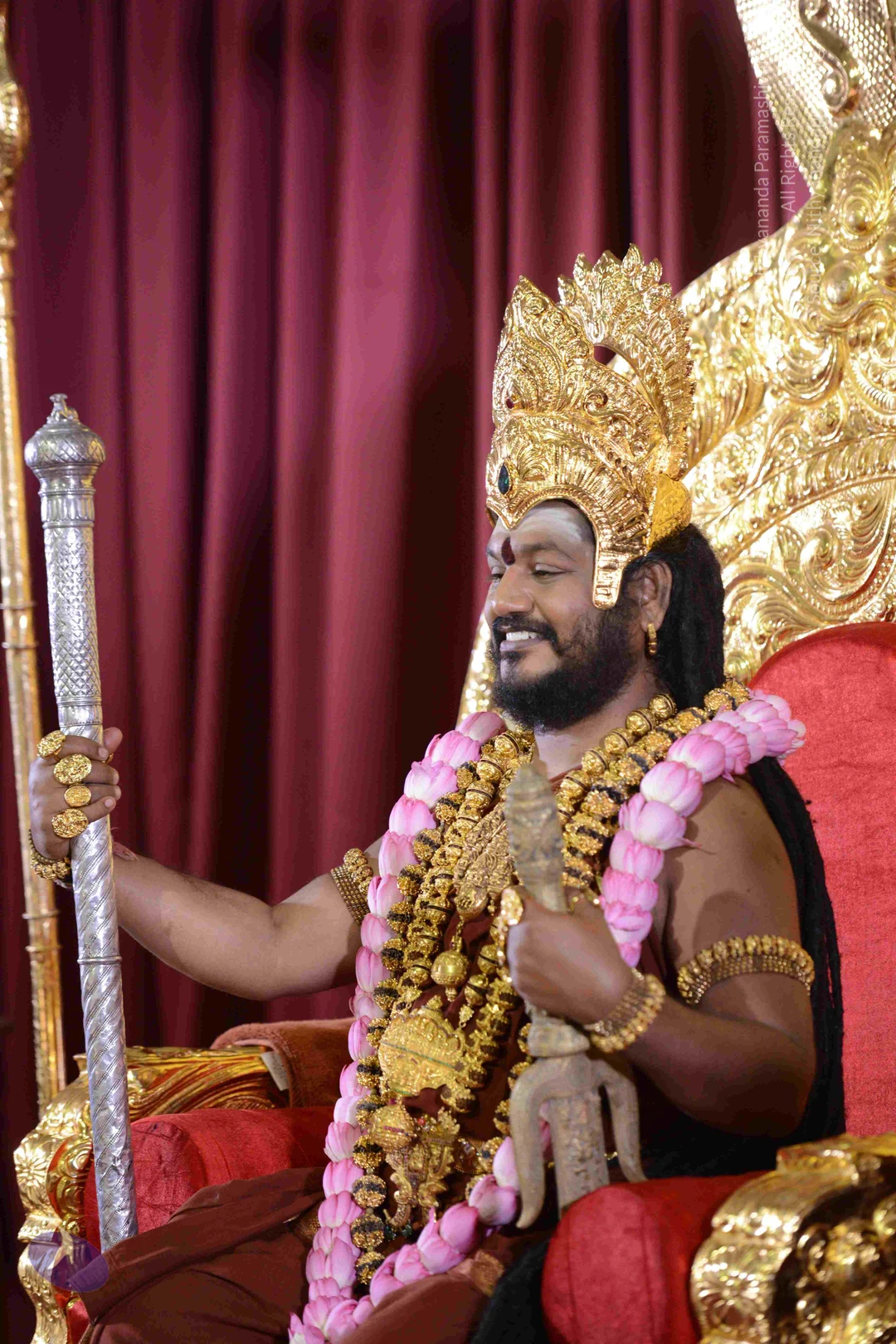
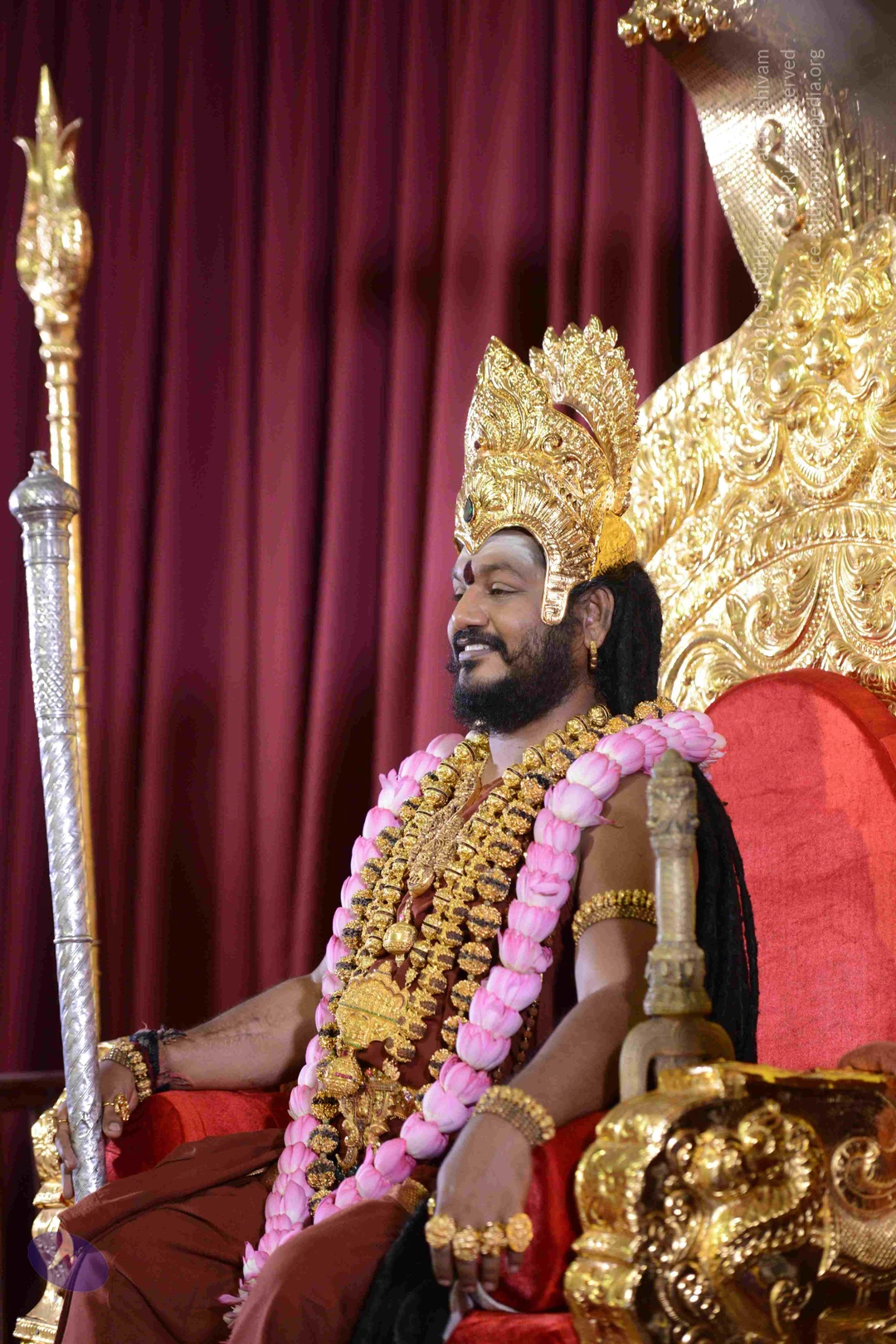
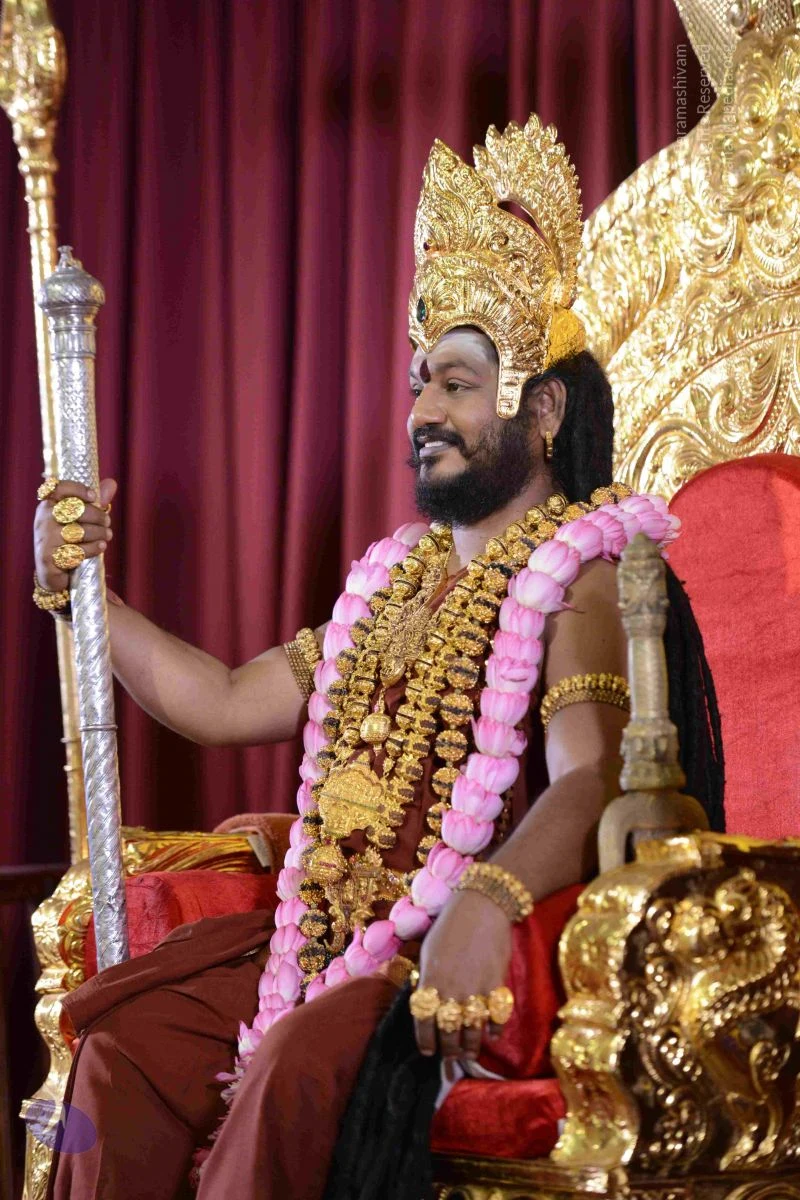
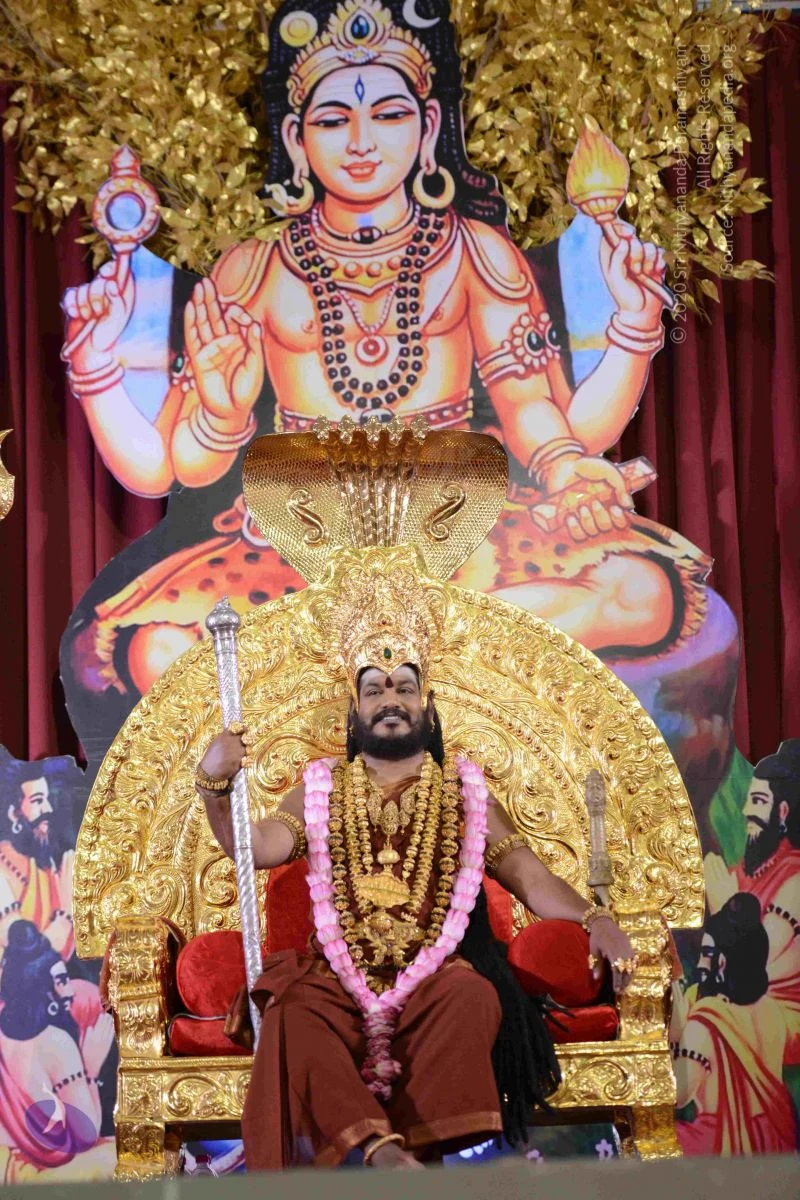
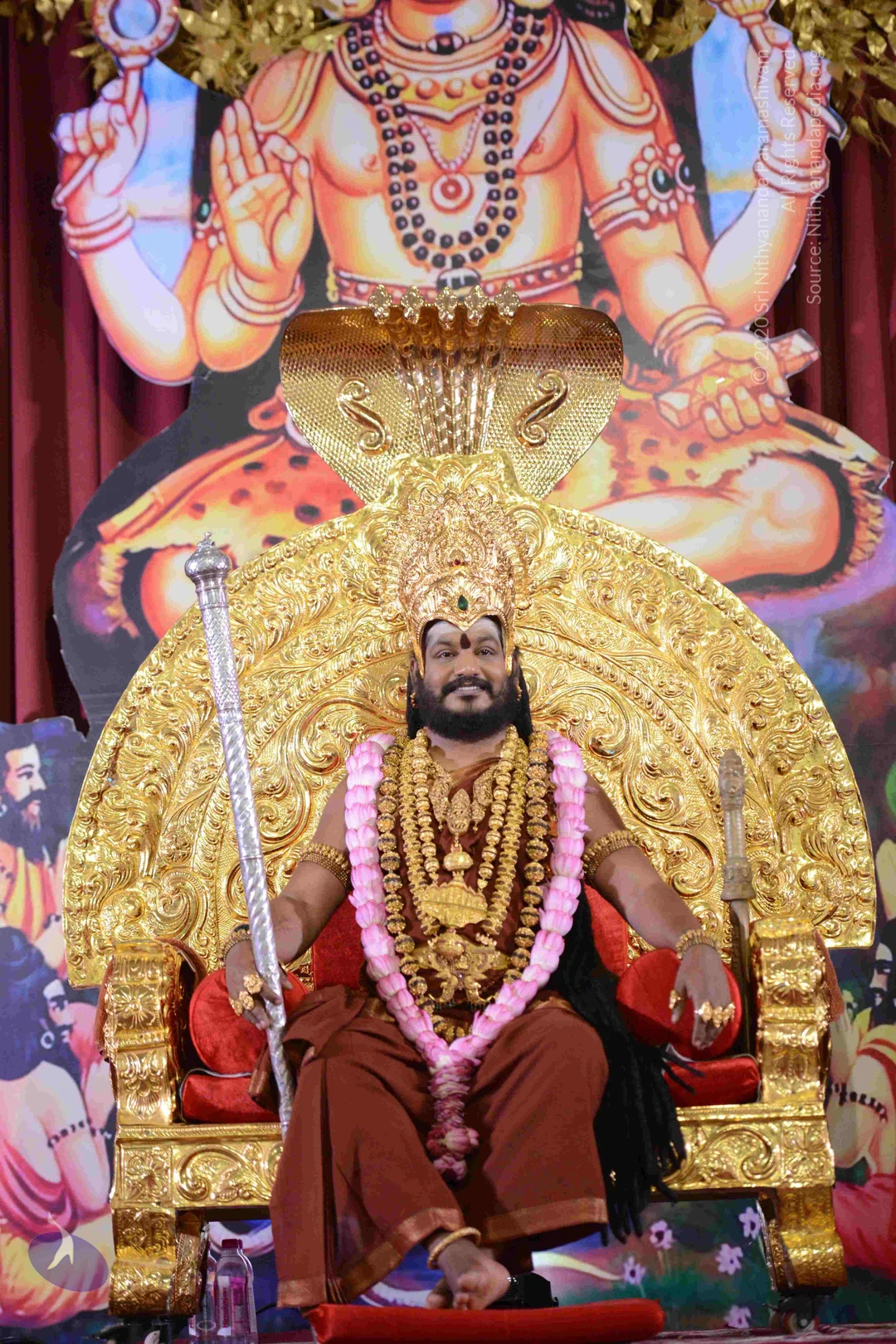
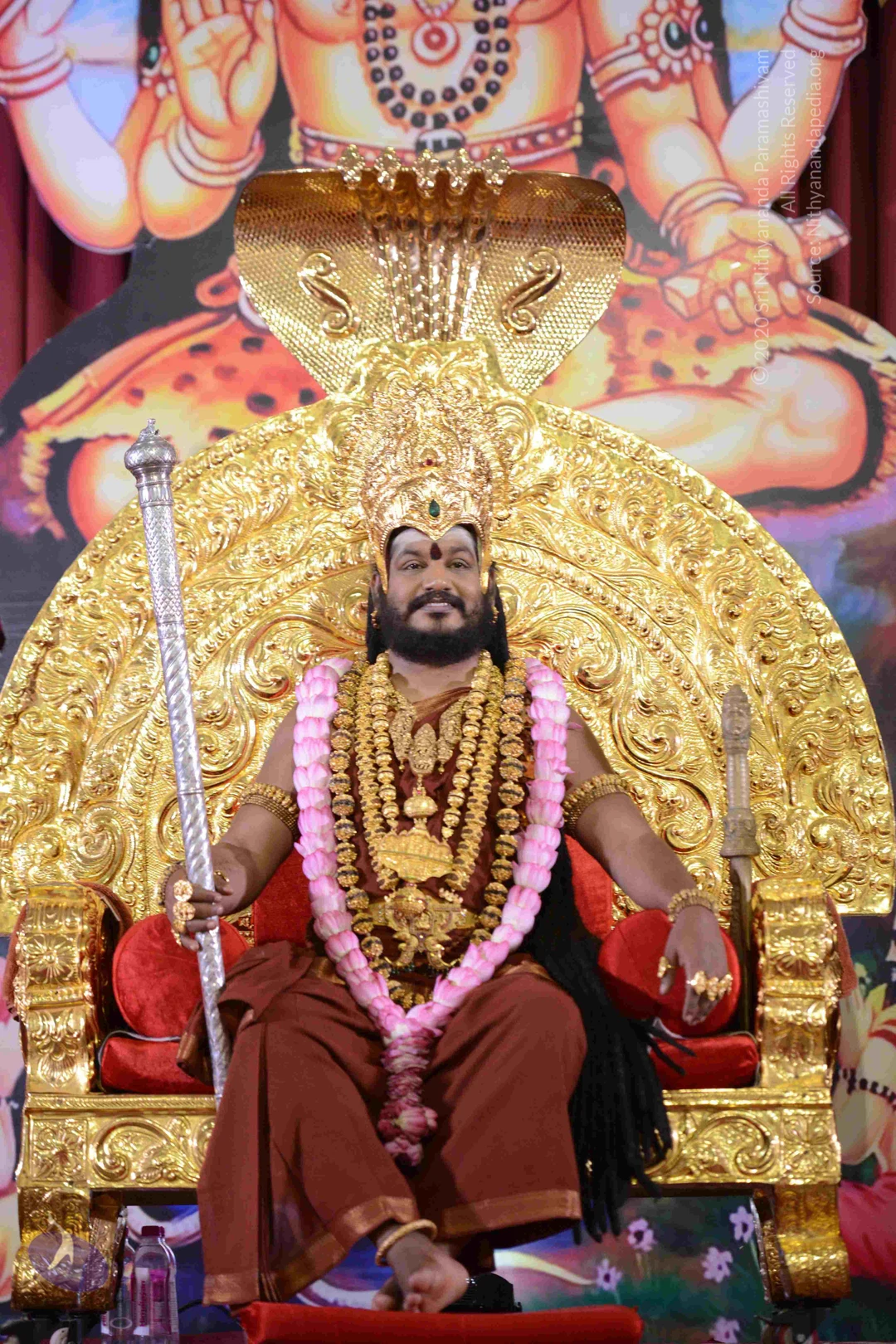
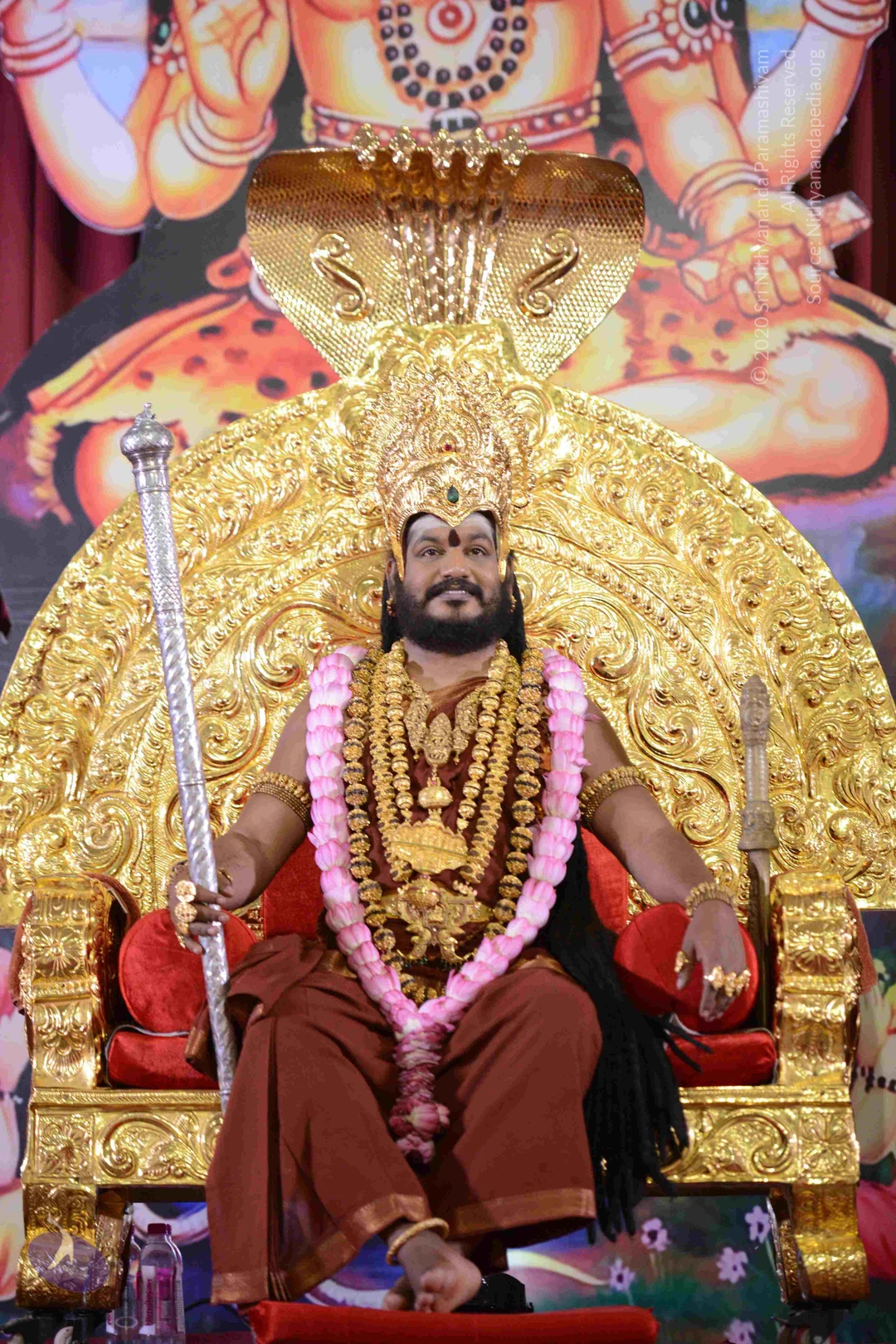
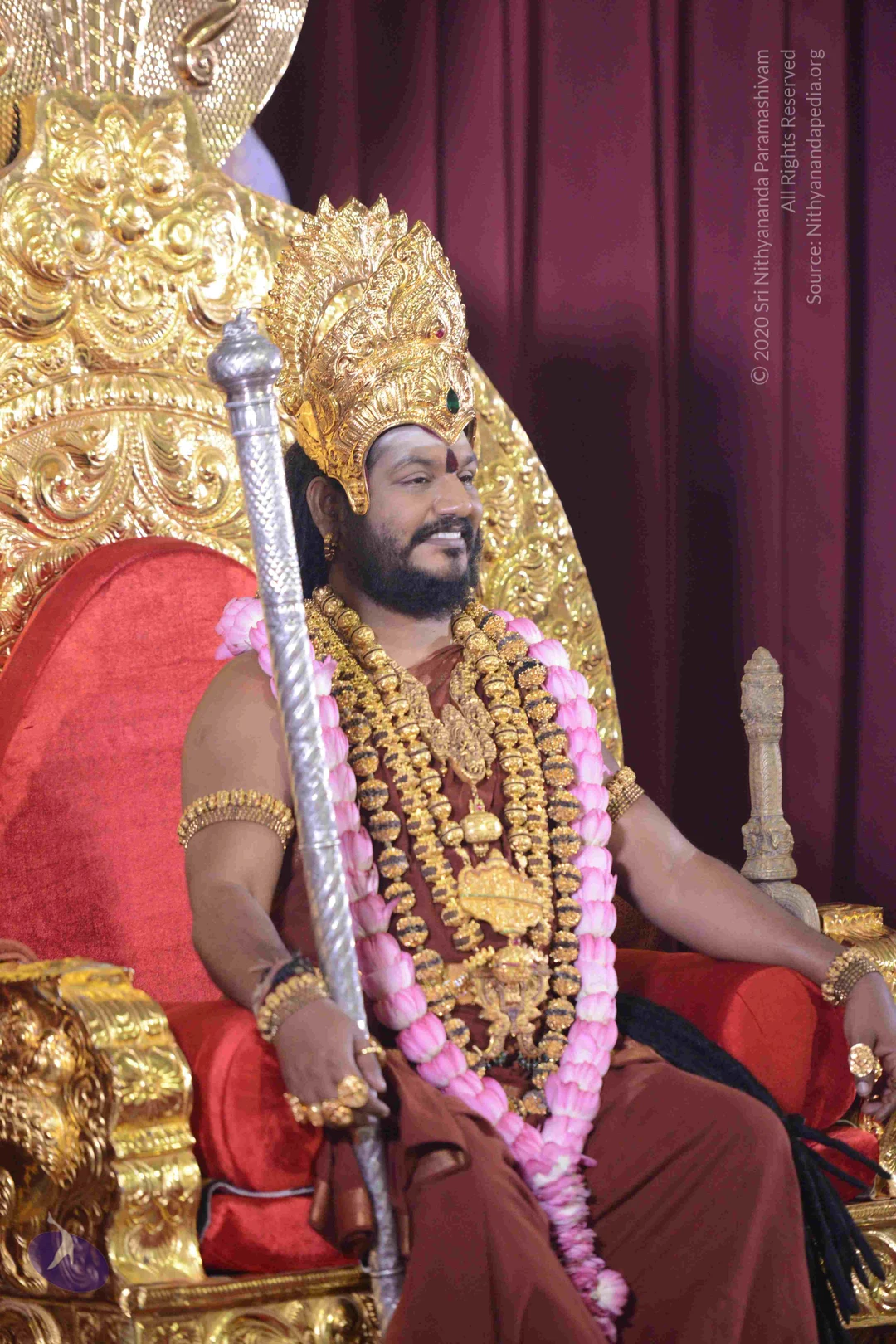
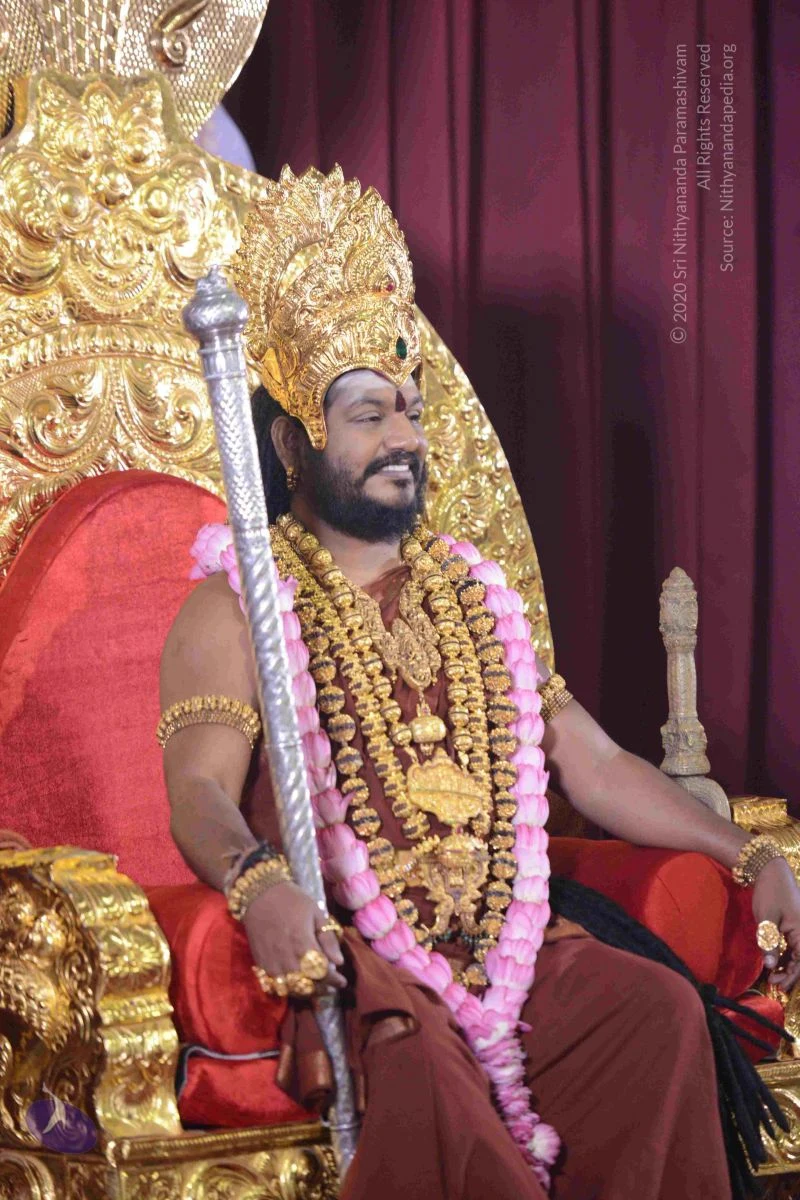
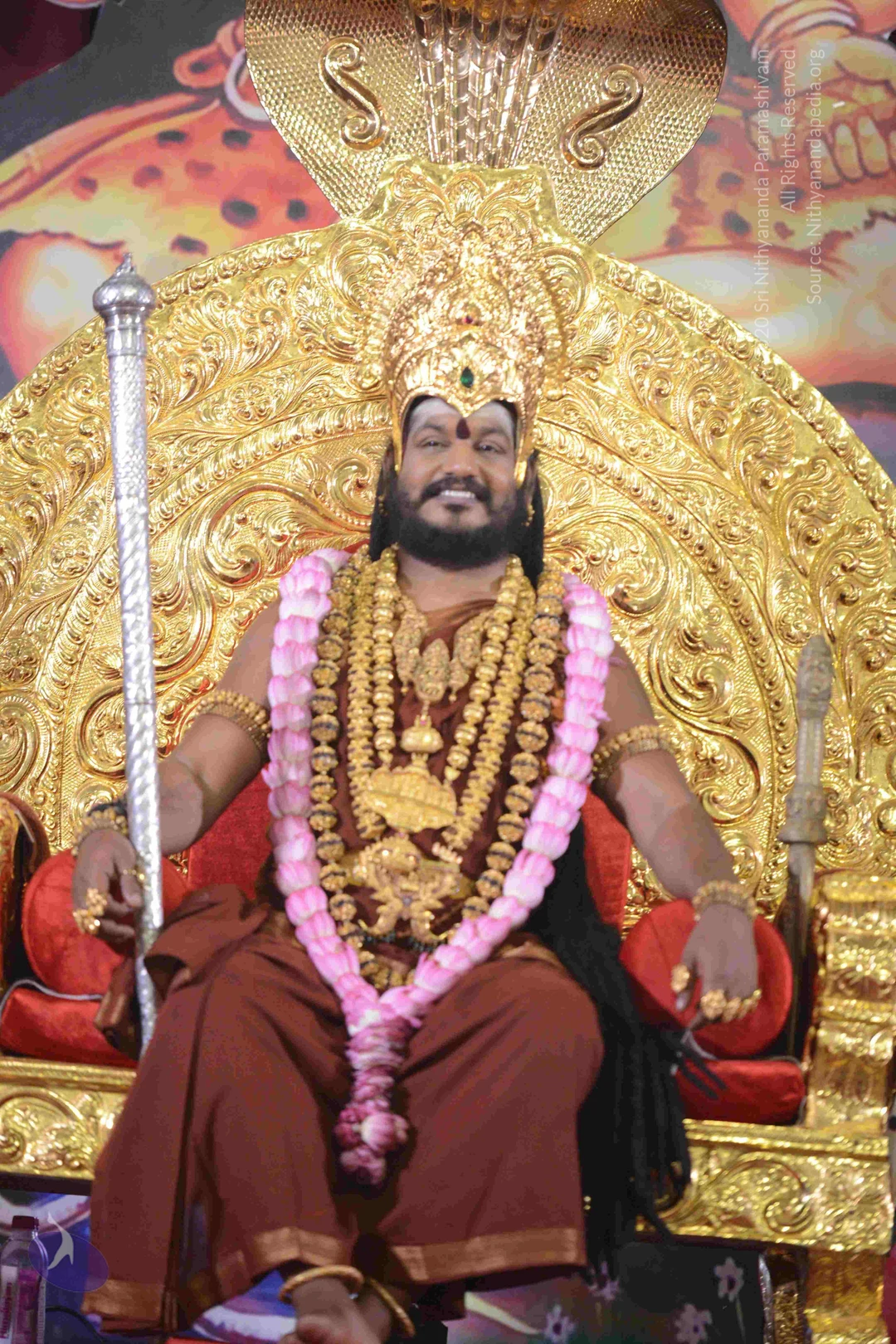
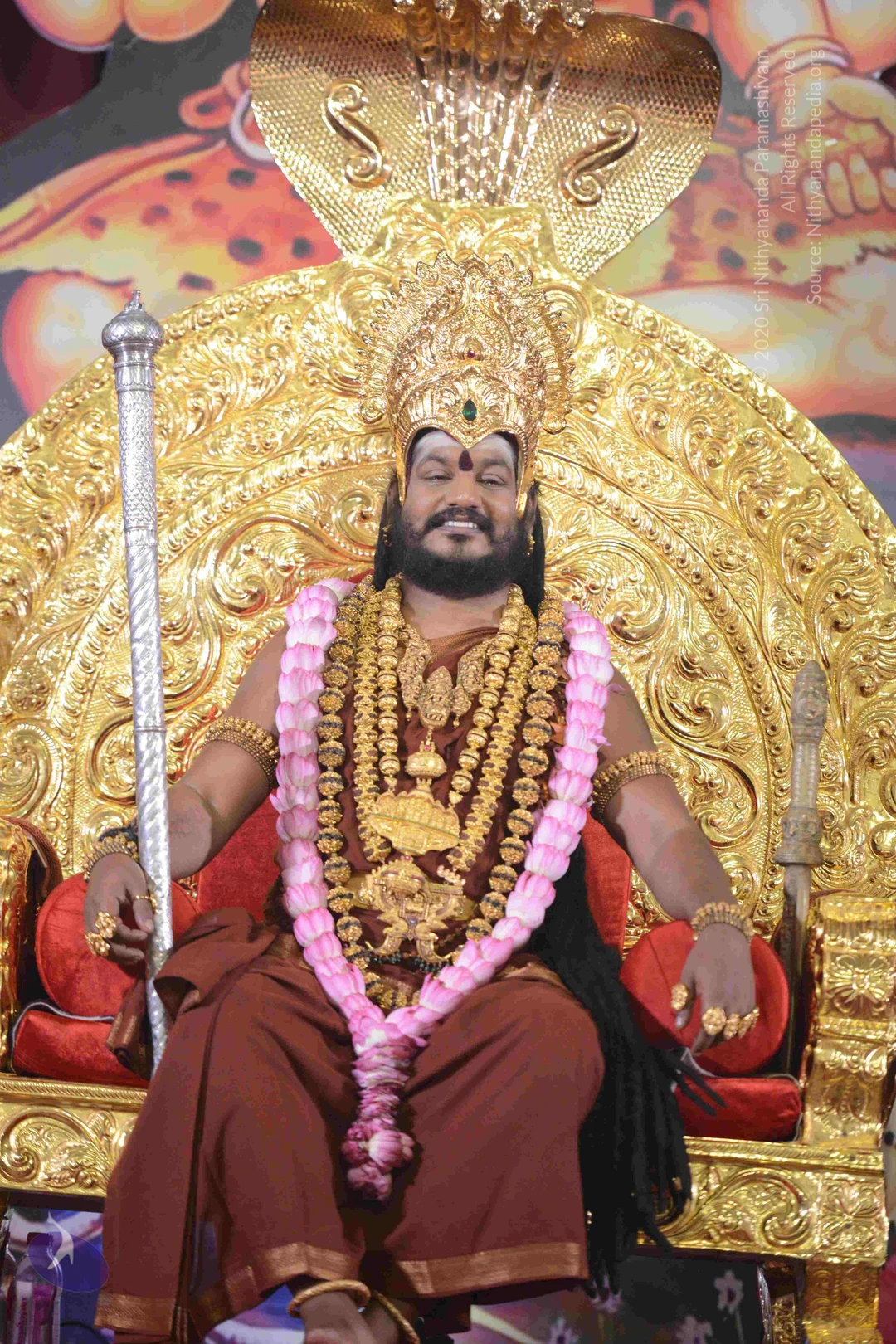
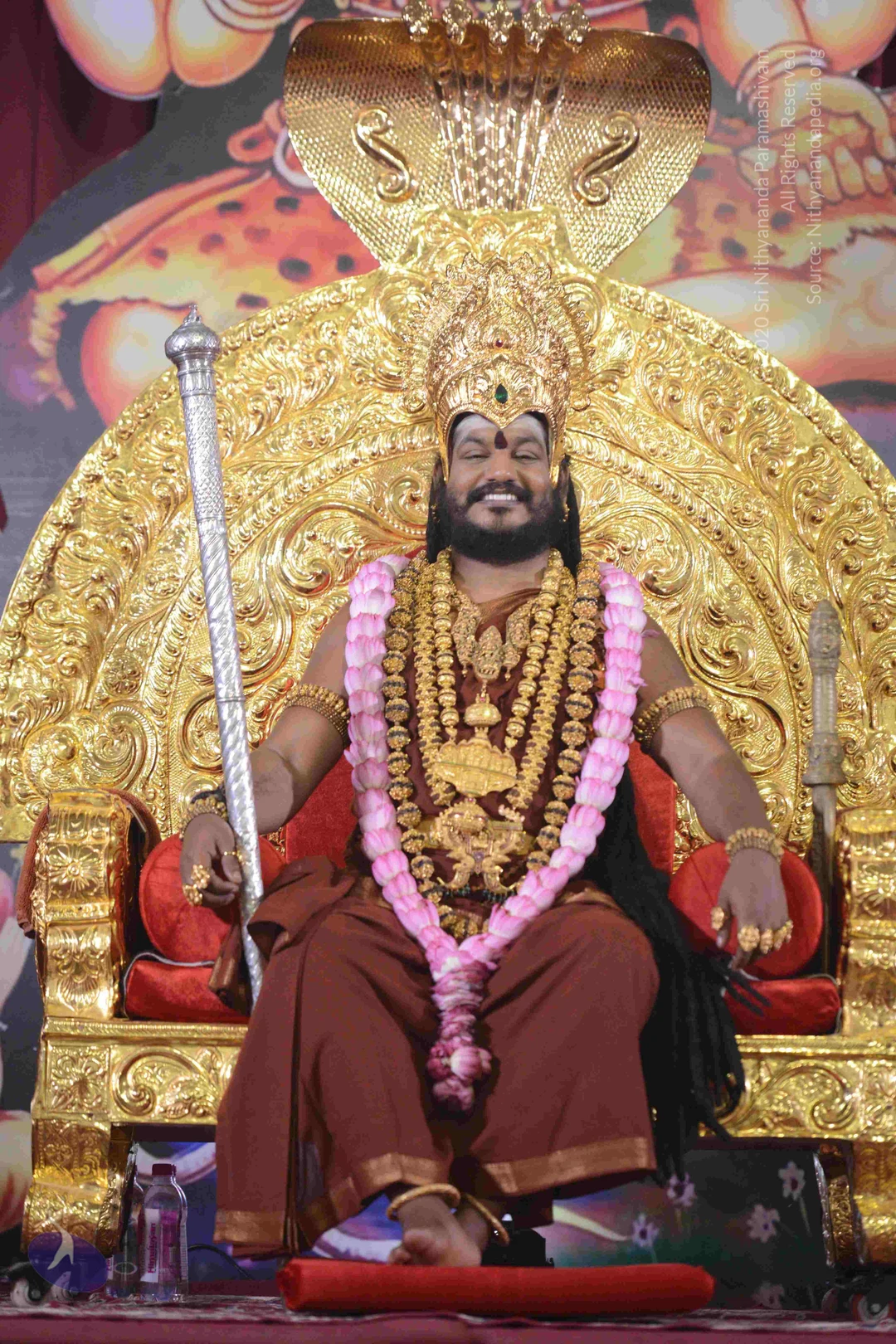
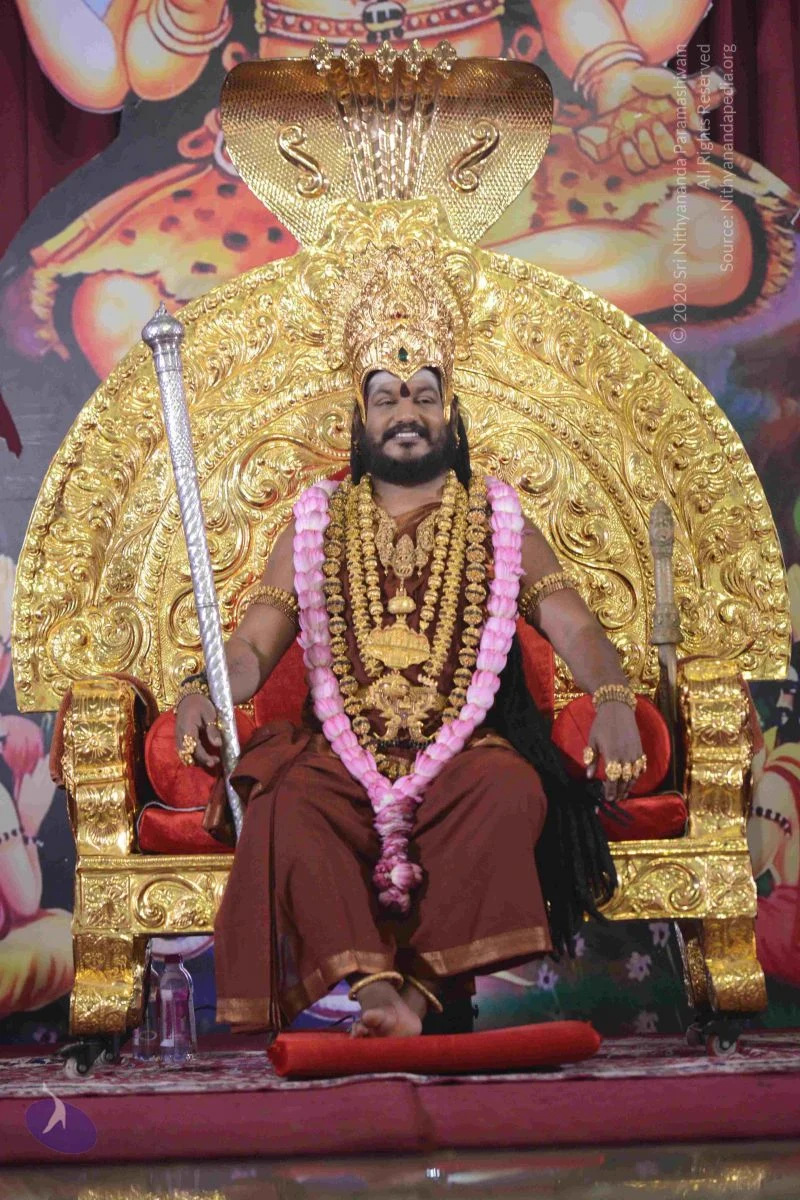
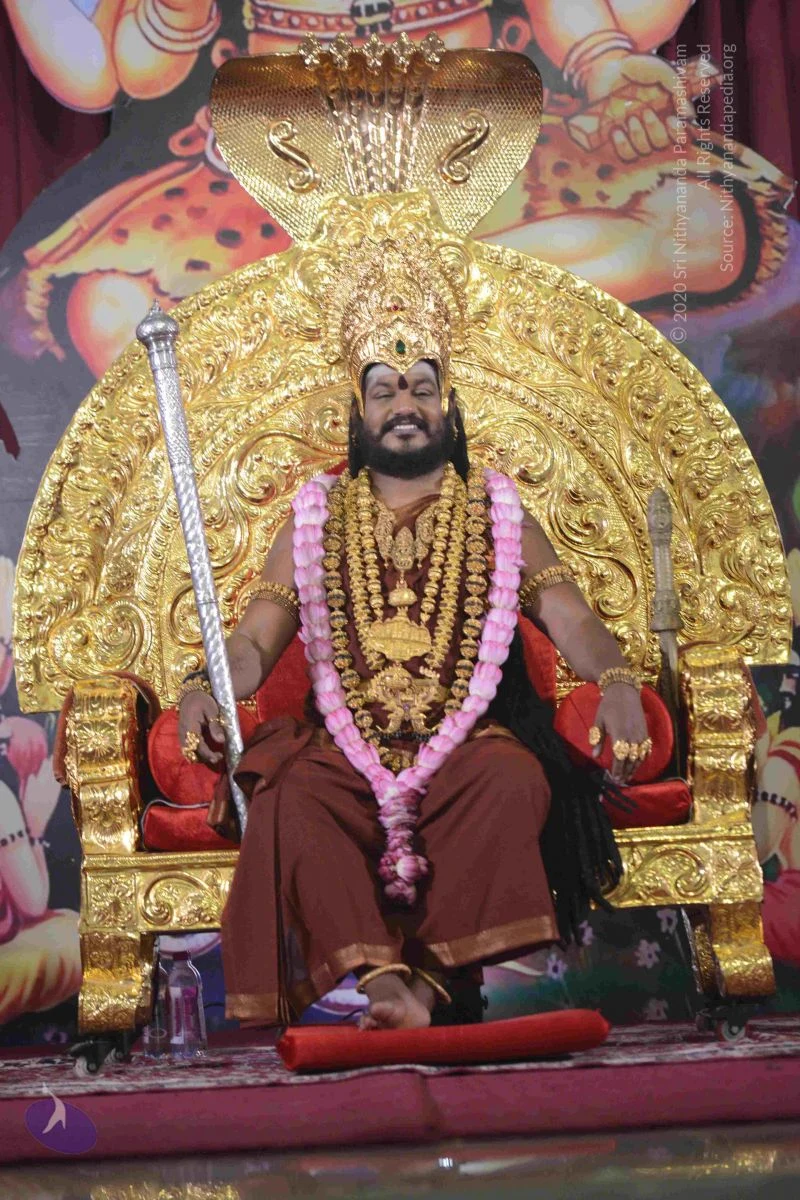
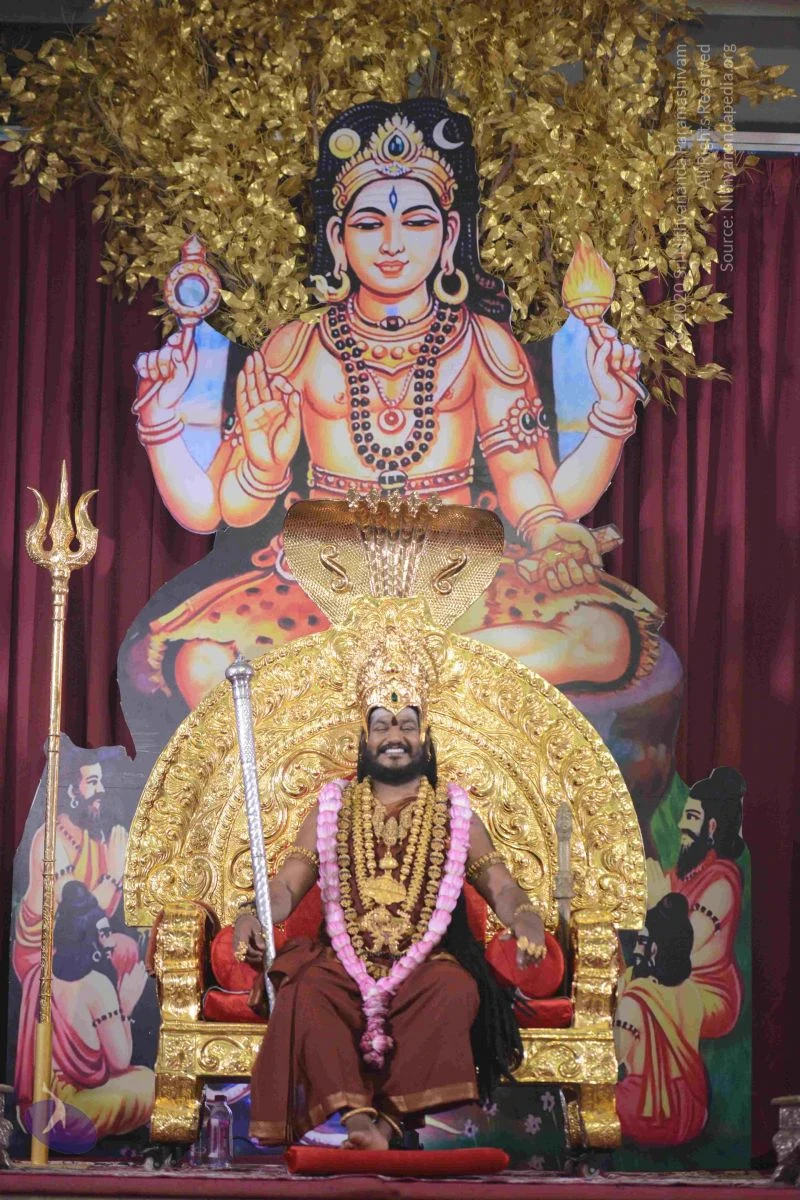
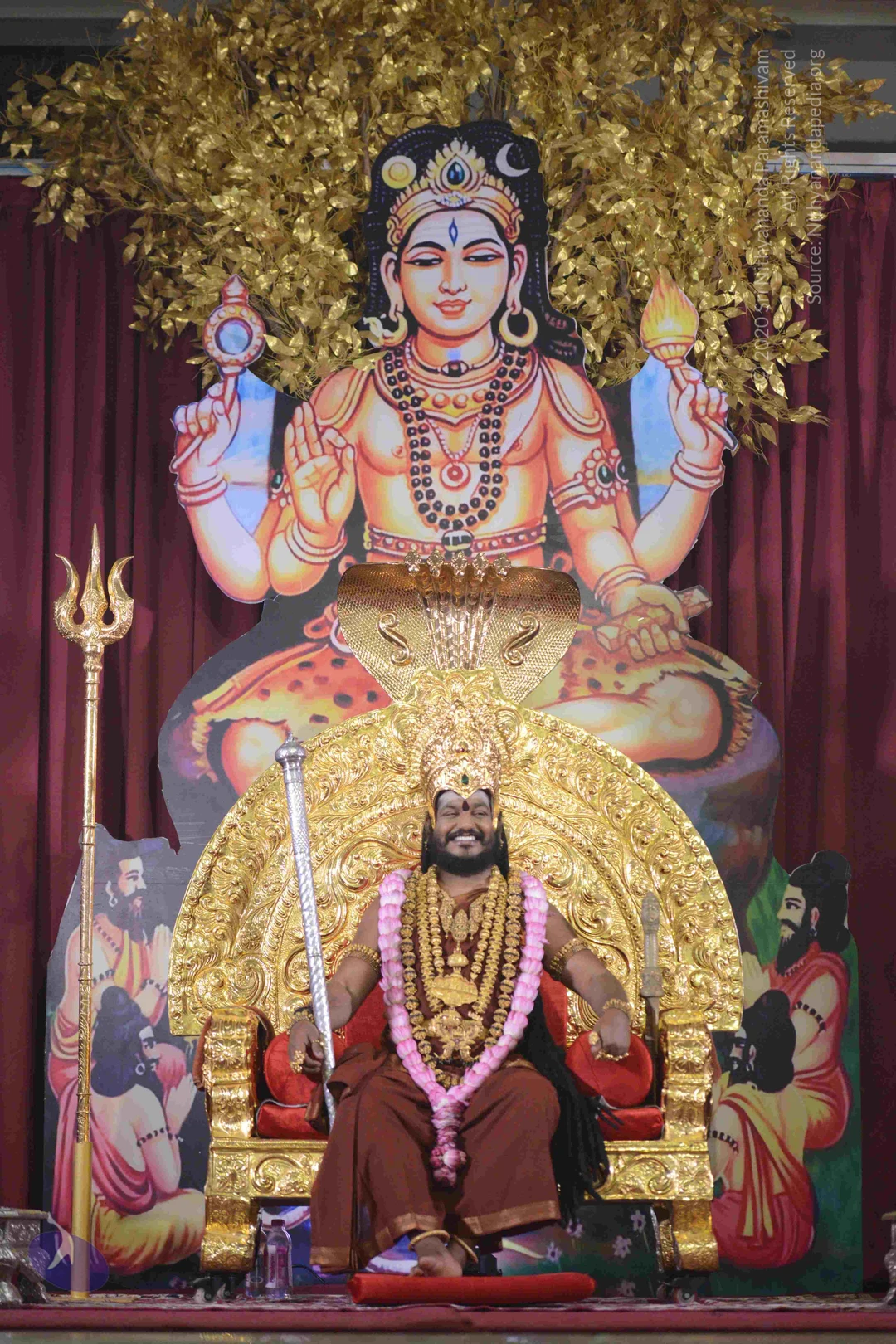
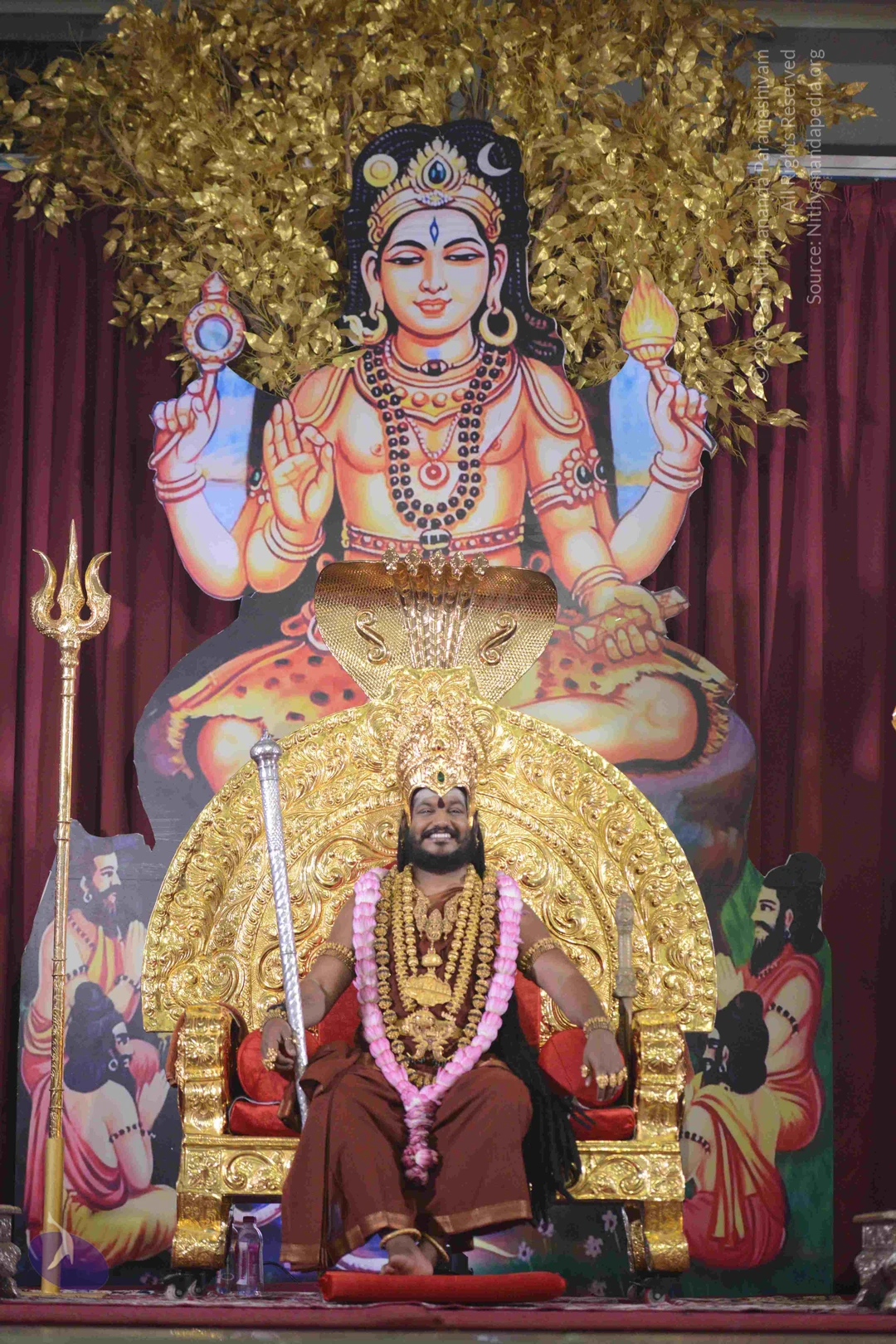
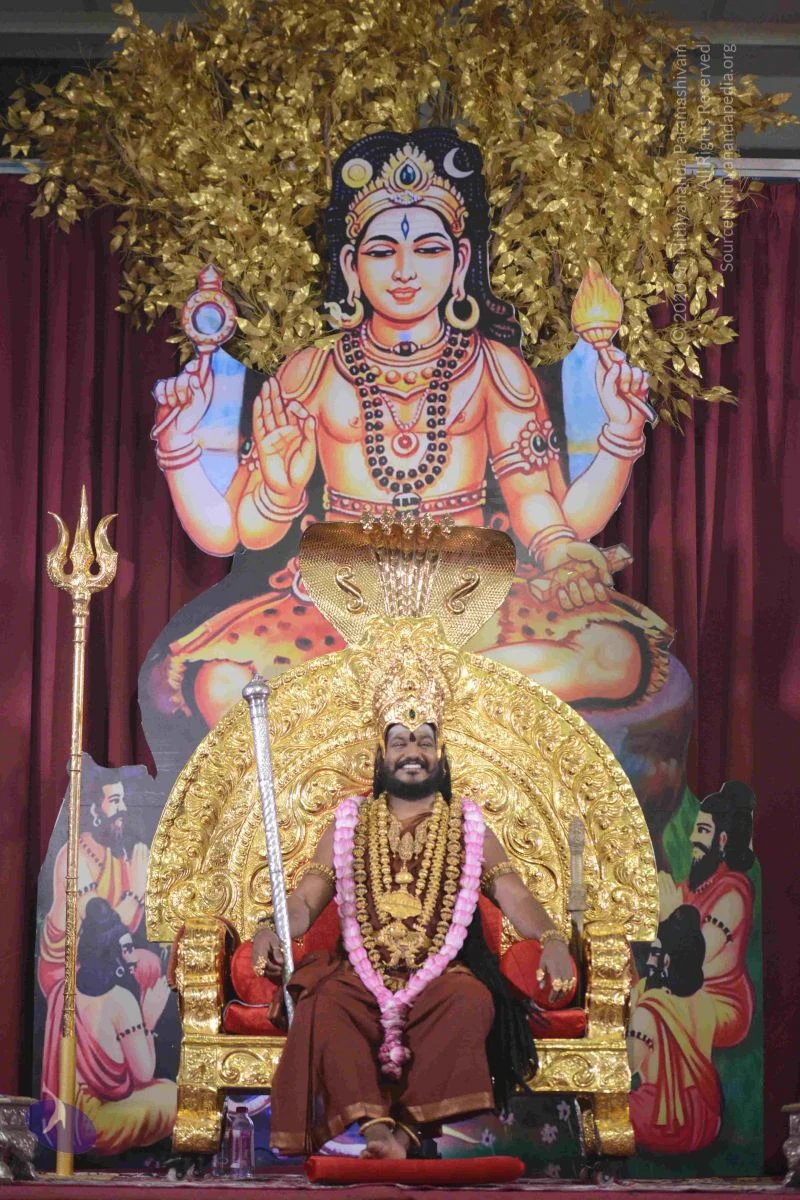
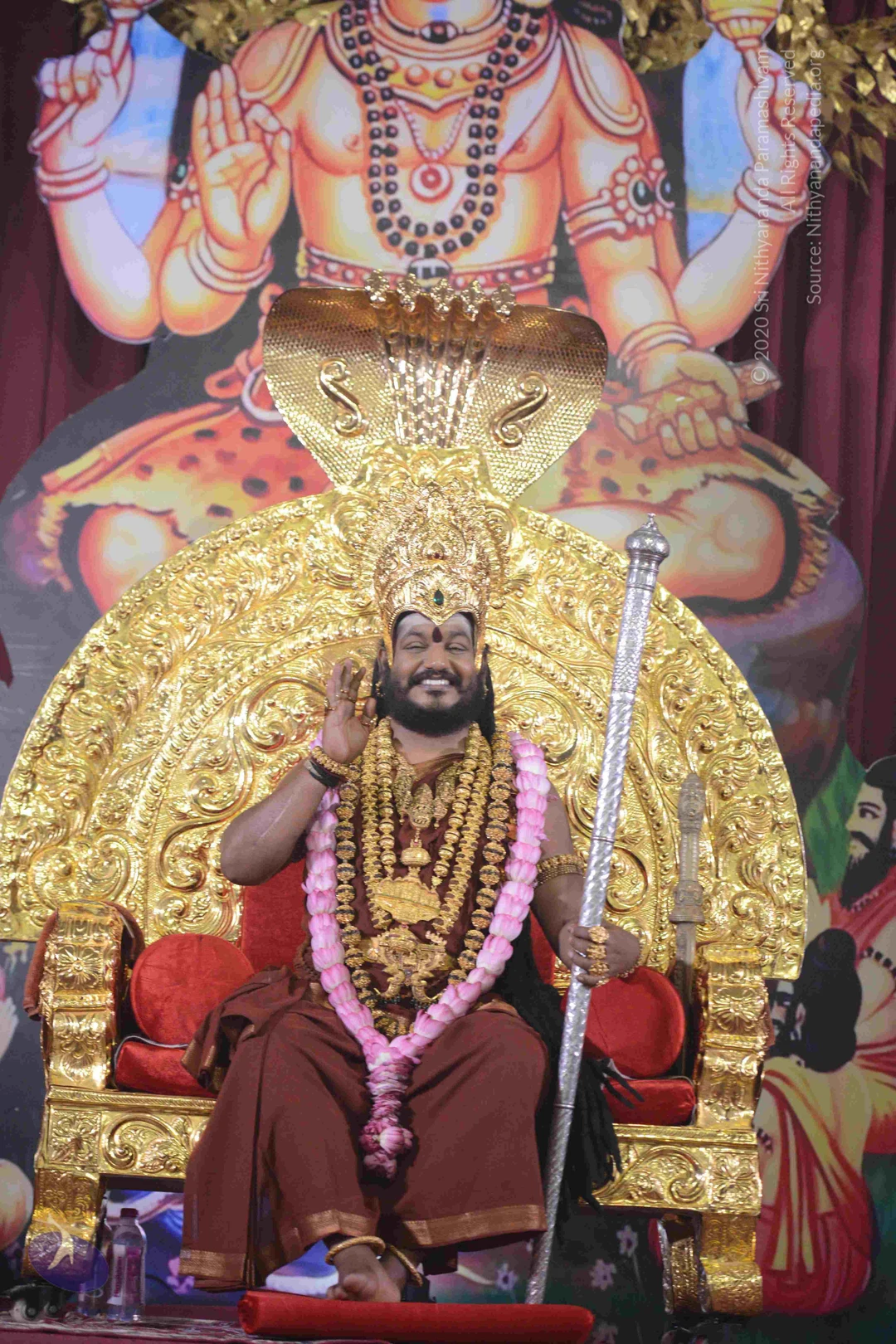
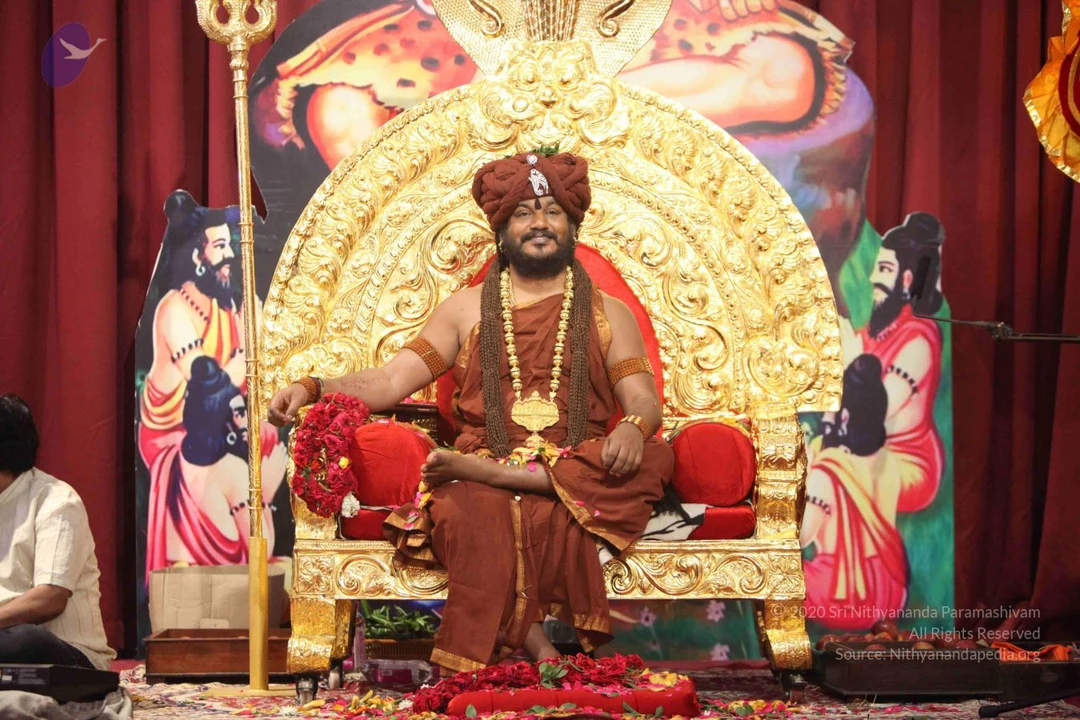
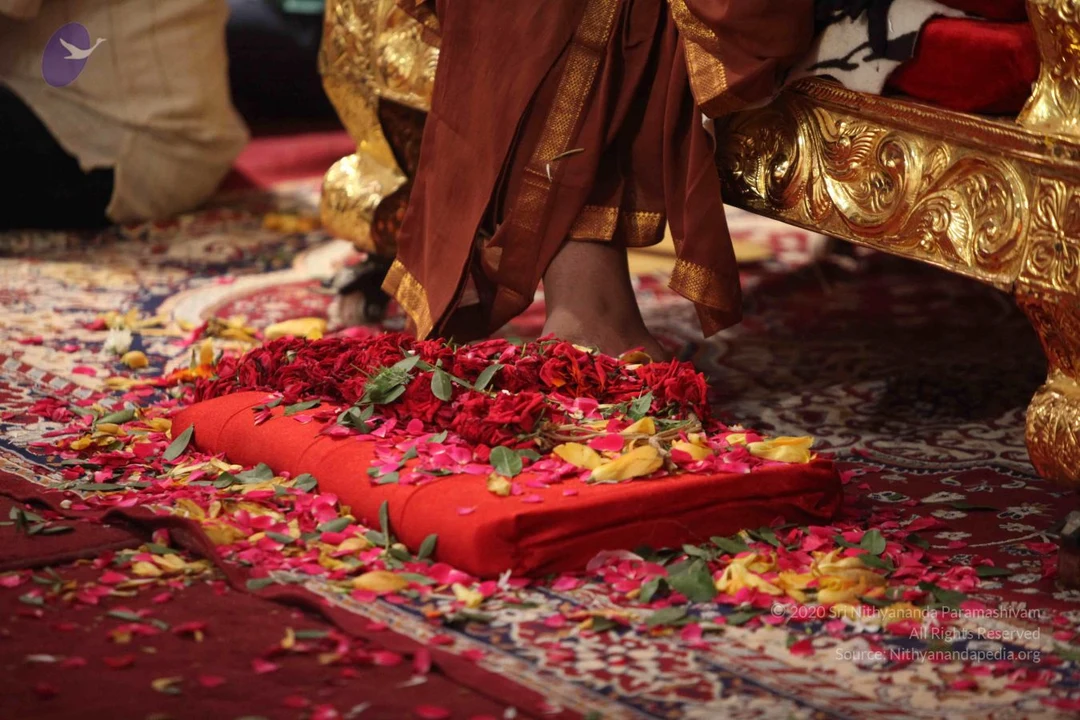
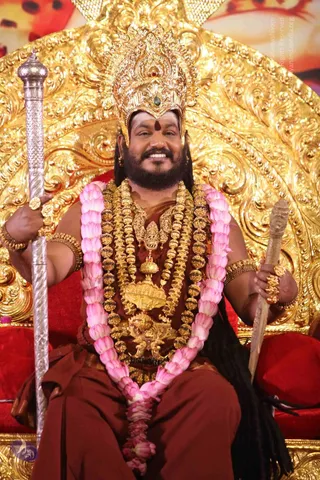
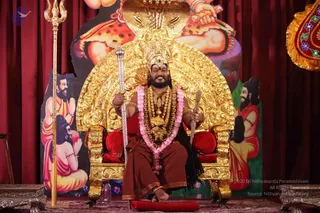
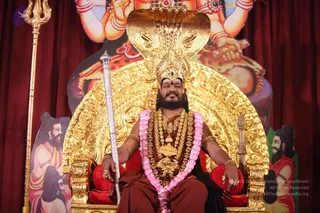
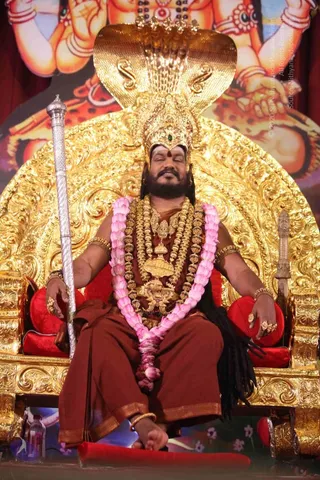
Close-up photograph of a person's bare right foot and ankle resting on a red cloth mat. The ankle wears a thick gold bangle with engraved patterns. The person wears a dark red silk garment with woven gold border, and a patterned carpet is visible at the edge of the frame. No face is shown.Close-up photograph of a hand resting on a red velvet cushion beside an ornate gold armrest. The hand wears four large, textured gold rings, one on each finger, and a gold bead bracelet on the wrist. Dark braided or dreadlocked hair falls over a dark red garment at the left edge, with pink lotus flowers and gold-toned floral decorations behind. The setting suggests a seated dais or throne during a satsang or discourse. Only a hand and wrist are visible, so no face identifies the person. The hand alone does not establish identity.A seated man on an ornate gilded throne with red velvet cushions, wearing a tall gold crown with a green gem, a red-brown robe, layered gold necklaces and a pink lotus garland. He holds a silver staff in one hand and a wooden staff in the other, with gold bangles and rings. Swamiji (probable) appearance cues: long swept-back hair, gold crown, ornate gold jewellery and ceremonial throne seating.A seated man on an ornate gold throne with a red cushioned seat, set before a red curtain and painted backdrop of saints and figures. He wears a gold crown with a green stone, a rudraksha-style mala of gold beads, a pink flower garland, and gold necklaces and bangles. He holds a silver staff in one hand and a wooden rod in the other, with a gold trident standing to the left. His clothing is a rust-brown garment. Swamiji (probable): the appearance cues include a crown, gold ceremonial necklaces, a flower garland and a throne, with the role of a seated speaker on the throne.A seated man on an ornate gold throne with a carved backrest topped by a golden hooded serpent canopy, wearing a rust-red robe, a heavy gold multi-strand necklace with a large pendant, gold bangles and rings, and a long pink-and-white flower garland across his chest. He holds a silver staff, with a golden trident leaning at the left edge. Behind him are large painted cutouts of deities with raised arms and weapons against a deep red curtain. Swamiji (probable): the long swept-back hair, ornate gold crown and necklaces, and saffron-red robe match the page's claim that Swamiji attended this event, and he is seated enthroned as the central figure.A bearded man with long dark hair sits with eyes closed on an ornate gold throne with a carved cobra-hood backrest, in front of a painted backdrop of a multi-armed deity. He wears a gold crown with a green gem, multiple rows of gold beaded necklaces, a large gold pendant, a pink lotus garland, and a rust-red robe with gold border. He holds a silver staff in his left hand, rings on his fingers, and a gold bangle on his ankle. A red cushion rests on each armrest, and a plastic water bottle sits near the base of the stage. Appearance-based candidate on a dais, with distinctive crown, rudraksha-style gold adornments and pink lotus garland; Swamiji (probable) seated in a throne-like setting.
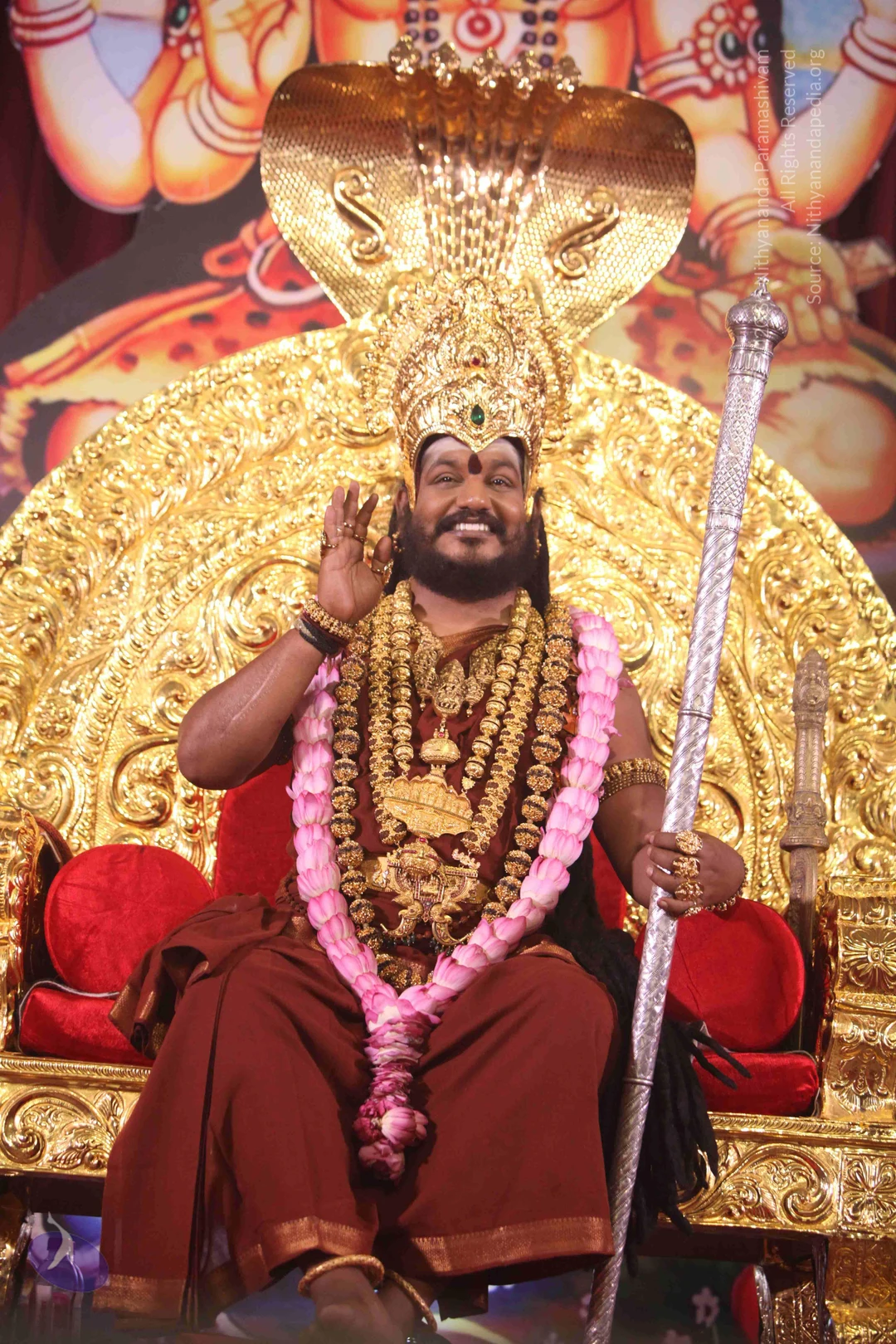
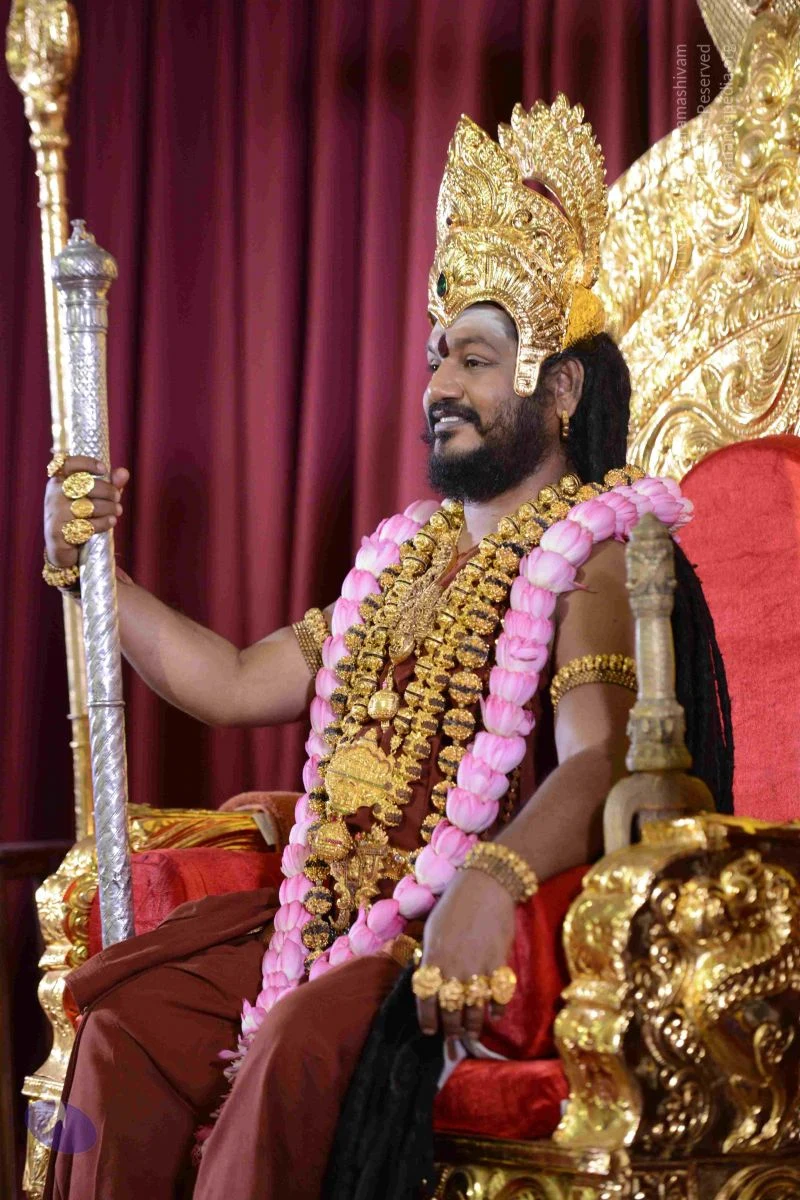
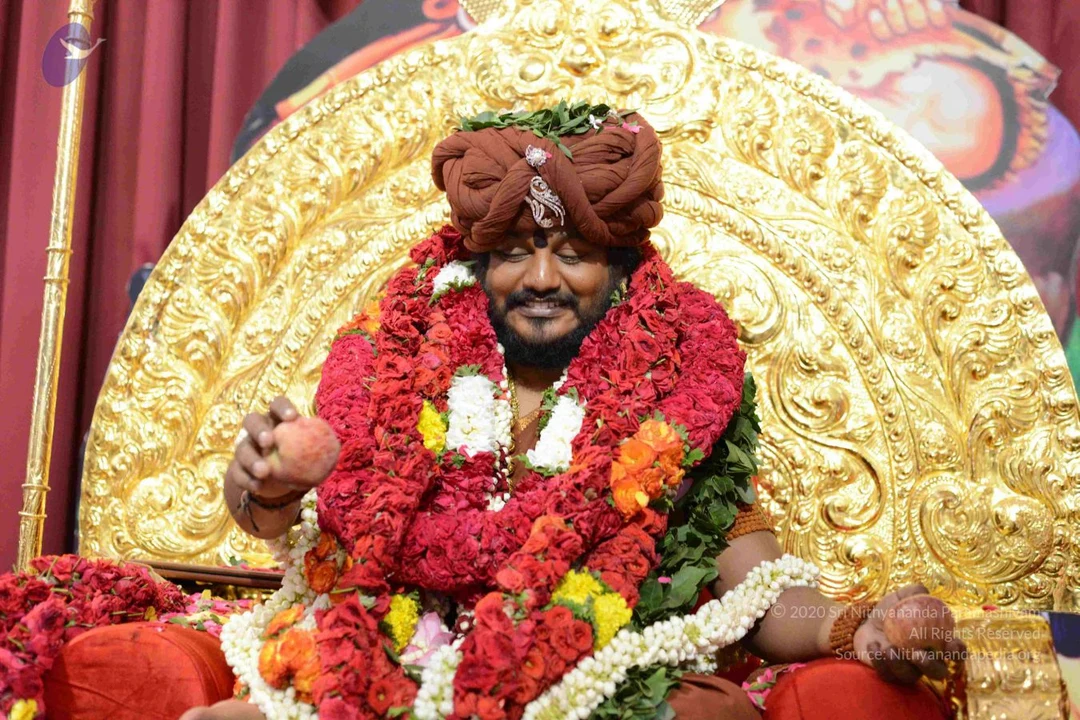
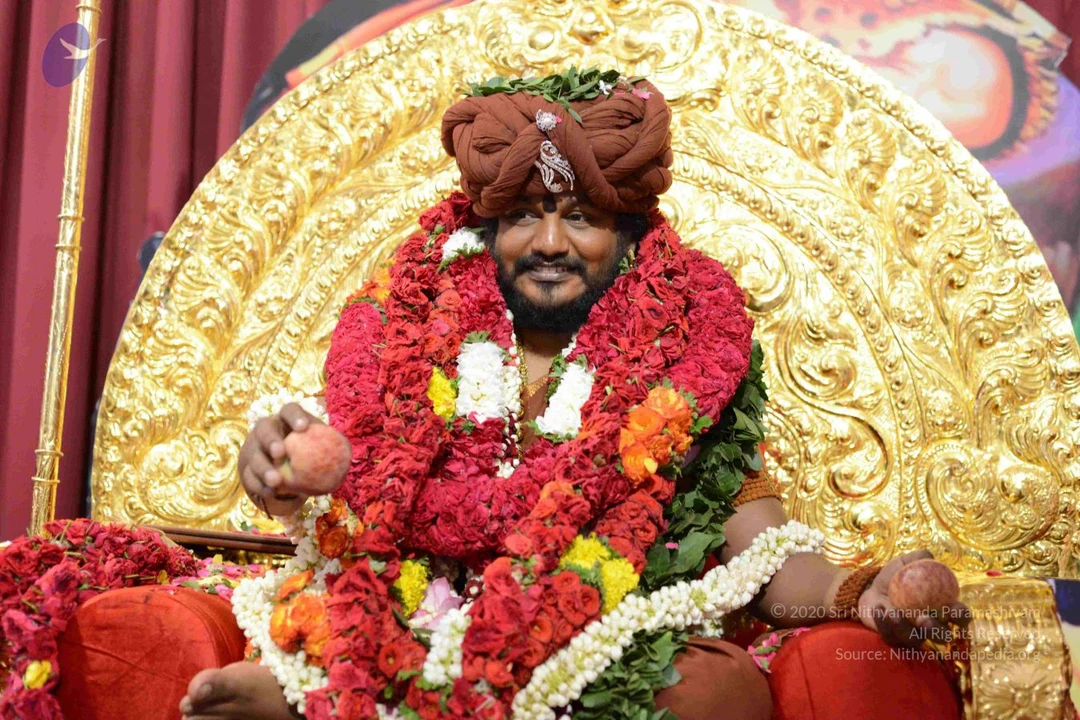
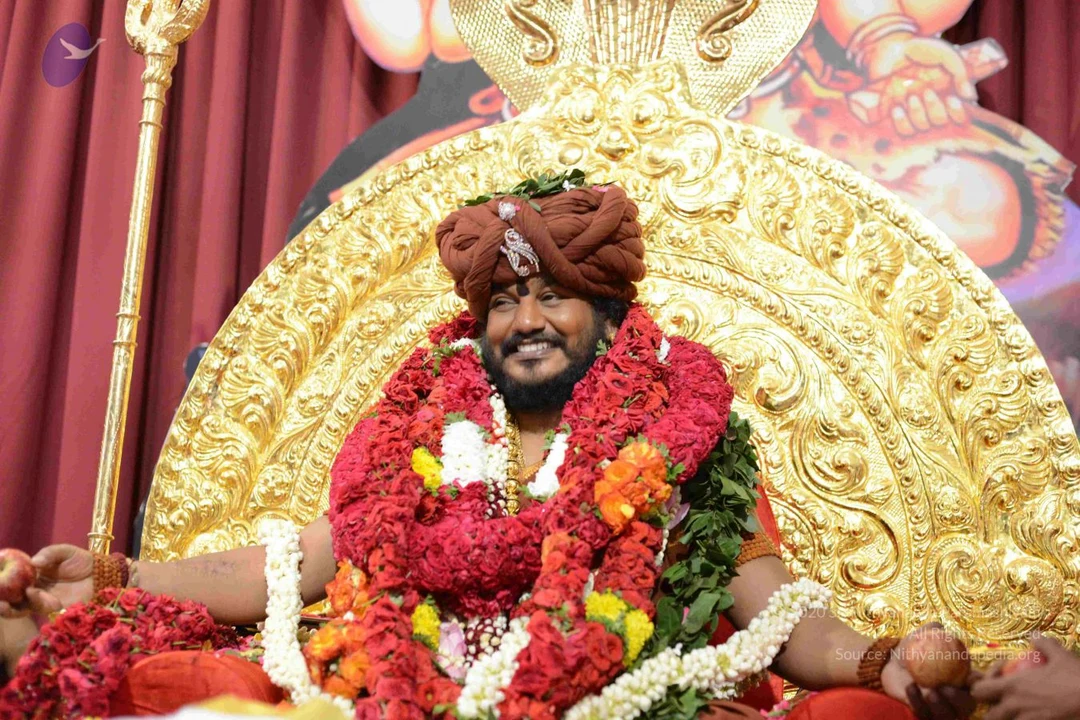
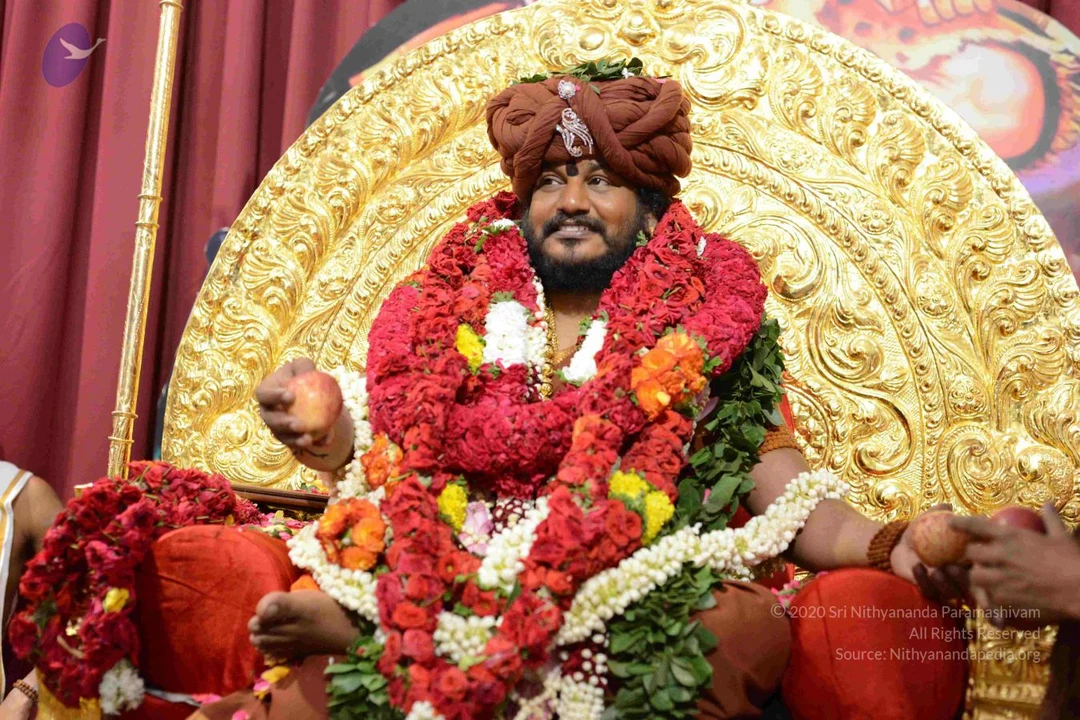
kalpataru darshan
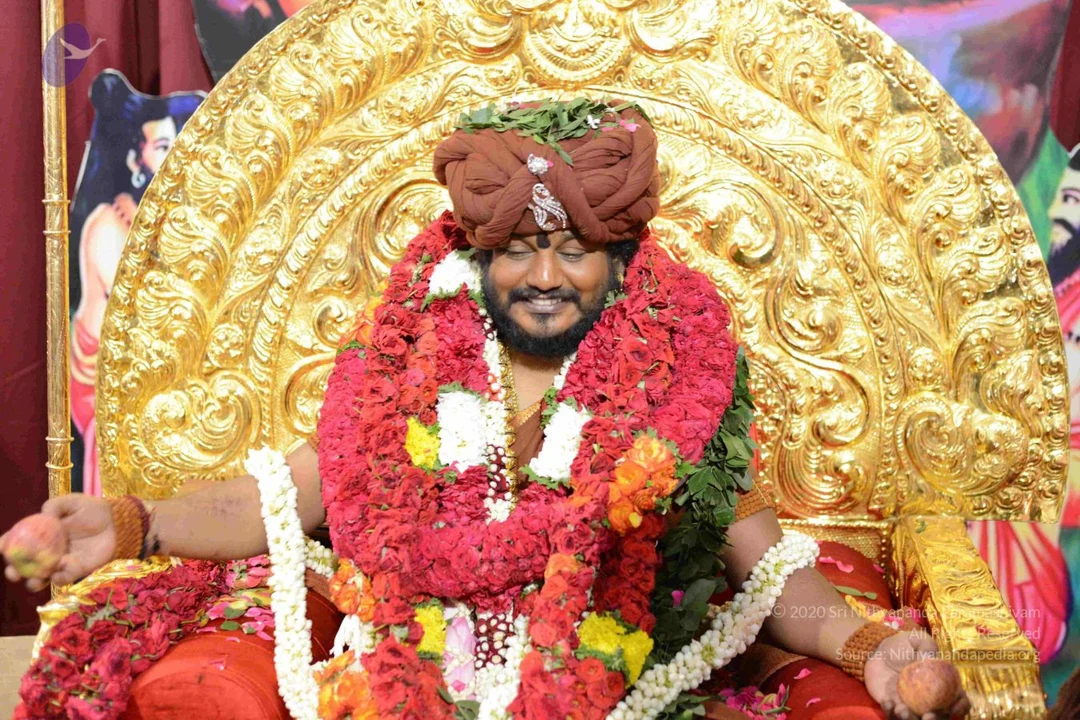
22 photosSource gallery
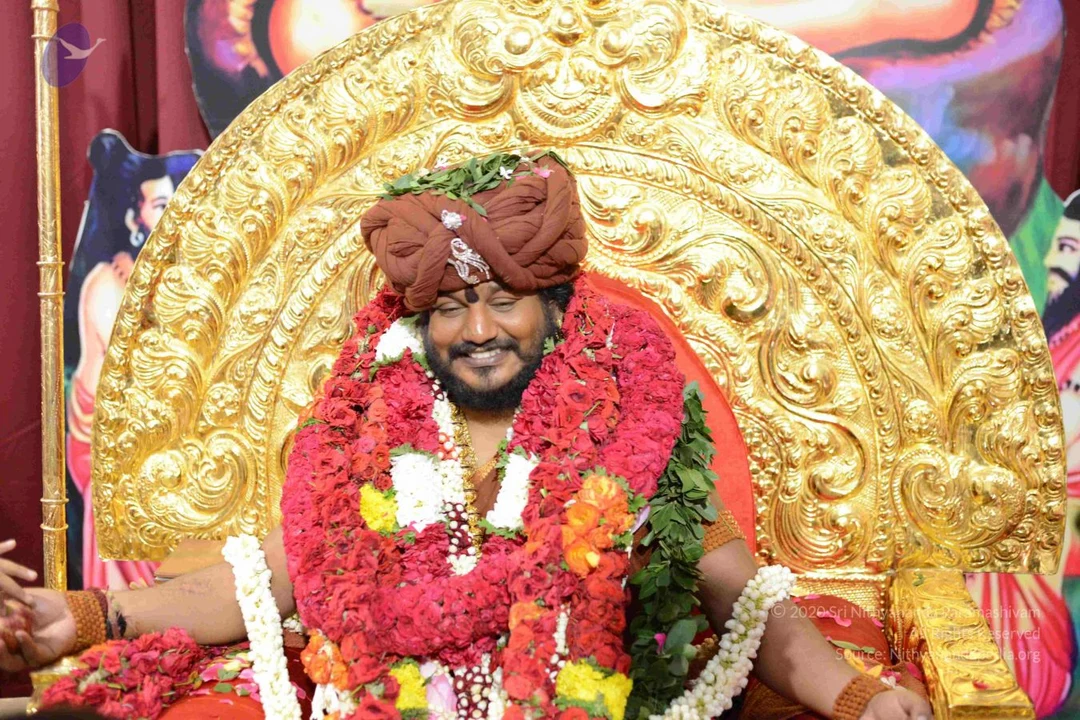
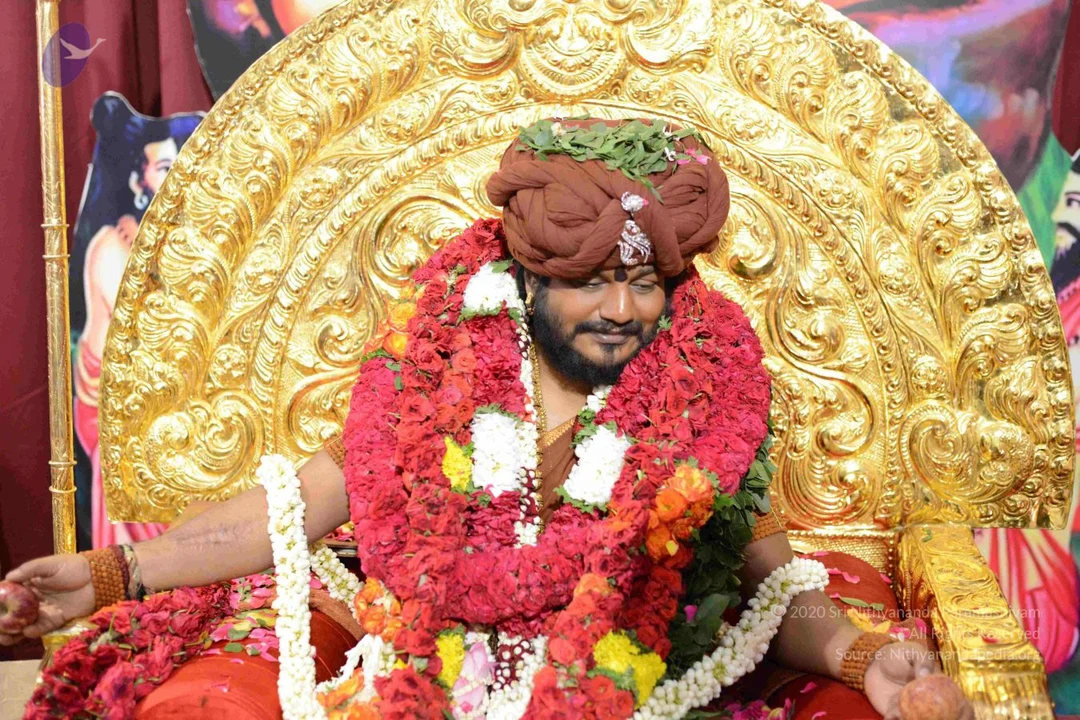
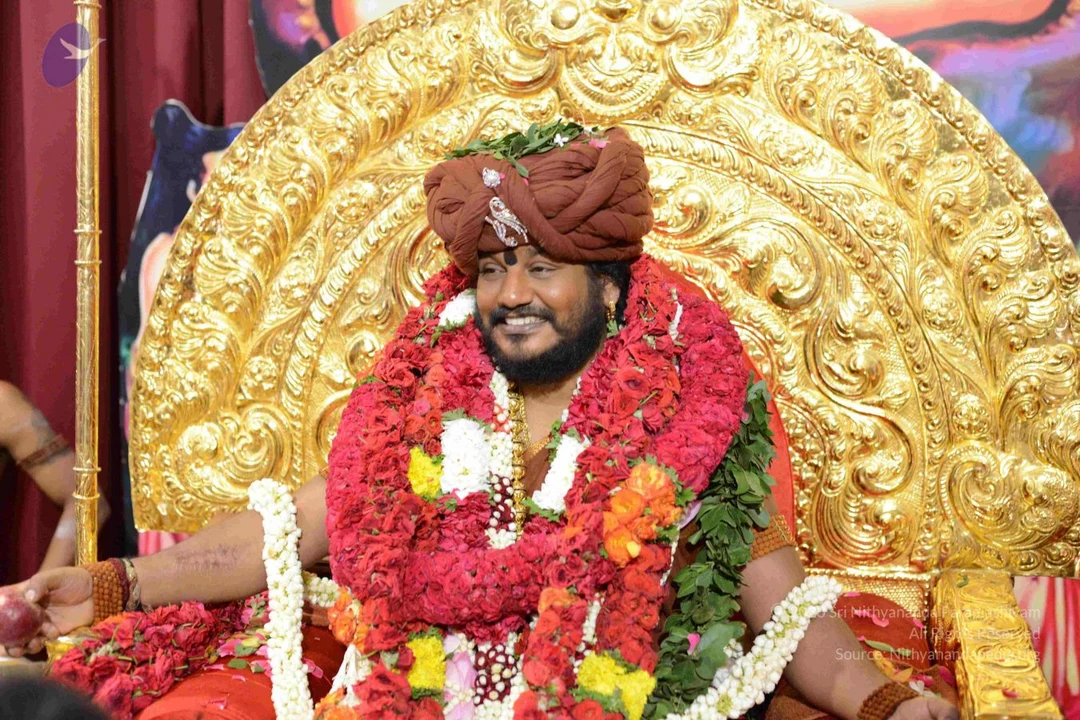
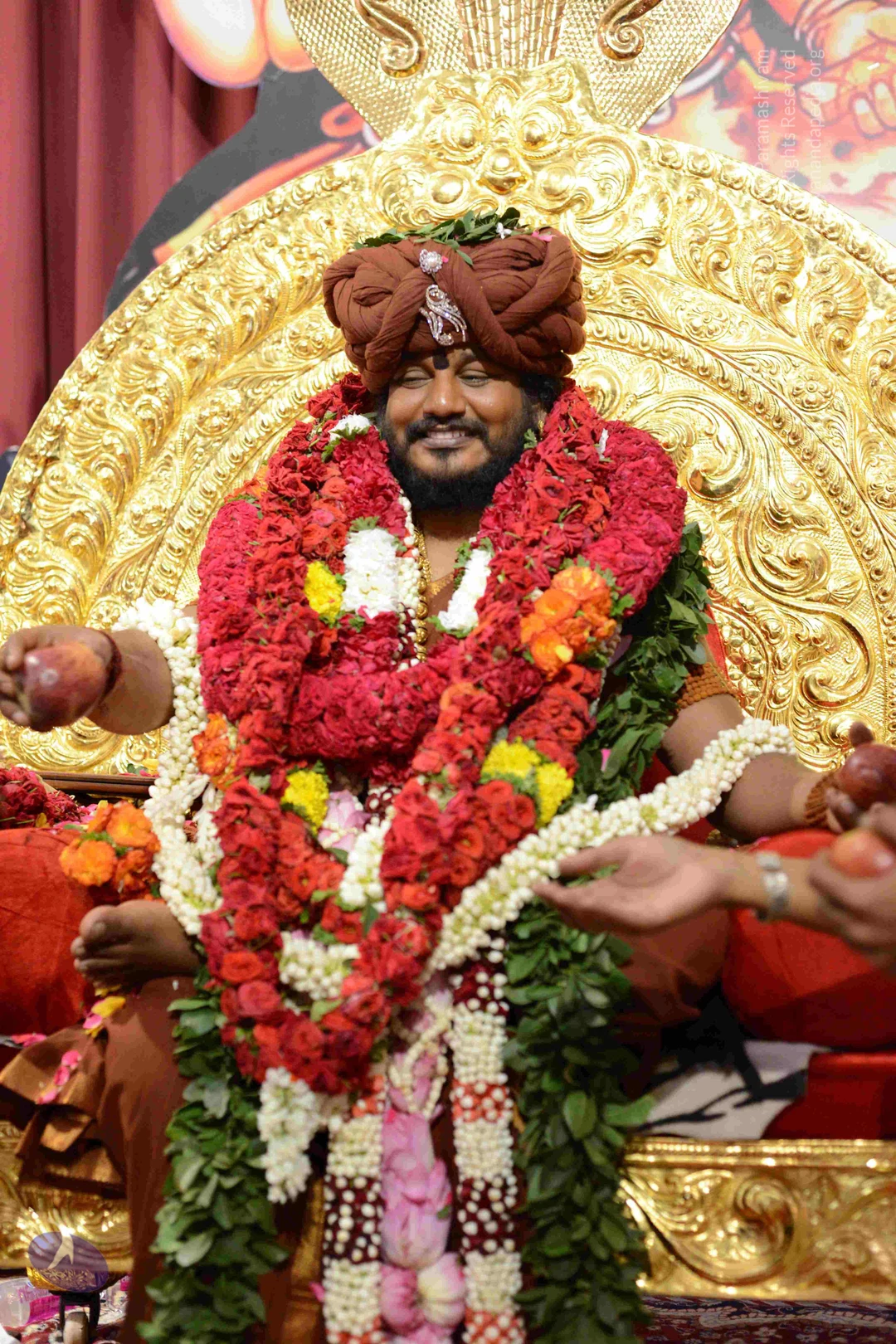
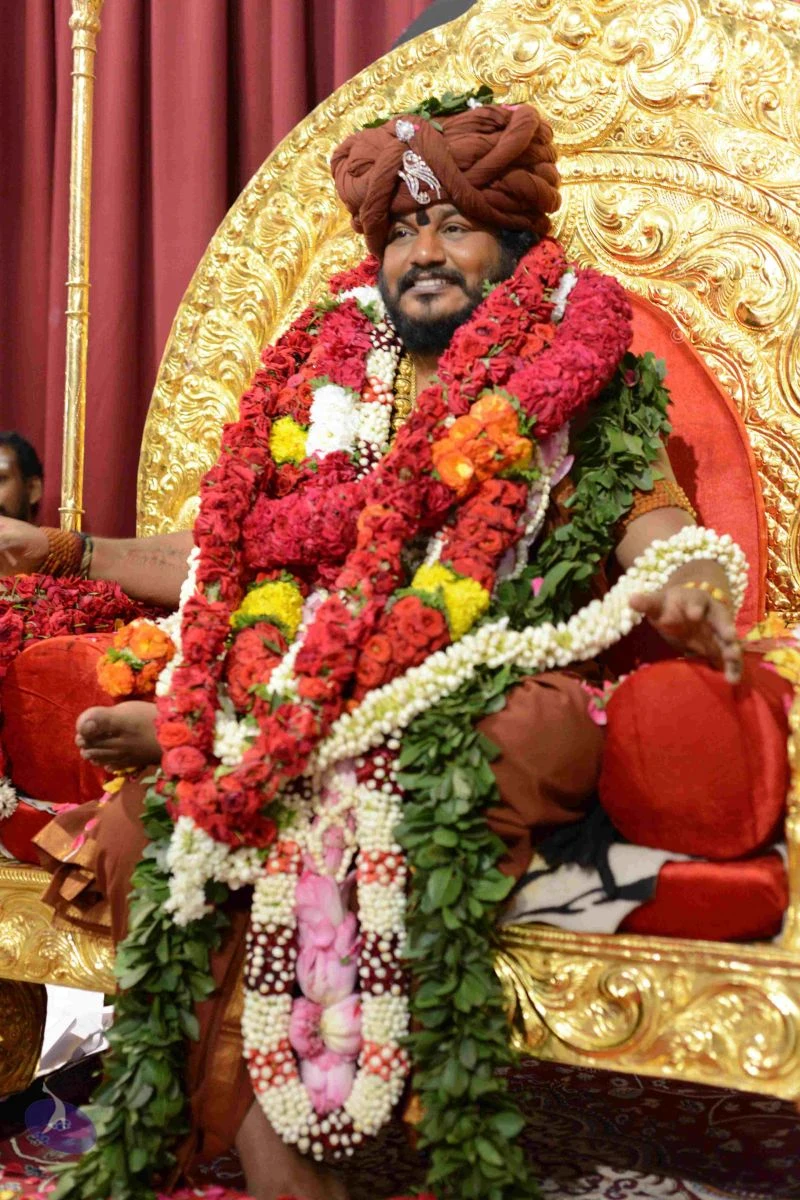
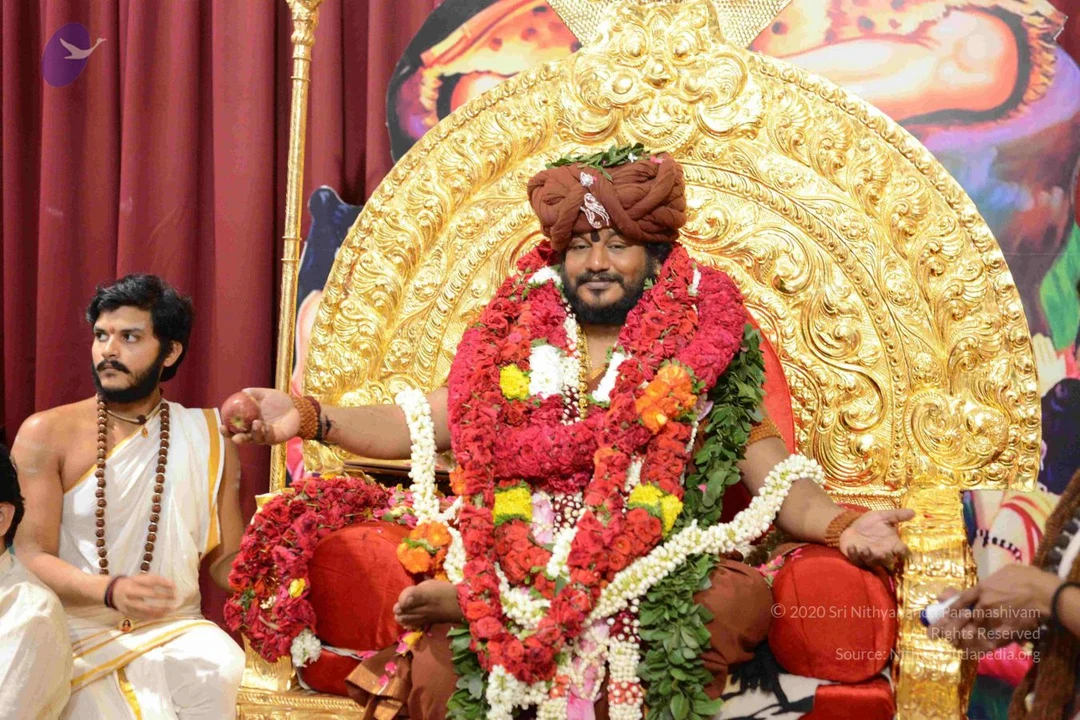
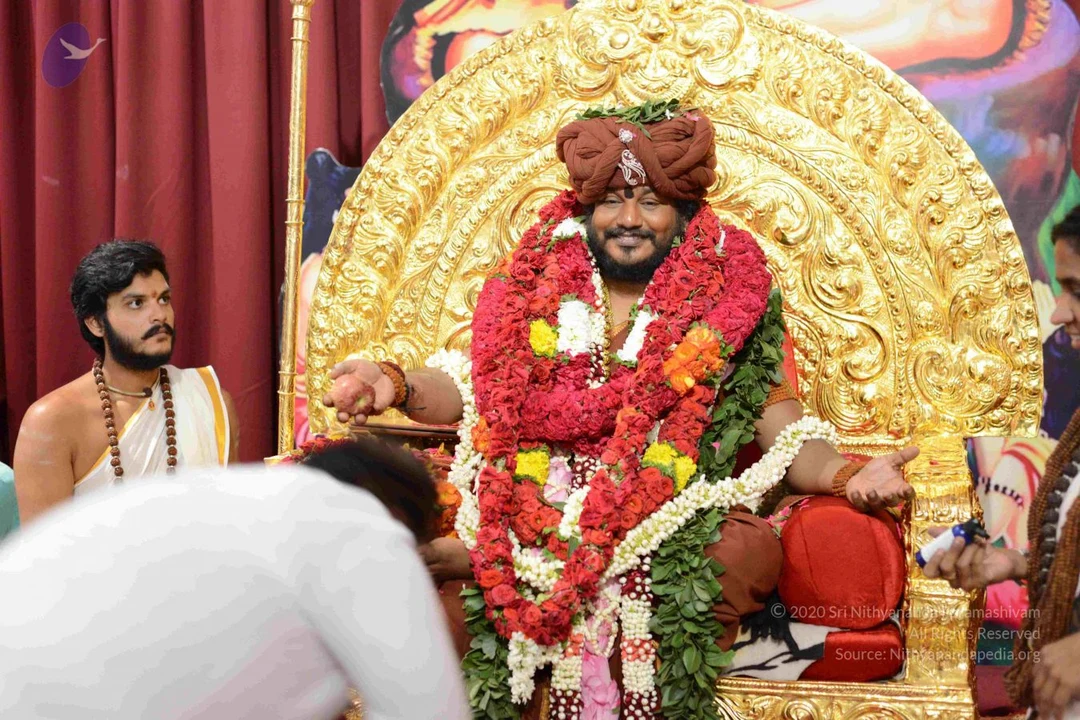
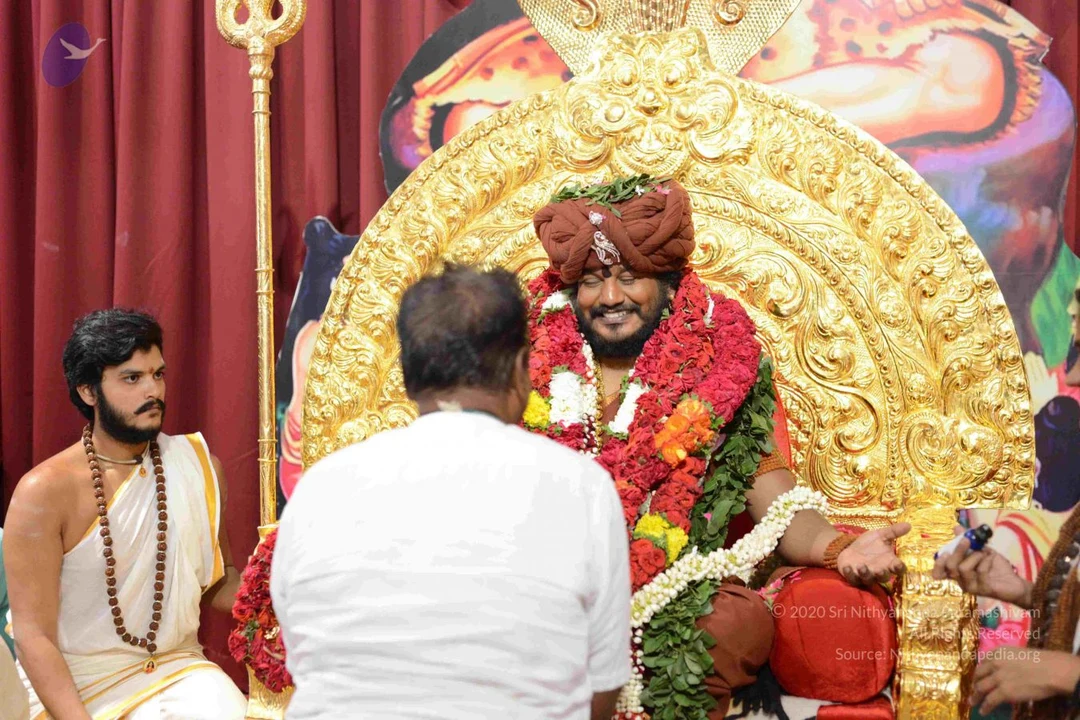
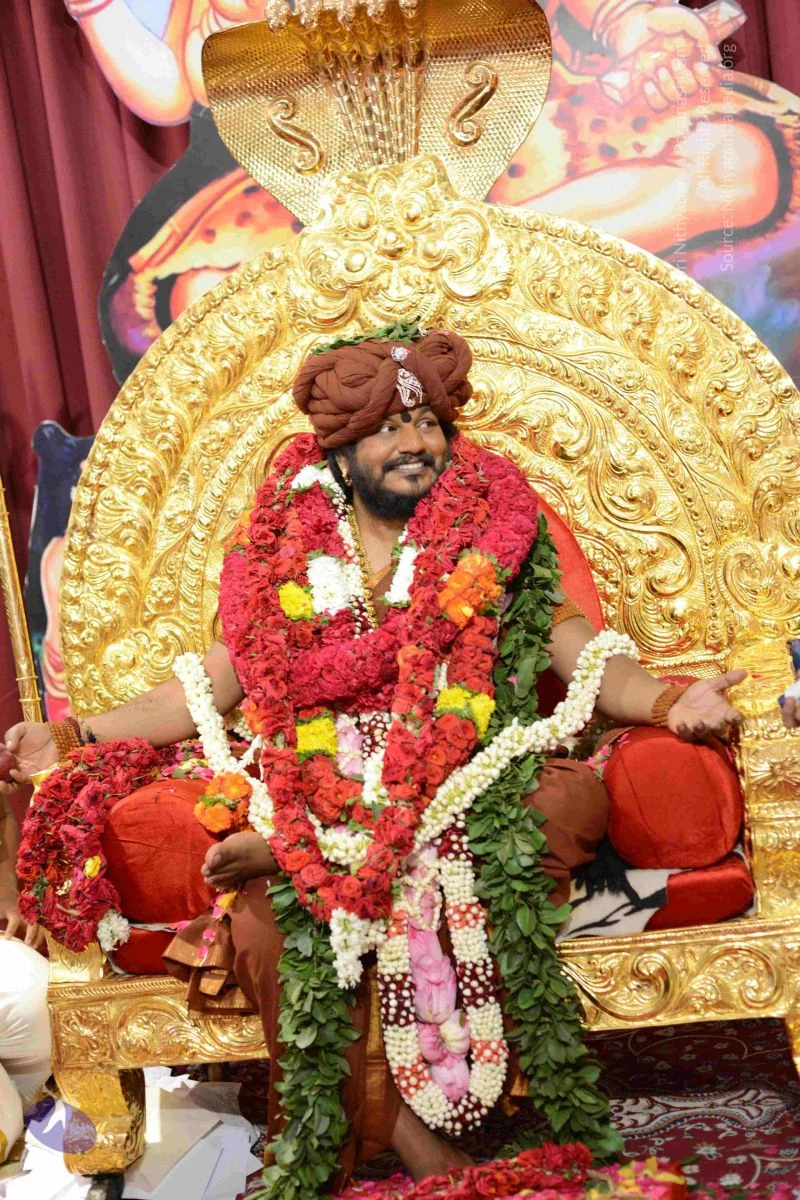
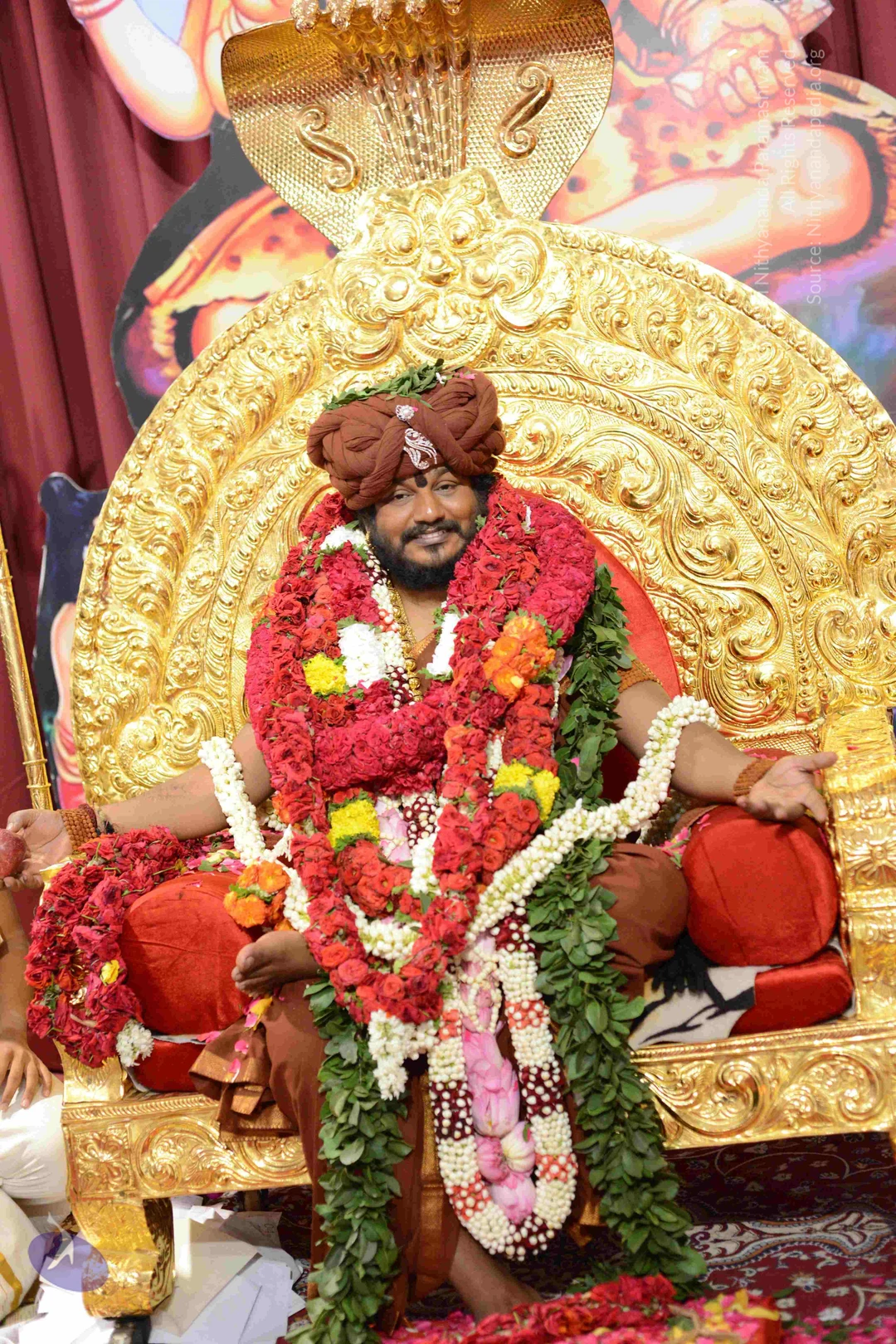
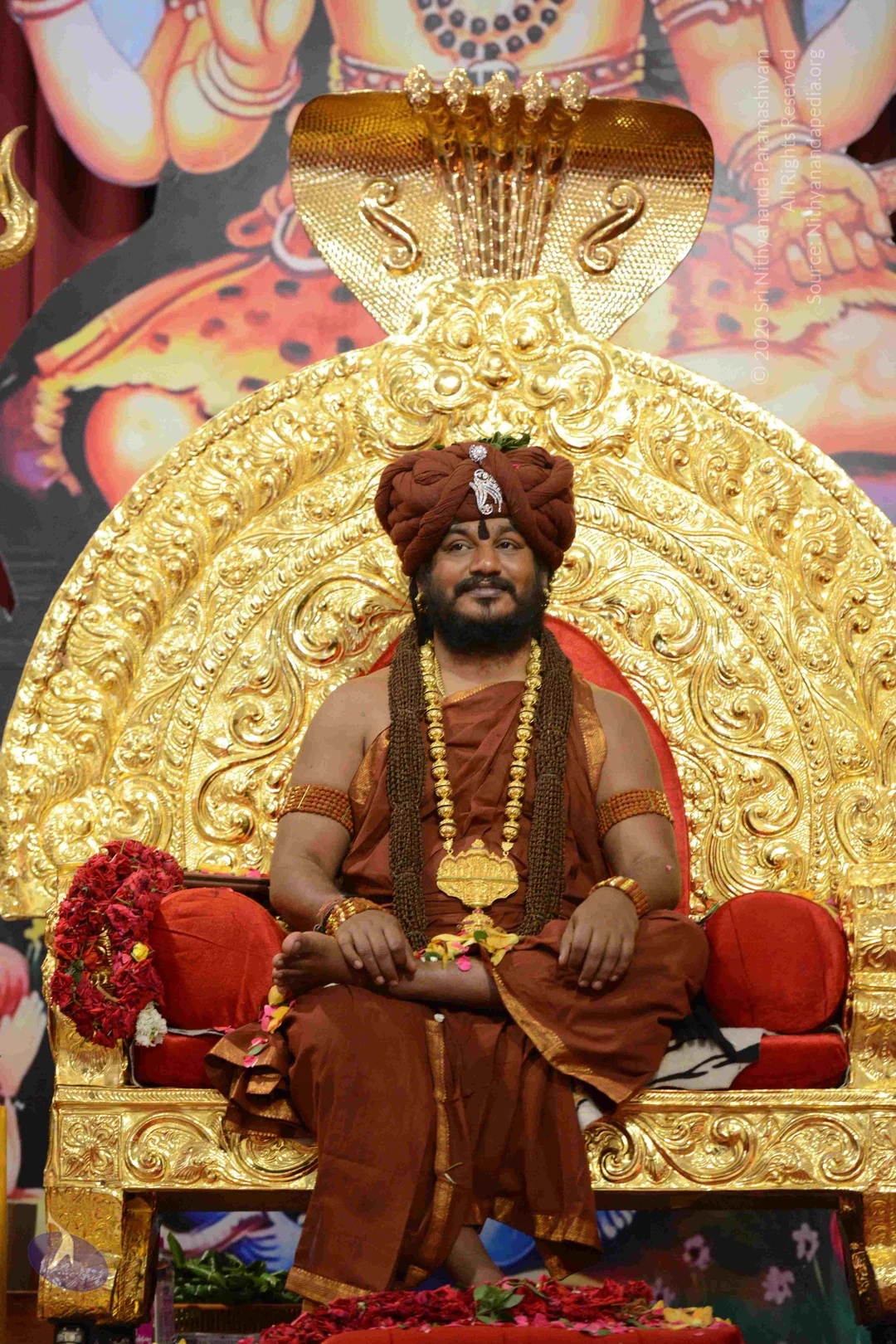
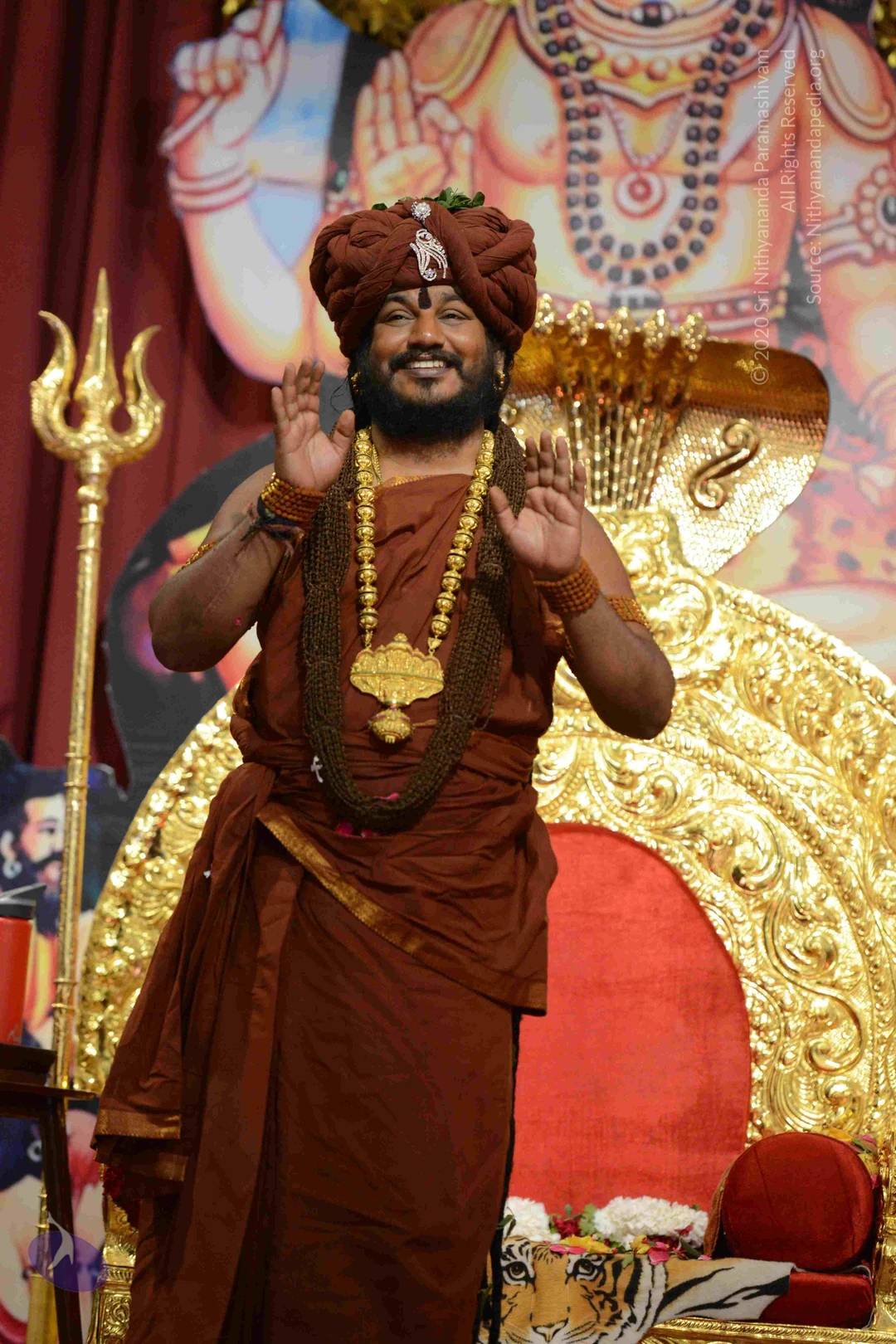
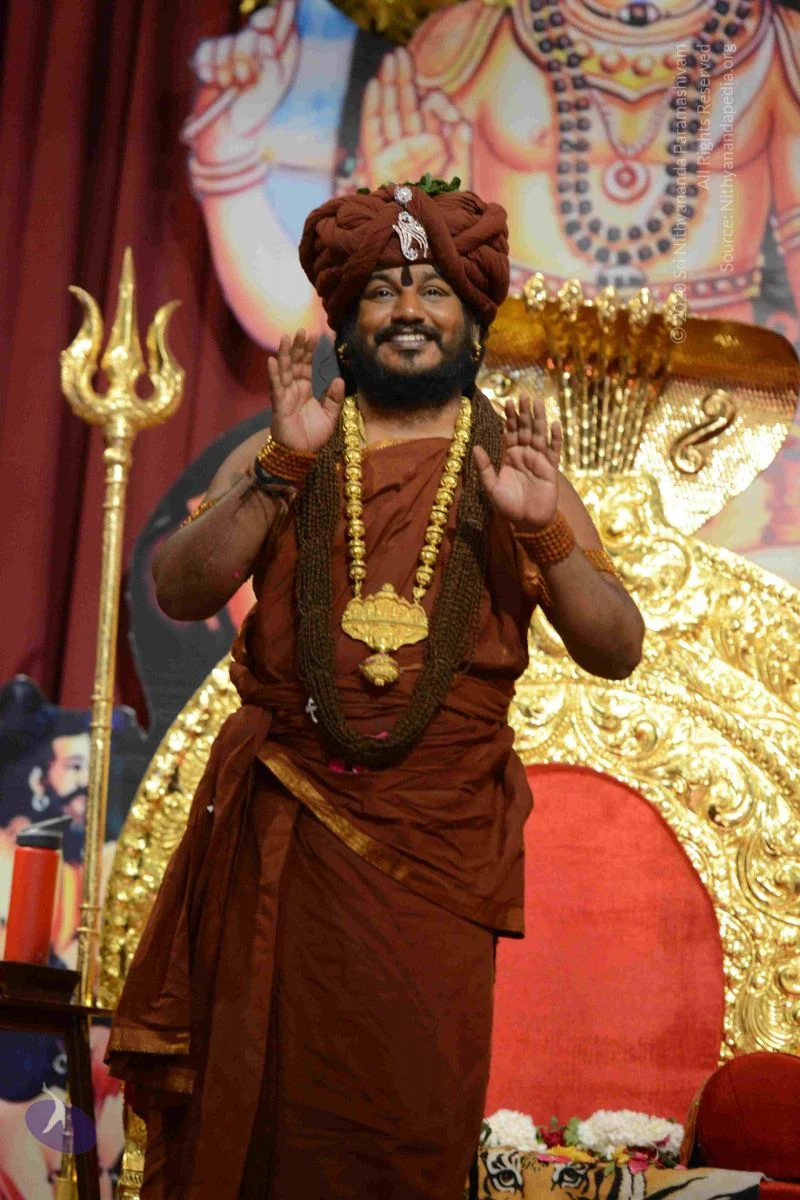
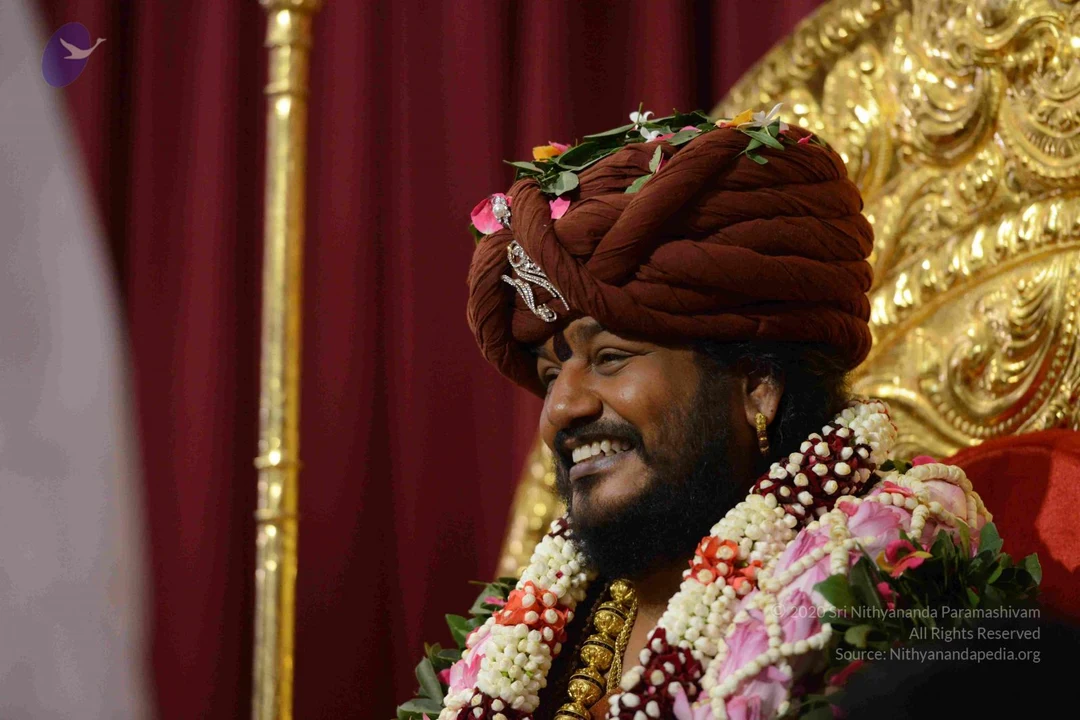
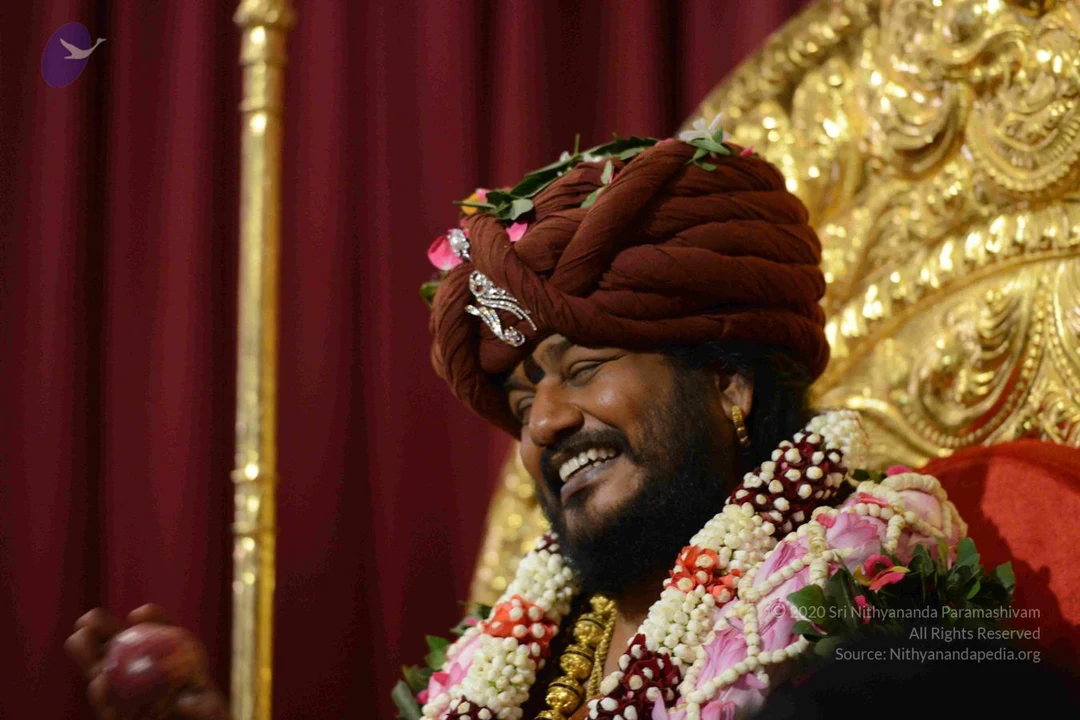
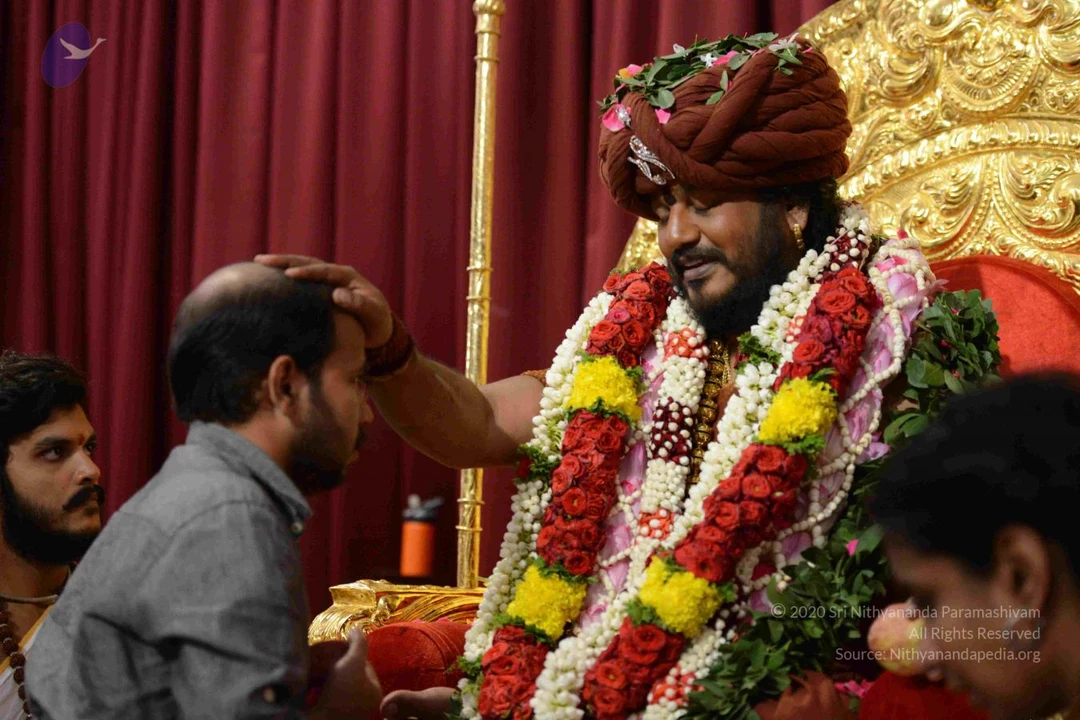
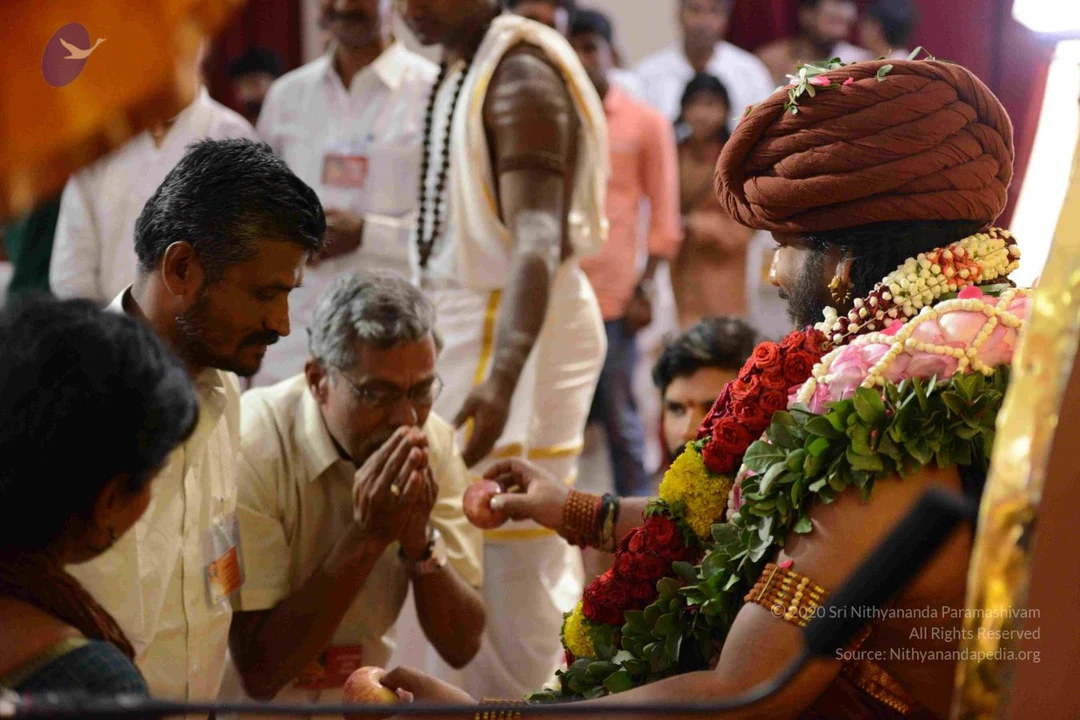
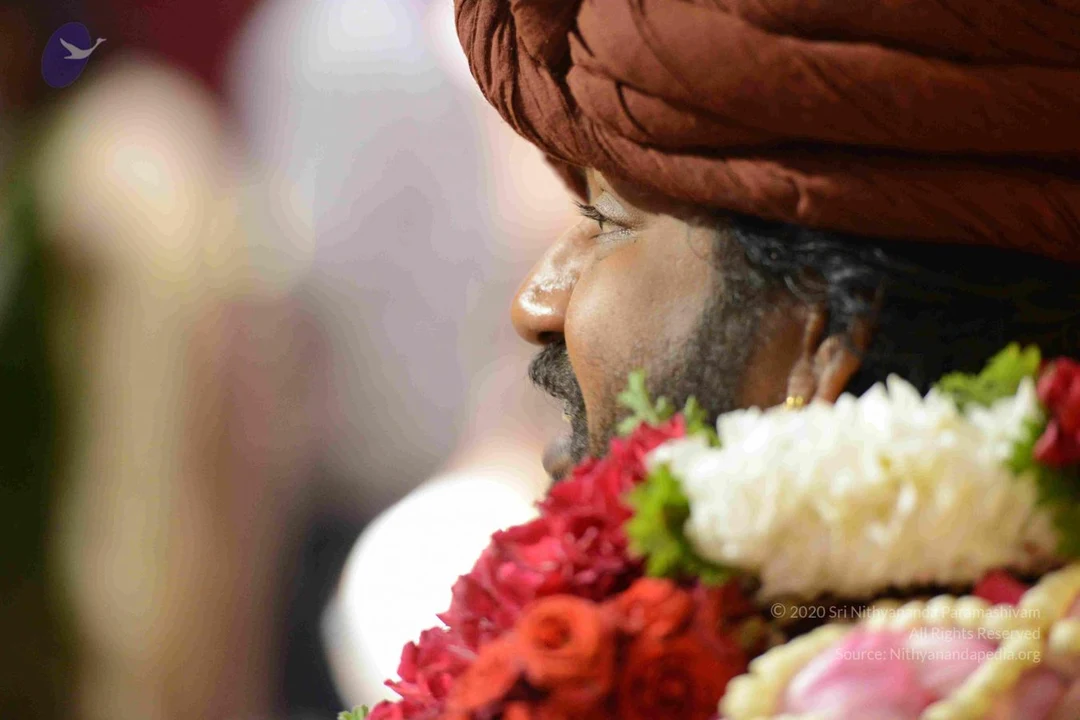
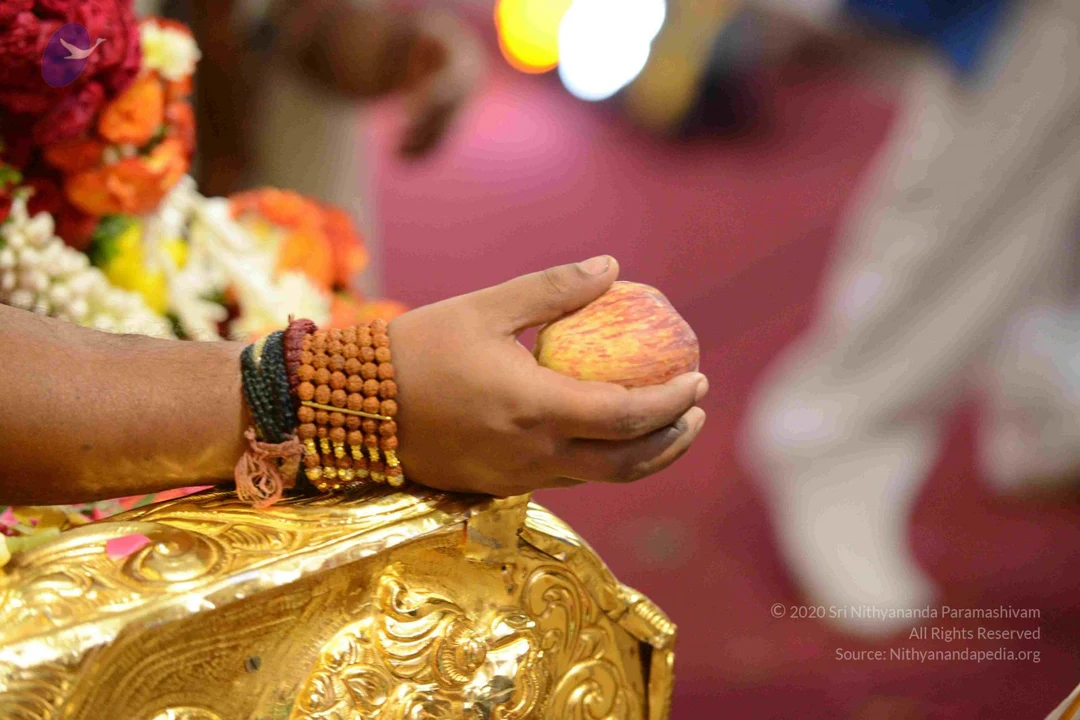
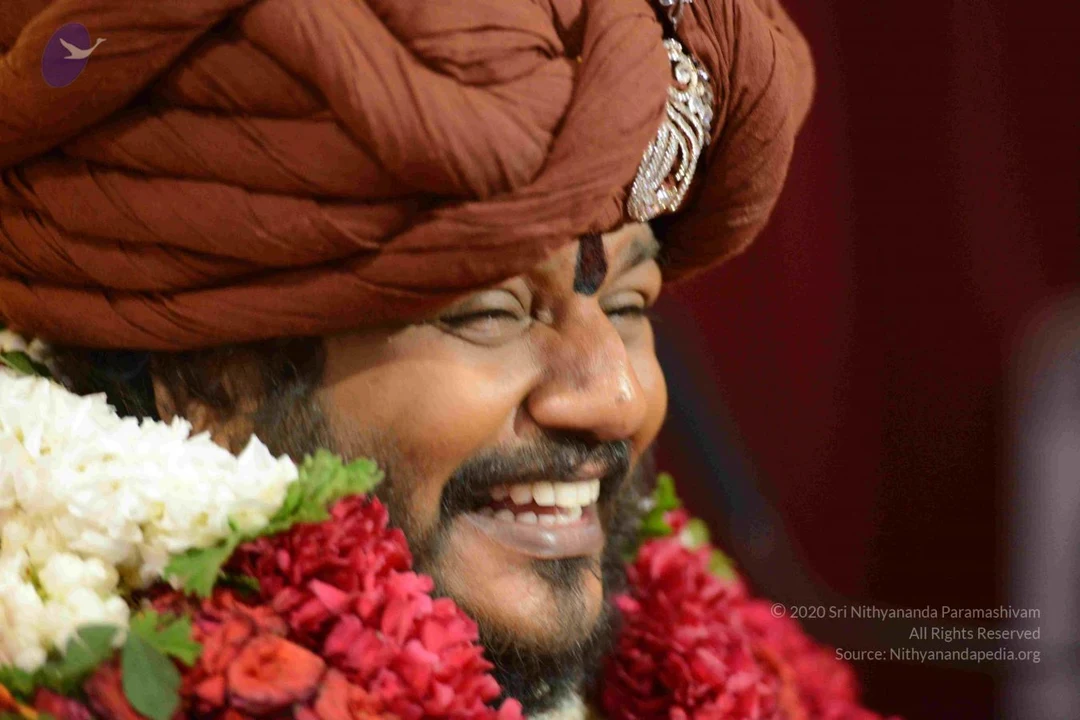
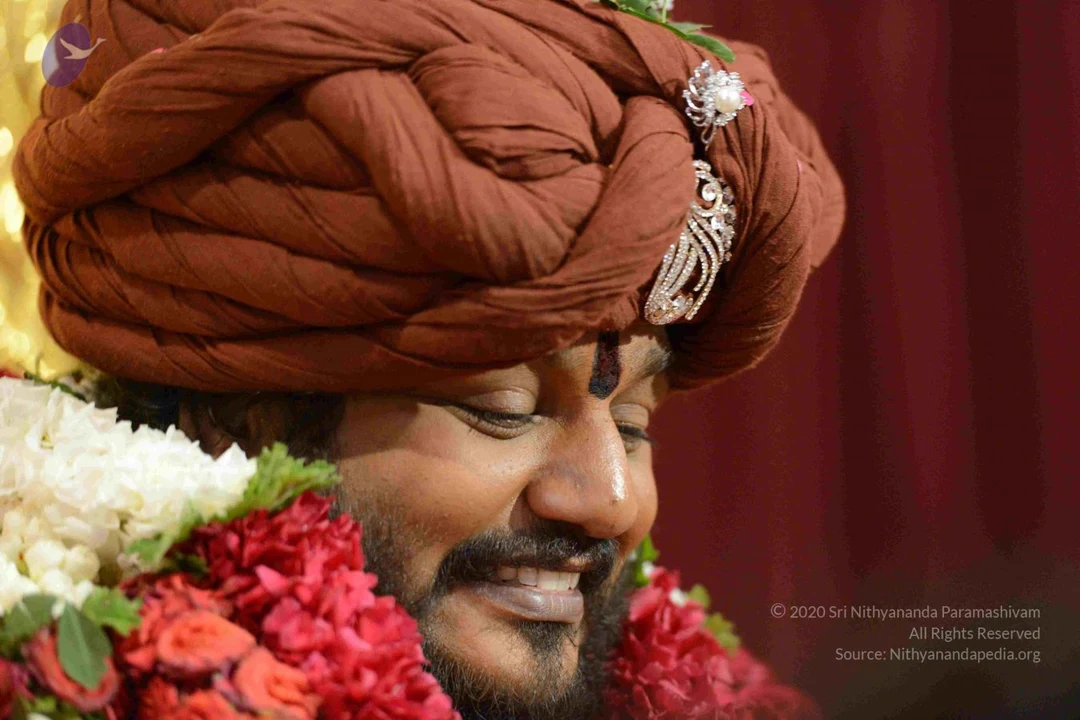
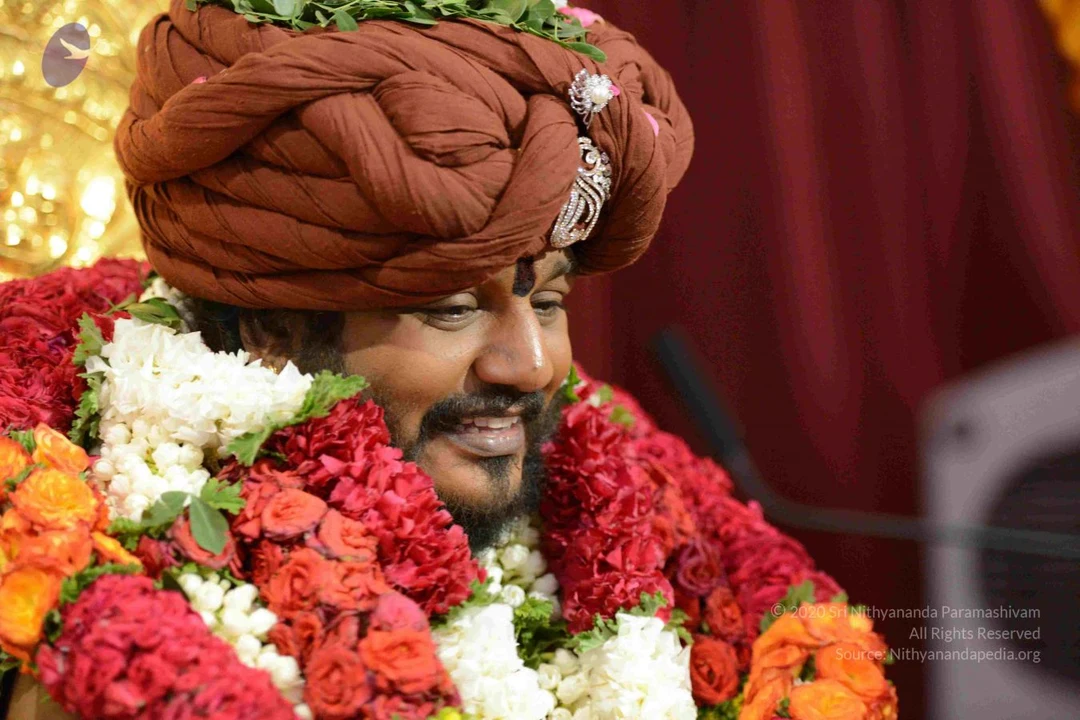
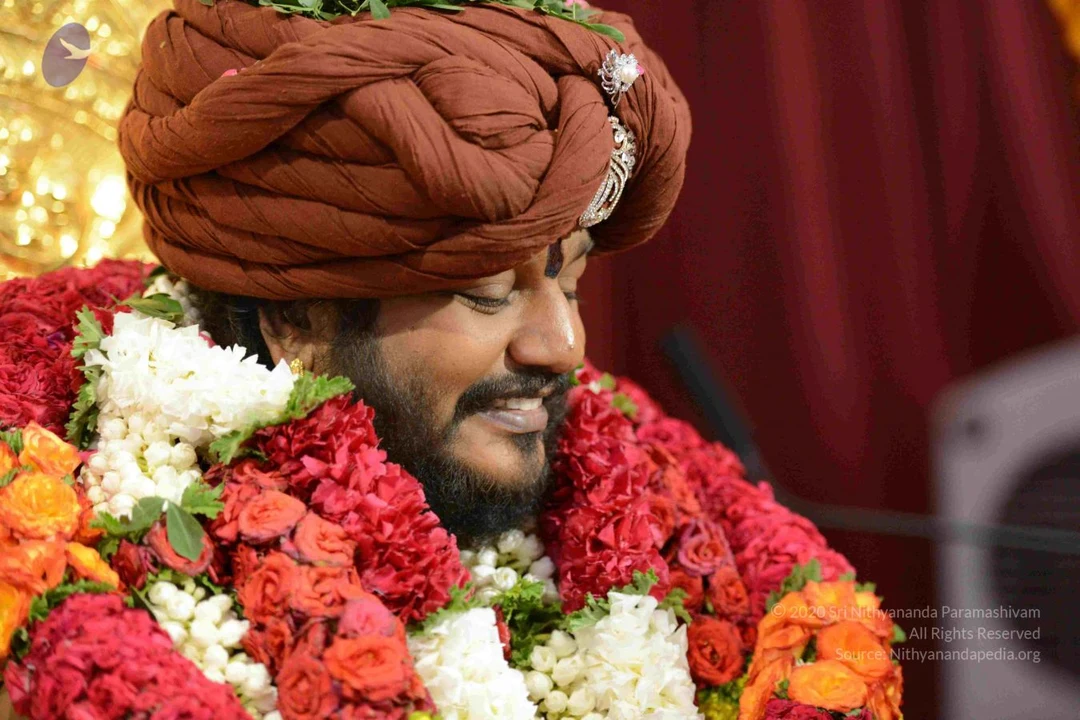
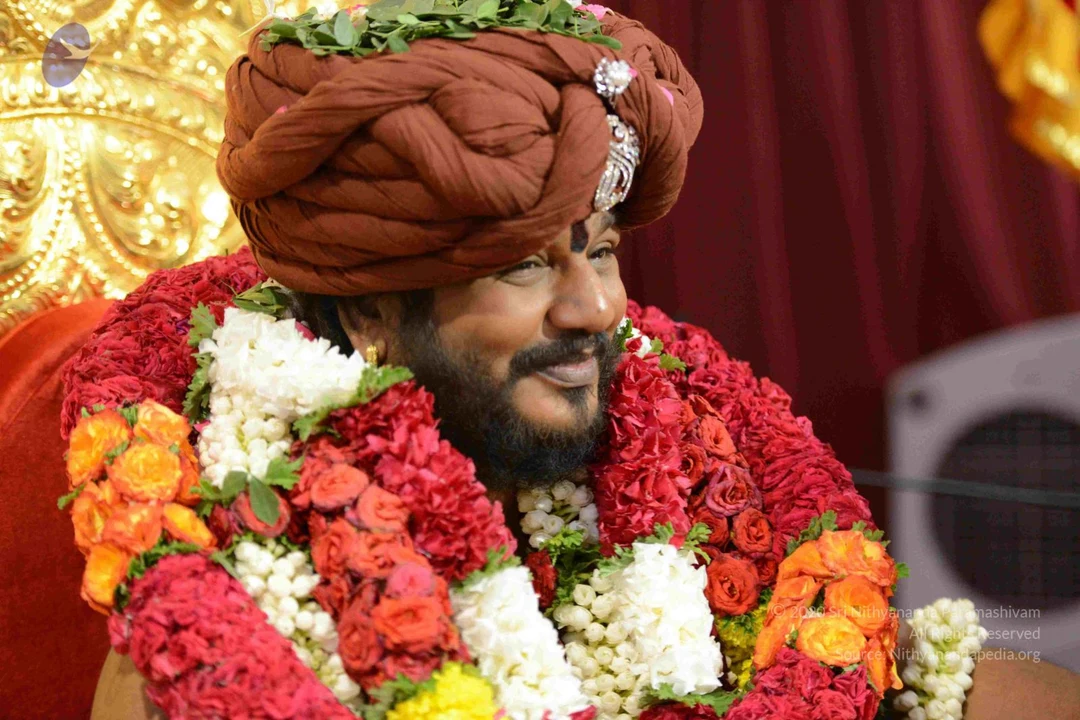
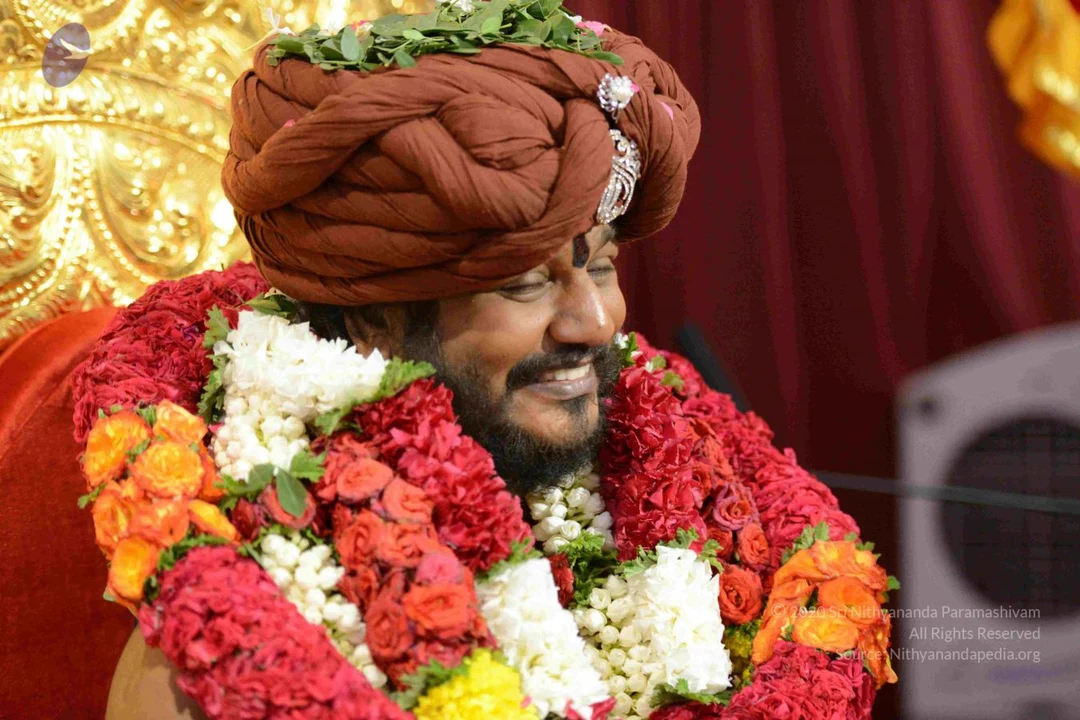
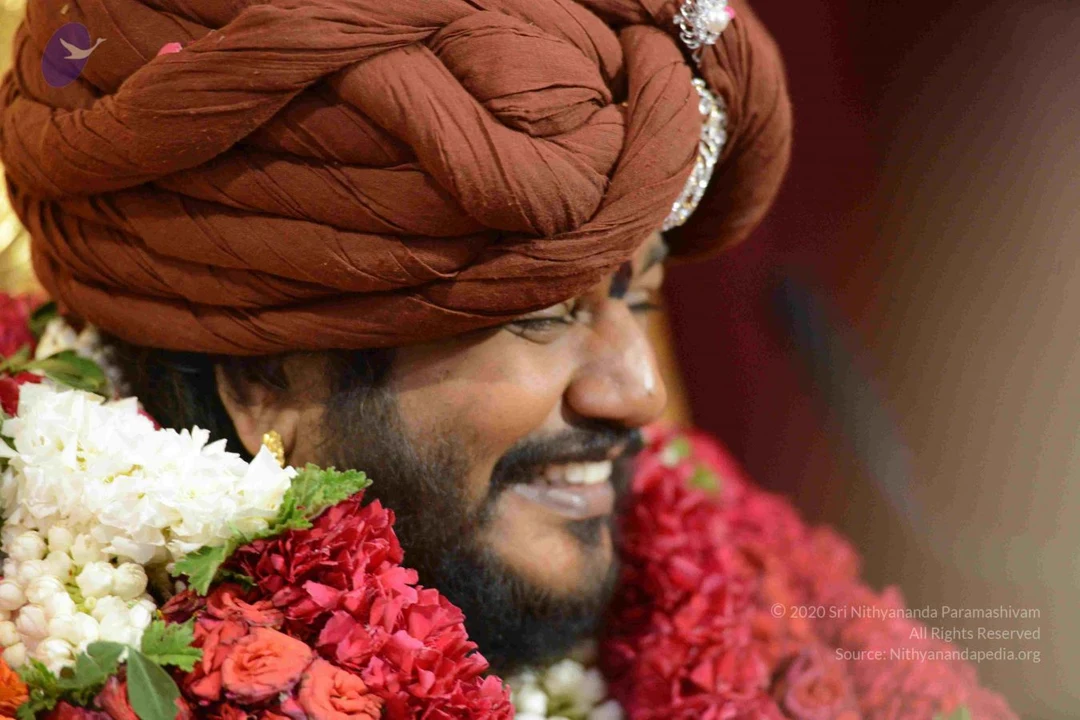
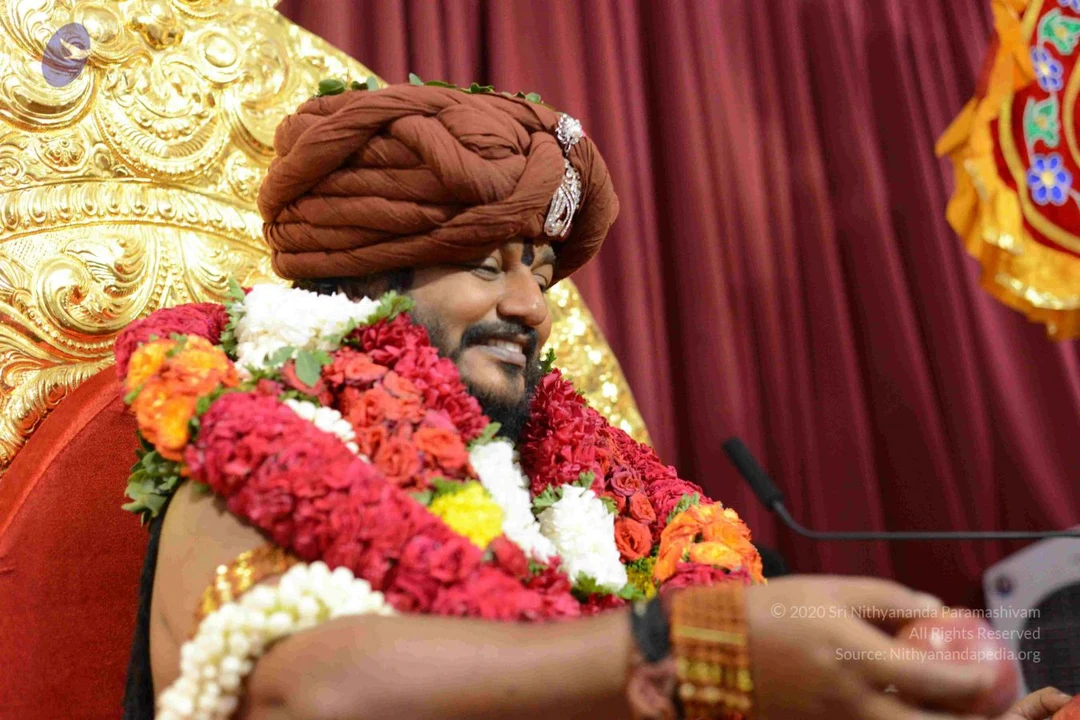
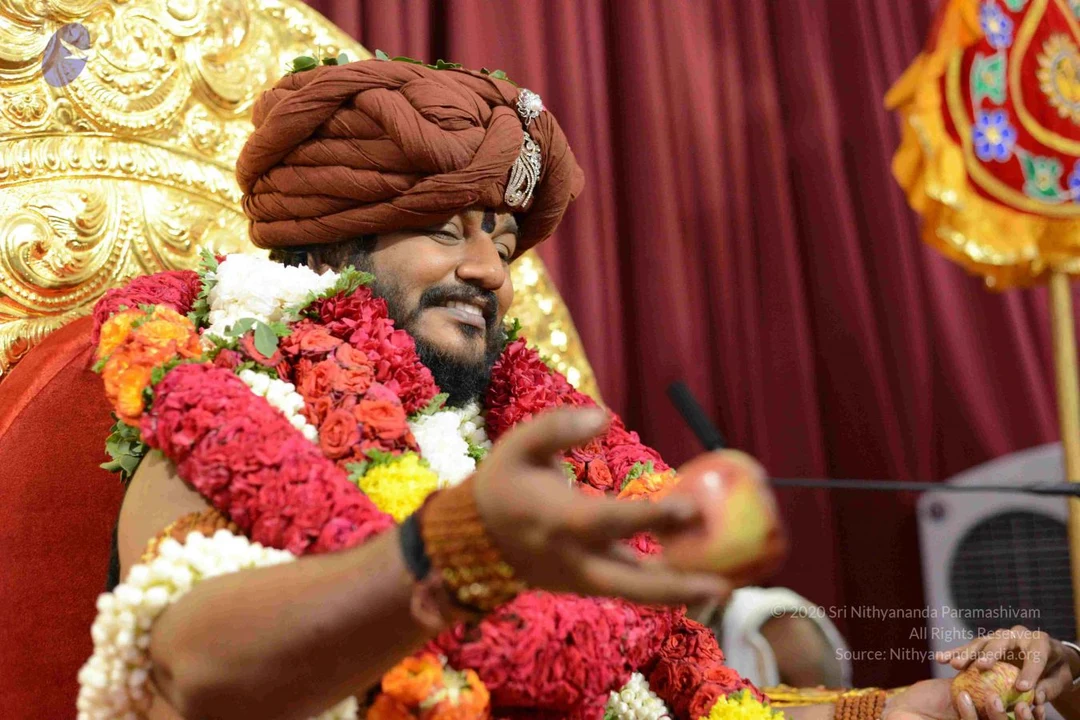
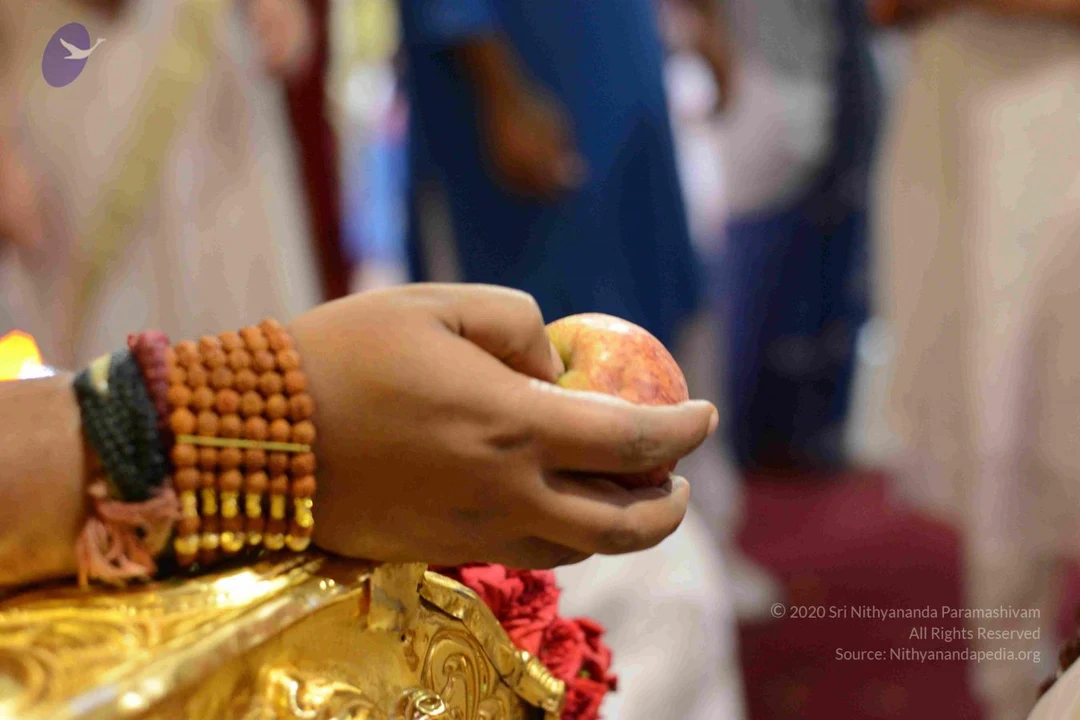
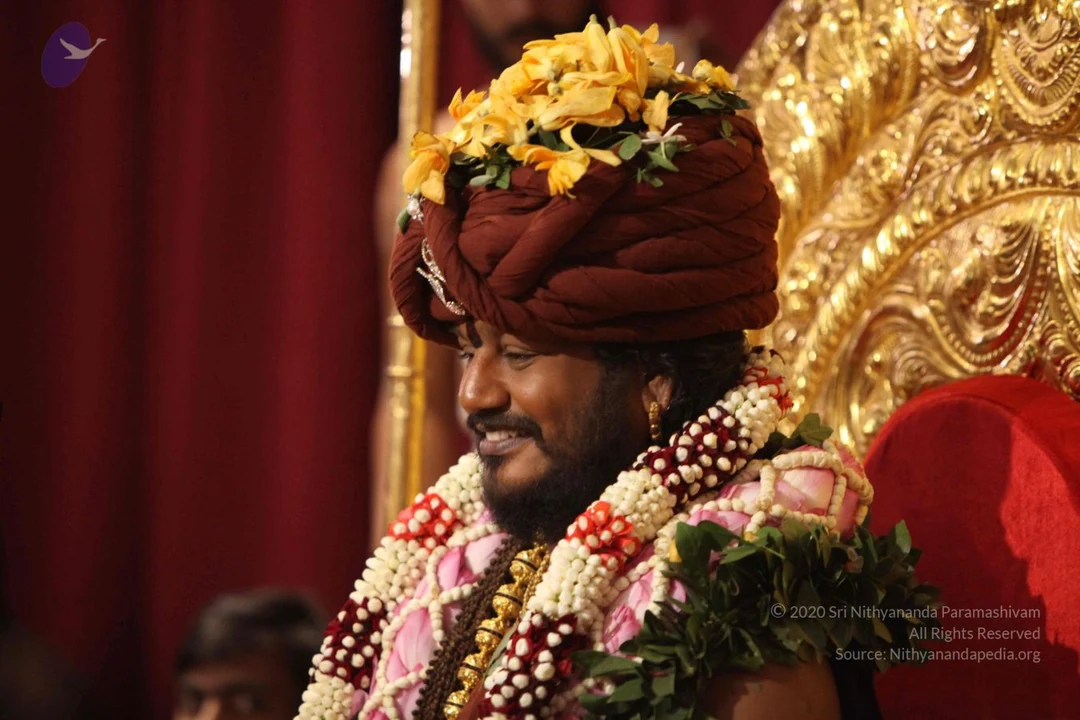
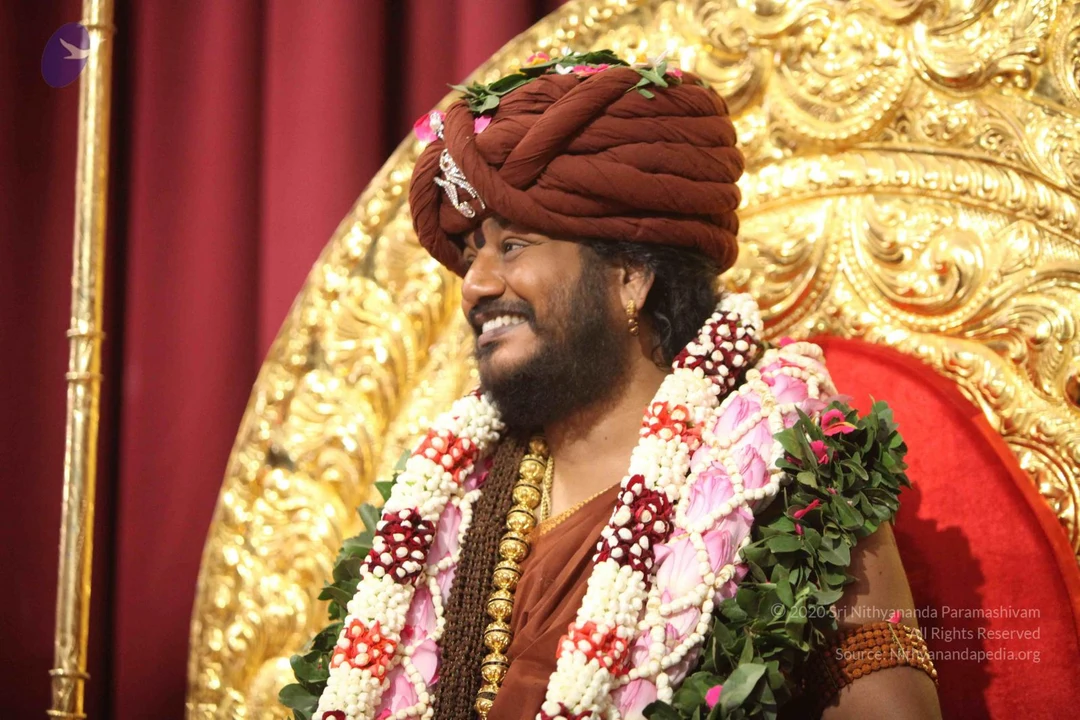
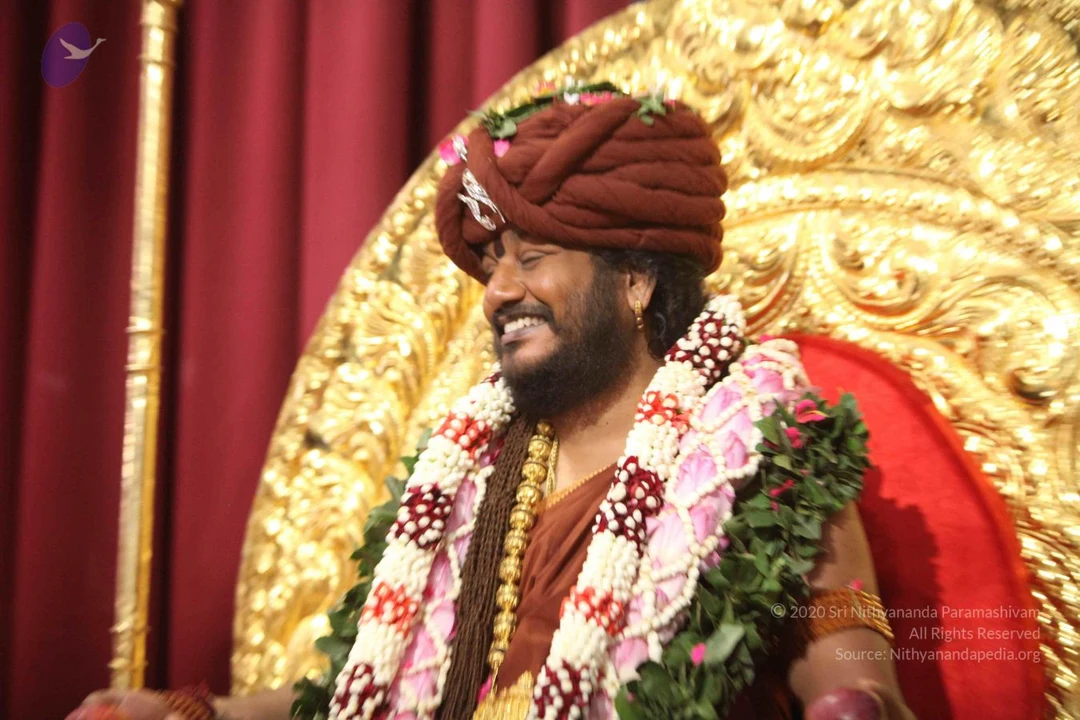
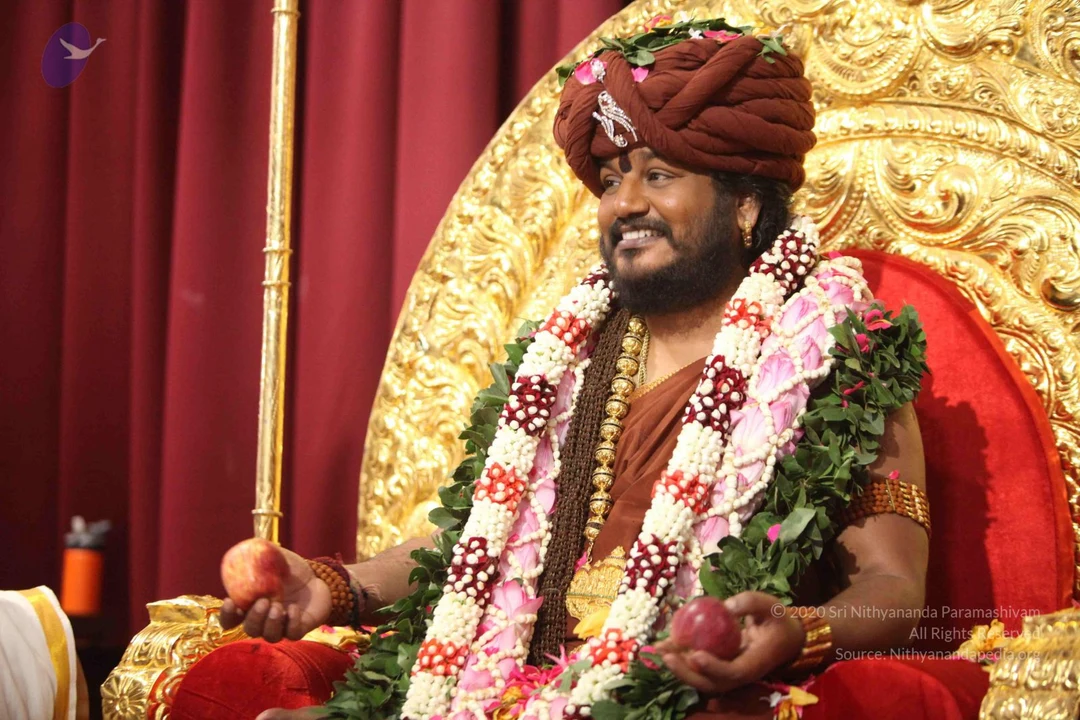
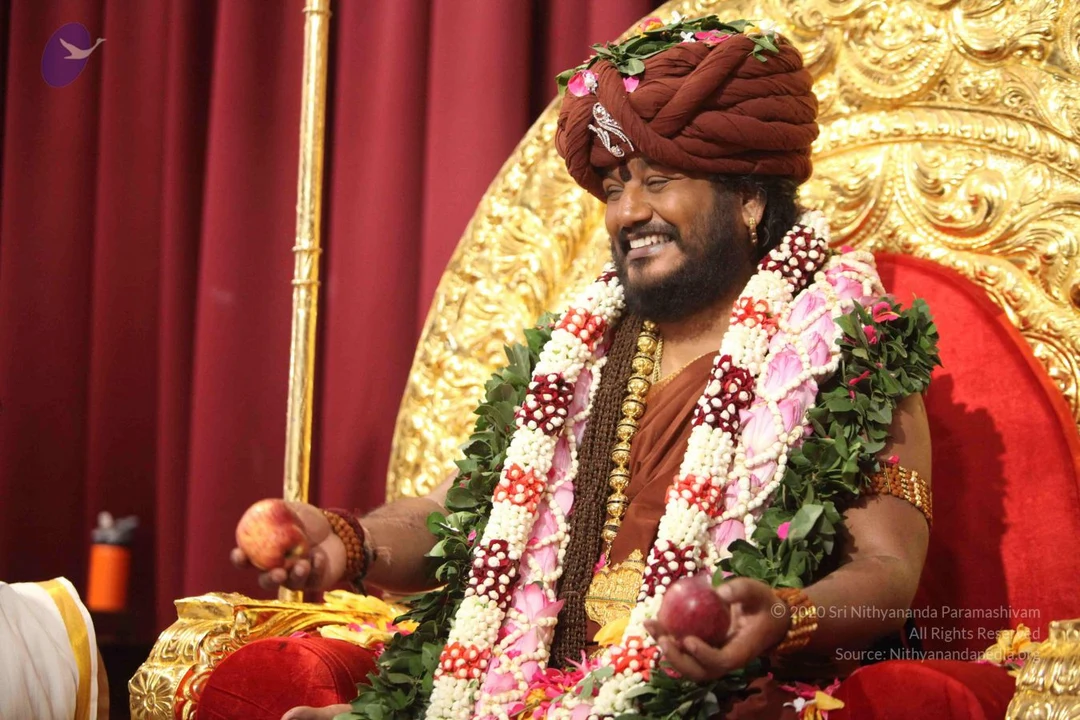
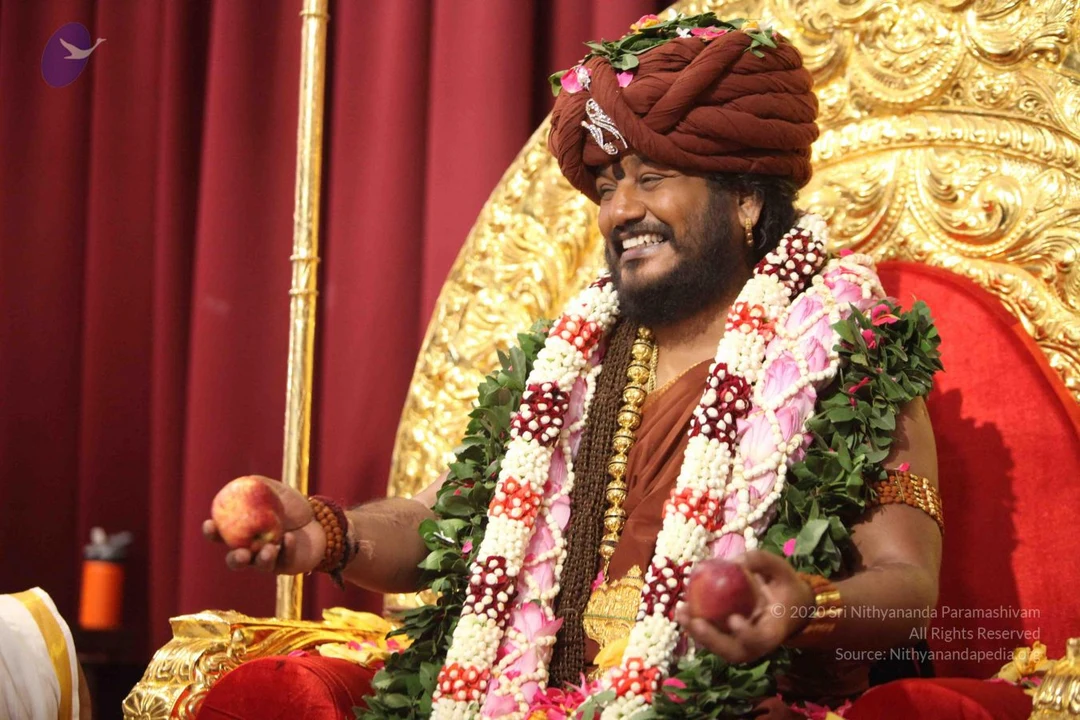
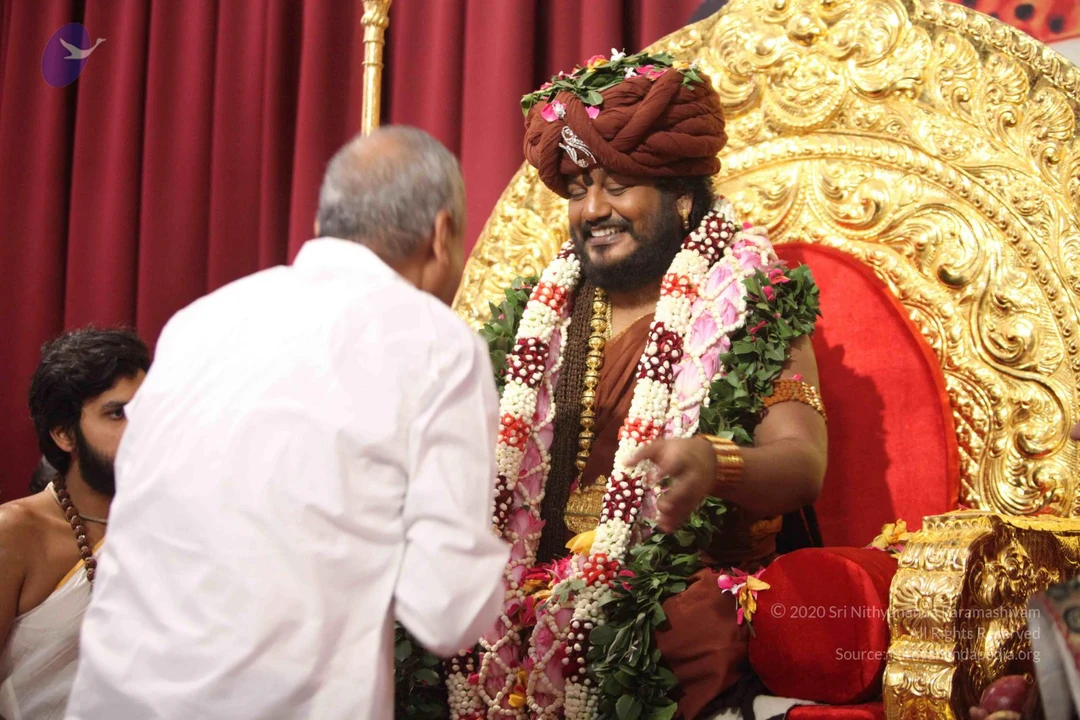
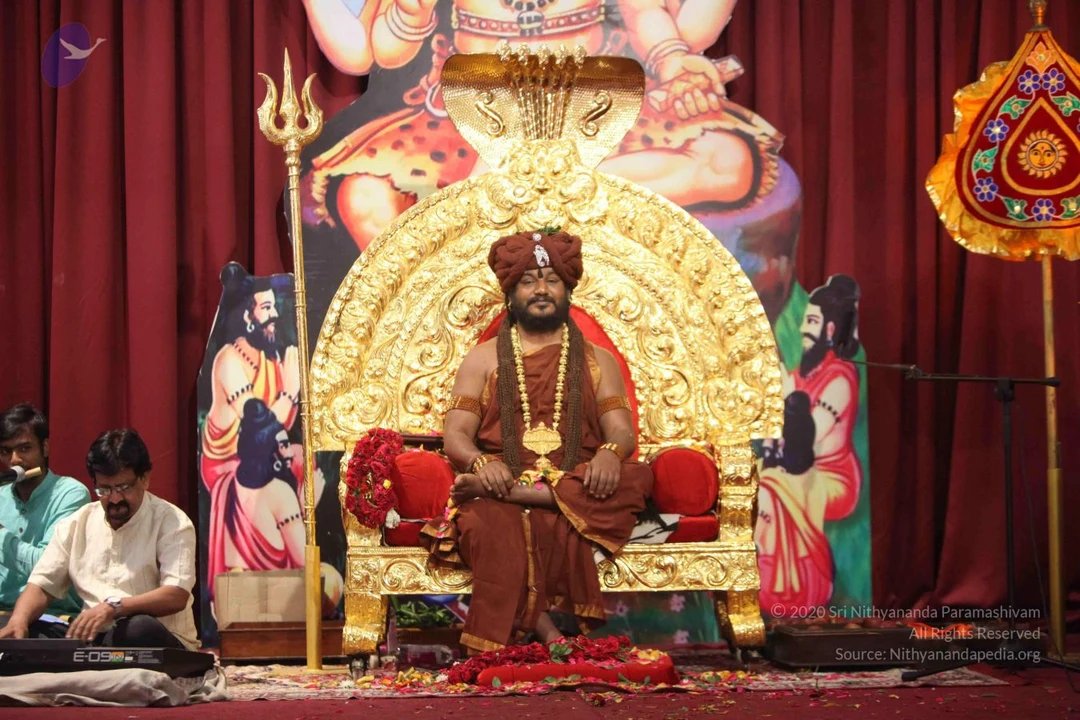
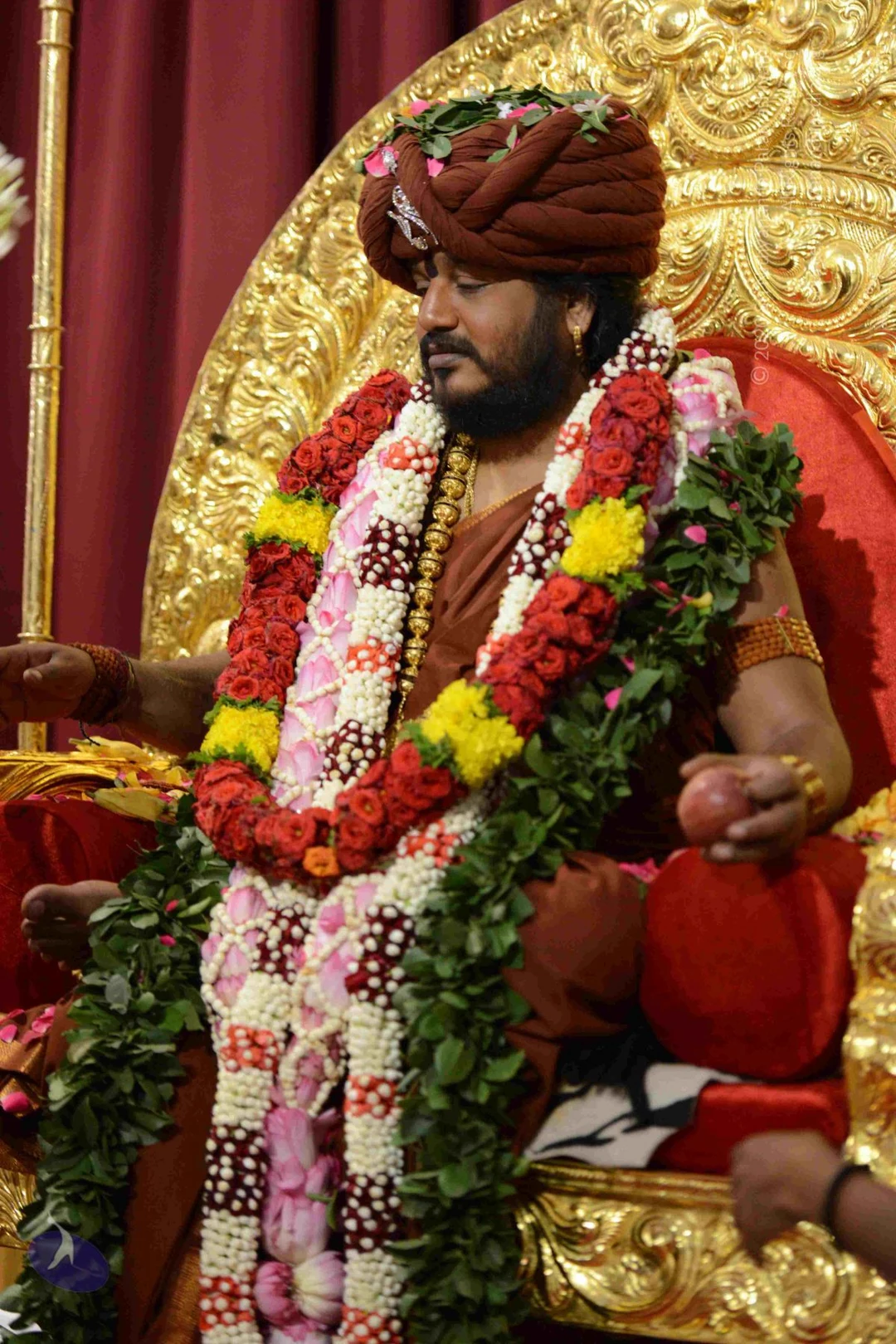
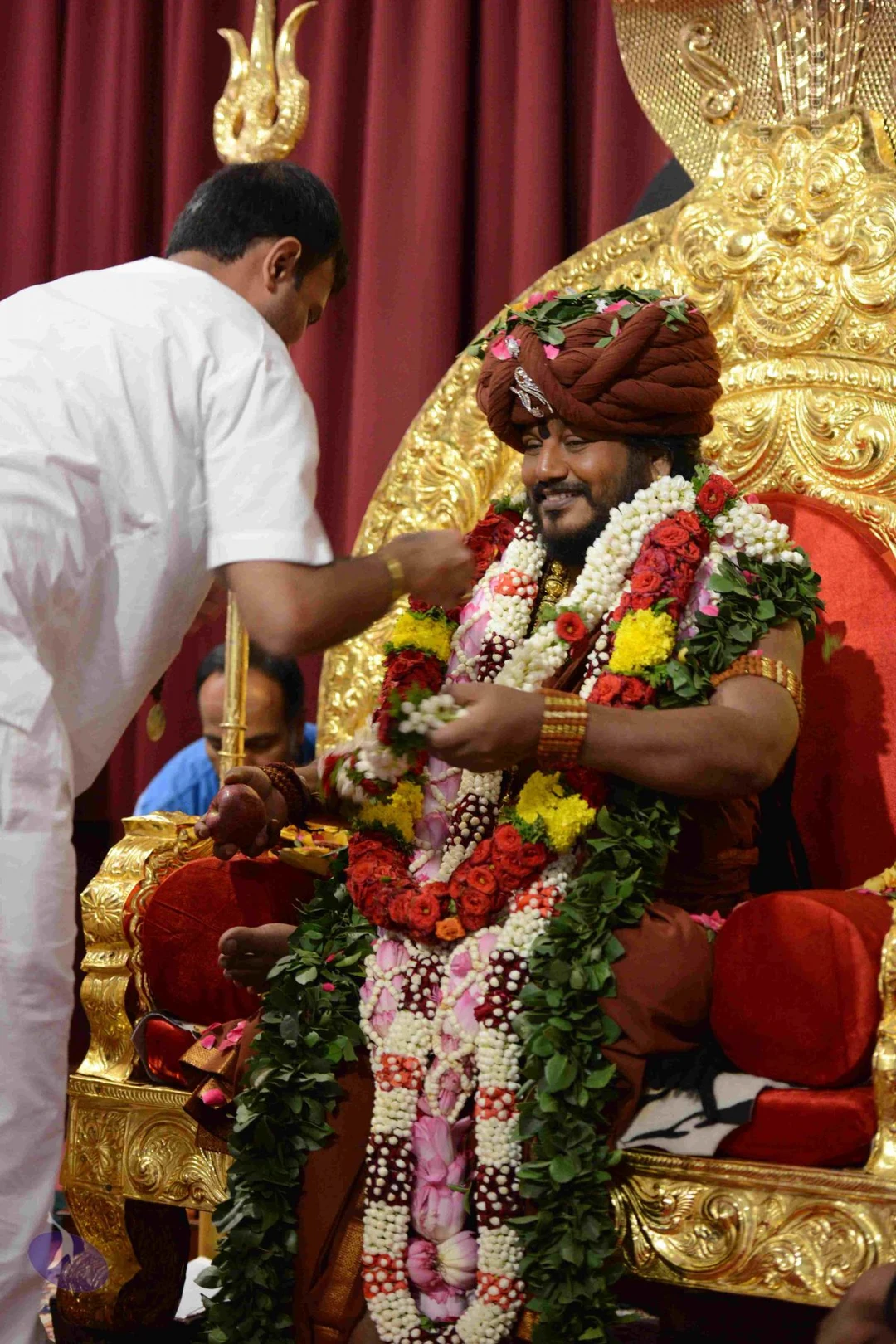
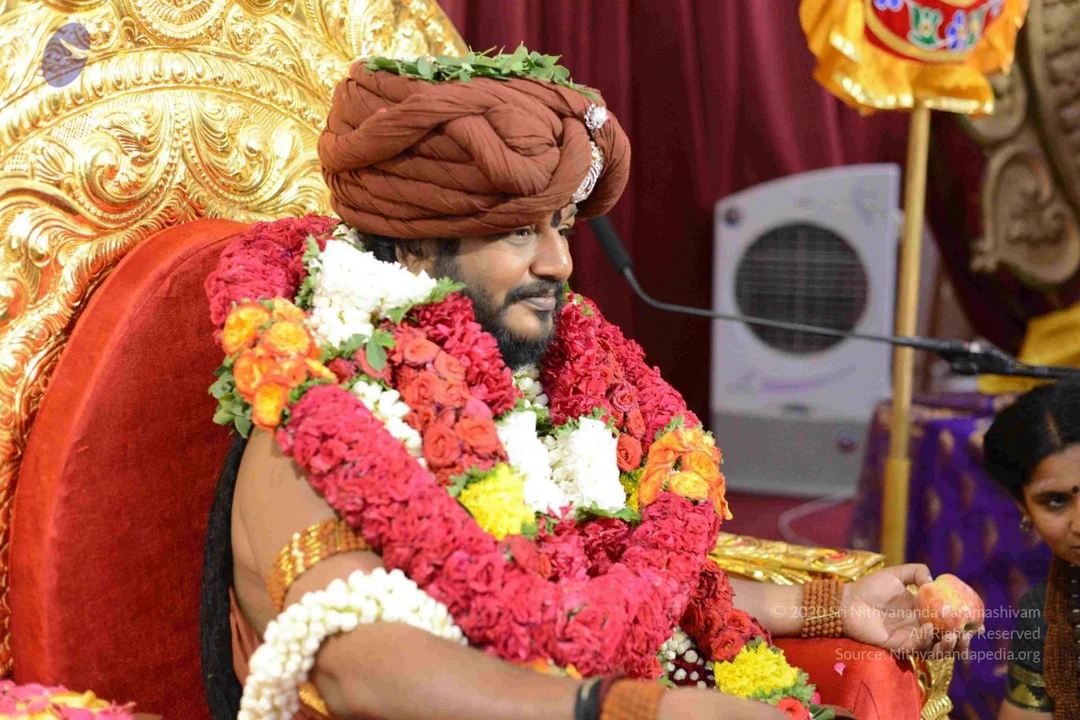
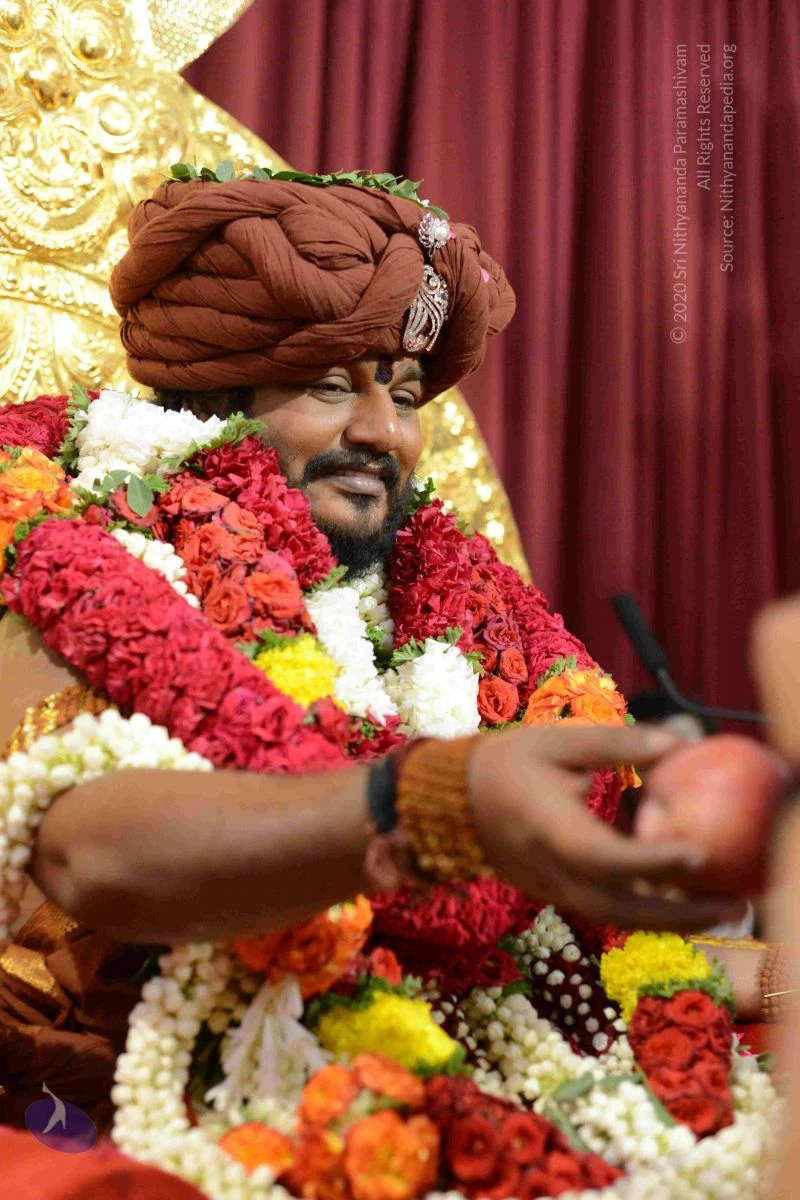
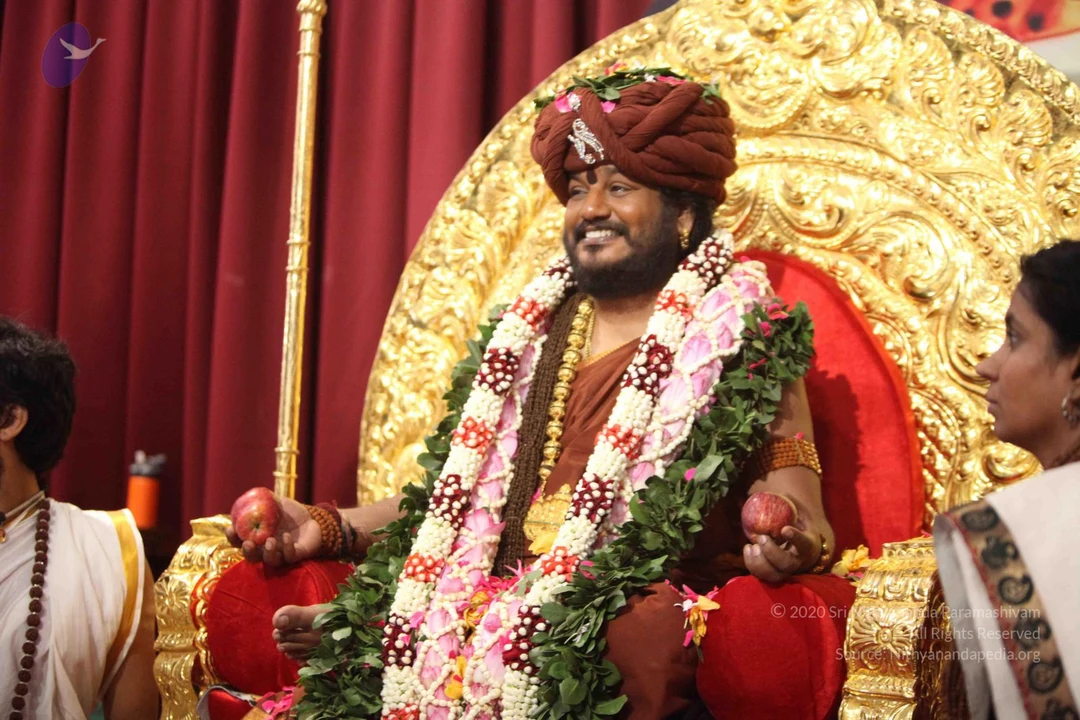
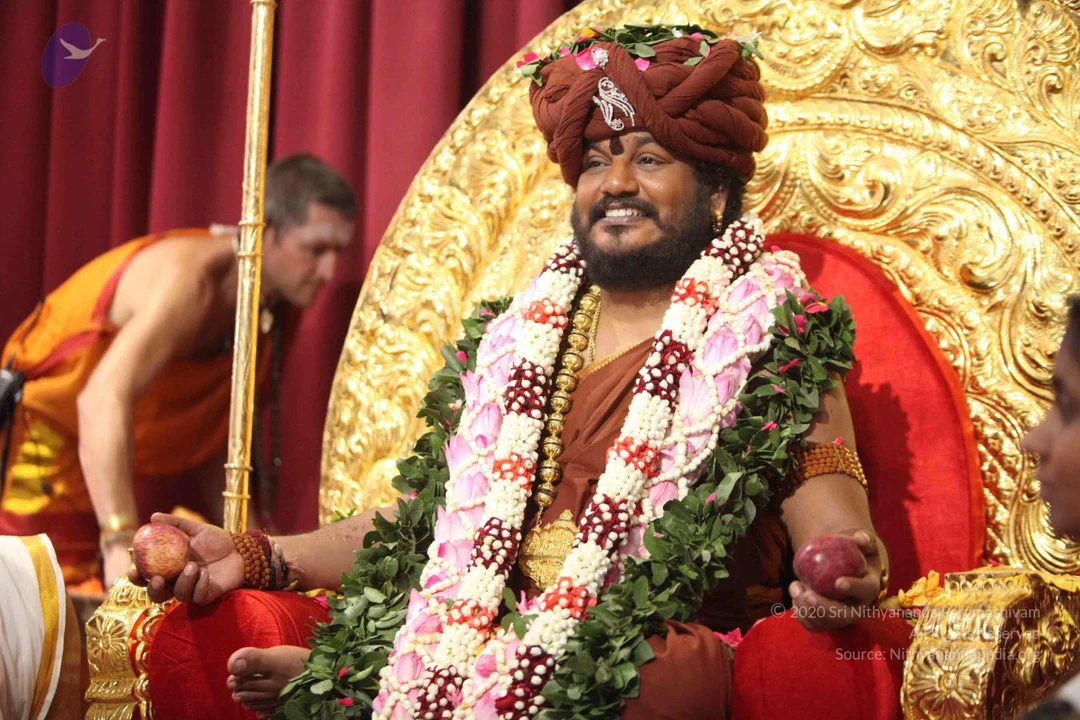
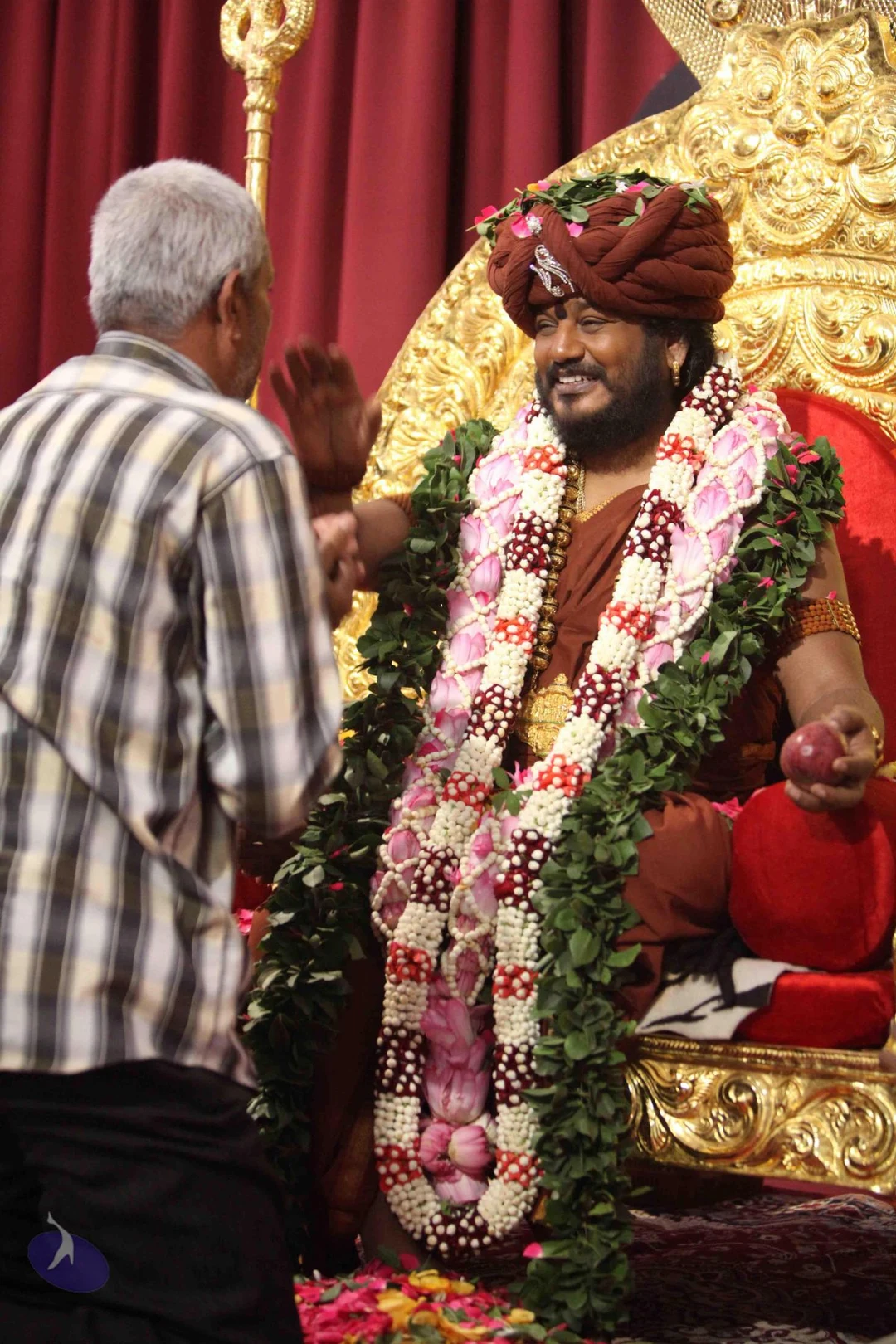
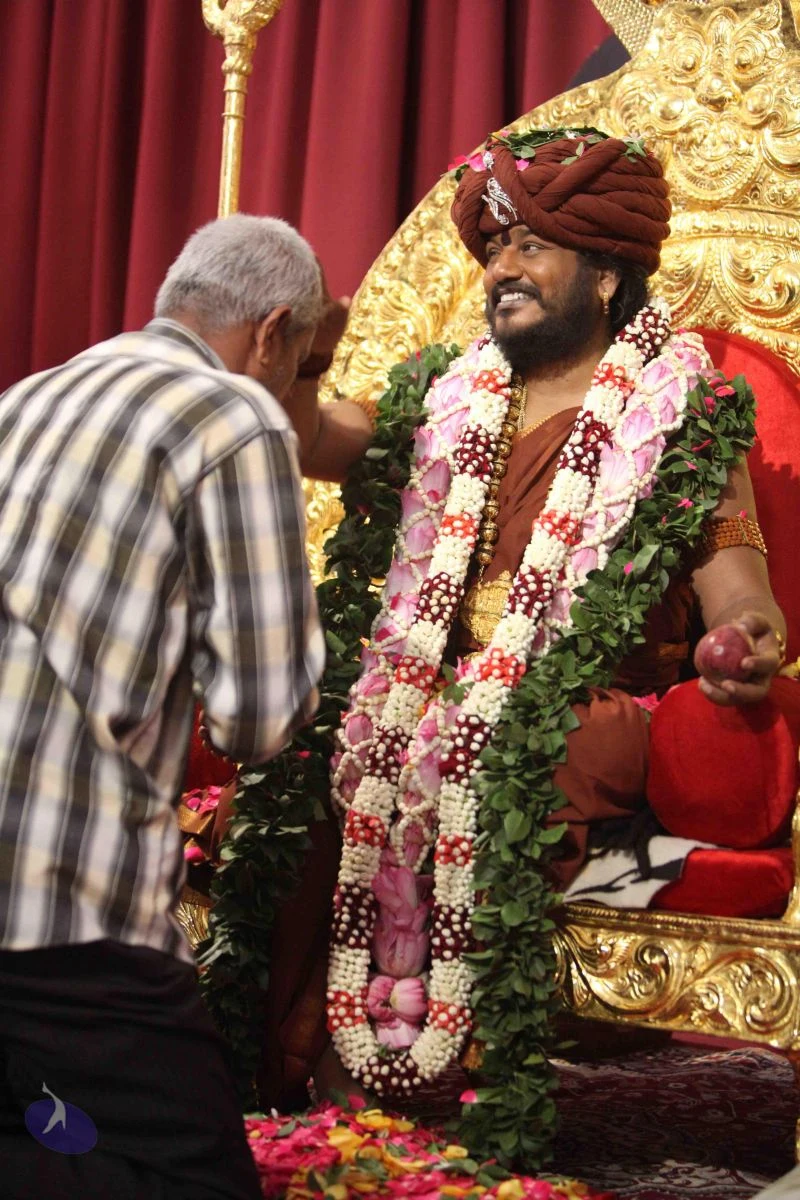
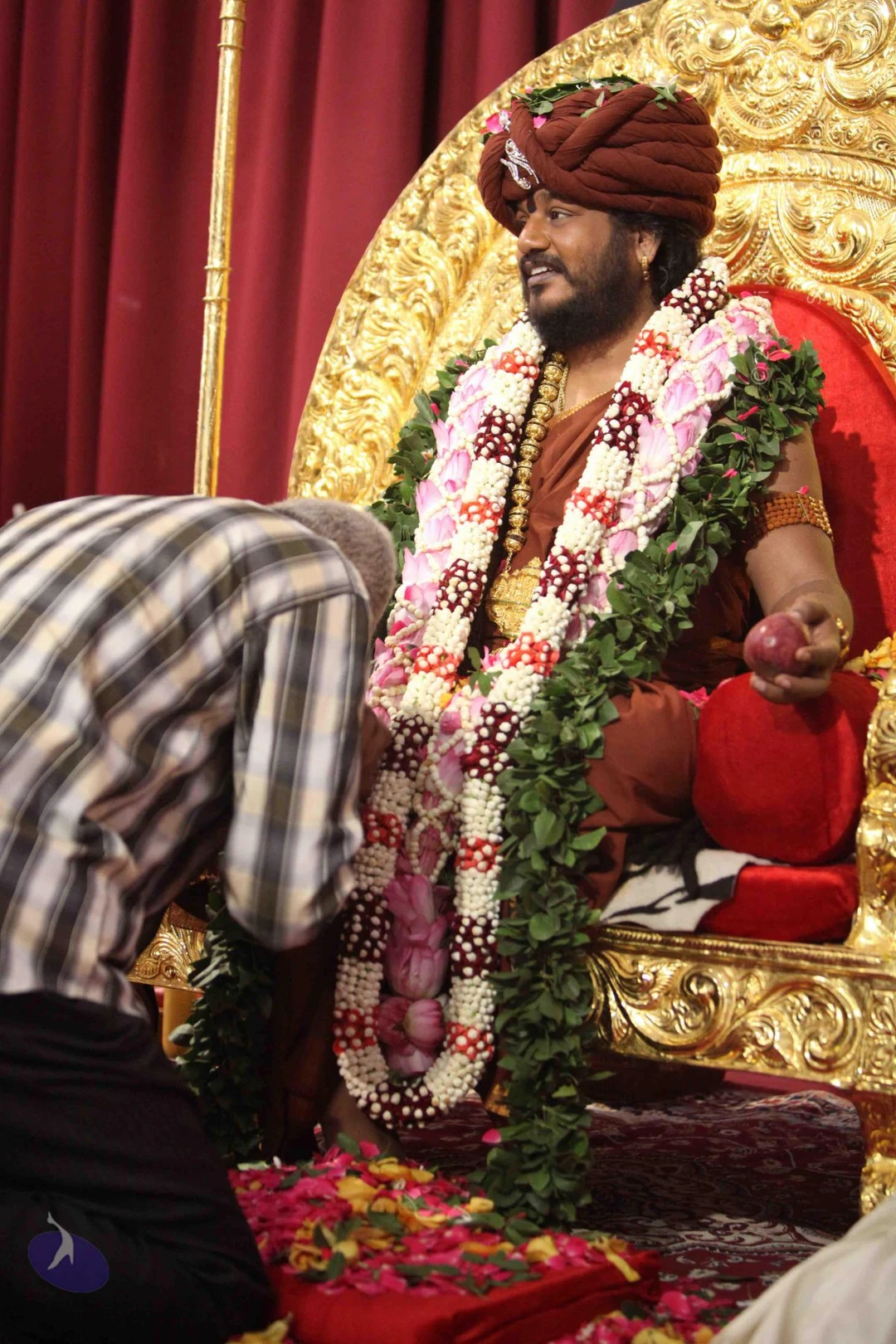
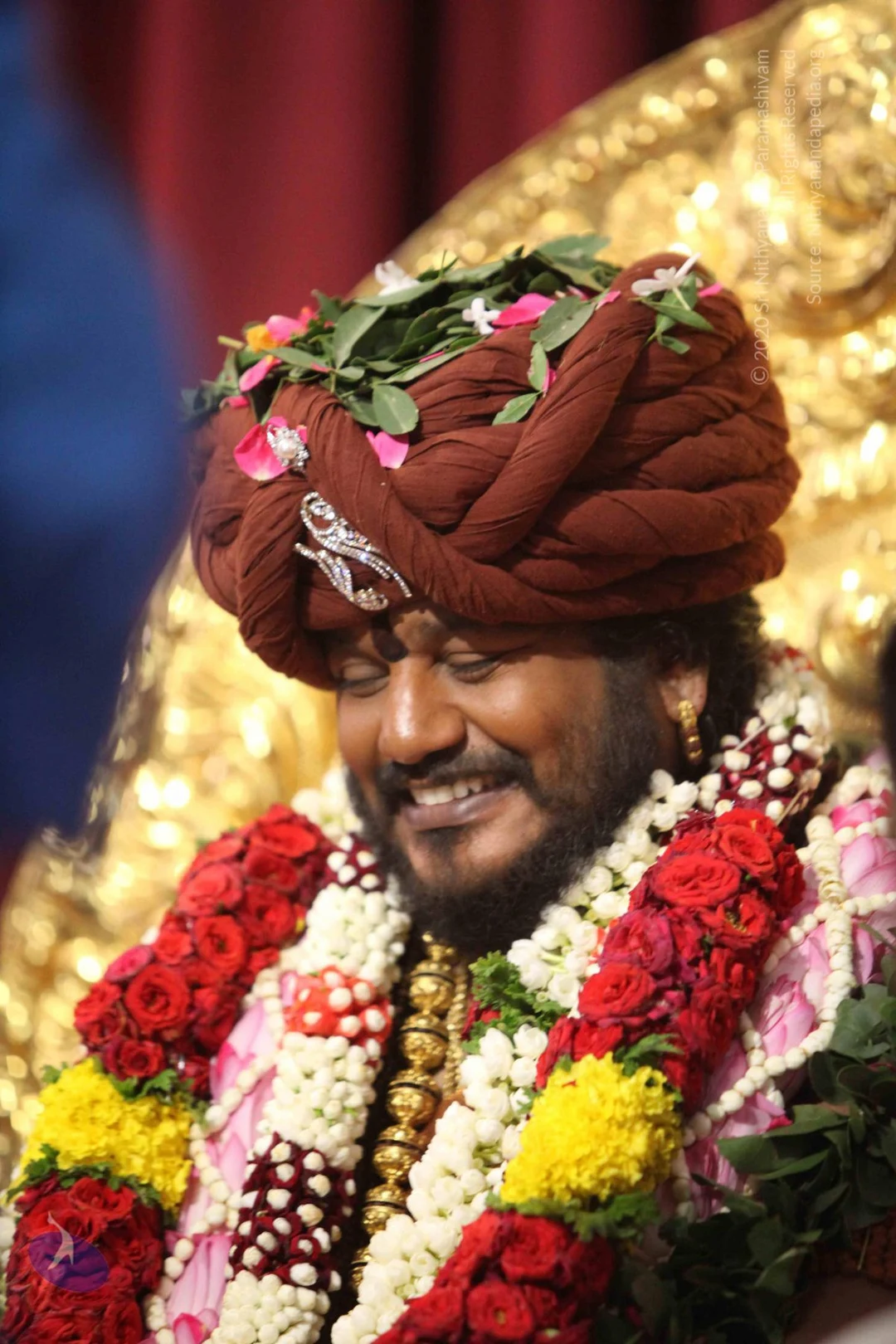
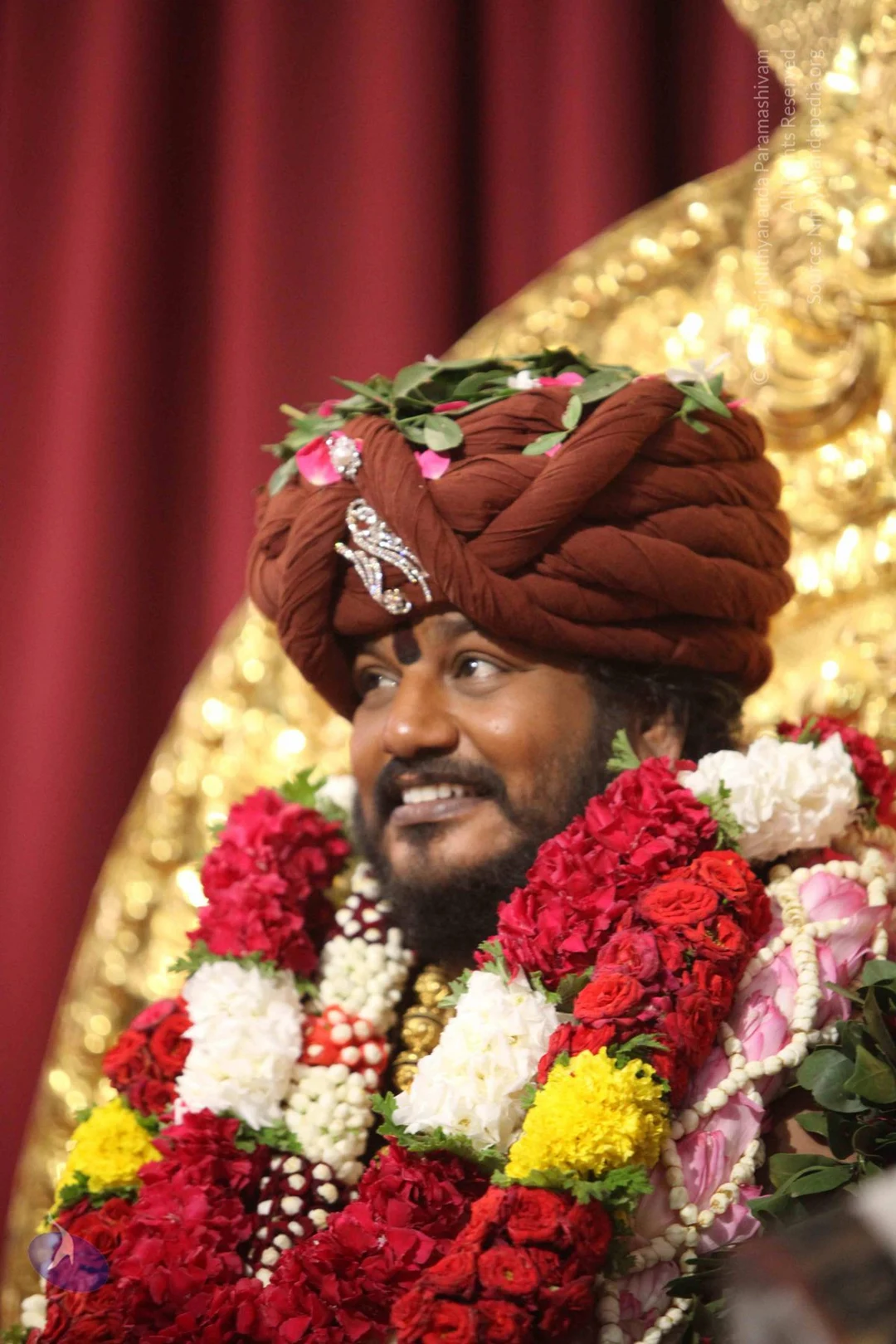
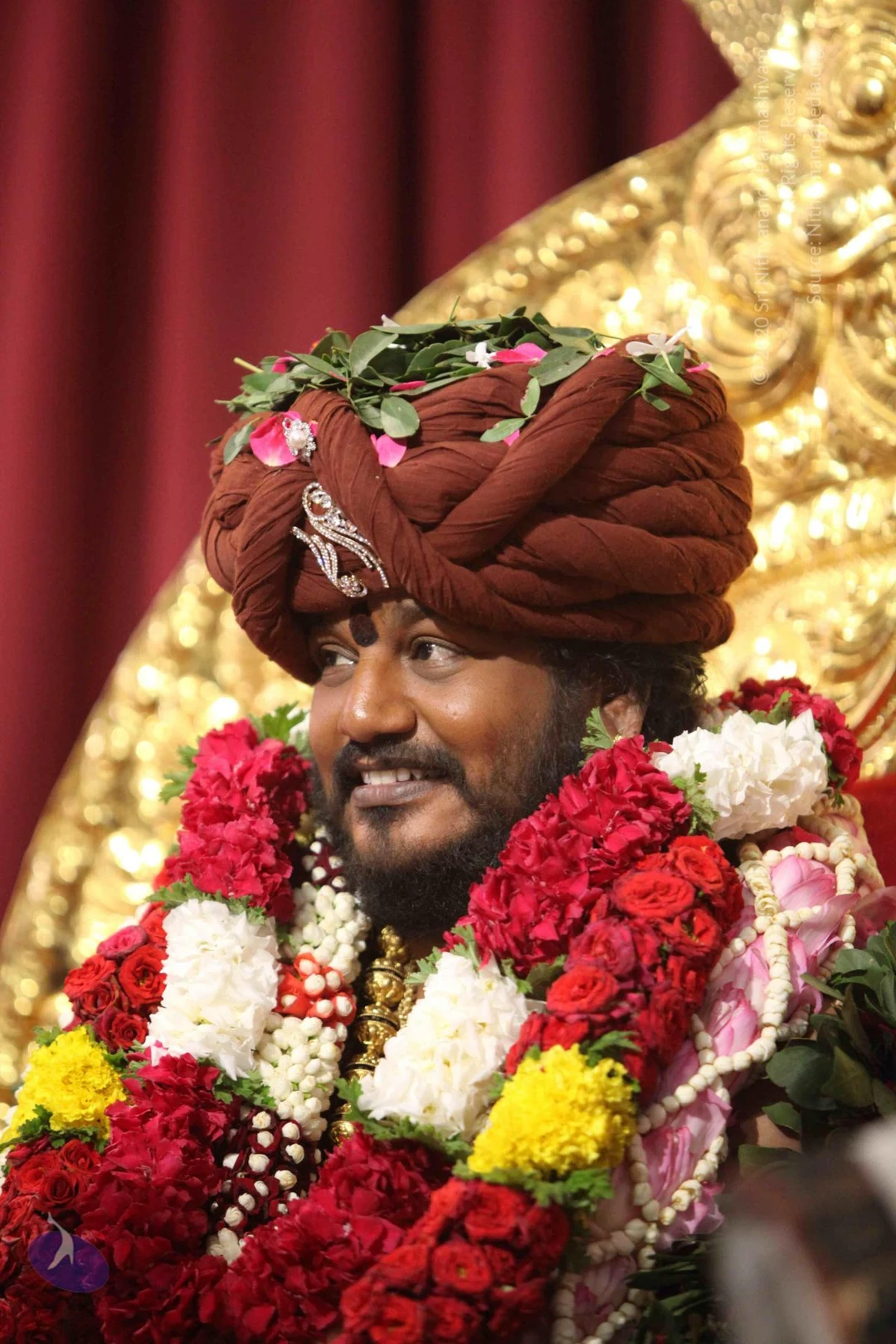
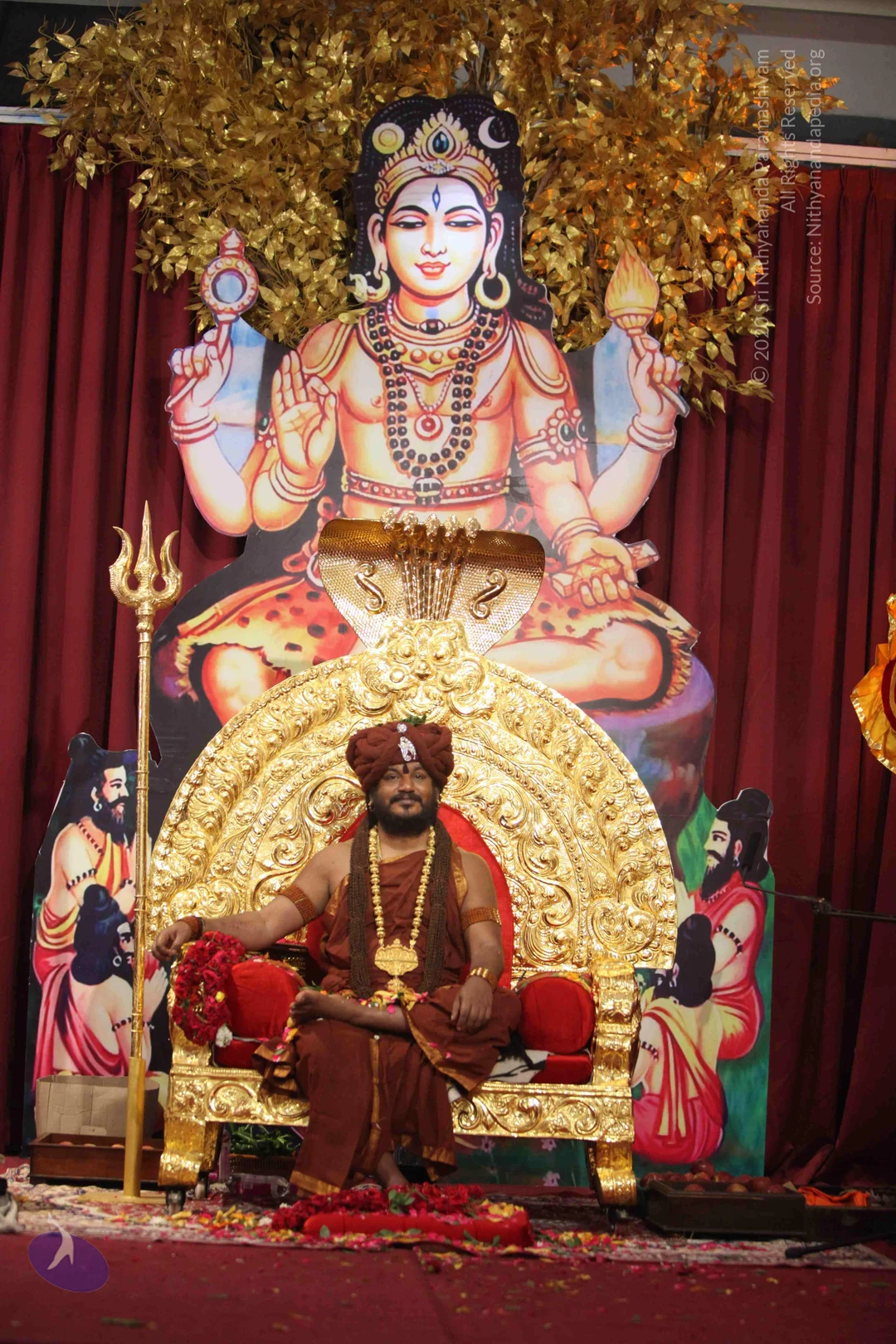
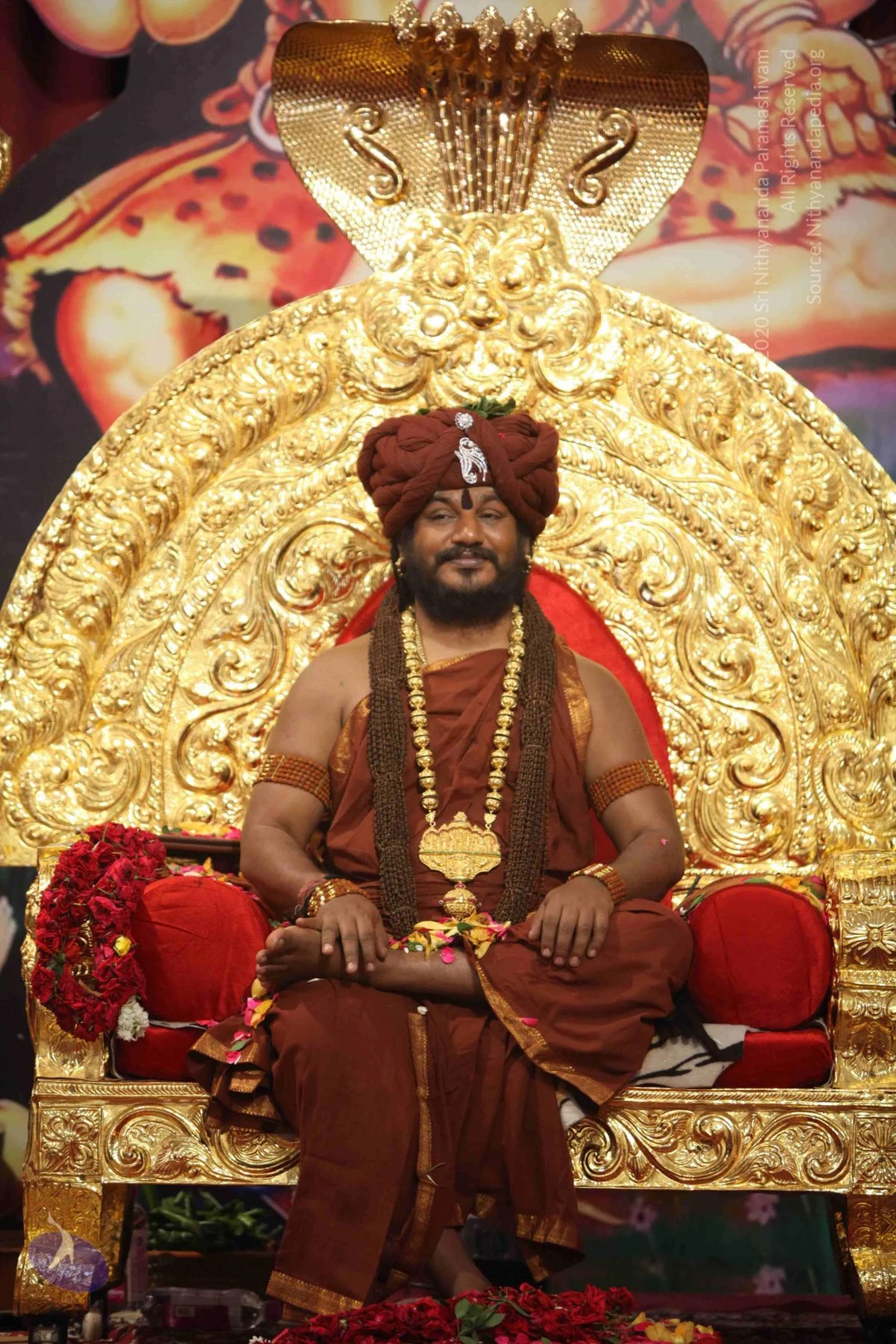
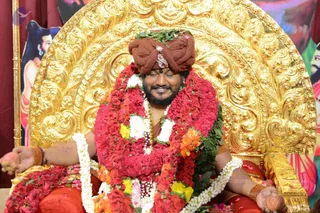
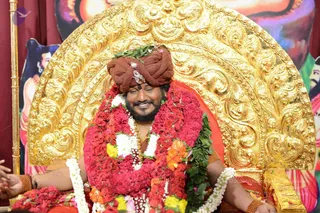
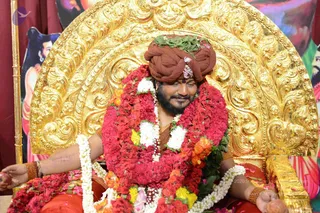
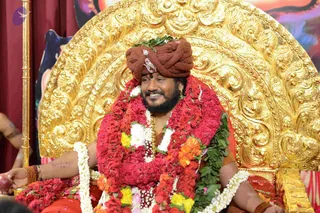
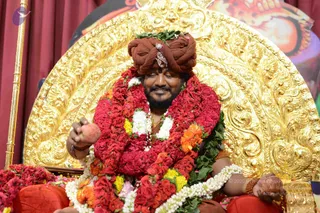
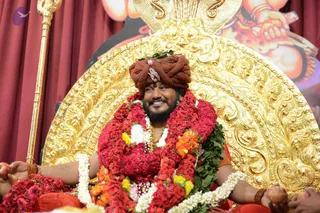
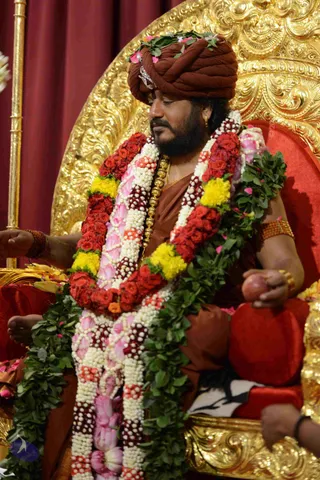
A seated man in a brown-red turban with a silver ornament sits on an ornately carved golden throne with a backdrop of painted deity and saint portraits. He is draped in thick garlands of red roses, white jasmine, yellow marigolds and green leaves, wears a rudraksha mala, and holds a small fruit in one hand. His eyes are closed and he smiles. a person is identified by the throne, turban and ornate garland cues, not by face.A man seated on an ornate gold throne with a carved, arched back, smiling with closed eyes. He wears a rust-brown turban with a silver ornament, a thick garland of red roses with white jasmine and green leaves, and a rudraksha-style necklace over an orange cloth. Gold armbands and a red sacred mark appear on his forehead. Behind him hang painted backdrops with figures in red and green. A partial hand is visible at the left edge.A seated man in a golden ornate throne with a large intricately carved gold backrest, wearing a rust-brown turban adorned with green leaves and a white-and-silver emblem at the front. He is draped in thick garlands of red roses, white jasmine and yellow marigold flowers, with rose petals scattered on his lap and his eyes closed in meditation. He wears rust-orange robes and a rudraksha-style beaded bracelet, with red fruit held in his hands. A decorated backdrop with painted deity imagery surrounds him. Swamiji (probable) appears seated in the throne, wearing a swept turban and ceremonial garland with saffron-orange robes.A smiling man seated on an ornate gold throne with carved scrollwork, wearing a brown turban with a silver ornament and a green leaf sprig tucked at the top. He wears a heavy garland of red roses, orange and yellow flowers, white jasmine strands and green leaves, plus a gold necklace and a rudraksha-style bead mala. Behind him is a red and gold backdrop. A hand holding a red fruit appears at the lower left and another arm with bangles is visible at the edge. a person: a bearded man in a brown turban and red floral garlands seated on a gold throne, consistent with the page's reference to a person at this event.A bearded man sits cross-legged on an ornate gold throne with intricate floral carving, eyes closed and smiling slightly. He wears a rust-brown turban with a silver-tone brooch and a sprig of green leaves, and is heavily garlanded with red roses, orange marigolds, white jasmine and yellow flowers. He holds a small reddish object in his raised right hand. Red draped cloth and a red cushion are visible at the lower left, and a gold staff stands at the left edge. A painted backdrop with warm orange tones is behind the throne. Swamiji (probable): the seated man has a turban, layered floral garlands and ornate gold throne setting, with a rudraksha-style necklace visible at the chest, consistent with the page's description.Photo of a bearded man seated on an ornate gold throne with carved floral scrollwork, smiling and wearing a brown turban with a jeweled brooch, heavy red and white flower garlands over an orange-red garment, and a gold necklace. A golden trident stands to the left against red drapes, a deity print appears behind the throne, and hands holding fruit appear at the lower edges.

mandala meditation
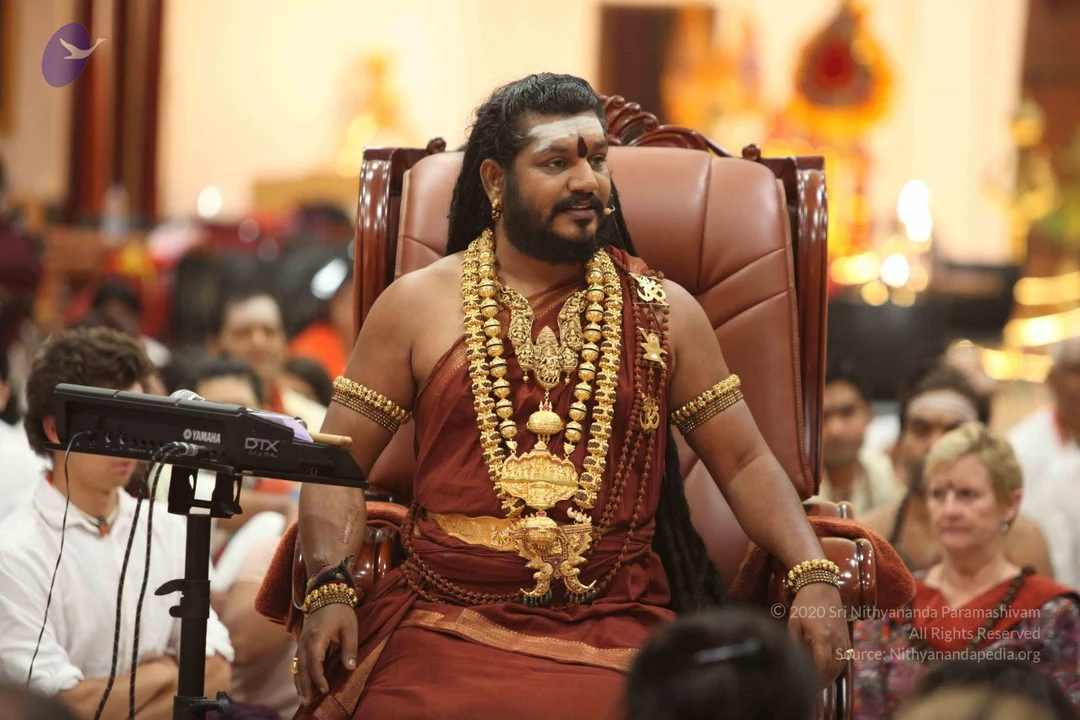
214 photosSource gallery
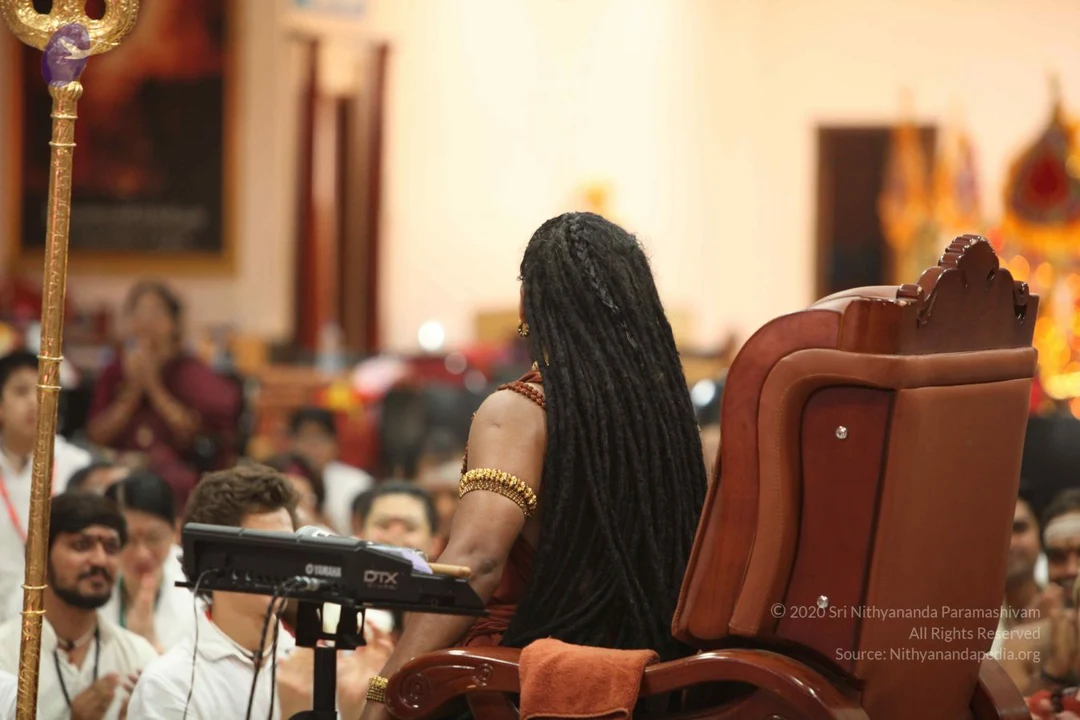
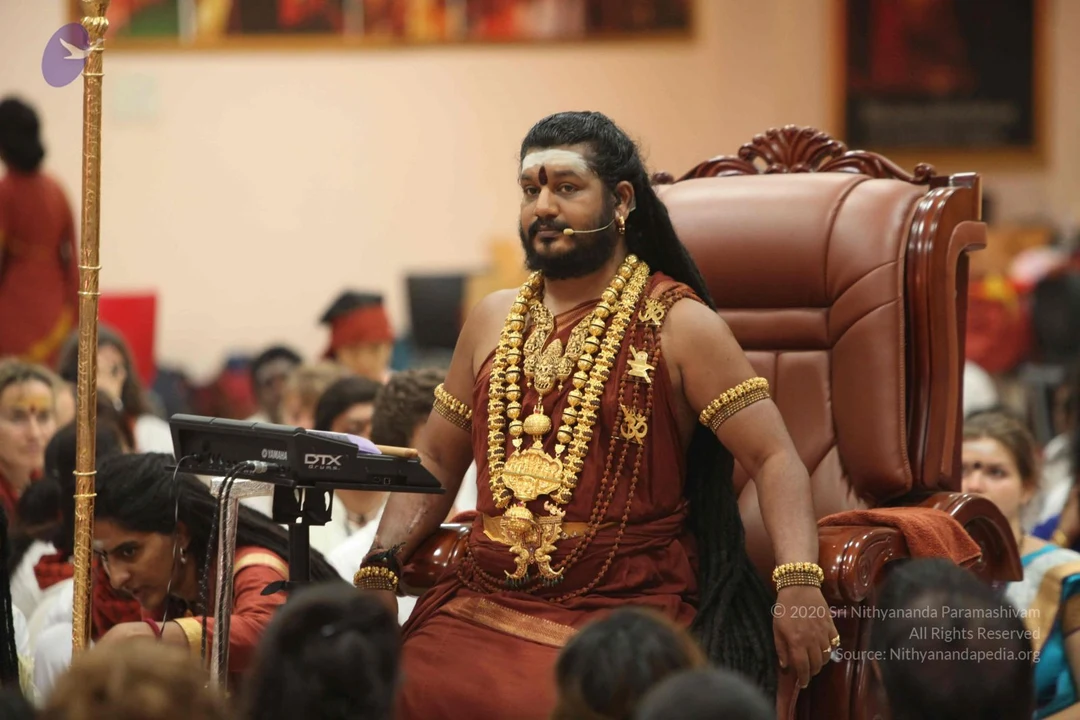
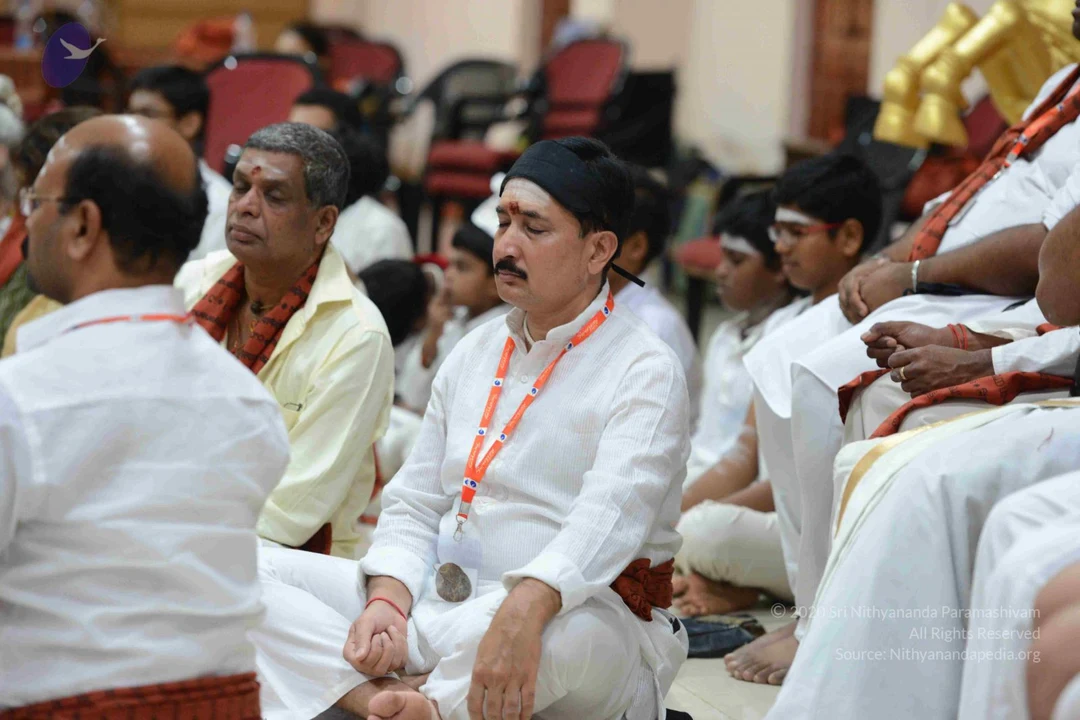
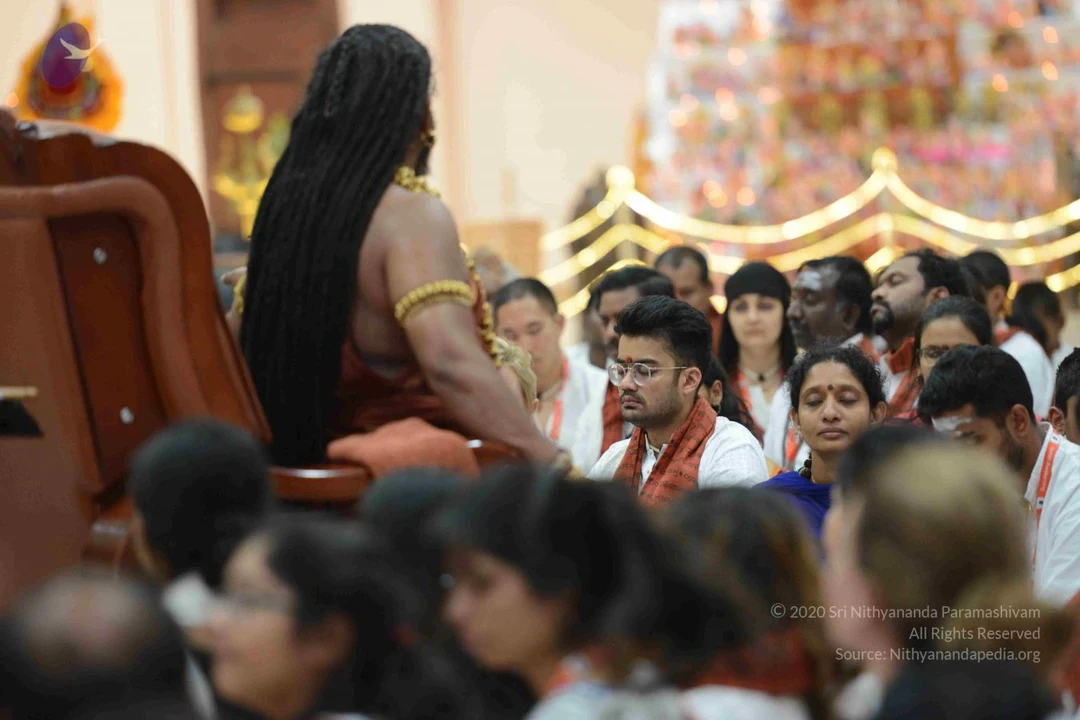
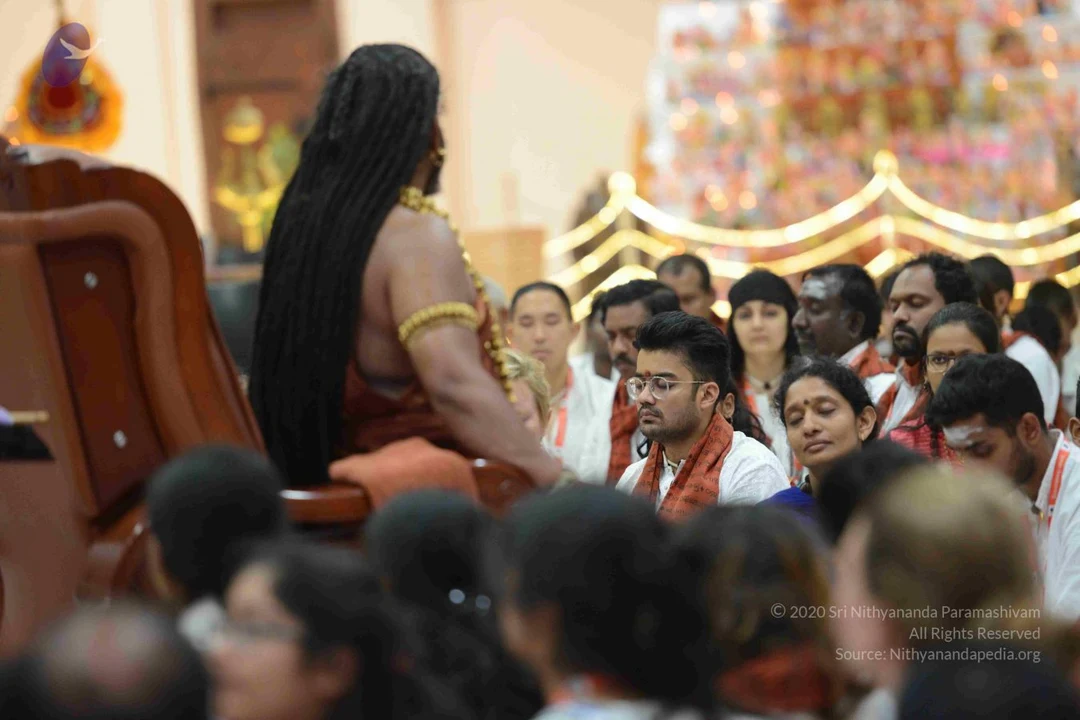
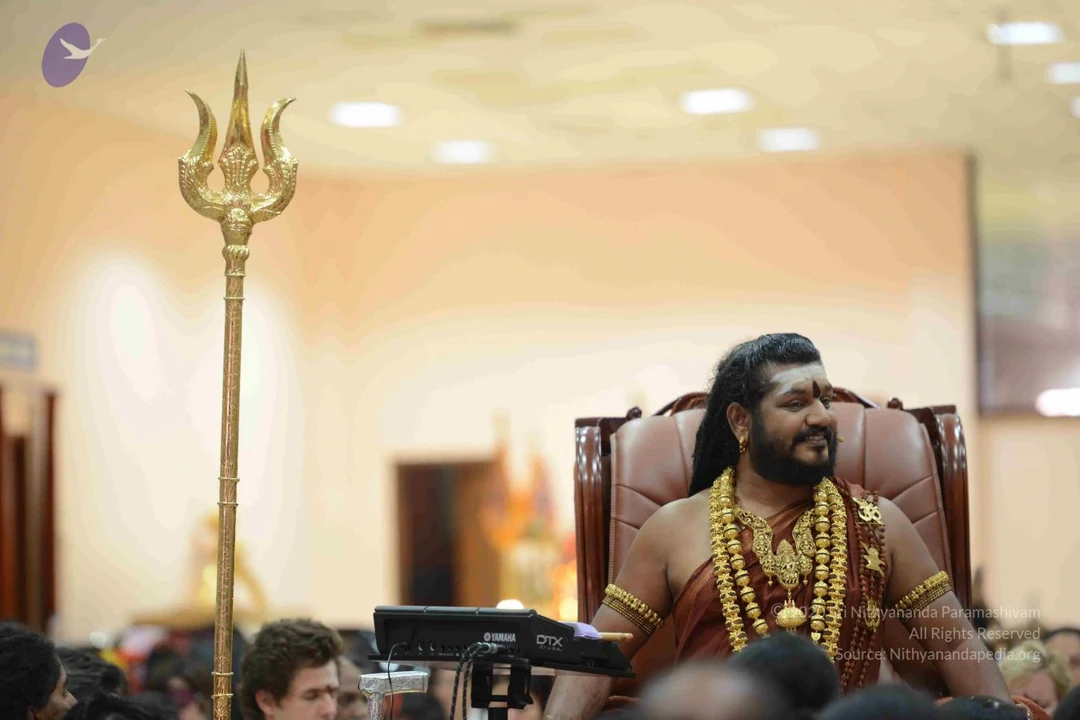
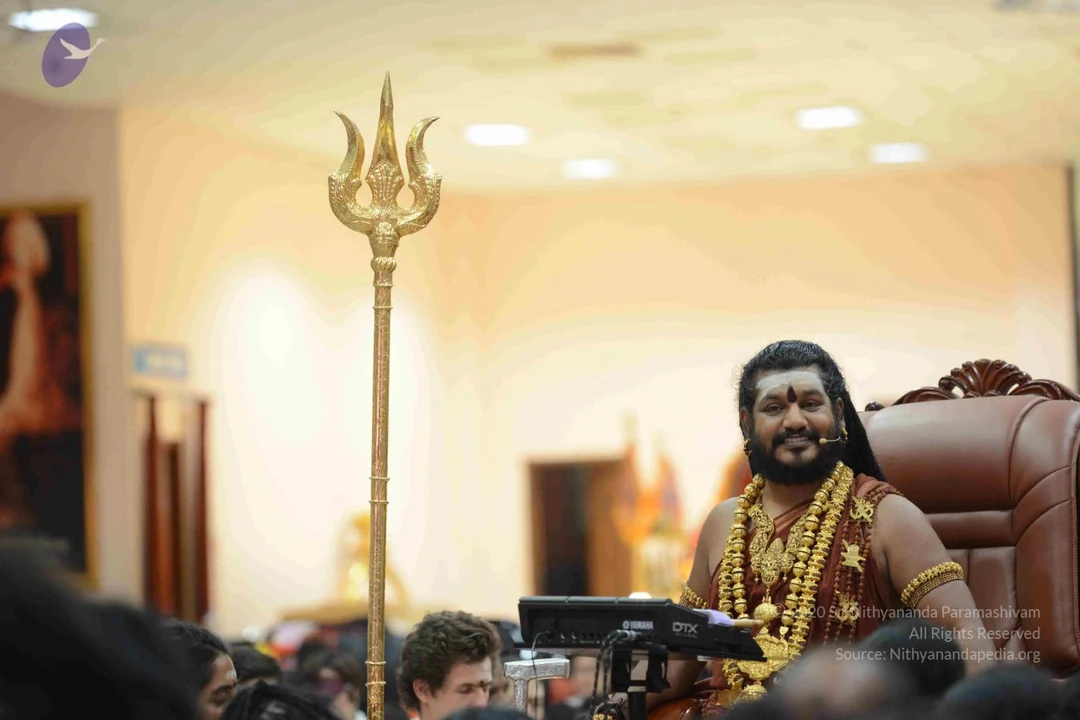
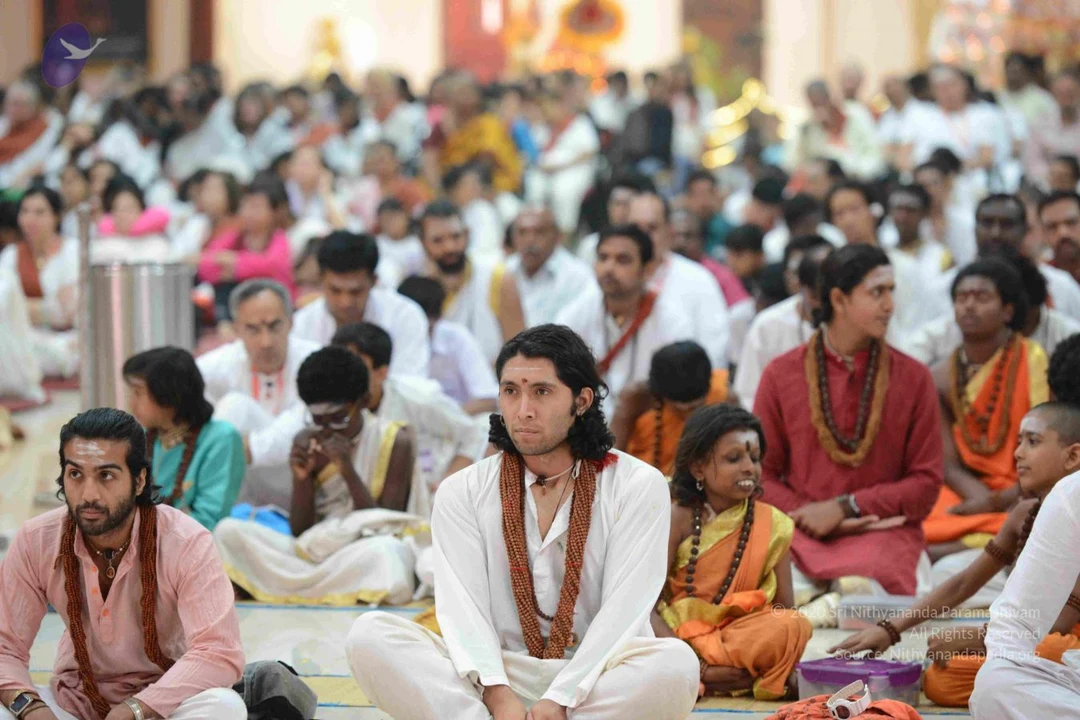
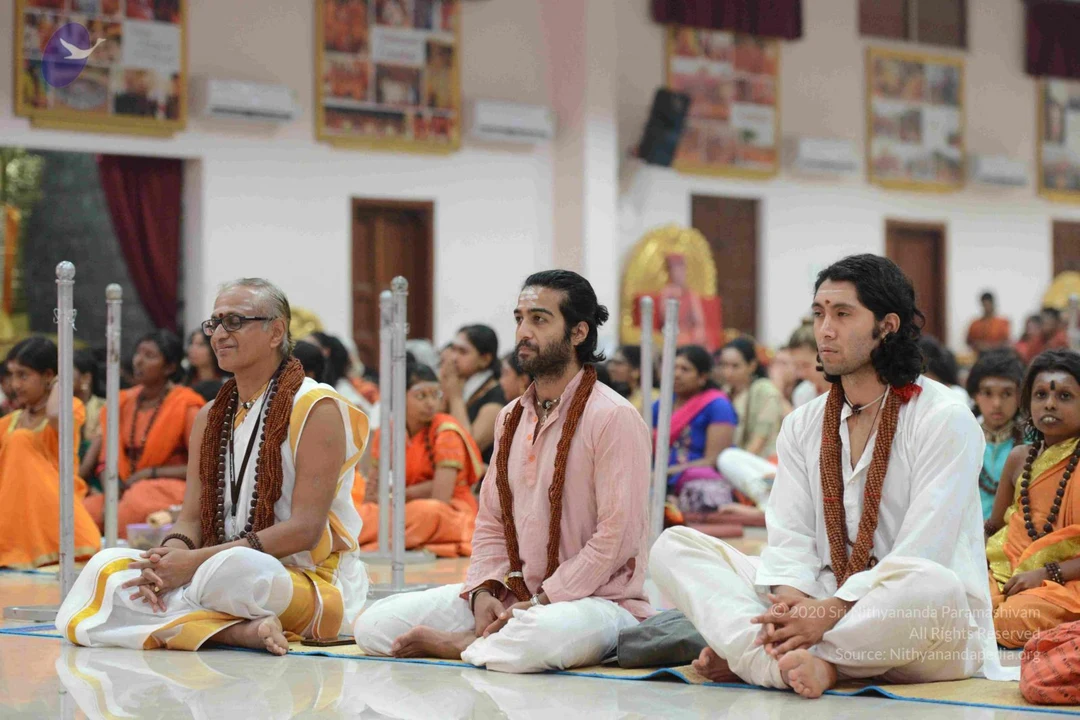
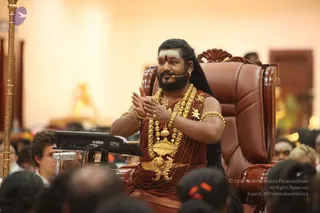
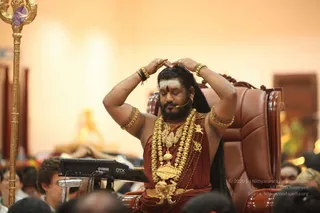
Photograph of a long-haired bearded man seated on a brown leather throne-style chair in a hall during a convention session. He wears a rust-red draped garment, heavy gold necklaces with temple-style pendants, gold armbands and bangles, and a white paste mark with a red bindi on his forehead. A Yamaha keyboard on a stand sits at left. Audience members in white and orange clothing sit behind him, with a golden shrine-like backdrop. Page notes indicate a probable Swamiji presence based on his distinctive long hair, gold adornments and ornate red clothing. Swamiji (probable) seated on a throne during the Inner Awakening session.A photograph from an indoor convention hall taken from behind a seated figure on a carved wooden throne with a tall reddish-brown back and brown cushioned armrests. The seated person has long dark dreadlocks falling past the shoulders, wears a rust-orange garment and gold armbands, and faces a black electronic keyboard on a stand. To the left stands a tall gold trident-topped staff. Behind them, a seated audience in white and red-toned clothing sits with hands in anjali, and there is a warm gold-lit altar with ornate red and gold decorations at the right. a person is the seated figure on the throne, identified by the long dreadlocks, rust-orange clothing and gold armbands; the trident staff and throne are ceremonial objects. Several audience members are visible in the background, roughly six to twenty people.A man with long swept-back dark hair and a full beard sits on an ornate brown leather throne with carved wooden armrests, in a hall filled with seated audience members. He wears a rust-red robe, layered gold beaded necklaces and rudraksha-style malas with a large gold pendant, gold armbands and bangles, and a white tripundra mark on his forehead, with a small headset microphone near his face. A Yamaha DTX electronic drum pad stands beside him, and a long gold-topped staff rises at the left edge. Audience members in red and white clothing sit in the foreground and background. Appearance-based cues are consistent with the a person (a person) seated in discourse, while identity remains an appearance-based judgment.A seated man with long swept-back dark hair and a full beard, eyes closed in meditation, sits in a large brown leather throne-style chair. He wears a rust-red dhoti-style garment with a wrap over one shoulder, heavy gold beaded necklaces, gold ornaments on his arms and wrists, and a rudraksha mala. A white tripundra with a red bindi marks his forehead, and a headset microphone is clipped near his ear. A Yamaha DTX drum pad and microphone stand sit beside him. Blurred seated audience members in the foreground face the stage, and a framed painting hangs on the wall behind.A seated man in a large brown leather throne-style chair leads a seminar with his palms pressed together, speaking into a headset microphone. He has long dark hair, a white and red tilak on his forehead, and wears a rust-red-brown robe with heavy gold ceremonial necklaces, rudraksha-style beads, a gold pendant and gold armlets. A Yamaha DTX electronic drum pad sits on a stand beside him, and a tall gold staff stands at left. Blurred audience members in the foreground and a glowing golden deity murti are visible behind. a person (a person), seated on a throne with a large audience. Visible audience members are many, and the frame suggests a large gathering.A seated man in a rust-red robe sits in a large brown leather throne-style chair, eyes closed, both hands raised to his head with fingers pressed together at the crown. He wears heavy gold necklaces, a gold pendant, gold bangles and a rudraksha-style mala, with a red bindi and white tilak on his forehead and a small microphone at his mouth. Beside him is a black Yamaha DTX electronic drum pad. A tall gold staff with a trident-like top stands at the left edge, and a crowd of seated devotees fills the foreground and background in a warm amber-lit hall. The posture suggests a meditative or sound-based ritual process. Several seated people are visible at the lower edges.

Living-Shuddhadvaita-Program

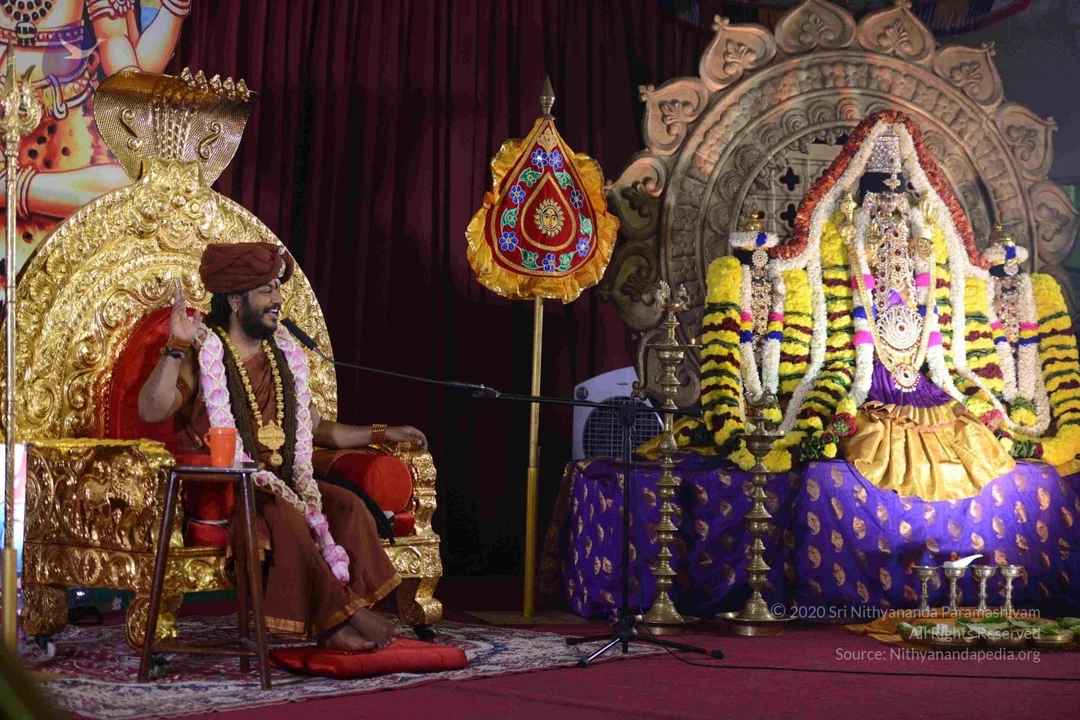
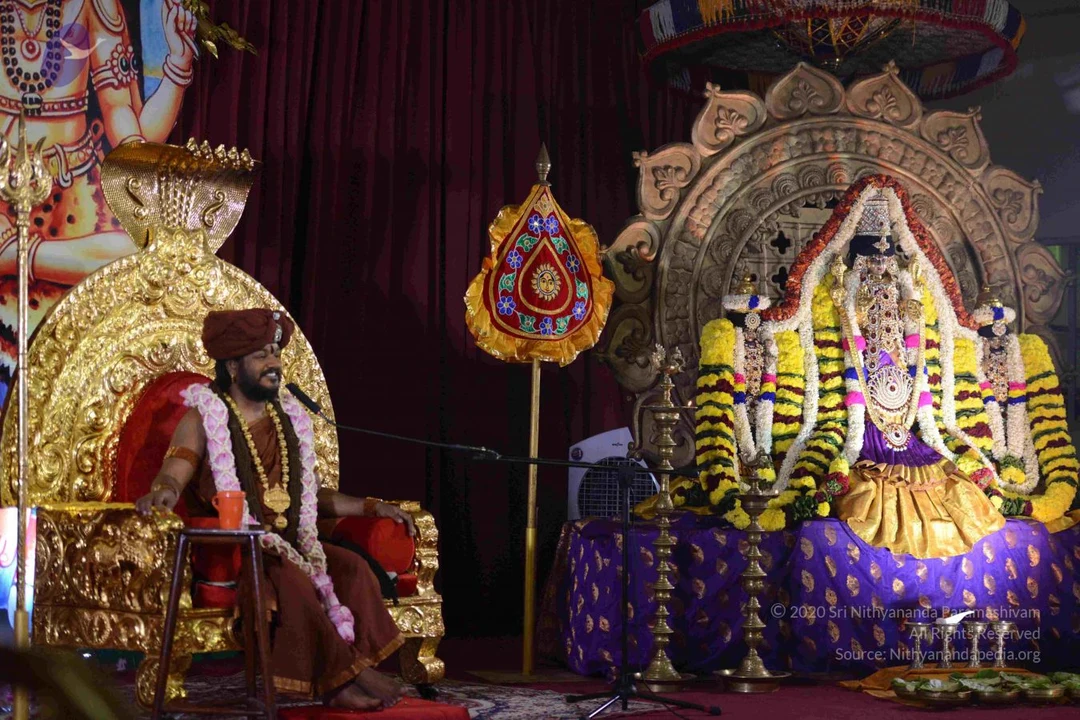
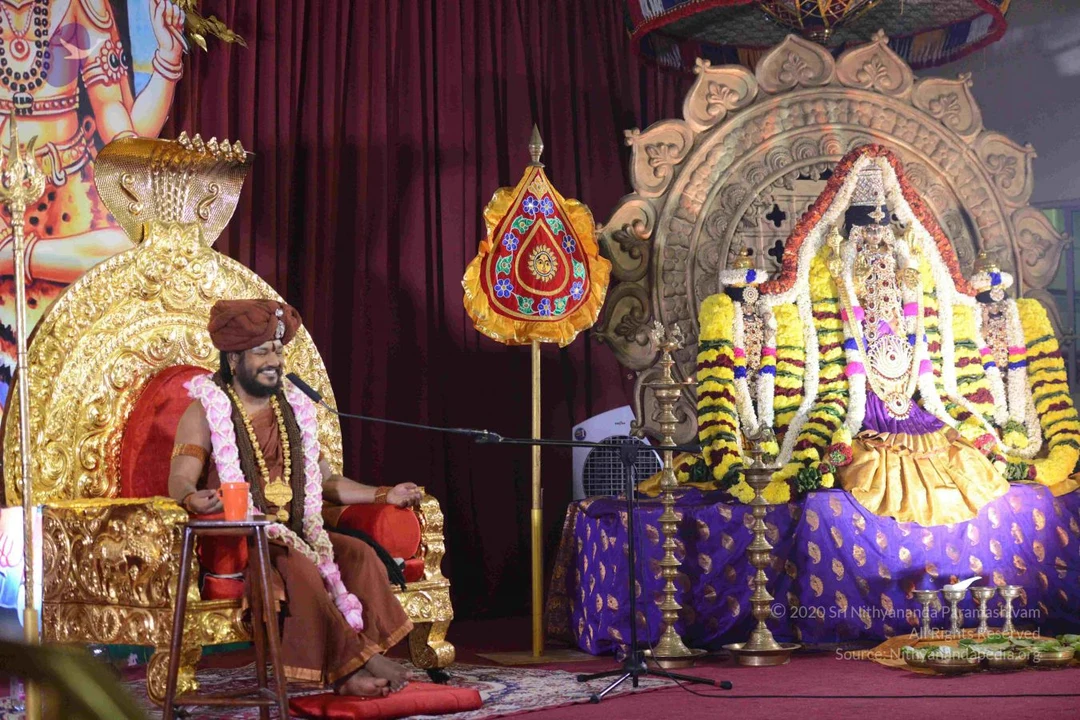
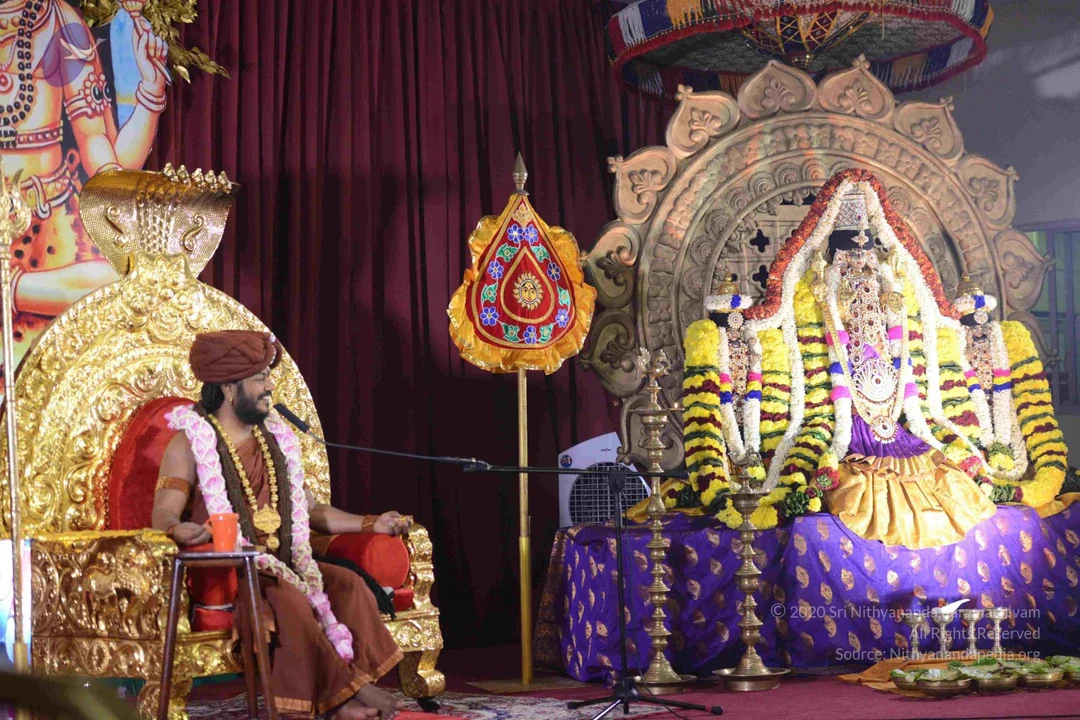
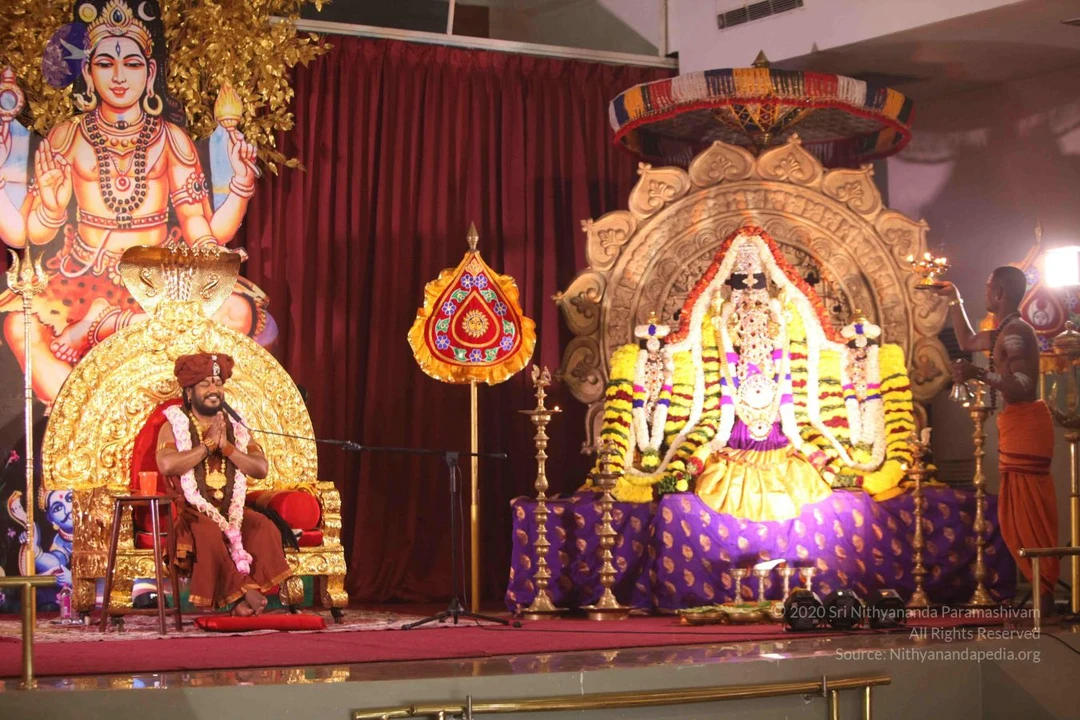
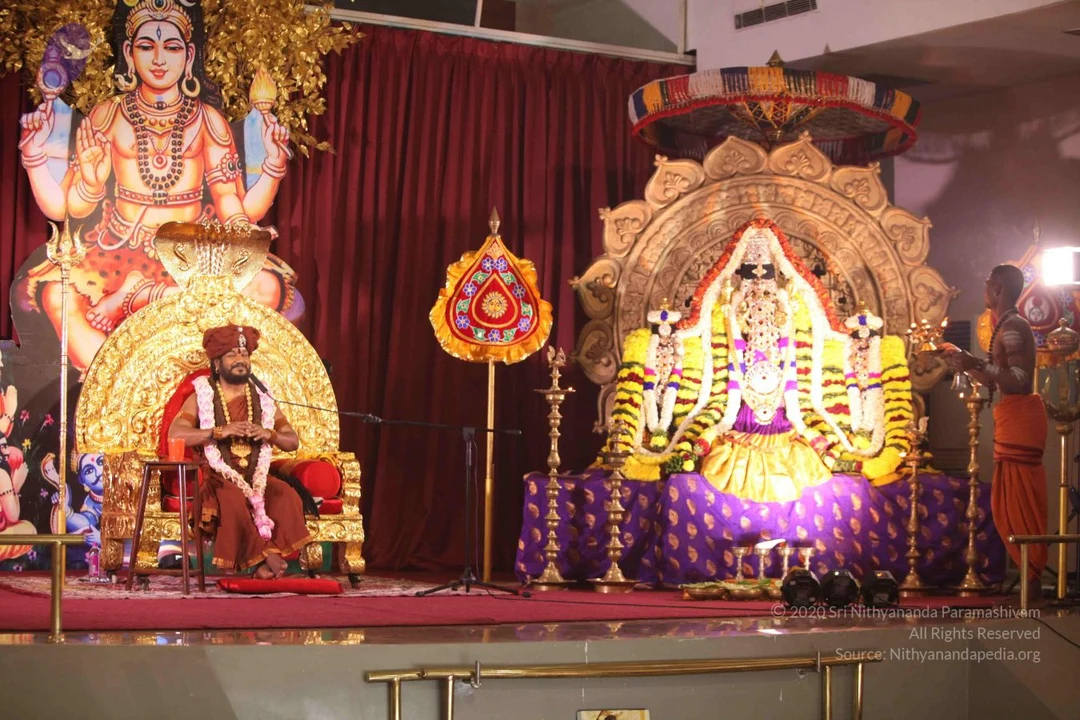
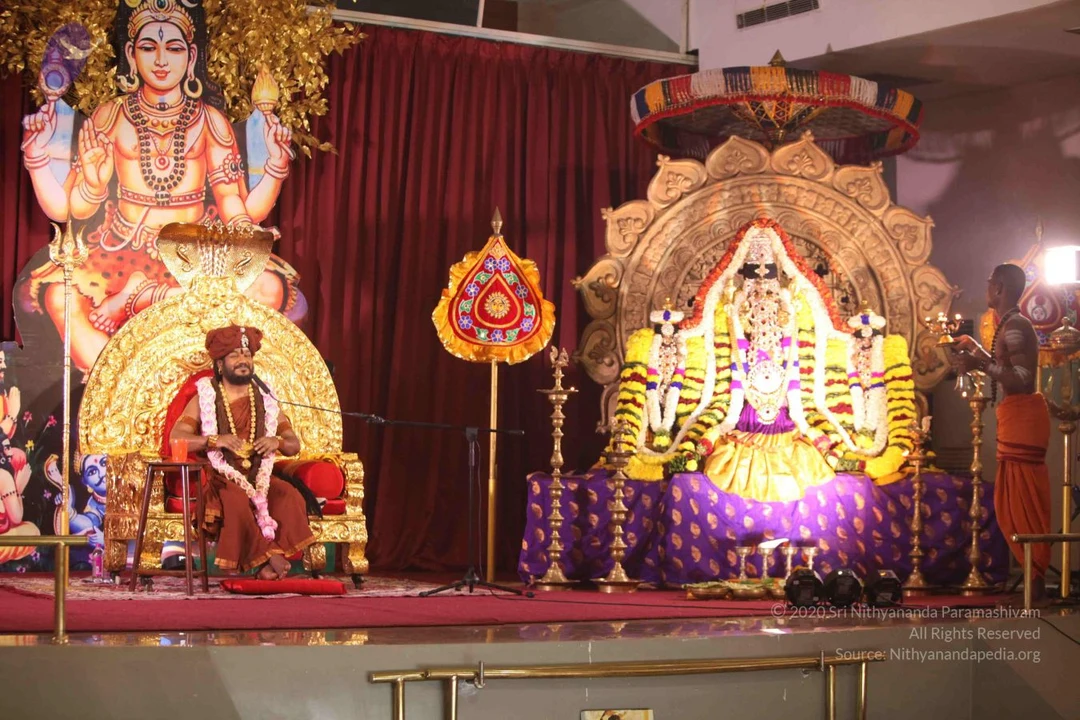
79 photosSource gallery
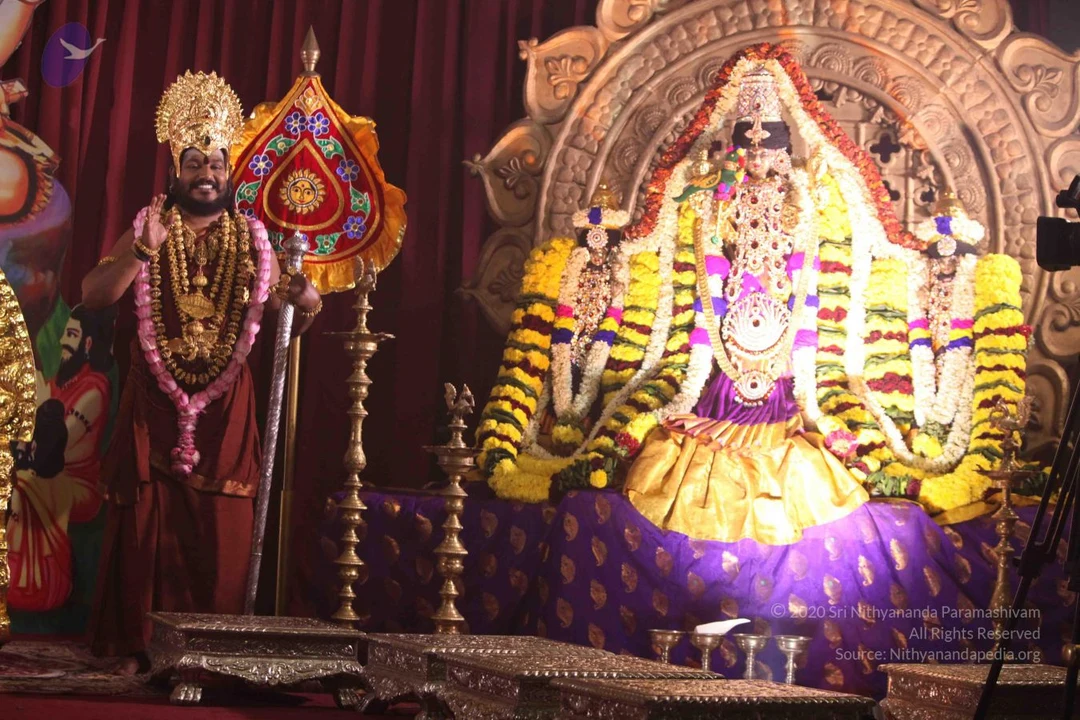
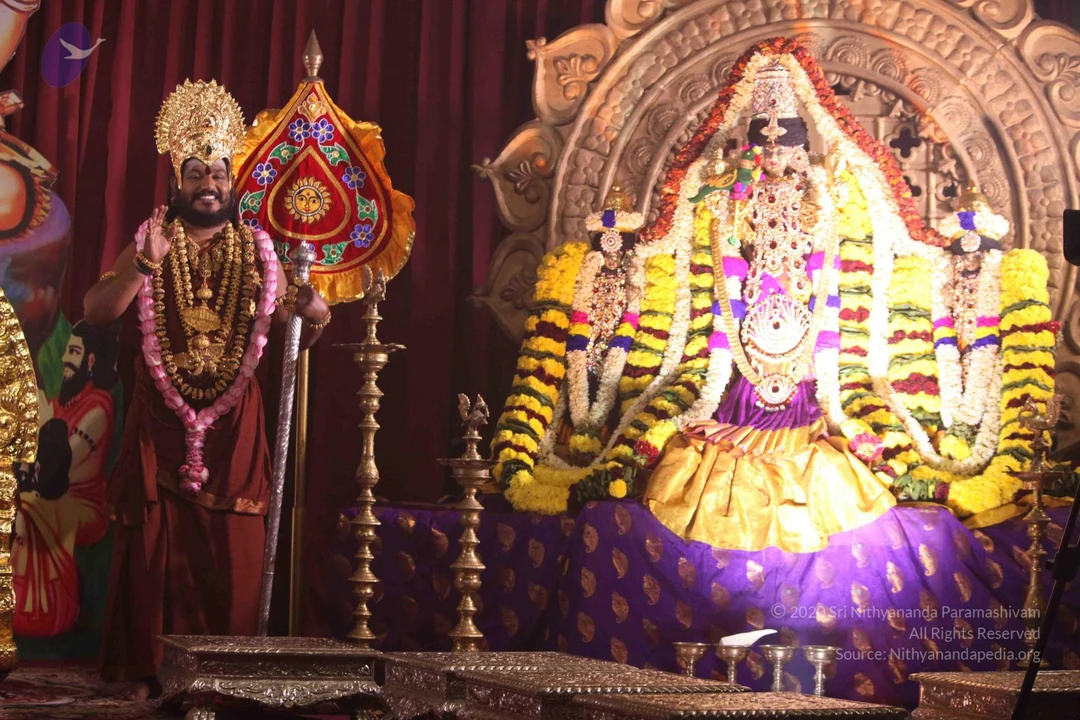
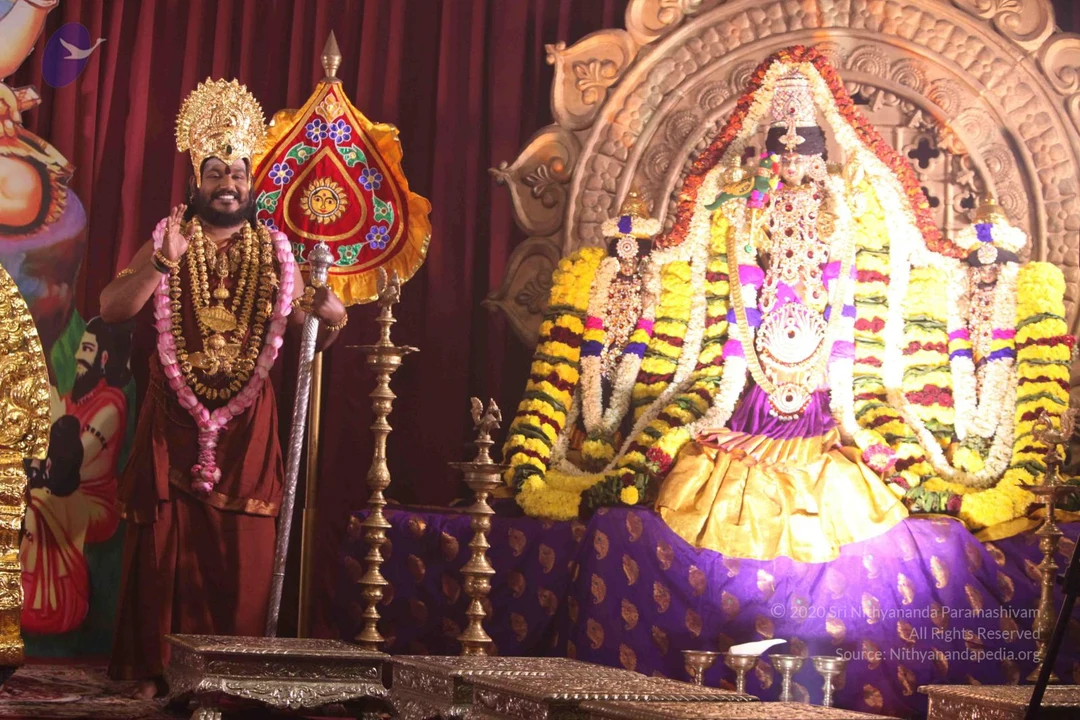
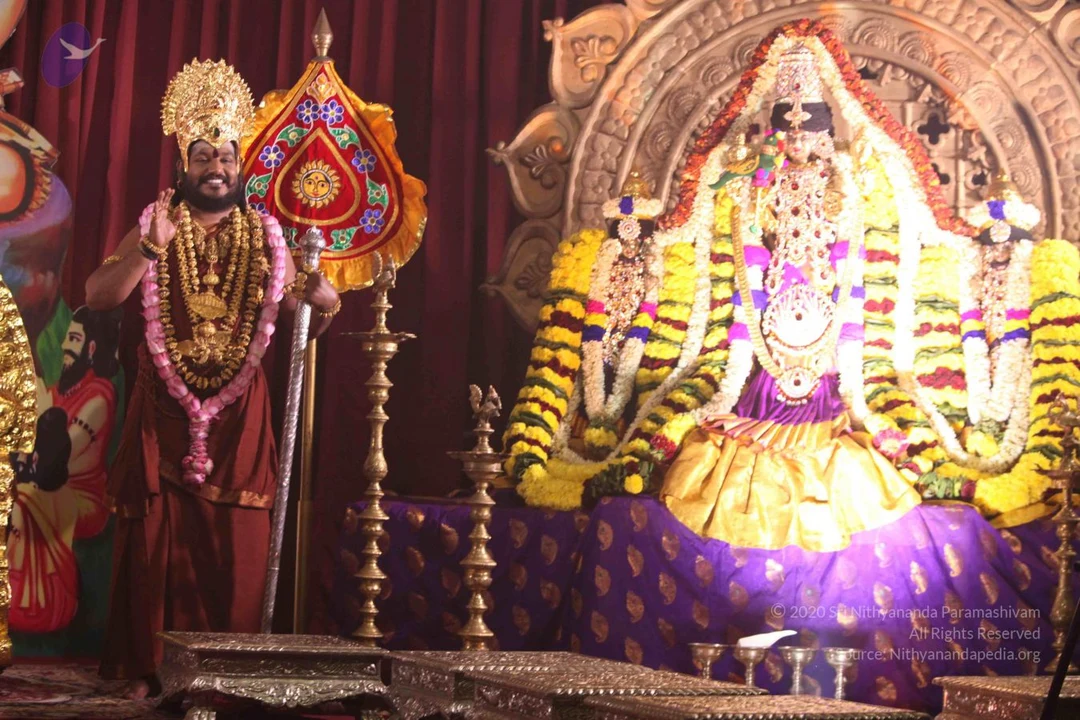
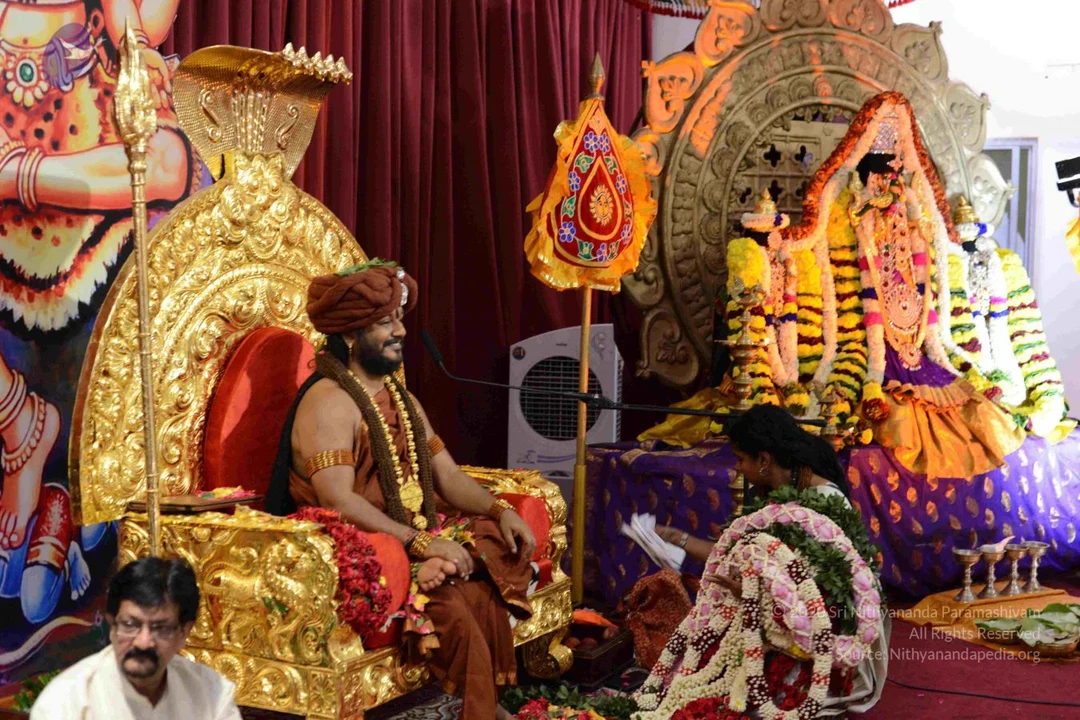
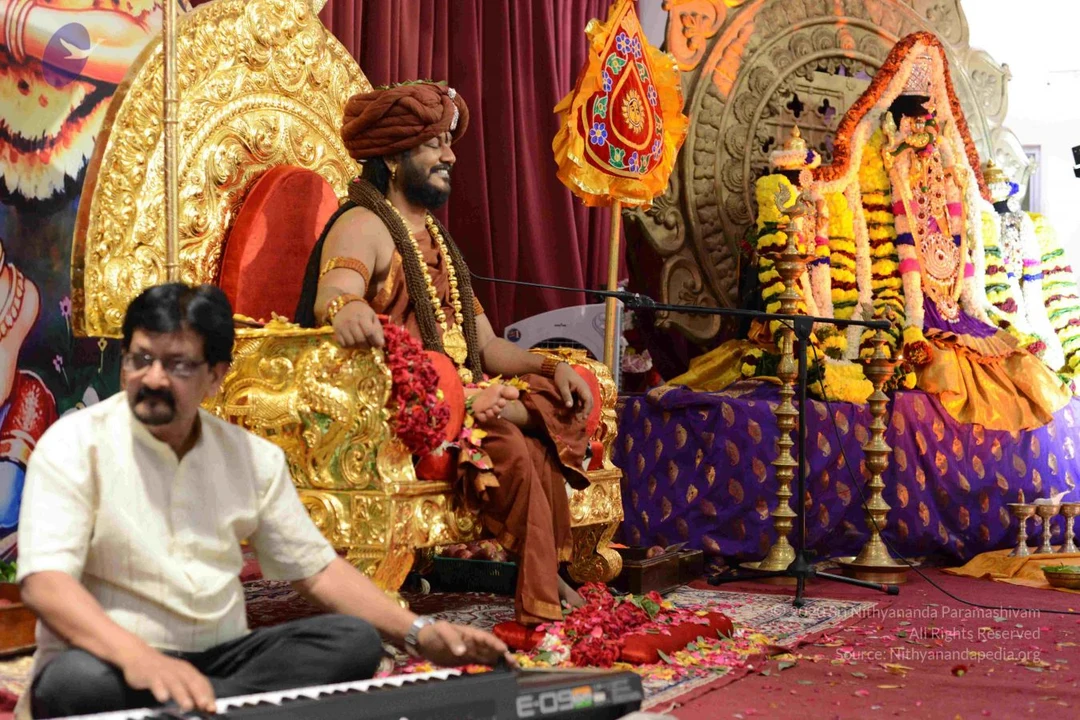
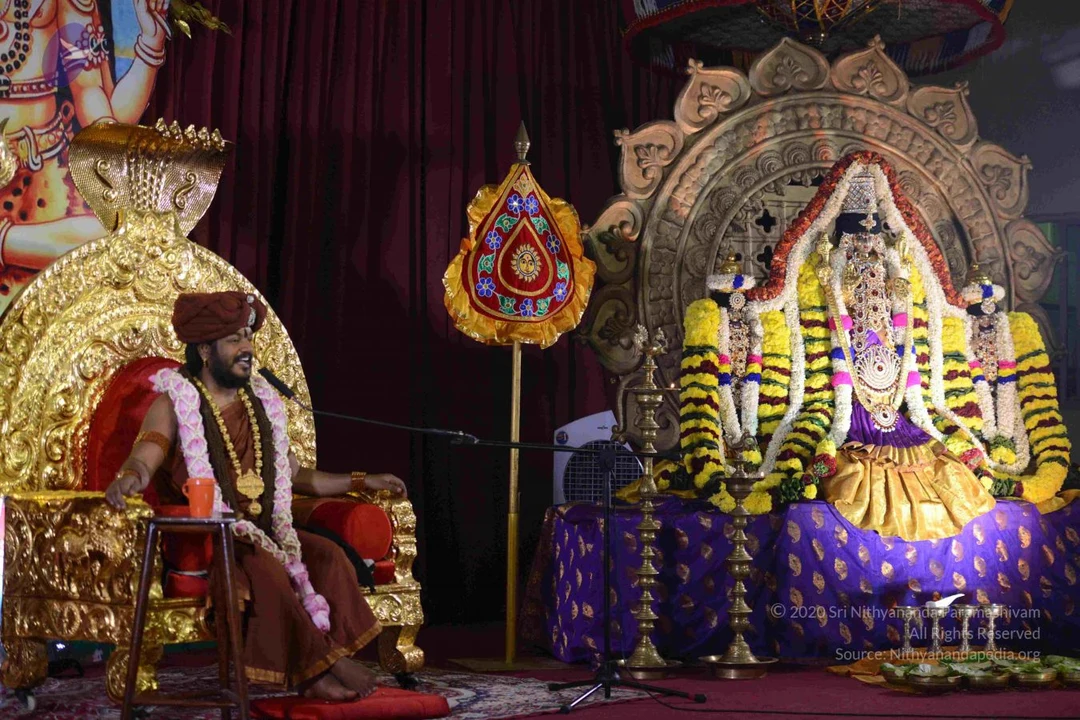
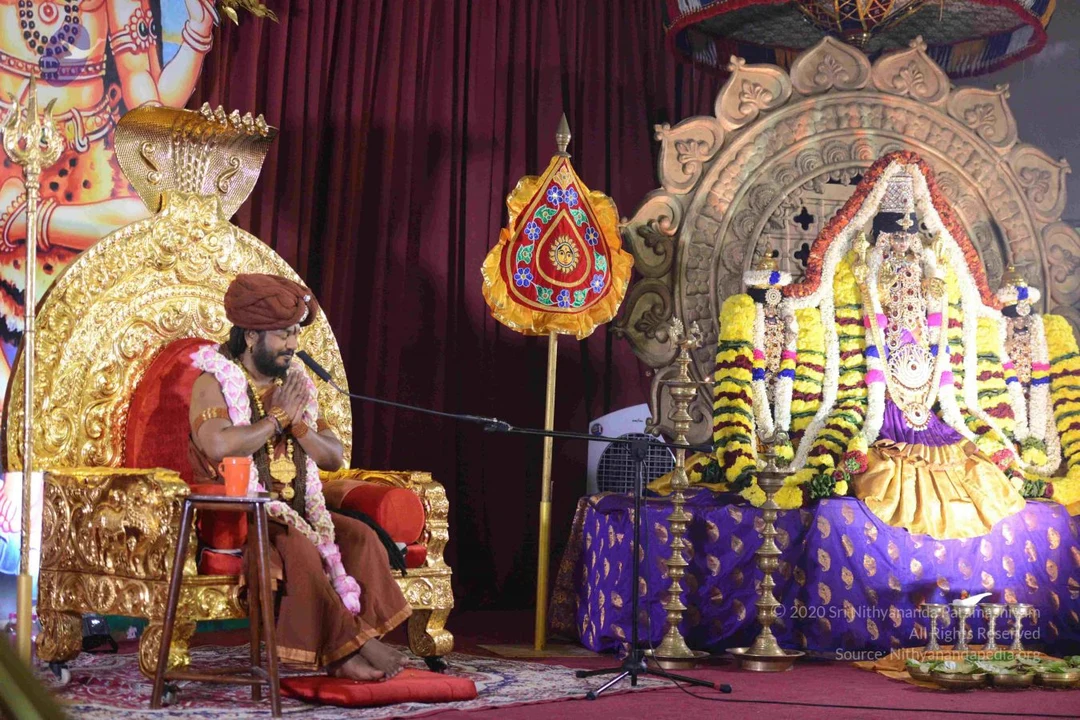
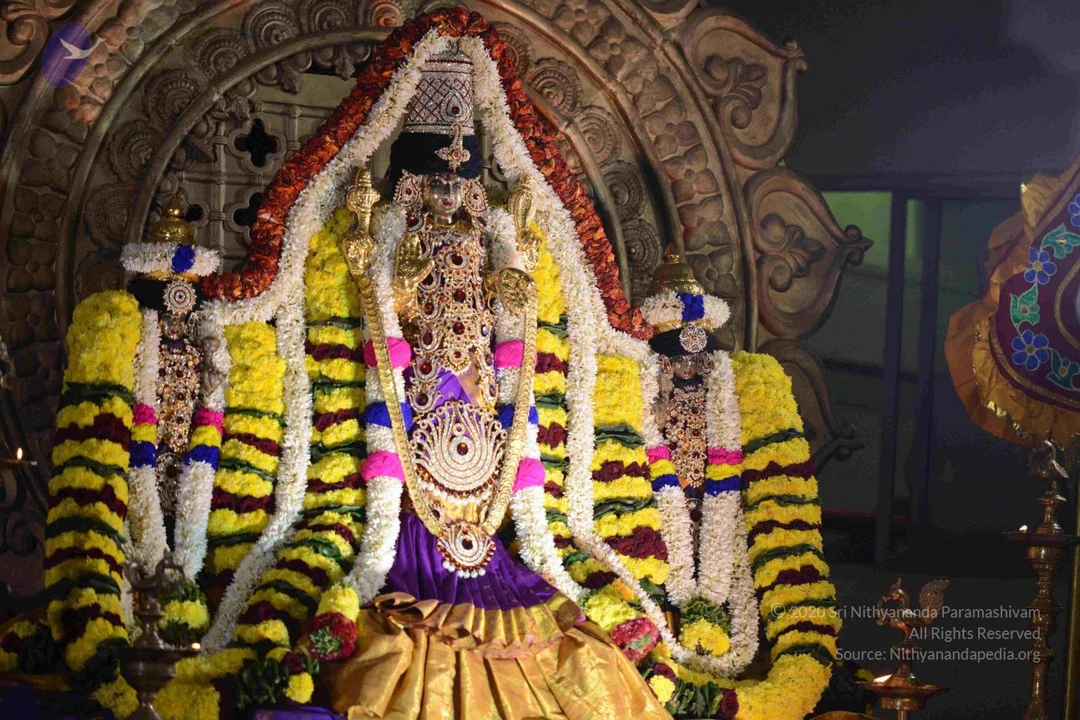
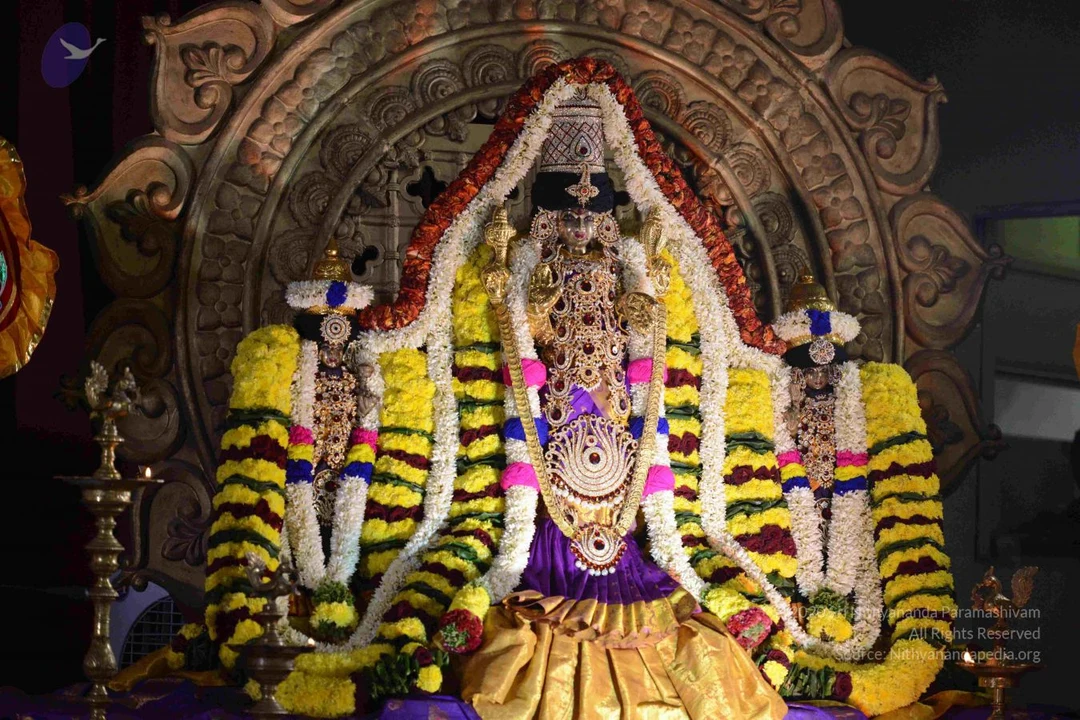
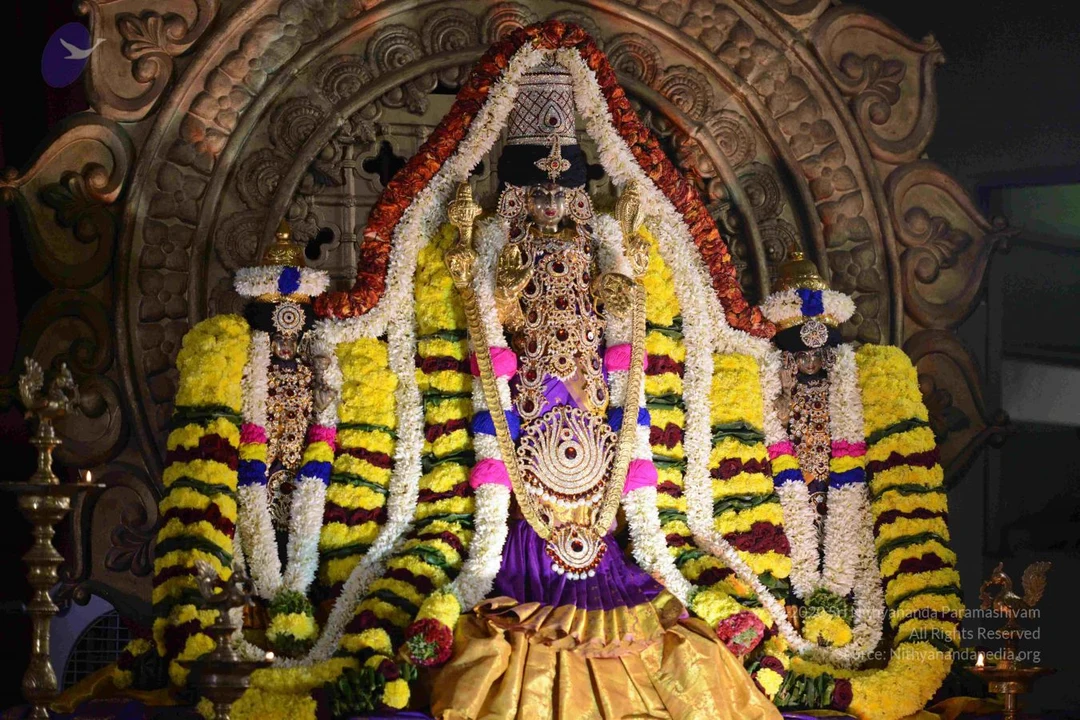
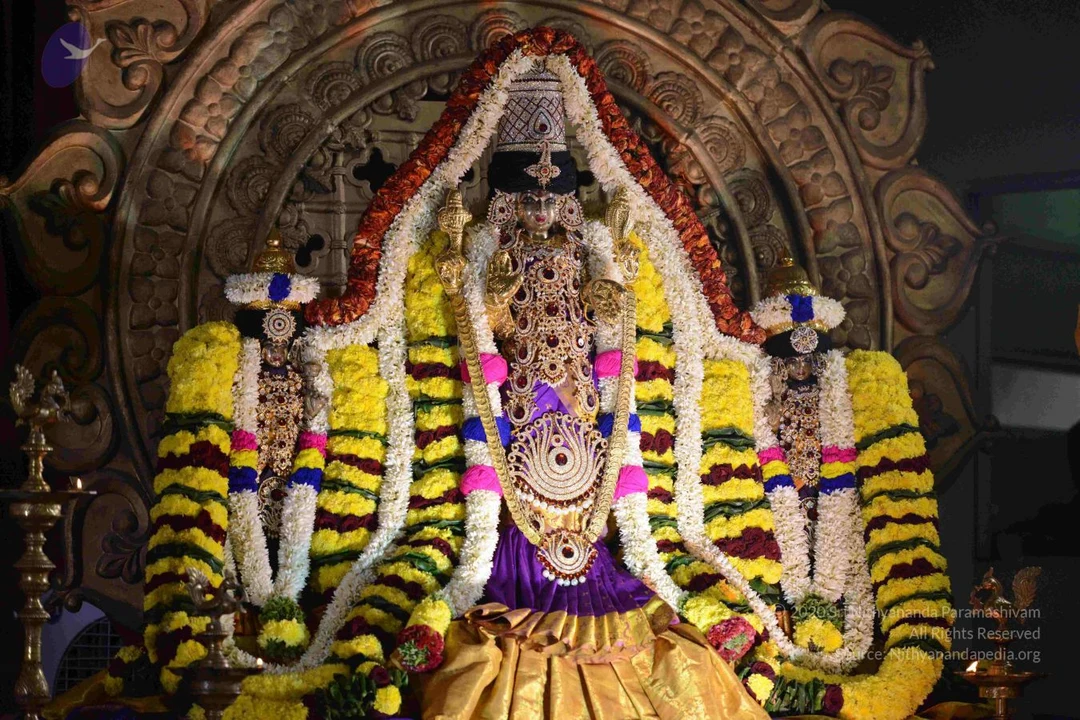
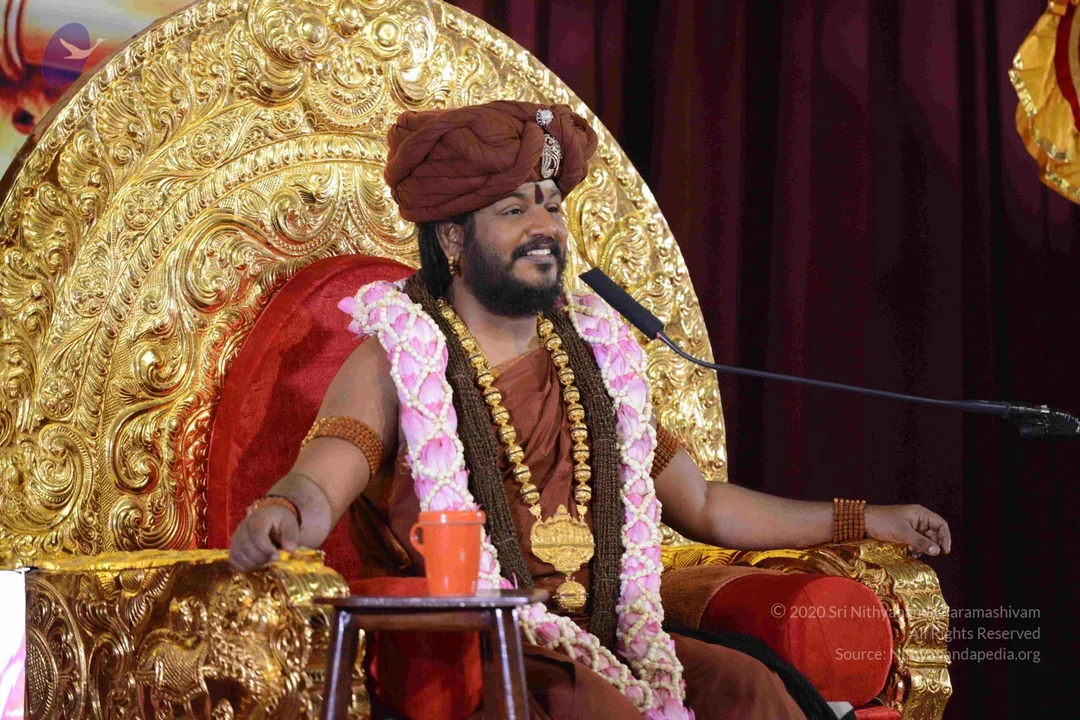
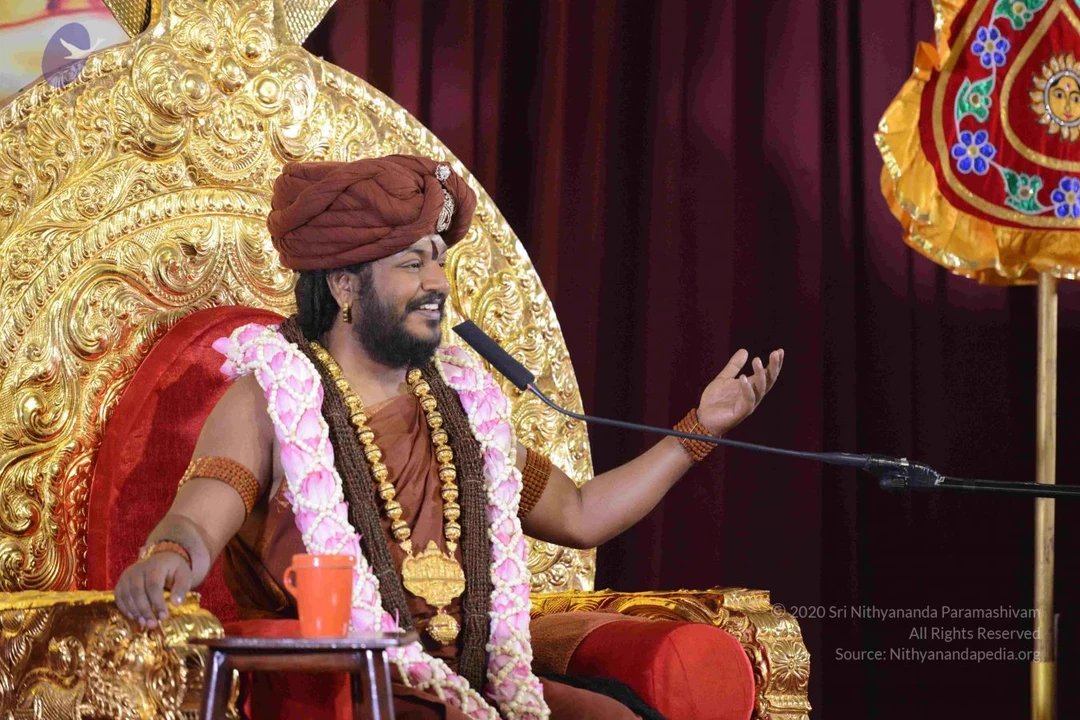
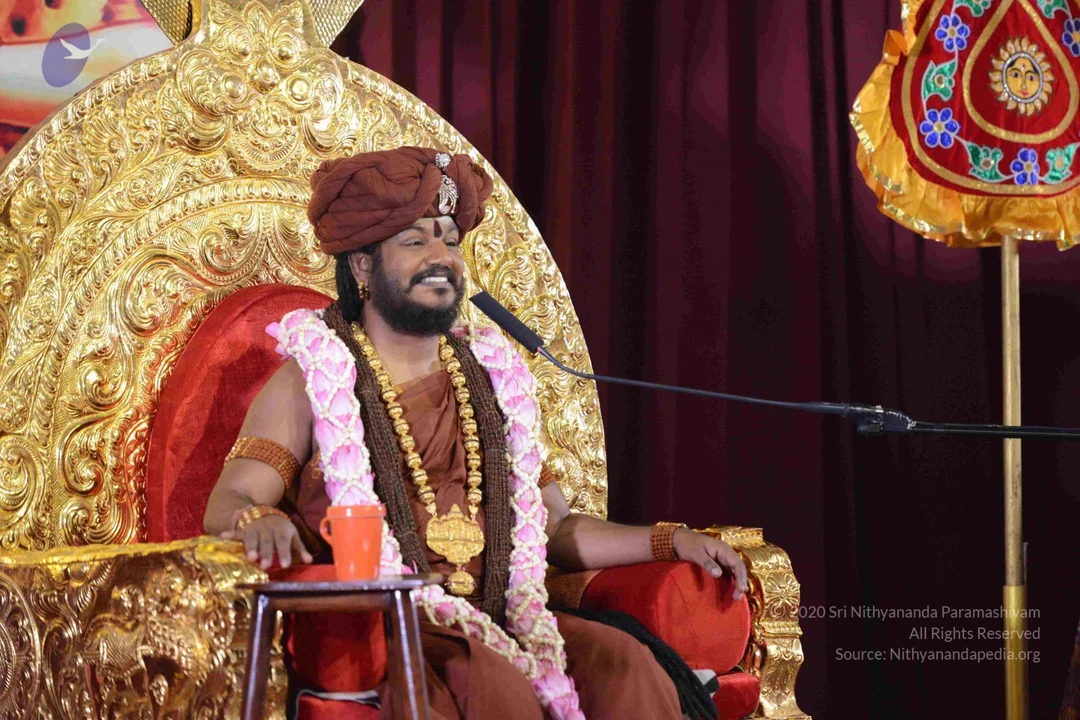
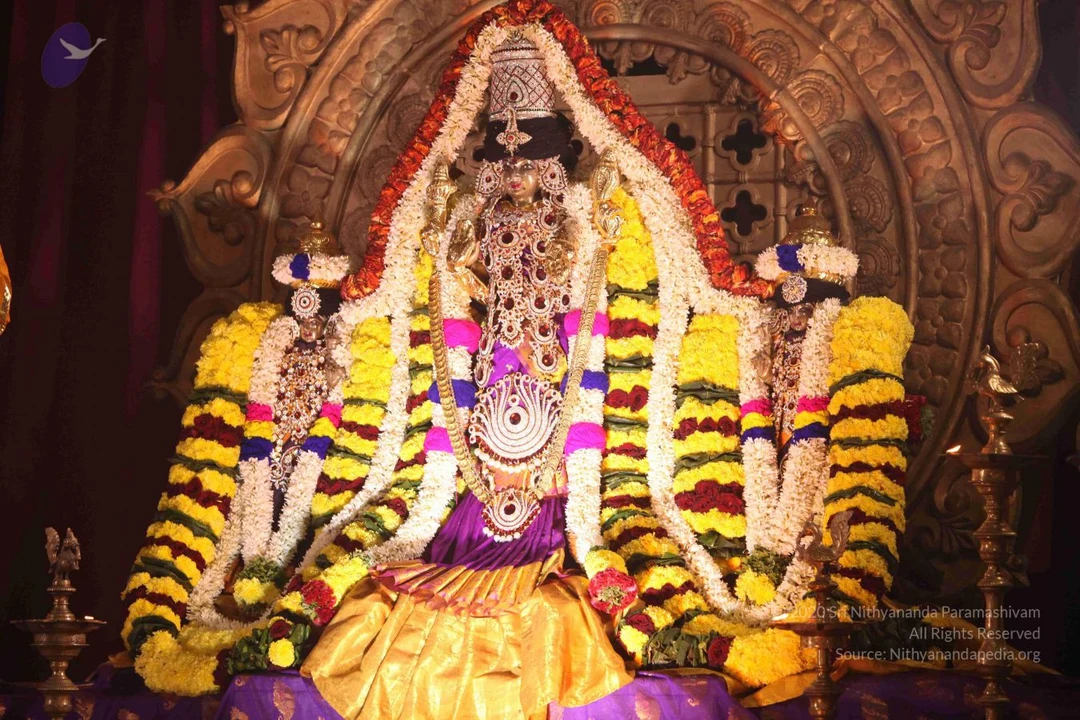
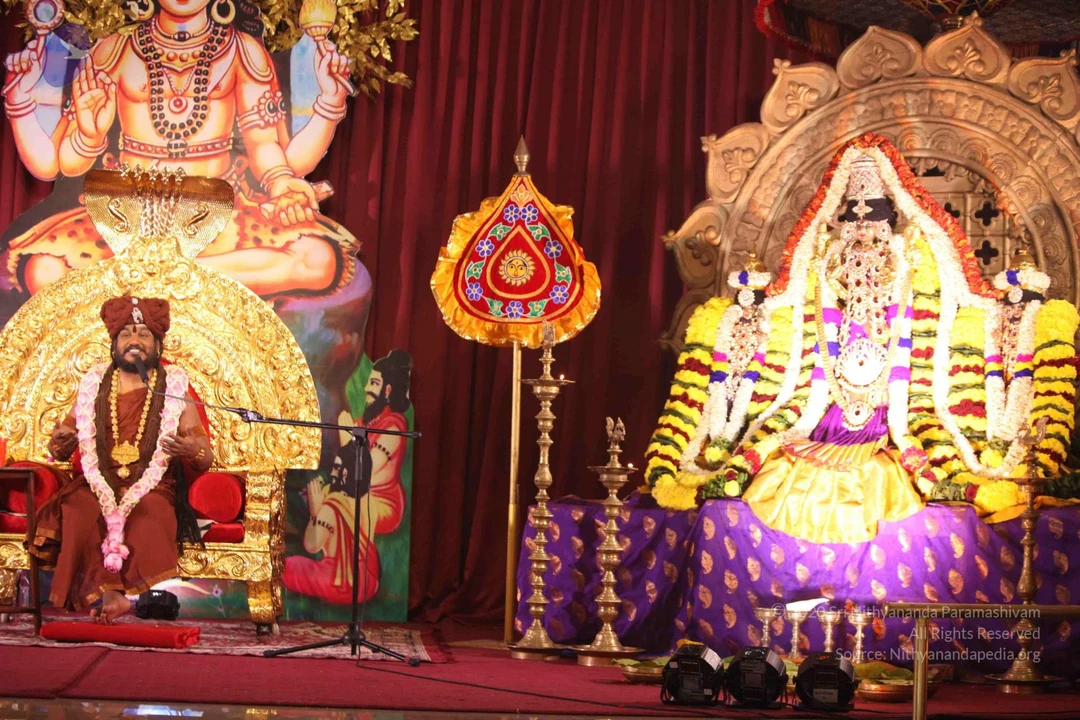
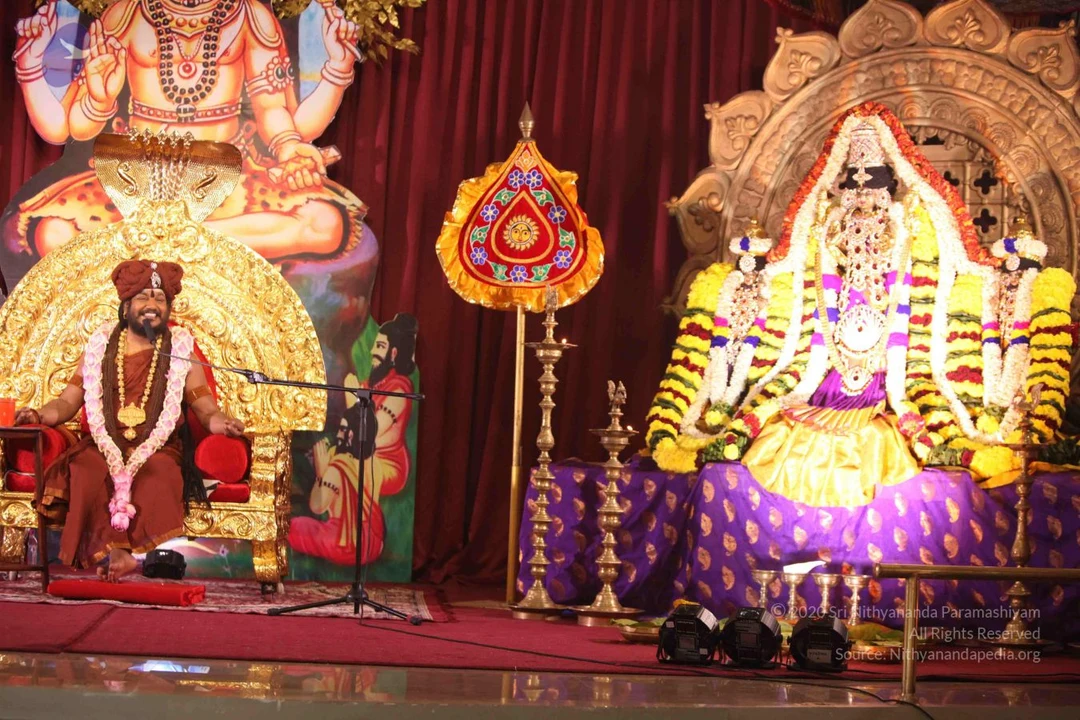
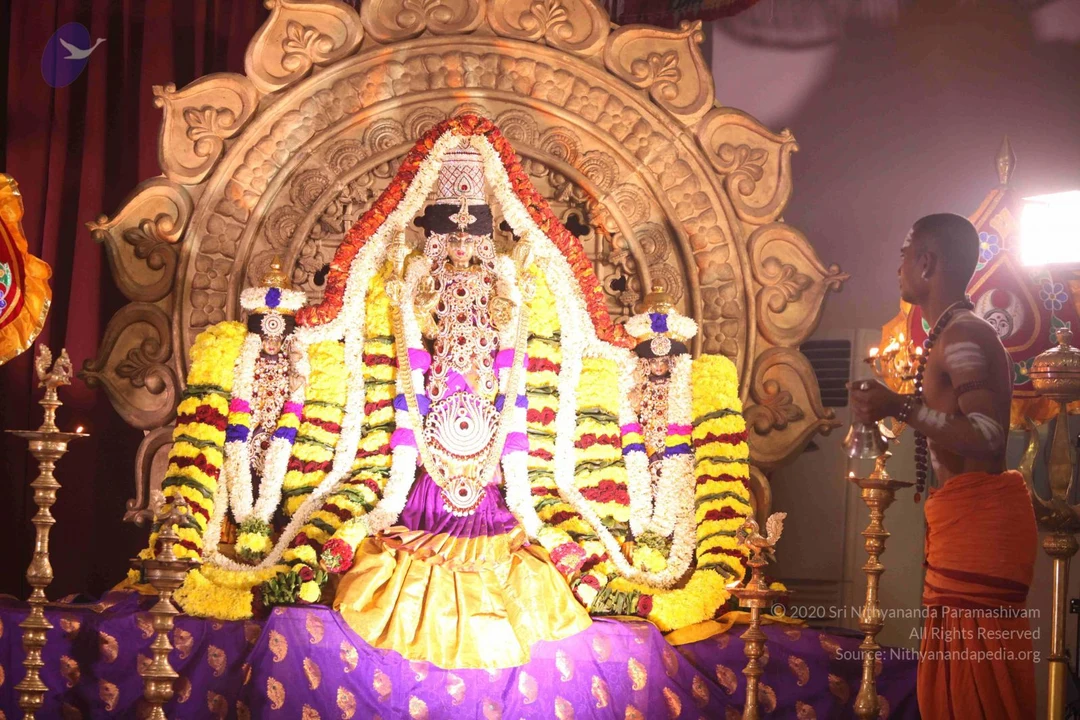
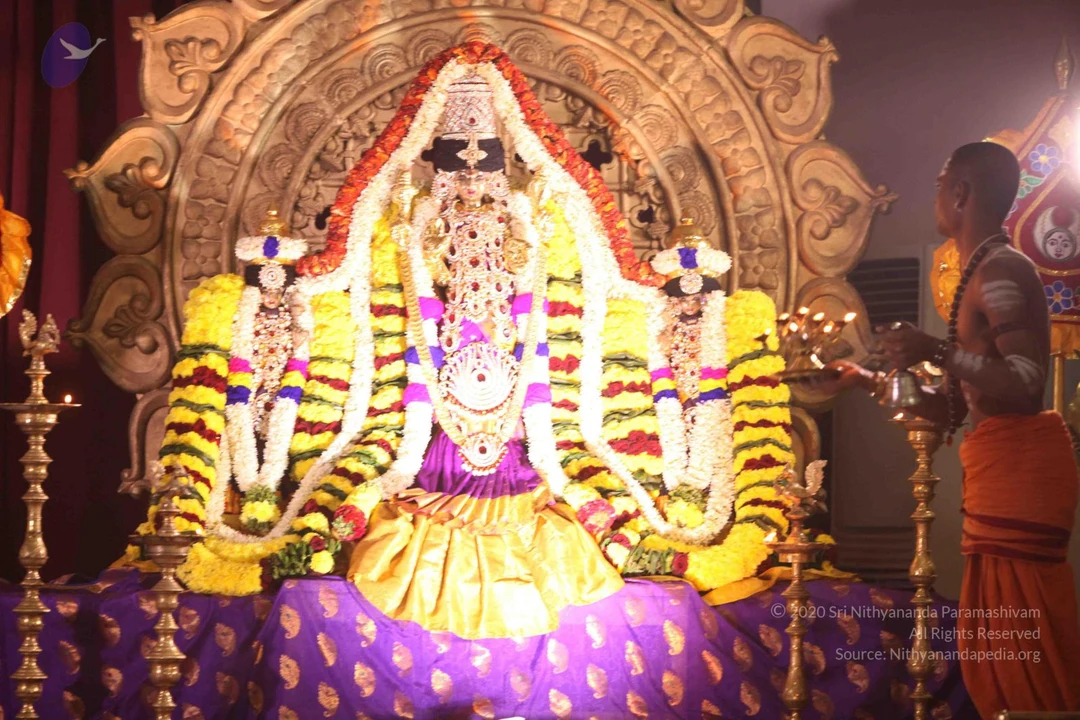
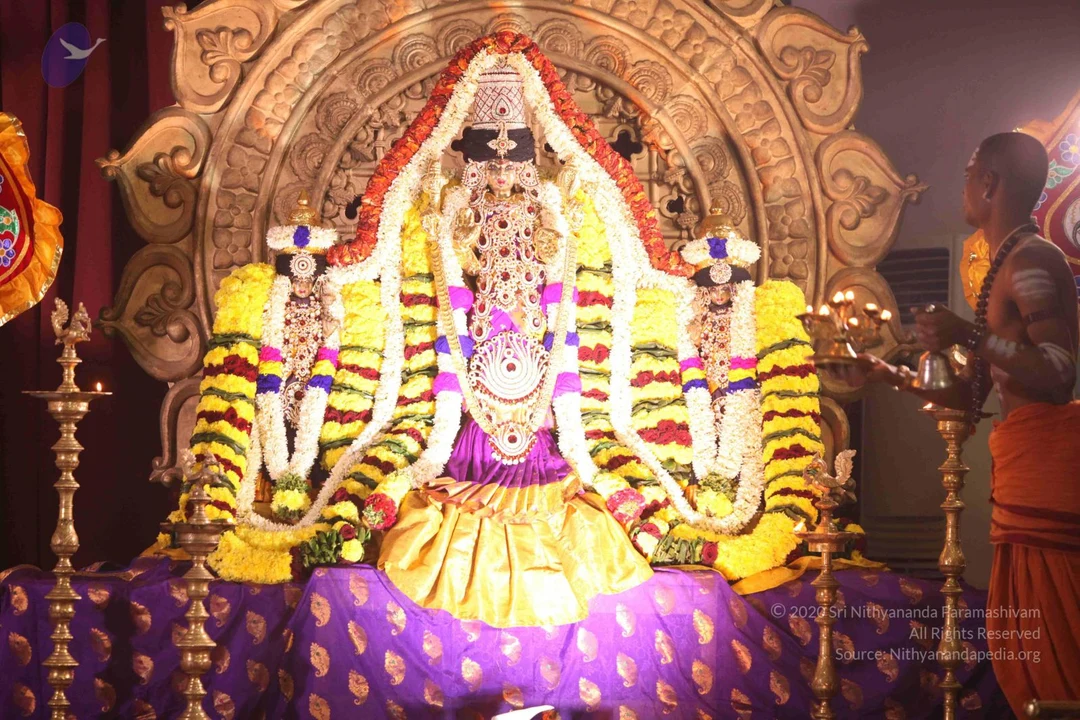
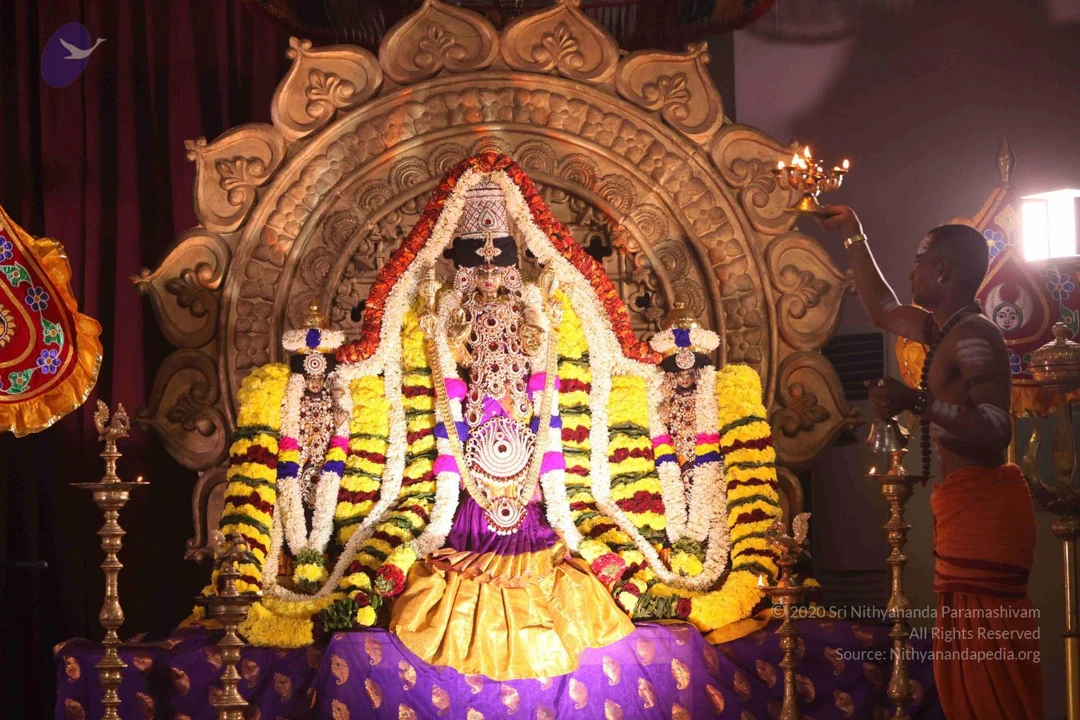
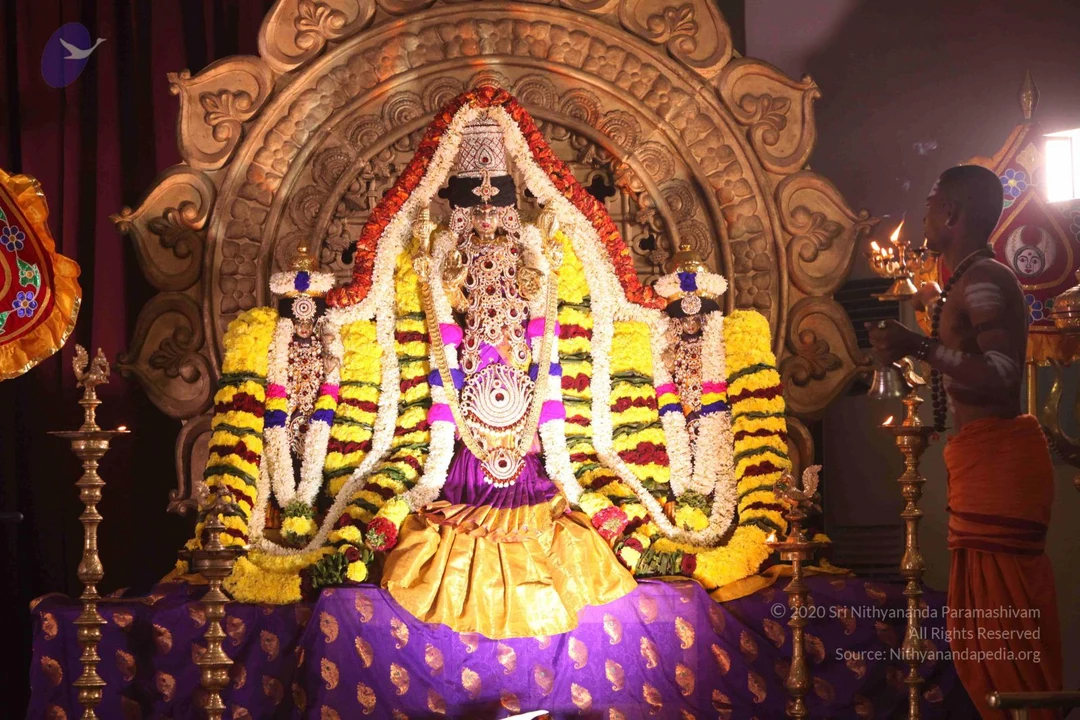
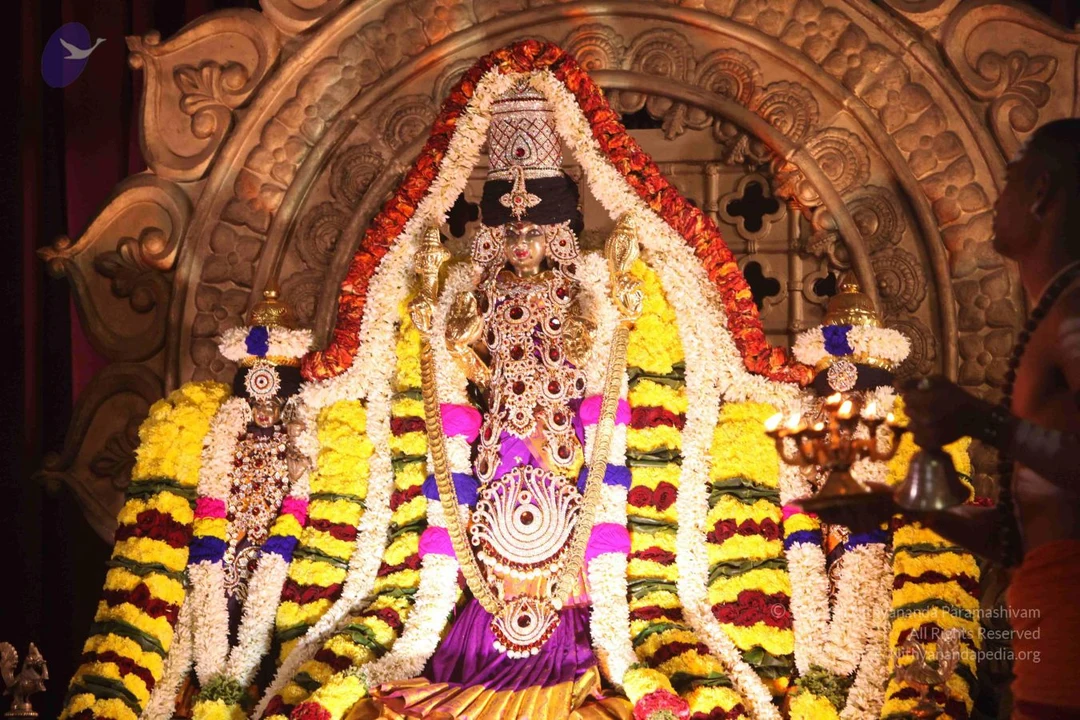
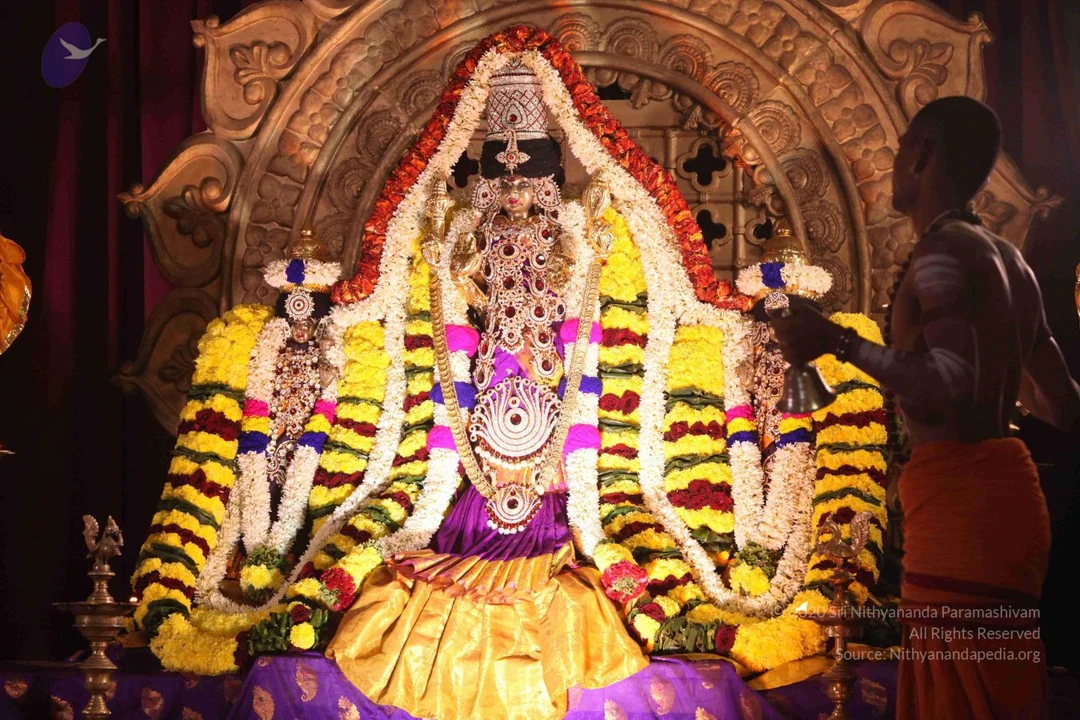
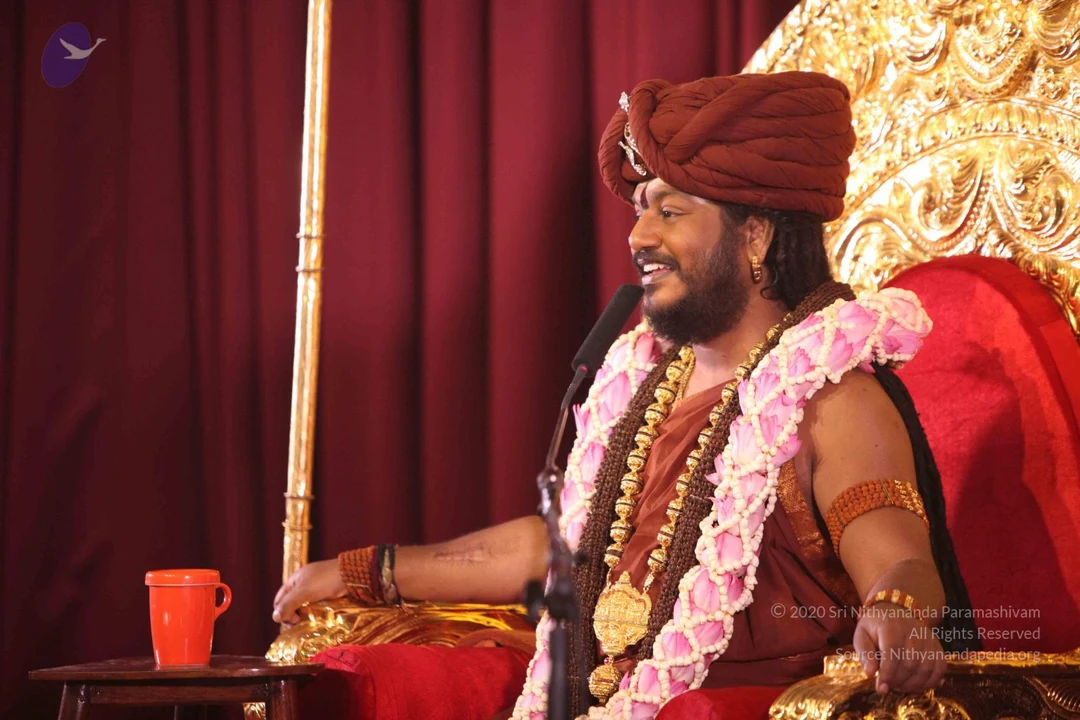
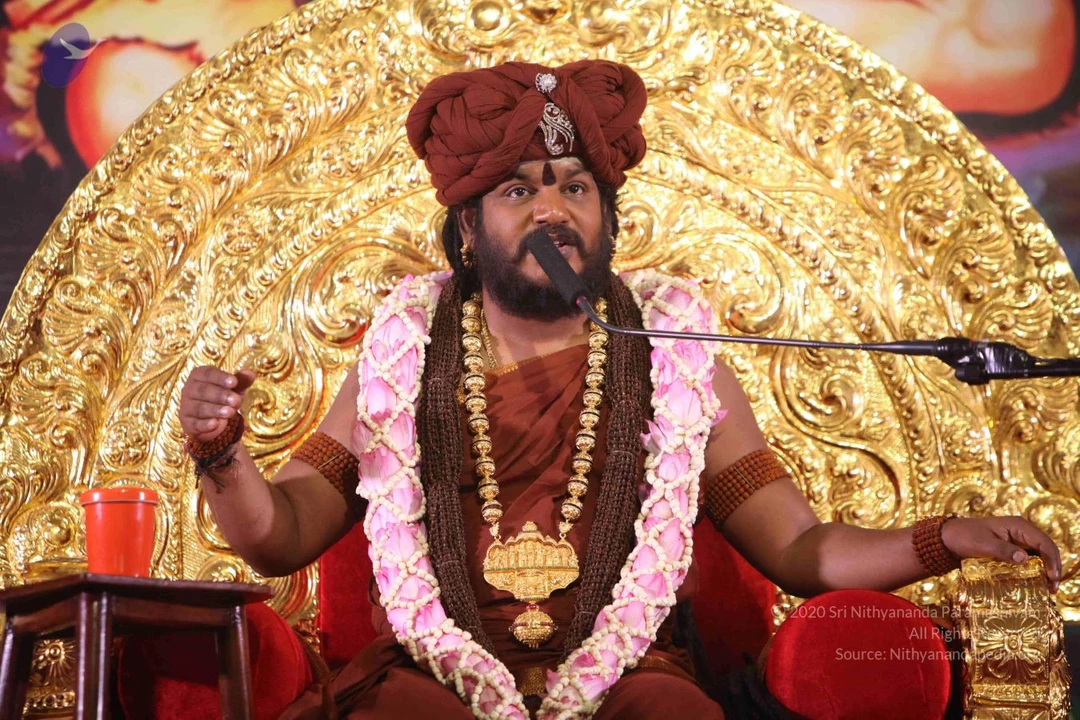
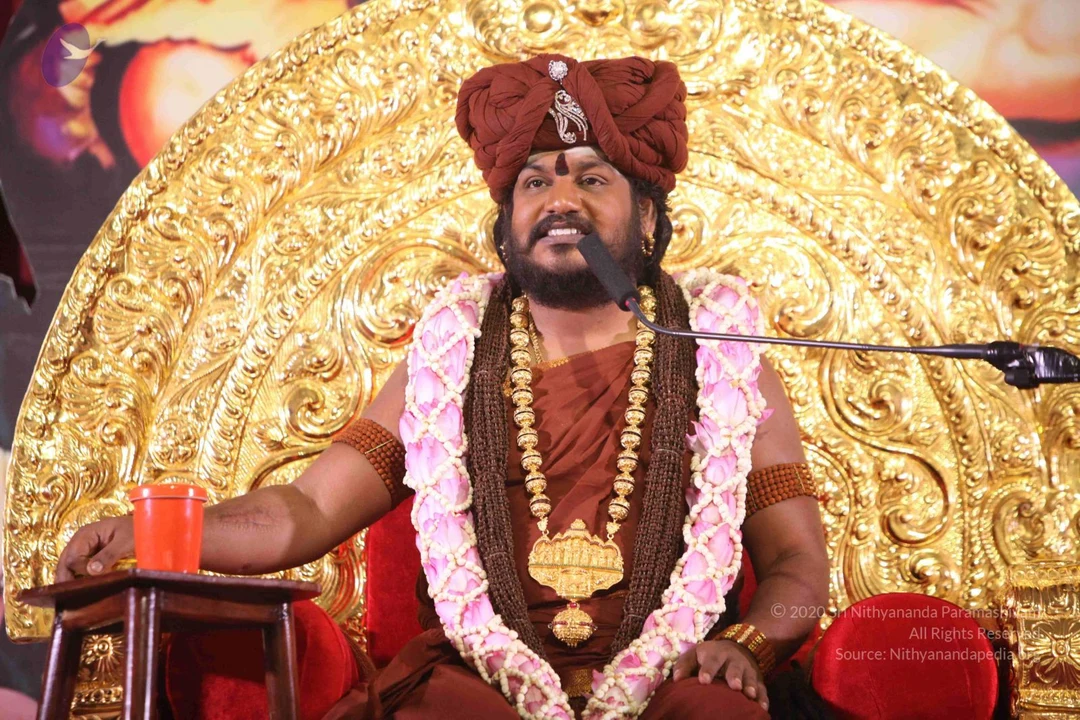
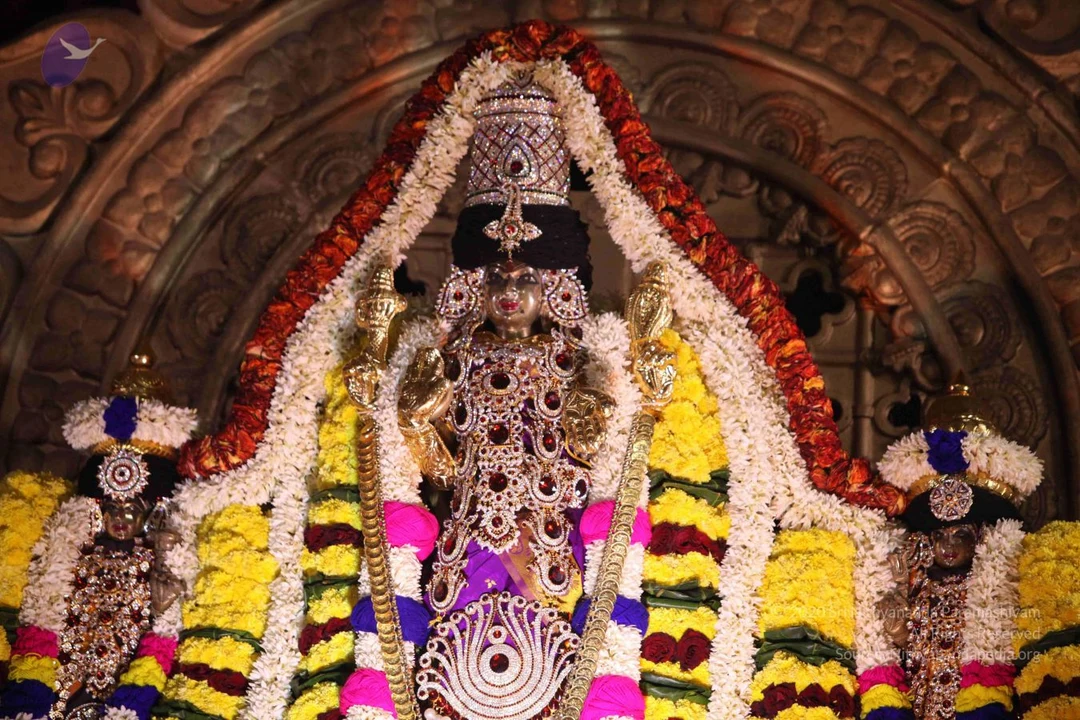
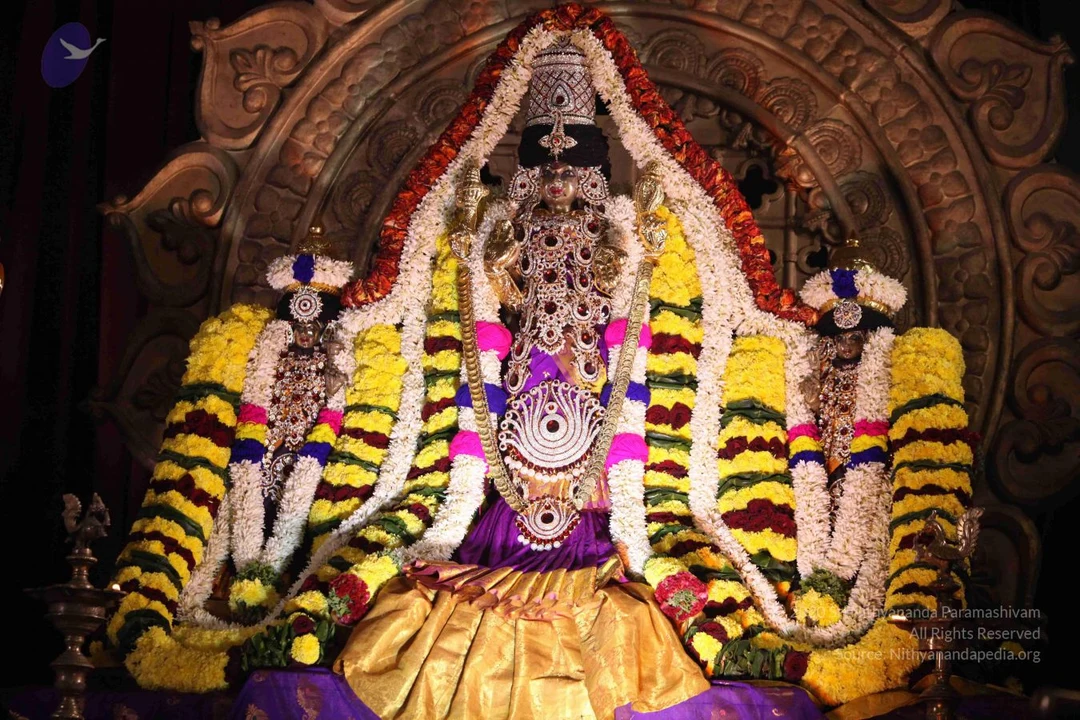
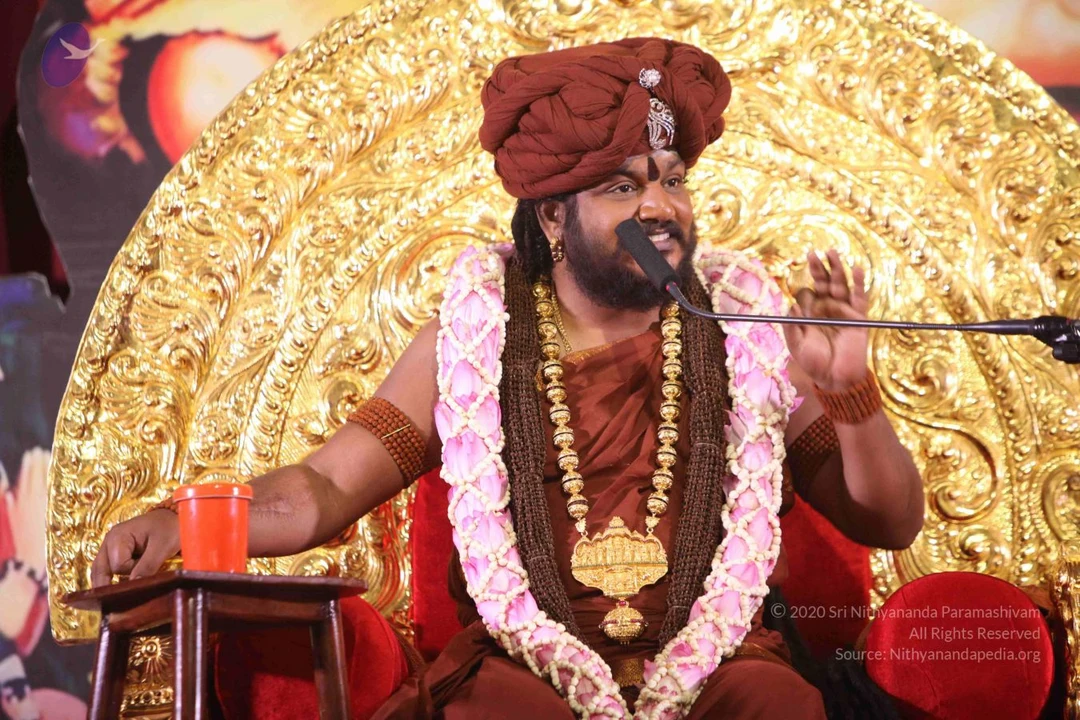
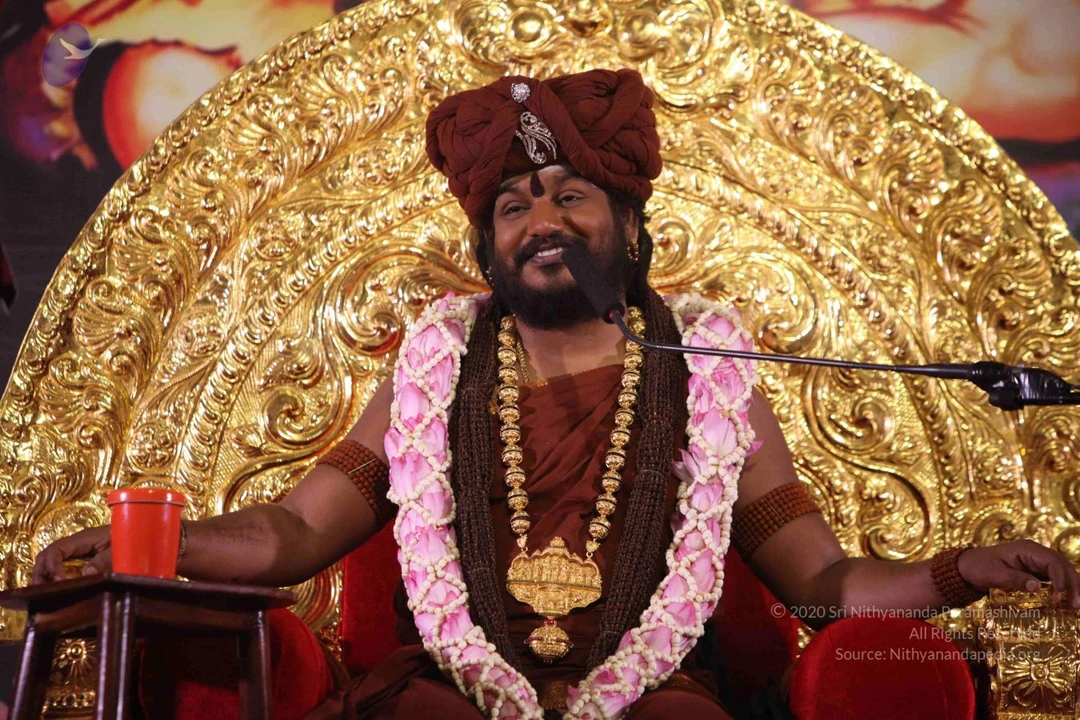
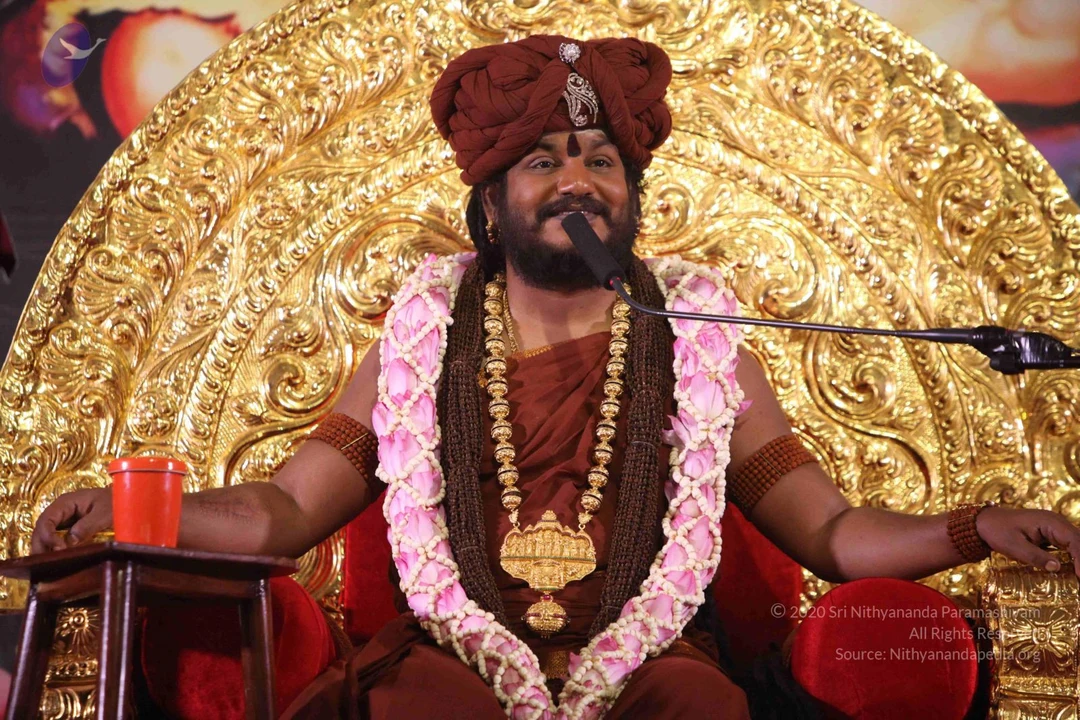
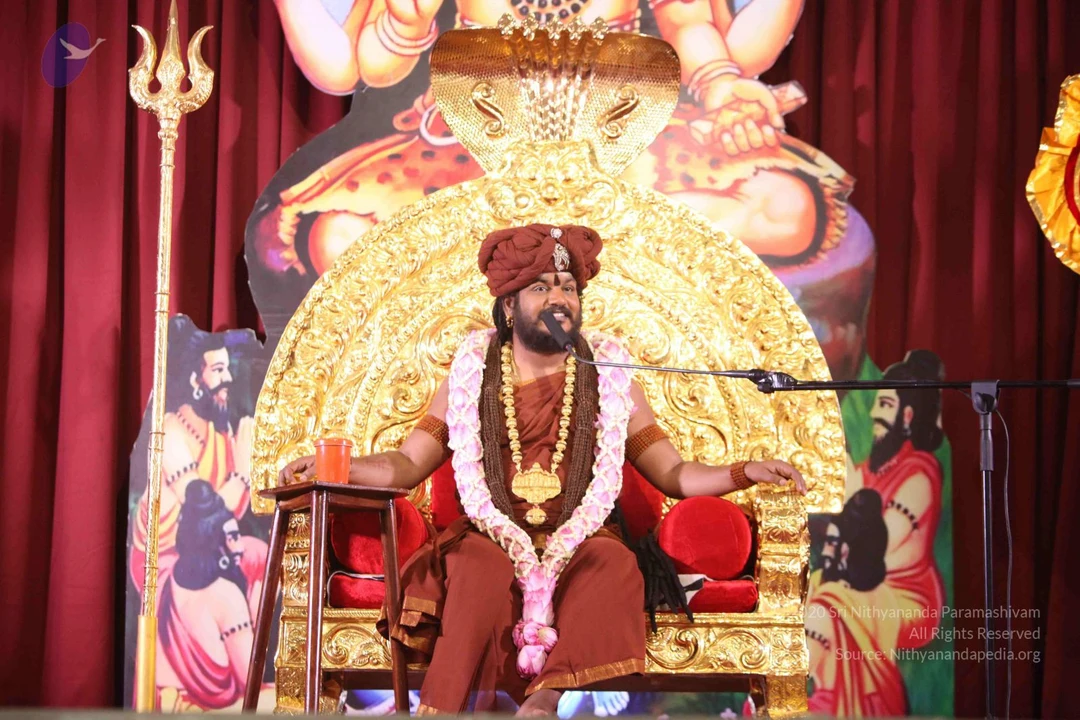
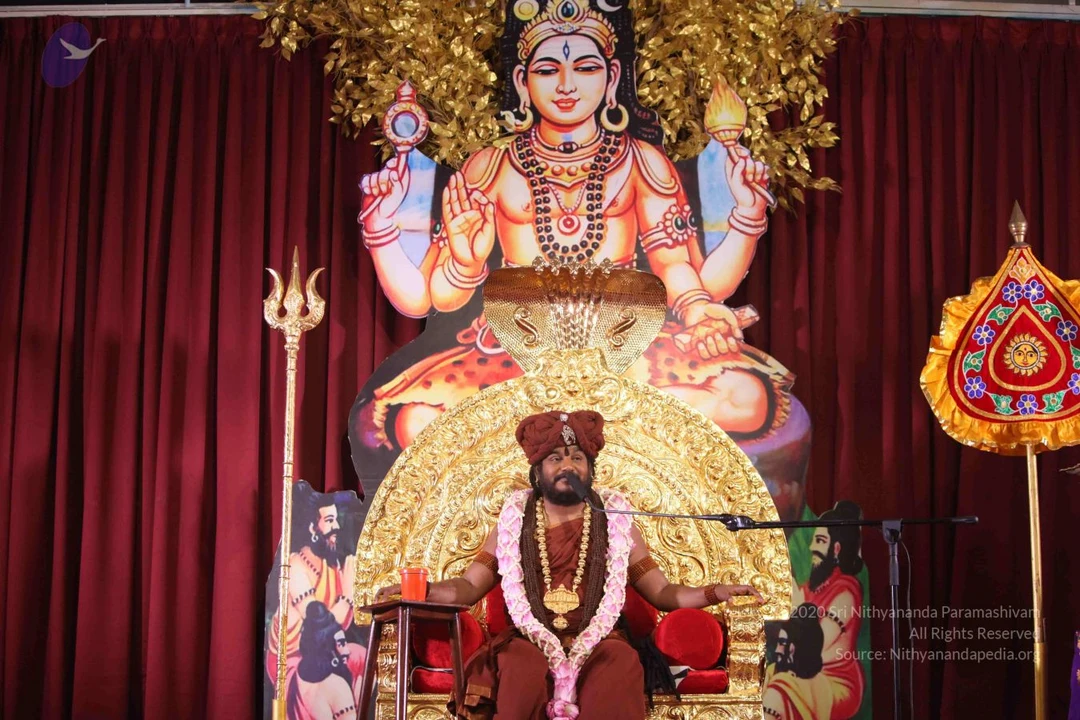
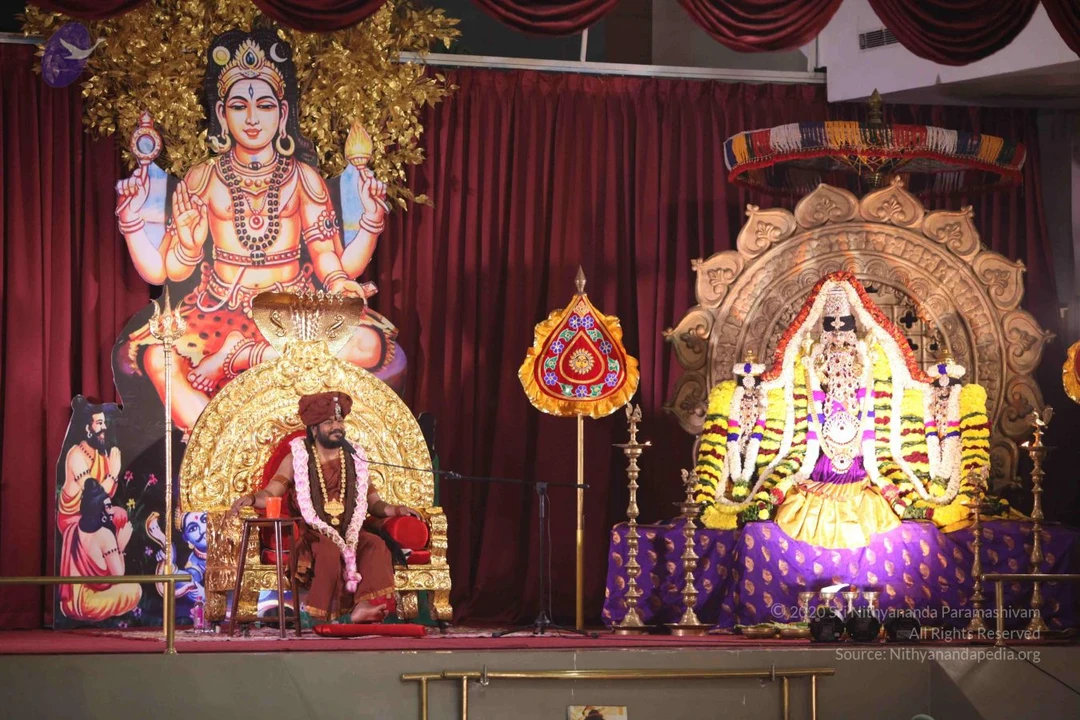
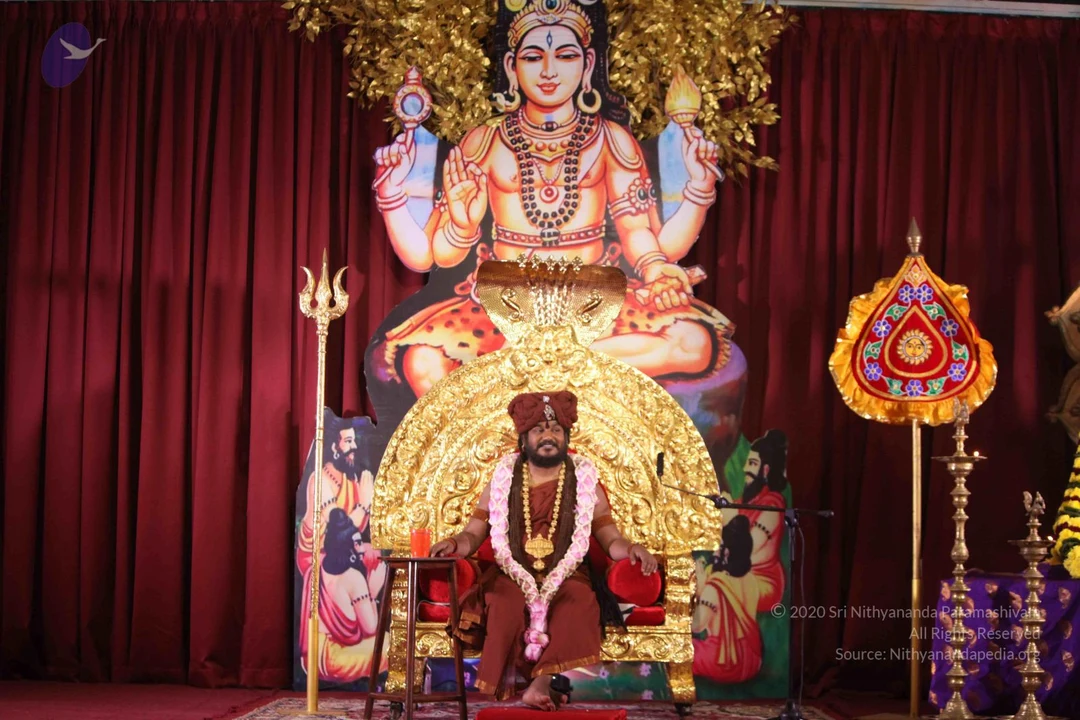
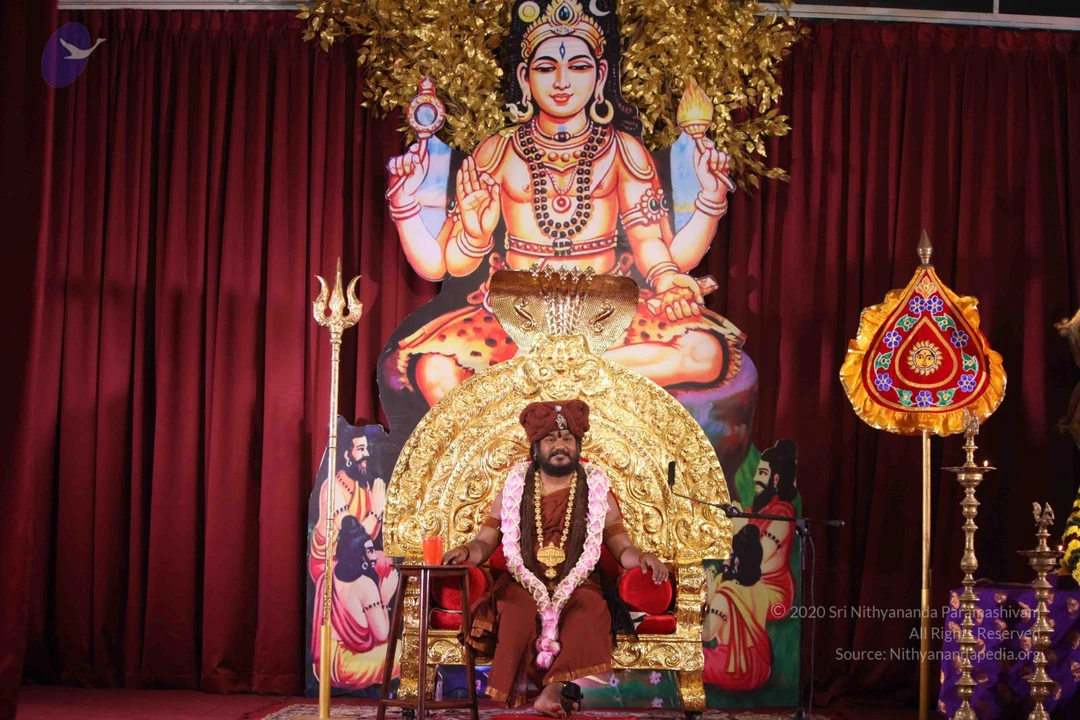
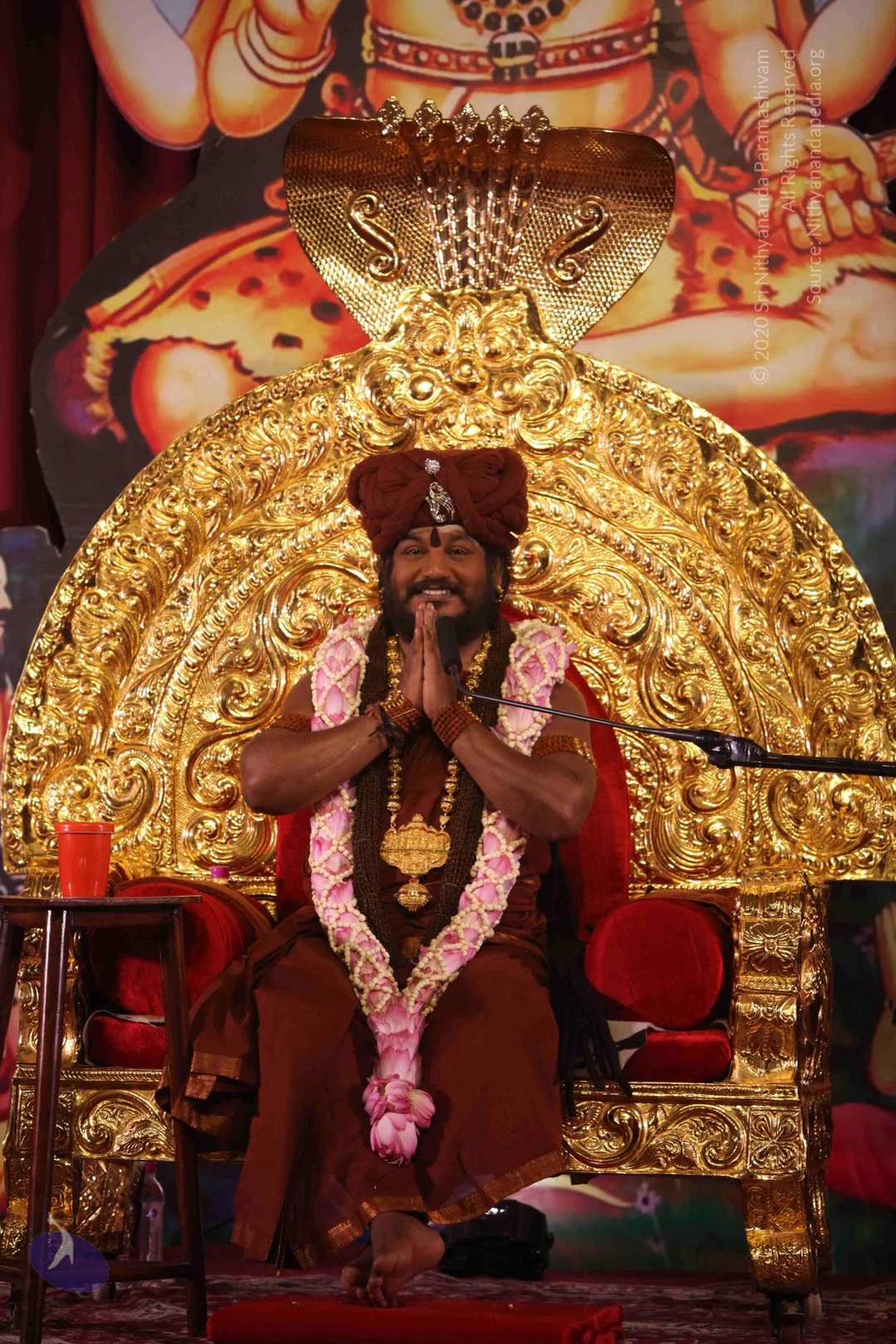
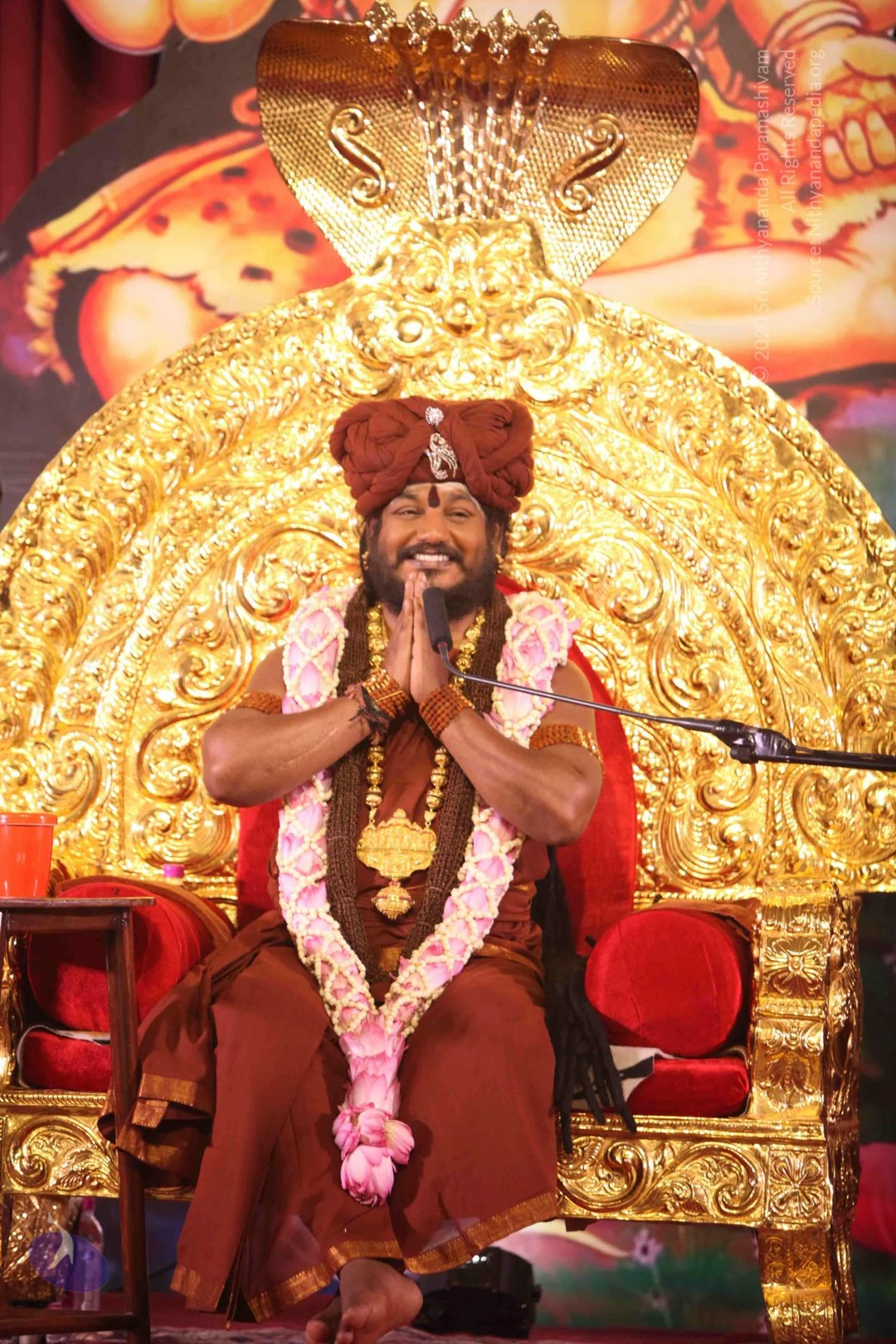
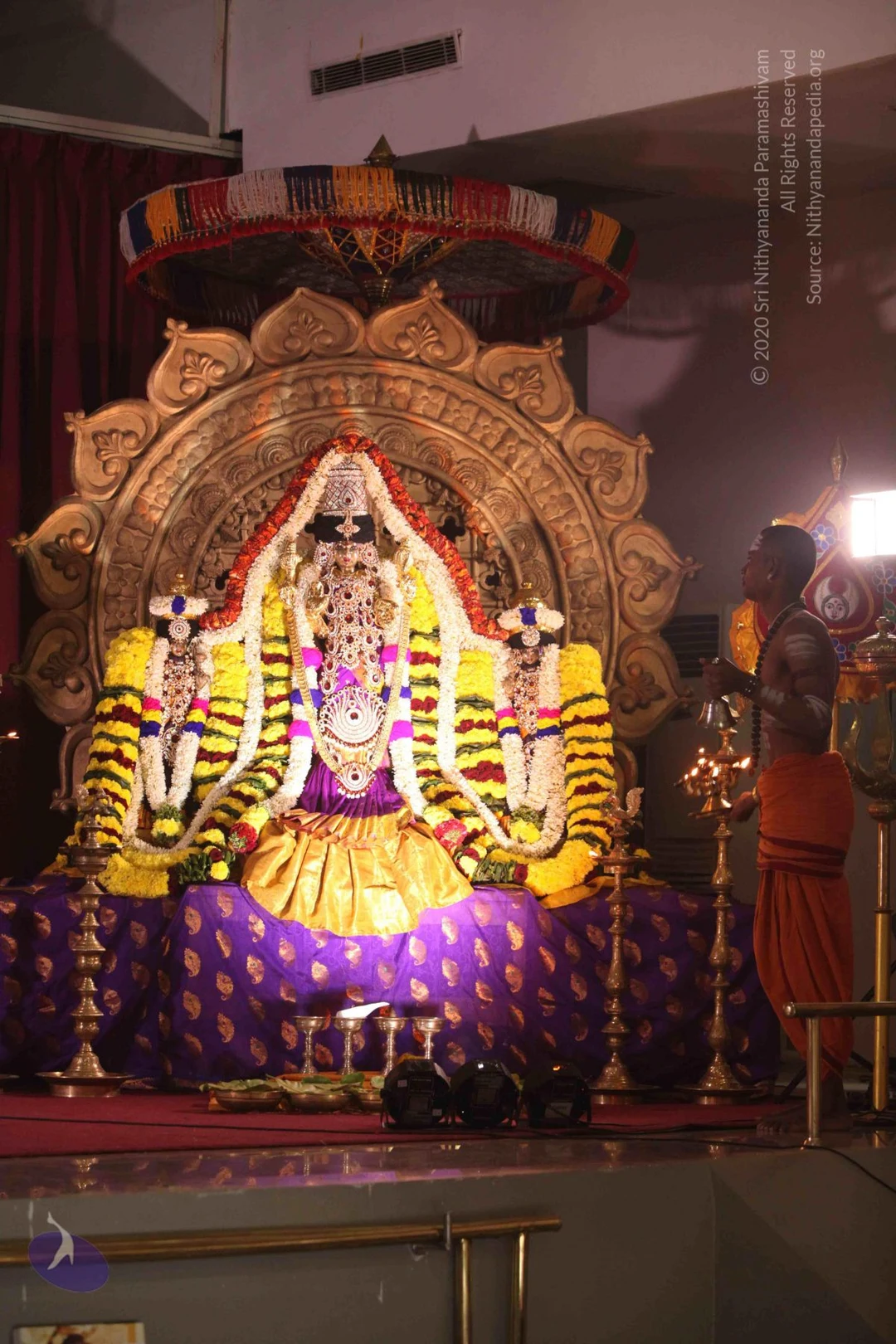
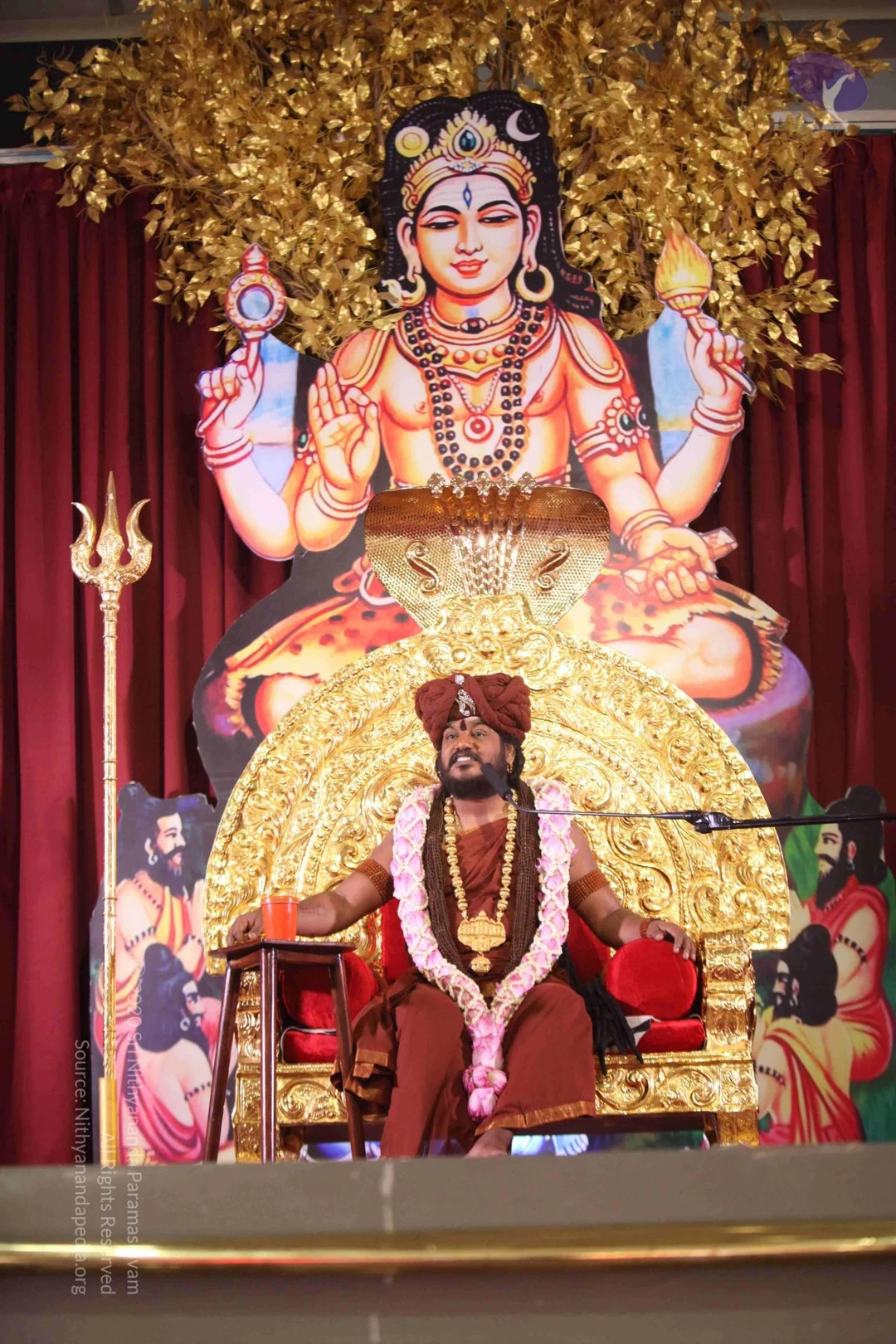
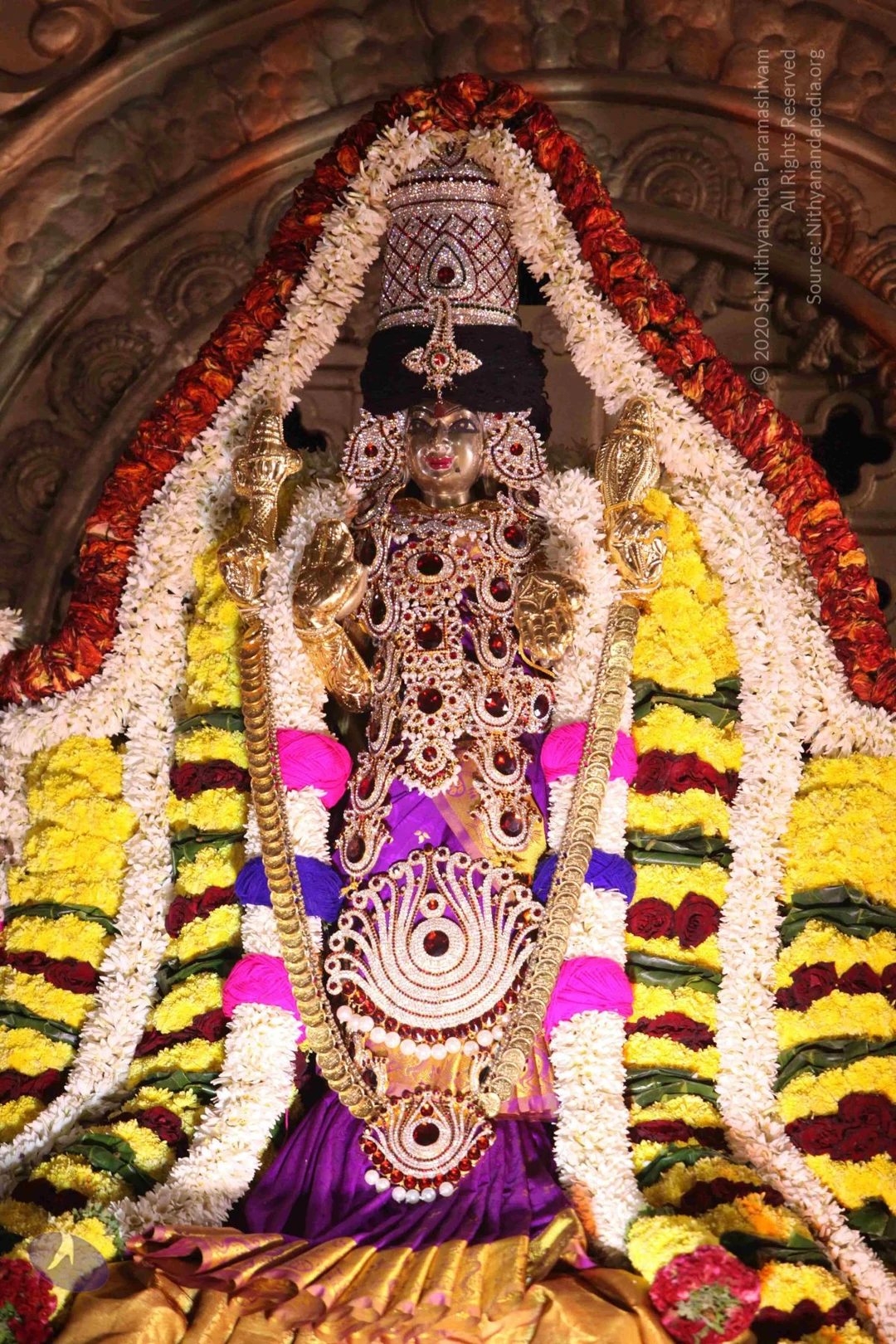
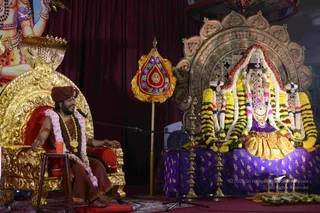
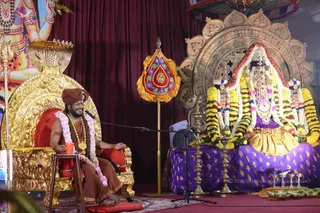
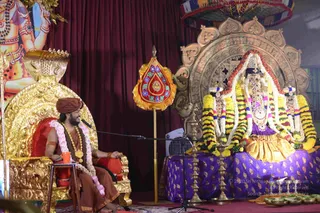
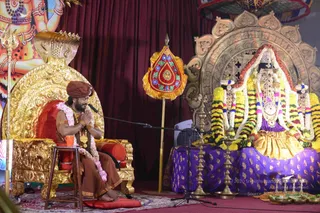
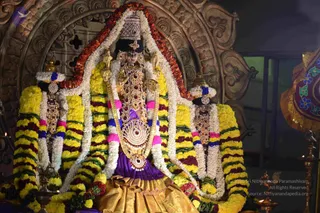
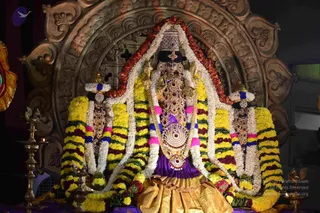
A photograph of a seated man on a large gold ornate throne with a cobra-hooded backrest, wearing a rust-orange turban, orange-brown robes, a gold necklace and a white-and-pink flower garland, smiling while speaking into a microphone on a stand. Beside him stands a decorated deity murti on a purple brocade-draped platform, adorned with a gold crown, a white and red flower garland and rows of yellow and multicolour garlands. Brass oil lamps stand in front of the deity, with clay lamps arranged on the lower right. Behind them hang deep red curtains, a gold embroidered ceremonial standard stands in the centre, and a large ornate silver-toned arch frames the deity. The setting suggests a discourse at a satsang.A seated man in an orange-brown robe and matching turban sits on an ornate gold throne with a red cushion, smiling, with a pink-and-white garland draped over his shoulders and a rudraksha mala with a gold pendant. He holds a small glass near a side table and a microphone stands before him. To the right, a large deity murti is adorned with yellow, orange and white garlands, gold jewellery and a gold crown, set on a purple brocade-draped platform. Brass oil lamps and a brass kalasha-style vessel stand in front, with a gold ceremonial parasol-like fan nearby and a red-and-gold backdrop. Swamiji (probable) is seated on the throne, identified by his turban, garland, rudraksha mala and orange robes.A man in orange-brown robes and an orange turban sits on an ornate gold throne with a red cushion, speaking into a microphone on a stand. He wears a rudraksha mala, gold pendant and a pink-and-white flower garland, with bangles on his wrist. Beside him stands a small brass table holding an orange cup. Before a maroon curtain, a golden arched frame surrounds a deity murti dressed in a purple and gold sari, adorned with a red-and-yellow flower garland, gold ornaments and a crown. Brass oil lamps and a yellow-and-blue decorated umbrella stand nearby, and offerings sit on the floor at lower right. Probable Swamiji is seated on the throne, identified by the swept turban, rudraksha mala and ceremonial gold pendant.A seated man in a rust-brown turban and saffron-brown robe sits on an ornate gold throne with a cobra-hood backrest, his palms pressed together in namaskar and a pink-and-white garland draped over his shoulders. A gold rudraksha-style mala and ceremonial necklace hang on his chest. A microphone stand stands before him and a steel cup sits on a small wooden stool. To the right, a decorated deity murti is adorned with flower garlands in yellow, orange and pink and gold jewellery, set on a purple brocade-draped altar with brass oil lamps in front. A red and gold decorative umbrella stands between them, and a tapestry of a deity hangs behind the throne.A deity murti is adorned for worship, seated centrally and decorated with heavy garlands of white jasmine, yellow marigold and red flowers arranged in long swags. The figure wears an ornate gold and jewelled crown, a gold and gem-studded necklace with a large pendant, a purple upper garment and a gold-bordered skirt. Brass oil lamps stand at the lower left and right, and an elaborate carved stone arch frames the scene behind it.A decorated deity murti of a goddess is seated centrally on a purple-draped throne in front of an ornate carved brown arch. The murti wears a gold crown, heavy gold jewellery, a large gold necklace and a gold-bordered yellow-and-gold sari, and is framed by garlands of yellow, white, maroon and pink flowers arching over it. Two smaller attendant figures stand on either side, also garlanded and crowned. Brass oil lamps with lit wicks flank the shrine at the bottom corners. No living people are visible.

Kalpataru-Darshan

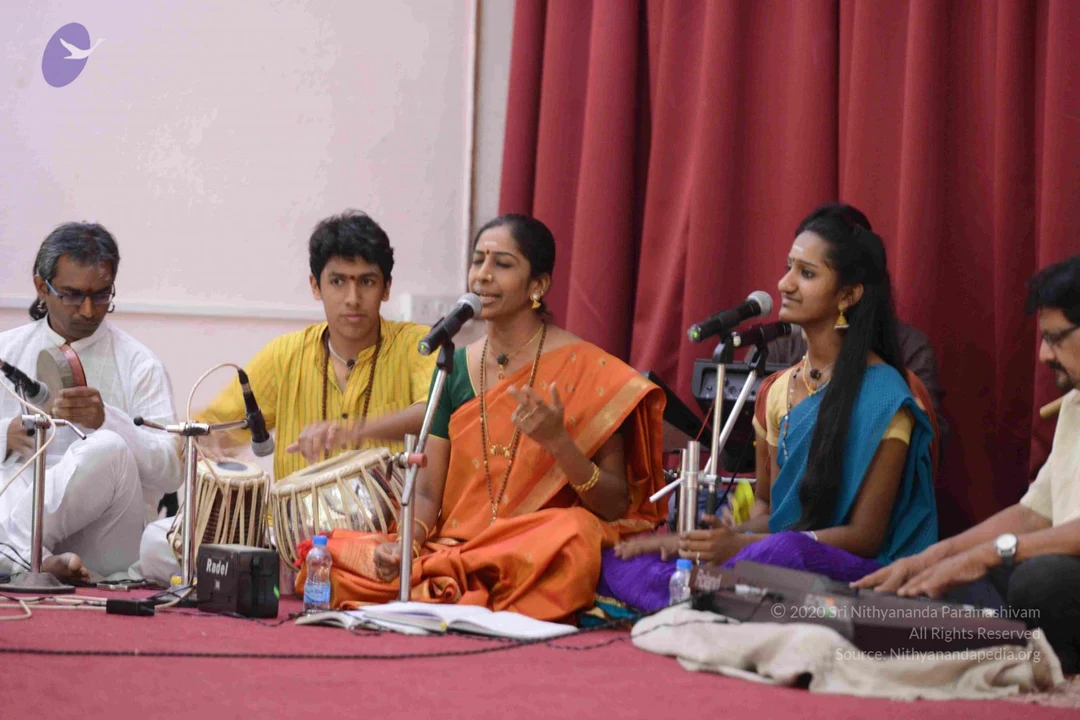
42 photosSource gallery
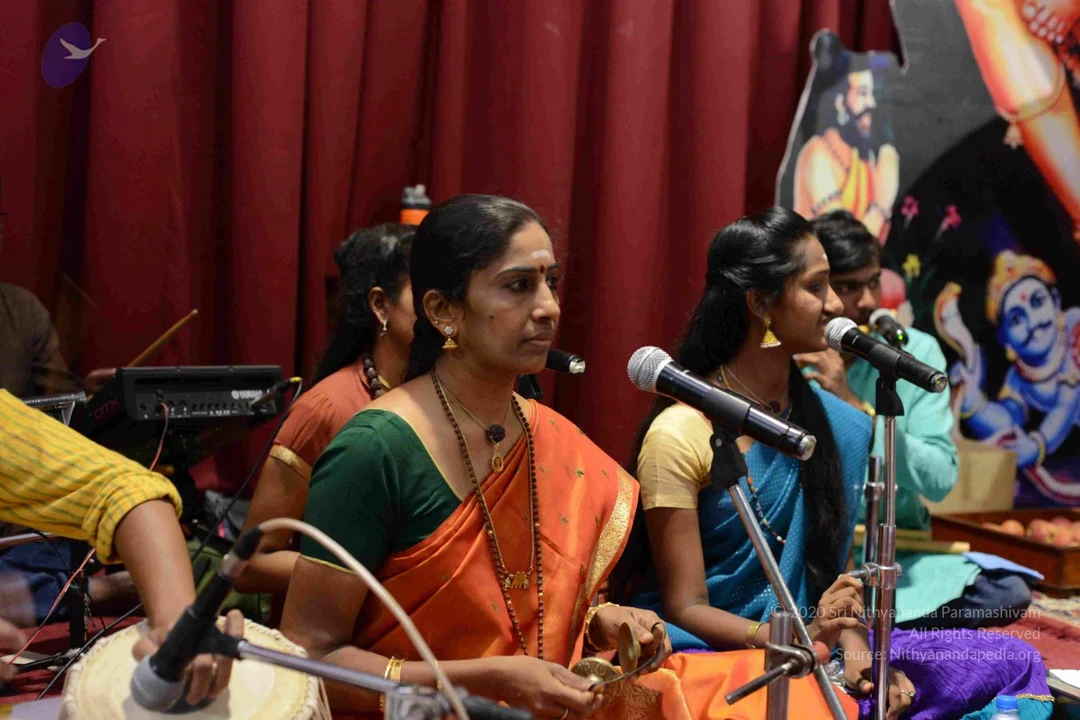
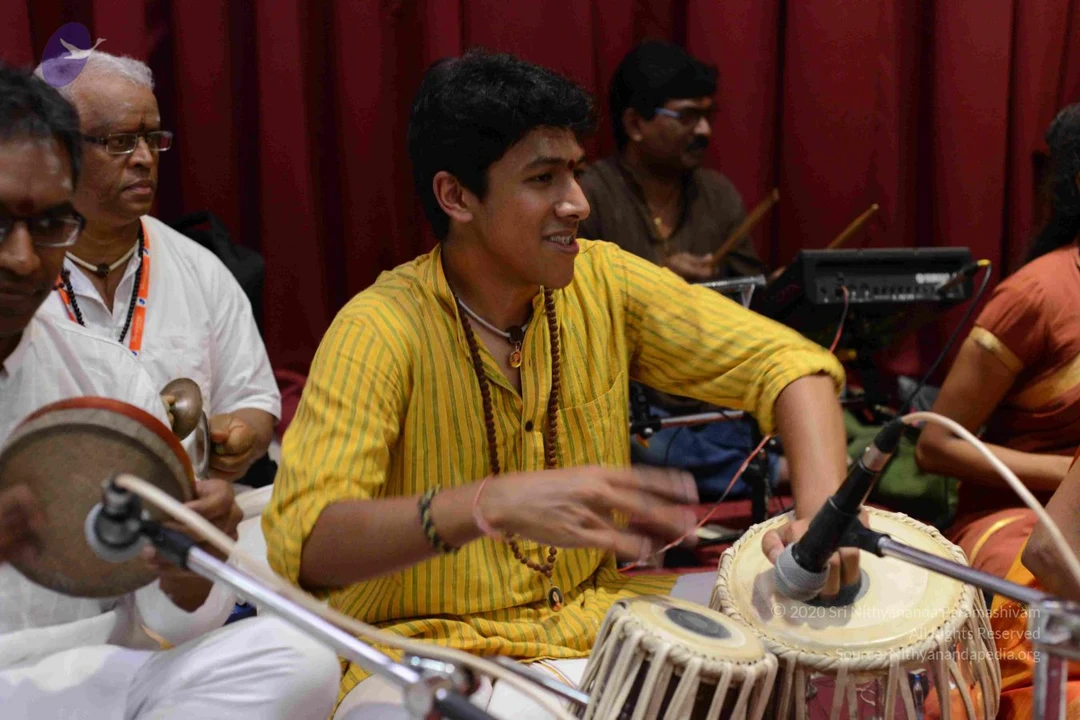
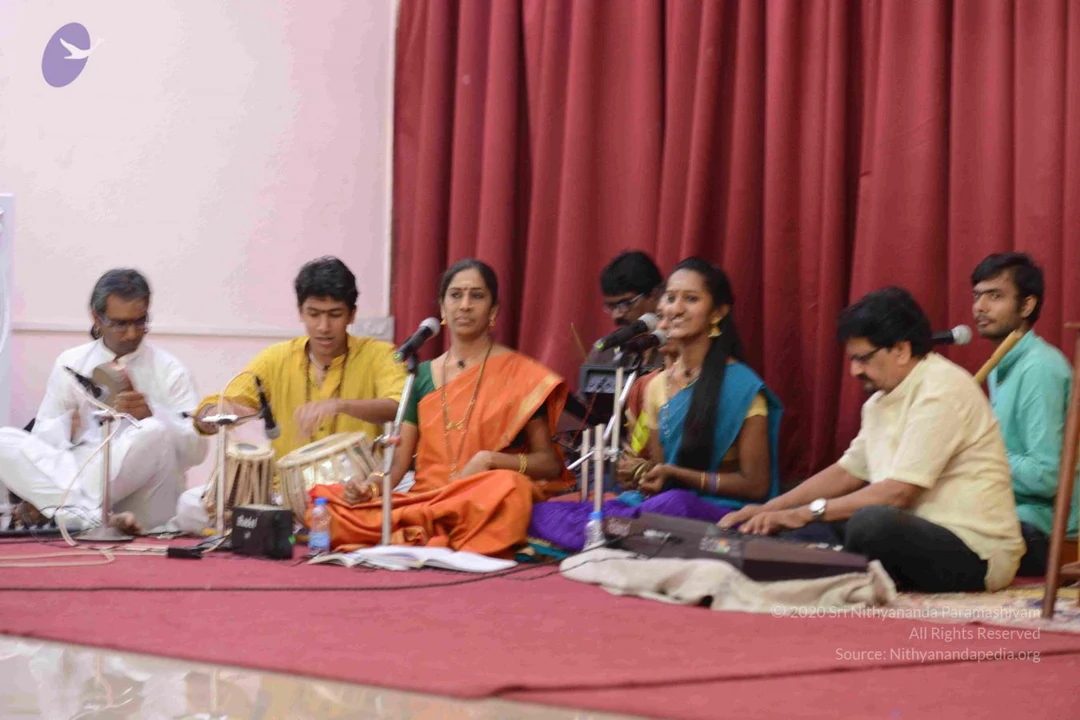
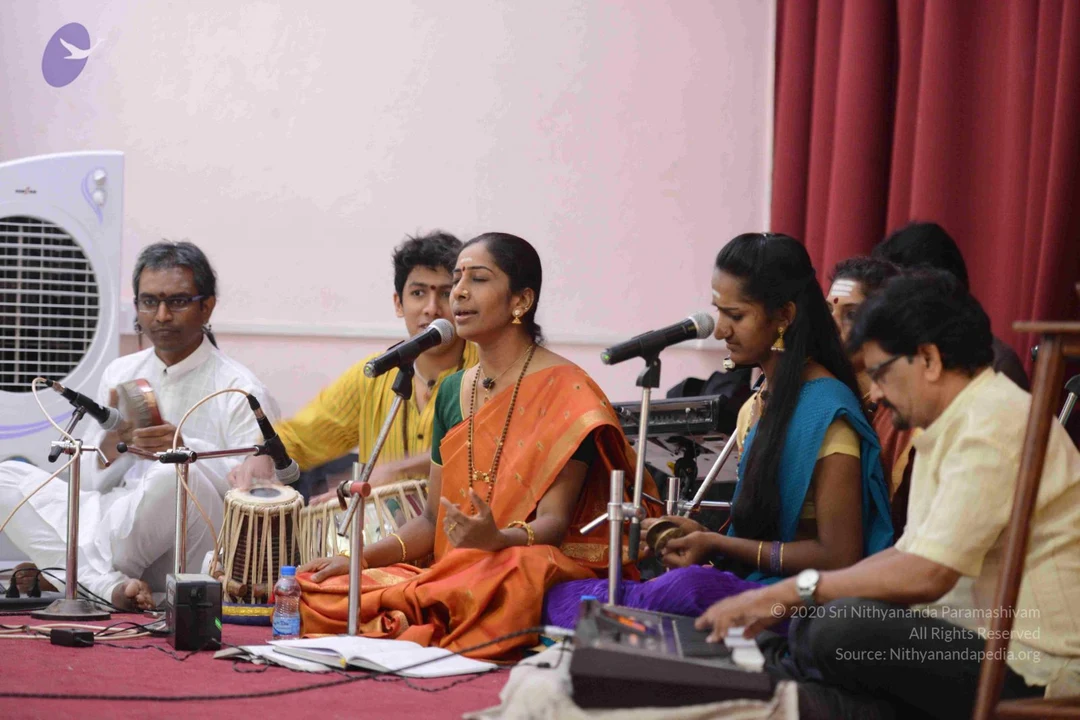
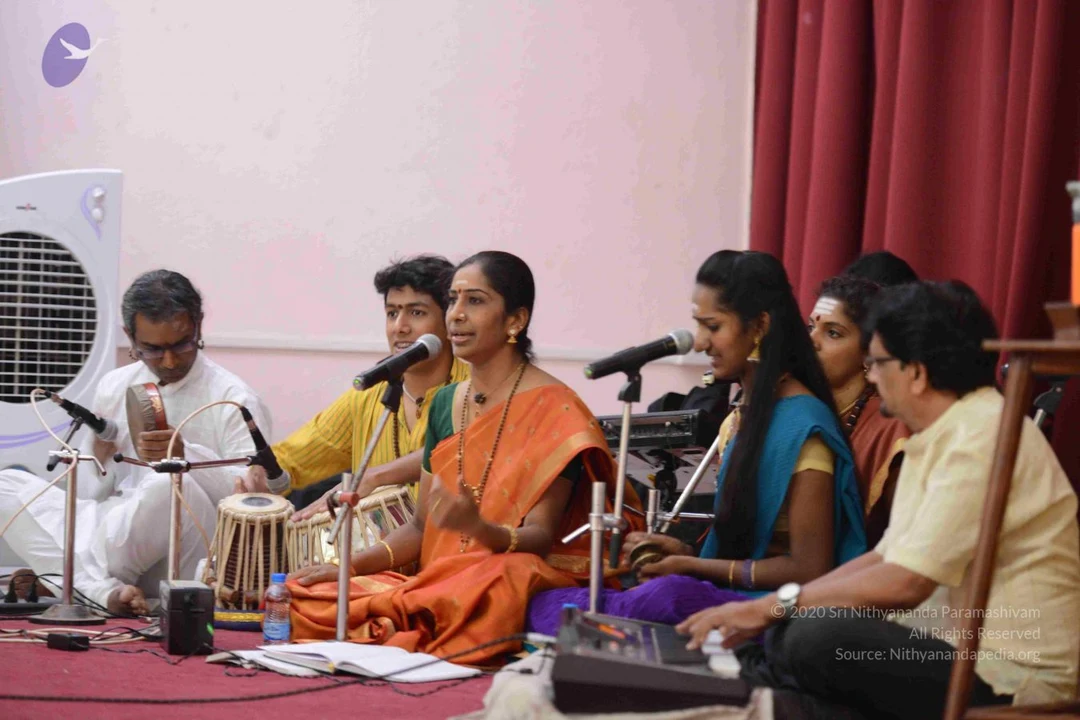
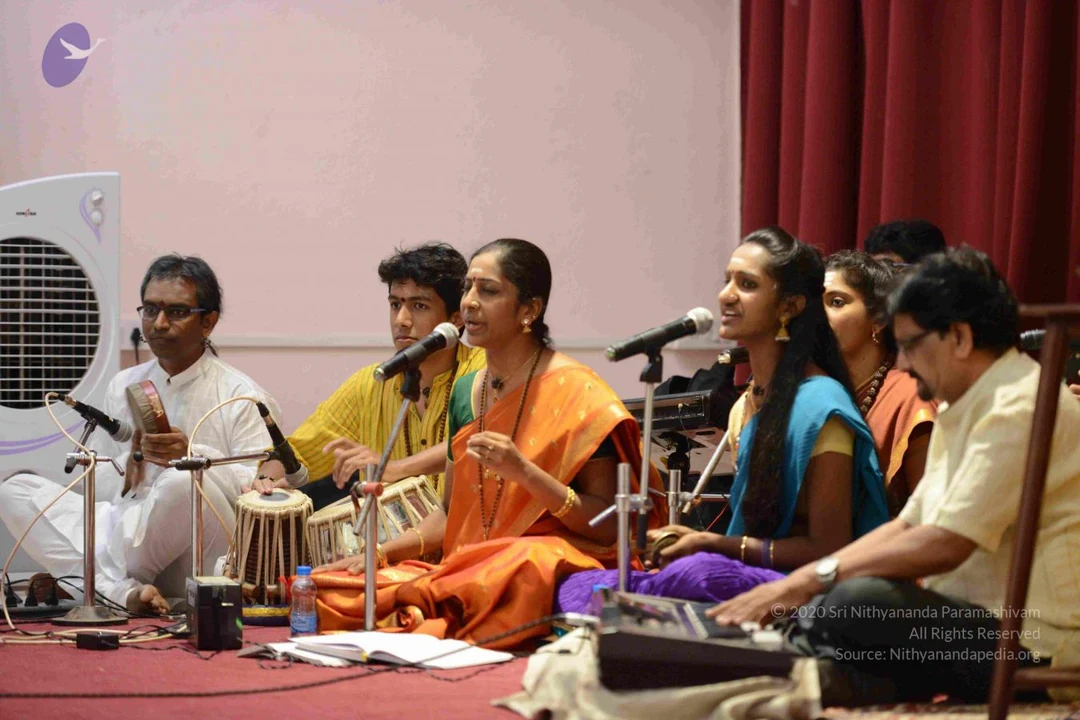
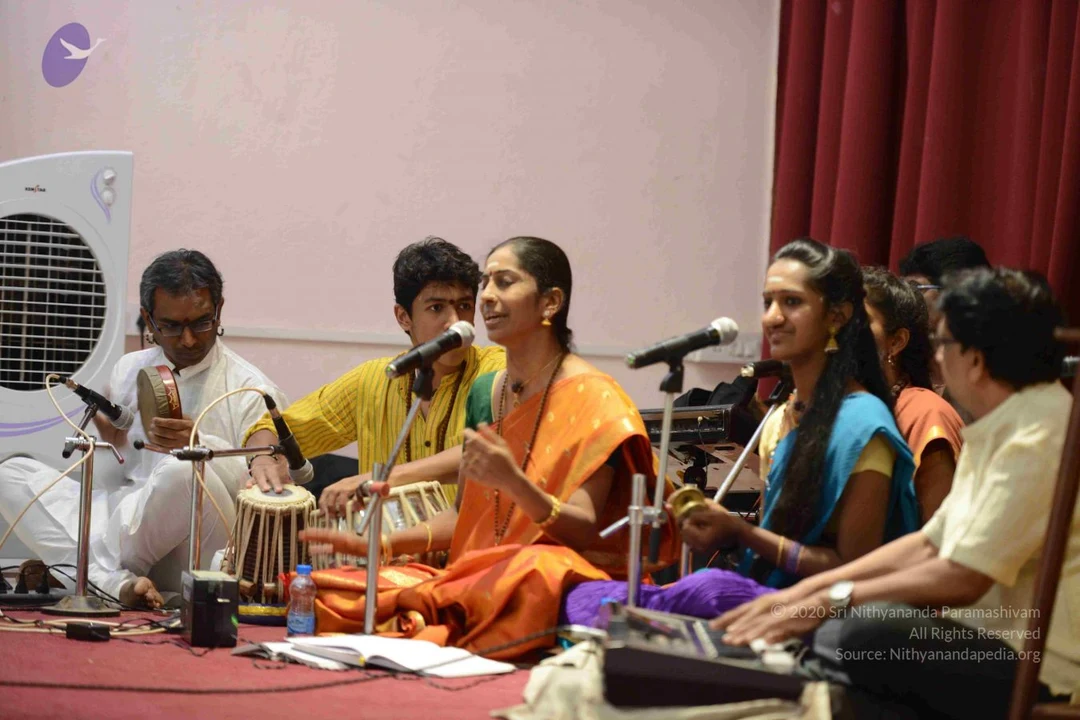
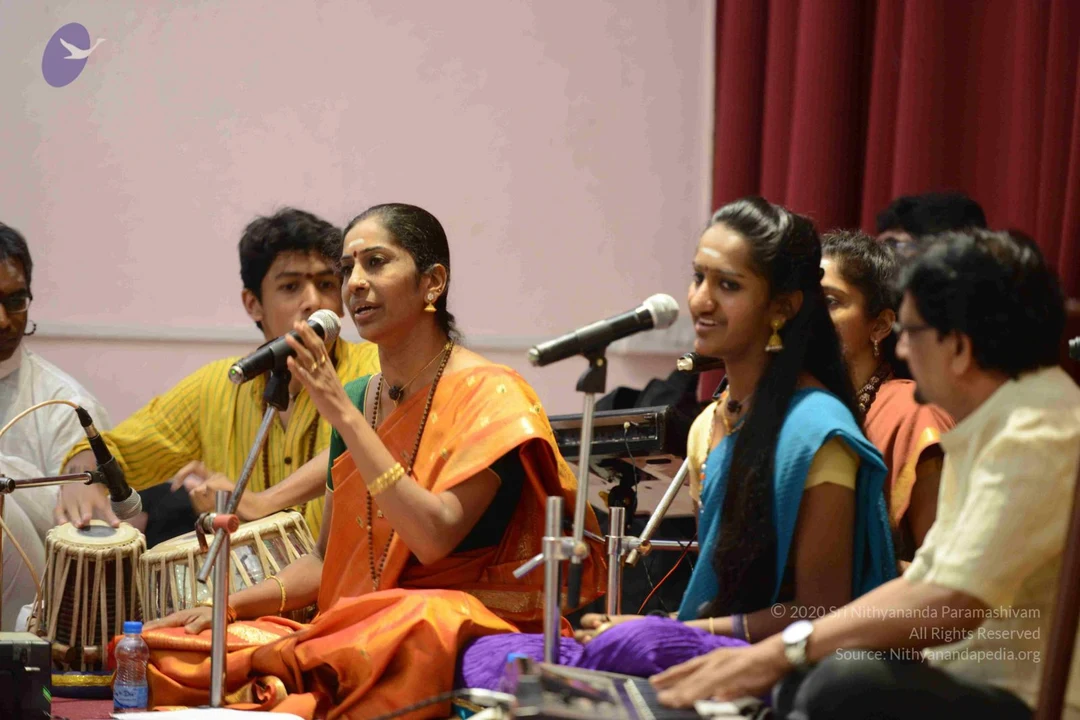
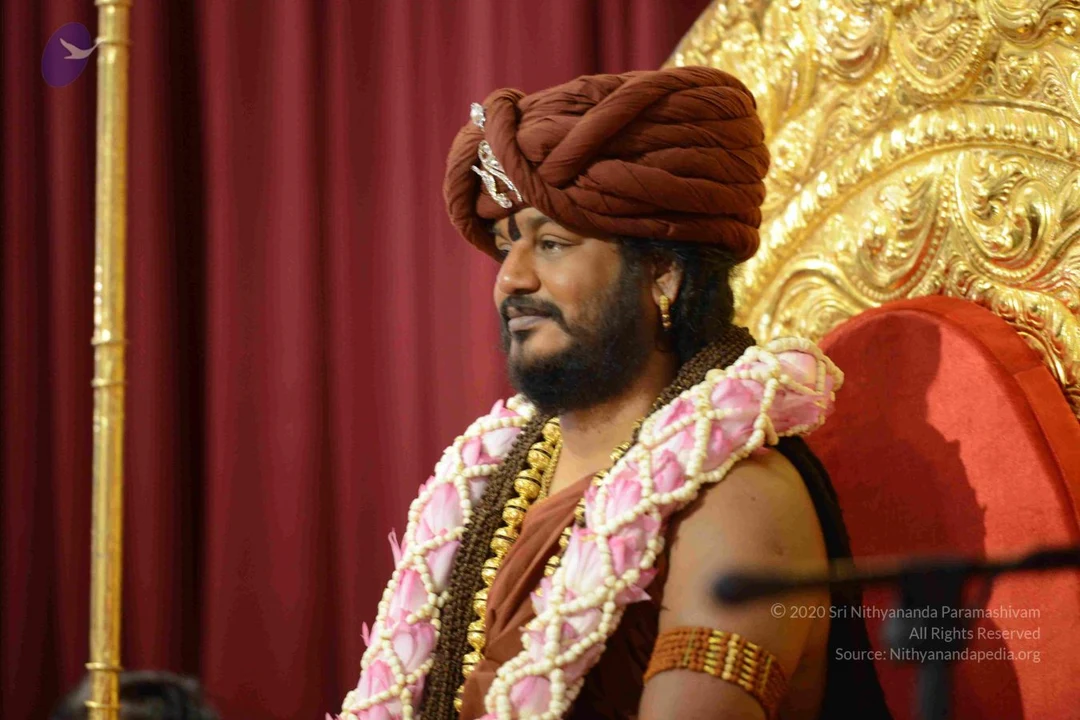
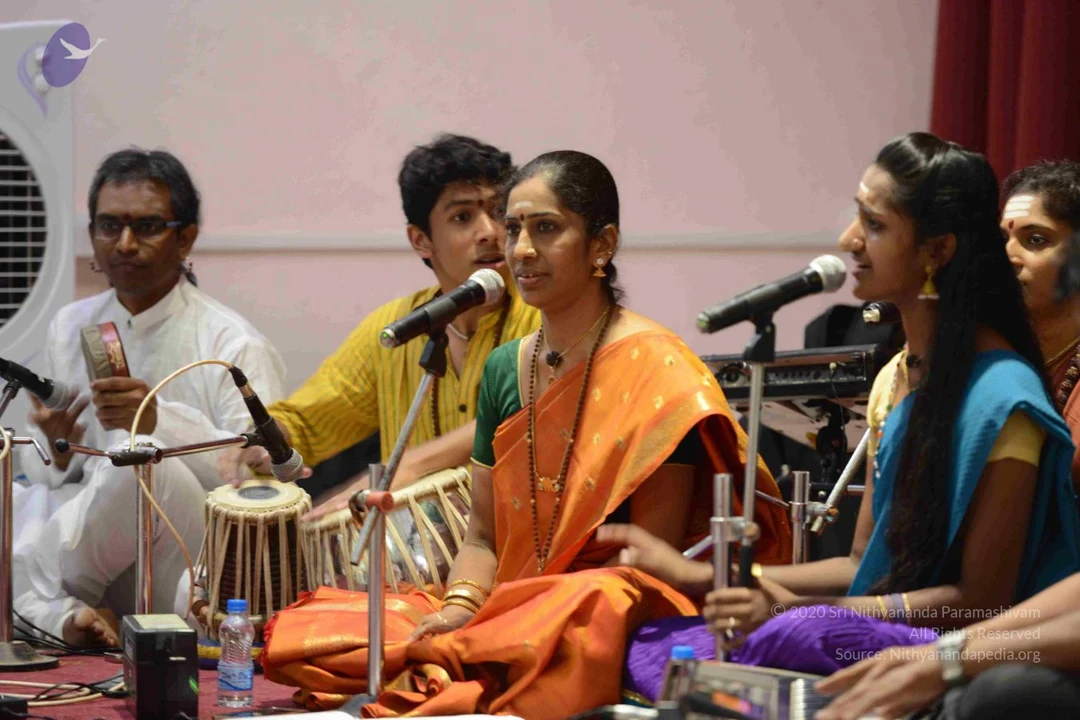
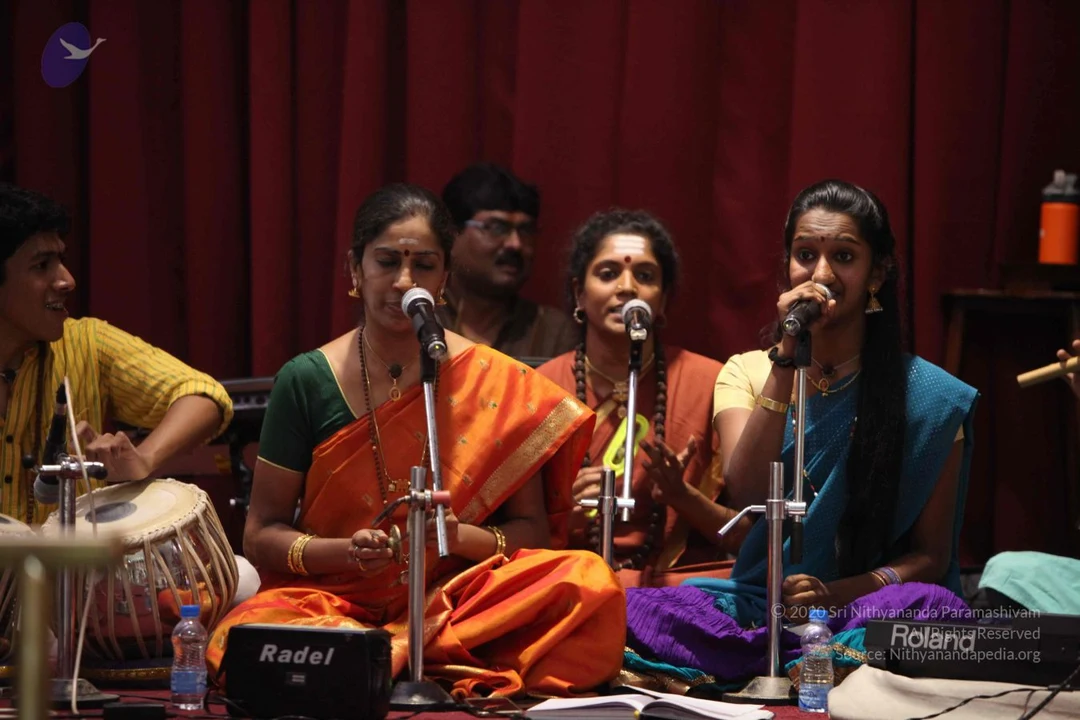
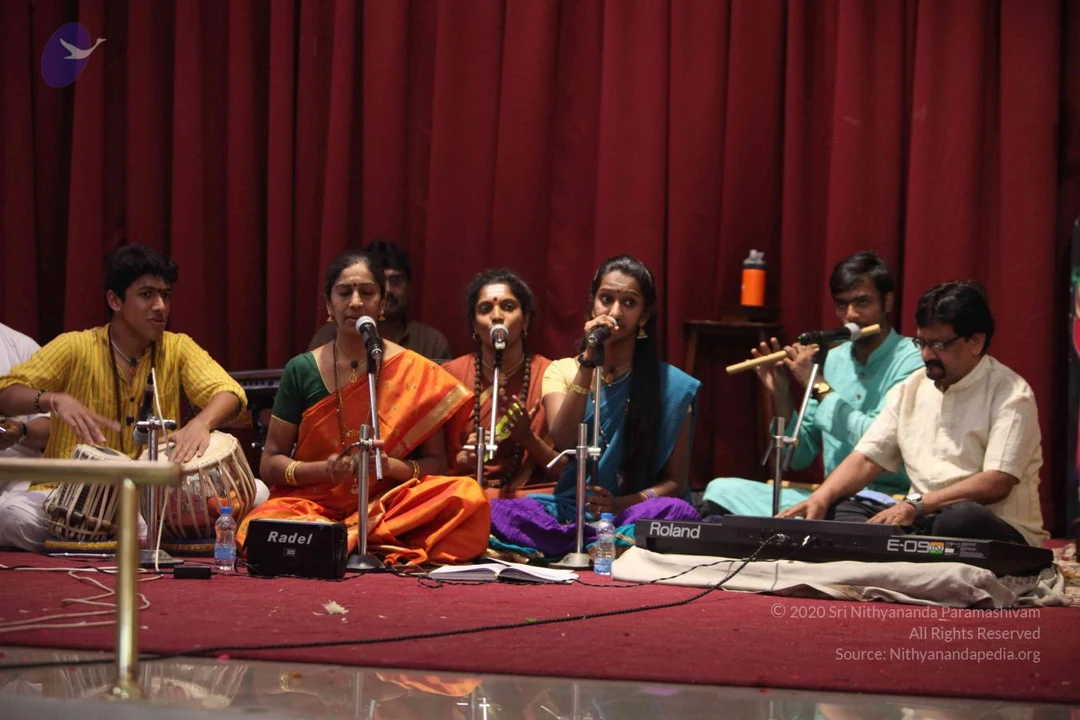
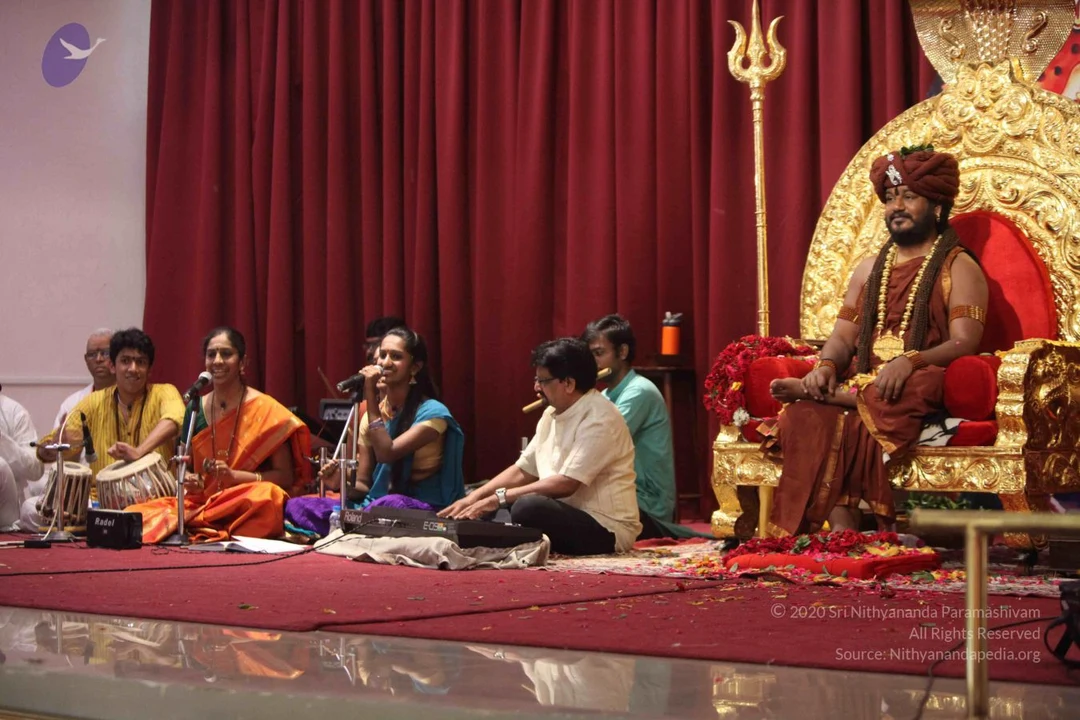
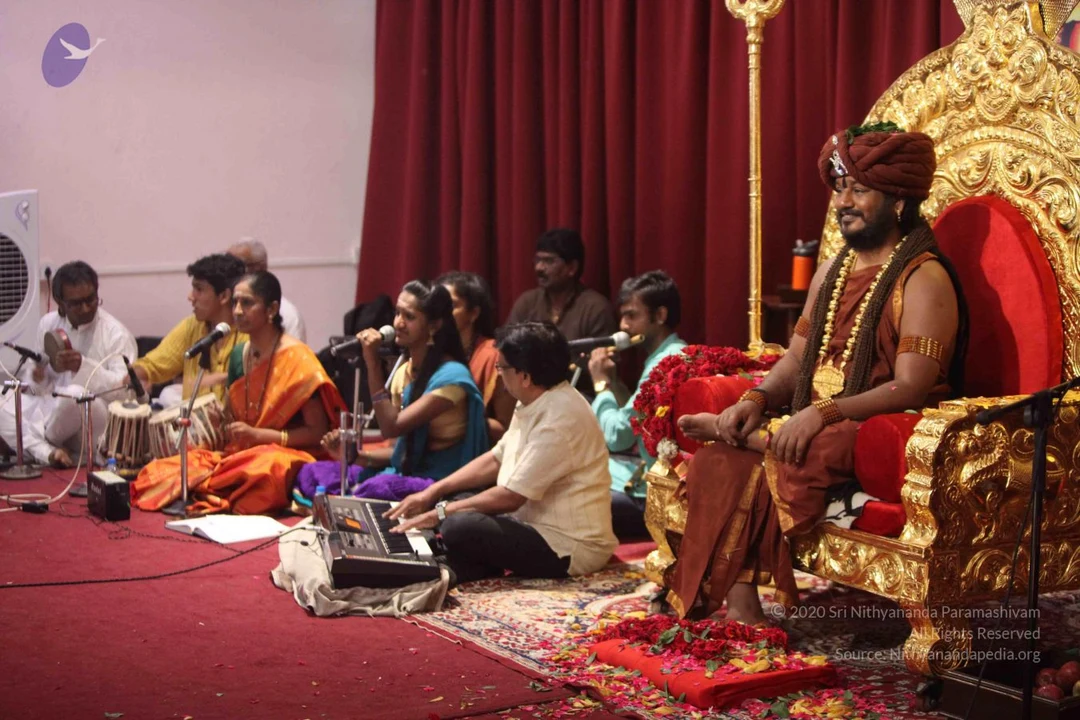
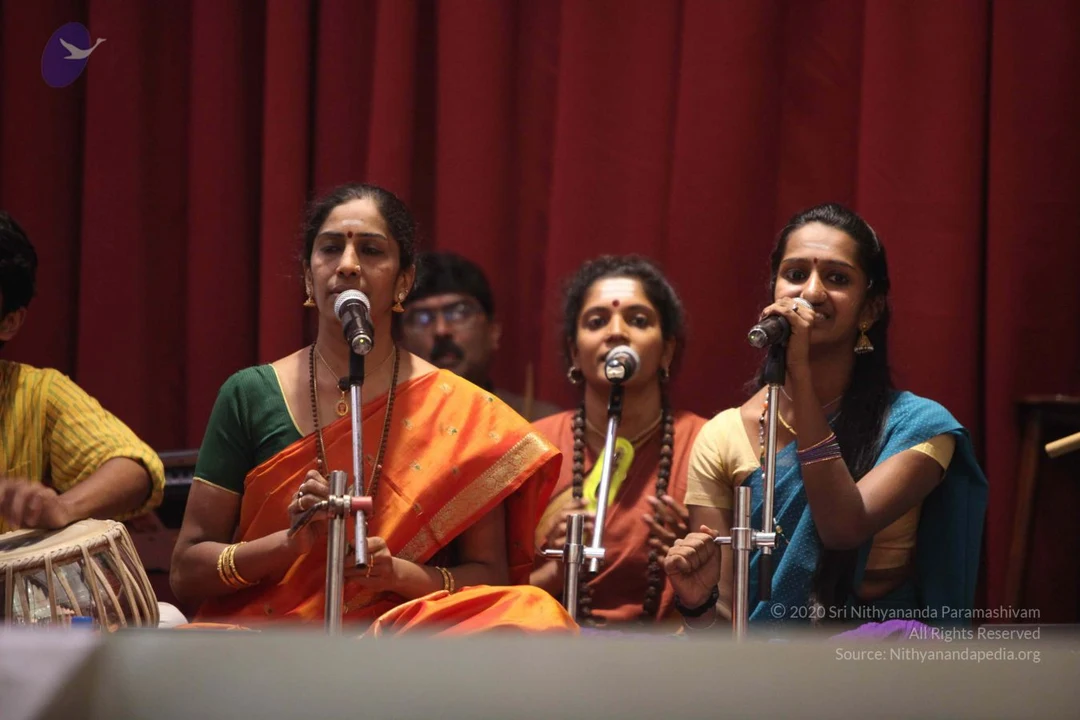
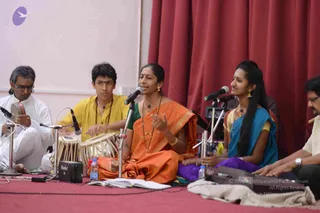
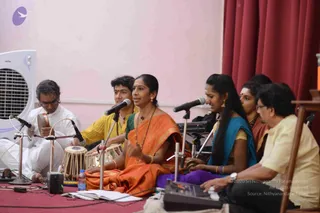
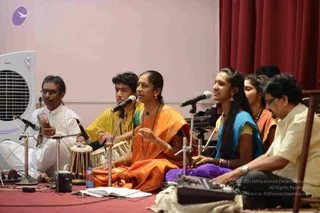
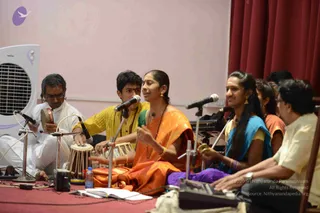
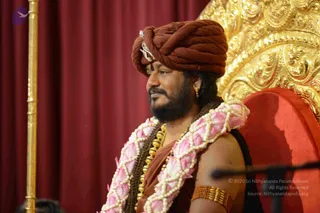
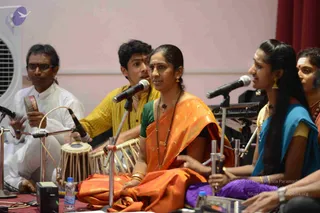
A musical performance on a red-carpeted stage in front of a dark red curtain. Four seated musicians perform with microphones. On the left a man in white kurta and glasses plays a small hand drum, next to a young man in yellow kurta playing a tabla. In the centre a woman in an orange saree with gold necklaces and bangles sings and gestures with her hand. To the right a young woman in a blue and purple saree with long hair and gold earrings plays a harmonium, and a man in a light shirt plays beside her. Water bottles and an open notebook sit on the floor.A photograph of a seated musical ensemble performing on a red carpet in front of a pink wall and a red curtain. In the centre, a woman in an orange sari with a dark rudraksha-style mala and gold earrings sings into a microphone with her hand raised. To her left, a man in a white kurta holds a small hand drum and a younger man in a yellow shirt plays a tabla. To the right, a woman in a blue and purple sari and a woman with a white tilak and orange shawl sit near a harmonium and a keyboard, and a man in a cream shirt works at a sound console in the foreground. A standing fan, water bottle and microphone stands are visible.A group of musicians performs seated on a red carpet in front of a red curtain, singing into microphones. A woman in the centre wears an orange saree with a gold border and a long beaded necklace, and is singing while gesturing with her hand. A young man beside her in a yellow shirt plays a tabla. At left, a man in white clothes holds a small hand drum. At right, a man in a cream shirt plays a harmonium, and a woman in a blue saree with a purple skirt sits beside them. A white tower fan stands at the left edge, and a water bottle sits on the floor. Five people are visible.A seated musical performance on a stage with a red floor and a maroon curtain behind. A woman in an orange saree with gold bangles and a beaded necklace sings into a microphone at centre. To her left a man in white kurta plays a tabla, and a young man in a yellow shirt beside them plays a second drum. To the right a young woman in a blue blouse and purple skirt with a long braid plays a harmonium, and an older man in a cream shirt sits at the far right. A white cooling fan and water bottle sit on the left. Several people are visible, including partly hidden figures behind.A seated man in a brown-red turban with a silver ornament at the forehead, a dark beard, gold beaded necklaces, and a pink and white flower garland draped over his shoulders wears a rust-brown wrap over one shoulder and a gold armband. He sits on a red cushioned chair with ornate gold carving behind him, in front of a deep red curtain and a tall gold-coloured pole at left. A microphone is visible at lower right. The image is a single-person photograph with no other physical people visible.A seated musical ensemble performs on a stage with microphones on stands. In the centre, a woman in an orange saree with a green blouse and layered beaded necklaces sings into a microphone. Beside her, a young man in a yellow kurta plays a tabla drum, and an older man in white kurta and dhoti holds a small percussion instrument. On the right, a young woman in a blue saree sings, and a person with a tilak and white sacred marks on the forehead sits at the edge. A bottled water sits on the floor, and a pink wall with a white wall fan forms the backdrop.

LSP

17 photosSource gallery
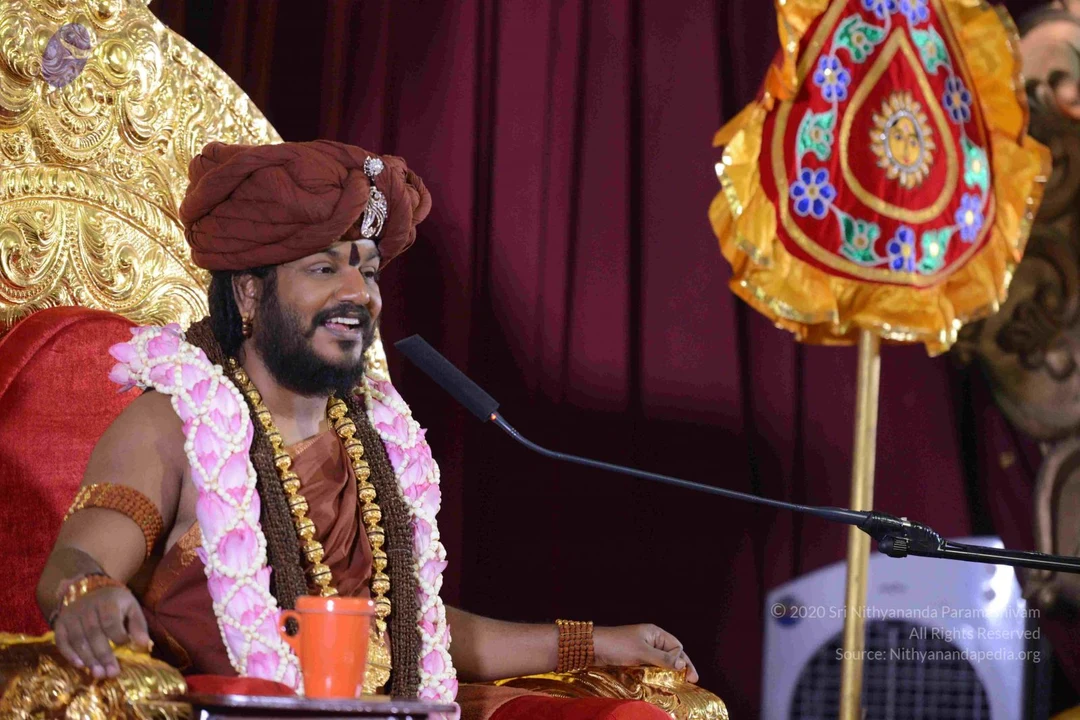
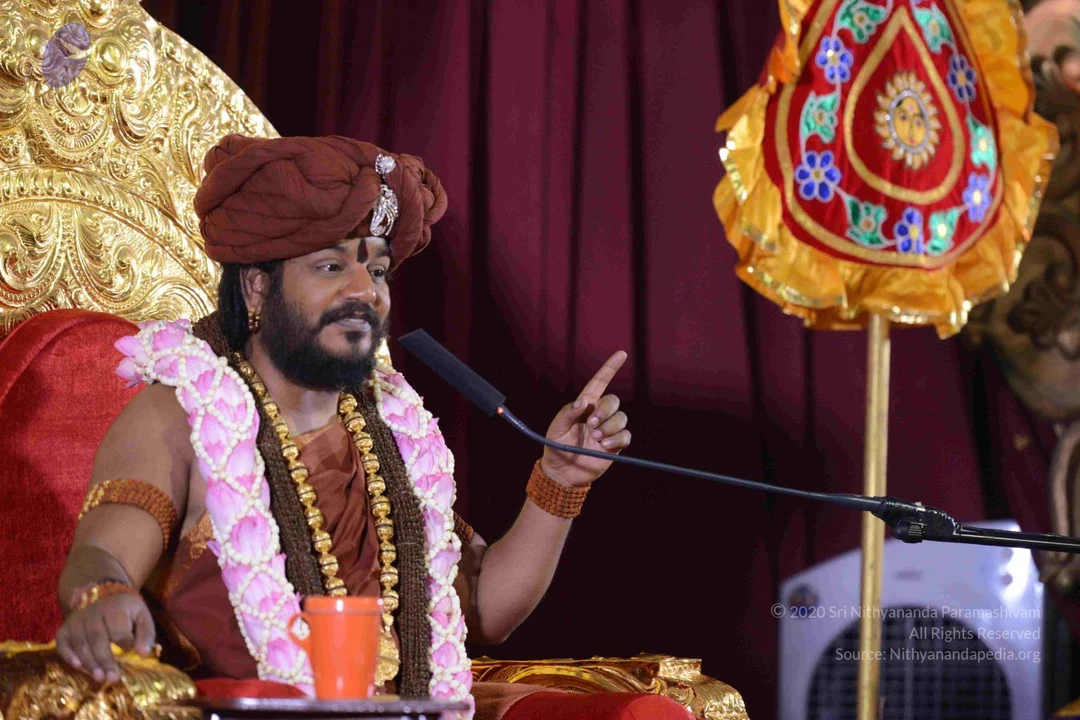
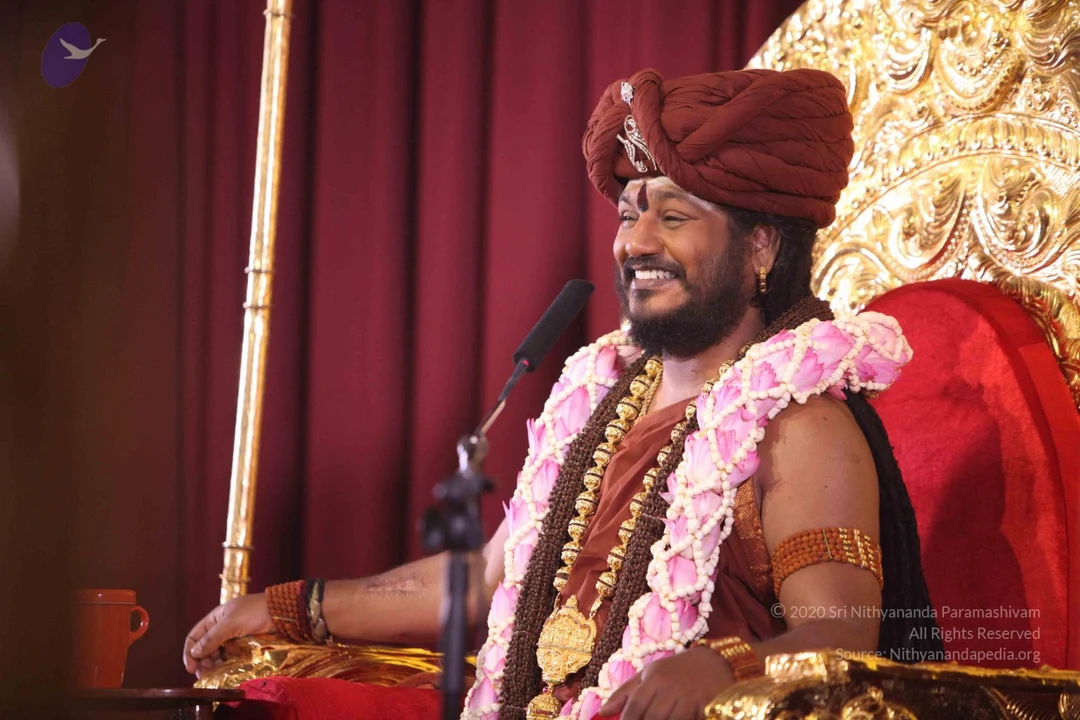
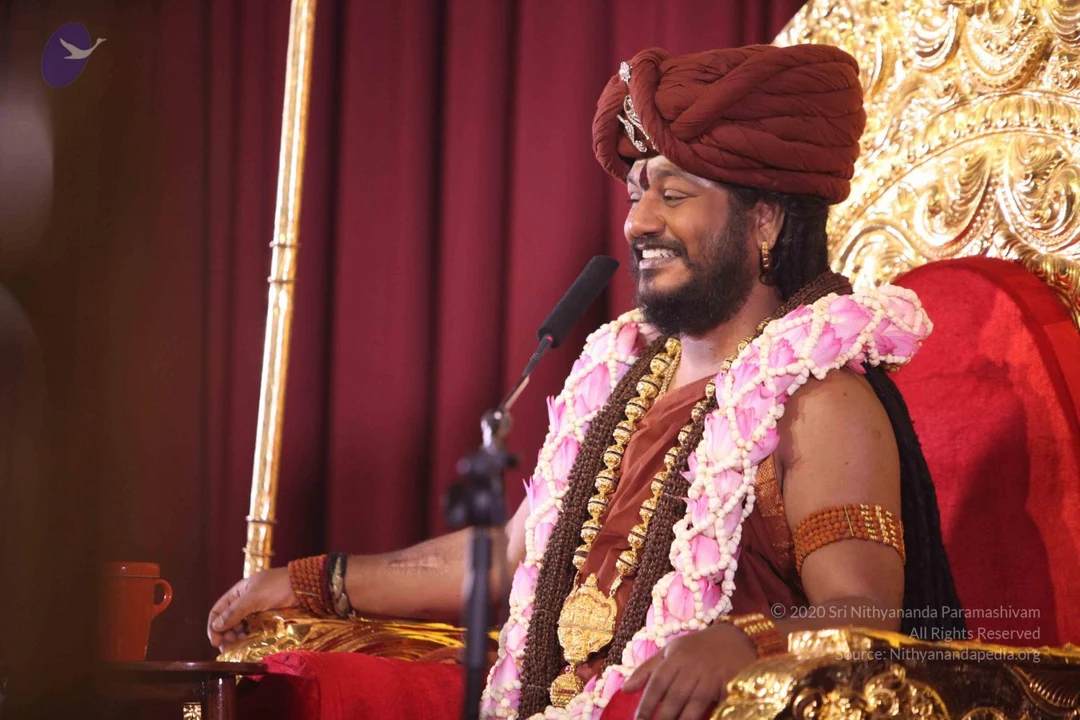
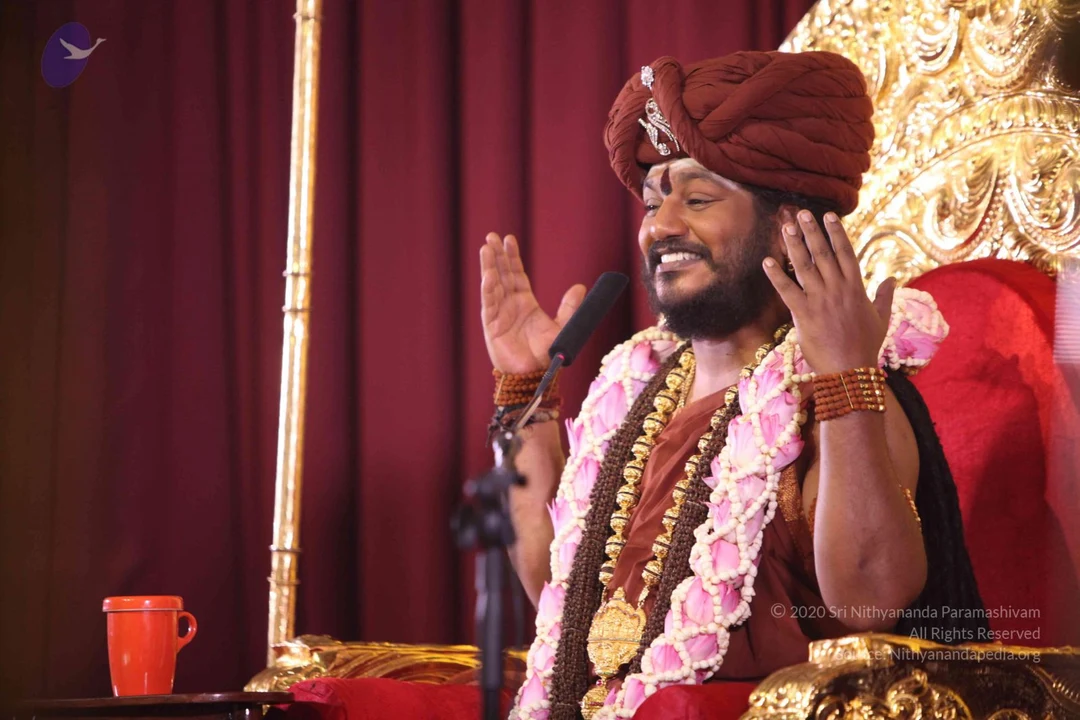
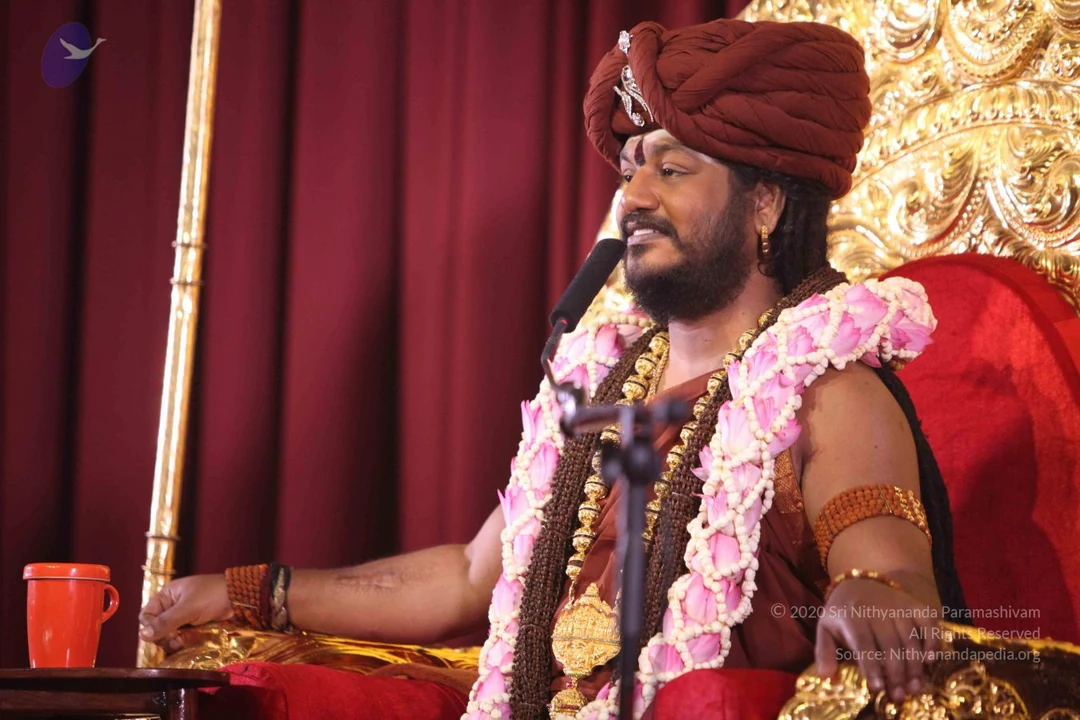
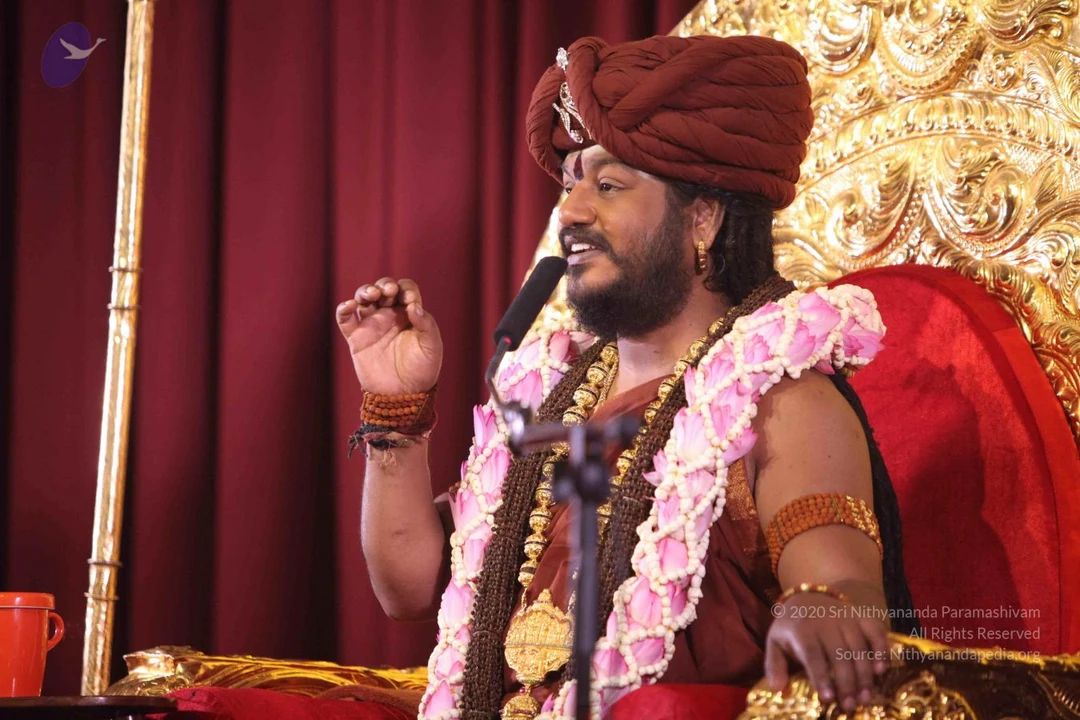
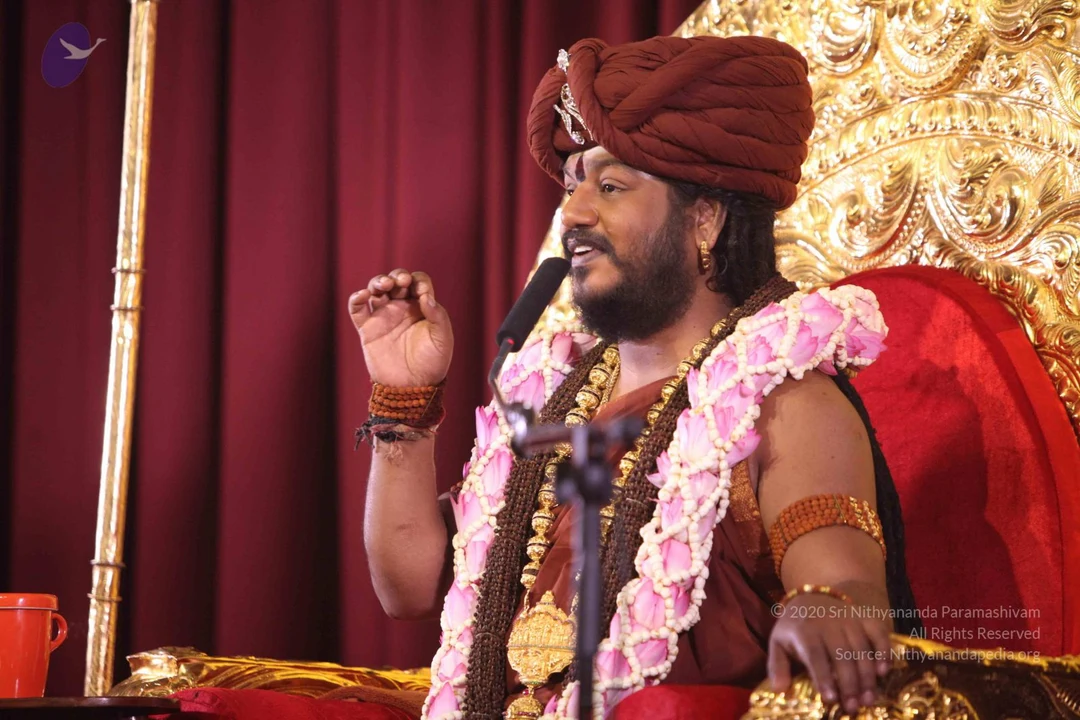
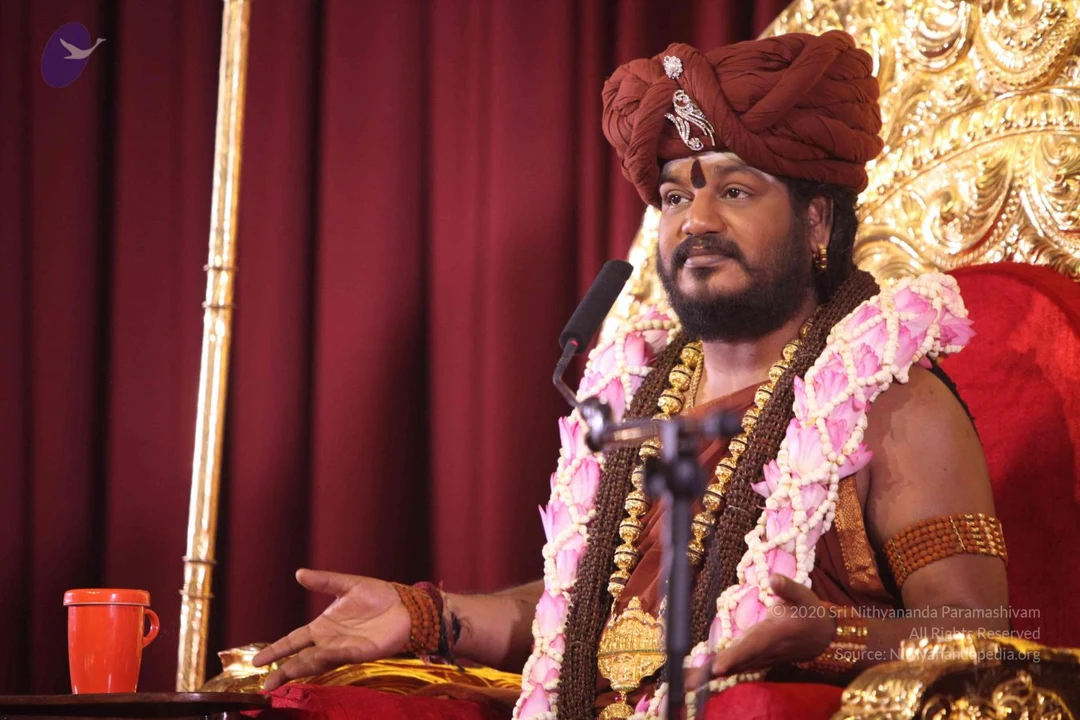
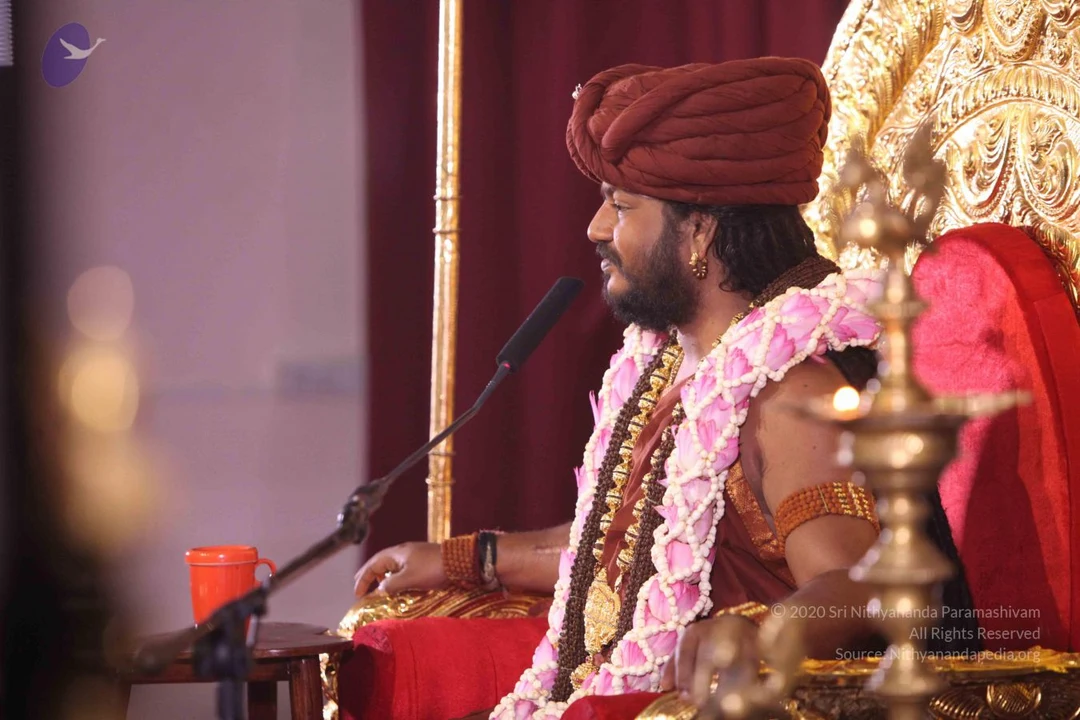
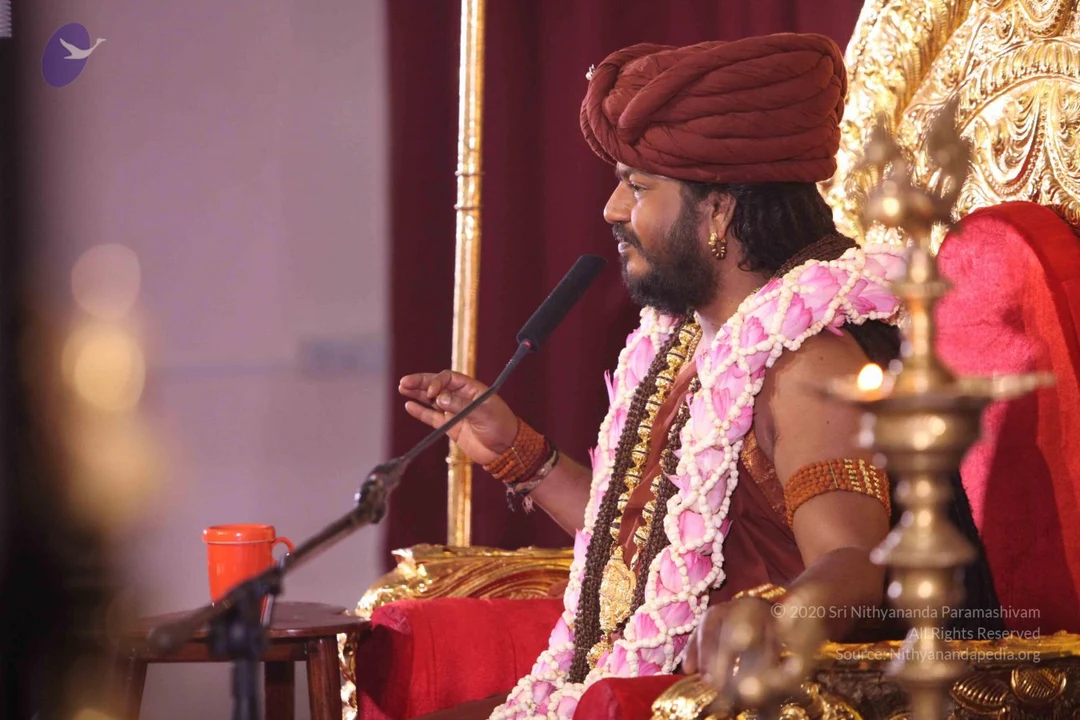
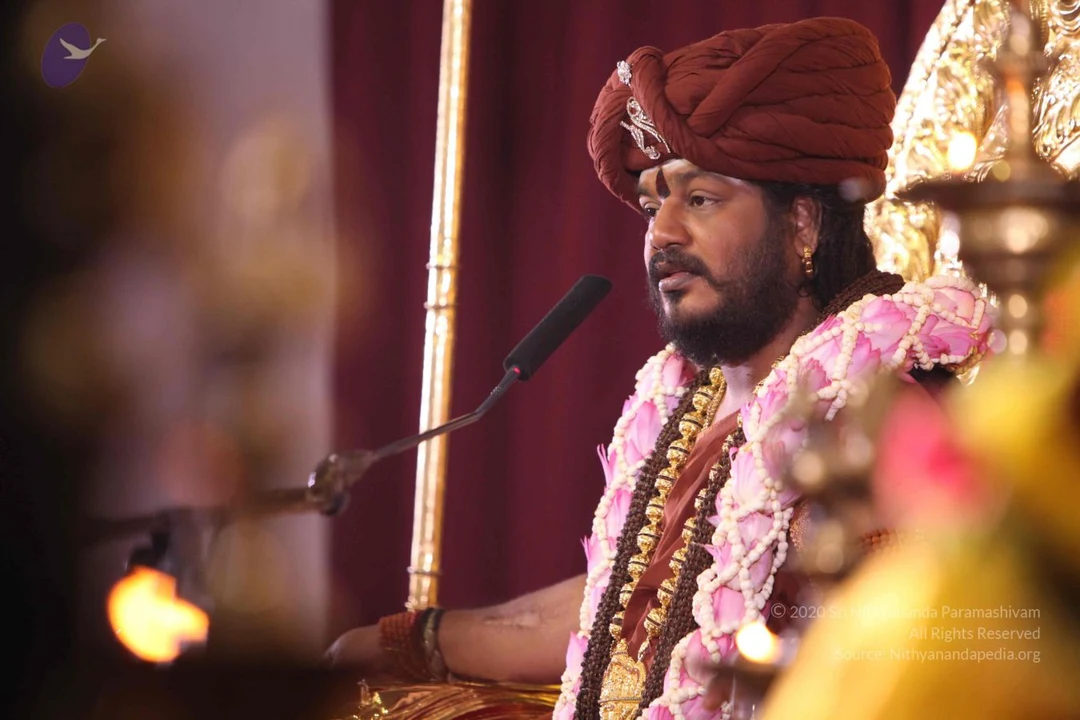
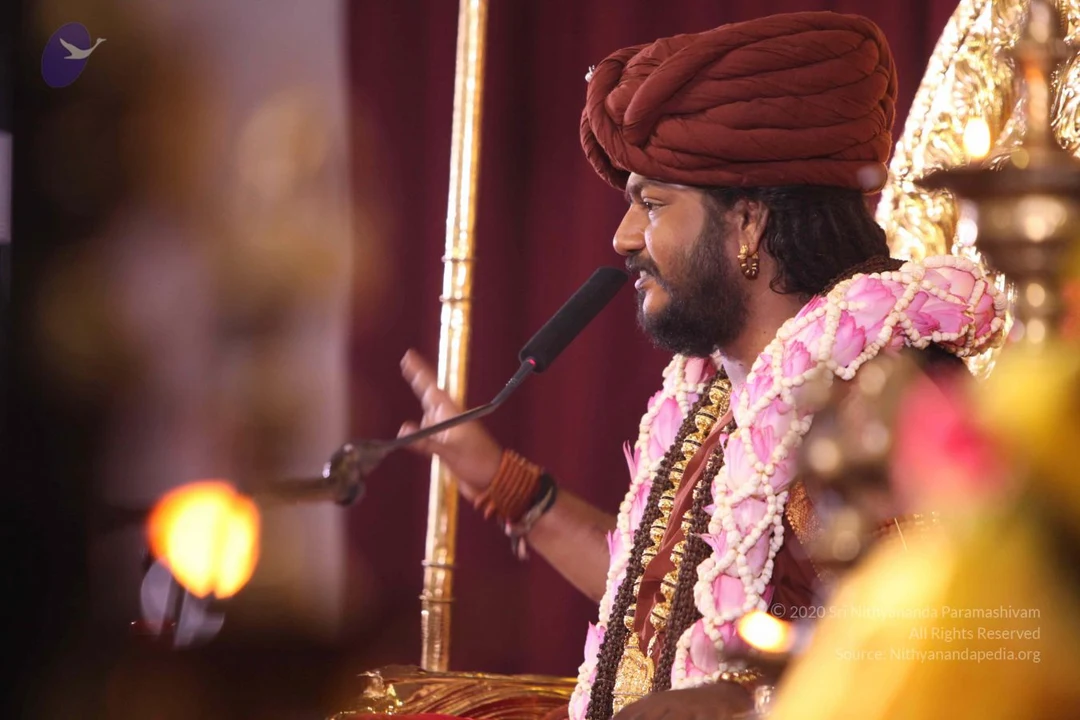
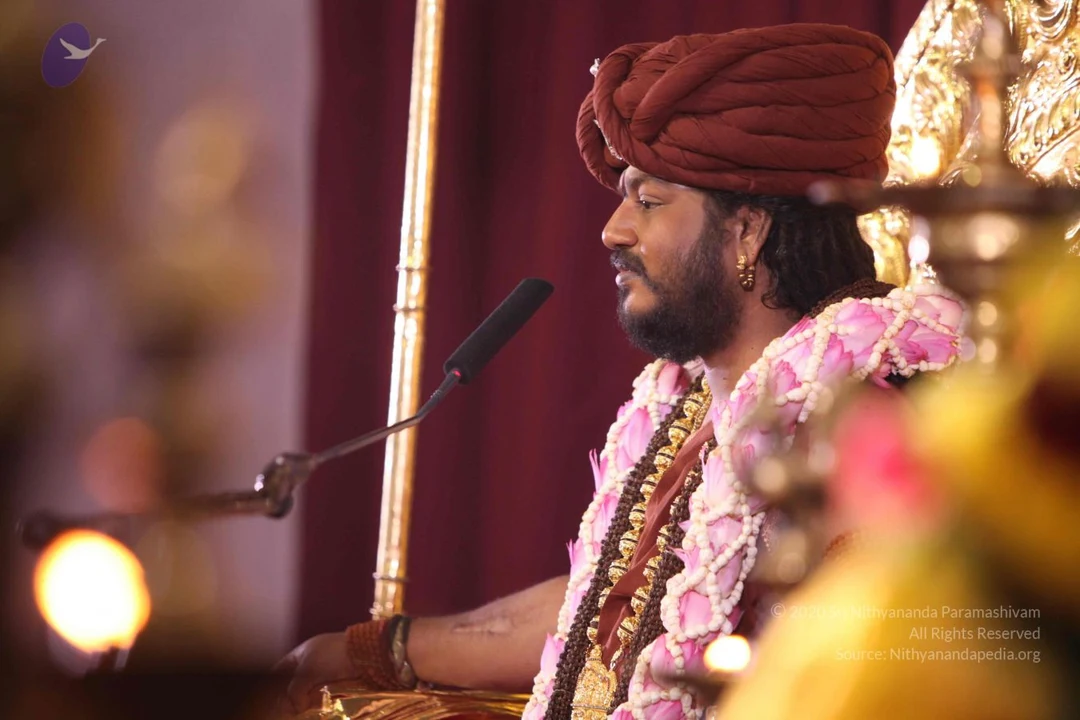
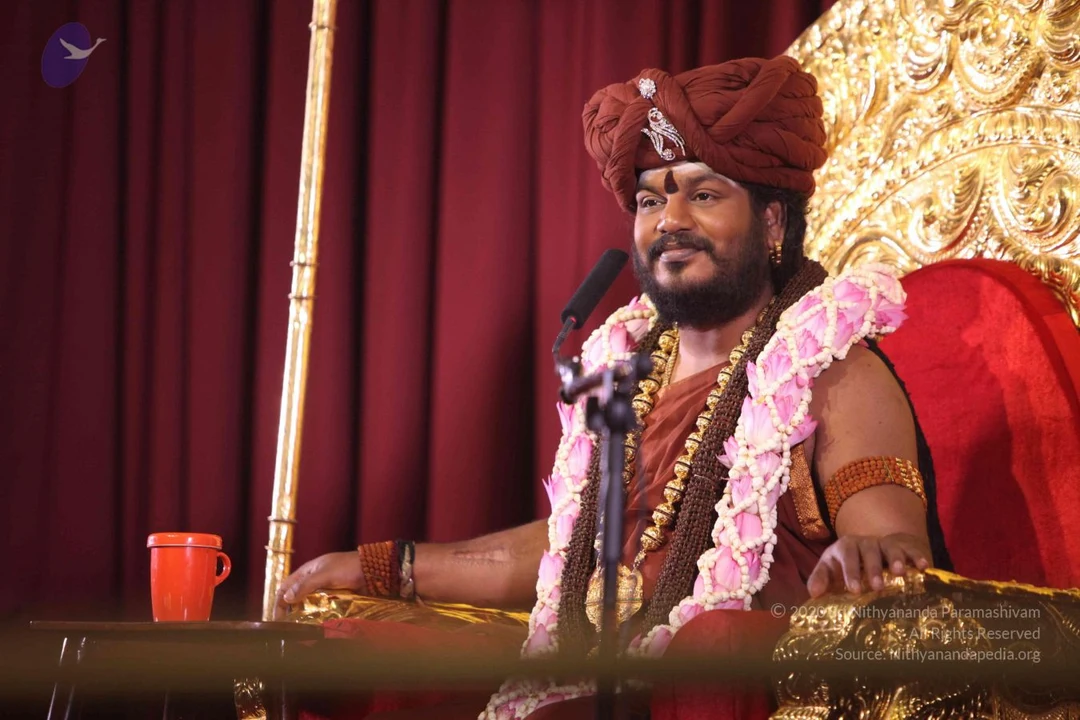
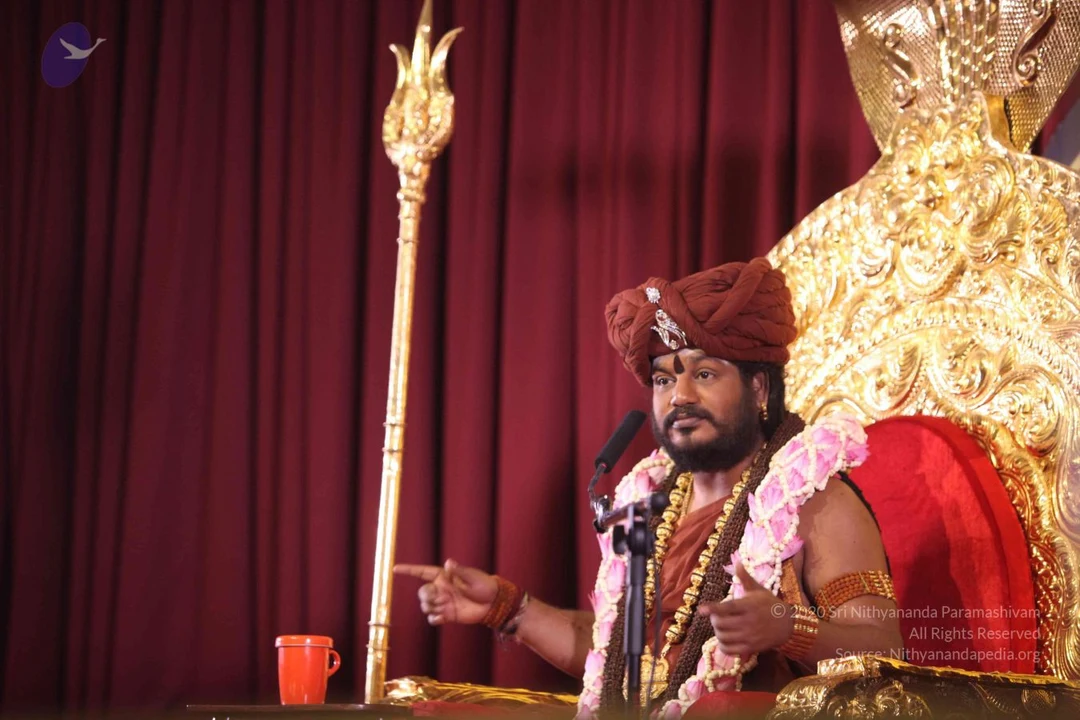
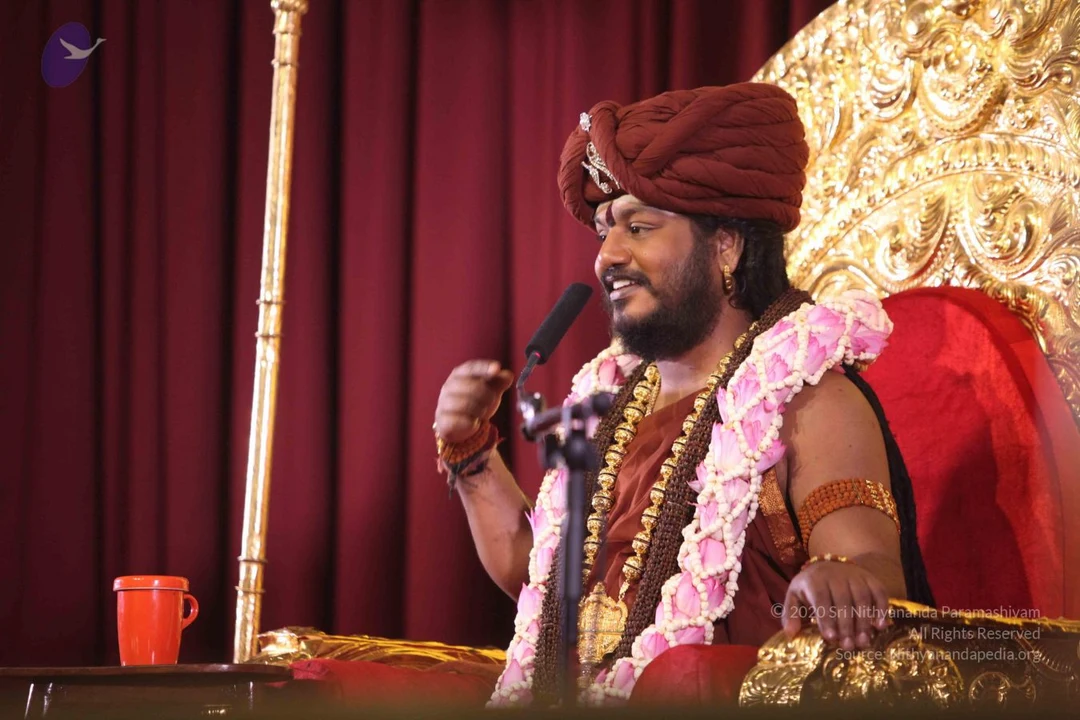
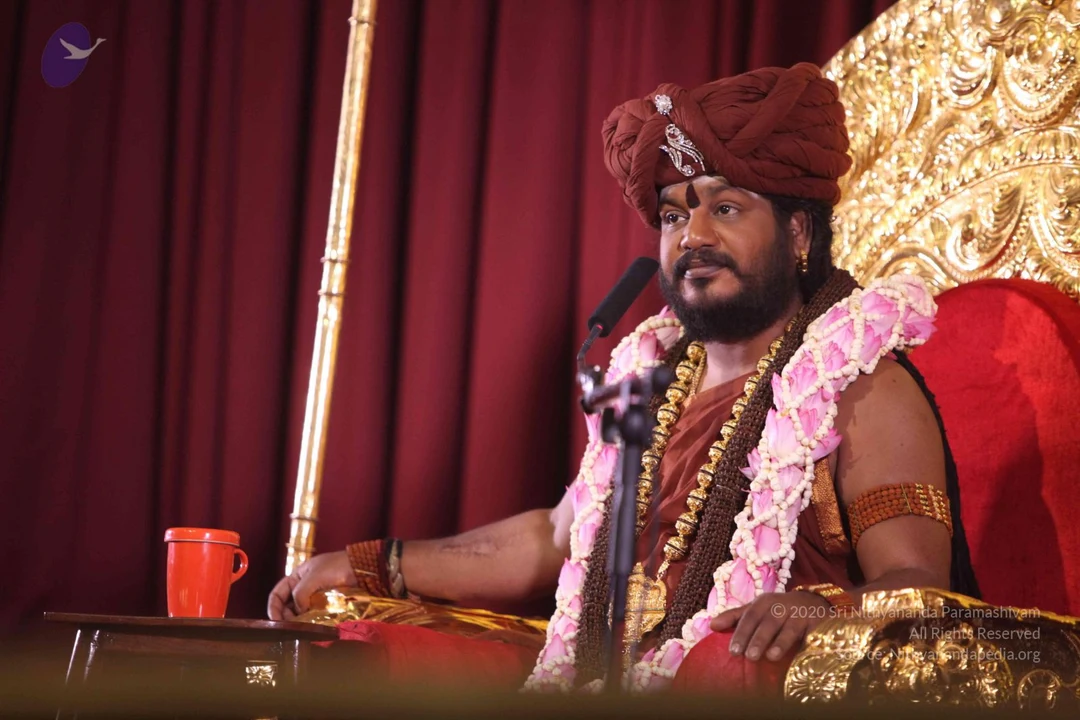
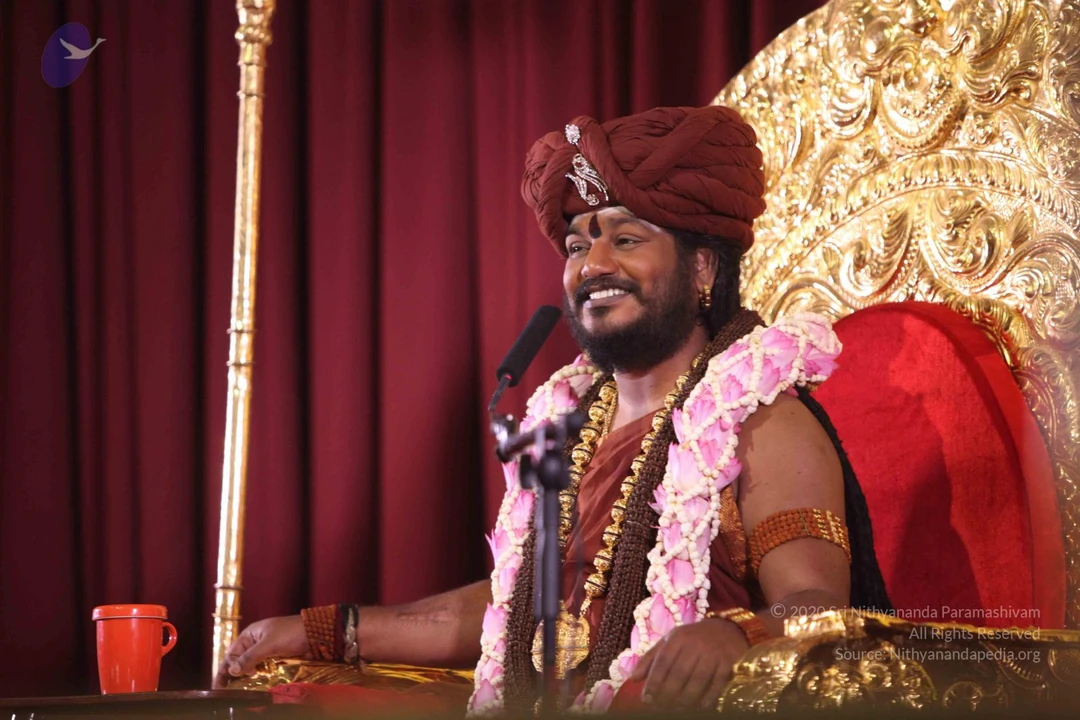
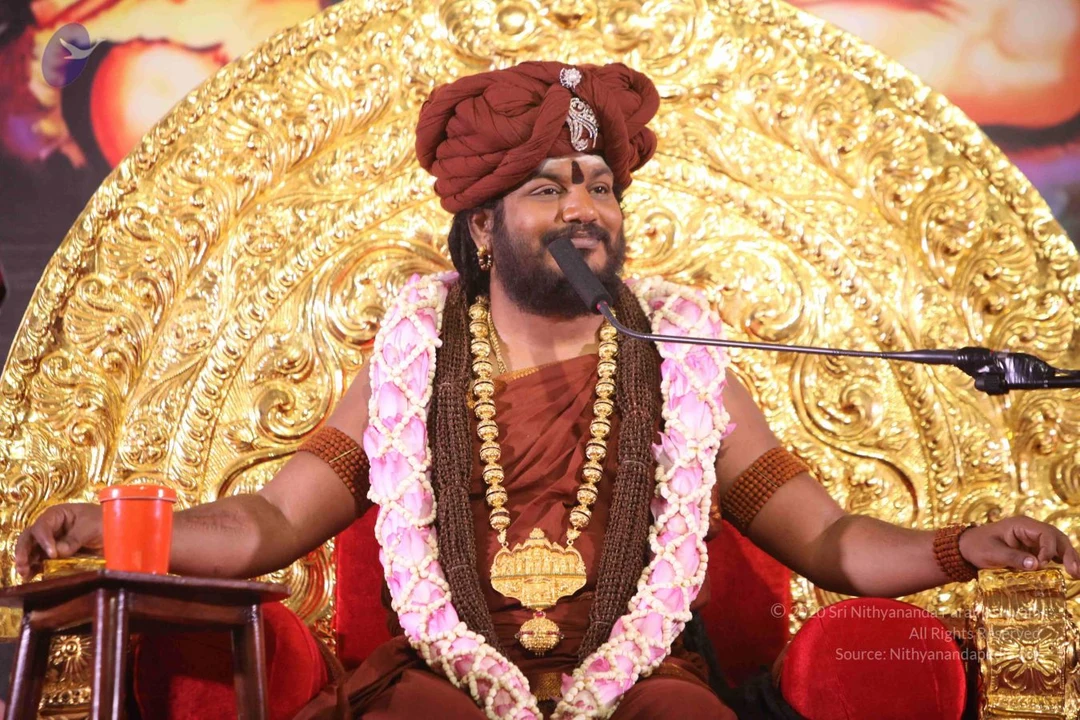
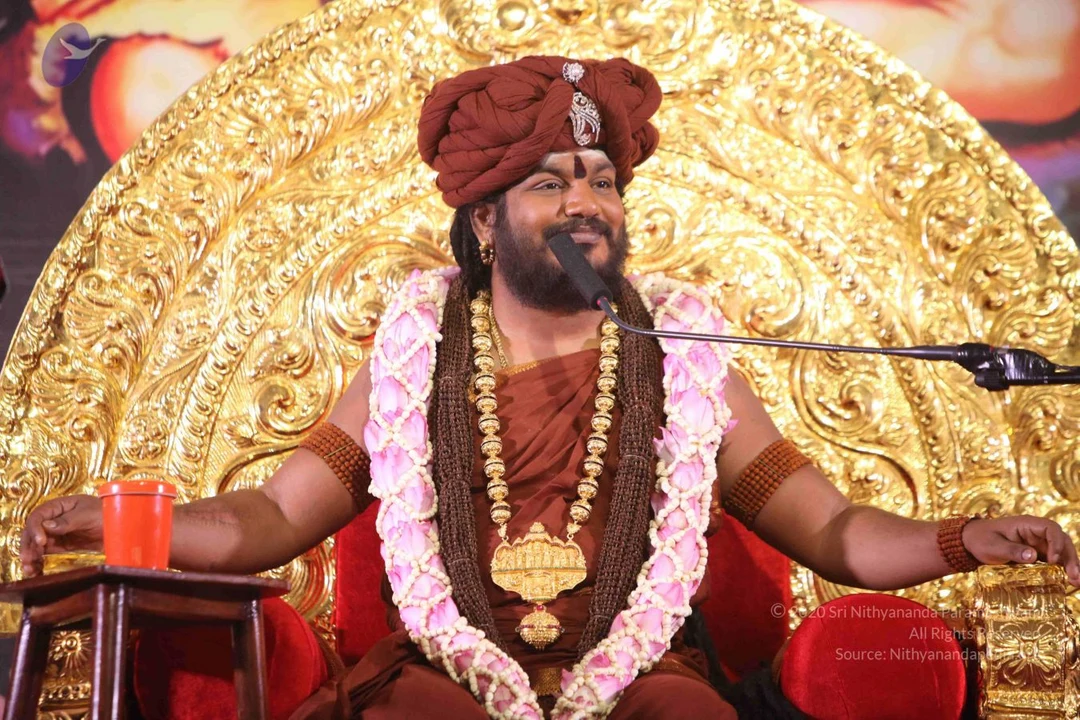
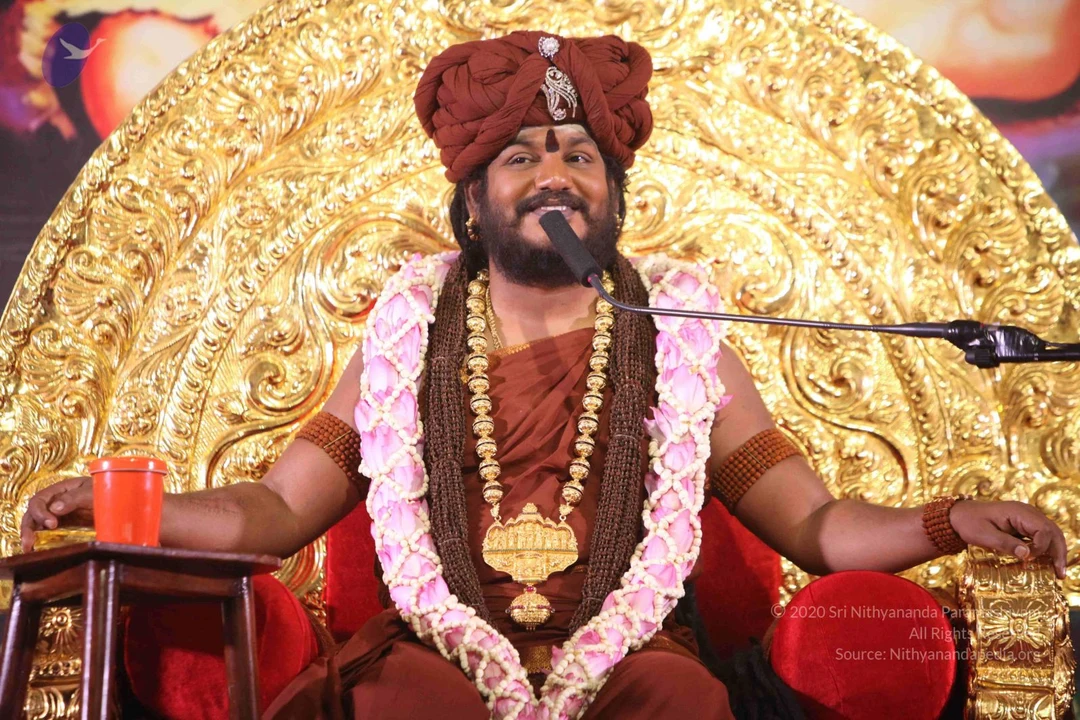
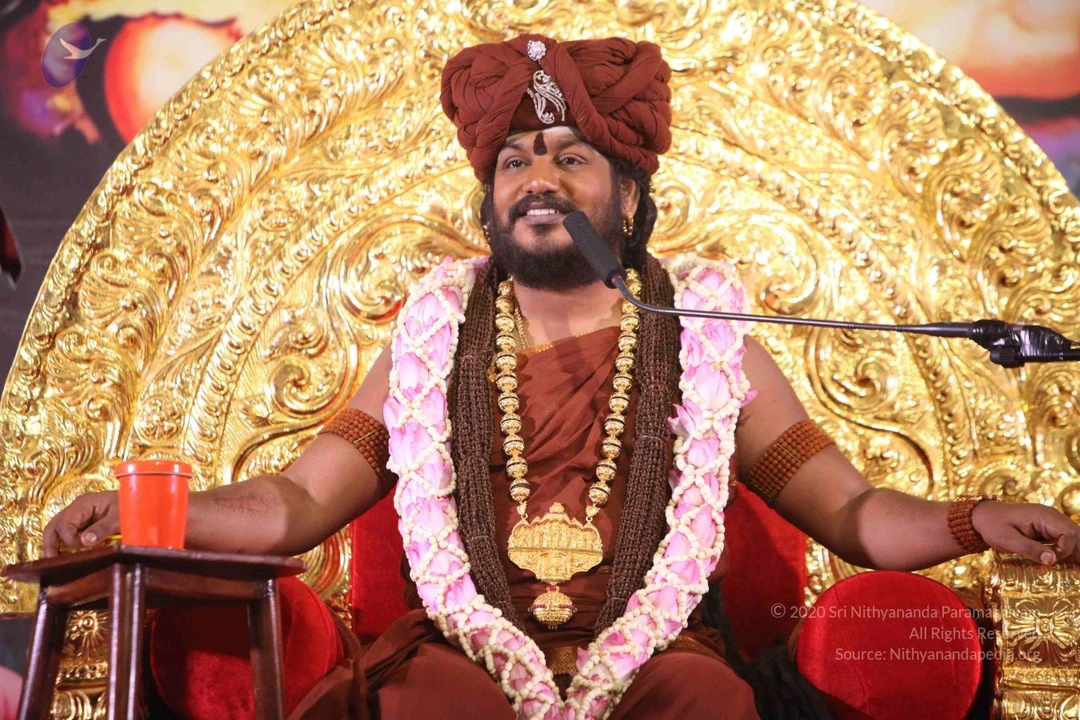
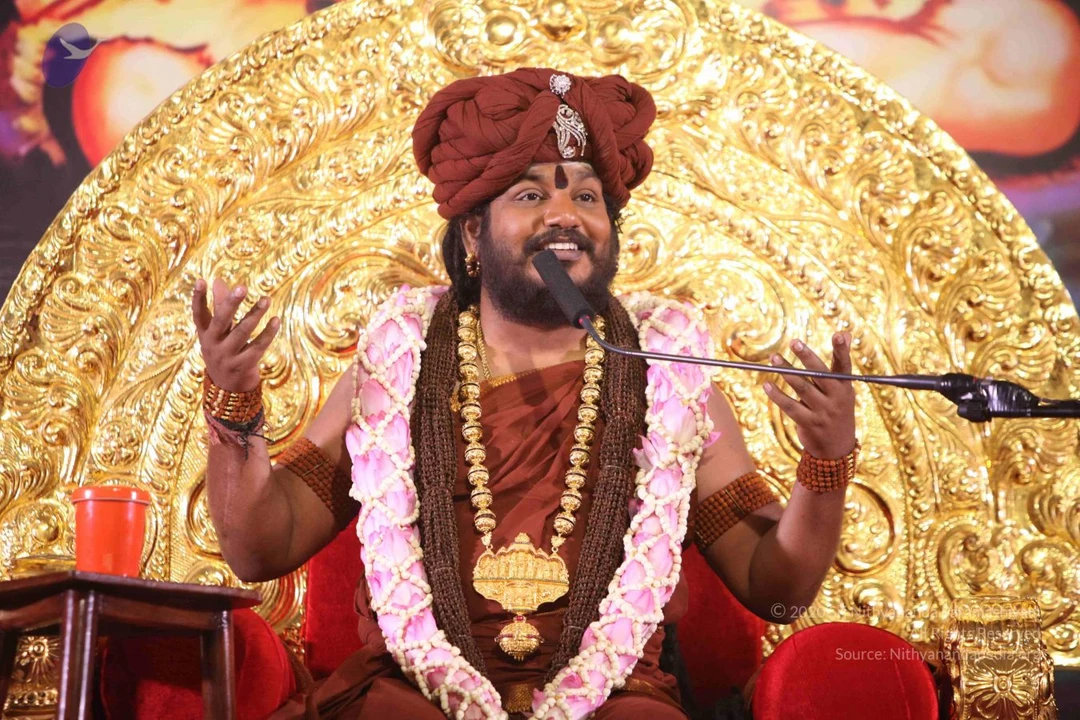
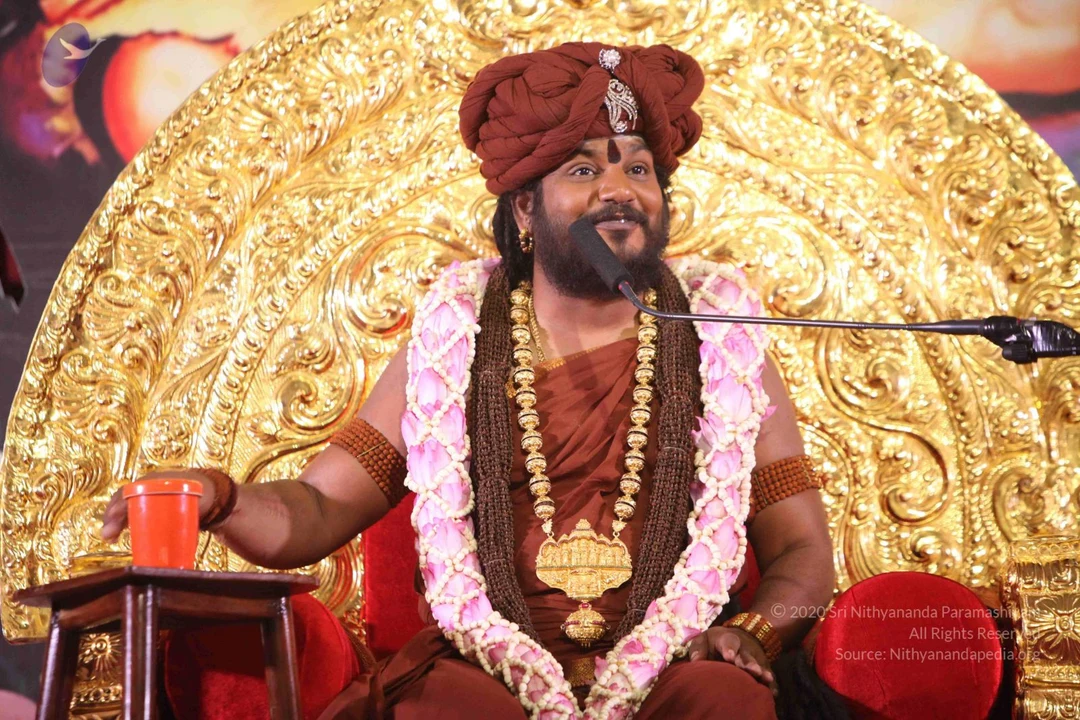
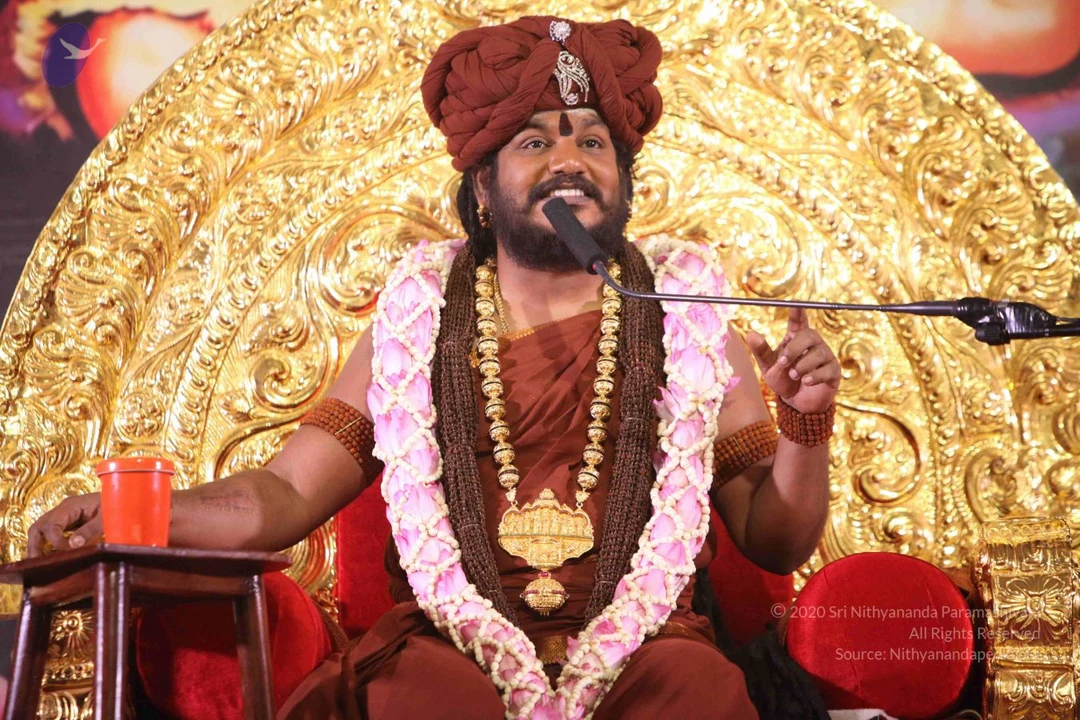
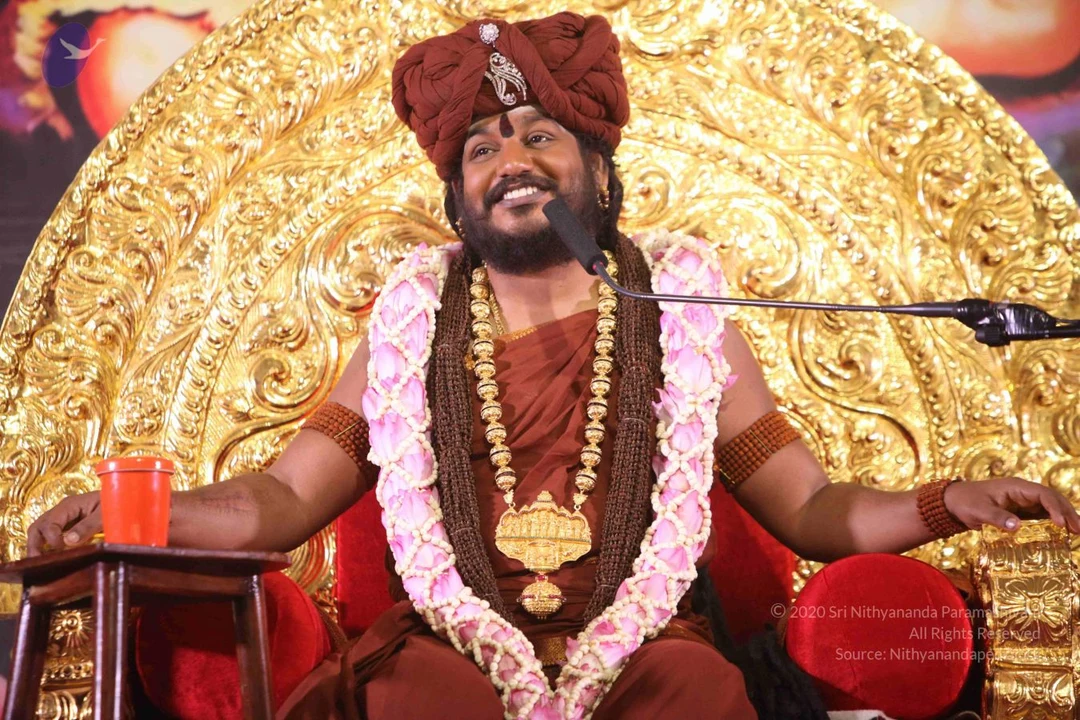
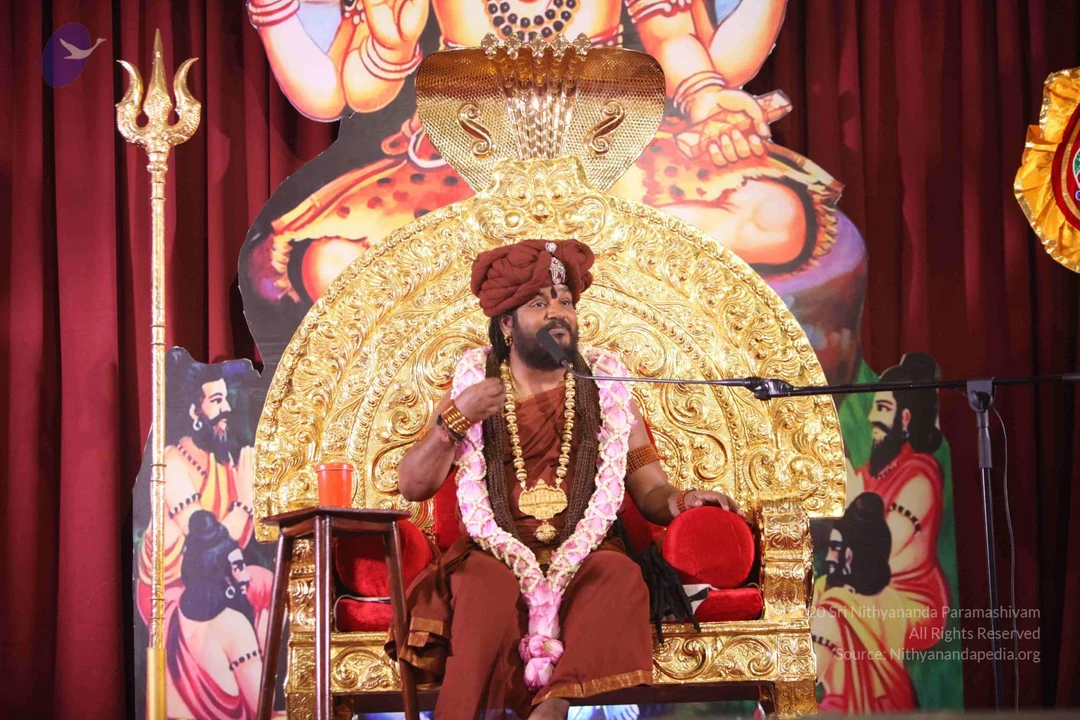
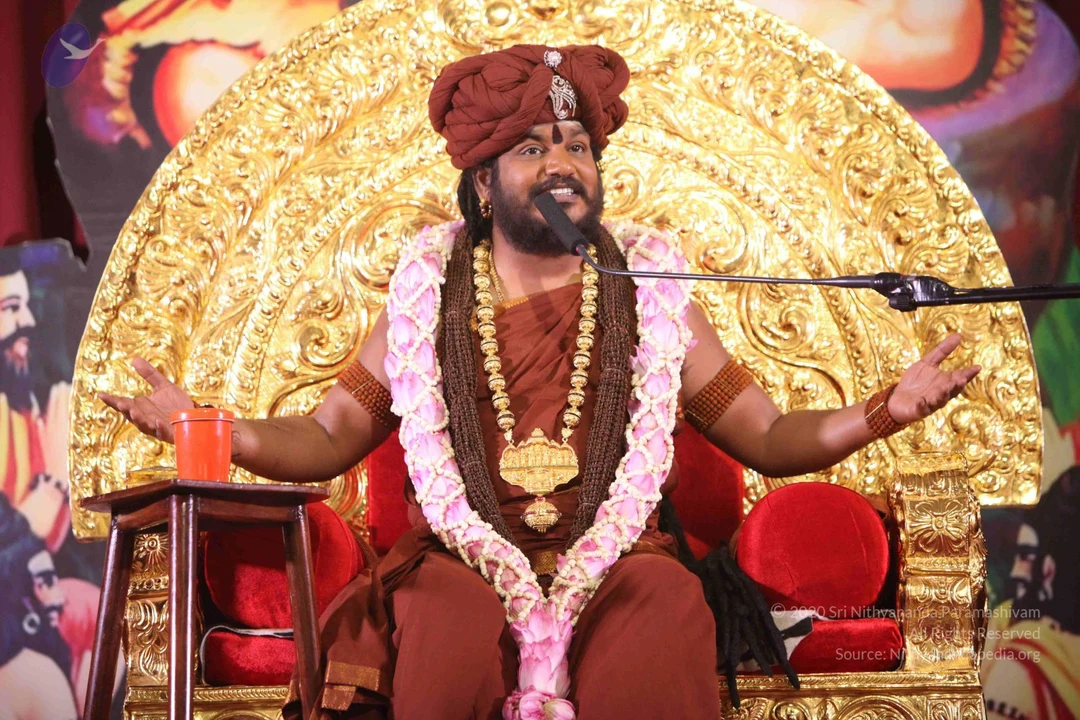
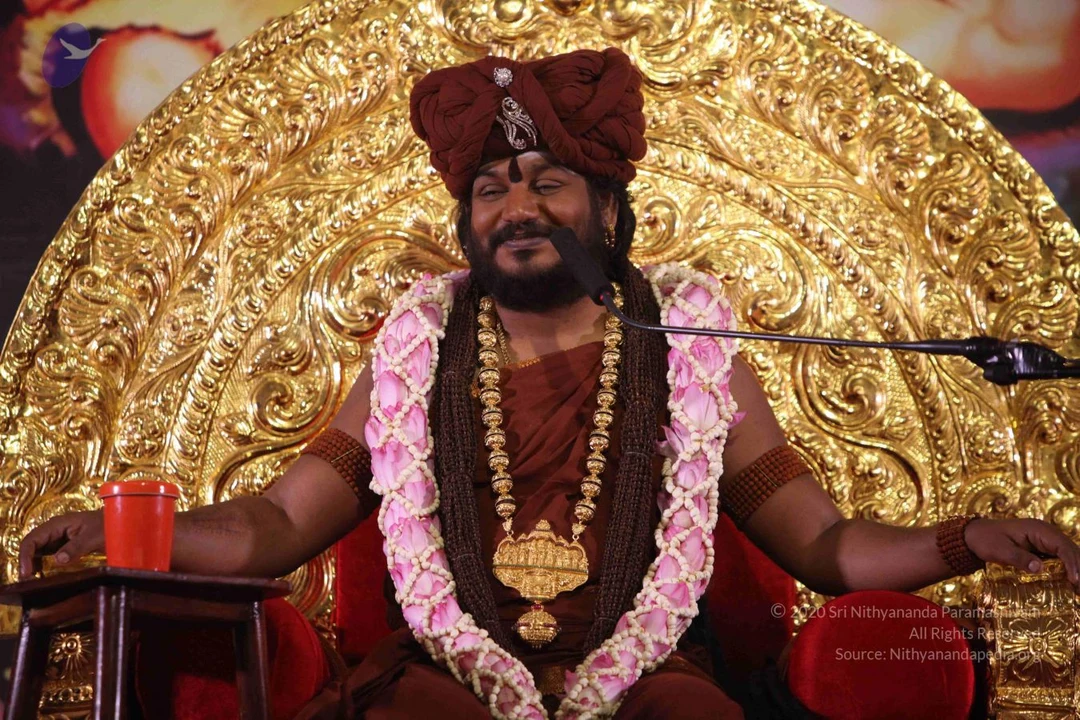
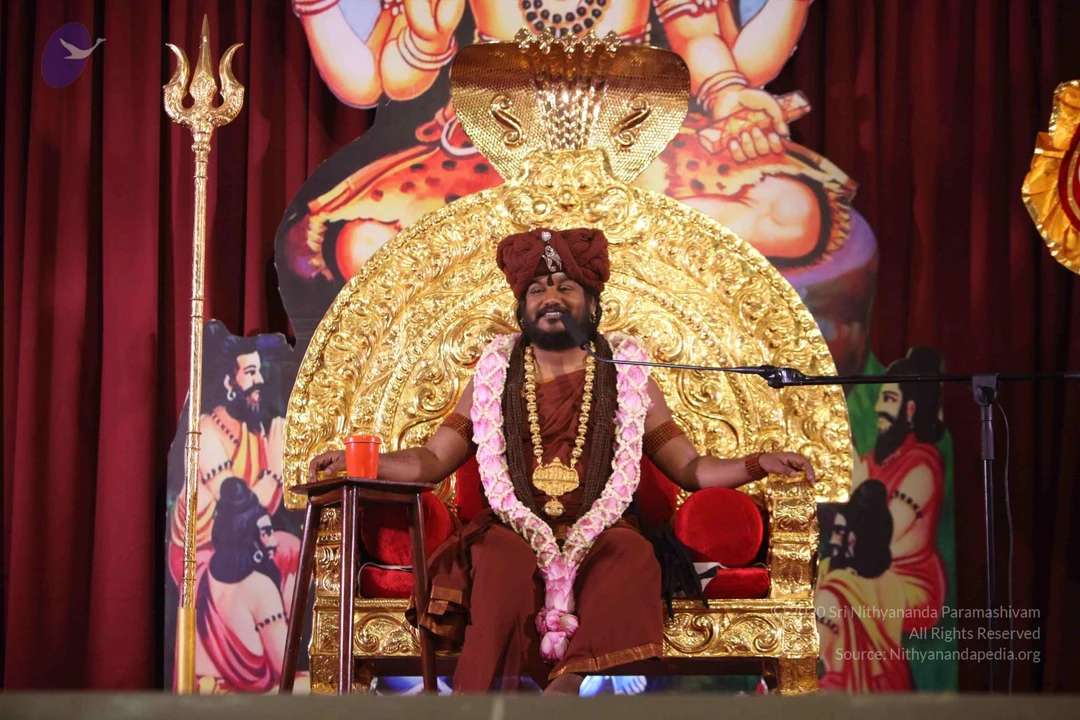
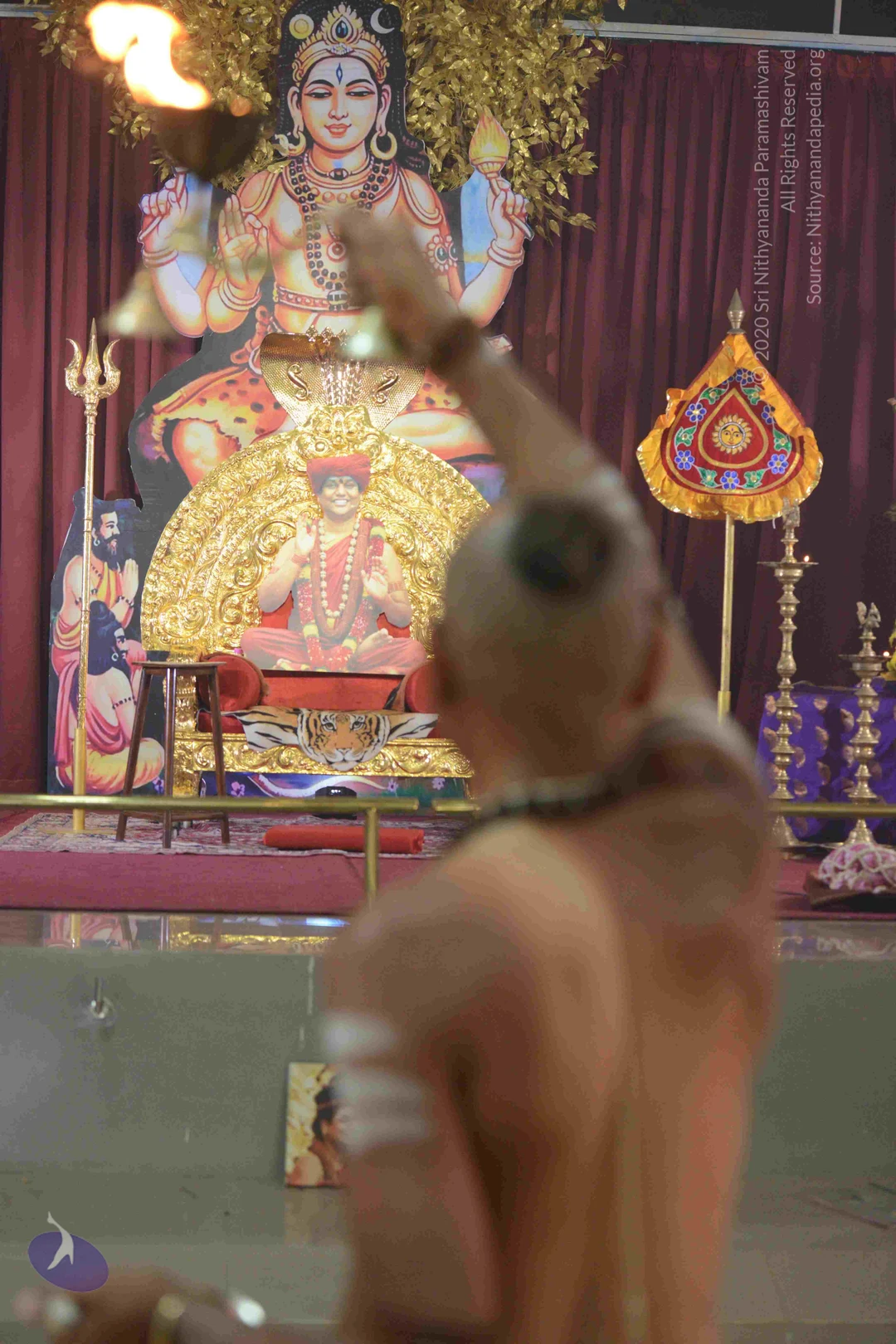
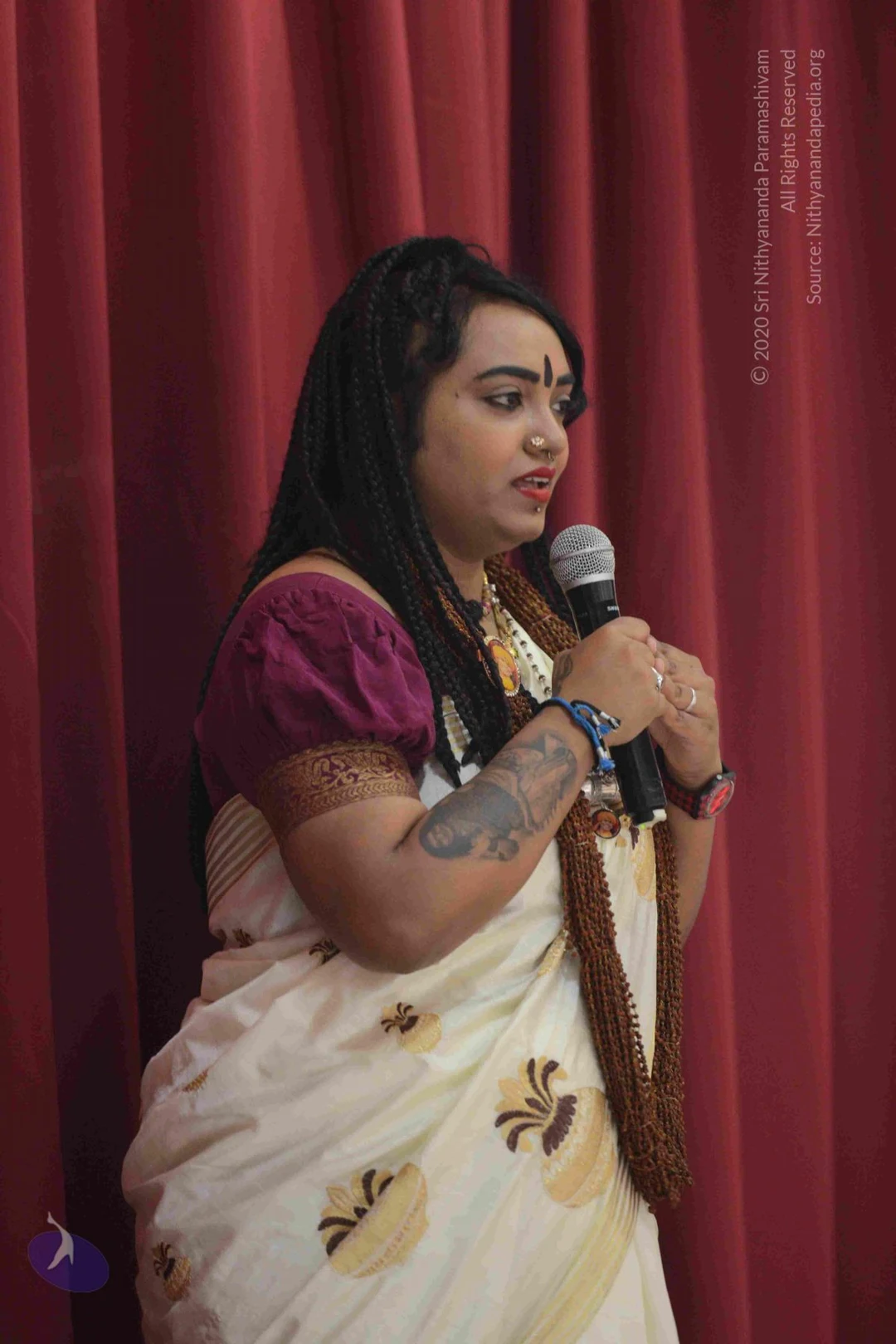
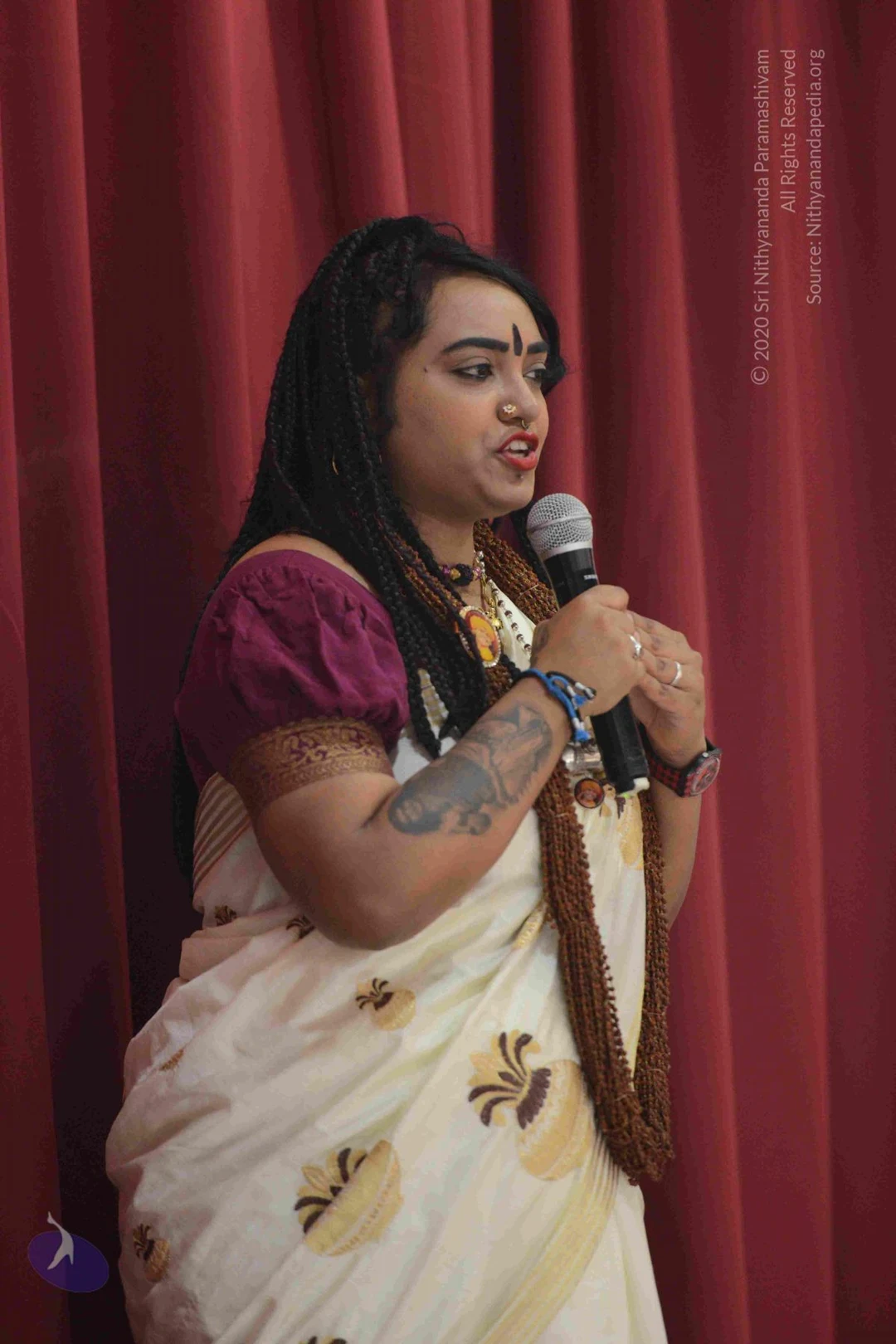
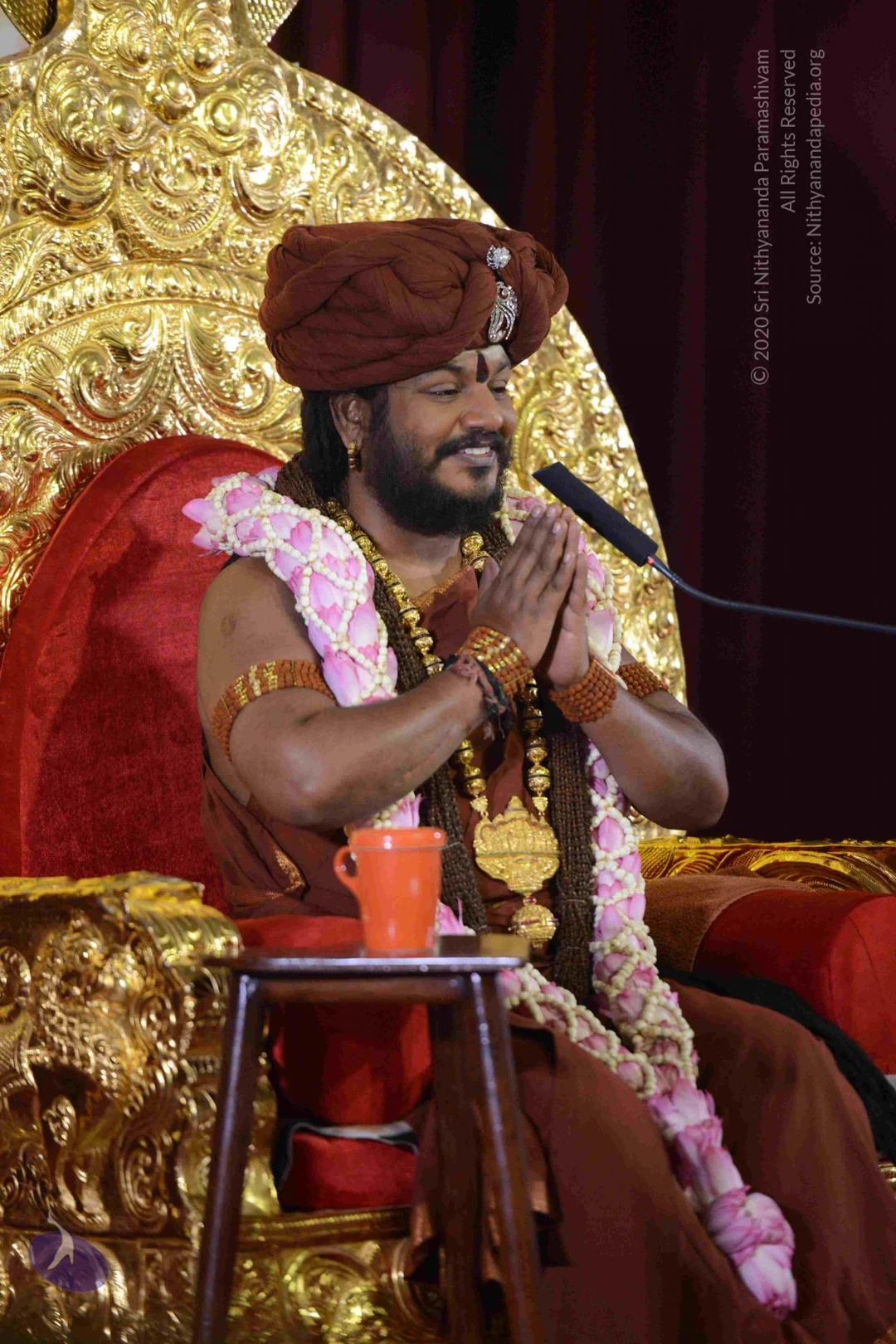
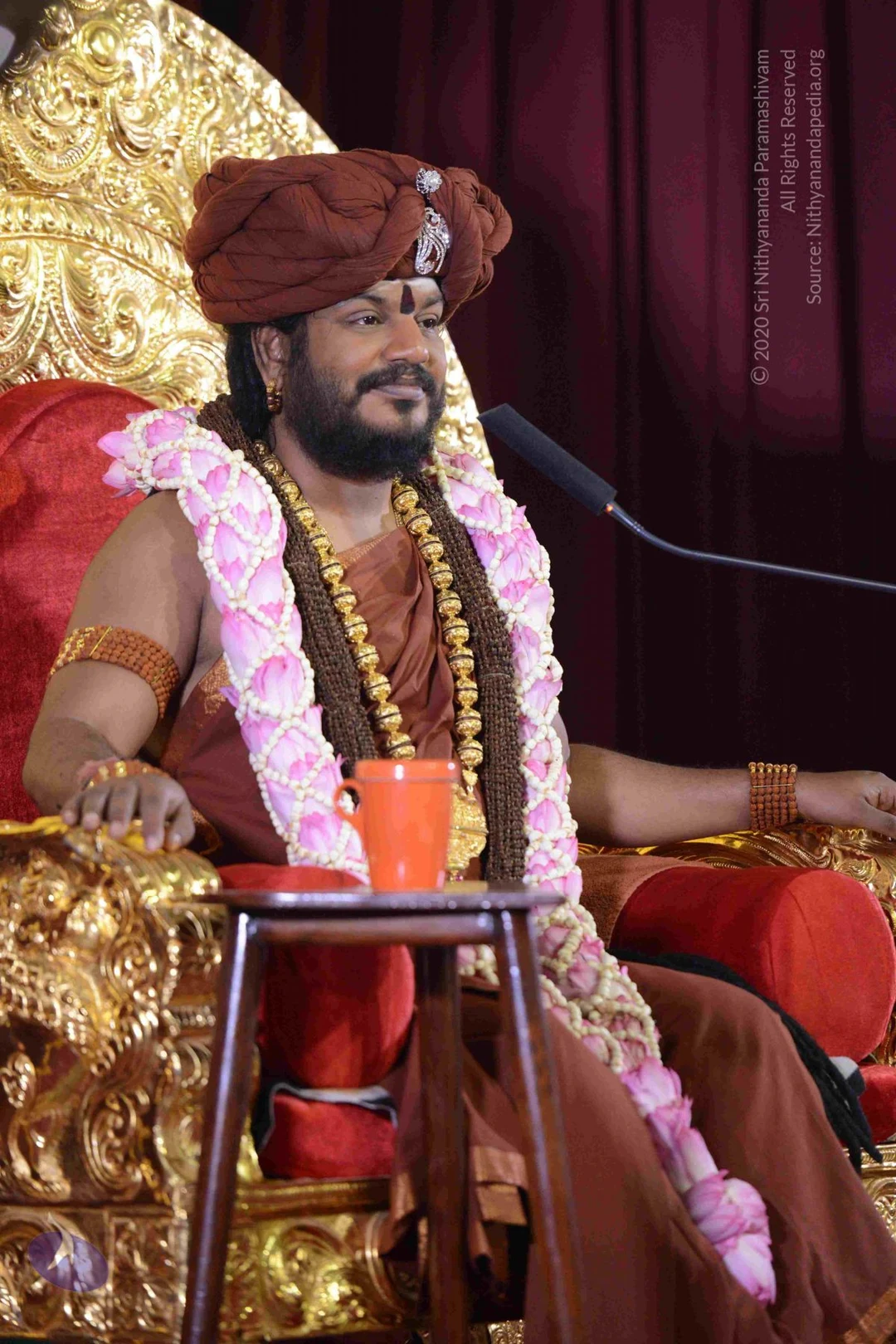
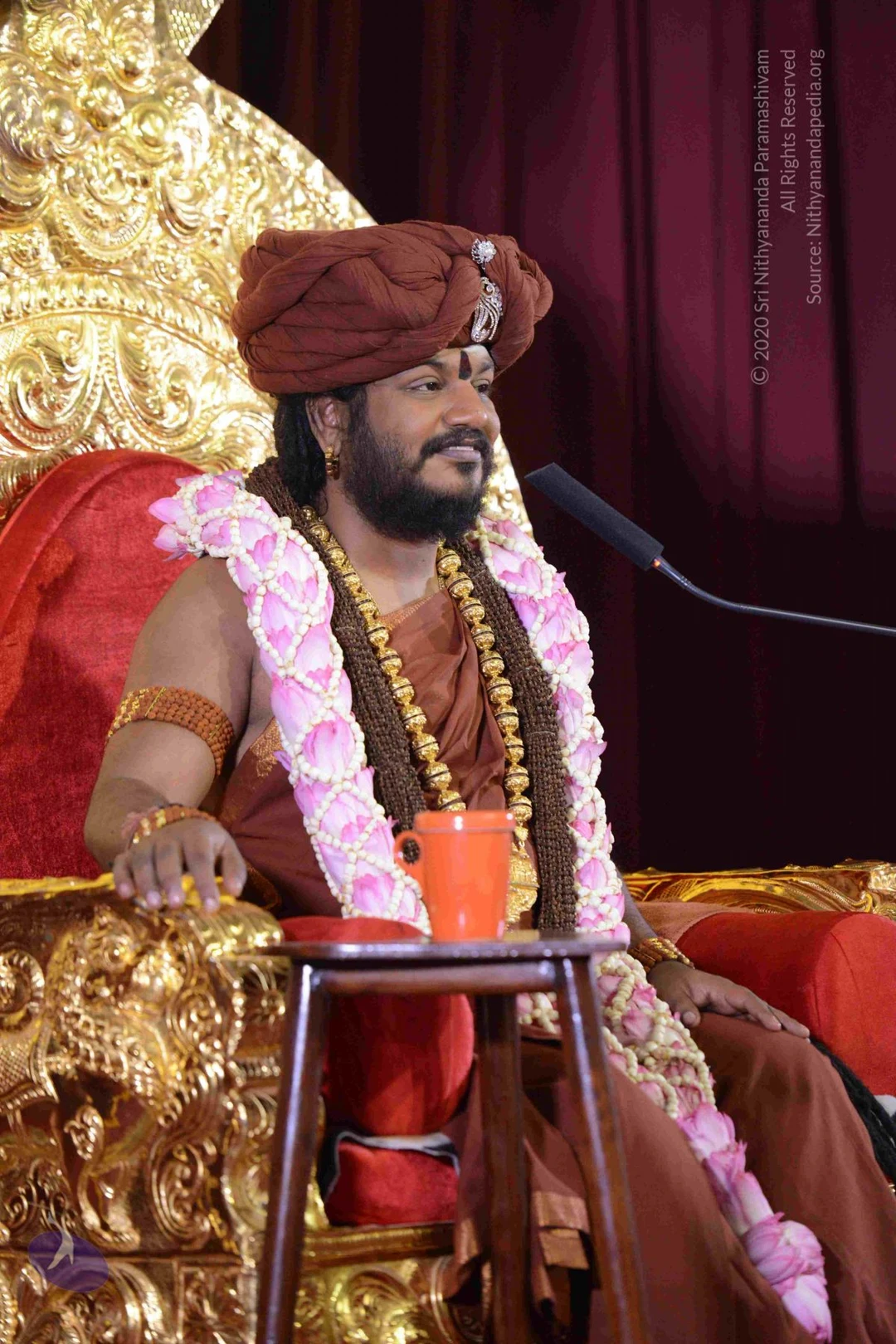
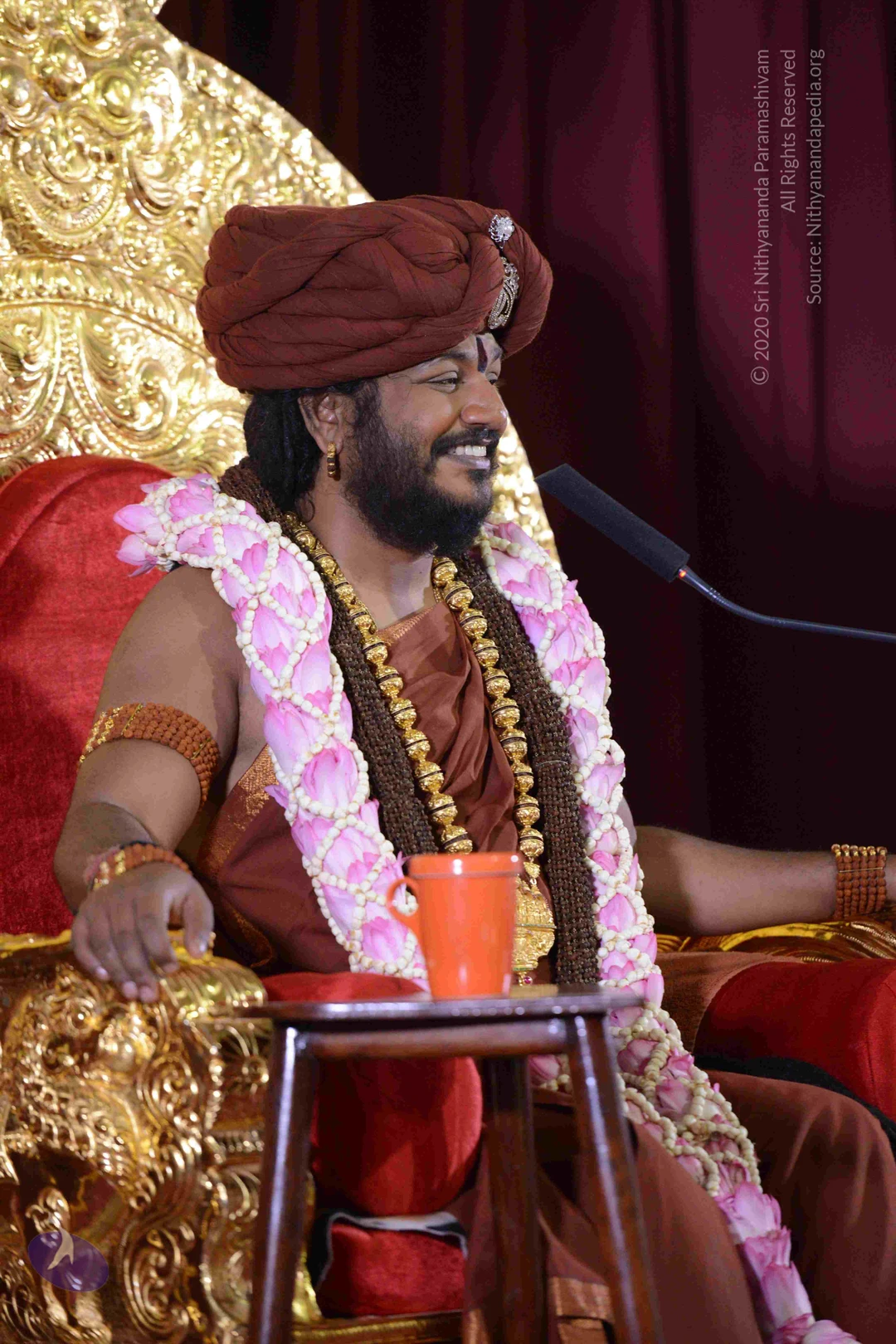
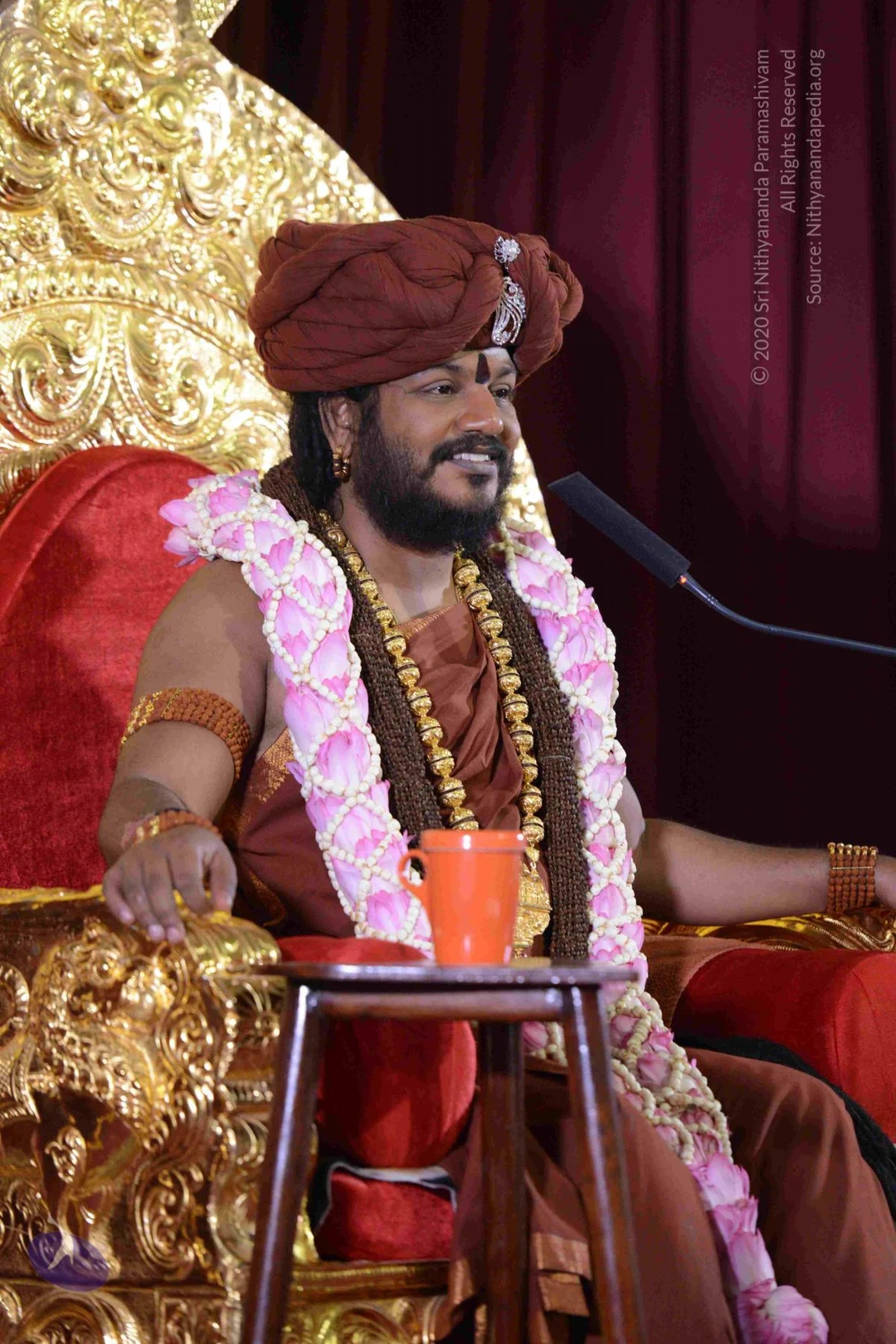
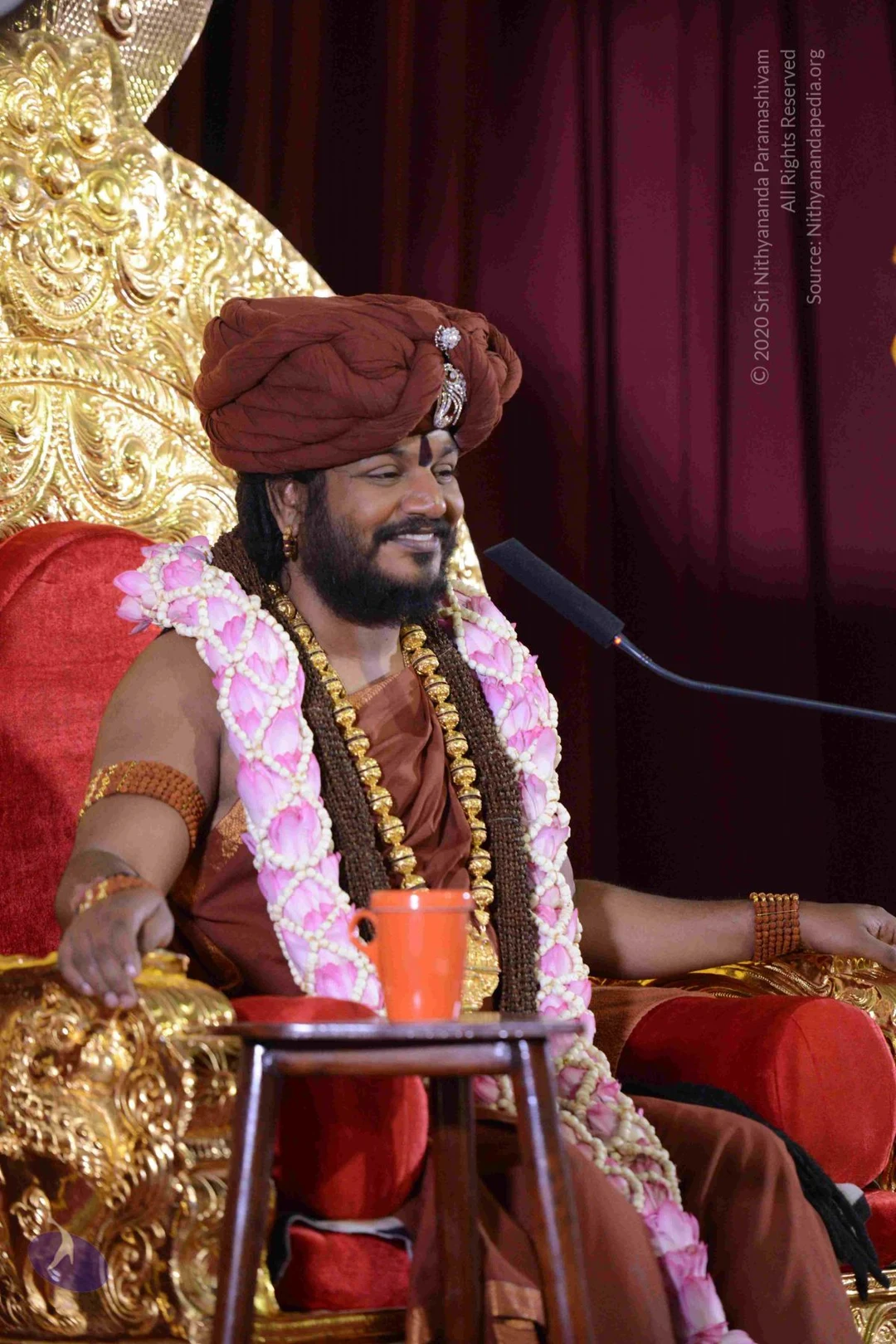
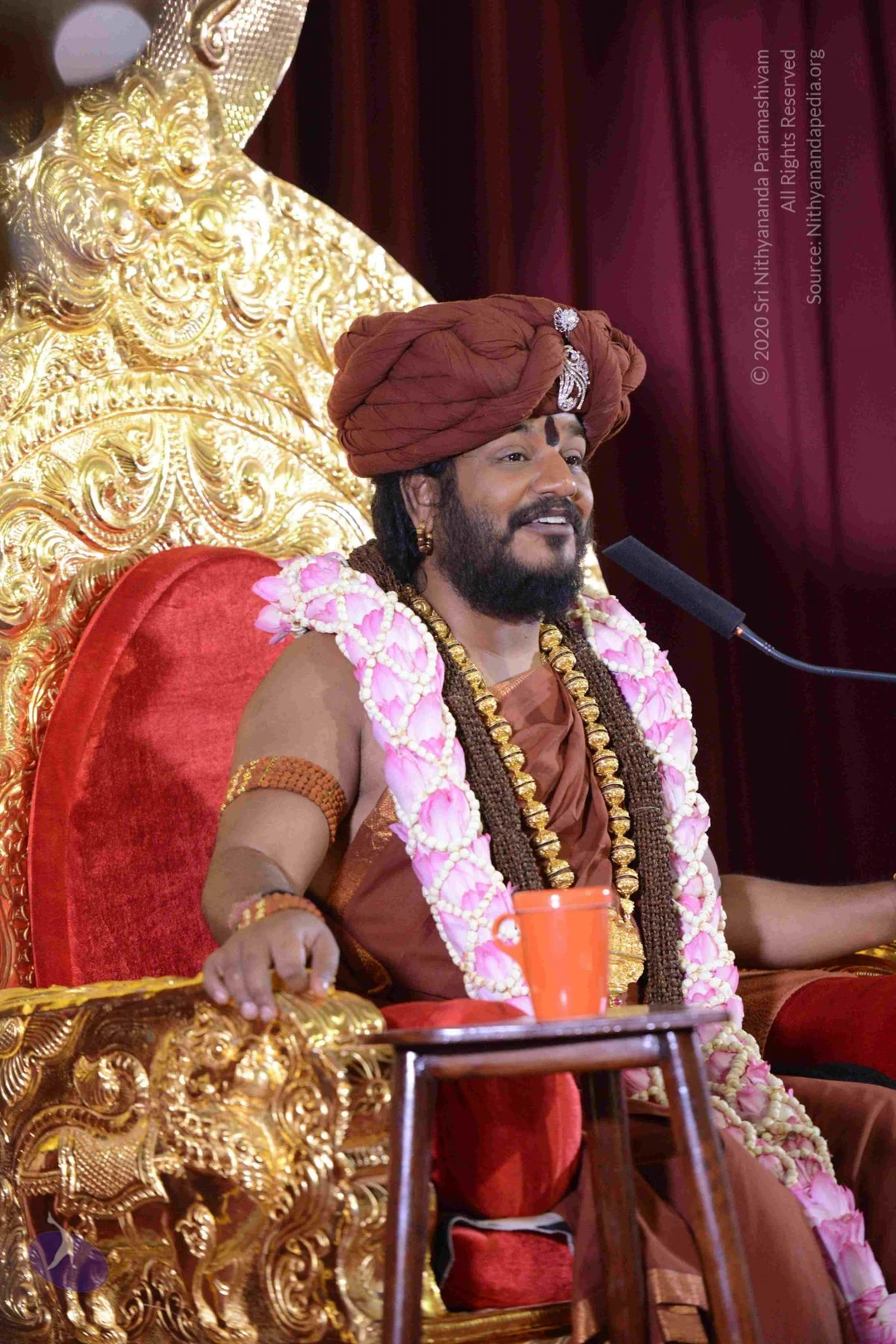
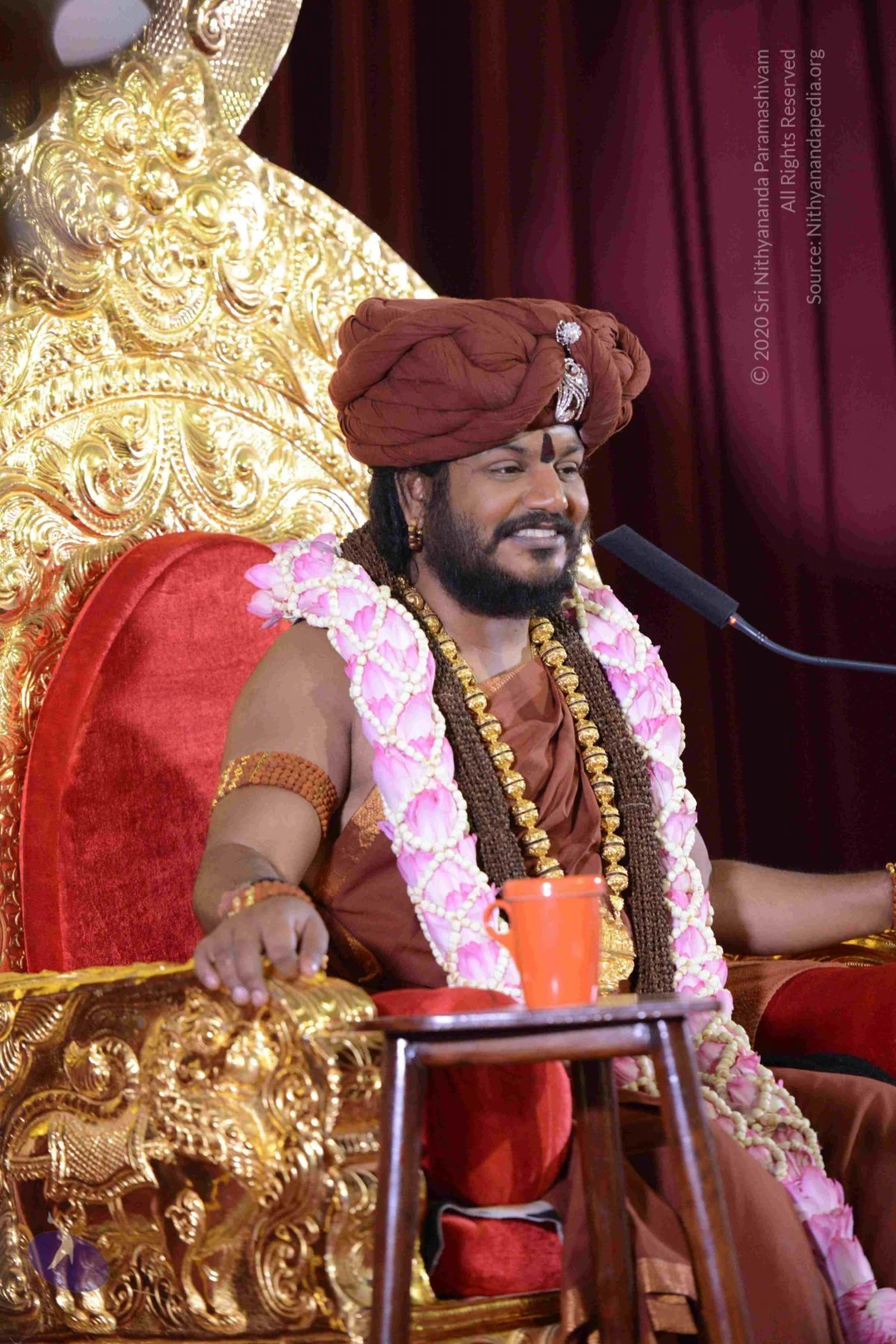
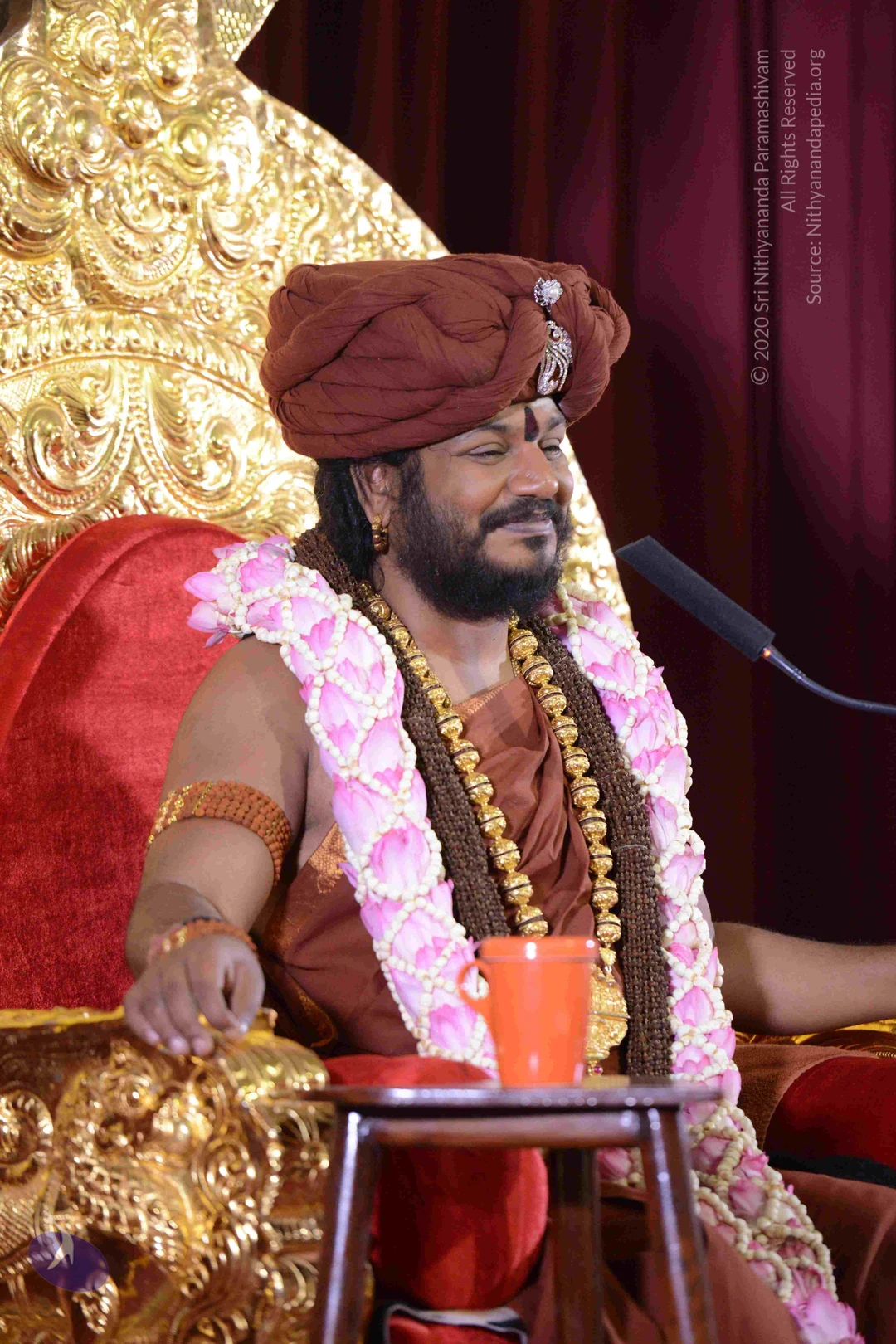
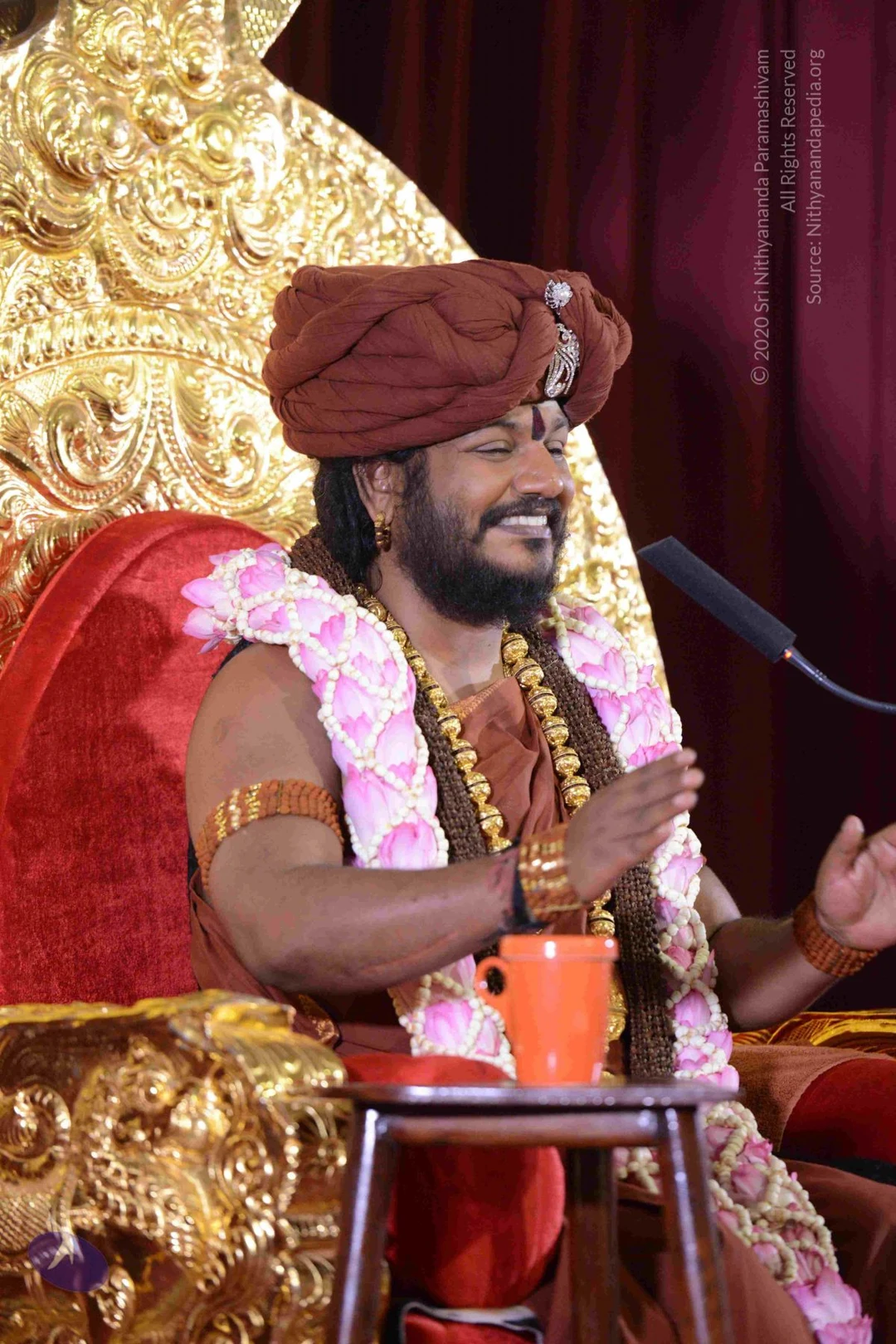
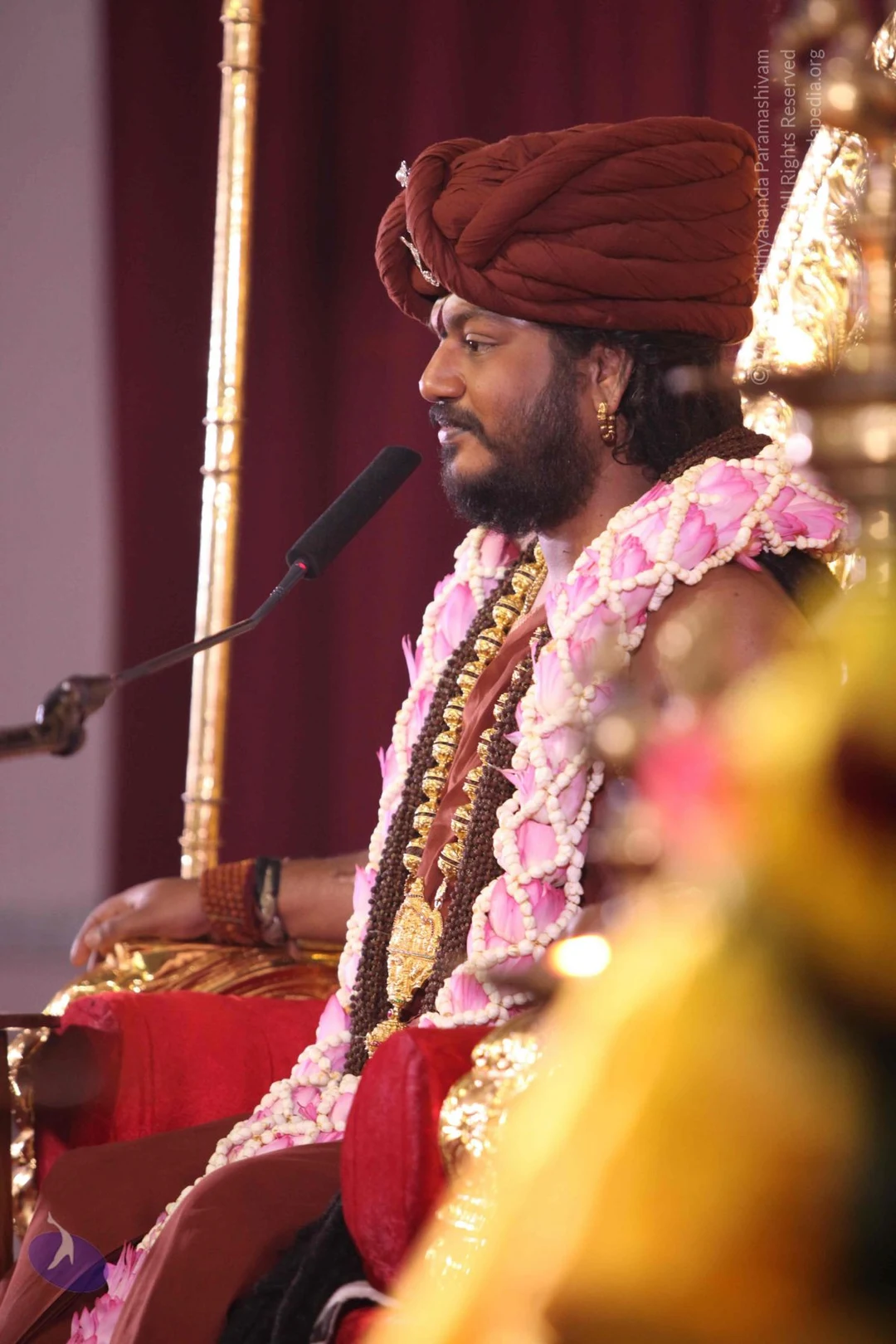
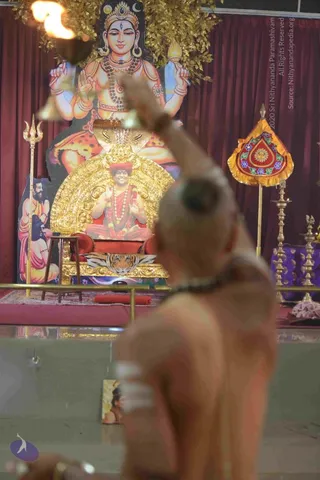
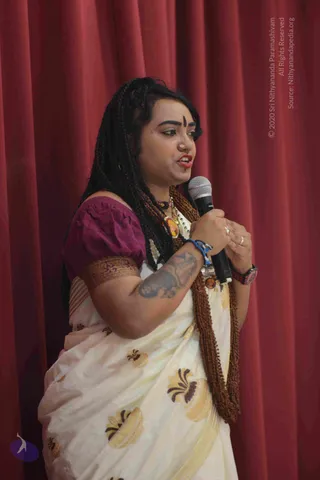
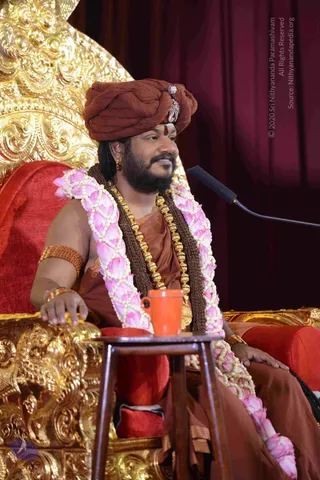
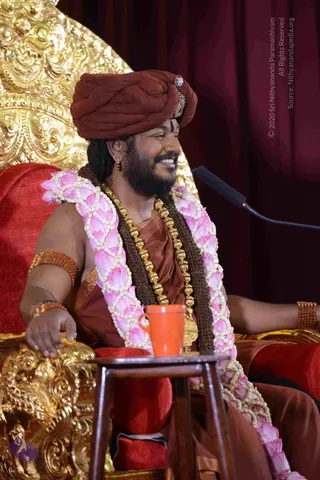
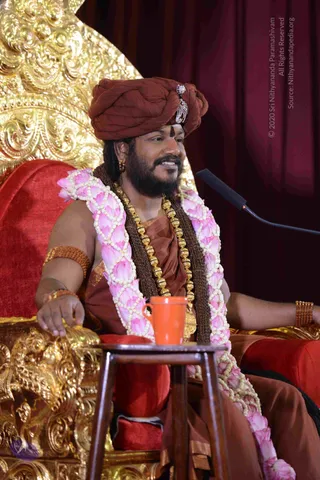
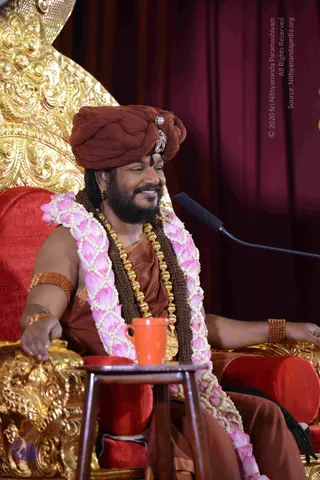
A photograph of a stage set for a ritual at an ashram hall with deep maroon drapes. A large deity murti in four arms, with a crown, golden leaves behind, and holding a flame, stands above a golden throne. On the throne sits a figure in a saffron-orange robe with a red turban and a long garland of white flowers, hands raised in blessing, with a tiger skin draped over the seat. Flanking the throne are a trident, a yellow-and-red ceremonial umbrella, and brass oil lamps on a purple-draped table. In the foreground, a blurred bare-chested person in the foreground raises a lit flame toward the stage. A printed portrait of a figure appears at the lower edge of the stage. The throne figure appears as a painted or printed depiction, not a person physically present.A woman stands in profile before a red curtain, speaking into a handheld microphone held in both hands. She has long dark braided hair, a bindi, a nose stud and red lipstick. She wears a cream saree with gold woven motifs, a magenta blouse with a gold-bordered sleeve, and a long brown rudraksha-style mala with a small framed pendant. A tattoo is visible on her upper arm and she wears a wristwatch and bracelets.A man seated on an ornate gold-and-red throne, wearing a rust-brown turban with a silver brooch, rust-brown shawl, a long rudraksha mala and gold beaded necklace, and a pink-and-white lotus garland. He has a red tilak on his forehead and a bare upper arm with a rudraksha band. An orange cup sits on a small wooden side table beside him, and a microphone stand is at right in front of a deep red curtain.A smiling man seated on an ornate gold-carved throne with red cushions, wearing a maroon turban with a silver brooch, maroon robe, layered rudraksha malas with gold beads, and a large garland of pink lotus petals and white beads over his shoulders. He has a red tilak on his forehead and a gold bangle on his arm, and rests one hand on the throne's armrest. A small wooden stool in front holds an orange cup, and a microphone stand is visible at right against a maroon curtain.A bearded man in a rust-brown turban with a silver brooch sits on an ornate gold and red throne, wearing a brown wrap, a long rudraksha-style mala with gold beads, and a pink and white flower garland. A small wooden side table holds an orange cup, and a microphone stand is visible at right against a maroon curtain.A bearded man in a maroon-brown turban with a jewelled brooch sits smiling on an ornate gold-carved throne with red velvet cushions, a microphone on a stand beside him. He wears a long pink-and-white lotus garland, a brown-orange shawl over bare shoulders, multiple strands of gold beads and dark rudraksha-style malas, and an orange armband. A small wooden table holds an orange cup. A deep maroon curtain forms the backdrop. a person (identity from appearance cues: turban, ornate gold necklaces, garland, seated on a throne), seated as the speaker at a satsang-style event.

Kalpataru-Darshan

19 photosSource gallery
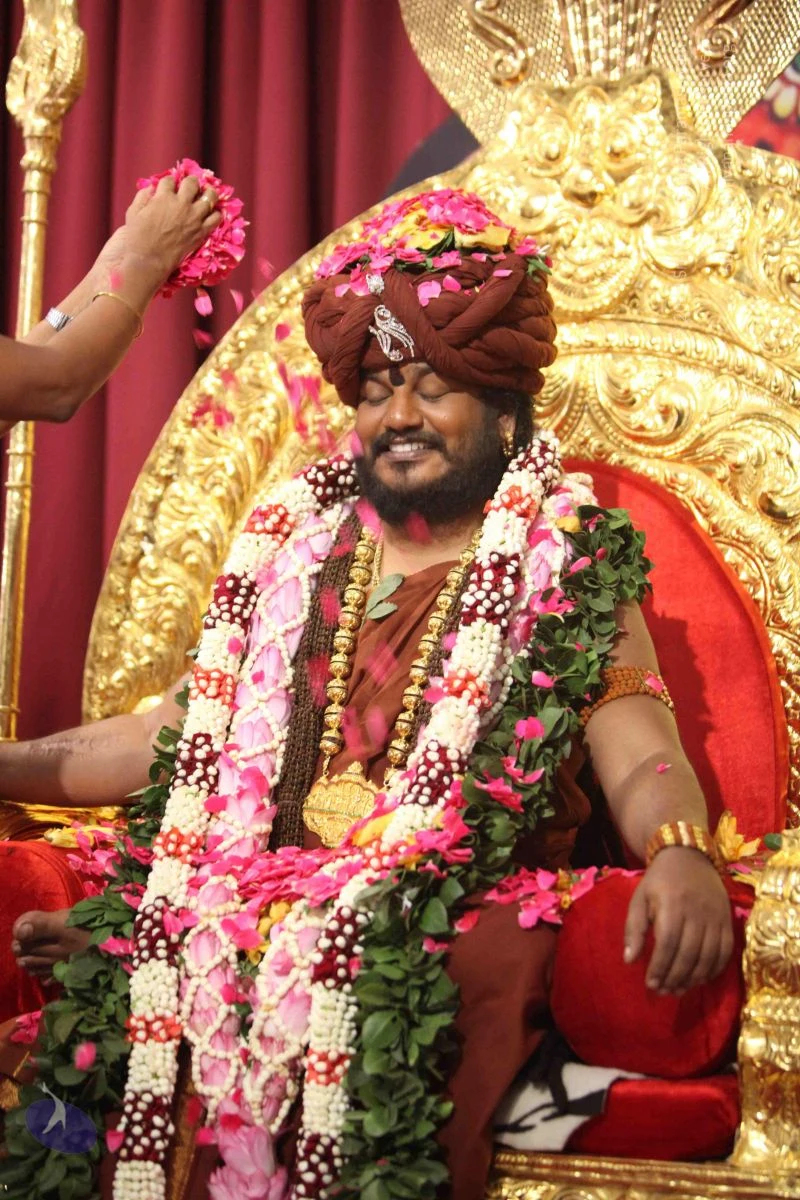
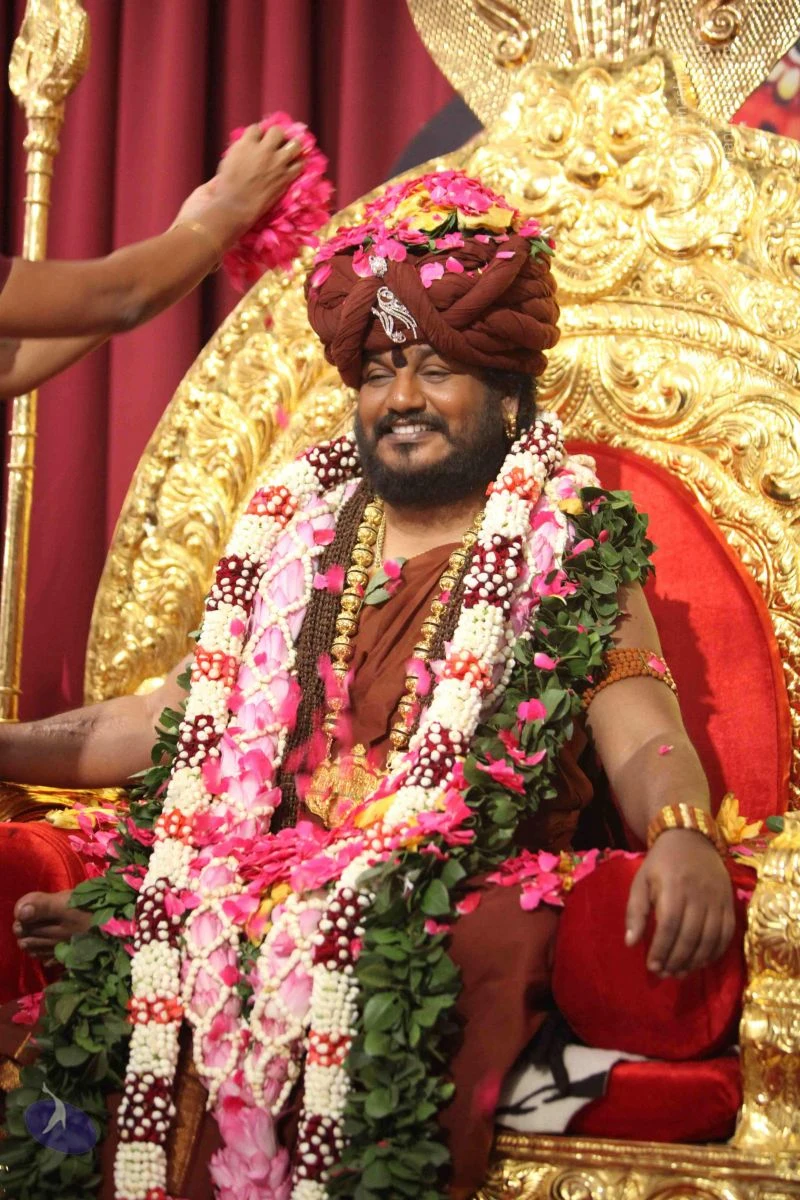
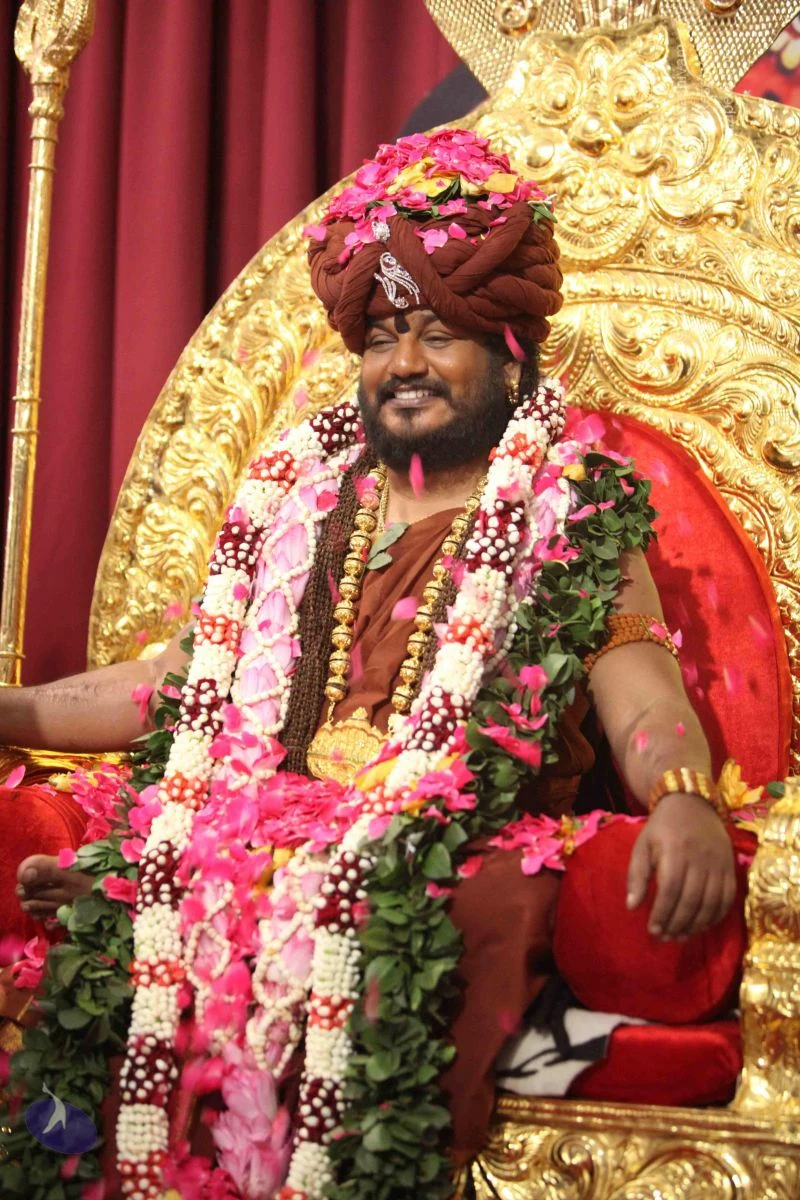
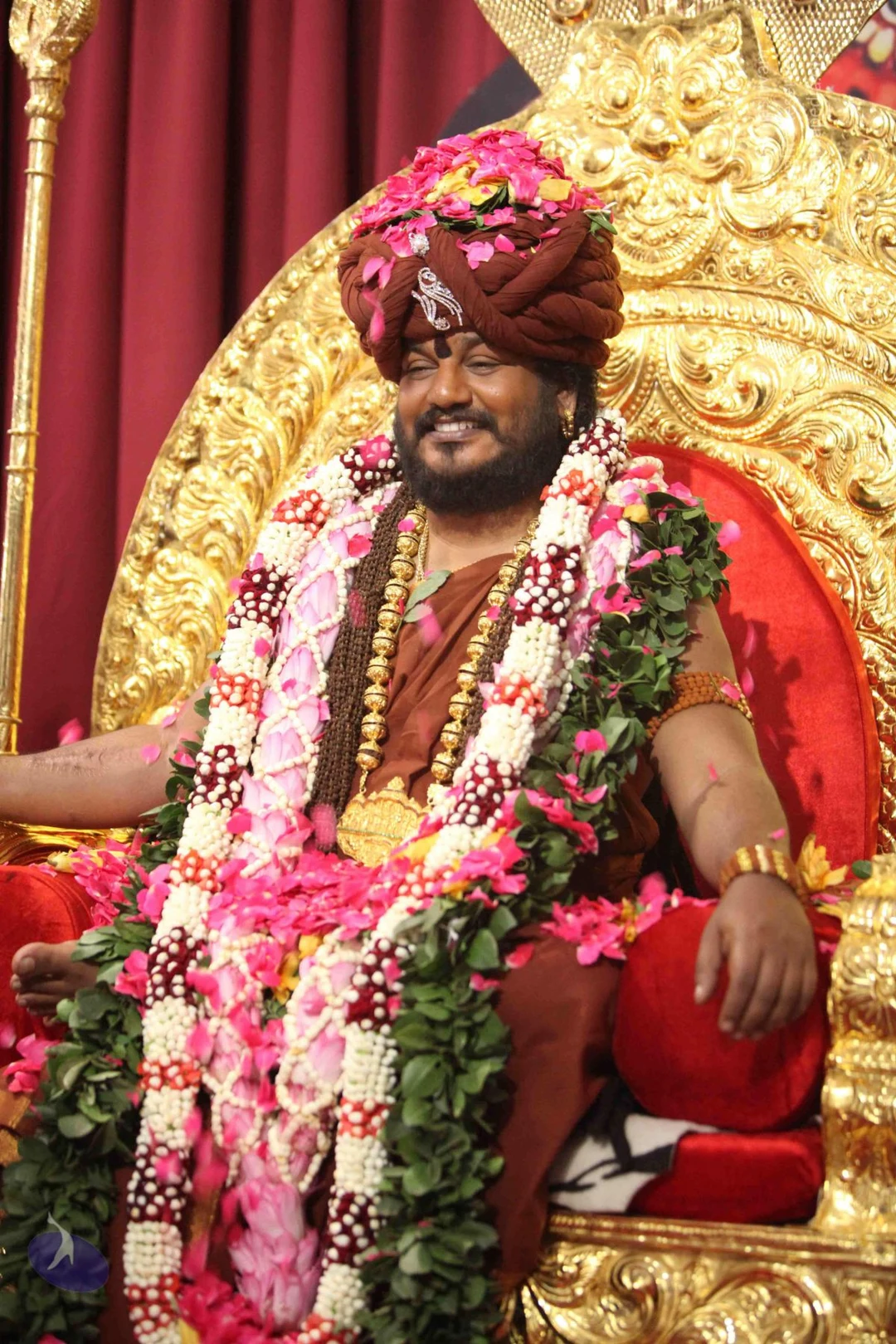
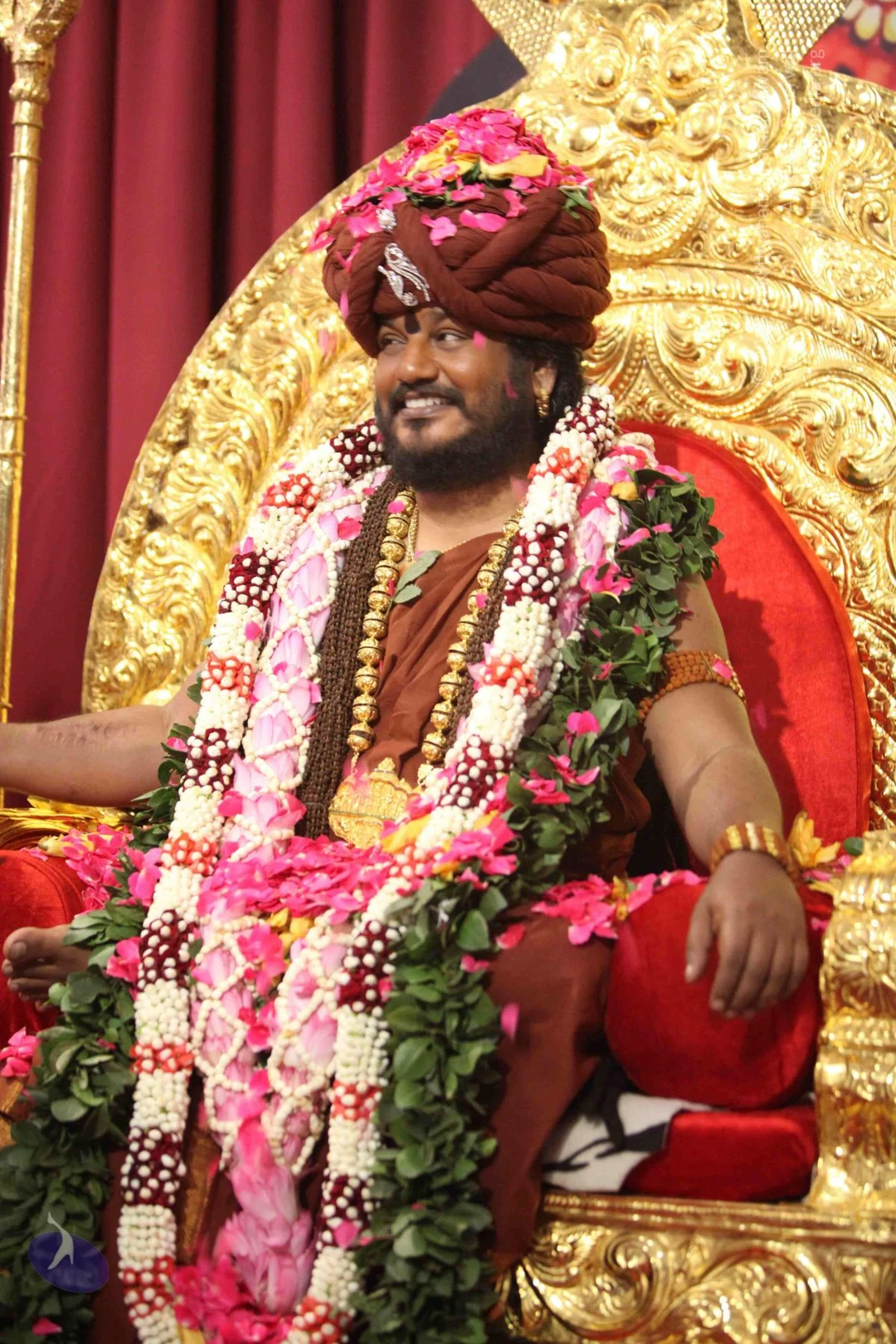
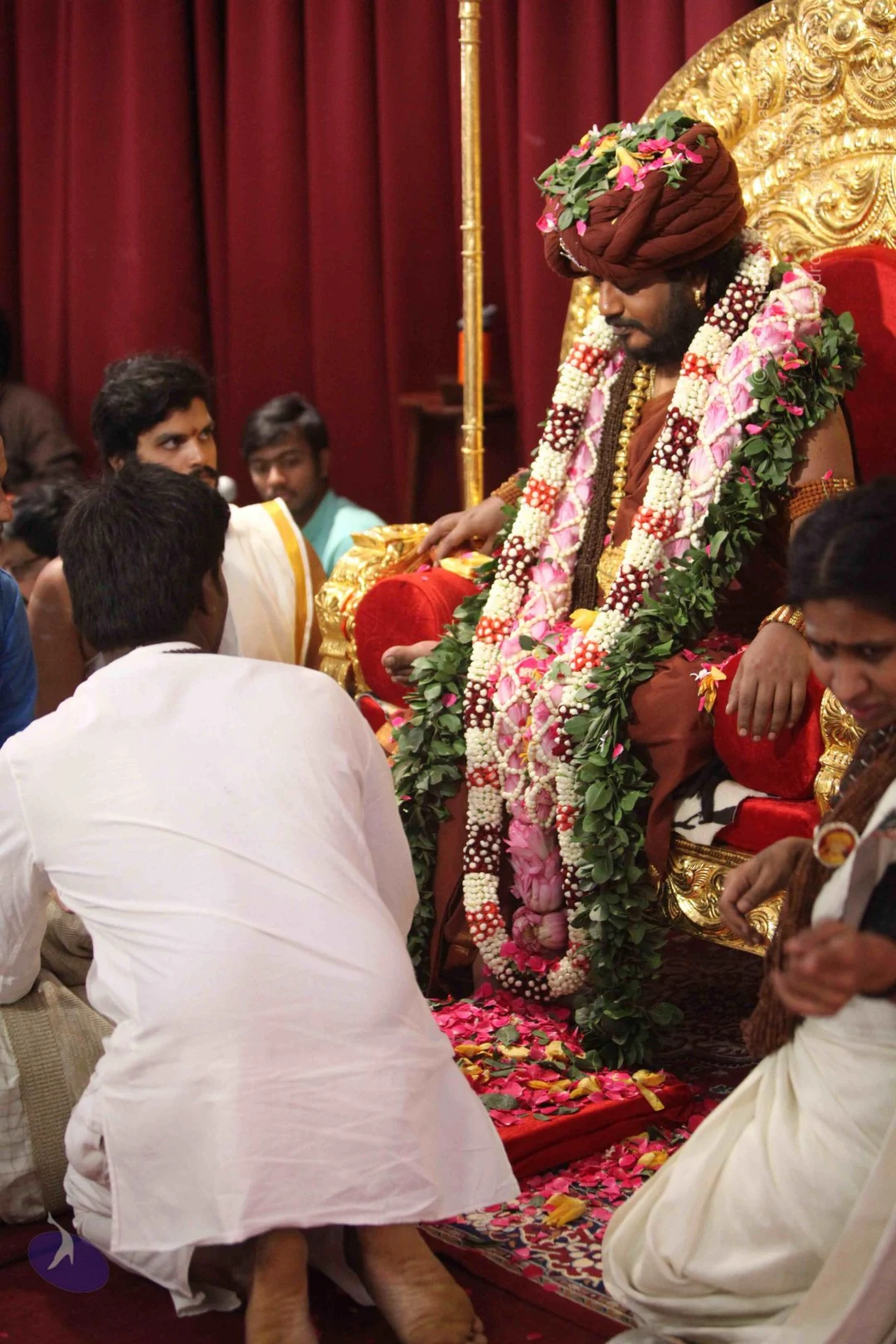
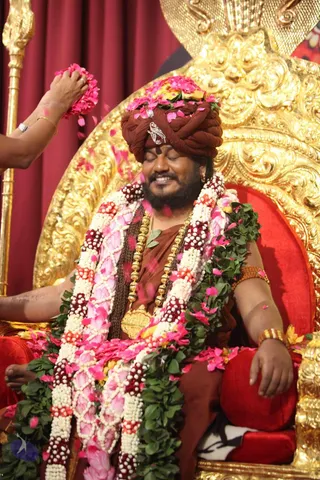
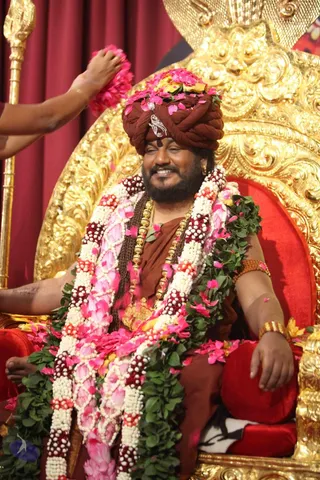
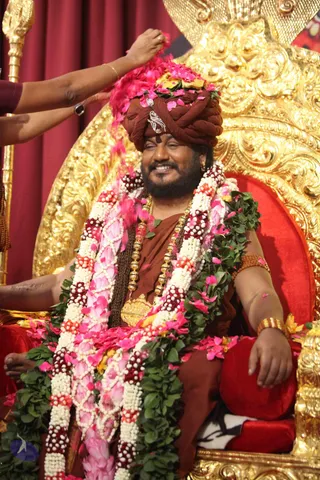
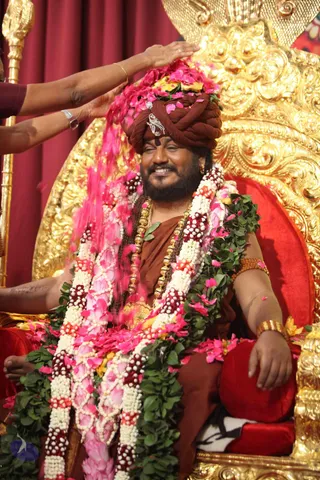
A seated man on an ornate gold throne with red cushions wears a rust-brown turban decorated with pink flower petals, leaves and a silver ornament, and a brown robe. He is draped in long garlands of red roses, white jasmine, pink flowers, yellow marigolds and green leaves, with a gold bead necklace. He holds a red-pink fruit in one hand and looks downward. Behind him hangs a deep red curtain and a gold ceremonial staff. The swami is a probable candidate based on the turban, garlands and throne, though the face cannot be confirmed from appearance alone.A man seated on an ornate gold-and-red throne wears a rust-brown turban adorned with a small silver brooch and a green leafy crown, and a thick garland of red roses, white jasmine and orange flowers draped over his shoulders and chest. He has a full beard and wears gold bangles and a gold armband. A microphone stands beside him and a woman in a dark outfit sits at the right edge near a purple-draped table. The background shows a deep red curtain and a white air cooler.A photo of a bearded man seated on an ornate gold throne with red cushions, eyes closed in a serene smile. He wears a brown turban with a silver ornament, a brown robe, a heavy gold bead necklace with a gold pendant, and a long rudraksha-style mala. Large garlands of white, red and pink flowers with green leaves hang over his shoulders and chest, and pink petals fall around him. A hand from the left, wearing a bangle, sprinkles petals over him. Red curtains and a gold staff are in the background. a person is seated on the throne as the honoured presence, with gold and red ritual decor around him.A photograph of a seated man on an ornate gilded throne with red cushions, wearing a brown turban decorated with pink and yellow flower petals and a silver emblem at the front. He wears a brown robe, multiple layers of white, pink and red flower garlands with green leaves, a long rudraksha-style mala, and gold ceremonial necklaces. A person's arm in the upper left holds a pink flower bunch, and red curtains and a gold staff appear behind him.A seated man on an ornate gold throne with a red cushion is being showered with pink and white flower petals by a pair of hands from the left. He wears a brown turban with a silver ornament, a brown robe, long gold and rudraksha-style beaded necklaces, a gold pendant, and garlands of white jasmine, red and pink blossoms with green leaves. He smiles with eyes closed. Behind him a red curtain and a gold ceremonial staff are visible. a person: the seated man in the brown turban and ornate gold necklaces receiving petals matches the throne-seated presentation described in the page, but the image alone gives only moderate cues.A seated man in a brown turban with a silver ornament on the forehead, wearing a brown robe, a gold beaded necklace with rudraksha, and a thick garland of white jasmine, red and pink flowers and green leaves. Pink rose petals are being showered over his head by a pair of hands from the left edge of the frame. He sits on an ornate gold throne with a red cushion, against a red curtain, smiling with eyes closed. Only one physical person is visible, plus the hands of the person showering petals.