Skip to content
Thursday

2 October 2014

Dated photos
944
Source pages
1
Media
2
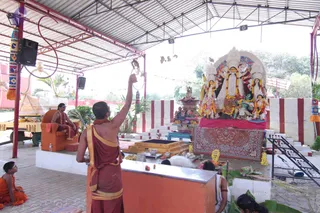
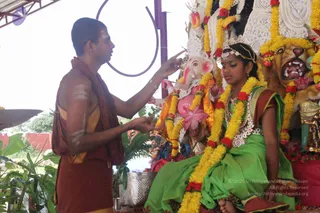
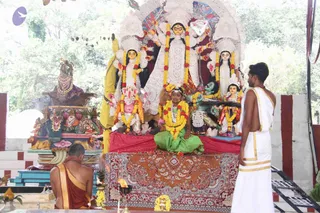
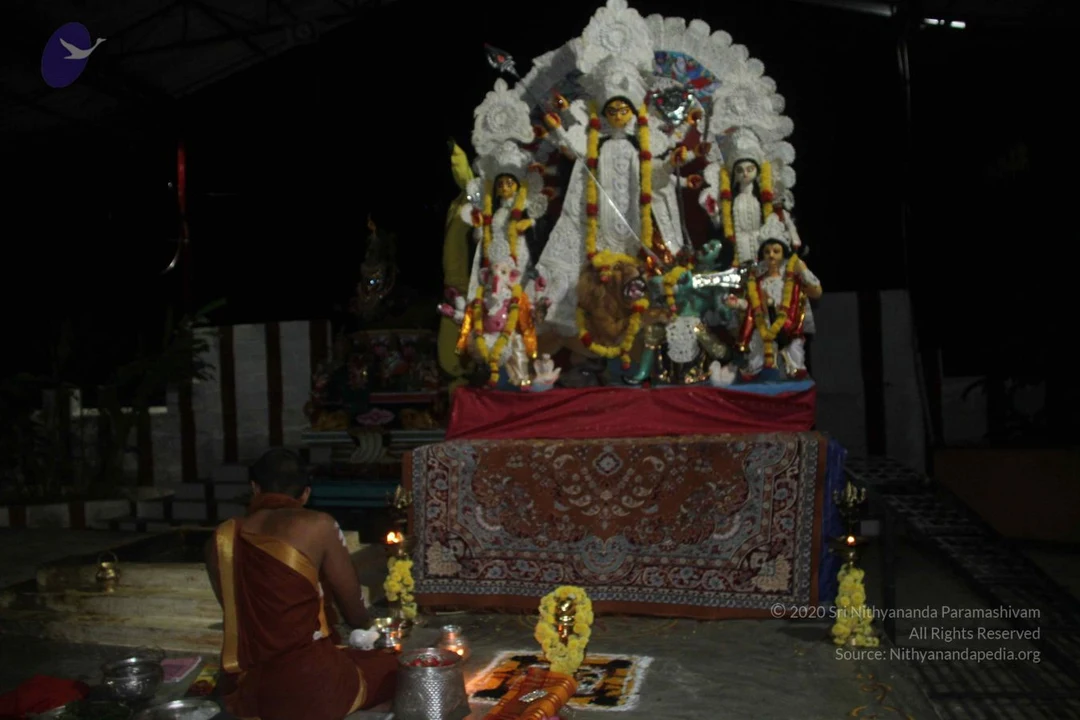
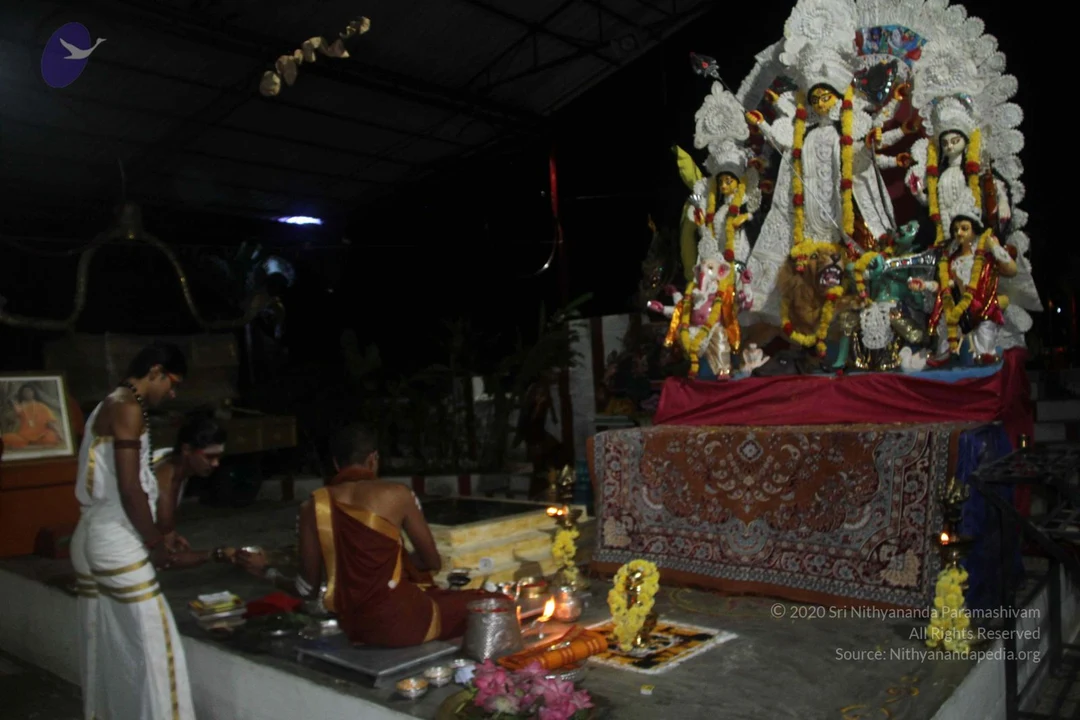
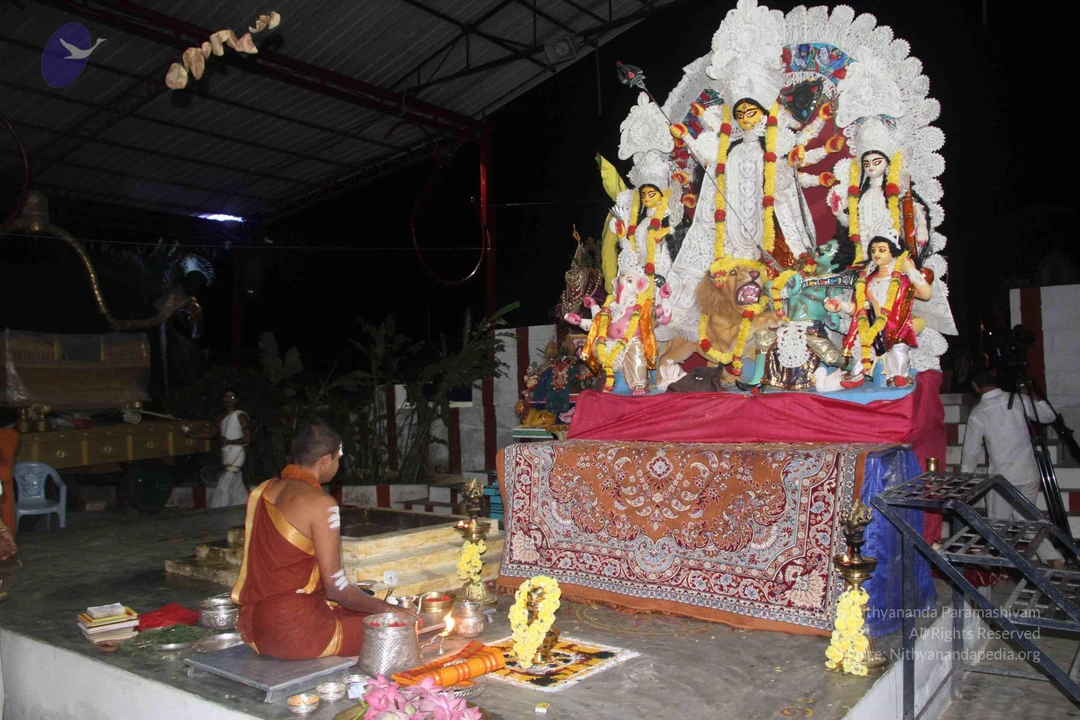
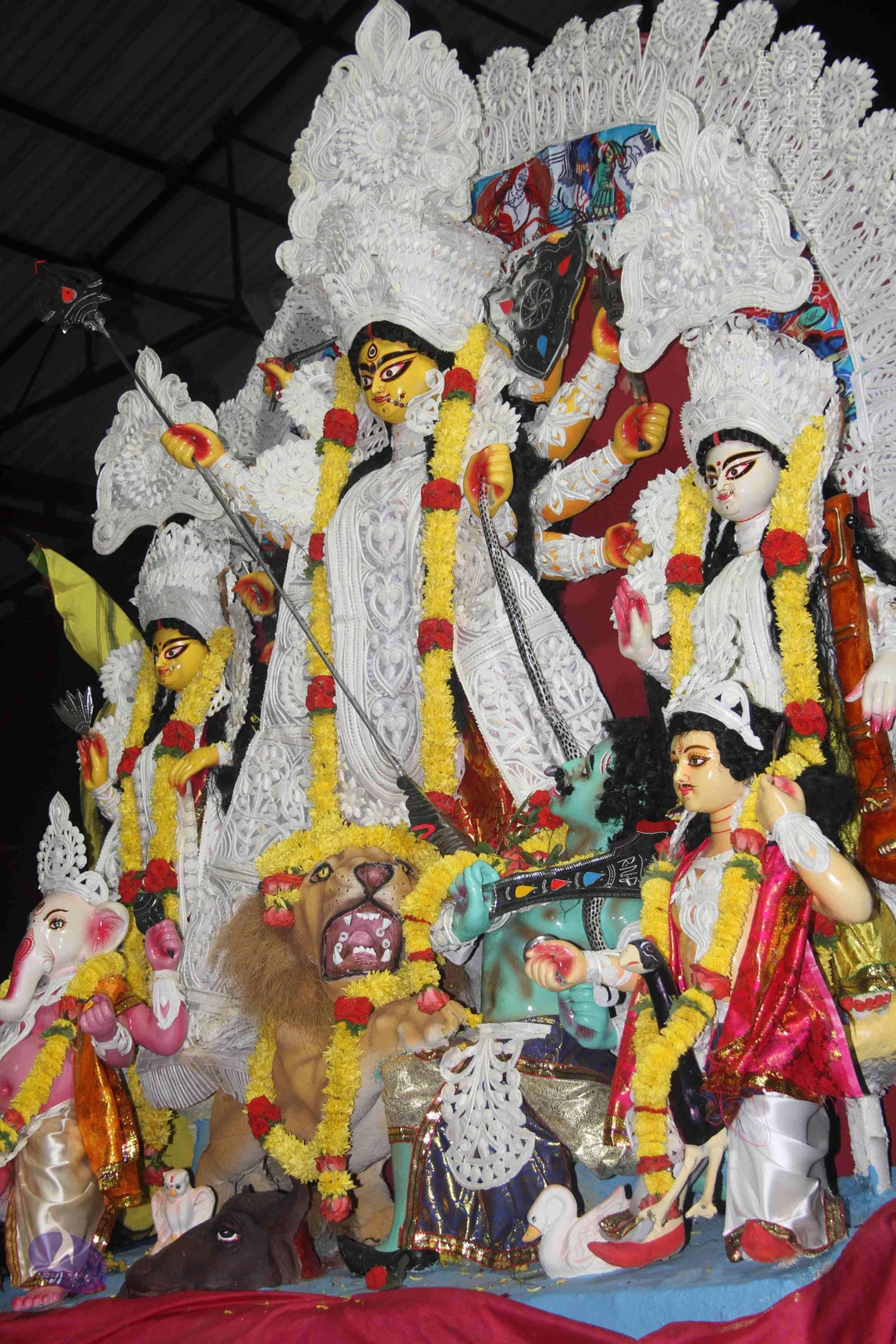
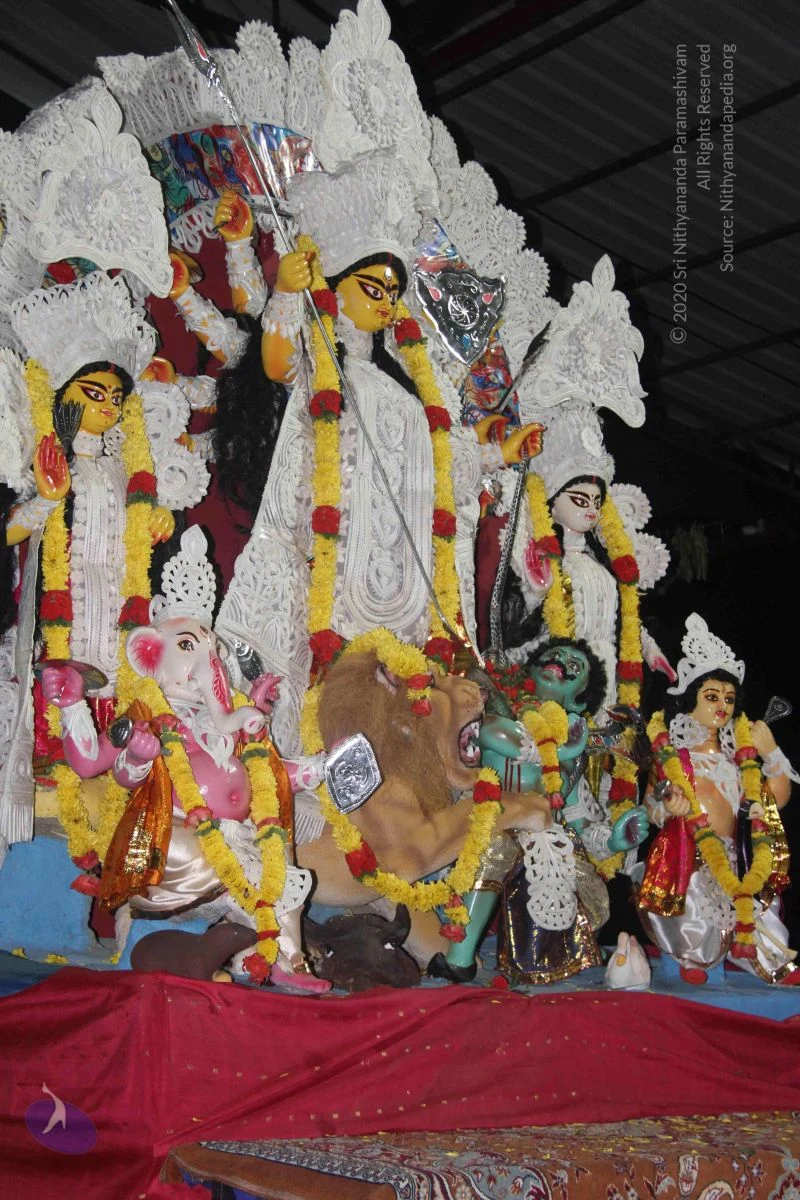
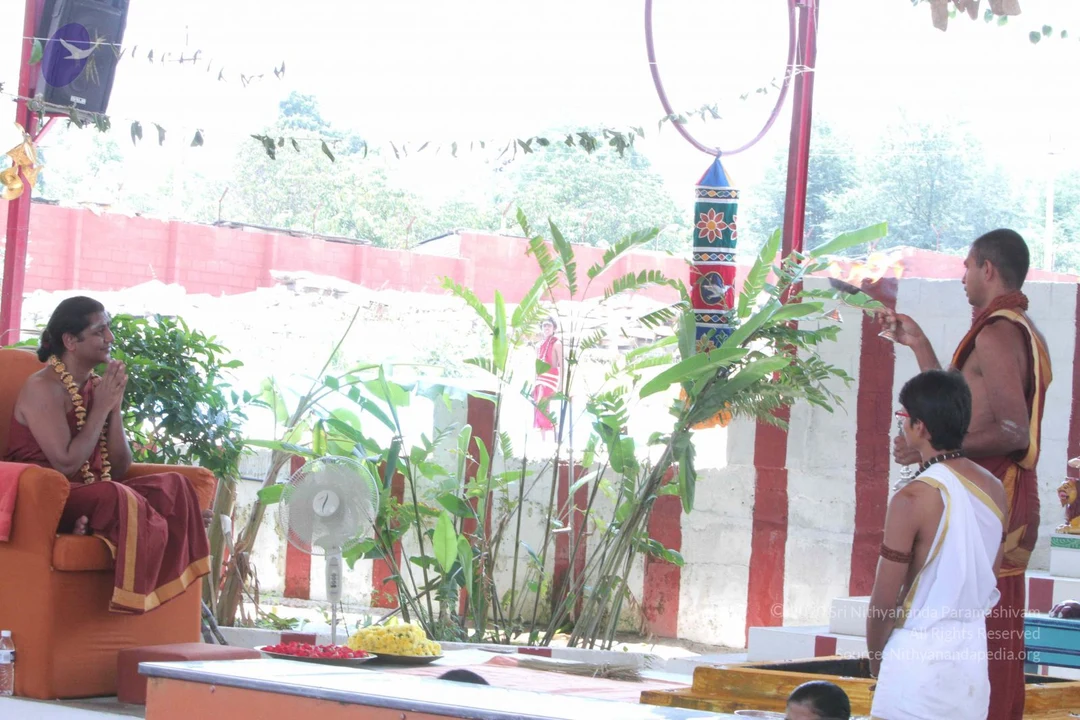
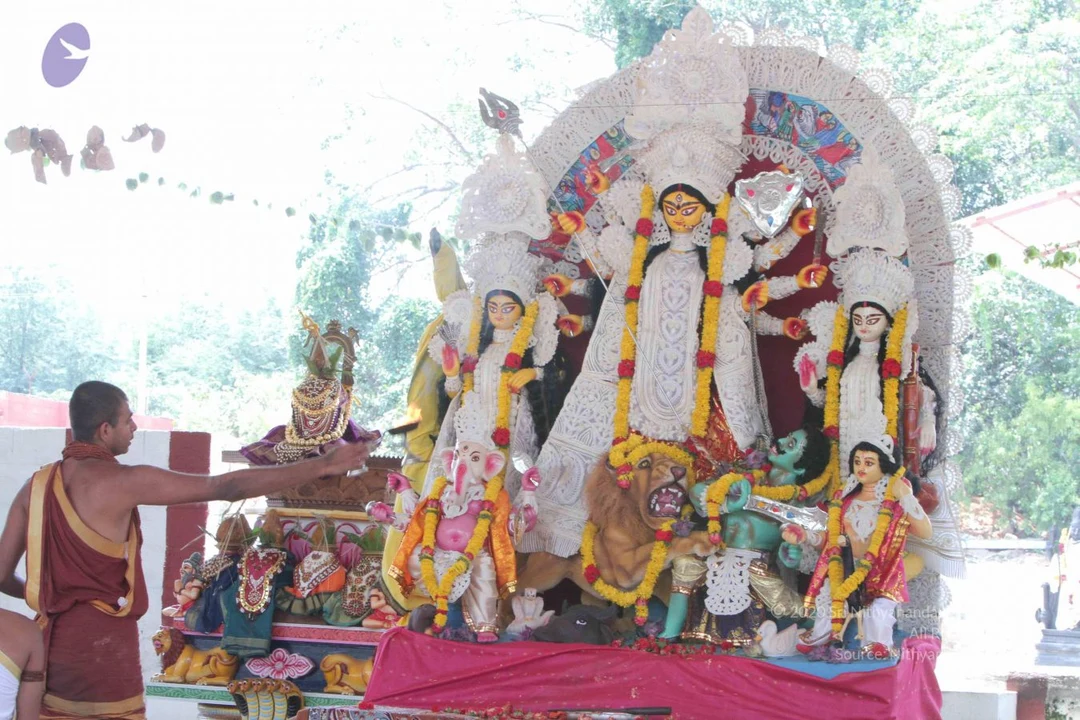
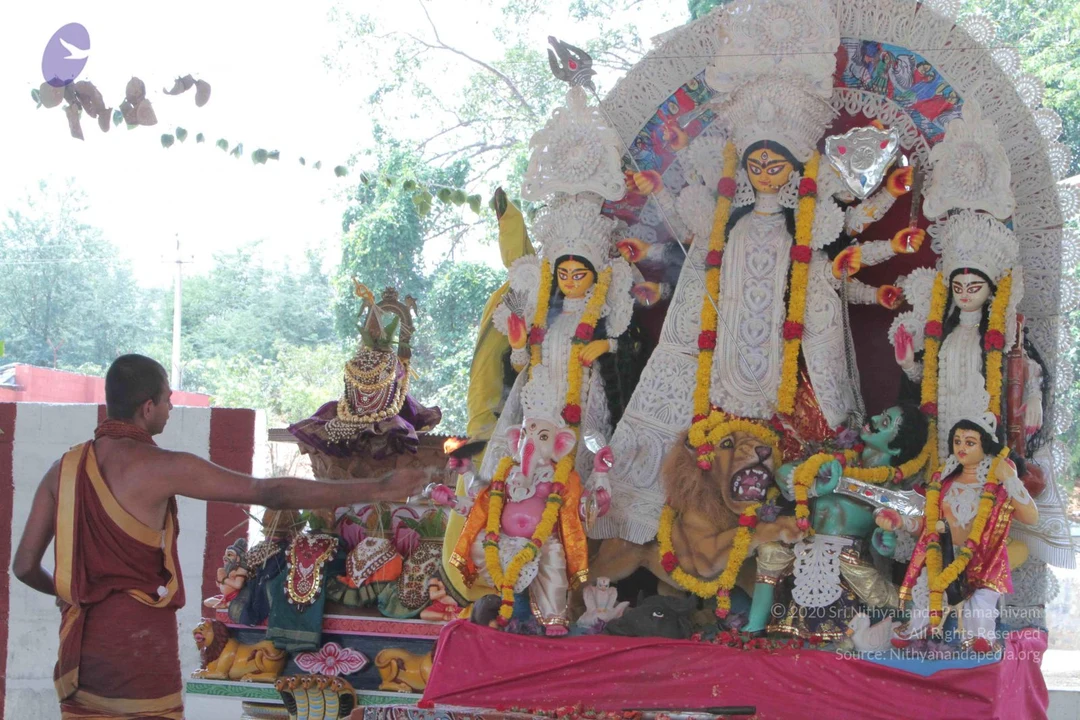
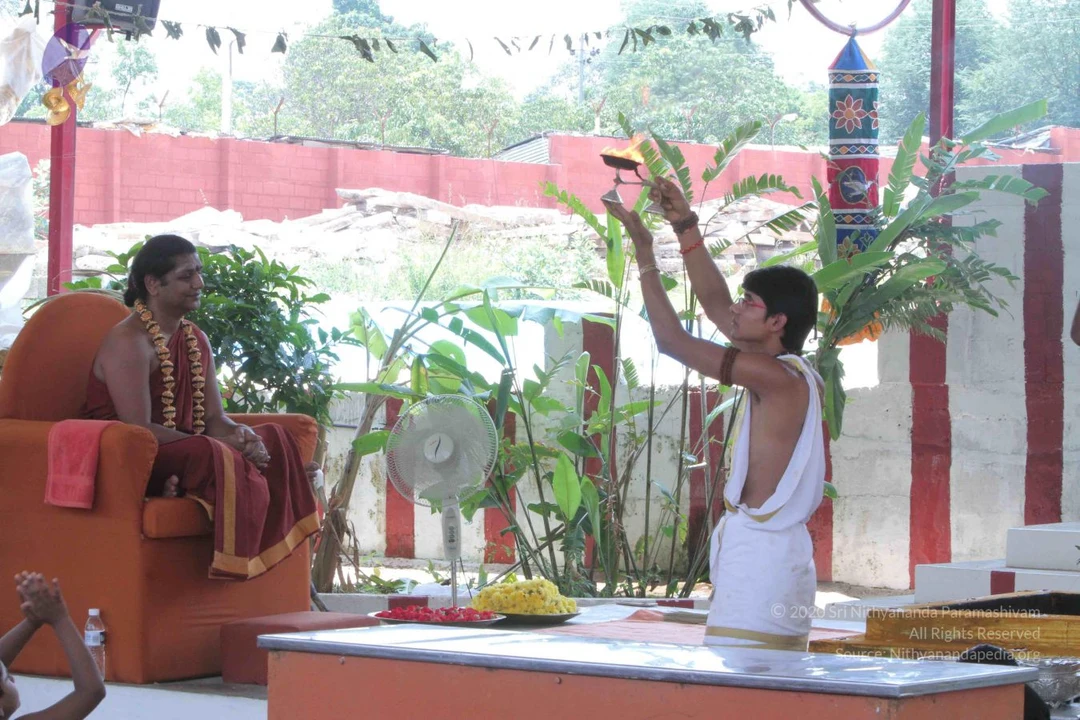
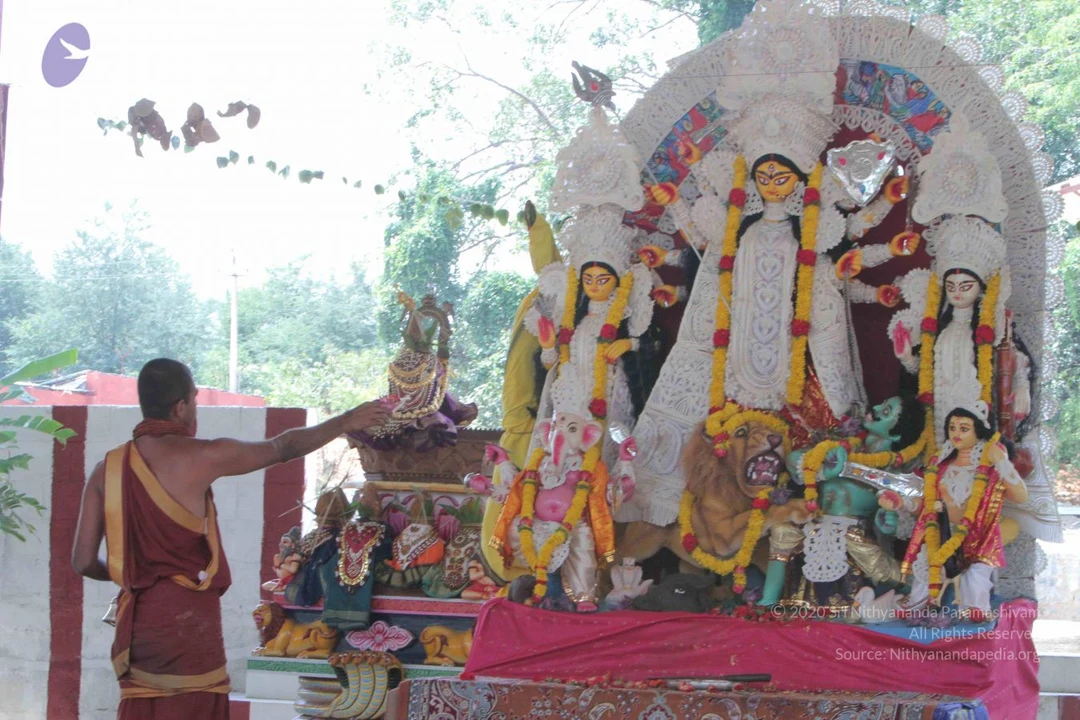
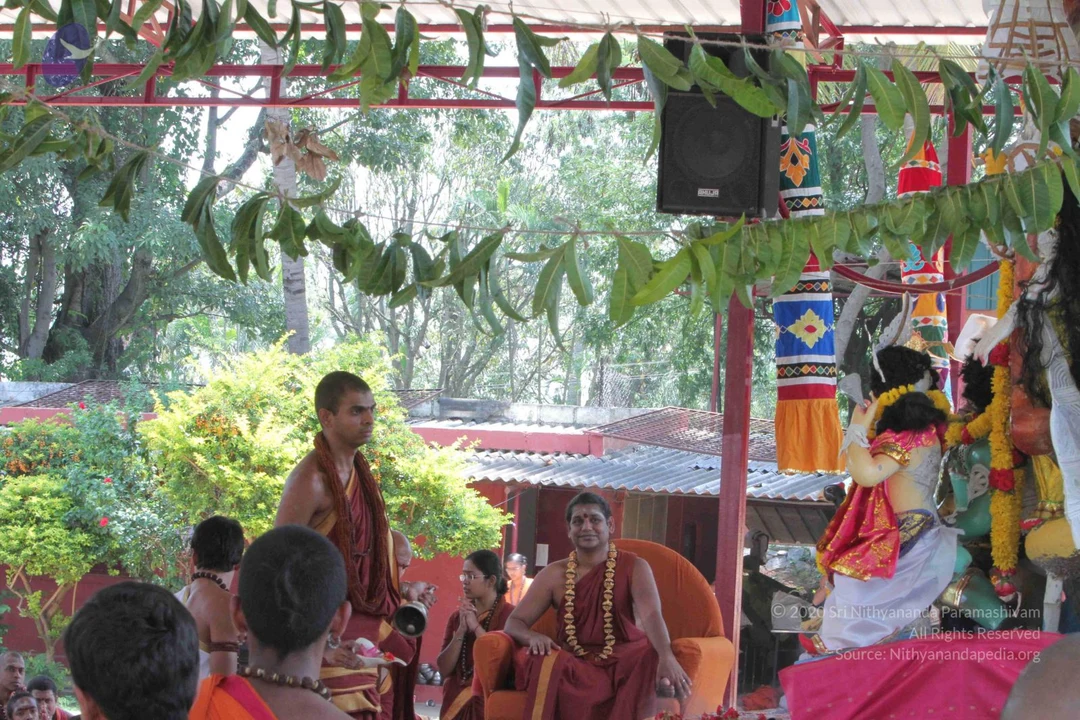
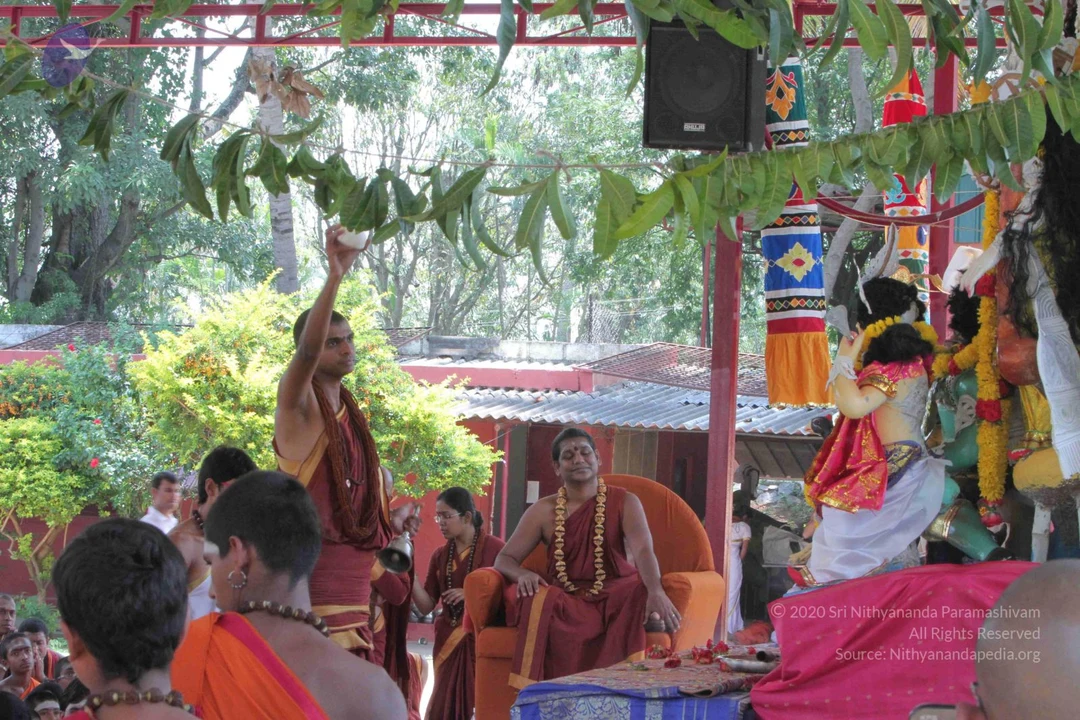
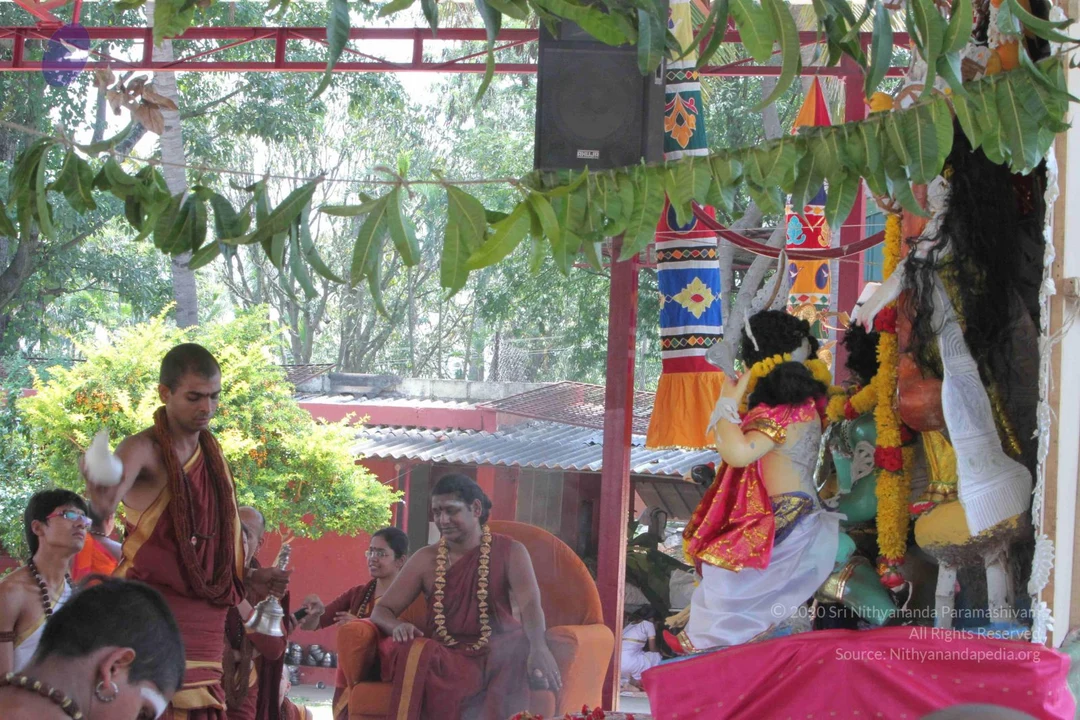
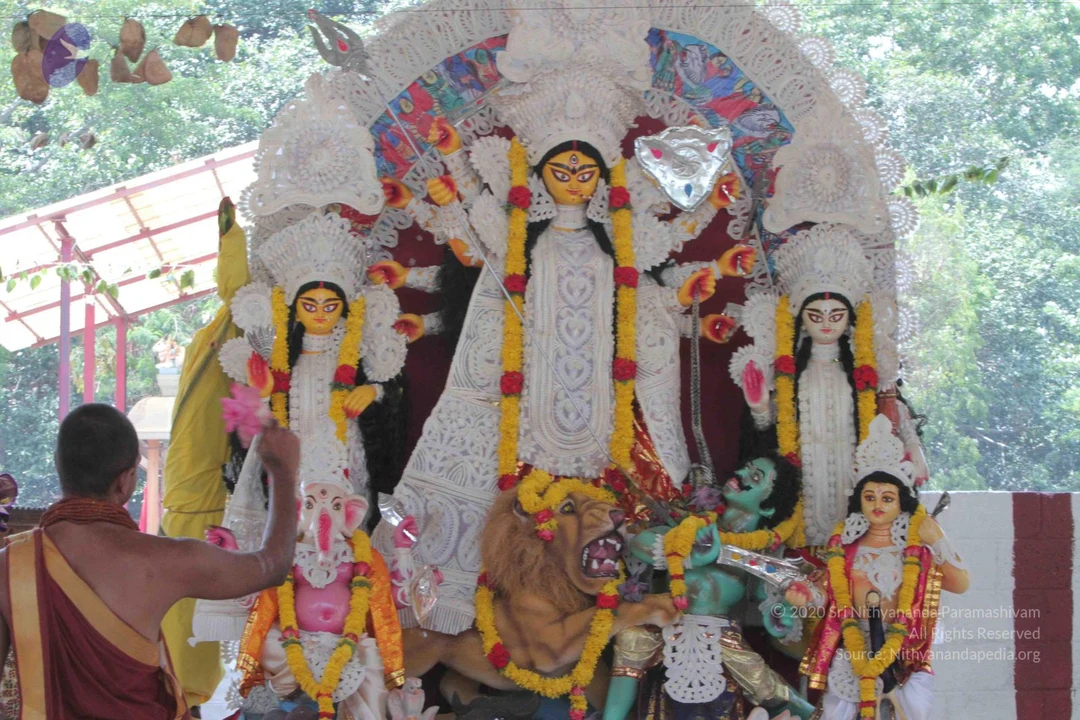
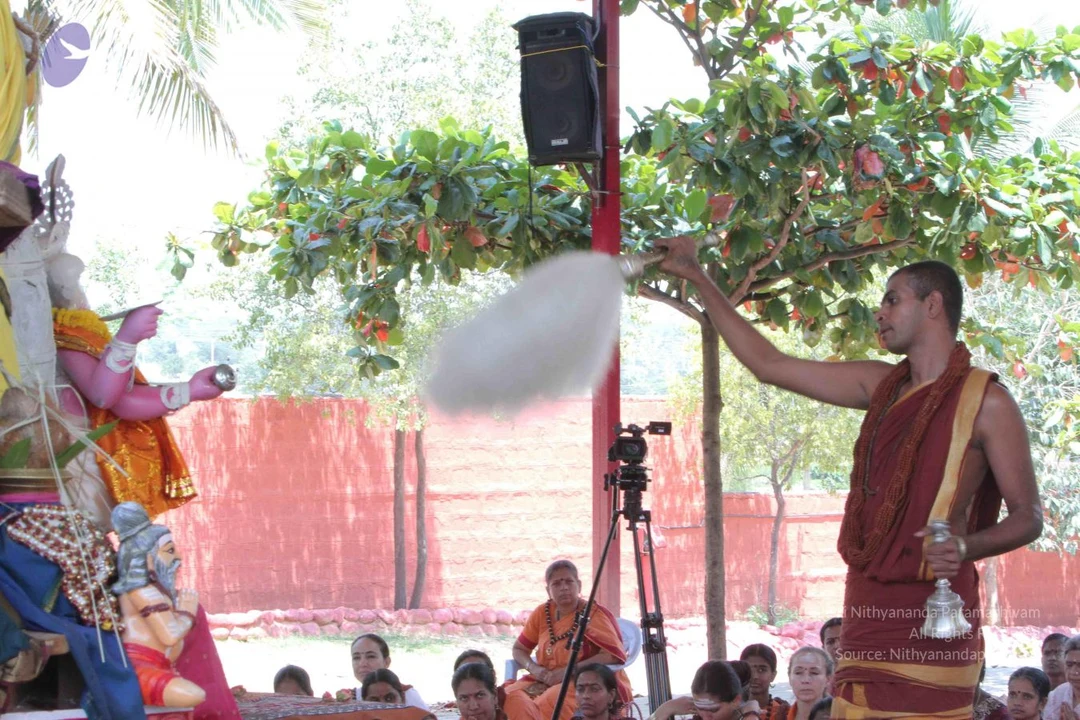
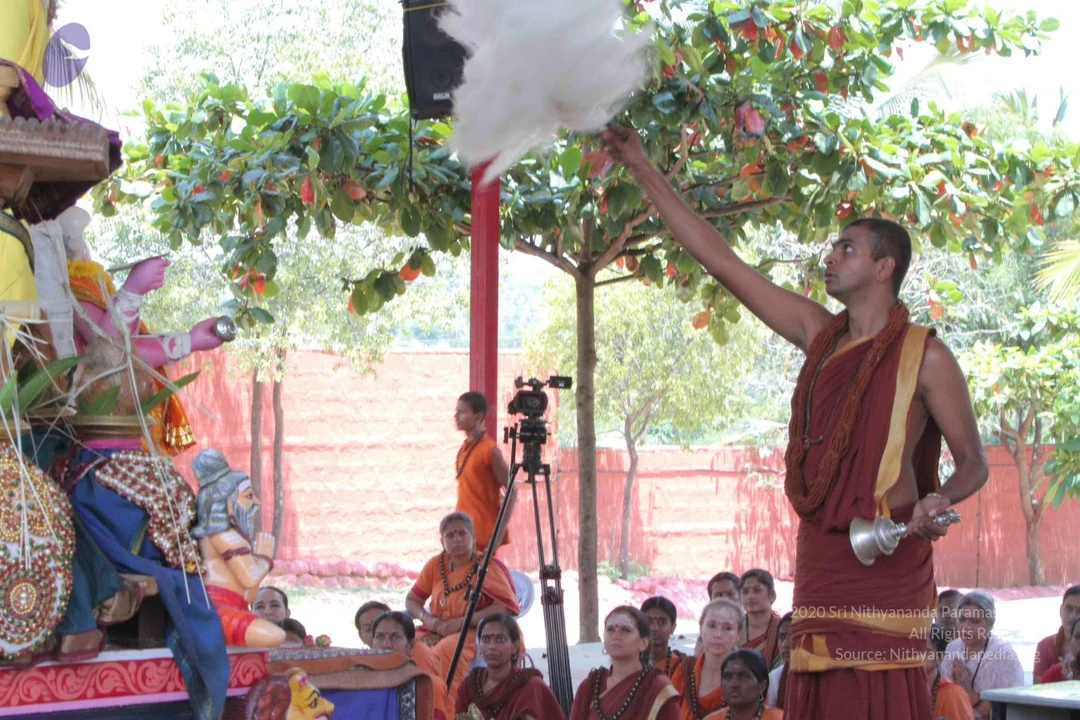
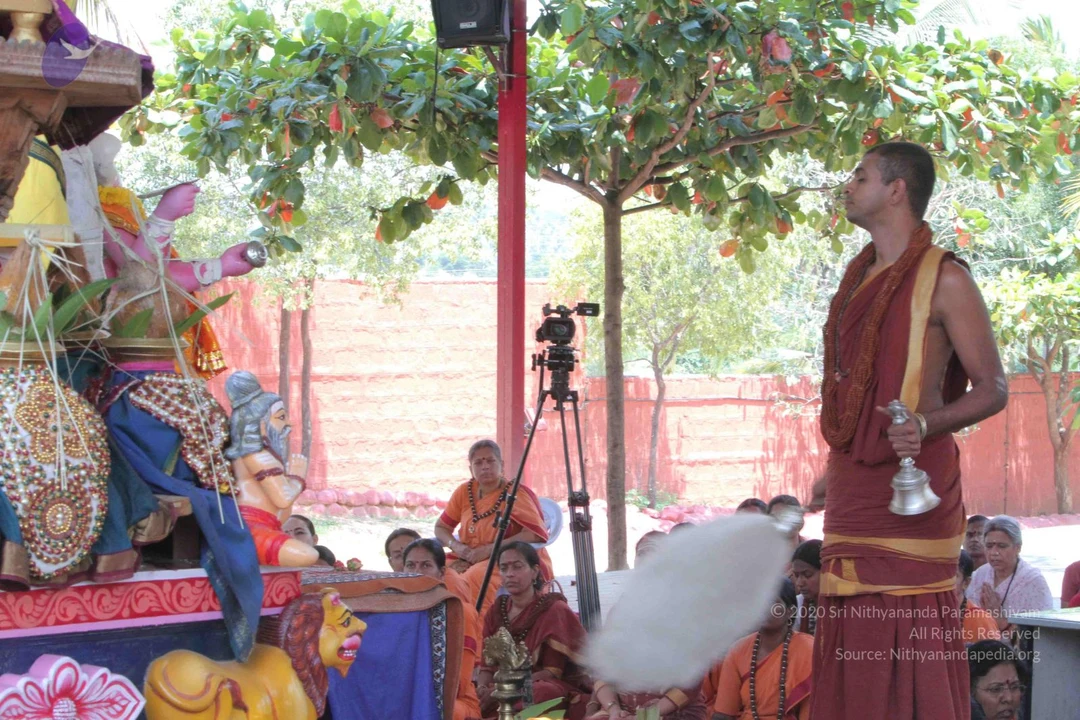
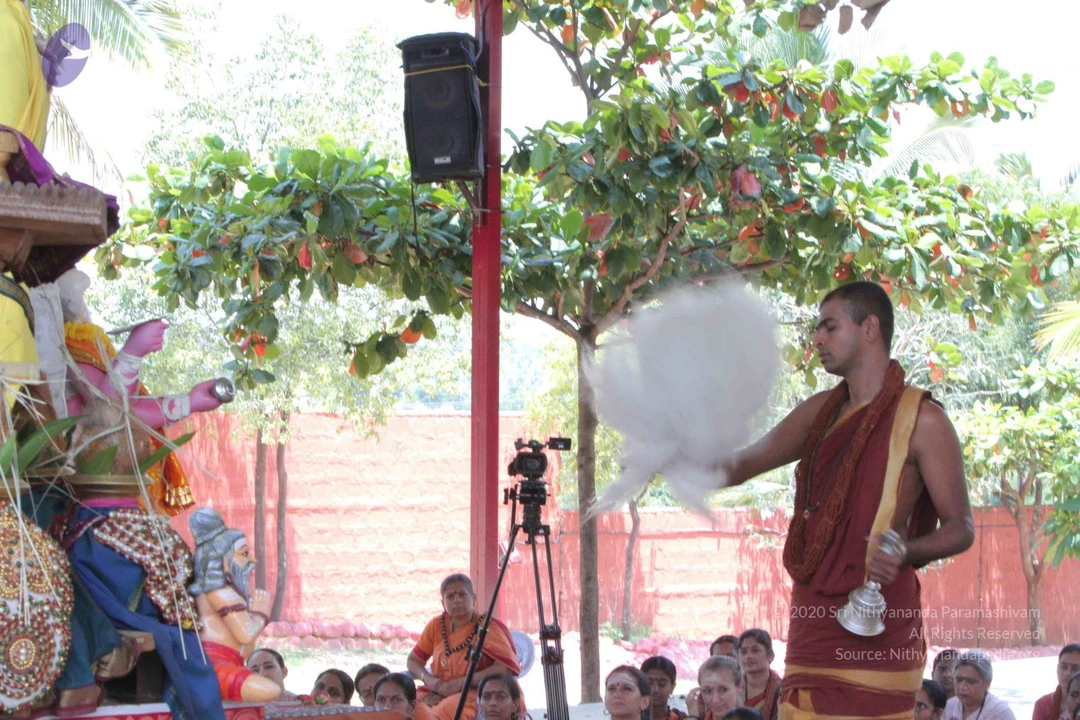
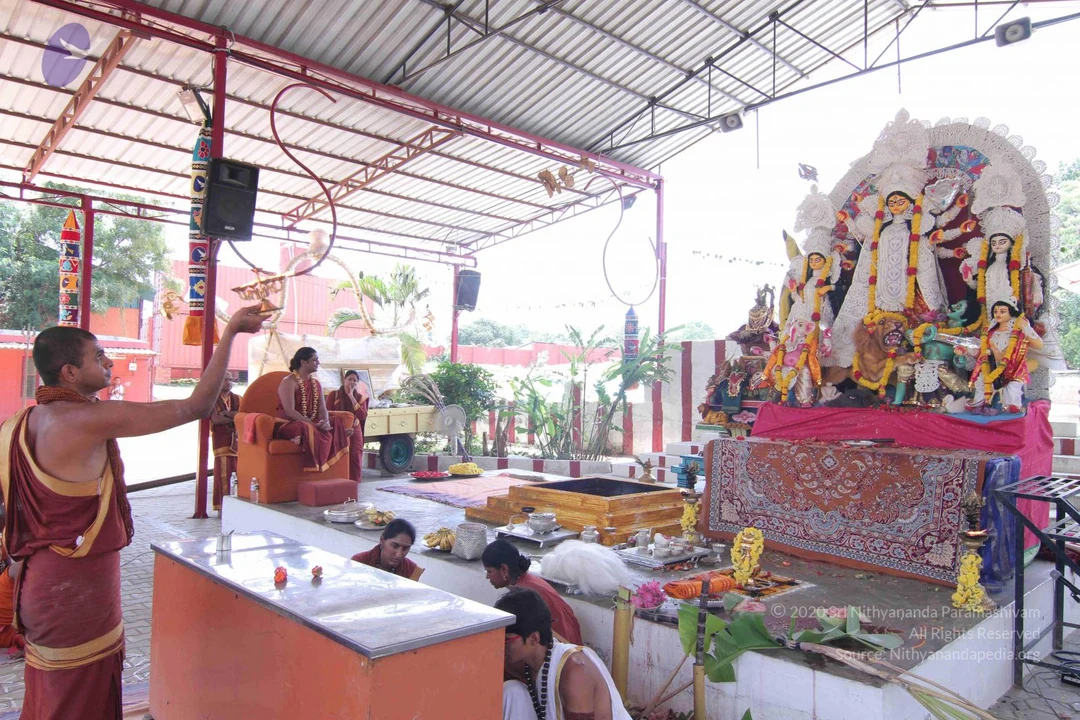
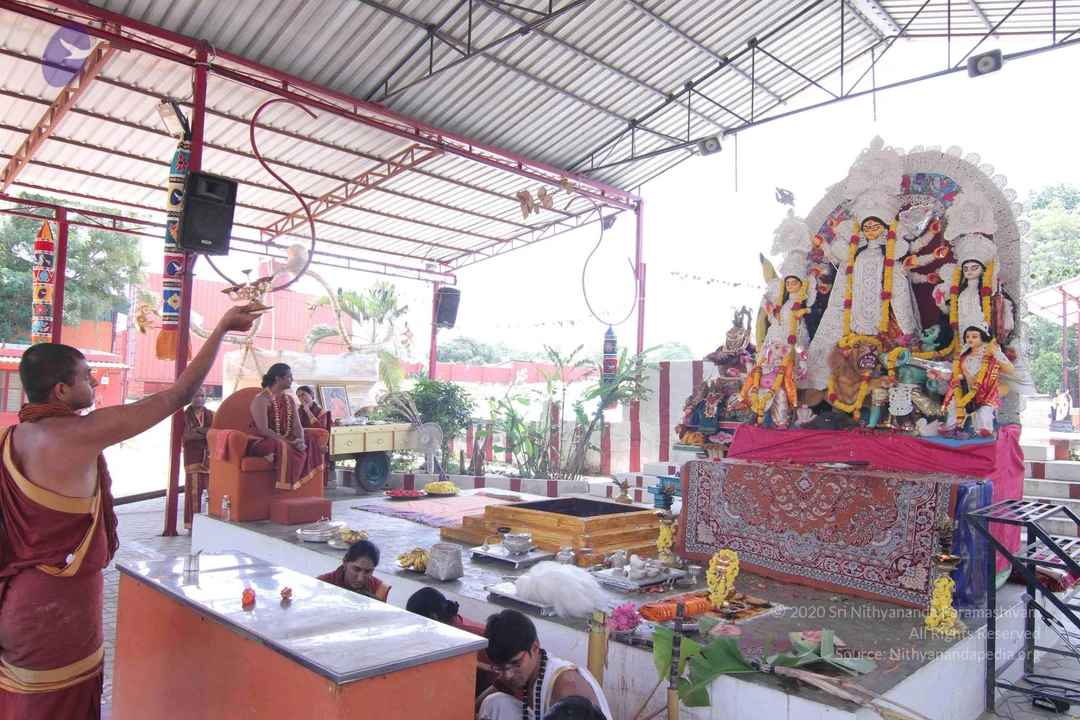
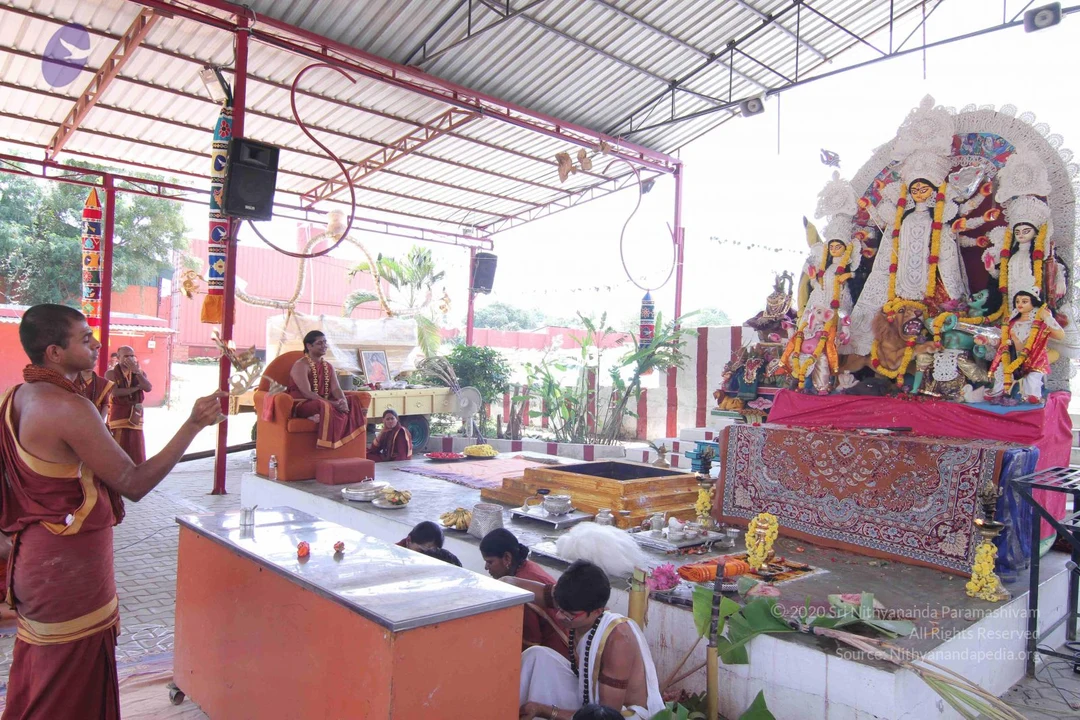
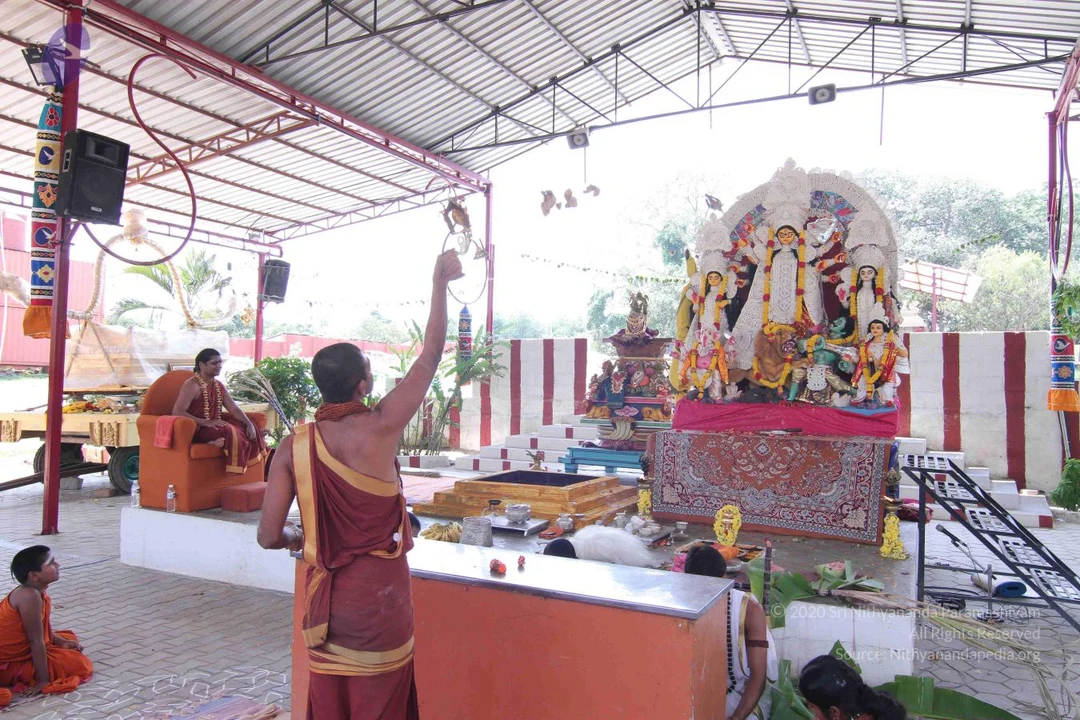
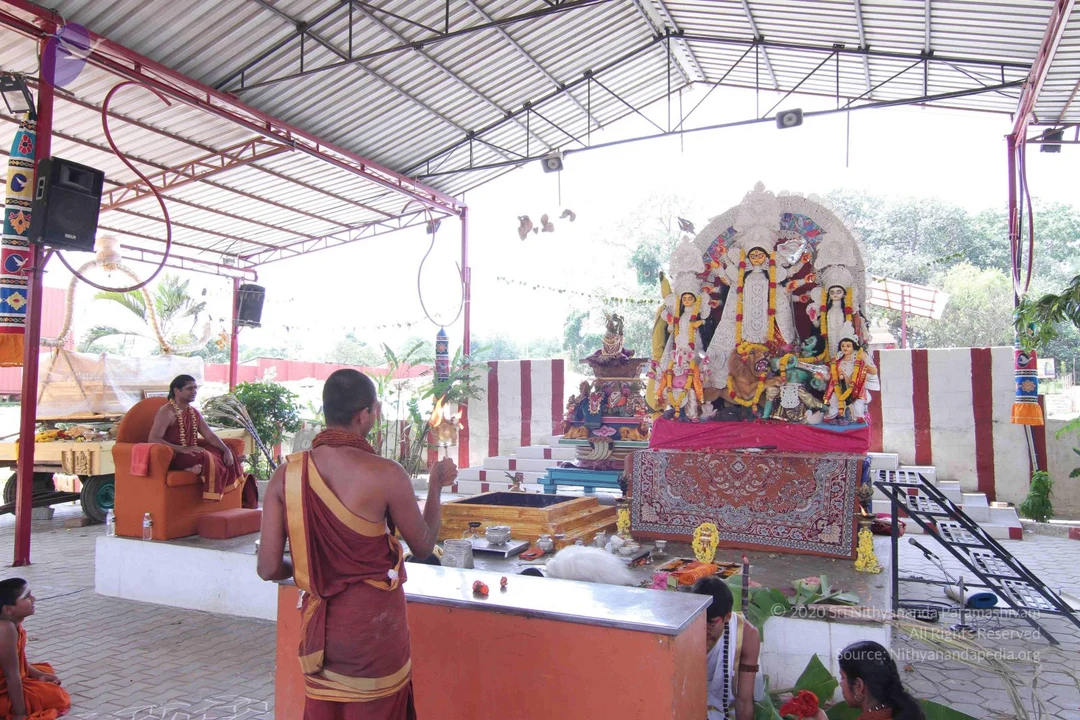
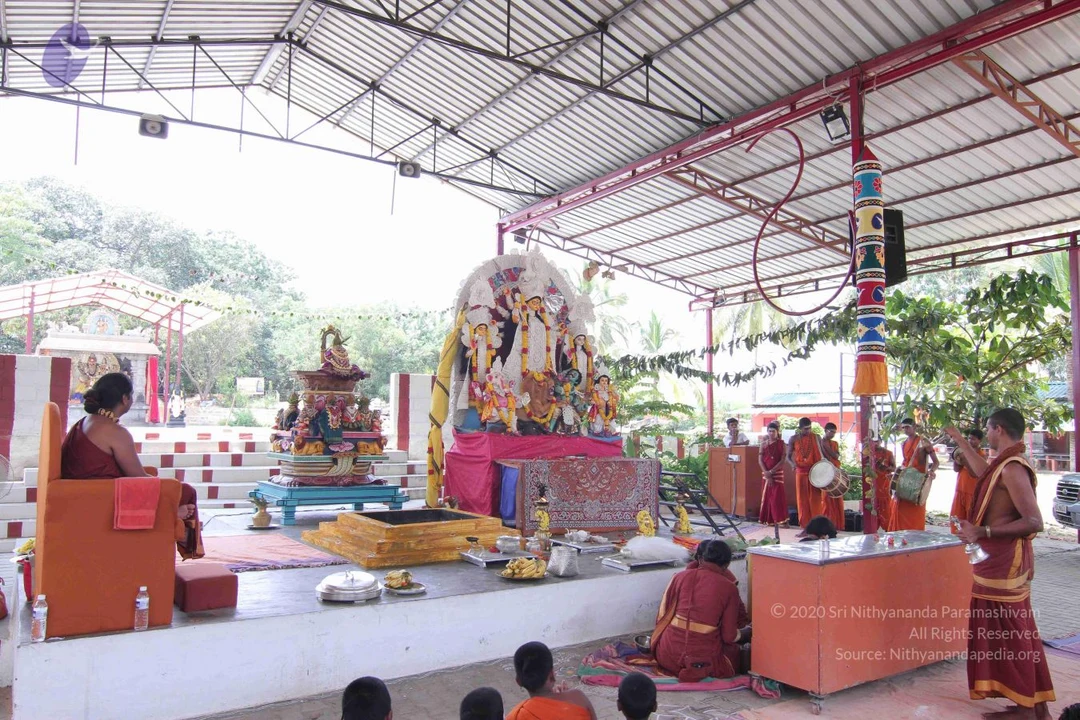
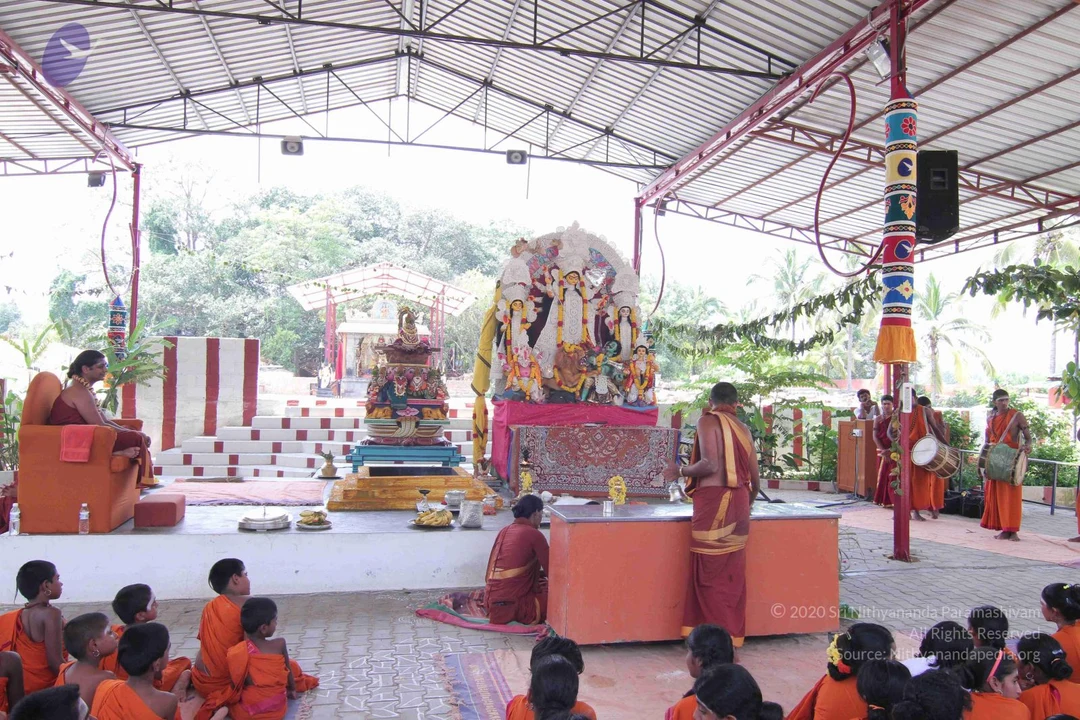
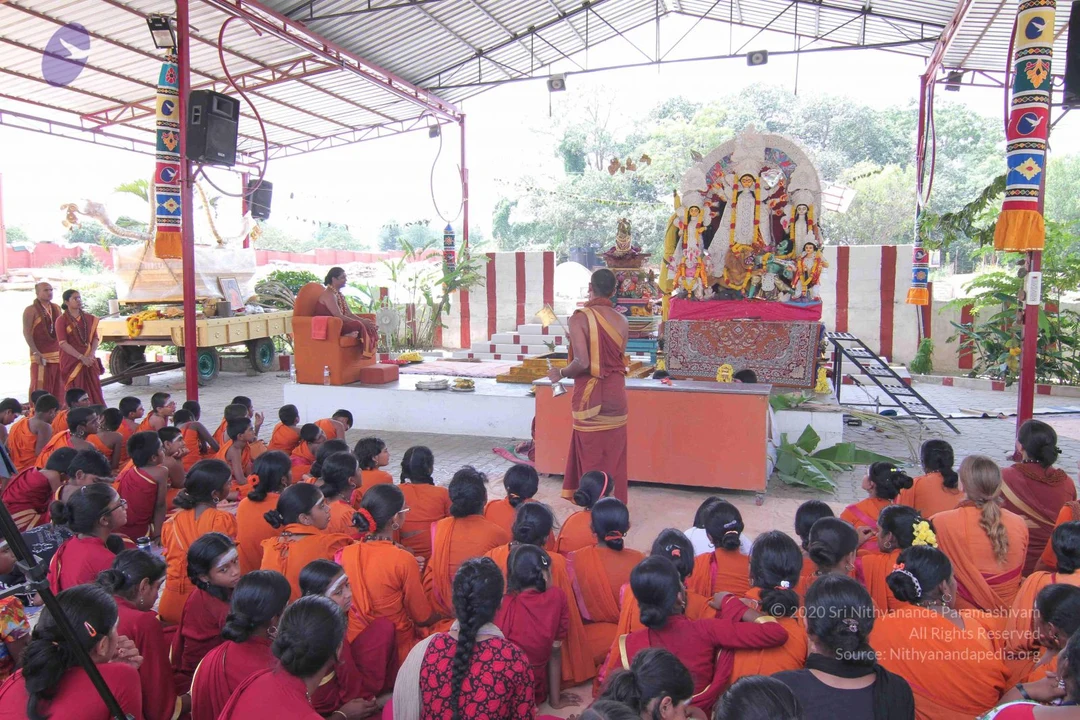
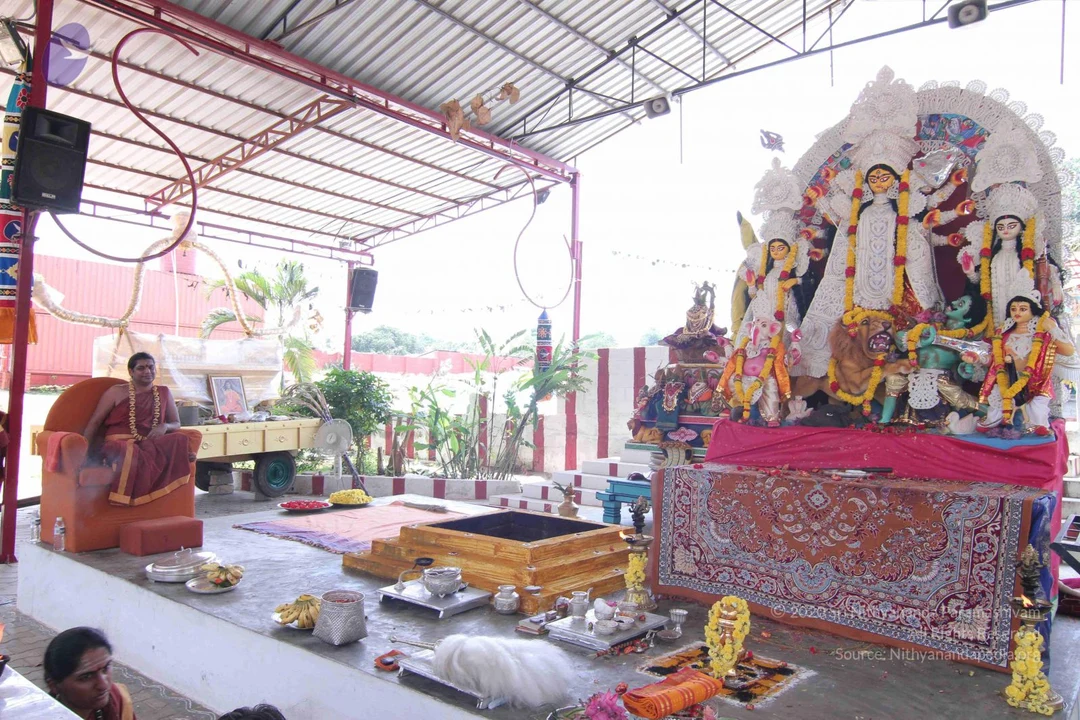
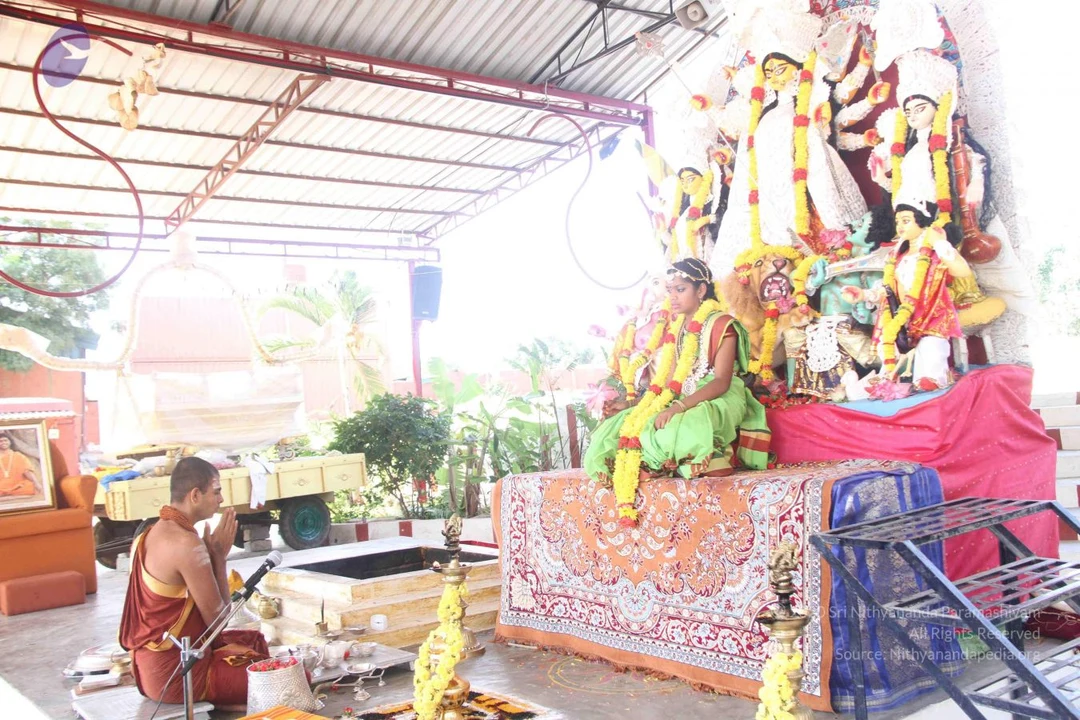
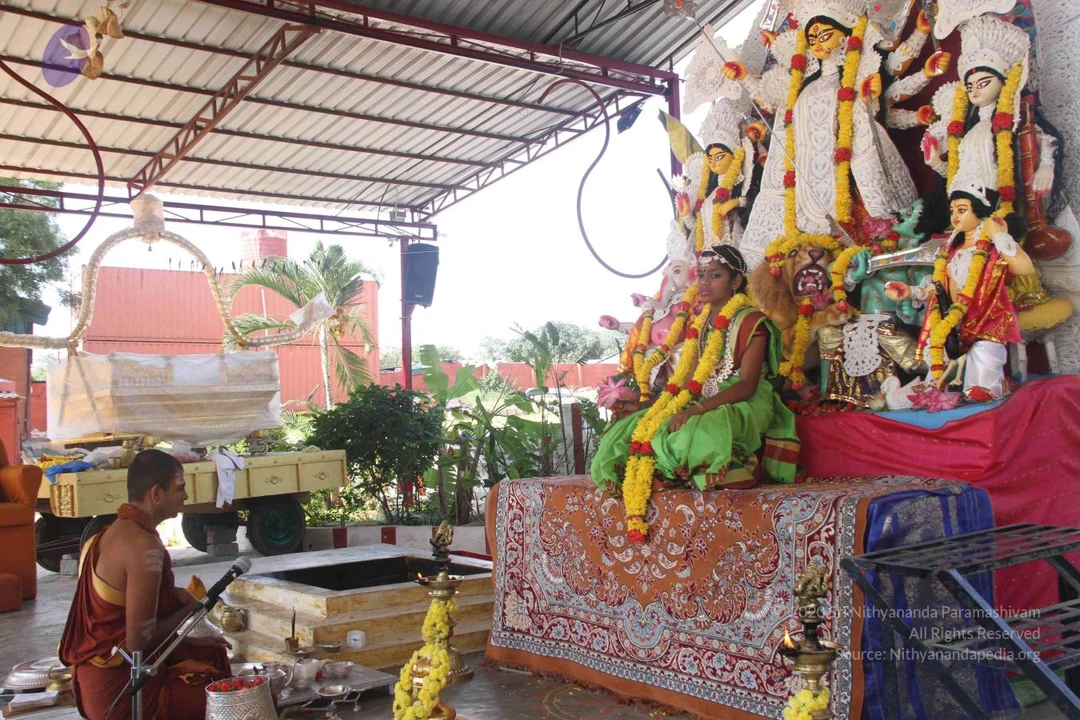
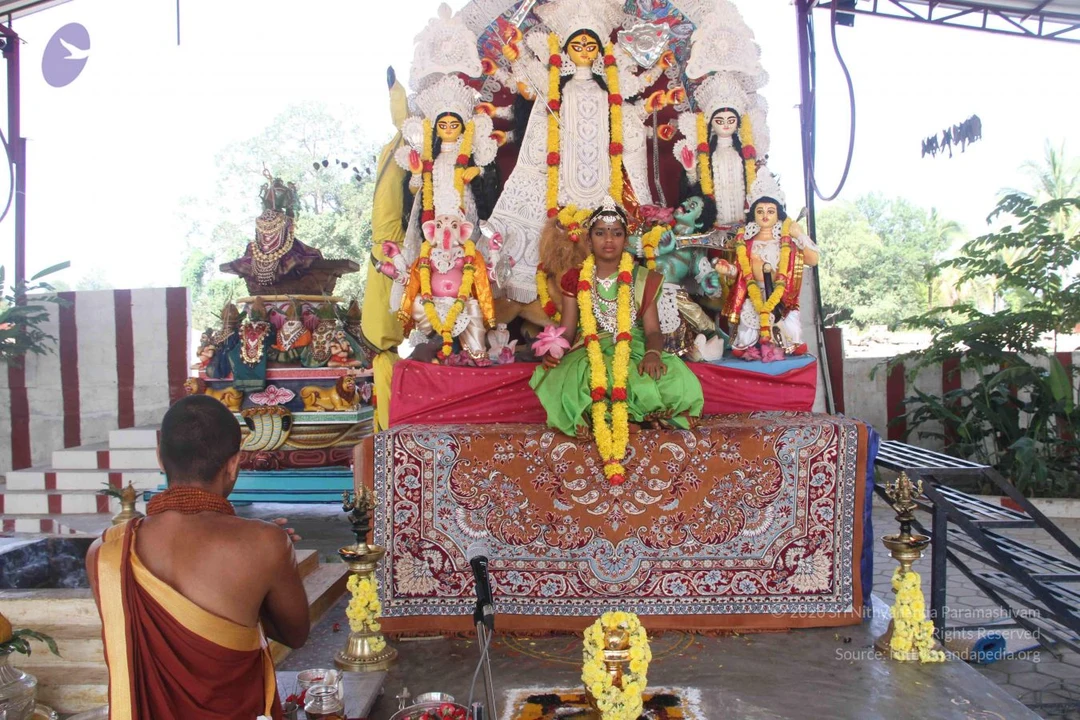
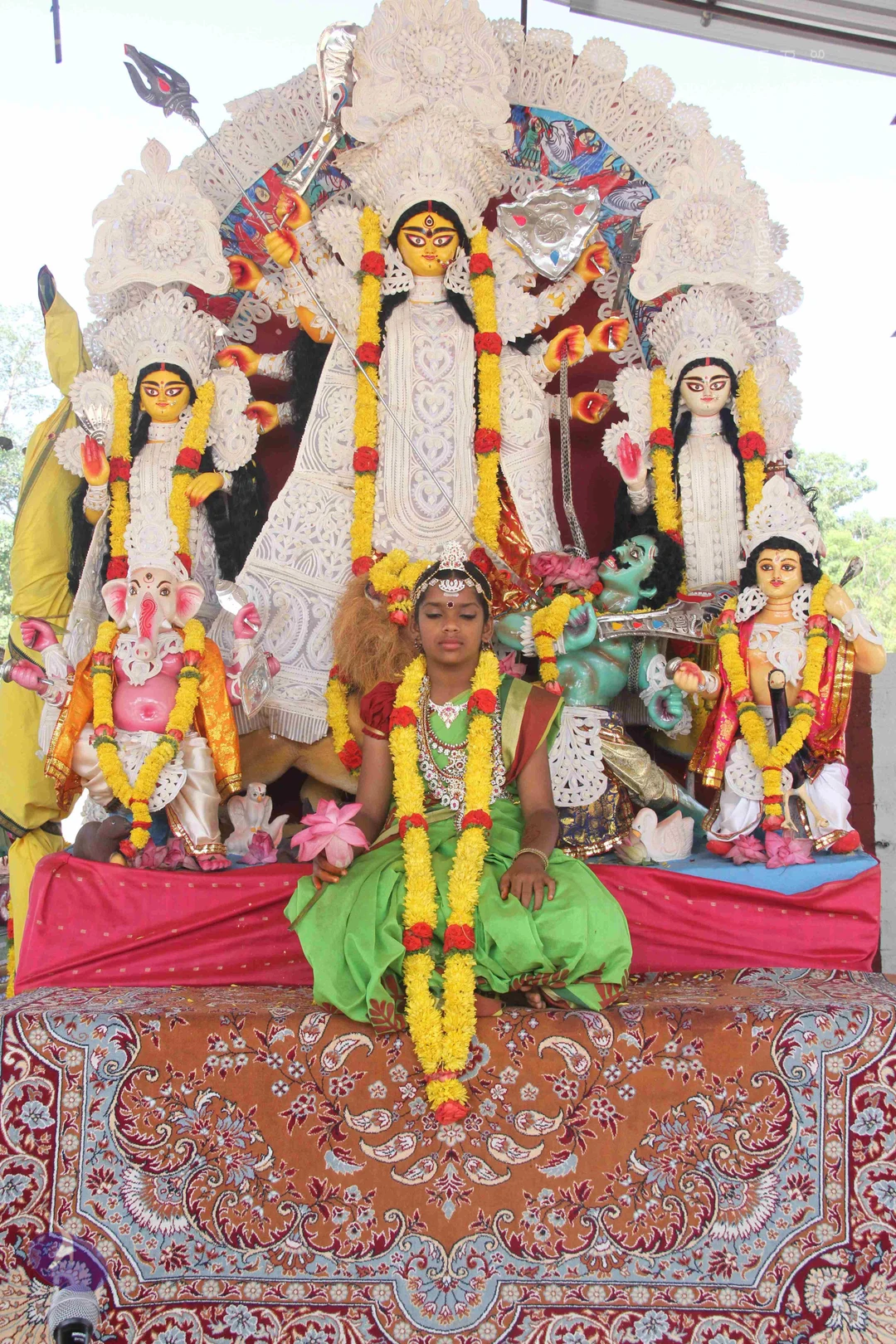
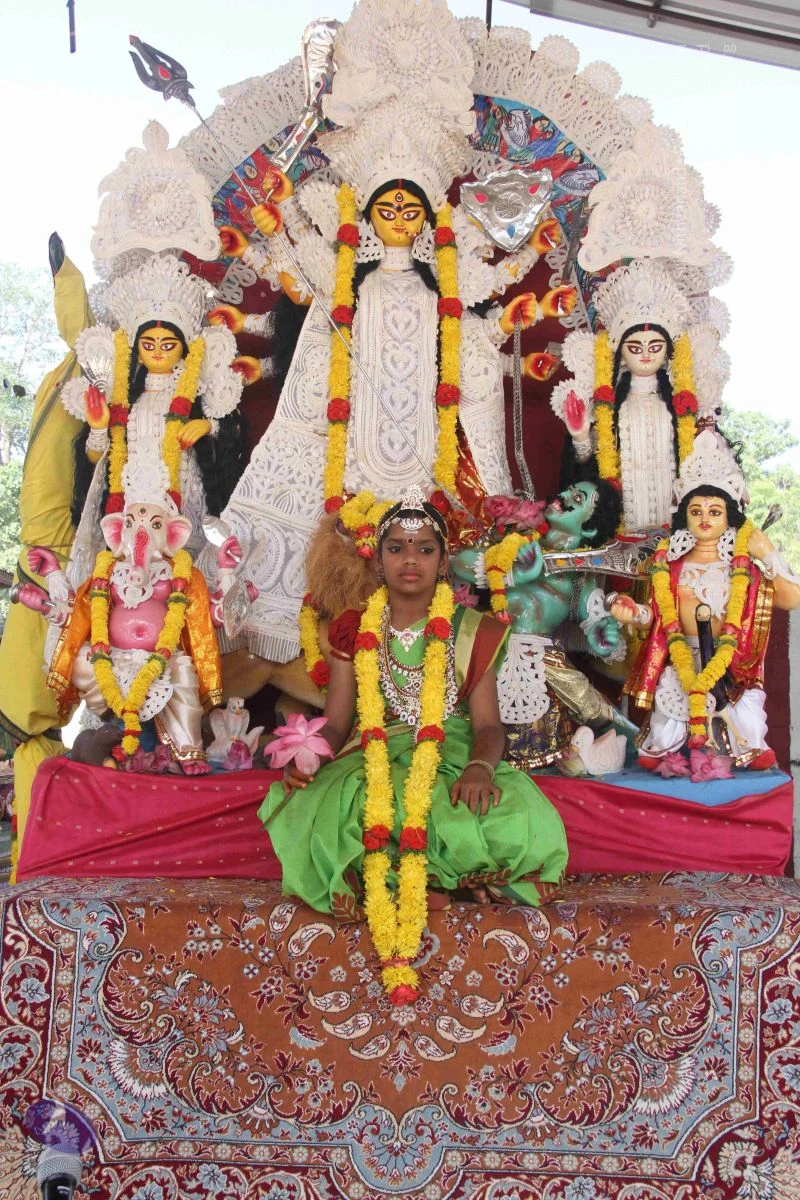
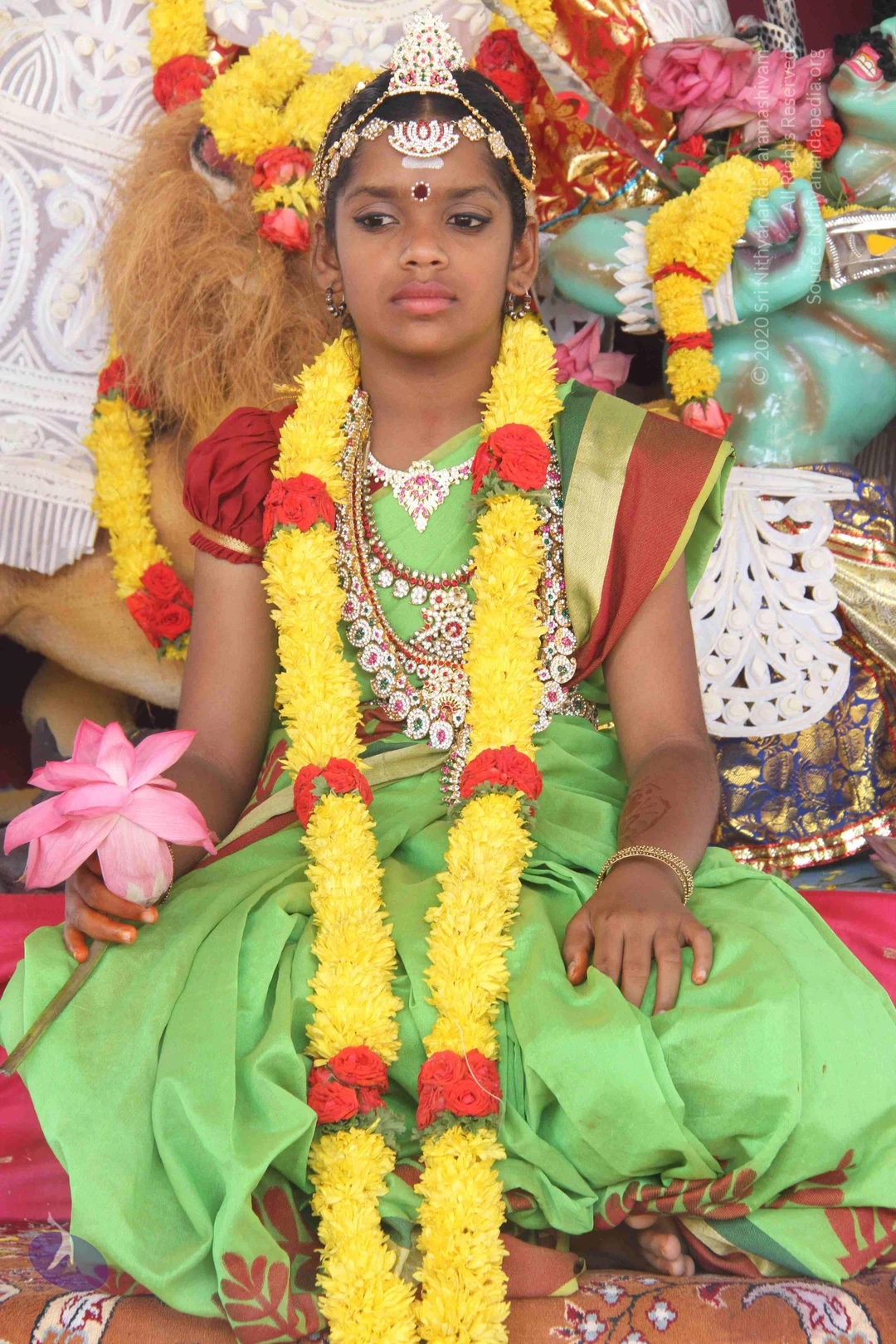
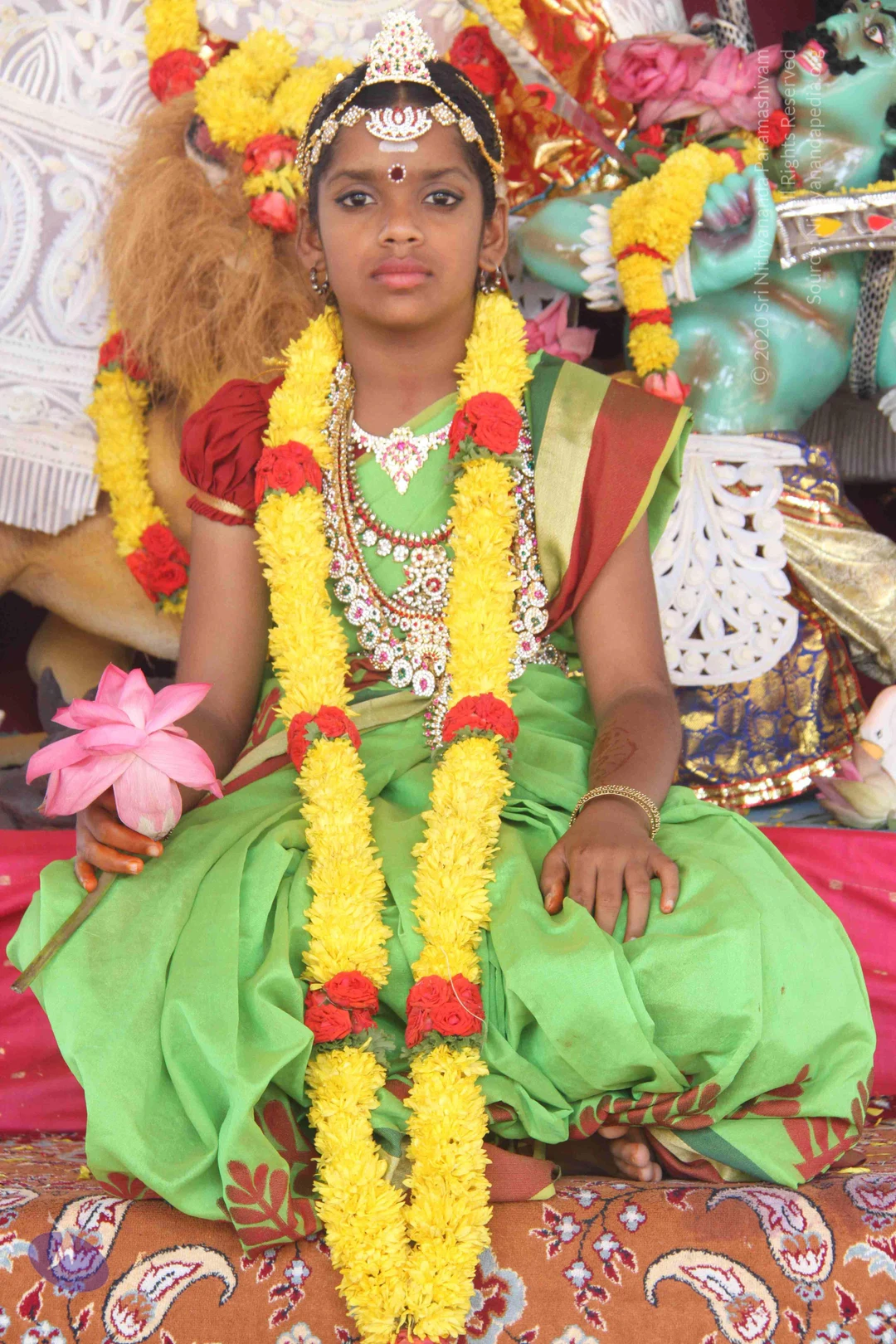
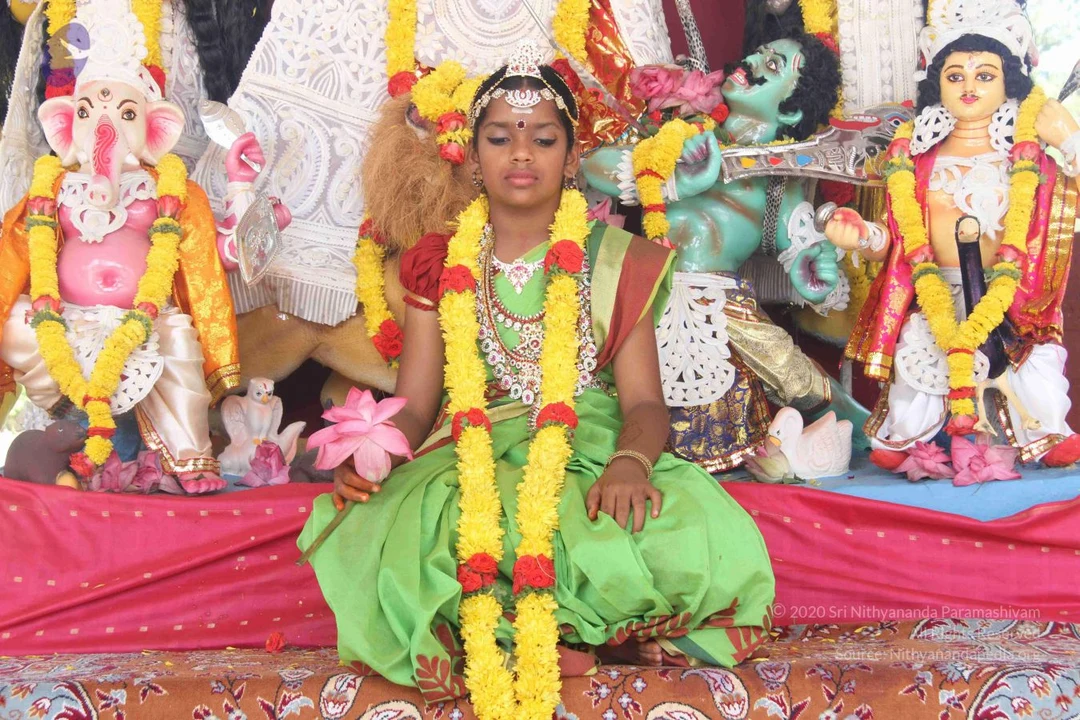
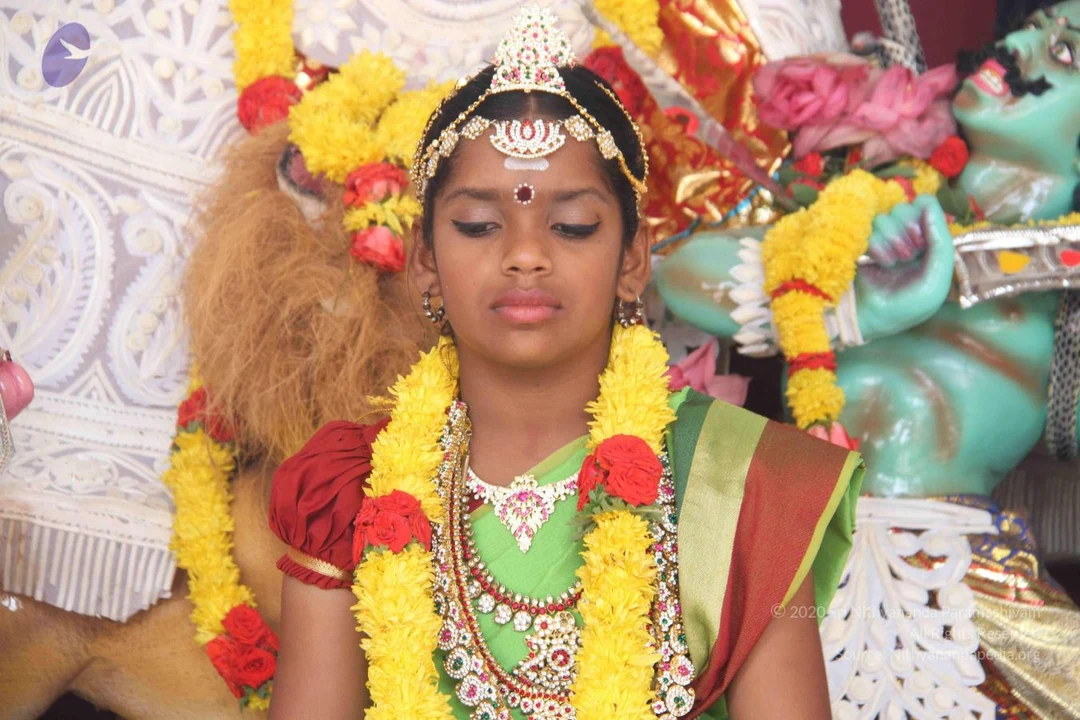
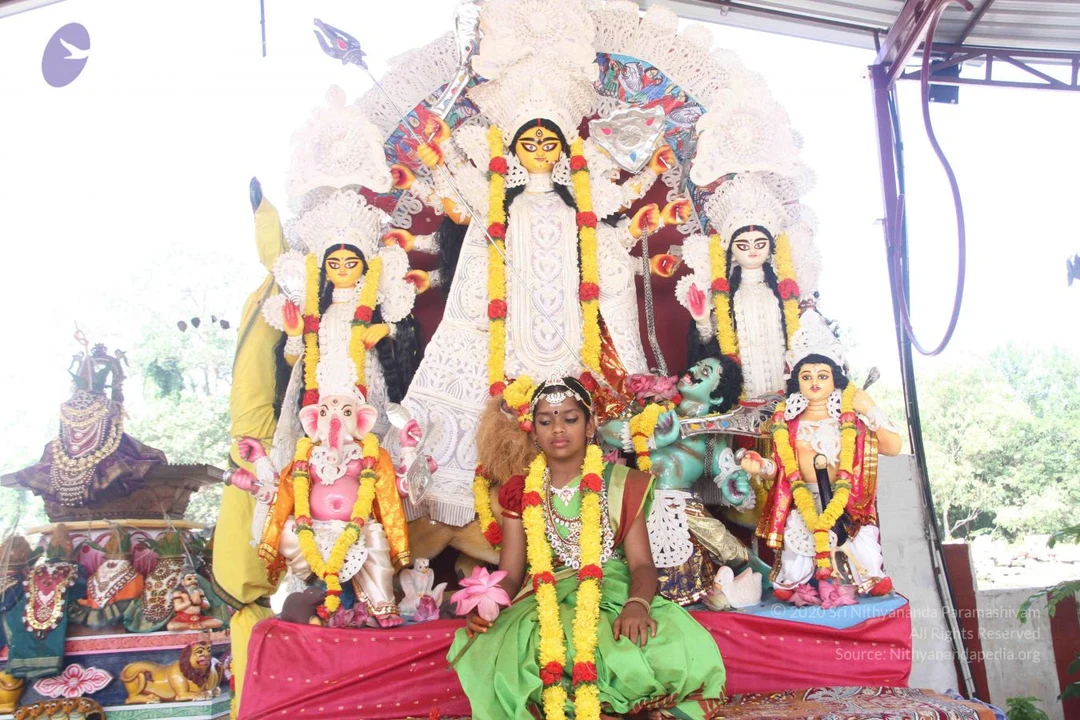
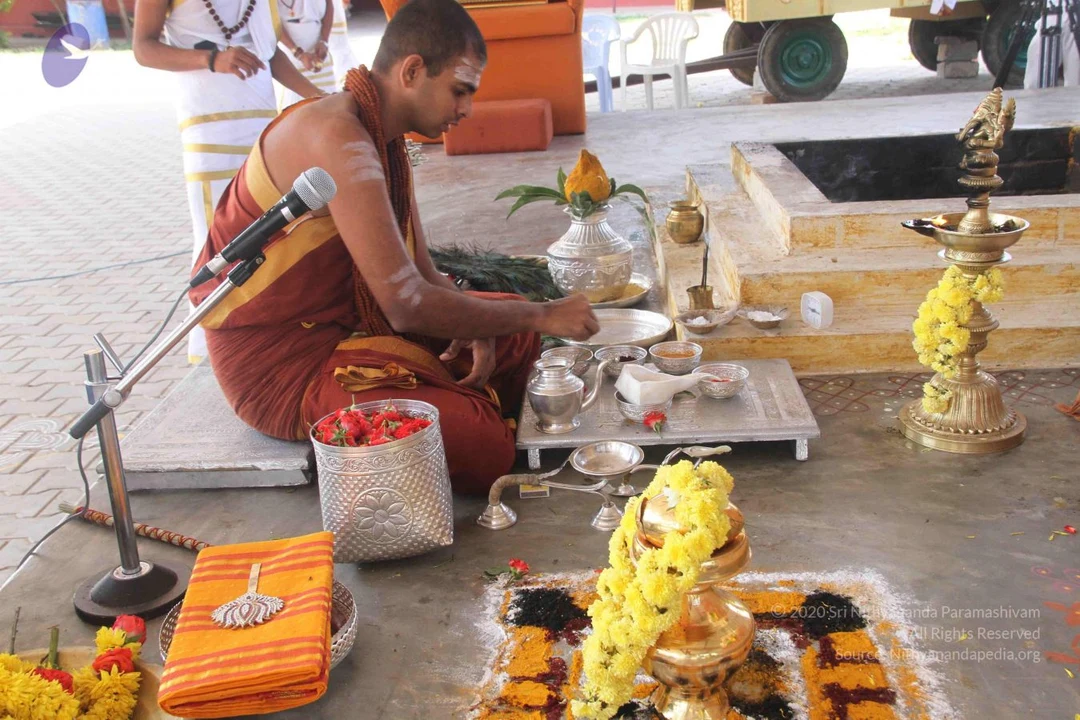
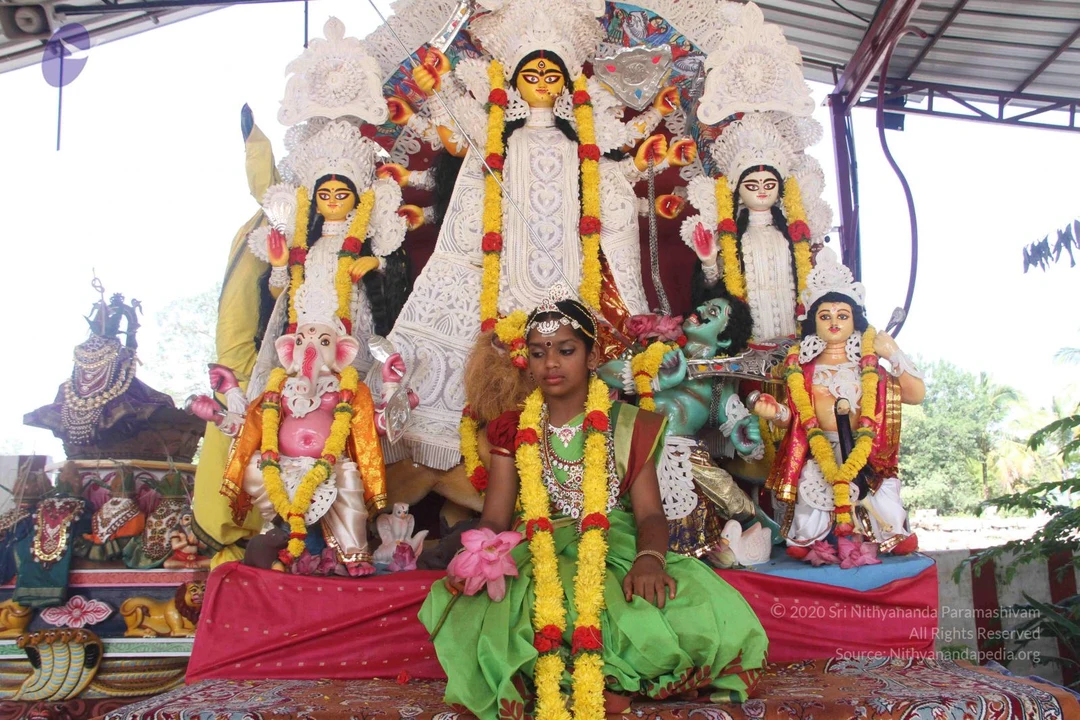
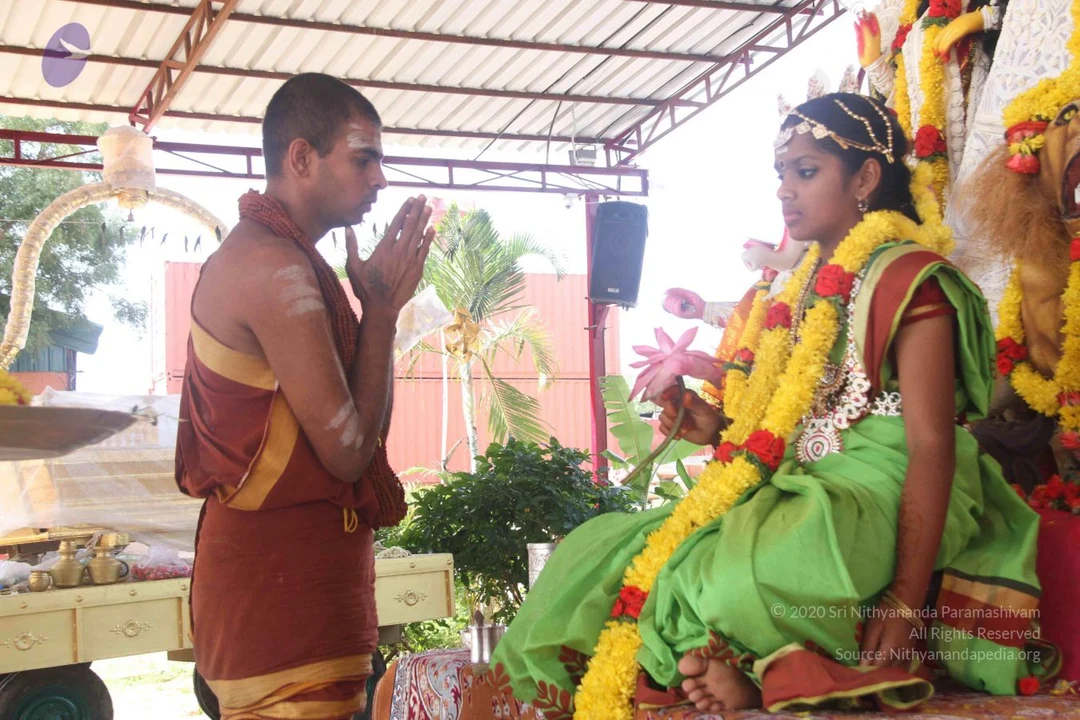
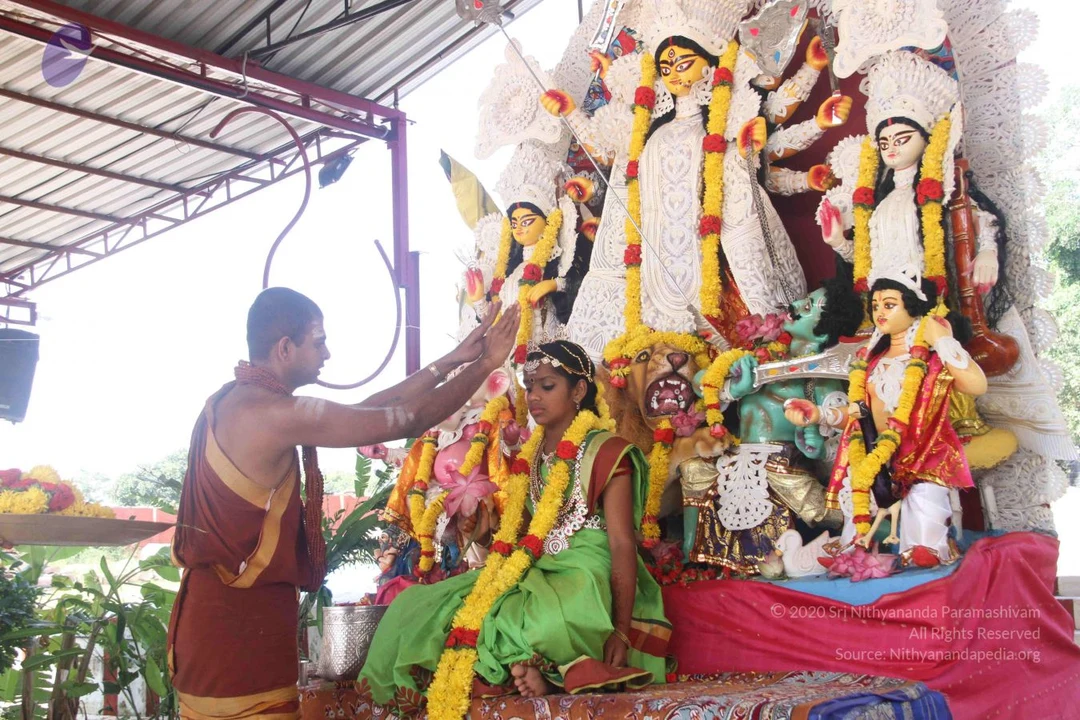
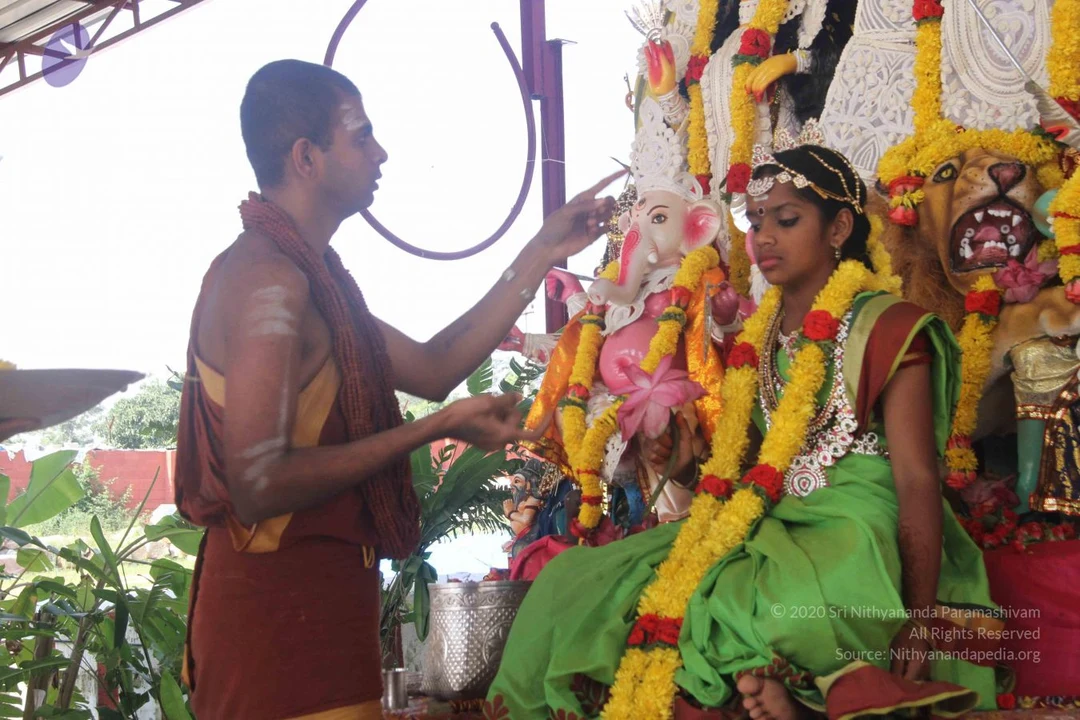
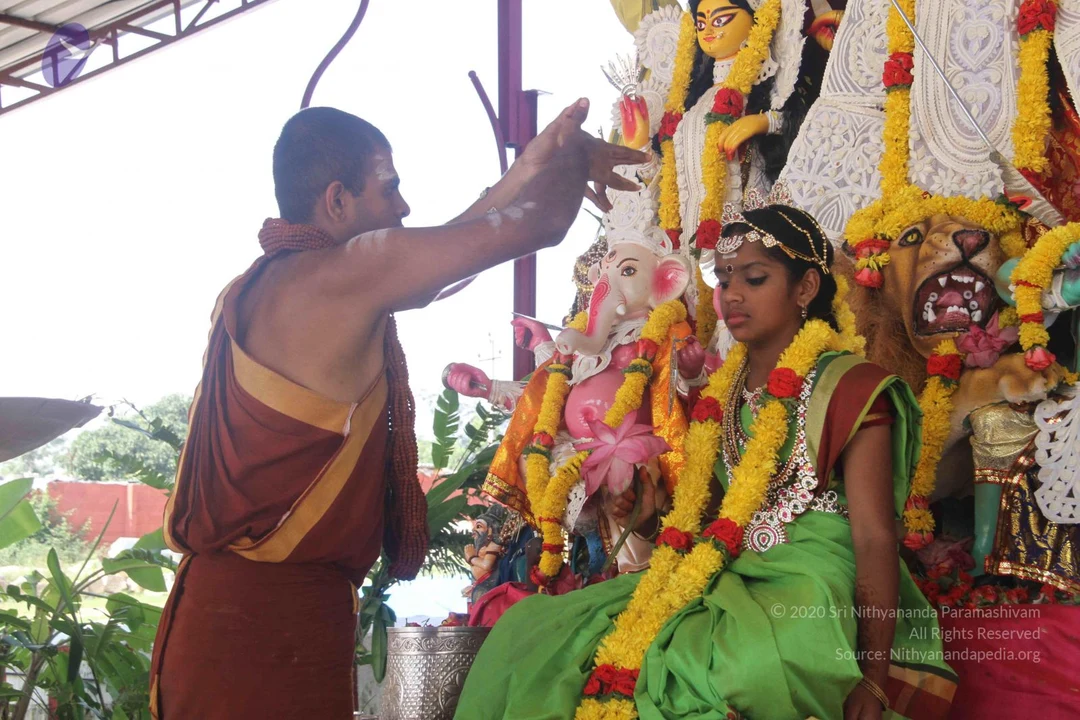
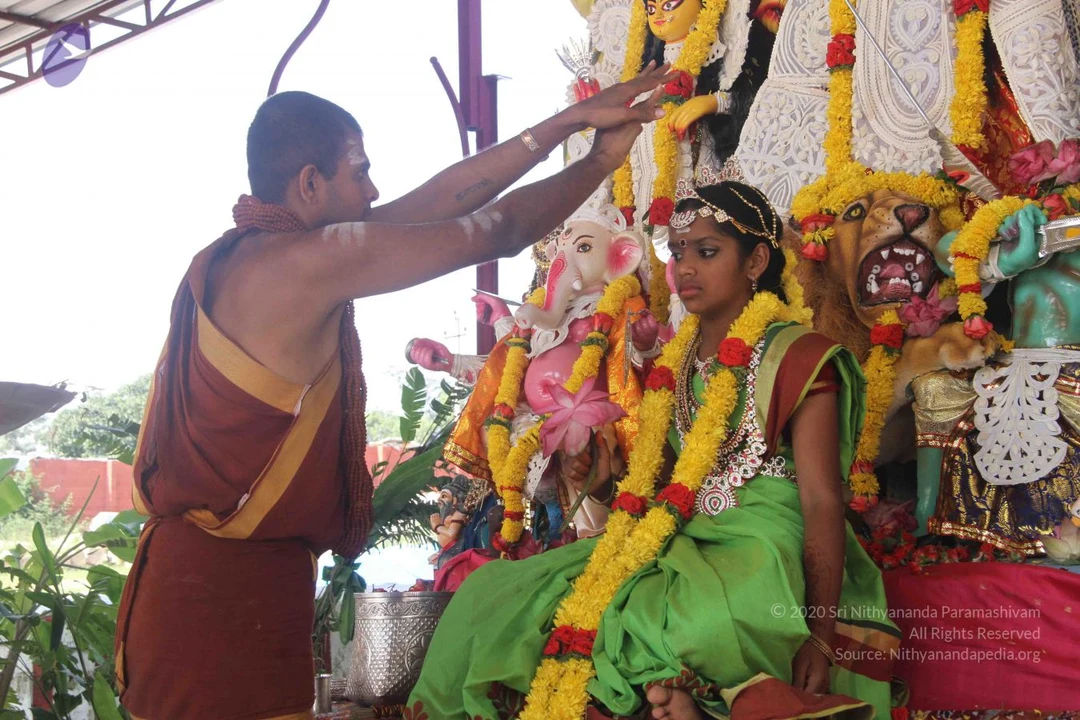
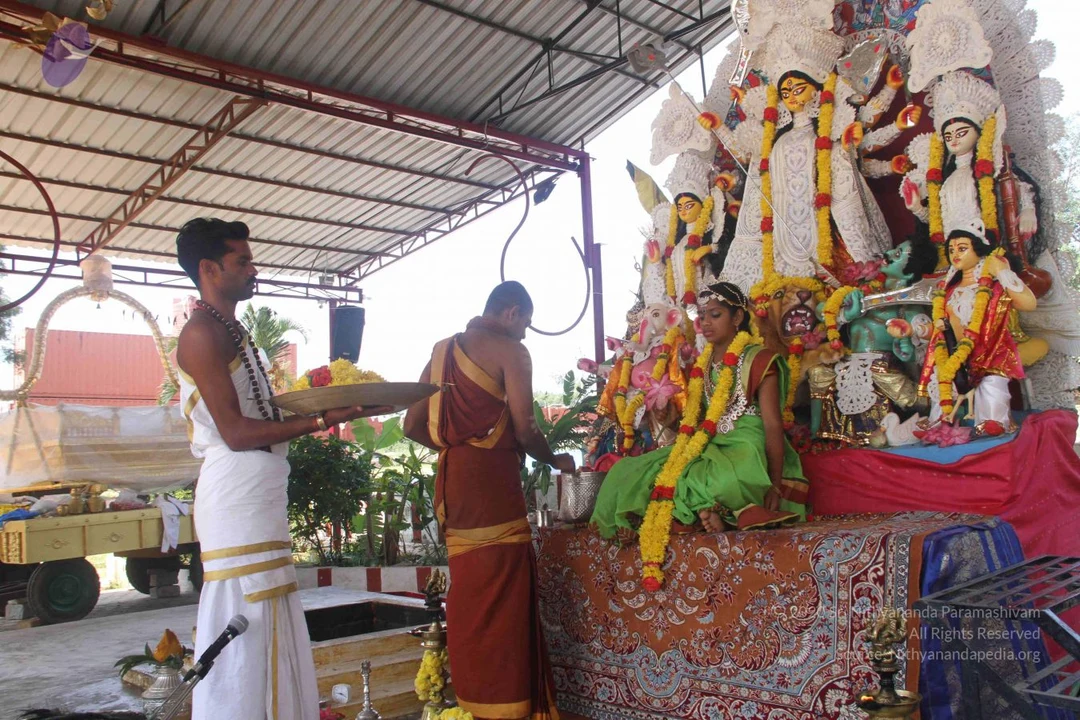
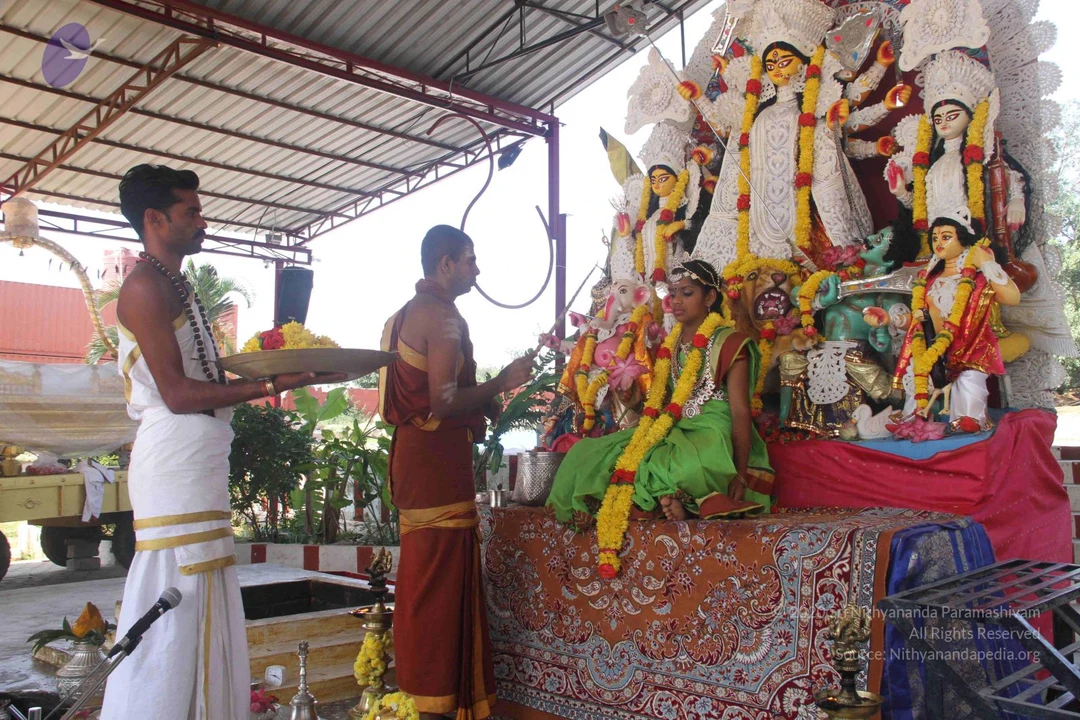
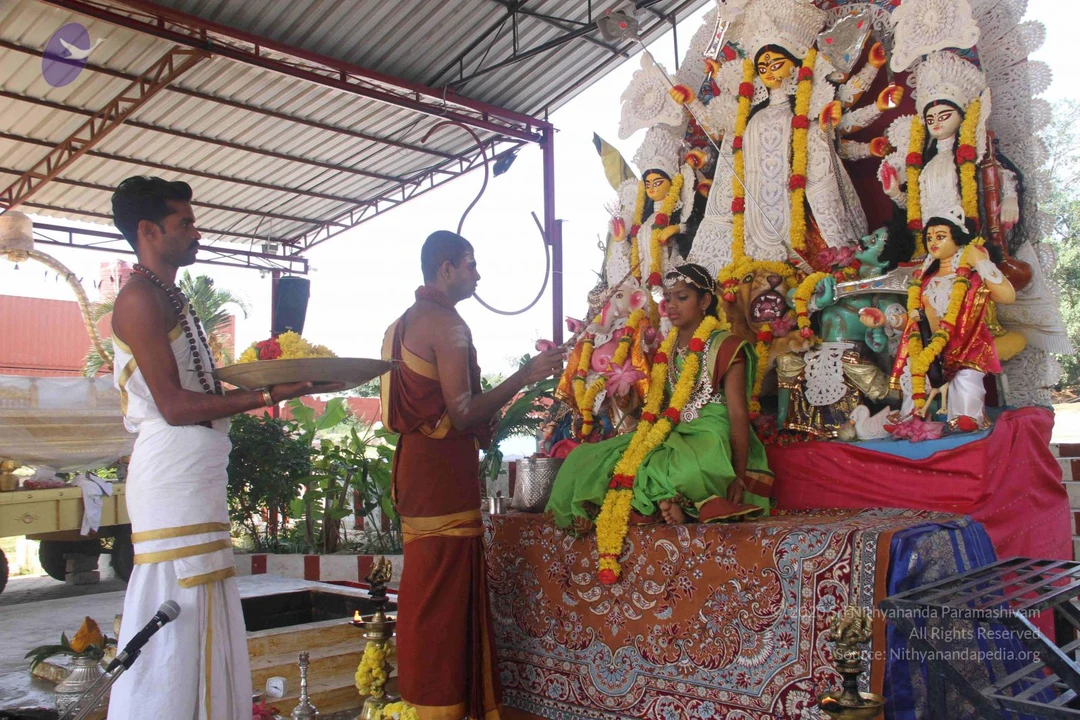
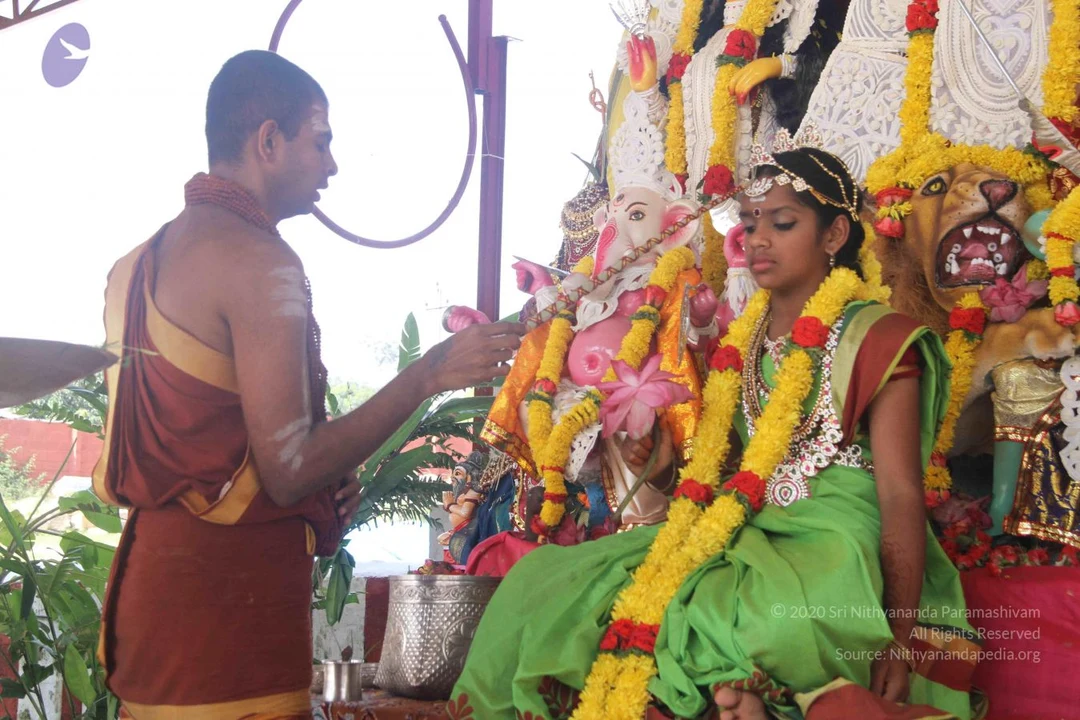
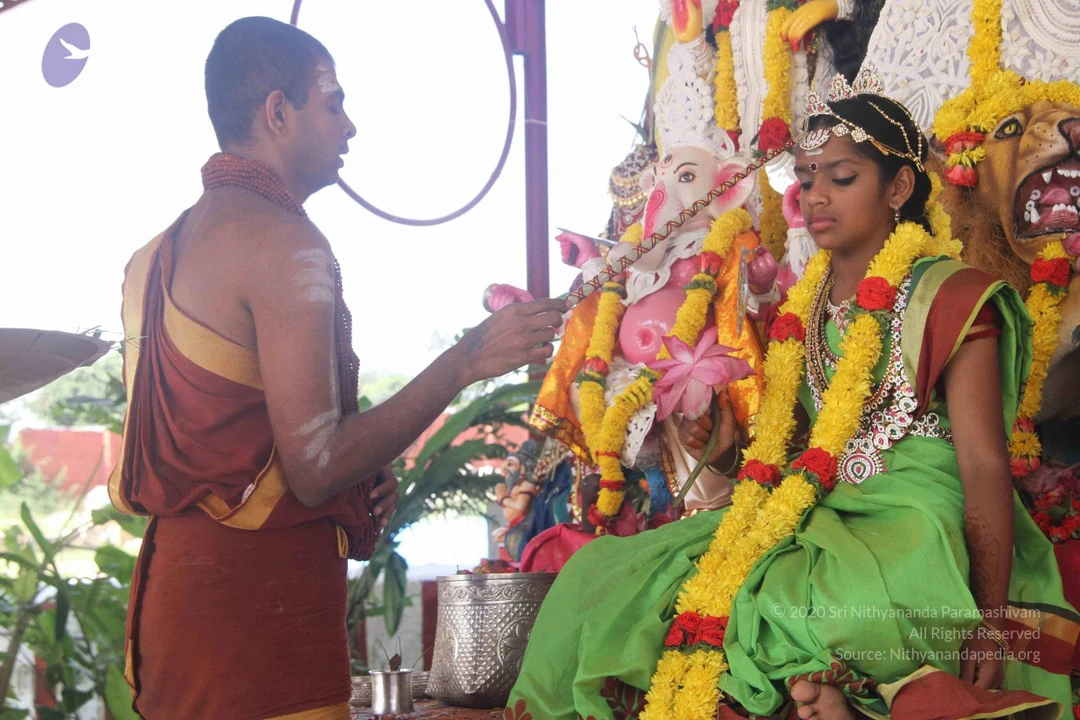
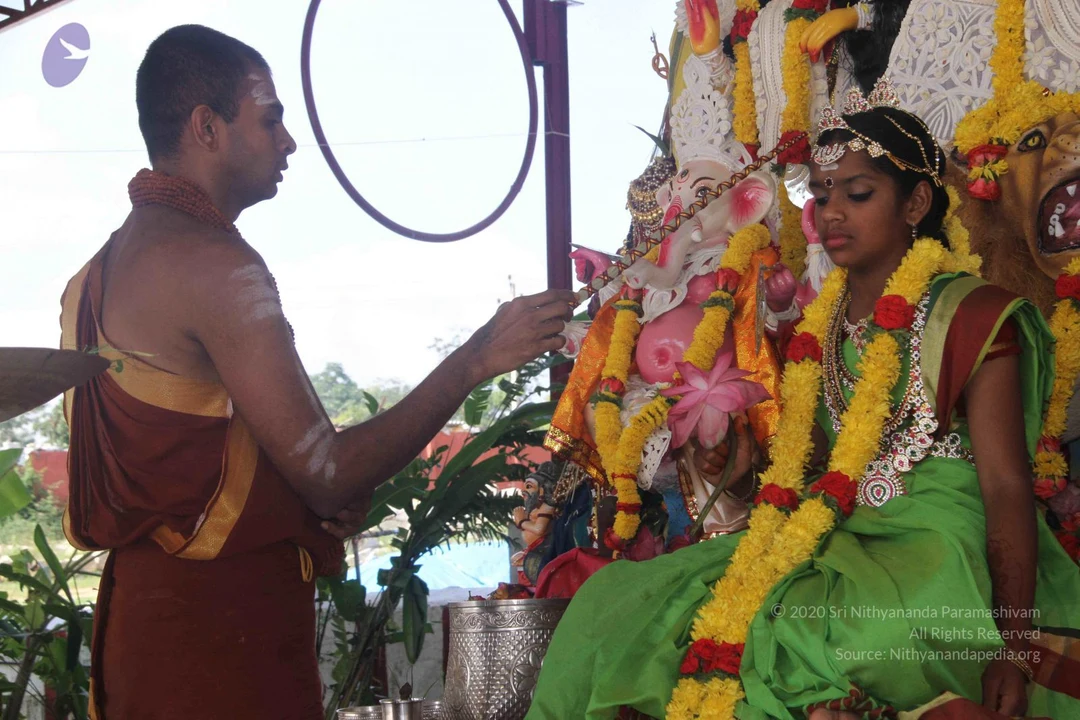
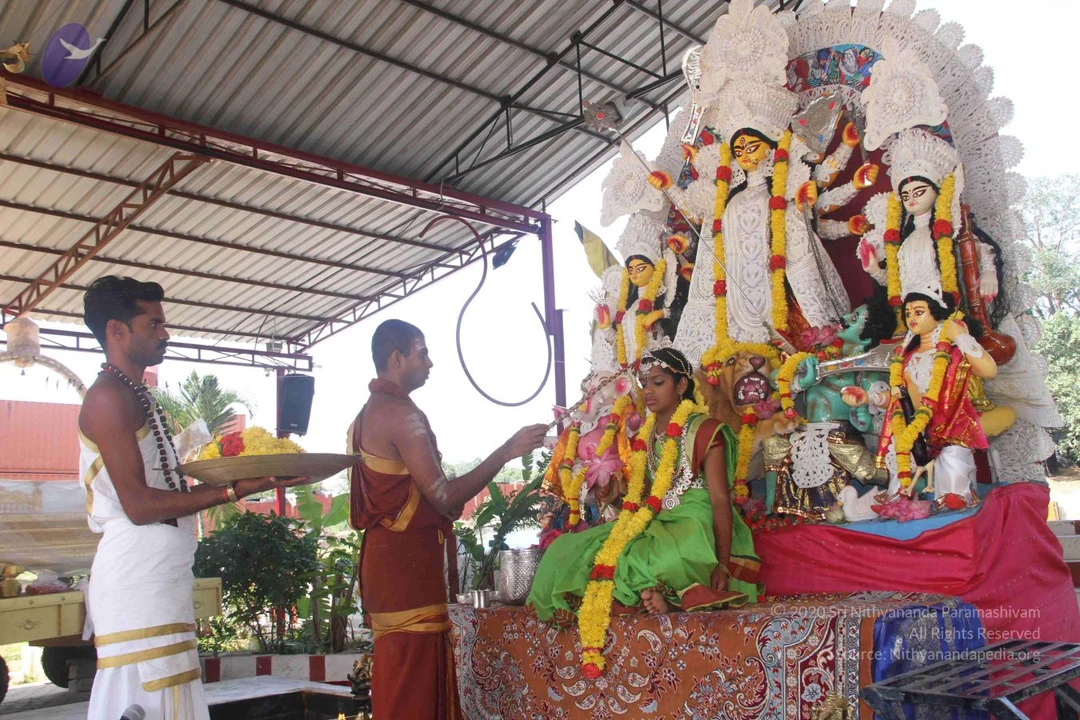
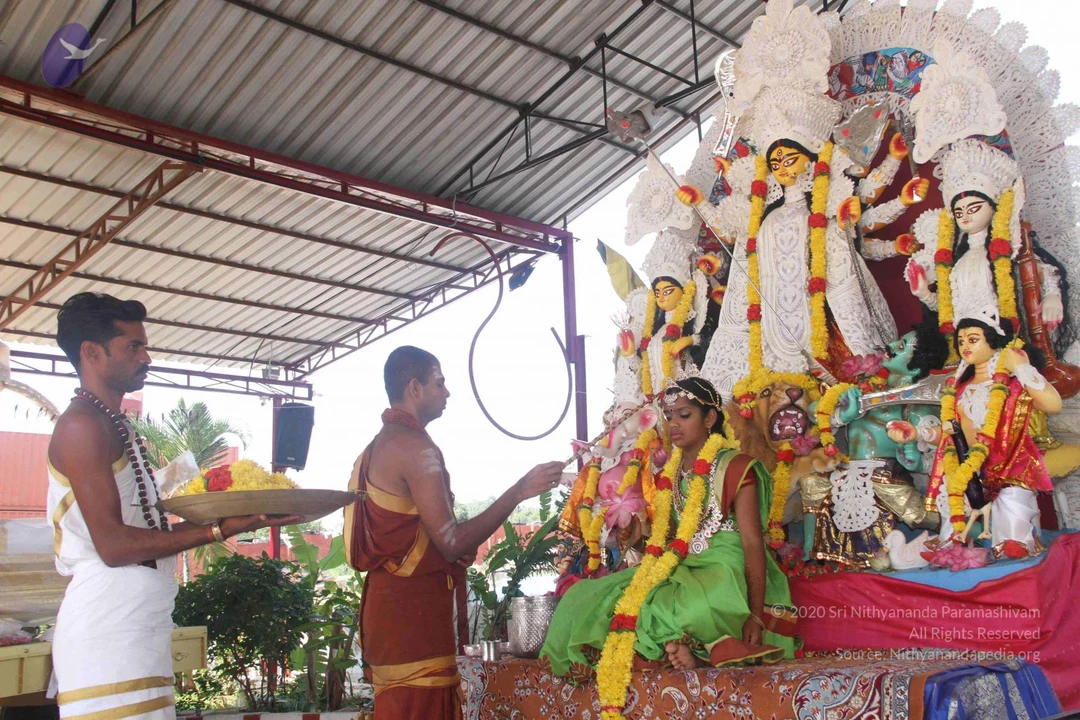
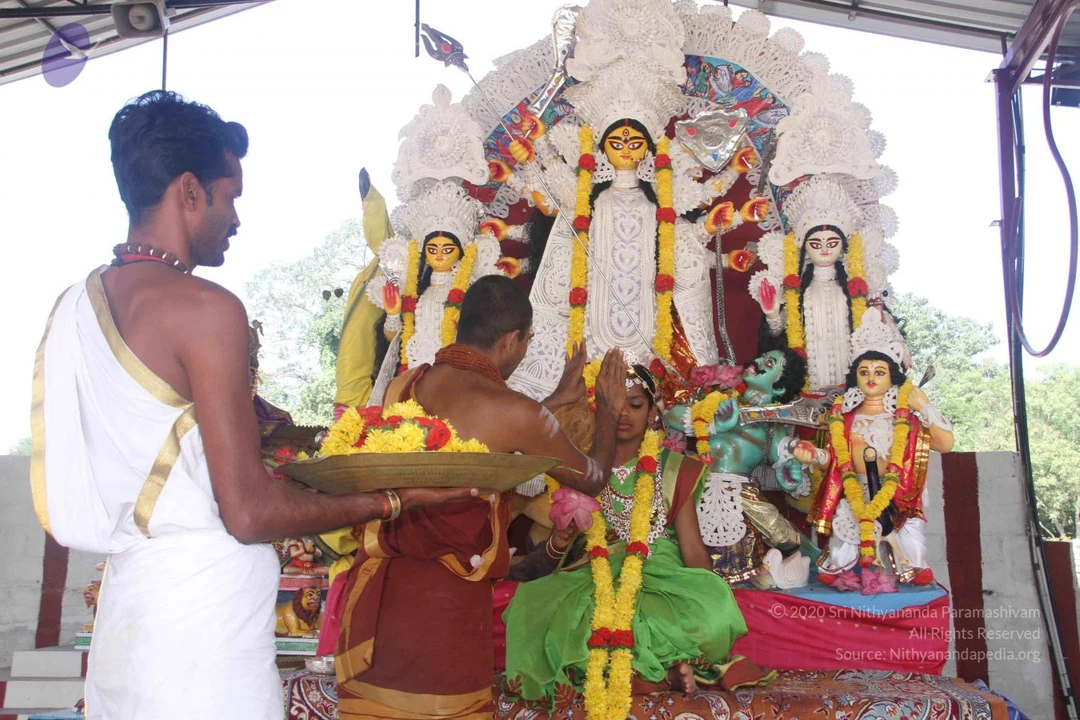
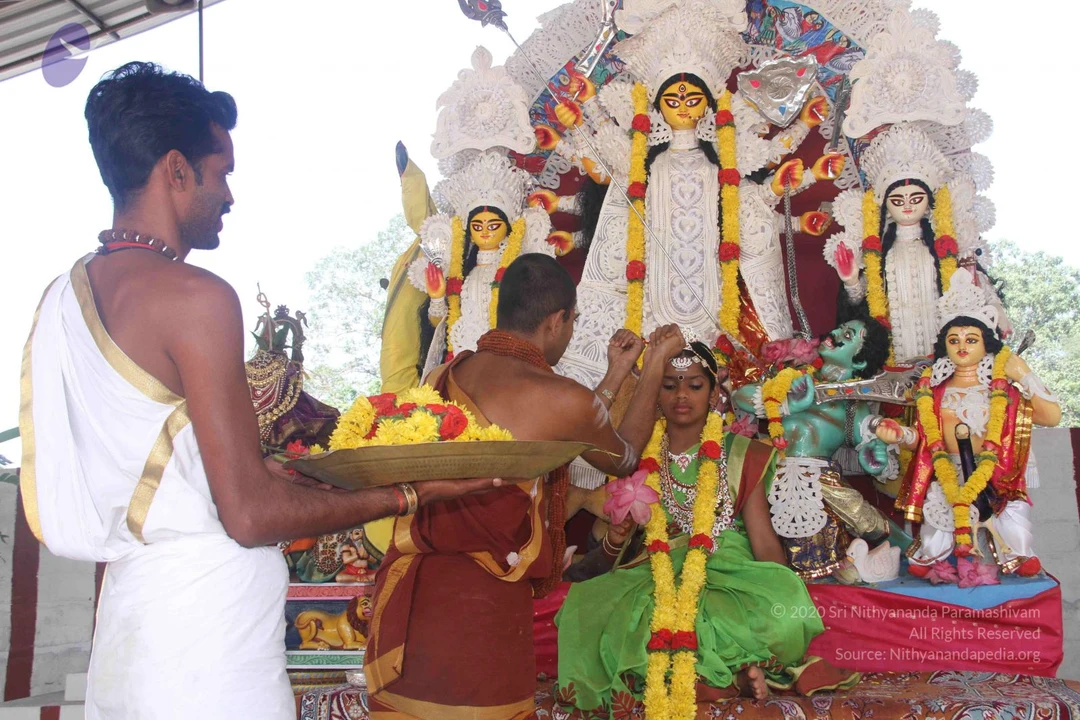
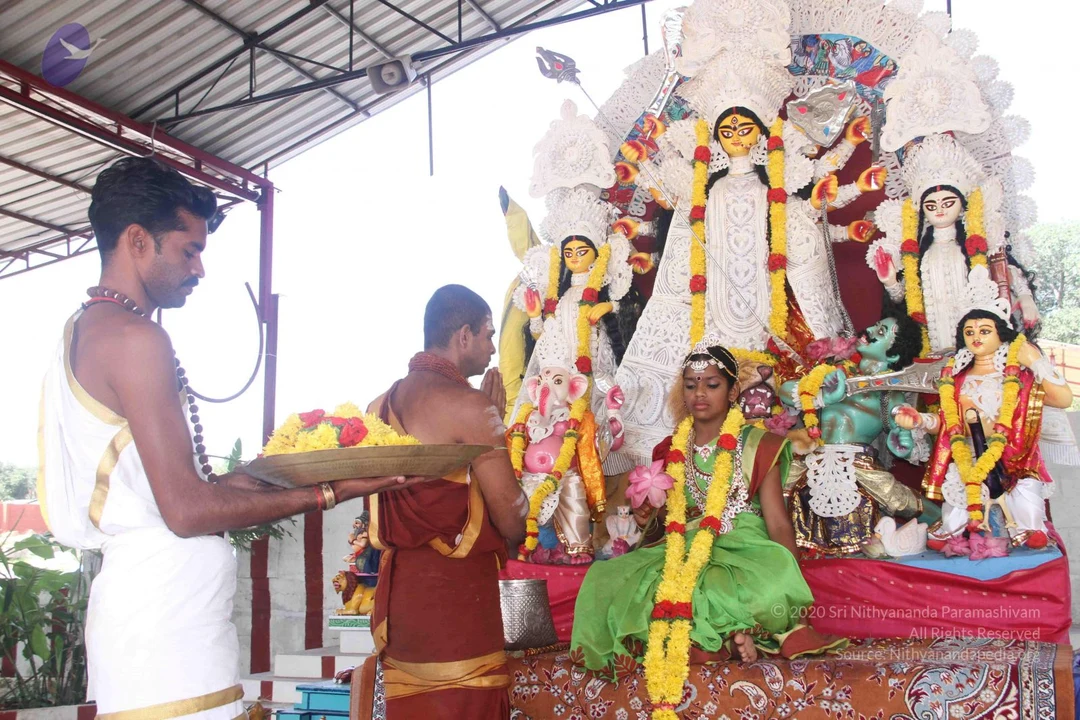
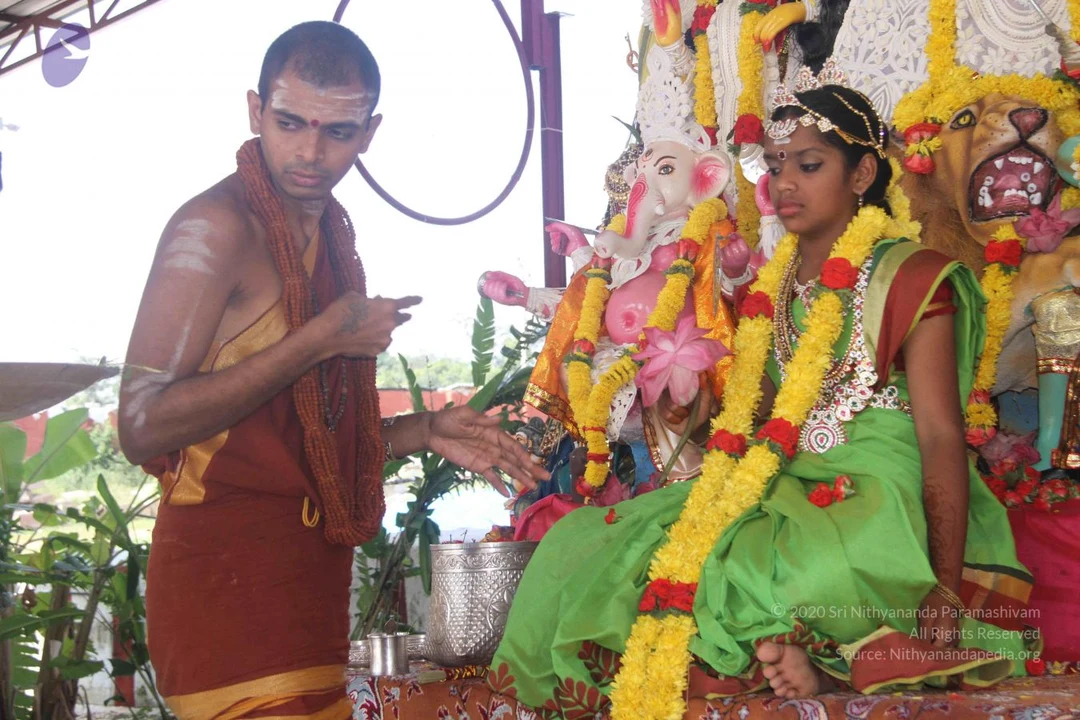
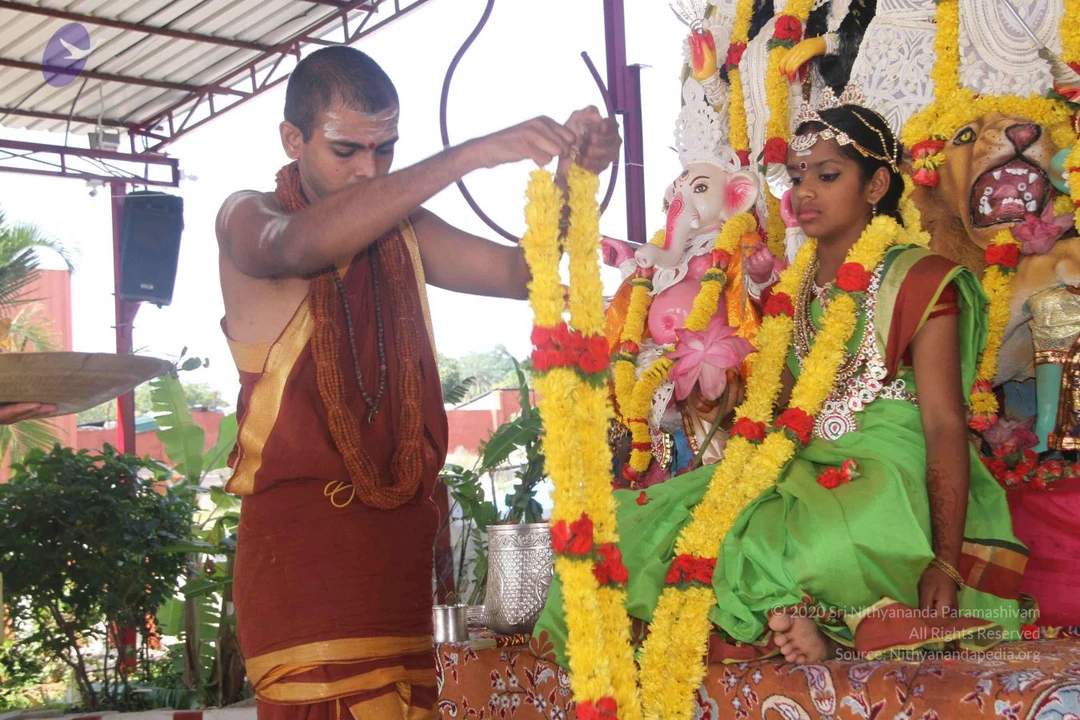
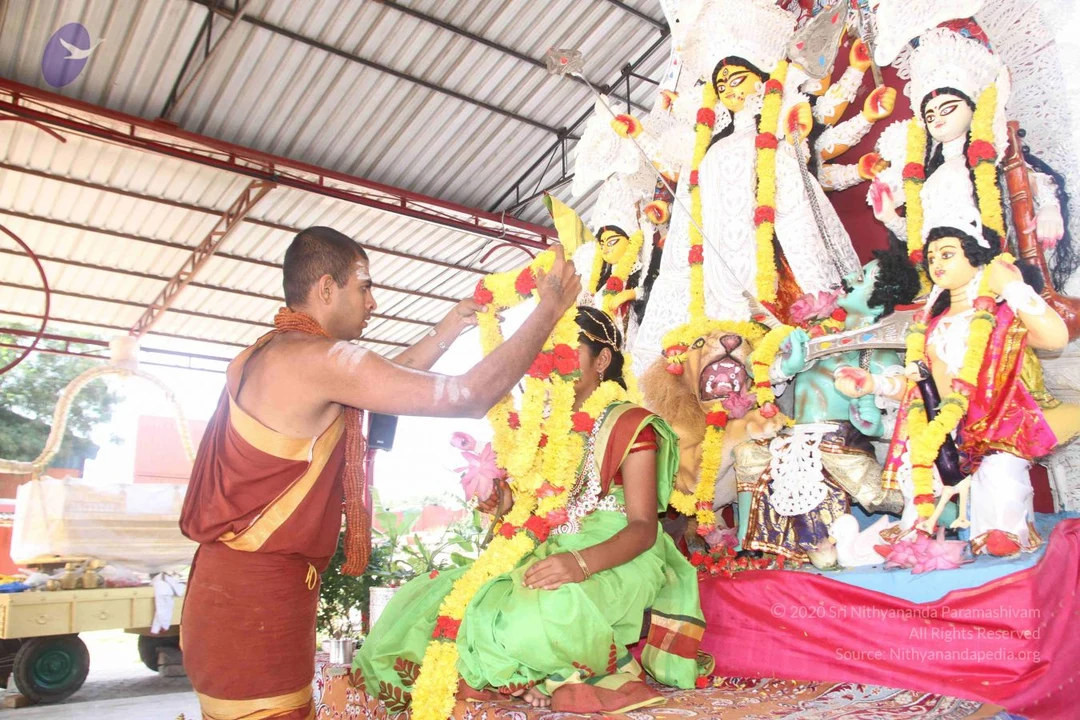
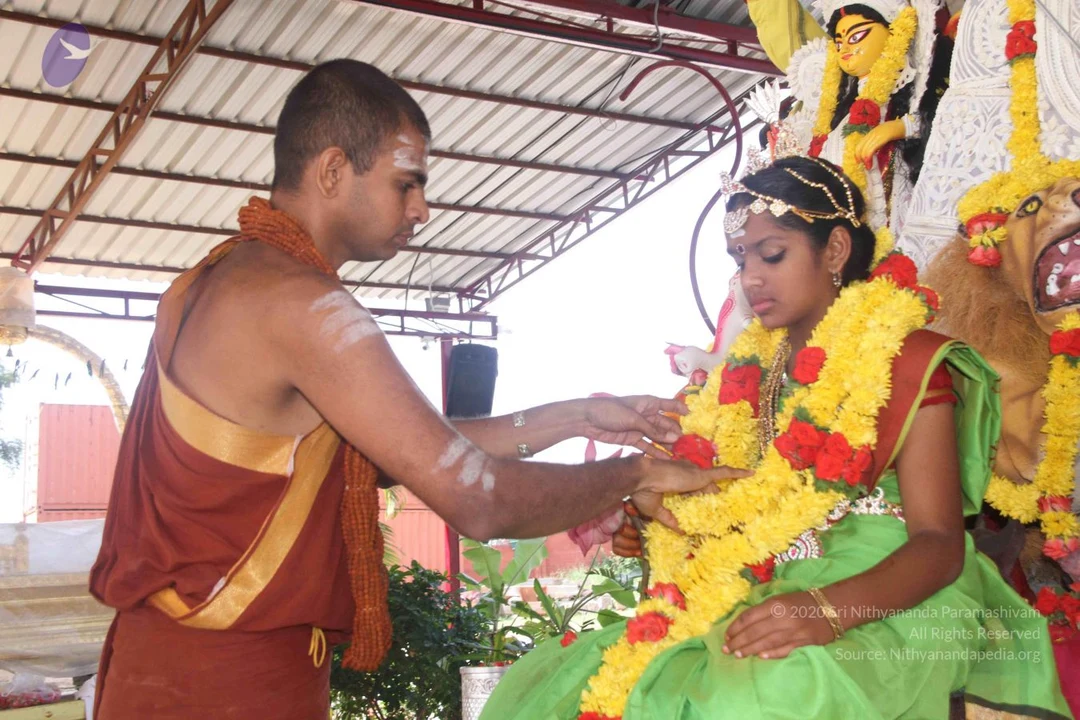
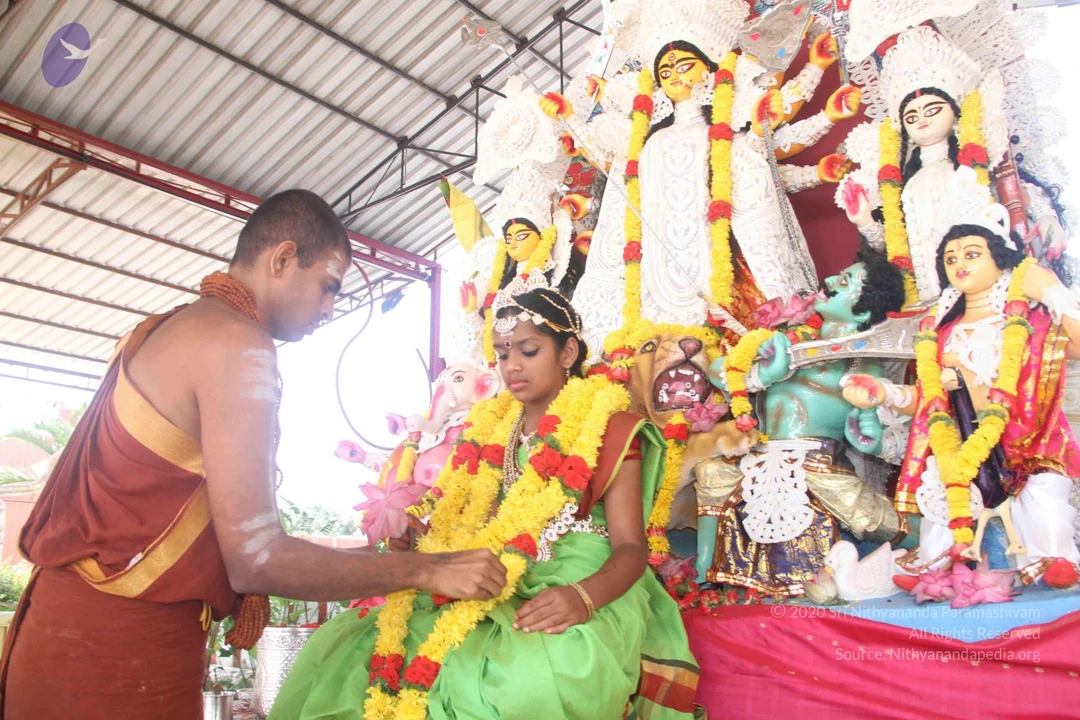
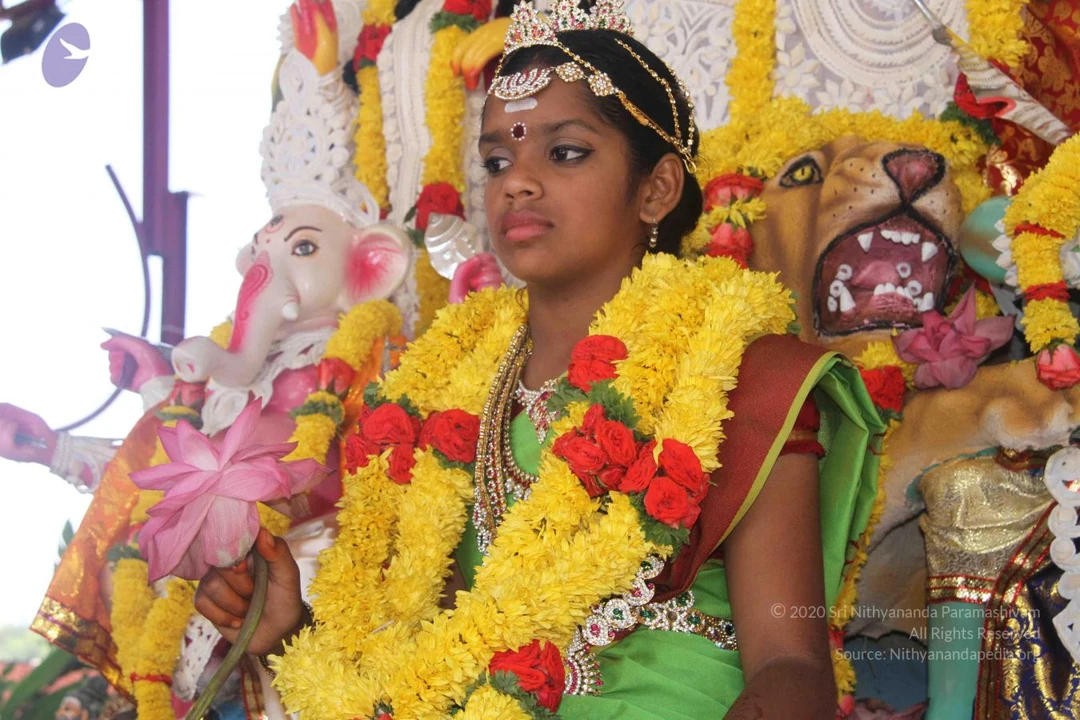
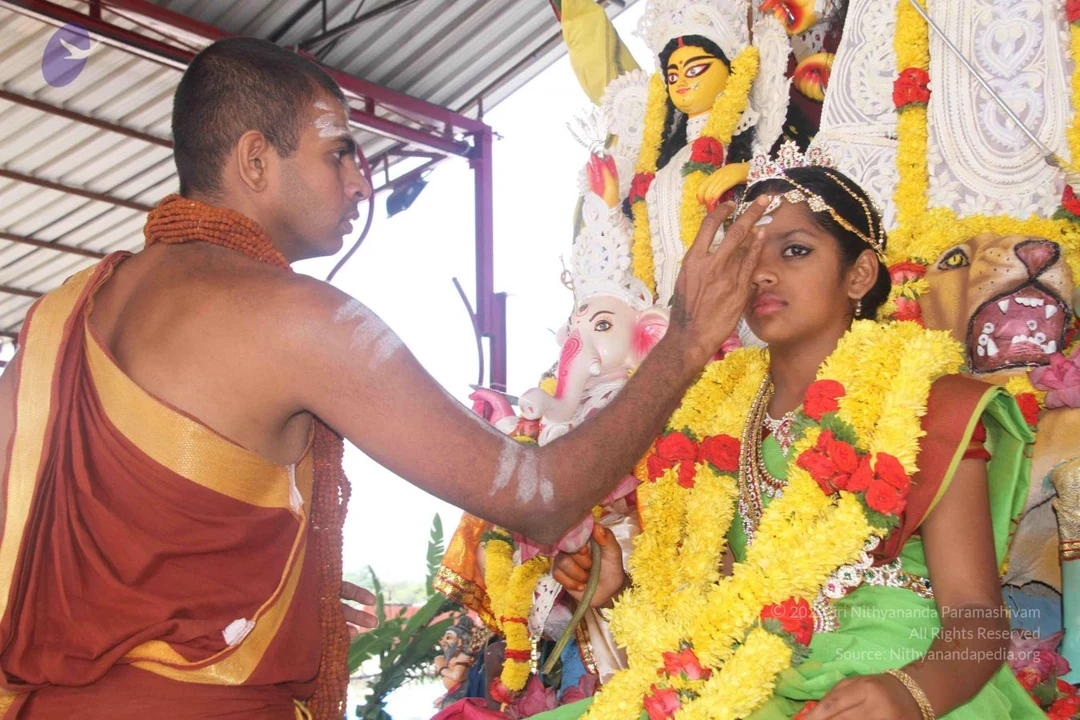
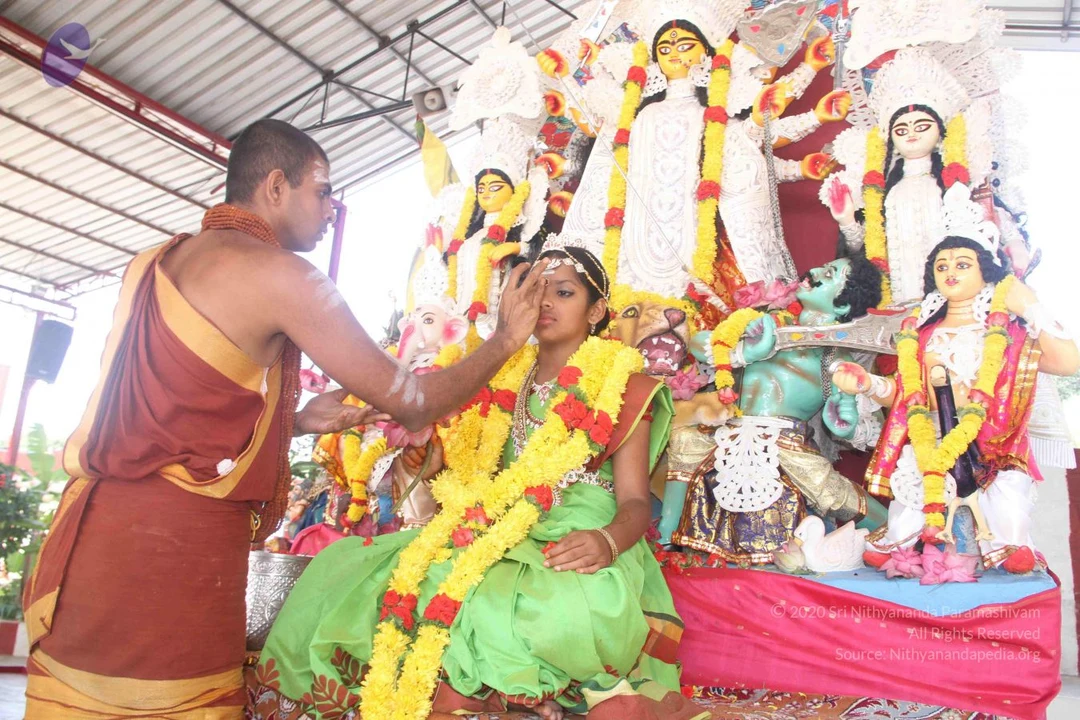
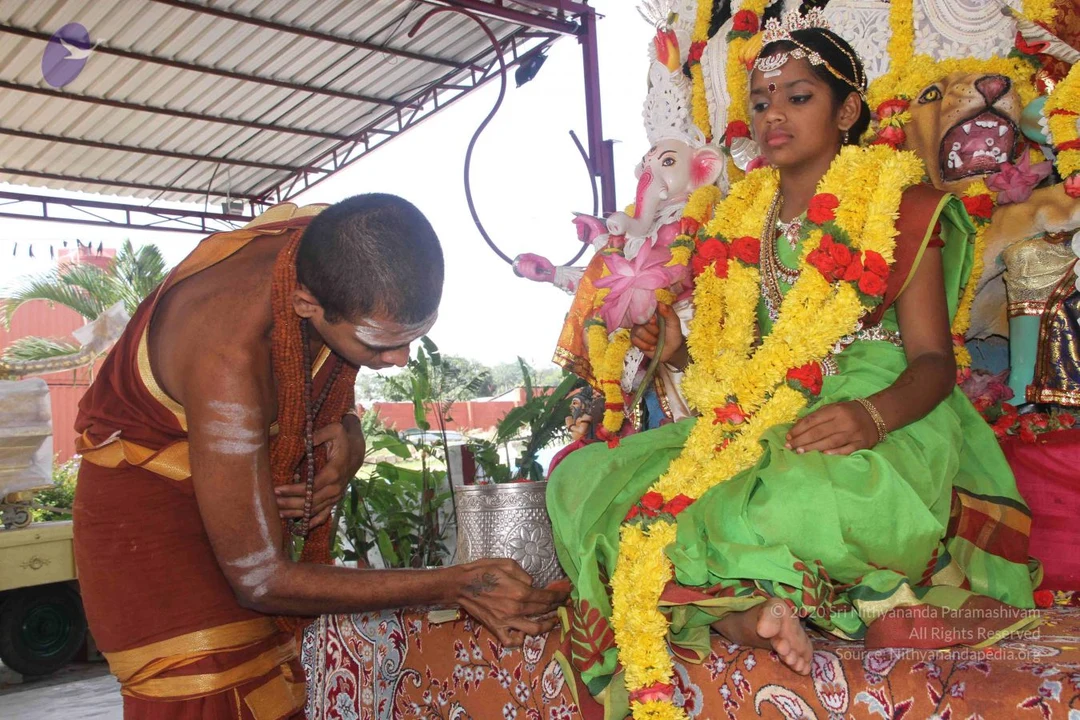
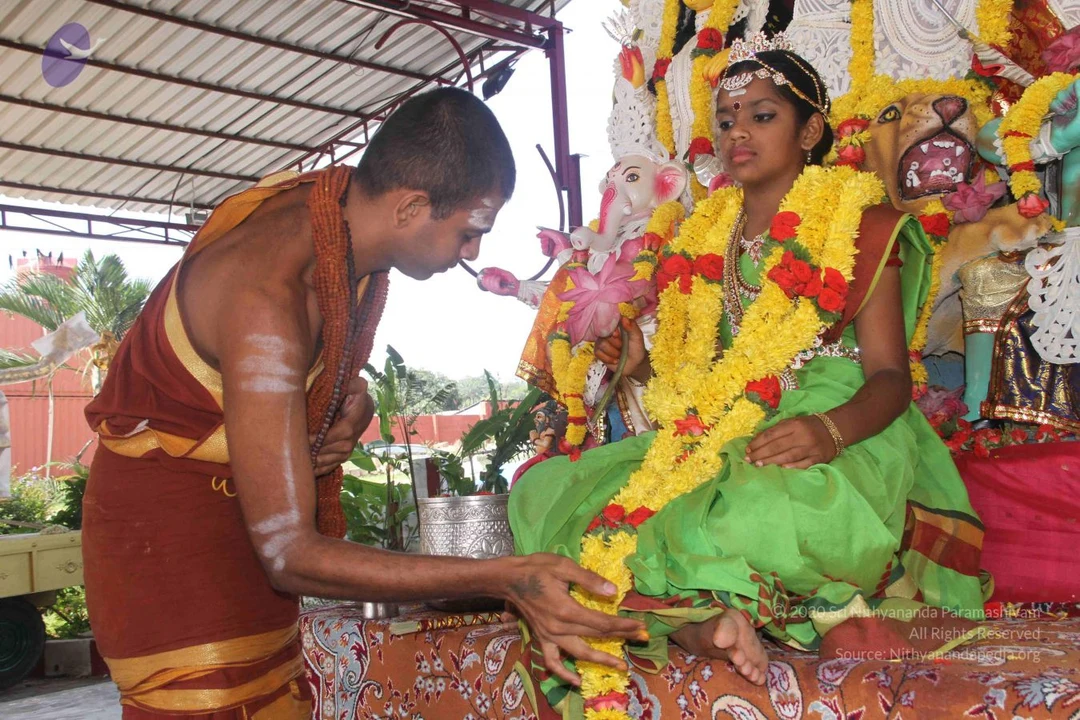
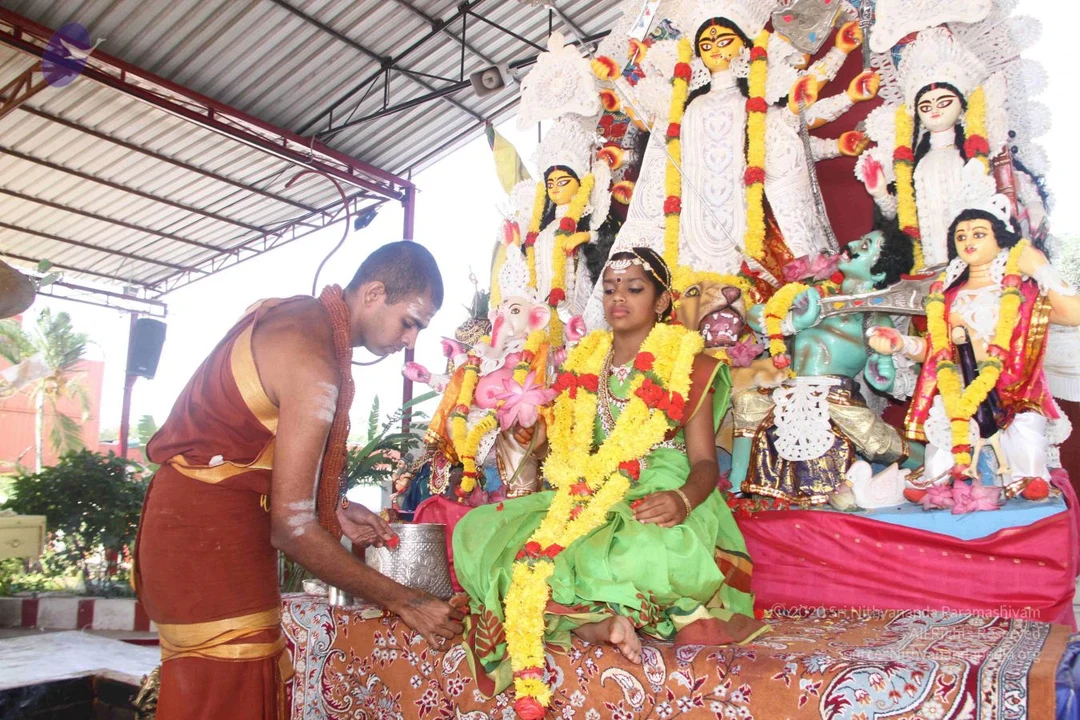
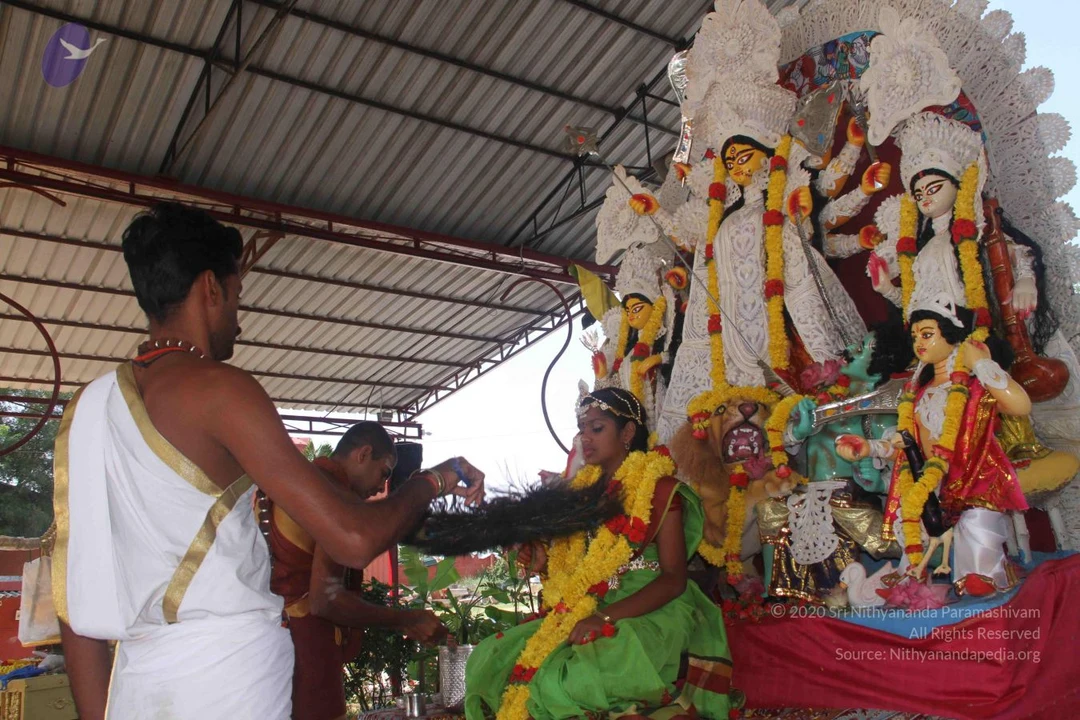
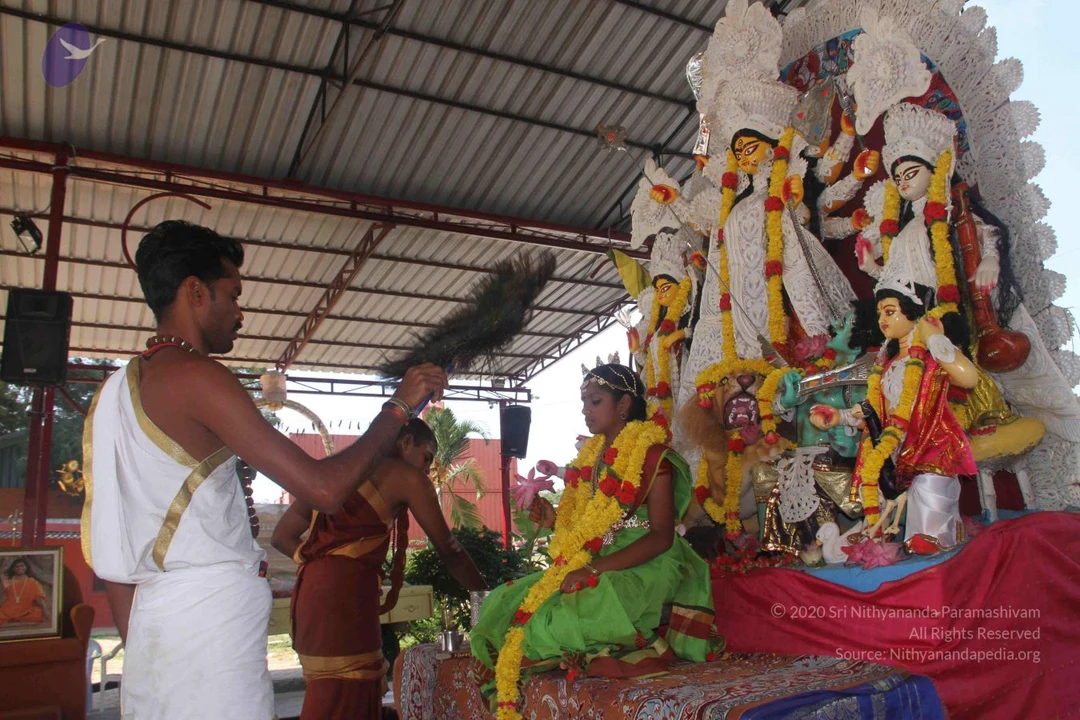
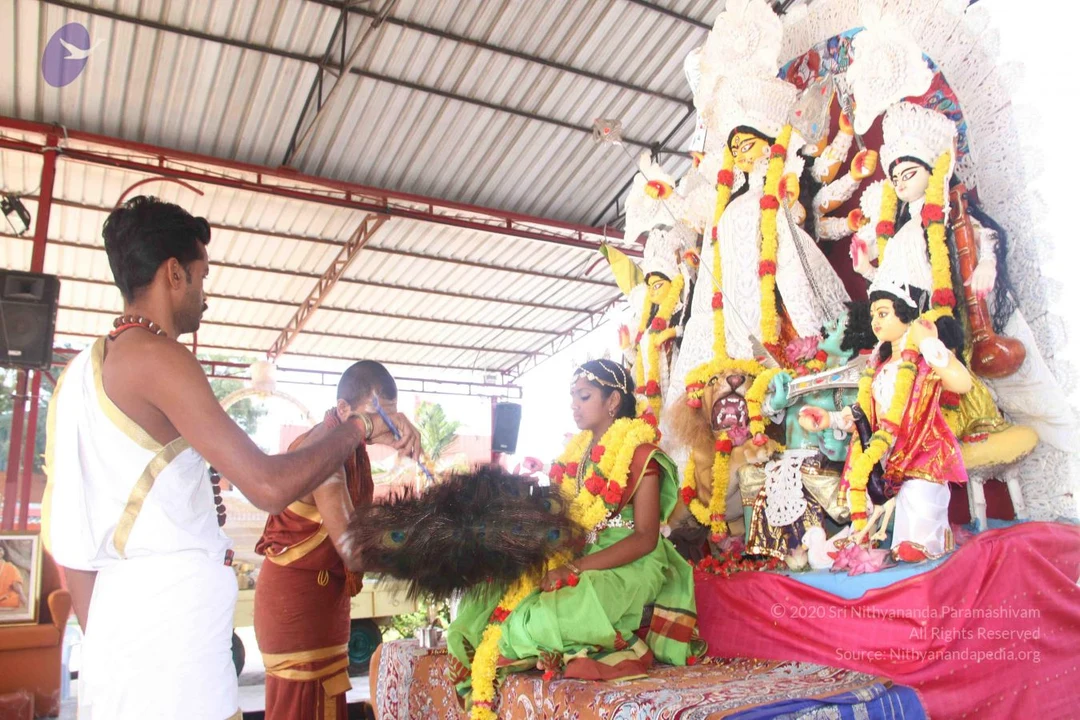
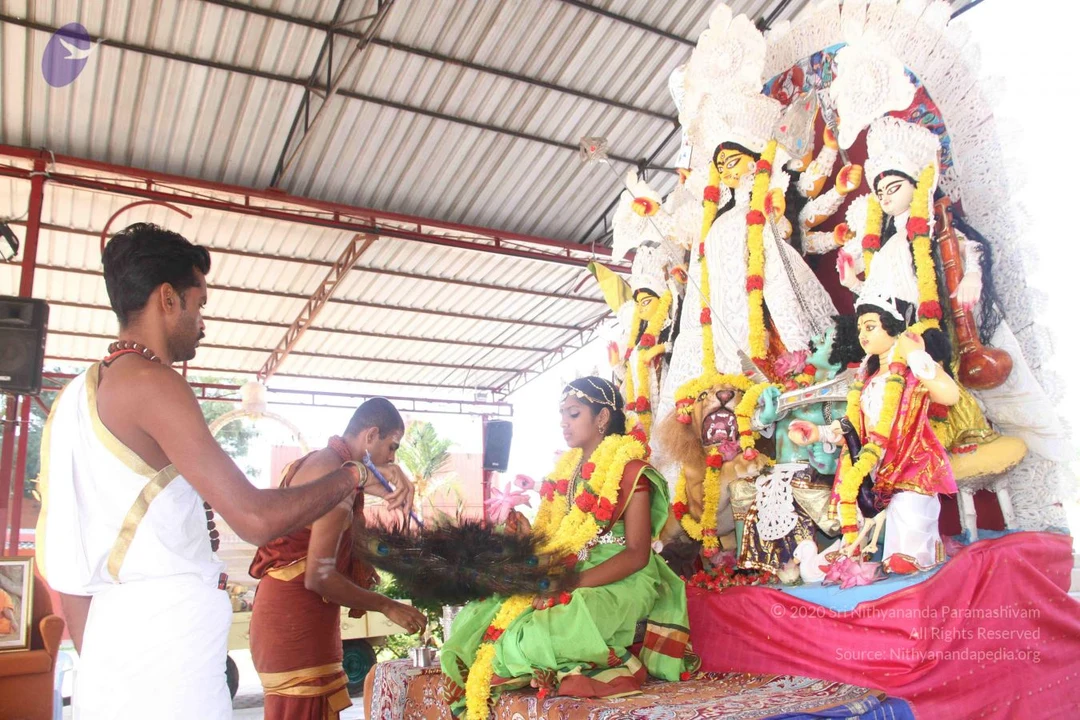
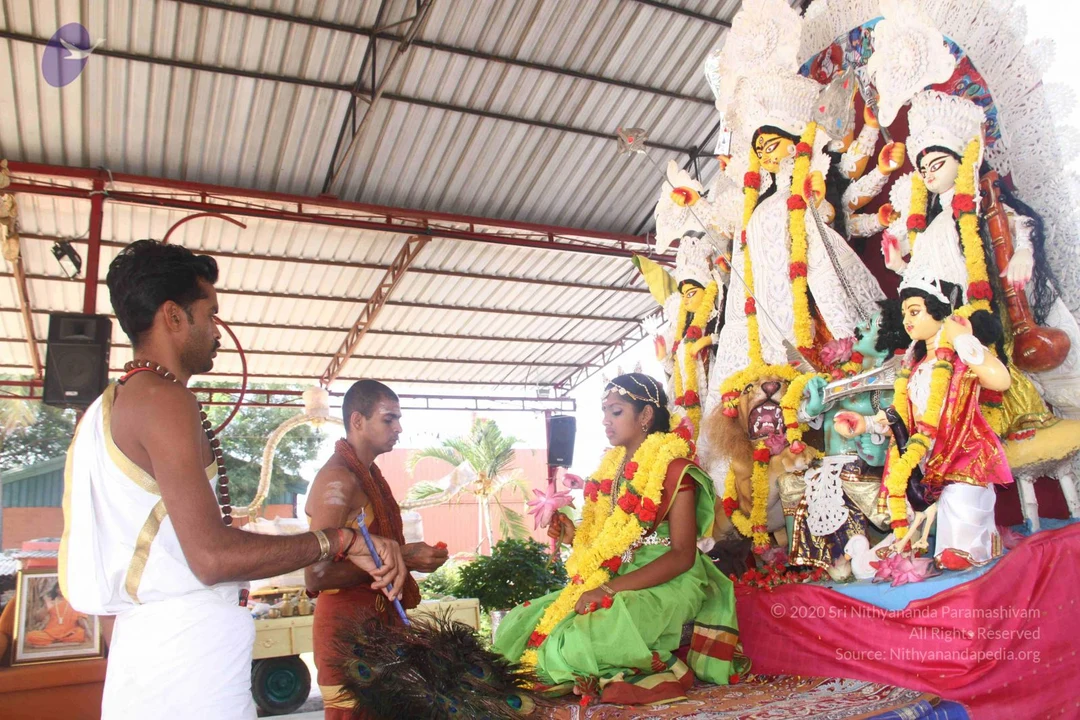
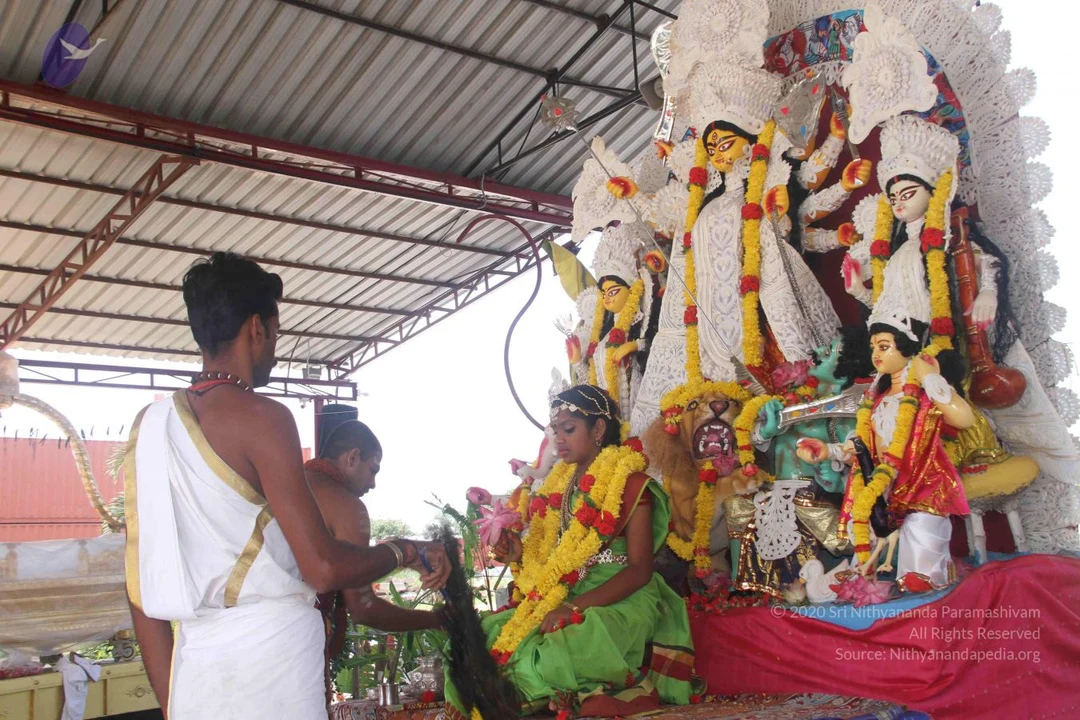
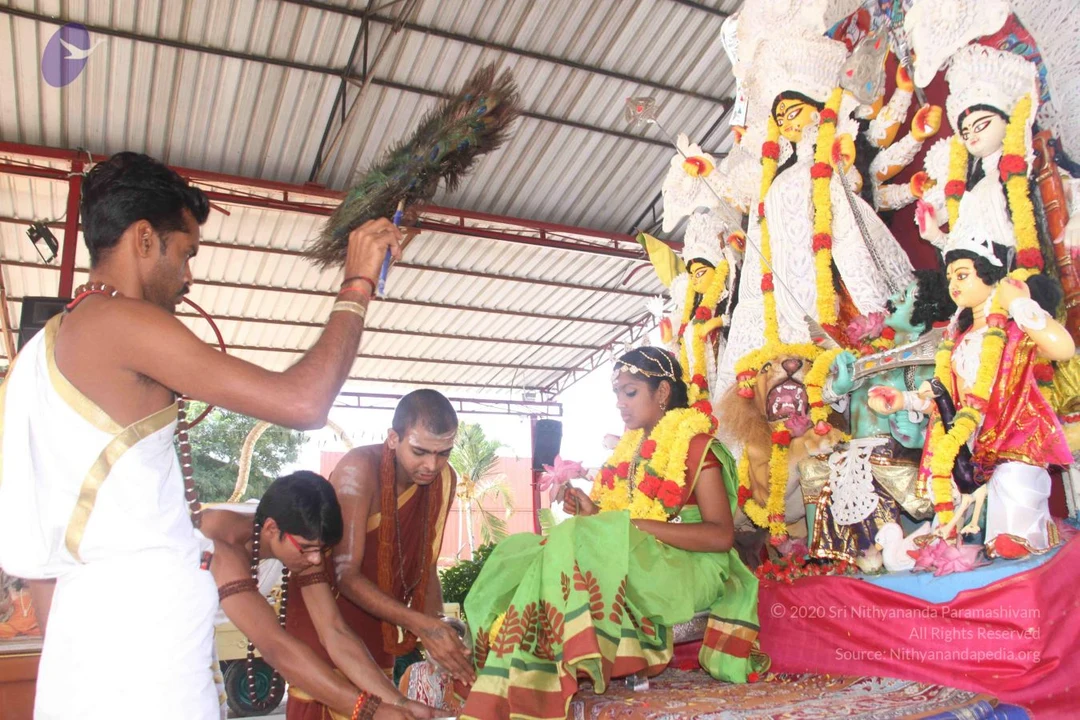
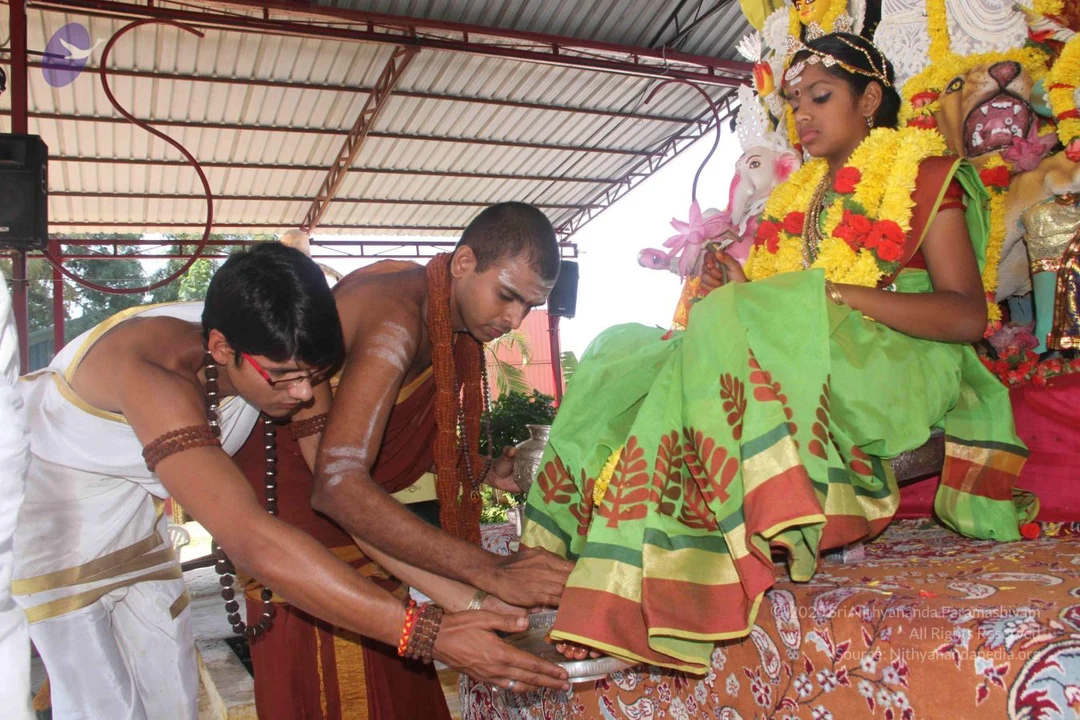
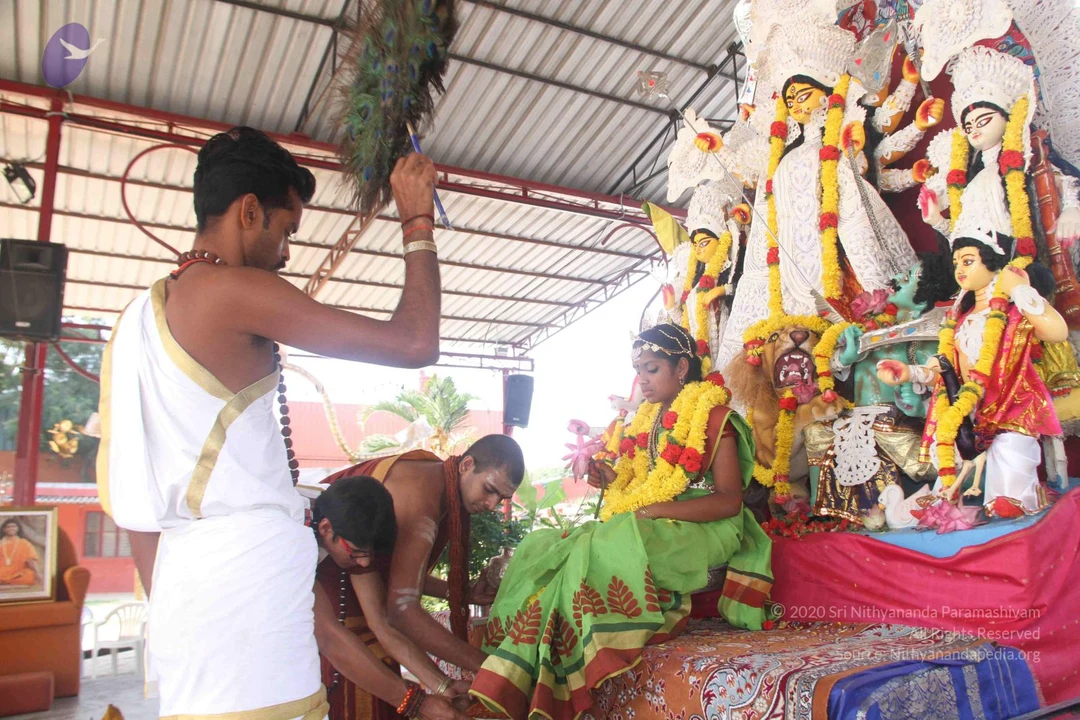
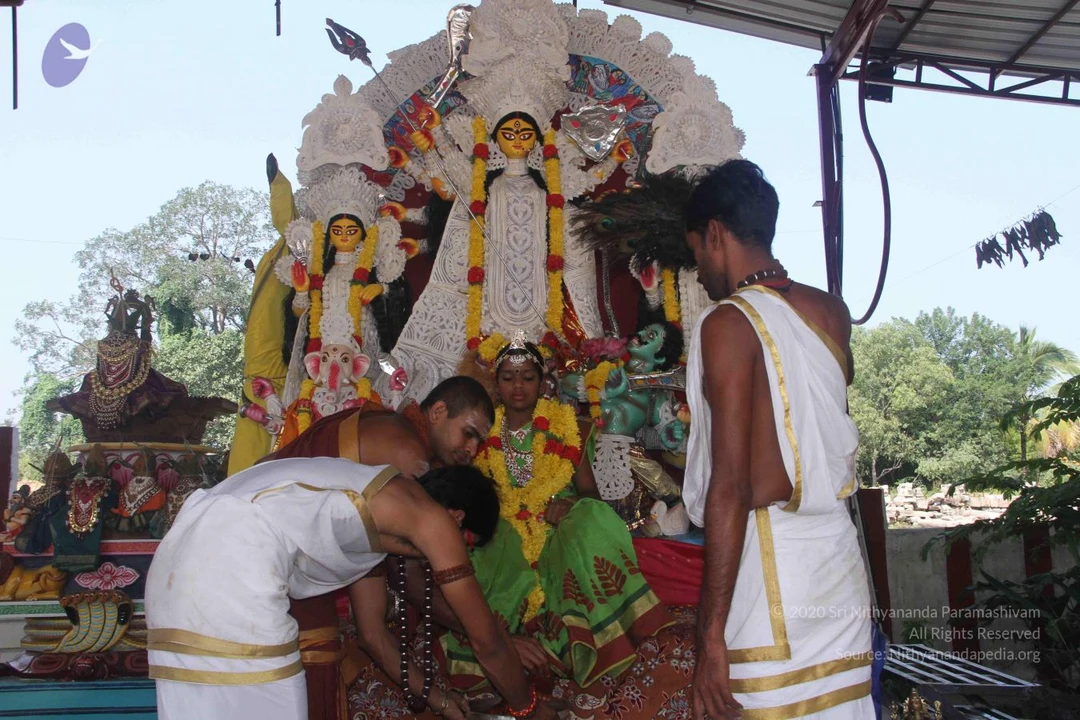
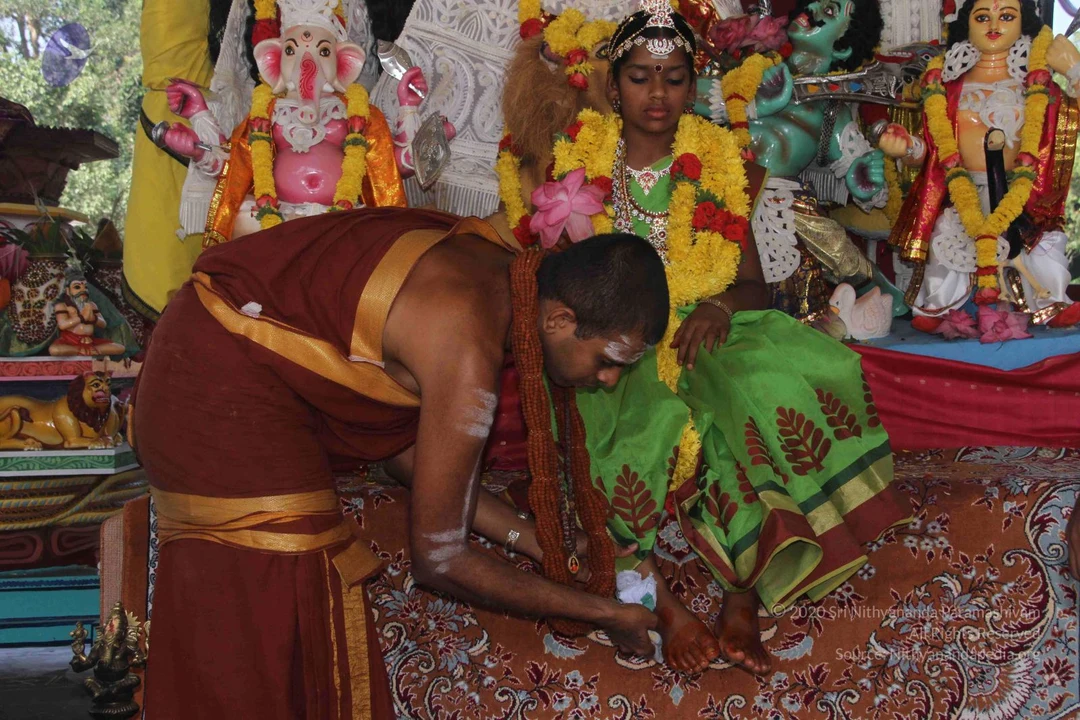
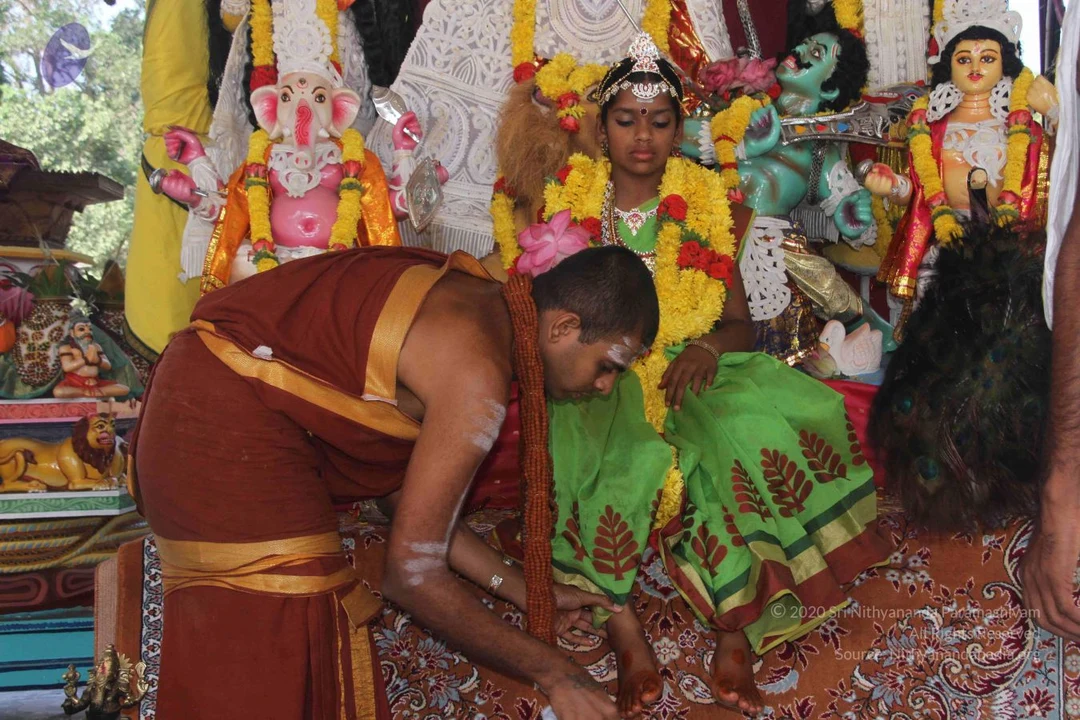
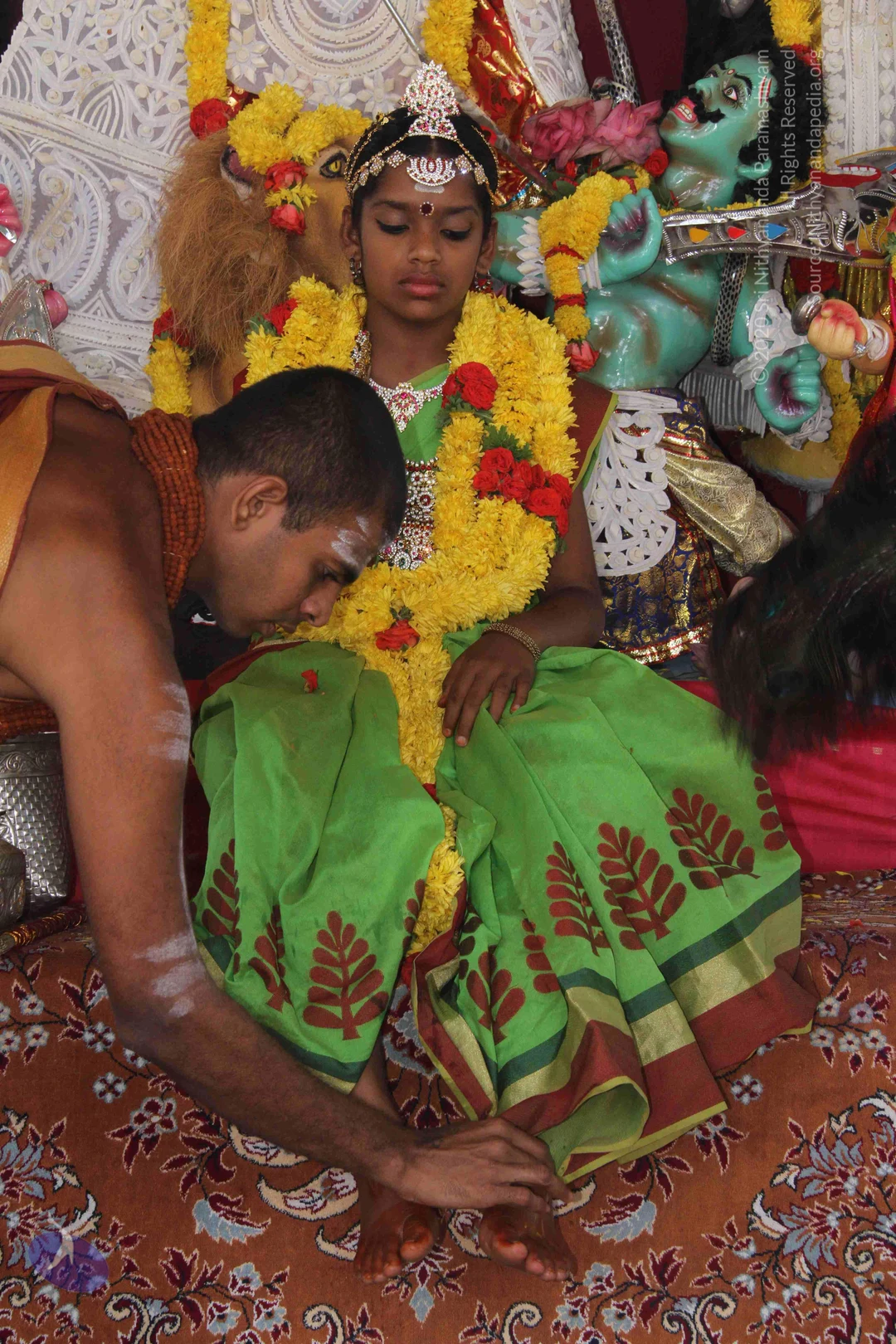
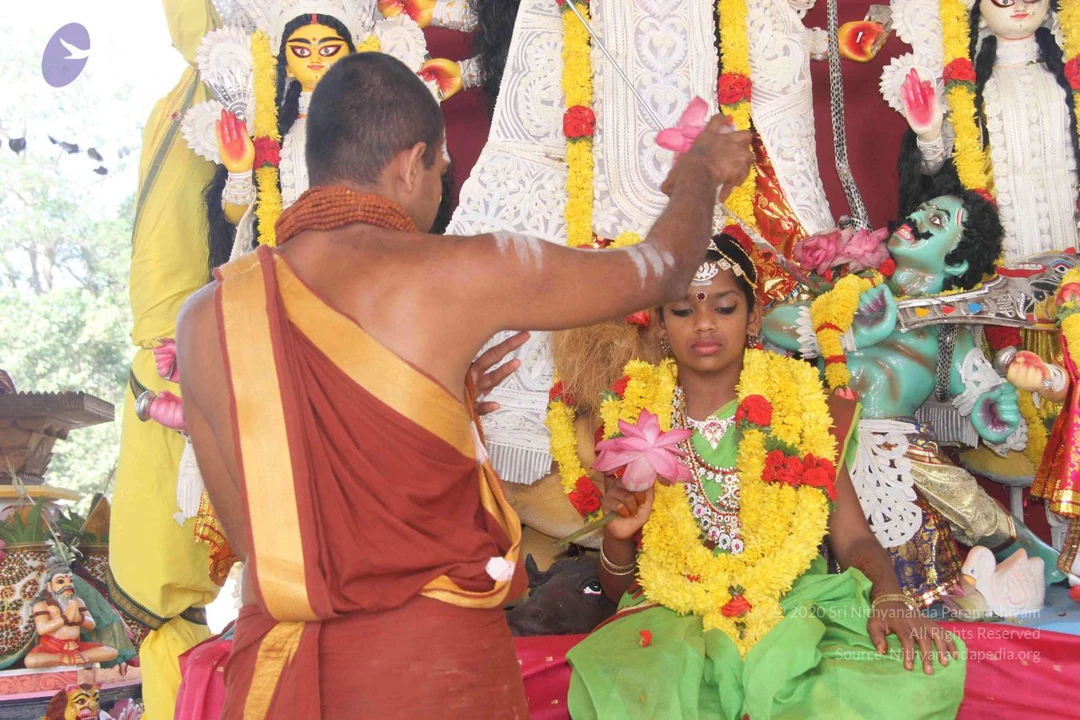
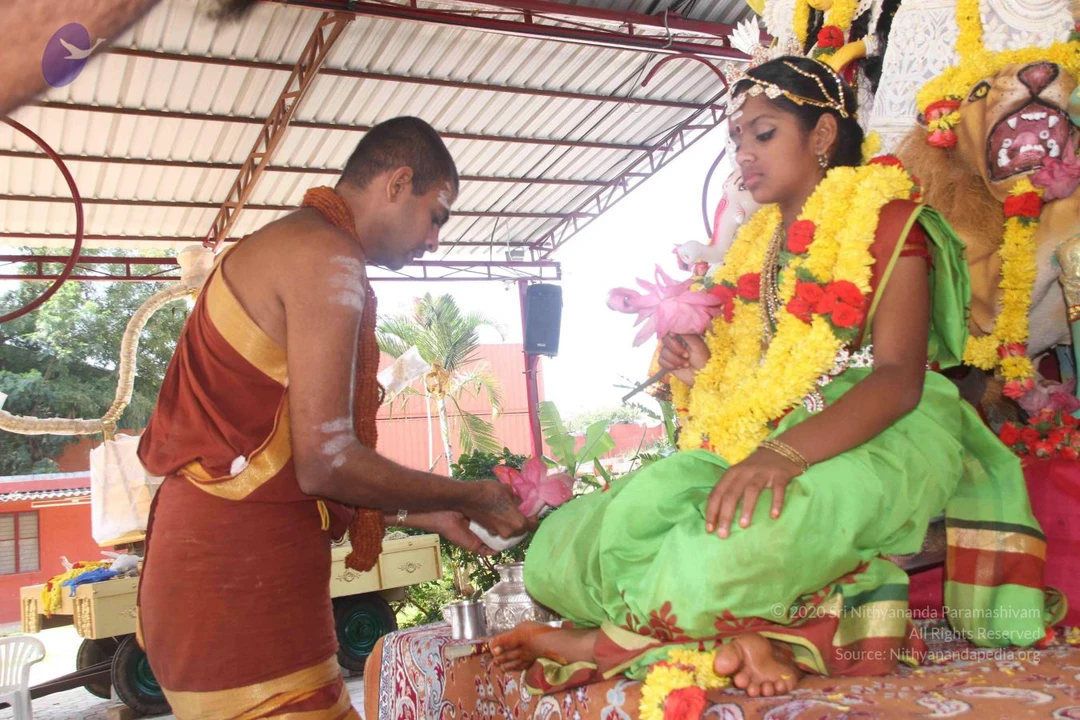
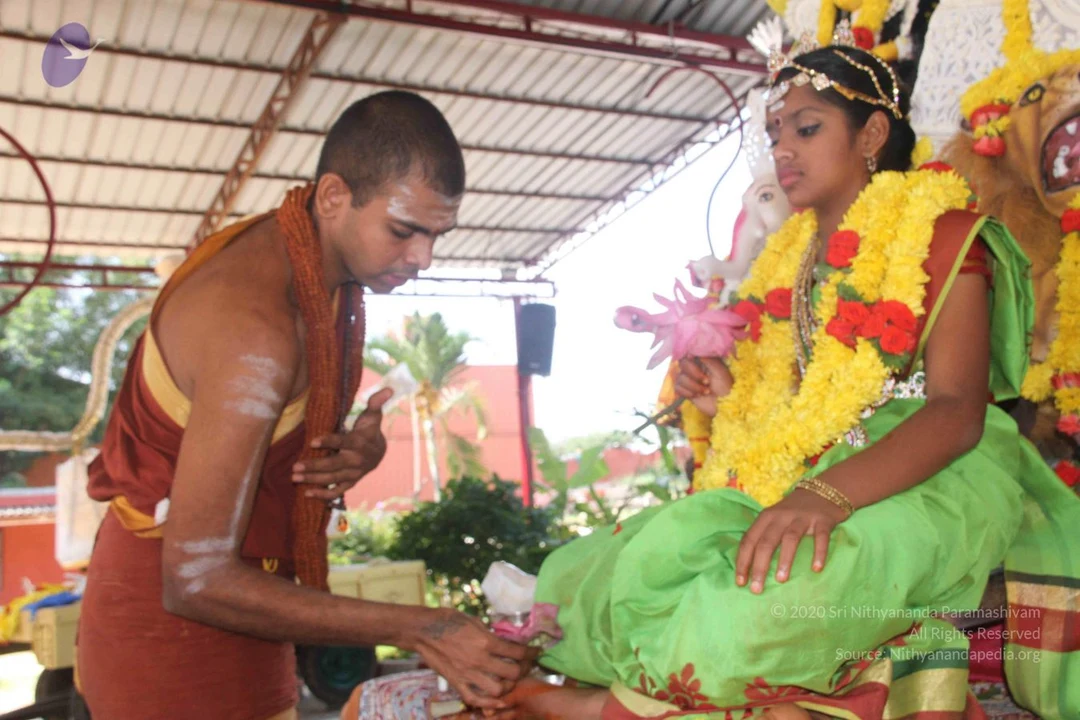
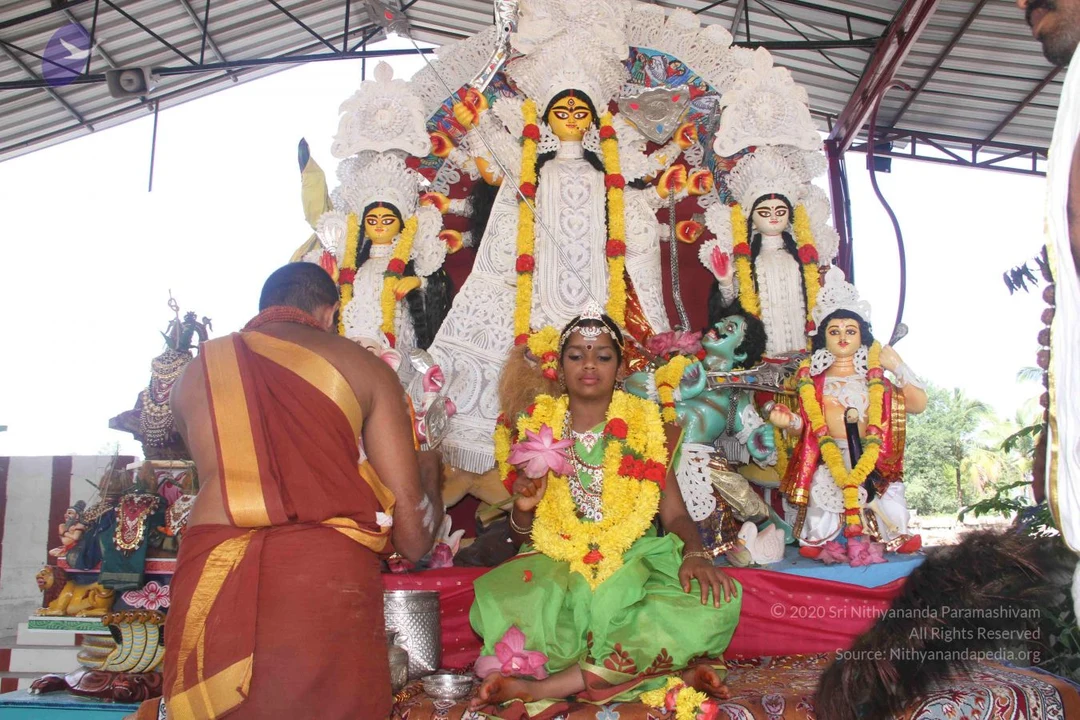
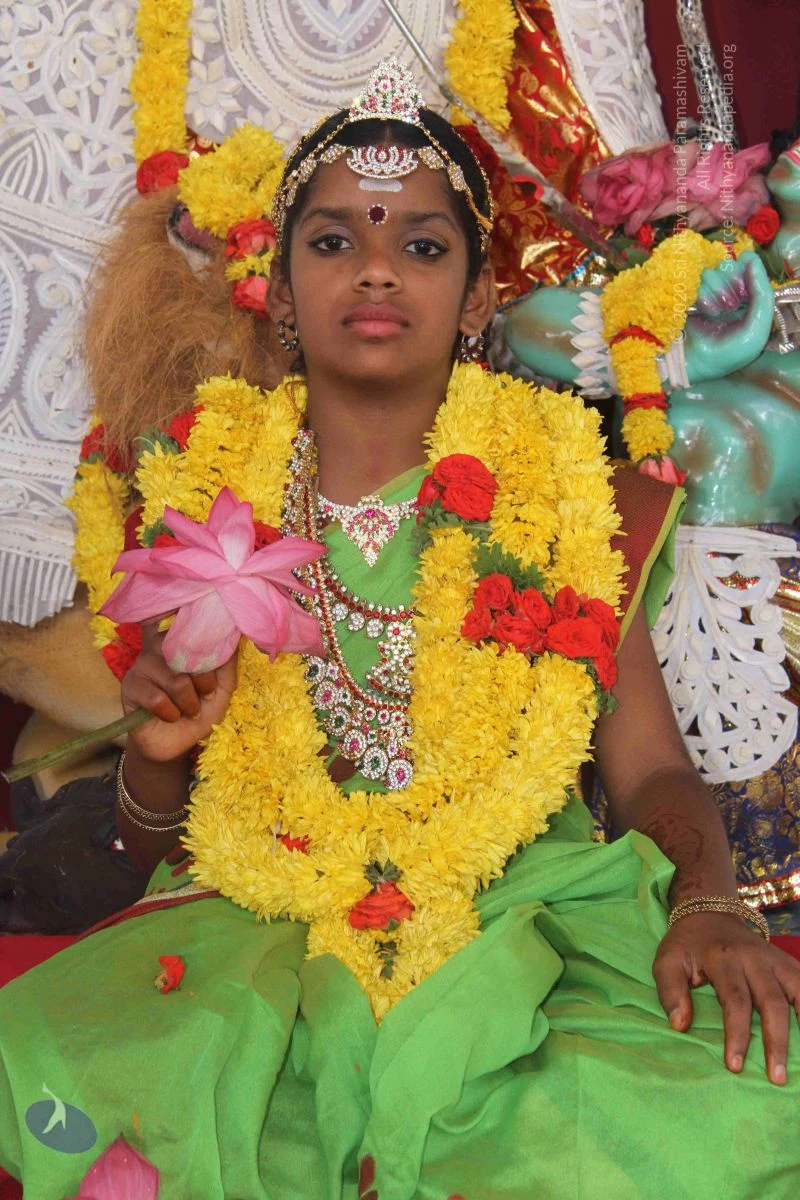
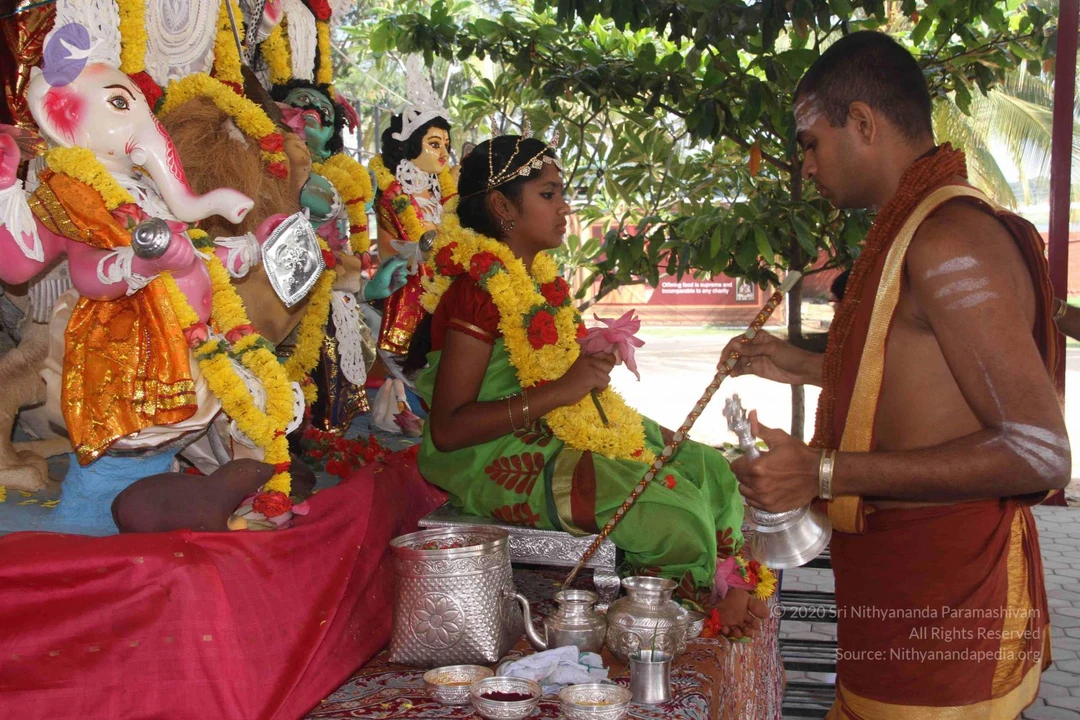
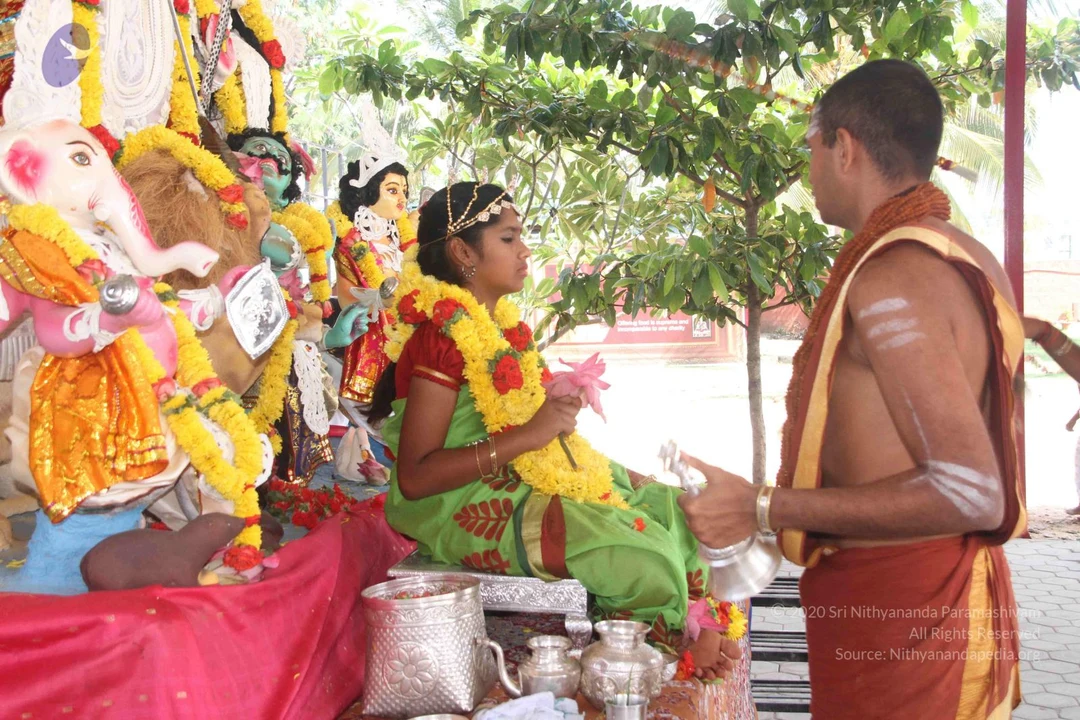
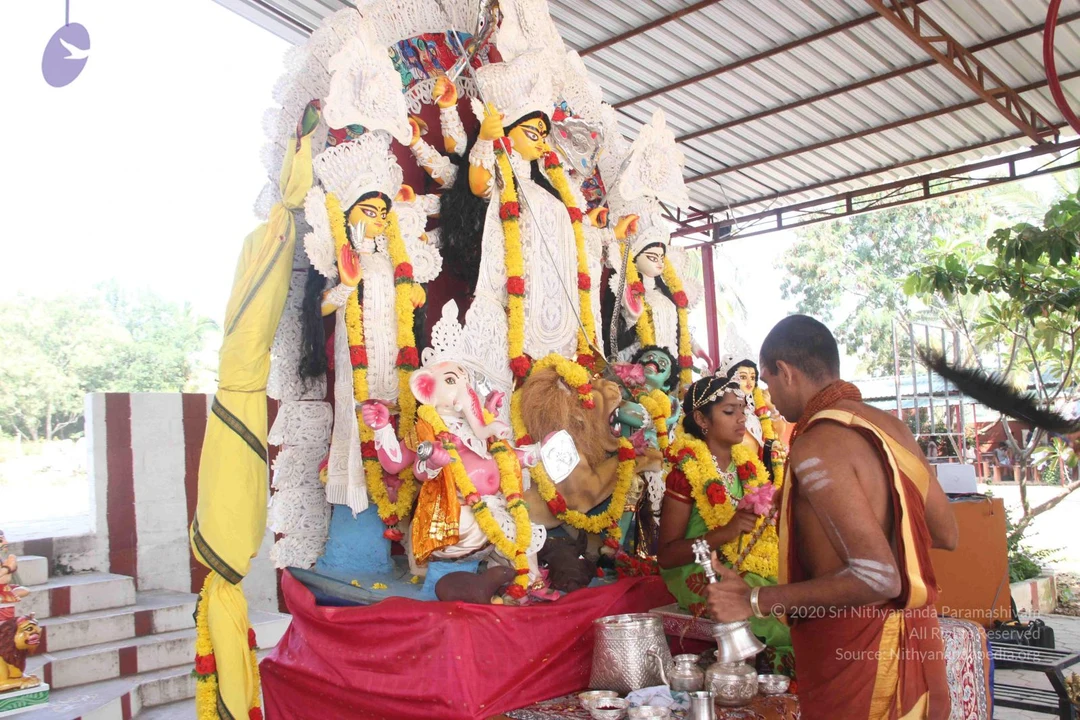
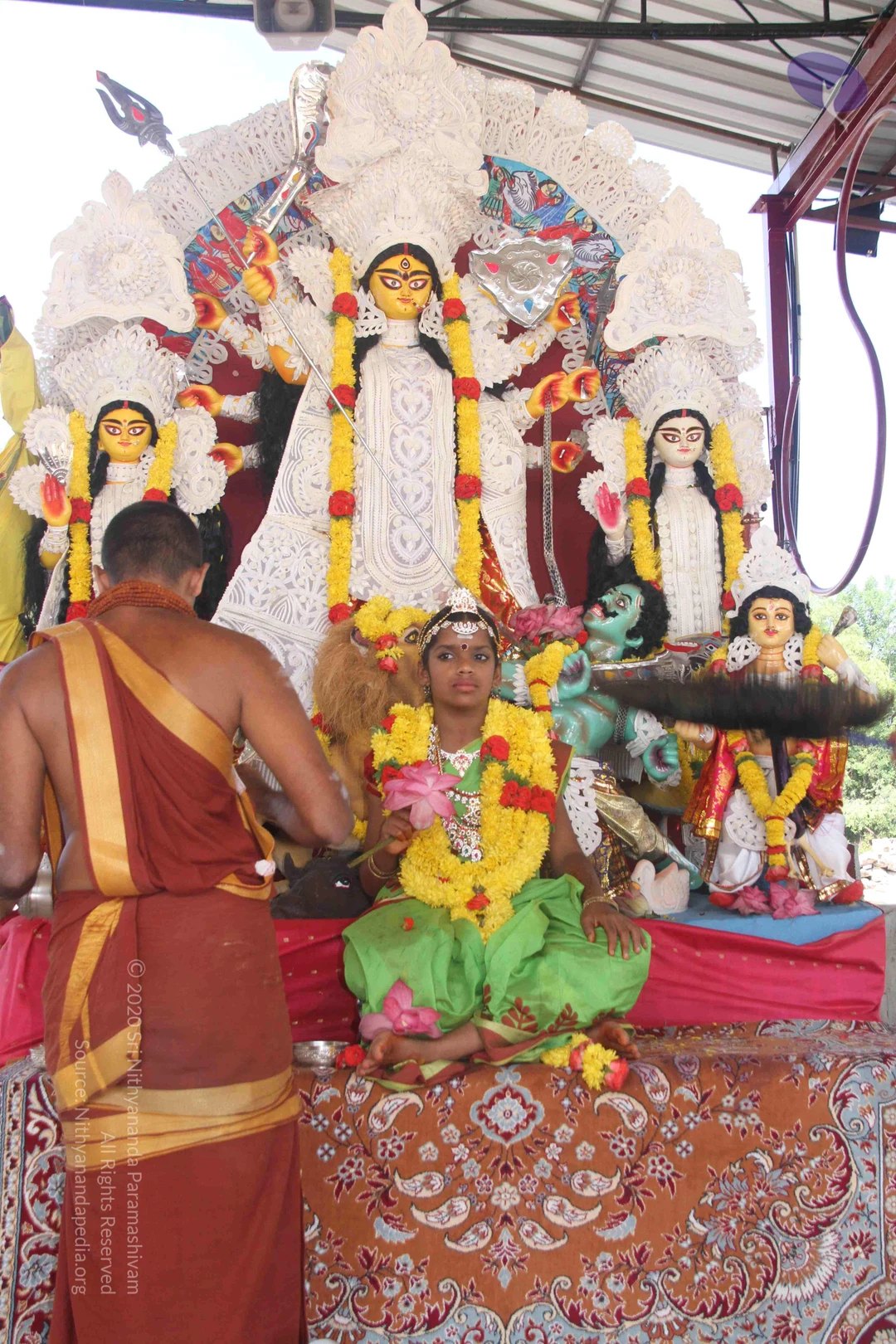
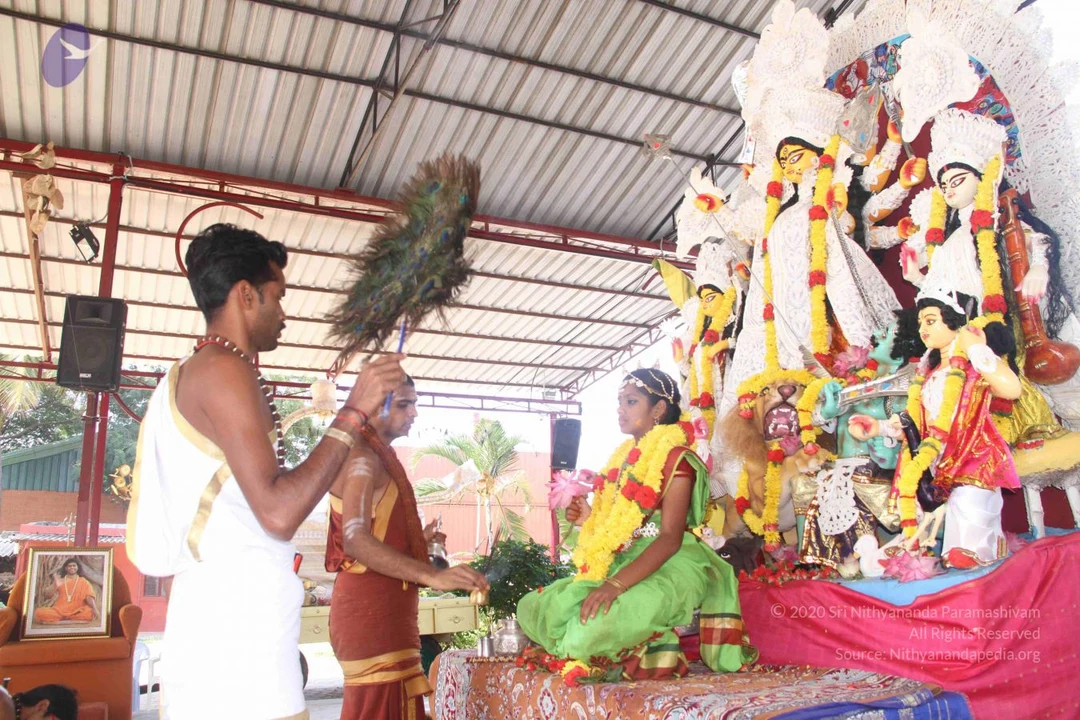
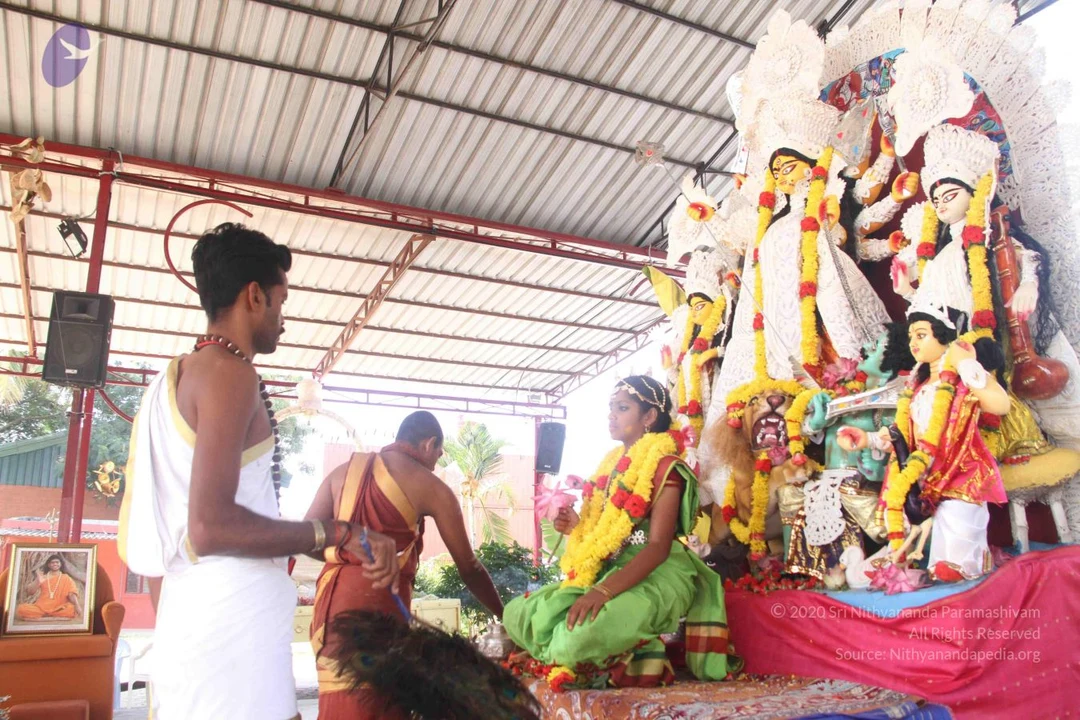
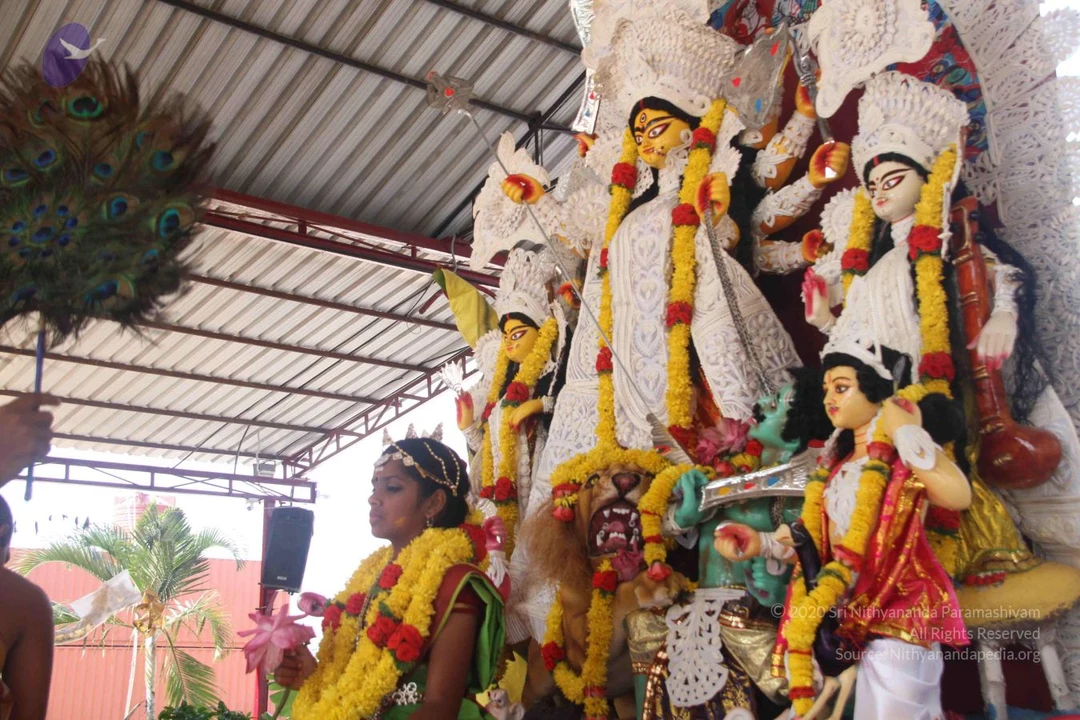
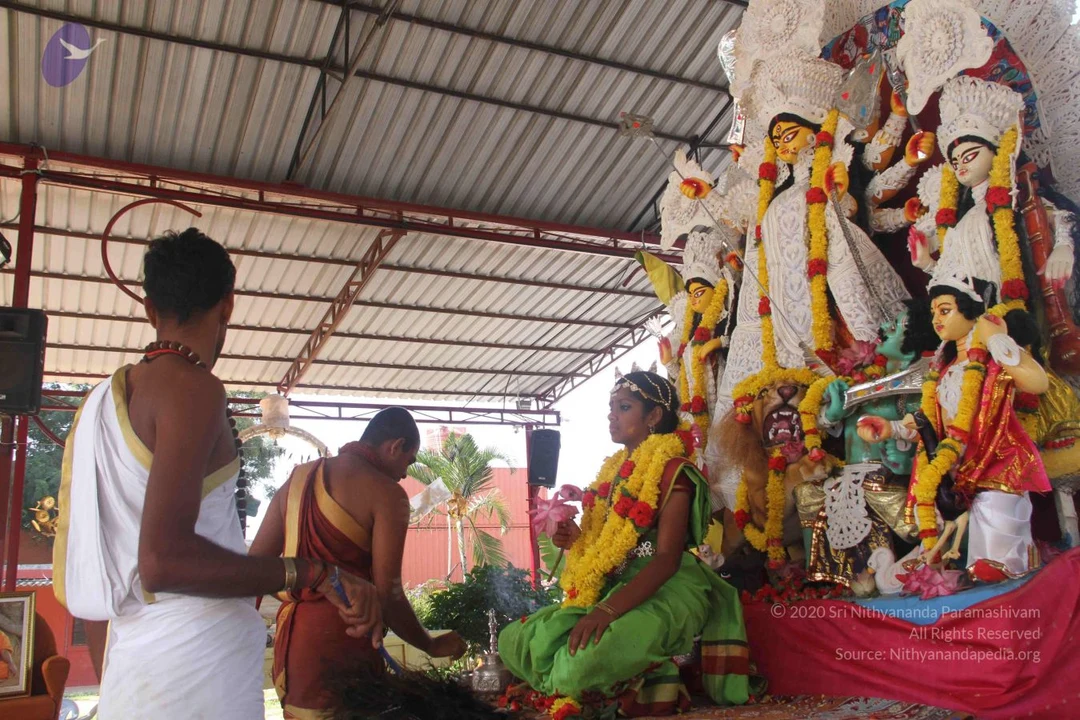
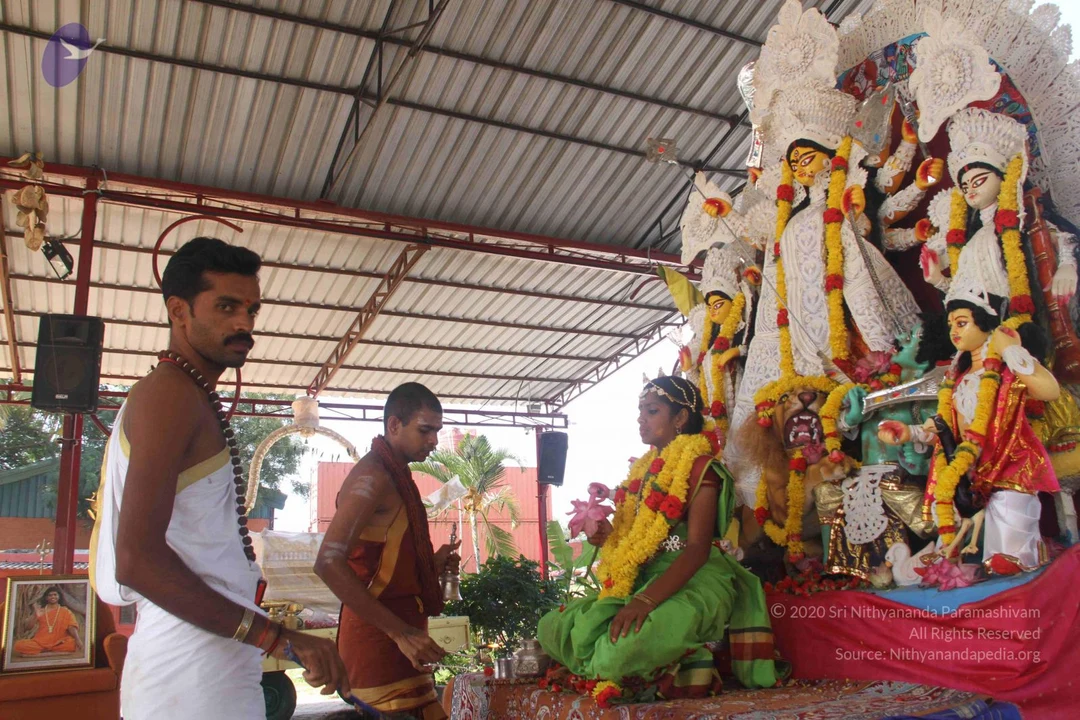
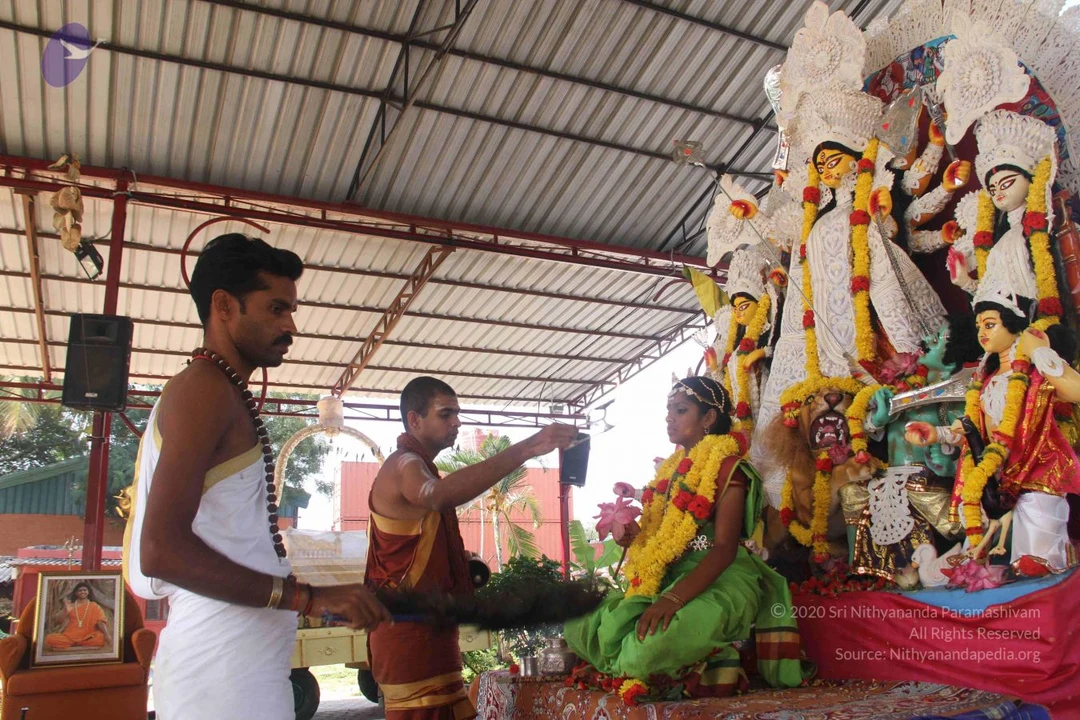
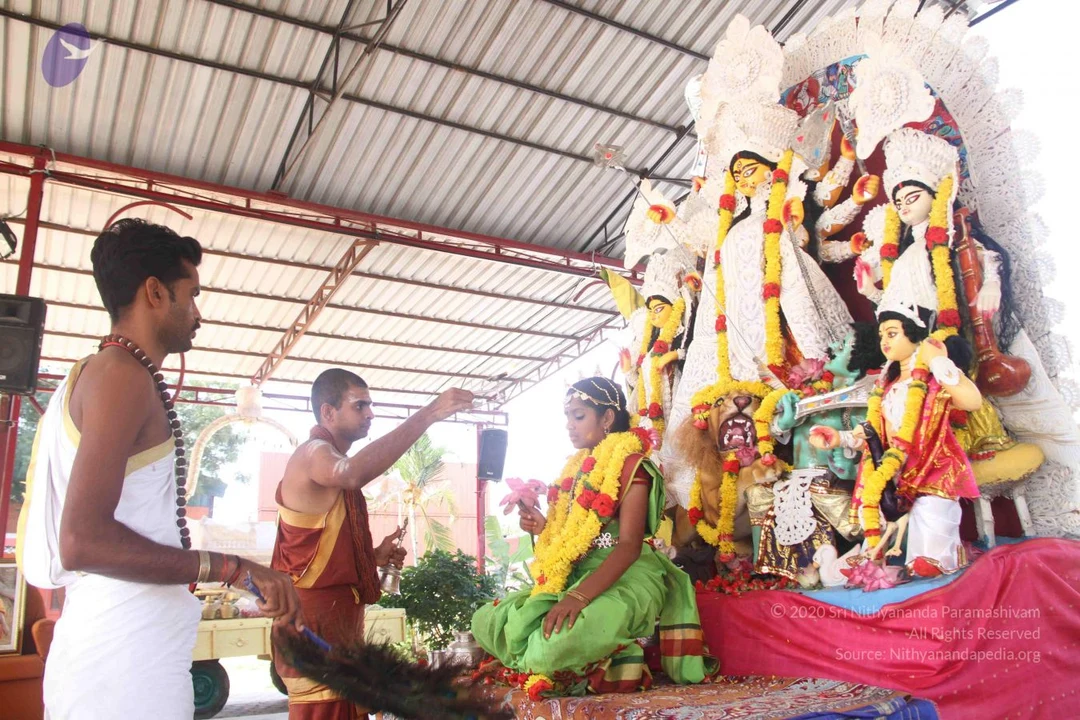
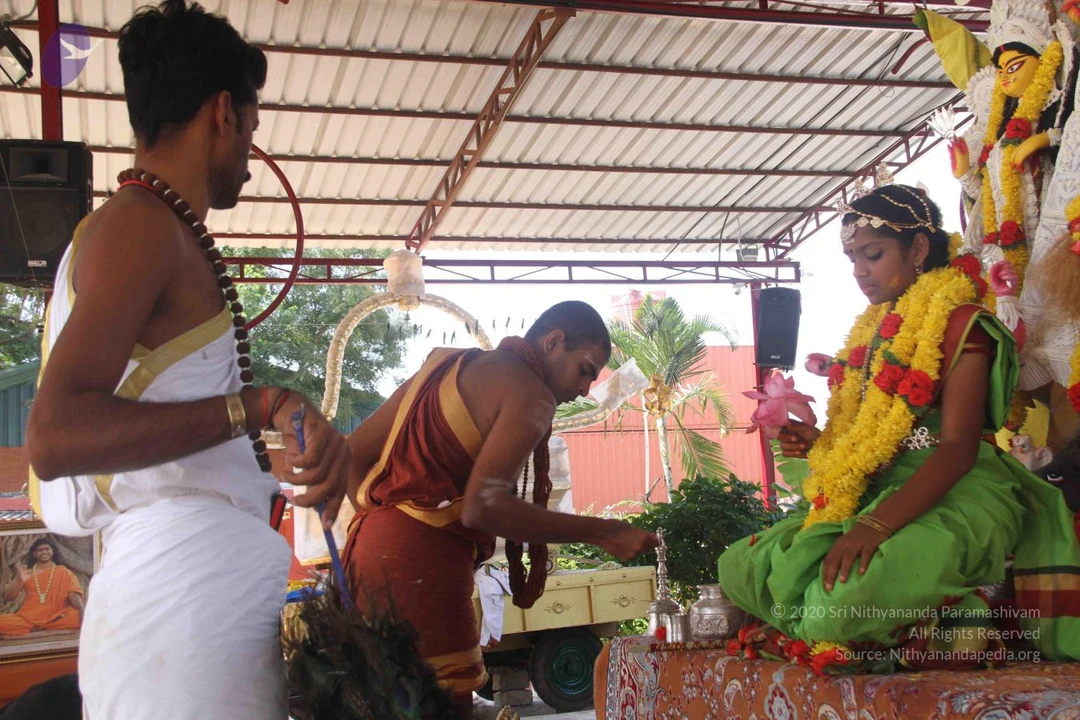
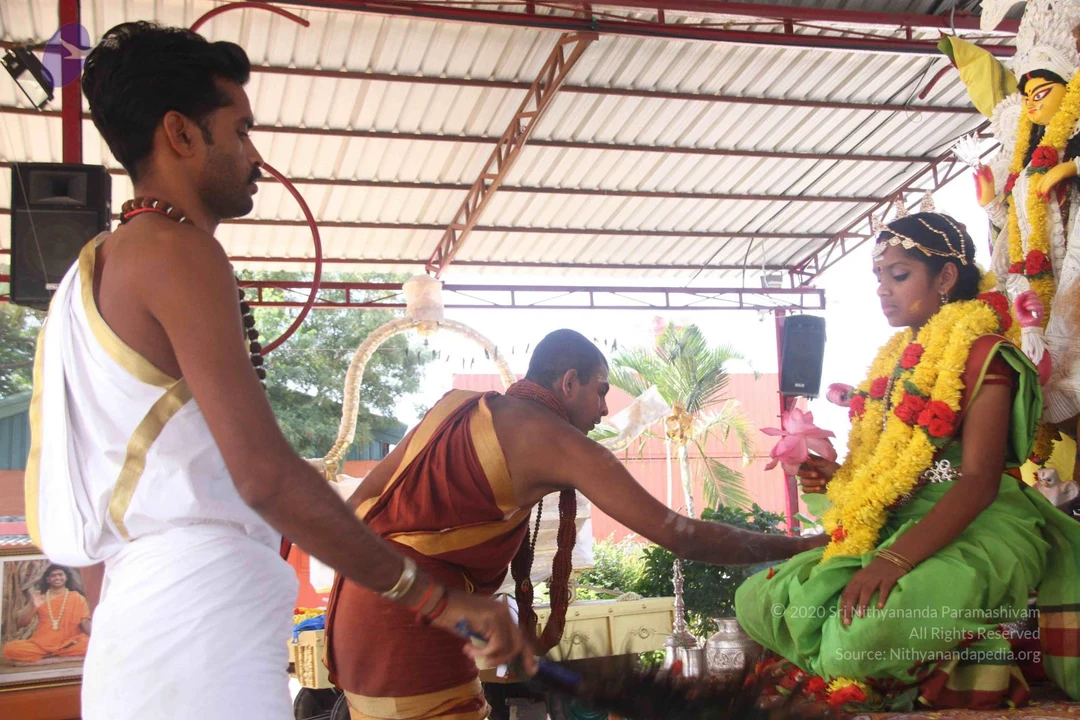
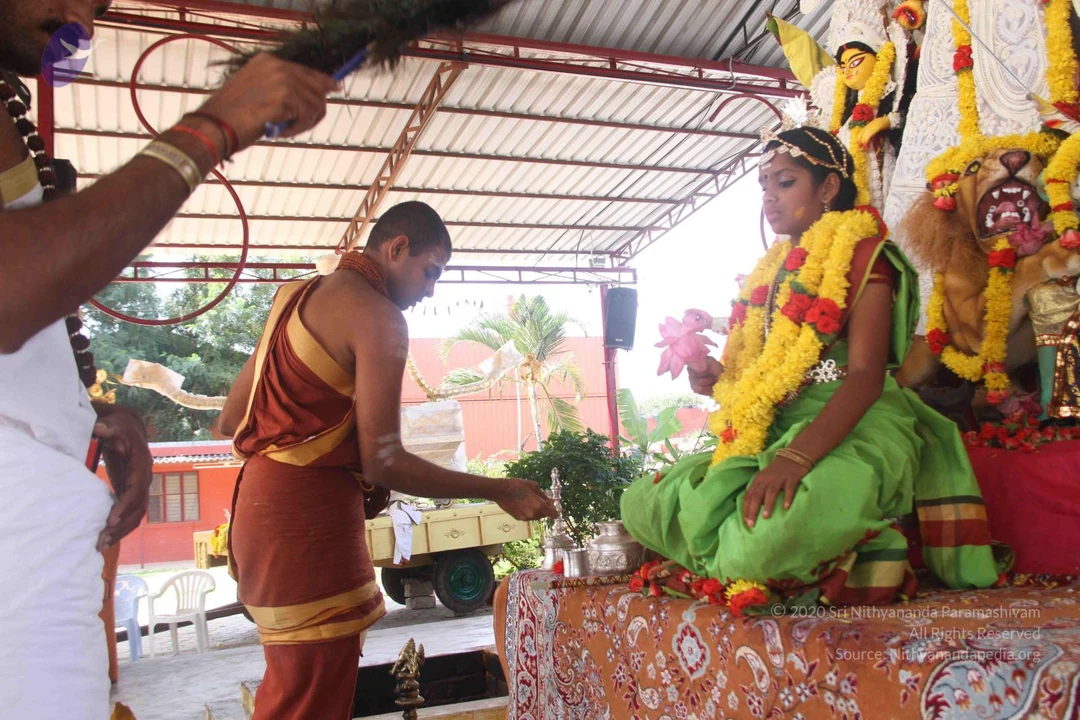
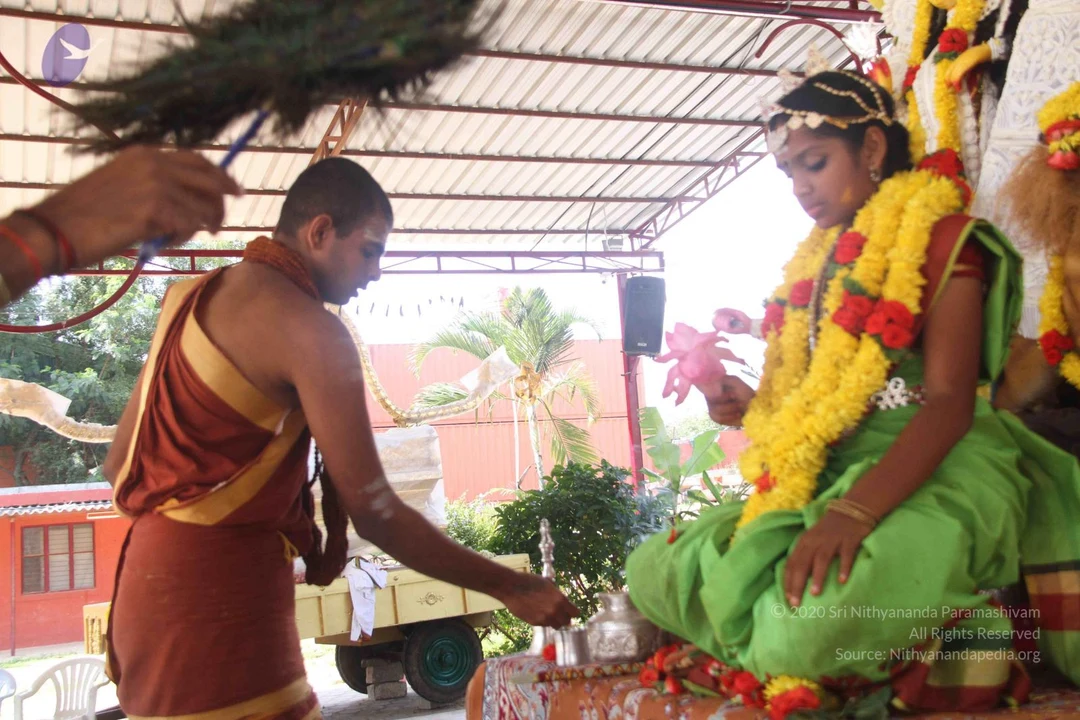
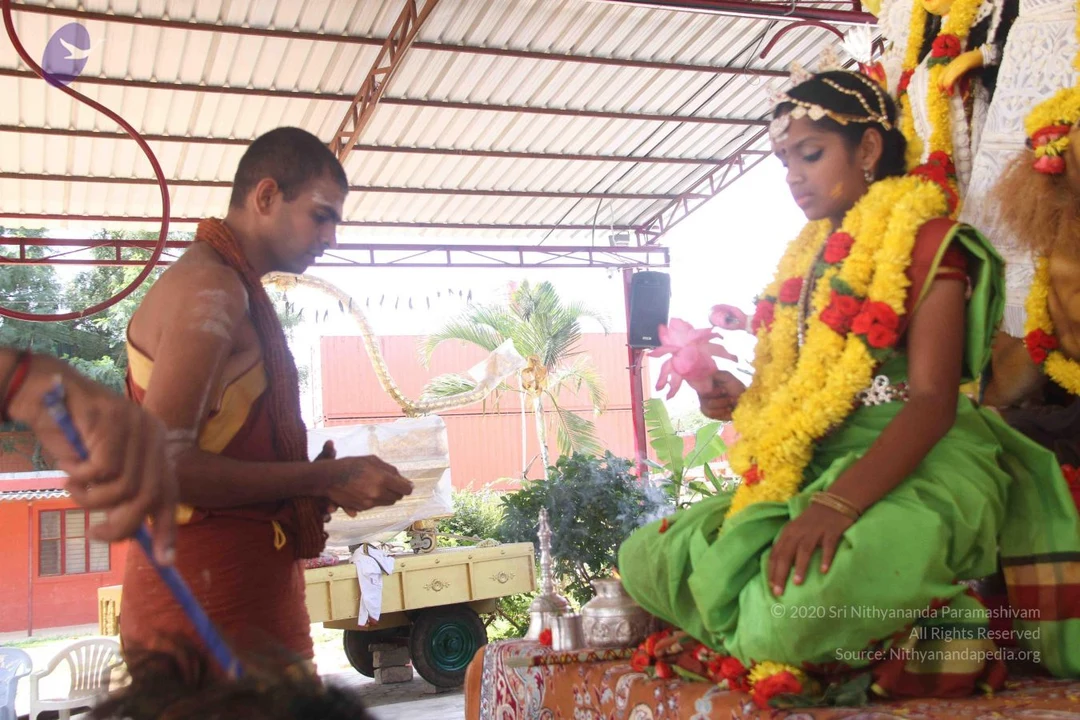
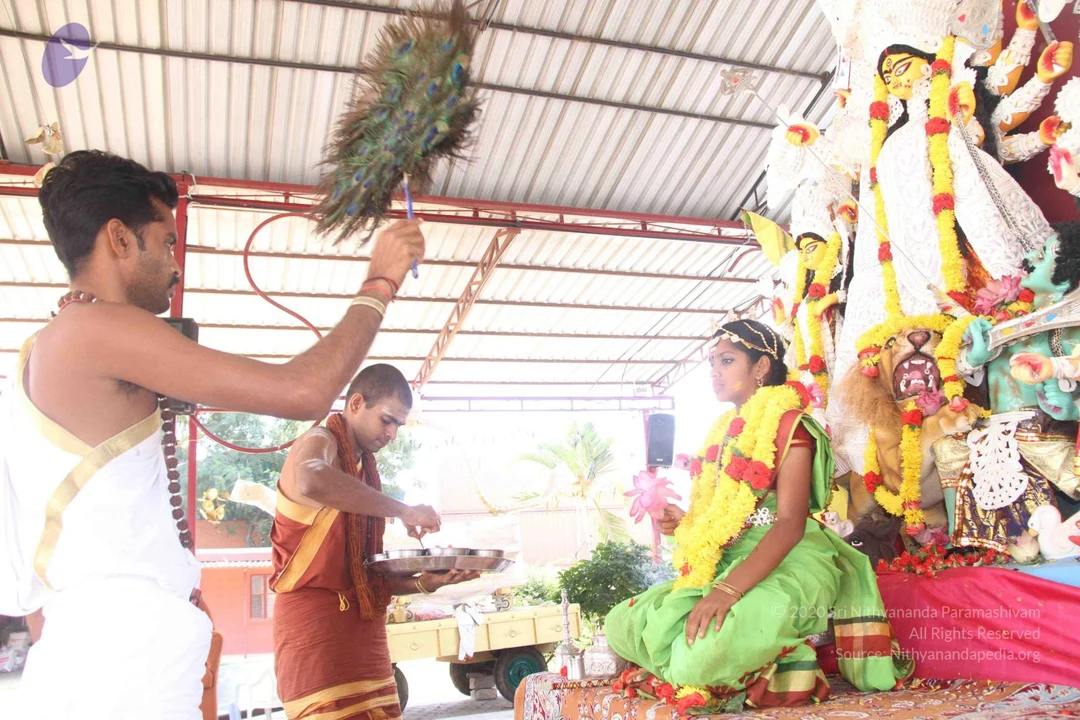
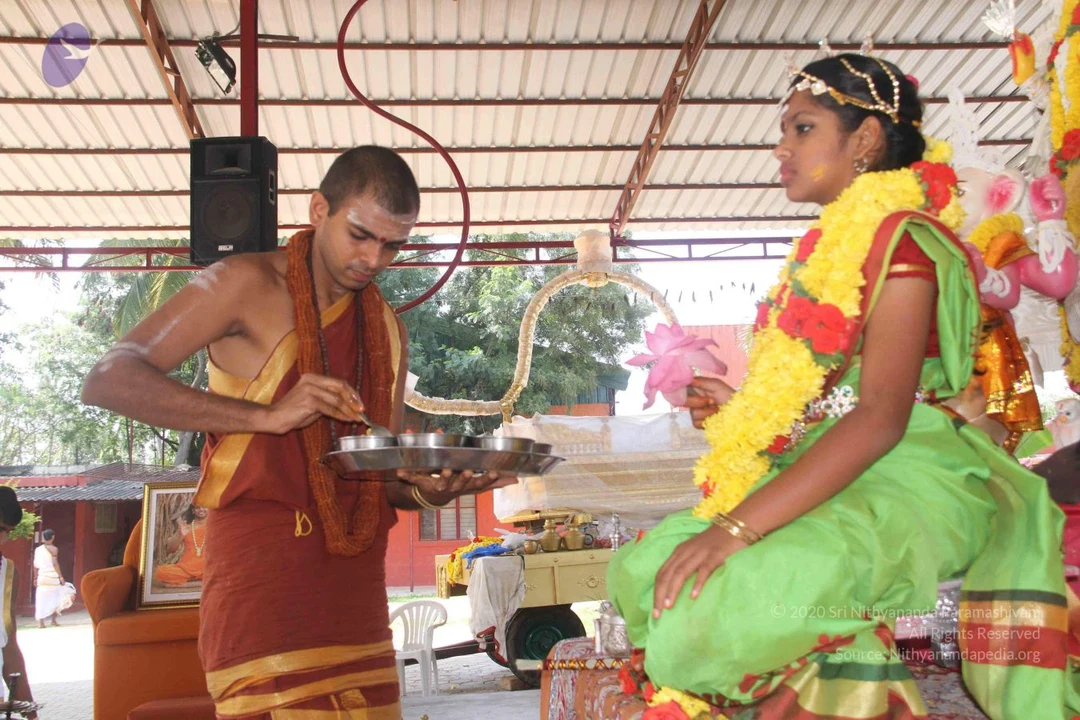
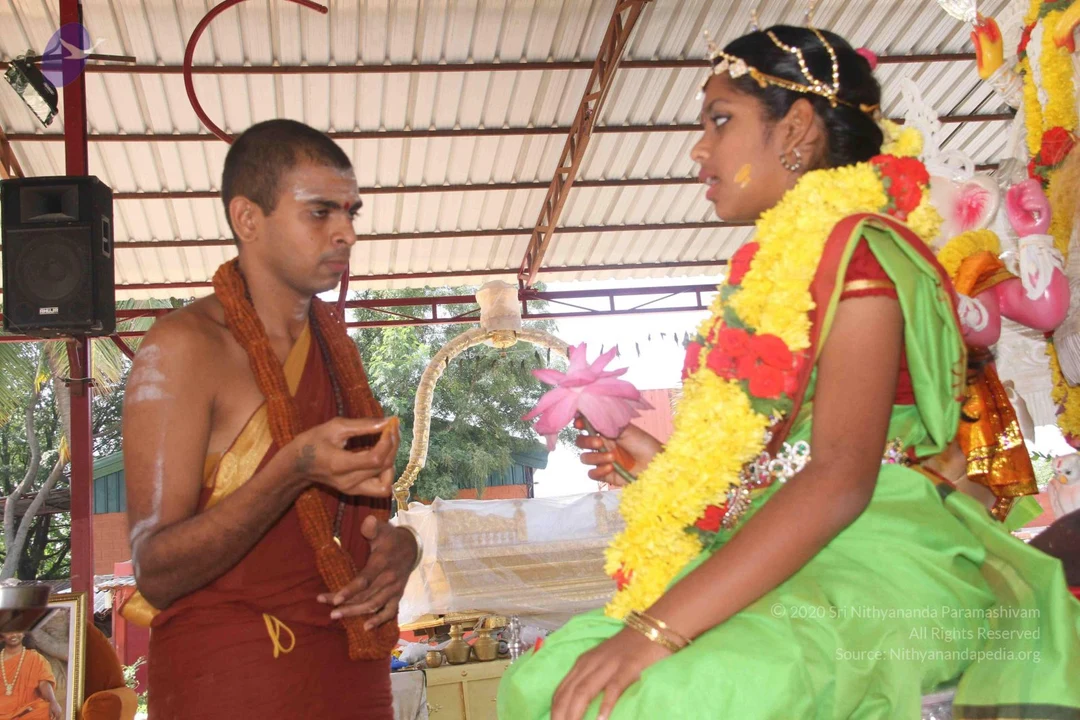
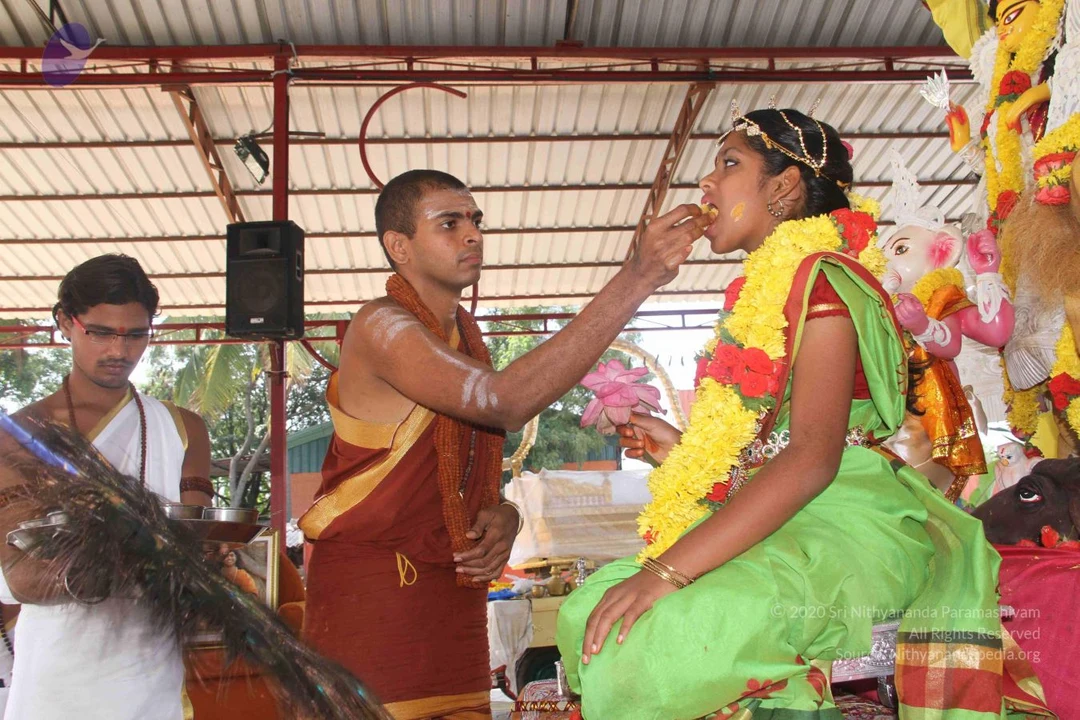
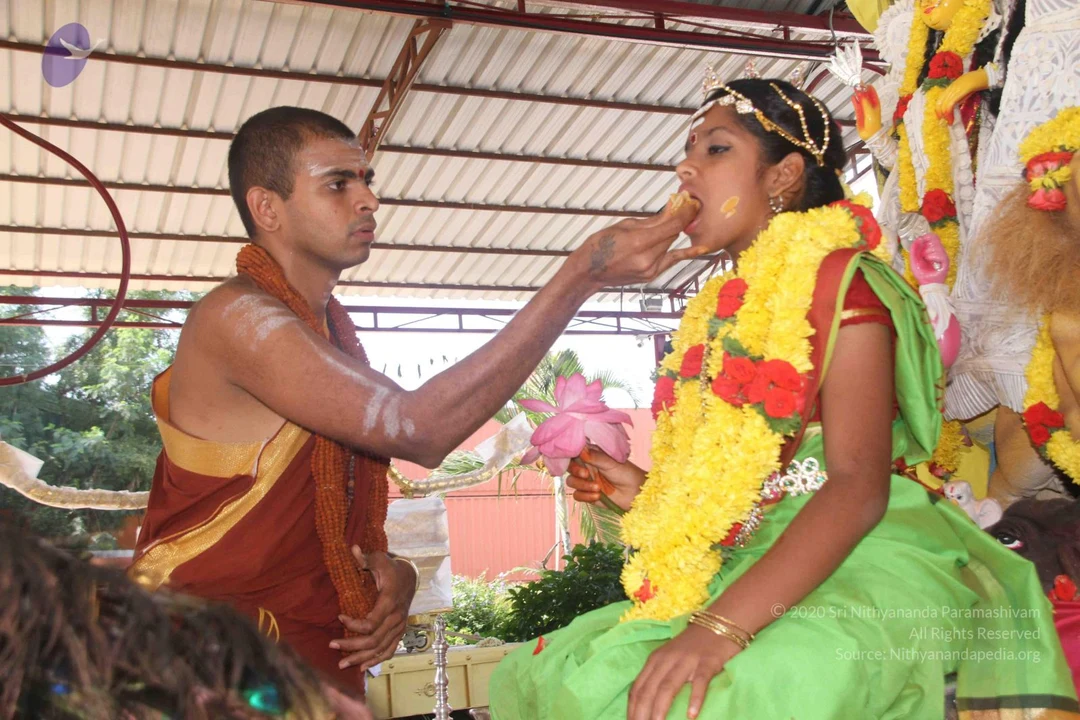
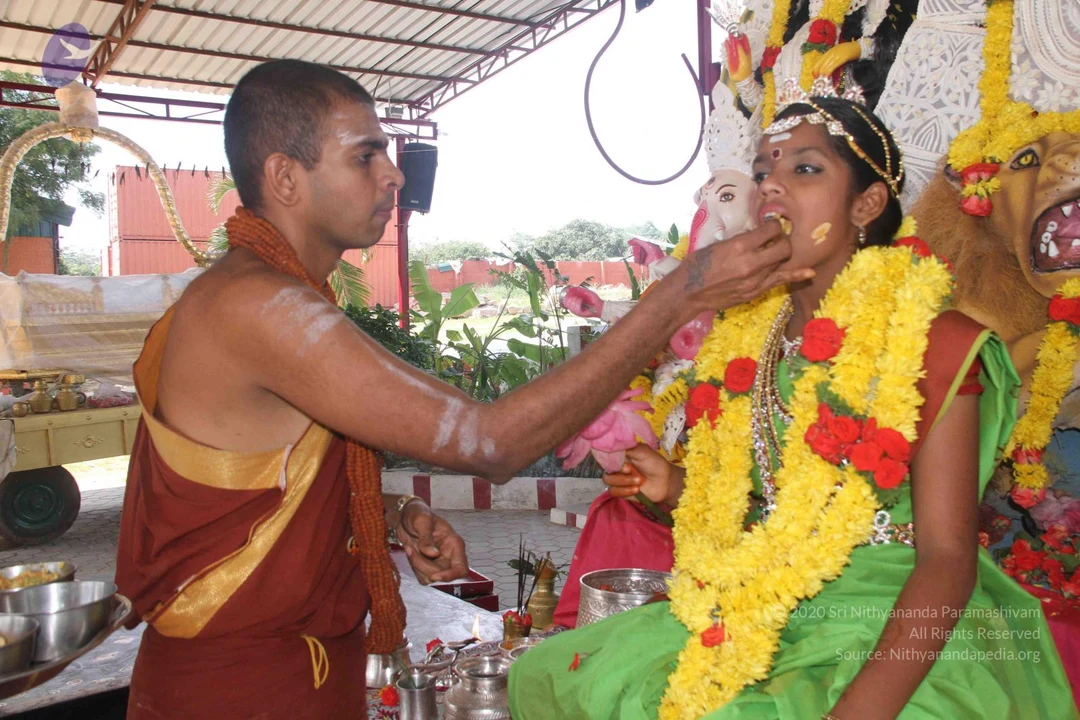
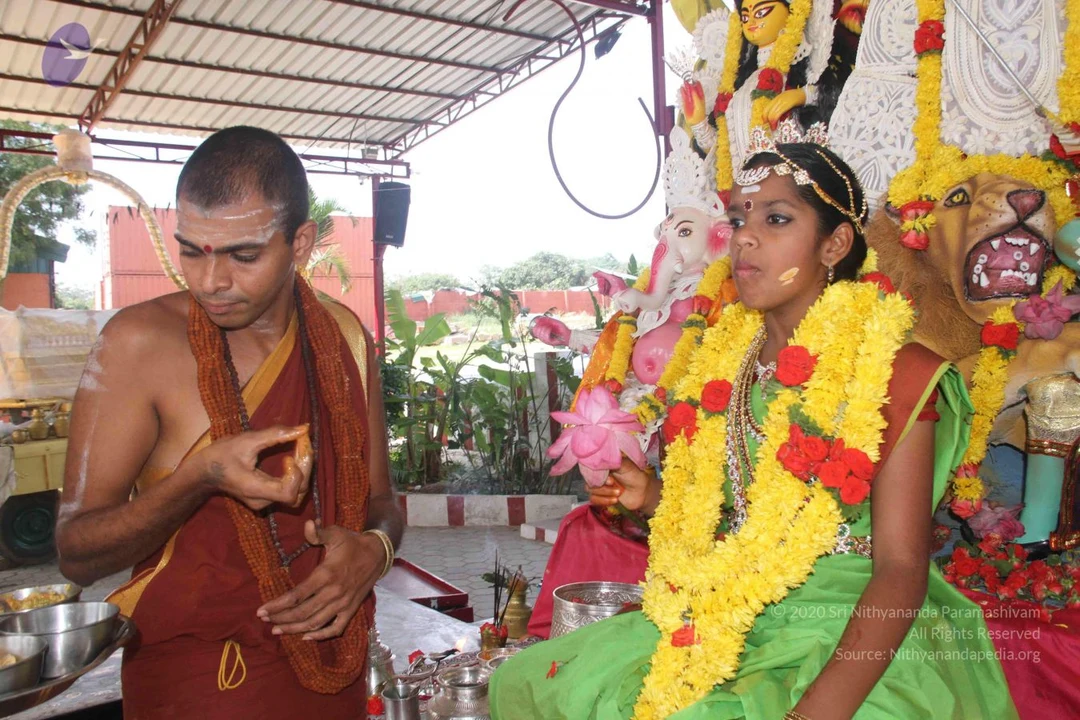
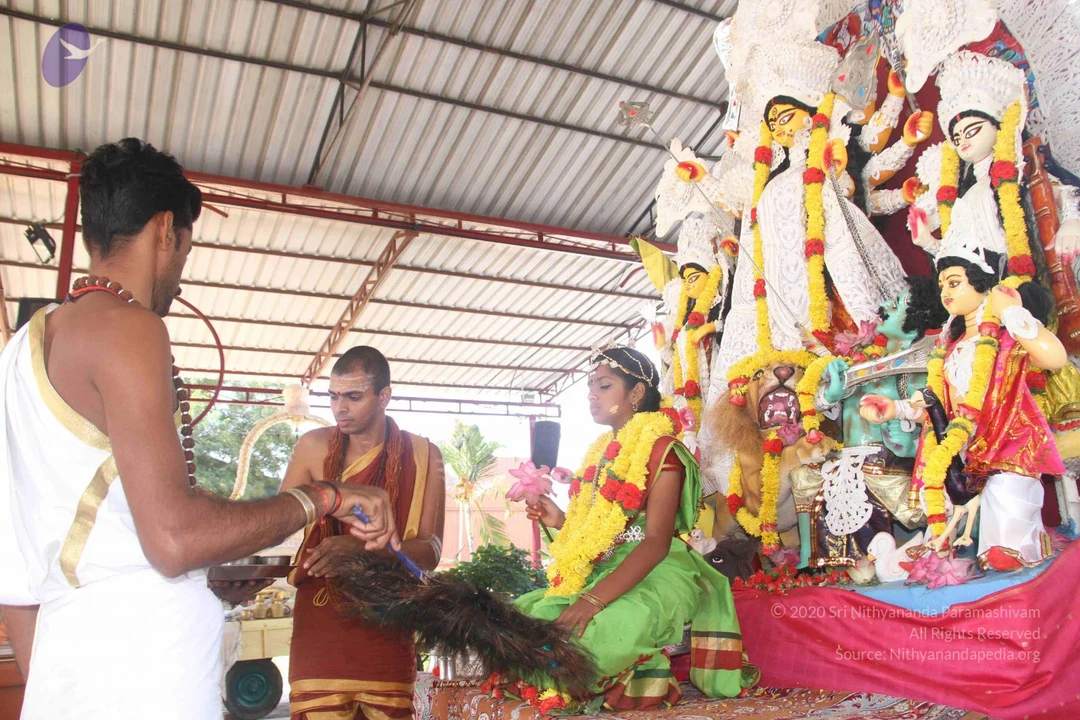
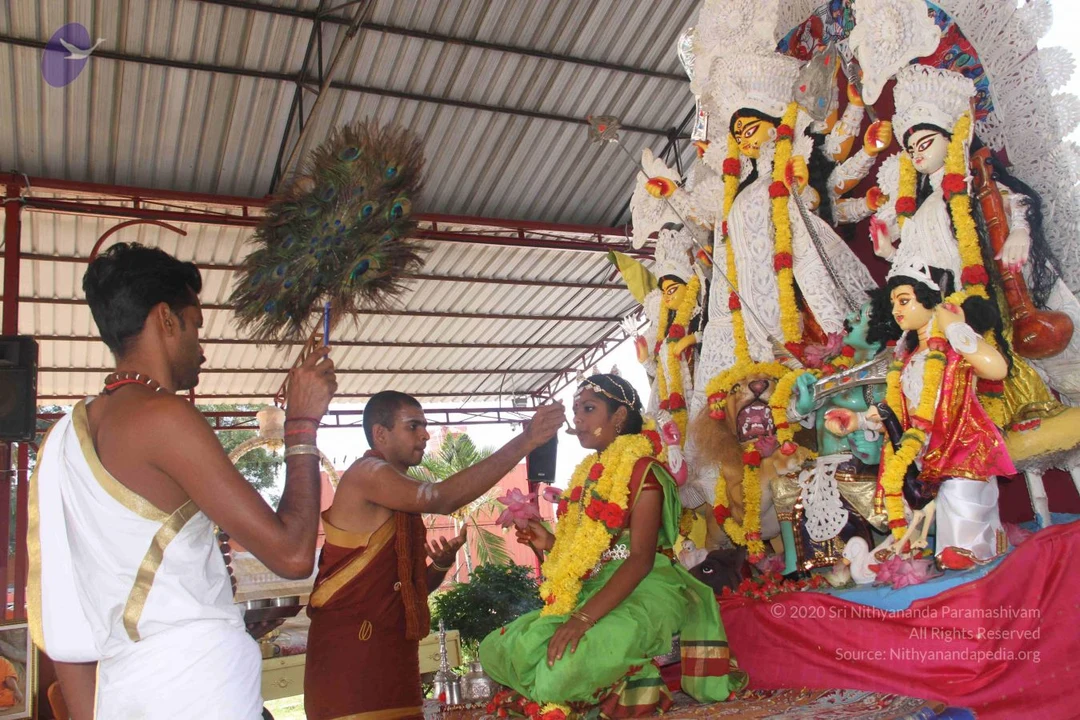
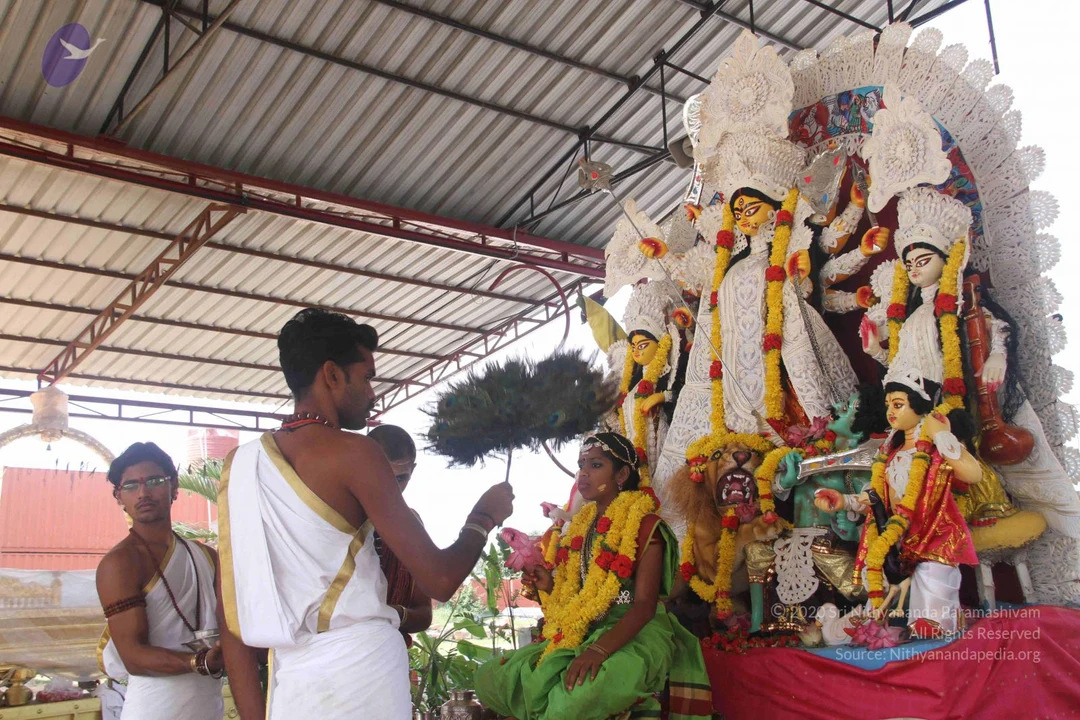
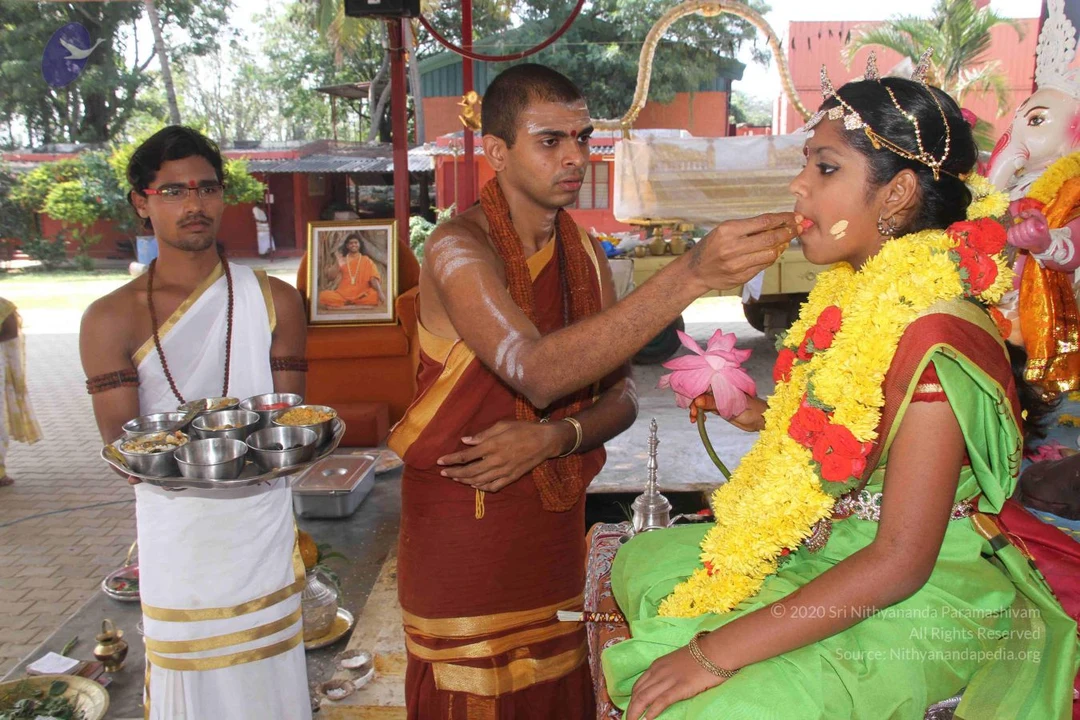
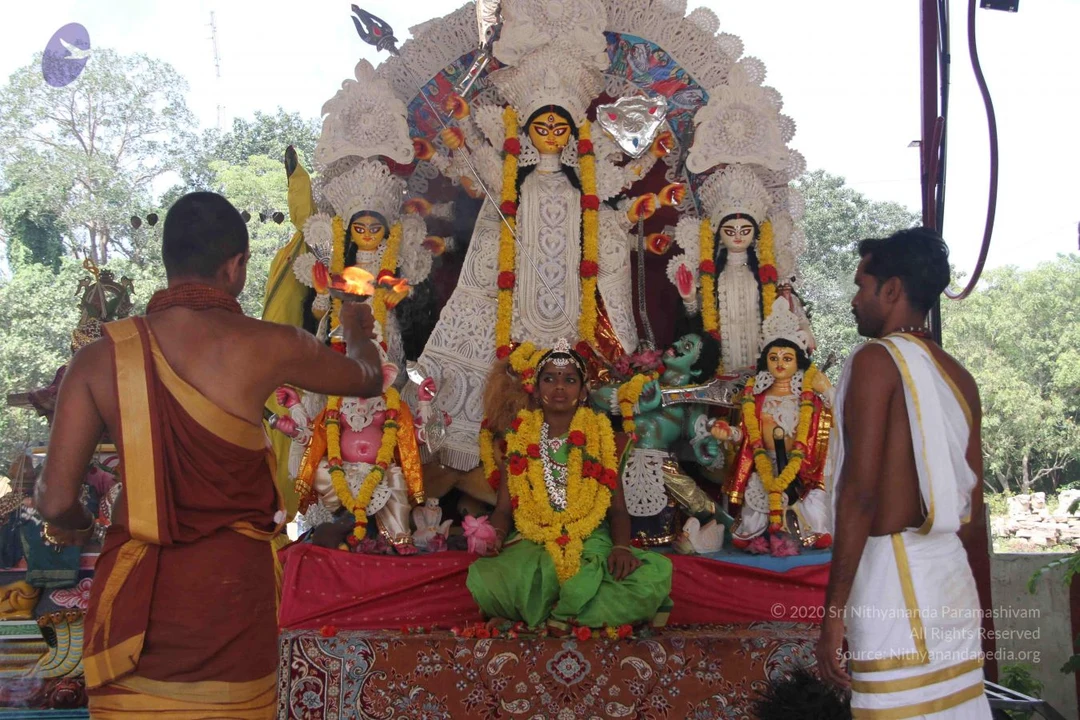
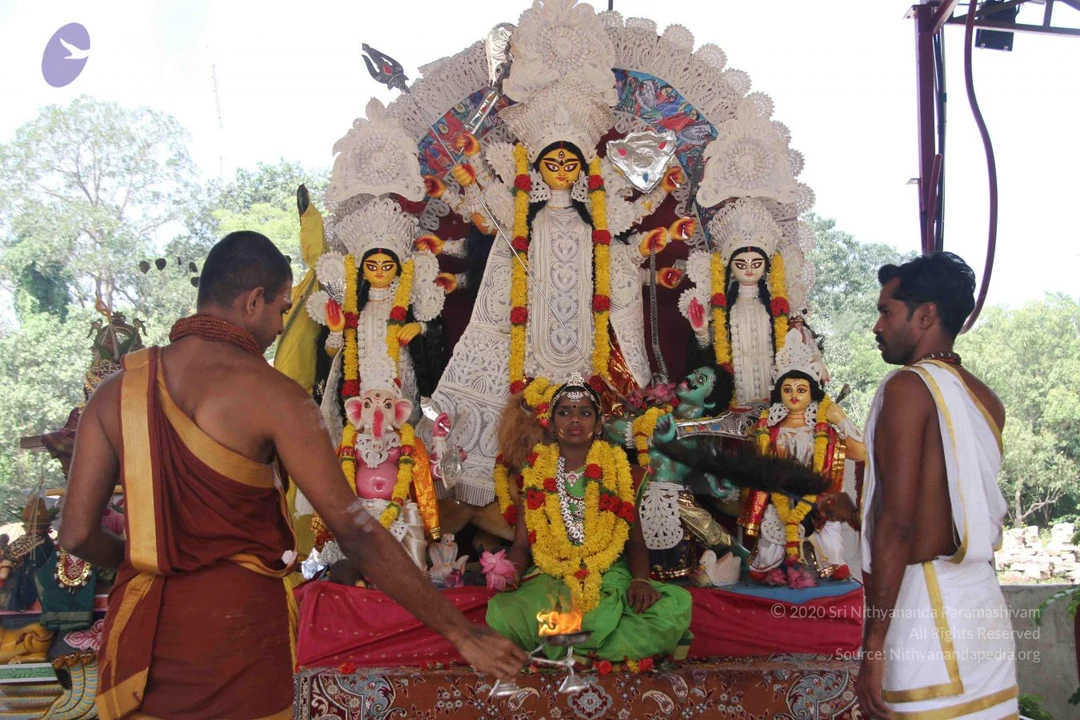
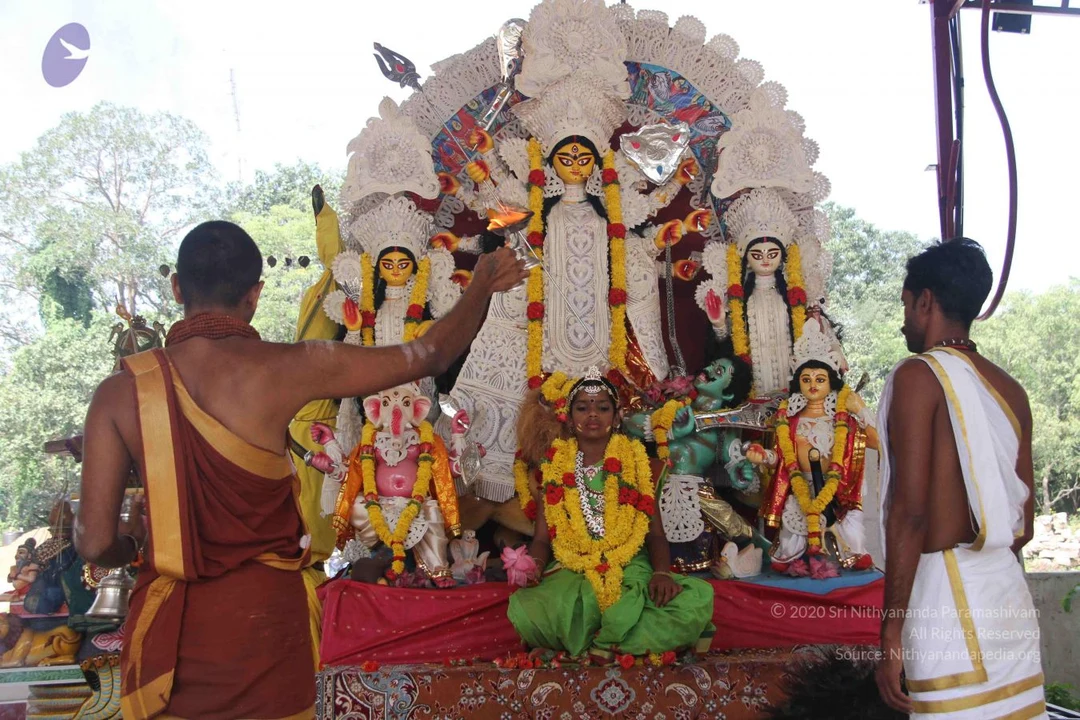
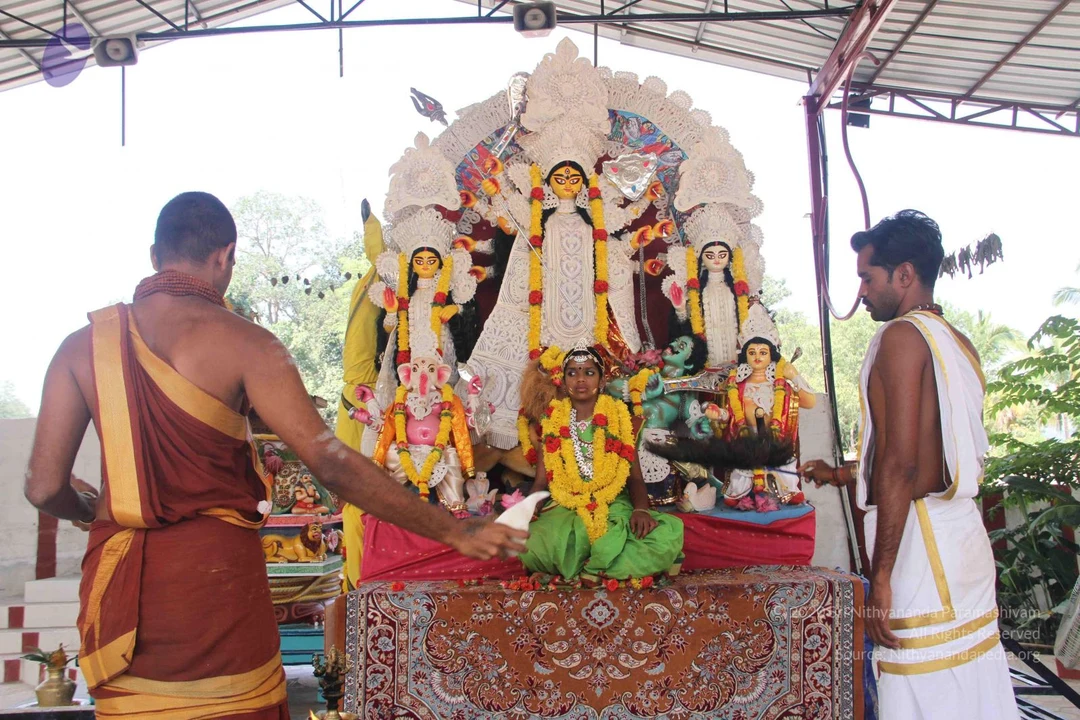
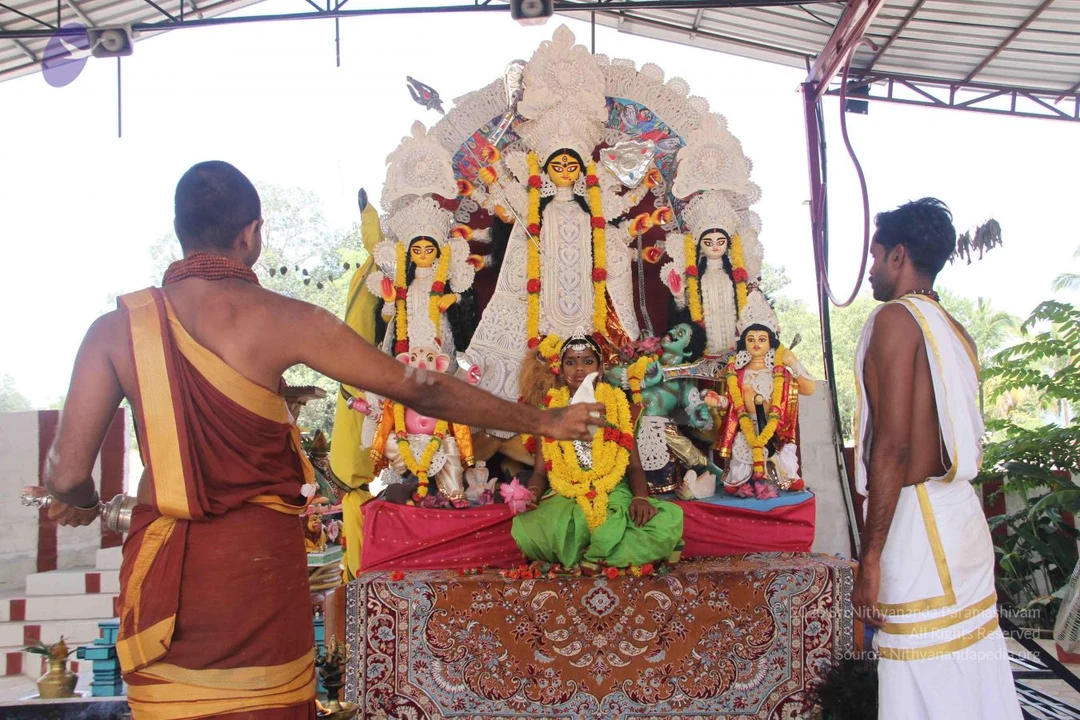
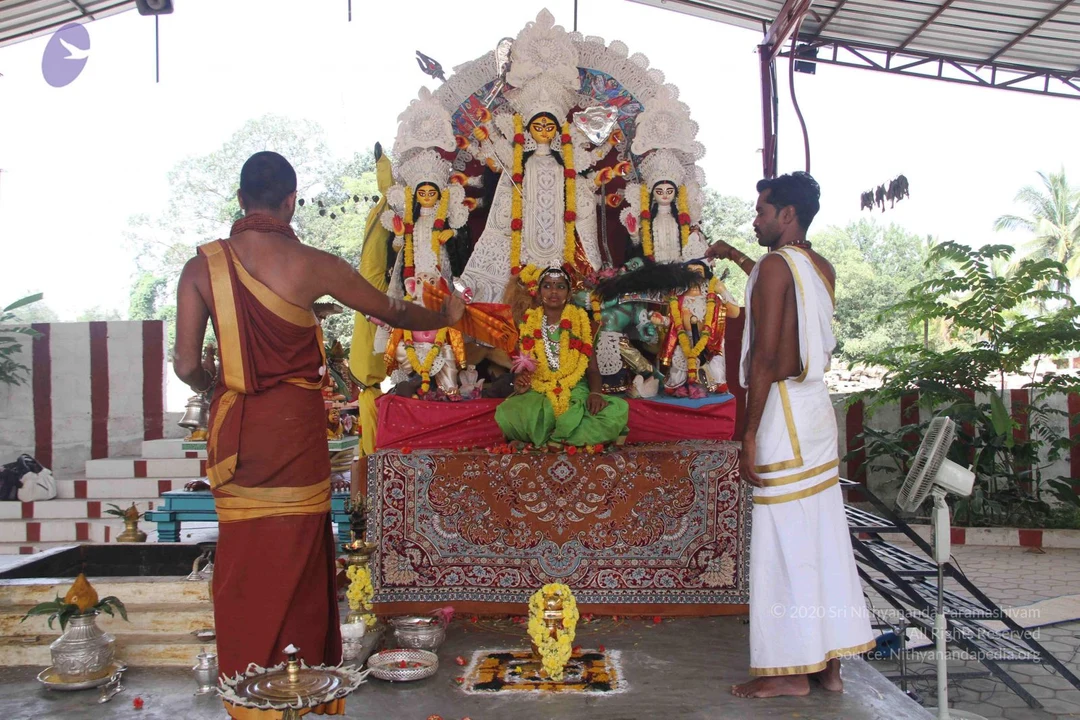
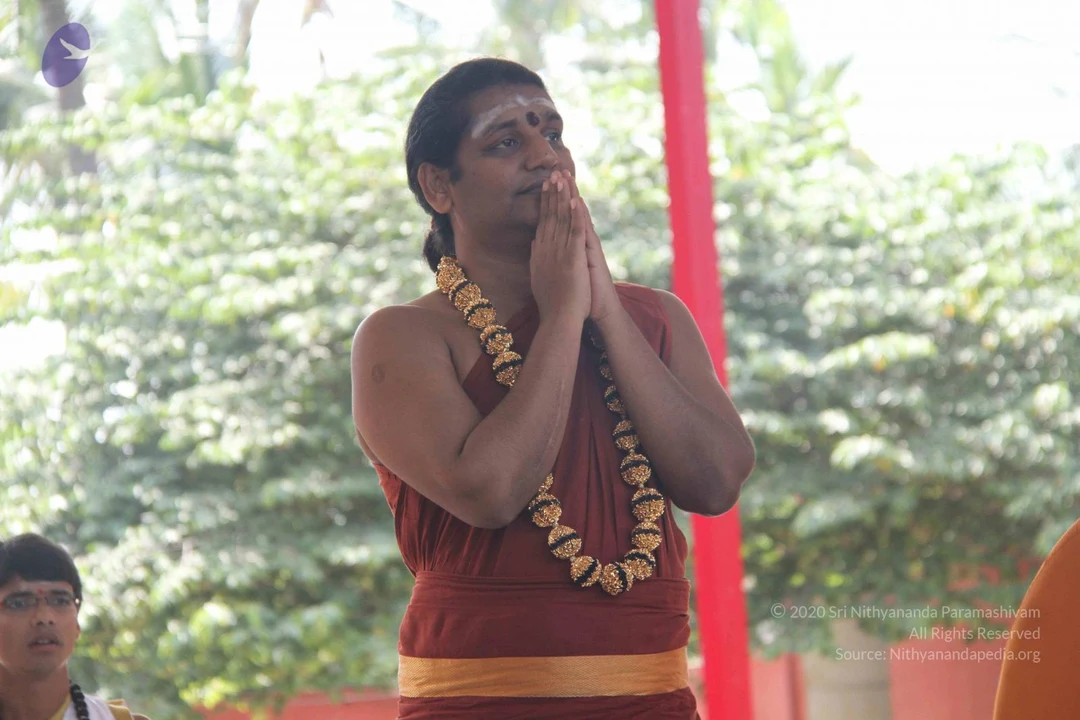
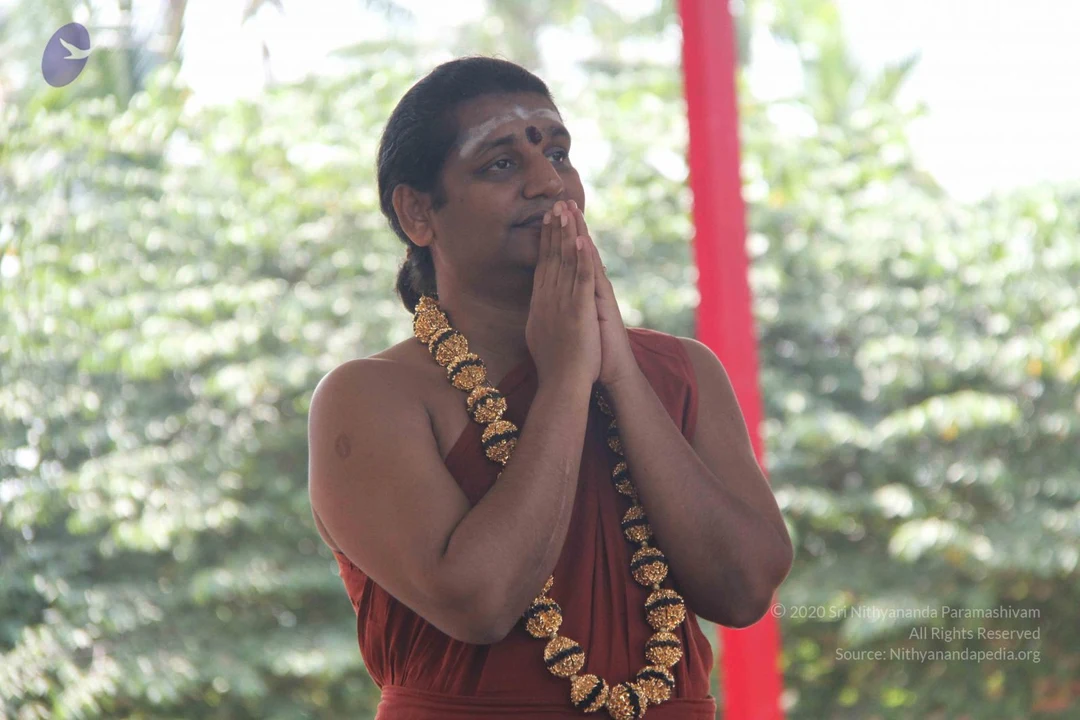
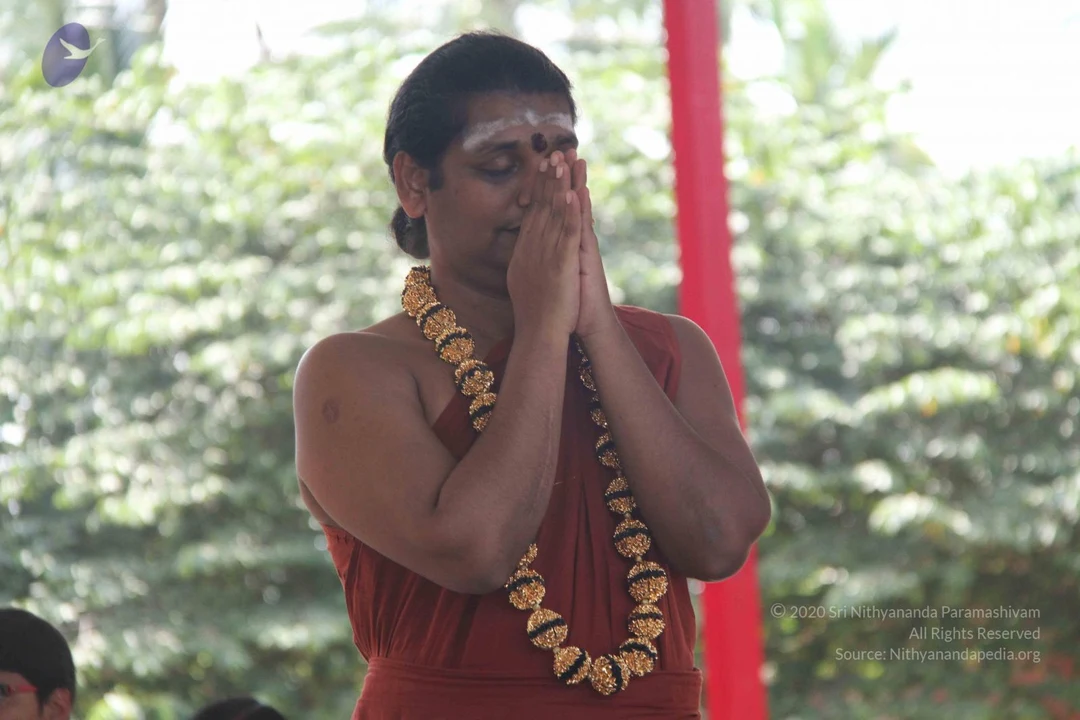
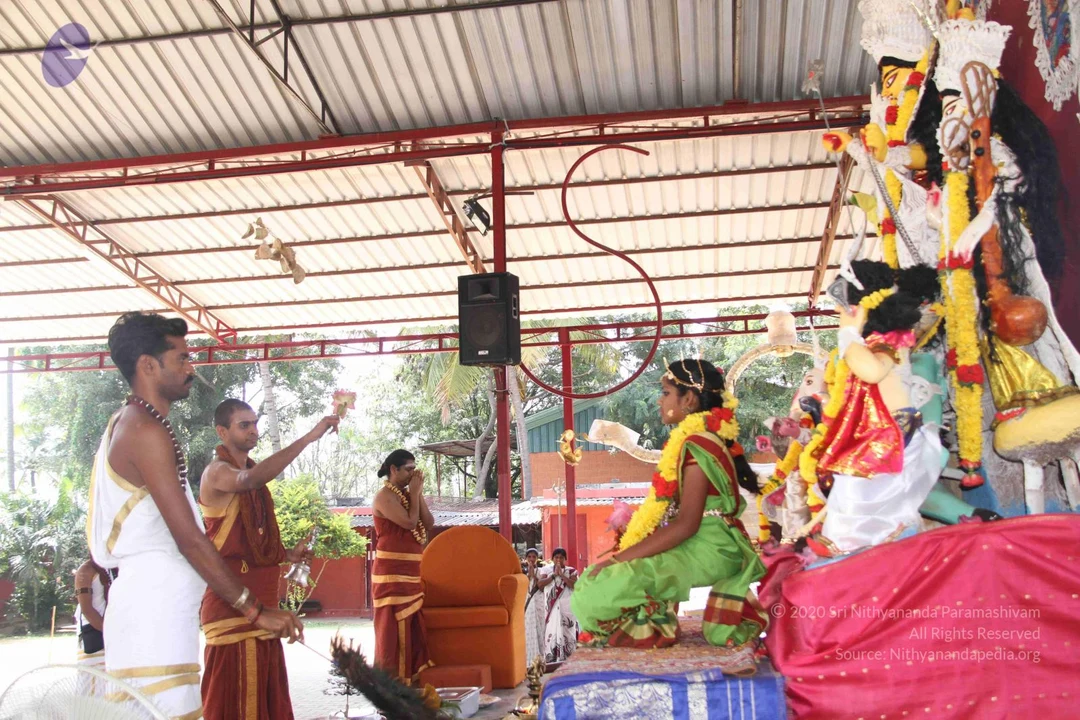
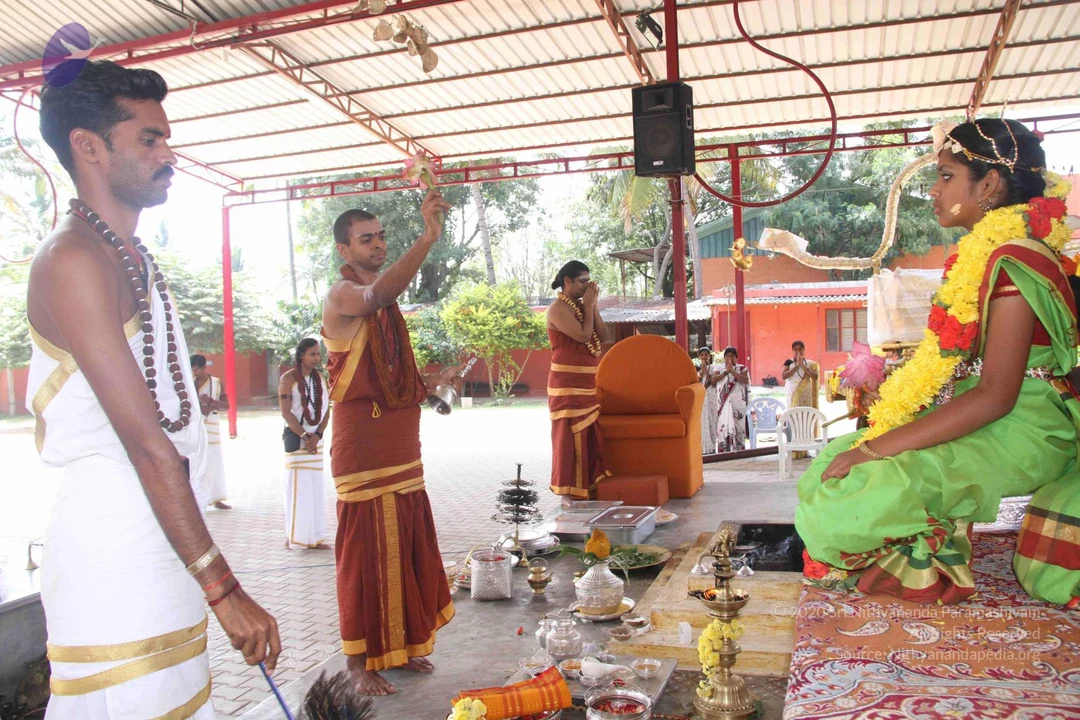
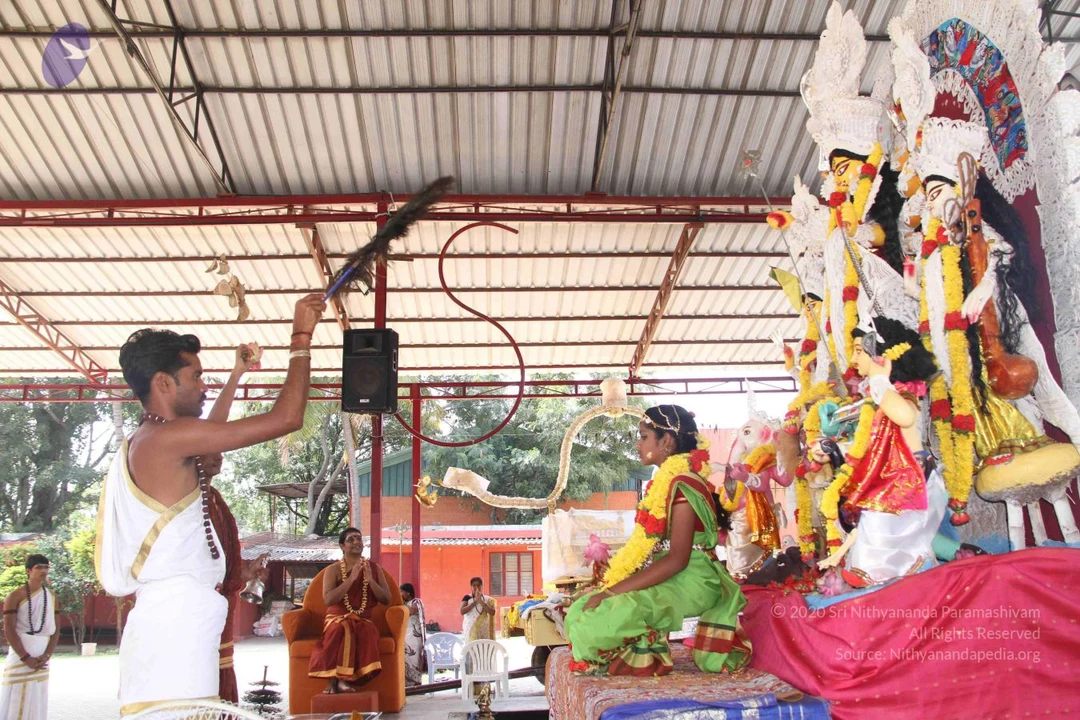
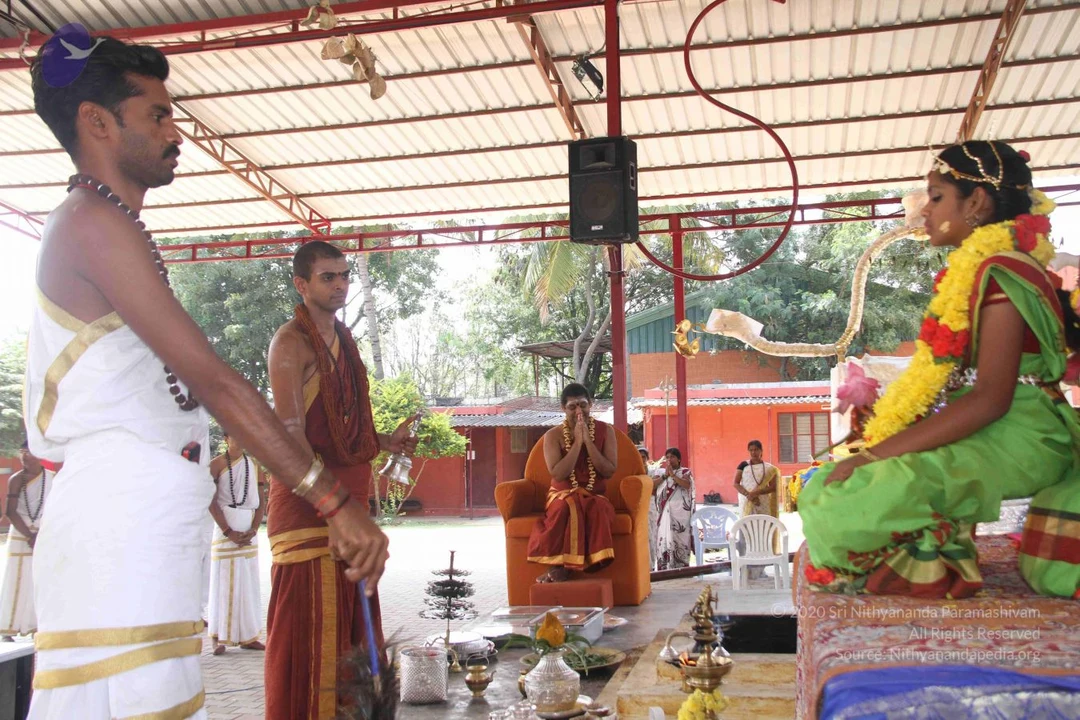
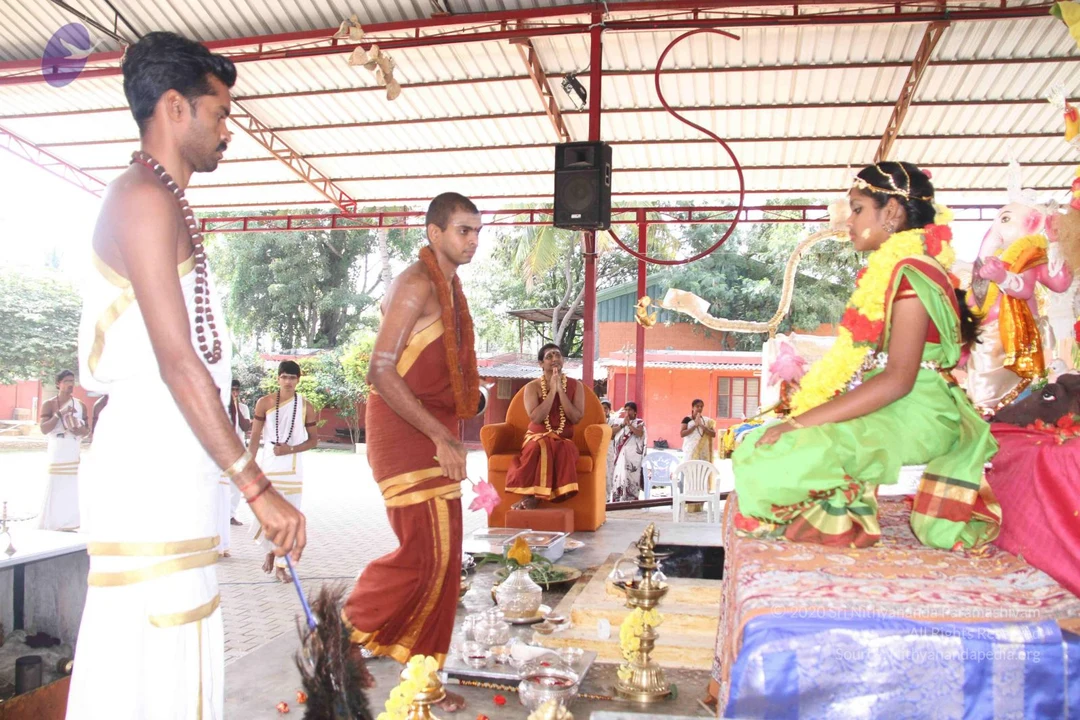
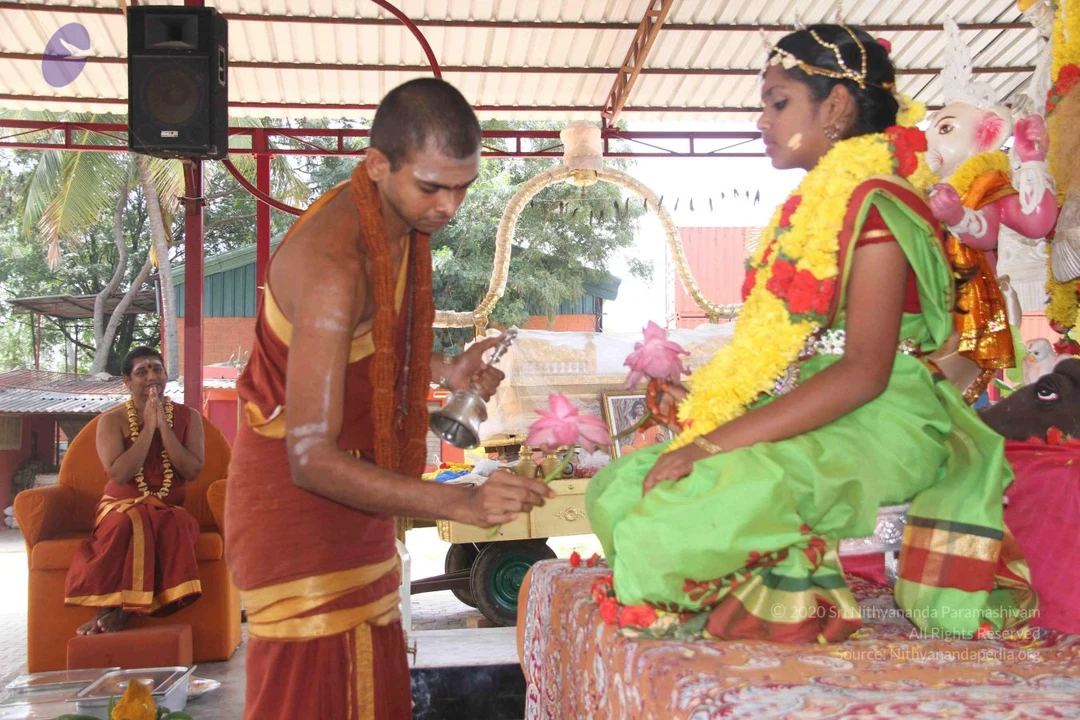
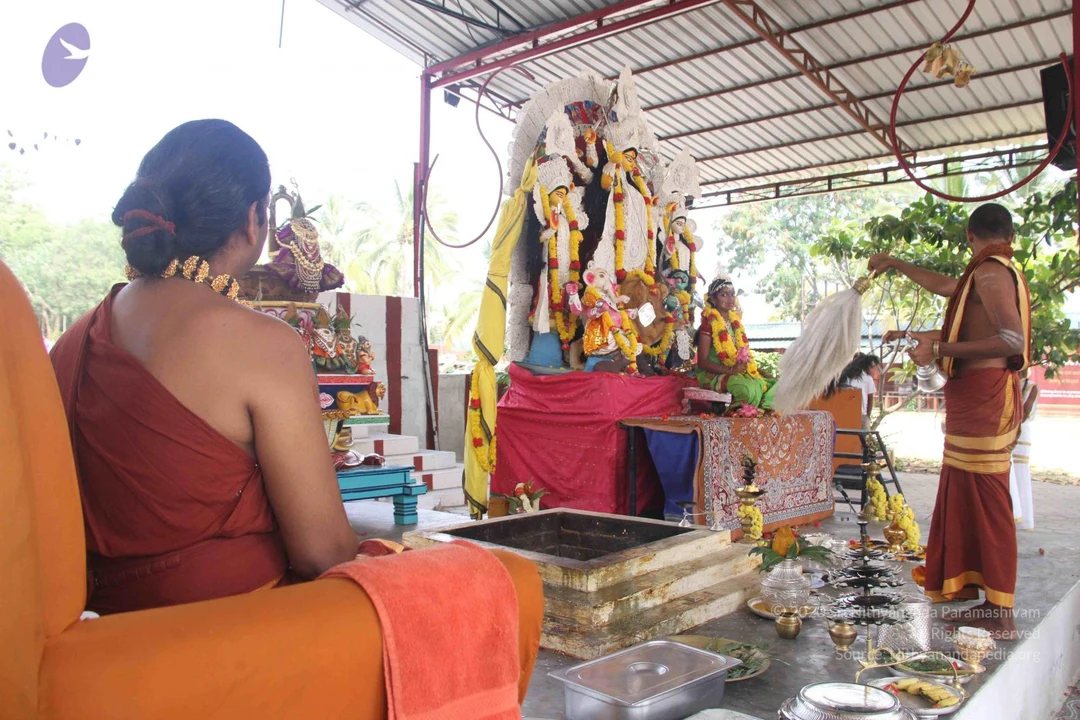
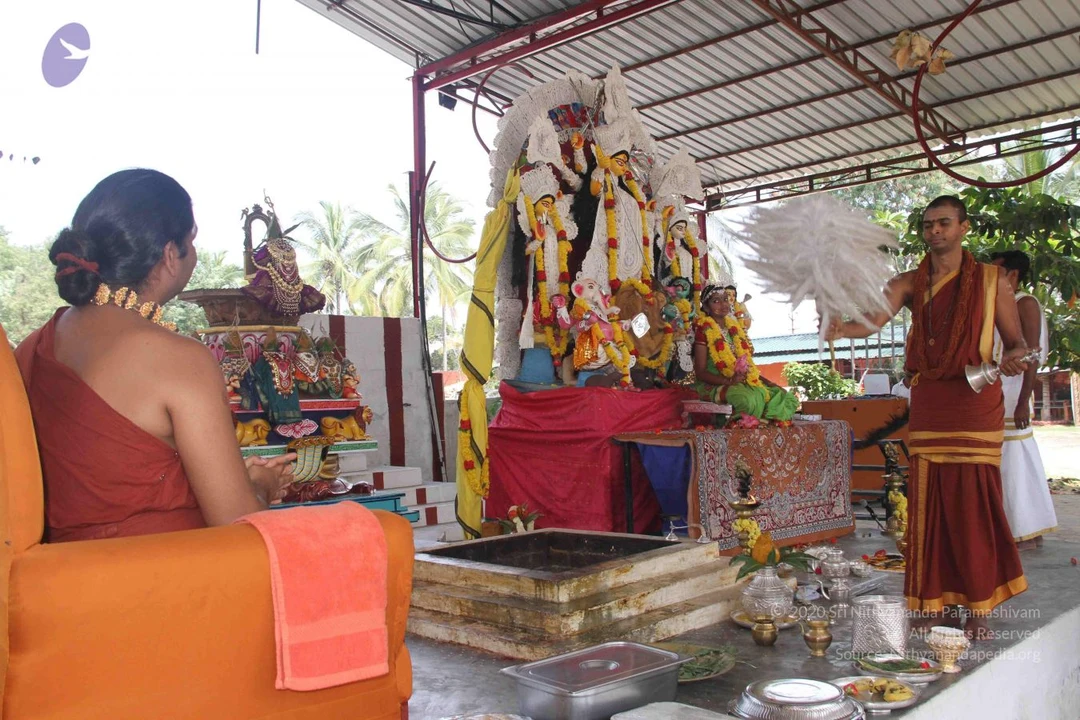
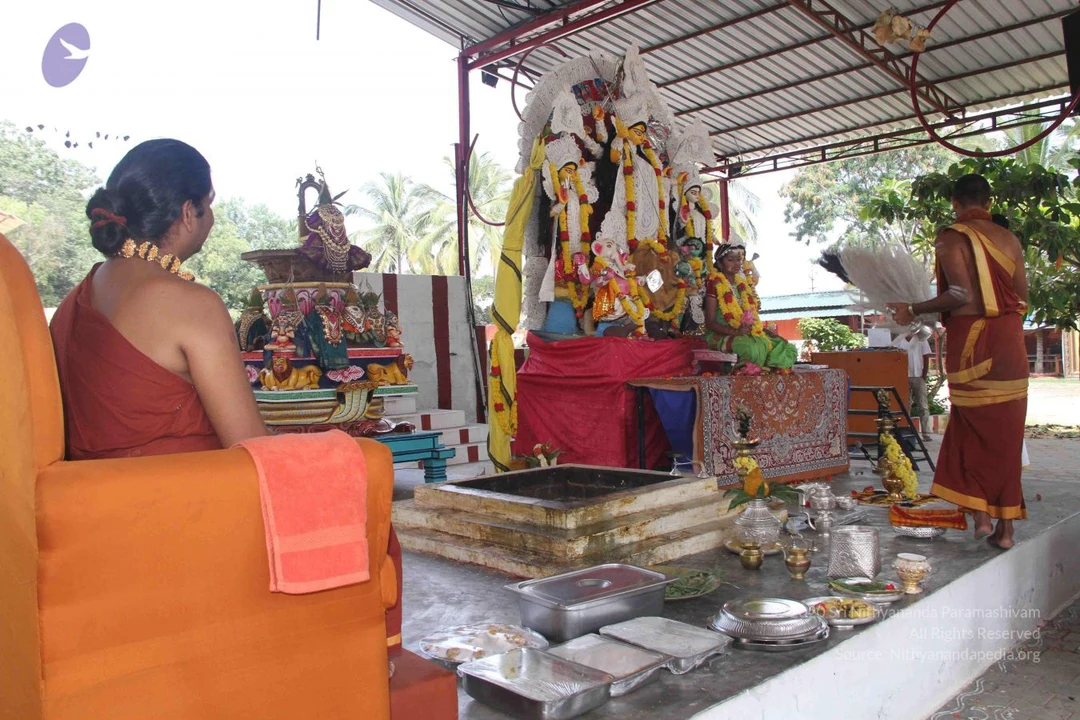
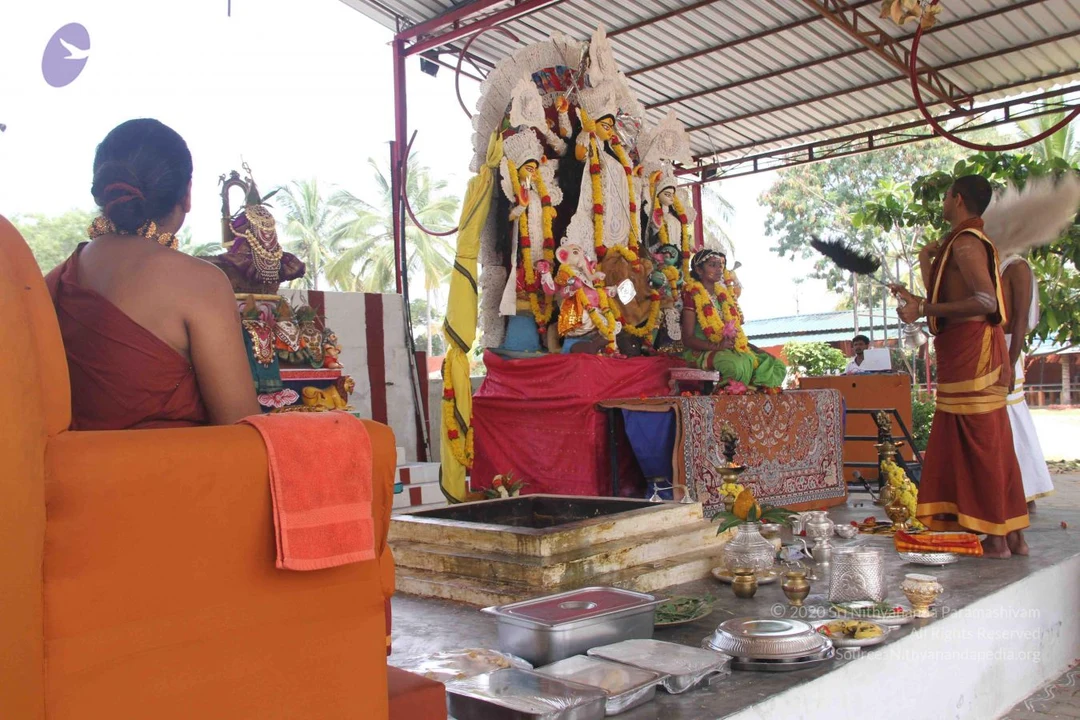
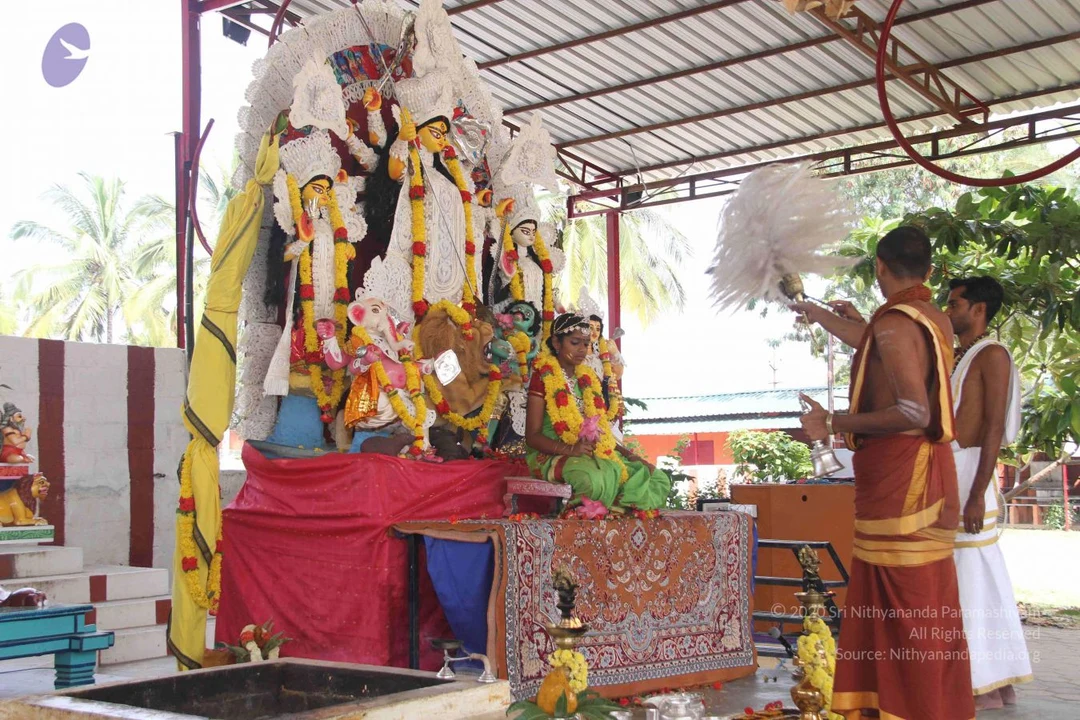
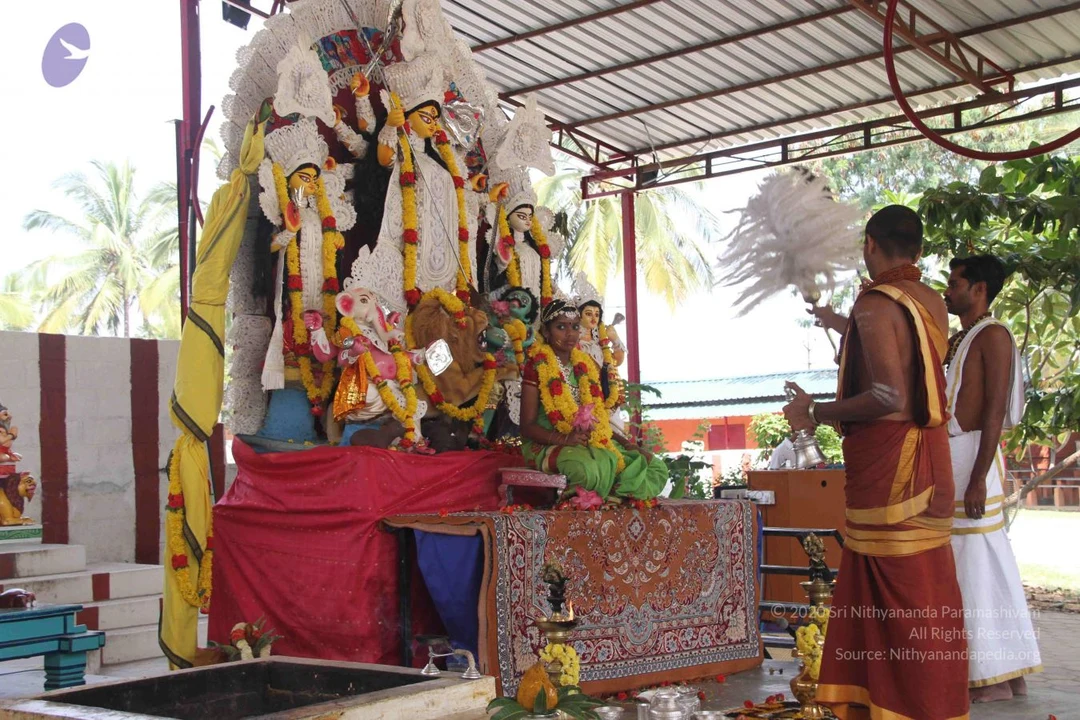
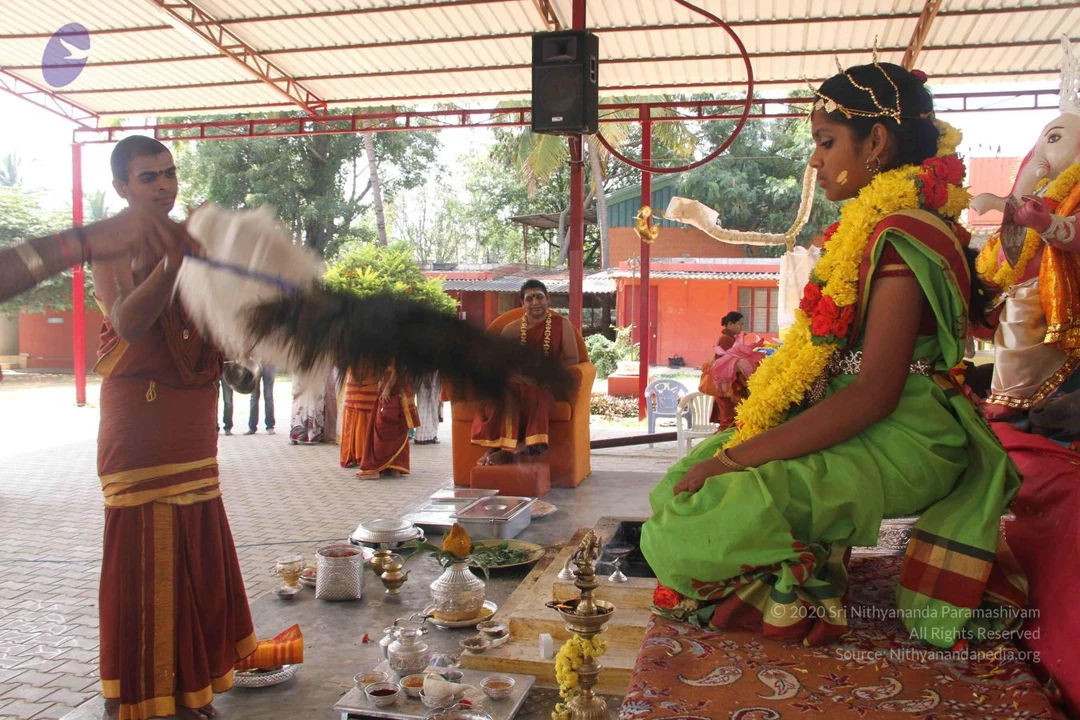
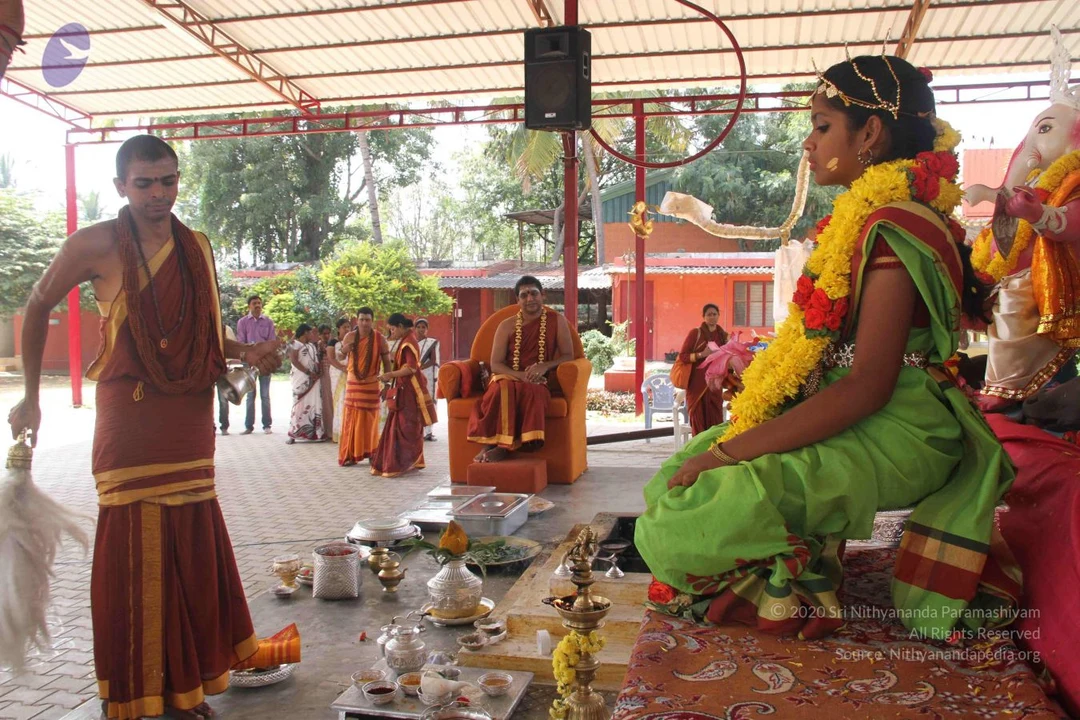
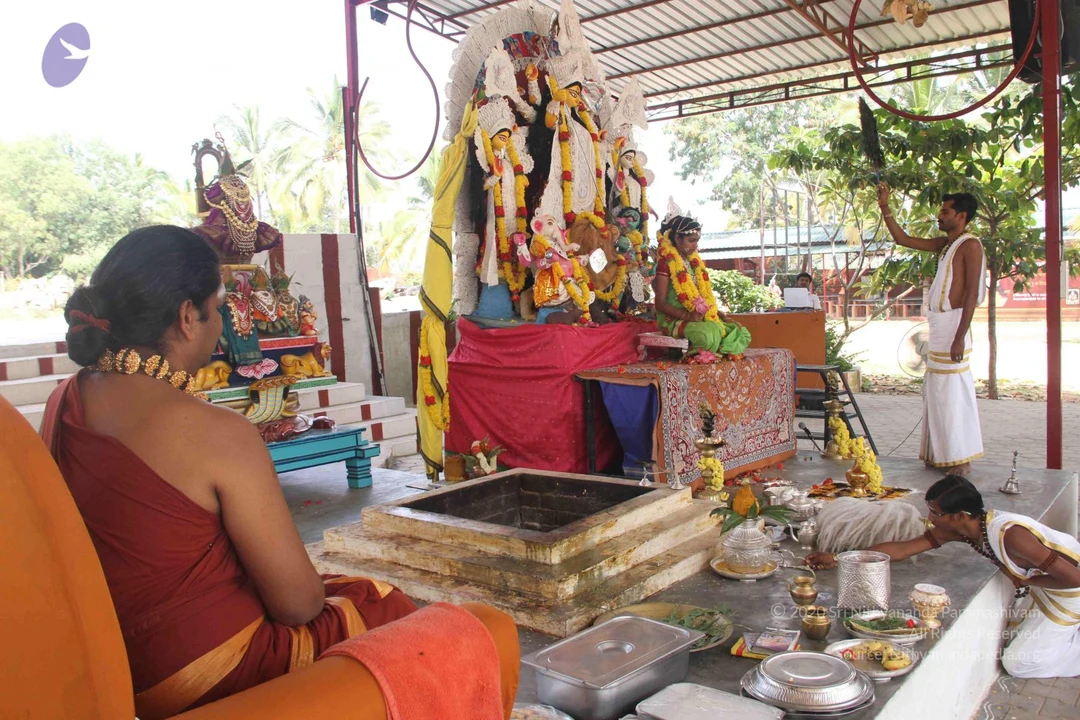
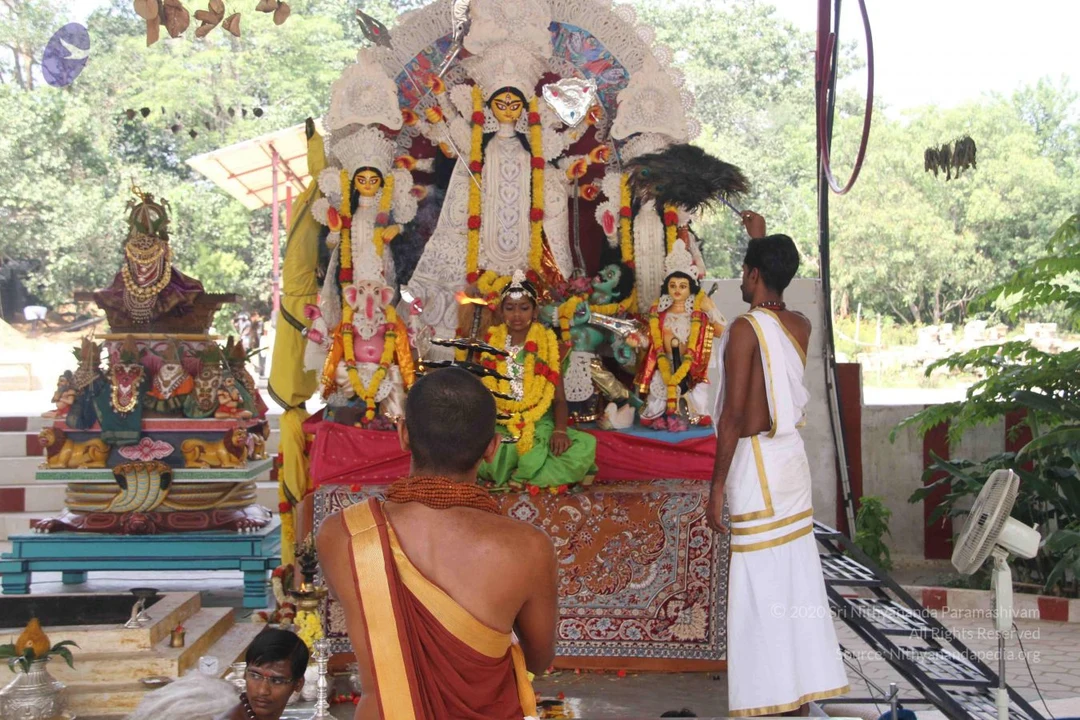
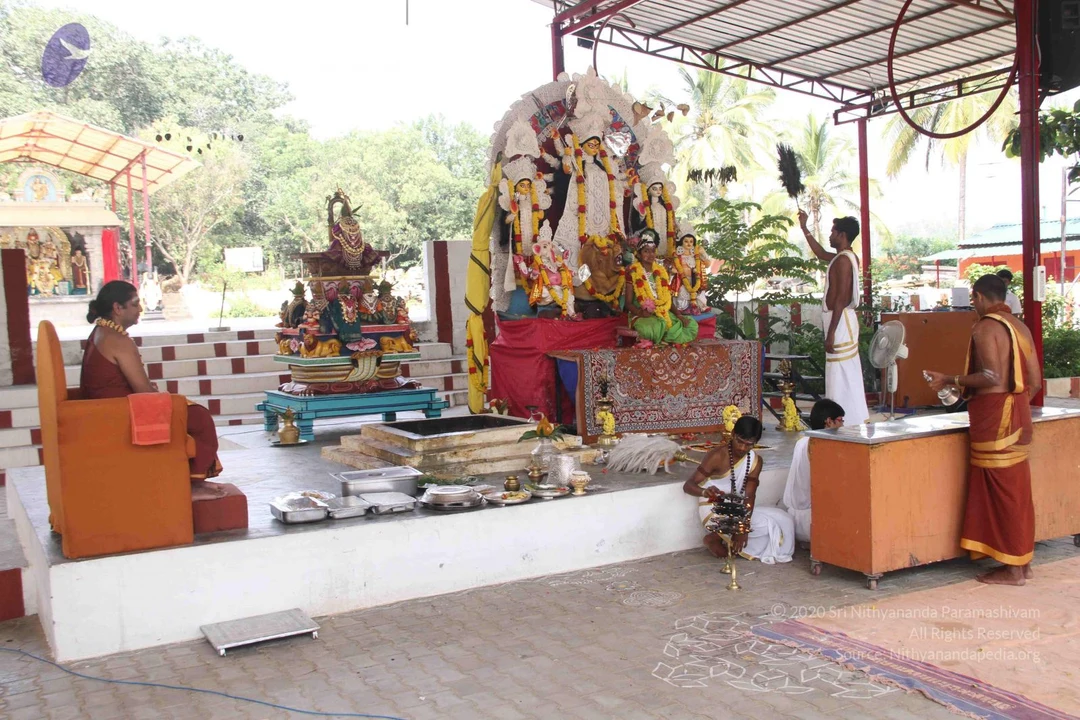
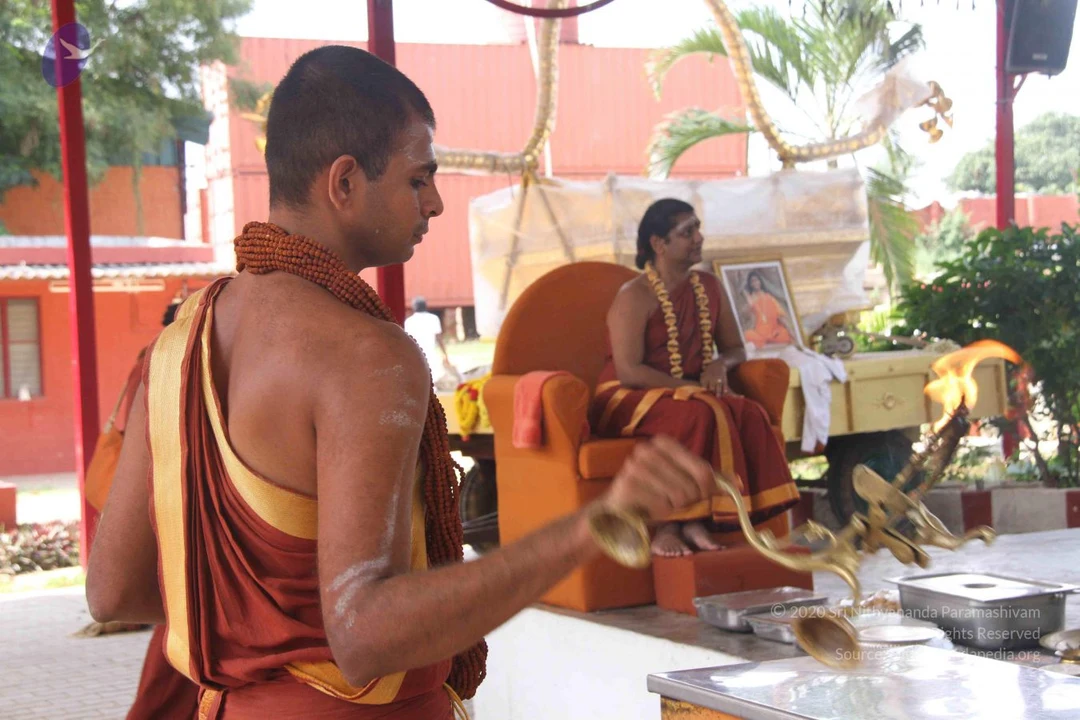
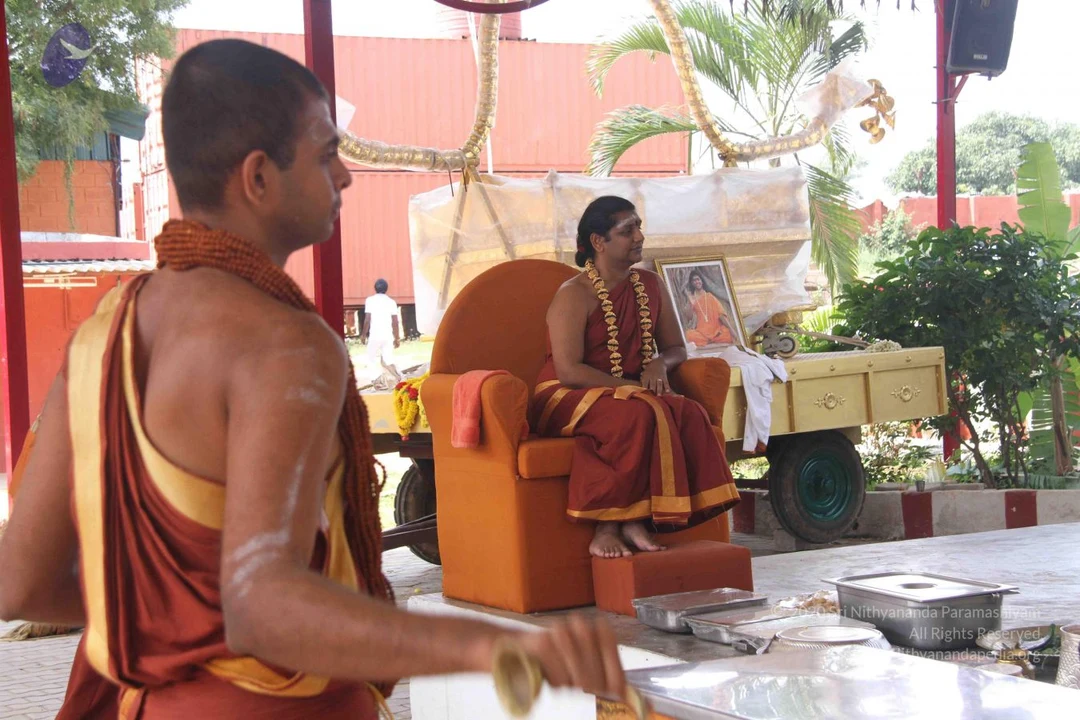
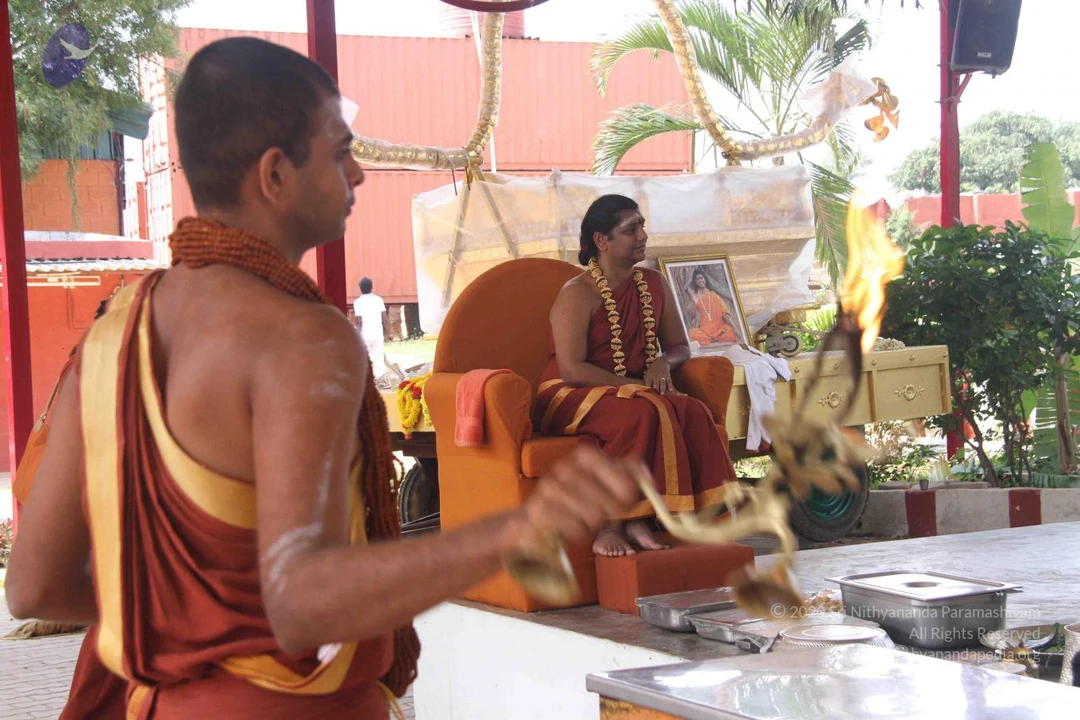
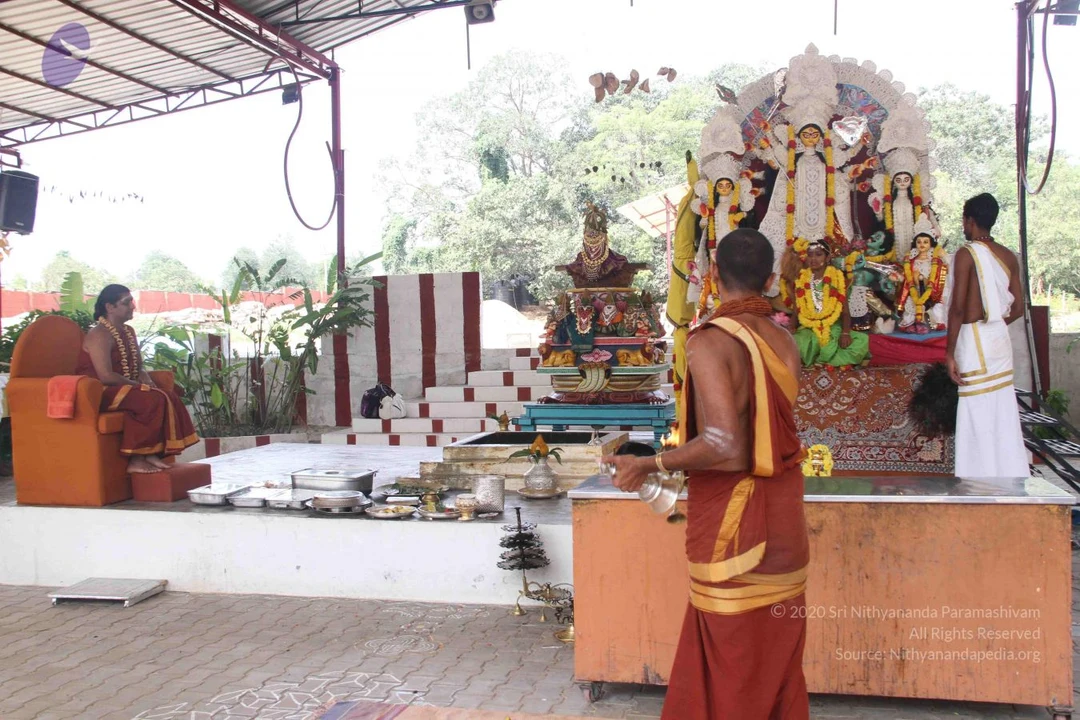
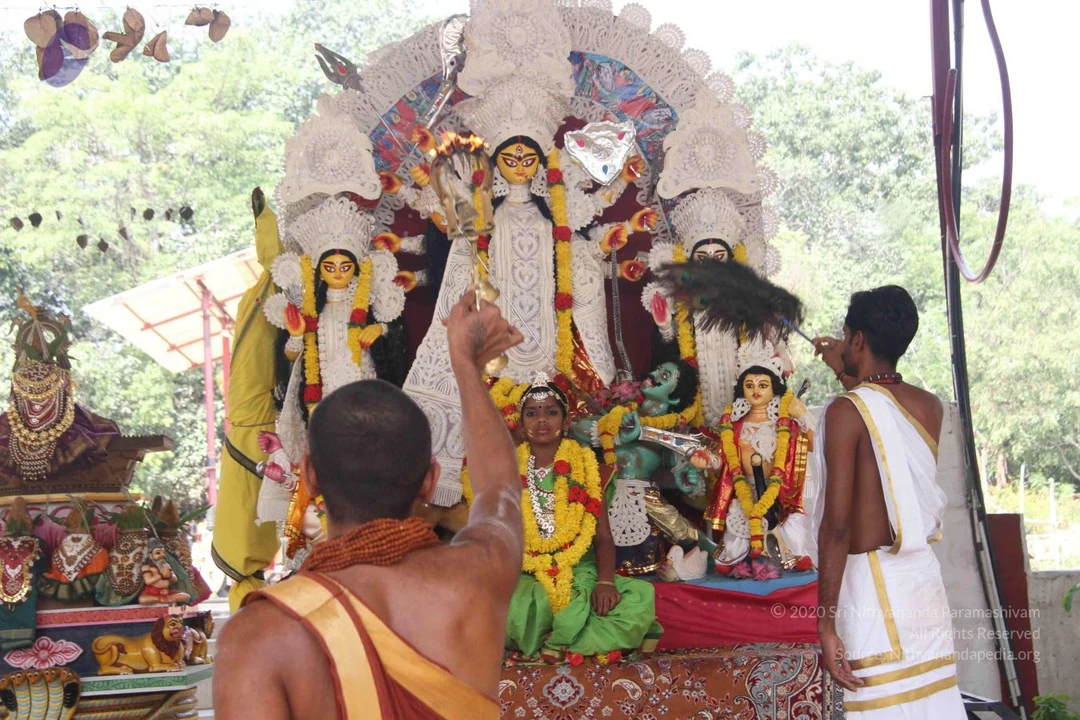
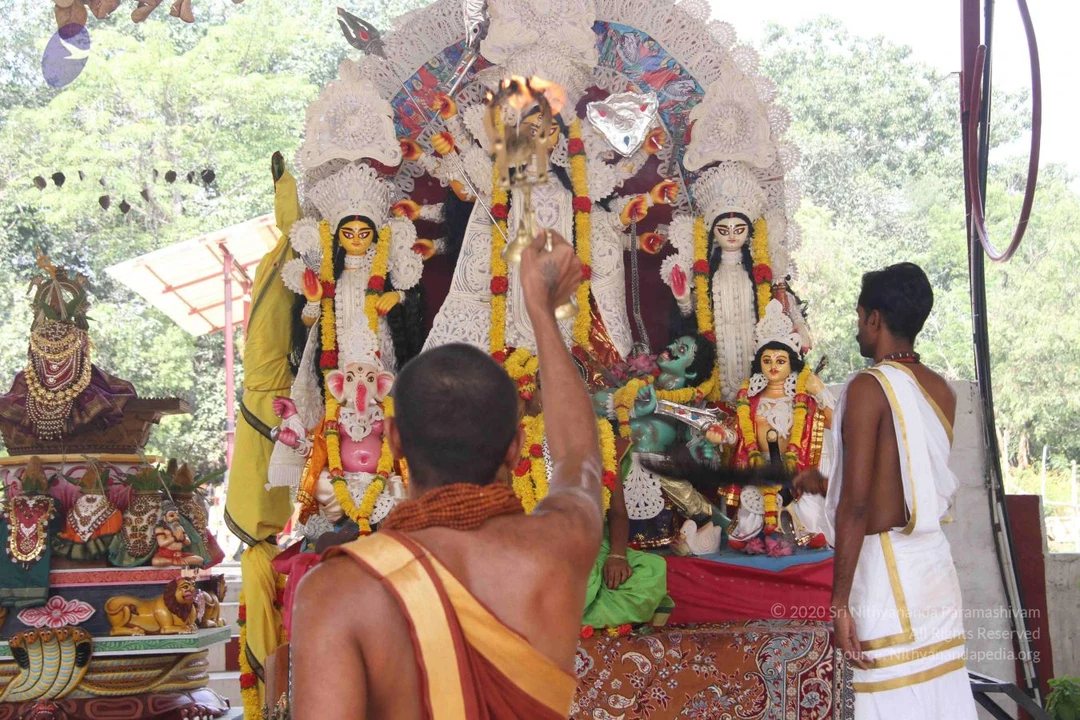
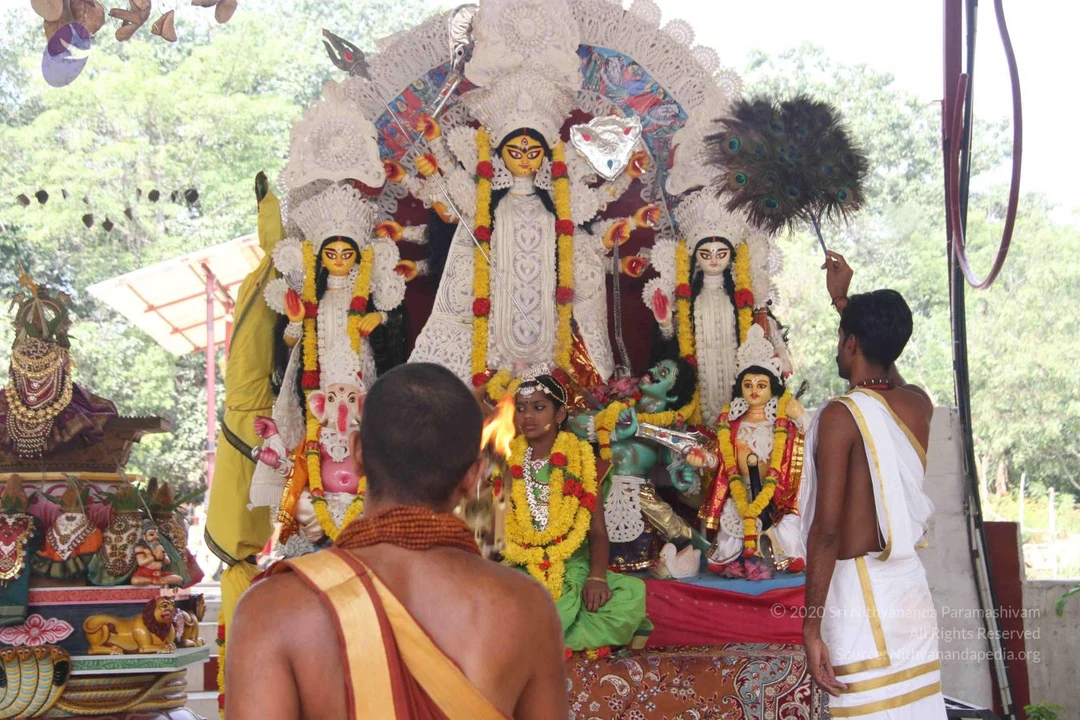
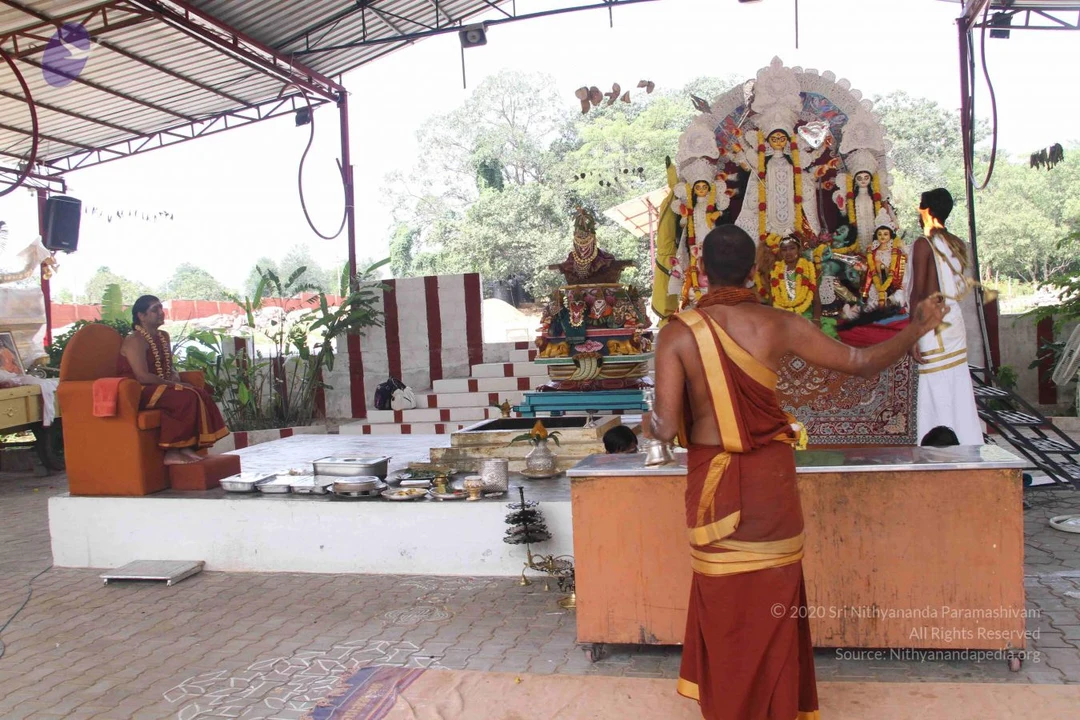
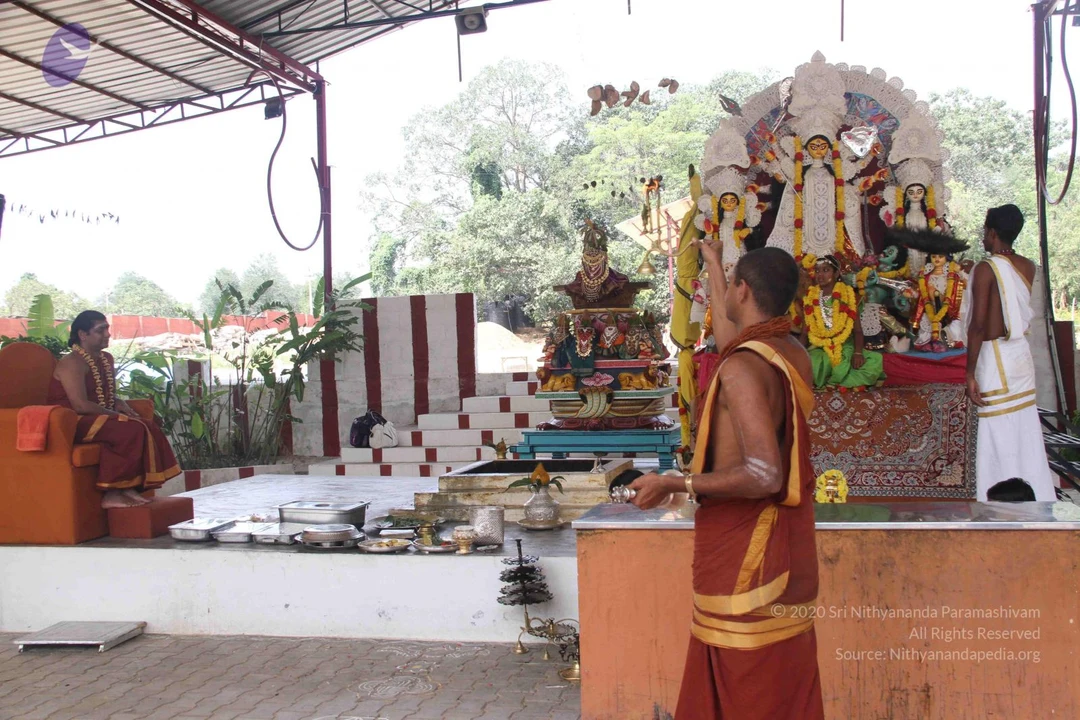
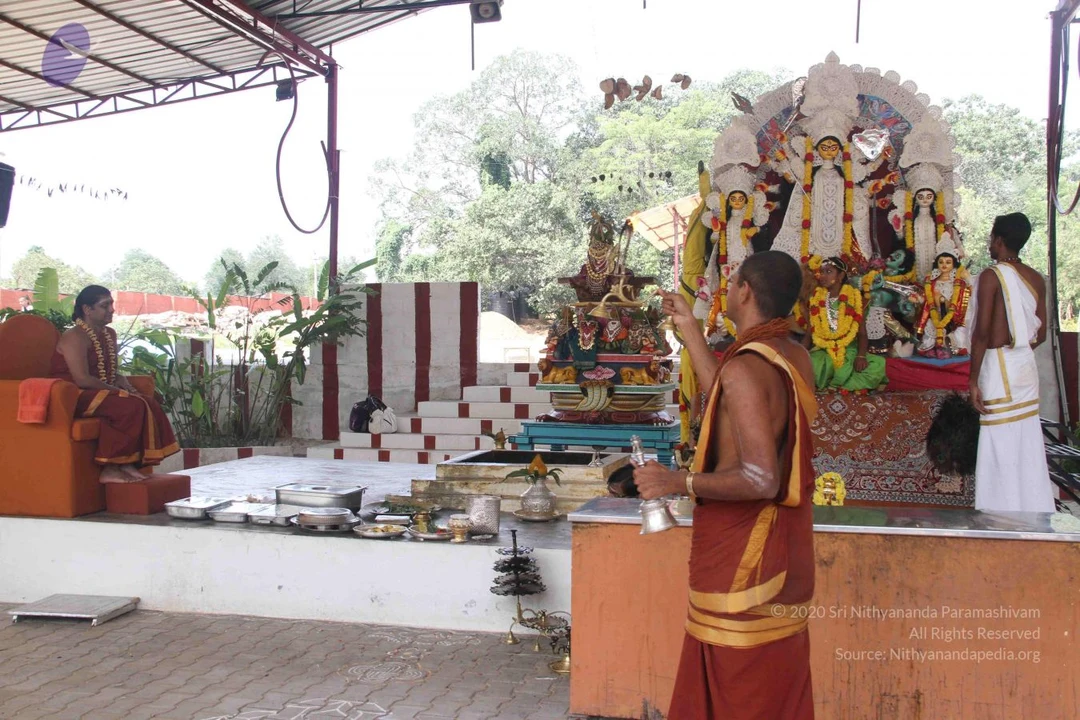
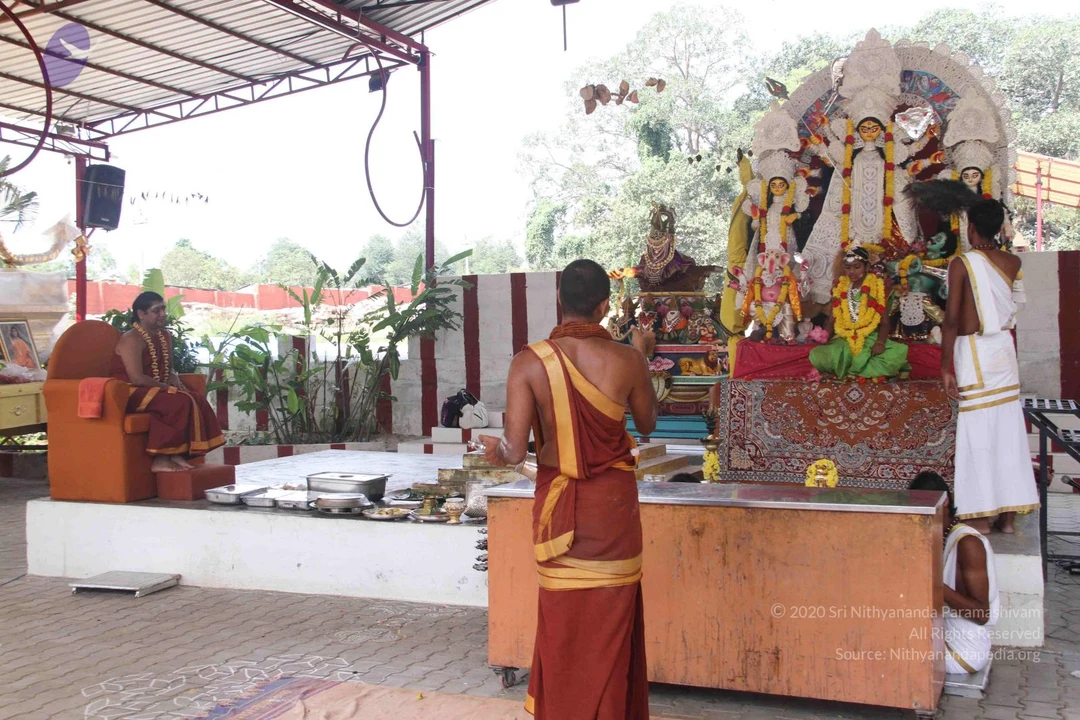
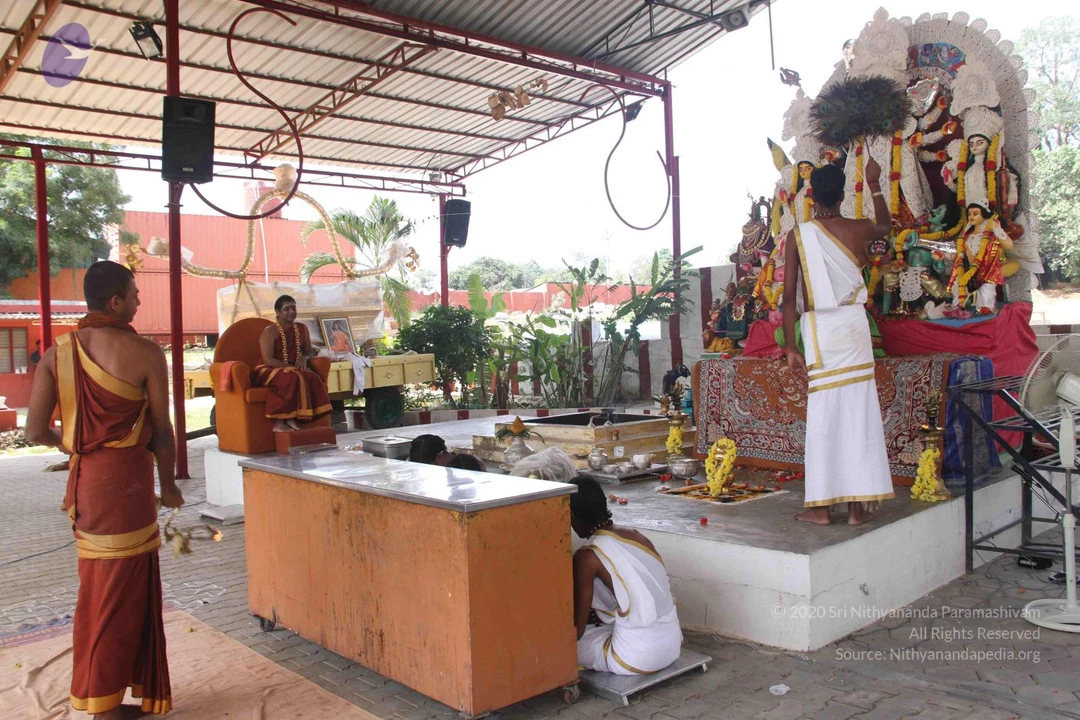
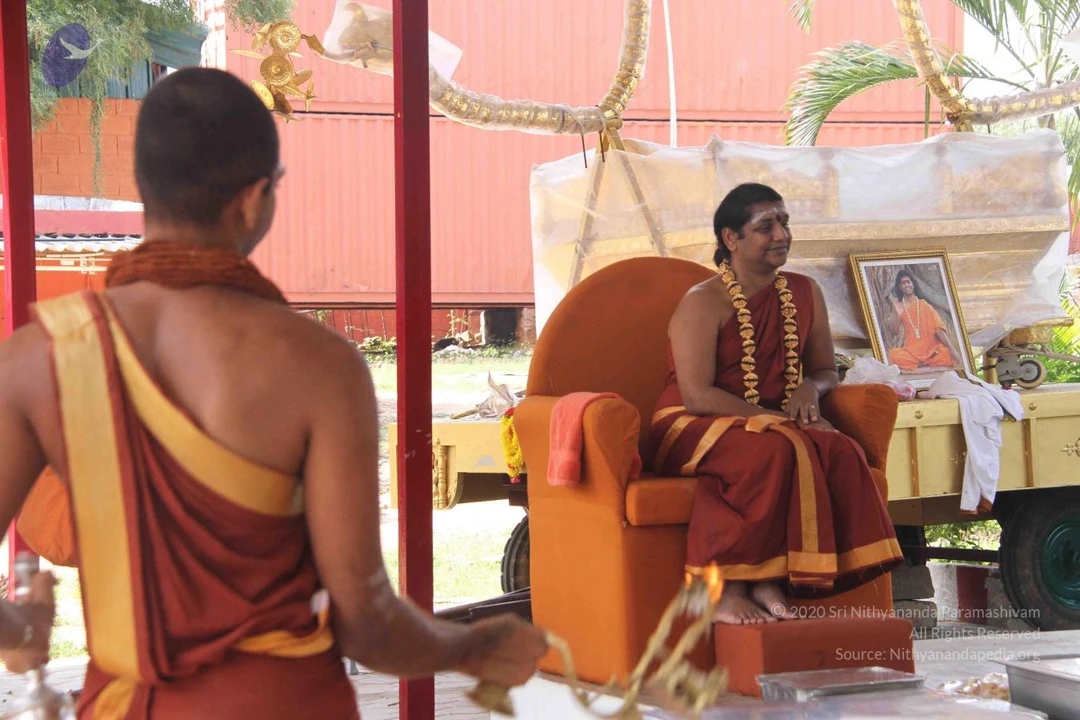
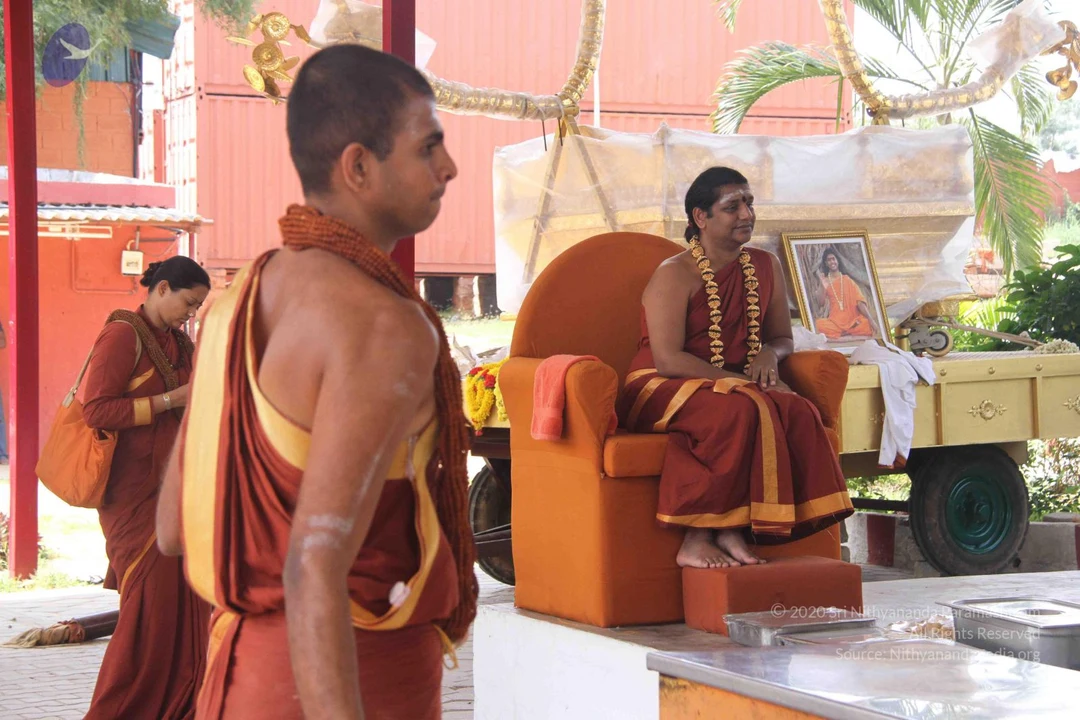
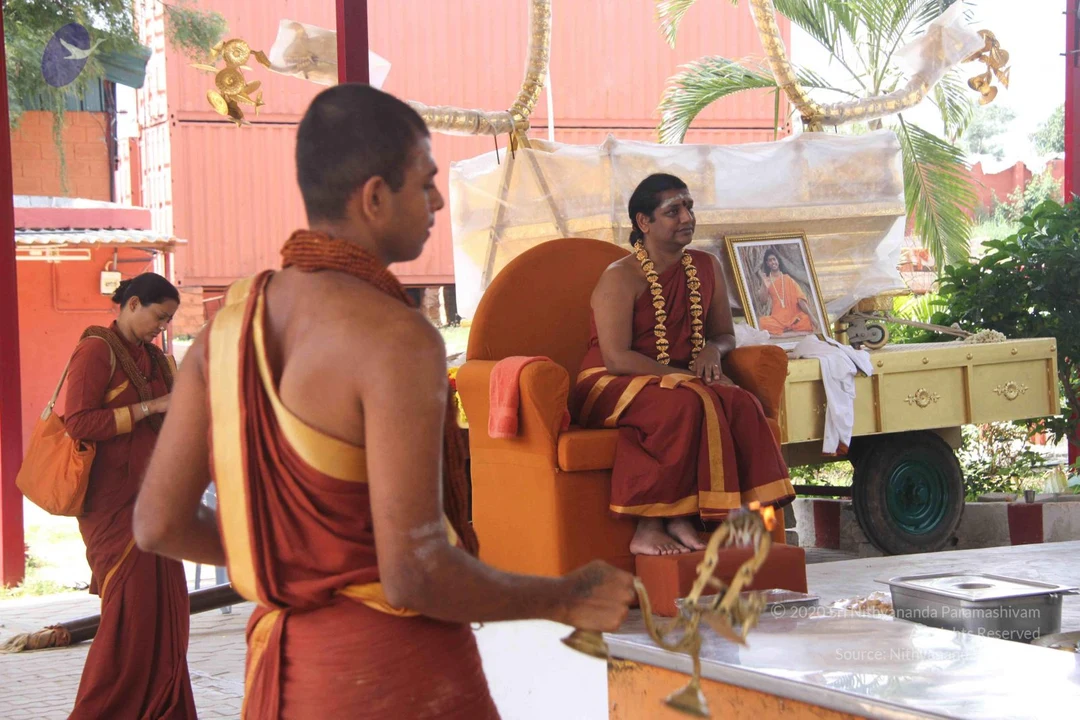
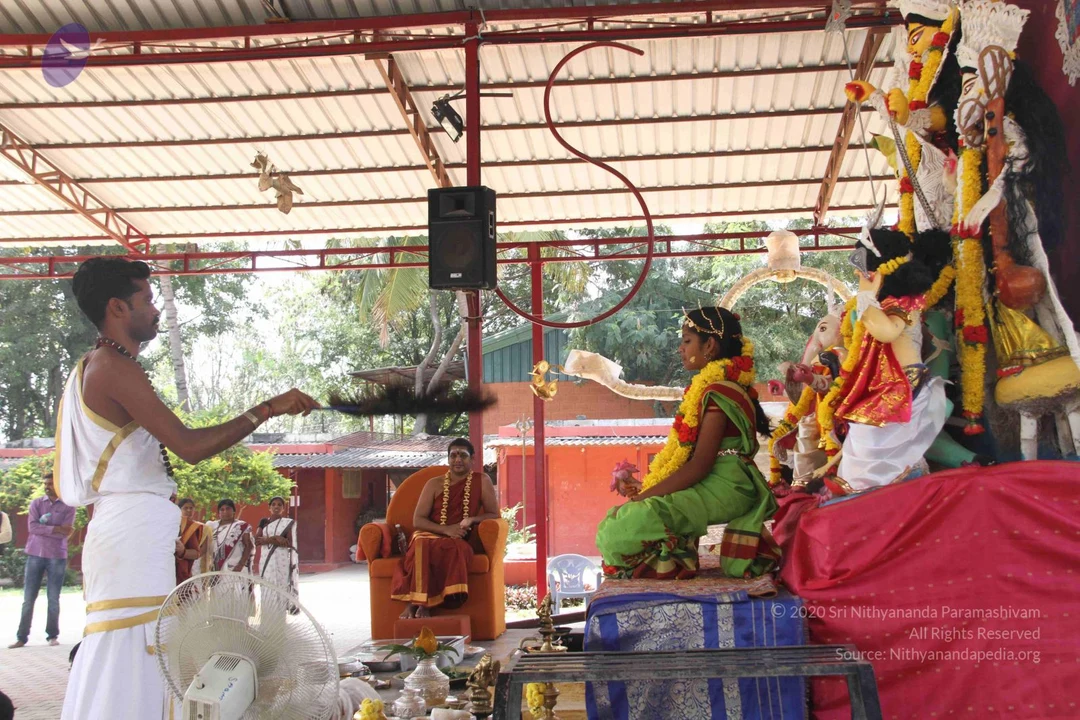
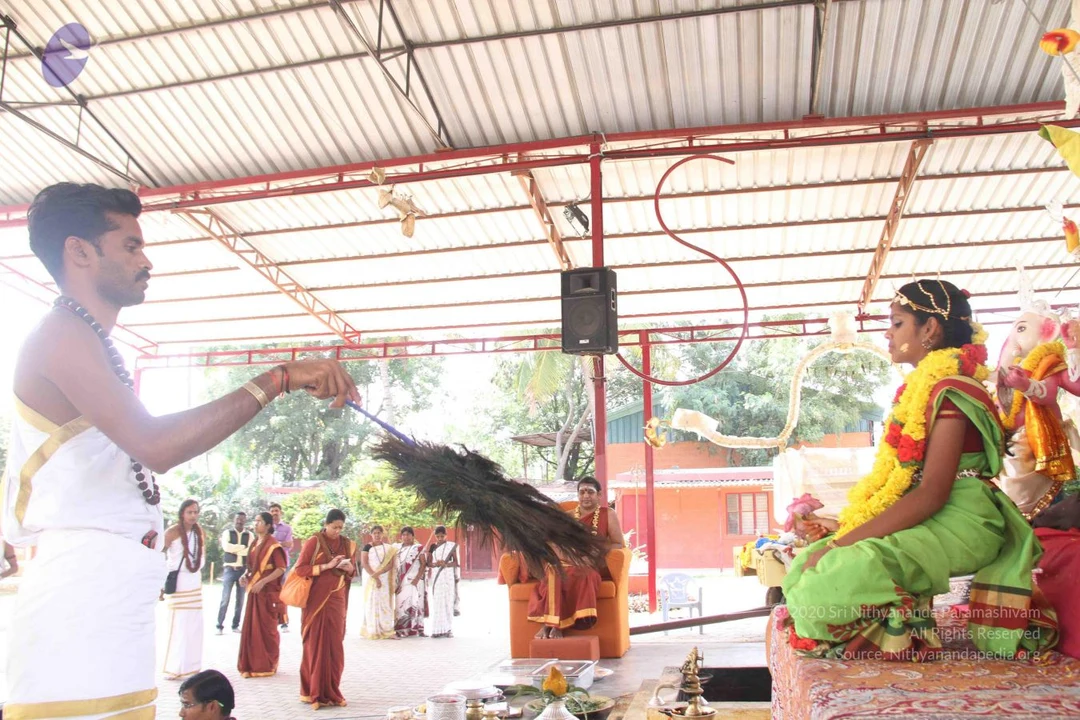
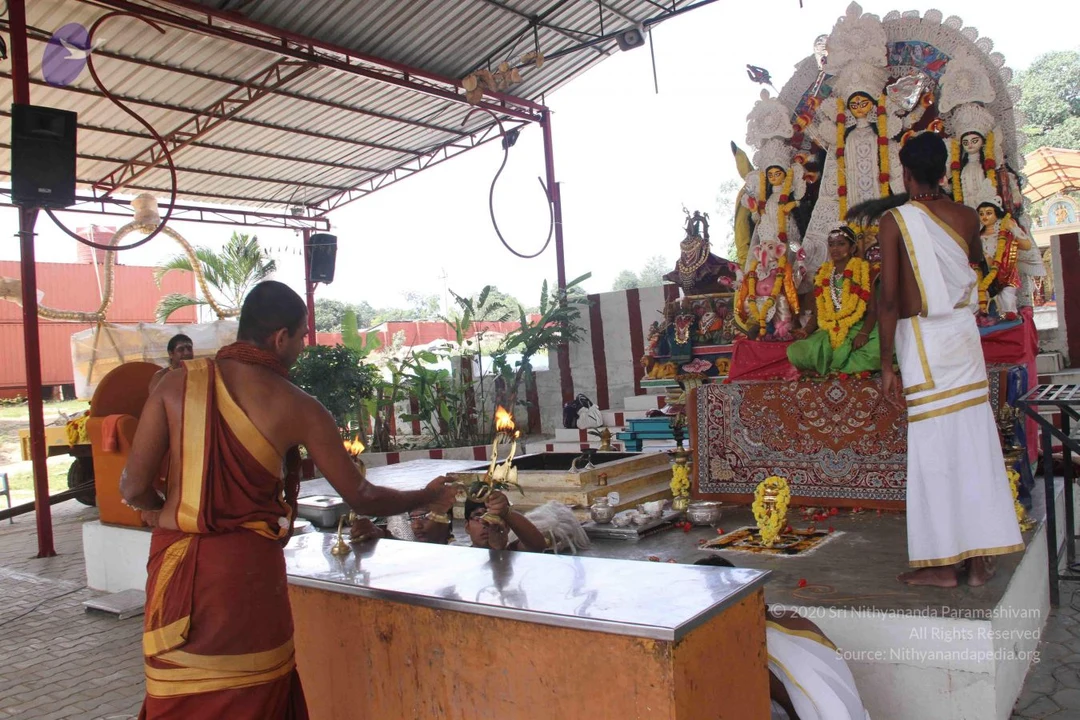
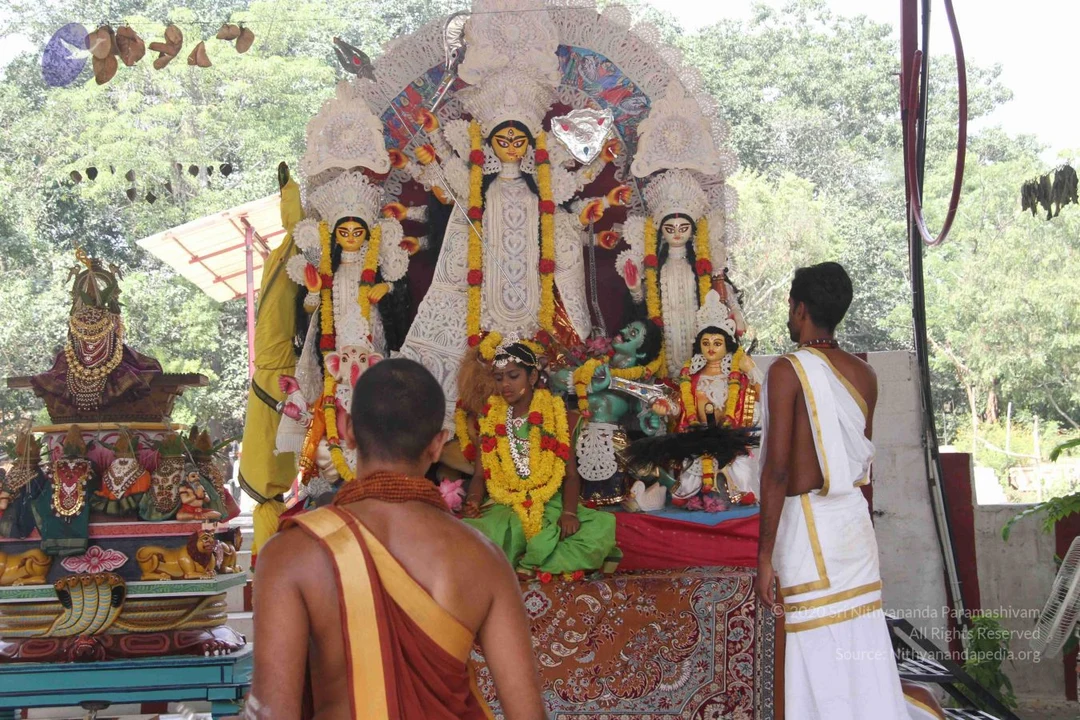
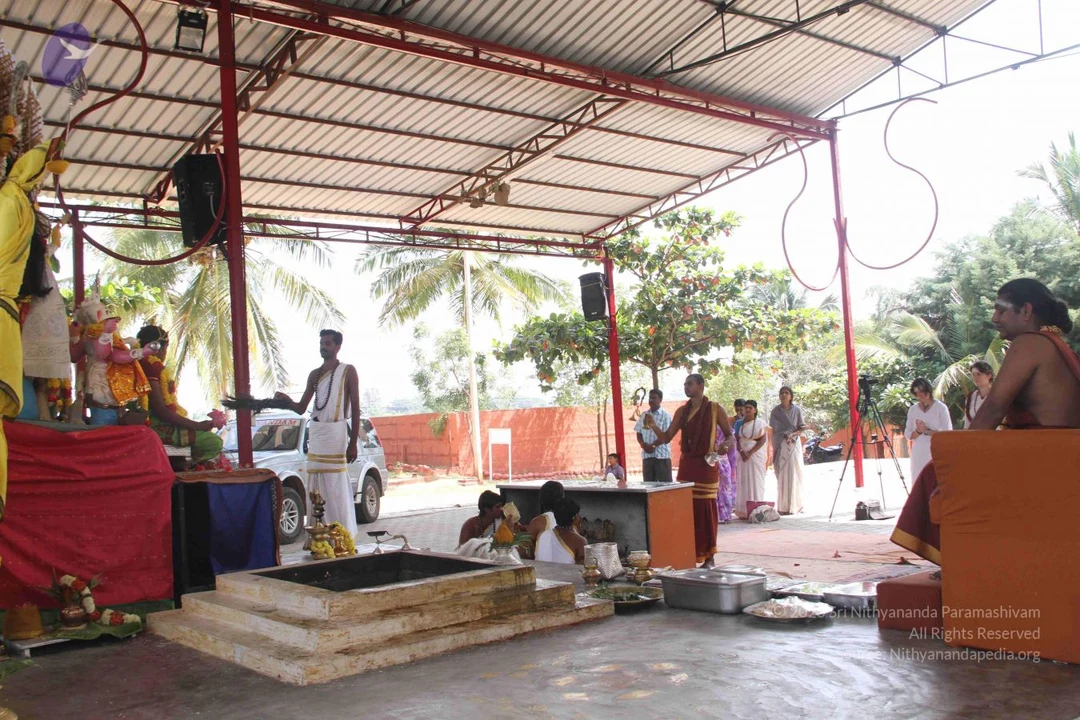
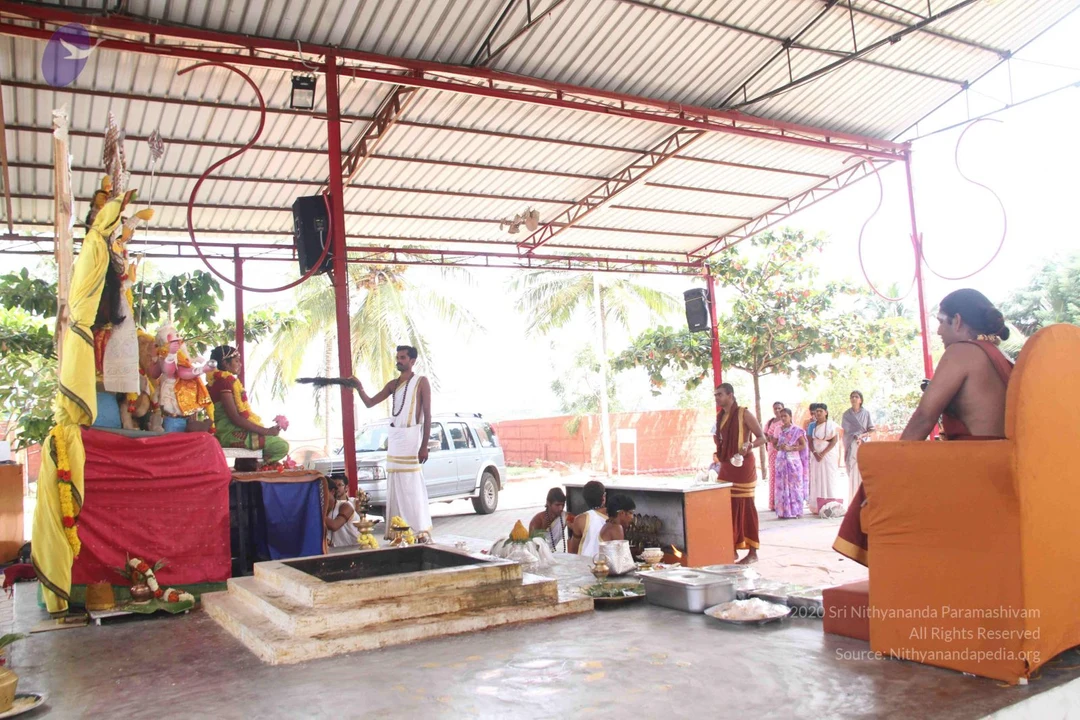
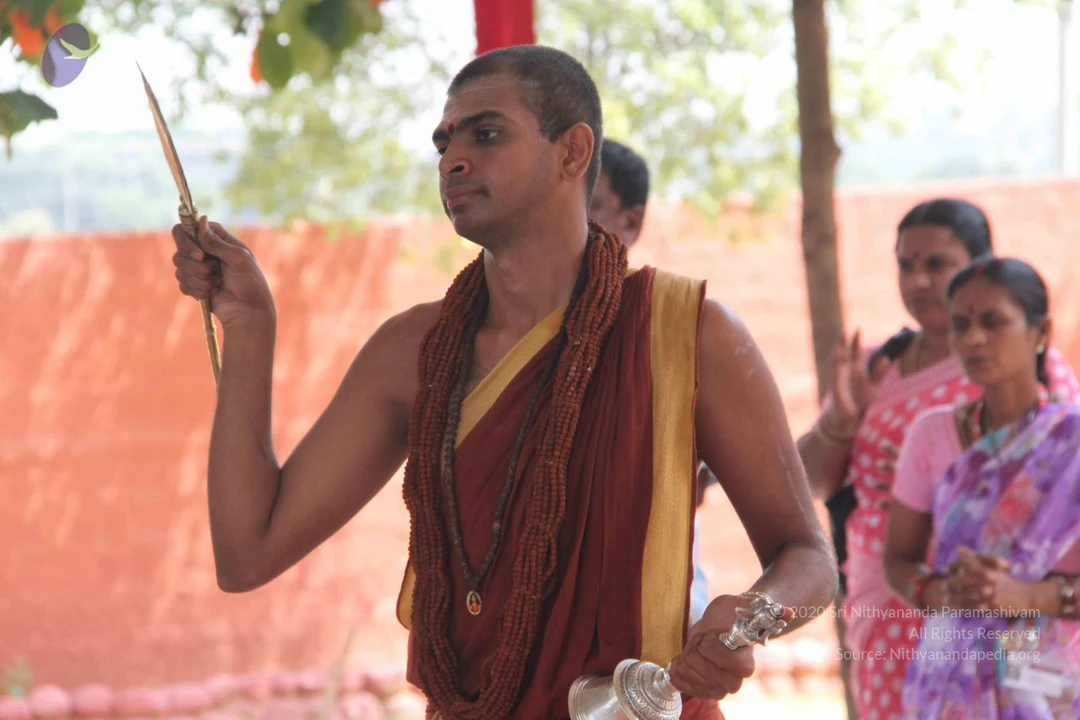
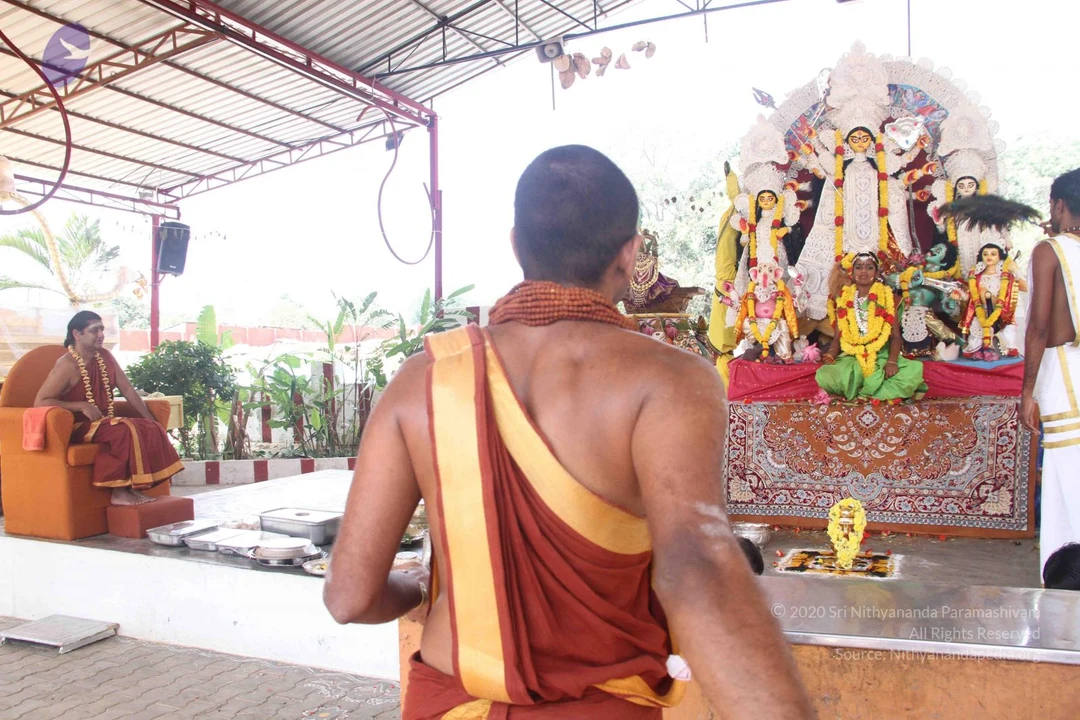
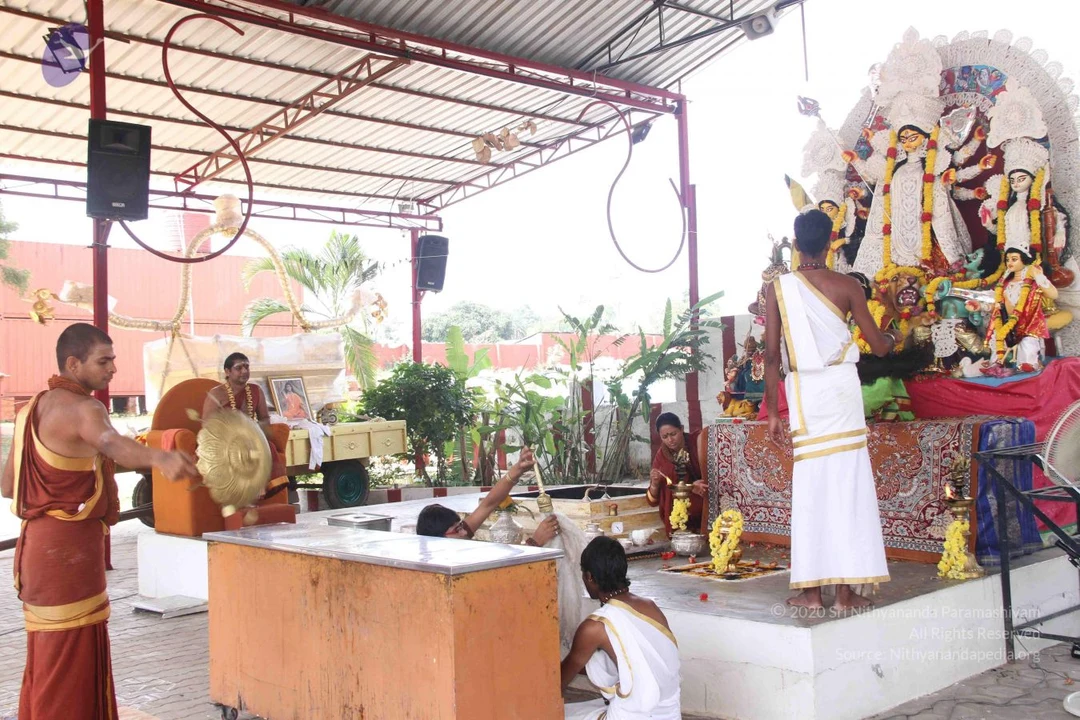
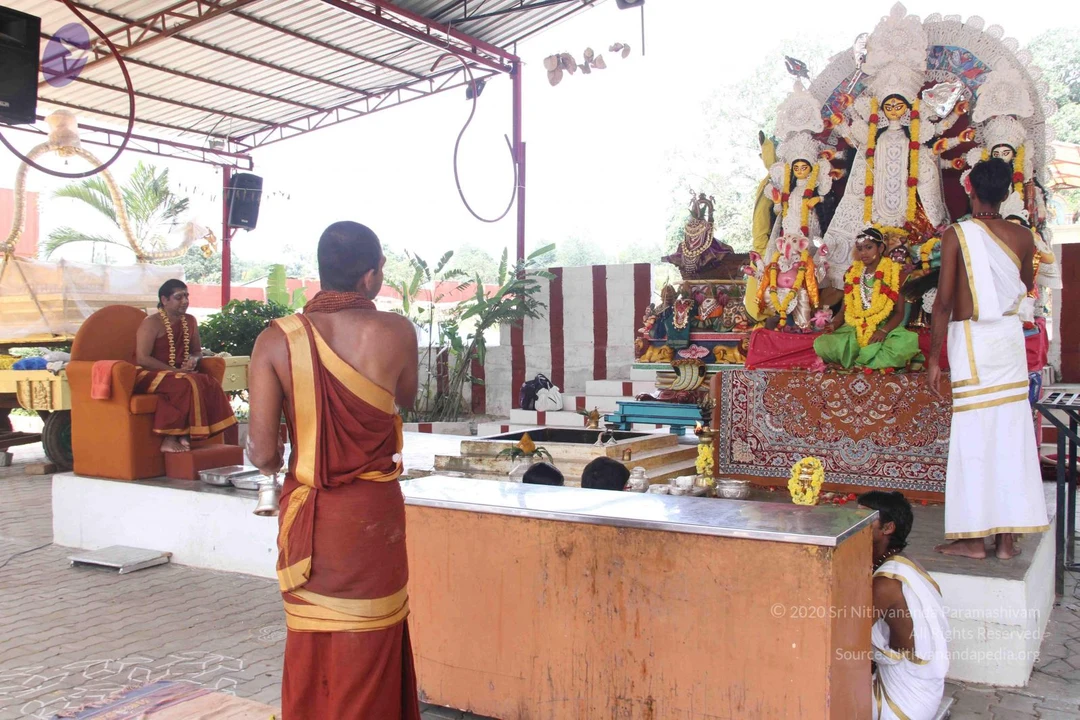
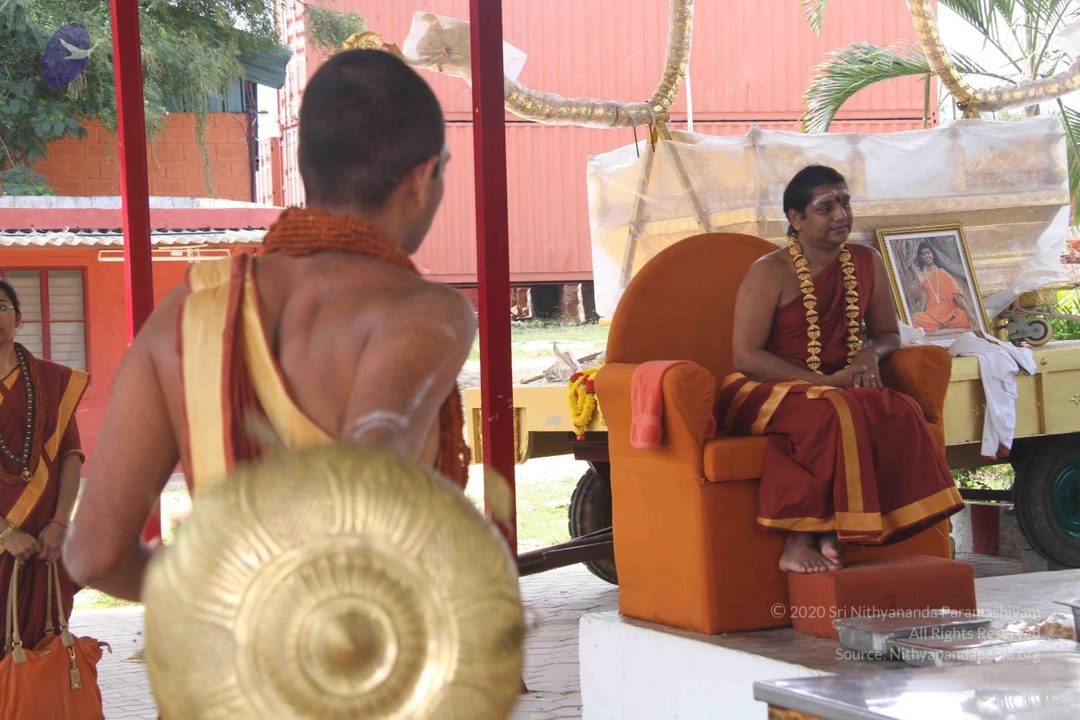
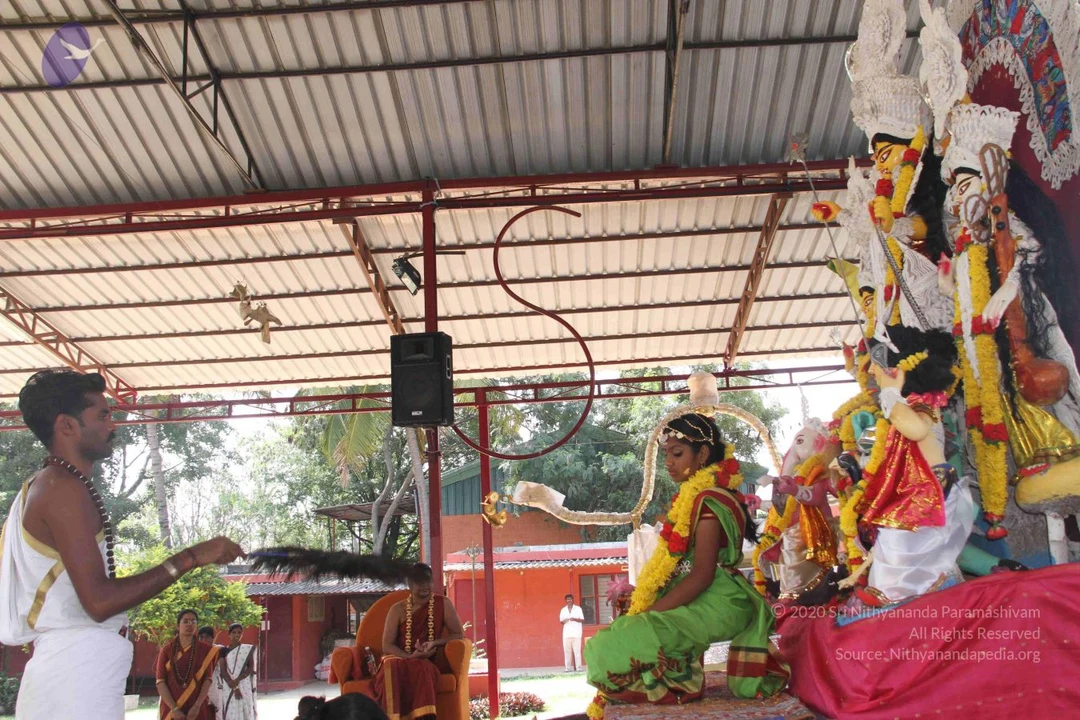
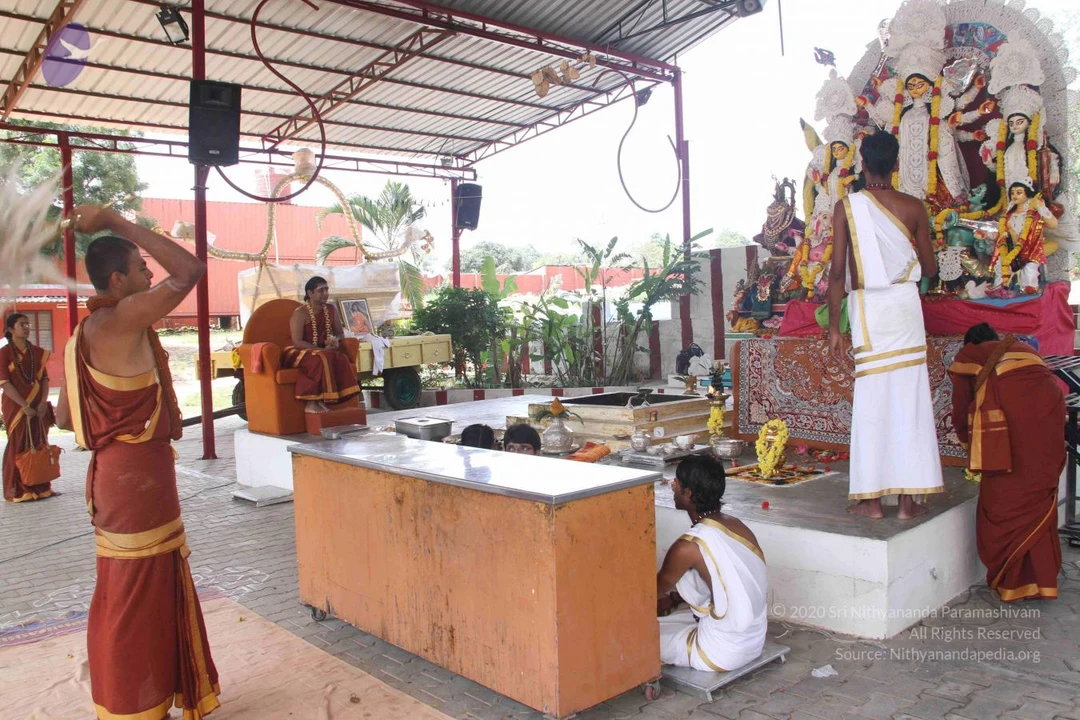
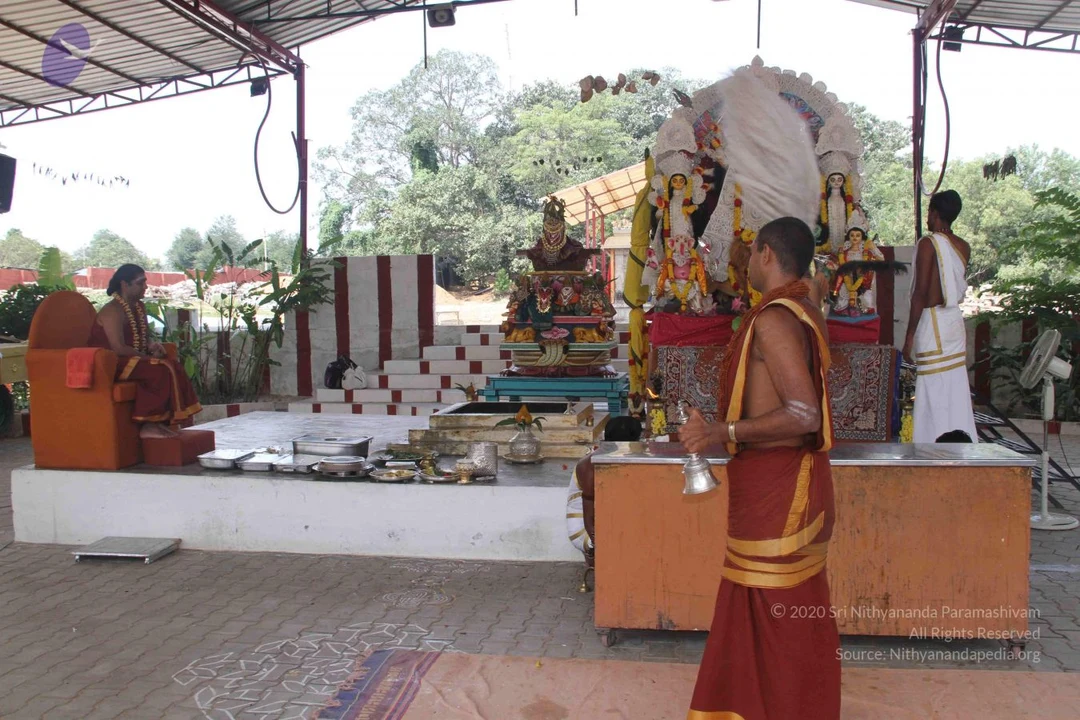
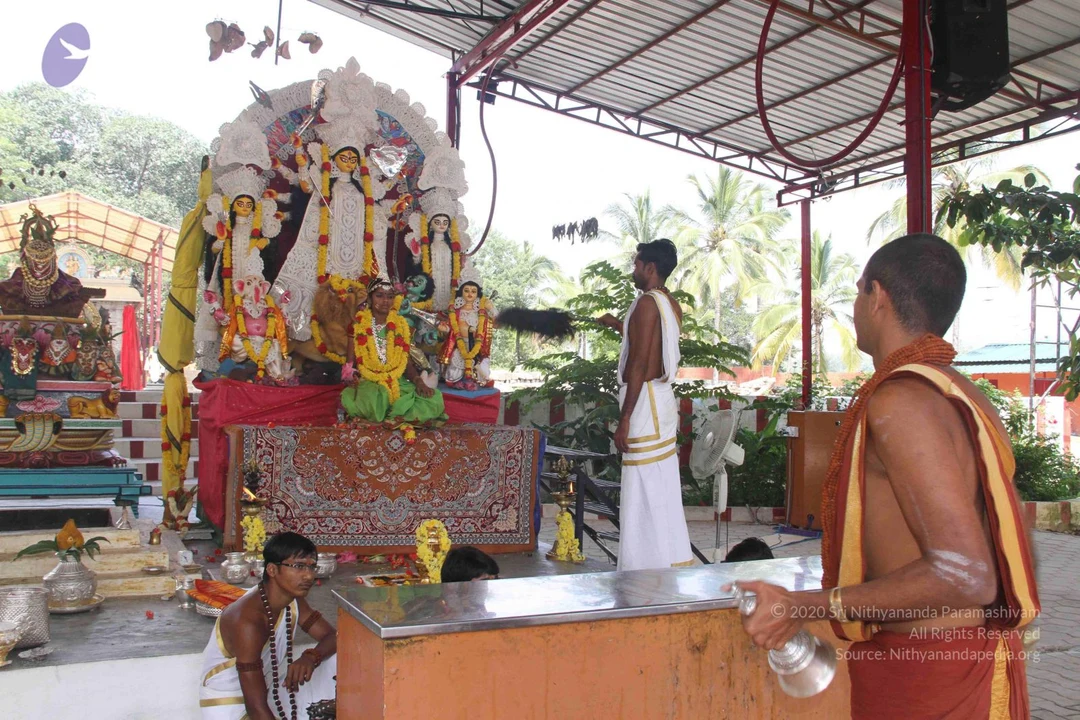
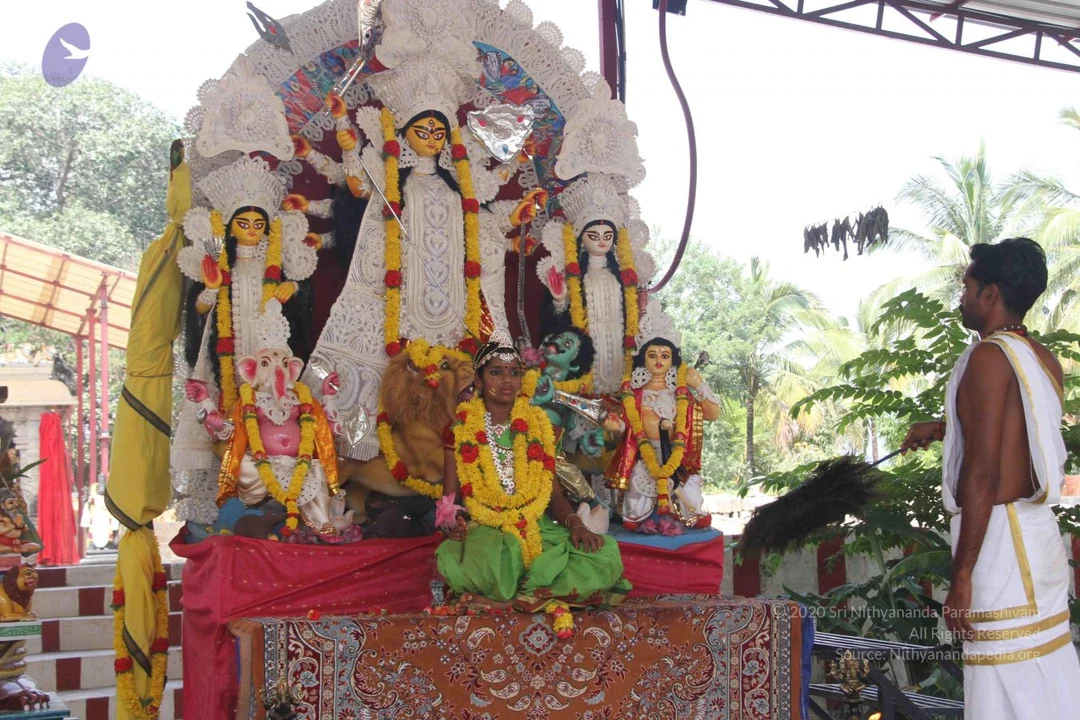
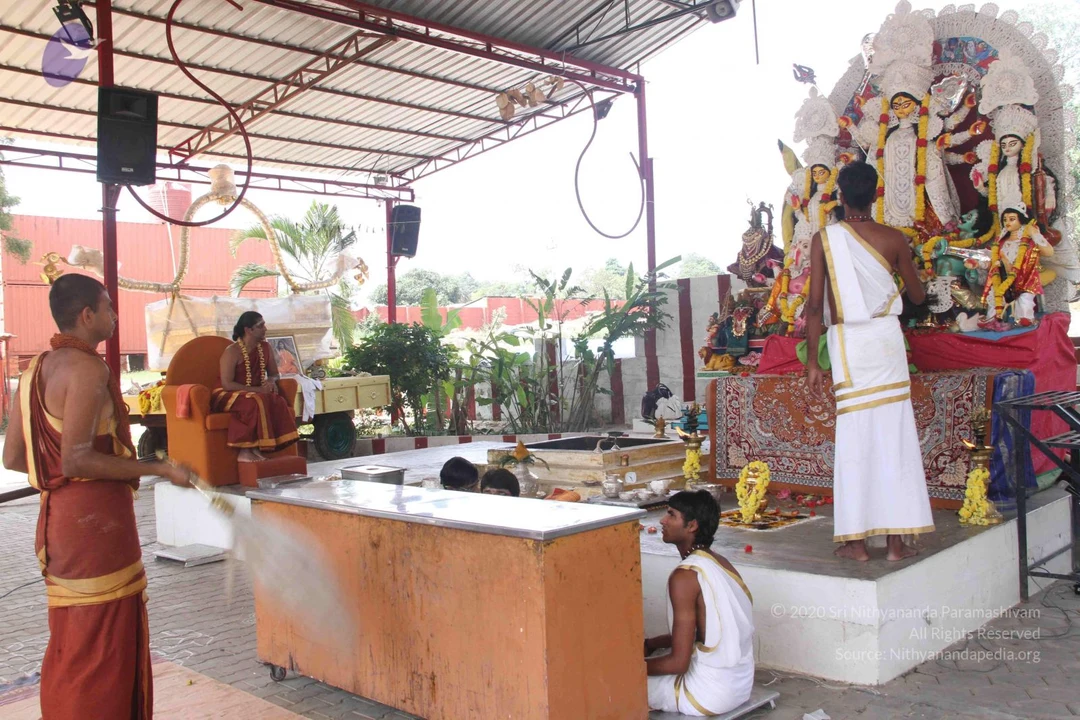
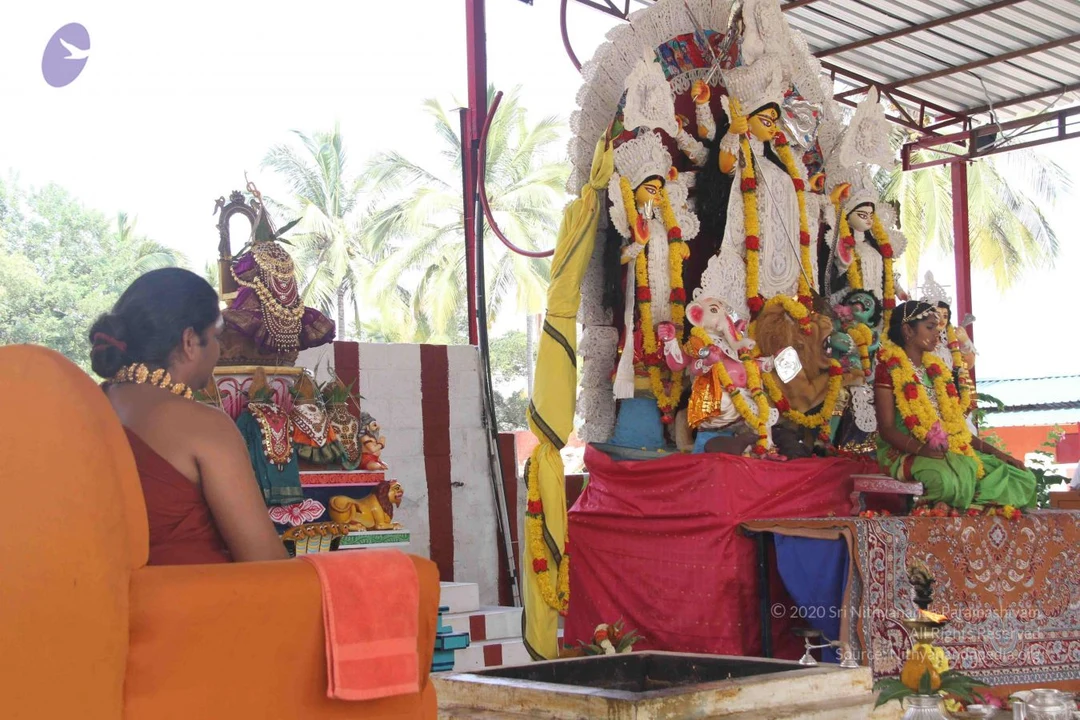
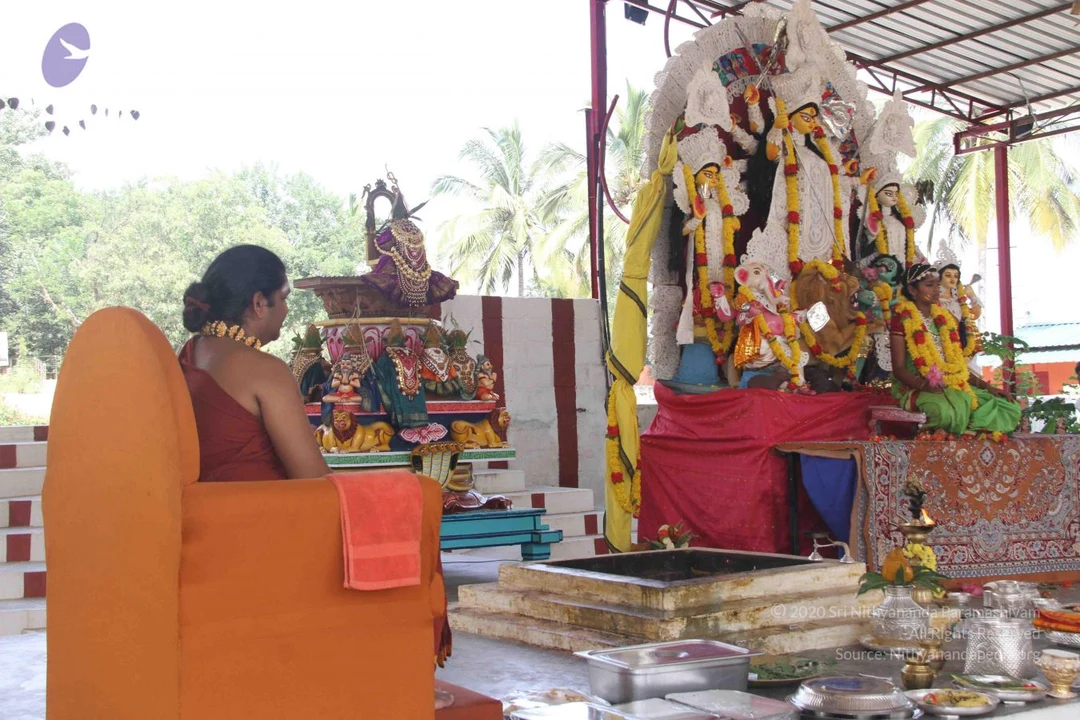
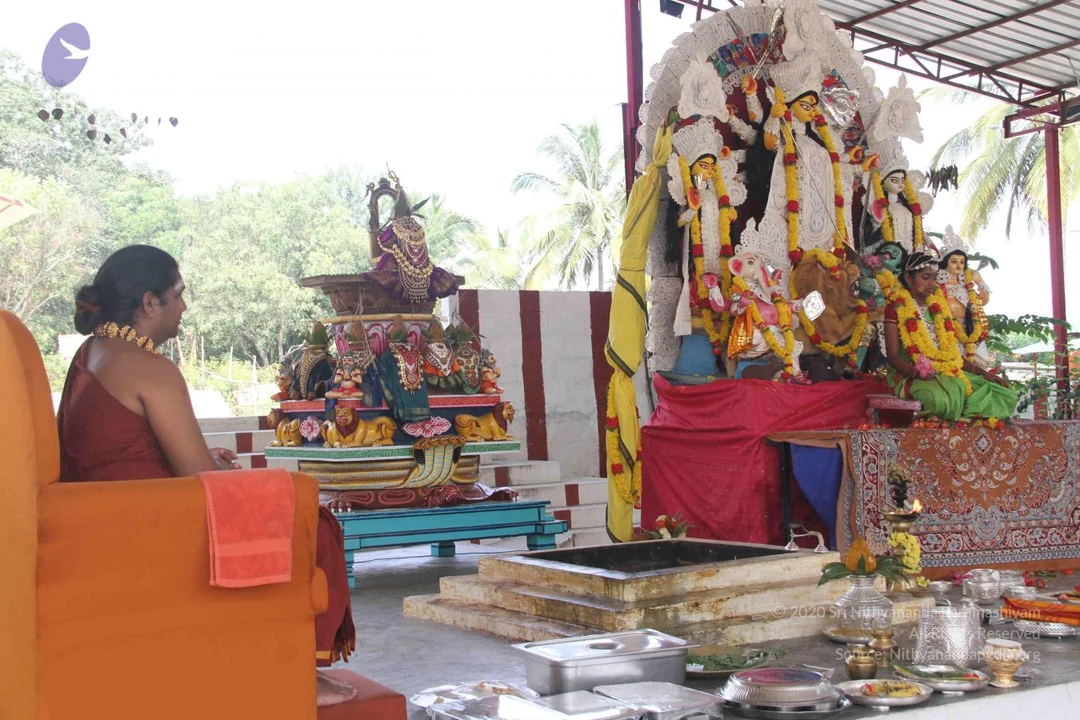
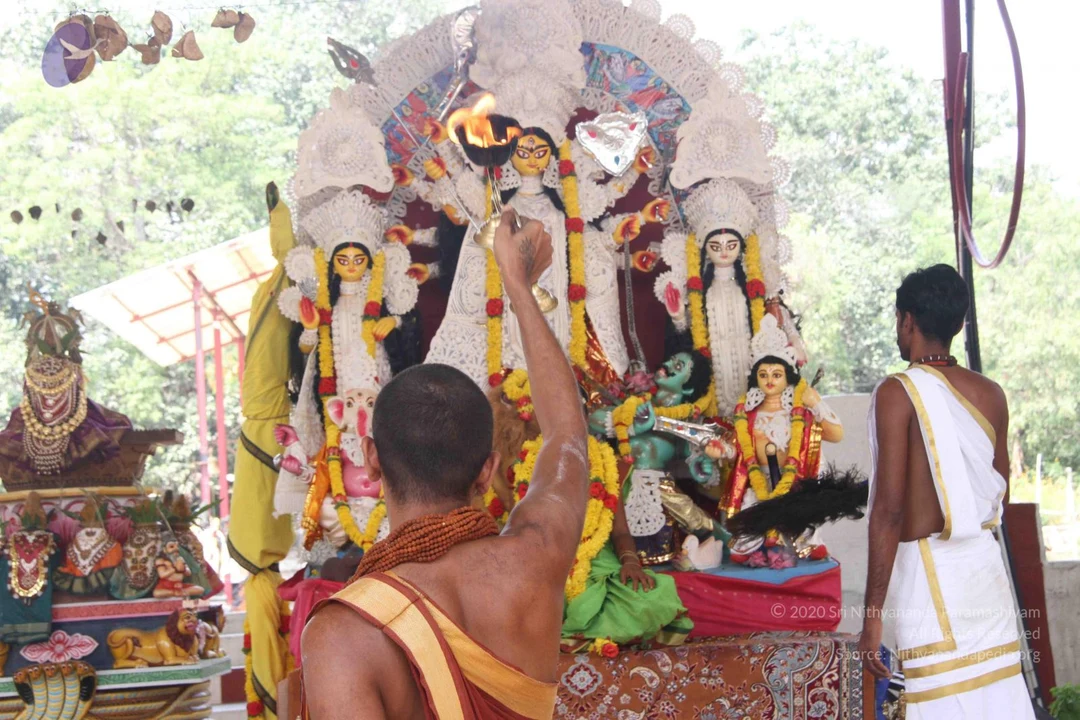
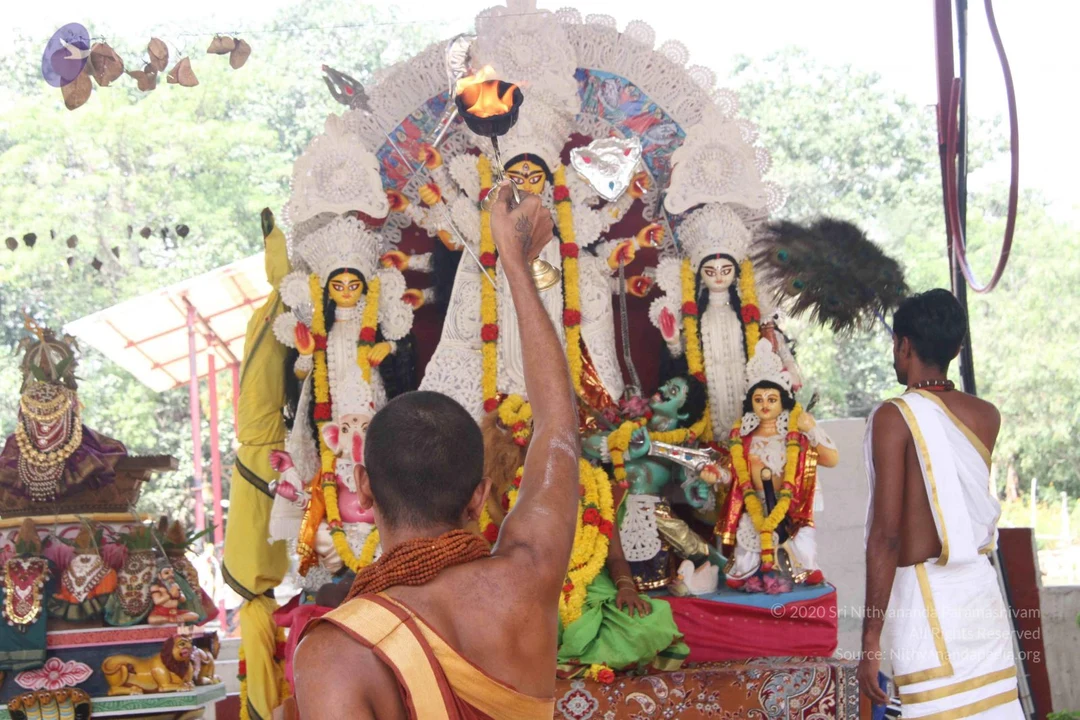
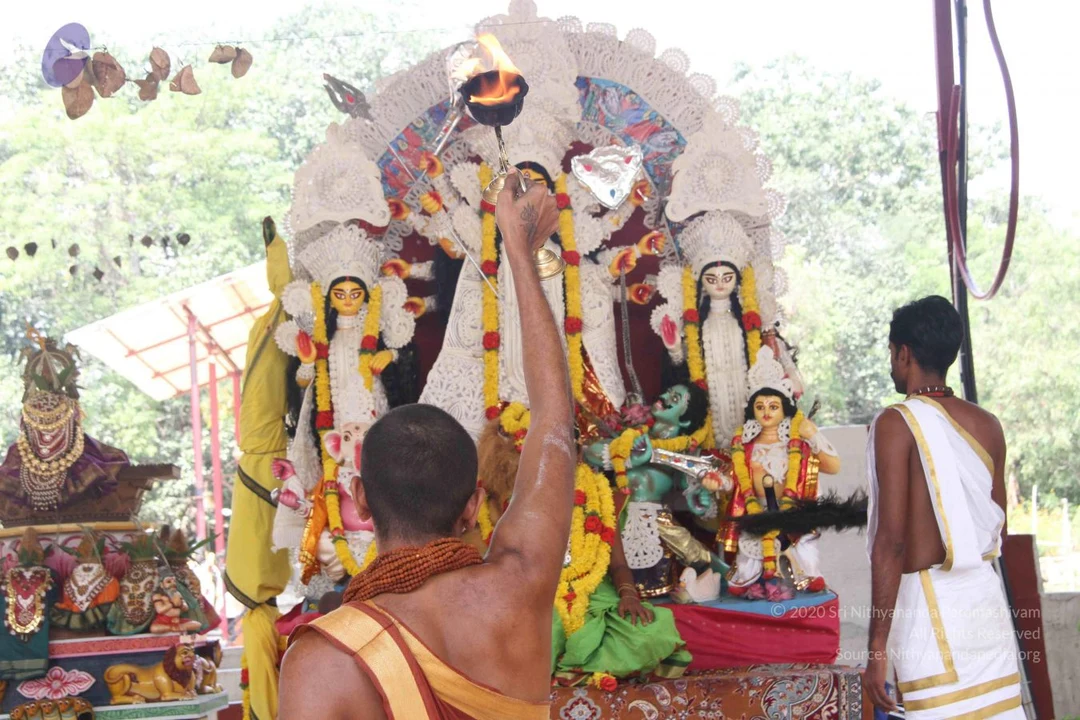
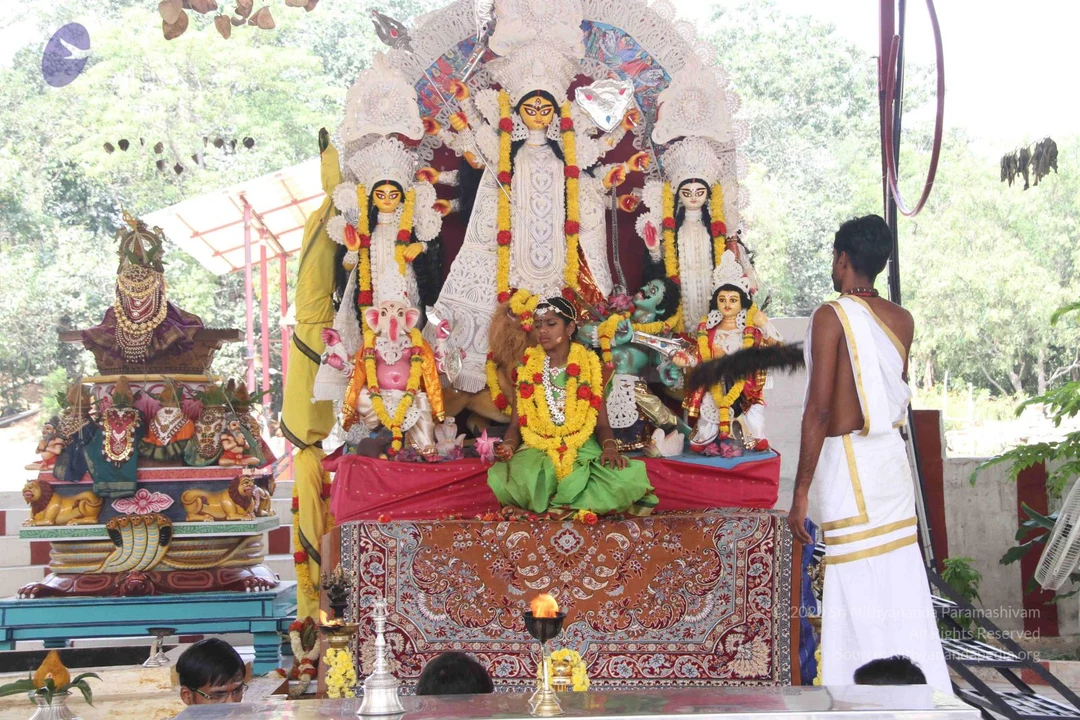
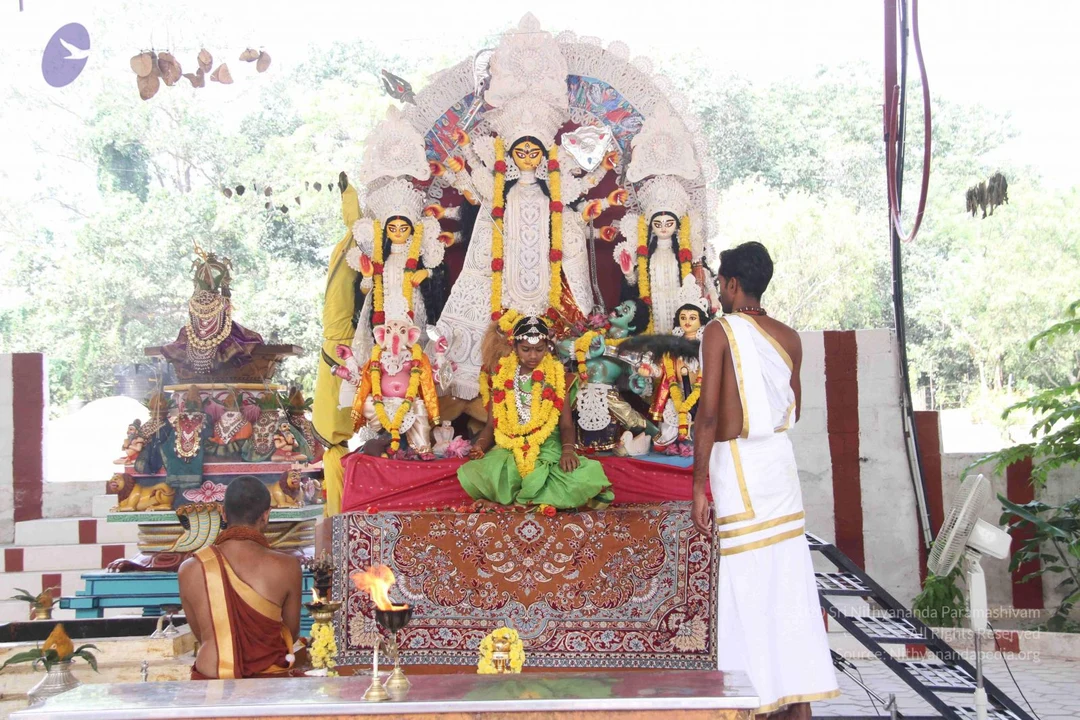
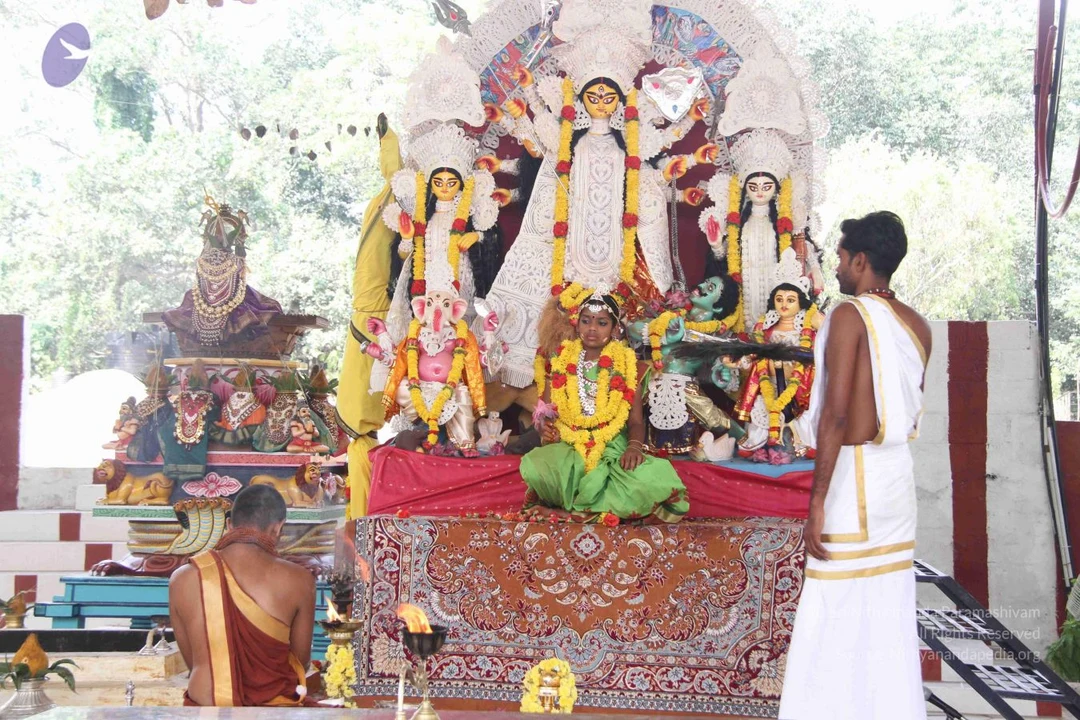
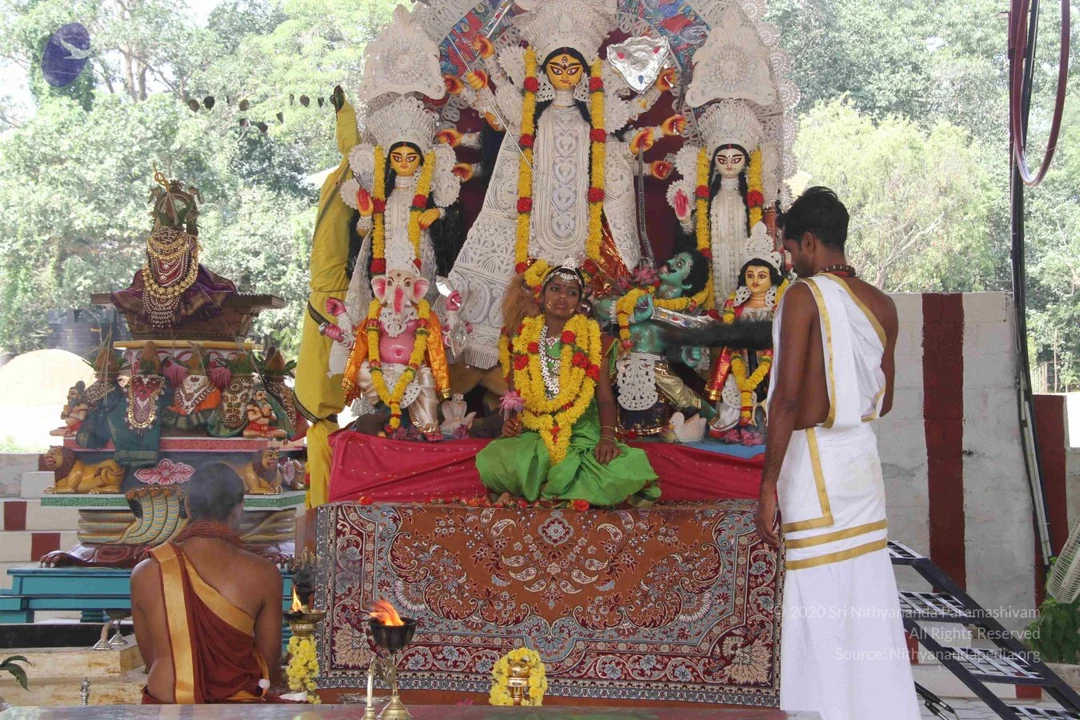
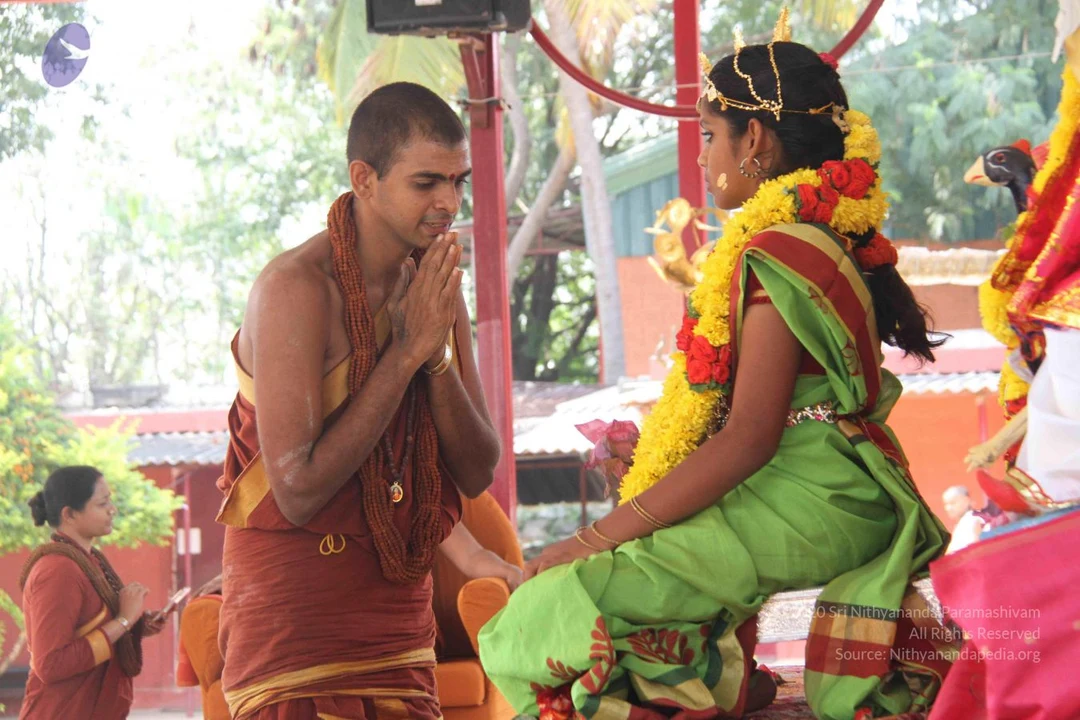
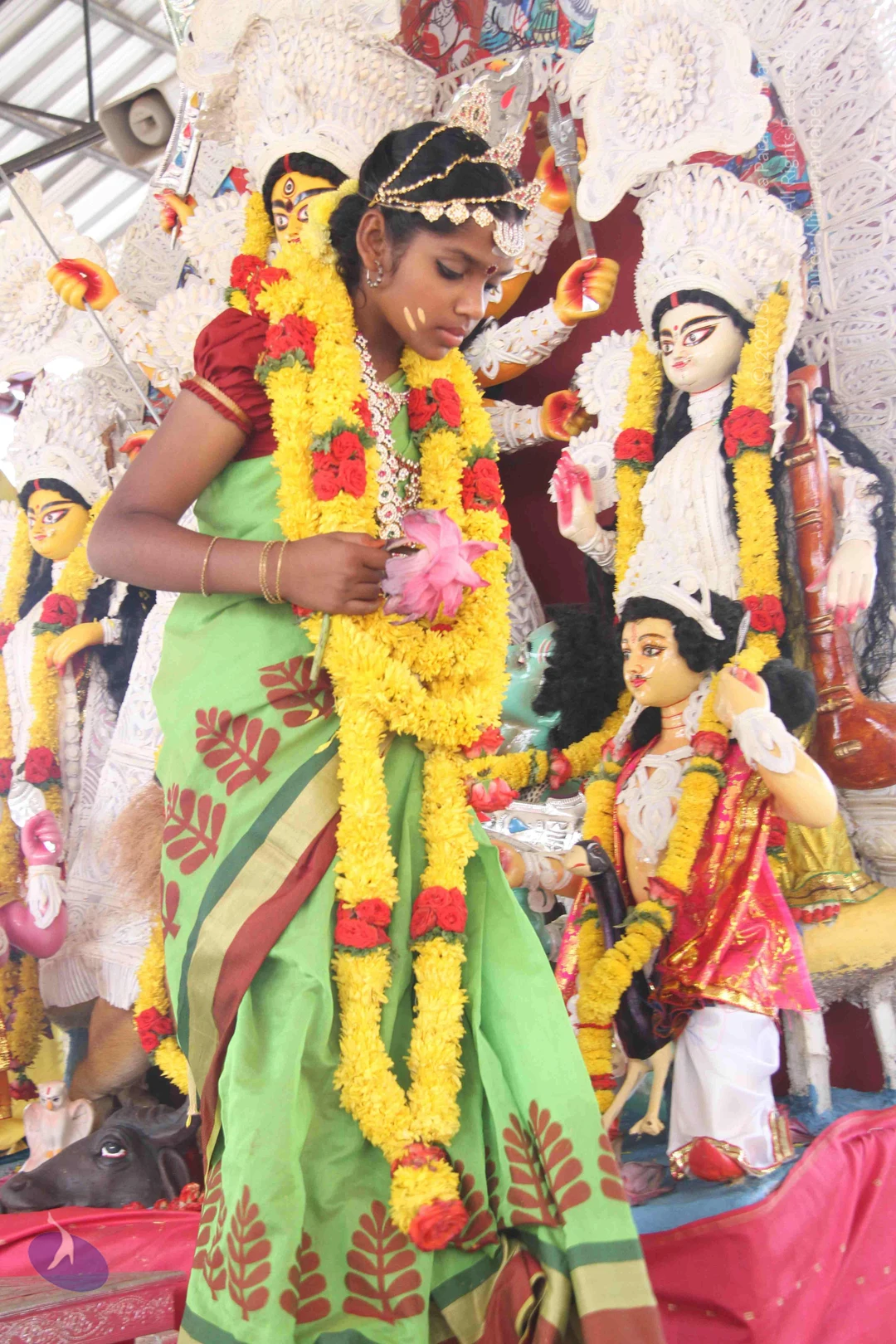
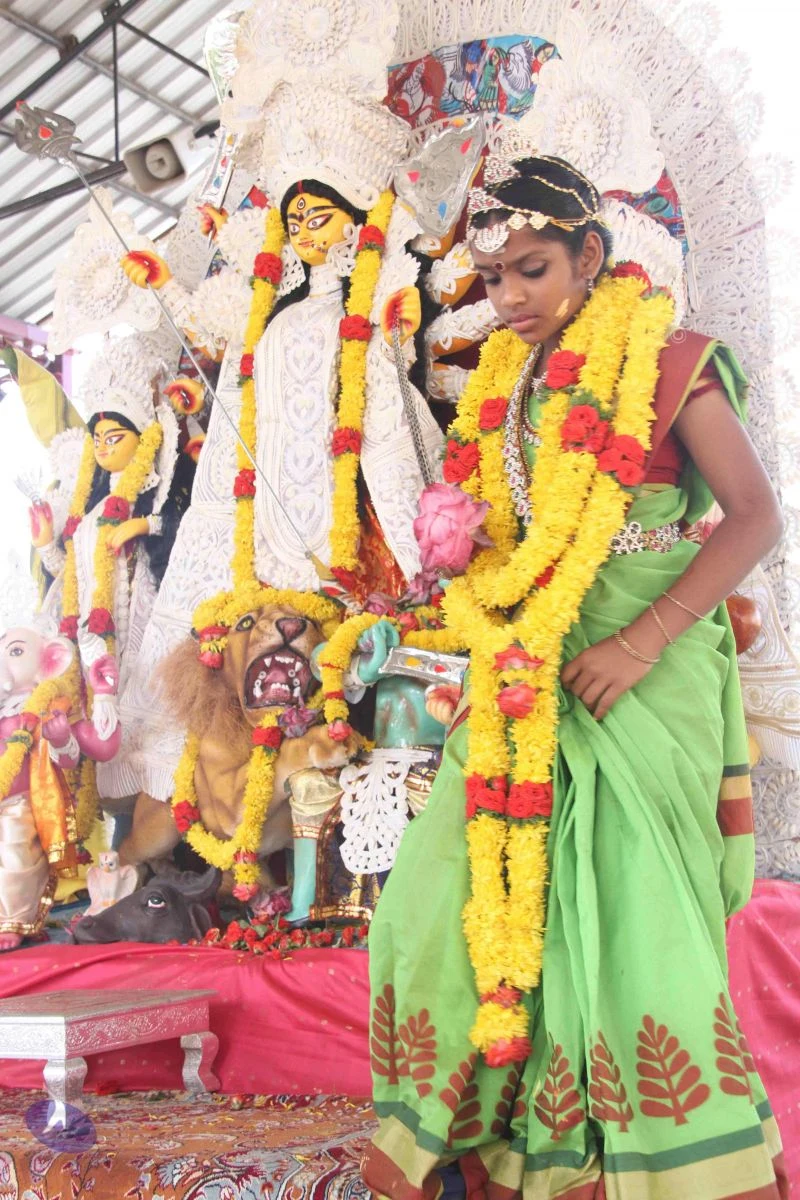
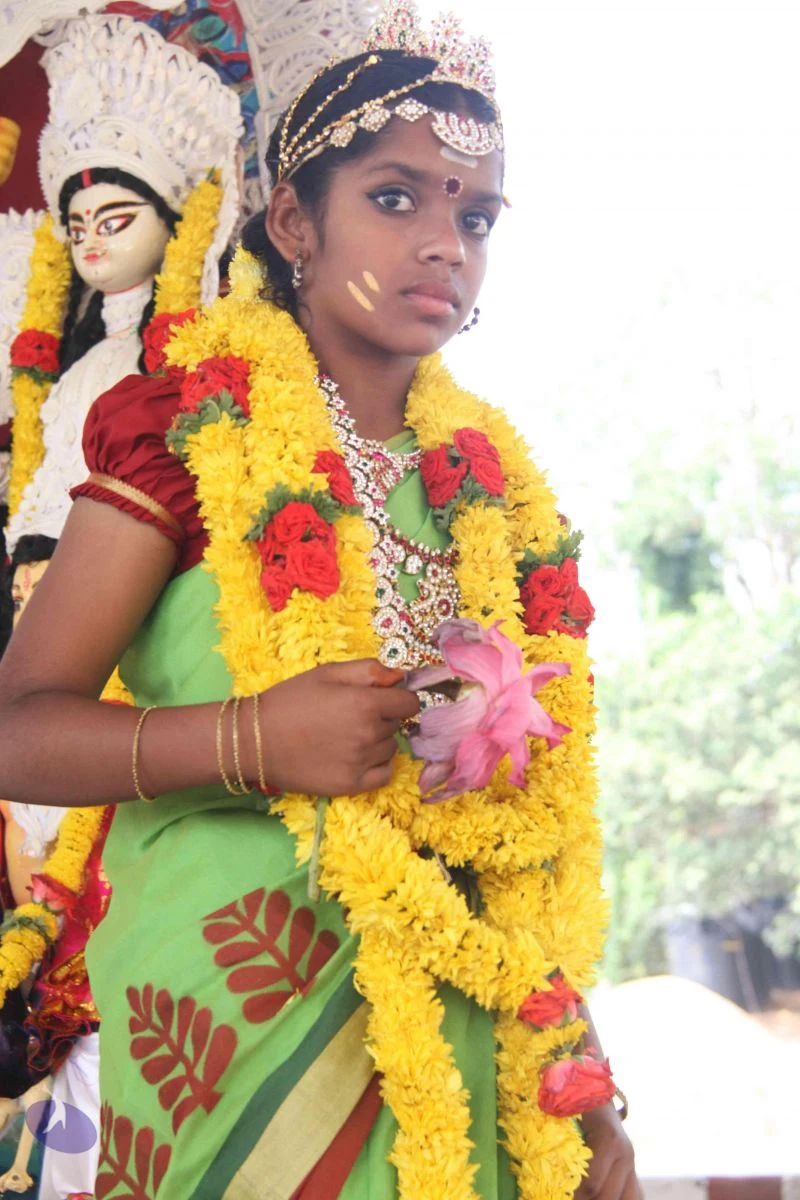
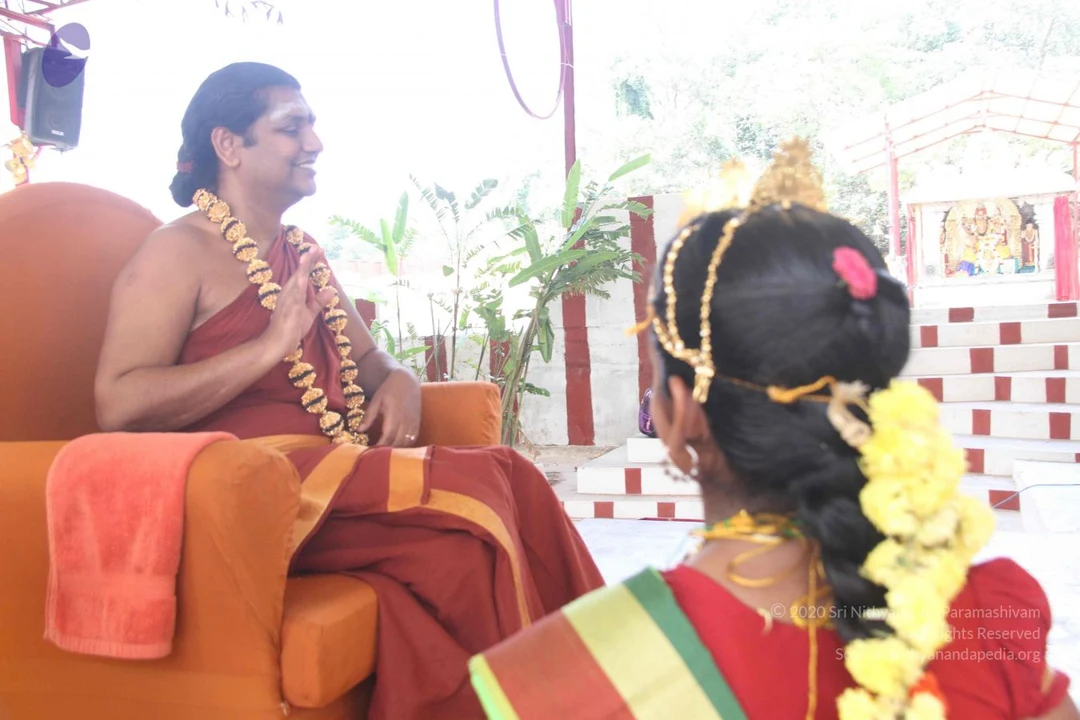
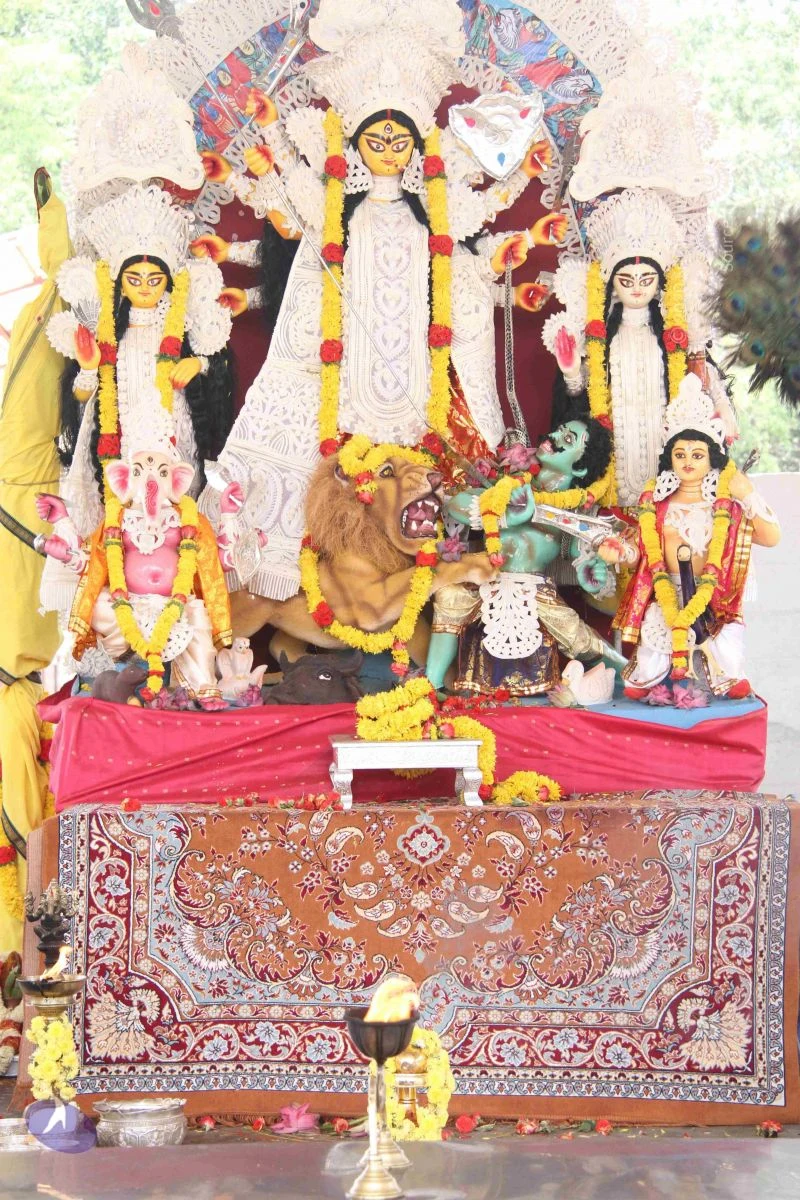
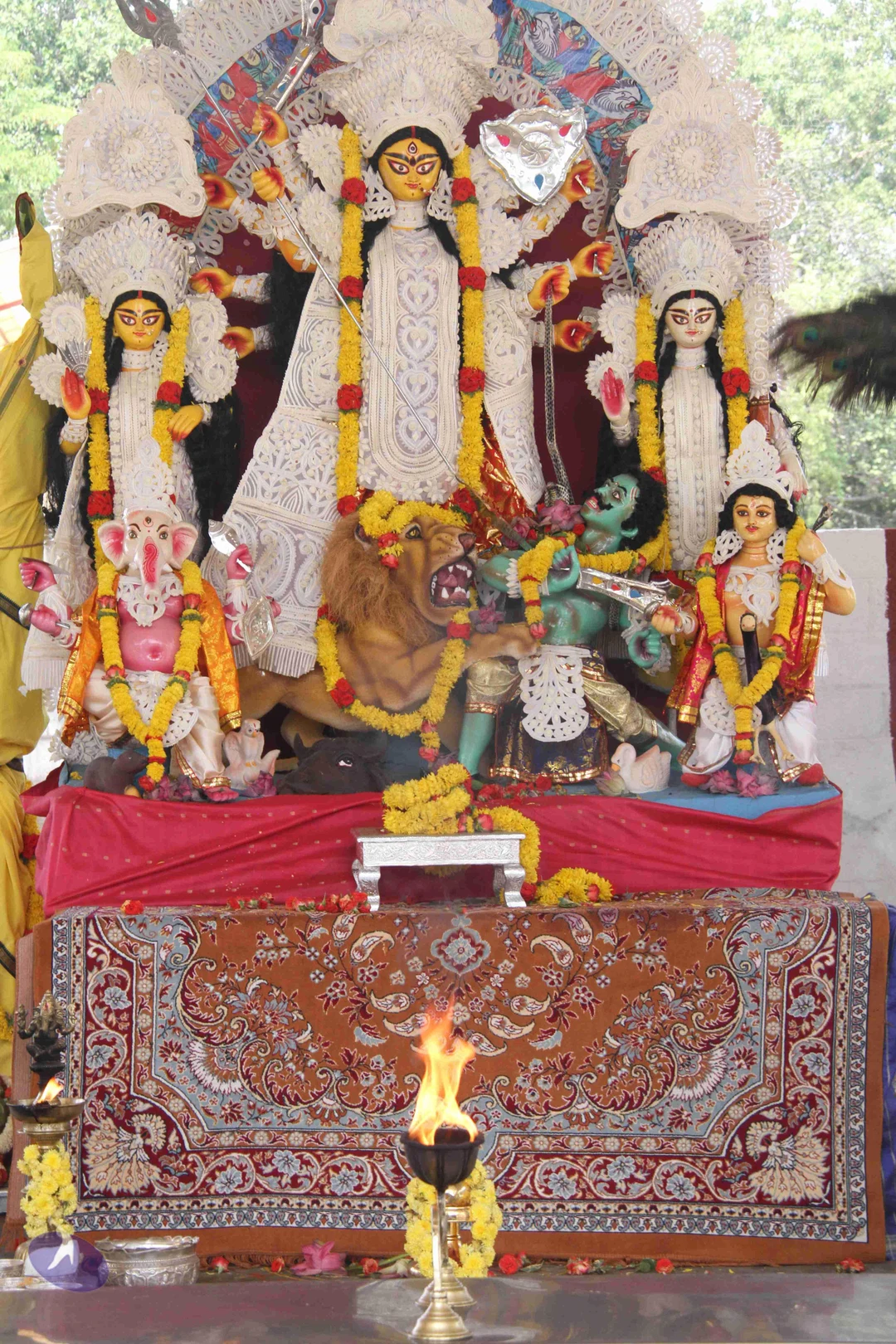
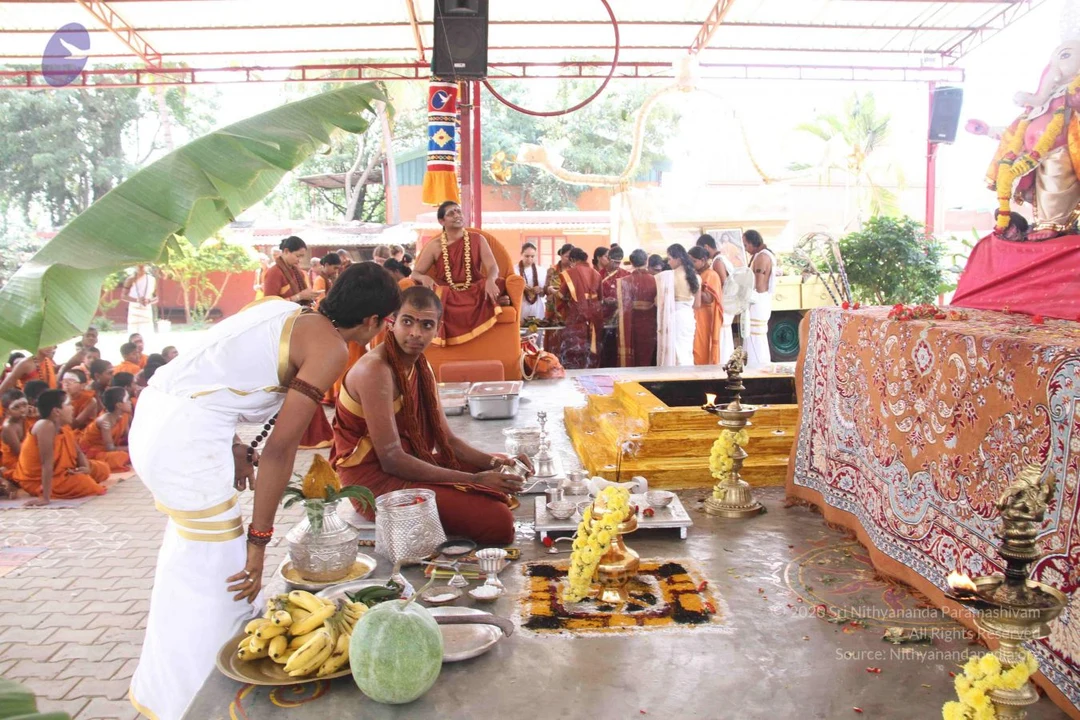
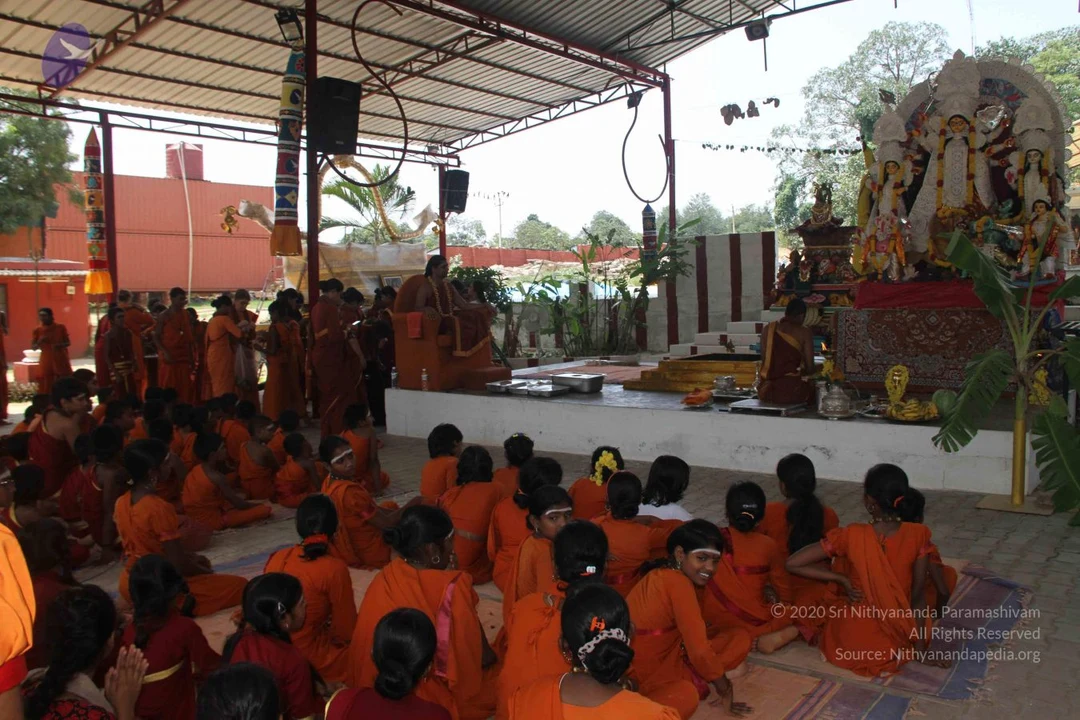
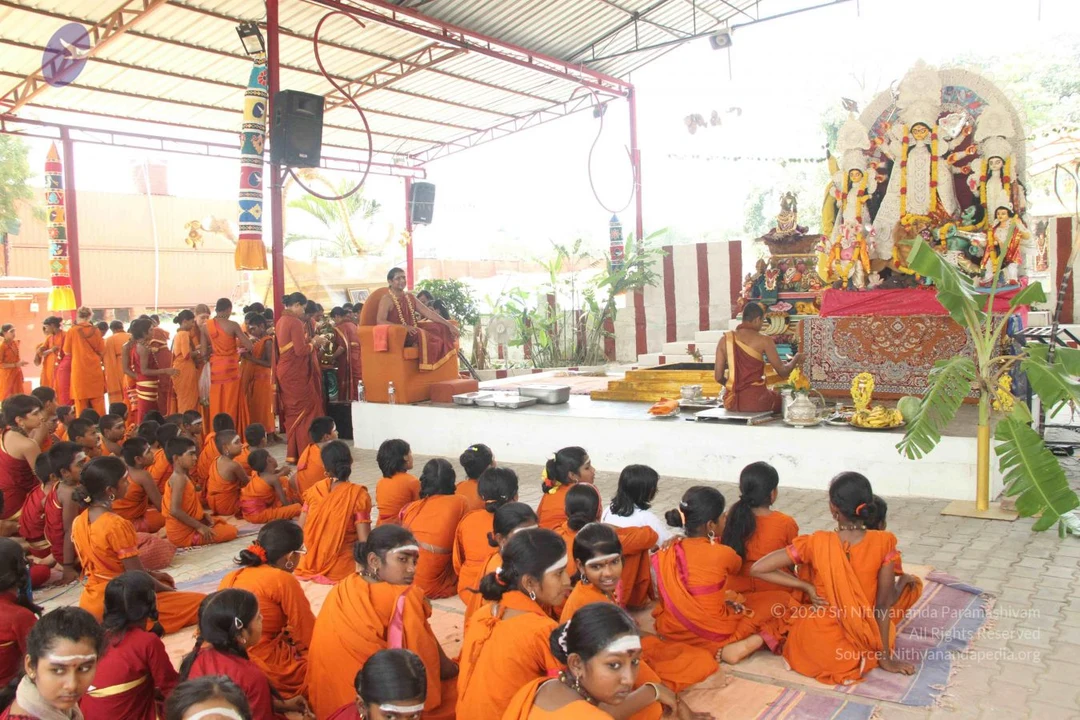
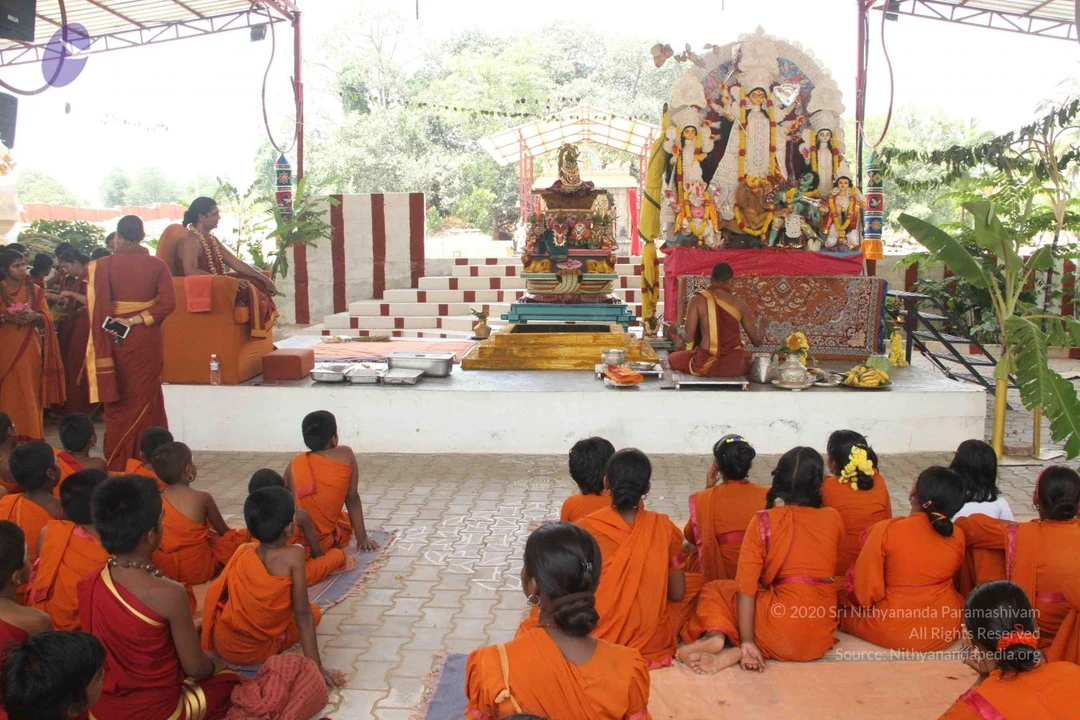
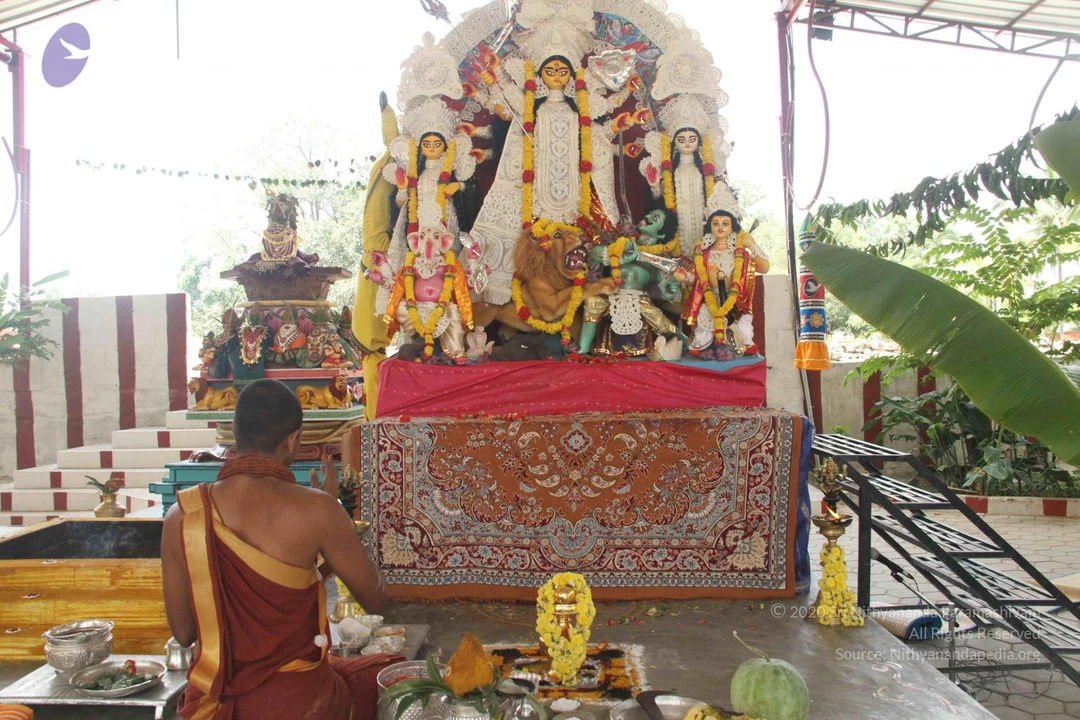
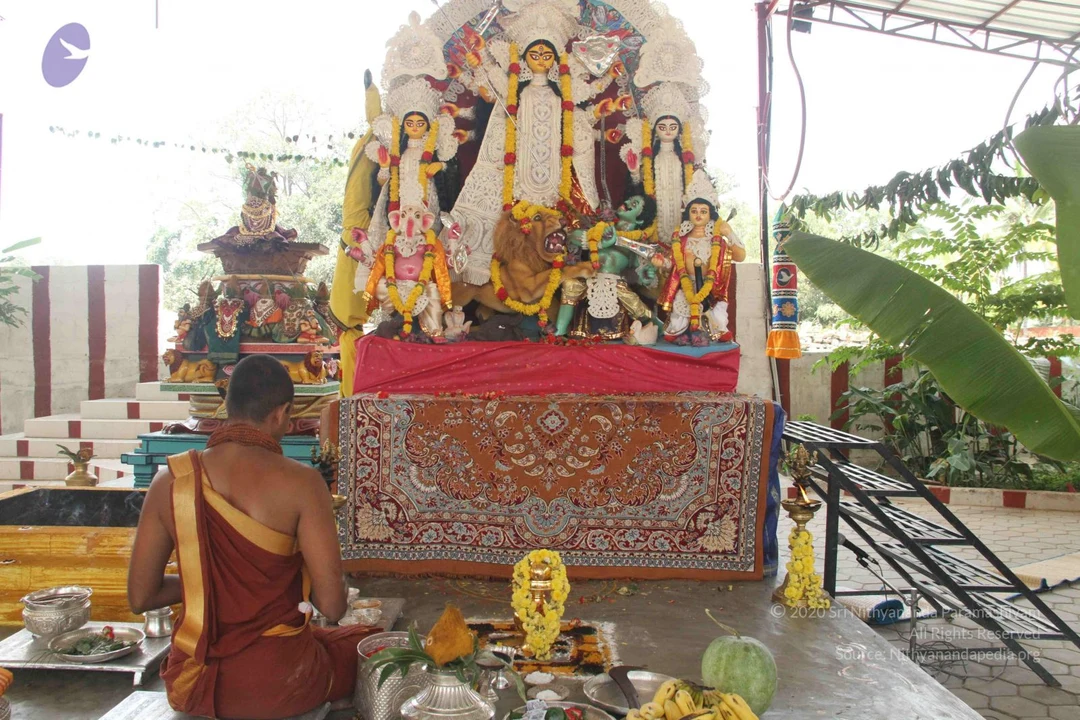
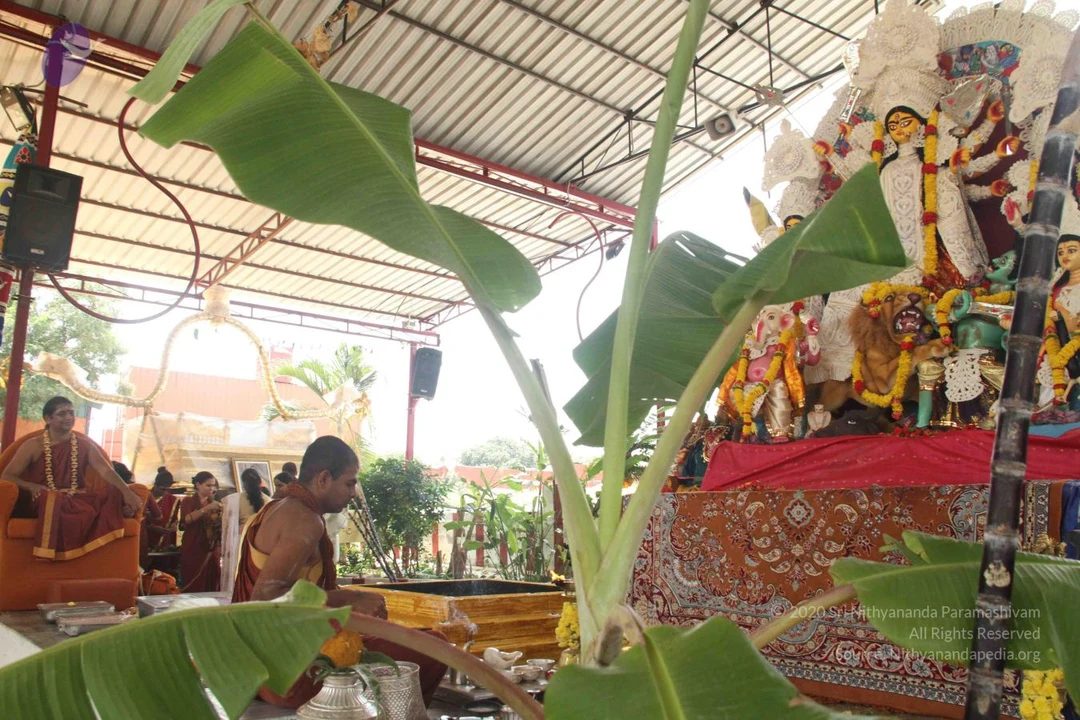
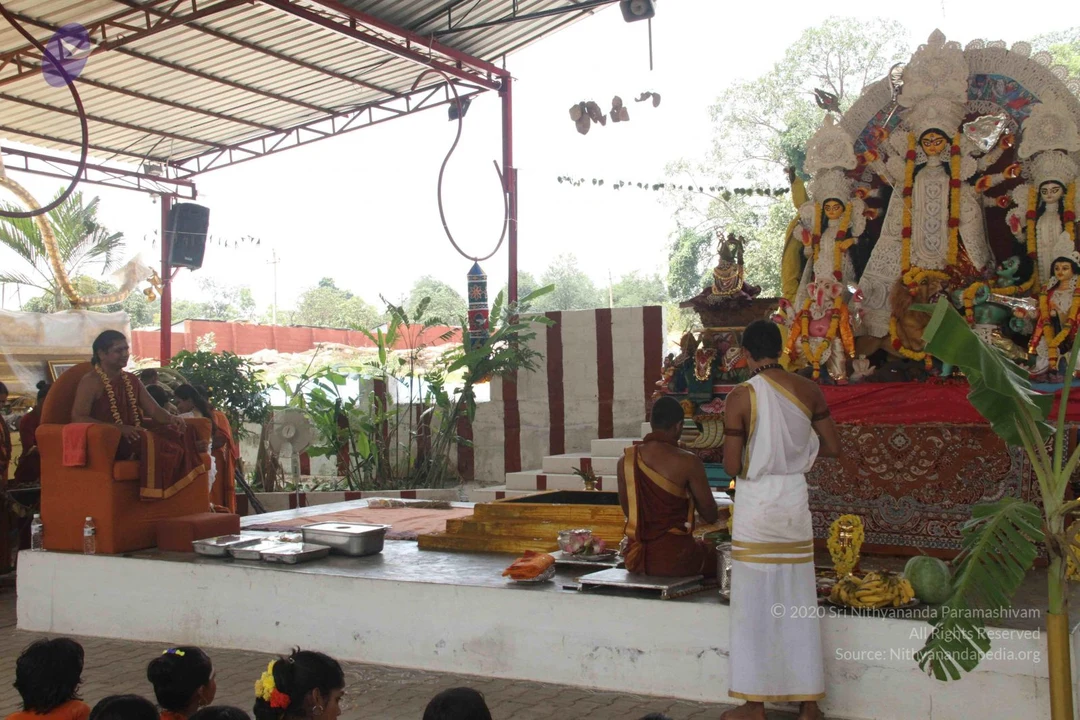
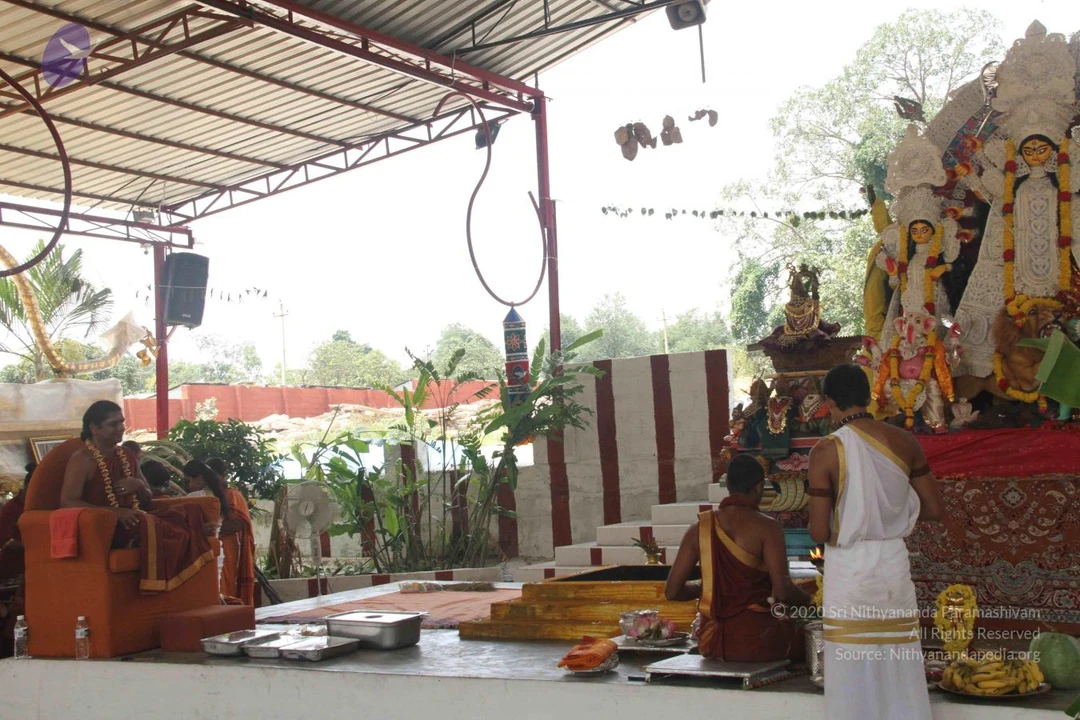
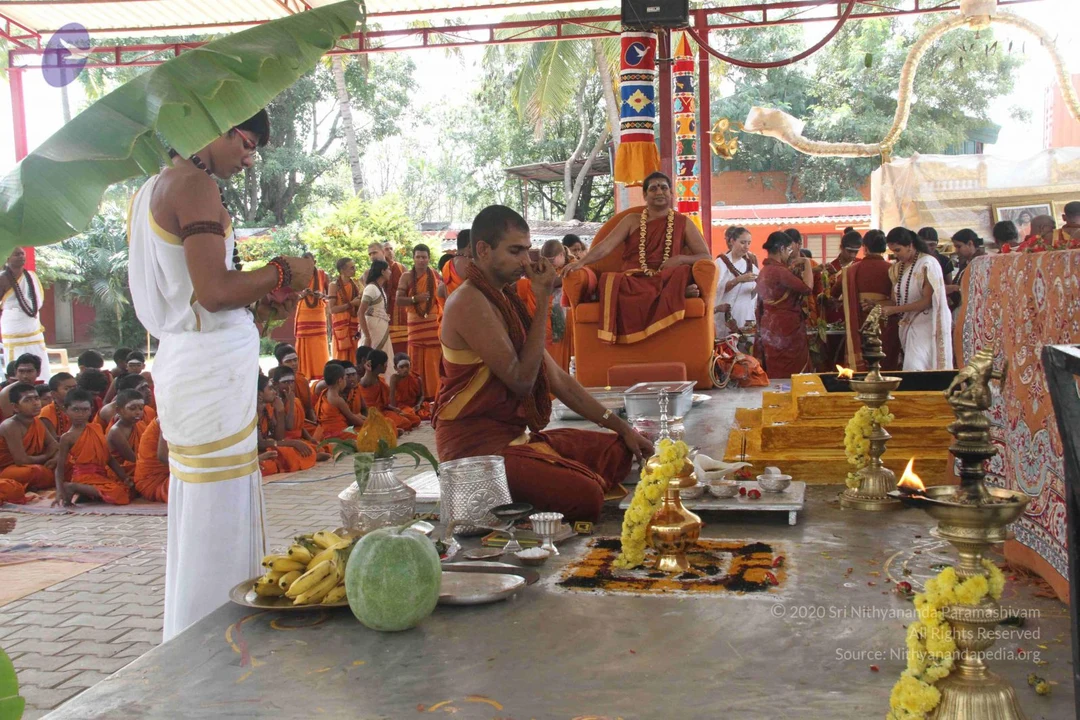
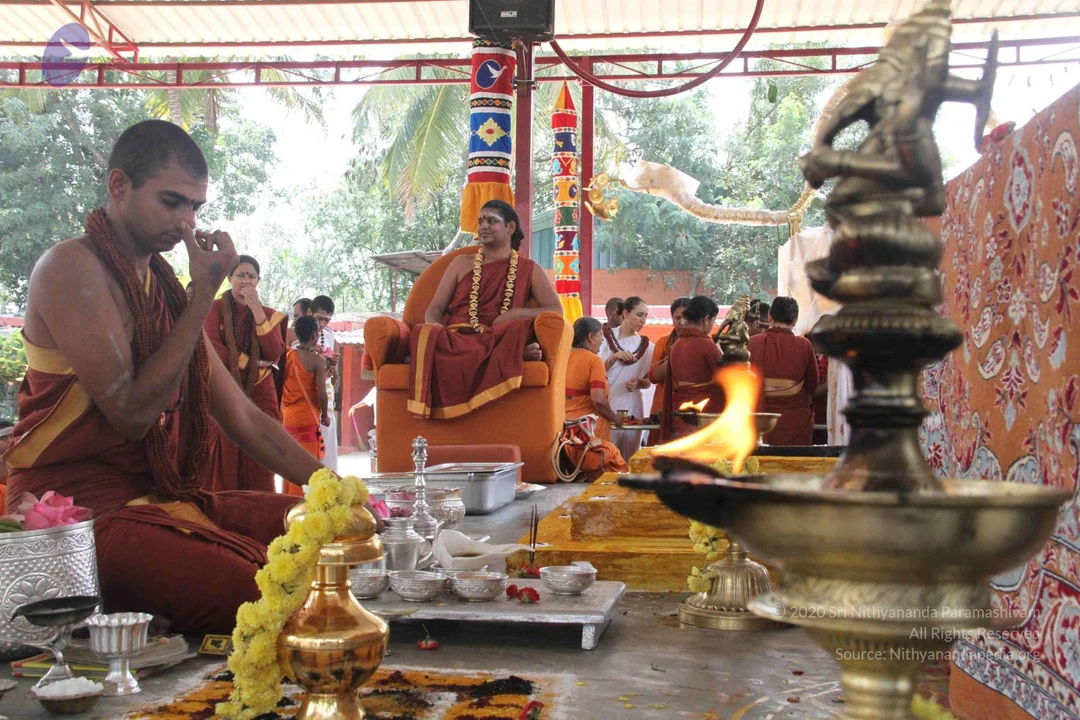
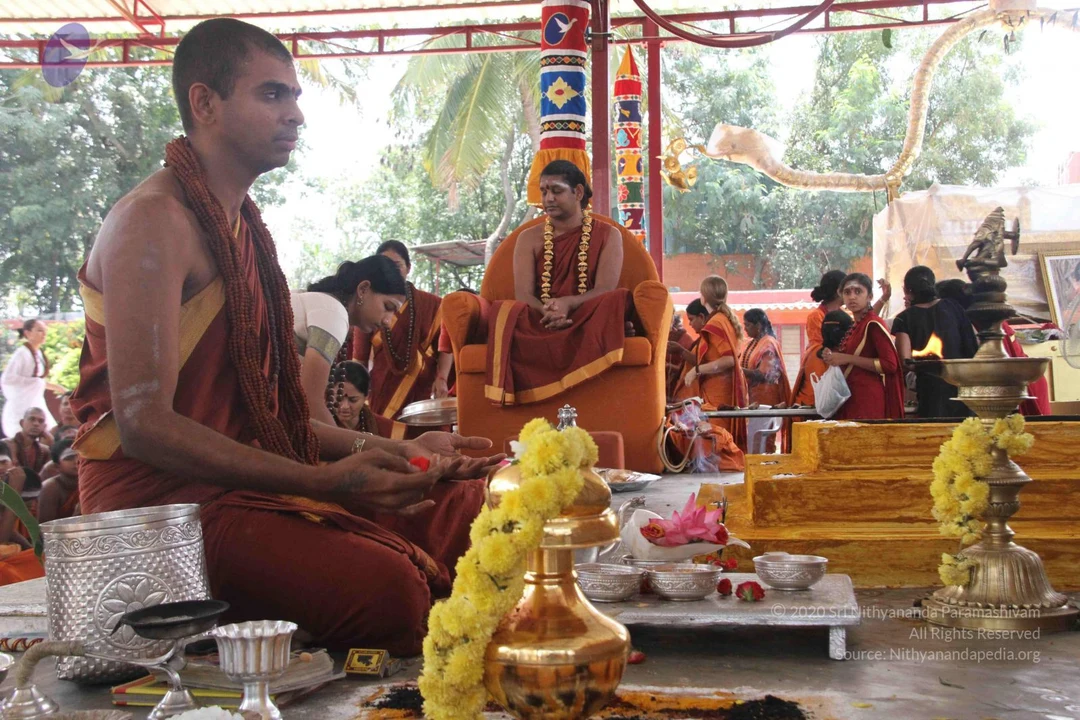
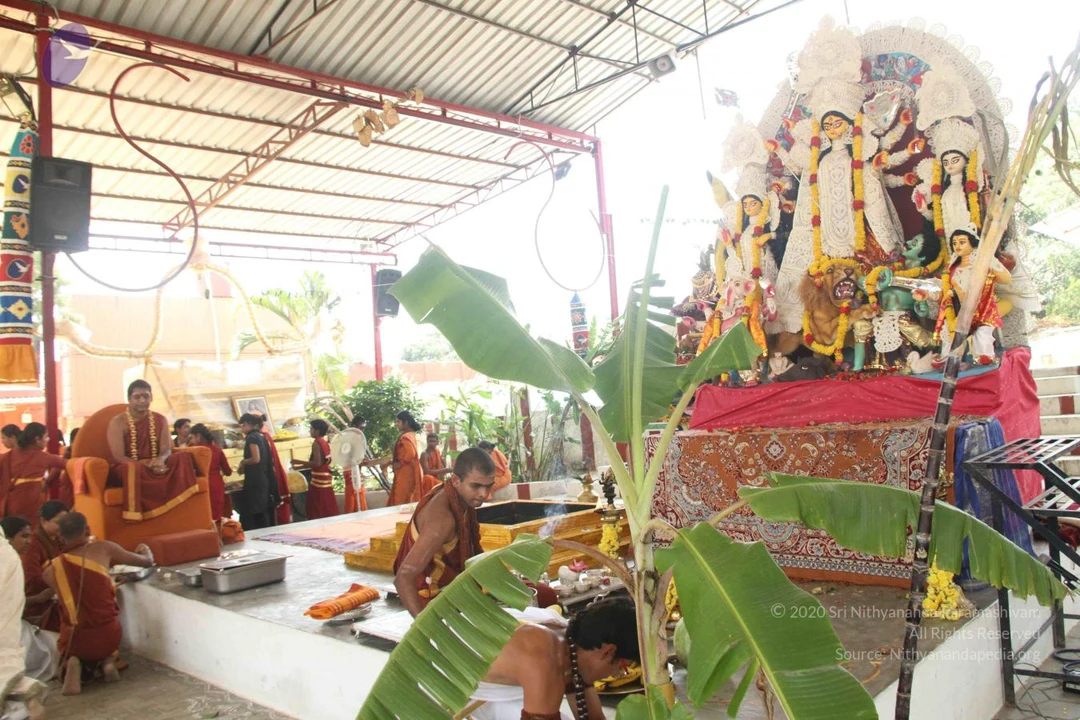
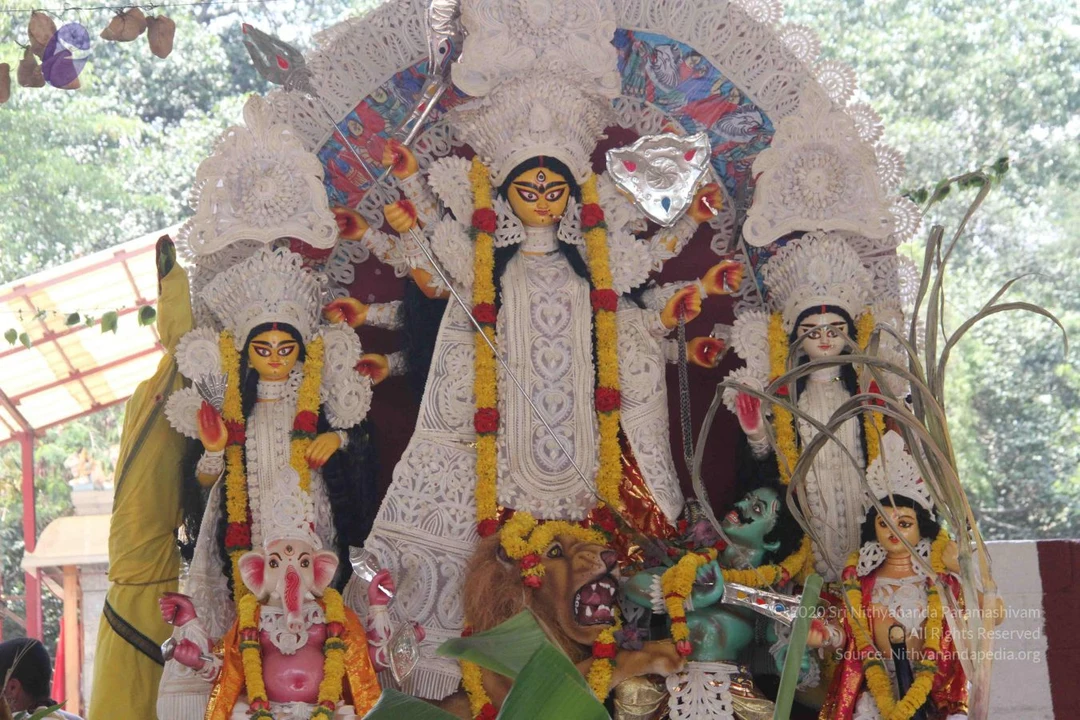
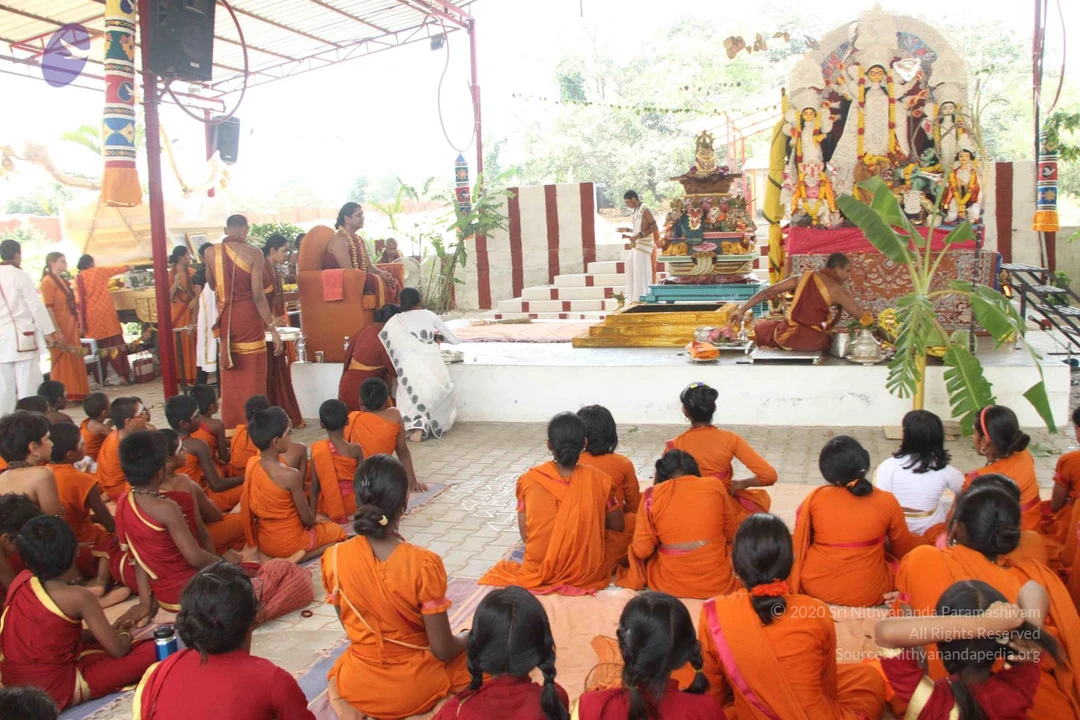
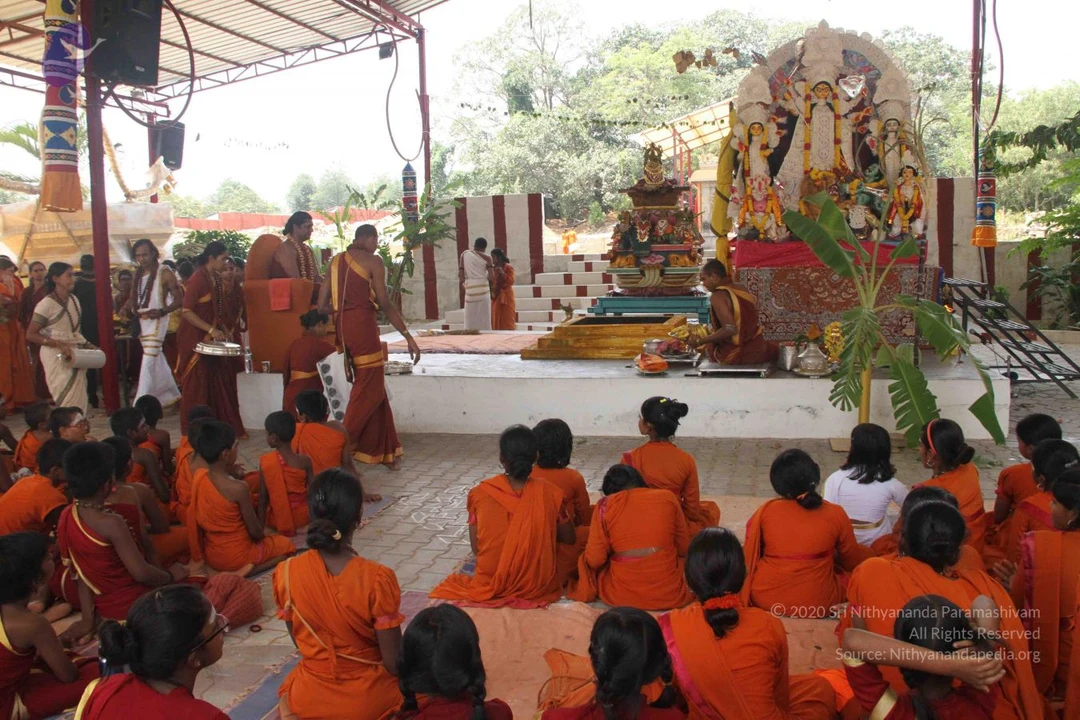
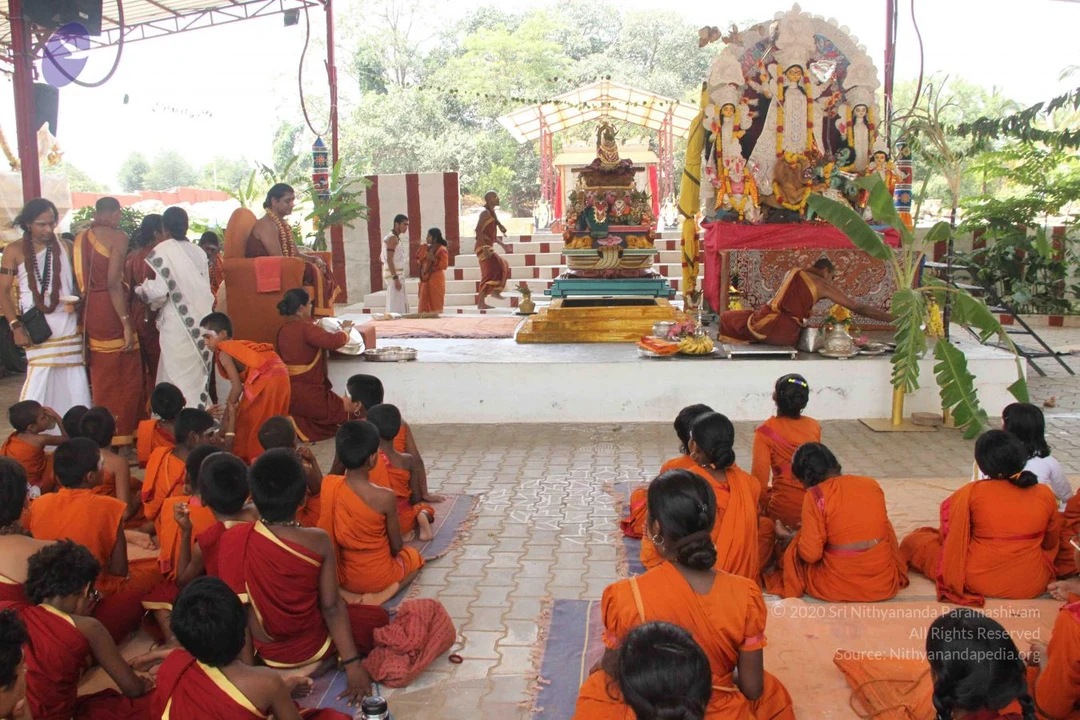
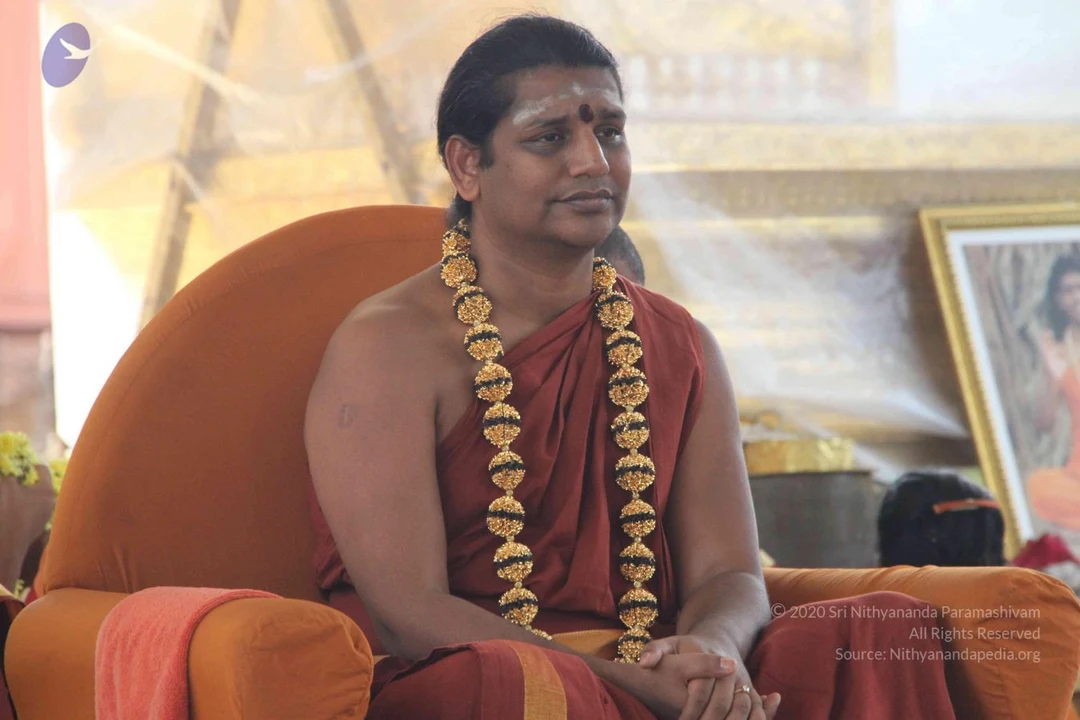
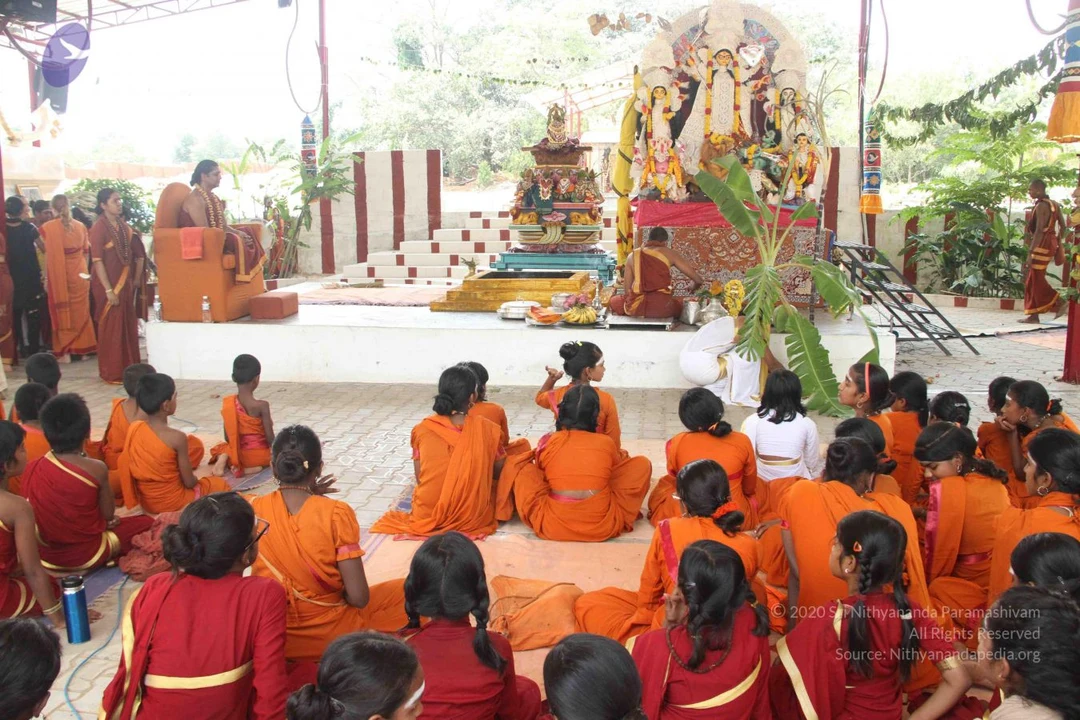
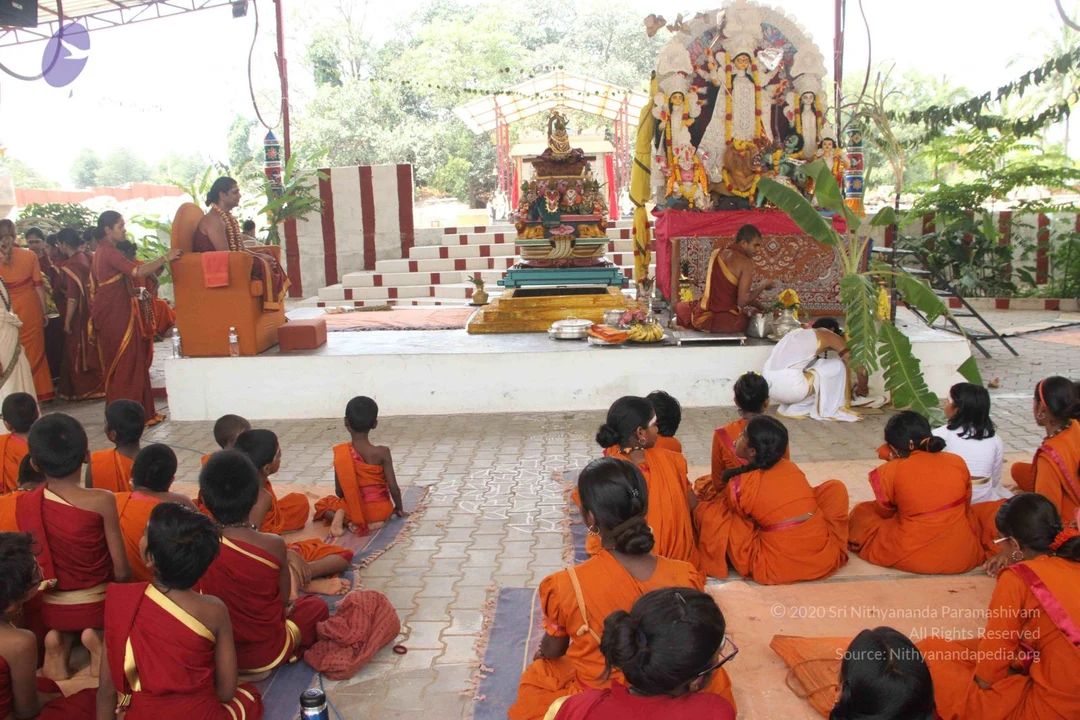
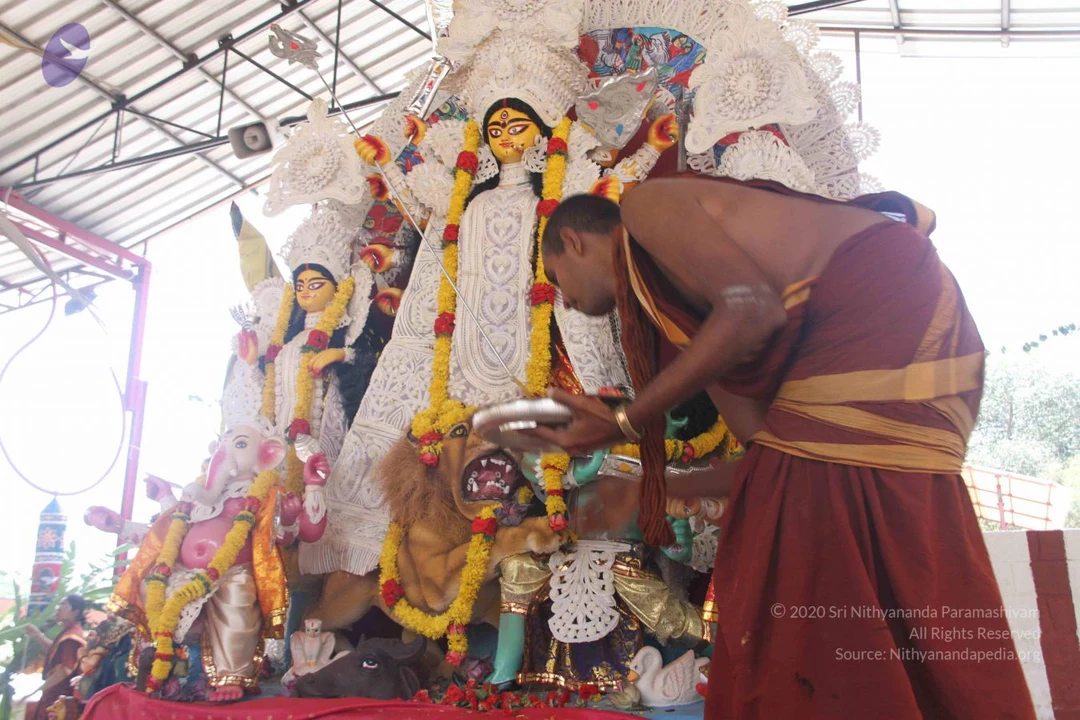
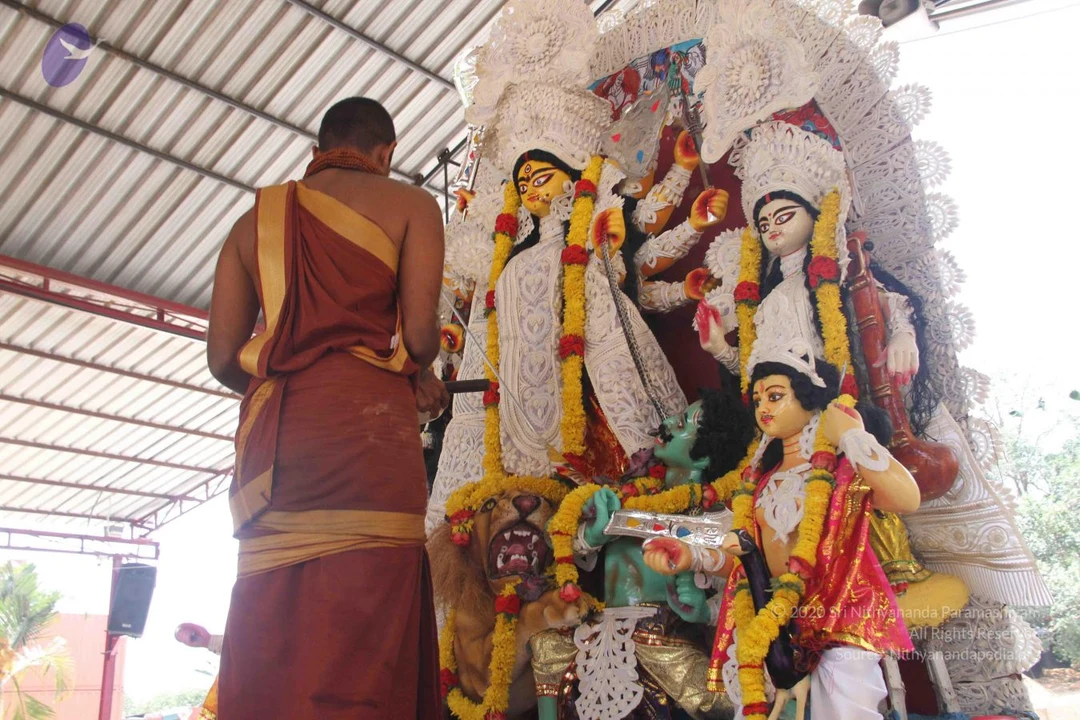
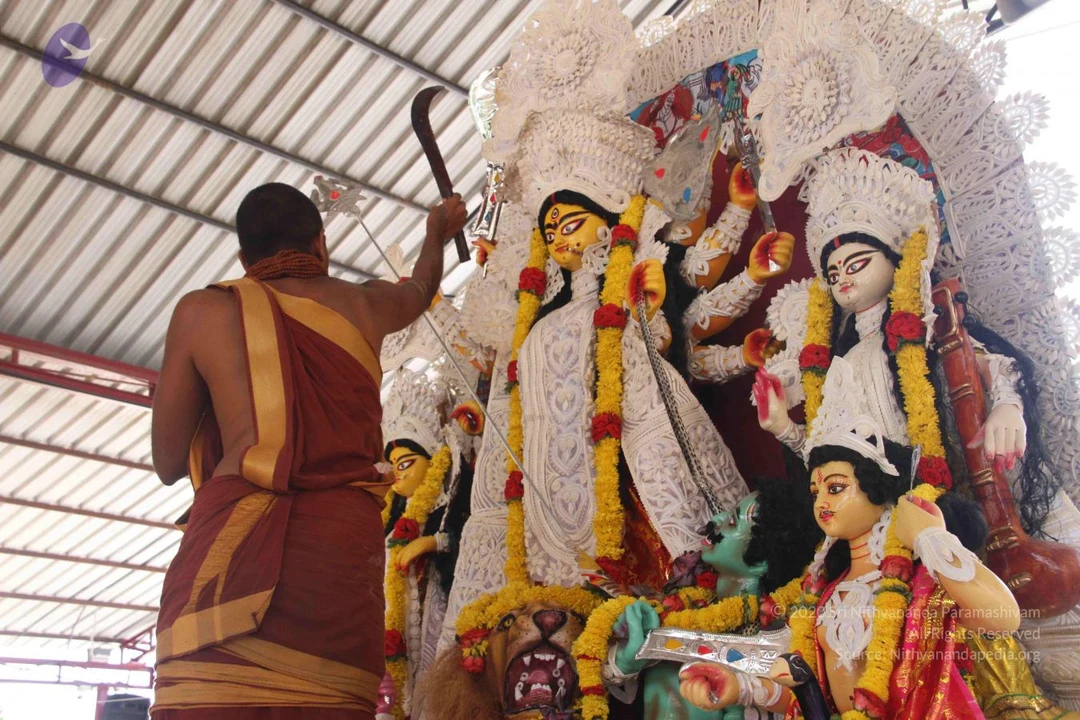
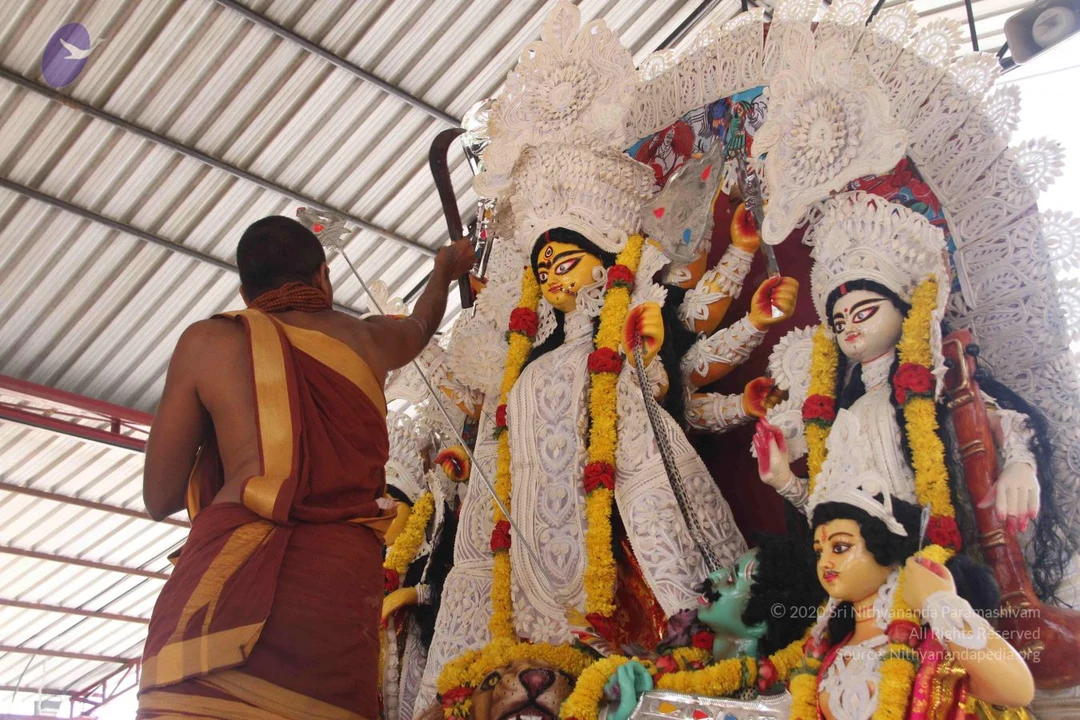
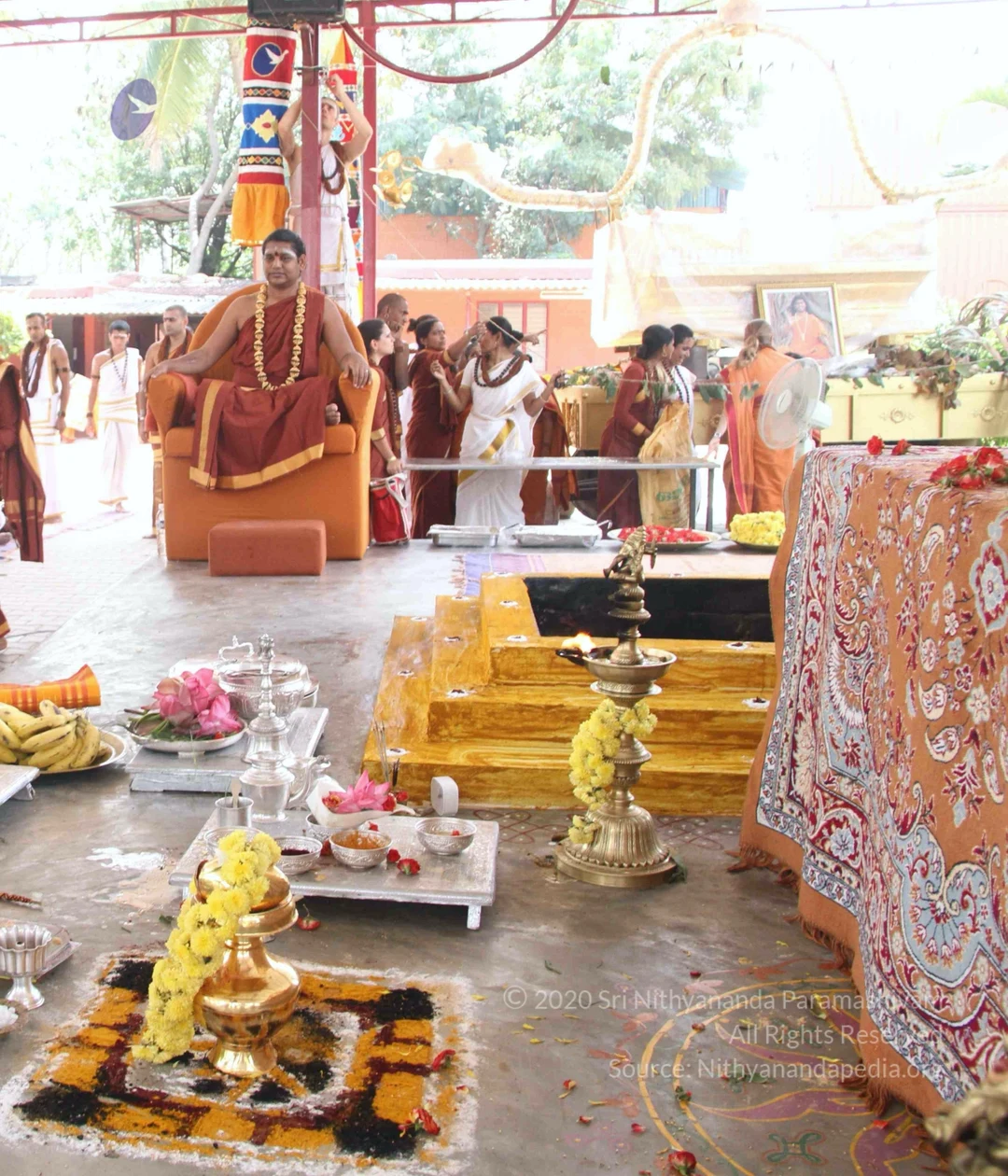
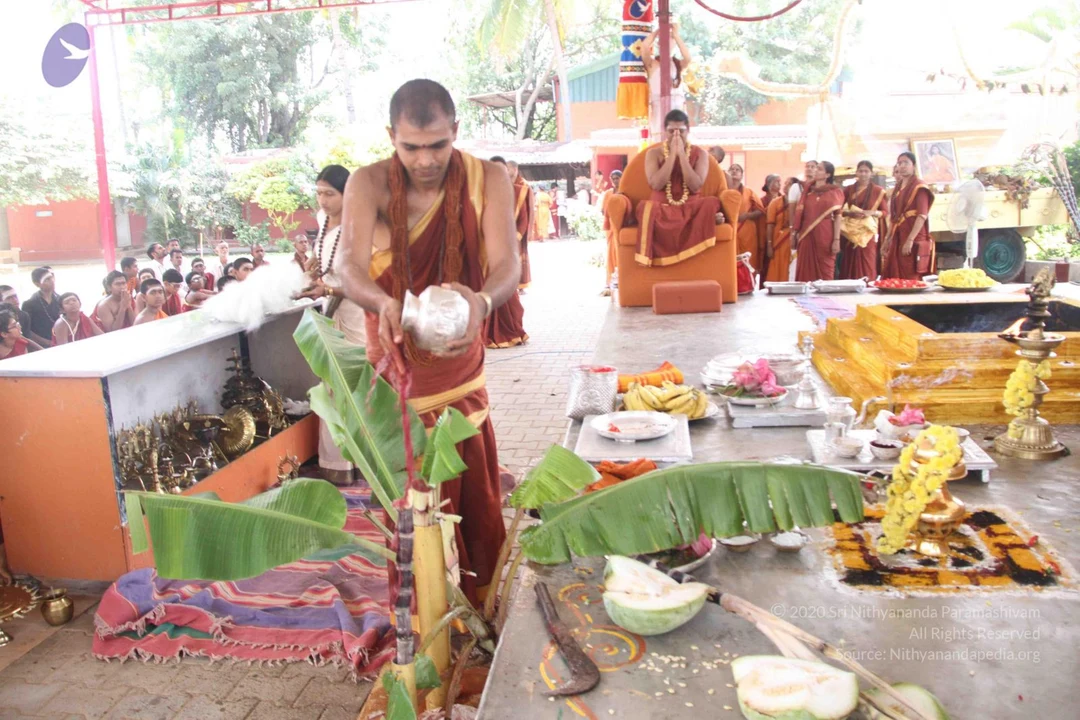
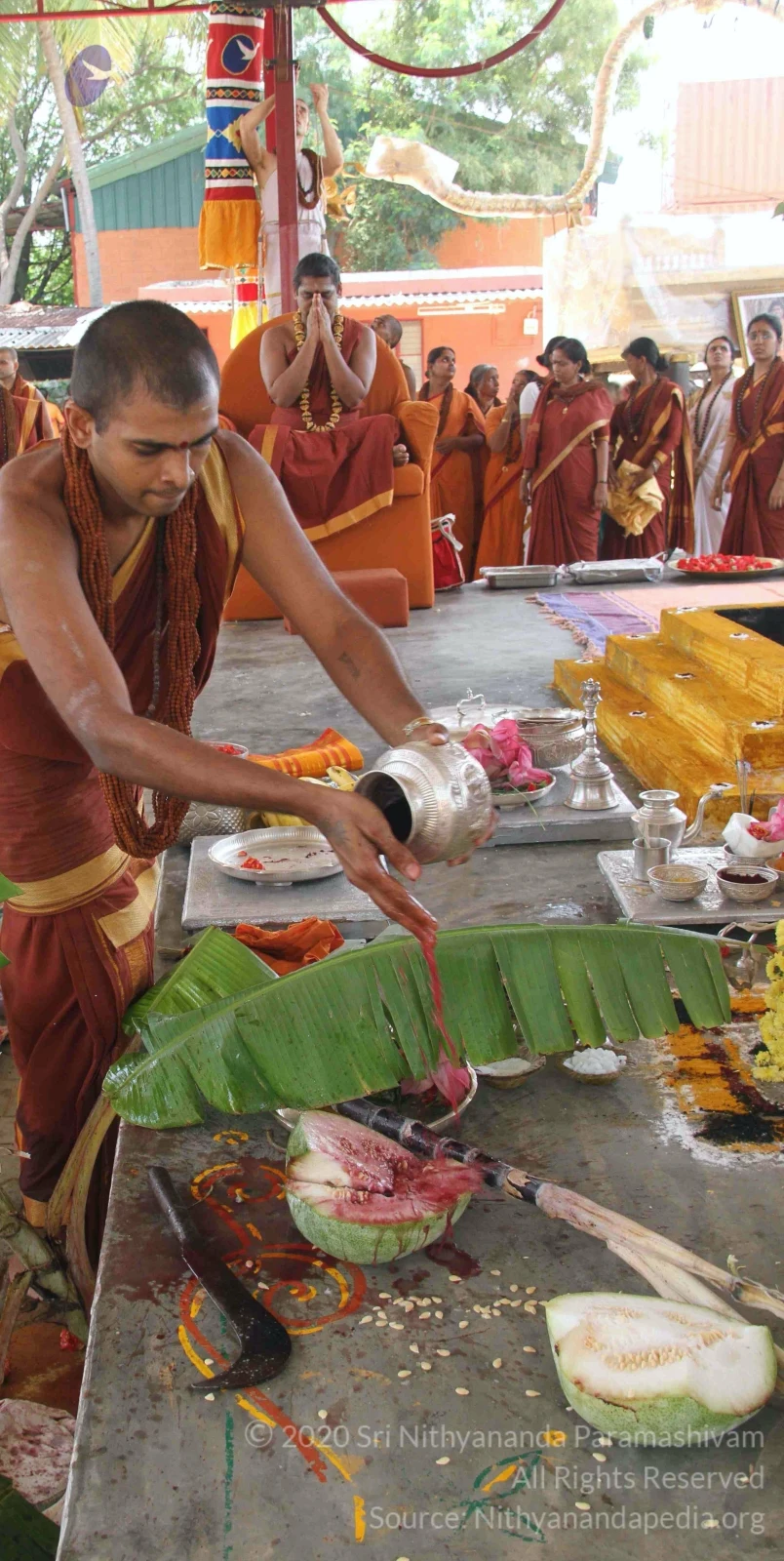
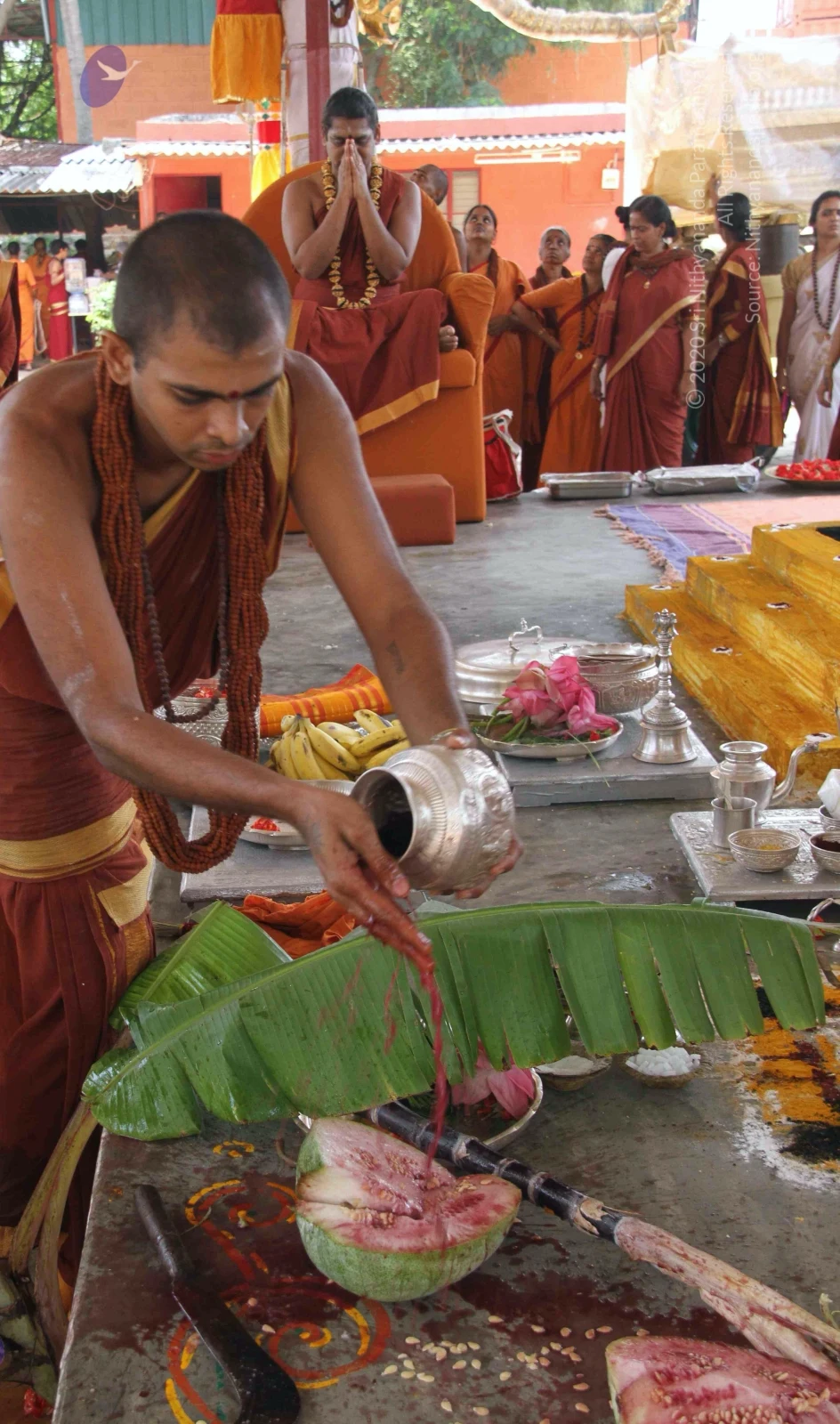
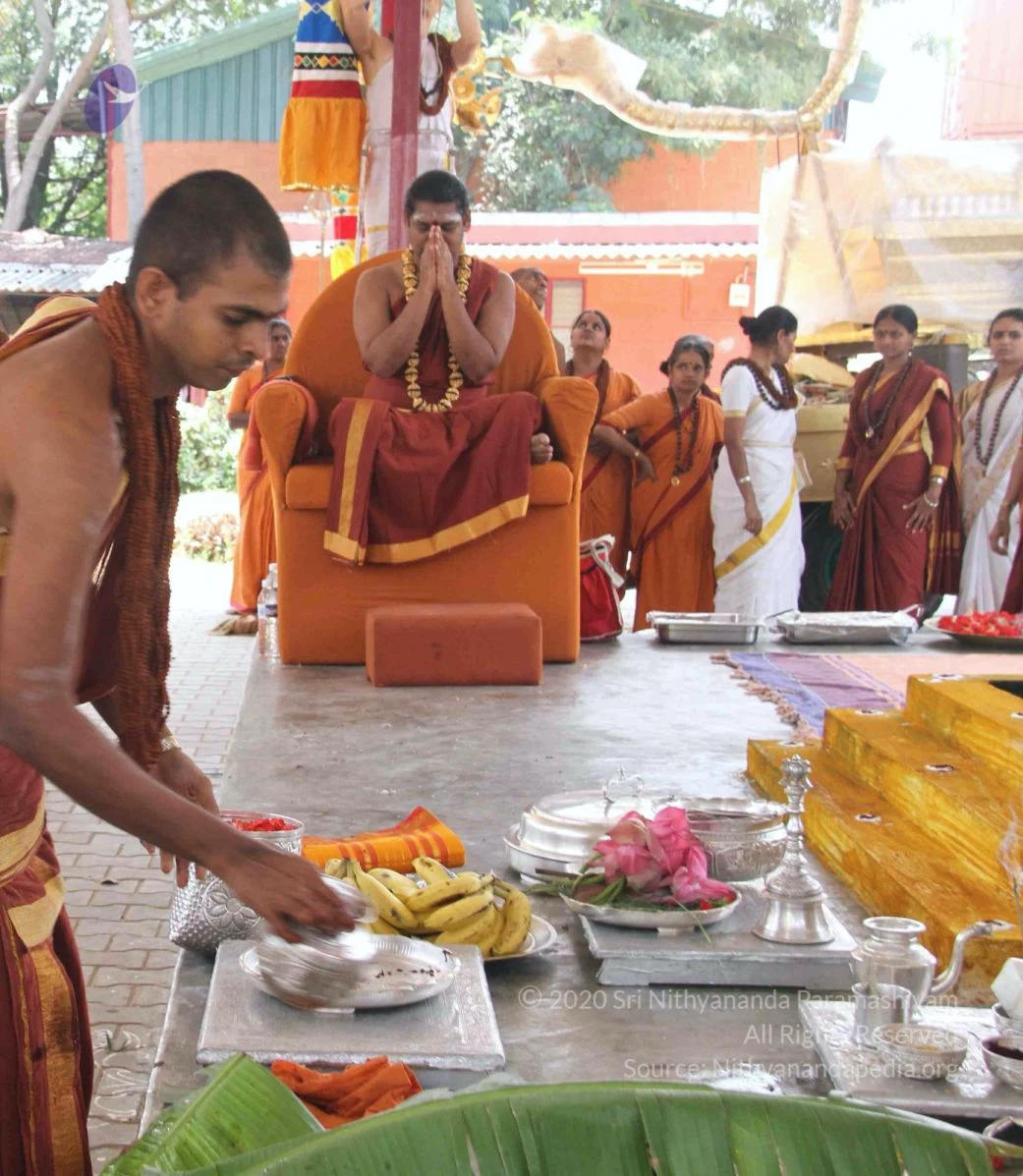
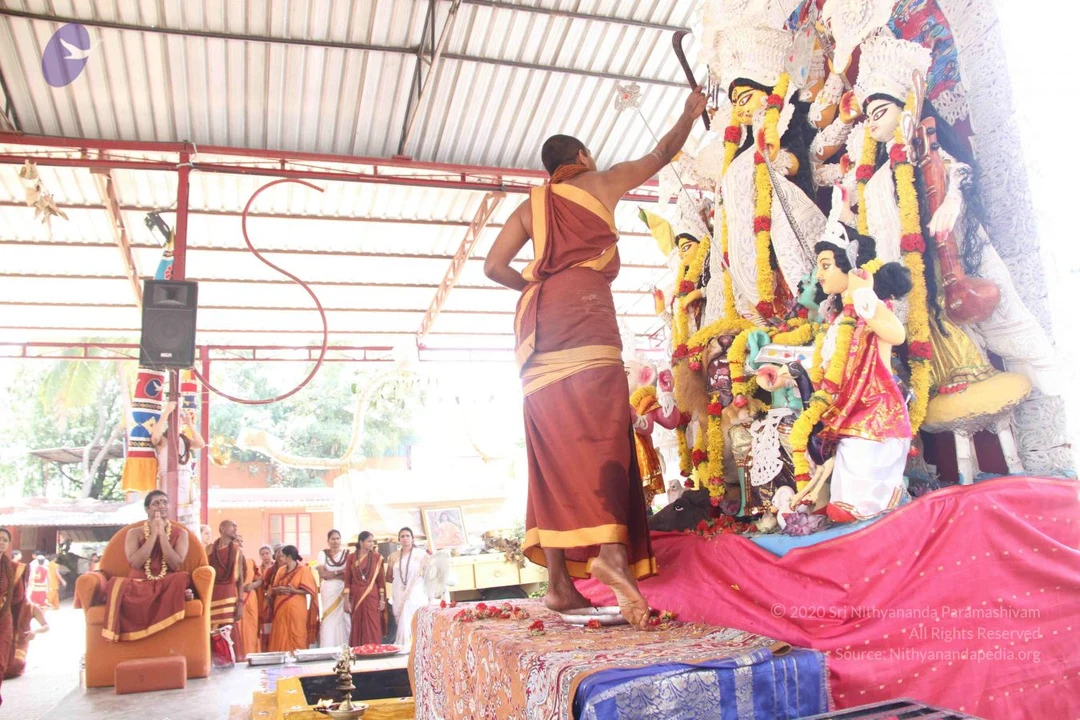
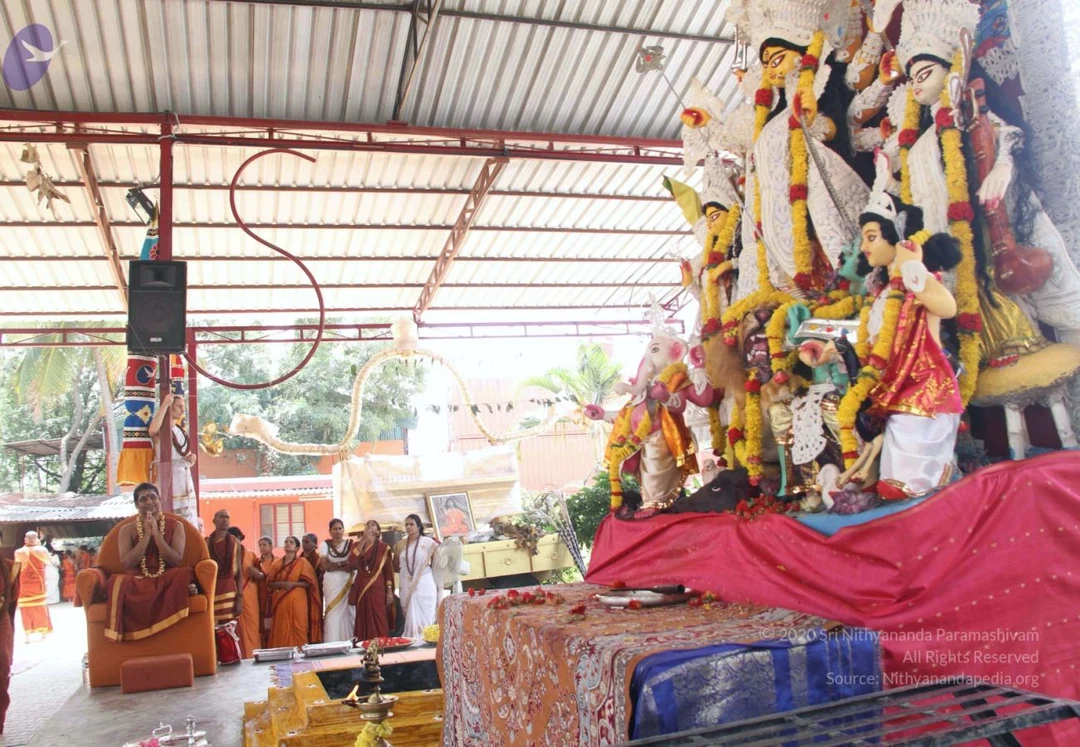
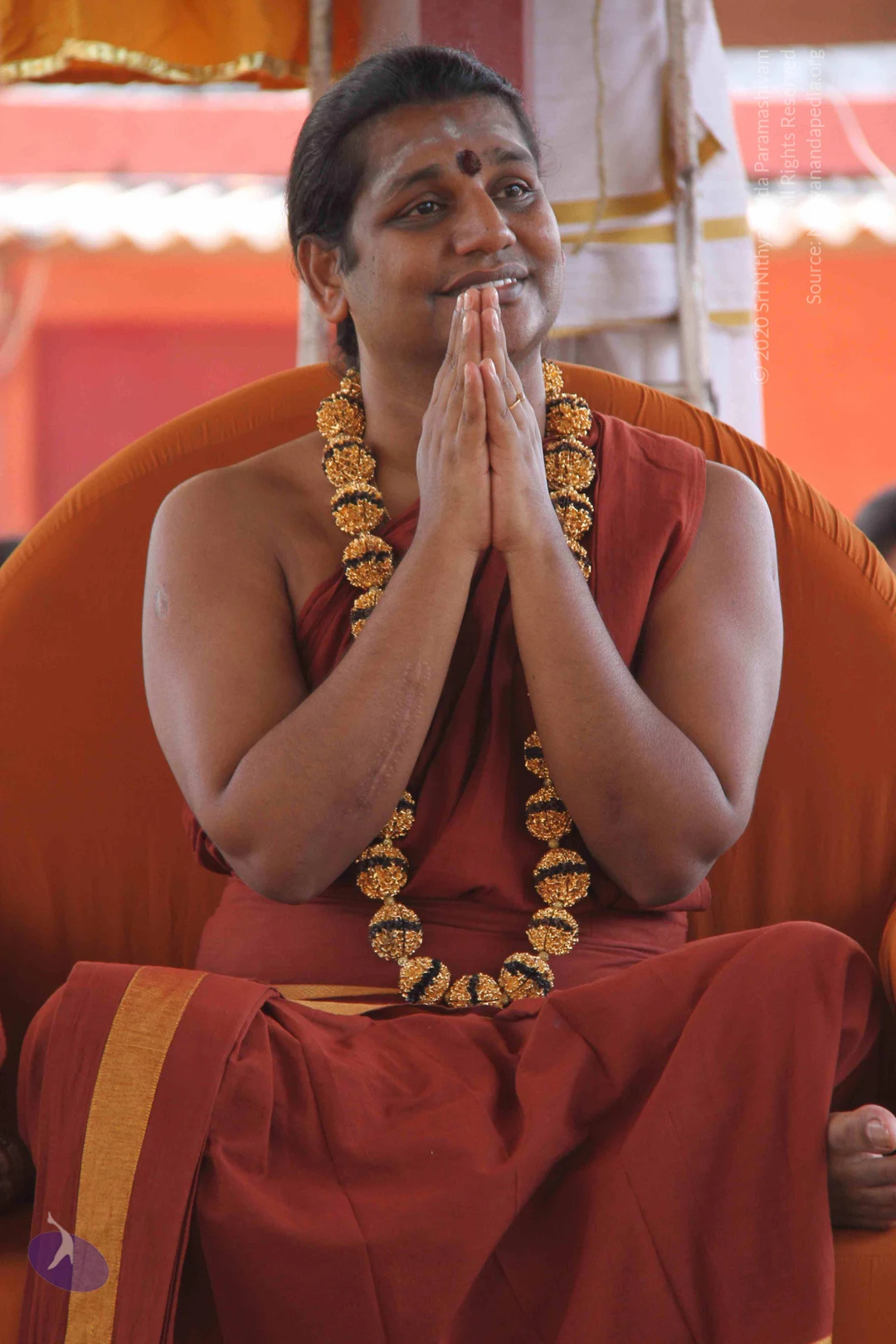
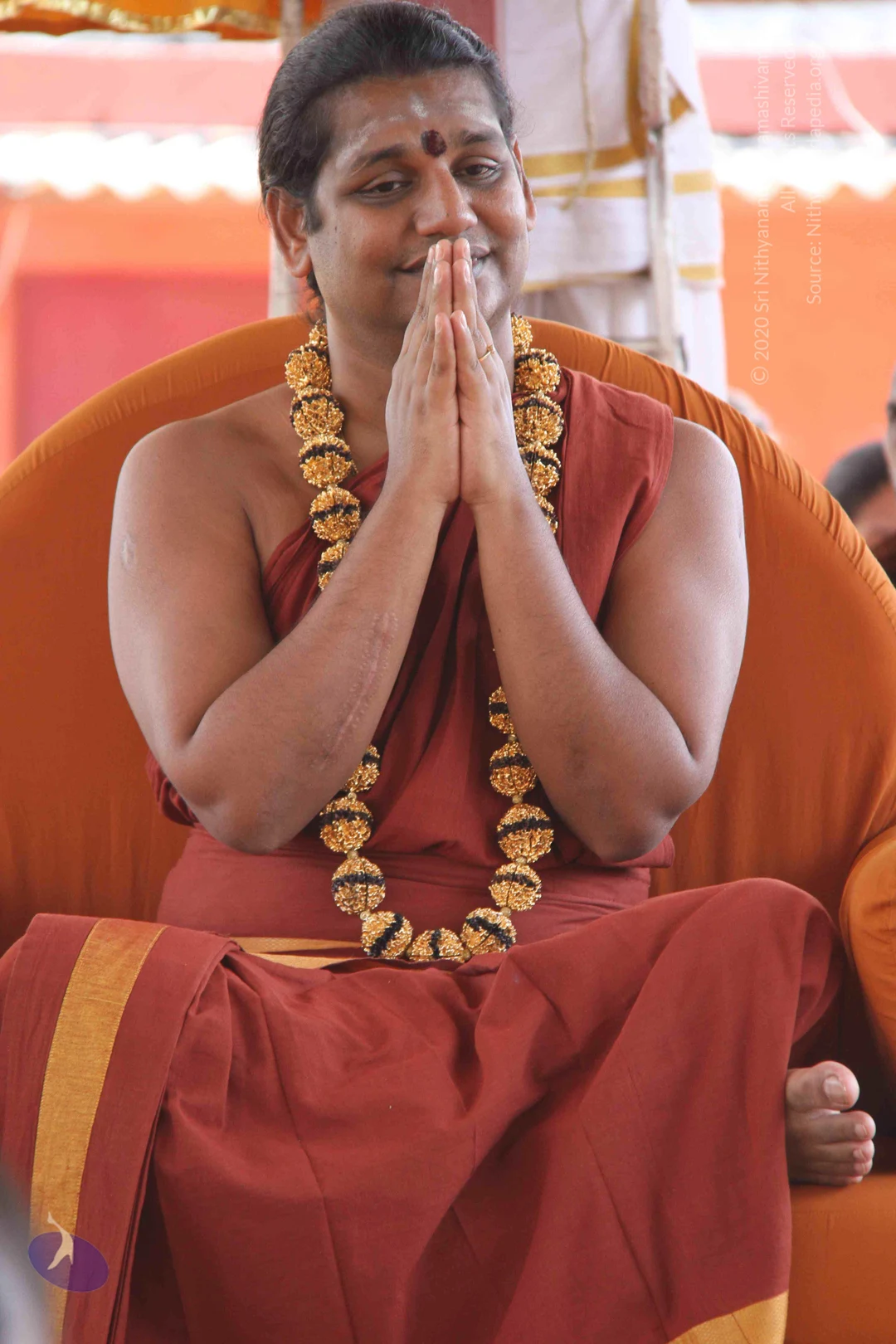
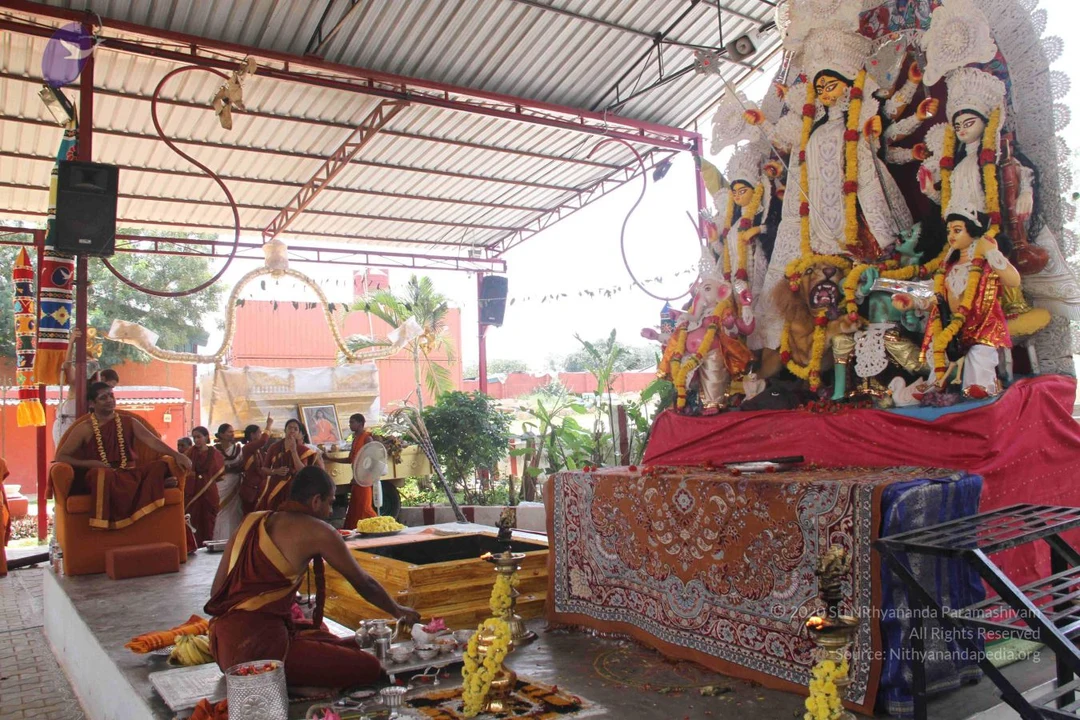
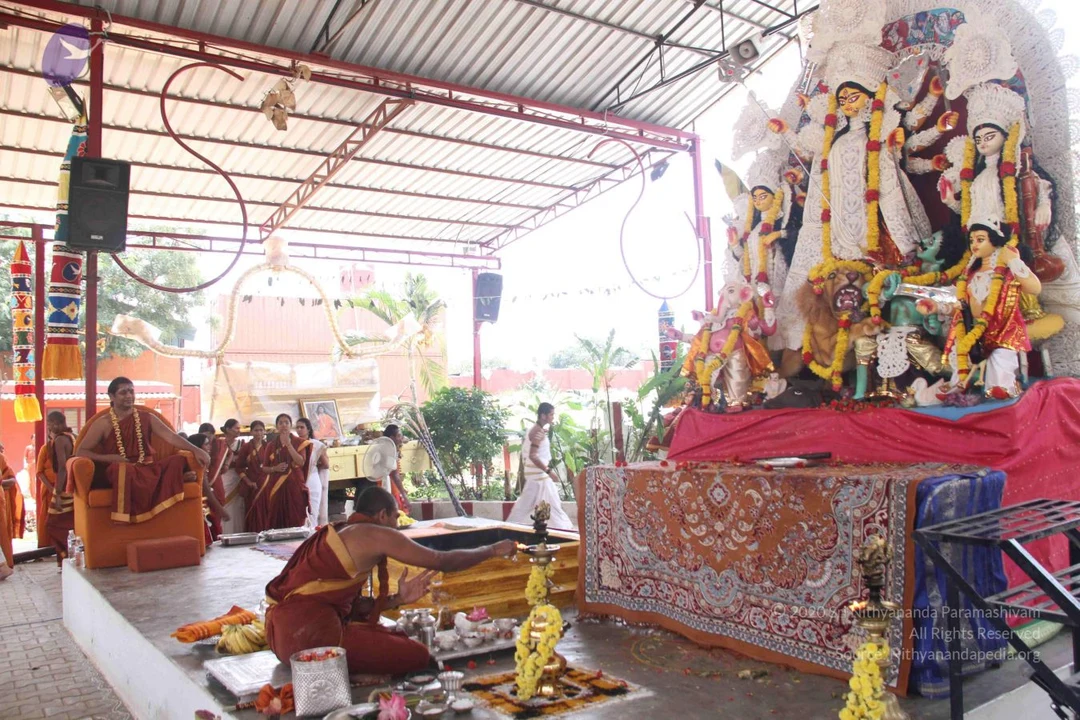
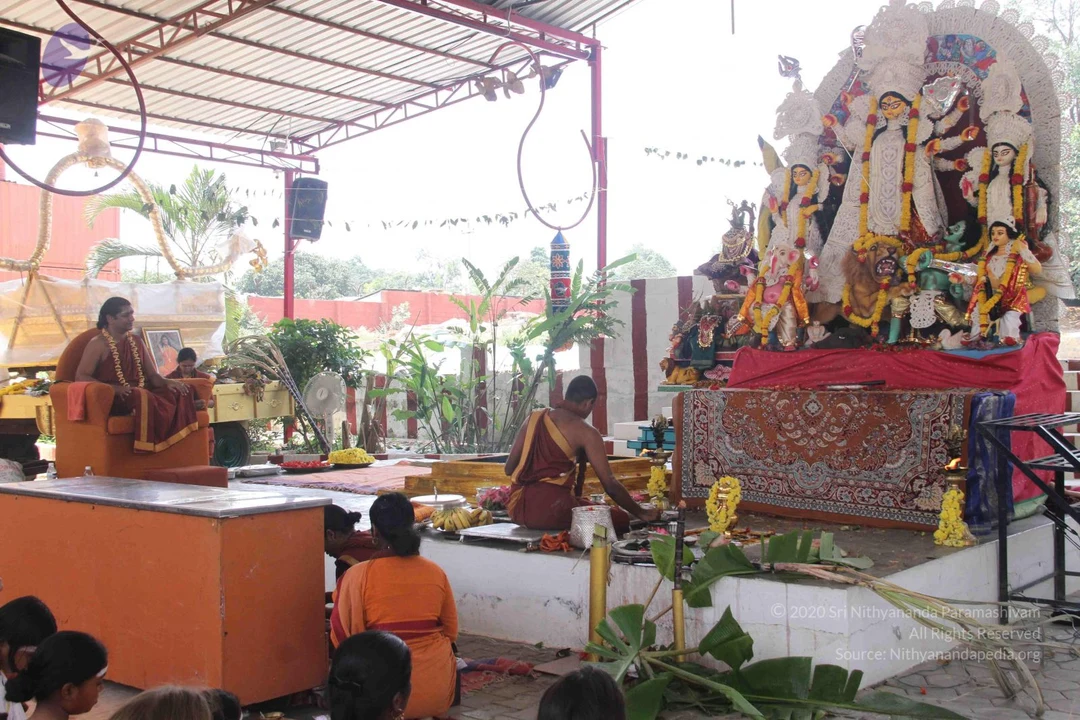
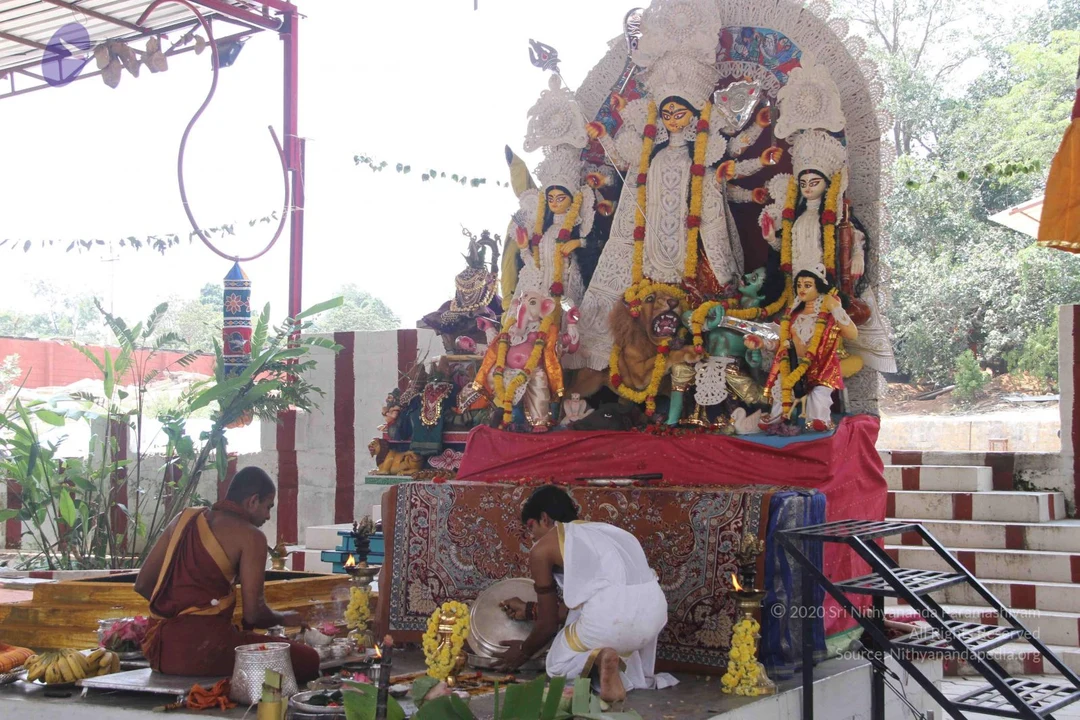
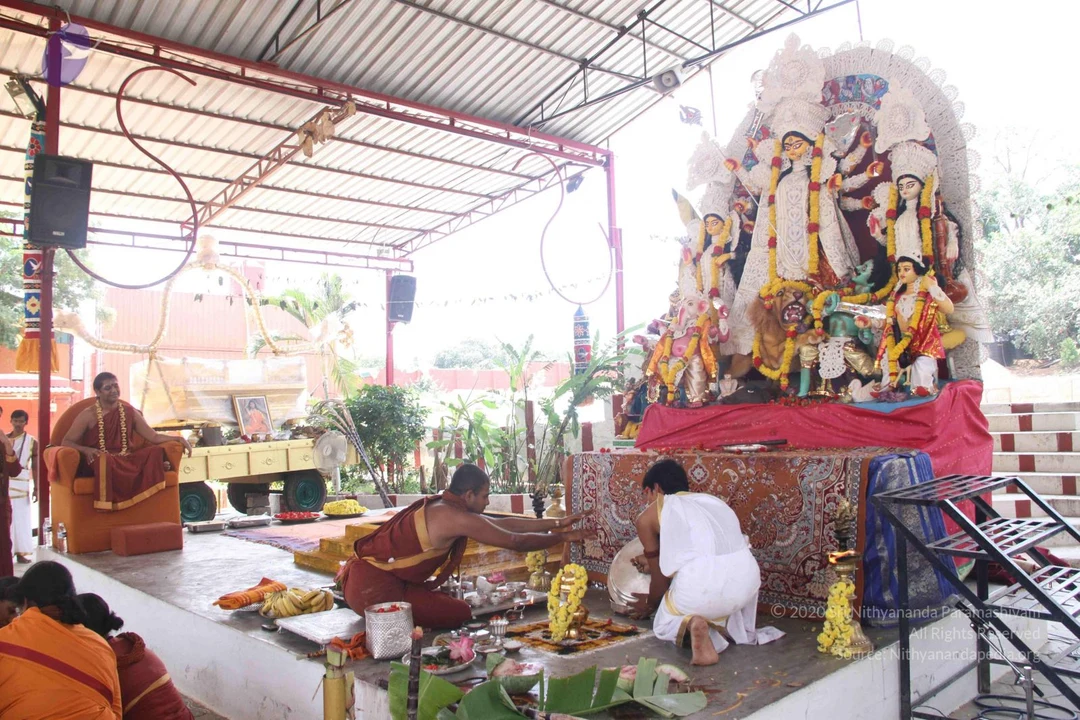
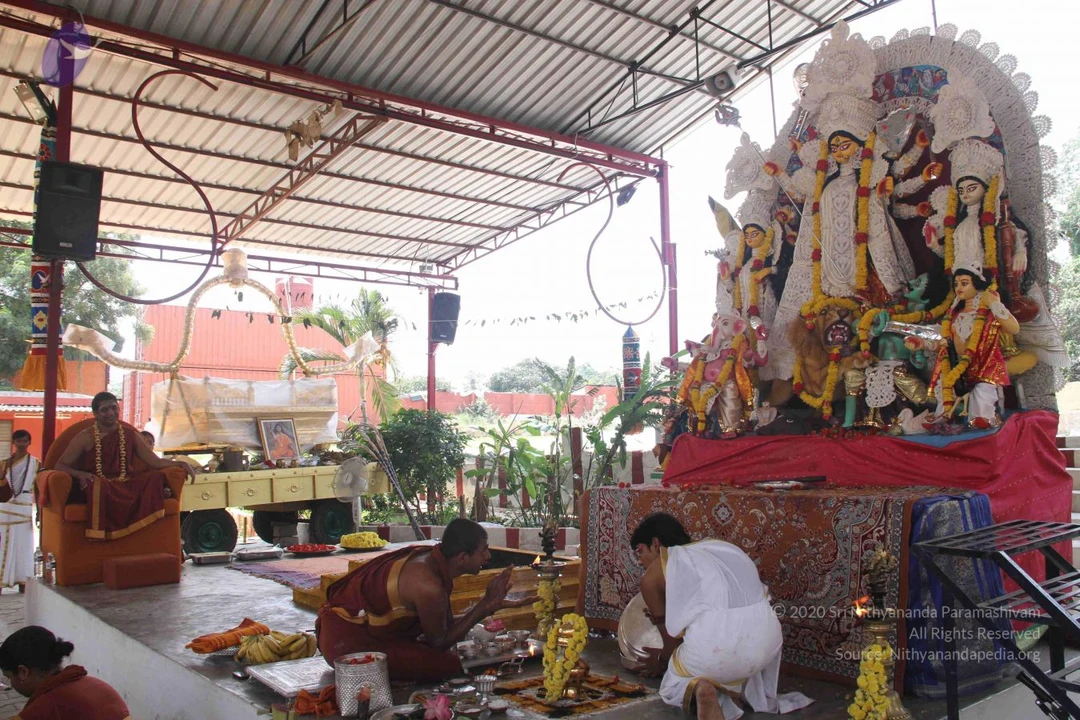
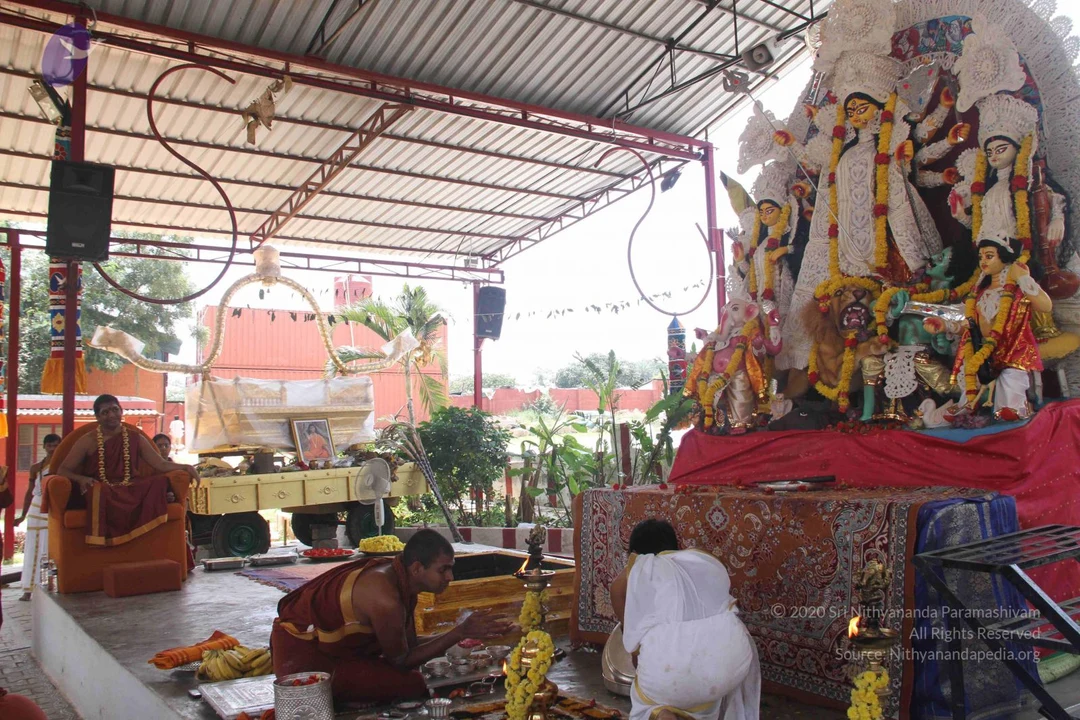
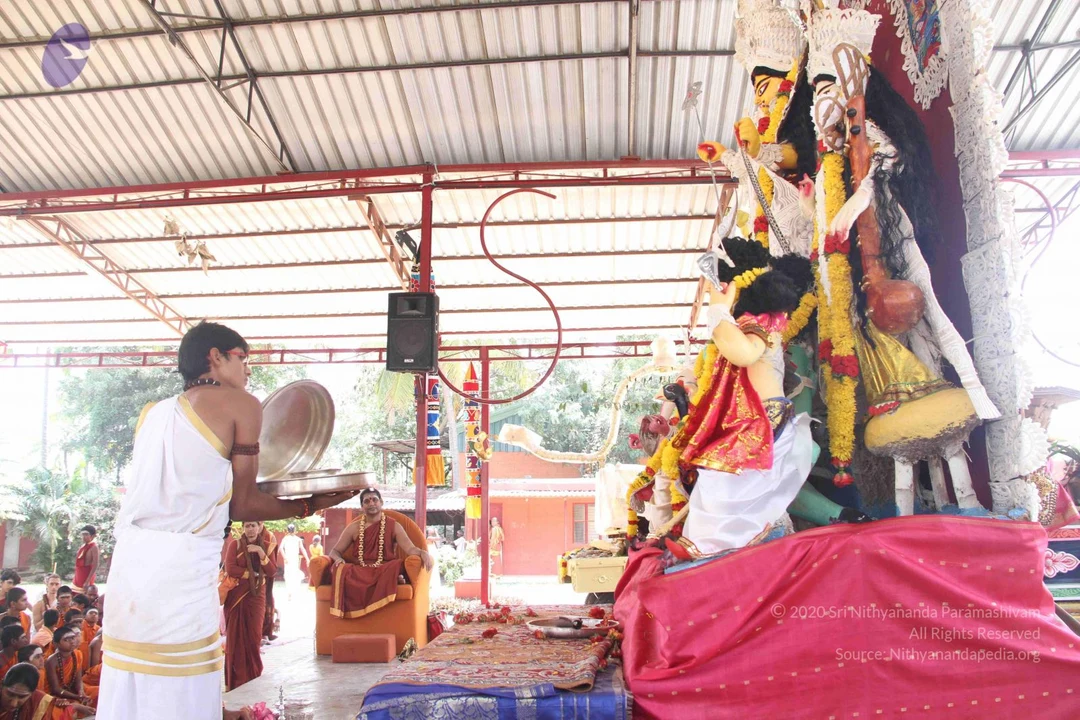
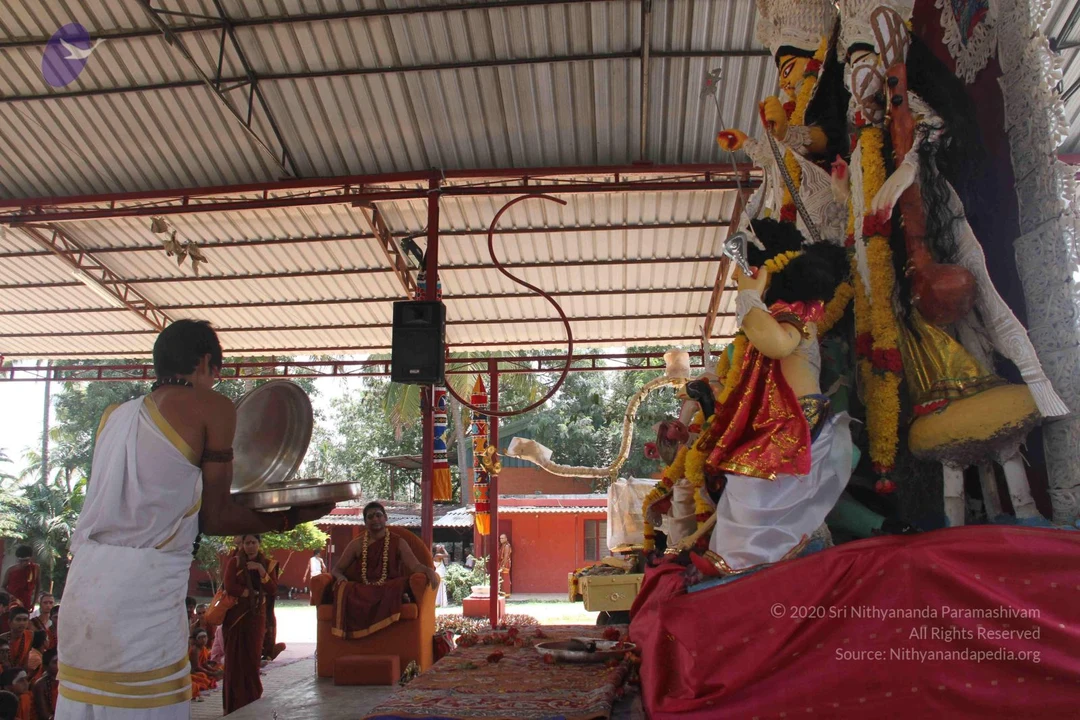
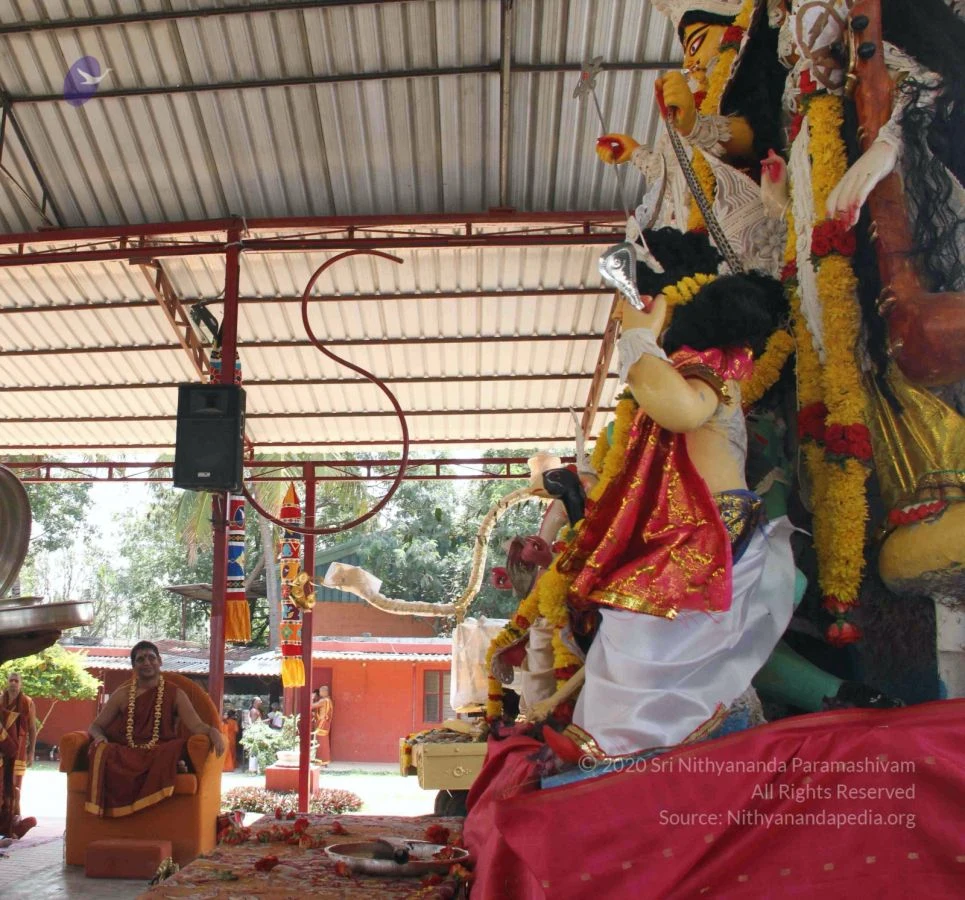
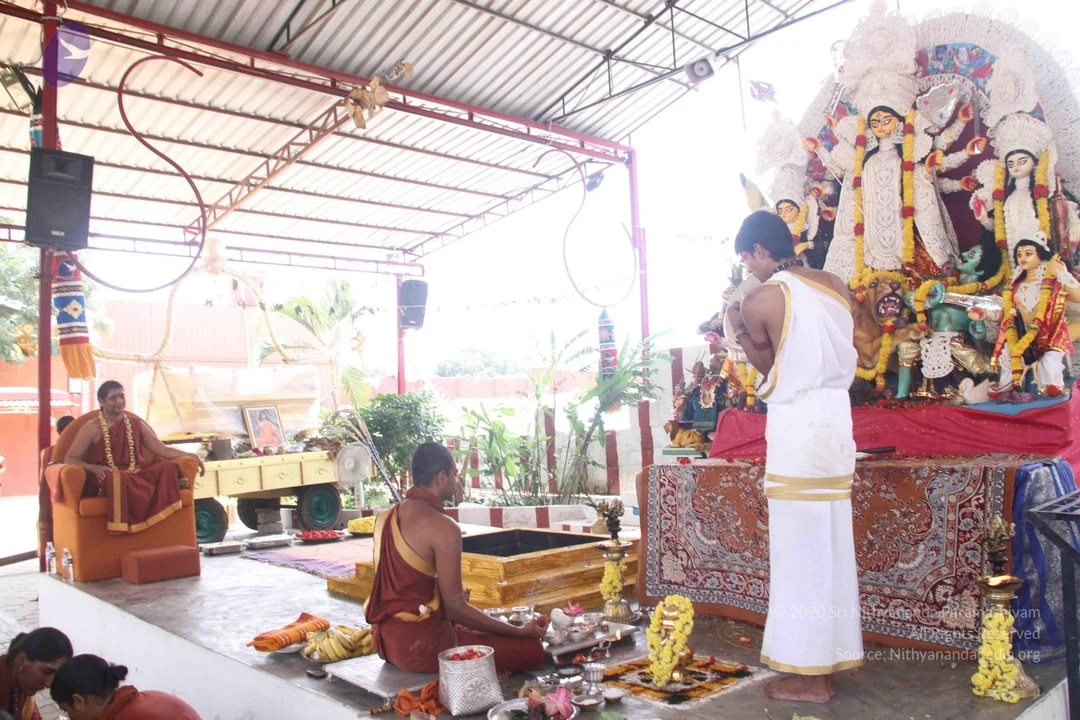
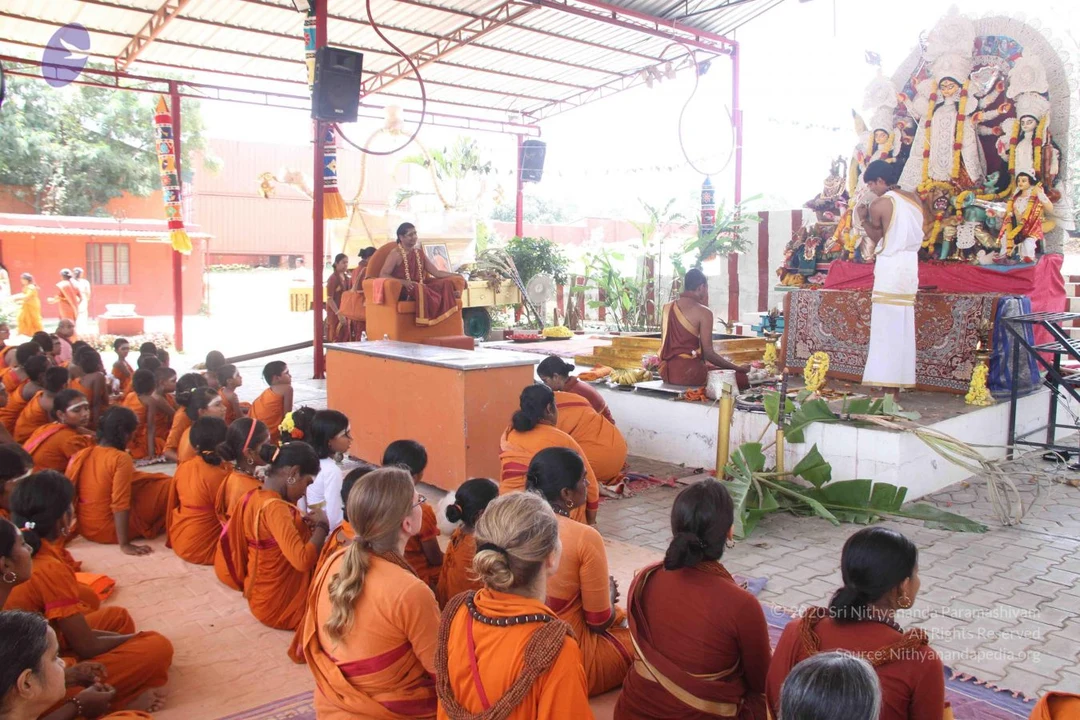
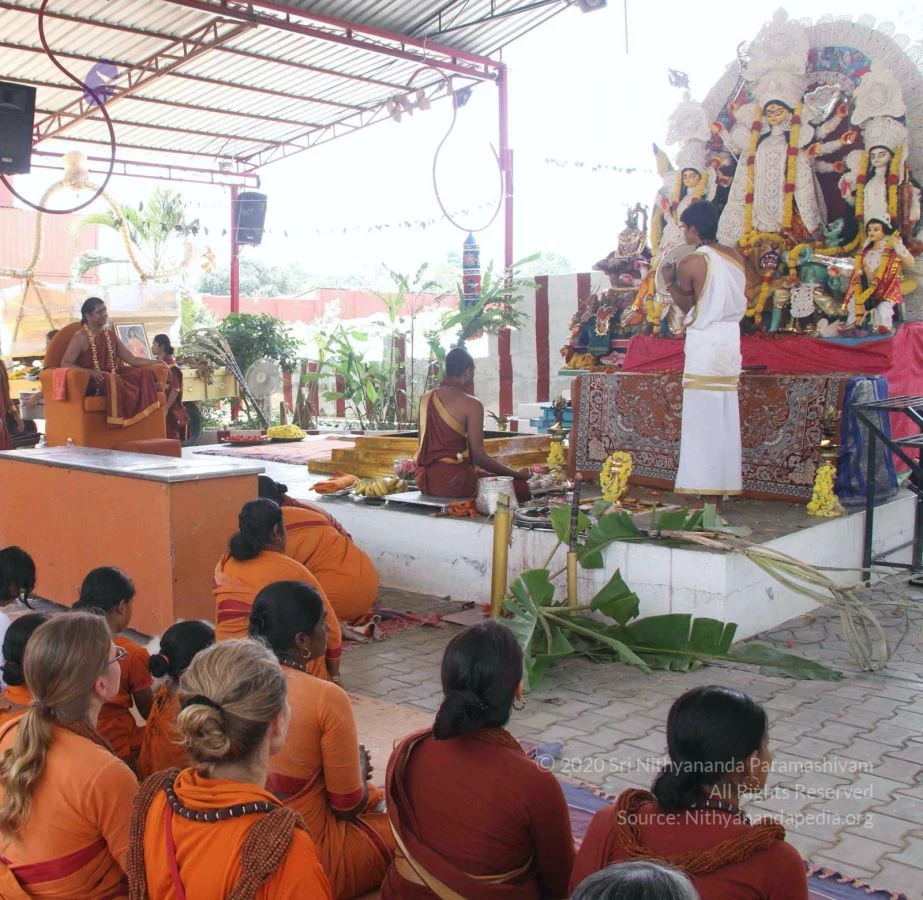
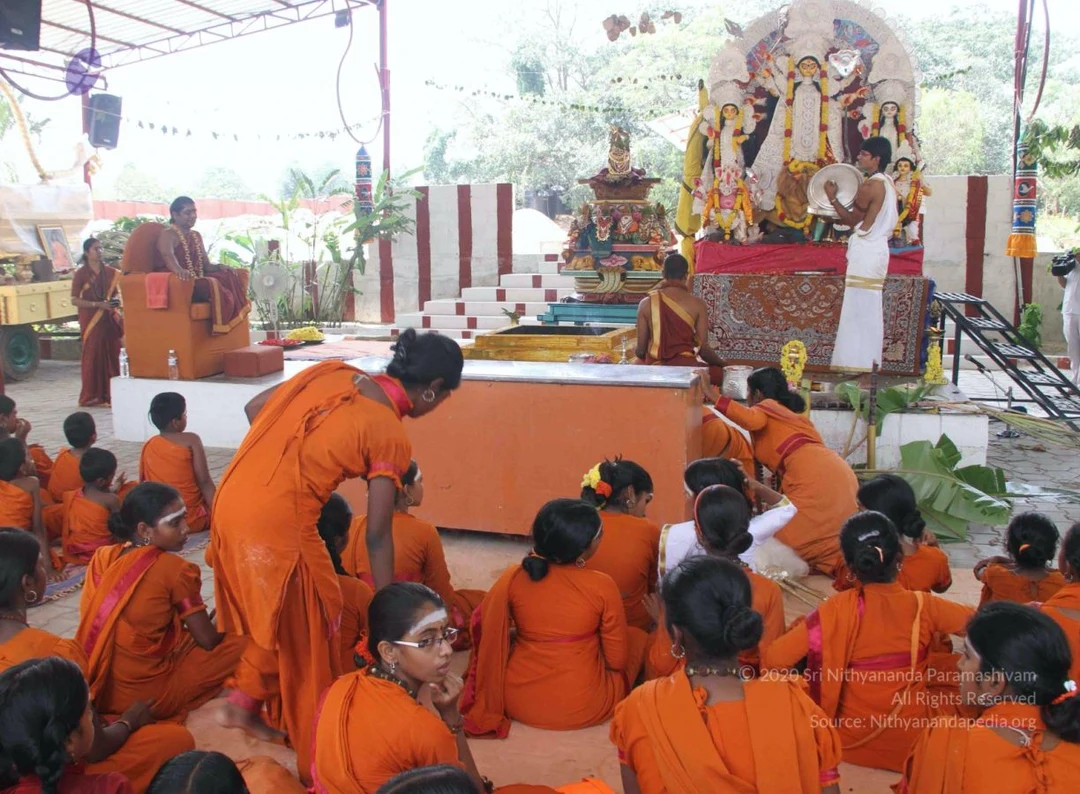
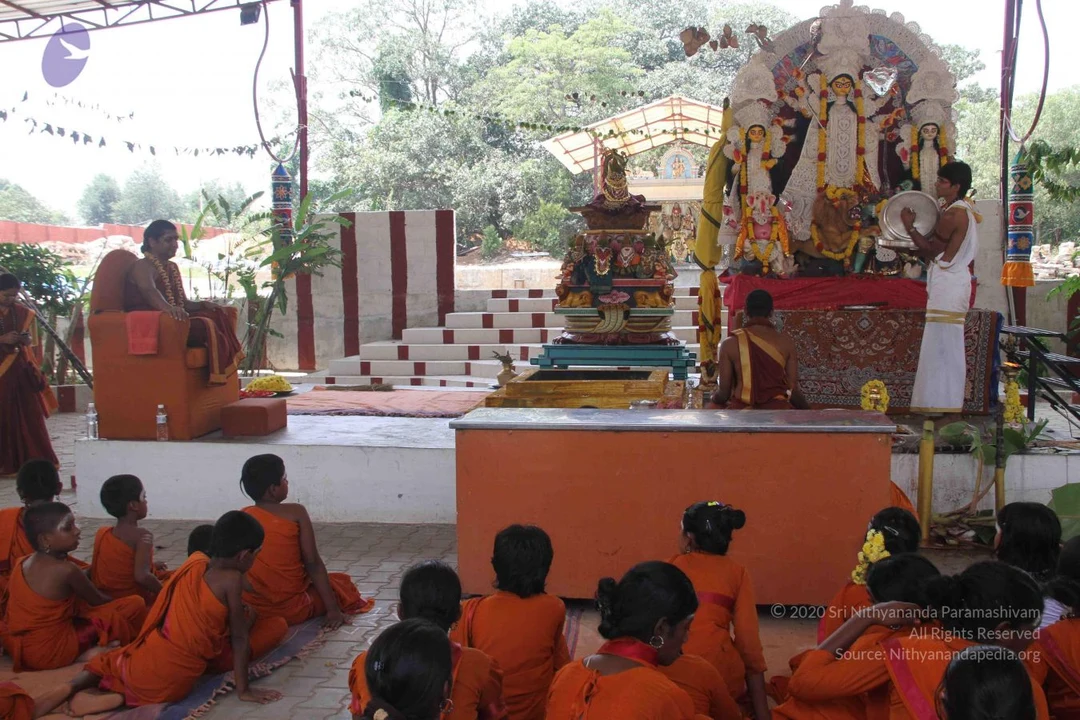
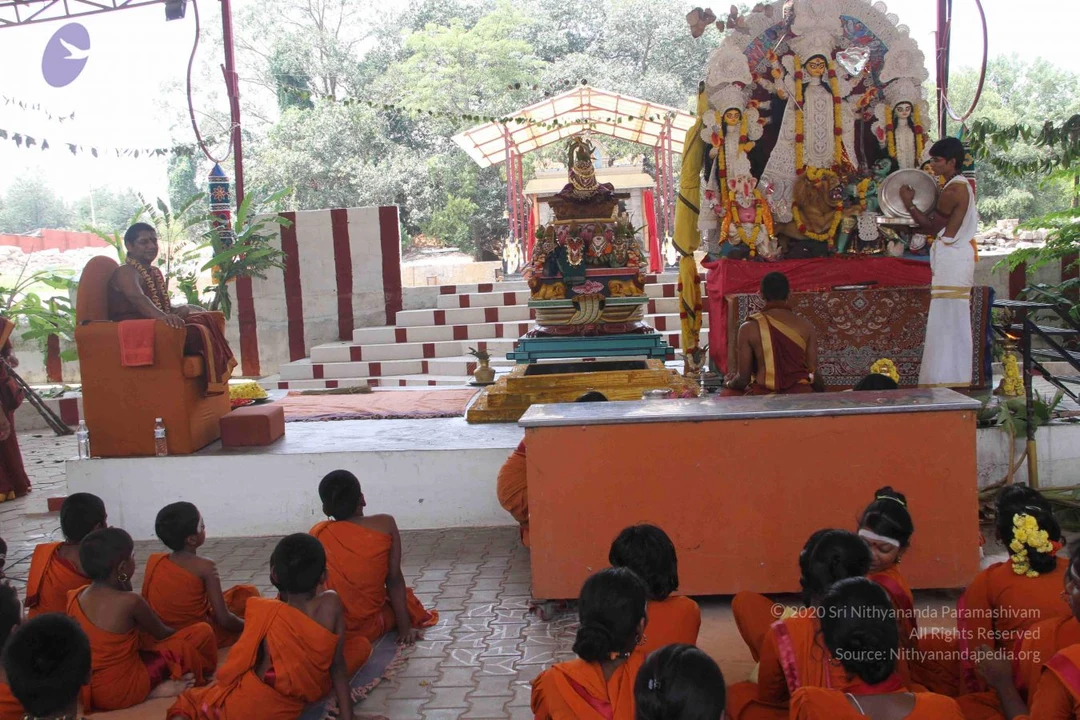
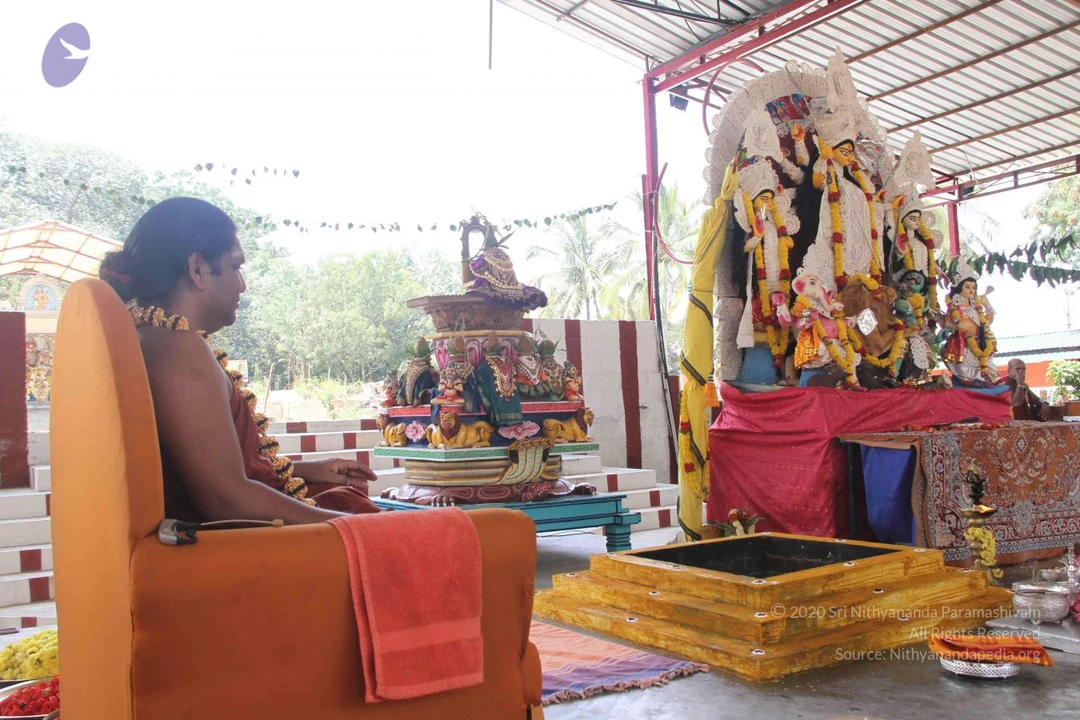
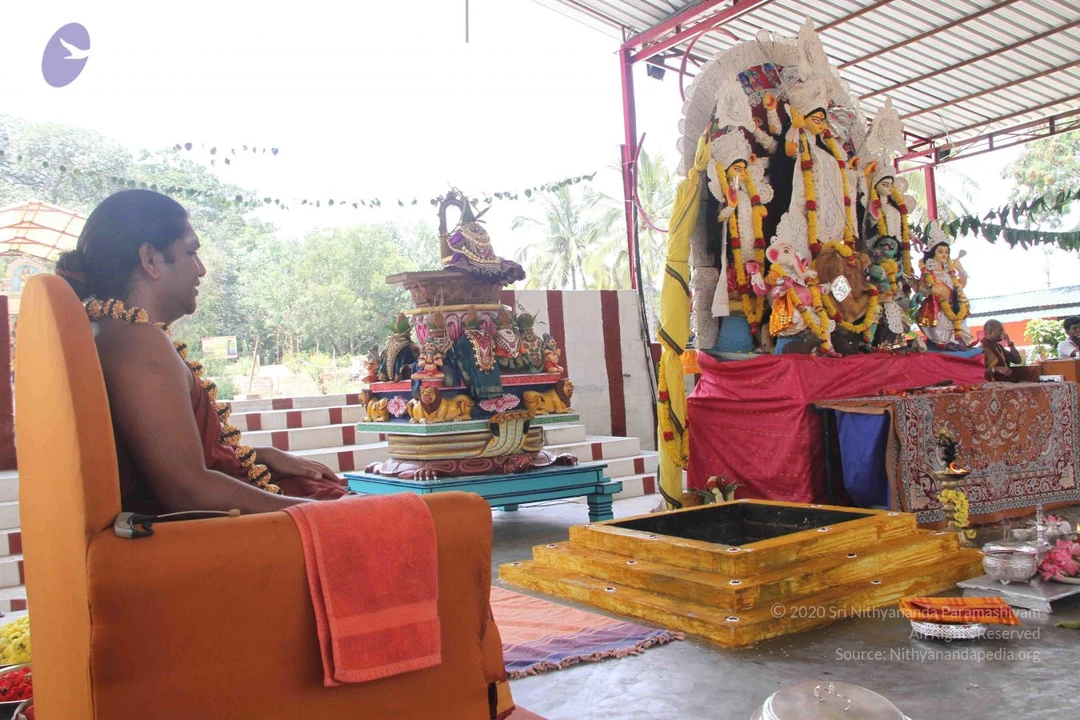
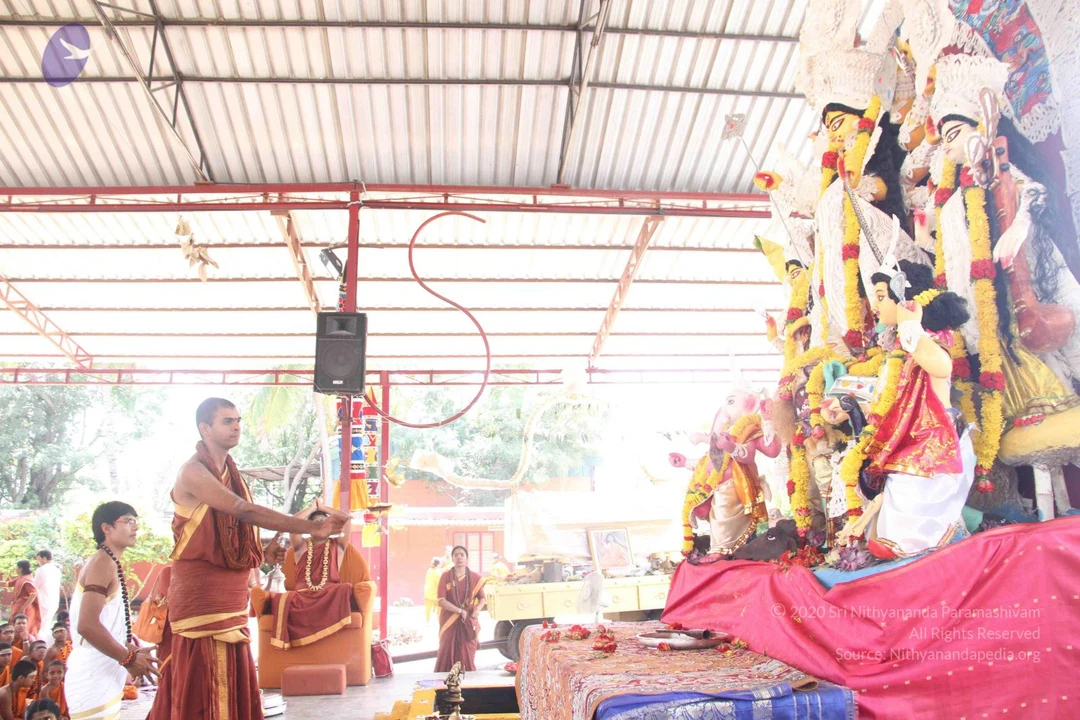
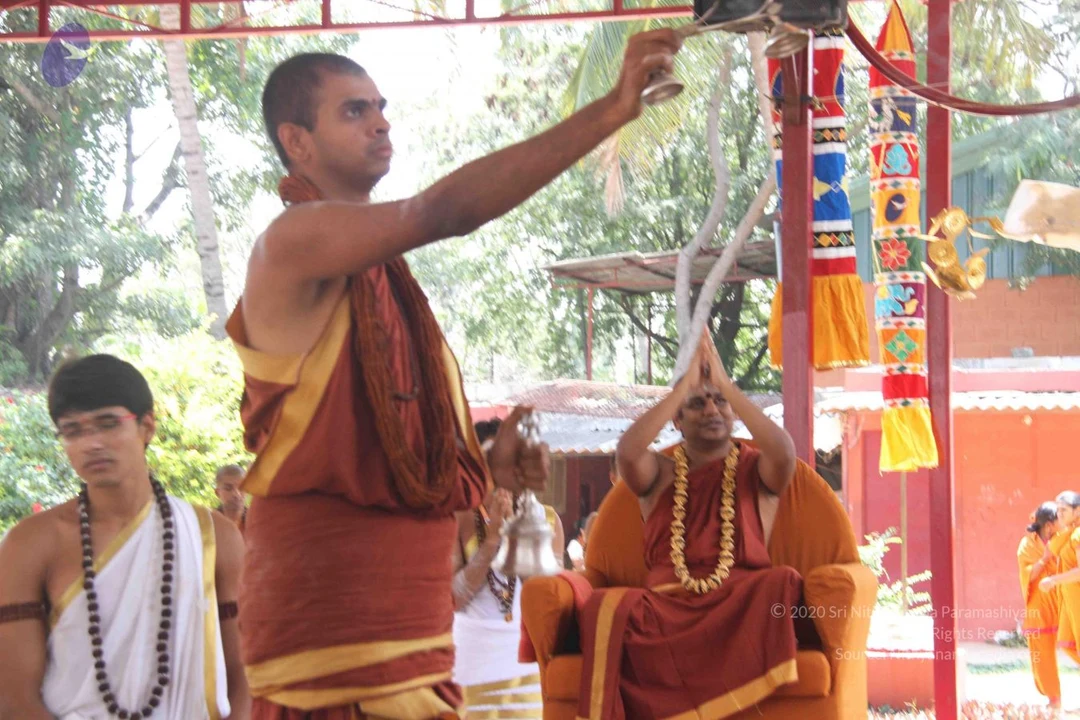
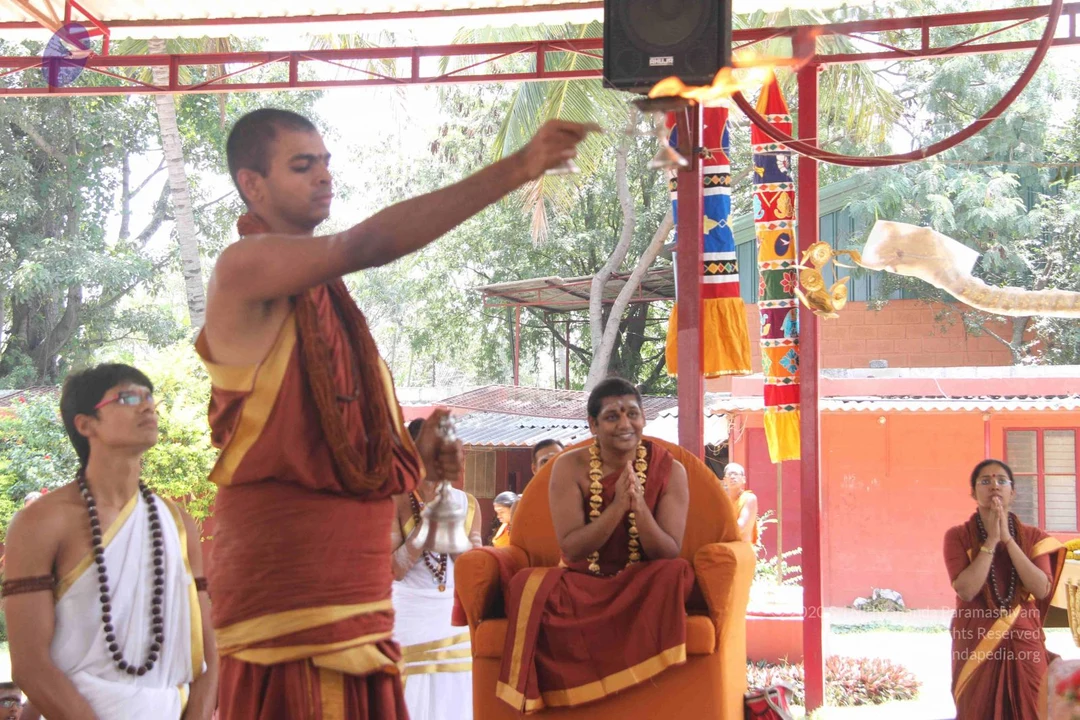
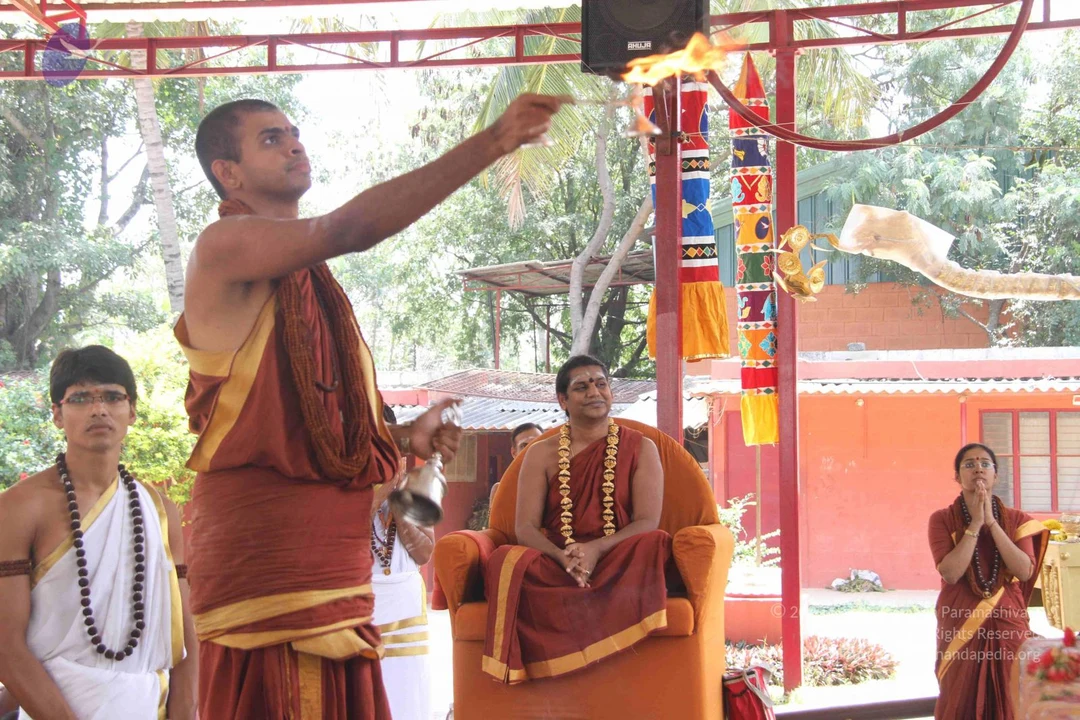
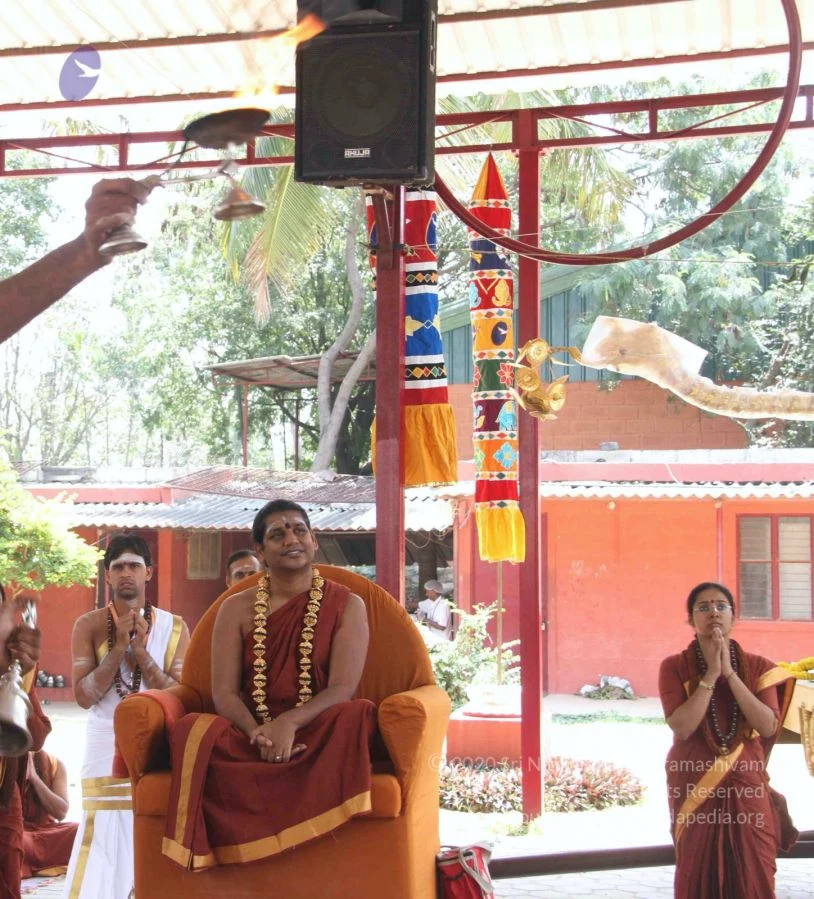
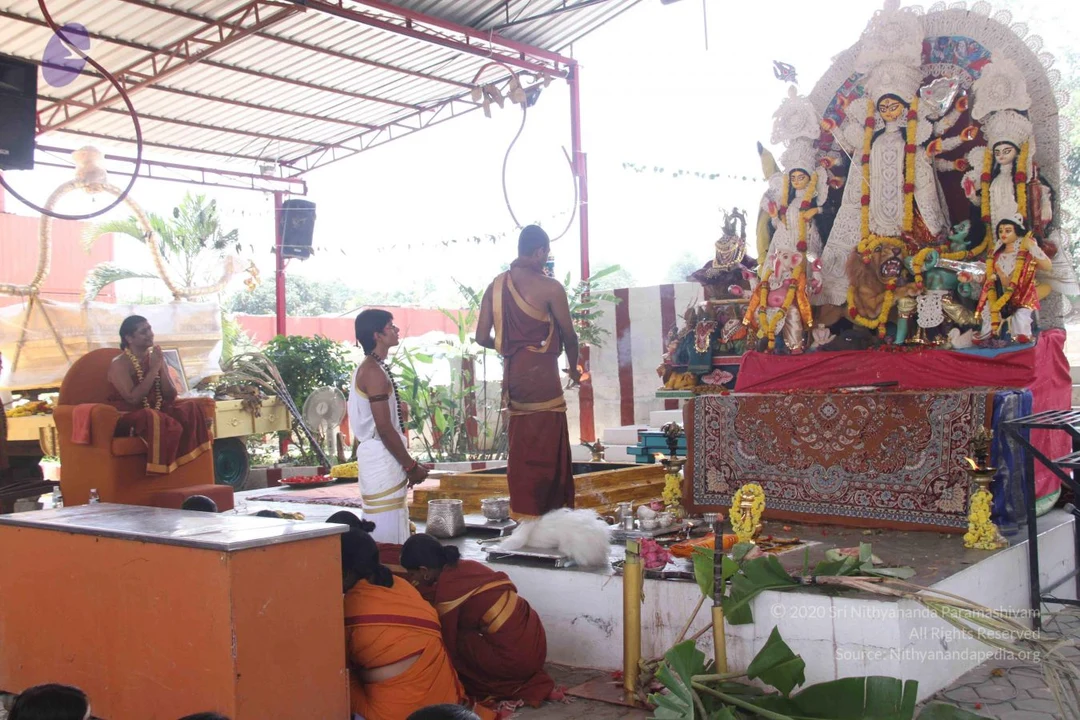
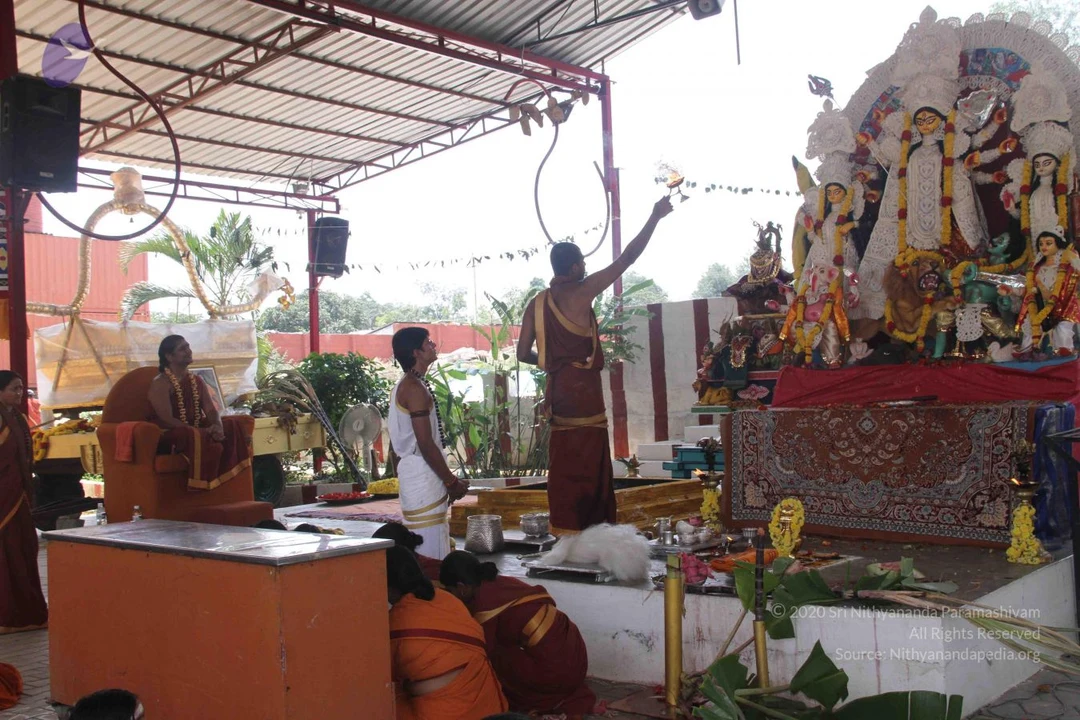
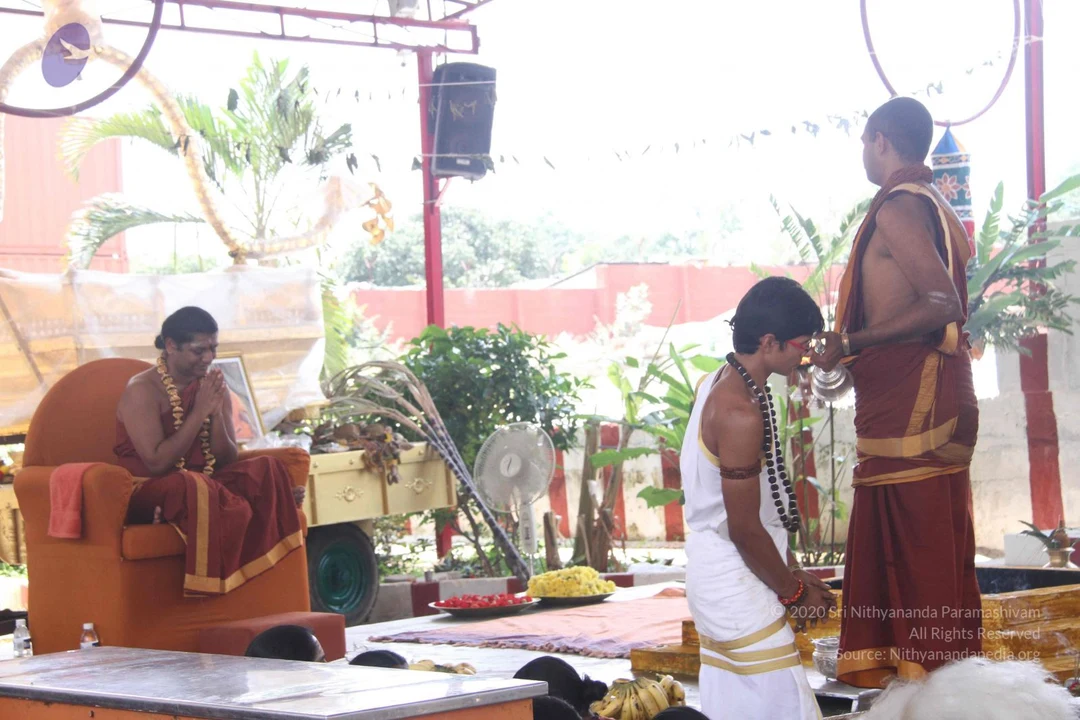
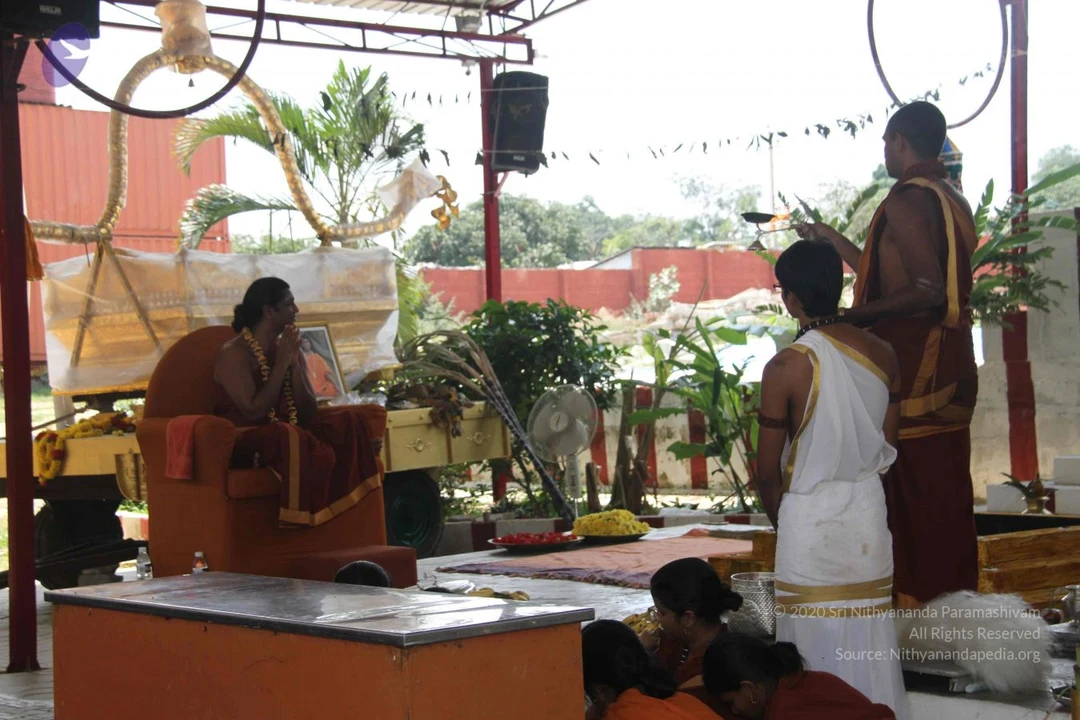
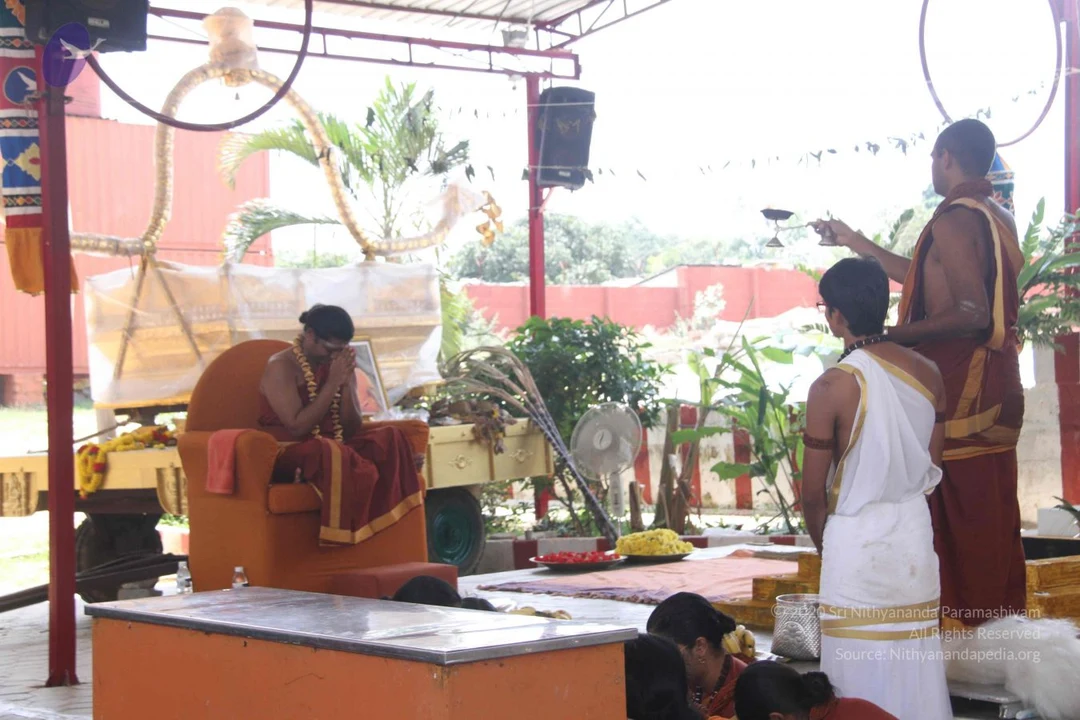
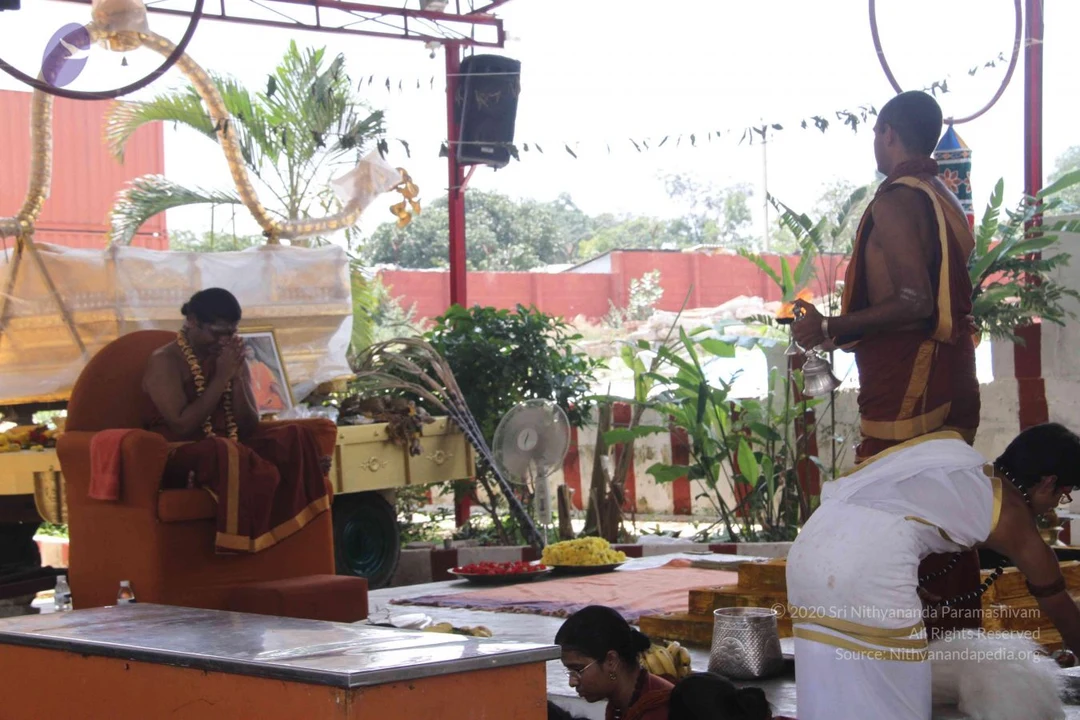
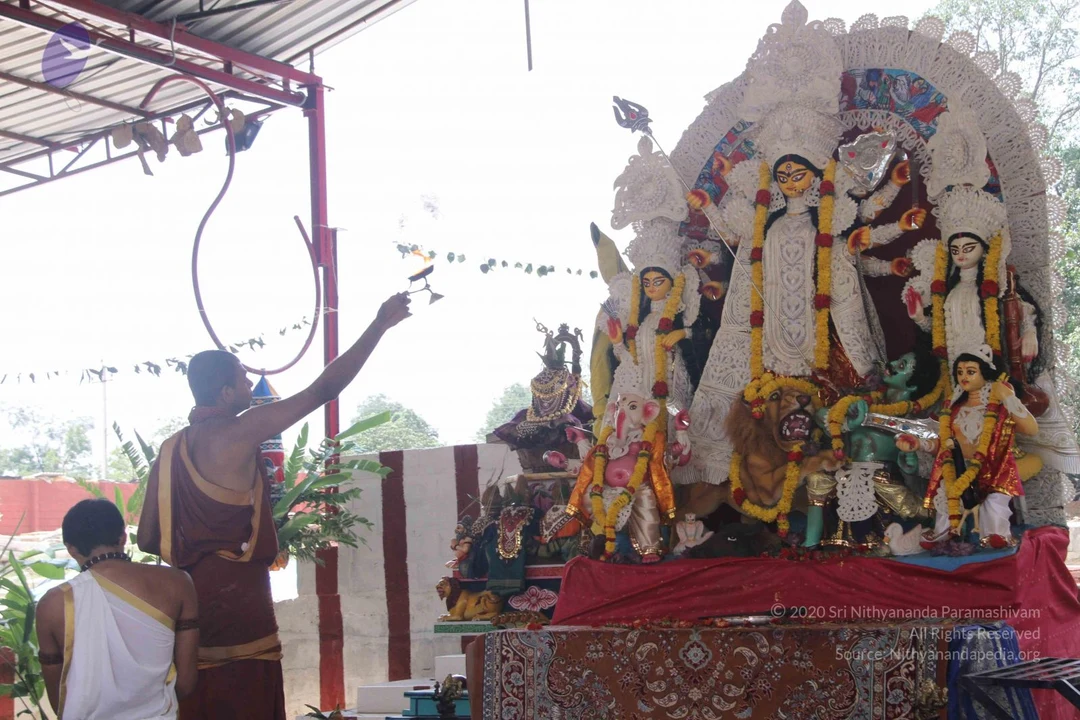
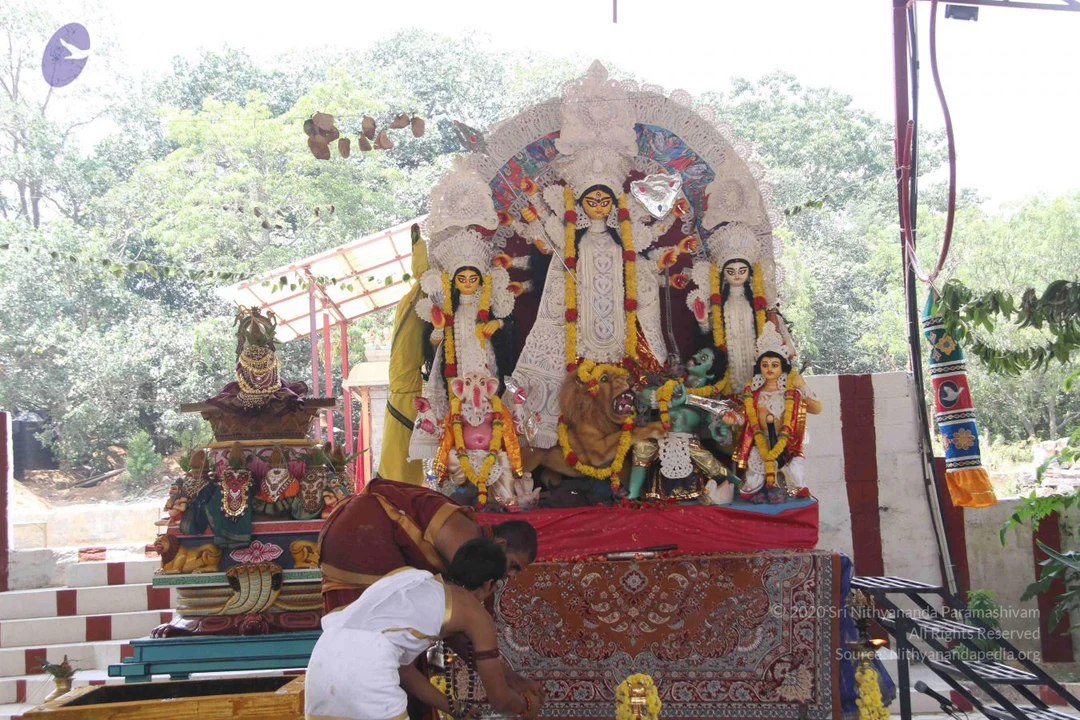
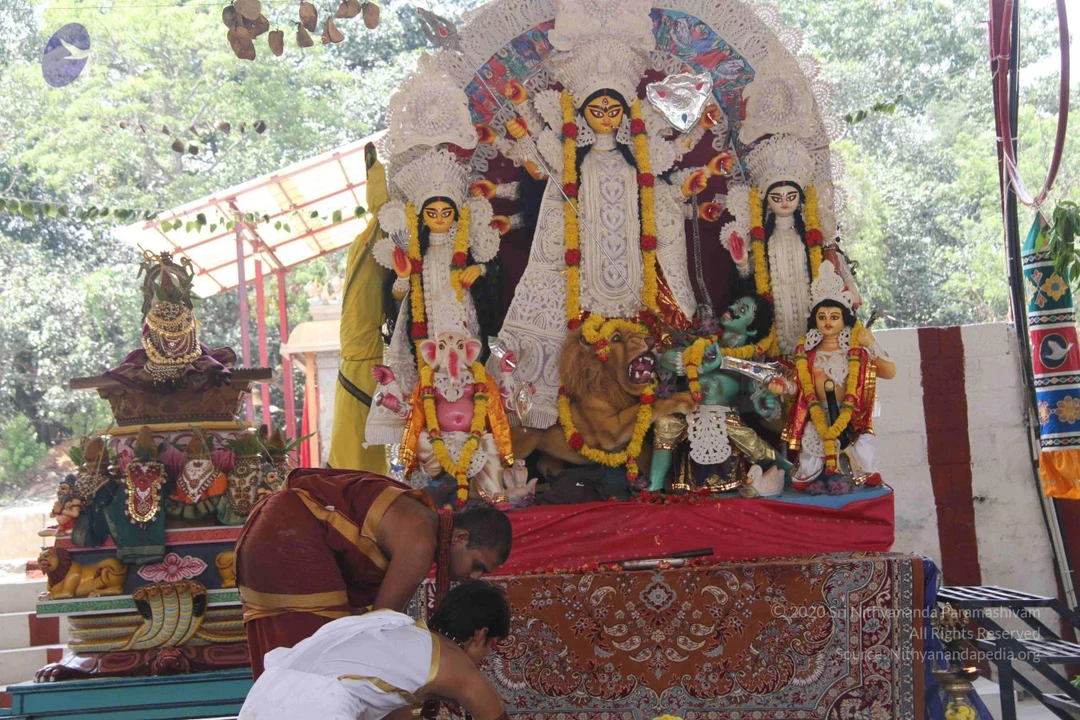
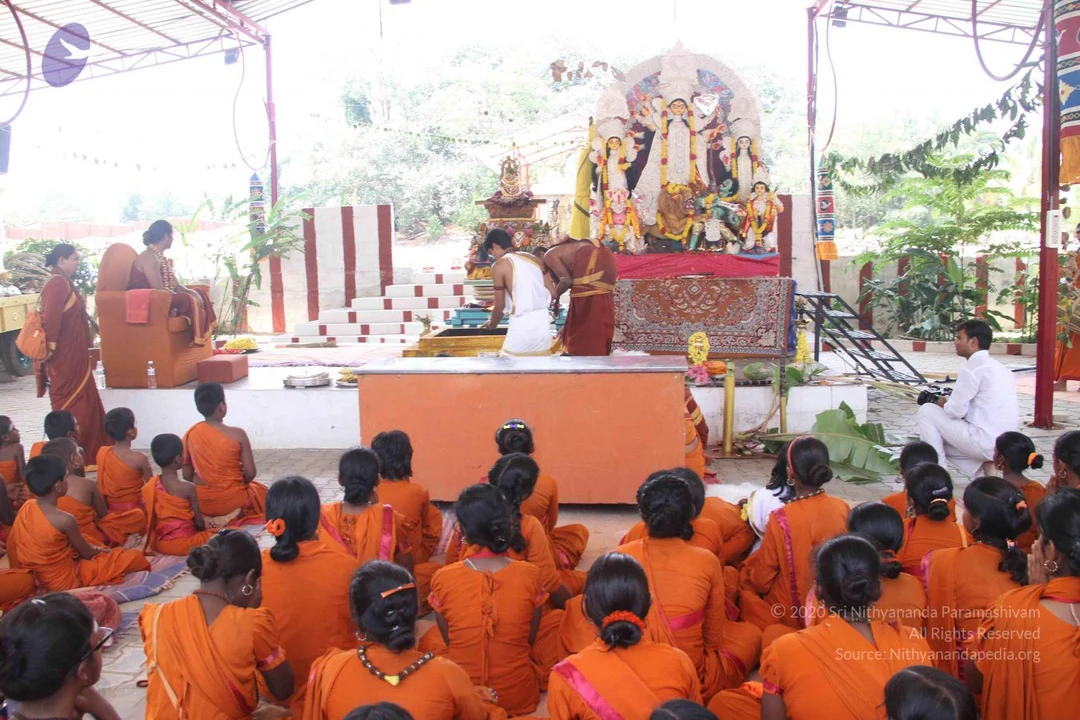
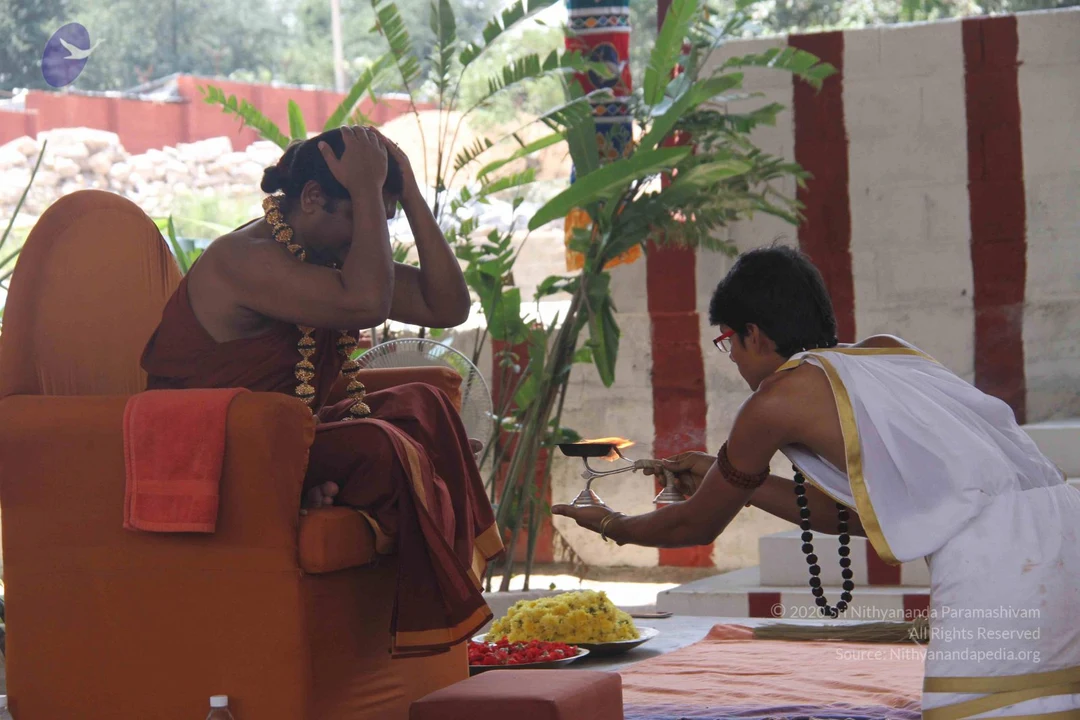
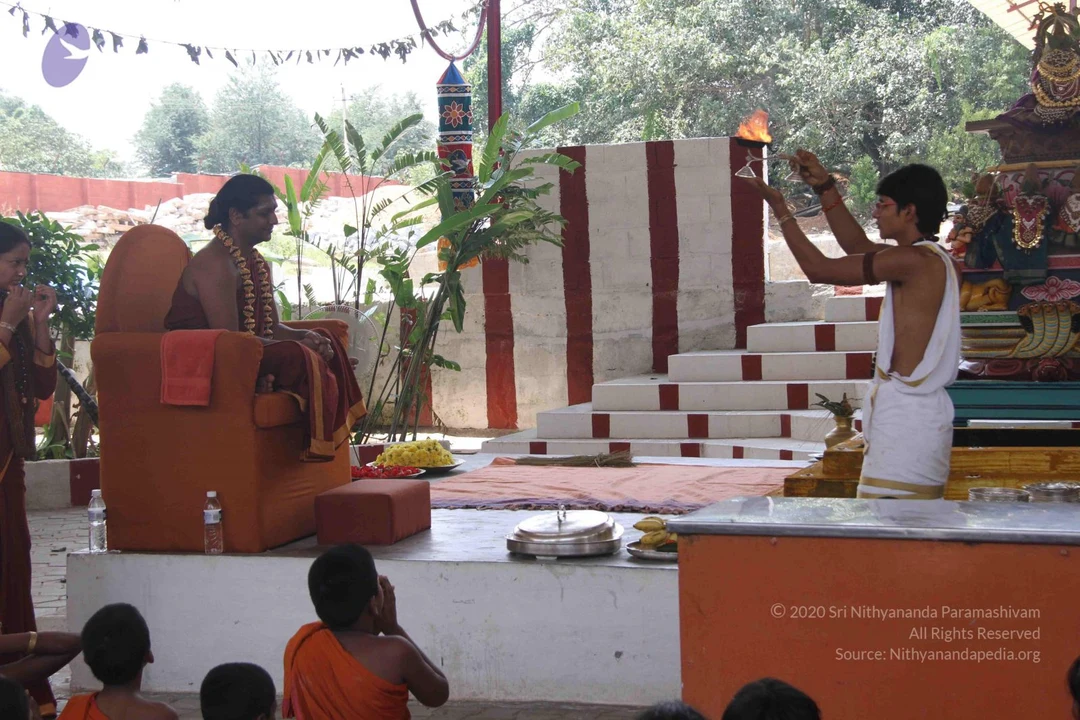
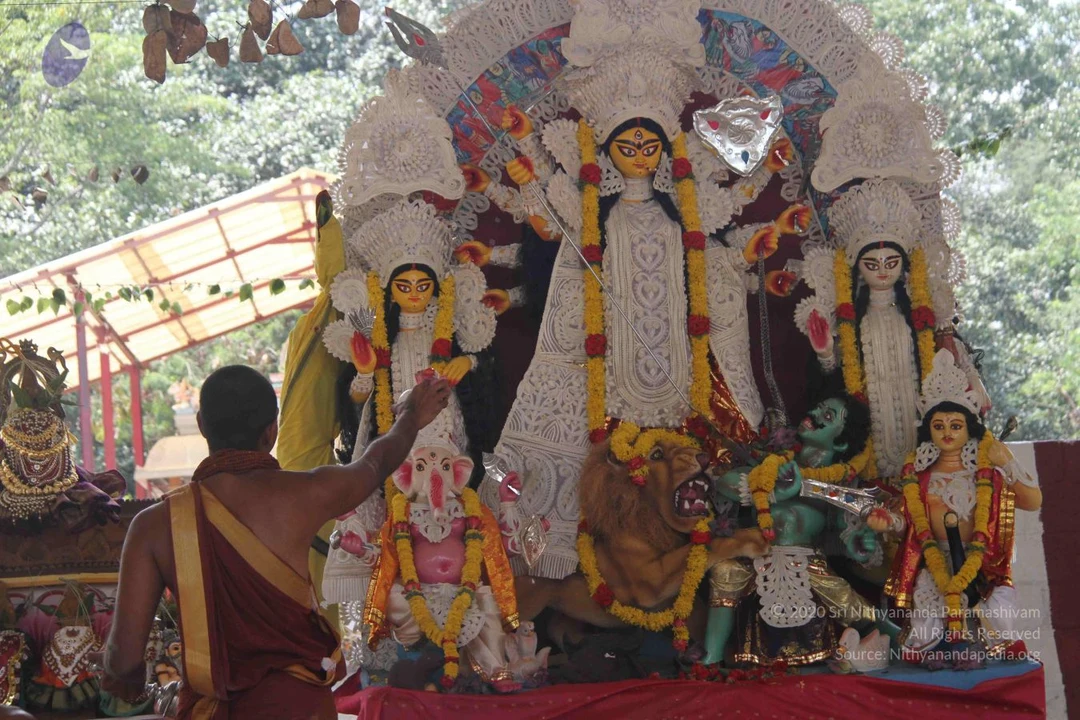
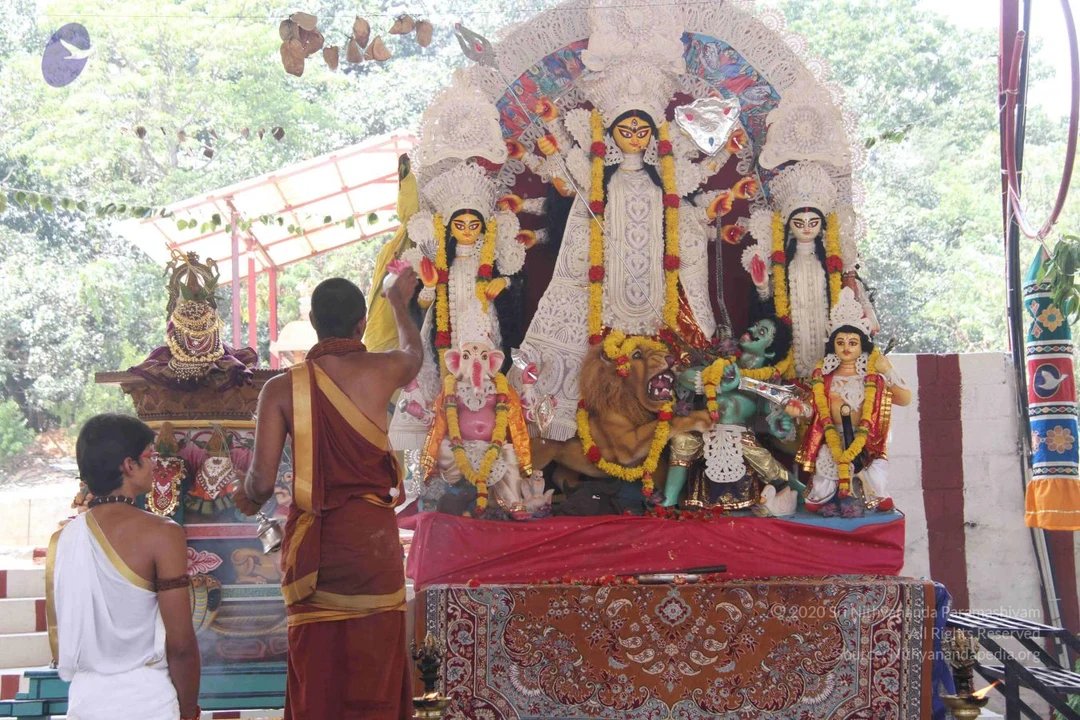
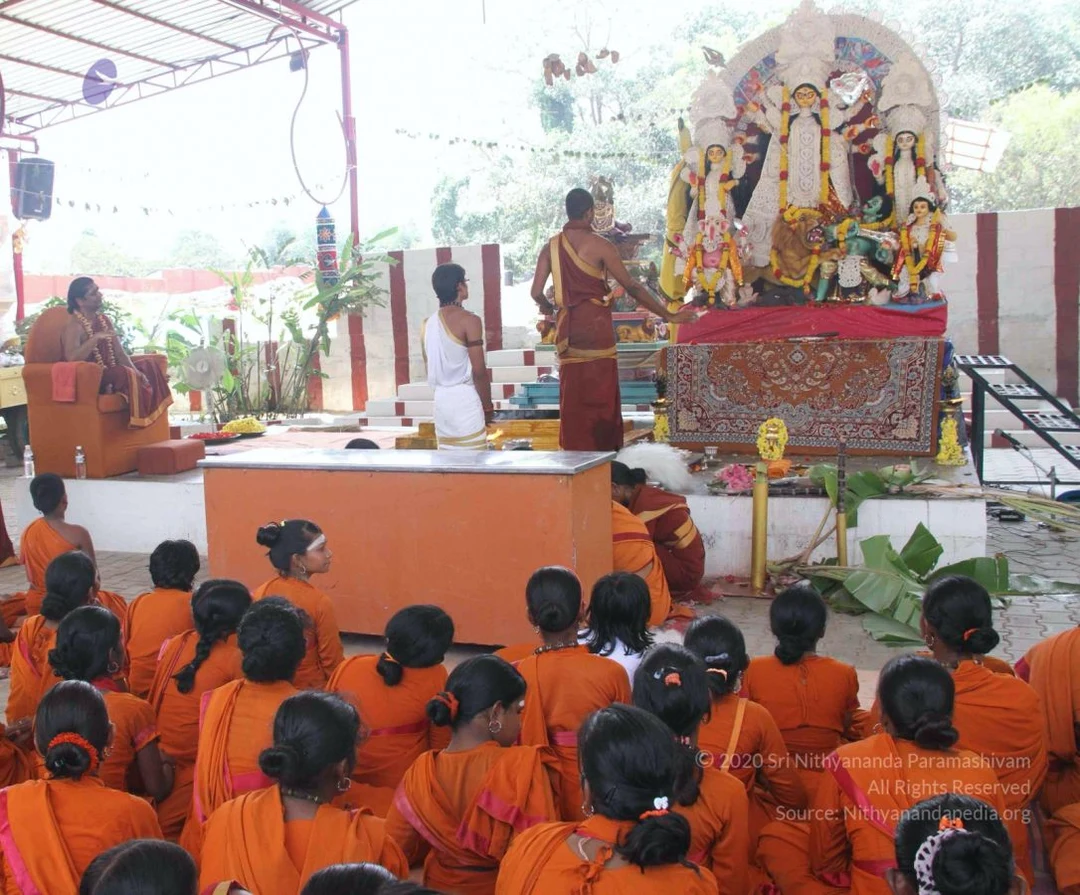
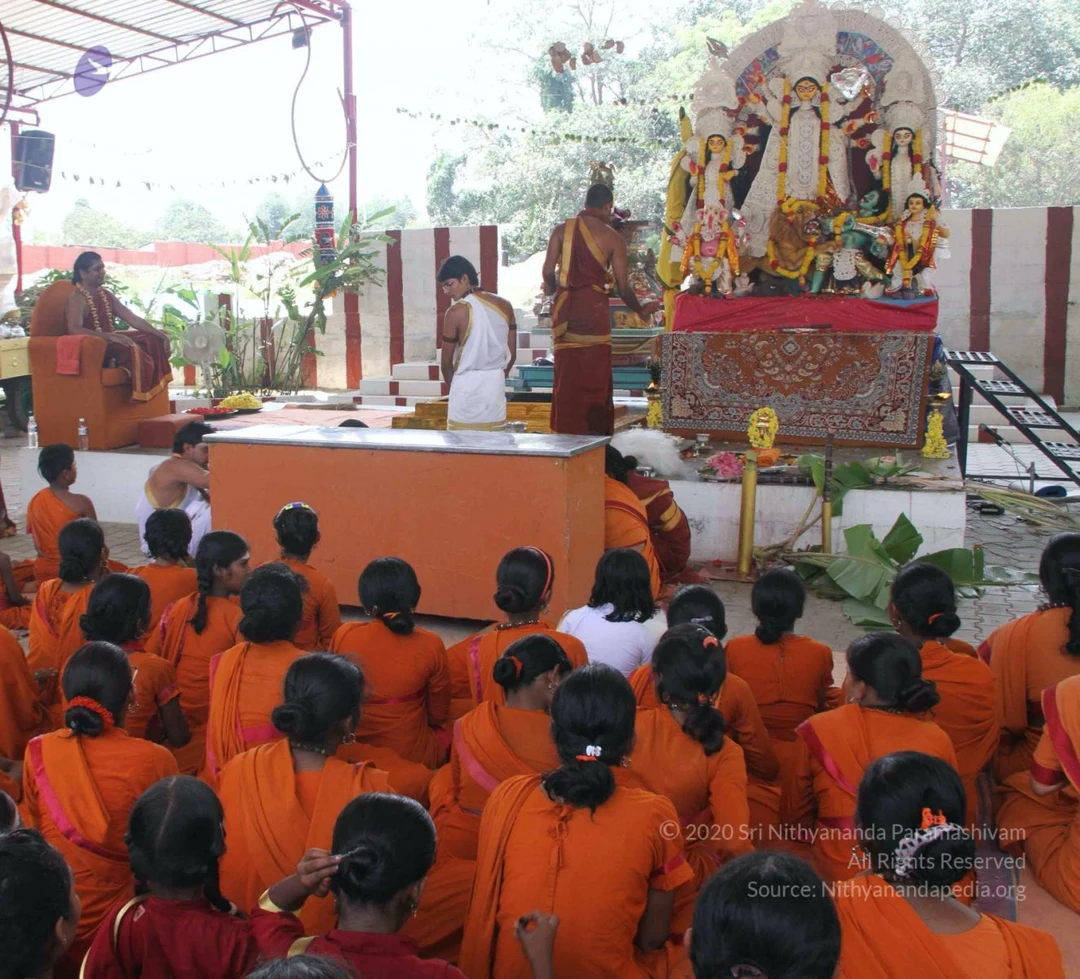
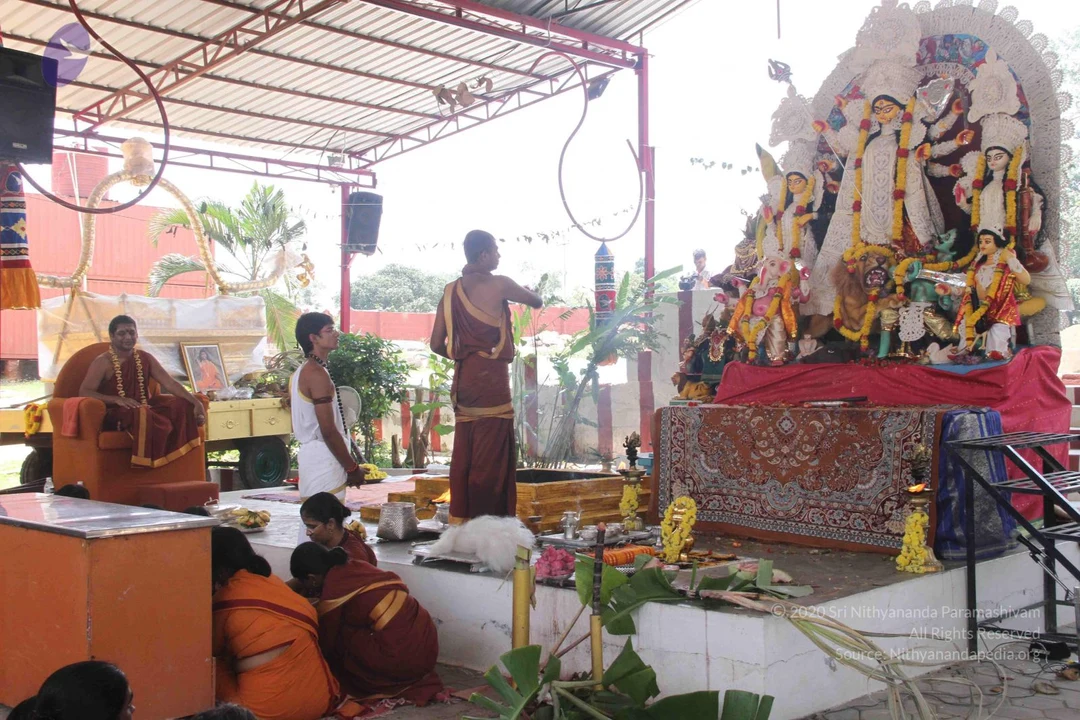
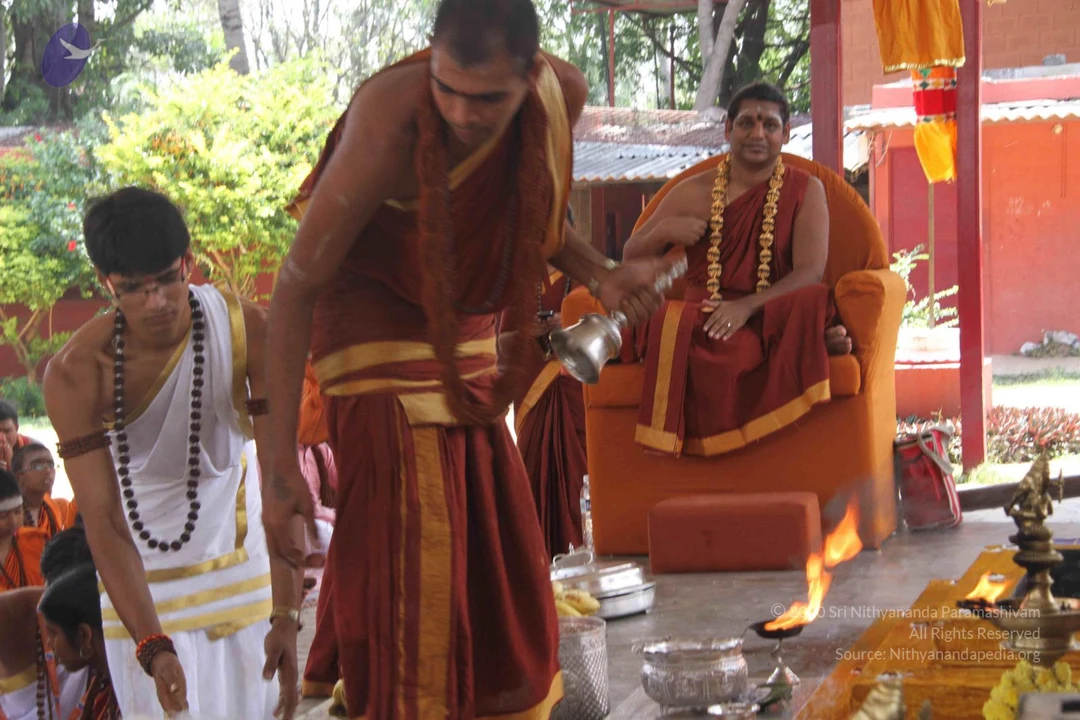
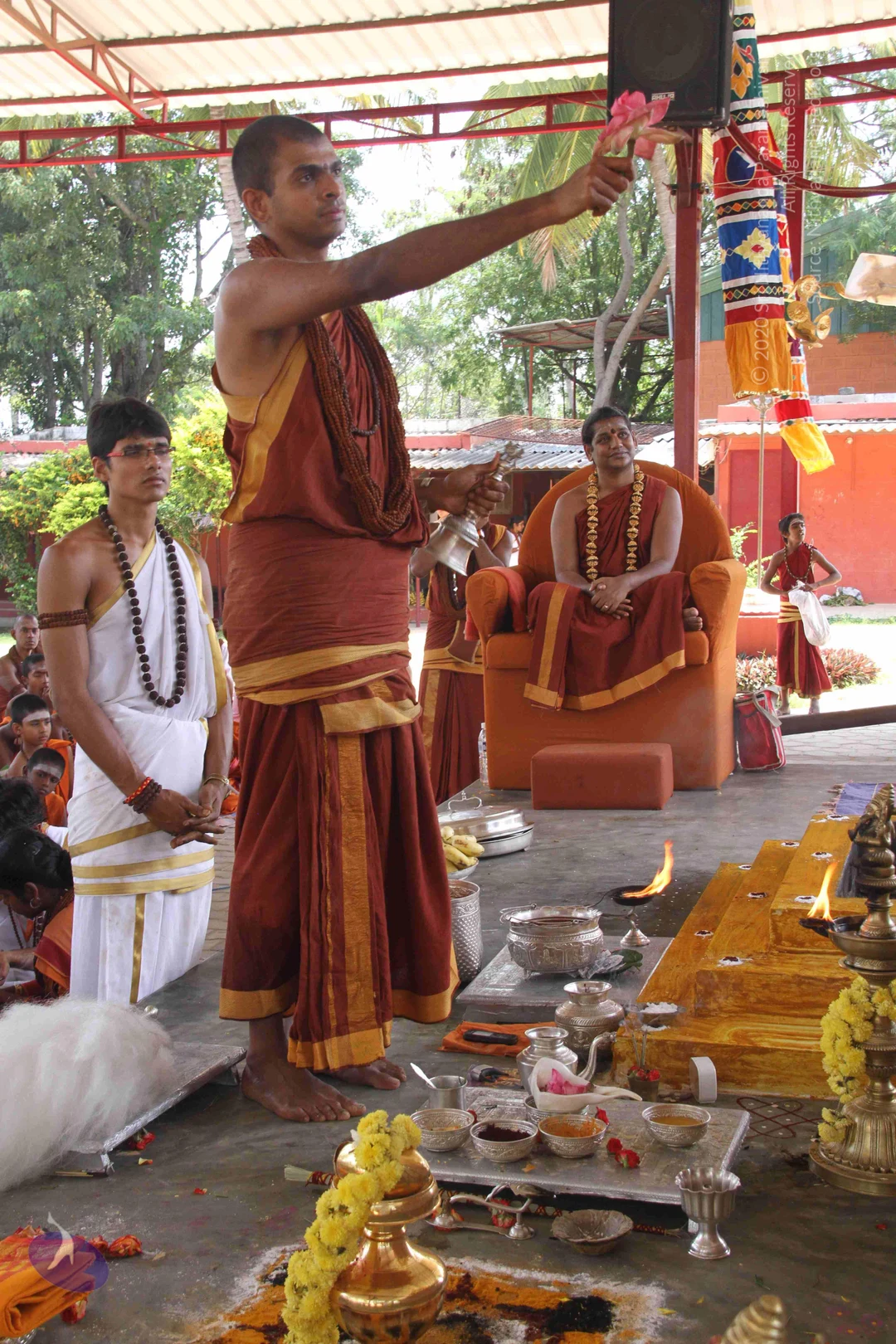
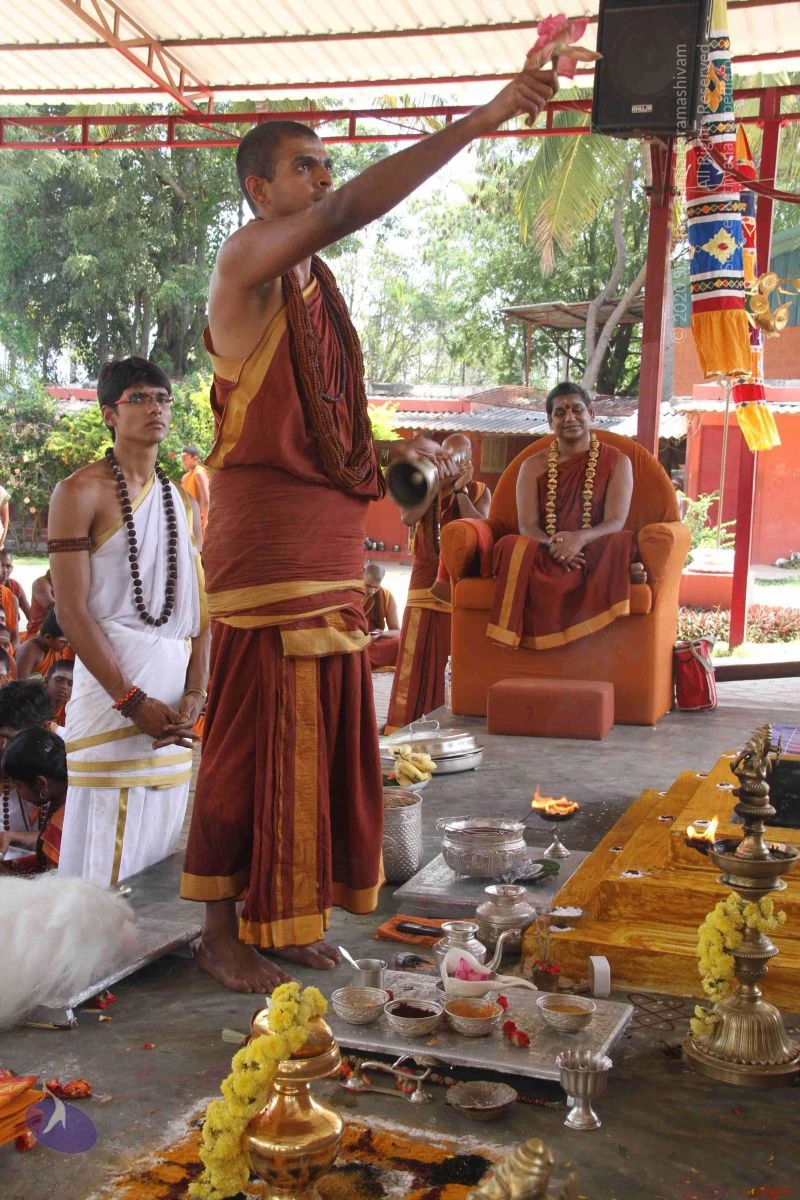
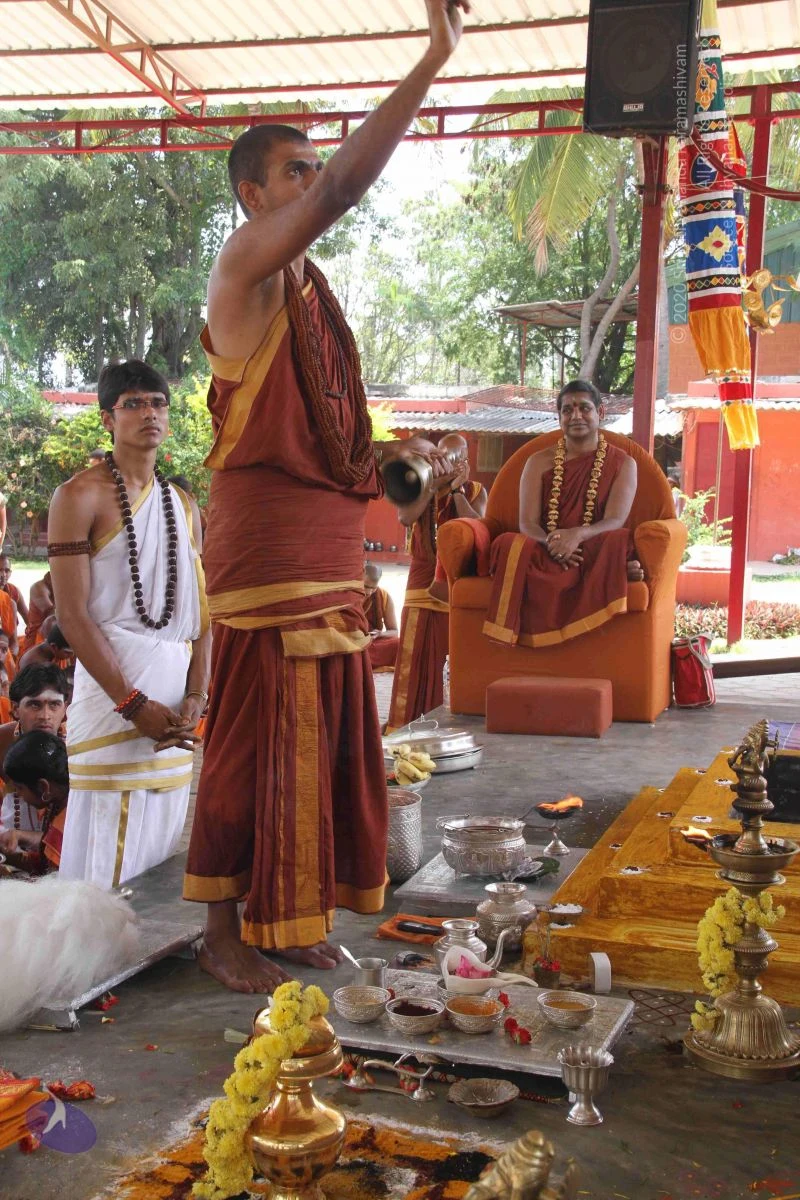
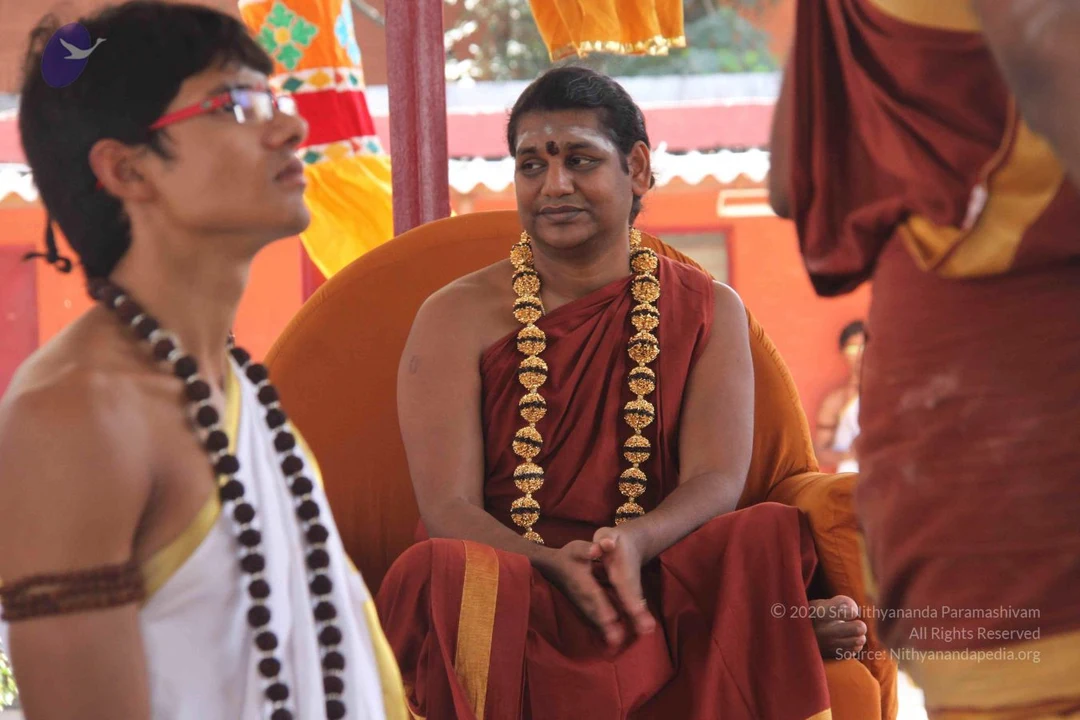
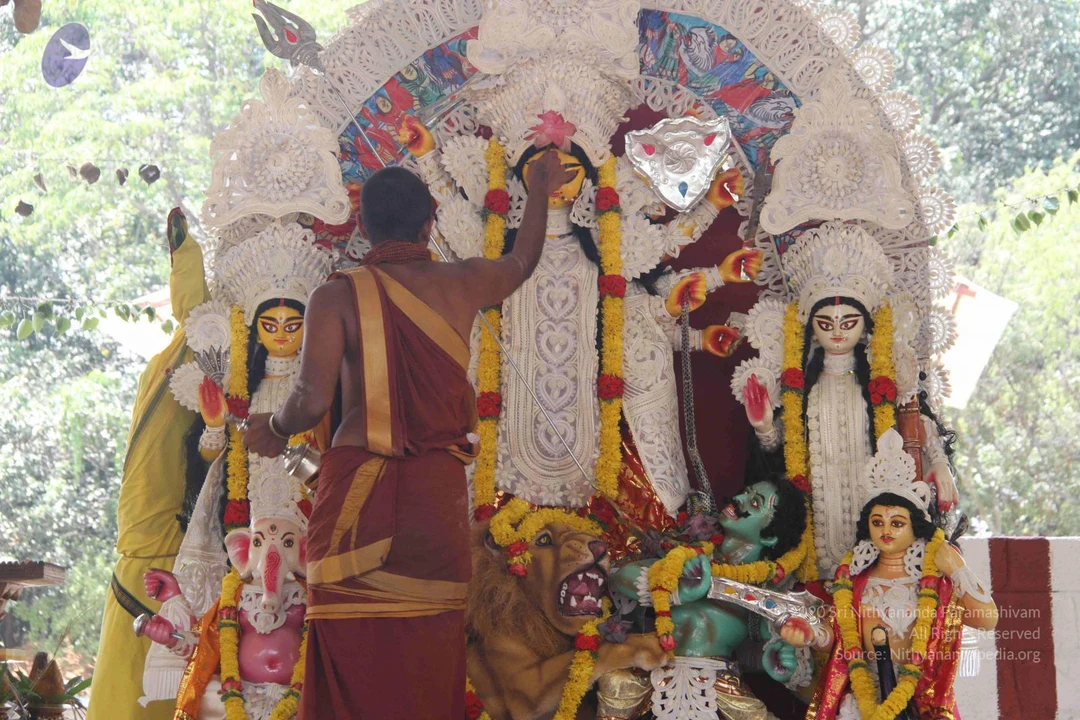
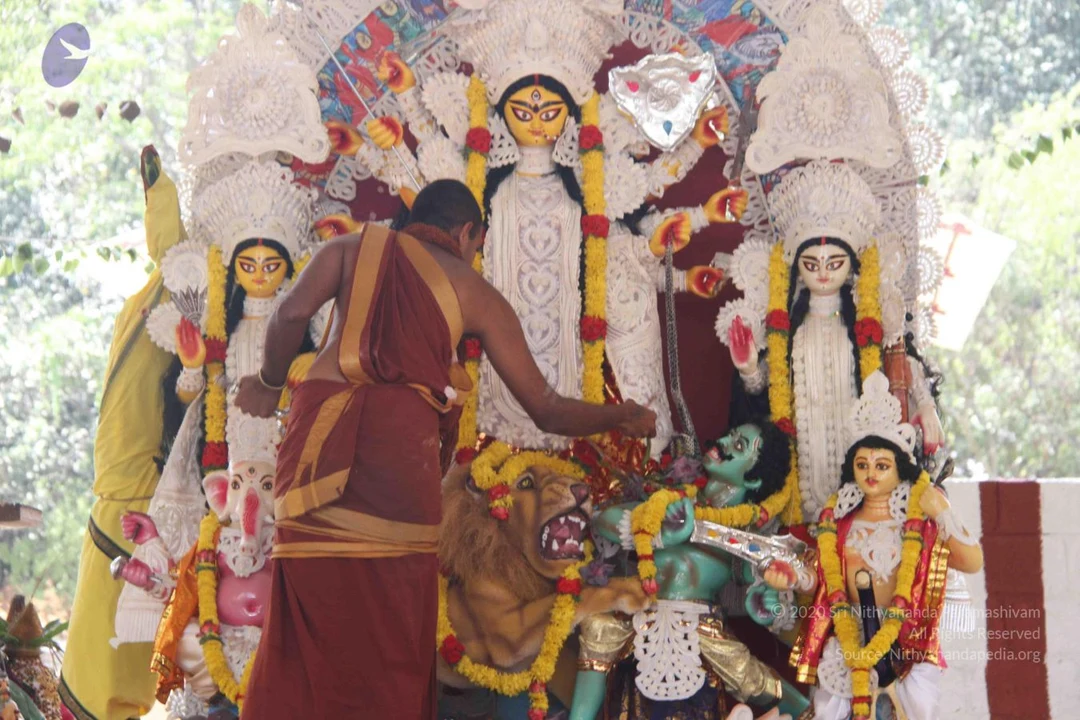
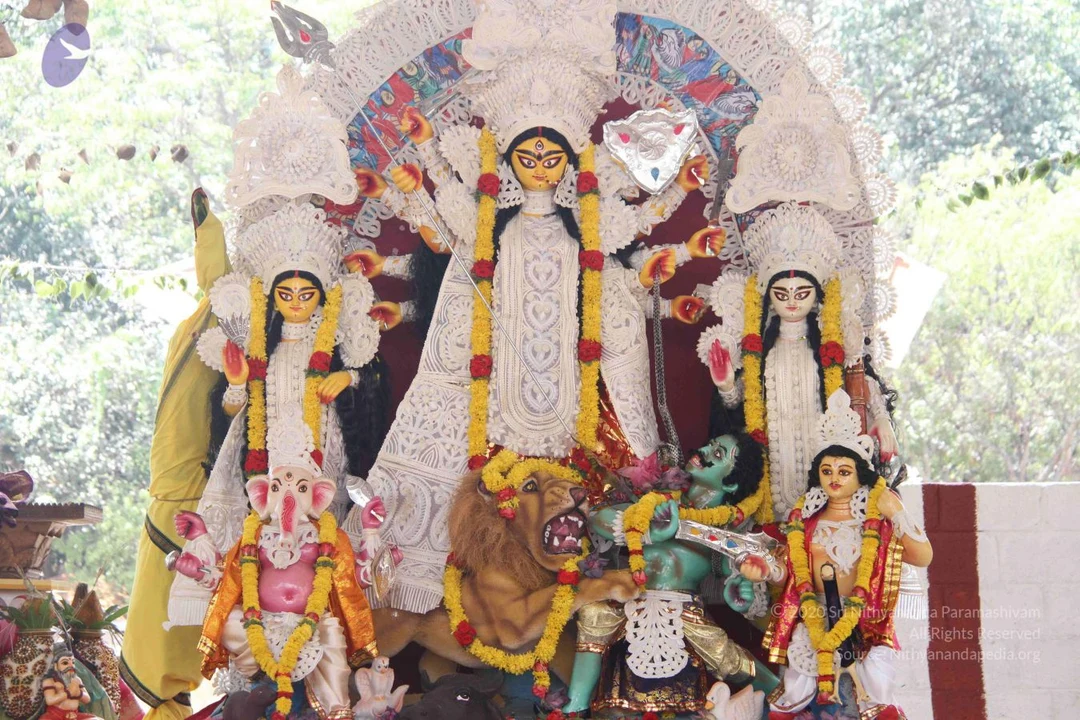
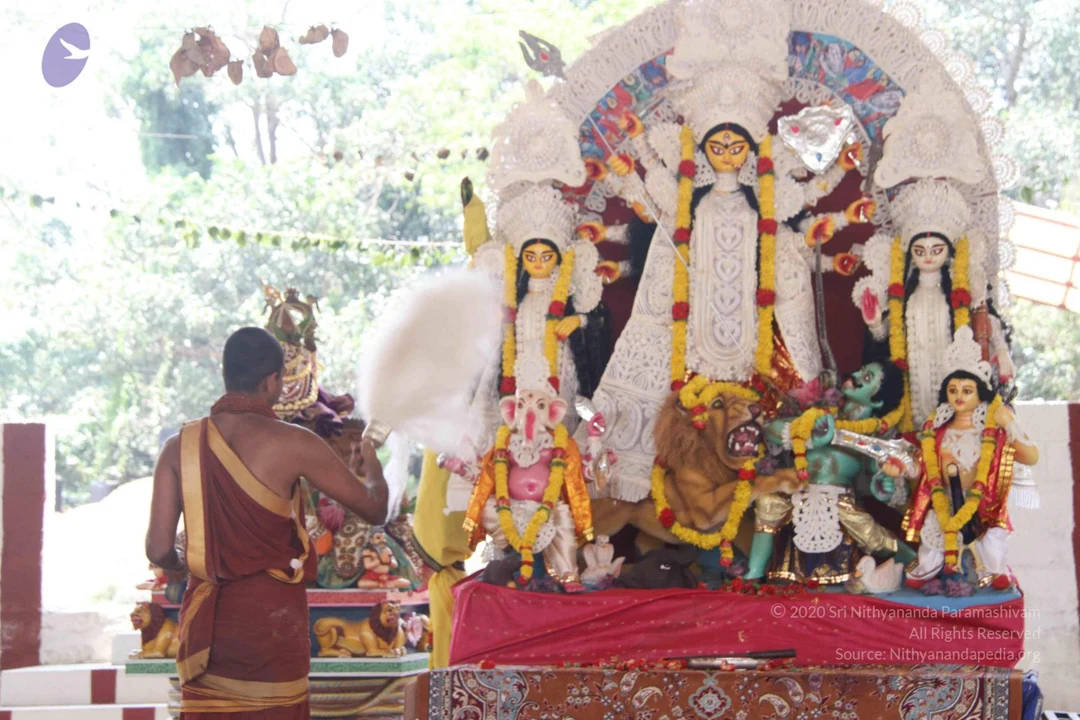
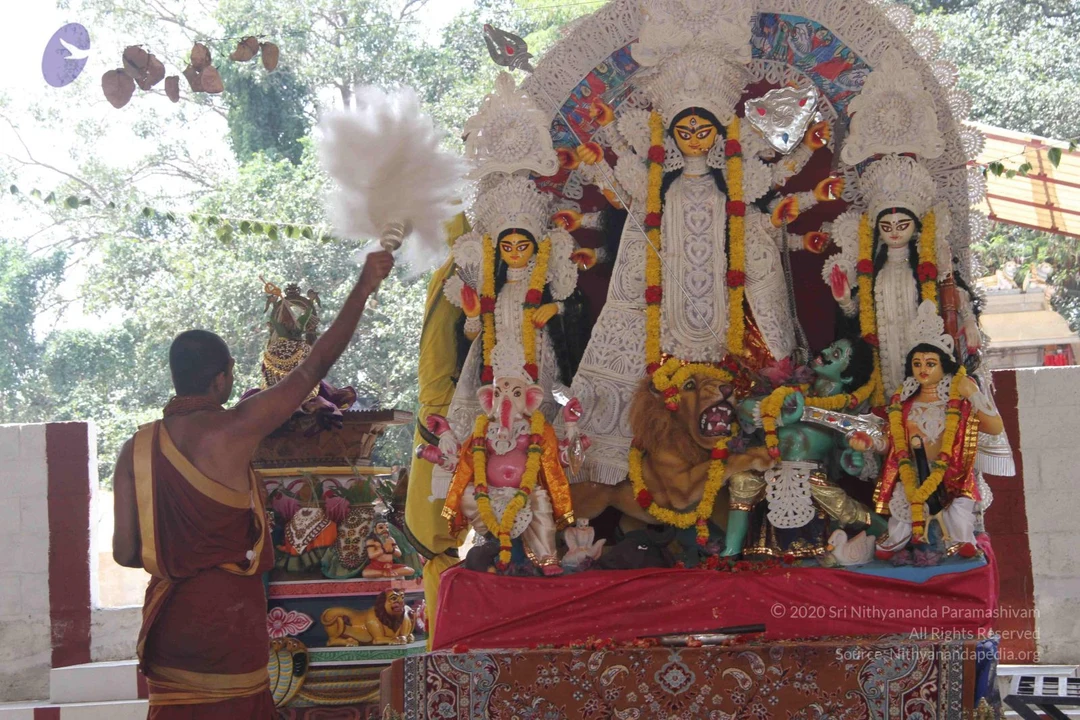
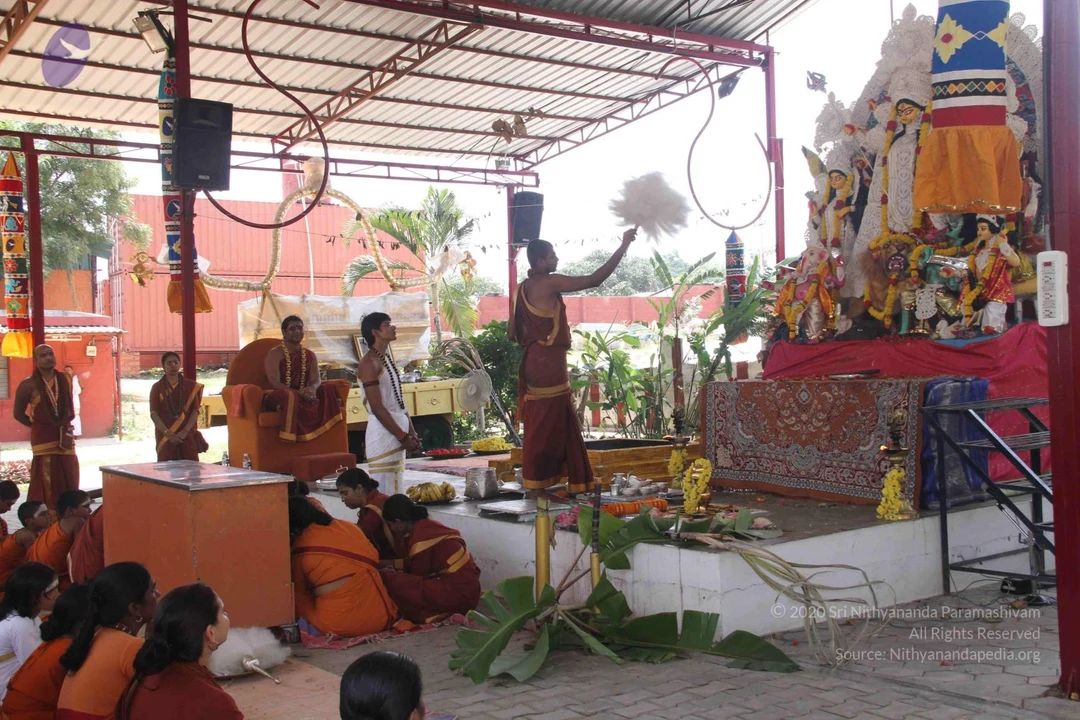
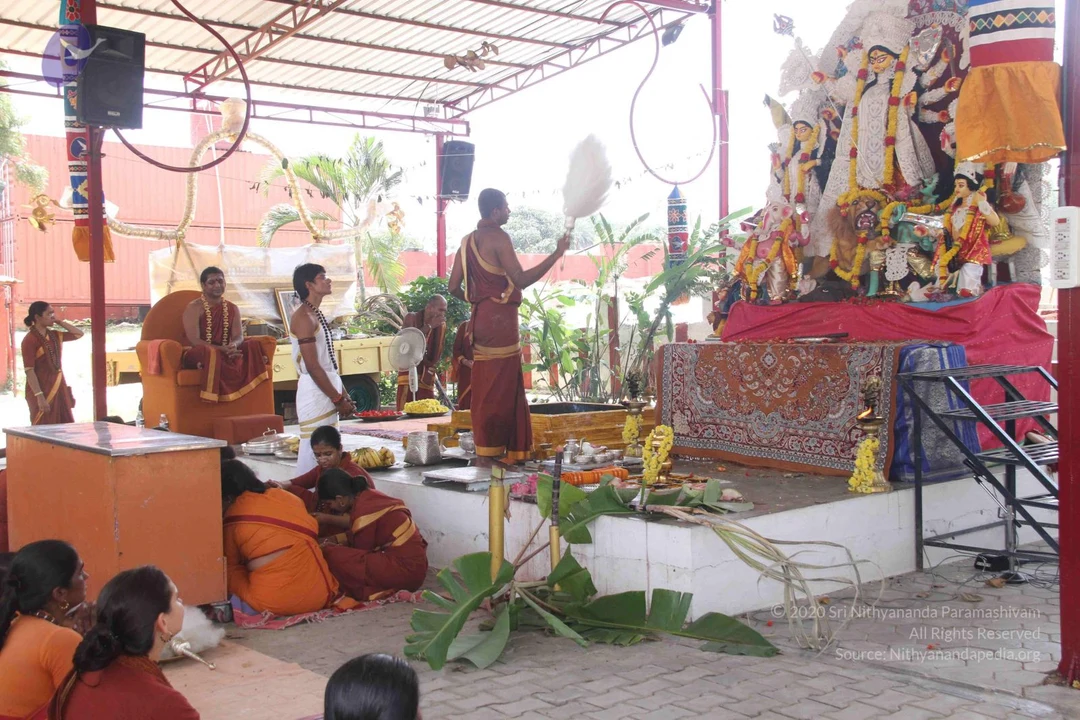
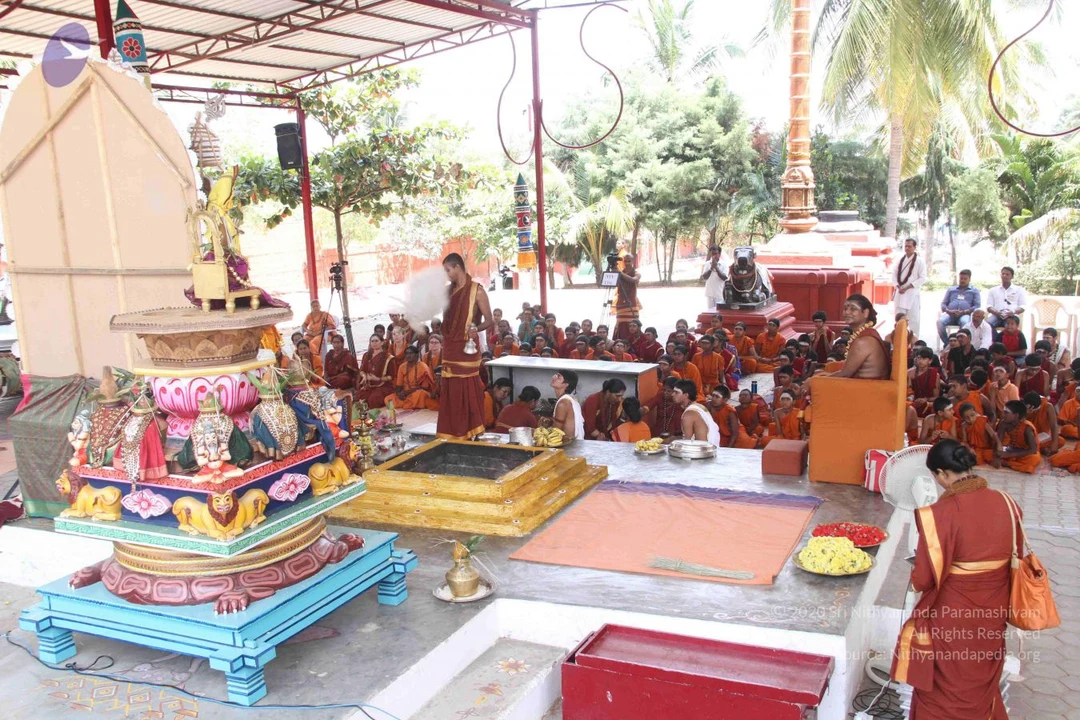
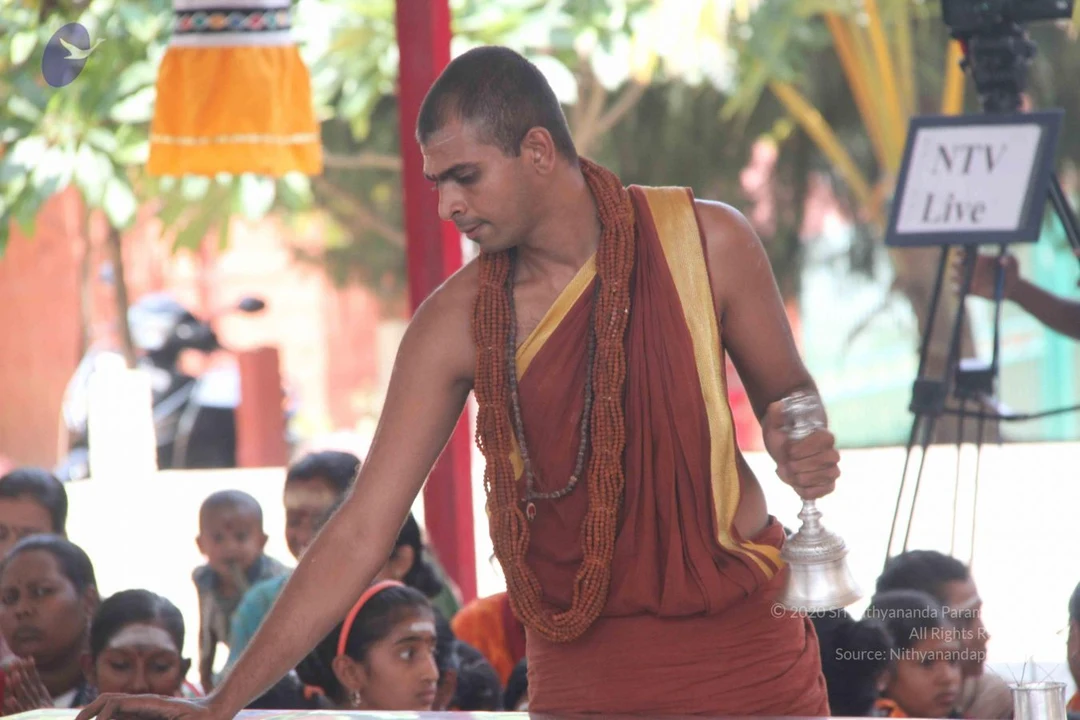
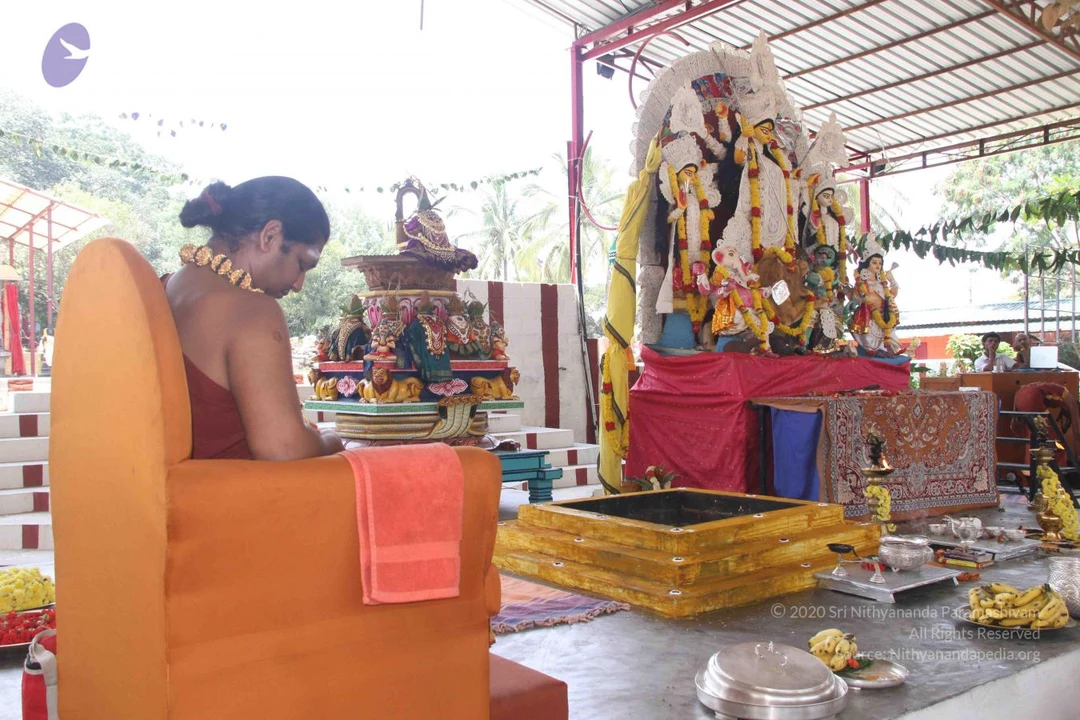
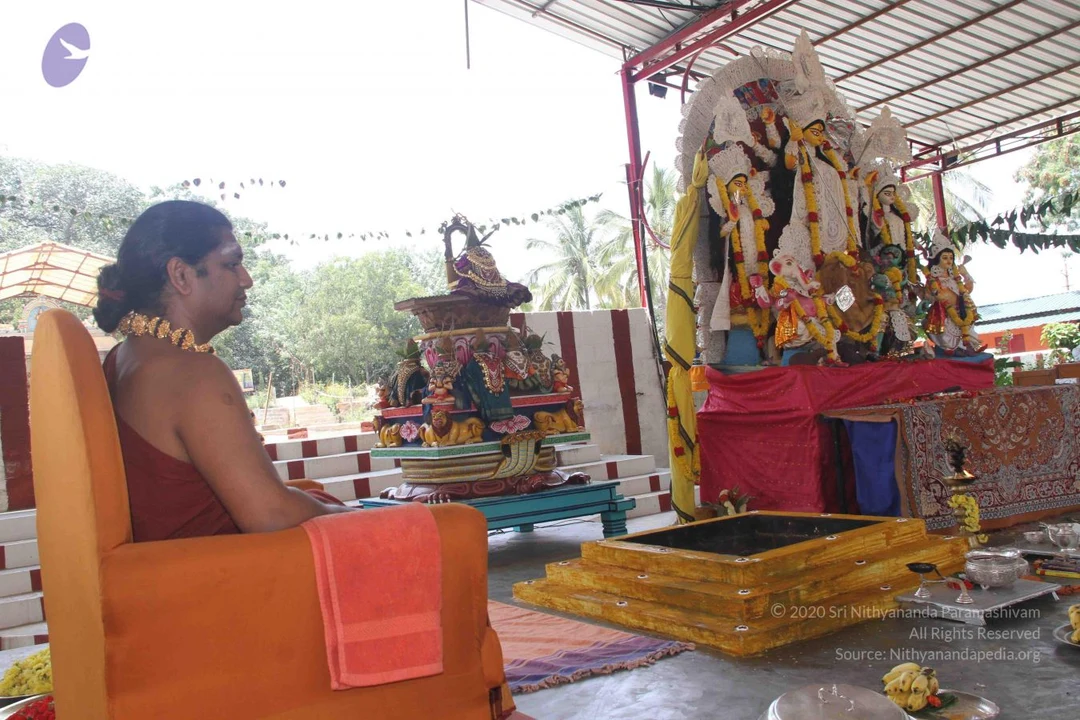
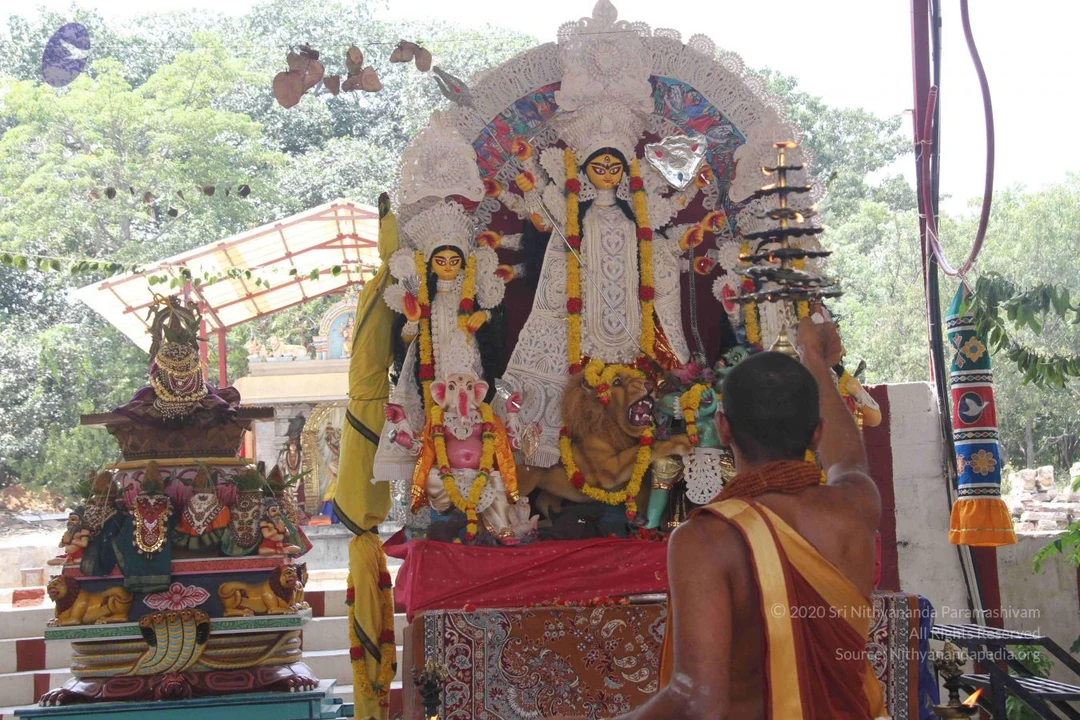
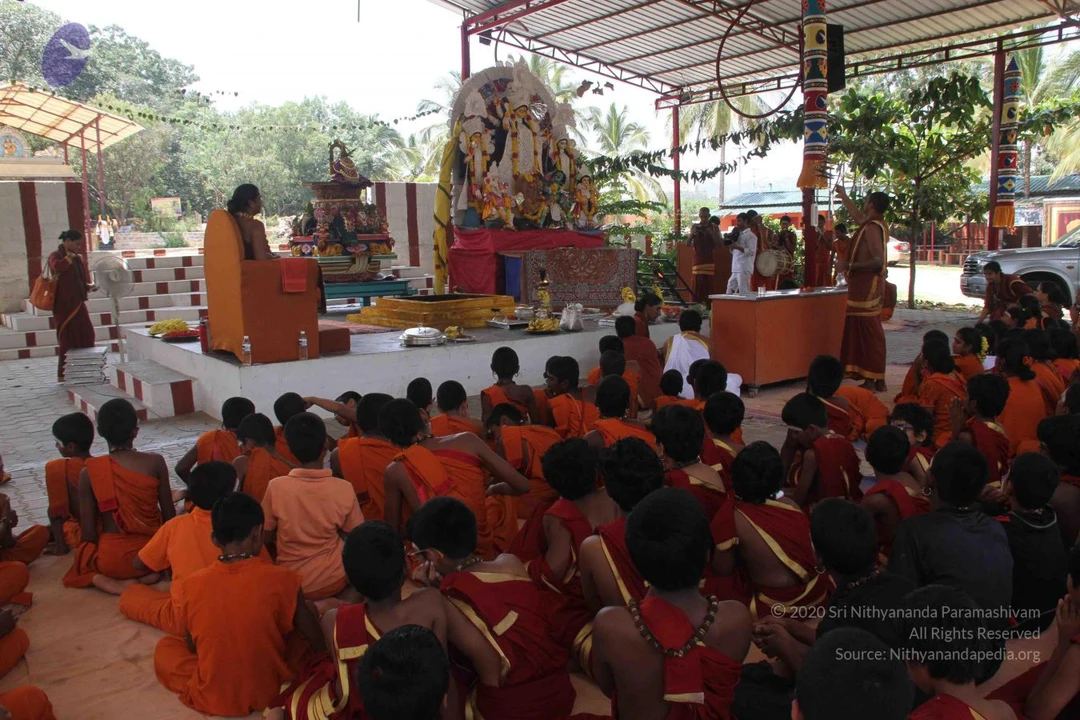
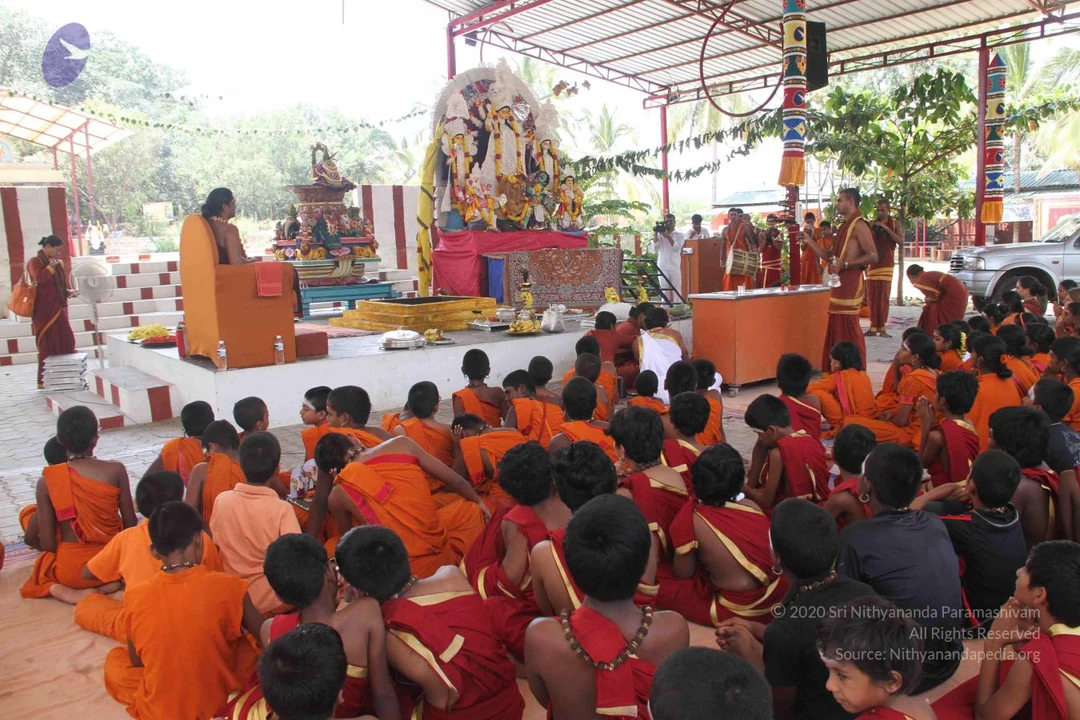
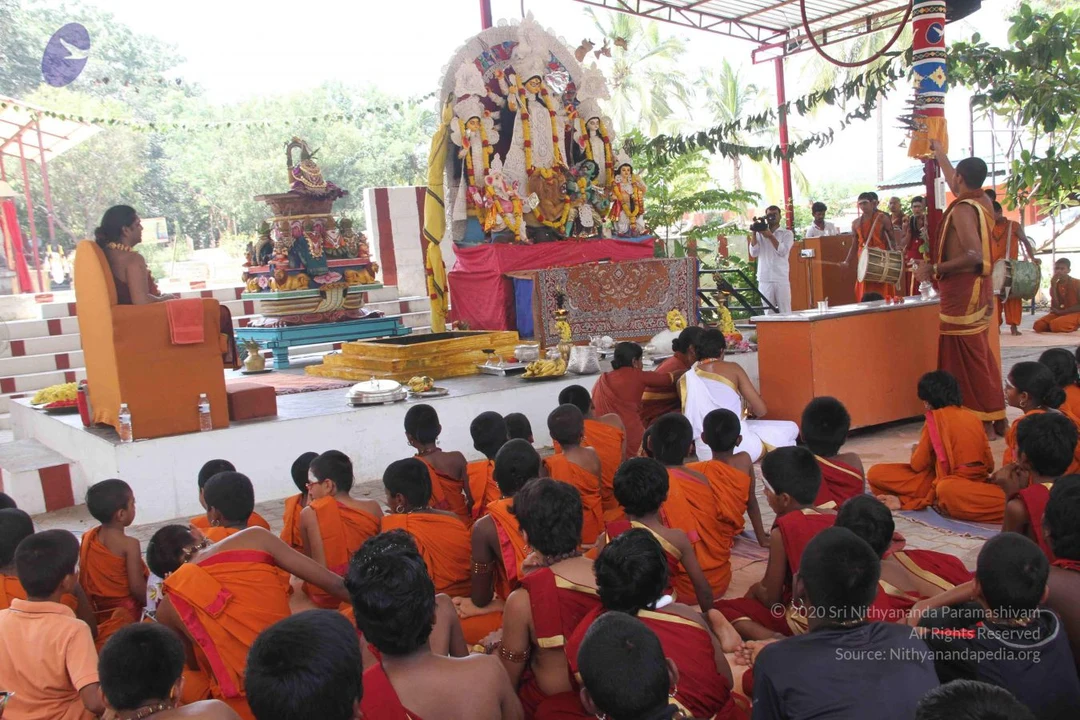
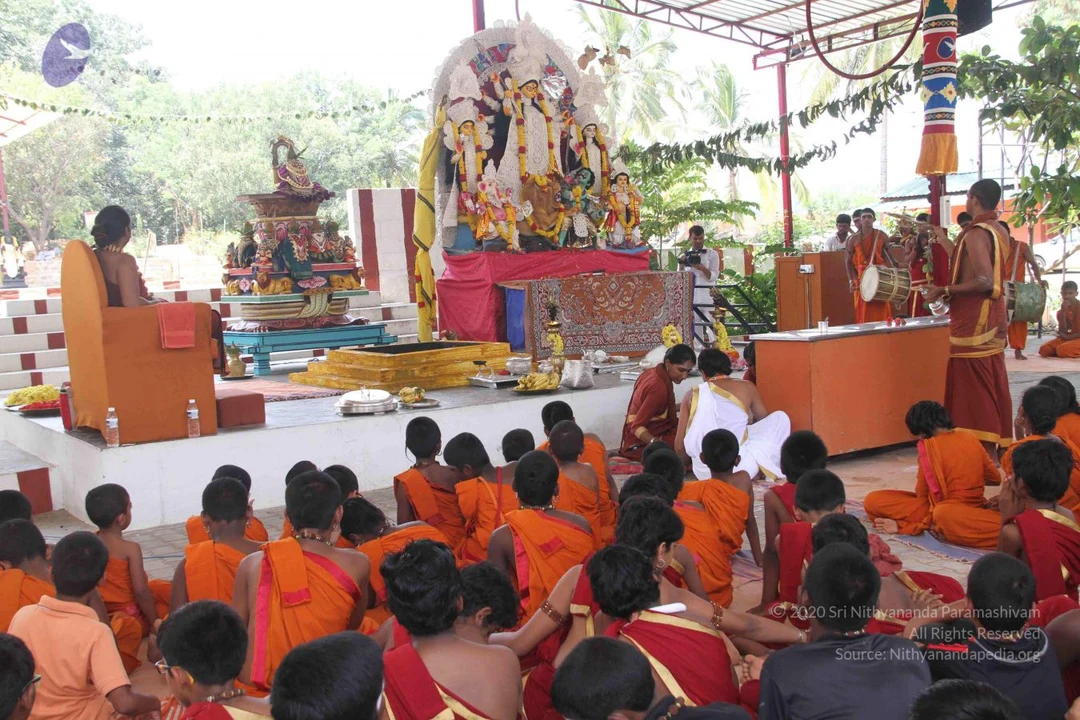
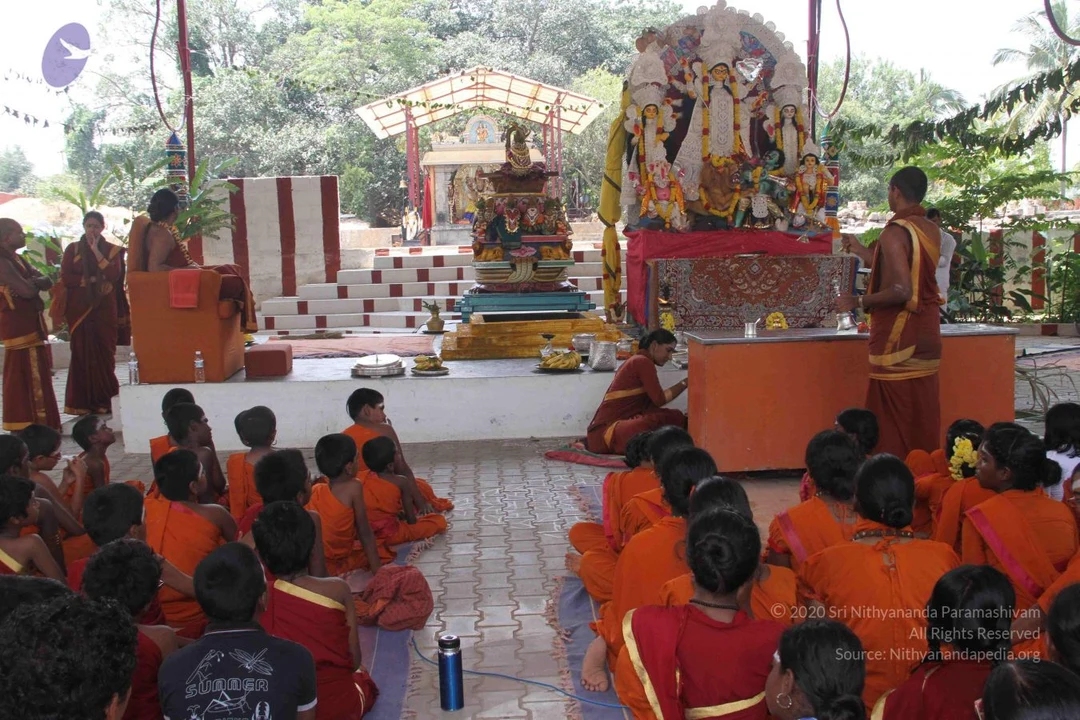
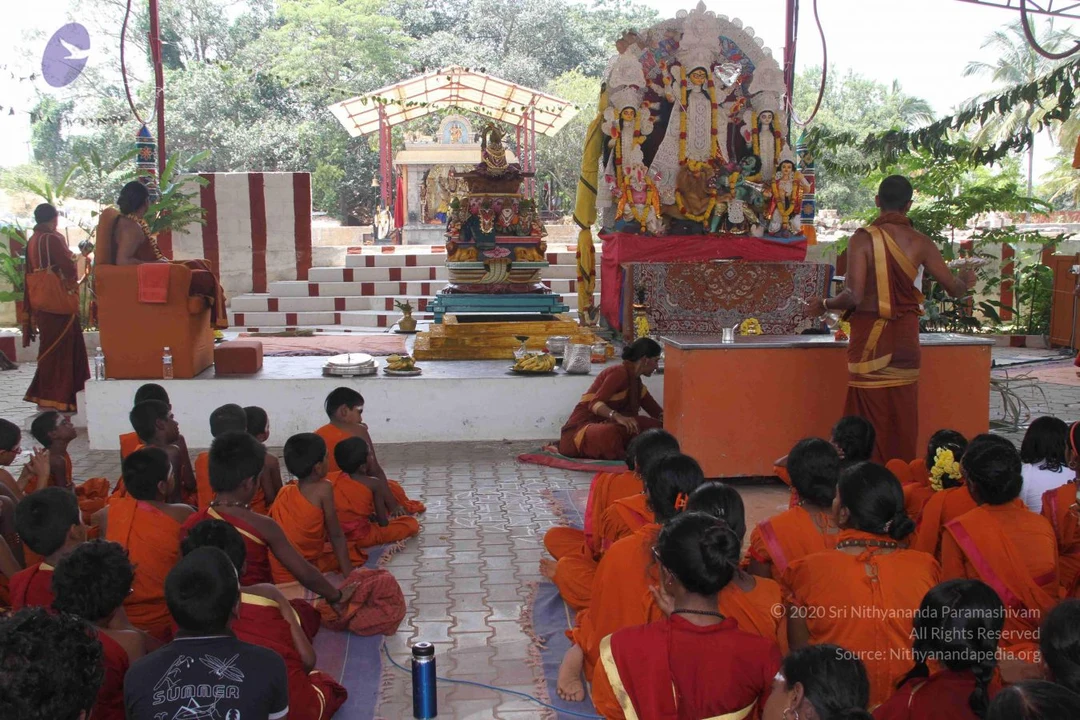
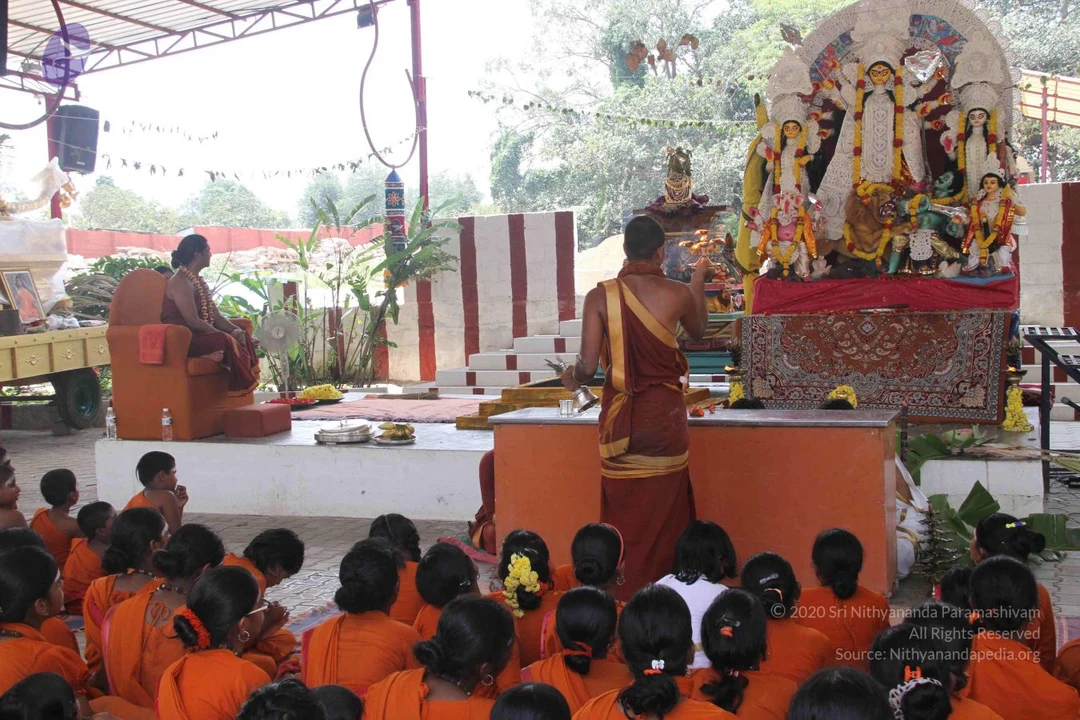
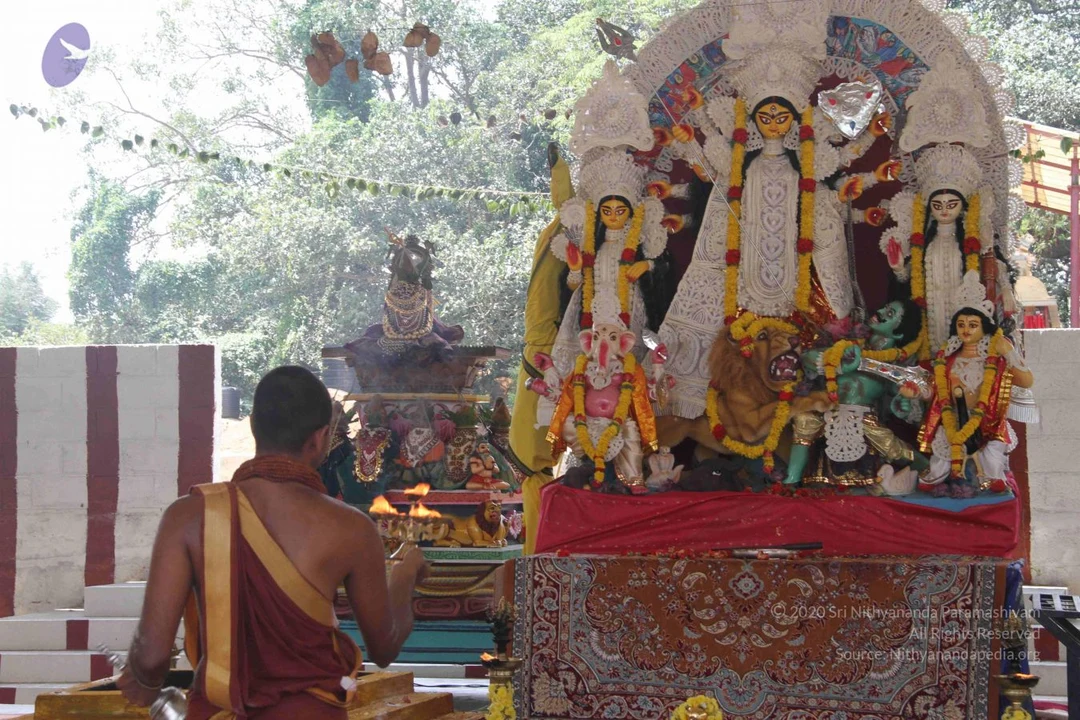
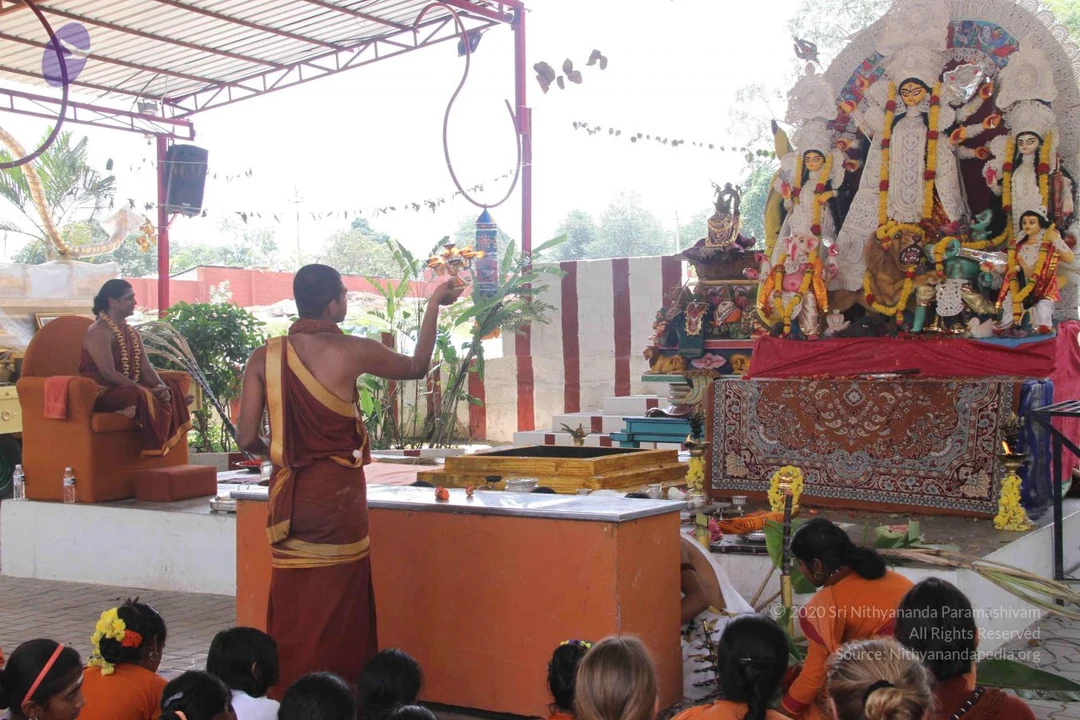
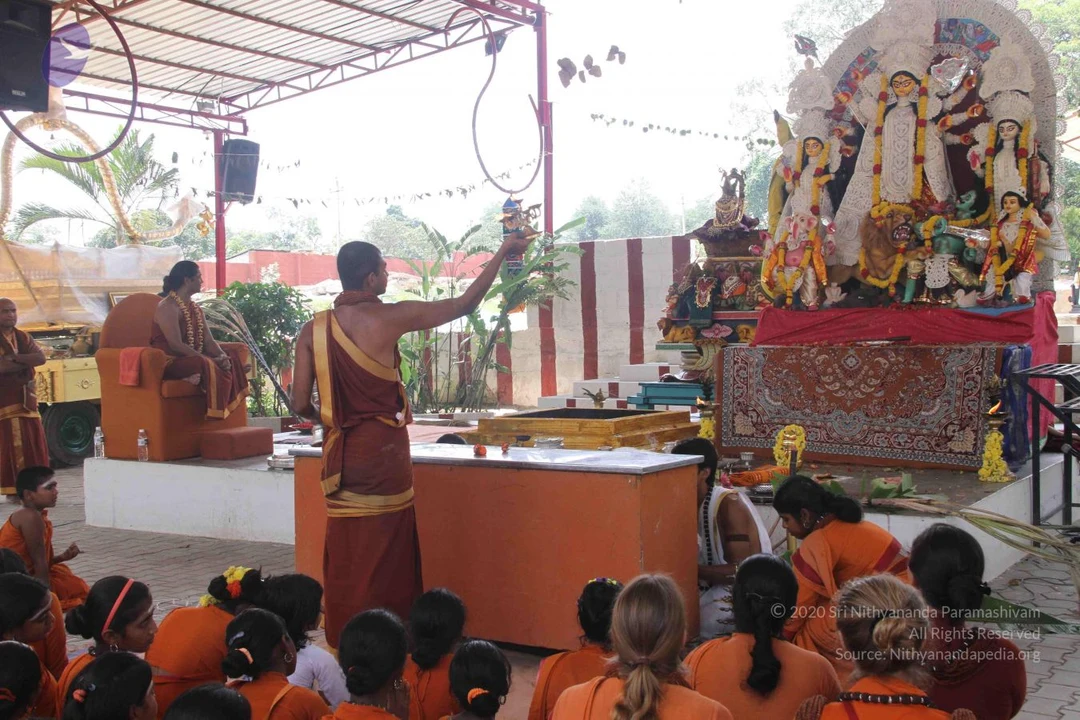
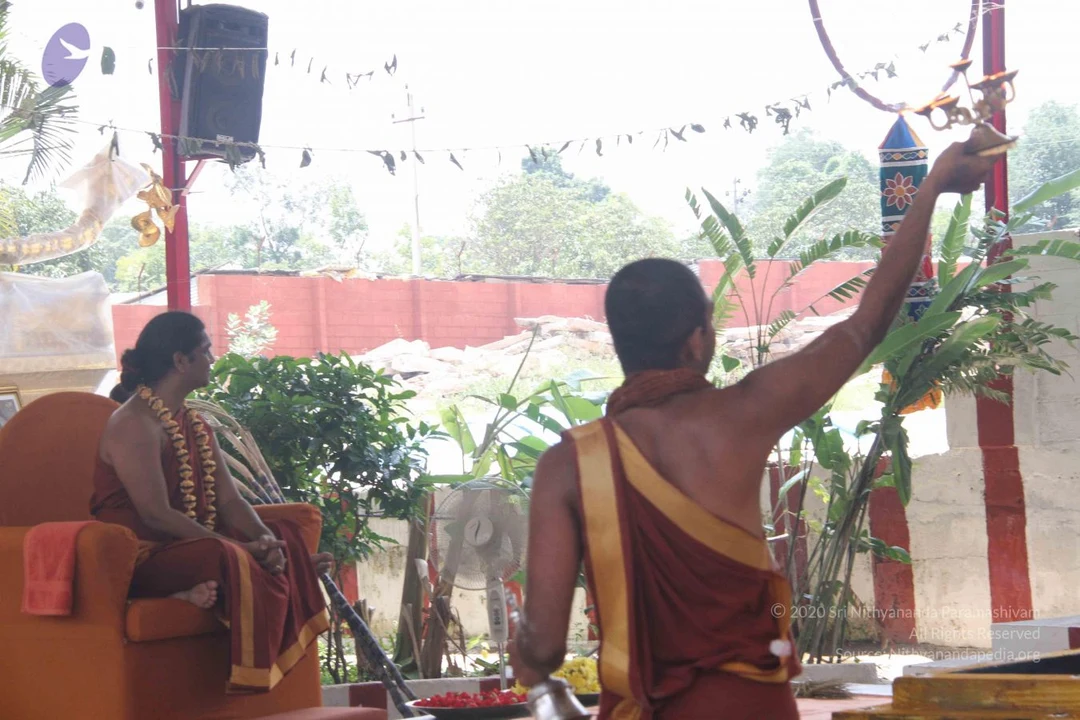
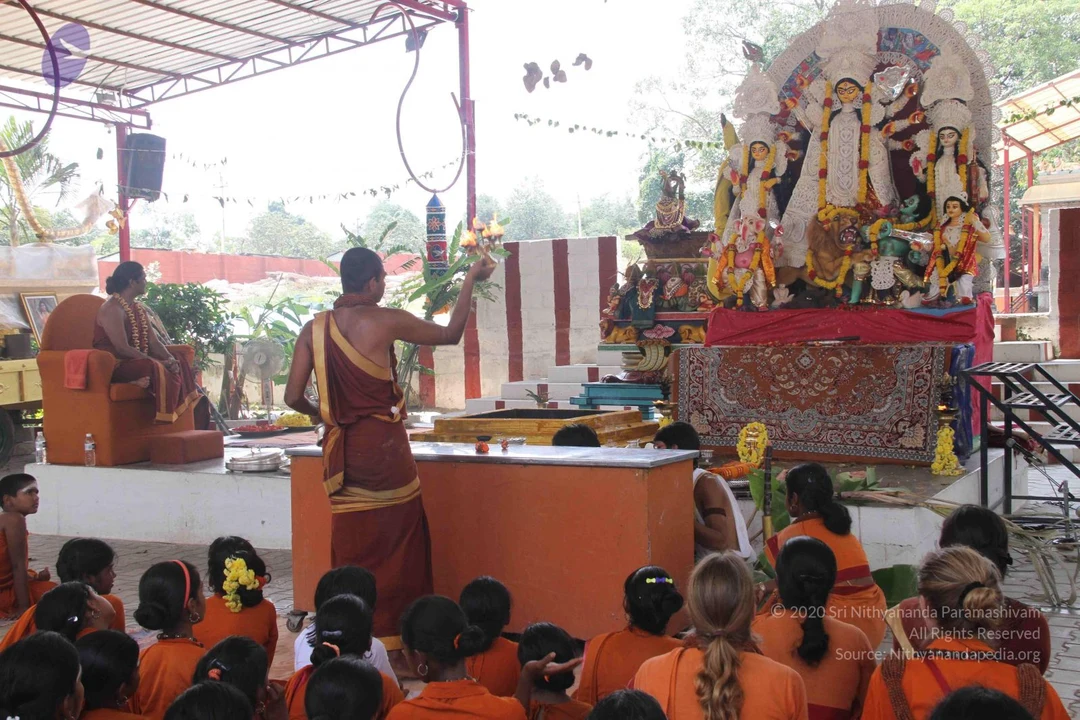
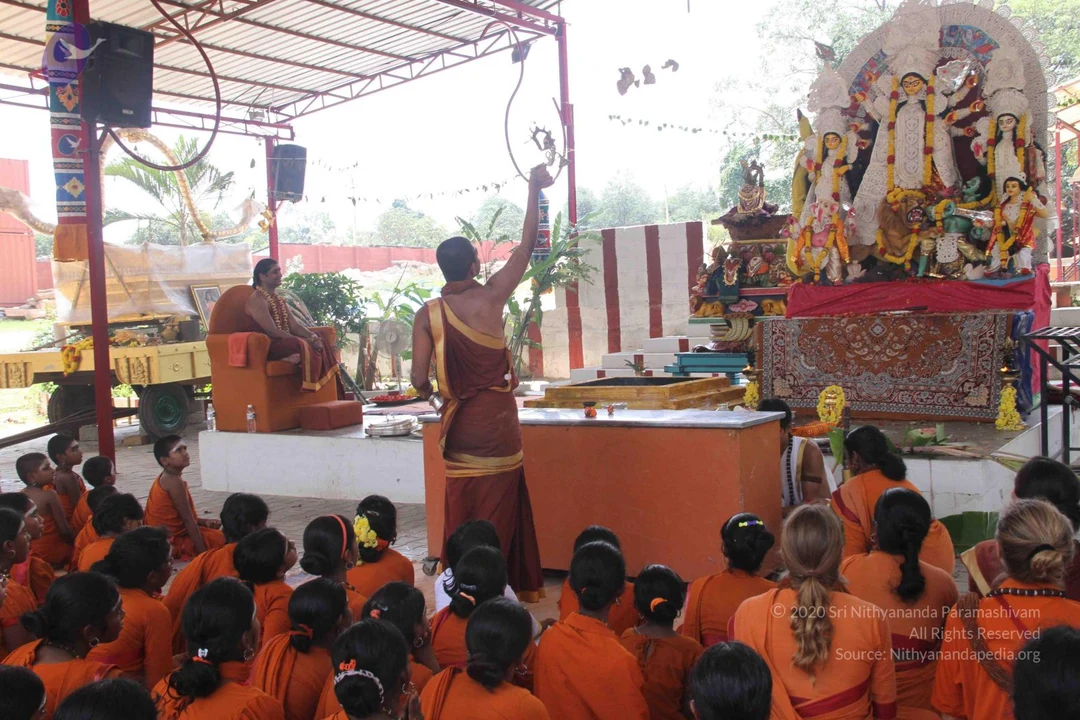
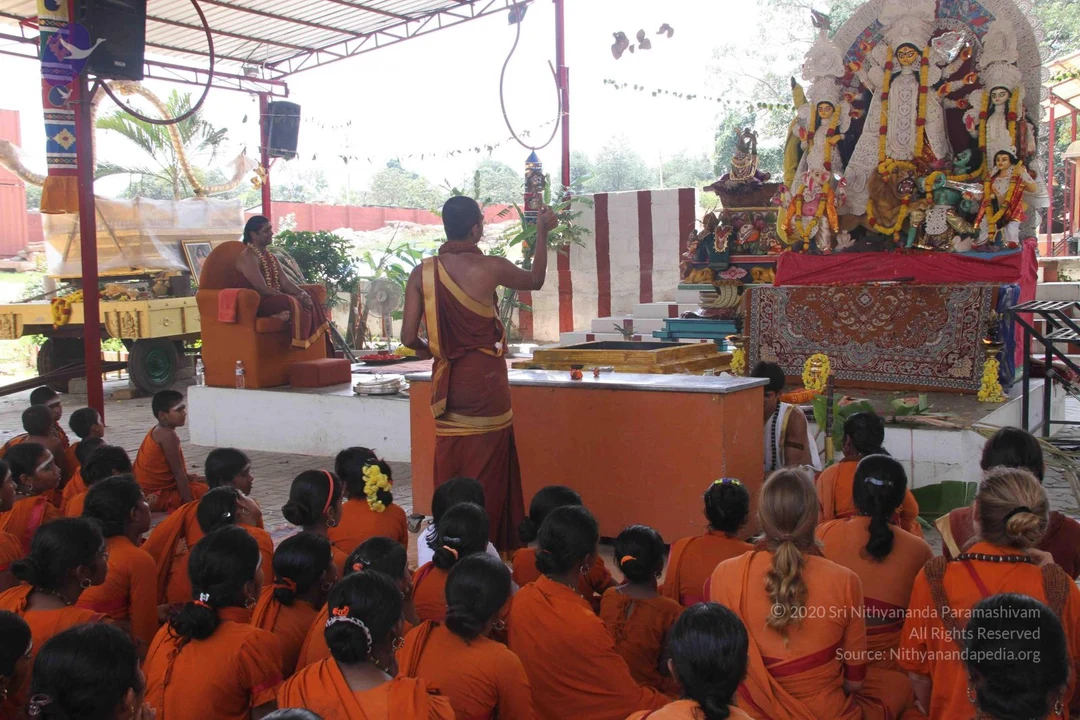
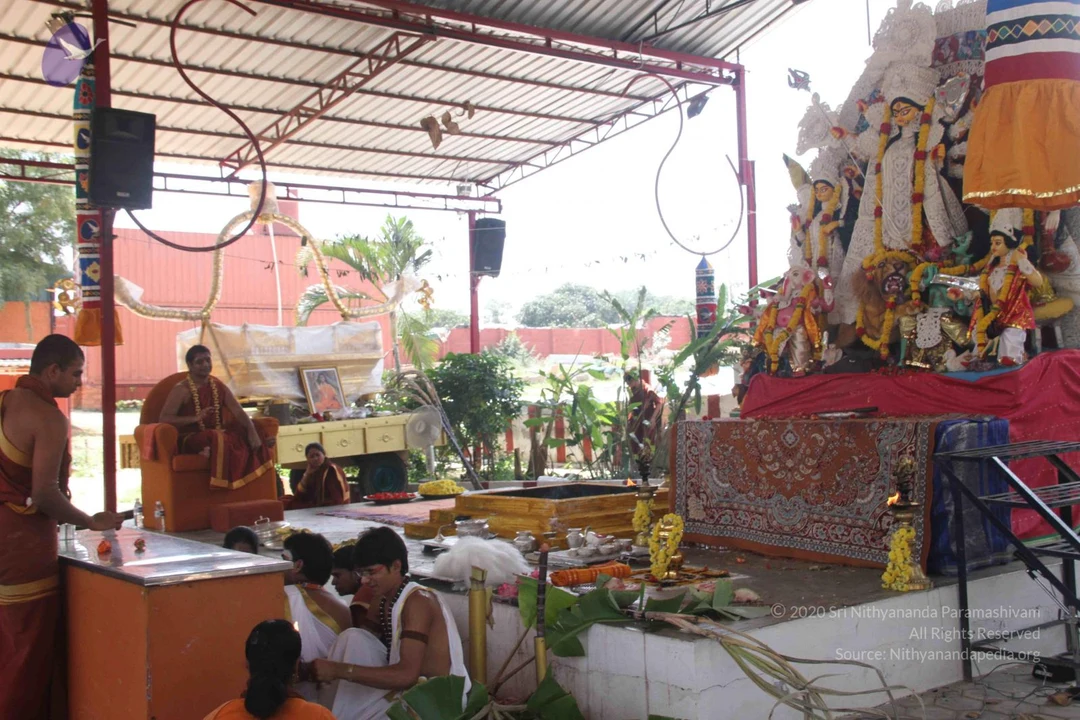
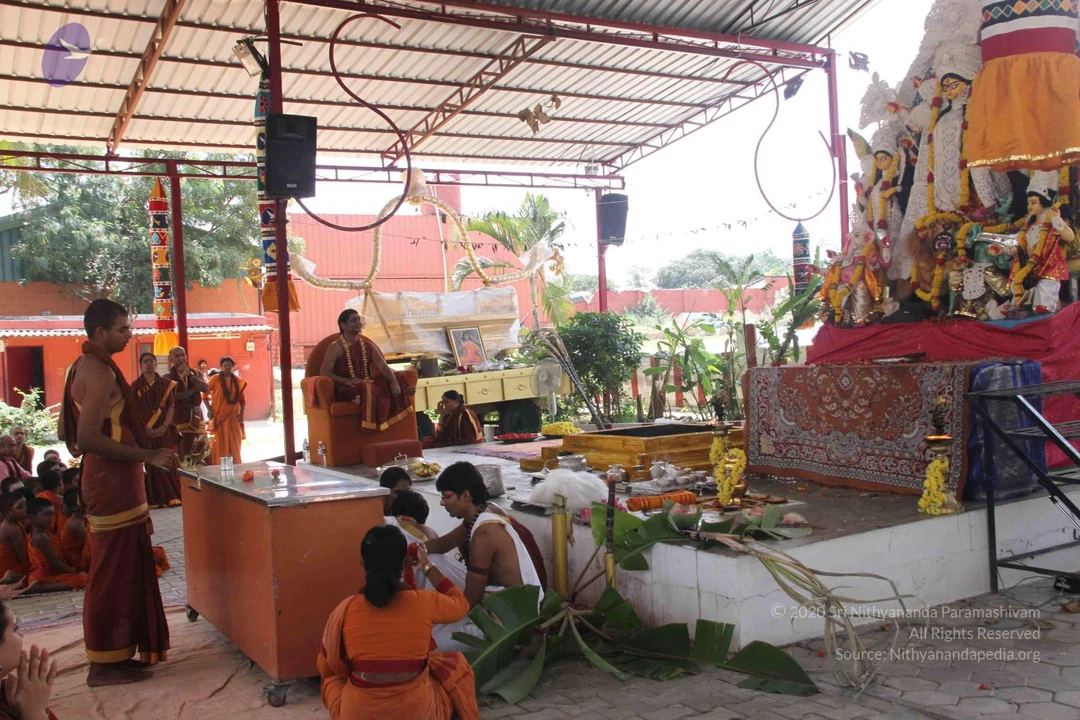
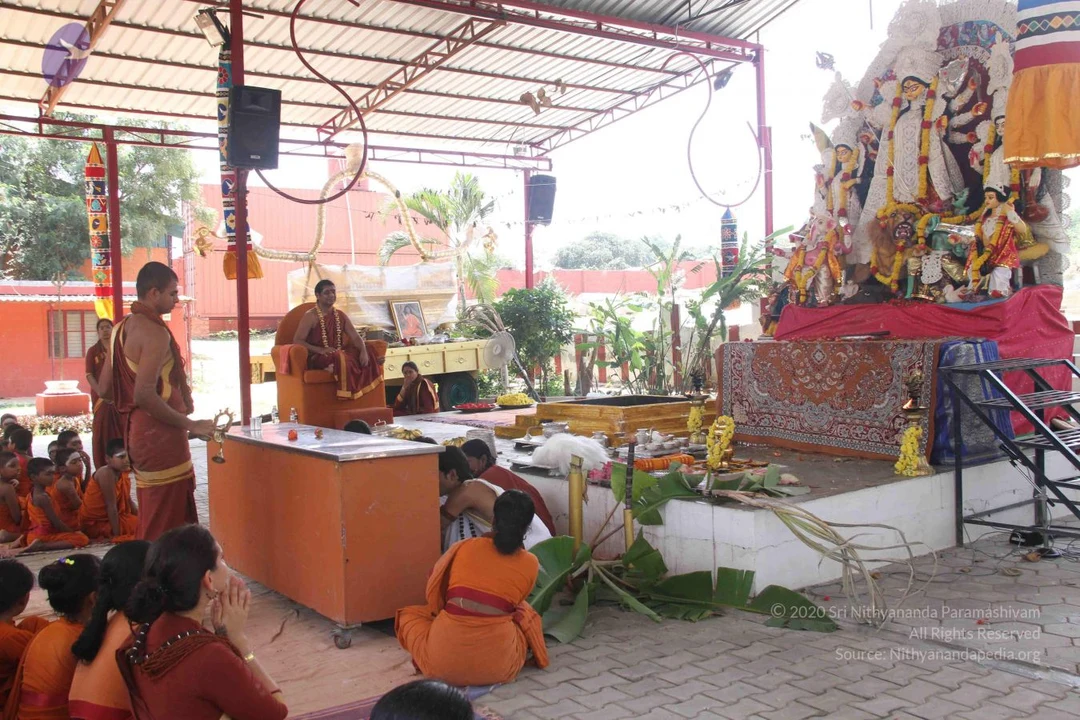
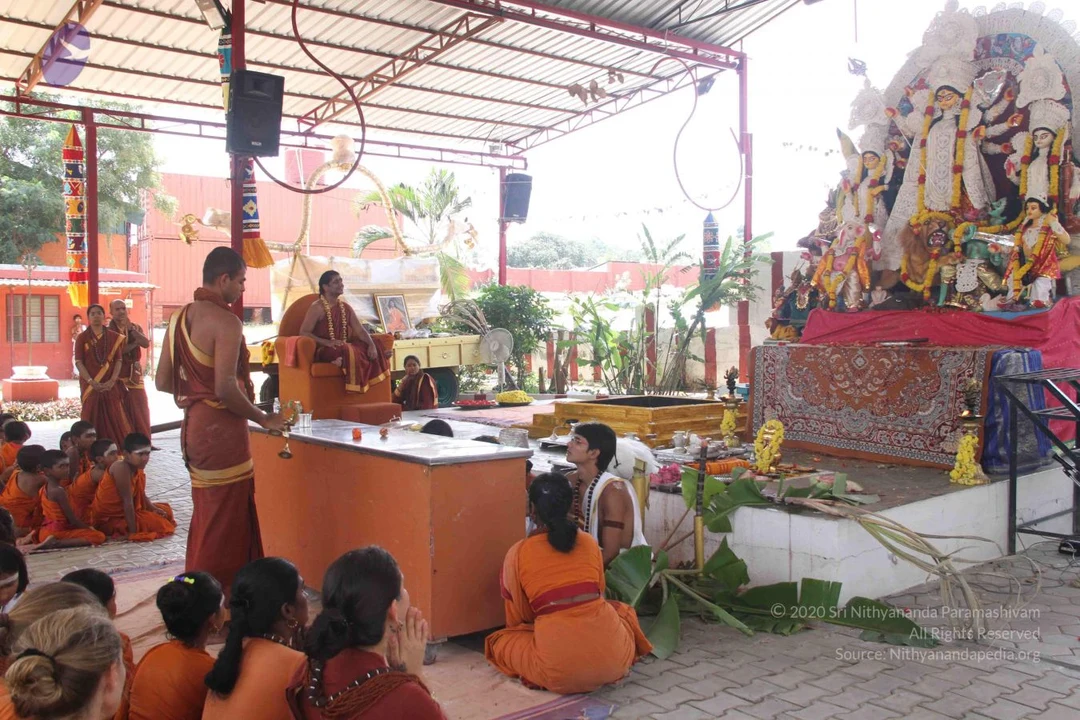
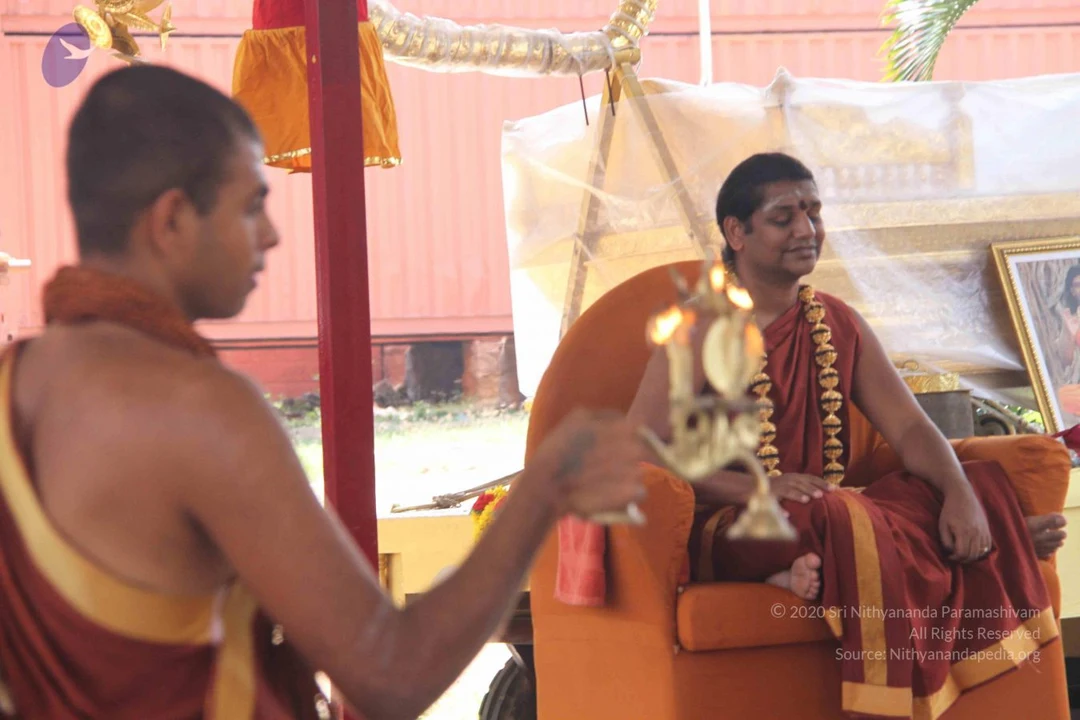
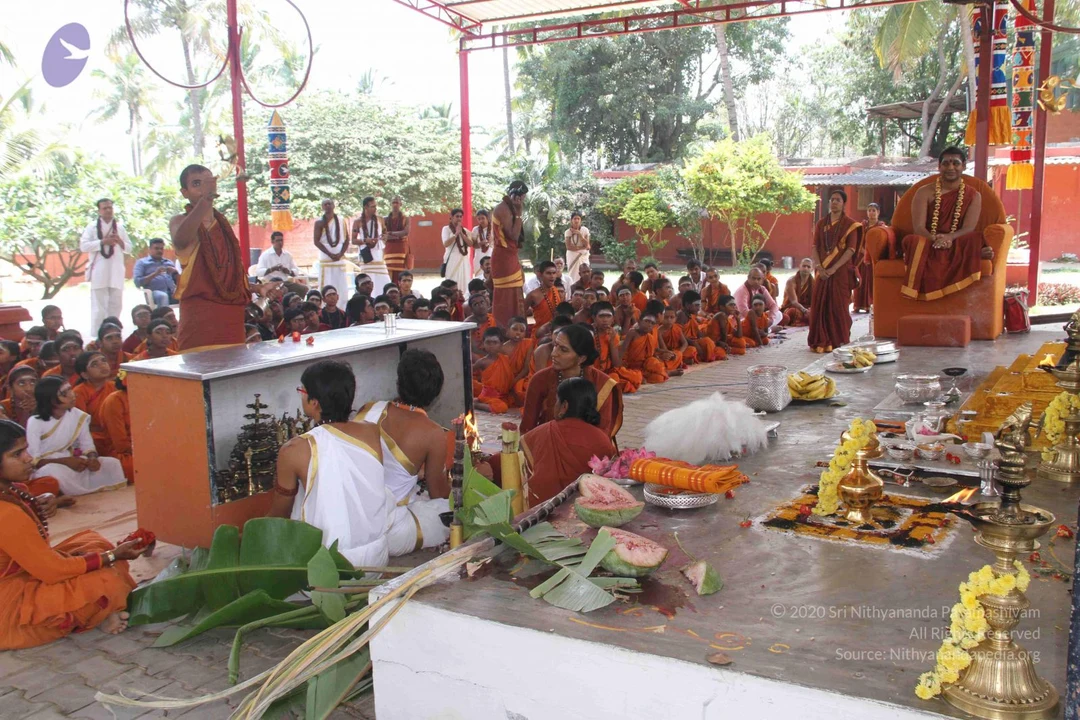
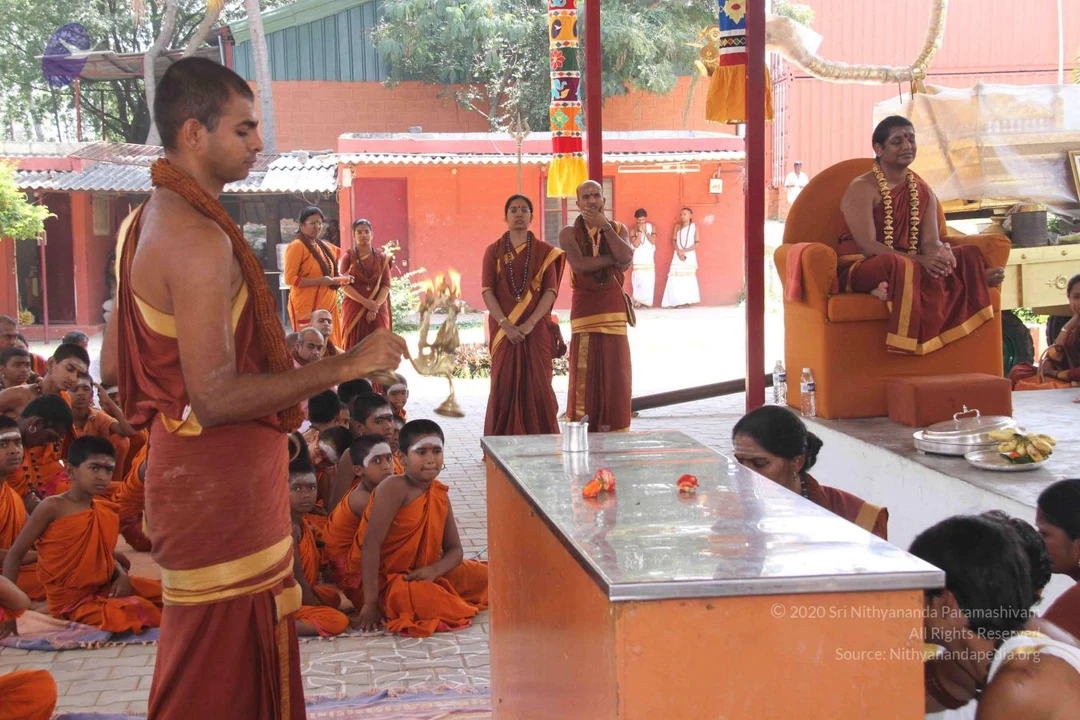
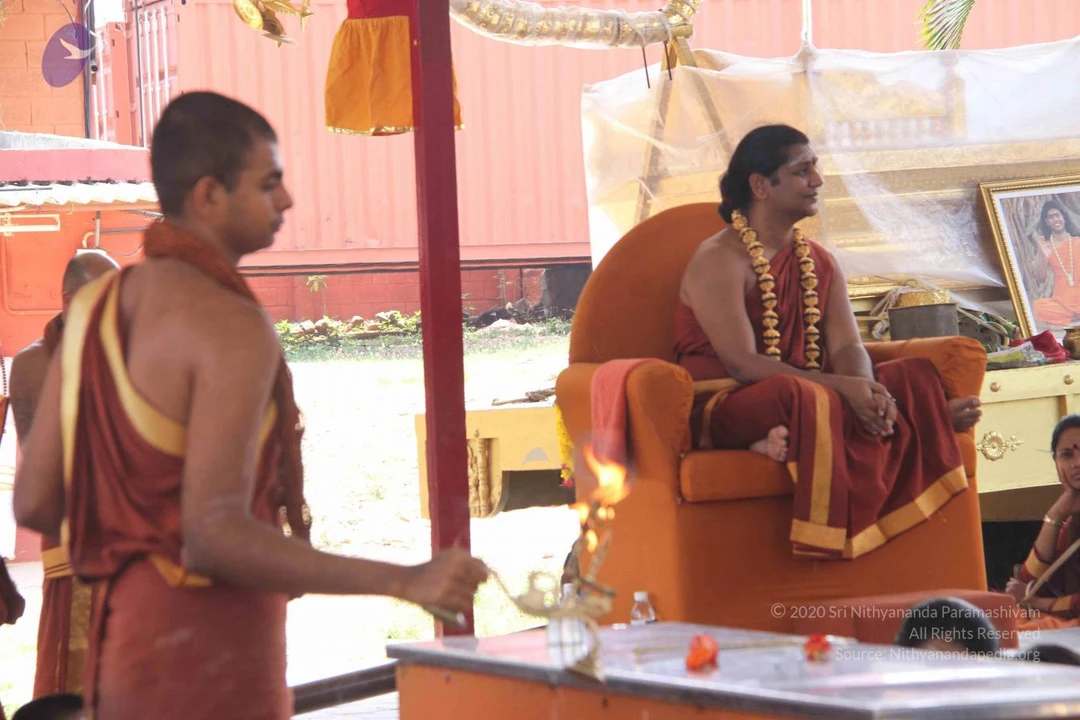
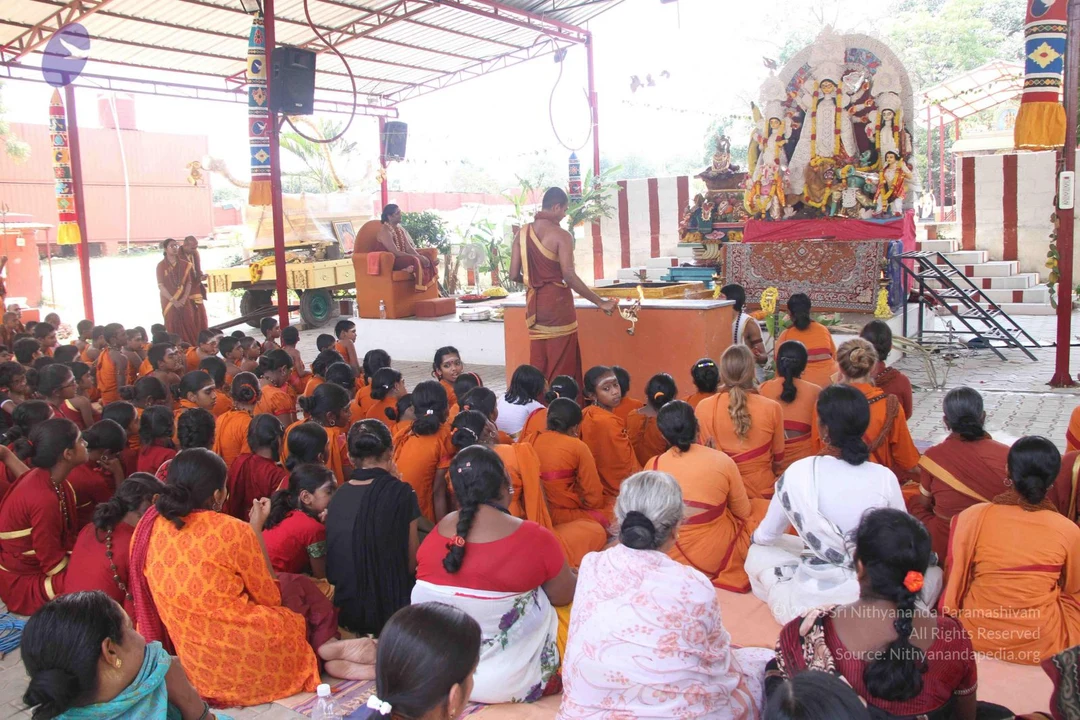
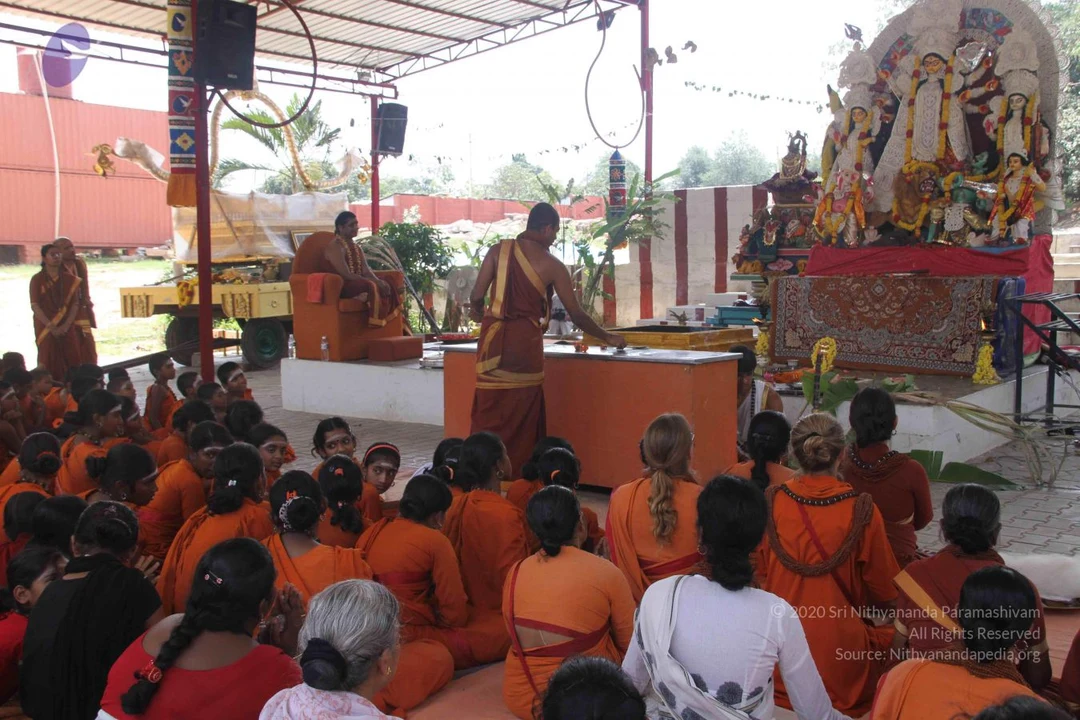
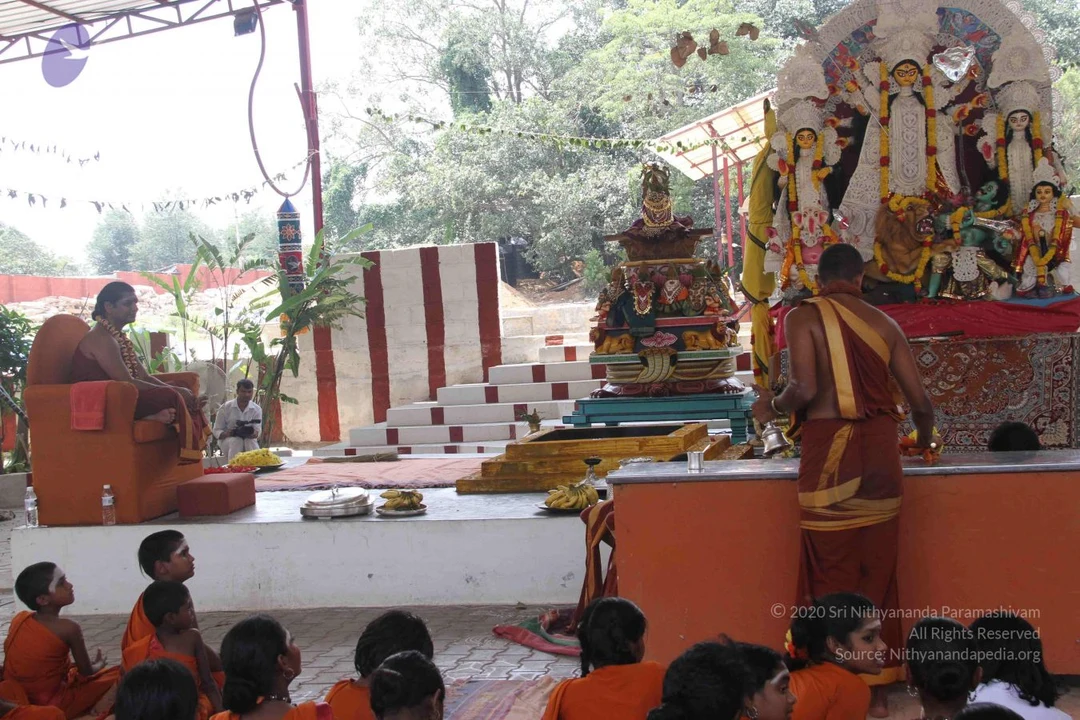
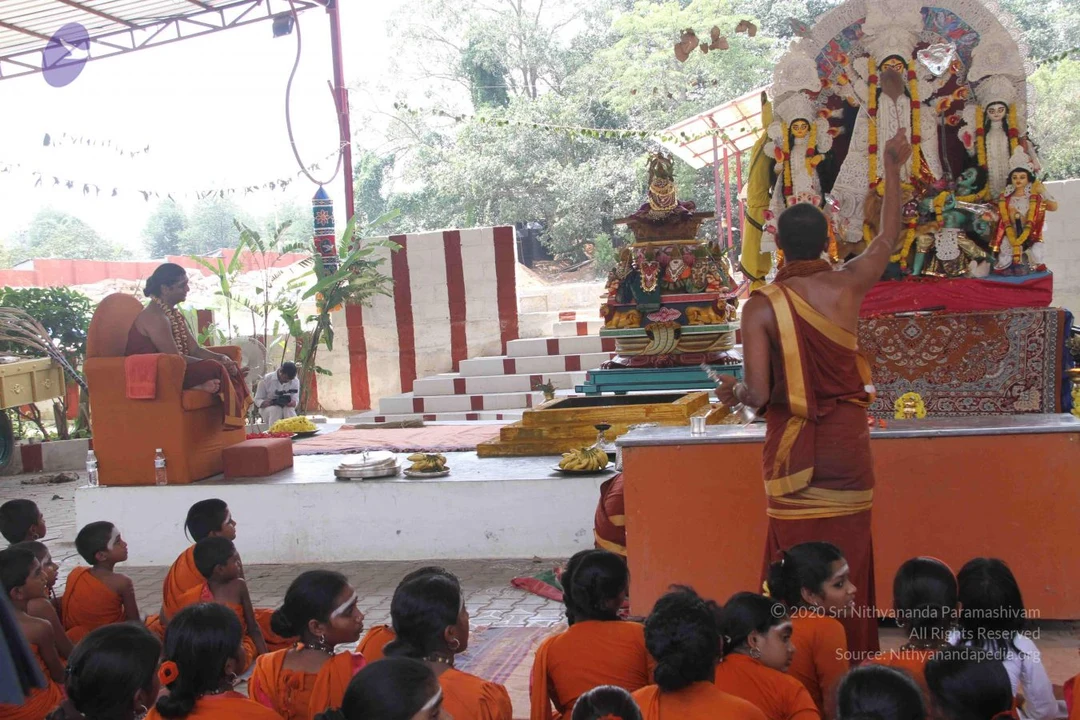
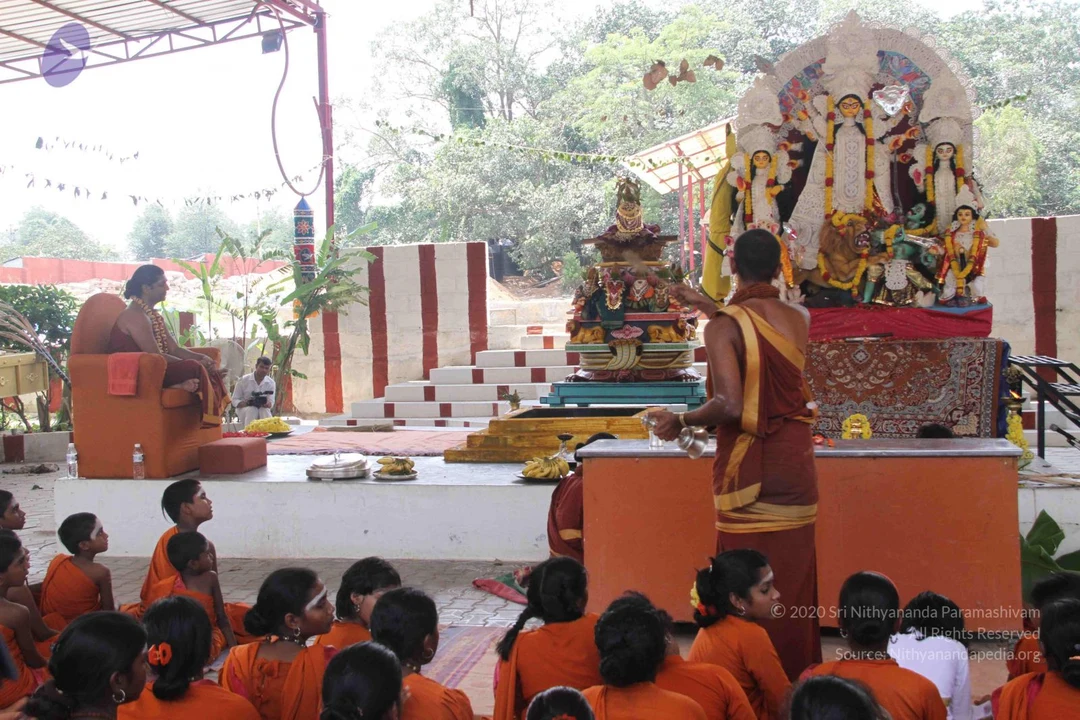
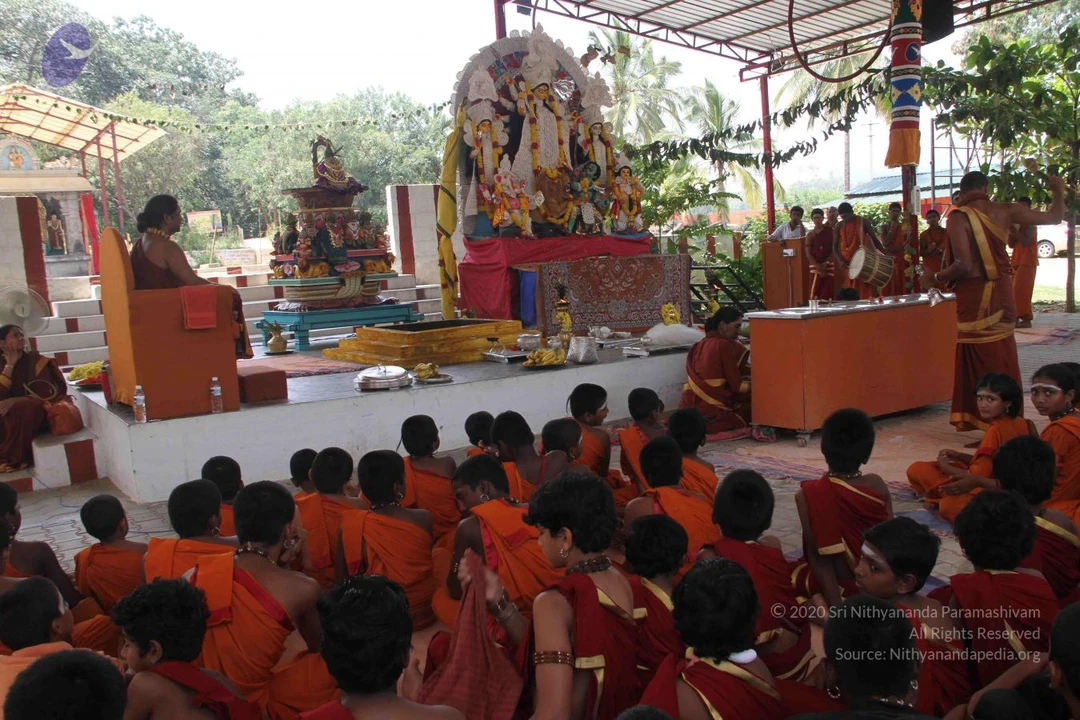
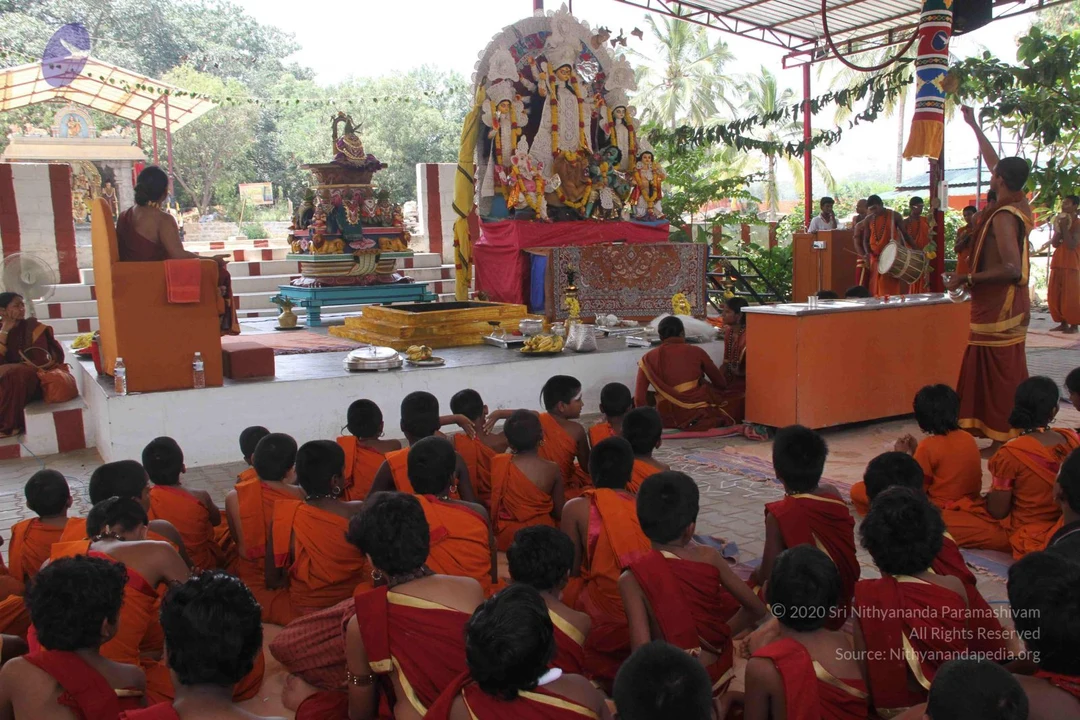
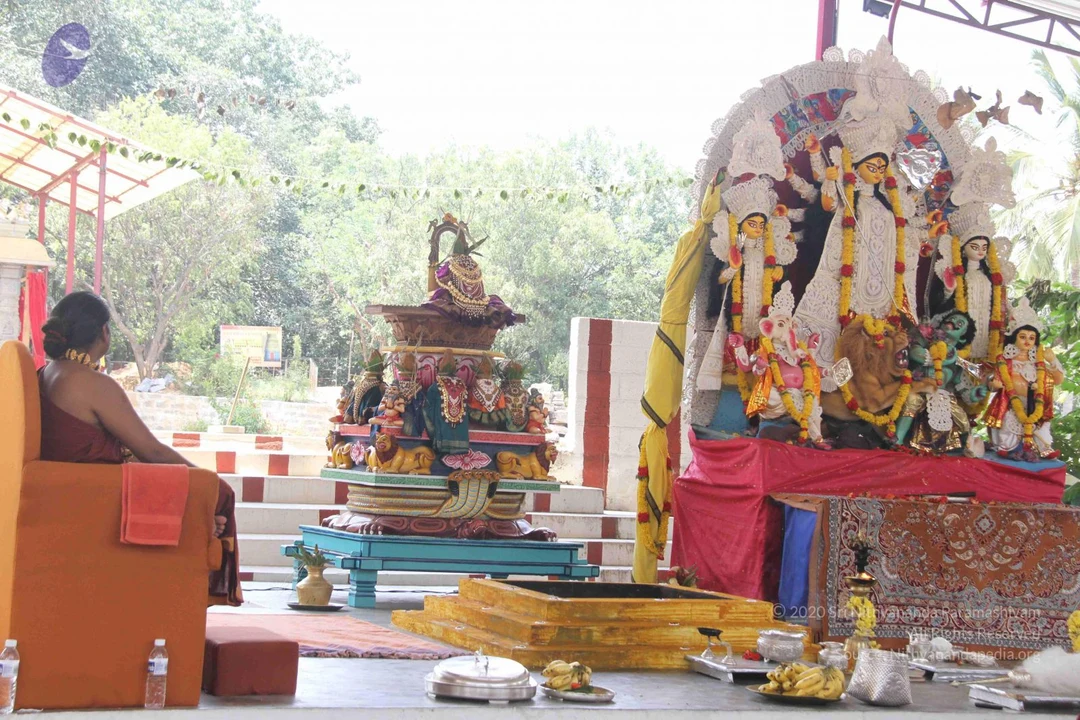
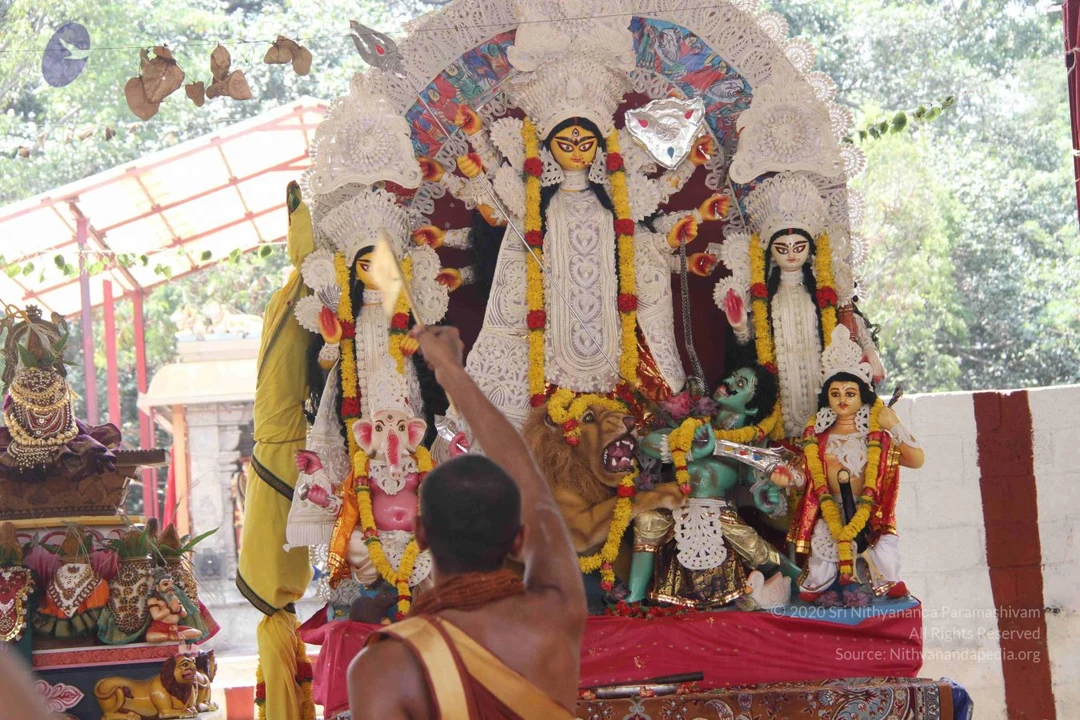
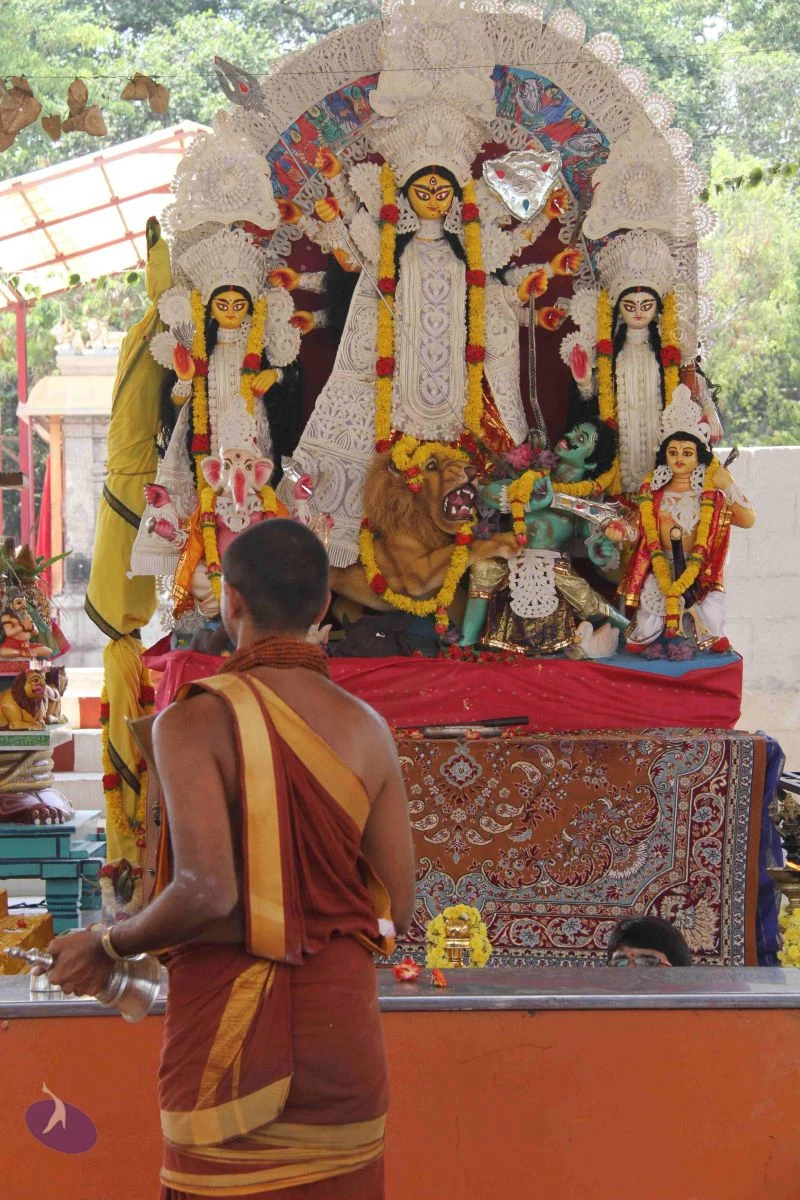
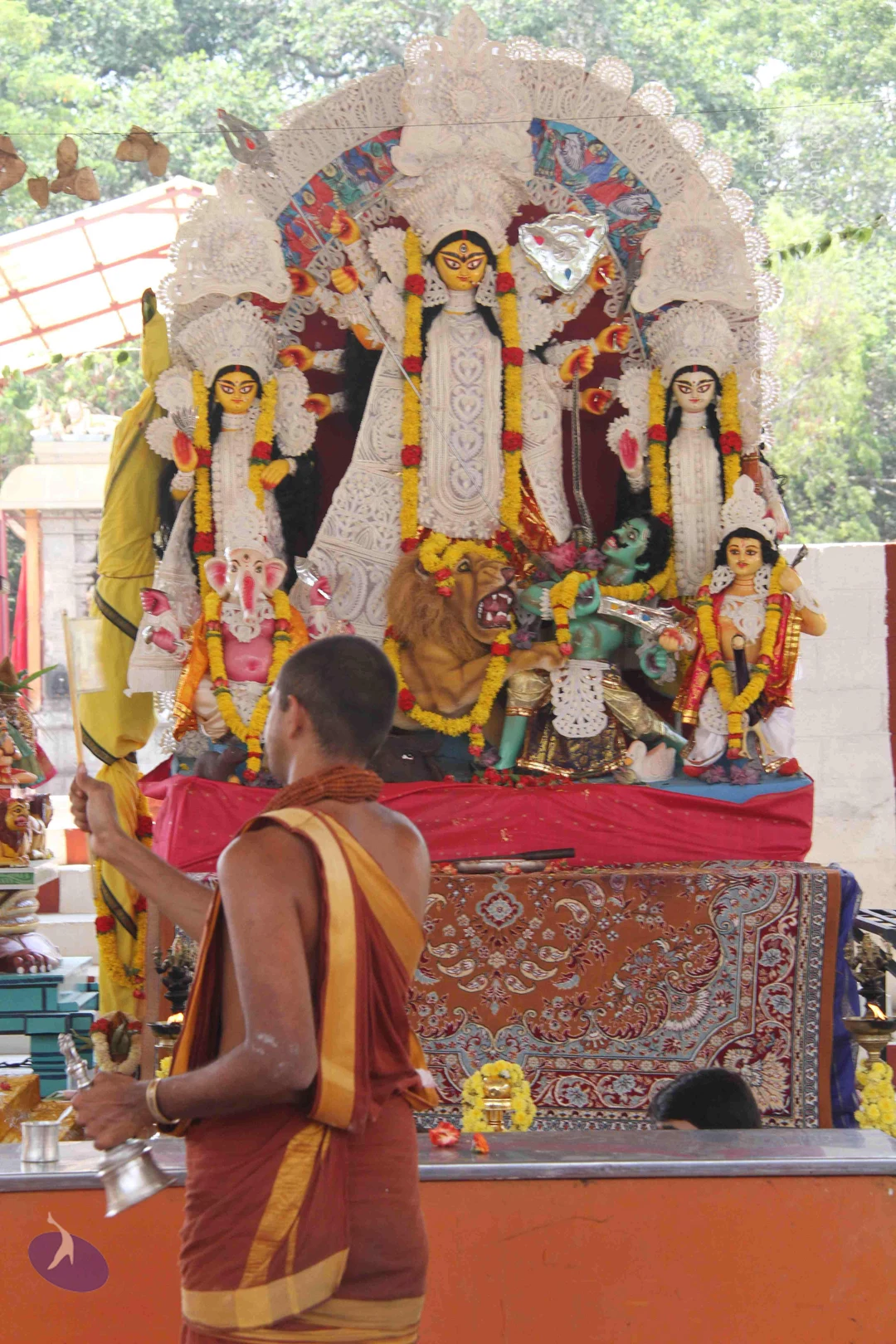
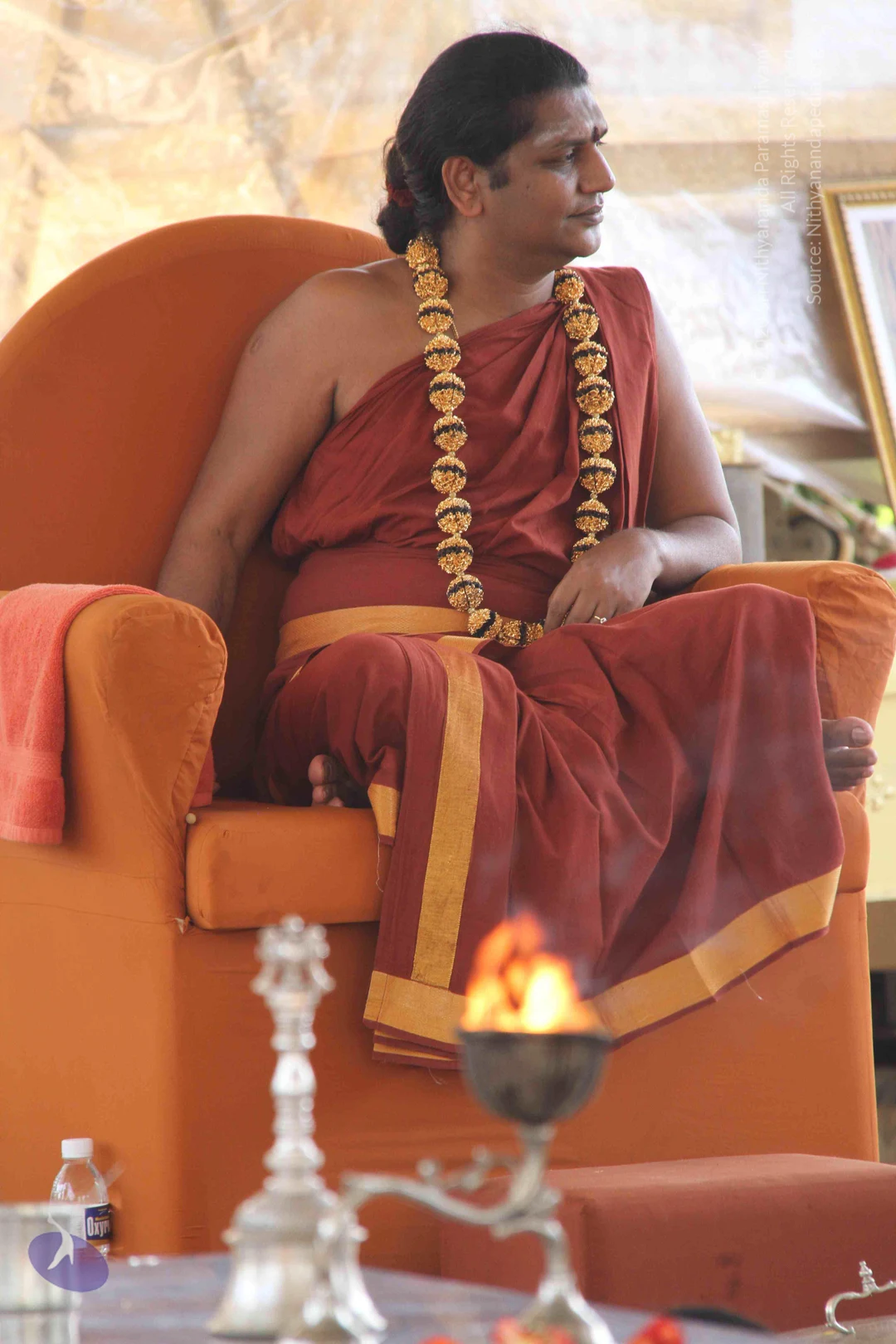
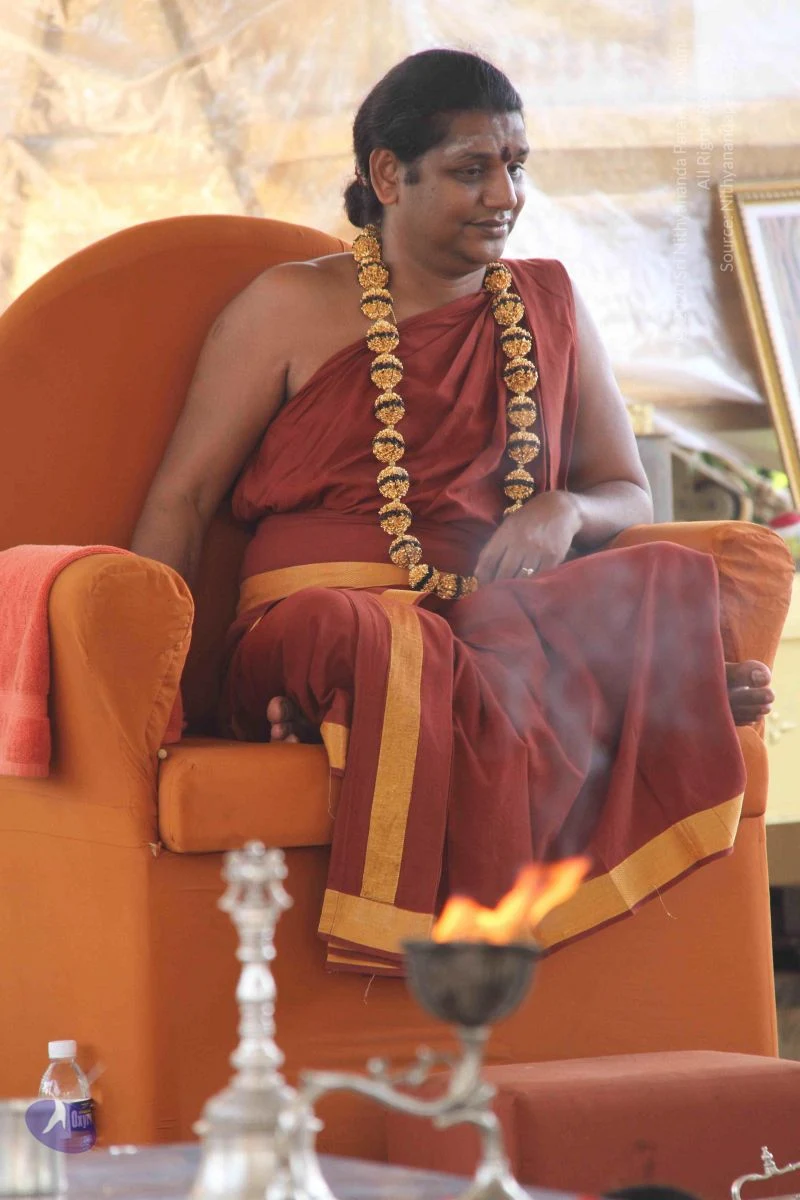
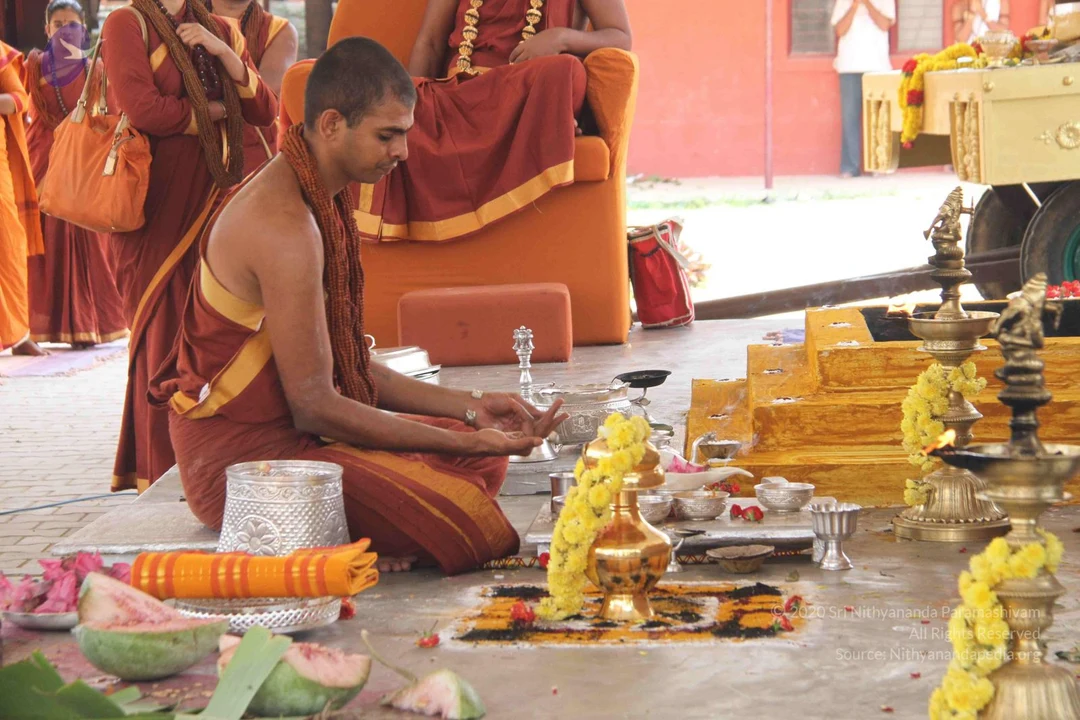
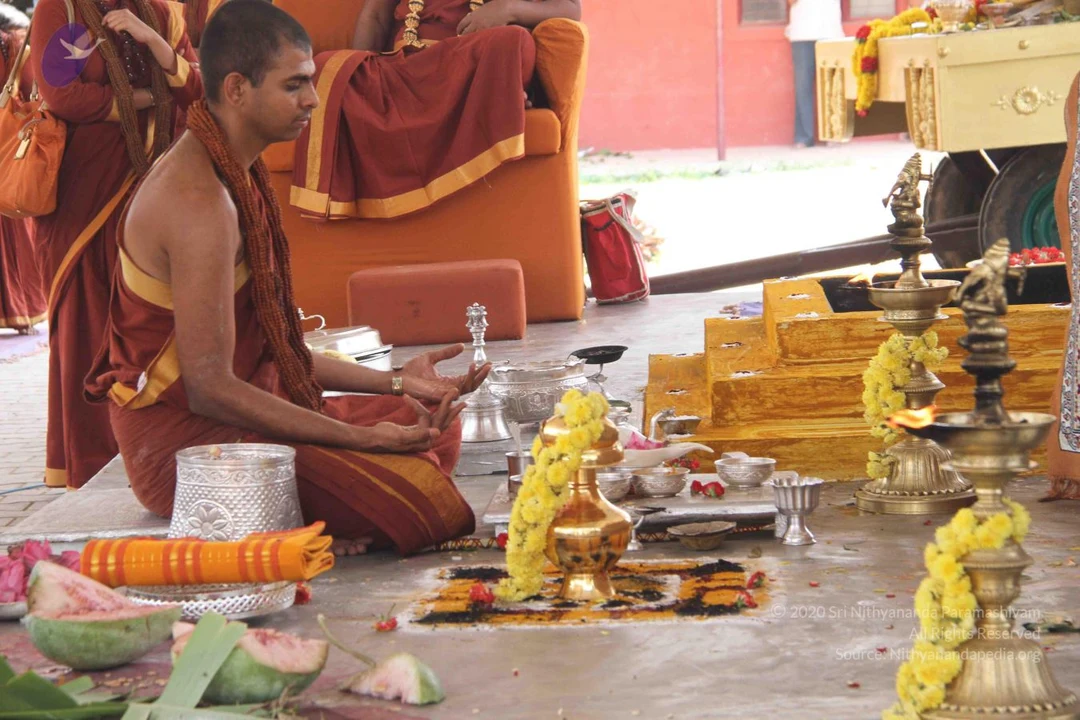
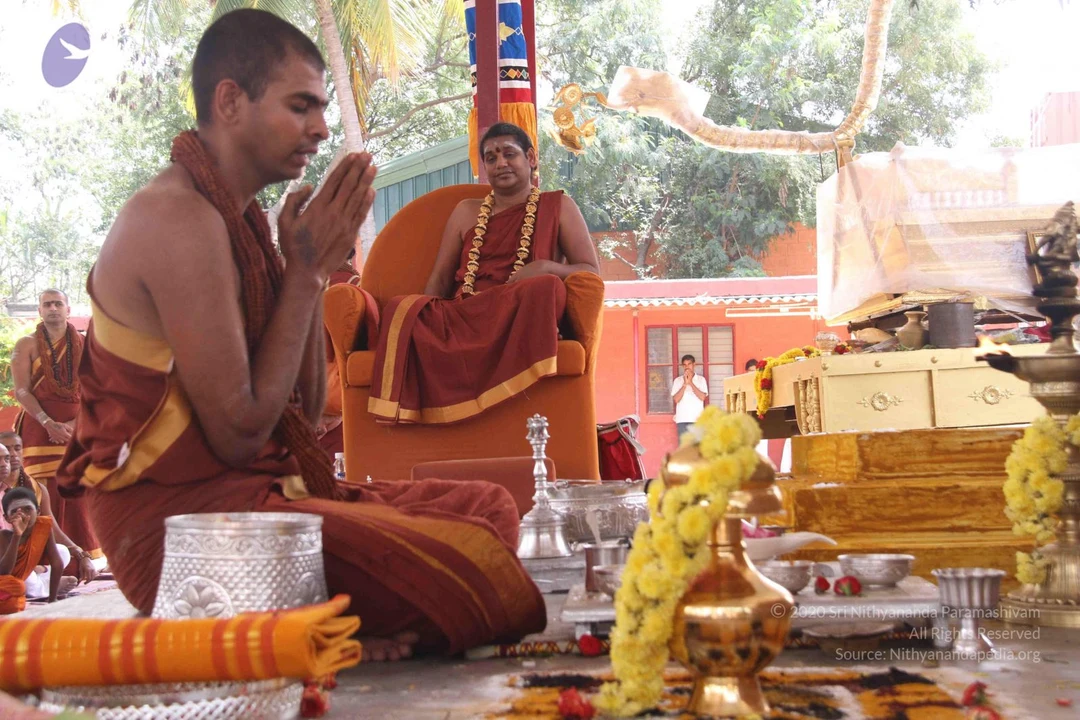
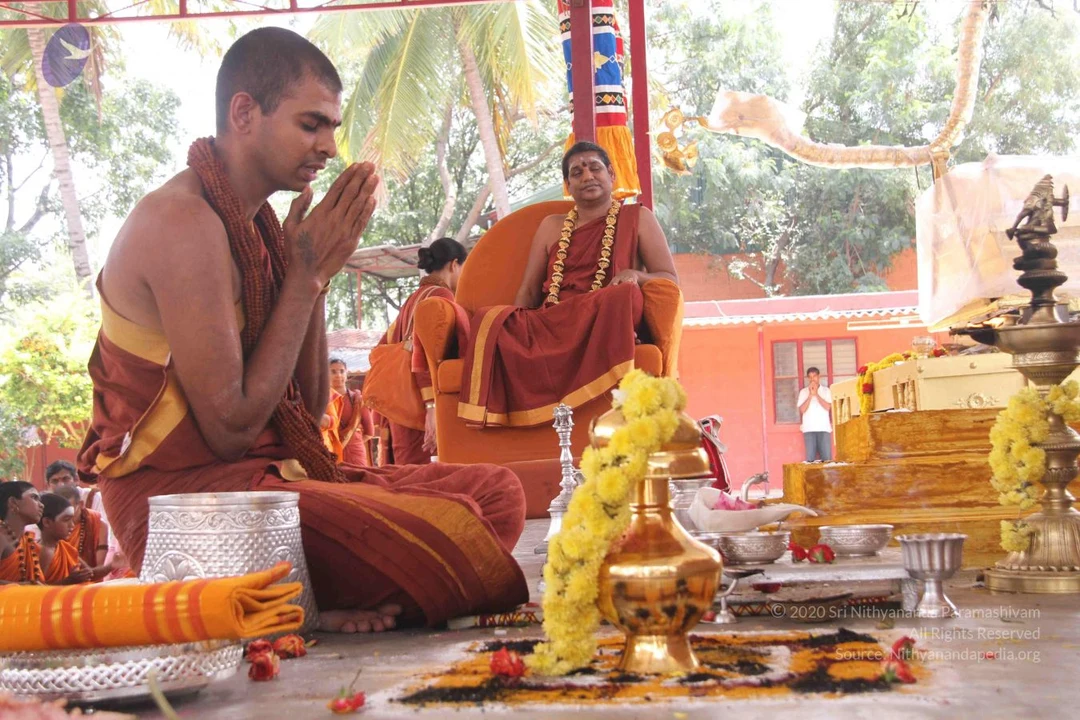
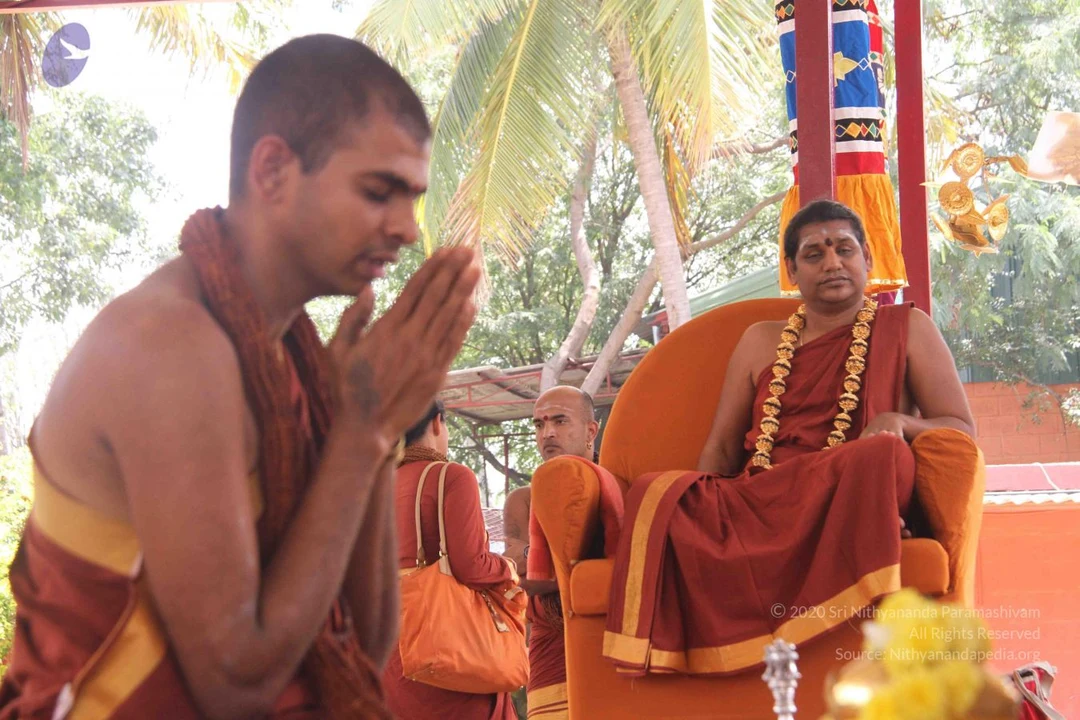
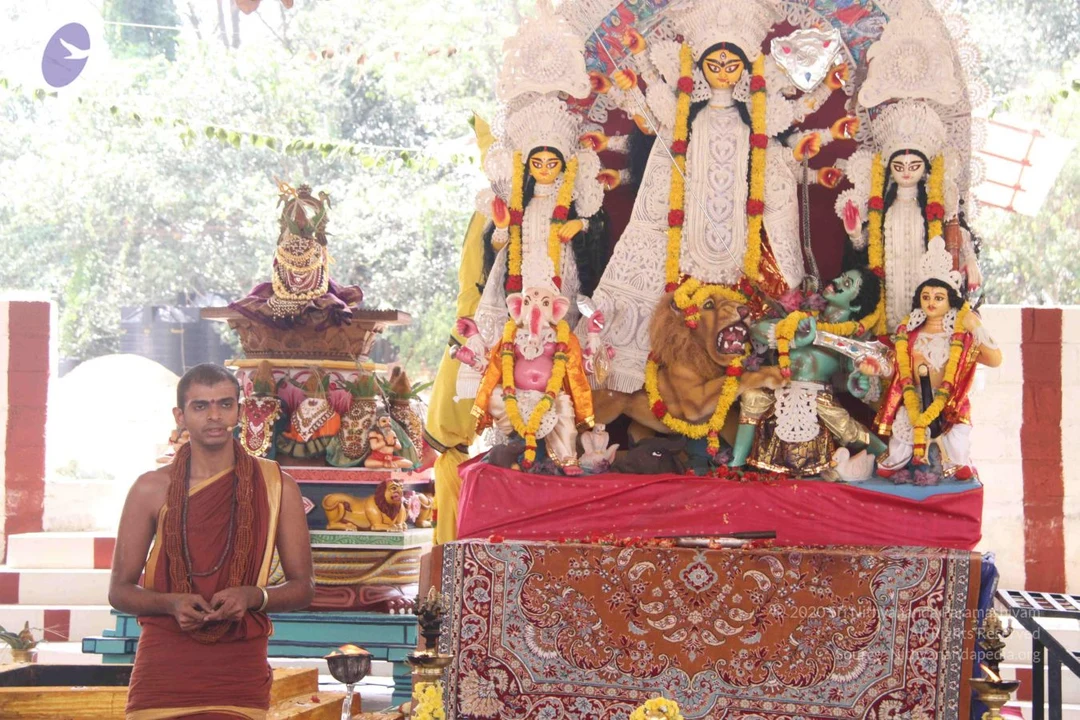
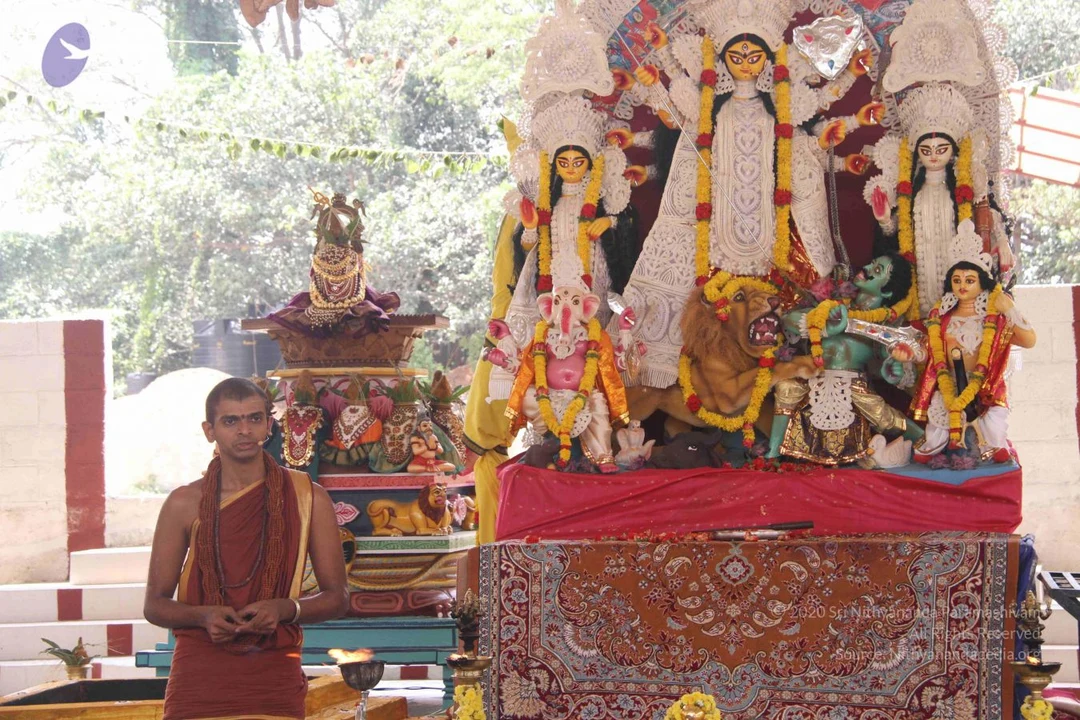
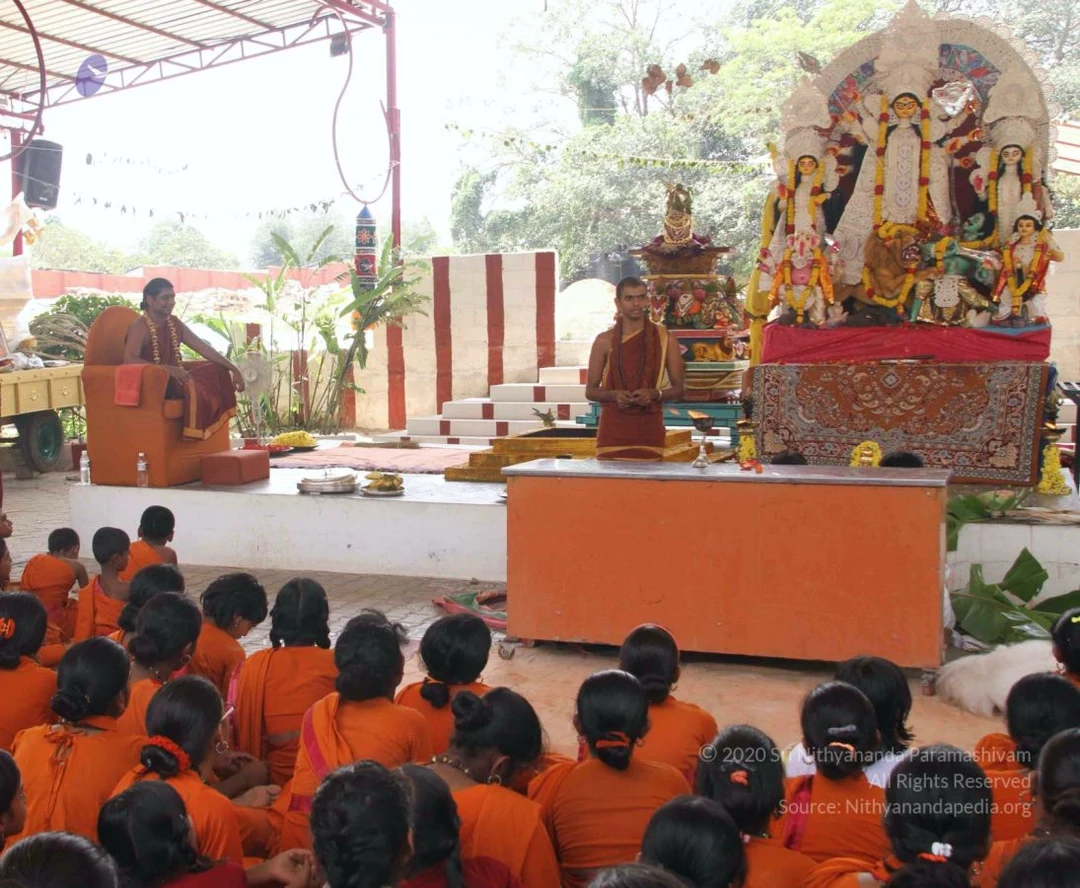
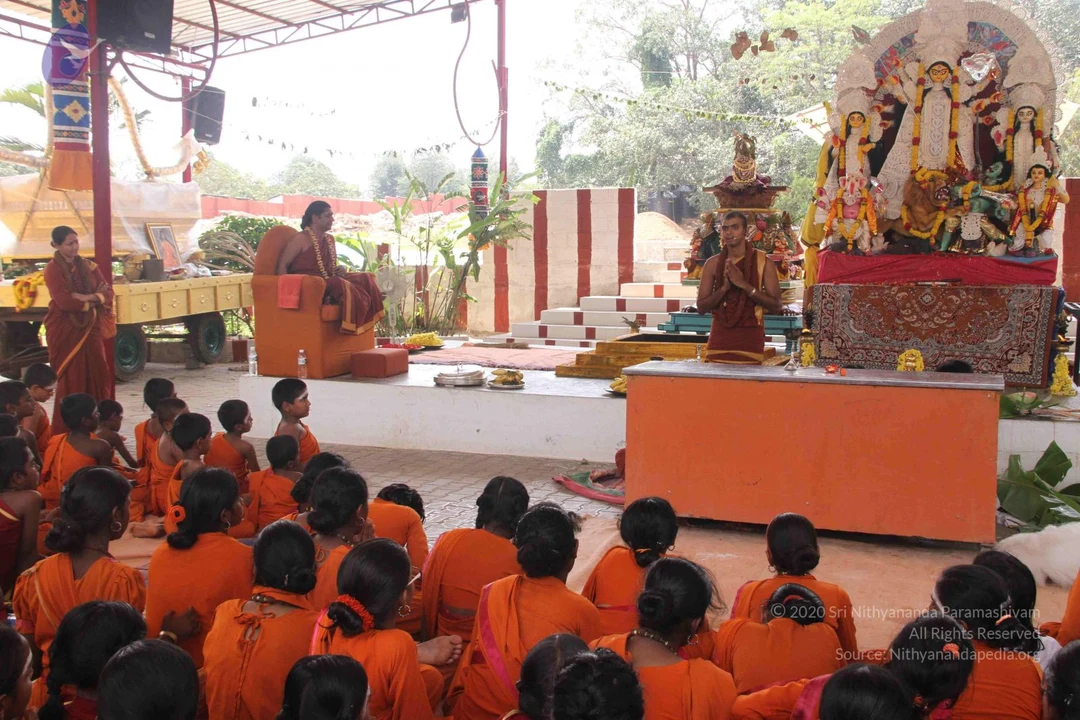
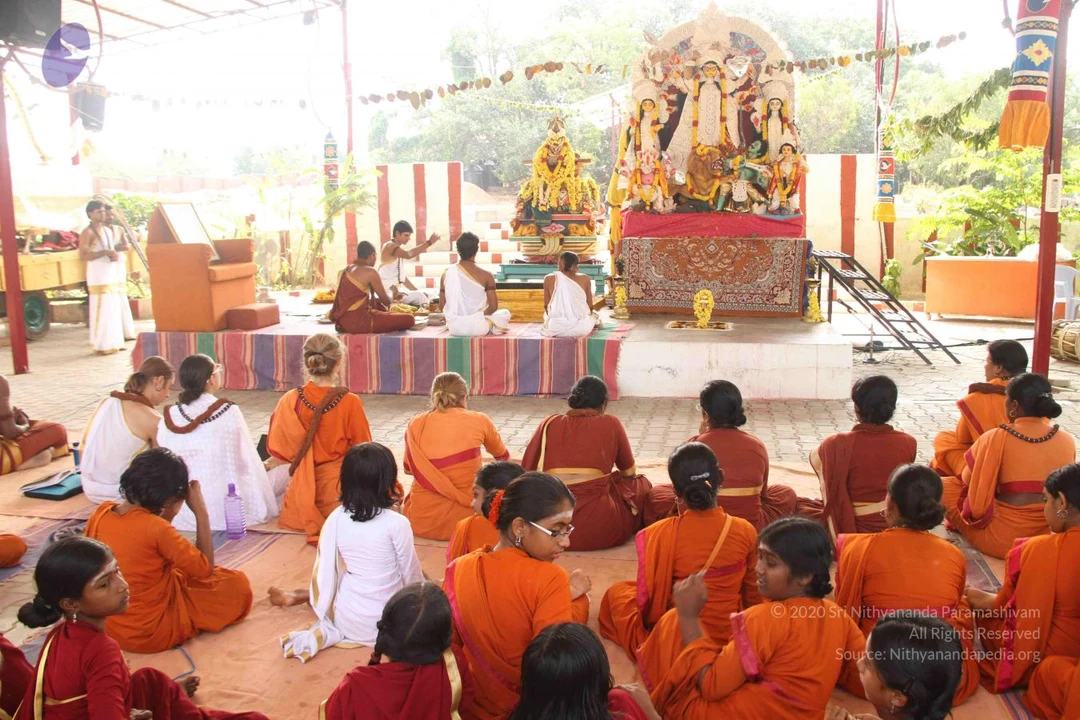
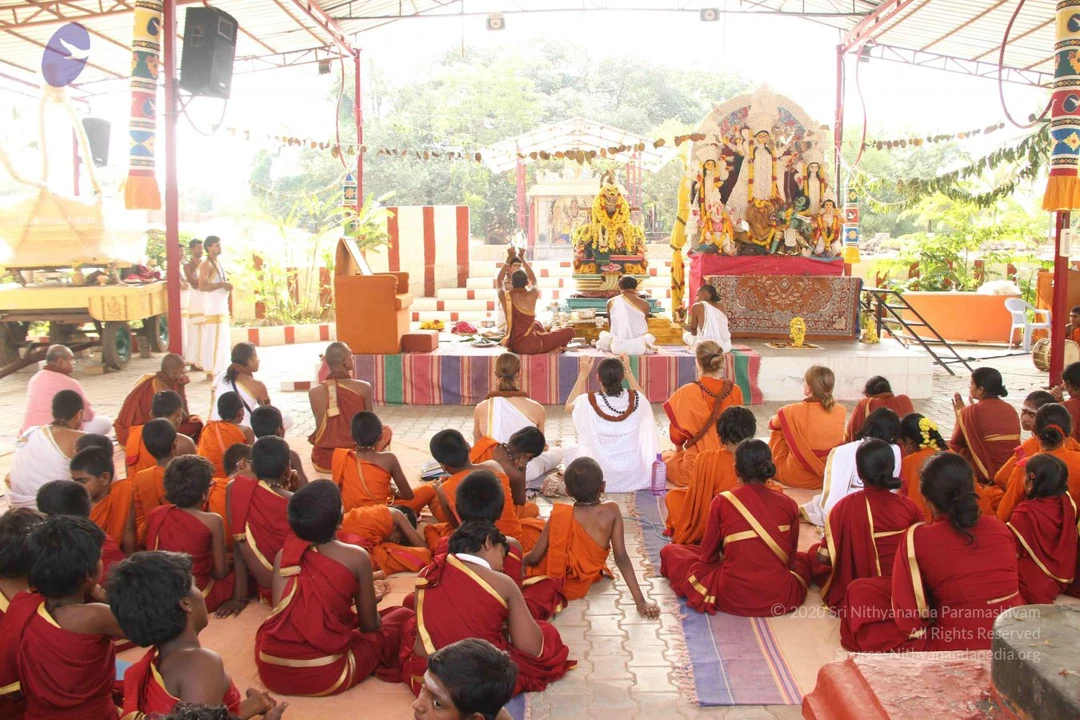
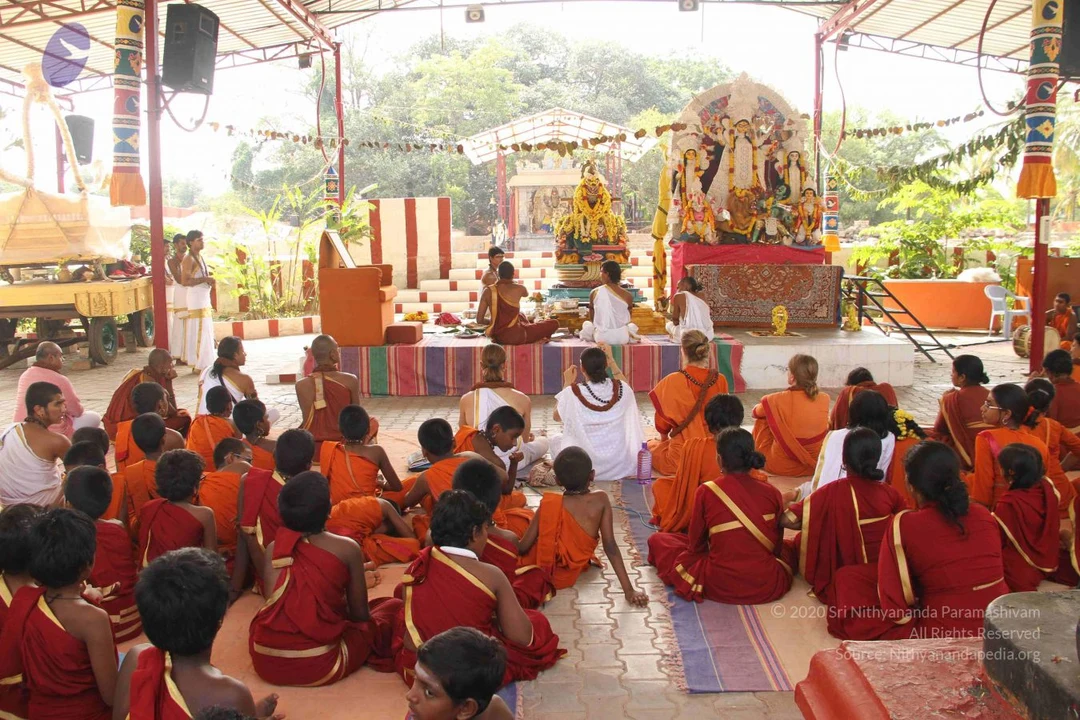
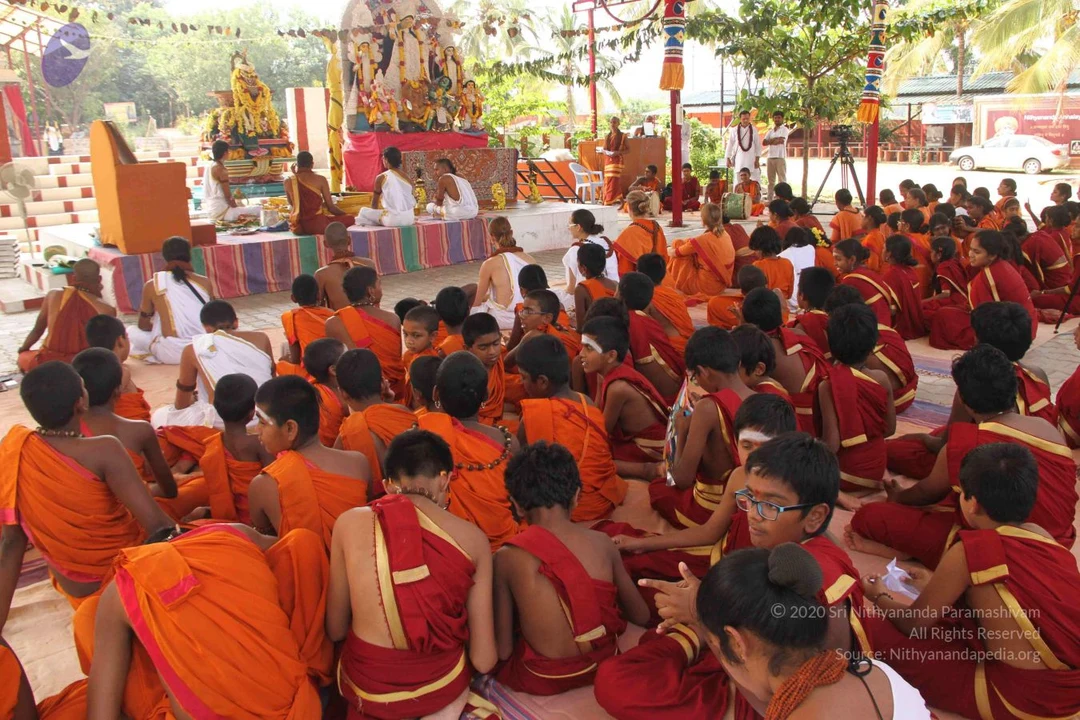
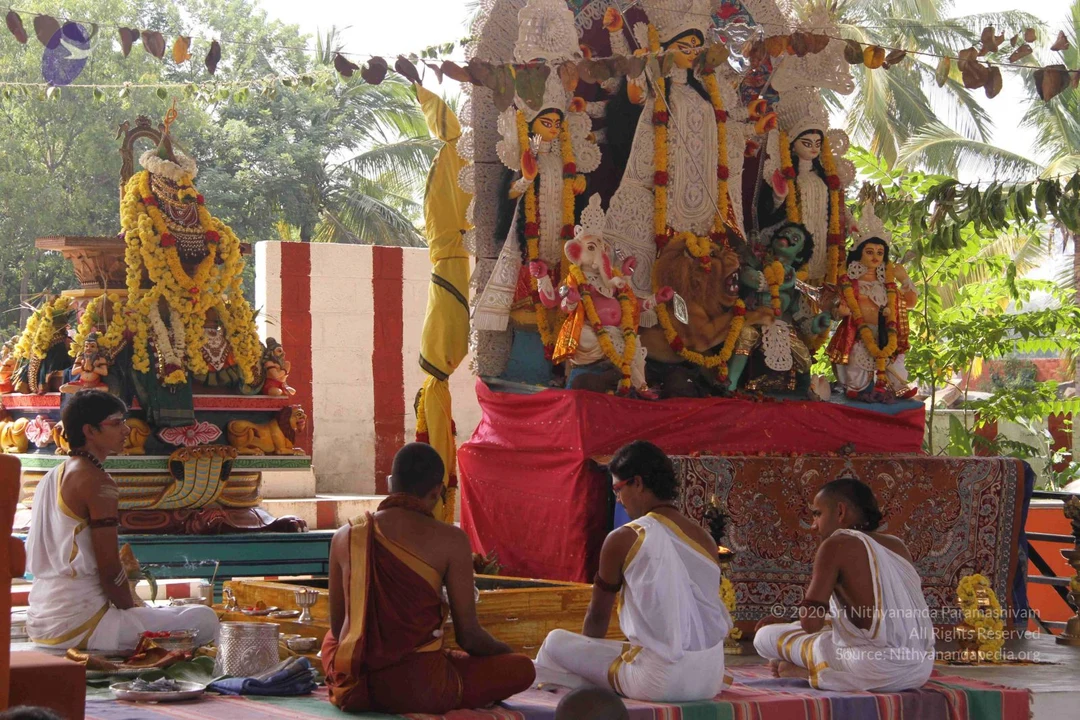
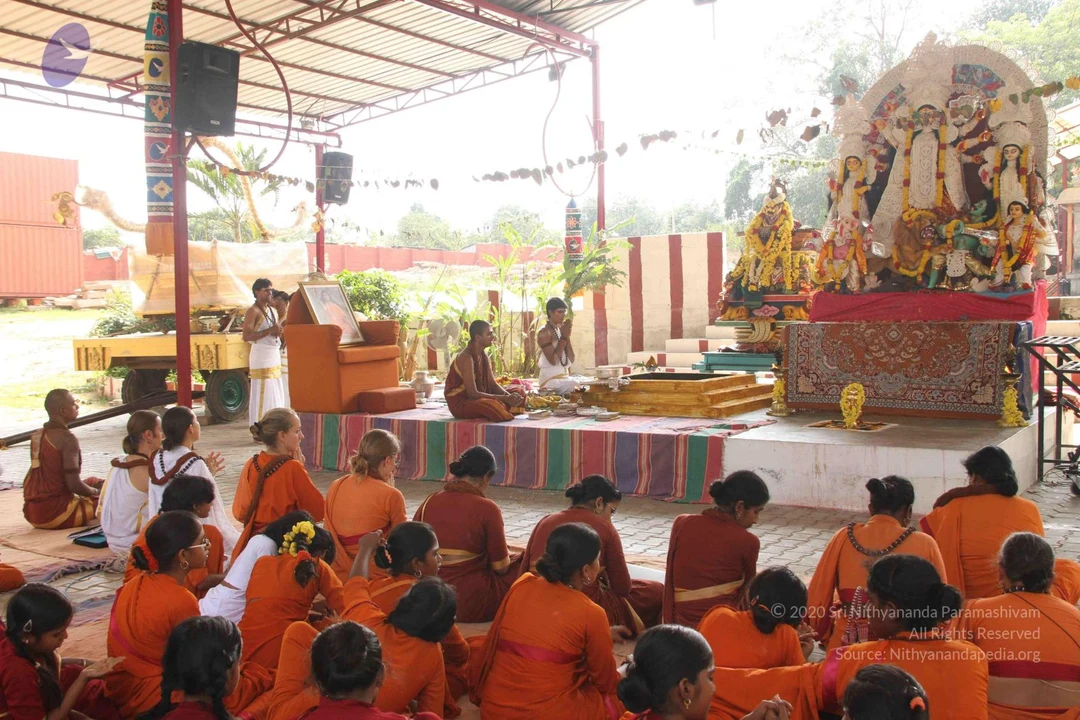
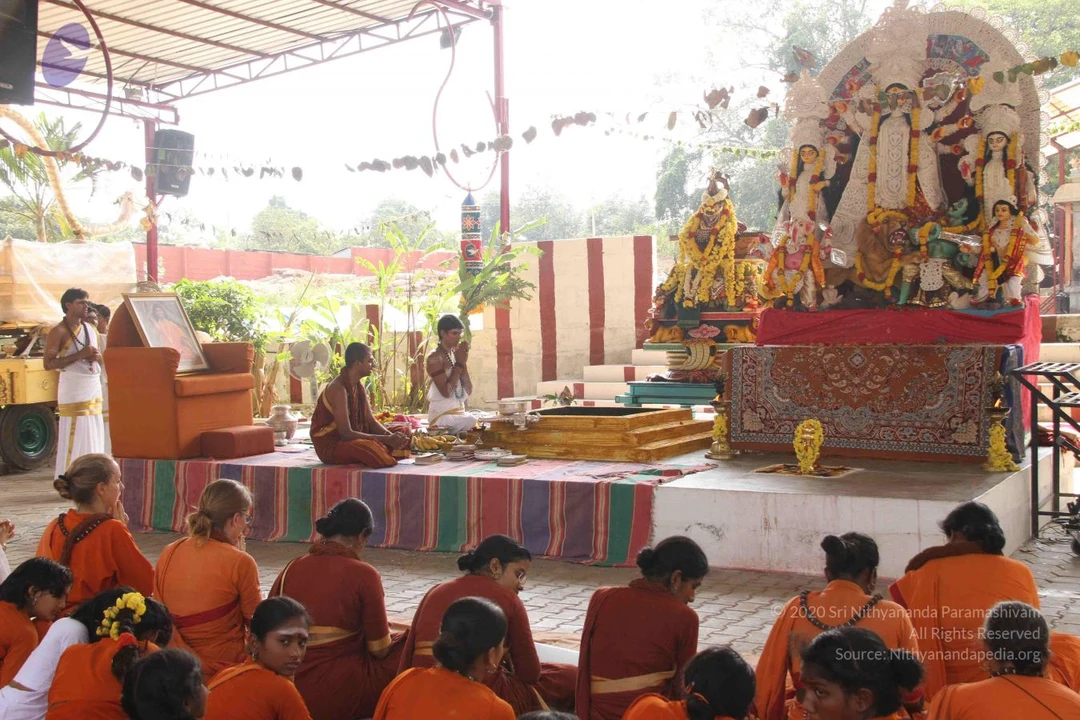
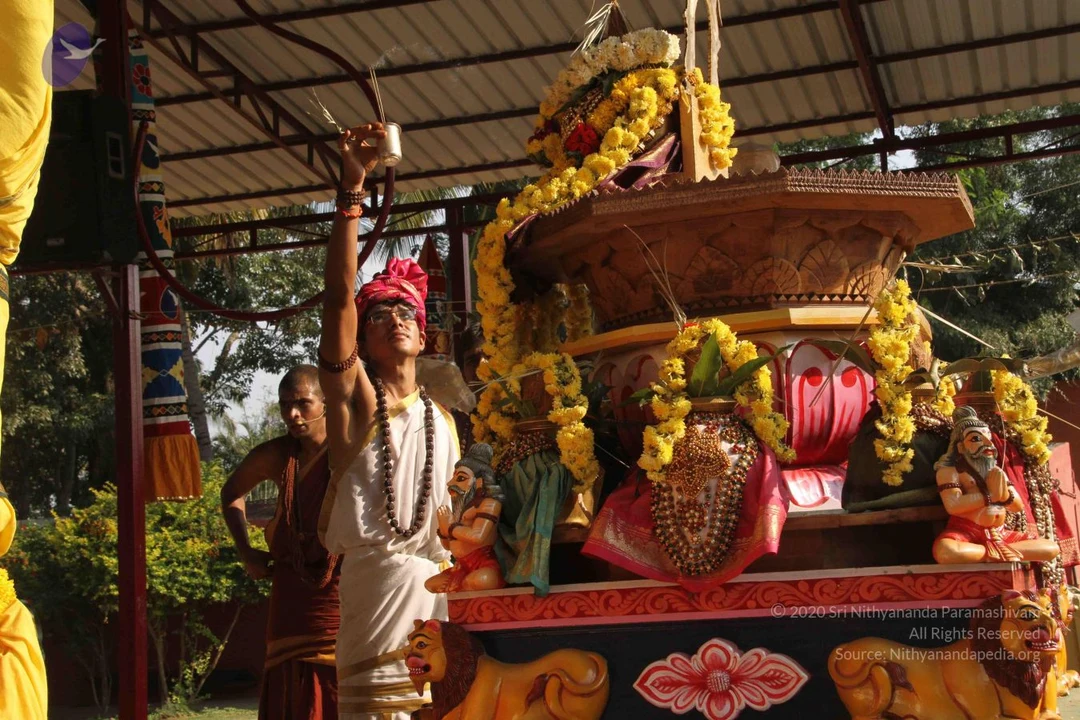
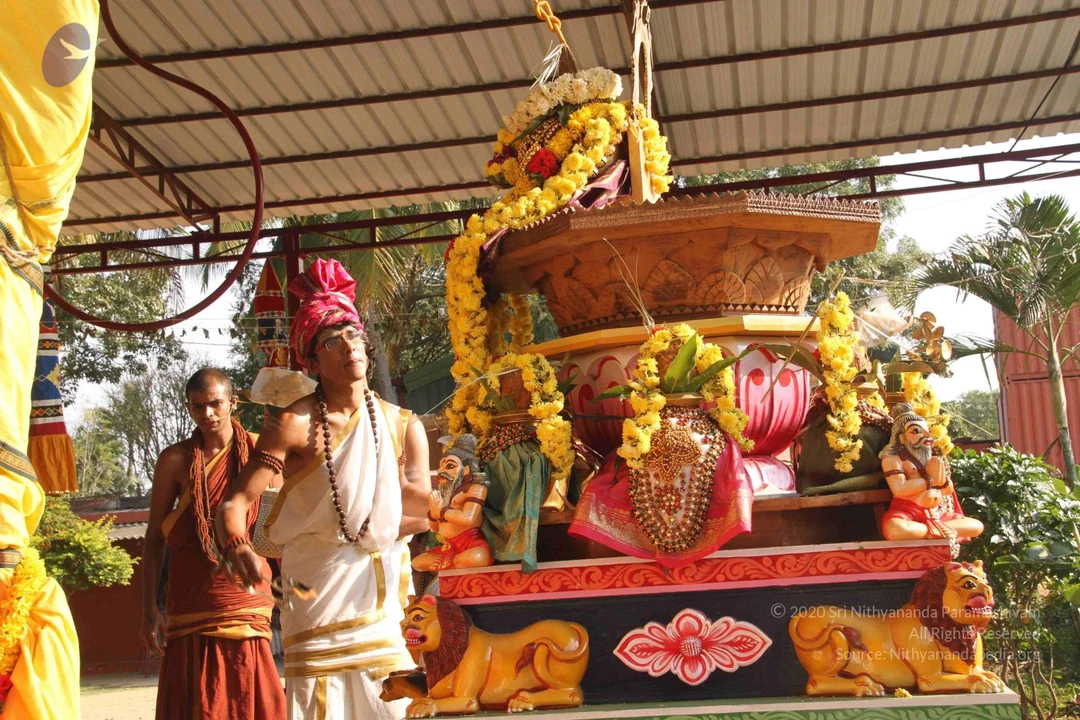
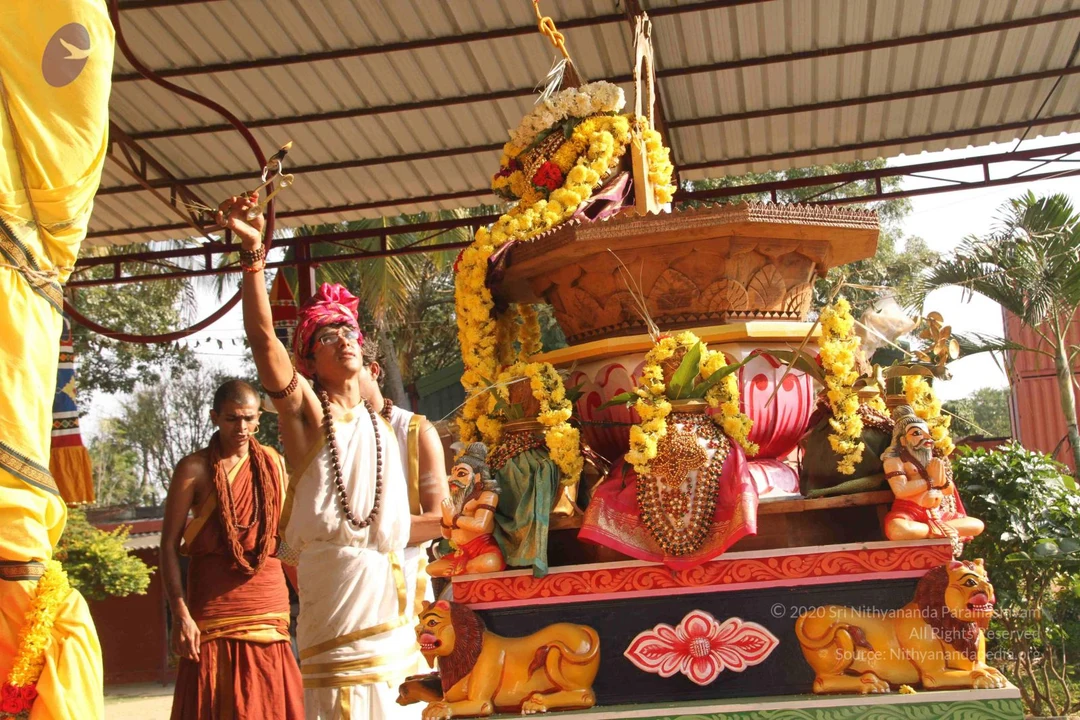
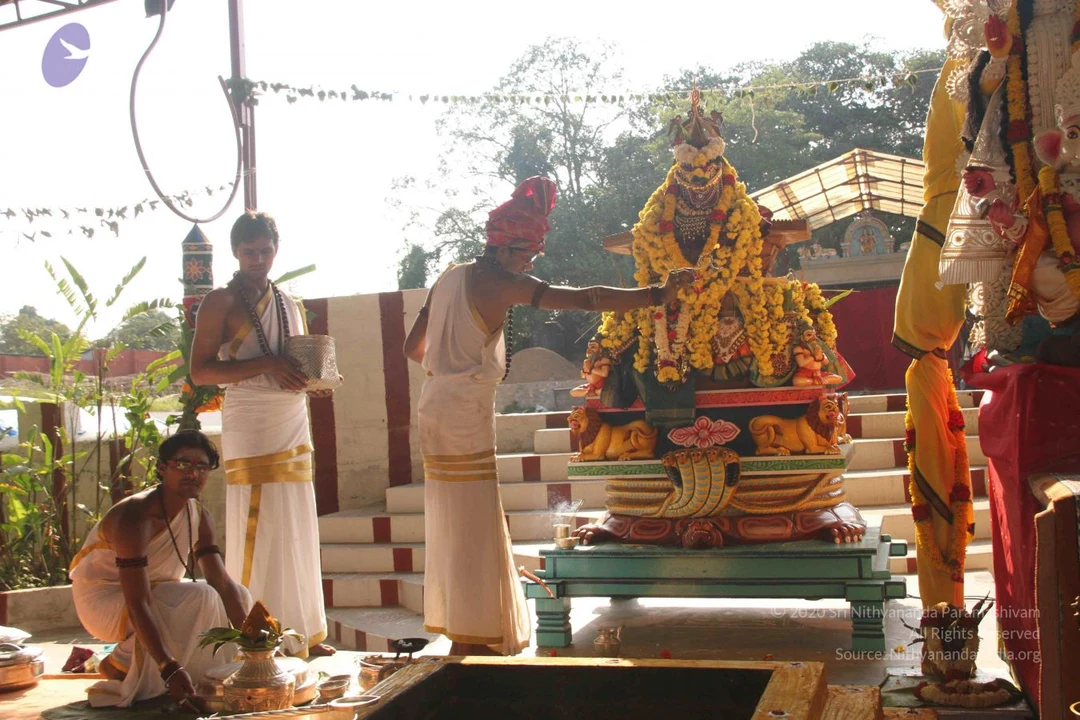
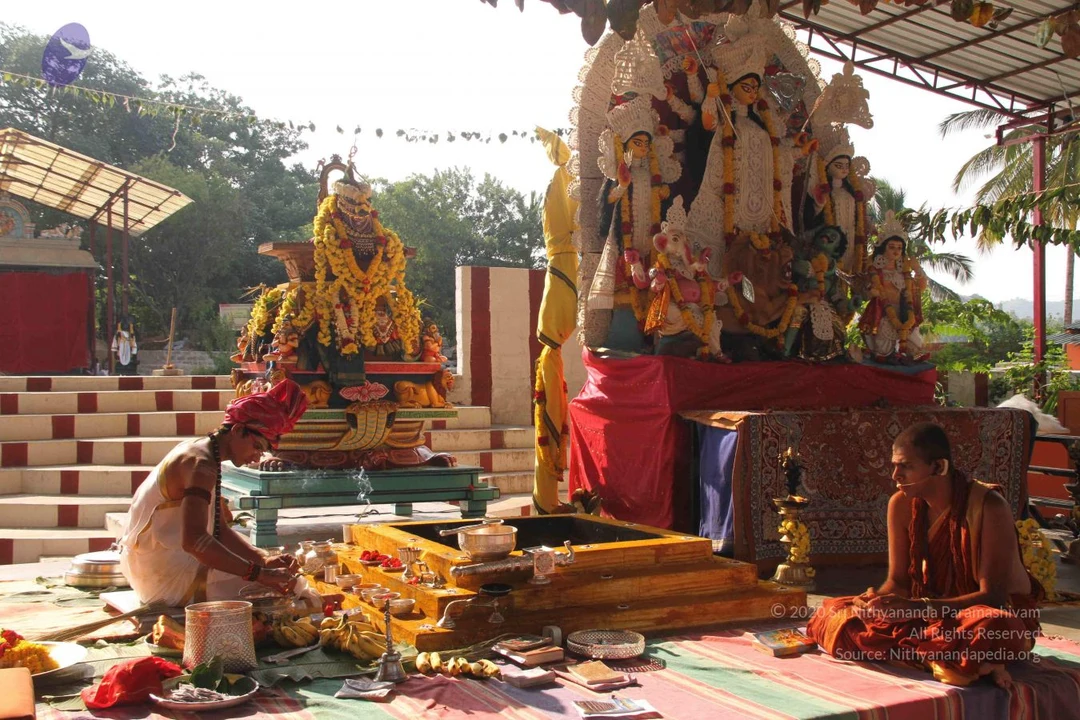
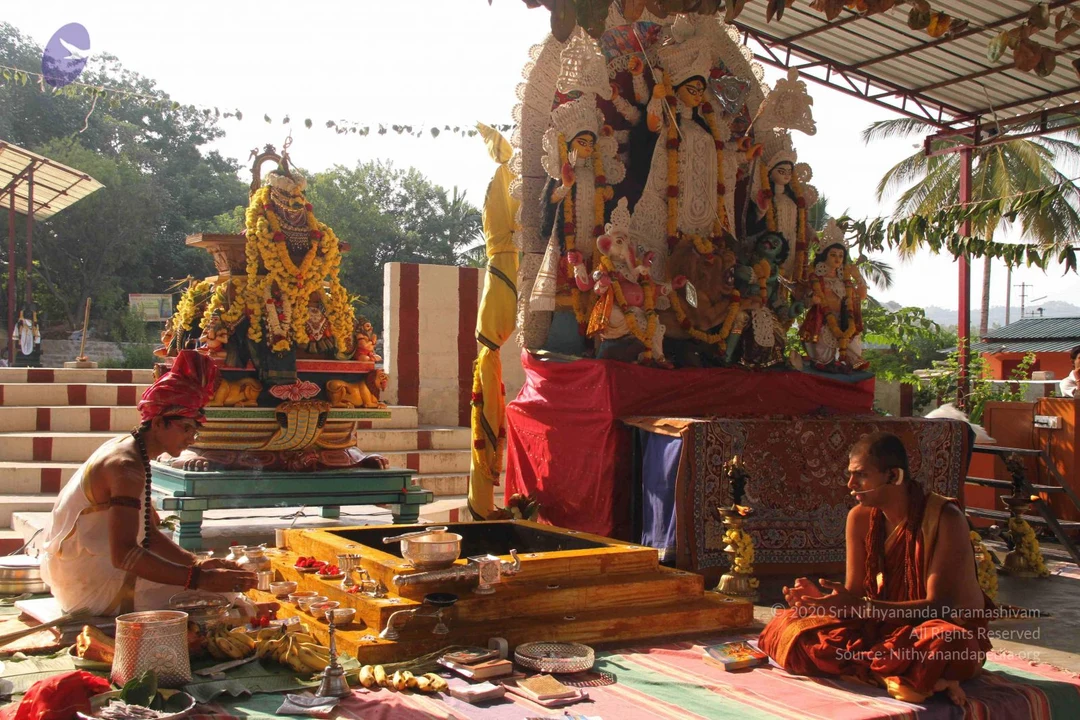
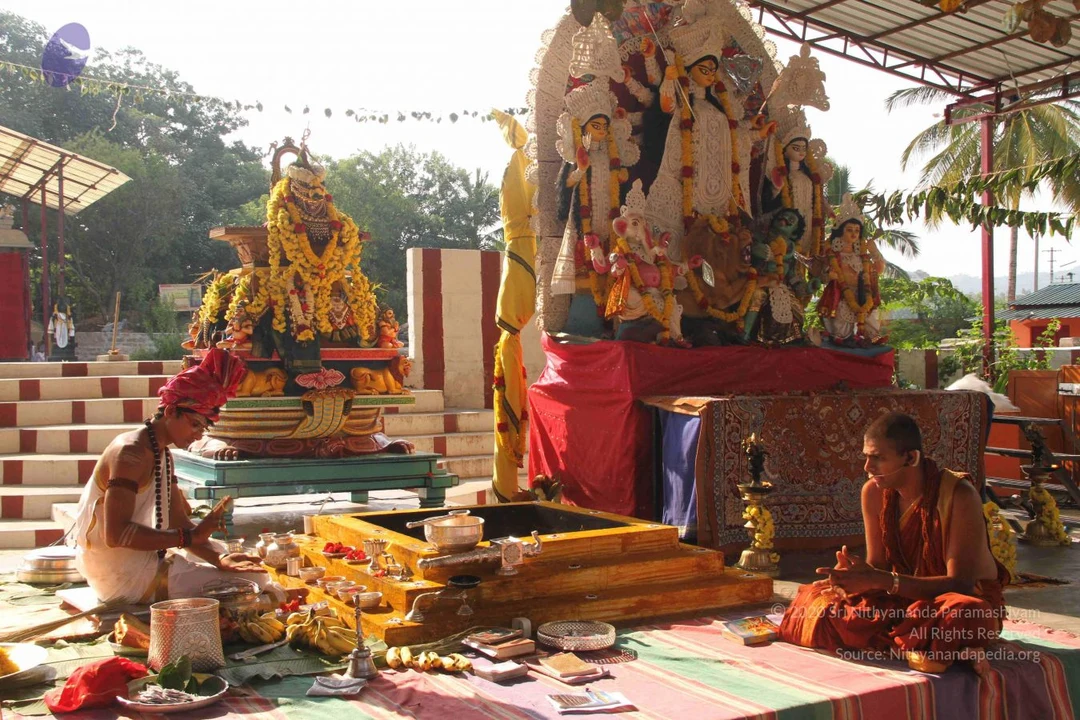
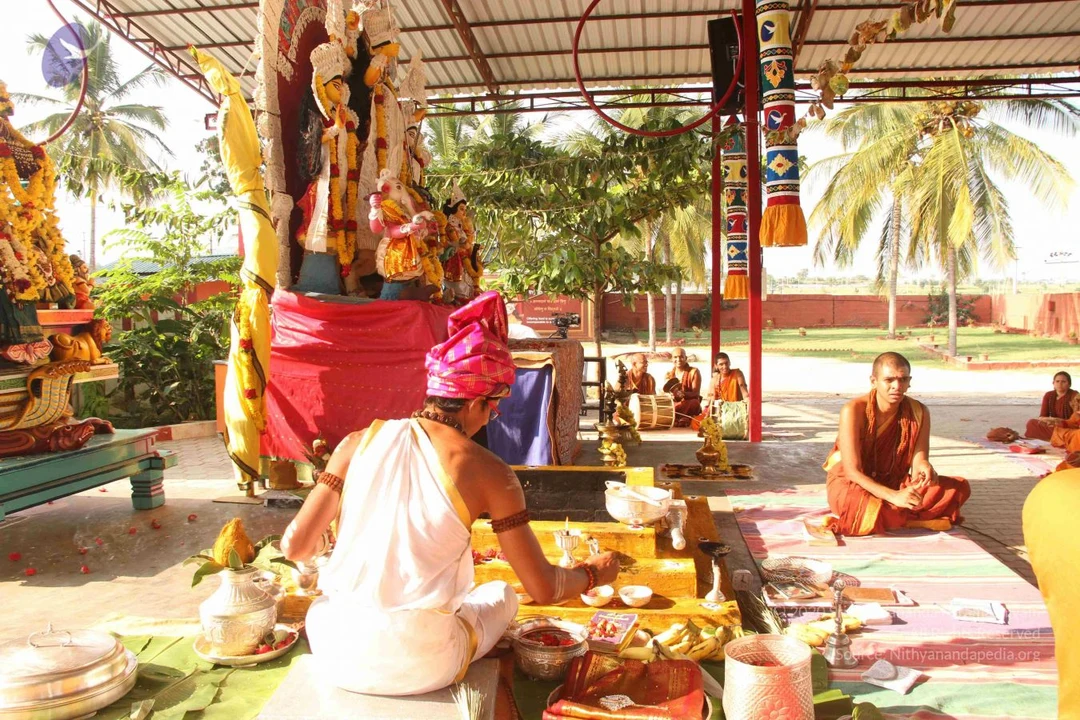
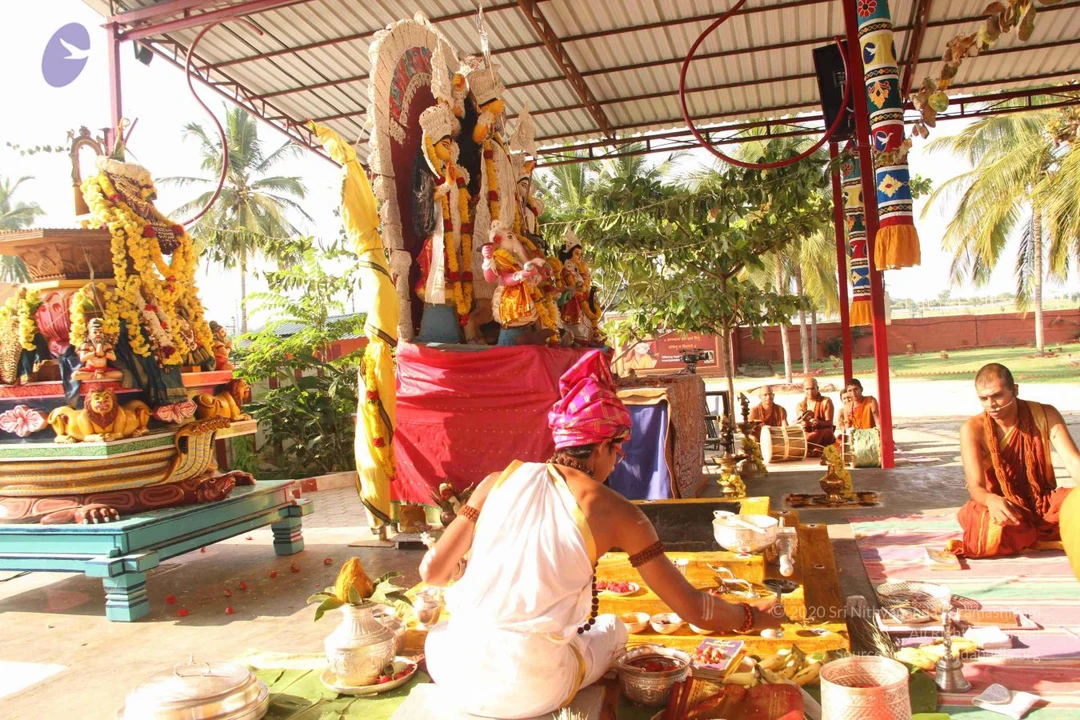
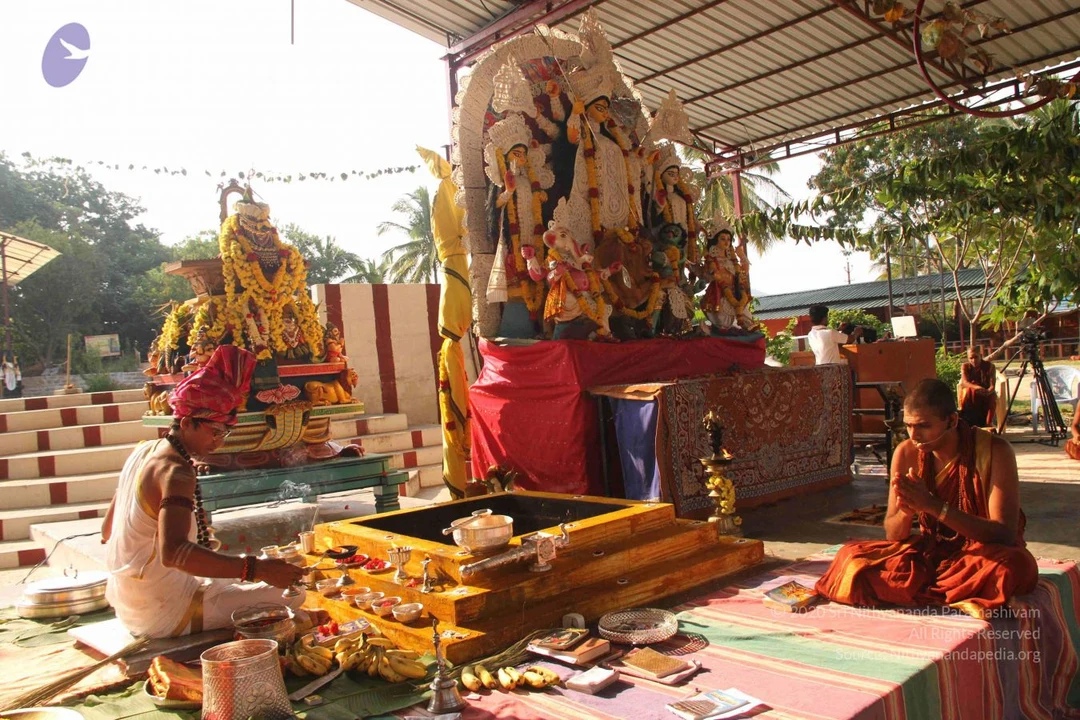
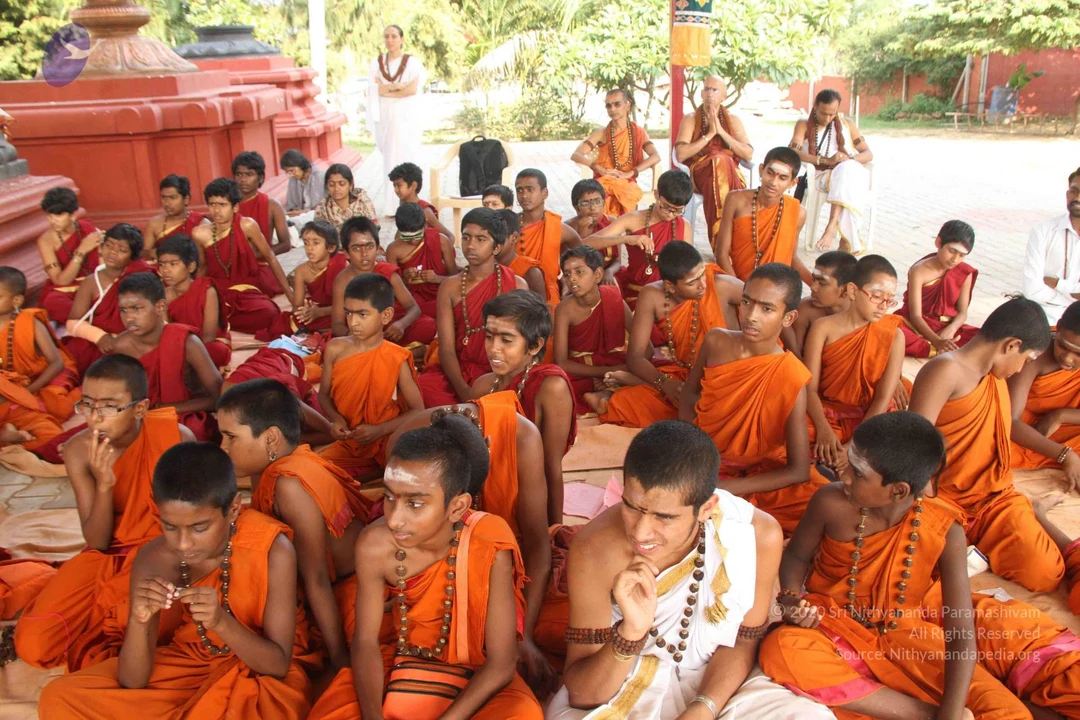
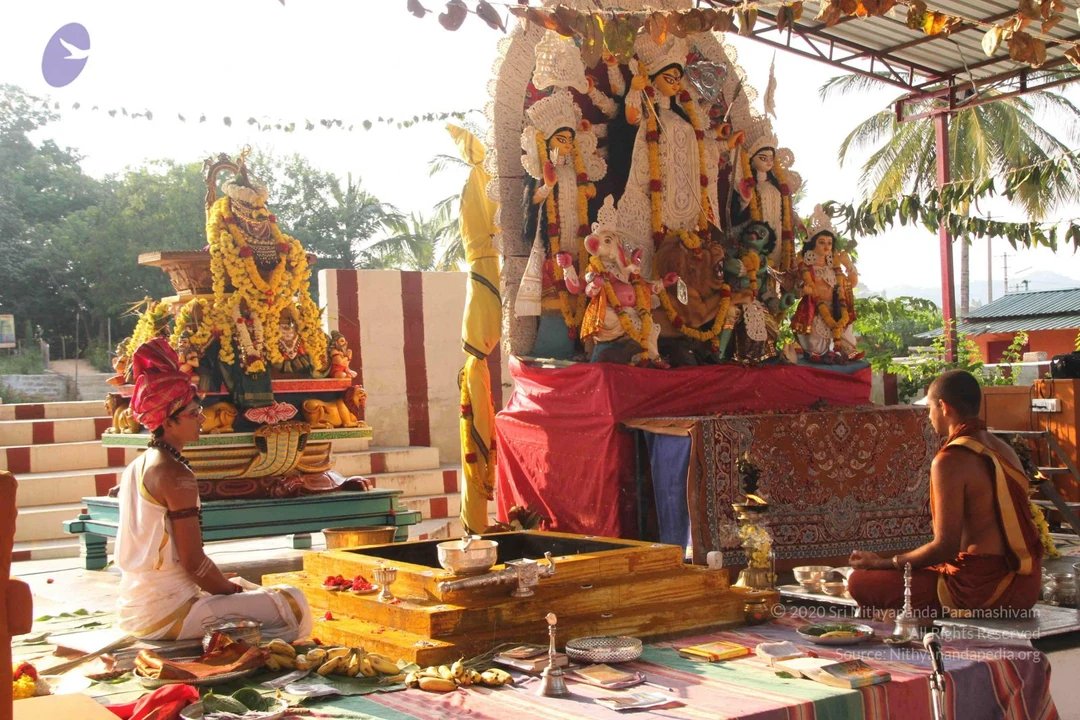
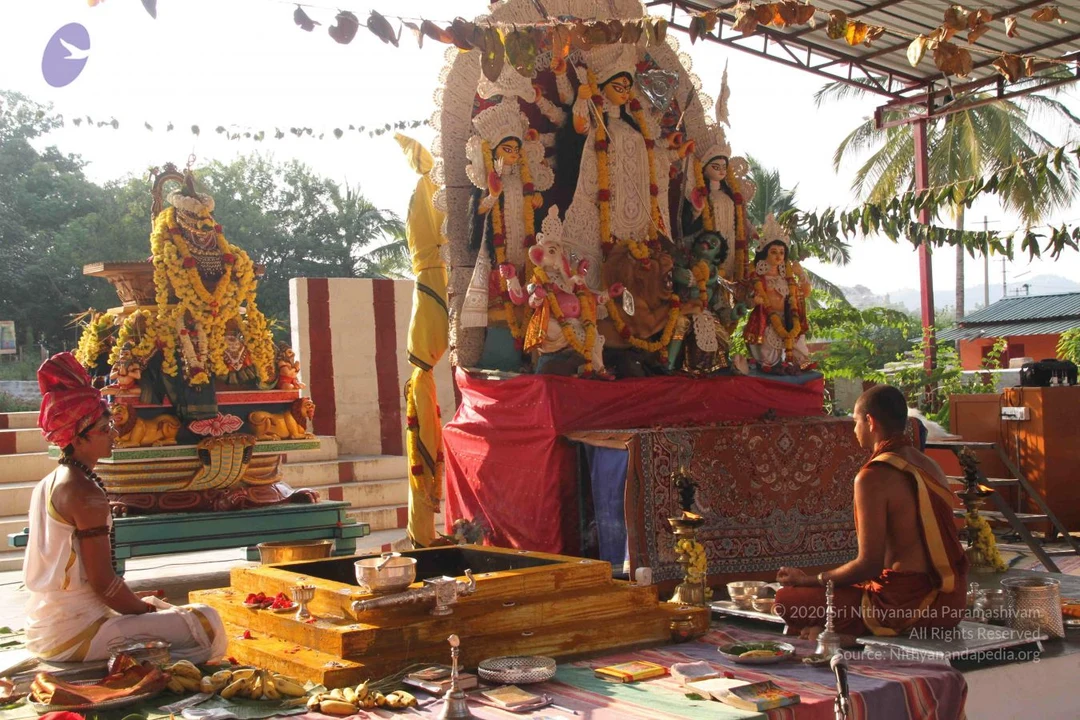
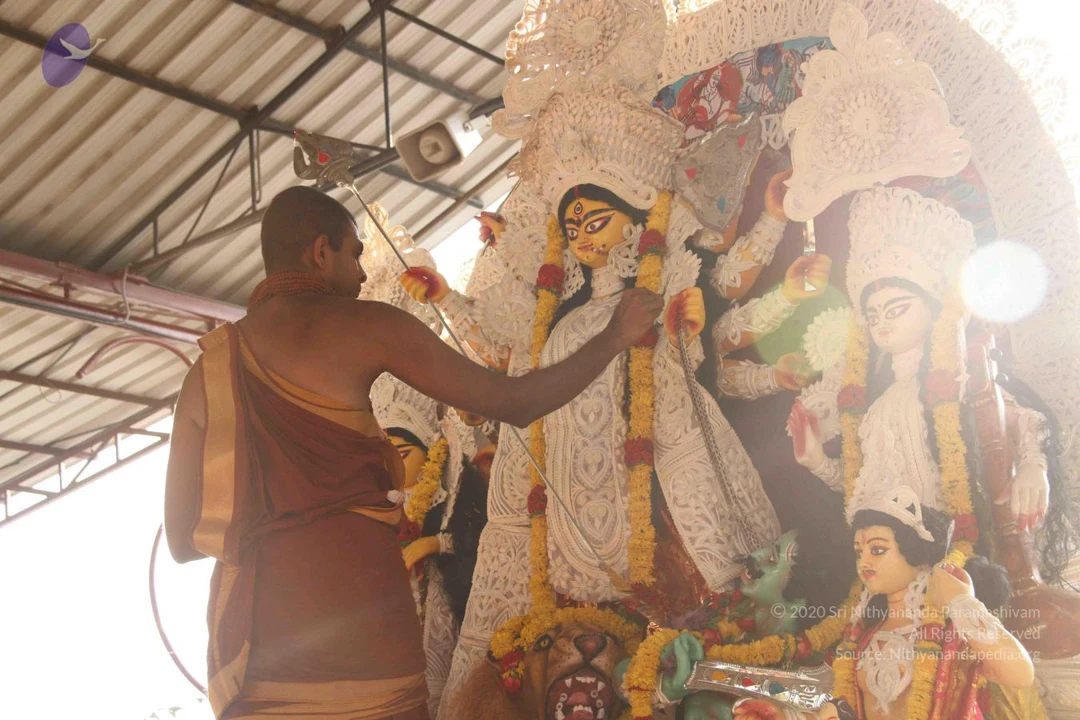
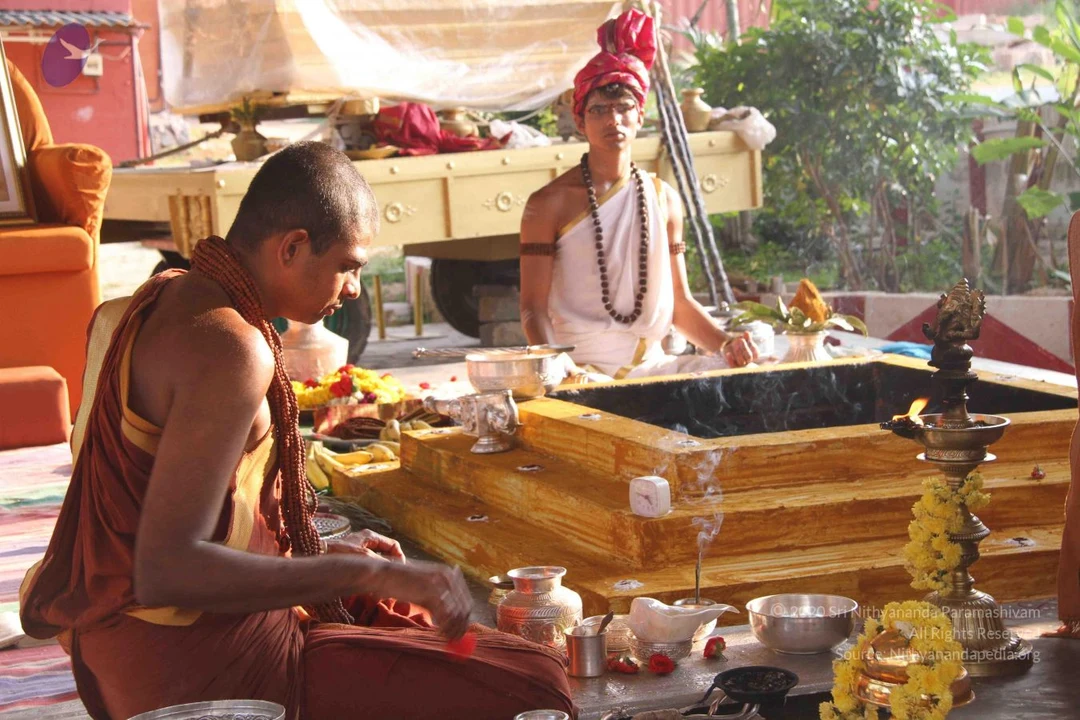
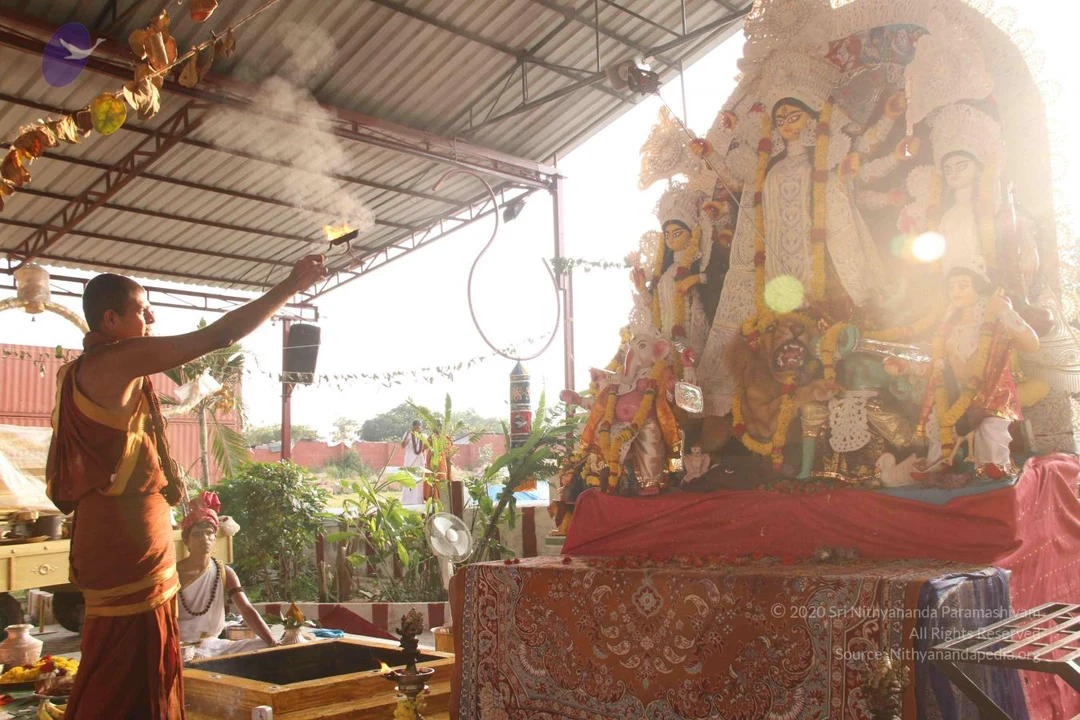
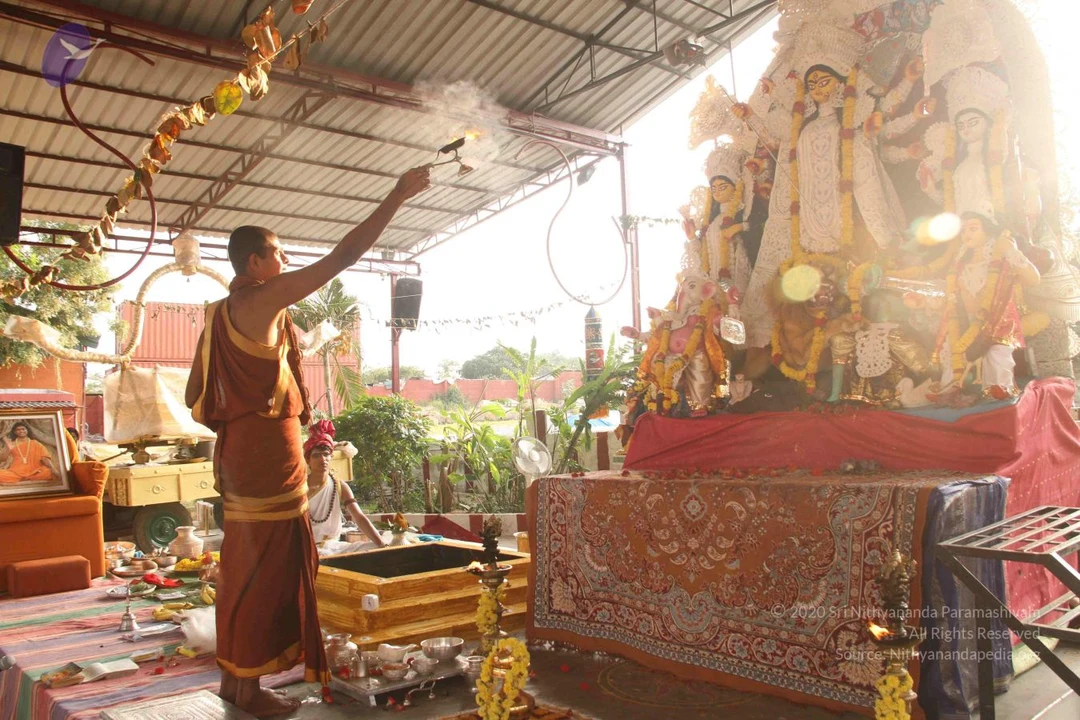
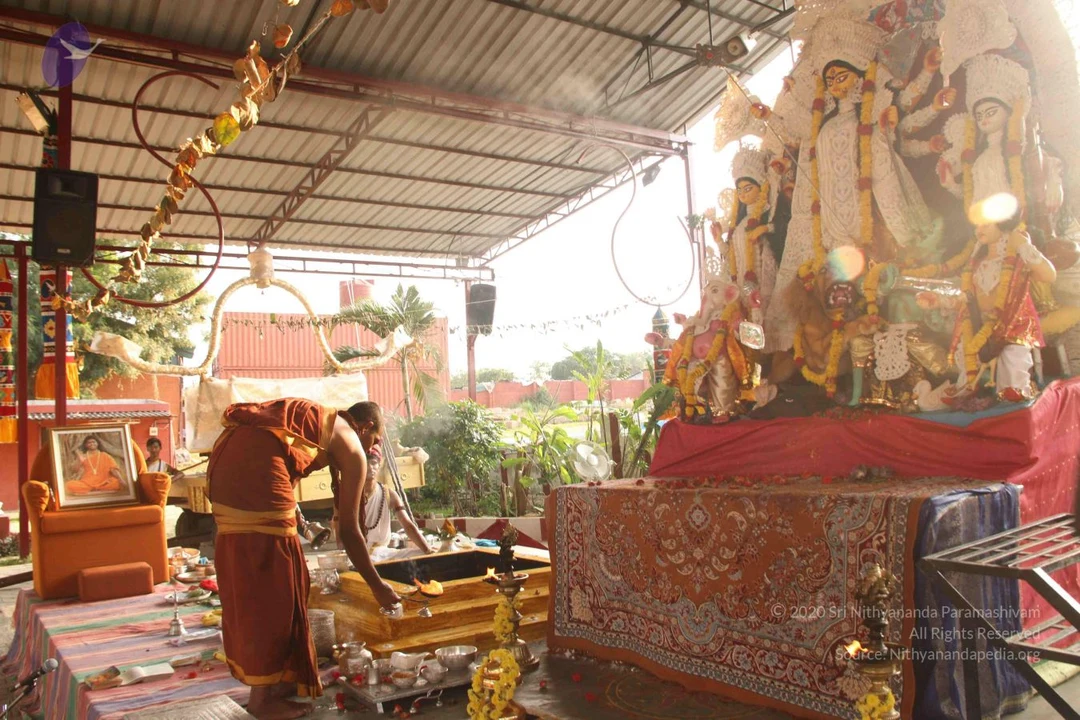
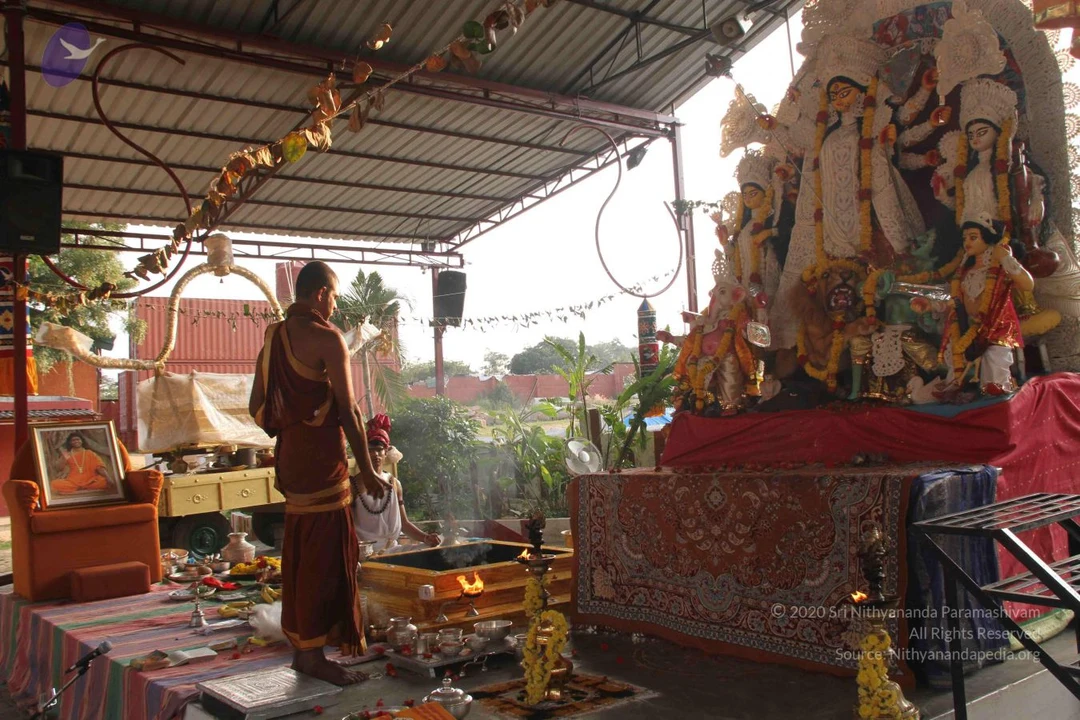
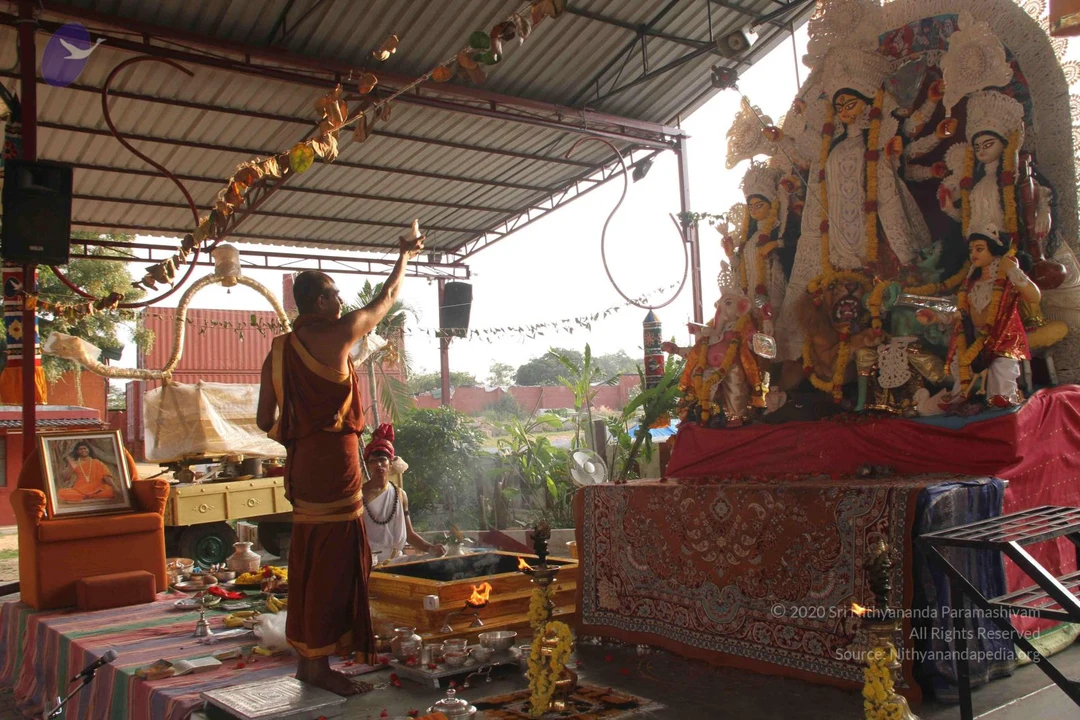
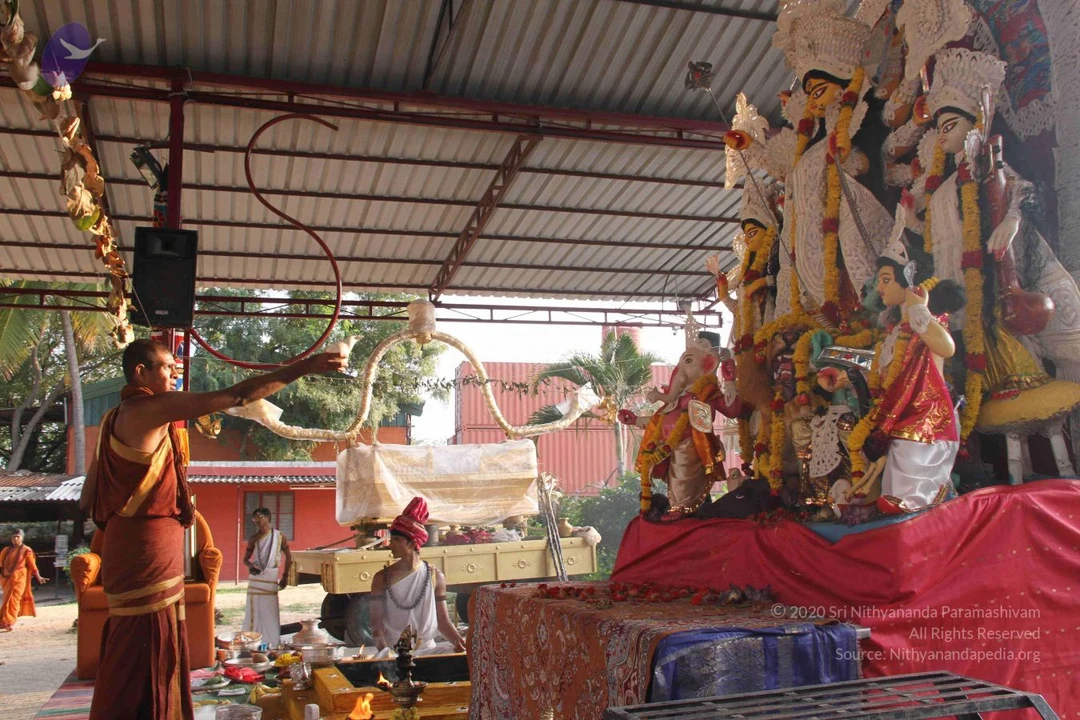
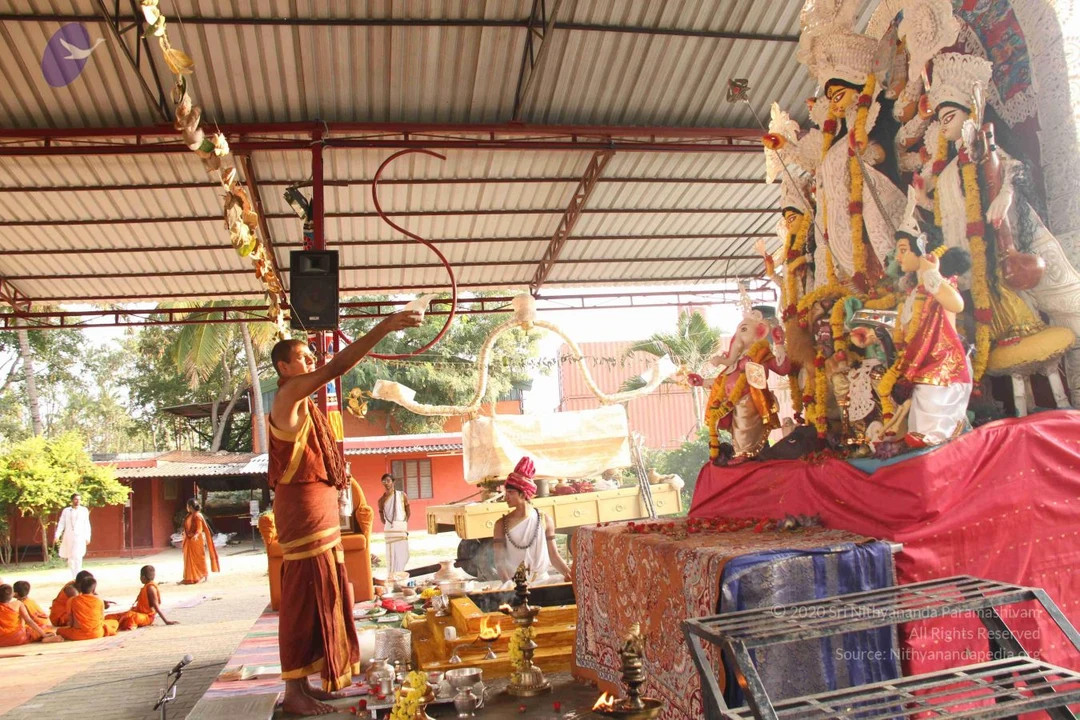
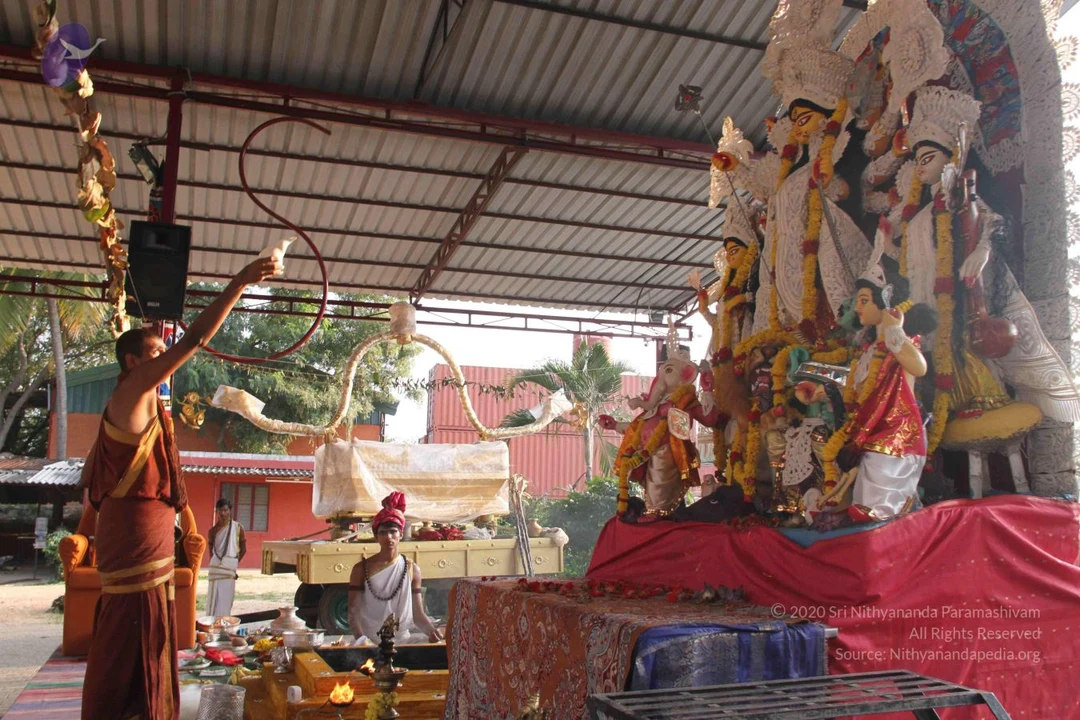
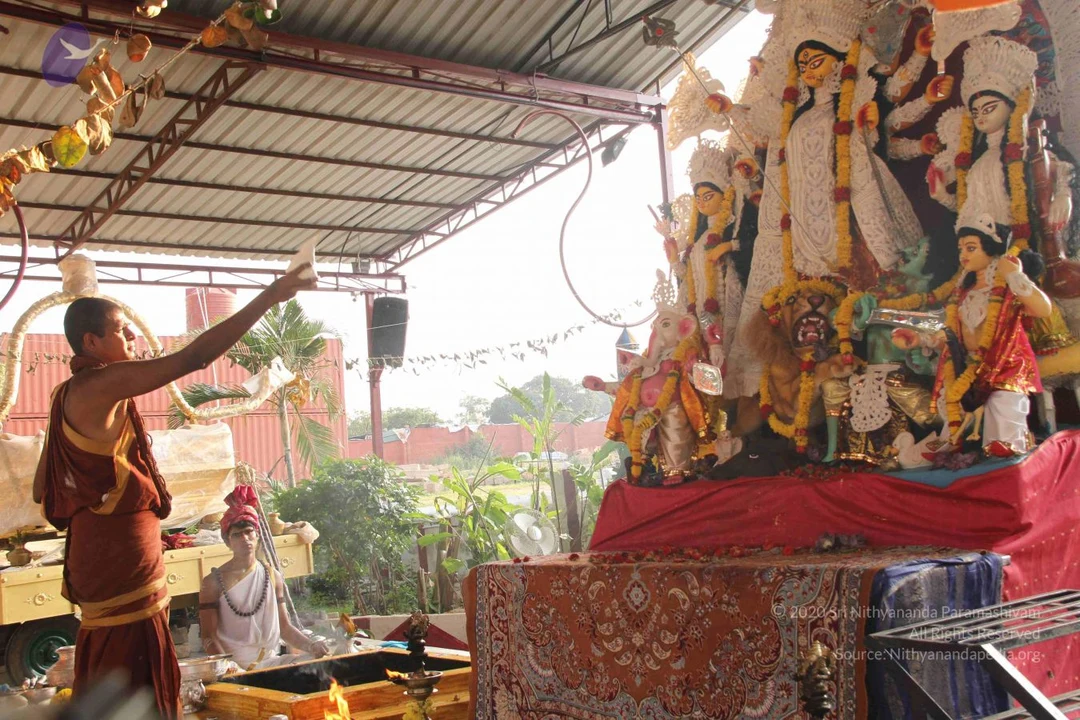
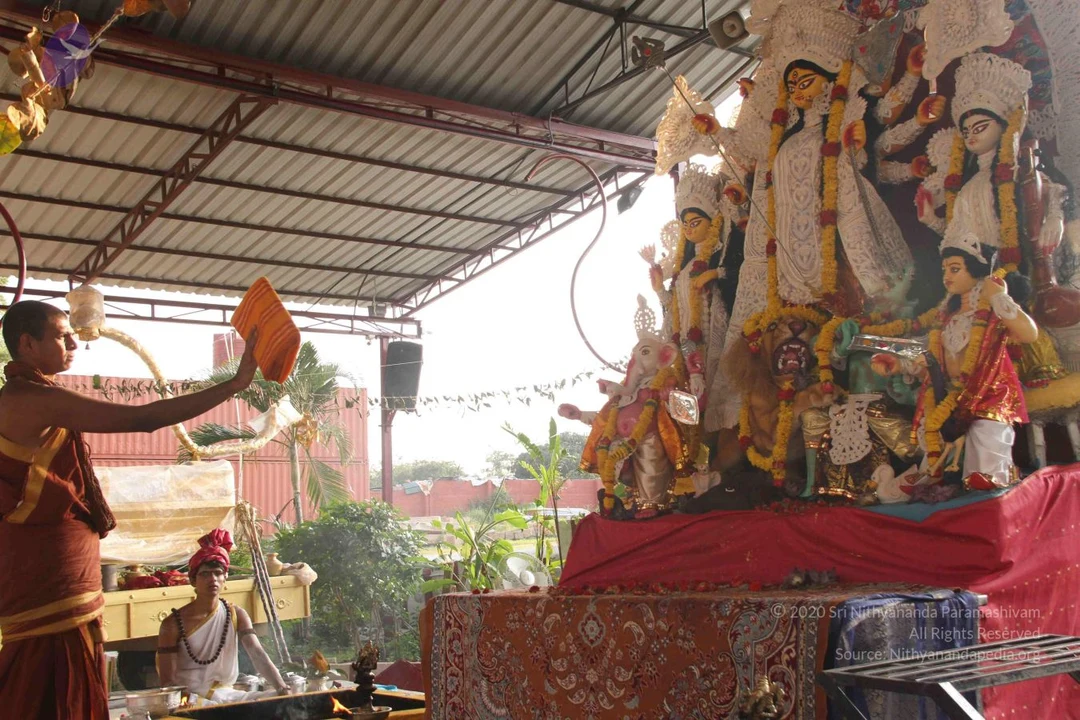
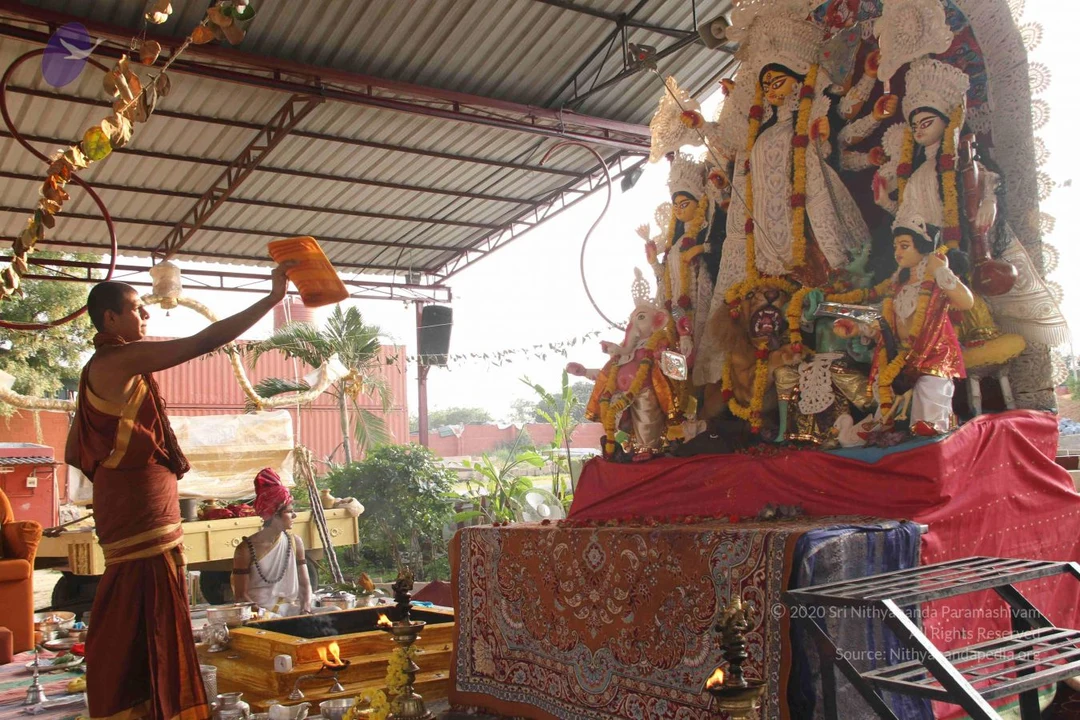
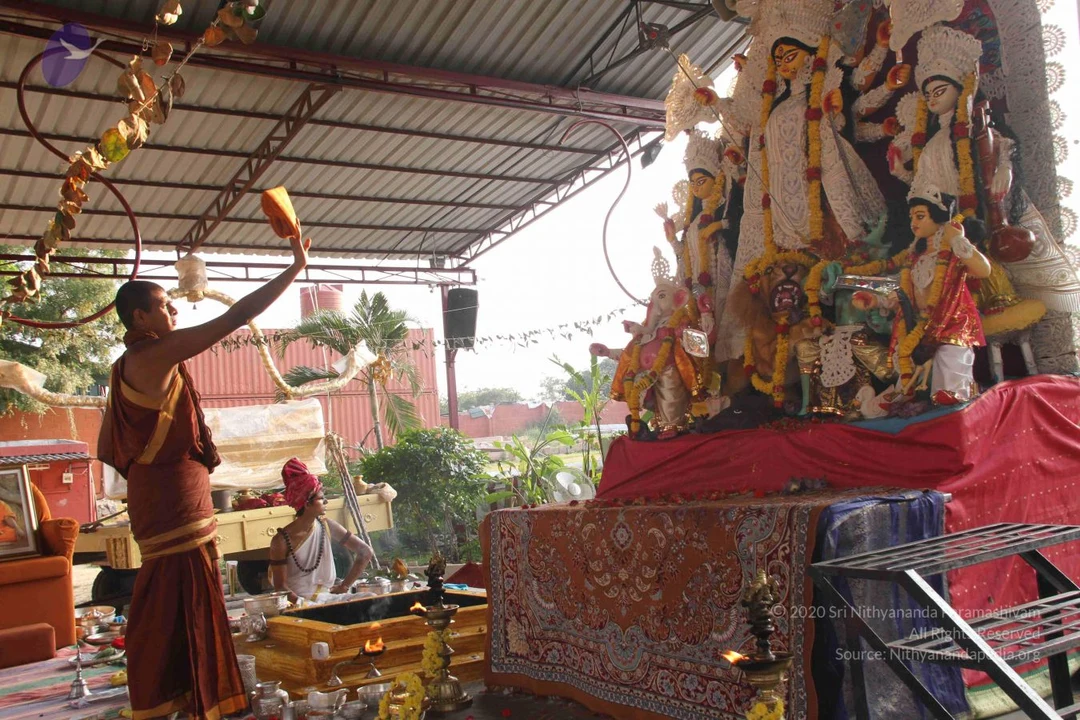
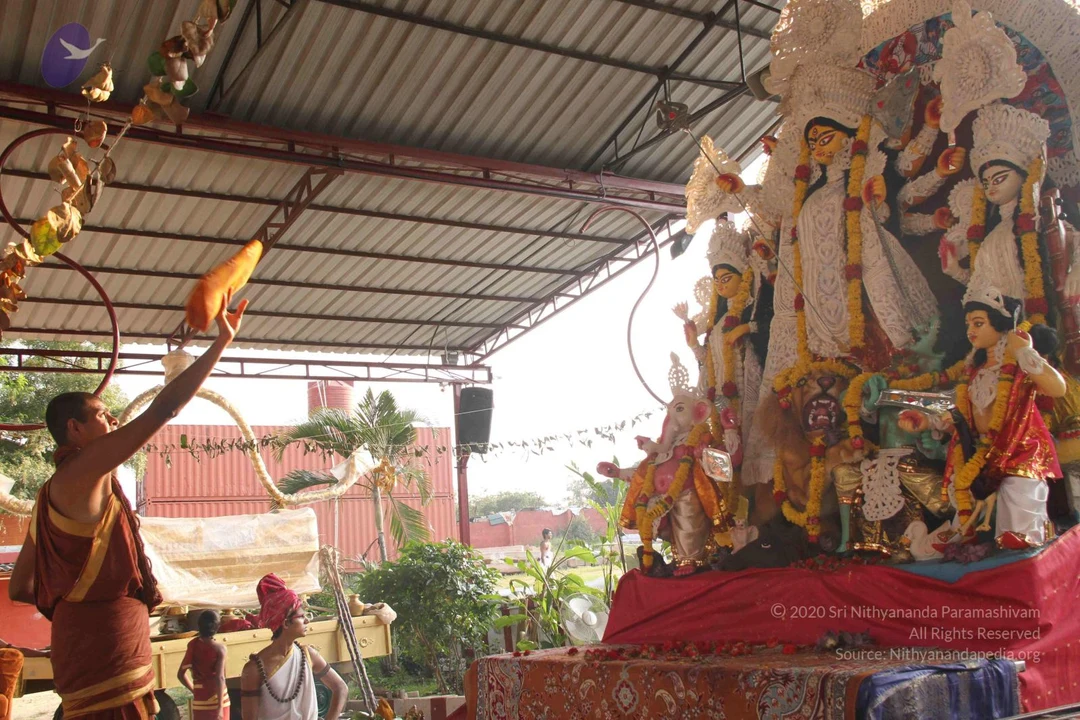
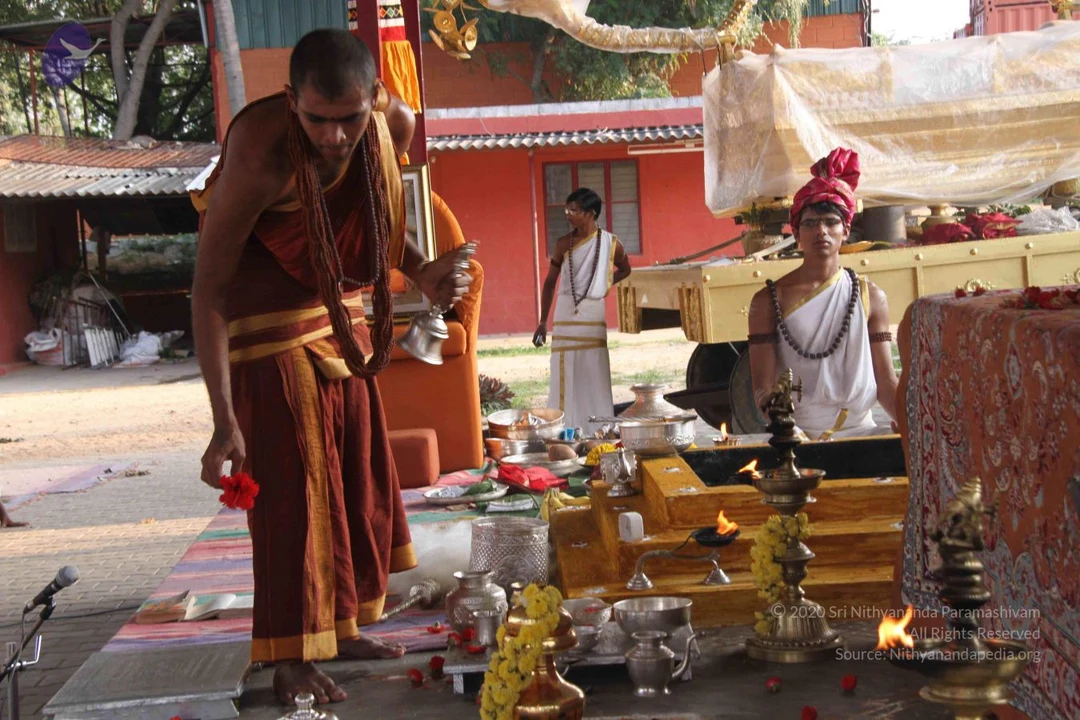
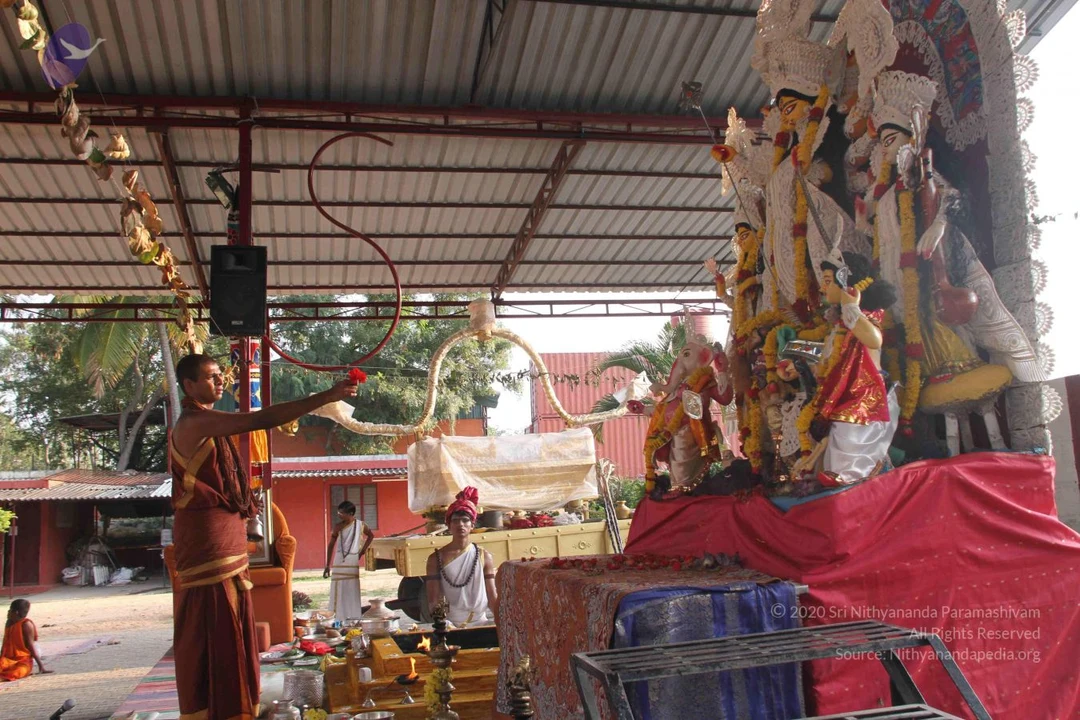
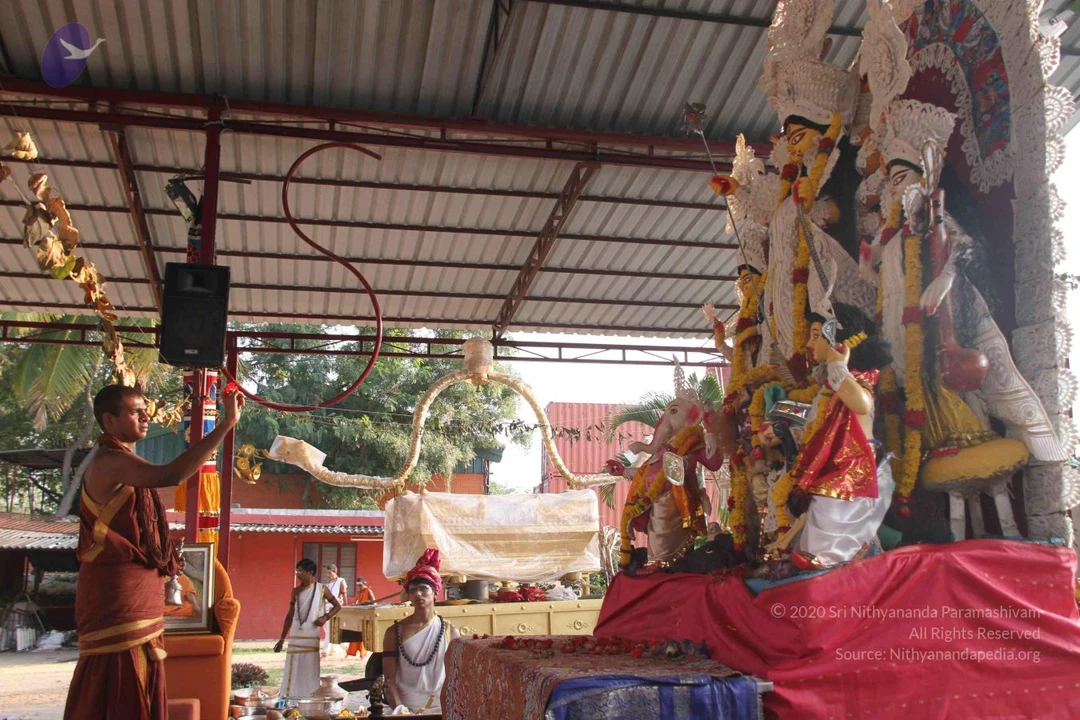
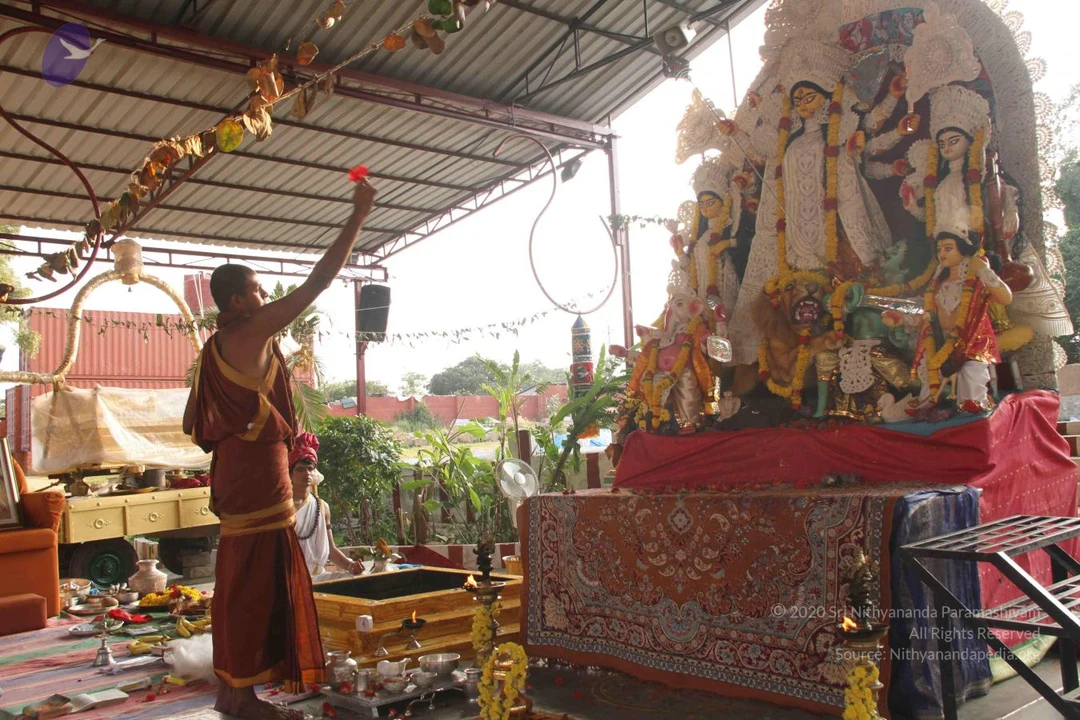
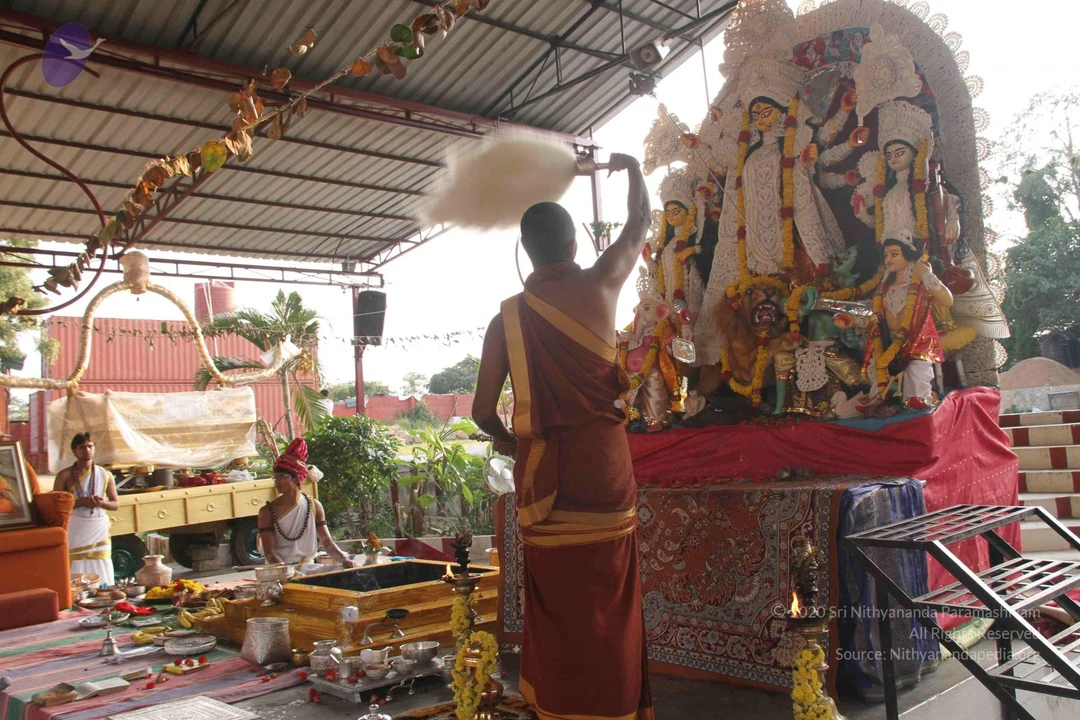
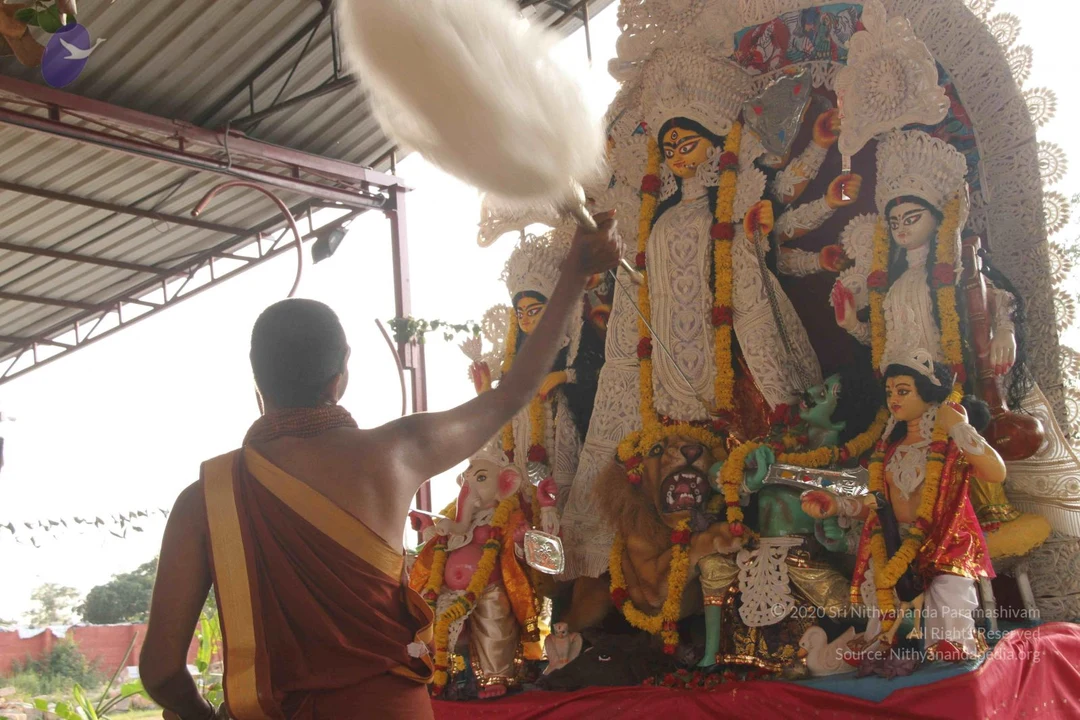
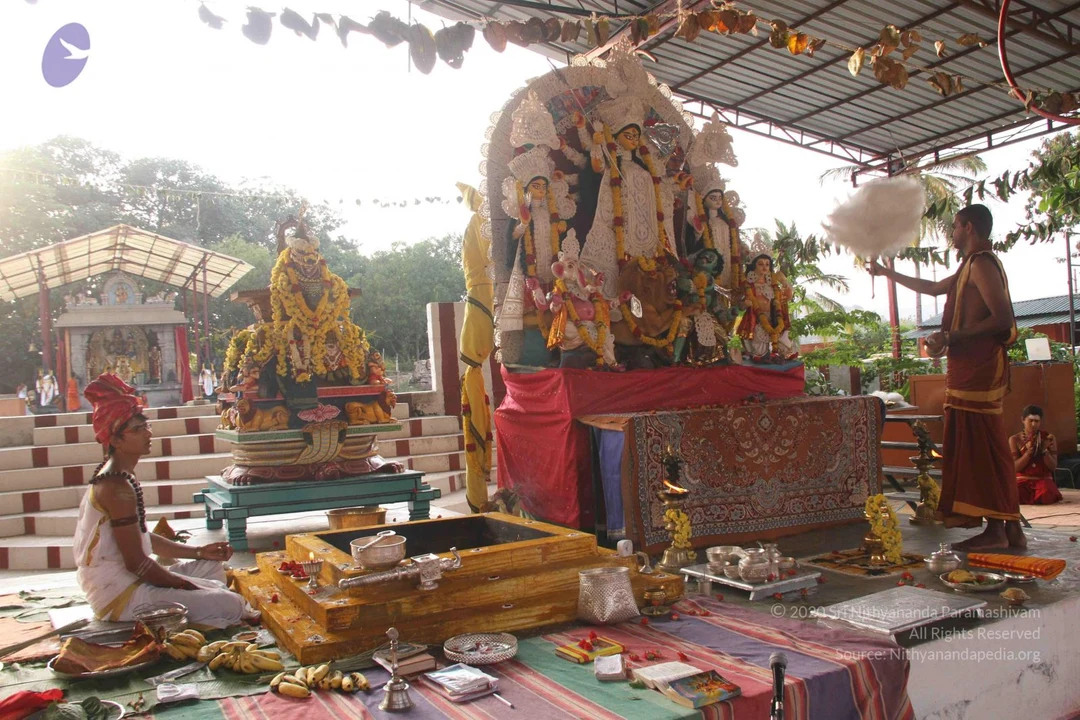
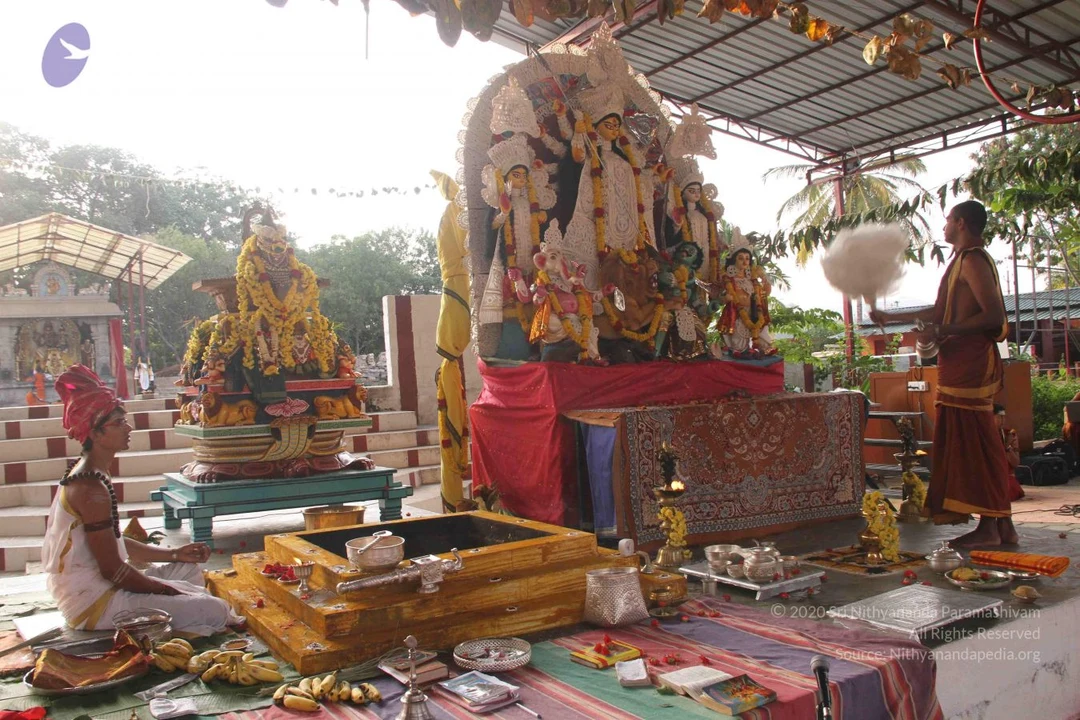
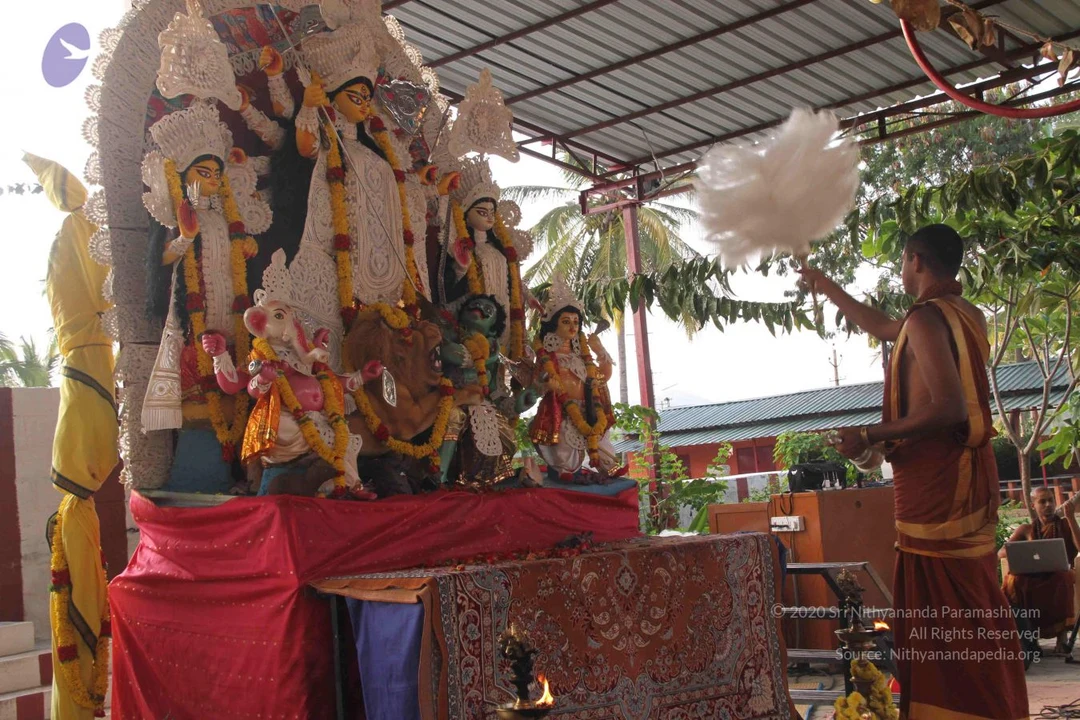
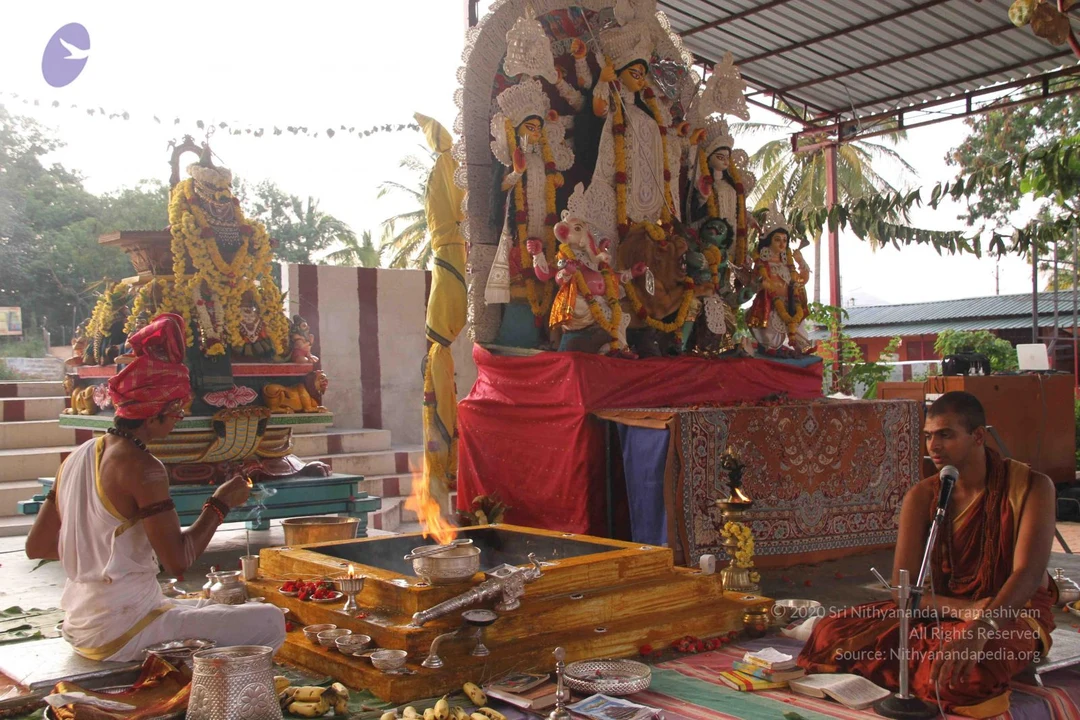
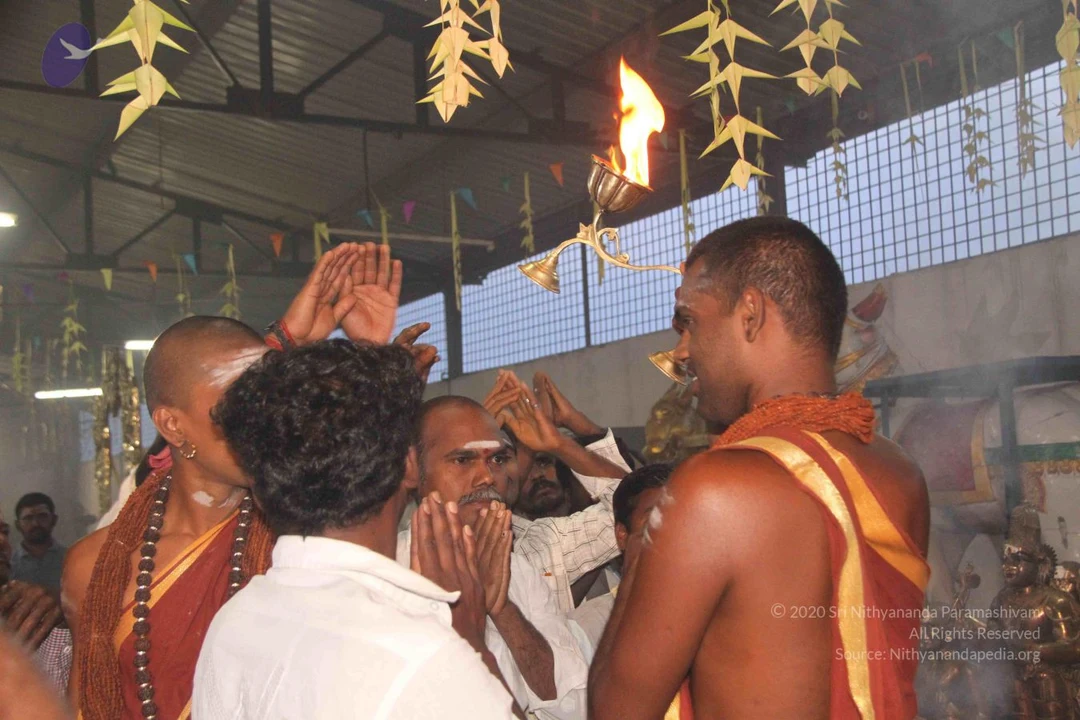
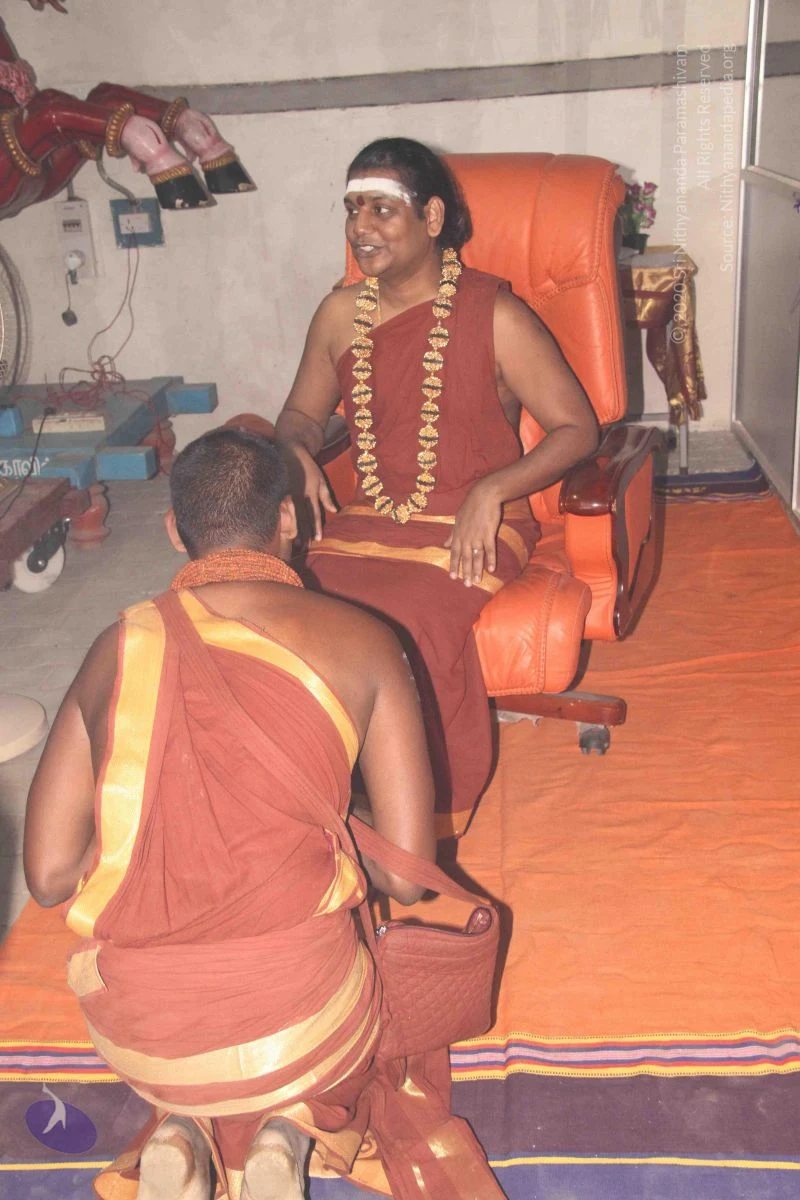
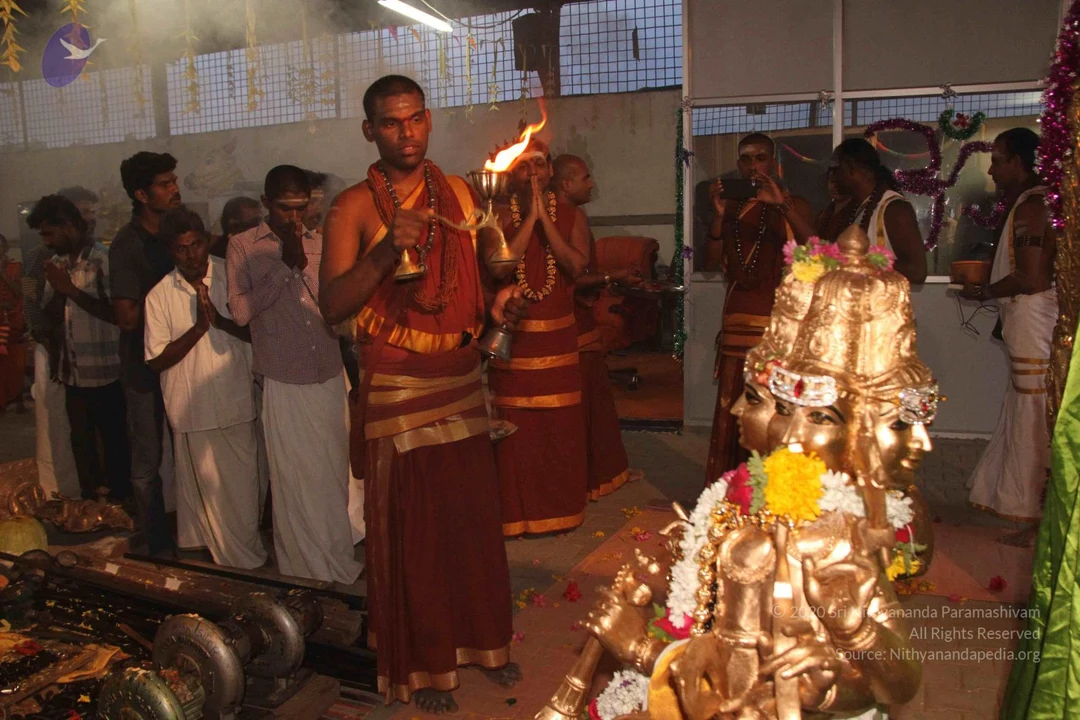
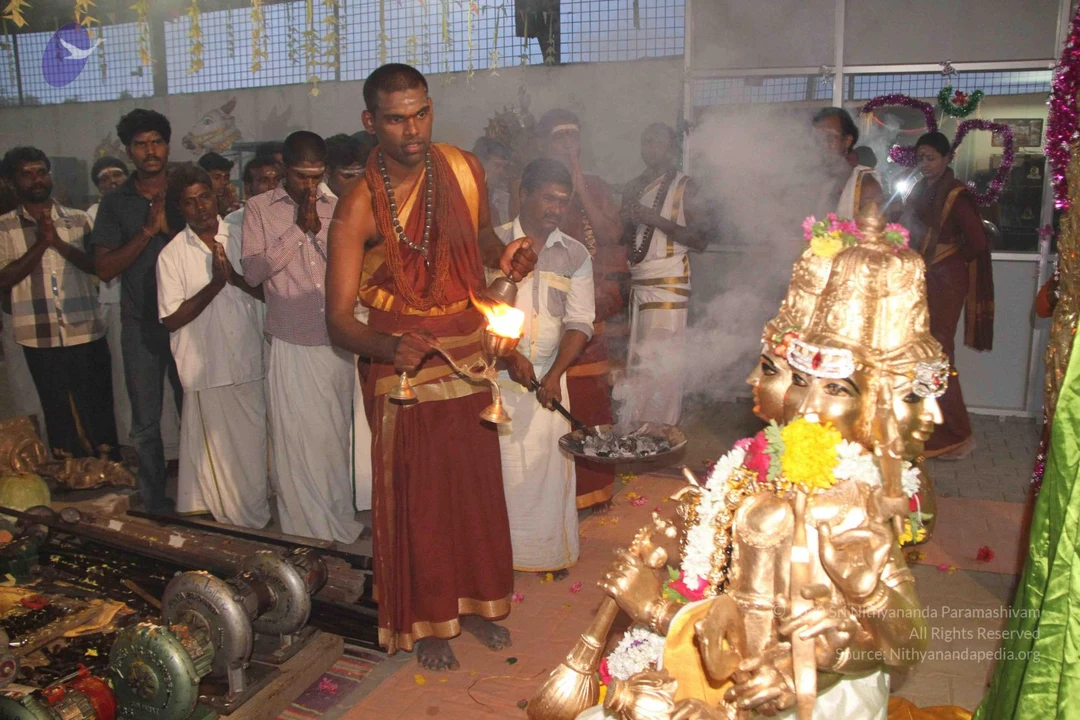
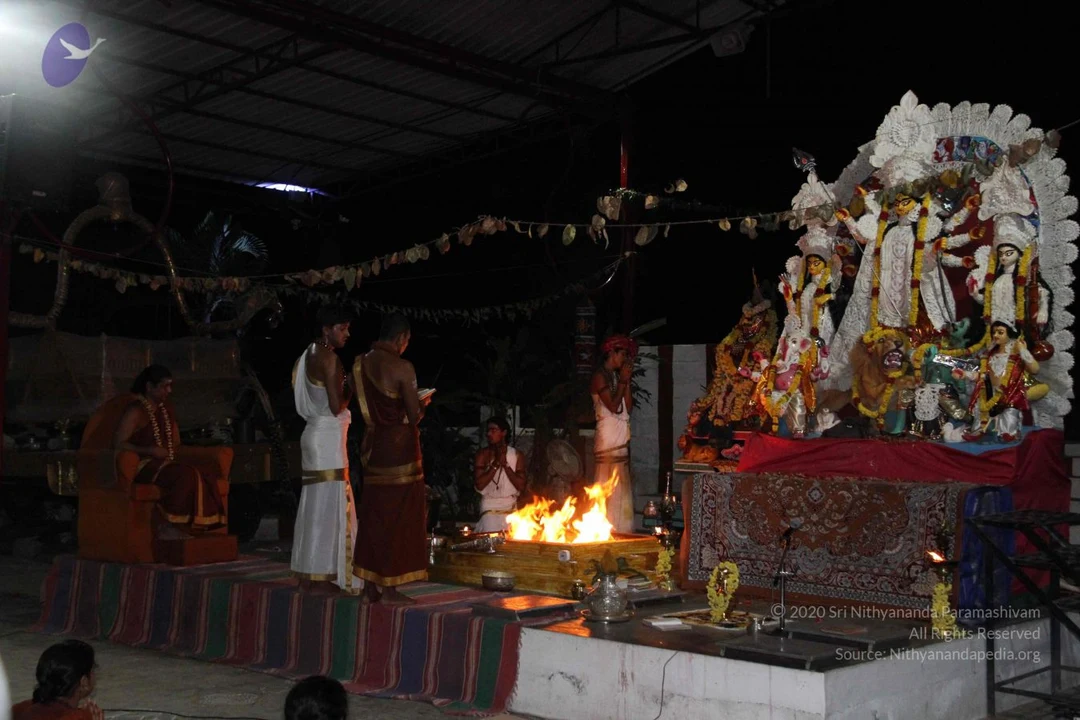
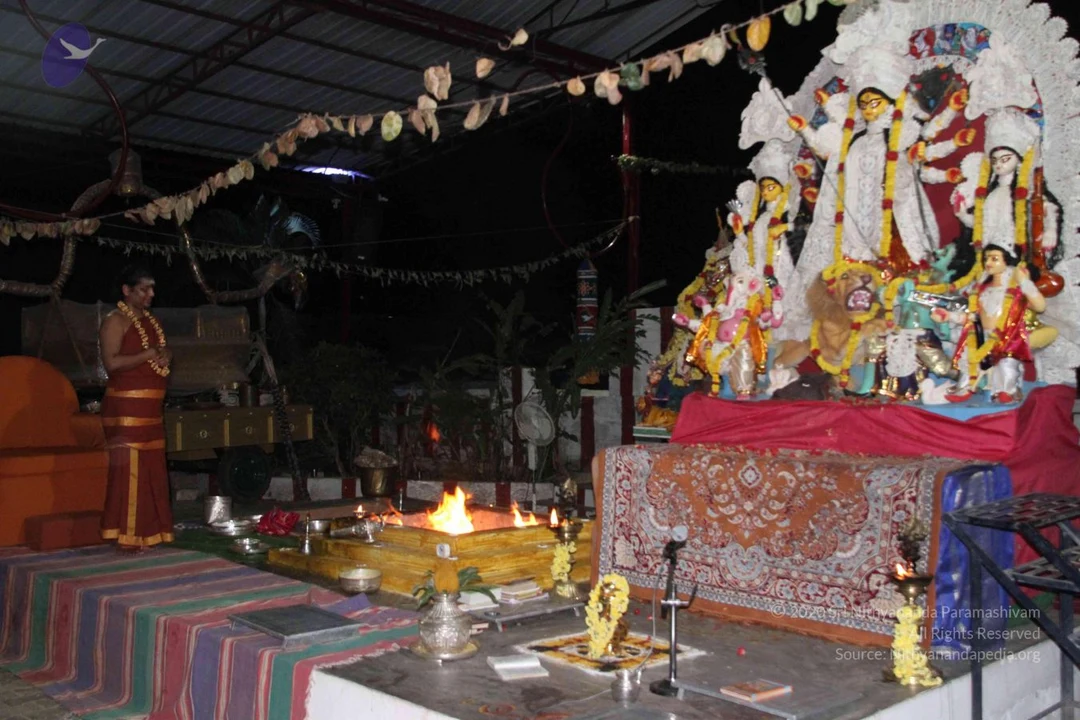
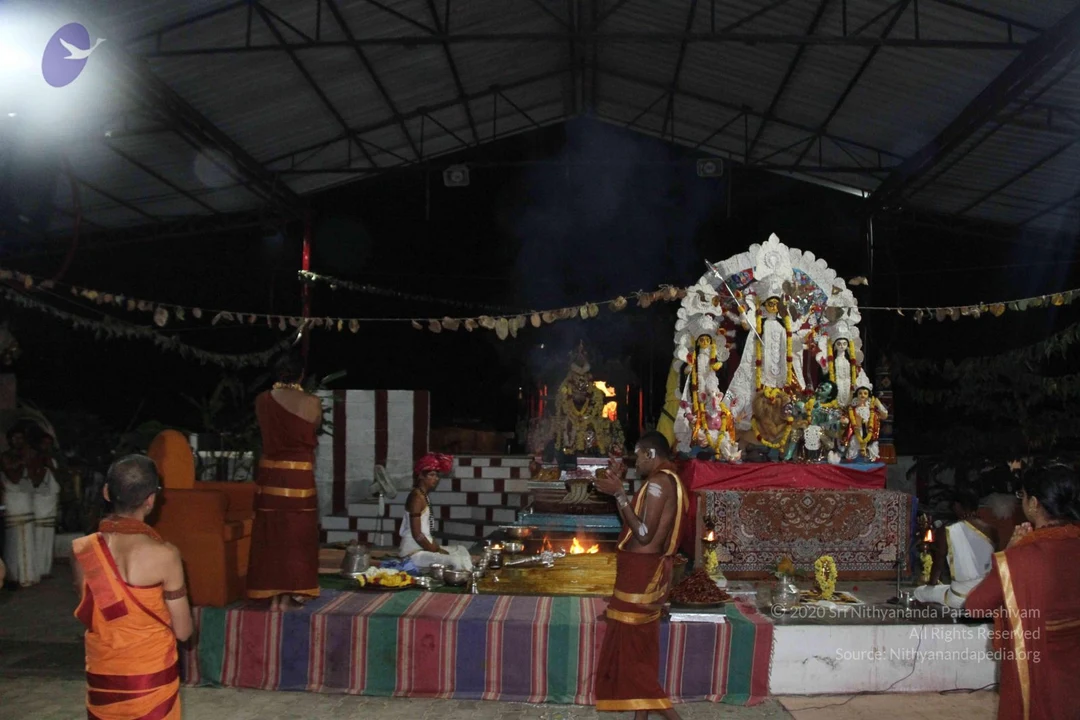
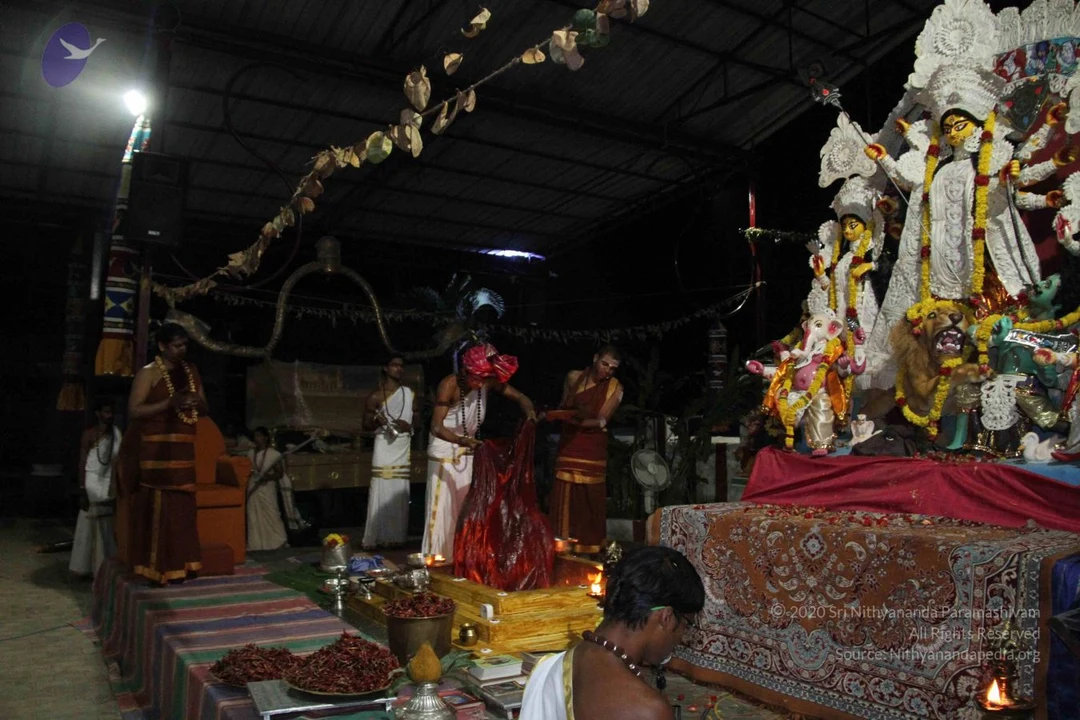
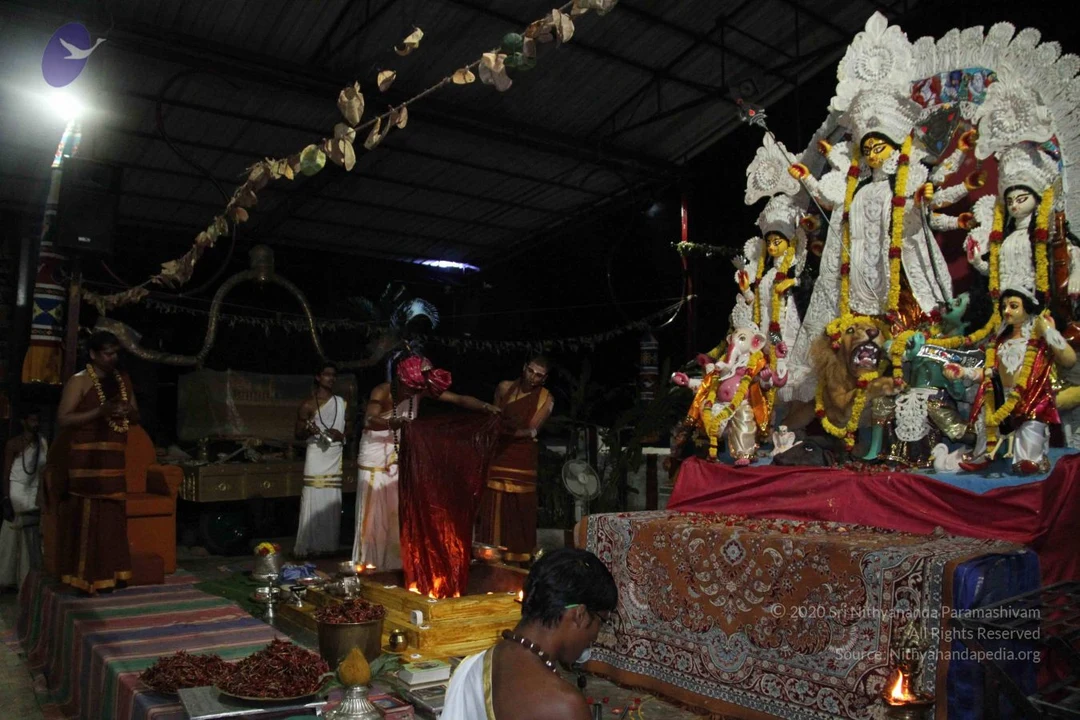
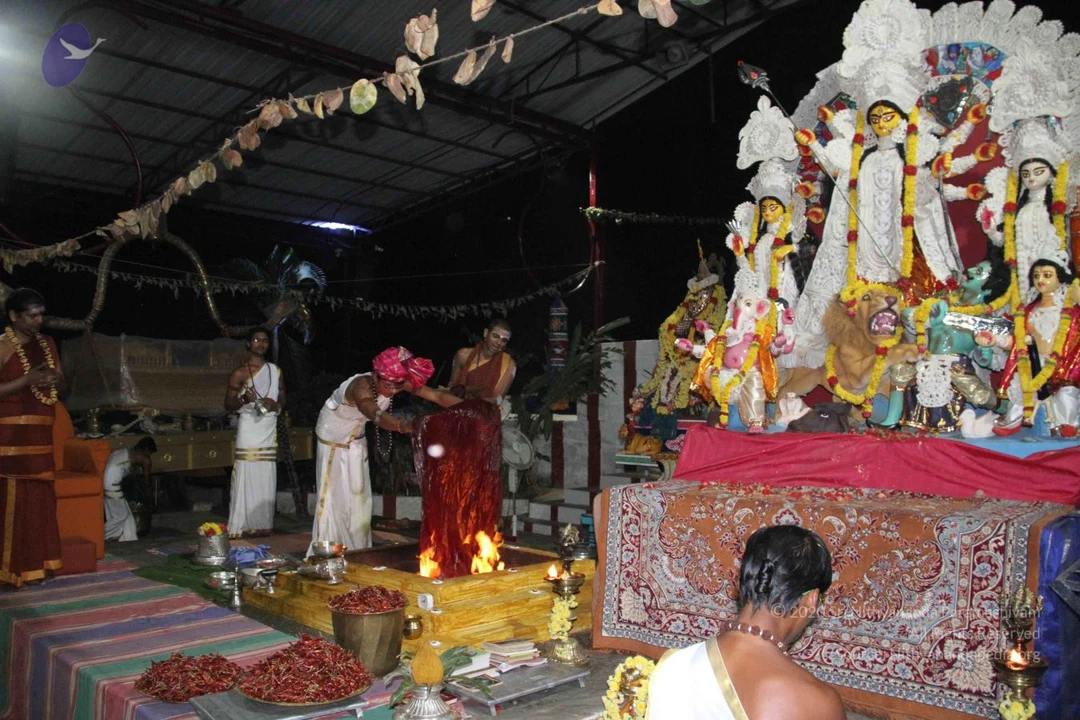
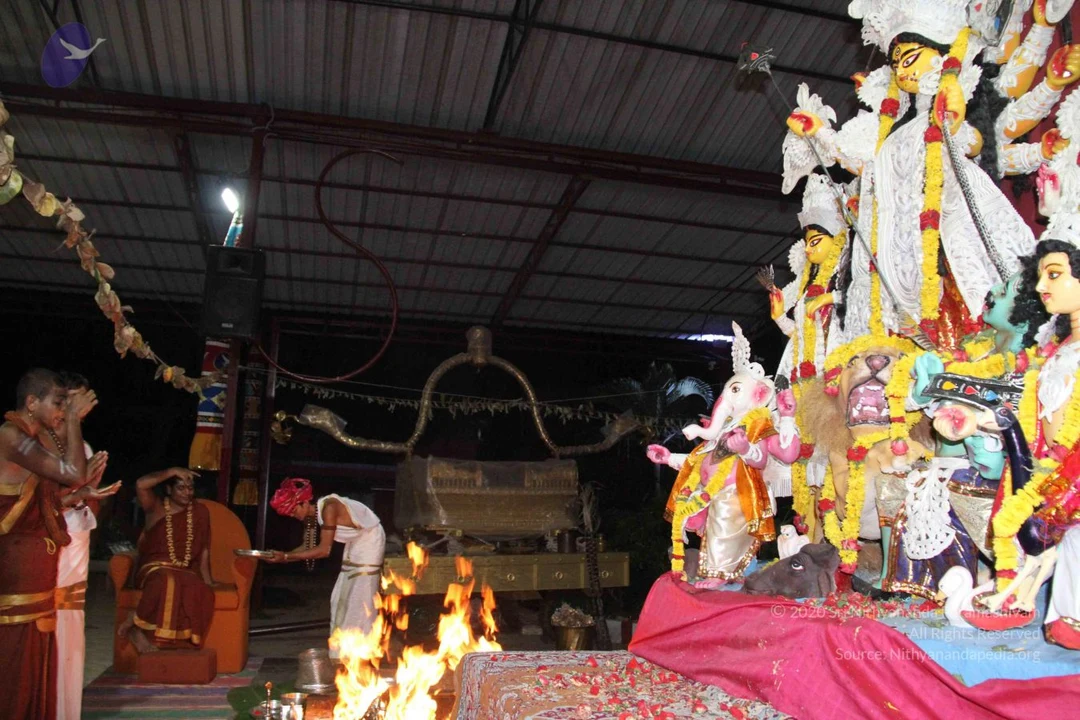
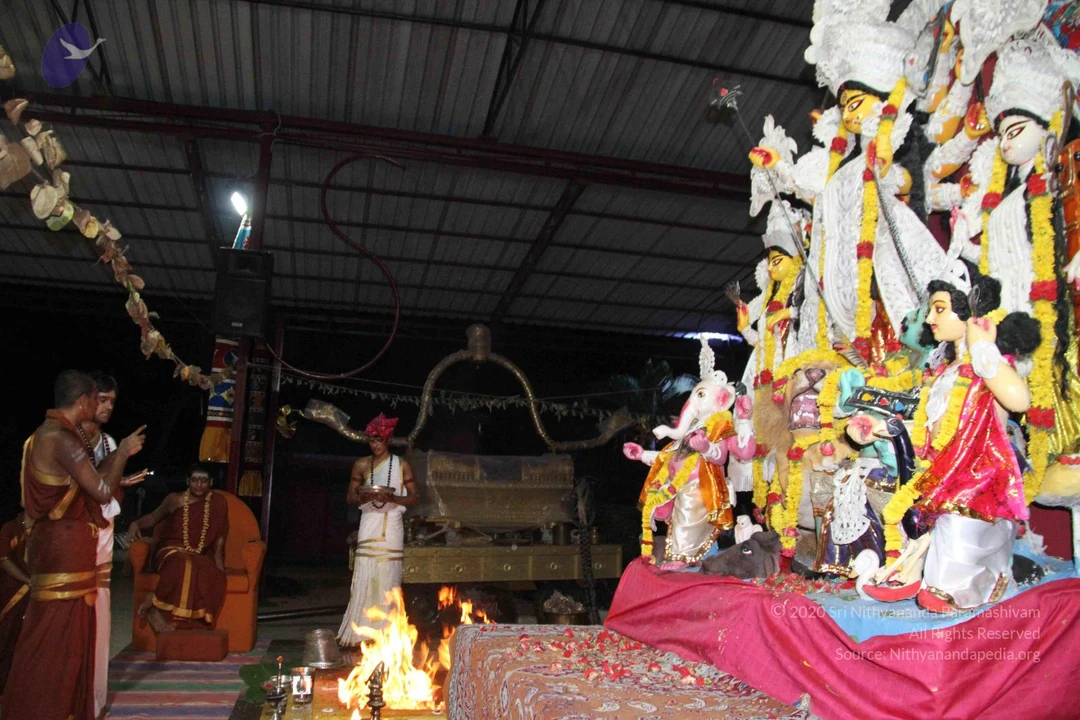
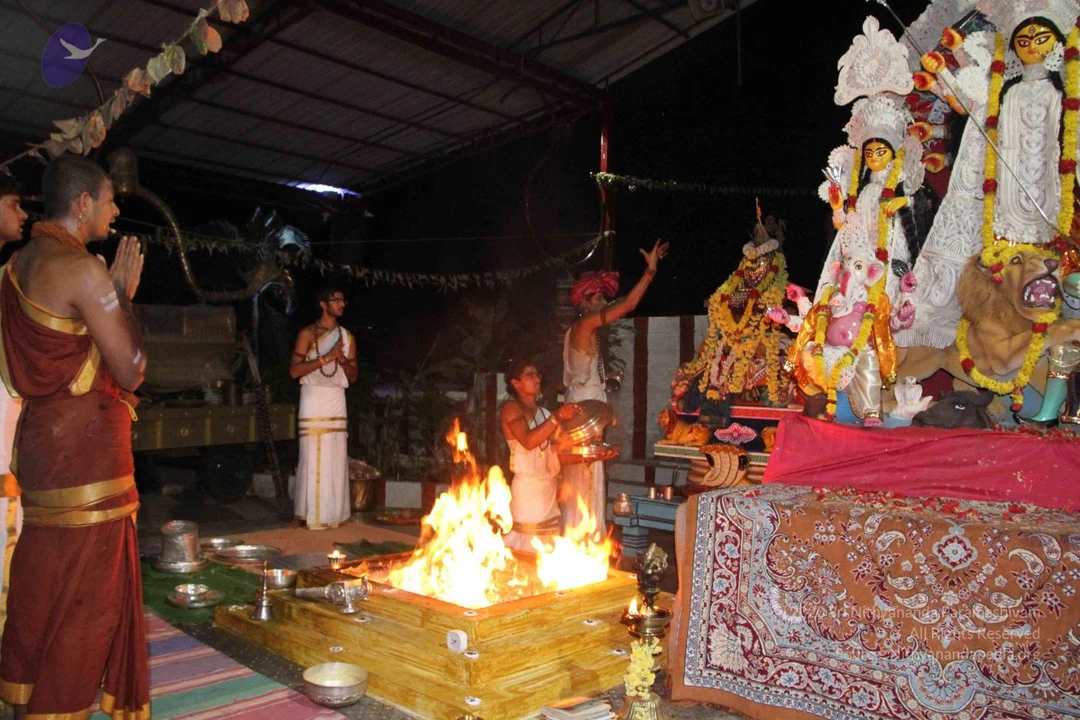
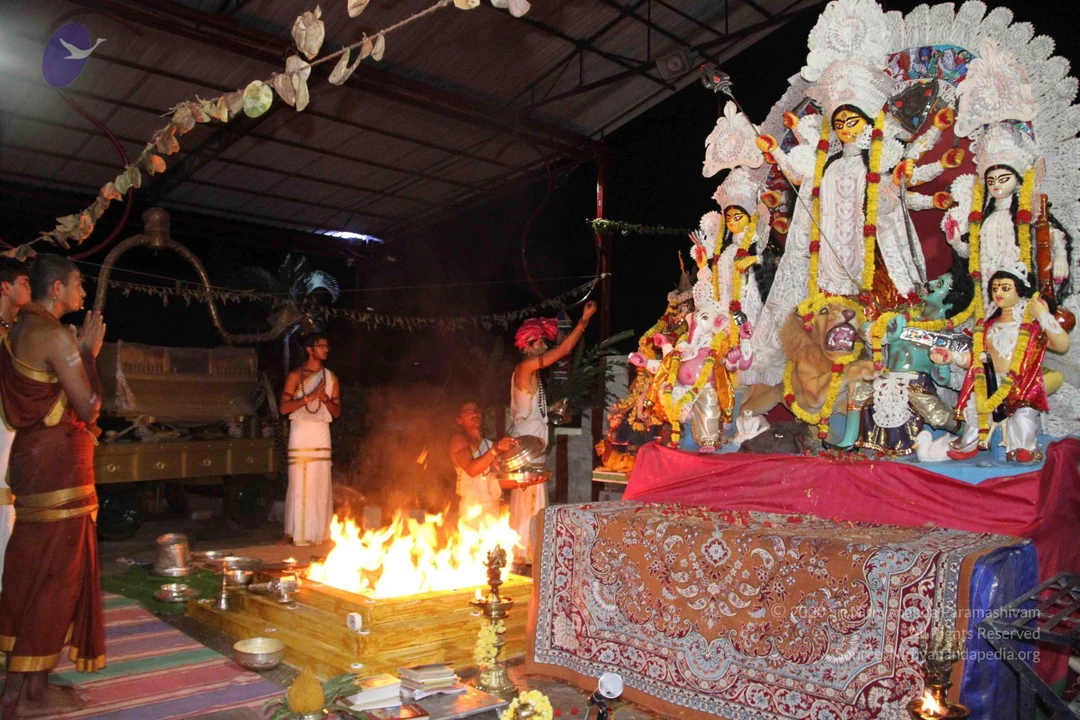
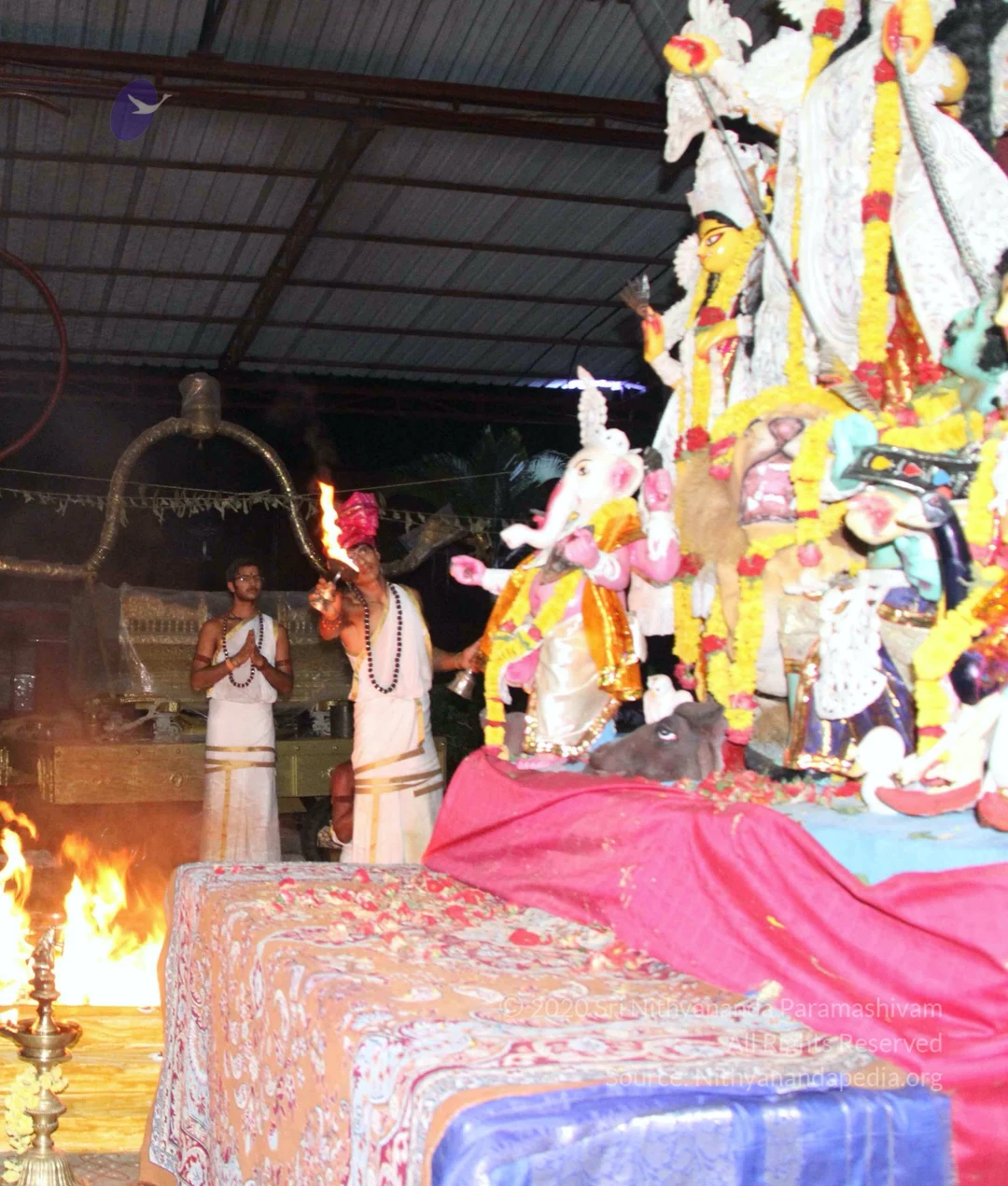
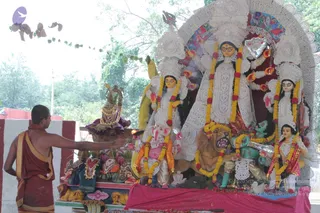
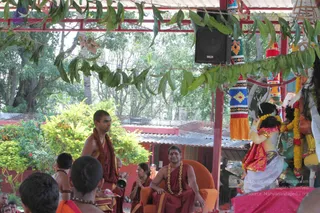
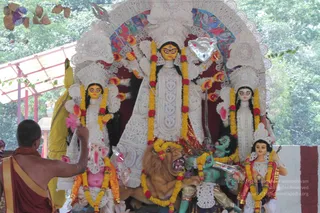
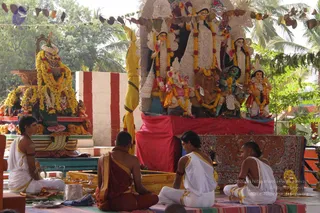
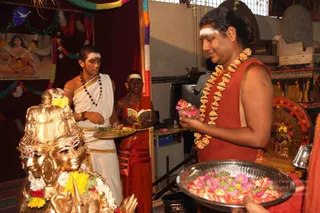
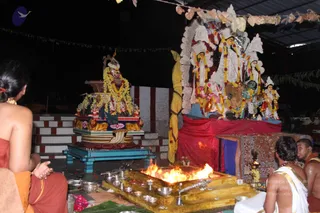
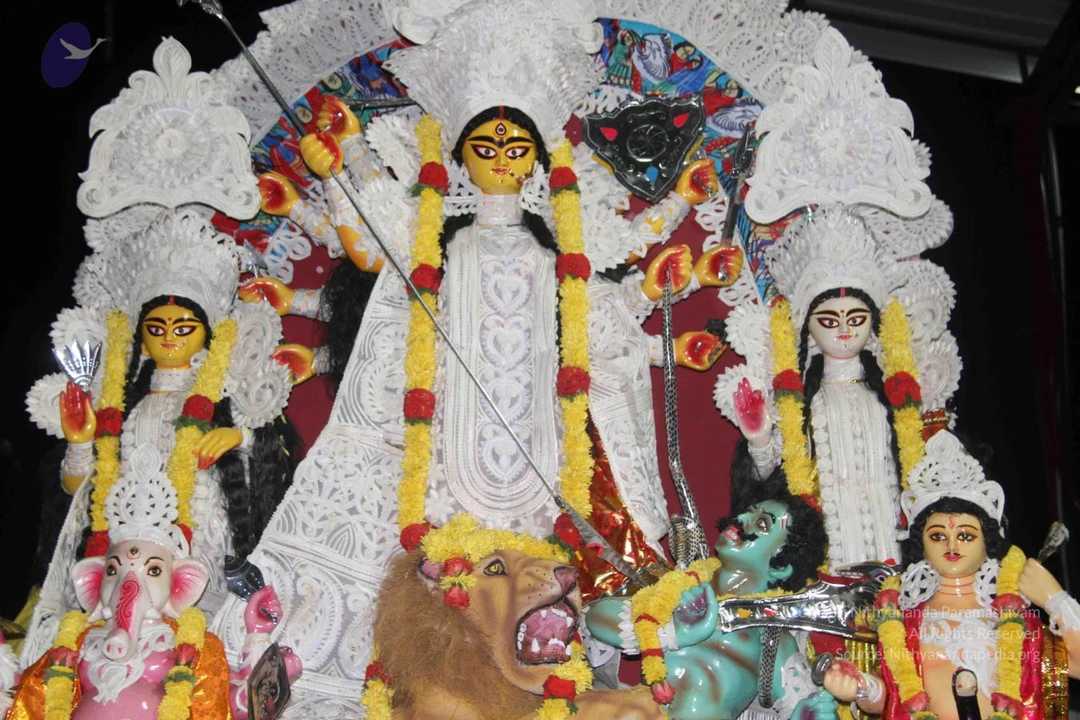
Outdoor temple pavilion under a corrugated metal roof during a puja. A shaved-headed priest in a maroon dhoti with a saffron-yellow upper cloth stands at a metal counter, raising a small lamp or object with his right hand toward a garlanded deity murti. The murti is decorated with white flowers and marigold garlands and sits on a red draped platform with a white arched backdrop. A seated man in a maroon robe and orange-red shawl with a beaded garland sits on an orange chair at left. A child in orange robes sits on the tiled floor at lower left, and a person in white sits at lower right near offerings. Red-and-white striped walls, banana leaves, a speaker and a plastic chair frame the scene.A priest in a rust-red dhoti with a yellow sash and rudraksha mala stands at left, marked with white ash on his arms and chest, pointing toward a deity murti. Beside him a young girl in a green and maroon sari with gold jewellery and a yellow marigold garland sits before a large ganesha-form murti with a pink trunk and pink lotus, alongside a lion-faced figure with a red-and-yellow garland. Behind them stand white ornate deity figures draped in yellow and red marigold garlands. A metal bowl sits at the foot of the murti and green foliage fills the background.A photograph of a puja at an outdoor shrine before a tiered murti tableau of goddesses with ornate white crowns and marigold garlands, with a Ganesha figure at the front. A young girl in a green saree and a gold-and-white garland sits cross-legged on a red cloth and a patterned carpet, flanked by the deities. On the left, a priest in an orange-saffron cloth bends forward beside oil lamps and offerings. On the right, a standing man in white dhoti with gold borders faces the shrine. Lamps, marigolds and bright-colored lion and figure statues fill the scene under green trees.

October 02 2014

Original wiki page
Contents

Description:

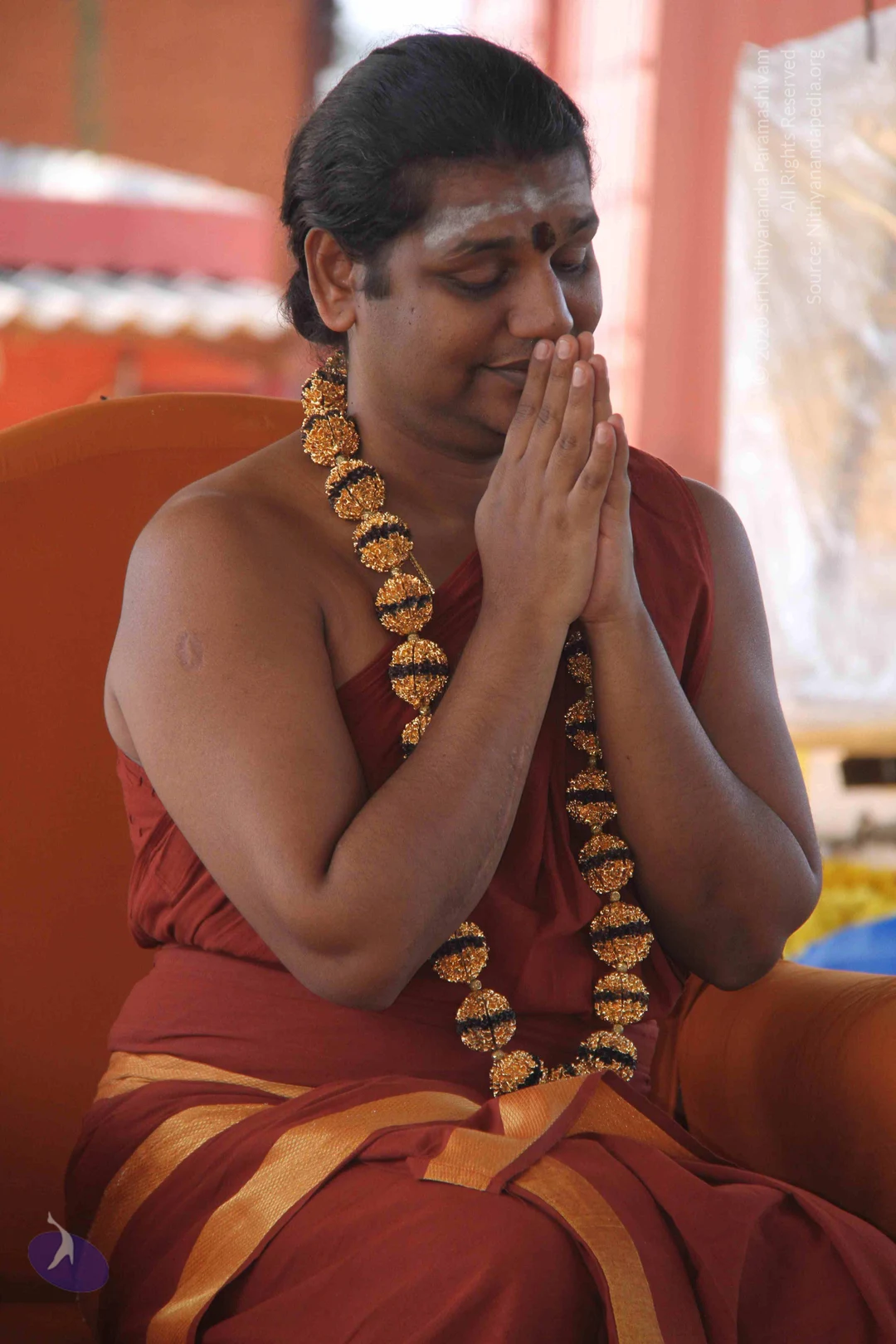
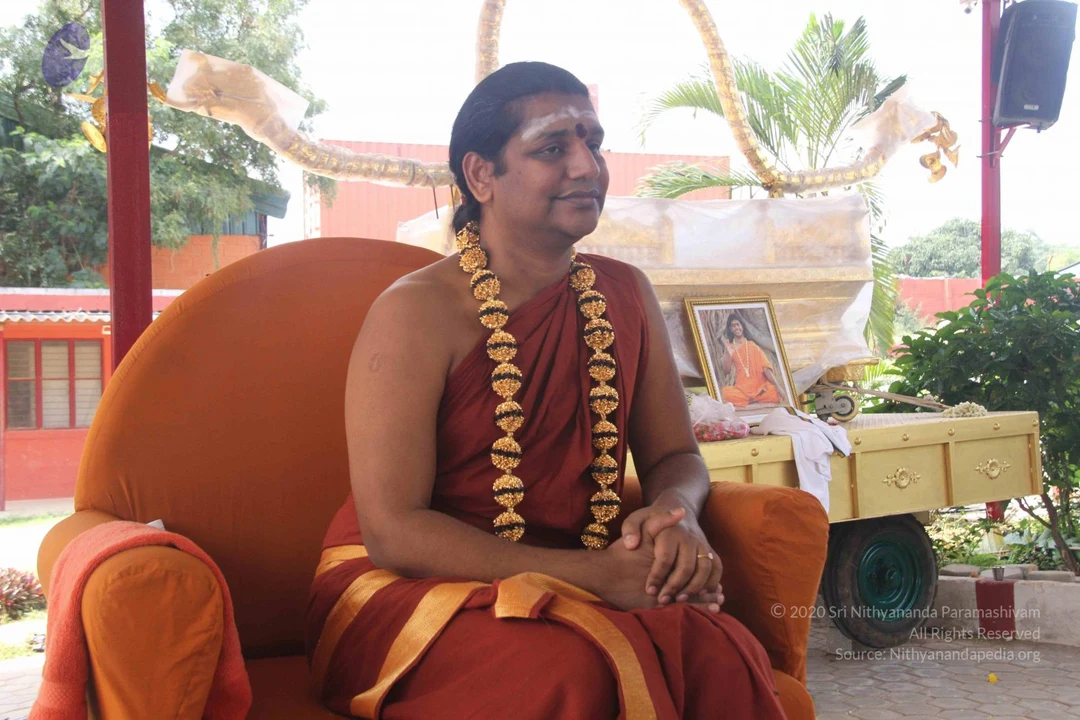
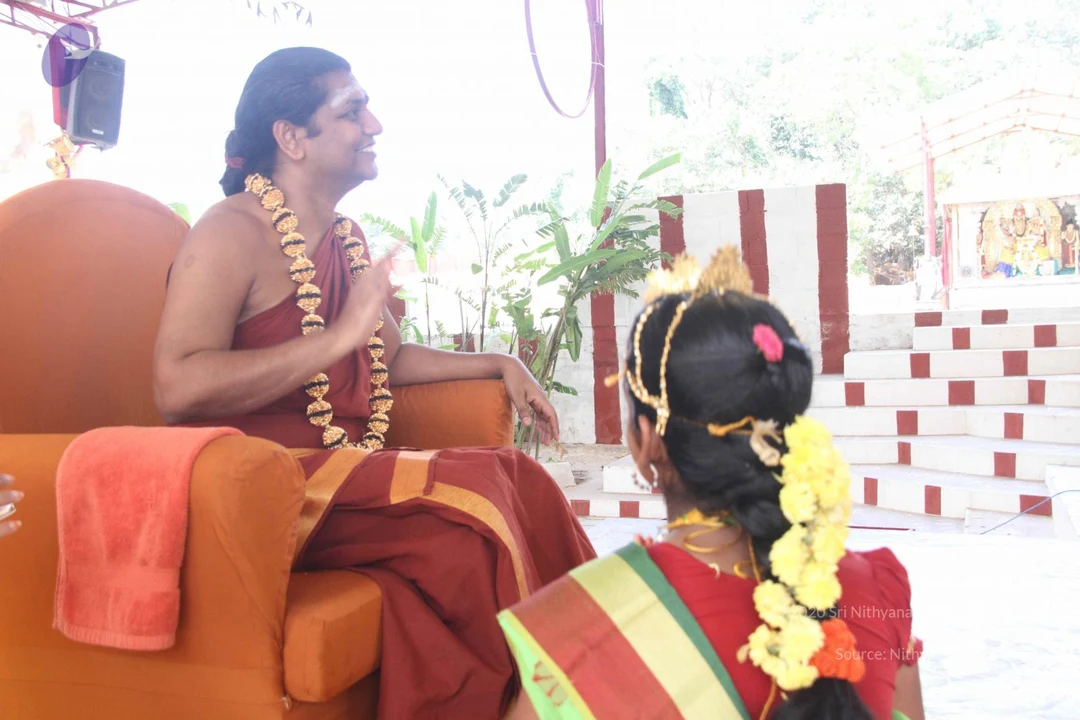
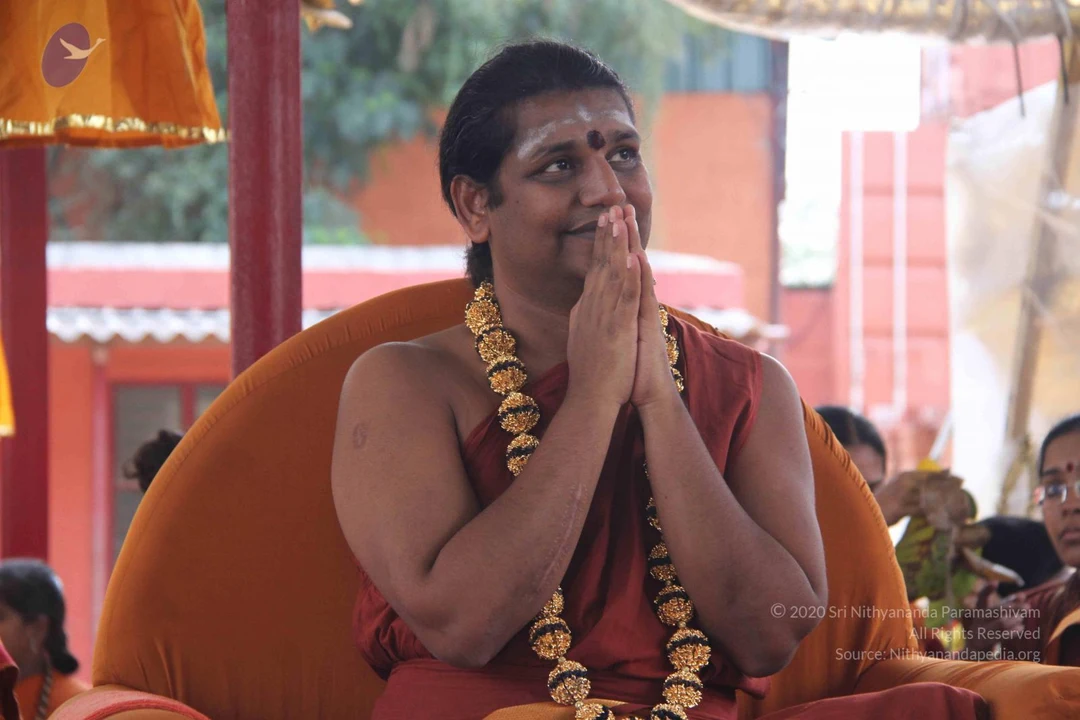
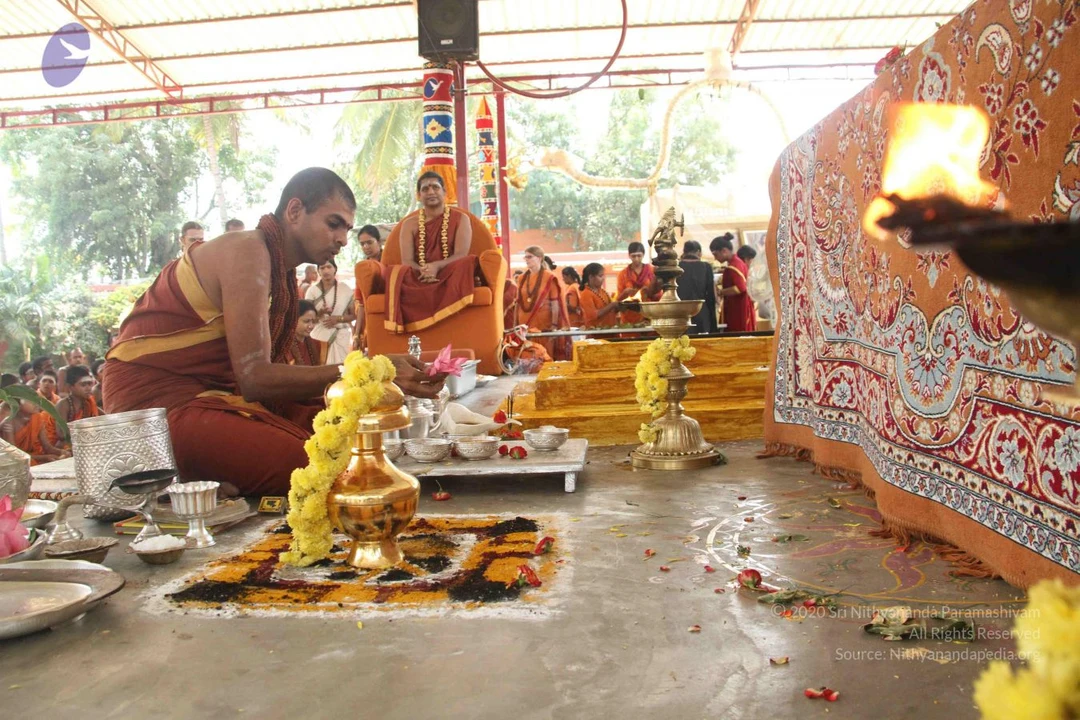
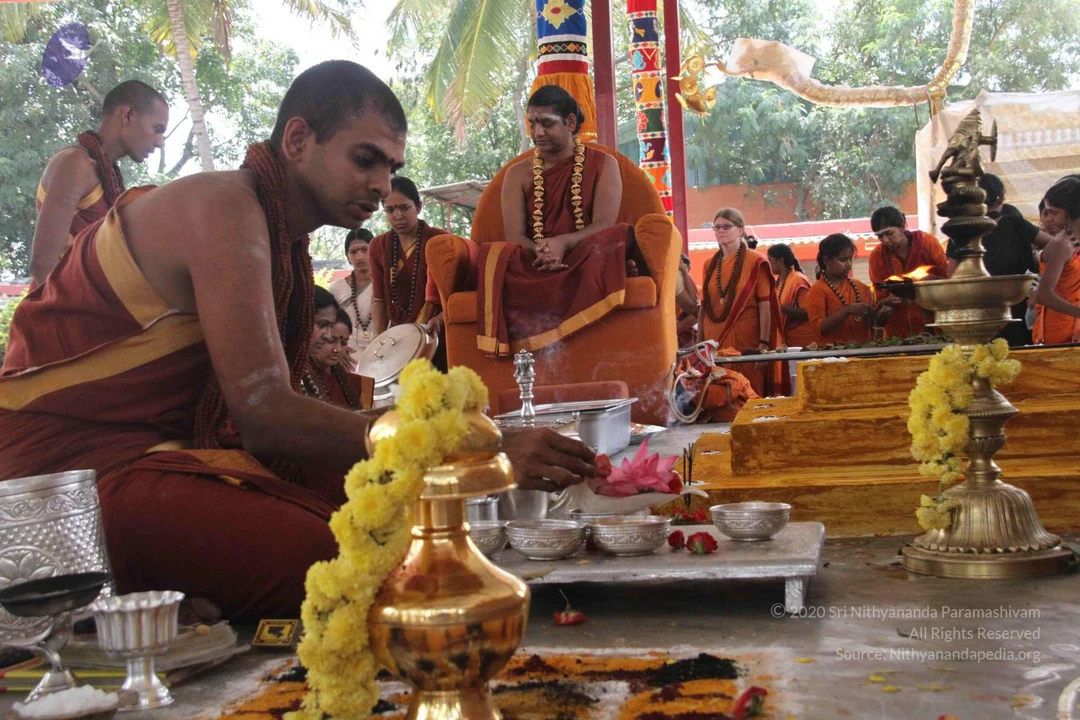
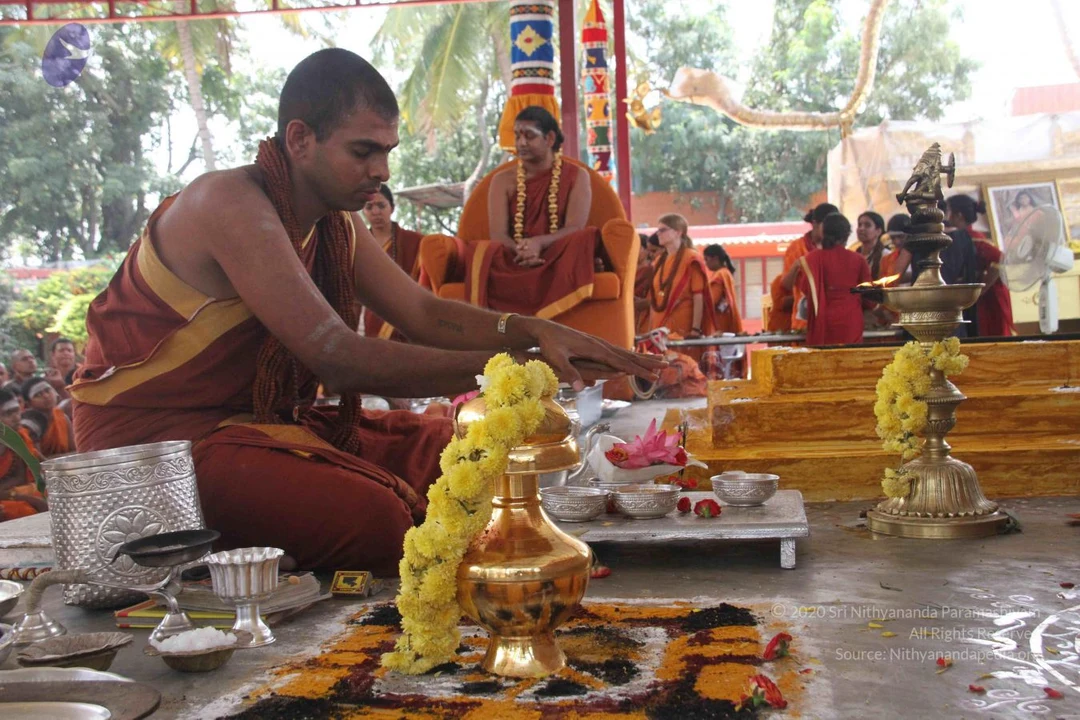
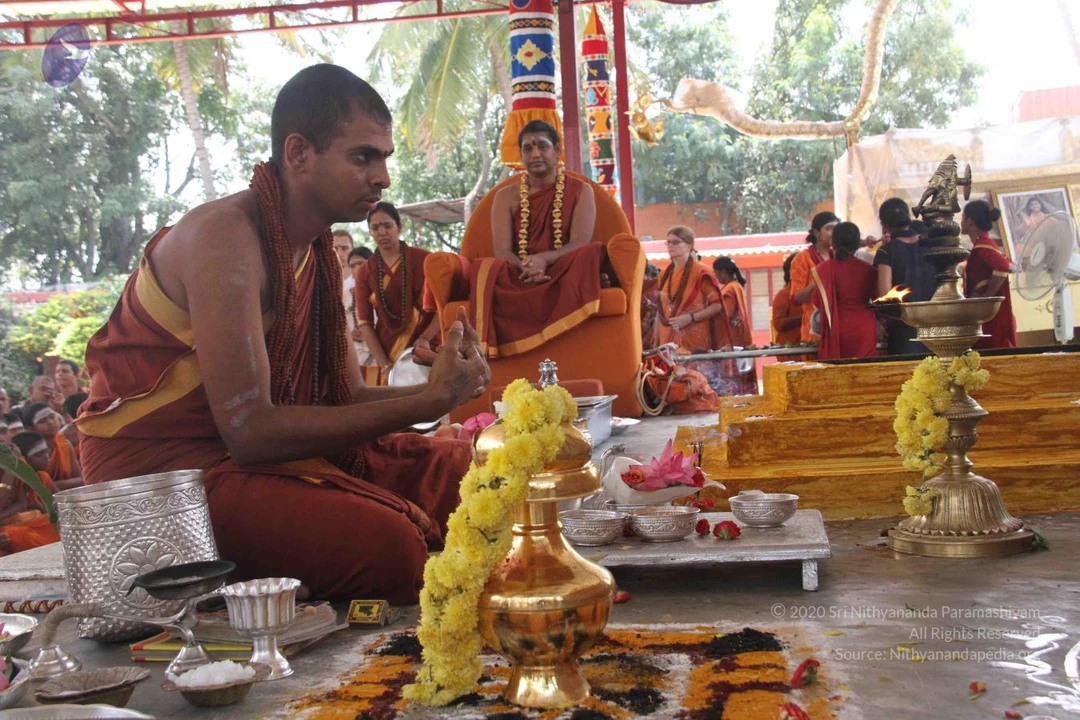
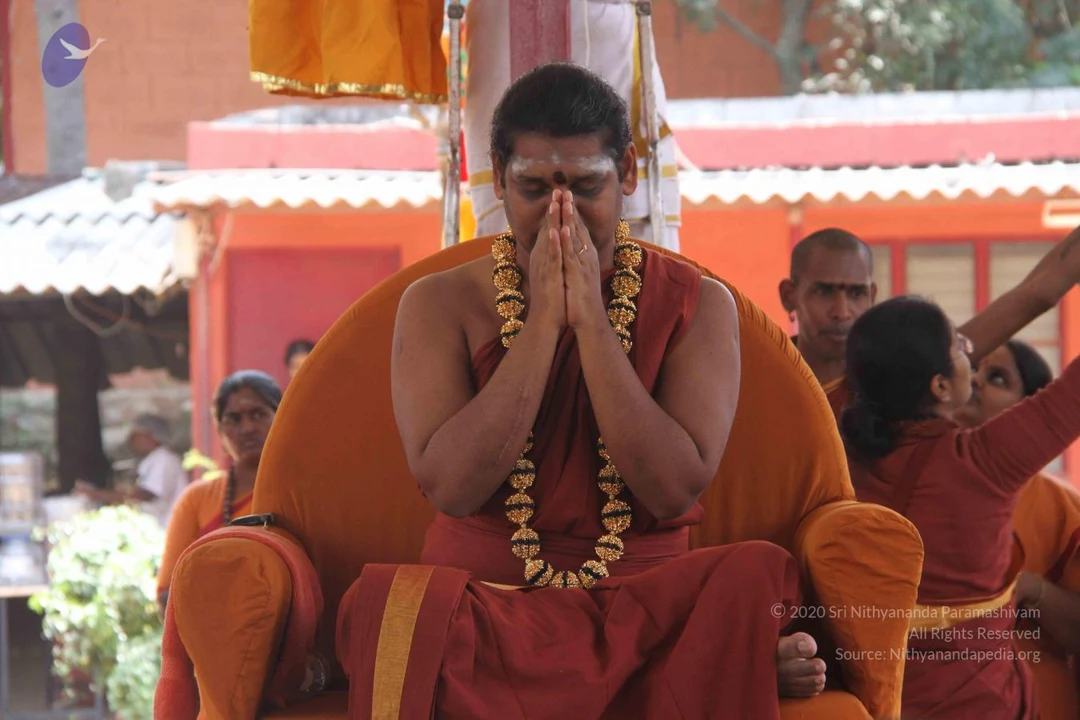
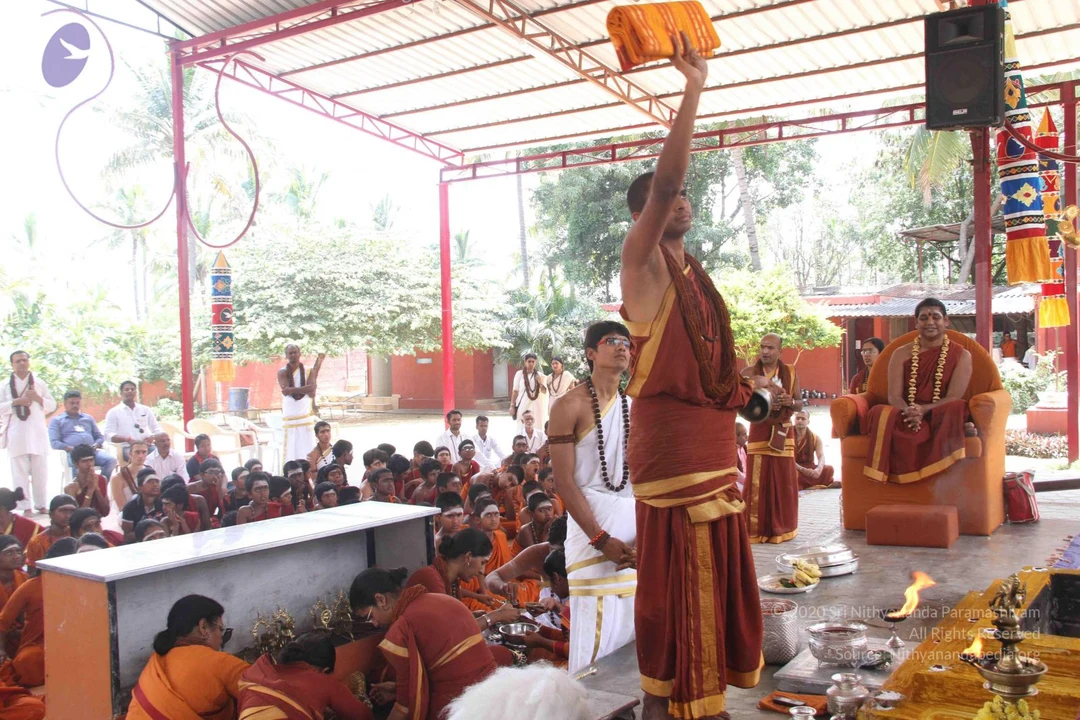
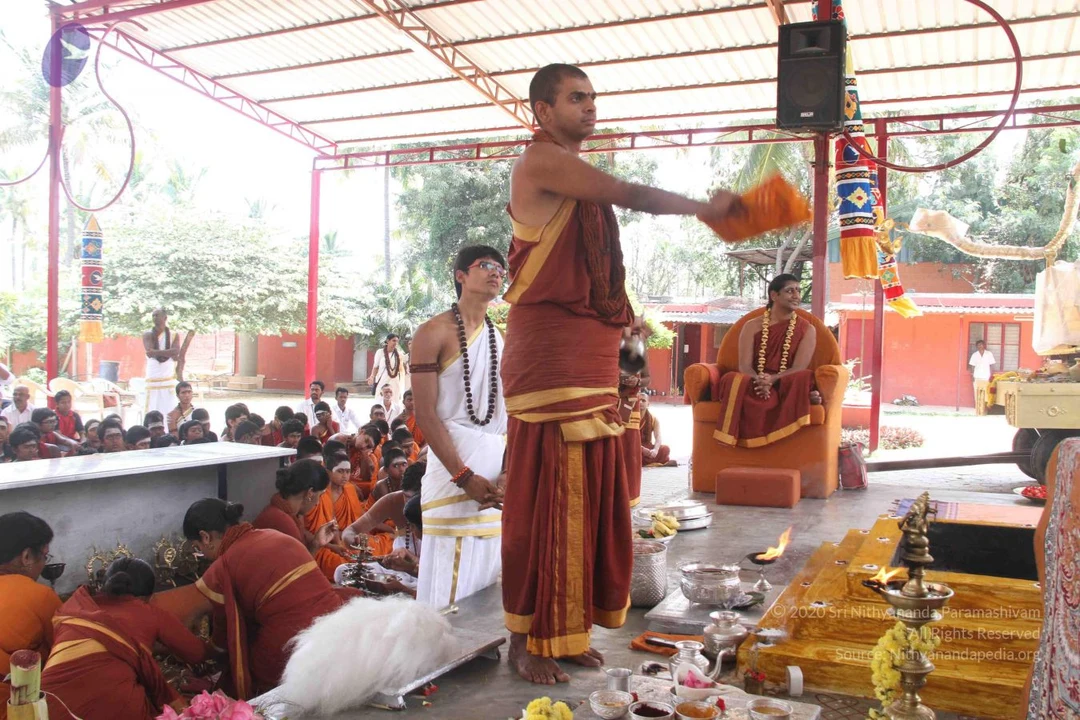
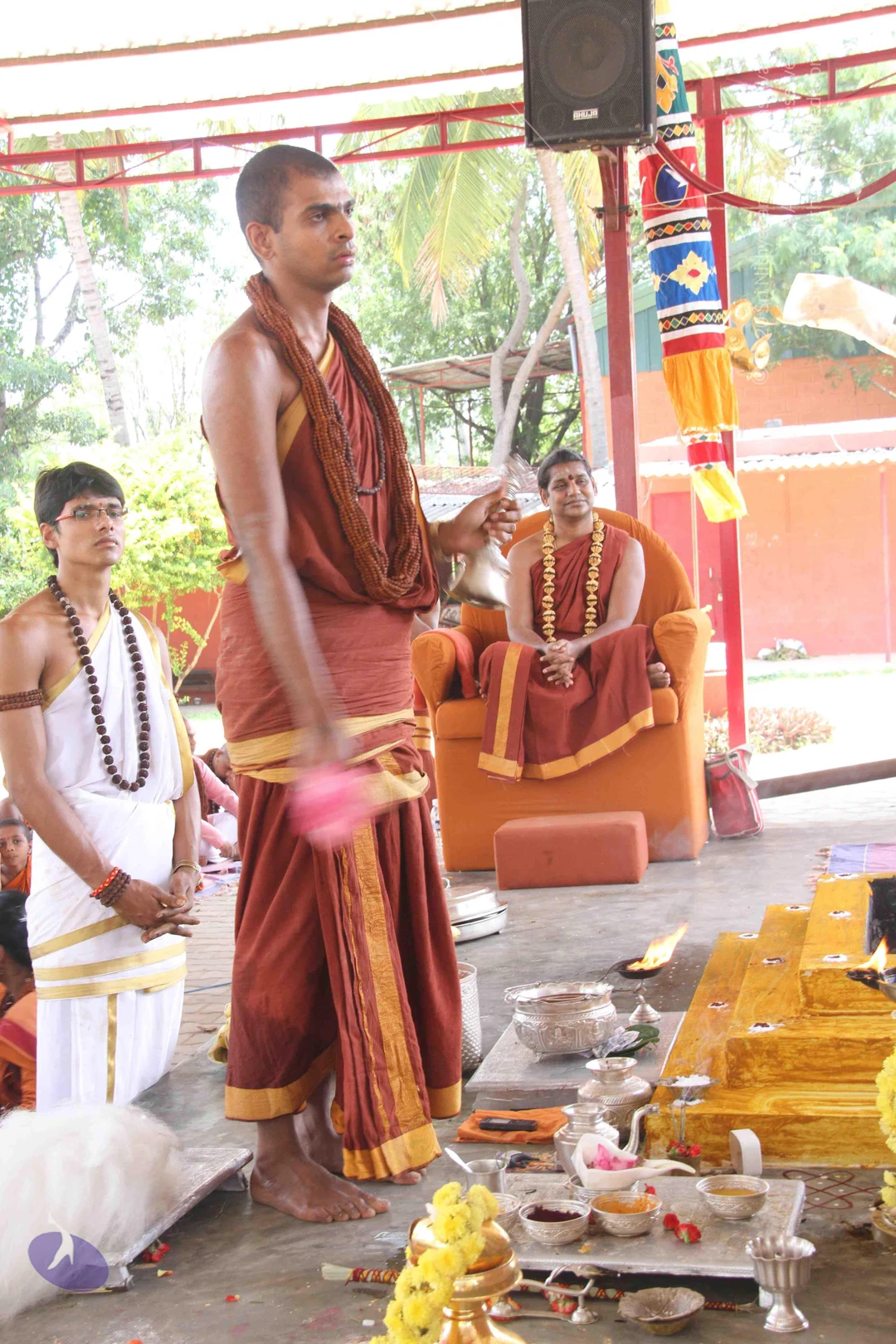
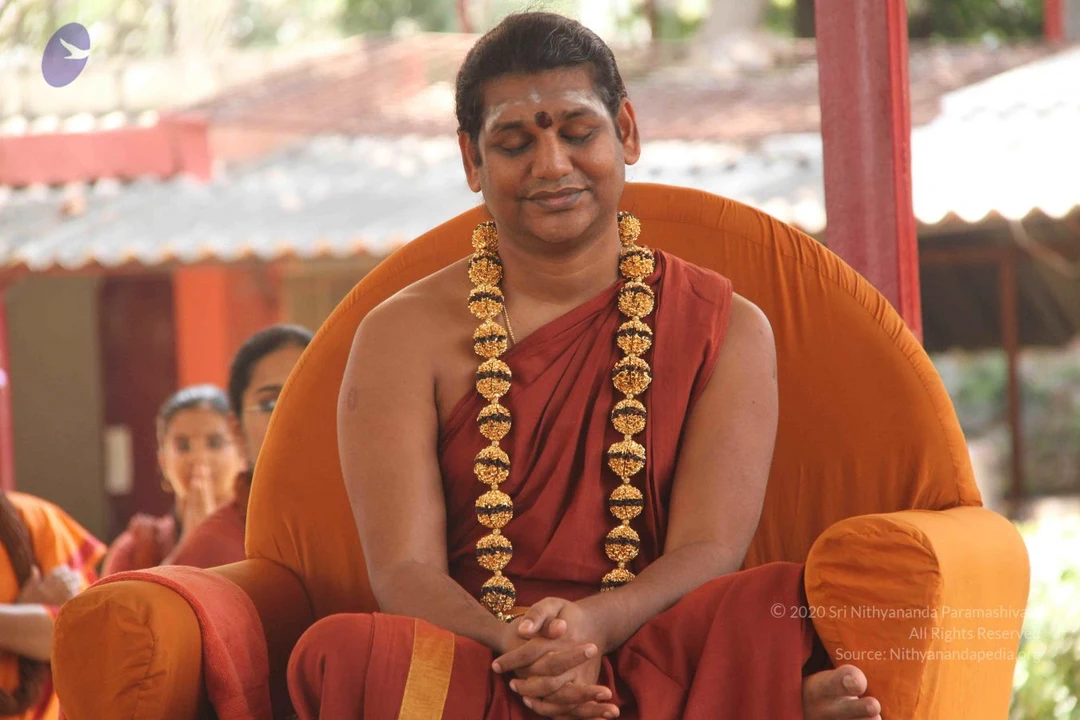
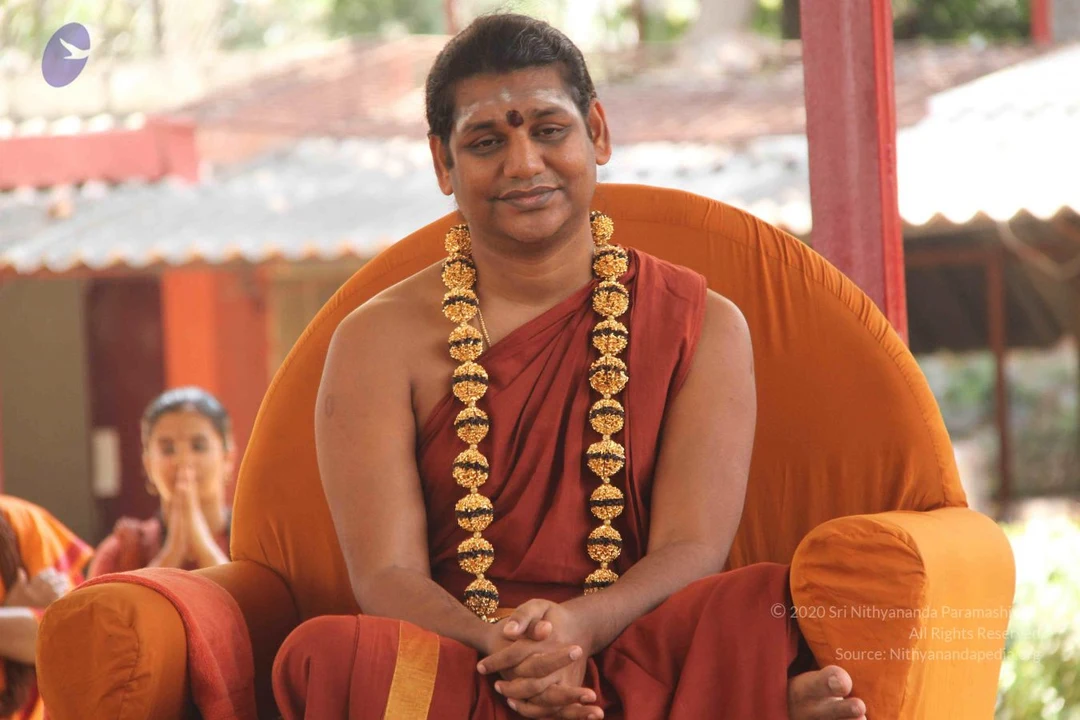
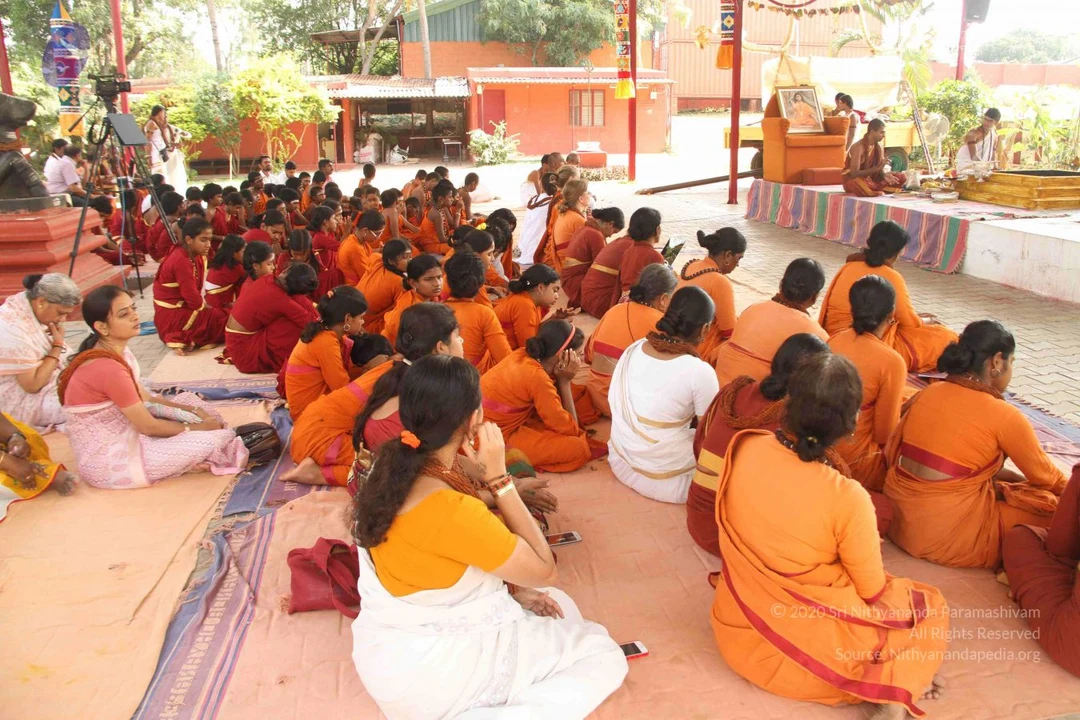
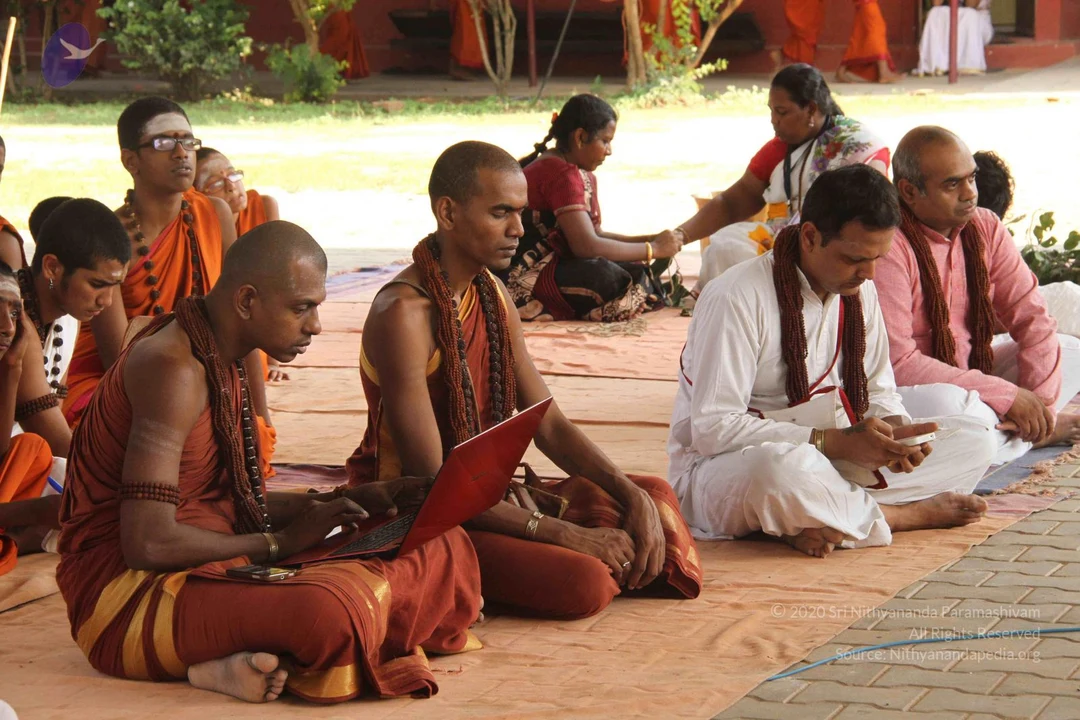
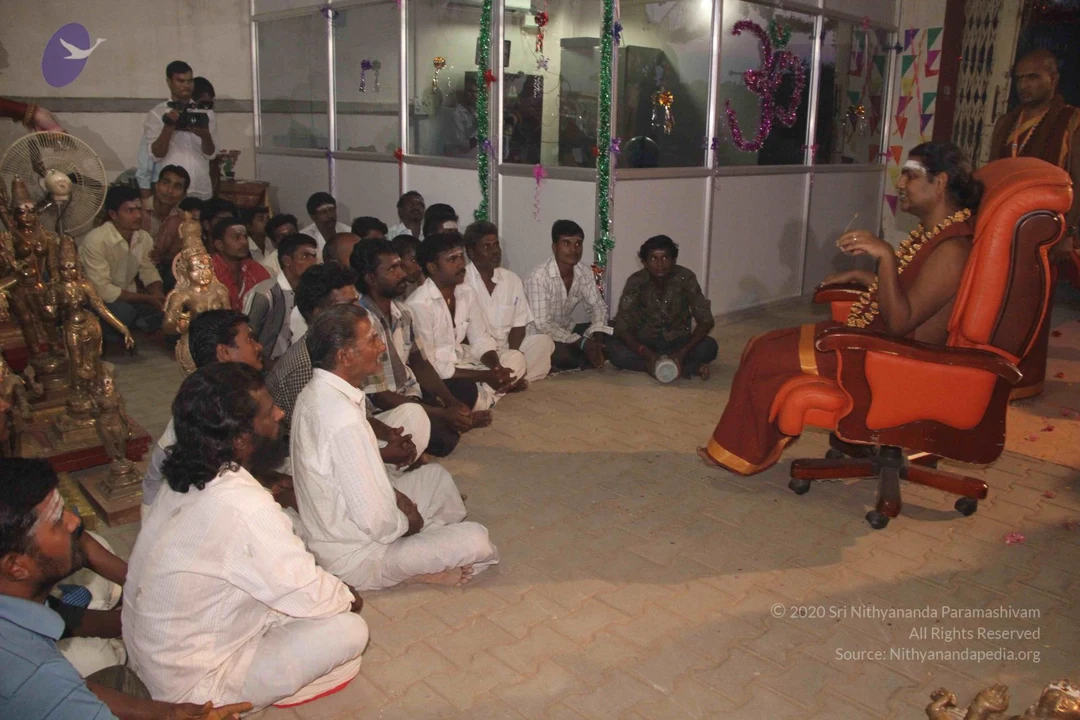
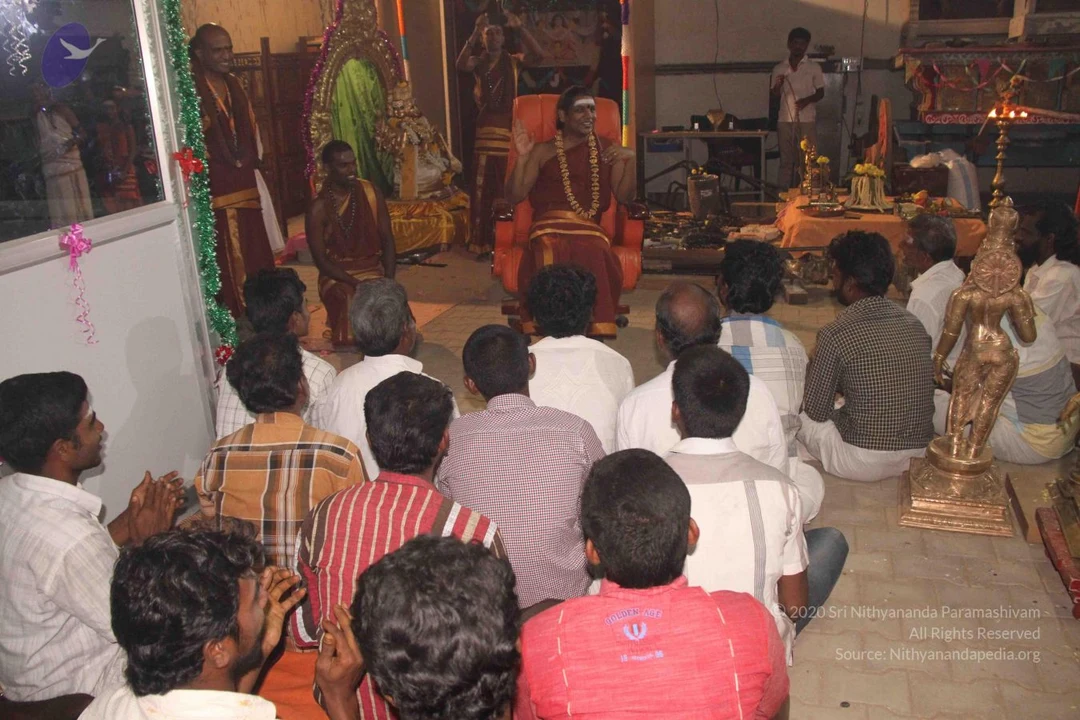
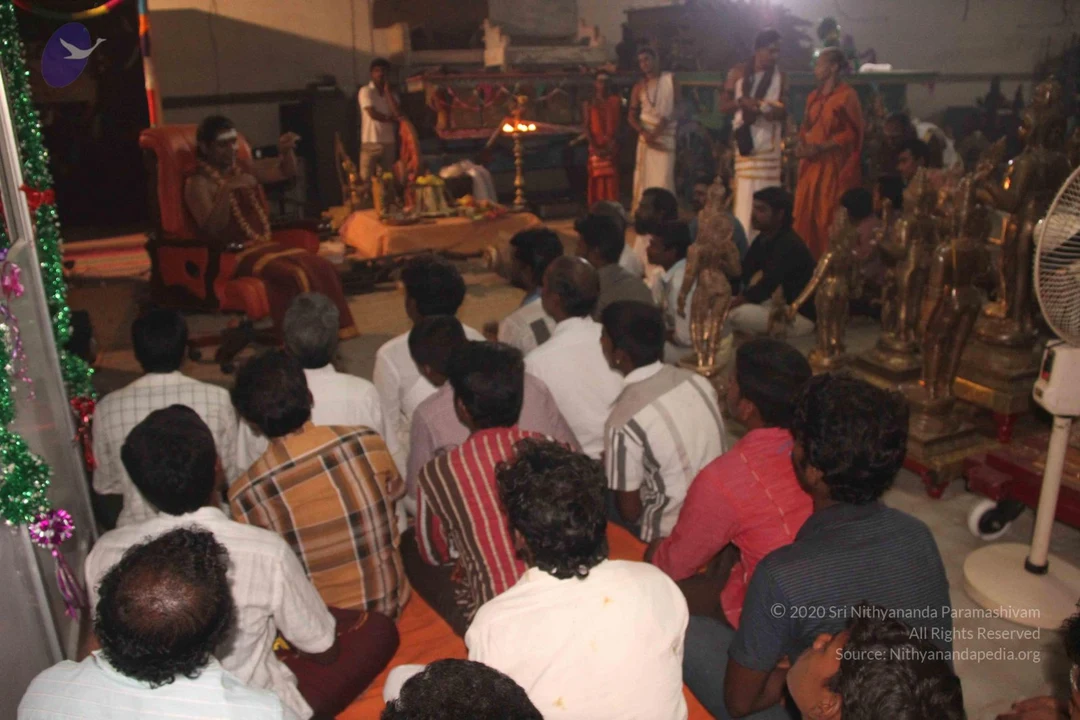
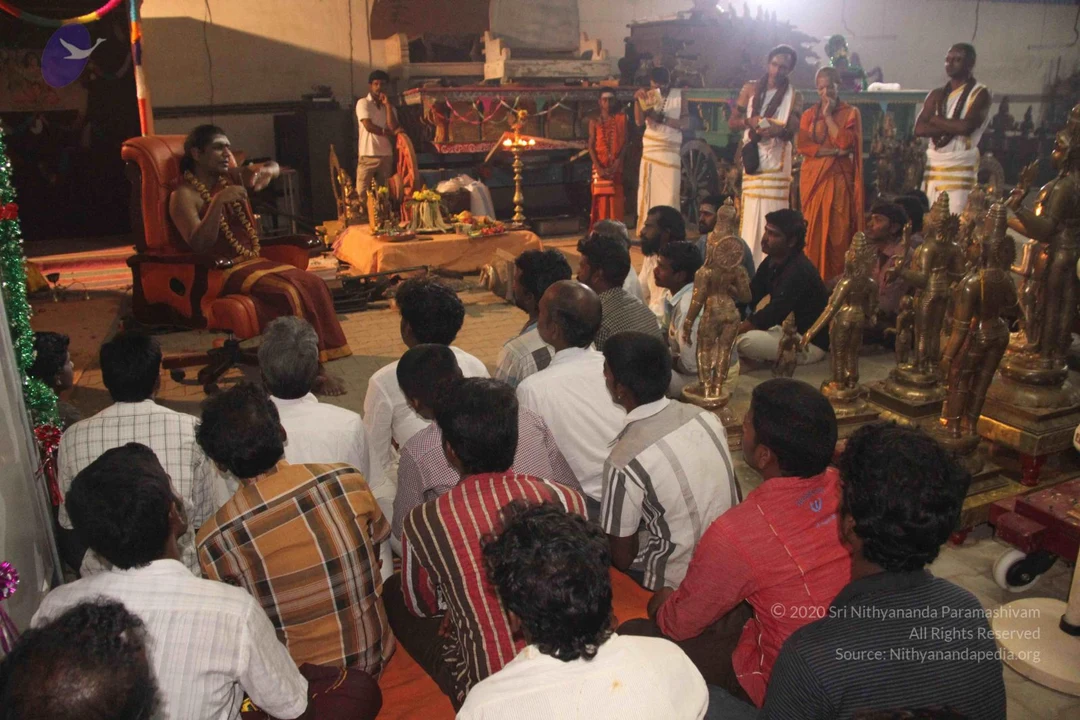
In today's (2 October 2014) morning satsang, Paramahamsa Nithyananda expands on the significance of Navaratri. These nine days, the special possibility opens for all to experience the ultimate pure expression of consciousness. Navaratri is the time to complete with all the incompletions related to our attempts and failures, tapas, spiritual practices, all the incompletions related to our incompletions. Also, whenever we encountered life, shrinking or 'feeling small, innocent and helpless' is our natural response that we adopt from our young age. We voluntarily celebrate the existence of stupidity. This pattern of claiming frightened victimhood, childhood, frightened ignorance and innocence should be completed now.

Link to Video:

VideoAudio

Transcript:

Nithyanandeshwara Samaarambhaam Nithyanandeshwari Madhyamaam | Asmath Aachaarya Paryanthaam Vandhey Guru Paramparaam ||

I welcome all the devotees, disciples, samajis, satsanghis, Shrimahants, Mahants, Kotharis, Thanedars, visitors, viewers, sitting with us all over the world through Nithyananda TV, Sadhna TV, and two-way video-conferencing having Nayana Deeksha.

Cities sitting with us having Nayana Deeksha: Guadeloupe-Rameshwaram, Nithyananda University-Los Angeles, Ohio-Prayag, Singapore- Singapuram, San Jose-Madurai, Charlotte-Srisailam, Thanjavur Nithyananda Dhyanapeetam, Tiruvannamalai, and lot more cities. More and more when they....many more are online....

I welcome all of you with my love and respects.

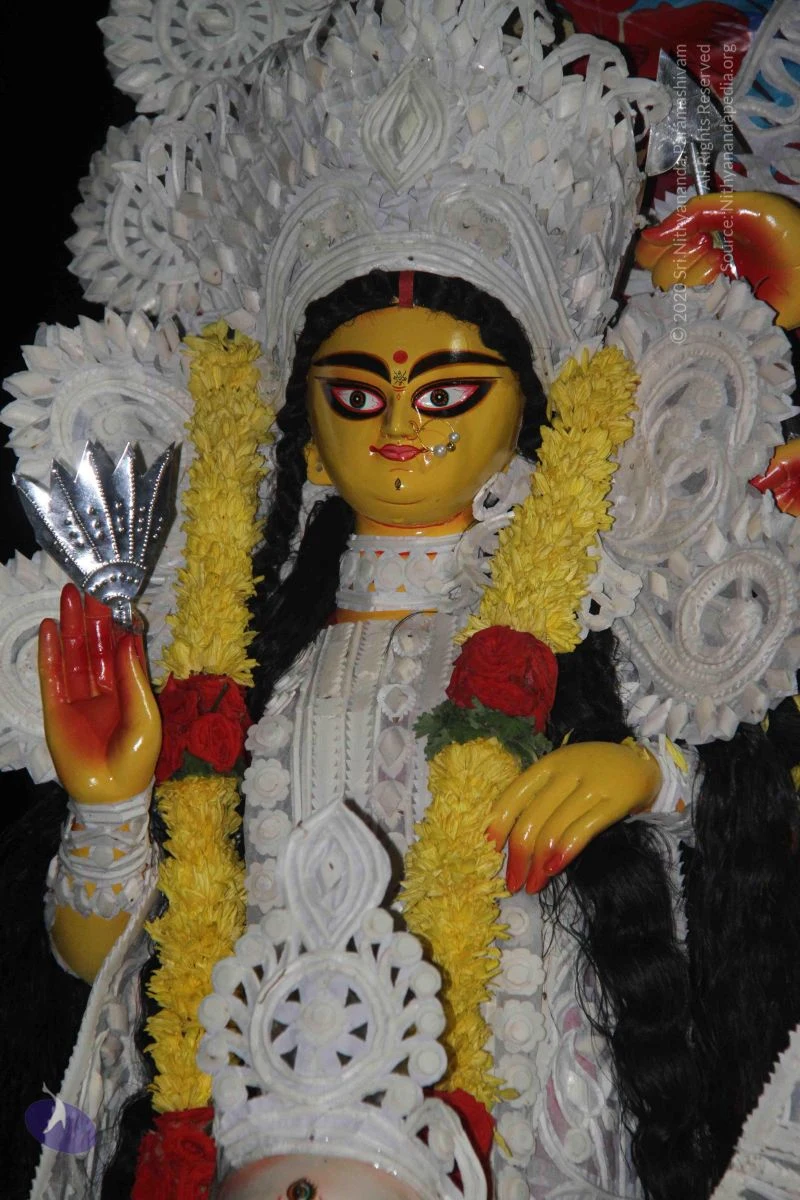
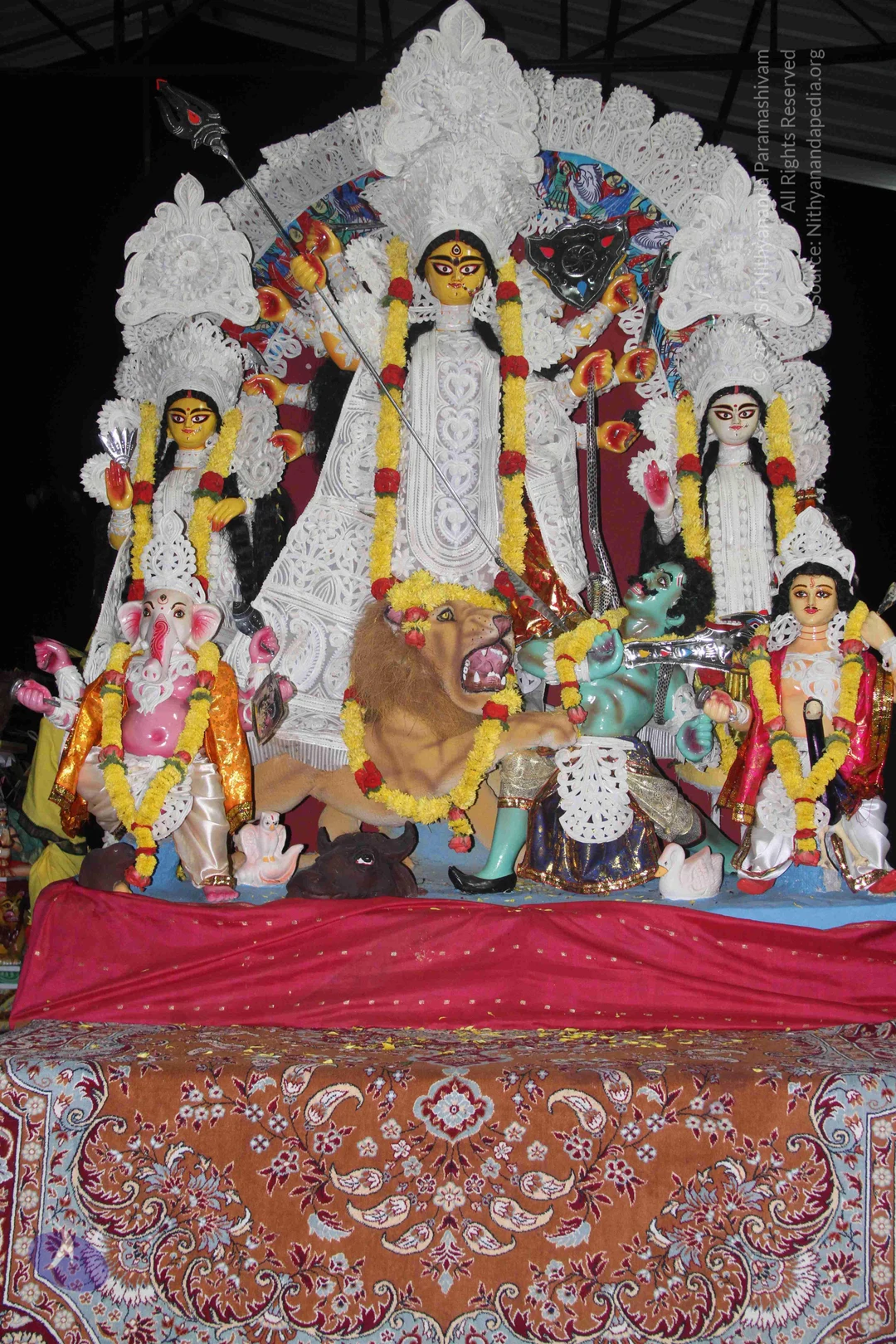
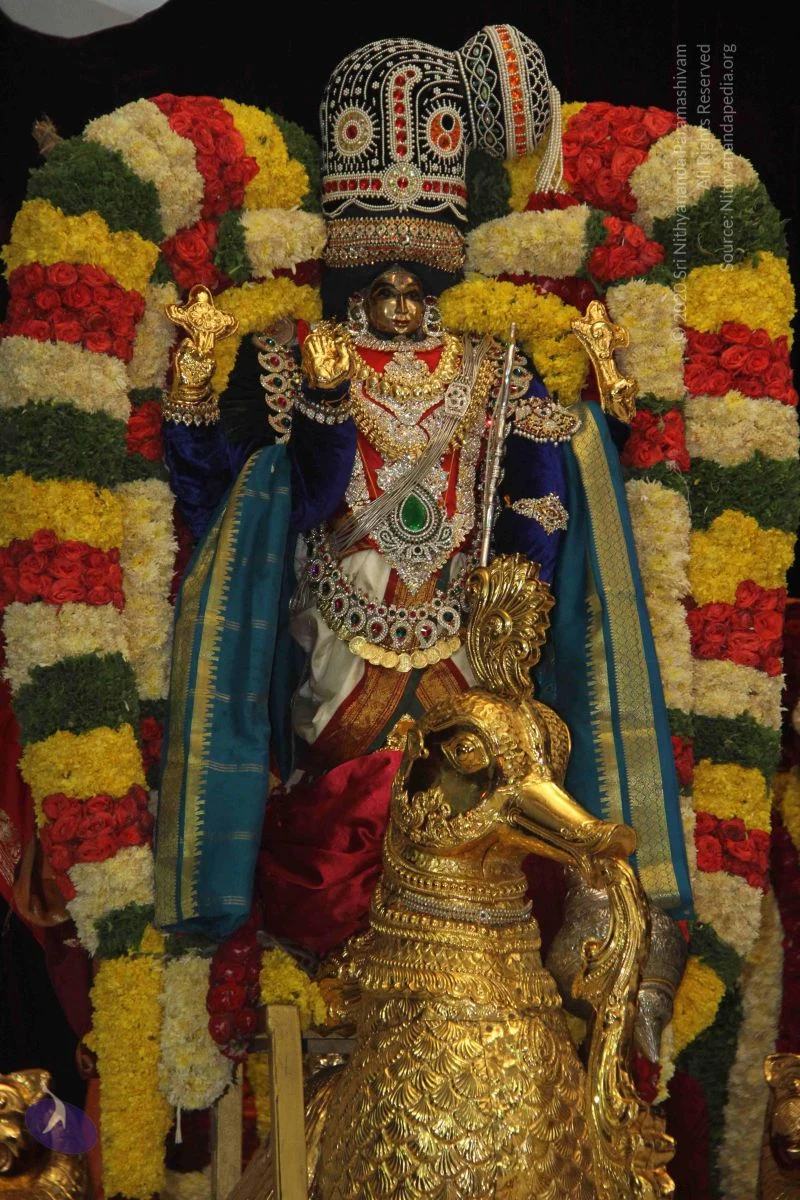
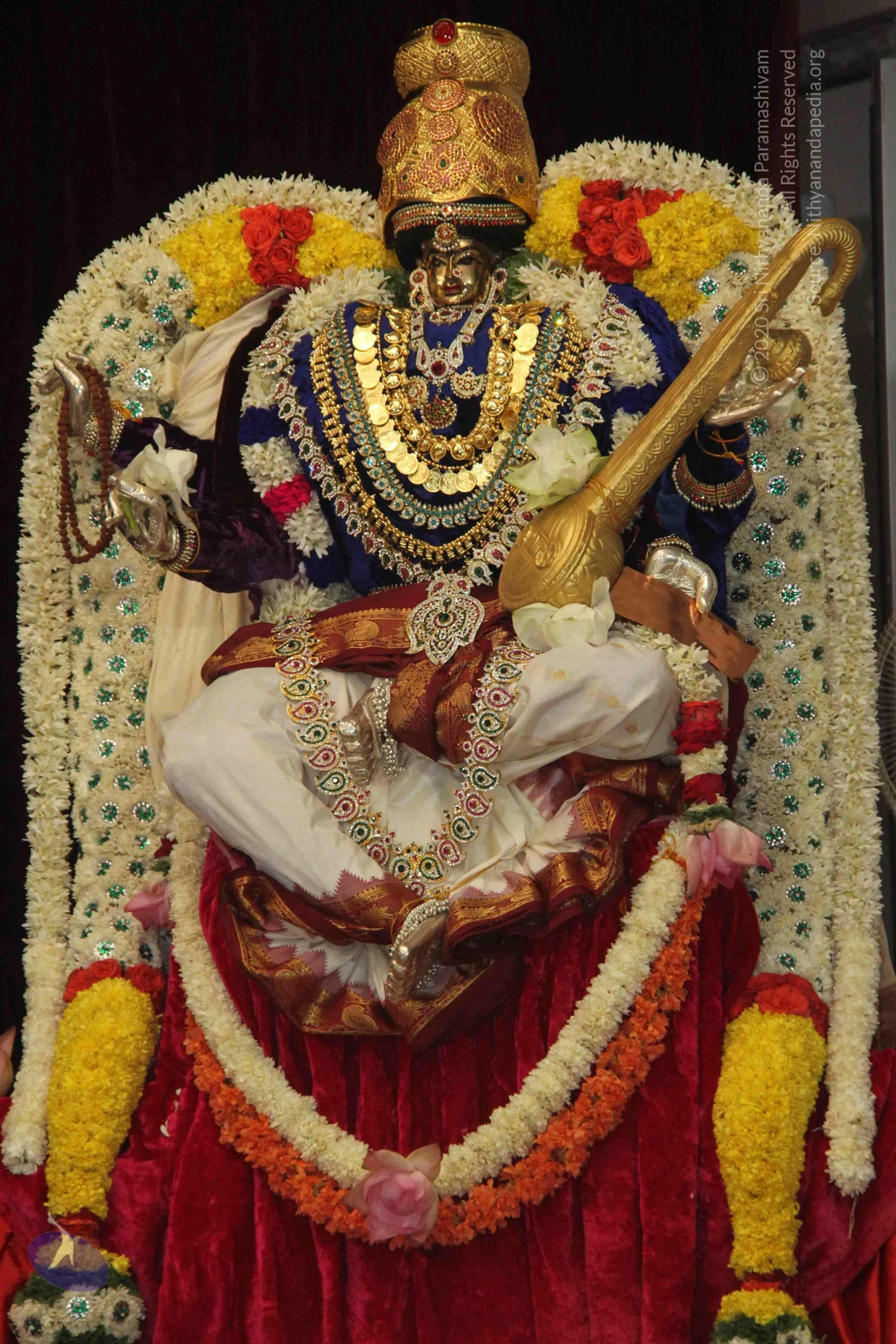
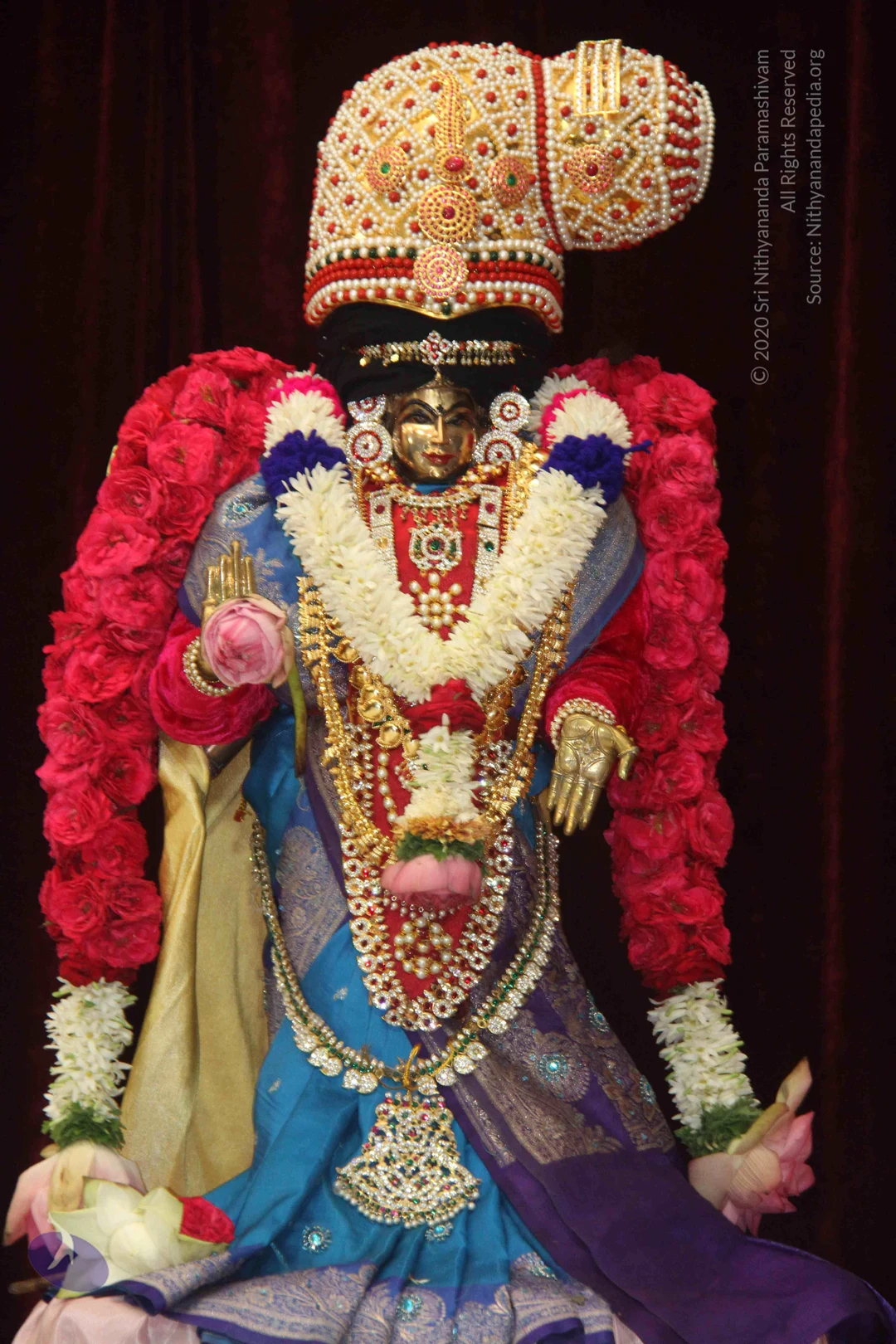
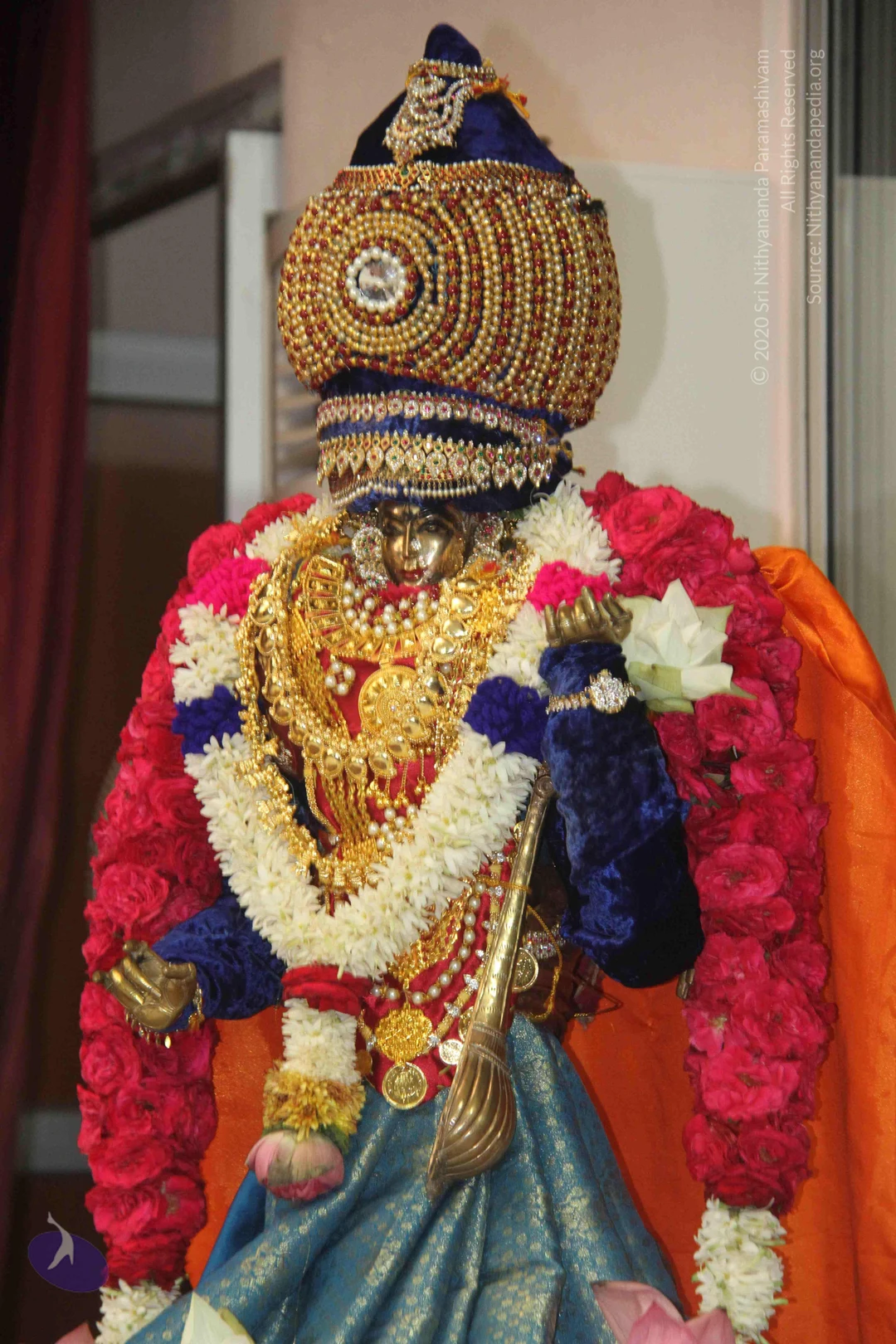
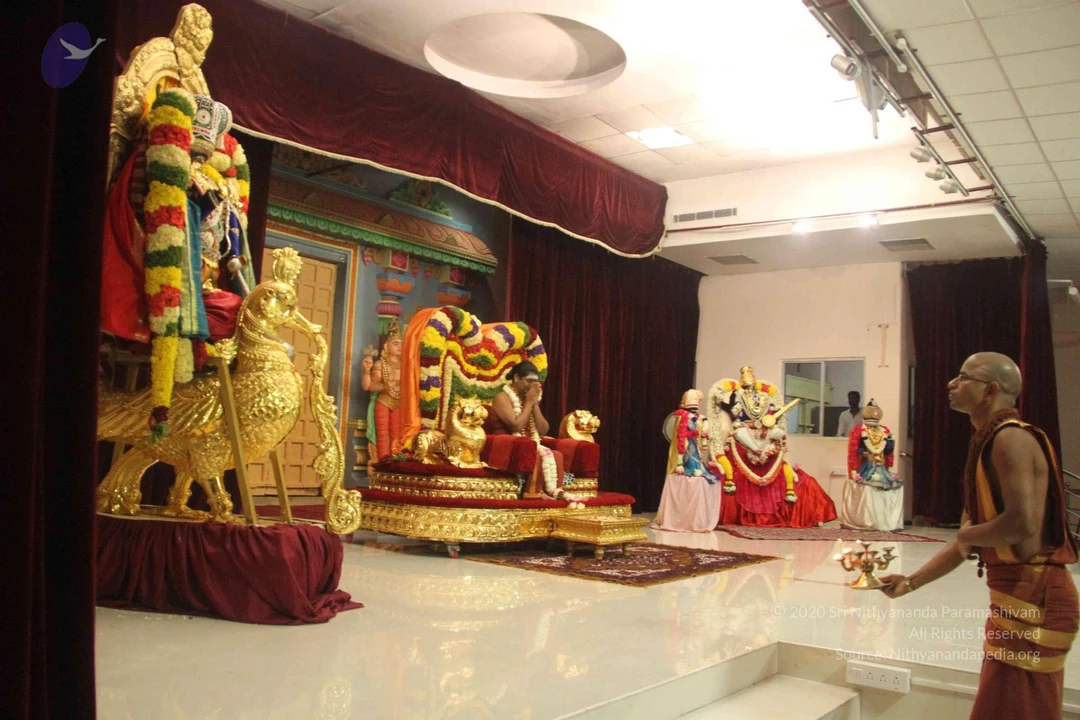
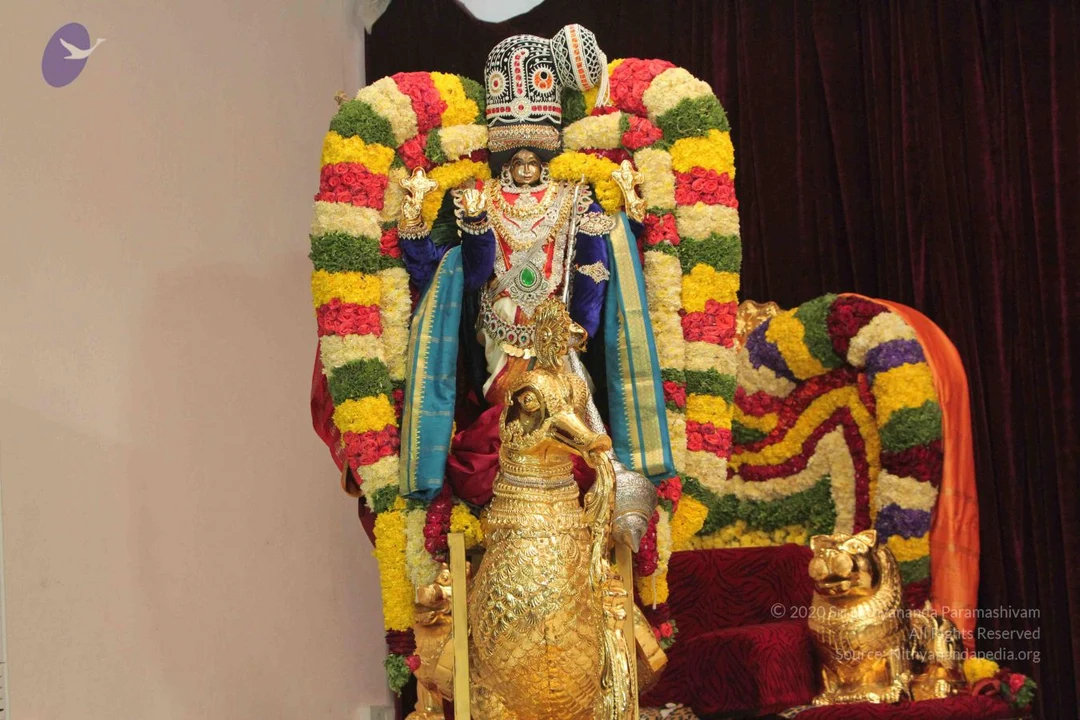
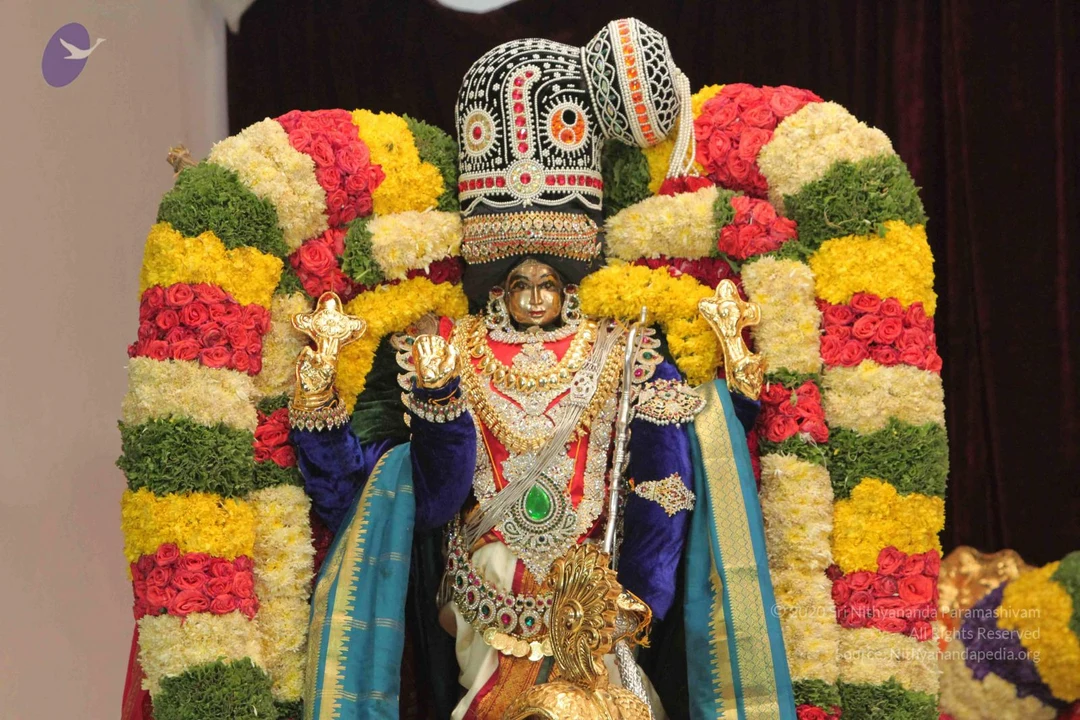
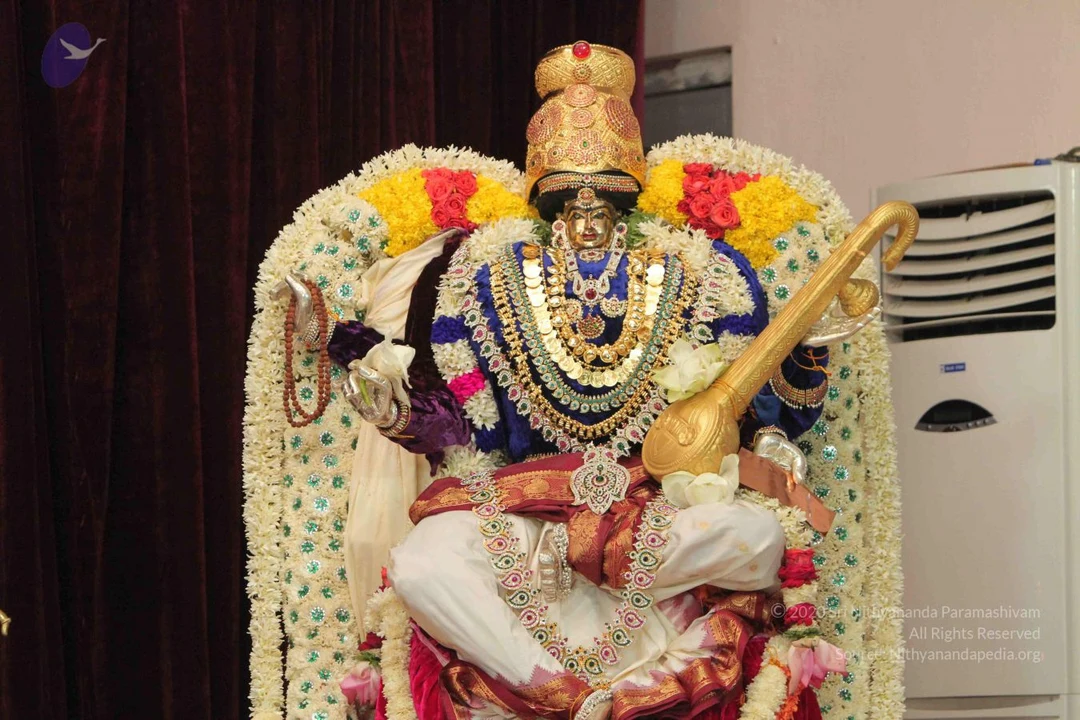
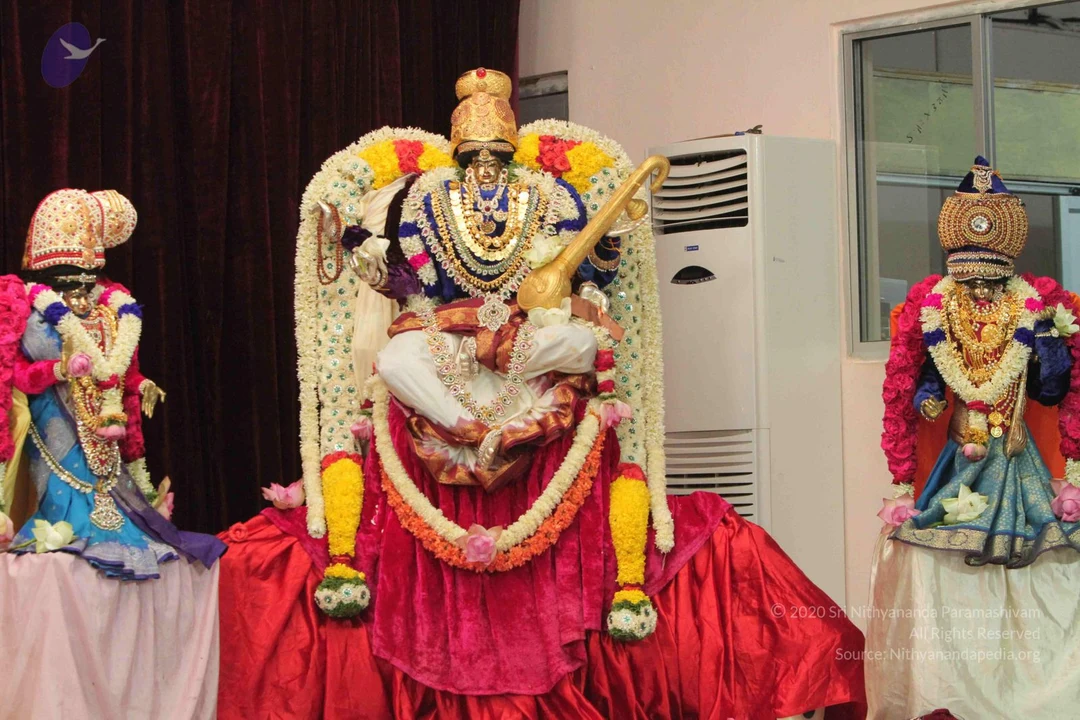
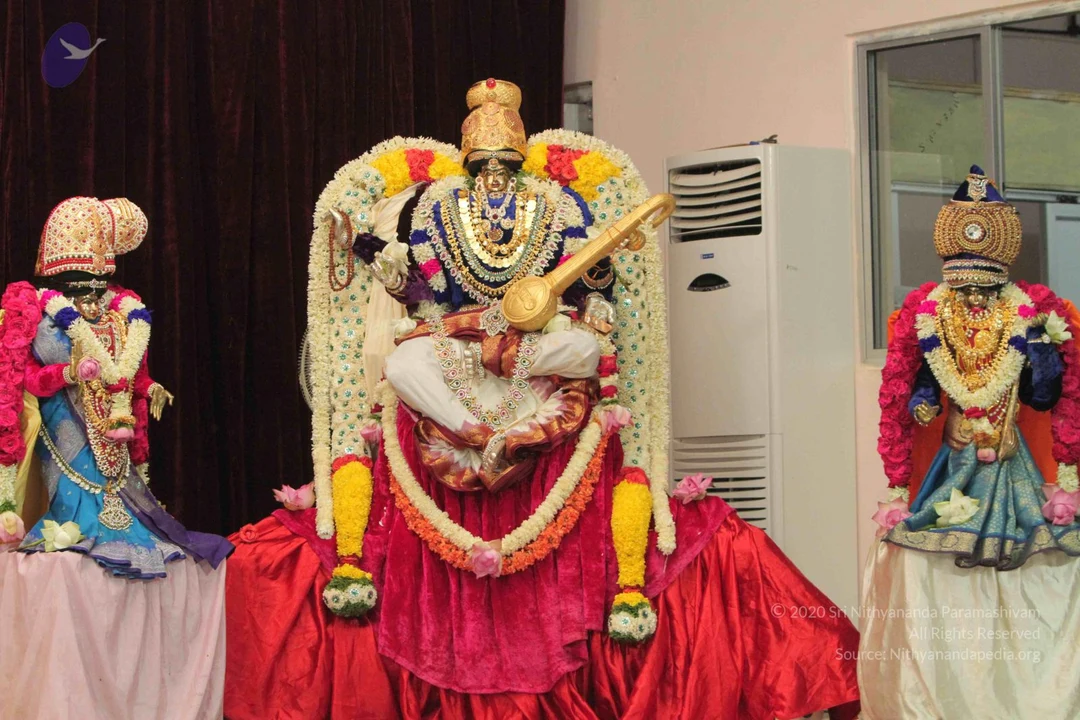
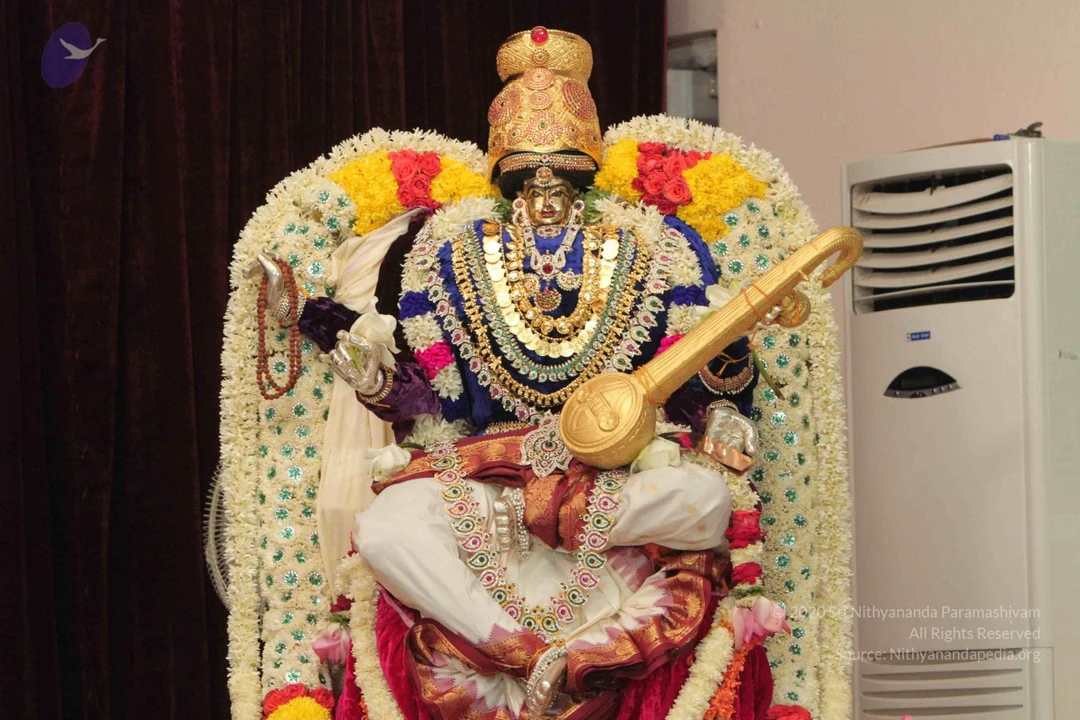
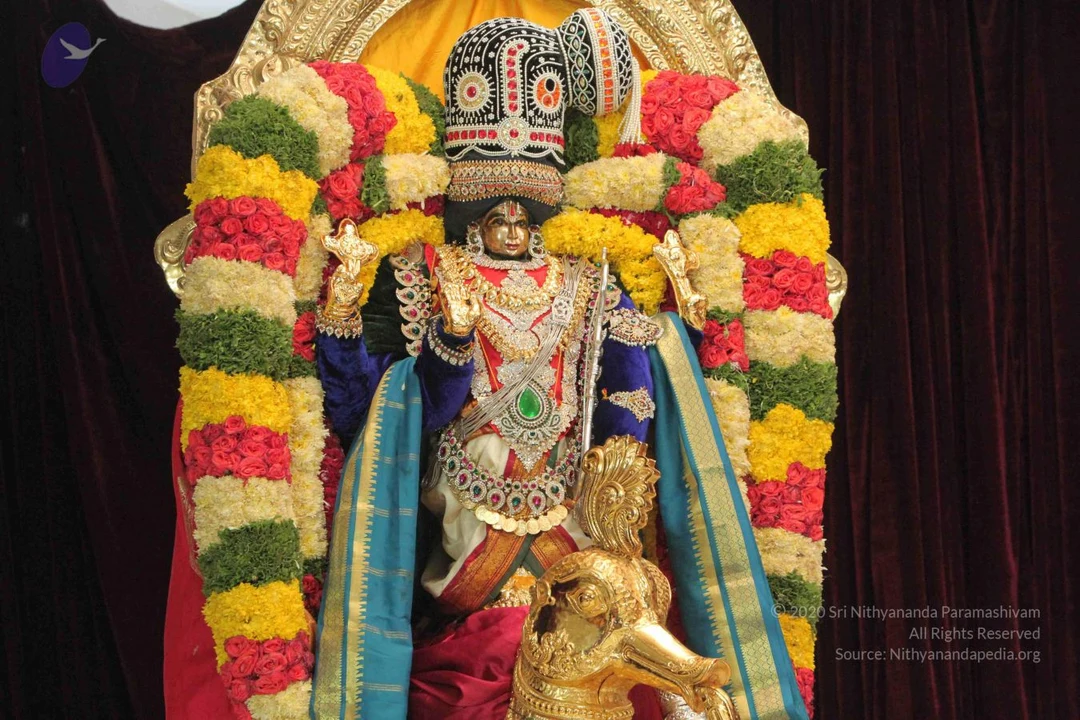
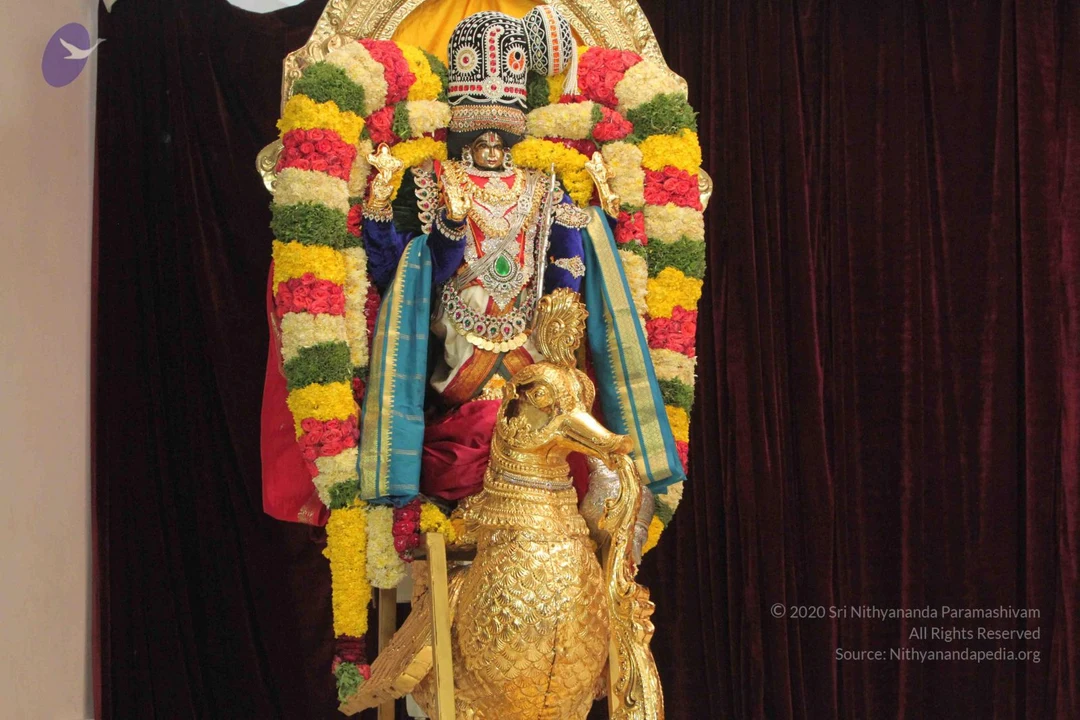
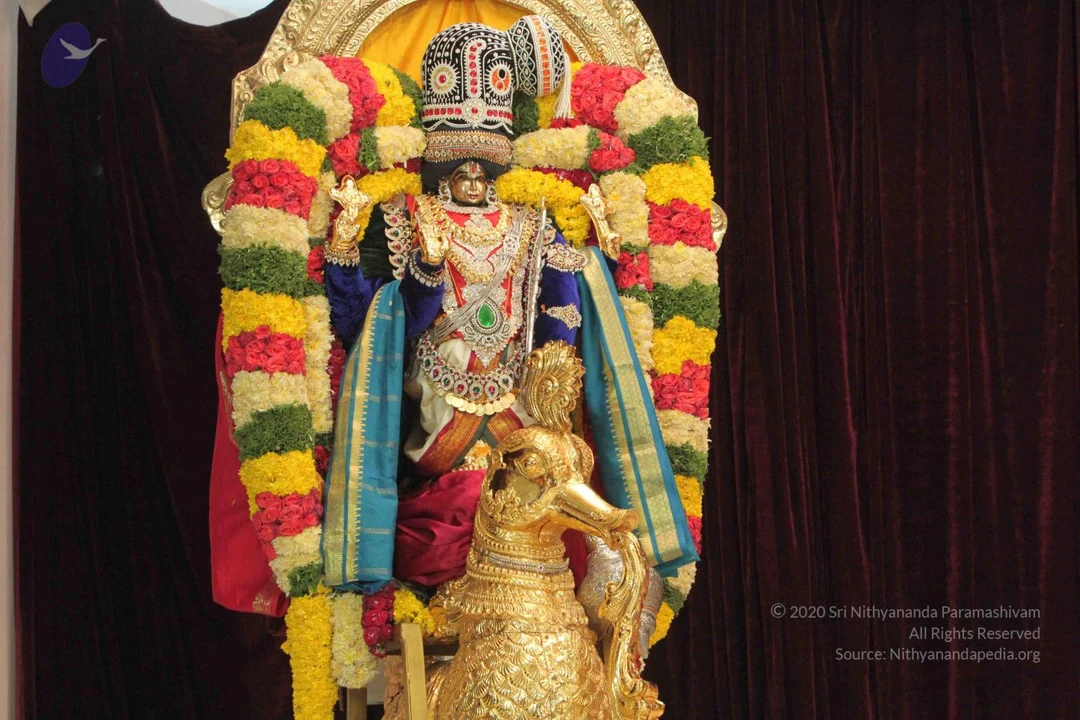
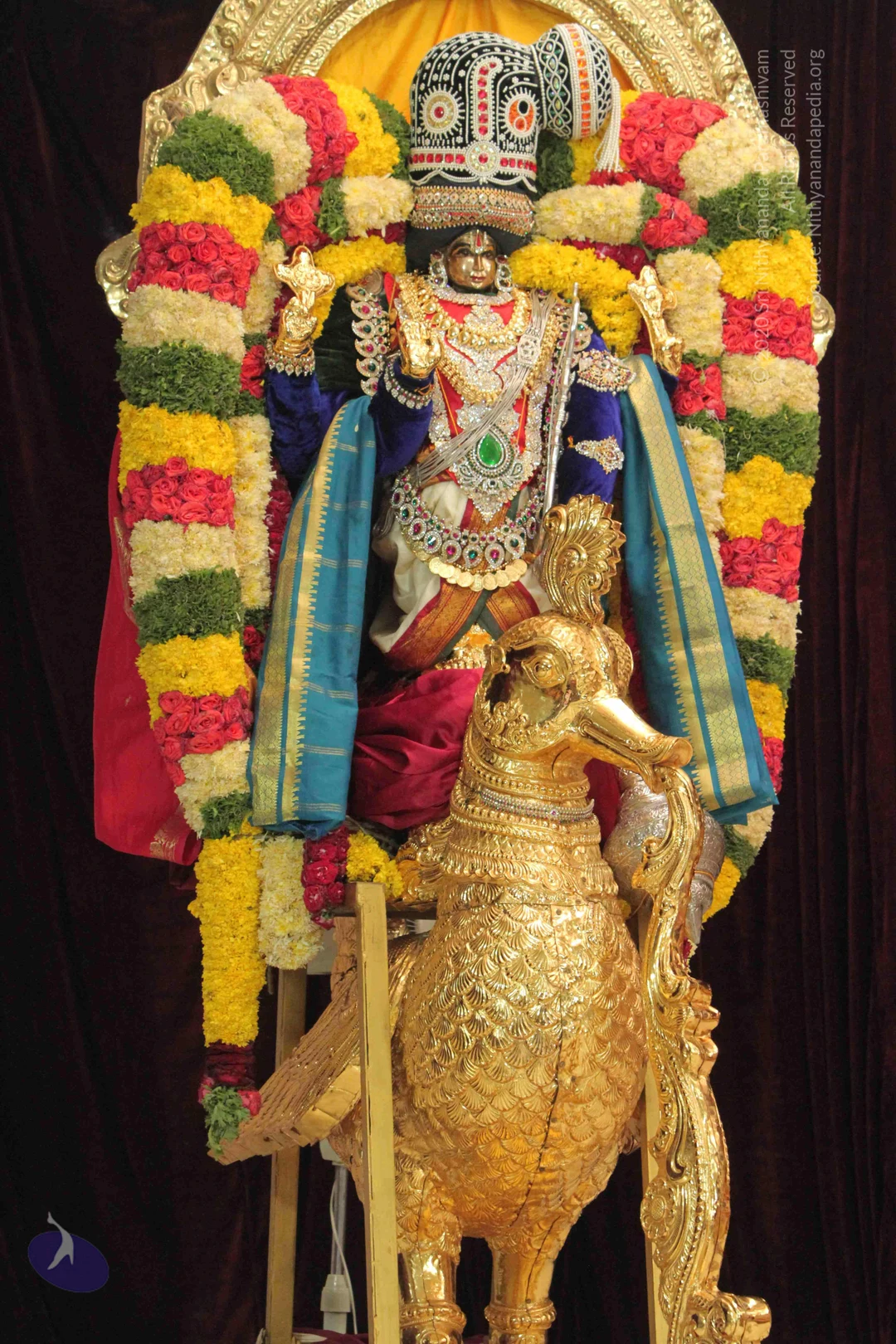
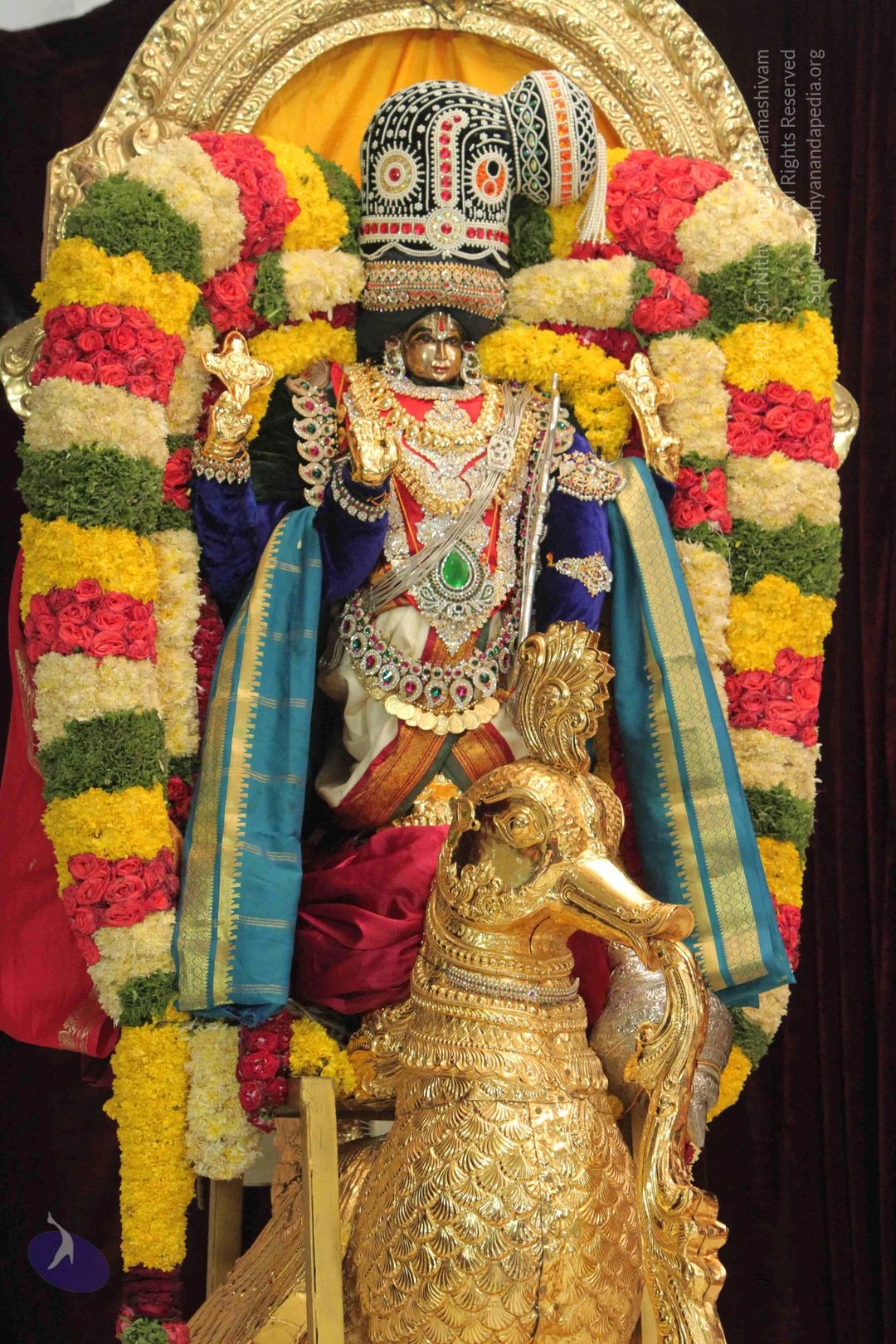
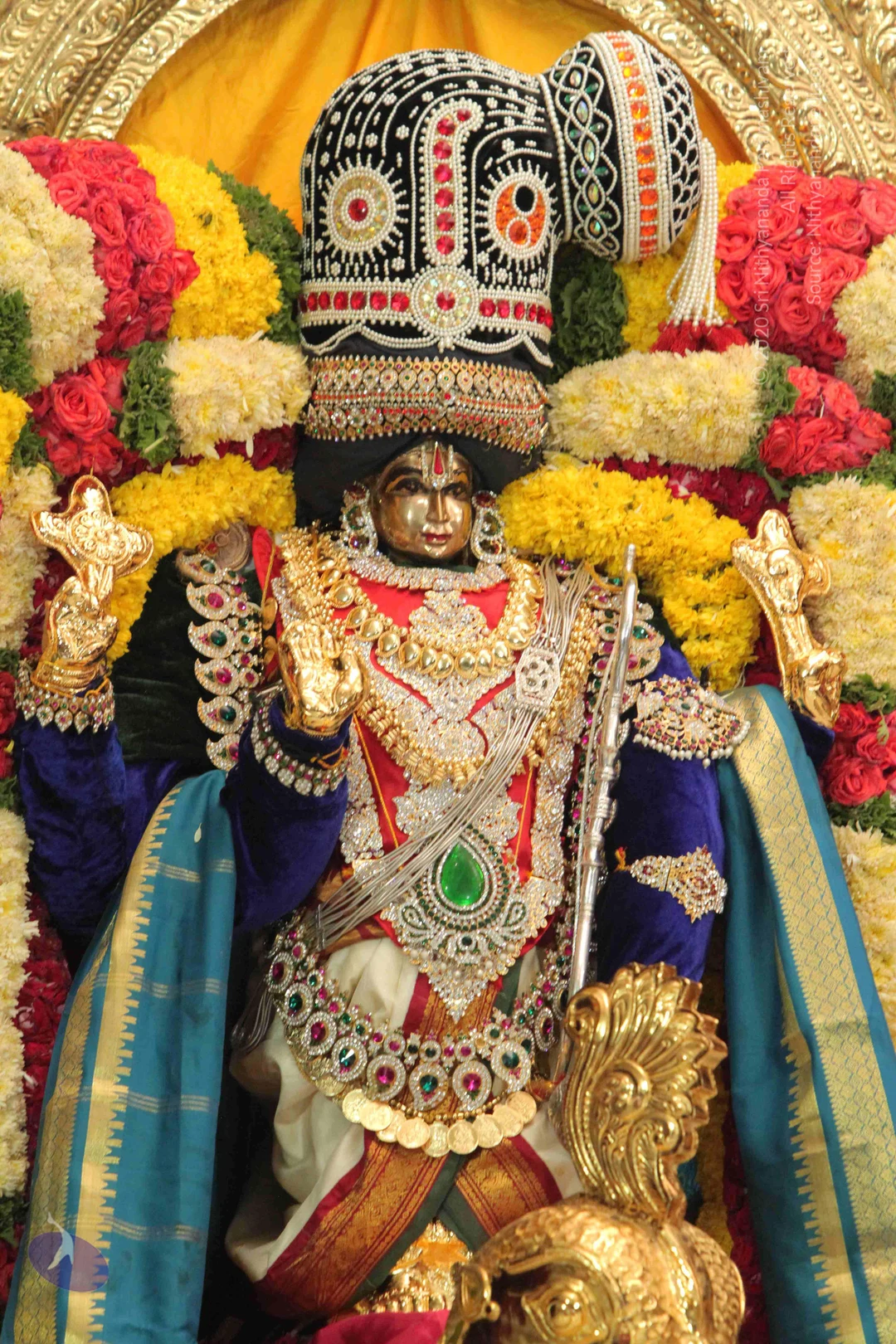
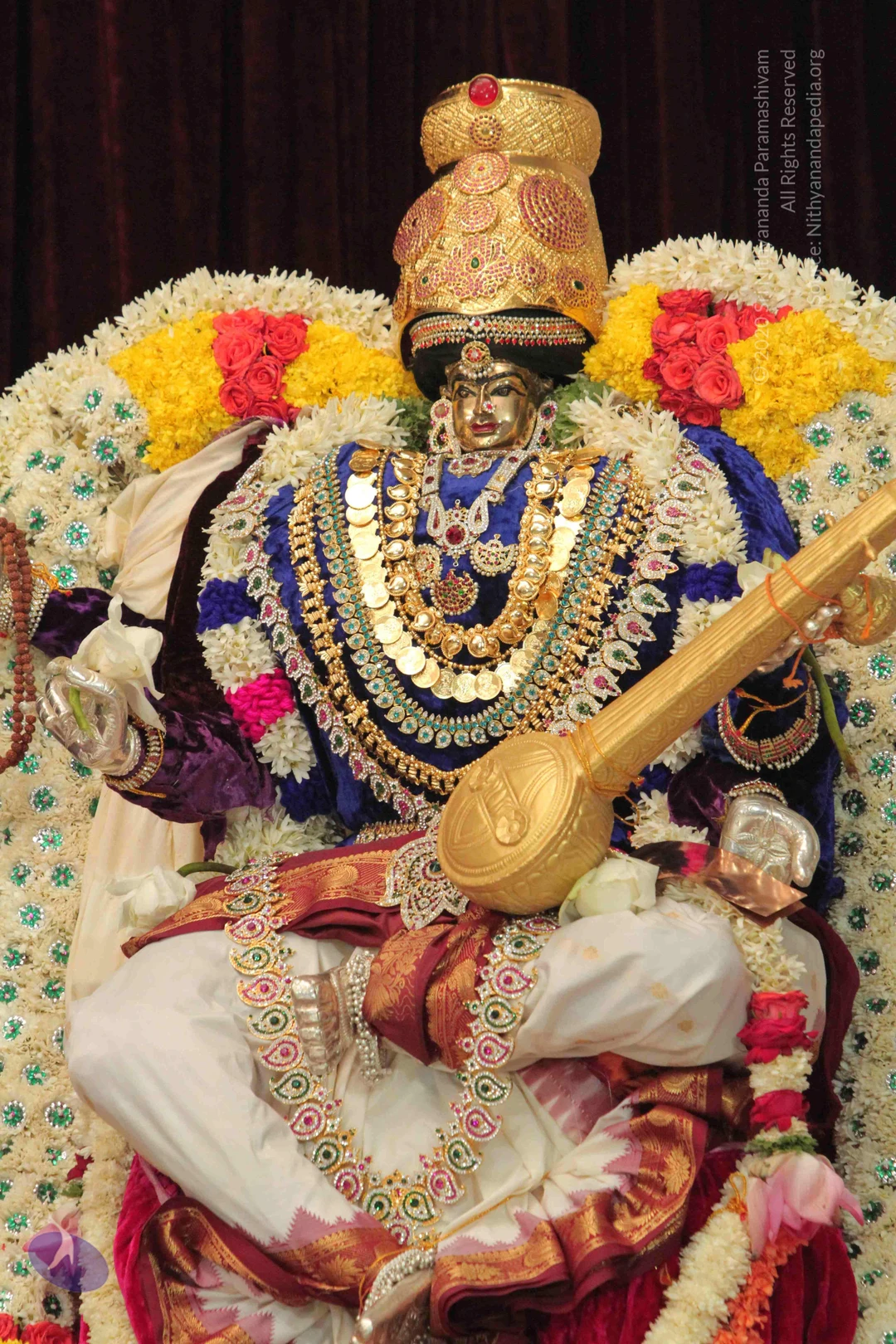
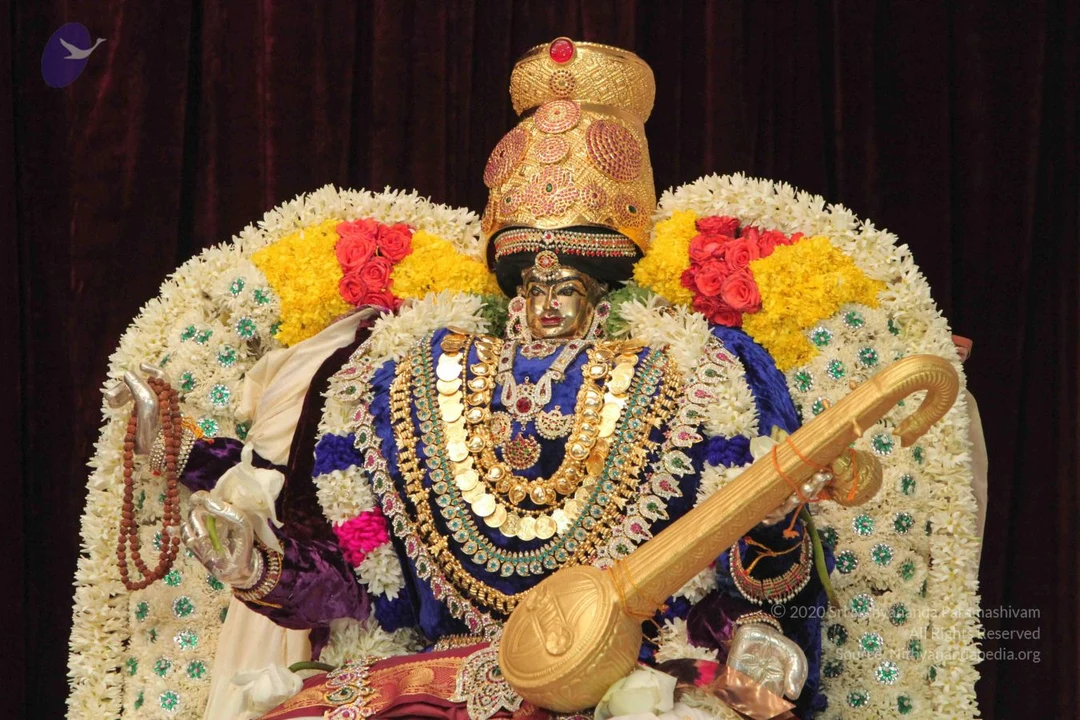
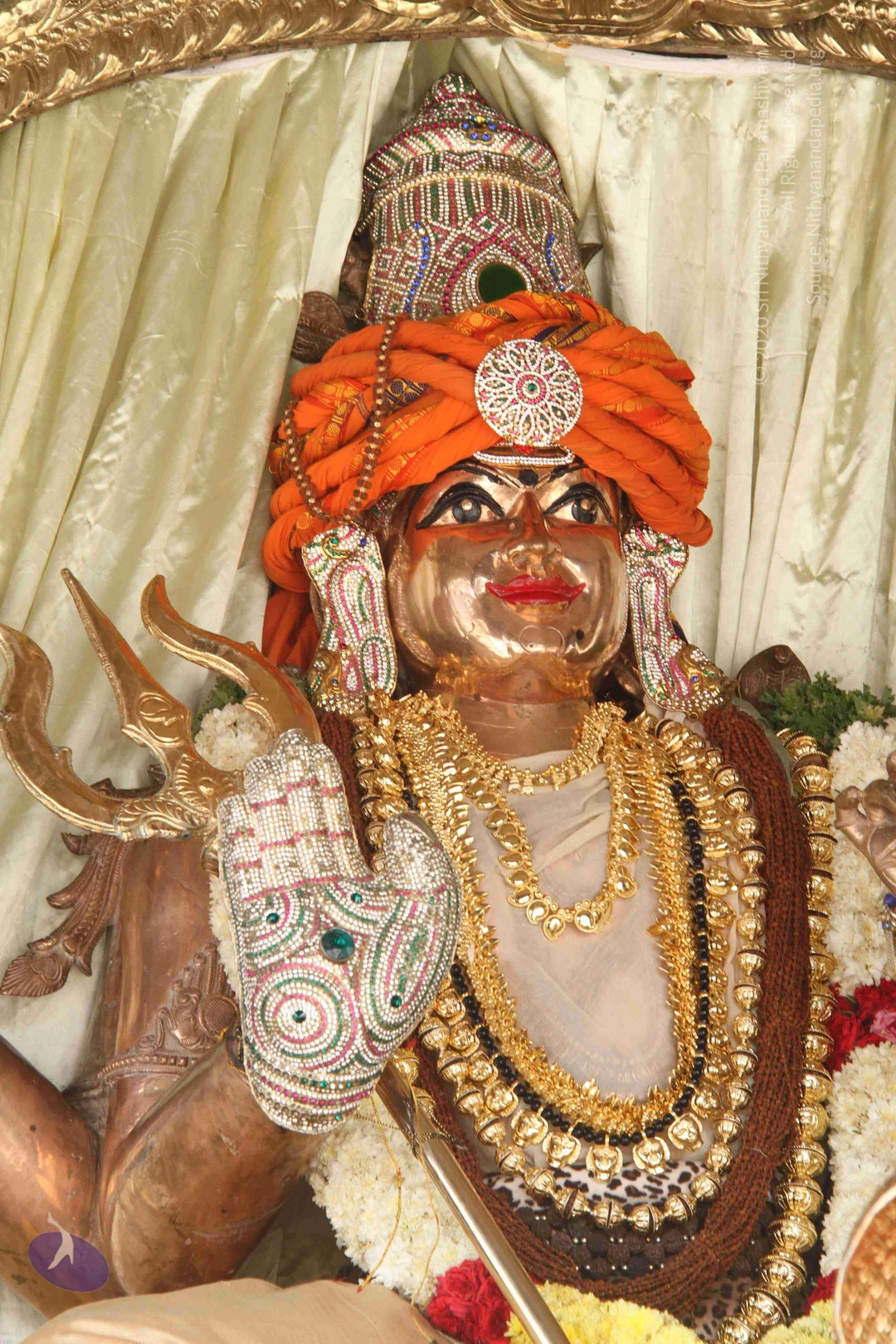
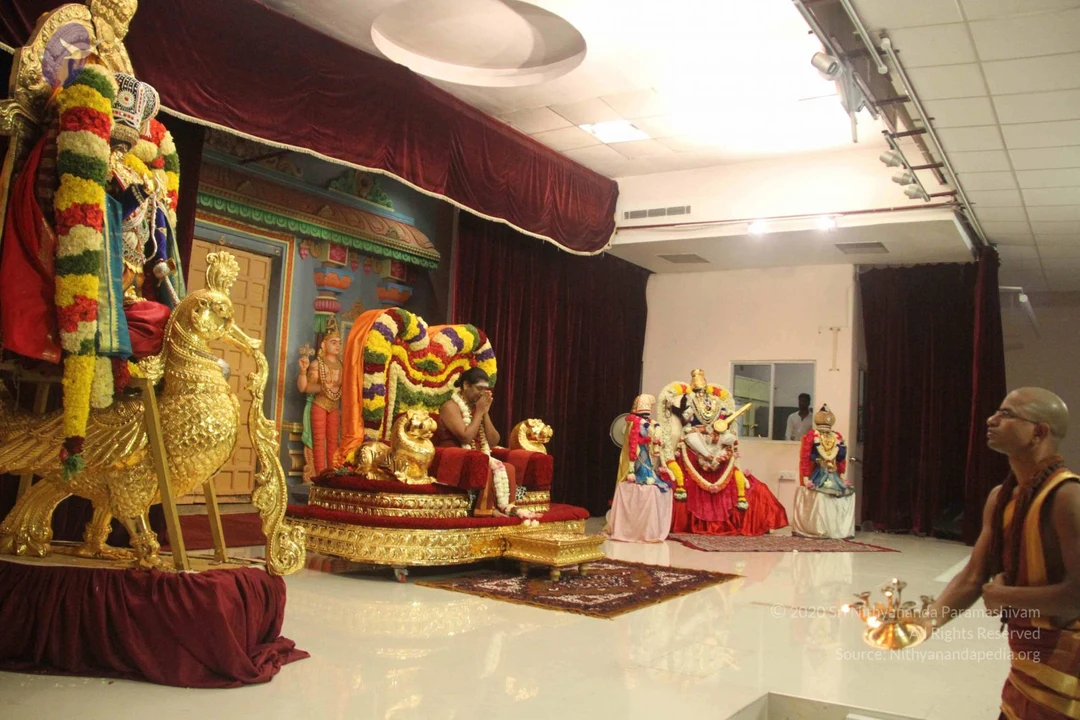
Today, ninth day of the Navaratri Utsava, and seventh day of the Venkateshwara Brahmotsava. Venkateshwara is gracing all of us in Suvarna Hamsa Vaahana, the Golden Swan Vehicle, and Devi is gracing us in the form of MahaSaraswathi with Lakshmi and Saraswathi serving her. She is gracing all of us in the form of MahaSaraswathi. Let us receive their grace and blessings and enter into the satsang.

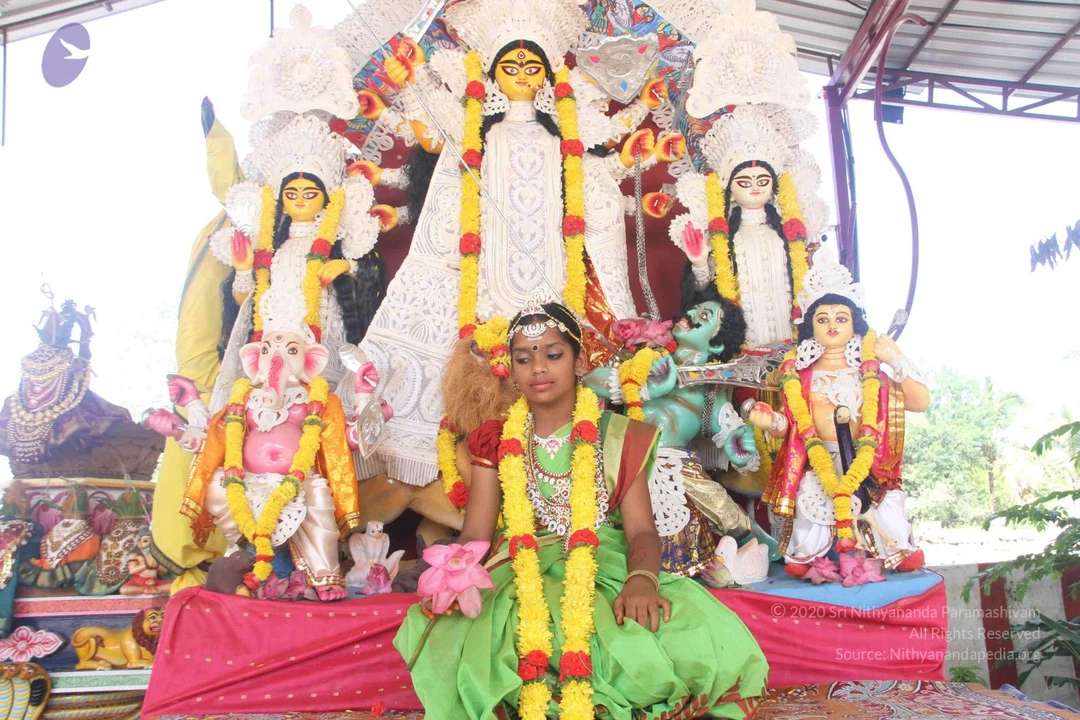
Today I wanted to expand on the importance of Navaratri, and significance of Navaratri. Devi, the ultimate pure feminine consciousness – of course, consciousness is beyond masculine and feminine – ultimate pure expression of consciousness. These nine days, the special door opens for all of us to experience that consciousness, the special possibility opens, the consciousness is available for us to experience, explore, to awaken the “dhi”, “buddhi”, in all of us. “Dhi” means in Sanskrit, “awakened intelligence”. Intelligence which is functioning from the space of Completion, intelligence which is established in the space of Advaitha Sathya is called “dhi”. “Dheekshanya”, “dhi”, that word means “intelligence which is functioning from the space of Advaitha”, “intelligence which is awakened from the space of Advaitha”.

“Ellai Illaar Shuddha Swayamprakaasha Jnaana Paraveli” – the Tamil word which I expressed now, this is the definition the Atma Purana, the four Upanishadic Tamil translation and commentary which uses, this is the word I myself studied at the young age to define Parashakthi. That is why spontaneously I uttered that word. Boundaryless experientially possible consciousness, it is available for all of us, especially on these Navaratri days. All you need to do in these Navaratri days to experience that consciousness is, the pain of your tapas, the incompletions and impossibilities you carry towards your tapas should be completed.

Listen! All of us, all of you will be carrying that incompletion – ‘I tried, but failed. I did this tapas, but failed.’ ‘I was thinking to do this, but I didn’t.’ ‘I think it seems a little impossible for me.’ Navaratri is the time to complete with that. All the incompletions related to your tapas, all the incompletions related to your incompletions need to be completed. Listen! All the incompletions related to your incompletions need to be completed. HAHAHAHA! Navaratri is the time for that.

All these impossibilities need to be completed. Once you complete all the impossibilities and all the incompletions you have about your incompletions....

Understand, incompletions you have about your incompletions need to be completed. Navaratri is the time for that. Navaratri is the space for that. Navaratri is the energy for that. Navaratri is the time where you can complete with all your incompletions, especially the incompletions about the incompletions. It is a beautiful opportunity to complete with all the incompletions about the incompletions. Incompletions about the incompletions! More than your incompletions, your beliefs about your incompletions, your incompletions about your incompletions are the biggest obstacles. More than the fear, your fear about the fear! More than the incompletions, your incompletions about your incompletions, that keeps you incomplete. It is time you all complete that. One more thing: If you want Mahadeva’s grace you have to complete all your incompletions. But if you want Devi’s grace, even if you TRY to complete with your incompletions, or even if you ACT as if you are trying to complete your incompletions, she will come down and grace you! Because, Mahadeva will leave what he has to give you, and you have to stretch, stretch, stretch and pick up and put it in your mouth. Devi is not like that. Even if you just stretch your hand and do some act like this here and there, immediately she will come down and ask, ‘Hey, come on! What do you want?’ And she is available so powerfully on this Navaratri, especially till the day-after-tomorrow evening.

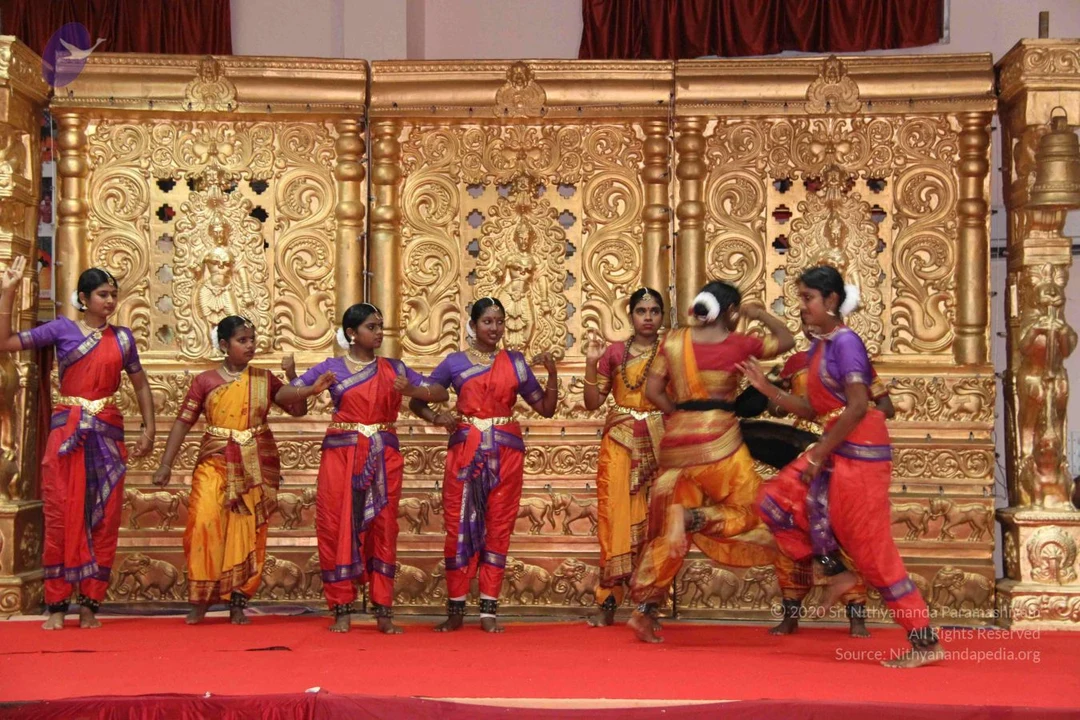
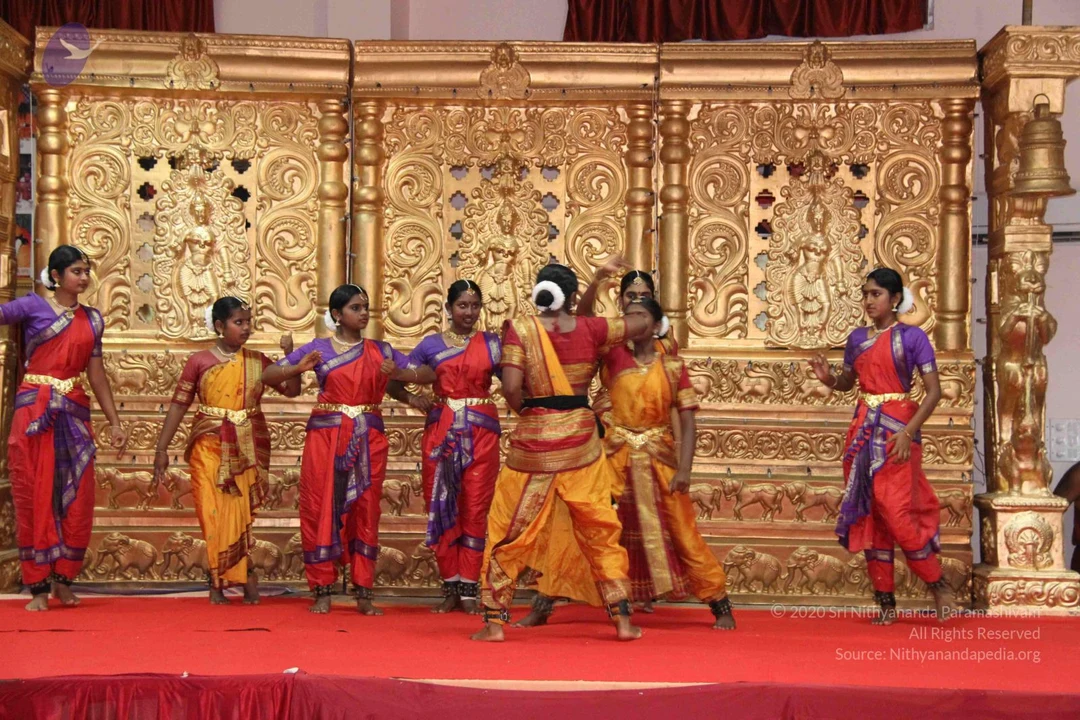
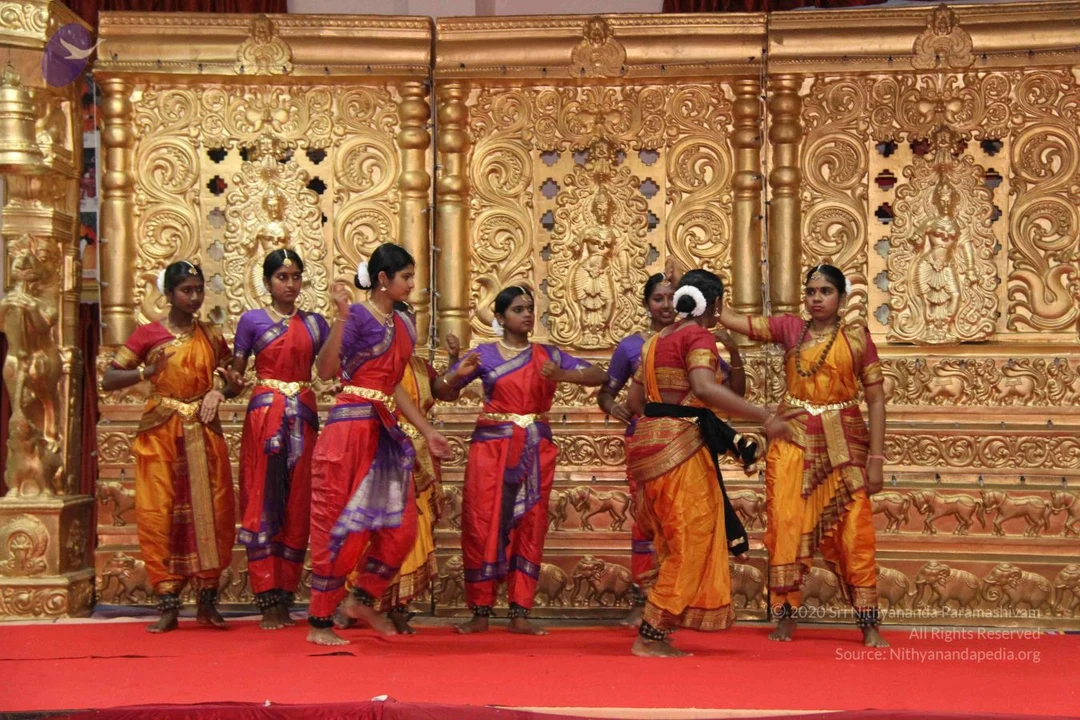
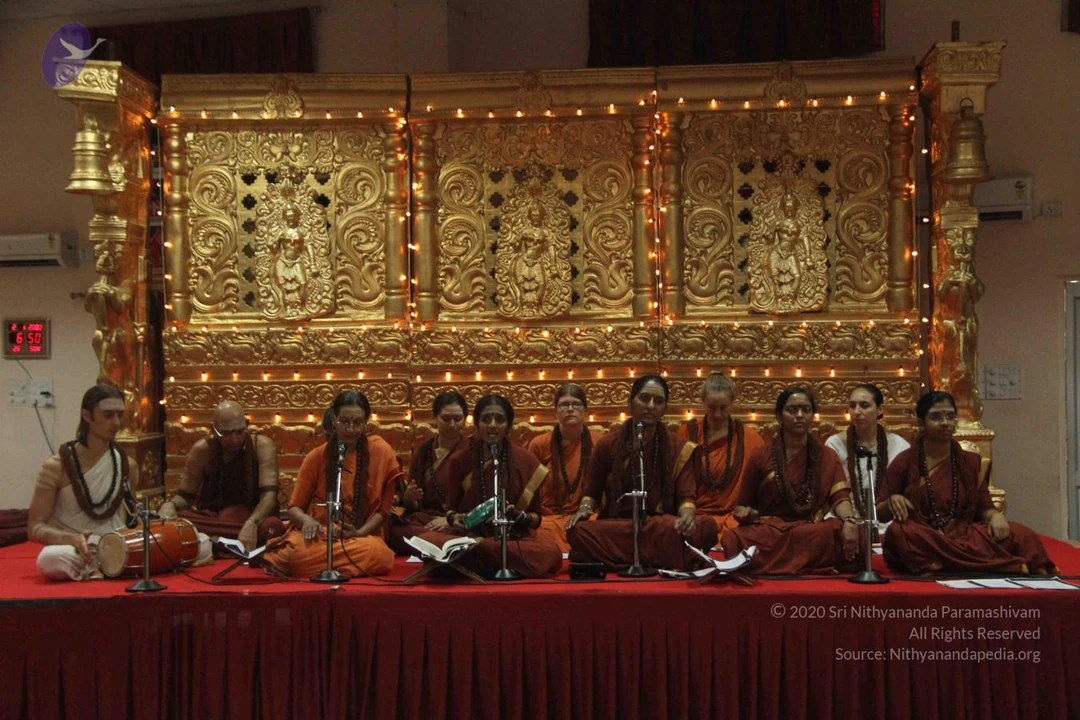
Yesterday evening, by Sapthami, the energy goes up; and Ashtami, Navami, Dashami, Dashami evening only, till this time, these three days, so powerfully available. Decide to complete with all your incompletions about your incompletions, pains related to your tapas, pains related to your spiritual practices, pains related to your attempts and failures, trial and error methods. If you tried something and failed, you will carry incompletion about it. If you planned and did not achieve, you may carry certain incompletions about it. If you plan and fail and get caught in the “impossible” pattern, it is time for you to complete with it. See, even believing impossibility is one more pattern. Complete with that. Complete with it. You would never have imagined even.....forget about you.....even I would never have imagined suddenly ashramites would give such a beautiful bhajan session and performance! And today they gave such a beautiful performance! I just sat in Samadhi! I forgot that I have to start the satsang.

That is why it went on and on and on. See, when in Vedaranyam, Jnanasambandhar and Appar, two saints, were singing, Appar was trying to open the door. He sang a lot of songs; only then the door opened. Jnanasambandhar wanted to close the door by singing. He sang two songs; immediately the door closed, got closed! So, everyone thought why it took so many songs for Appar to open the door and Jnanasambandhar only two songs to close the door? Is Appar not that spiritually-evolved a soul?’ Immediately Mahadeva said, ‘No, I just lost myself in the songs of Appar.

So I did not remember to respond!’ So, today, almost. Like that I was just lost and I didn’t even remember that I have to start the satsangh. After all they are sannyasis! And, they may not have efficiency, but they are carrying that fire, fire of Sannyas. Efficiency can be added immediately the moment stupidity is completed. See, actually we voluntarily celebrate stupidity. To tell you the truth, we voluntarily celebrate the existence of stupidity. We think by having an Inner Image – ‘I am a small guy’ – we think we can avoid the problems of life. See, whenever we encountered life, shrinking was the response we adopted from the young age. When life tries to corner us – ‘Oh, I am a small boy. I am a small girl. I am a small person. I don’t know anything. I am innocent.’ That was the natural response with which we tried to escape. That is why we celebrate stupidity. We always think if we just claim innocence and “don’t know anything”, and claim a frightened child, victimhood, and be innocent, ignorant, stupid, problems won’t come to us, people will leave us, we get the sympathy, and we won’t get attacked. This is the most simple lesson human-beings have been taught. I can tell you, this is the most simple addiction human-beings get.

I will put this addiction as worse than alcoholism, womanising, or any other addiction, this addiction to victimhood and strongly believing that if you claim victimhood life will let go of you, life will not hold you responsible. Every time see inside you when you take responsibility, when you get the fear or anxiety about what will others tell, what will everyone tell, and if they attack you what can you do, your first response and plan, will be to claim innocence. Then they cannot do anything. Nothing can be done. But, I tell you, this pattern is the worst pattern human-beings suffer. Whenever any of my ashramites or sannyasis, anybody in our Sangha claims this innocence, victimhood – ‘Oh, I didn’t know, I don’t know, I don’t know, Oh, I don’t know what happened. I just tried to do what I am trying to.’ – whenever people claim, I see Bhasmasura in them. They are not innocent as they pose. They have developed a powerful pattern which can destroy them and others. Understand? This claiming innocence and trying to be – ‘Oh, I didn’t know; that is why it happened. I didn’t know; that is why it happened. I don’t know how to take the responsibility. I don’t know how to do’ – they are worse than snakes! Snakes will have poison only near the teeth; these fellows will have poison all over their body, because claiming victimhood is the most poisonous pattern which is developed, and you think it is cute, which is wrong, completely wrong. Whoever gets out of that pattern becomes Mahadeva. Decides to take the responsibility!

Mahadeva purposely applies ash, wears these rudraksha beads, lives in smashaana (crematorium). His whole lifestyle you see, purposely he tells the world he is not perfect, he is complete. Actually, perfection is one of the side-effects of Completion. But he just wants to tell the world – ‘I am not interested in showing me perfect. My first priority is to show I am complete.’ Perfection is usually the side-effect of Completion. But he does not want to put the perfection in front. He puts Completion in front. Understand, Completion means being responsible, never leaning on the victimhood. If you are leaning on the victimhood, never expect any good thing from life. It is only Completion which can help you. When you are progressing in some steps, doing some things, if there is an attack, stand responsible. Don’t immediately claim innocence and frightened. ‘No, no, no, no. I didn’t know. I don’t know. I don’t know.’ No! Stand responsibly. You will be Mahadeva! You are Shiva! Your profiling is more important than your actions. Profiling means what you are is more important than what your success is or what your actions are. Claiming frightened child, claiming frightened victimhood, claiming frightened innocence and ignorance, hiding behind “I don’t know, I don’t know” – this pattern, this addiction is worse than alcoholism and womanizing and serial murdering patterns.

I tell you, this one “claiming powerlessness and innocence” and “I don’t know”, this pattern once developed, it is “atma hathya”. Atma hathya means...don’t think it means suicide. No! It means “destroying your consciousness”. Once you do that sin, you will not be bothered to do any other sin. You will not be bothered to womanizing, you will not be bothered to be drunk, you will not be bothered to do “panchama baadhakaas”. Claiming frightened victimhood, childhood, claiming frightened childhood, frightened ignorance, innocence, should be completed now. Anything you progress, yes, life will question and ask, others will ask. Stand for it!

Only then you will move forward. Every time when you are asked, you are frightened and back out. Then what do you think you are going to be doing? What do you think you are going to be achieving? Do you think you are going to be progressing? Stop claiming frightened childhood. Stop claiming innocence as the route to escape from life. Stop claiming ignorance as the route to escape from life. That pattern is the worst pattern, original sin!

Stand as a complete being Anybody who stands as a complete being without claiming innocence, ignorance, the frightened childhood, or stupid this kind of patterns, anybody who does not claim this pattern, fall into this pattern, is a Mahant. This is the definition of Mahant: He is a leader who takes it further, takes it further, takes responsibility, stands up. Otherwise, just listening to my satsang is useless, unless you make it into reality. Make it into reality!

So, with this, I bless you all! Let you all radiate with Integrity, Authenticity, Responsibility, Enriching and Causing eternal bliss, Nithyananda! Thank you!

Tags:

Paramahamsa Nithyananda, possibility, Nithyananda, Navaratri, consciousness, completion, experience

Photos Of The Day:

morning-at-temple
morning-satsang

kumari-puja

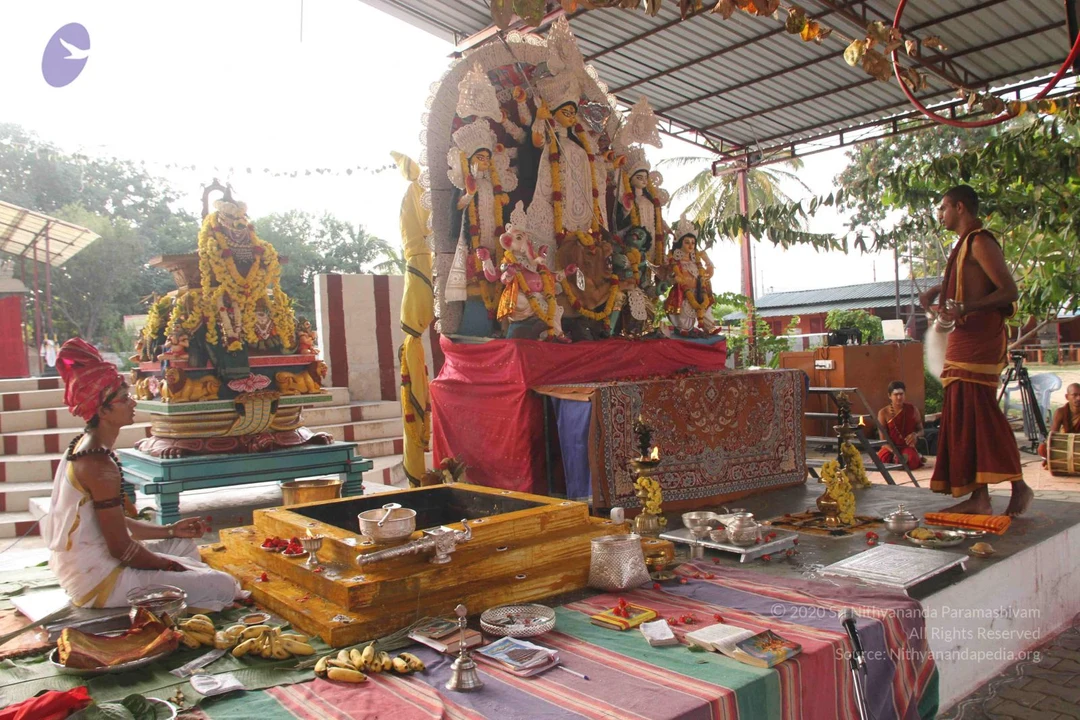
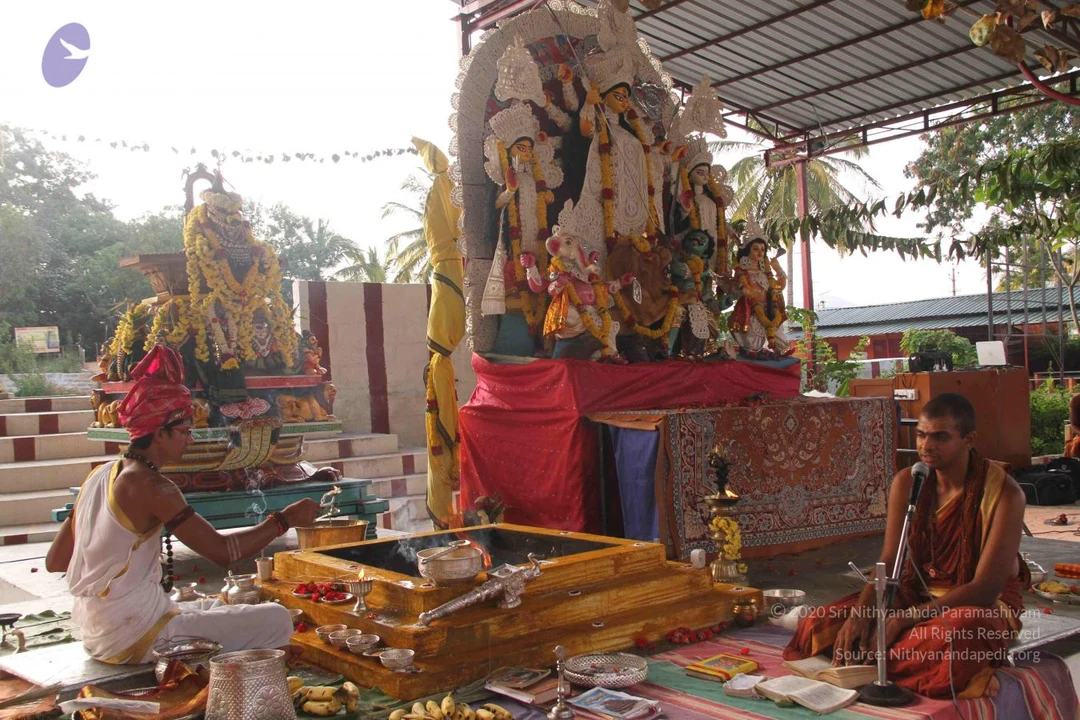
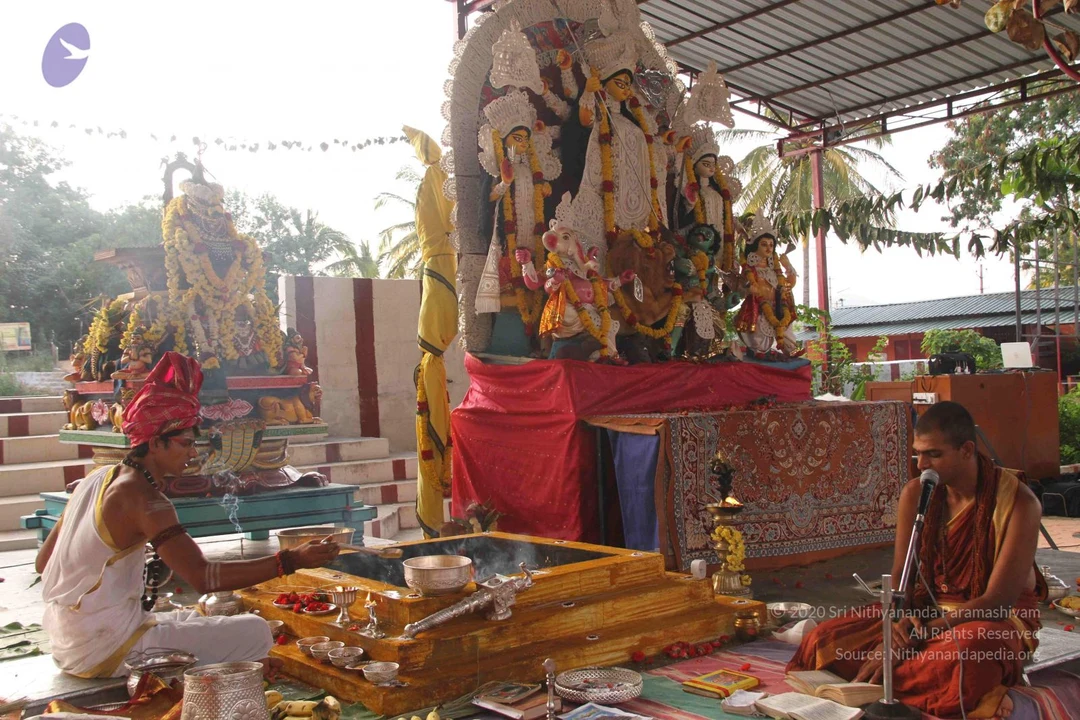
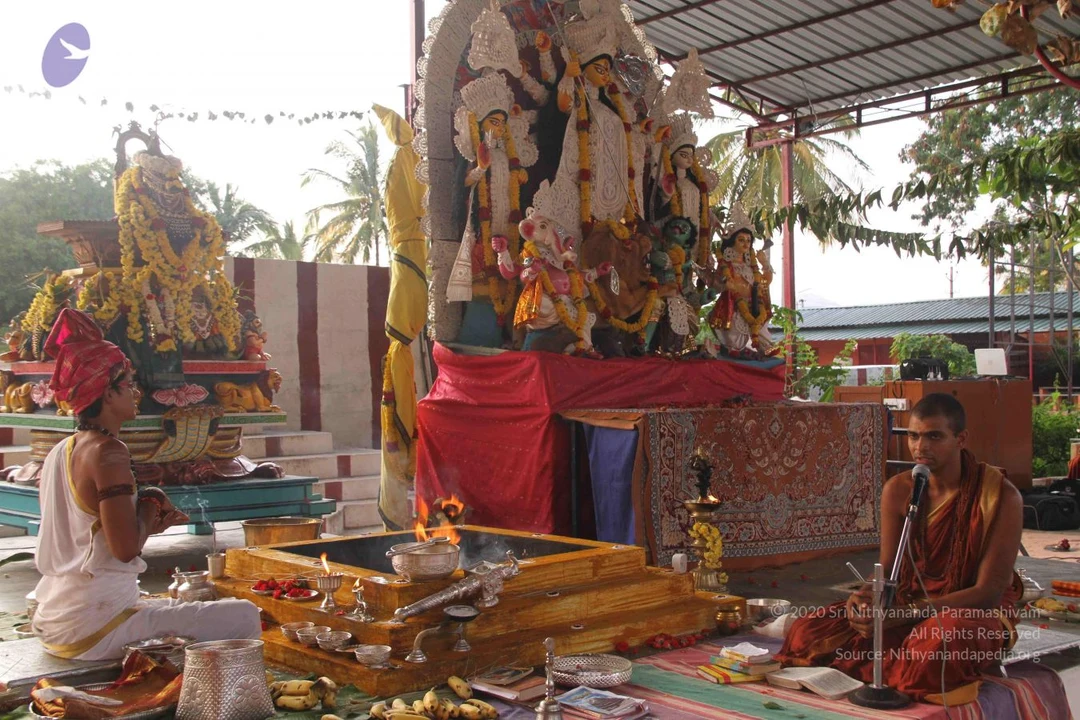
chandi-homa

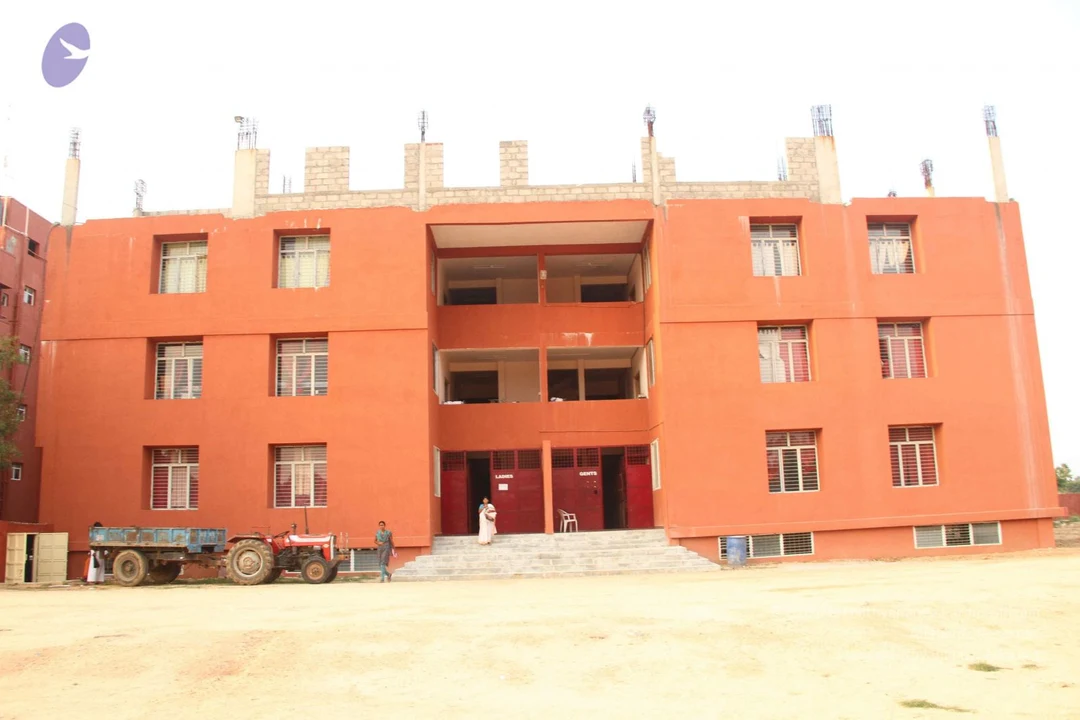
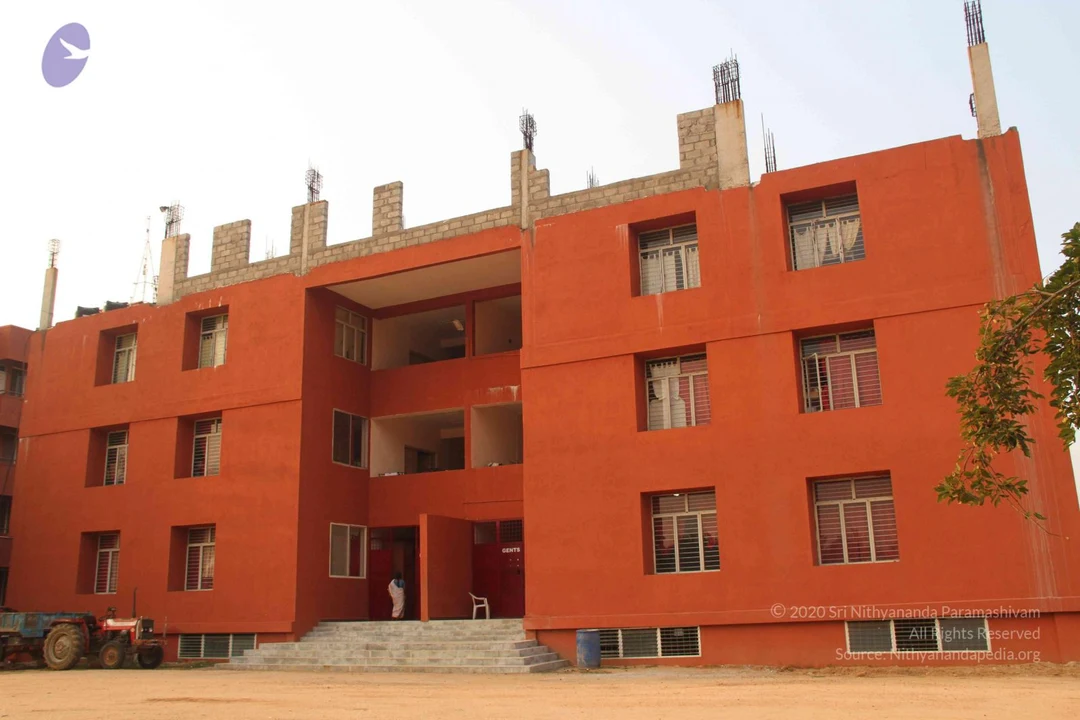
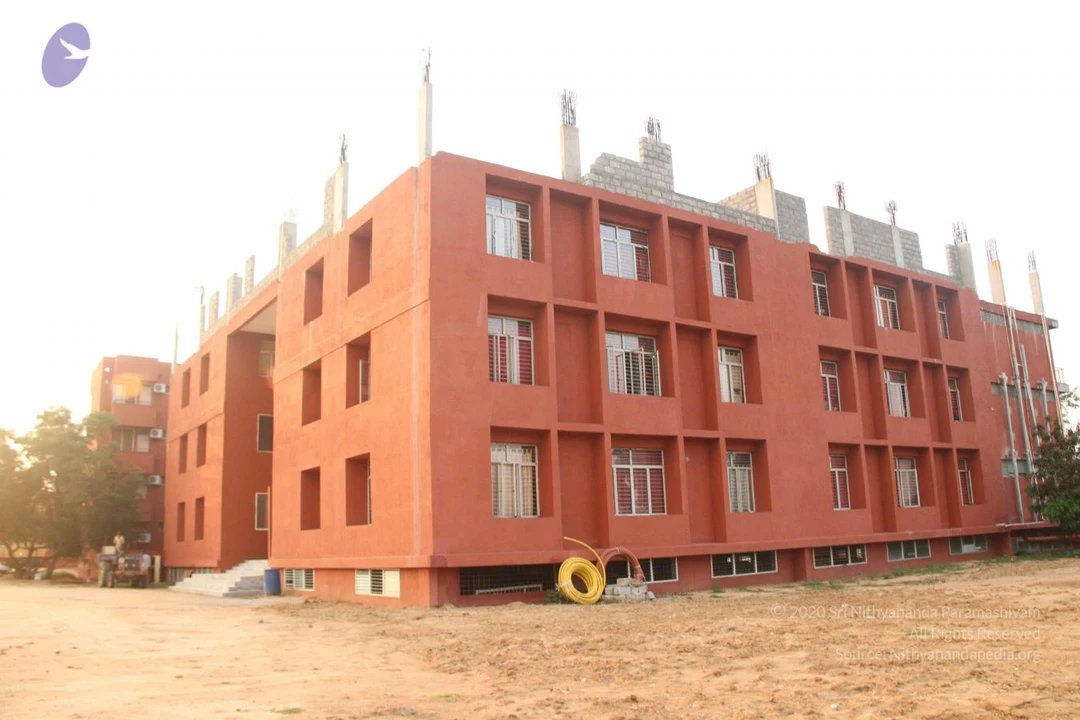
adi kailaasa buildings

sacred-arts-visit

culturals

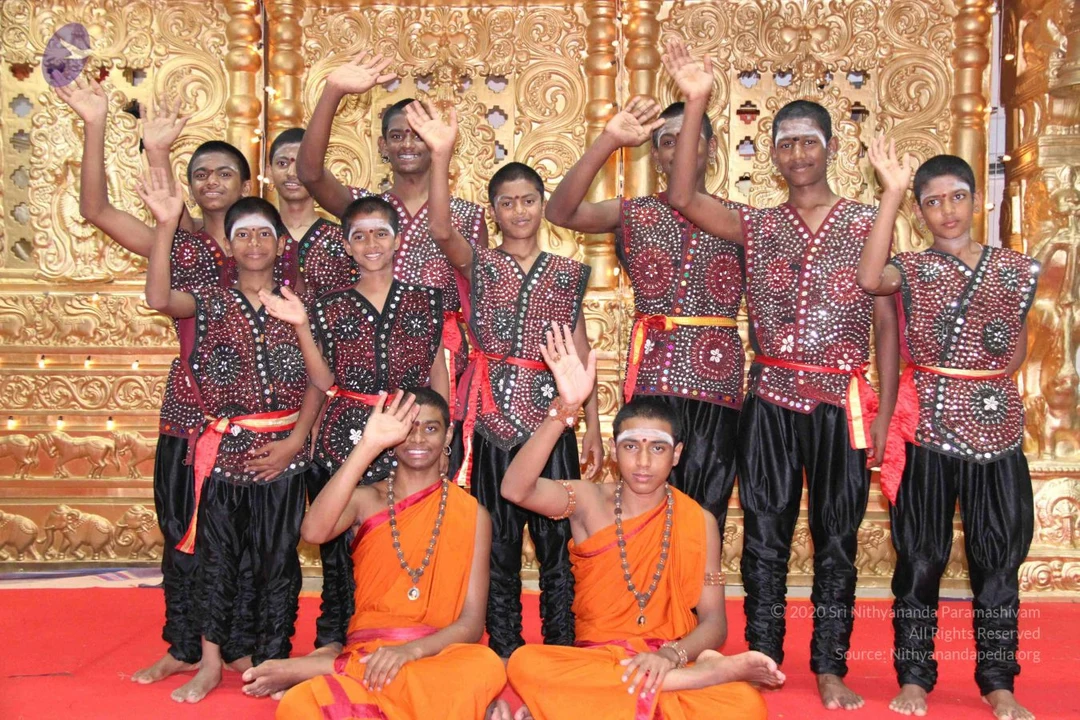
chandi-homa-poornahuti

Photos from this day

View all 944 photos

morning-at-temple

24 photosSource gallery
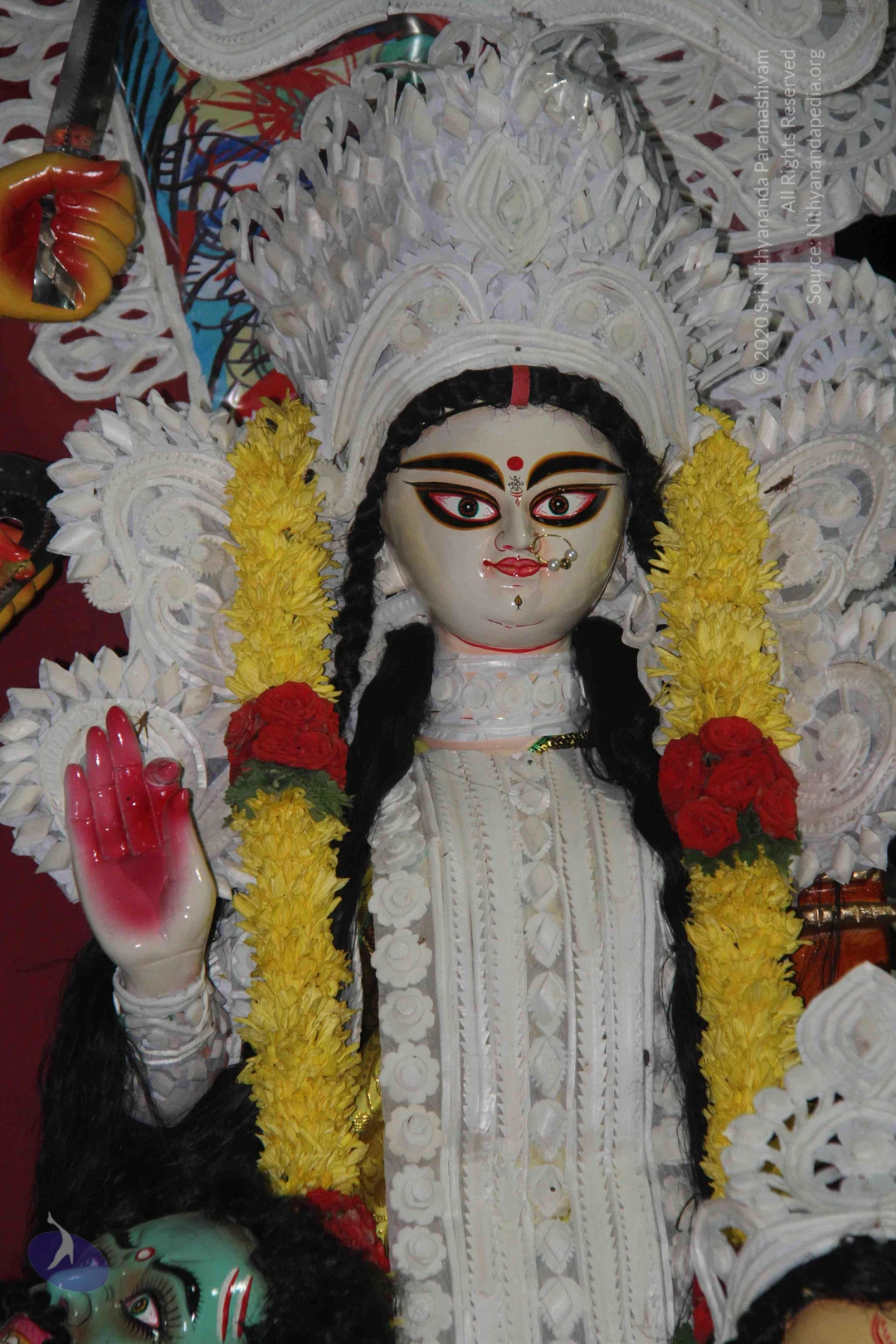
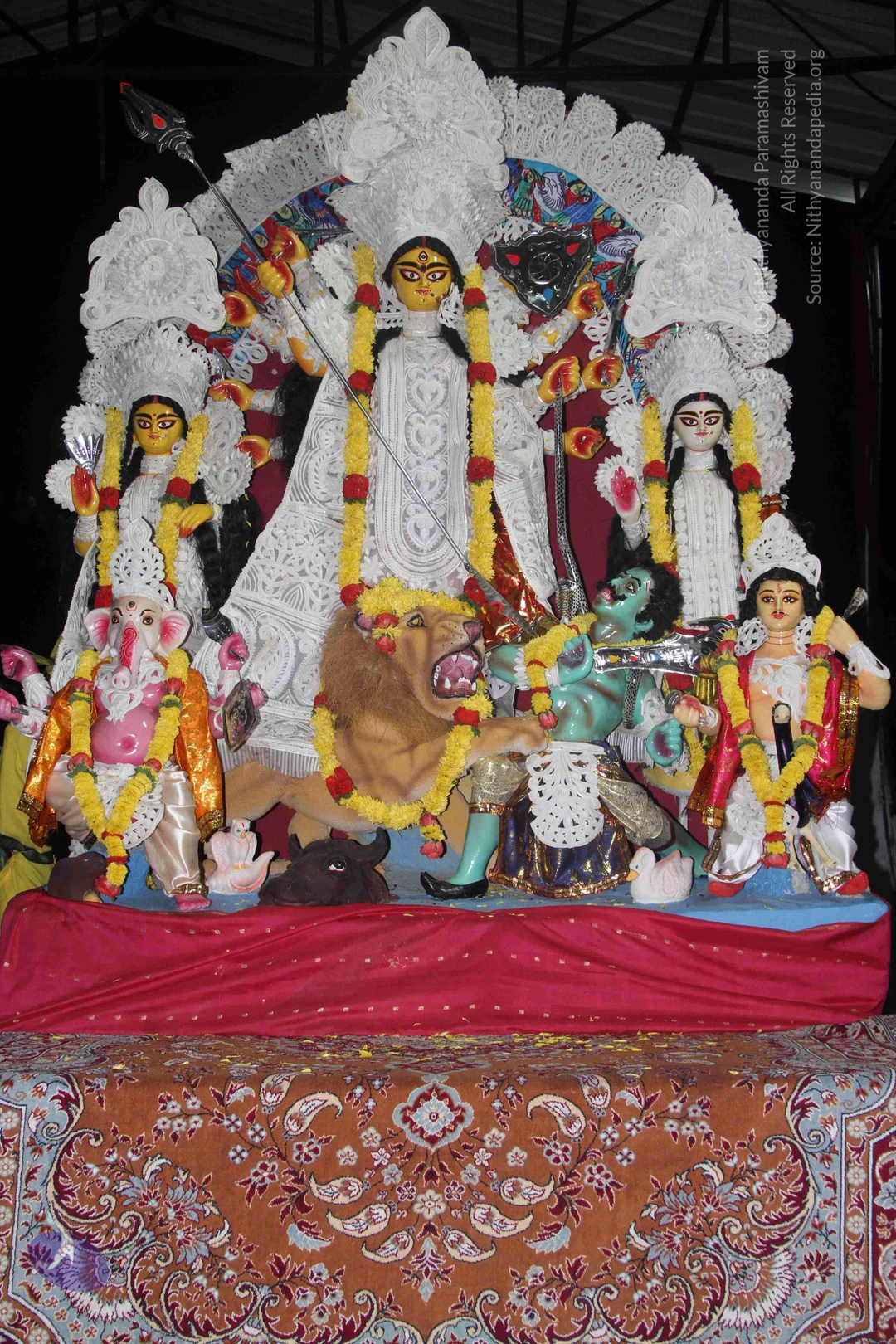
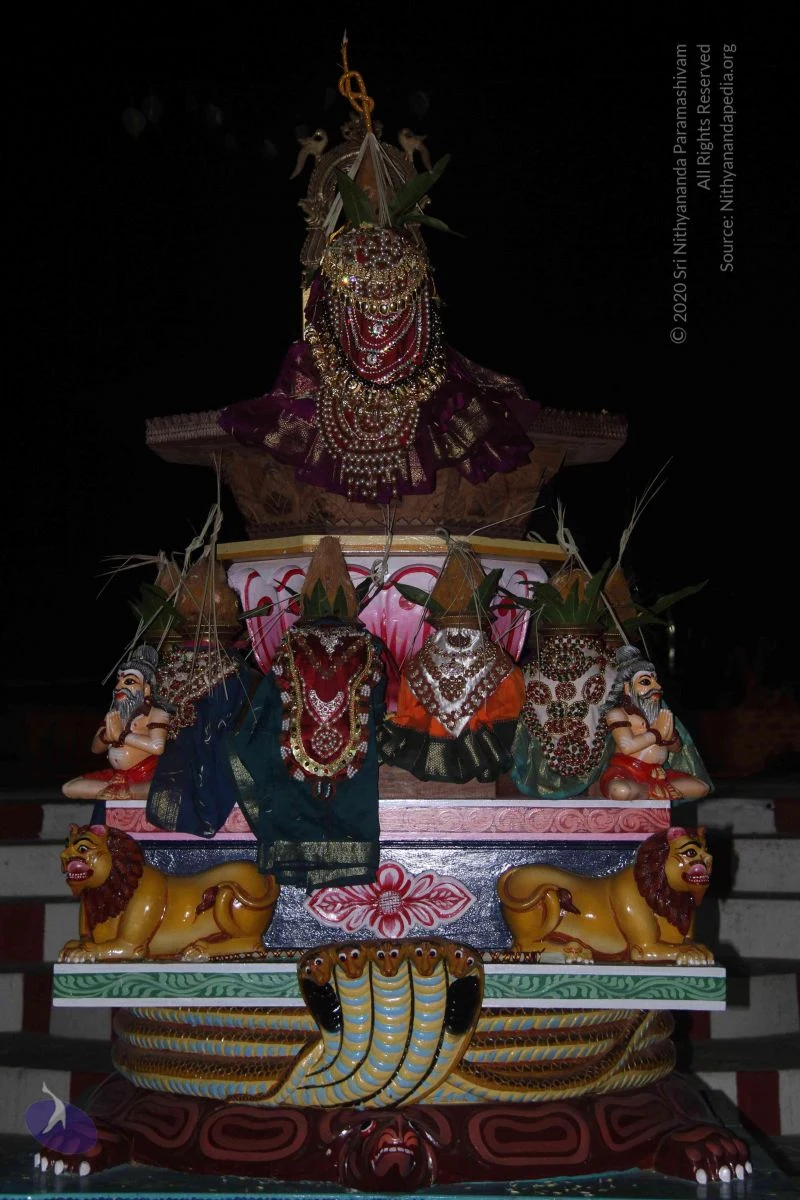
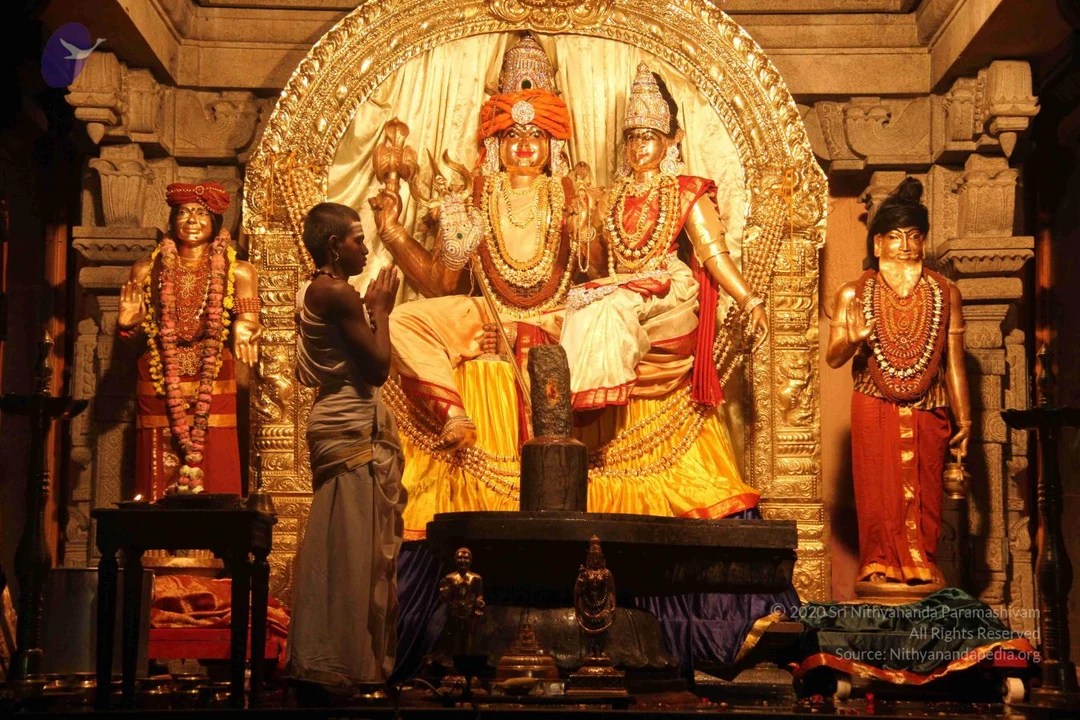
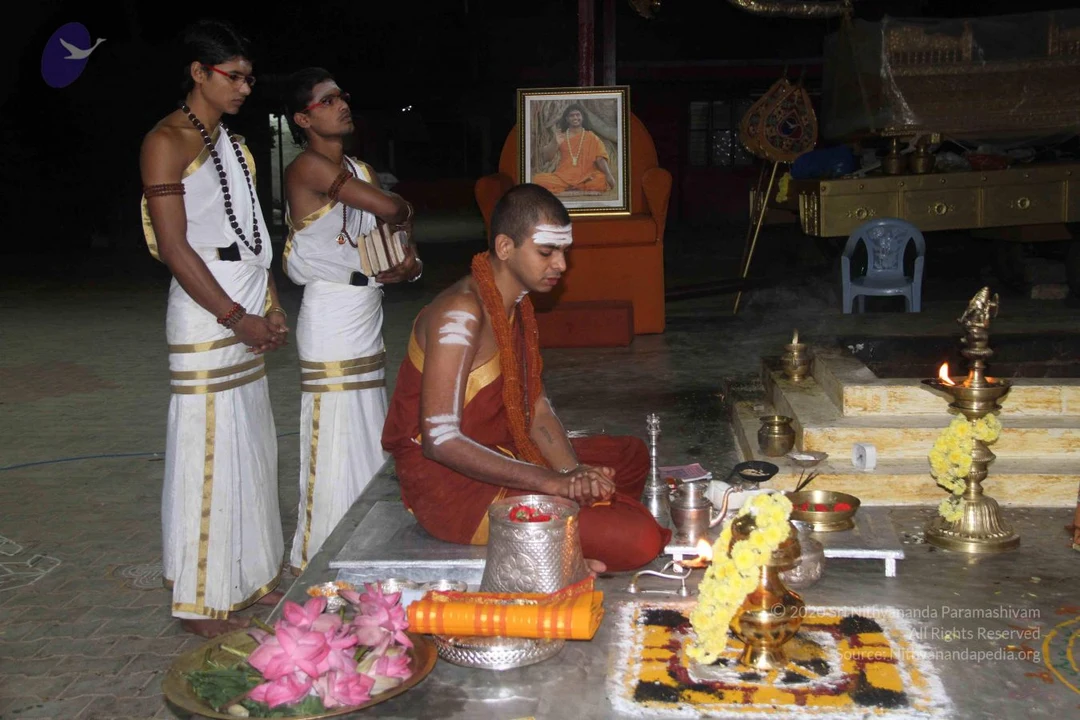
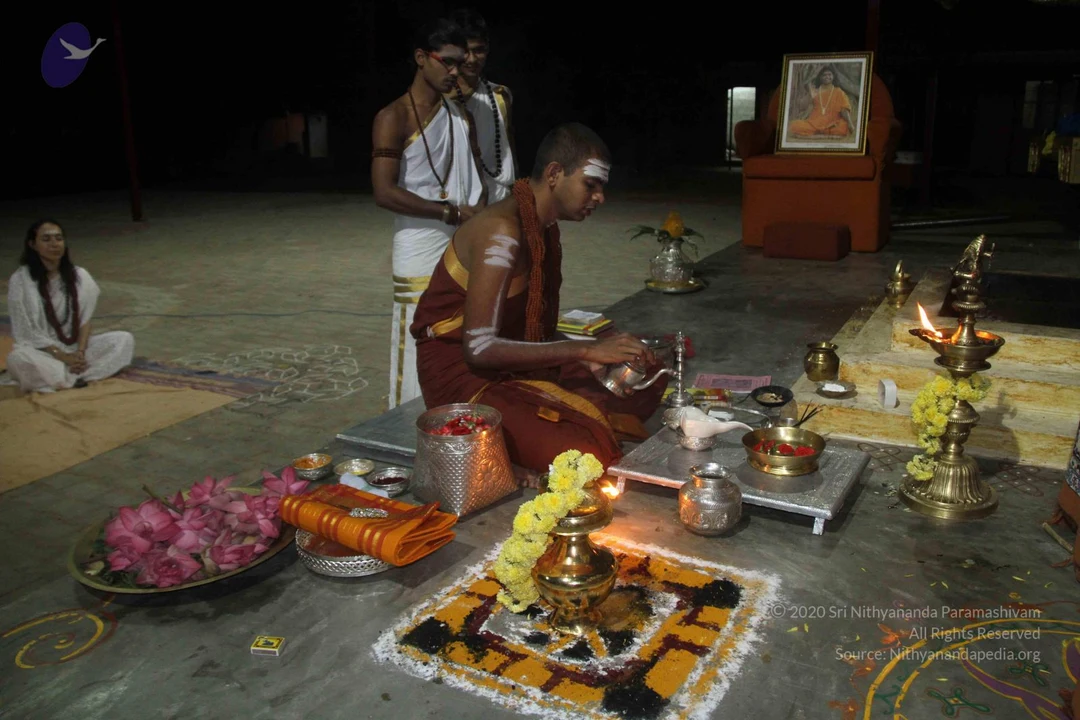
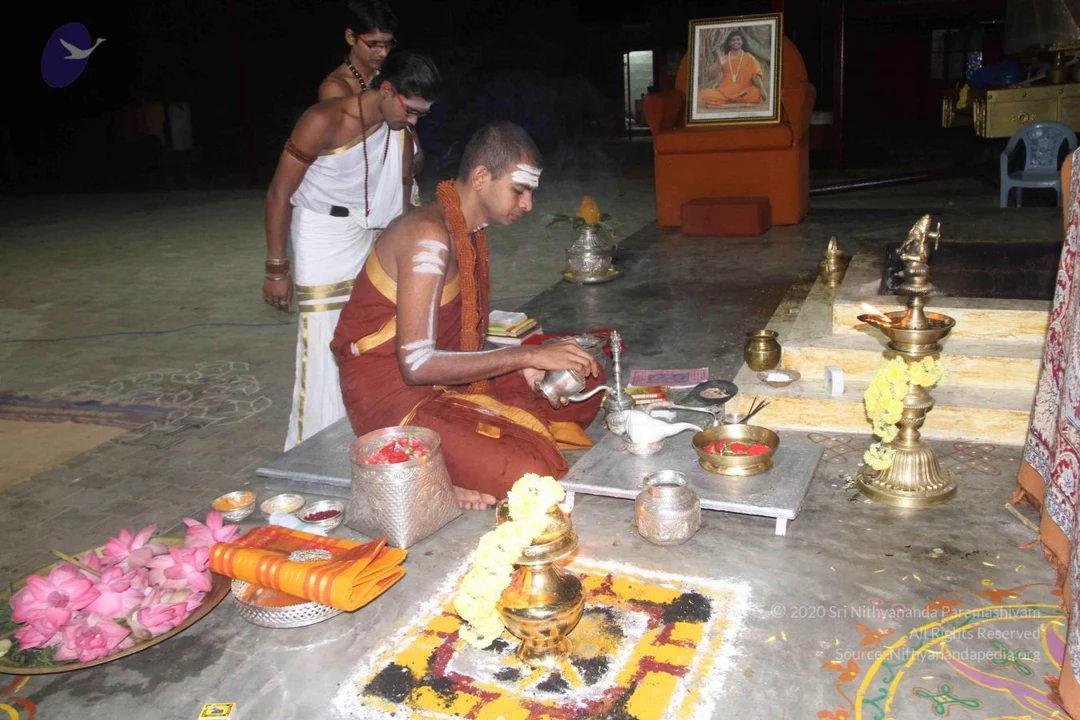
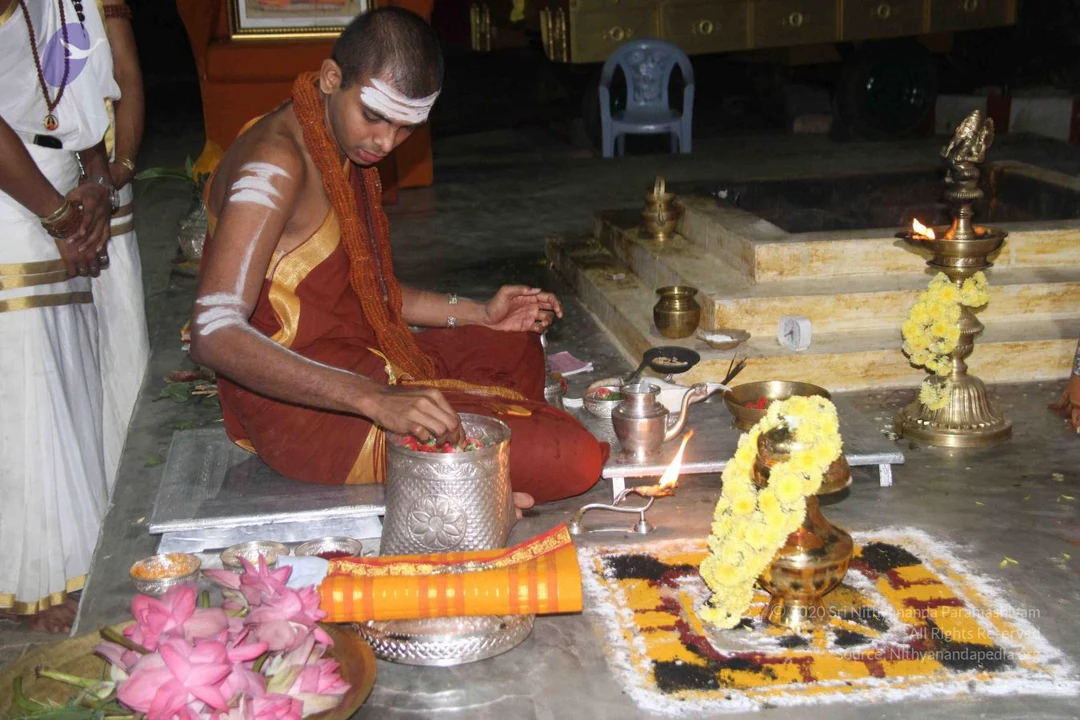
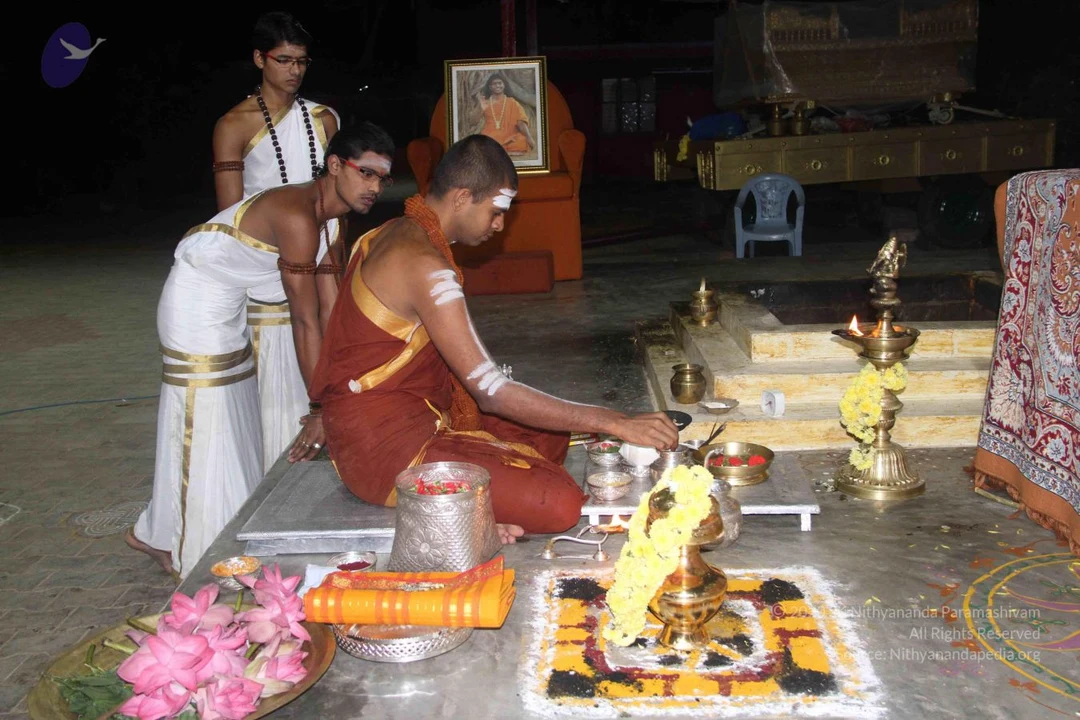
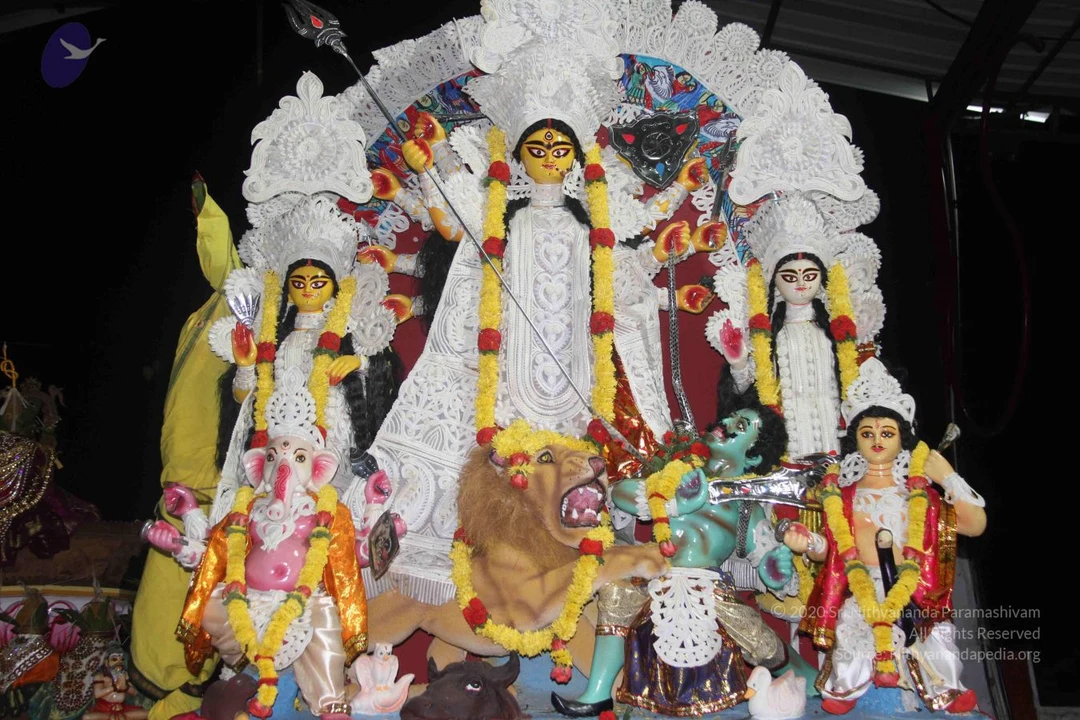
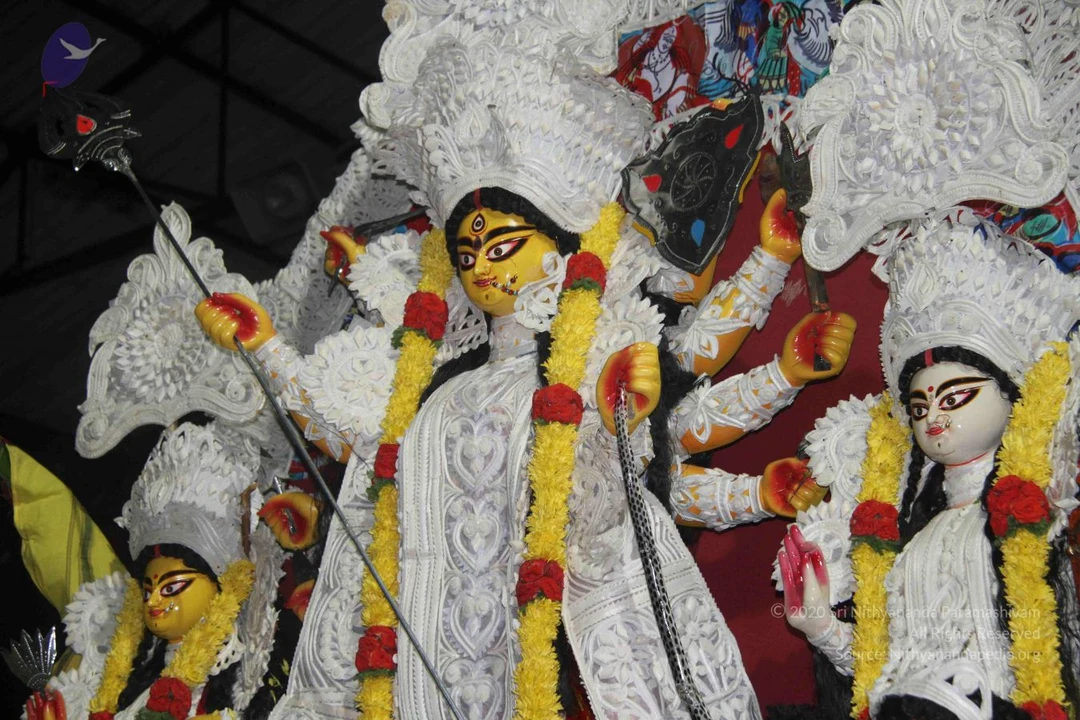
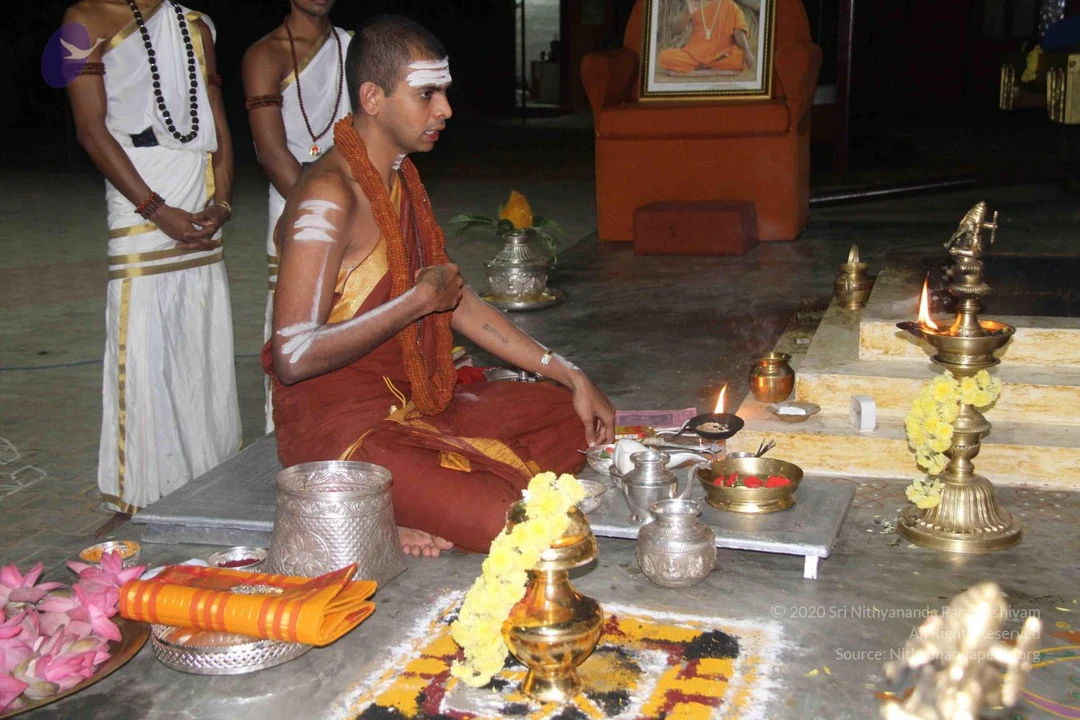
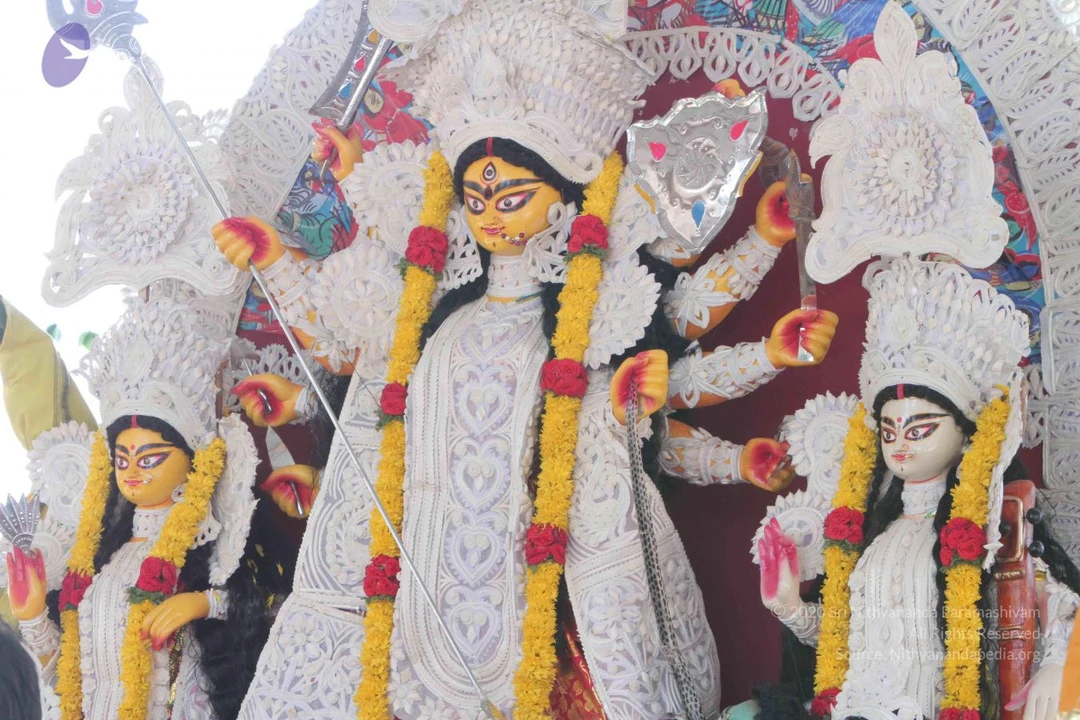
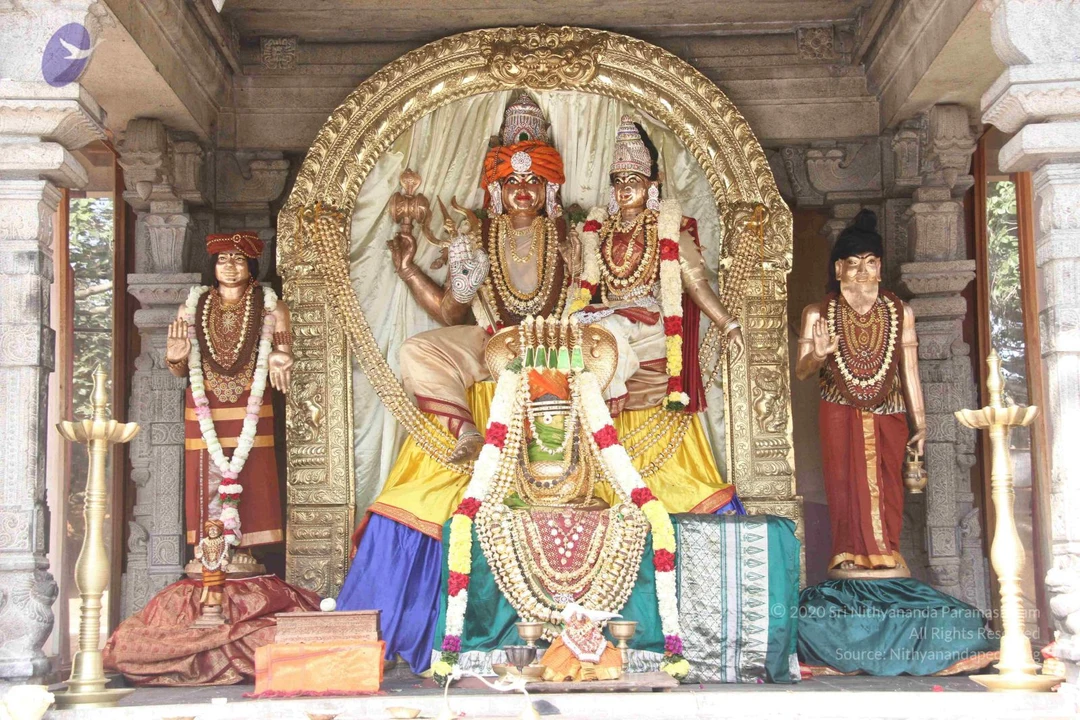
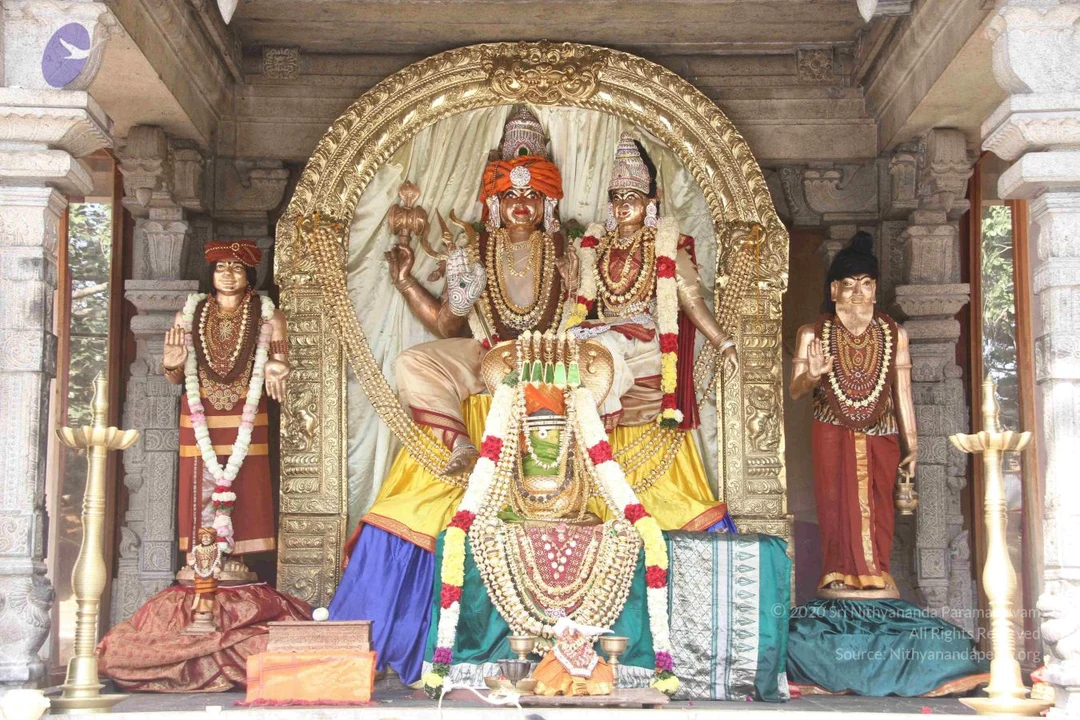
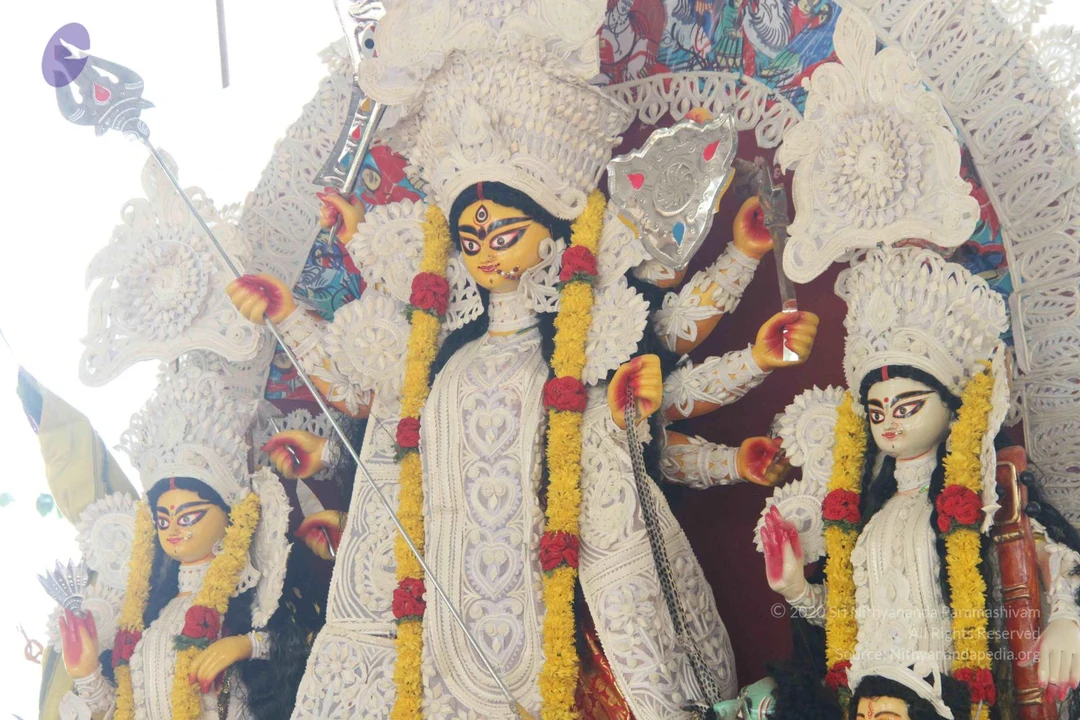
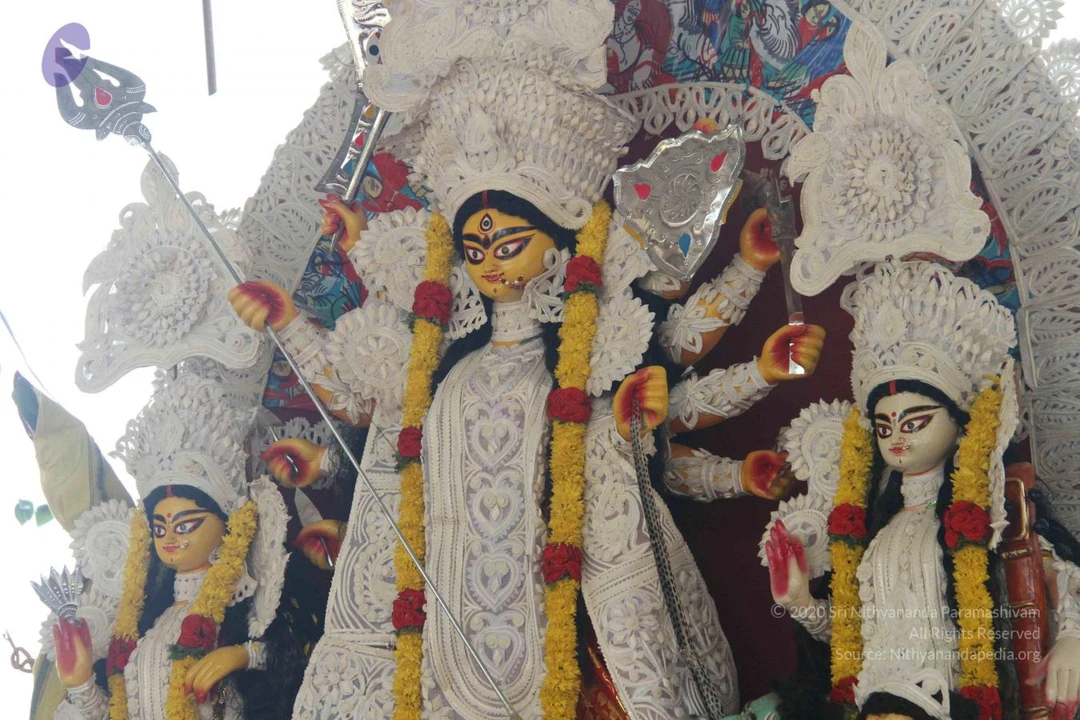
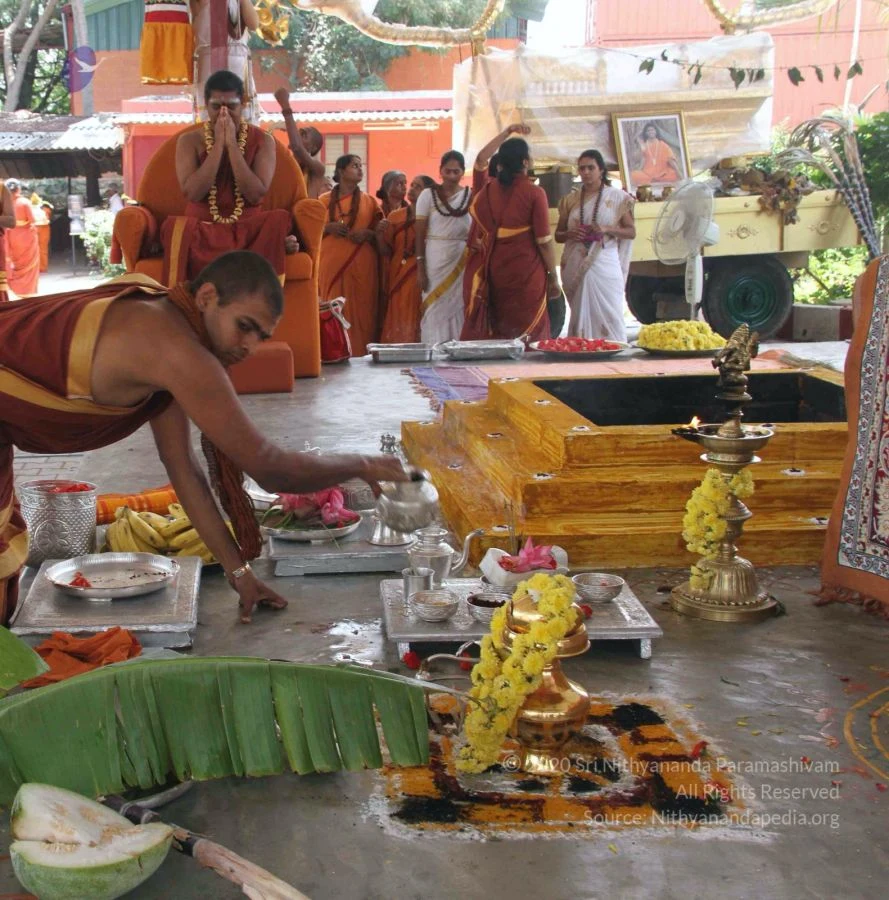
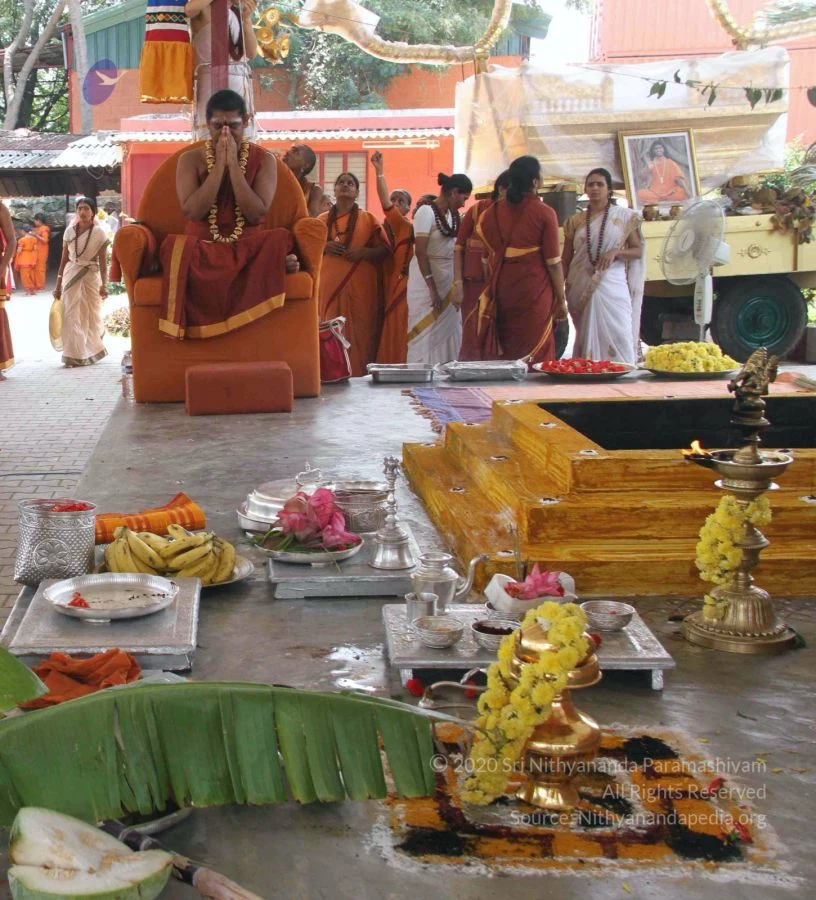
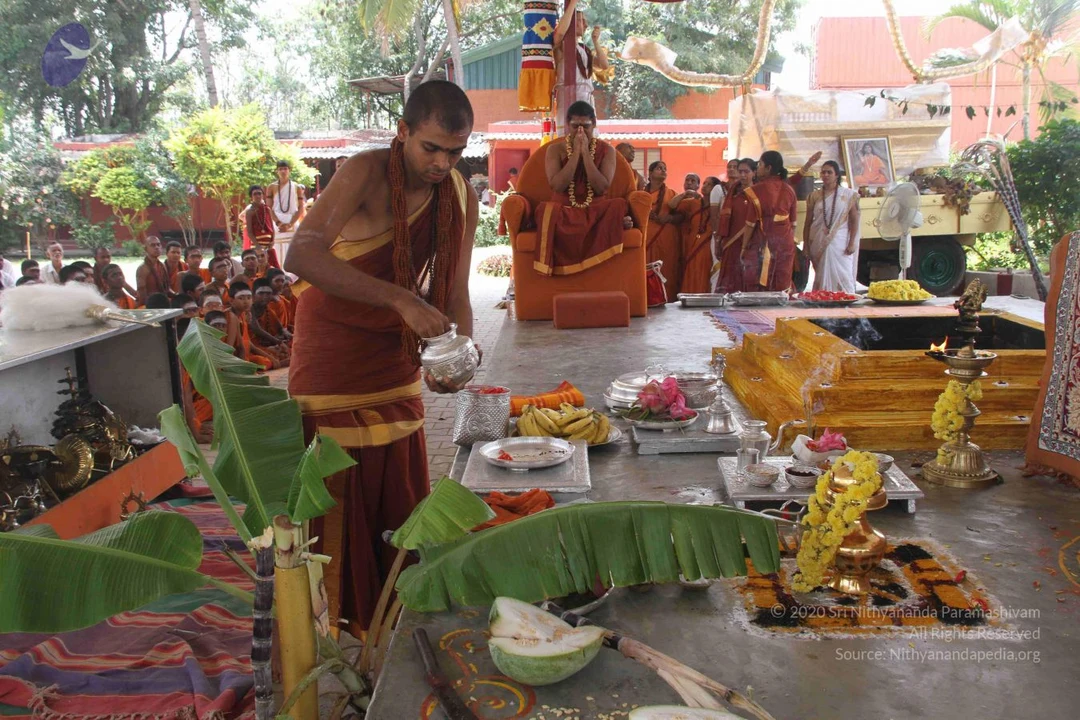
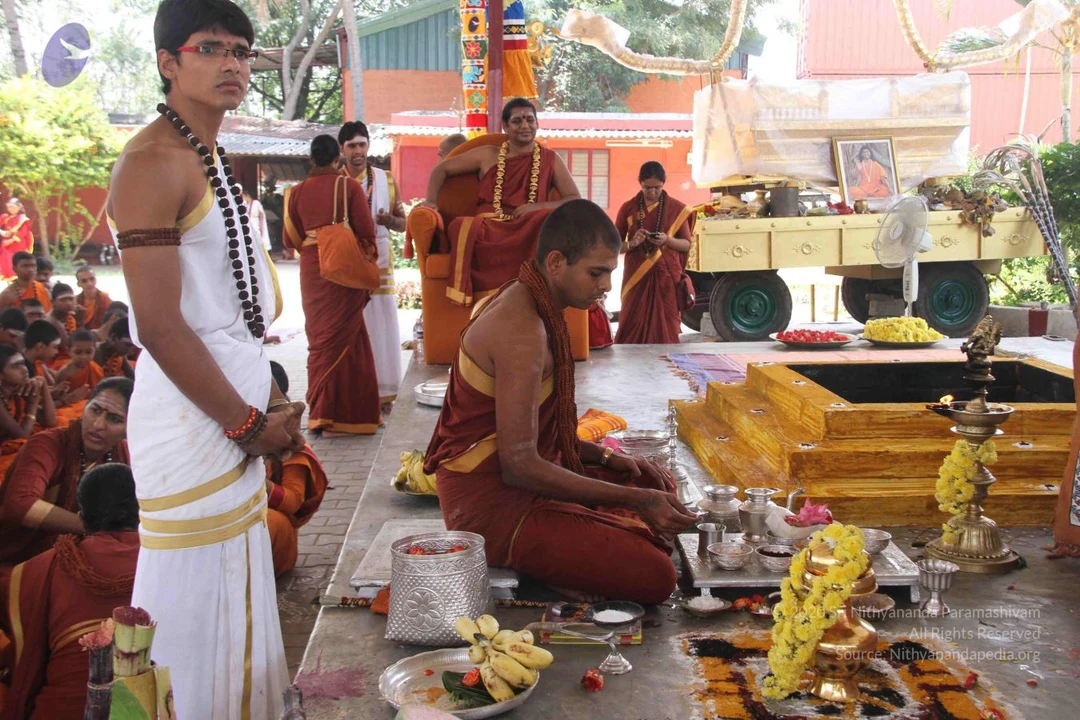
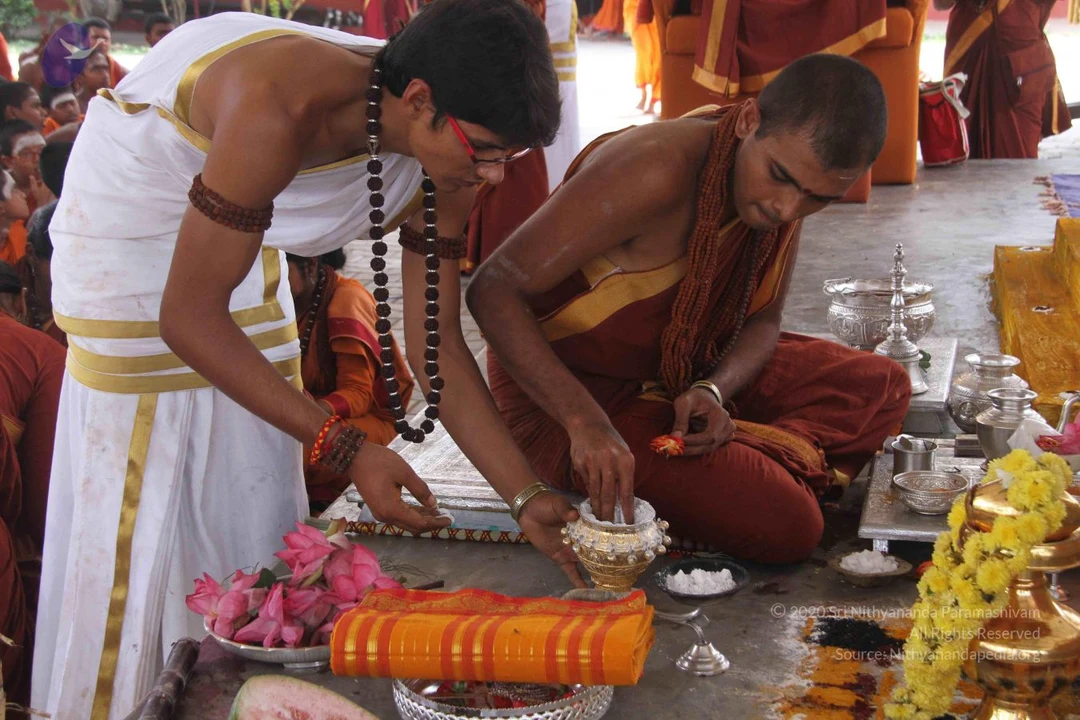
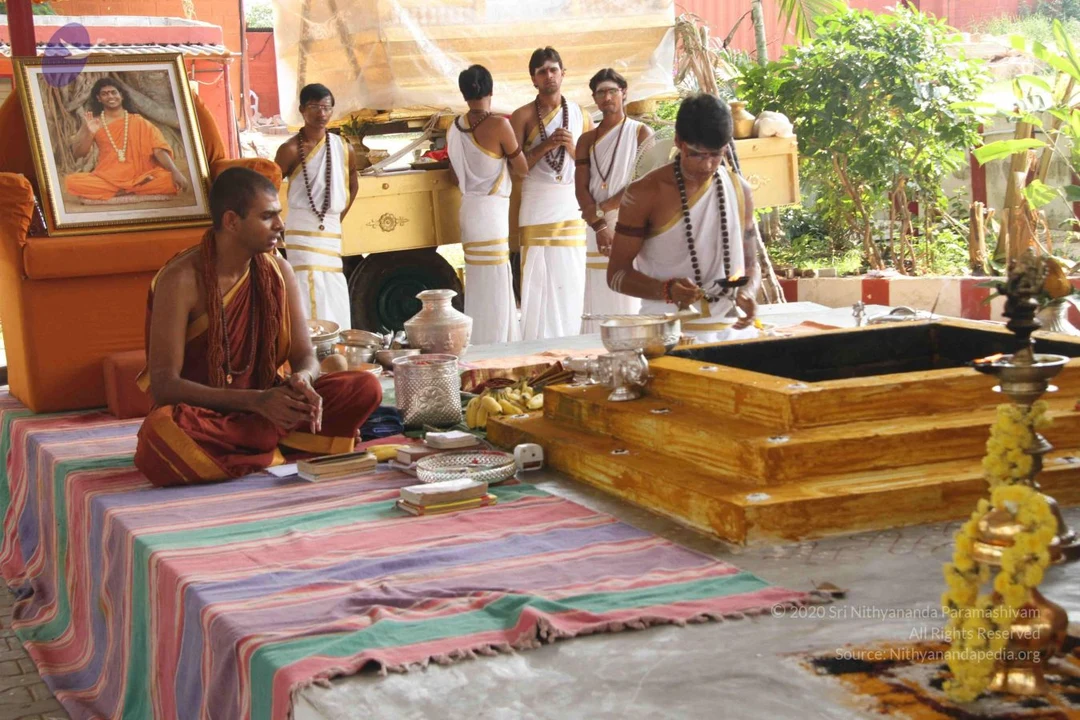
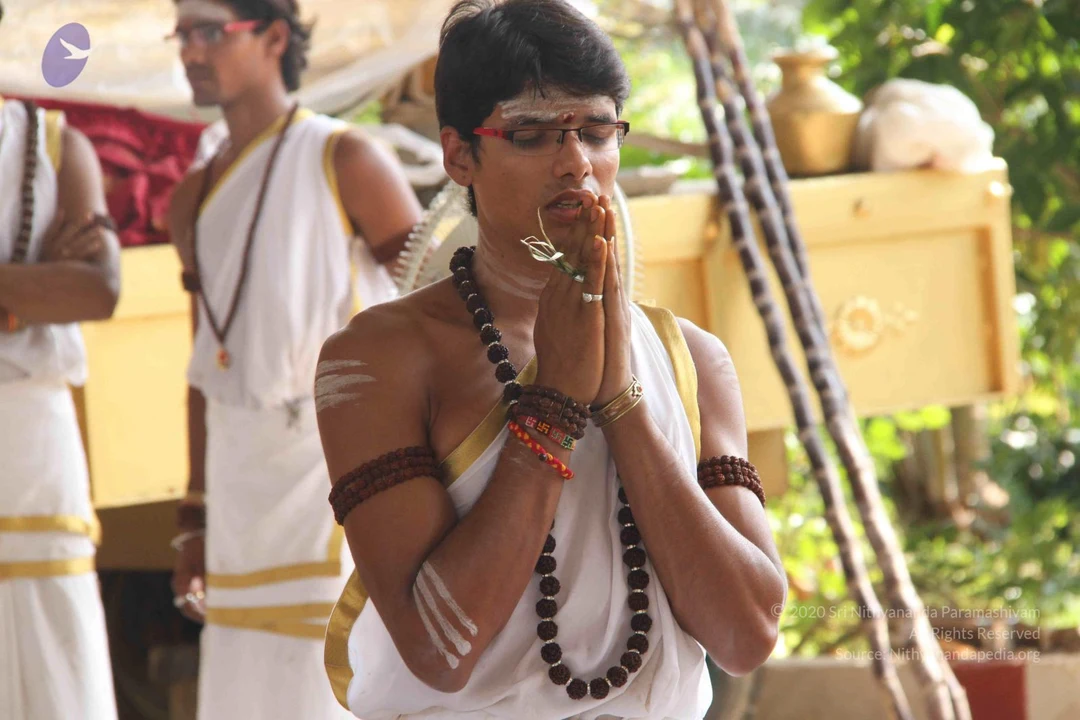
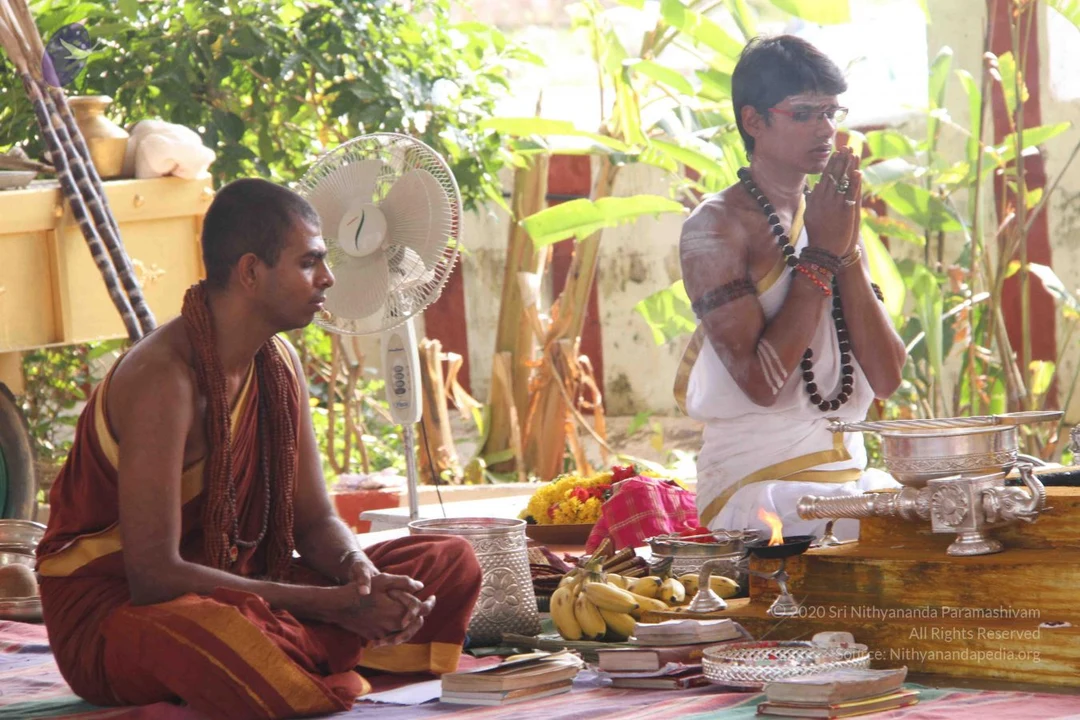
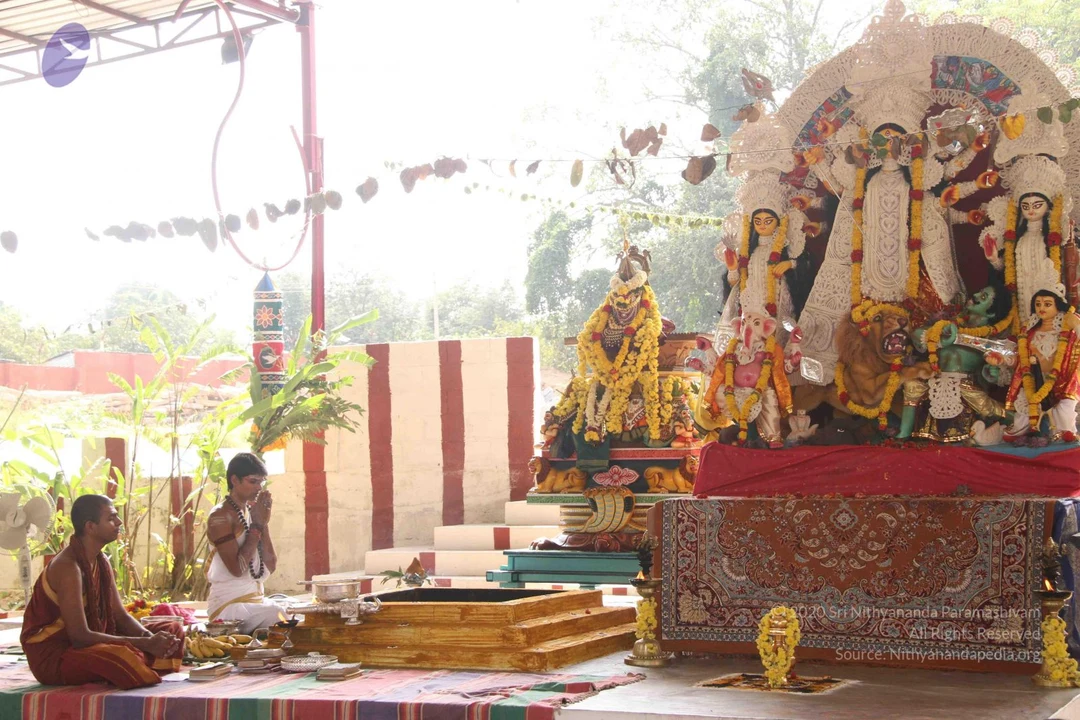
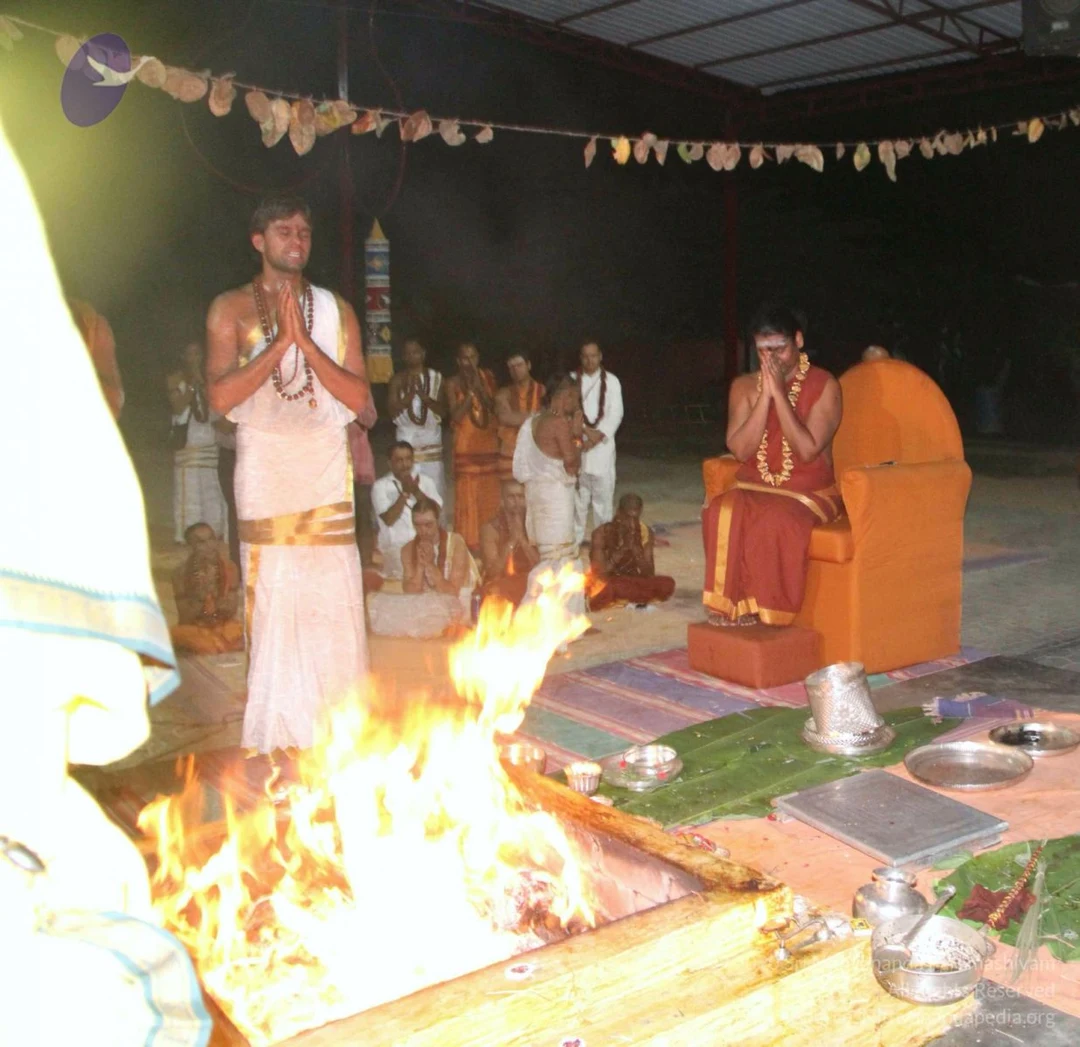
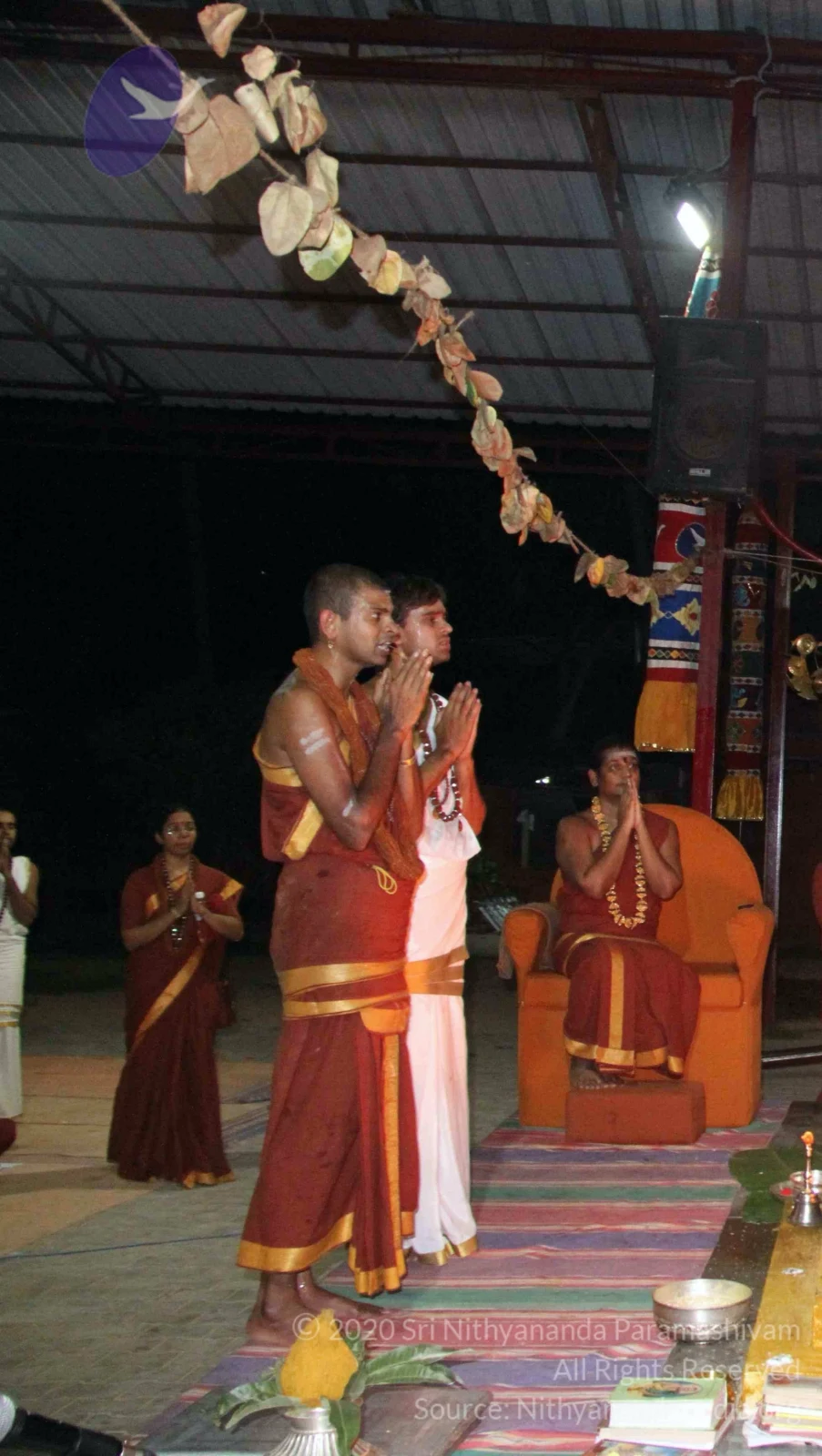
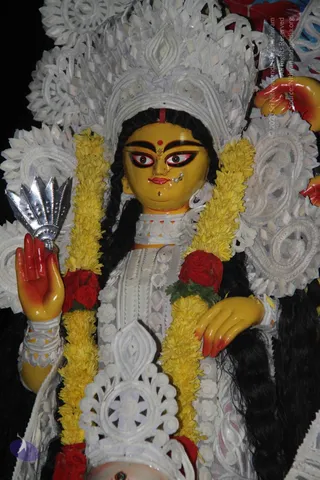
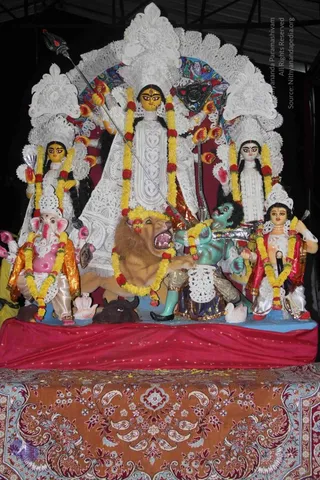
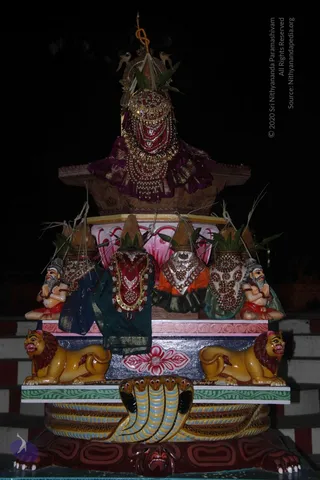
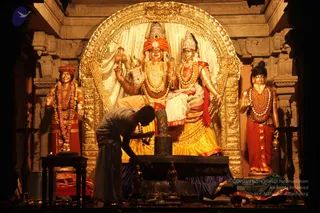
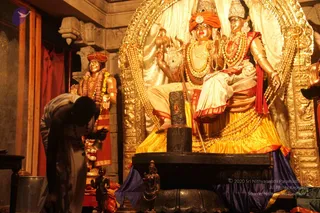
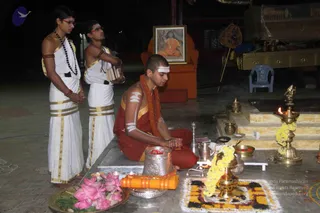
Close-up photograph of a large yellow-faced deity murti with black hair, a red tilak and bindi, and a white filigree crown and halo. Yellow marigold garlands with red rose accents hang across the figure. The raised right hand holds a silver trident-like weapon, and the left hand rests at the waist. The white decorative backdrop is typical of a Durga-style idol. No people are visible.A photograph of a large clay murti of the goddess Durga with ten arms, decorated in white lacework and garlanded with yellow and red marigolds. She stands behind a golden lion and a buffalo and is flanked by smaller murtis: Ganesha in pink with an orange shawl on the left, a female deity in white and pink on the right, and two female figures in white. A blue demon figure is shown at the lion's side, with ducks at the base. The idol sits on a red cloth over an ornate patterned rug, under a dark tent-like canopy. No living people are visible.A night photograph of a tiered, painted deity pedestal decorated for worship. At the top, a tall ornamented murti or kalasha-like form wears layered pearl and red bead necklaces and a purple draped cloth, with green leaves tucked around it. Below, several dressed figures wear jewelled garments in dark green, orange and red with gold trim, and two seated attendant figures with folded hands sit on either side. Two golden lions flank the lower base, and a multi-headed painted cobra coils at the bottom. No physical people are visible; the figures are statues or painted sculptures.A photograph inside a temple shrine showing a dark stone Shivalingam on a black pedestal, with a person in dark grey robes bending forward over it, apparently pouring or offering something. Behind it stands a gilded arched frame enclosing a deity murti pair: a figure with a crown and orange turban, and a consort in a white and red sari, both wearing gold necklaces and garlands. Two standing statues flank the shrine, one on the left in red dhoti with a pink-and-white flower garland and red turban, and one on the right in red dhoti with a red-and-white bead necklace. Oil lamps are visible at the sides.Inside a temple shrine lit warmly, two golden deity murtis sit on a raised dais behind a black stone shivalinga on a dark pedestal. The seated murti on the right wears an orange turban with a gold crown, heavy gold necklaces, and a red-and-gold sash over a white dhoti with yellow lower drapery. A gilded arch frames the figures. To the left stands a smaller gold murti in a red turban and floral garlands. A standing man in a light grey-white robe bows forward at the left edge, hands joined near the offerings, his face hidden. Brass lamps, a small bronze figure and a metal vessel sit on the pedestal. The people count is one, and no a person candidate is clearly visible in person.Night-time puja outdoors on a paved courtyard. A seated priest in saffron-orange dhoti and shawl, with white tripundra and white arm markings, sits with palms joined before a brass oil lamp with a lit flame. Two attendants in white dhotis with gold borders stand behind him; the left one wears a rudraksha mala and red-framed glasses, and the right one holds a small book. Brass vessels, a silver kalasha, a tray of pink lotus flowers, yellow marigold garlands and a rangoli kolam of black and yellow are arranged on the floor. Behind them is an orange cushioned chair with a framed portrait of a saffron-robed sannyasi with long hair and a mala, and a gold ornate structure sits to the right.
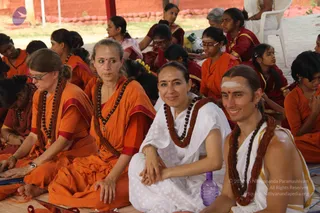
morning-satsang

34 photosSource gallery
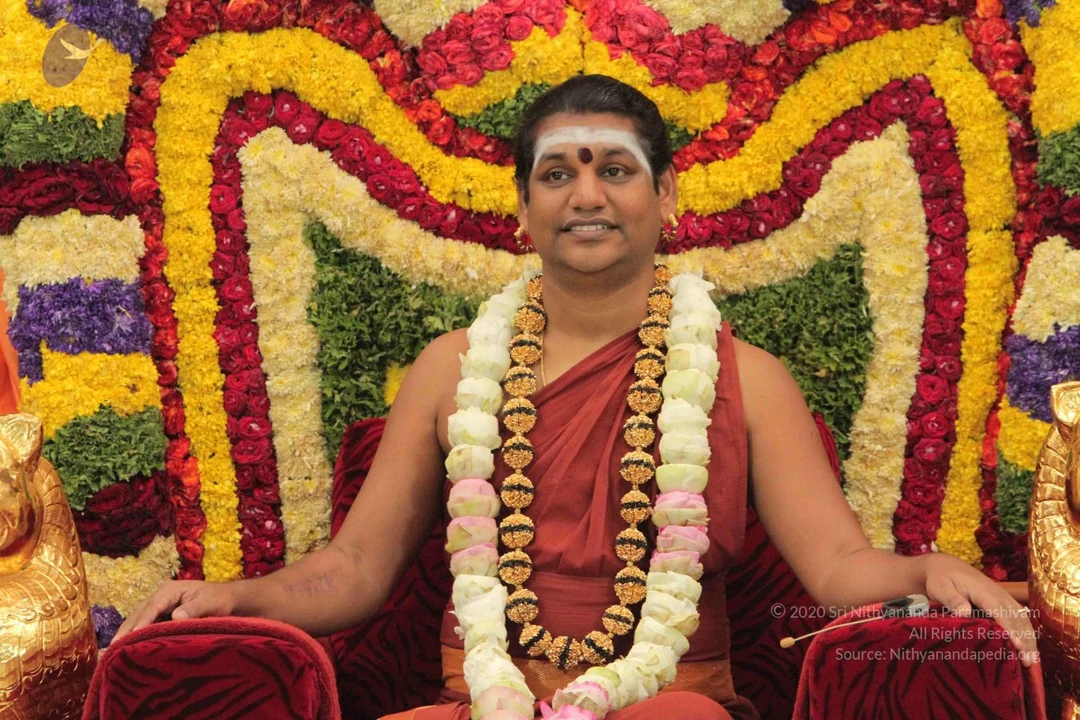
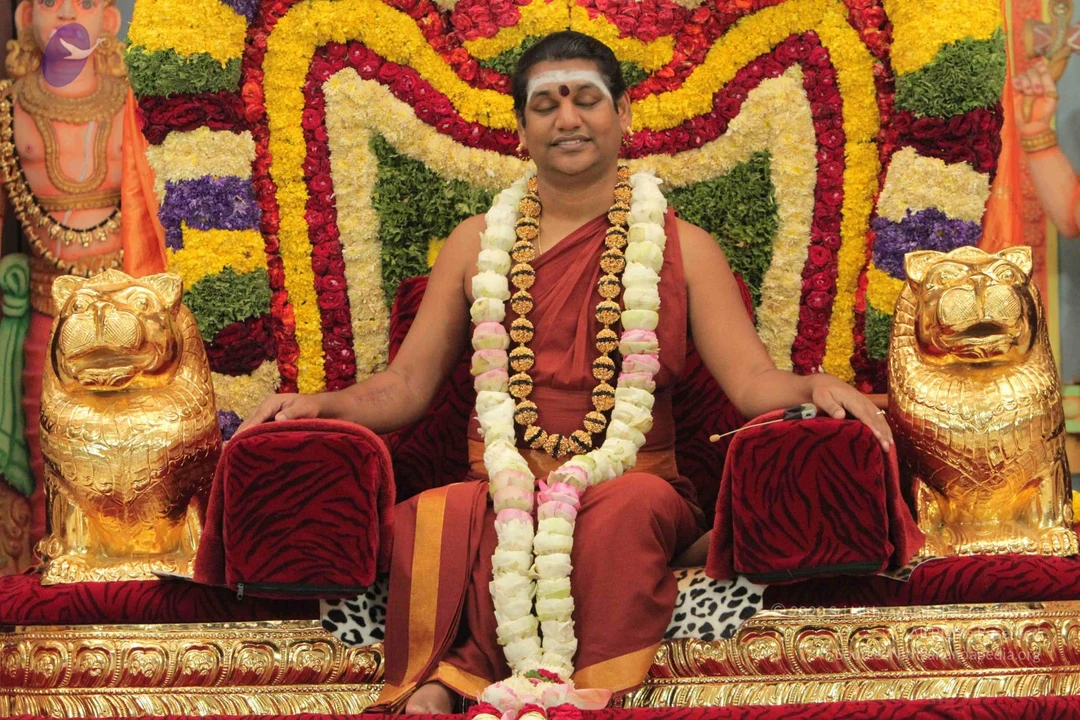
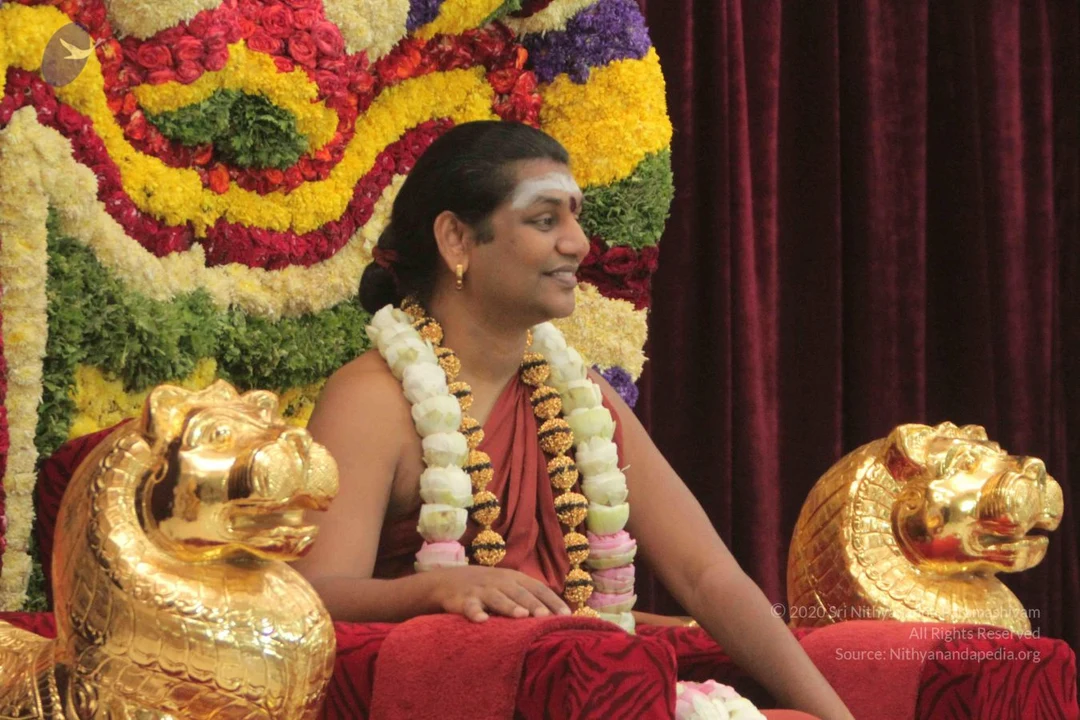
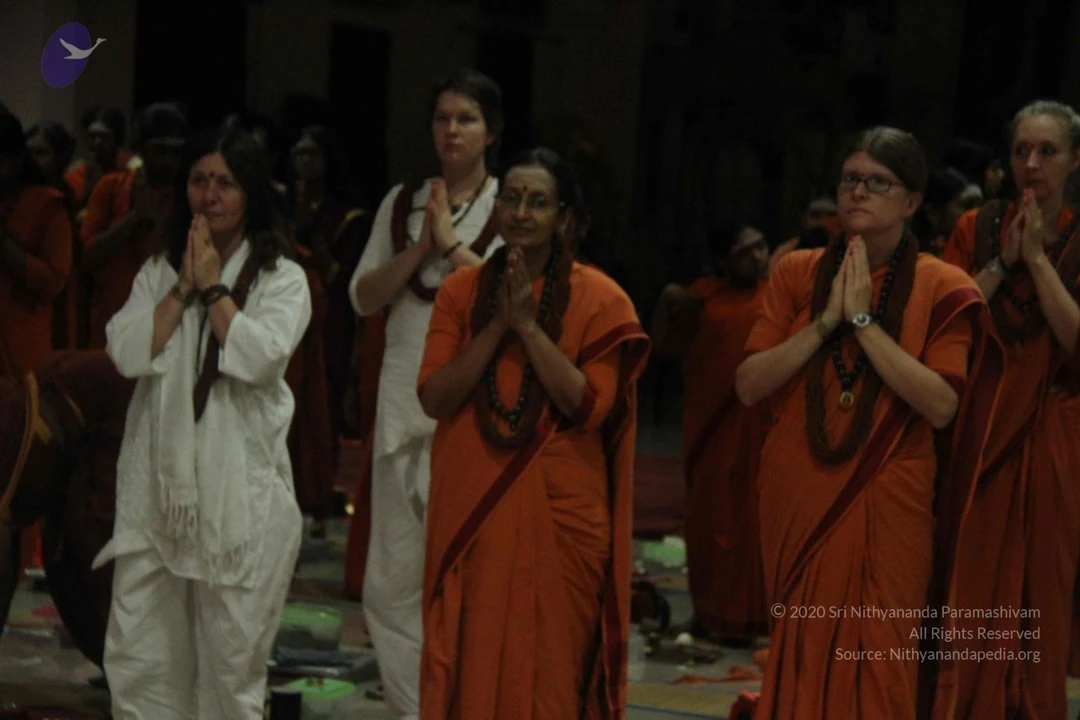
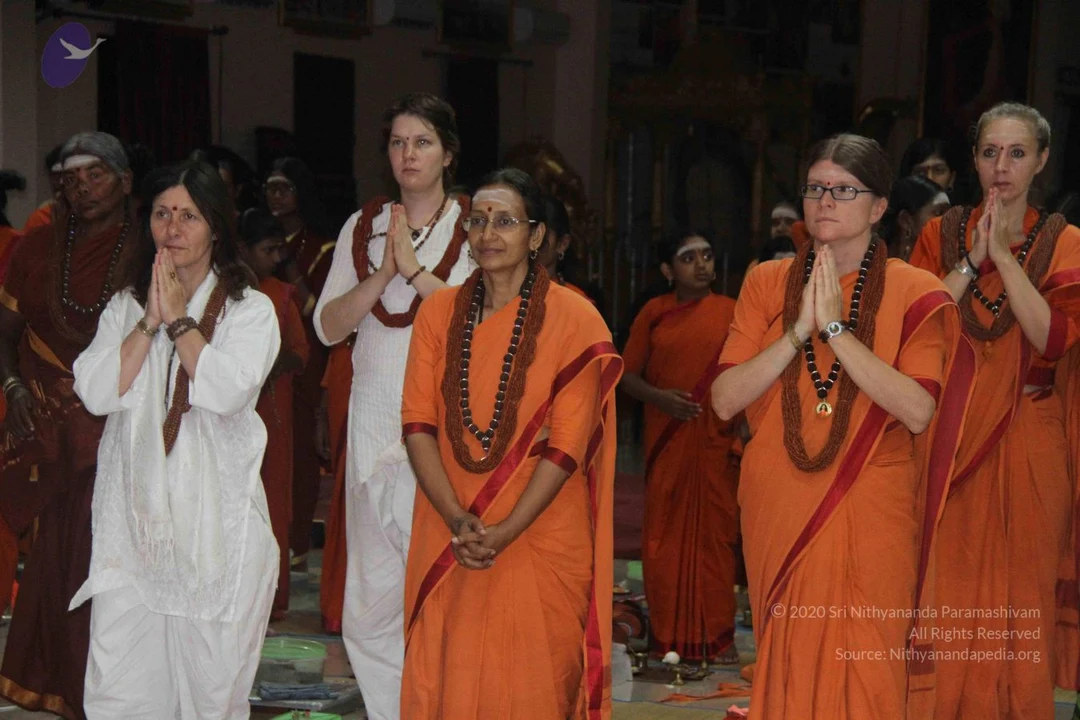
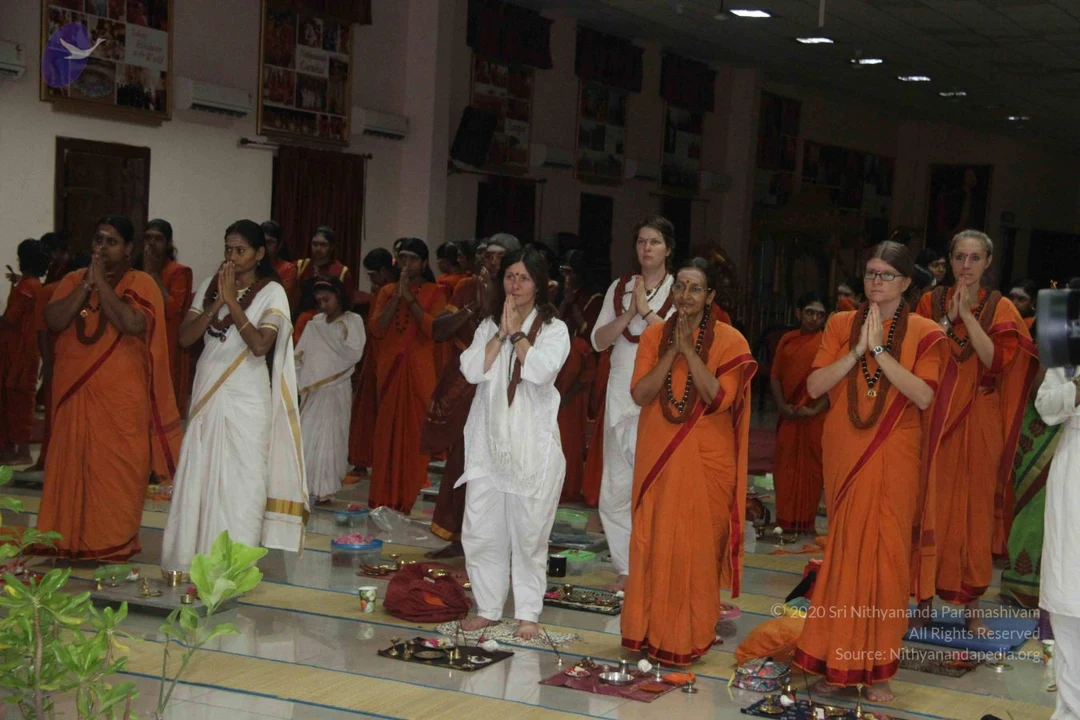
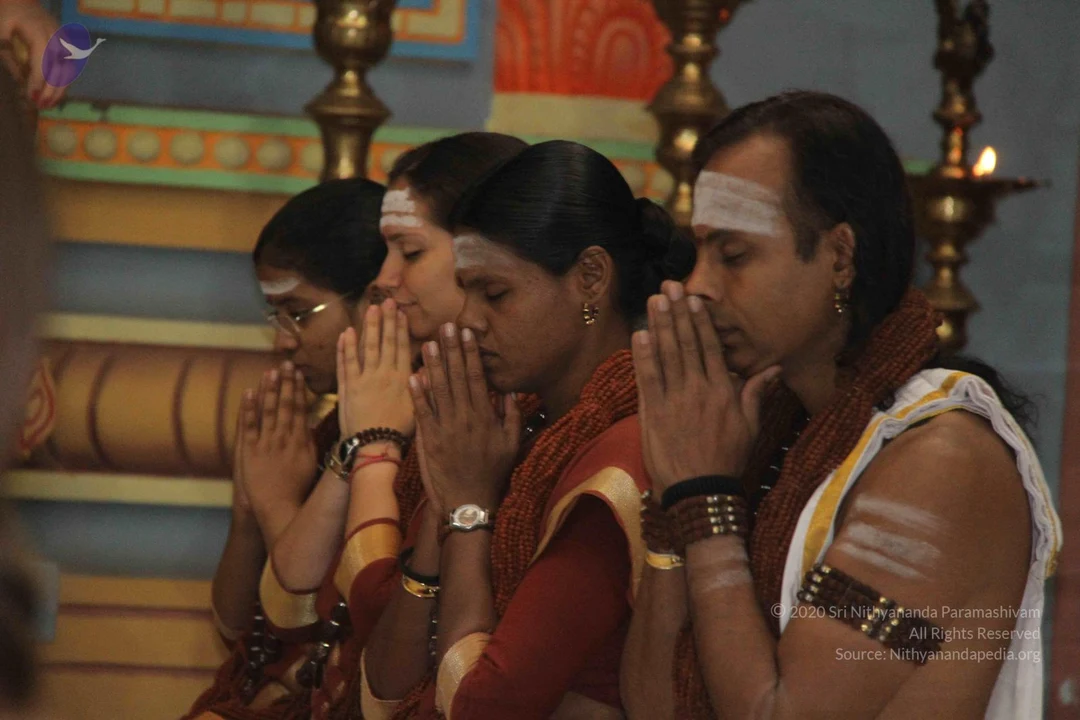
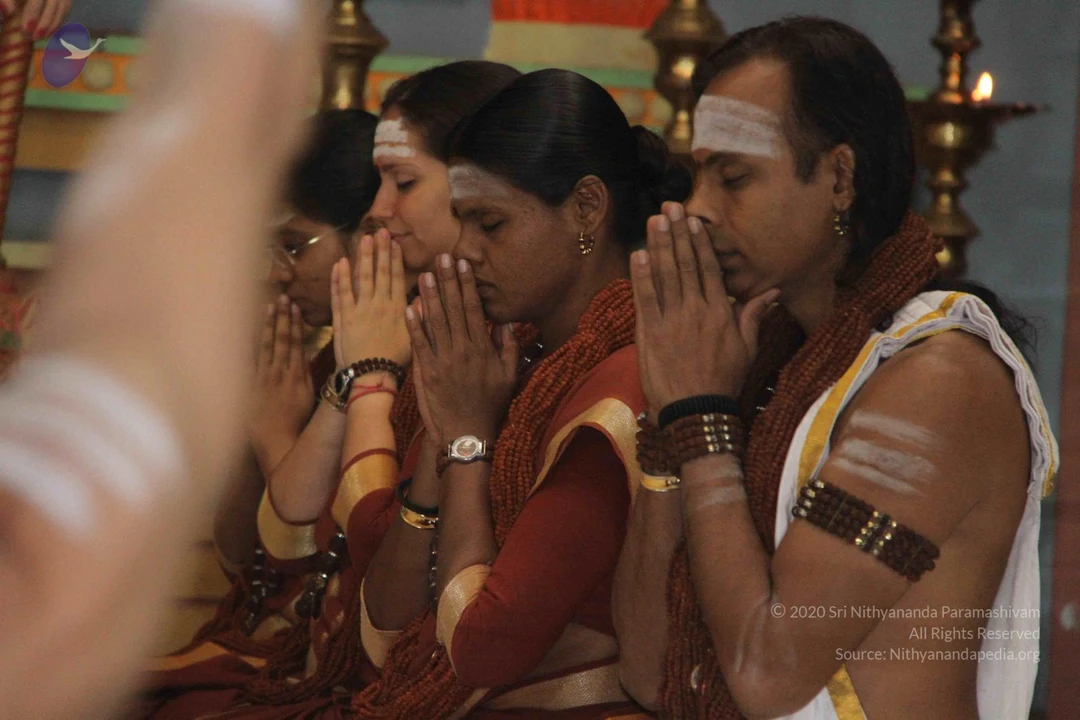
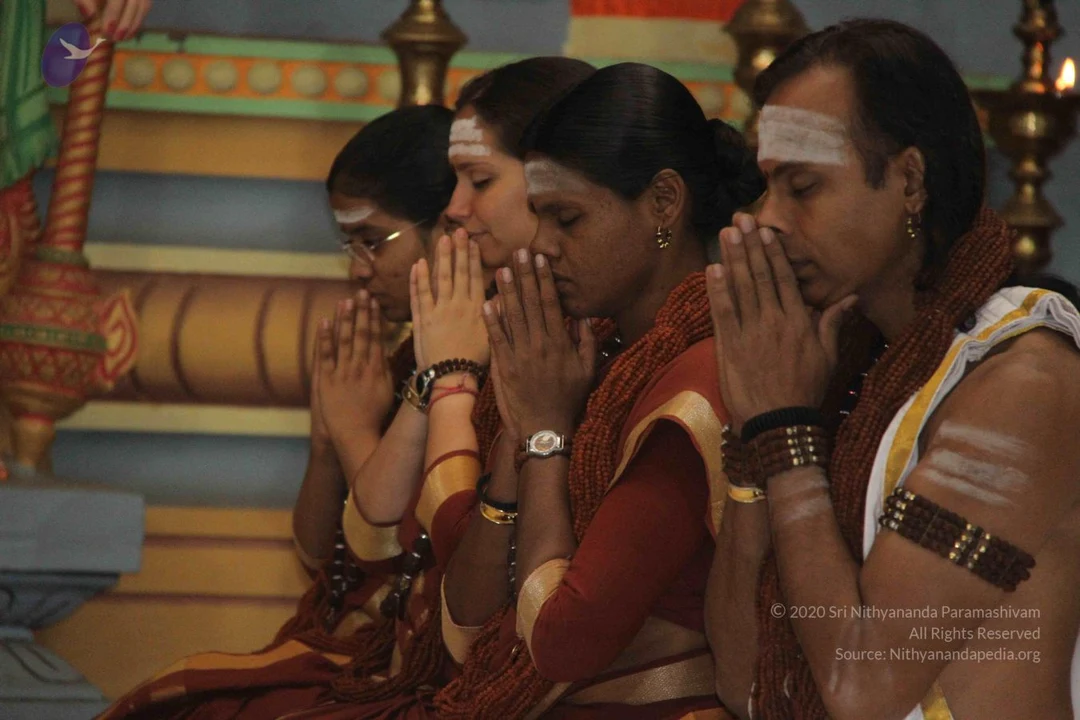
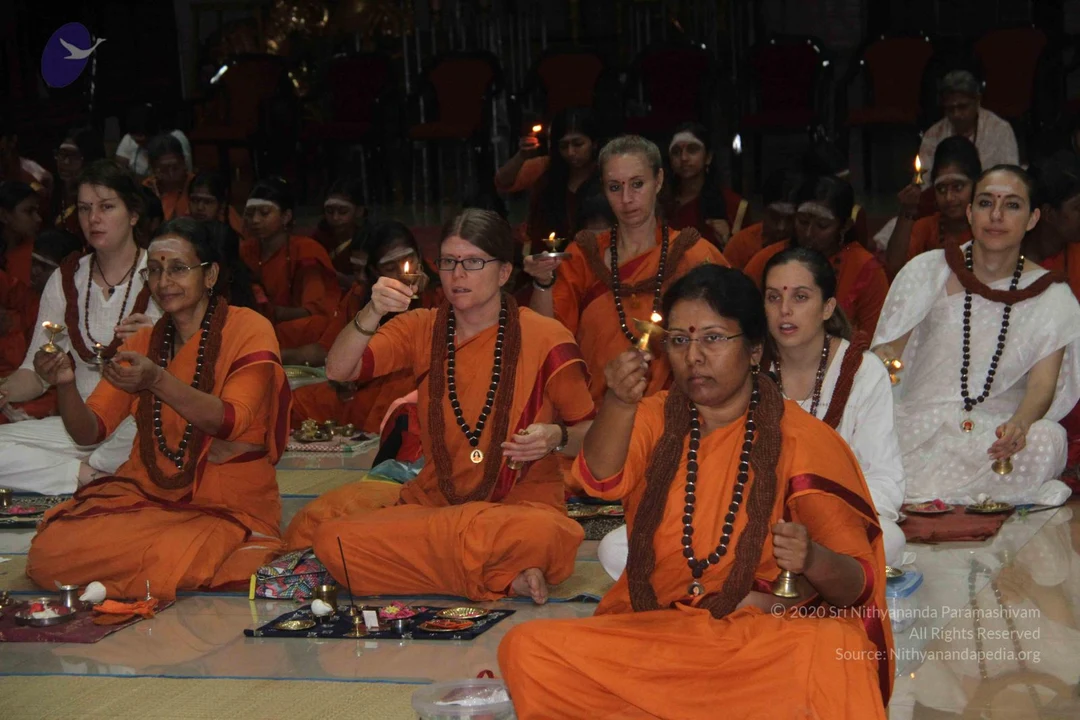
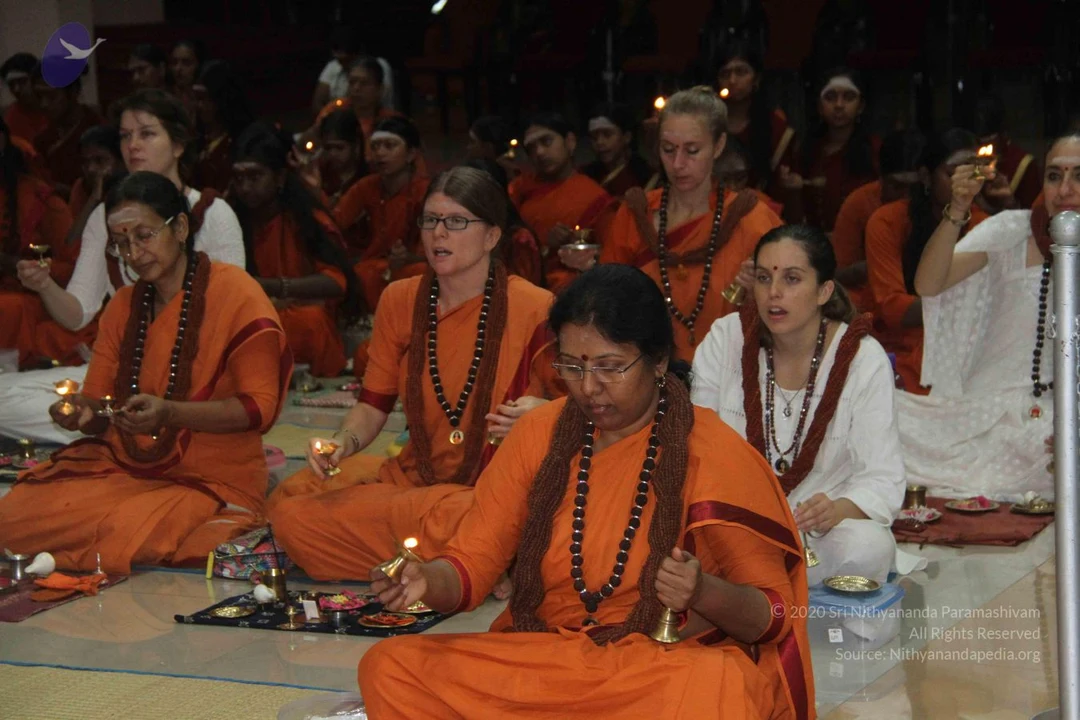
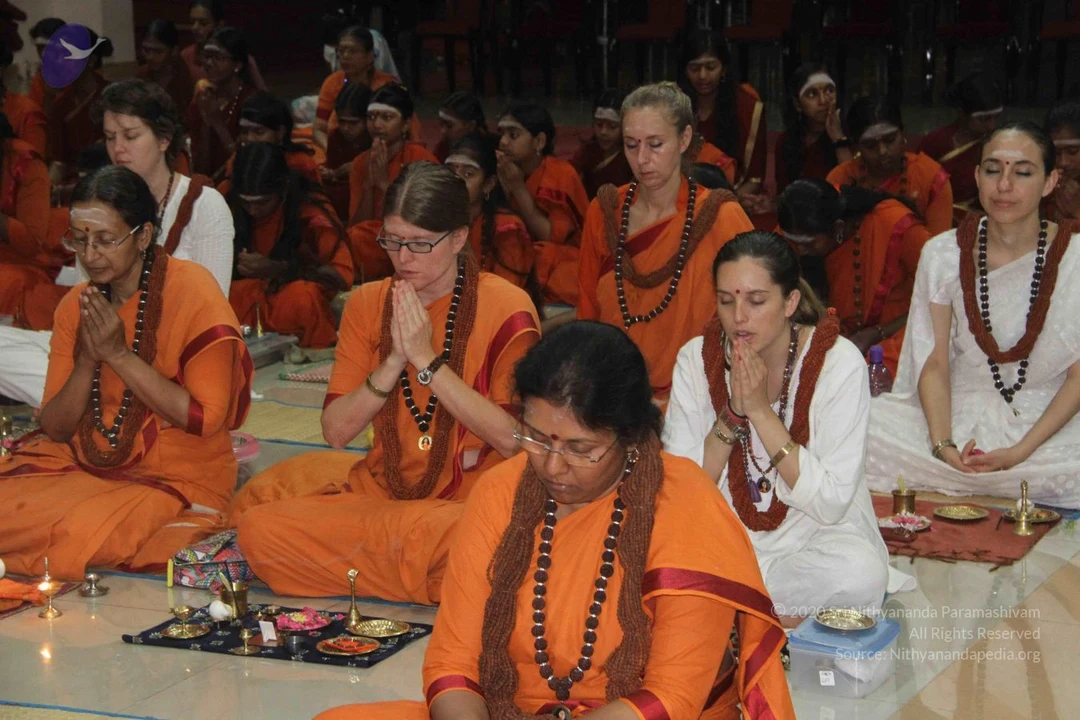
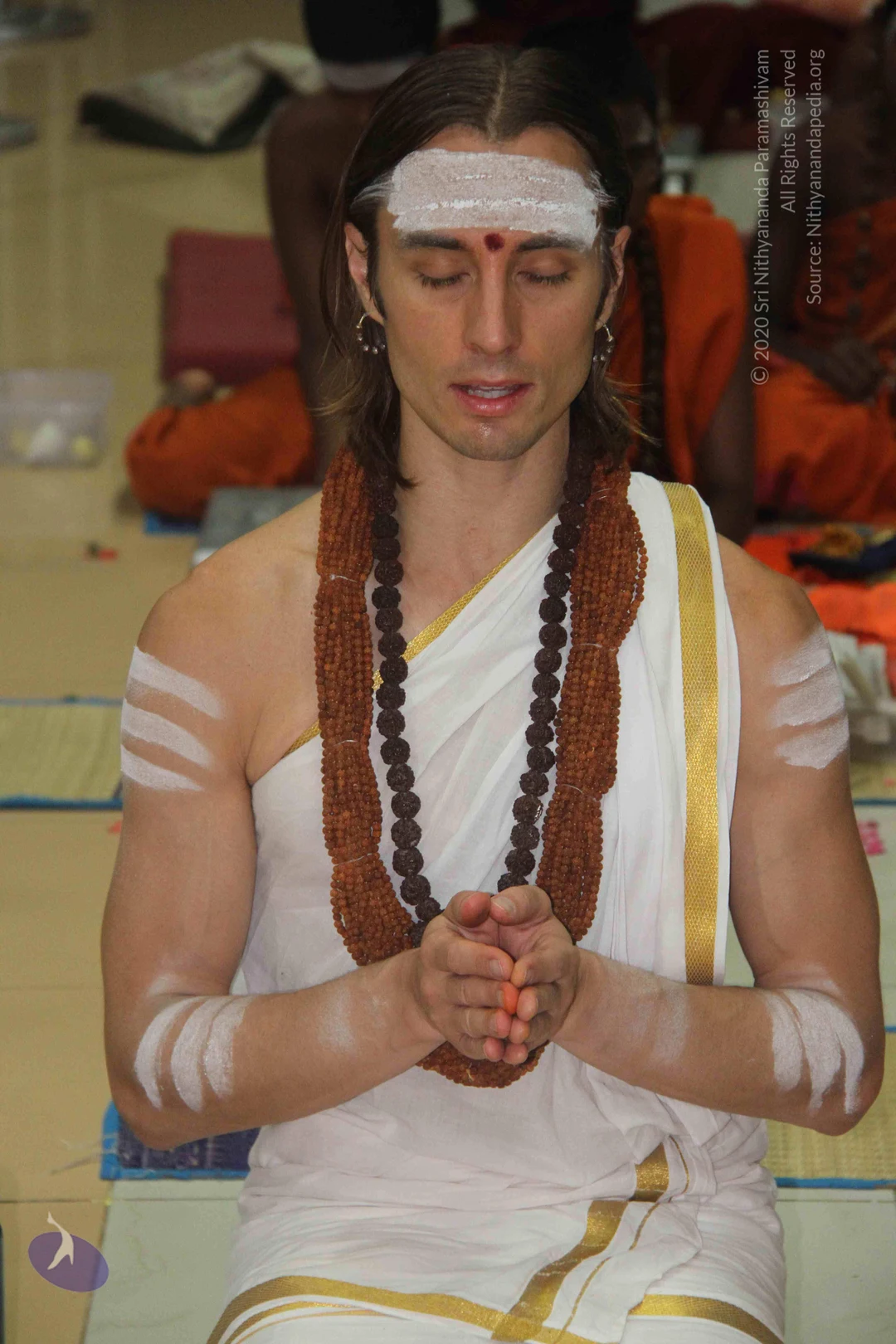
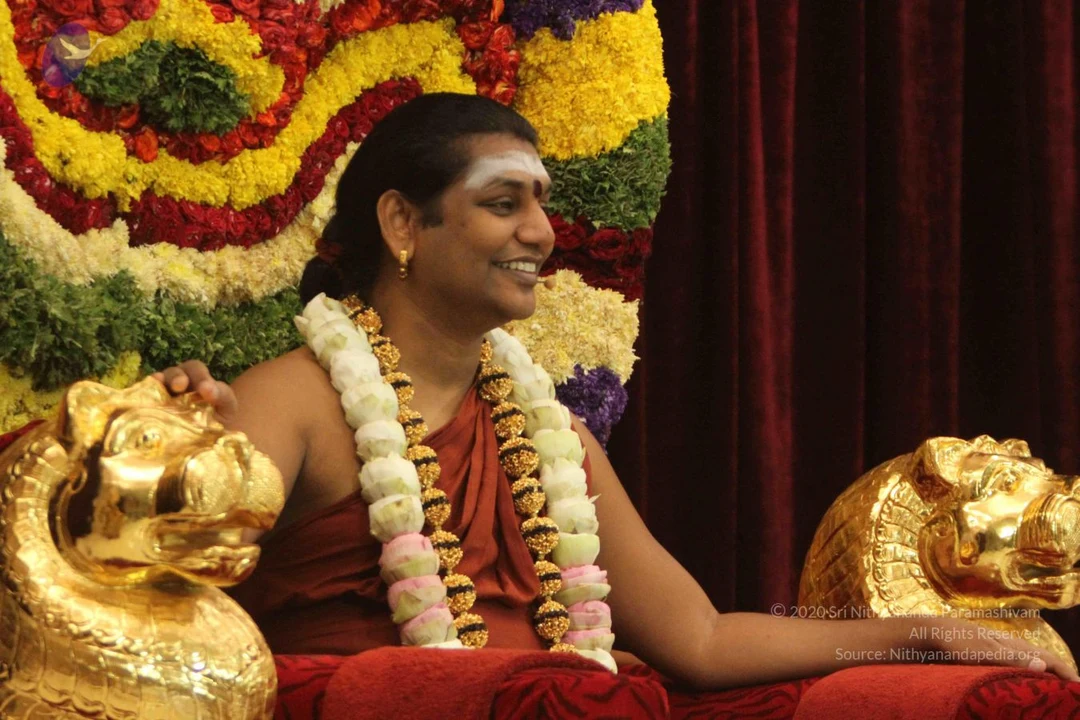
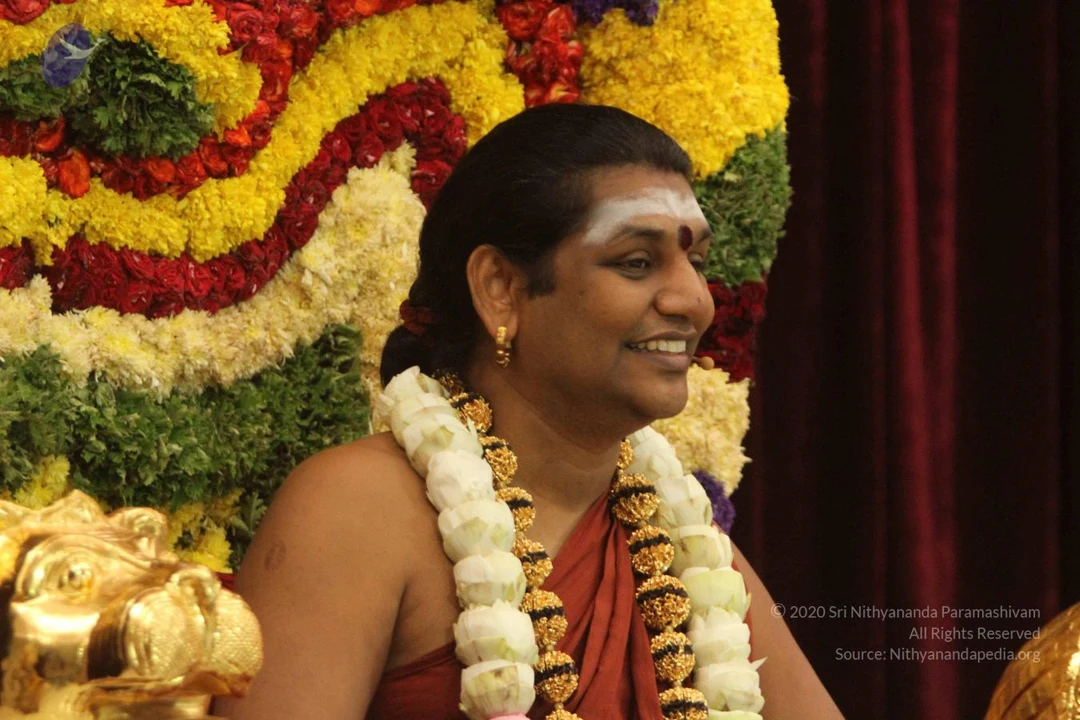
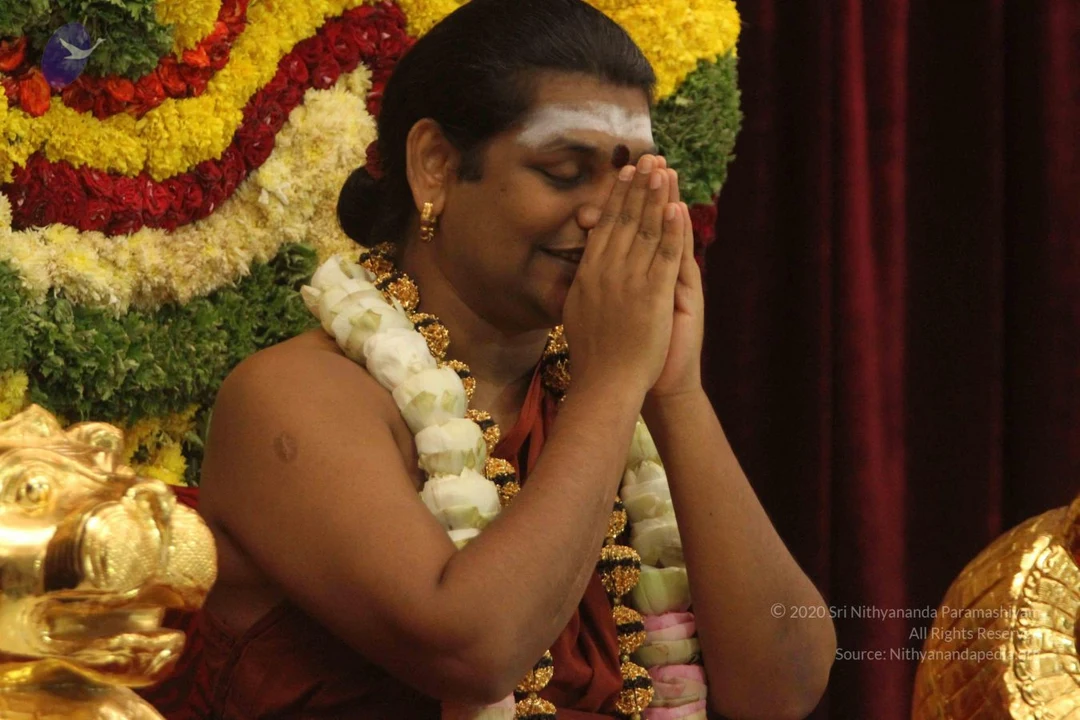
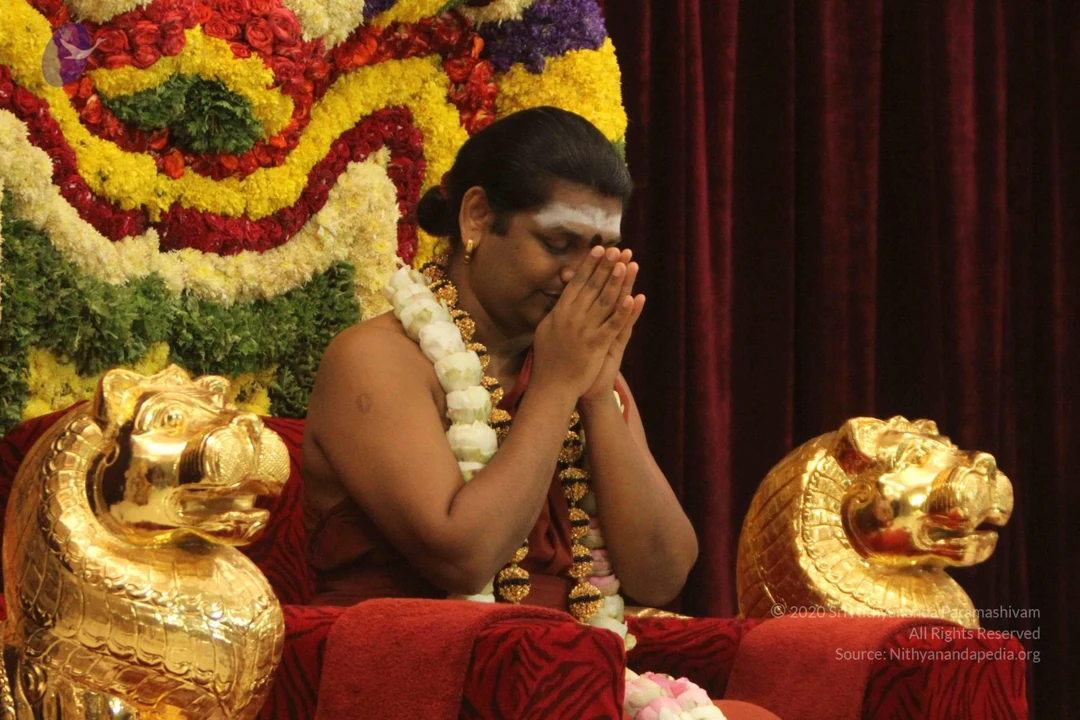
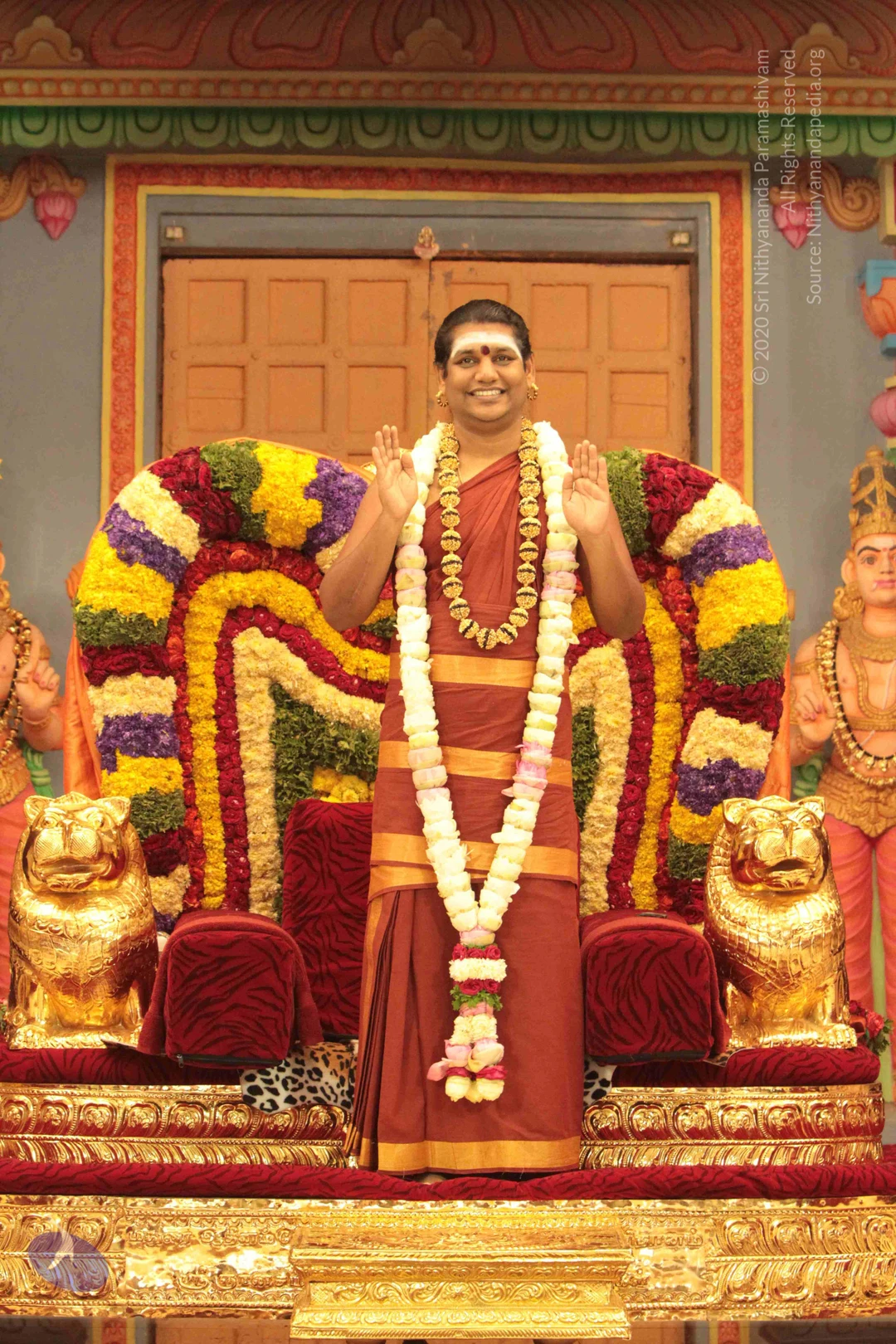
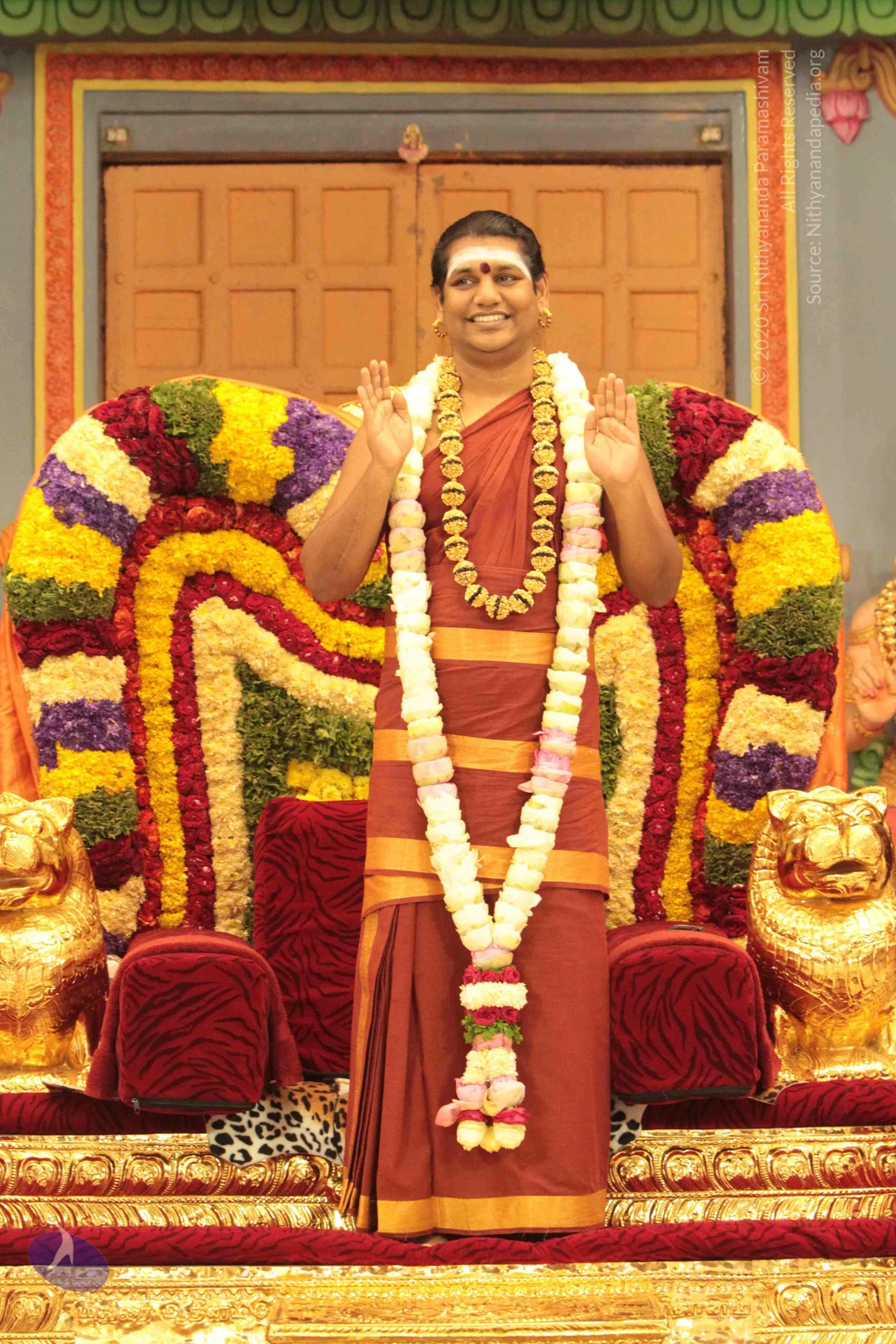
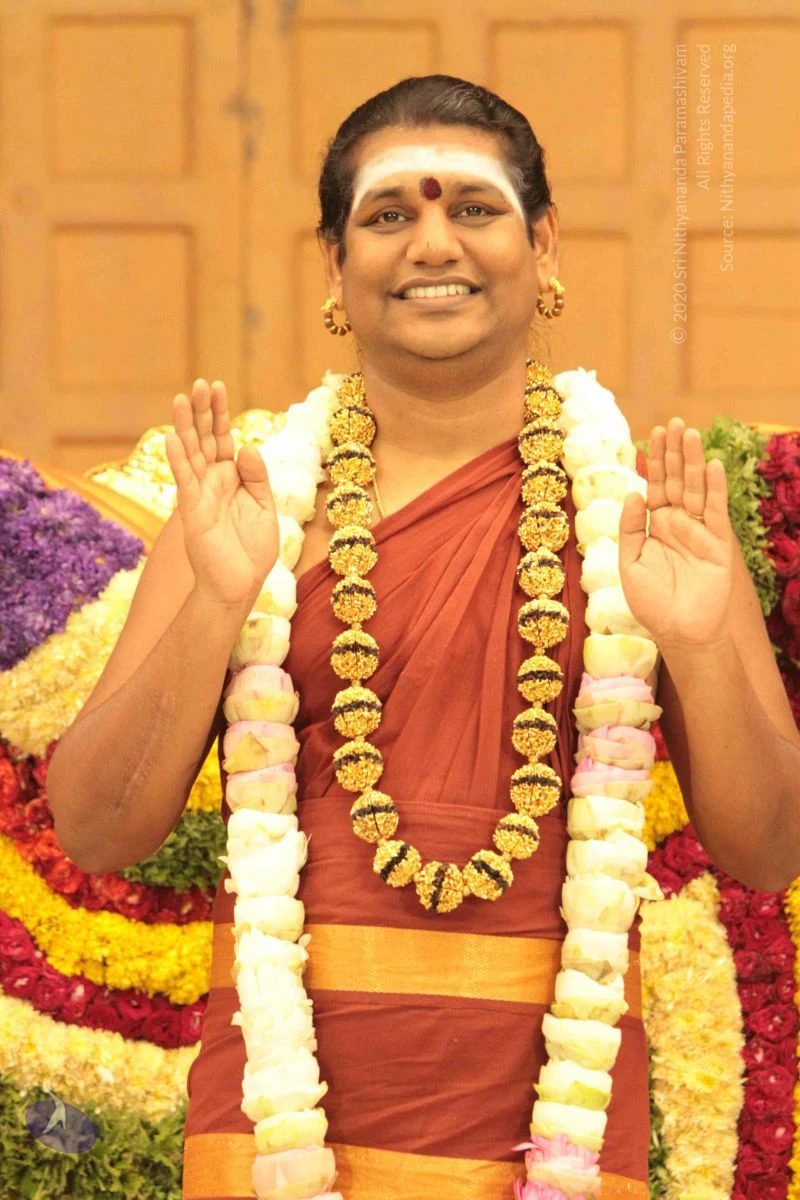
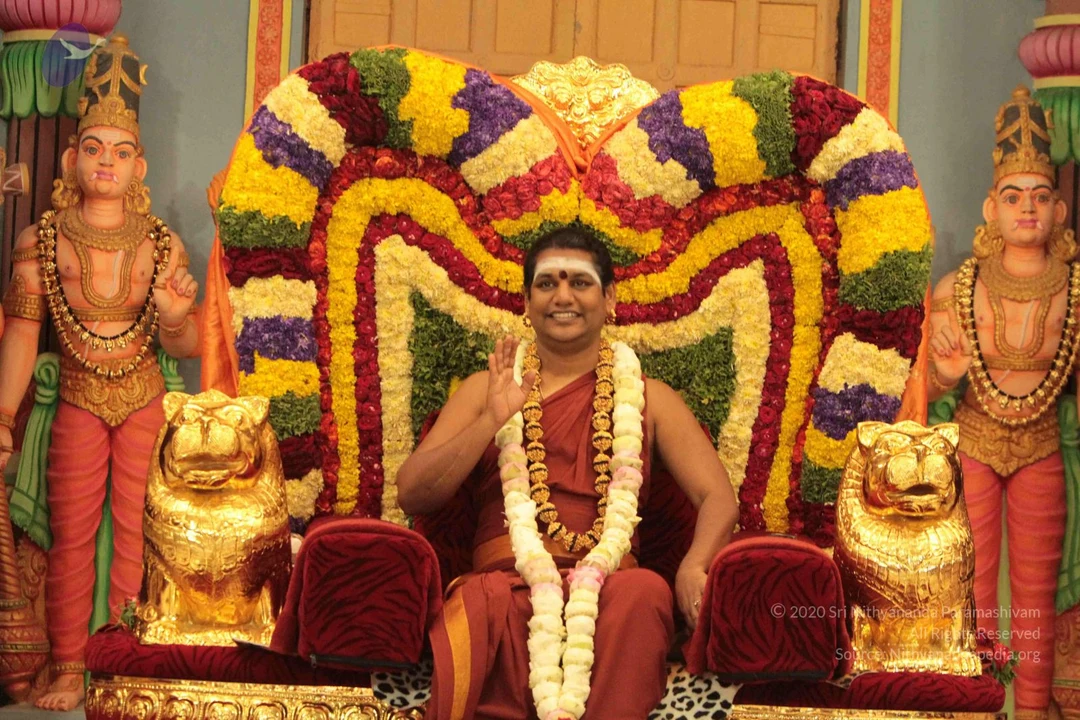
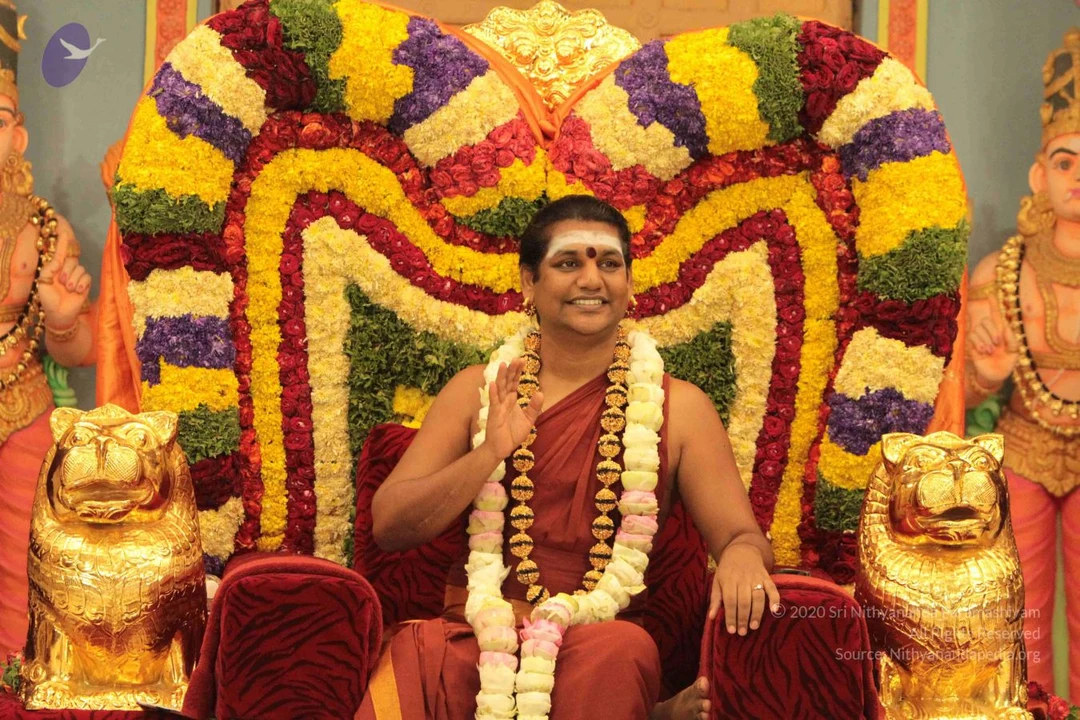
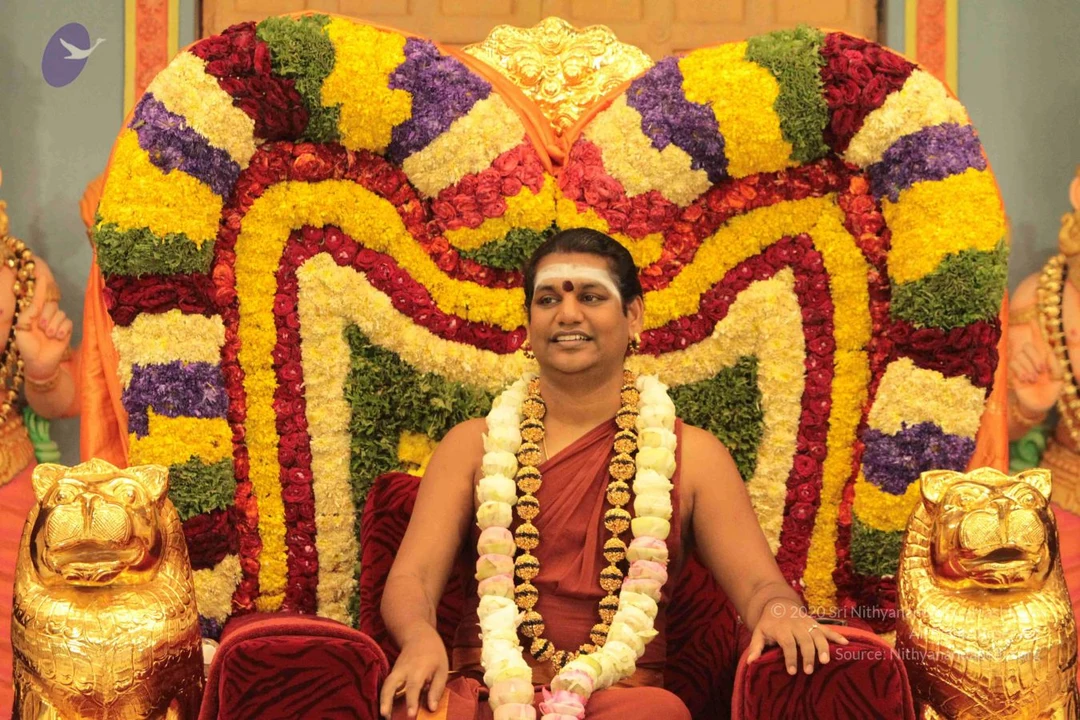
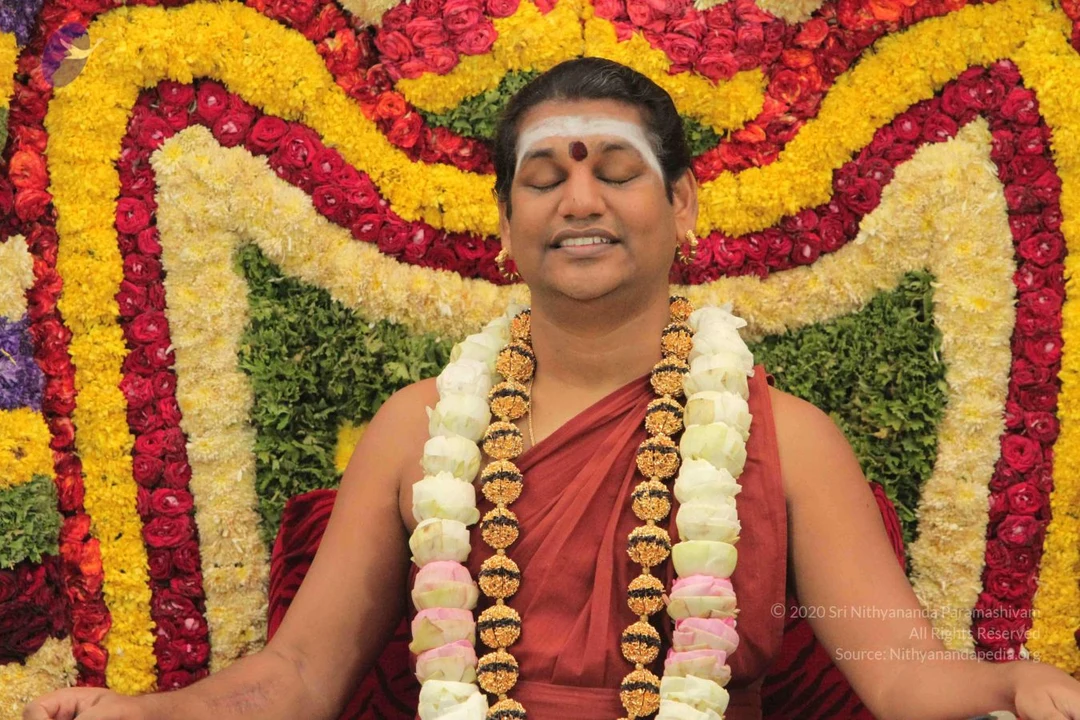
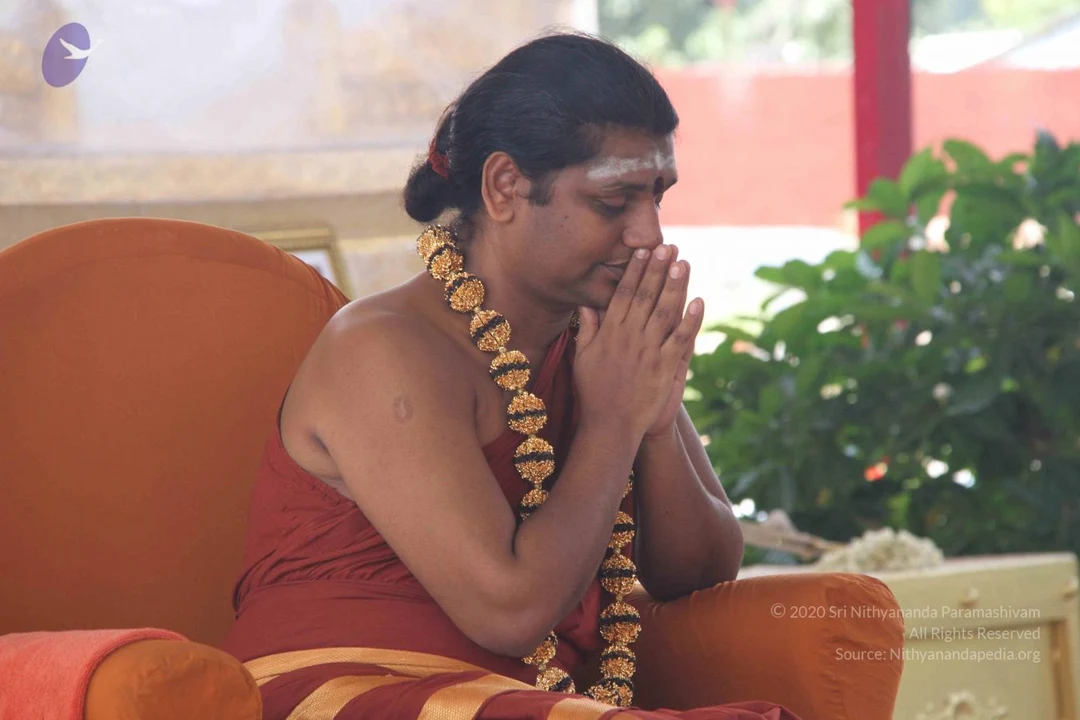
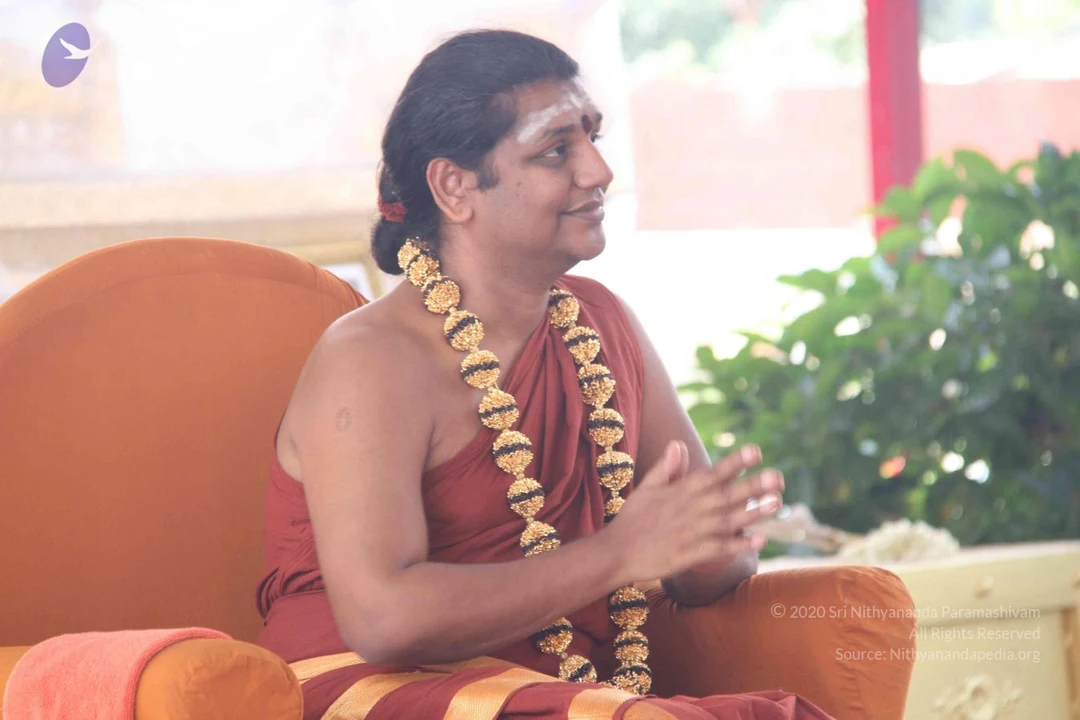
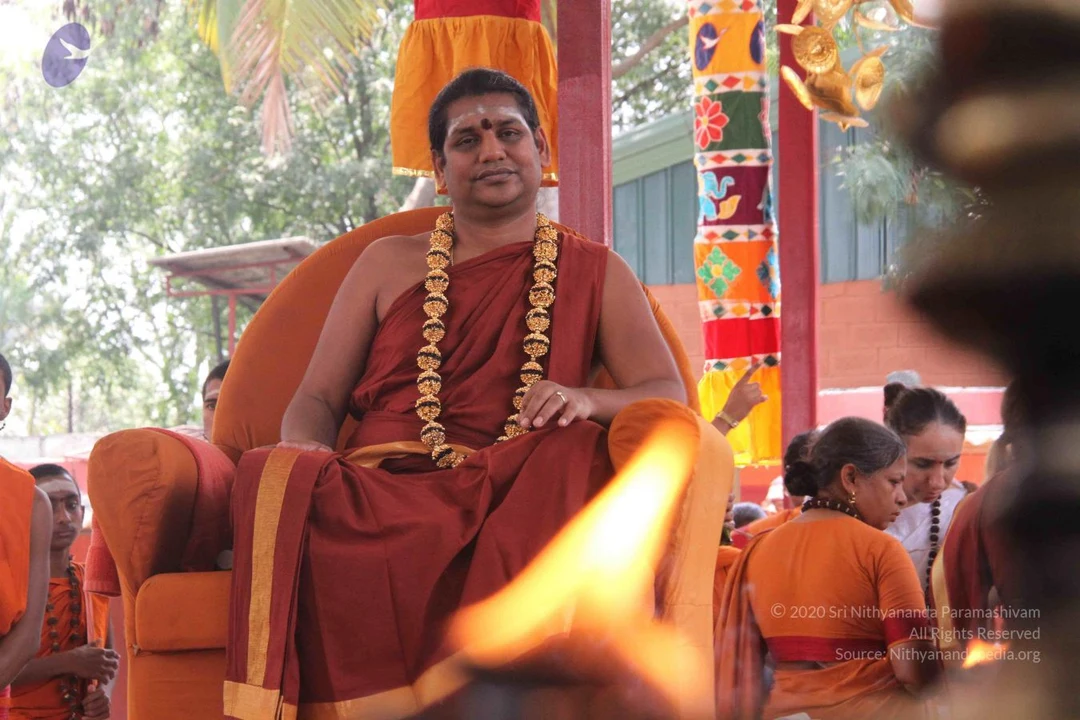
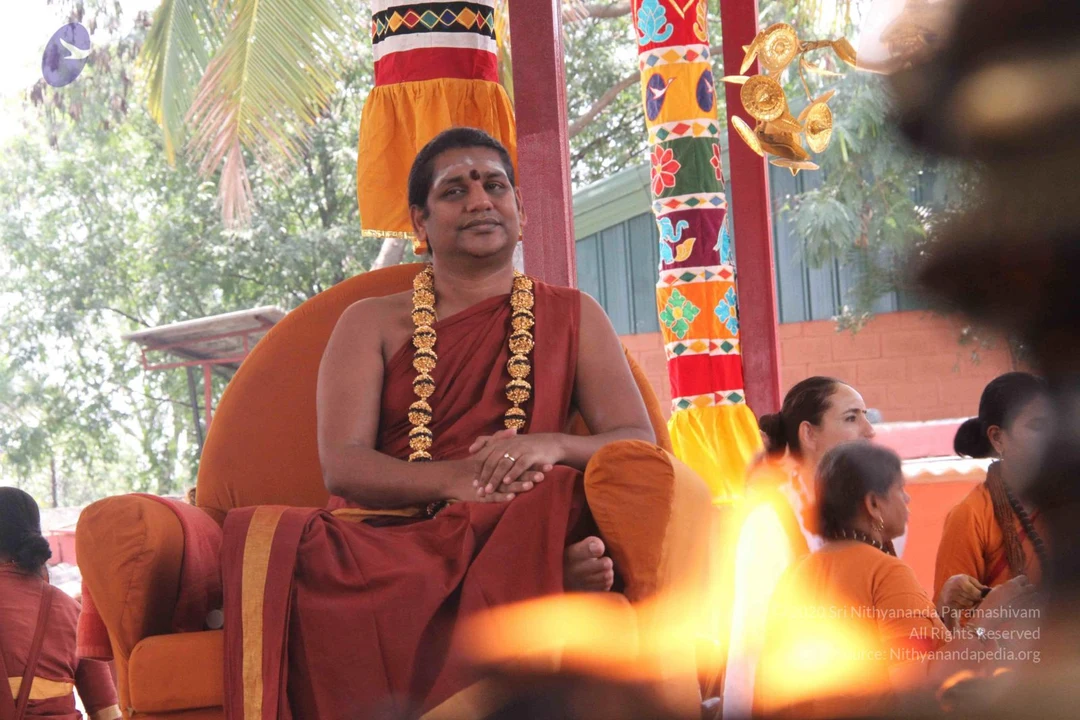
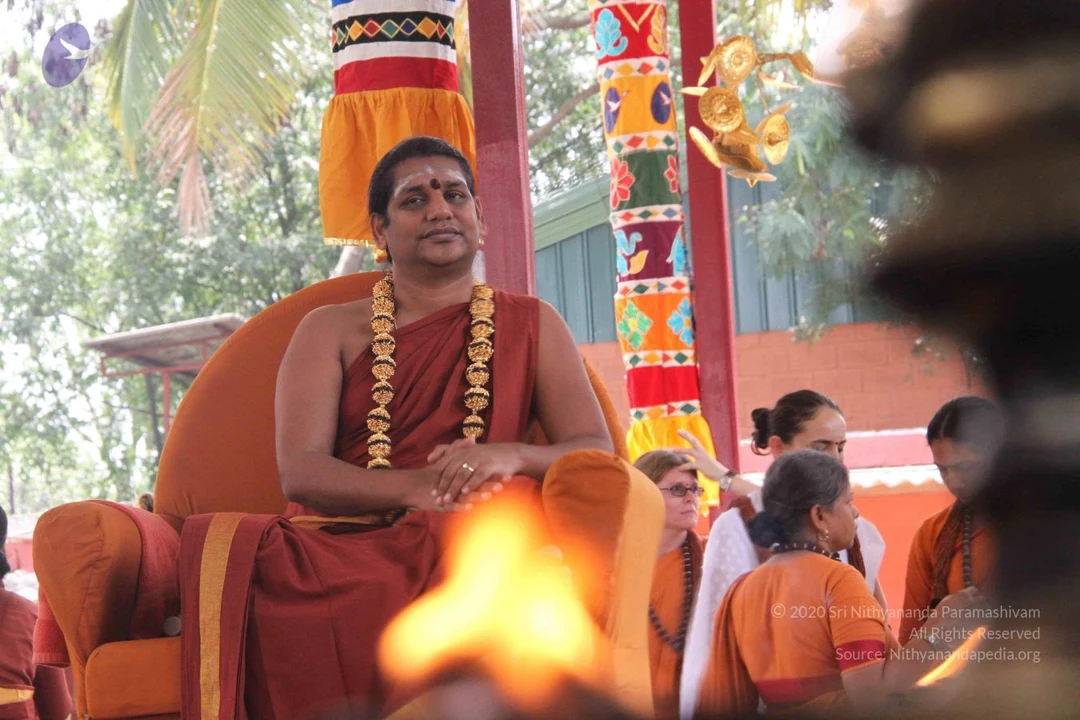
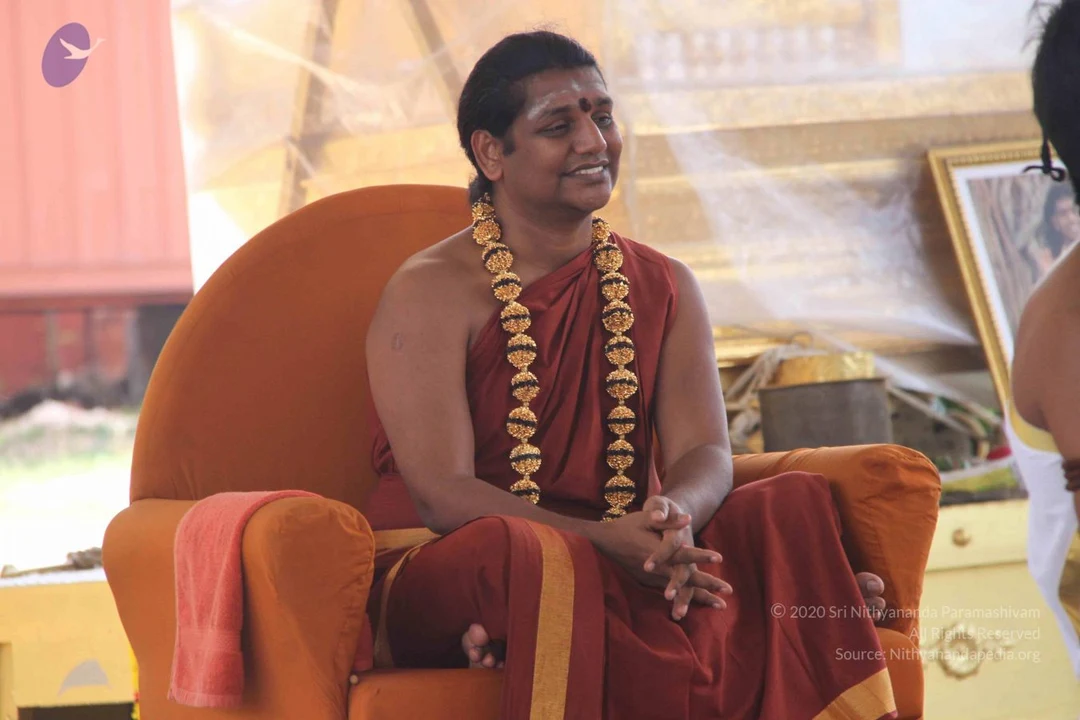
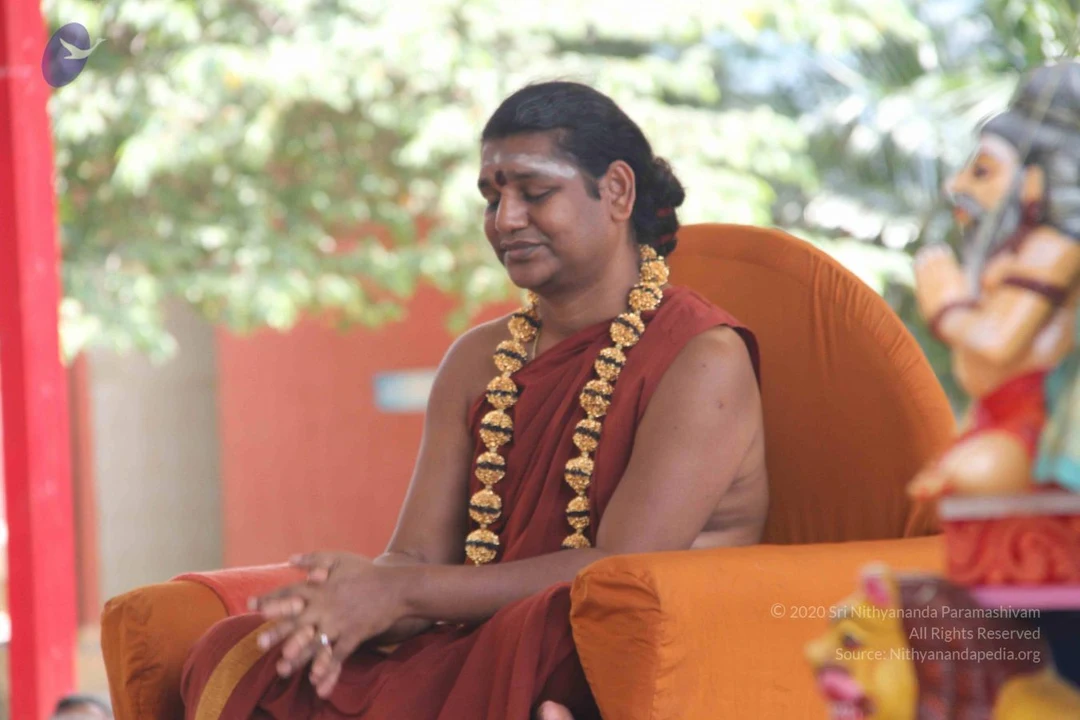
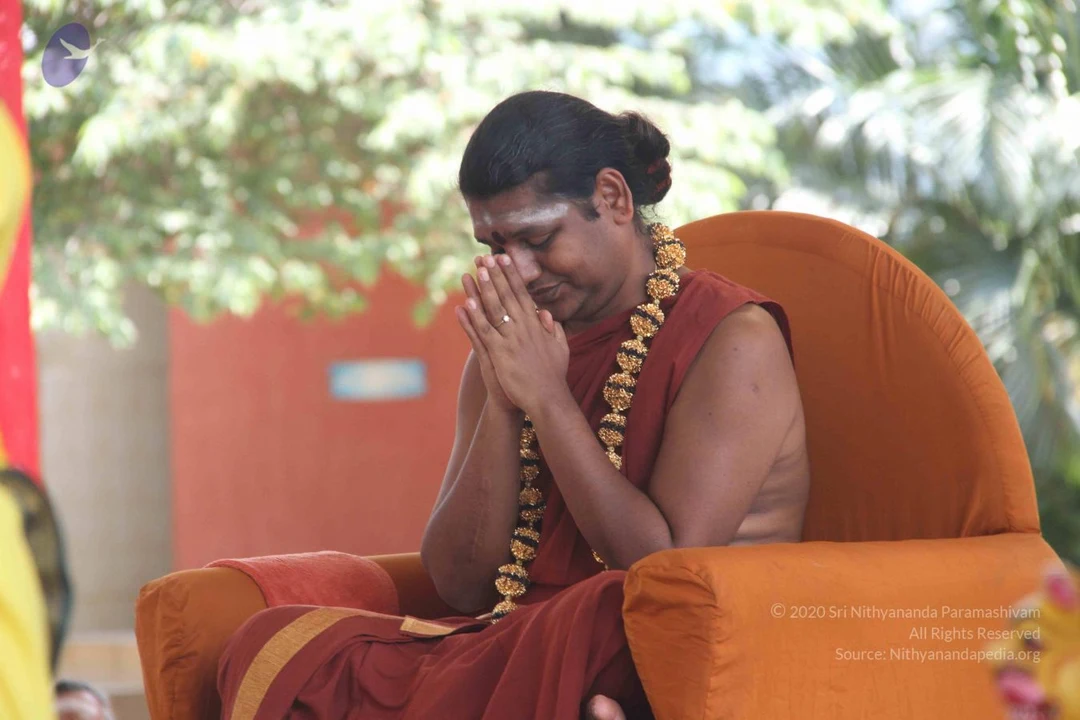
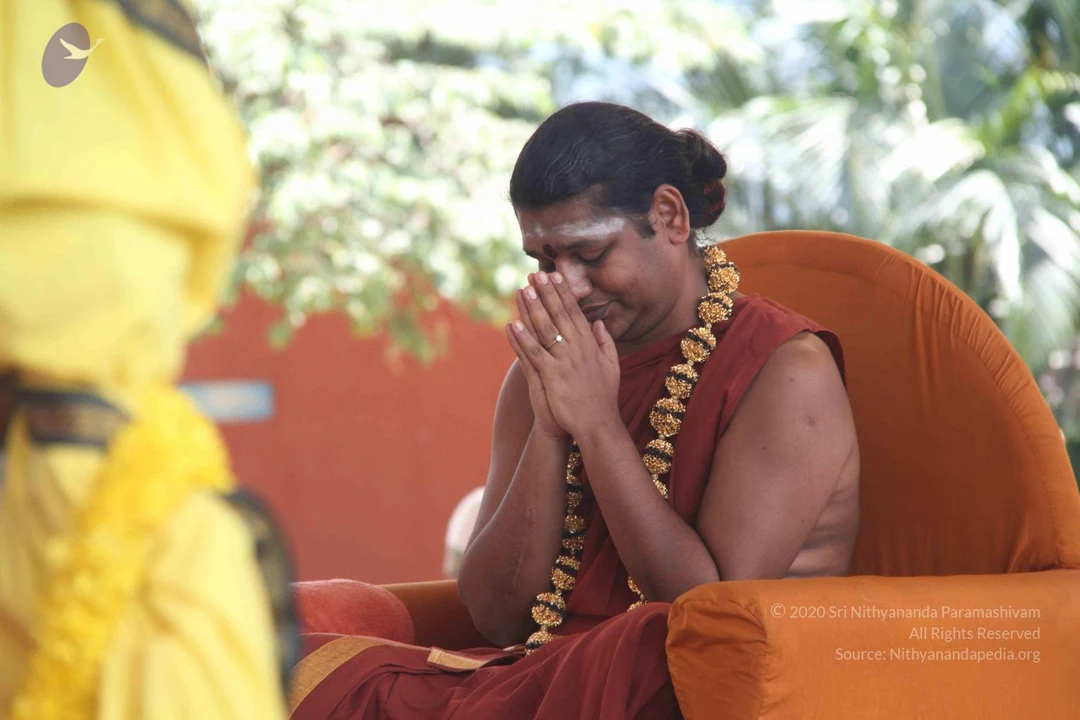
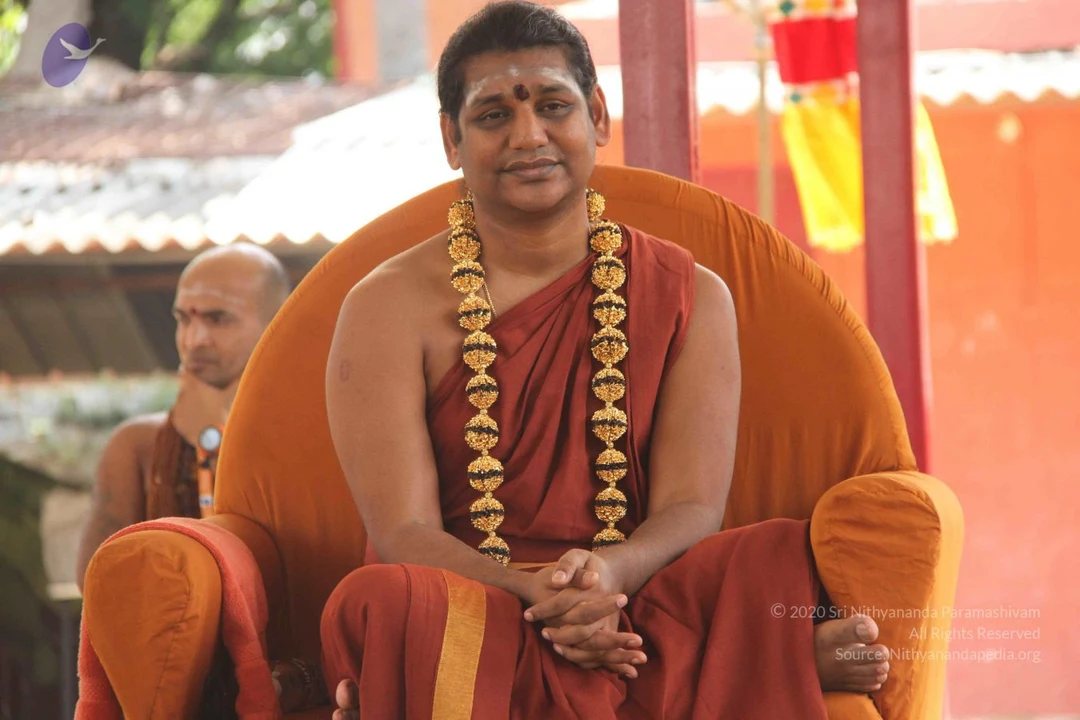
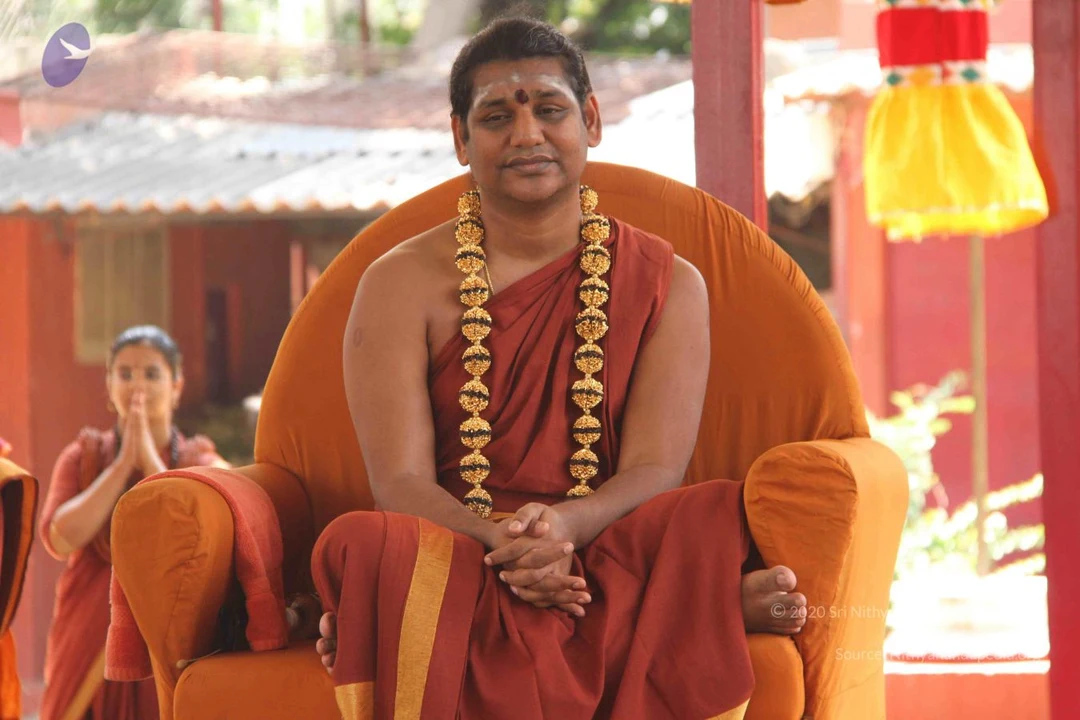
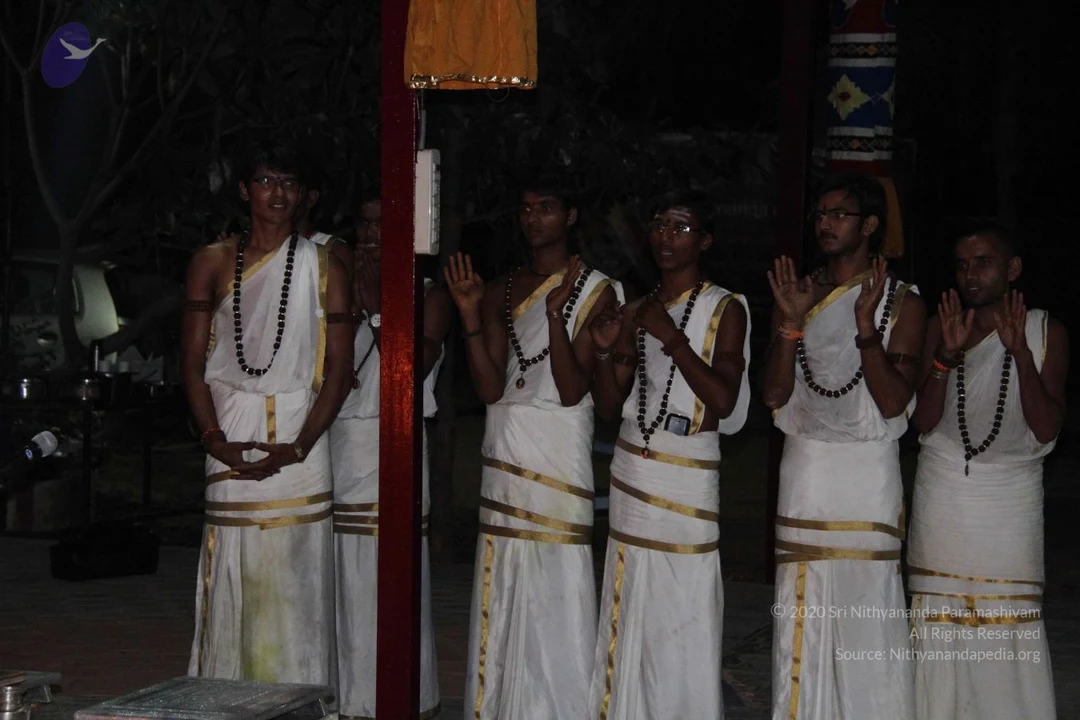
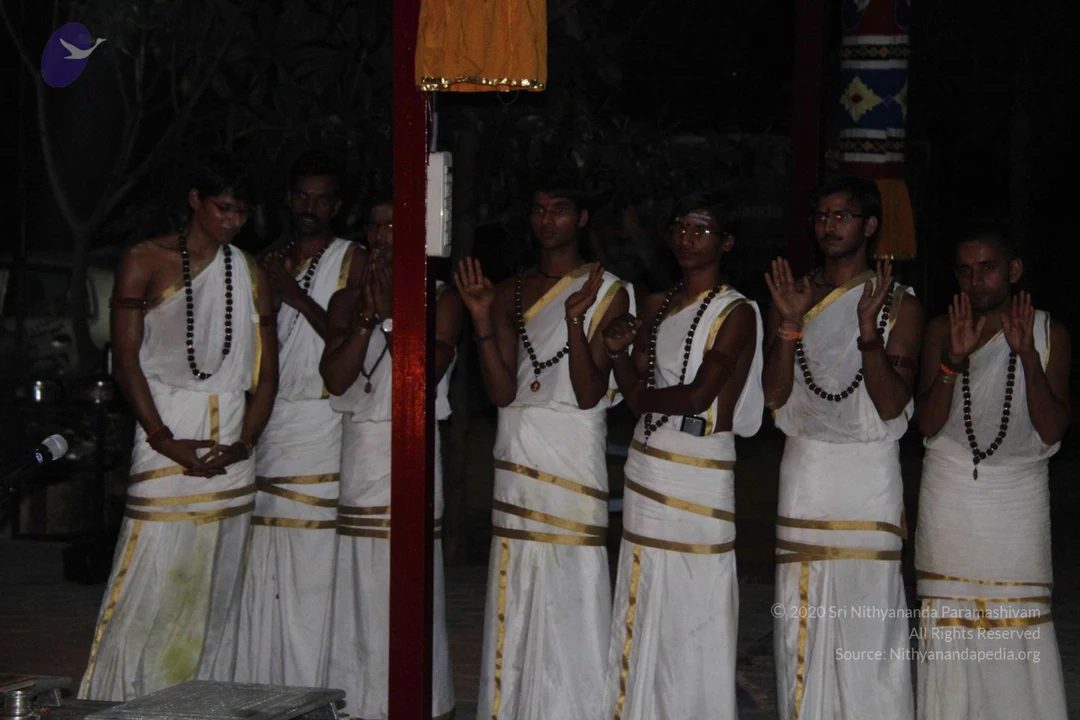
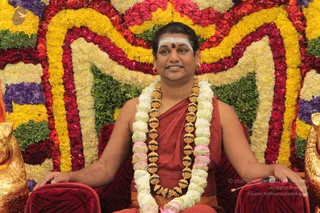
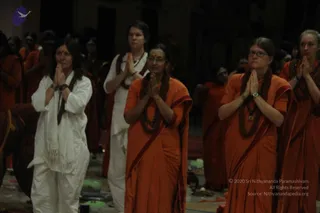
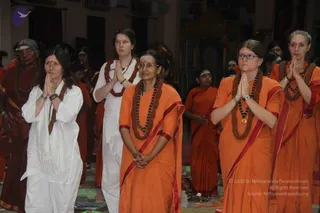
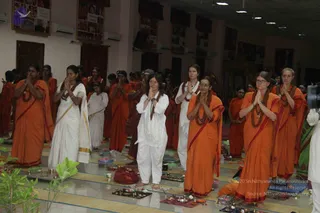
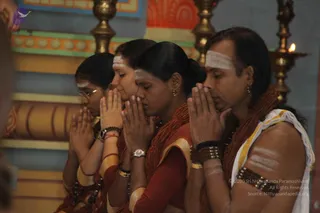
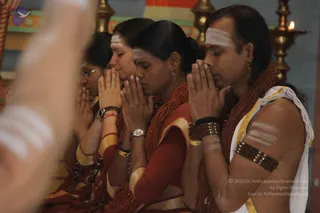
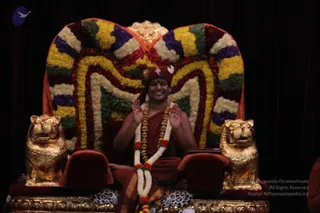
A man in a dark red-brown saffron-toned robe sits on a red velvet throne-like seat before a wall of marigolds, roses and green foliage arranged in yellow, red and white bands. He wears a white vertical tilak with a red dot, gold earrings, and a long garland of white flowers with pink roses strung with gold-and-black beaded rudraksha-style beads. His hands rest on the armrests. Gold lion-like ornamental statues flank the seat at the edges. Background includes a gold logo at top left. This matches the page's description of a morning satsang, but the man is not visibly identified here; he is described by role as a seated speaker in a satsang setting.Photograph of a crowded indoor satsang hall with devotees standing in prayer, hands pressed together in anjali mudra. In the foreground, a woman in white clothes and a white shawl stands on the left, a woman in white on the second row, and women in orange-saffron sarees with rudraksha malas stand on the right; one wears glasses. Other devotees in orange robes fill the background in a dim hall with scattered flowers and small items on the floor. No a person candidate is visible in the frame.A group of devotees stand with palms pressed together in namaste at an indoor temple-hall ceremony. Foreground women wear orange saris with red borders and rudraksha malas; the woman second from left wears white with a rudraksha mala, and the woman on the far left wears a brown-red garment with a white forehead marking. Behind them other devotees in orange and white stand in rows, and a dark ornate shrine stands in the background with small offering trays on the floor.A large indoor hall with a polished floor where a group of devotees stands in prayer with palms pressed together at chest level. Most wear orange or saffron robes and rudraksha malas, while several women in plain white garments stand among them. Small brass plates and oil lamps sit on the floor before them, and wall panels and framed photographs line the room. No individual is clearly identified as a person in this view.Four devotees sit in a row with palms pressed together in namaskar and eyes closed, in front of a temple-style backdrop with brass lamps and painted panels. The man on the right wears a white dhoti with a gold border, bare upper body, rudraksha mala, and white vibhuti lines on his forehead and arms. The three women wear red and orange saris with gold borders, rudraksha malas, gold bangles and vibhuti marks on their foreheads. A lit oil lamp glows at the upper right.Several devotees sit in a row with palms pressed together in namaste, eyes closed, during a satsang. Foreground right, a man in a white dhoti with gold border and a mala of rudraksha beads wears white vibhuti horizontal lines on his forehead and arm. Beside him a woman in a rust-red sari with gold border and red rudraksha mala holds hands in prayer, and further left more women sit similarly with white forehead marks. A brass oil lamp with a lit flame stands at the upper right, and a blurred hand is in the left foreground. No one is identified as a person in this image.

kumari-puja

240 photosSource gallery
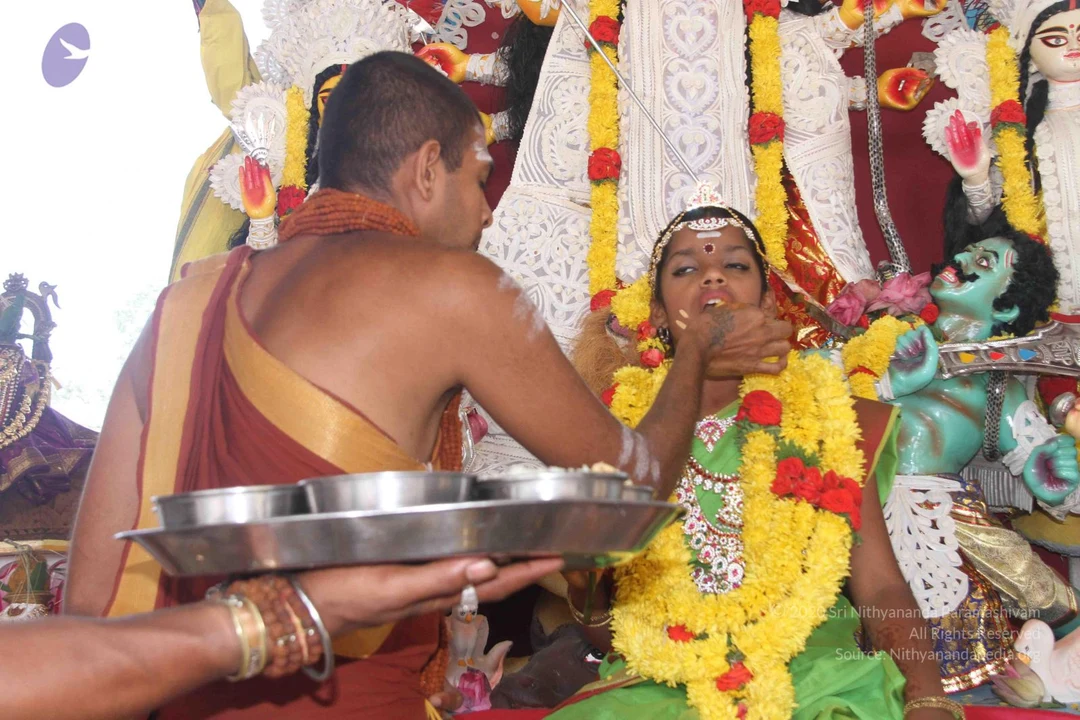
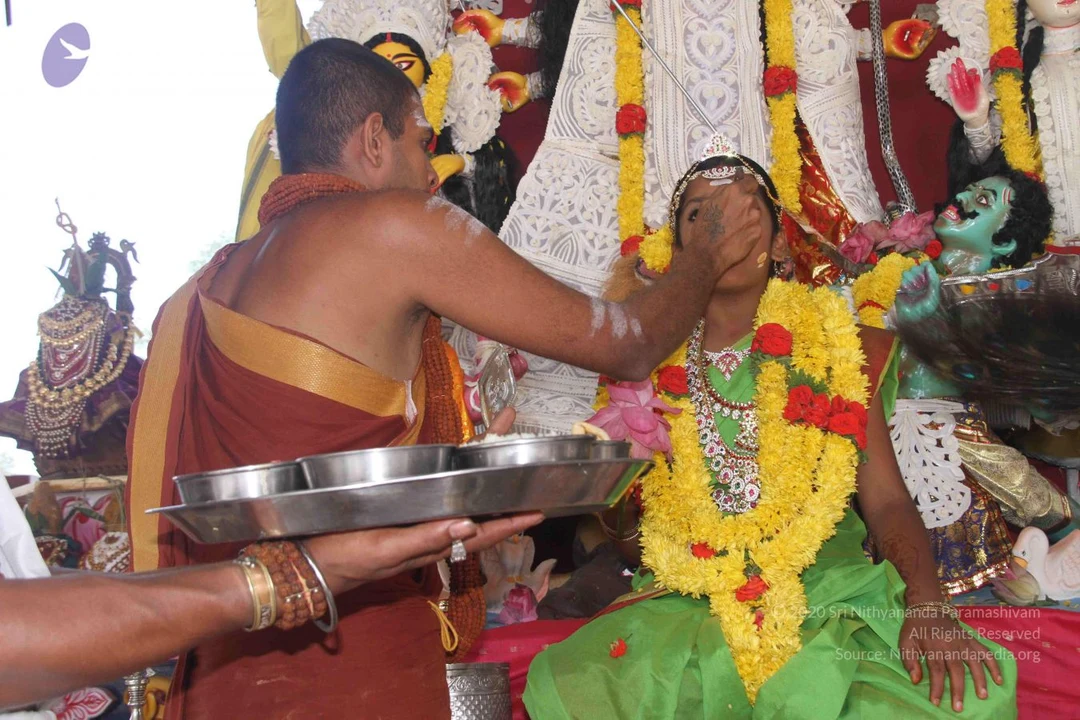
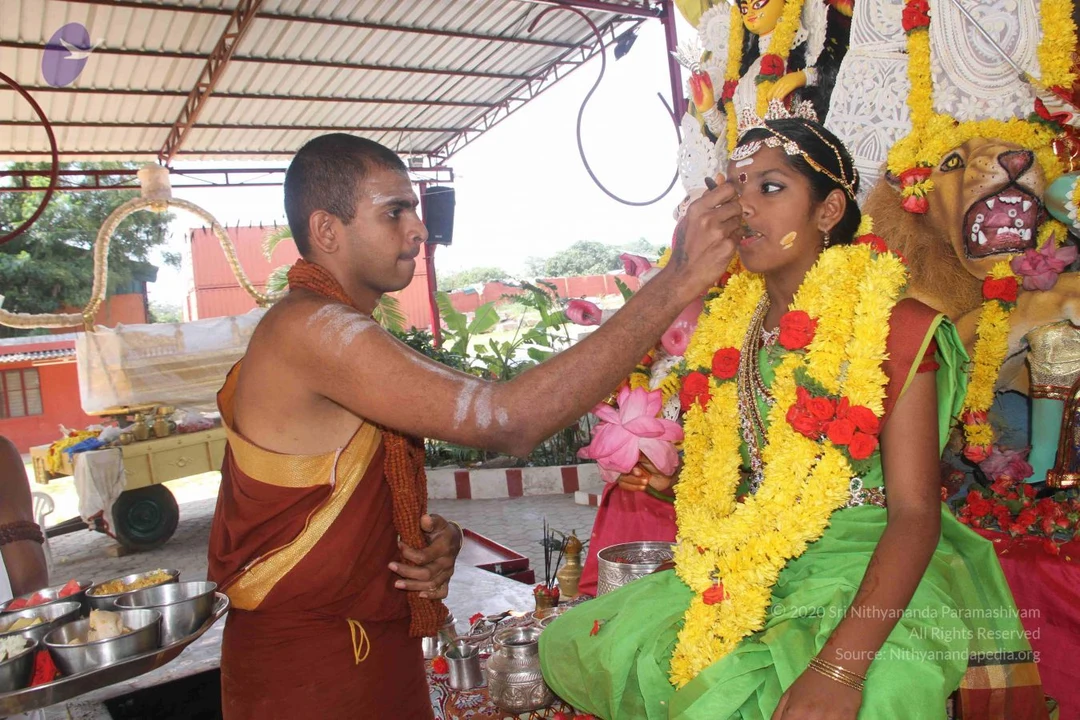
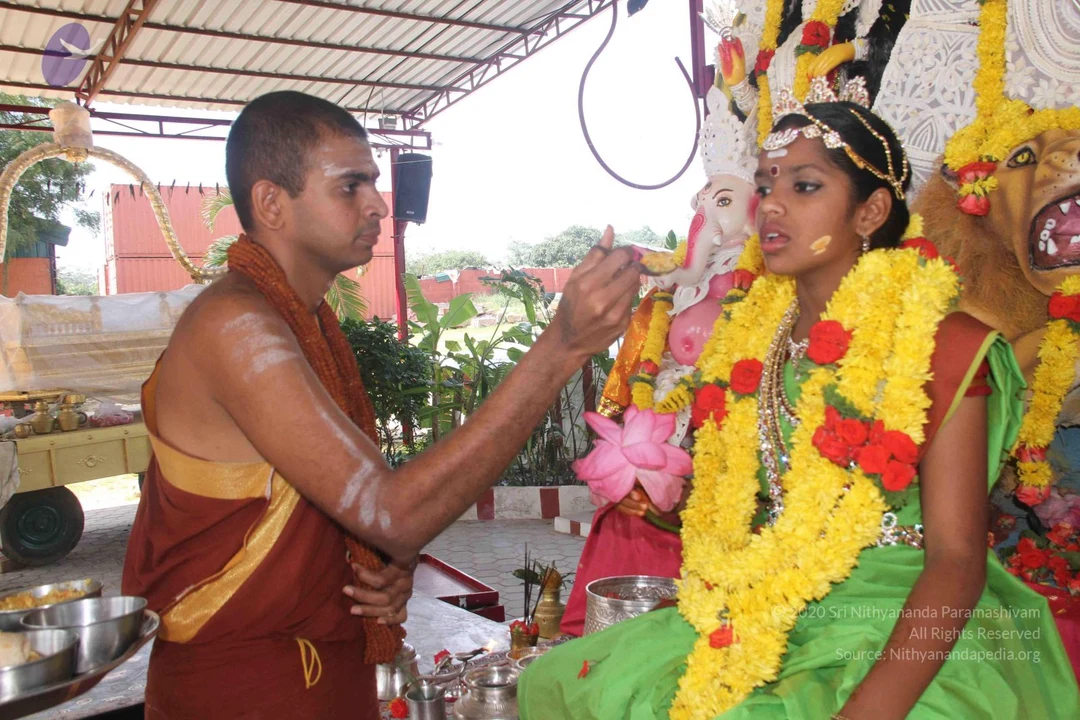
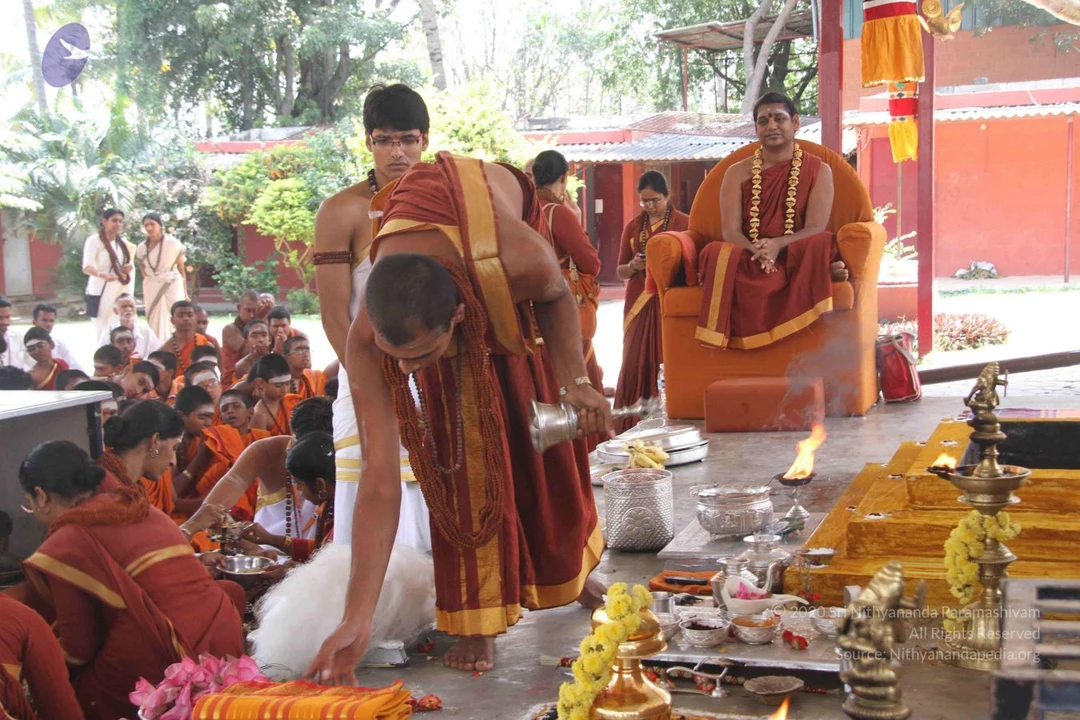
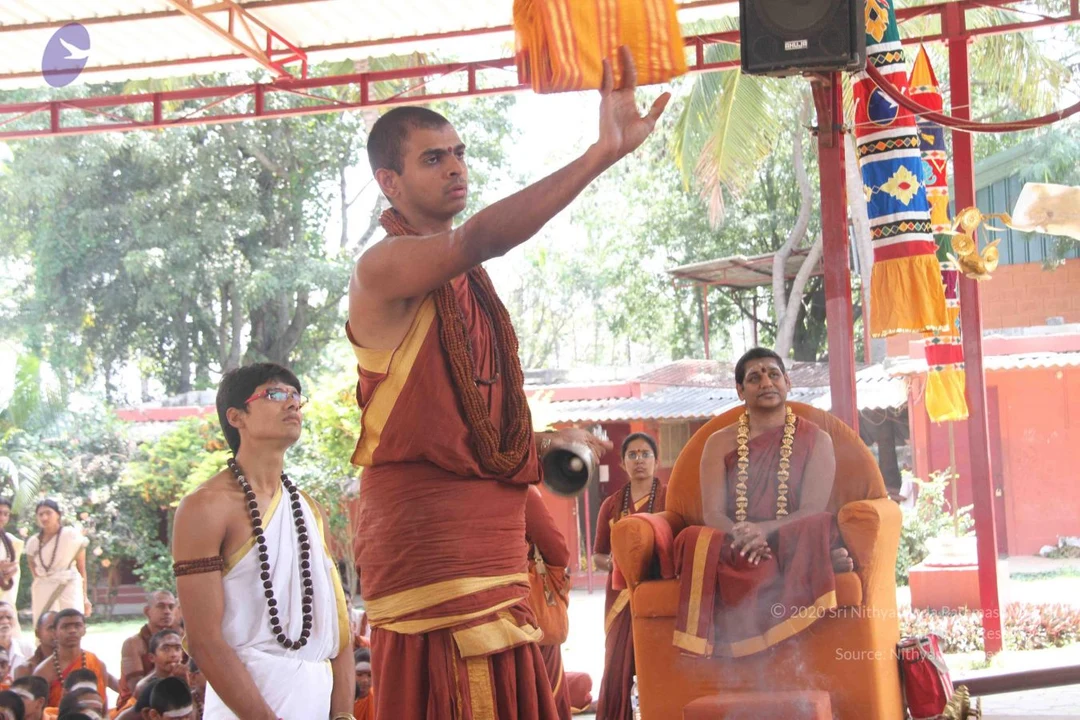
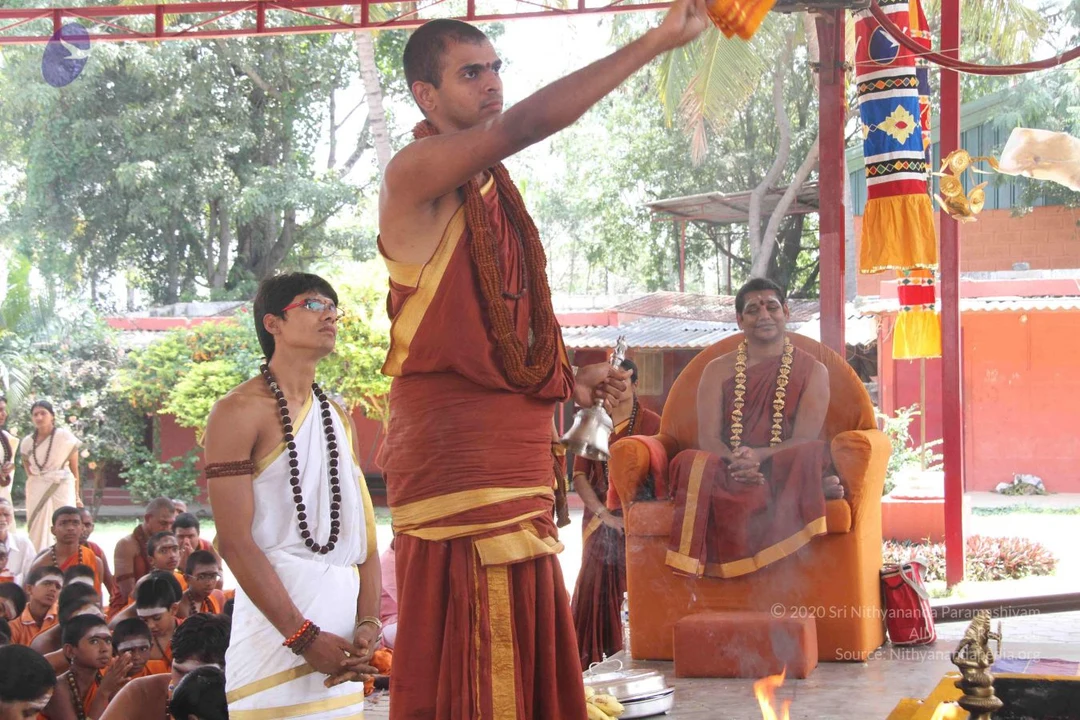
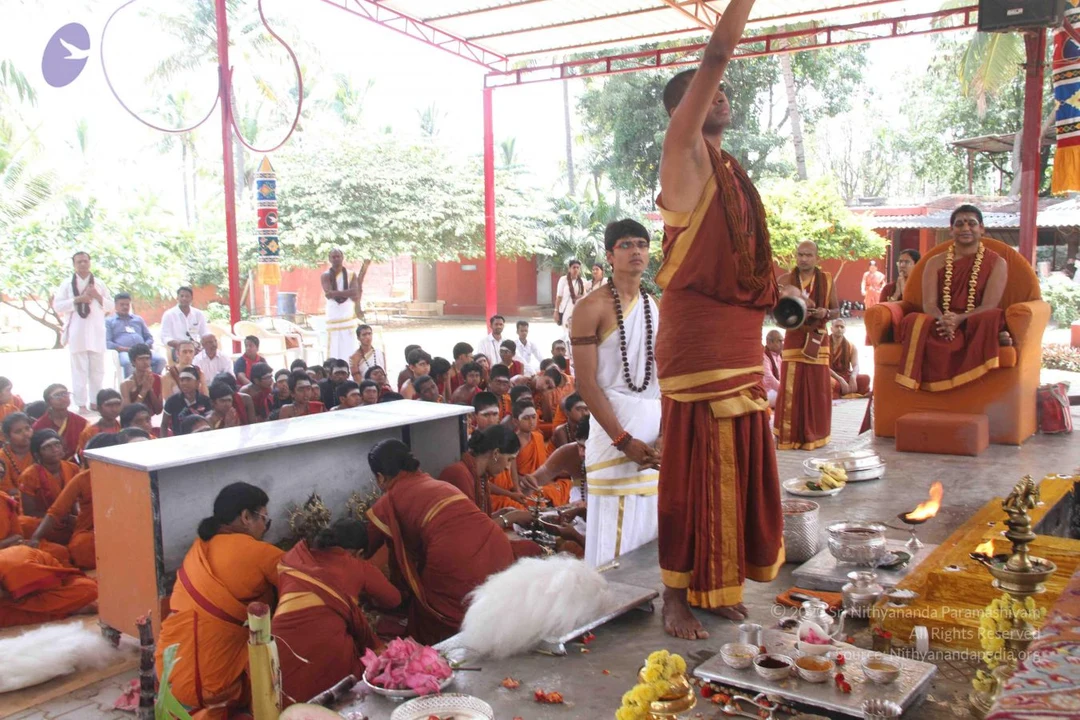
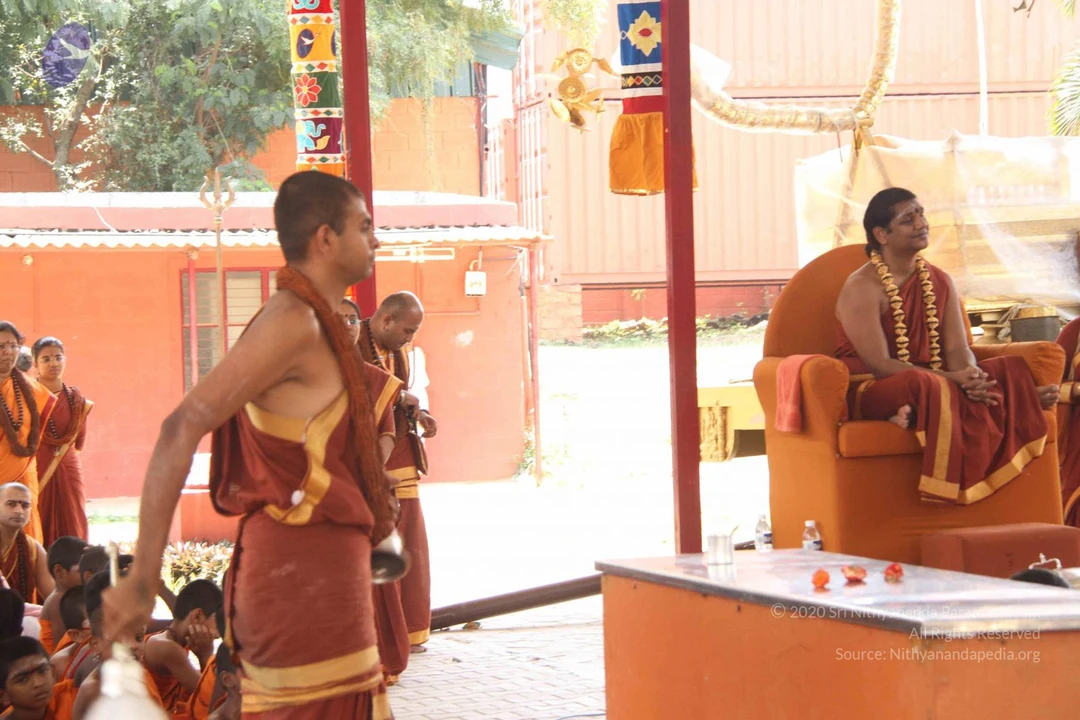
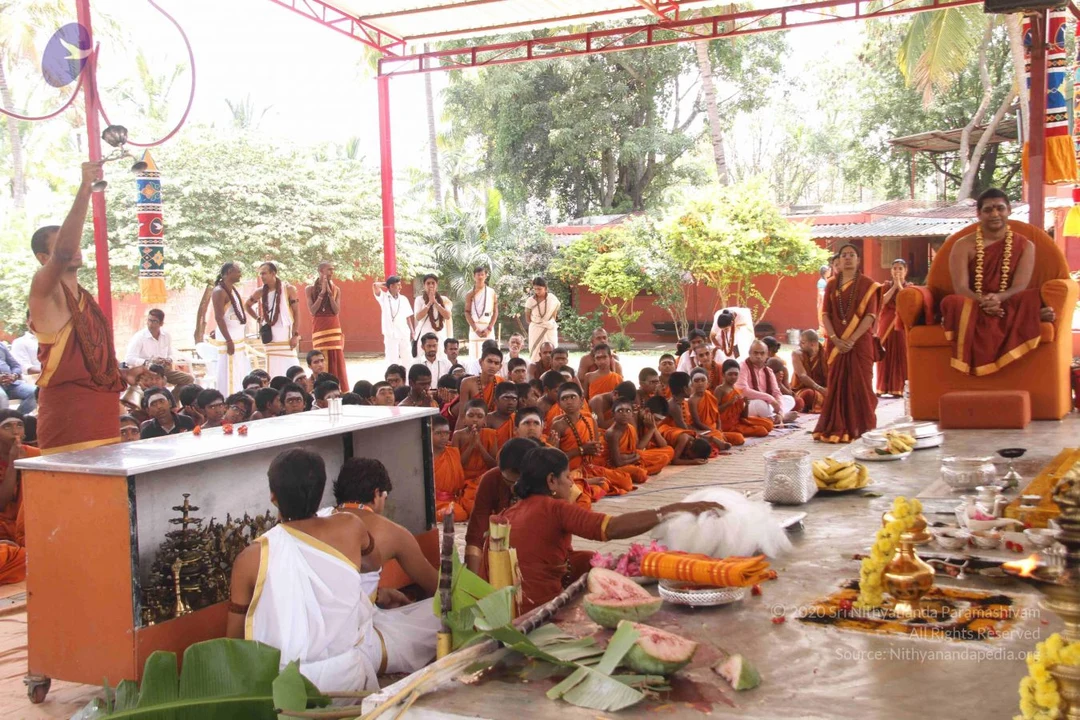
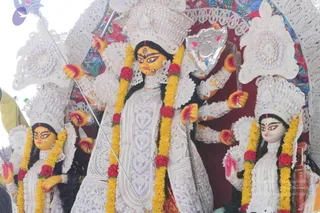
Close-up photograph of three large white clay deity murtis decorated for Navaratri festivities. The central multi-armed goddess wears a white lace-patterned sari, an ornate white crown, and a garland of yellow marigolds with red flowers, holding a trident, a silver shield and other weapons. Smaller attendant murtis flank her on either side, also white with marigold and red garlands. Their faces are painted with bold eyes and a red tilak, and the backdrop is red and white. No people are visible.A photograph of an outdoor Navaratri shrine with a large white-clad goddess murti at the centre, flanked by smaller white-robed goddess figures, a lion beneath her, and a Ganesha figure in front. Garlands of orange marigolds and red flowers adorn the deities, and small oil lamps glow on the shrine's arch. A priest in a rust-red dhoti with a saffron-and-gold shawl stands at left, extending his hand toward the offerings. Decorative mounds of figures, a red cloth on the platform, and trees and a pale sky appear behind.A photograph of a large Durga murti in a decorated shrine, the goddess shown white-clad with multiple arms and a crown, flanked by smaller deity figures, a lion mount and a Ganesha figure, all garlanded in marigold and orange flowers. A devotee in a rust-red and gold-bordered dhoti and shawl, bare-chested, stands at left extending his arm toward a small offering stand, scattering petals or flowers above. The shrine has white lace-like decoration, lit oil lamps and a pink cloth at its base, with trees behind.An outdoor satsang under a red-framed open pavilion with a green leafy garland strung across the top and a black speaker mounted above. Beside him stands a shaved-headed young man in rust-red robes with a red shawl and rudraksha beads, facing the seated figure. Behind them a woman in white sits holding a small object near her face, and a conch-blowing figure stands in the background. To the right a large garlanded deity murti in pink and white dress with yellow flowers is adorned with marigold garlands and colourful ribbons hang from the roof. Green trees and shrubs form the backdrop, and a few seated devotees in the foreground are seen from behind.Outdoor temple ritual under a red-framed canopy strung with mango leaves. A shaved-headed priest in maroon robes and a saffron shawl raises a white conch-shaped object and holds a bell. Seated in an orange armchair, a man in maroon robes with a marigold garland sits with hands resting on his knees, his head bowed. A female devotee in a pink and gold sari, with flowers in her hair, stands beside a deity murti decorated with marigold garlands, a red cloth and a white ornament. Behind them are a black speaker, colourful triangular flags and a red-tiled roof. Palm-like leaves and green trees fill the background.A photograph of a large white deity murti of Goddess Durga with a crown and red-and-gold garlands, flanked by two smaller white-clad goddess figures with flower garlands. A lion sits below her, and a green-skinned figure and a figure in gold with a garland stand at the base. A man in a saffron-red dhoti and shawl, seen from behind with his back to the camera, raises a pink lotus flower in one hand toward the murti, apparently performing a puja. A Ganesha figure with a white trunk and orange garland stands at lower left. Green trees and a tin roof frame the outdoor shrine.
chandi-homa

56 photosSource gallery
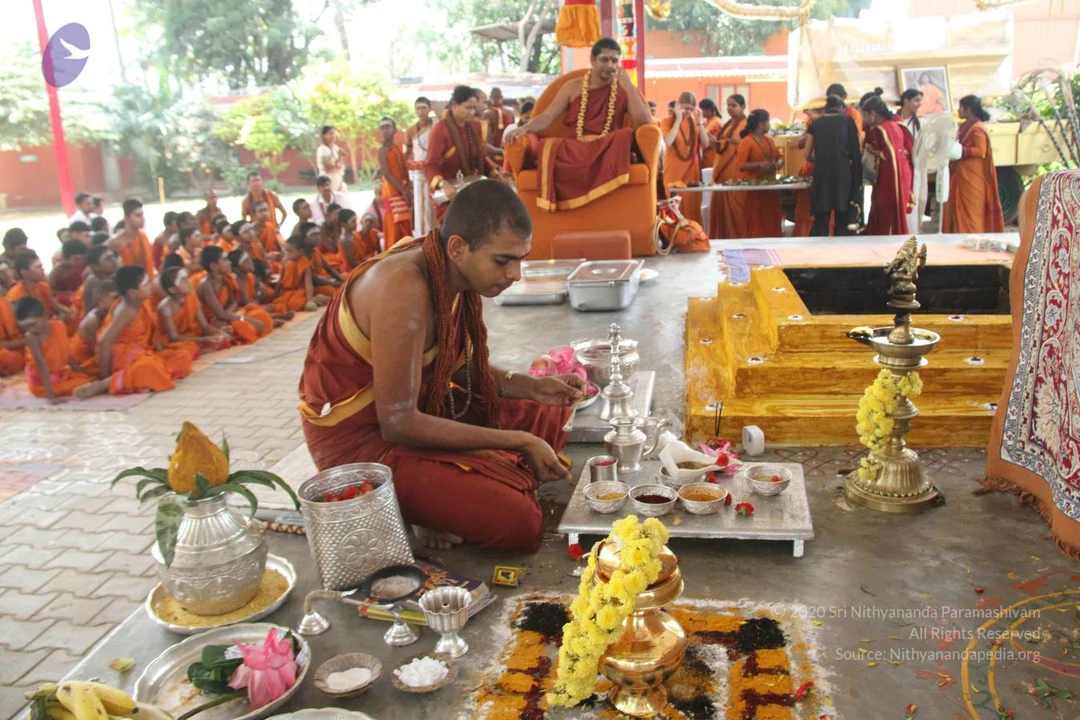
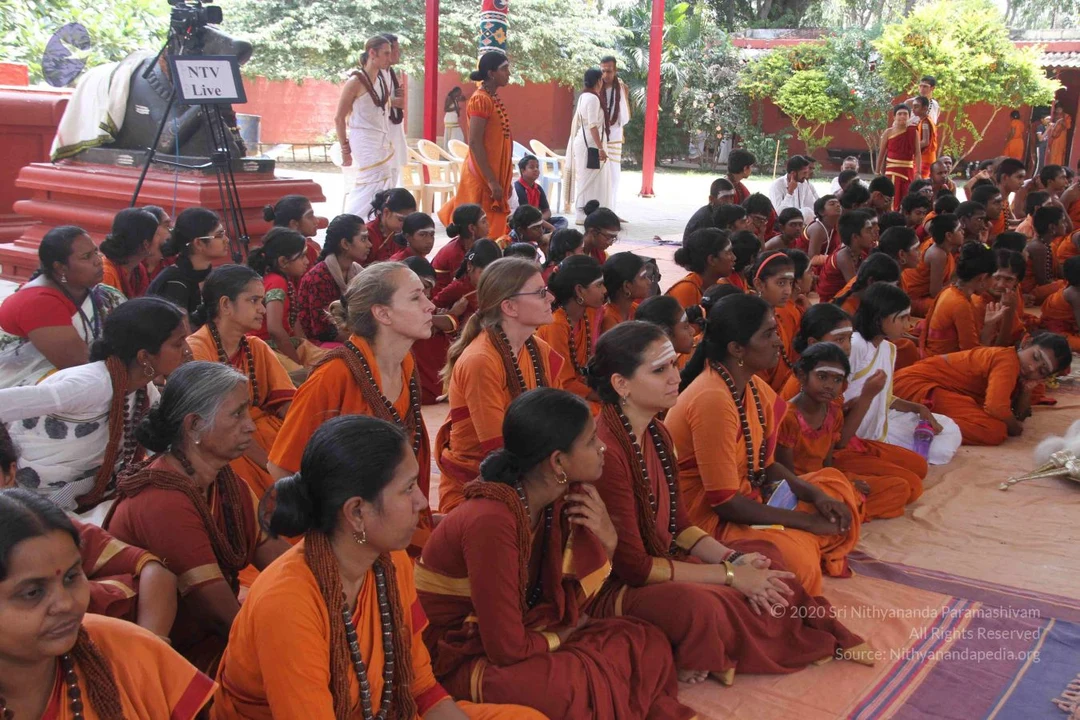
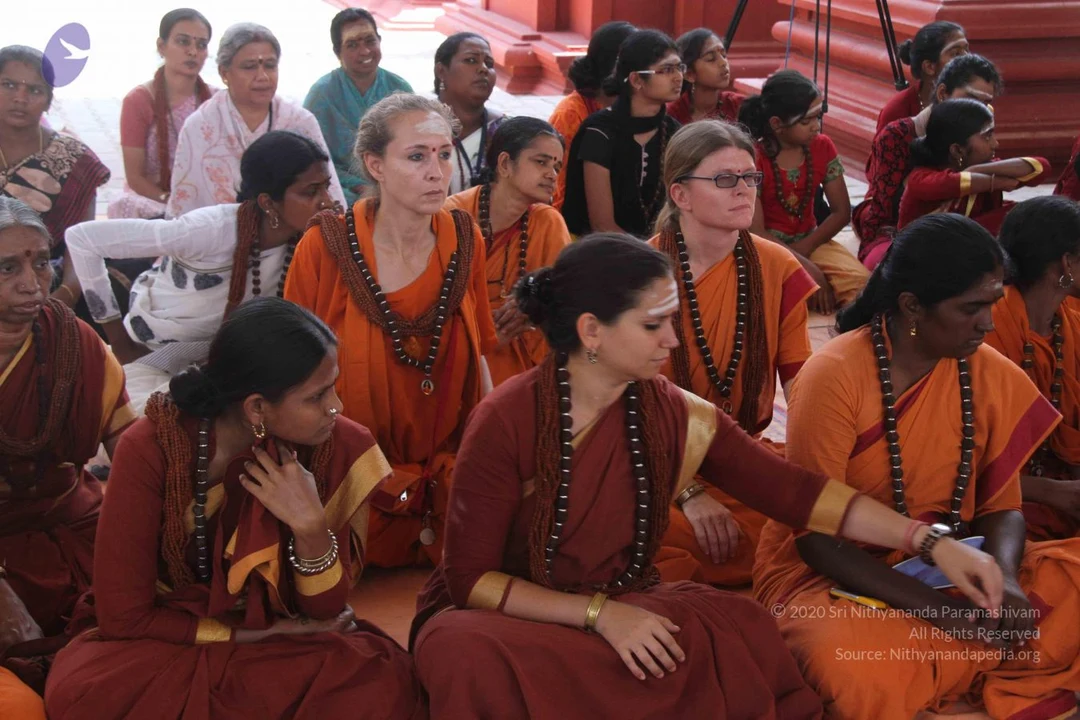
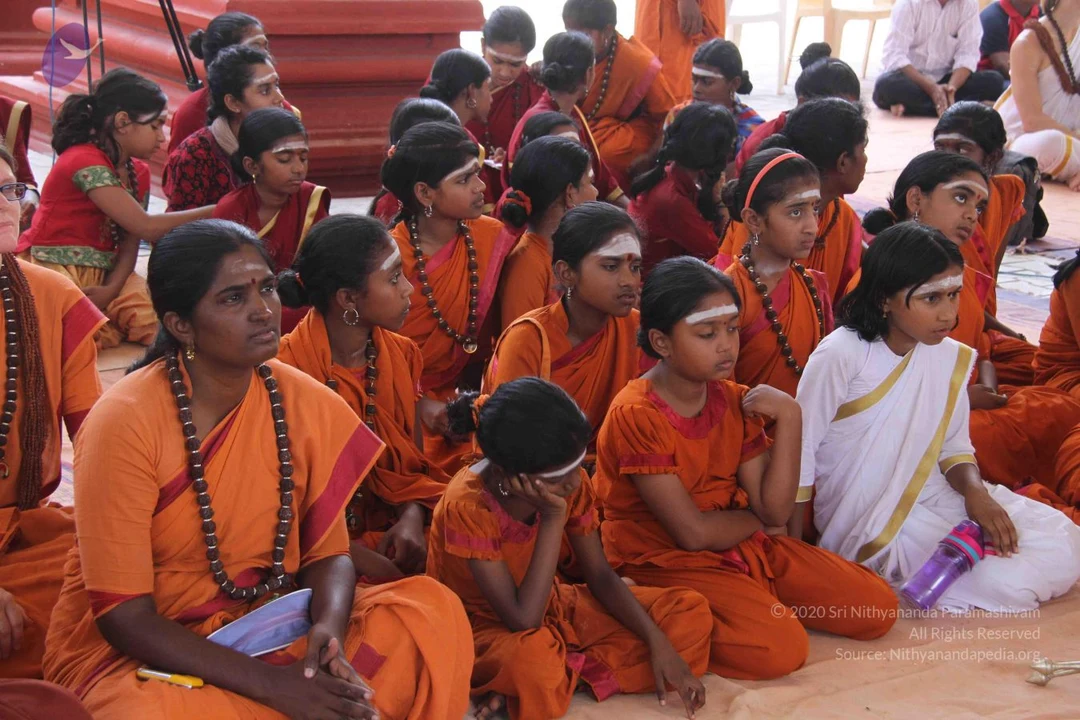
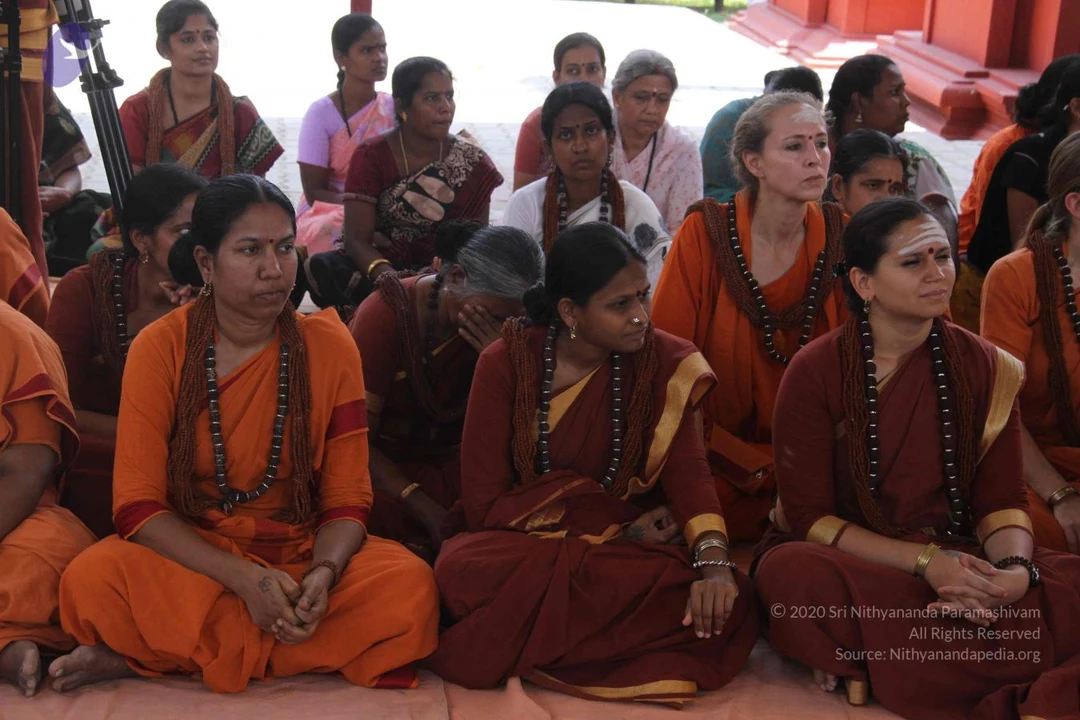
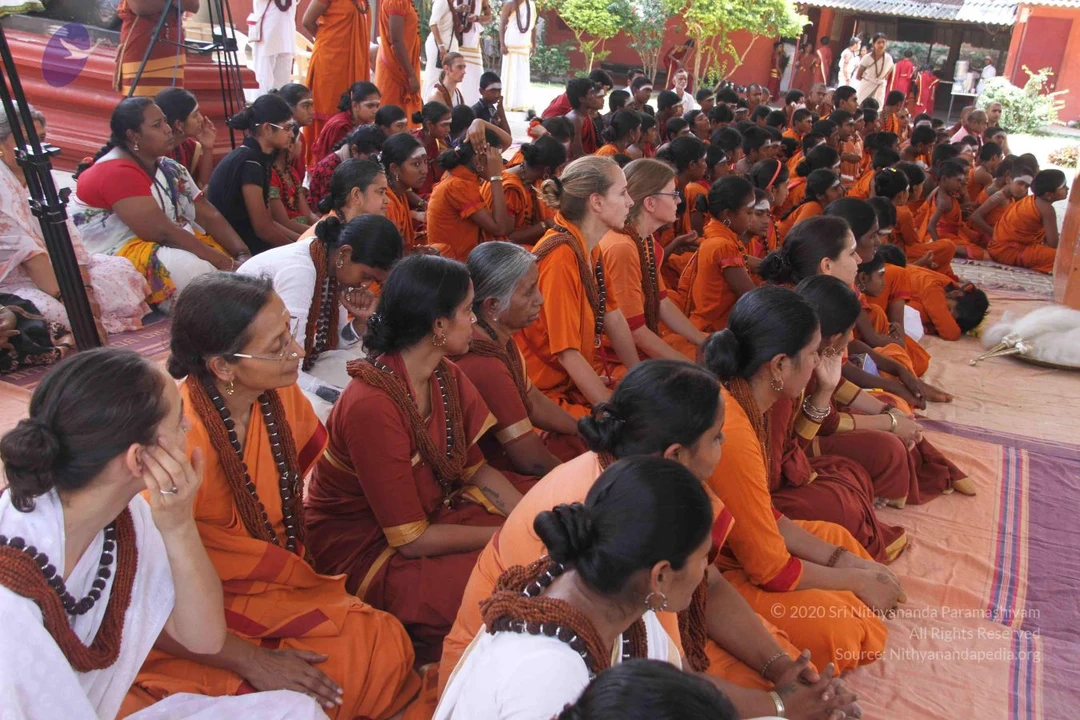
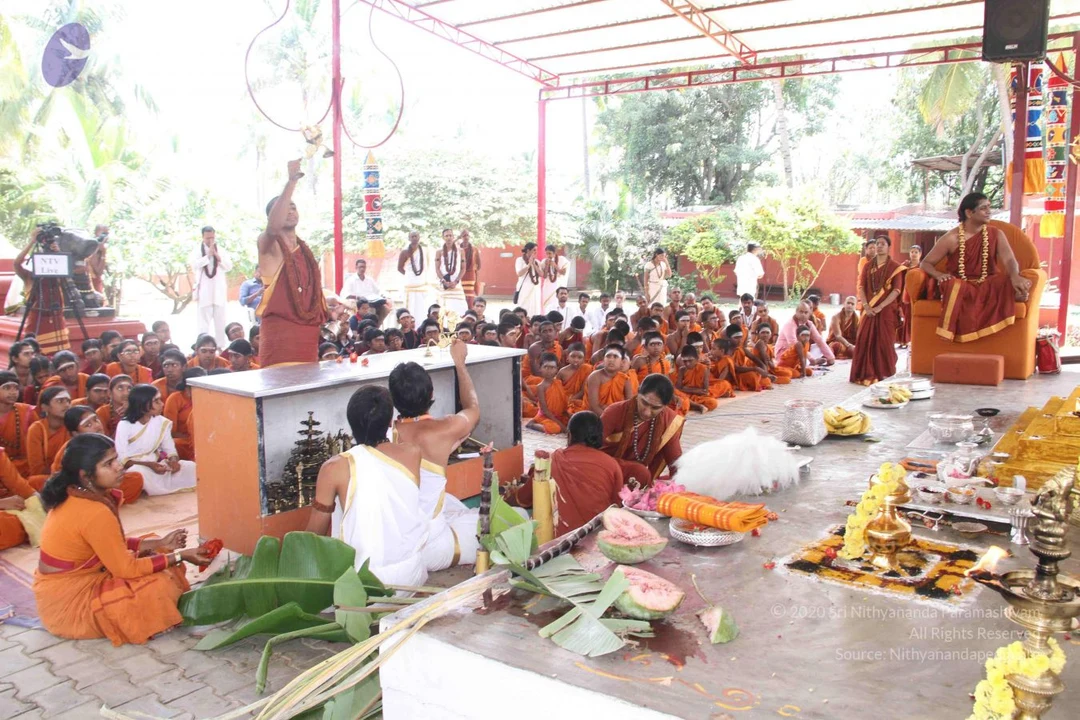
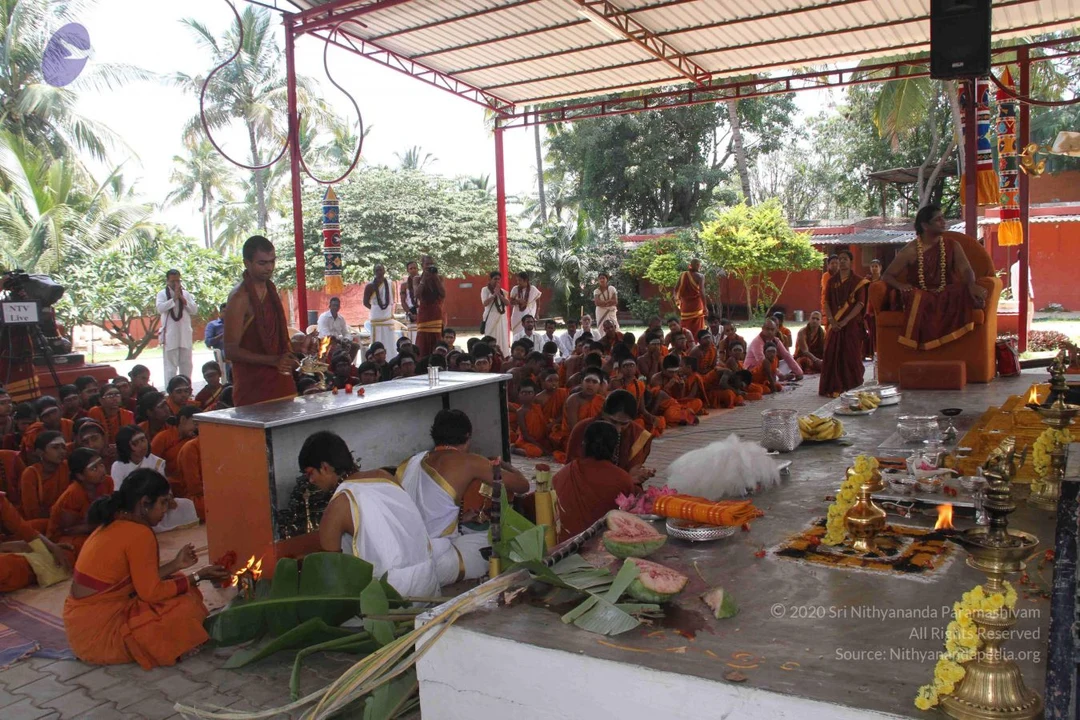
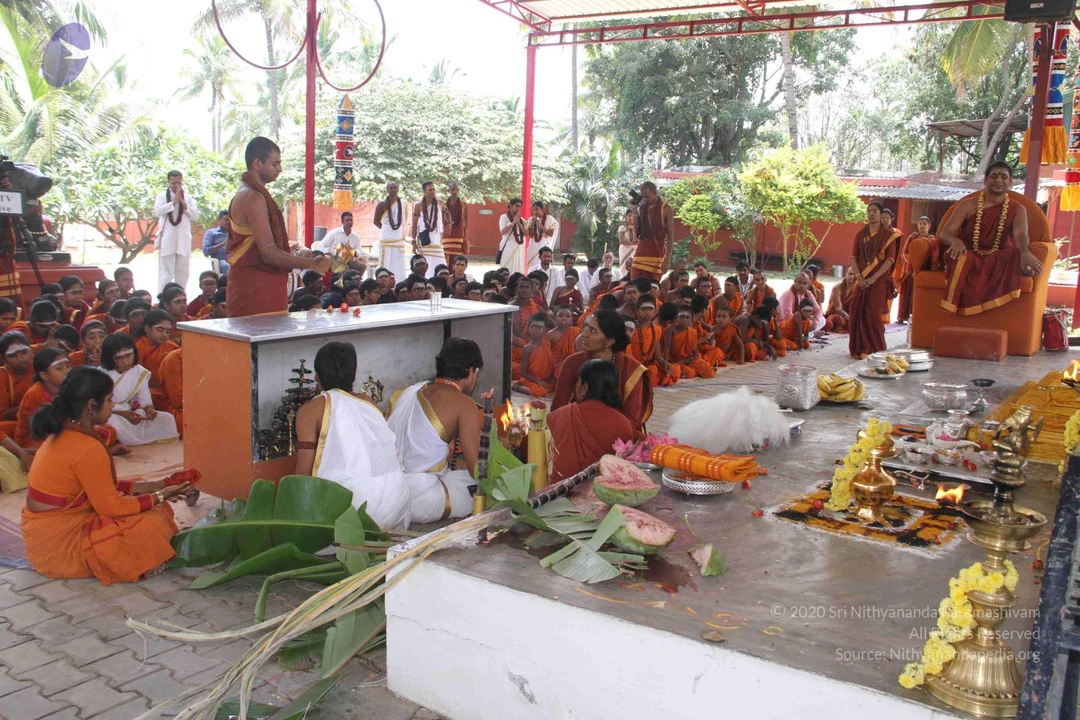
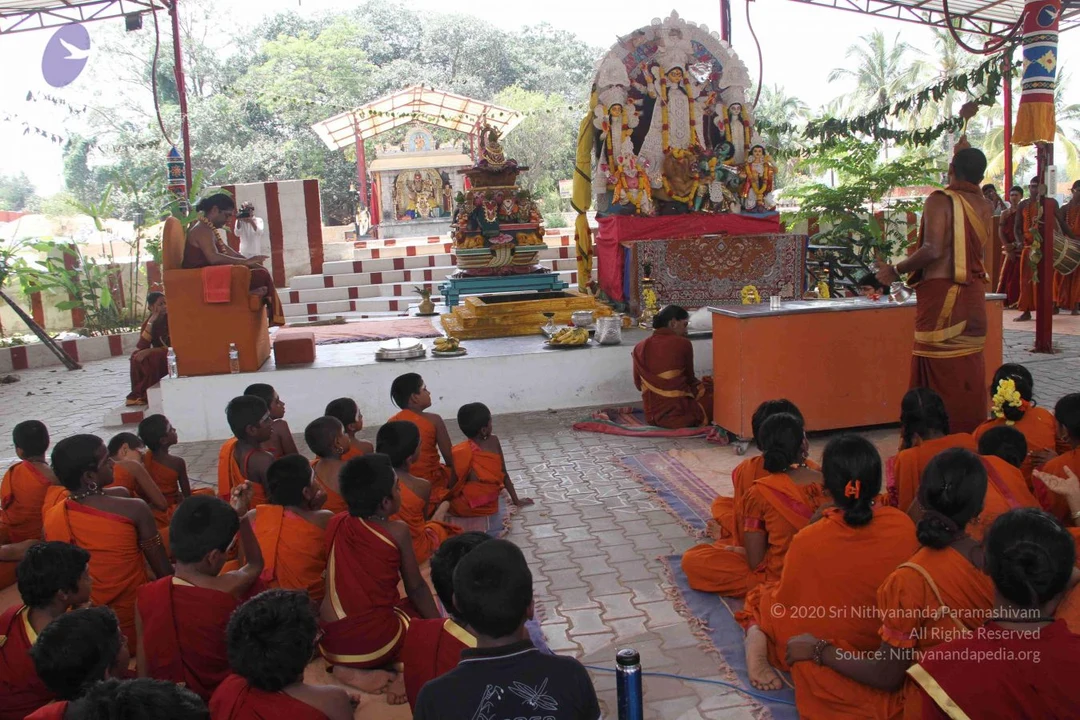
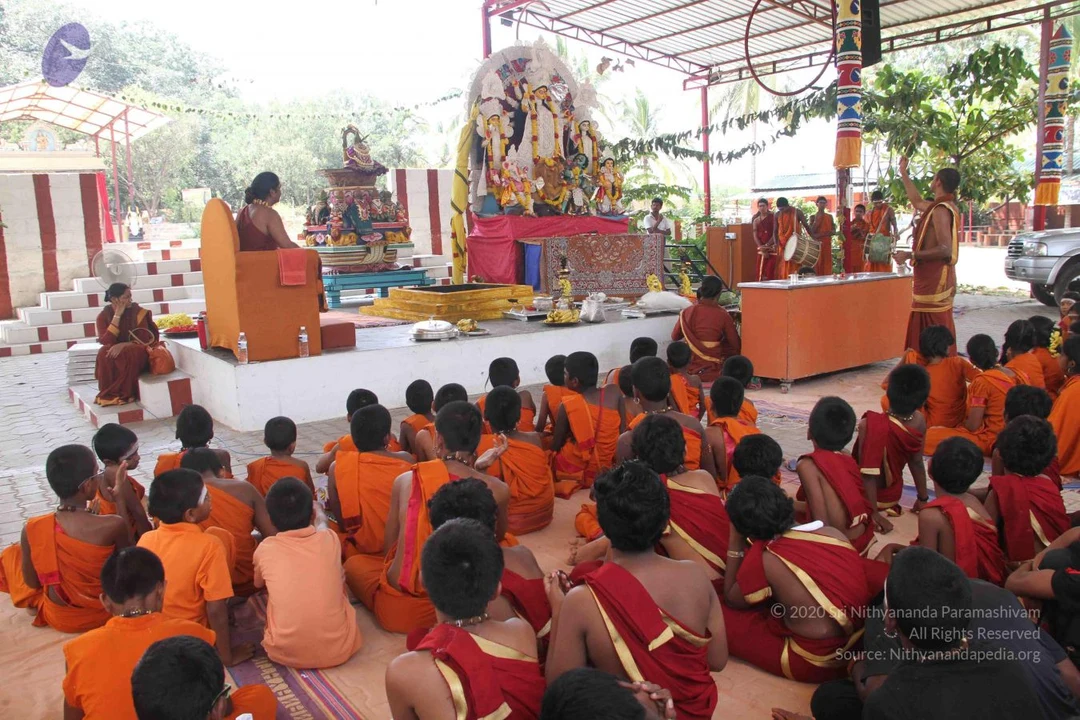
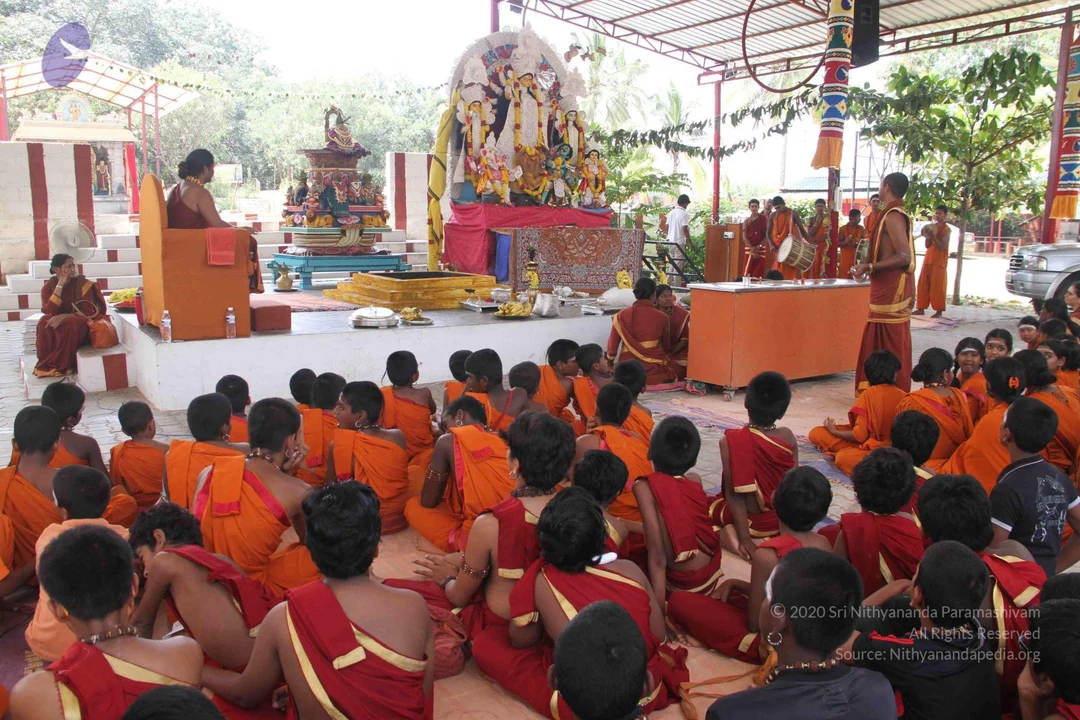
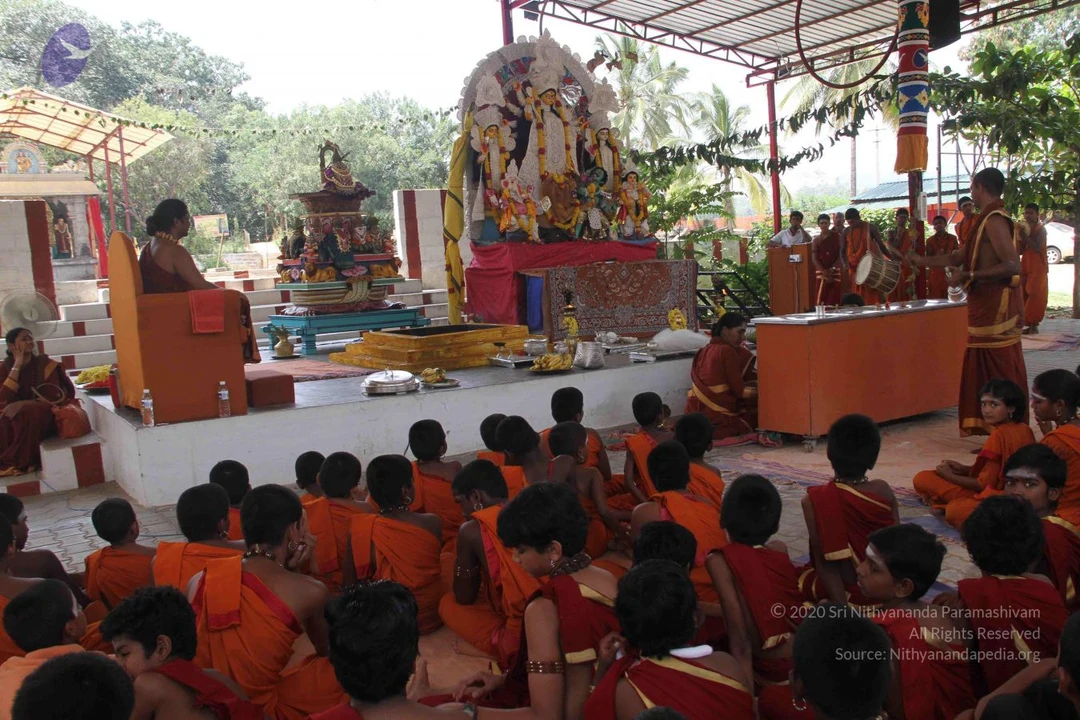
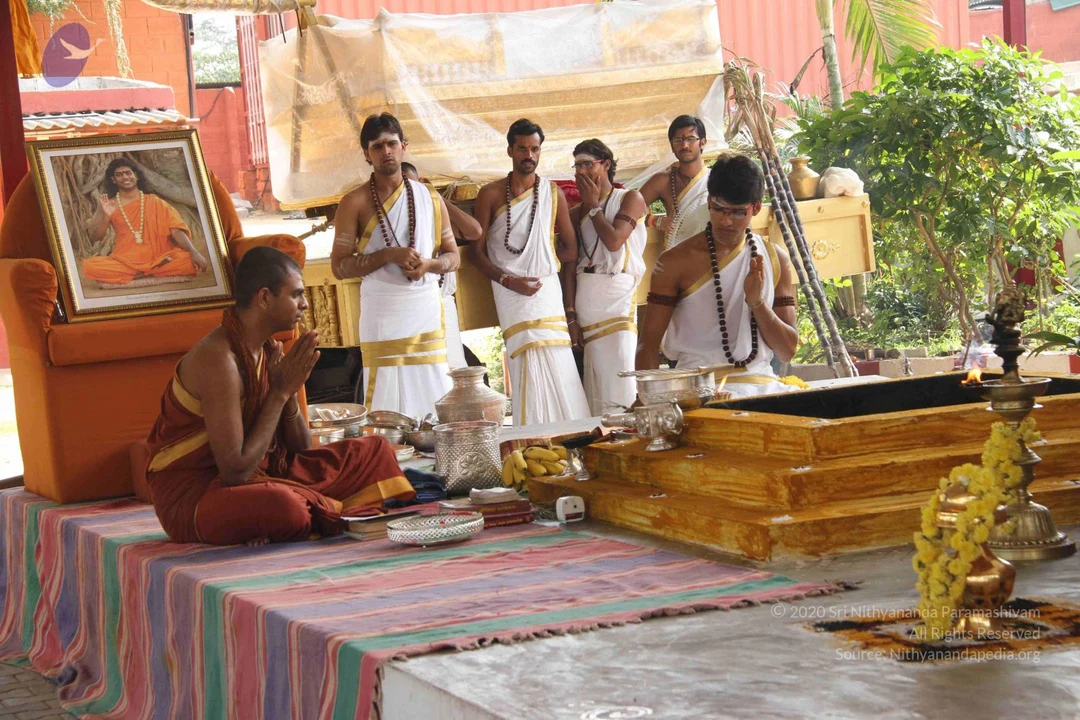
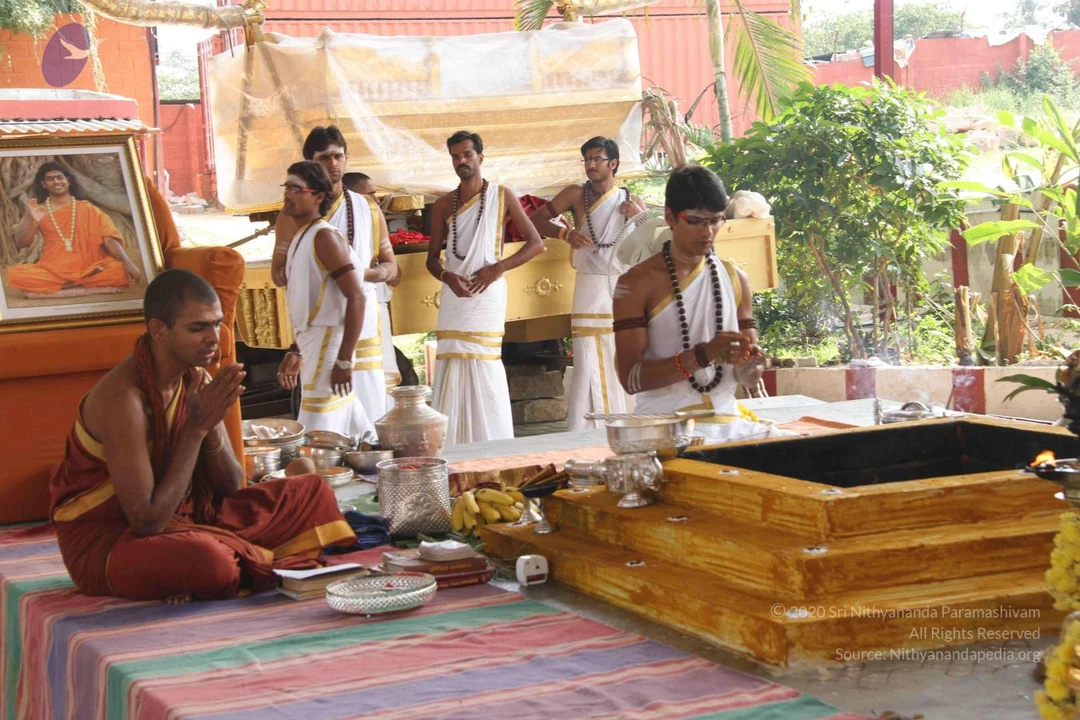
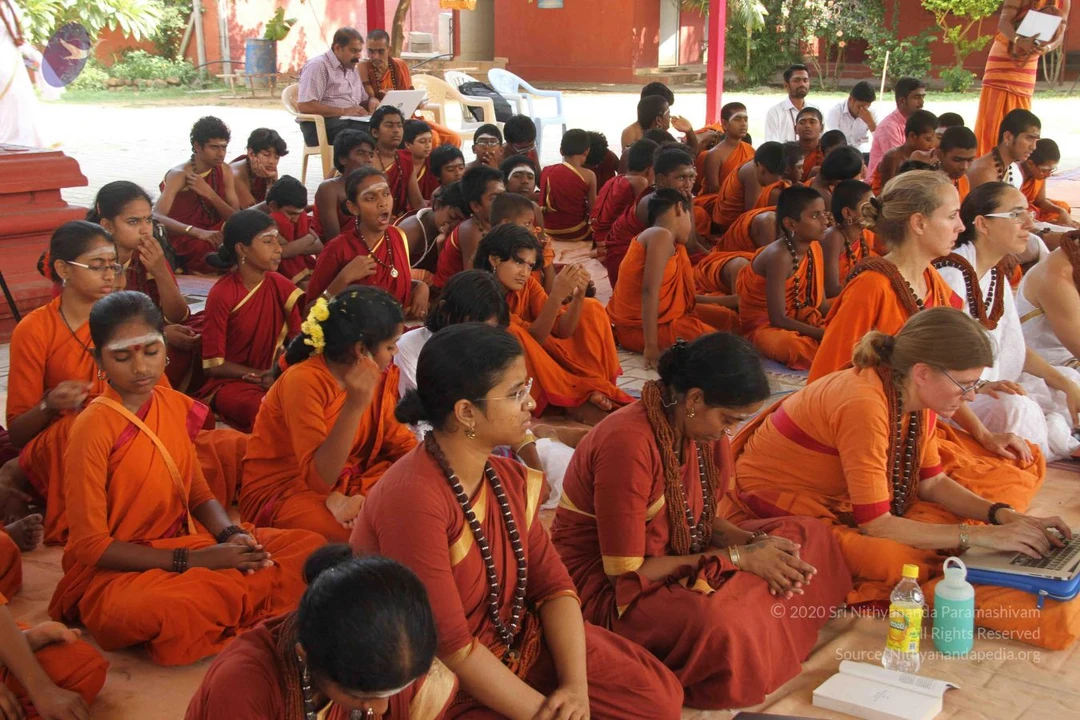
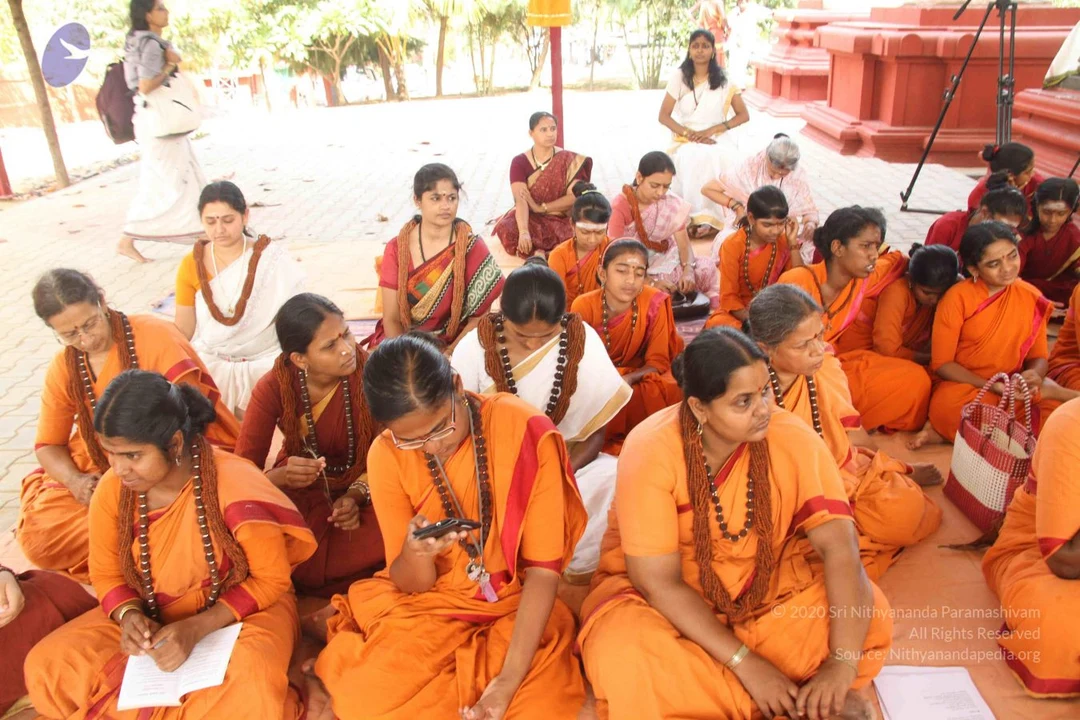
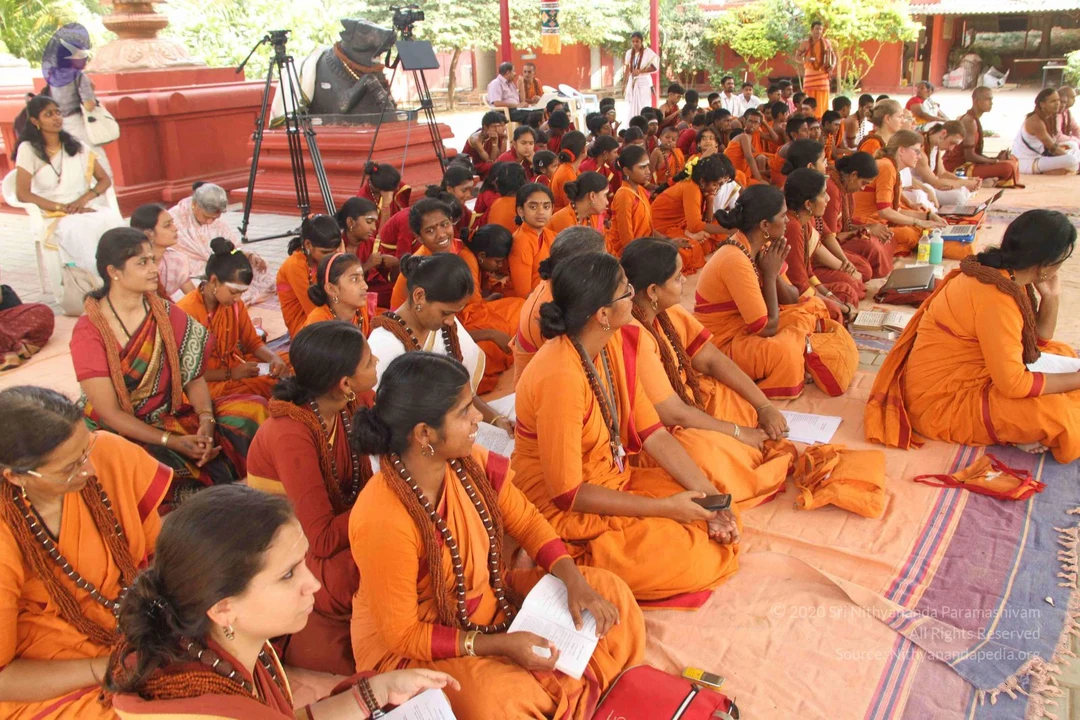
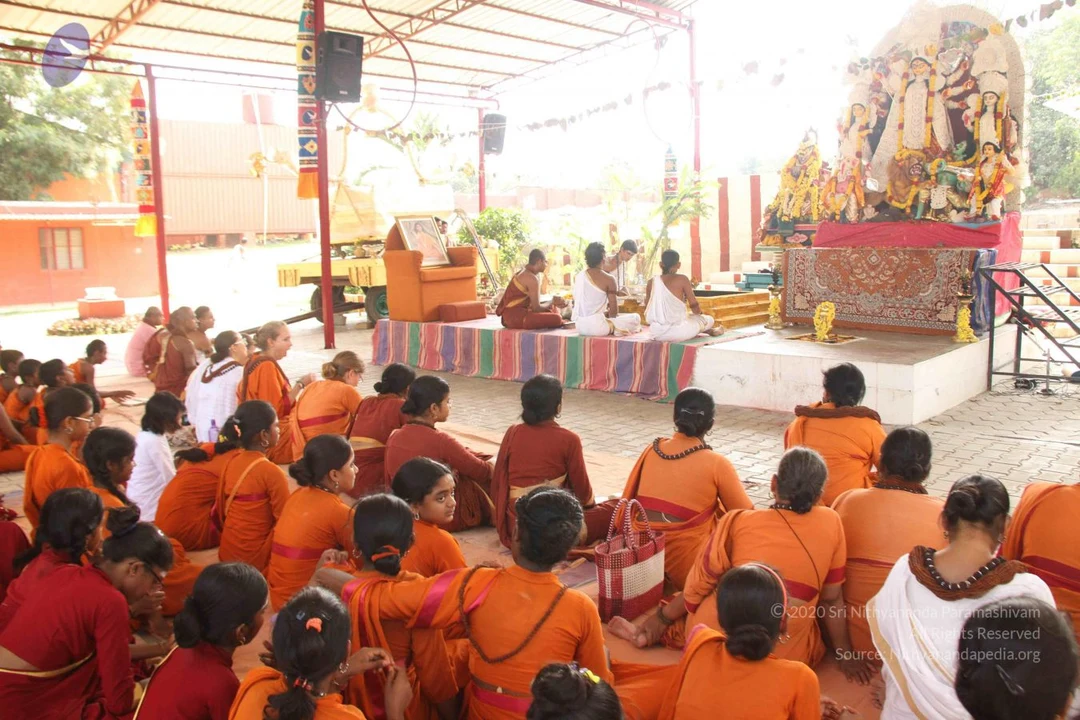
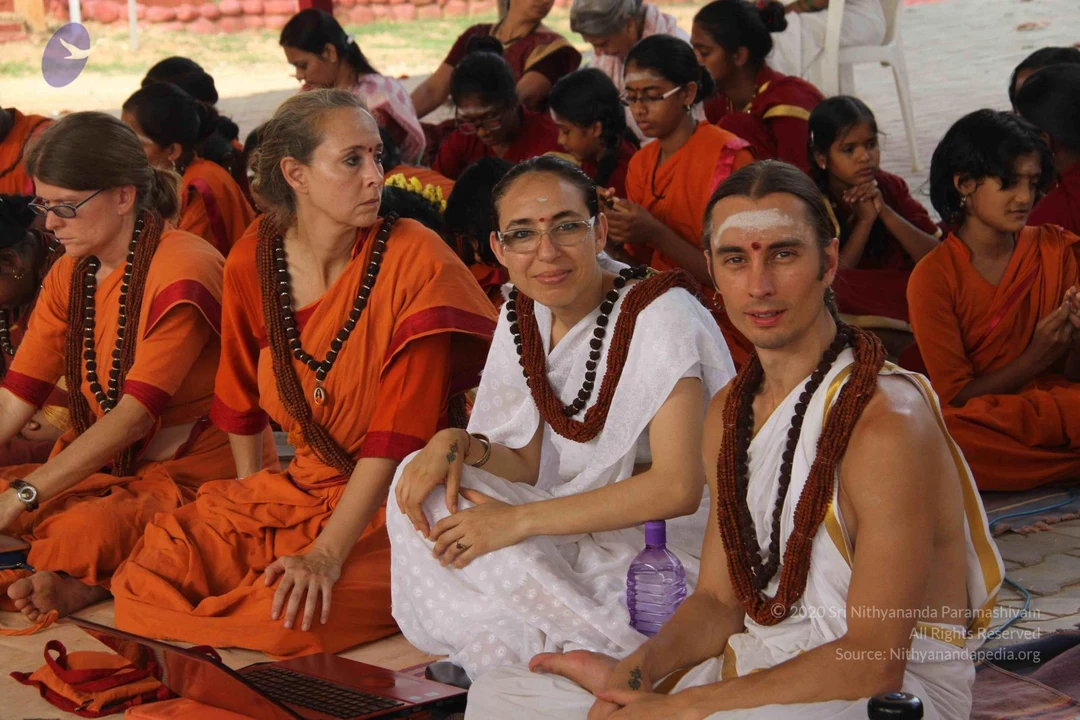
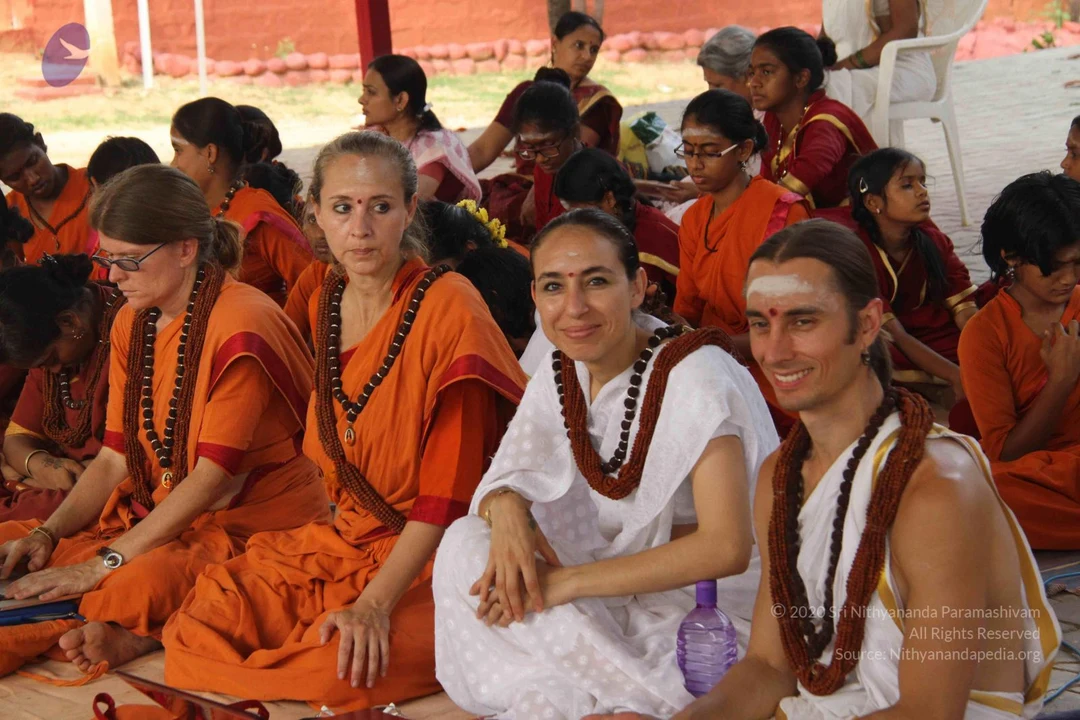
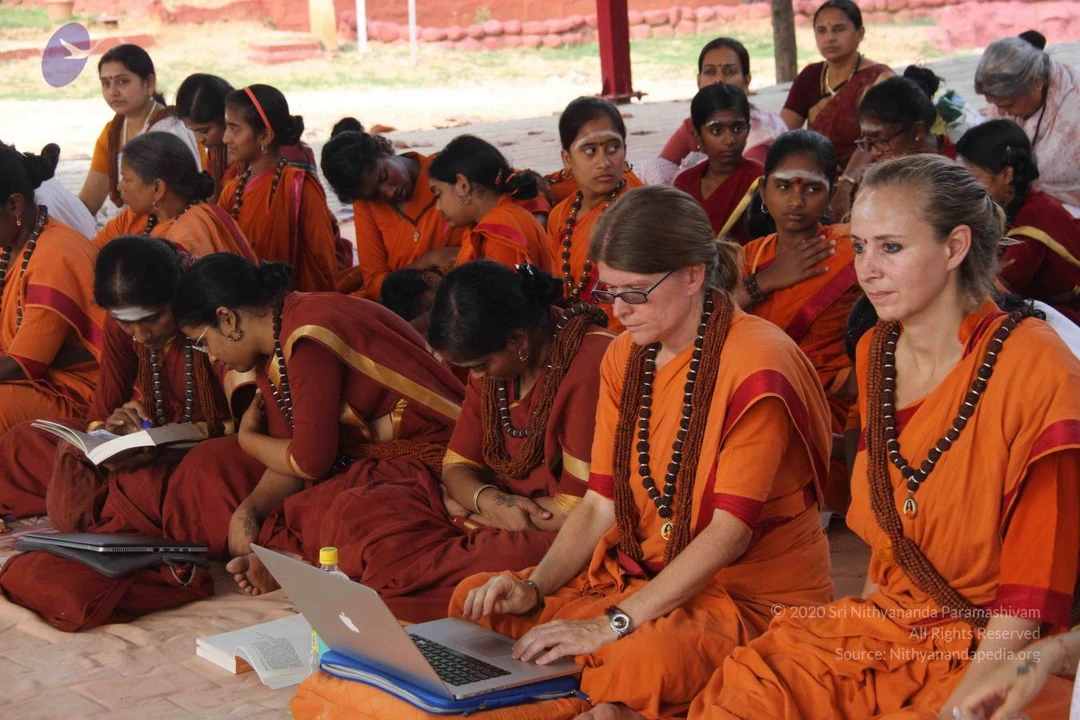
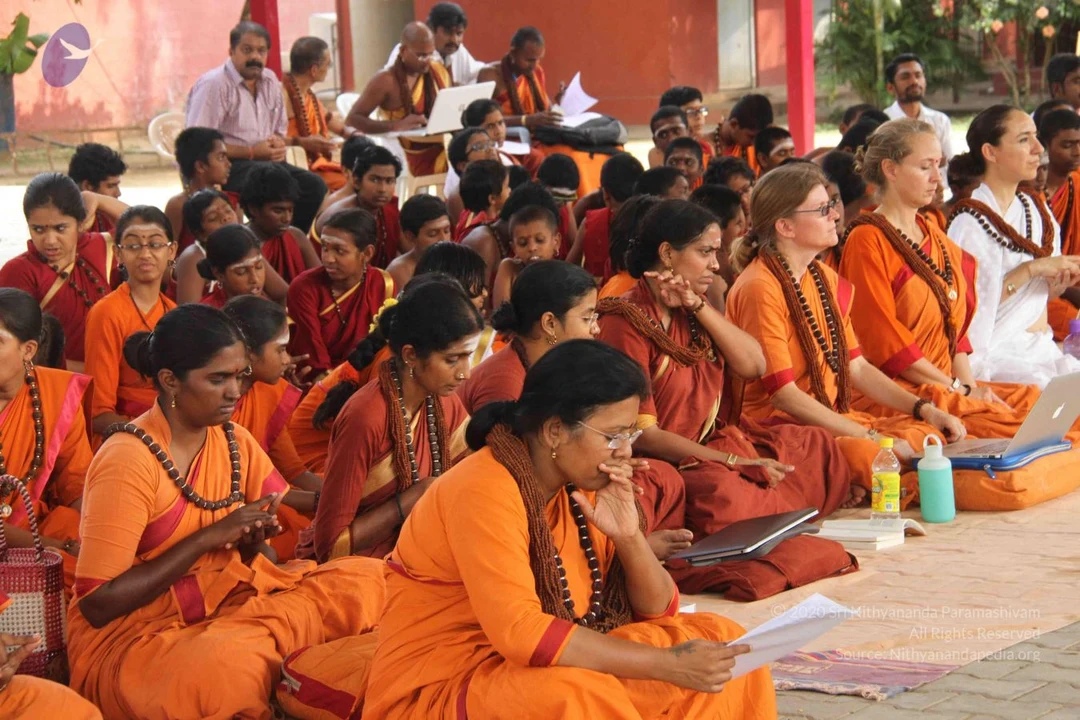
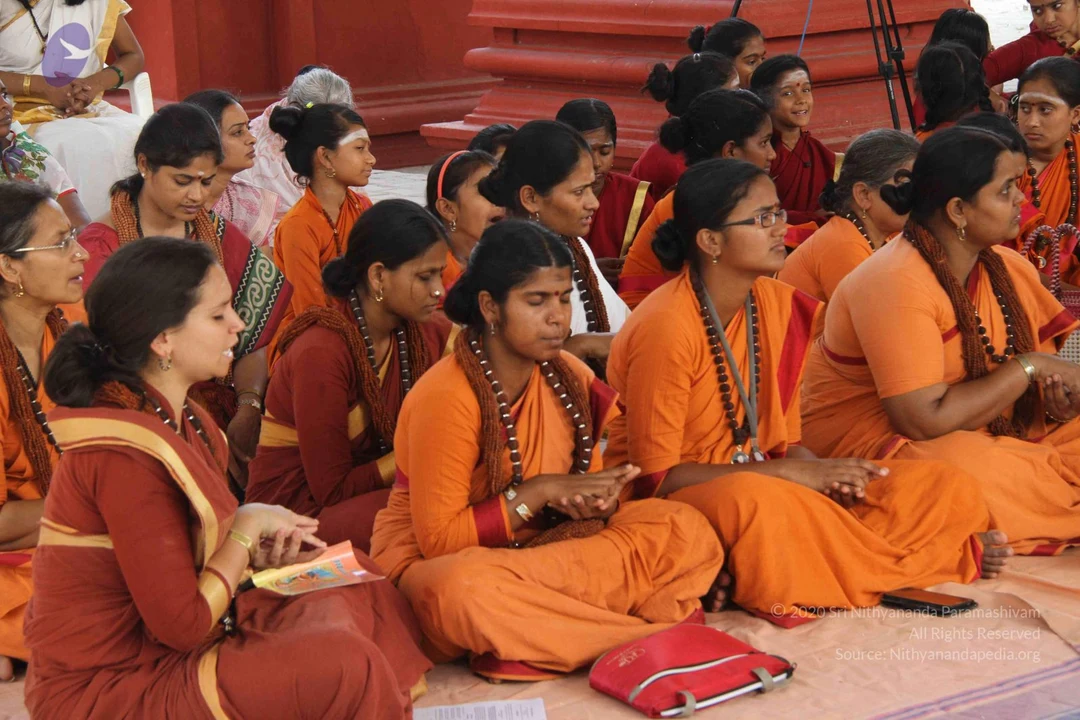
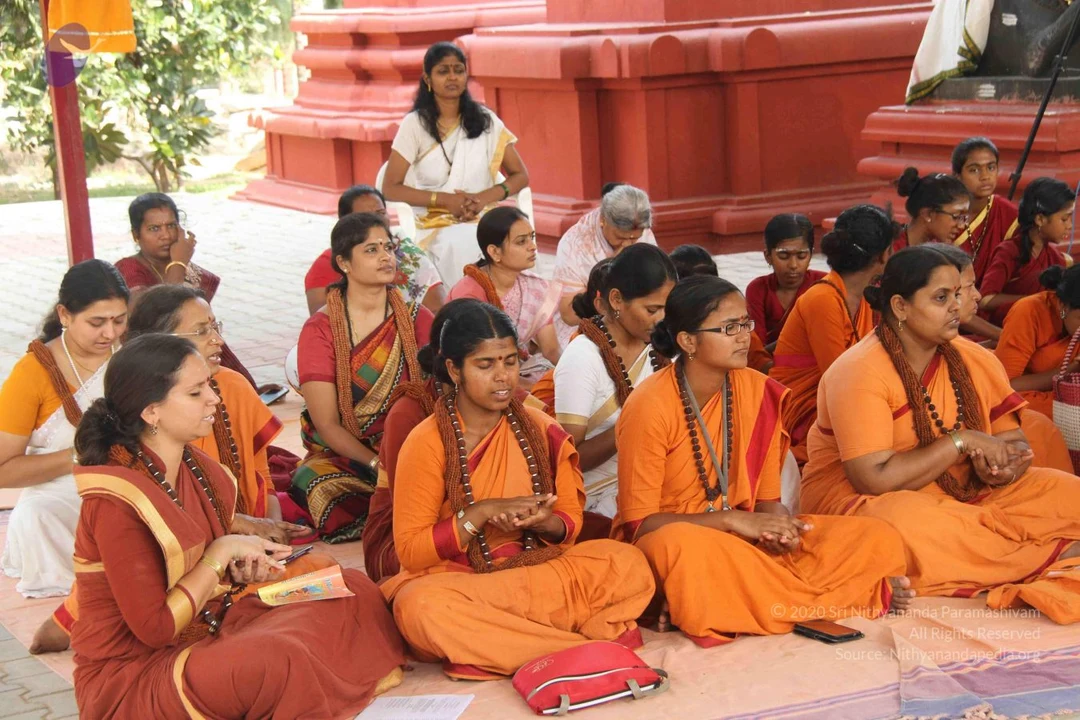
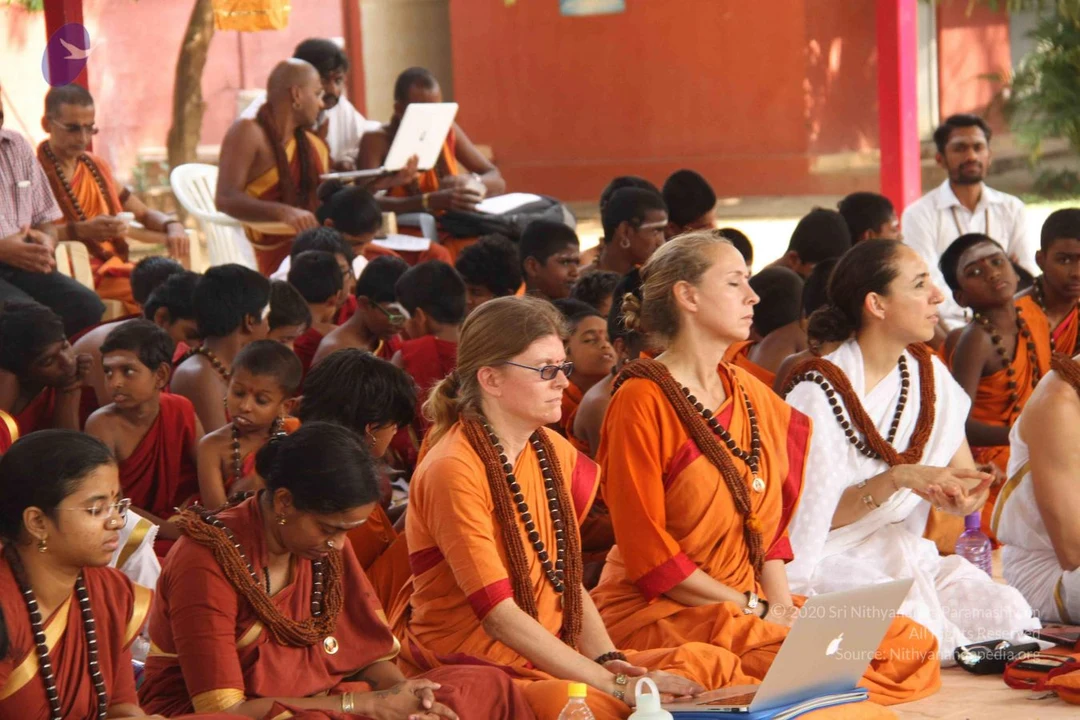
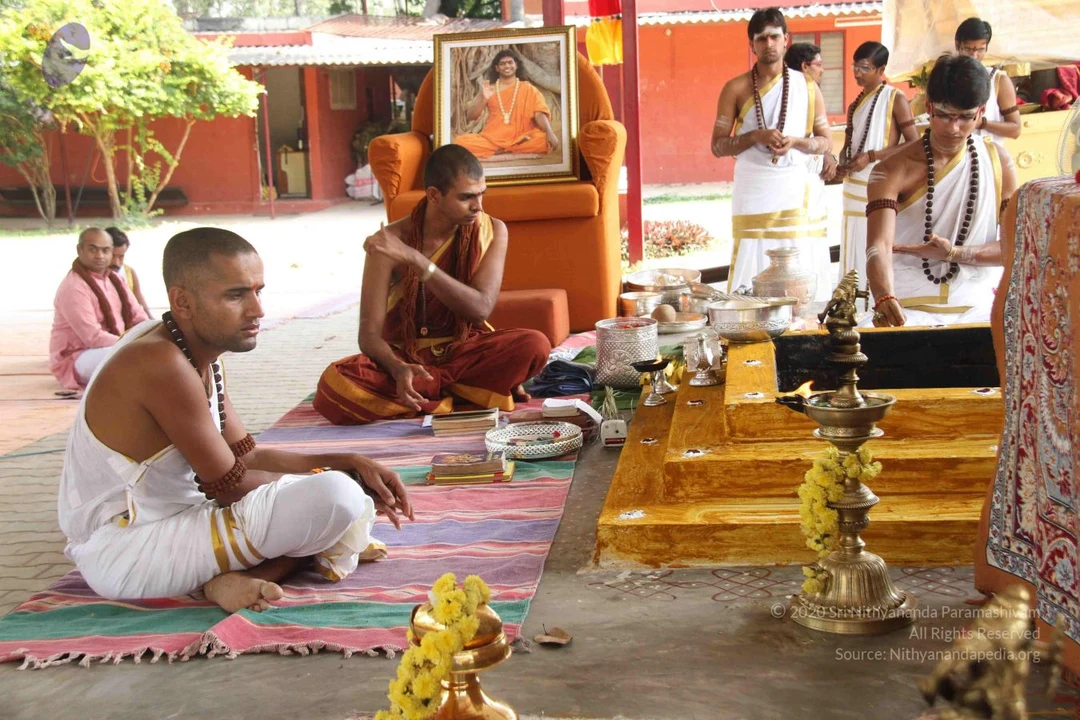
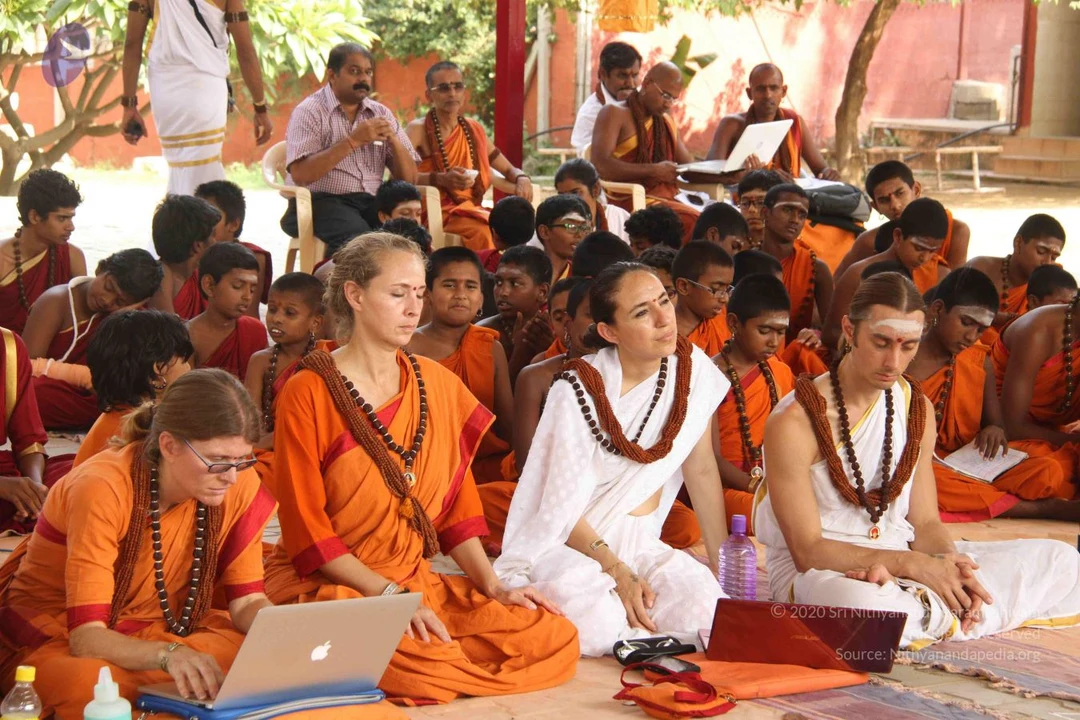
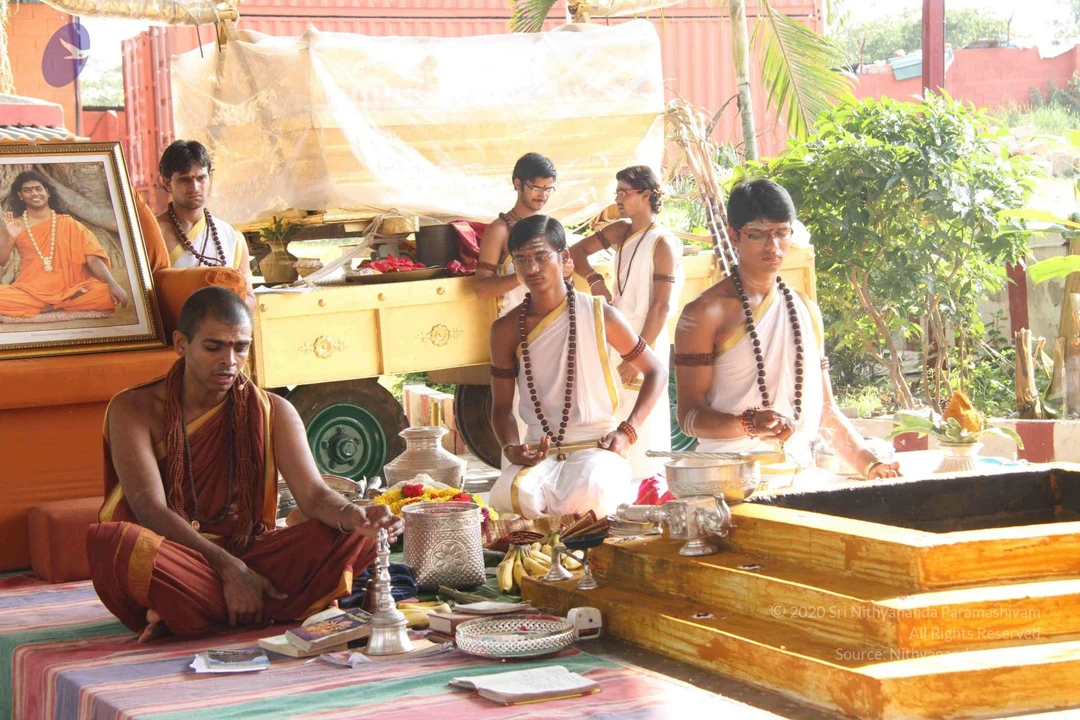
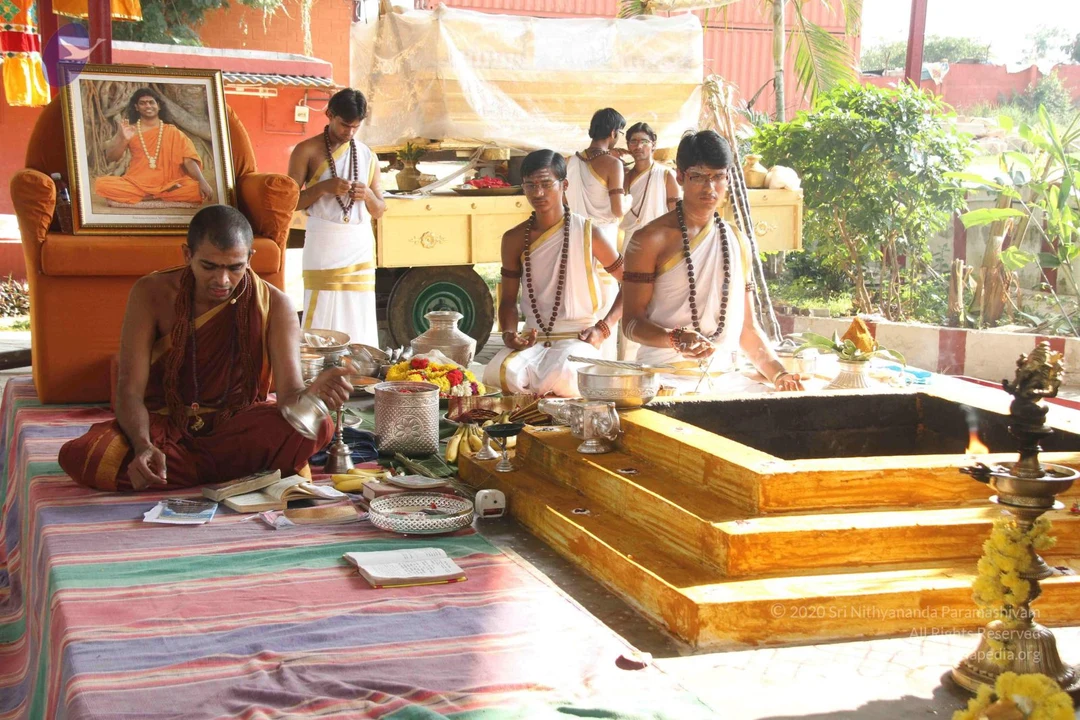
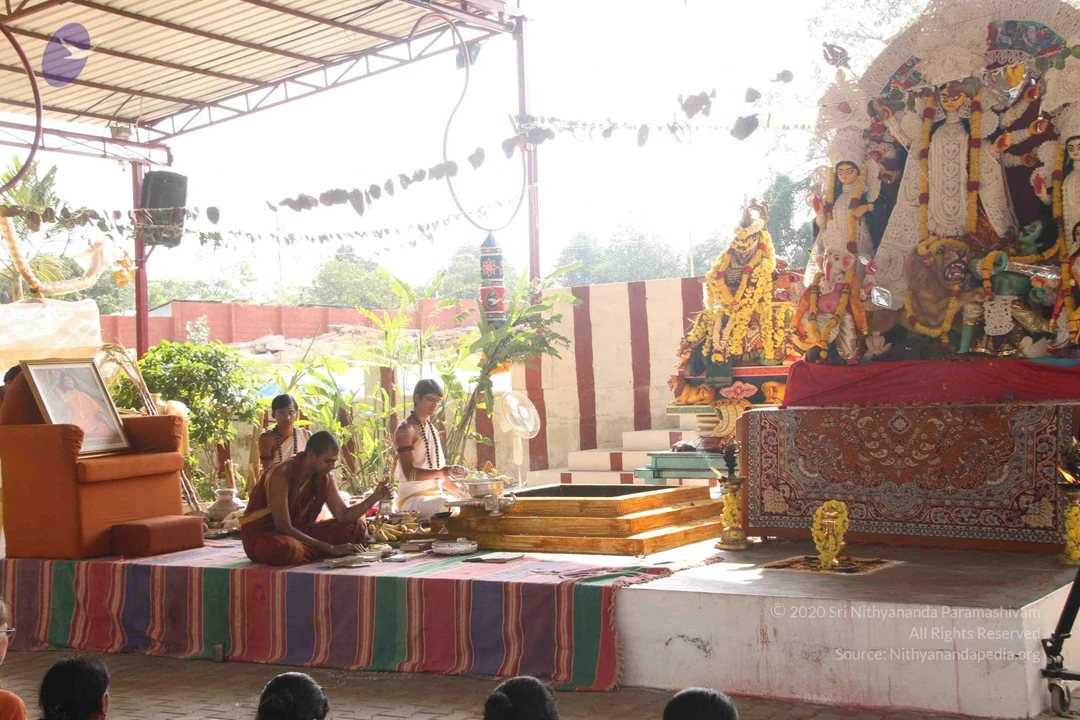
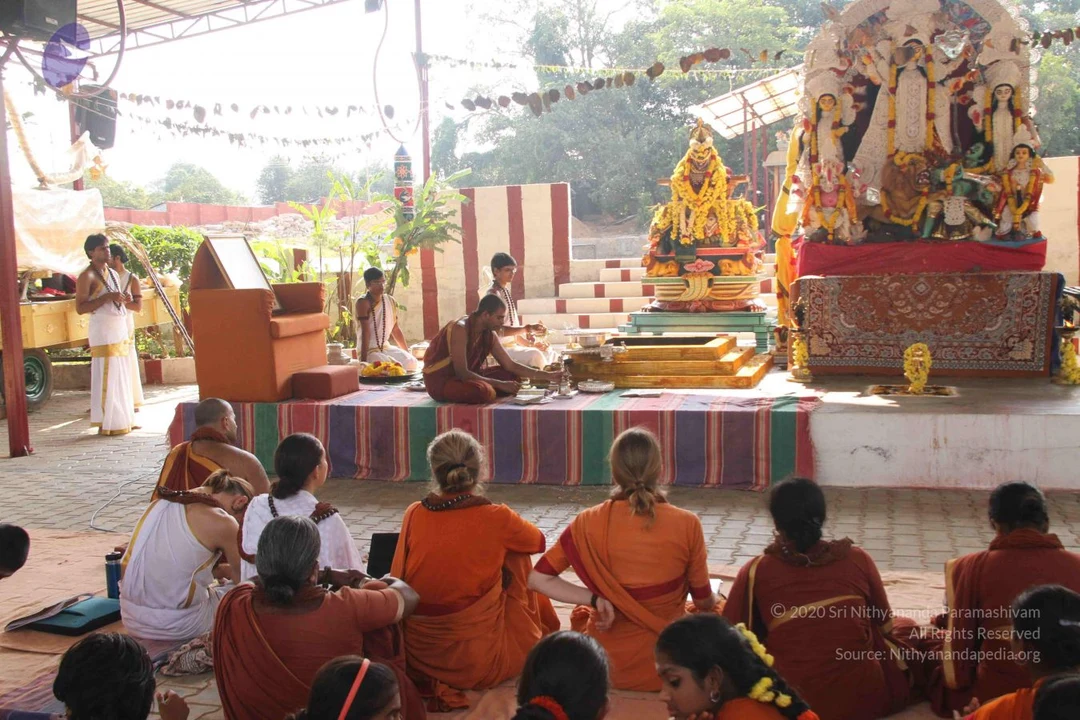
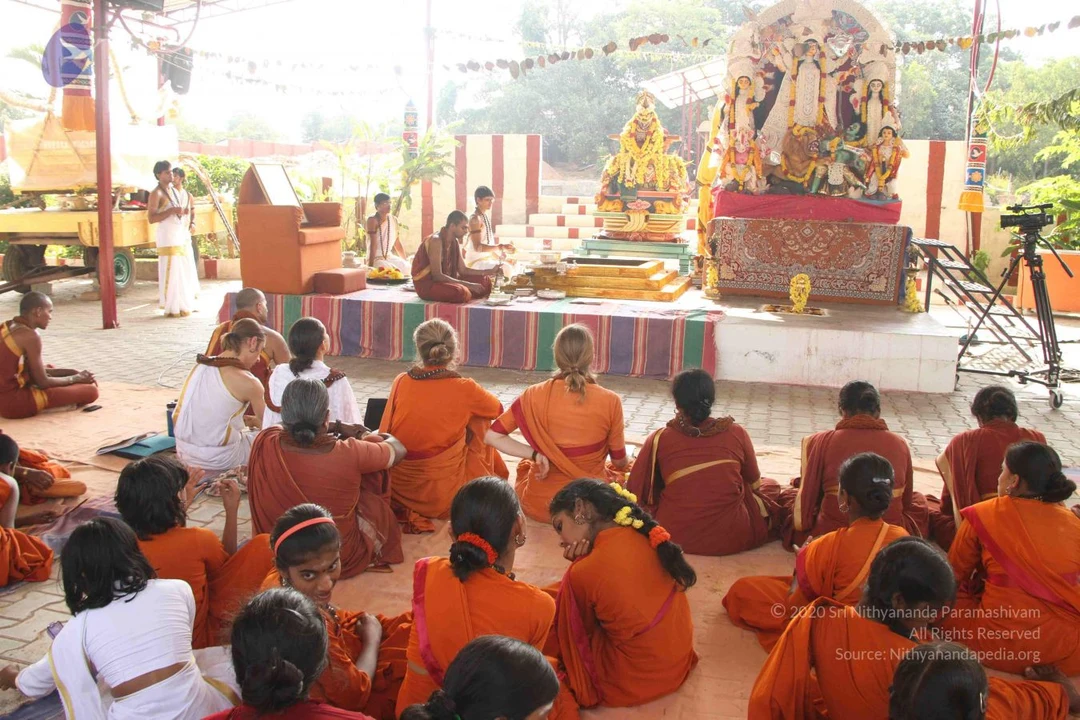
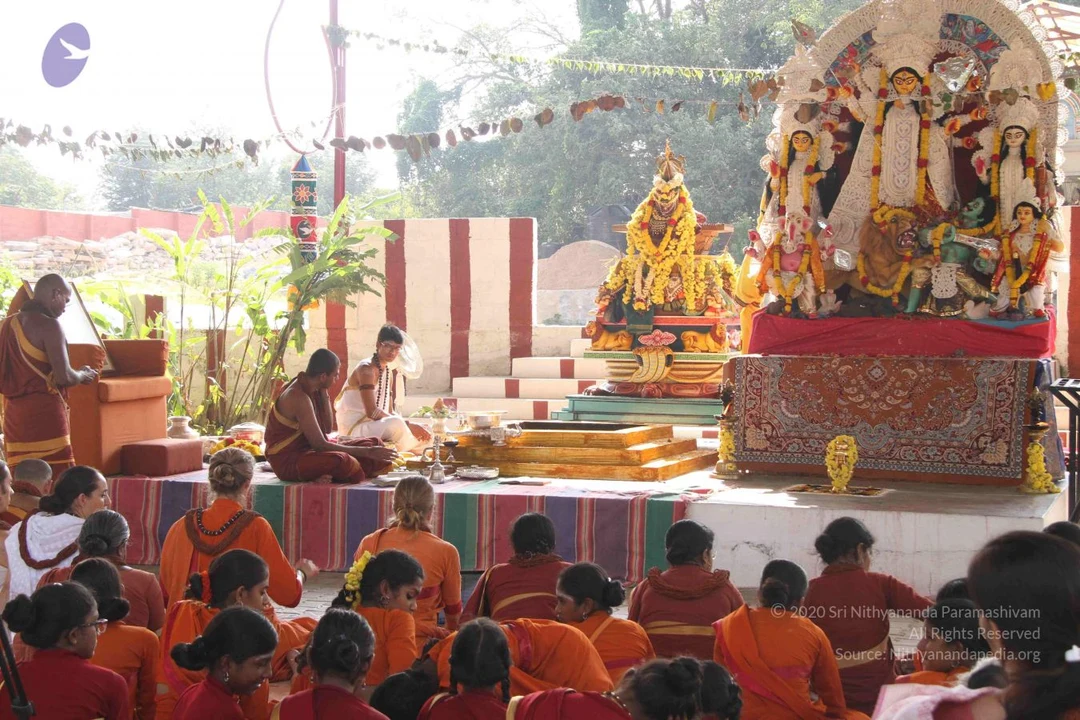
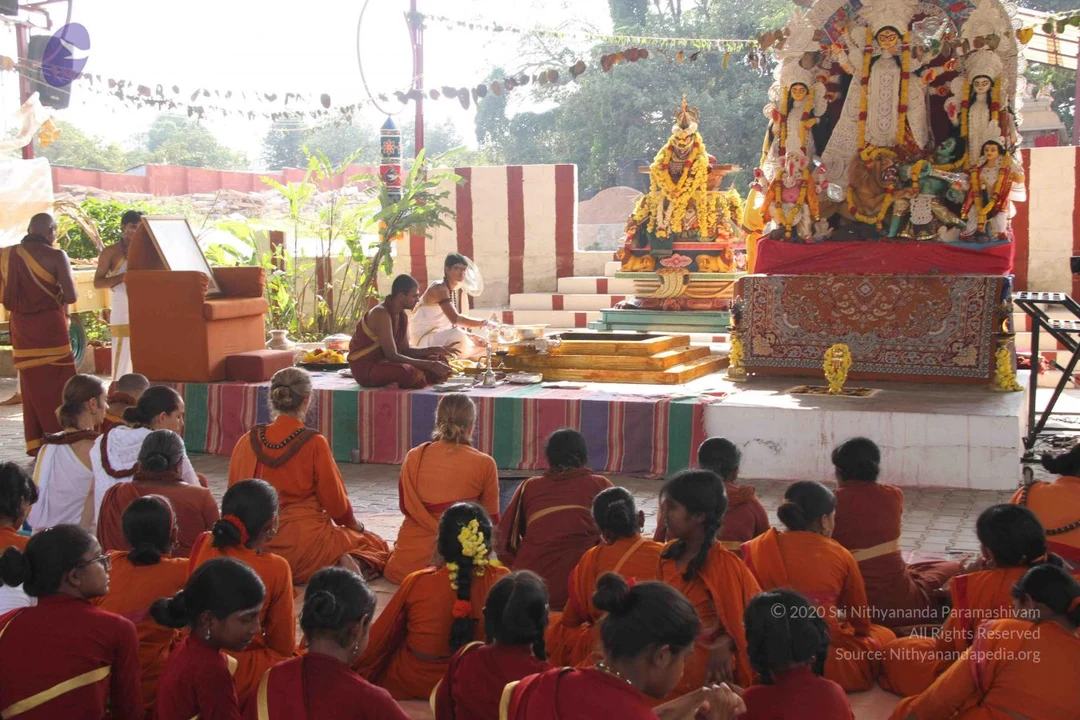
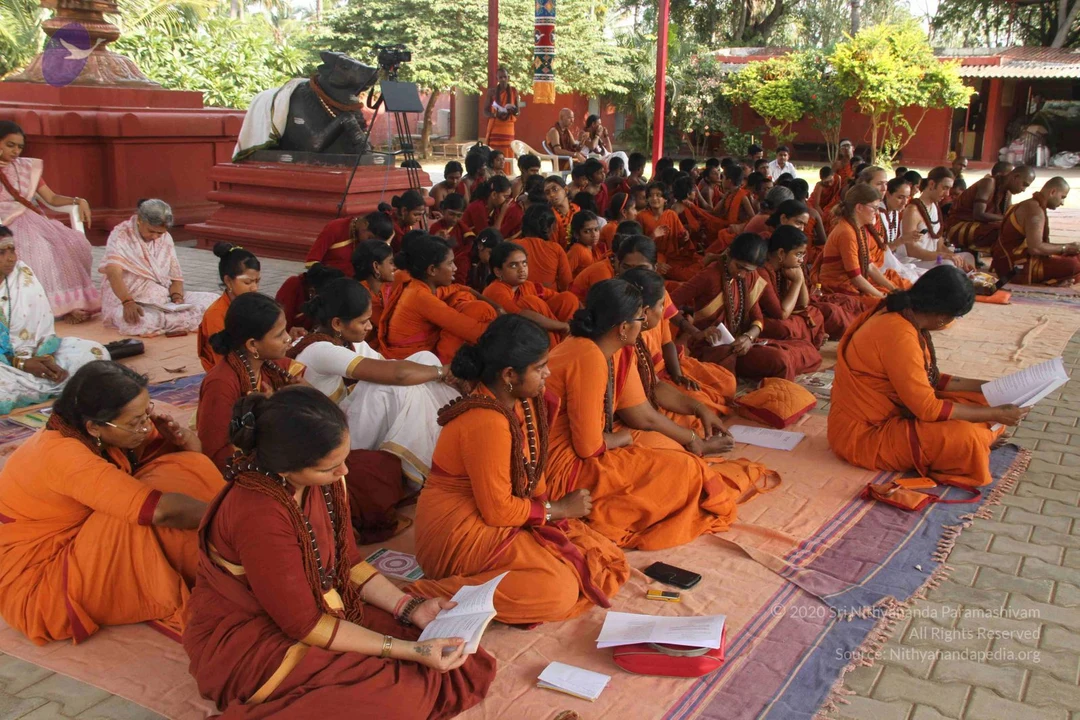
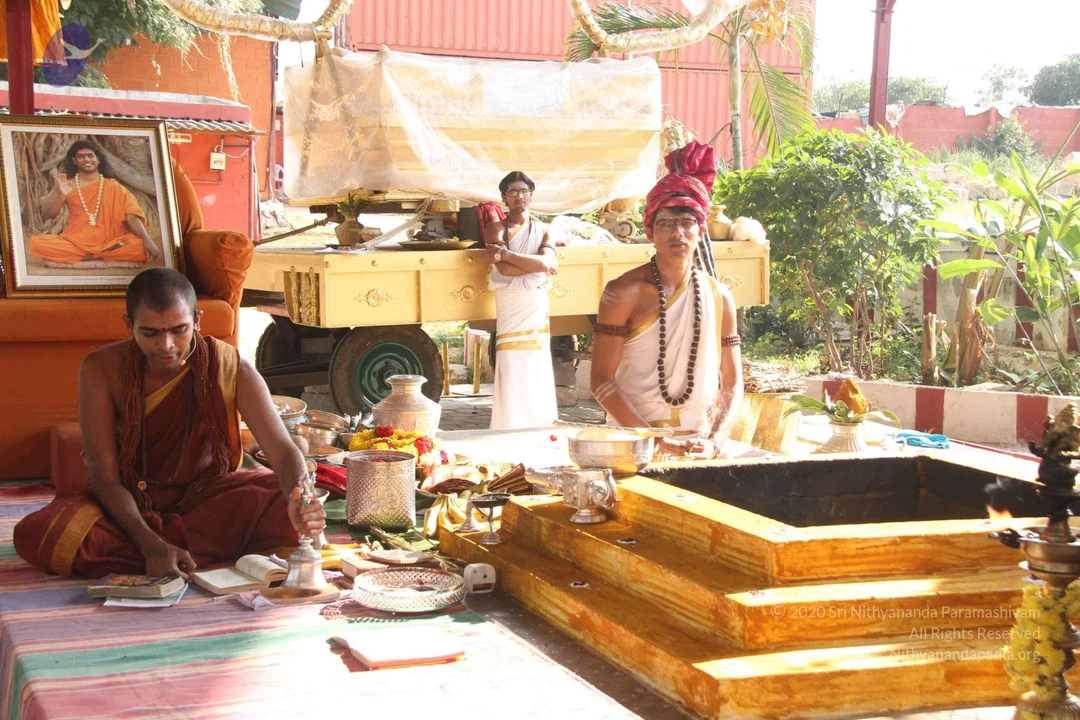
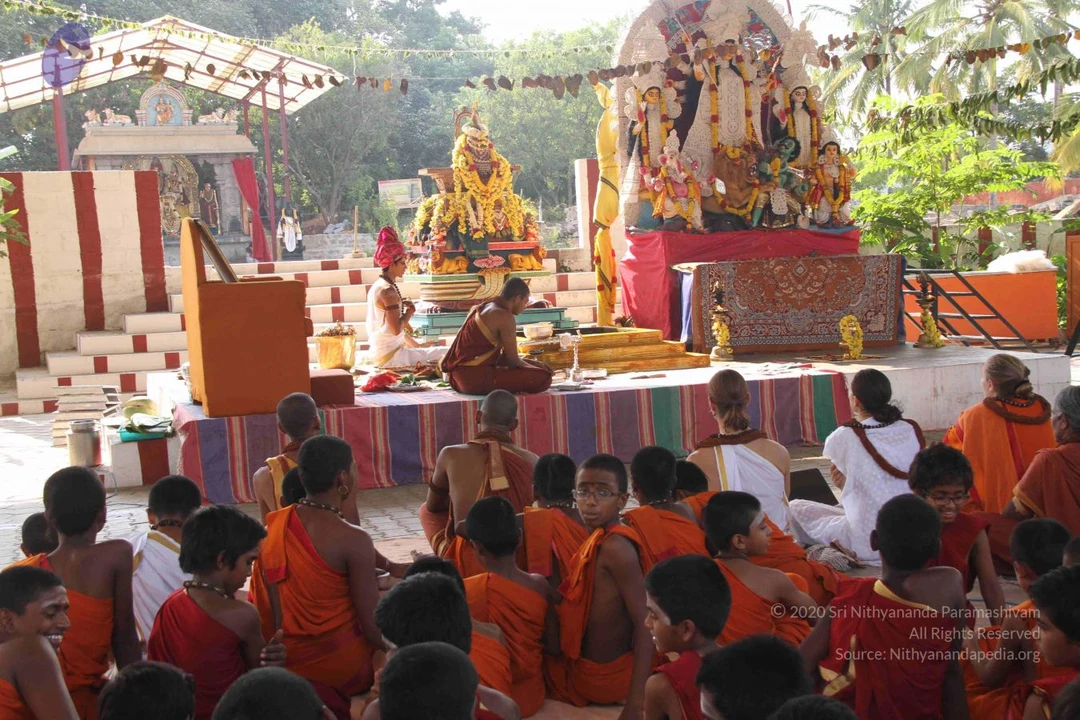
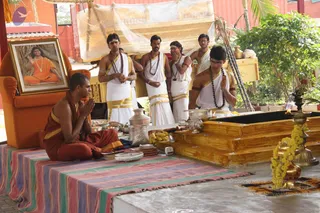
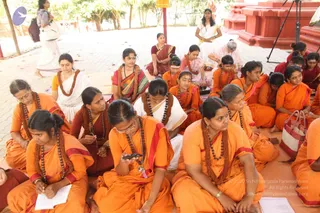
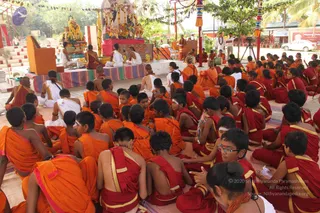
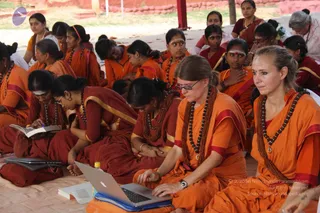
A photograph of a ritual scene outdoors under a open pavilion. A seated man in orange-red robes with a saffron shawl sits on a striped cloth in front of a framed portrait on an orange chair; the portrait shows a figure in orange robes and a beaded necklace seated beneath a tree. Behind him, four men in white dhotis with gold borders and rudraksha malas stand with hands folded near a wooden platform holding a silver pot and a bowl, and a small oil lamp burns on the right. Yellow marigold garlands and bananas lie on the platform, and green plants and a palm frame the courtyard.Outdoor satsang on a paved courtyard before a red temple structure. Many women in saffron-orange saris with red borders sit cross-legged on mats, many wearing long rudraksha malas and braided fibre or bead ornaments. Some hold notebooks, a woman in front looks at a mobile phone, and a few women in white or pink saris sit or stand in the background. A tripod-mounted camera stands at right and a tree and red pillars frame the scene. The audience listens attentively to the discourse.Outdoor photo of a large open-air gathering of young students seated on the ground in orange and red robes, many with gold-bordered red cloths and some with white or red forehead markings. In the foreground, boys in orange sit in rows facing a raised dais decorated with a colourful striped cloth. On the dais, a priest in white robes performs a puja beside a brass oil lamp and offerings, while a figure in orange stands nearby. Behind them, a decorated shrine holds a deity murti and a large ornate sculpture group, with marigold garlands, palm trees, bunting and a video camera on a tripod in the background.Four men sit cross-legged on a striped mat before a decorated shrine during a puja. Central figure wears a saffron-orange dhoti and shawl and has a shaved head. Three other men in white dhotis with yellow borders sit around offerings, plates and a brass vessel. Behind them stands a tall shrine with a goddess murti in white and red garments, ganesha figure with pink trunk, and lion mount, all garlanded with marigolds and framed by a bunting of leaves. A second deity murti with red and orange garlands sits to the left, and a red cloth covers the platform. Palms and greenery surround the open-air setting.A photograph of a seated group of devotees at an open-air satsang, many wearing saffron-orange robes and rudraksha malas. In the foreground a woman in saffron with a laptop on her lap sits beside a woman with a red bindi and a brown mala; a smiling woman in a white dress and a smiling man in white dhoti and shawl with white forehead marking sit in front, with a purple water bottle nearby. Behind them, more devotees in orange and red garments sit on a mat before a red-painted wall and a white plastic chair. No a person candidate is visible in this frame.A seated group of women in saffron-orange and maroon-red saris and robes sits on a tiled floor outdoors, many wearing rudraksha malas. In the foreground a woman with glasses and light brown hair types on an open silver laptop, and a woman with light hair in a bun, wearing an orange robe, sits beside her with a mala. Others read open books or rest, some with white vibhuti marks on their foreheads. Behind them stand women in red and maroon saris.
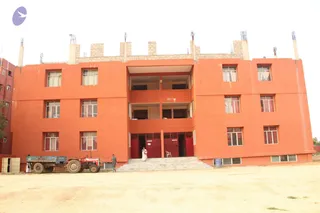
adi kailaasa buildings

1 photoSource gallery
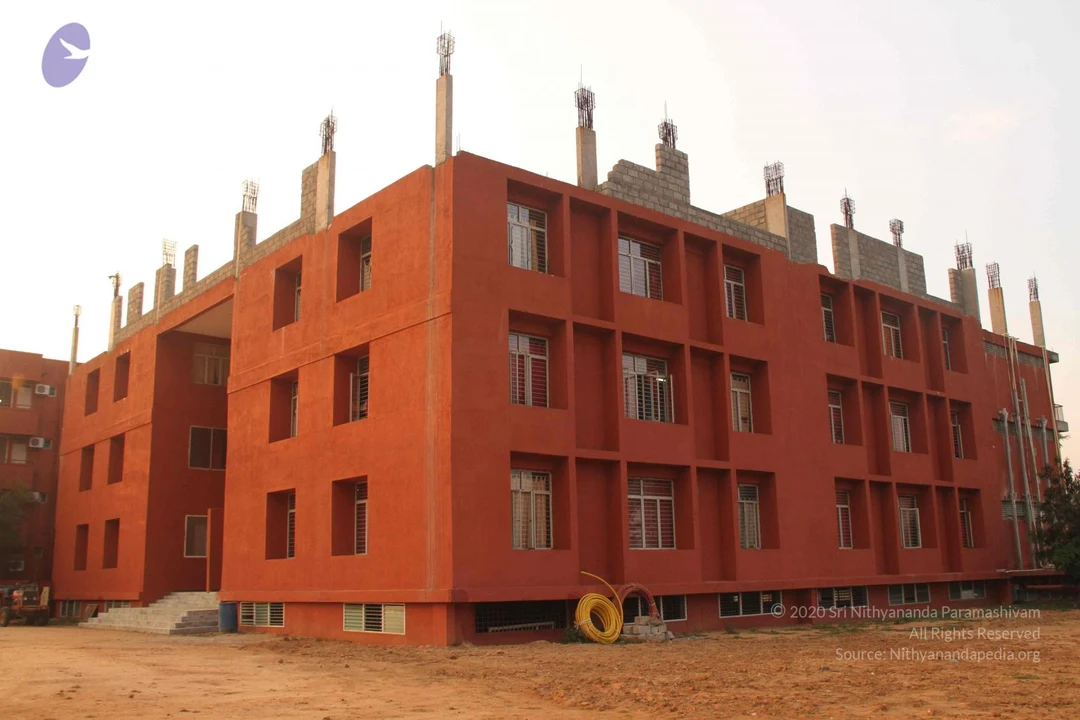
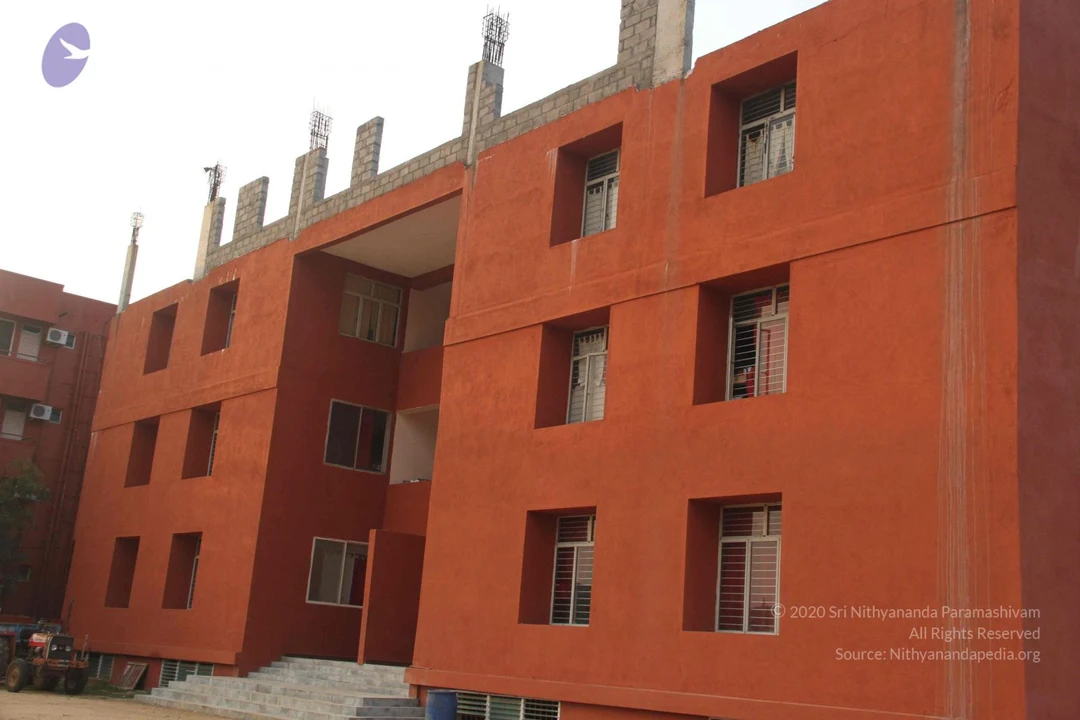
Exterior of a three-storey terracotta-orange building with white-framed windows, a flat parapet with small rectangular merlon-like blocks, and antenna poles on the roof. At the centre, a recessed open stairwell leads to red doors labelled LADIES and GENTS, with concrete steps and a plastic chair at the entrance. In the foreground, a red tractor pulls a blue trailer across dusty ground. Two people stand near the entrance, one in white and one in a dark outfit, and a figure in white is near the tractor. No identifiable person is shown.

sacred-arts-visit

60 photosSource gallery
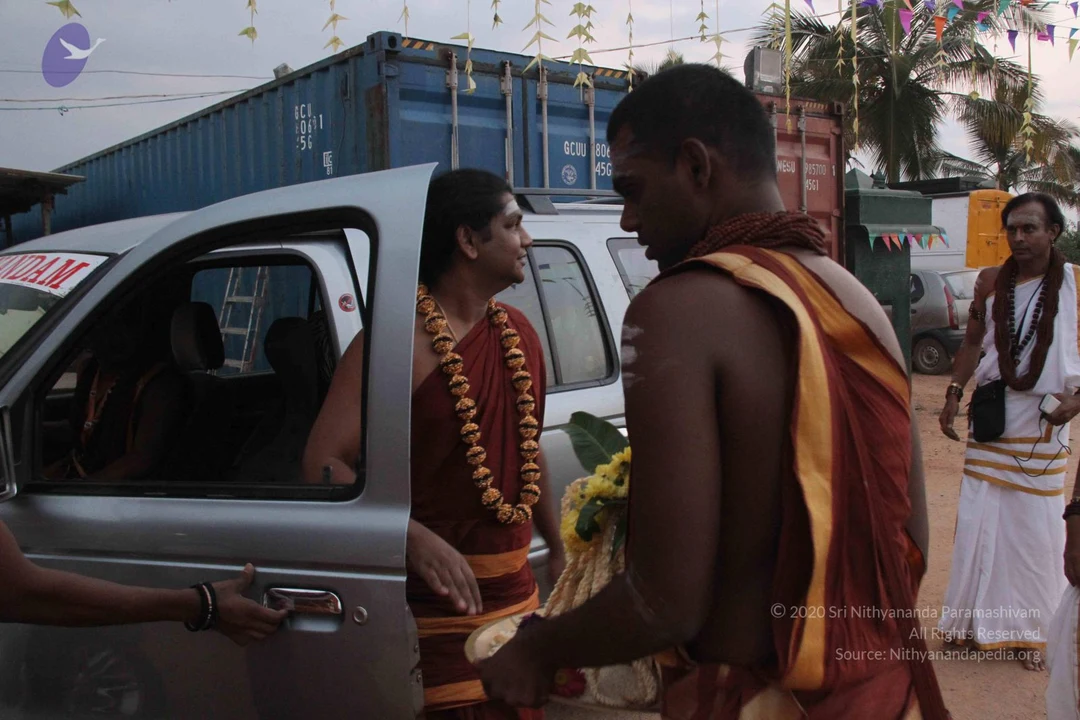
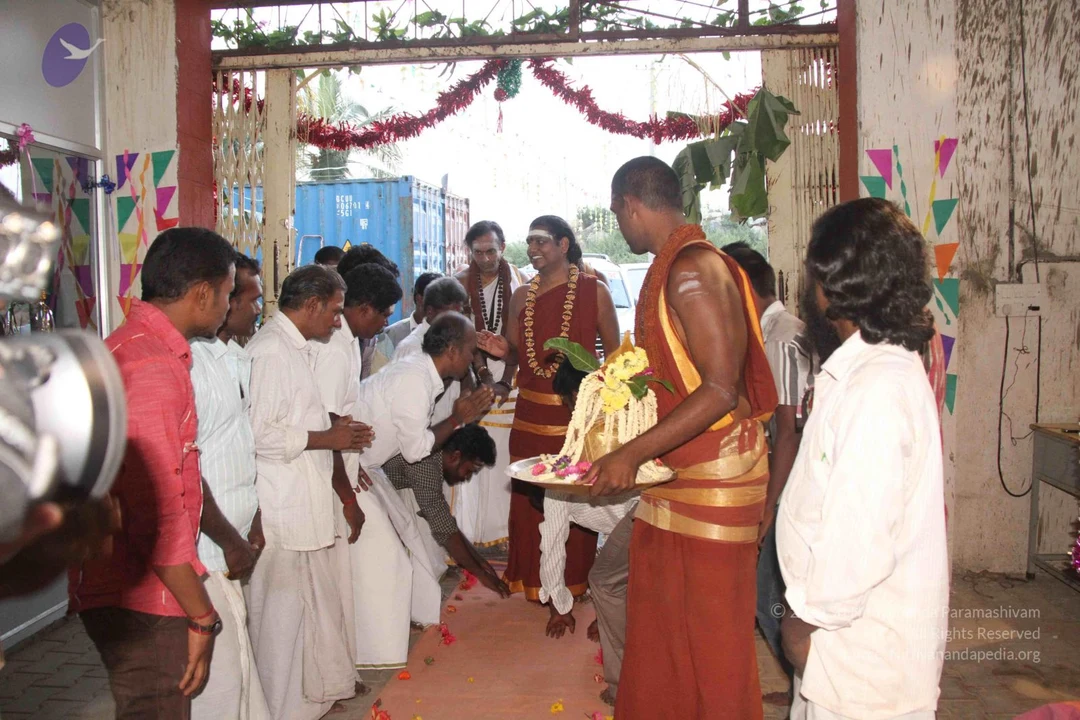
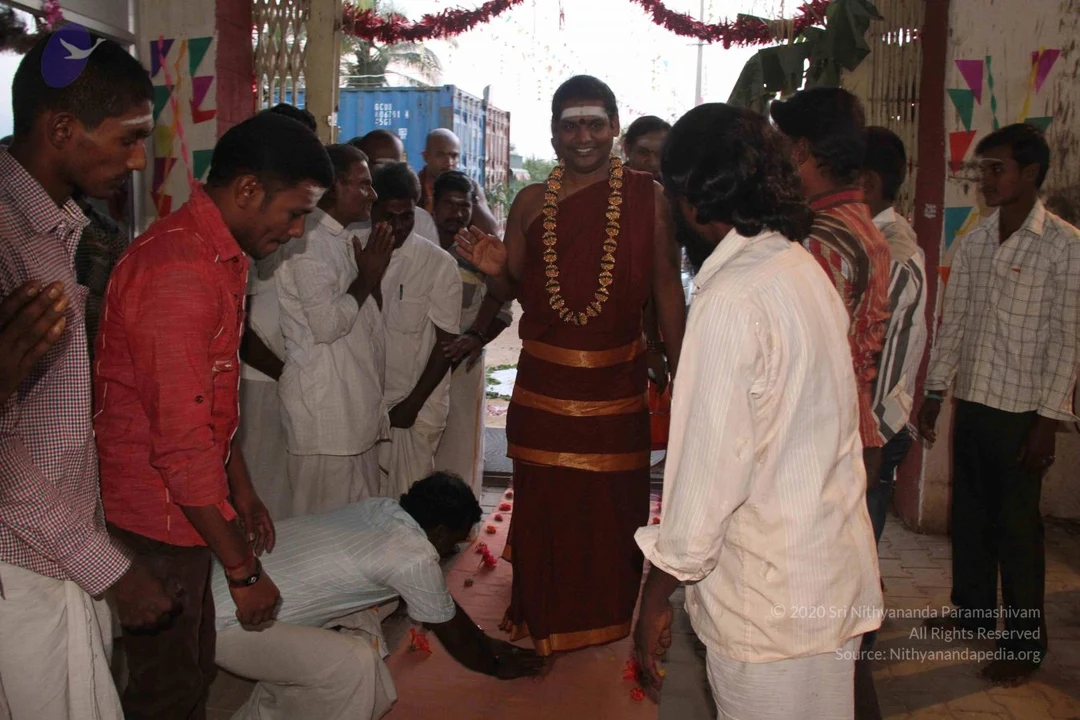
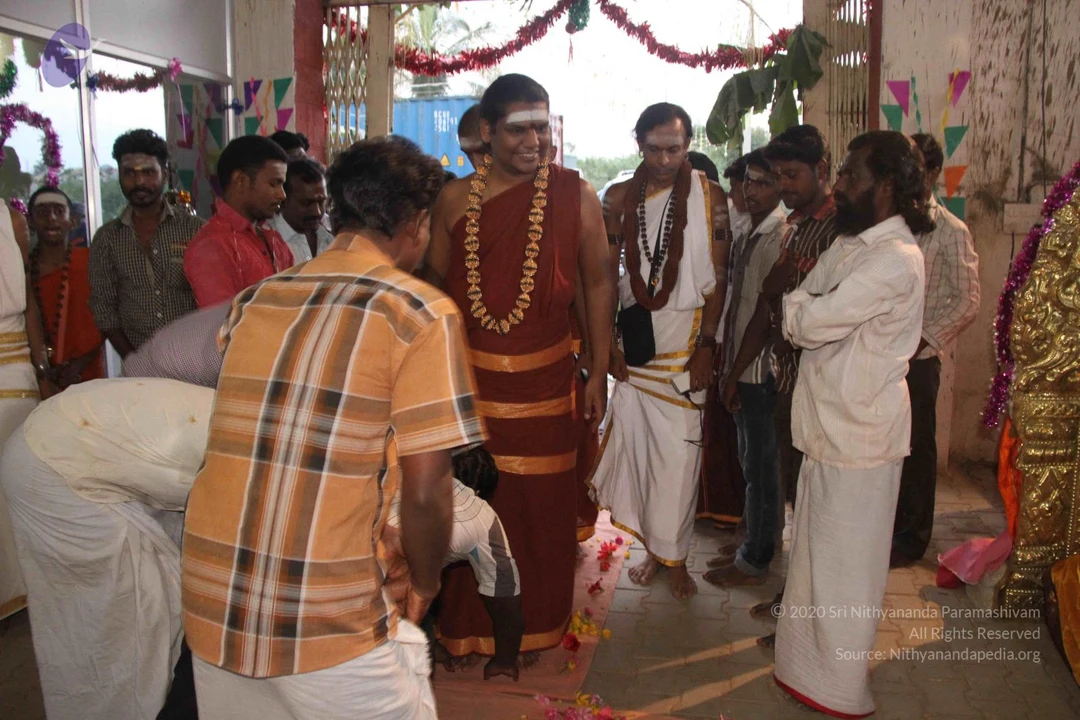
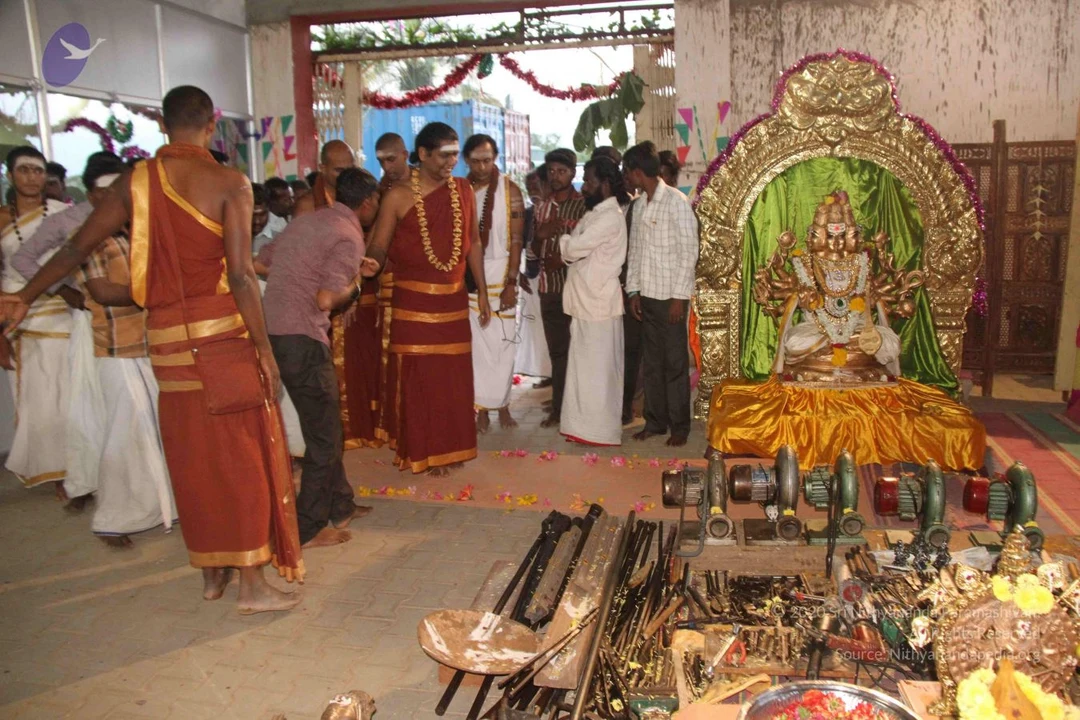
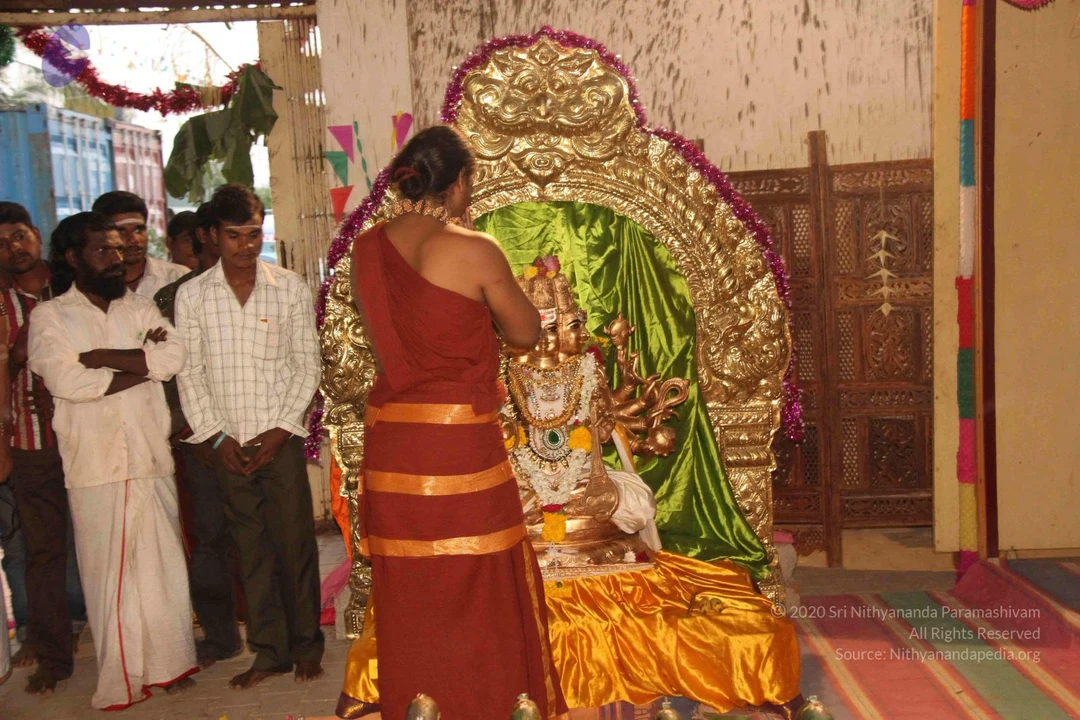
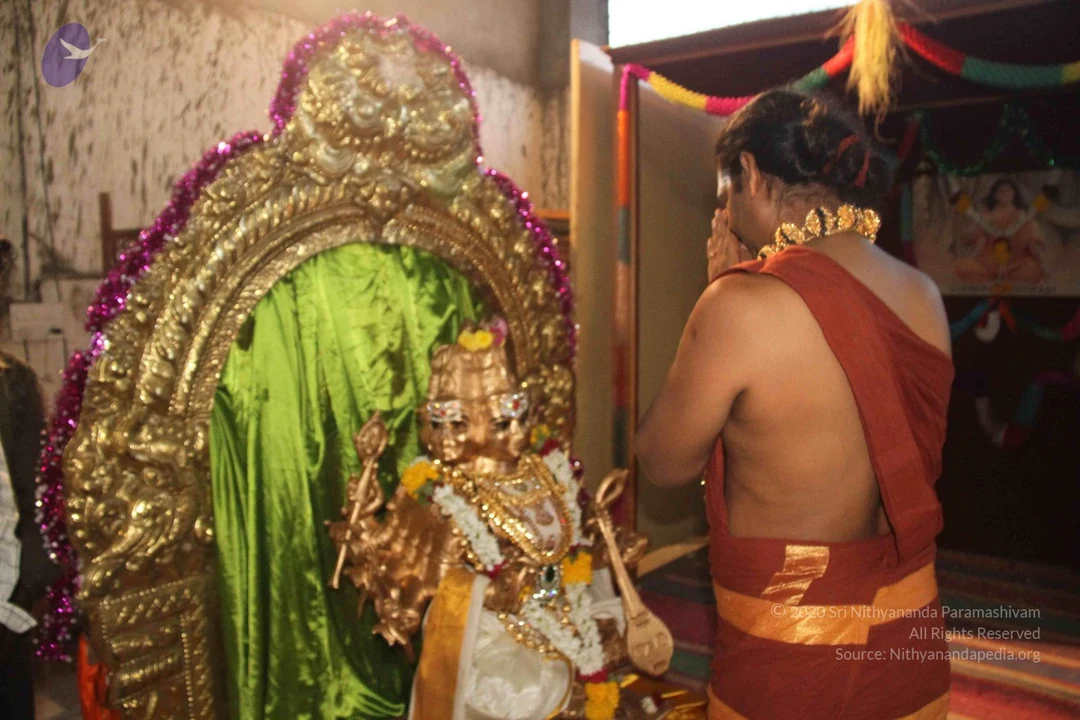
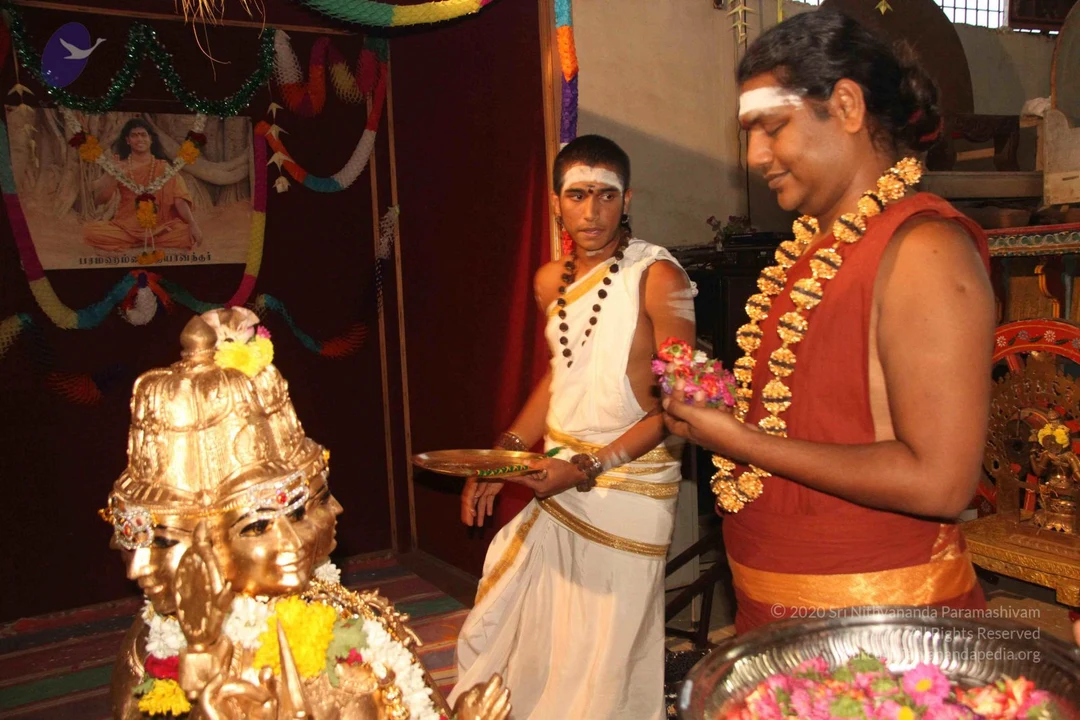
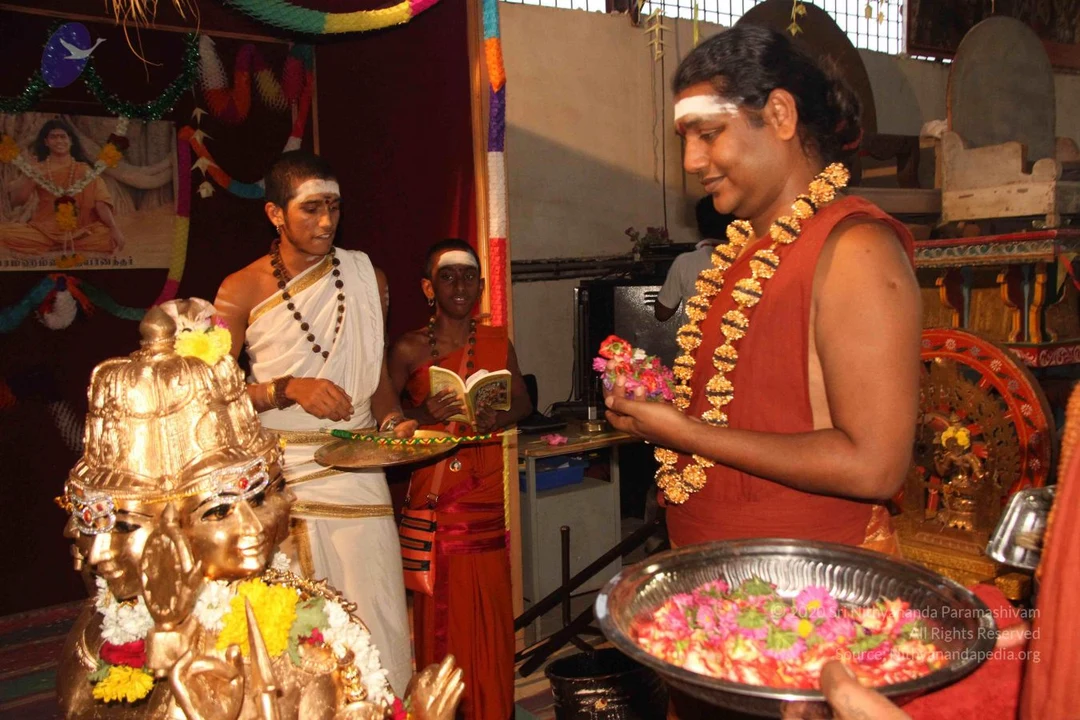
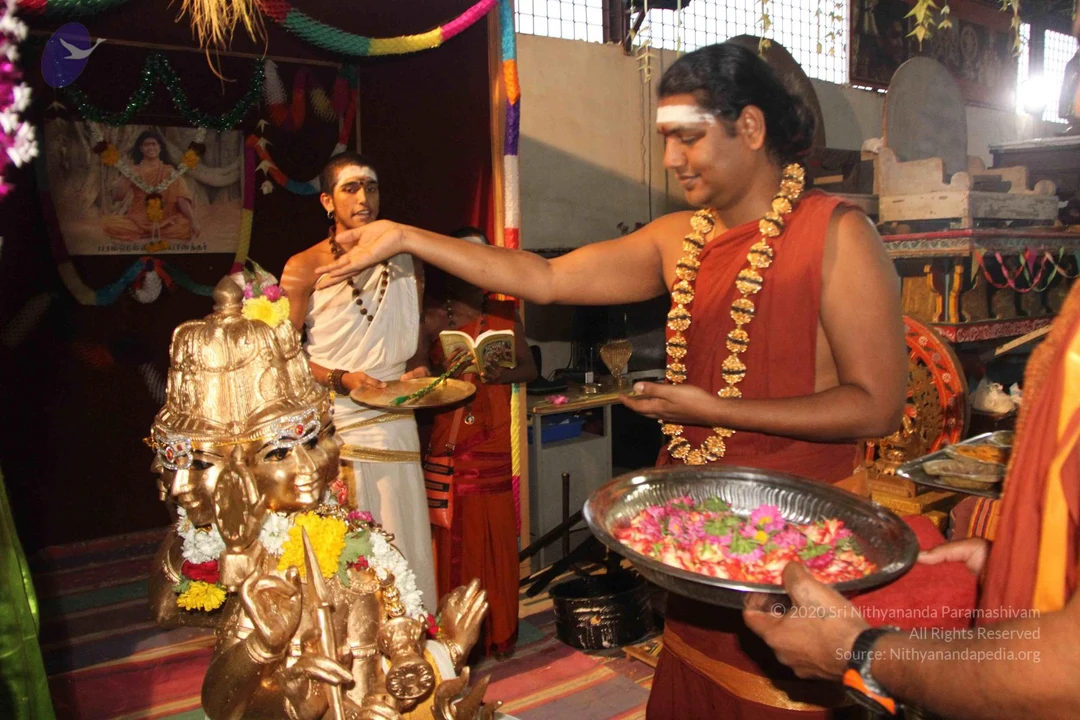
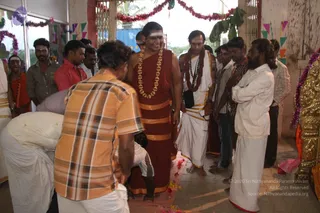
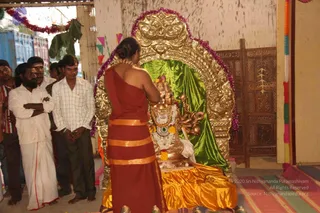
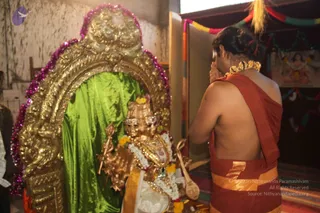
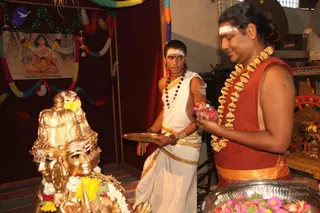
A silver Ford SUV with a roof rack drives along a dirt road at dusk, its windshield bearing red lettering reading NITHYANANDAM. A silver hatchback is parked at left, with dense green bushes and a utility pole behind. A figure is partly visible inside the SUV cabin. The driver's silhouette is faintly seen behind the glass; no clear ritual or satsang activity is shown.A photograph inside a decorated temple hall with a golden pillar at right and pink-and-red flower garlands hanging overhead. A central figure in a maroon-red robe with a long gold-and-maroon beaded necklace and a white forehead mark stands smiling on a pink cloth scattered with flower petals. A second man in white dhoti with a rudraksha mala and a shawl stands beside him, and a bearded man in white stands at right. A man in an orange-and-cream checked shirt bends forward and a child crouches on the floor in front of the central figure. Devotees in white dhotis and casual shirts stand around the edges. The central figure matches a person cues of ornate robe and gold necklace, so the identification is appearance-based only.A woman in a maroon one-shoulder sari with gold borders stands with her back to the camera, performing worship before a large ornate gold arched shrine framing a green silk backdrop. The shrine holds a deity murti adorned with a garland of flowers and a jewelled necklace, with a golden cloth draped below. Several men in white dhotis and checked shirts stand watching at the left, and purple tinsel garlands and colourful triangular flags decorate the pavilion.A photograph of a man seen from behind, bare-backed, wearing a rust-orange dhoti with a gold-bordered end, a gold necklace and an ornate gold chain at the neck, with hands pressed together in prayer before a gilded deity murti. The murti stands in a gold arched shrine framed with pink tinsel, draped in a green silk cloth, adorned with white and yellow flower garlands, and holding a staff and a veena-like instrument. Colourful string decorations hang behind, and a framed painting of a seated deity is visible on the right wall.A photograph inside a temple-style shrine with a maroon curtain and garlands of colourful fabric and tinsel. In the foreground a gold-plated murti of a deity with a crown-like headdress and yellow and white flower garlands stands on the left. Two men in ritual attire stand together: the older man on the right wears a rust-red garment, a gold-coloured sash, a heavy gold necklace of large beads, and a white forehead band, and holds pink and white flowers in his hands. Beside him a younger man in a white dhoti and white upper cloth, with a rudraksha mala and a white forehead mark, holds a brass plate with offerings. A framed picture of a seated figure in orange robes with a flower garland hangs on the left wall. Pink flowers fill a steel tray at lower right. The scene suggests a puja or abhishekam.A temple puja scene with a gold-coloured deity murti of Shiva wearing a tall crown, garlanded with white and yellow flowers, at the front left. Three men stand behind a red-cloth-draped altar. The central figure on the right wears an orange-red sleeveless robe, a long yellow-orange floral garland, a white forehead mark, and holds a plate of pink and white petals. The man in the centre wears white dhoti and shawl with rudraksha beads and holds a tray with a yellow-green item, while another in orange-red robe holds an open book. A framed portrait with flower garlands hangs on the upper left wall, and a decorated ornate throne-like chair sits on the right. A plate of flower petals is in the foreground. The scene suggests a puja or abhishekam in progress.
culturals

51 photosSource gallery
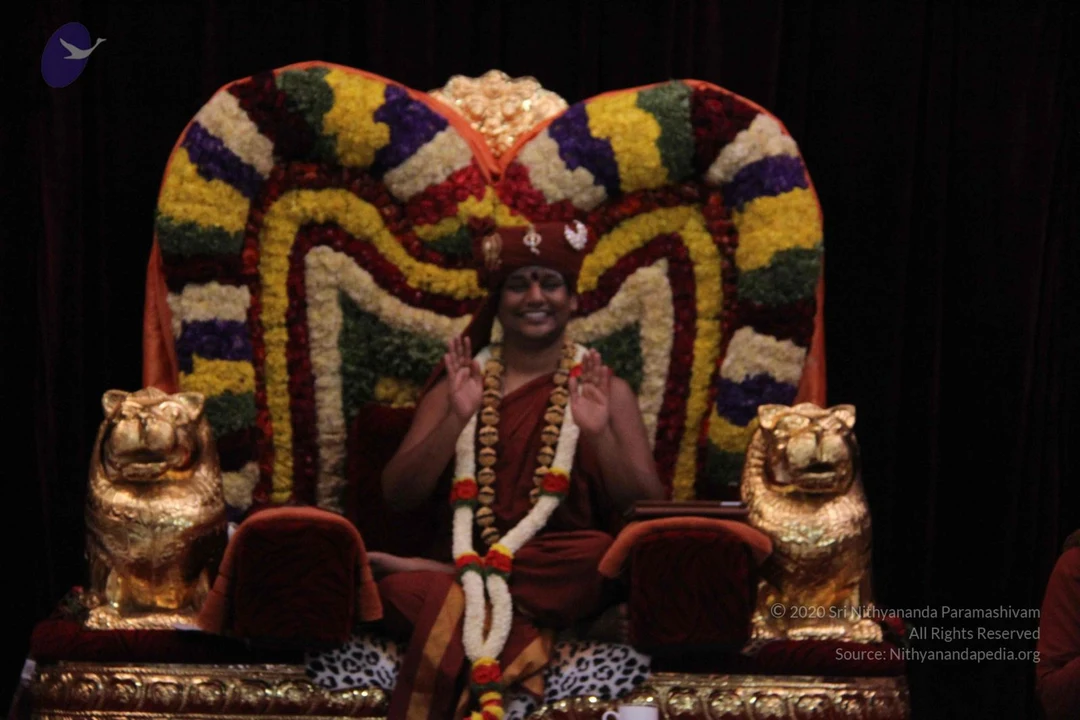
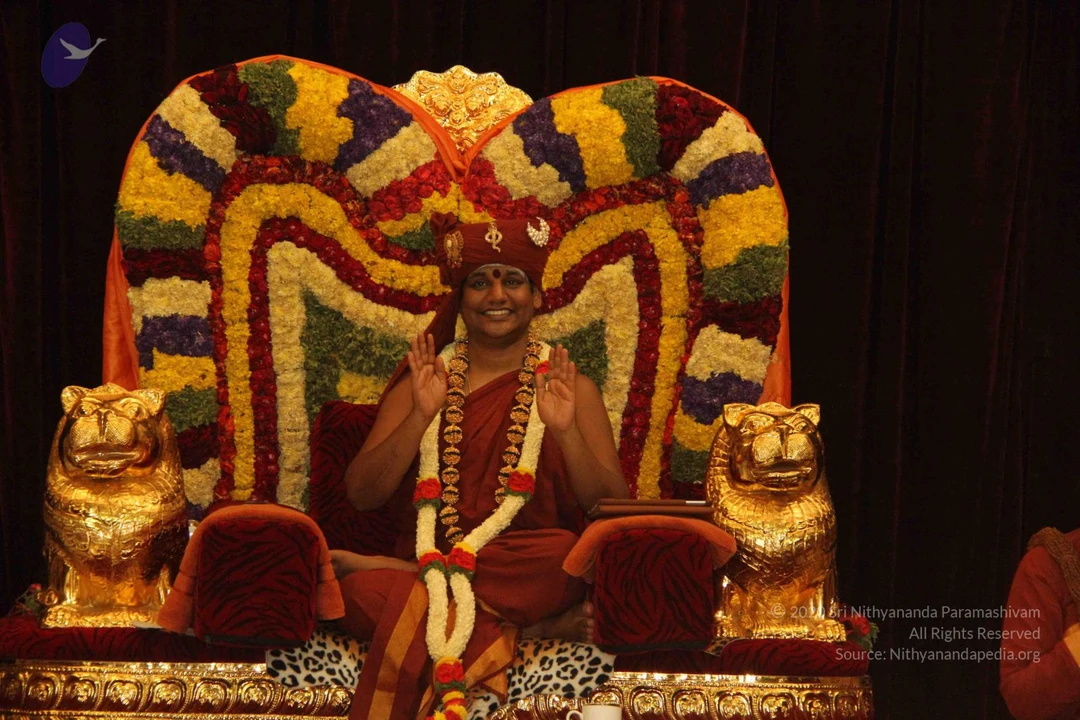
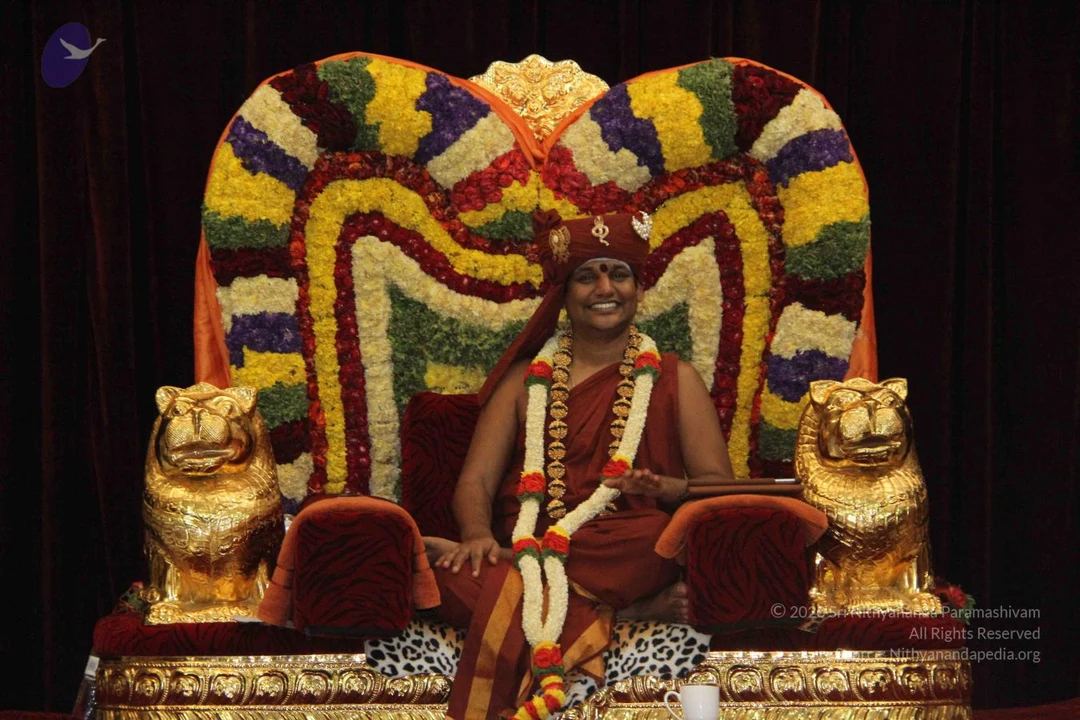
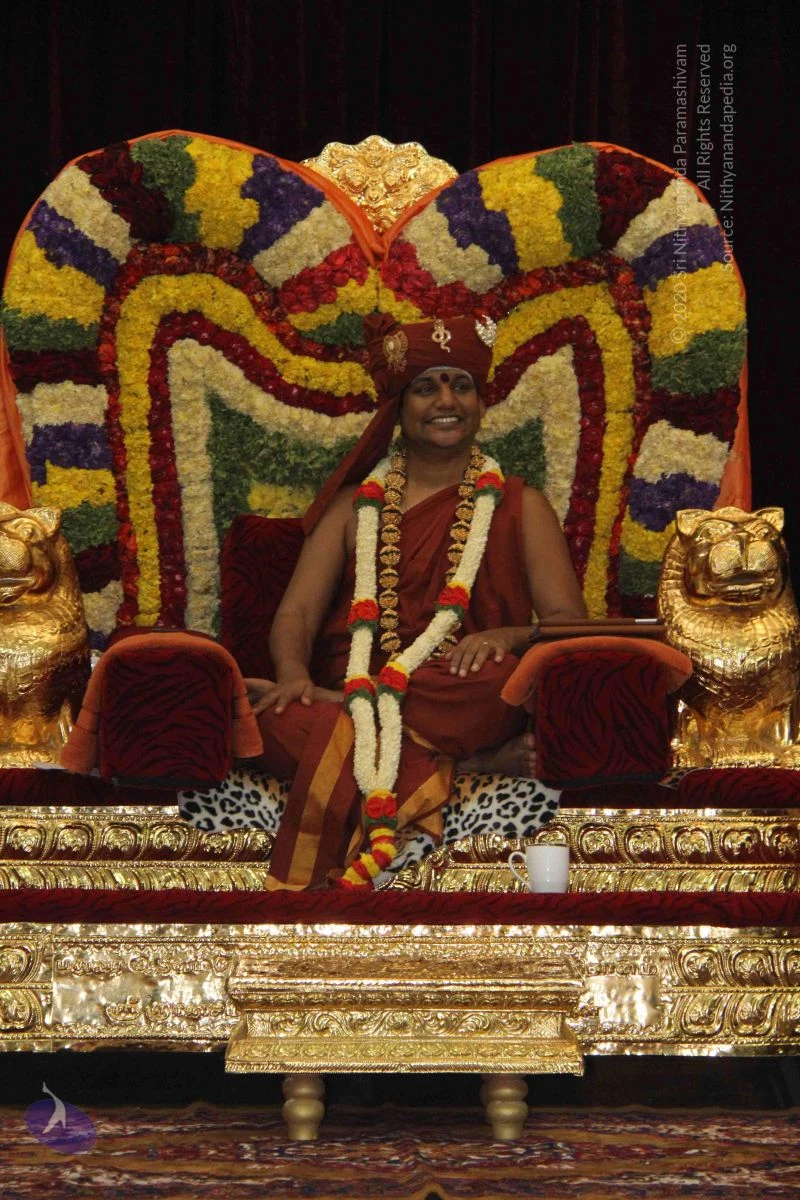
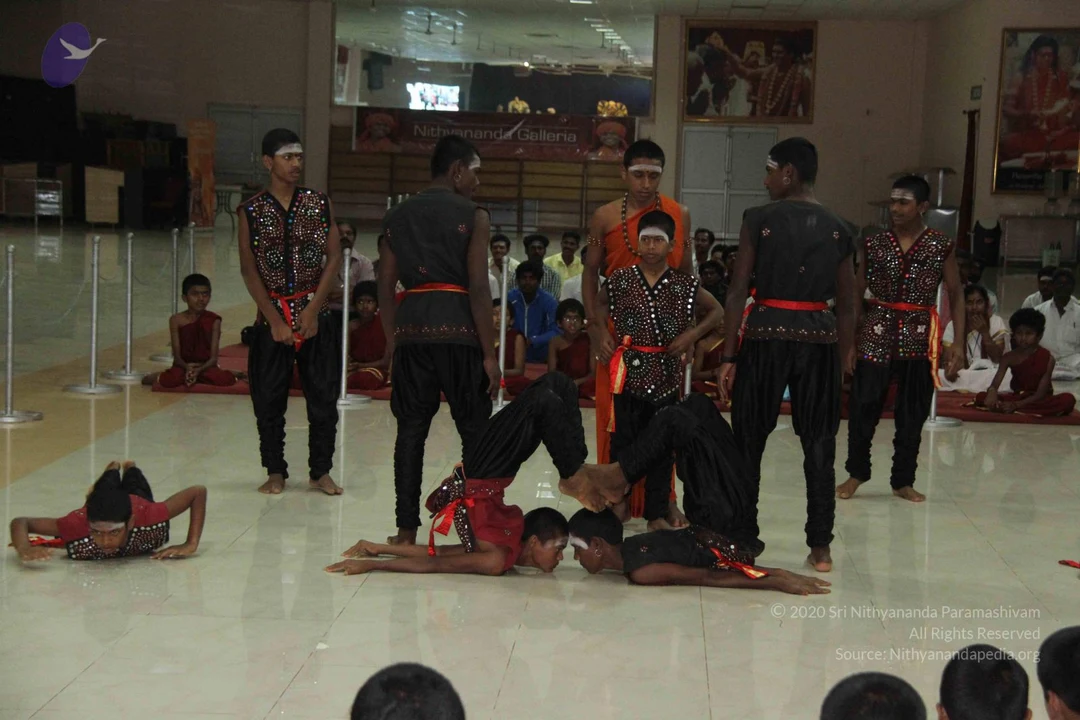
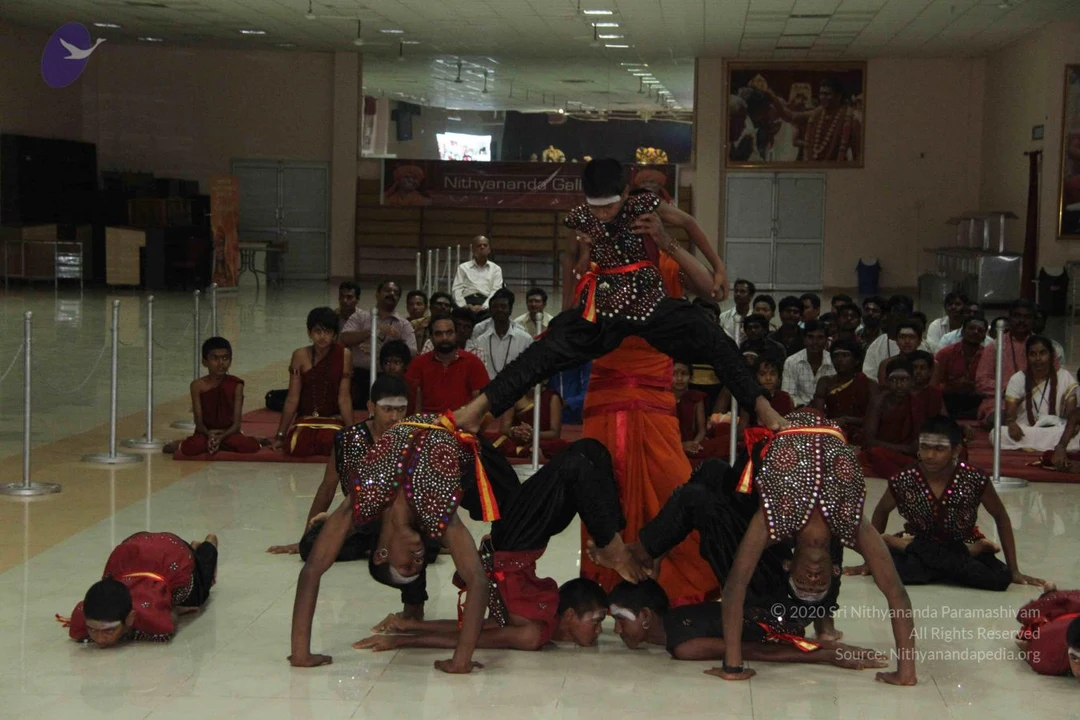
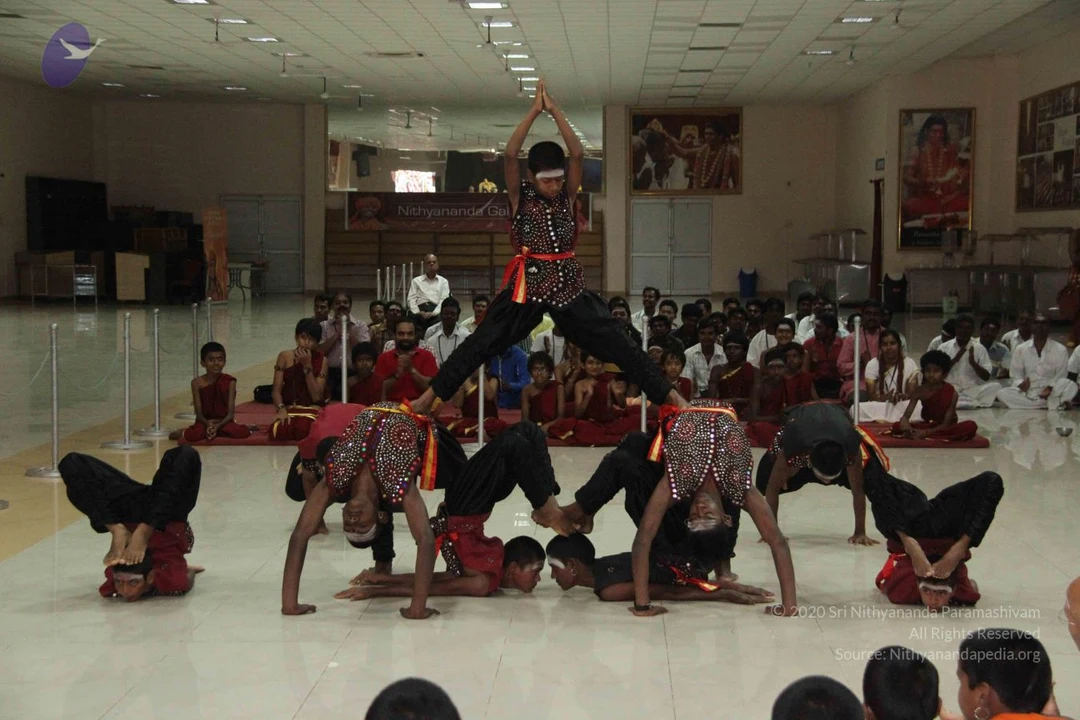
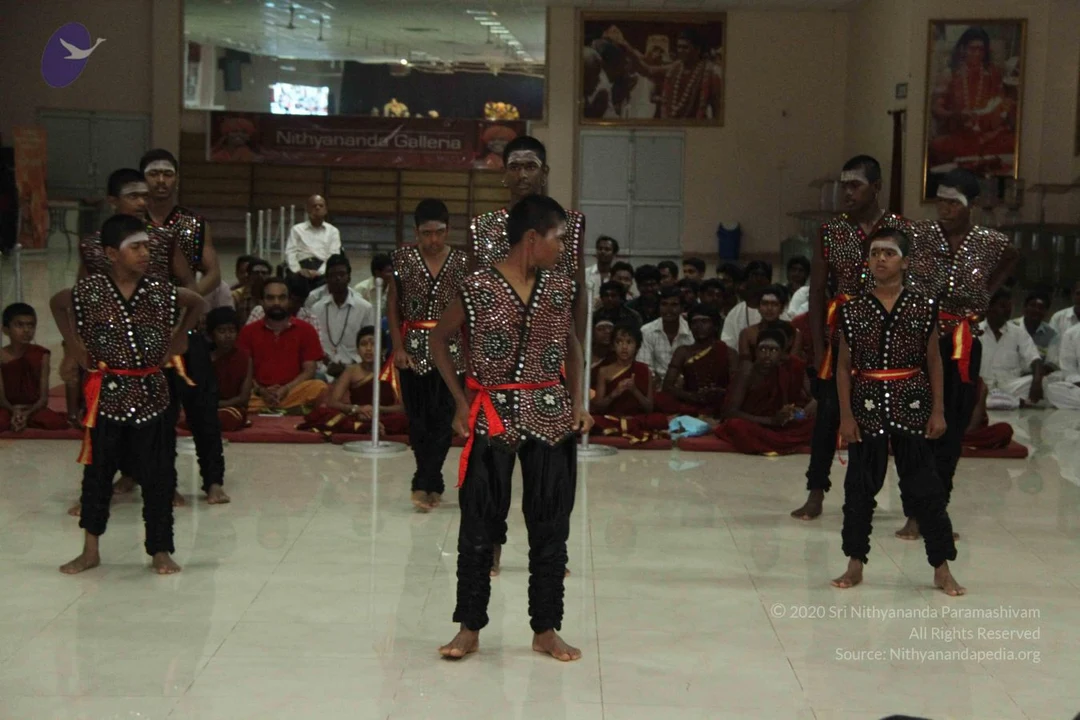
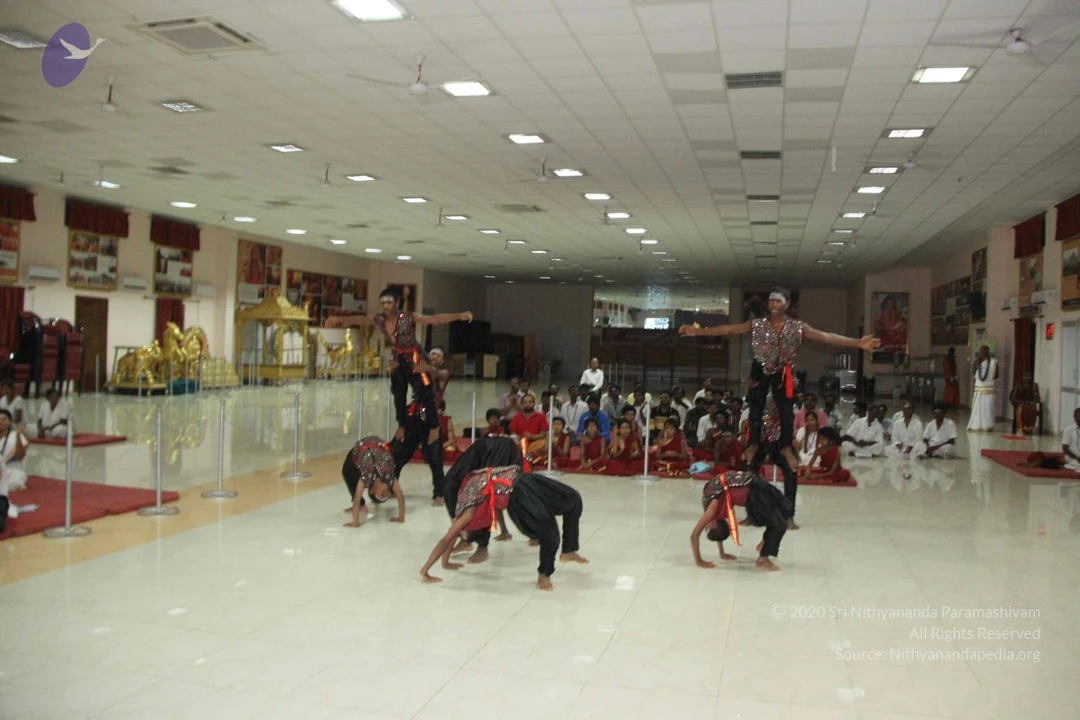
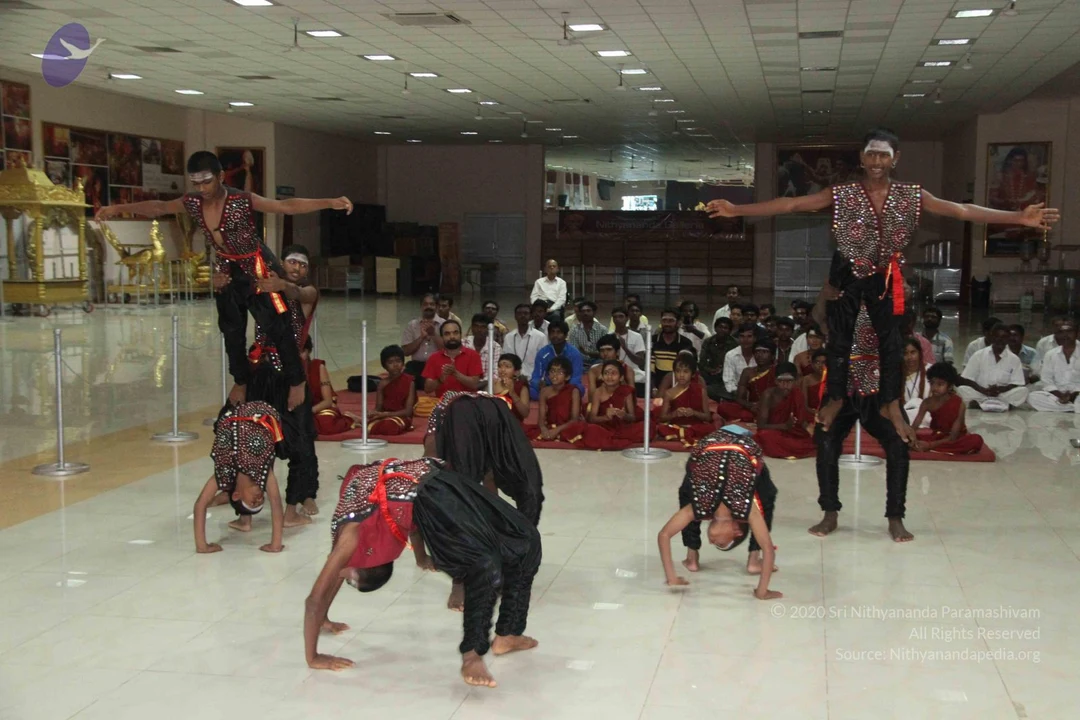
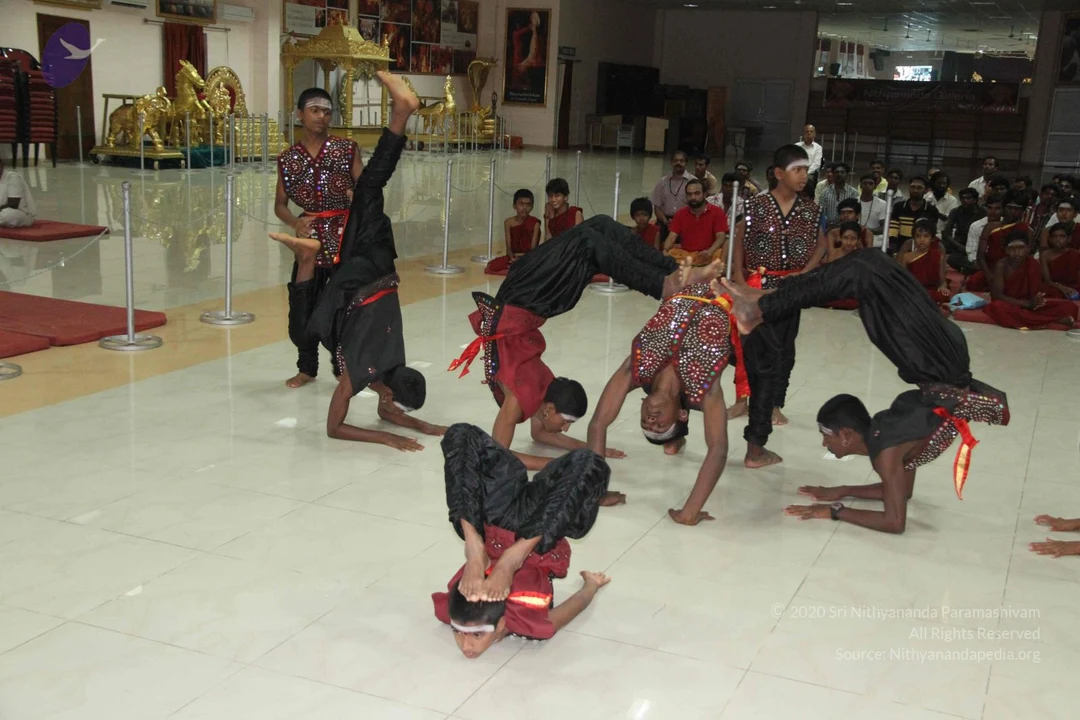
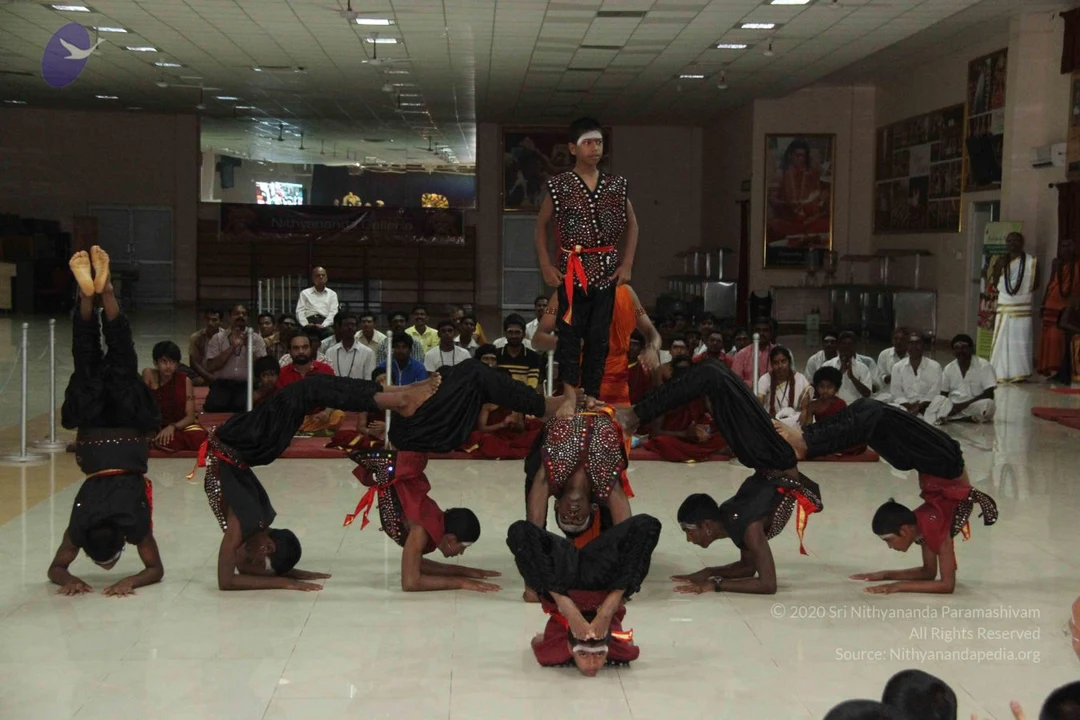
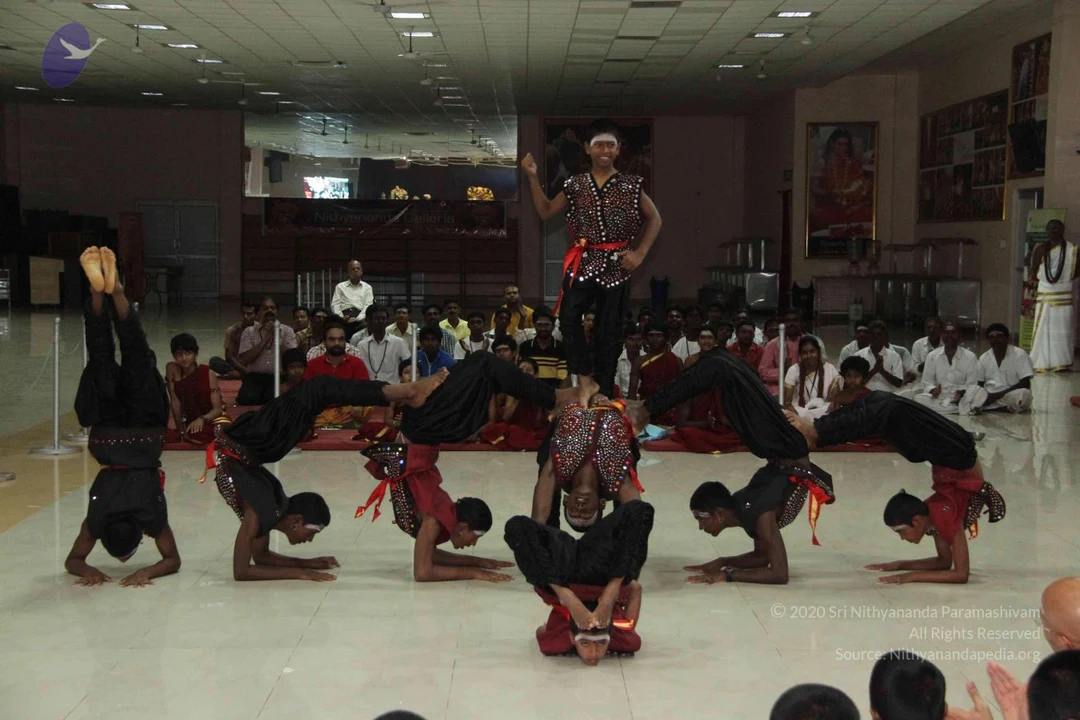
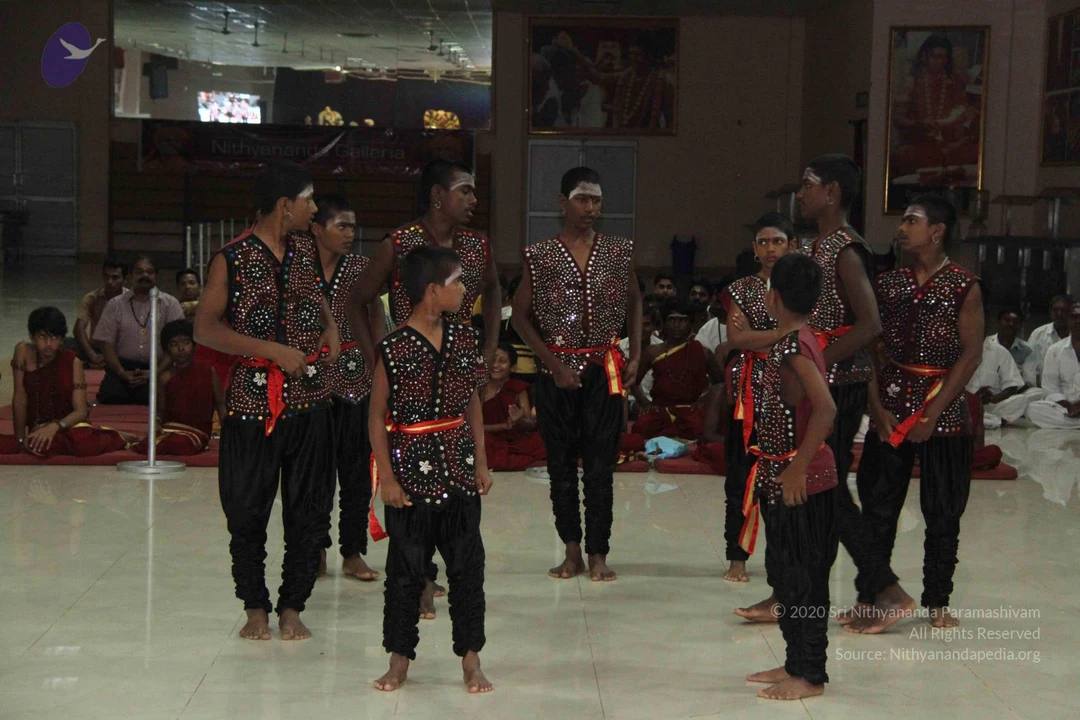
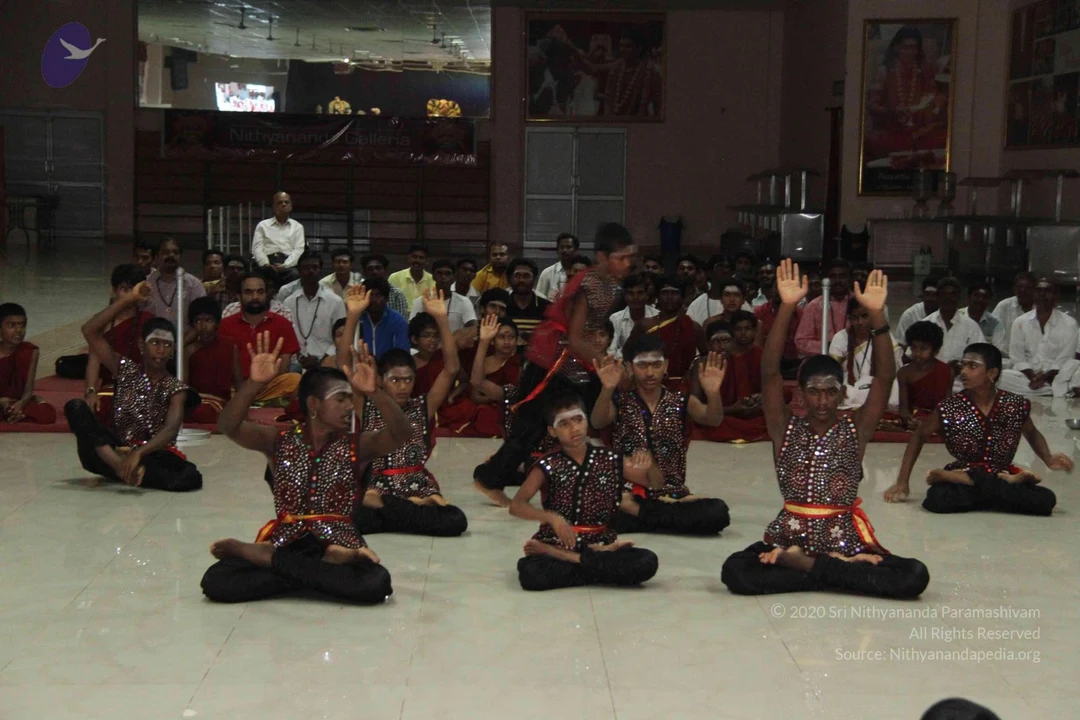
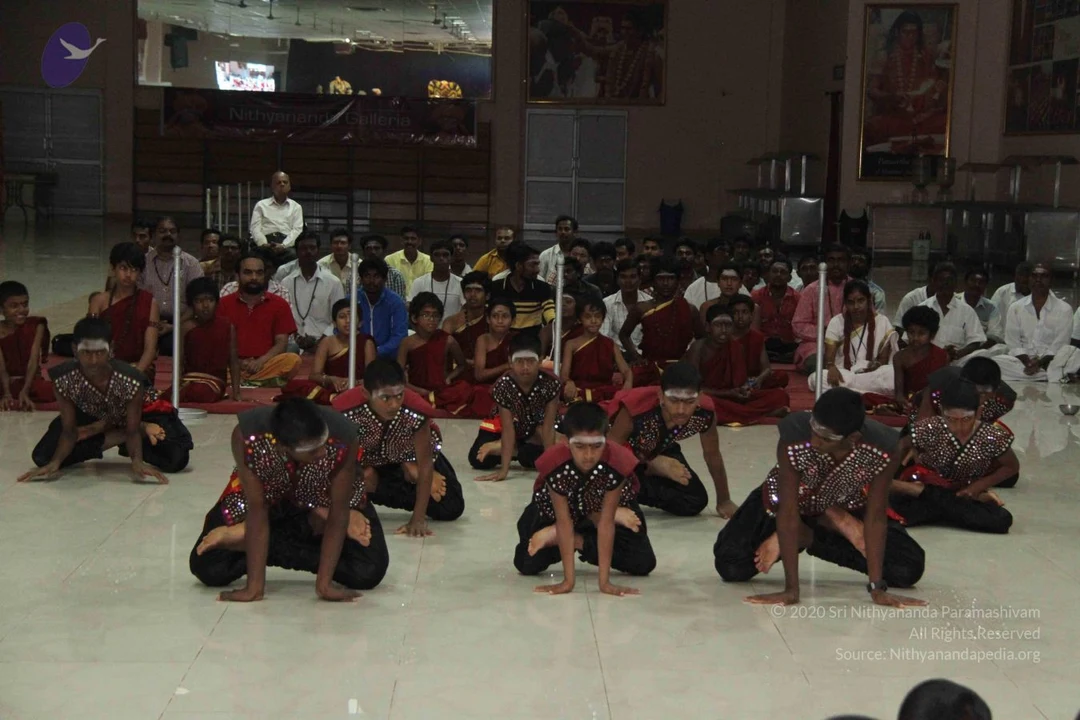
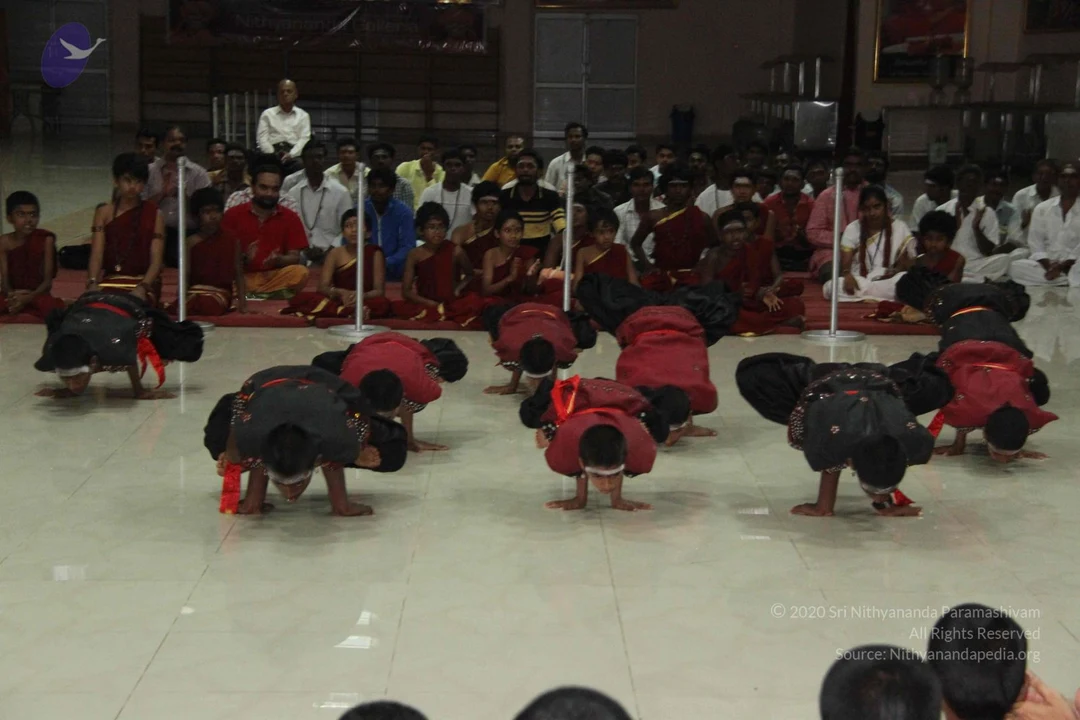
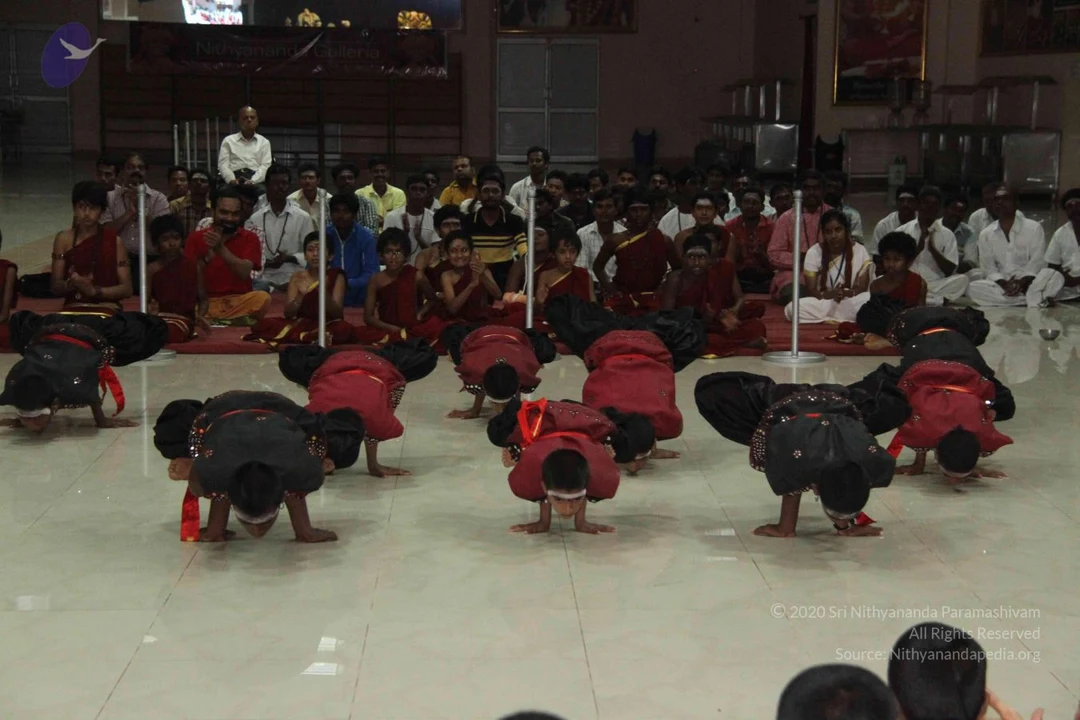
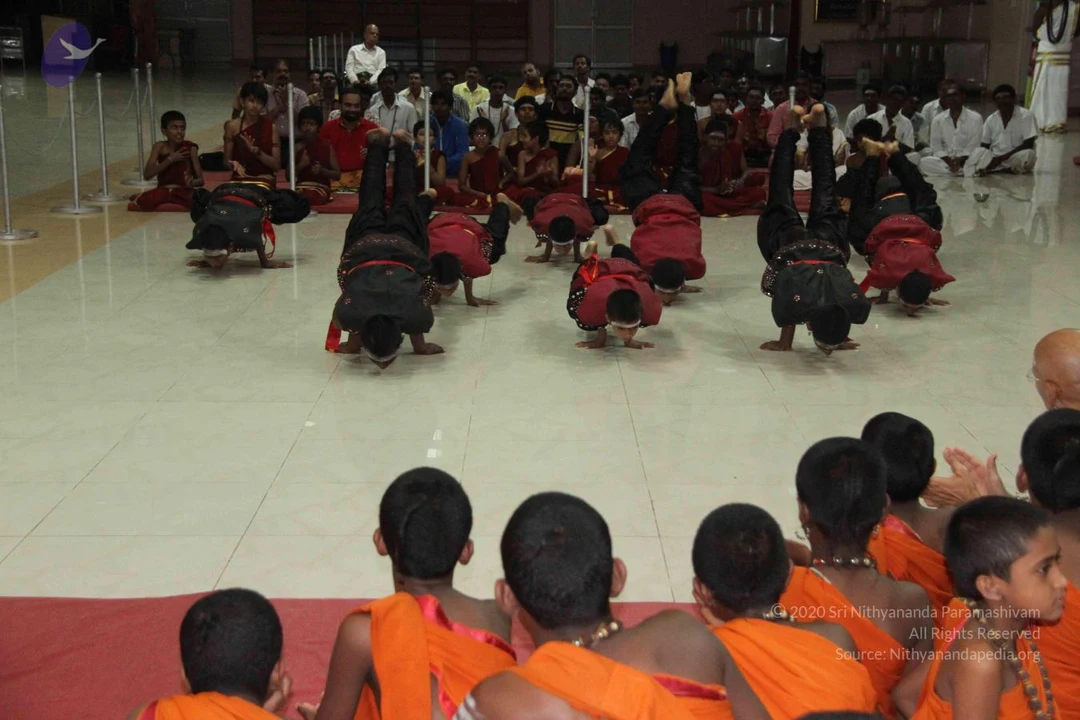
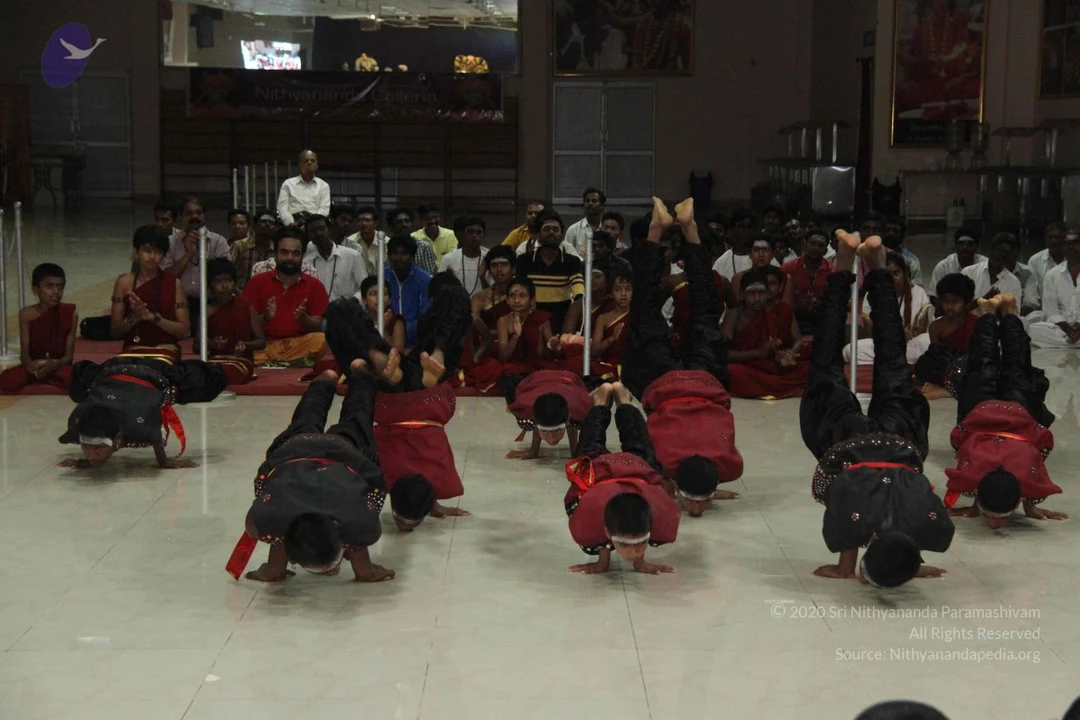
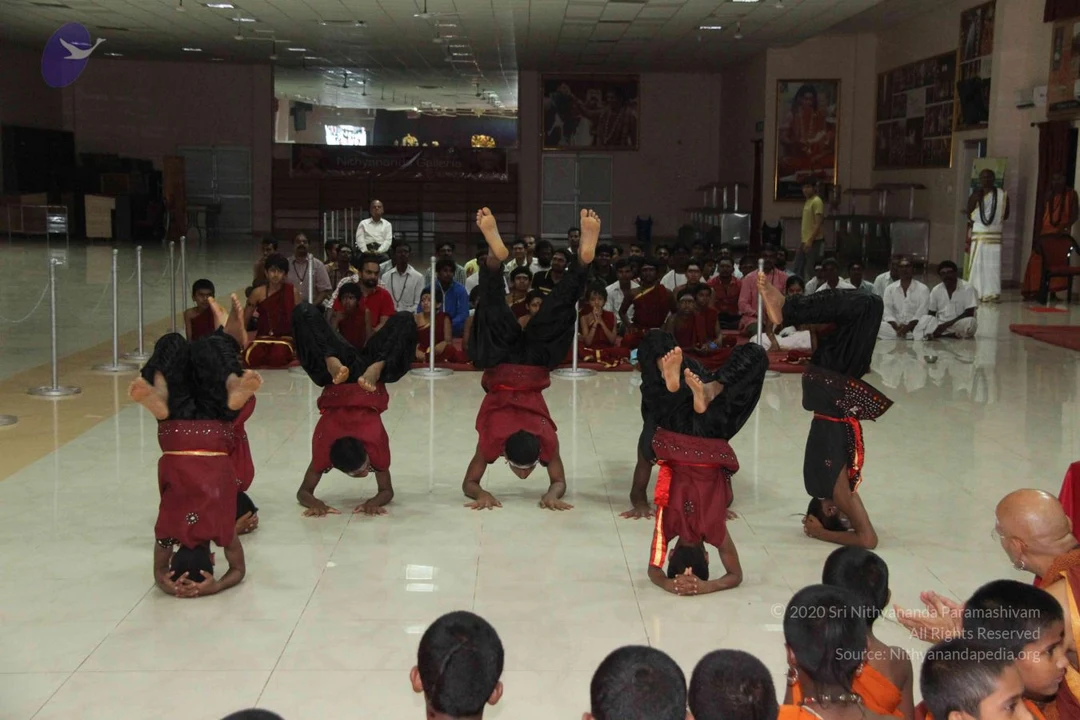
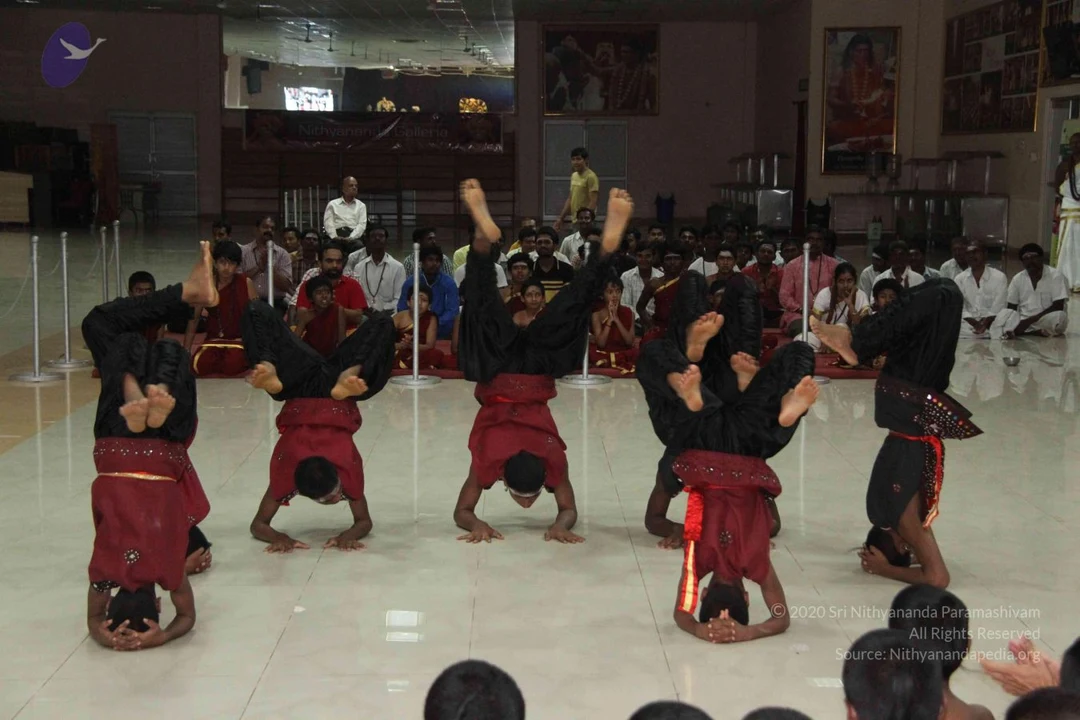
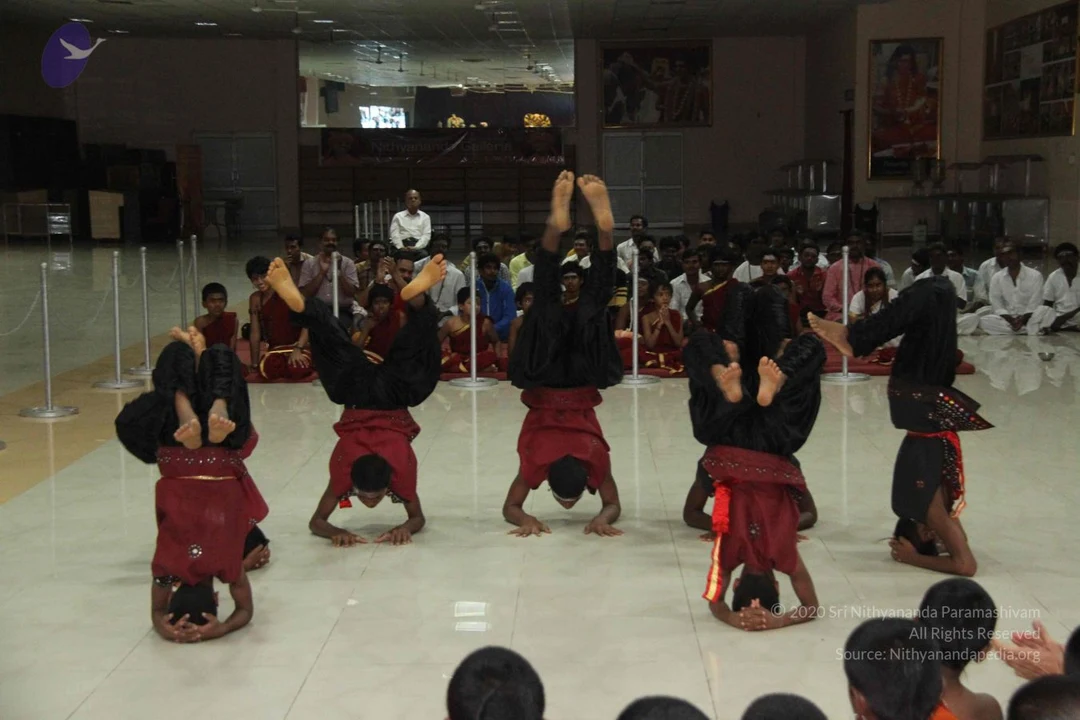
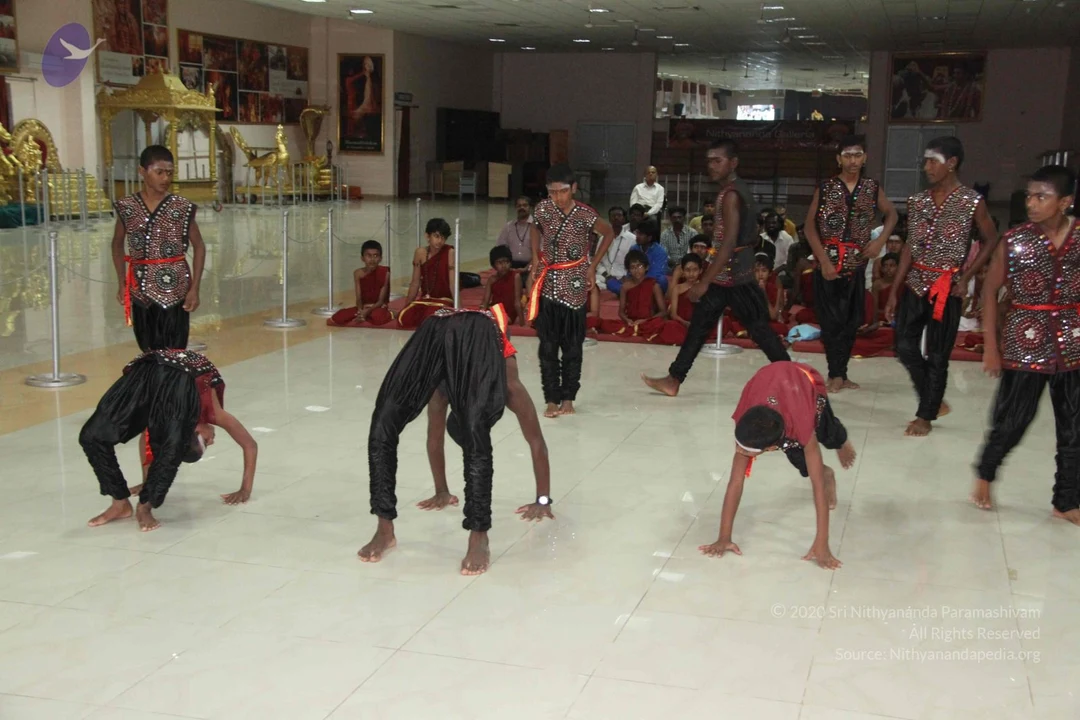
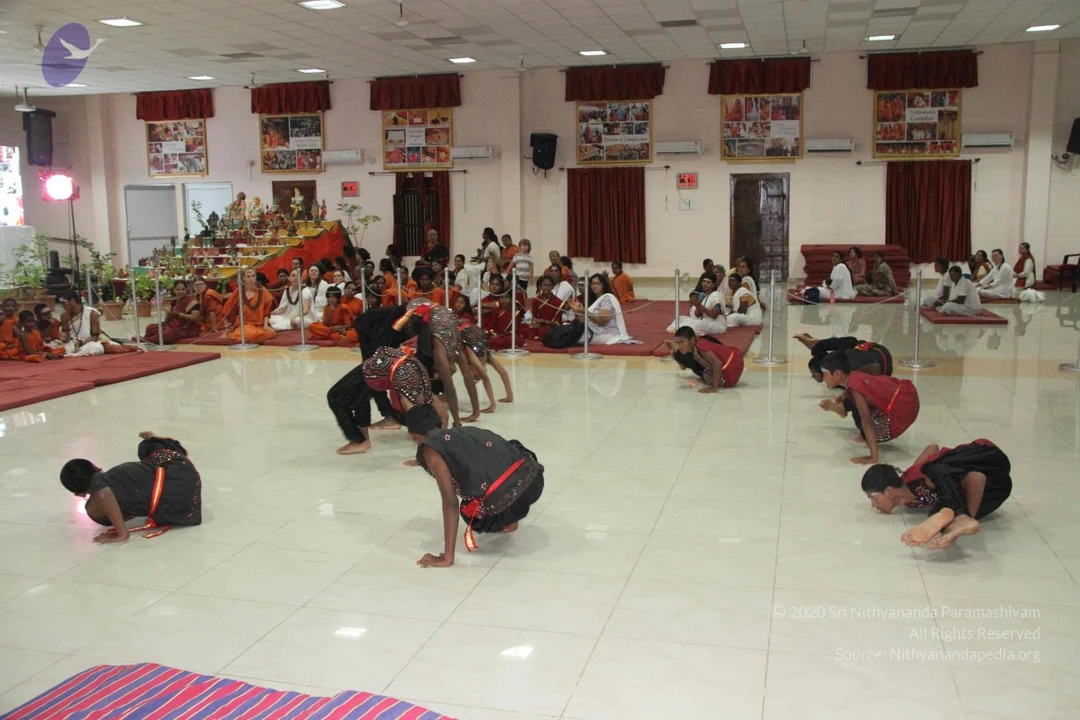
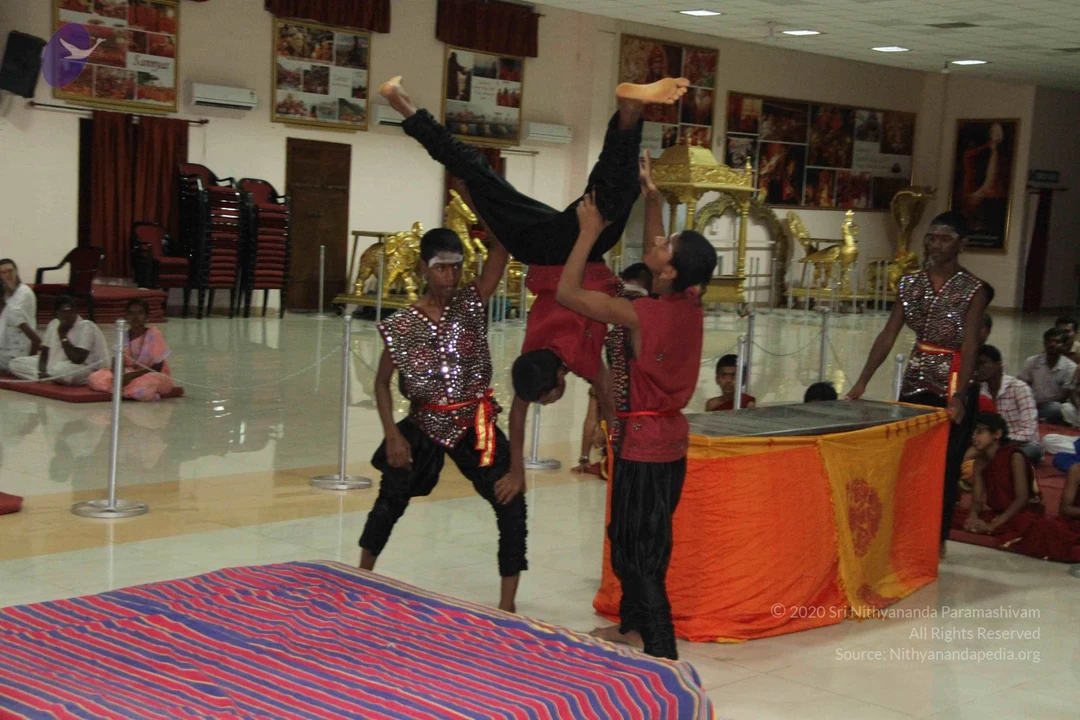
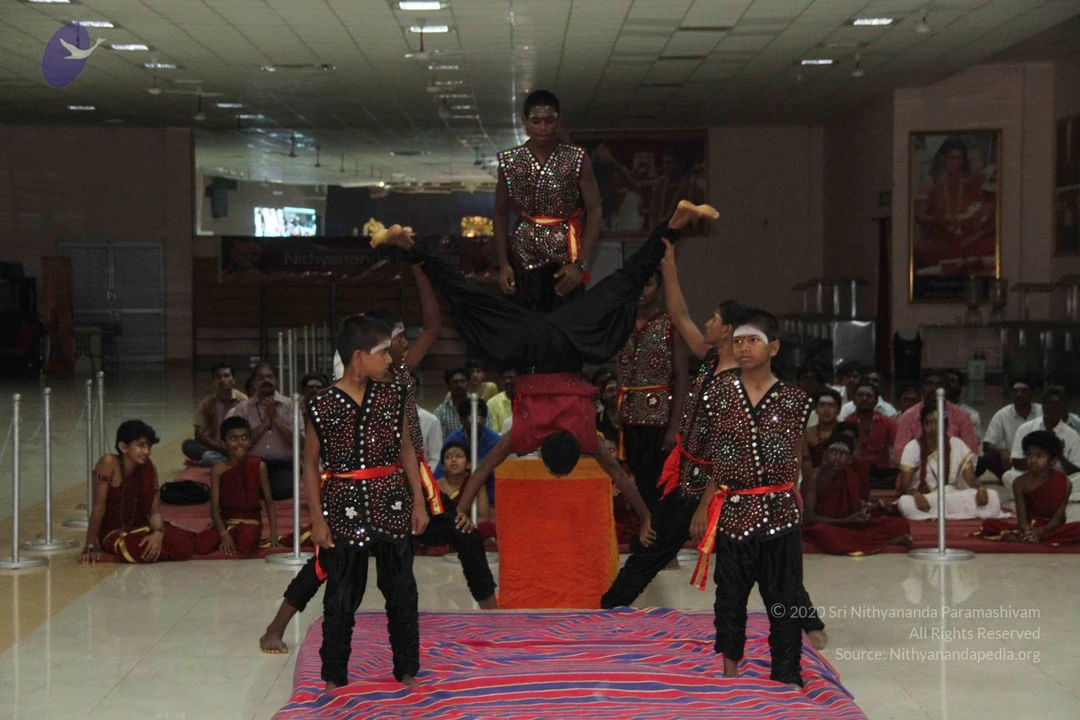
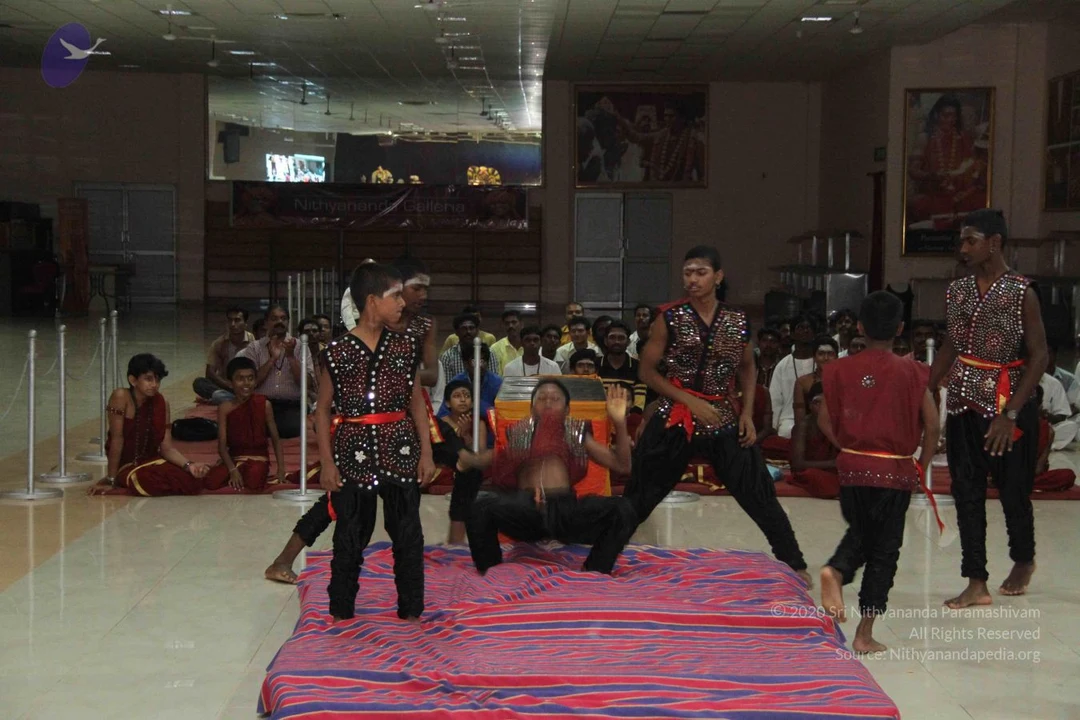
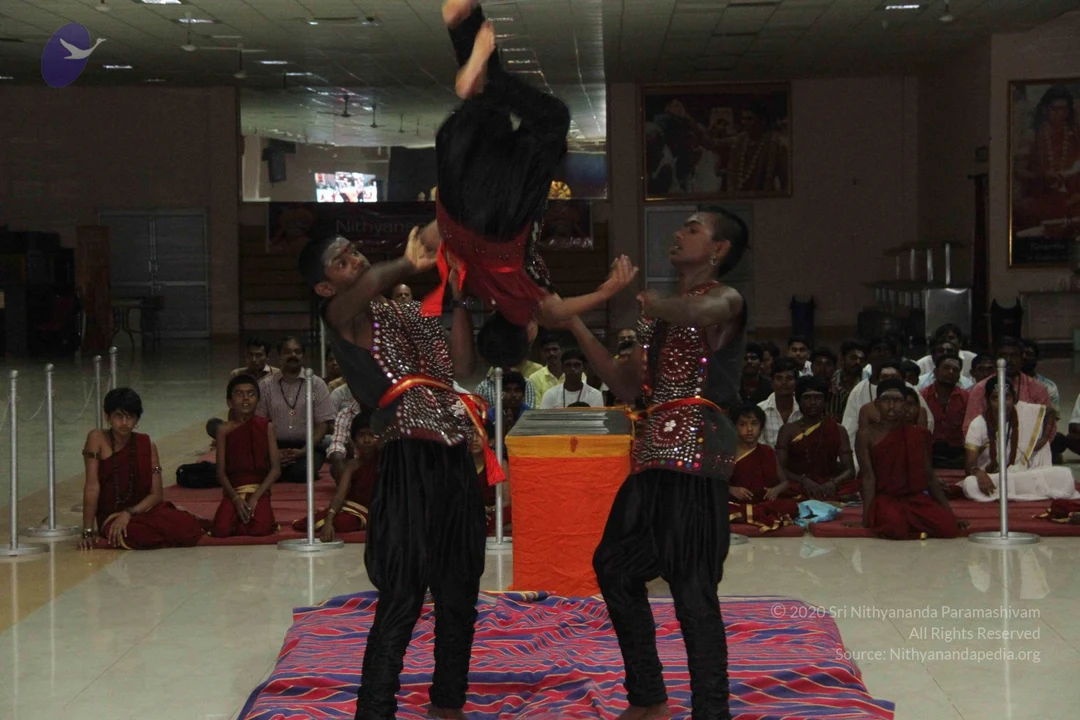
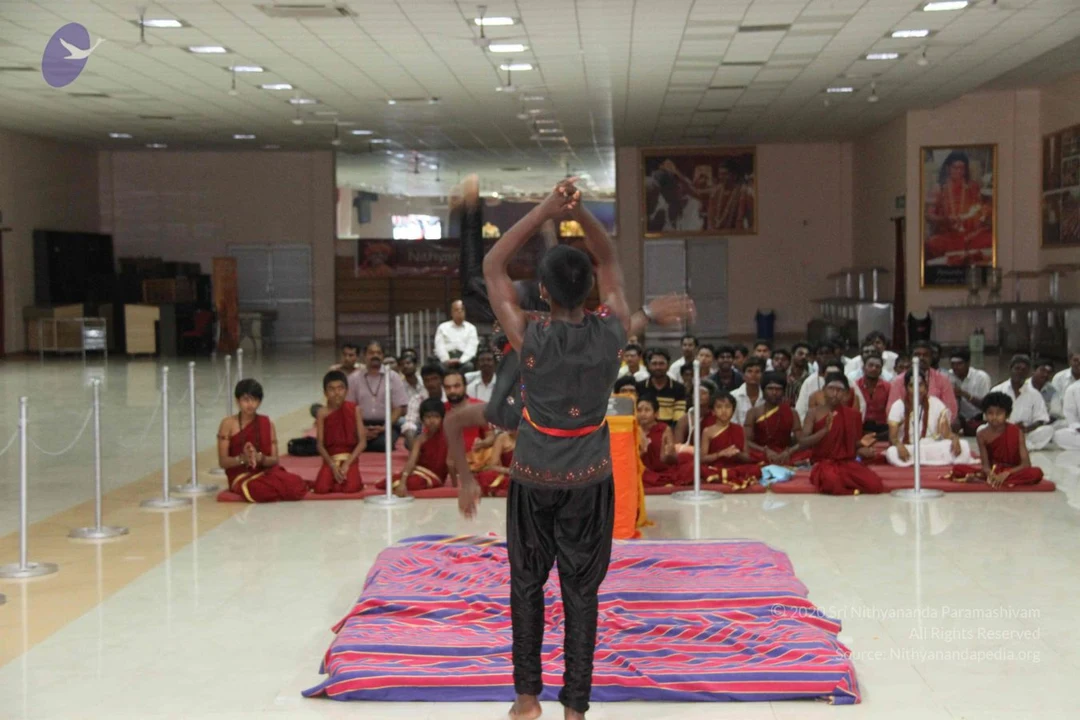
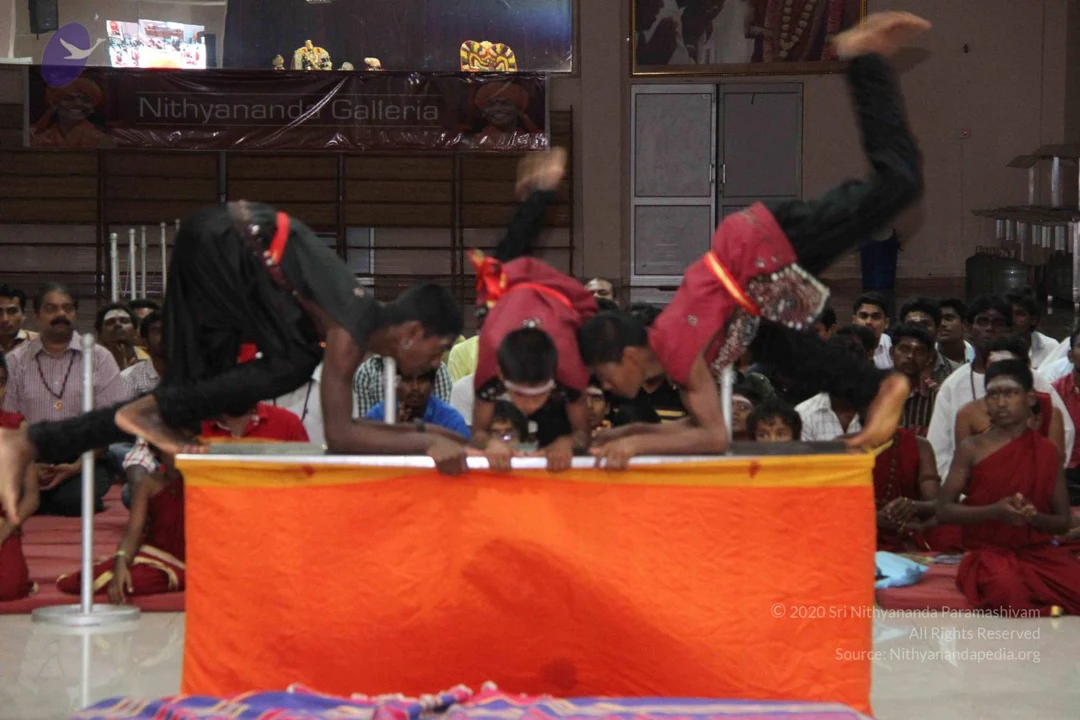
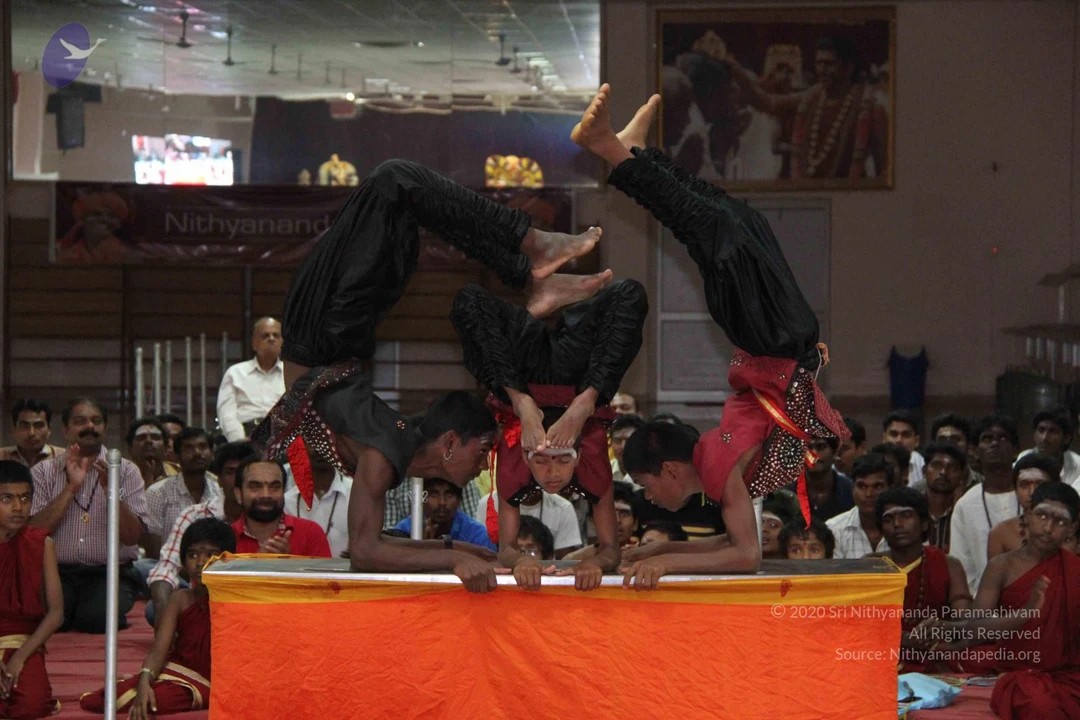
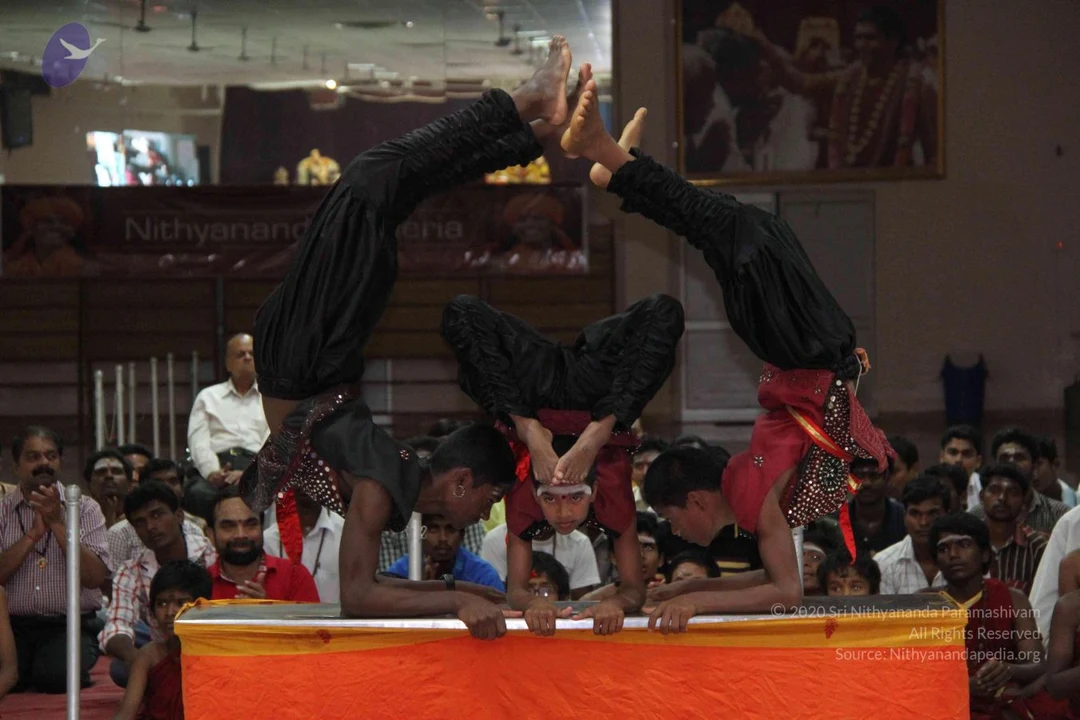
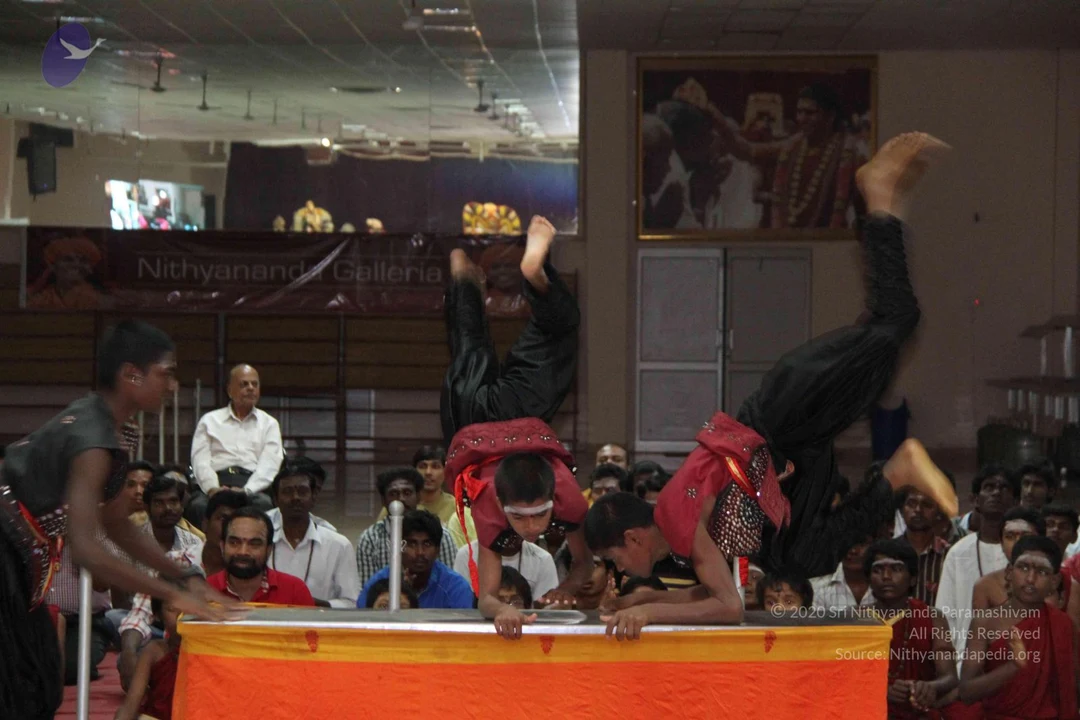
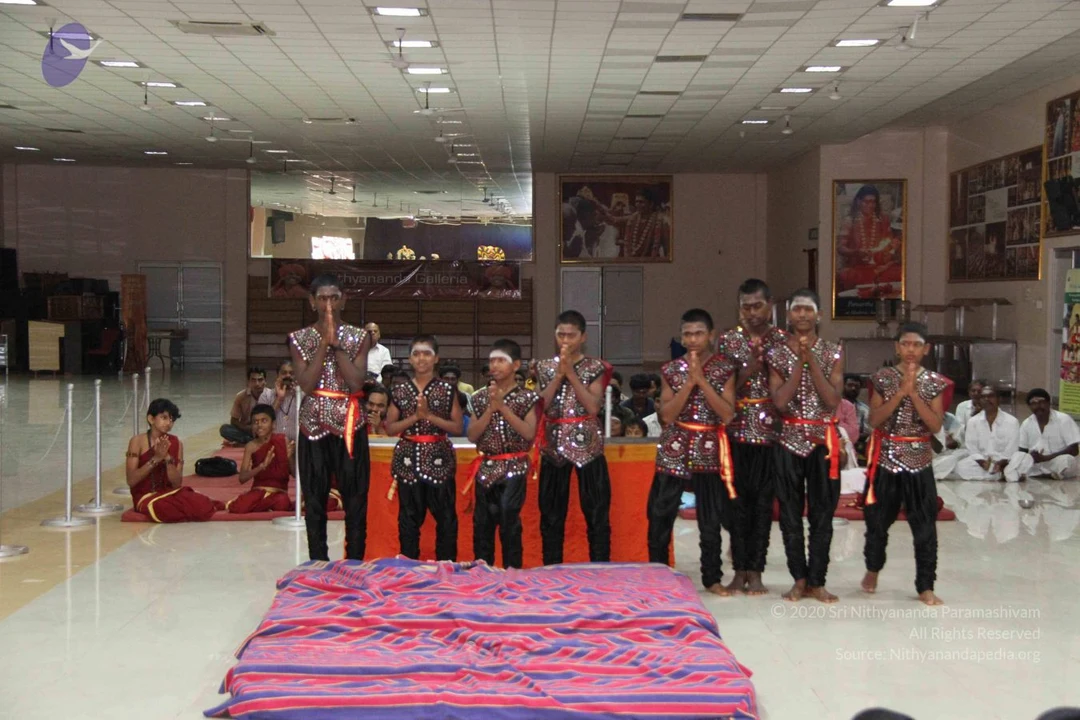
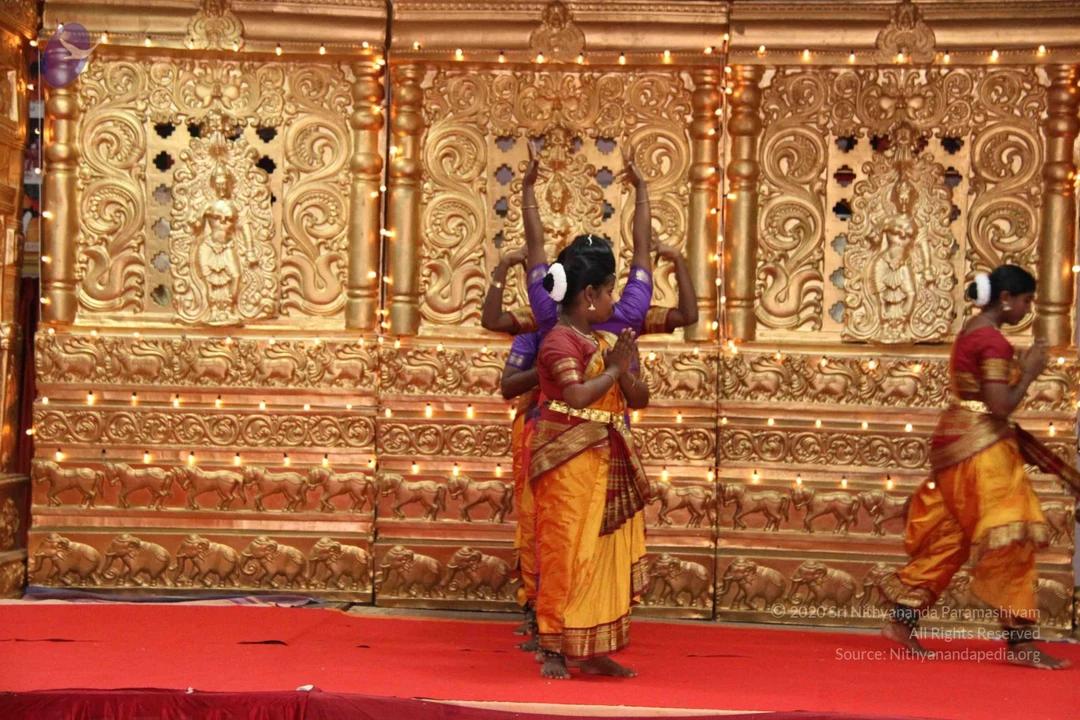
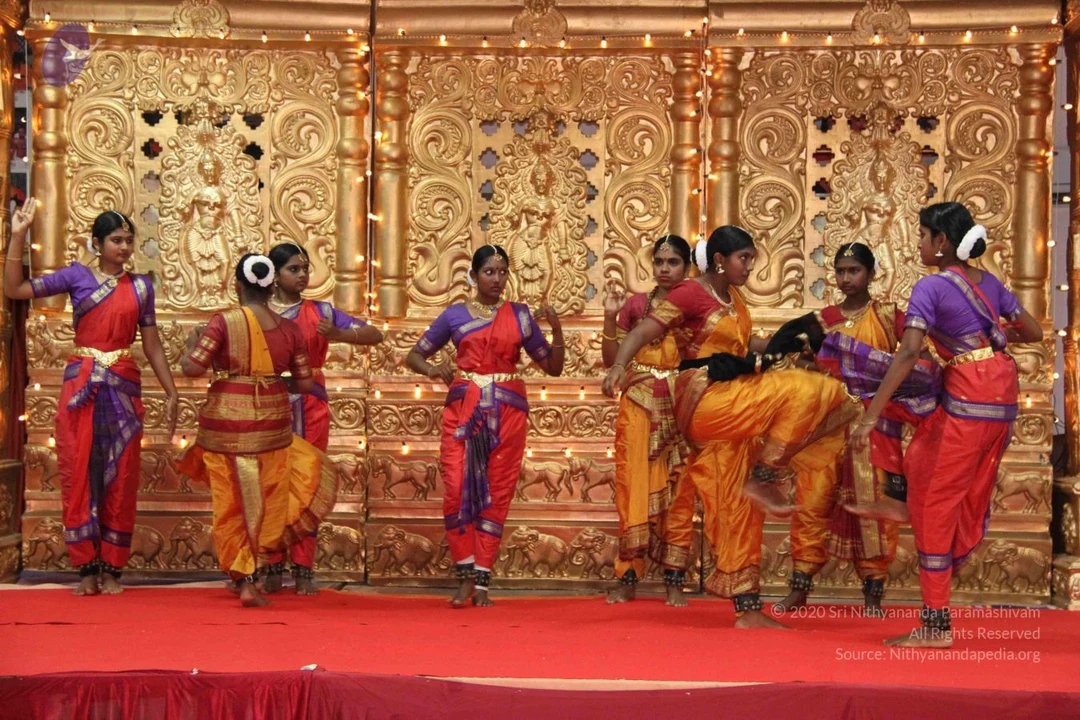
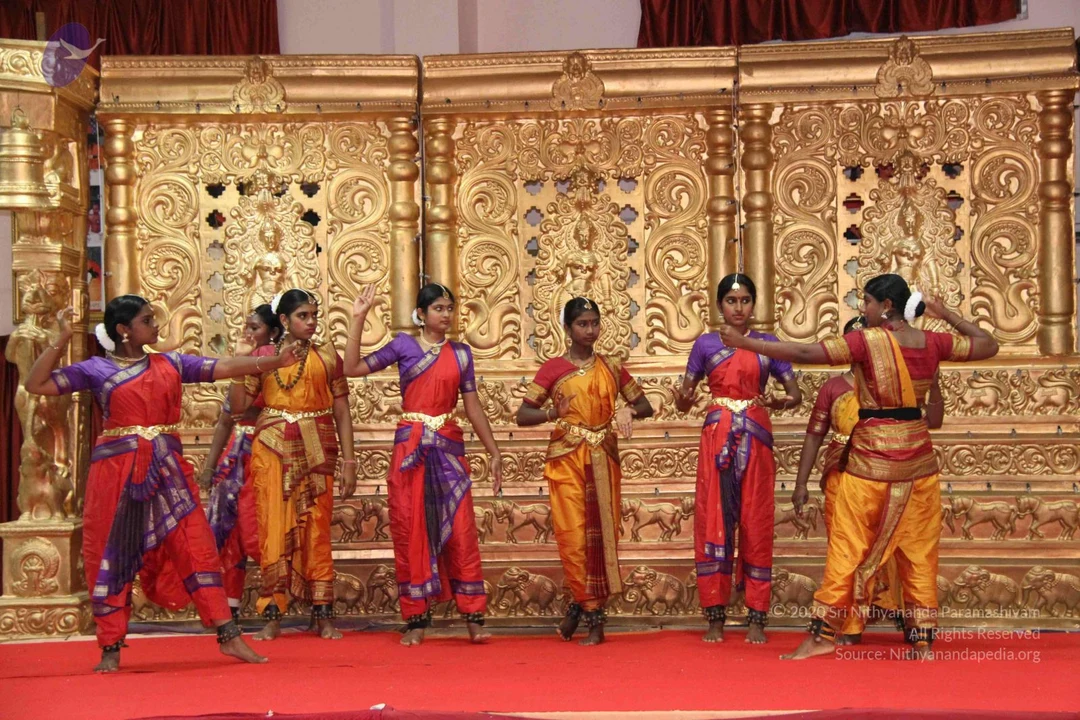
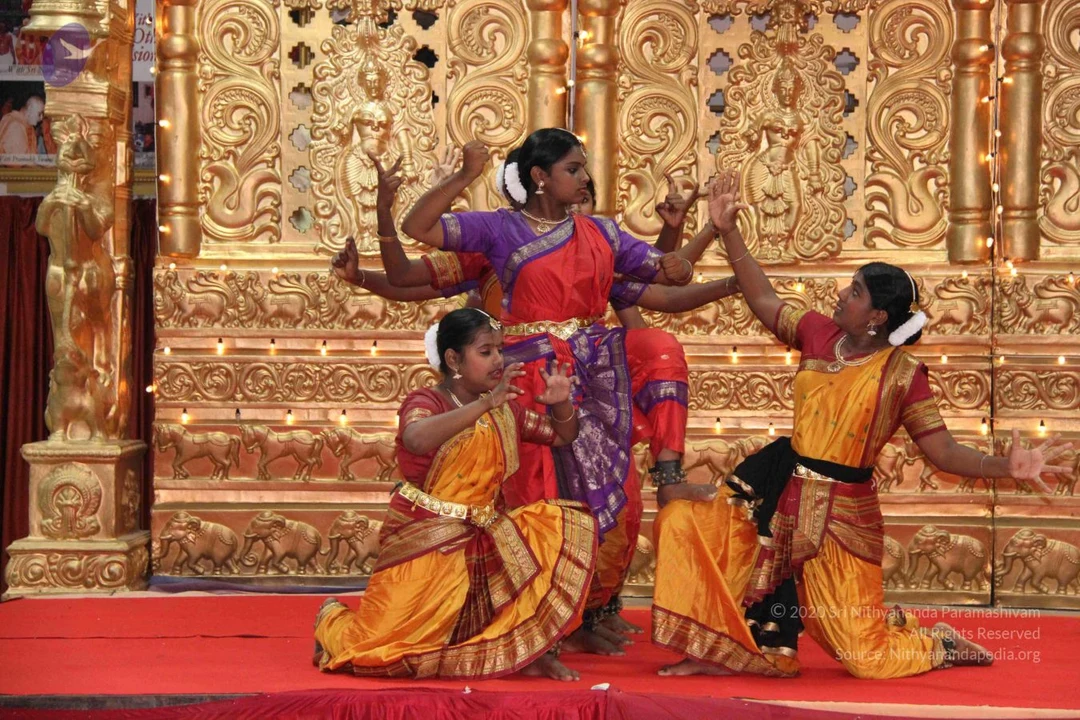
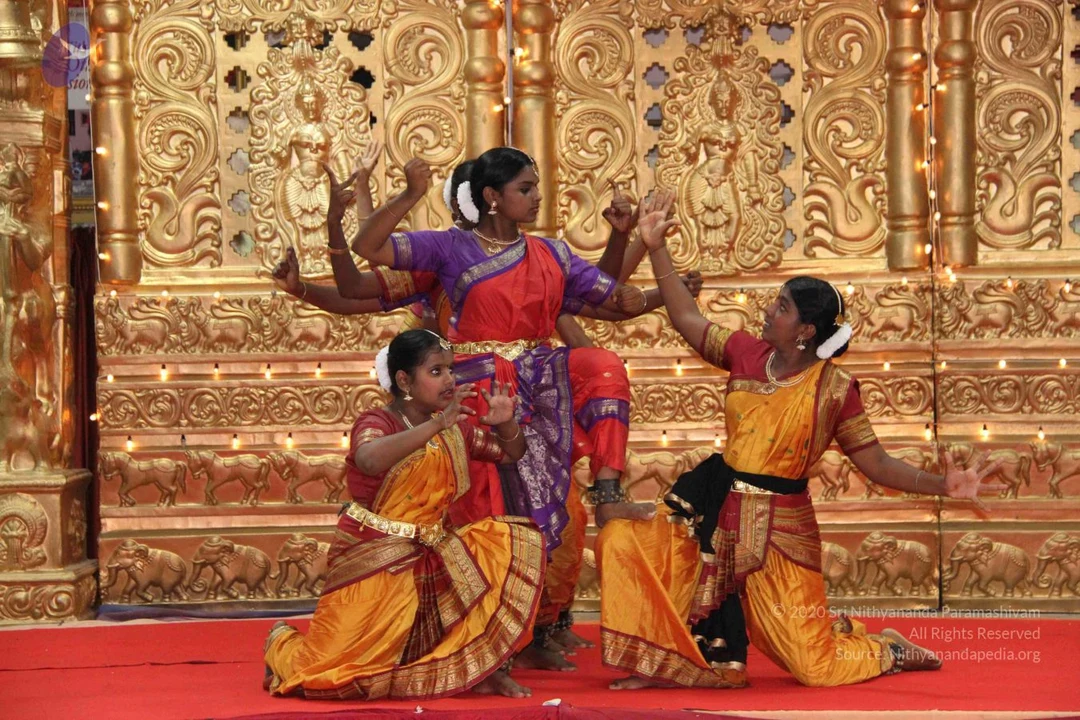
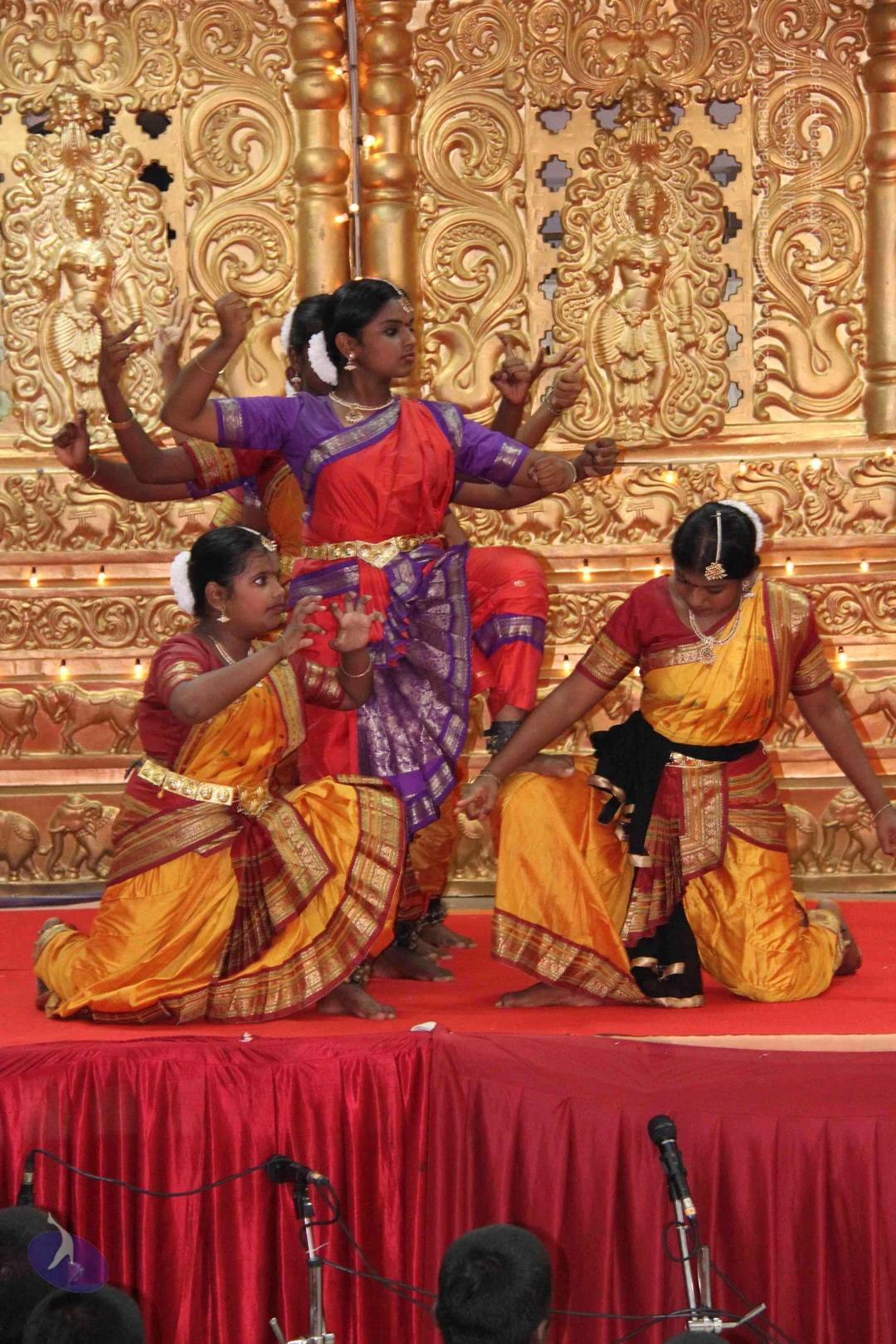
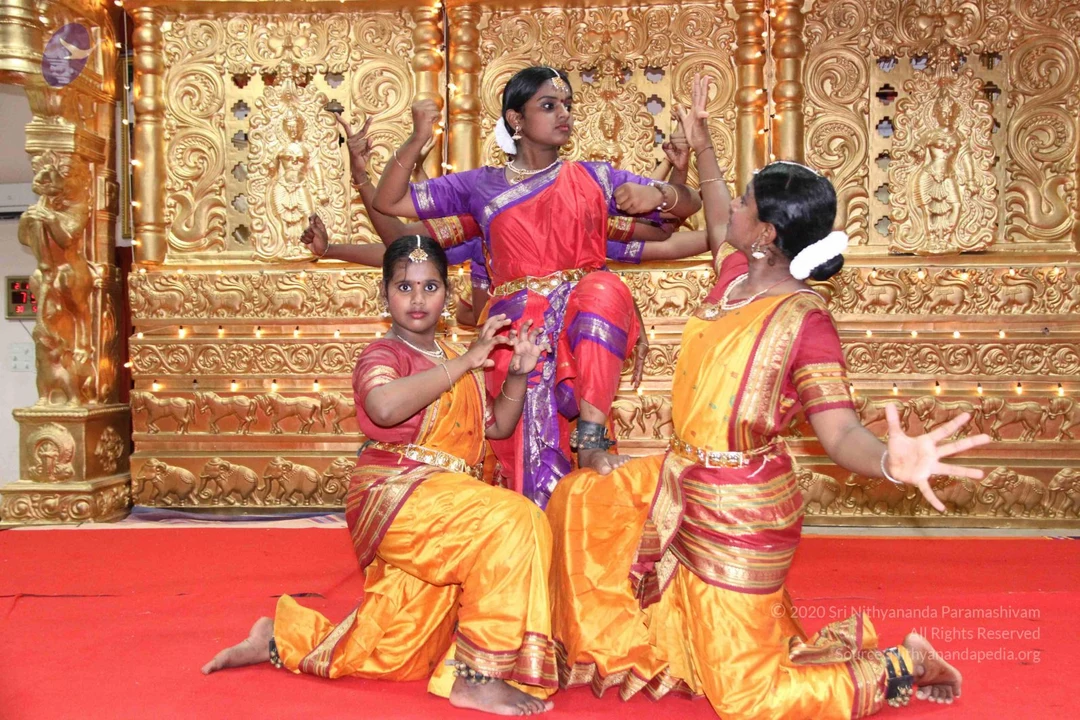
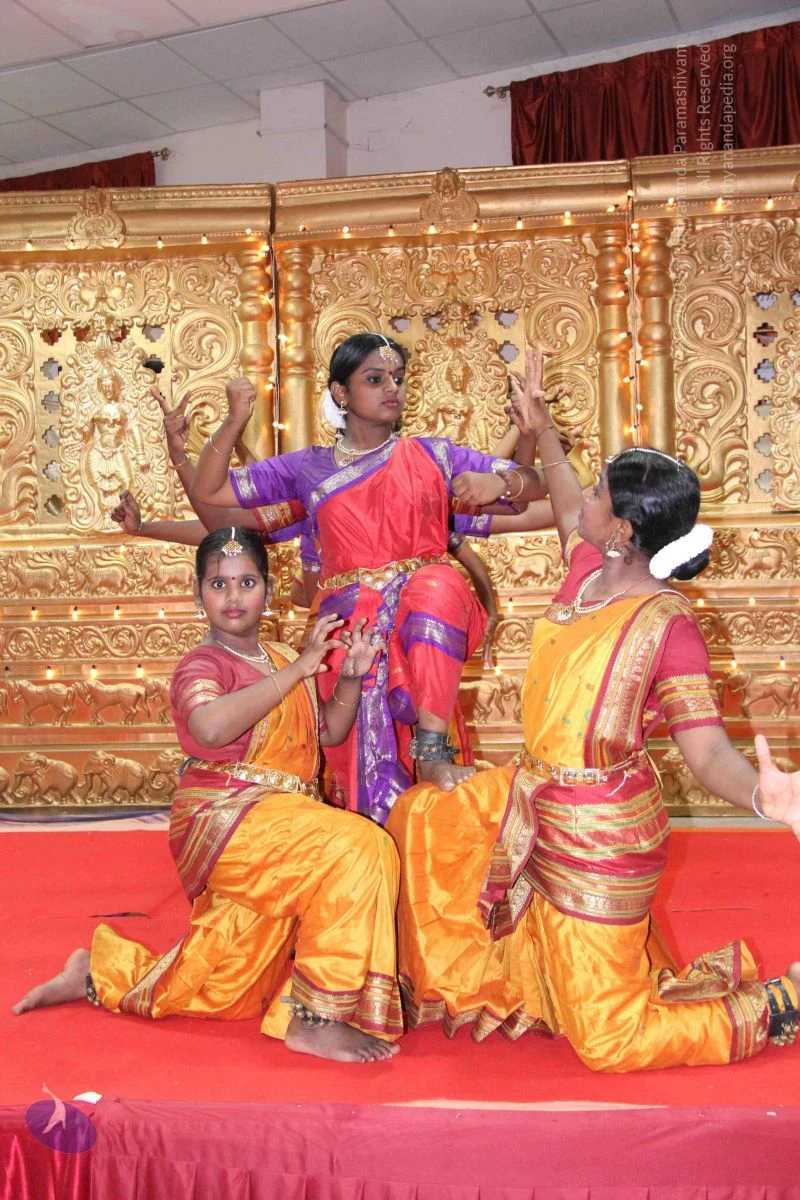
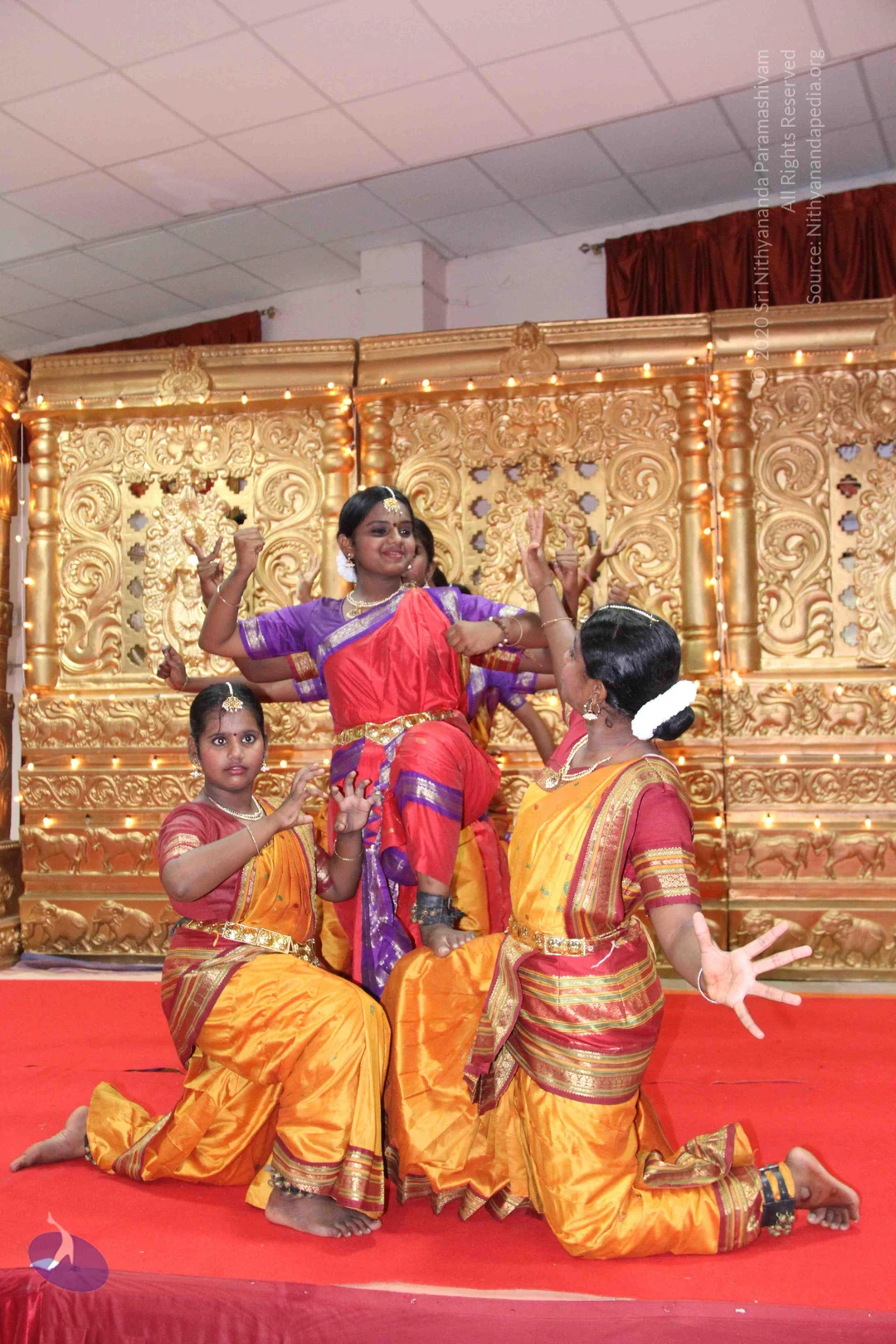
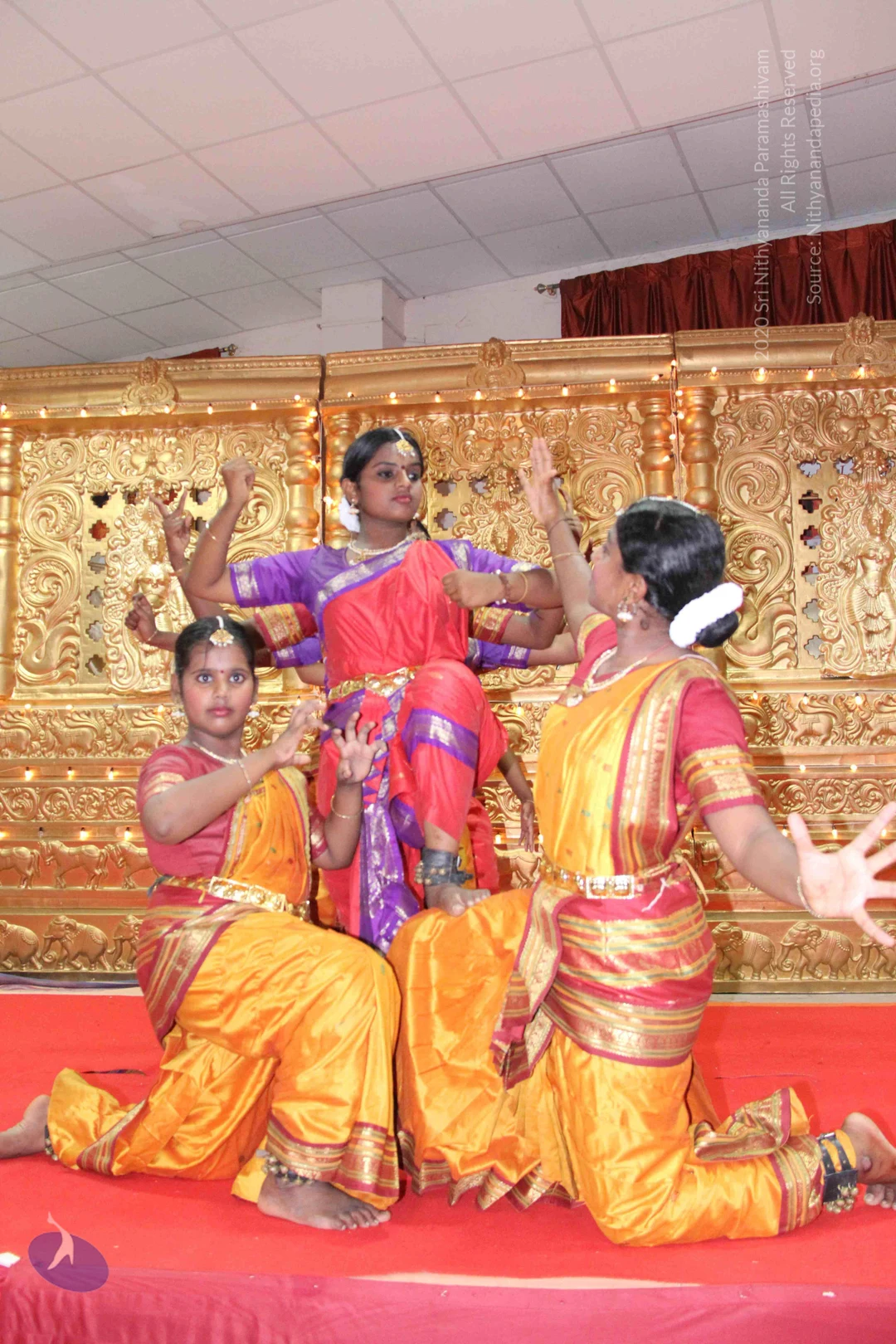
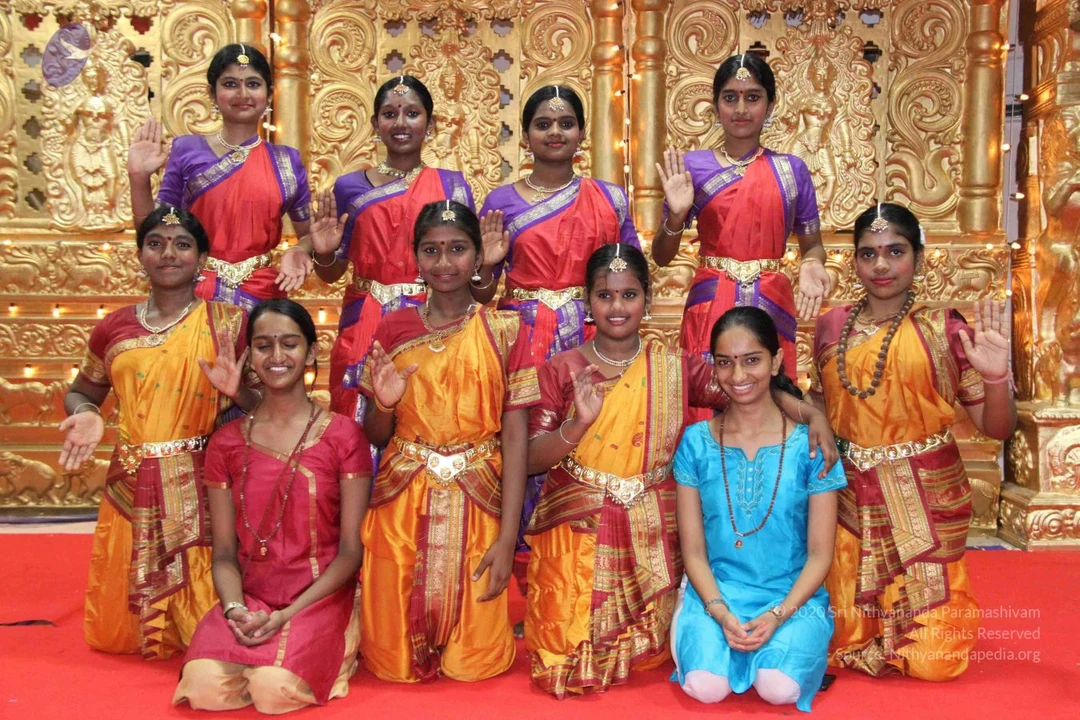
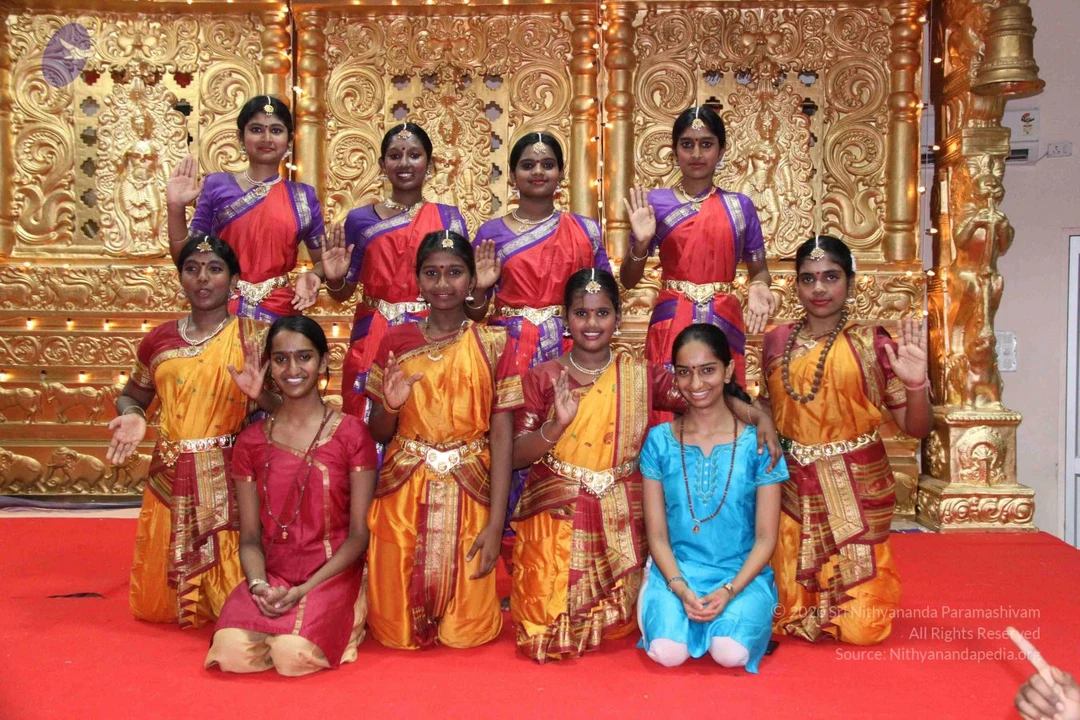
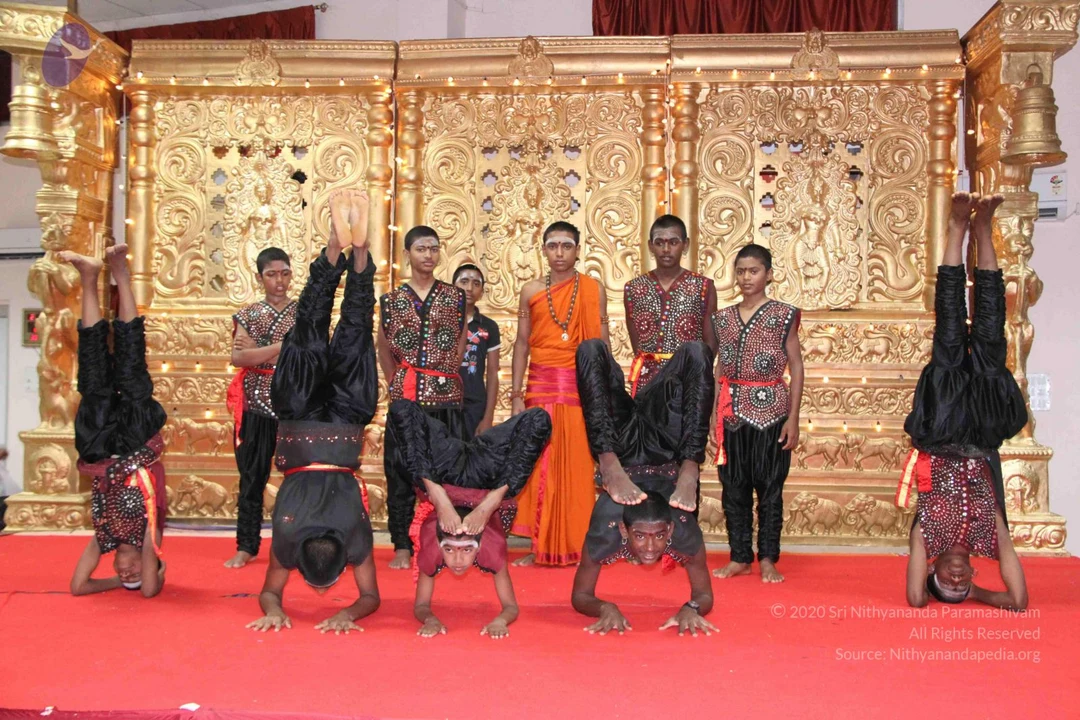
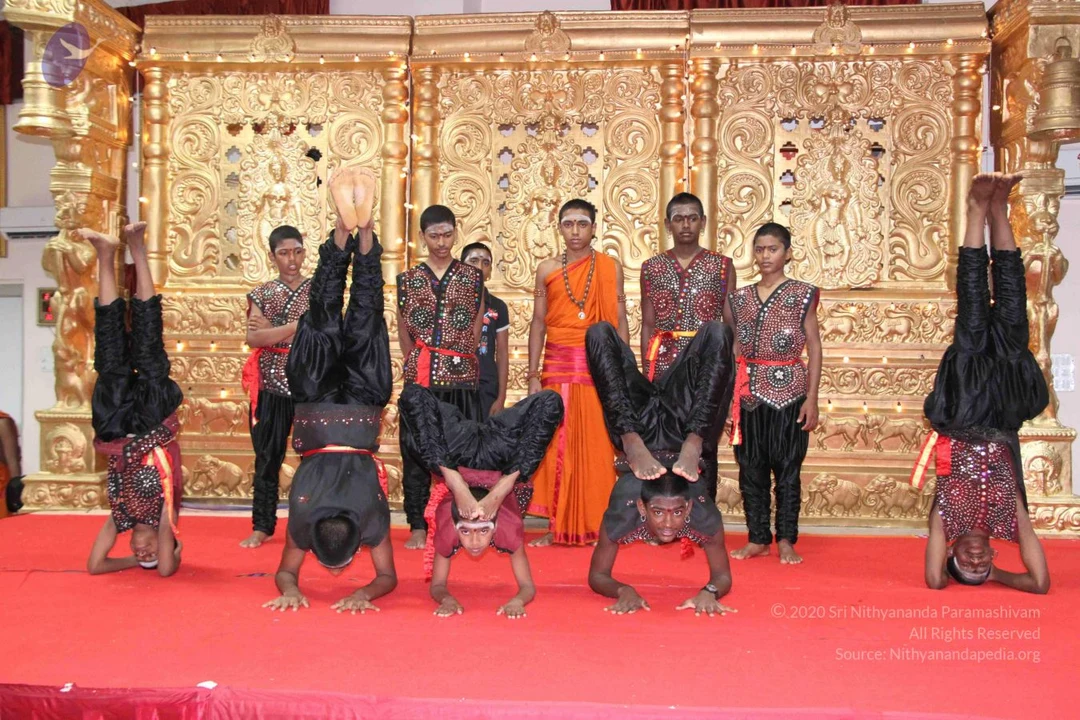
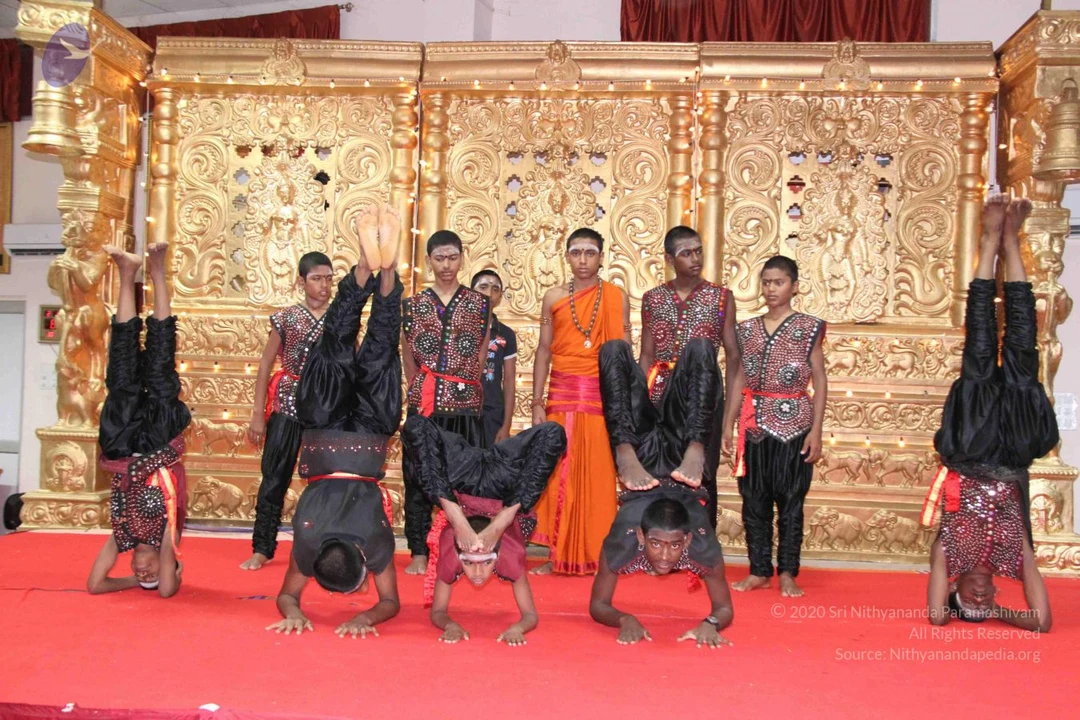
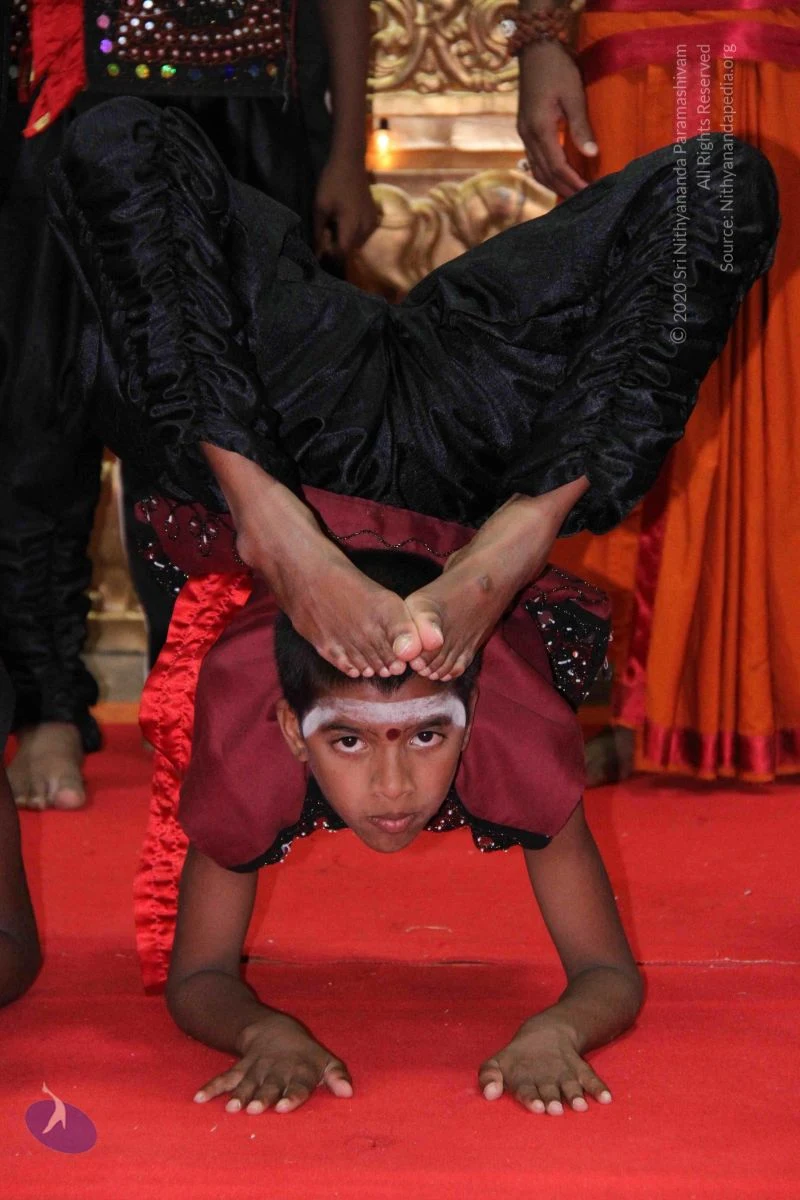
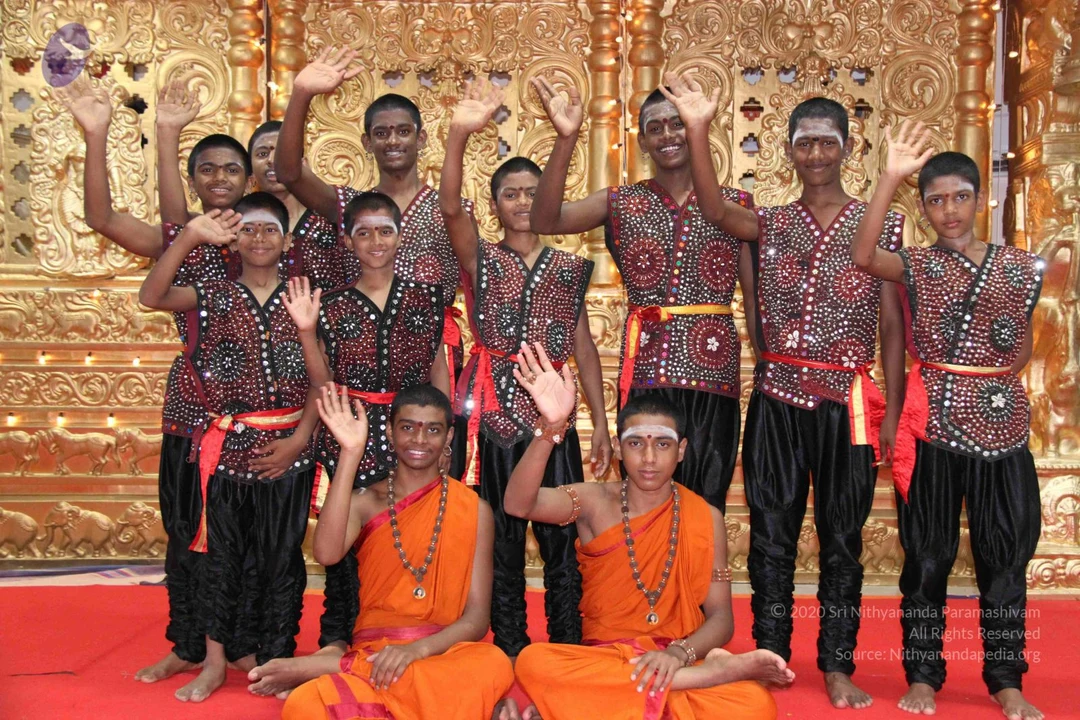
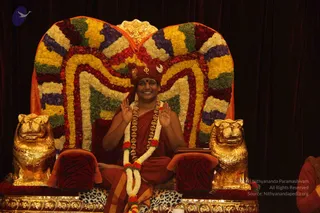
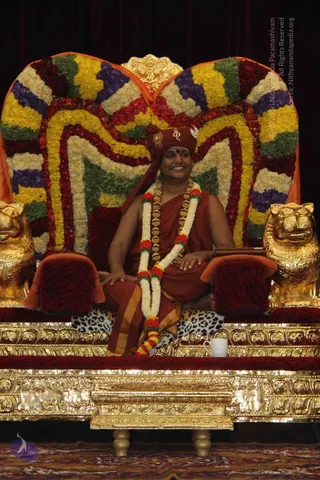
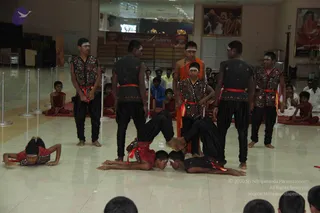
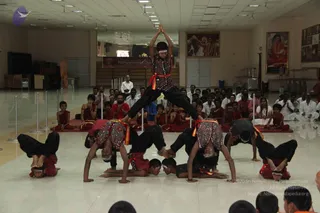
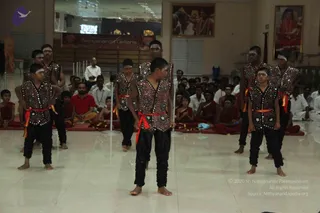
A photograph of a seated figure on an ornate throne decorated with a large floral backdrop of yellow, white, red, green and purple flowers. Golden lion sculptures flank the throne on both sides. The central figure wears a rust-red robe, a red-and-gold head covering with a small emblem, and a long white and red flower garland over a rudraksha mala. Both hands are raised in blessing, with a smile. Dark velvet drapes form the background. a person is shown seated on the throne giving a blessing; the appearance cues are the head covering, rudraksha mala and ceremonial garland.A seated figure on a gilded throne decorated with a large flower backdrop of marigolds and roses in yellow, white, red, green and purple. The figure wears a saffron-red robe, a red turban with a gold emblem, and a white and red floral garland with a gold beaded mala, with both hands raised in blessing. Two golden lion sculptures flank the throne, which rests on a leopard-print cloth, and dark red curtains hang behind. A second partially visible figure in orange-brown cloth appears at the right edge.A seated man in a deep red-orange turban and matching orange-red robe sits on an ornate gold throne with carved golden lion figures at each armrest. The throne back is covered in a large floral arrangement of yellow, white, red, purple and green flowers. He wears a long garland of white and red-orange flowers with a gold-bead mala, and a white cup sits on the gold base. A rug and leopard-print cushion are visible at the bottom. One person is present.Boys in matching black sleeveless vests with red and sequined trim, black pants and red waist sashes perform a gymnastic display on a polished hall floor. Several stand in a line while two lie prone with a performer balanced on their backs in an acrobatic formation, and one boy in a red top does a forward bend on the left. A standing figure in an orange robe with a rudraksha-style necklace watches at the centre. Seated audience members in red robes and white clothing line the back, with a large portrait and a banner reading Nithyananda Galleria on the wall.A photograph of a gymnastic display in a large hall with a white tiled floor. A boy in black with a red sash and sequined black top is balanced in a handstand on the shoulders of two performers in black sequined tops with red sashes, who are bent forward with their hands on the floor. Other performers in black and red lie or crouch around them. Behind them, seated youths in maroon and red robes and white-clad adults watch from red mats. Framed portraits hang on the back wall, and a banner reads Nithyananda Gallery.Indoor photo of a group of young boys performing a synchronized stick or rhythmic dance on a polished tile floor in a hall. The performers wear black trousers and sleeveless studded vests in dark red with sequined circular patterns, red sashes at the waist, and white headbands. Behind them, seated devotees in white clothes and monks in saffron-red robes sit on red mats. Framed portraits hang on the wall, and a banner reads Nithyananda Galleria. No a person candidate is clearly visible.

chandi-homa-poornahuti

34 photosSource gallery
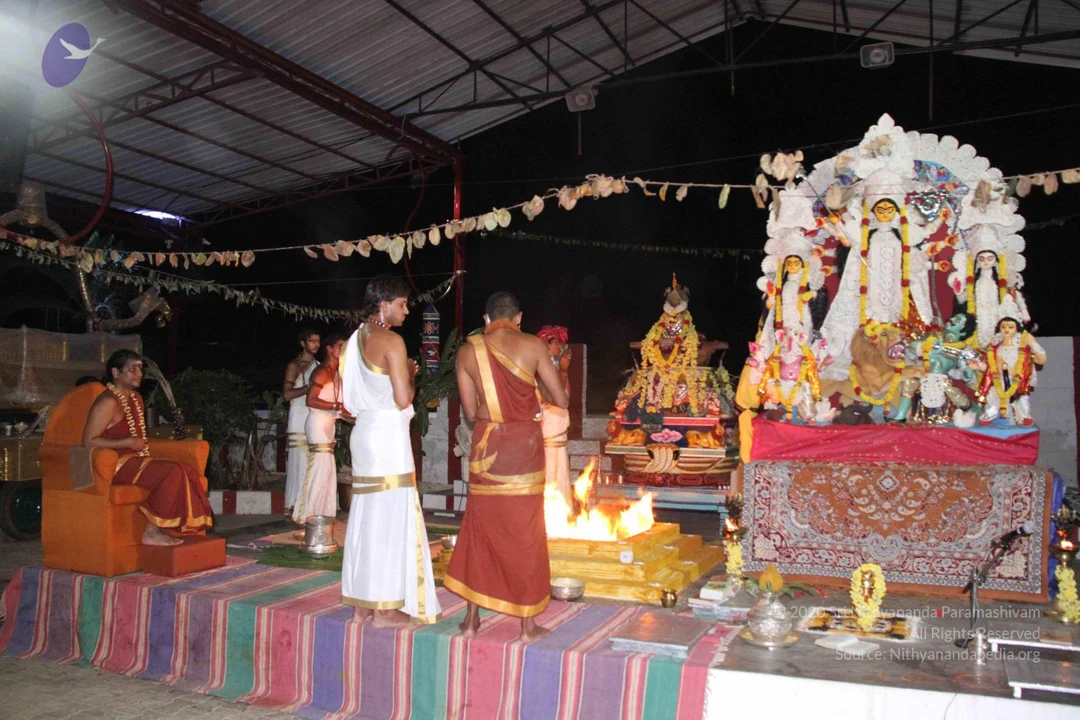
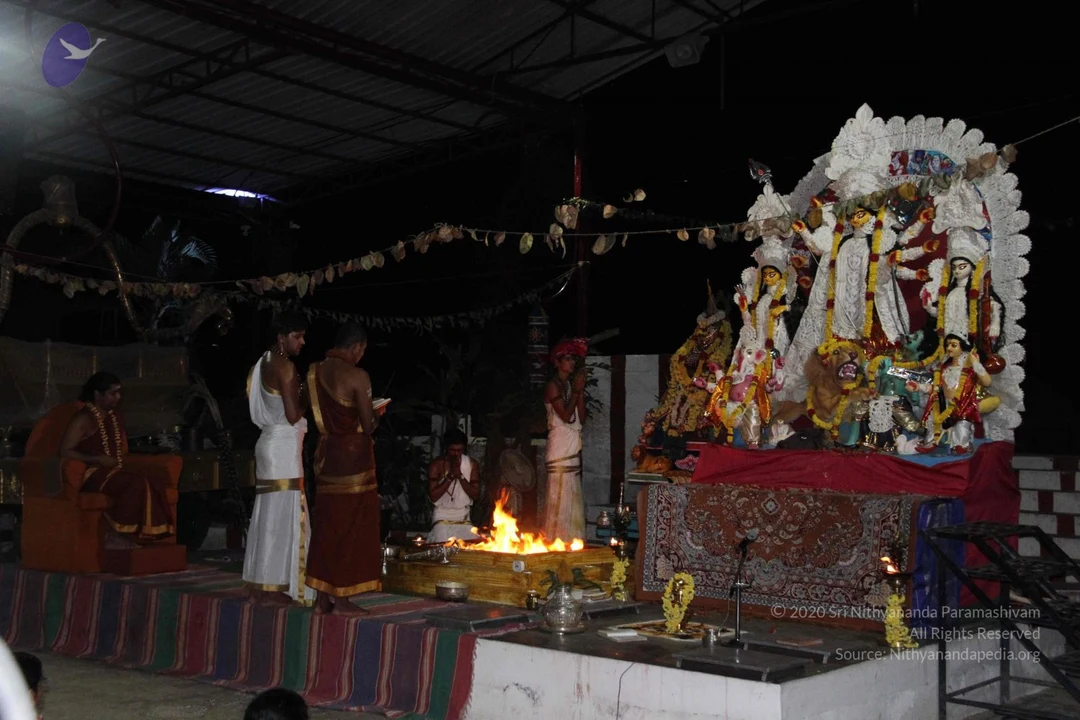
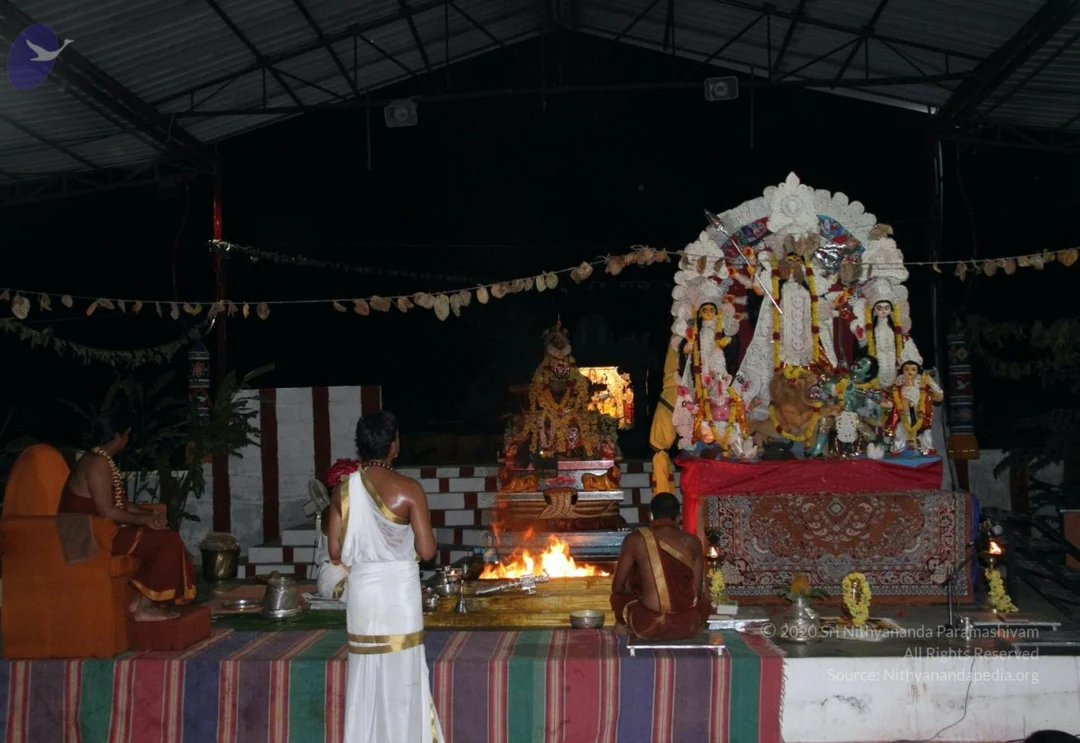
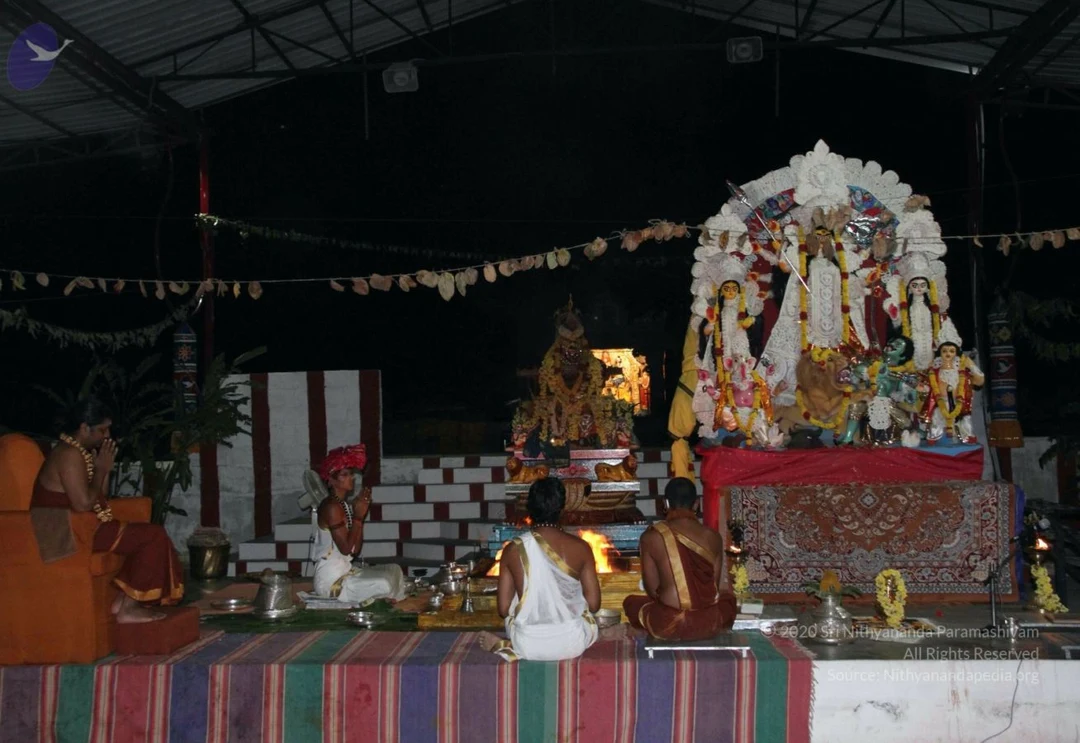
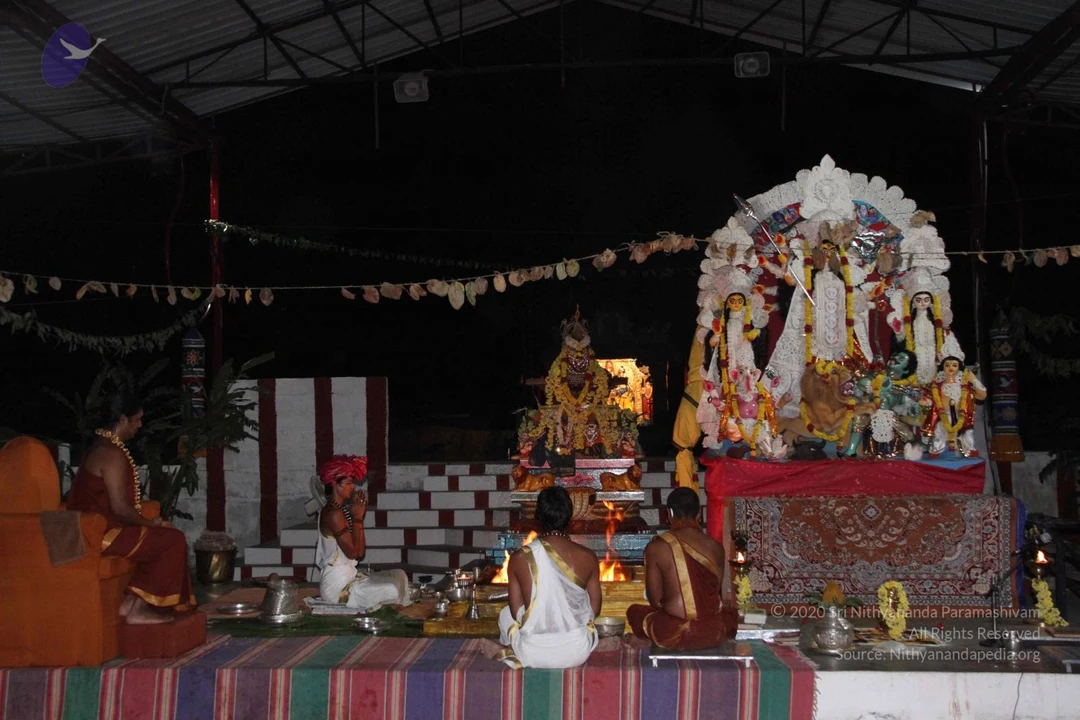
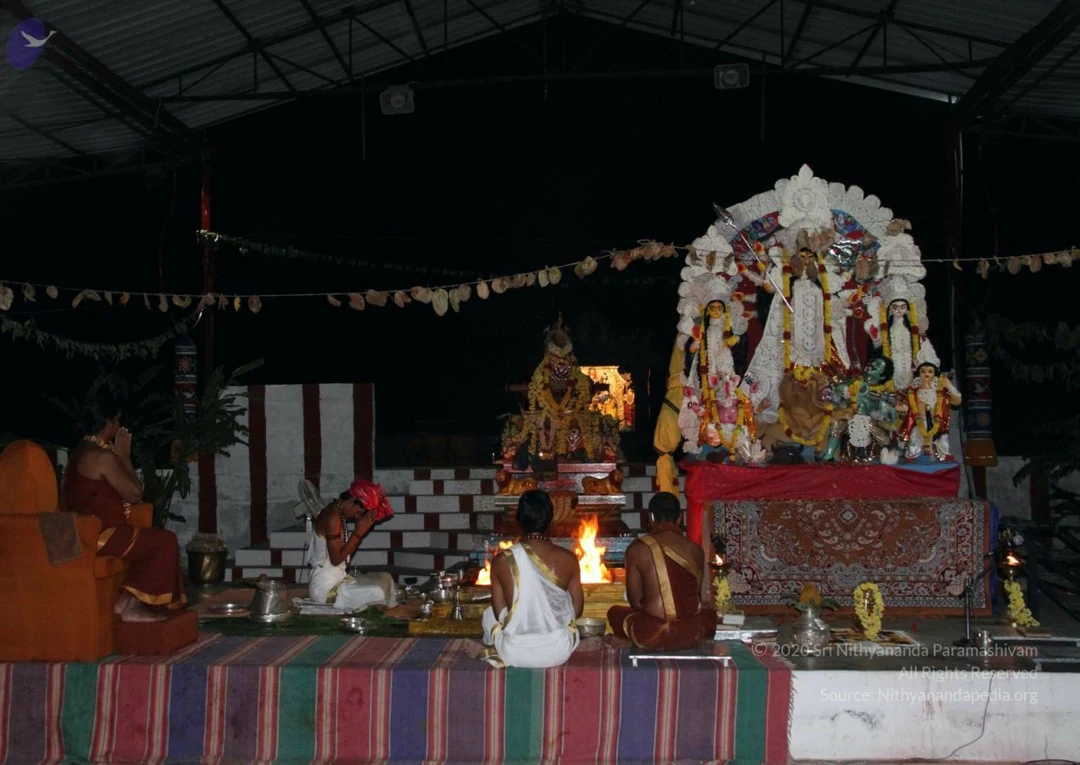
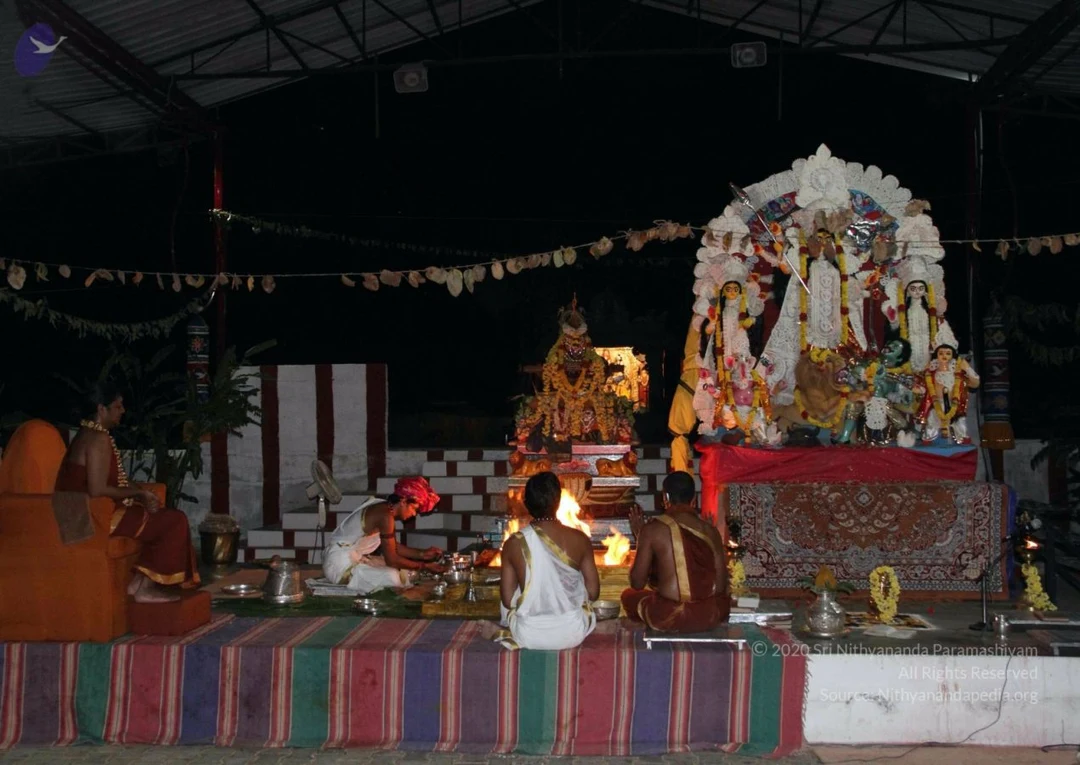
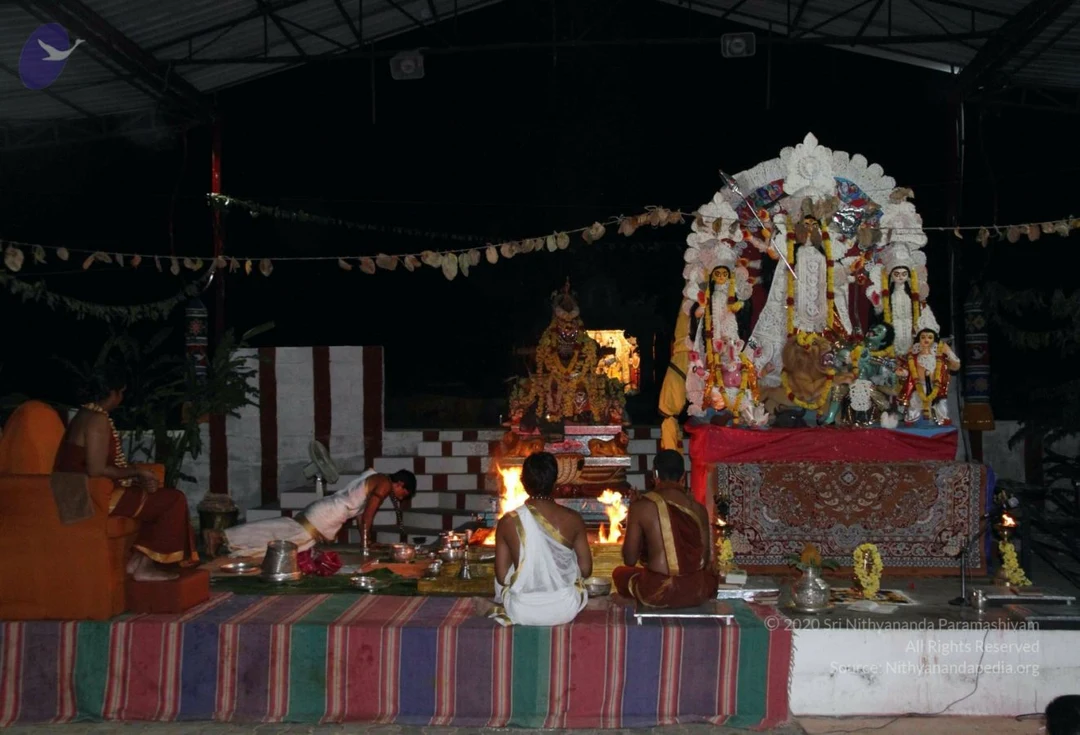
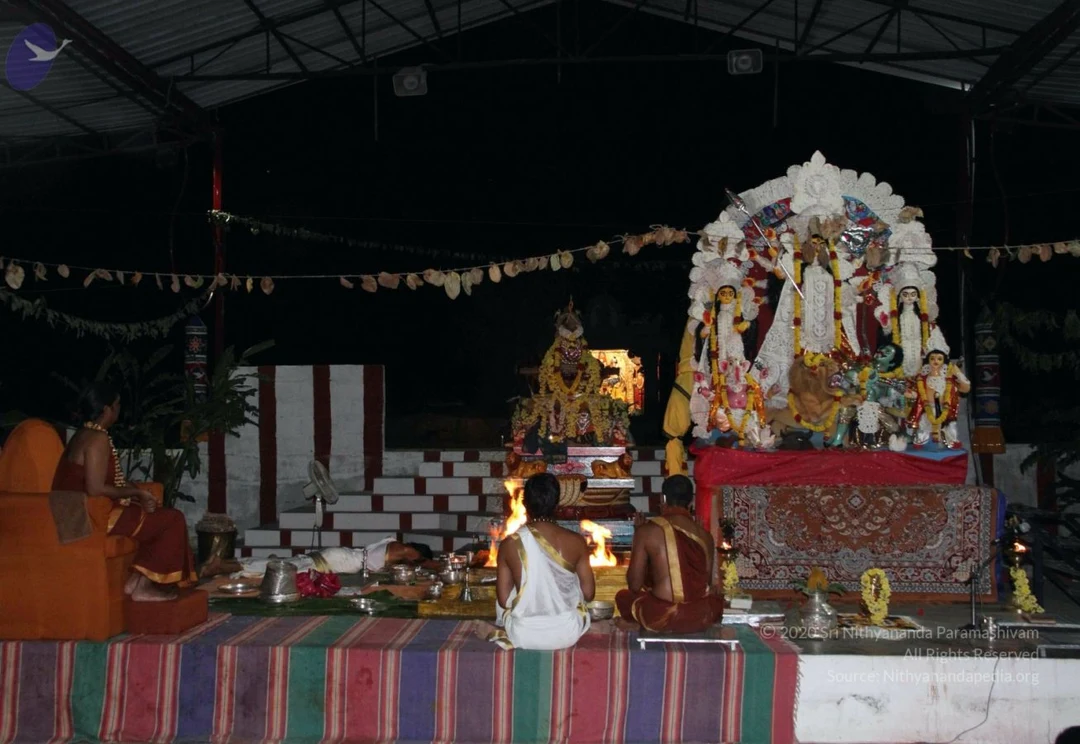
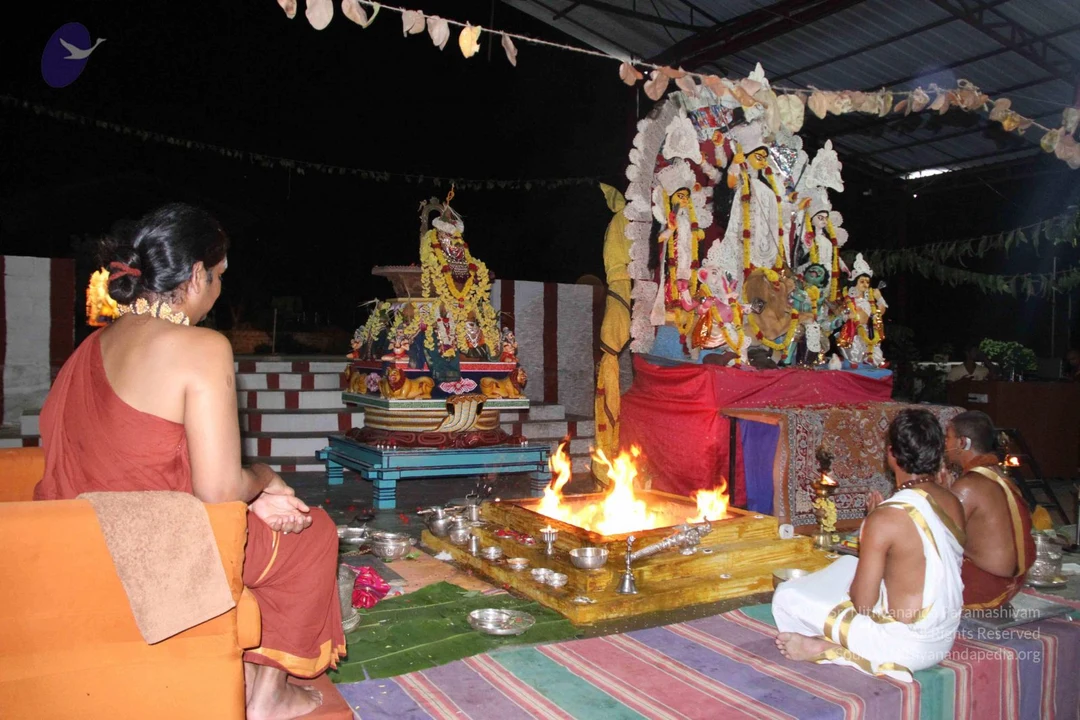
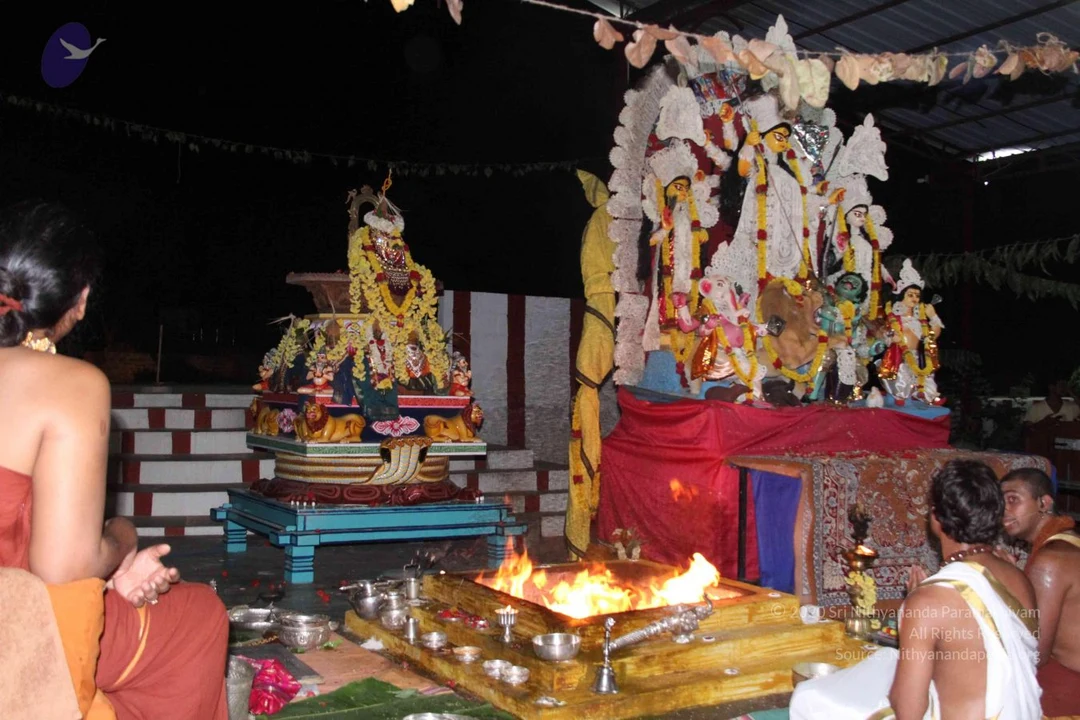
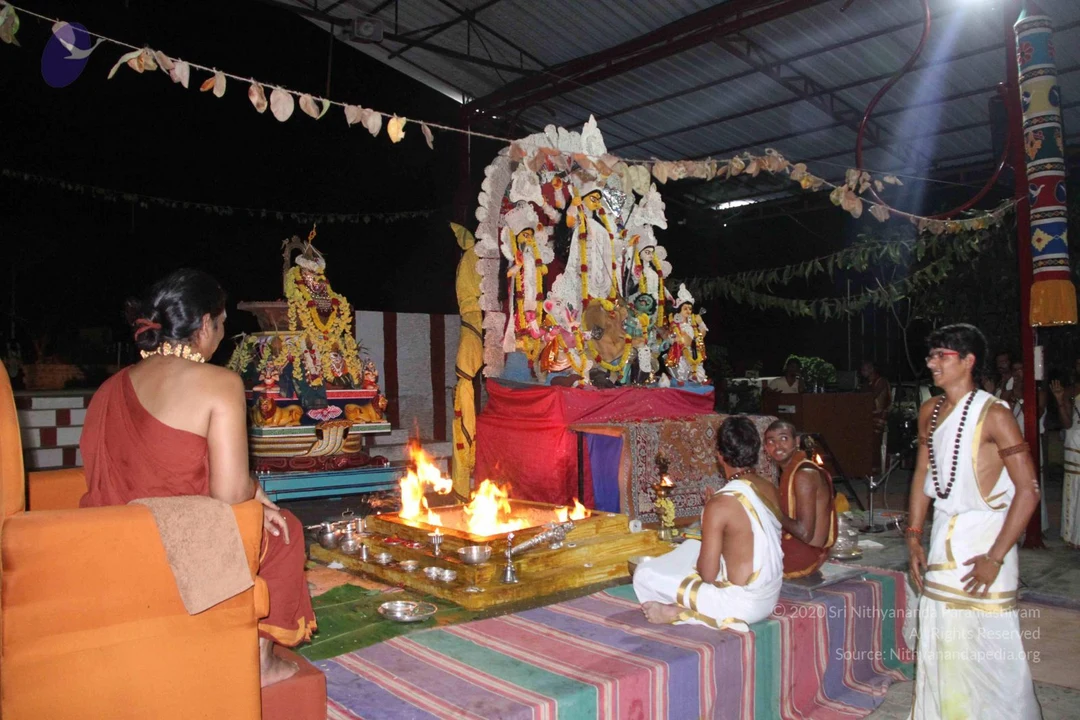
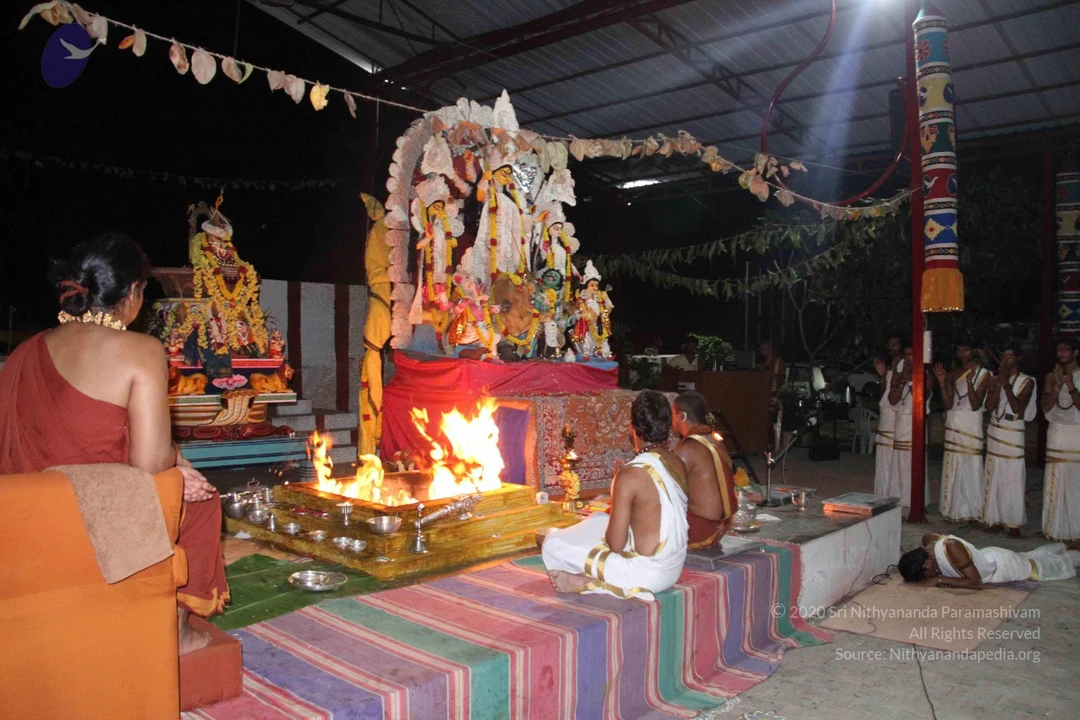
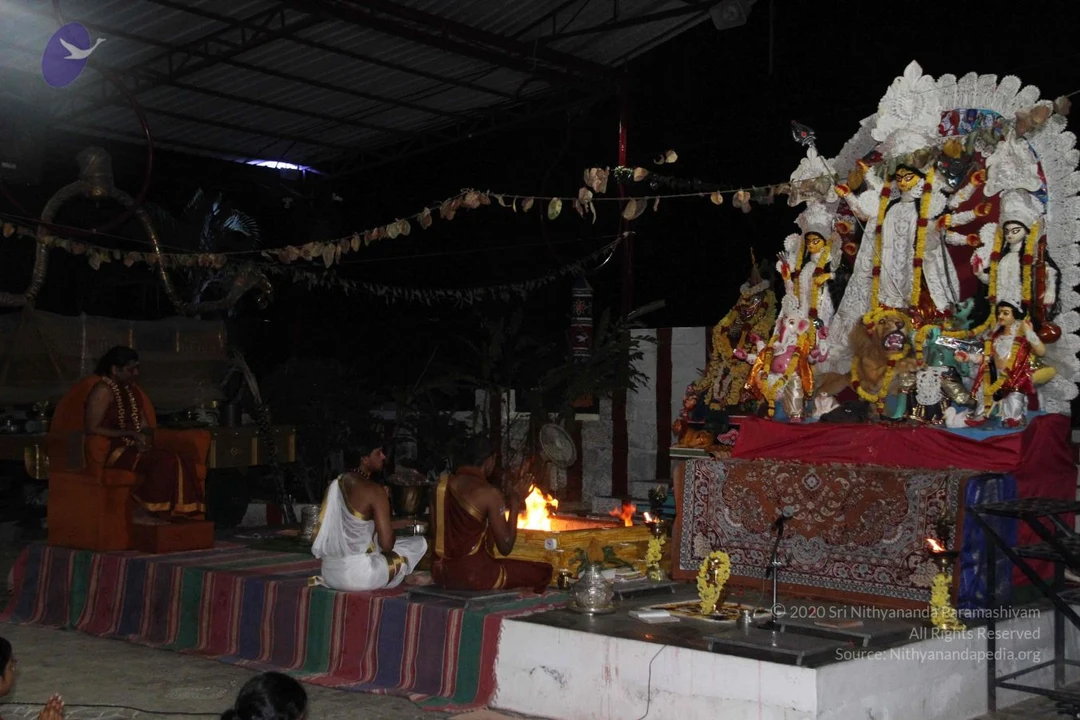
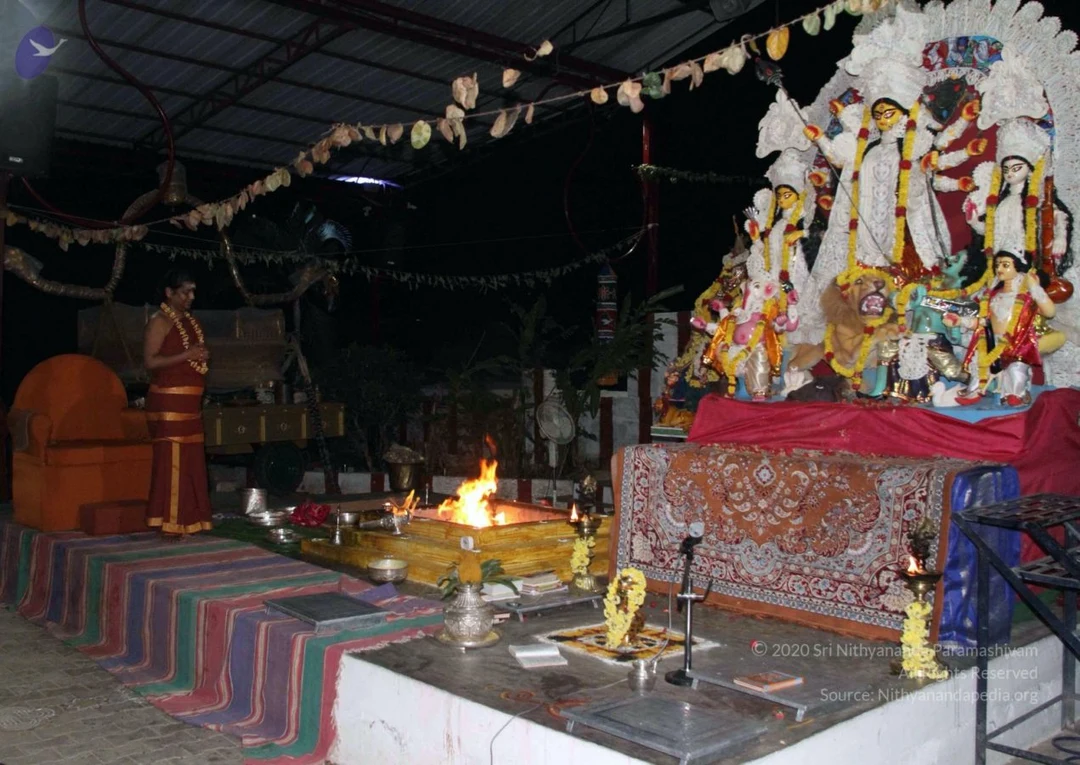
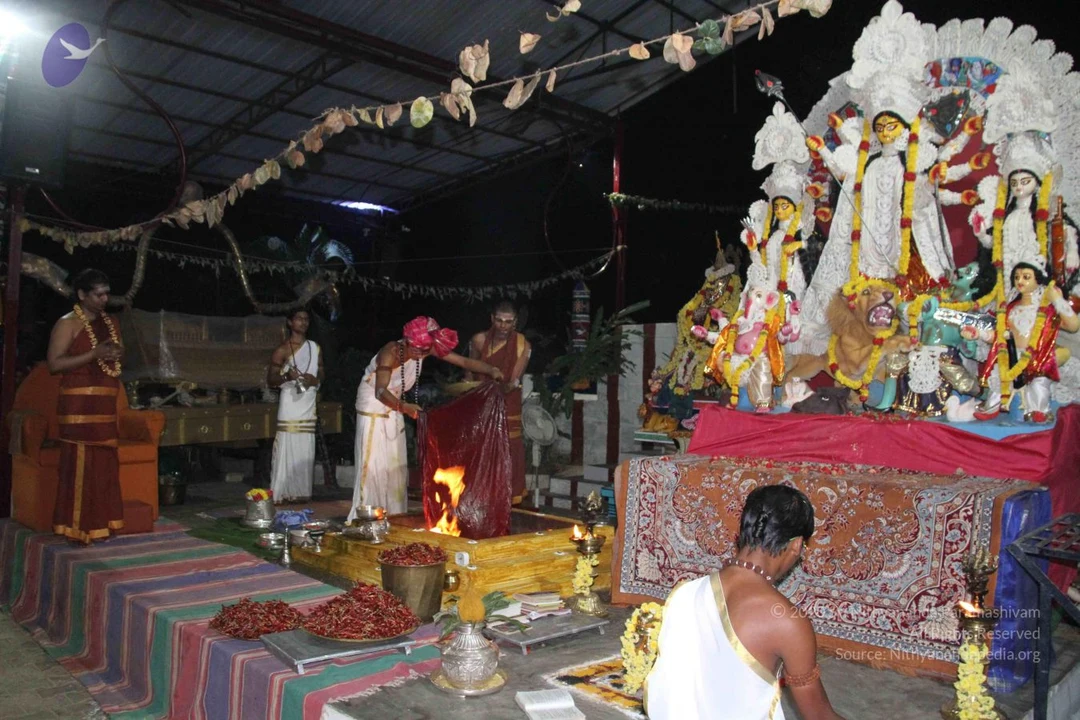
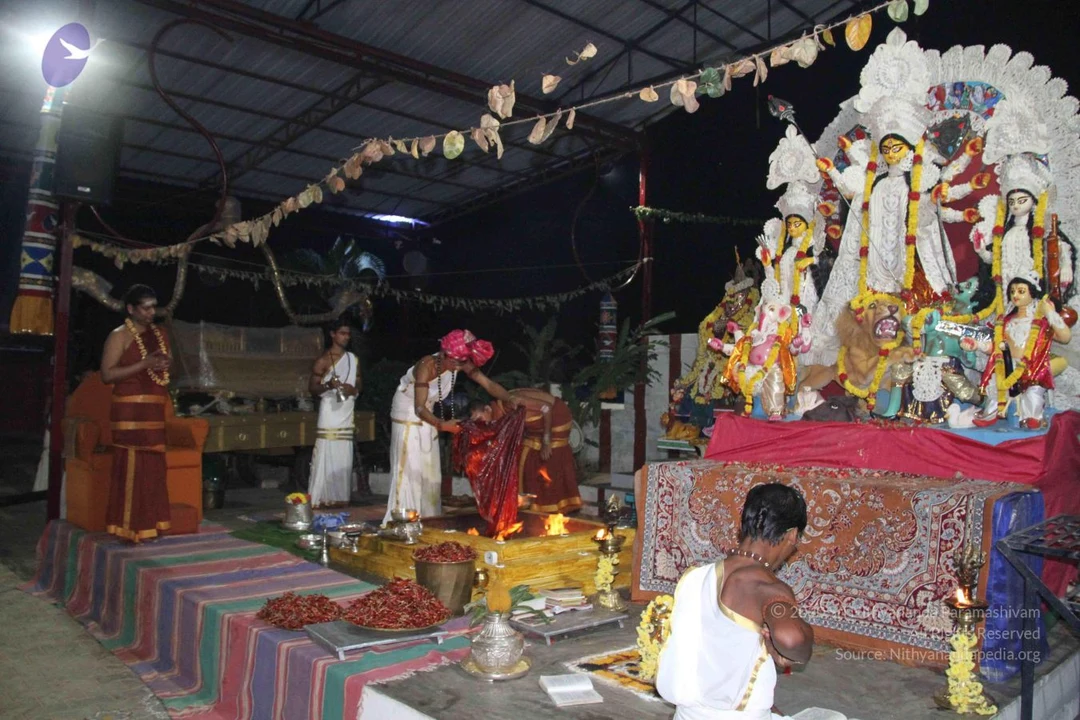
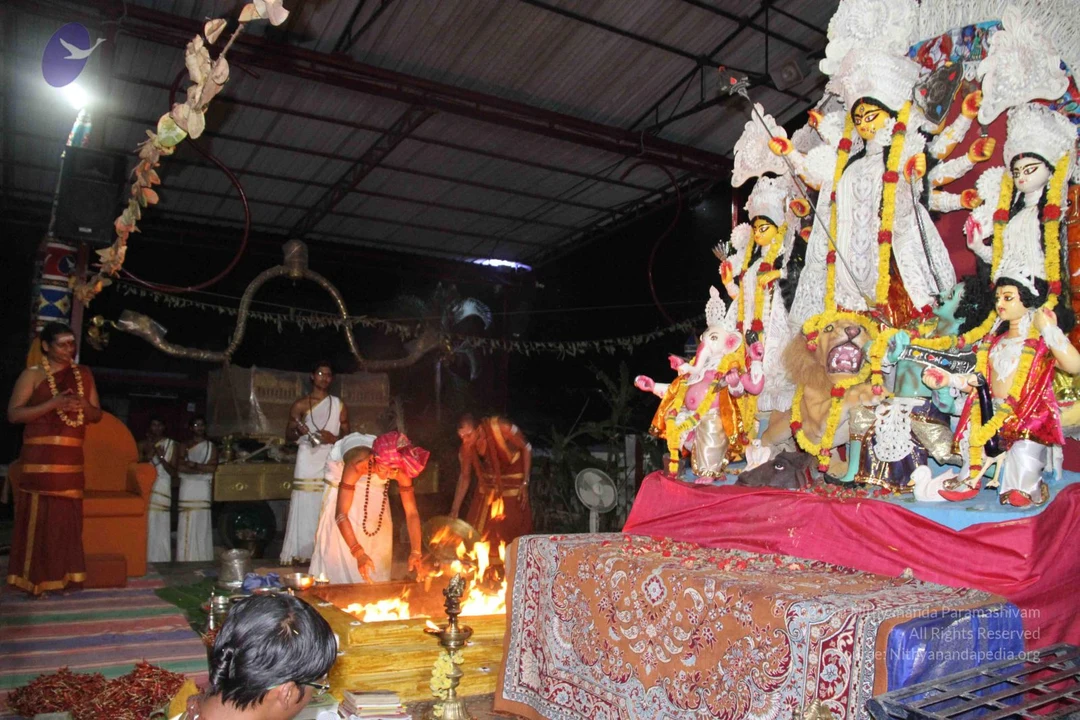
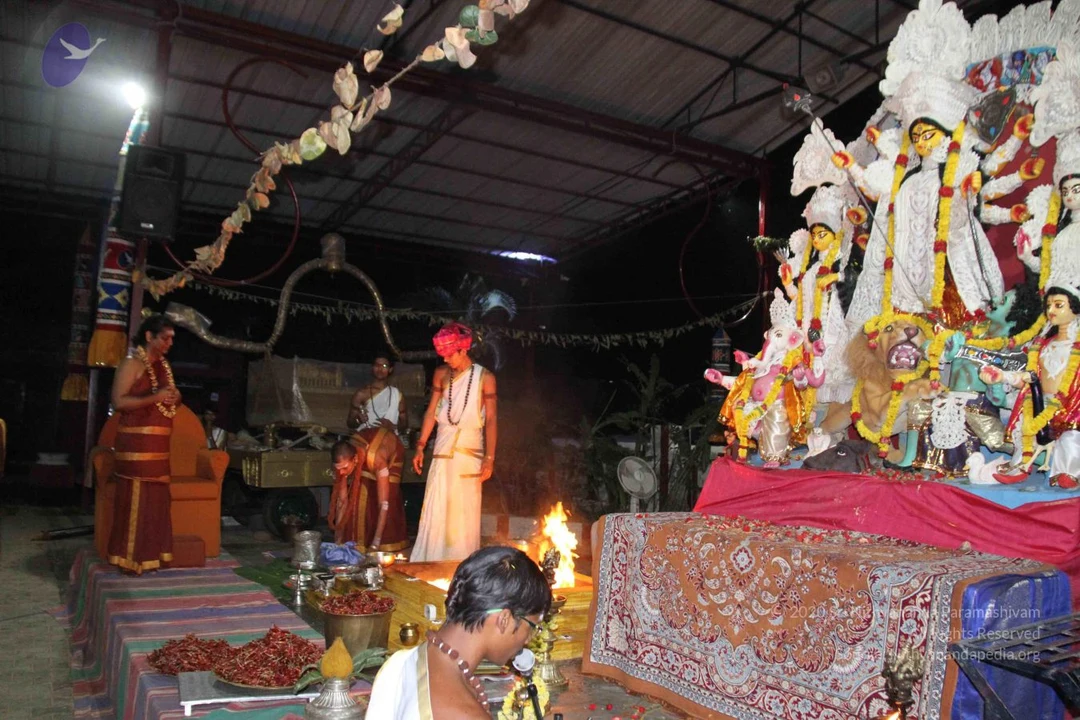
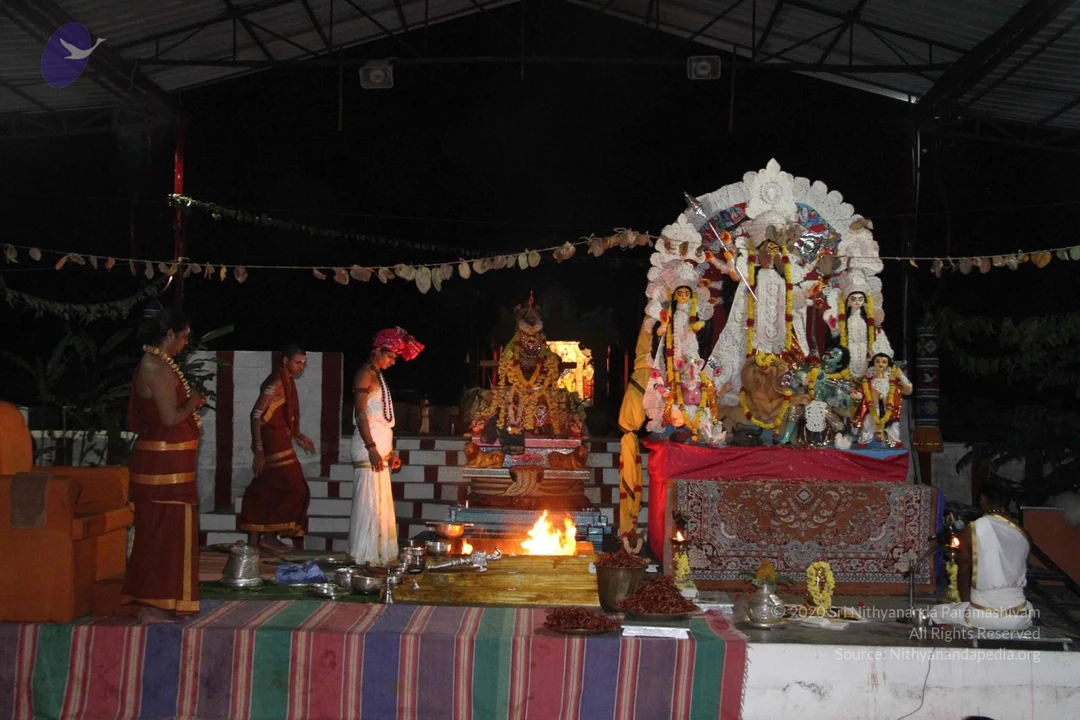
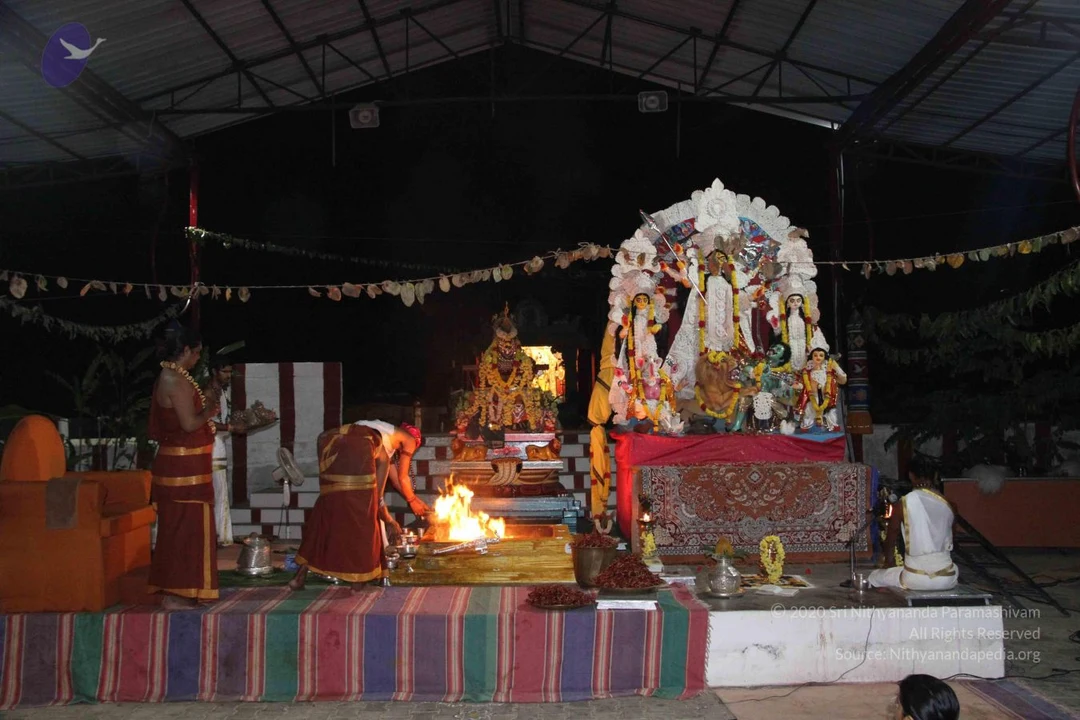
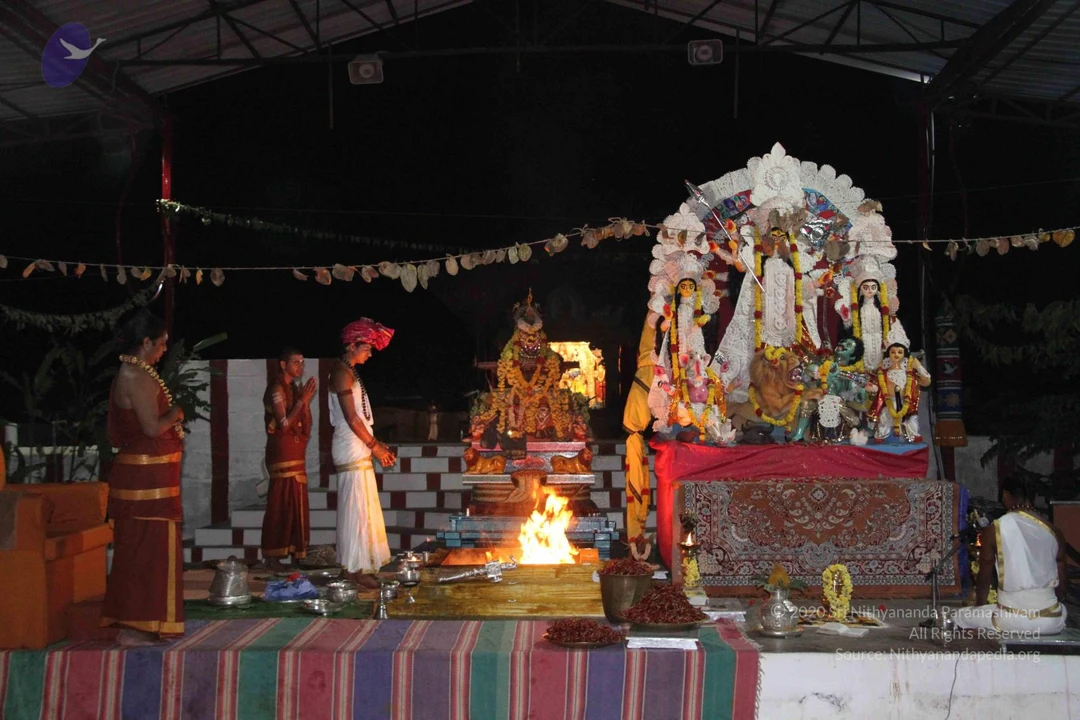
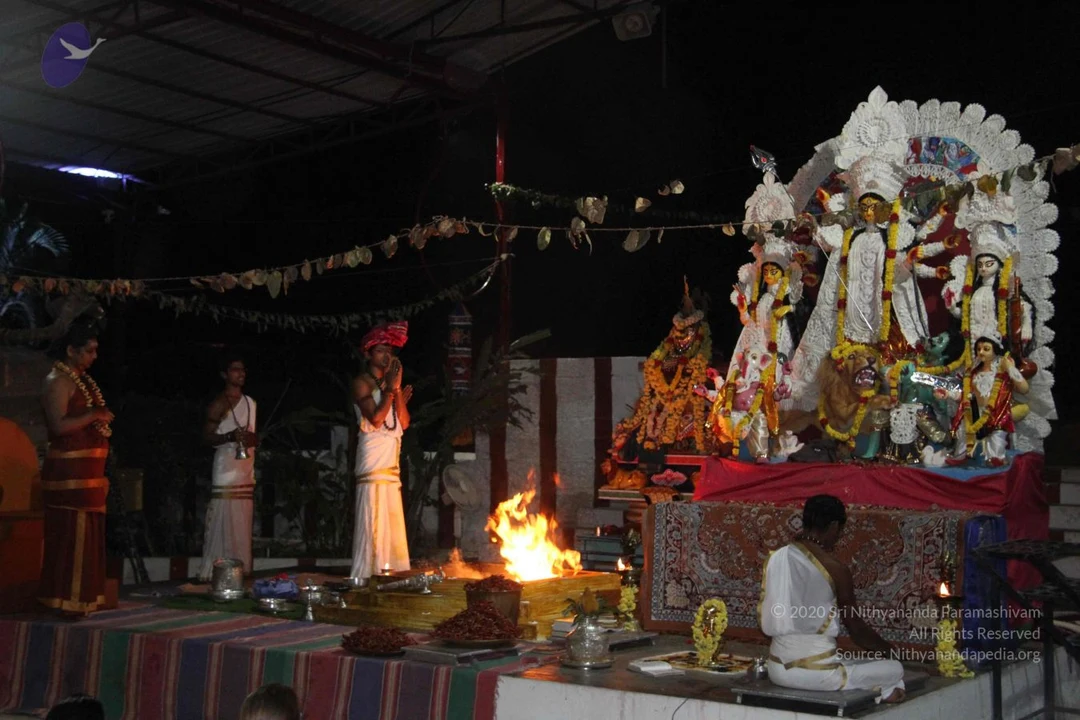
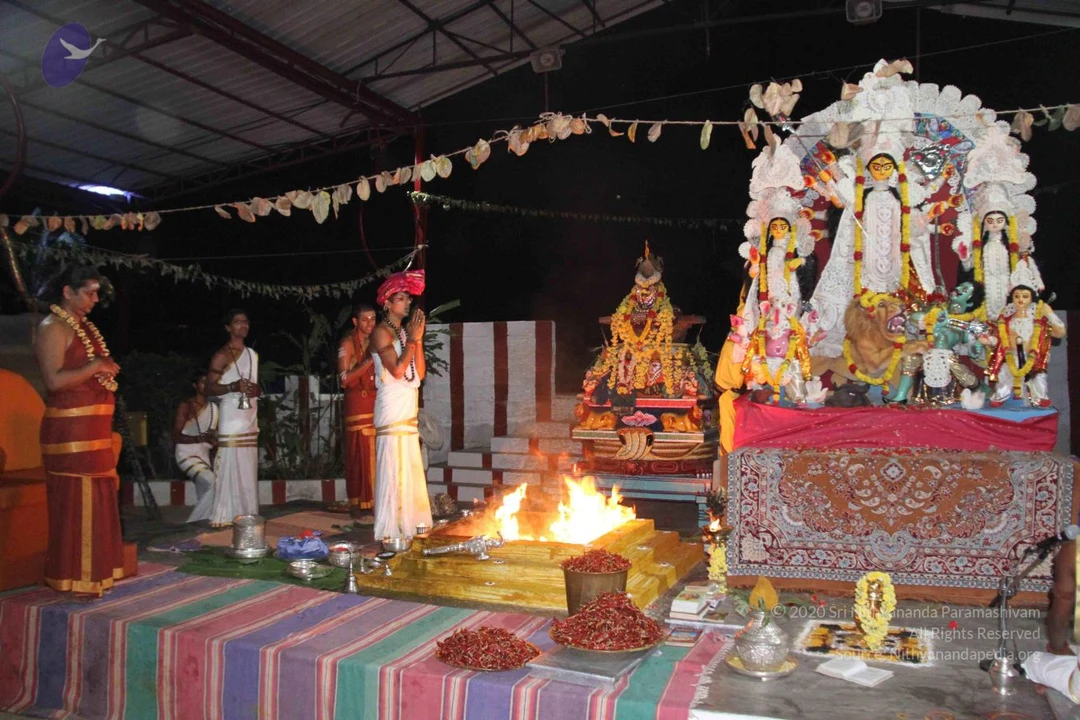
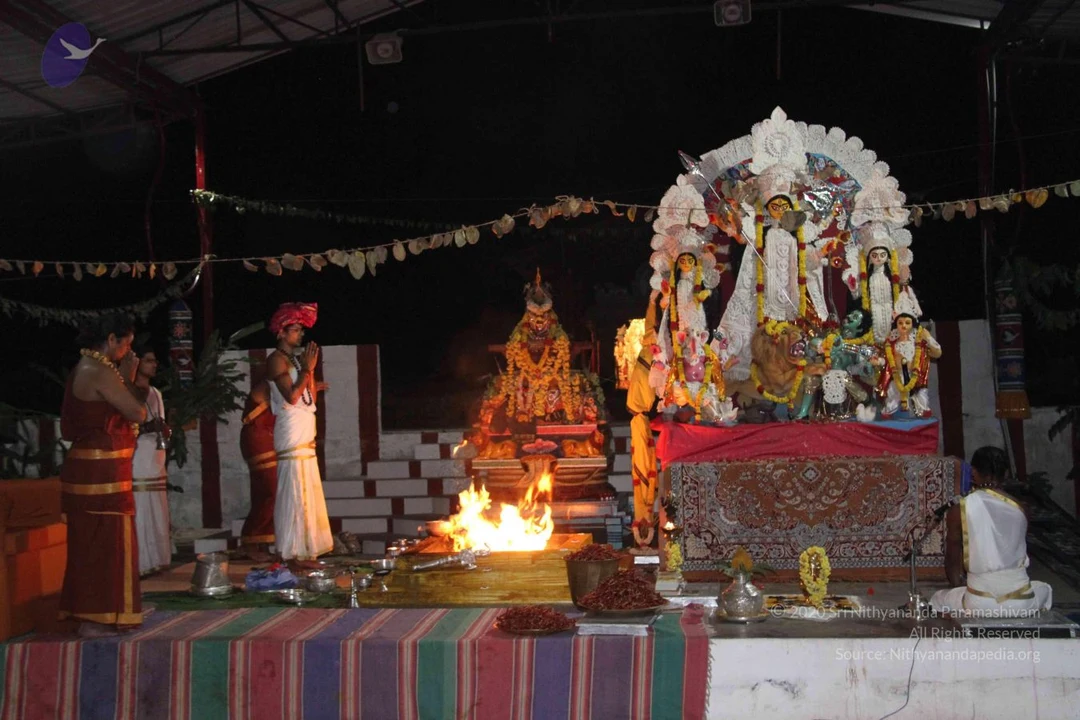
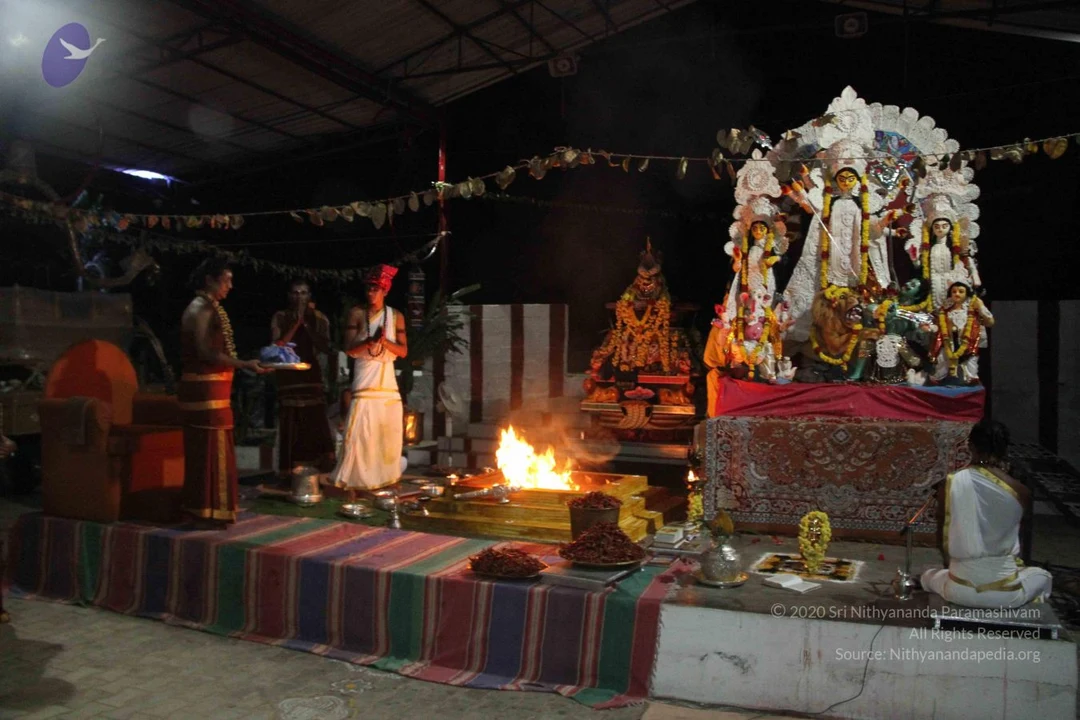
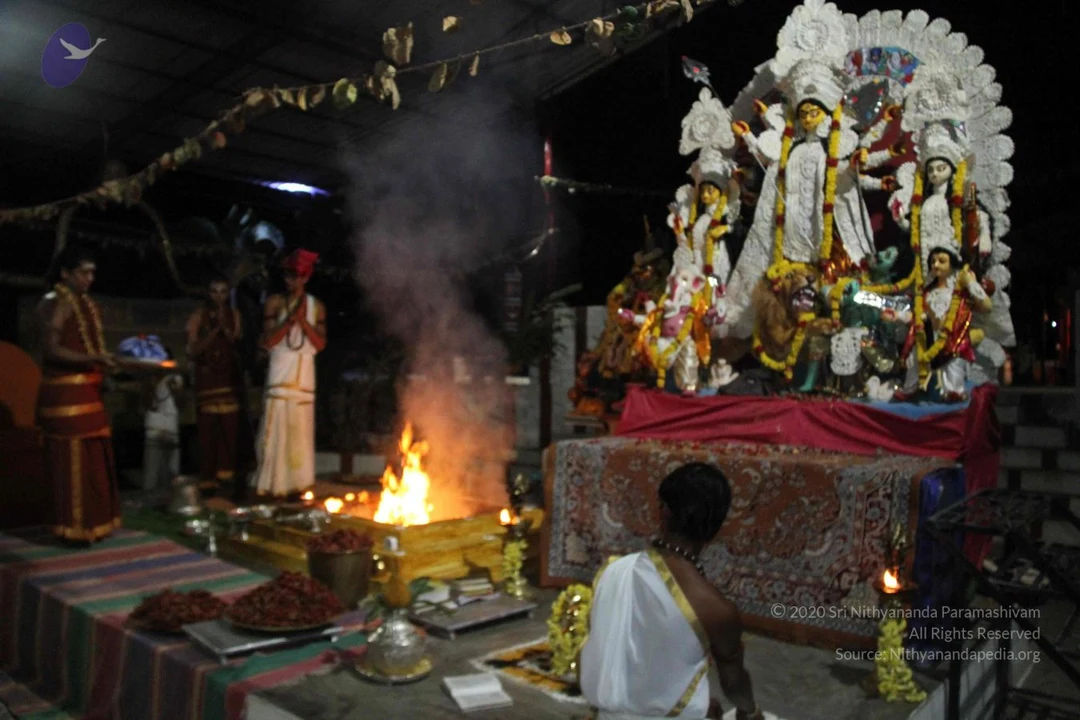
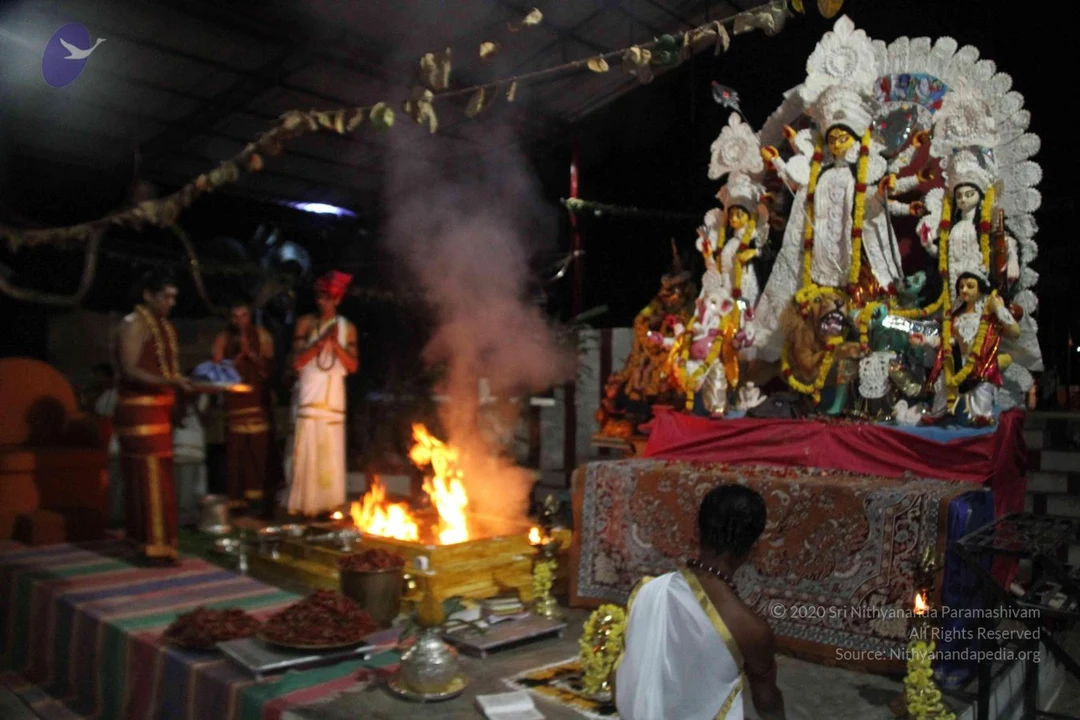
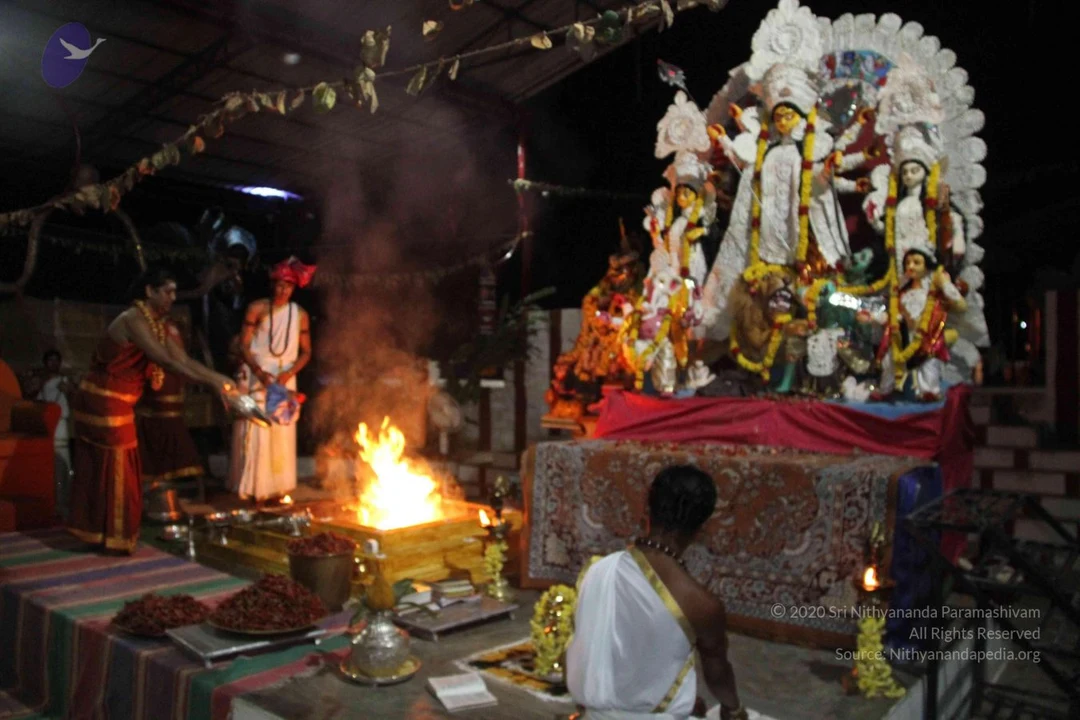
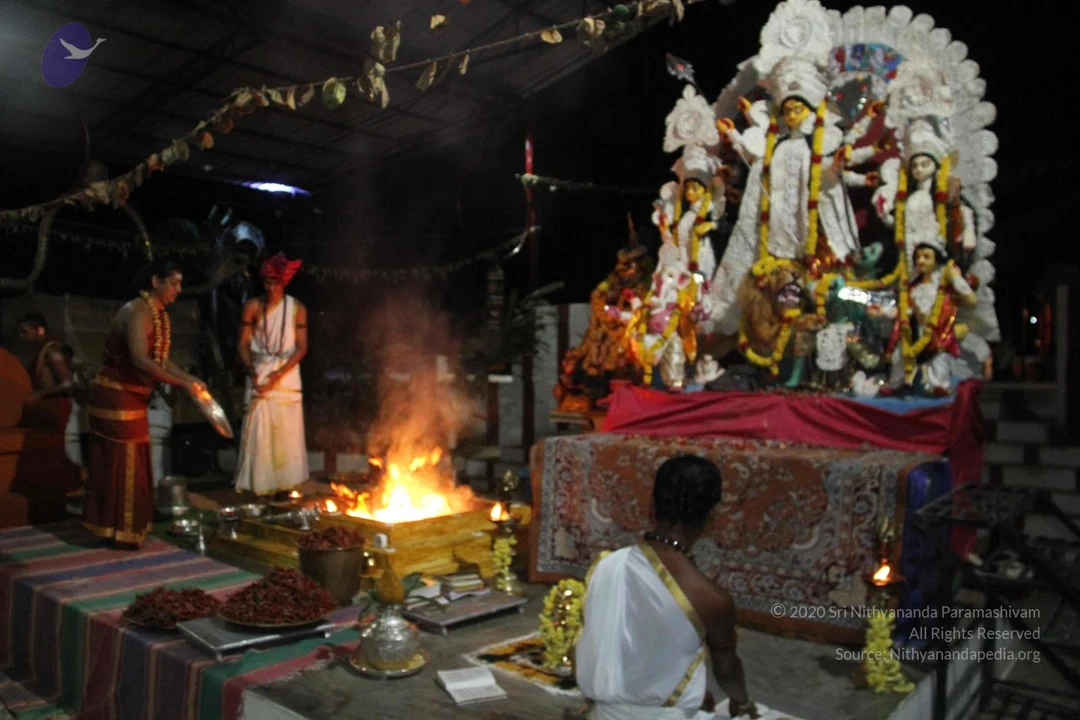
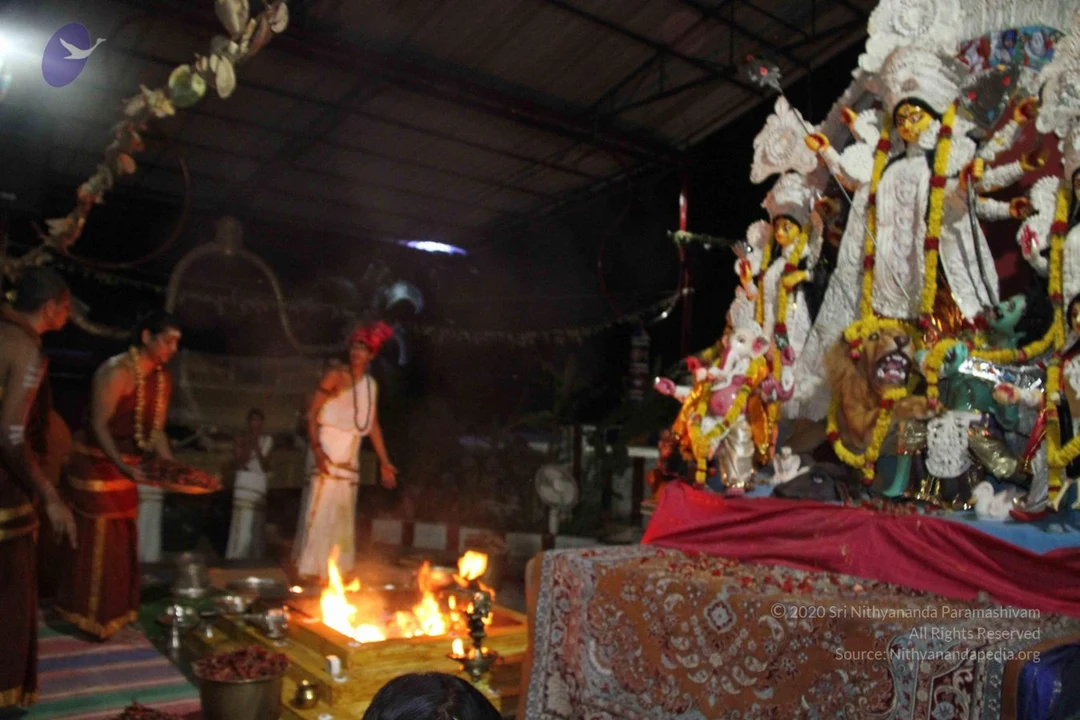
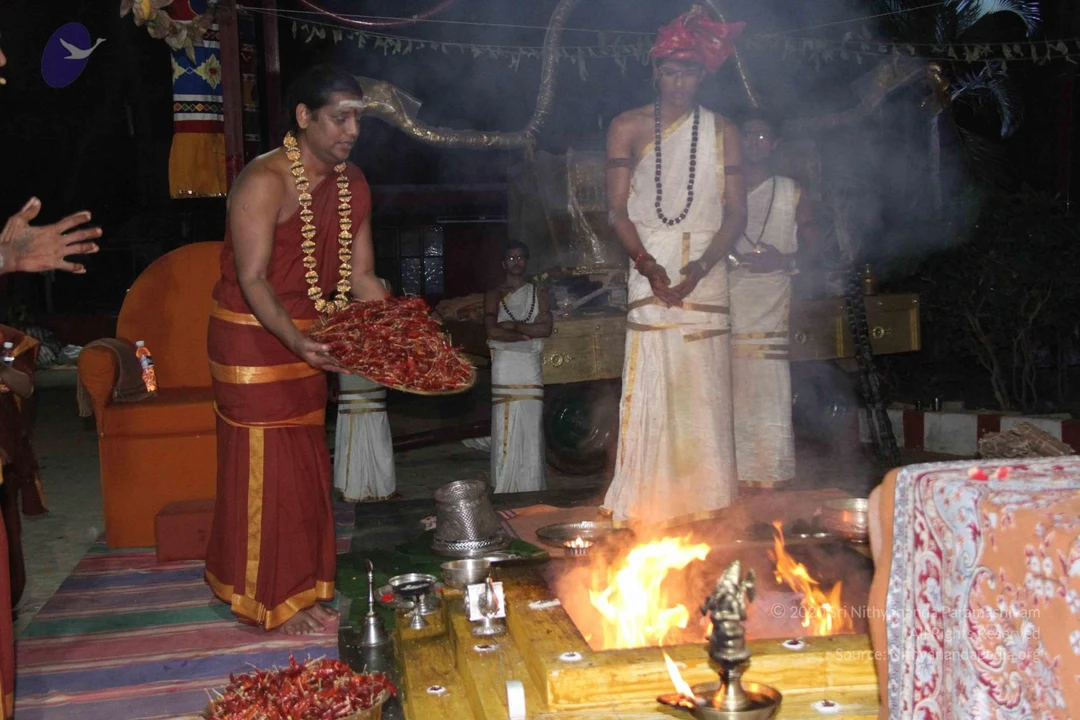
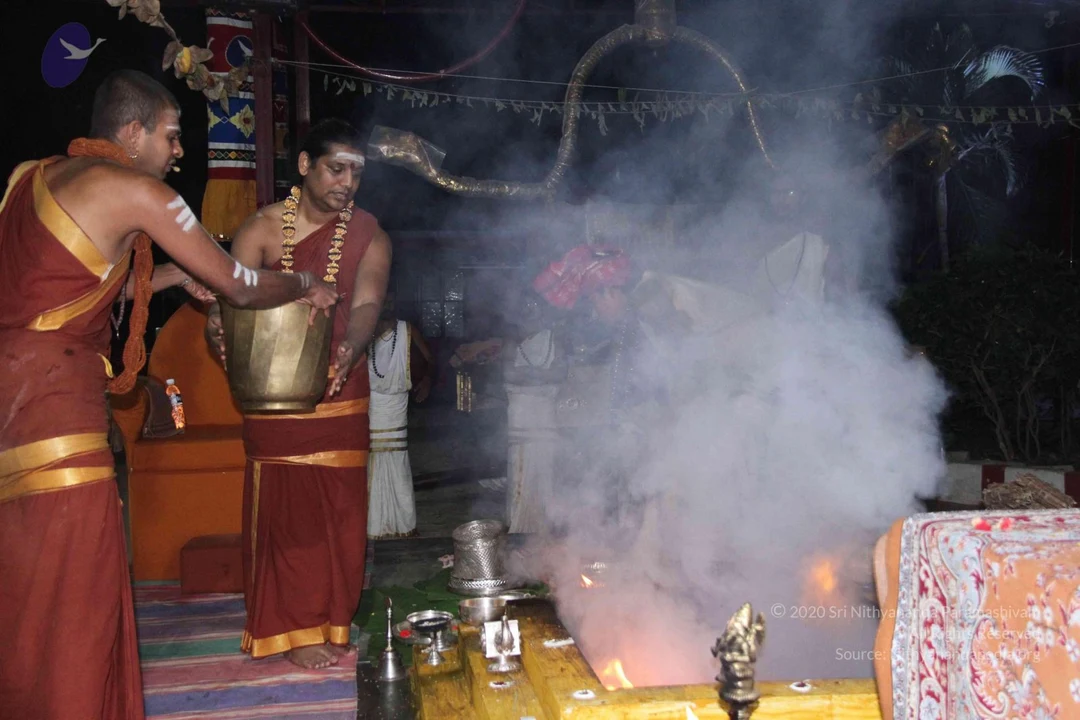
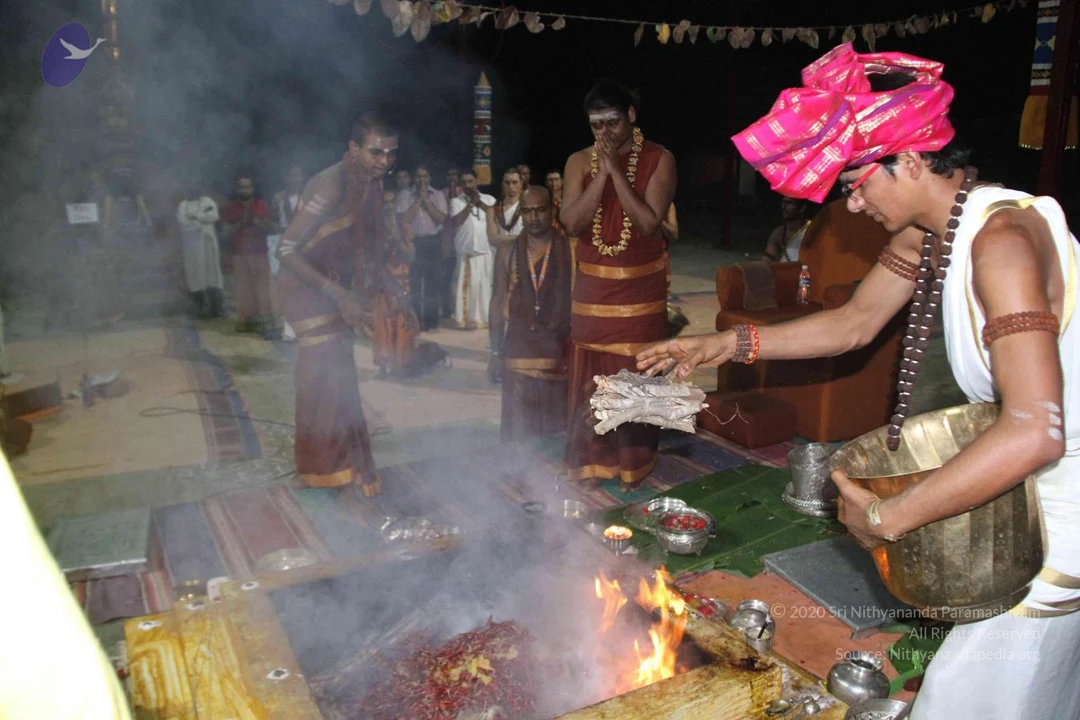
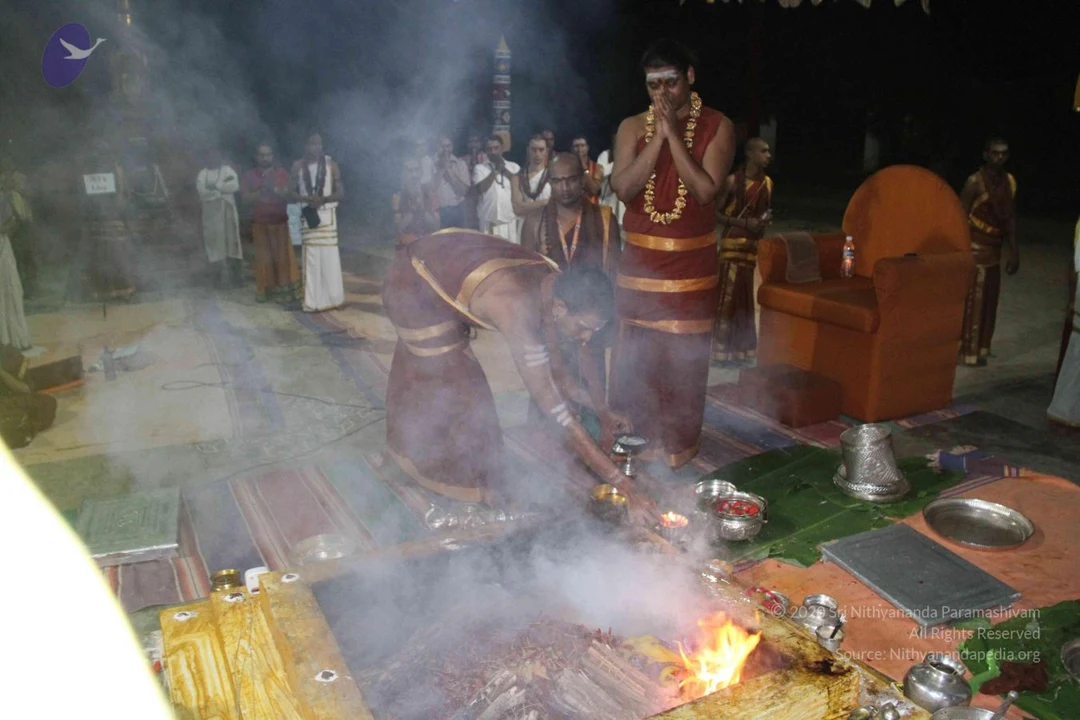
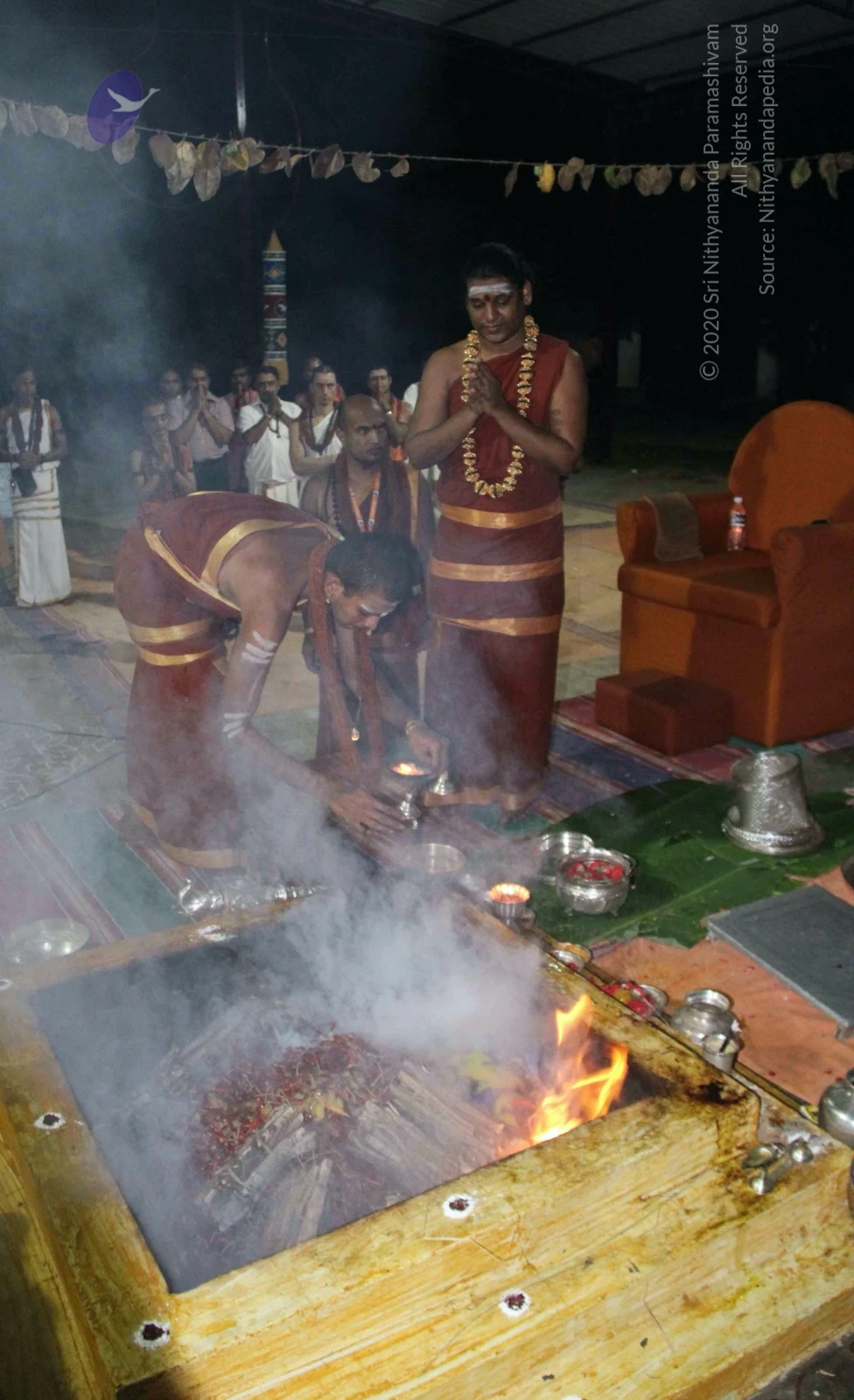
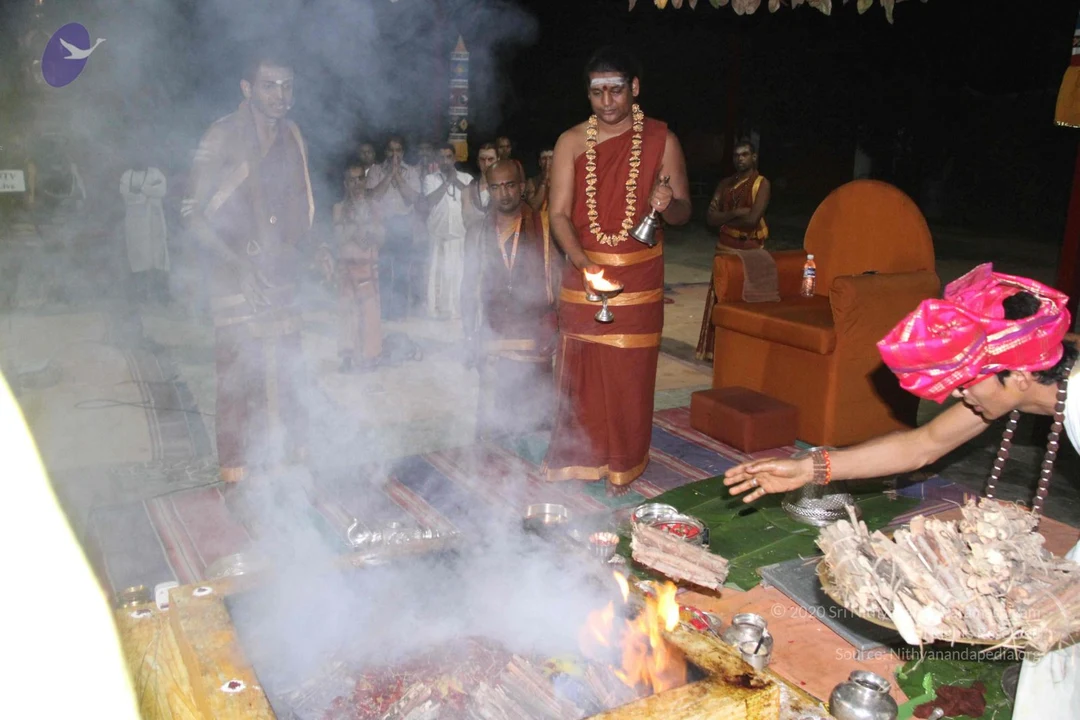
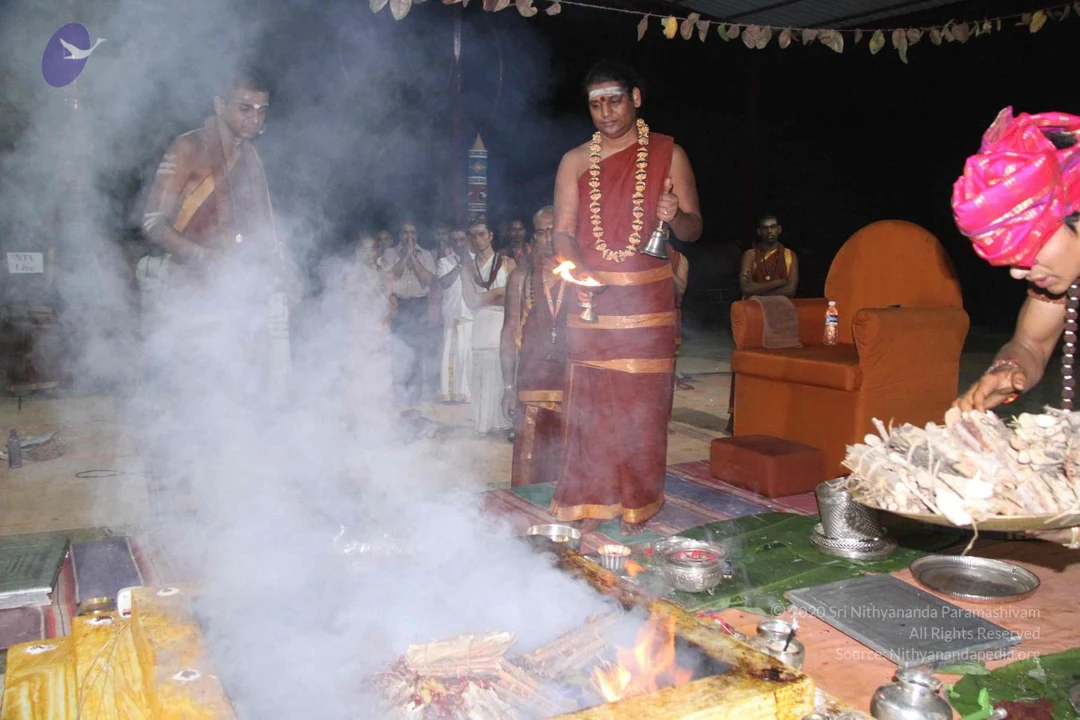
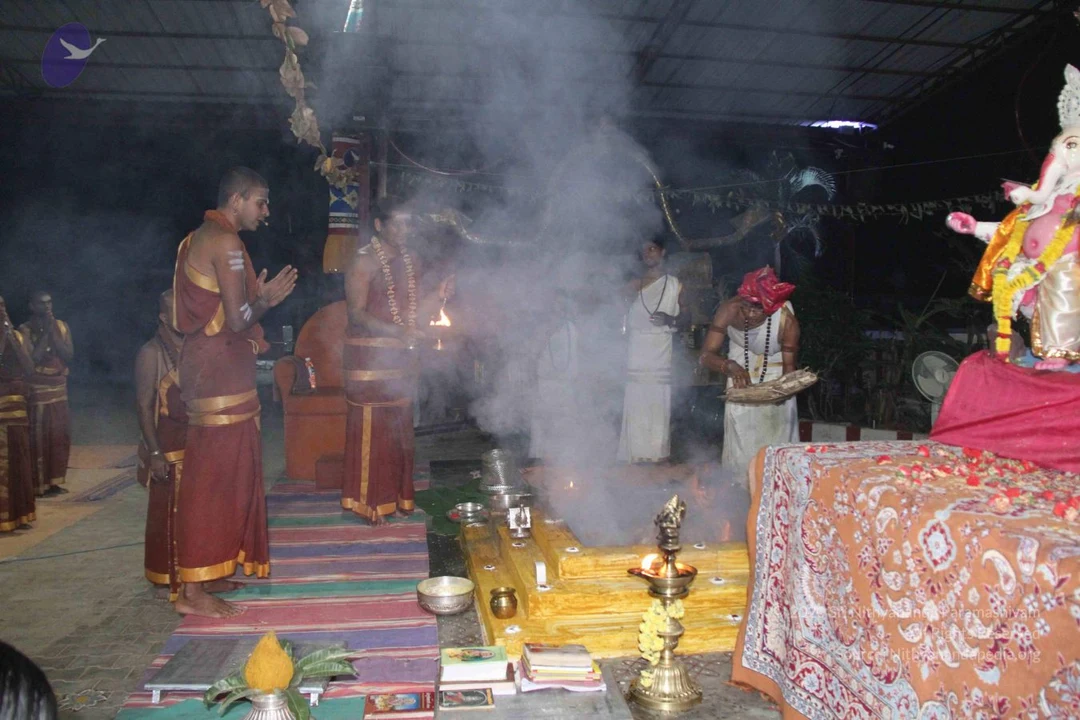
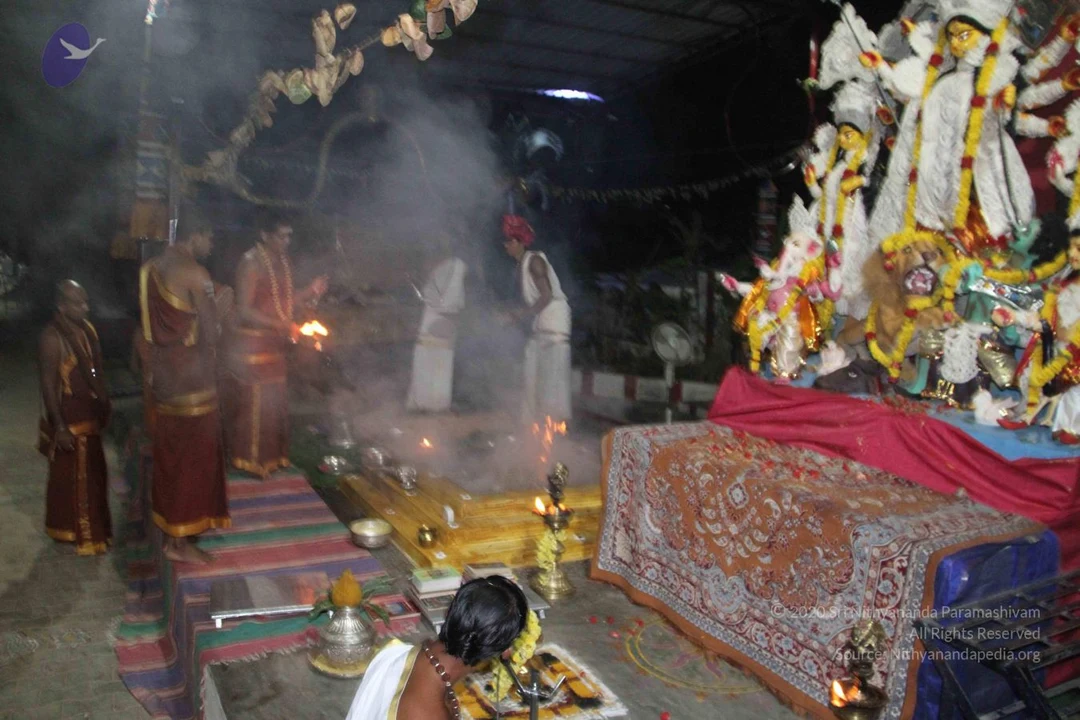
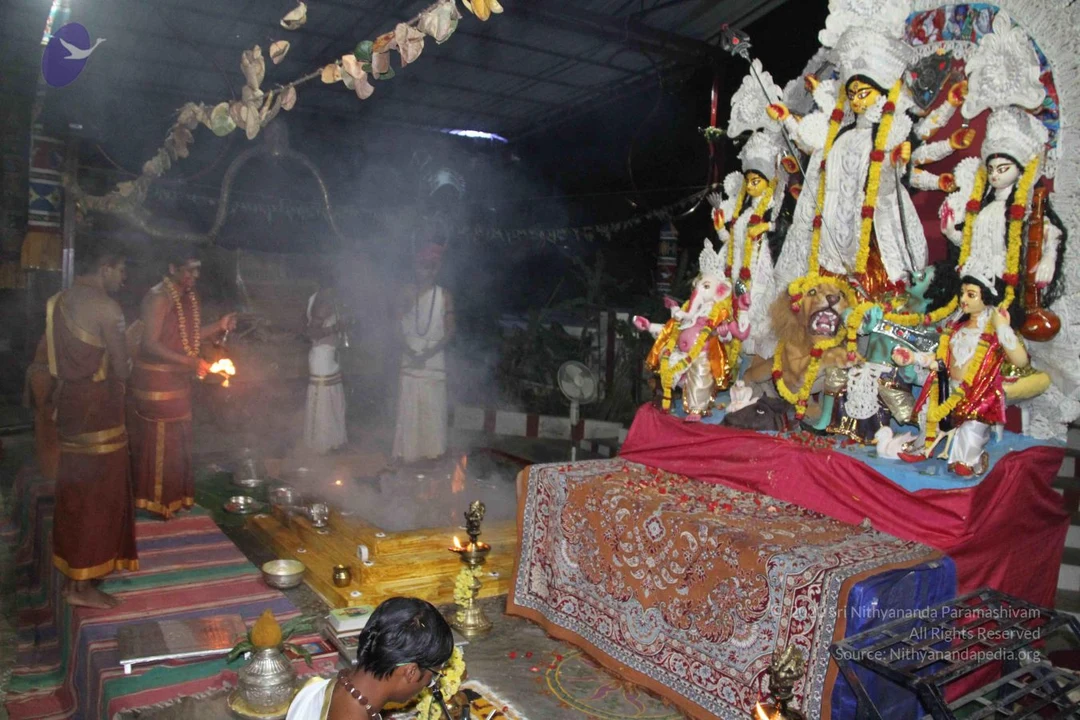
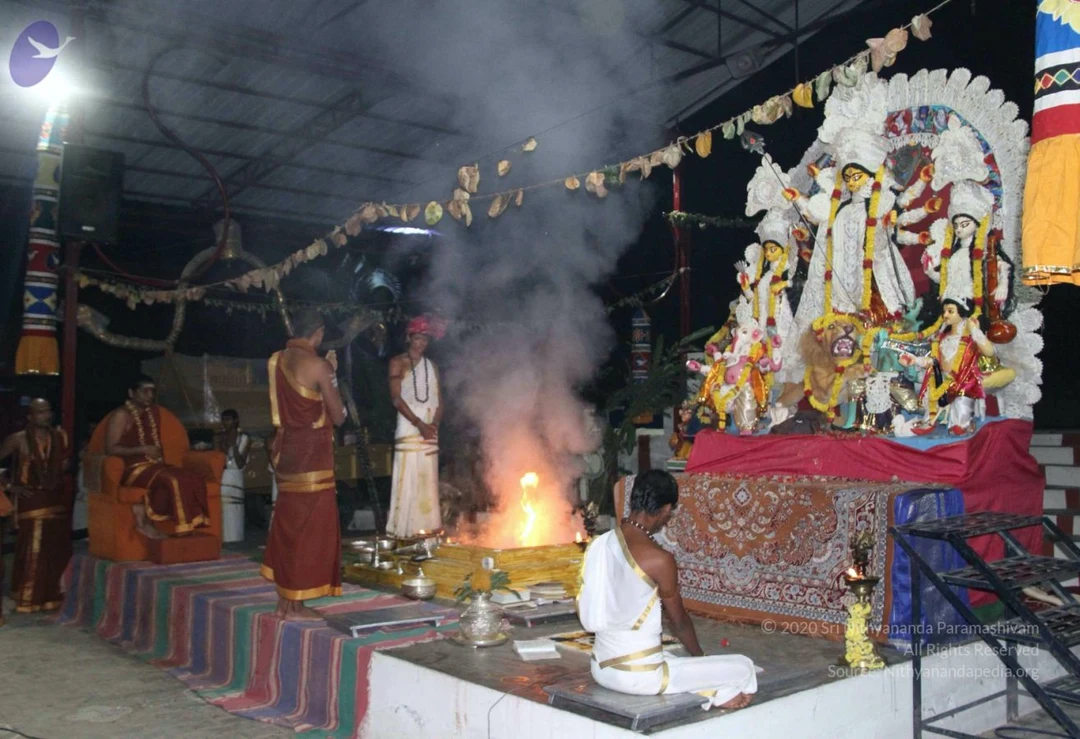
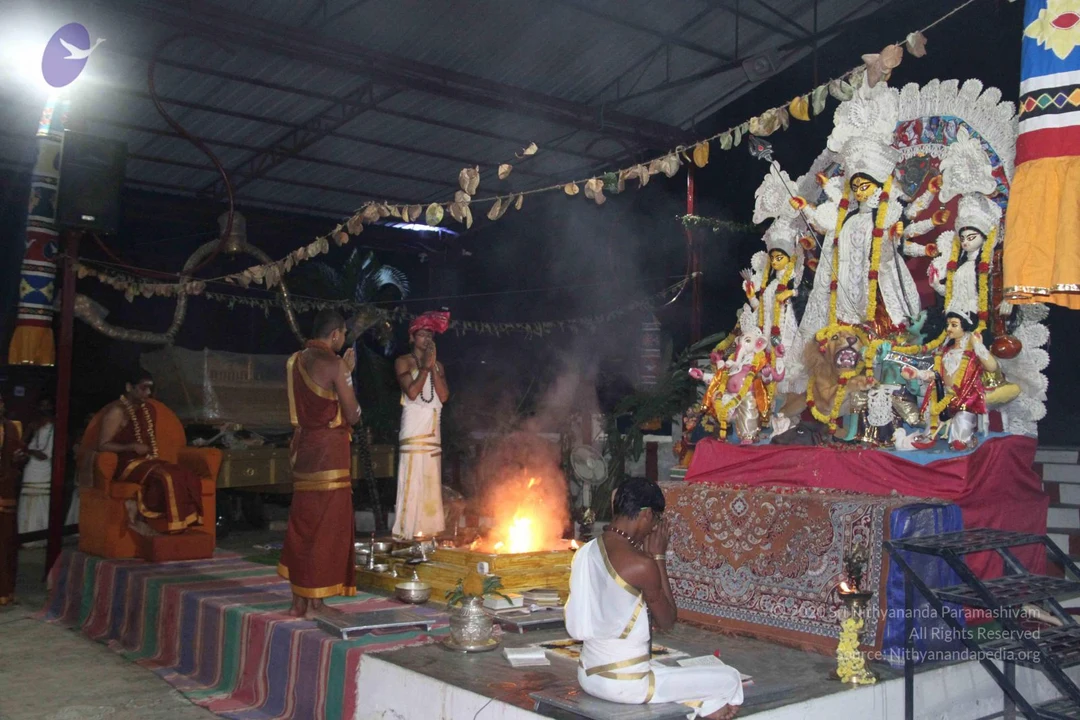
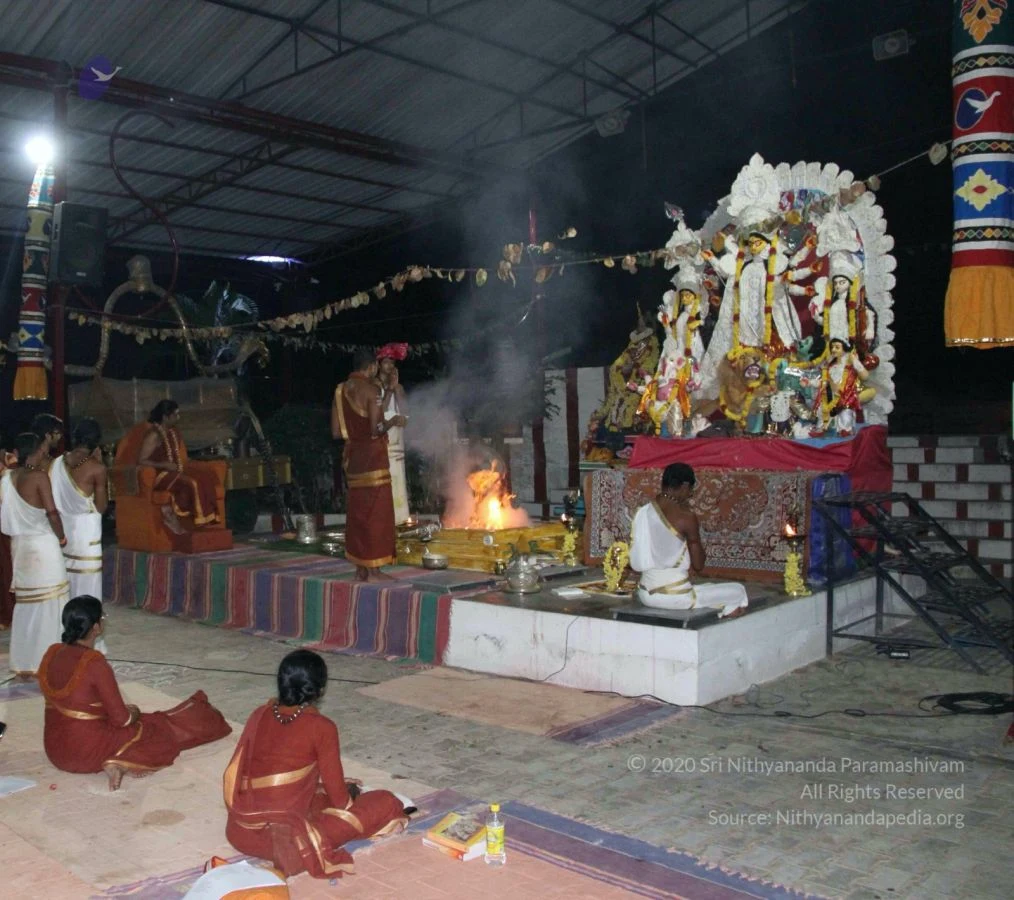
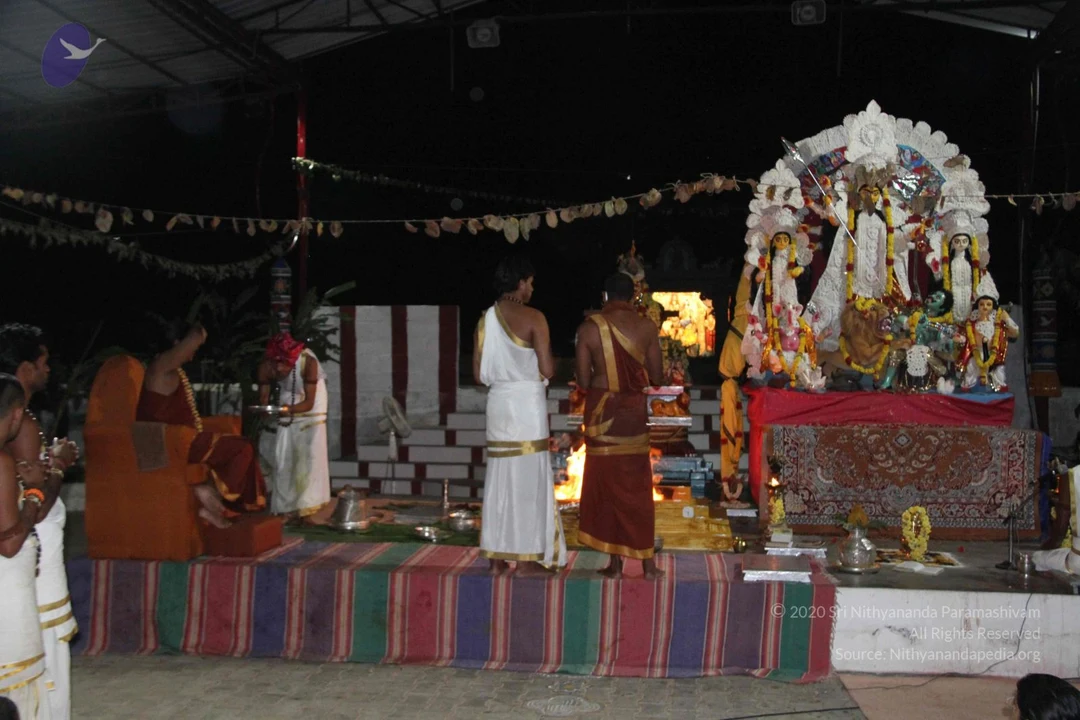
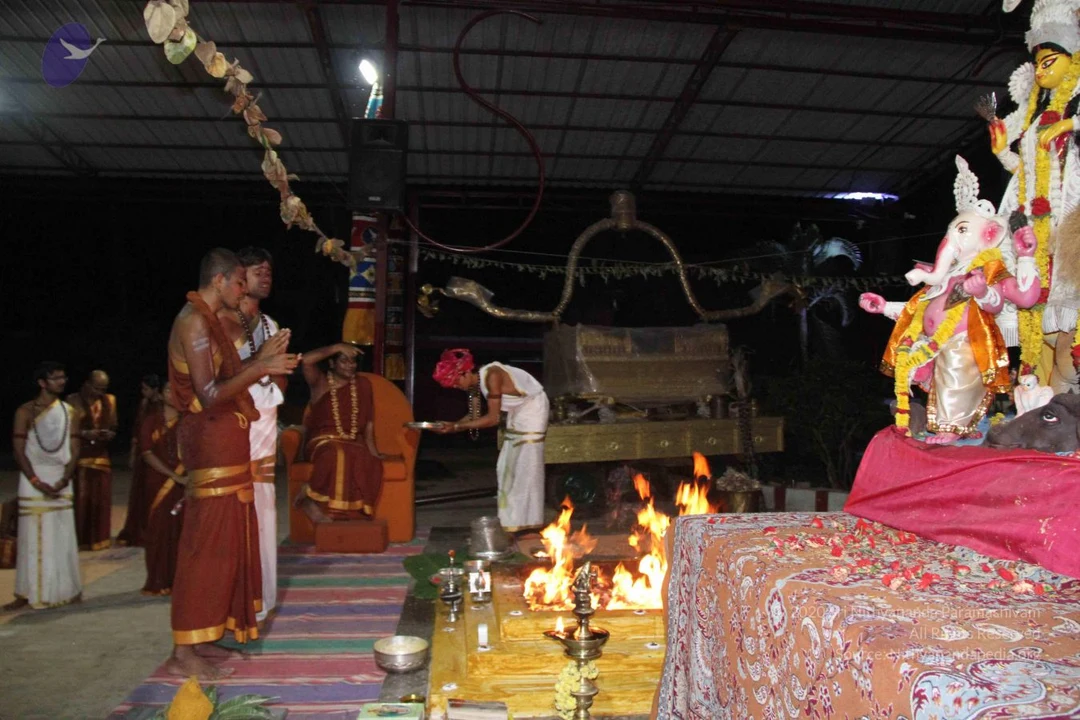
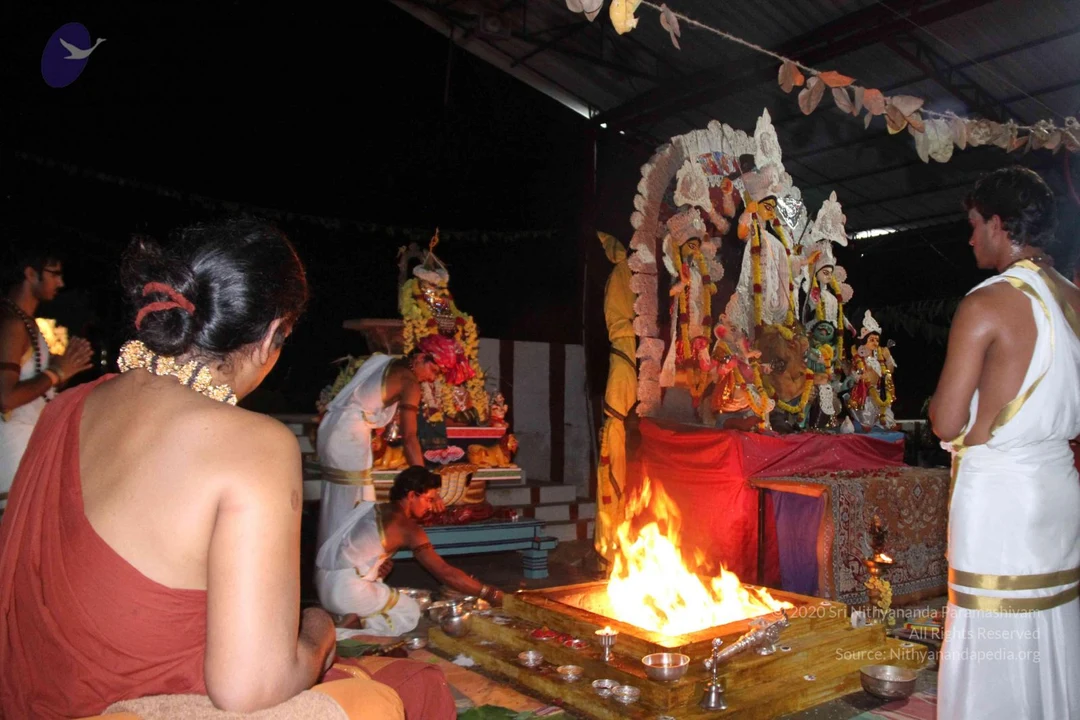
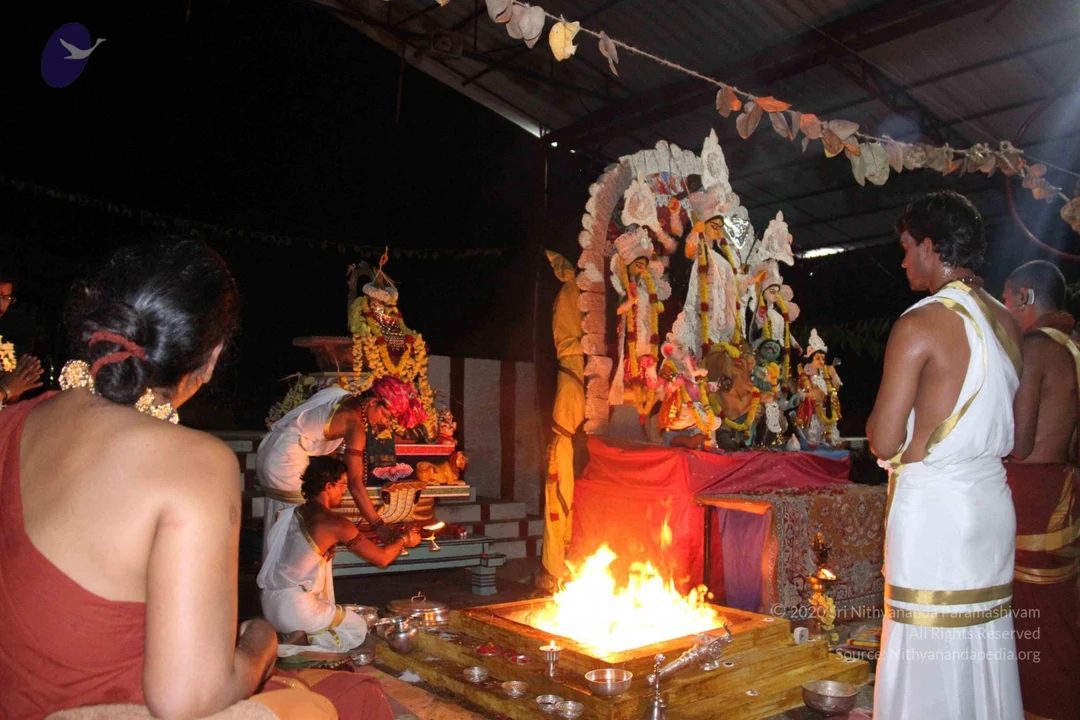
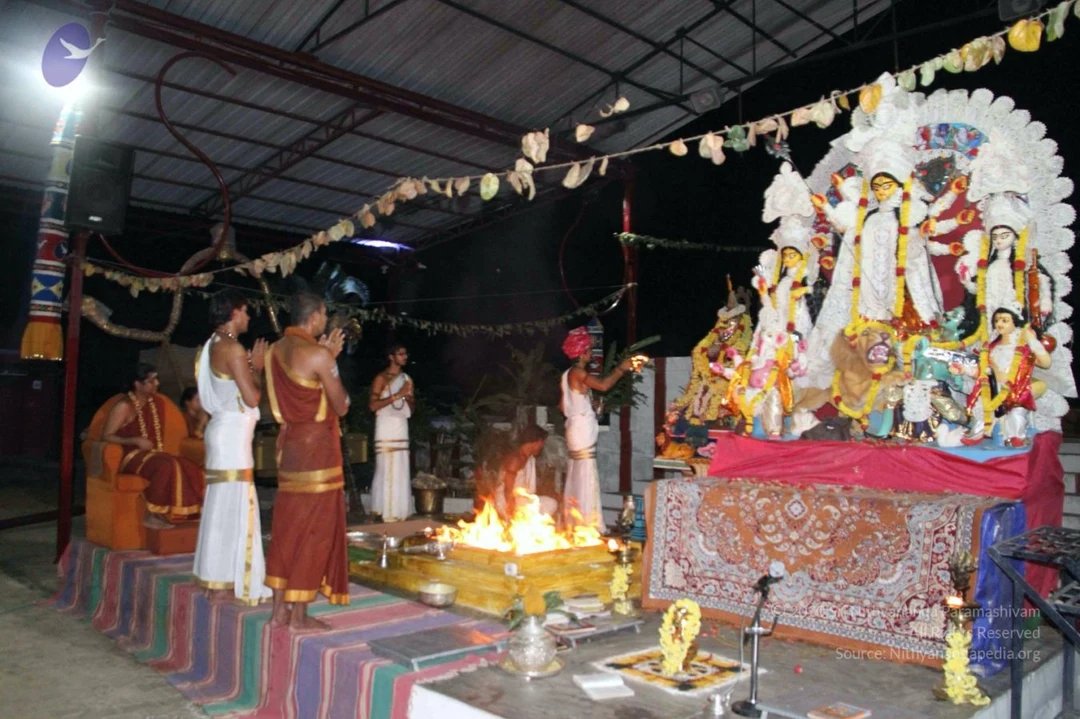
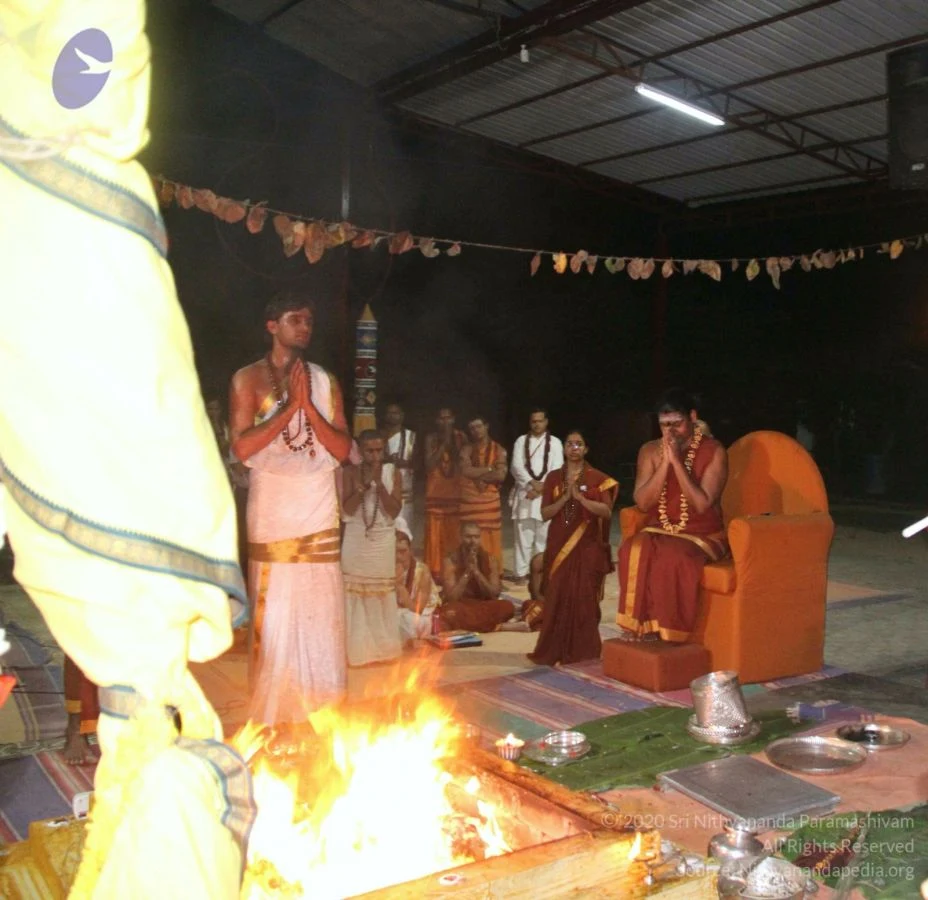
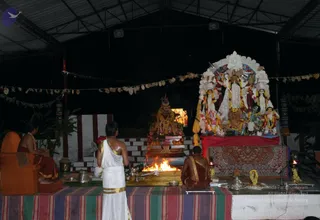
Night puja in a covered open-sided hall before a decorated deity murti altar. A fire pit burns in the centre with a brass vessel and offerings set before it. A priest in a white dhoti with gold border stands with his back to the camera facing the altar, while a monk in saffron-orange cloth sits cross-legged at the fire. Another person in an orange robe and red-brown garment sits on a saffron-draped seat to the left. The main murti is adorned with white cloth, marigold garlands and a sword-like implement, and a smaller decorated figure stands beside the fire. Strings of dried leaves hang overhead. Multi-coloured striped cloth covers the front table.A photograph of a night-time puja in an open-sided hall with a corrugated roof. On the left, a man in orange-red garments and a mala sits in an orange armchair with hands folded in prayer. In the centre, a priest in white dhoti and a red turban sits before a small fire pit with flames and brass vessels. To the right, a second priest in white sits facing a large elaborately decorated deity murti with garlands and a white arched backdrop, holding a sword. Other devotees in saffron-toned clothing sit at the front. Marigold garlands, leaf strings, and brass lamps and vessels fill the scene, and a red-and-white striped cloth hangs behind.A night-time puja in an open-sided shrine hall with a corrugated roof and hanging dried leaf garlands. Three people sit on a striped cloth before a lit fire pit: one in white cloth sits facing the fire, another in a maroon-brown cloth sits beside them, and a third in a pale cloth bends low near metal vessels. Behind the fire stands a dark deity murti with orange garlands. On the right, a large white-and-blue deity murti with a sword and many garlands rests on a red-draped altar, with flower garlands and oil lamps around it. Brass vessels and flowers lie on the floor.Night scene in an open-sided pavilion with a corrugated roof and strings of dried leaves overhead. Two priests in white and reddish-brown dhotis sit on a striped mat before a fire pit with bright flames, performing a homa or puja. A seated figure in an orange robe sits at left on an orange-cushioned chair beside a brass vessel. At right, a decorated deity murti with a white arched backdrop, flower garlands and a sword stands on a red-draped platform, with a smaller garlanded figure at centre. Brass pots and flowers rest on the platform, with oil lamps lit nearby.A night-time homa or yagna in an open-sided pavilion with a corrugated metal roof. A large fire burns in a raised wooden fire pit in the centre foreground, with brass bowls, a bell and ritual items arranged around it. A seated woman in a rust-coloured garment with an orange shawl sits on an orange cushioned seat at the left, hands clasped, her hair decorated with yellow flowers. At right, two men in white dhoti with gold borders and orange shawls sit on a striped mat facing the fire. Behind them stands a decorated deity murti with garlands, and a second adorned murti on a blue platform with garlands is at the centre background, with banana leaves and strung leaves hanging above.Night-time photograph of a Navaratri puja under a tin-roofed pavilion. A large fire pit with a blazing flame sits on a wooden platform in the foreground, surrounded by brass bowls, a kalasha-style vessel and small lamps. To the right, a richly decorated deity murti with a white-and-silver headdress and many marigold garlands is set on a red cloth, with a bull figure at its base. A second decorated murti with garlands stands on a blue pedestal at left. Two men sit in front of the fire: one in a white dhoti and one bare-chested with a rudraksha mala, plus a figure in orange-red cloth at far left with his back to the camera. Hanging leaves and streamers decorate the ceiling.