Skip to content
Wednesday

2 October 2013

Enriching makes you Complete

Dated photos
215
Source pages
1
Media
6
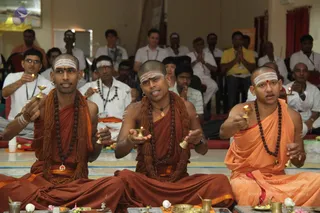
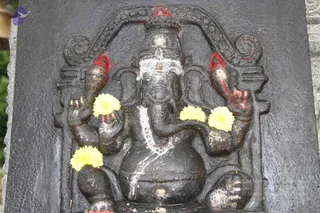
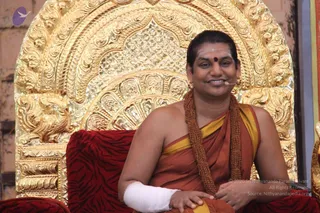
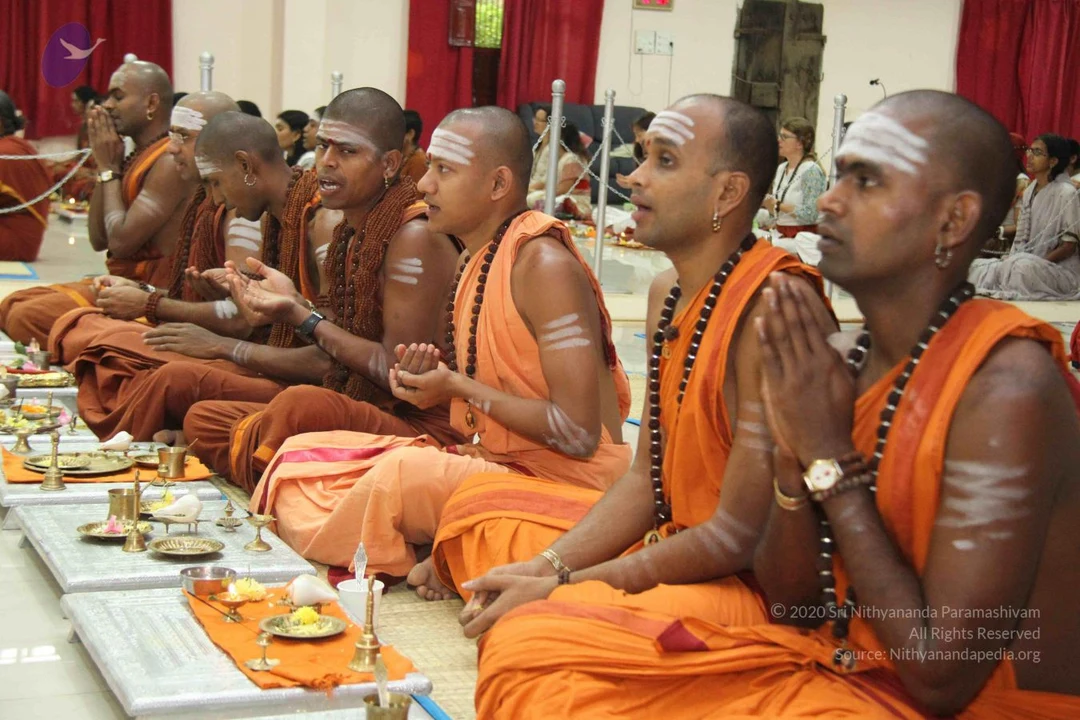
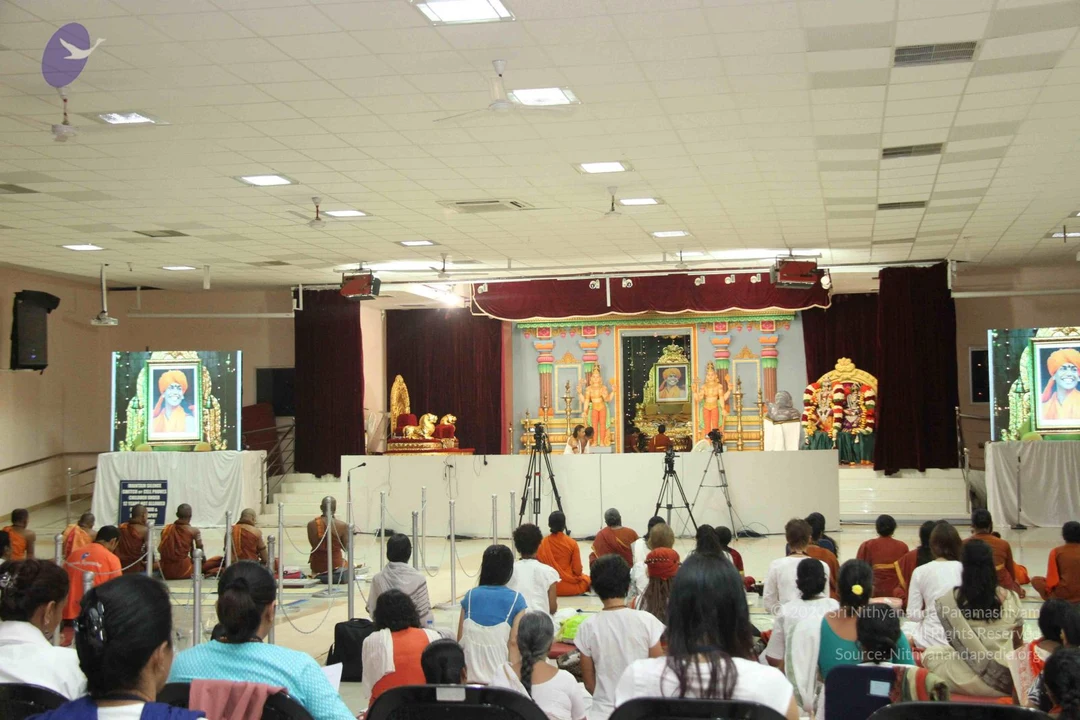
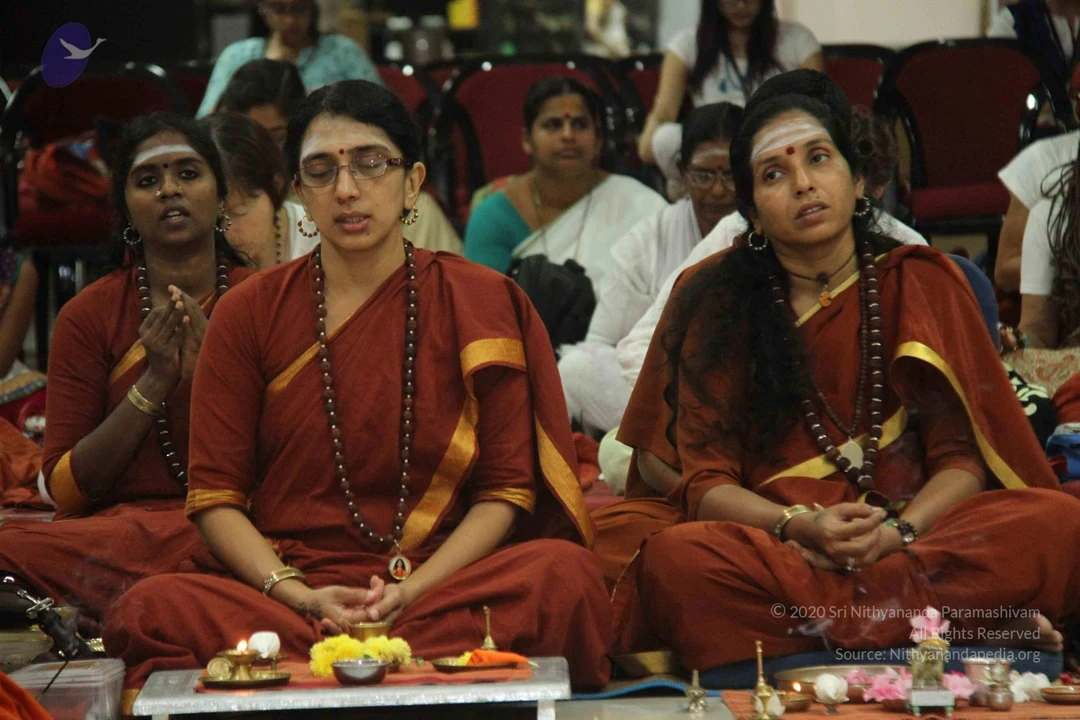
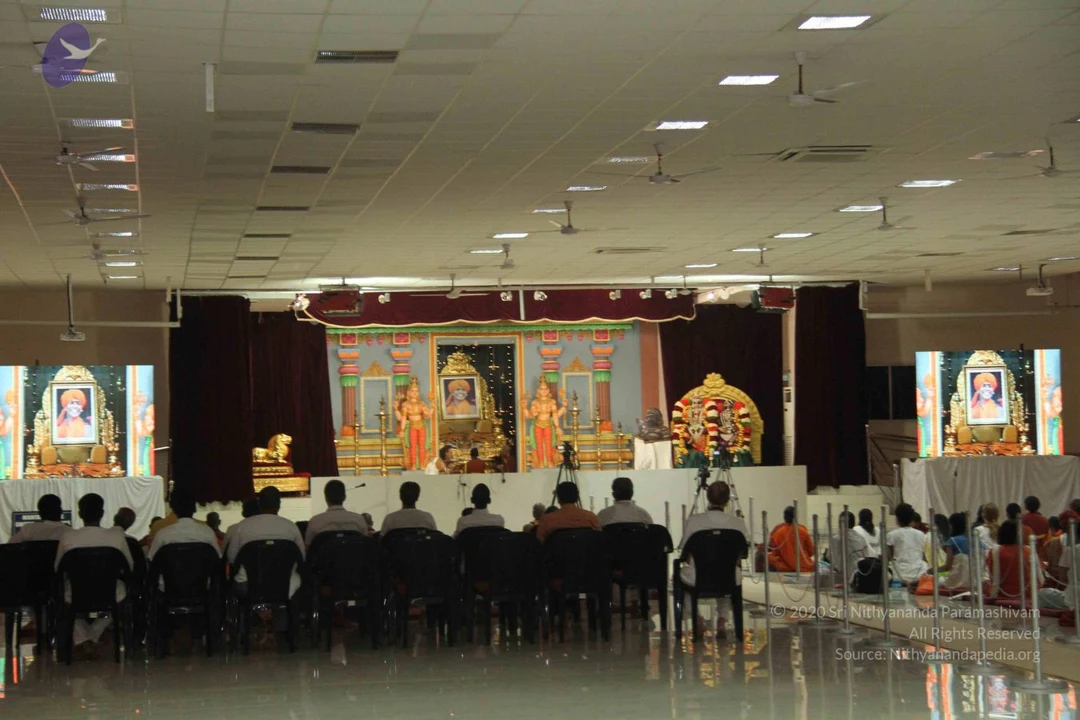
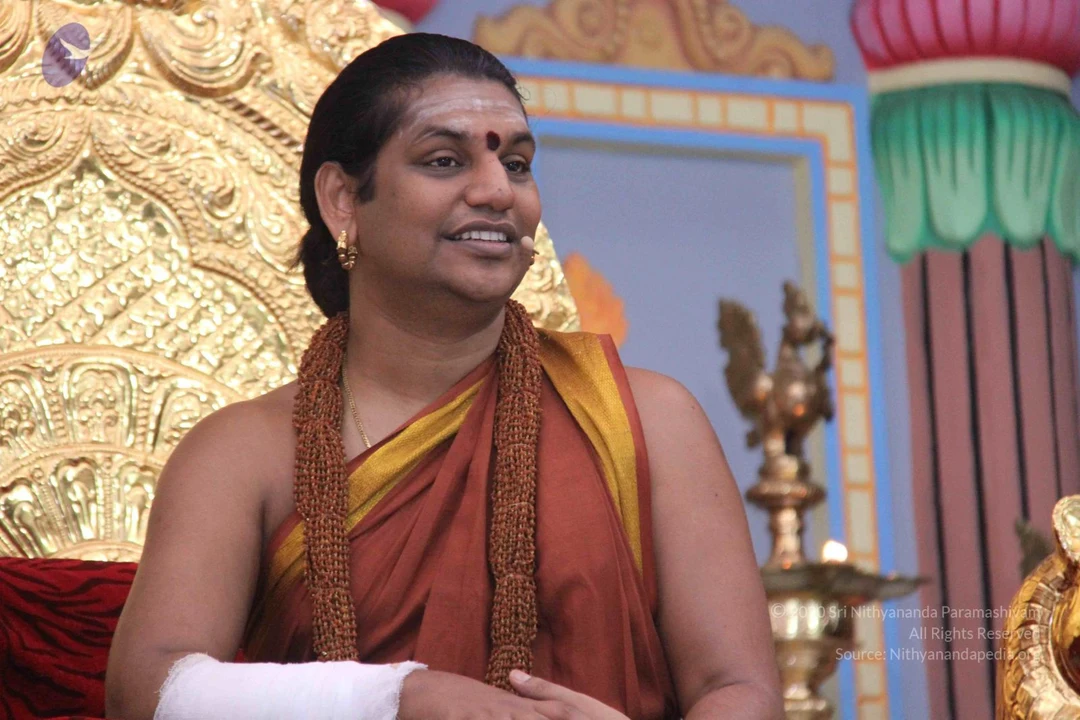
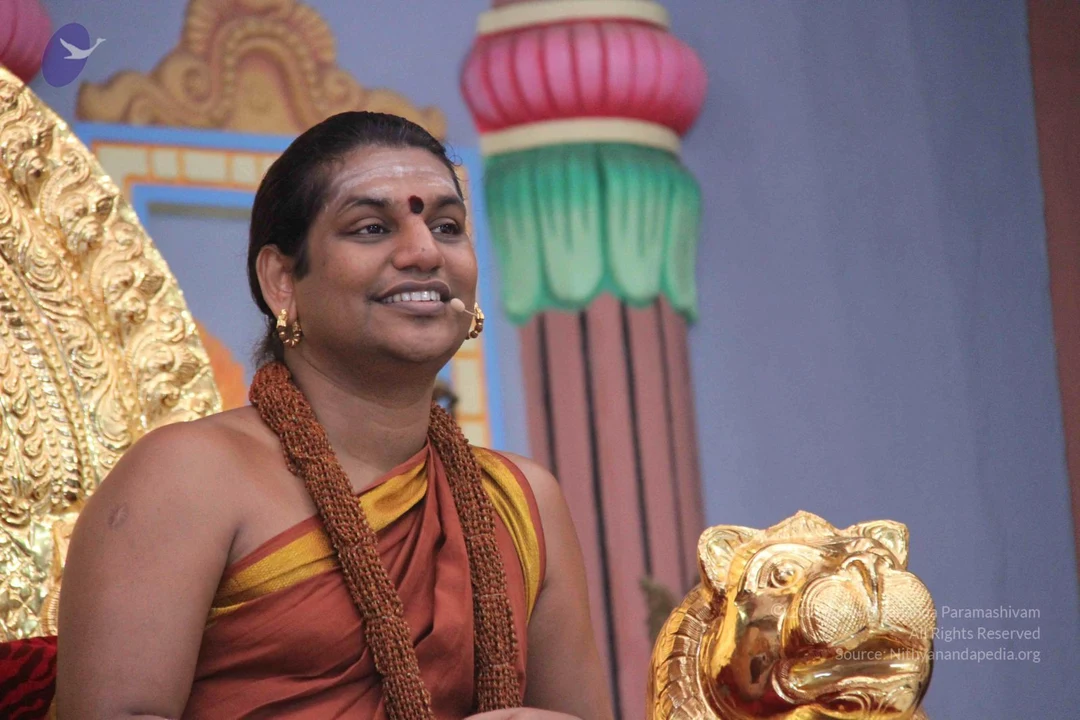
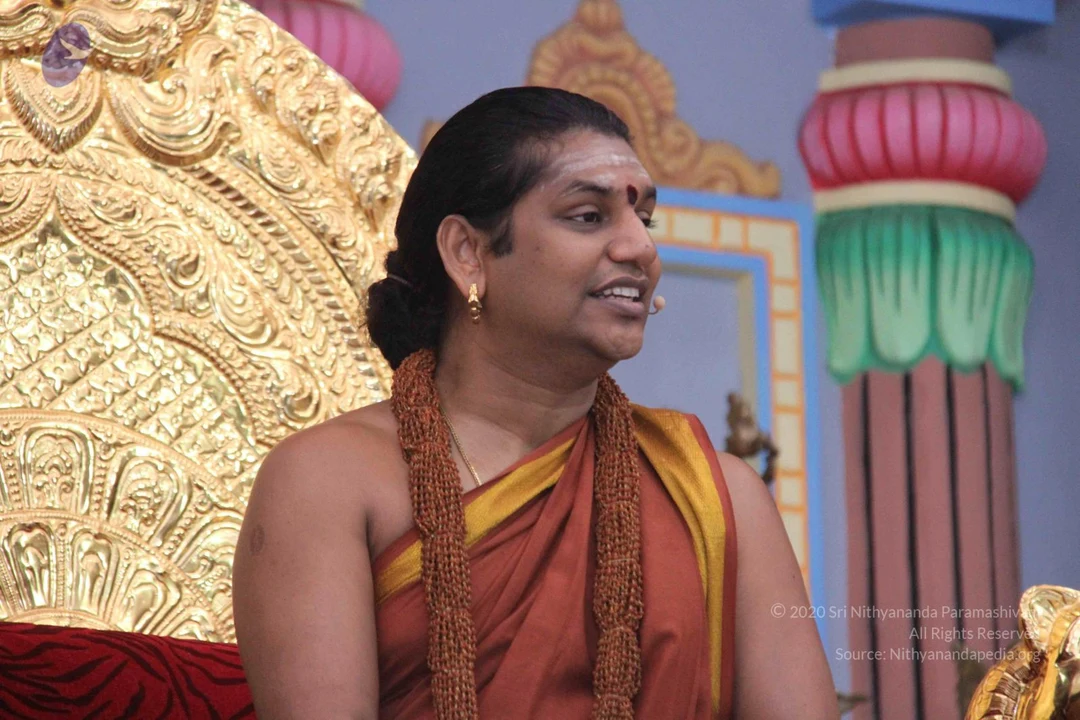
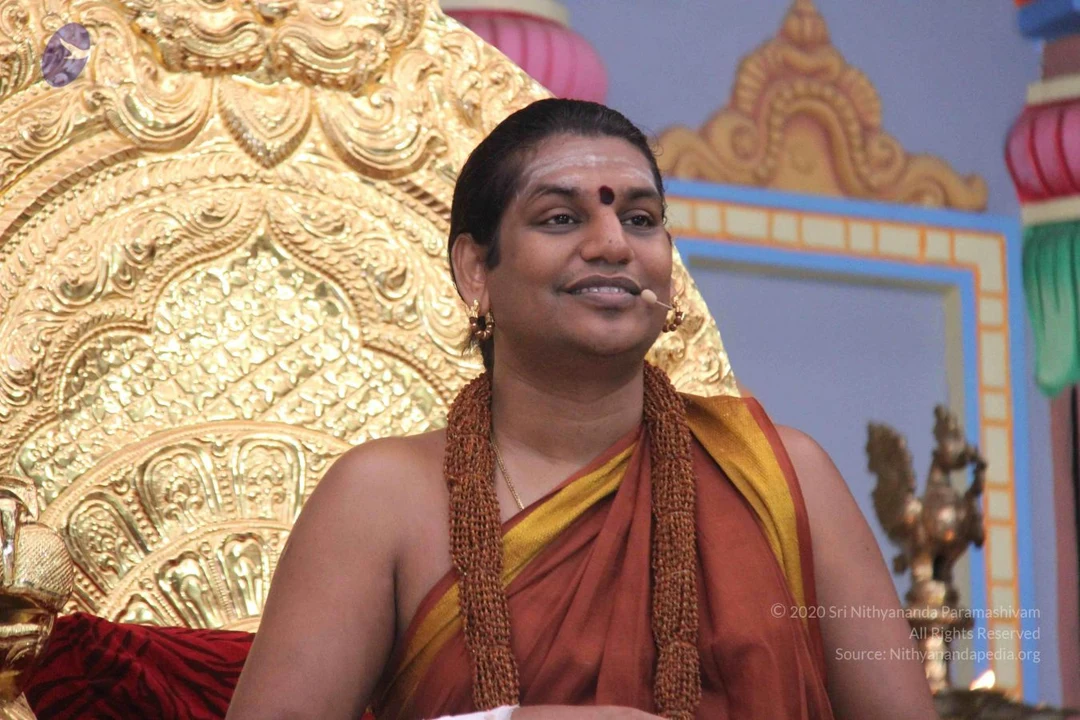
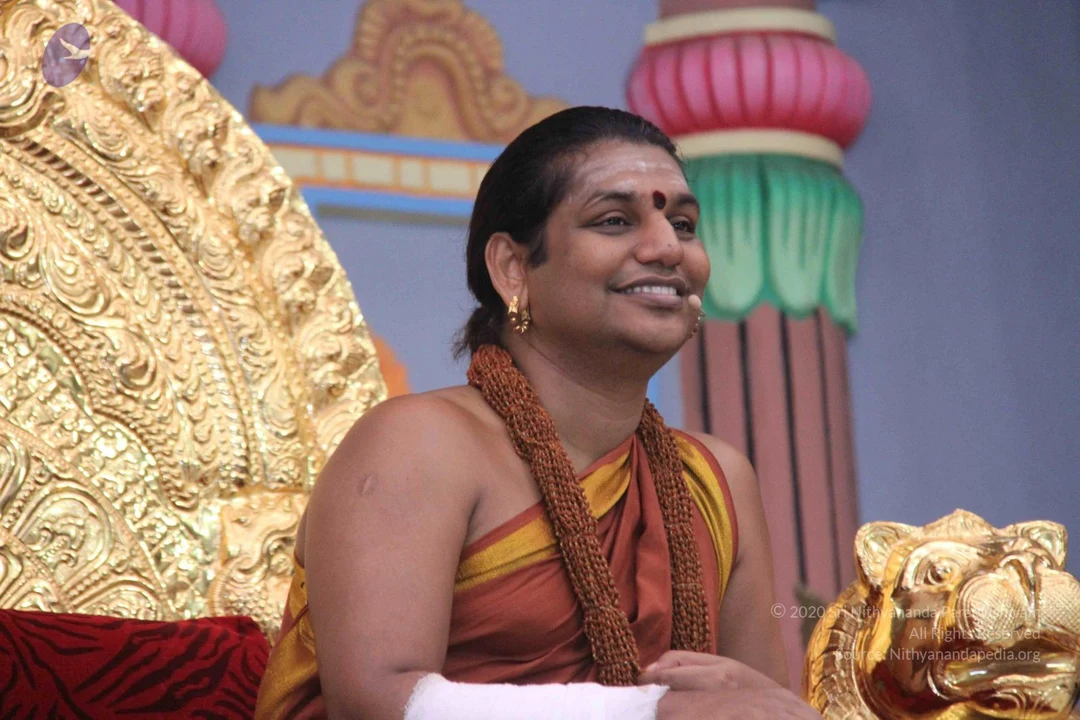
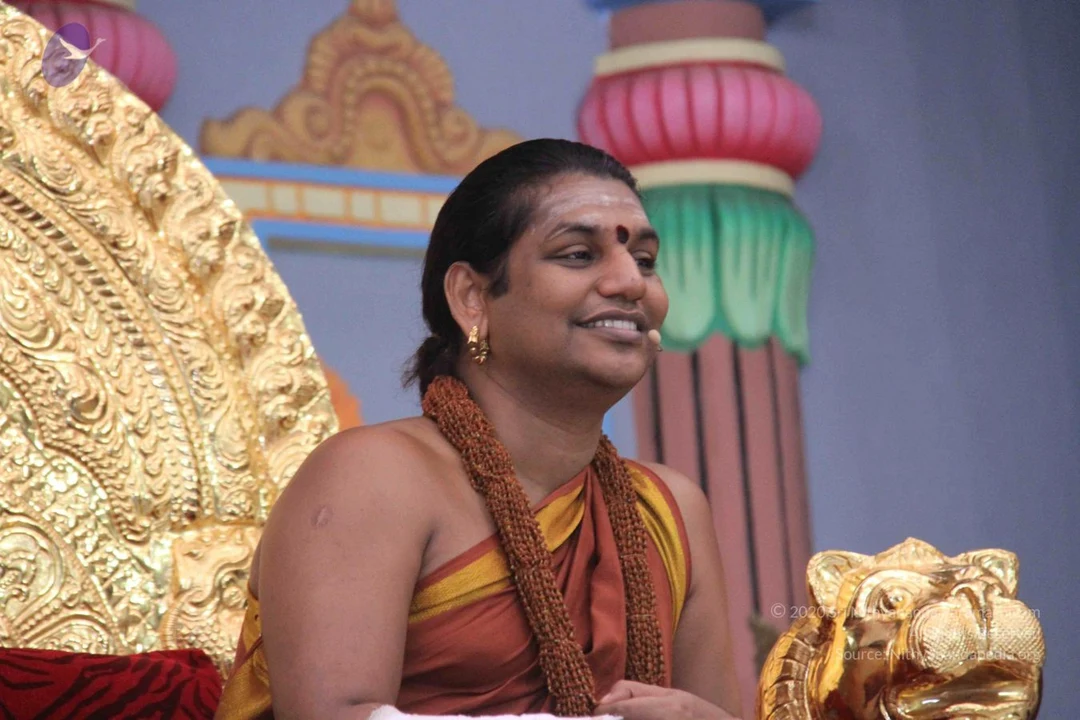
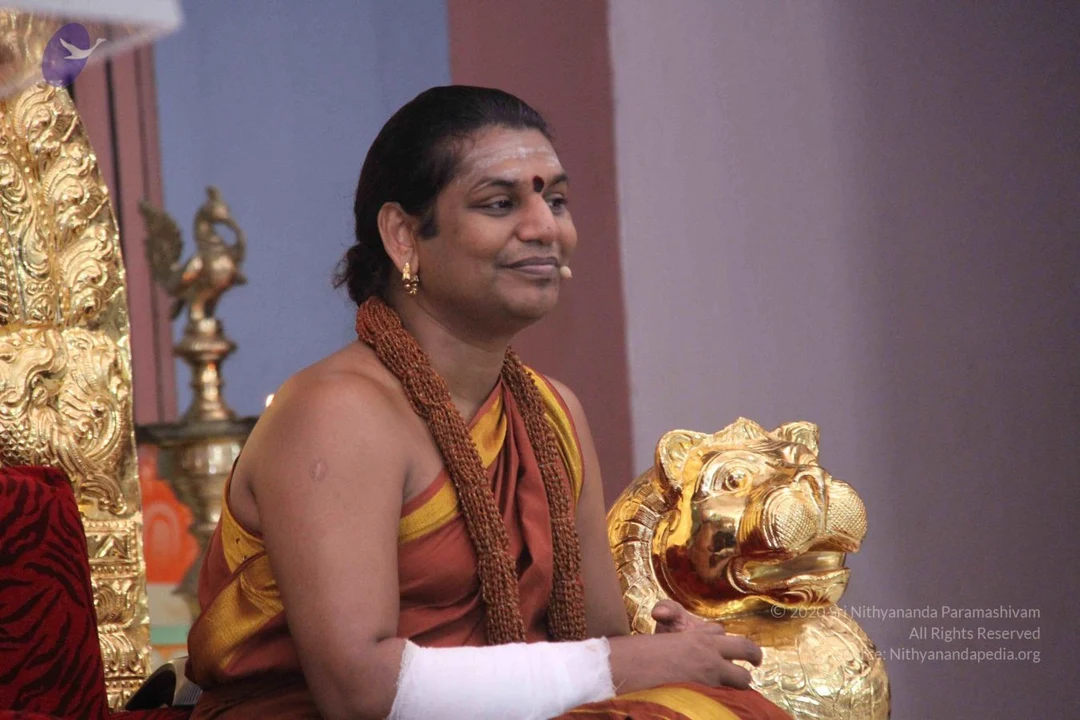
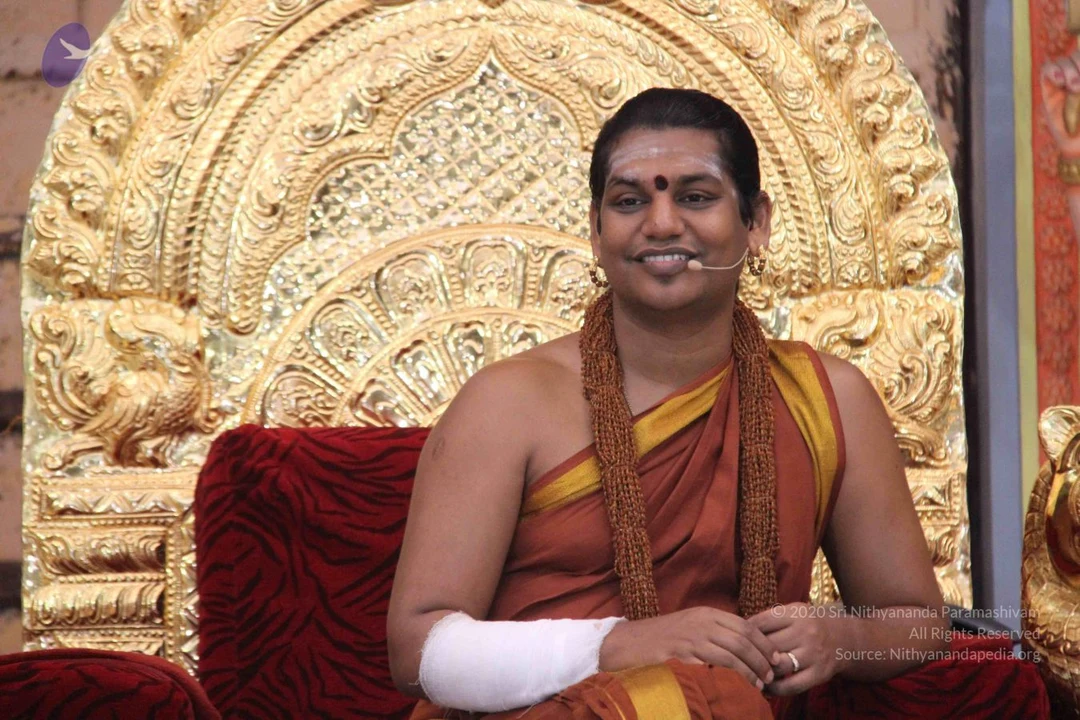
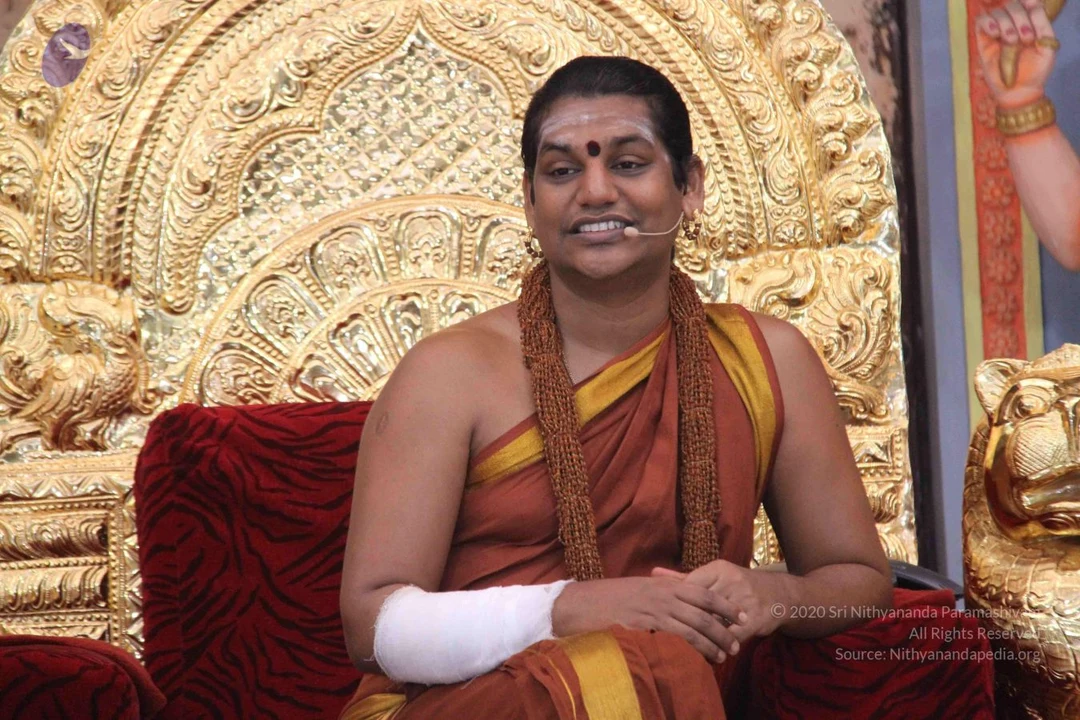
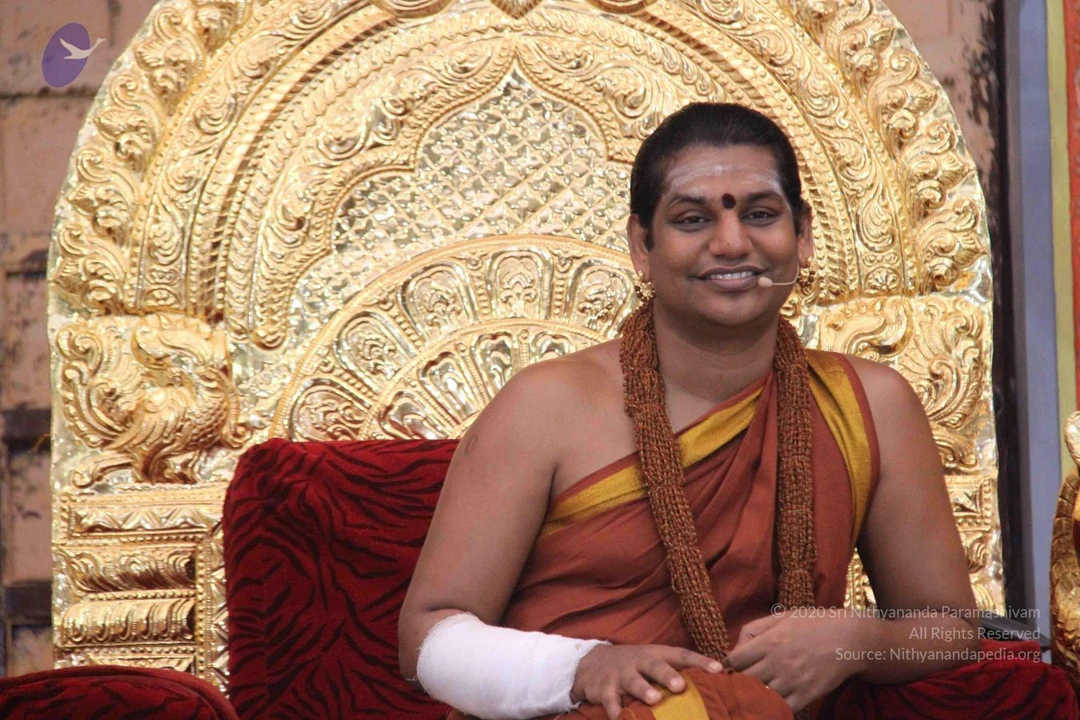
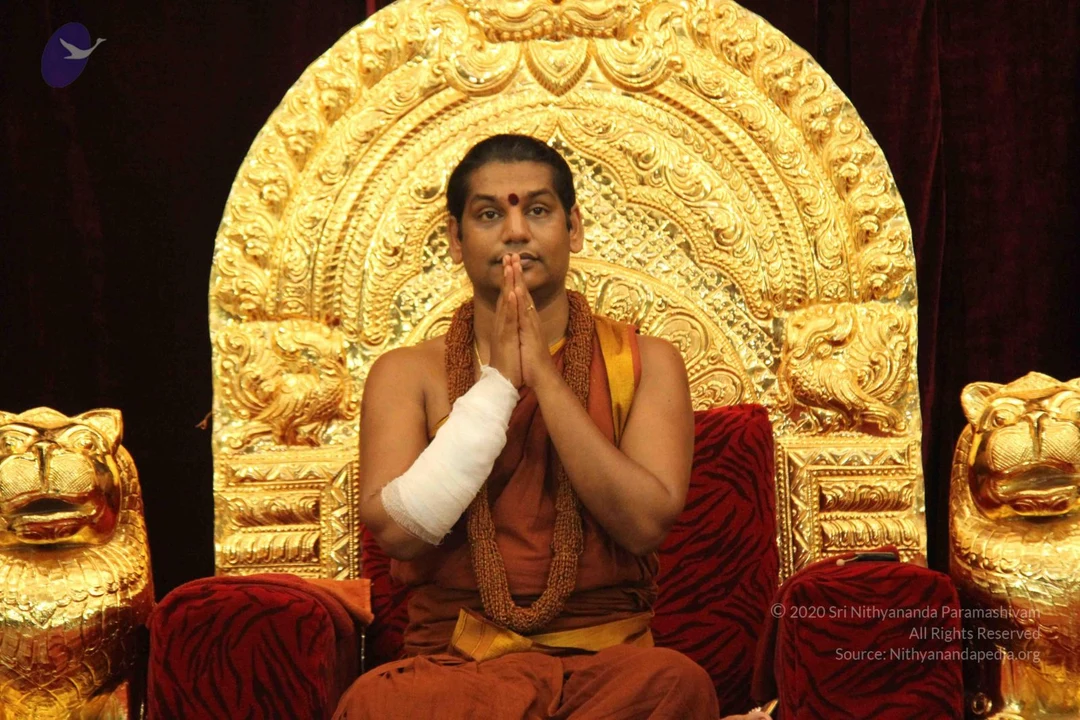
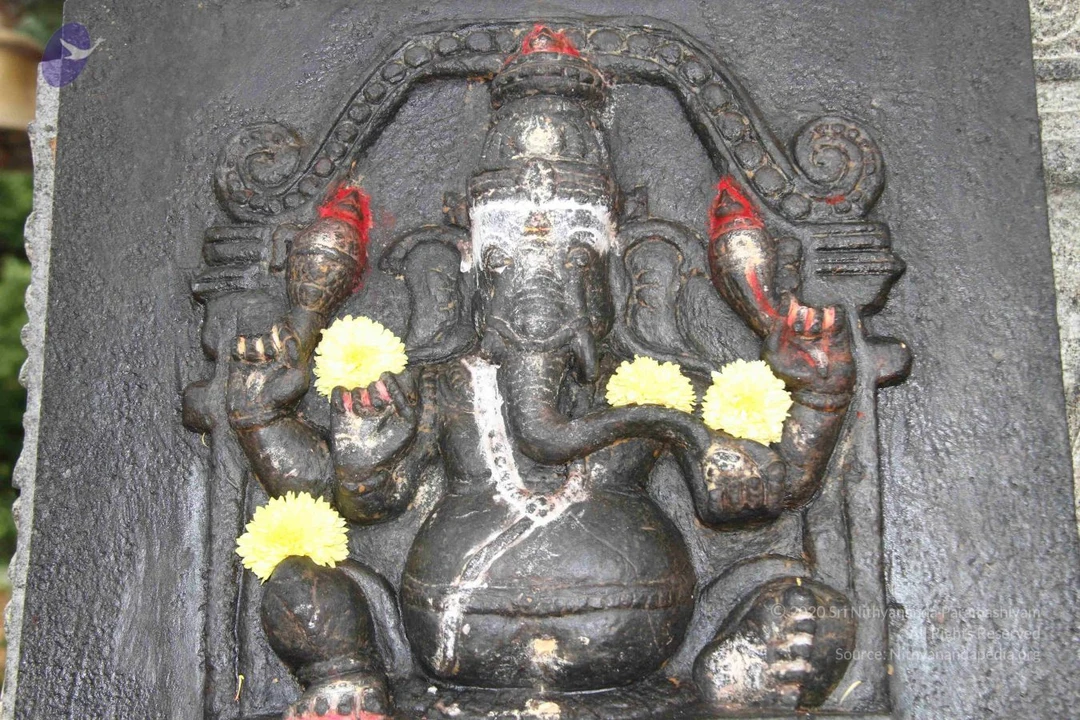
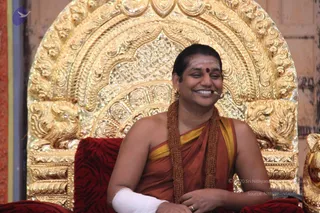
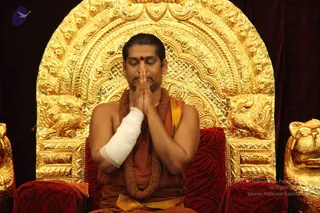
Three saffron-robed male priests sit cross-legged on a mat in a hall, performing a ritual with small oil lamps held in their hands. Each has white vertical tilak marks on the forehead, shaved heads and rudraksha malas; the centre priest also wears a brown shawl and a small pendant. Brass bowls, flowers and a metal vessel sit before them. Behind them, seated devotees in white clothing with lanyards and a man in a yellow shirt watch with palms pressed together. A red curtain hangs on the right wall.A carved black stone relief of the elephant-headed deity Ganesha, shown with a tall crown, a white-painted forehead and tusk, and multiple arms holding objects. Yellow marigold garlands are draped across the carving, and red and white pigment marks the figure. The stone is set in a flat black slab with a decorative arched border and scrolled motifs. No people are visible in the image.A smiling man with a shaved head and a red bindi sits on a red velvet throne in front of an ornate gold-leaf backrest with carved floral and scrollwork patterns. He wears a saffron-orange and gold-trimmed wrap over bare shoulders, a long brown rudraksha mala draped across his chest, and a small microphone clipped near his face. His left forearm is wrapped in white bandage, and his hands rest in his lap. A faint pedia source credit appear over the lower right of the image

October 02 2013

Original wiki page
Contents

Title

Enriching makes you Complete

Description:

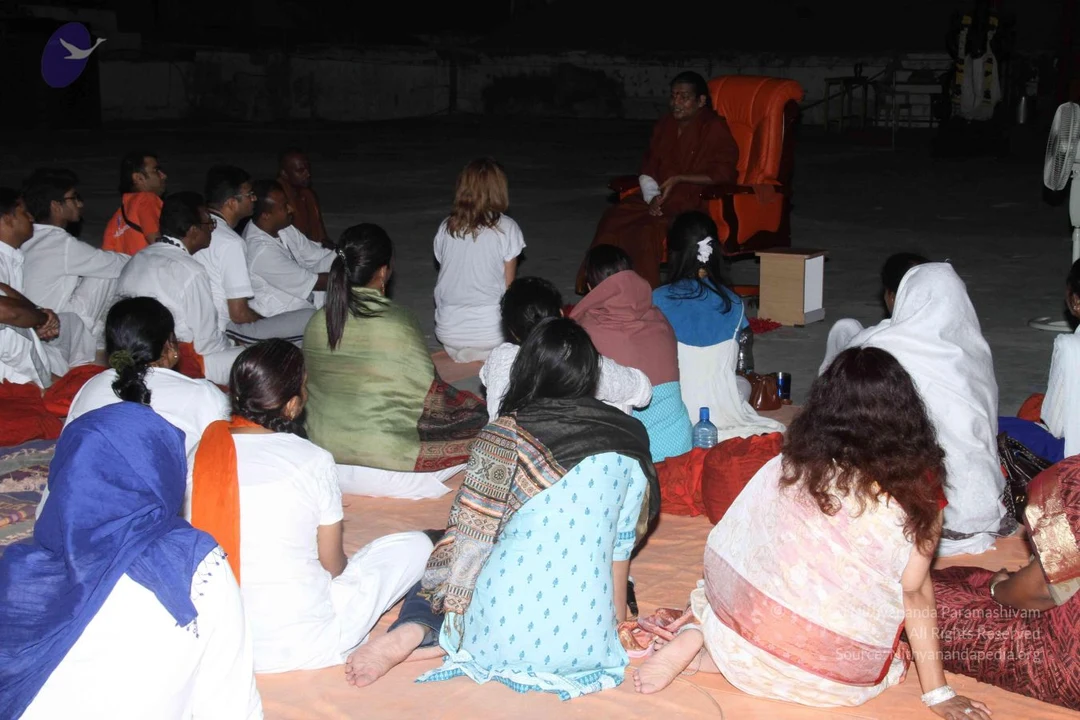
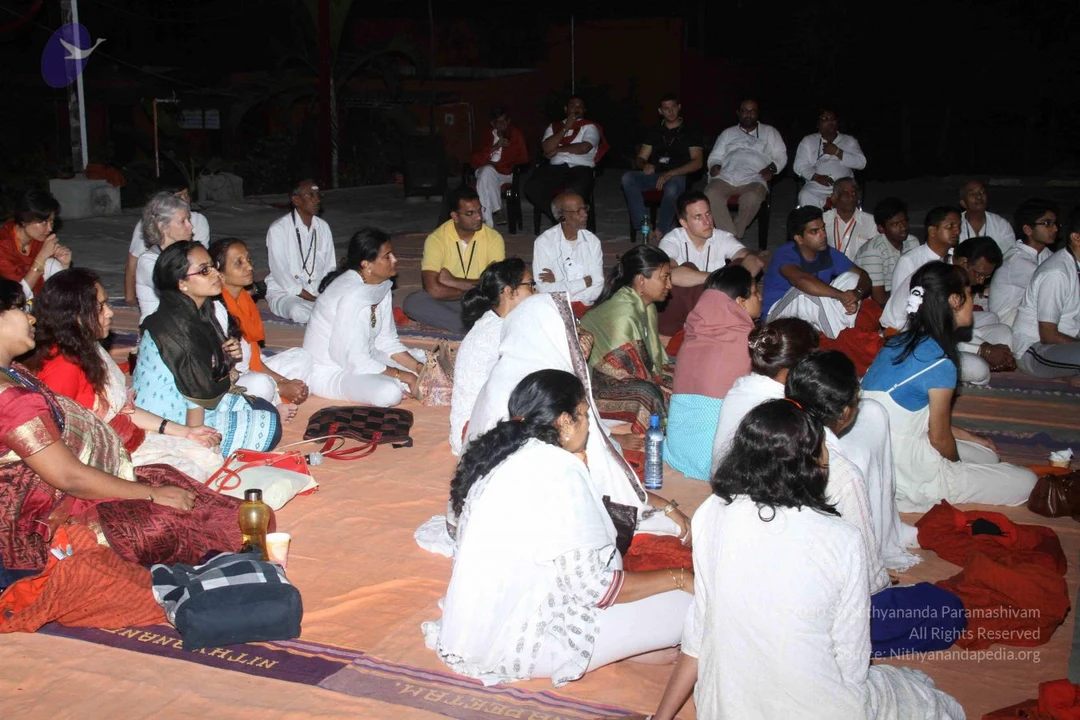
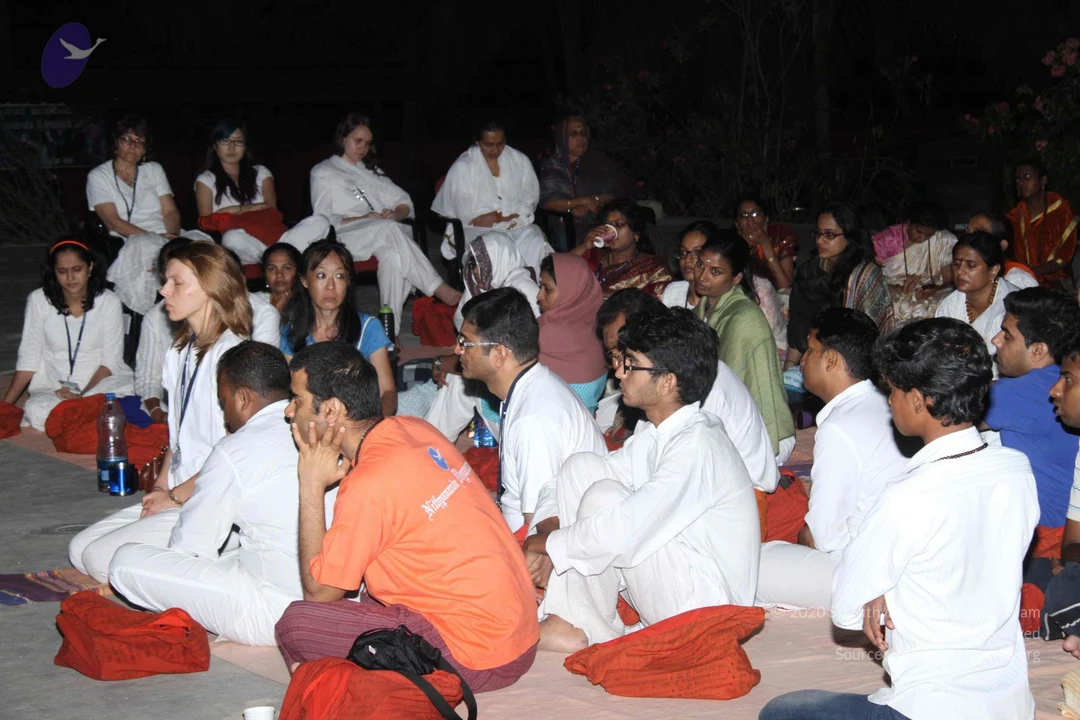
Today Swamiji spoke about the Deeper impacts of Enriching. There should not be any restriction in our responsibility. We should be responsible for the whole world; for everything. Enriching is a great asset to face life. Enriching raises the frequency of your whole life. We need to complete with the life negative pattern of believing we live only in the body. The Truth is we live in all human beings and it keeps us in excitement. Expansion in Life energy happens only through enriching; transmitting the highest consciousness to others. This is making people live enlightenment. Every day enrich others to live an Enlightened Life.

Link to Video:

VideoAudio
VideoAudio
VideoAudio

Transcript:

Today I will expand on "The Deeper Impacts of Enriching". I was explaining bringing Integrity into your thinking, Authenticity into your actions, Responsibility into your being.

See, when I say "responsibility into your being" you need to understand, bring Responsibility into your cognition. For example, I gave you one example that day. I wanted to repeat. When you see the headlines in a news channel: "Sixty People Dead, Two Ministers Hurt in a Bomb Blast!" You are just shaken up. Your head is literally put inside the television screen and the moment you read the words "in Iran", you relax. Means, you feel responsible only for India. In your cognition you feel responsible only for India. That is why the moment you saw the country "Iran", you just put your head down, 'Okay, that is usual, leave it. Next.' How many of you have experienced this in some form? Yes, that's all.

See, if you are from America, when there is a scrolling: "Developing Story: 120 People Dead in Terrorist Attack," you just wake up, your head is completely on the television set; you just read one next line "in India, Mumbai", and you drop your , because you feel you are responsible only for America.

Please understand, change your cognition. You are a human being; you are responsible for the whole world. Naturally, in the place where you are, if there is some terrorist attack or problem, you are going to run immediately, help the people, save yourself and save others, no doub, but your cognition itself should not be restricted to the place you live. Please listen, your cognition itself should not be restricted to the place you live. Please understand, your cognition should be responsible for everything. You should cognize you are responsible for everything. Feeling that you are responsible for everything should be your cognition. This is what I call "bringing Responsibility into your cognition".

People with zero cognition, they don't take cognisance of anything happening around them. There are some people, even if you see them it is wrong, because you may catch their cognition as a standard. There are some people, even if you see it is wrong, it is inauspicious. People with a very low level of cognition, even if you see them it is wrong. Please understand, even if you see them it is wrong.

Bring right cognition into your being. Take cognisance of everything happening around you. Responsibility means, having higher cognition in your being.

The fourth: Enriching. Please understand, bring Enriching to your whole life. Even when you breathe out, remember you are releasing oxygen for the sake of trees. Everything should be with the motive of Enriching. No action, no thinking, no feeling should be done by you which is not Enriching. Every action, every thinking and every feeling should be with a very established cognition of Enriching. Please understand, I am making a statement: "Established Cognition". Means, sometimes you start creating your own fantasy. You think people enjoy your service but actually they are tortured by you. That is why I am using the word "established cognition of Enriching".

Sometime people think even stealing others' property you teach lesson to them. When you steal they will have to start working for more. No, really, even thieves think they enrich others. That is why I am using the word "established cognition of Enriching". That Enriching should be accepted by an established cognition of people, not that you can simply tell you will steal somebody's properties, 'You see, I am enriching him by stealing his property, because when you steal, he has to live simple life and I am teaching him to live a simple life and that is the way I am enriching him." No. You can't build your own cognition and enrich people. The Enriching has to be based on established cognition of Enriching.

Just look at your life. Whenever you feel good about you, whenever you feel powerful, wherever you feel powerful, if you scan, it will always be because you are Enriching at that moment. Look. When you feel you are loving, you are loved, when you feel you are powerful, when you feel people are supporting you or you supporting others, whenever, whenever you feel powerful, whenever you feel energetic, alive, look, look into your life. Please understand, look into your life.

Photos Of The Day:

paduka-puja
leela-alankar-aarti

nithya-satsang

sarva-darshan

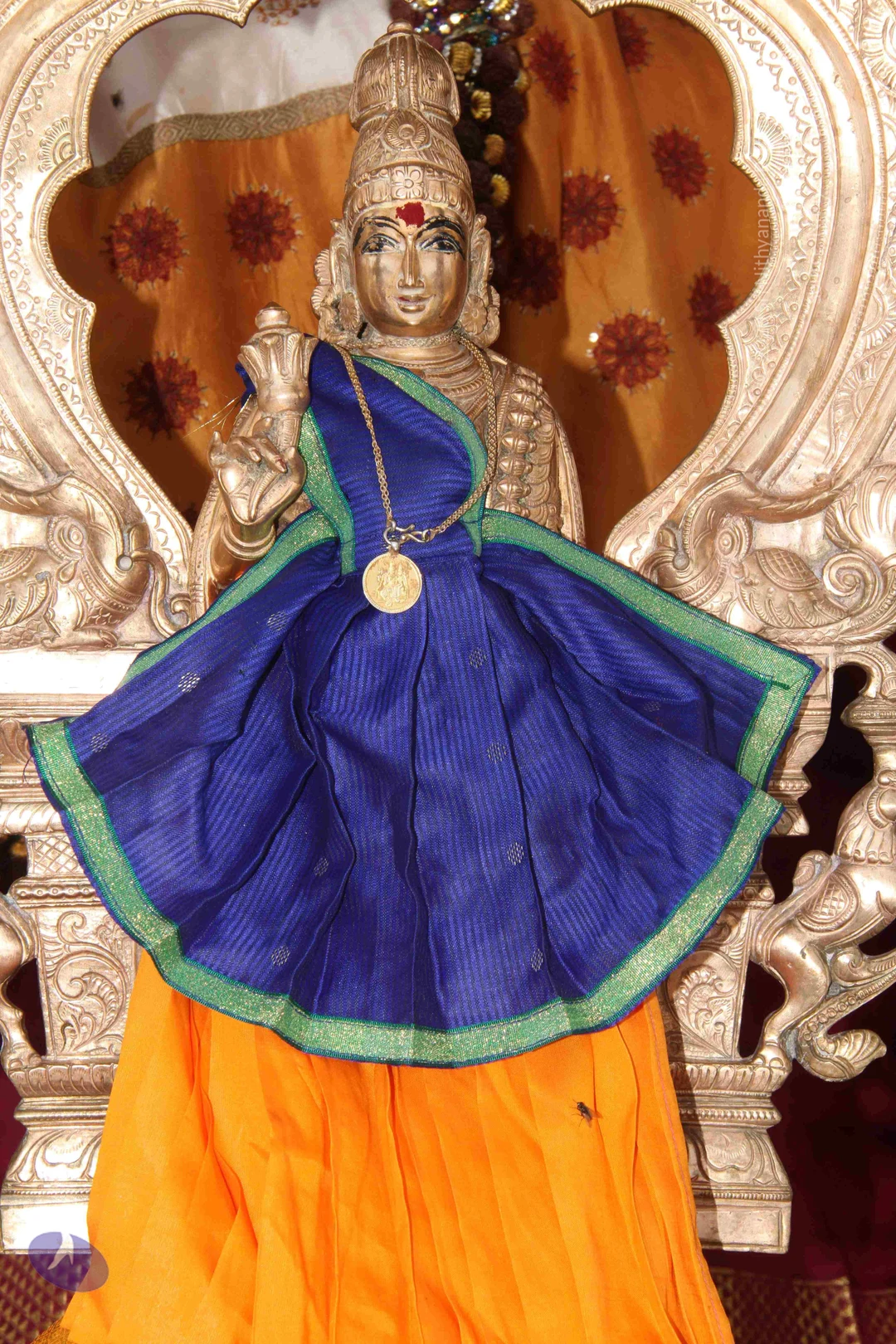
HDH-deities-alankar

final-blessings

Inner Awakening-day6-banyan tree session

Inner Awakening-day6-darshan

Inner Awakening-day6-session

Inner Awakening-day6-Dinner and temple session

Inner Awakening-day6-food

goshala

temple

temple-abhishekam

Photos from this day

View all 215 photos

paduka-puja
39 photosSource gallery
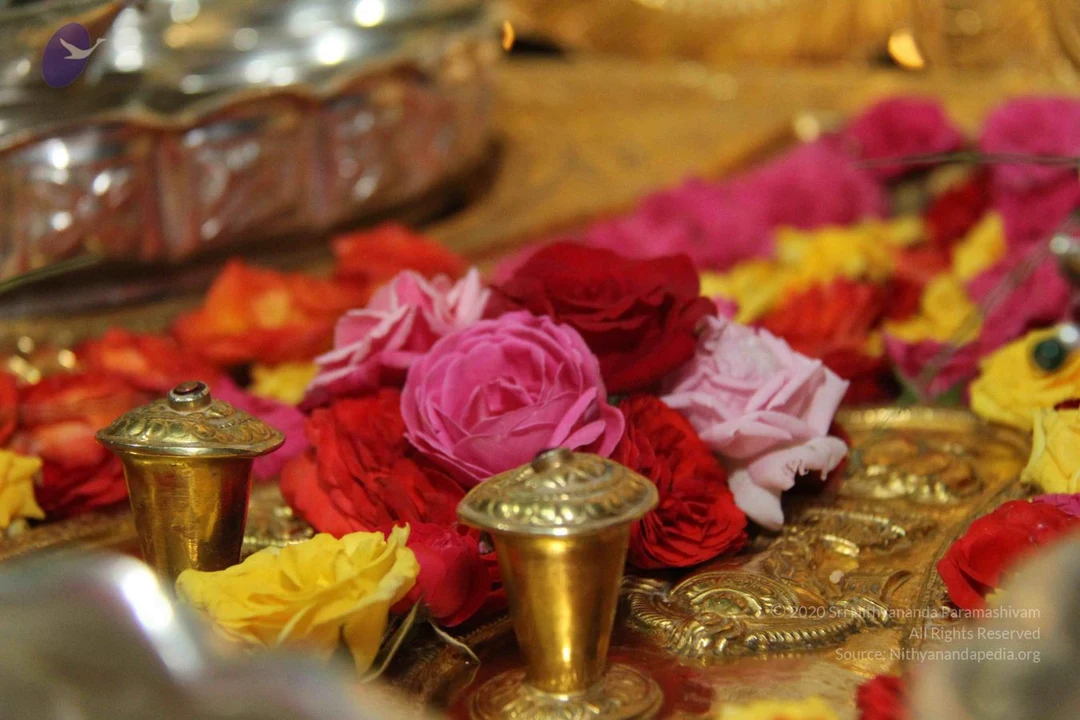
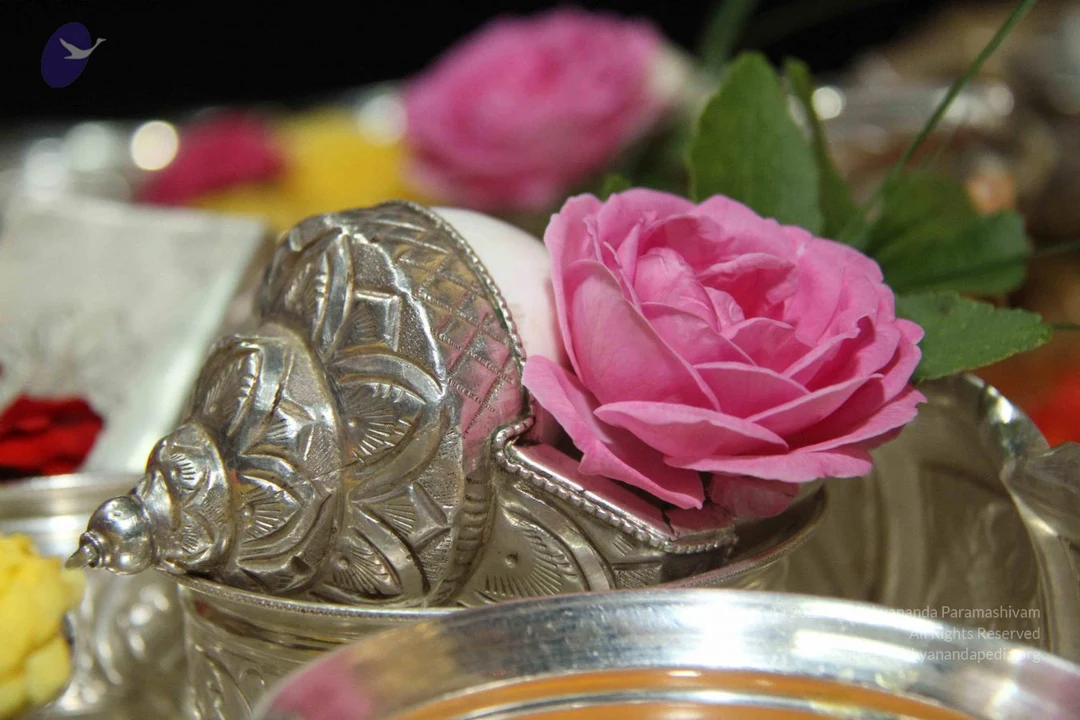
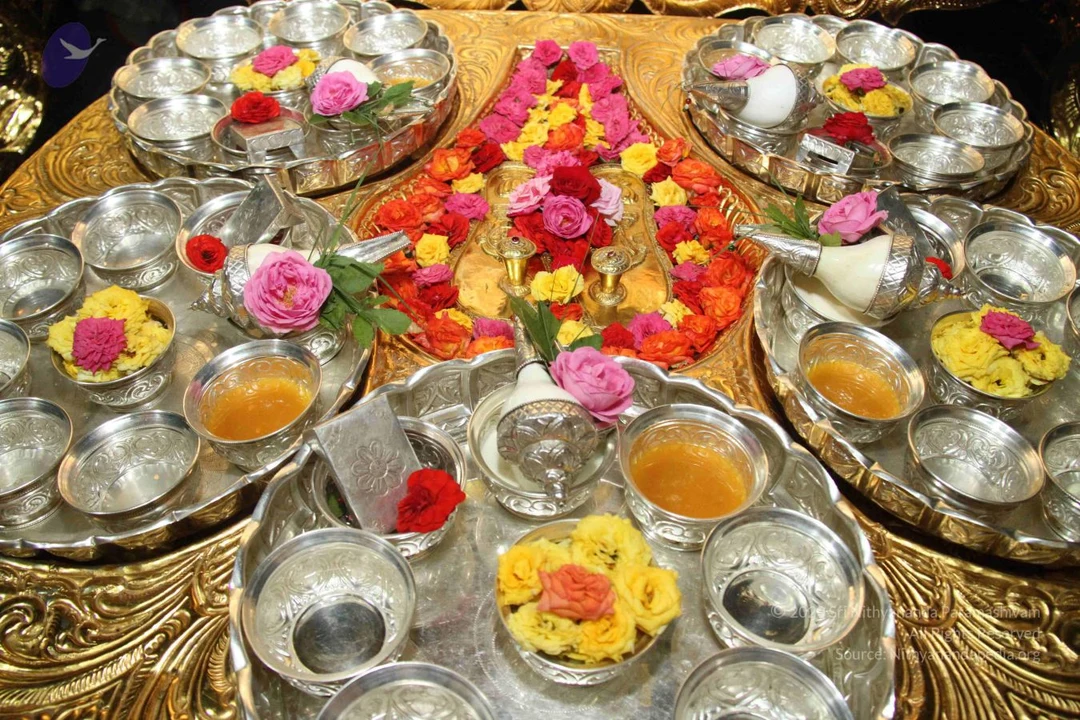
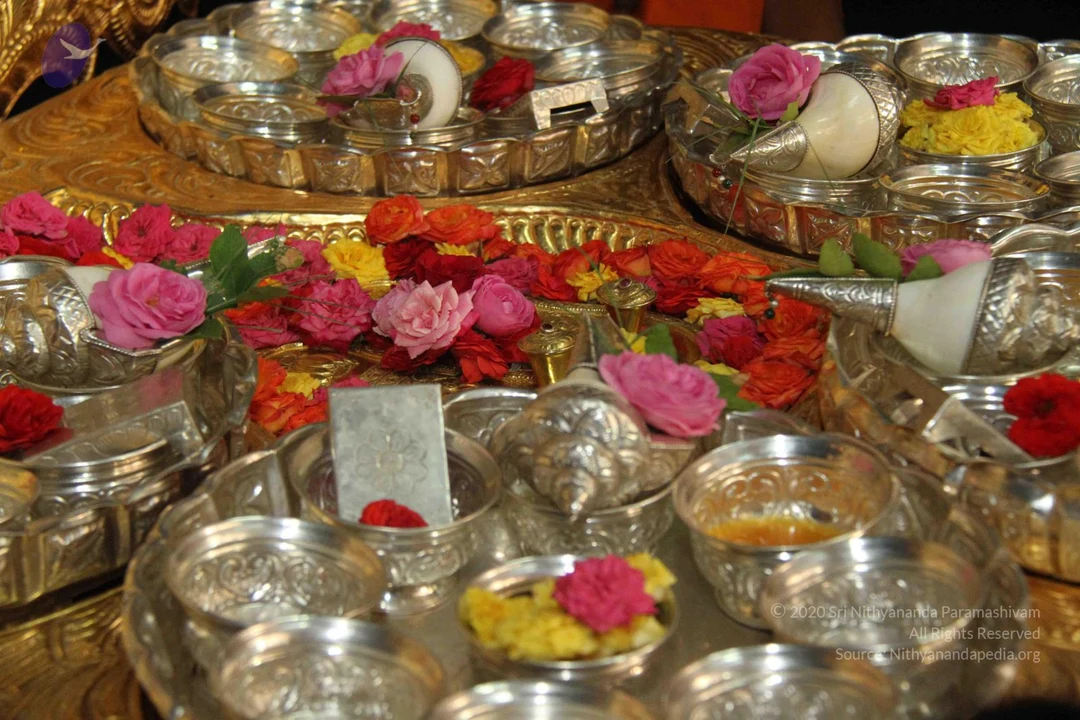
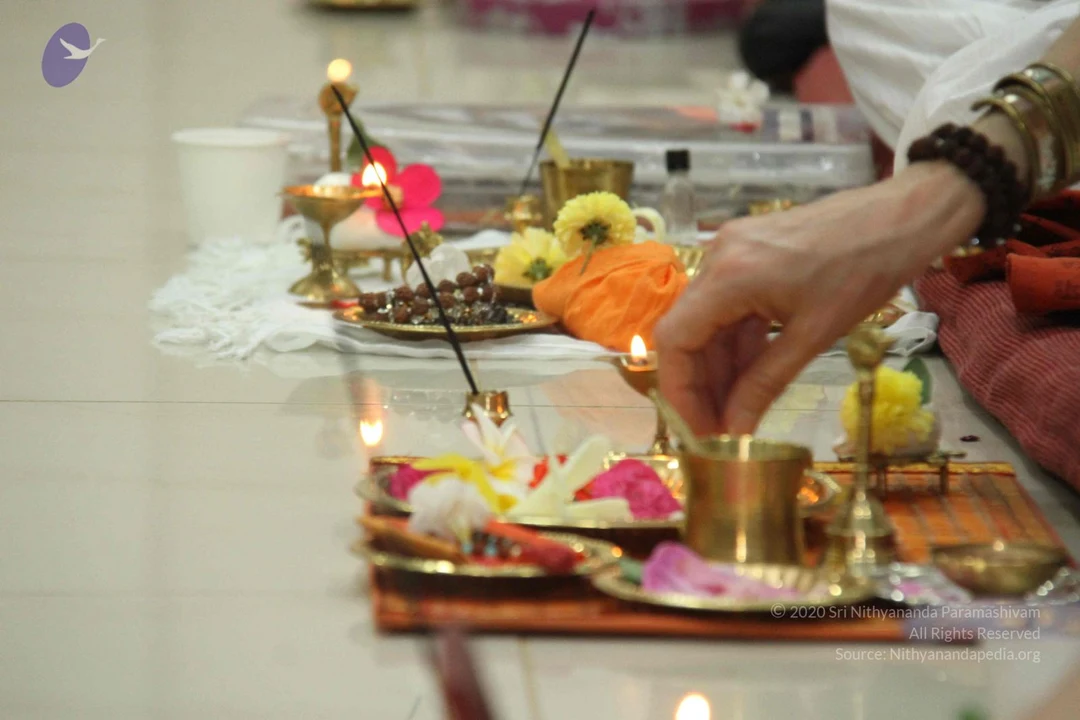
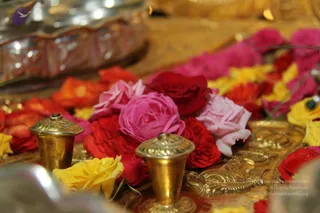
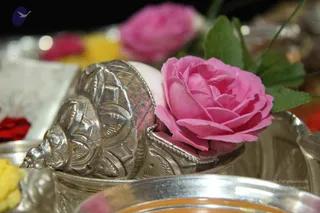
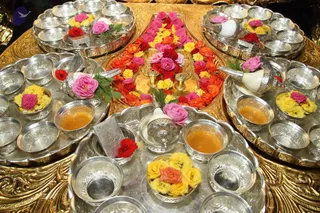
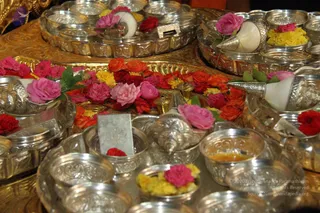
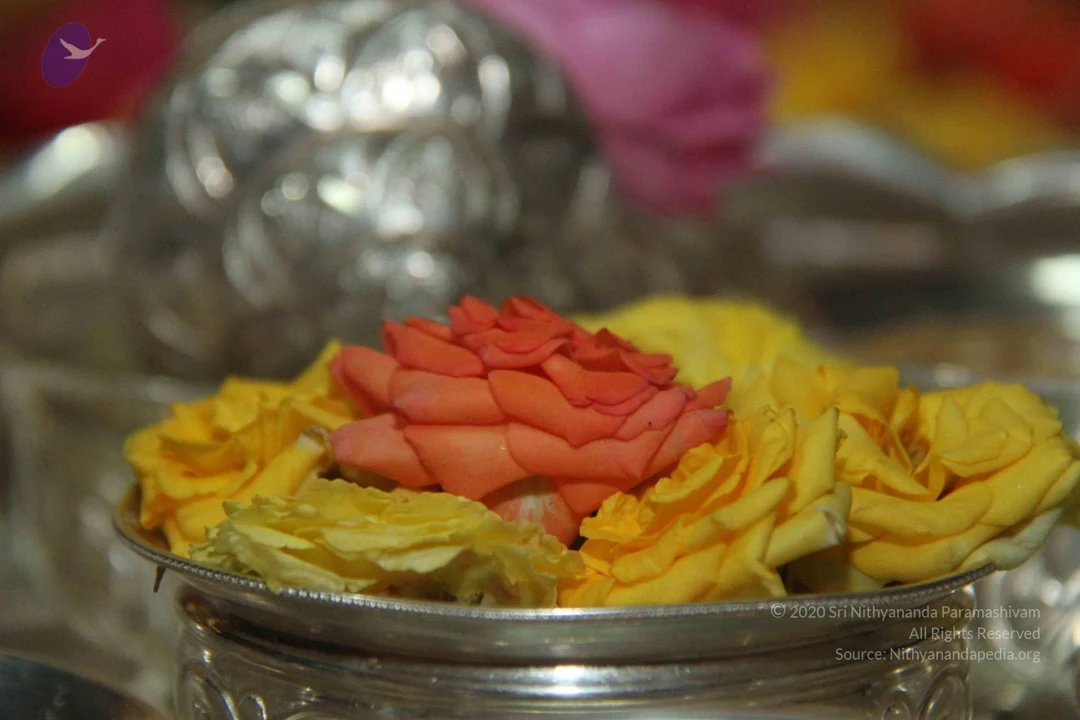
Close-up photograph of a polished silver bowl filled with fresh roses, with one prominent coral-orange rose at the centre surrounded by yellow roses. The blurred background shows silver ritual vessels and additional pink and yellow petals. No people are visible in the frame.Close-up photograph of a heap of fresh roses in red, pink and yellow arranged on a golden tray. Two small gold cylindrical vessels with domed lids, one with a small red gemstone on its knob, sit in the foreground and blurred background. No people are visible. The flowers appear to be offerings in a devotional setting.Close-up photograph of a gold-toned ritual tray scattered with rose petals and whole roses in red, pink, magenta, yellow and orange. Two small brass cup-shaped vessels with domed lids sit among the flowers on an ornately engraved golden plate. Blurred metallic vessels and gilded surfaces fill the background. No people are visible.Close-up photograph of an ornate silver bowl with embossed floral and geometric carving, holding a pink rose and a white item, set on a silver tray among other flowers including yellow blooms and red petals. Soft background blur with pink and yellow flowers. No people visible.Top-down view of an ornate ritual arrangement on a gold-embossed tray. Silver bowls and cups hold yellow and orange marigold-like petals, pink and red roses, and amber-colored liquid. Silver spoons and small silver vessels sit among the flowers, and a central gold lamp or stand is surrounded by red, orange, pink and yellow petals arranged in a long oval. No people are visible. This appears to be a temple puja or abhishekam offering setup with flowers and vessels.Close view of a ritual offering arrangement on a gold-coloured surface. Silver bowls and trays hold rose petals in pink, red and orange, along with yellow marigold petals, a small silver conch-shaped vessel, a silver cup and a silver spouted pot. A white conch or pot-shaped item and a silver incense or lamp stand appear among the flowers. No people are visible; the scene suggests puja or abhishekam preparations.
leela-alankar-aarti

9 photosSource gallery
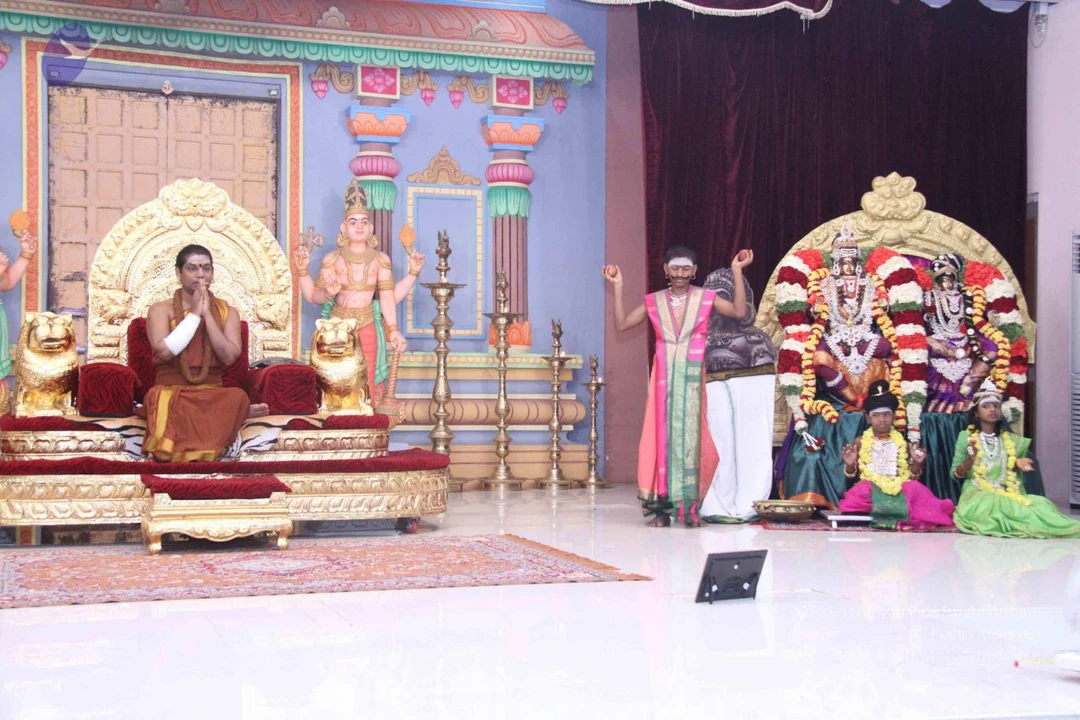
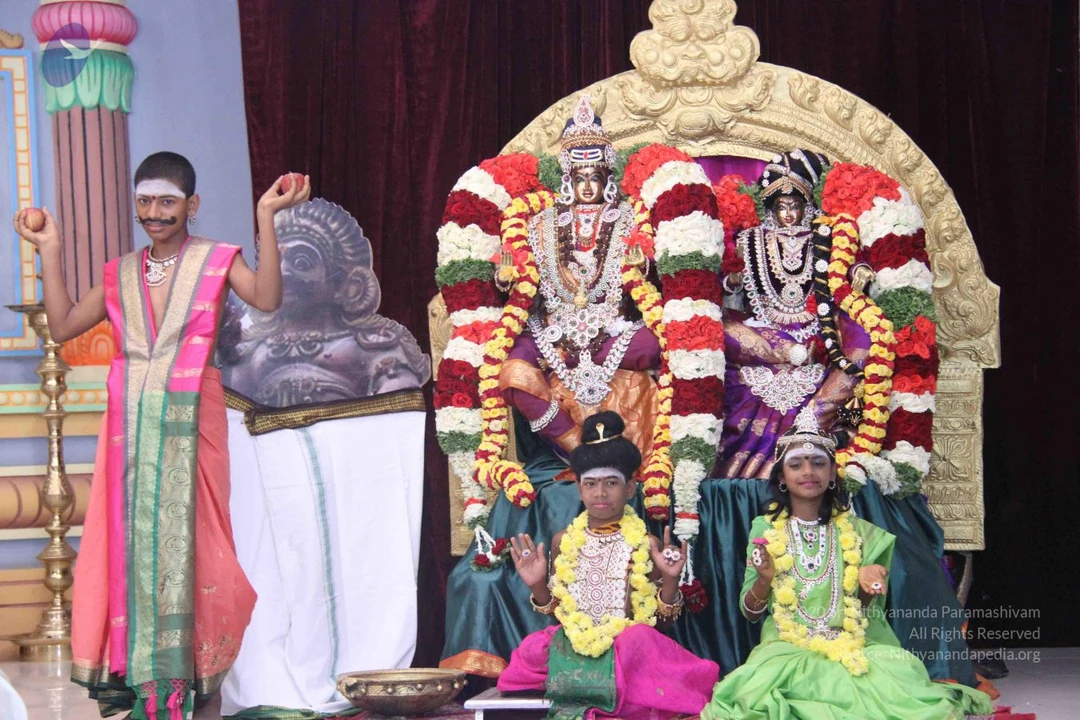
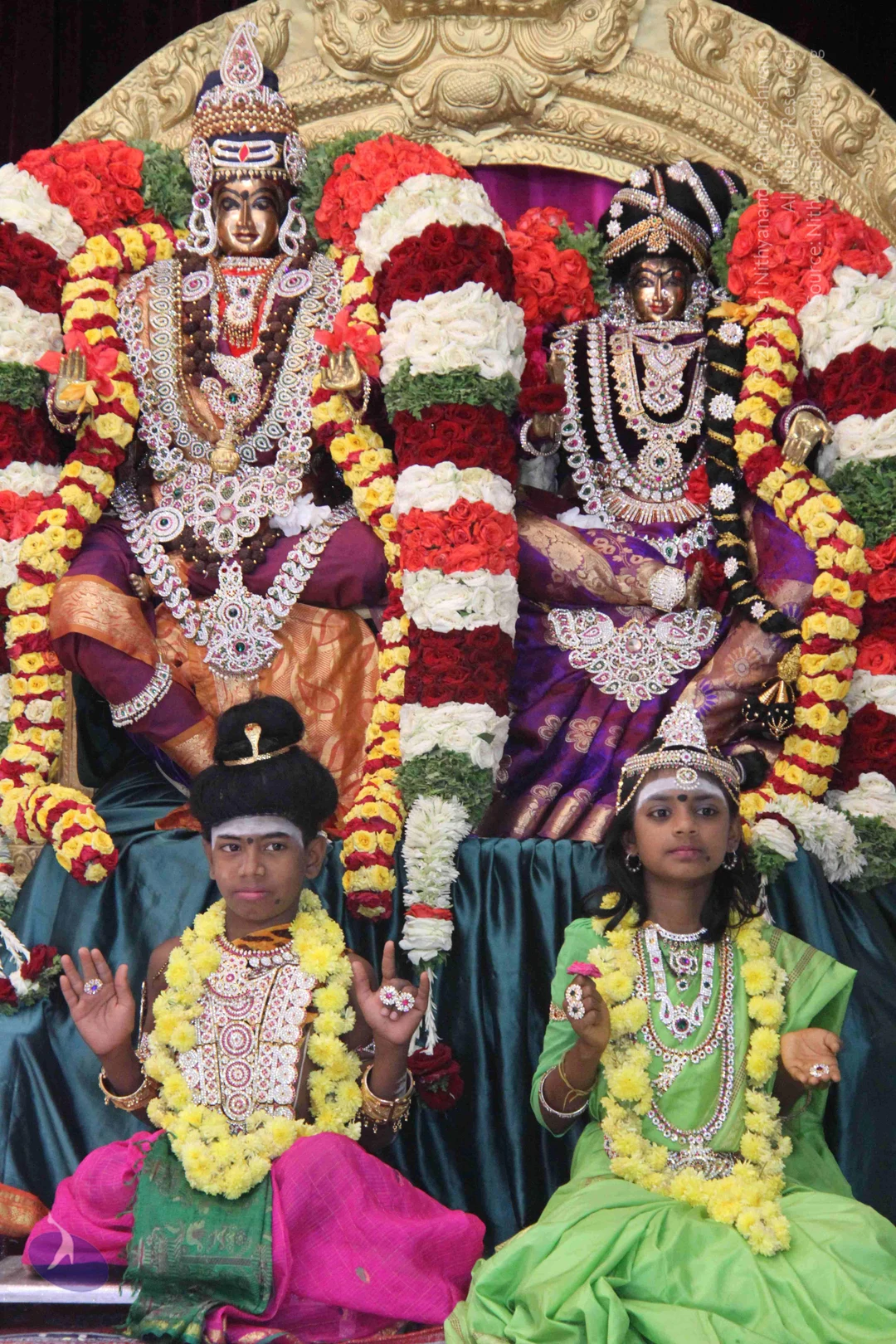
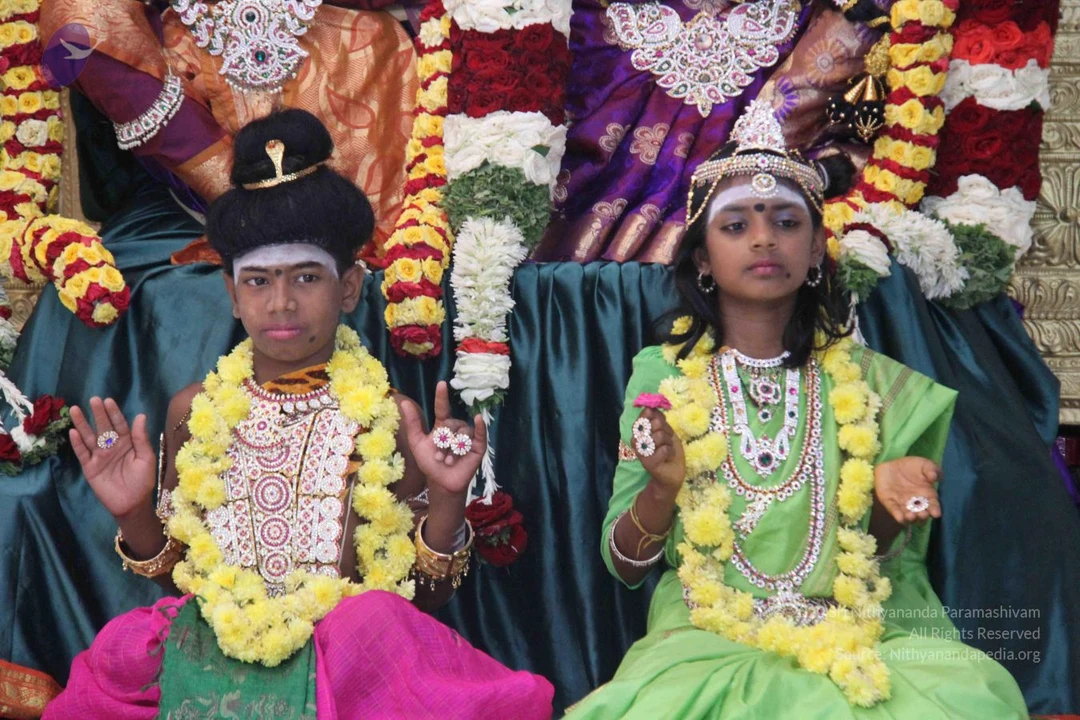
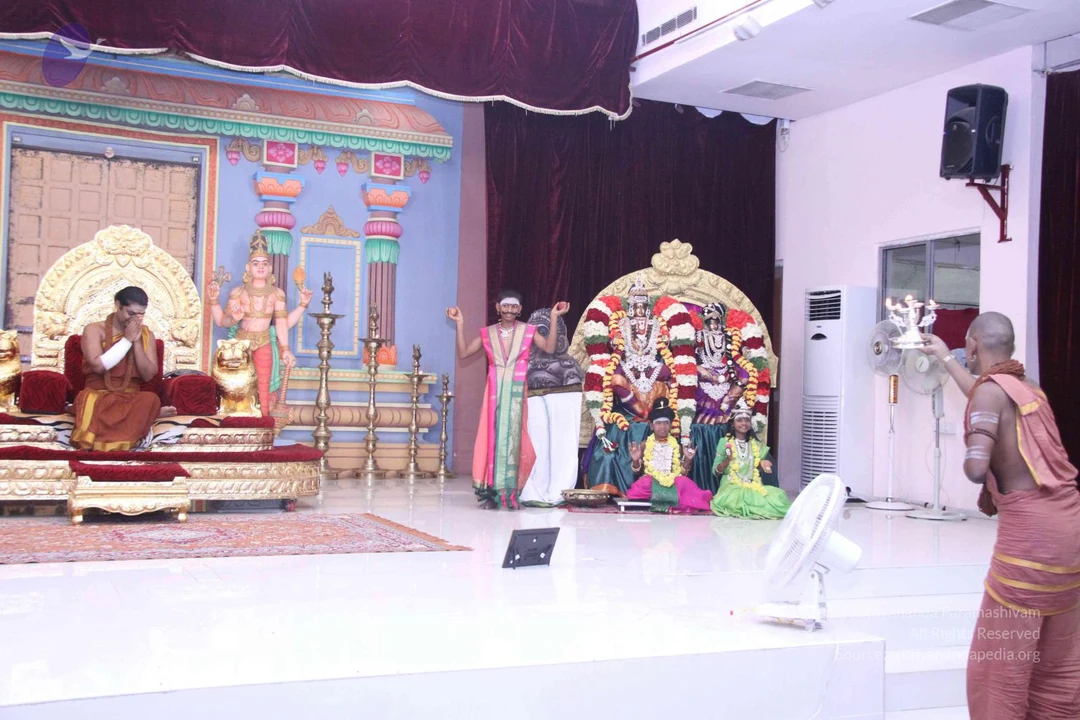
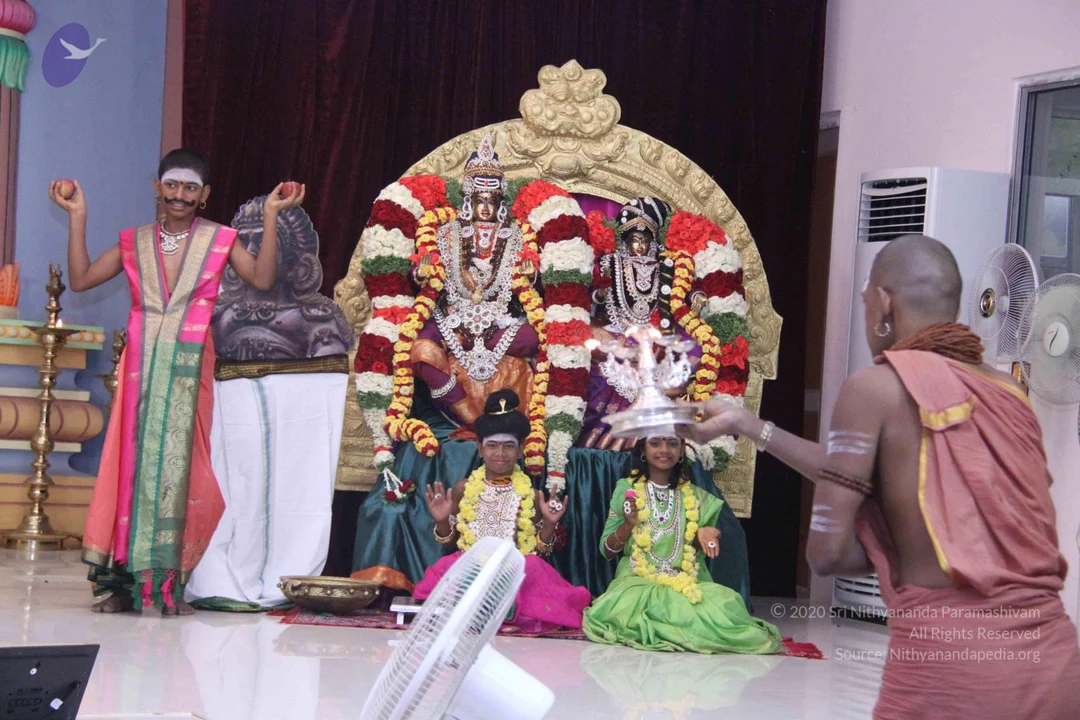
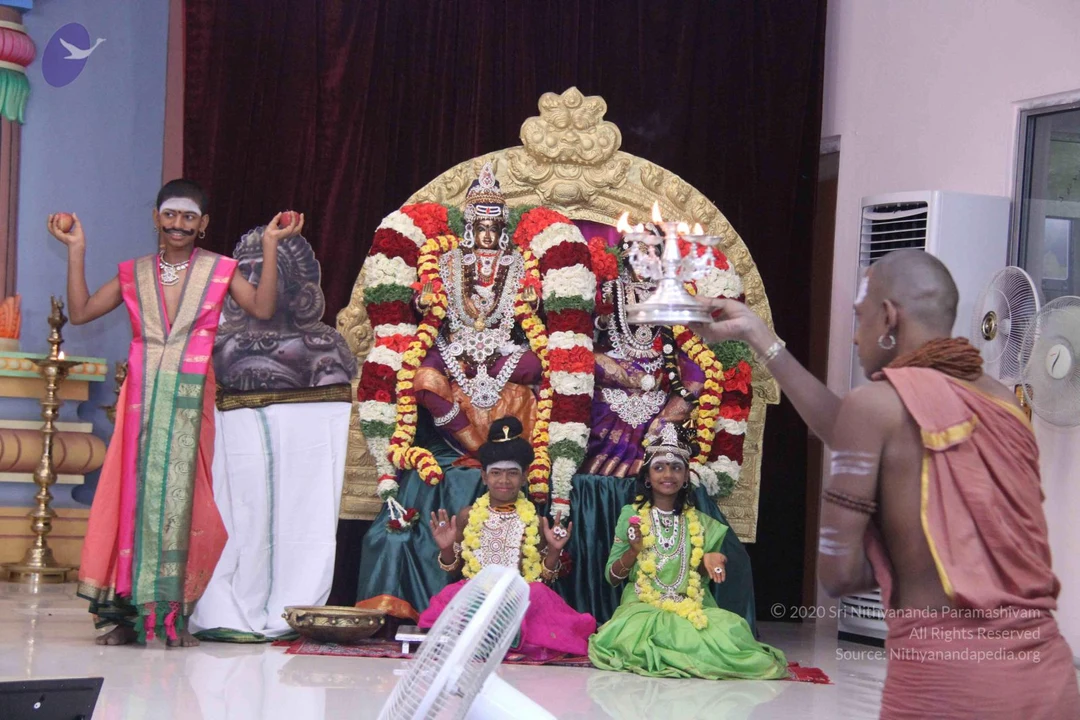
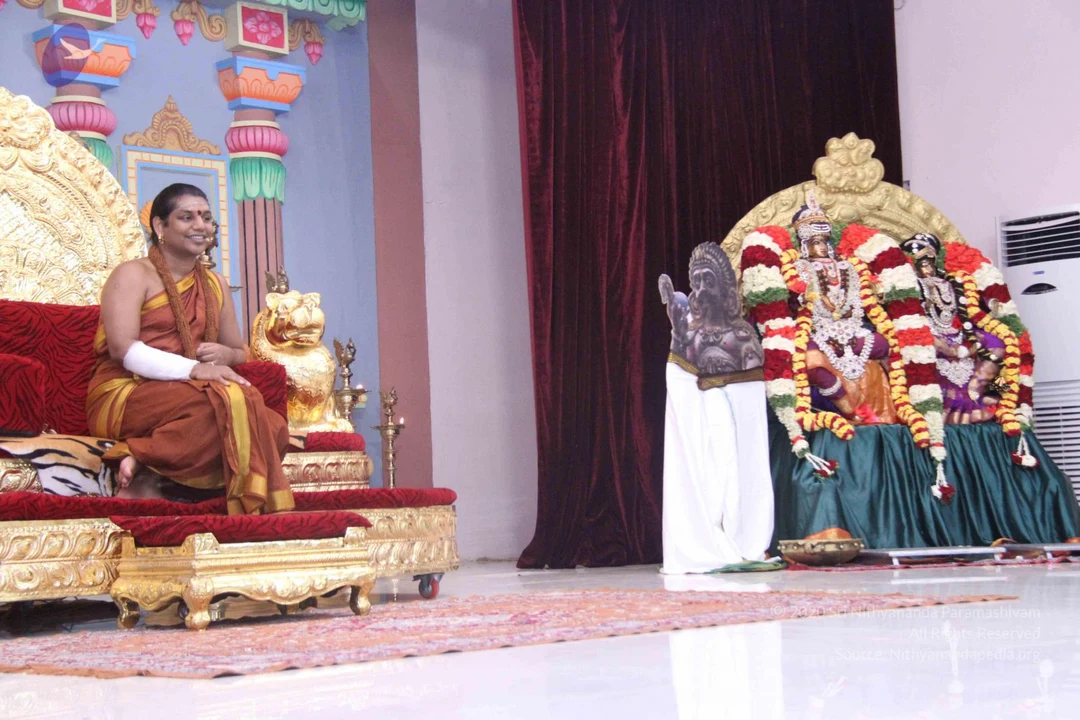
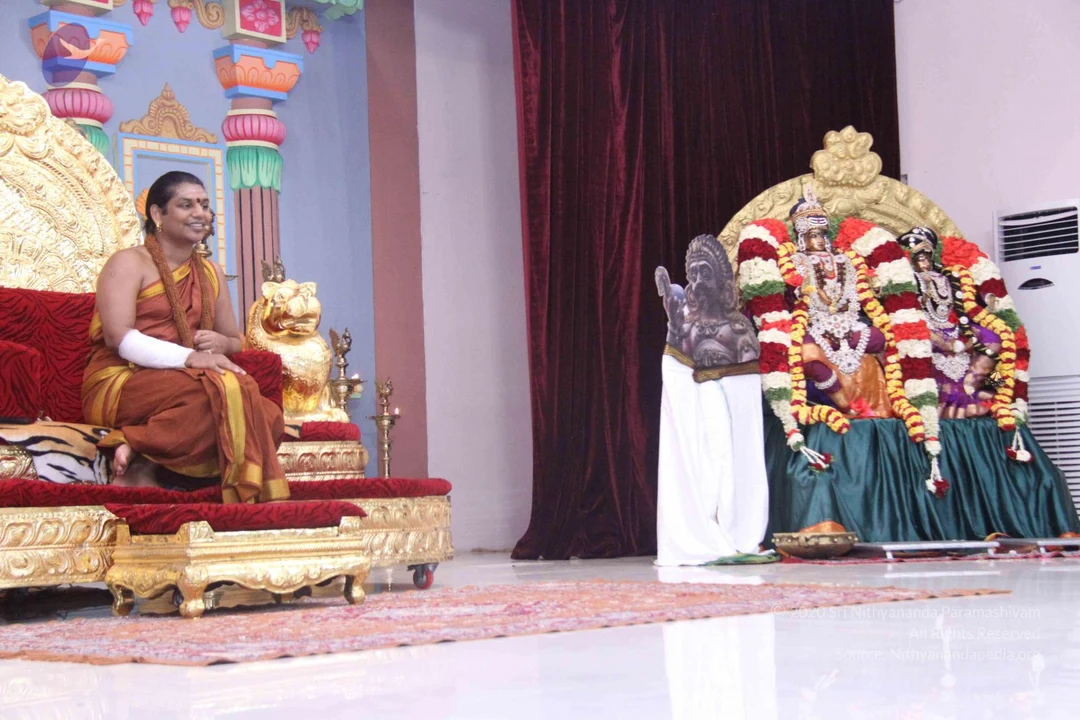
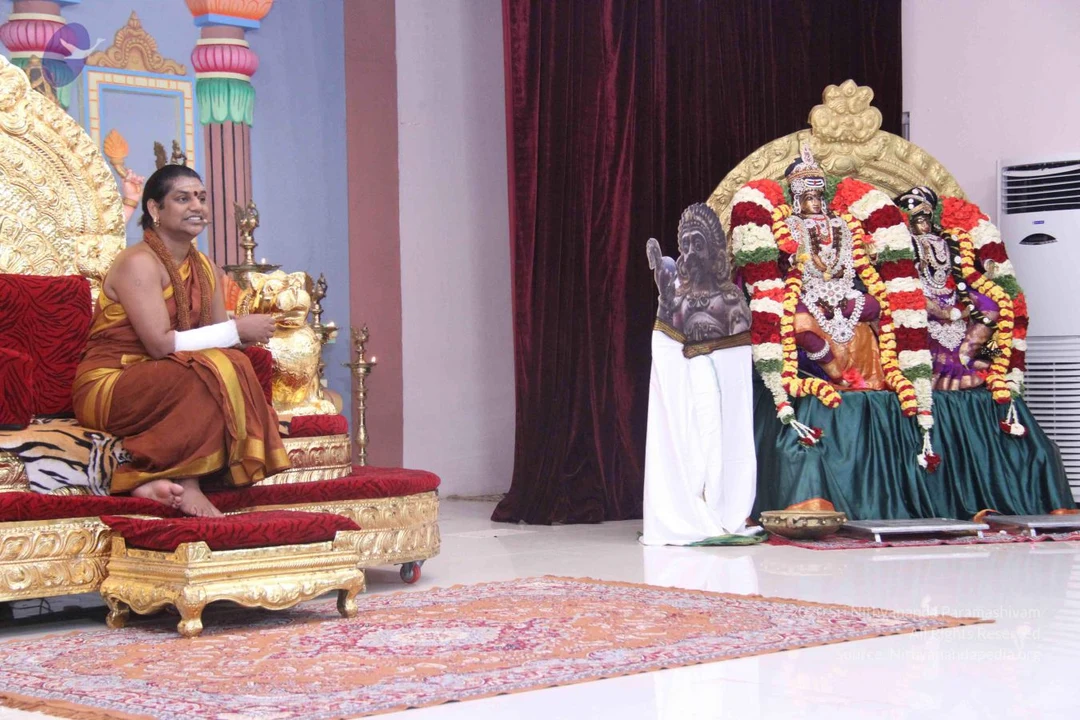
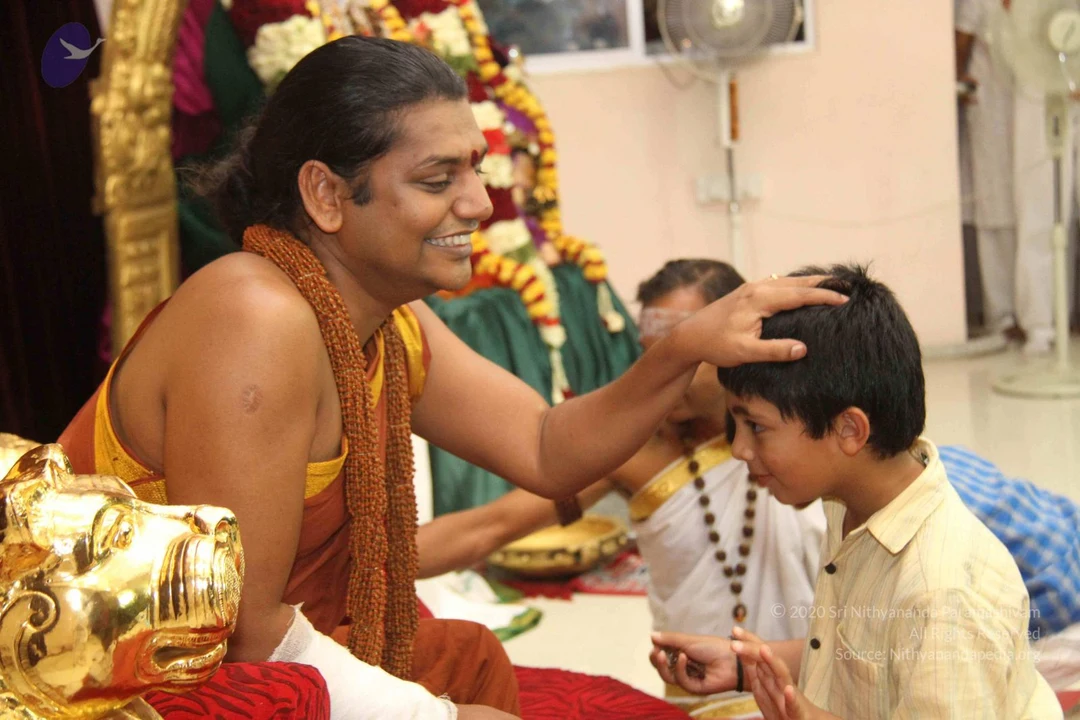
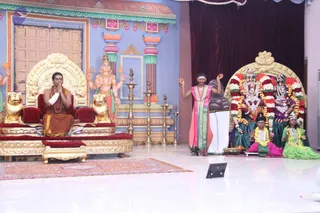
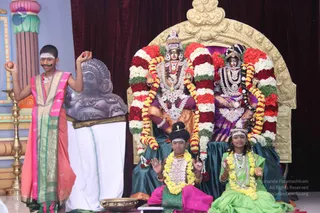
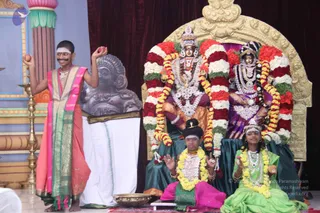
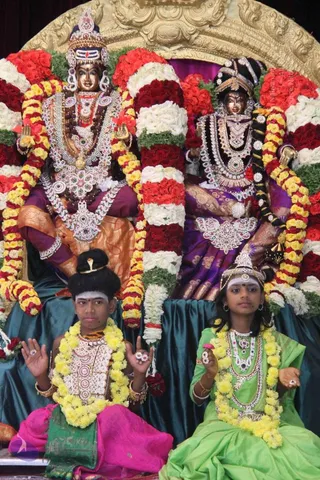
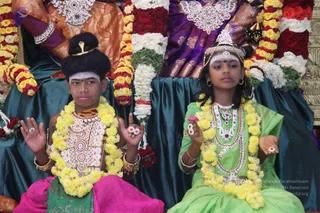
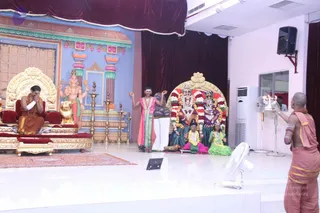
A temple-style hall with painted blue and pink walls, gold pillars and a red velvet curtain. A man in saffron robes with a white arm bandage sits on a gold throne flanked by golden lion figures, hands joined in greeting. Behind him stands a golden multi-armed deity murti. To the right, a standing man in white dhoti with a pink-and-green shawl raises his hands, while two children in green and pink saris sit before a garlanded arch holding a deity murti and a goddess murti. Brass oil lamps stand on the floor. The seated saffron-robed man appears to be a person, based on the saffron robes and central throne placement.A staged tableau on a temple-style stage before a gold arch draped with dark red curtain. Two large deity murtis, a seated goddess-like figure in lavish gold jewellery and a red-and-white garland sits on a green-draped throne beside a second deity in a purple sari. In front, two children in costume sit cross-legged: a boy in a magenta and pink lower garment with yellow garland raises his hands in a mudra, and a girl in a green and pink dress with white beads and pearl necklace holds a small object. A standing young man in a pink and green silk garment and white dhoti, with white forehead band and moustache, lifts two red fruits. Brass lamps and a bowl sit at the front; a painted backdrop shows a carved figure.A stage performance in a temple-style setting. Two large deity murtis, one with a crown and silver ornaments and one in a purple sari, are seated on a gold arched throne decorated with red and white flower garlands. In front, two children sit on a low platform: a boy in a pink and green outfit with a flower garland and a girl in a green dress with a white floral garland, both holding their hands in mudras. A performer standing at left wears a pink and gold silk garment, has a tilak on his forehead, and holds two red fruits aloft. A brass lamp stand and a brass bowl sit on the floor, and a large painted Ganesha-style backdrop stands behind the performer.Two gilded deity murti figures sit on a teal draped throne beneath a golden arch, heavily adorned with red and white rose garlands and yellow marigold strands. The figure on the left wears a crown, tilak and a rudraksha-bead mala with jewelled ornaments and a patterned orange-and-maroon garment. The figure on the right wears a crown and an ornate purple sari with silver jewellery. In front, two young children sit on the throne in ceremonial dress: a boy in a pink dhoti with a yellow marigold garland and a girl in a green silk outfit with a yellow garland, both with white tilak on their foreheads and raised hands in mudra.Two children are seated side by side on a dark teal draped platform in front of a decorated deity backdrop with garlands of yellow marigolds and red roses. The child on the left wears a pink and green dhoti-style garment, a white-and-gold embroidered bodice, layered gold bangles and a marigold garland, with a tall bun and white forehead markings. The child on the right wears a bright green sari with a gold-bordered pattern, a crown with a jewelled forehead ornament, layered jewelled necklaces and a marigold garland, and holds a small flower-like object. Both raise their hands in gesture. Background shows an ornate purple-and-gold fabric draped behind a larger figure's jewelled garments.Indoor stage ceremony in a hall with a blue and gold painted backdrop and a maroon curtain. A seated figure in orange-saffron robes sits on an ornate gold-and-red throne at left, hands together near the face, with a white bandage on one wrist. Beside him stands a statue of a multi-armed deity with a trident and a gold lion figure at its base. At centre, a garlanded deity murti with a flower-decorated arch behind it, flanked by two children in pink and green dress with flower garlands seated before it. A standing man in a pink-and-green shawl and white dhoti raises one arm at left of the murti. At right, a bald priest in orange-pink robes with bare upper body holds a lit multi-wick aarti lamp toward the deity. Brass lamps stand on the stage, and a floor fan and an air conditioner sit at the edges.
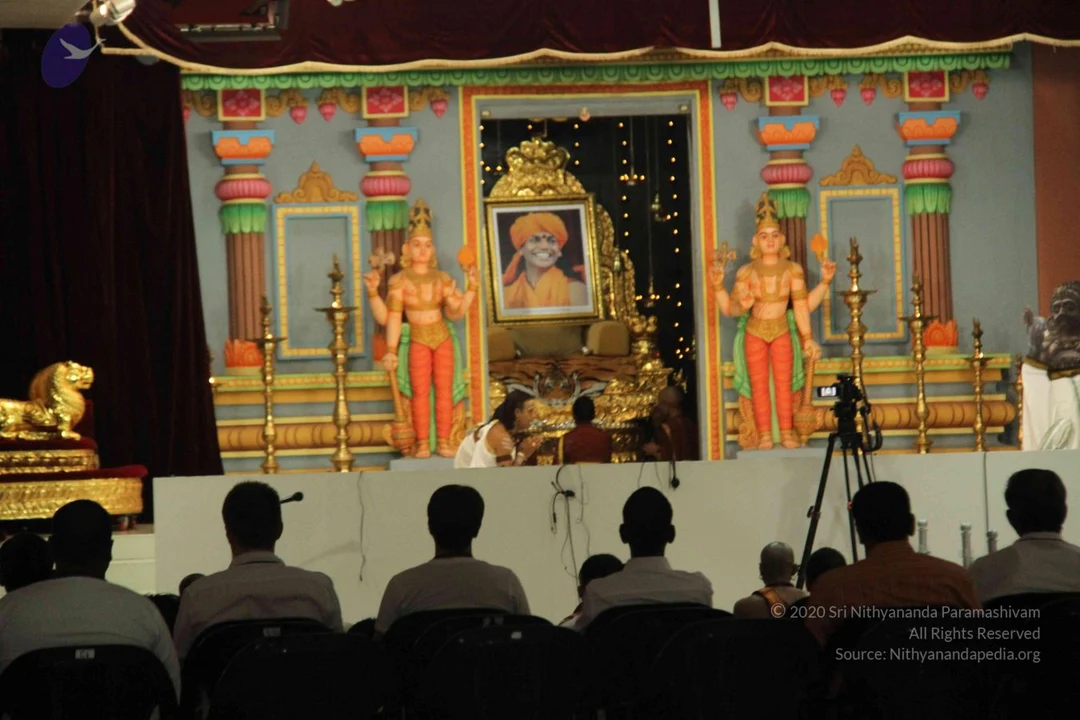
nithya-satsang
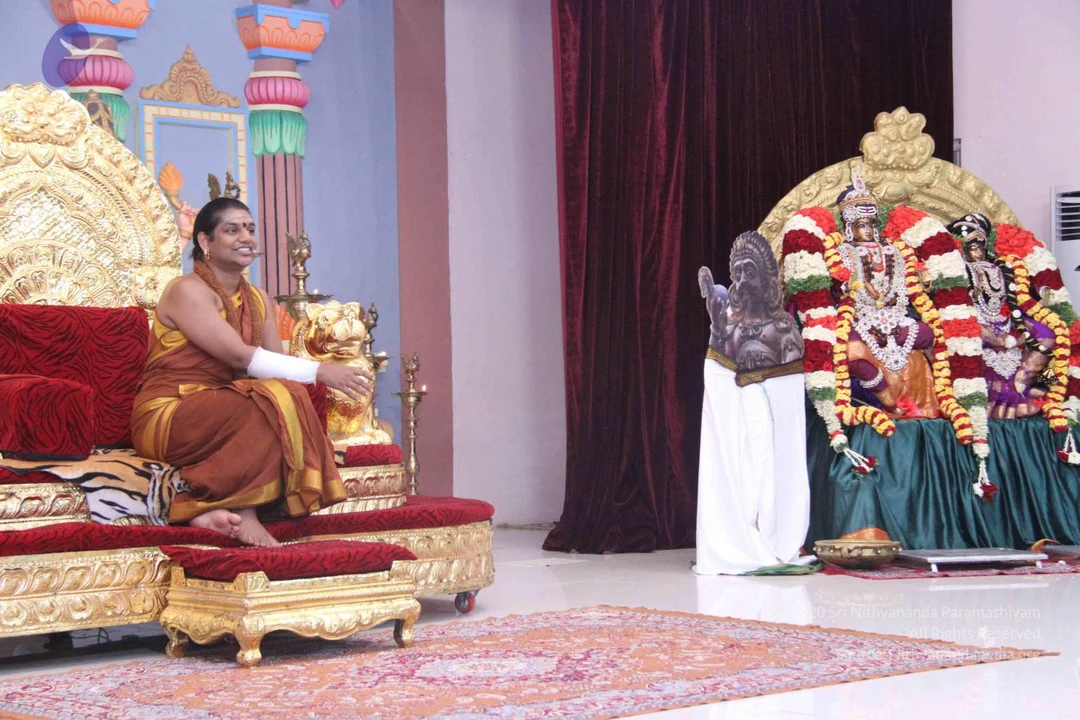
22 photosSource gallery
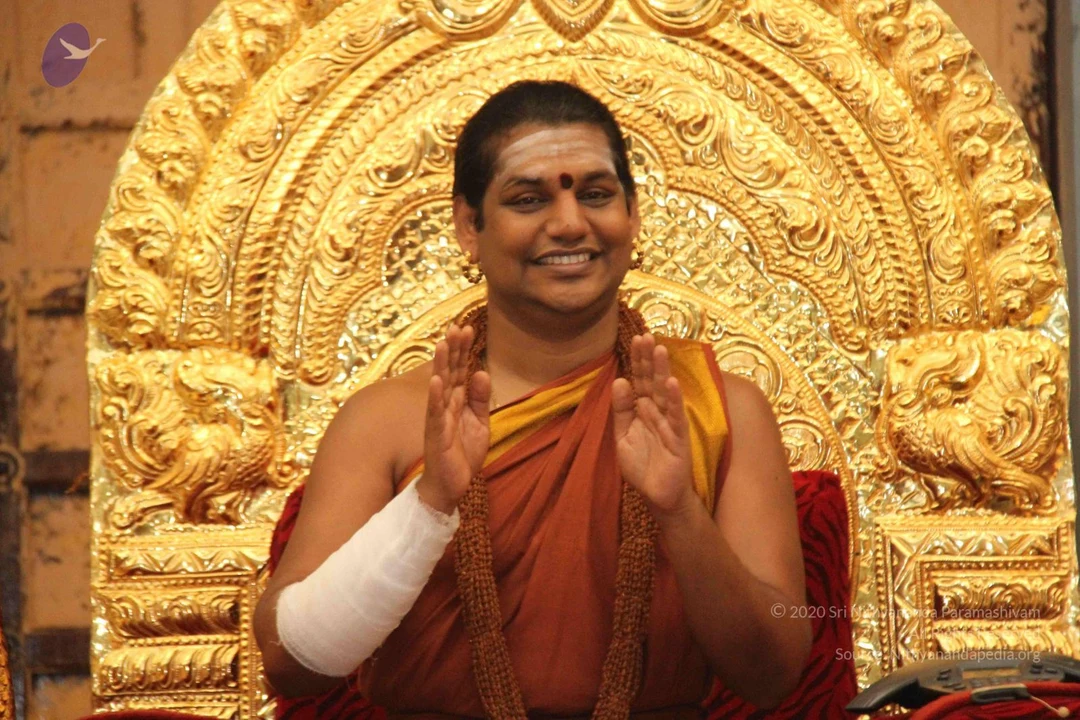
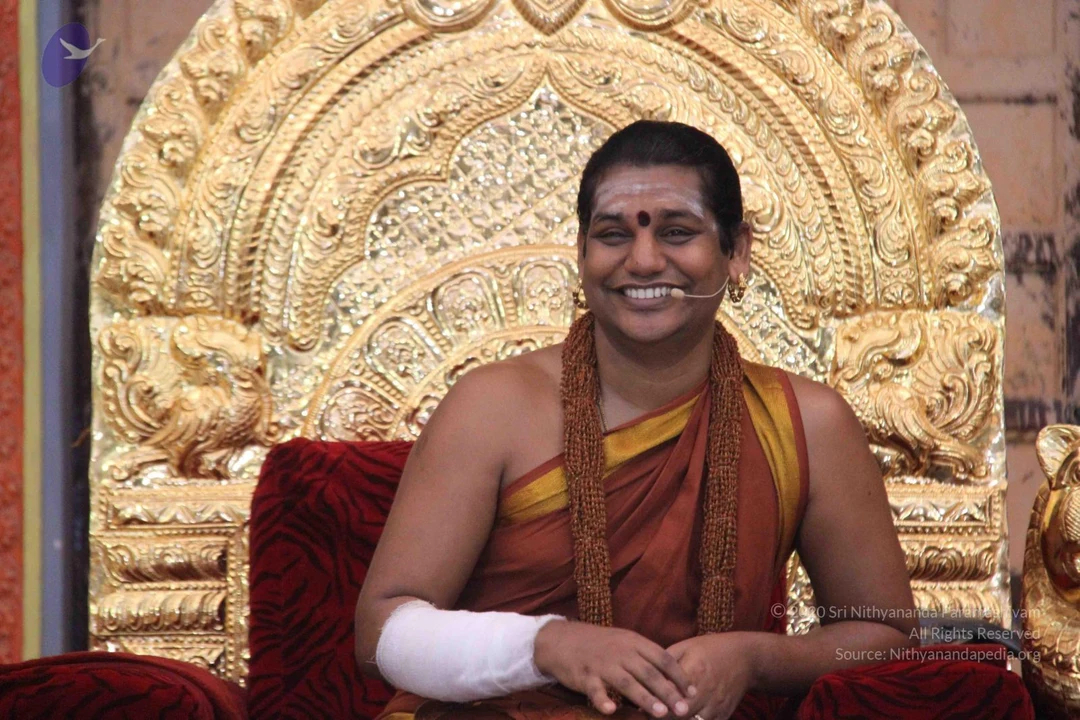
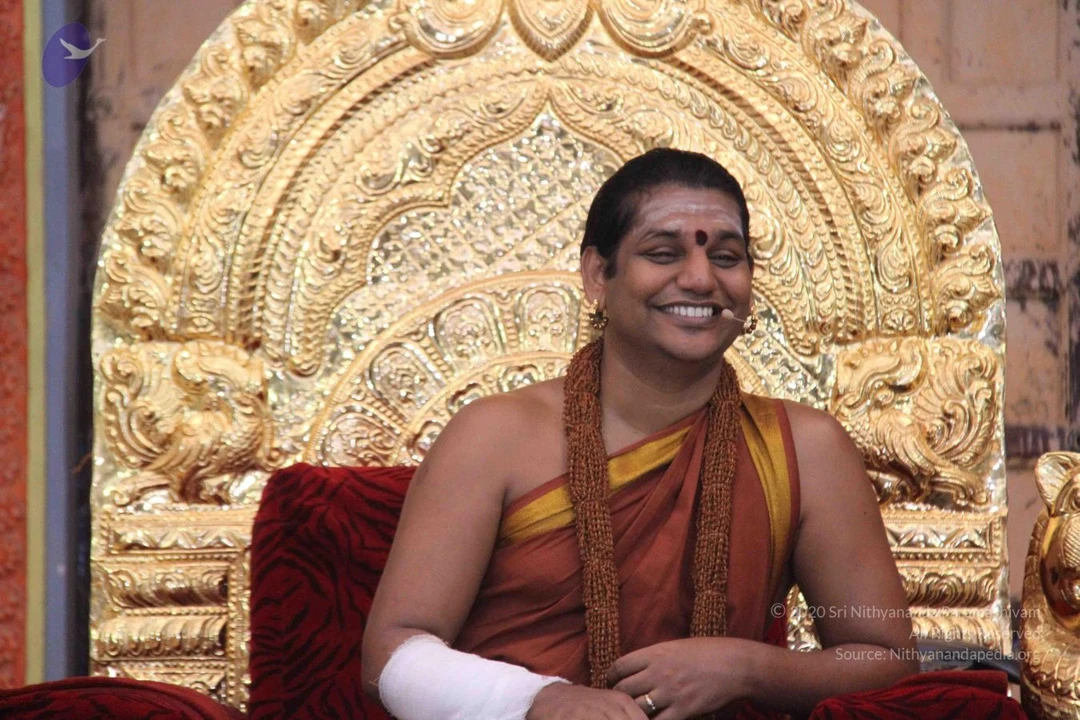
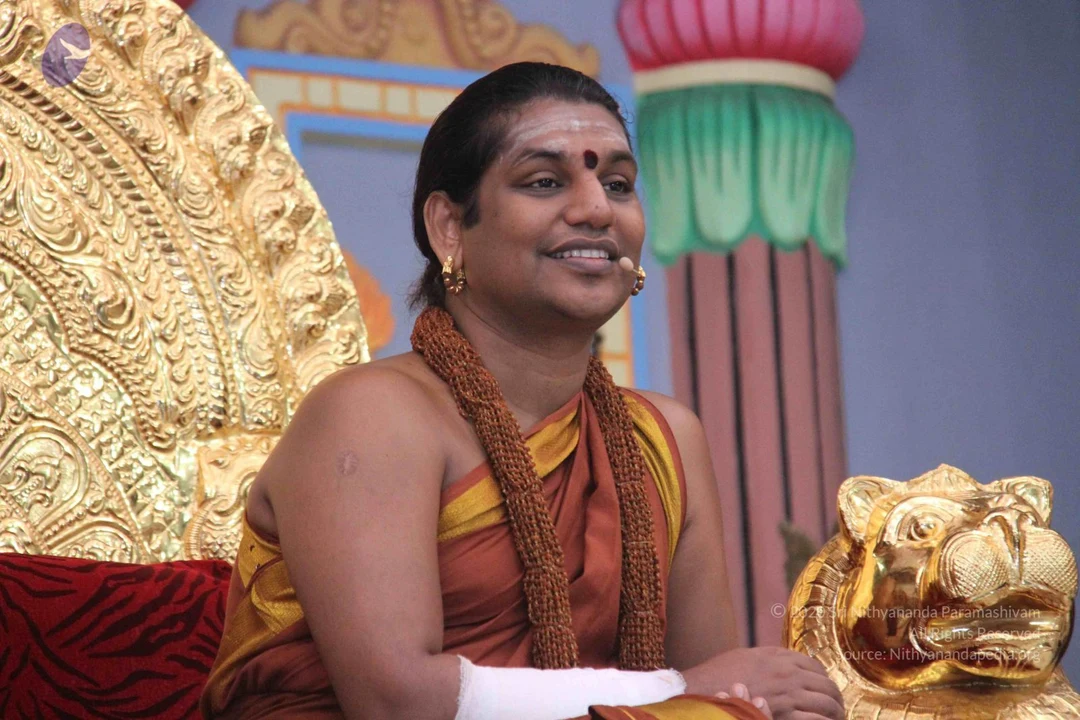
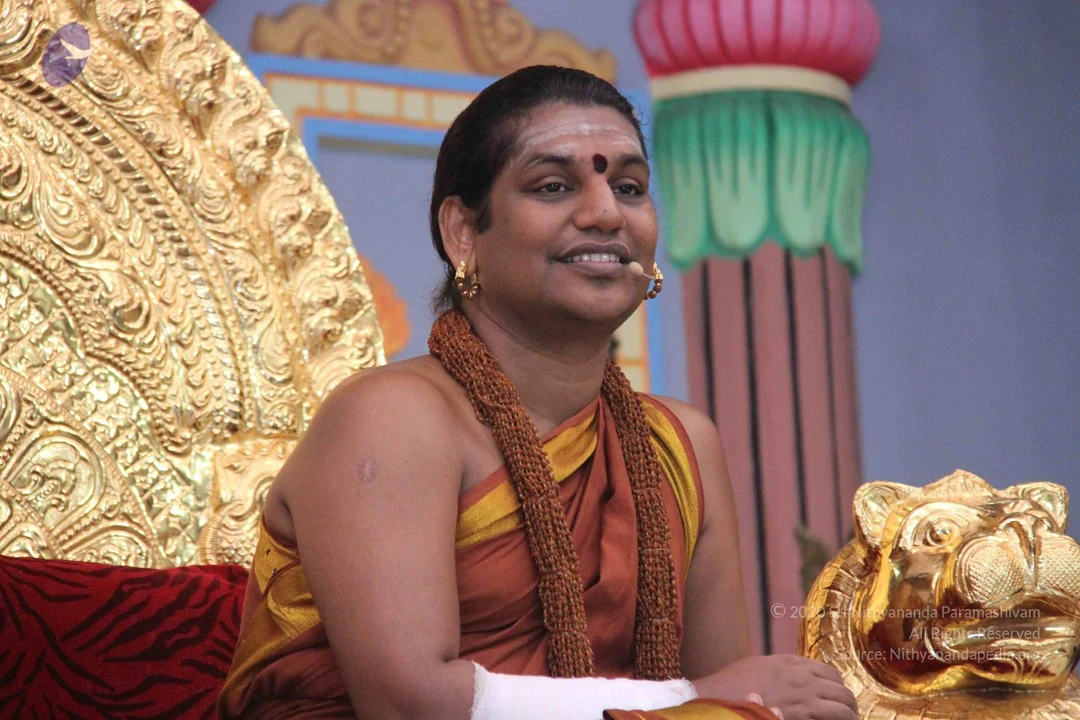
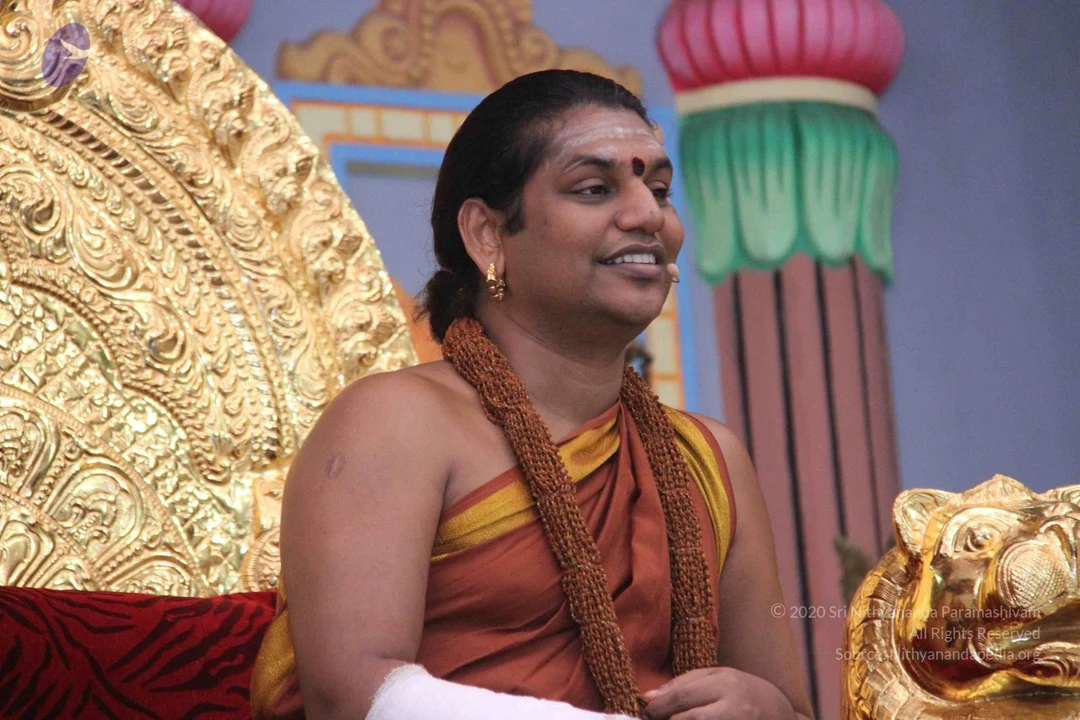
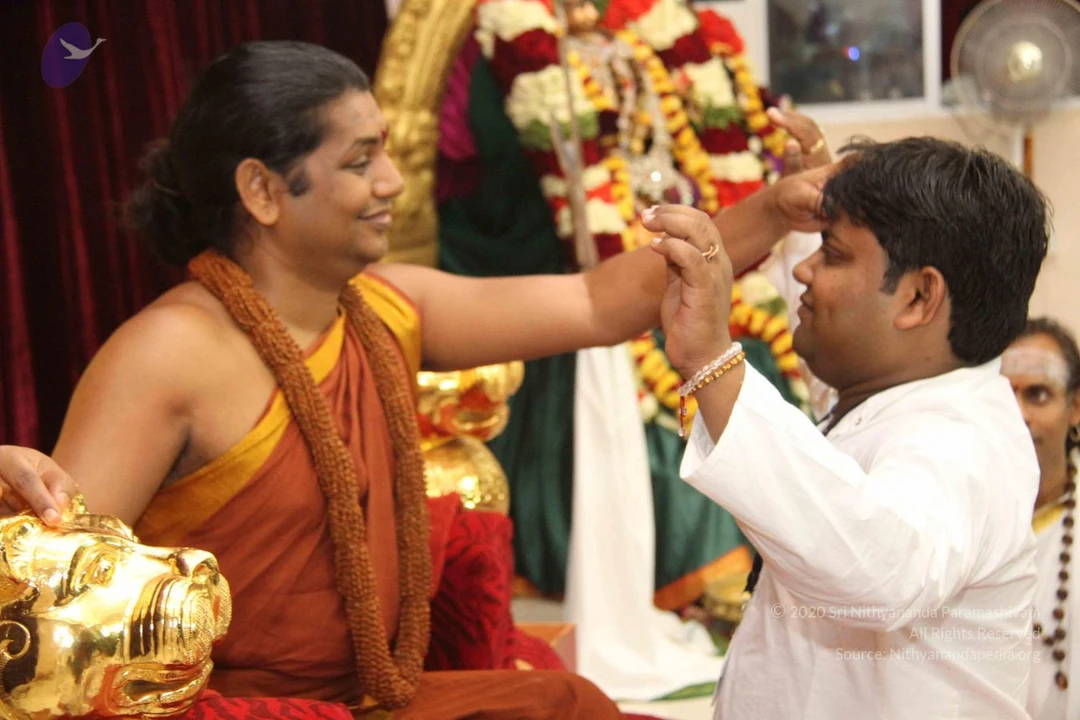
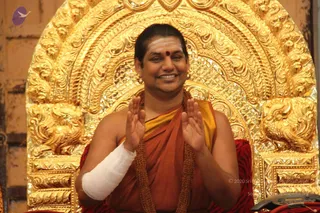
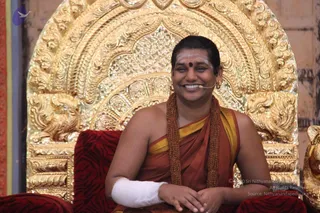
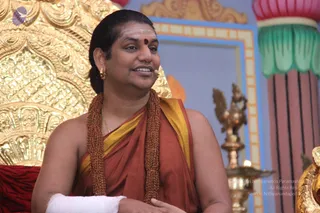
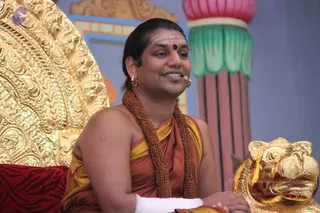
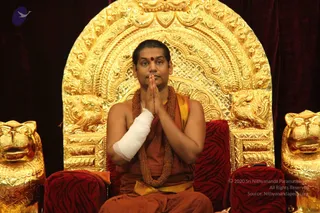
A smiling man sits on an ornate gold throne with carved floral and lion-like relief panels behind him. He wears an orange-red robe with a yellow inner garment, a long rudraksha mala necklace, and a white forehead mark with a red bindi. His right forearm is bandaged in white and both palms are pressed together in a greeting gesture. The photograph is watermarked with a pedia source credit, which are omitted hereA photograph of a smiling man seated on a red cushioned chair in front of an ornate golden throne backrest with floral and scroll carvings. He wears a saffron-orange robe with a gold-yellow border, long rudraksha-style beaded malas around his neck, gold earrings and a small lapel microphone, with a red bindi and white vibhuti marks on his forehead. His left forearm is wrapped in white bandage. His hands rest folded in his lap.A smiling man seated on a red velvet-covered throne in front of an ornate gold-leaf arched backrest with carved floral and lion motifs. He wears a saffron-orange shawl over the shoulder with a gold-yellow border, a long rudraksha mala with a gold ceremonial necklace, gold earrings, a red bindi and white tilak on the forehead. His right forearm is wrapped in white bandaging, and a small clip microphone is attached near his mouth. Swamiji (probable): the long swept-back hair, saffron shawl, rudraksha mala and gold ornaments are visible cues for the presenter role. A gold lion figure appears at the right edge.A photograph of a seated man in a rust-orange robe with a gold-bordered yellow edge, wearing a long rudraksha mala and a thin gold chain. He has a red bindi and a white tripunda on his forehead, and a small microphone clipped near his face as he speaks. His left forearm is wrapped in white bandage. Behind him is a large gilded throne with ornate carved patterns, a brass oil lamp with a flame, and a blue-and-gold framed backdrop with pink and green pillar tops. Swamiji (probable) is shown seated and speaking, with long hair pulled back, rudraksha mala, and saffron-orange robes.A seated man in an orange-brown and gold-bordered shawl sits on an ornate gold throne with carved floral backrest and a red tiger-striped cushion. He wears a rudraksha mala of beads around his neck, gold earrings, a red bindi and white sandalwood markings on his forehead, and a headset microphone. A gilded lion-head armrest is at right, with a lotus-topped pink pillar behind.A man with swept-back dark hair, a red bindi and white tilak on his forehead, gold earrings and a headset microphone sits on an ornate gold throne with carved floral backrest and a red cushion. He wears an orange and gold shawl over bare shoulders and a long rudraksha mala, with a white bandage on his left wrist and hands resting on a gold lion-head armrest. Behind him are a pink and green lotus-shaped pillar and a blue backdrop. Swamiji (probable) by appearance cues: swept-back hair, saffron-orange shawl, rudraksha mala, and seated on a throne in a discourse setting.

sarva-darshan

23 photosSource gallery
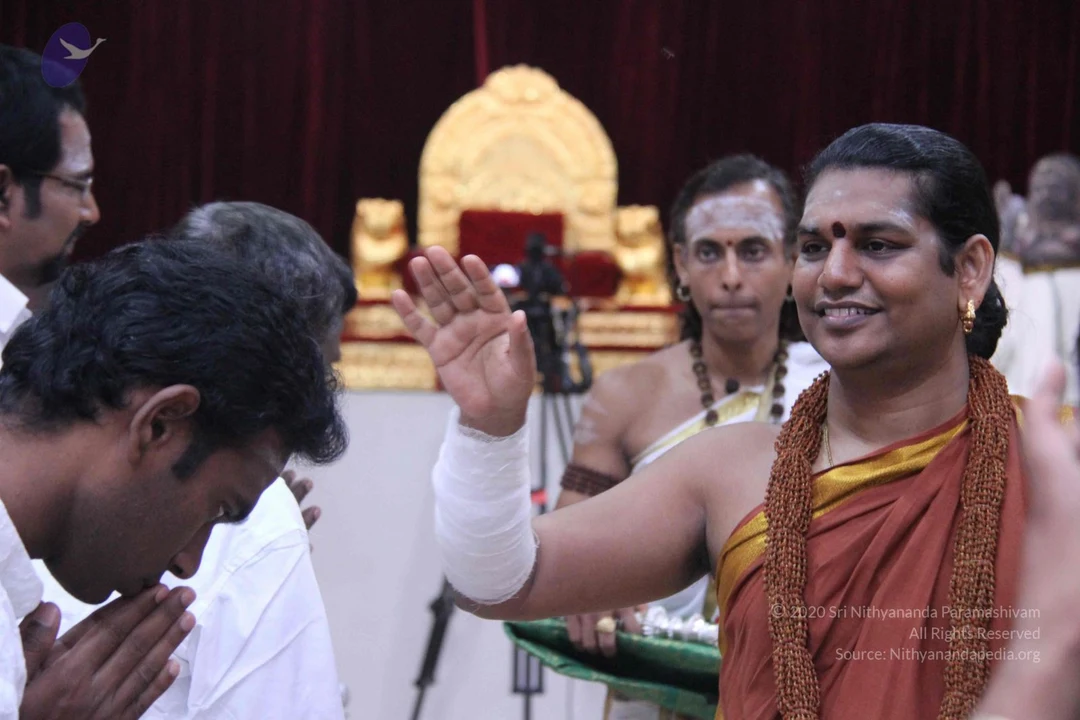
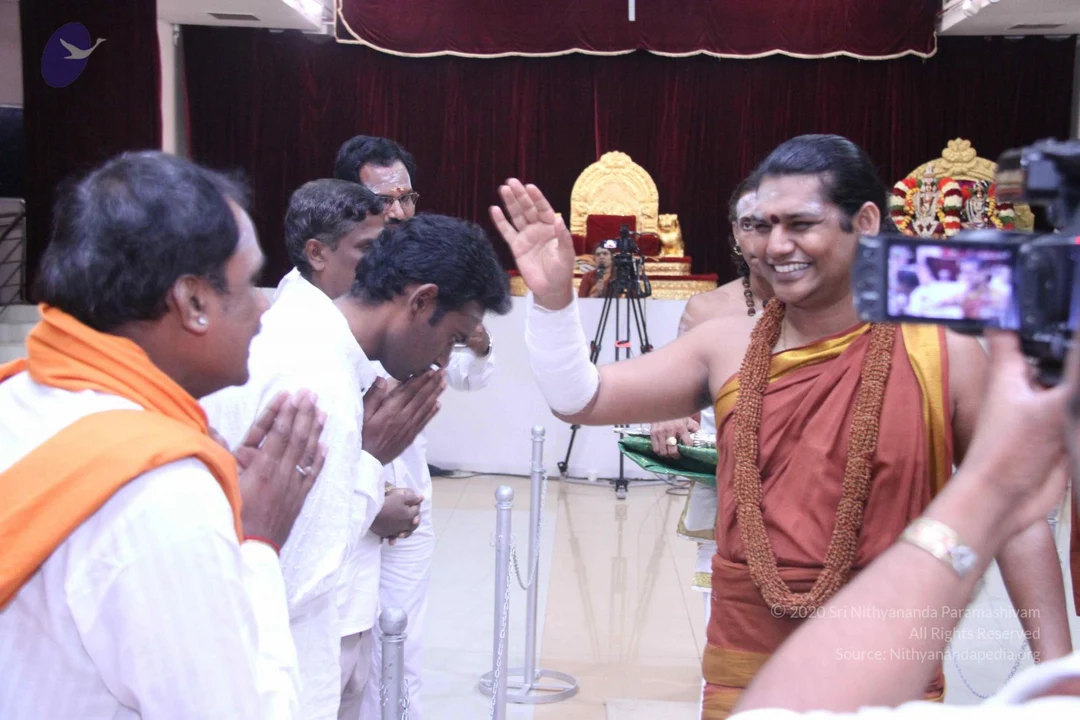
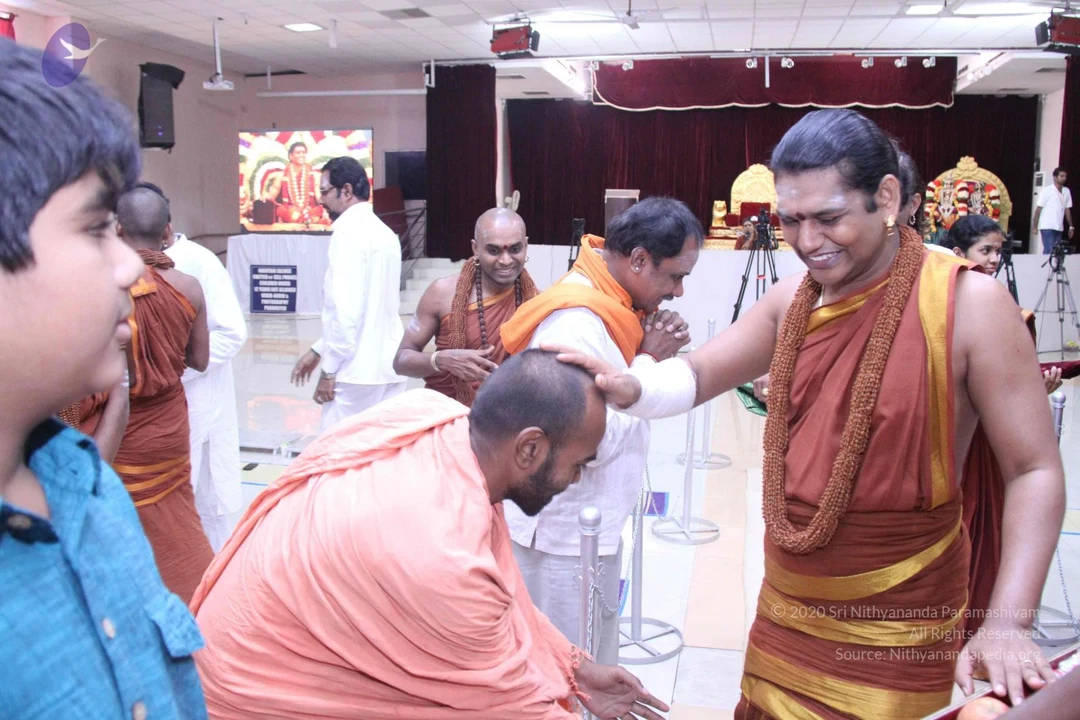
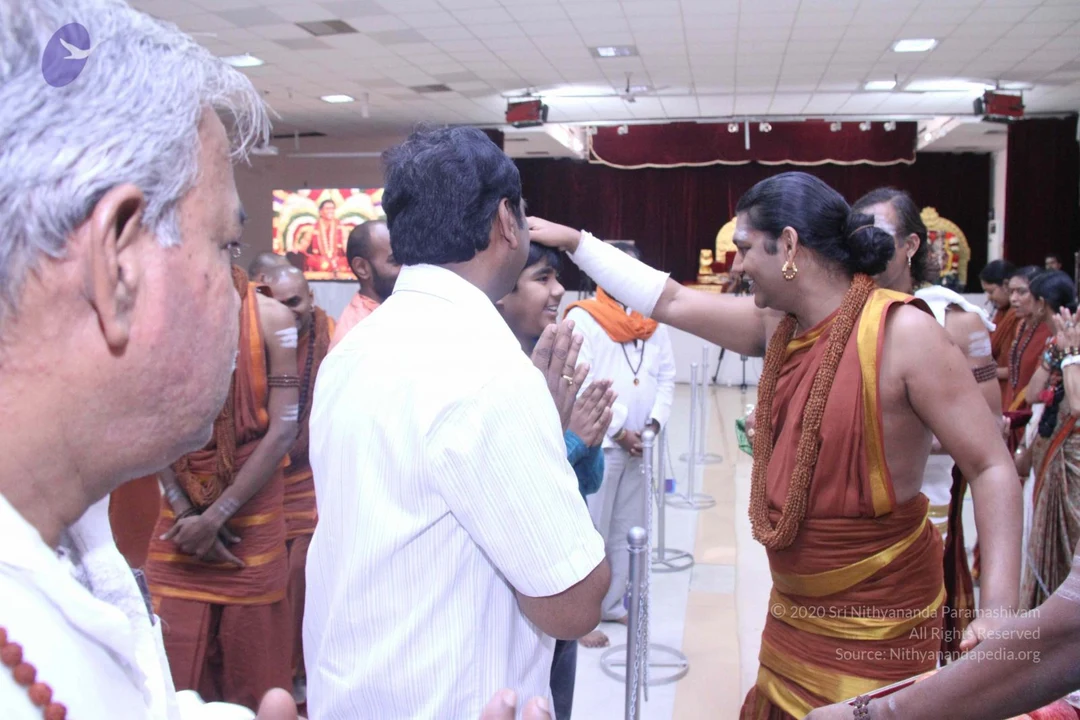
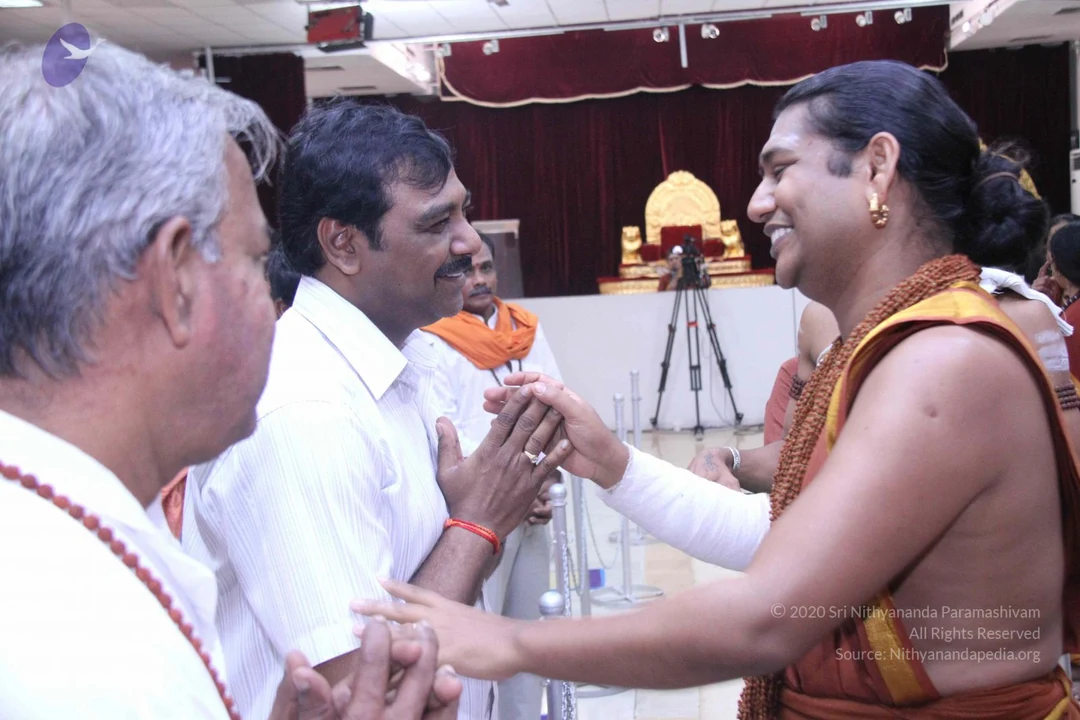
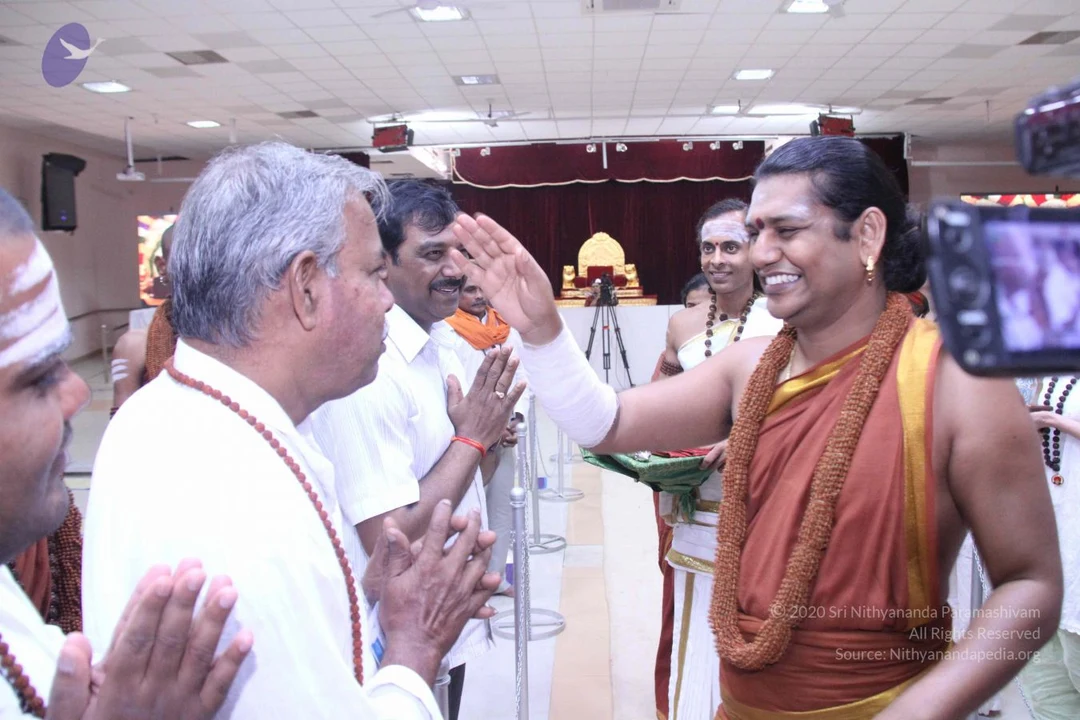
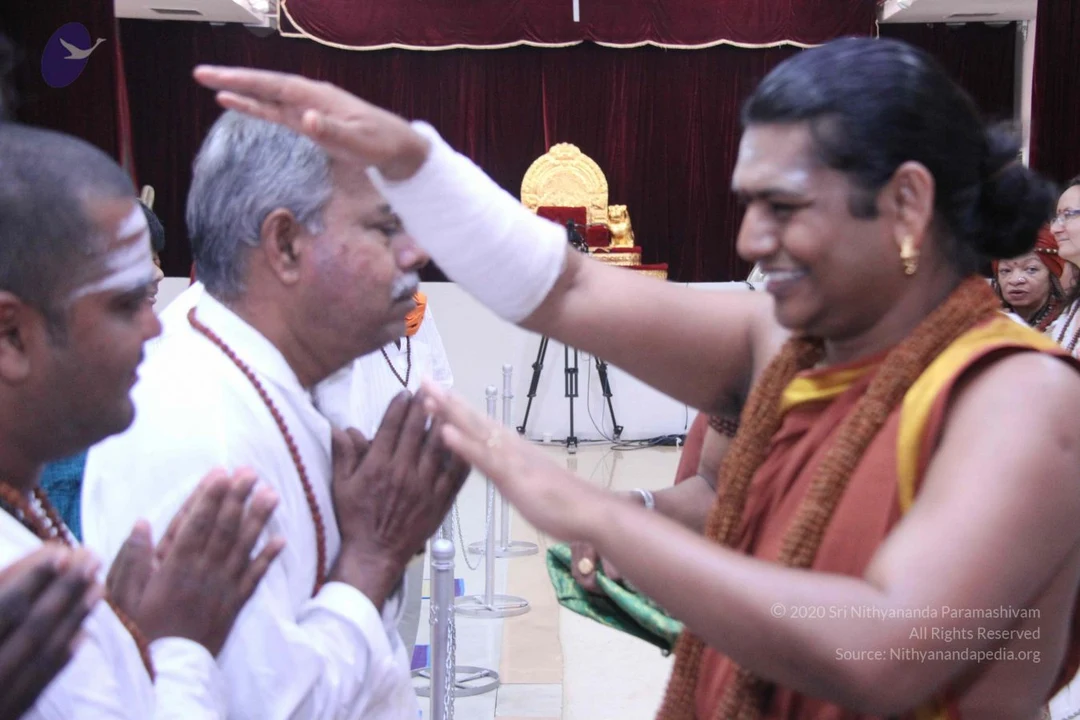
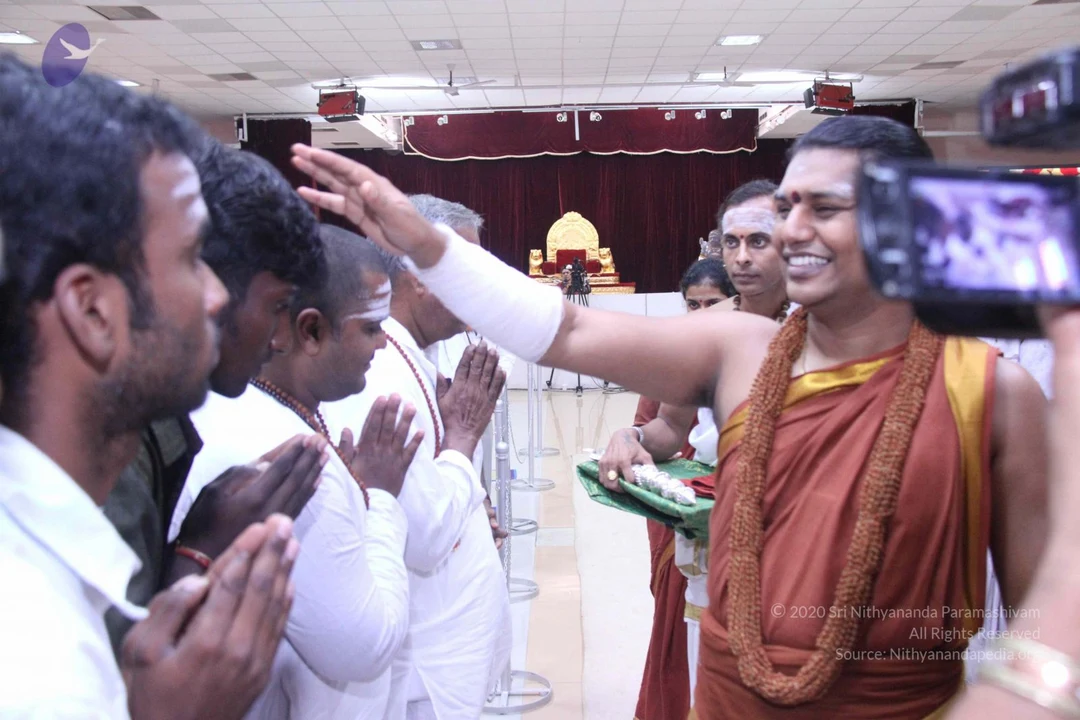
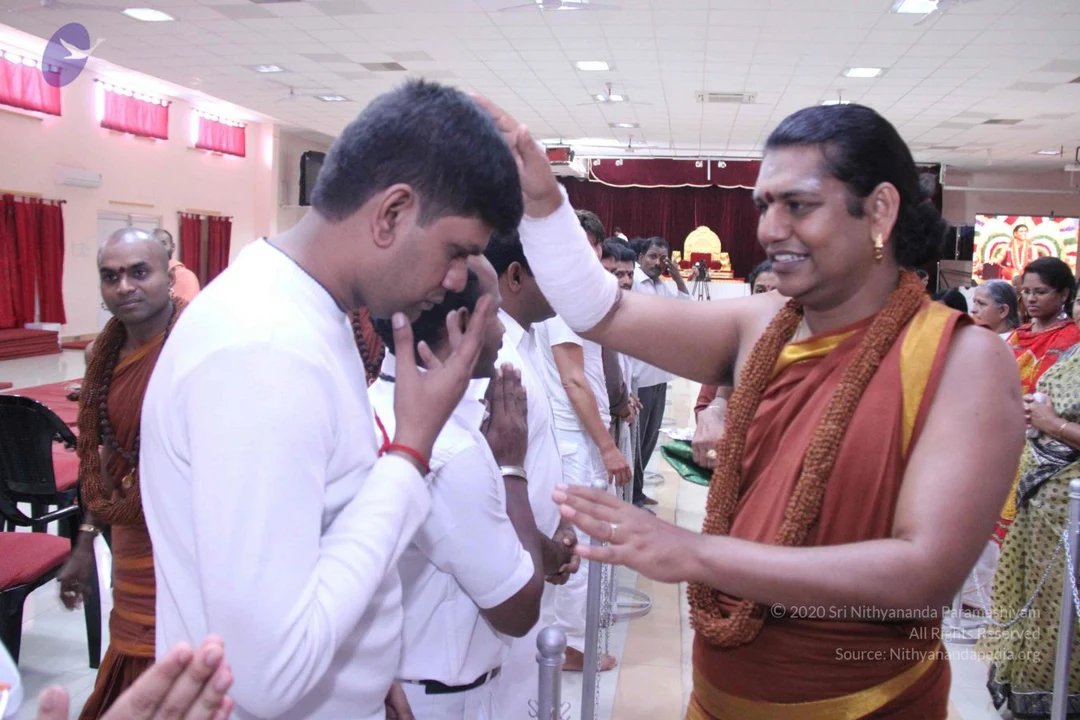
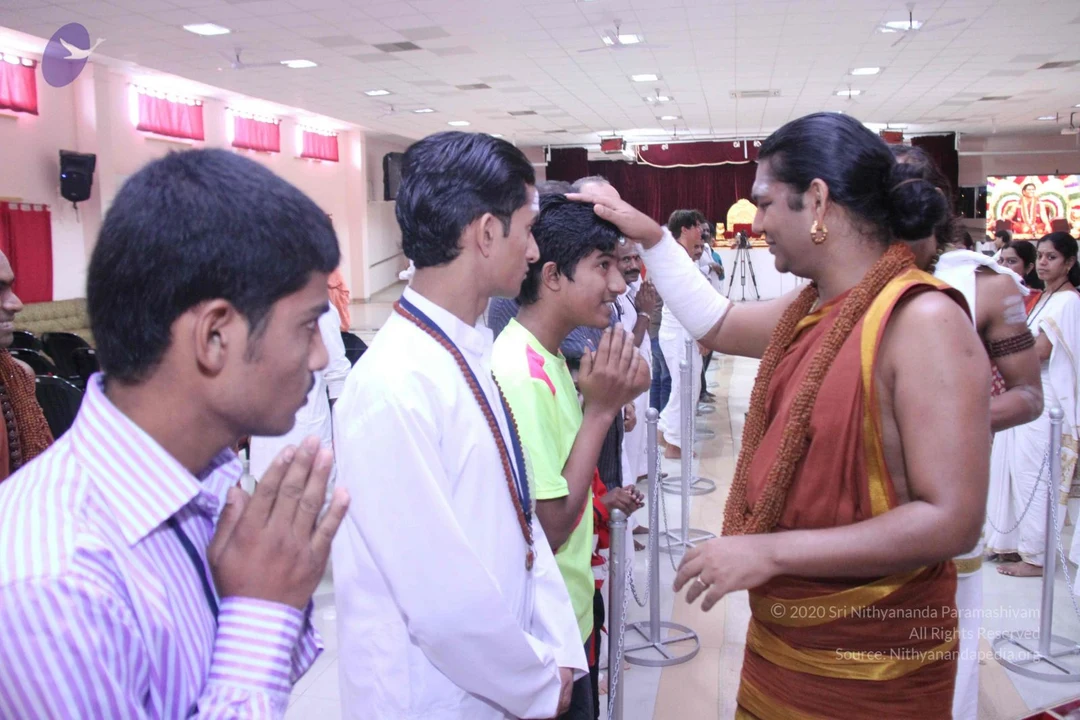
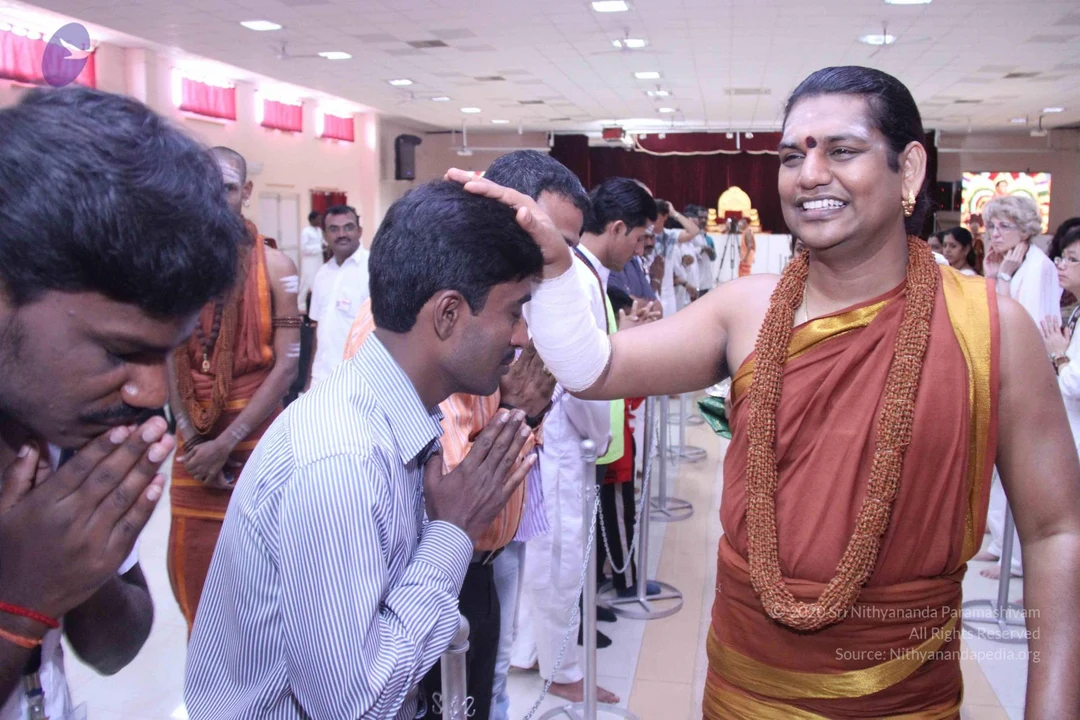
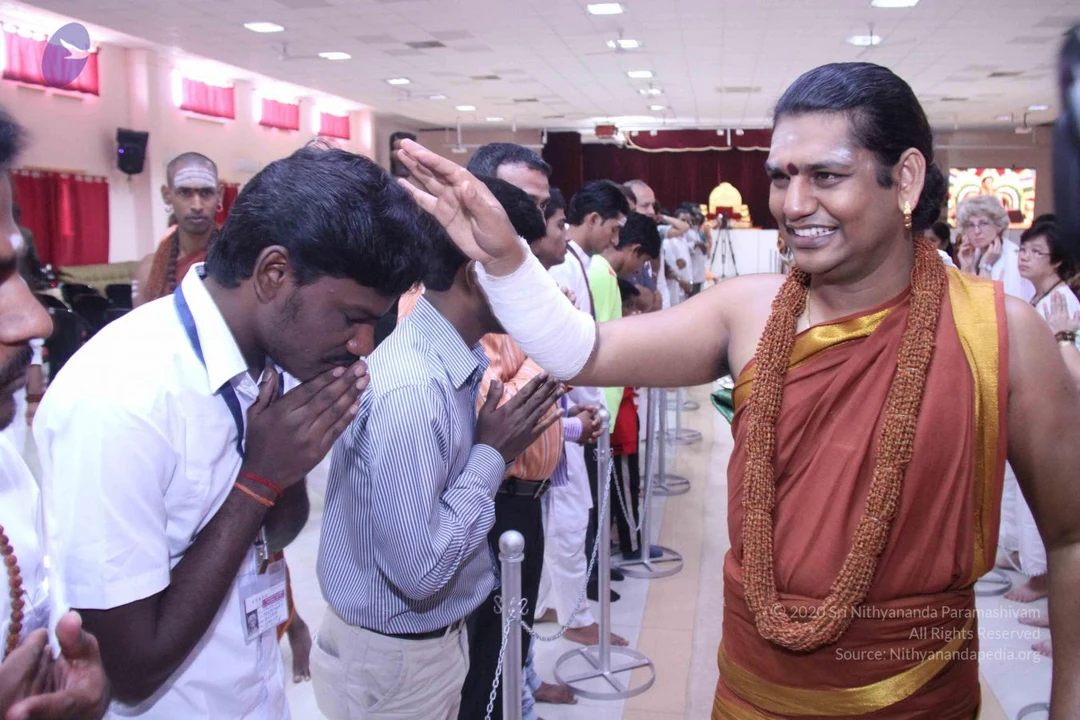
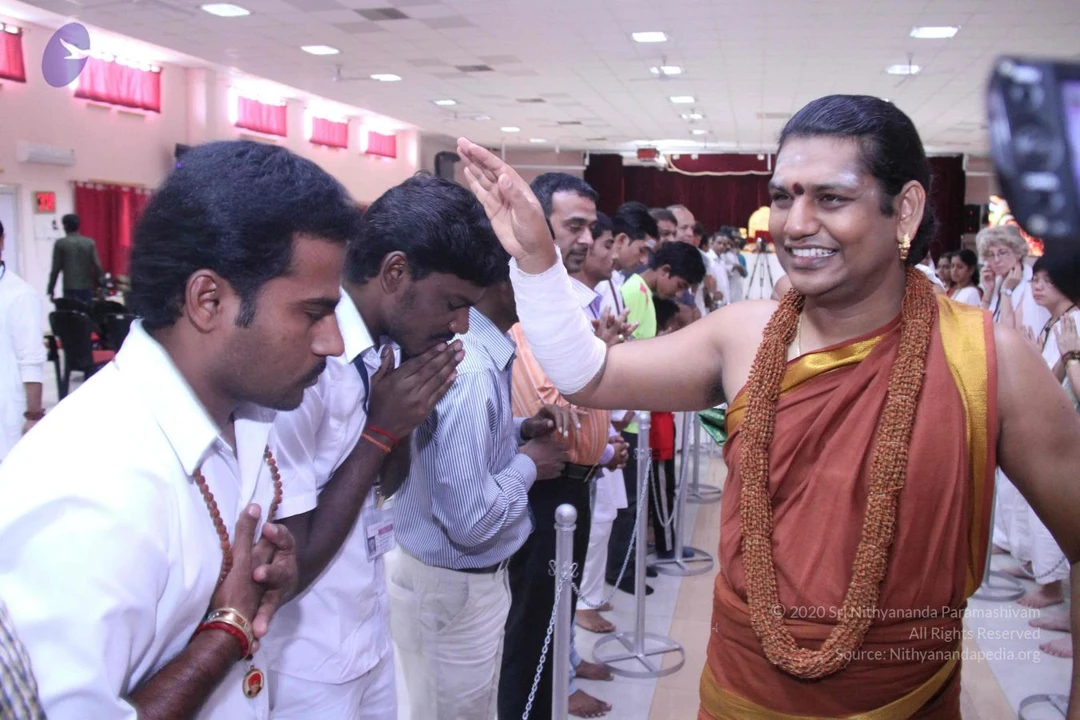
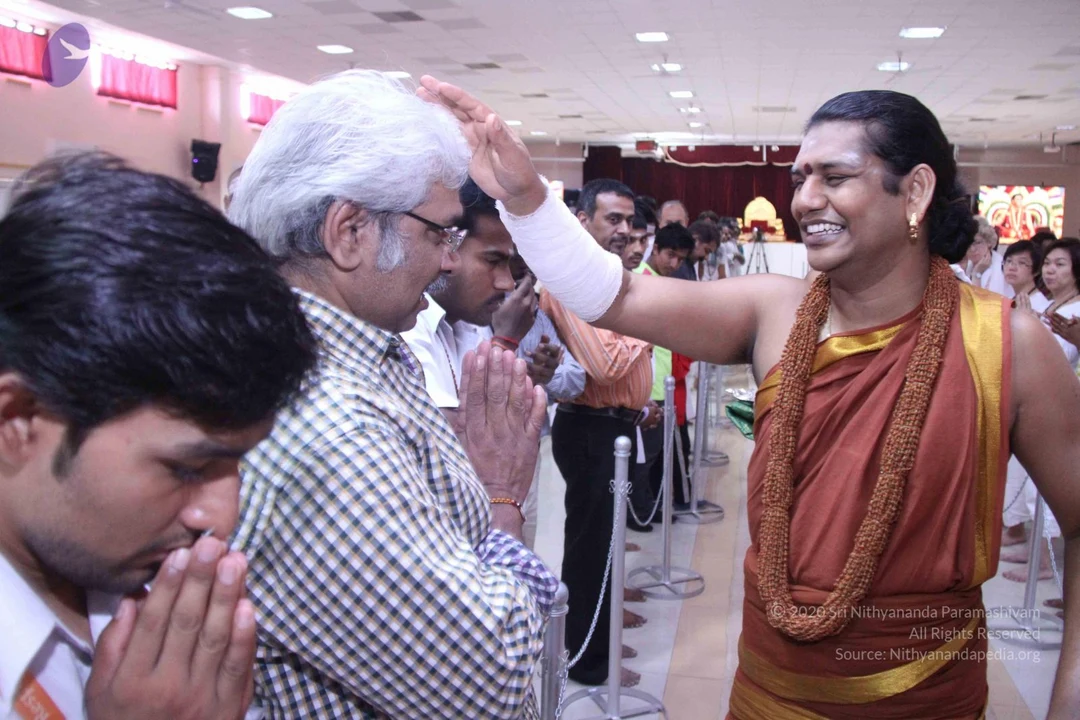
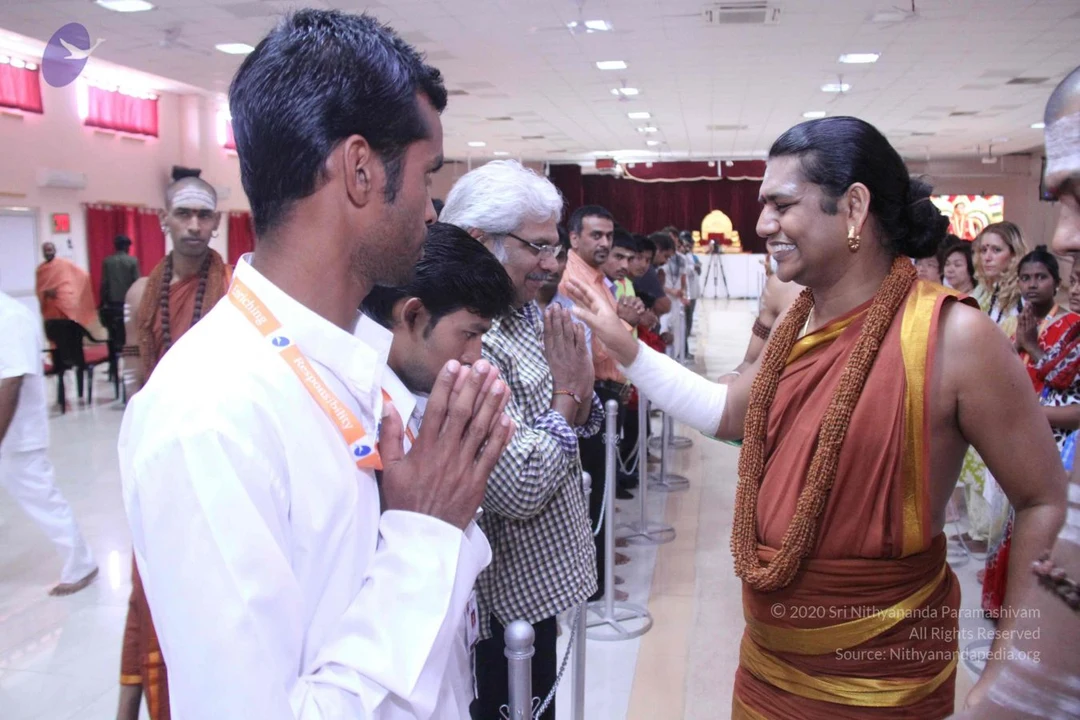
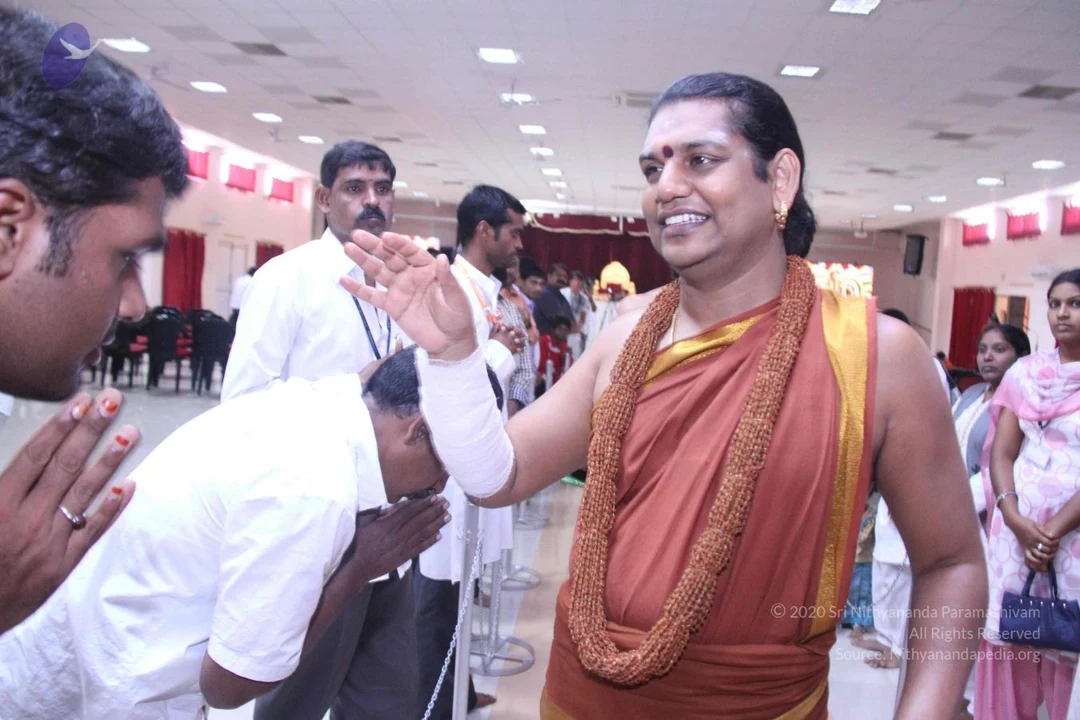
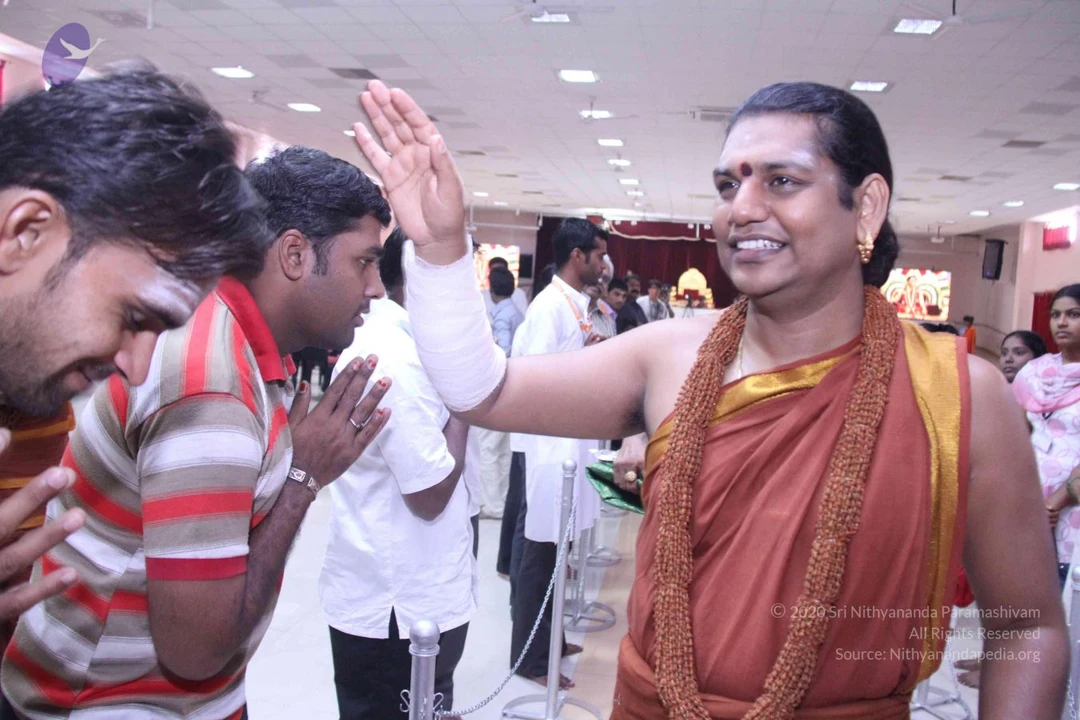
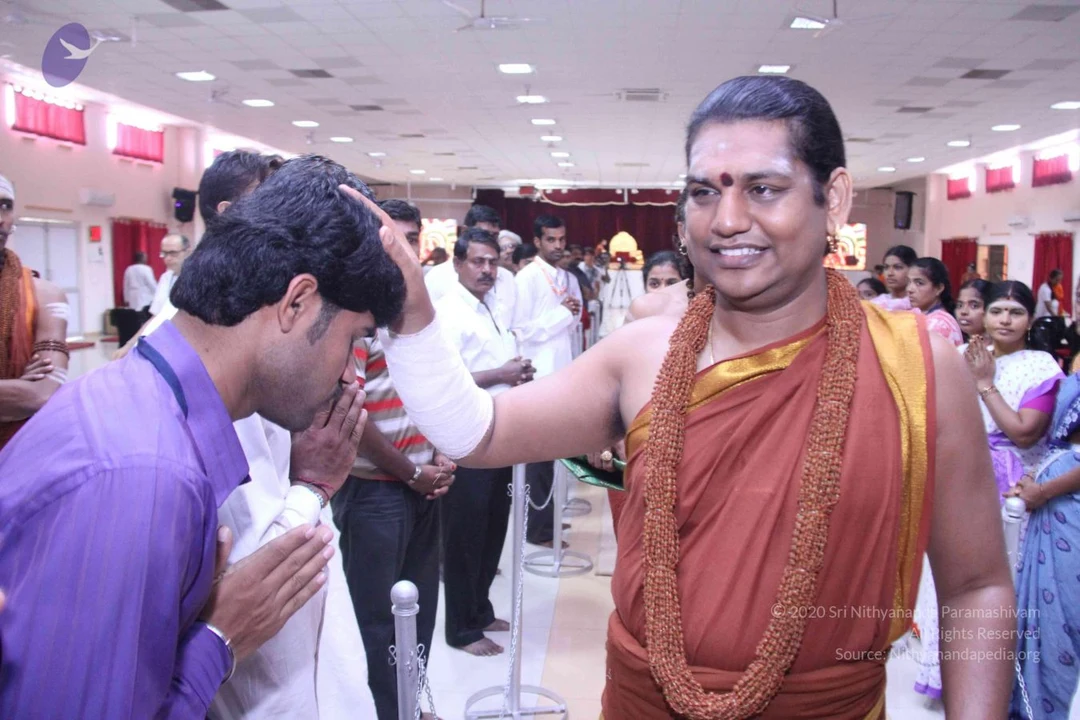
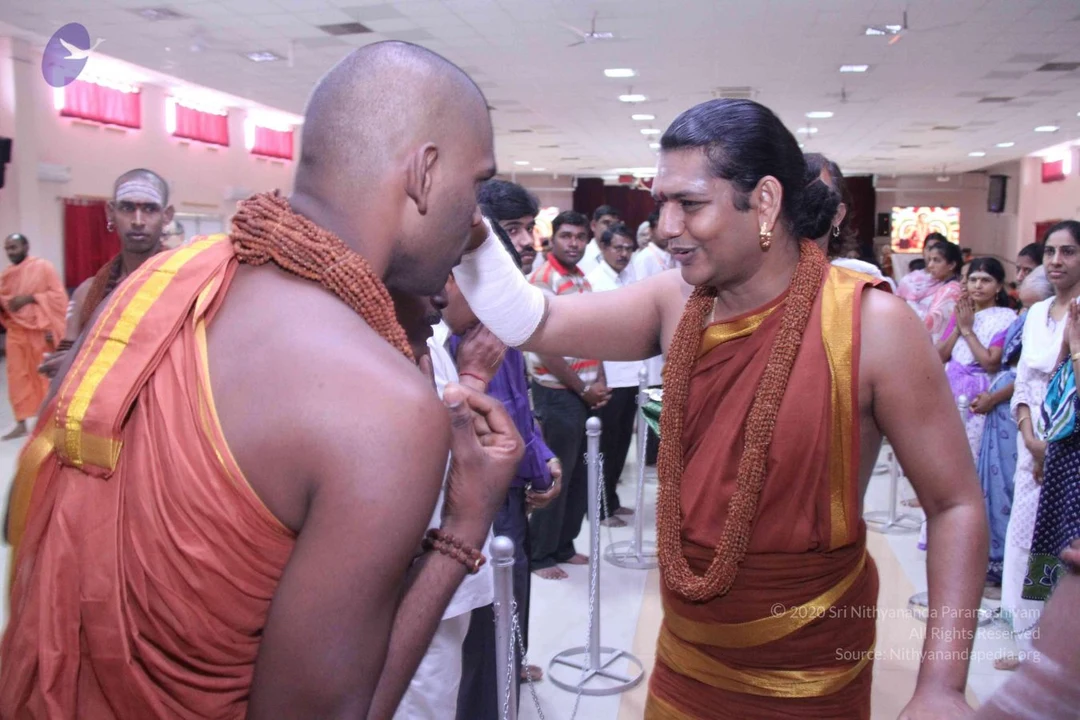
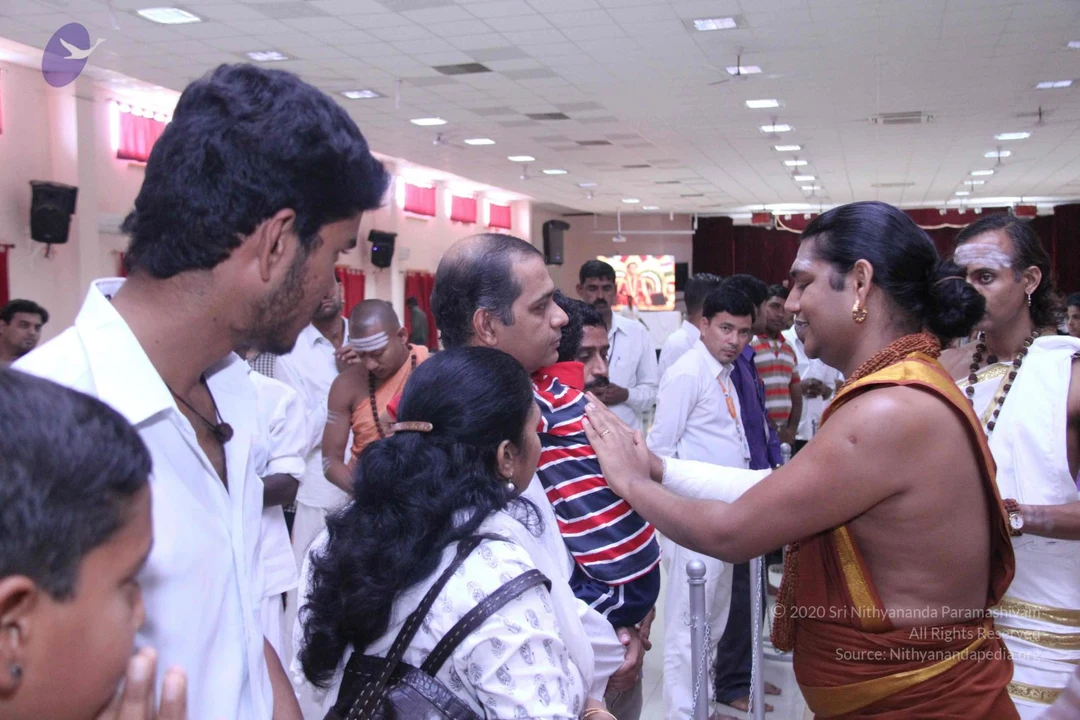
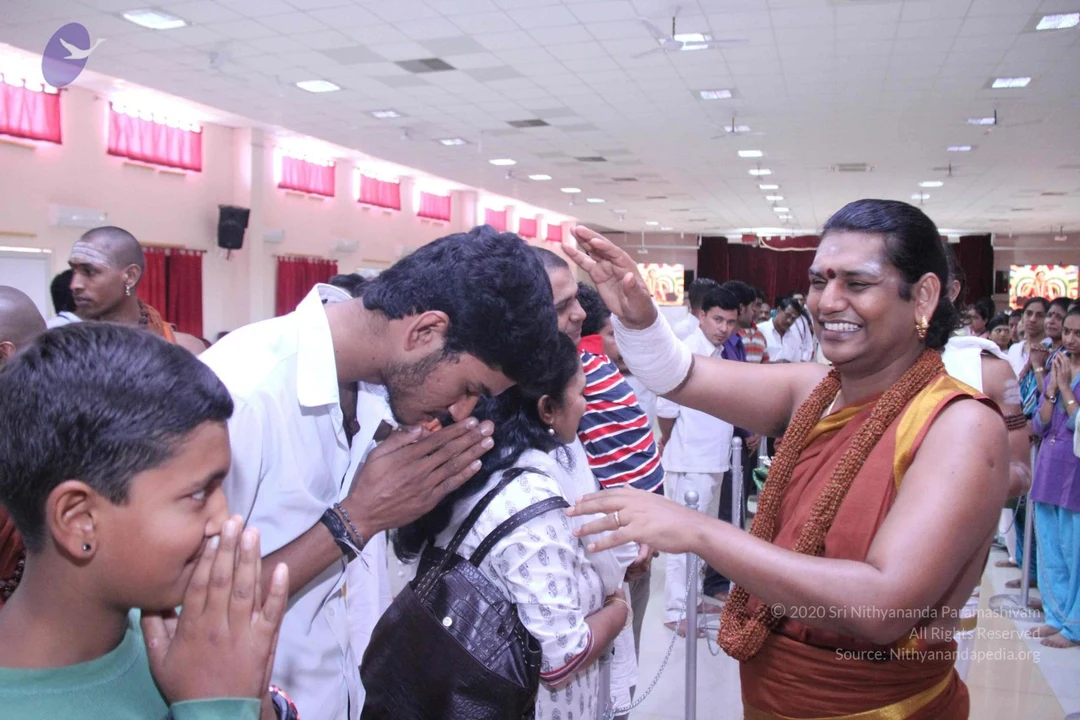
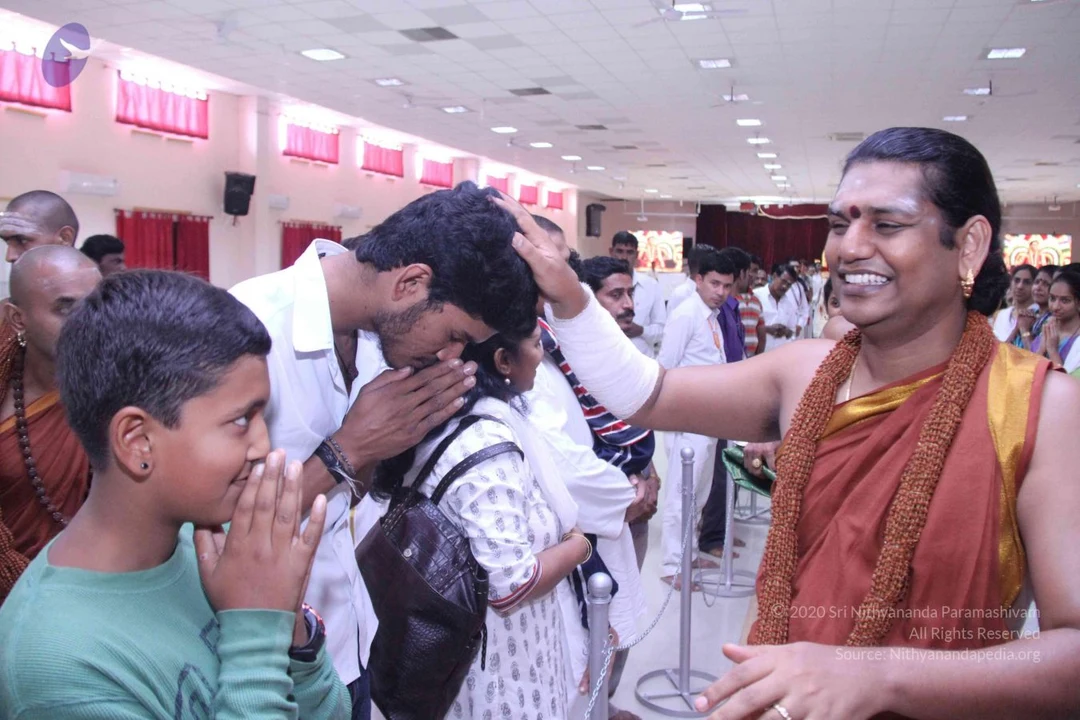
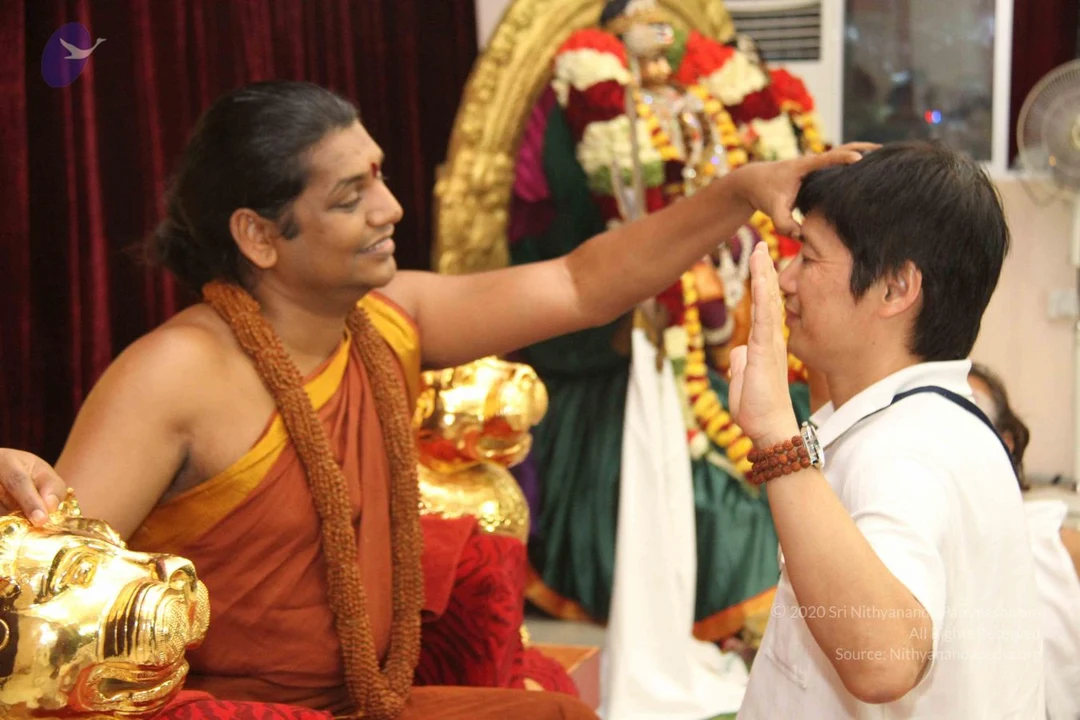
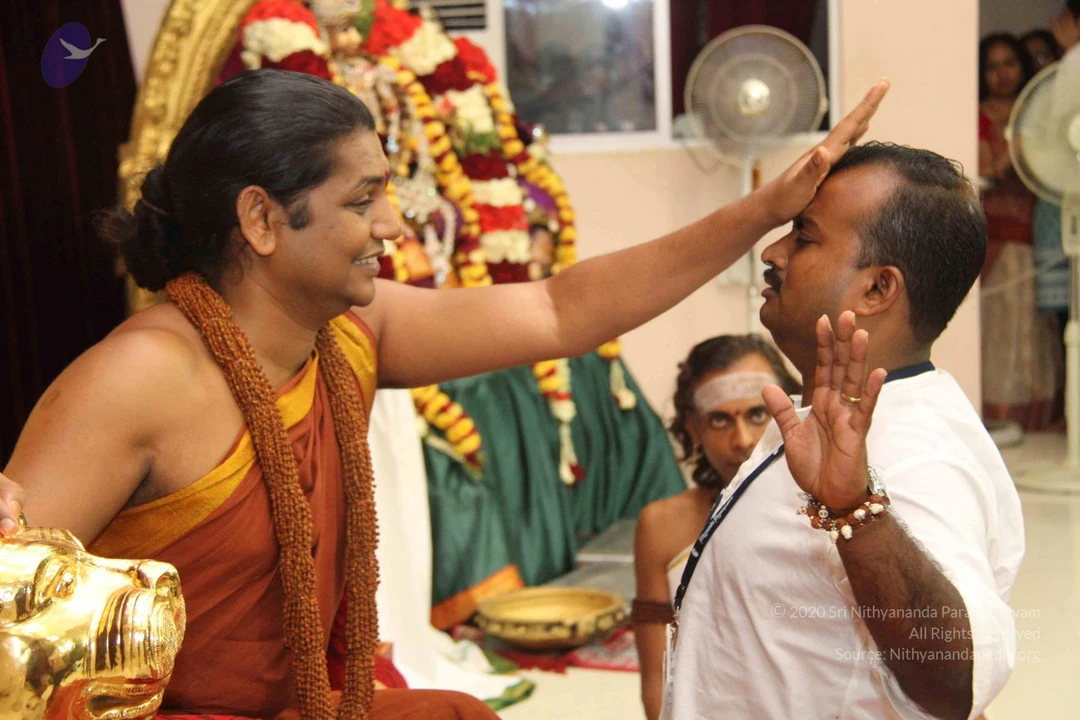
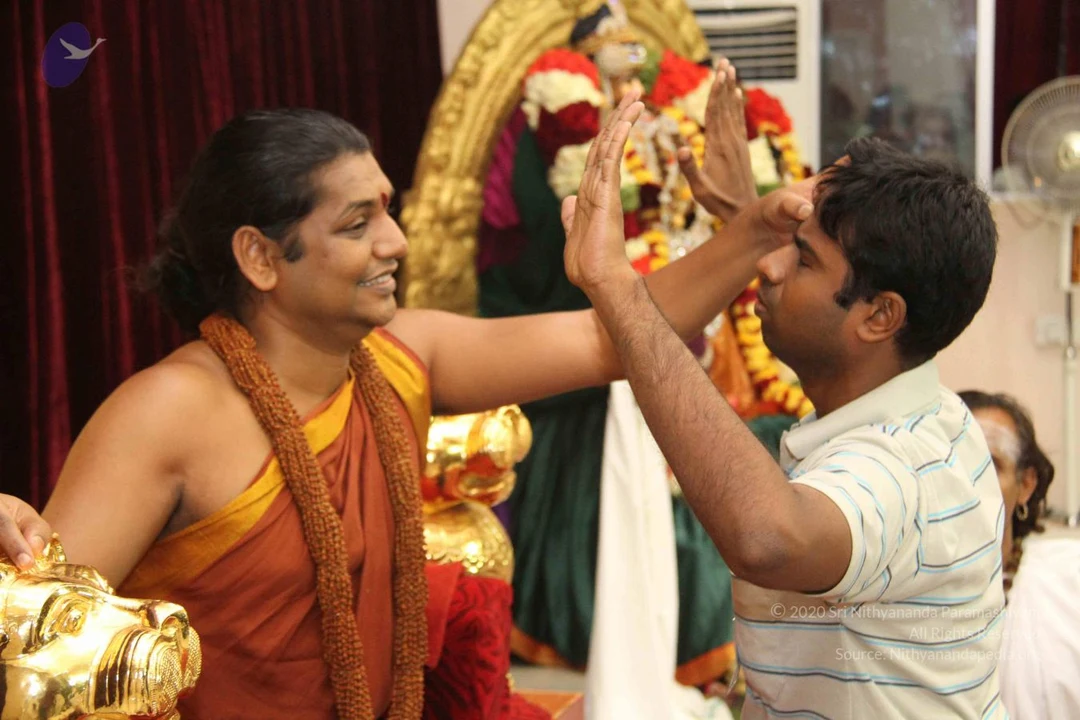
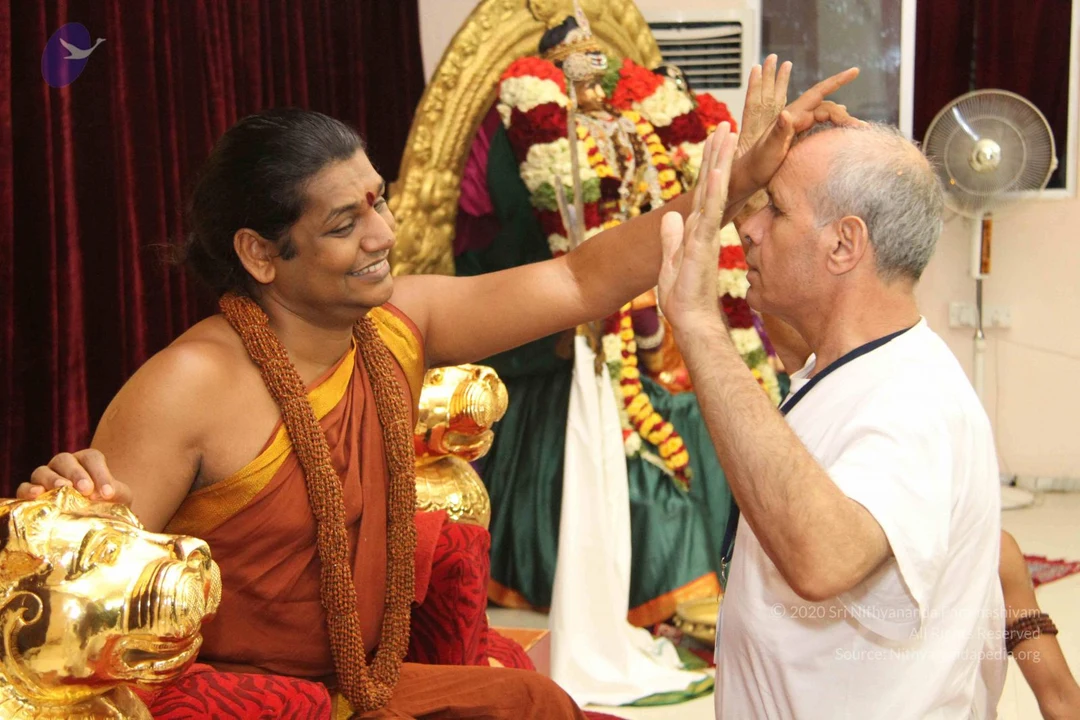
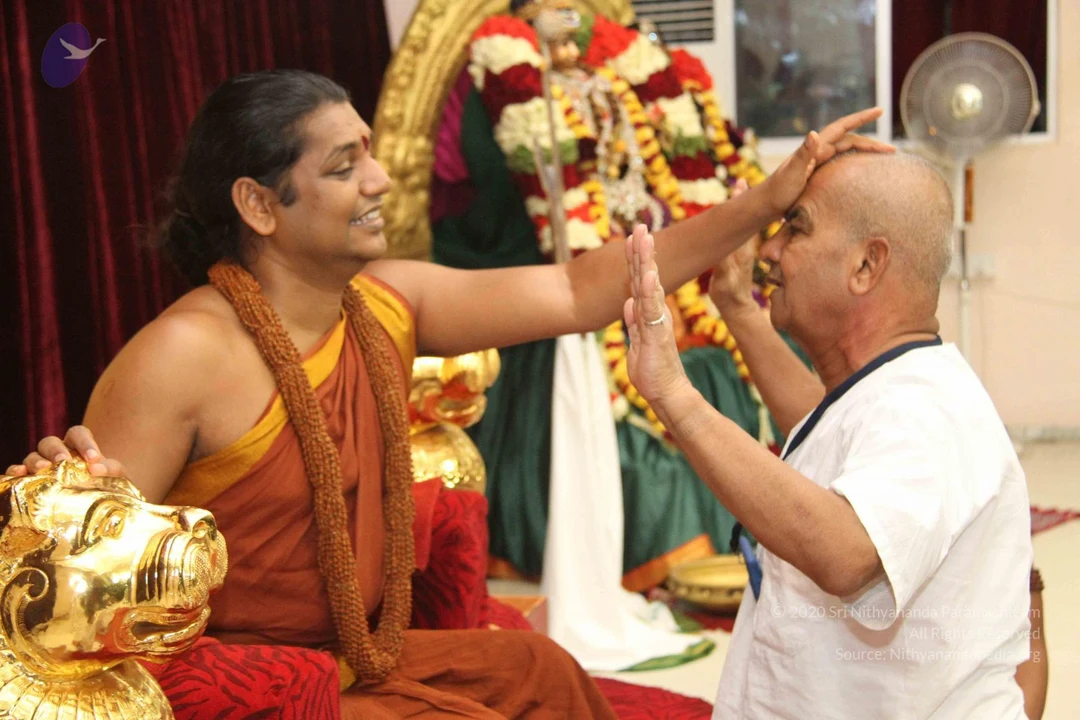
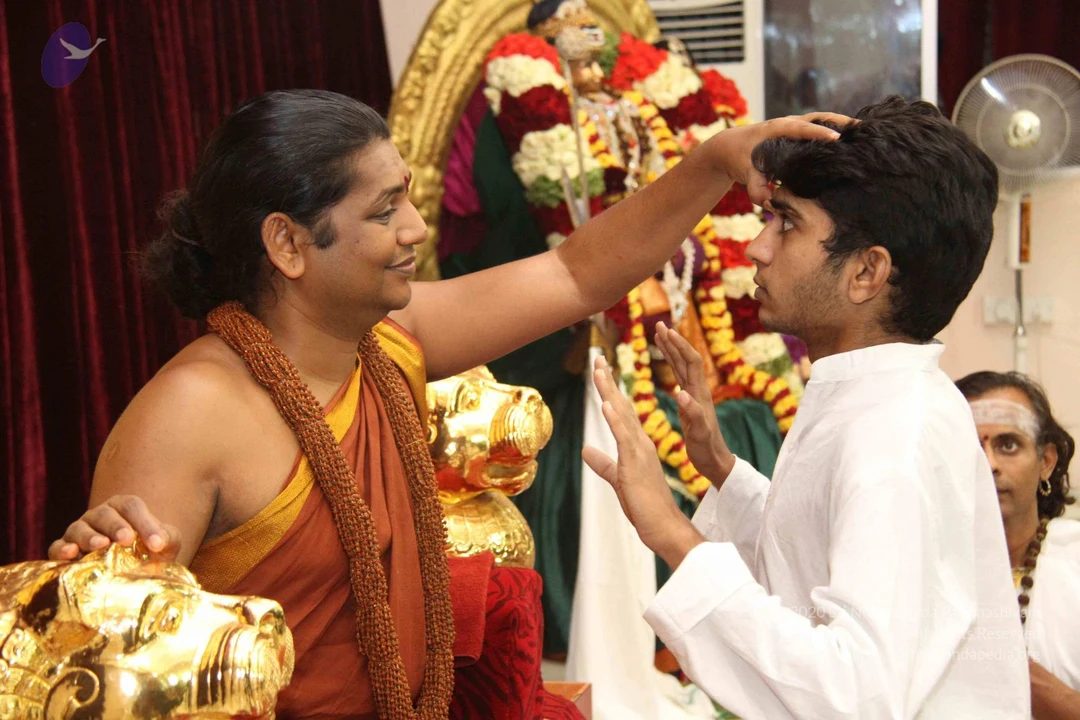
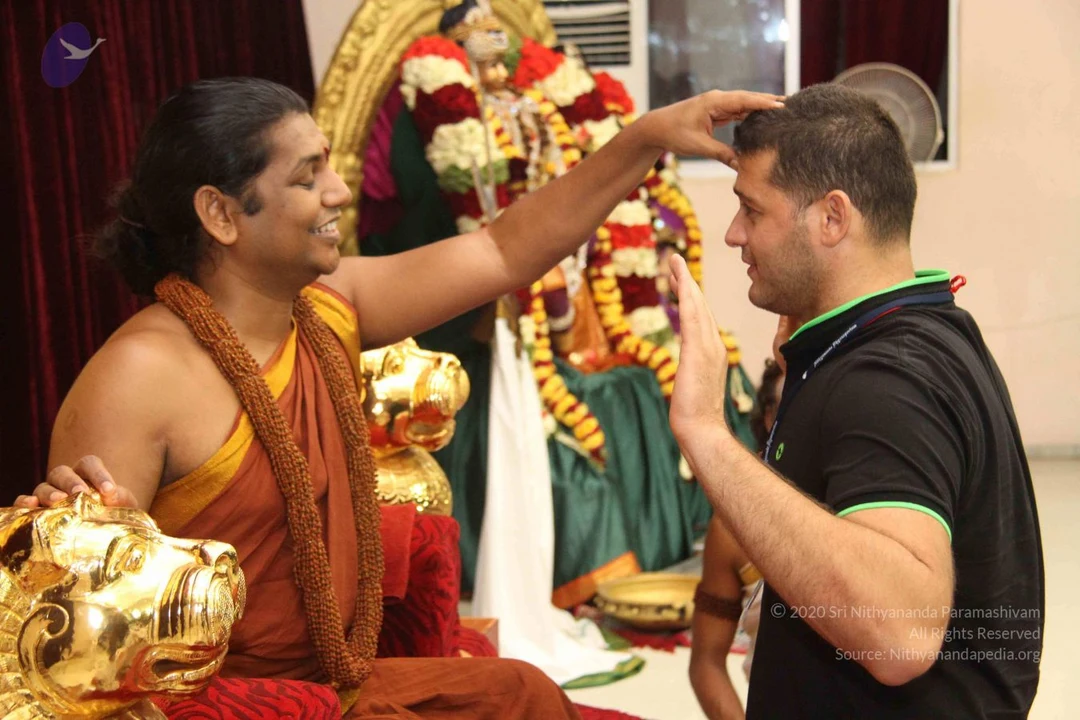
A photograph of a ceremonial reception. A man with swept-back hair, a red bindi, gold earrings, a saffron-orange shawl with gold border and a long rudraksha mala raises his right hand in blessing and smiles. Behind him a priest with white tripundra marks and a white dhoti holds a tray. In the foreground a devotee in white kurta with hands folded in namaskar bows his head. A golden throne with lion motifs and red cushion stands behind, flanked by red velvet drapes, and a camera on a tripod is visible. Two other men in white and a partially visible person are present.A photograph in an indoor hall with maroon drapes and a gold-and-red throne behind. A smiling man in a saffron-brown dhoti and shawl, with a long rudraksha mala and a white bandage on his right forearm, raises his hand in blessing toward a group of devotees. Three or four devotees in white clothes with orange shawls stand with palms pressed together in namaste, one bowing deeply. A cameraman with a video camera films the scene in the foreground, and a tripod stands nearby.Indoor photo in a hall with a red curtain backdrop, a screen showing a religious image and a gold-decorated stage with a throne. A man in a white ritual shirt and orange-saffron shawl bends forward with hands pressed together while a man in saffron-orange robe and a gold-bordered dhoti rests his hand on the bent man's head, blessing him. The blessing figure, wearing a long rudraksha mala and ceremonial gold-banded clothing, has swept-back long hair and a smile; a probable Swamiji by the pictured cues. Other saffron-robed sannyasis and a bald man in saffron stand nearby, and a boy in a blue shirt is at the left edge.A photograph inside a hall with a red-curtained stage and a framed portrait on a screen at left. A smiling sannyasi in rust-orange robes with a gold-edged sash and a long rudraksha mala stands at right, placing a hand on the forehead of a man in a white shirt whose palms are pressed together in greeting. Other orange-robed sannyasis, a man in white, and a woman in a sari stand nearby, and a grey-haired man in white with a mala is at the left edge. Silver barrier posts and a flower garland line the floor.Indoor photo at an ashram hall with a red curtain and a gold throne with lion-armrests on a stage behind. A bare-chested man with long hair swept into a bun, gold earrings, a rudraksha mala and an orange-saffron shawl (Swamiji (probable)) smiles and reaches to clasp hands with a man in a white shirt who presses his palms together and wears a red thread on his wrist. An older man in white with a rudraksha mala stands at left with hands folded, and another man in an orange shawl stands behind. A tripod-mounted camera stands near the throne.Indoor hall with a red curtain backdrop and a golden throne in the background. A man in an orange-saffron robe with a long rudraksha mala and gold ornaments stands at the centre, smiling and raising his hand in a blessing gesture toward a row of people. Probable Swamiji, identified by long swept-back hair, saffron clothing, rudraksha mala and gold necklace, is shown receiving greetings. On the left, an older man in white with a rudraksha mala and a younger man in white shirt press their palms together in namaste. A priest with white tripundra markings and a white-clad attendant stand behind. A camera on a tripod and a video camera at right record the scene.

HDH-deities-alankar
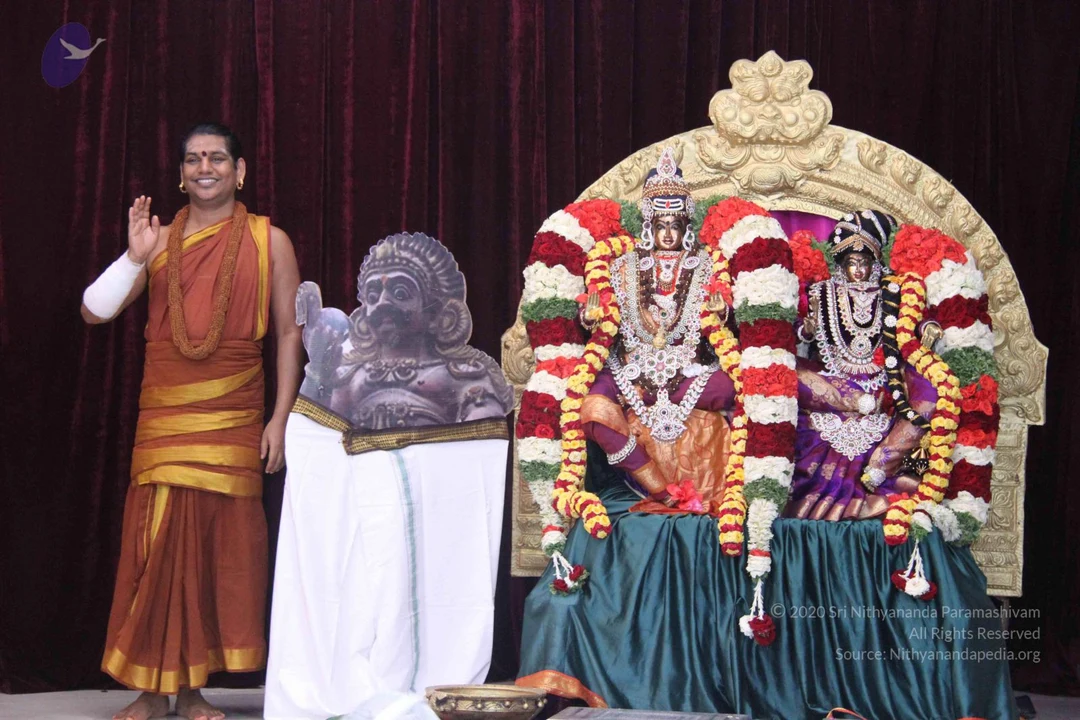
8 photosSource gallery
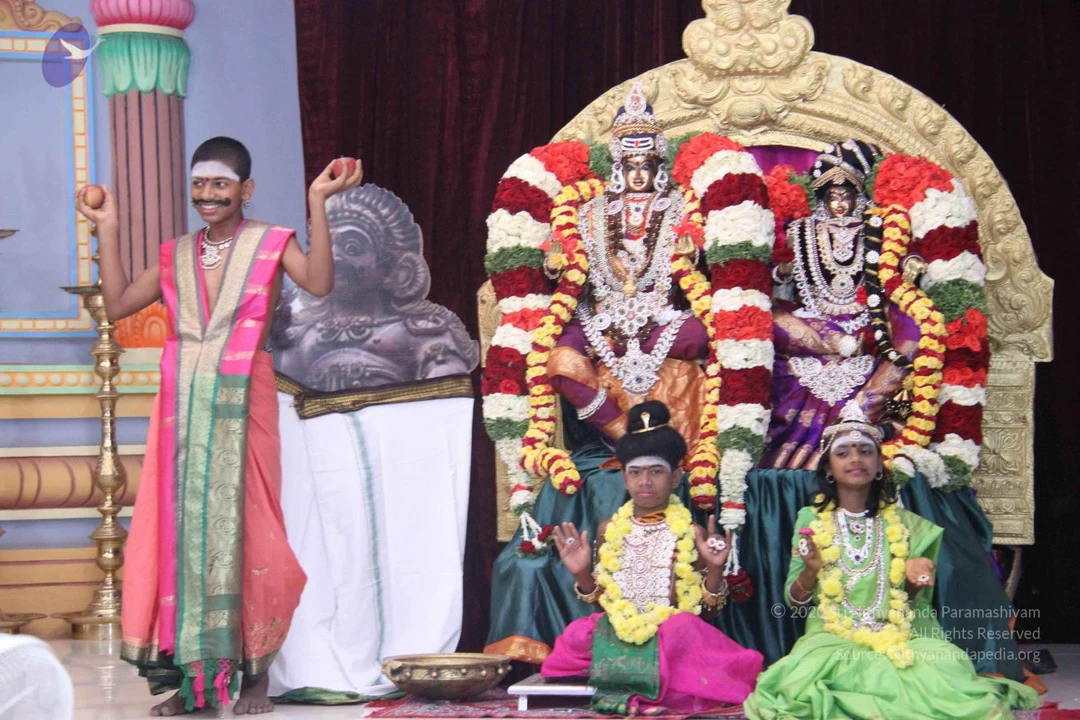
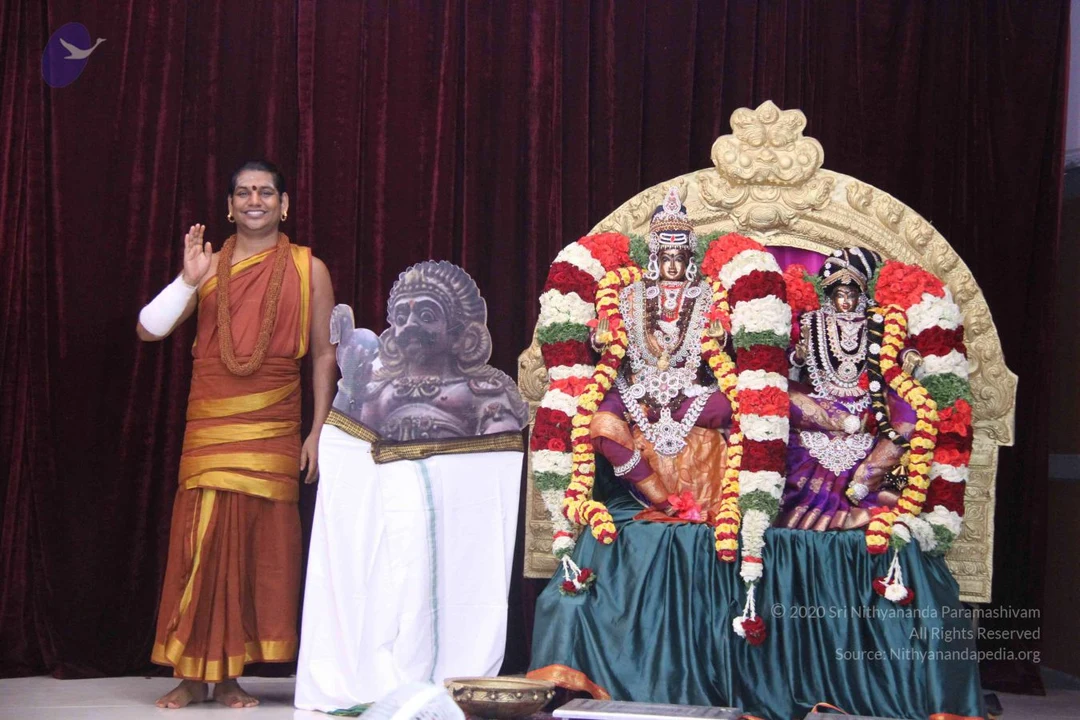
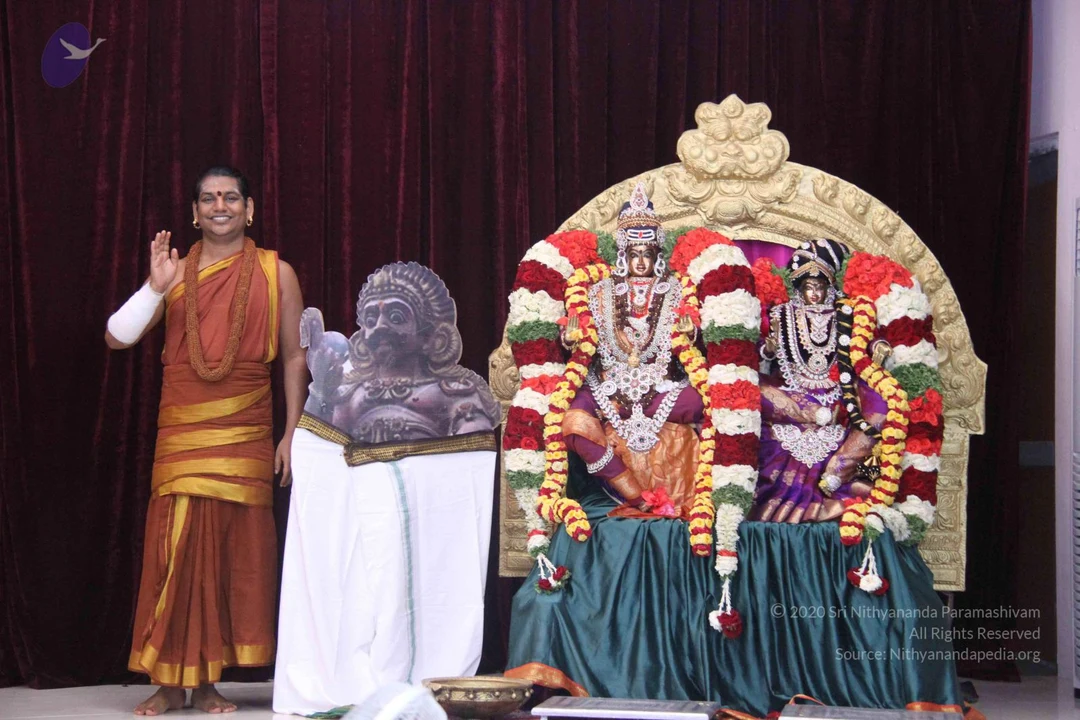
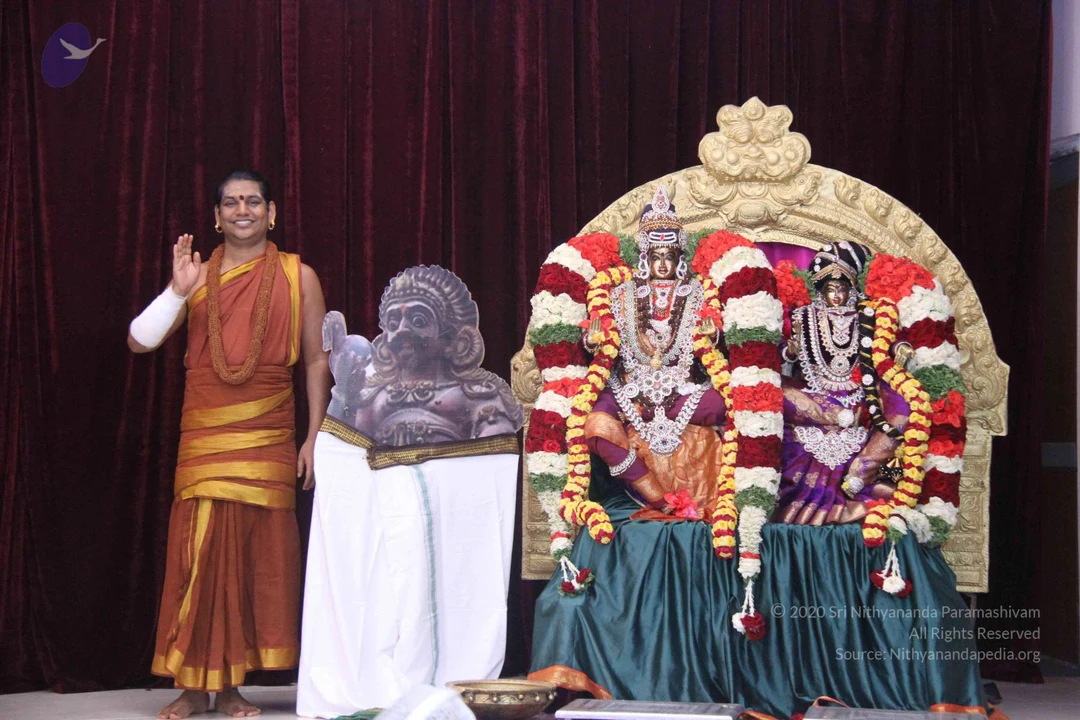
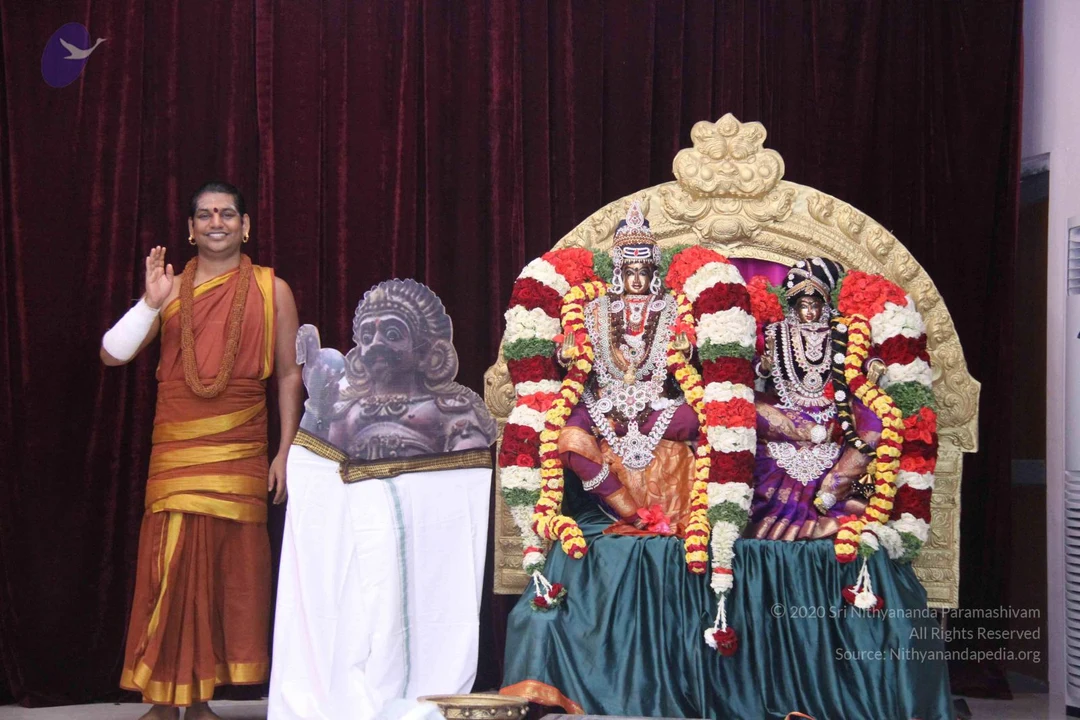
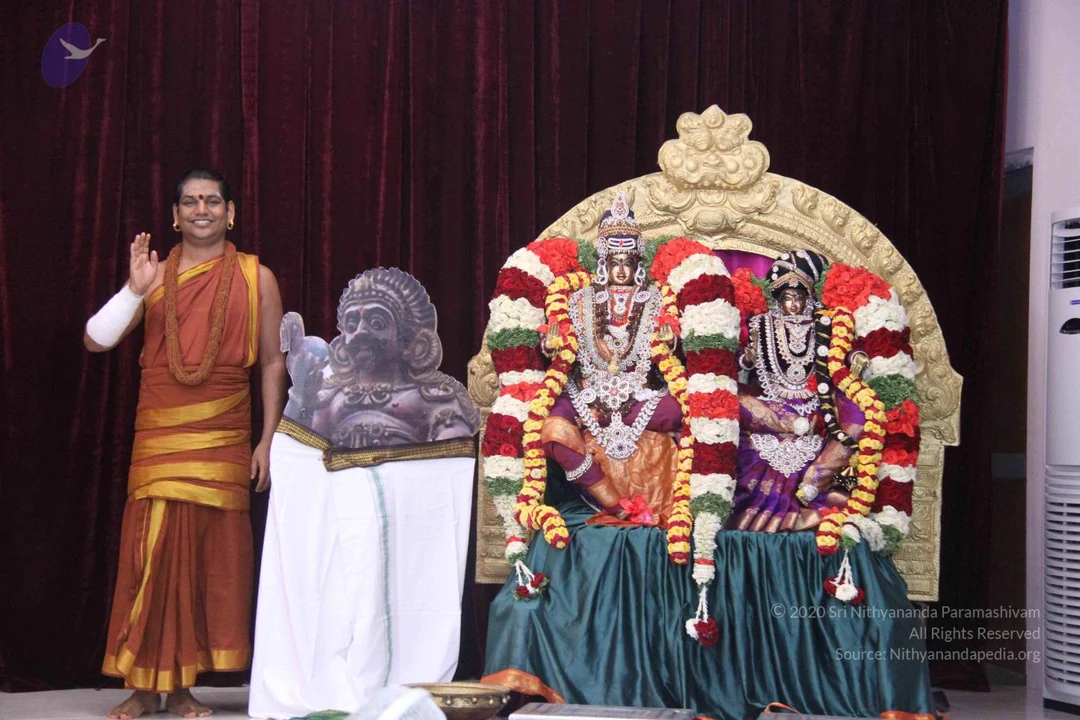
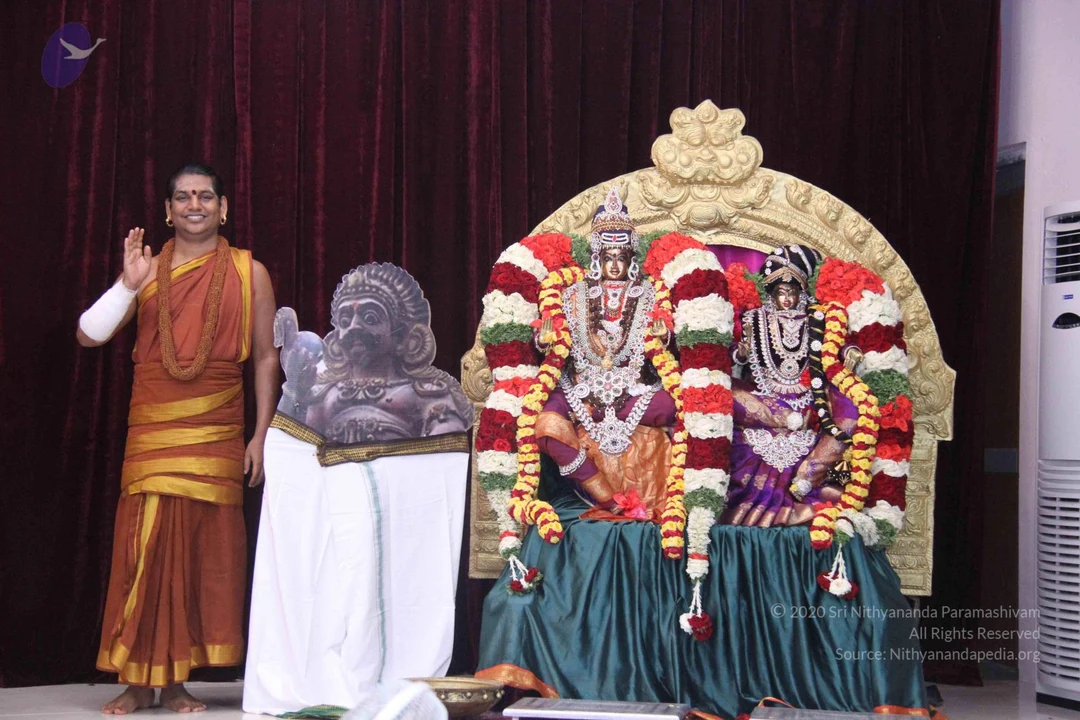
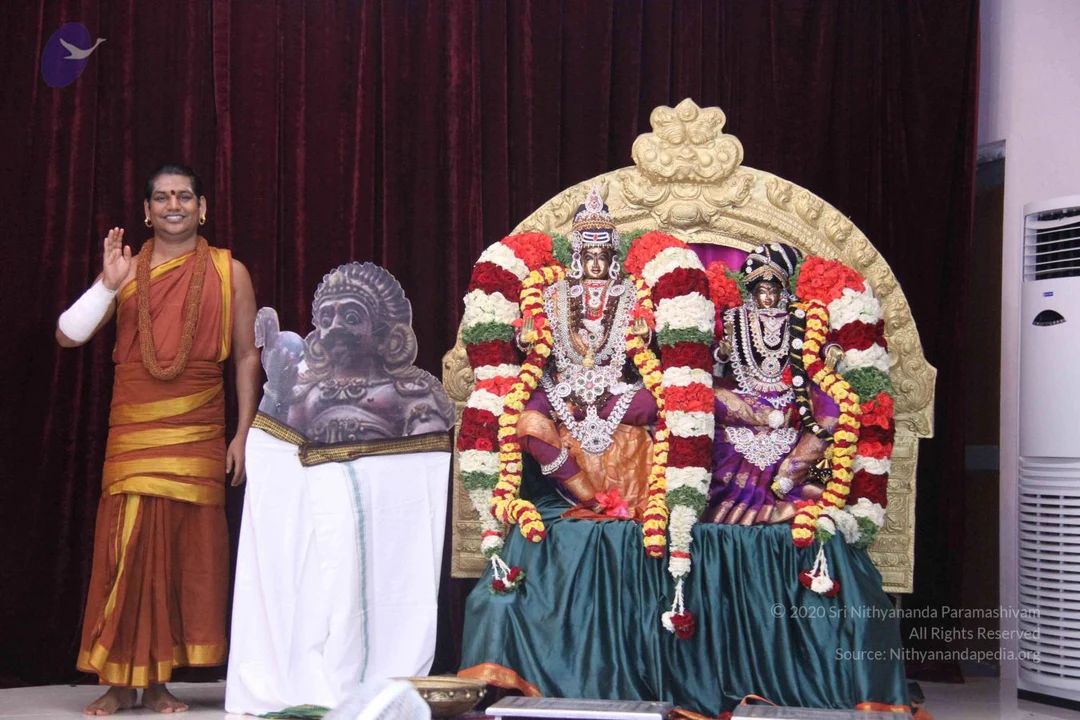
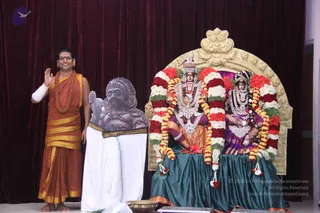
A smiling person in saffron-orange robes with a pale wrap on the left arm waves beside an ornate gilded arch framing two deity murtis seated on a teal draped platform. The murtis wear jewelled crowns, heavy white and gold necklaces and purple garments, and are decorated with red, white and yellow flower garlands. A large cutout of a bearded stone-like figure in white dhoti stands at centre-left, and a brass vessel sits in the foreground. Red velvet curtains form the backdrop.A man in saffron-orange robes with a gold-bordered wrap and a long orange-and-gold cloth stands on a stage at left, waving with his right hand; his left arm is bandaged in white. He wears a beaded necklace and has a red bindi. Beside him is a cardboard cut-out of a fierce deity figure on a white cloth. At right, two deity murtis sit on a teal-draped seat under a gold arched frame, heavily garlanded with red roses and green-and-white flower strands; the figure on the left wears a crown and silver ornaments, and the figure on the right wears a purple sari and gold jewellery. A brass bowl sits at the lower edge of the stage, and a dark red velvet curtain forms the backdrop.A standing man in saffron-orange robes with a gold-and-saffron sash and a long rudraksha-style bead necklace smiles and raises his right hand in greeting, his forearm wrapped in white bandage. Behind him, two decorated deity murti sit on a dark teal draped platform framed by a gilded arch, adorned with red and white flower garlands and silver jewellery. A cutout figure of a bearded sage stands beside him, and a brass bowl sits in front. A burgundy velvet curtain forms the backdrop. a person appears as the standing man, identified by saffron robes, long rudraksha necklace and white bandage on his arm.A photograph on a stage with dark red velvet drapes. A smiling man stands at left in a saffron-orange dhoti and shawl with a long rudraksha mala, a white bandage on his raised right wrist, and his hand raised in greeting. Behind him stands a cutout of a stern-faced figure in a white dhoti. At right, a pair of deity murtis sit on a green draped platform, adorned with red and white garlands, a gold arched backdrop, and silver ornaments. A brass bowl sits at the foot of the platform. A watermarked copyright line appears at lower right.A photograph of a man in saffron-orange robes with a wrapped white bandage on his left forearm, waving his right hand and smiling, standing at the left of a stage. He wears a rudraksha mala and gold earrings. Beside him is a cutout photo of a bearded figure in a white dhoti. On the right, two deity murtis sit on a teal draped platform beneath a gold arch, adorned with red and white flower garlands, silver jewellery and crowns. A brass lamp sits at the base of the platform, in front of dark red velvet drapes.A man in saffron-orange robes with a gold-and-amber waist cloth and a long orange rudraksha-style mala stands at the left of a stage, smiling and raising his right hand in a greeting, with his left forearm bandaged in white. Beside him is a large cut-out image of a bearded deity murti in white dhoti. Behind, two deity murtis sit on a teal draped seat under a gold arched backdrop, decorated with red and white flower garlands and gold ornaments, one in purple and gold sari-like cloth. Maroon velvet drapes hang behind, and a white air conditioner unit stands at the right edge.

final-blessings

4 photosSource gallery
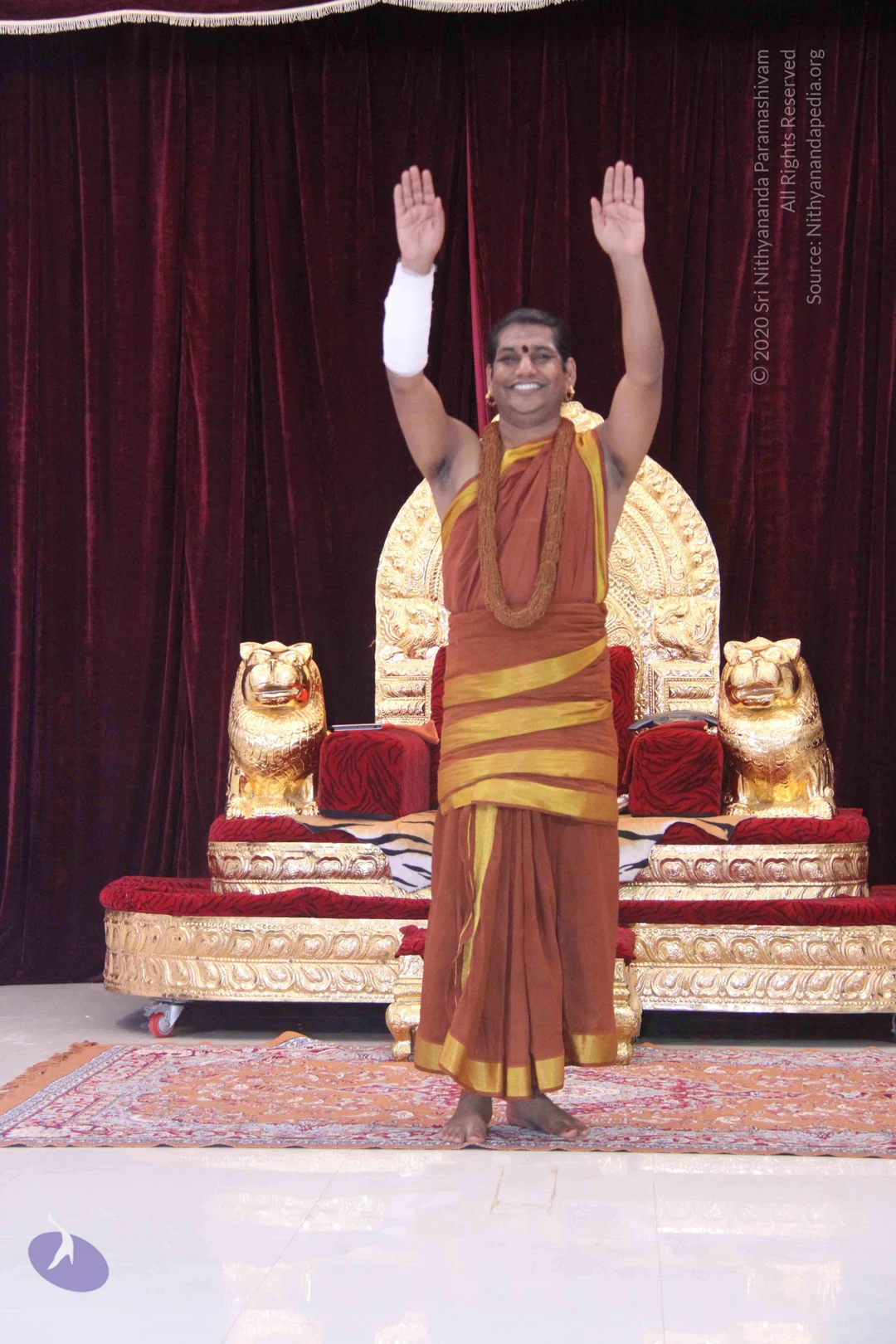
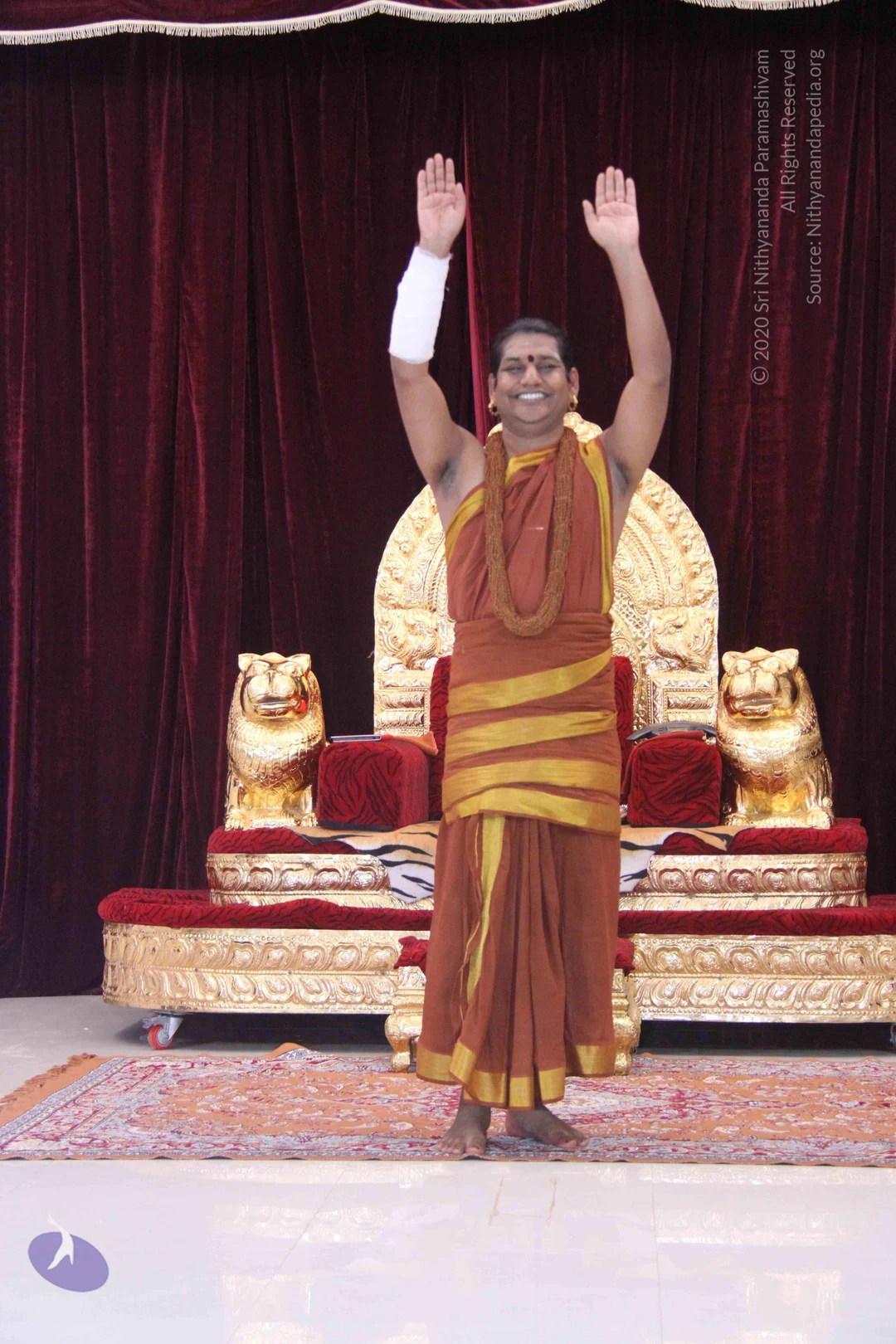
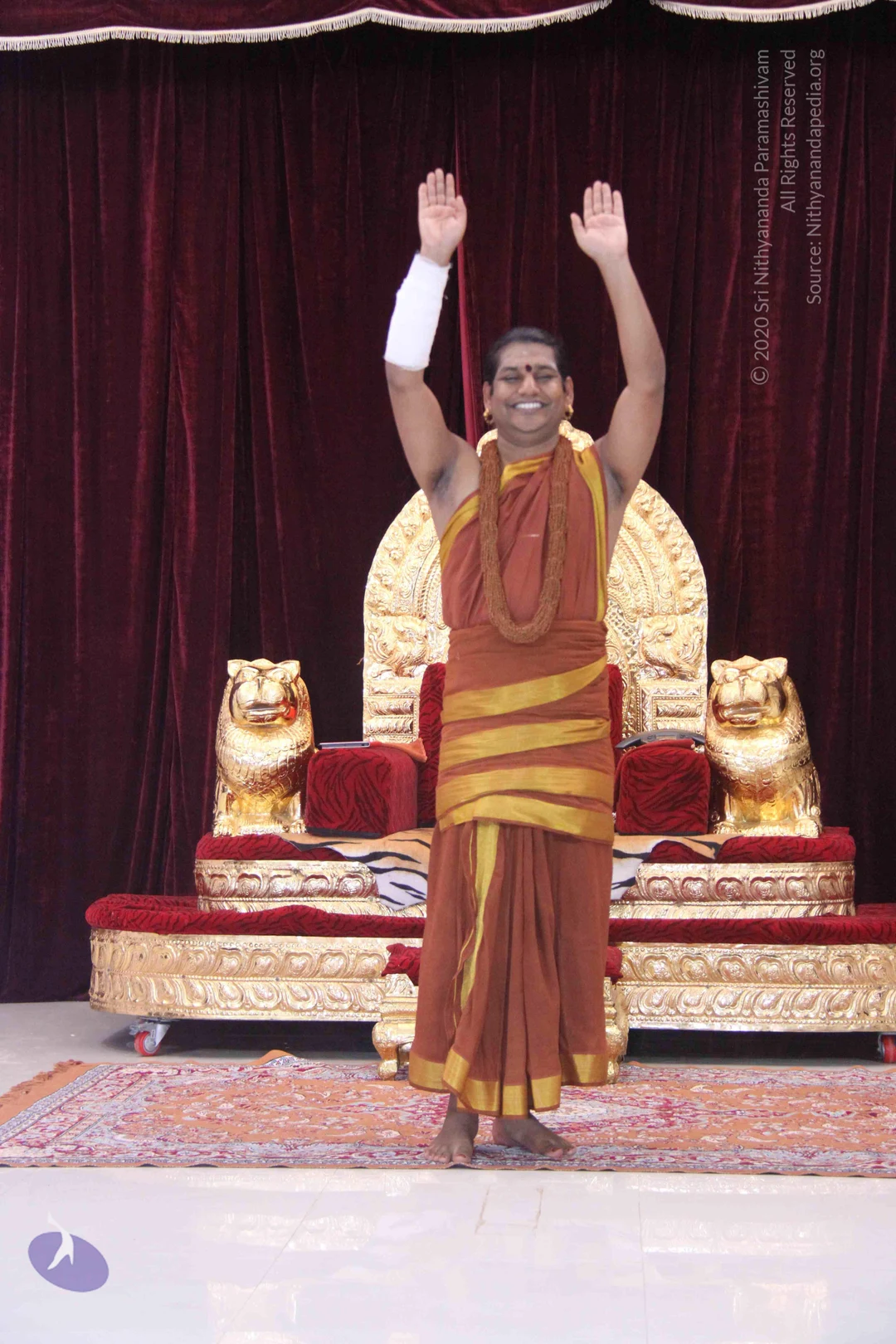
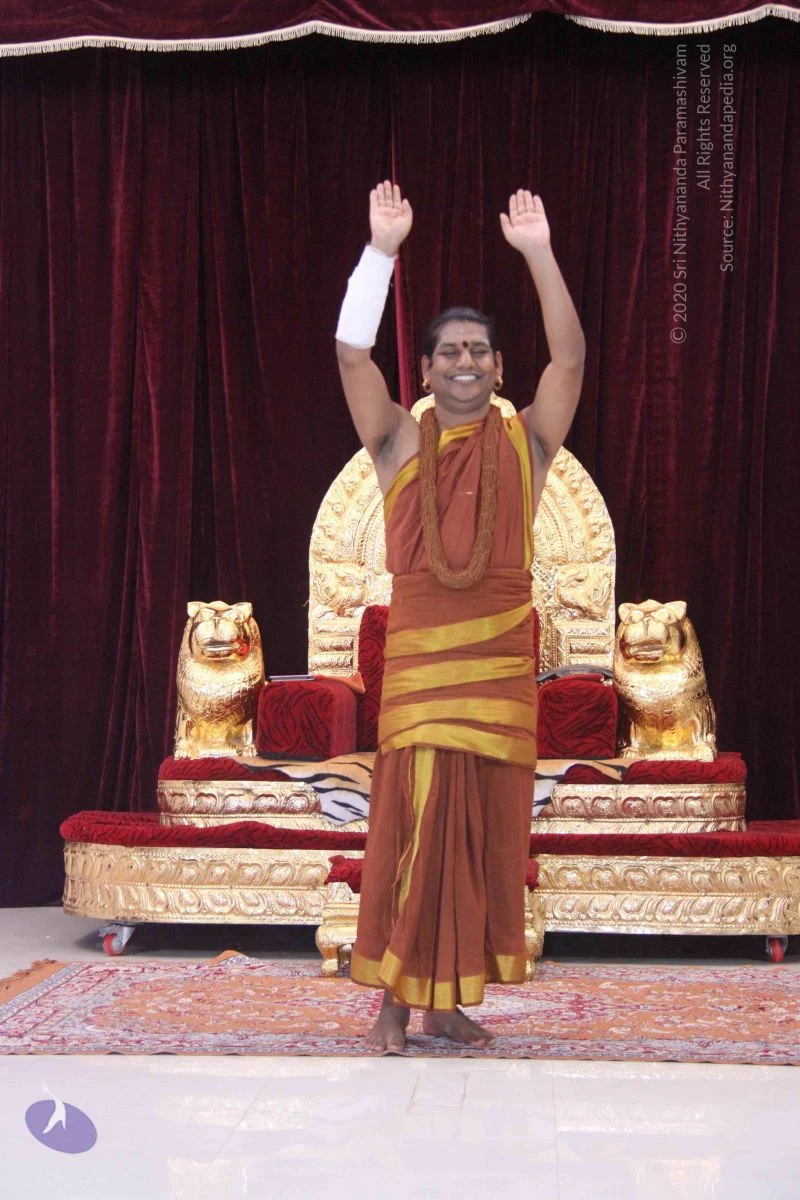
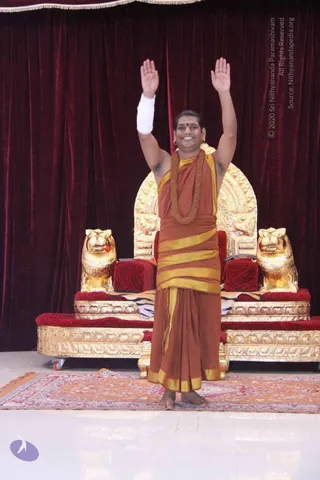
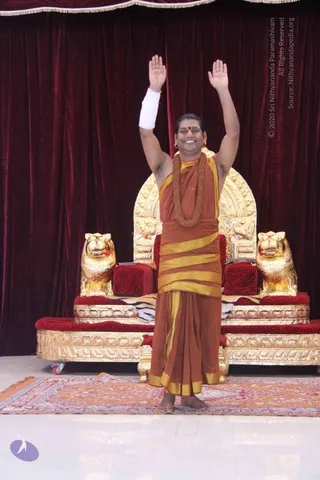
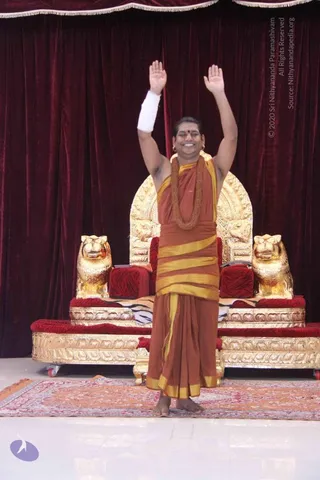
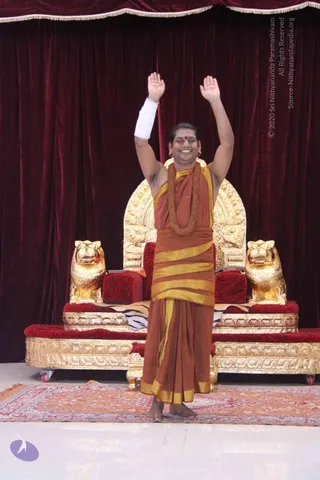
A photograph of a man standing barefoot on a patterned red-and-orange rug in front of an ornate golden throne with lion-head armrests and red velvet cushions, against deep burgundy velvet drapes. He raises both hands overhead, smiling, with a white bandage on his left wrist. He wears a rust-orange robe with gold borders wrapped at the waist, a rudraksha mala around his neck, and a red bindi on his forehead. a person: the appearance cues are a saffron-orange robe with gold trim, a rudraksha mala and a ceremonial stage setting in front of a golden throne, so this is treated as a probable in-person presence. The image is watermarked with an archive copyright notice in the upper right.A photograph of a man standing barefoot on a patterned rug in front of an ornate gold throne with carved lion-head armrests and red upholstered cushions, against a deep red velvet curtain. He wears a rust-orange robe with a gold-bordered sash wrapped at the waist and a rudraksha mala around his neck, with a red tilak on his forehead. He raises both arms overhead, palms open, and smiles; a white bandage is wrapped around one wrist. The person appears to be a person, identified by the saffron robe, rudraksha mala and throne setting.A man in a rust-orange and gold-bordered draped robe stands barefoot on an ornate patterned carpet, both arms raised with palms open and smiling. He wears a red bindi, gold earrings, a rudraksha mala and a white bandage on one forearm. Behind him is a gold-carved throne with lion-shaped arms, red upholstered cushions and a red velvet backdrop.A man in a rust-orange sannyasi-style wrap with gold-yellow borders stands barefoot on a patterned rug in front of a deep red velvet drape. He raises both arms overhead, palms open, smiling broadly, with a rudraksha-style beaded mala around his neck and a white bandage on his left wrist. Behind him stands an ornate golden throne with lion-head armrests and red cushions. a person: the orange robes, long-style mala and ceremonial throne setting are the appearance-based cues here. Only one physical person is present.

Inner Awakening-day6-banyan tree session
15 photosSource gallery
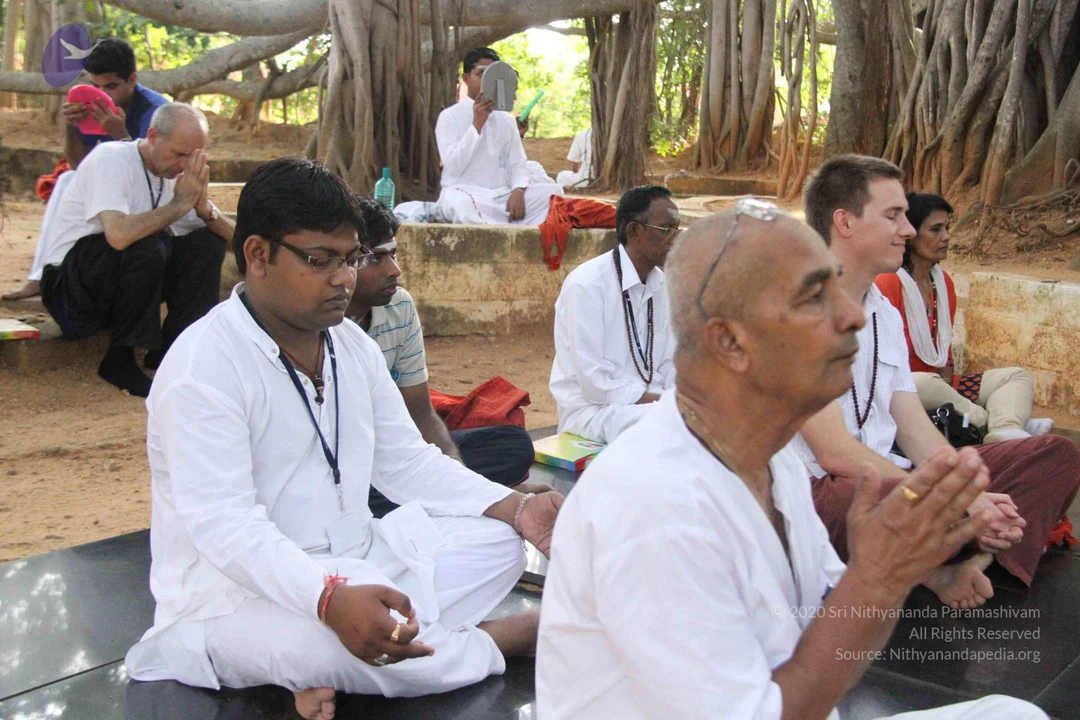
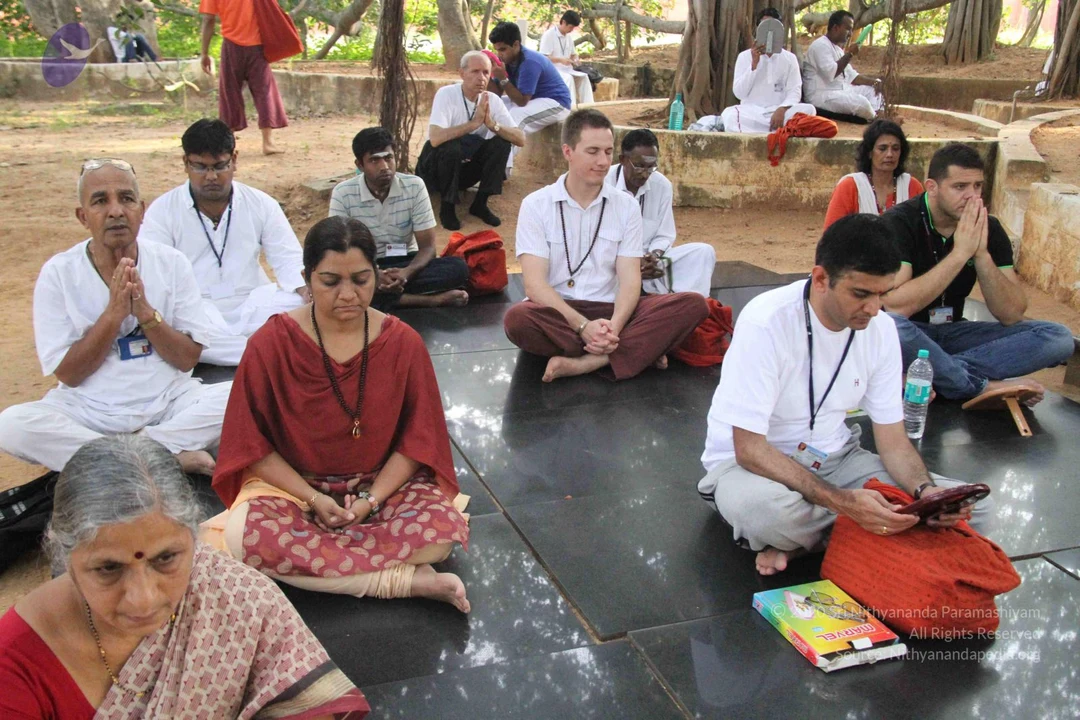
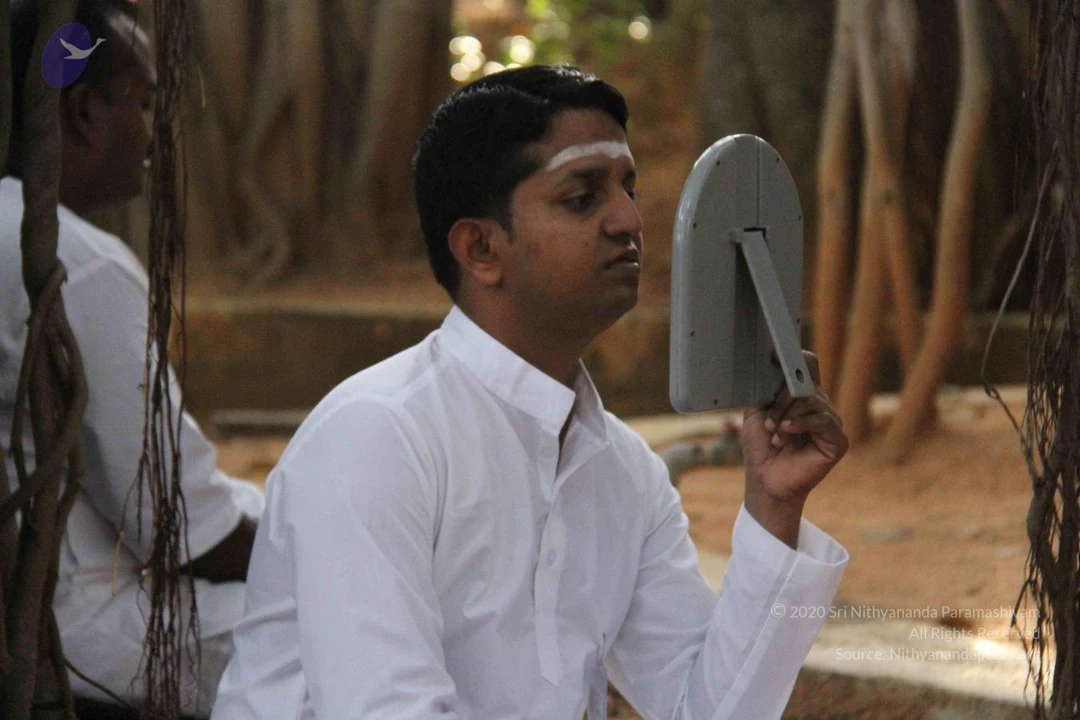
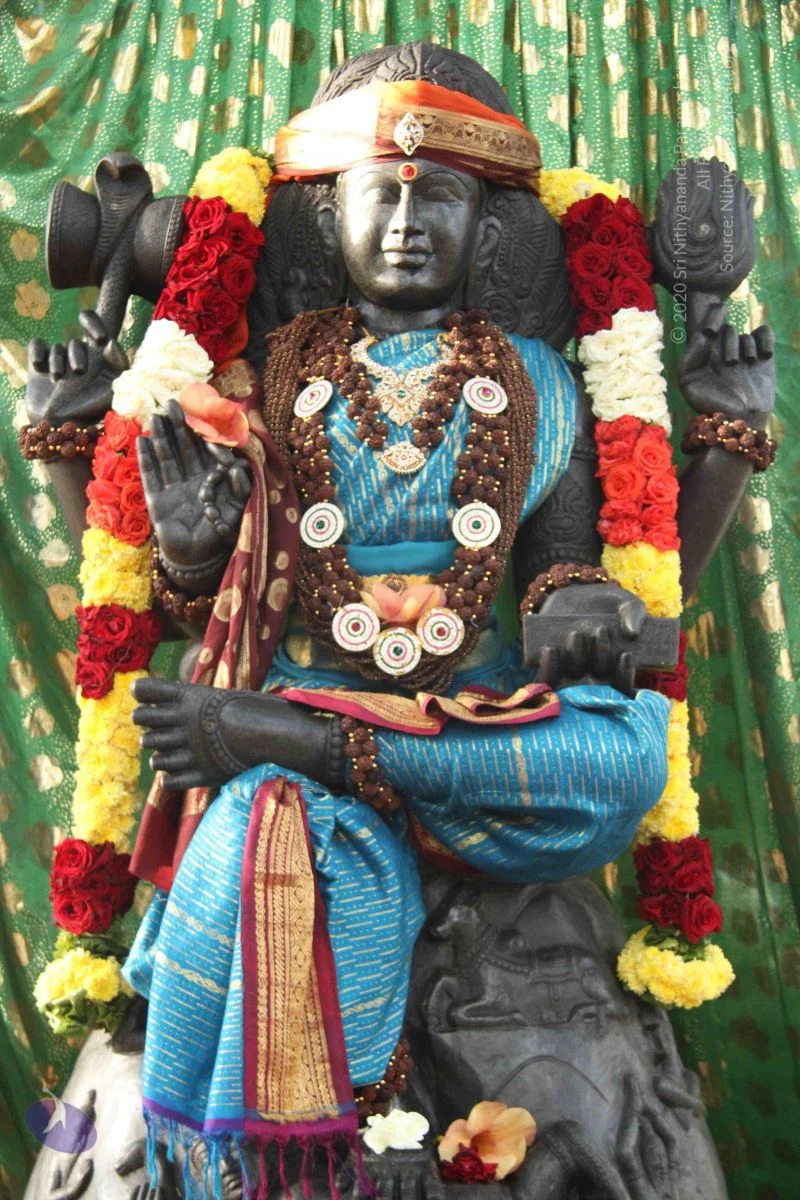
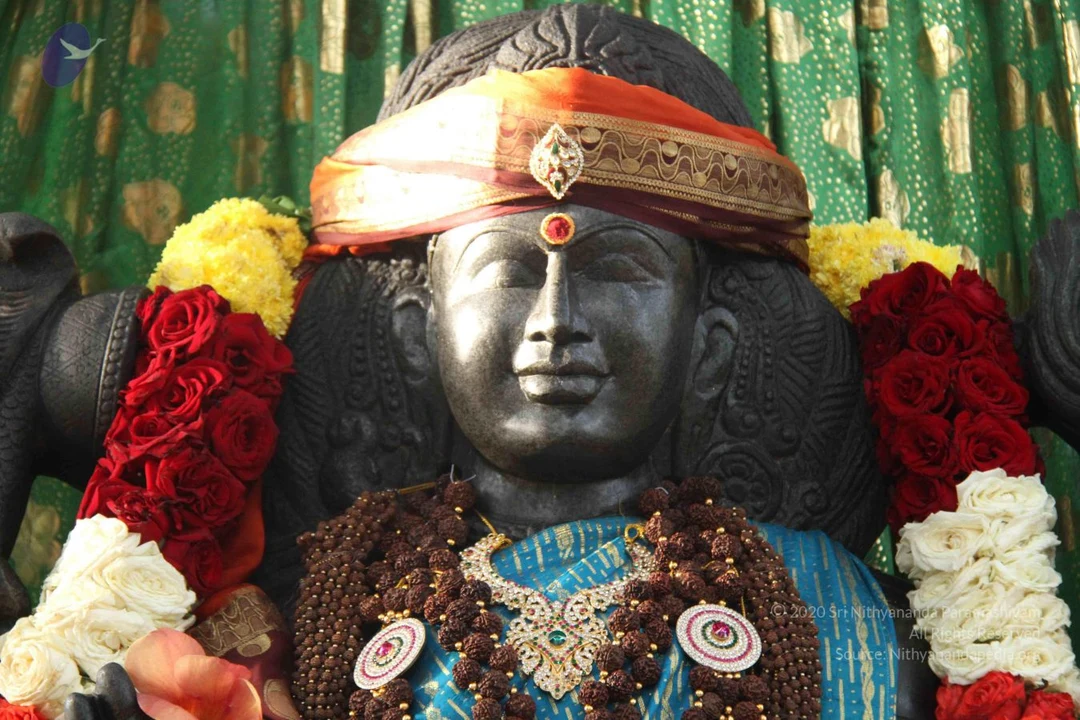
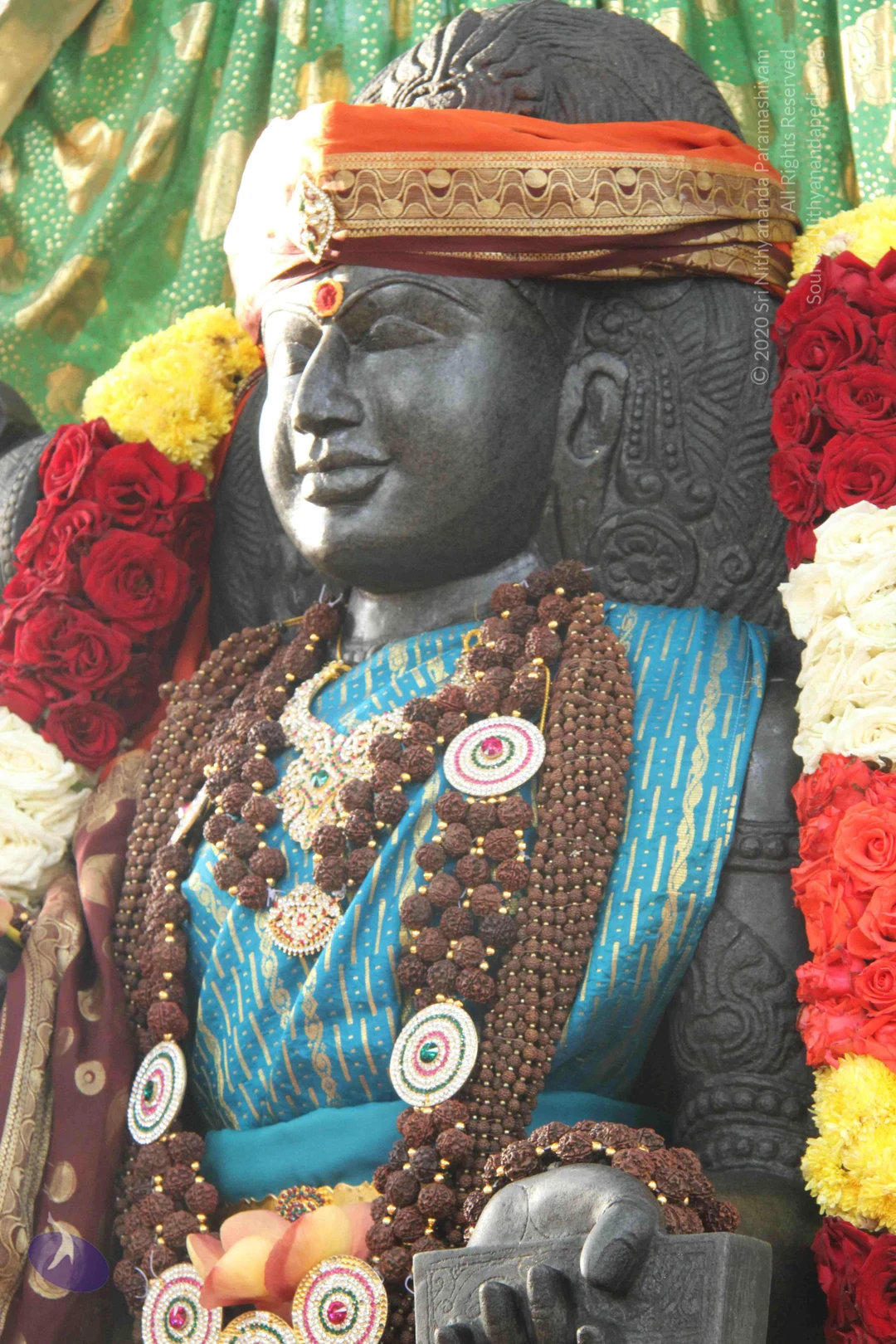
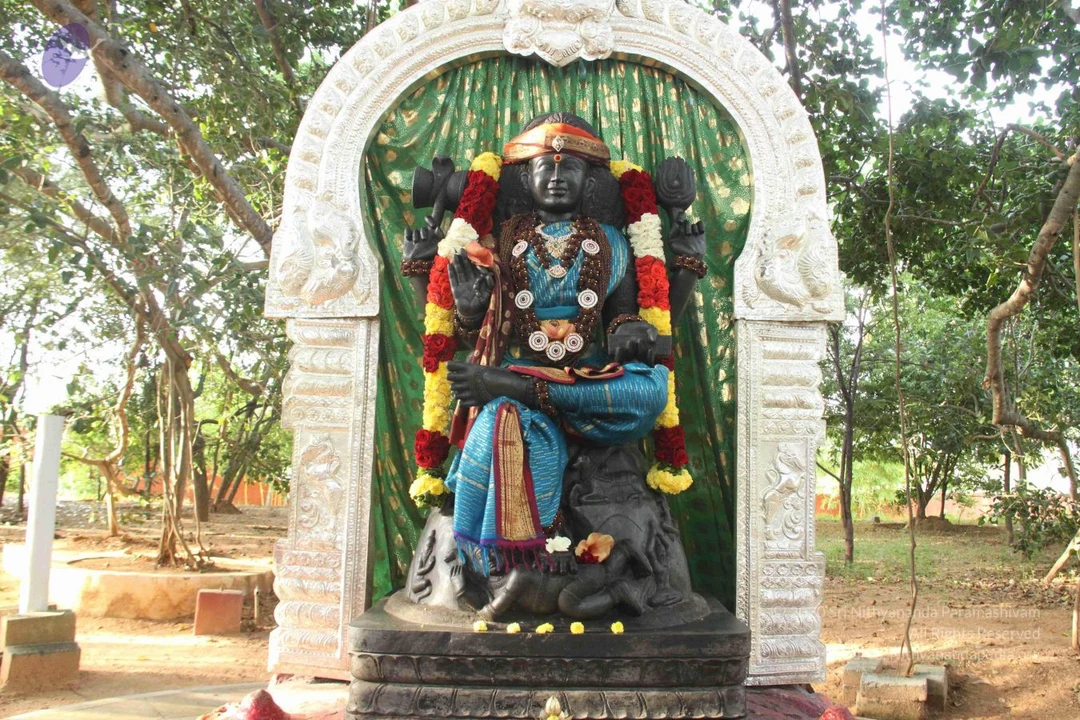
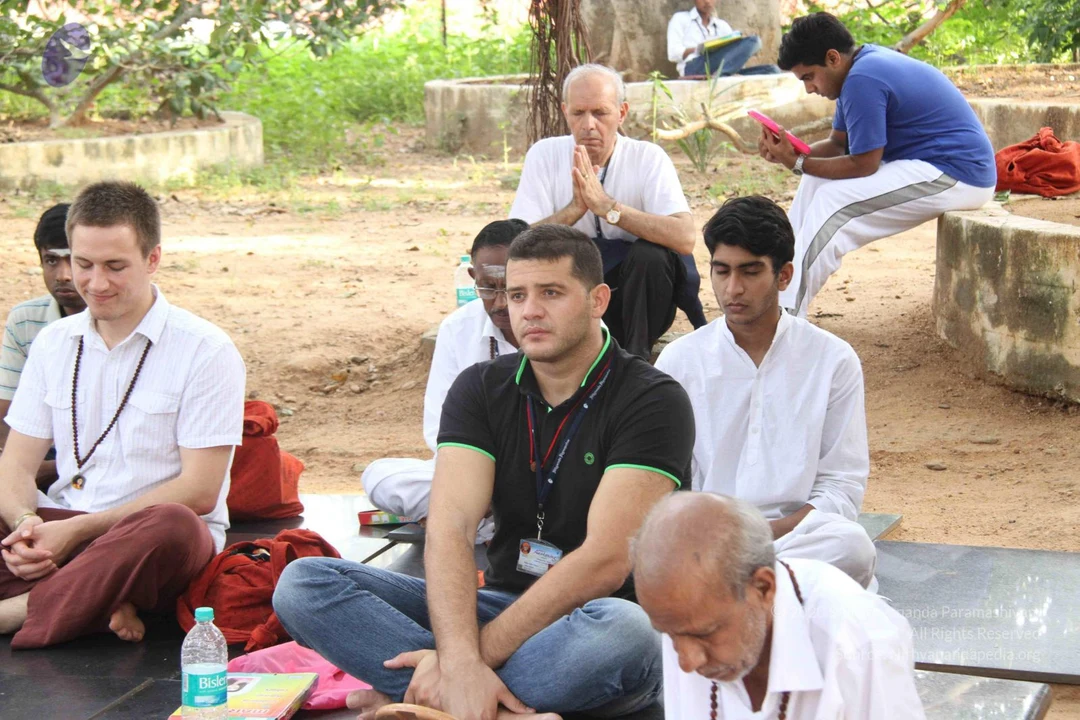
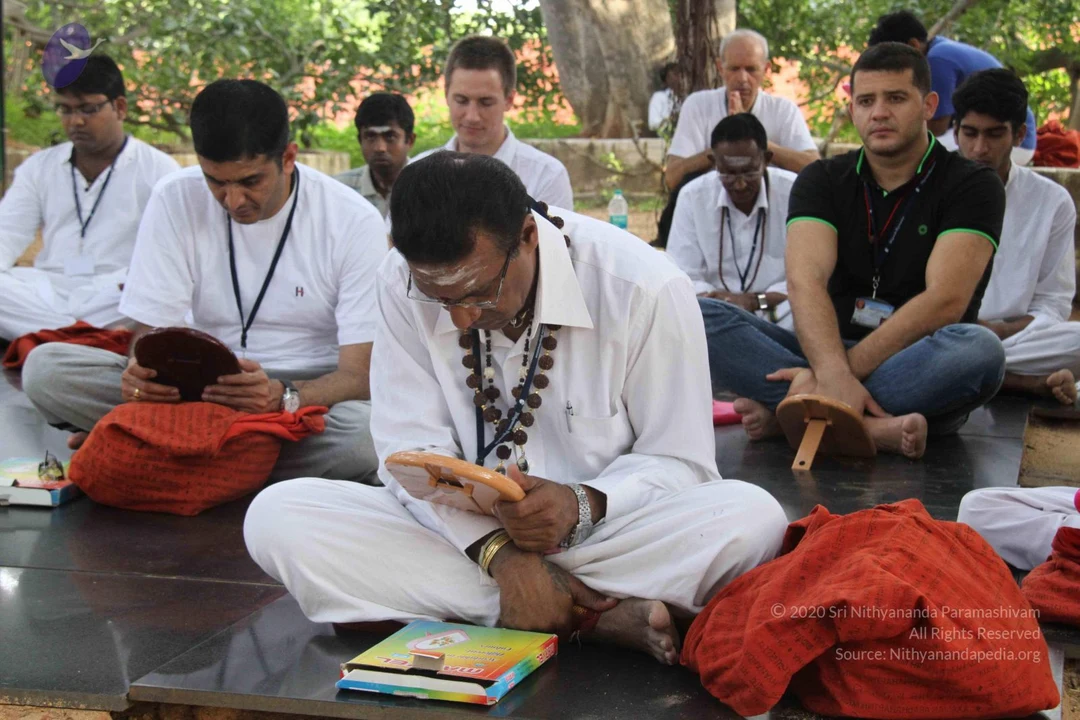
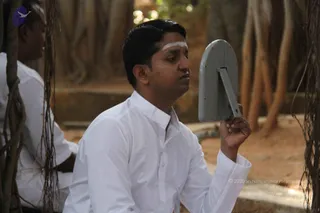
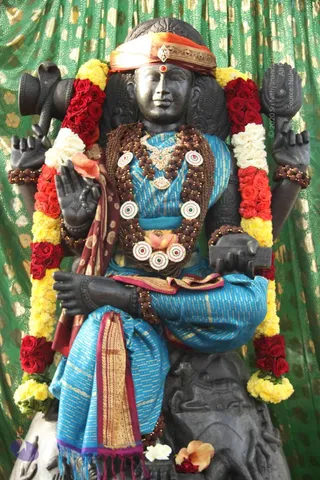
A close-up photograph of yellow wildflowers in a garden, with a single bright yellow flower with eight petals and a dark centre in sharp focus at centre. Many smaller yellow and orange blossoms, unopened buds and feathery green leaves fill the background, with a sandy earth bank and dark foliage behind. No people are visible.Devotees sit outdoors on a raised dark stone platform beneath large banyan tree roots, eyes closed in meditation or prayer. In the foreground a bald older man in white clothes and a rudraksha mala holds his palms together in anjali mudra. Beside him a young man with short hair wears a white kurta and rudraksha beads, hands folded. Next to them a woman in a red top and white shawl sits with palms joined. Behind them a man in white kurta with a lanyard and another in white with beads sit with hands joined, and a man on the left with a pink cloth and white clothes bows his head. Red cloths, a green water bottle, and a book lie on the stone.A photograph of a seated group of devotees meditating outdoors under large banyan trees on a dark stone platform. Foreground: a grey-haired woman in a red sari with a red-and-gold border and a red bindi, eyes closed, hands in anjali mudra. Beside her, a woman in a red shawl and pink patterned sari with a rudraksha mala, hands folded. A young man in a white shirt and maroon trousers with a rudraksha mala sits cross-legged with hands clasped. At right, a man in a white shirt holds a red-and-brown book, and a man in a black shirt sits with hands in namaste. Behind them, several people in white ritual clothes and ID lanyards sit in meditation, and an orange cloth bag lies on the platform. Scattered orange cloths and water bottles appear around the group.Photograph of a man in a white shirt with a dark lanyard and a rudraksha-style bead pendant, seated on bare ground with eyes closed in meditation. Beside him sits another man in a striped white and blue polo shirt, eyes open, with a red cloth nearby. Behind them, a man in white with hands pressed together in añjali stands at left, and a teal water bottle sits on a low concrete ledge. The setting appears to be an outdoor satsang or meditation gathering.A man in a white kurta sits outdoors among banyan tree roots and hanging aerial roots, holding a small grey hand mirror up to his face with his right hand. He has a white horizontal forehead mark (vibhuti or tilak) and short dark hair. Behind him, a blurred second person in white sits on the left, and the background shows large banyan trunks and reddish earth. The scene appears to be a quiet ashram or outdoor sitting area. No recognizable a person candidate is shown.A dark stone murti of a four-armed deity is seated on a rock base in front of a green curtain with gold dots. The figure wears an orange-red turban-like headband with a red gem, a blue and maroon dhoti-style drape, and layered rudraksha malas with a gold ceremonial necklace and white-and-red medallion ornaments. Garlands of red roses, white flowers and yellow marigolds drape the statue. Its raised hand displays abhaya mudra, another hand holds a small drum-like object, and a carved bull is visible at the base. Two loose flowers lie at the foot of the murti.

Inner Awakening-day6-darshan
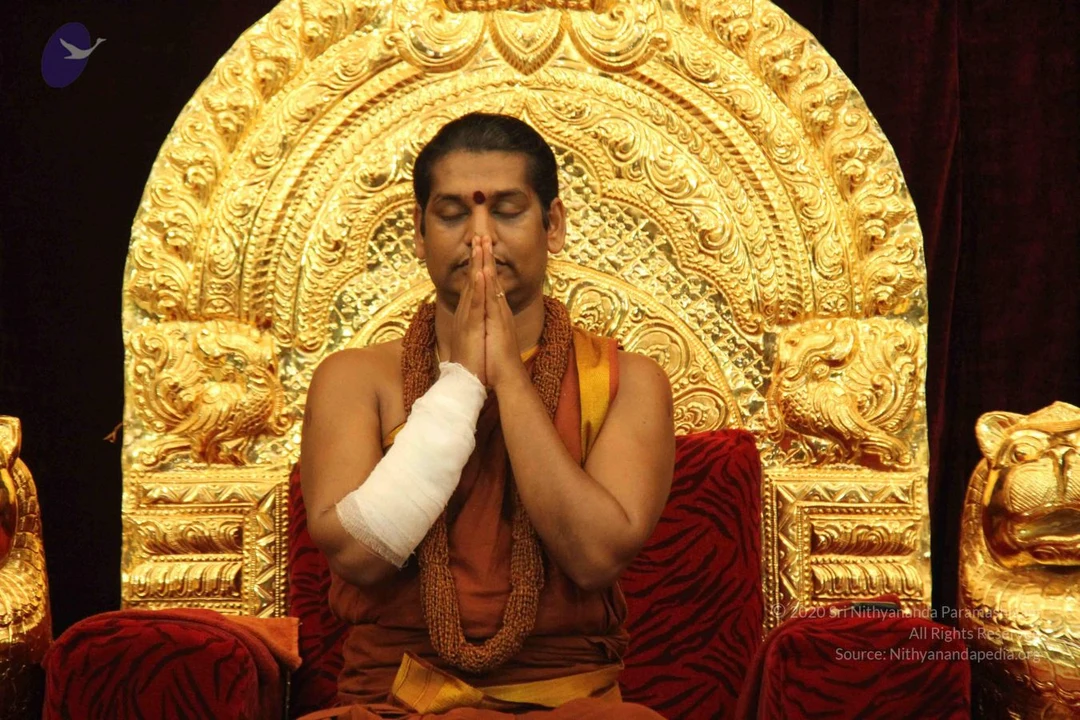
19 photosSource gallery
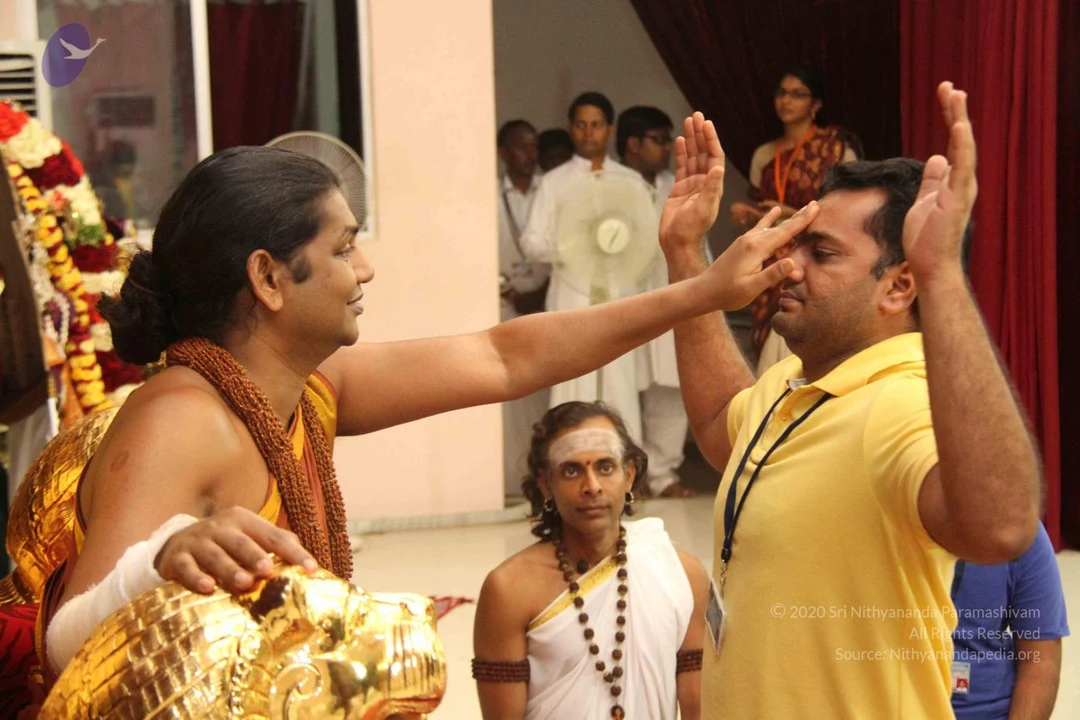
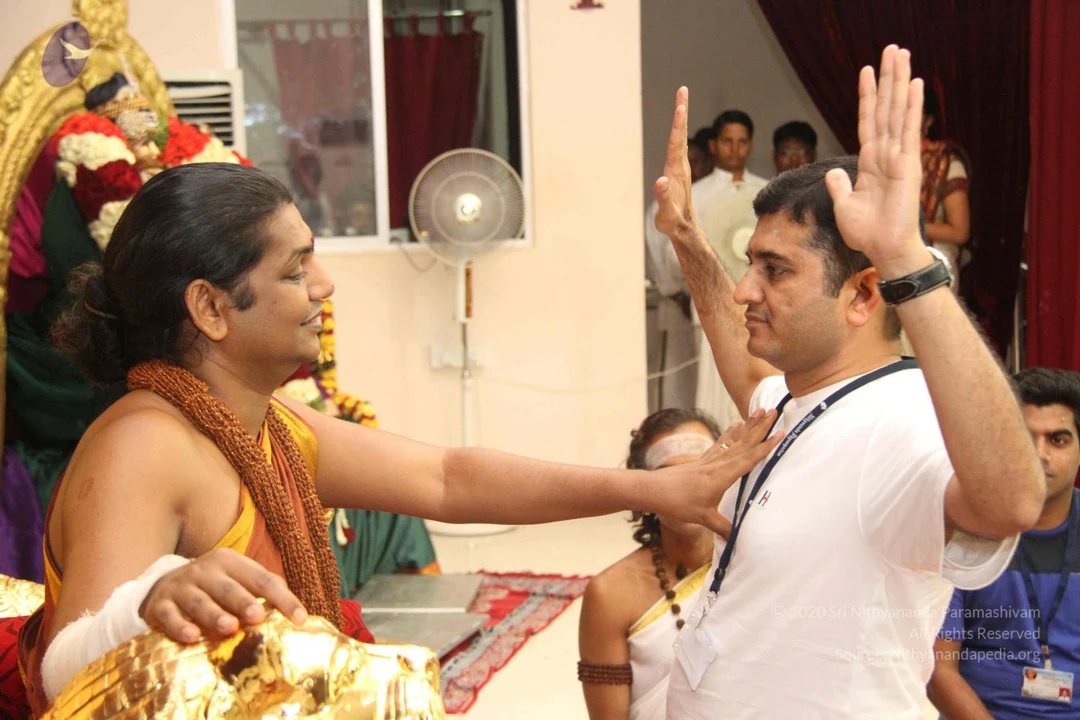
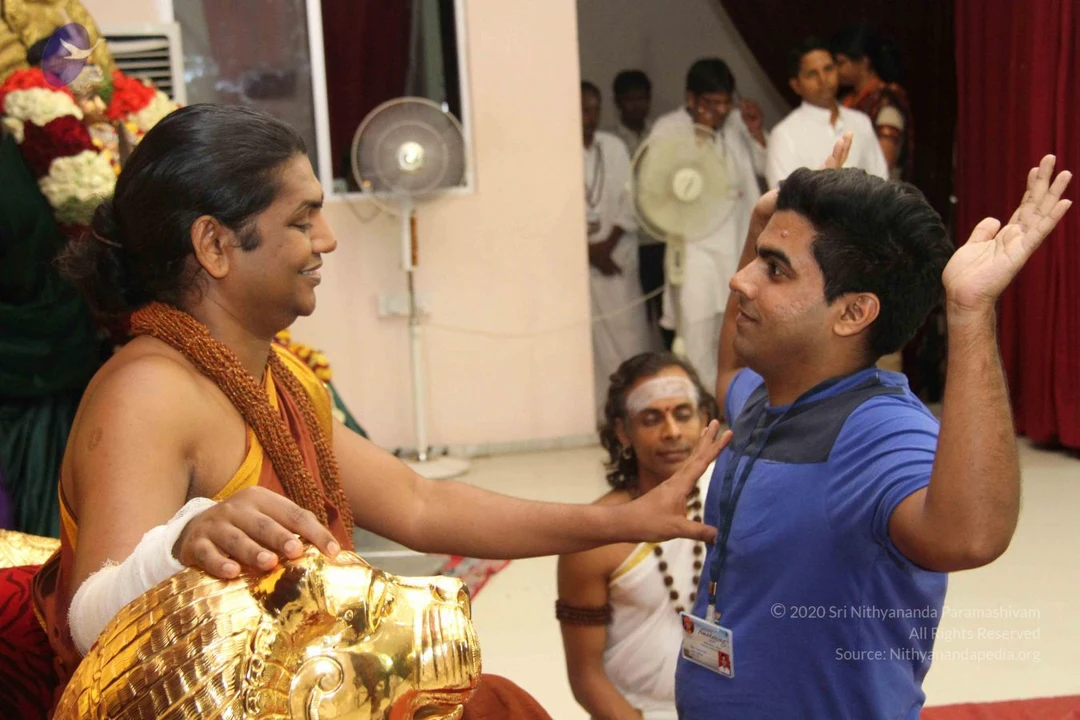
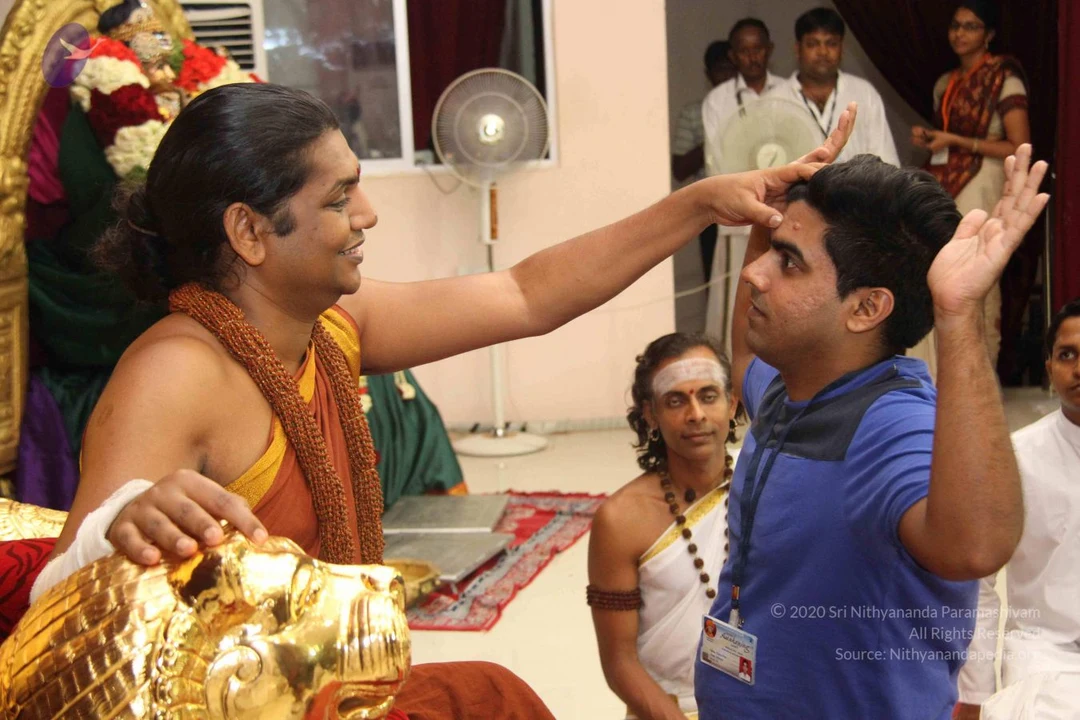
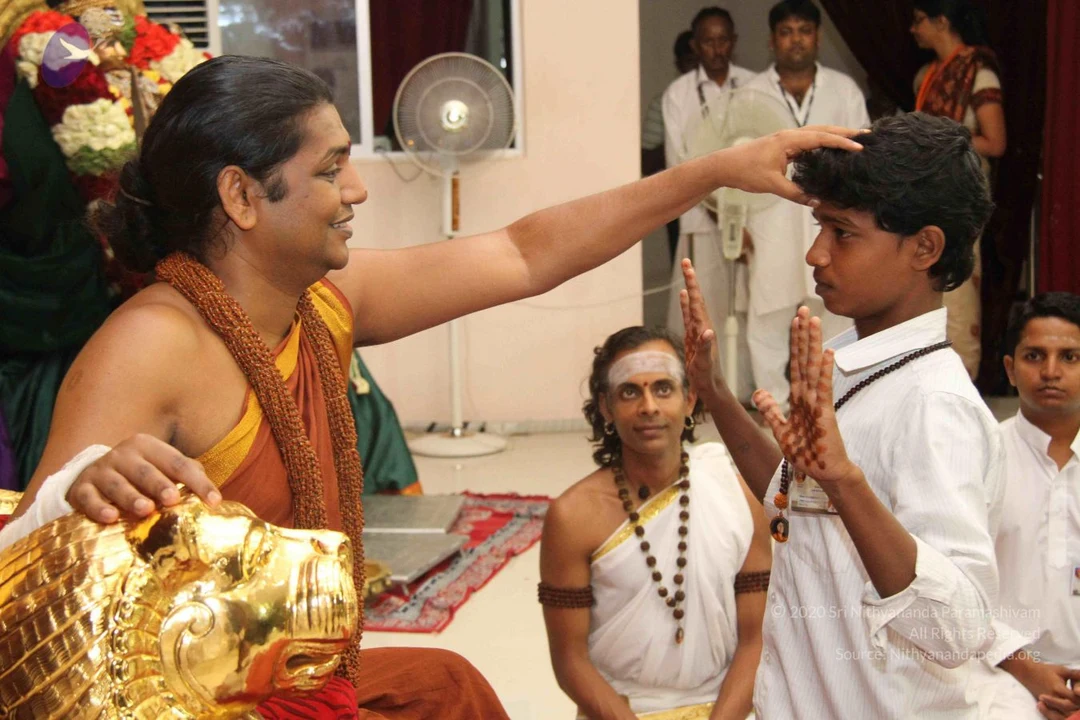
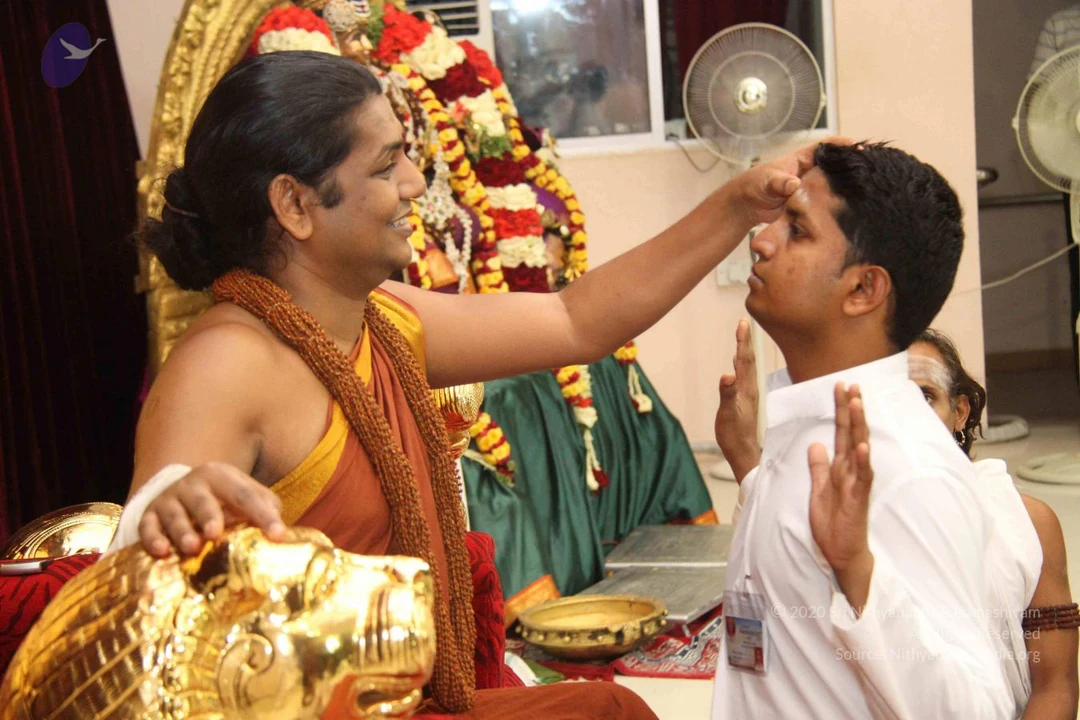
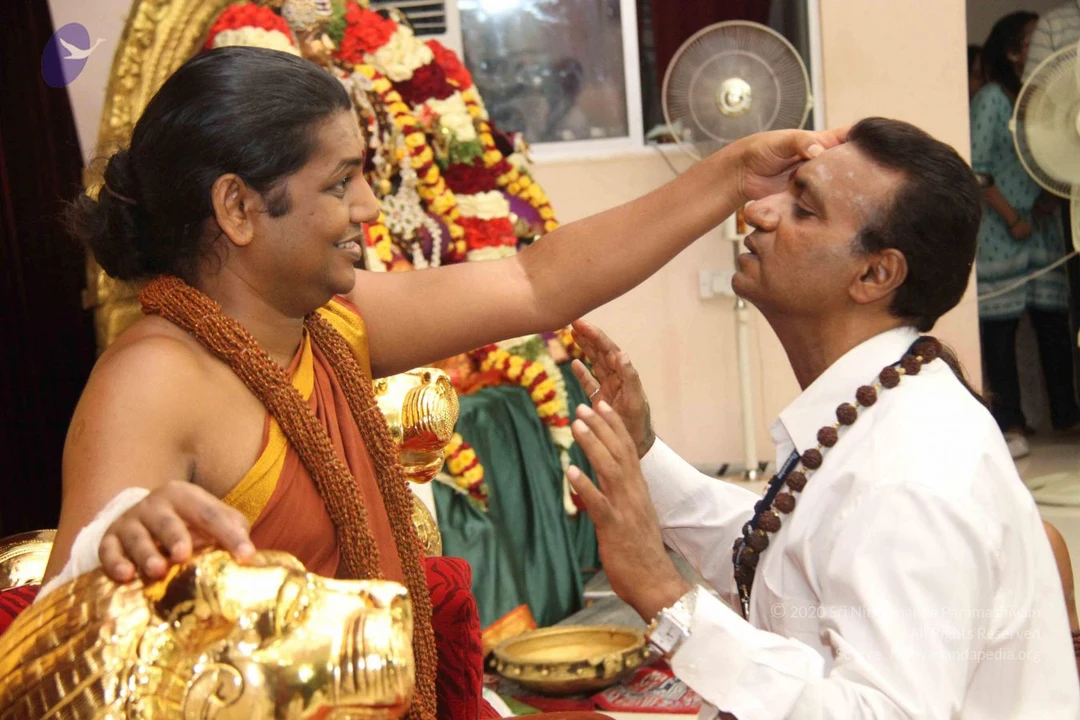
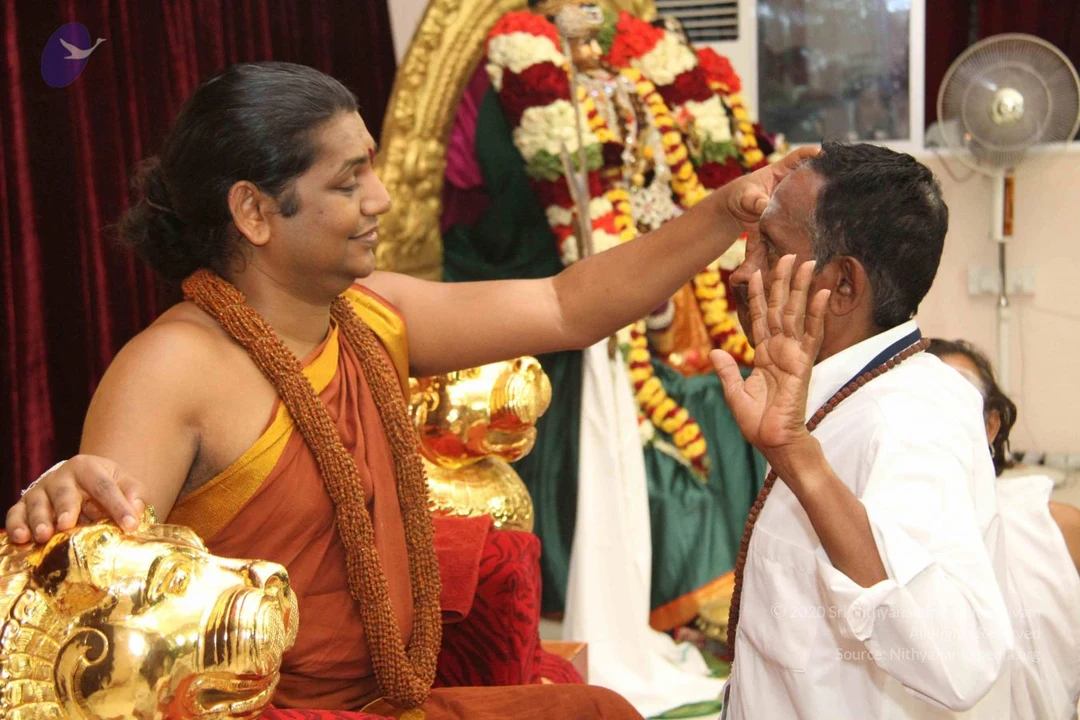
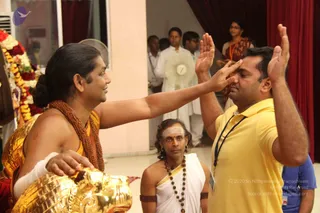
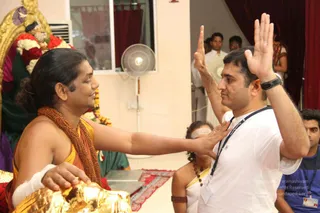
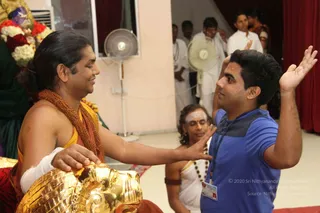
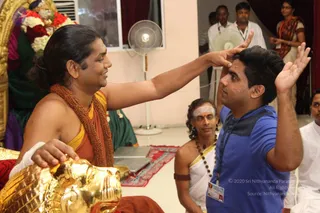
A man seated on a red and black tiger-striped cushioned throne in front of an ornate gold arched backdrop with carved lion heads on the sides. He sits with eyes closed and palms pressed together in namaskar. He wears an orange-red robe with a yellow sash, a long rudraksha mala, a red bindi on his forehead, and a white bandage wrapped around his right forearm. a person: the seated figure has short dark hair, a red bindi, rudraksha mala and saffron-orange robes, consistent with the page's a person reference, though the cues are moderate. Dark red drapes frame the background.A seated man with a red bindi and swept-back hair sits in a richly carved gold throne with lion-head armrests against a dark red curtain. He wears a saffron-orange garment with a gold-edged shawl, a rudraksha mala, and a white bandage on his left forearm. His palms are pressed together in a namaste gesture. a person: the presence of a rudraksha mala, saffron clothing and a gold throne are consistent with the page's claim, though the appearance cues are only partially distinctive.A photograph of a seated figure with long dark hair in a low bun, bare-chested with a saffron-orange and gold cloth draped over the body, wearing a long rudraksha mala. The figure extends a right hand toward the forehead of a man in a yellow polo shirt and a lanyard, who raises both palms in a gesture of reception. A gold-coloured ornamental vessel rests on the seated figure's lap. Behind them, a bald man in white robes with a white forehead band and rudraksha beads sits, and a woman in a red and orange sari and other people in white stand near a red curtain, with floral garlands at the left edge.A seated man with swept-back long dark hair, wearing an orange-gold cloth and a rudraksha mala with a golden ceremonial necklace, extends his hand toward a man in a white t-shirt with a navy lanyard who raises both hands with palms open. Another man in white stands behind them, and a woman in a yellow-gold sari with rudraksha beads sits to the right. A floral garland decorates a deity murti or altar at left, with red curtains behind.Indoor ashram scene. A bare-chested man with long hair pulled back, wearing an orange-brown wrap and a thick rudraksha mala, sits on a gold-and-red seat and reaches out to touch the raised hand of a young man in a blue polo shirt with an ID lanyard. Behind them, an older man in white with a white forehead band and beaded necklace sits, and several people in white clothes stand near a red curtain, a standing fan and a floral garland. A white bandage is wrapped around the seated man's forearm. a person: the seated man in orange-brown with long swept-back hair, rudraksha mala and gold-trimmed seat matches visible presentation cues, though the image is unclear enough to hold this as an appearance-based label only.A photograph of an indoor ritual setting. A man with long dark hair, wearing an orange-red shawl over a bare chest, a rudraksha mala and a heavy gold-coloured necklace, sits on a gold-tinted seat with a golden lion-head armrest and extends his right hand to touch the forehead of a younger man in a blue t-shirt with a lanyard badge, whose hands are raised. Behind them a garland of red and white flowers decorates a gold frame, and a green cloth hangs nearby. A second man seated to the right wears white with a white vibhuti line on his forehead and a rudraksha mala. A standing man in white and a woman in an orange sari stand in the background beside a pedestal fan.

Inner Awakening-day6-session
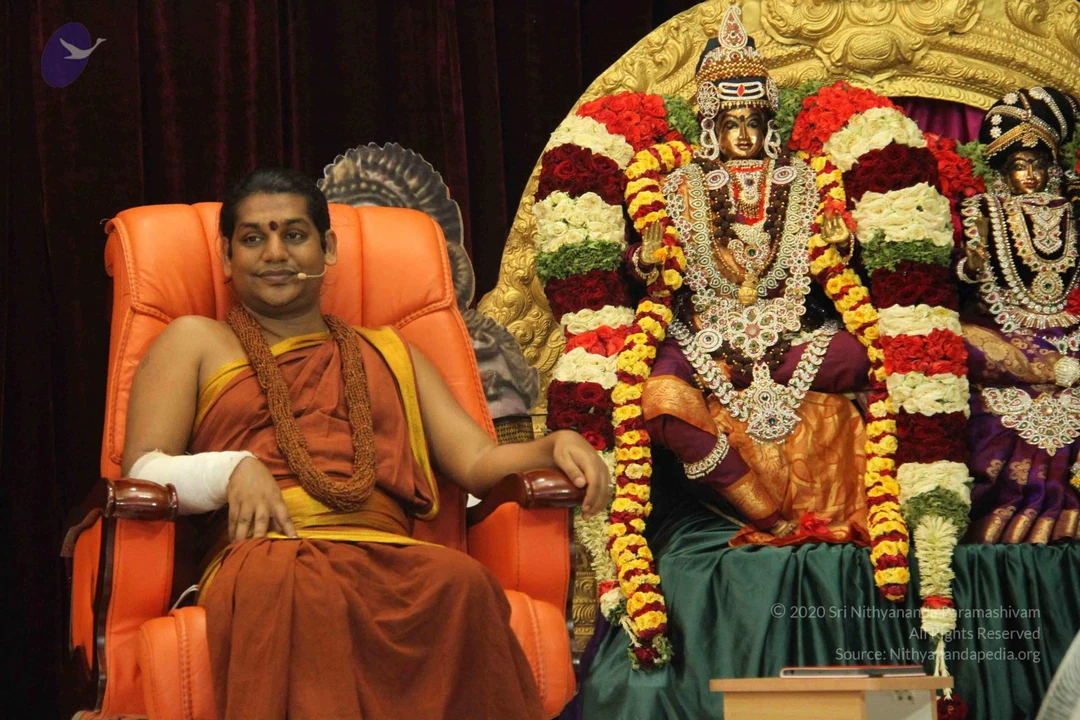
1 photoSource gallery
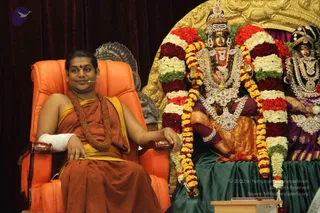
A seated man in saffron-orange robes with a gold-and-yellow sash and a rudraksha mala sits in a bright orange leather chair on stage, with a white bandage on his left forearm and a small headset microphone at his ear. Beside him stands a large deity murti adorned with red and white flower garlands, a gold crown, and jewelled necklaces, and a second adorned murti in purple silk with a jewelled crown sits to the right. A dark maroon curtain forms the backdrop and a small wooden lectern sits at the front. Appearance is consistent with a person seated as speaker, with the saffron clothing and rudraksha mala as cues.

Inner Awakening-day6-Dinner and temple session
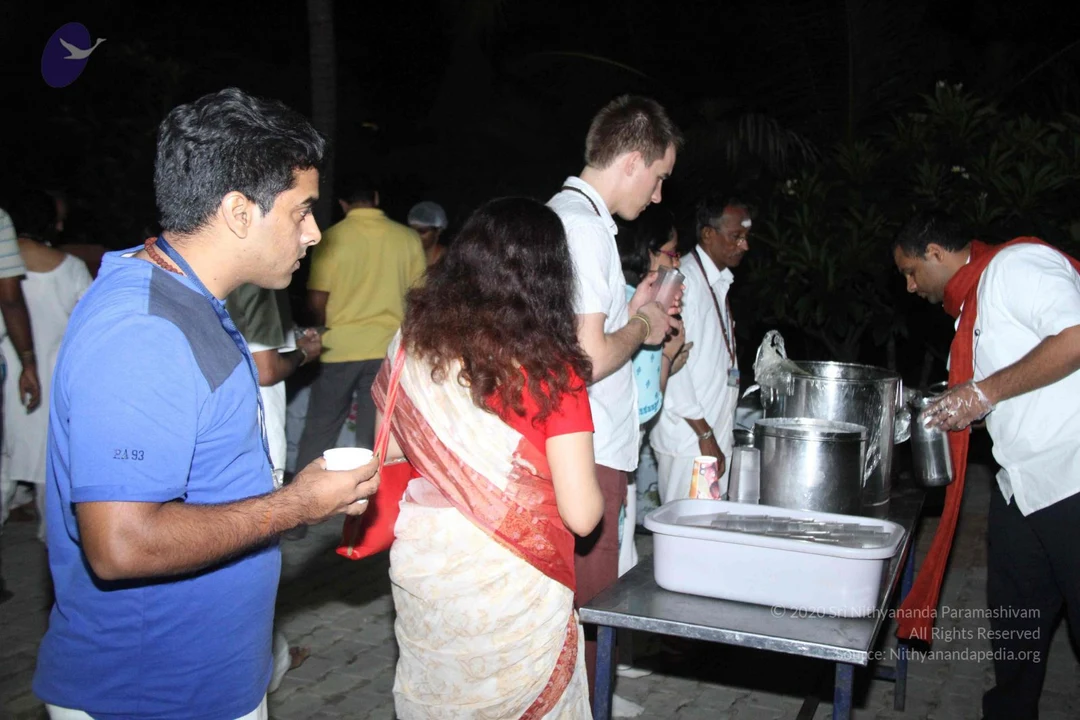
14 photosSource gallery
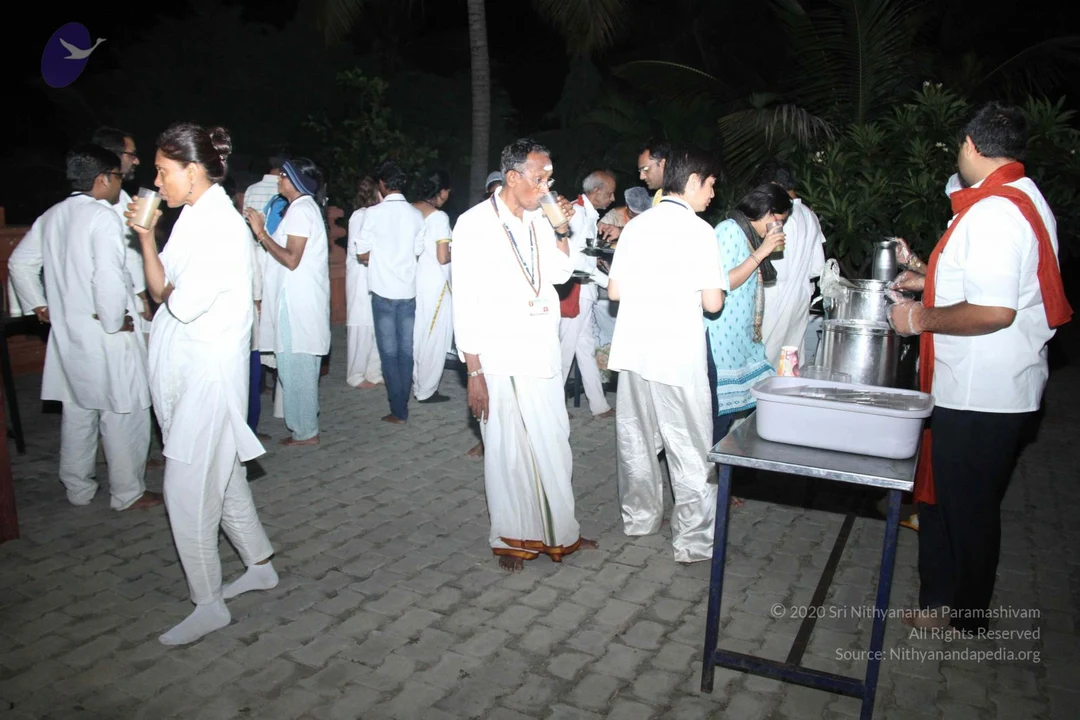
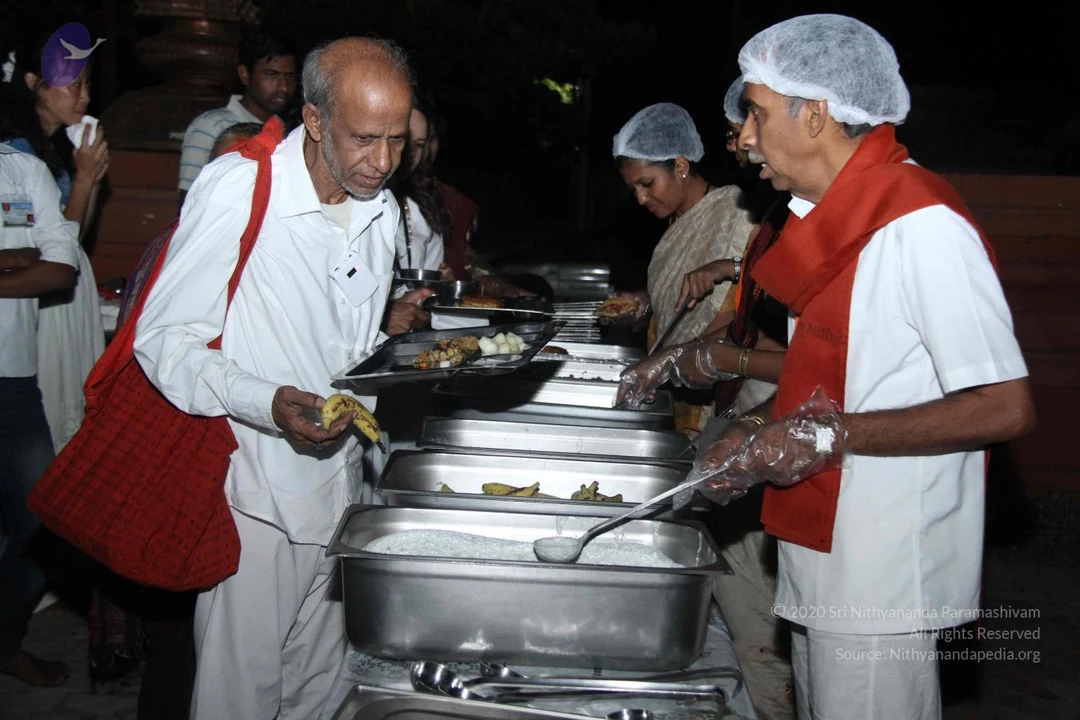
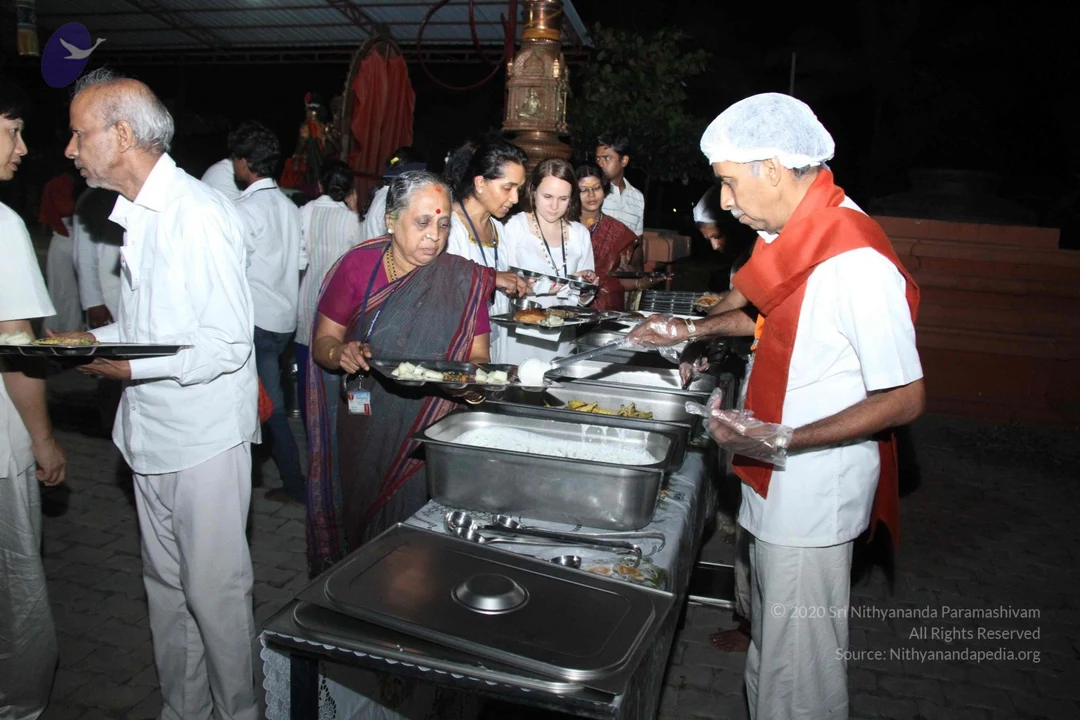
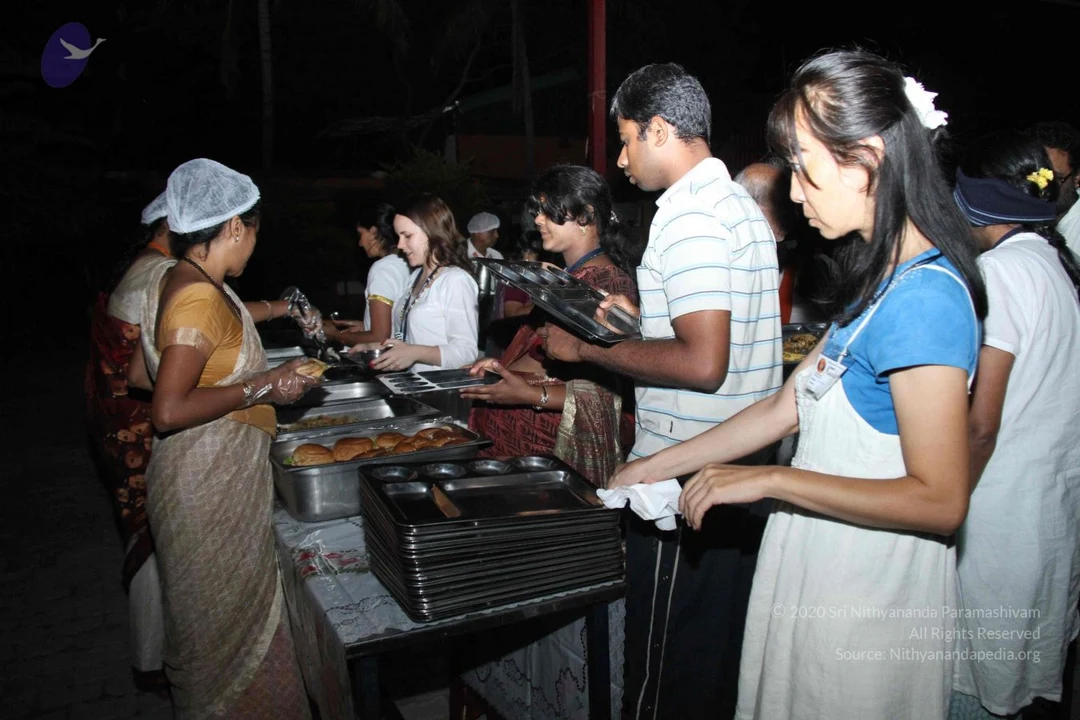
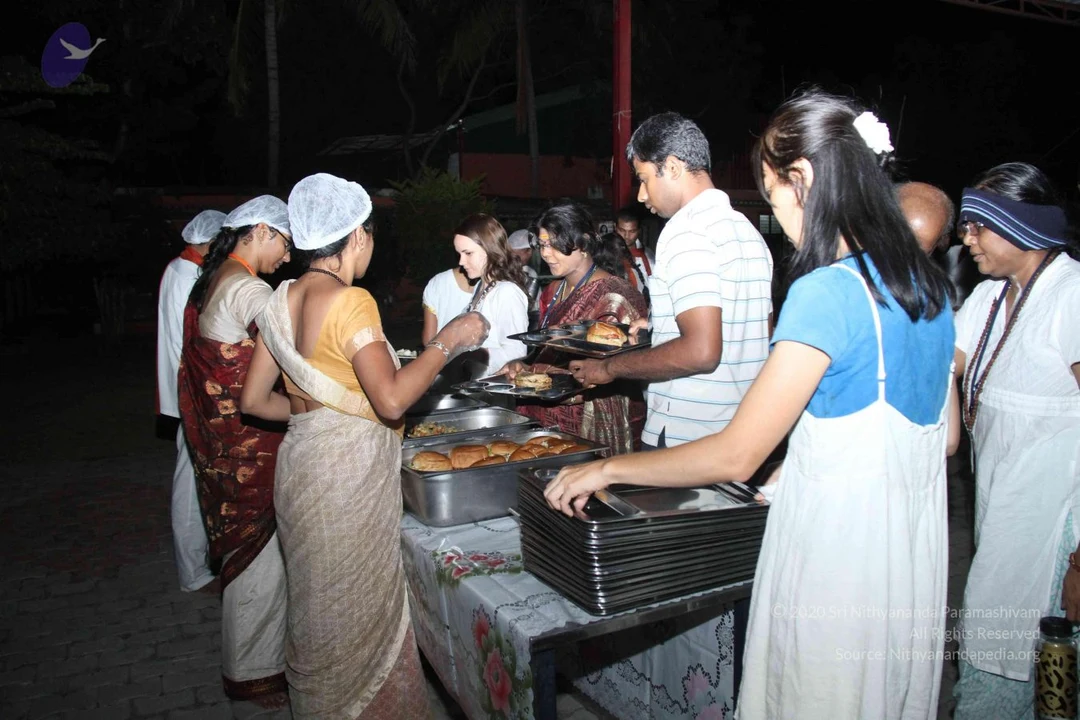
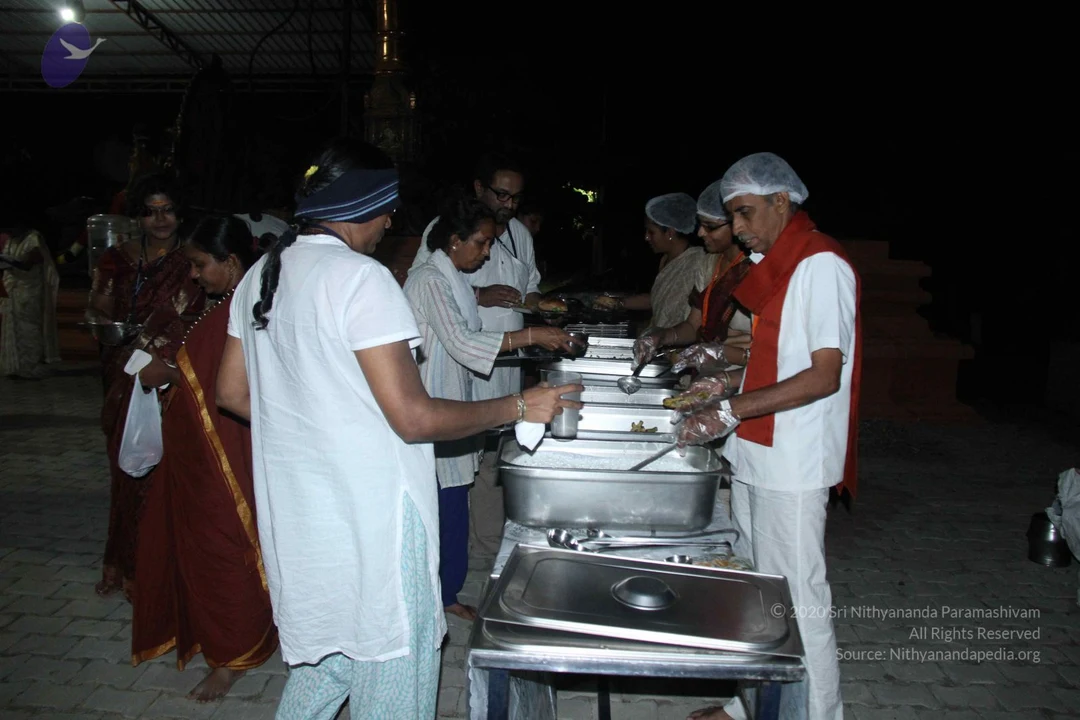
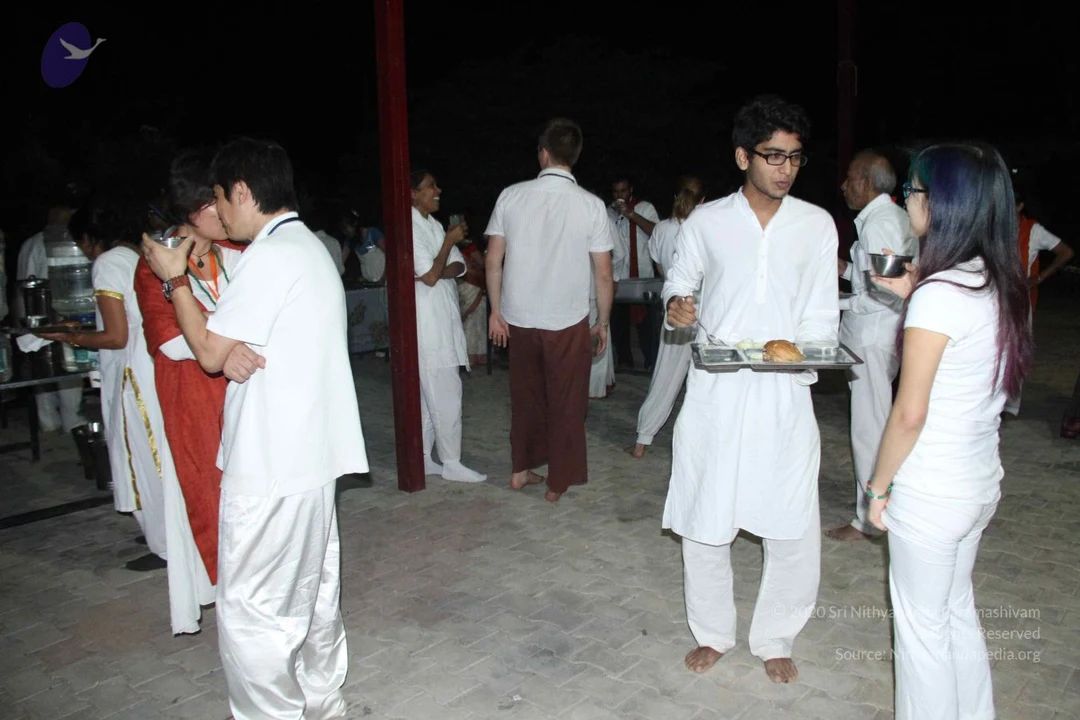
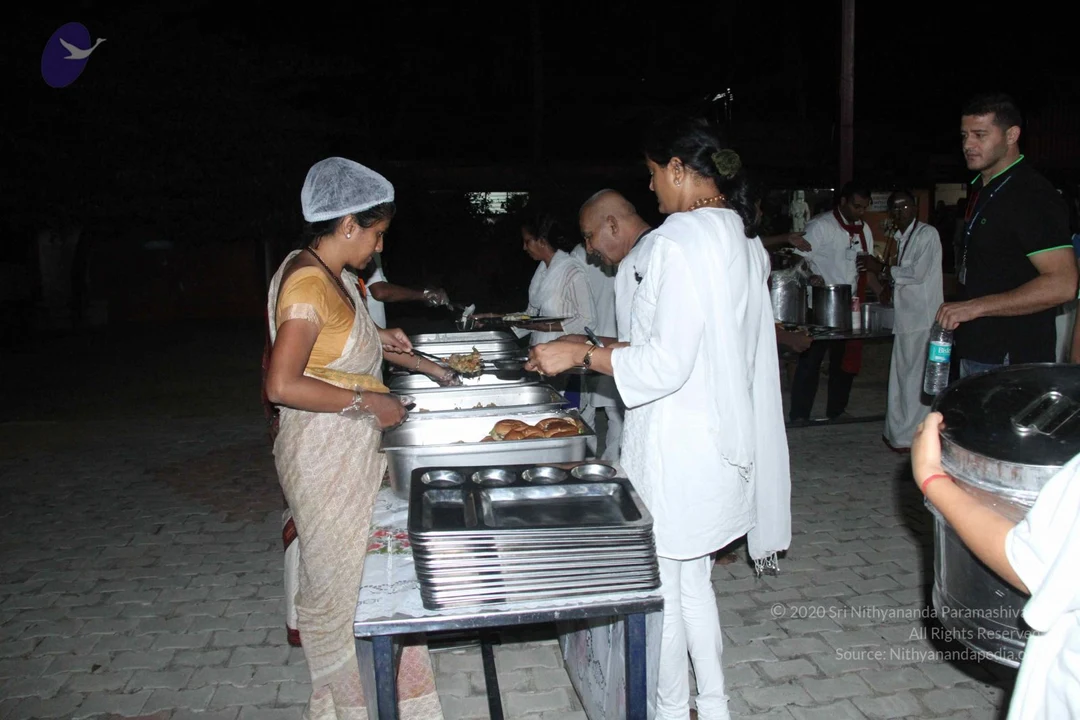
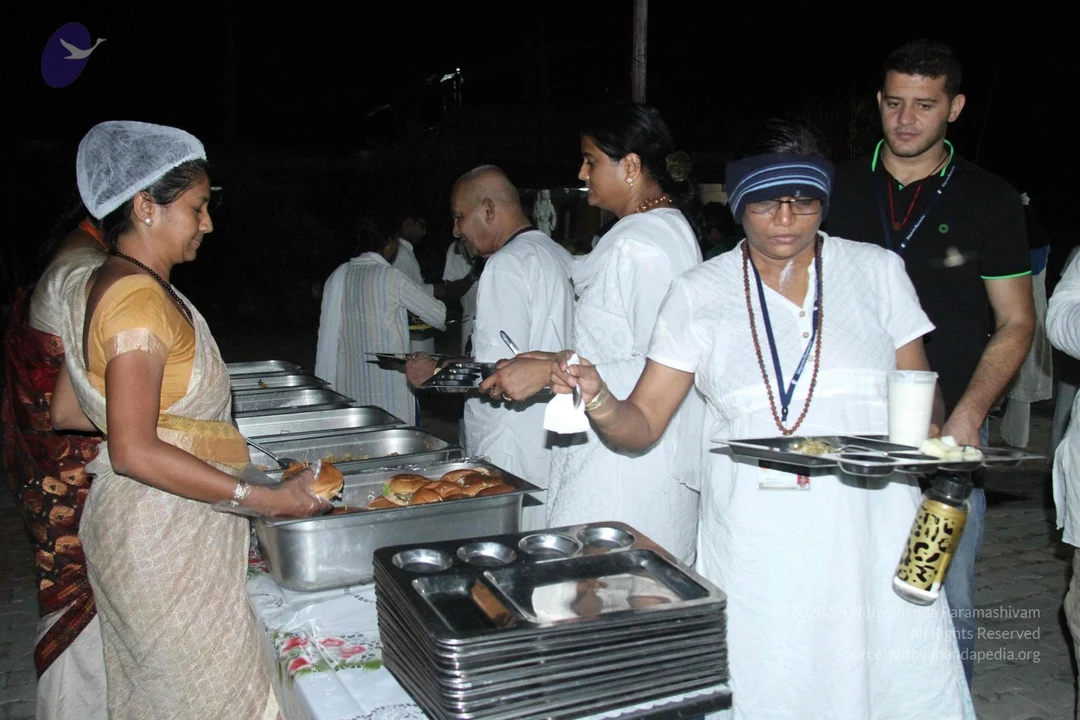
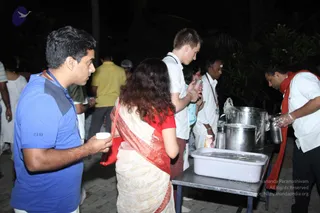
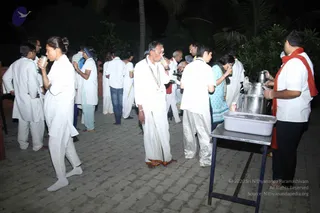
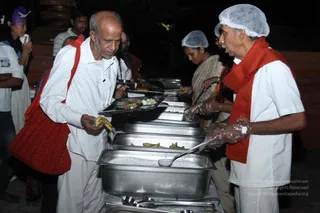
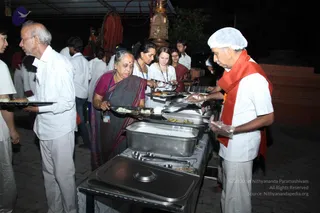
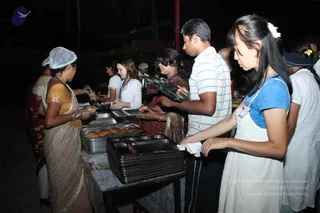
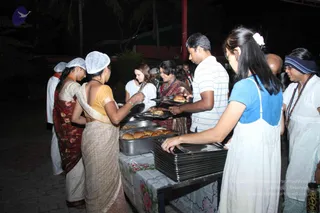
Night outdoor scene at an ashram-like setting with palm and shrub foliage behind. At center, a man in a blue polo shirt holds a small white cup and looks to the right. Beside him a woman in a white sari with red border and red blouse, with long curly hair, carries a red bag. A young man in a white shirt with a lanyard holds a steel cup. On the right, a man in a white shirt with an orange-red shawl wears clear plastic gloves and serves from a large stainless steel pot on a metal table; a white tray of food sits on the table. An older man in a white shirt with a lanyard stands behind.Night-time outdoor scene on a paved courtyard with palm trees and shrubs behind. Devotees dressed in white clothing sip from small cups and stand in a line at a serving table. A man in a red-and-white scarf with a red sash serves from steel vessels on a metal table, and a white tub sits on the table. A man in white dhoti with a lanyard drinks from a cup at centre, and a woman in a white outfit with a blue salwar drinks nearby. Several other people in white, including a figure with a white dhoti and pale trousers, stand in the background.Evening annadan food service at an outdoor serving counter. Two men in white kurta-style clothes and red shawls, one wearing a white hairnet, serve from steel chafing trays of rice, curry and bananas, using ladles and clear plastic gloves. An older man in white with a red cloth bag over his shoulder holds a banana while selecting food. Behind them a woman in a white hairnet and cream sari serves, and other attendees stand nearby in the dim evening light.Night-time communal meal service outdoors on a paved courtyard. A man in a white cap and gloves, wearing a white shirt and an orange-red shawl, serves food from steel chafing trays of rice and side dishes onto plates held by people in line. A woman in a grey sari with a maroon blouse and red bindi holds a plate; a younger woman in white with a blue lanyard and others queue behind a long buffet table. Plates of food, ladles and steel trays are visible; a tall orange-brown pillar and red fabric hang in the background. Several people stand in line, roughly five visible.A night-time food service line of volunteers serving buffet food from stainless steel trays. A woman in a mustard-yellow sari and white head cap and gloves serves bread rolls from a steel tray on the left. Beside her, a woman in white apron and a young man in a white-and-blue striped shirt hold empty steel trays, and a young woman in a blue top with white apron and a name badge, with a white flower in her hair, stacks trays on the right. A woman in a red and gold sari and a man in a white cap stand further back.A night-time food serving line outdoors at an ashram-style courtyard. Women in white hair-nets and white aprons serve food from steel trays onto plates held by people in line. A woman in a yellow blouse and sari with a sheer white shawl leans over a tray of bread rolls and buns. A man in a white-and-grey striped shirt holds a plate with a bun. A young woman in a blue top and white pinafore dress holds an empty steel tray, and an older woman in white with a headband and beaded mala looks on. Stacked steel trays sit on a table covered with a floral cloth. Trees and a red pillar are visible in the dark background. The scene is annadan-style community meal service.

Inner Awakening-day6-food
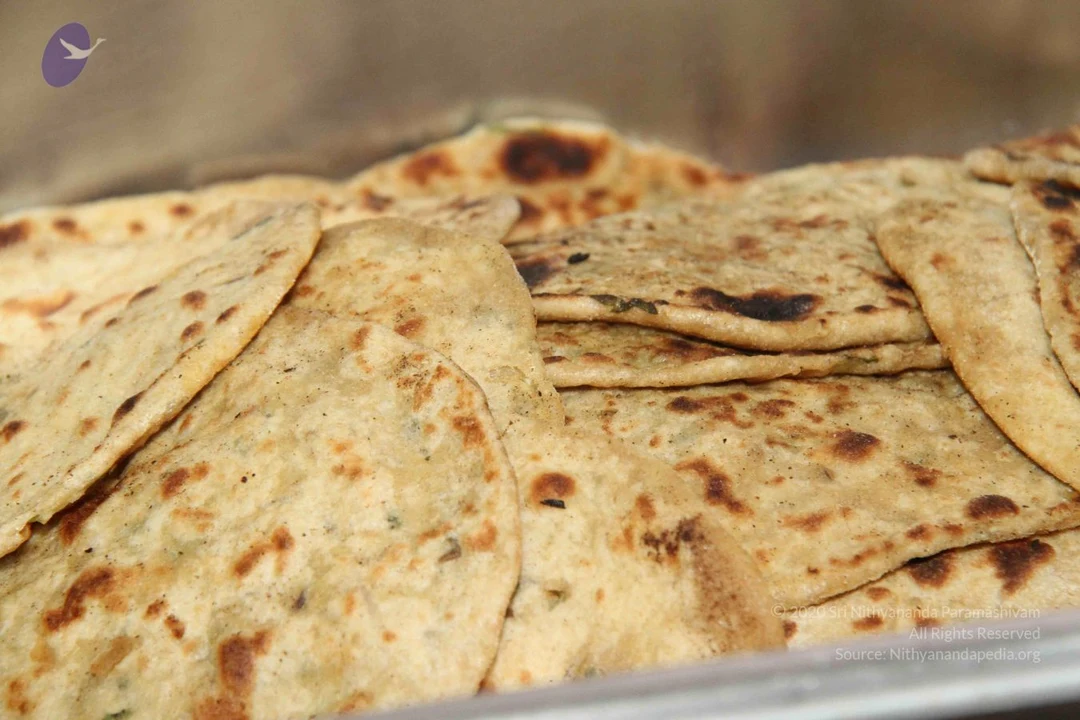
5 photosSource gallery
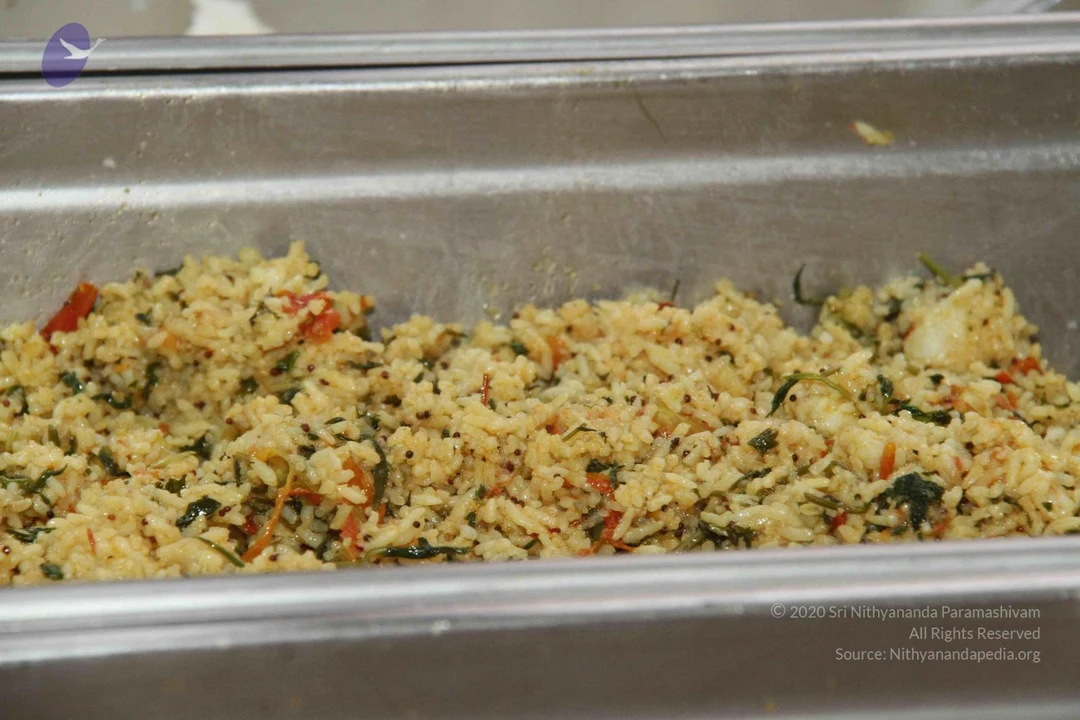
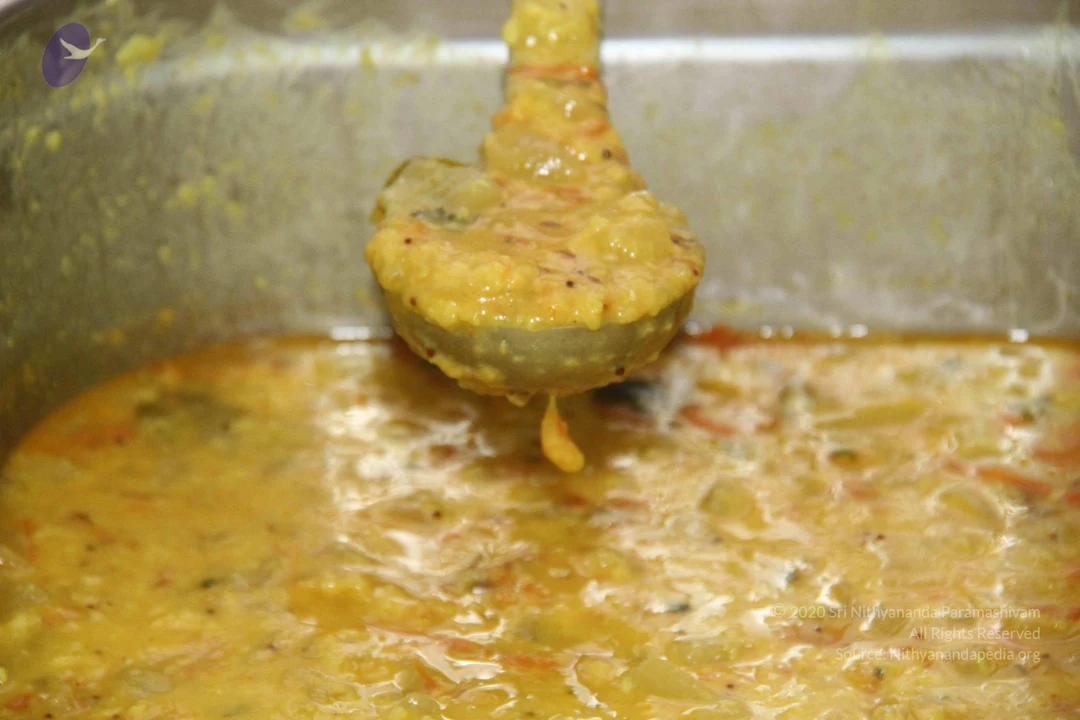
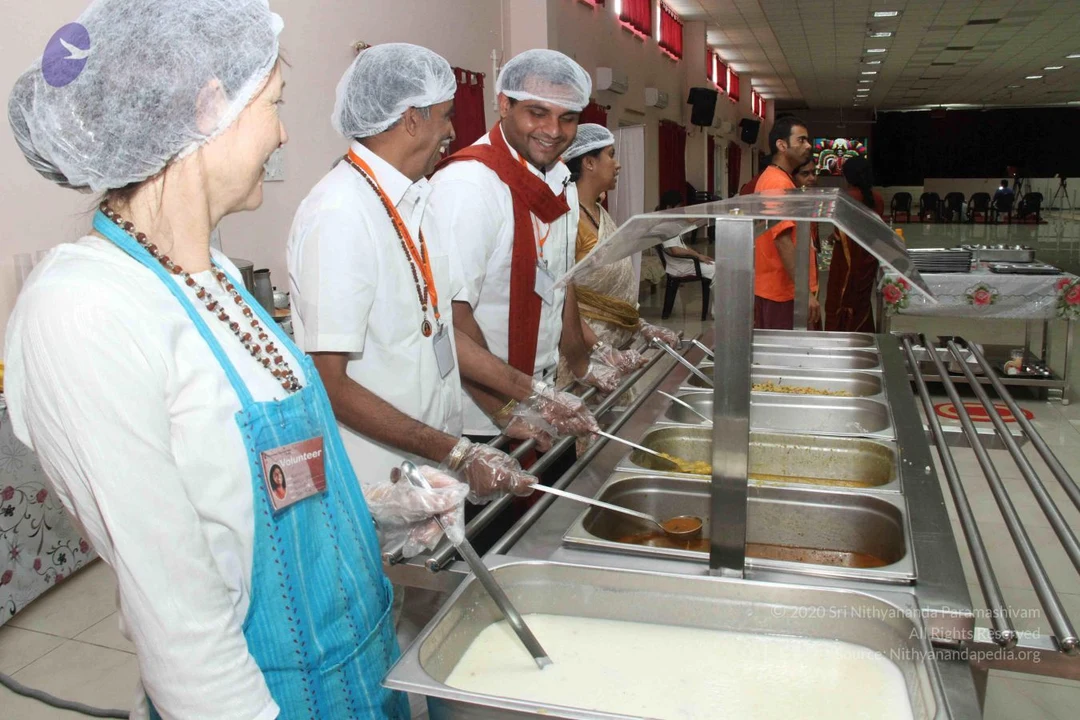
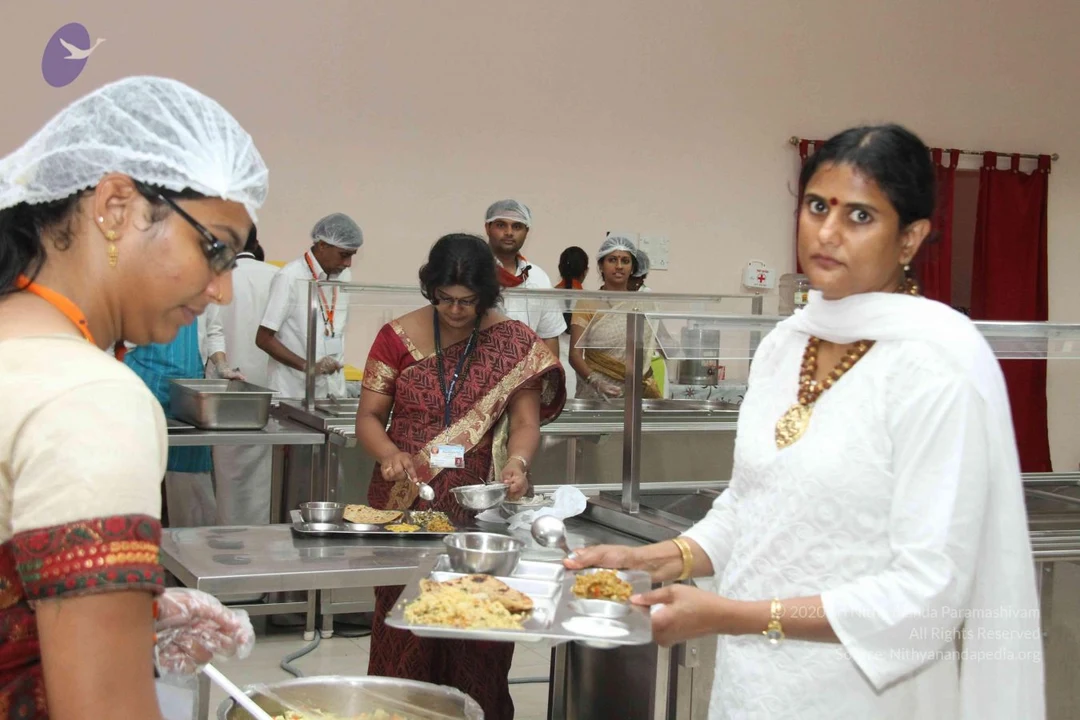
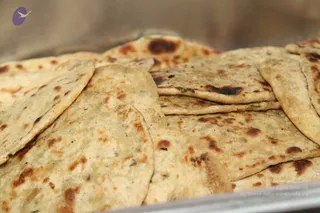
Close-up photograph of a stack of freshly cooked flatbreads. No people are visible; the frame is filled with the bread, with a blurred warm background.A close-up photograph of a stainless steel serving tray filled with cooked rice mixed with chopped green herbs, red chilli or carrot pieces, and small brown mustard seeds. No people are visible; it appears to be prepared food for annadan or a community meal.A close photo of a stainless steel ladle lifting a thick yellow dal-like stew from a large steel cooking pot. Orange carrot pieces and green vegetable bits are visible in the liquid, and the ladle drips back into the pot. No people are visible in the frame.Volunteers in hairnets, disposable gloves and aprons serve a buffet line from steel chafing dishes under a glass sneeze guard. A woman in a blue apron with a volunteer badge and rudraksha-style beads smiles at left. Two men in white shirts with orange lanyards and a man in a white shirt with a red shawl ladle food, with a woman in a yellow-gold sari beside them. Dishes hold white milky liquid, yellow and orange curries. Background shows a hall with red curtains, plastic chairs and a decorated serving table.A photograph of a community kitchen serving line. A woman in a white salwar kameez with a white dupatta and gold beaded necklace holds a steel tray of rice, curry and flatbread, looking toward the camera. Behind the stainless steel counter, a woman in a red and gold sari with a lanyard serves food with a ladle, and other volunteers in white hairnets, gloves and aprons prepare dishes under a glass food-warmer sneeze guard. A red-curtained window and a red first-aid box are visible on the pale wall. The scene reads as annadan or prasadam service.

goshala

13 photosSource gallery
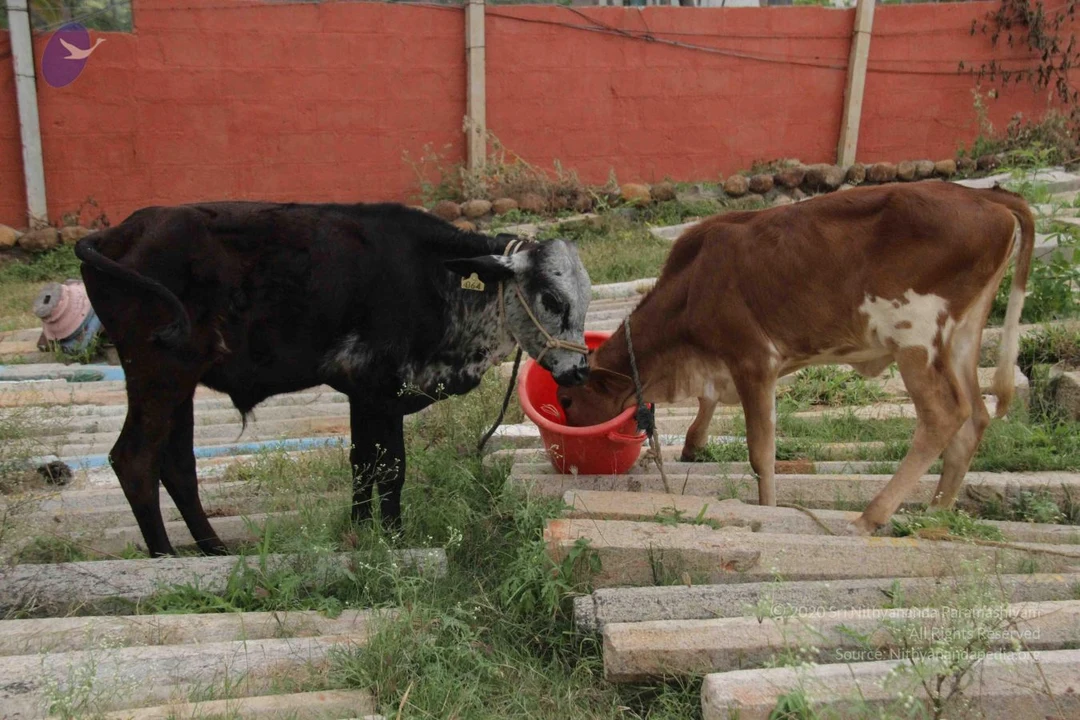
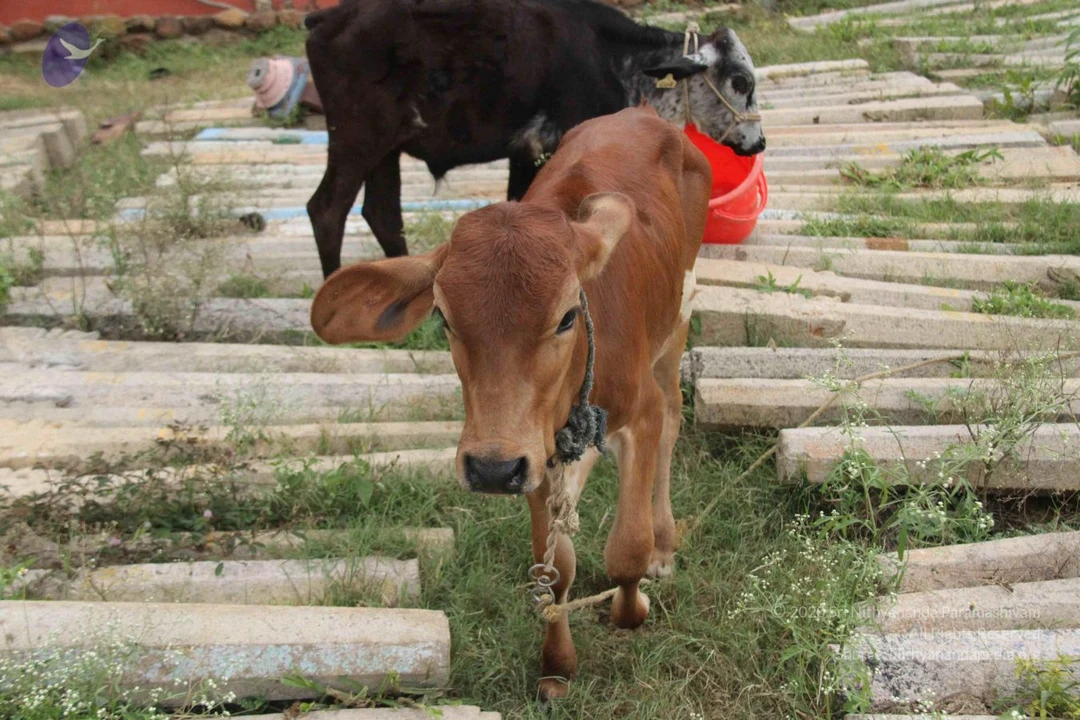
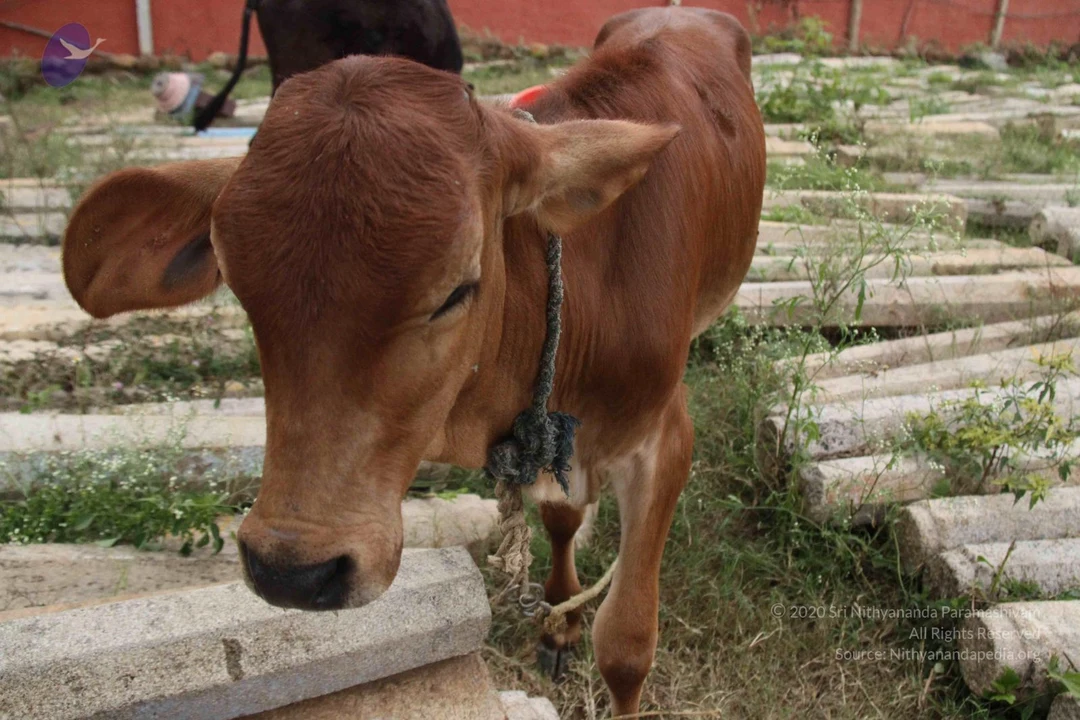
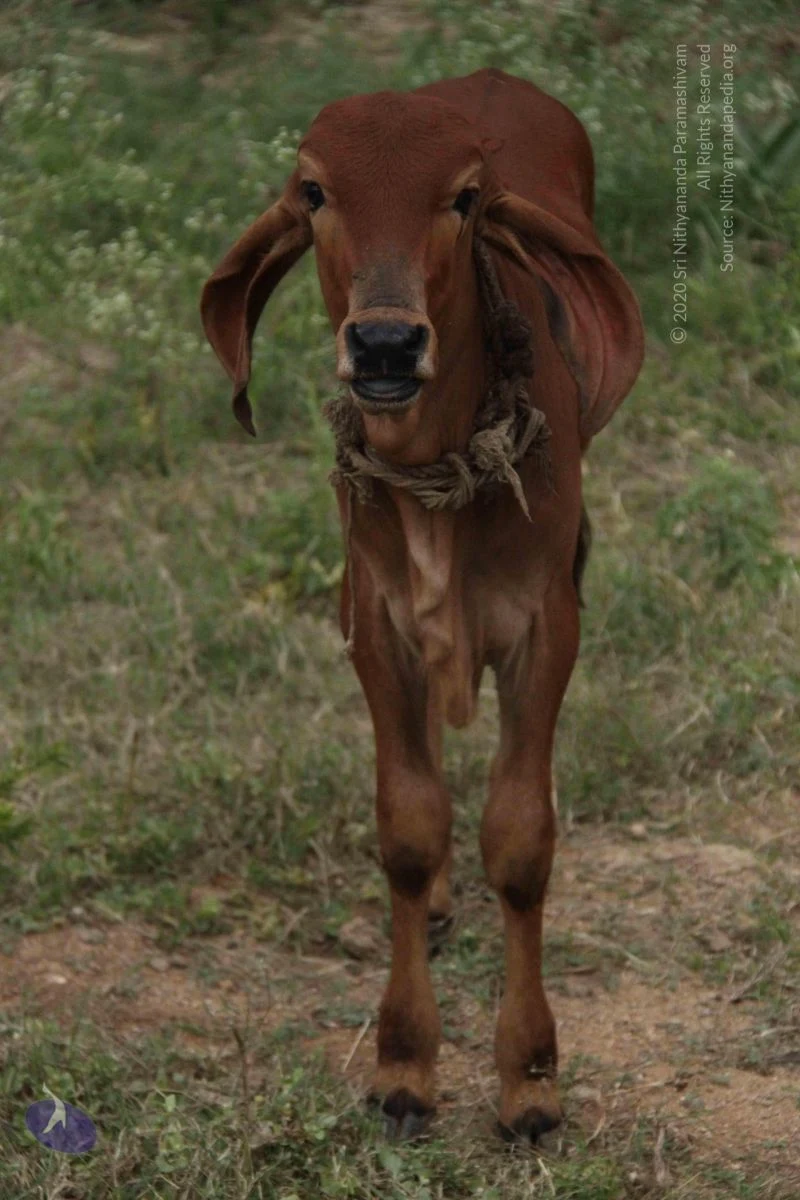
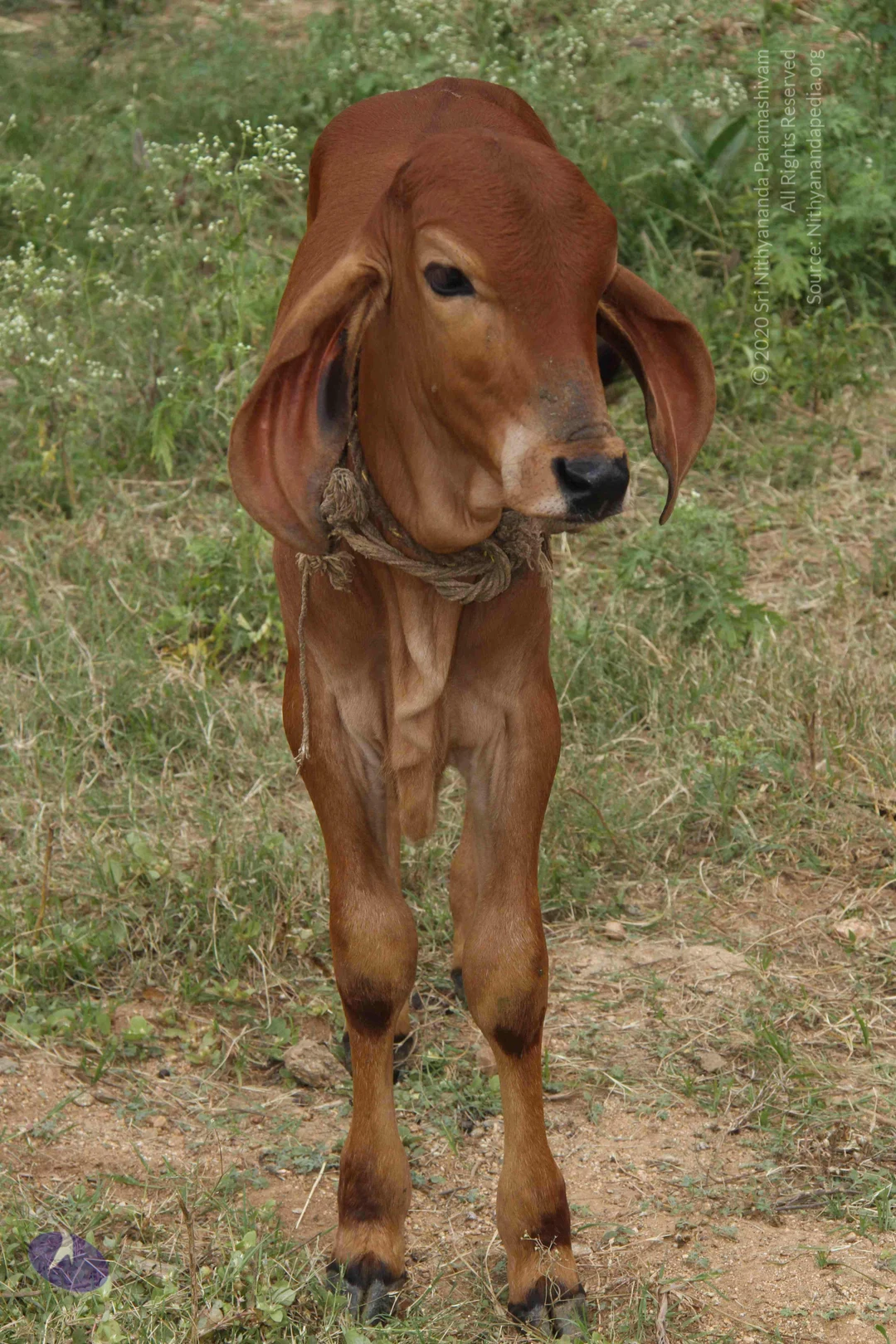
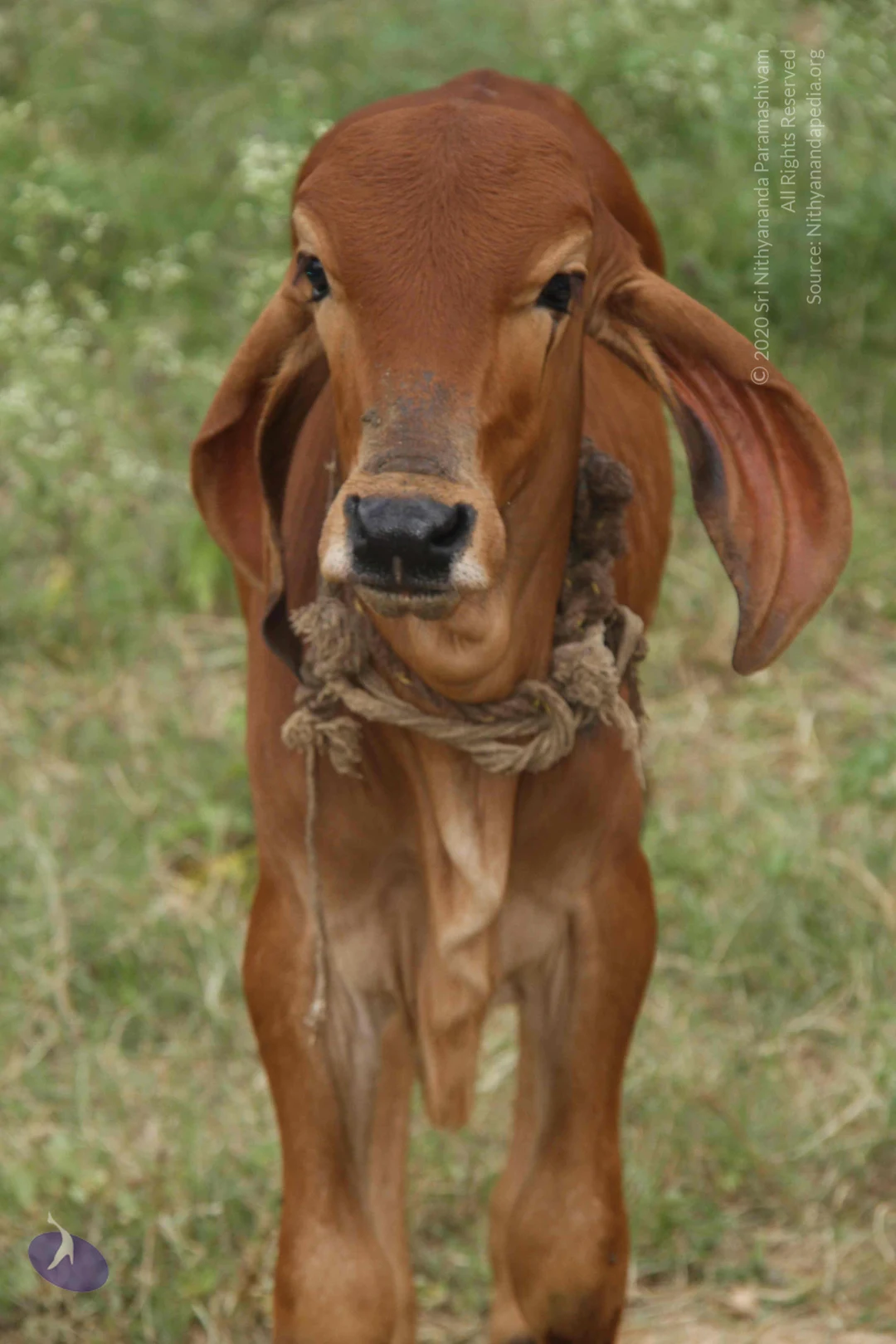
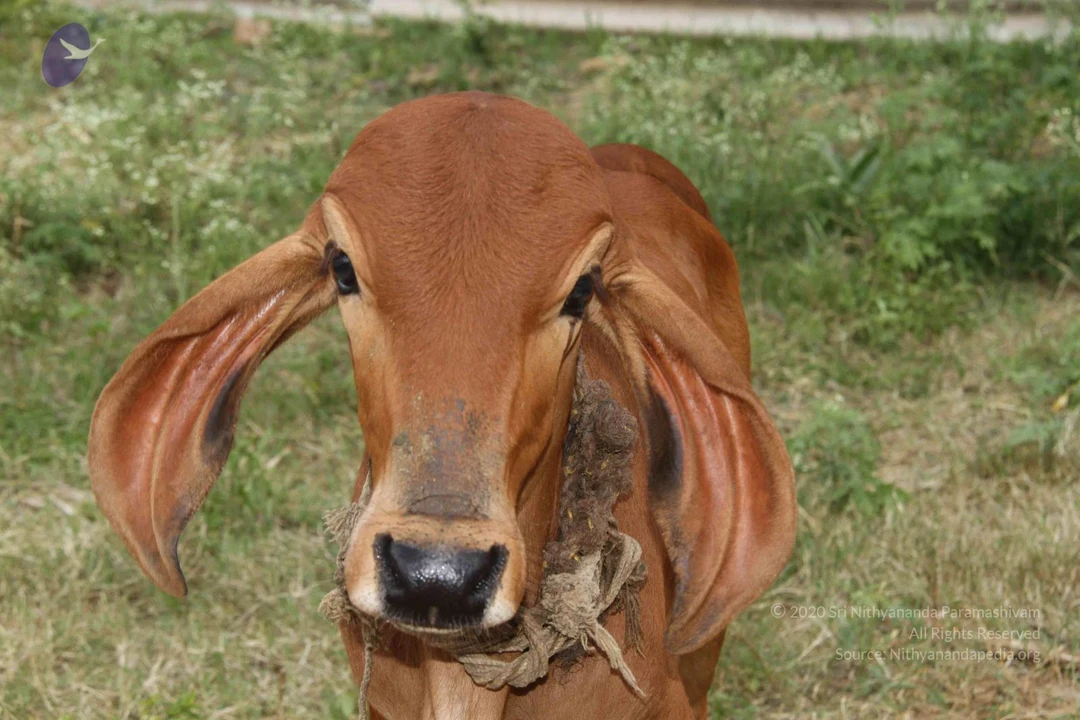
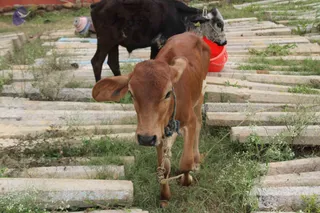
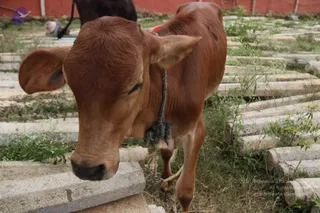
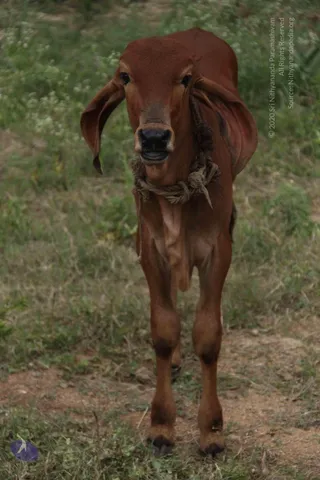
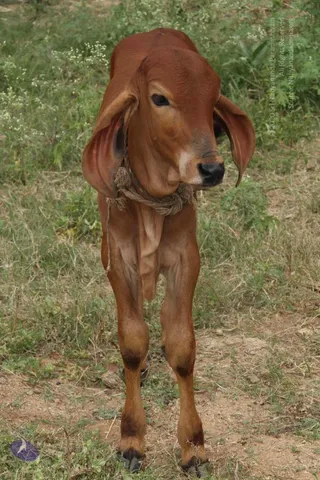
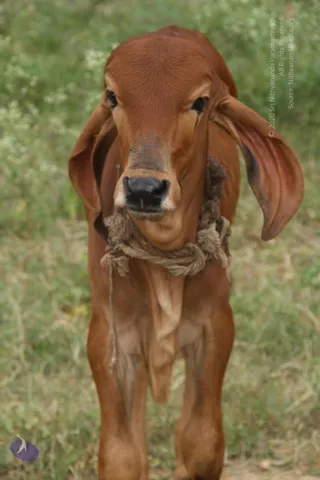
Two young cows stand on a grassy terrace of concrete steps in front of a red brick wall. A black cow with a white-speckled face and a yellow ear tag, tied with a rope halter, stands on the left. A brown and white cow with a white patch on its back drinks from a red plastic bucket in the centre-right. A small pink and grey object sits at the far left edge. Patches of green weeds grow between the stone steps.A young reddish-brown calf with a white blaze stands on grass between rows of concrete slabs, wearing a rope halter with a looped lead hanging from its head. Behind it, a dark cow with a white-marked face stands tethered beside a red plastic bucket. Patches of green grass and small white flowering weeds grow between the slabs.A young brown cow stands on a grassy ground beside a row of pale concrete slabs, its head lowered toward a concrete ledge. A rope with a knotted grey halter is tied around its neck, and a loose end trails down near its front legs. Behind it, a dark animal's leg and a rope are visible near a red compound wall, with a person partially seen in the background. The setting appears to be an outdoor ashram gaushala yard with patches of green weeds.A reddish-brown calf stands facing the camera on a grassy field with small white wildflowers and dry patches of soil. It wears a rough twisted rope around its neck, and its floppy ears hang to the sides. No people are visible in the scene.A young reddish-brown calf stands on dry, patchy ground among green grass and small white-flowered weeds. It wears a rough twisted rope around its neck, its large ears droop outward, and it faces the camera directly with its legs slightly apart. No people are visible. The image is a plain outdoor photograph of a cow calf in a rural field.A reddish-brown calf stands facing the camera on green grass with small white wildflowers behind it. Its large ears droop outward and a rough twisted rope is tied around its neck.

temple

26 photosSource gallery
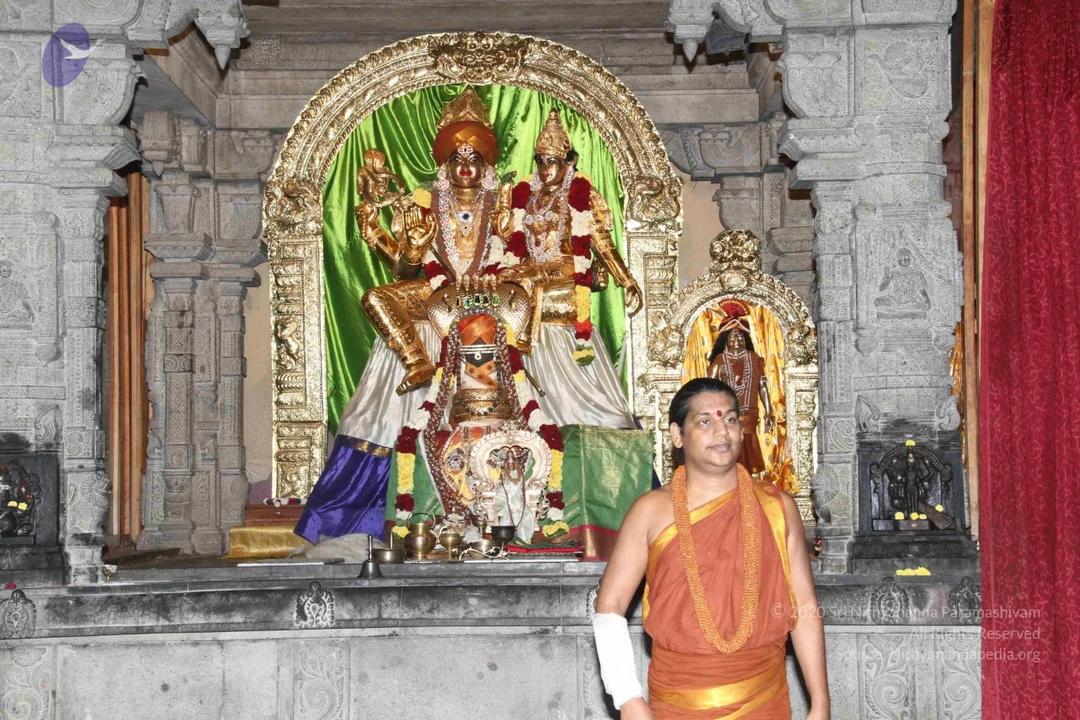
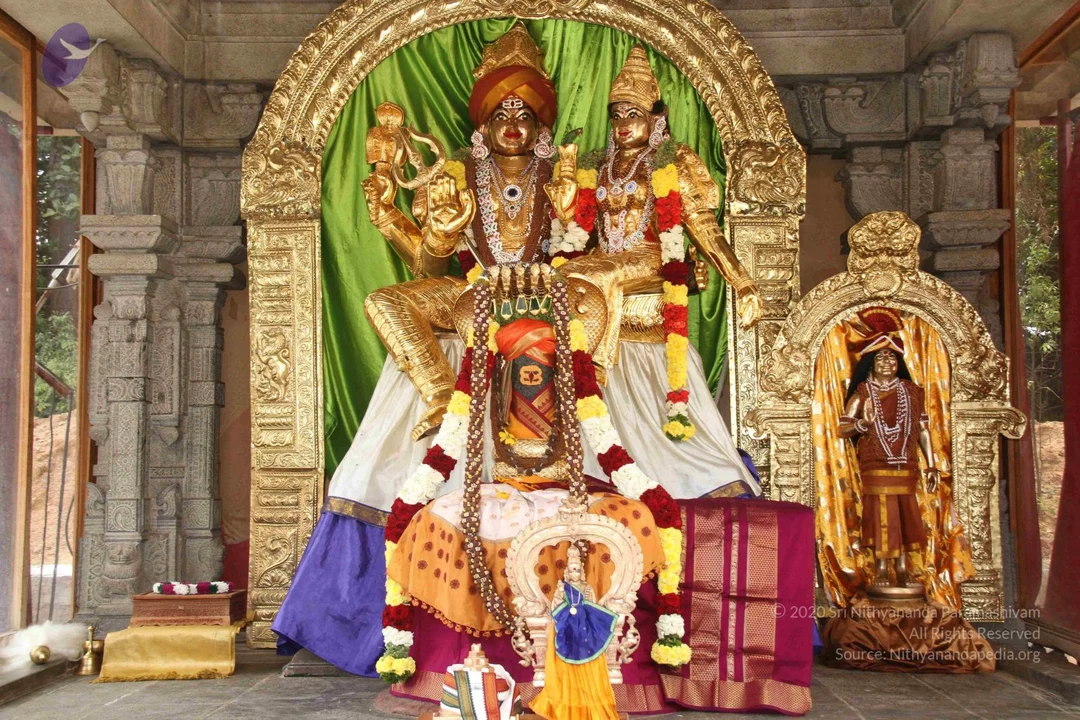
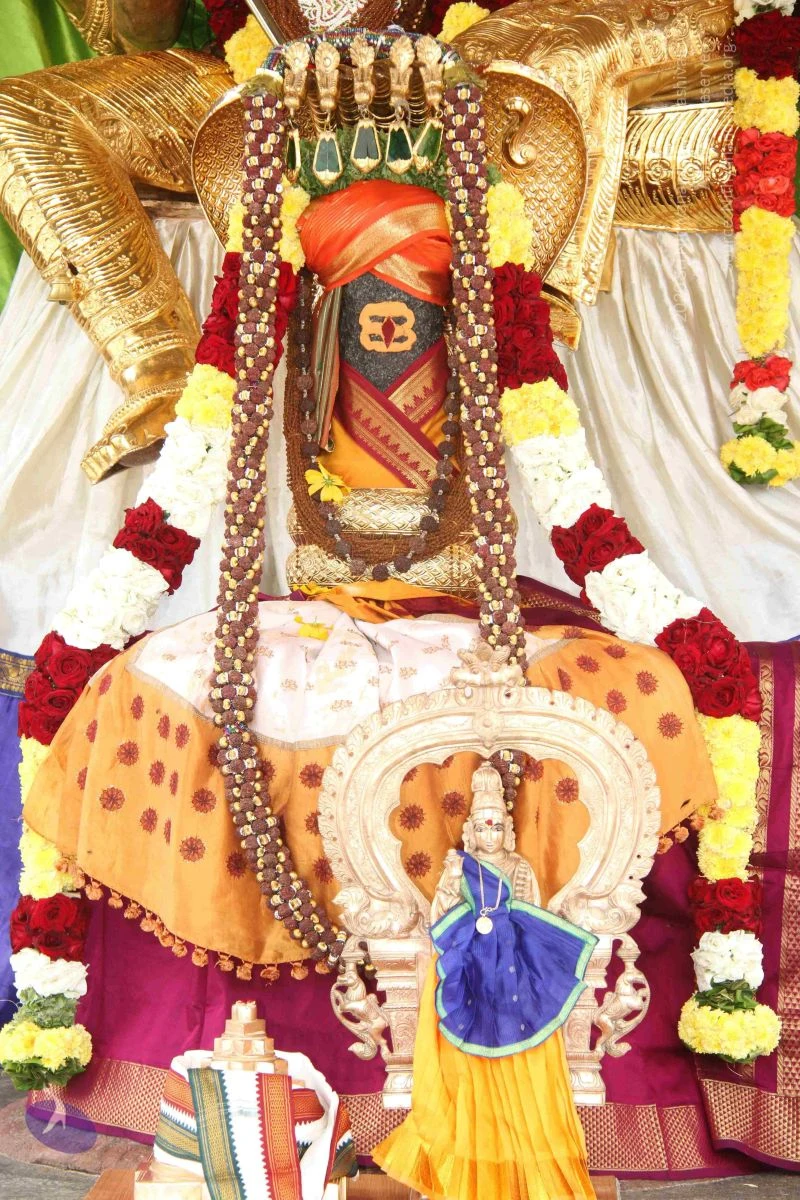
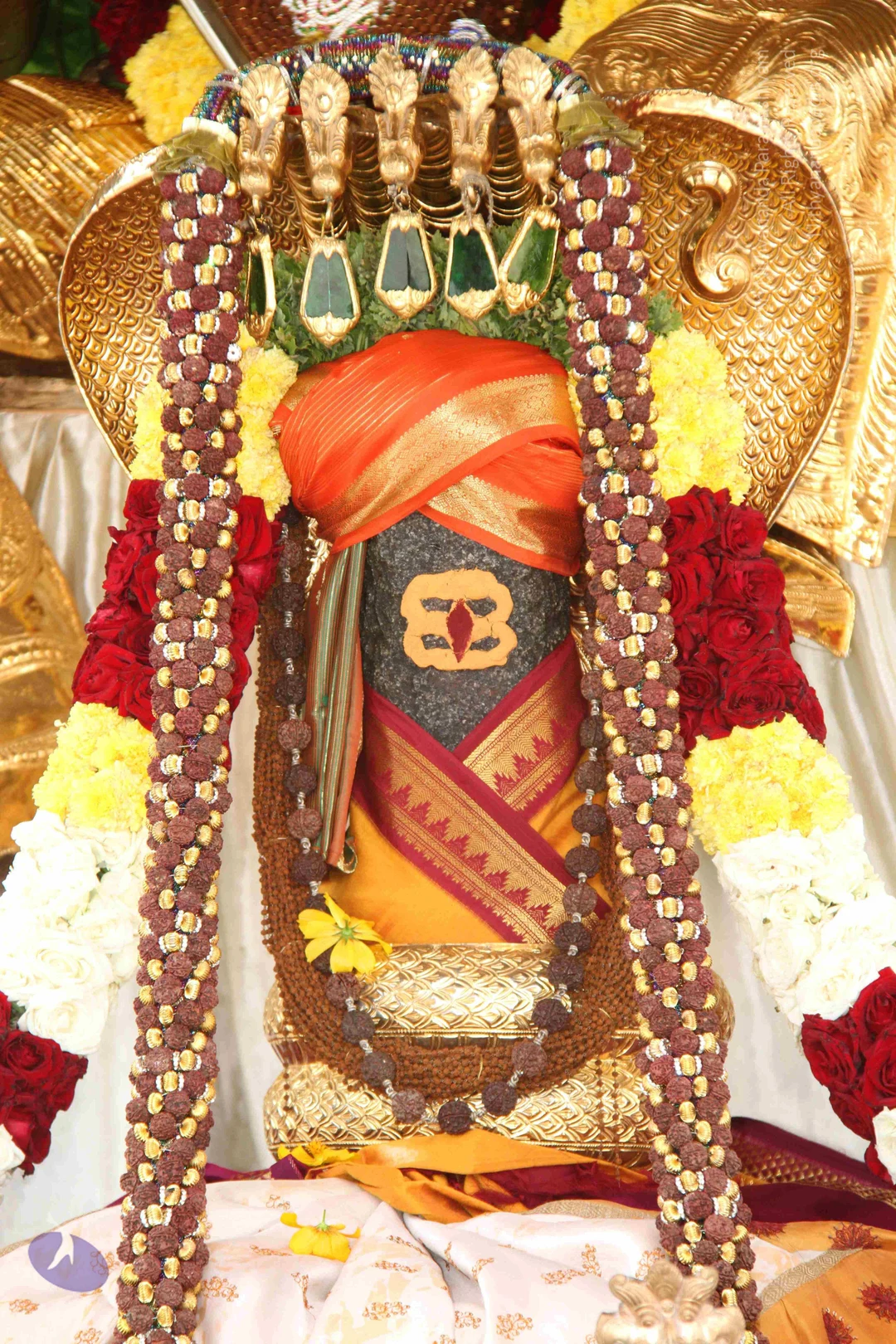
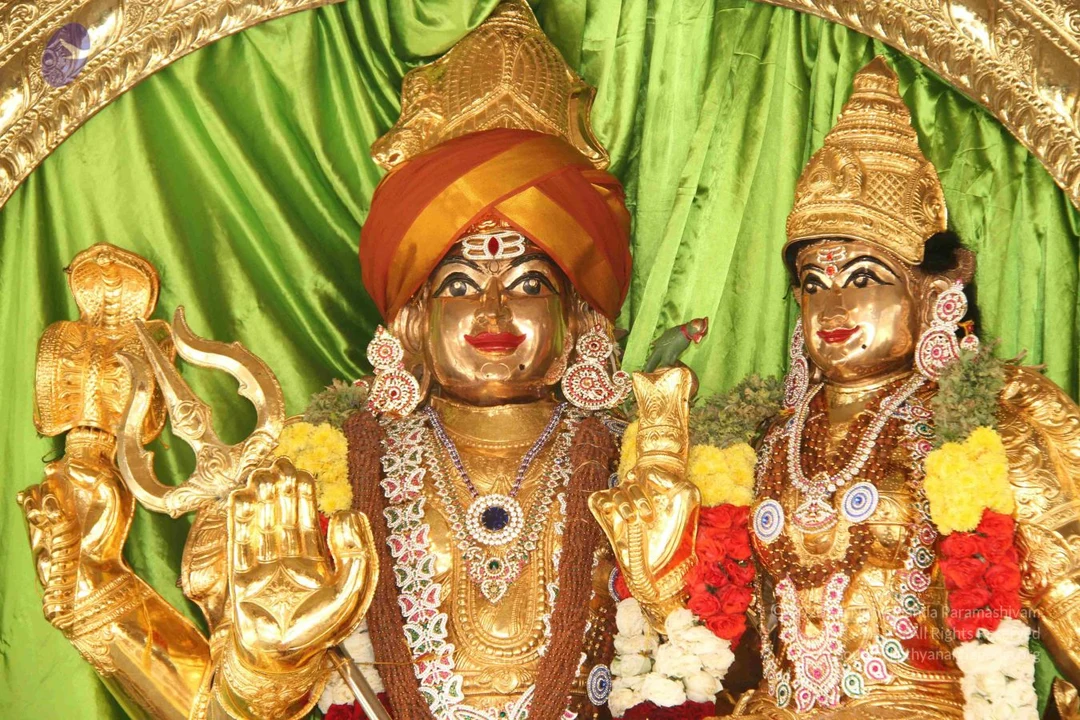
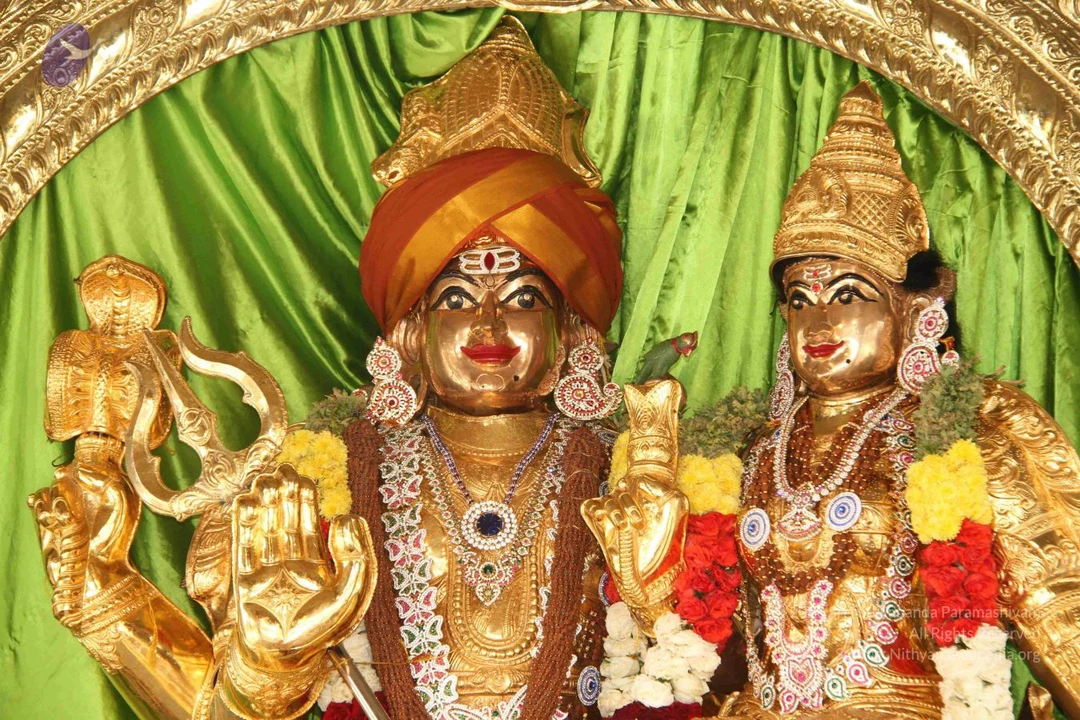
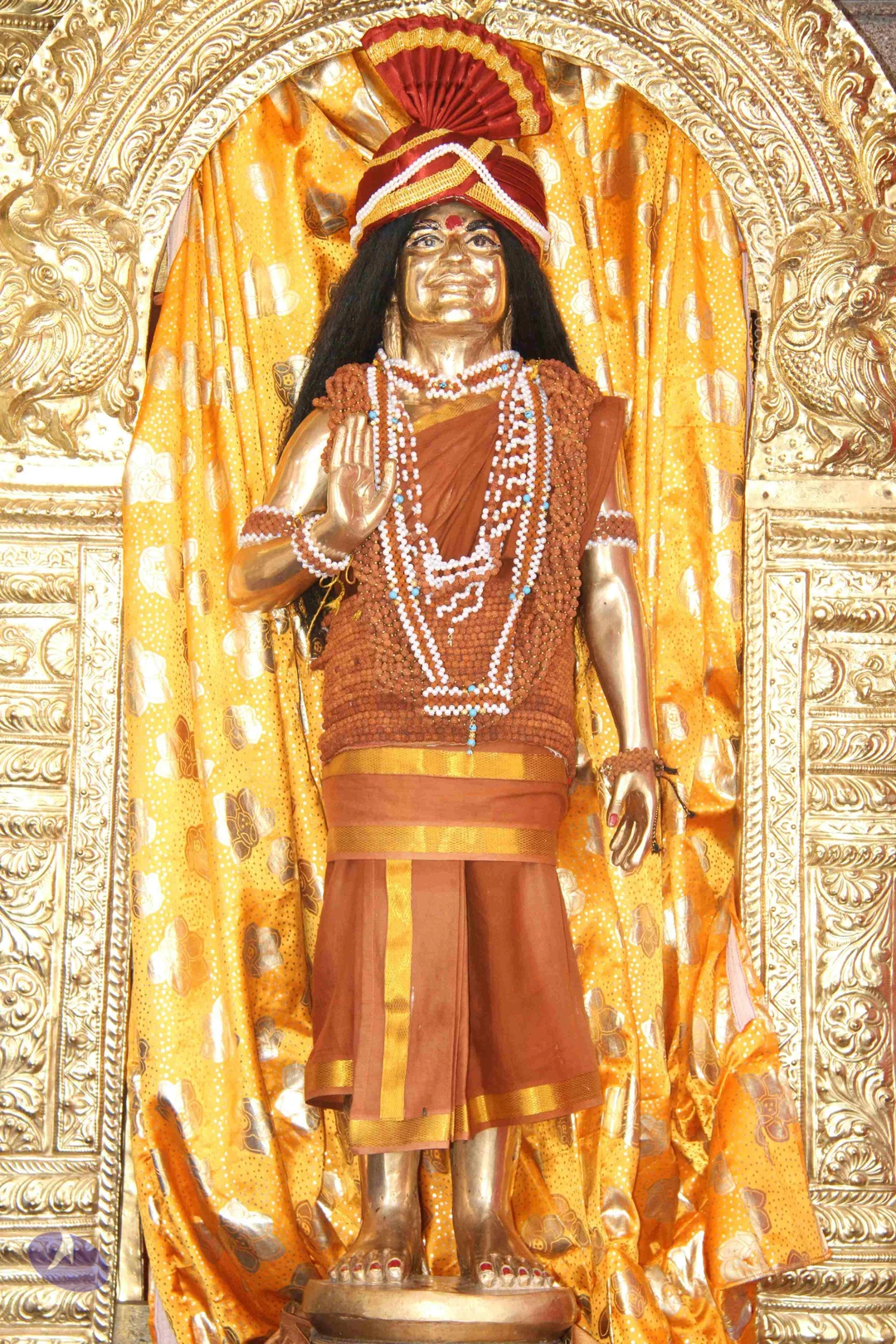
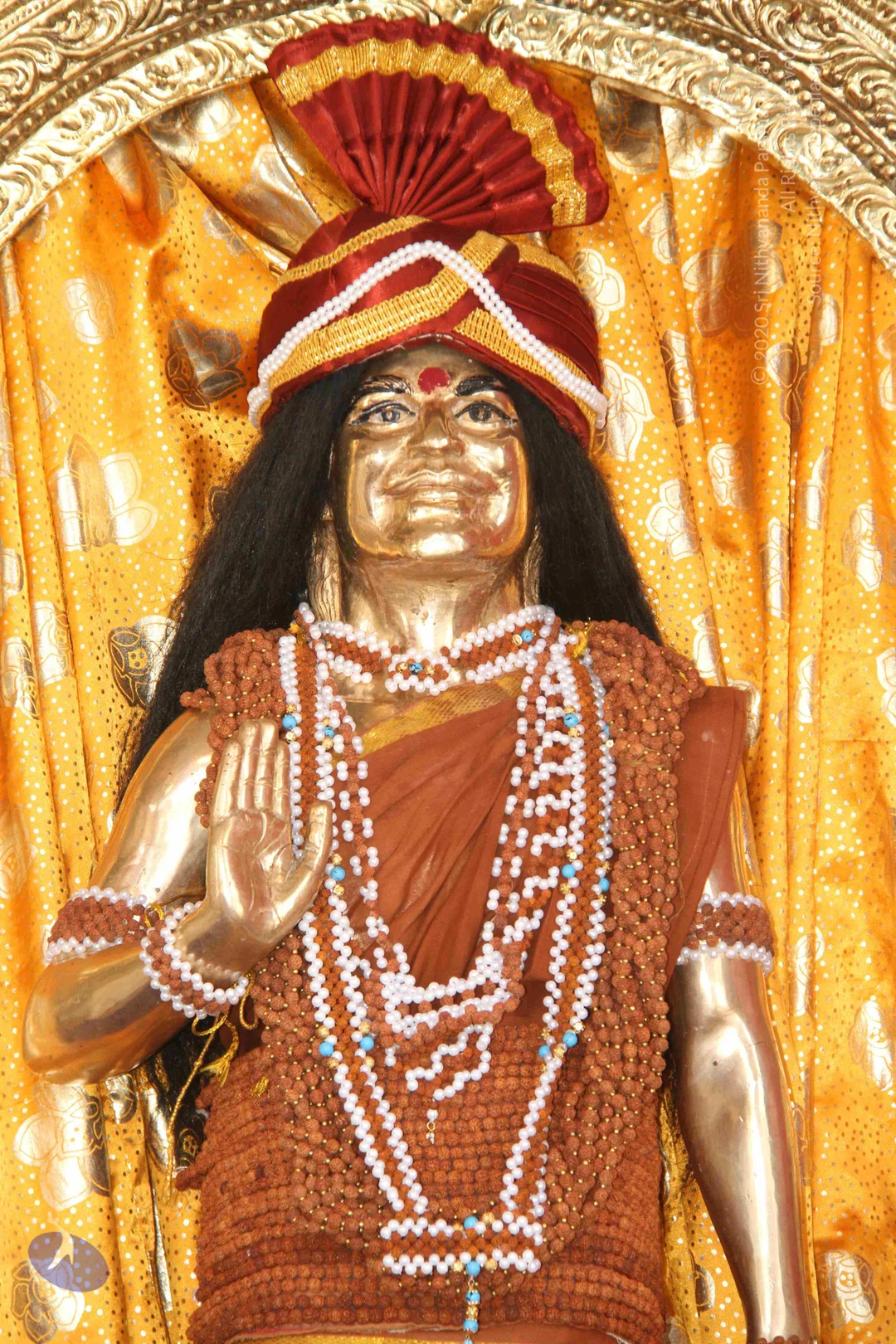
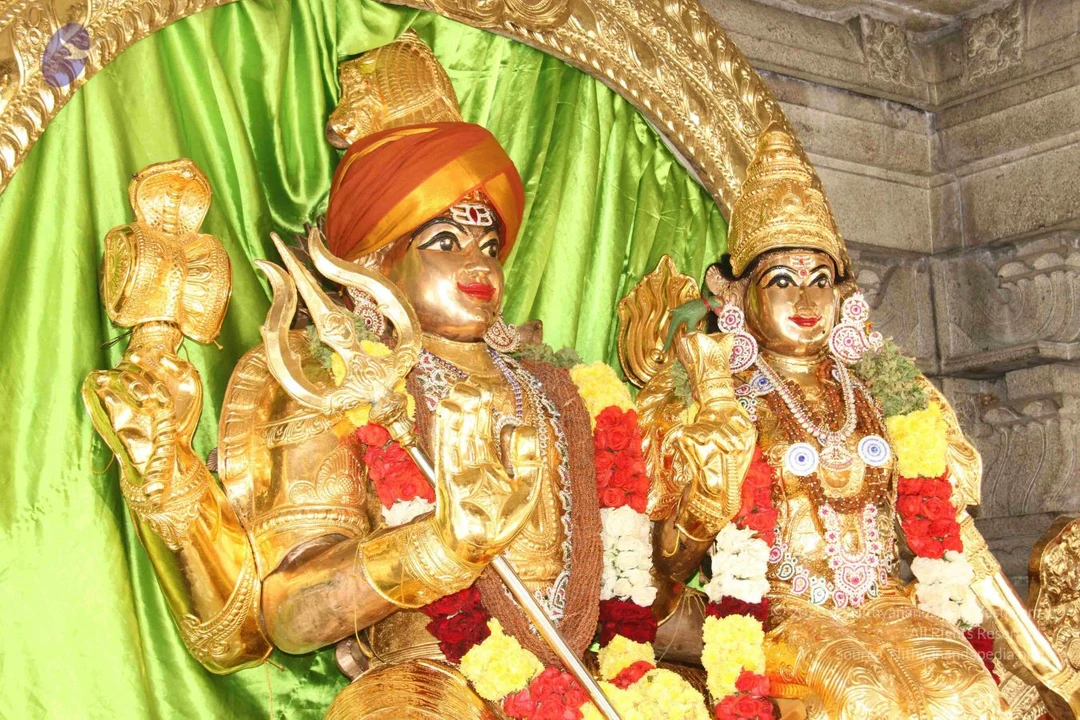
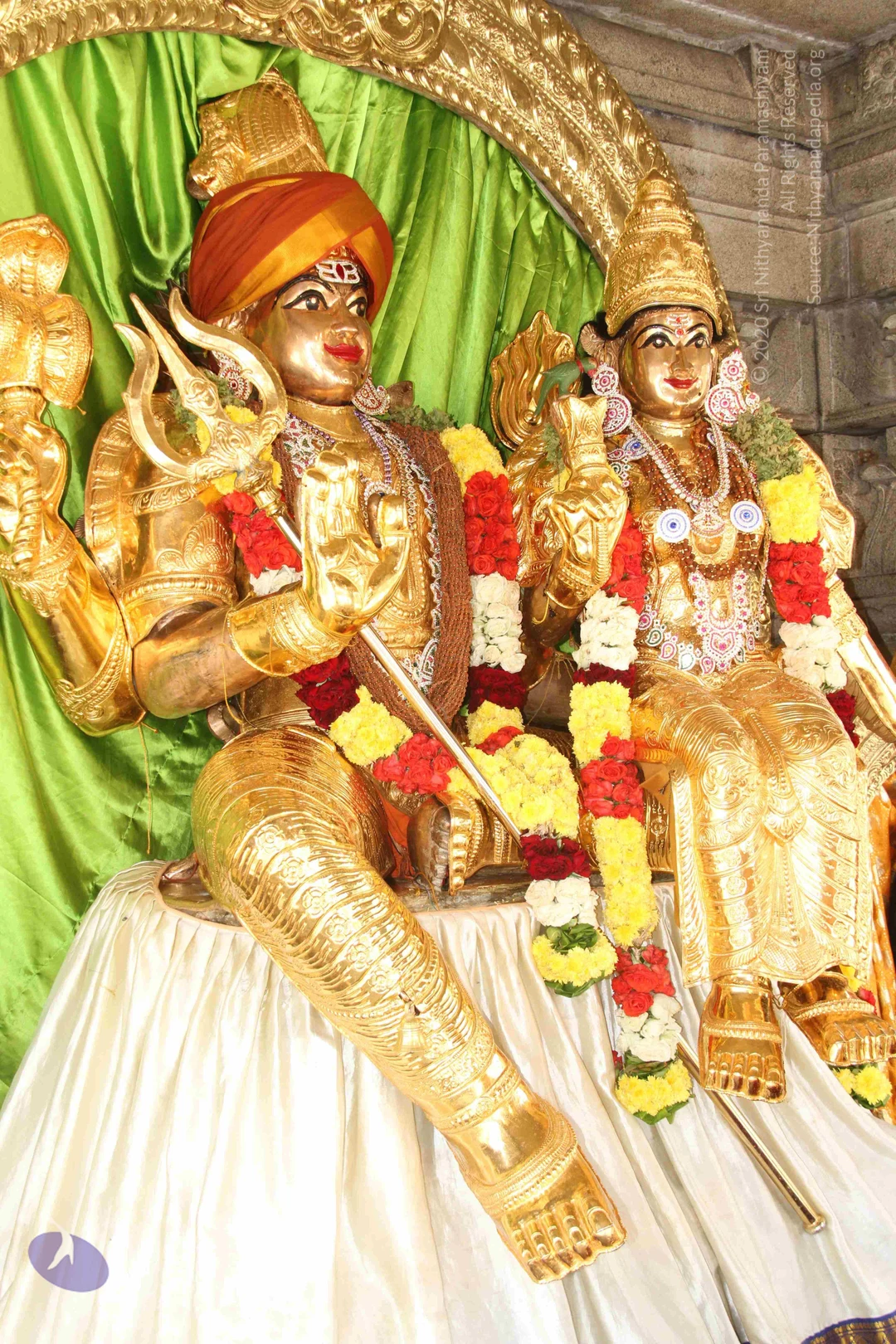
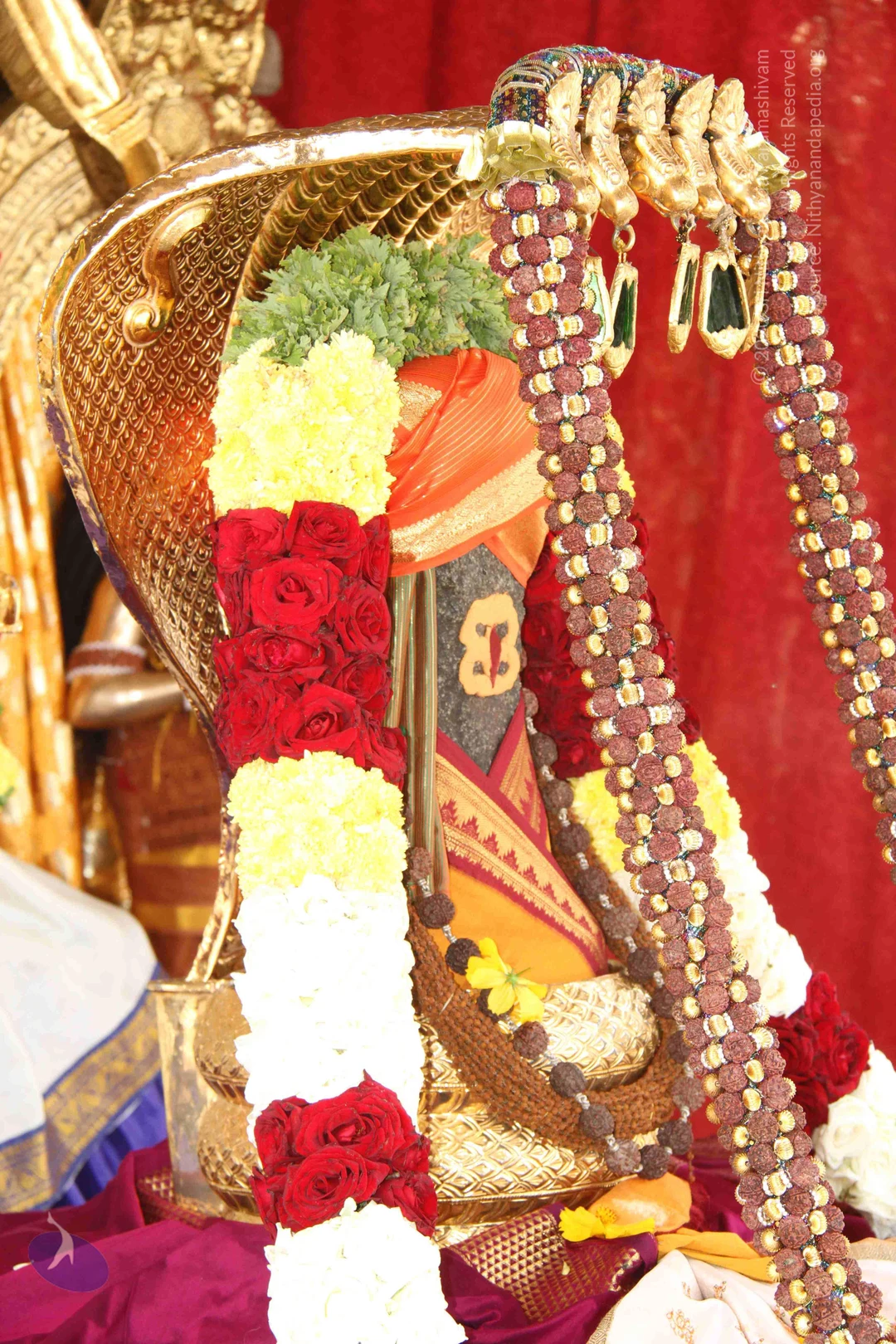
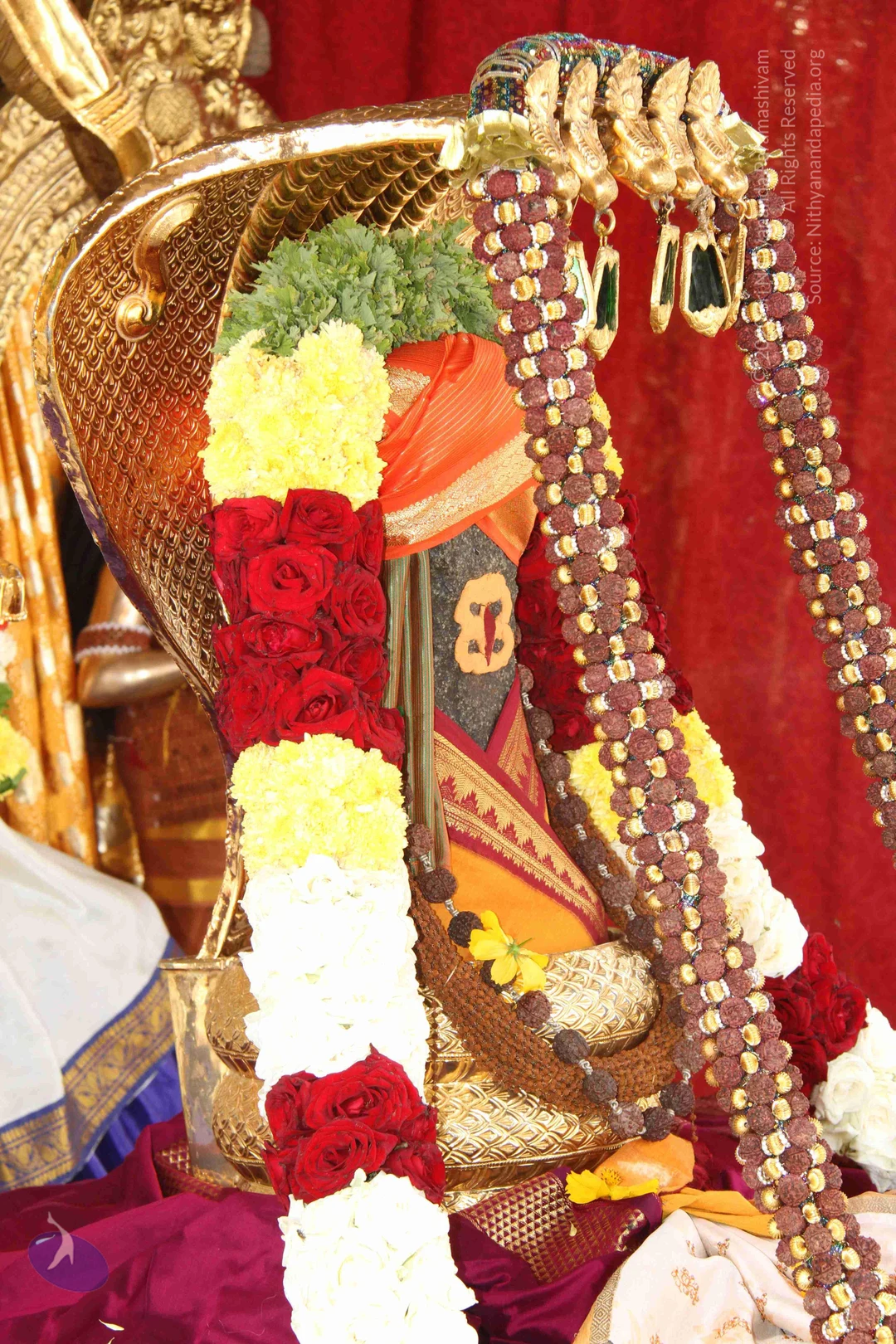
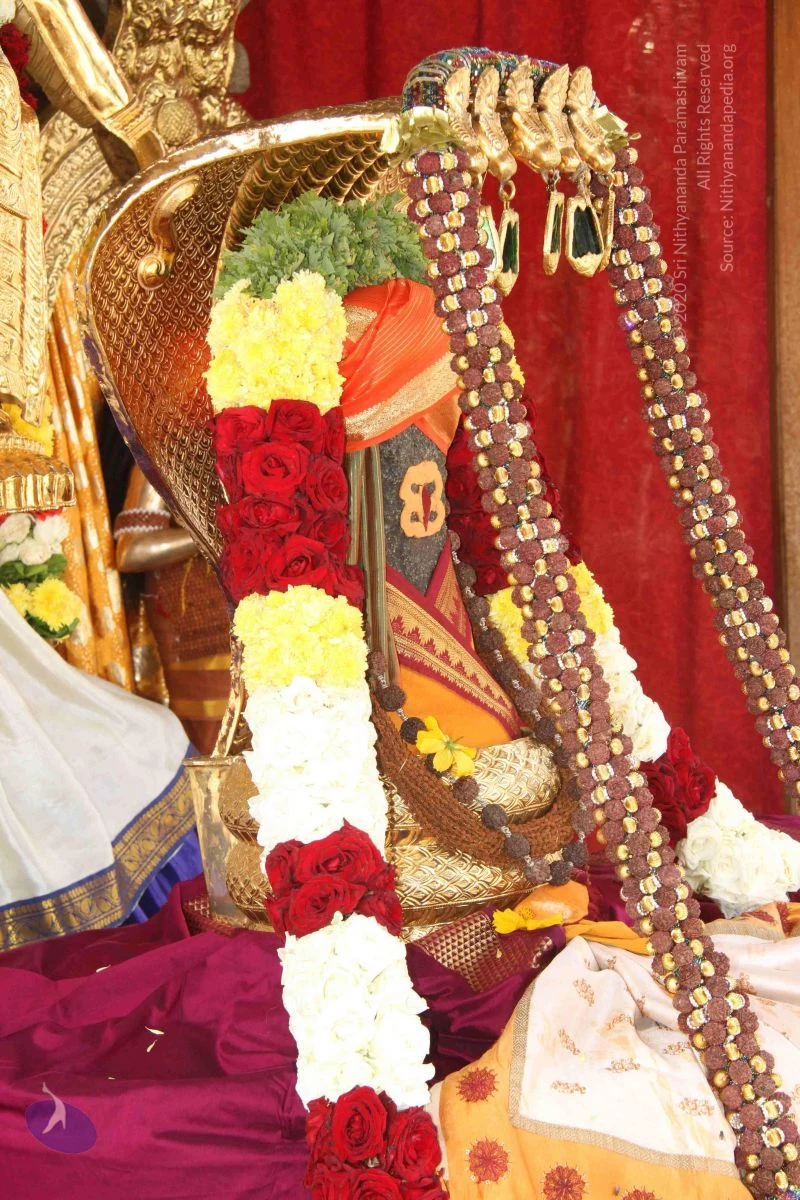
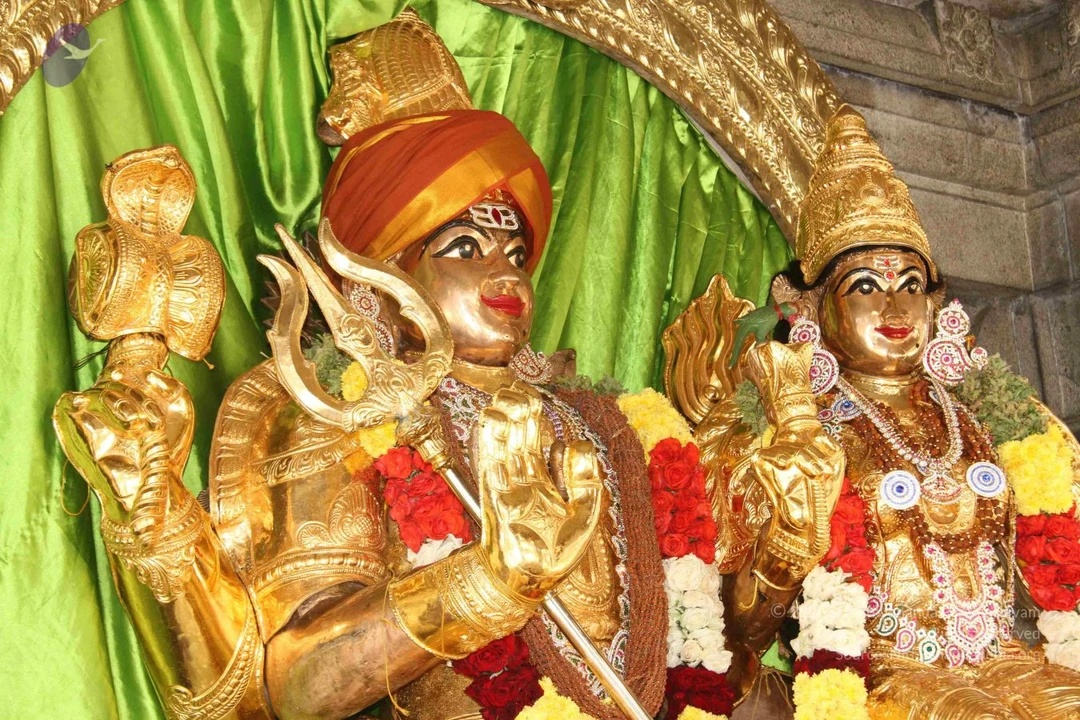
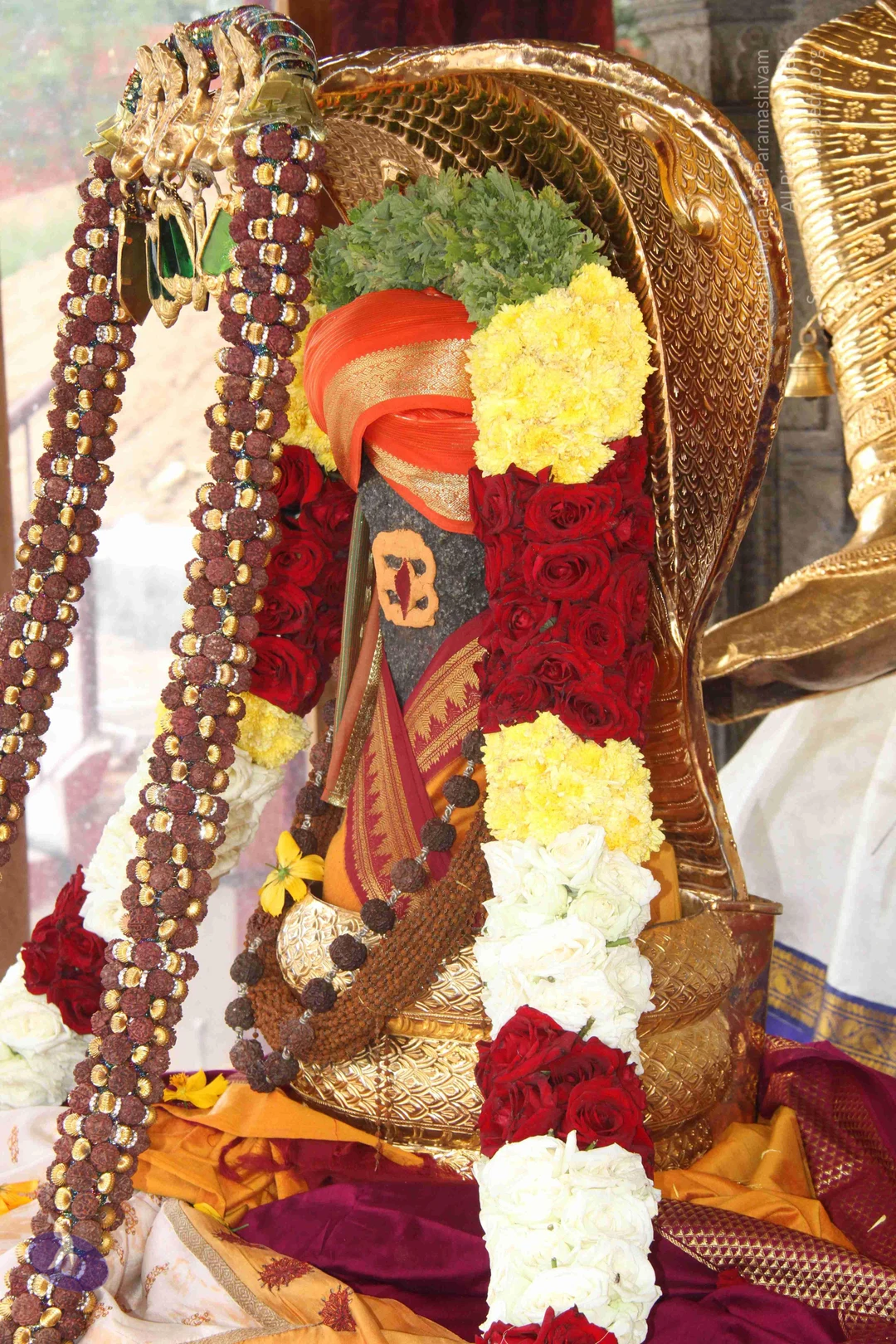
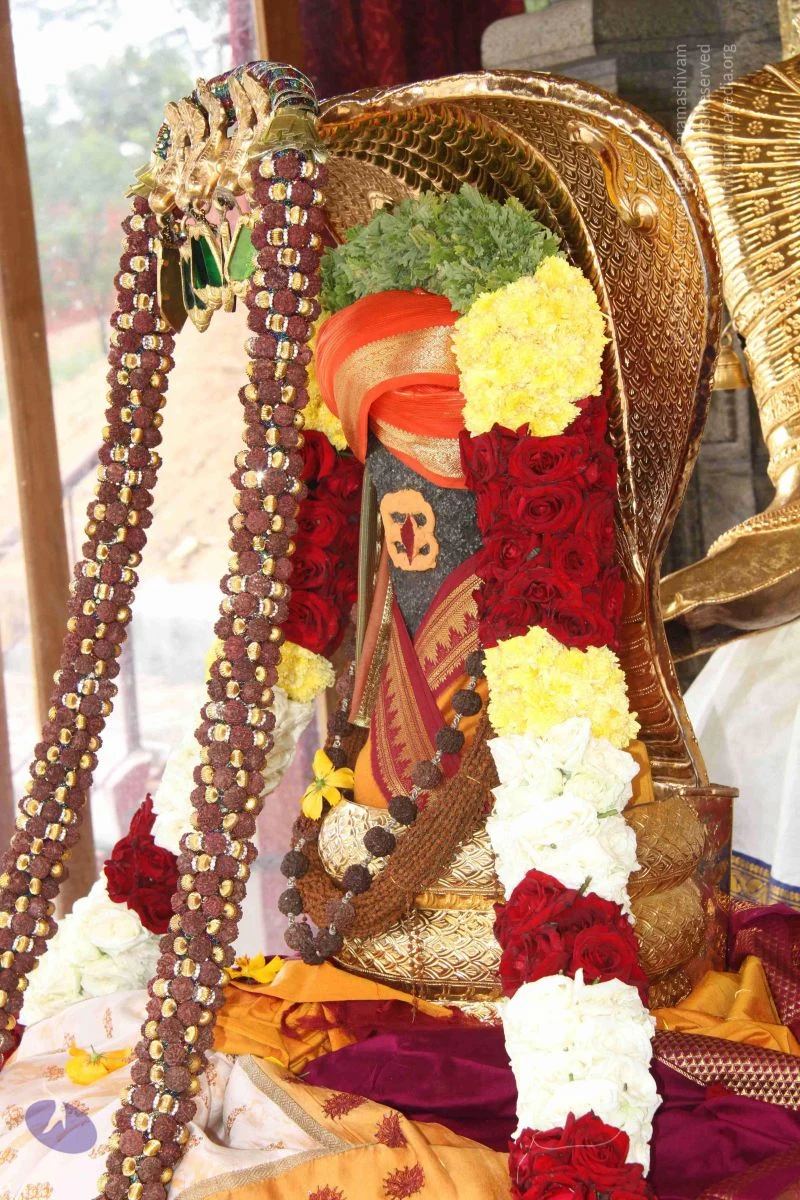
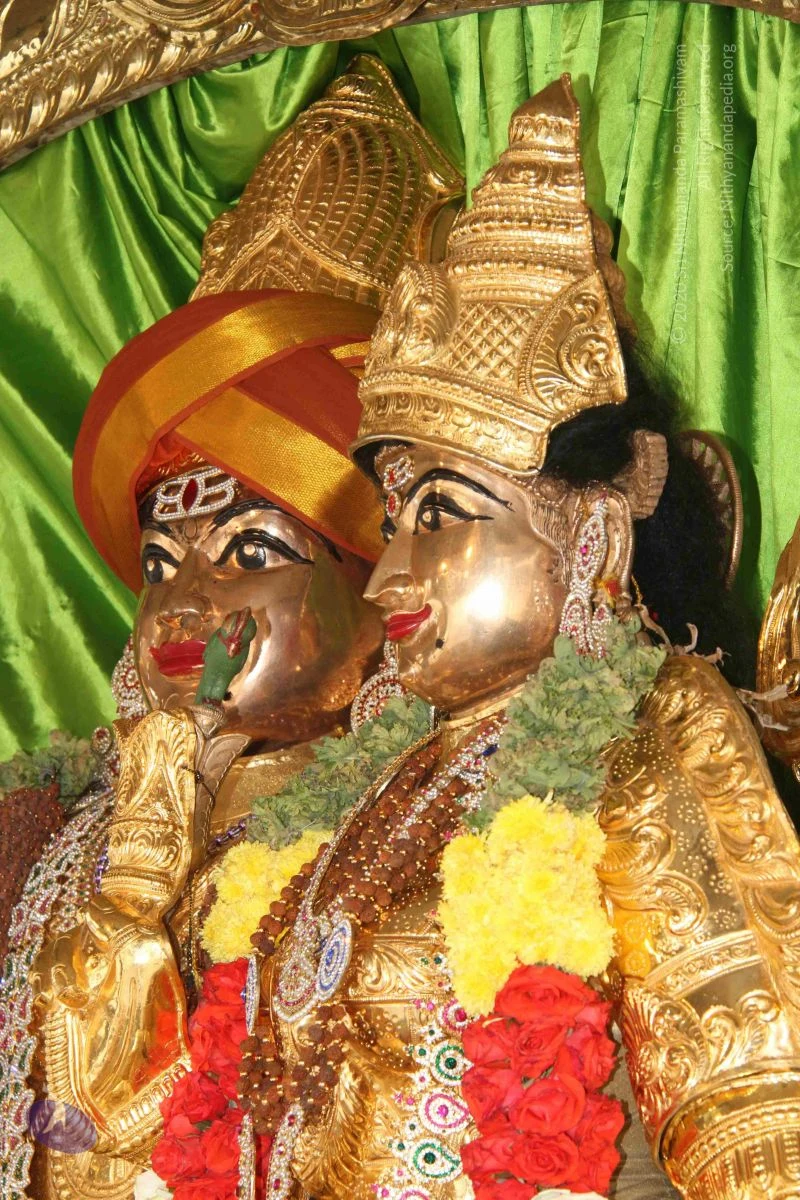
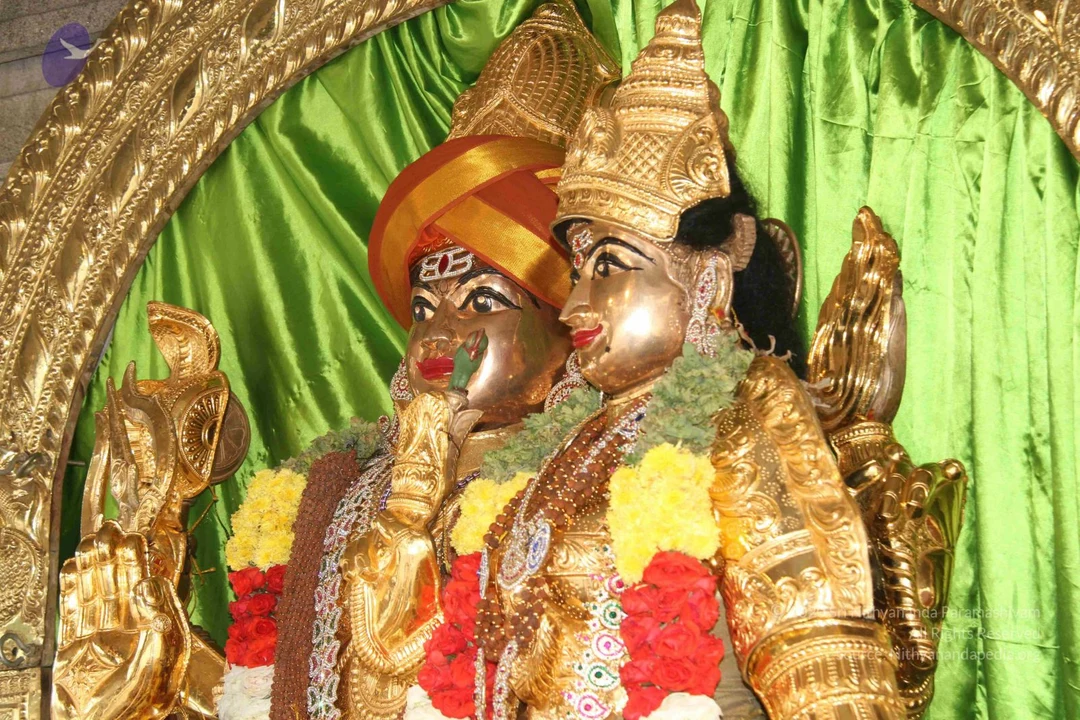
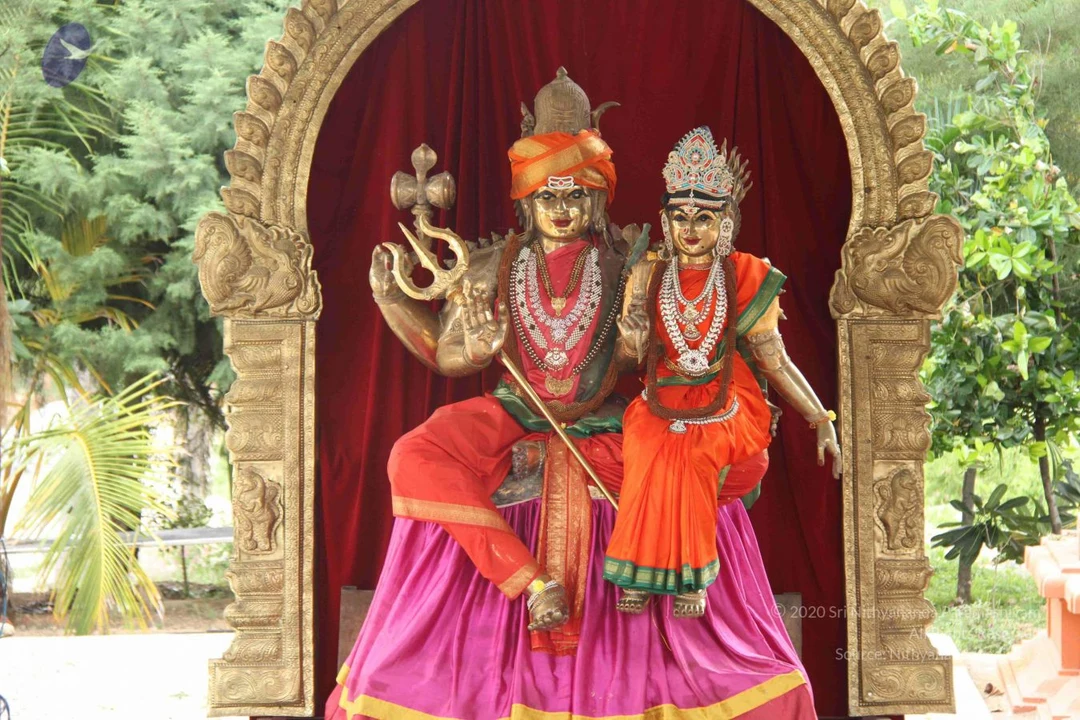
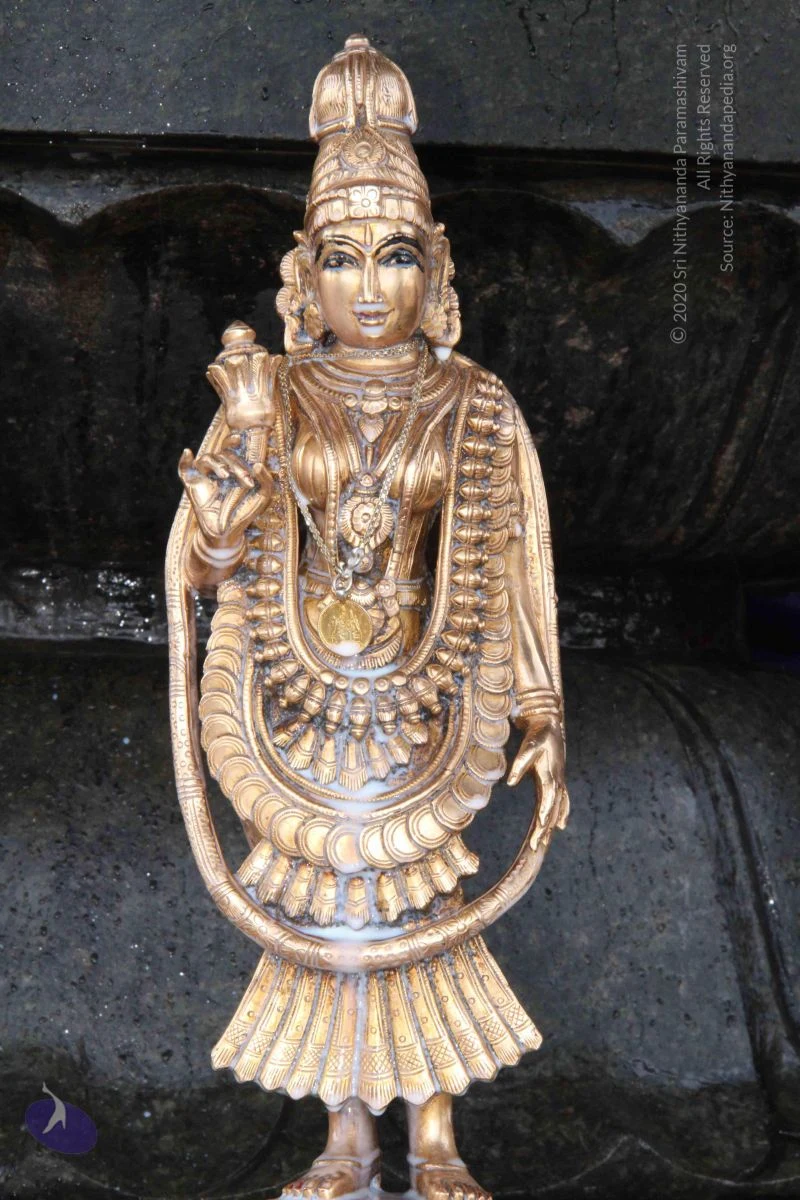
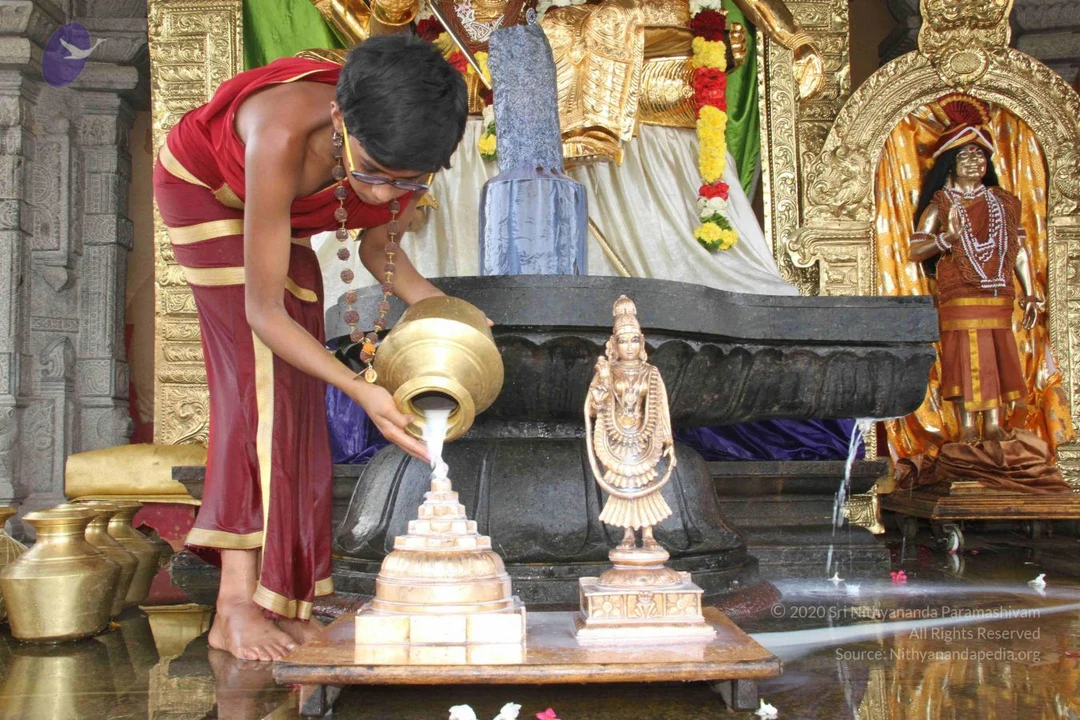
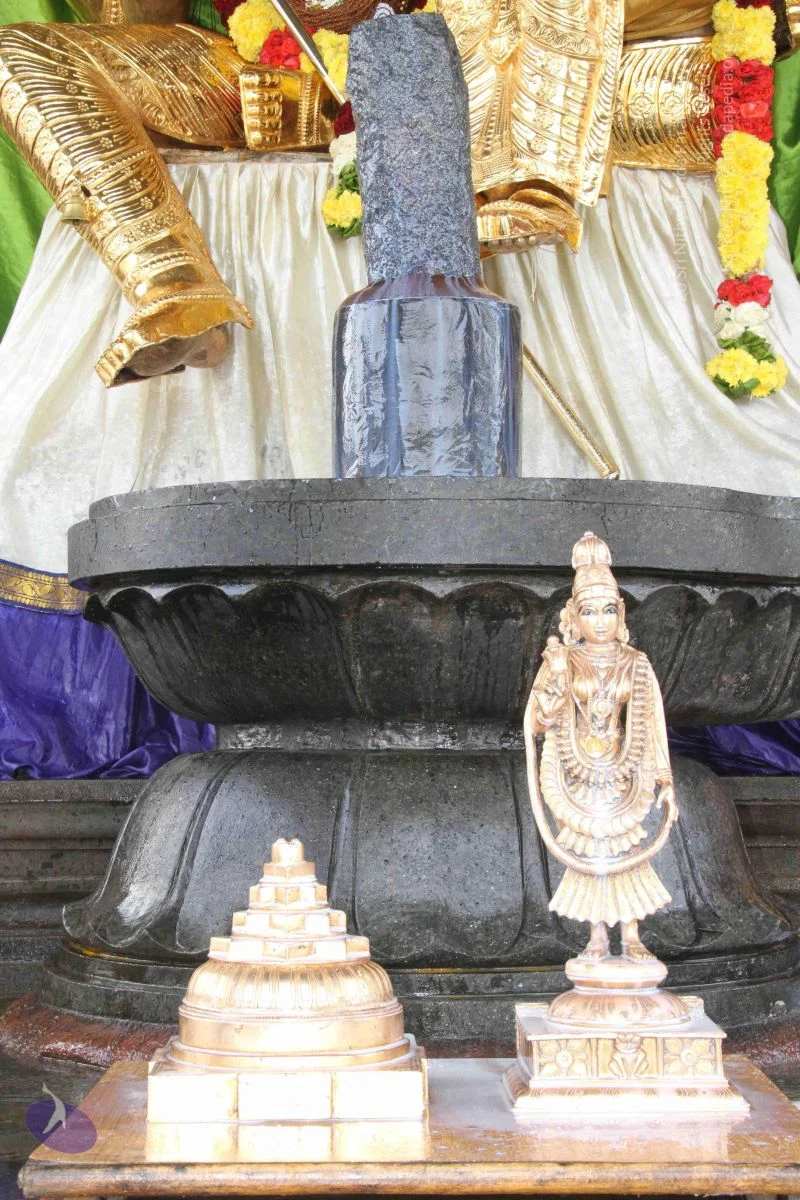
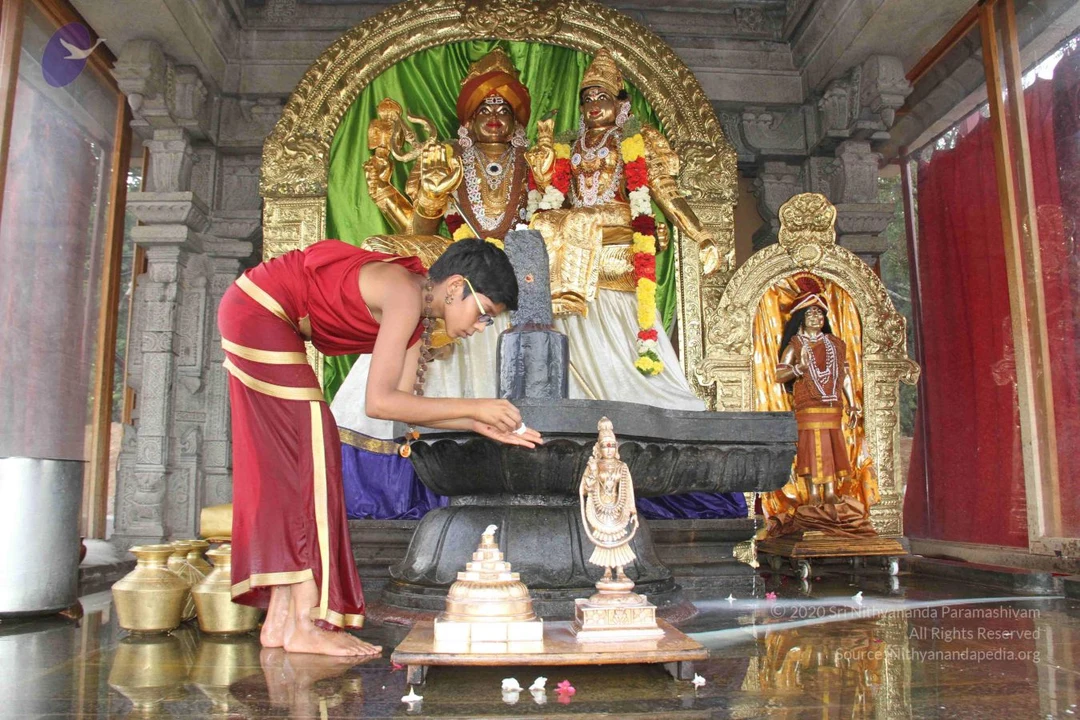
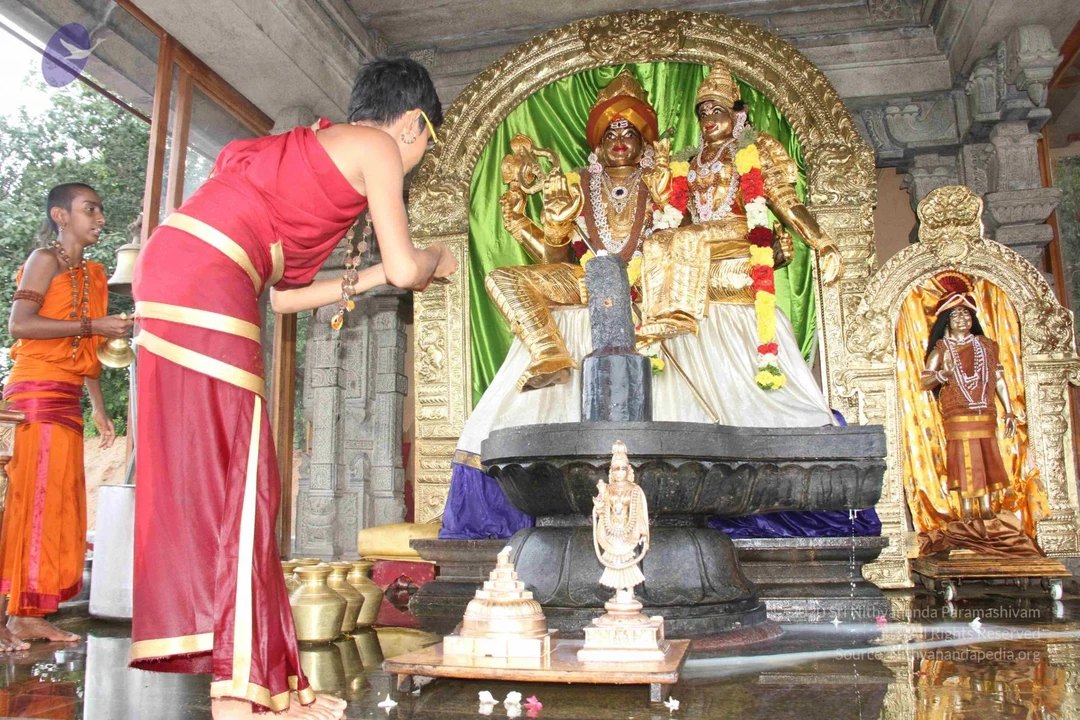
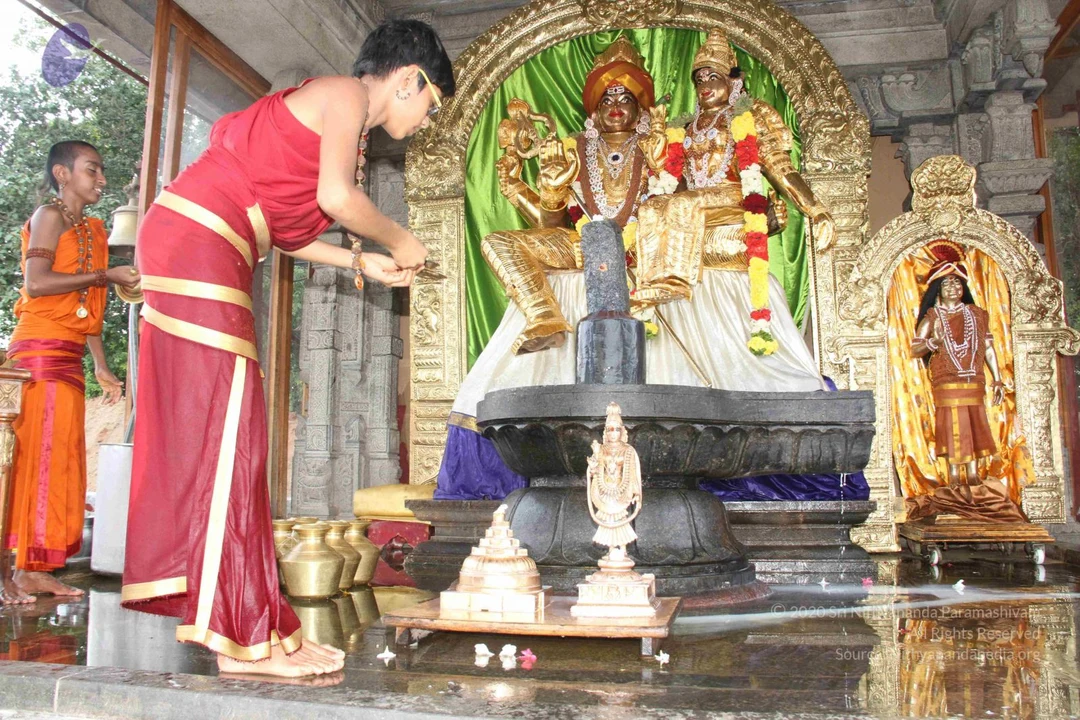
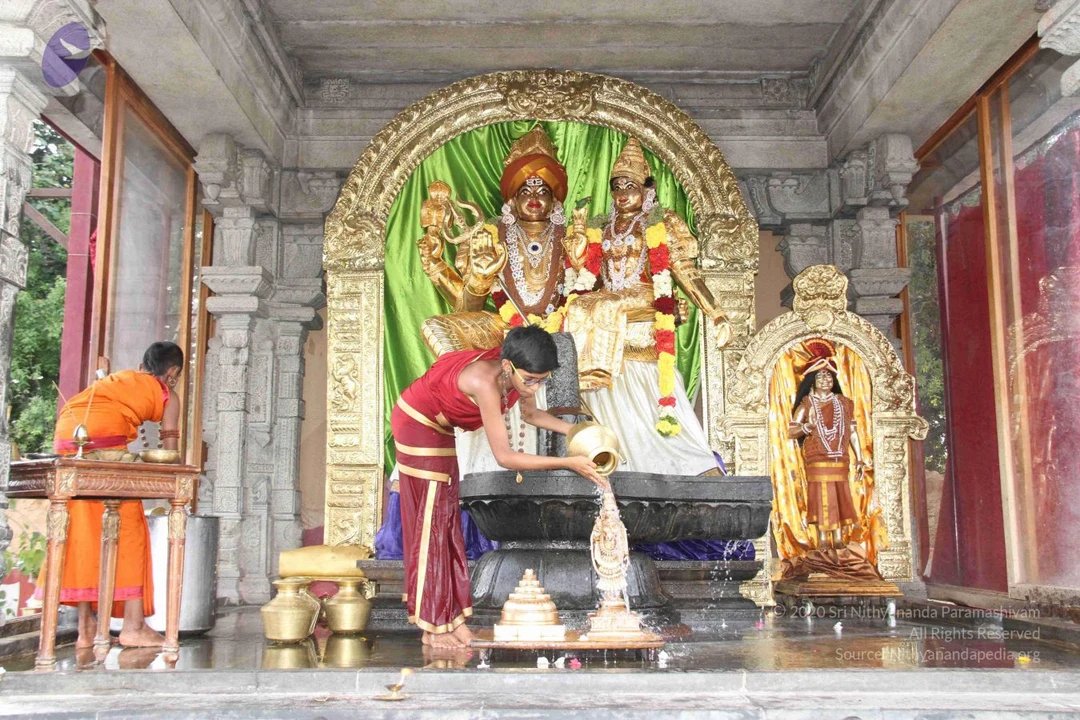
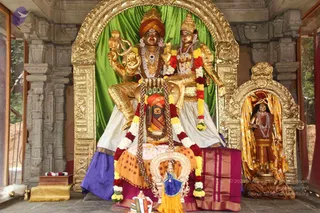
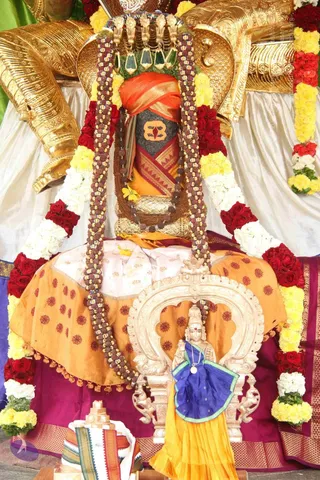
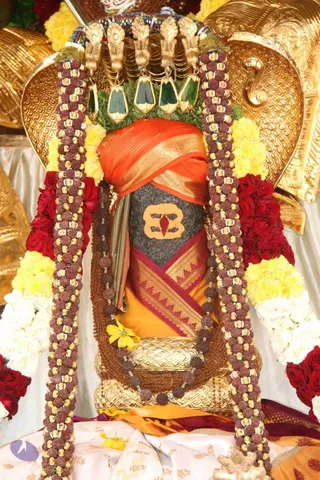
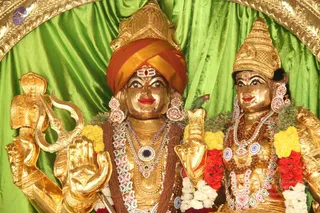
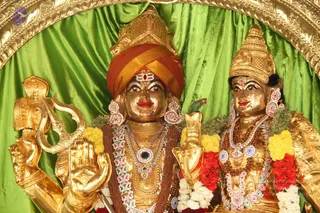
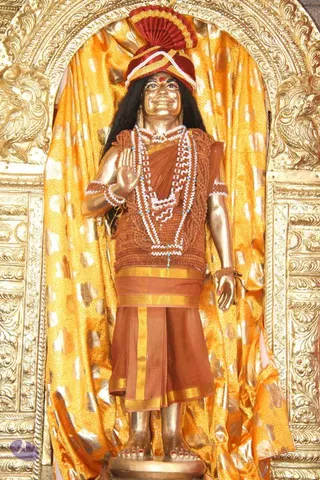
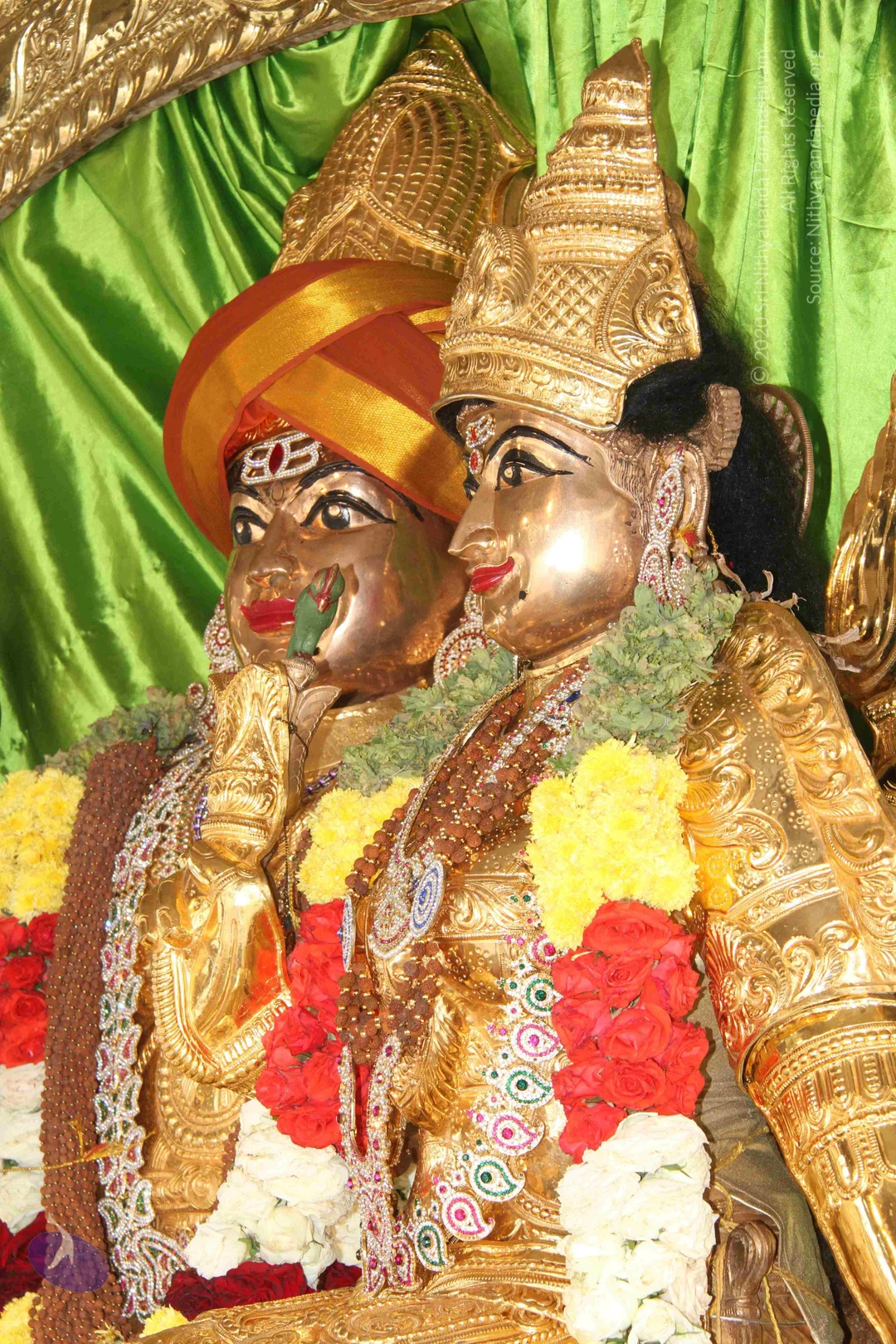
A photograph of a temple shrine housing a large golden murti of a seated deity couple, Shiva and Parvati, adorned with red, yellow and white flower garlands, rudraksha-style beads and gold jewellery. The seated figure on the left wears an orange-and-red turban and holds a trident-like staff, while the figure on the right wears a gold crown. The murti sits on a throne backed by a green cloth and an ornate gold arched frame. To the right, a smaller golden arched niche holds a standing figure in orange robes and a rudraksha mala. Floor offerings and a small brass lamp are visible at the base, and the stone walls are carved in grey.A decorated deity murti of Shiva is shown as a black stone lingam fully dressed for worship. The lingam wears an orange and gold cloth wrap and an orange turban-like cloth, with a gold trident-style face mask or ornament and a gold band at its base. Multiple strands of rudraksha beads hang down, along with garlands of red roses, white flowers and yellow marigolds. A small gold-framed throne holds a smaller deity figure in a blue and yellow cloth. A gold kalasha and folded cloth sit in the foreground, and an ornate gold chariot-like structure surrounds the scene. No people are visible.A dark stone Shivalingam is adorned for worship, wrapped in an orange silk cloth with gold border and a maroon-and-gold sash. Long garlands of rudraksha beads alternating with gold spacers hang down both sides, along with red roses, yellow marigolds and white flowers. A gold five-hooded serpent hood with green stone pendants crowns the lingam, and a gold-embossed arch stands behind. A yellow flower rests at its base and a brown rudraksha mala drapes across it. No people are visible.Two gilded deity murti stand side by side against a green satin drape within a gold-framed arch. The figure on the left wears an orange and gold turban, a tilak on the forehead, layered gold and jewelled necklaces, a rudraksha-style brown mala, and holds a trident in one hand while the other hand is raised in abhaya mudra. The figure on the right wears a tall gold crown, red and pink jewelled earrings, a pearl-and-bead necklace and a garland of red roses, white flowers and yellow marigolds, with one hand raised. A small green parrot perches between them. These are statues, not living people.Golden metal murti of a deity pair set against a green silk backdrop framed by an ornate gold arch. The figure on the left wears an orange-red turban, a gold crown-like headdress, a vibhuti tripundra on the forehead, layered gem-studded necklaces and a rudraksha-style mala, and holds a trident in one raised hand with a gold cobra coiled around it. The companion figure on the right wears a gold crown, large jeweled earrings, beaded necklaces and white and red flower garlands draped across both figures. A small green parrot perches in the background.A golden statue of a long-haired male figure stands in an ornate gilded niche draped with yellow and gold patterned fabric. The figure wears a red and gold turban, a brown-red robe with gold borders, layered rudraksha and white beaded malas, and bracelets. The right hand is raised in a blessing gesture, and a red tilak marks the forehead. The statue is a depiction rather than a physically present person, and it appears to be a murti or statue, so the Swamiji identification is a depiction-level judgement based on the distinctive long hair, rudraksha malas and saffron-toned garments.
temple-abhishekam

17 photosSource gallery
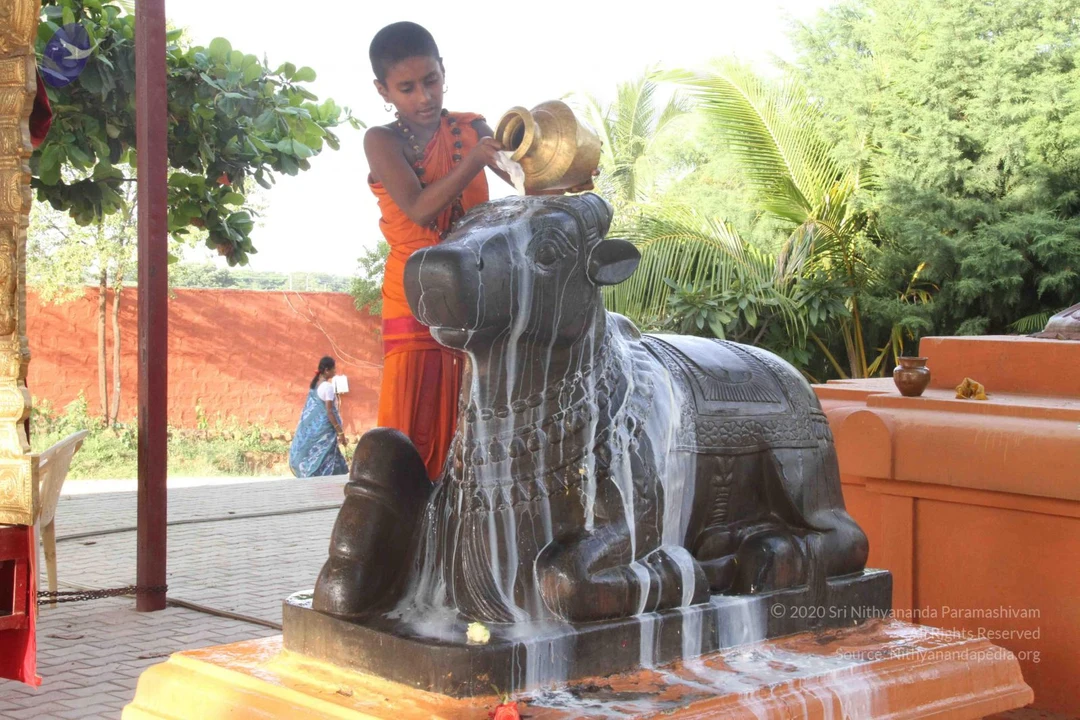
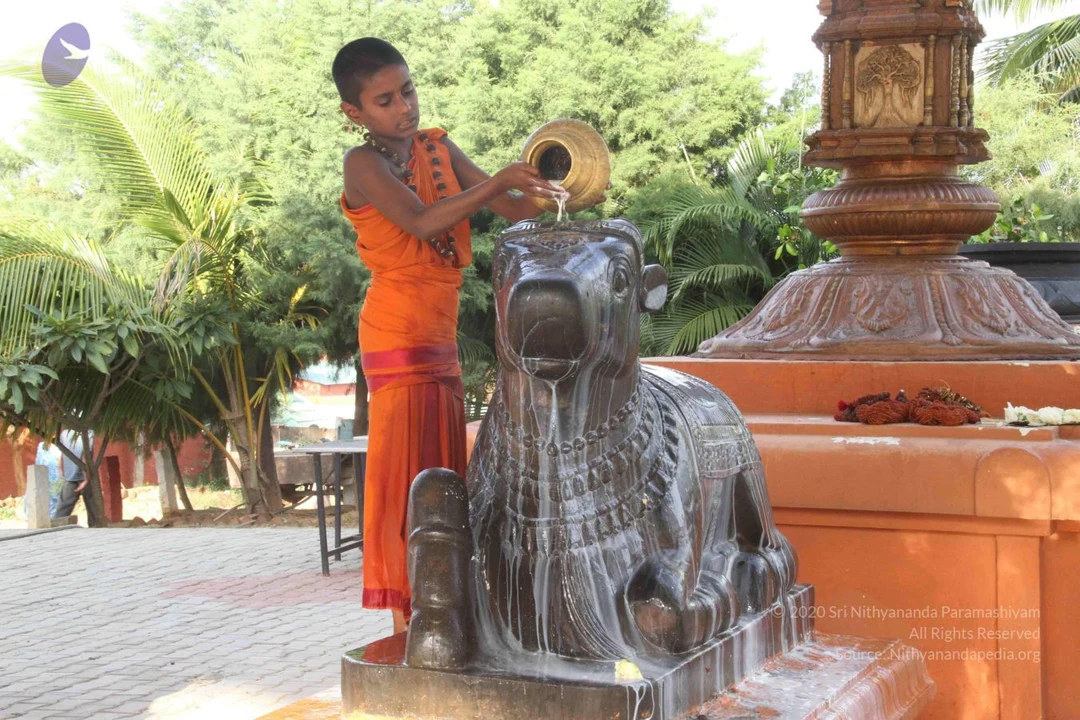
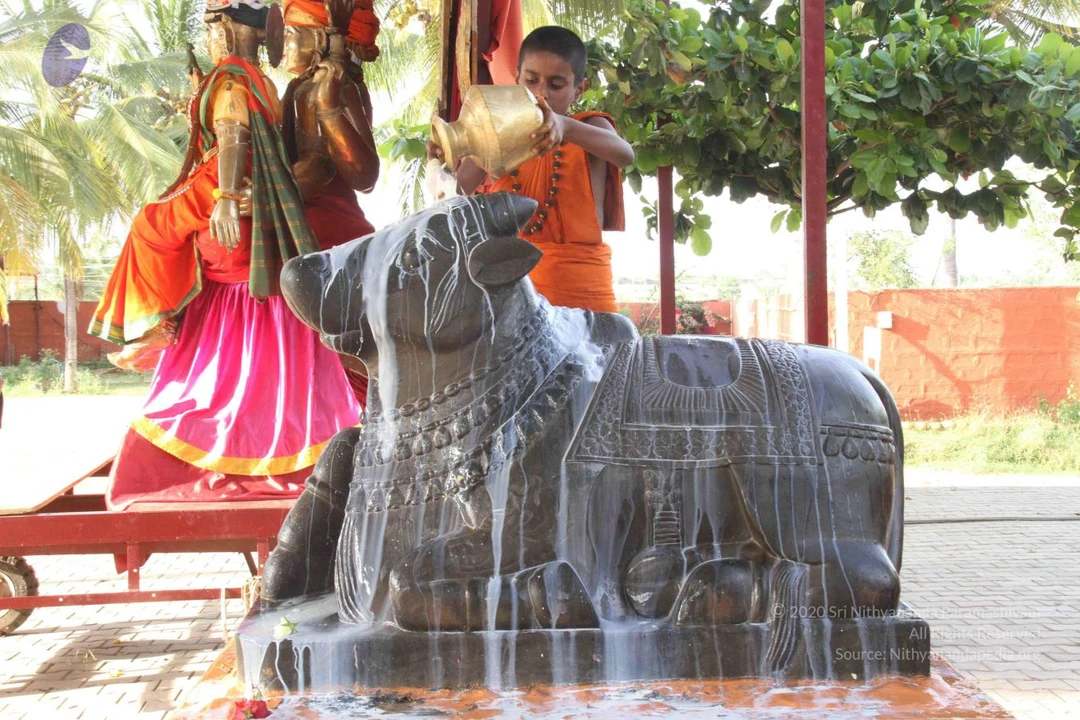
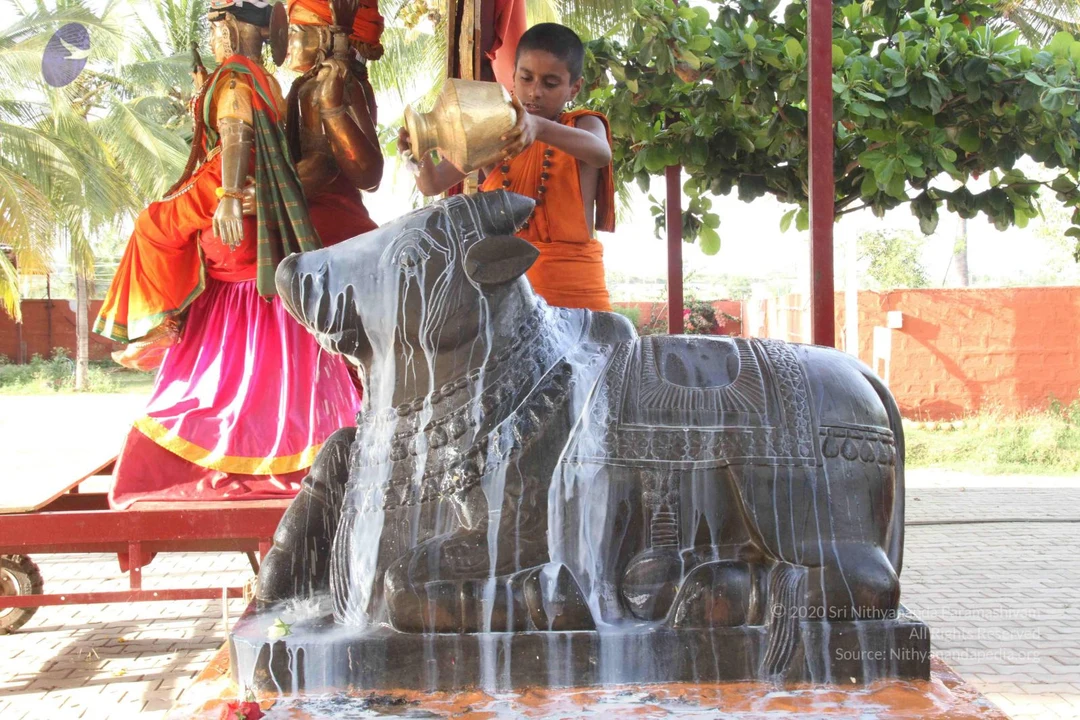
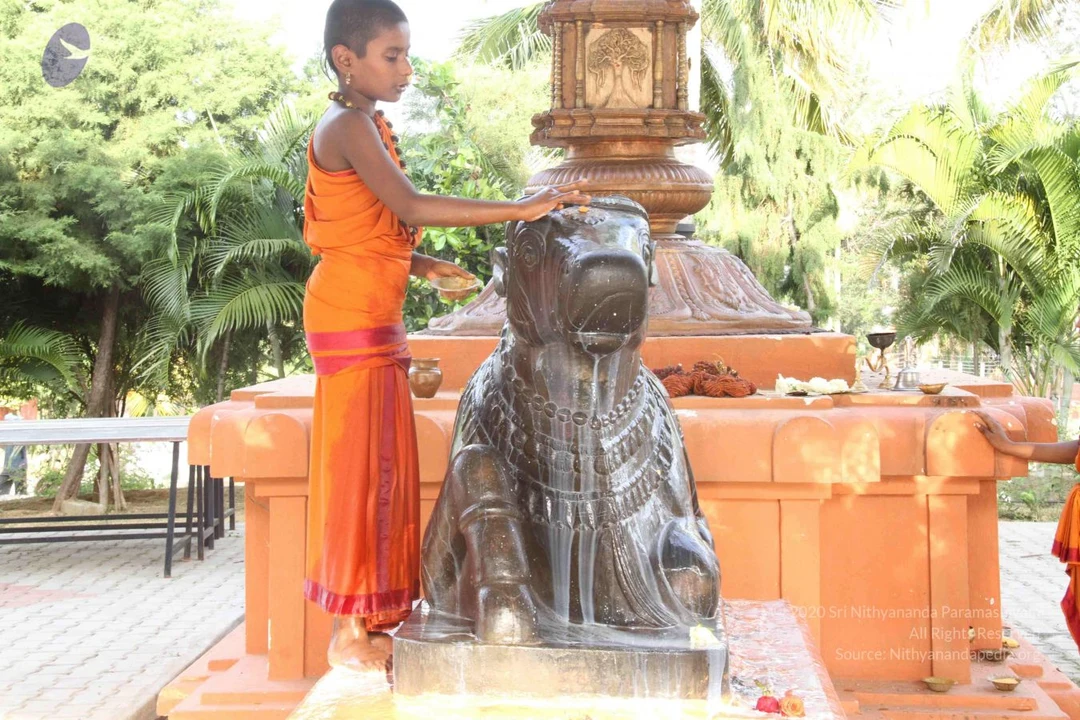
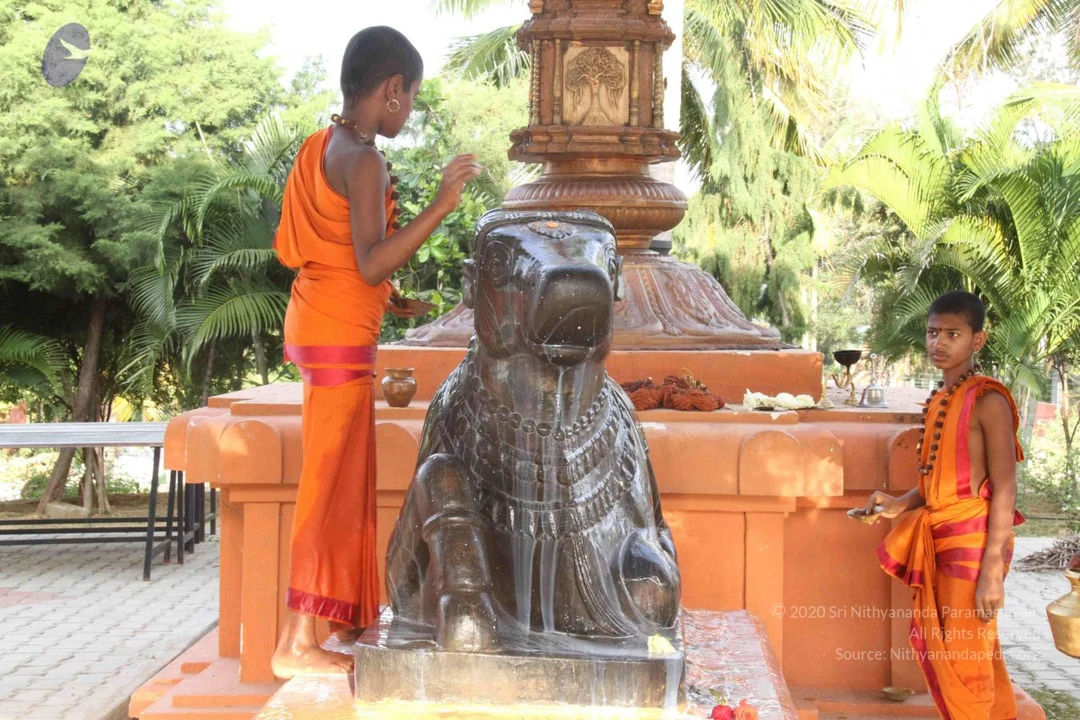
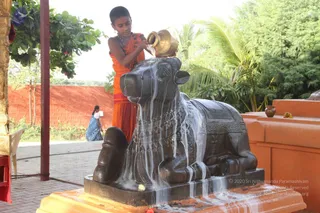
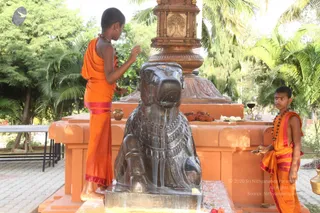
A young boy in an orange saffron dhoti and orange shawl stands at a black stone Nandi bull statue, pouring water from a brass kalasha pot over the bull's back as water streams down its carved body. The Nandi sits on an orange-painted base with a small offering of flower petals. Behind him a woman in a blue sari stands near an orange wall, with palm trees and green foliage around. The scene looks like an abhishekam offering at a temple outdoors.A young boy with a shaved head in orange-saffron monastic cloth, wrapped with a red-edged sash, pours water from a brass pot onto a dark stone Nandi bull statue. Water streams down the statue's face and chest, and the bull has a carved necklace. Behind is an ornate orange stone pedestal with carved floral motifs, red and orange flower offerings lie on the base, and palm and leafy trees surround a paved courtyard in sunlight. The boy wears a rudraksha-style bead necklace, and the scene reads as abhishekam at a shrine.A young boy in saffron-orange monastic robes pours liquid from a gold kalasha vessel over a large dark stone Nandi bull statue, which is seated on a stone base and draped in water and carved ornaments. Behind him stand golden and orange-clad figures on a red wheeled chariot or ratha, with palm trees and a red brick wall in the background. Water streams down the Nandi. The ground is paved with red-brown tiles and a small flower lies at the base. The scene is outdoors in a temple courtyard.A photograph of a black stone Nandi bull statue being bathed with milk or water poured from a brass vessel. A young boy in orange robes and a rudraksha-style bead necklace stands on the left, holding the brass pot over the statue's head. Behind him are golden-coloured figures of deities in orange and green garments, and a red-painted structure with a tree above. Liquid streams down the Nandi's body onto a stone base with red-coloured ground. A red-pillared canopy frames the scene.A young shaven-headed boy in an orange dhoti with a red border stands at a black stone Nandi bull statue, pouring water over it while his hand rests on its head. Behind him an orange-painted stone pillar topped with an ornate carved urn rises among palm trees. On the orange plinth beside the Nandi sit a brass lamp, a small brass vessel, red flower garlands and offerings of flowers and food. A second person's arm in orange cloth reaches in from the right edge. Water runs over the statue into a basin and small flower petals and oil lamps lie at its base.Outdoors in a garden with palm and tropical trees, two young boys in saffron-orange sannyasi-style cloth with red borders perform a ritual at a black stone Nandi bull statue, which is being bathed with water and has garlands around its neck. The boy on the left, wearing a rudraksha-style necklace and gold earring, pours liquid while holding a small vessel; the boy on the right, in orange cloth with a red-bordered wrap and beaded necklace, holds a small spoon and stands by a brass vessel. Behind the statue stands an orange-brown stone shivalinga-style pillar with carved tiers, a kalasha-type top, and a small offering bowl with flowers and marigold garlands on the orange platform.