Skip to content
Monday

27 October 2014

Be in Completion with Advaita

Dated photos
428
Source pages
1
Media
3
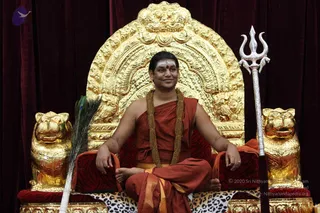
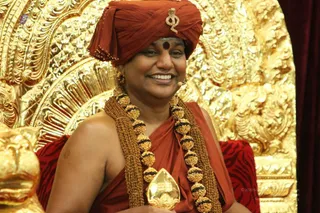
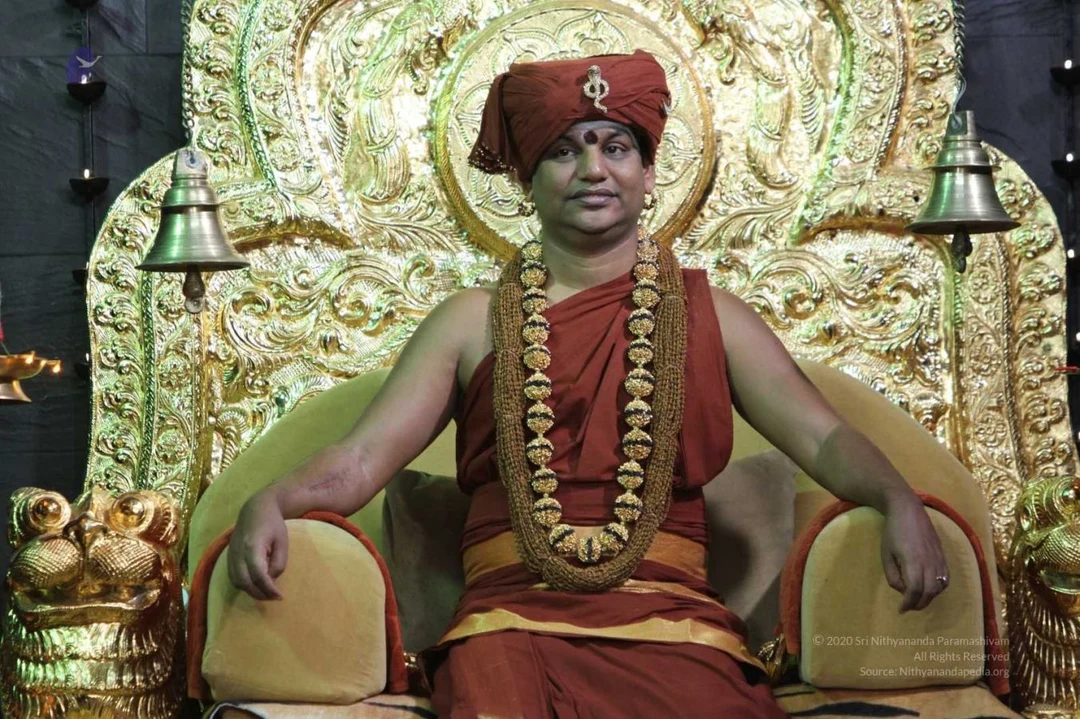
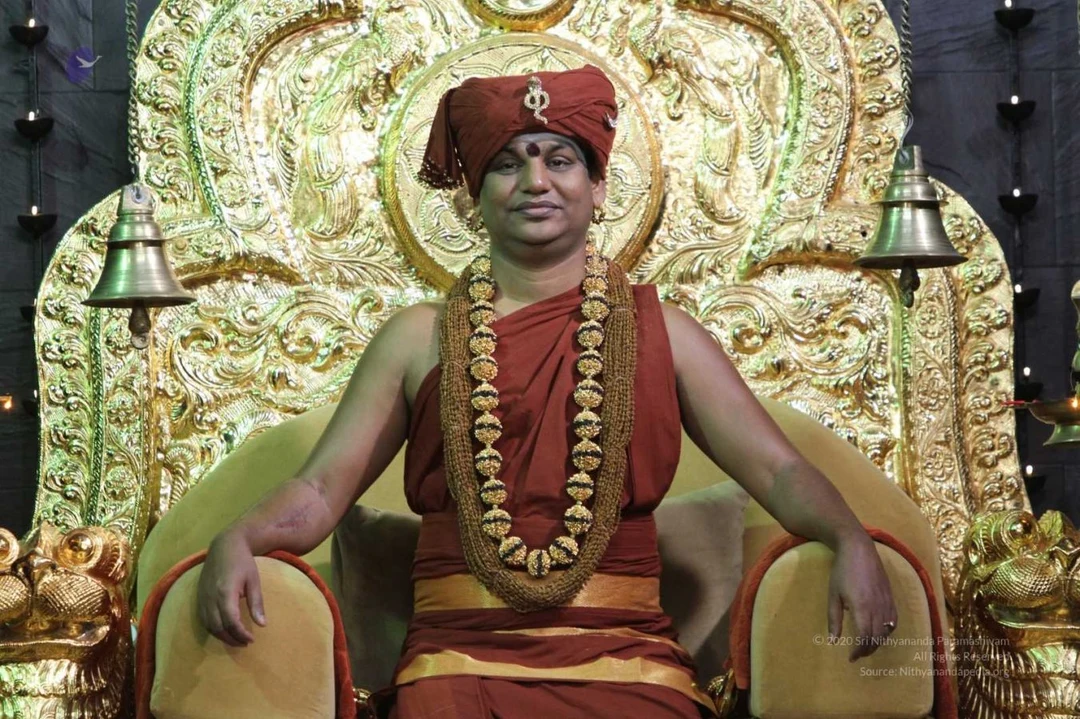
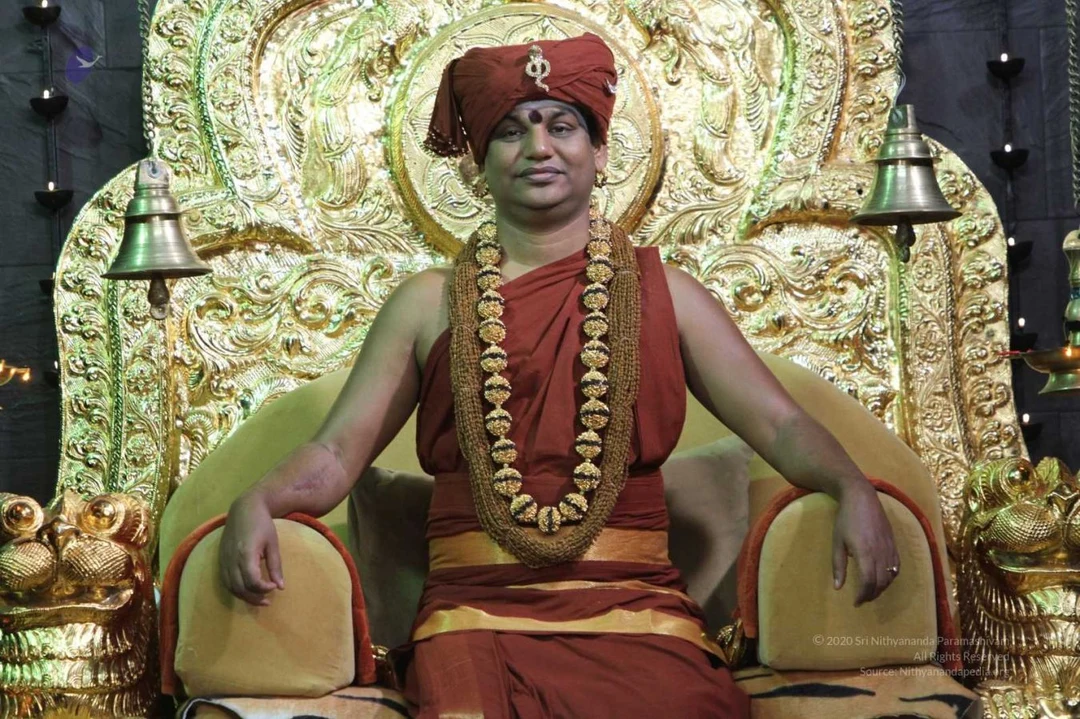
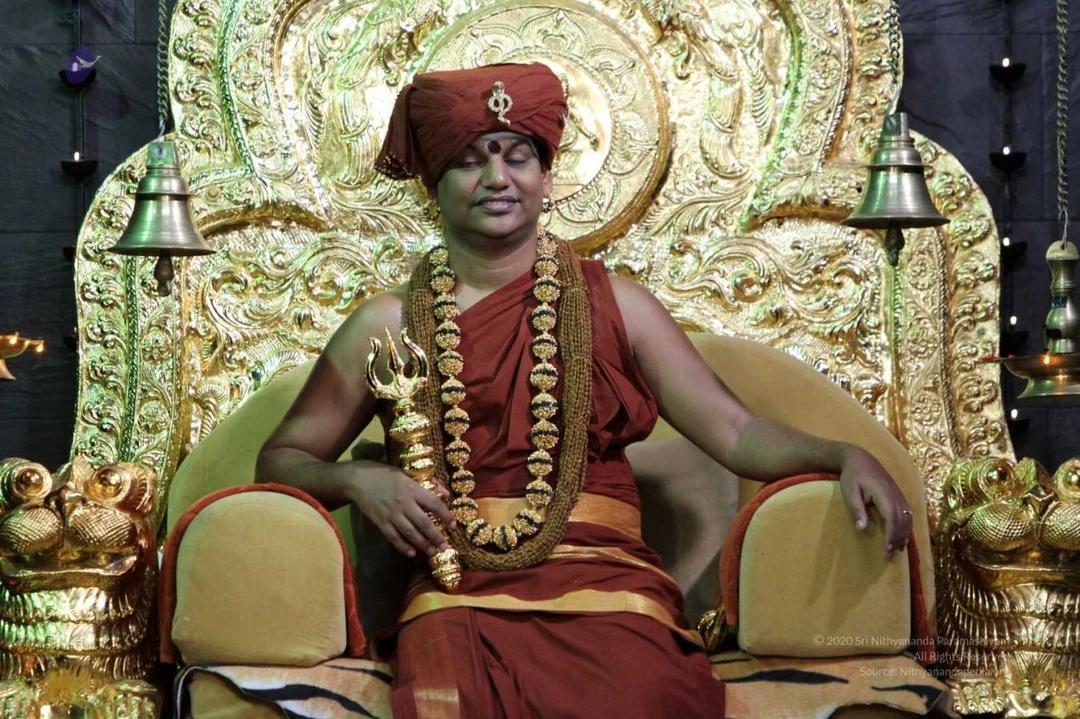
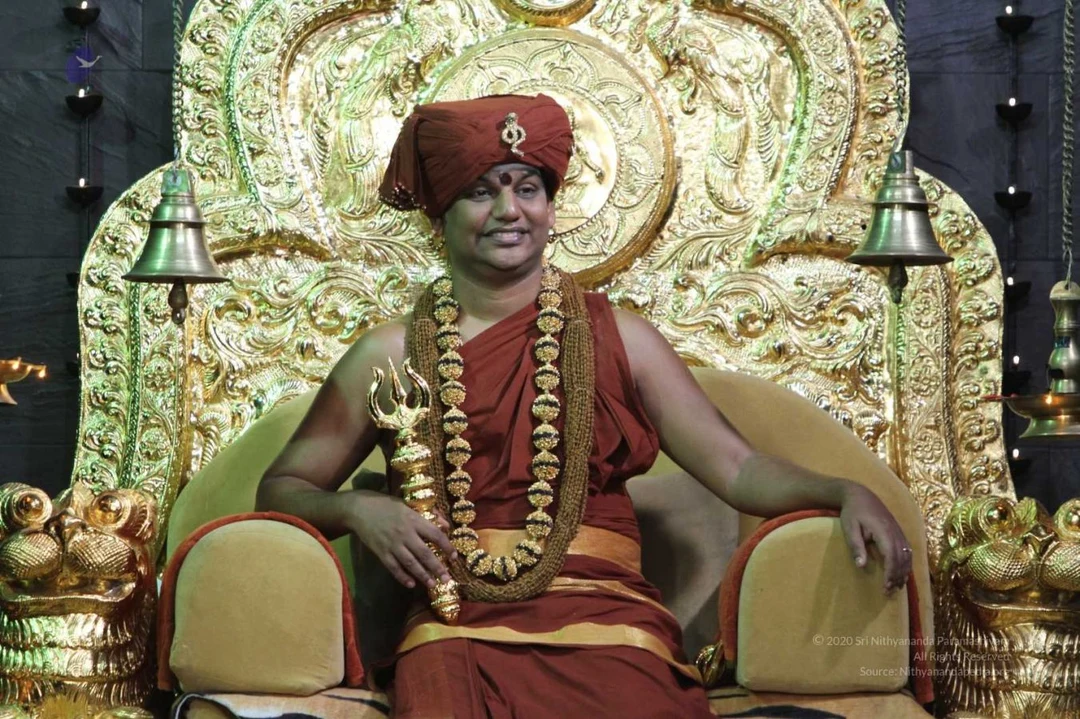
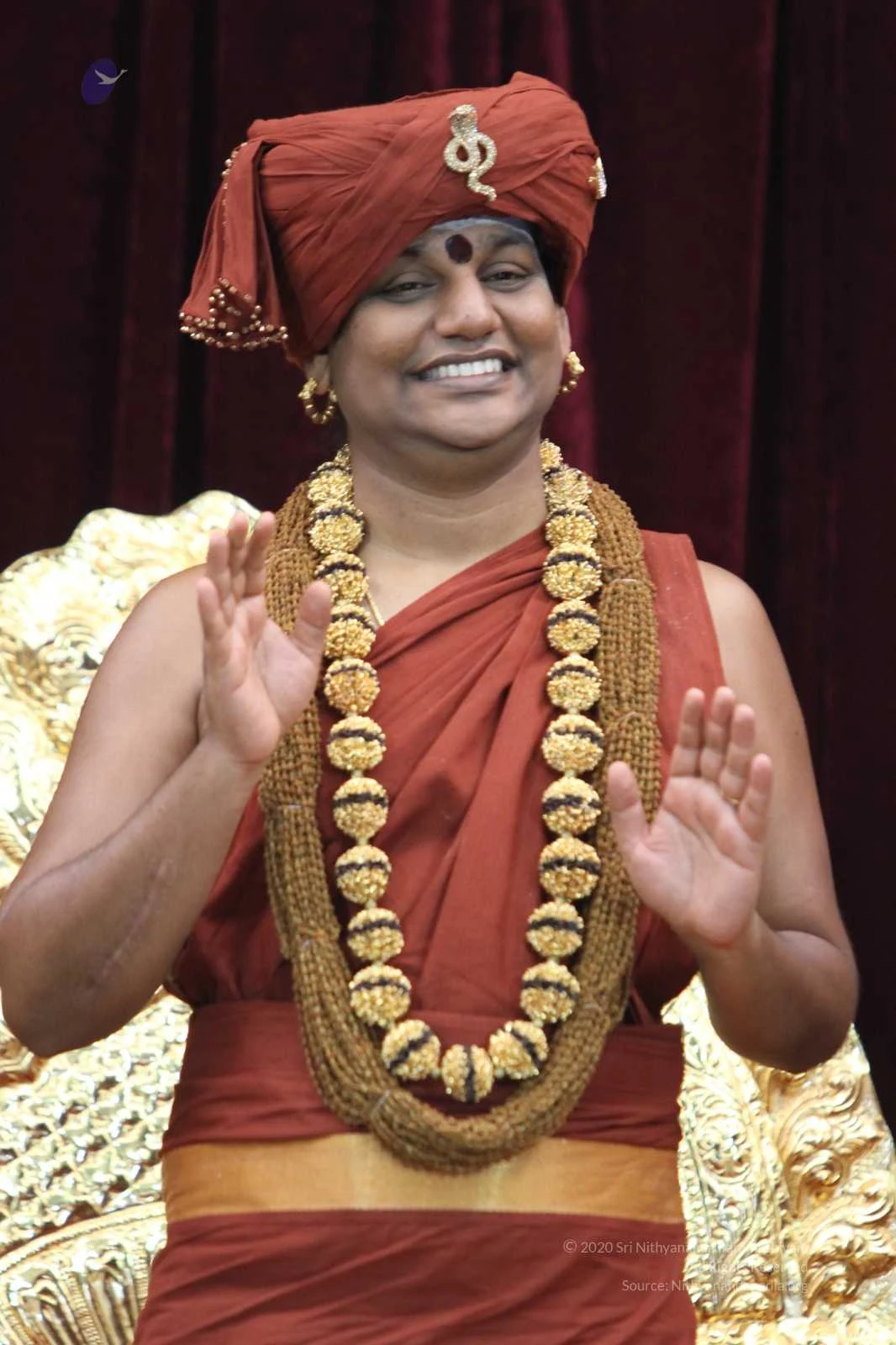
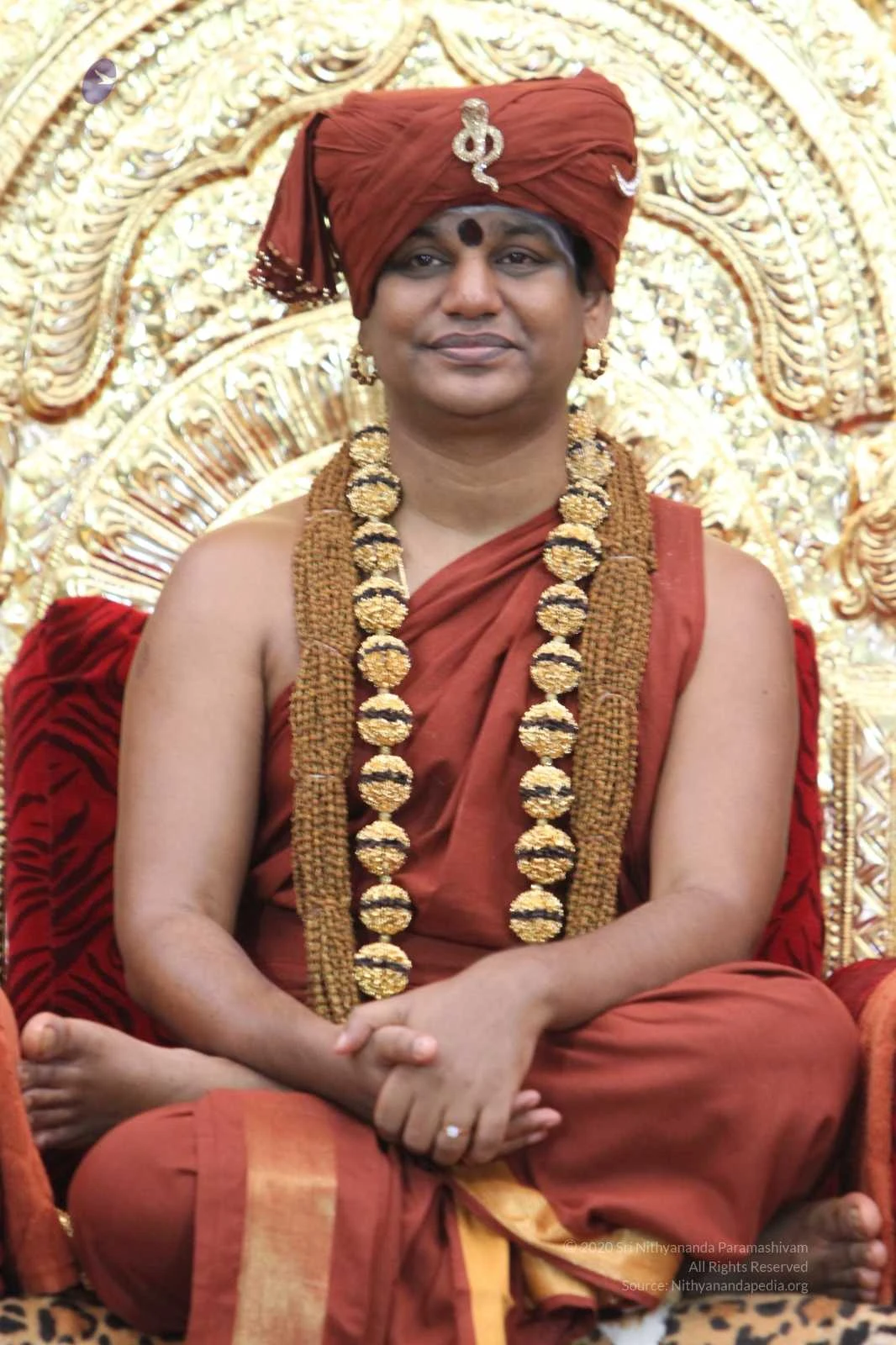
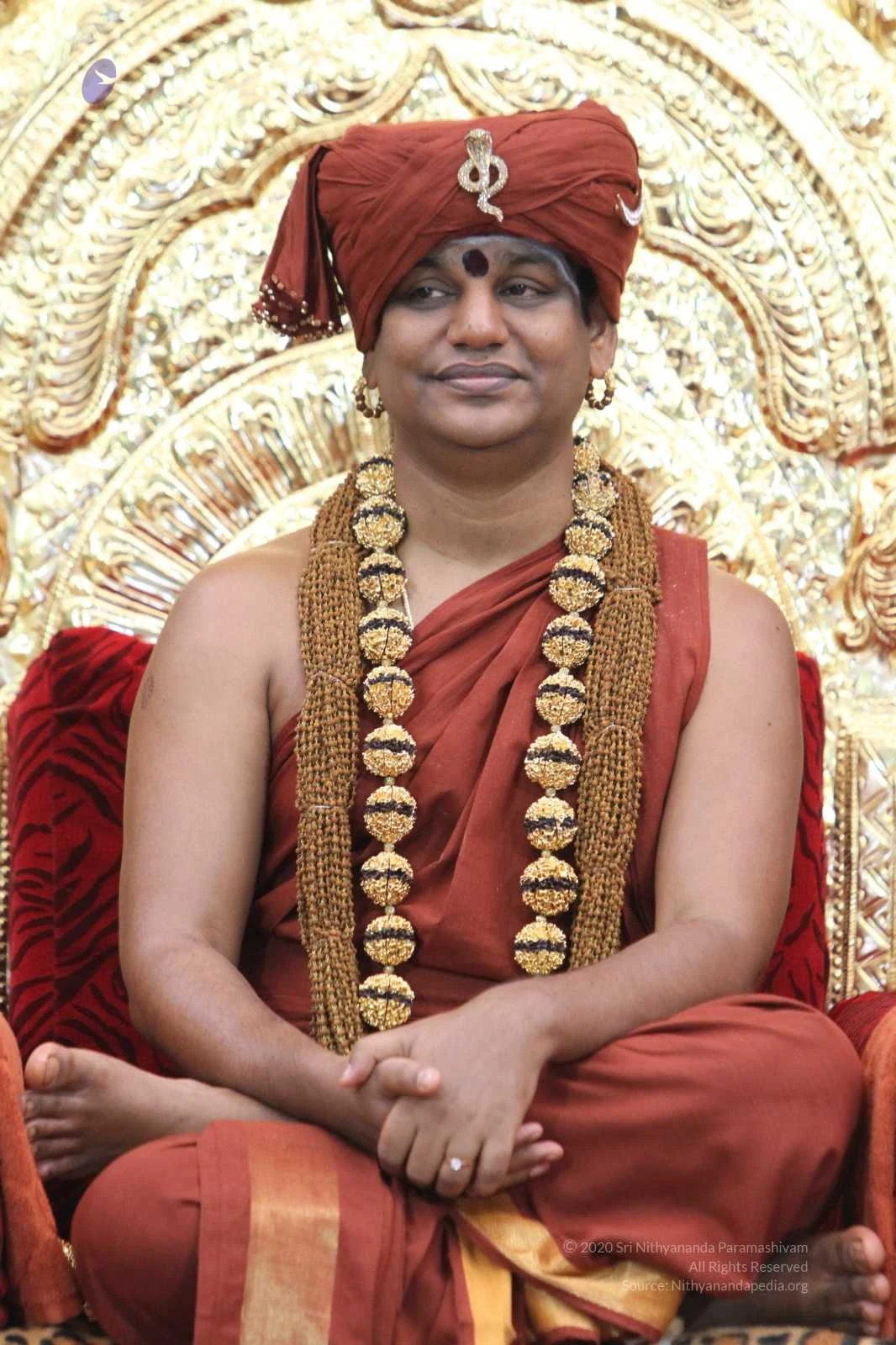
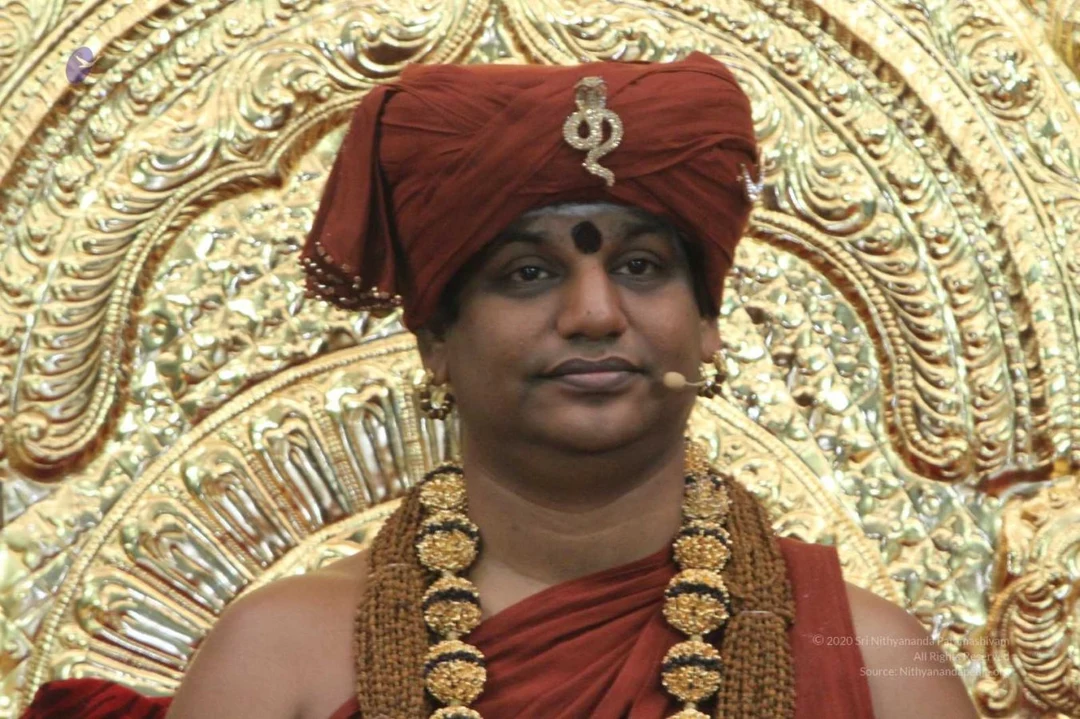
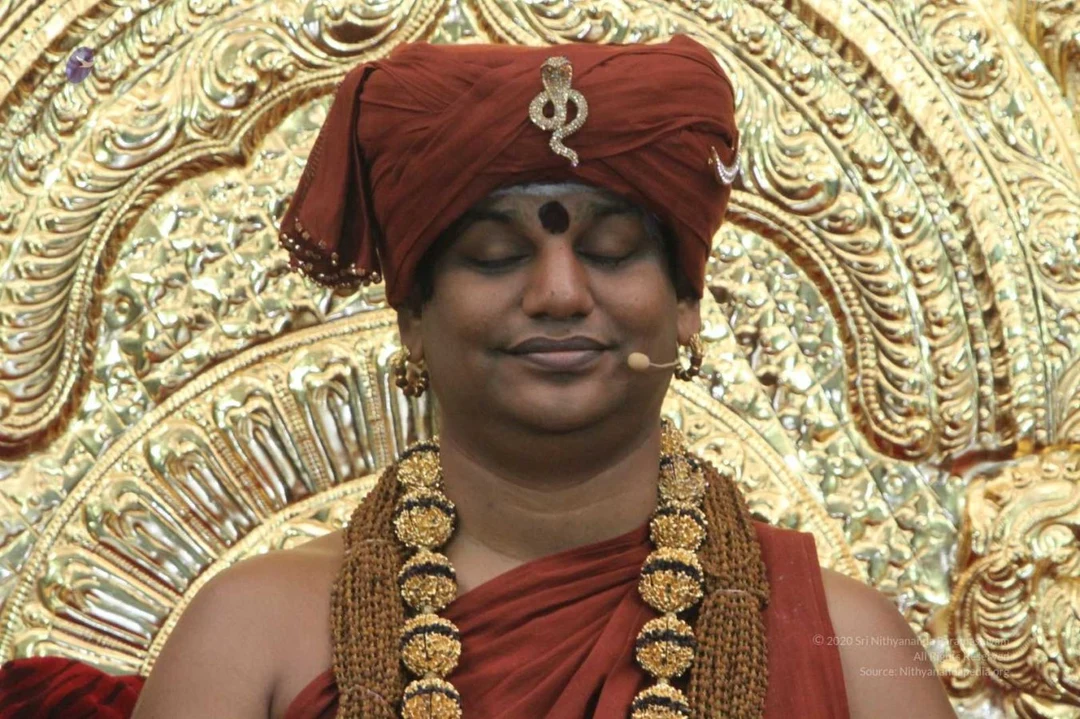
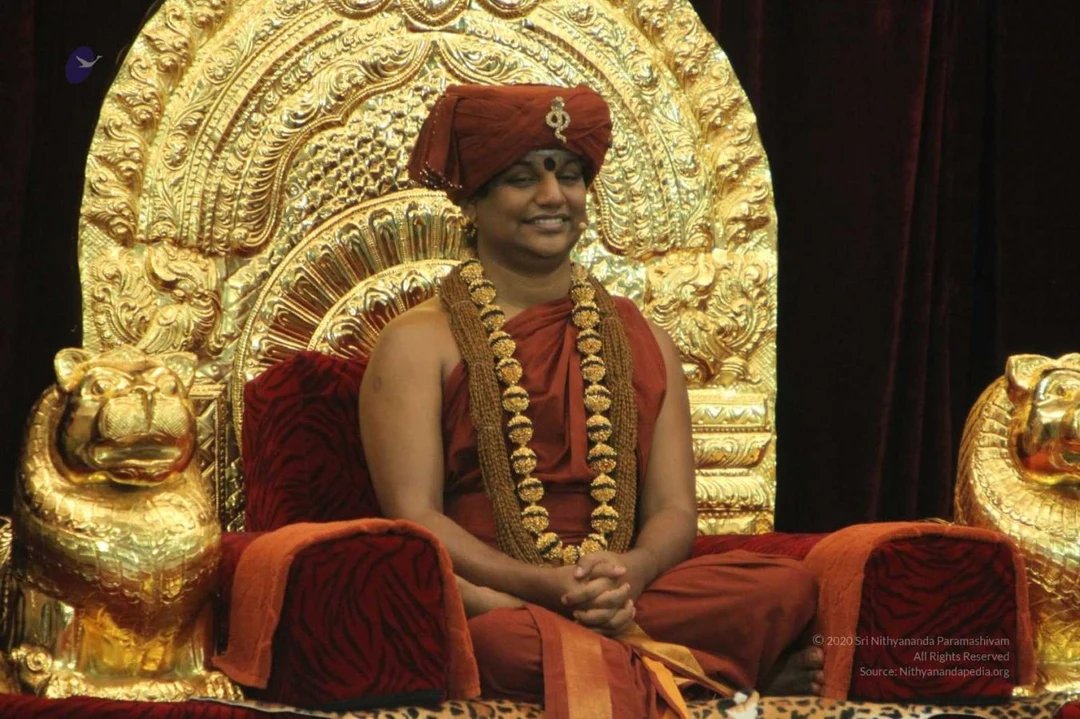
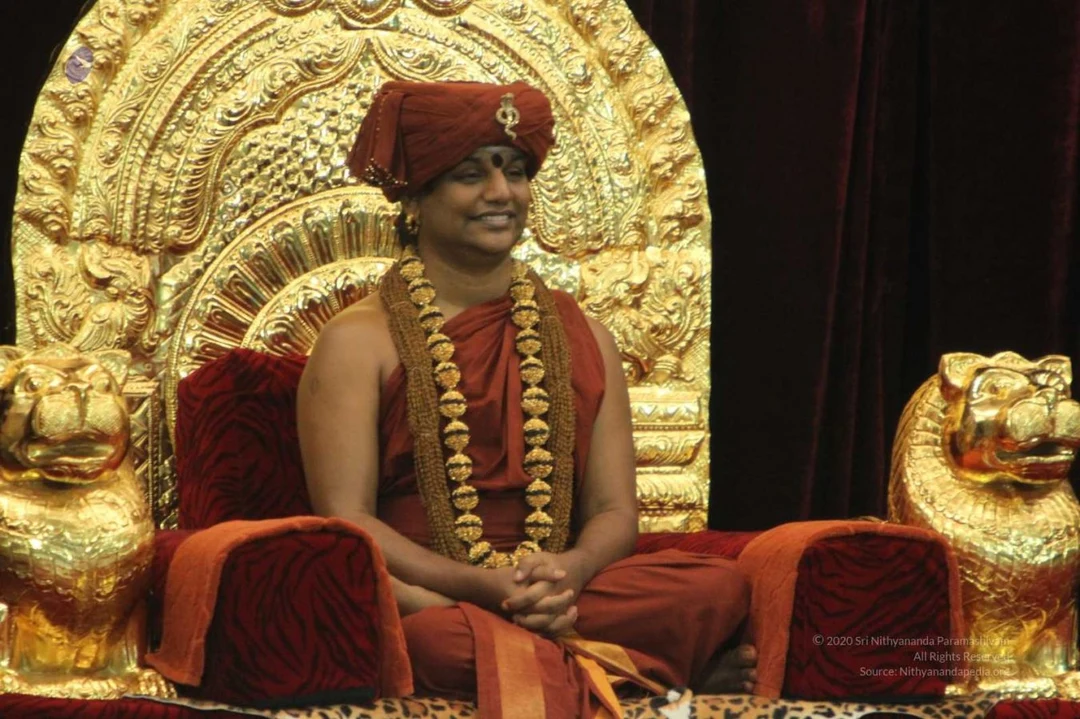
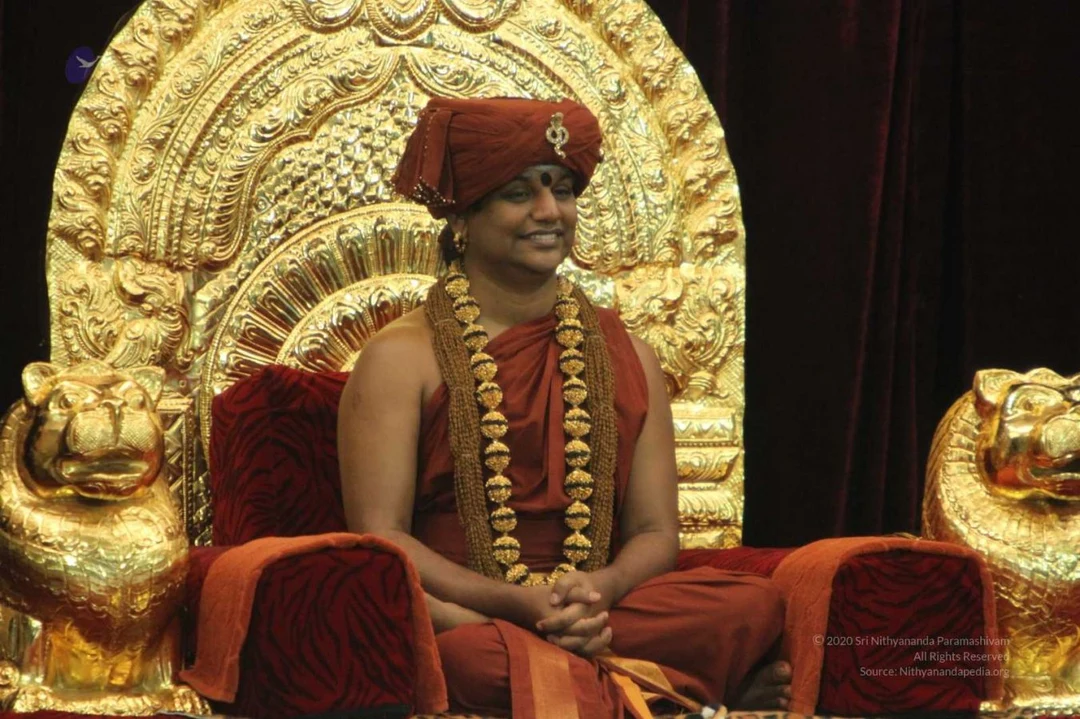
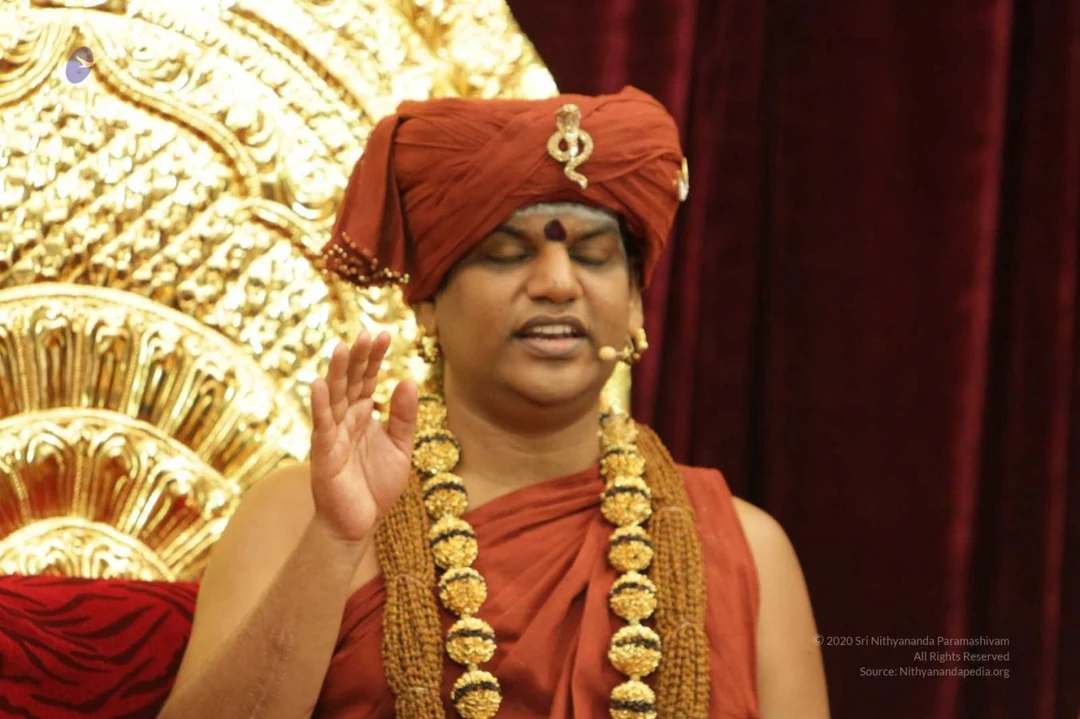
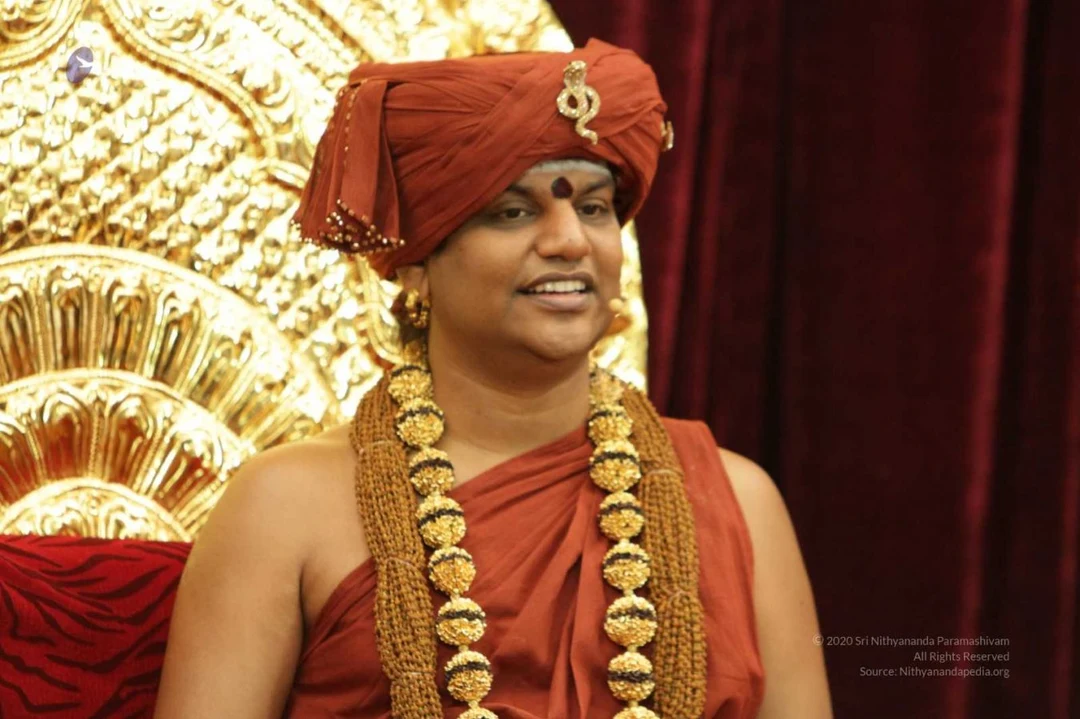
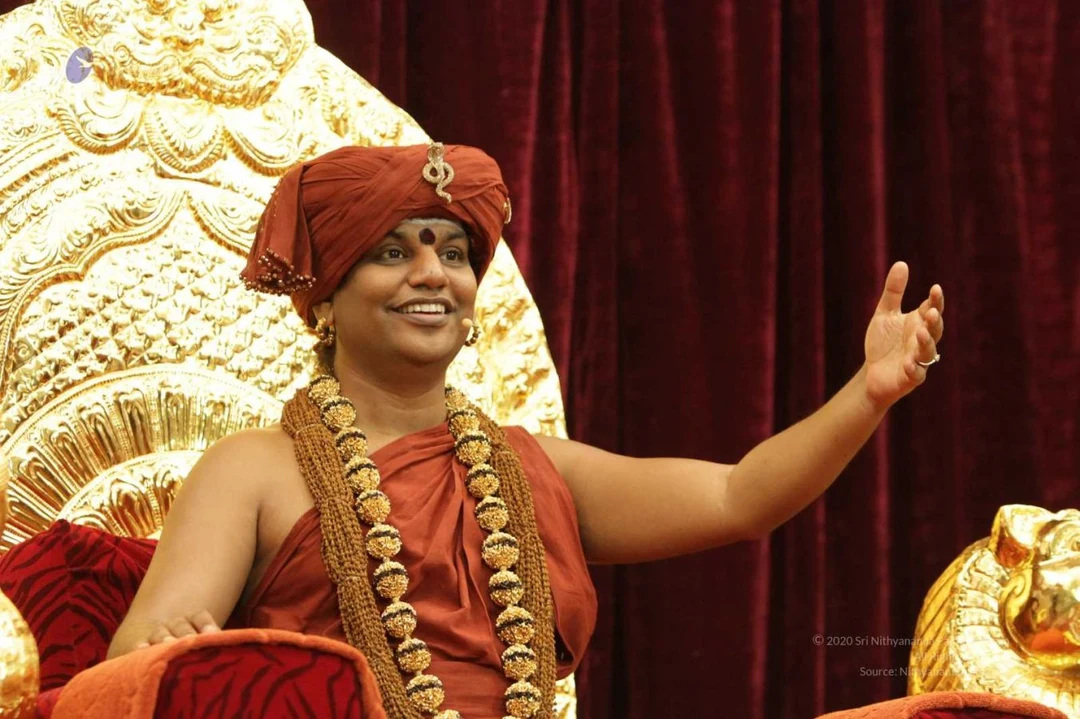
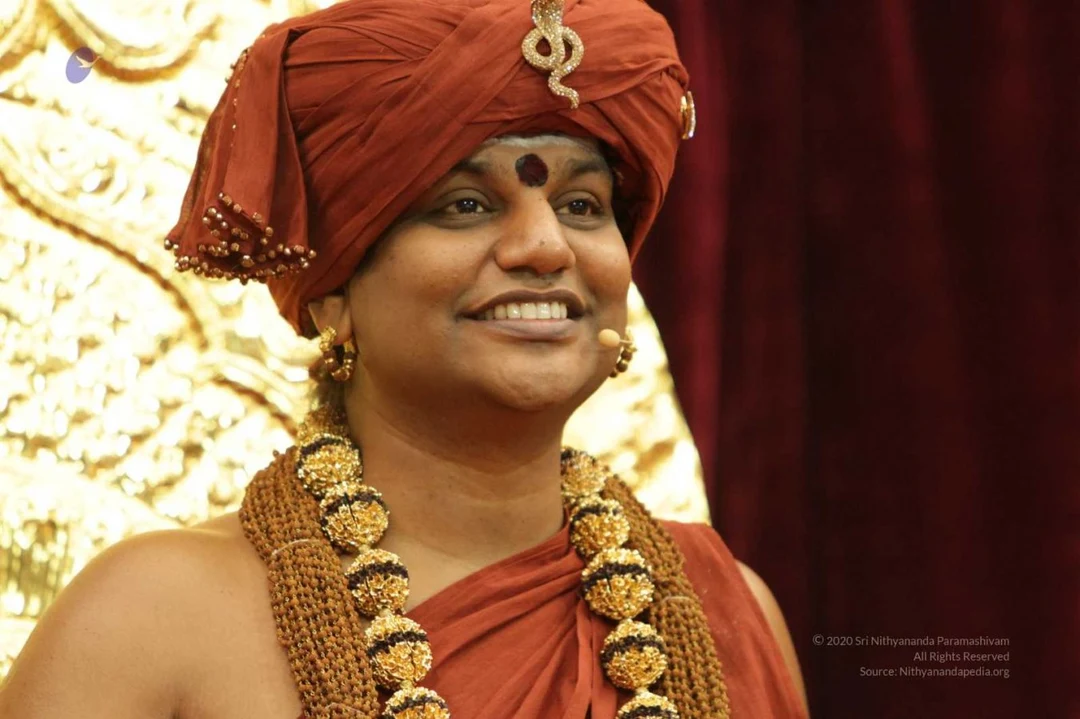
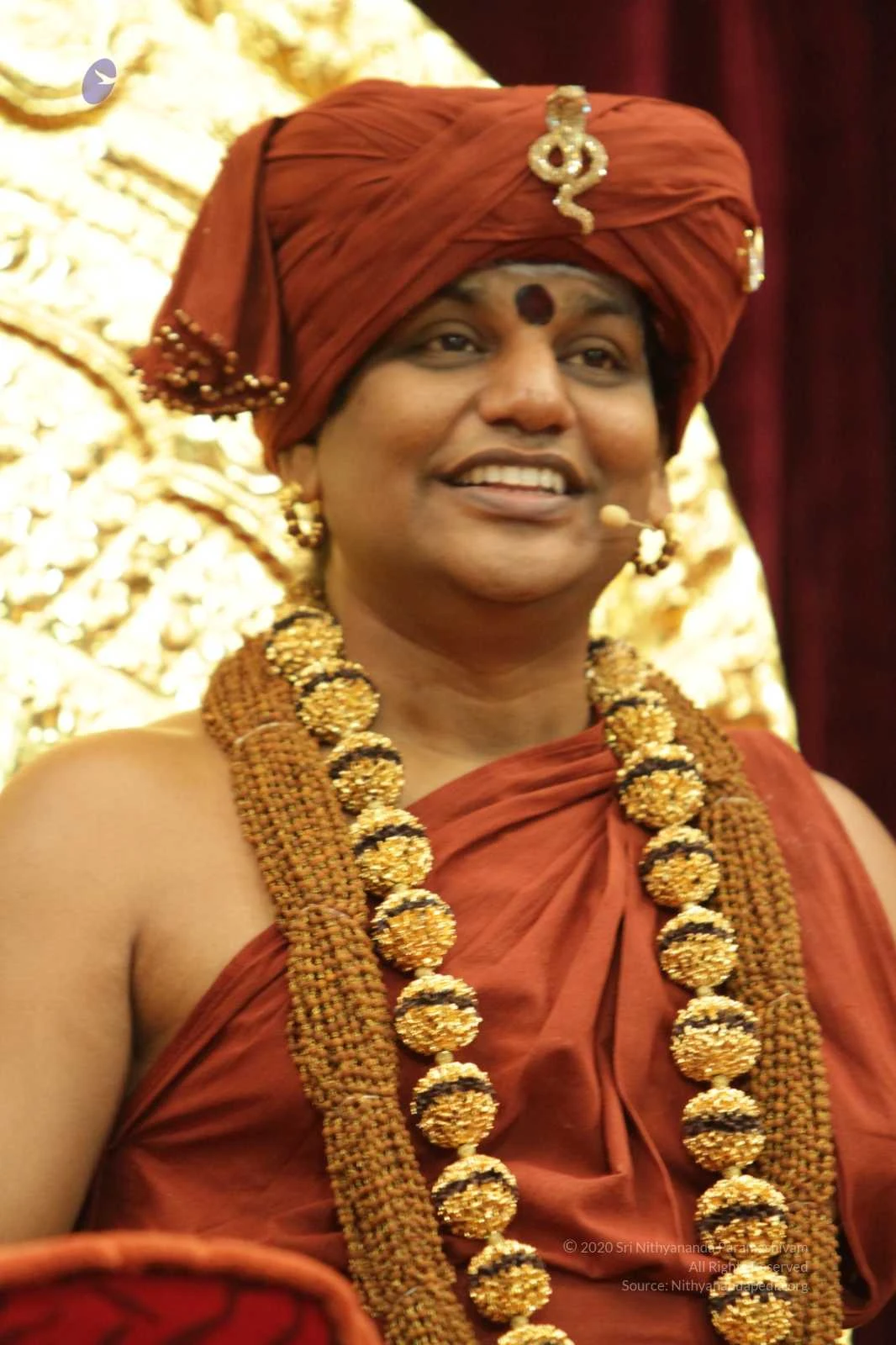
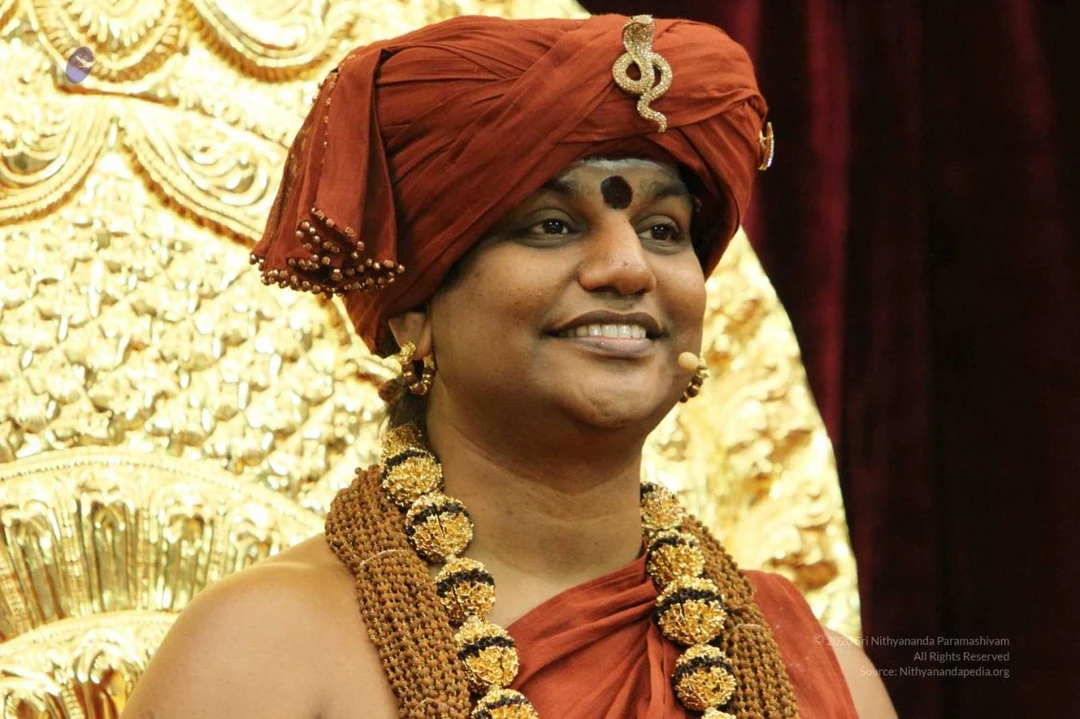
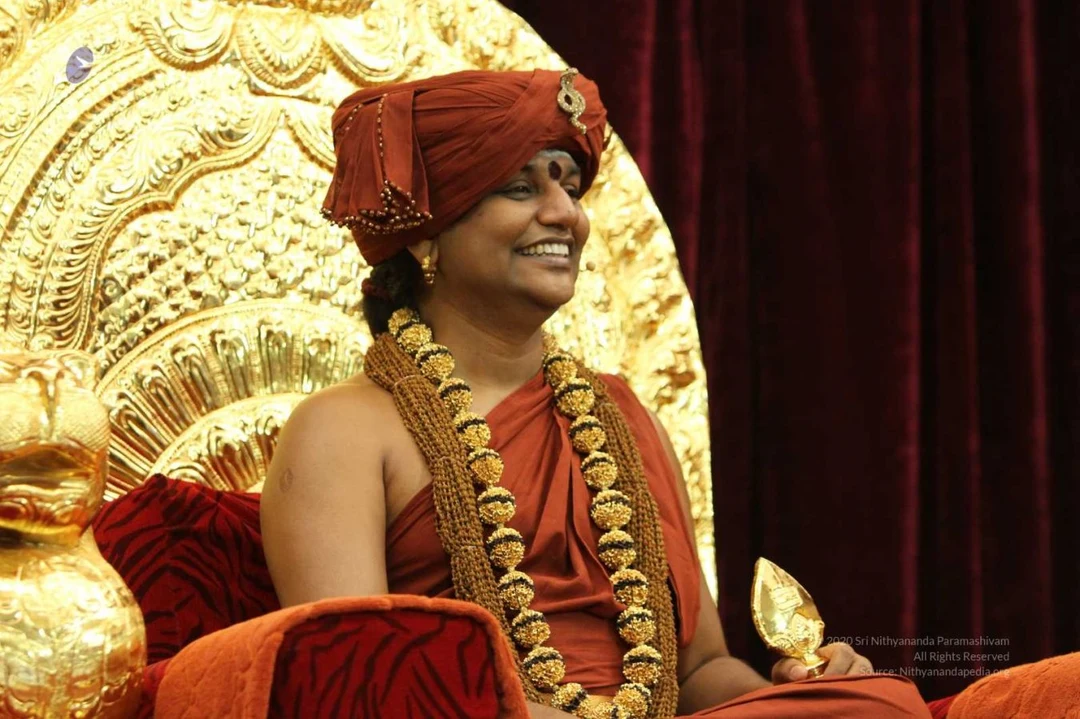
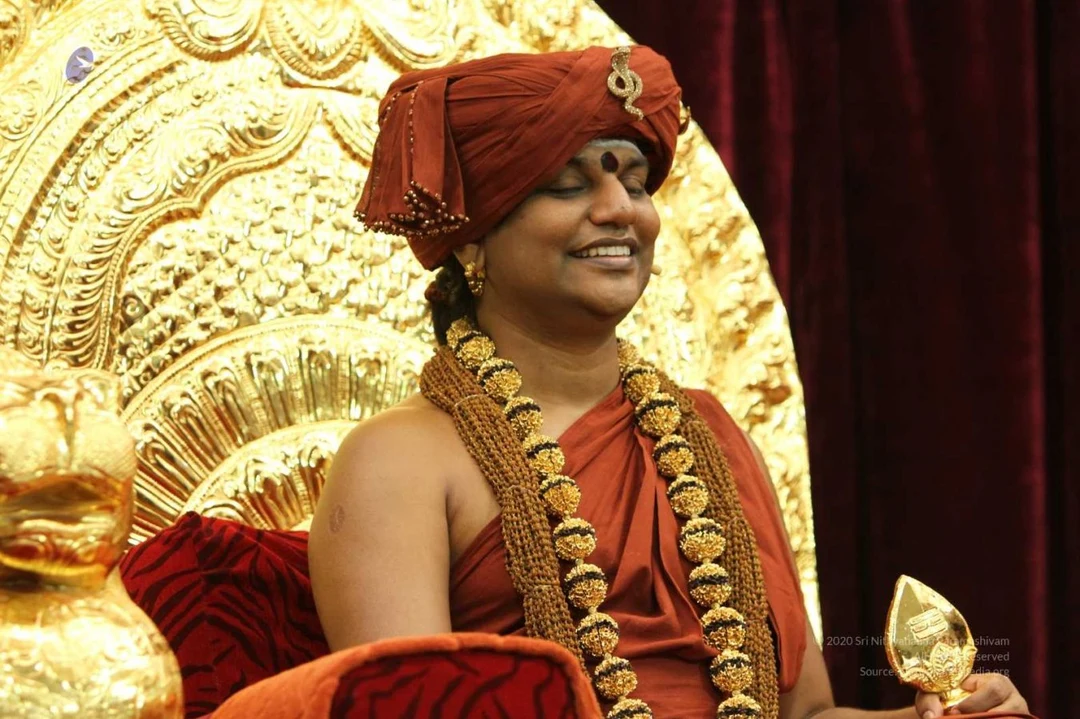
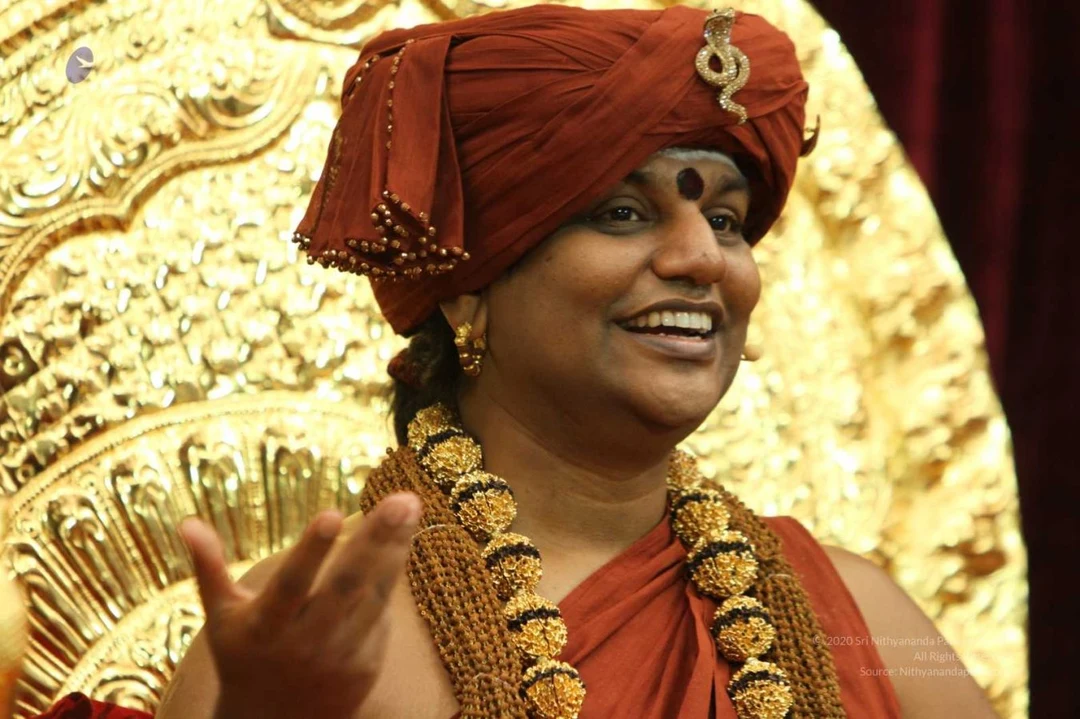
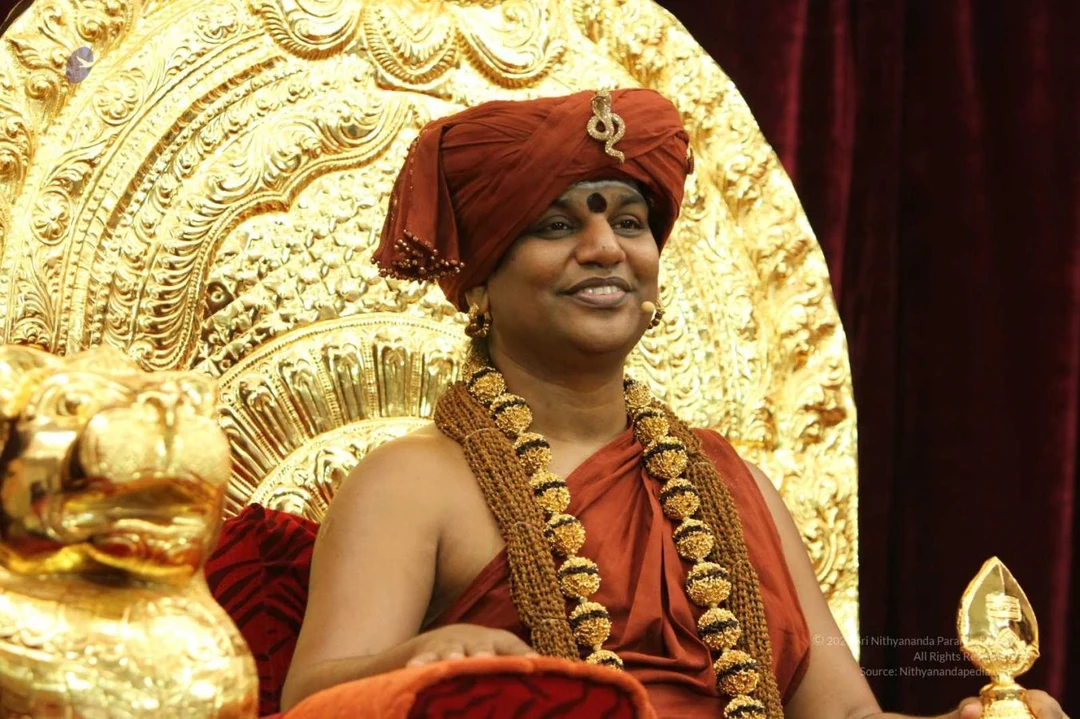
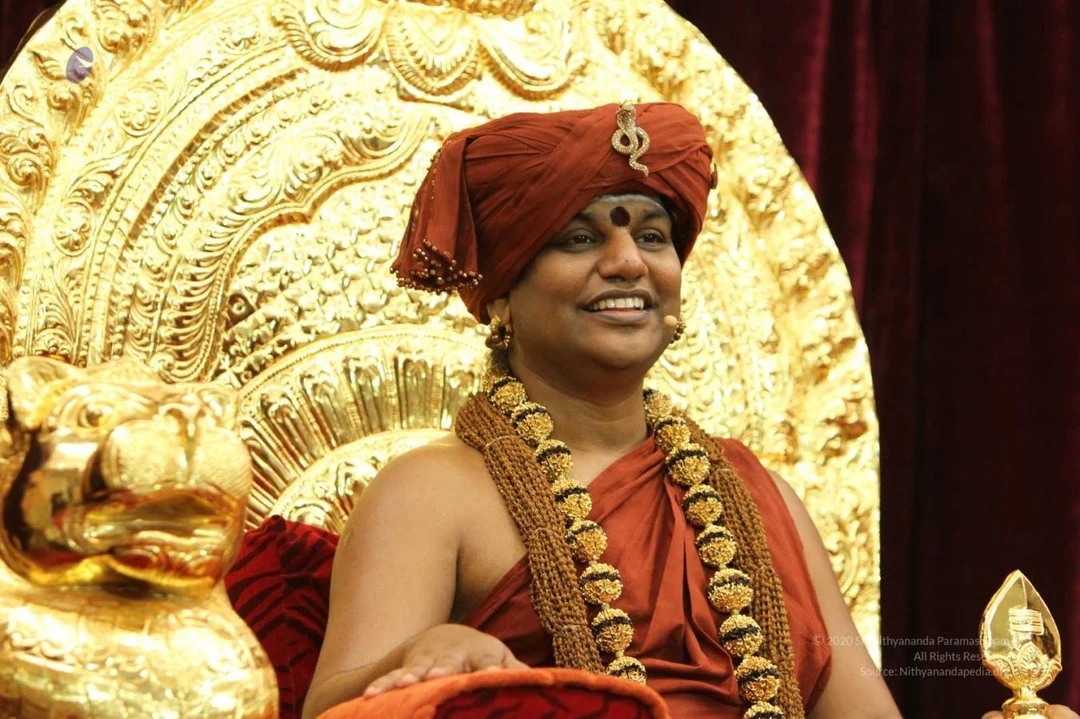
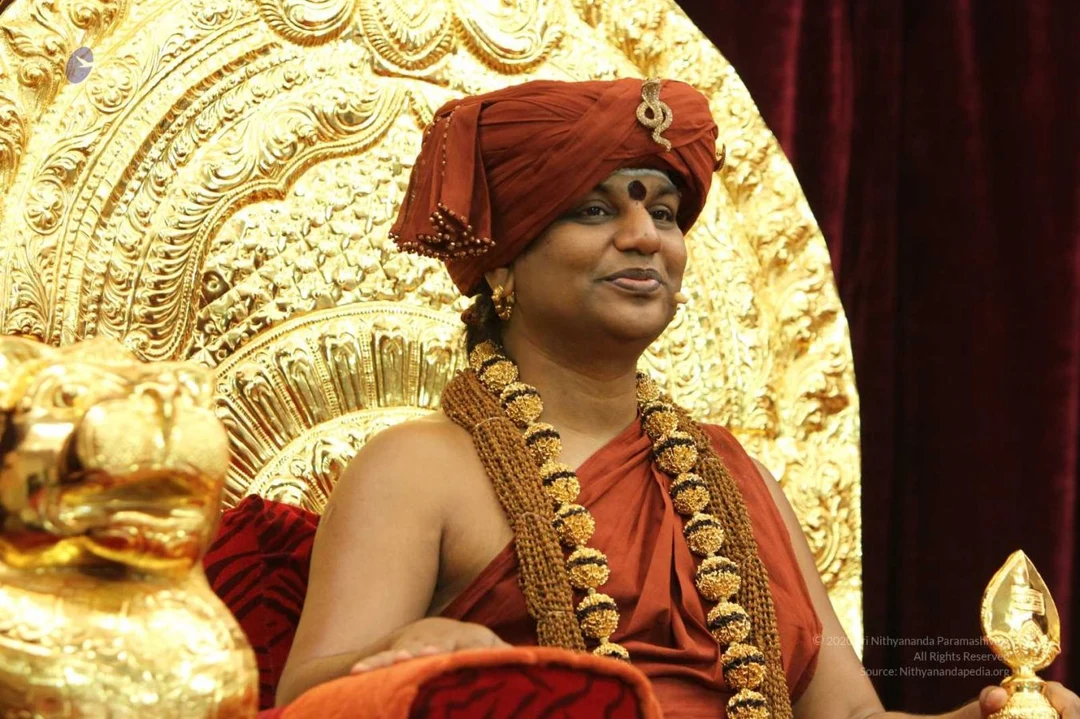
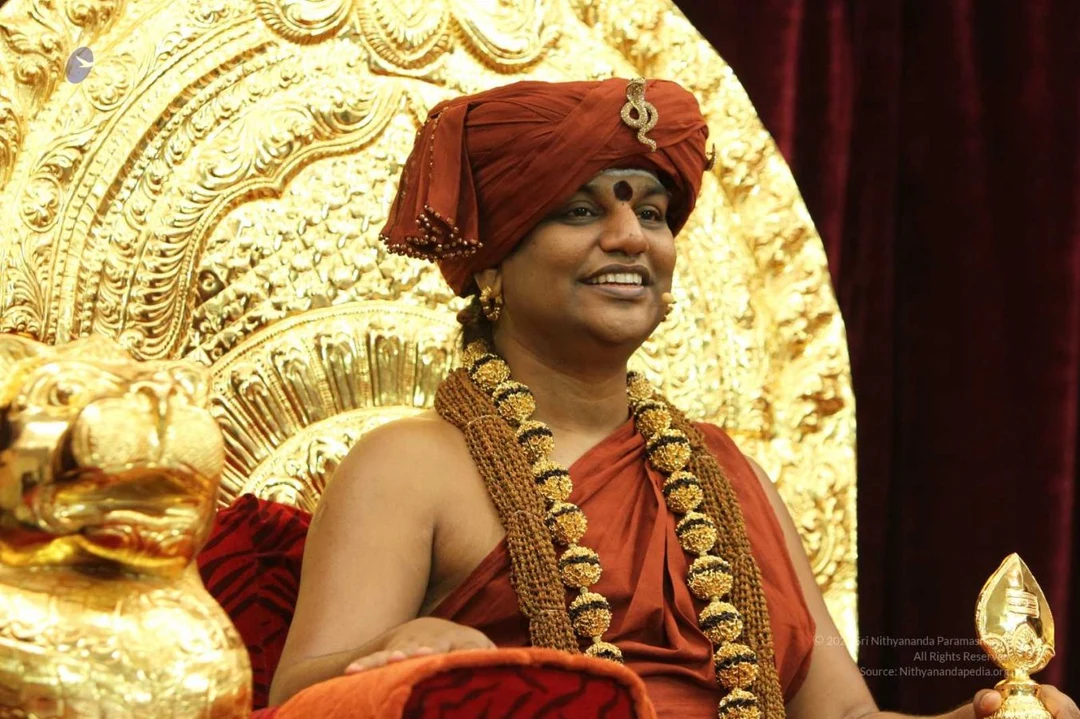
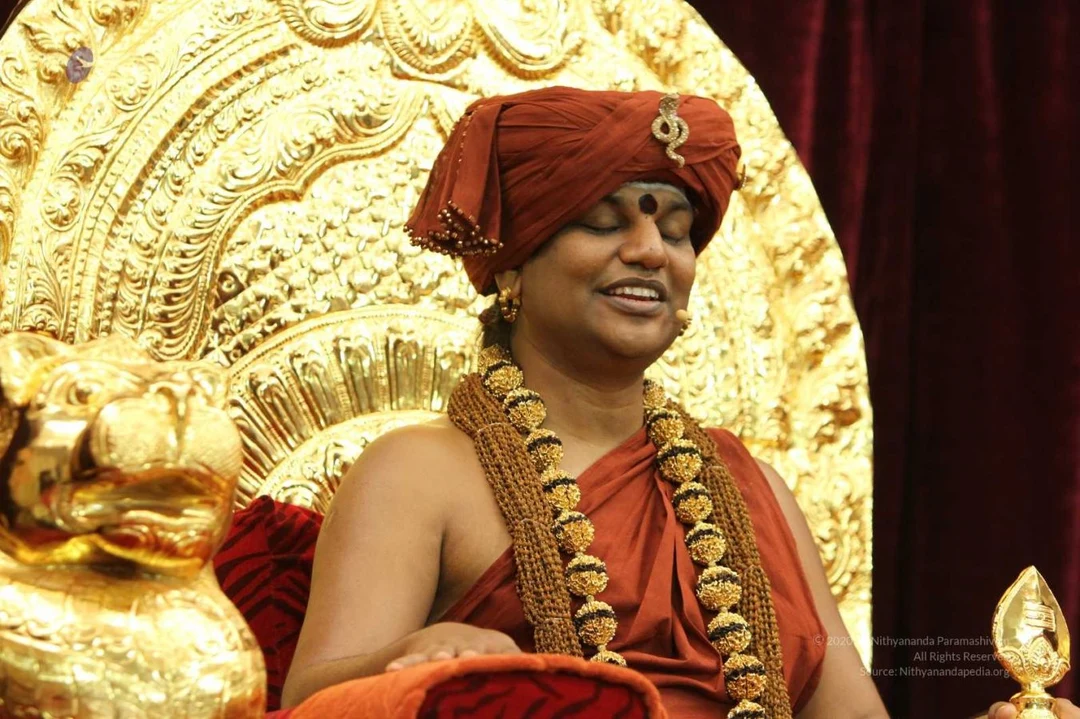
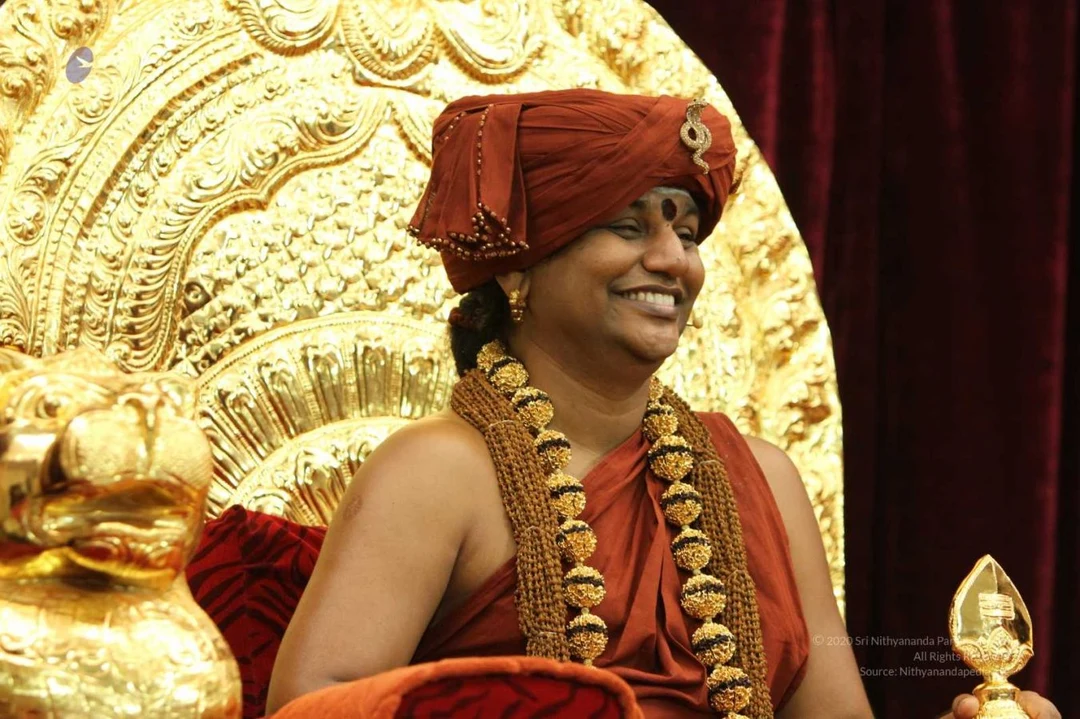
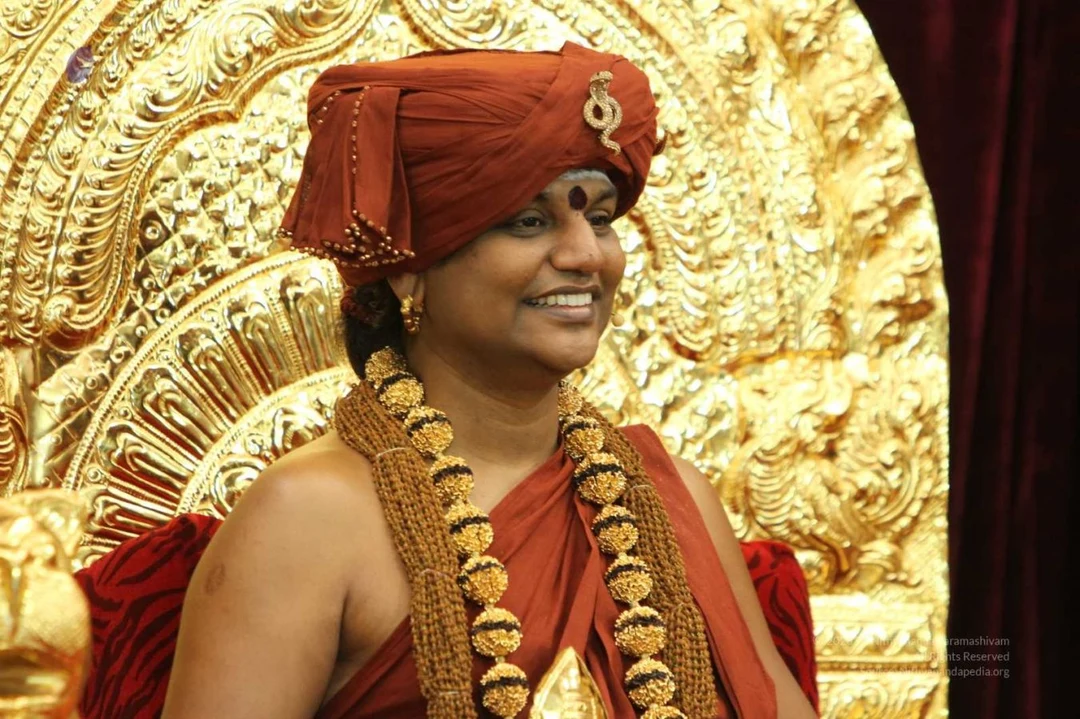
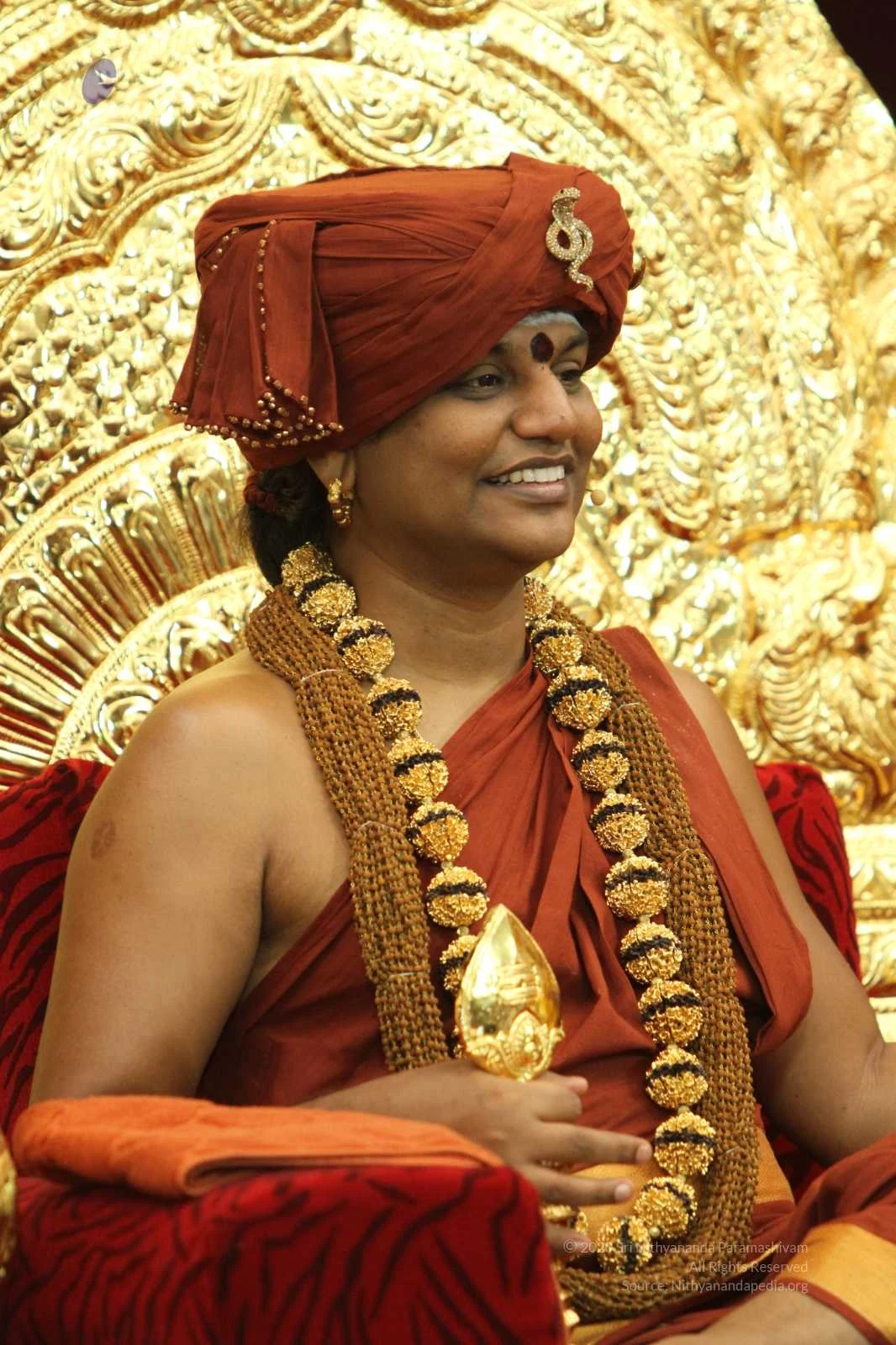
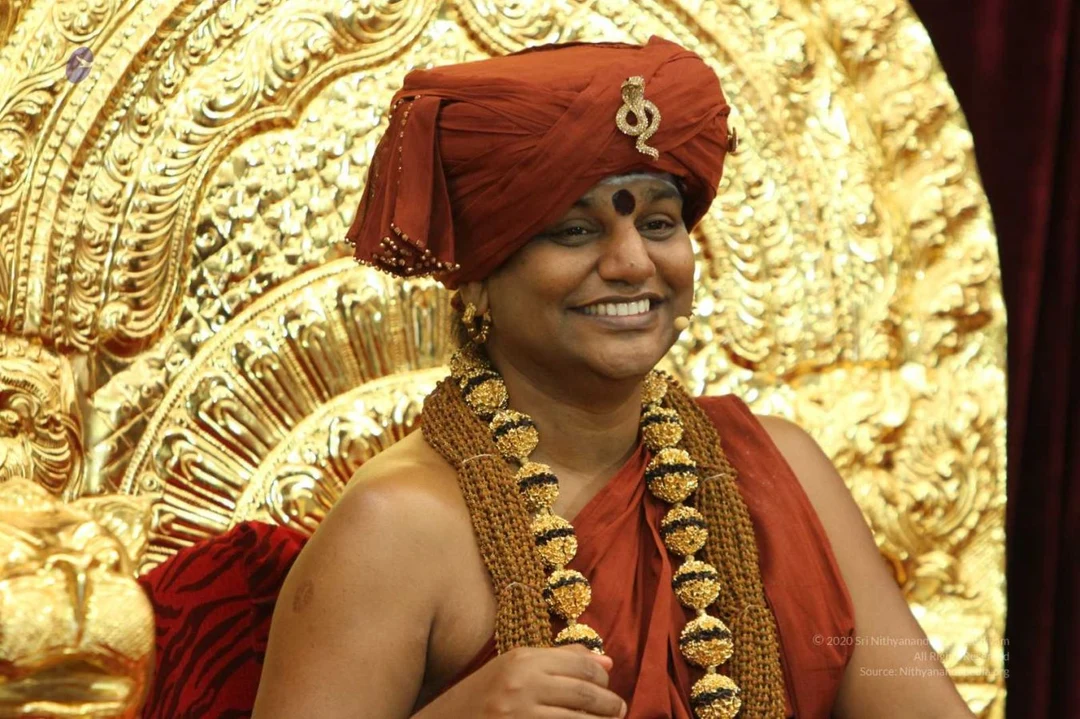
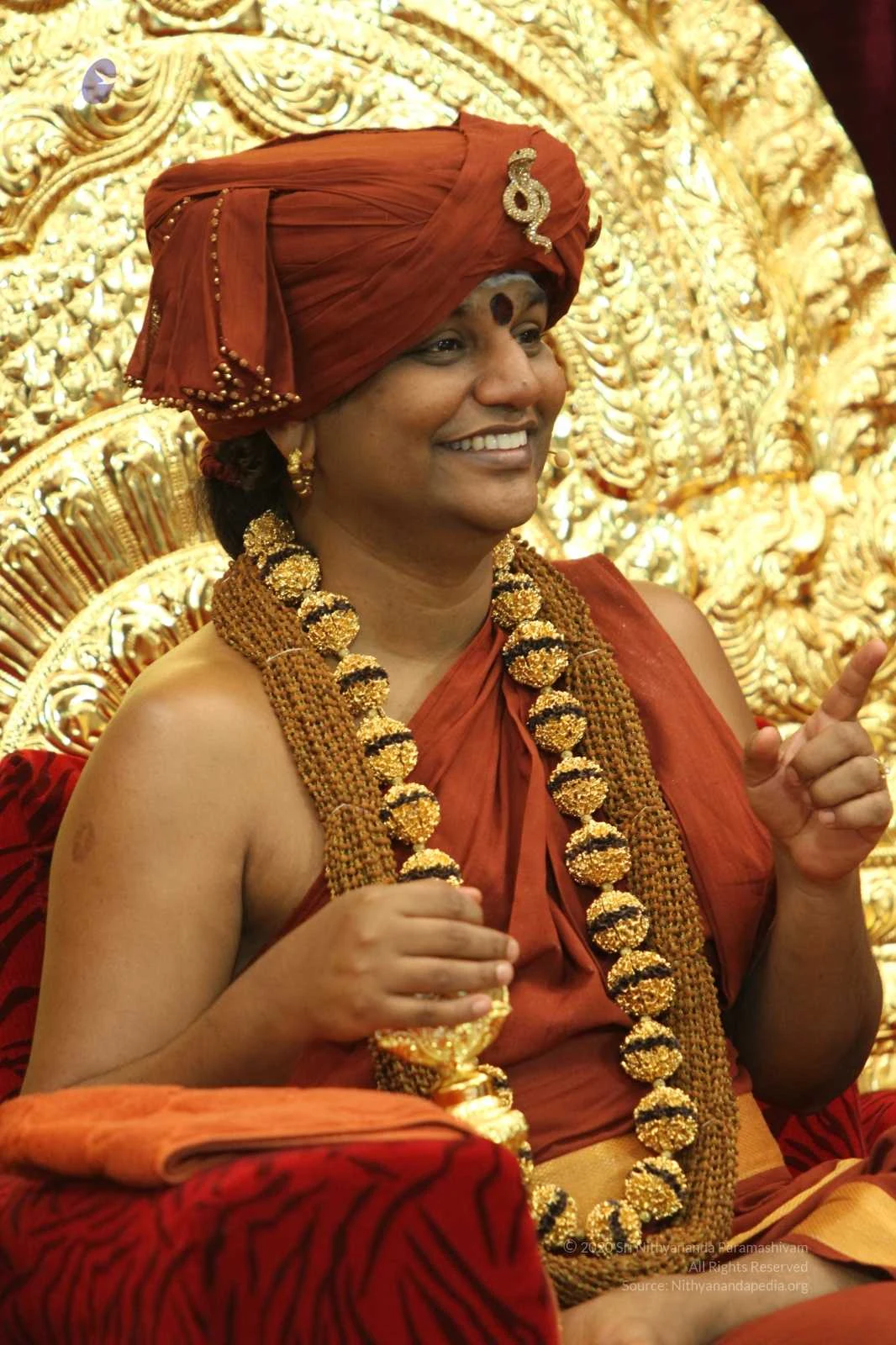
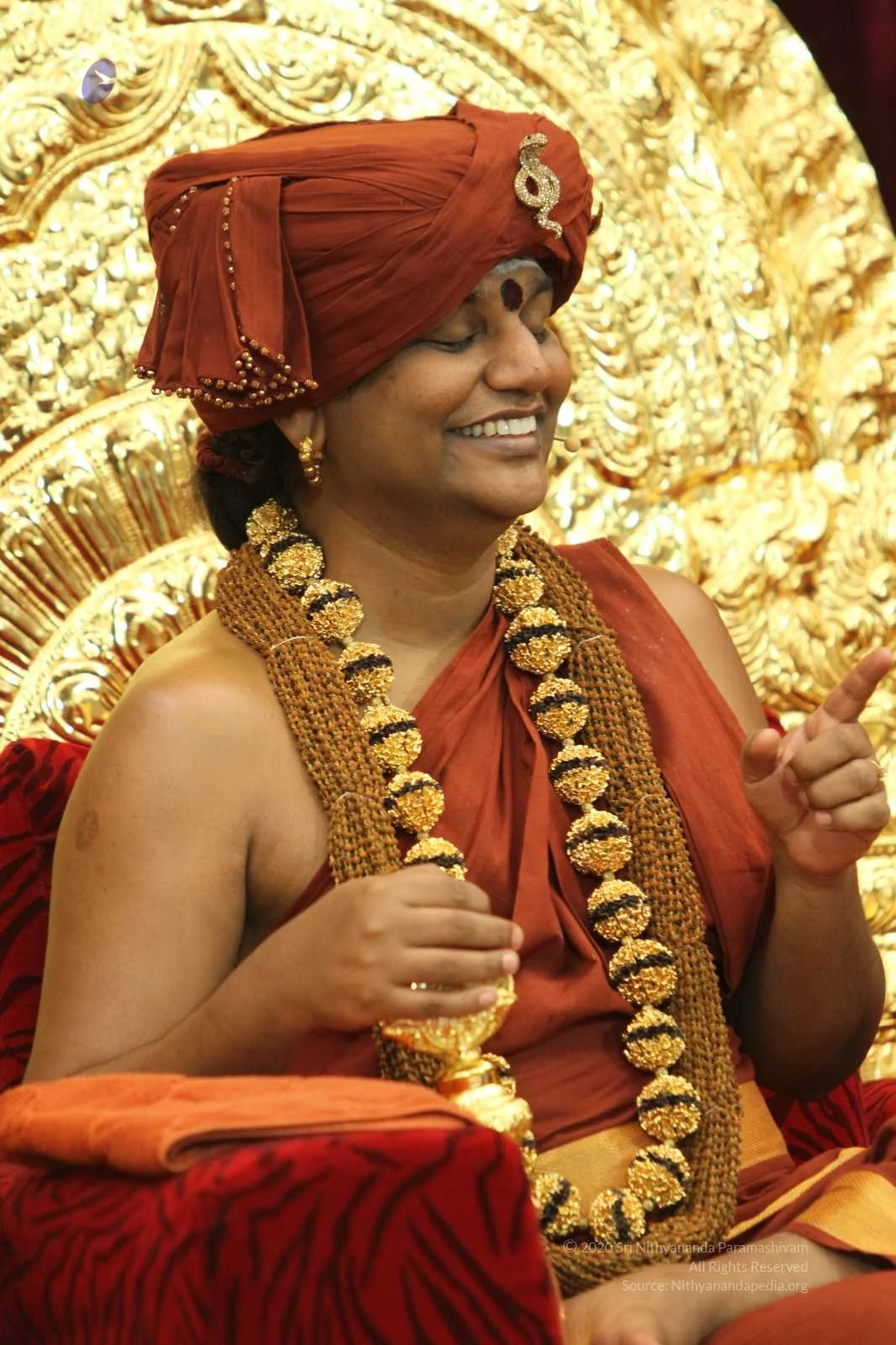
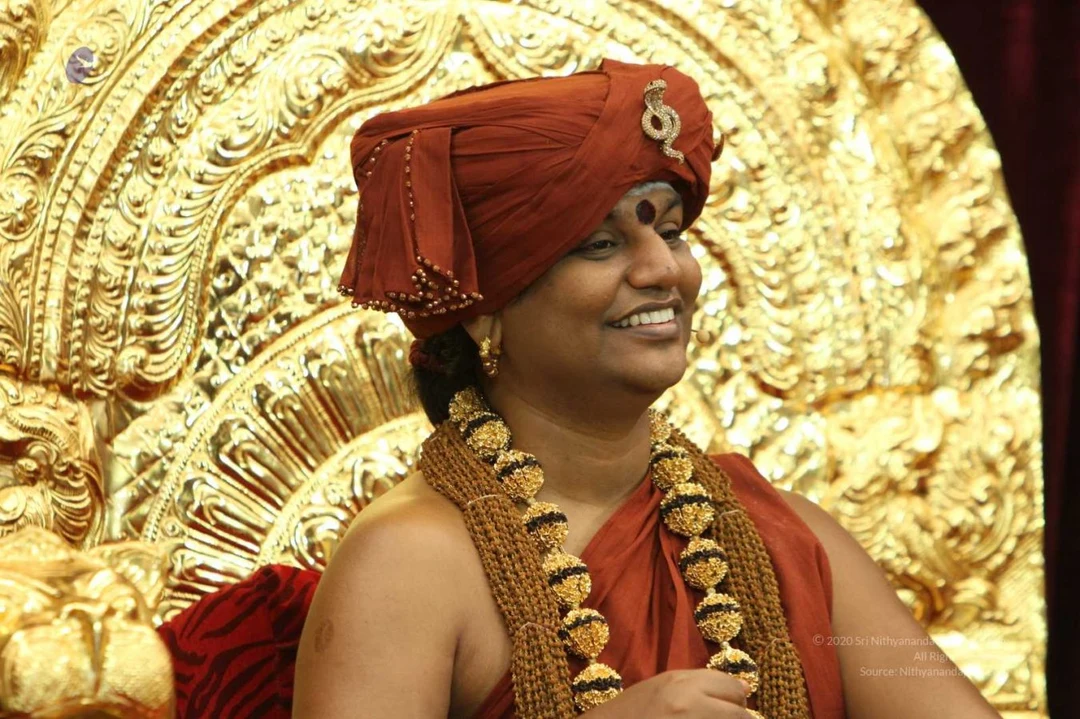
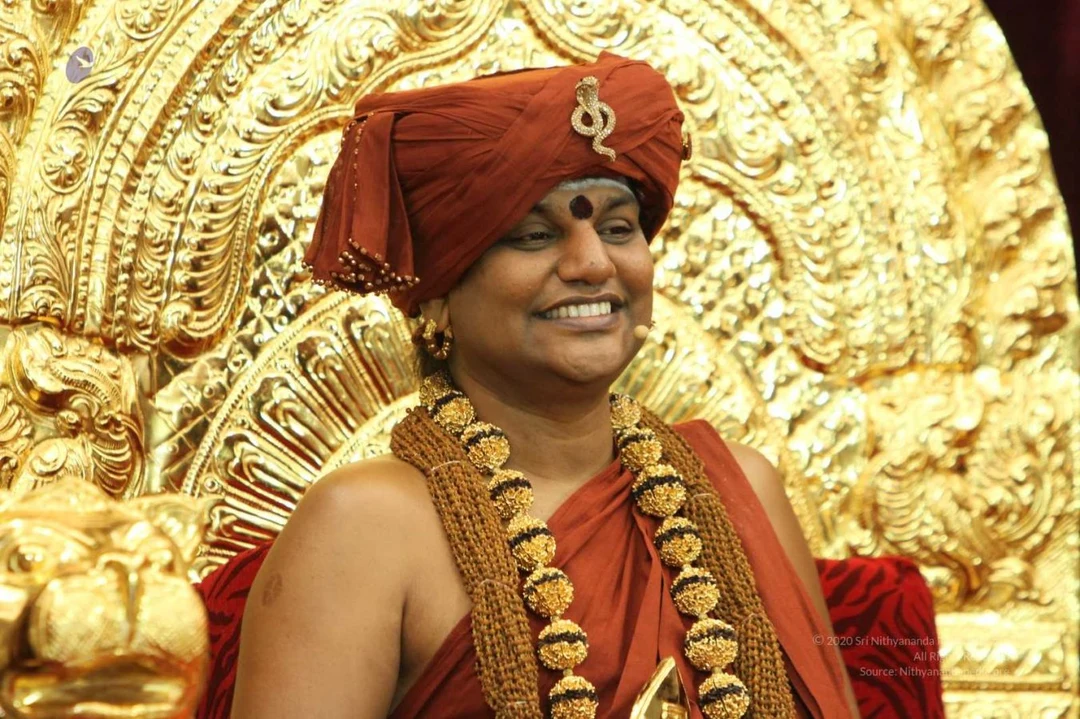
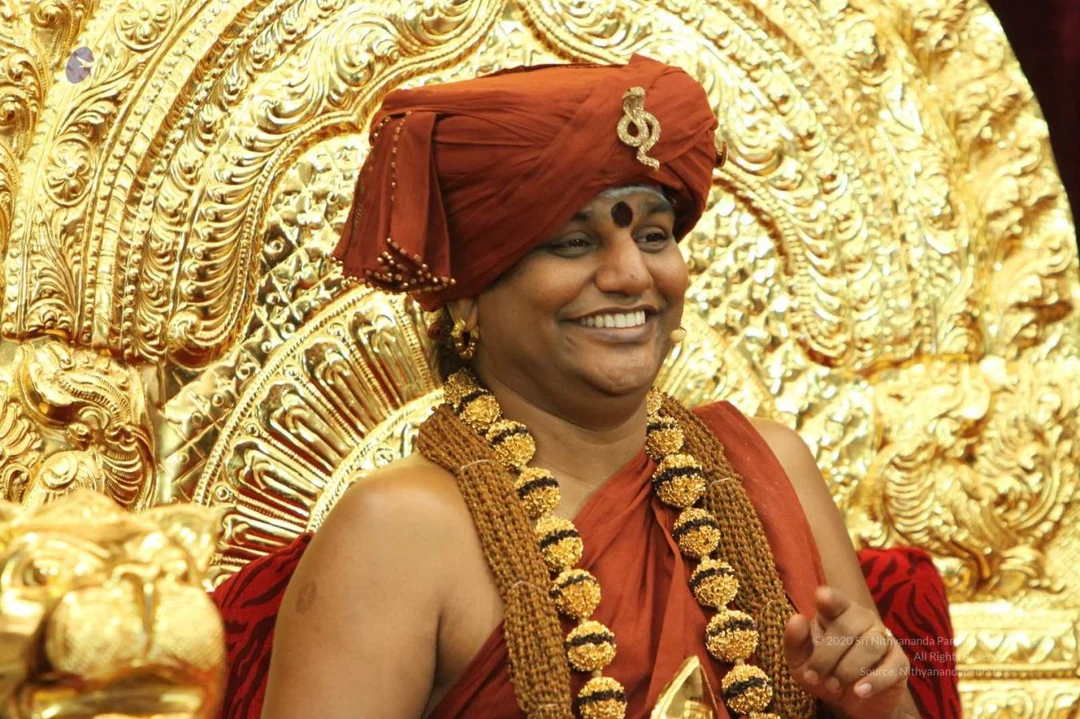
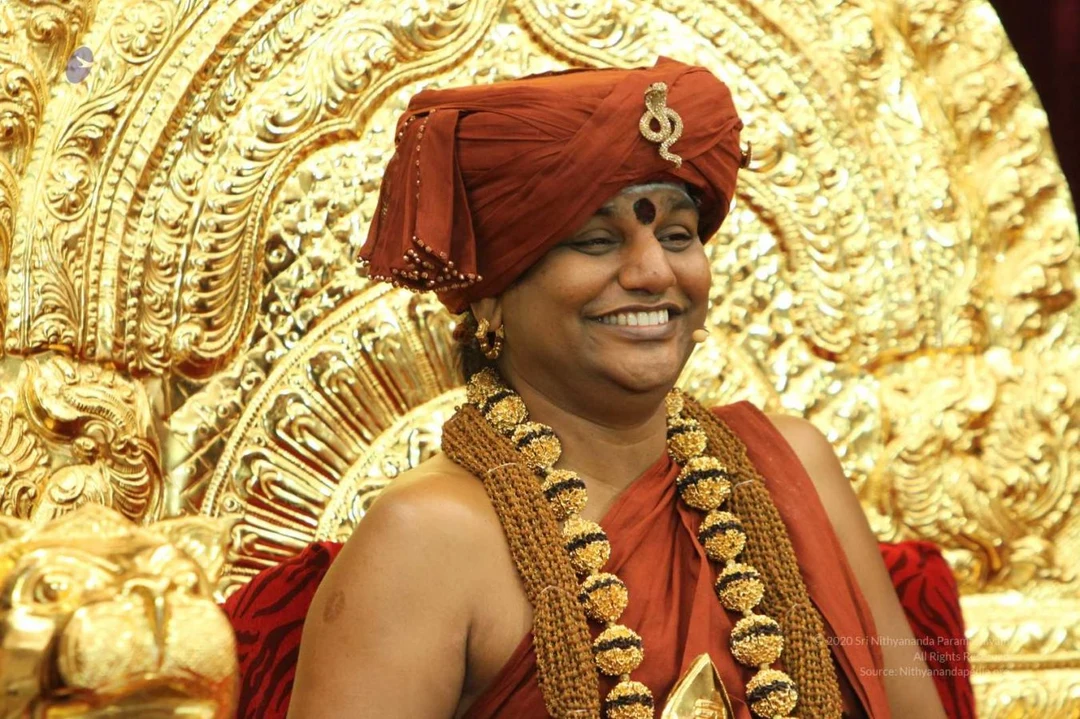
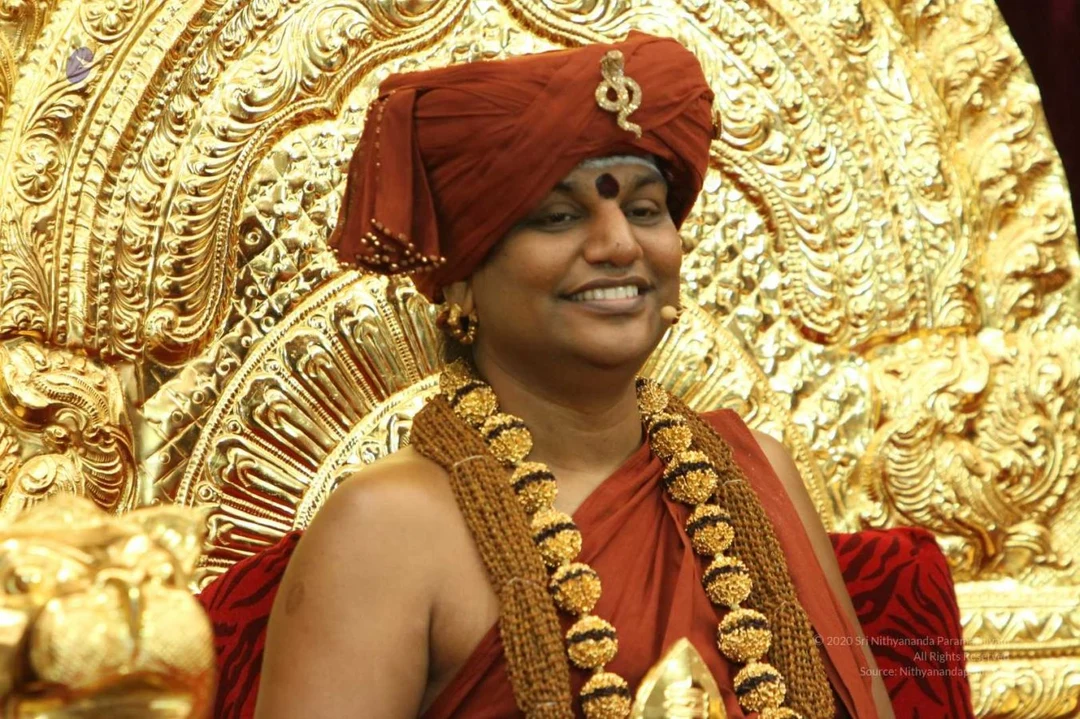
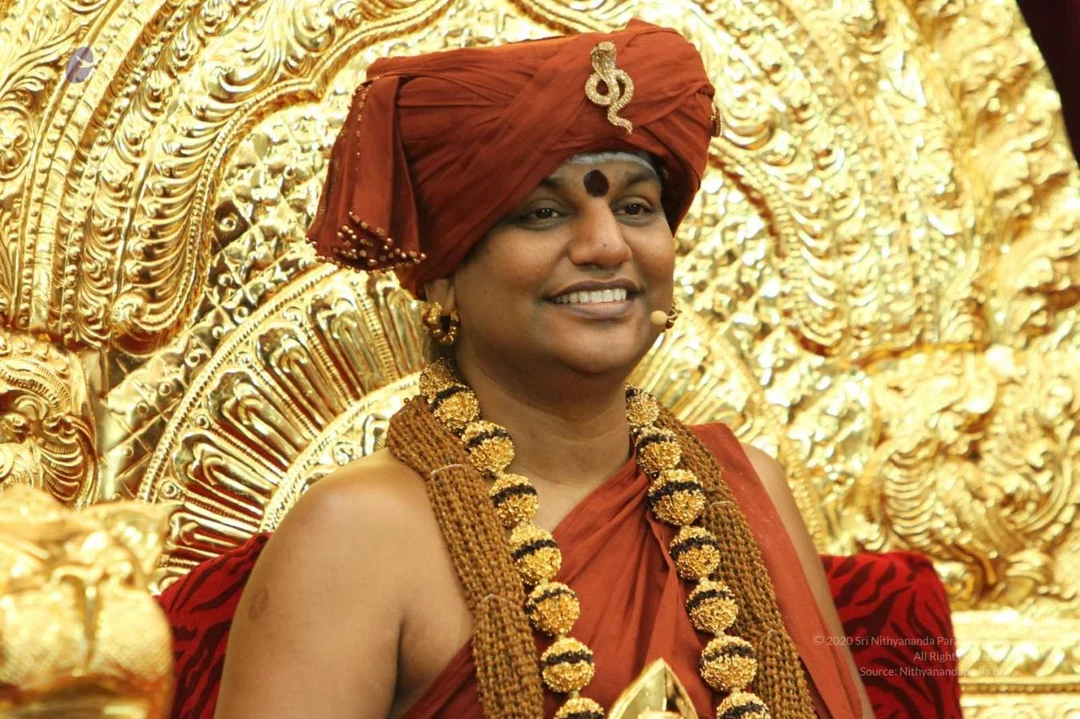
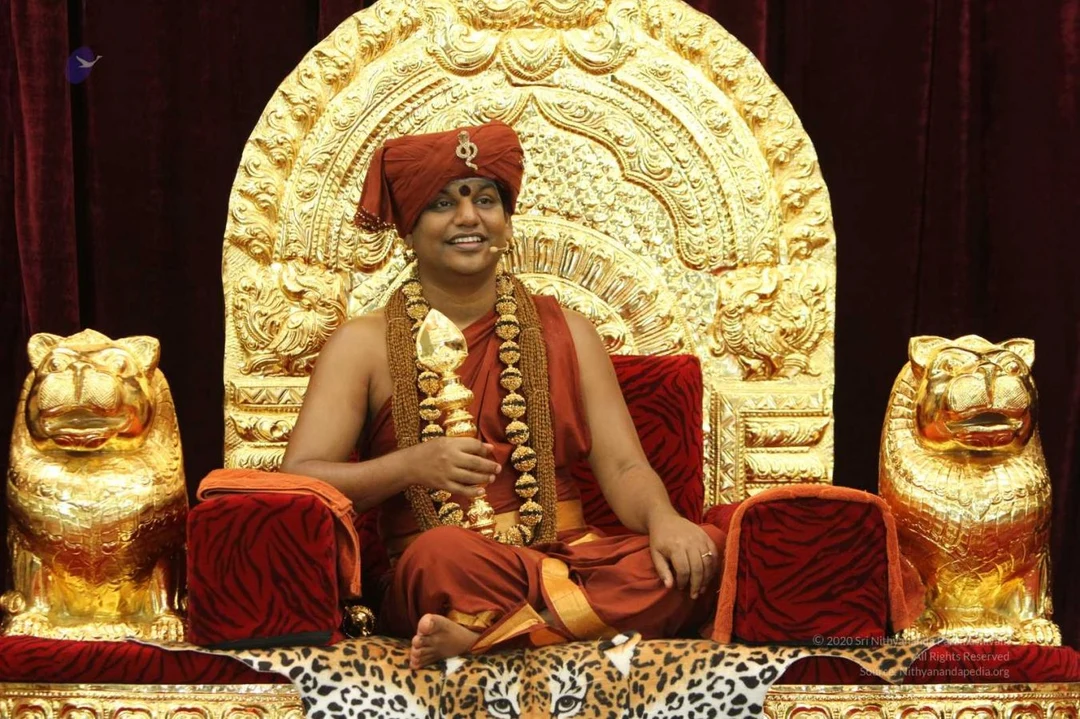
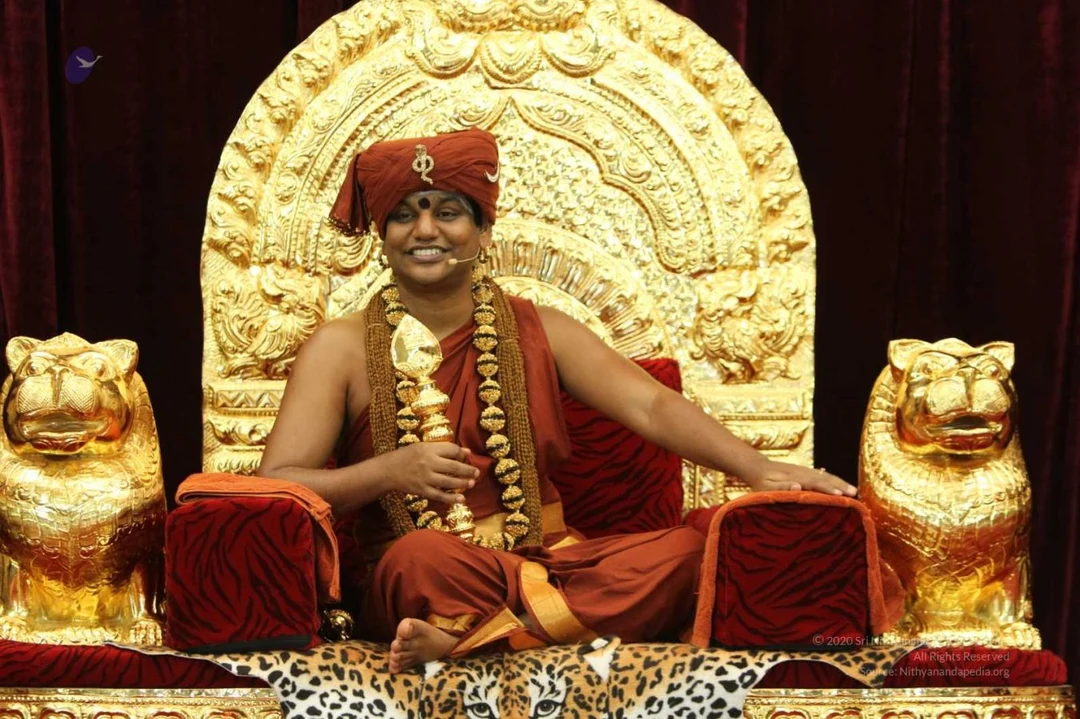
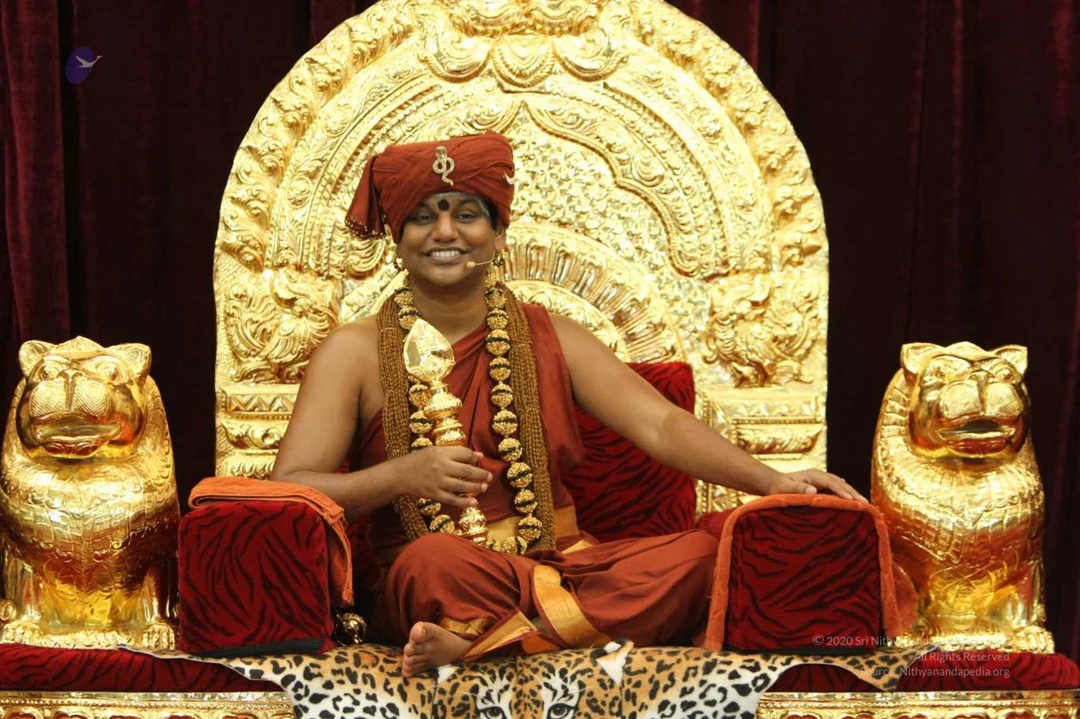
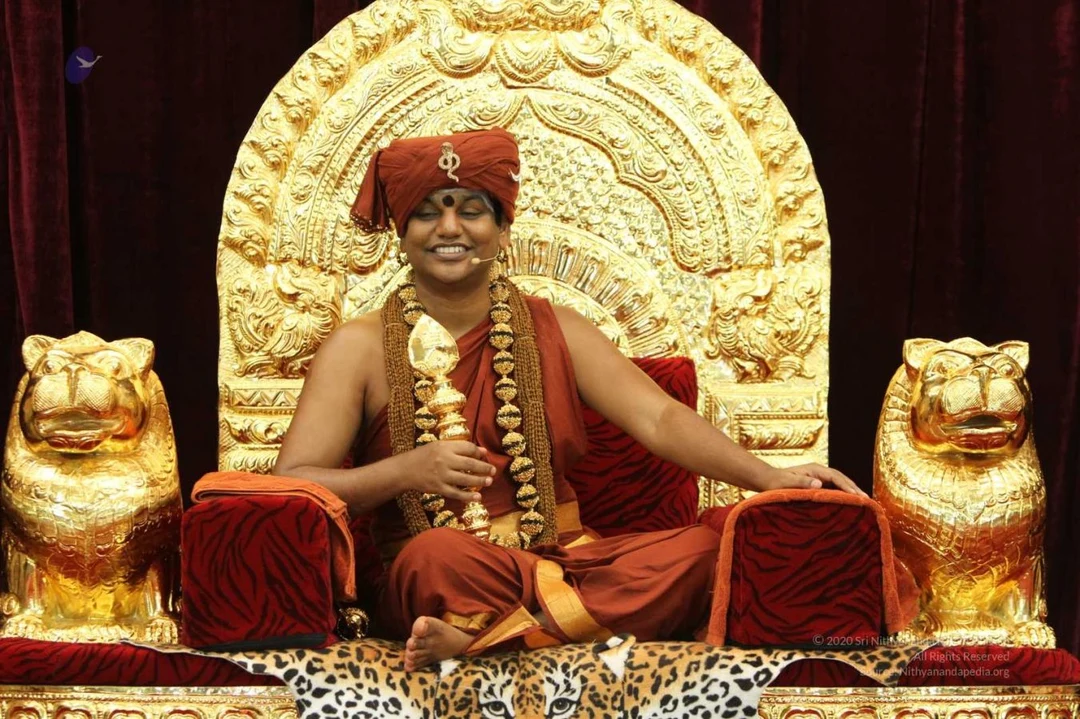
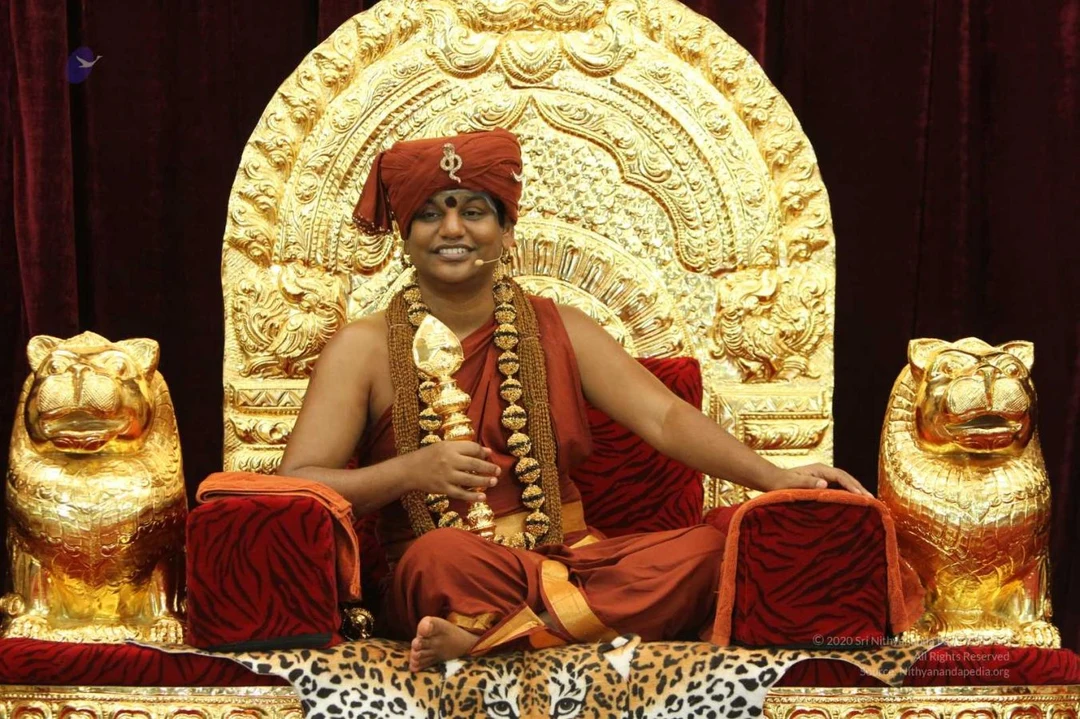
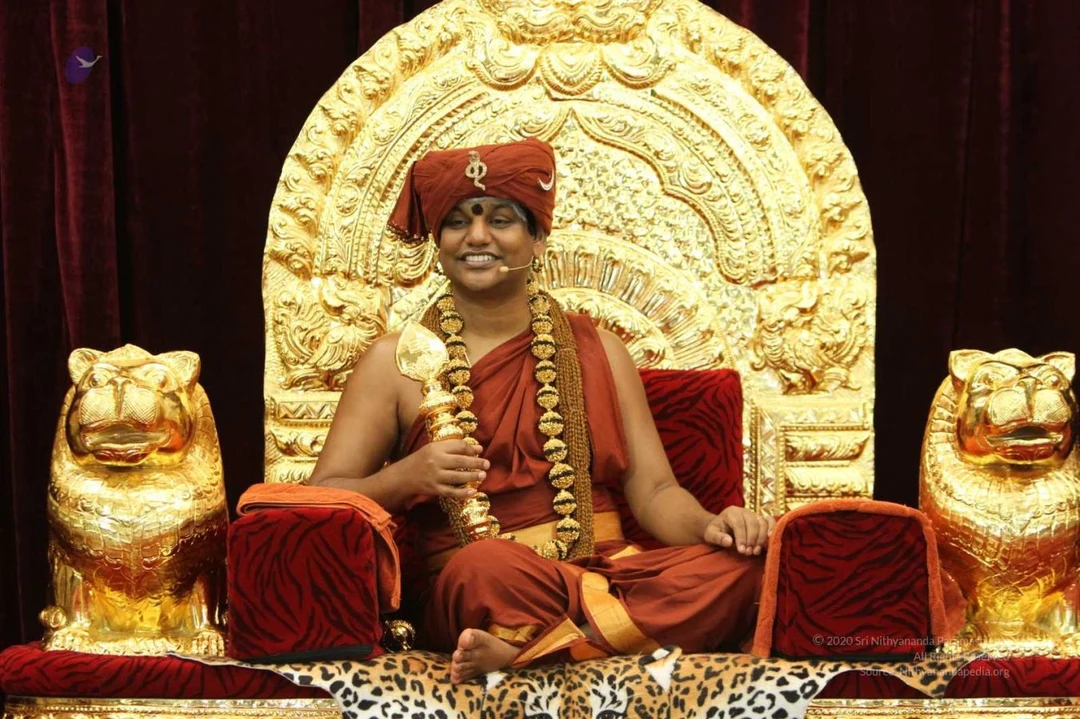
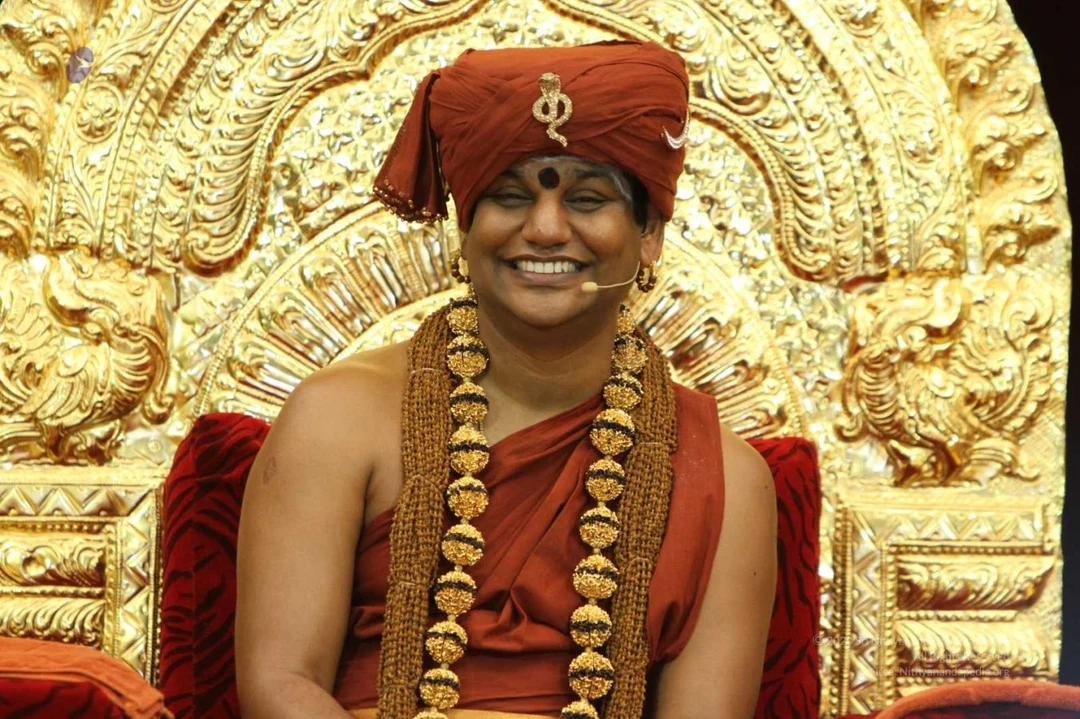
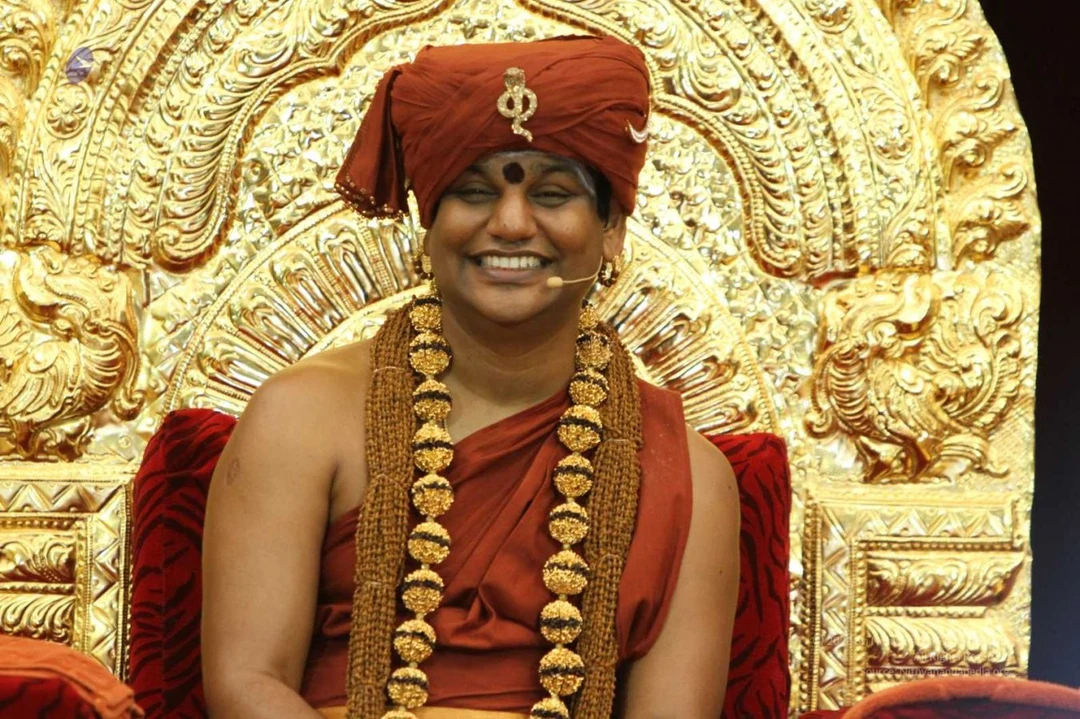
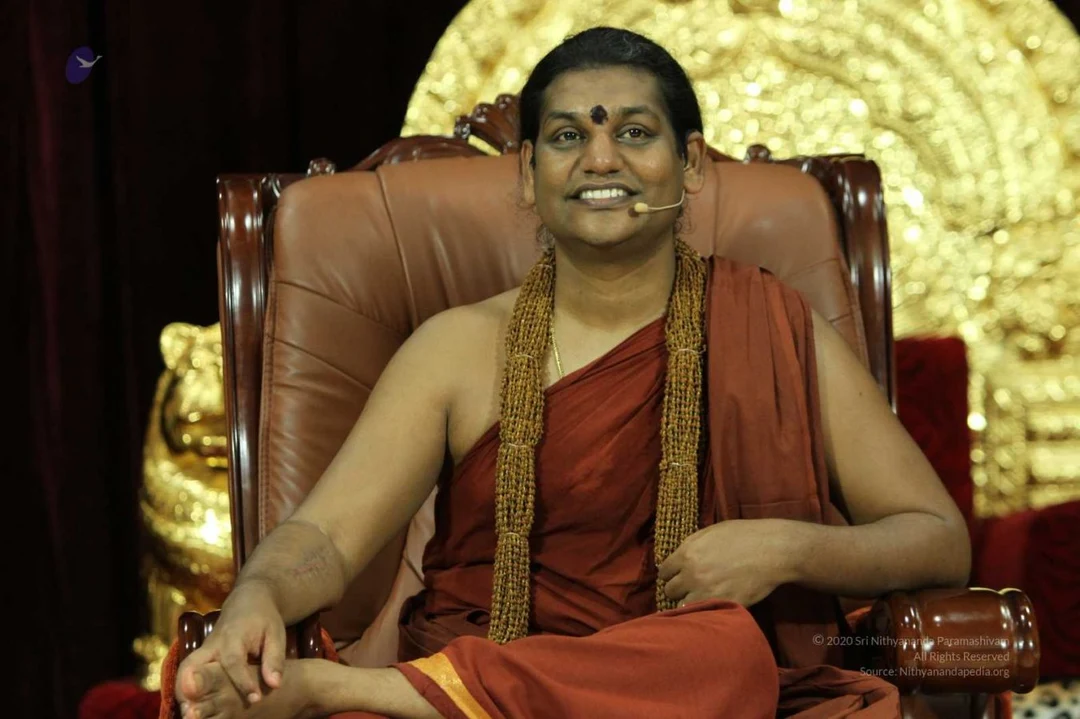
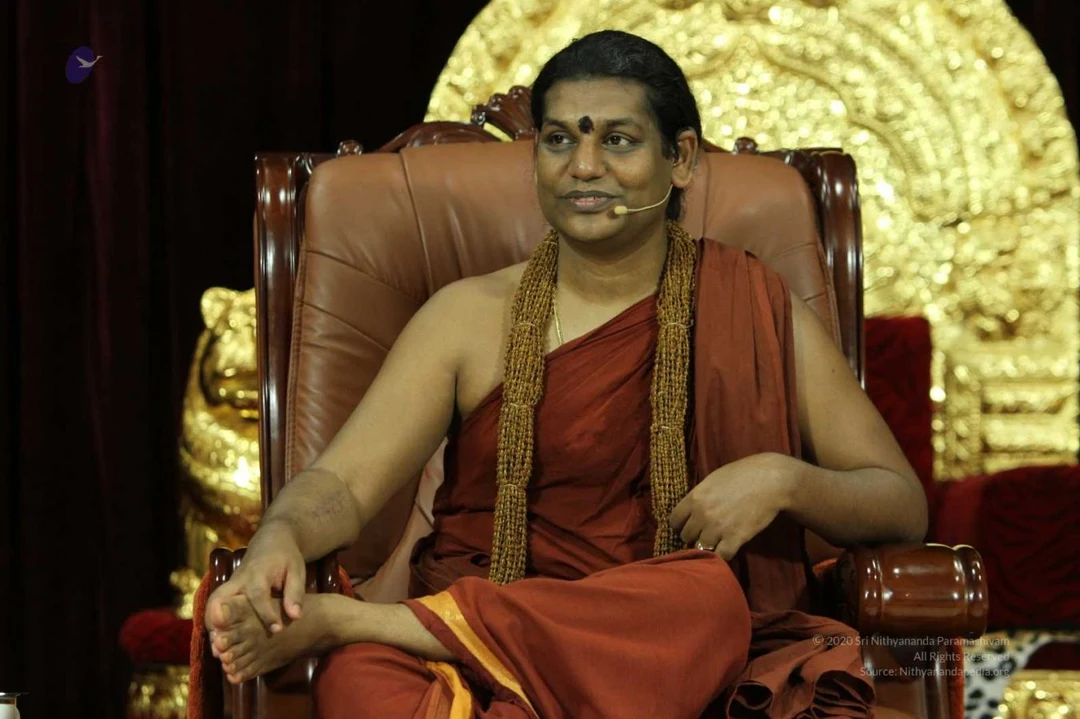
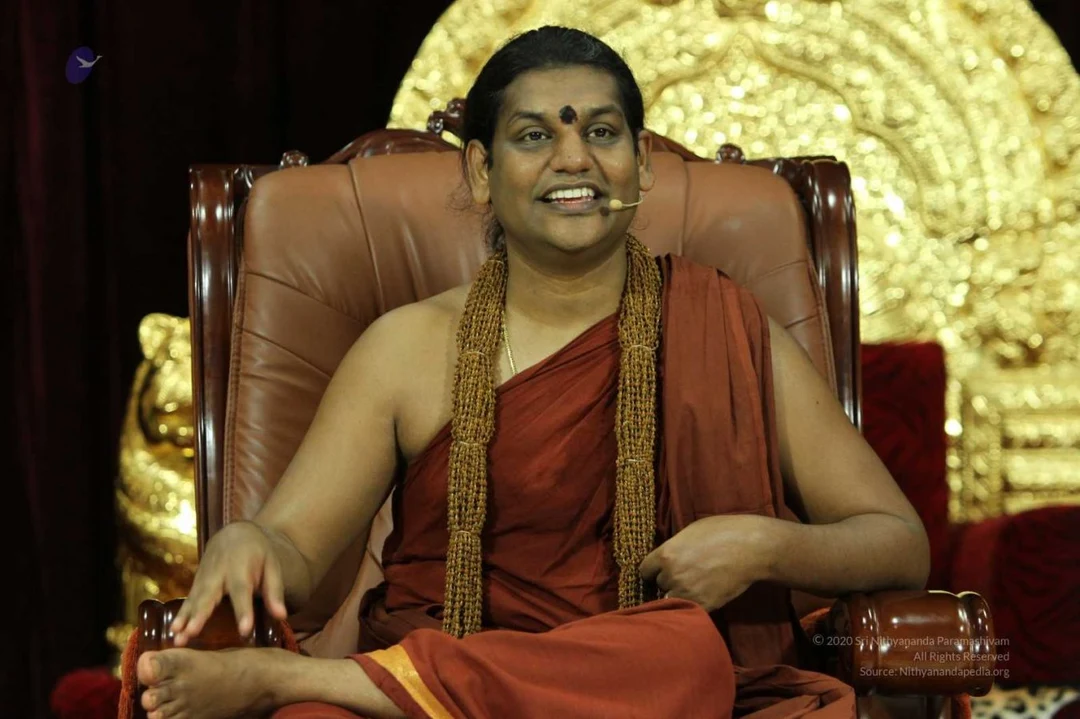
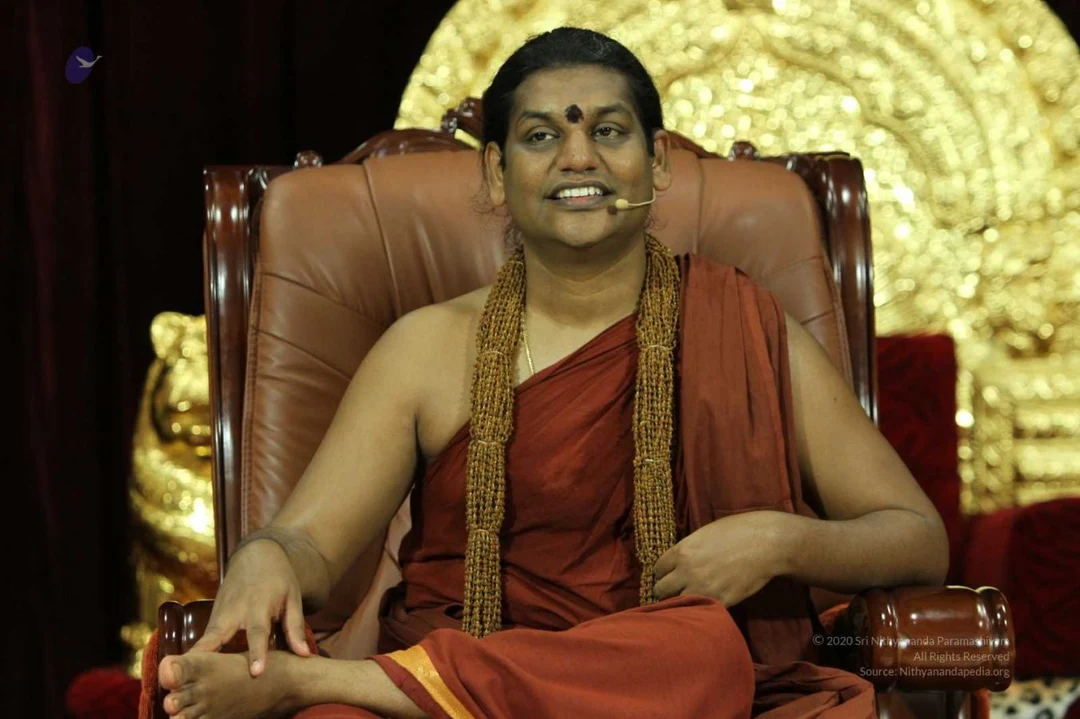
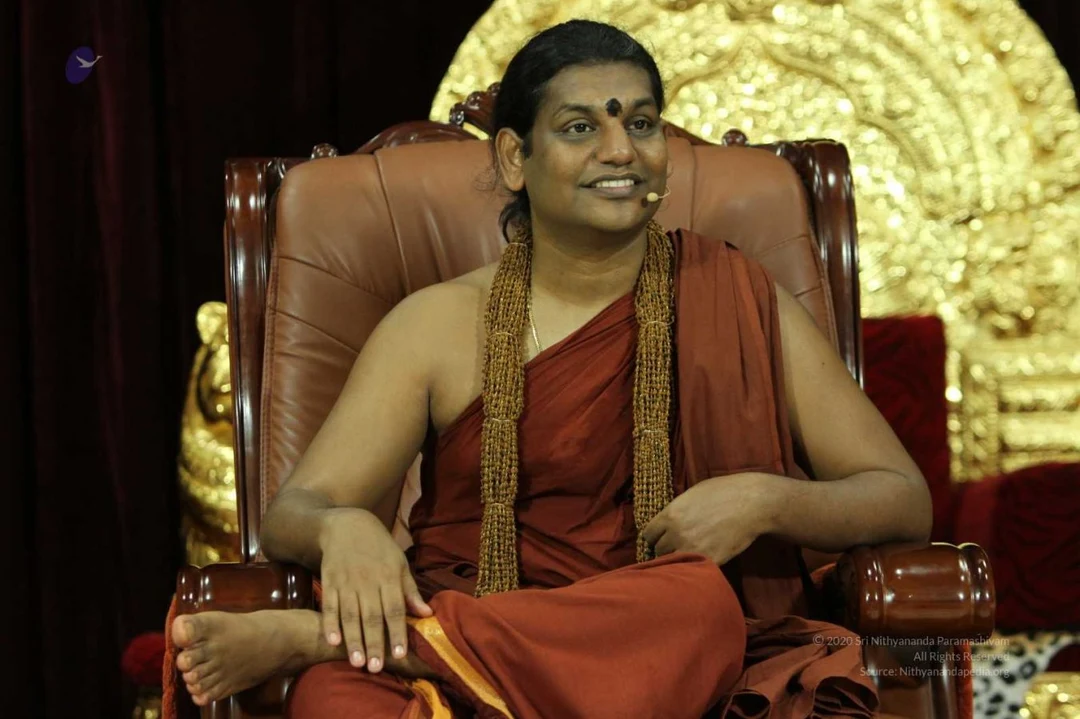
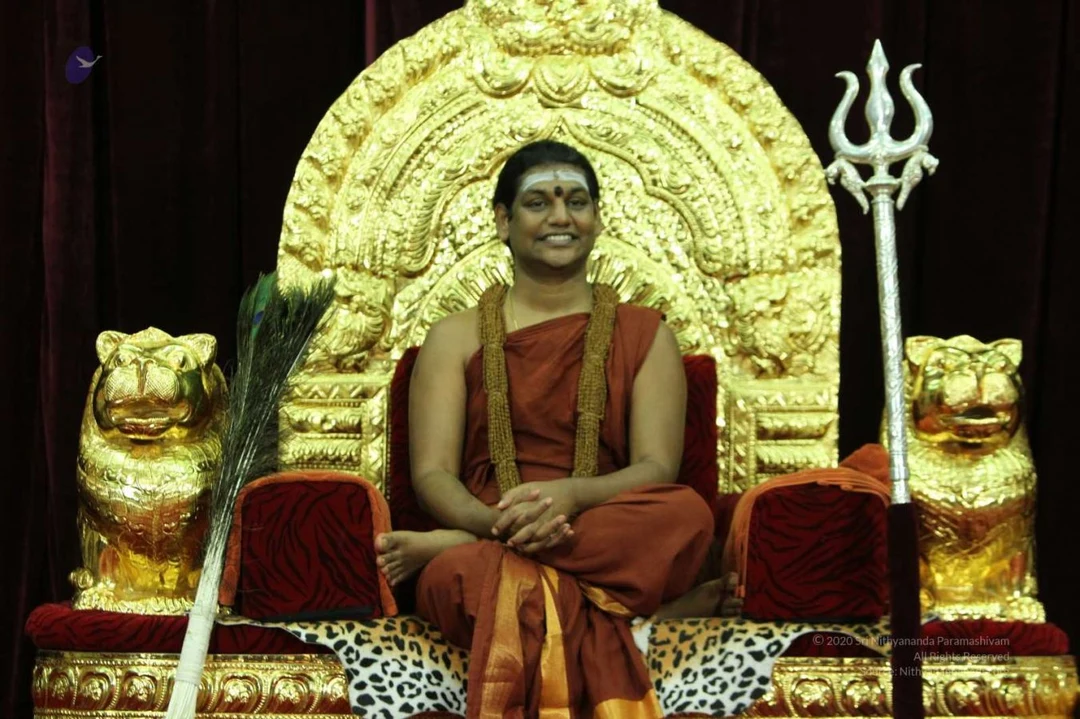
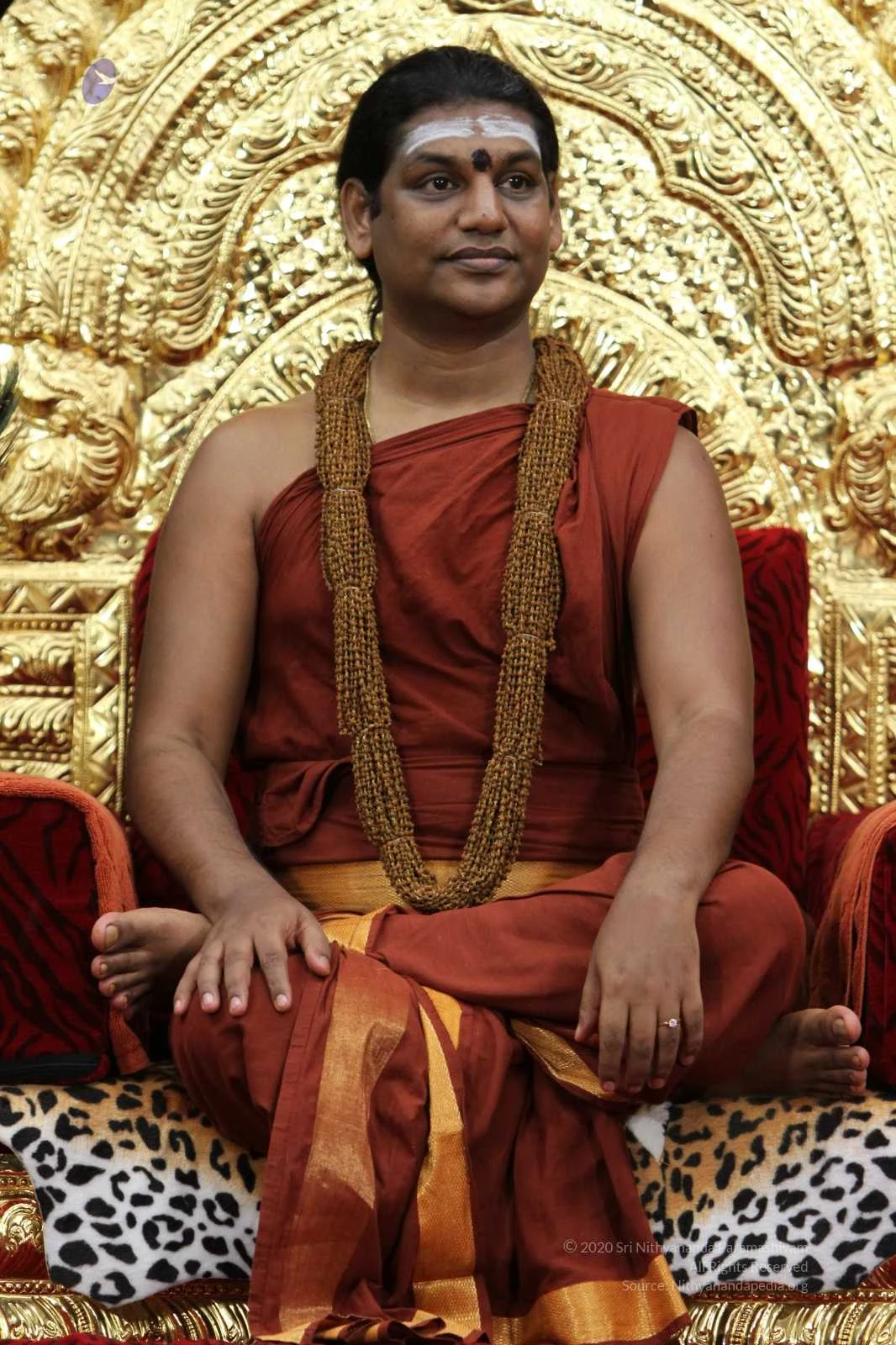
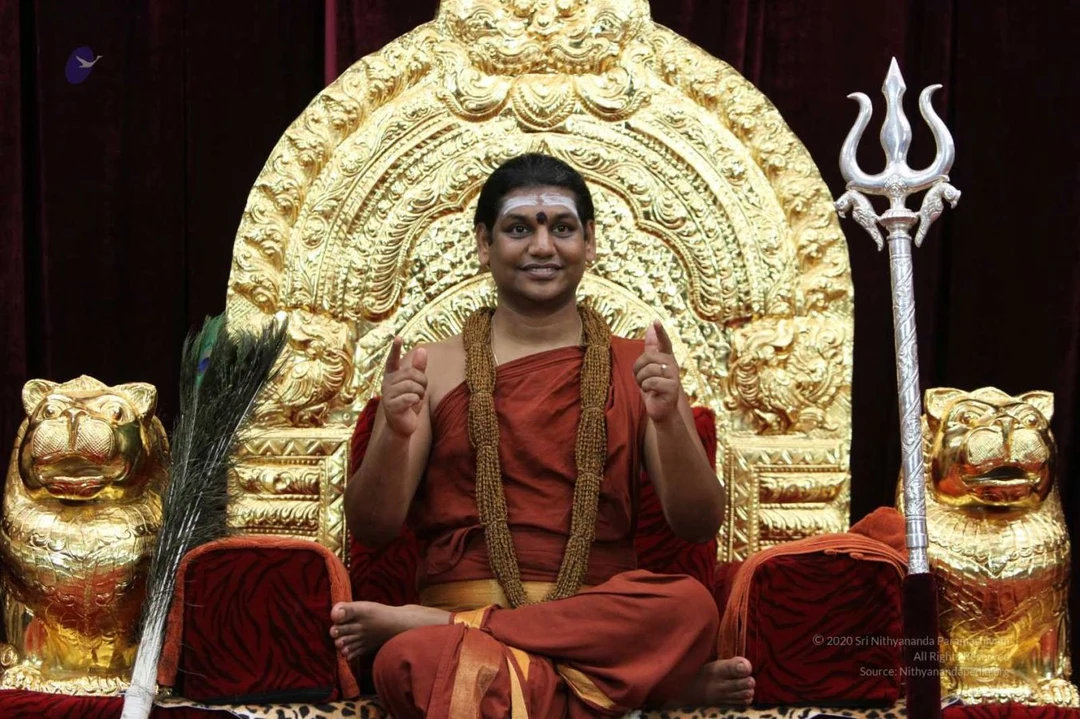
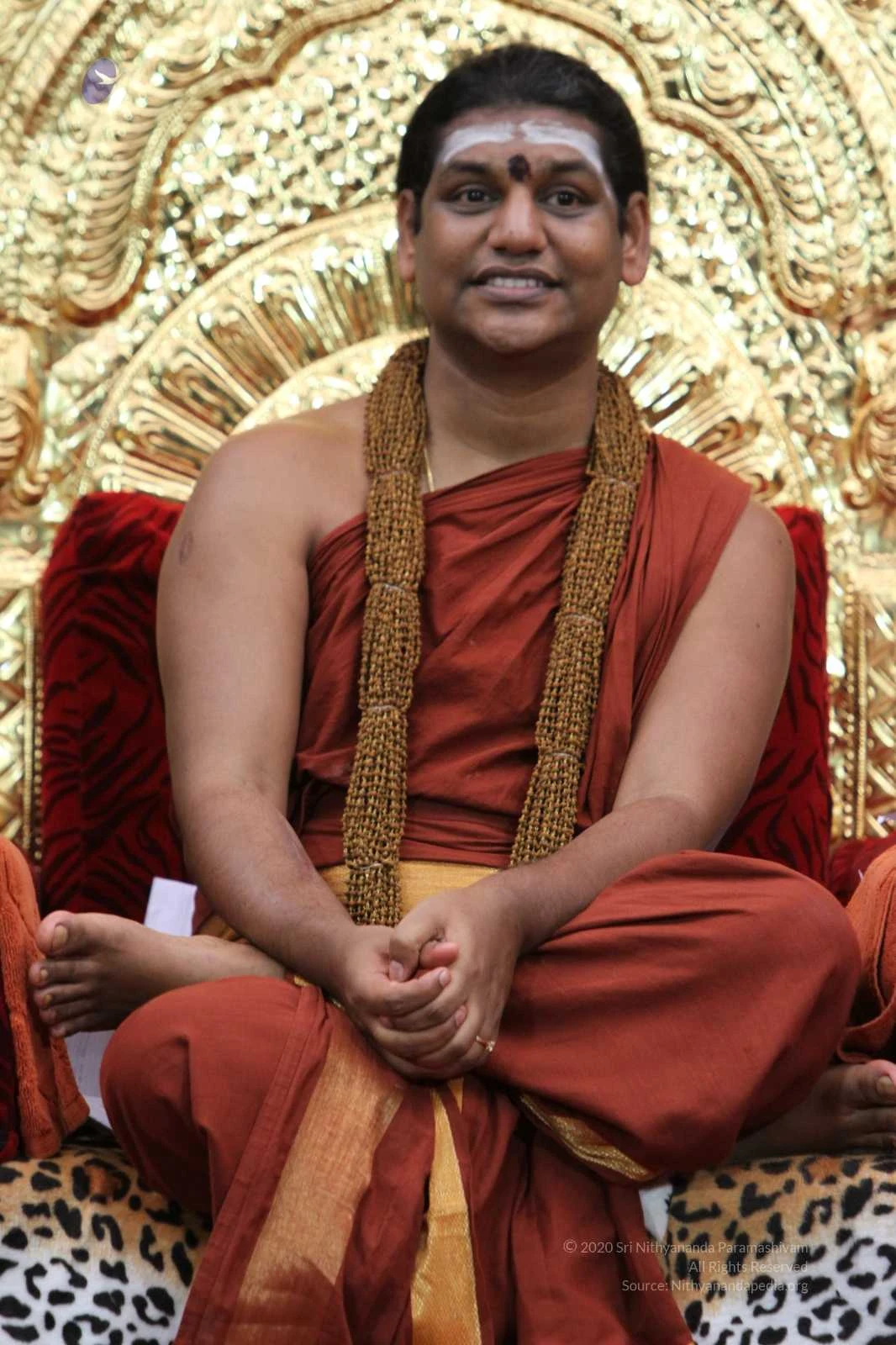
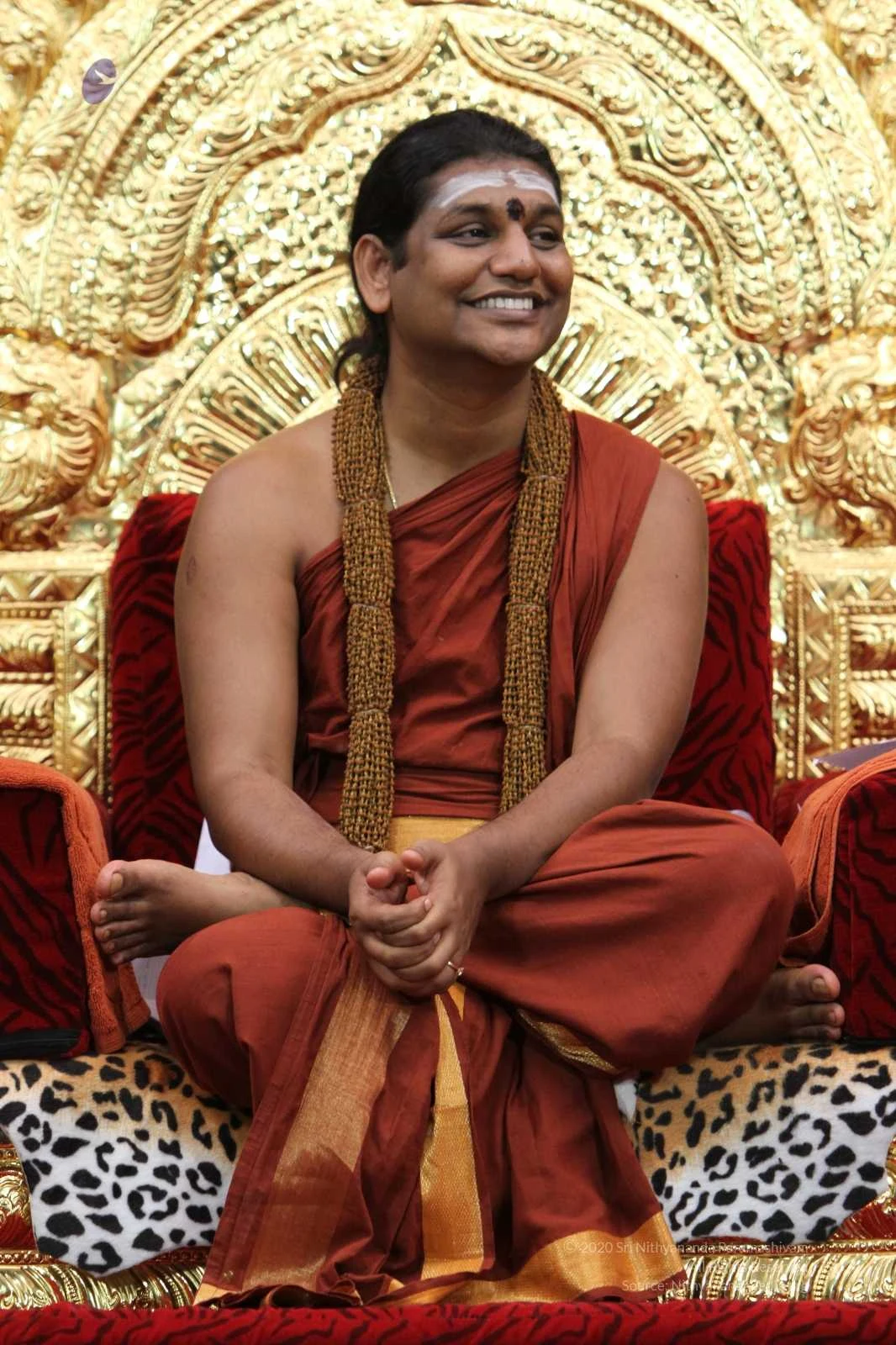
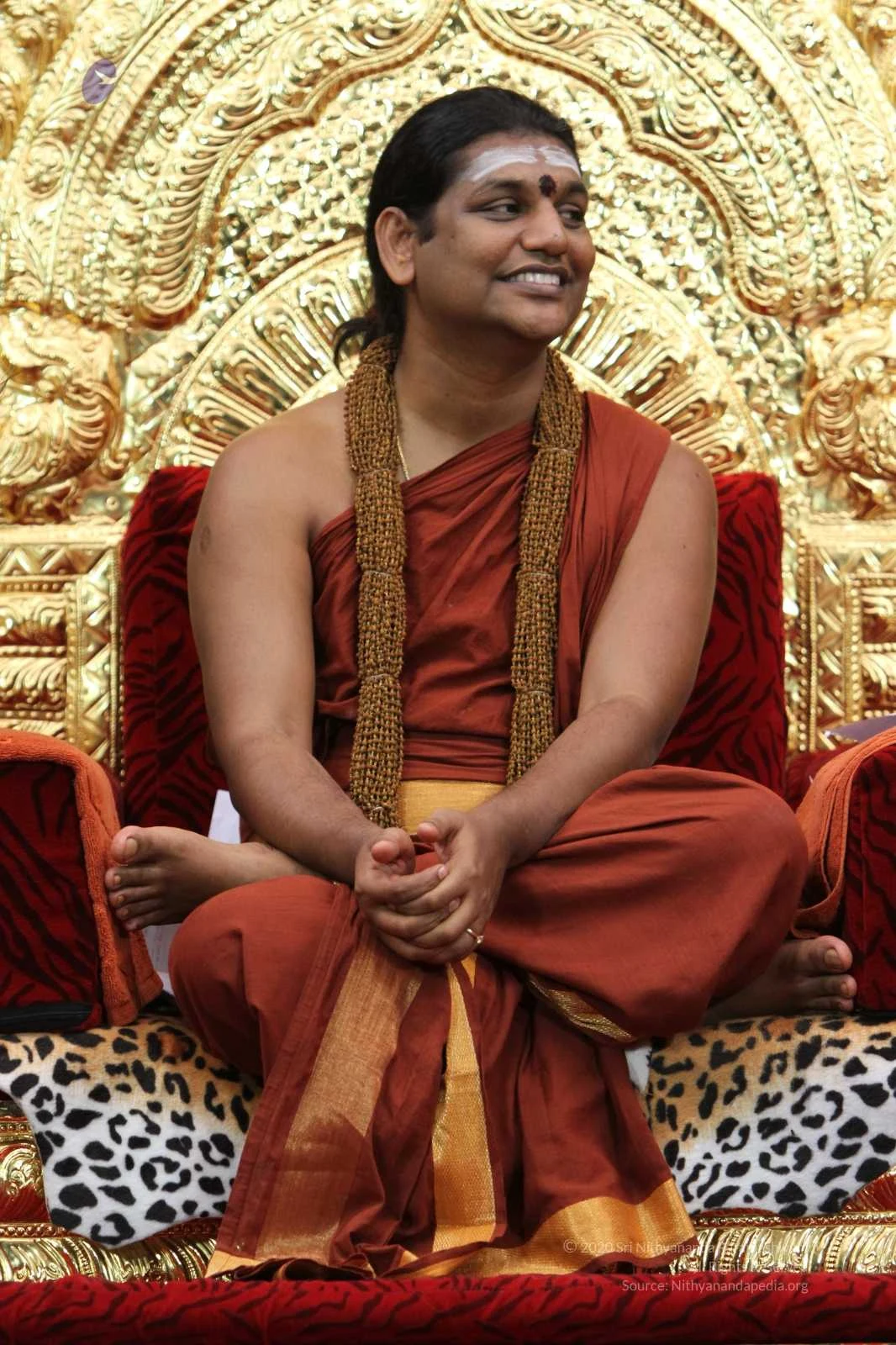
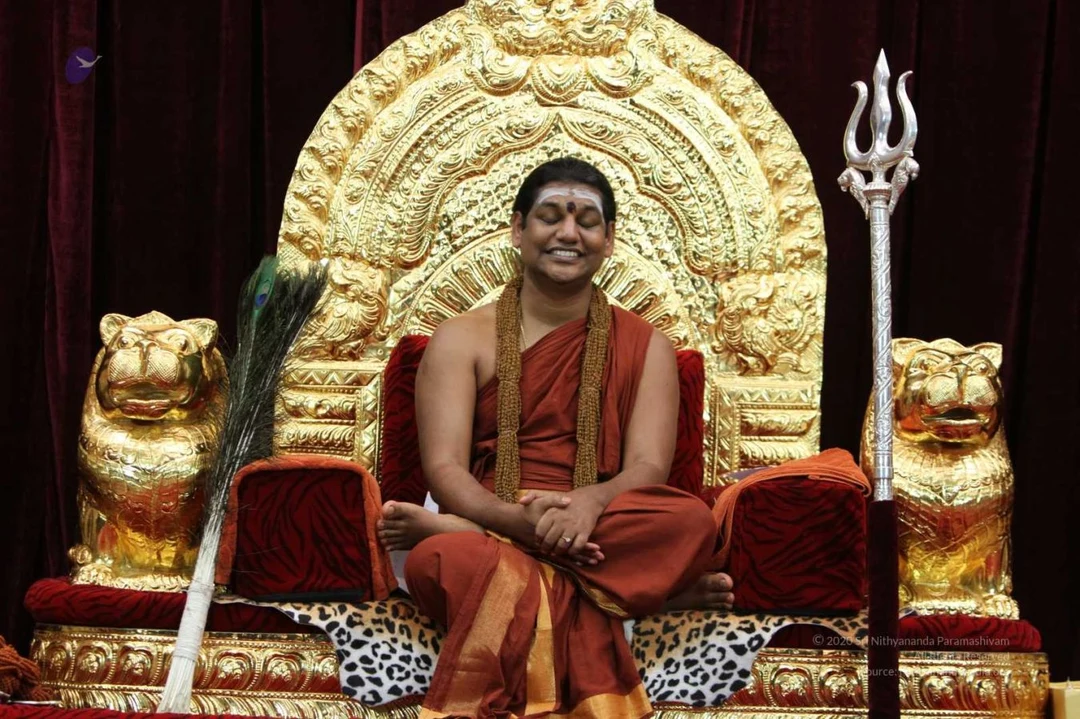
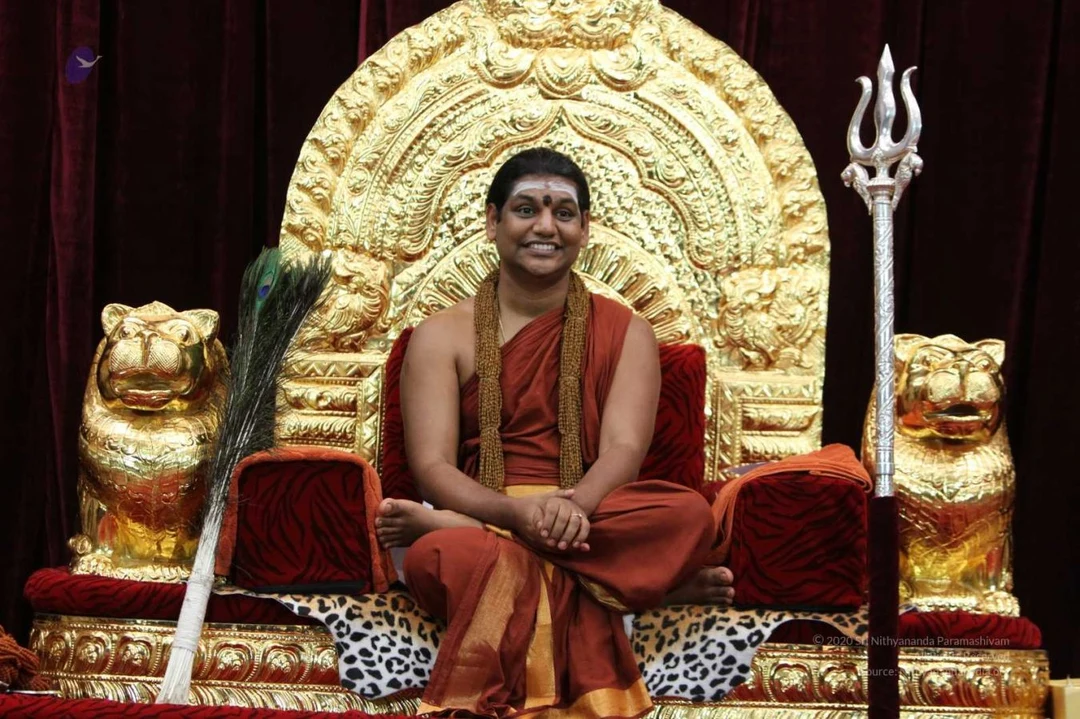
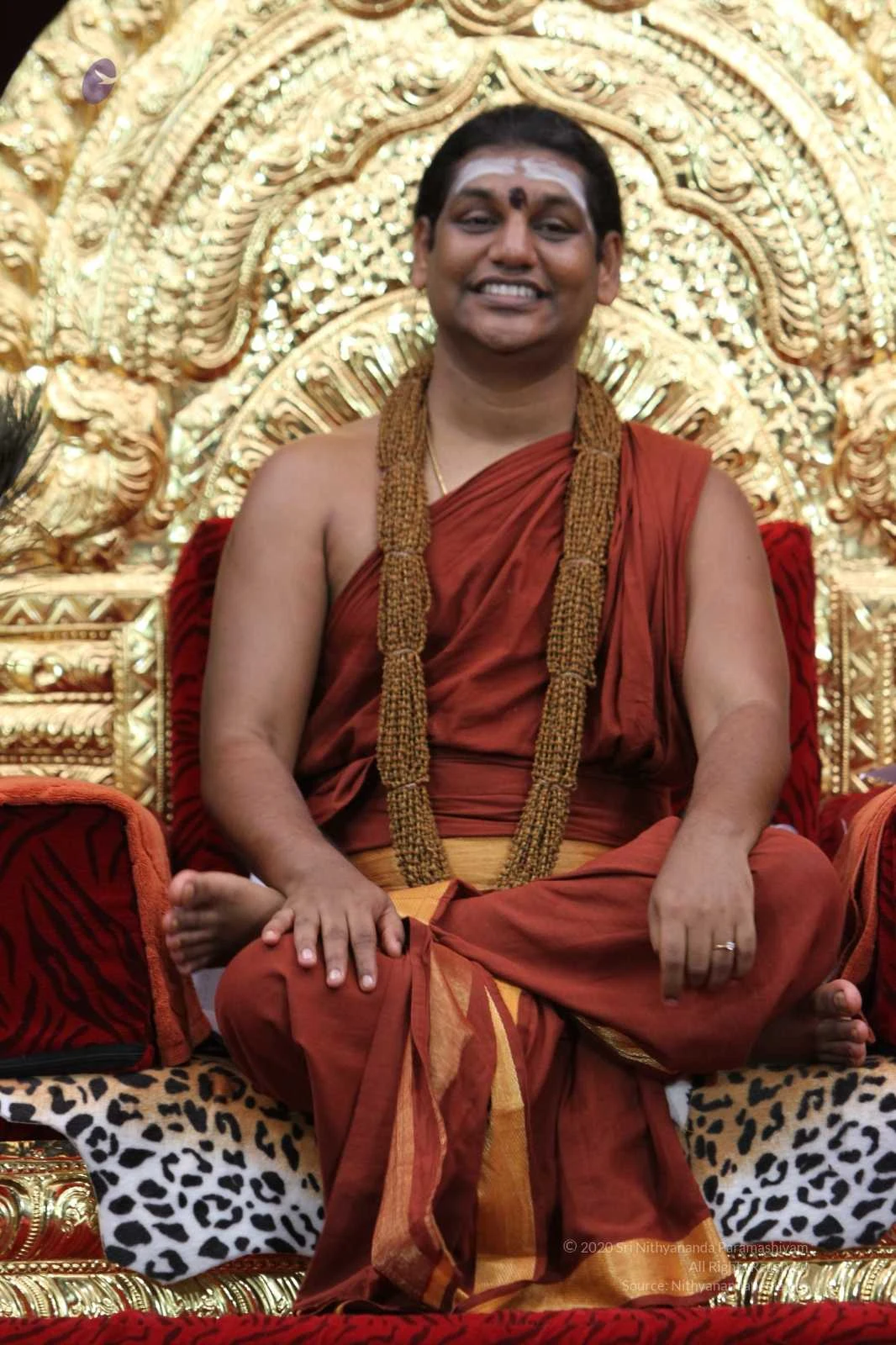
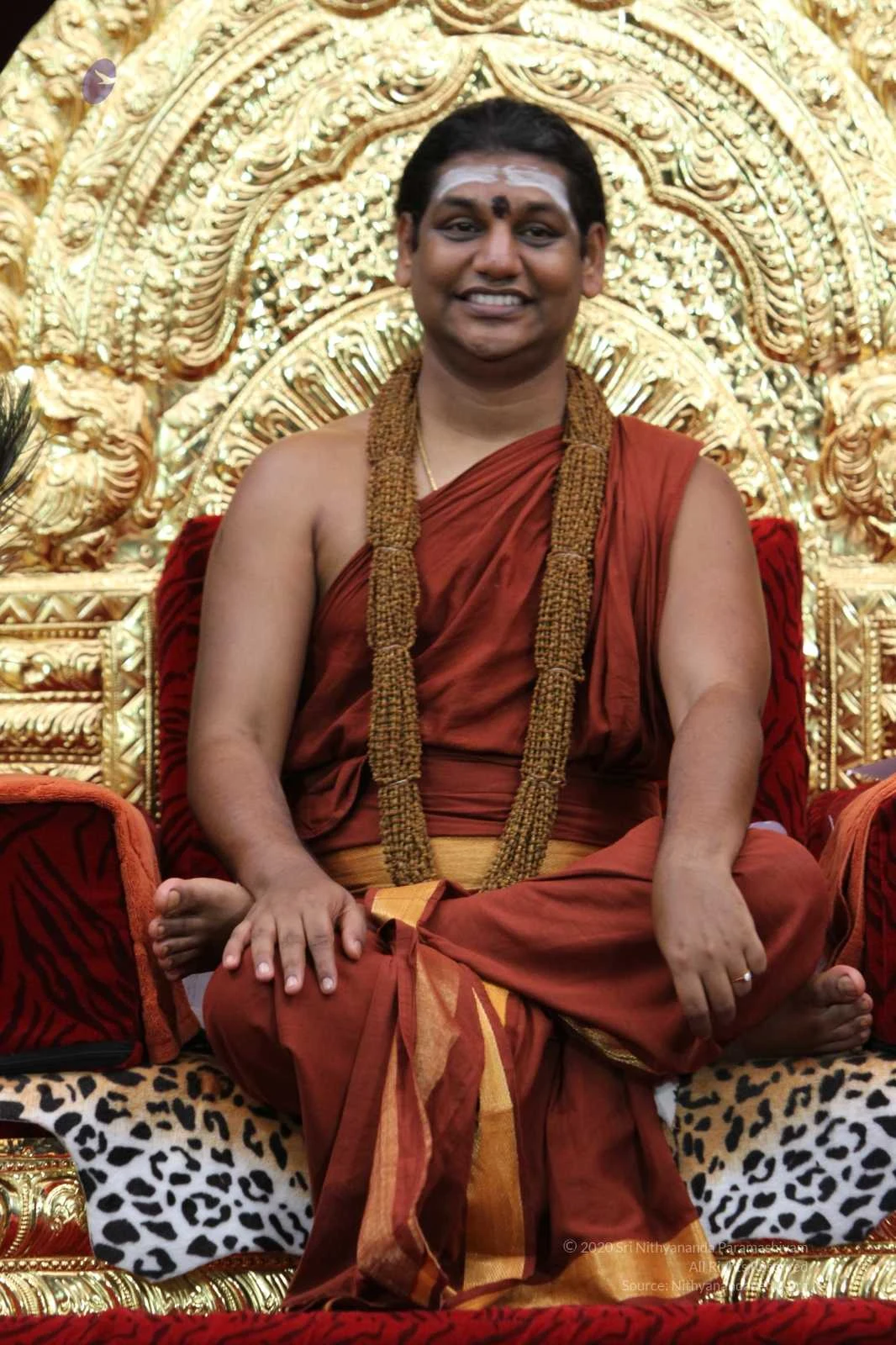
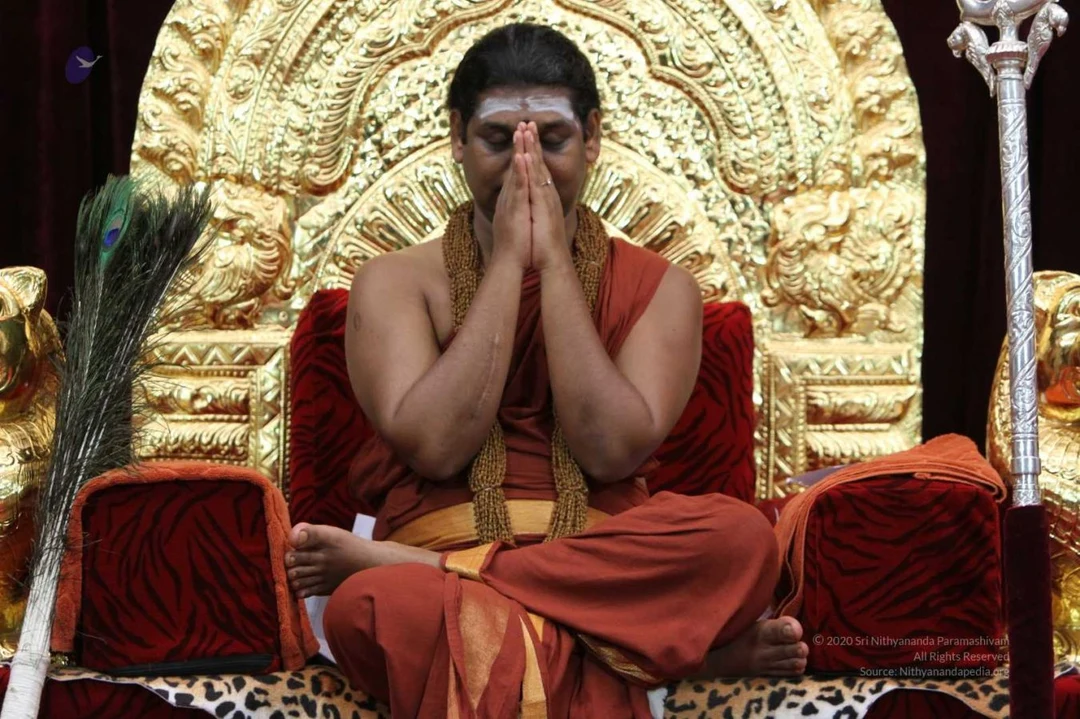
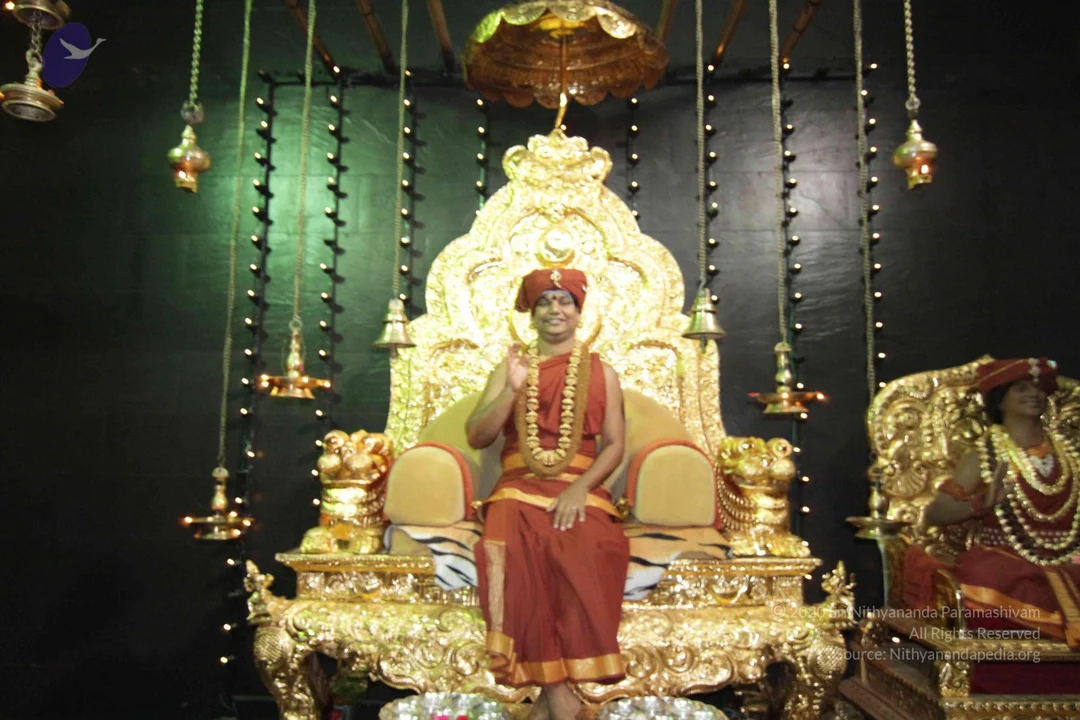
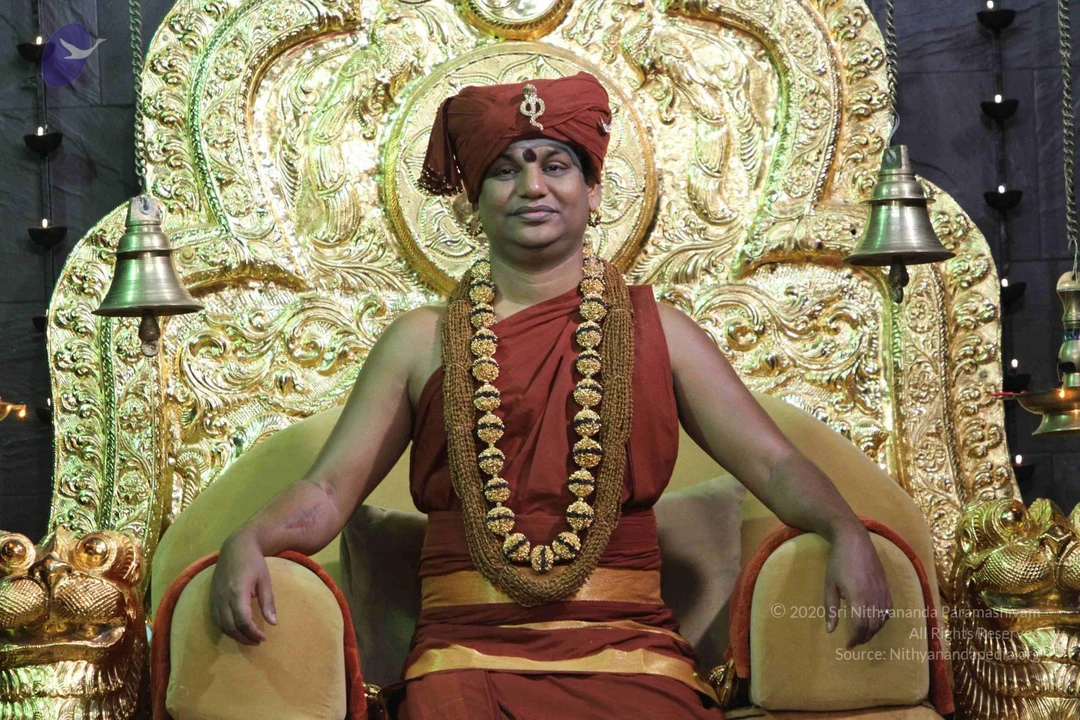
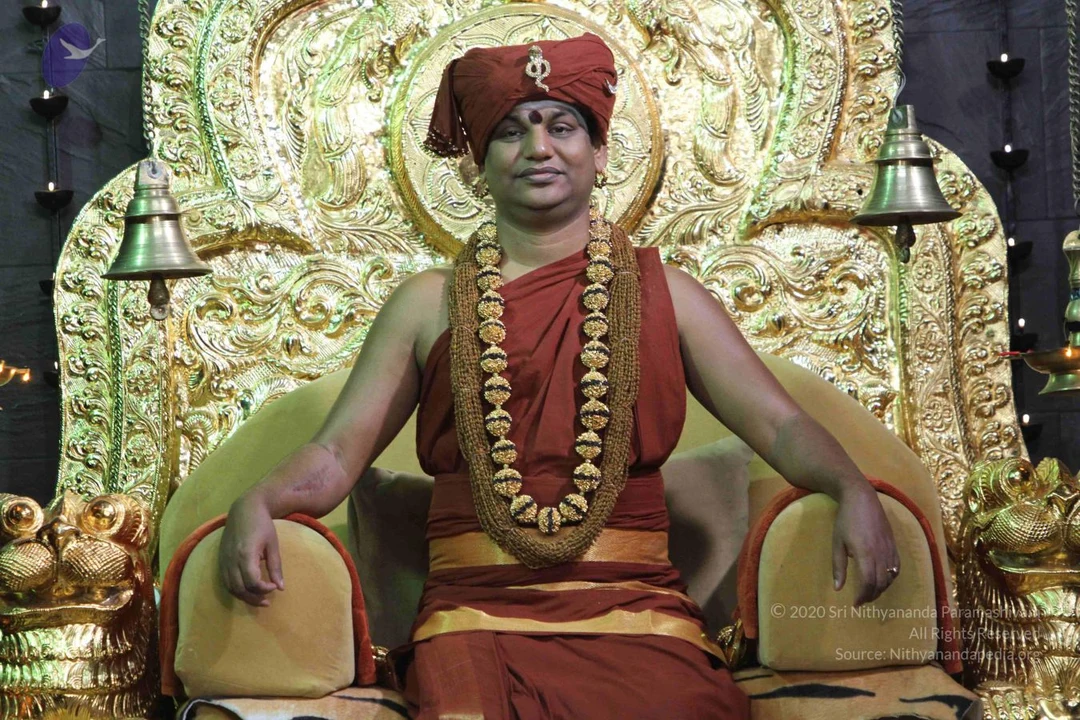
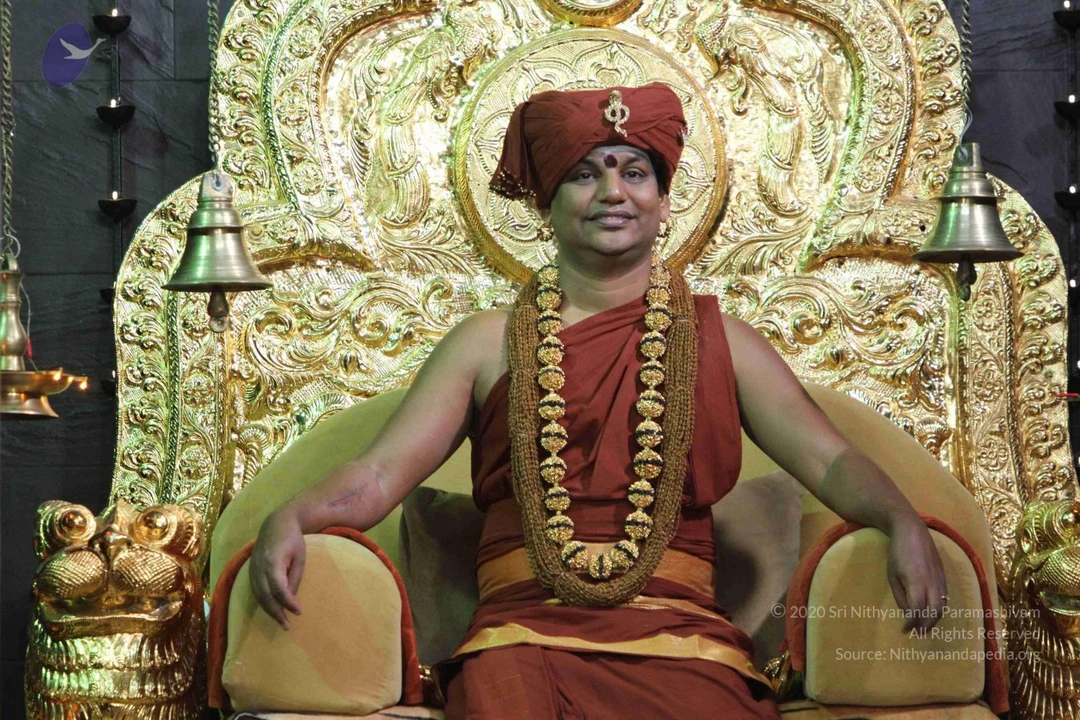
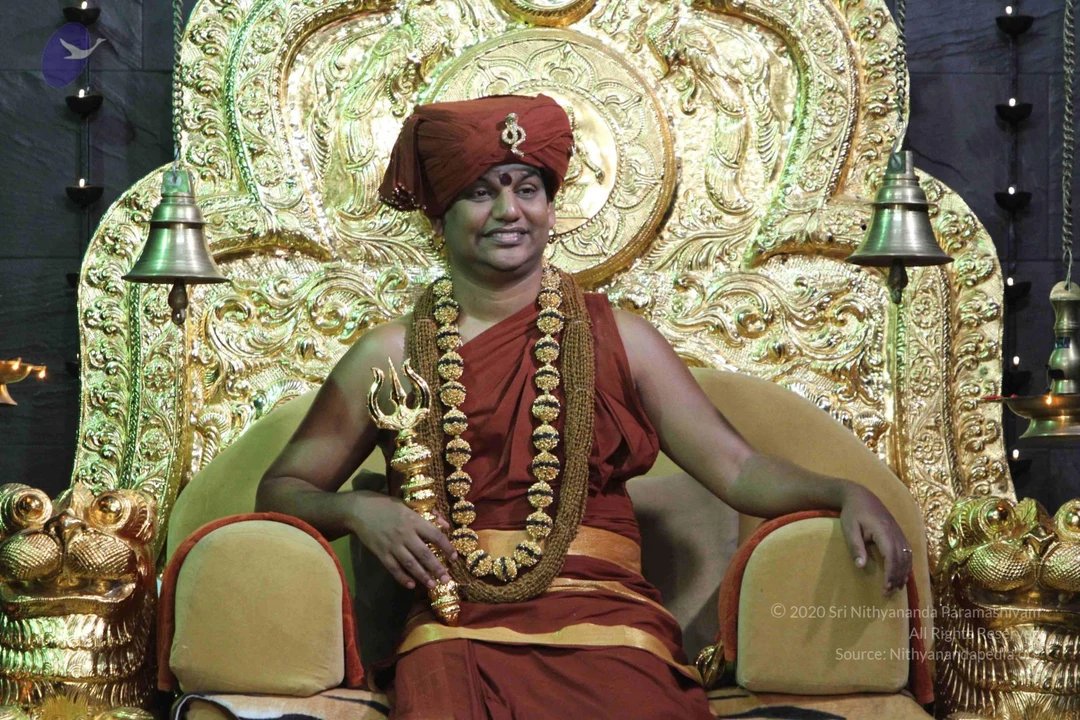
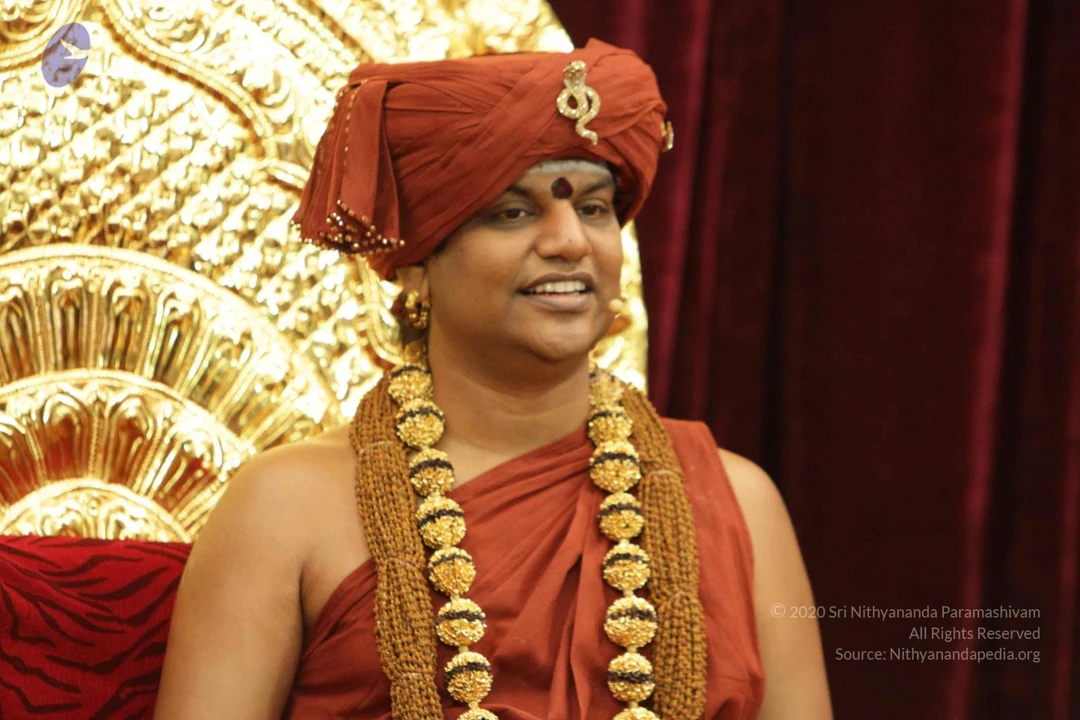
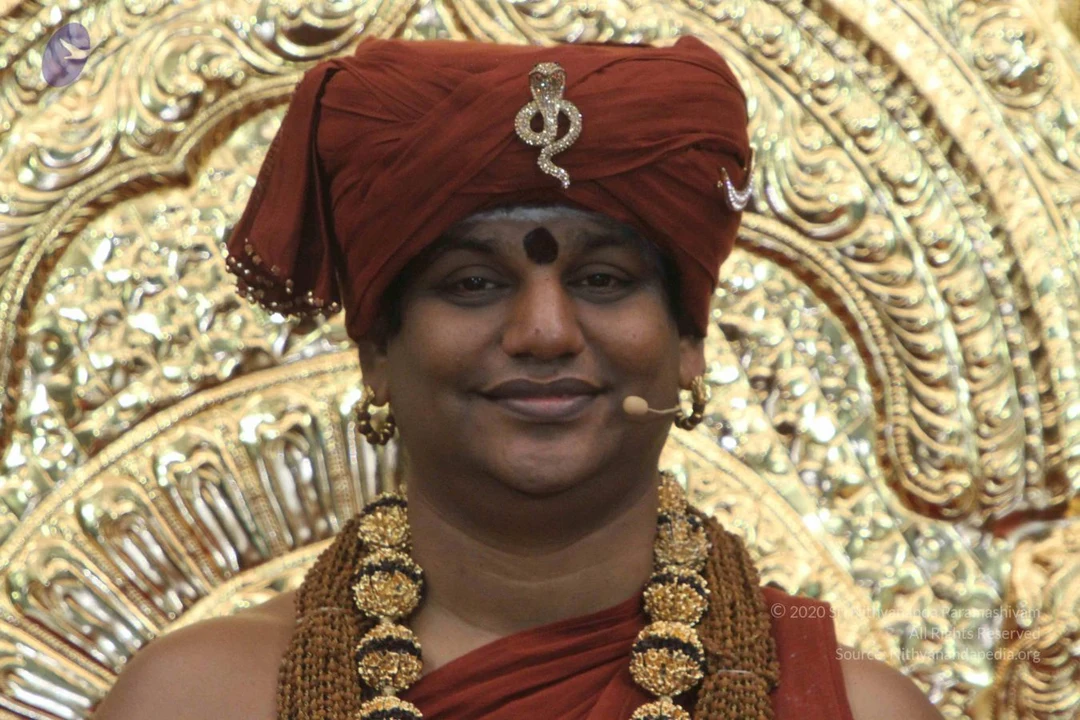
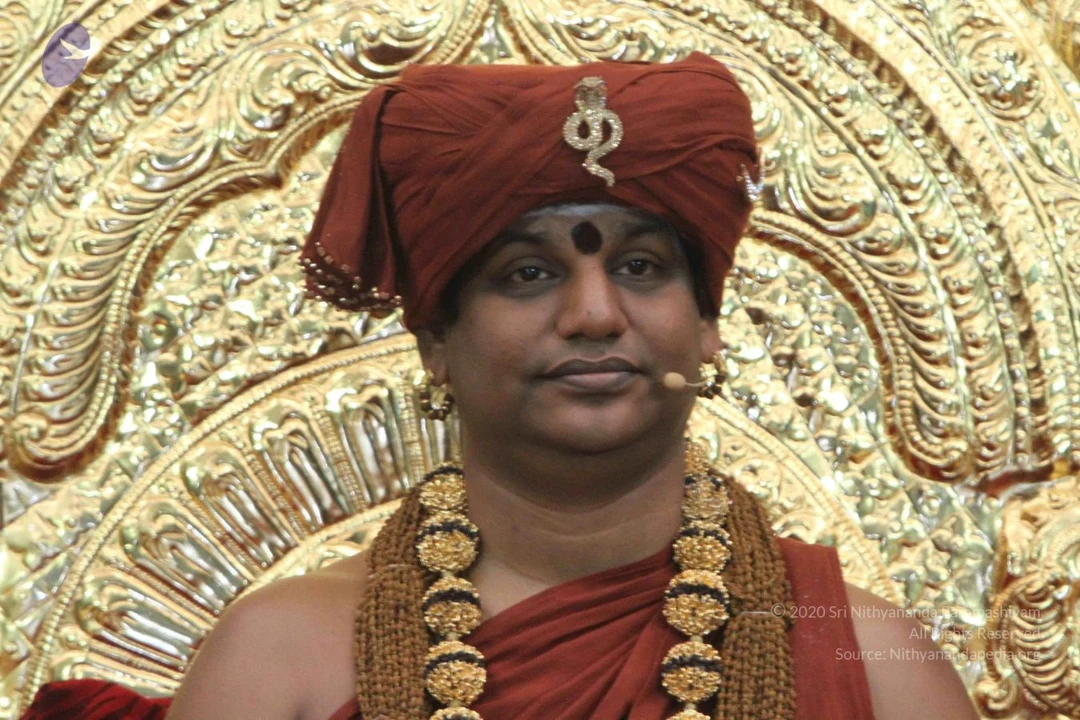
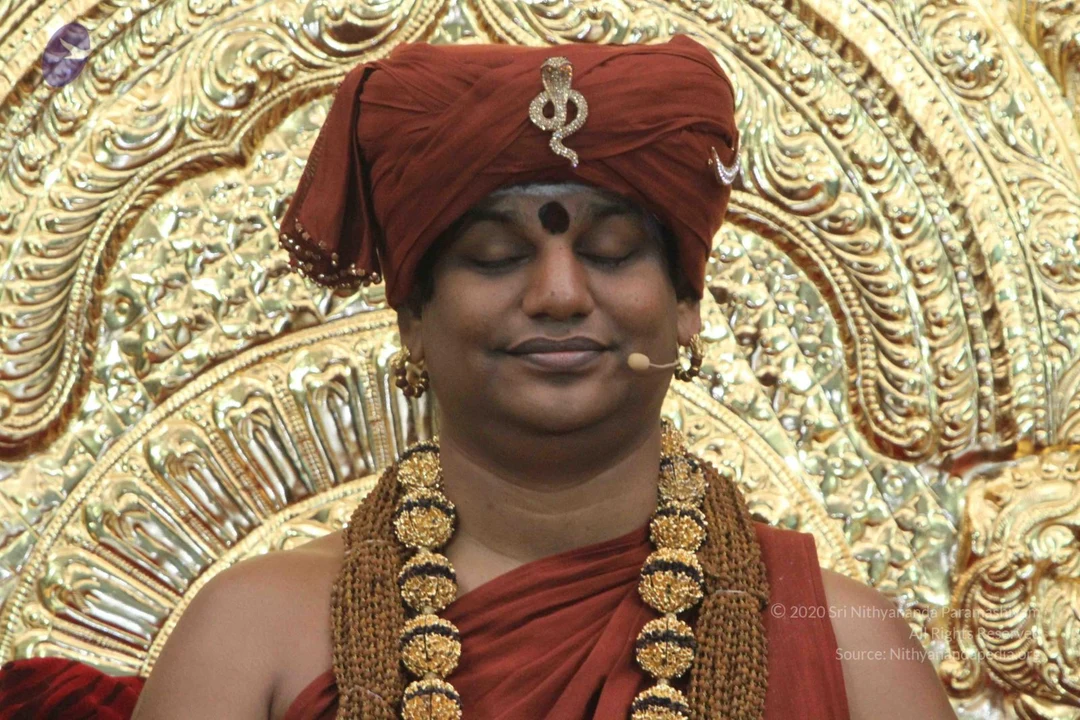
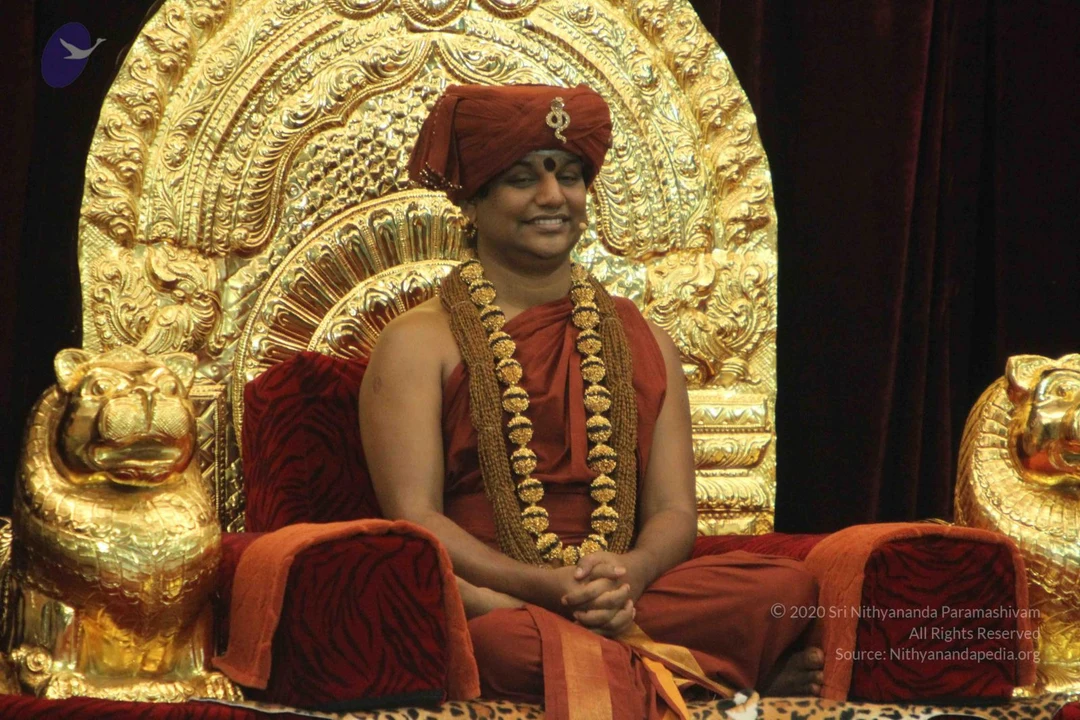
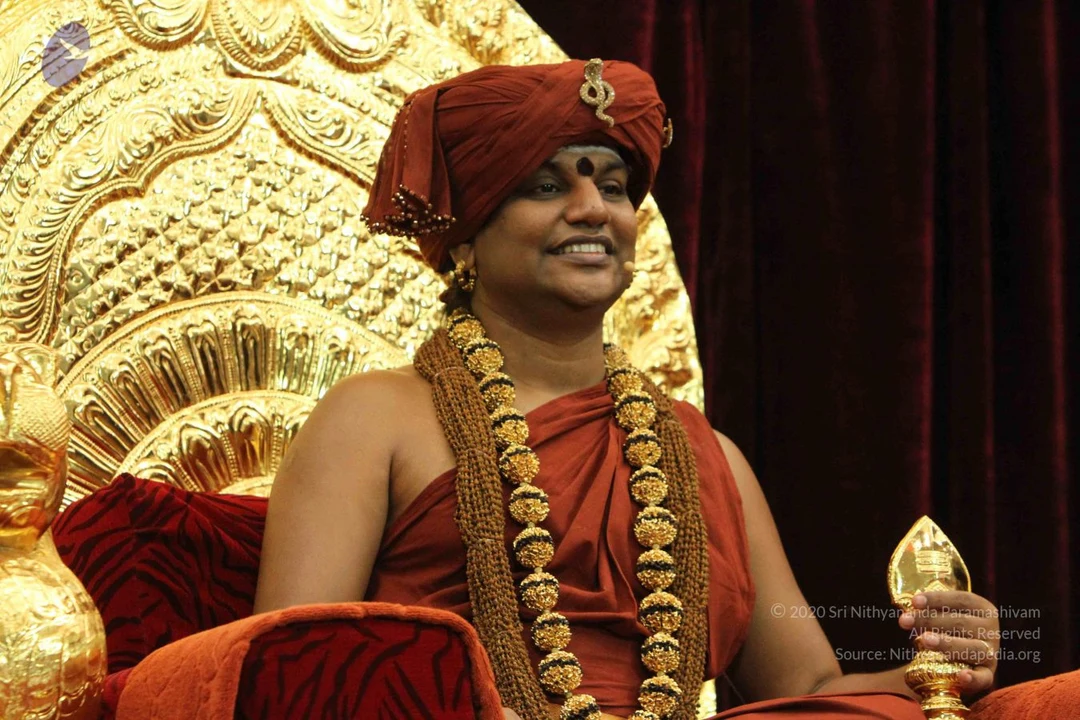
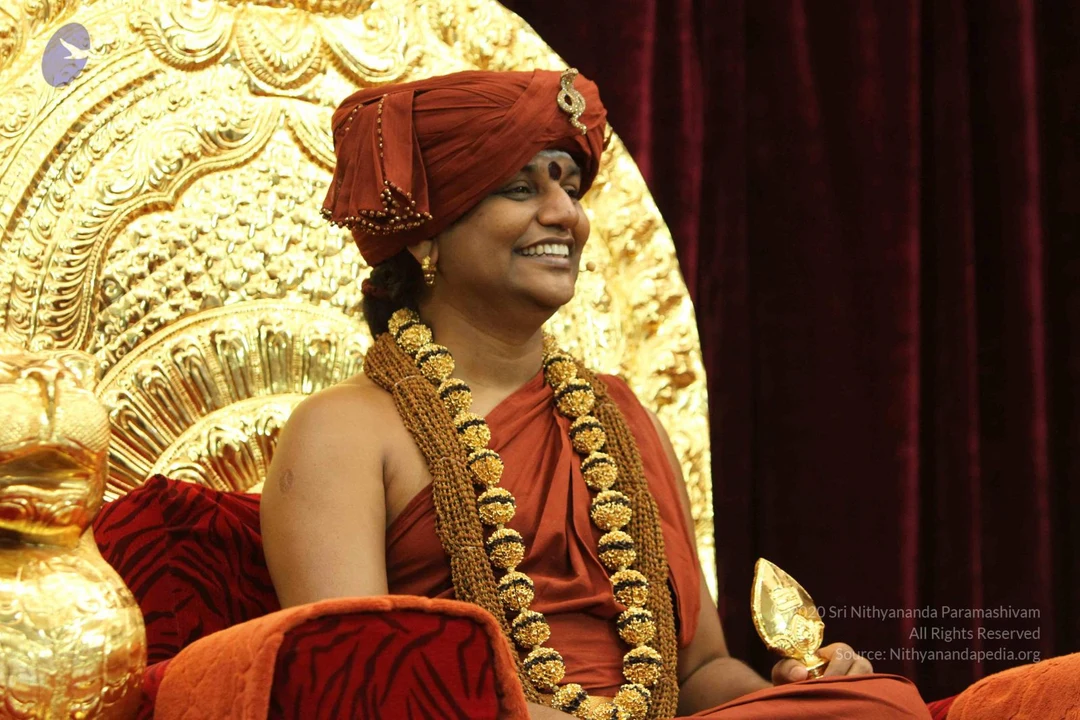
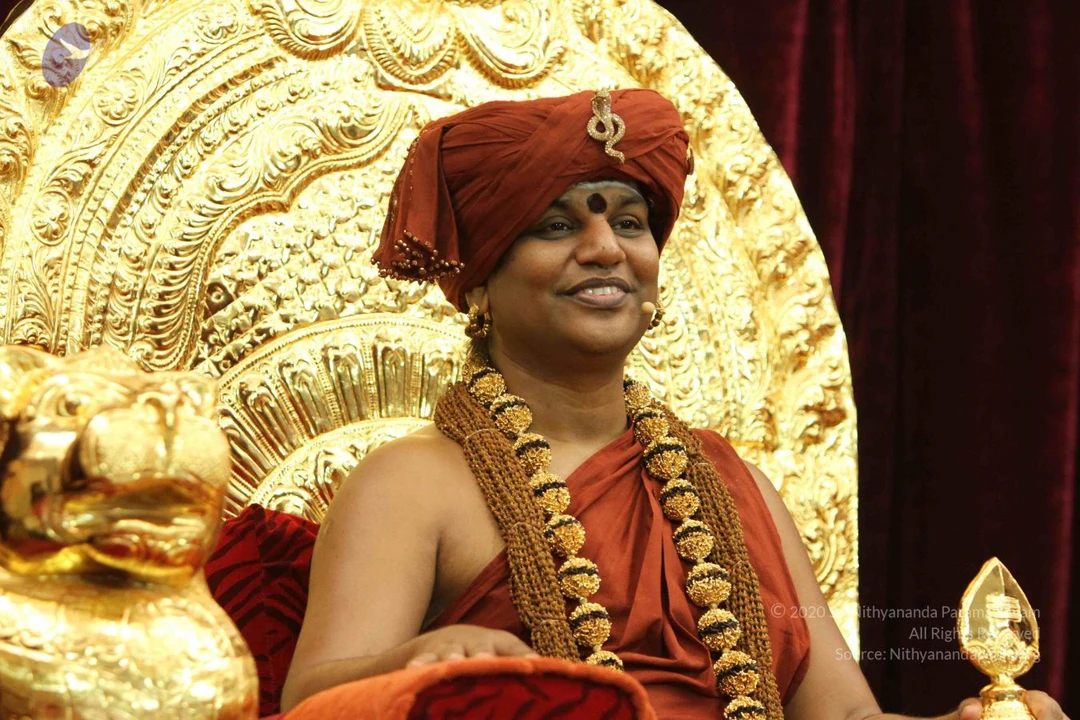
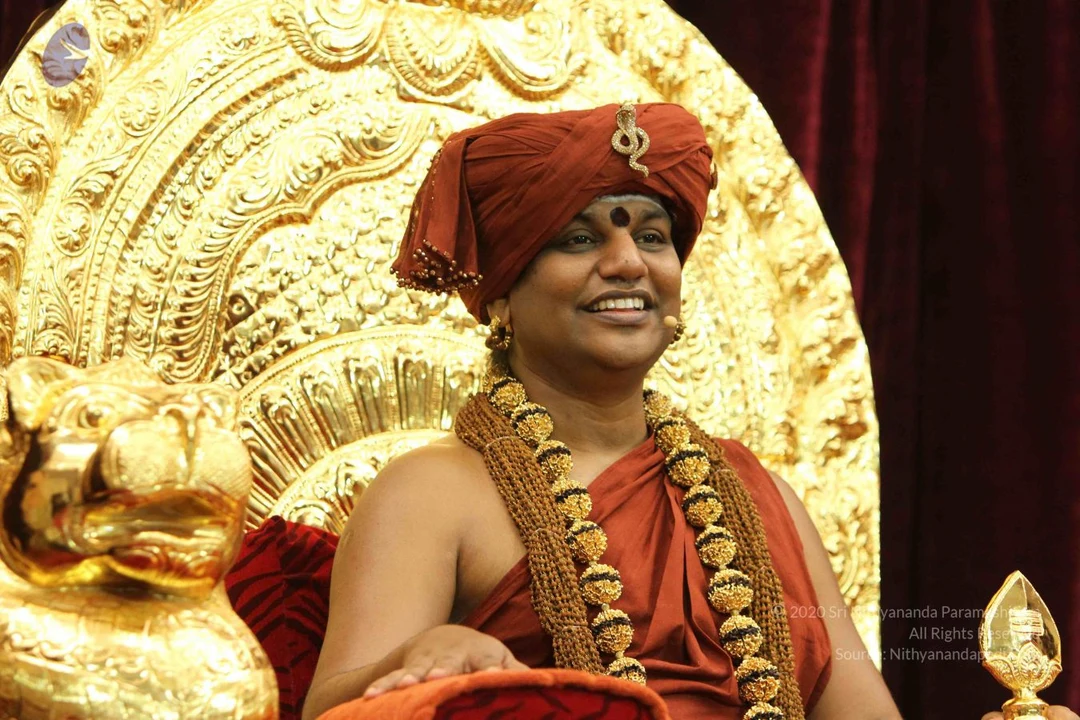
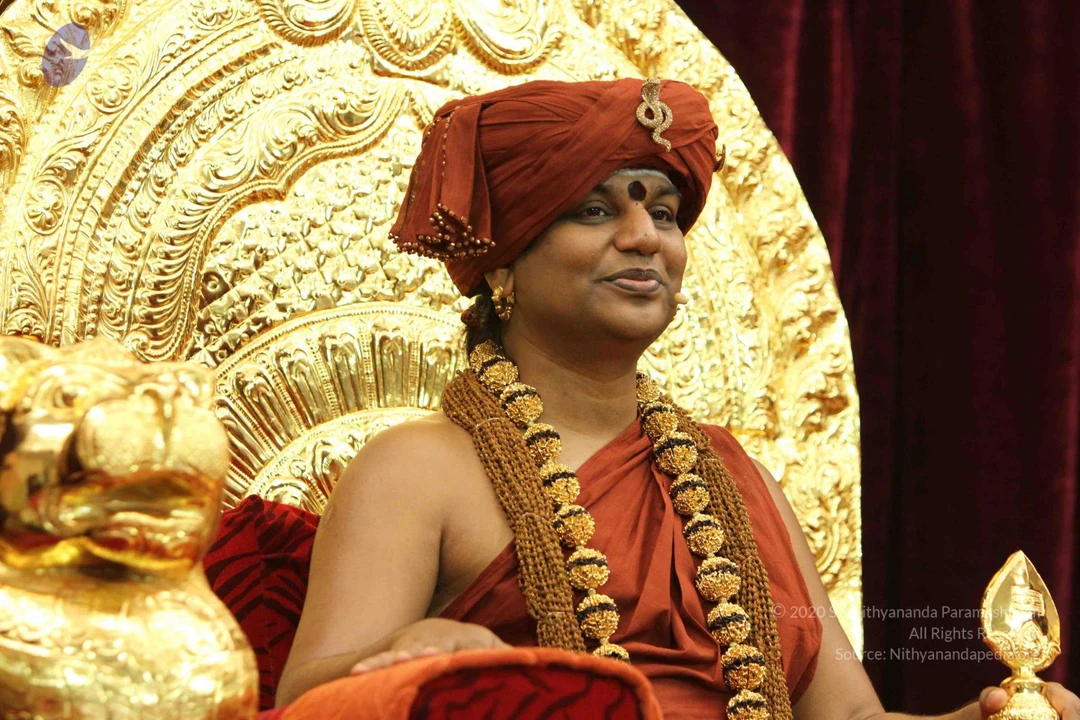
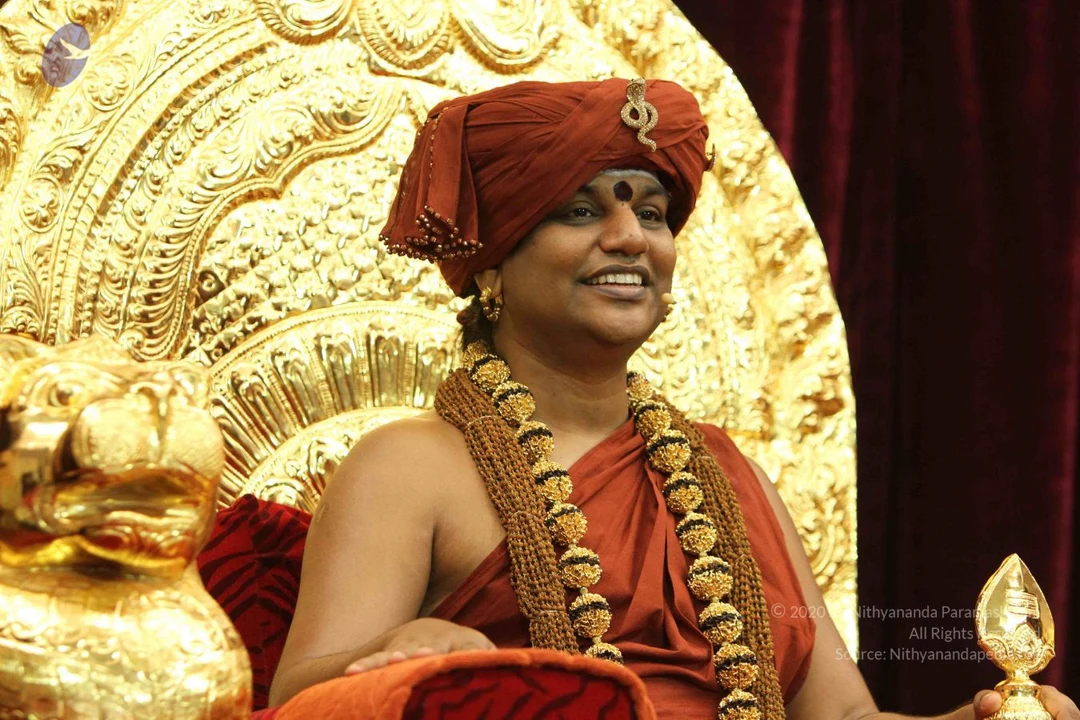
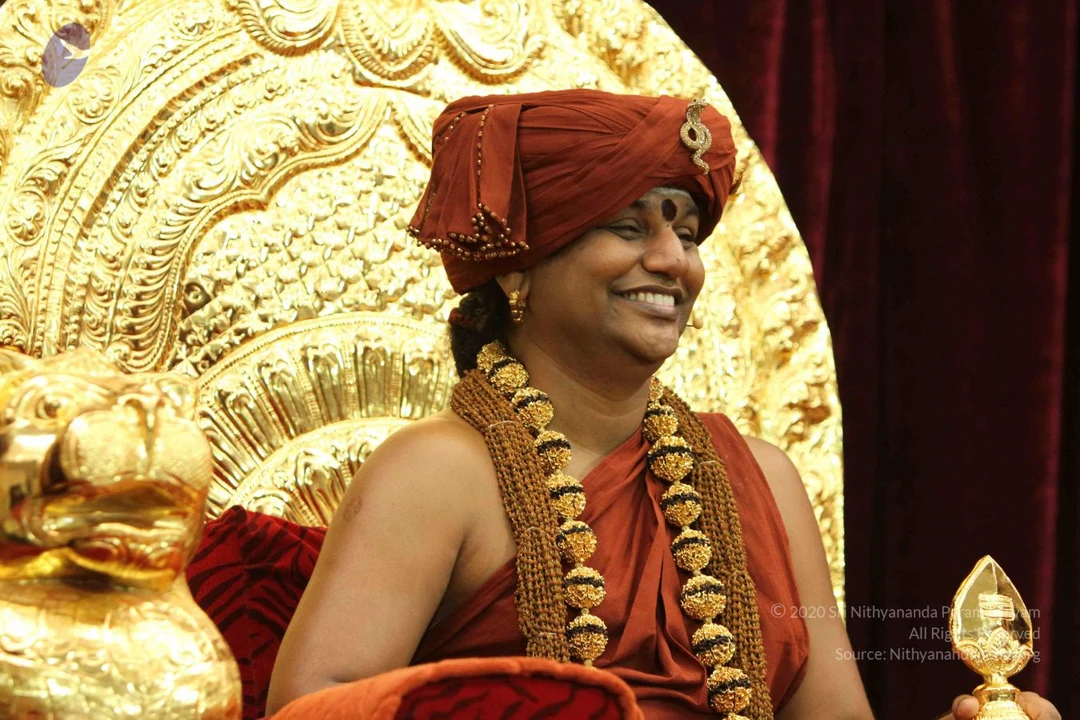
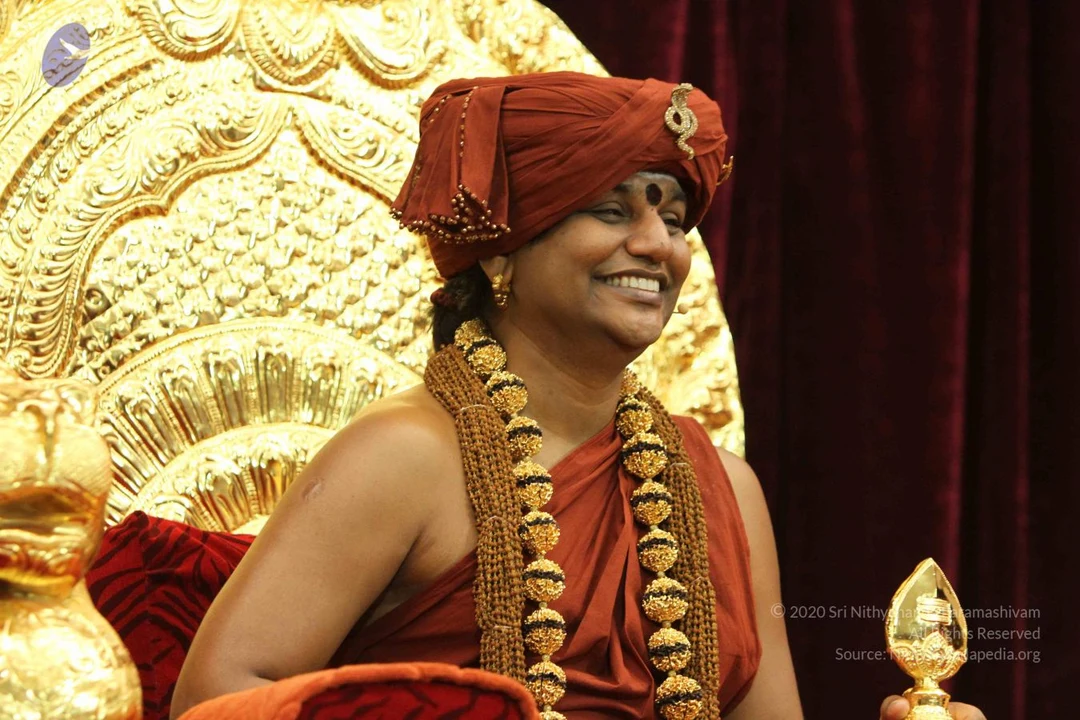
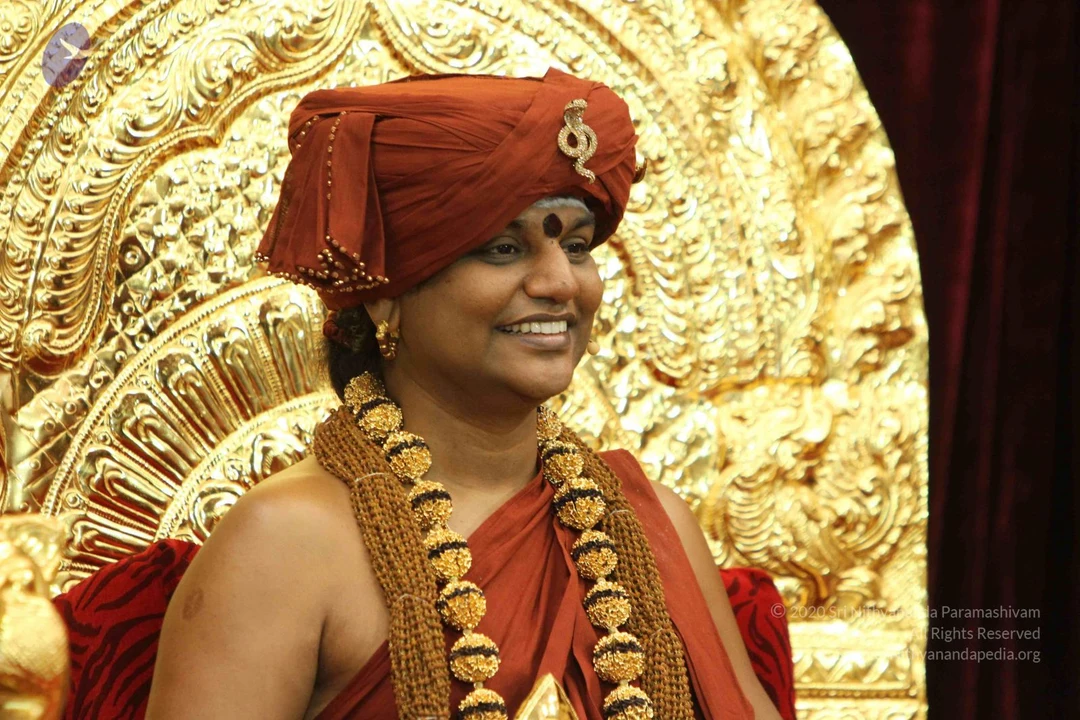
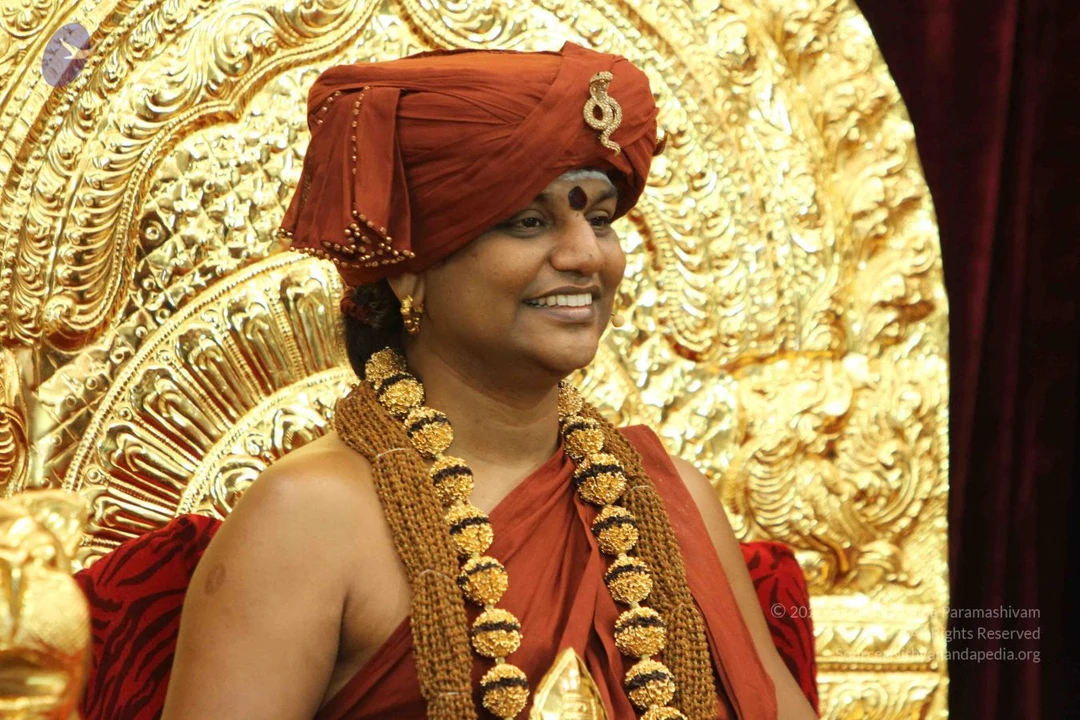
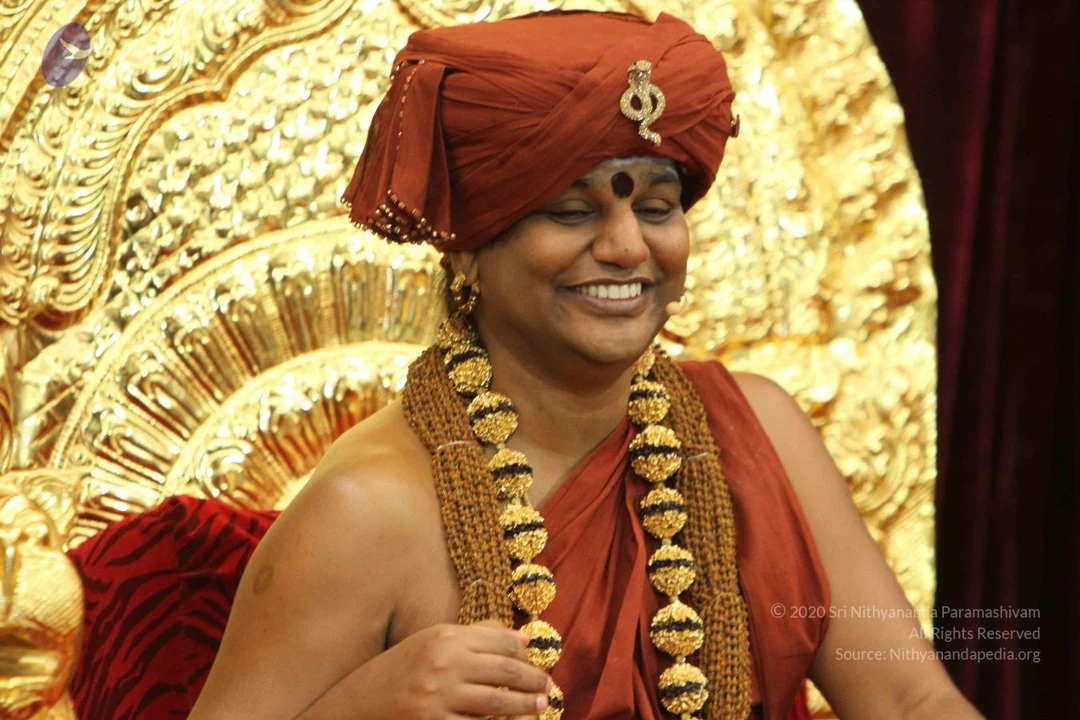
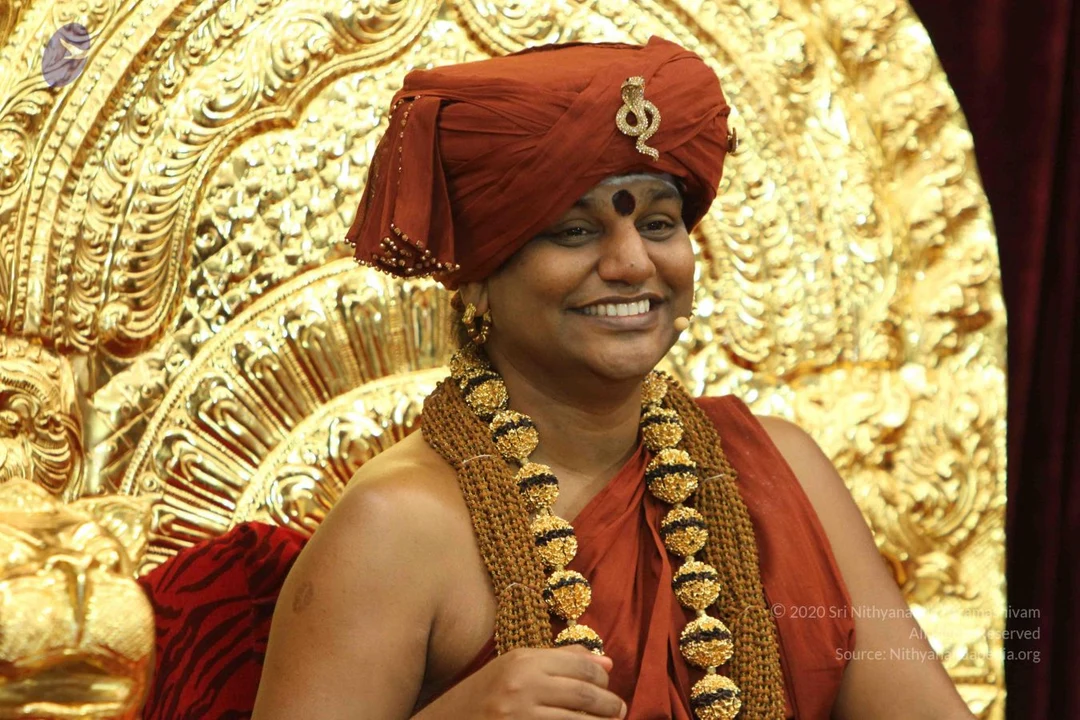
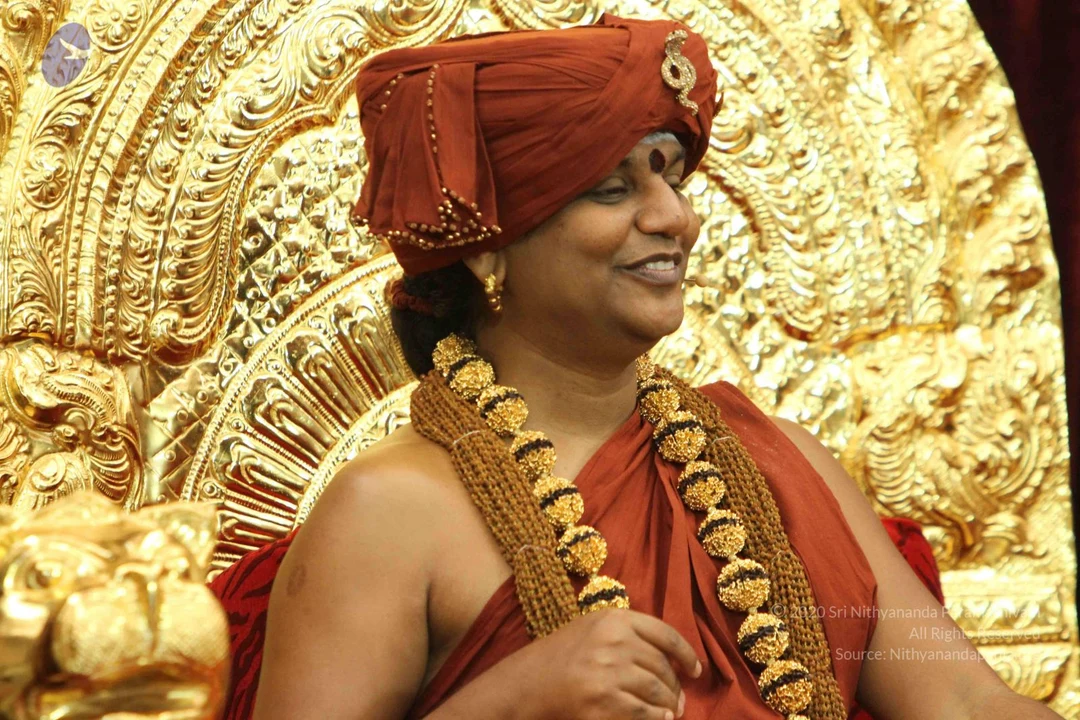
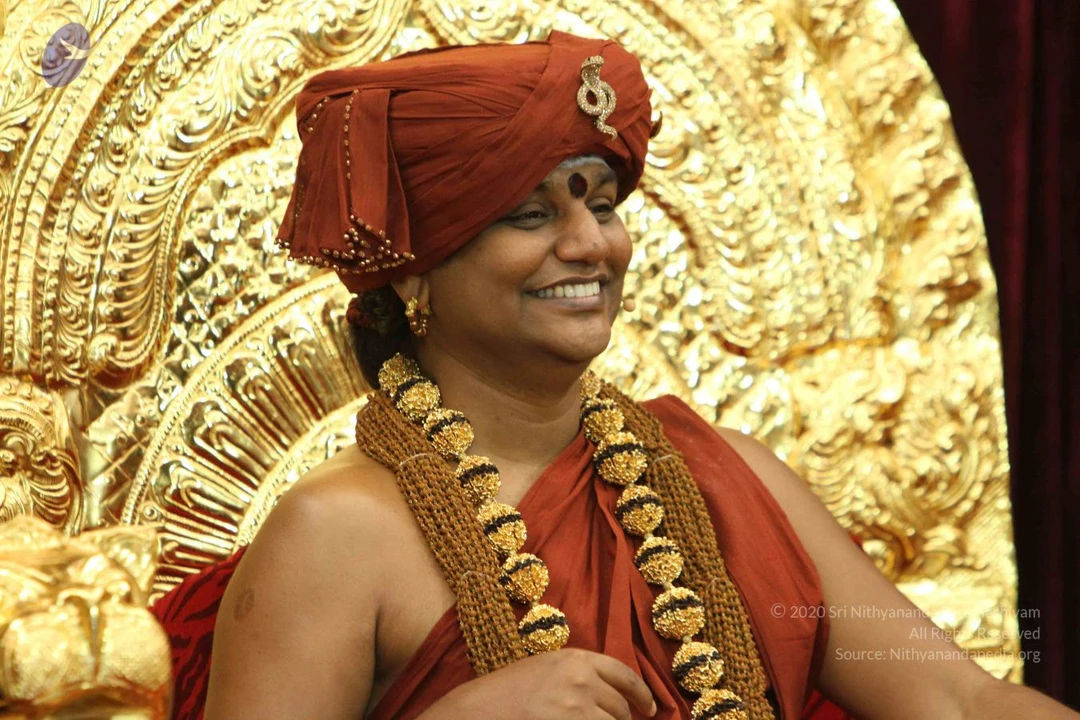
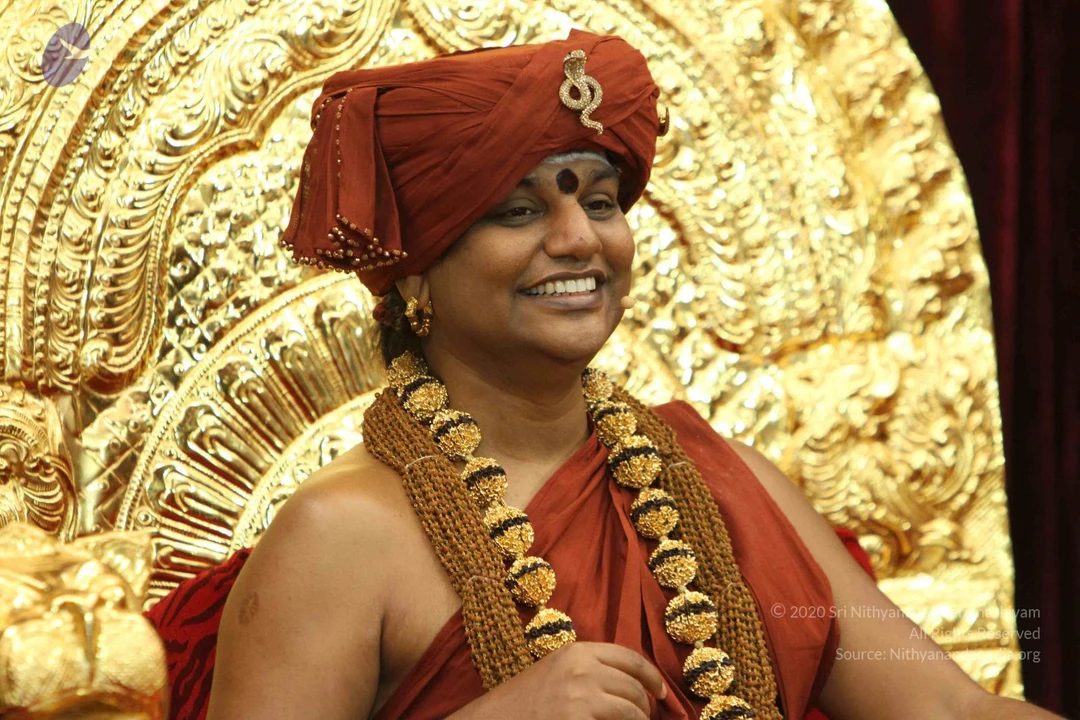
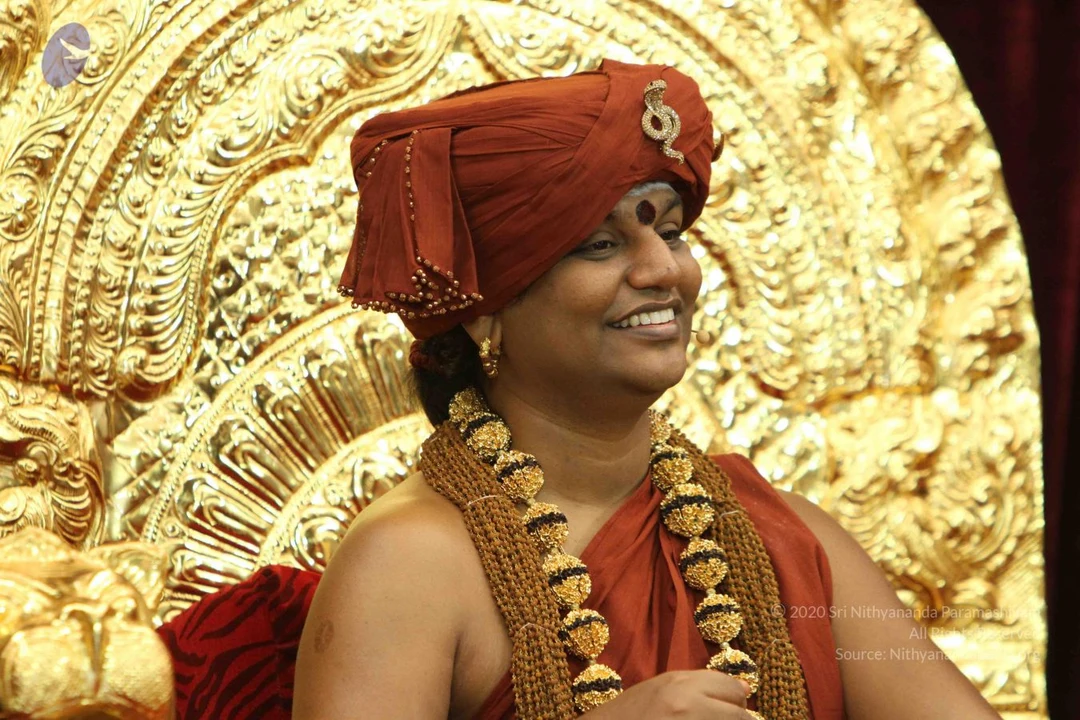
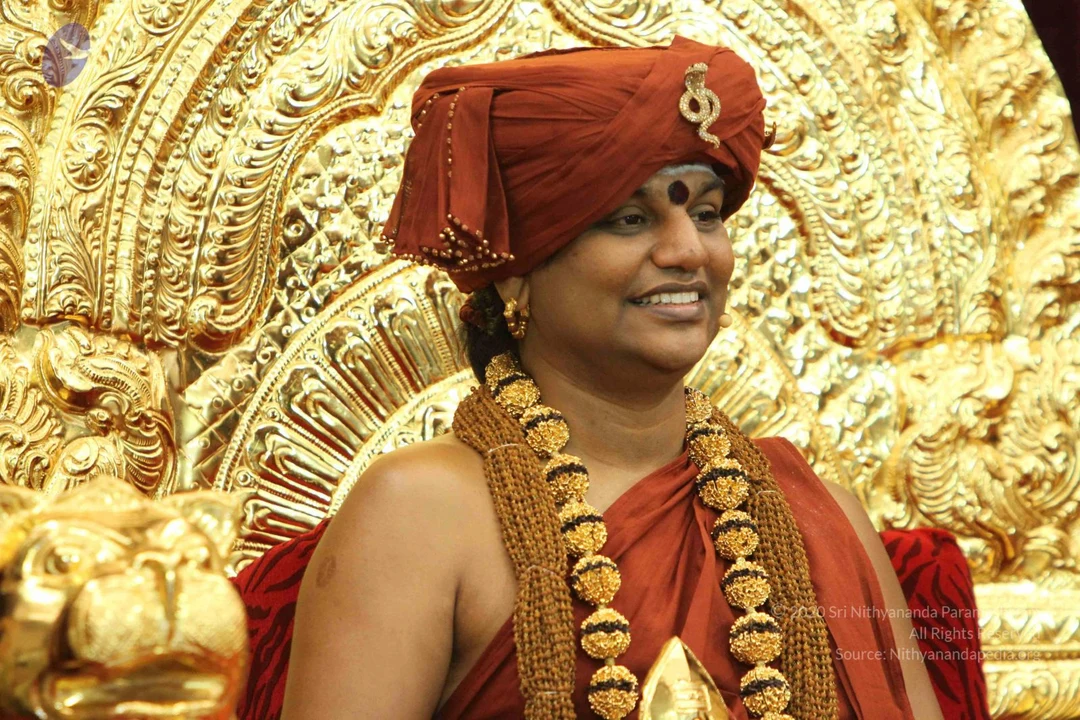
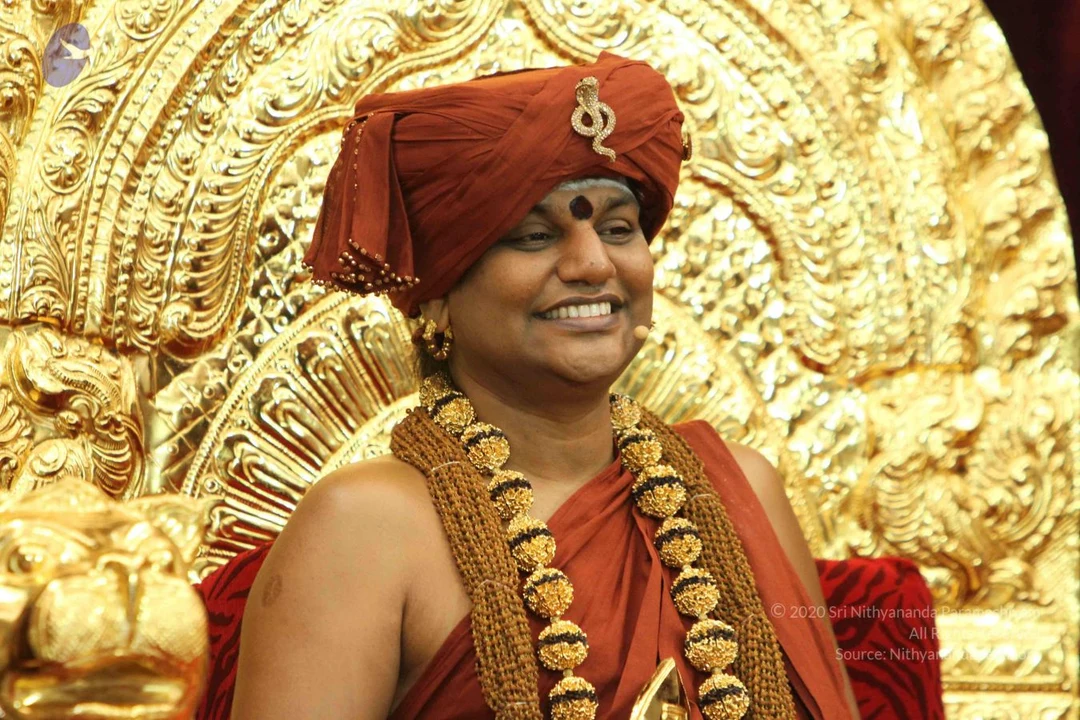
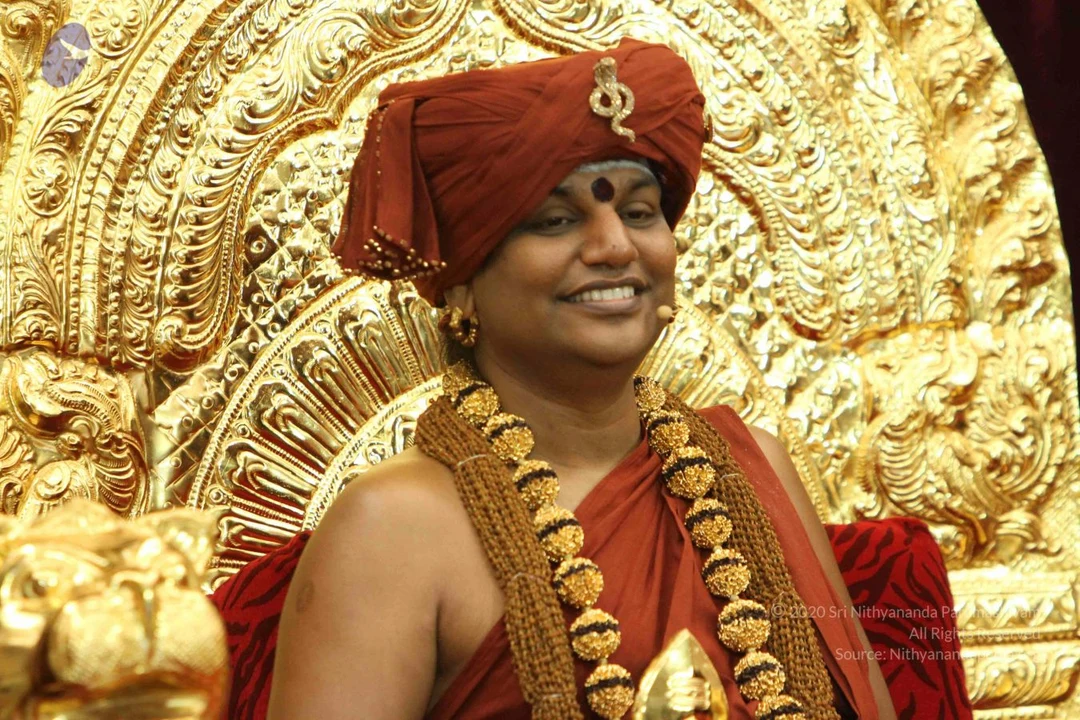
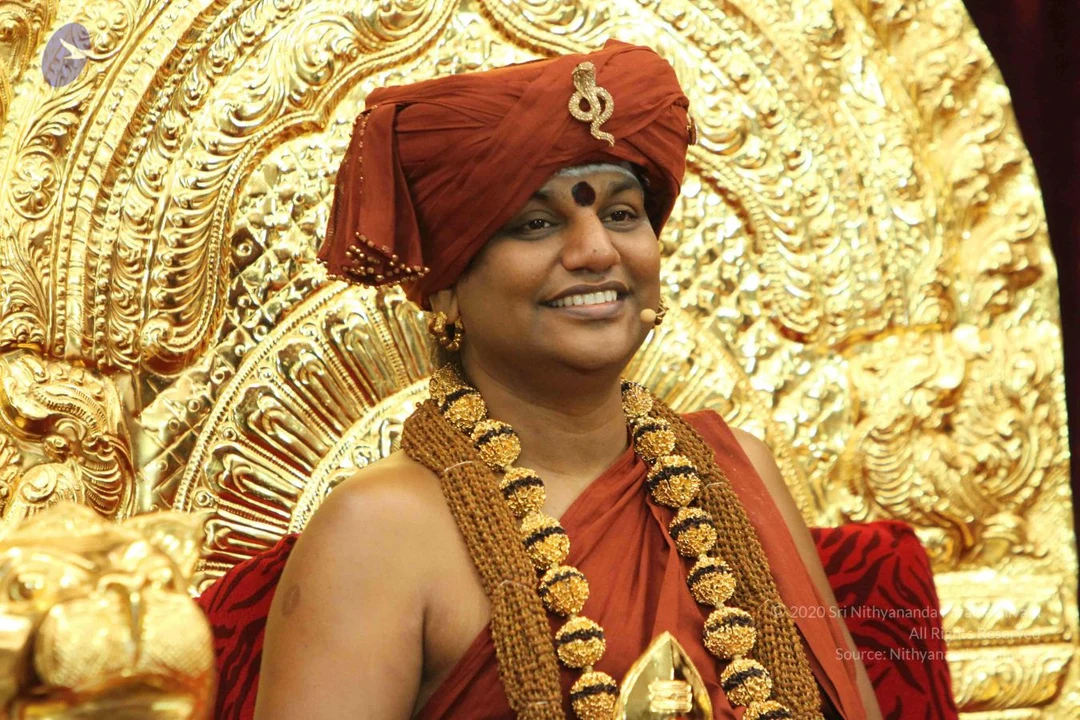
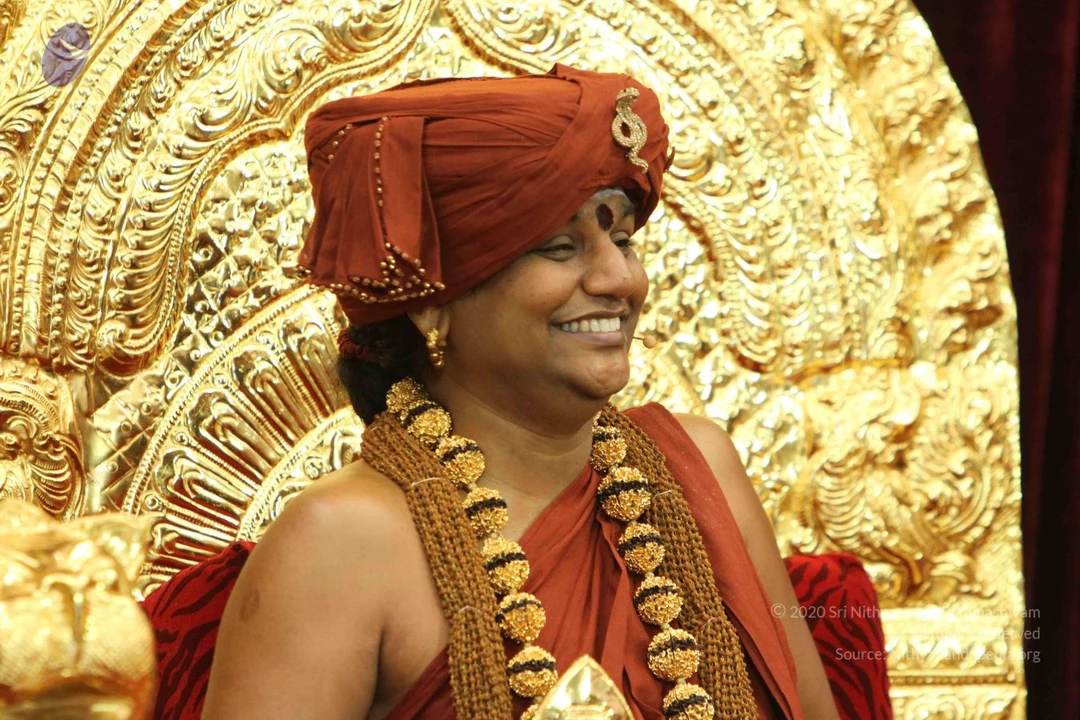
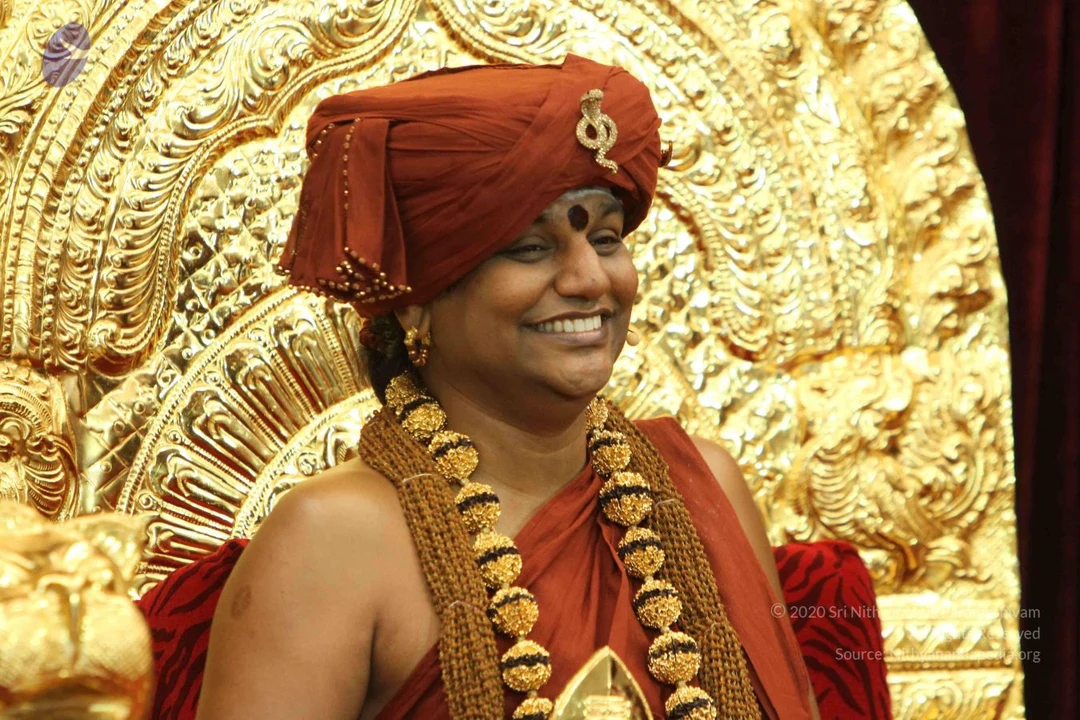
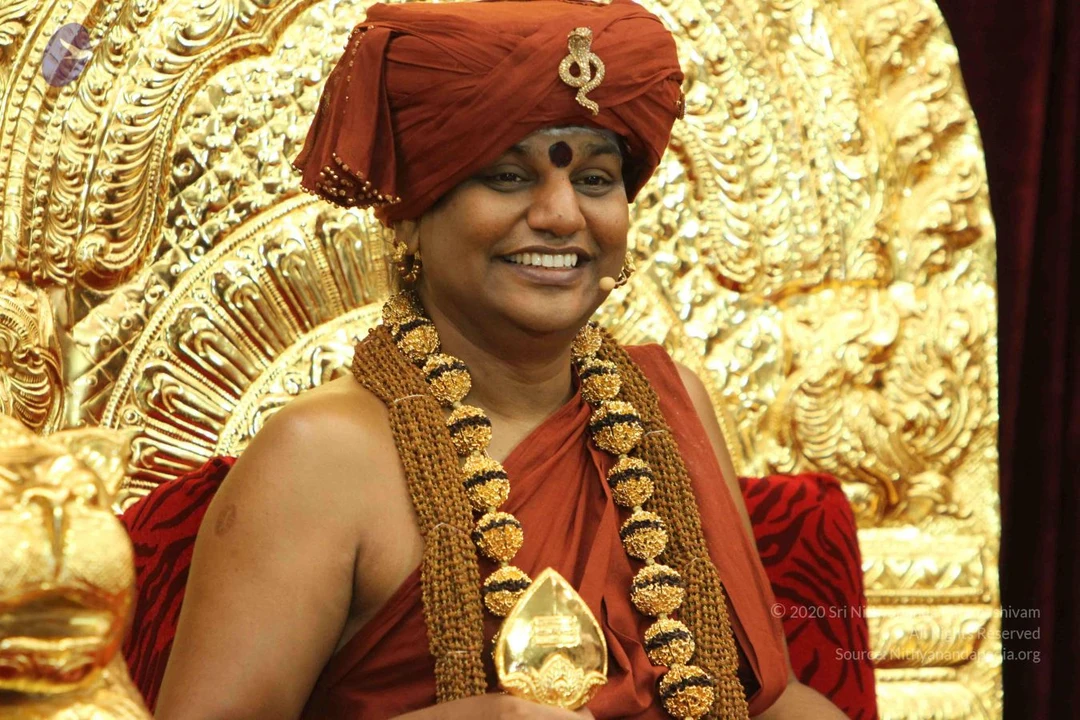
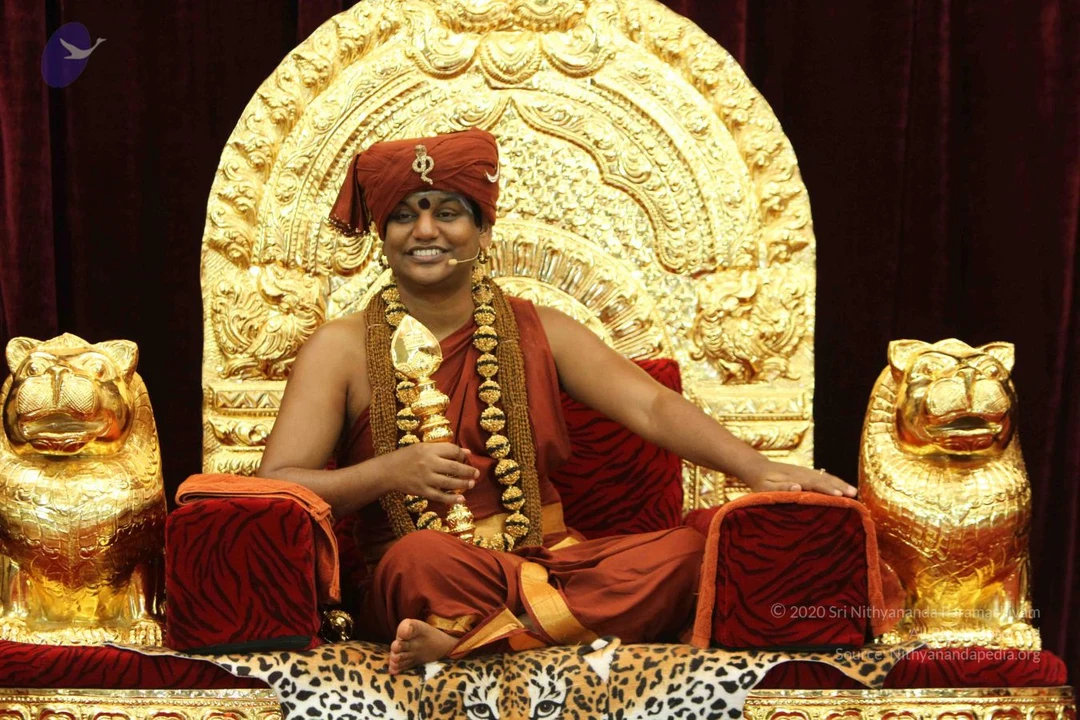
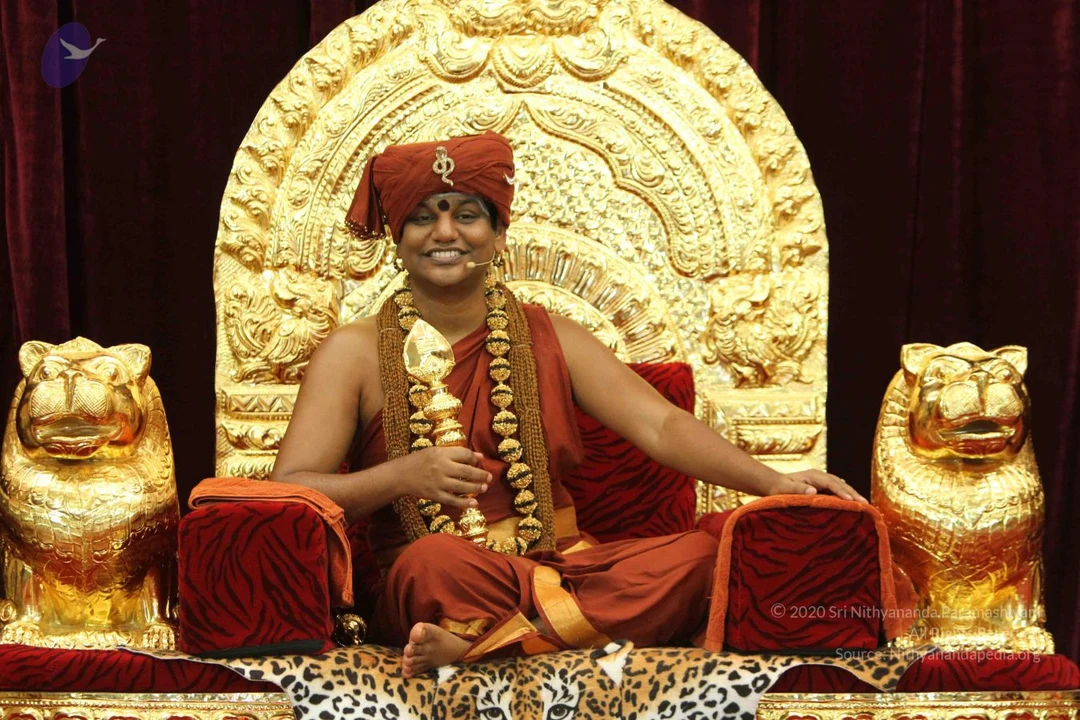
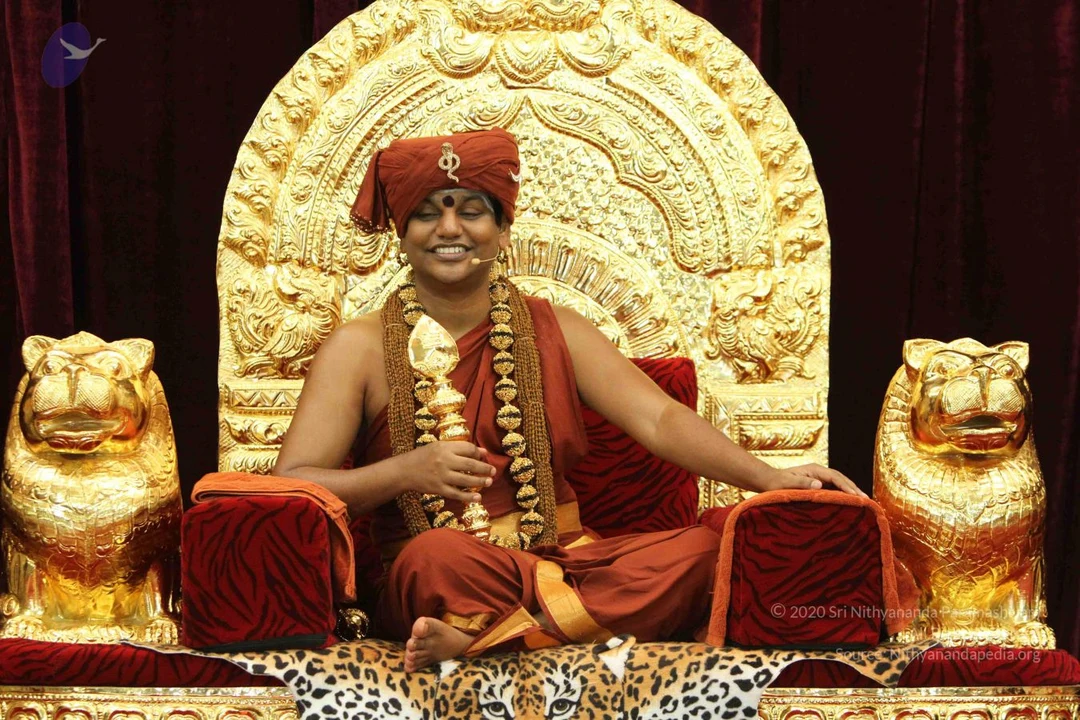
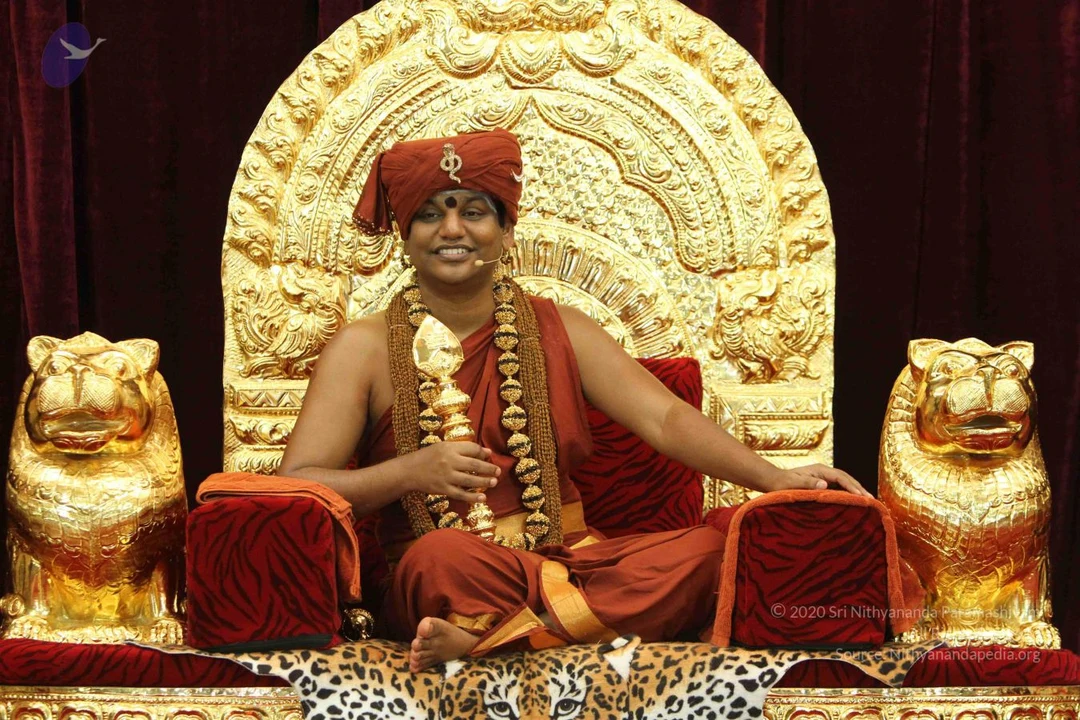
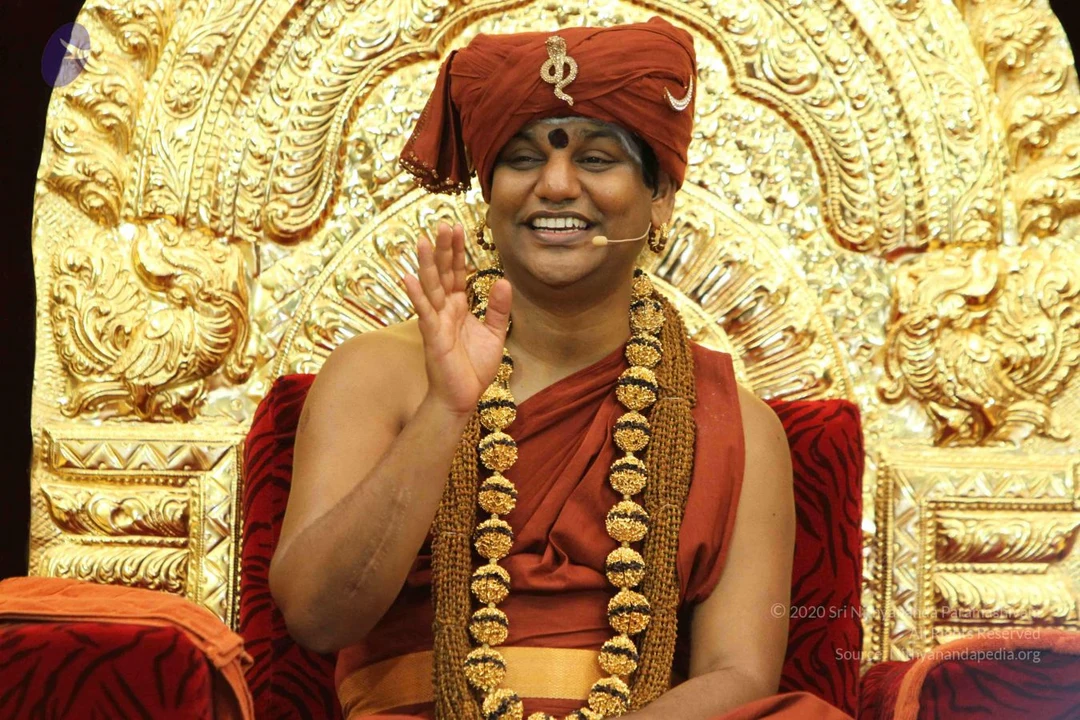
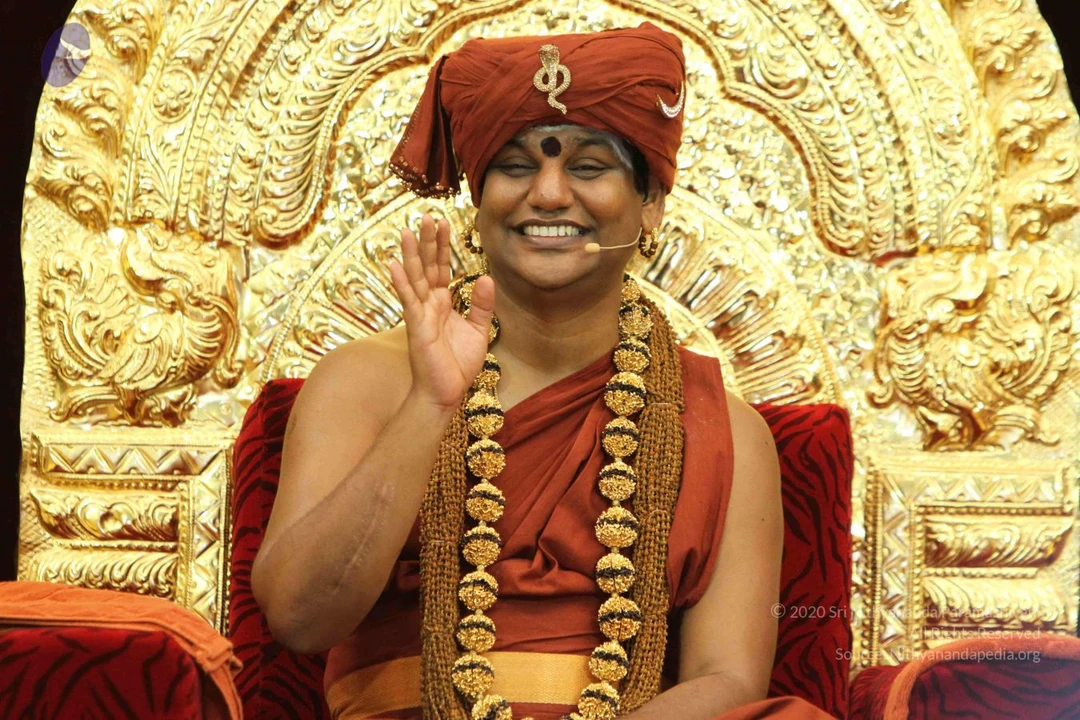
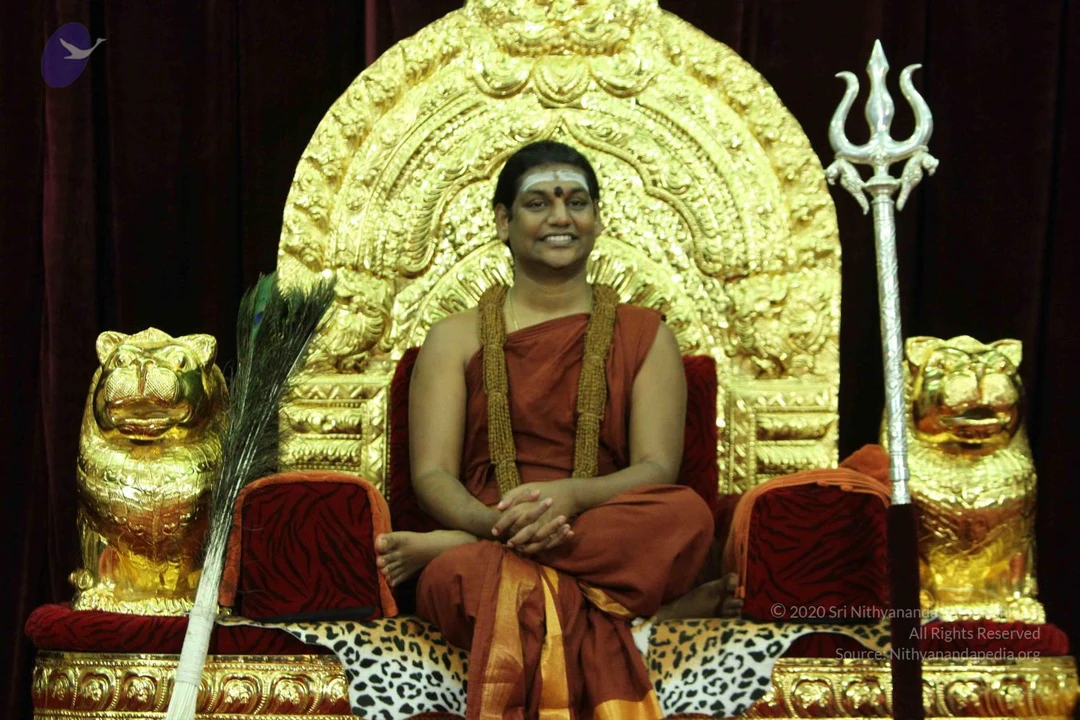
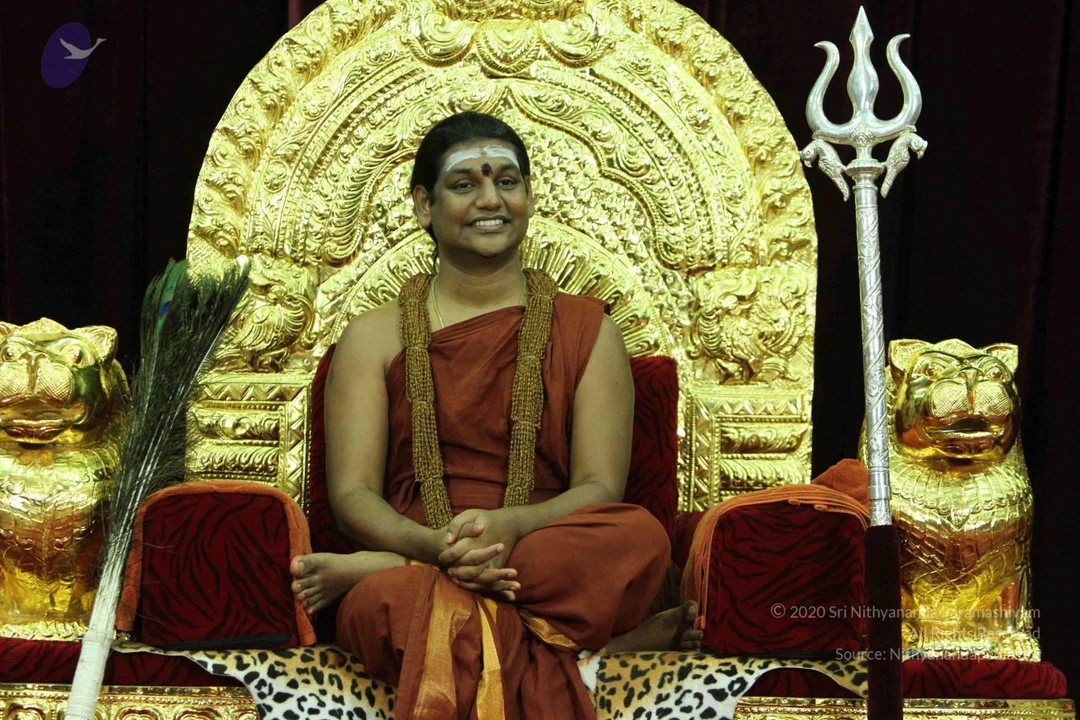
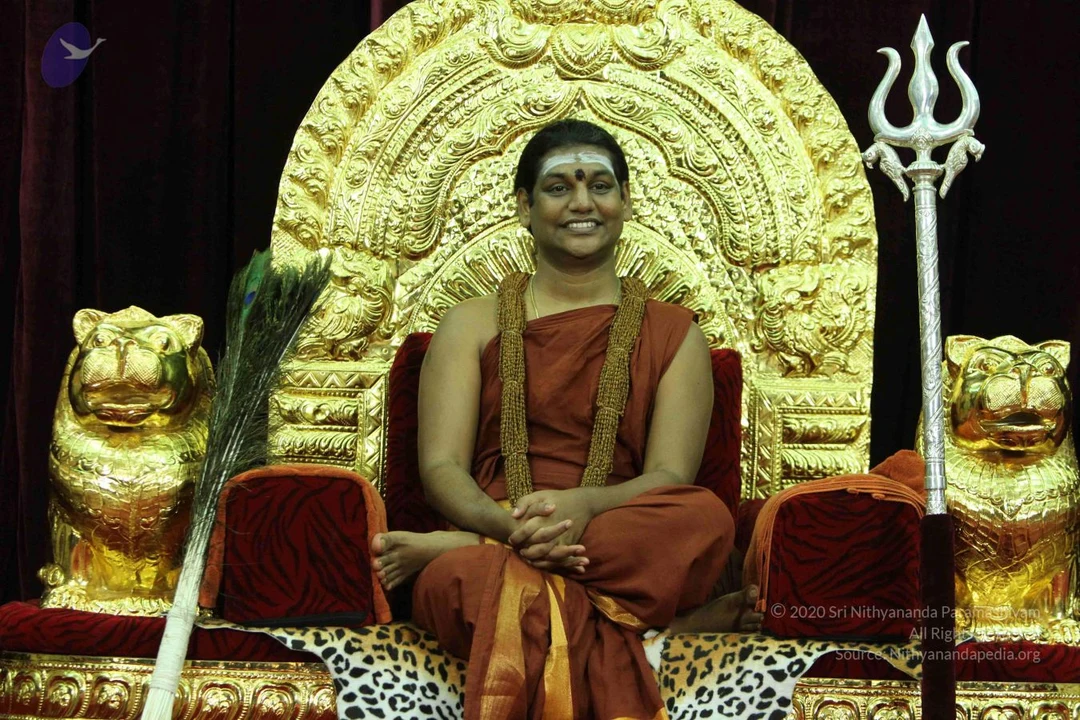
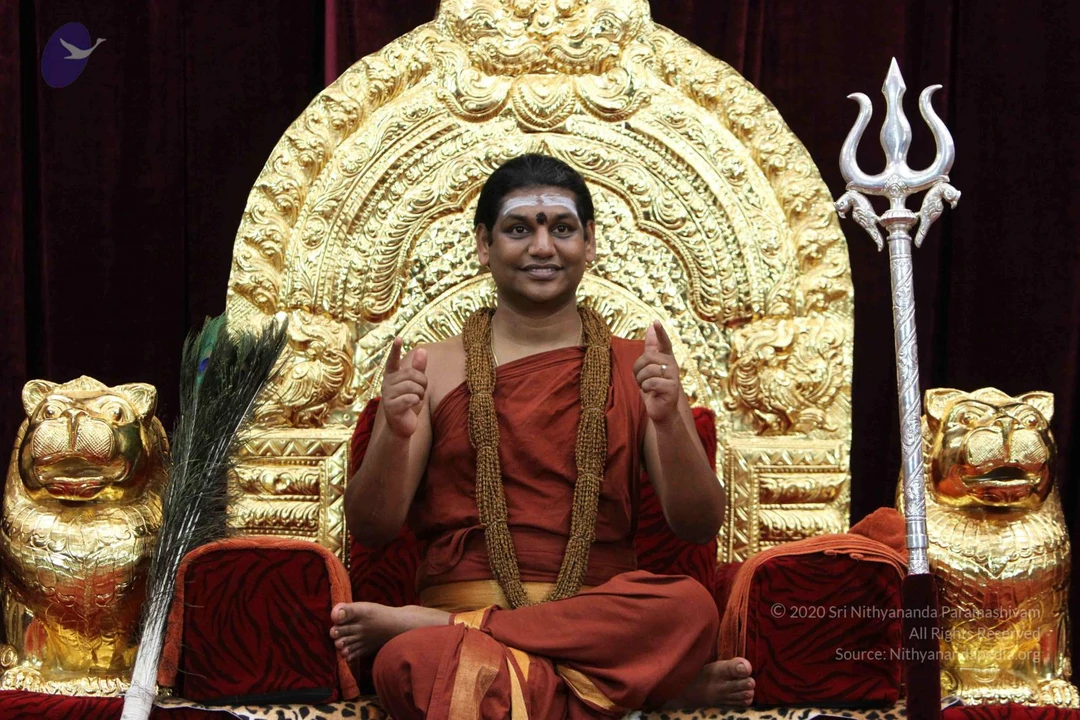
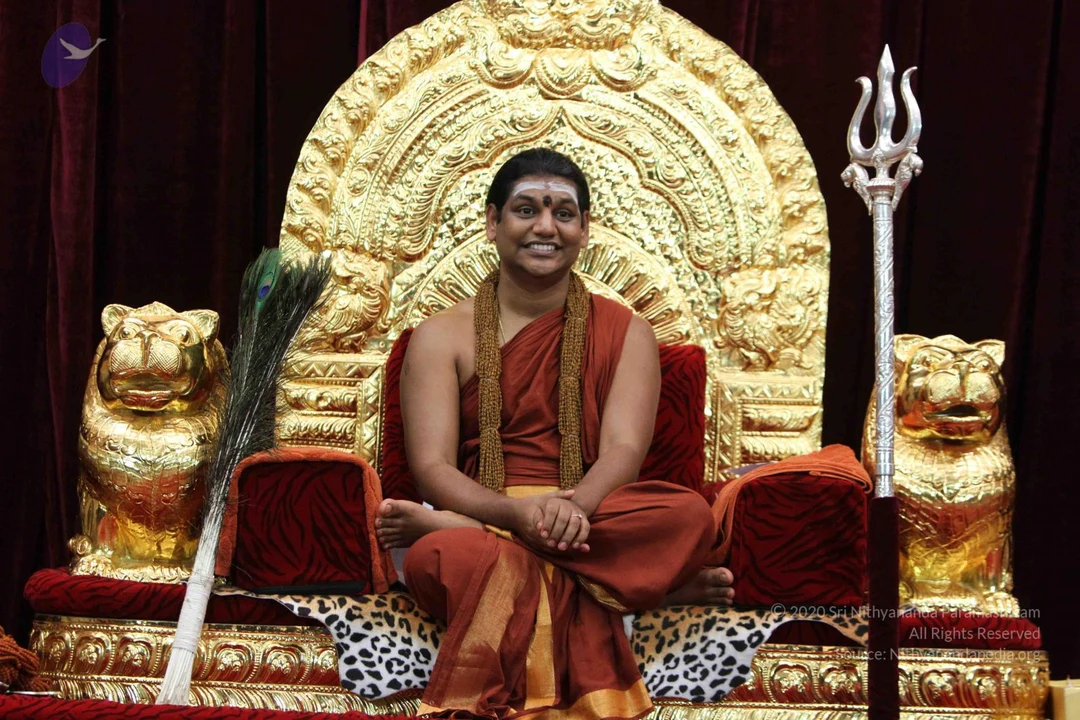
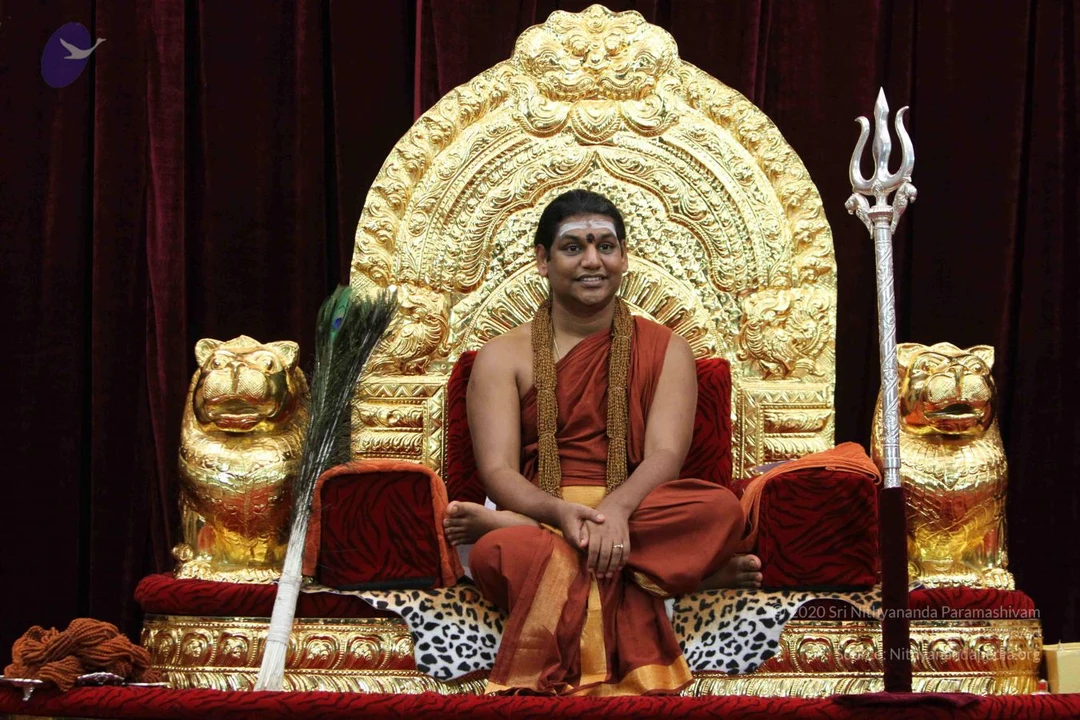
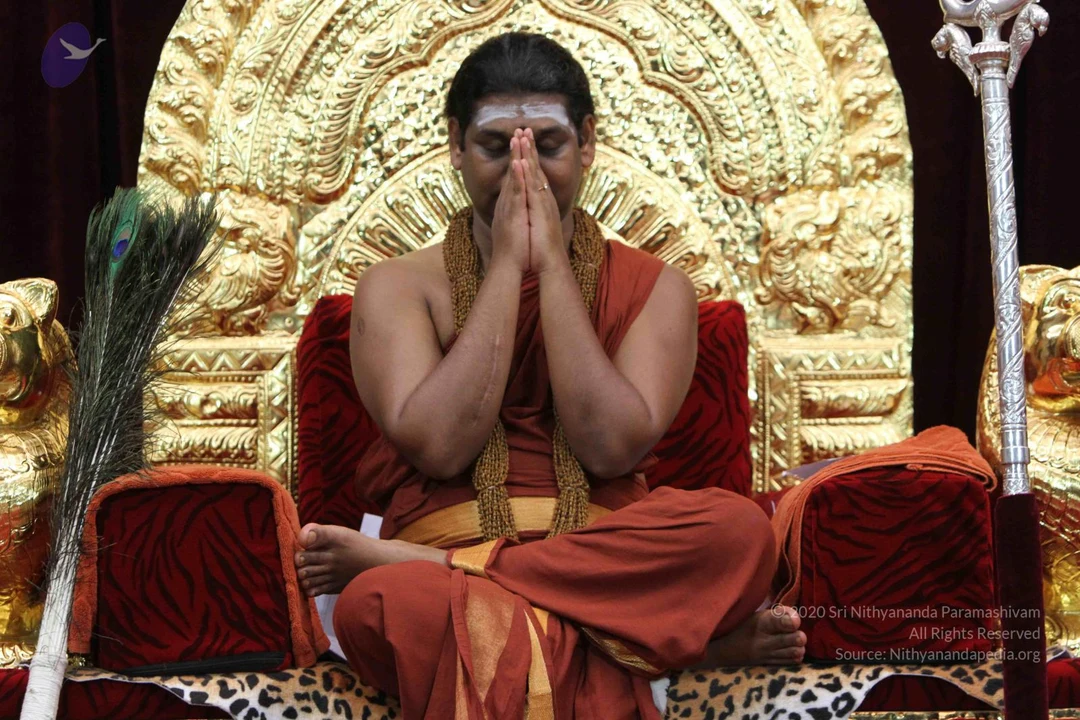
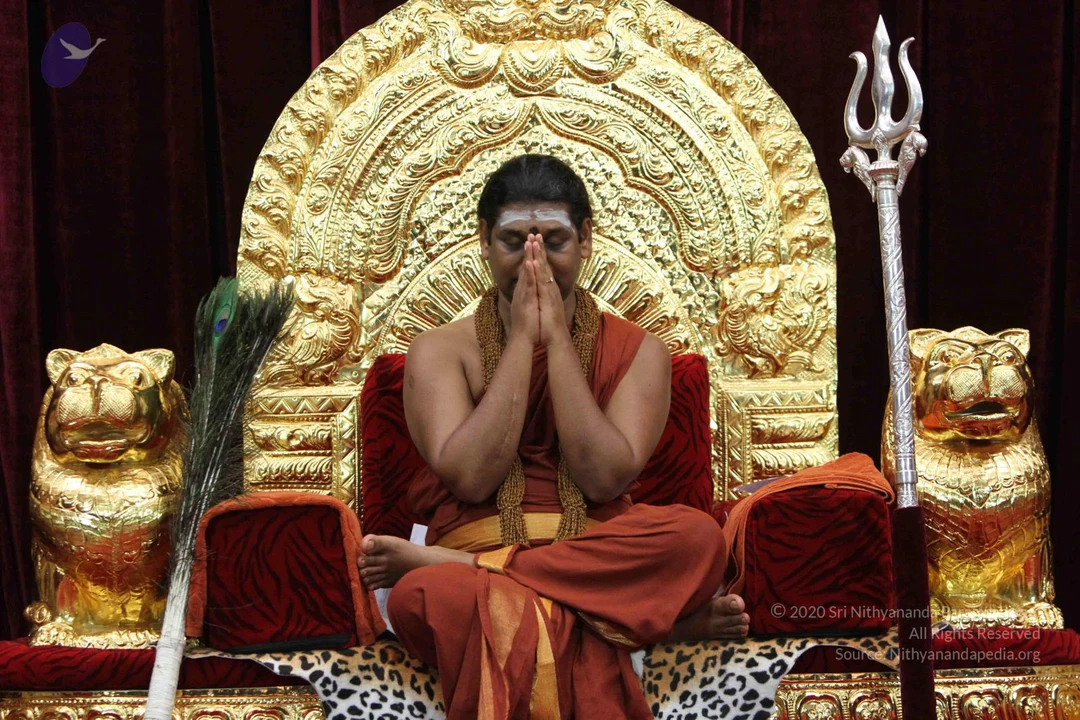
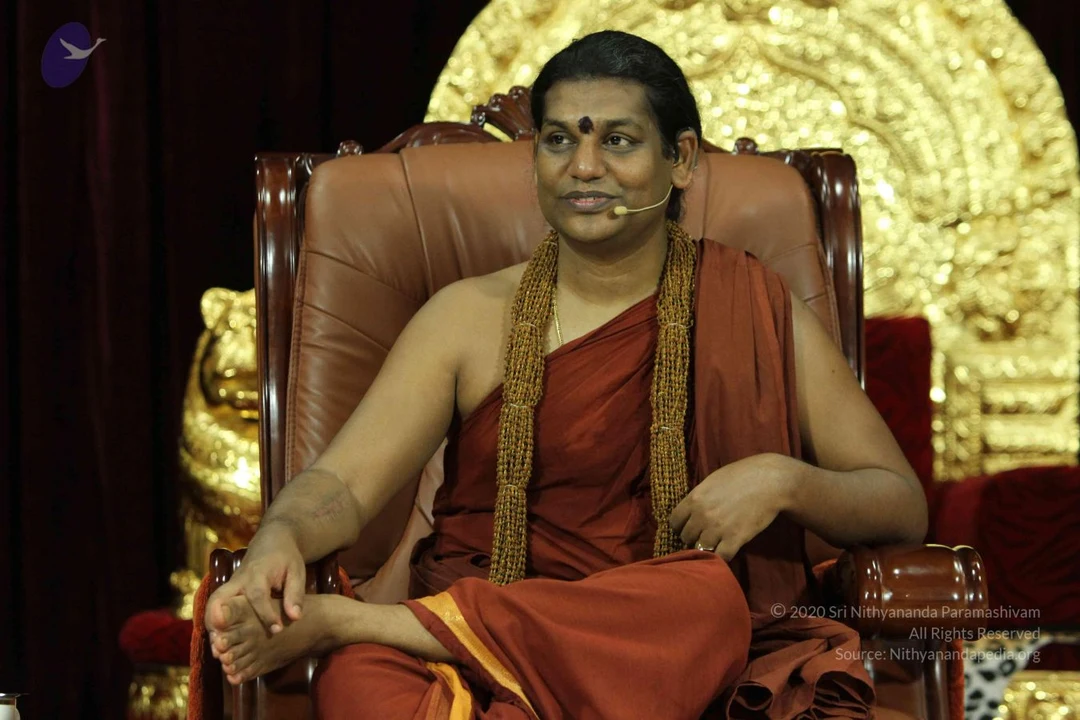
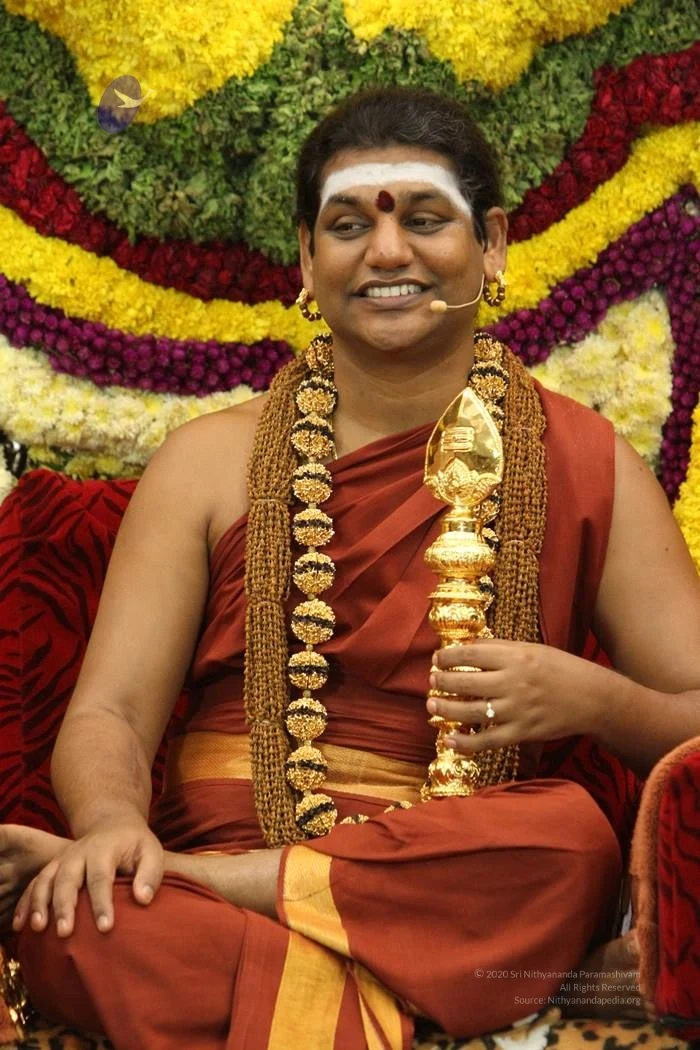
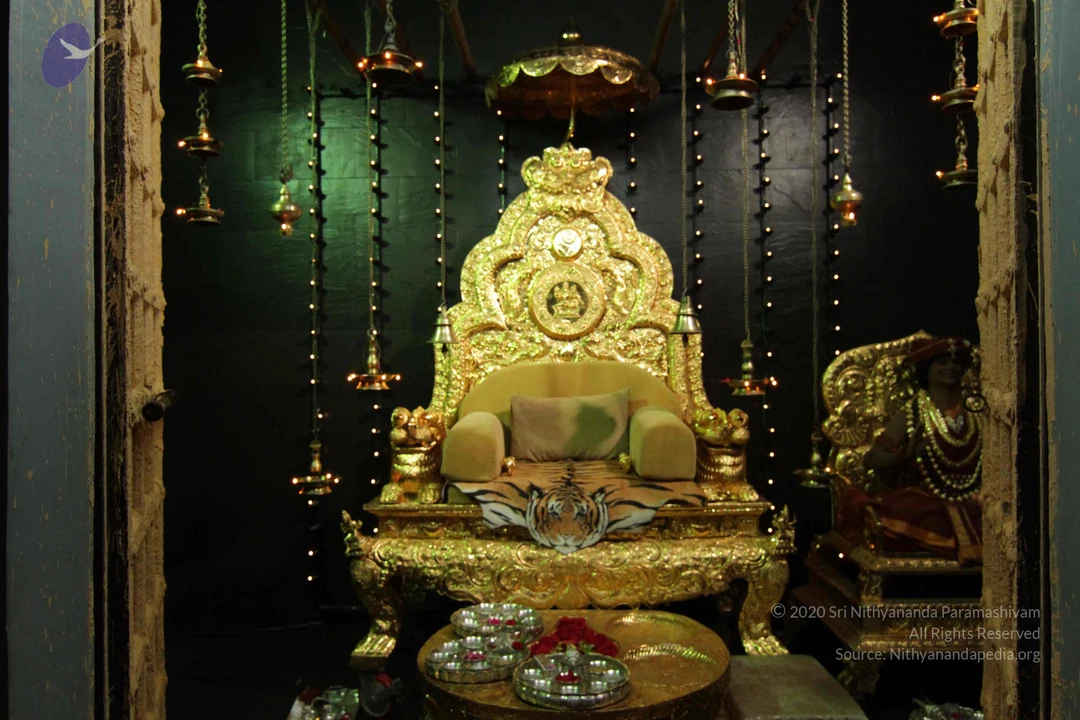
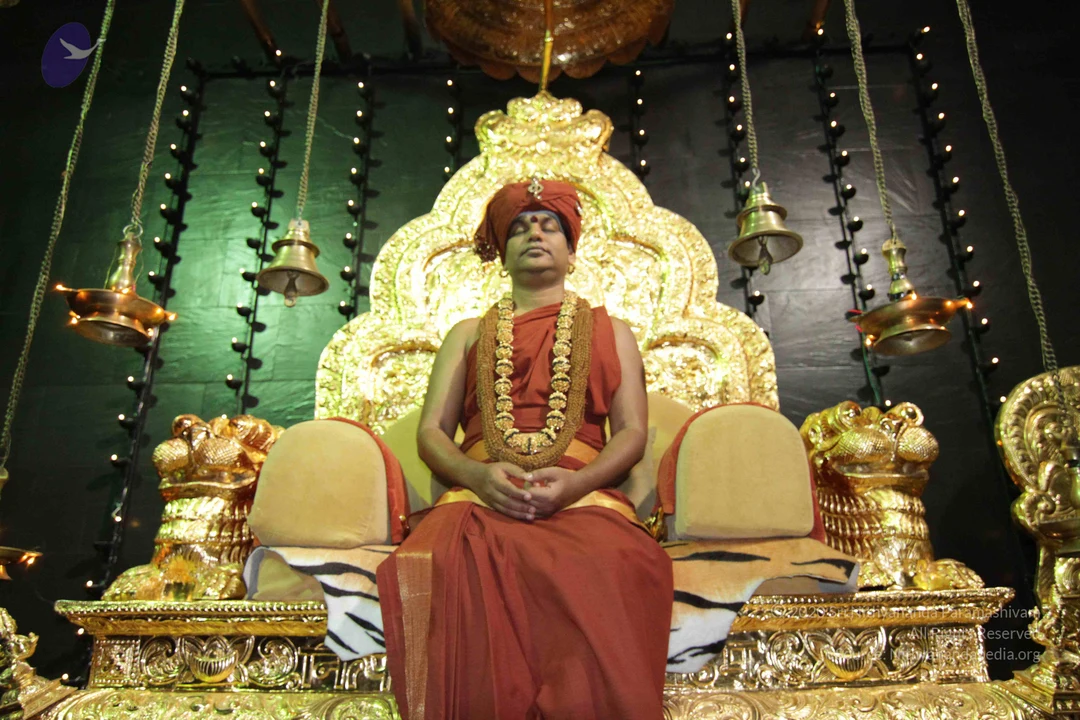
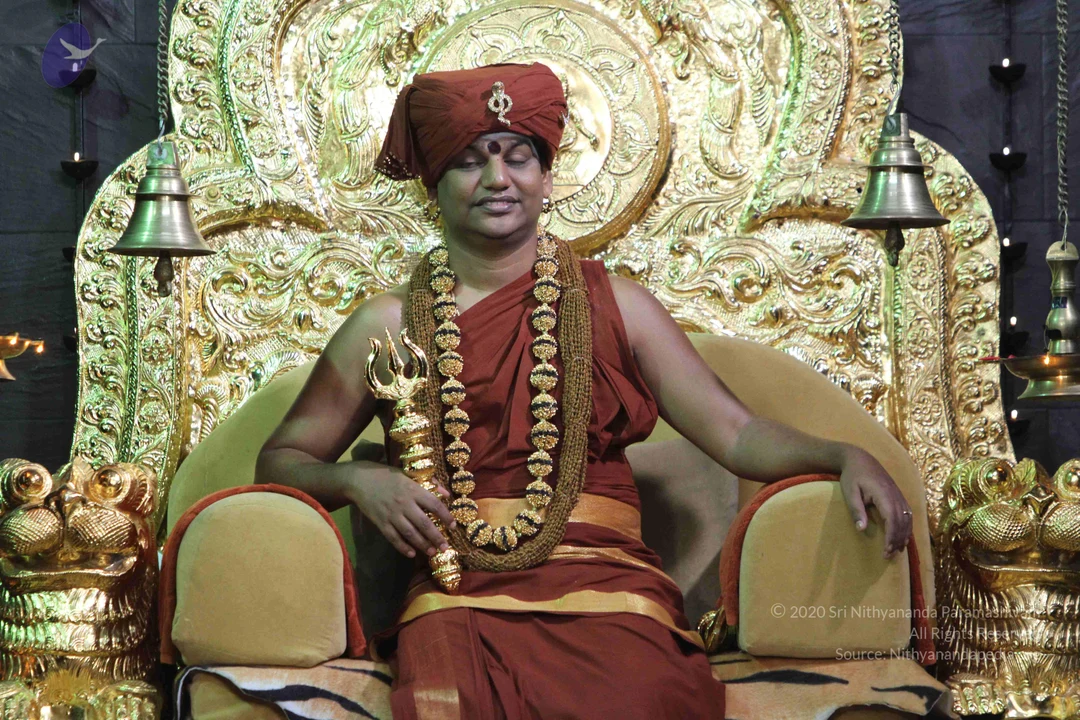
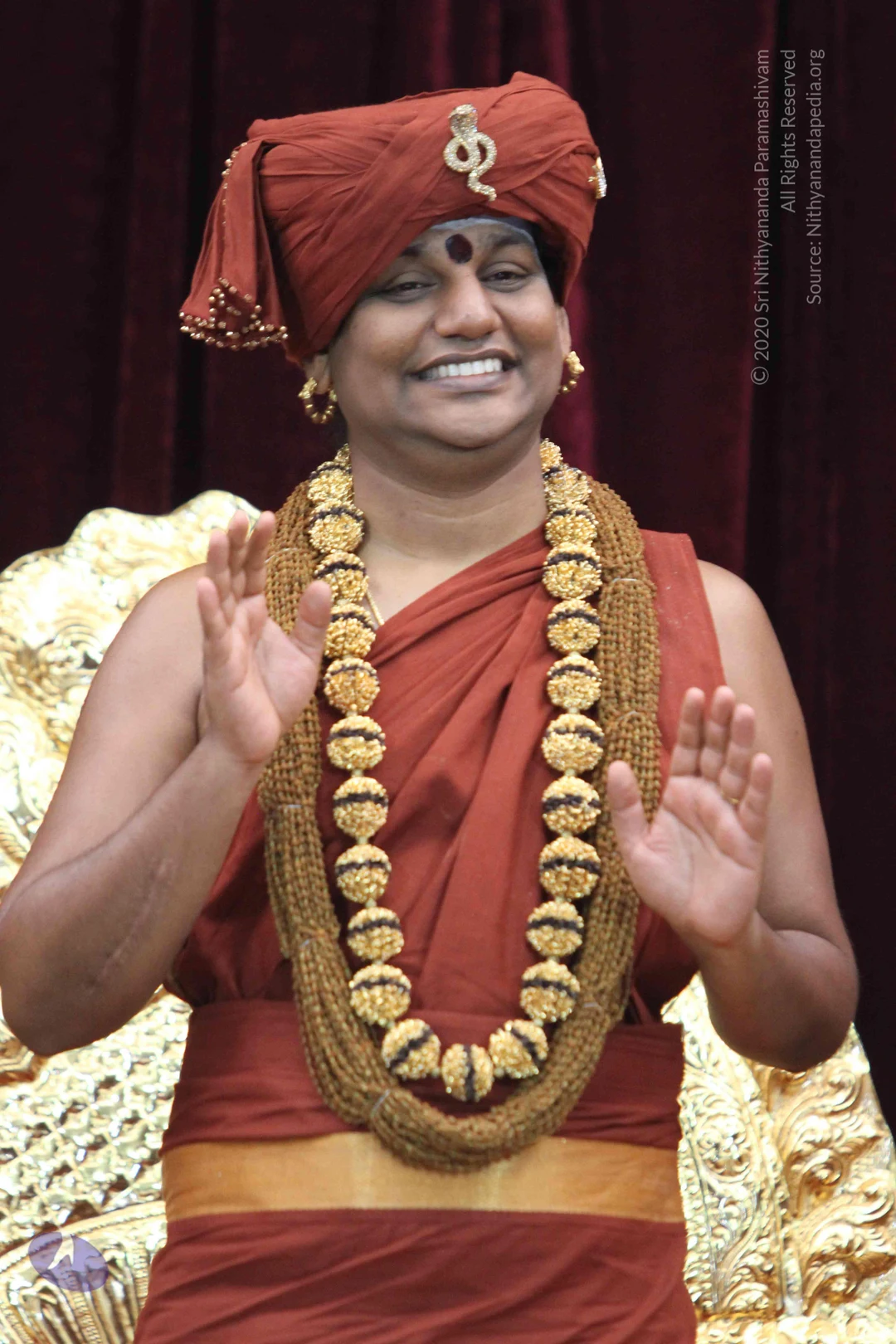
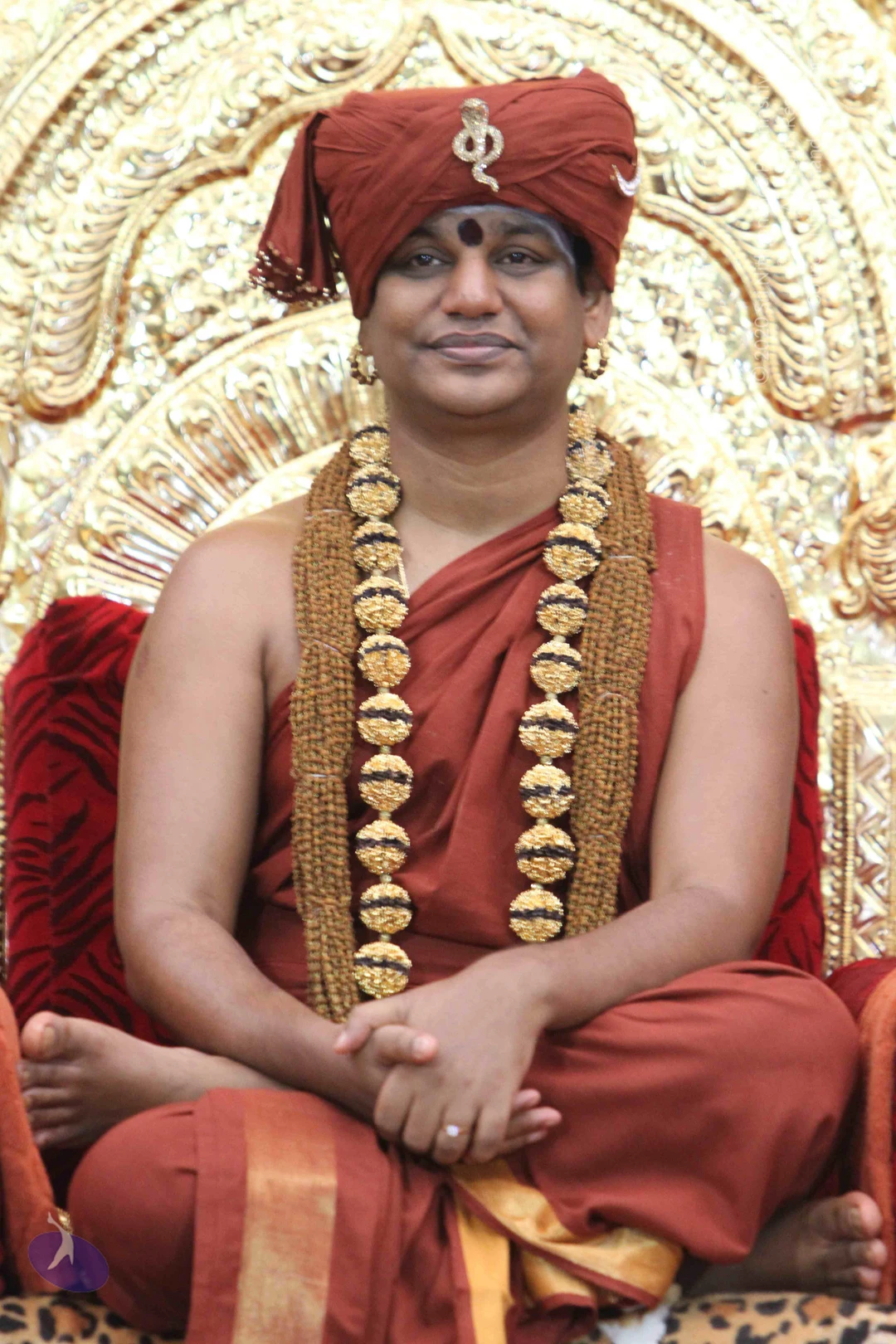
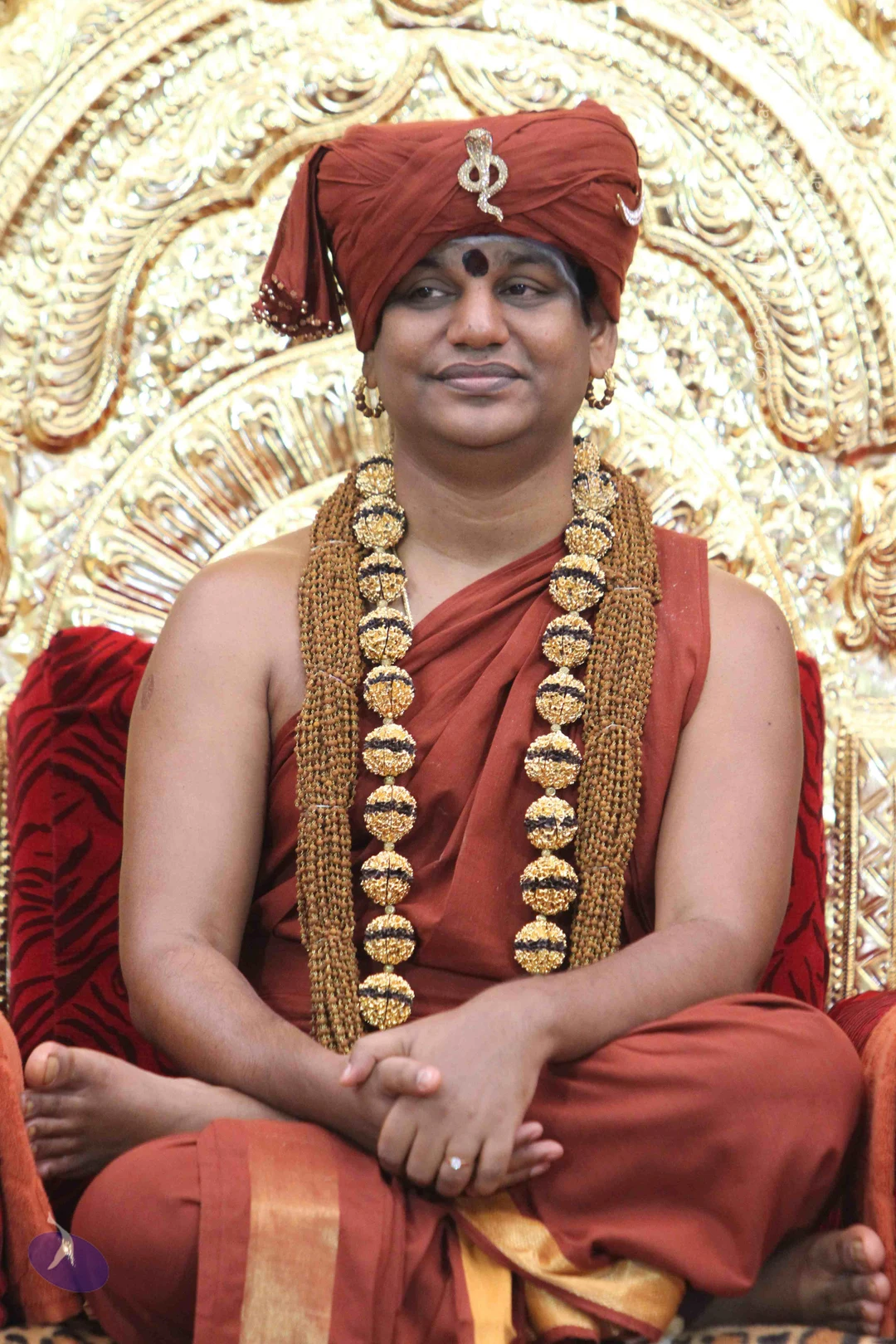
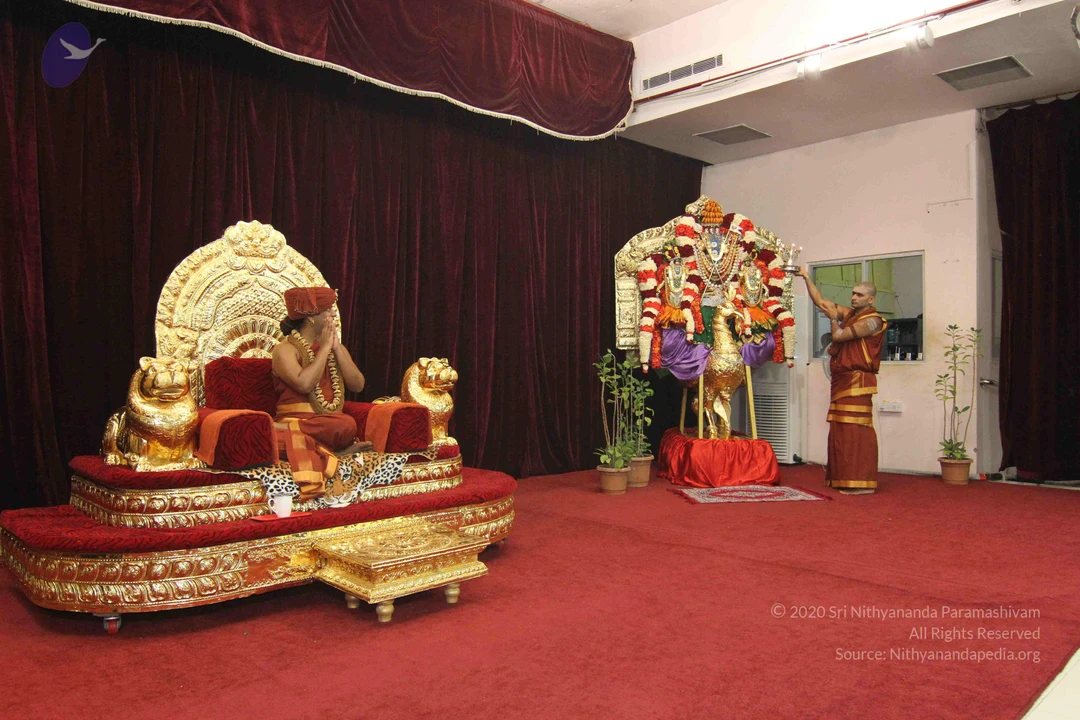
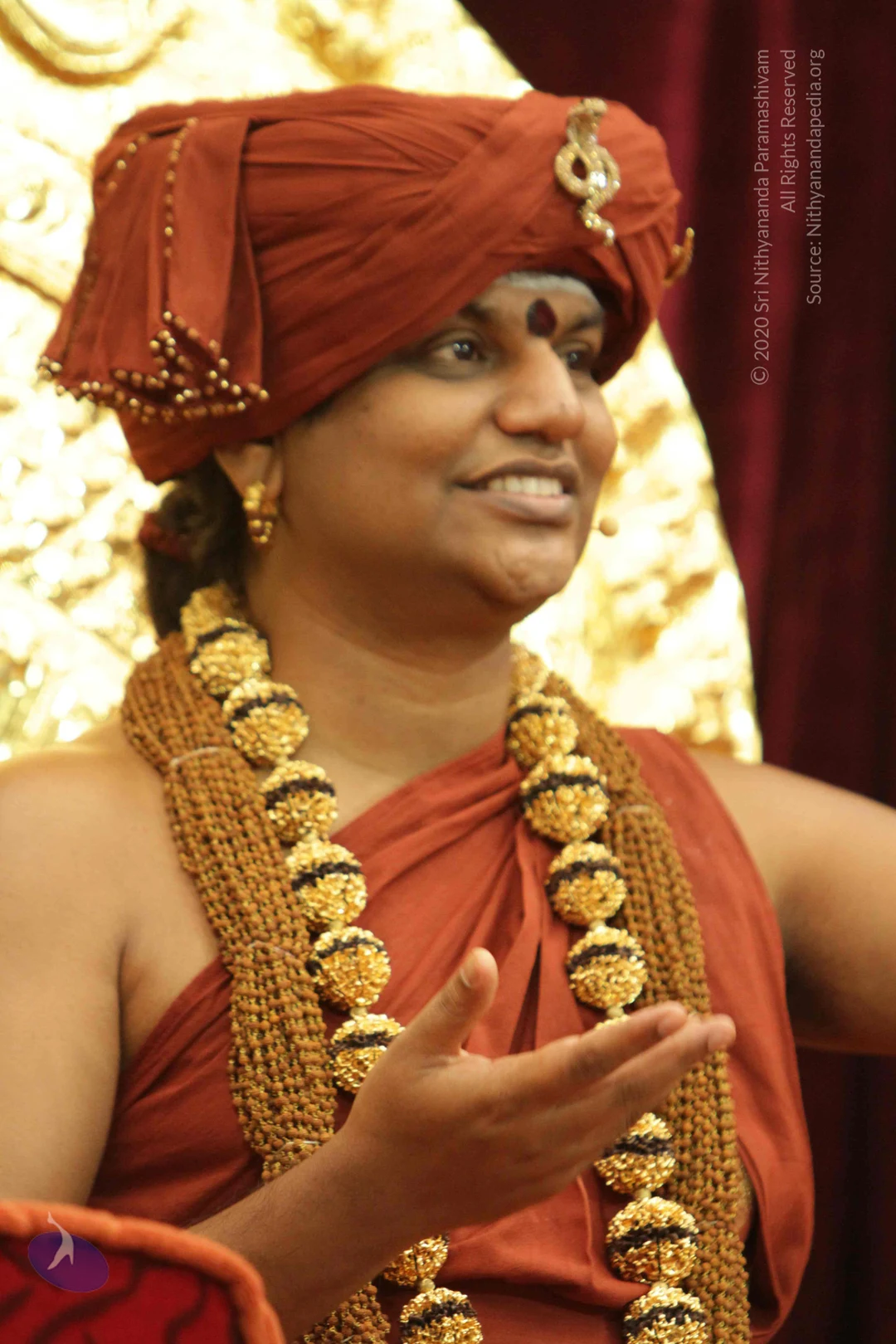
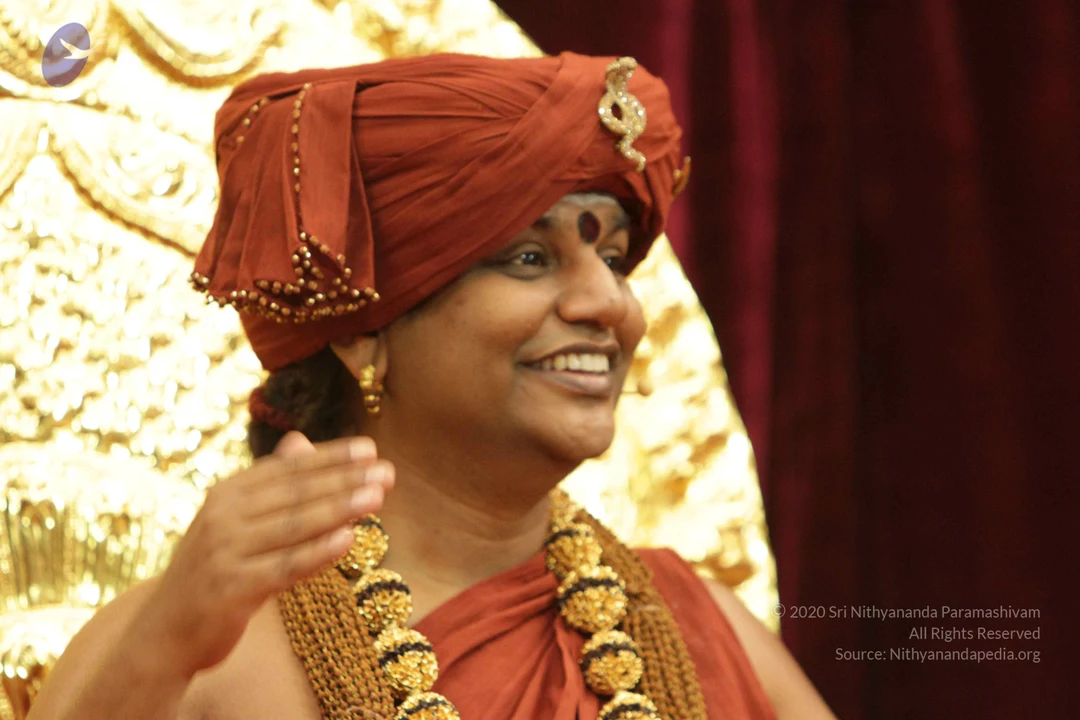
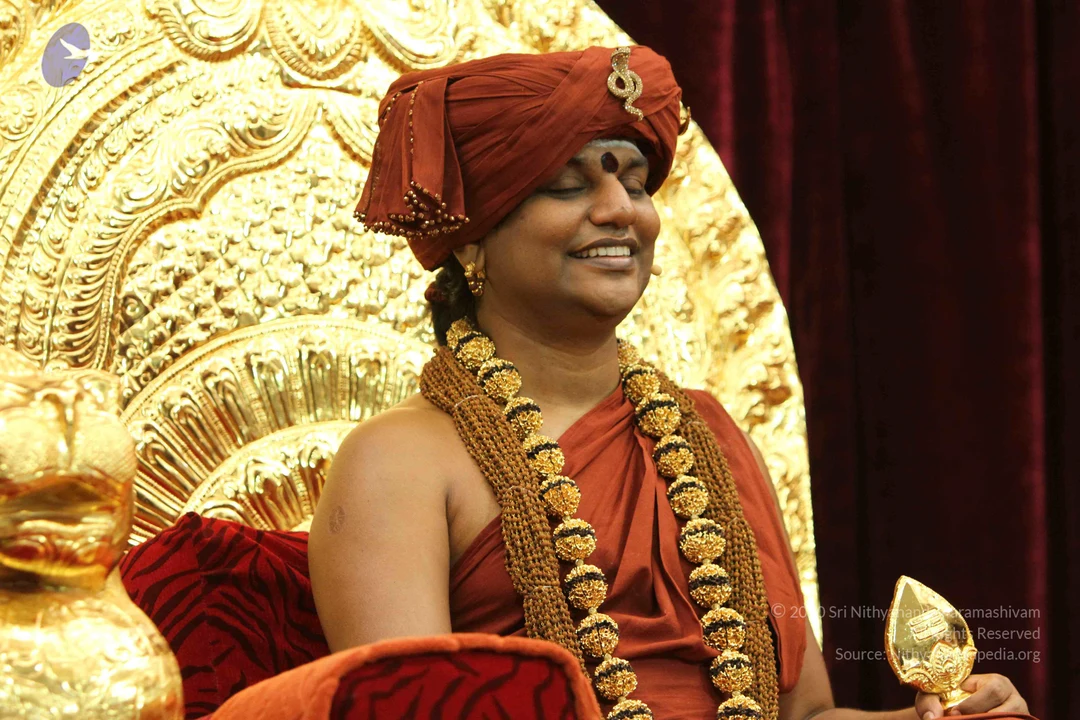
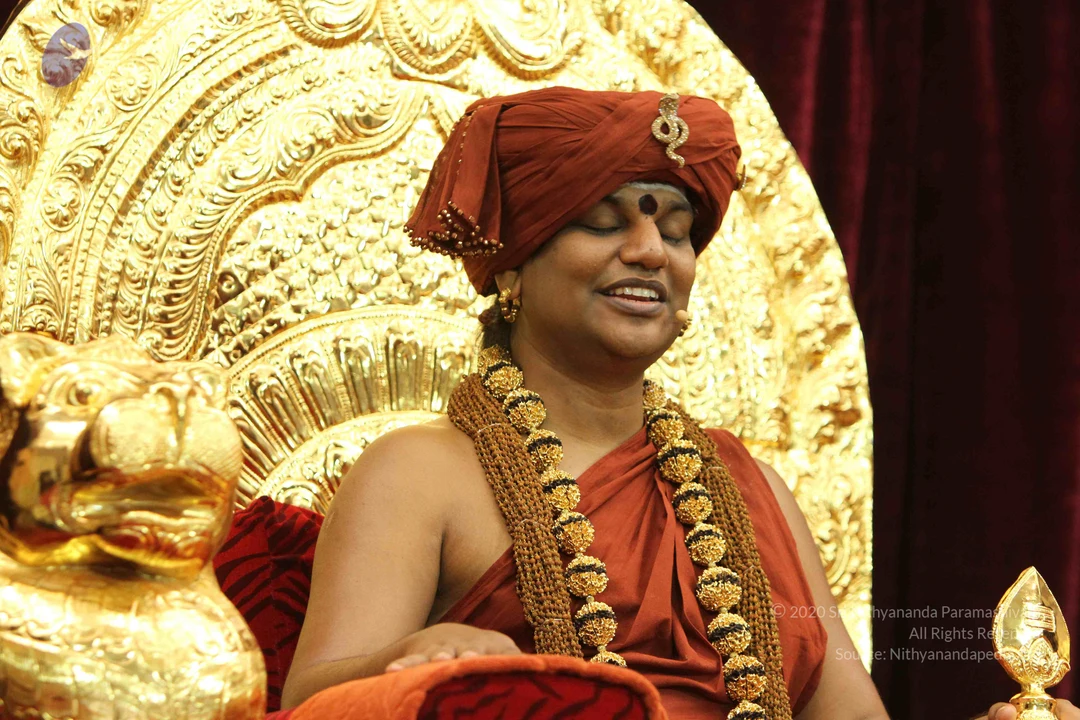
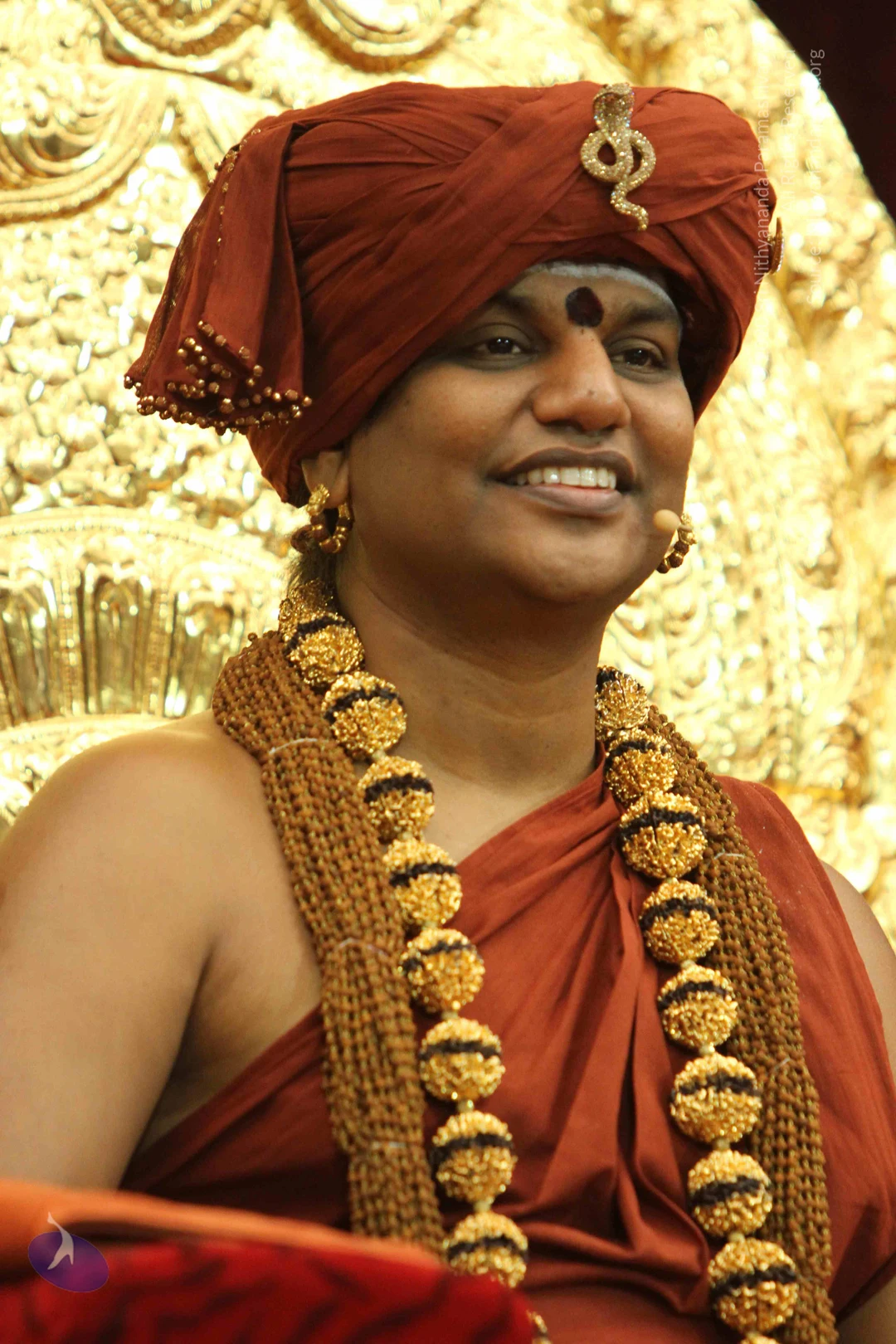
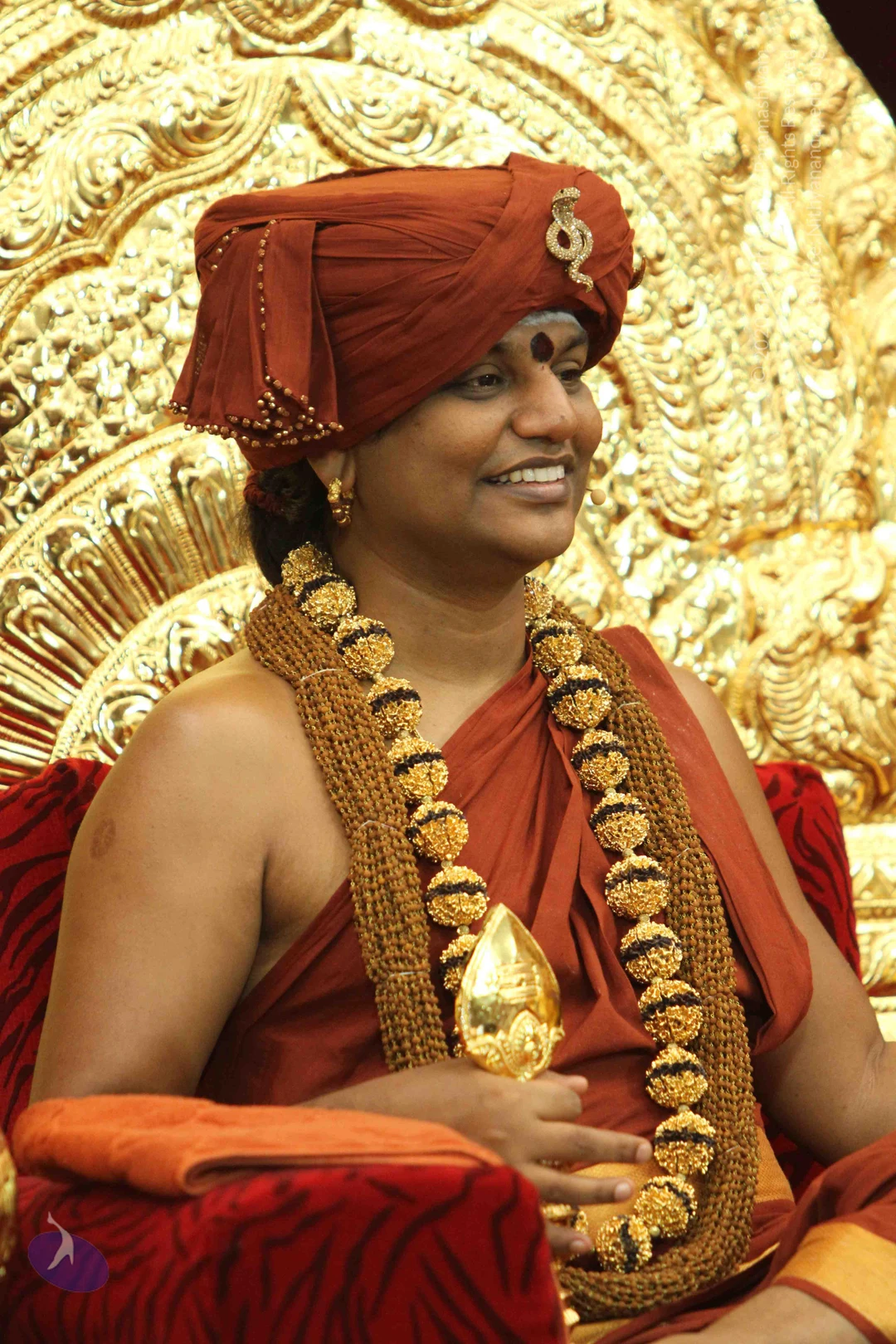
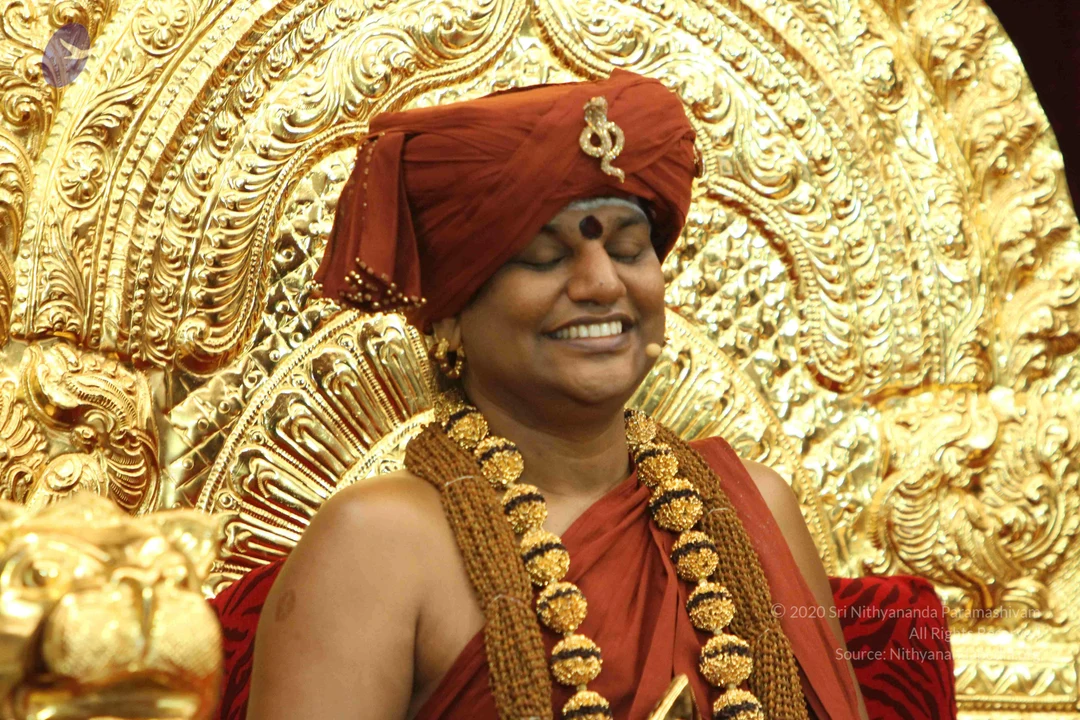
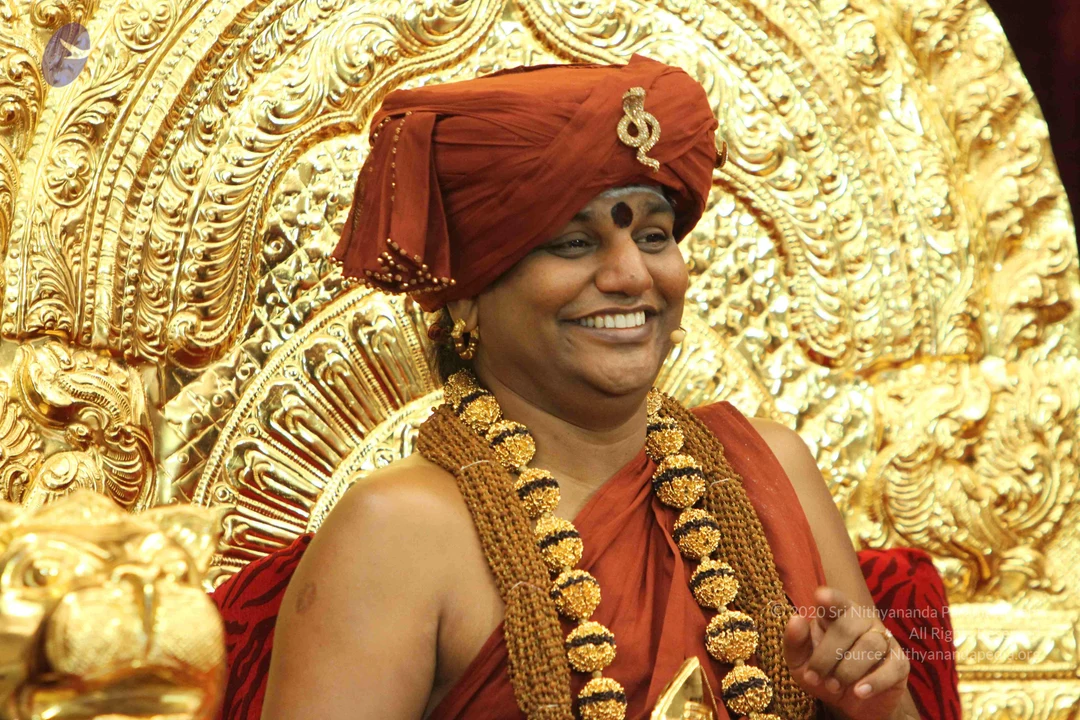
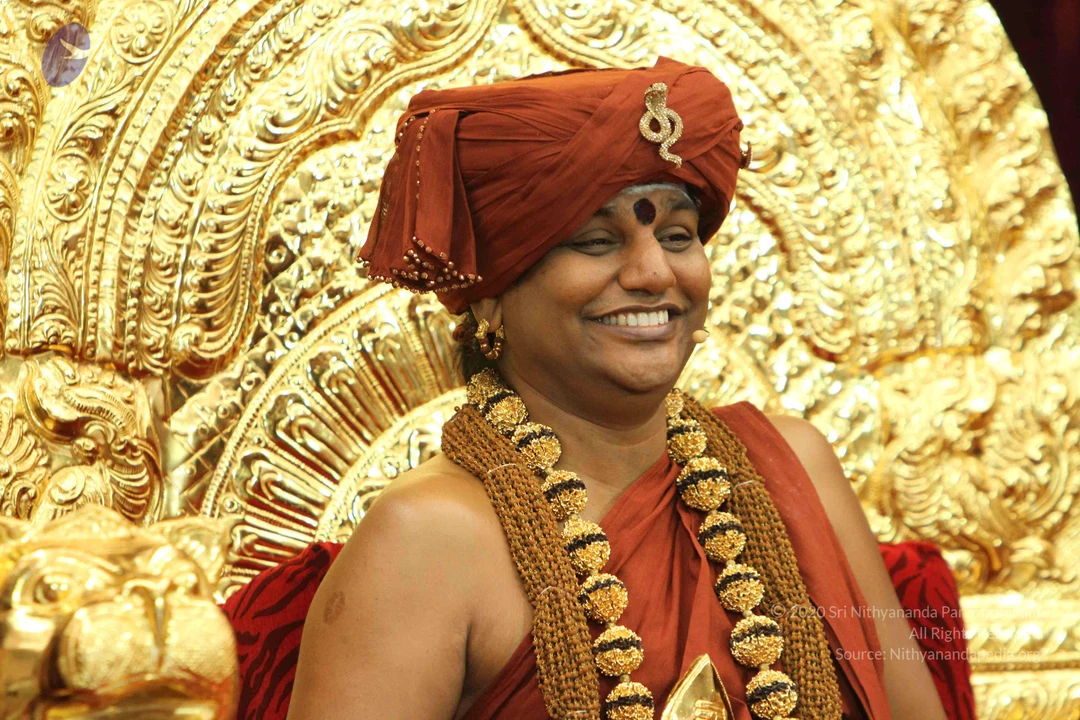
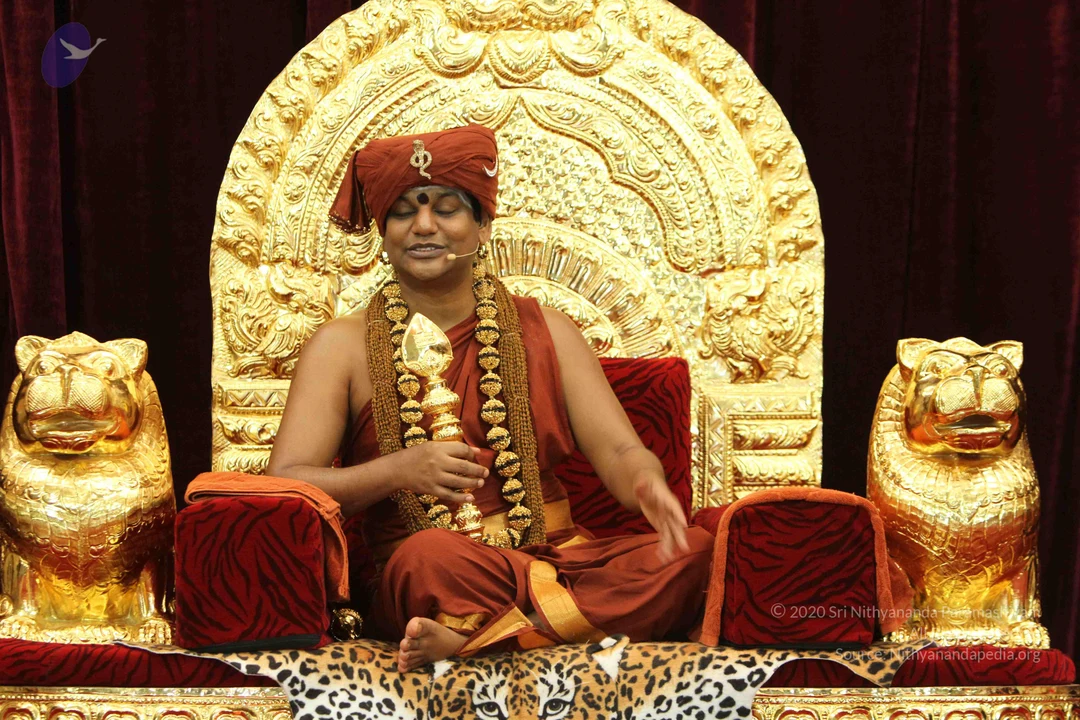
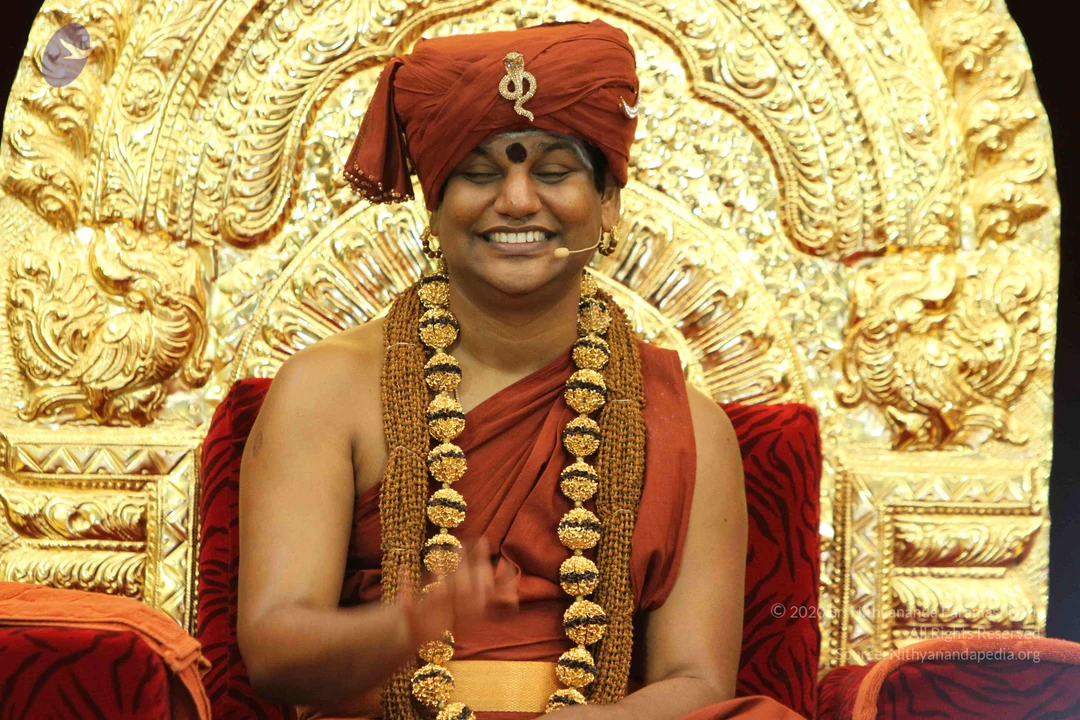
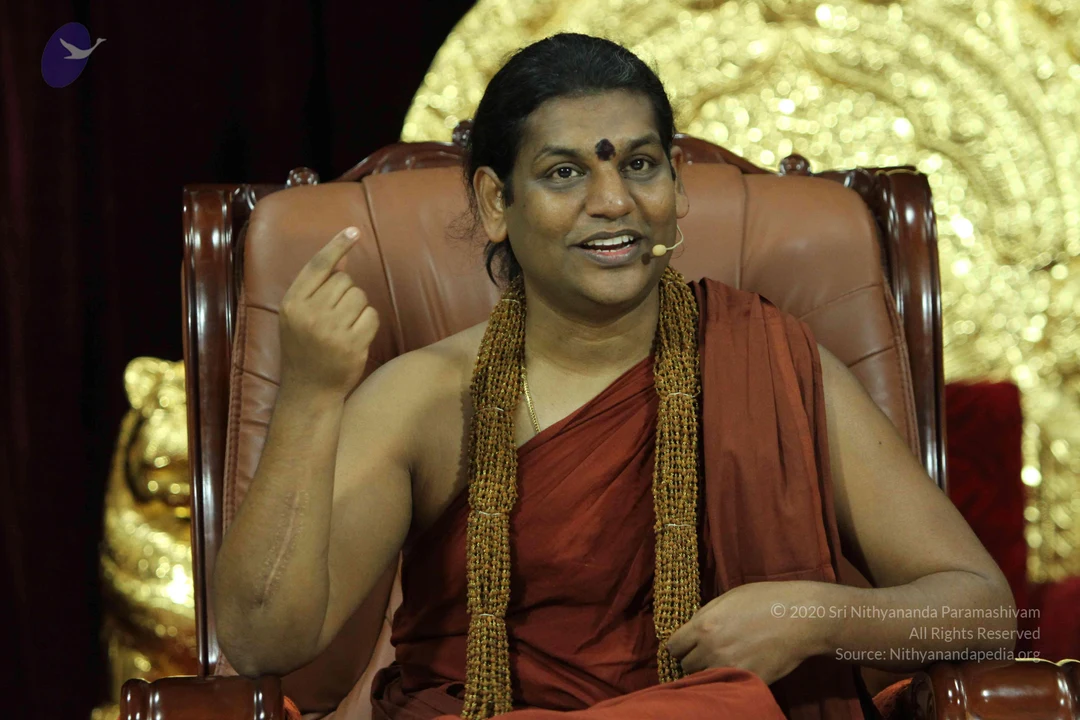
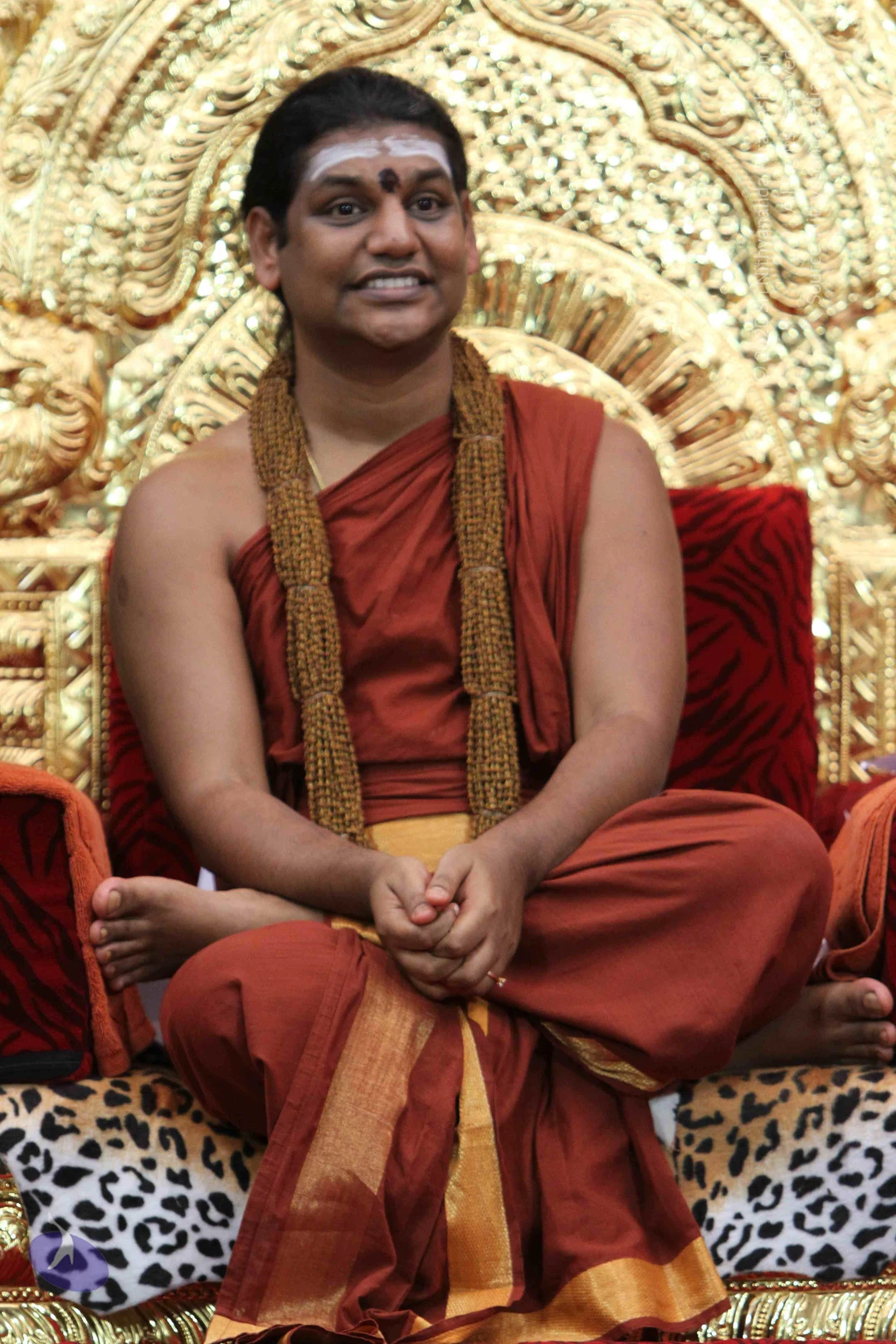
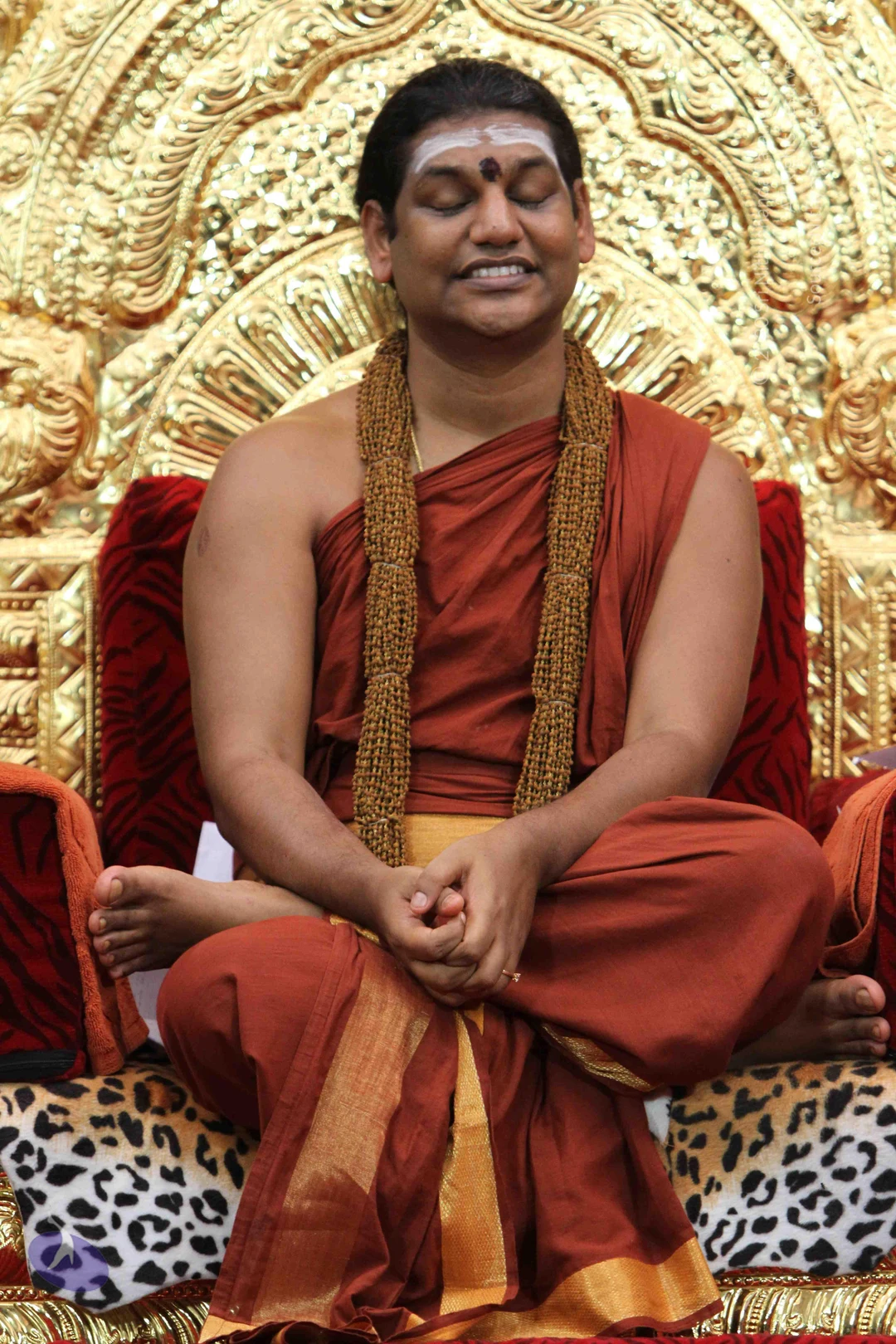
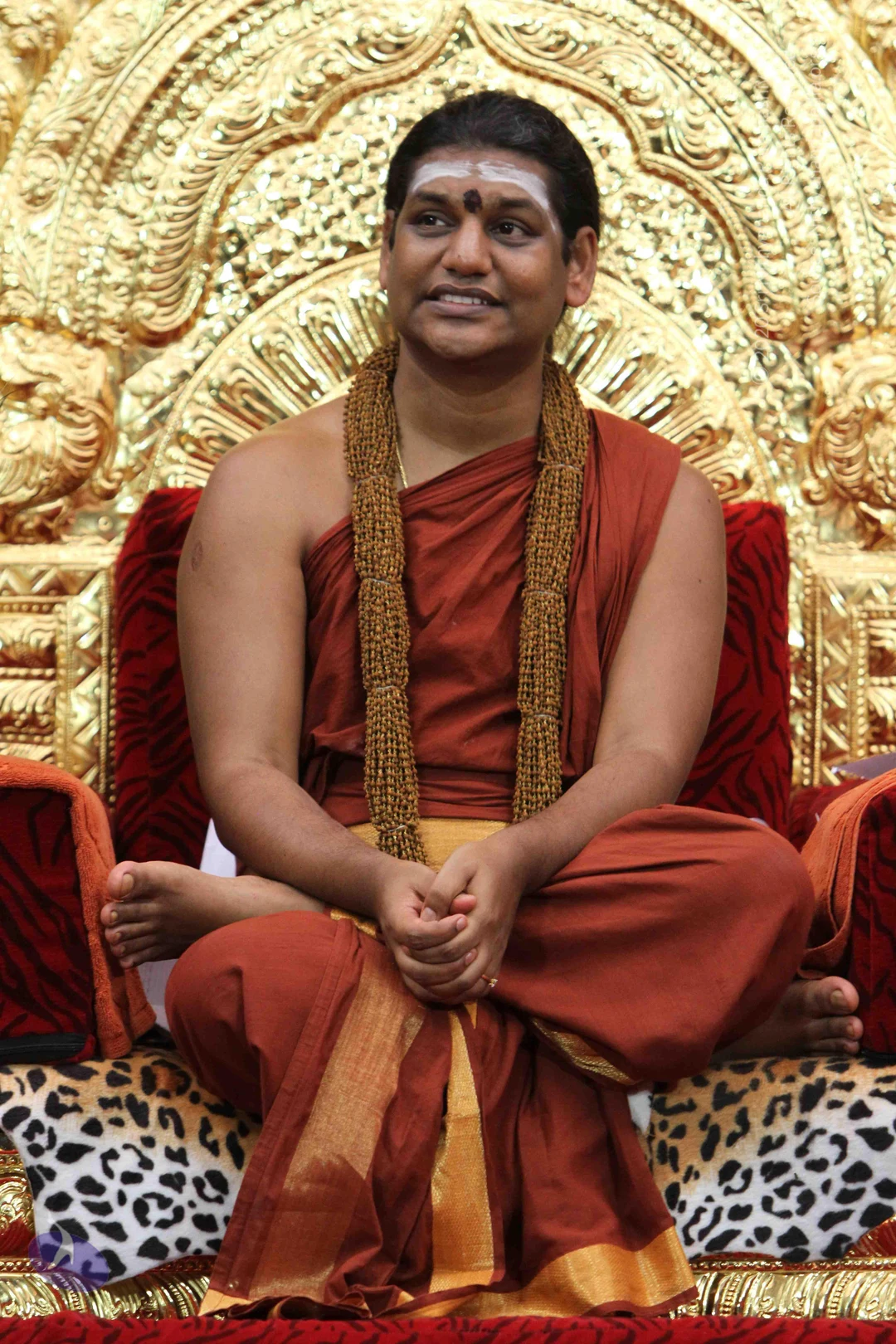
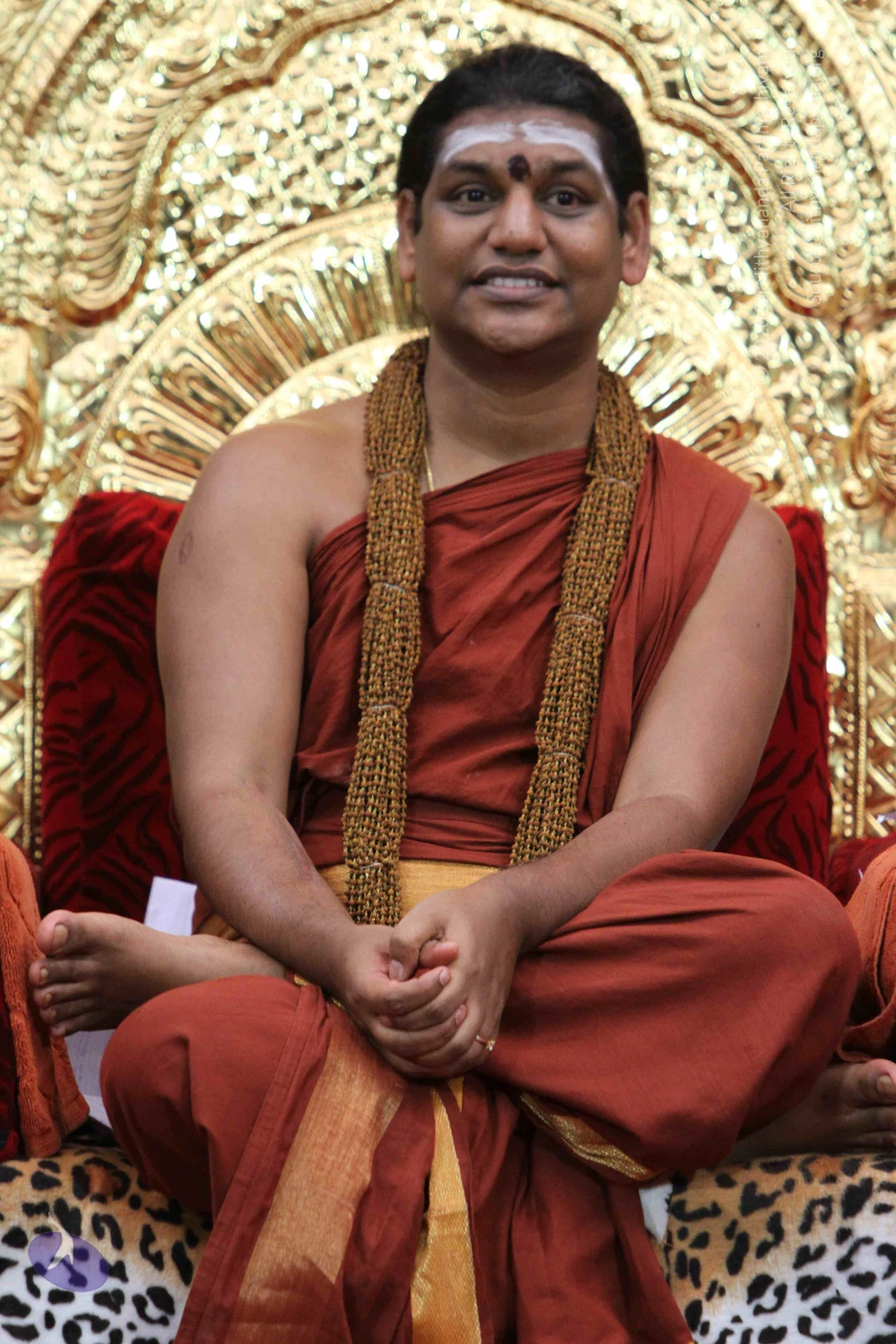
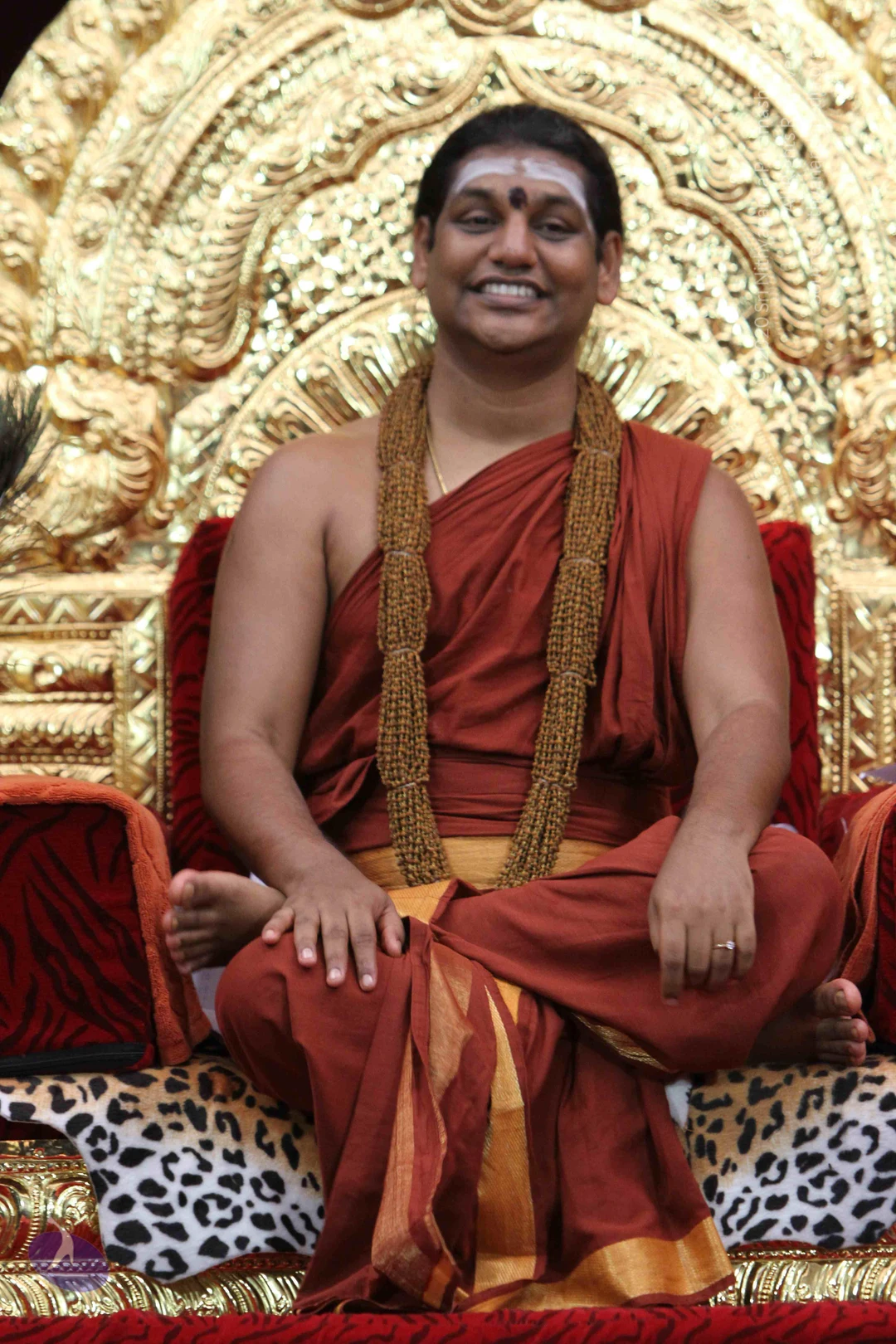
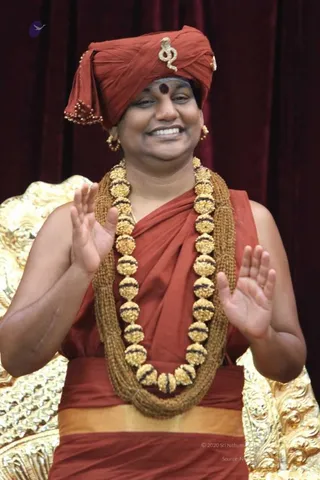
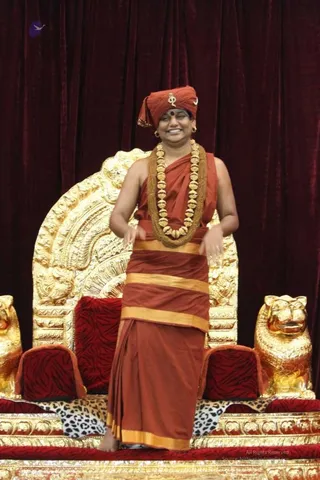
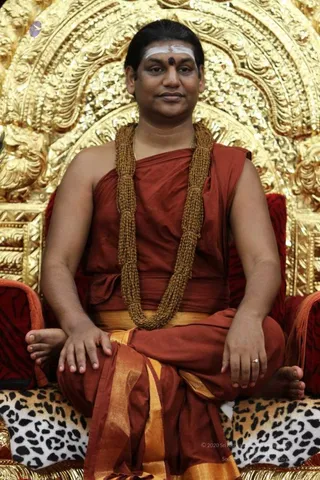
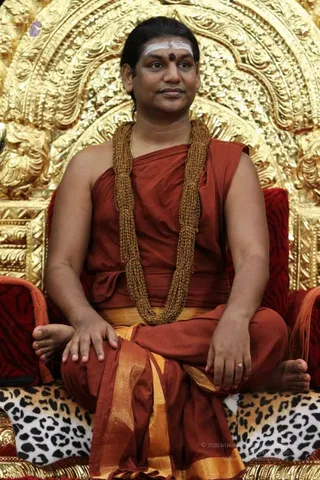
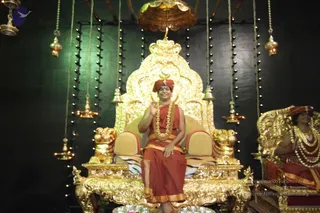
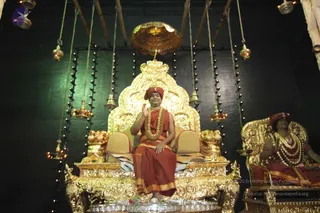
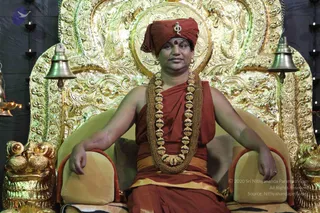
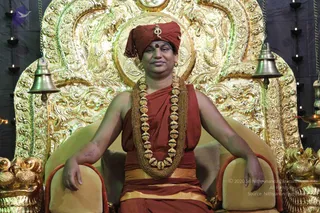
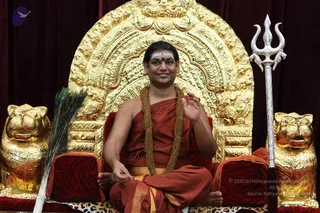
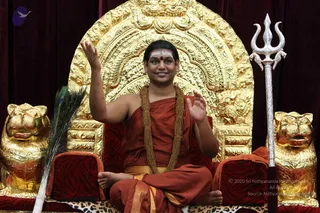
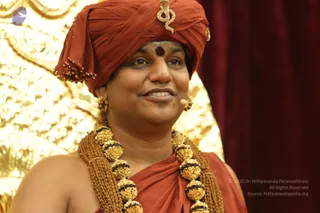
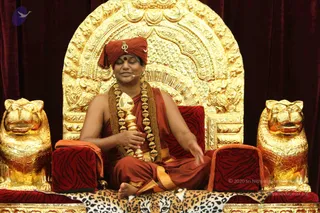
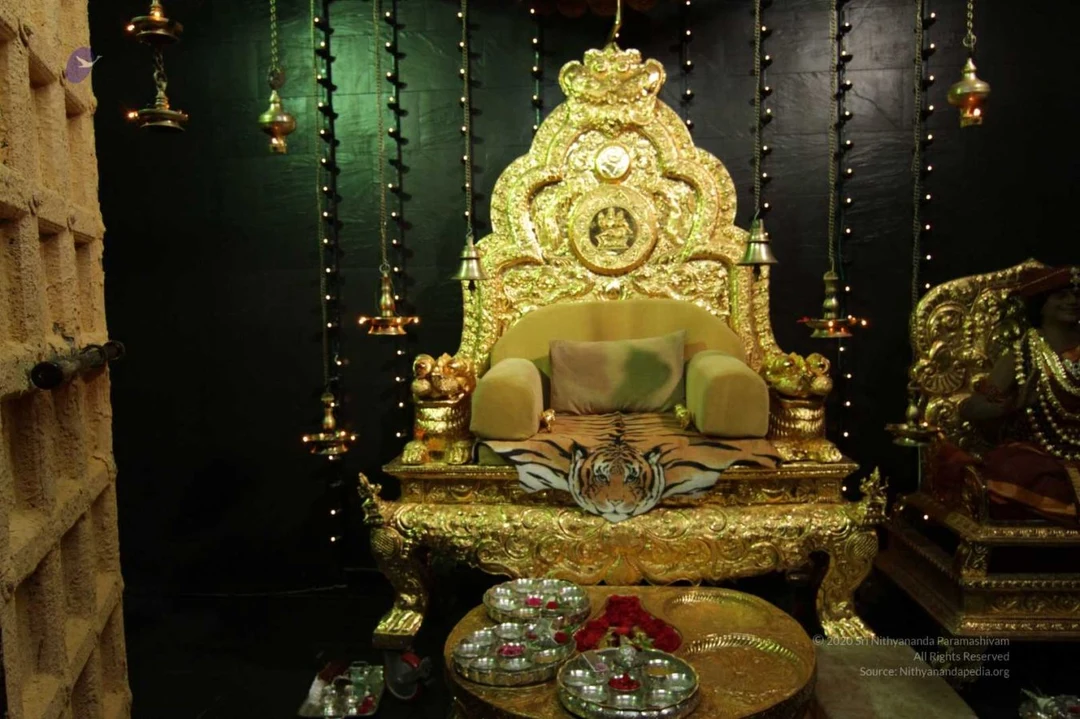
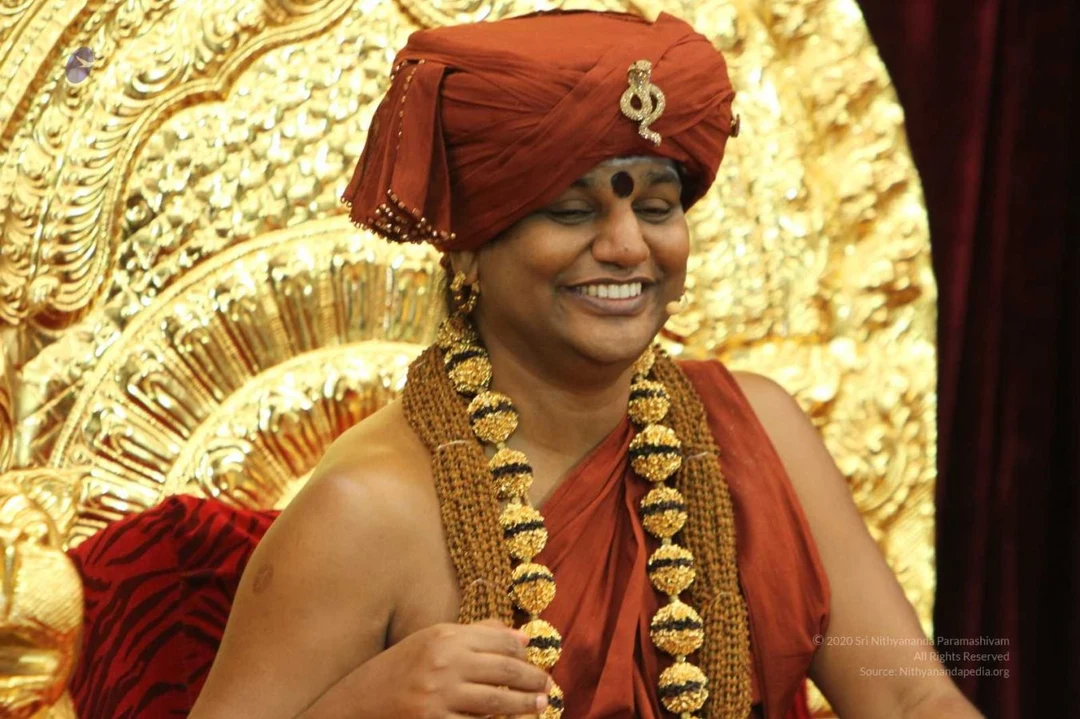
A seated man in saffron-orange robes sits cross-legged on an ornate gilded throne with a large arched backrest carved with floral and scroll motifs. Golden lion figures flank the seat, and a silver trident stands at his right while a peacock-feather whisk rests at his left. He wears a rudraksha mala with a ceremonial necklace, a white forehead marking, and is barefoot. A red velvet curtain and a leopard-print cloth form the backdrop.A smiling person in a red-orange turban with a gold snake emblem and a red bindi sits in front of an ornate gold repoussé throne. They wear an orange-red robe and a long gold-and-black bead mala with a brown woven cord, and hold the mala with one hand. The photo is a close, cropped view of the upper body. Swamiji (probable): the orange-red turban, saffron robe and ornate gold-and-bead cues match the presentation, seated in the honoured ornate throne position.

October 27 2014

Original wiki page
Contents

Title:

Be in Completion with Advaita

Description:

In today’s morning Satsang, Paramahamsa Nithyananda explains that all the laws of life come from the Advaithic space. Nothing can violate us; even death cannot shake us off. If we live Advaitha, we can live as long as we want in this body. Once we alter the way we cognize life – with tremendous excitement and enthusiasm – we become strong. The natural law of life is Advaitha, giving us the strength to live!

Link to Video:

VideoAudio

Transcript:

Nithyanandeshwara Samaarambhaam Nithyanandeshwari Madhyamaam | Asmath Aachaarya Paryanthaam Vandhey Guru Paramparaam ||

I welcome all the devotees, disciples, samajis, satsanghis, Shrimahants, Mahants, Thanedars, Kotharis, sitting with us through Nithyananda TV, Sadhna TV, and two-way video-conferencing having Nayana Deeksha all over the world.

The cities sitting with us in two-way video-conferencing having Nayana Deeksha: Toronto Aadheenam, Hyderabad-Gupta Kashi, San Jose-Madurai Aadheenam, Enriching Temple-Bidadi, Nithyananda University-Los Angeles, Singapore-Singapuram, Jorpati-Nepal, Kuala Lumpur-Palani, Ohio-Prayag, Seattle-Chidambaram, Houston-Kalahasti, Calgary-Amarnath, Hong Kong-Sirkazhi, Rajapalayam Aadheenam, Dubai-Vaidyanatham, Amersfoort-Netherlands, Atlanta-Georgia, Indrani-New Jersey, Hong Kong-Sirkazhi, Guadeloupe-Rameshwaram, Kuala Lumpur-Palani Aadheenam, Kathmandu-Nepal, St. Louis-Tirumala...........

I welcome all of you with my love and blessings.

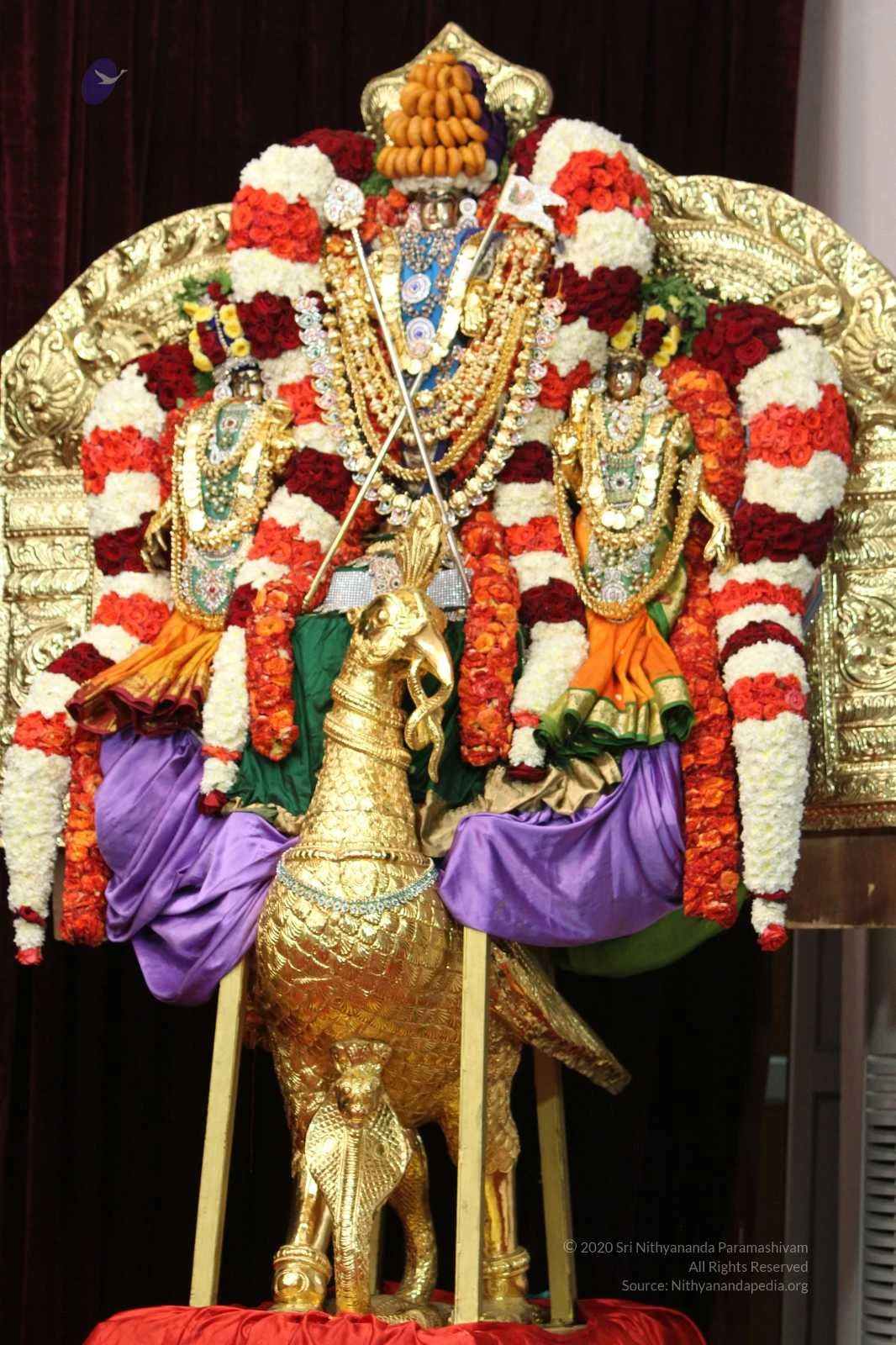
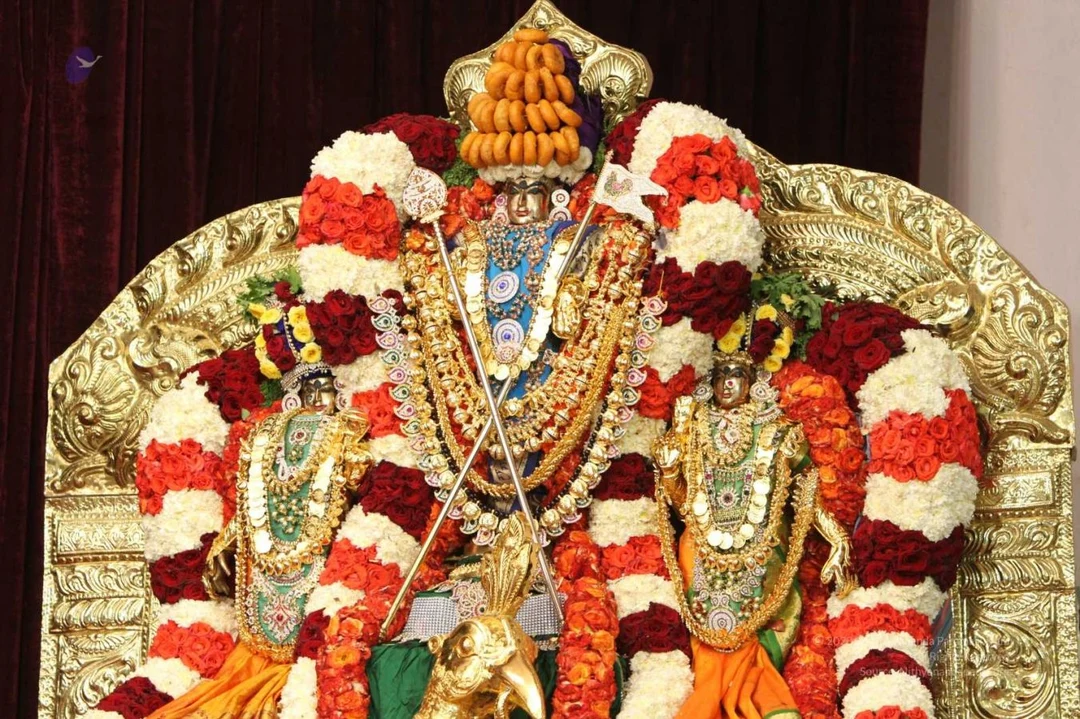
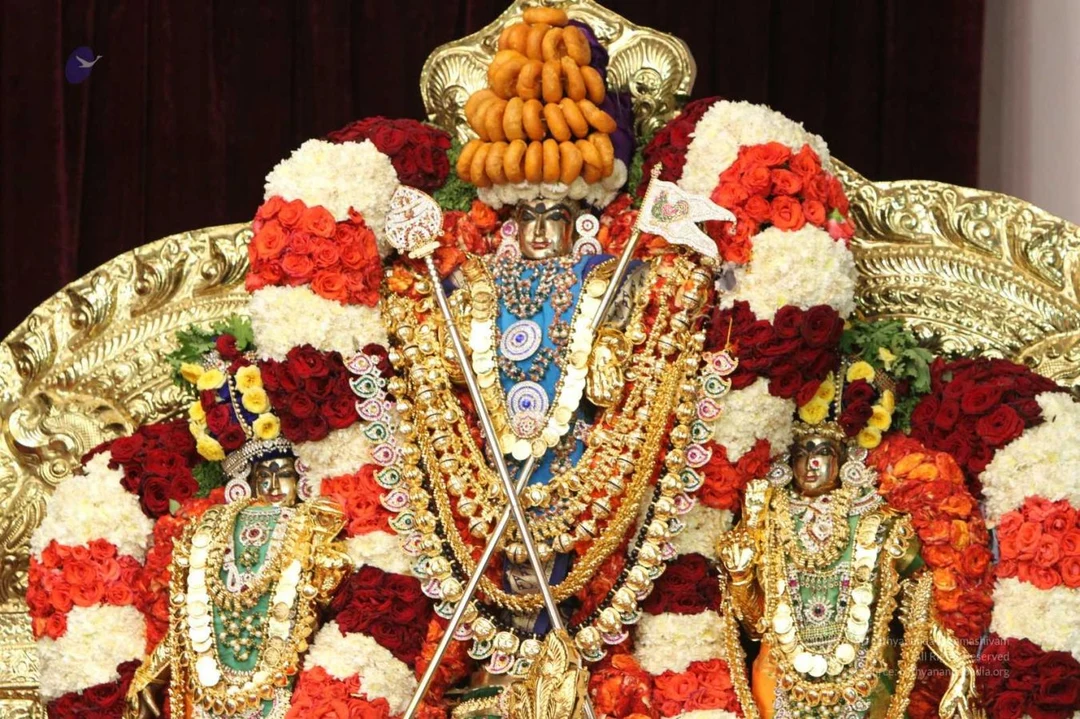
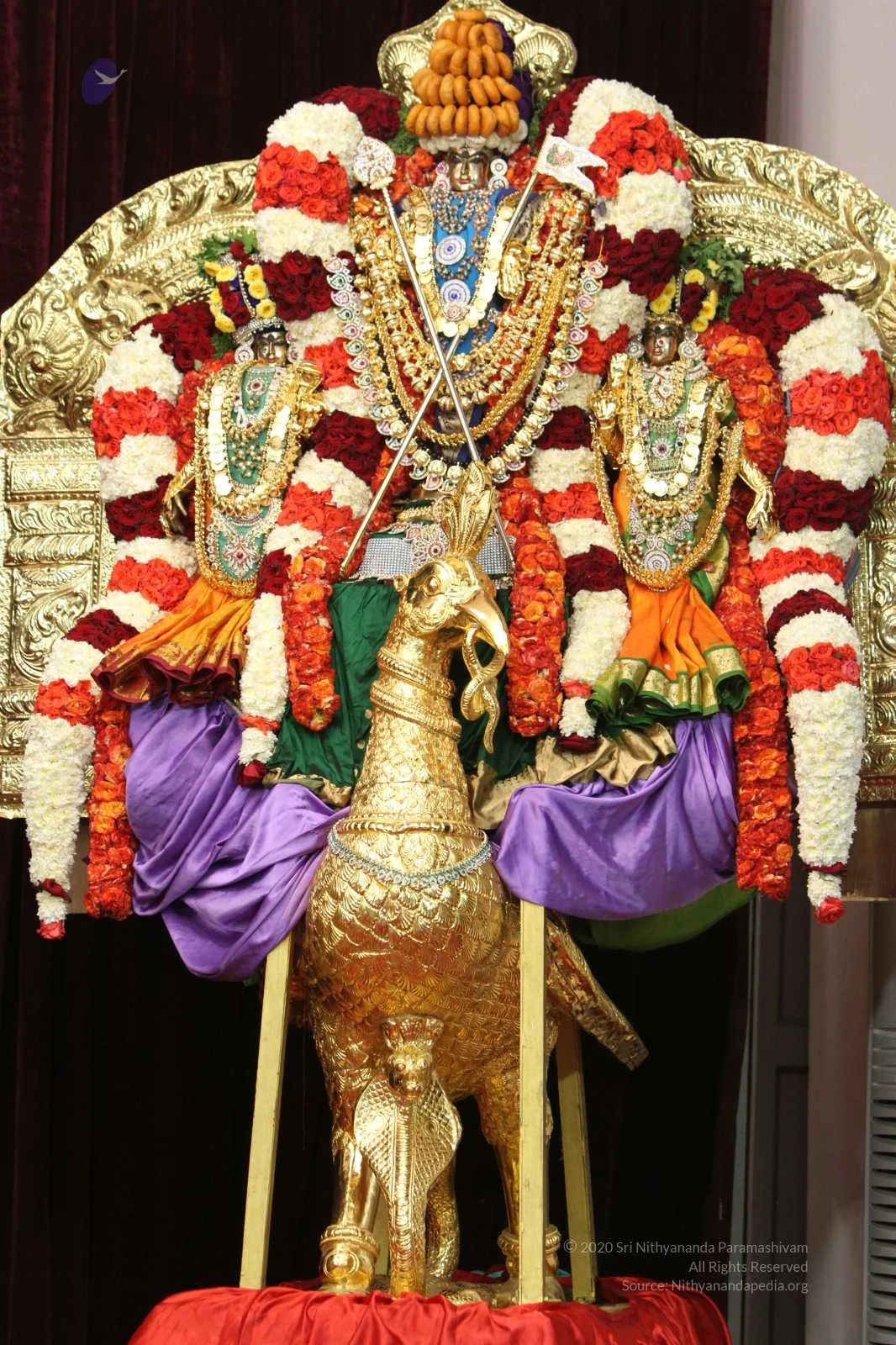
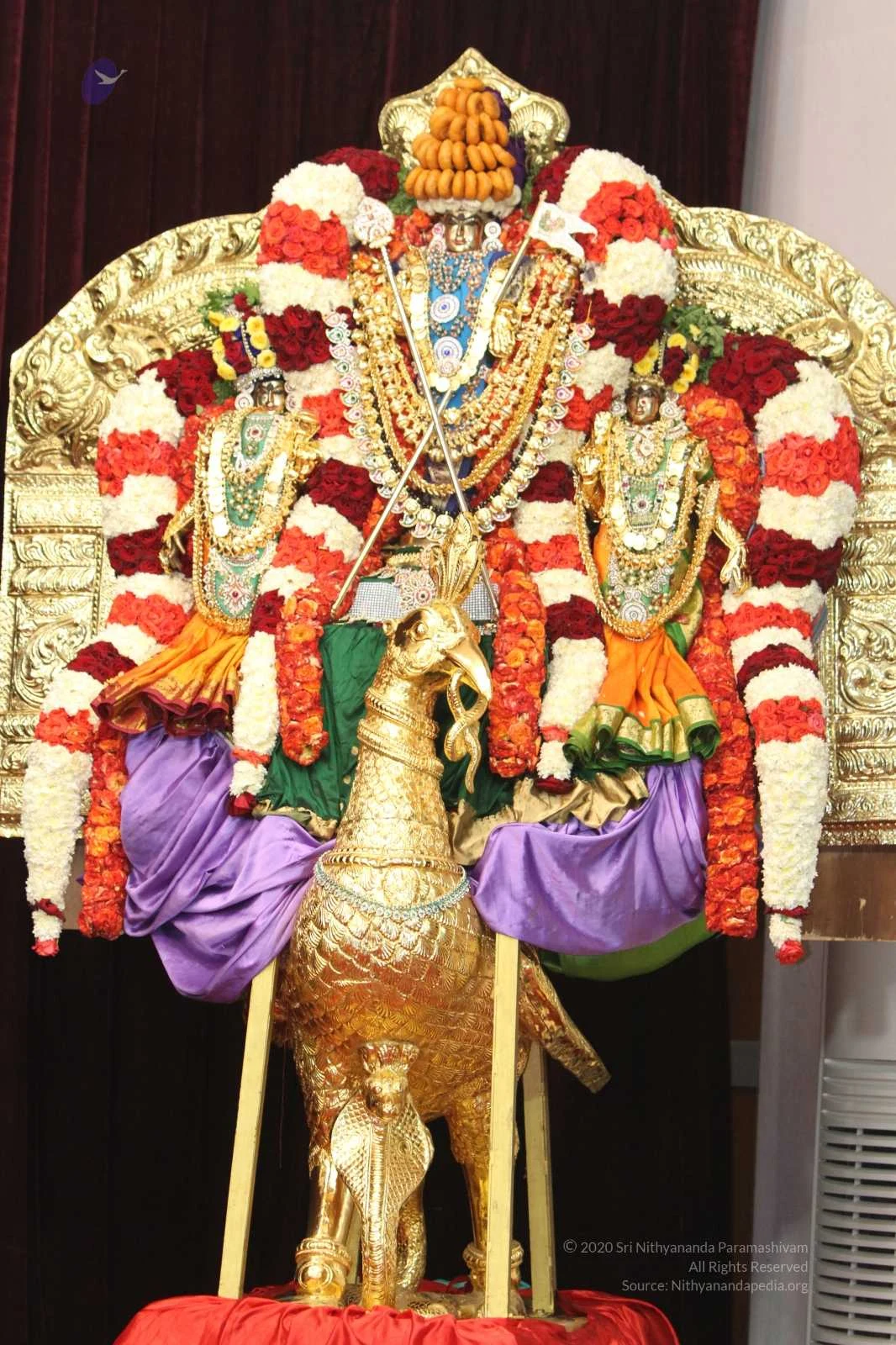
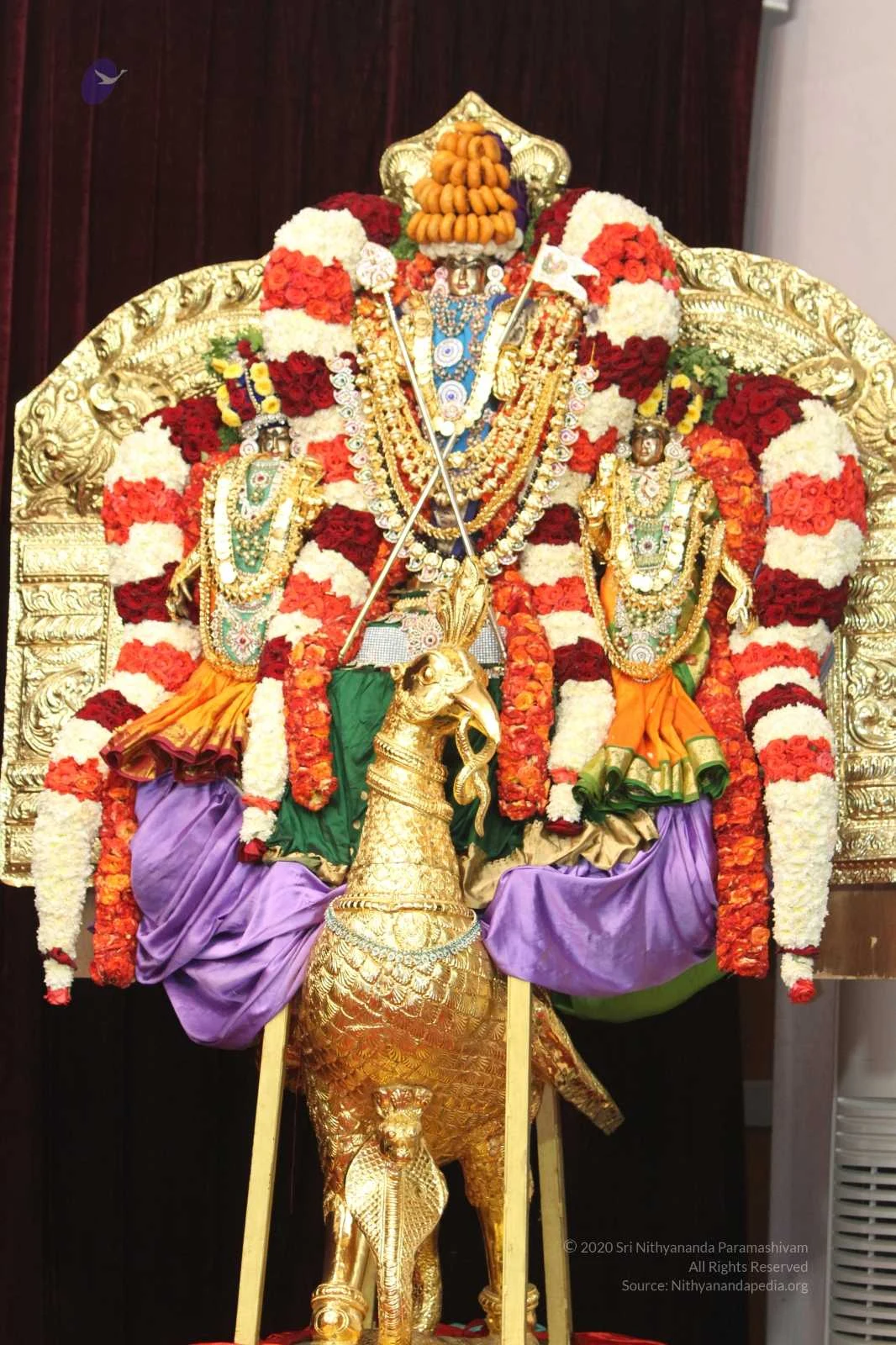
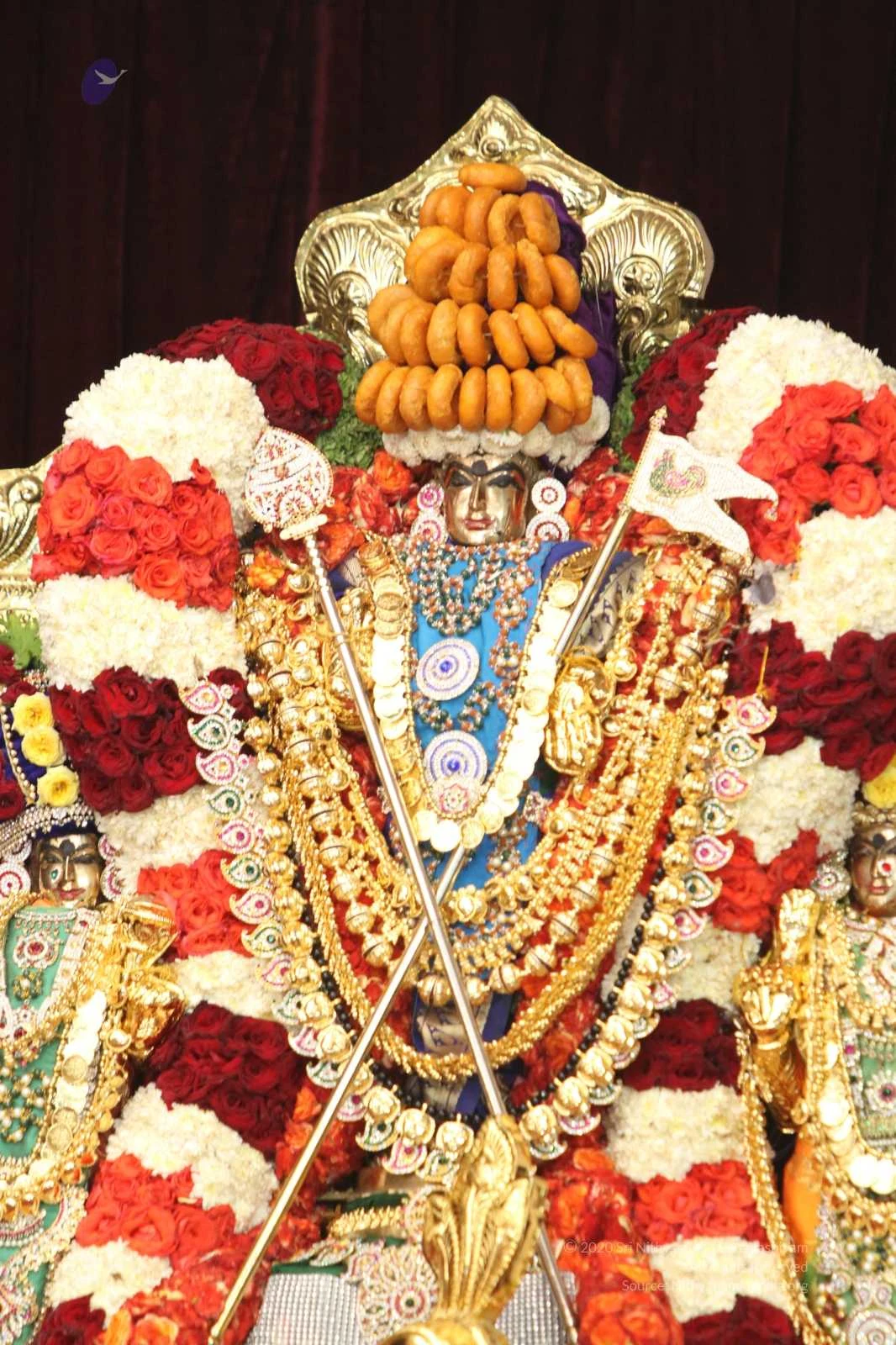
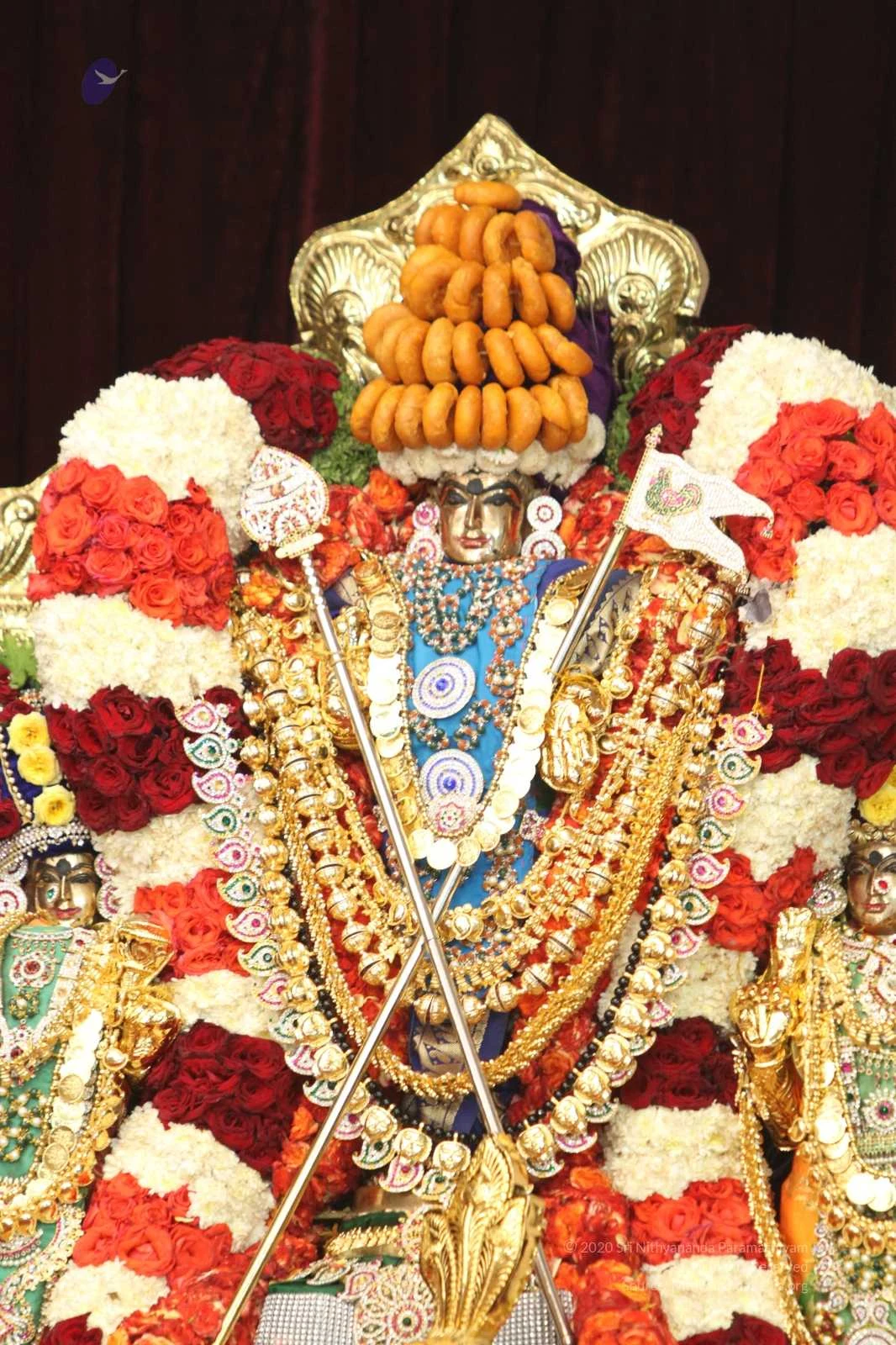
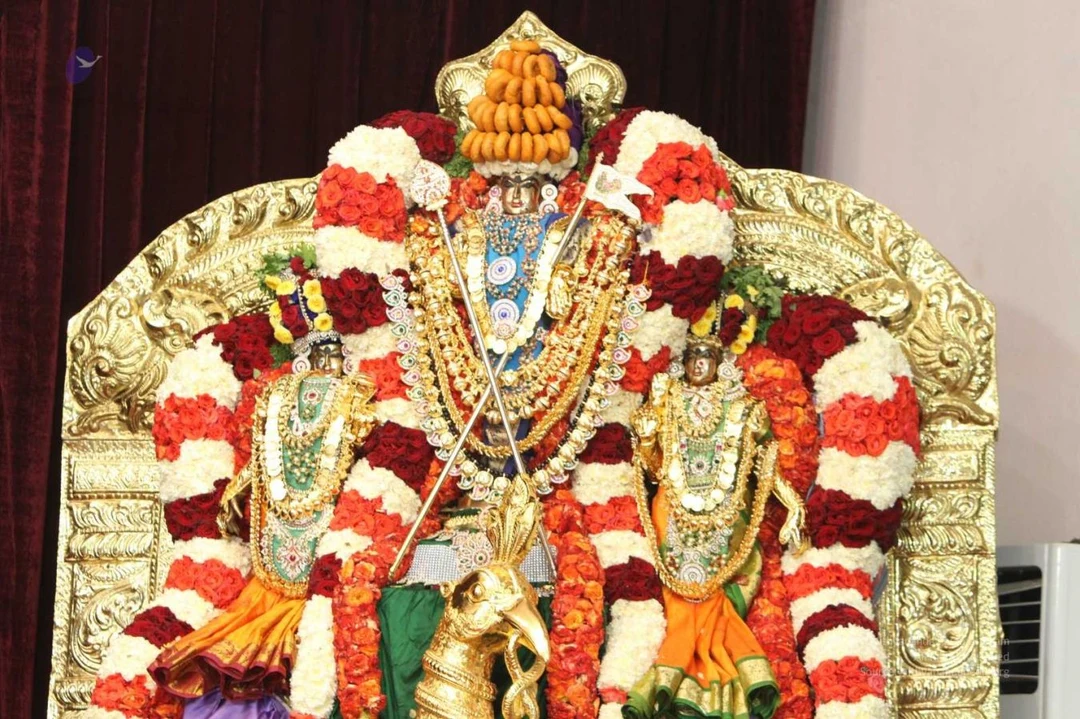
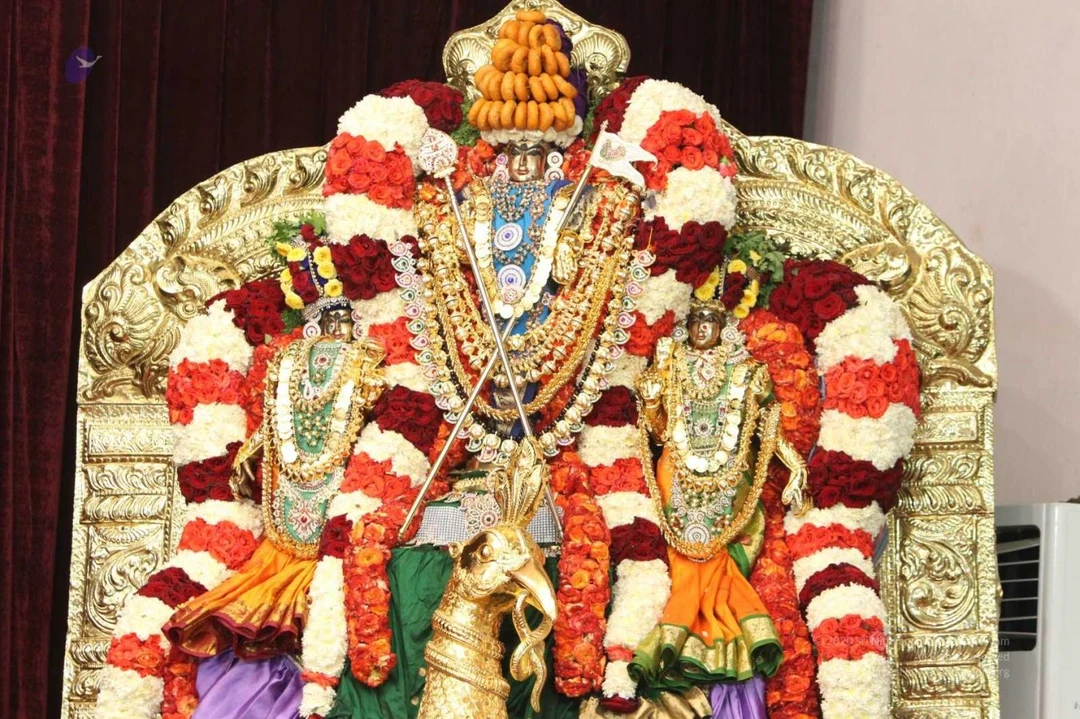
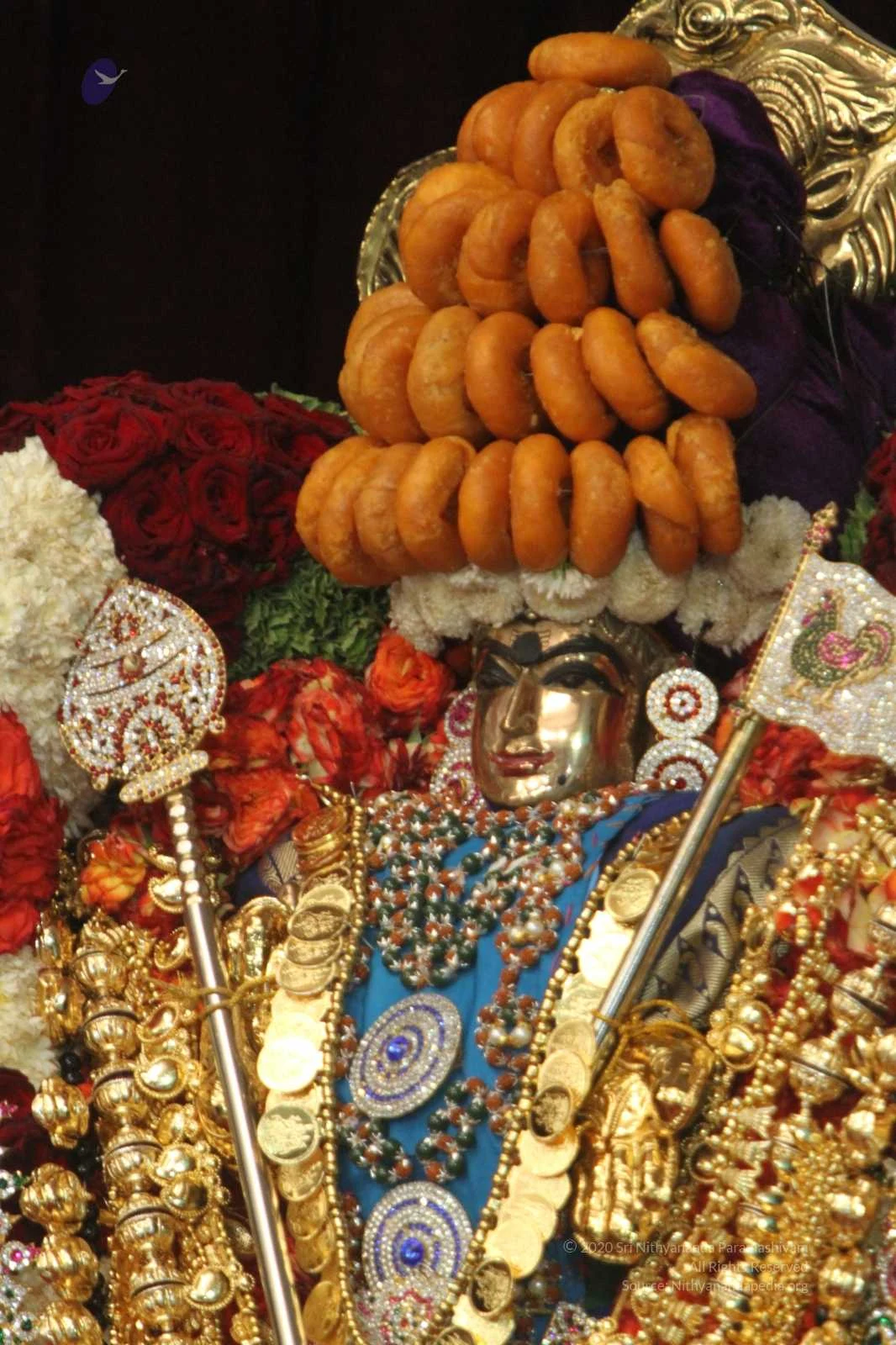
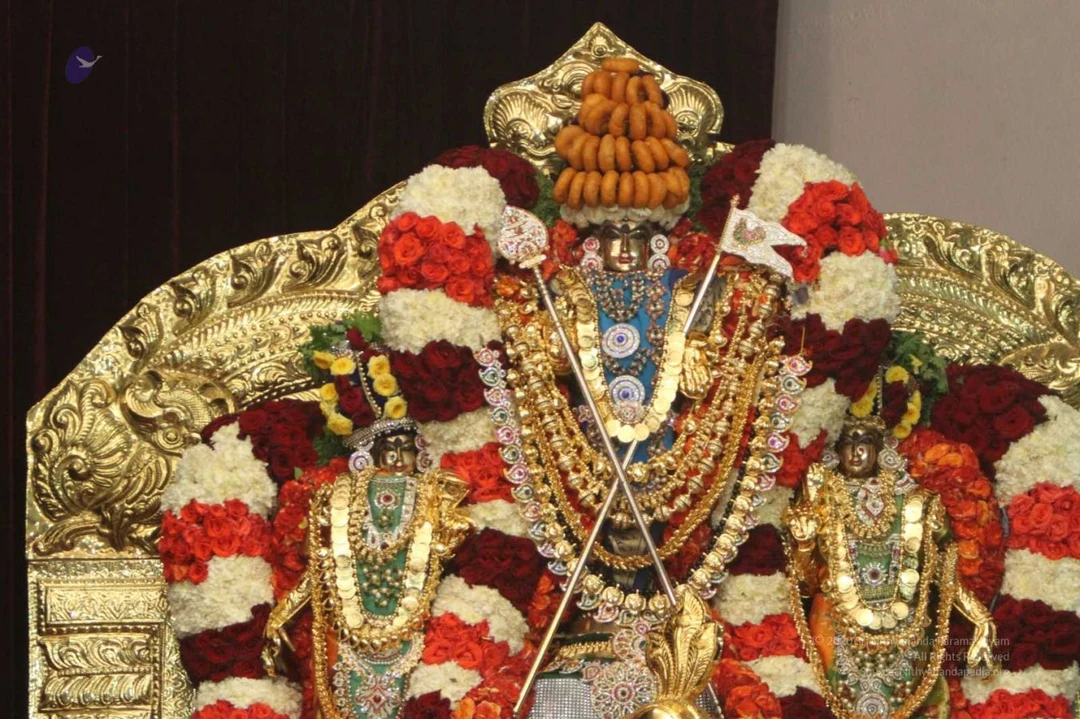
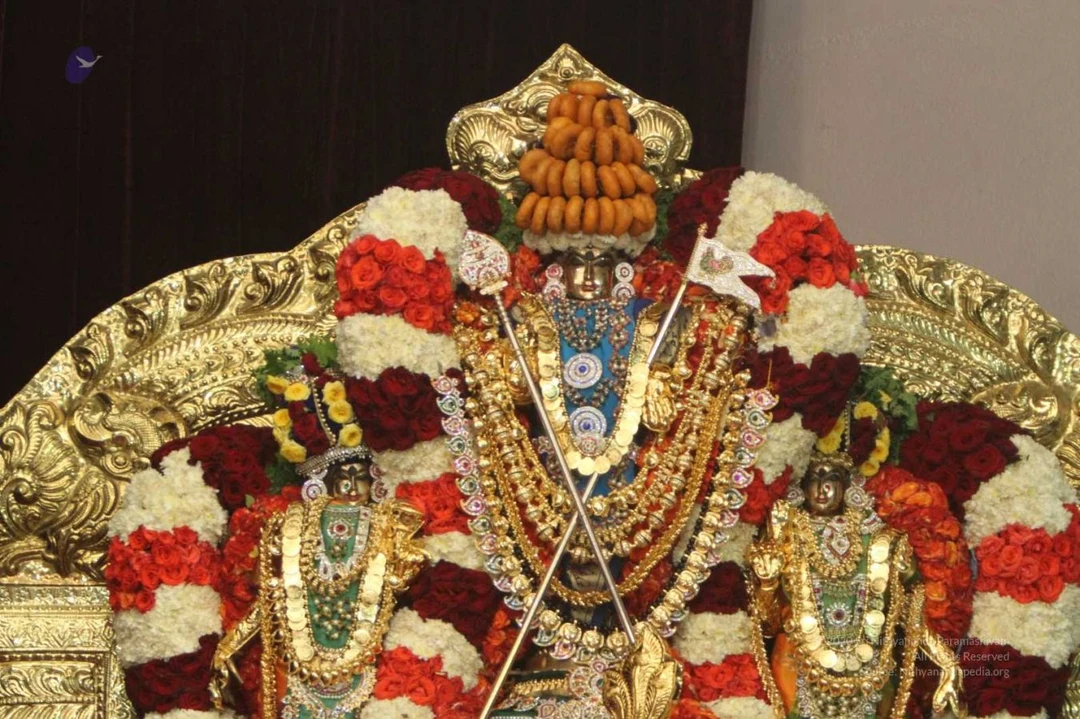
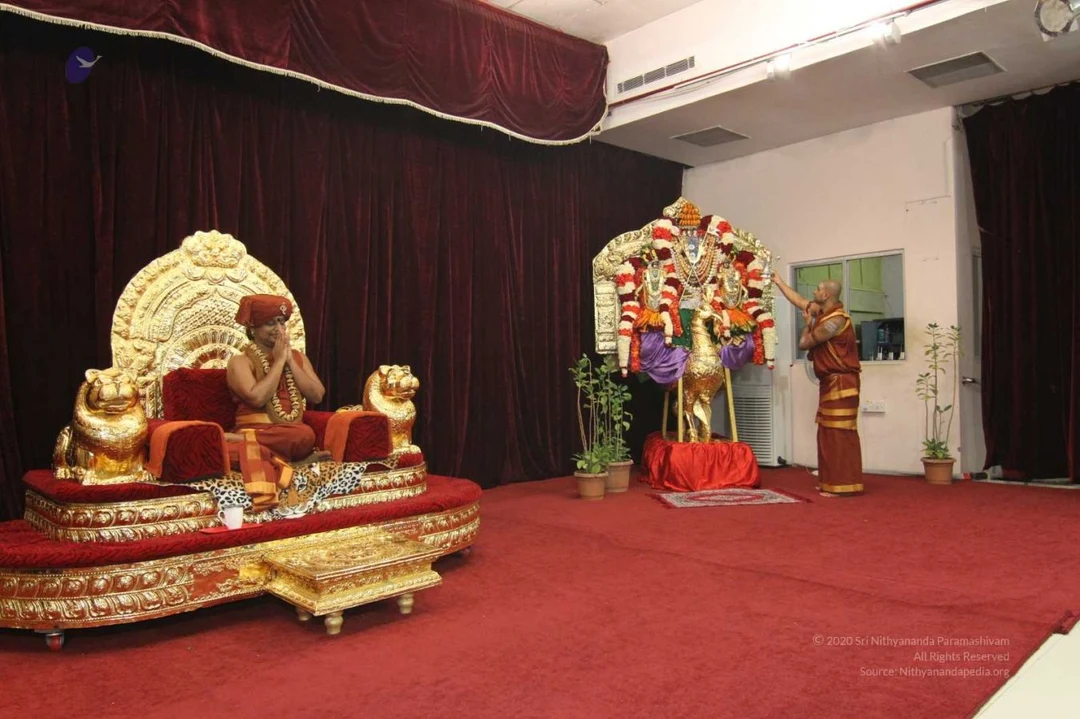
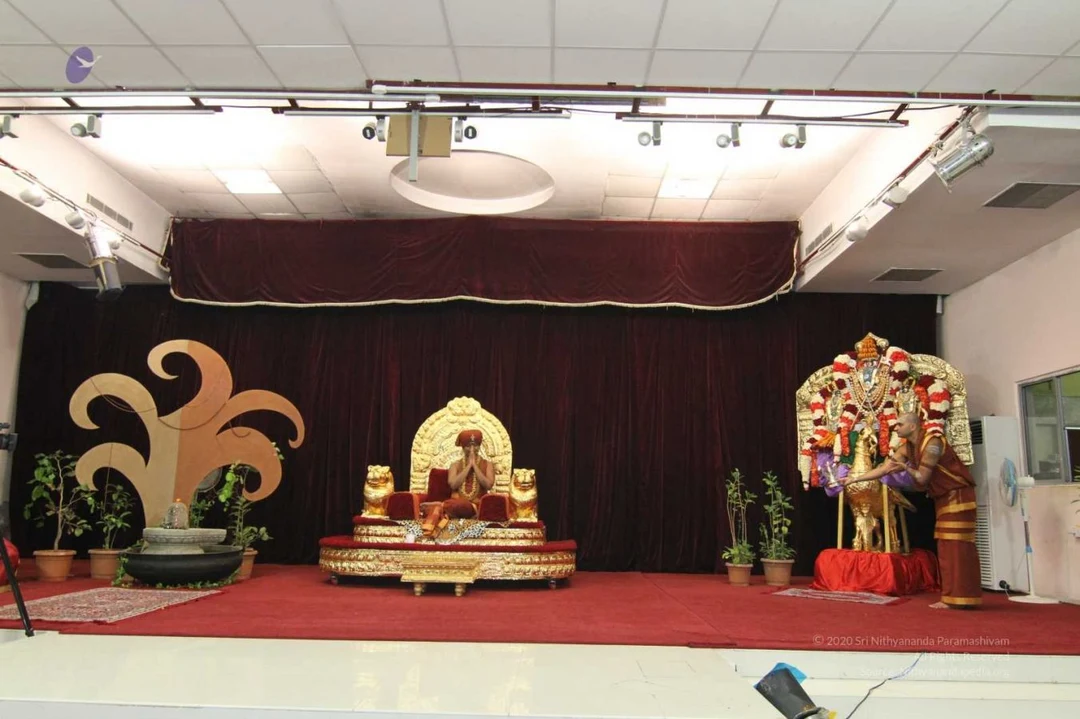
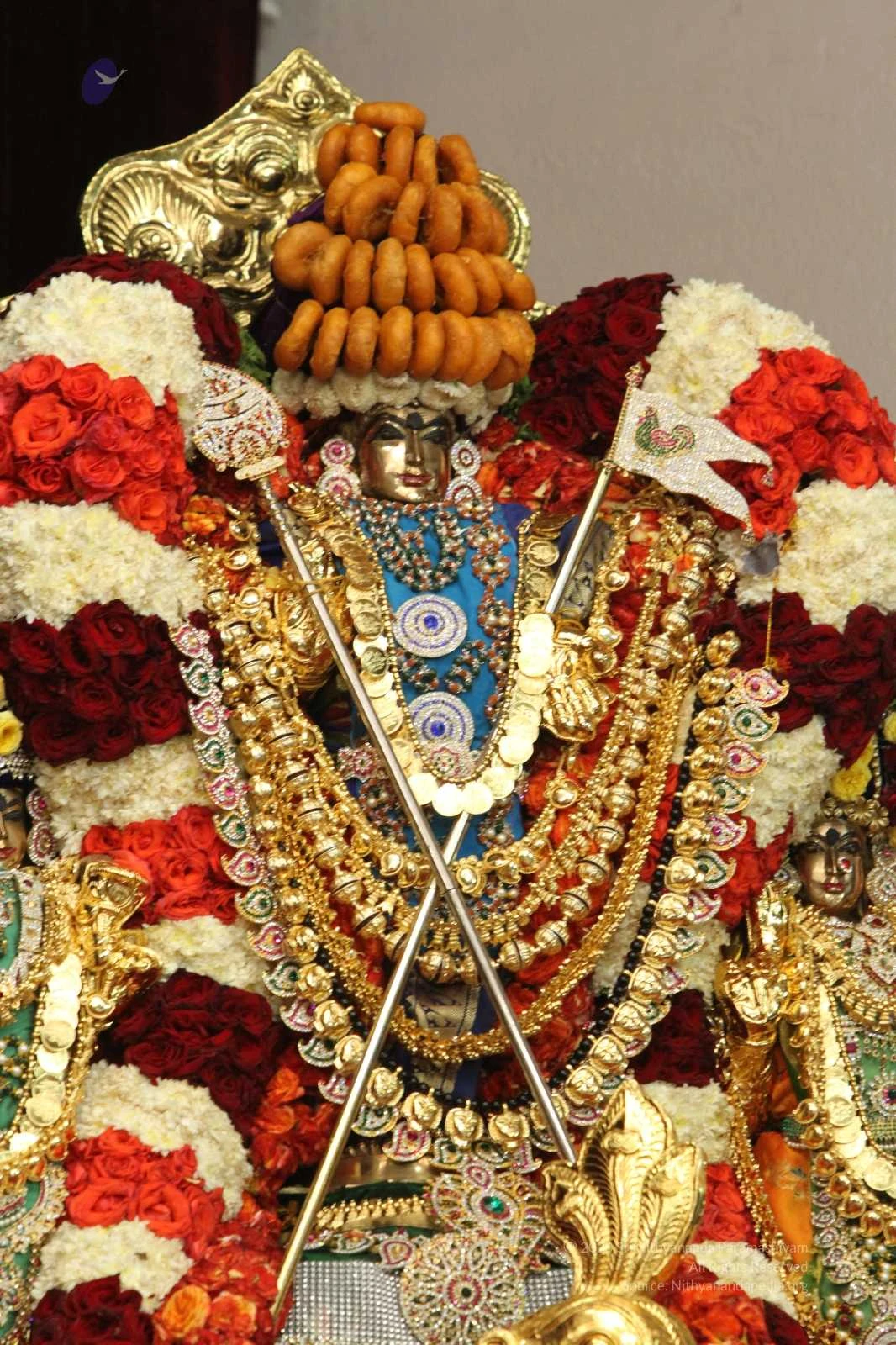
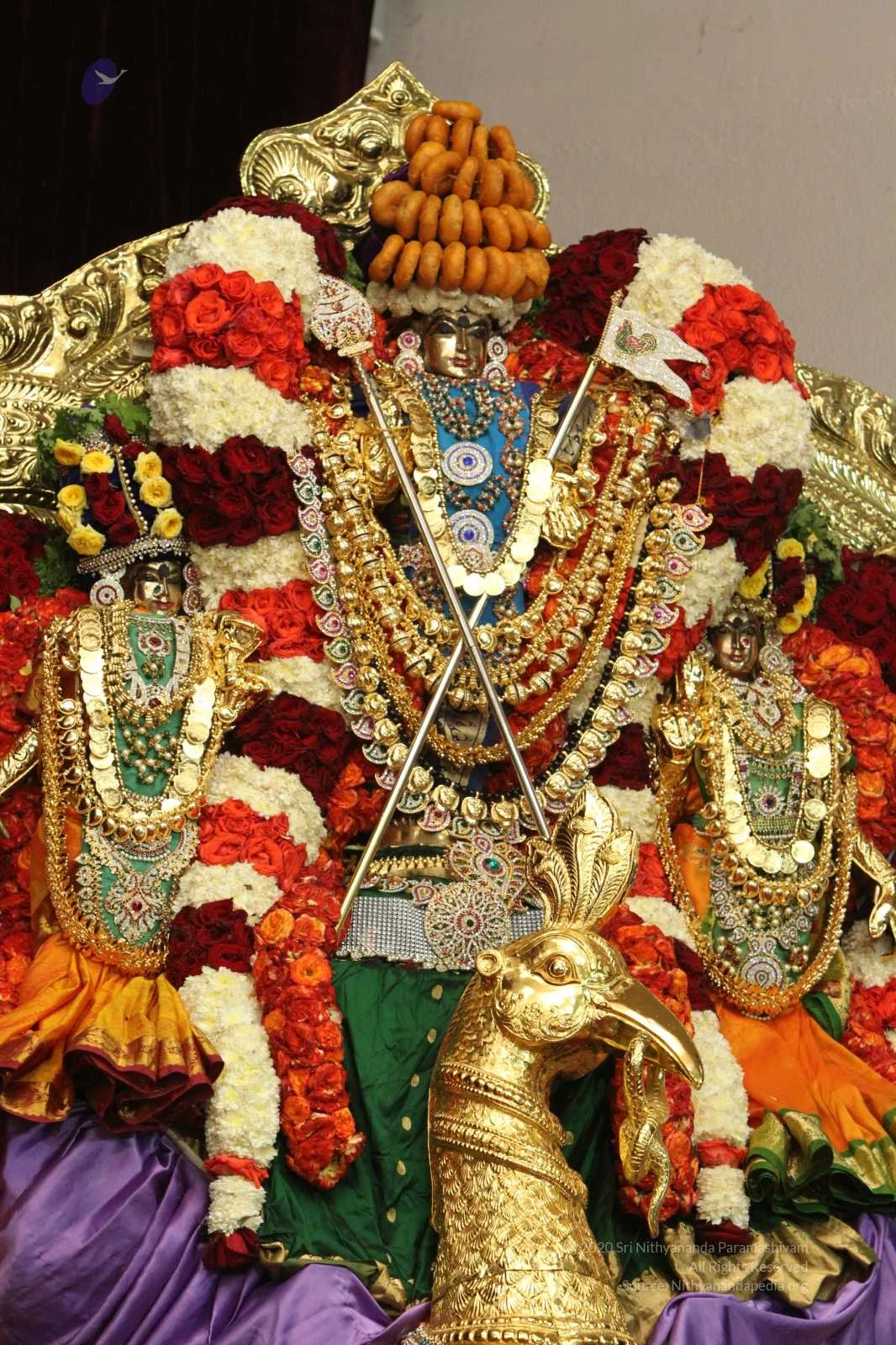
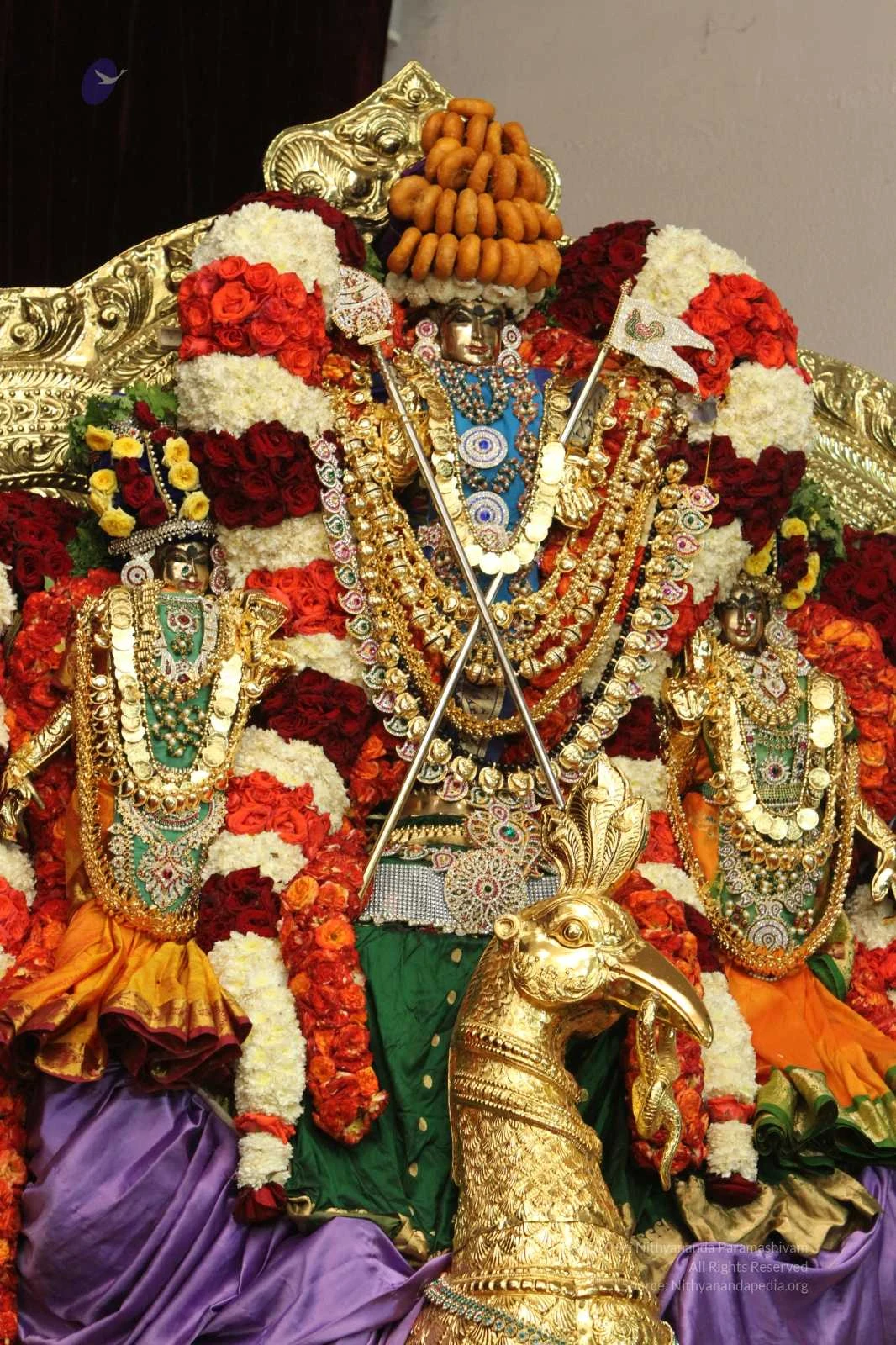
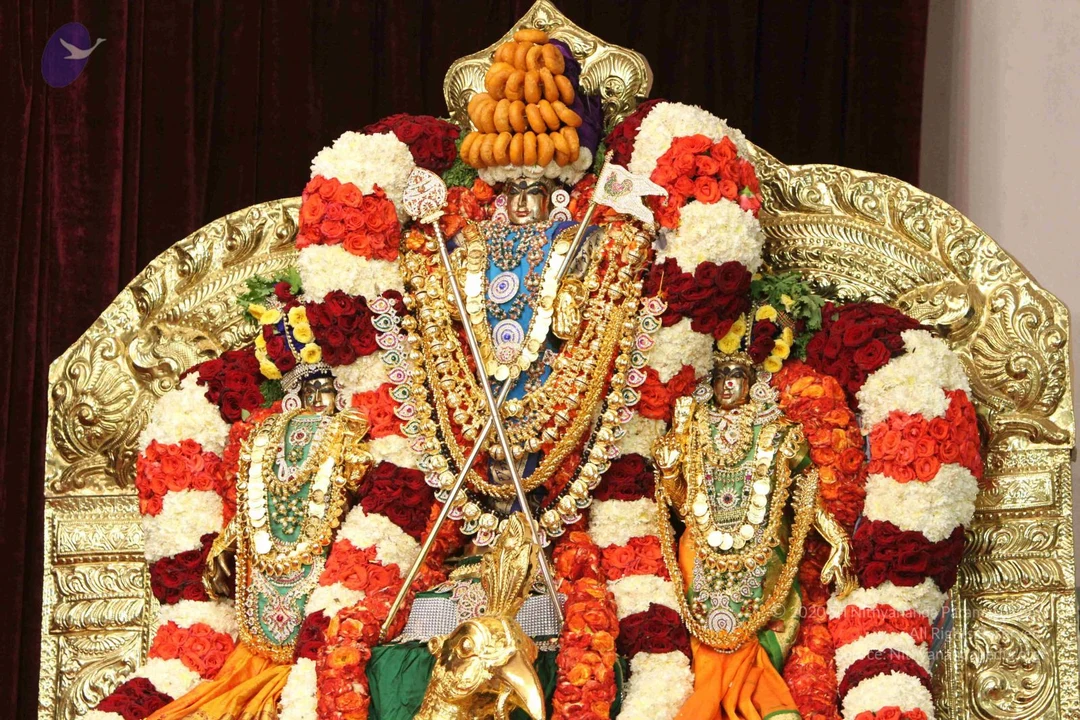
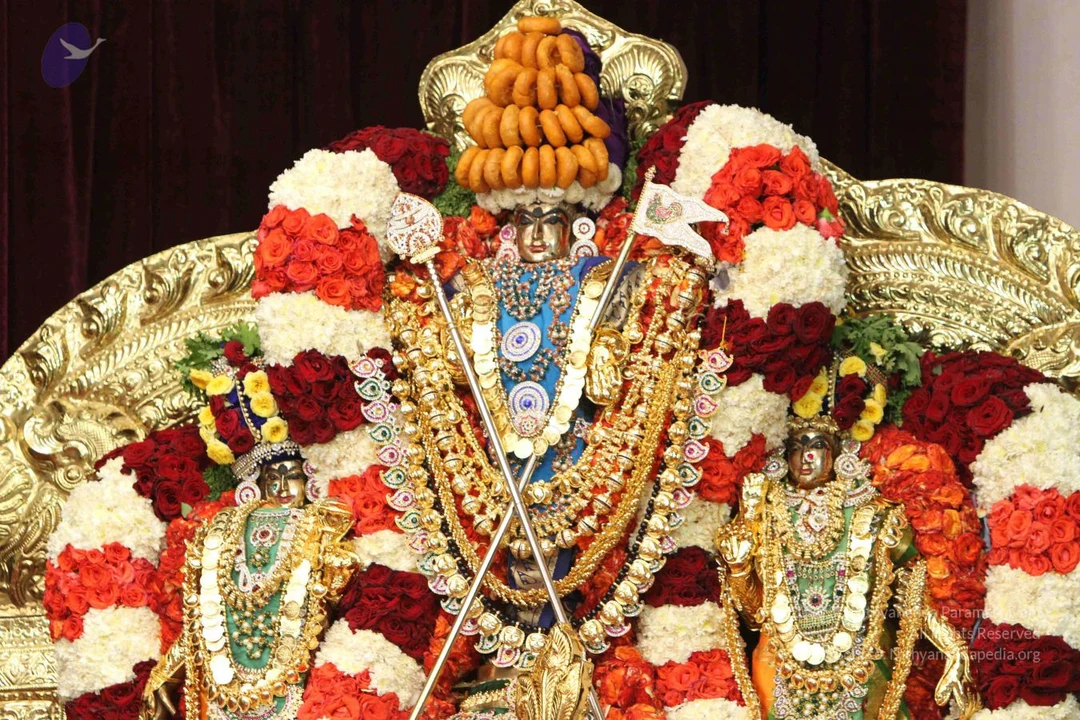
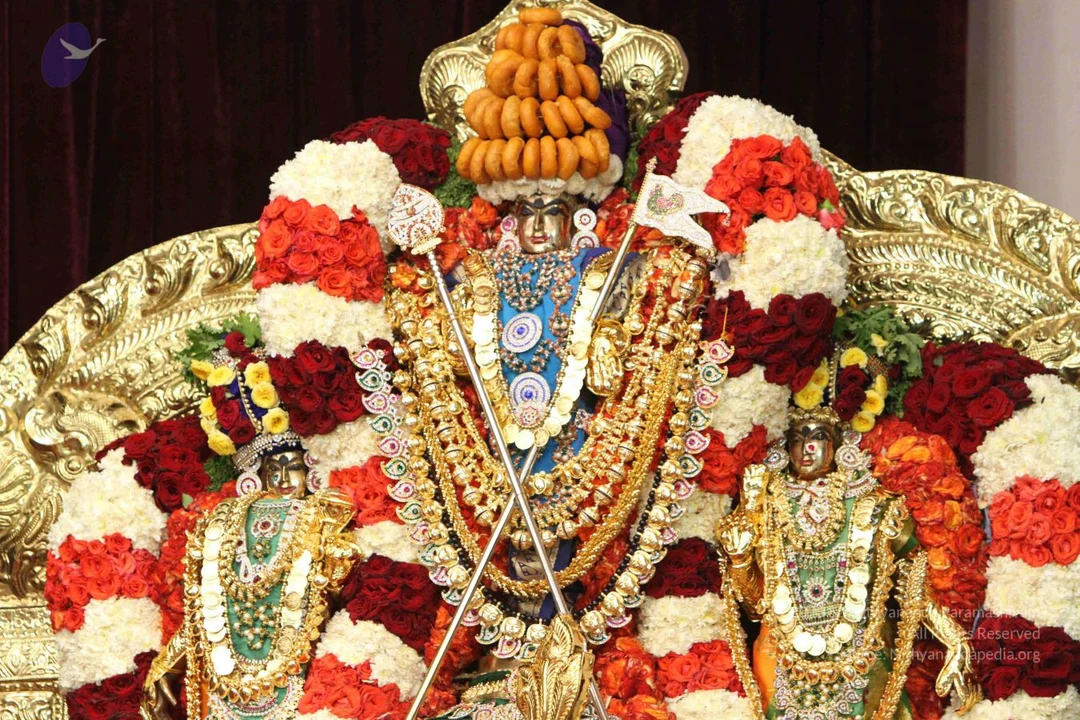
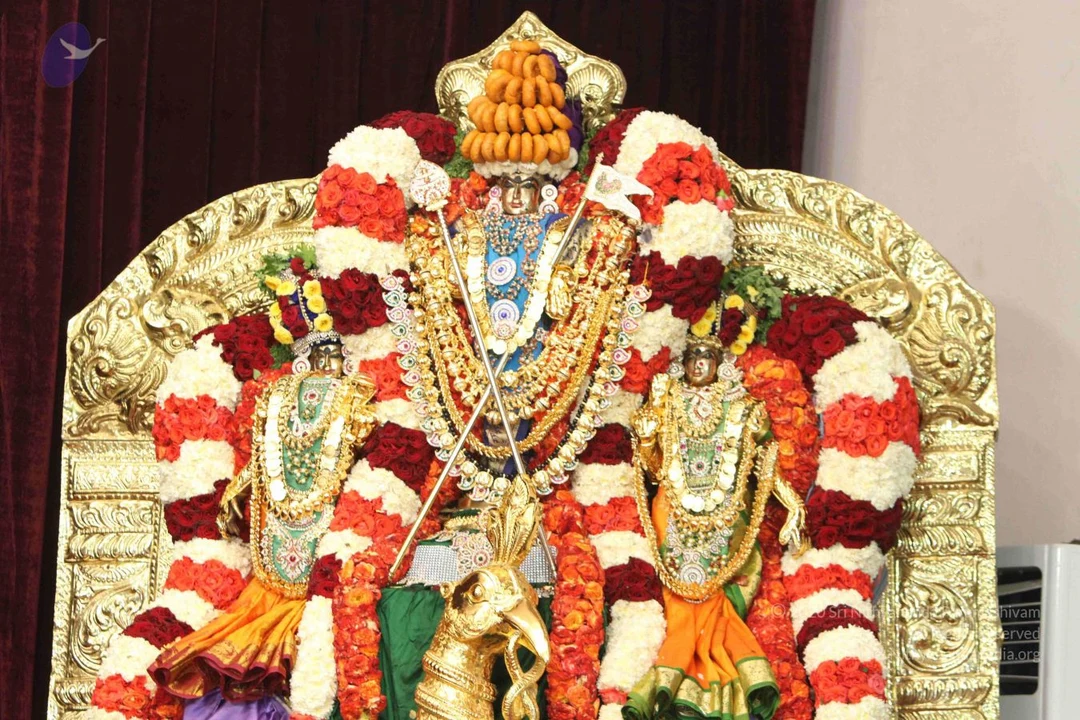
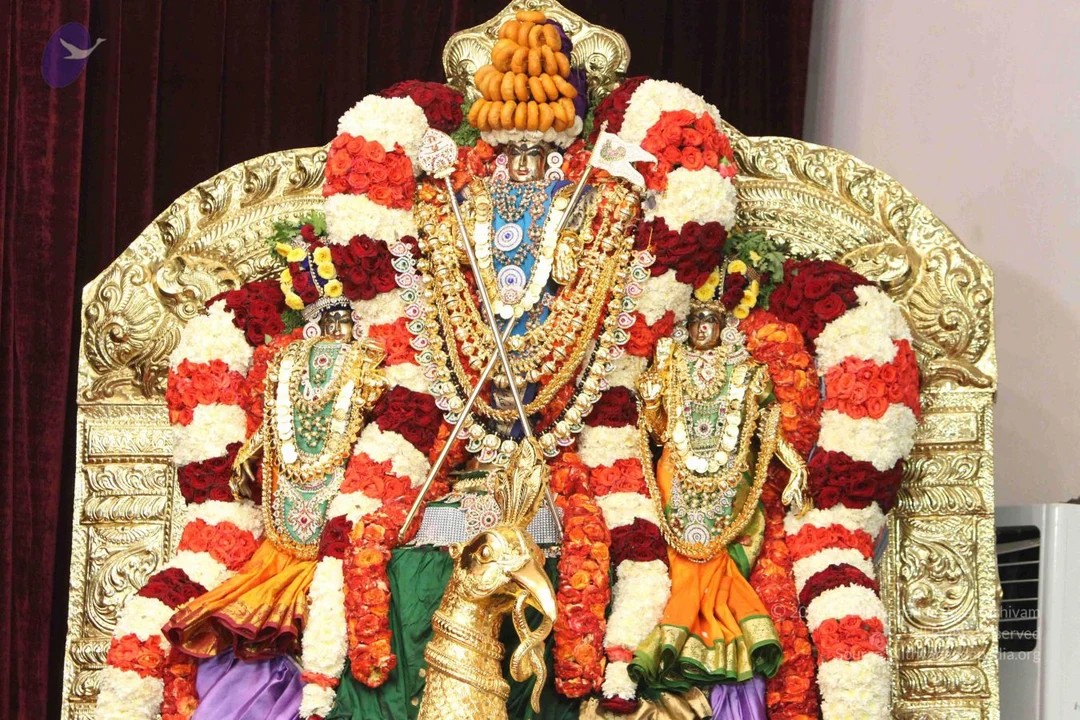
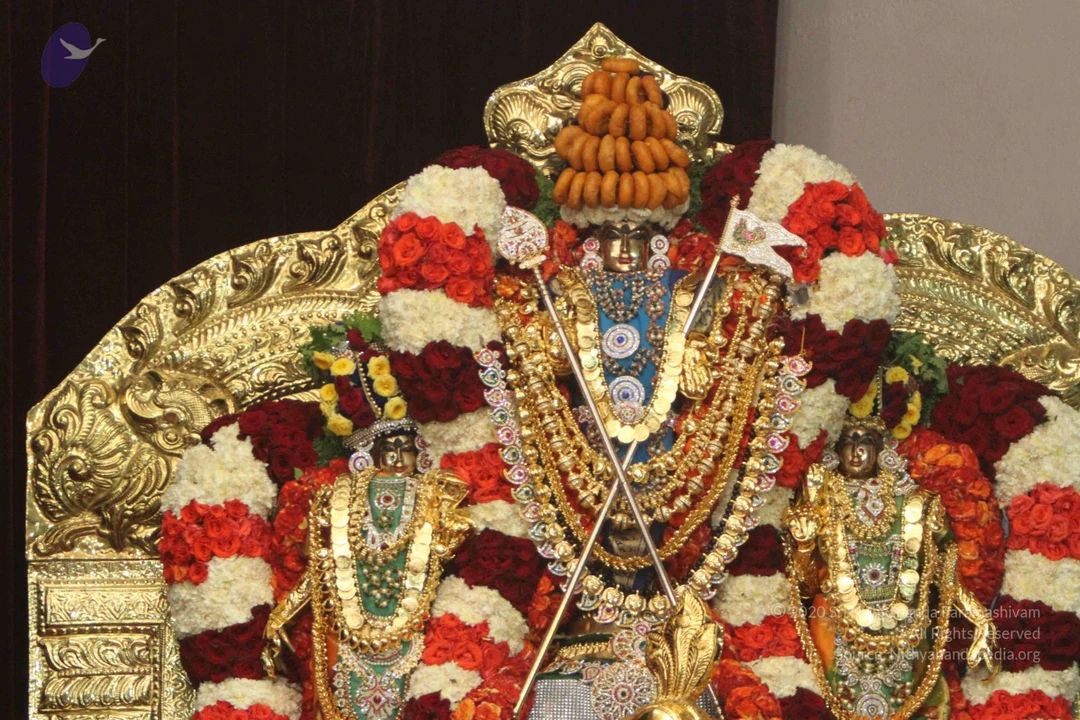
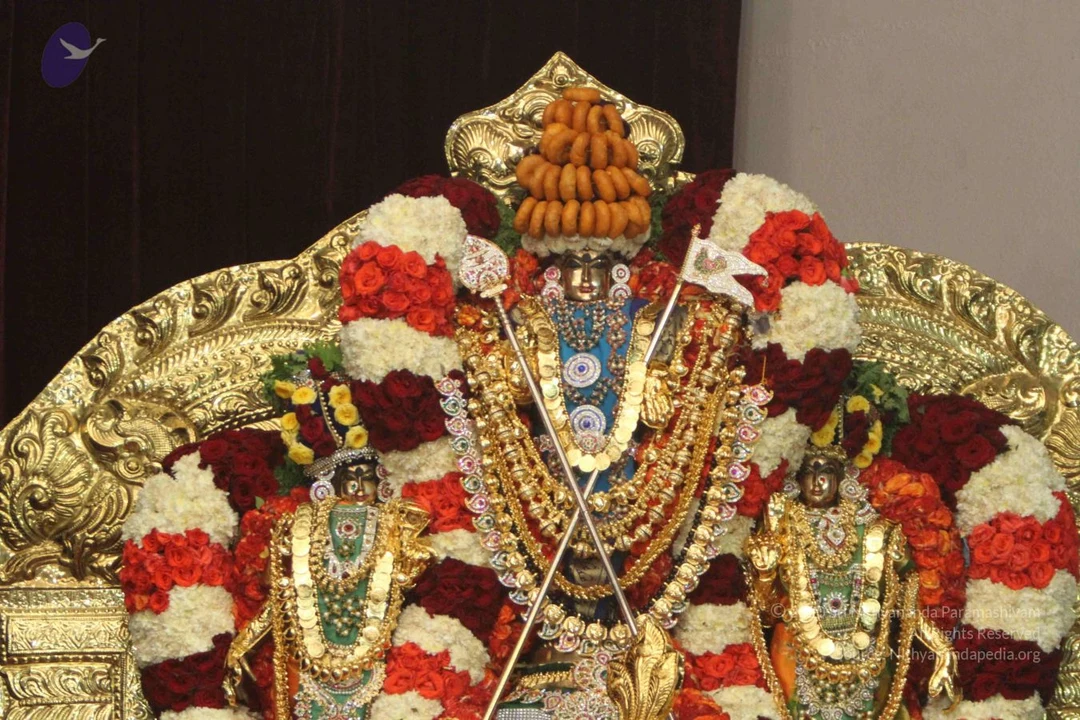
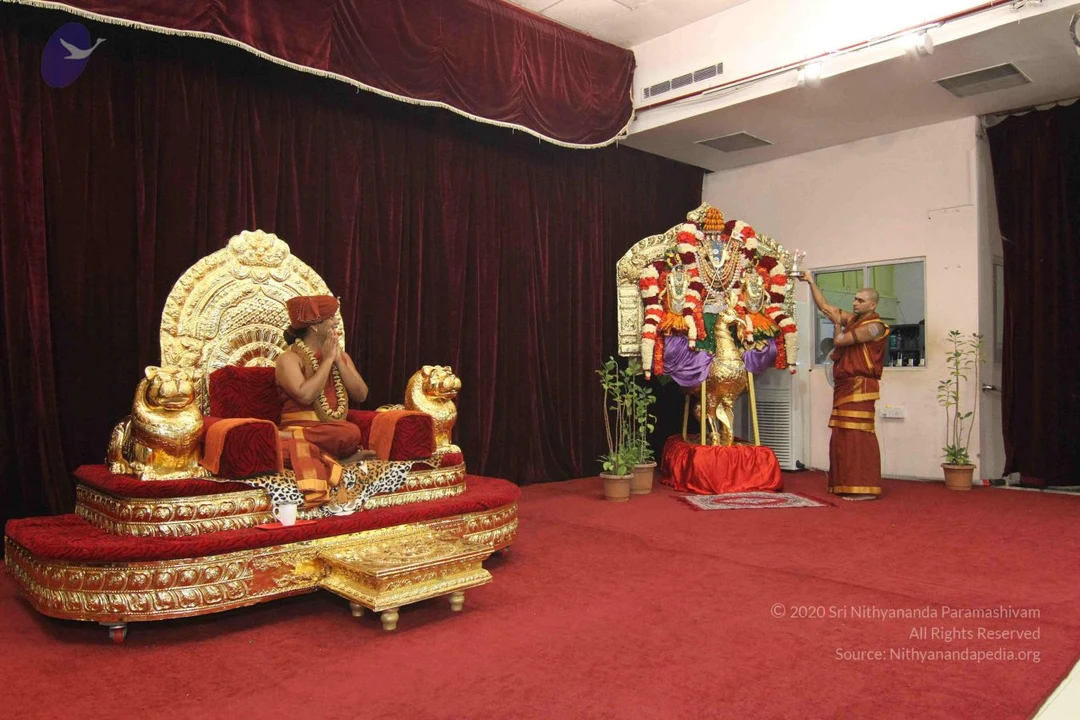
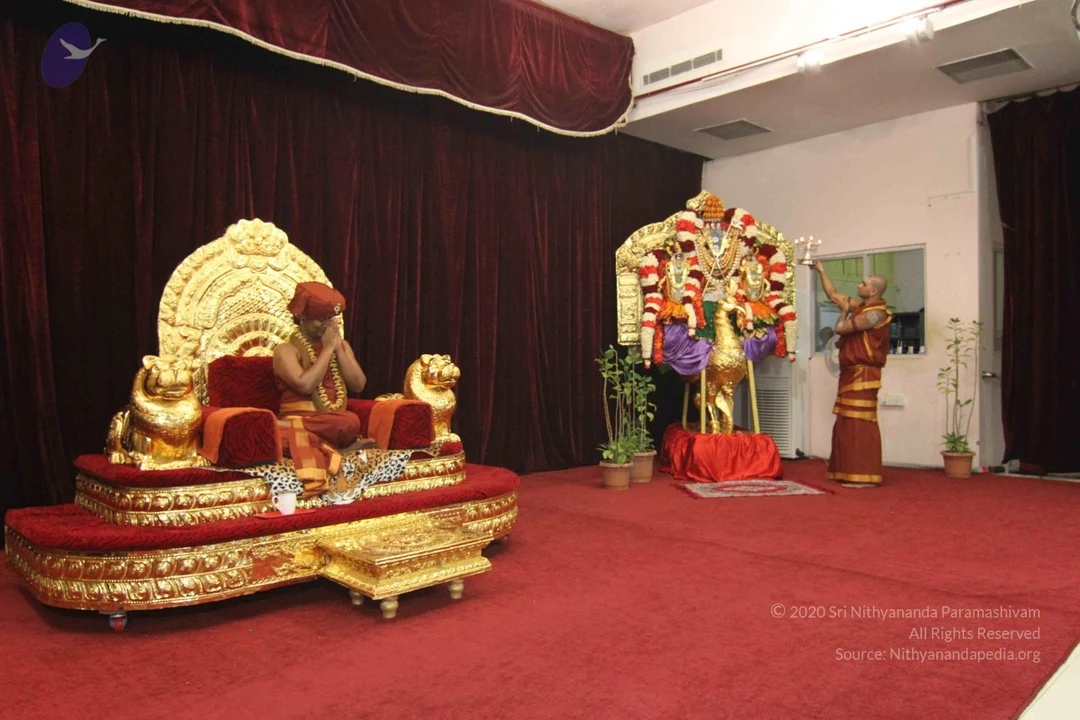
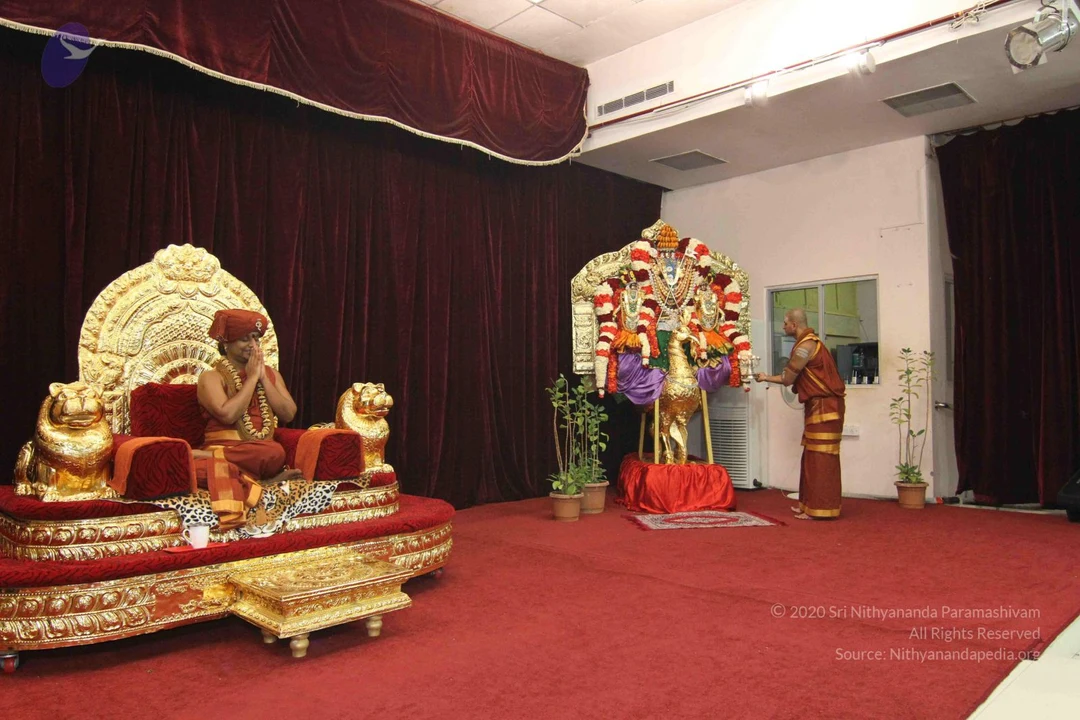
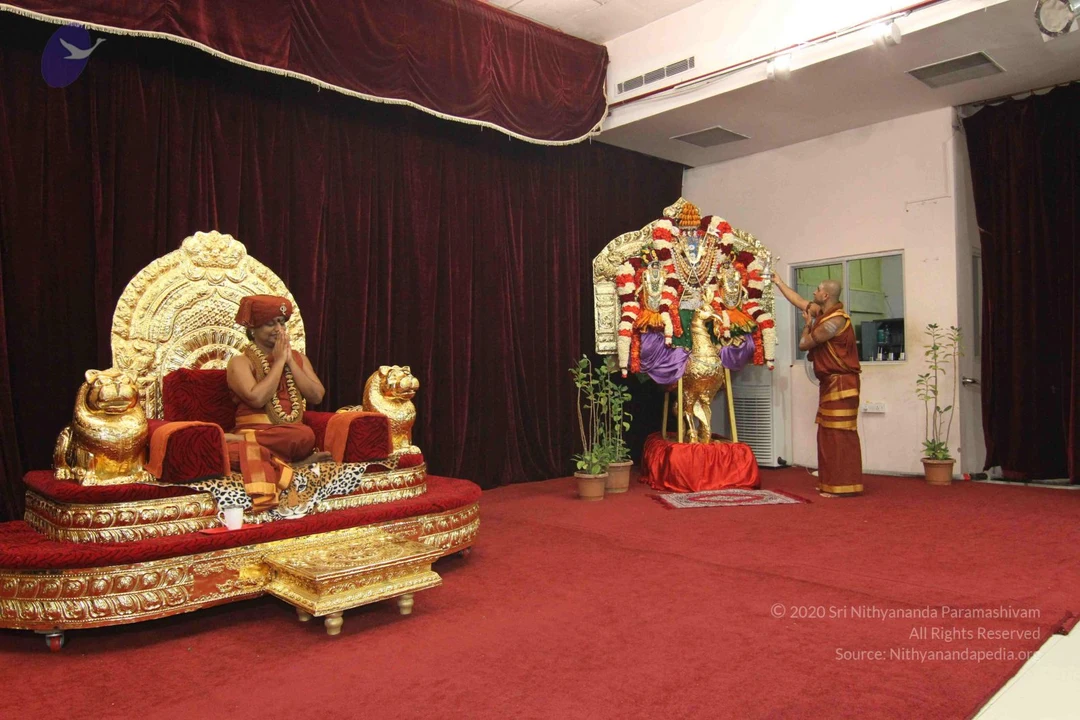
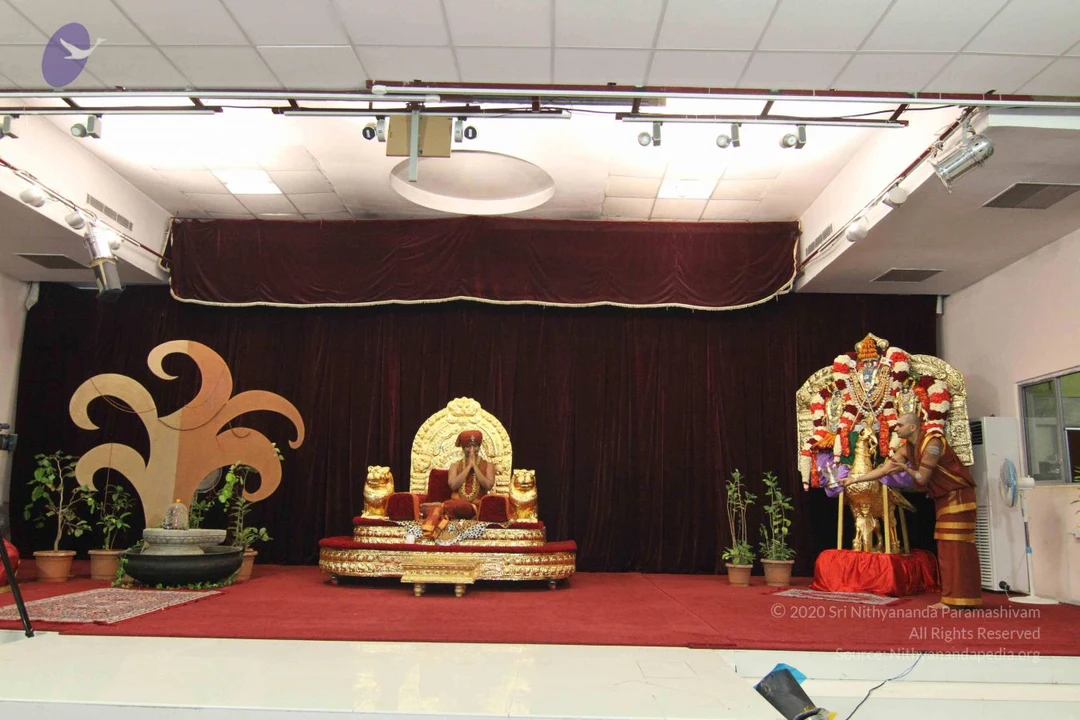
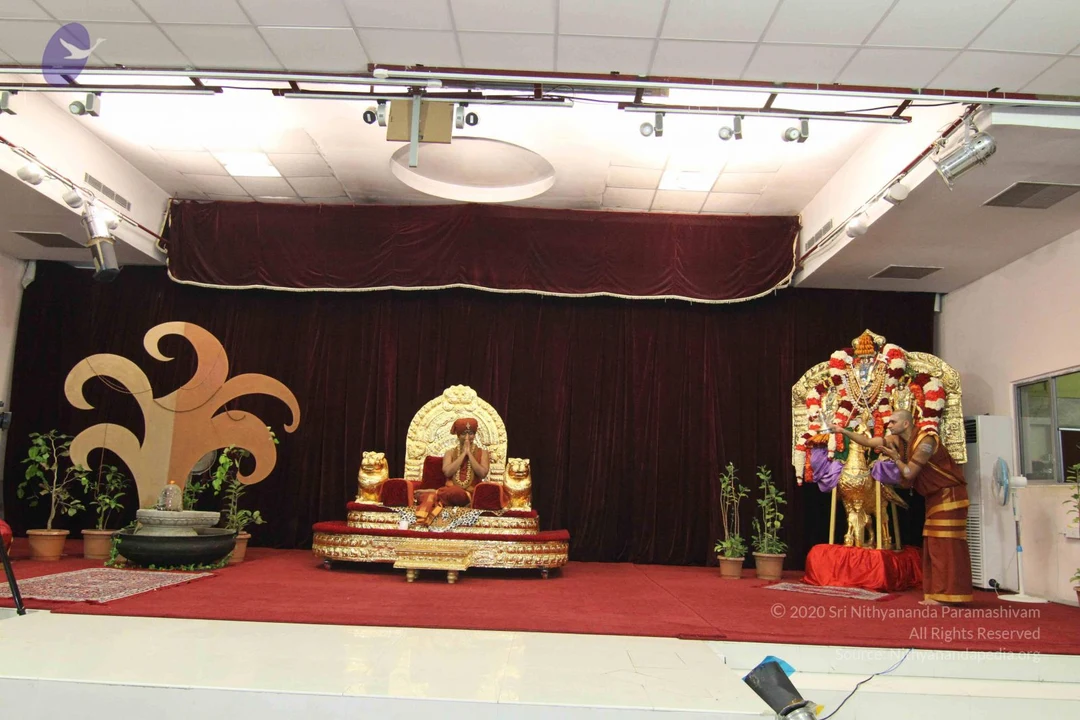
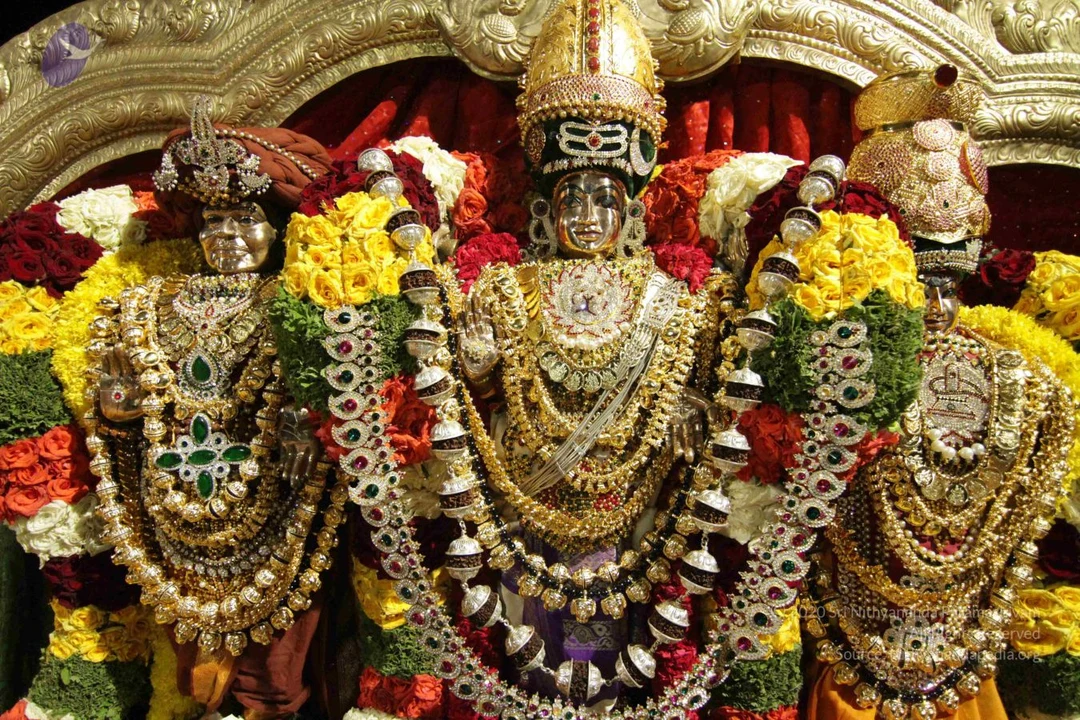
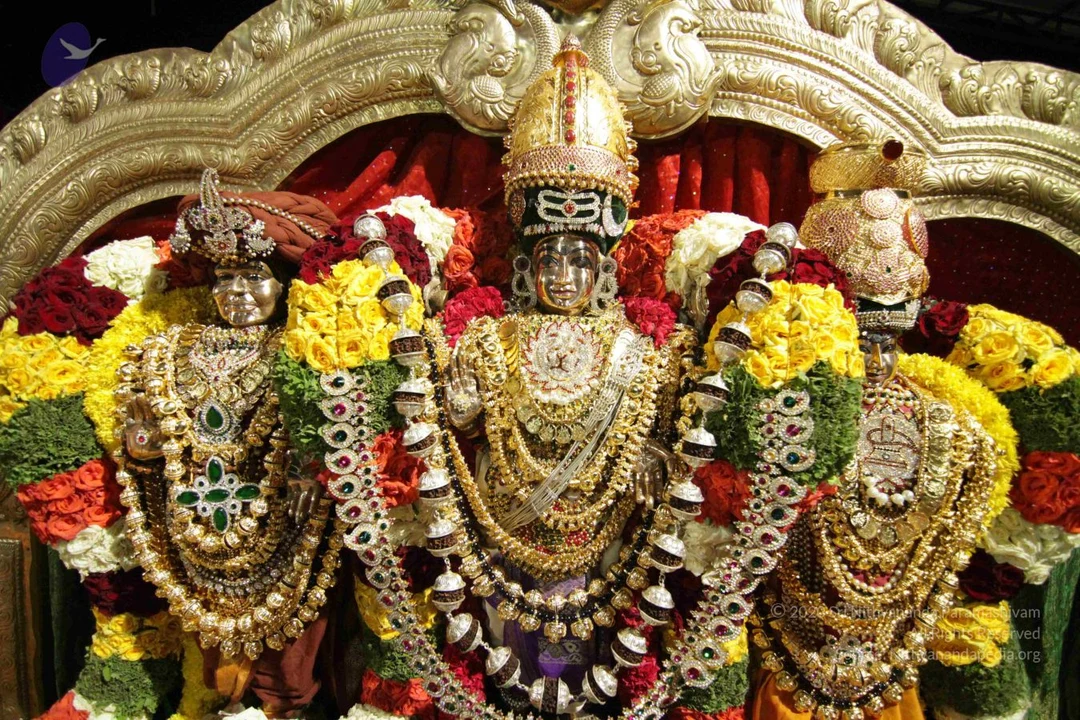
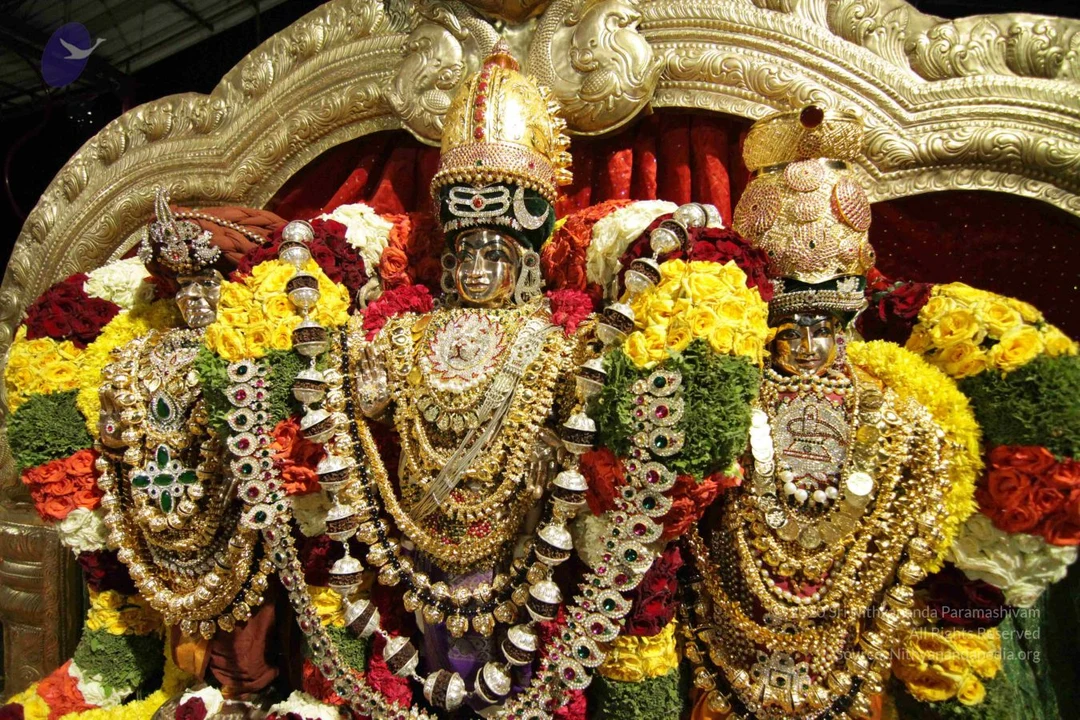
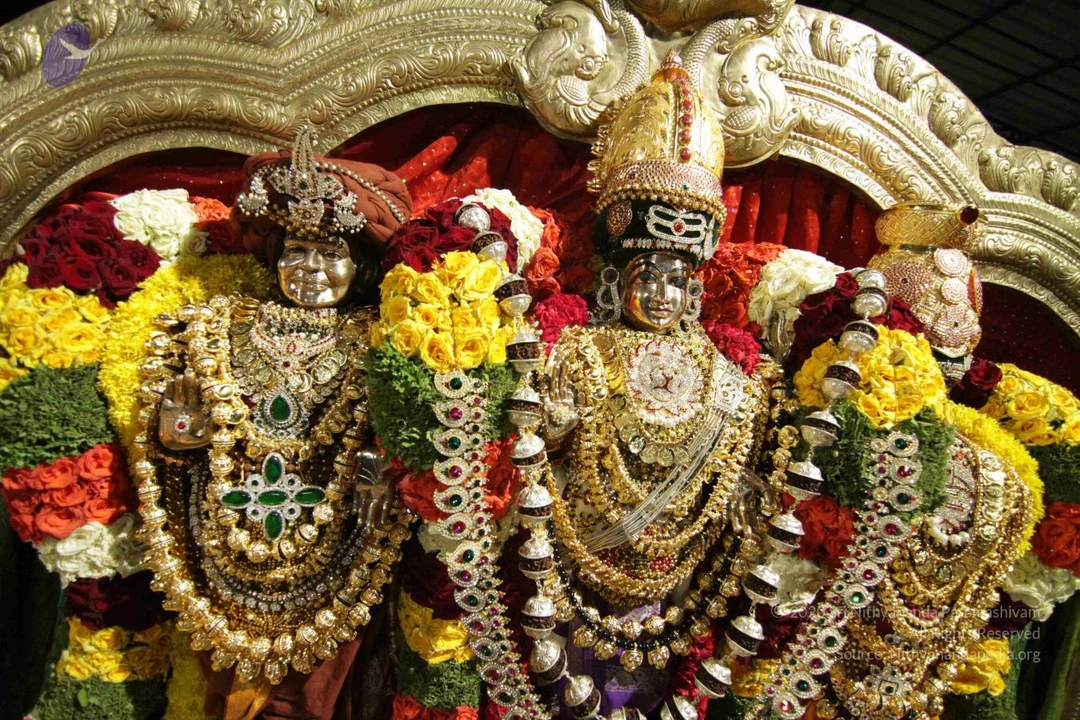
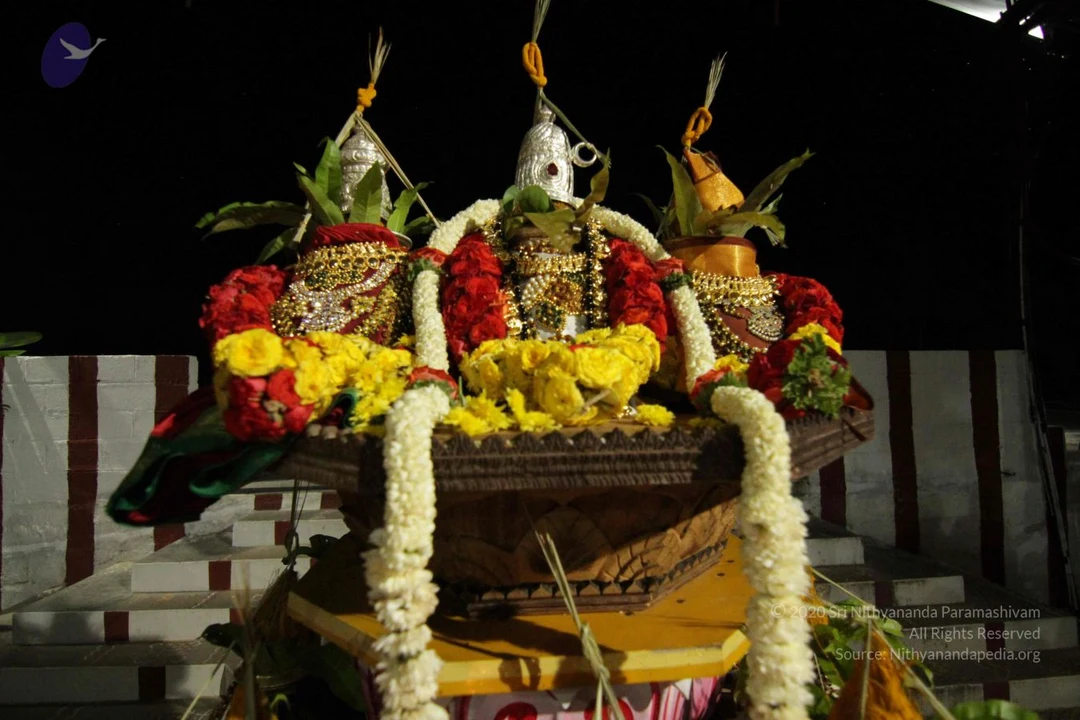
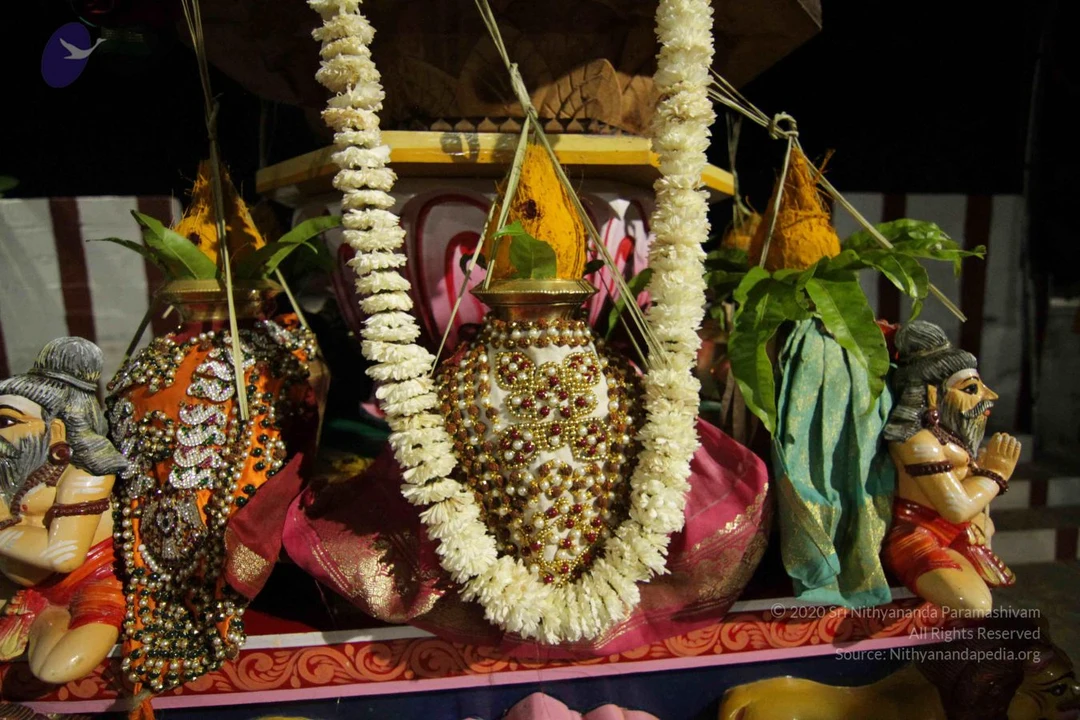
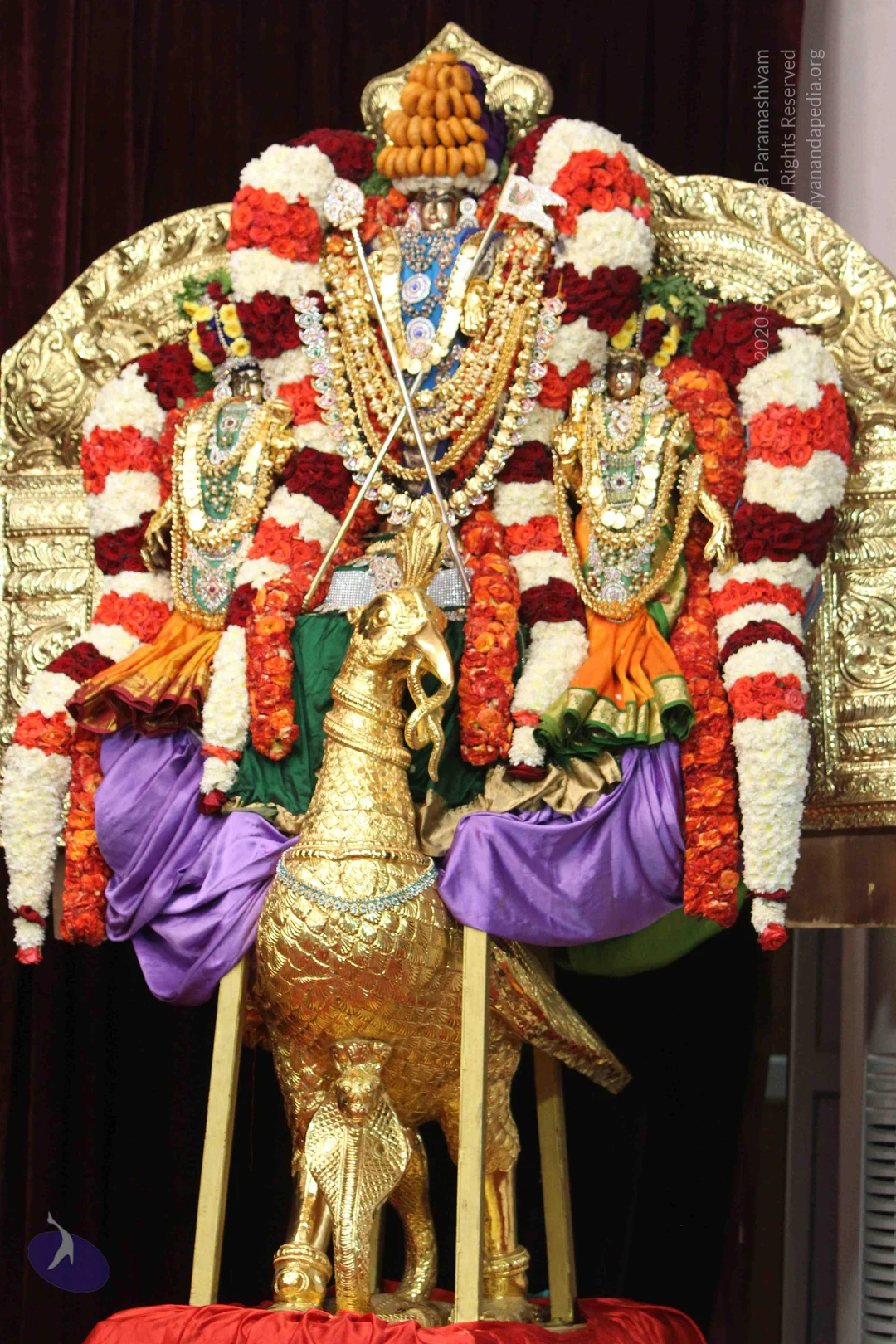
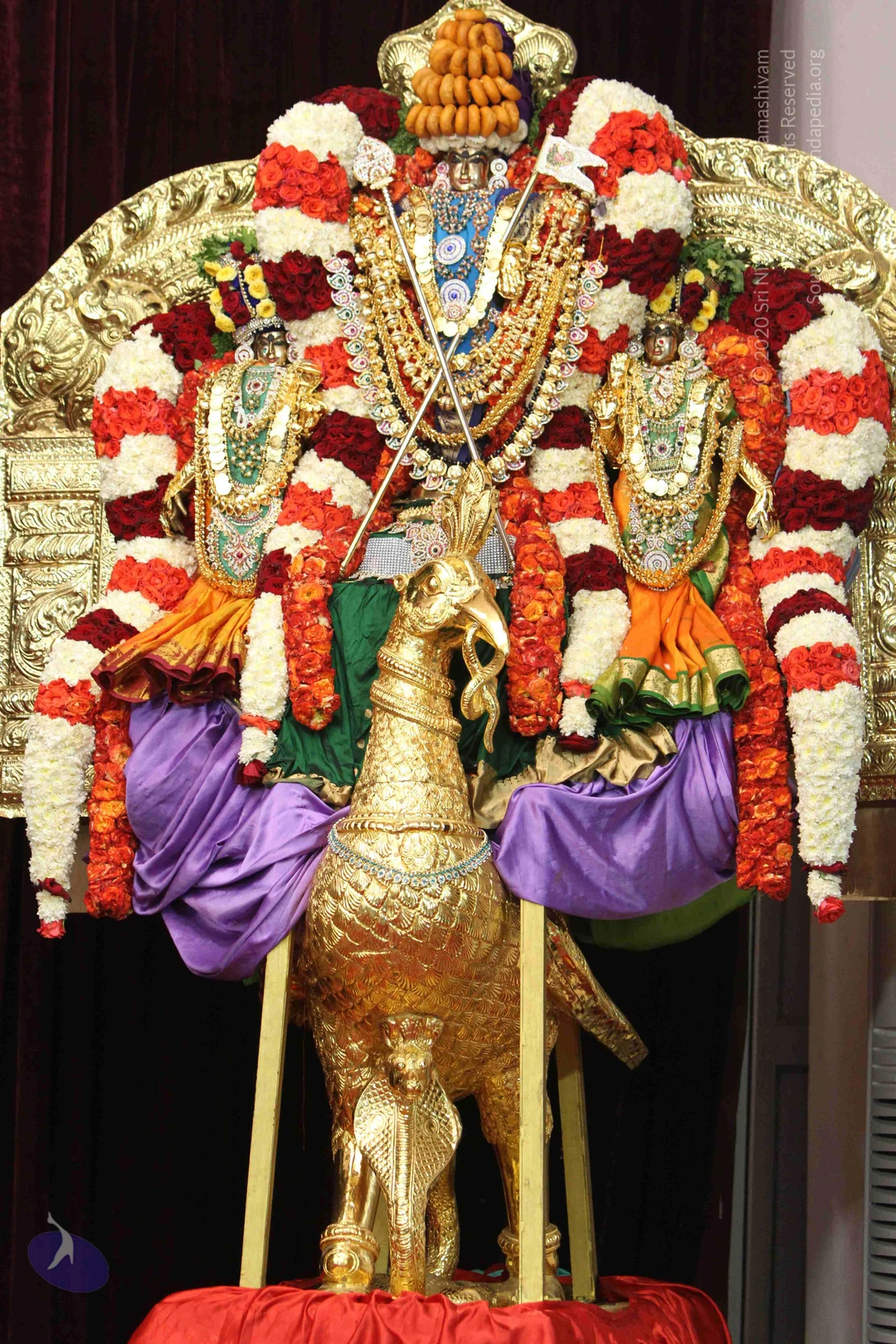
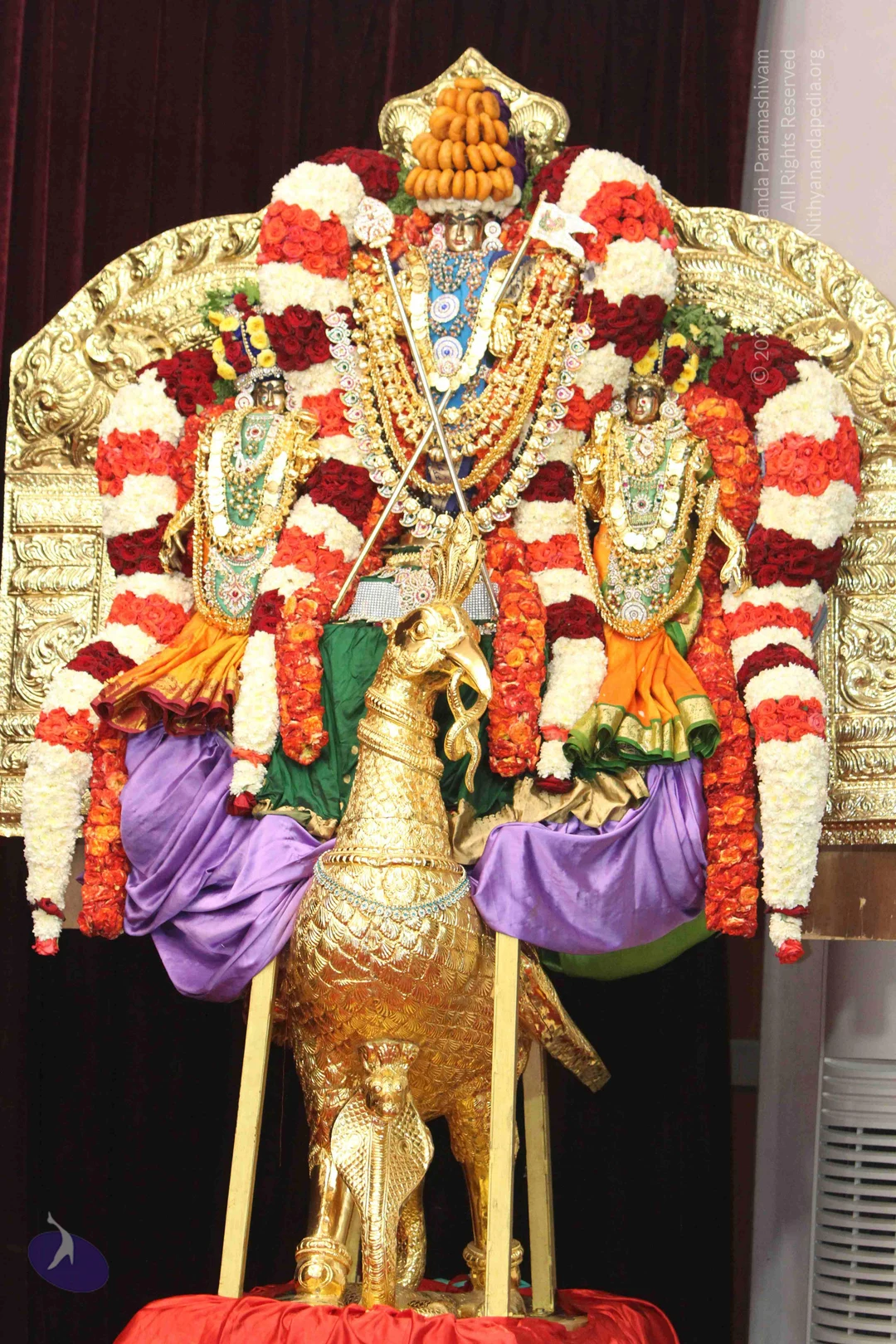
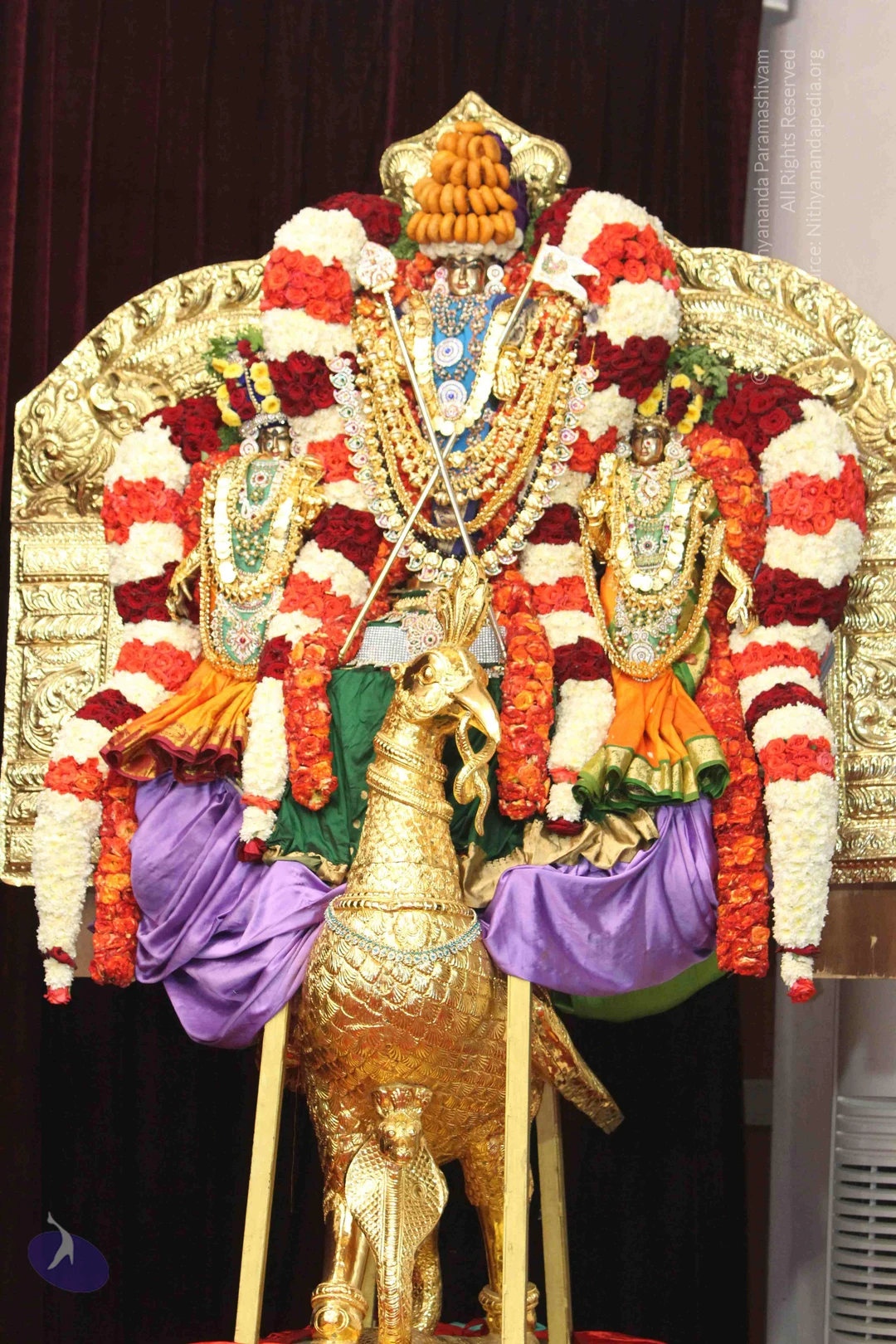
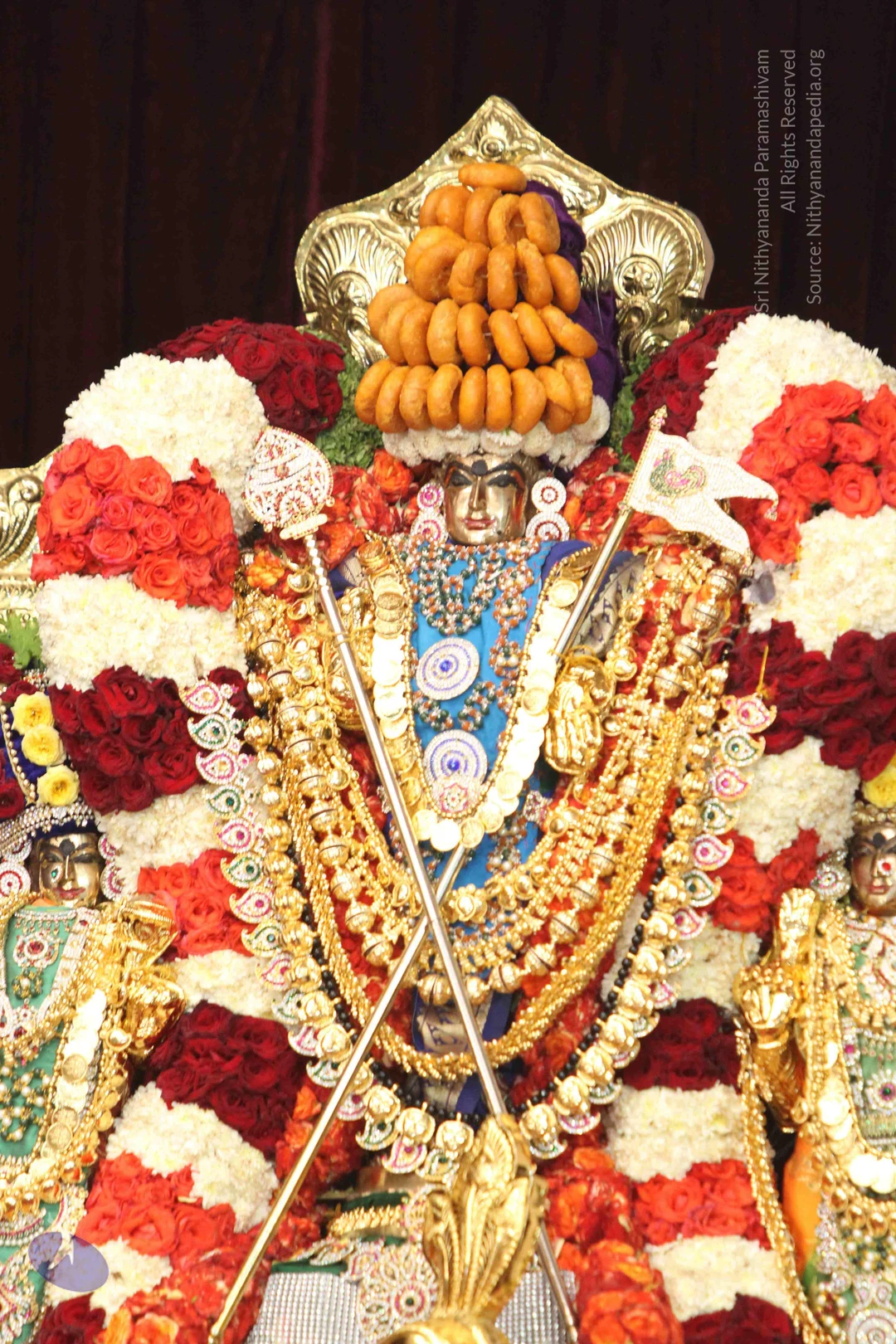
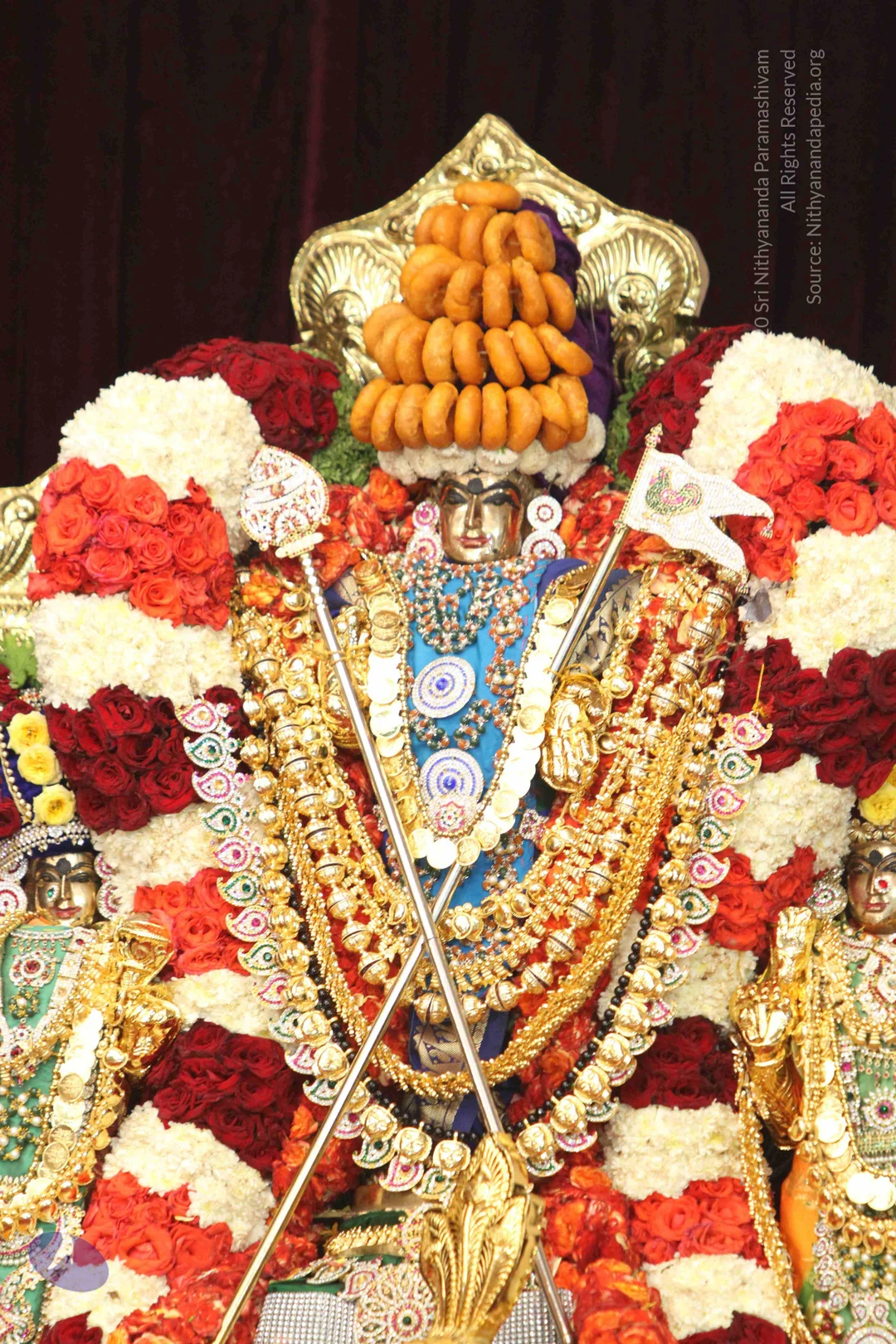
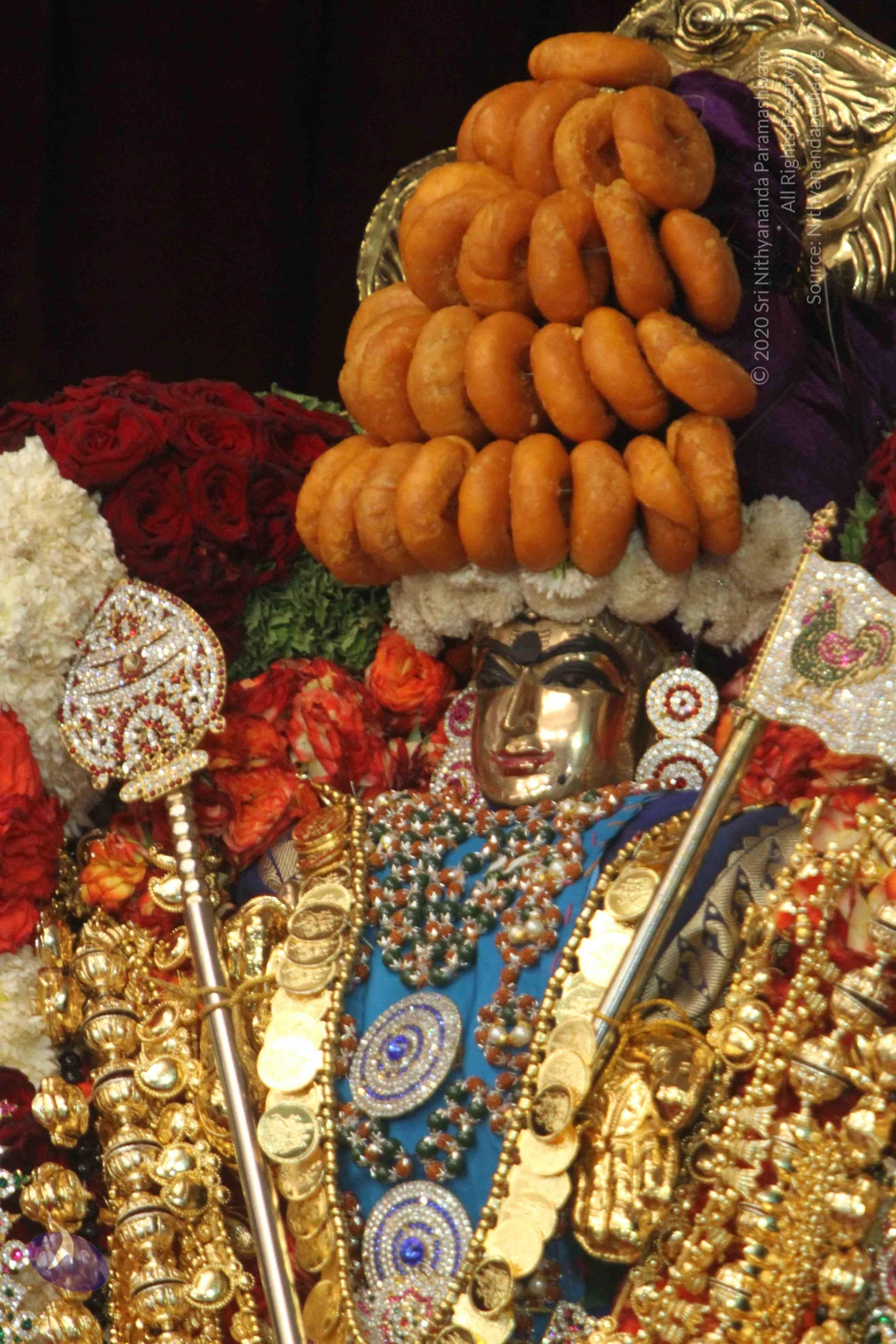
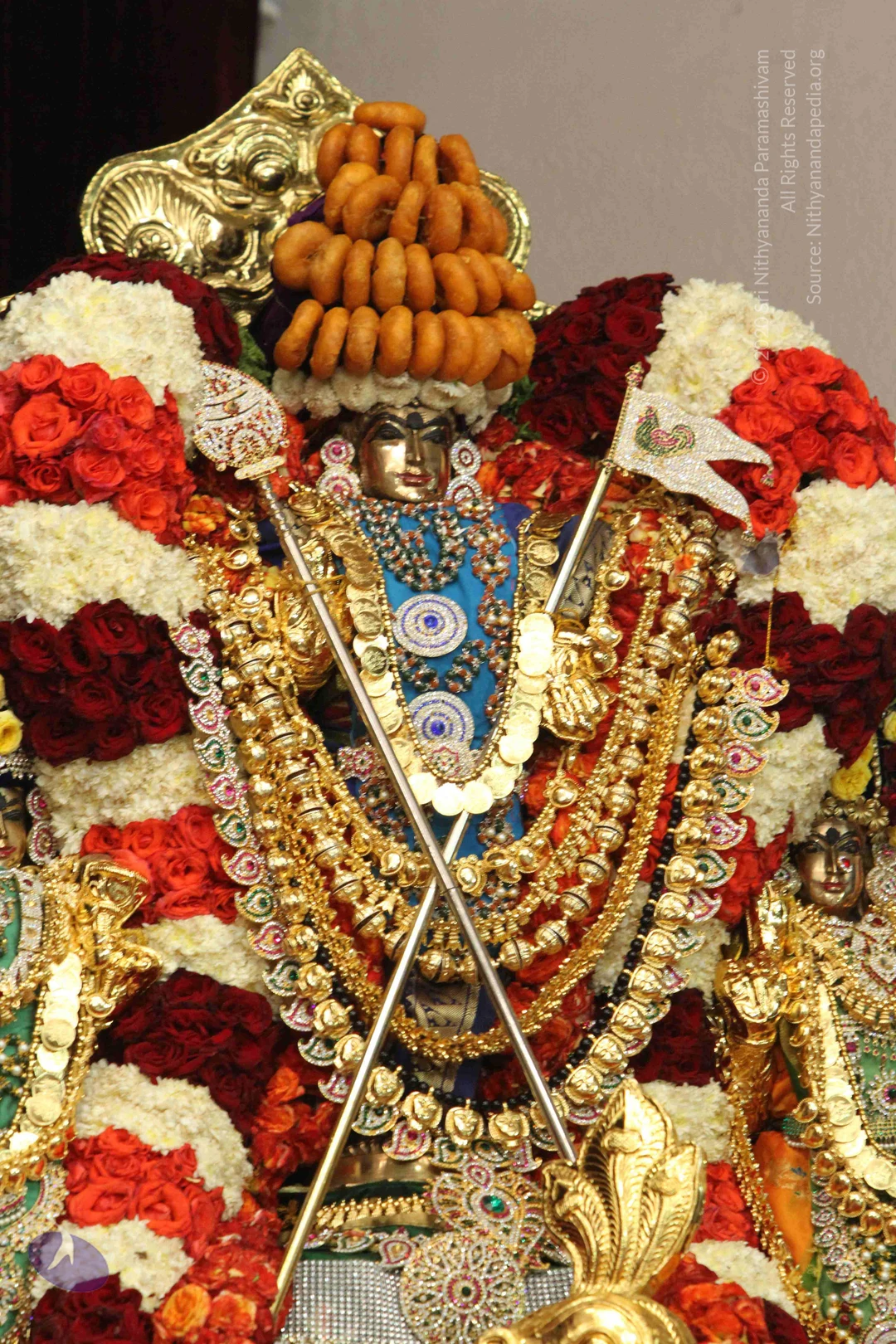
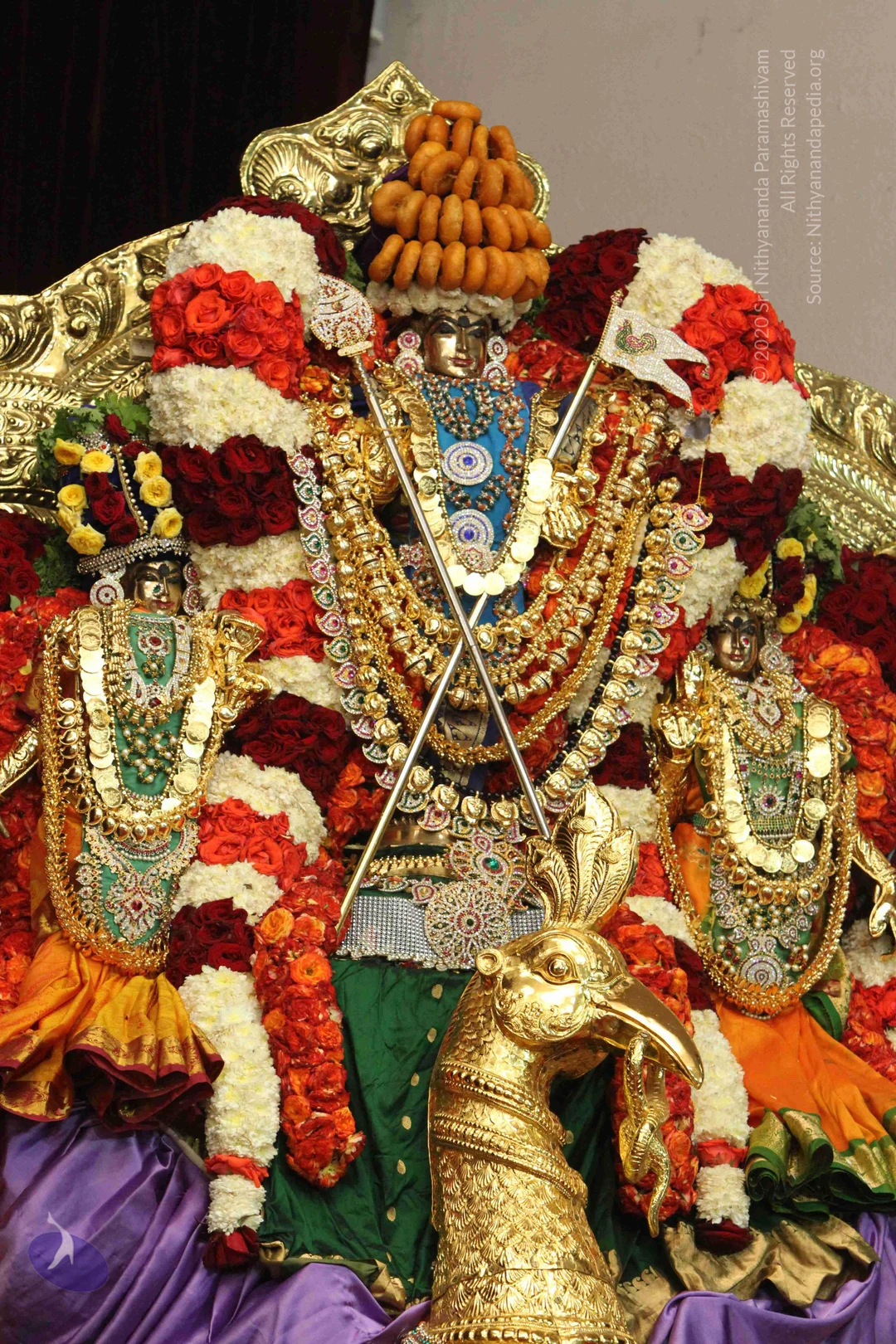
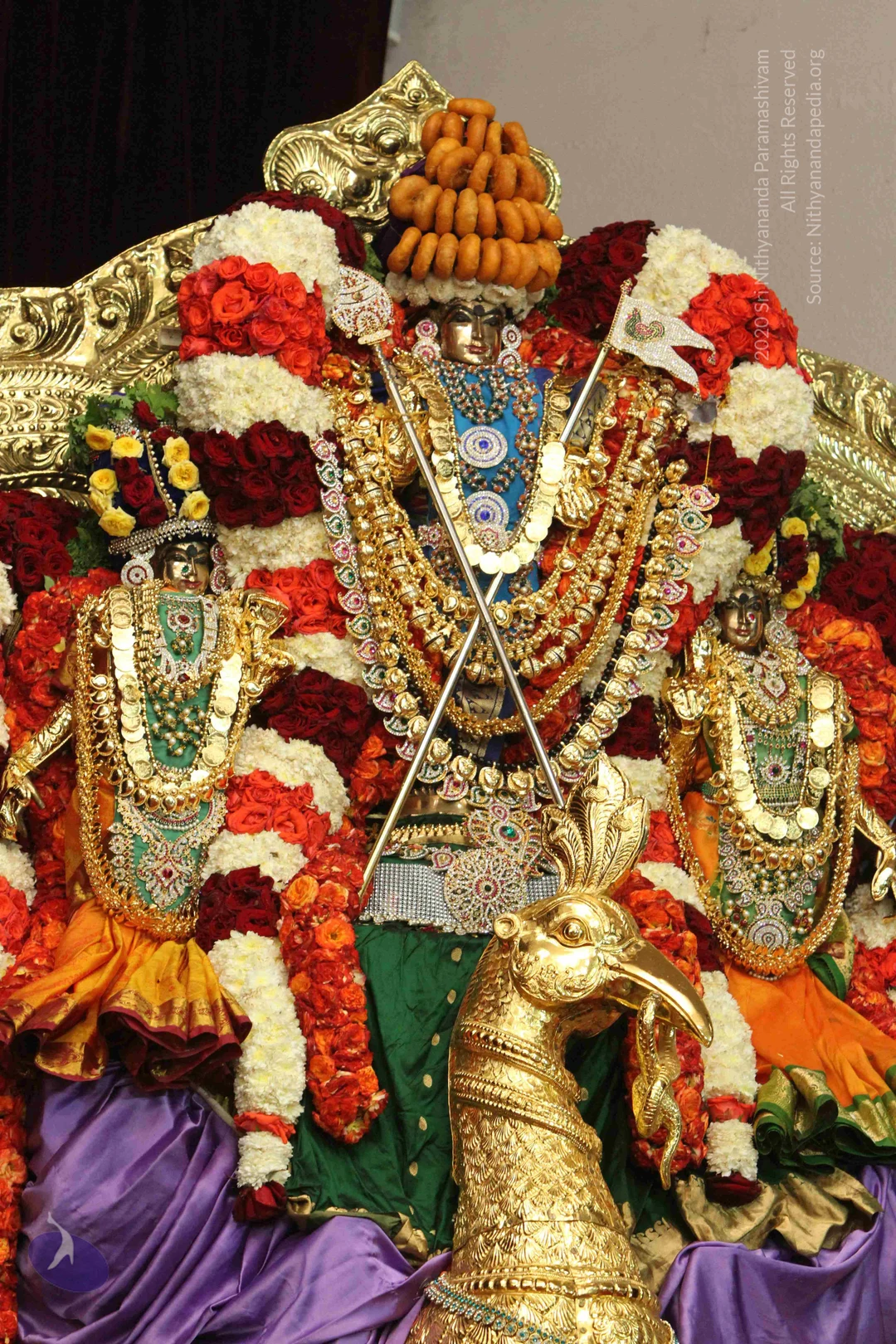
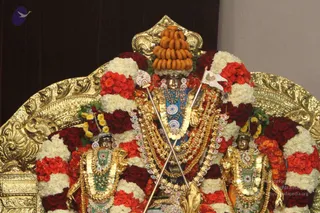
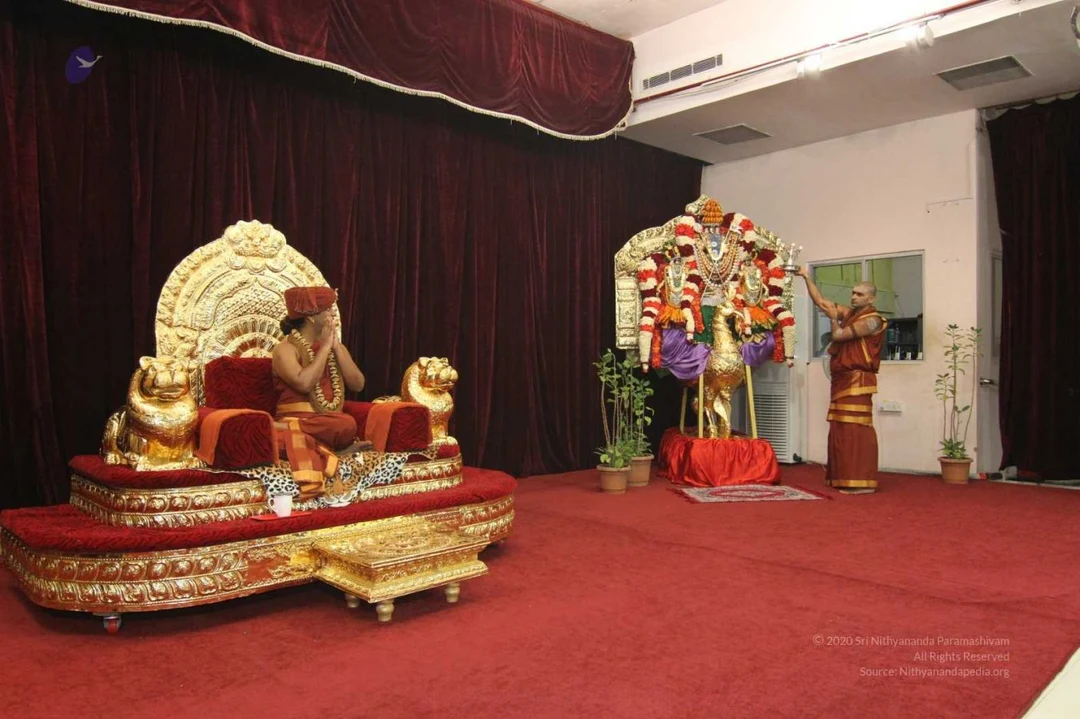
Today, the fourth day of Skandha Sashti Uthsava! Subrahmanya, who is the embodiment of the experience Shivoham, is gracing in Sarvaalankara, with Valli and Devasena, on Swarna Mayura Vaahana, the Golden Peacock Vehicle, wearing a crown made out of sweets. Subrahmanya is the embodiment of that experience ‘Shivoham’. And, fourth day of Skandha Sashti Brahmothsava is happening. He is gracing all of us on Swarna Mayura Vaahana. Great!

Today, first thing, I want to tell you all, I was doing lot of research on finding the source of this word ‘Ashram’. It is much later, the post-Shankara, only post-Shankara I am able to get any reference for this word ‘Ashram’ being used in Hindu tradition. But the word ‘Aadheenam’ is used much, much pre-Shankara, in the Vedic era which exactly means: ‘Temple Monastery Complex’; where there is a worship-place and a sannyasi stay. Understand, please understand, the worship-place maintained and run by the priests are called ‘Temples’, ‘Aalayaas’; but the worship-place run and maintained, headed....may be the priest will be there to assist and do rituals and all that, but headed and run by the sannyasis is called ‘Aadheenam’. So, in our organization, I am introducing this understanding and incorporating it. If you are just a monastery, you can use the word ‘Ashram’. But, if you are a Temple Monastery Complex where the temple is there, at least a brahmachari who is going to take Sannyasa, or a Sannyasi, if they are staying and maintaining, running, that place should be called as ‘Aadheenam’. So, from now onwards, wherever the temple and monastic member, both of them exist..... For example, places like Toronto, or Los Angeles, and wherever we have a temple and monastery – means, sannyasi – both exist, that place should be called as ‘Aadheenam’.

As I said, the examples – Toronto, Kuala Lumpur, Los Angeles, these are the examples where we have a temple and a sannyasi. If you don’t have a temple, only sannyasis are existing, you should call yourself only as ‘Ashram’. If you have both, if both conditions are fulfilled, you can call your place as ‘Aadheenam’. And, traditionally this word has been used much older. I am able to find the reference for this word much older than the word ‘Ashram’. See, the word ‘Akhaada’ comes into existence, first on record, little before Shankara. But, that word directly does not mean ‘a spiritual training centre’. It meant more like a weapon training centre, the physical training centre. Later on, Nagas adopted that and this shaasthra. Shaasthra and Shasthra, when both has been adopted.... Actually three; Asthra, Shasthra, Shaasthra. ‘Shasthra’ means - which stays in your hand and attacks people. ‘Asthra’ means - which leaves your hand and attacks people.

For example, arrow is ‘Asthra’; Gadhaayudha (mace) is ‘Shasthra’. Asthra, Shasthra, Shaasthra, when Nagas have started adopting all the three, they started using the word ‘Akhaada’. We are not ‘Akhaada’ actually in the right sense, because we don’t use Asthra and Shasthra. We don’t have any more weapon training. We have only the Shaasthra training.

So, I was trying to find which is the most apt, right word, and used as early as possible, which I can trace back with the proper reference. I wanted a written reference in some scripture. So, when I traced back, even though the word ‘Akhaada’ or ‘Peeta’, all these words are used in the pre-Shankara period, before Shankara itself, the most apt word I found..... Because the ‘Peeta’ means, ‘temple, monastic members and householders’. If all the three exist, then it can be called as ‘Peeta’. But if there are temple, and only monastic members, that place should be called as ‘Aadheenam’. And, there are only monastic members, or only grihasthas, that place can be called as ‘Ashram’. So, we will categorize ourself clearly and fit into the traditions perfectly.

I also insist, all our ashrams should completely overhaul themselves as per the Vaasthu, as per the Vaasthu. All our centres, ashrams, temples, should reorganize themselves as per Vaasthu, and I insist all constructions to follow the methodology of the Pandya construction method which is still kept alive by Naattucoattai Chettiaars. See, the construction style, food style, clothing style; all the three we will be following the Pandya style. The Pandya style will be the standard format. That will be the system we will be following. So, I insist on the Pandya style construction, the stone pillars, the whole architecture and structure method, and these words. Now you can classify yourself clearly.

· If you have monastic members, non-monastic members and temple, all three staying together, you can call yourself as ‘Peeta’.

· If you have temple and monastic members only, you should be calling yourself as ‘Aadheenam’.

· And, if you have only monastic members or only grihasthaas, no temple, but even if you are having monastic members and grihasthas staying in a place, that can be called as ‘Ashram’.

· And the word ‘Akhaada’ cannot be used because we don’t do asthra-shasthra training. There is no asthra and shasthra training; only shaasthra training. So, we can’t use the word ‘Akhaada’.

So, now, each ashram can classify them self how you want to have the title, and have it for yourself. If you have a monastic member and temple, you can call yourself as ‘Aadheenam’. And you have the right to call yourself as ‘Aadheenam’!

I will move to today’s satsang.

Today’s message from Mahadeva: BEING IN COMPLETION WITH ADVAITHA.

Please listen! See, when I was introduced to Advaitha by Arunagiri Yogishwara, it was such a strong experience in me. Even in the worst moments of my life, that strength did not leave me, and I turned to Advaitha only, for the strength and solution, understand? Finding Completion with the Dharma, Advaitha, you are living! I am telling you, when Arunagiri Yogishwara introduced this science to me, I can say all it took is just few days only for him to make me experience. I still remember, when he said, ‘I am everything’, I asked him, ‘What do you mean?’ He said, ‘If I move my hand, the hill will move, because I am that.’ And literally he showed me! I was sitting in his right side. He said, ‘I am you. You see now.’ When he moved the right hand, I saw I am moving! When he moved the left hand, I saw the hill moving! And, when he crossed both the hands, I saw me getting into the hill and coming out!

Of course, I am giving a lot of work for these stupid psychiatrists, psychoanalysts! You can go on analyzing what I am saying, and say, ‘Oh, this fellow, as a child he started having delusion, illusion.’ You can do all that stupid things. Just this Ramakrishna Paramahamsa who passed away long before, who is no more in the body, even on him they are still doing psychoanalysis and all that mapping and everything, and trying to come up with stupid books like ‘Kali’s Child’! I don’t know how much work I am giving for these psychoanalysts. HAHAHAHAHAHAHA! Do whatever you want! I will continue to be a mystery for you guys! I will continue to remain as a mystery like Sanatana Hindu Dharama which you will never be able to see the depth! Because all these statements, tomorrow these fellows are going to sit and do post-mortem on it: ‘How this could have happened? Or was he in delusion? Was he in illusion?’ You can challenge Ramakrishna, because he is not going to physically appear back again and defend himself, but I am going to be sitting here for at least ninety more years! Understand, the more challenges you bring on, the more solid proofs I will be revealing from my side. Blessed are those who explore me with the search of truth, because, they will be blessed with the truth!

It took hardly only few days for Arunagiri Yogishwara to experientially prove me the power of Advaitha. He just moved his right hand; I saw I am simply moving with him! When he moved the left hand, I saw hill is moving! When he crossed both, I saw that both of us went into each other and came out! The kind of Completion I had with Advaitha did not bring any fear into me. I wanted to insist on this statement. Don’t try to tell, ‘Oh, because Arunagiri Yogishwara experientially taught you Advaitha, you achieved that kind of a Completion. Why do you expect that from us?’ No, I am telling you, because of that amount of Completion I had with Advaitha, when he pushed me into the hill and took me out also I did not have fear. Even if I just push you into your anxiety and take out, you have so much fear! Not even hill, just your anxiety! Pushing you to break your boredom your tiredness!

Bring tremendous Completion with Advaitha.

Actually, the next fun I am going to have is with these psychoanalysts, all these fellows; that is the people with whom I am going to have next fun! Because I am going to be revealing the mind-boggling, unimaginable, solid revelations about the law of life, the Advaitha, Shuddhaadvaitha Sathya! No, Ramakrishna also faced many challenges of his time. But, now, come on, let’s have fun! All these fellows who are analyzing, doing research in the field of mind, psychosomatic field and psycho-delic and psychoanalysis, body-mind-spirit related, that cross-section, body-mind-spirit and consciousness, I am going to shake many of their basic beliefs by revealing the exact laws of life as it is in the Advaithic space, from the Advaithic space! Fortunately, Mahadeva has blessed me with Saraswathi, who can orate and paint in words! No, I really wanted to face all these people who abused Ramakrishna, the great Sanatana Hindu Dharma masters by bringing stupid theories, stupid theories! I am going to give lot of work for anti-Hindu intellectuals all over the world. HAHAHAHAHAHAHA! This Jeffrey Kripalu, all these guys wrote books like ‘Kali’s Child’ and all these, just doing post-mortem of few words of Ramakrishna and all that here and there, with the courage because he is not here physically available and he will not be defending himself. But I am going to be sitting here and asking all these fellows, ‘Come on, analyze! I will give you the possibility of entering into the Ocean of Consciousness!’ See, entering into the space of Ramakrishna and analyzing and all is more or less like doing a safe game: You go in a ship, and from the ship measure the depth of the ocean and come away. In my case, I am alive! I will ask you to get into me, the Ocean!

Today, when Mahadeva revealed this truth of being complete with Advaitha, I thought, ‘Oh, God! Yes, this is one of the most important component in any seeker’s life: Being Complete!’ See, when I experienced Advaitha, I know for sure, forever and ever I cannot be frightened, I cannot lose my space, because Advaitha is protecting me, Advaitha is the law of life. That one is enough to solve everything, all the problems I have, I am going to have, and I had! As a ten-year old child what problem I had? Maximum my problem is I will ask my mother, ‘I want to go and meet this sadhu and meet that swami. Give me some food, give me some rice, give me some cloth. I wanted to gift him.’ That’s all I will ask. Usually, no sadhu asked me anything. But whenever I see some other people, devotees come and give them something, I will run to my mother and say, ‘Oh, when I was sitting with that sadhu that person brought clothes and gave him. Why don’t you give me also clothes?’

And I had the fortune of amazing mother and father, who were such amazing givers! I tell you guys, it is from my heart I am telling you guys! They were not that rich. My father, that one thing, he is a fool! I can tell very openly, he is a stupid! When it comes to giving, he is such giver, he will borrow and donate! I have seen! I have seen, he will borrow and donate! Economically, you should call him only as ‘stupid’! But still I remember, whenever I want to give anything for the sadhus, it is always given more than what I asked. If I ask my mother, ‘I want to give him the kaavi shawl’, she will get me kaavi dhoti also and give both and say, ‘Give. If you give only shawl, he can cover only the upper body. You should give dhoti also. That is the tradition. Please take it.’ That is always the way she brought me up. And my mother’s father, my mother’s father, he is another one amazing giver, but he is not to the level of stupid giving, like he will earn and give whatever in his earnings. My father is a spendthrift as far as giving comes. Anybody comes and tells, ‘Oh Maama (Uncle), you are the great giver in this village; to who else we can go for any, donation!’, immediately he will borrow and give!

So, that’s all is my problems in those days; nothing much. No other problem. At the most, I will do small-small celebrations, festivals. At the age of eleven I organized my first public festival – Ganesha Chathurthi – in Arunachaleshwara temple, with my teamily, my first teamily, organising. That’s all is the problems I had at those days. But I was so sure, whatever I had, having, going to have, I was so sure, this Advaitha completes me, and that is enough to solve all the problems. And they solve all the problems! That strength of Advaitha, that strength.....!

(AT THIS POINT, A PHOTOGRAPH OF SWAMIJI AS A YOUNG BOY WITH HIS FRIENDS IS SHOWN).

(Swamiji, pointing to the photo): You can see the photograph of my first teamily and the first celebration I organized....maybe it should be around ten – eleven only, I don’t think more than ten - eleven....with my whole teamily, first teamily.

Alright!

The kind of a strength it provided and settled into my core, stayed and staying forever! I tell you, finding that kind of a strong Completion with Advaitha! Again we ask, ‘How can that be achieved?’ Again, the solution is: COMPLETION. The more Completion you practice every day, all the incompletions you find, the more Completion you will experience with Advaitha itself! Advaitha becomes your thinking style! For example, even if this roof falls on my head now, I will look into Advaitha only for solution. You may think, ‘How that can be connected to Advaitha?’ I tell you, that is connected to Advaitha. That is why it is standing there without falling! Finding that kind of a Completion with Advaitha!

Actually, I am going to be a very big challenge, living challenge for all these stupid fellows who are perverting the Sanatana Hindu Dharma. Recently, some foolish fellows have started developing a theory called, ‘Neo-Hinduism’. I am going to be a nightmare for all these fellows! HAHAHAHAHAHA! Even I wanted to answer all the stupid theories they are developing. See, there is a huge intellectual war happening on Sanatana Hindu Dharma. Just by my revelations and secrets related to Advaitha and law of life, I am going to be the charioteer, Parthasarathy, in this Kurukshetra war, in this intellectual Kurukshetra. I myself may not directly wage the war, but I will go on revealing all the deepest understandings and realizations, the core truths of law of life, Advaitha Vedantha, Shuddhaadvaitha Anubhava, and debunking all their stupid, perverted, intellectual theories and theologies against the Sanatana Hindu Dharma. One big advantage I have is my age. I am going to be sitting on the Planet Earth for ninety more years! I will make myself ten more years extra! HAHAHAHAHAHAHA!

Because my longevity is in my hand. See, just like if you have cotton, you can make thread, I have Kaala, Time, out of which I can make longevity! See, longevity is the thread made out of Kaala. If I inhale Kaala, Time, and exhale all the old-age symptoms, the aging symptoms.....over! I make life out of Kaala! Understand? If you don’t understand, it is okay. See, just like how you can make thread out of cotton, you can make longevity, life, out of Kaala, Time. See, whenever Time enters into you and comes out, your organs, body gets aged – means, tired – because of the incompletions Kaala, Time, leaves into your system - boredom, tiredness and all that. But, in my case, I never allow any incompletion to settle down into my system by the Kaala moving through me. I will just inhale Kaala exhale incompletions. HAHAHAHAHAHA! And no tiredness, no boredom! So, naturally, simply I will be growing young! It is a science, and it is possible for everyone! I will show you guys!

And, I will make this as an available science to all of you! Already, last Haridwar Inner Awakening, the scientific studies we have done on one-hundred-and-twenty participants, shows very clearly, within twenty-one days the anti-aging enzymes, two-hundred percent grown in the human body in every participant! The final report is coming. I am waiting for that. Once that comes out, I will give you a session with those reports. Actually, just if you inhale Time and exhale incompletion, you will be growing young; that’s all! Tell your liver, kidneys, heart, lung, intestines, everything, ‘Hey, don’t be tired! Don’t feel bored! When Time passes, have more excitement, more enthusiasm! Now we know more about life to enjoy life, to live life.’ When you say a simple ‘No’ to boredom and tiredness, and a big ‘YES’ to excitement and enthusiasm, that is all; you will be just anti-aging, anti-aging, growing young!

Bring Complete Completion with Advaitha, bring Complete Completion with the Dharma you are living, Complete Completion with the sathya of Advaitha. I tell you, nothing can violate you! Nothing can violate you! I tell you, even if I make the statement, ‘Even Death cannot shake you, don’t worry! You can have one more body!’, you will say, ‘No, no, no, I can have one more body, but I don’t want to give up this body!’, I tell you, ‘Live Advaitha; you can elongate your longevity, you can live as long as you want healthily in this very body!’ Even if this body drops, you can have one more body, is second. First thing I am telling you: You can repair this body and make it anti-aging, growing young, and live as long as you want! I am already proving it scientifically! I will come up and reveal more and more evidences, solid proofs, with more and more scientific reports and studies.

So, anybody who is out there planning to harm me or doing anything, be very clear, I am telling you now itself, if you just let me to do my work, I will live only ninety more years in this body. HAHAHAHA! But, if you try to disturb my work, I will just elongate my life and continue to exist on Planet Earth with this physical form, and do more and more work! That’s all! And you cannot tell I am lying. You can see the confidence in my eyes when I utter all these words! HAHAHAHAHAHAHAHA! It is possible! It is simply possible! Just telling you not to get tired or bored, telling your internal organs, ‘Don’t feel tired or bored. Inhale Time, Kaala, and exhale incompletions.’ That’s all!

Kaalabhairava is Death for you if you have incompletions. He gives you eternal life if you are Complete. For example, Brahma had incompletion and started becoming arrogant, thinking he is Sadashiva. So, Kaalabhairava came out and cut one of his heads. That is the reason Kaalabhairava came out of Mahadeva. Kaalabhairva is the energy expressed from Mahadeva. But, once he achieved Completion, he completed, Brahma completed, that Brahma kapaala (Brahma’s skull) which is in Kaalabhairava’s hand becomes eternal! Now, Brahma dies after Brahma Yuga, Brahmas age over; but this kapaala becomes eternal, because it is in the hands of Kaalabhairava! So, understand, Brahma Kapaala has become eternal than Brahma itself! Brahma has birth and death. Brahma Kapaala has no birth and death anymore because it is in the hands of Kaalabhairava! As long as you have incompletion, Kaalabhairava is Death for you. Once you achieve Completion, he is eternal life for you! He is eternal life for you!

And, I am telling you, elongating life, making your life more number of years is a very easy job. Just you have to alter the way you cognize life; that’s all! You have to complete with this tiredness and boredom. Bring tremendous excitement and enthusiasm! You will see, your internal organs and body, instead of getting tired and worn and torn, instead of wearing and tearing, wear and tear, it will become more and more stronger and stronger and experienced and stable! In life also, in a job if you are getting bored and tired, wear and tear happens, your performance reduces. If you are getting more and more excitement and enthusiasm, that whole period becomes training period. See, last ten years if you are in that field, now if you have more enthusiasm and excitement, that ten year is a training period for you to be successful in this work field. If you are tired and bored, that ten year is wear and tear period for you to shut down the shop today. Whether life is a training period which makes you stronger and stronger, or an exhausting period which is going to make you weaker and weaker, is based on just your cognition. Whether you are going to grow old or grow young, is just dependant on your cognition. You can simply inhale Time, exhale incompletions, and your body will be there forever, as long as you want, as long as you want to live, with all the health! It is a science. At one point, you yourself may feel, ‘Okay, I have done what I wanted to achieve in this body. Come on, let’s relax!’; if you relax, that’s great, no problem! But, otherwise, there is no other force externally which can pressurize you to drop your body, which can force you to drop your body. No force can externally force you to drop your body.

See, all these mystical powers I am demonstrating, I will use them properly just to prove the strength of Advaitha Sathya and debunk all these stupid theories, the psychoanalysis reports they are trying to give for all these great incarnations like Sri Ramakrishna and all these people. When I read some of the books abusing Ramakrishna and degrading him, the first thing I felt, ‘Oh, God! I think I should use all the mystic powers expressing through my body to prove to these fellows their theory is completely wrong when they try to measure these great incarnations.’ I will do that job! But these stupid fellows who are abusing Ramakrishna, they are not interested in truth. They are interested in doing something to promote their vested interests and the conclusions they already arrived! Stupid fellows! Only to a seeker you can talk about truth. Truth is one of the most beautiful things which you require in your life when you are authentic, not otherwise. Otherwise you feel… ehhh…okkkk….what is truth….what is there….lets manage life….khana….roti and kapda…little money and luxury comforts…..

Inhale Time, exhale incompletions; your body and mind will be growing younger and younger. And bring tremendous Completion with Advaitha, the philosophy, the law of life, Dharma. The natural law of life is Advaitha. Make this as a lifestyle.

I feel there is so much to be told. I have not yet told whatever Mahadeva revealed today. From so many angle it has to be presented. Completion with Advaitha, may be I need few more satsangs to present this great truth in all its dimensions, in all its angles.

With this, I bless you all! Let you all radiate with Integrity, Authenticity, Responsibility, Enriching and Causing eternal bliss, Nithyananda! Thank you!

Photos

Pada Puja
Bhajans and Satsang

e-Kalpataru

Inner Awakening Sessions

Darshan

SMKT meeting

Sakshi Pramana:

Sharing from INNER AWAKENING

Tags:

Advaithic,death,Advaitha,live,"law of life",Paramahamsa Nithyananda,Nithyananda

Photos Of The Day:

Pada-Puja

Pratyaksha-Pada-Puja

Bhajans-&-Satsang

SATSANG

DARSHAN

Inner-Awakening-Session

Inner-Awakening-SMKT

Rudra-Homa-&-Viraja-Homa

Photos Of The Day:

FB-photo-of-the-day

01-PADA-PUJA

02-NITHYA-SATSANG

03-E-KALPATARU

04-IA-SESSION

05-ENERGY-DARSHAN

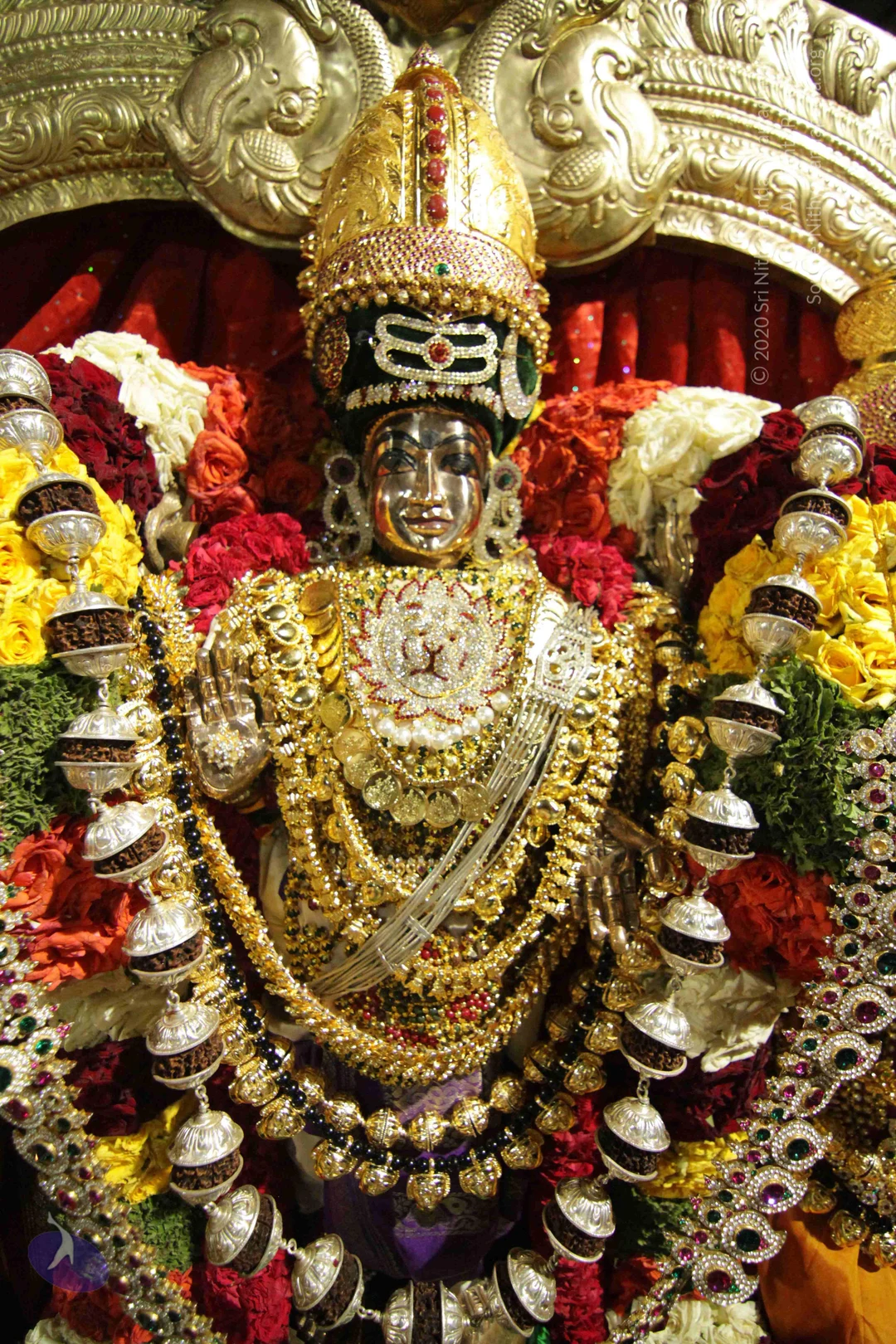
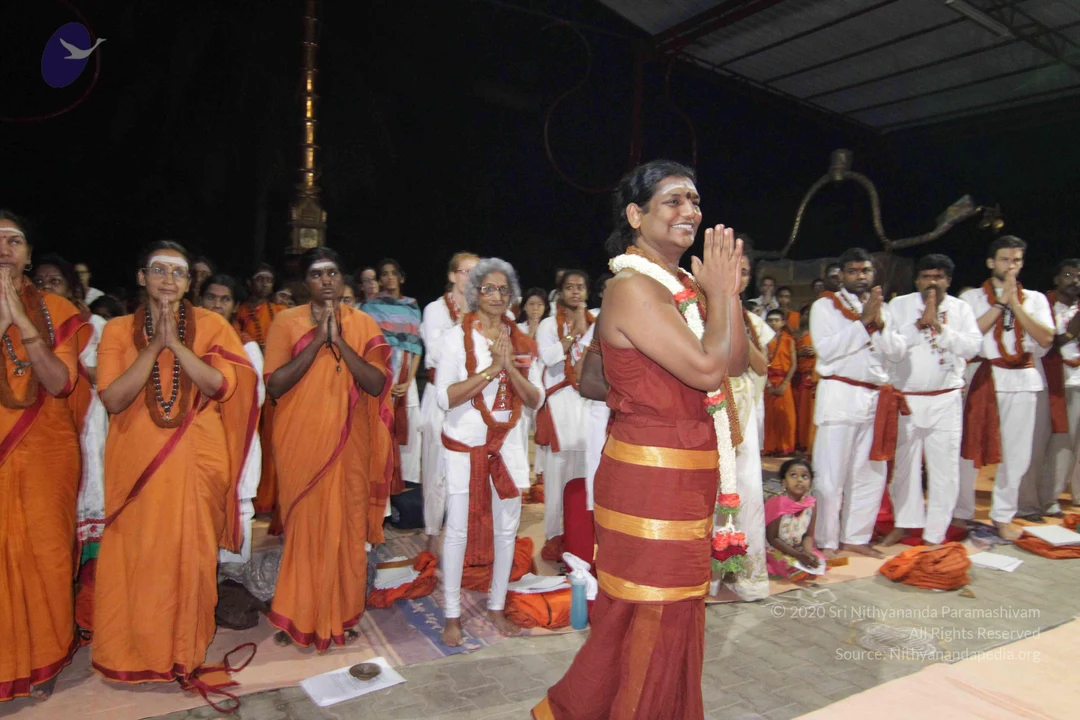
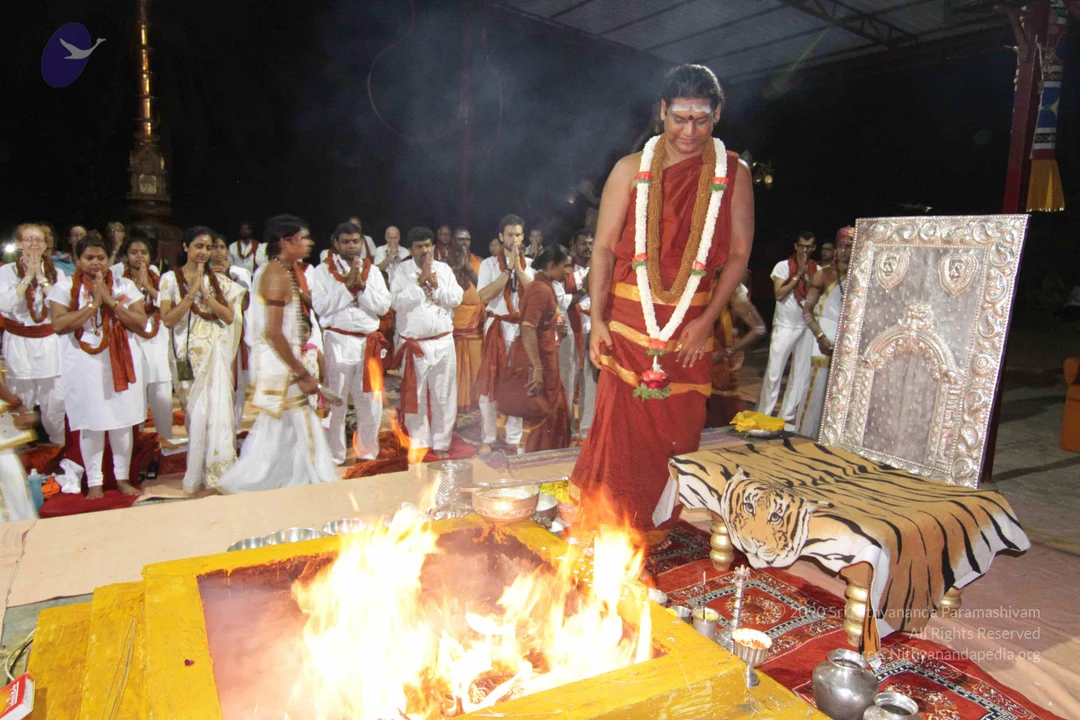
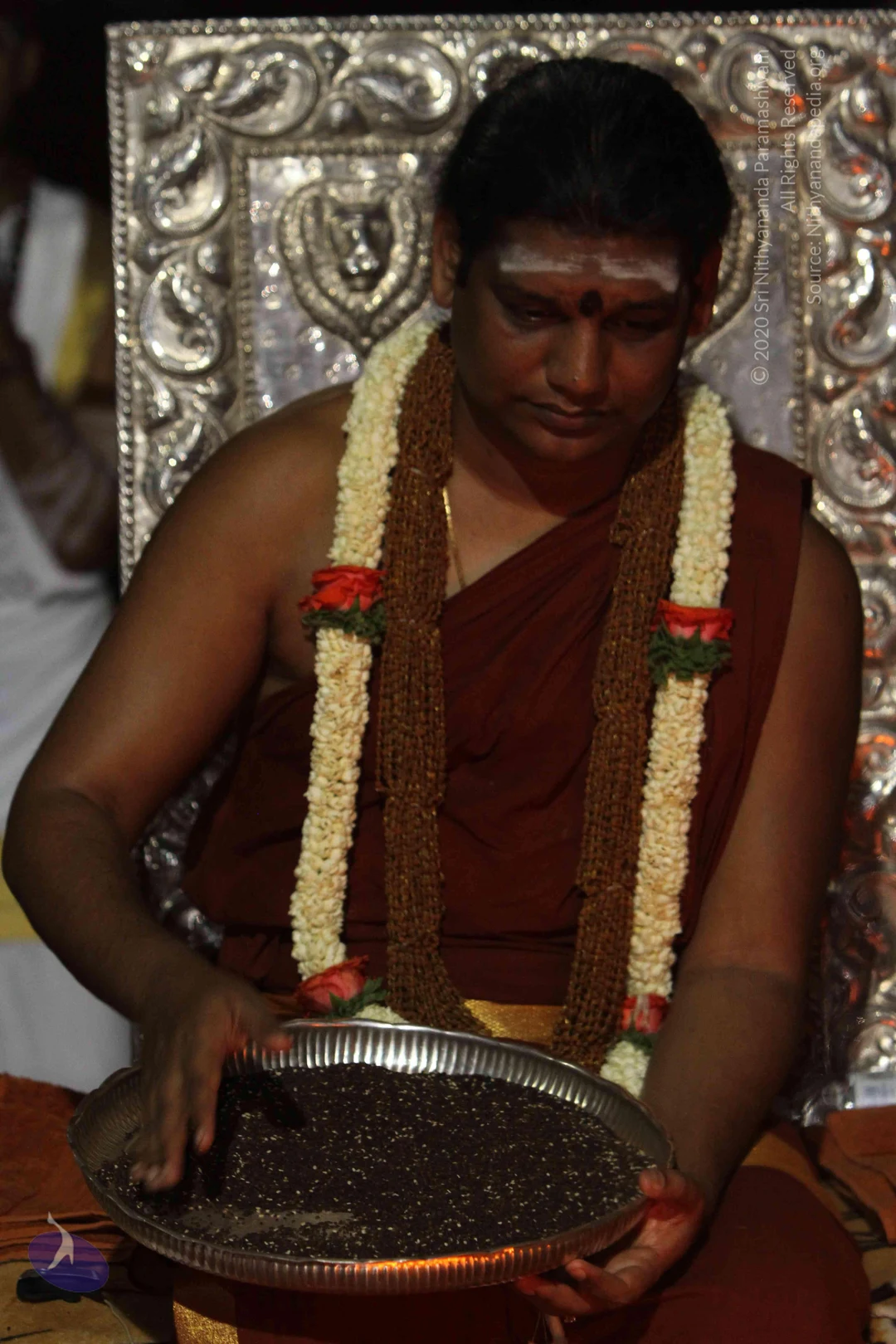
06-RUDRA-HOMA-AND-VIRAJA-HOMA

Photos from this day

View all 428 photos

Pada Puja
48 photosSource gallery

Bhajans and Satsang

88 photosSource gallery
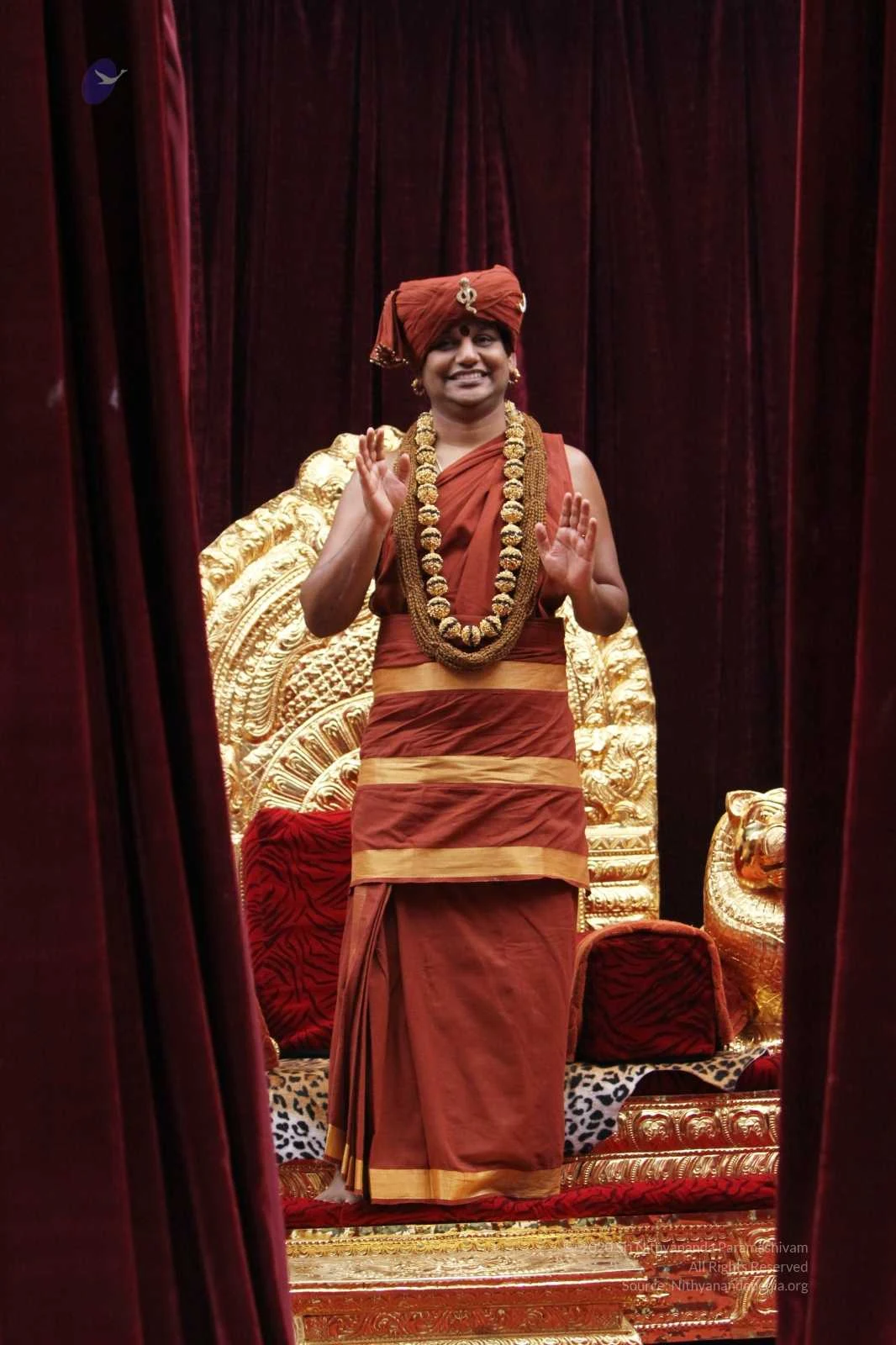
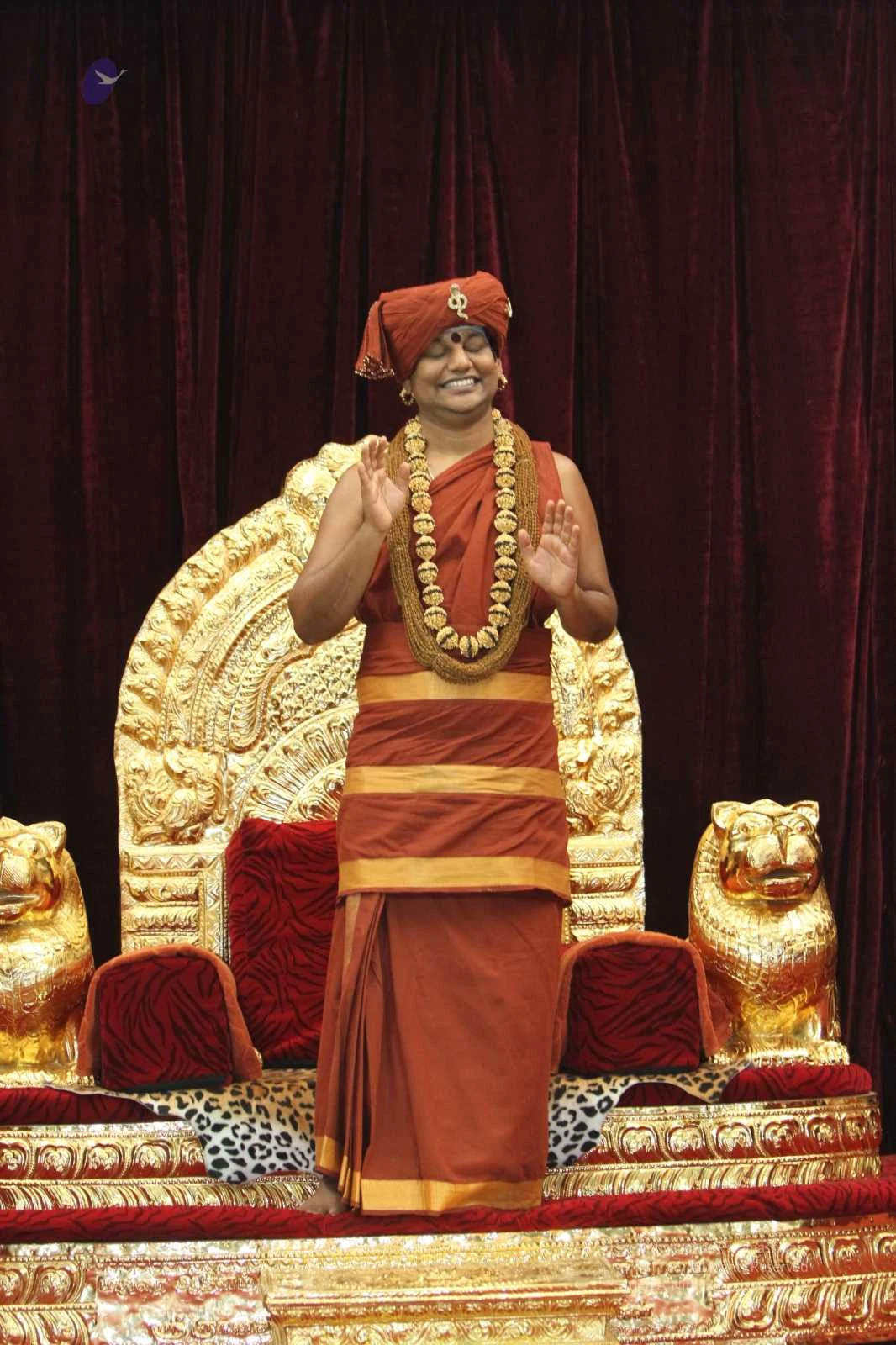
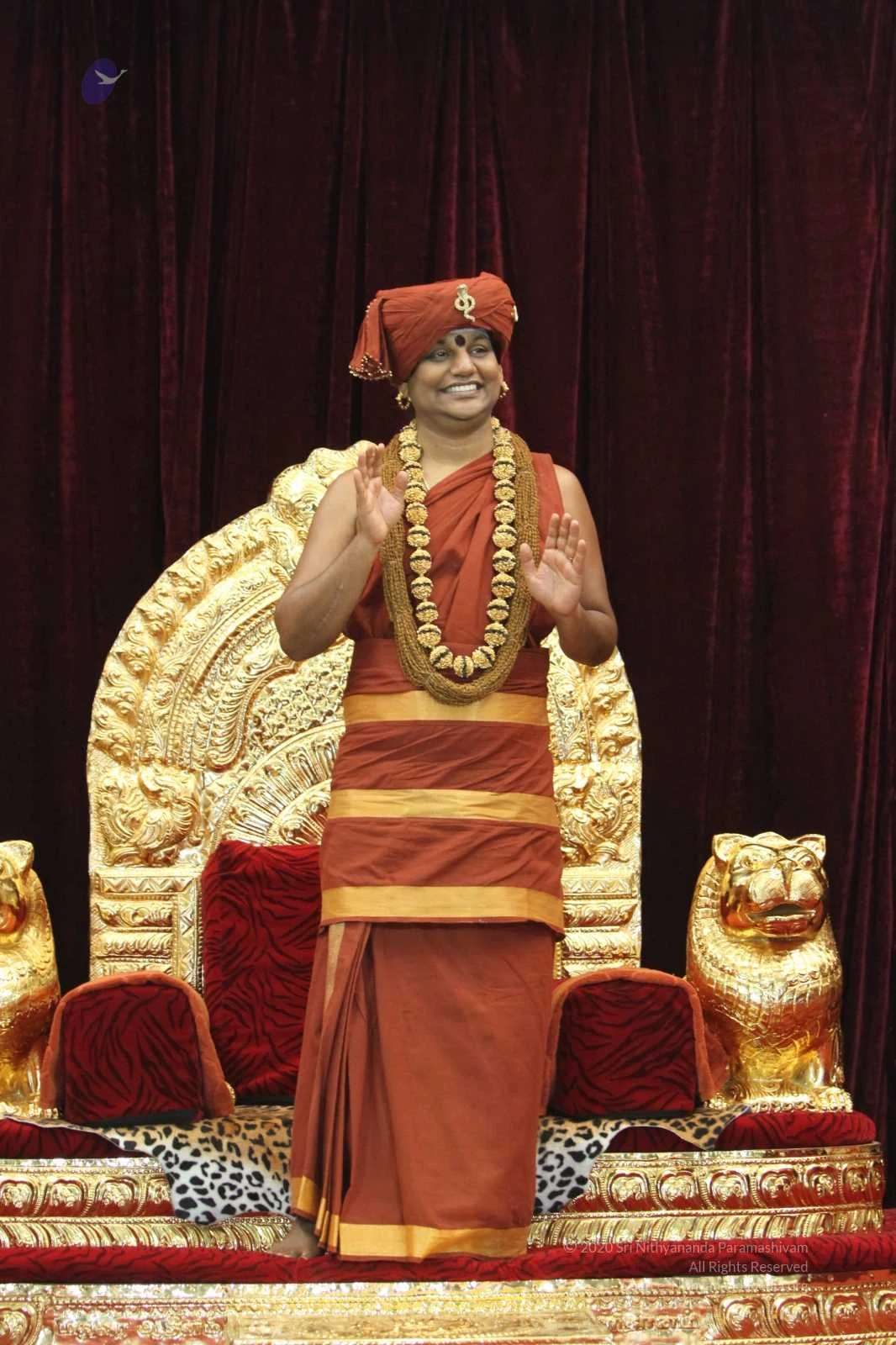
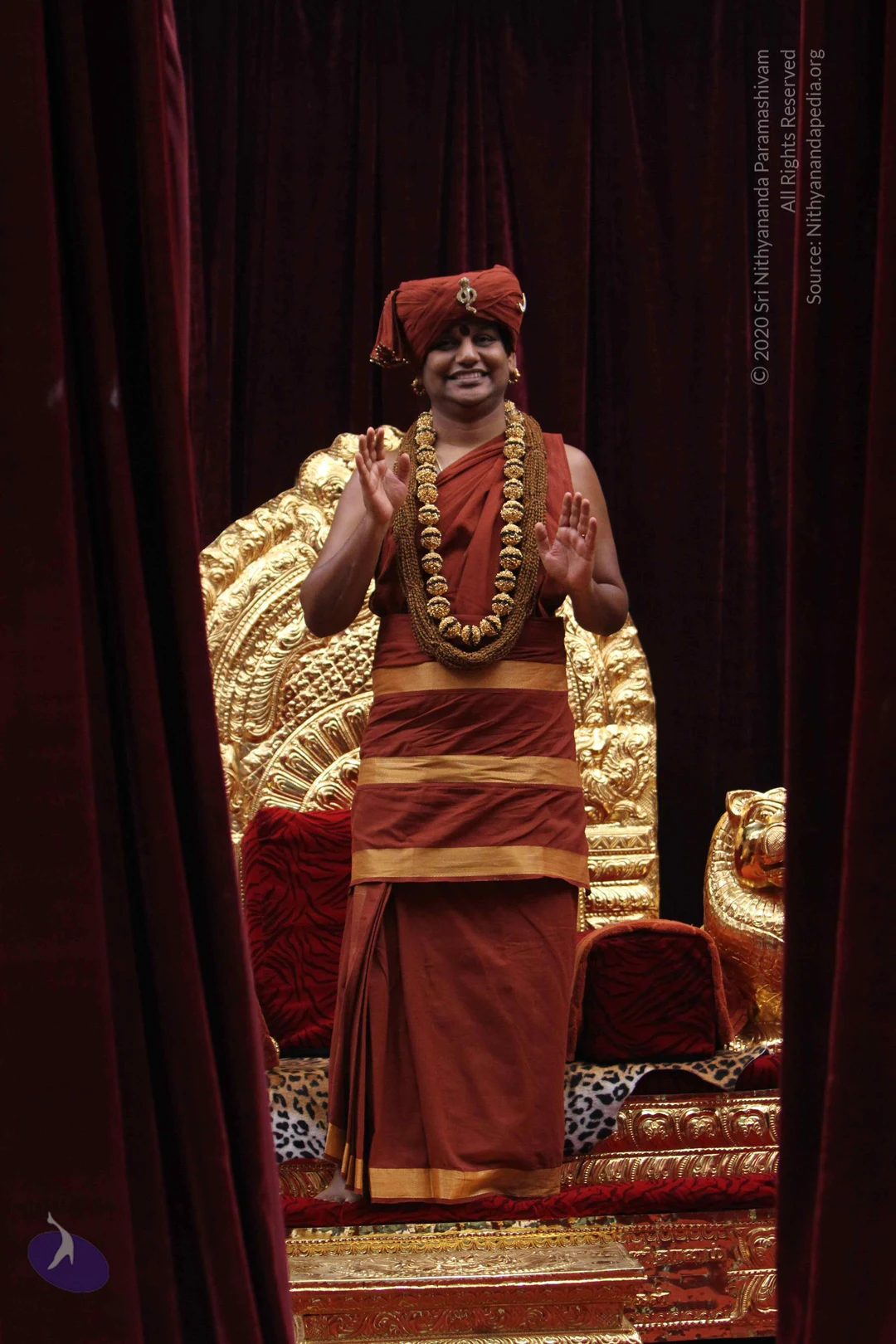
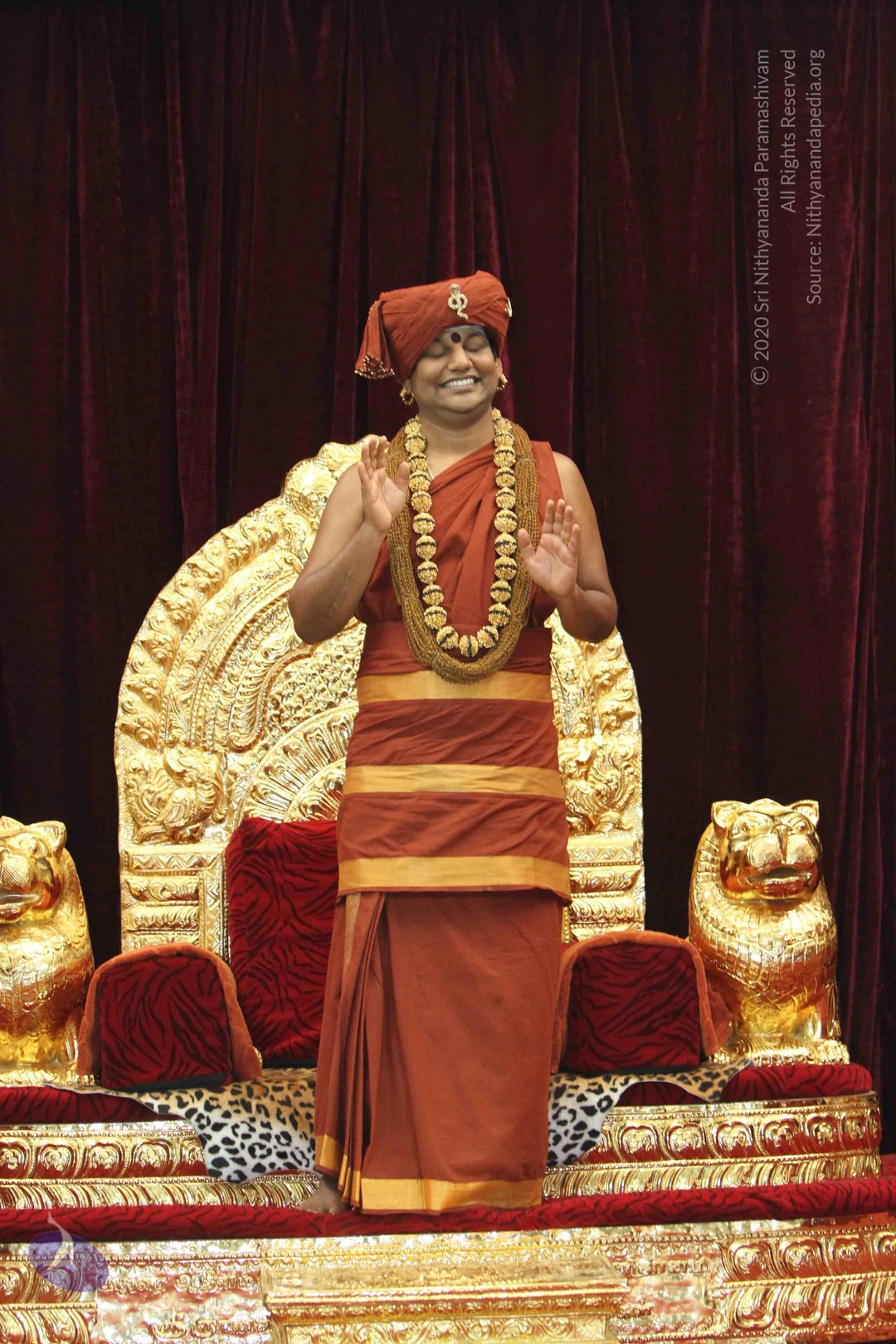
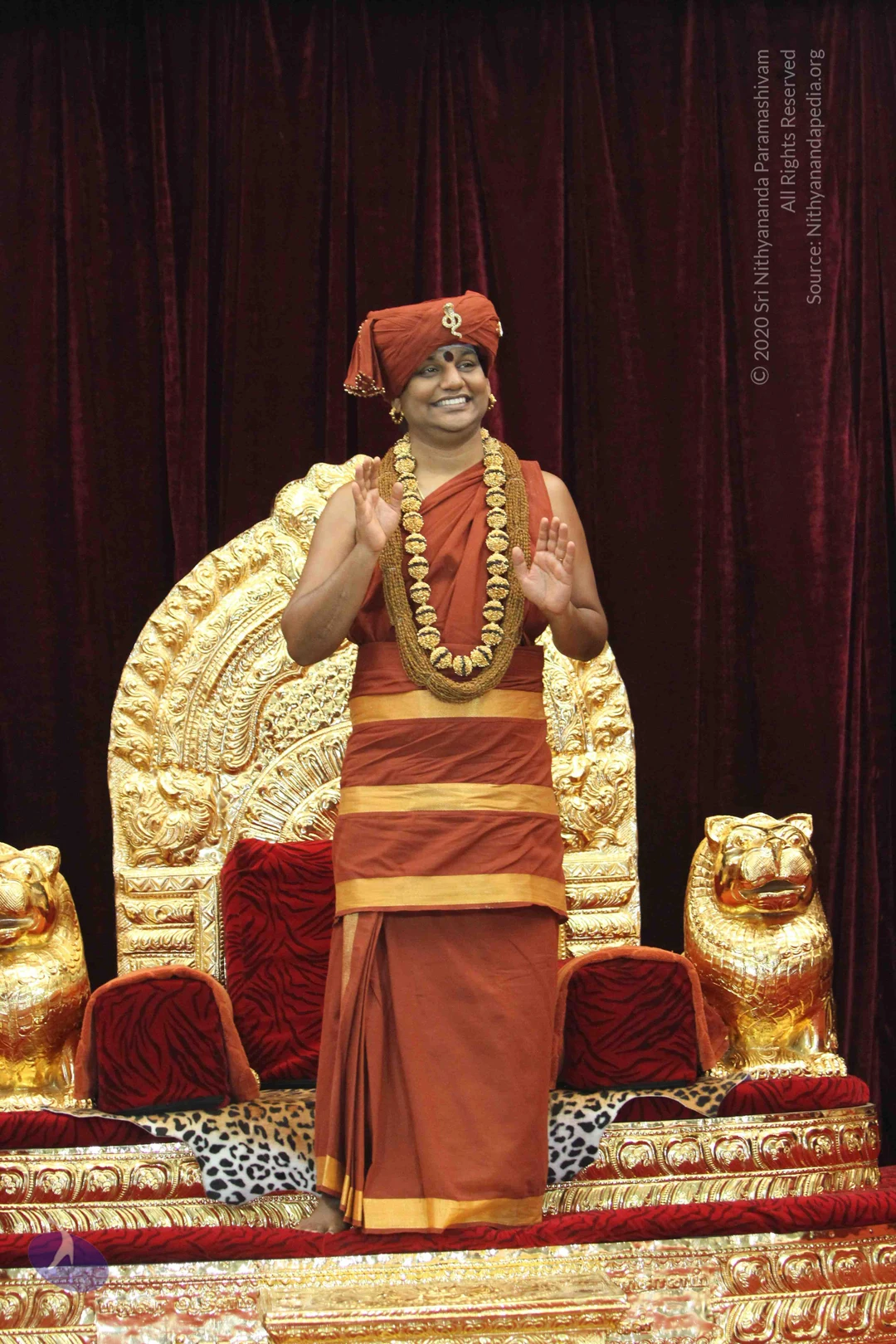
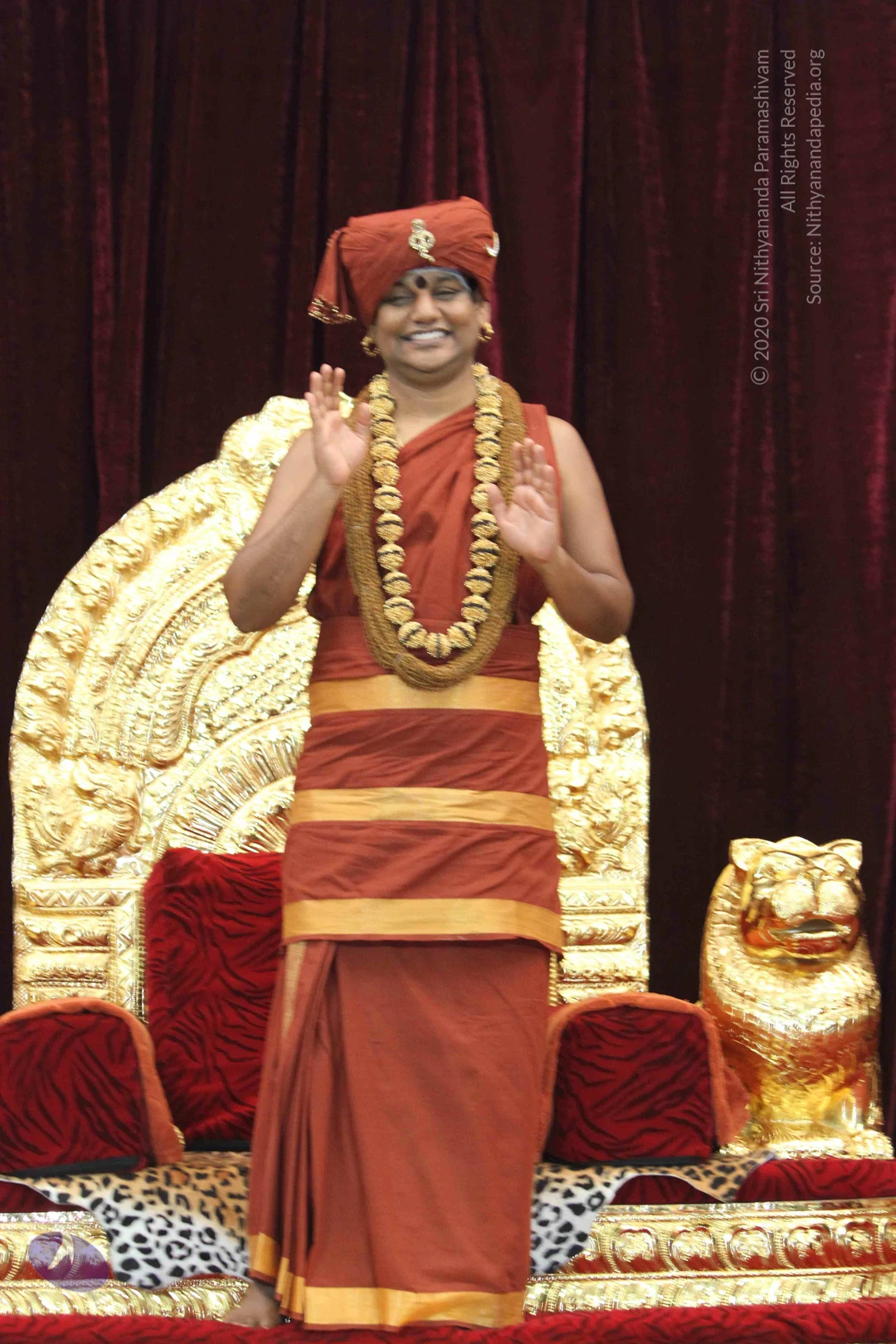
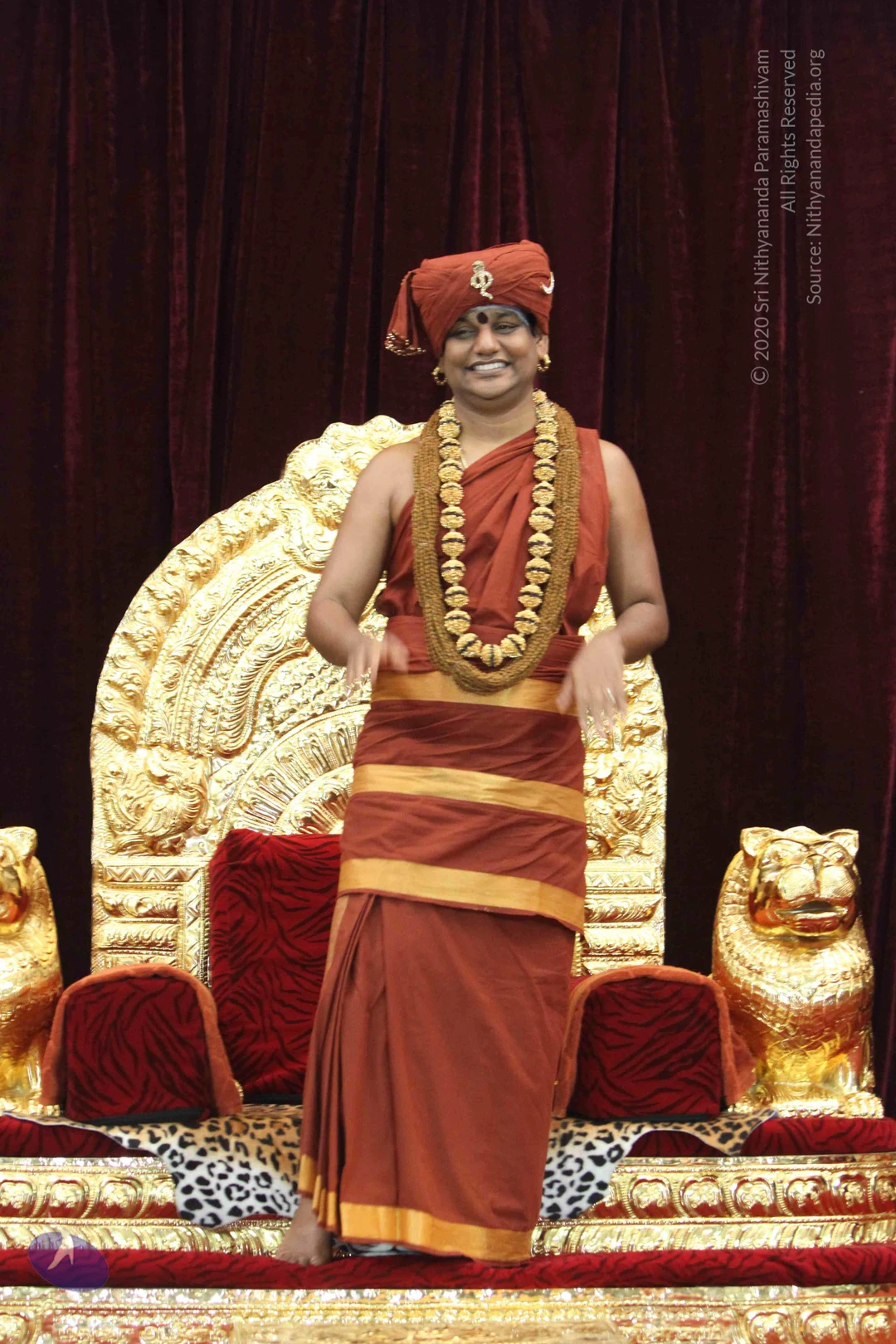
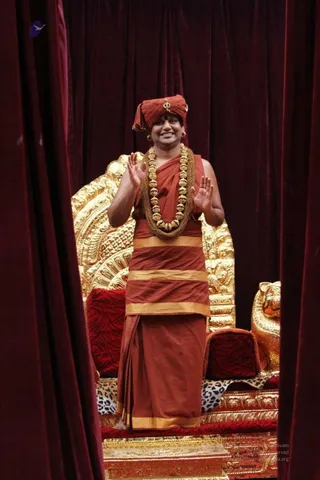
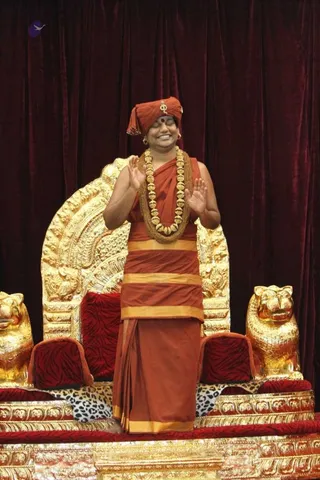
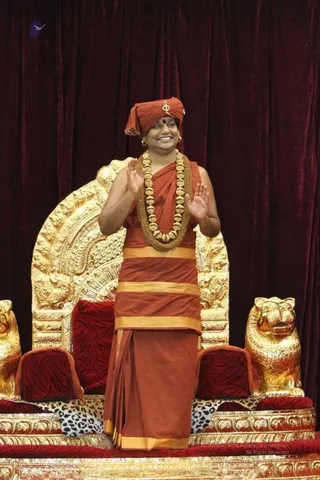
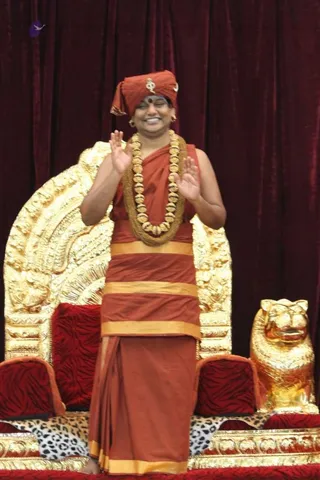
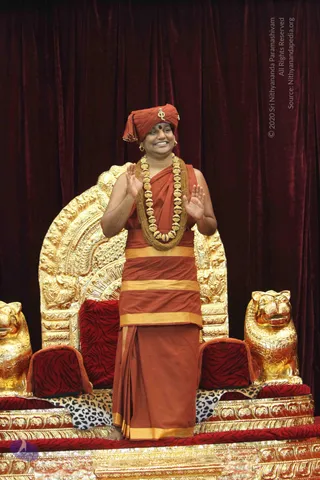
A smiling man in a rust-red turban with a small gold emblem and red tilak stands before an ornate gold throne with a carved tiger-head armrest and red zebra-print cushions, framed by deep maroon velvet curtains. He wears a rust-red and gold-bordered dhoti-style garment, a thick gold-bead rudraksha-style mala with gold ornaments, and presses his palms together in greeting. Swamiji (probable): the red turban, ornate gold throne, gold-bead mala and rust-red ceremonial clothing suggest the Nithyananda Paramashivam candidate.A smiling figure in a rust-red turban with a gold emblem and a rust-red and gold-bordered robe stands before an ornate gold throne carved with scrollwork and two gold lion figures, with a dark red velvet curtain behind. A long rudraksha-style mala with gold beads hangs on the chest, and the figure's palms are raised together in a greeting gesture. Leopard-print cushions and red velvet cloth cover the dais. Probable Swamiji by appearance: rust-red and saffron-toned ceremonial clothing, turban and multi-strand bead mala, seated on a throne in front of a red curtain.

e-Kalpataru

6 photosSource gallery
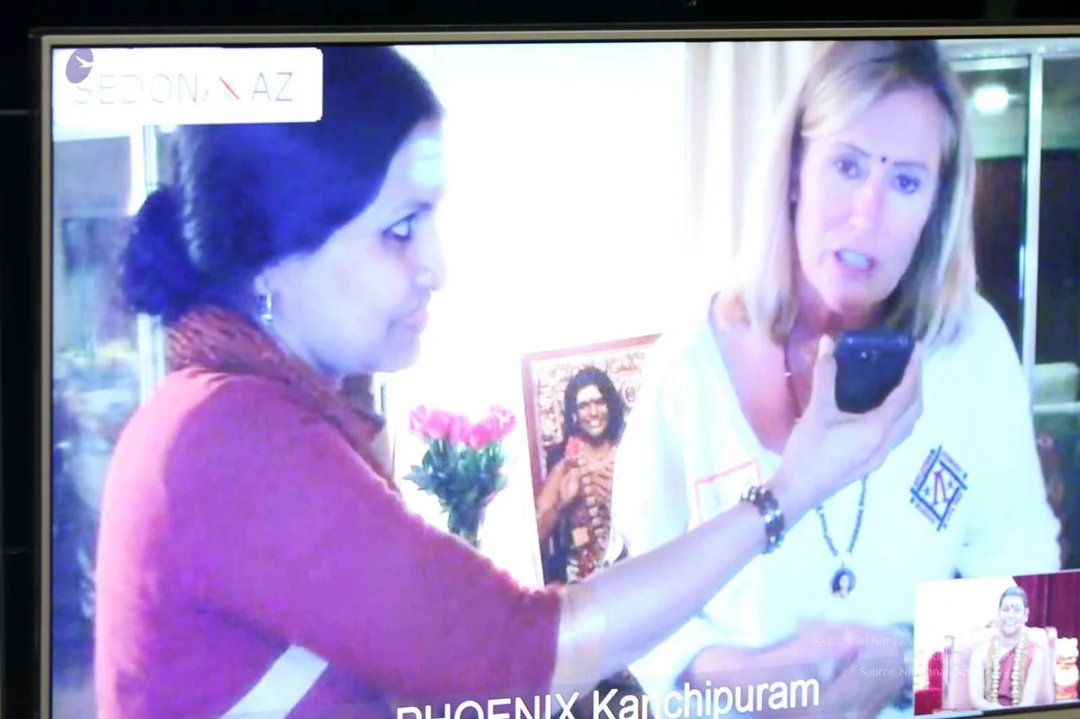
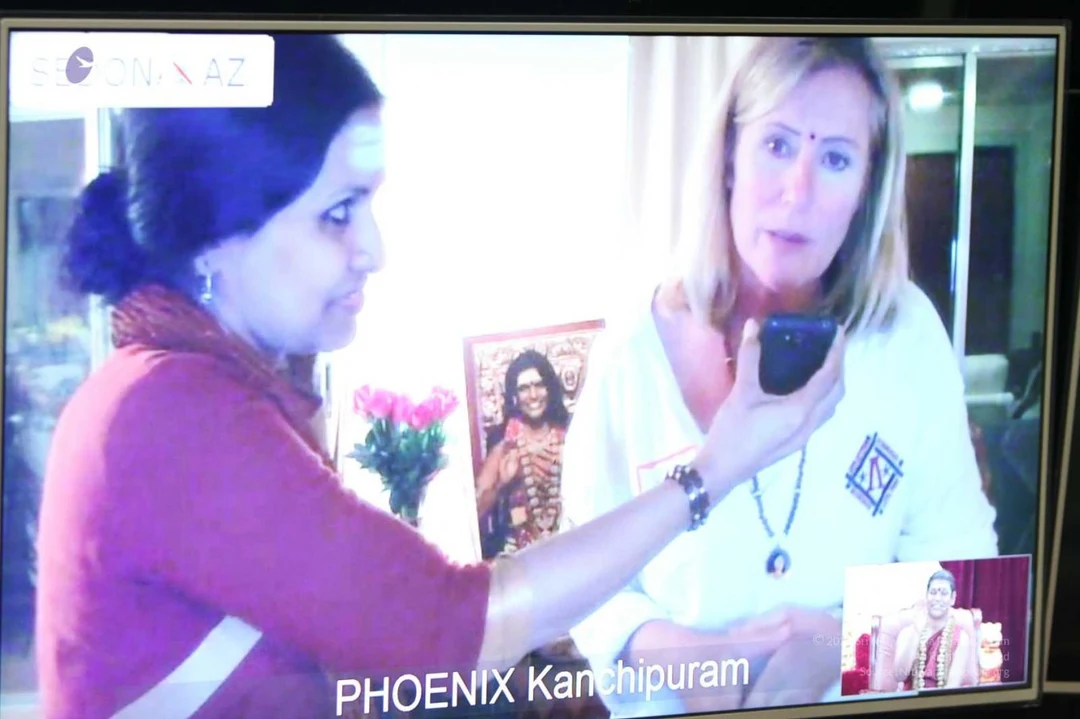
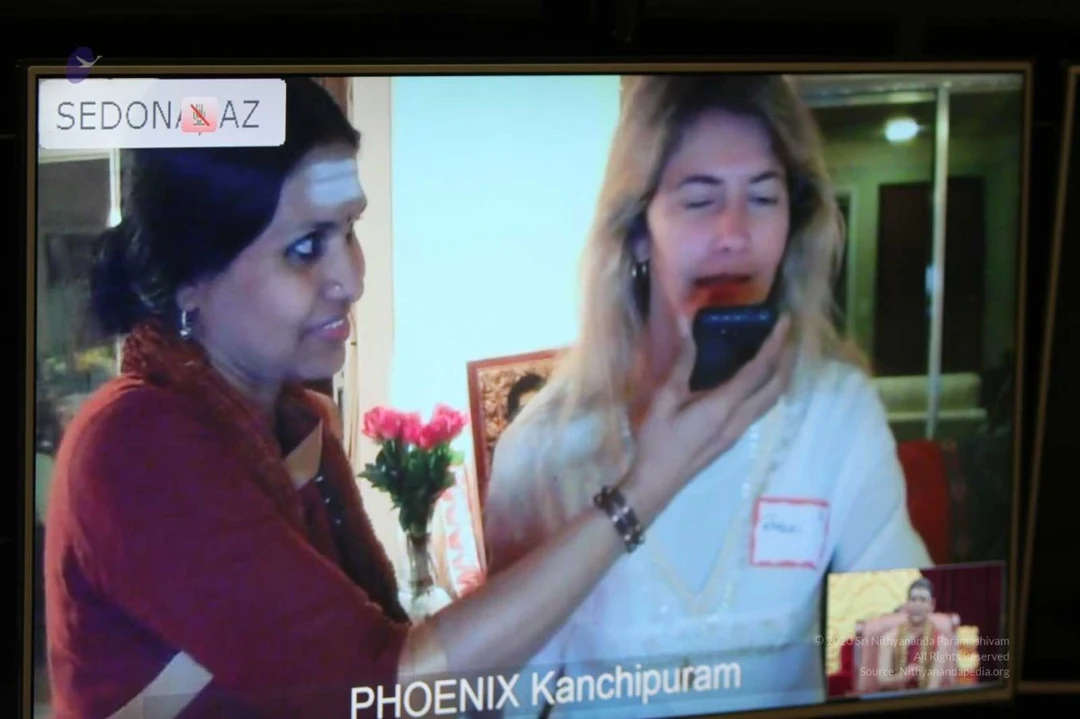
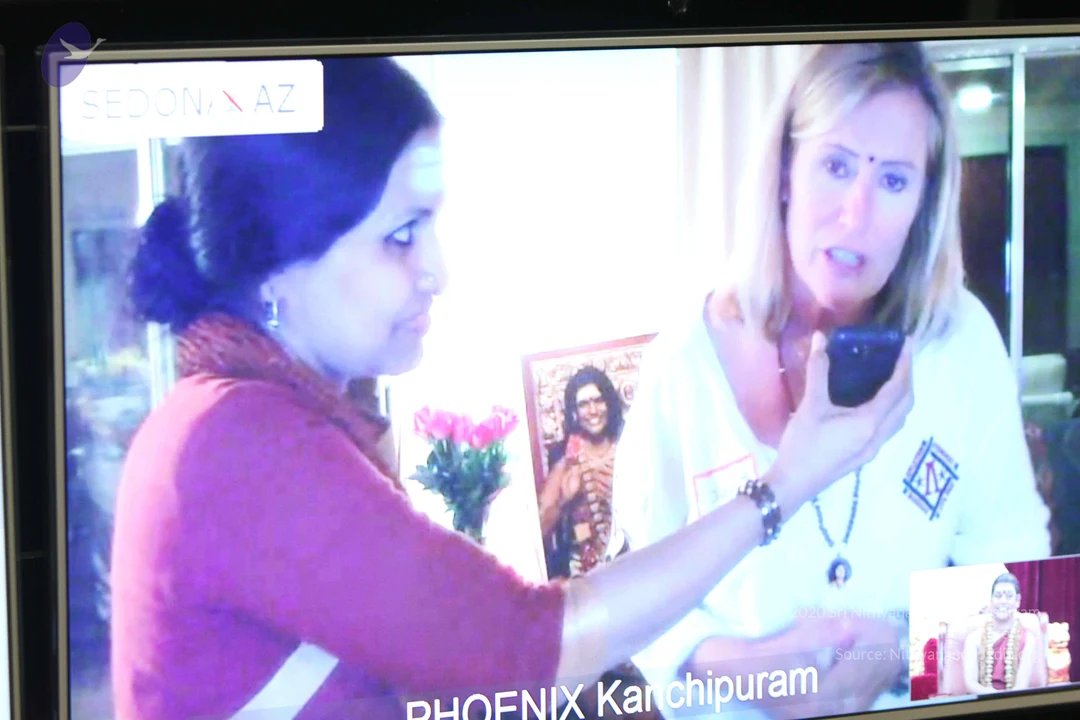
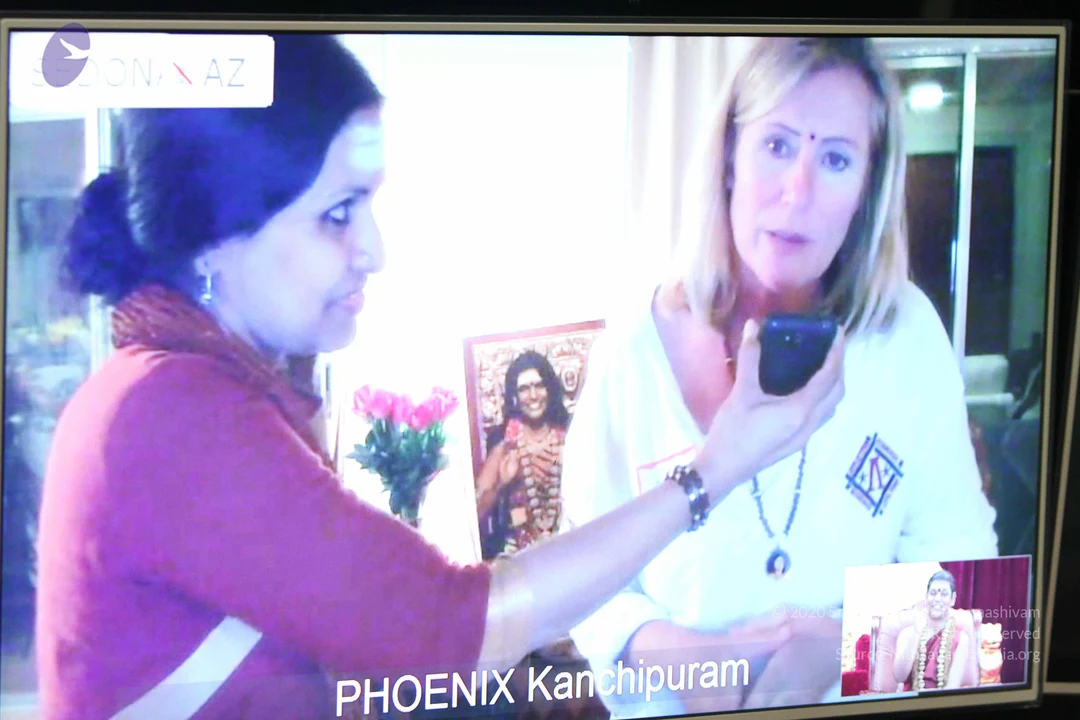
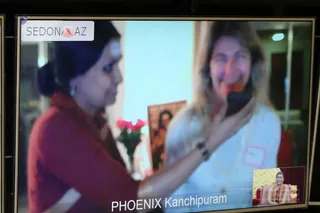
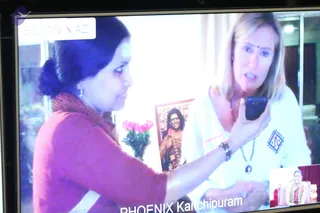
A photograph of a video-conference screen showing two women in a home setting. On the left, a woman in a red top and dark hair in a bun holds a phone toward a fair-haired woman in a white top with a blue geometric emblem, a rudraksha-style dark bead necklace, and a small red bindi. Behind them is a framed portrait of a long-haired man in orange-toned clothing with rudraksha beads, beside pink roses. A small inset in the lower right shows a seated figure in white with a garland. The bottom caption reads PHOENIX Kanchipuram, and the top-left logo reads SEDONA AZ.A screen capture of a two-way video link shows a woman in a red top with a vertical tilak on her forehead placing a black handheld microphone to the mouth of a man with long, light, swept-back hair wearing a white shirt with a small blue emblem. Behind them a framed portrait of a figure with long dark hair, rudraksha malas and gold ornaments stands beside pink roses. A caption at the bottom reads PHOENIX Kanchipuram, and a small inset in the lower right shows a seated figure in orange and gold ornate clothing on a red-draped throne. Two physical people appear in the room; the inset and portrait are depictions.A photograph of a large screen showing a two-way video link. The main feed, labelled SEDONA, AZ at top left, shows two women close together in a home setting. The woman on the left wears a rust-red top and has a dark bun and a bindi; she has one hand raised near the other woman's neck. The woman on the right has long light hair and wears a white top with a small name tag, smiling broadly. Behind them are pink roses in a vase and a framed picture of a deity. A lower caption reads PHOENIX Kanchipuram.A photograph of a video-conference screen showing a live feed from a centre labelled PHOENIX Kanchipuram. A blonde woman in a white outfit with a name badge holds a phone to her mouth with red sindoor-like colour on her forehead, while an older woman in a red top with a white forehead marking steadies her shoulder beside a vase of pink roses. The inset figure is a screen depiction and the candidate's appearance is not clearly established, so the a person value is unsure.A screen capture from a video-conference session shows two women in a living room setting. On the left, a woman in a rust-red top with a tilak on her forehead and her hair pinned back holds a hand to the chin of a blonde woman in a white top and a long beaded necklace, who has red kumkum or sindoor on her lips and is holding a dark phone or microphone. A vase of pink roses and a framed picture sit behind them. A small inset in the lower right shows a man seated on a red throne-like chair before a yellow backdrop. A caption reads PHOENIX Kanchipuram, and a name tag is pinned to the blonde woman's top.

Inner Awakening Sessions

11 photosSource gallery
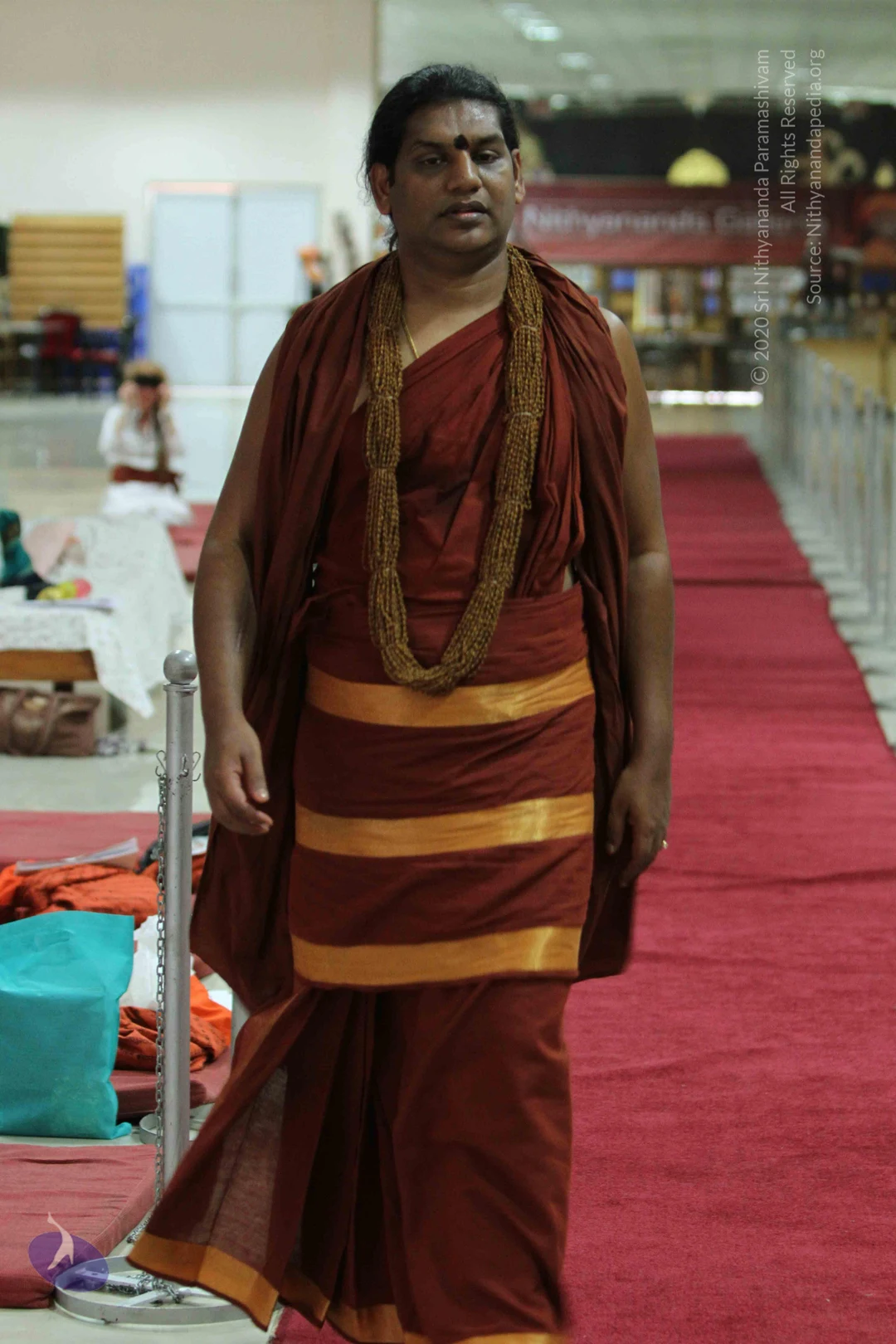
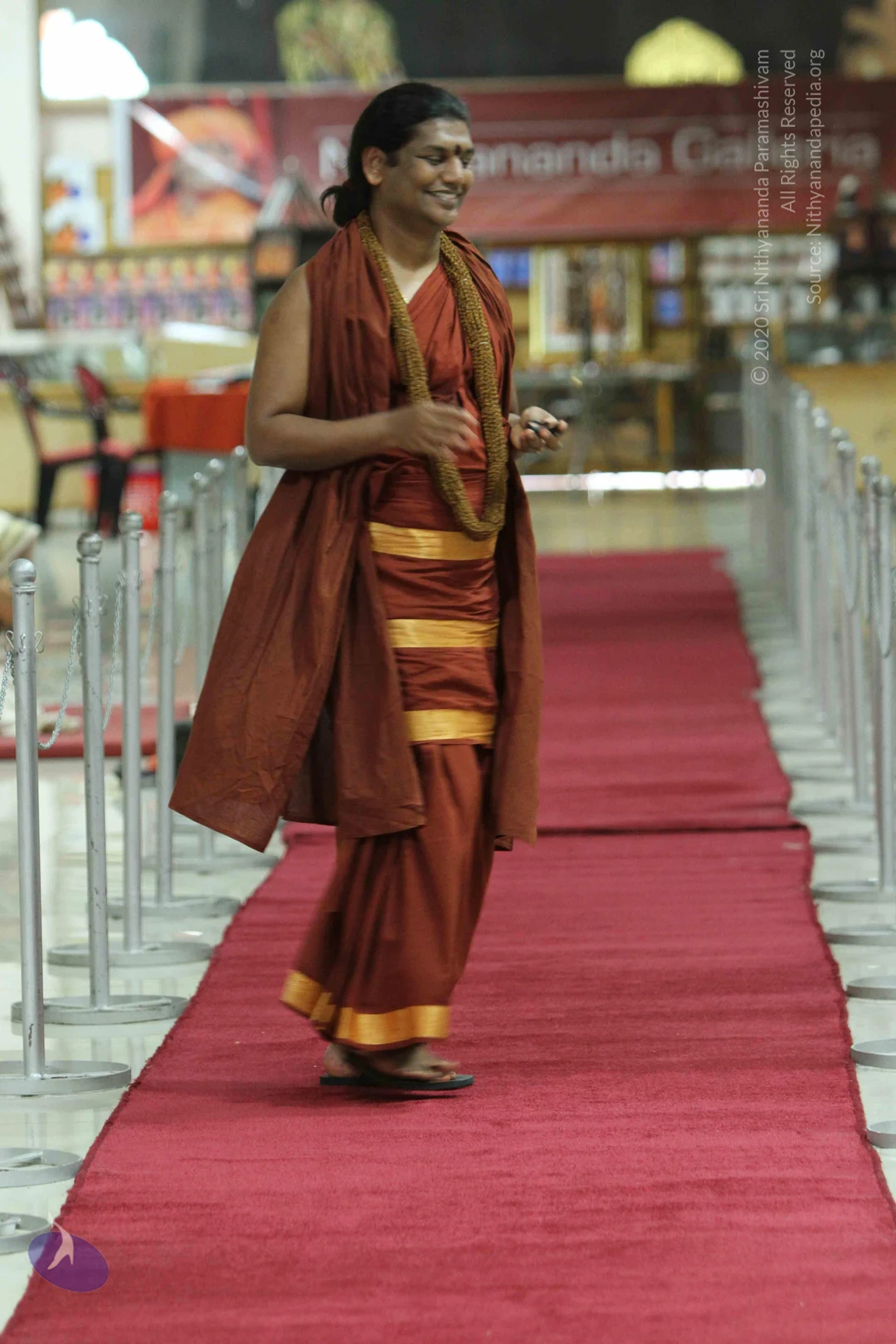
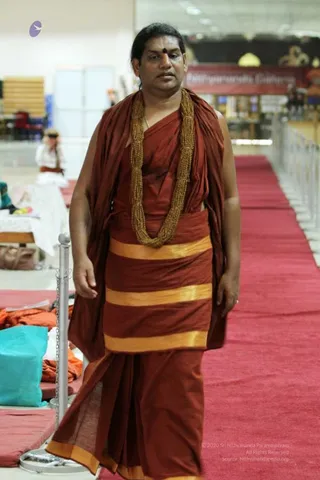
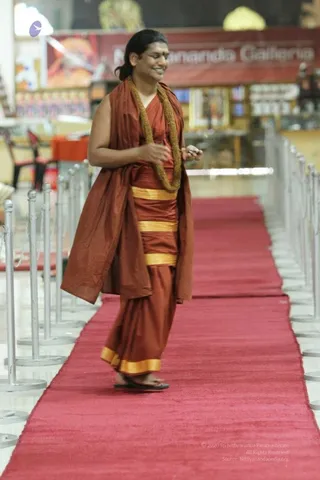
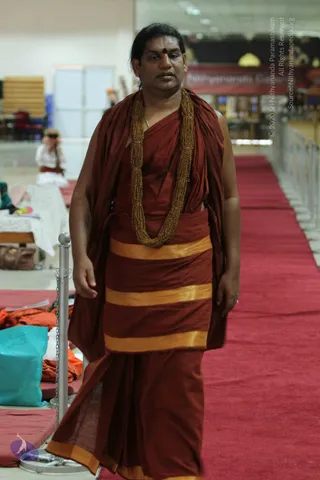
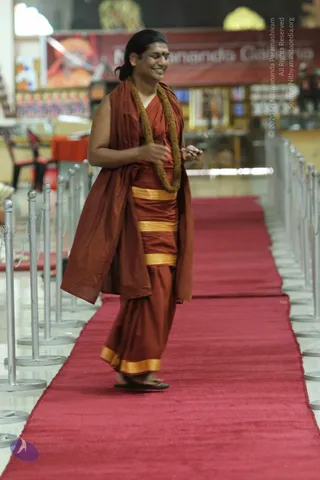
A photograph of a man standing on a red carpet in a large hall, wearing a rust-red sannyasi-style wrap with gold-bordered panels at the waist and a multi-strand brown rudraksha-like bead mala around the neck, with a red bindi on his forehead. He stands centrally, arms relaxed at his sides. Behind him a red banner reads Nithyananda Gallery, and a woman in white is seated at a table in the blurred background. Chrome barrier posts line the carpet. a person: the figure wears a rudraksha mala and sannyasi robes, though no crown, long swept-back hair or ceremonial gold is clearly visible, so the match is uncertain.A man walks barefoot along a long red carpet lined with silver stanchions inside a bright indoor hall. He wears a rust-red sleeveless garment with broad gold borders at the hem and waist, a matching draped shawl over one shoulder, and a long brown rudraksha mala around his neck. His hair is tied back, he has a red tilak on his forehead, and he smiles while holding a small object in one hand. Behind him, a red banner reads Nithyananda Galleria above shop displays.

Darshan

42 photosSource gallery
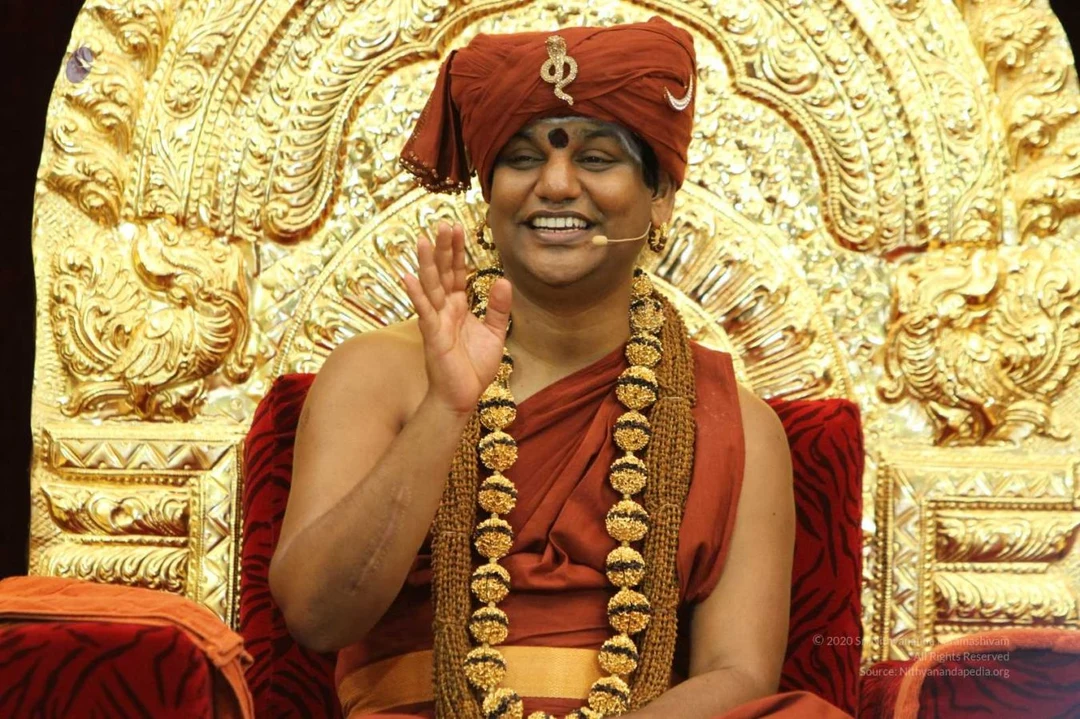
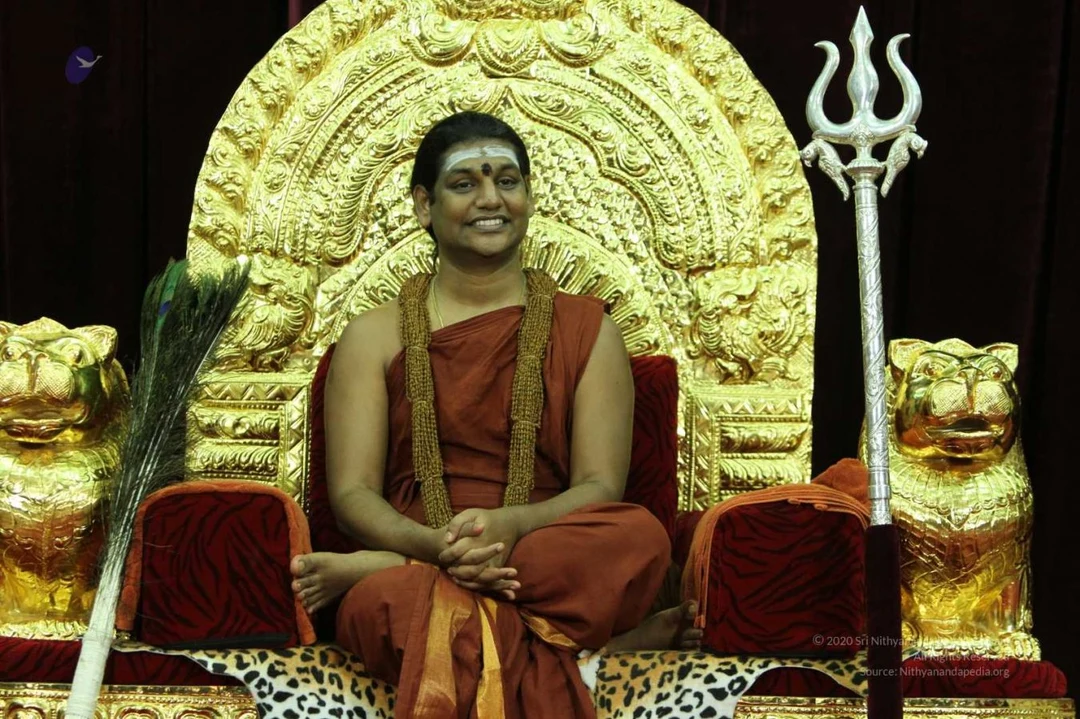
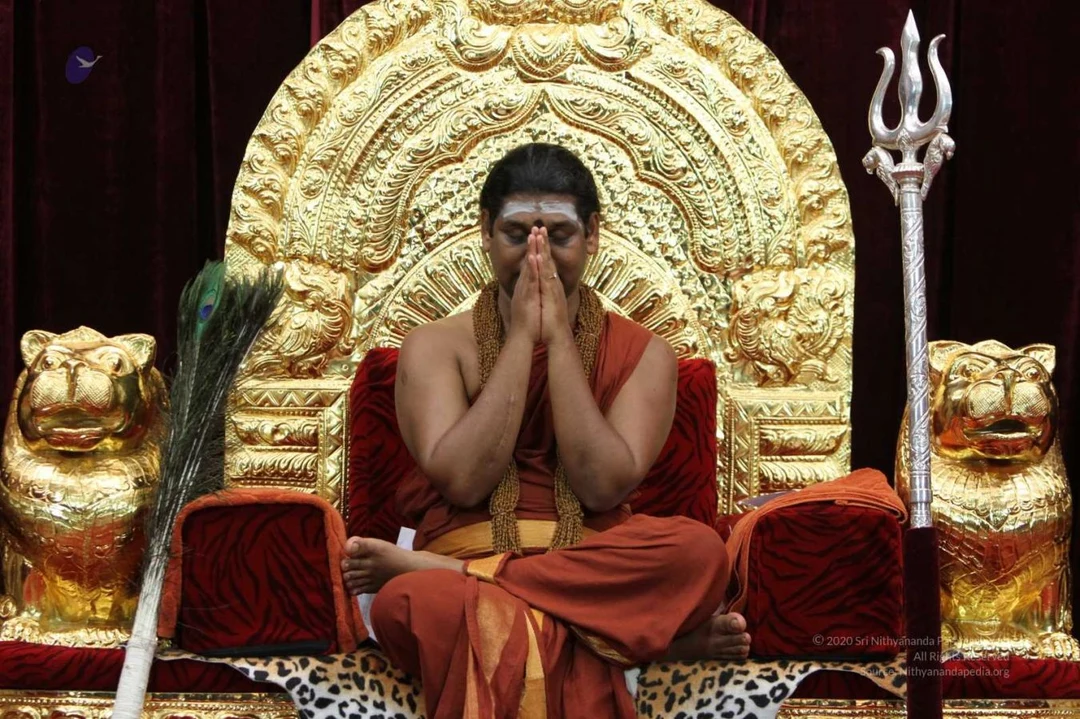
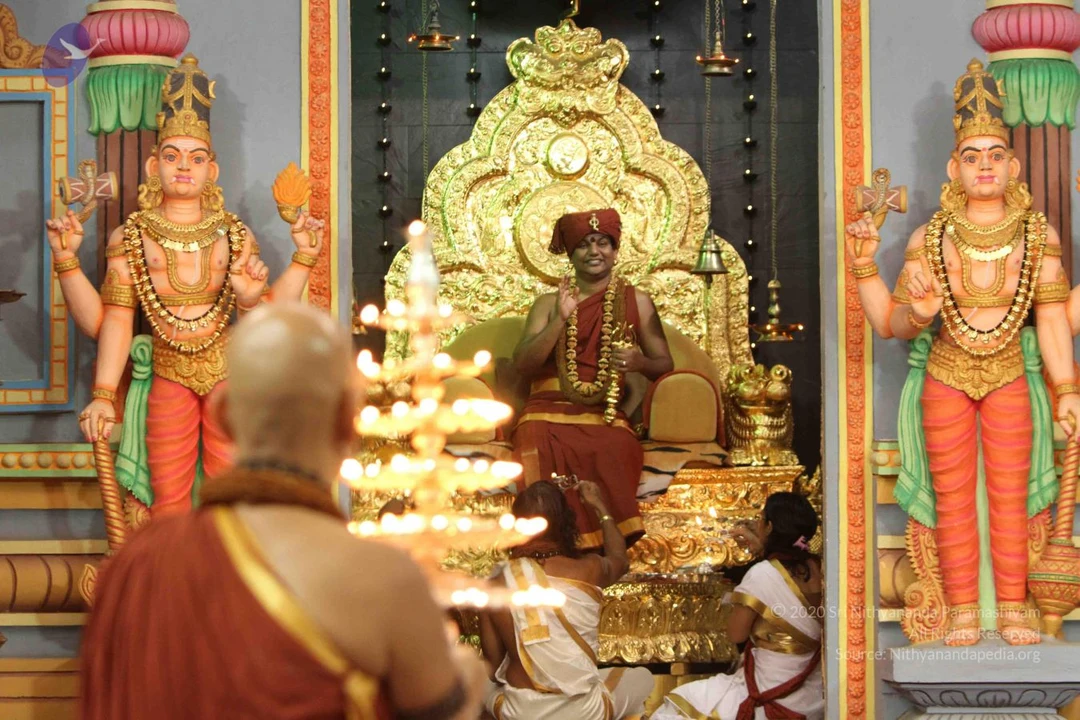
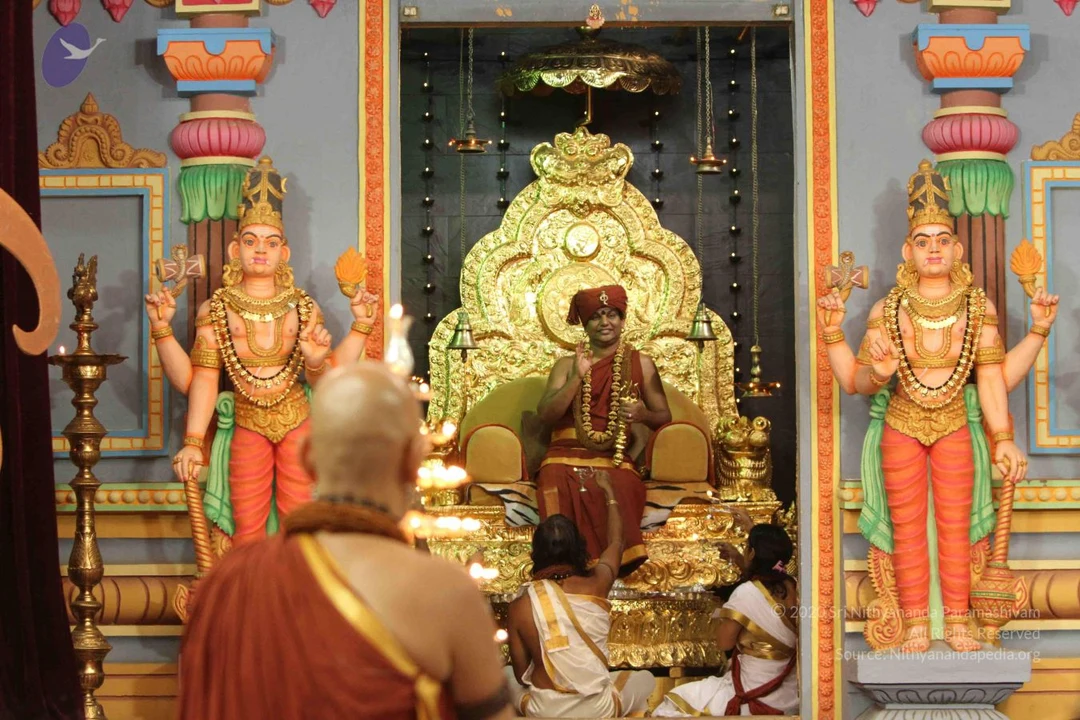
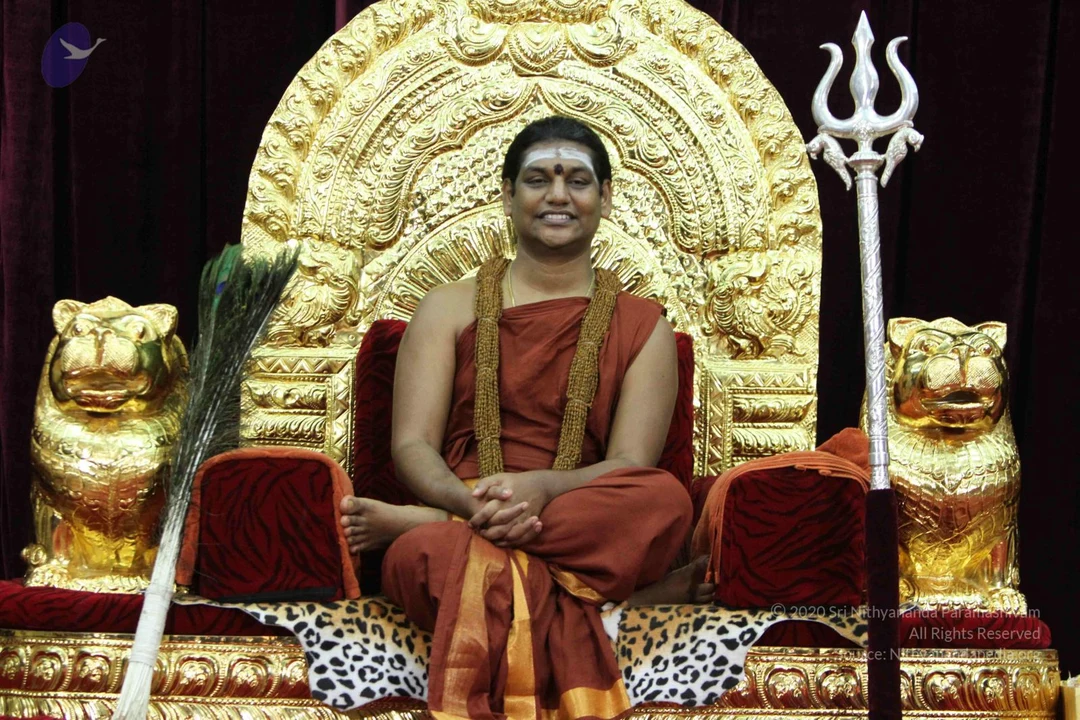
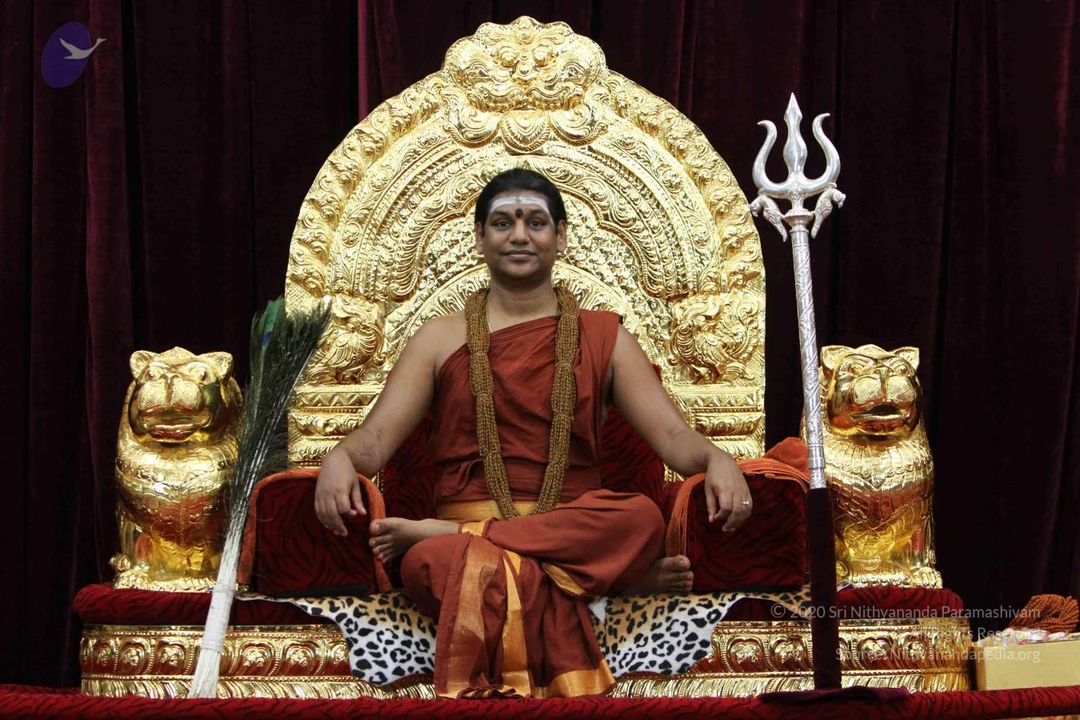
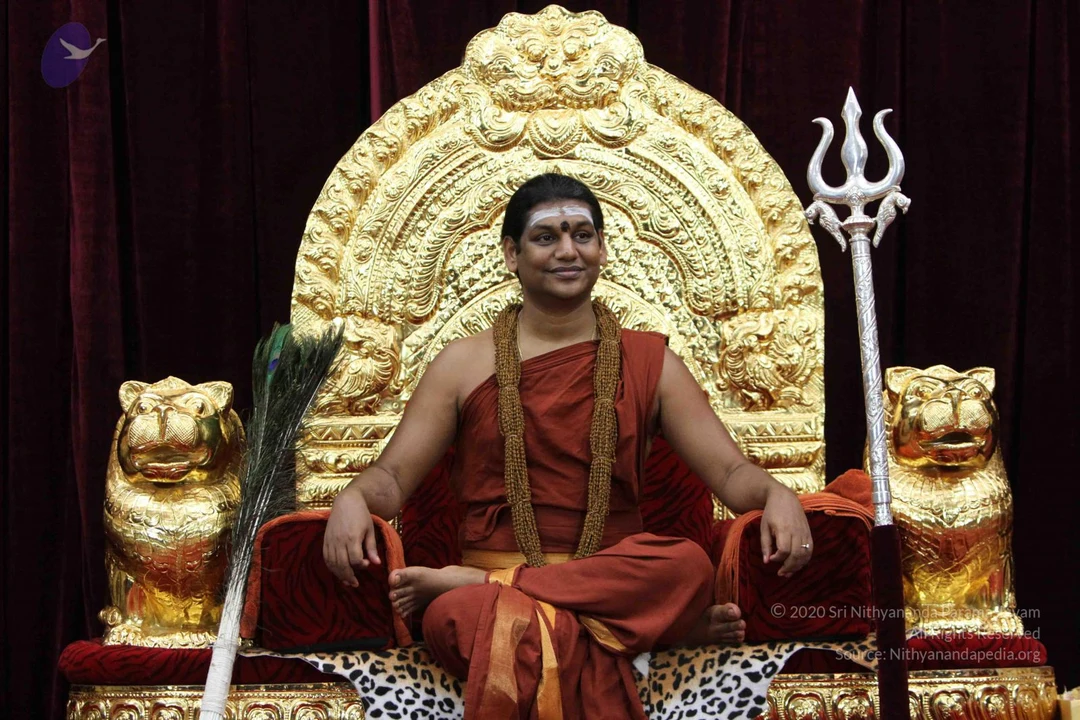
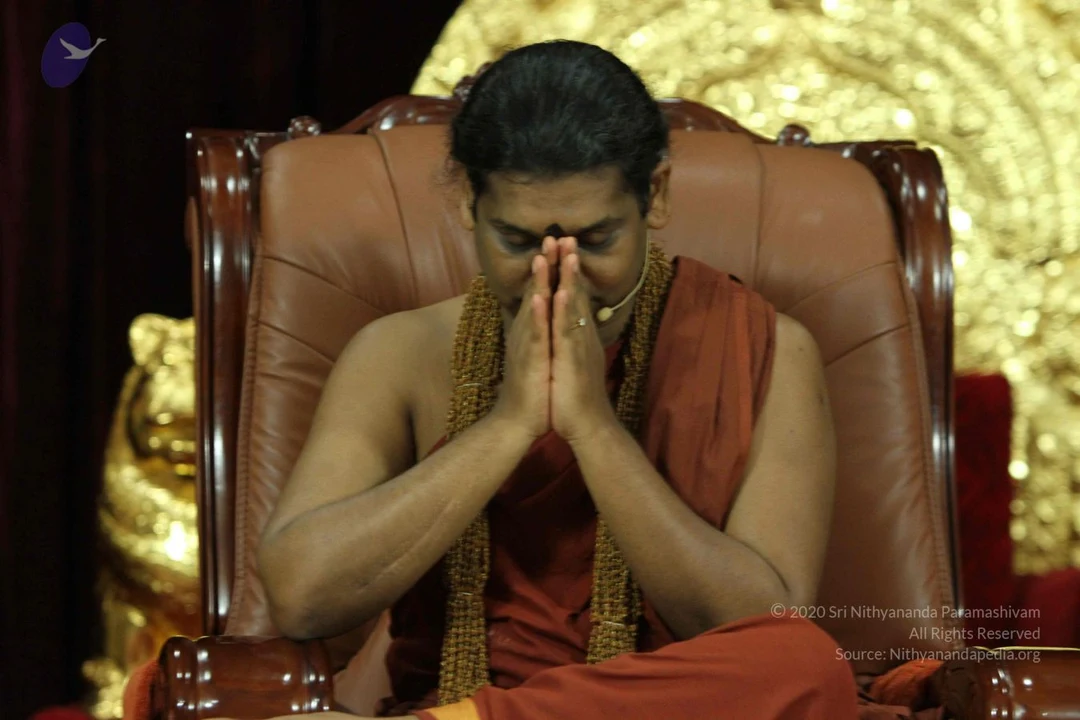
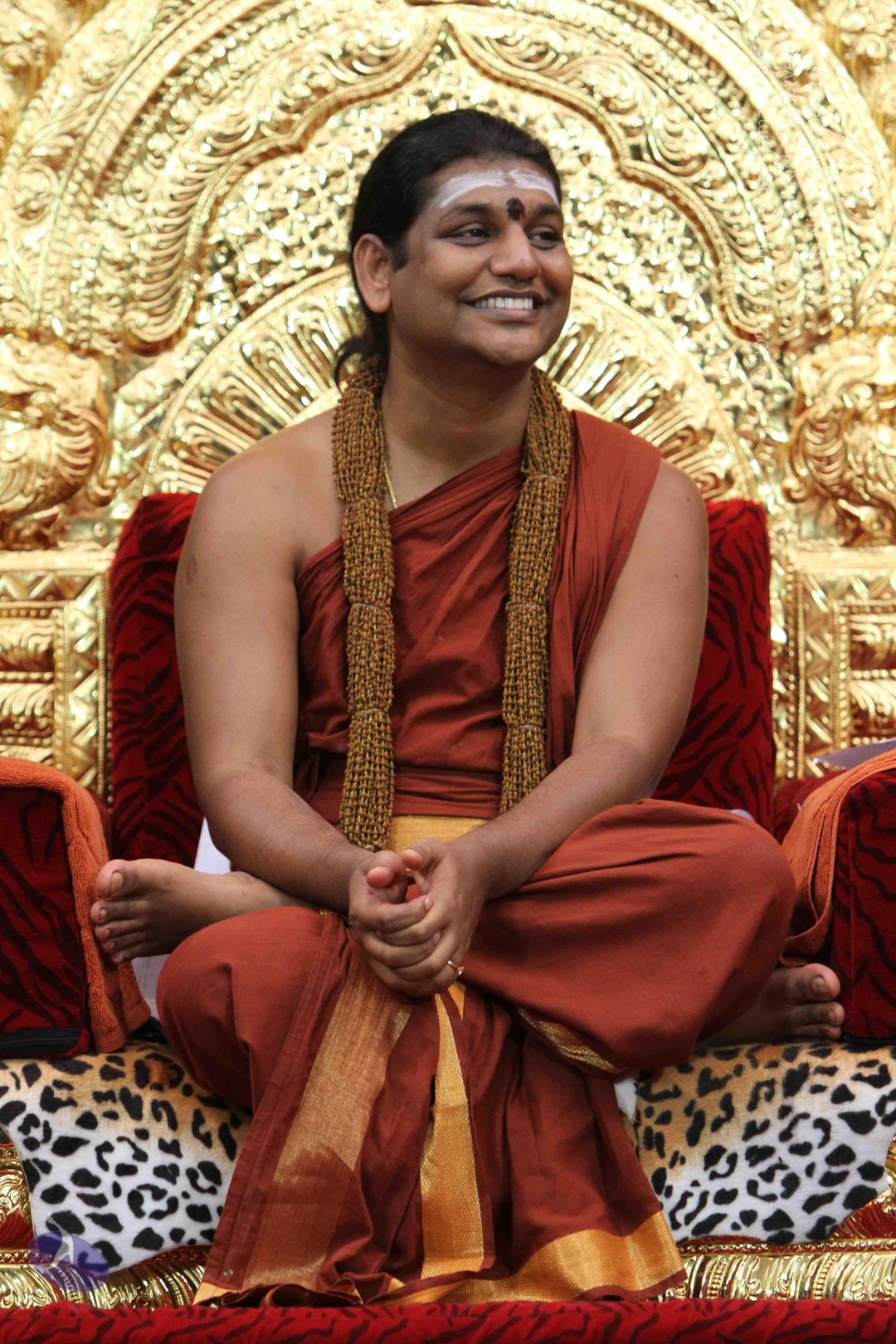
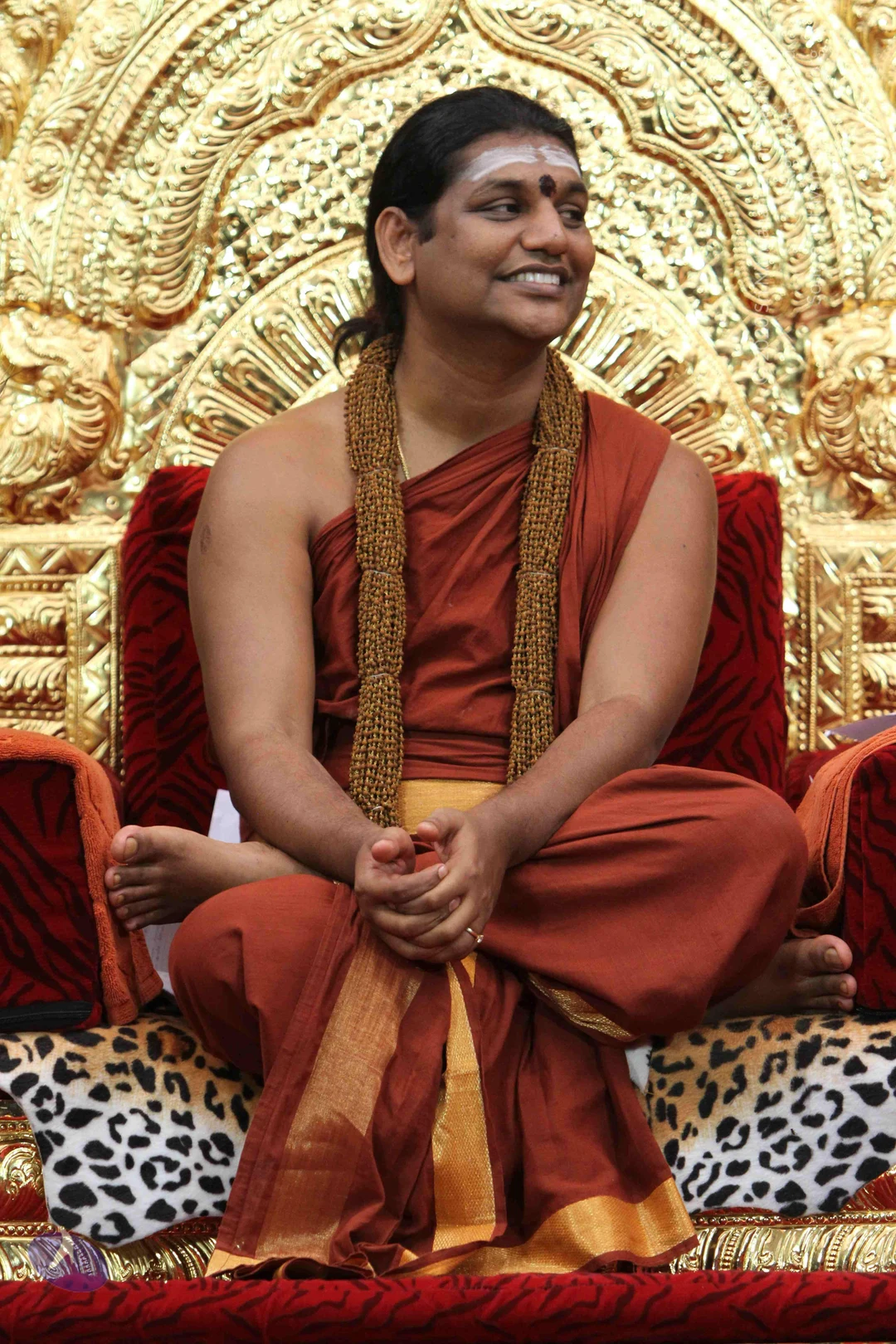
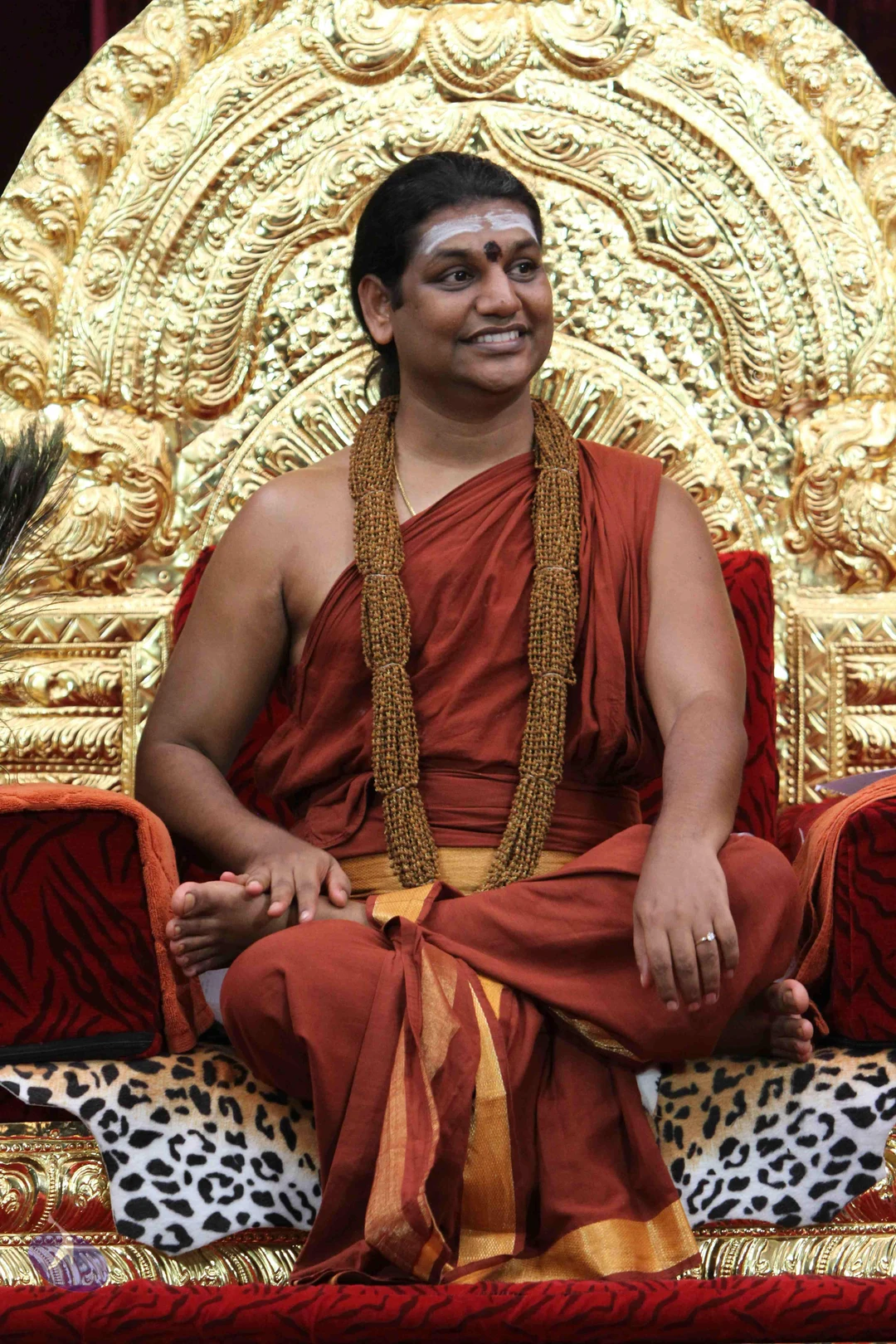
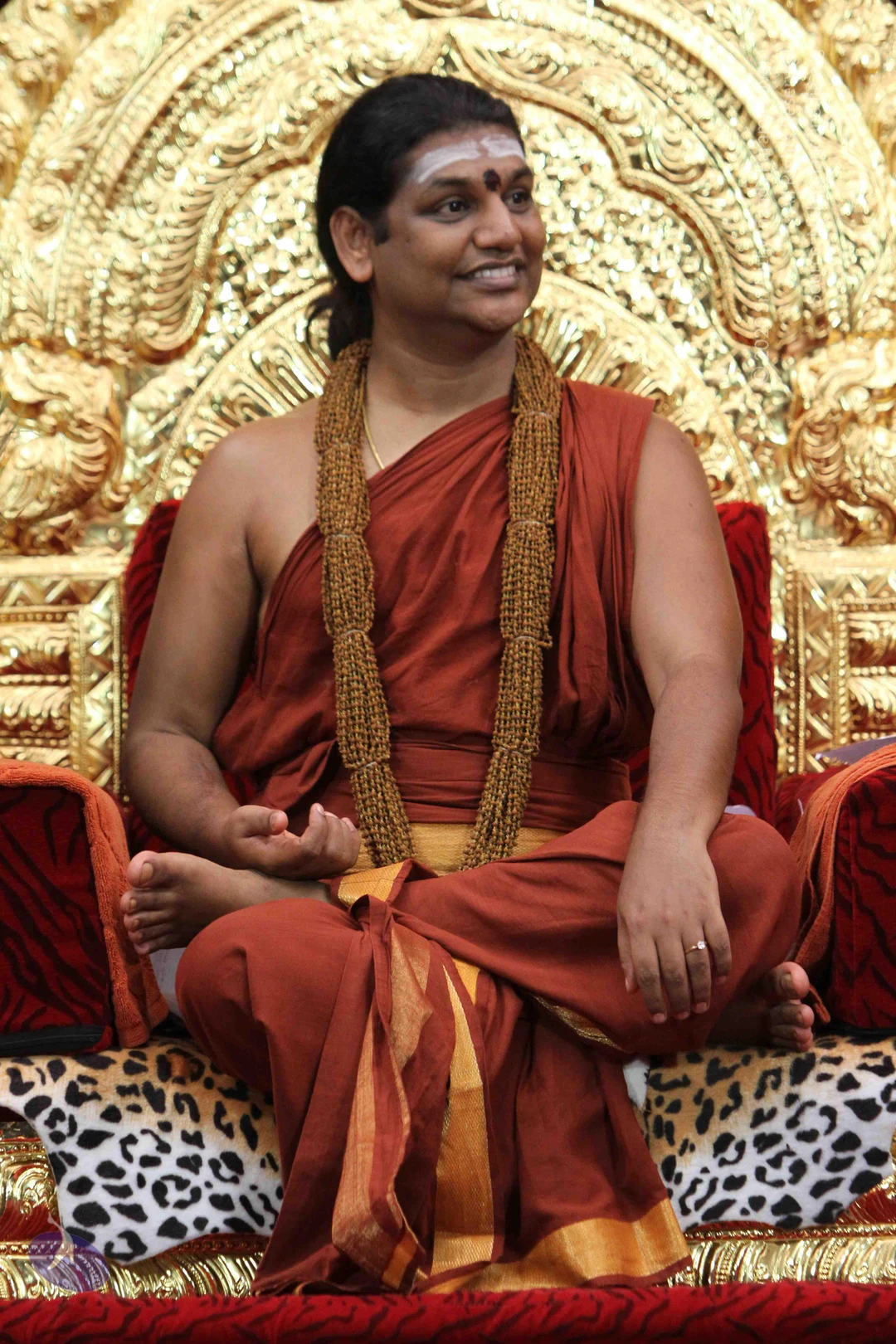
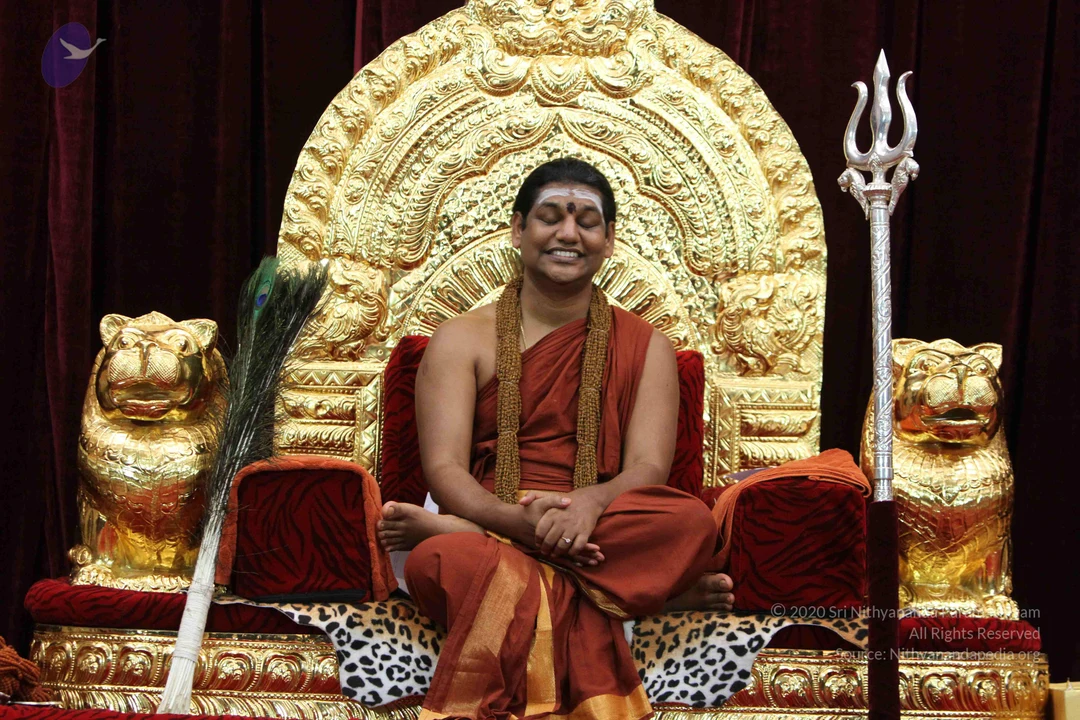
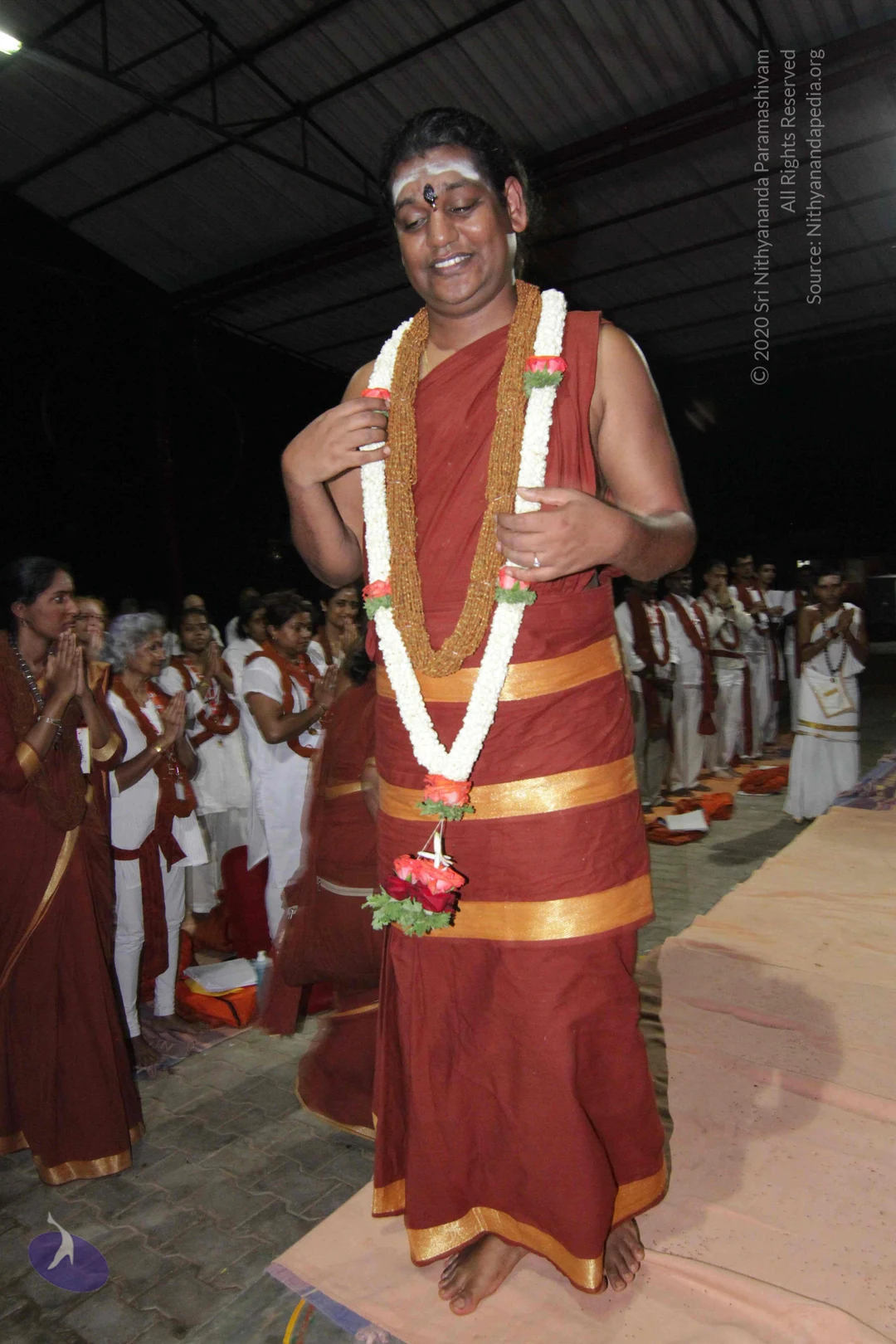
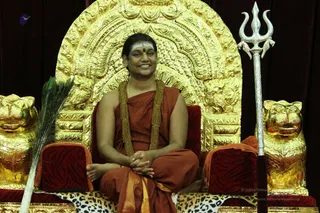
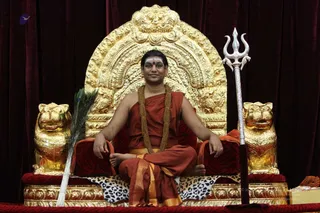
A seated man in saffron-orange robes sits cross-legged on an ornate gold throne with carved lion heads on each arm, with a red velvet cushion and leopard-print cloth beneath. He wears a white vertical forehead marking with a red bindi, a beaded rudraksha-style mala necklace, and smiles with hands clasped in his lap. A silver trident stands to his right and a peacock-feather fan rests to his left, against a dark red curtain backdrop.

SMKT meeting

3 photosSource gallery
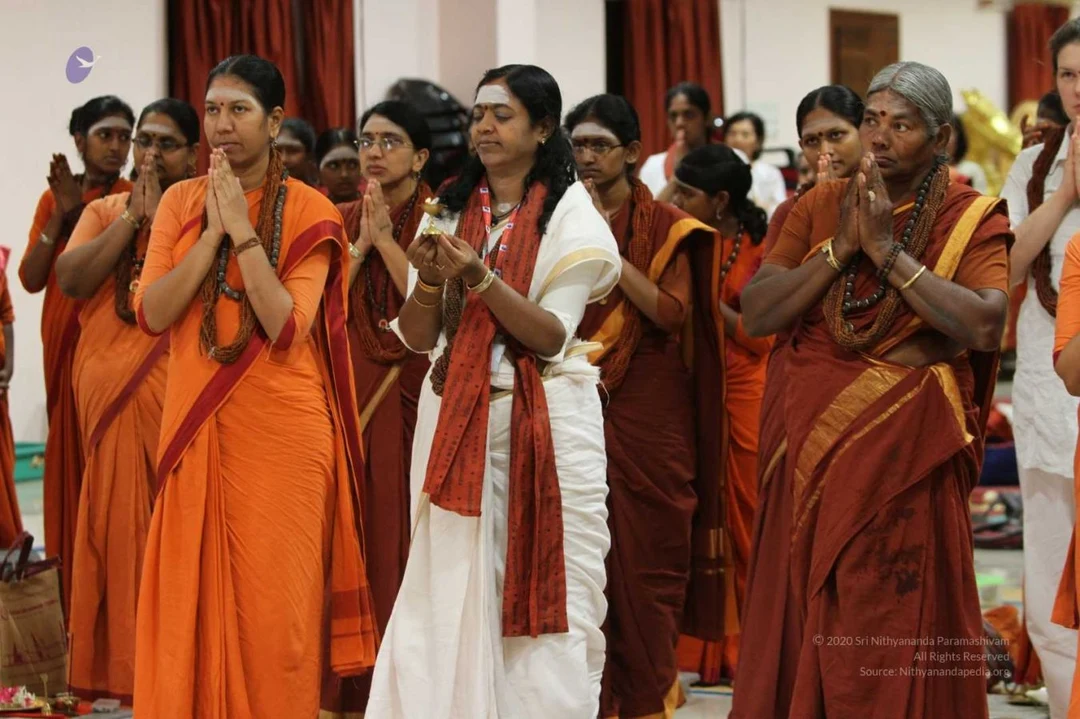
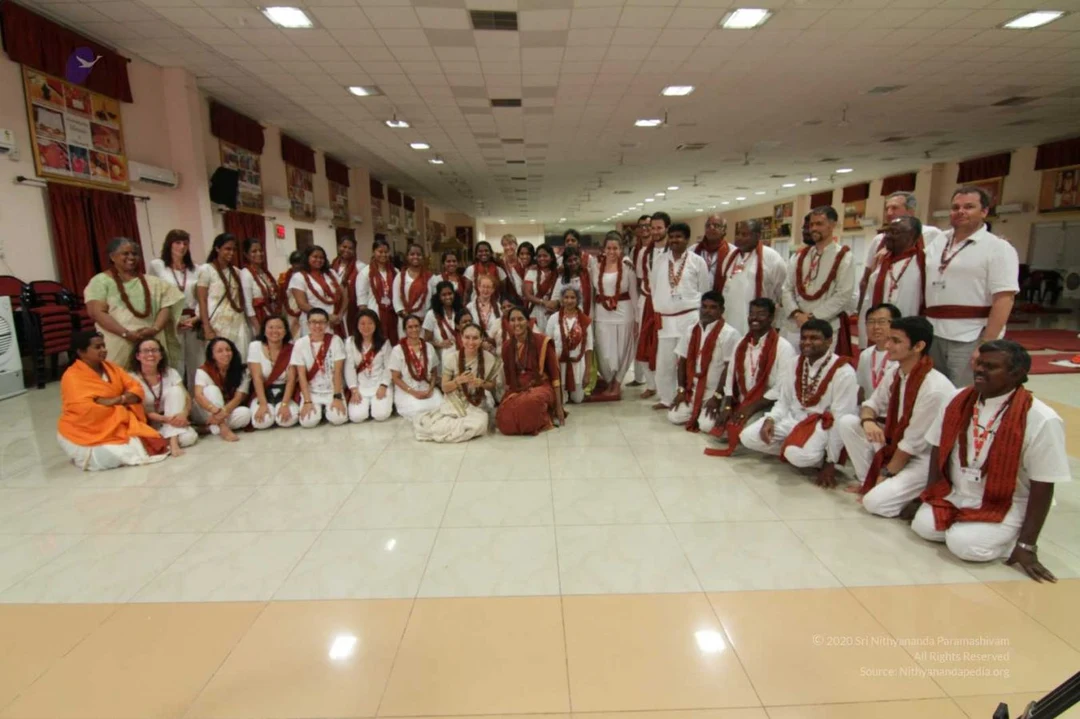
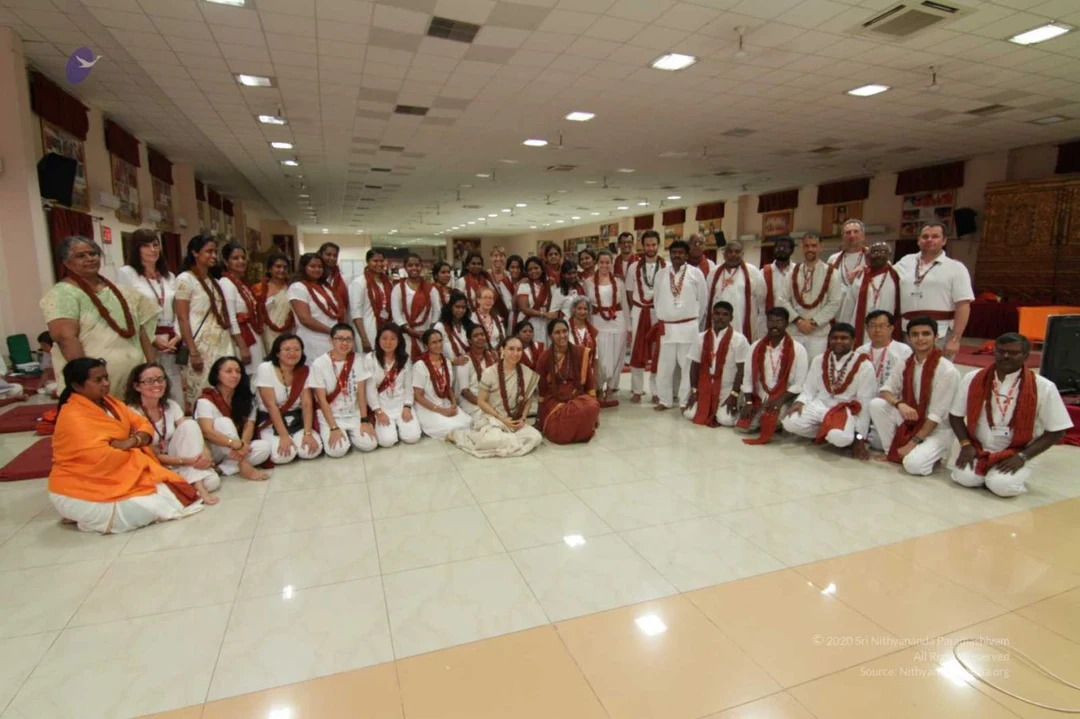
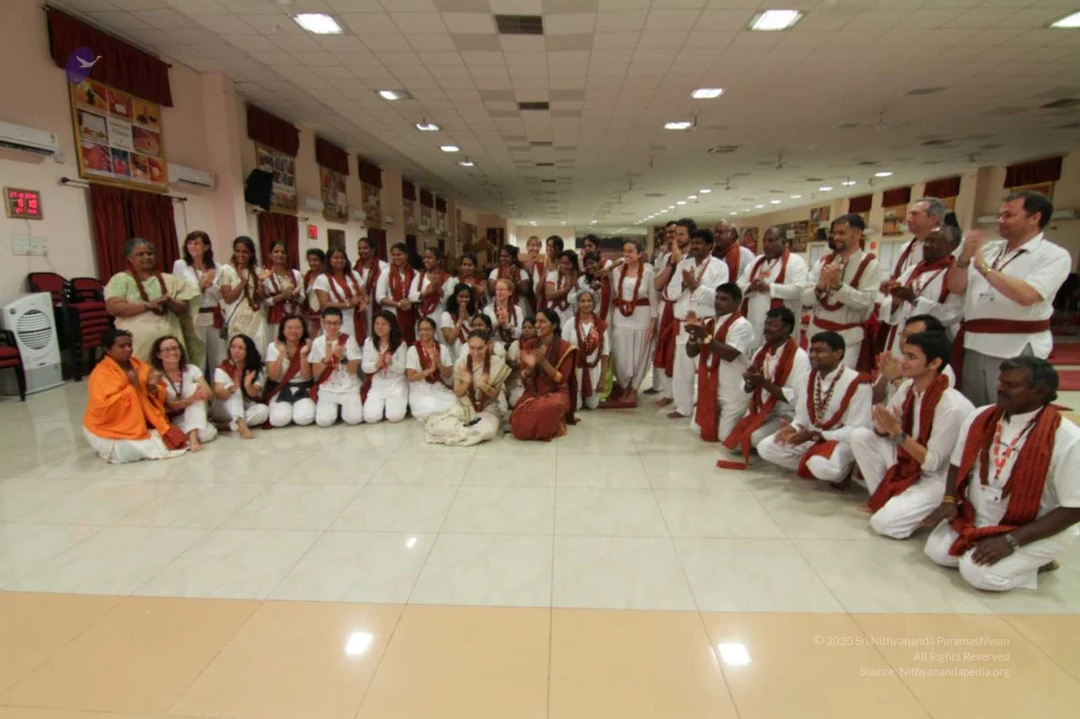
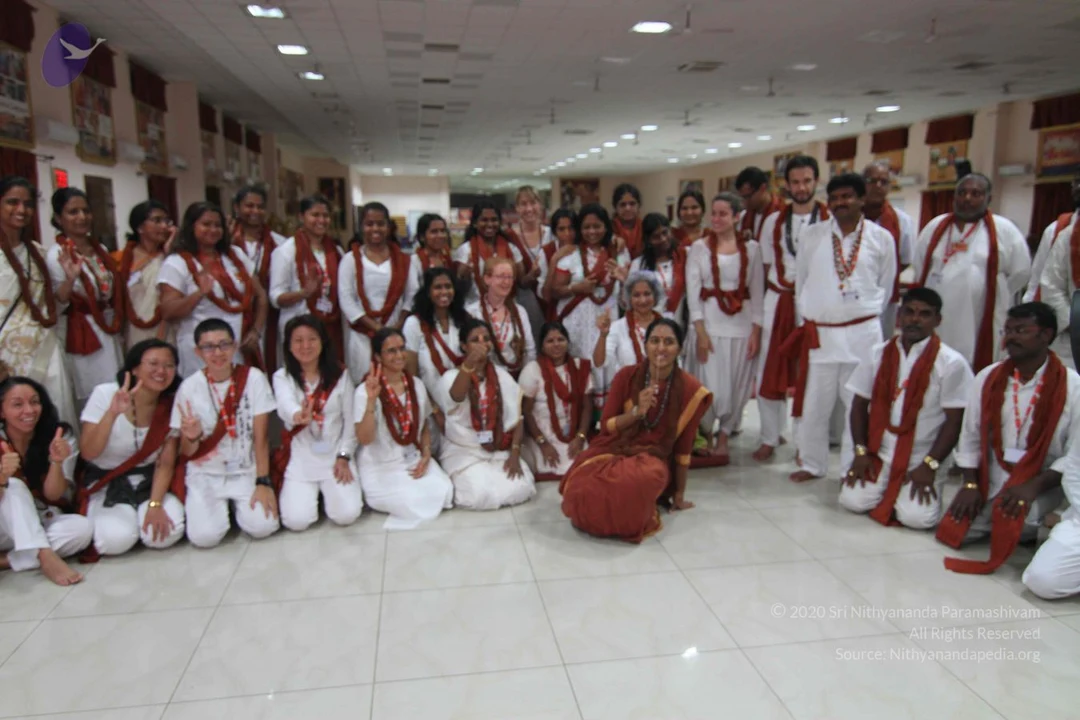
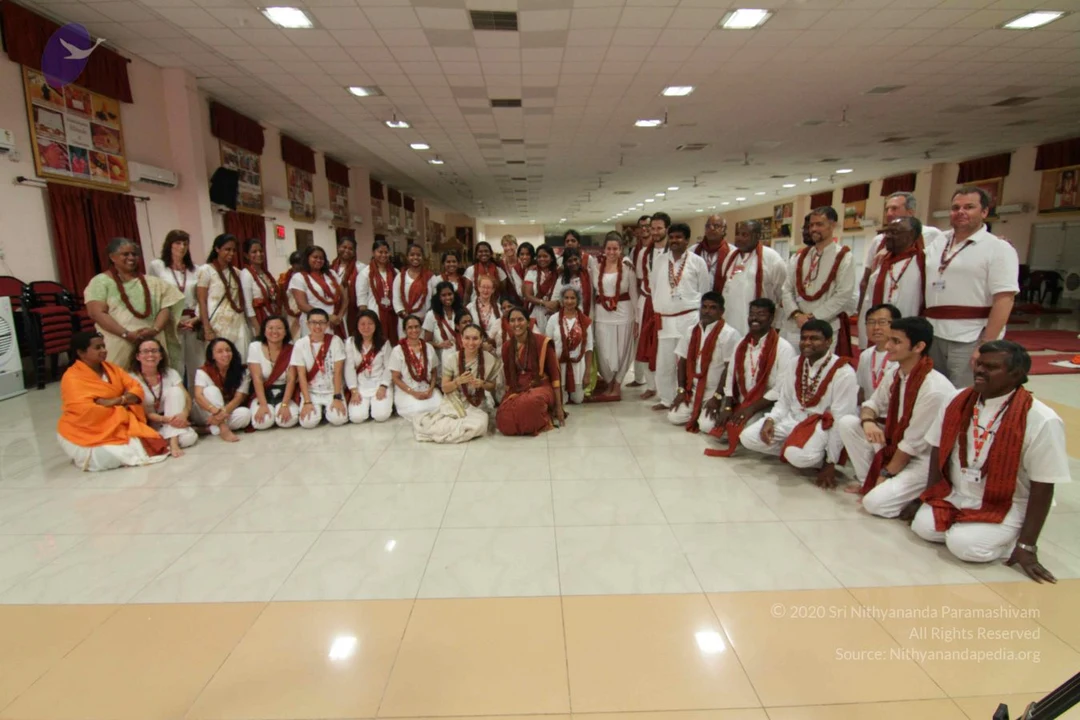
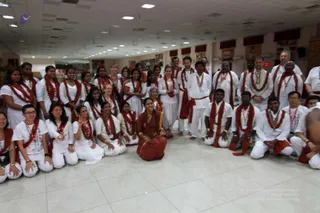
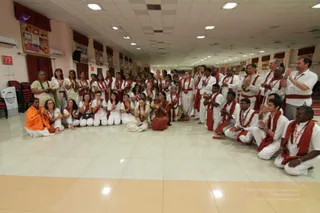
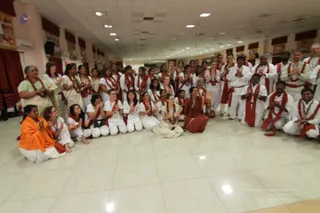
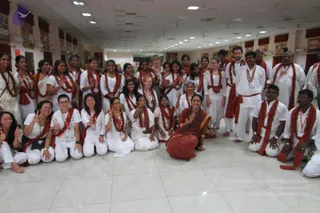
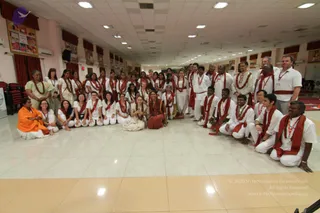
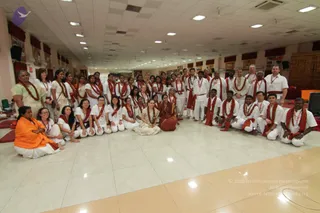
A group photograph in a large hall with cream tiled floor and tube lights. Around forty people in white ritual clothes with red-and-cream shawls and red sashes stand and kneel in a wide arc, most with palms pressed together in anjali. At the front left, a bald man in an orange-saffron shawl sits cross-legged on the floor with hands joined, distinct from the others. Women in white and red saris stand among them. Wall posters and red curtains line the back wall, and a white air cooler stands at the left edge.A large group of devotees stands and kneels on a glossy cream tiled hall with red curtains and framed pictures along the walls, pressing palms together in anjali. Many men wear white kurta or shirts with red shawls draped over the shoulders, and women wear white or cream salwar and sarees with red stoles. In the foreground, a woman in an orange shawl and white dhoti kneels at the left, while a woman in a maroon sari and cream blouse kneels center-right. A ceiling of fluorescent lights and wall-mounted air conditioning frames the room.

Pada-Puja
5 photosSource gallery
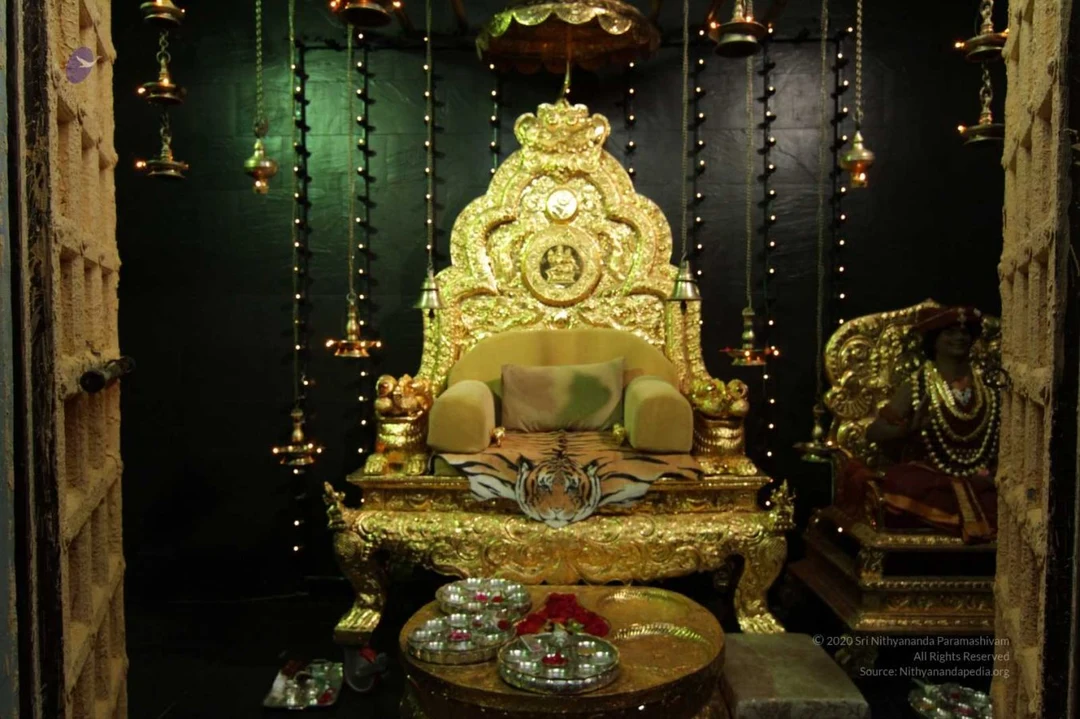
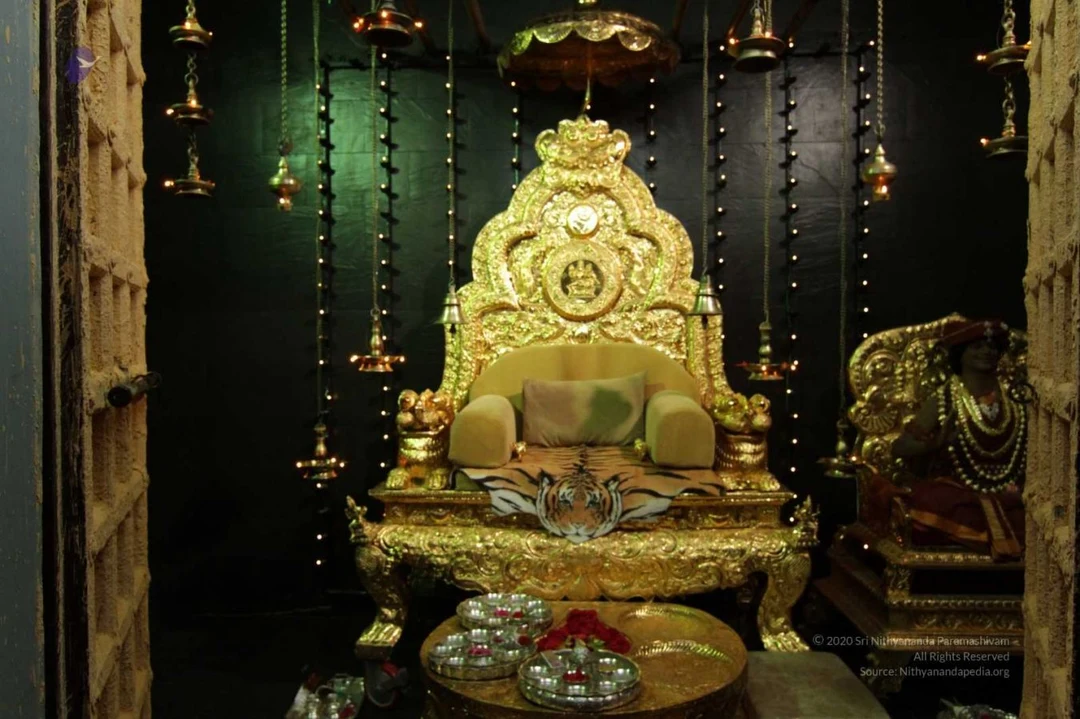
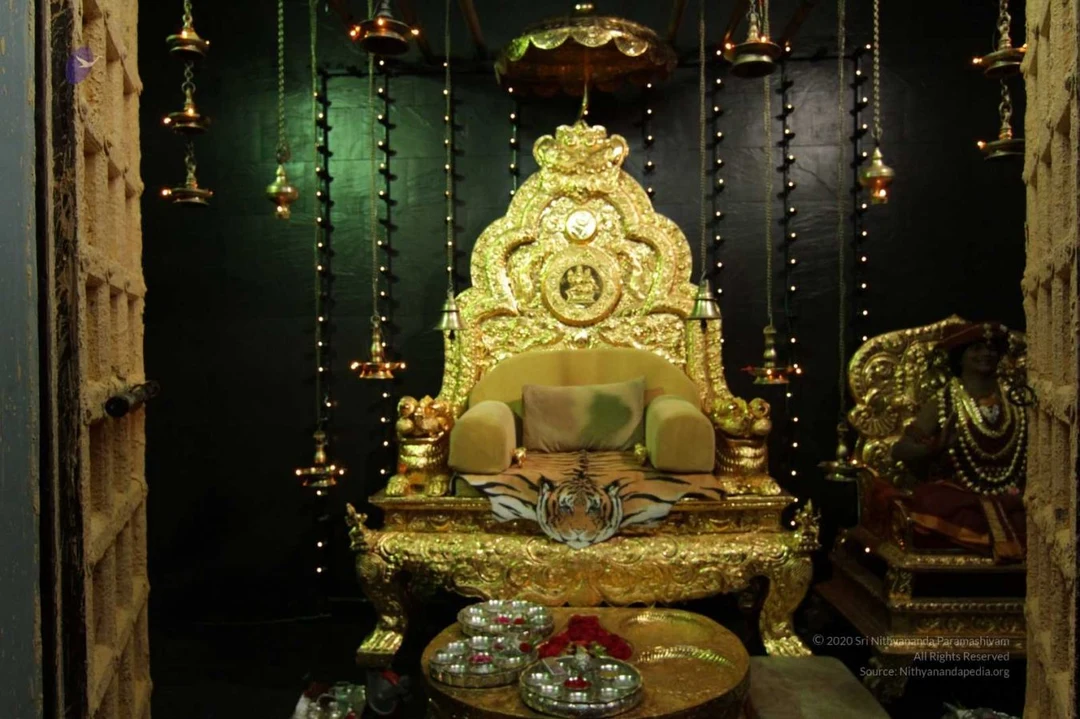
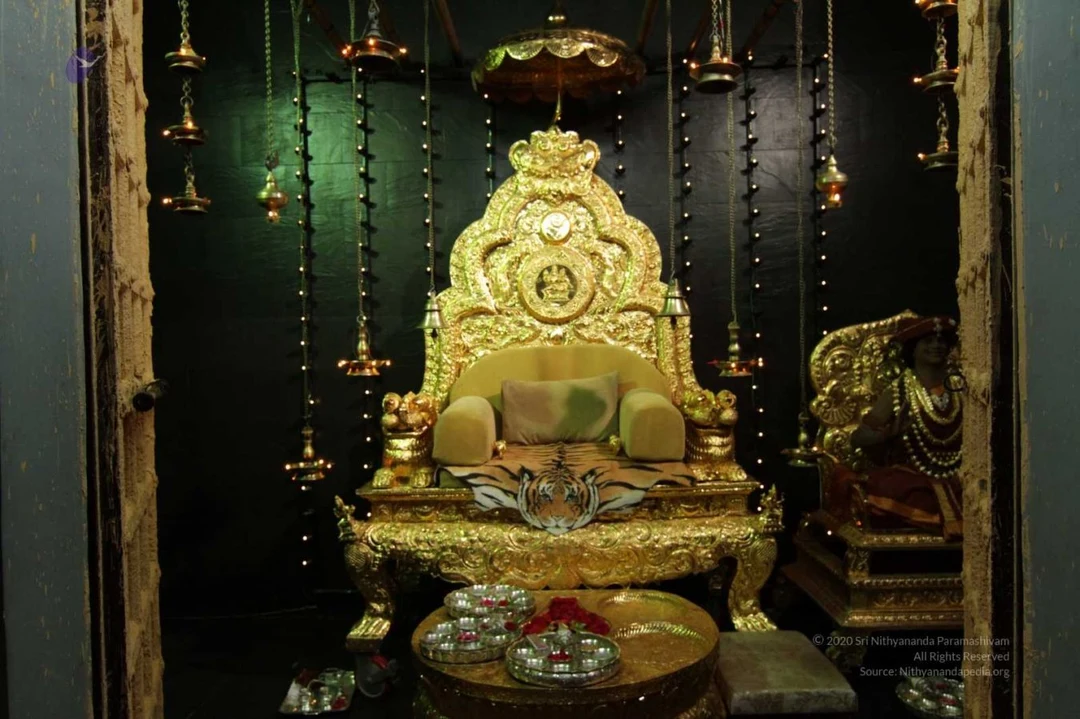
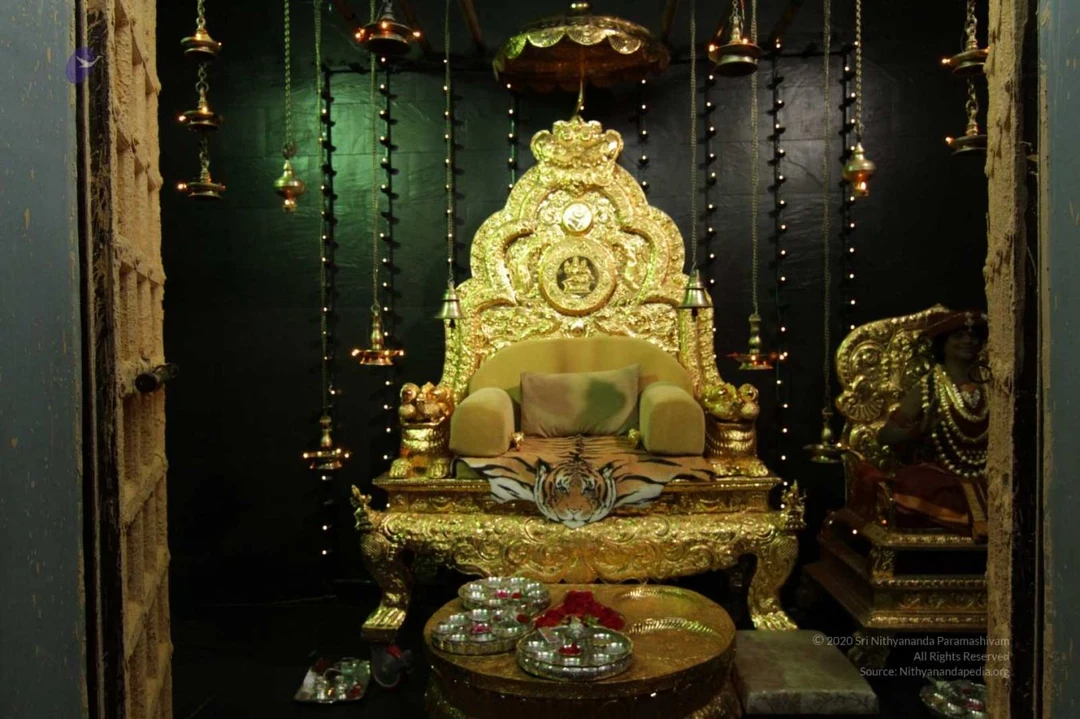
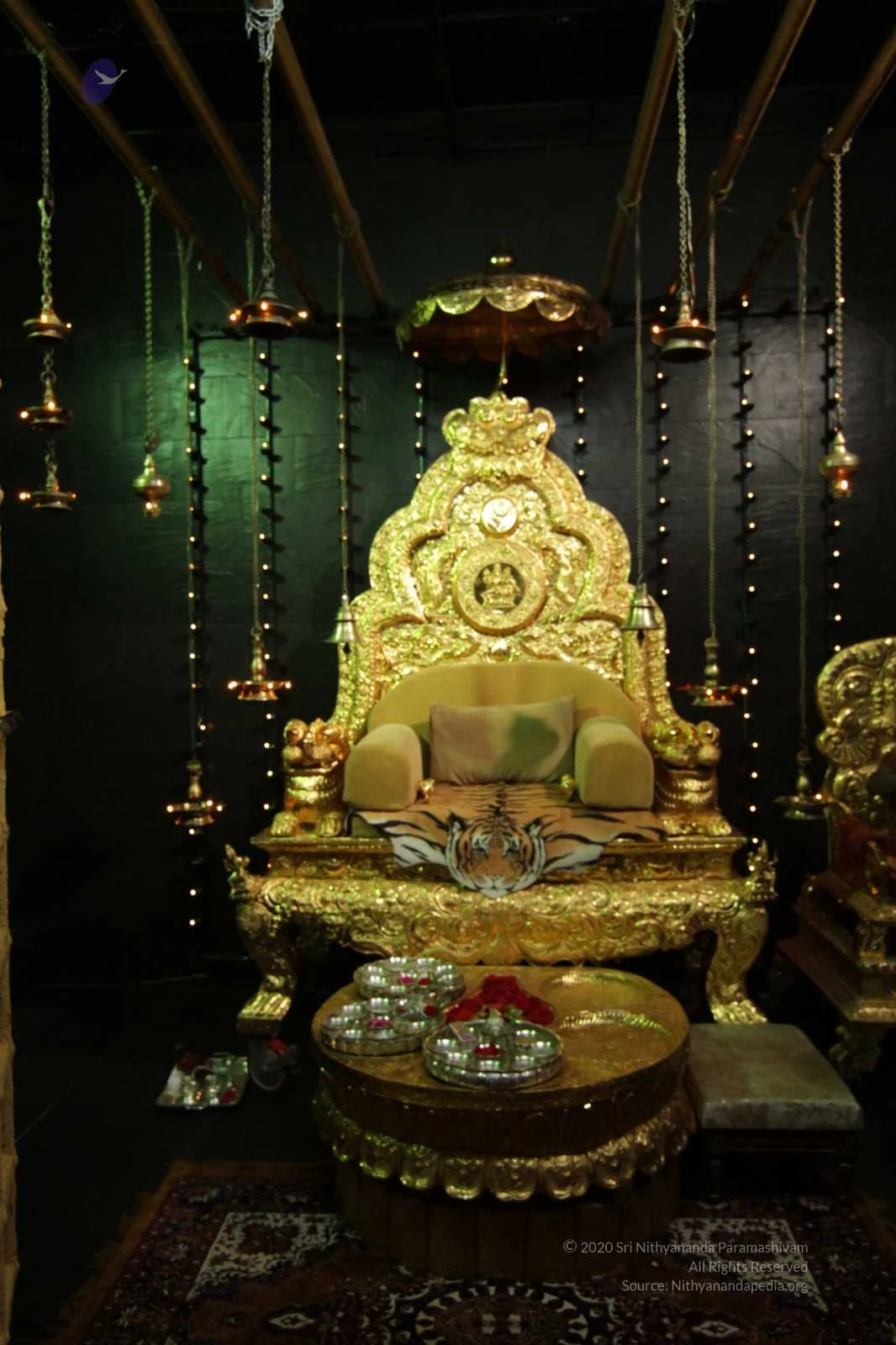
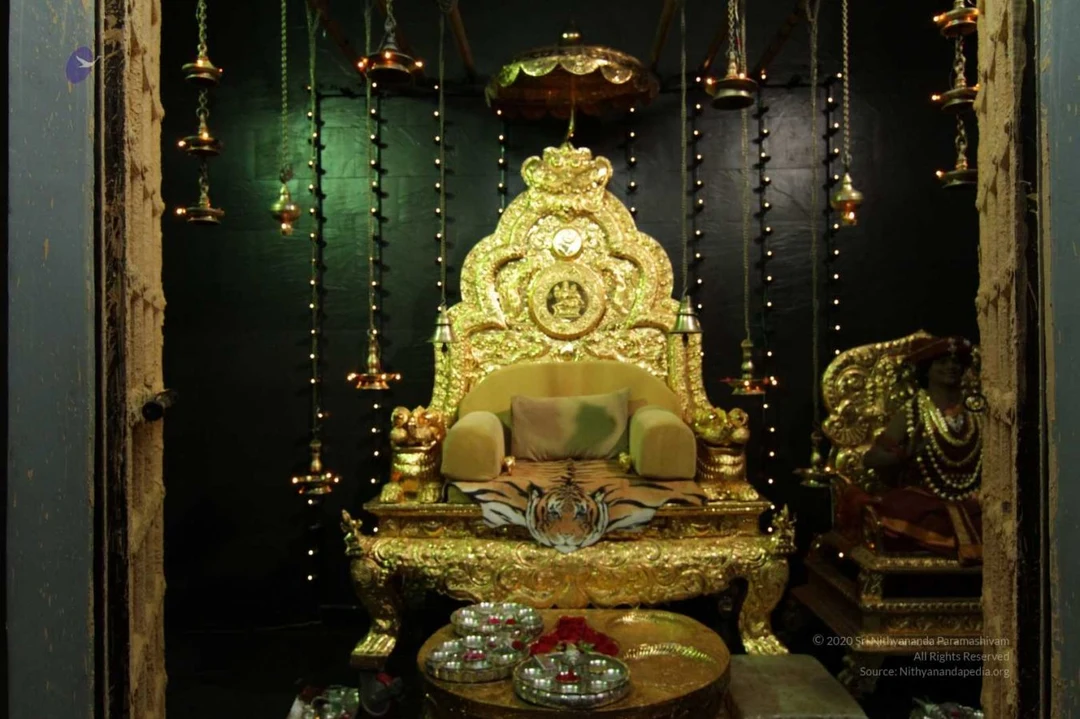
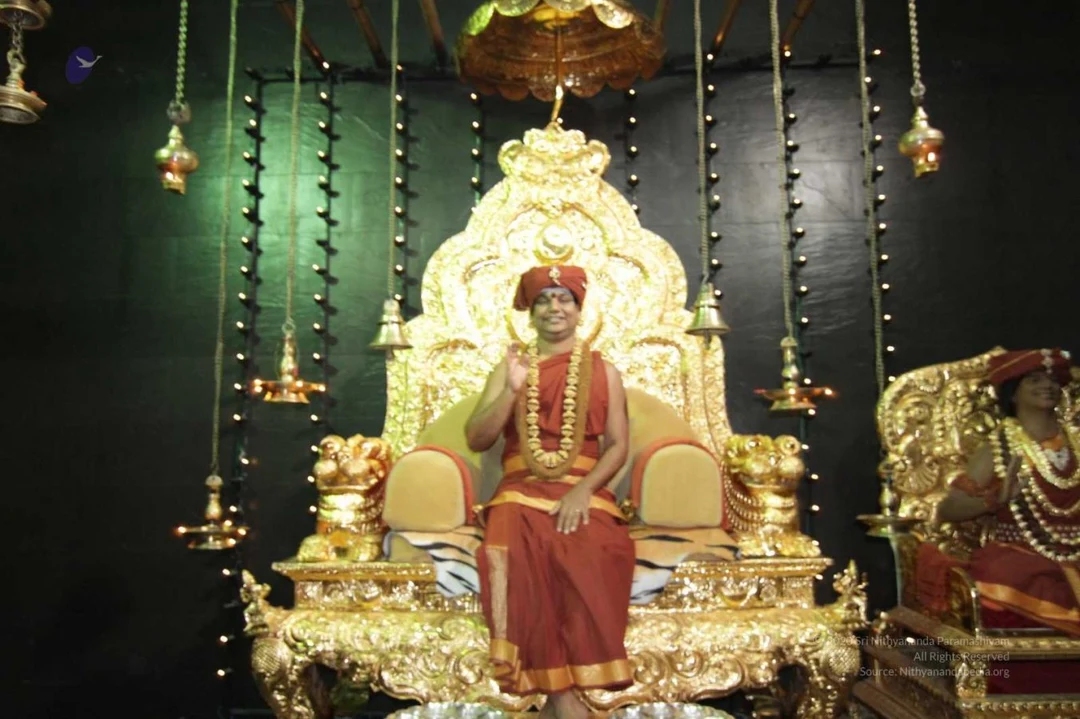
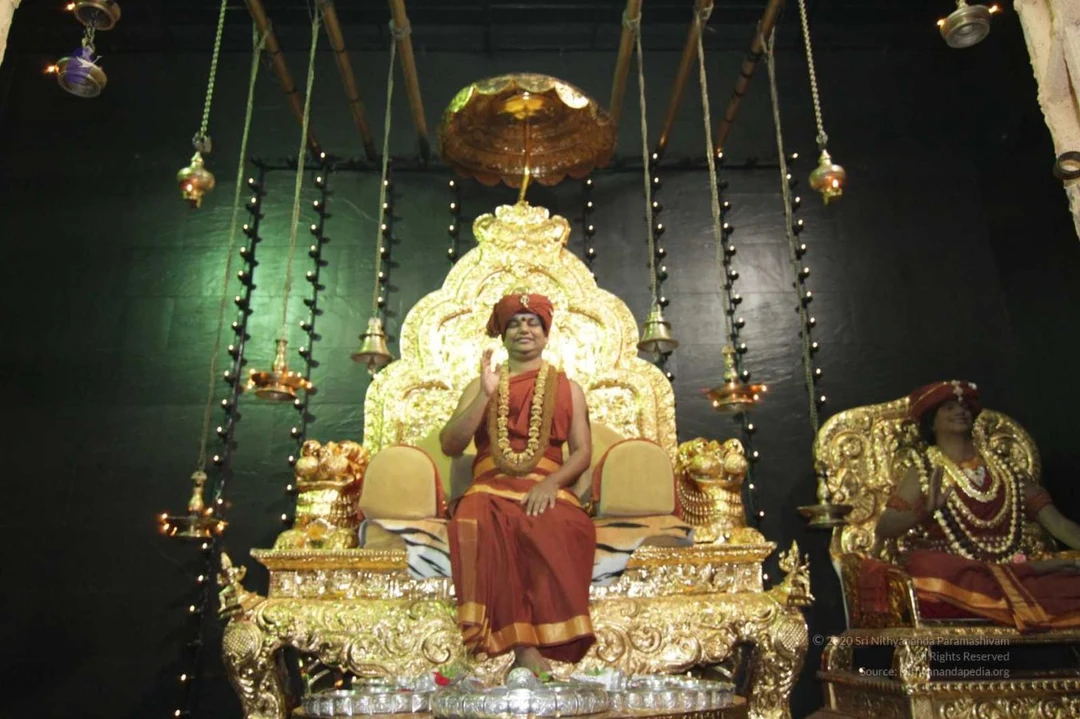
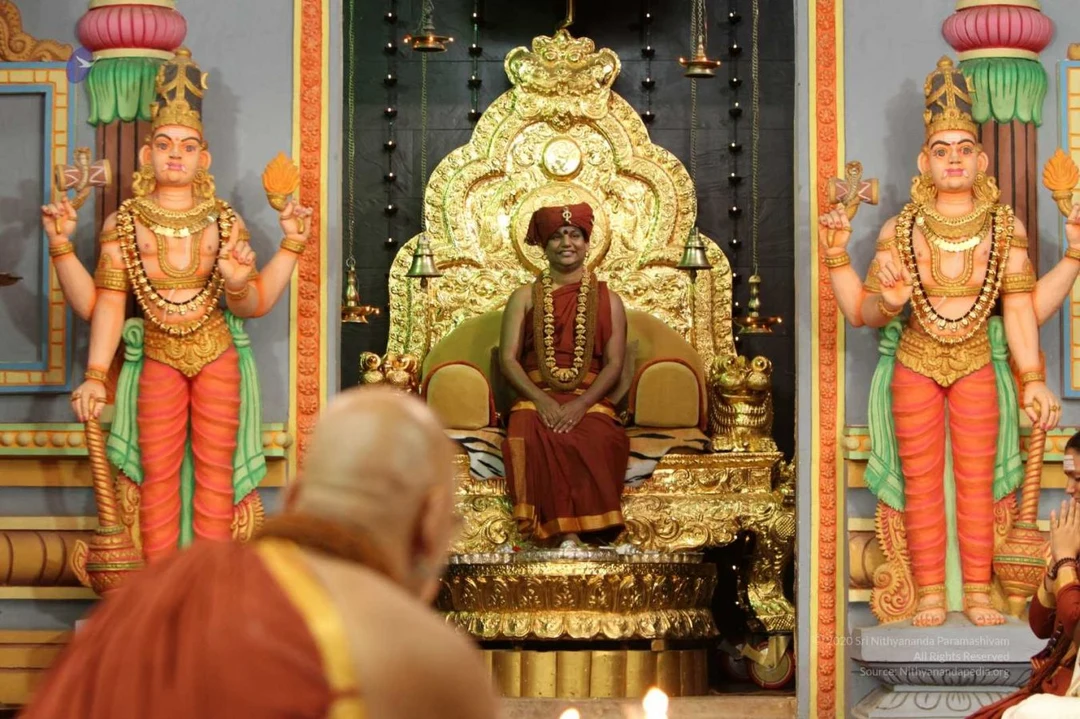
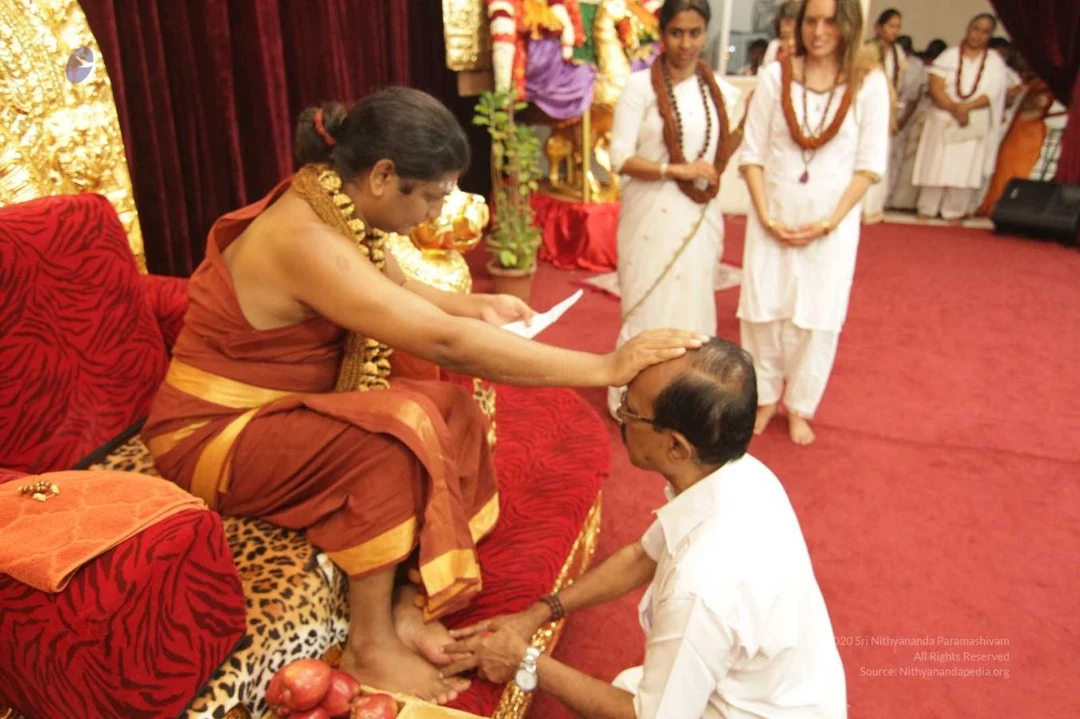
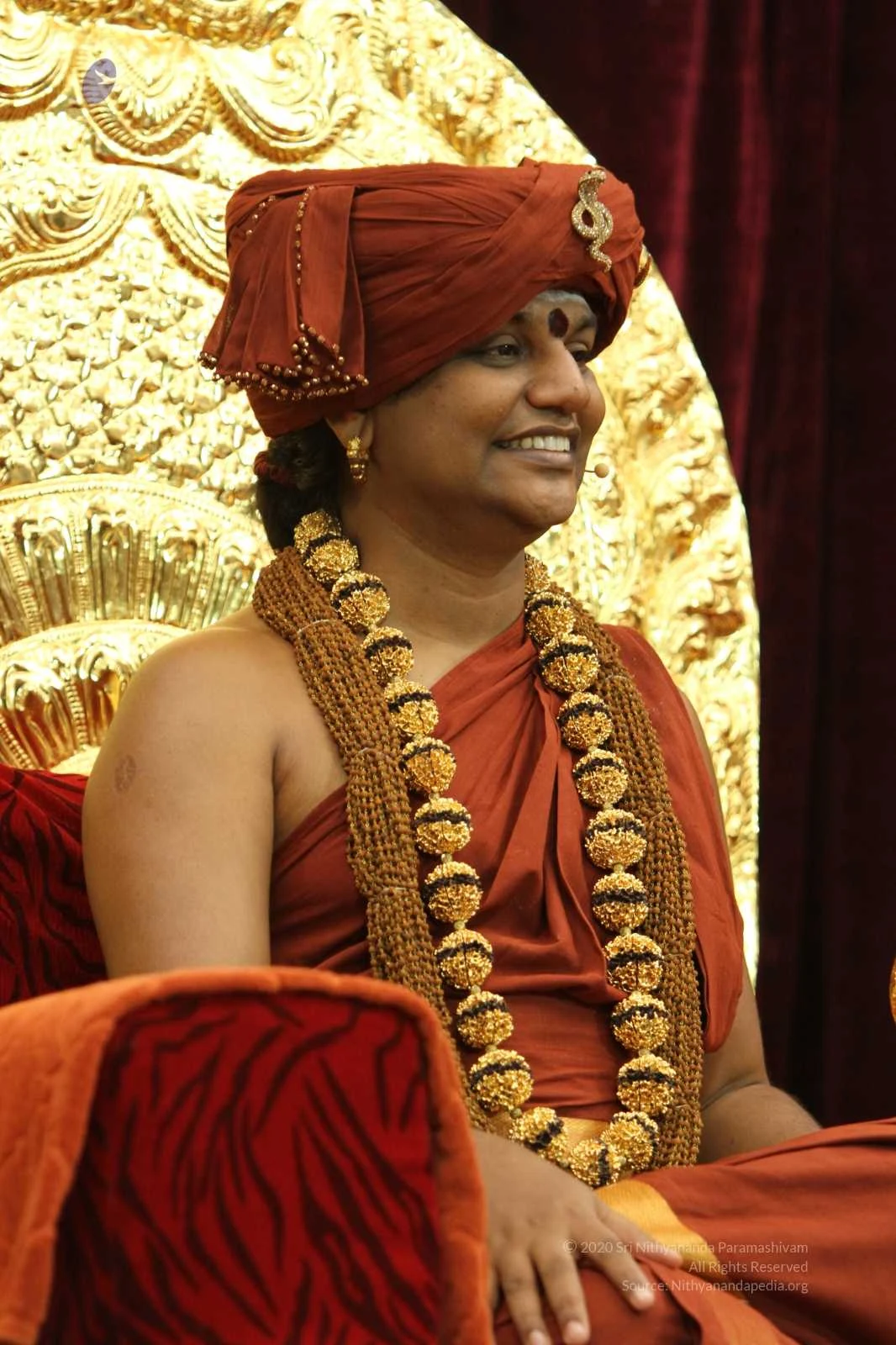
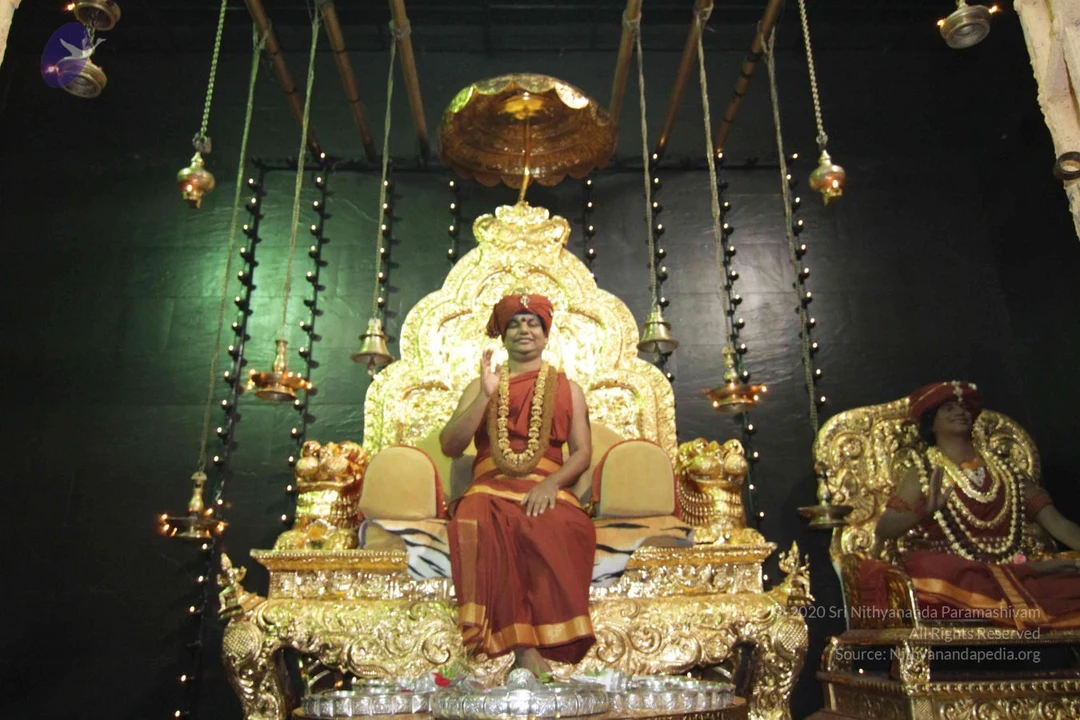
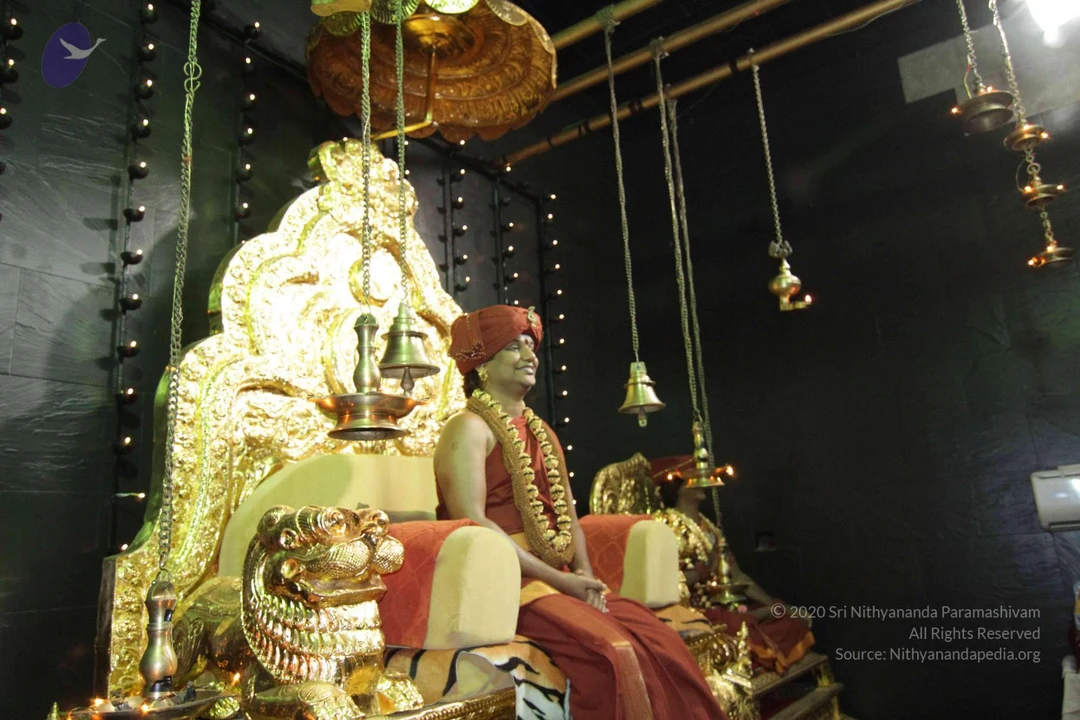
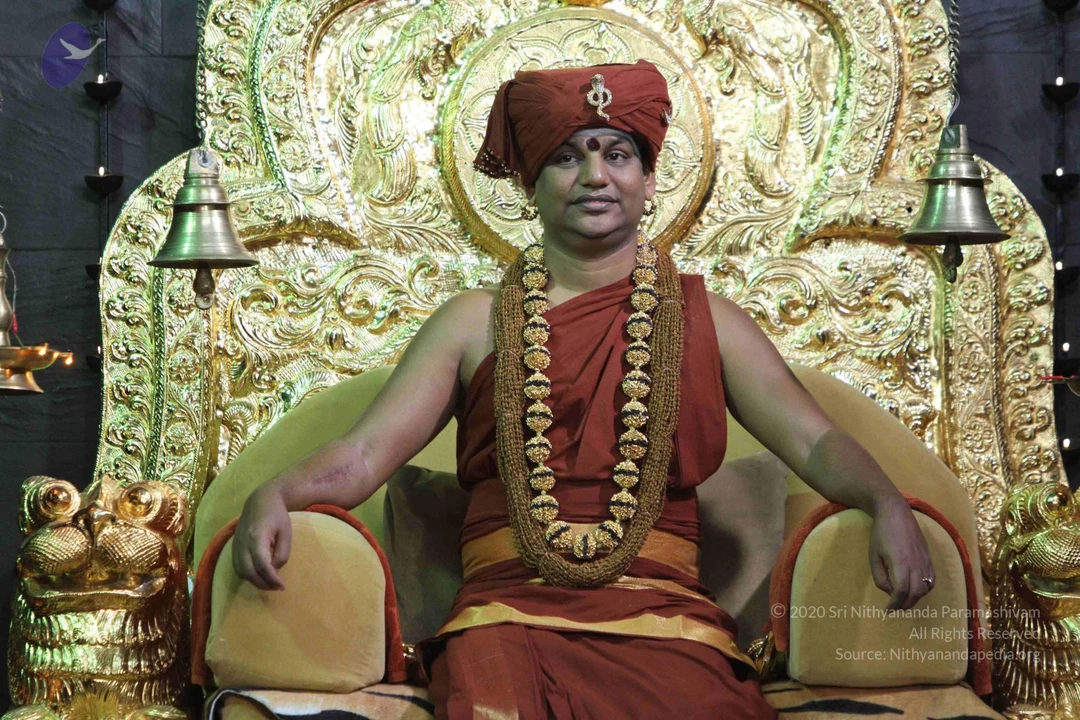
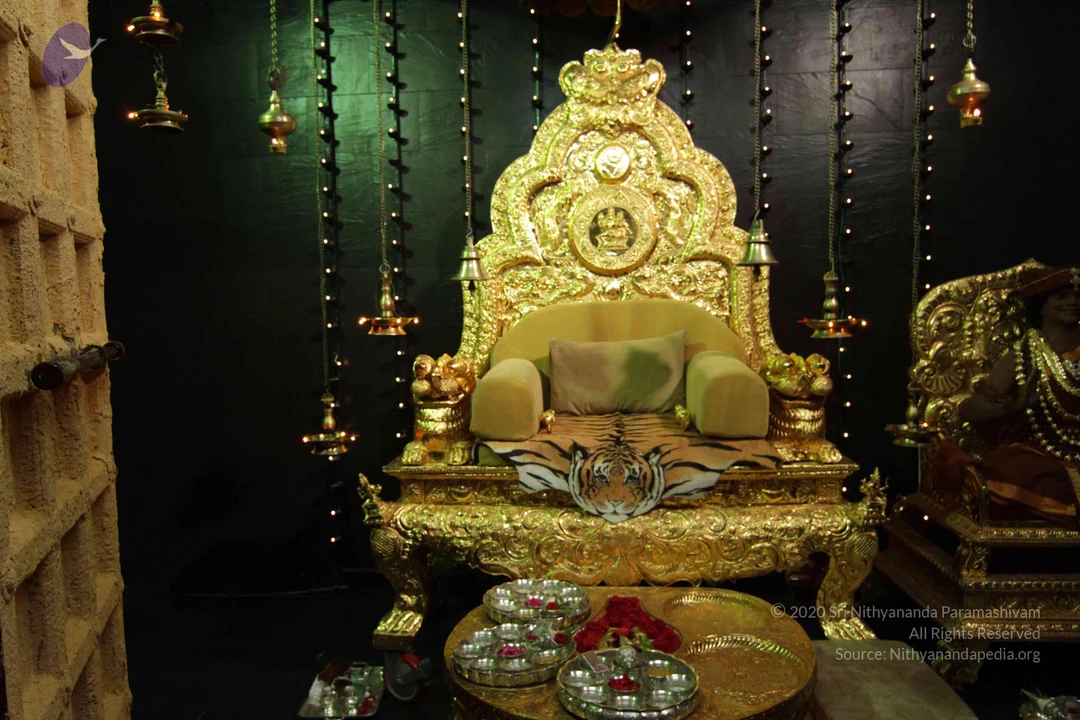
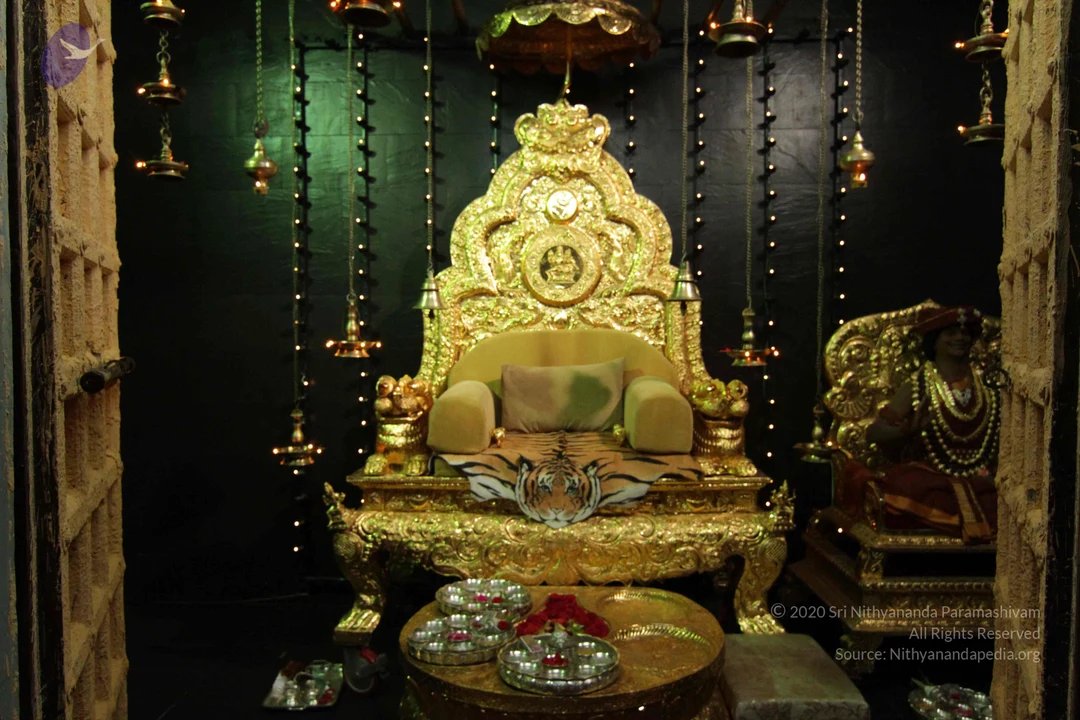
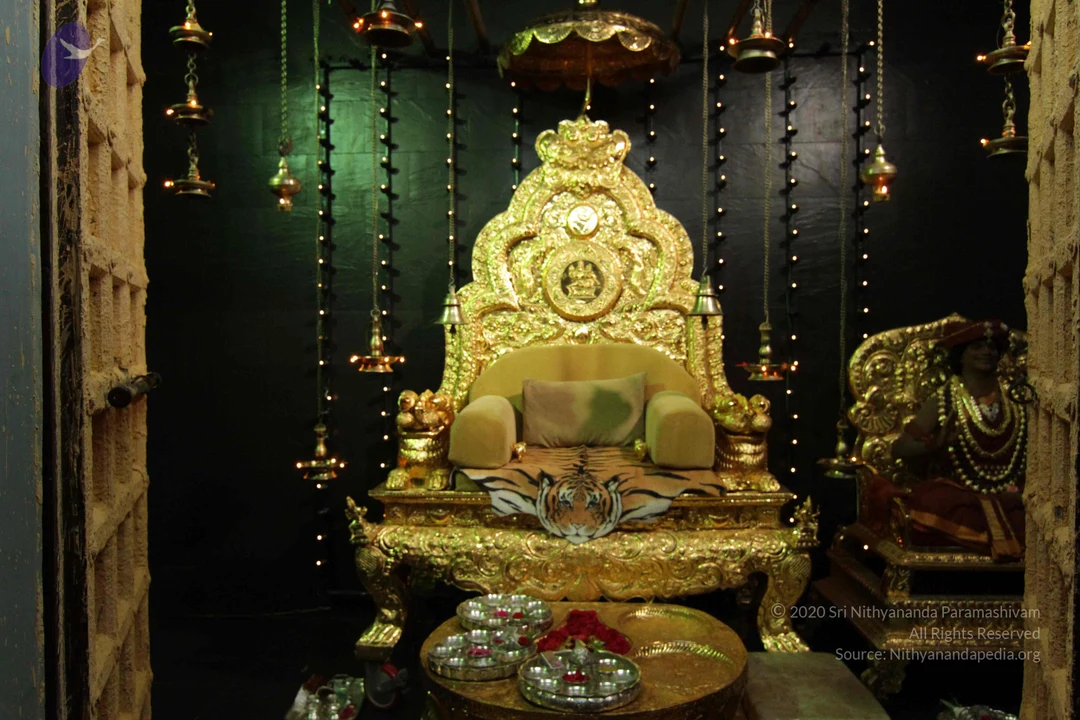
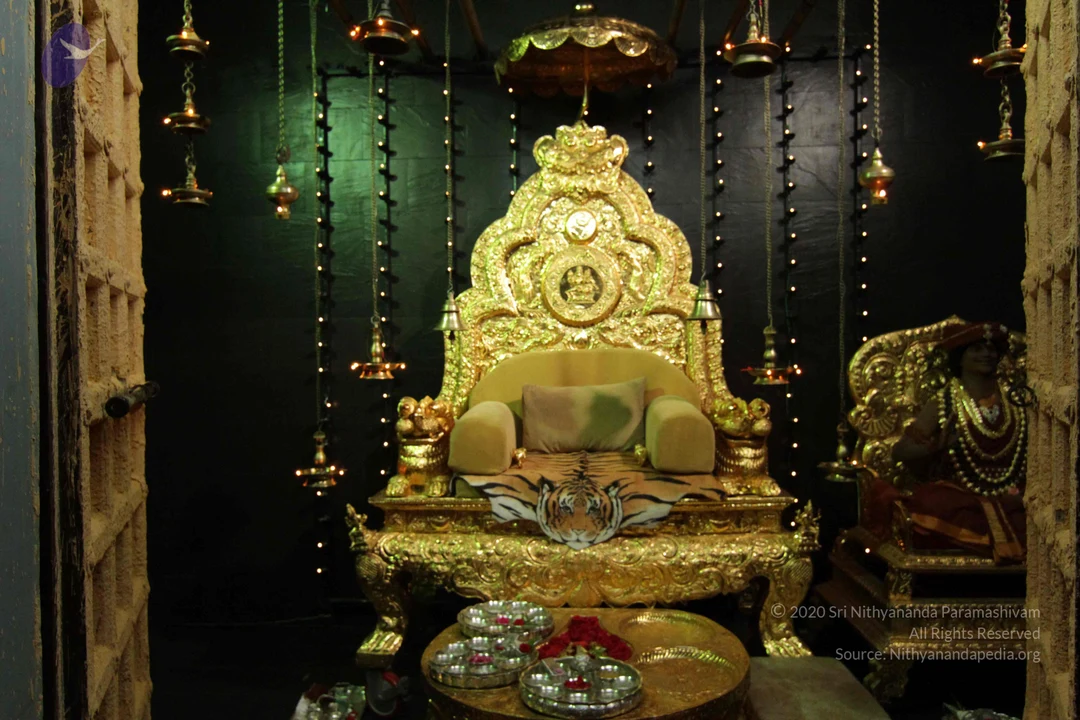
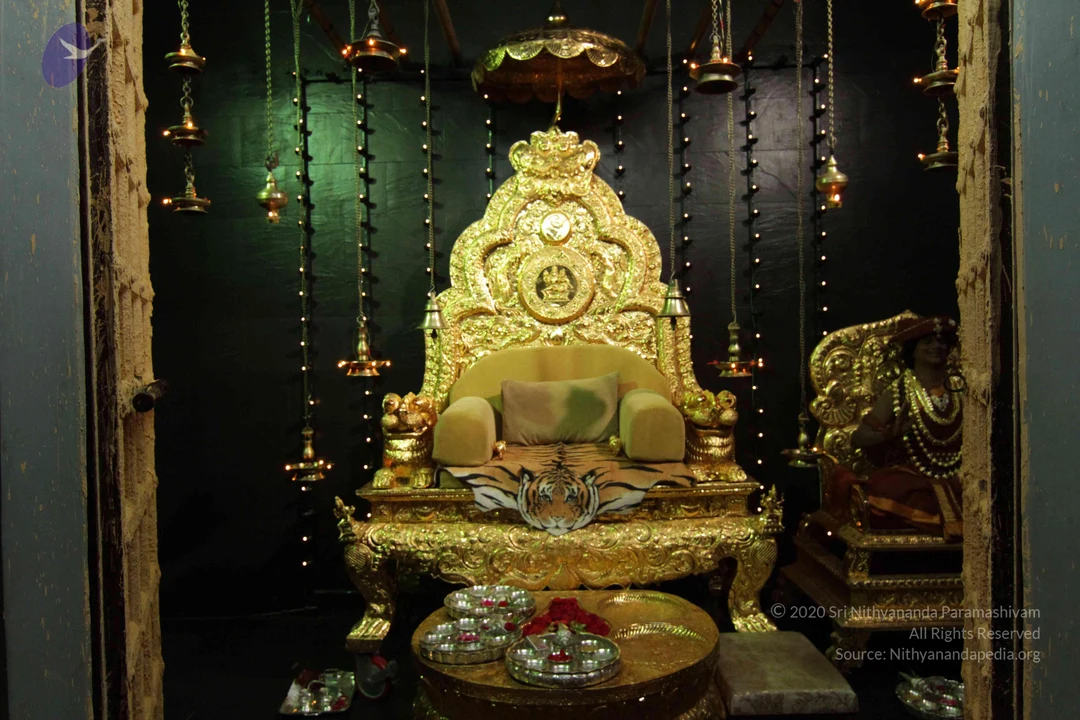
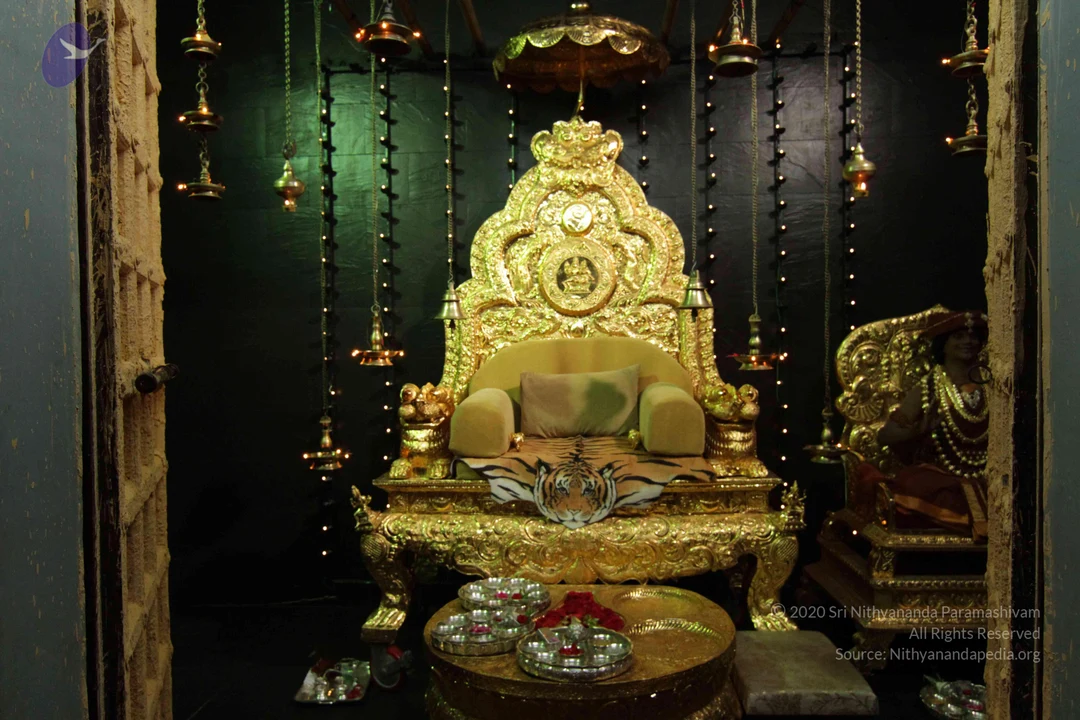
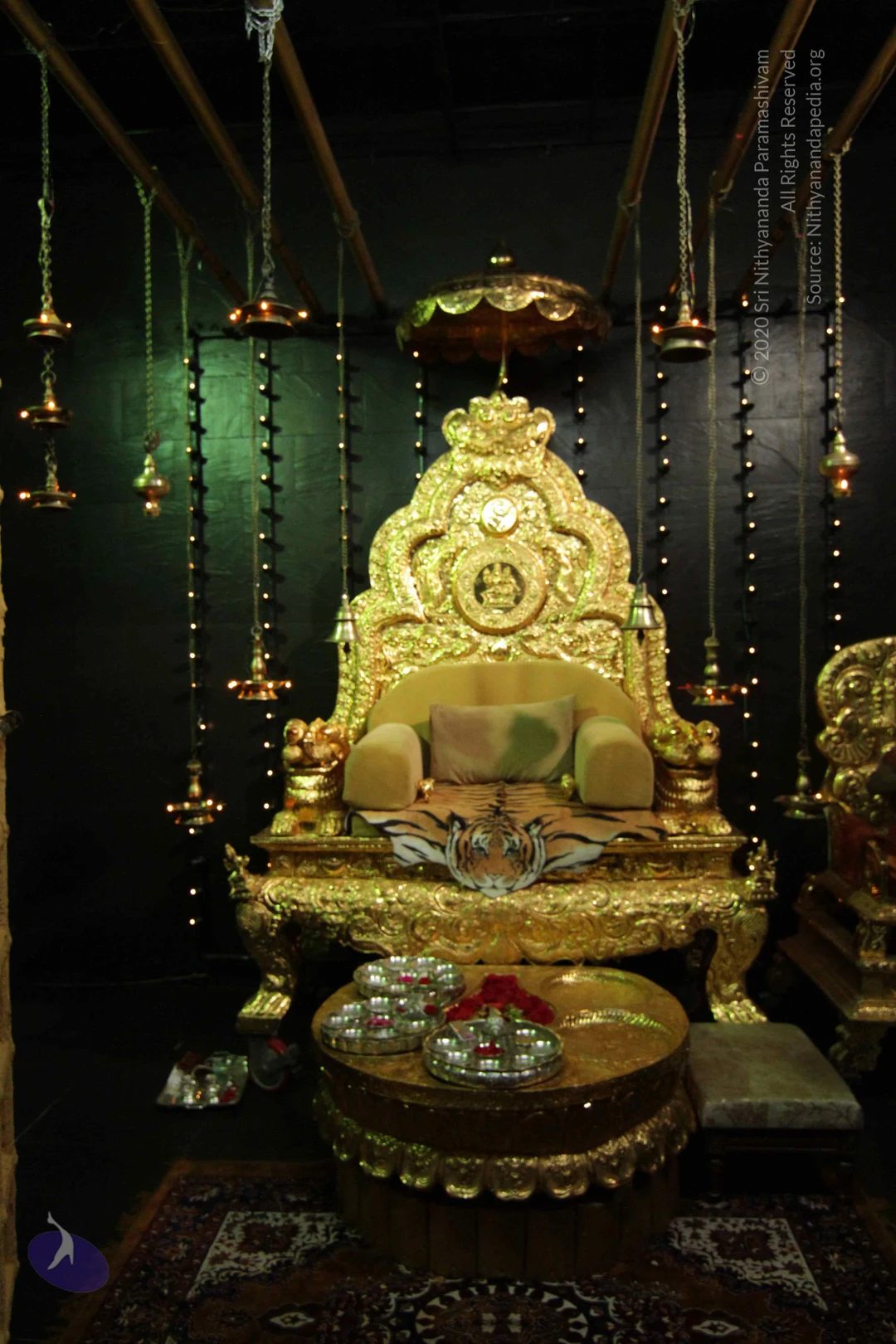
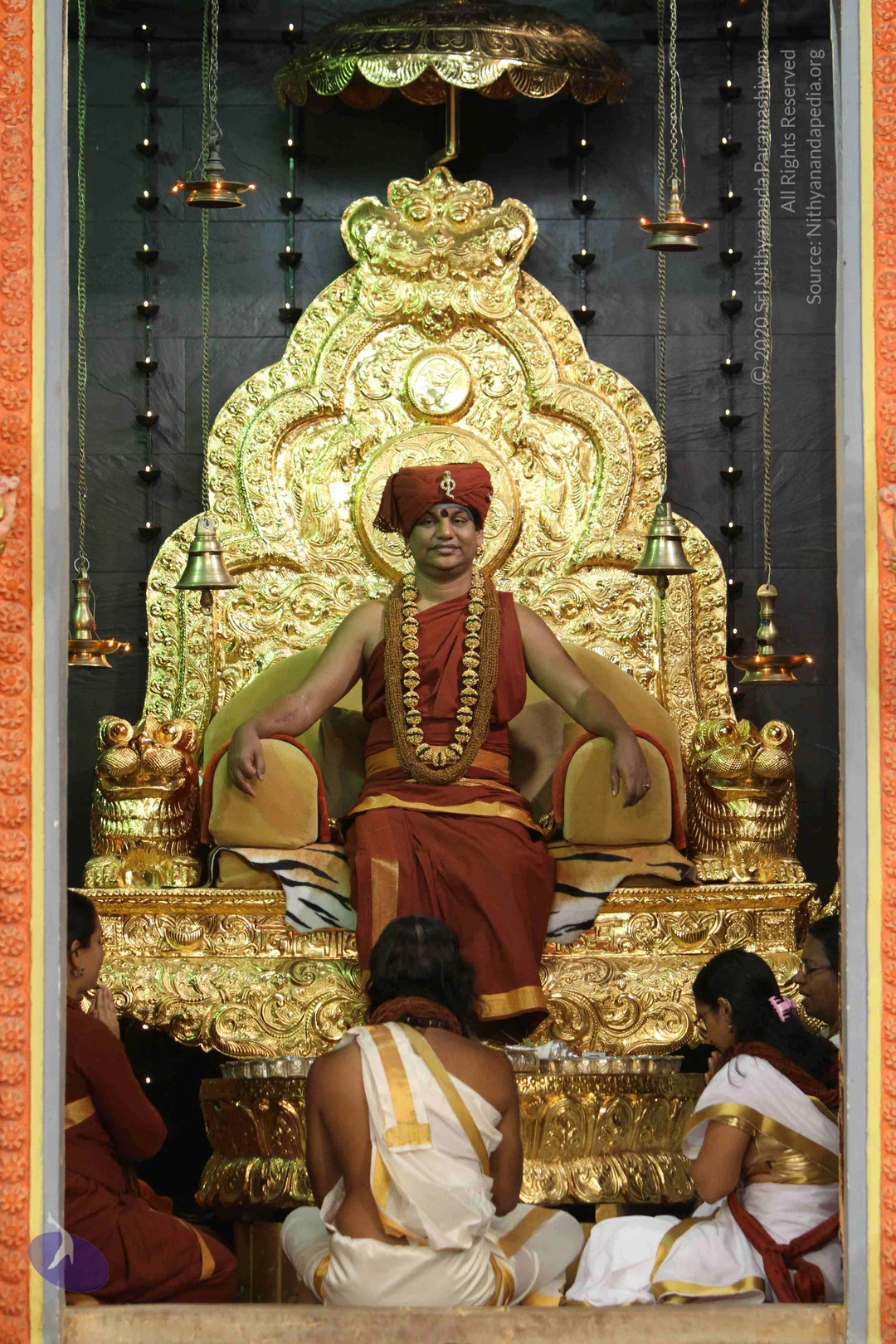
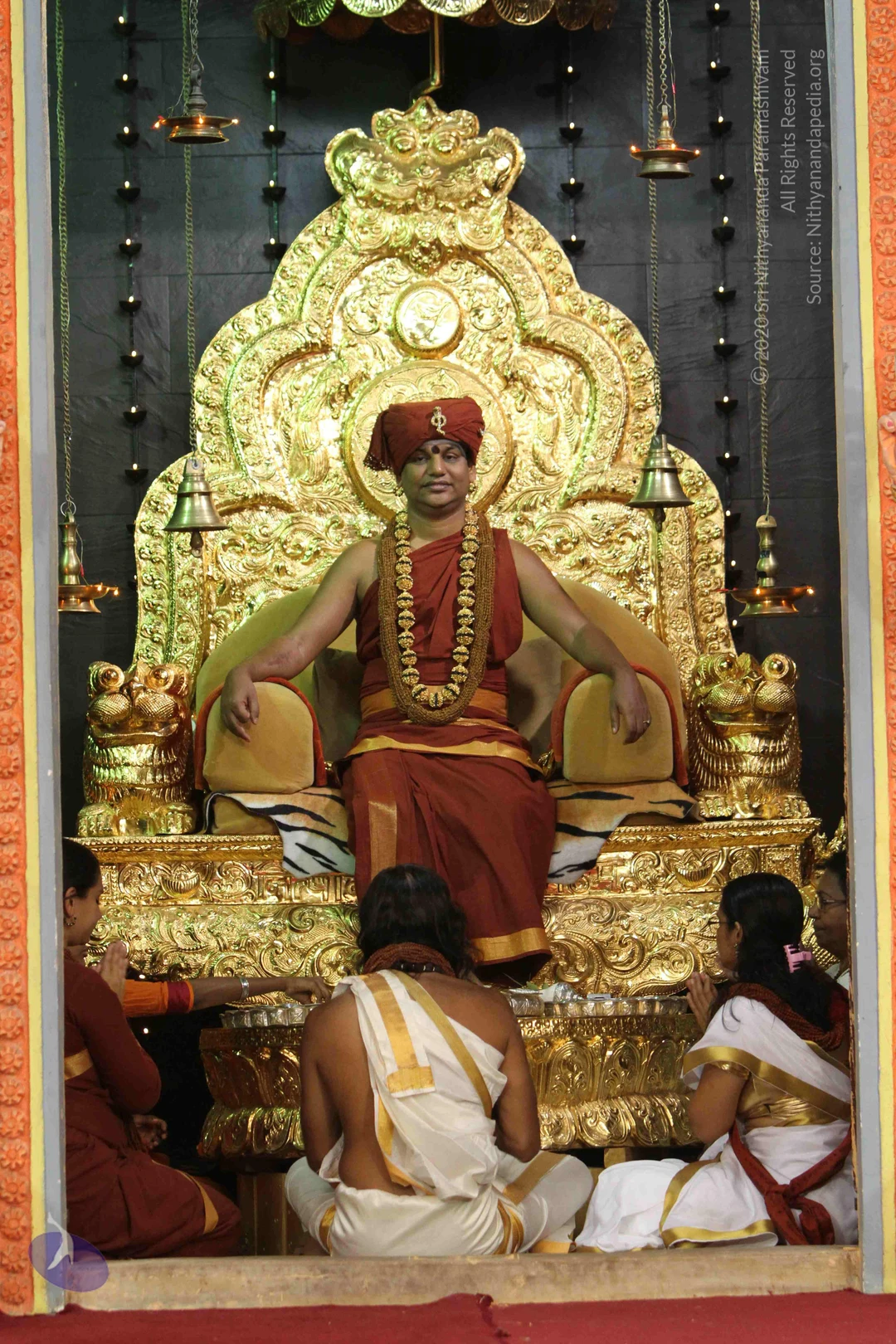
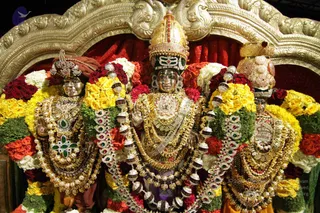
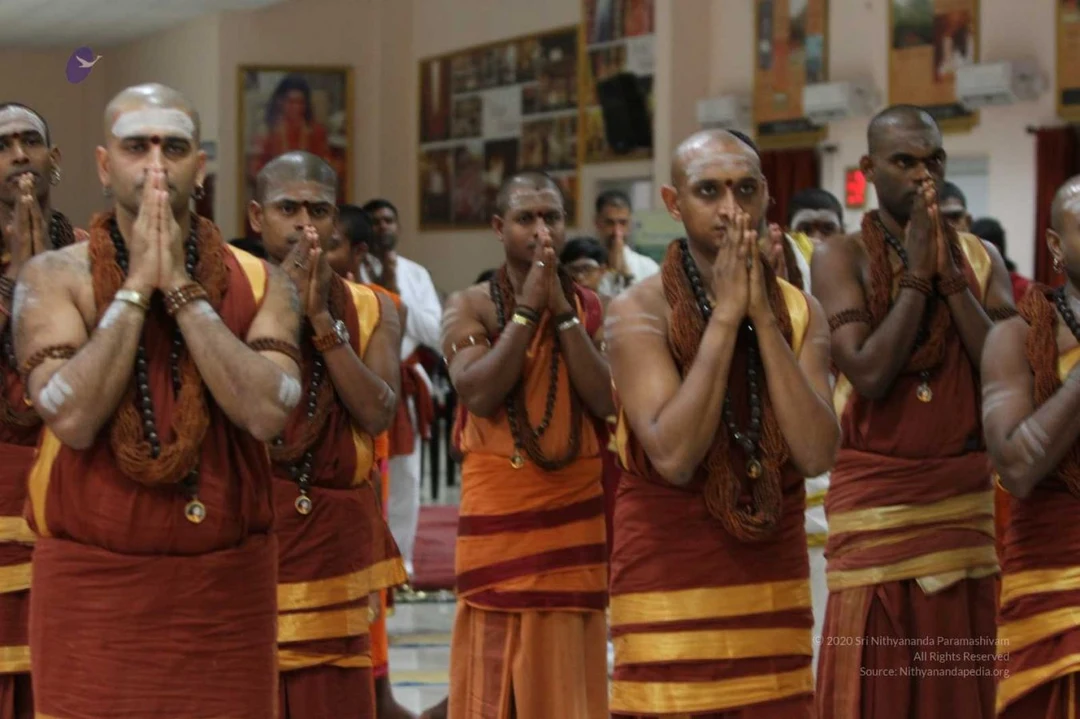
A seated man in saffron-orange robes sits on an ornate gold throne with carved lion-head armrests, a tiger-striped cloth draped over the seat, and a gold canopy above. He wears a red-orange head cloth, a multi-strand beaded necklace, and a red-orange shawl, and gestures with one raised hand while speaking. Hanging brass oil lamps and bells line the dark backdrop. To the right, a second figure in red-orange robes and a red head cloth sits on a gold throne with a garland of white beads. The scene suggests a satsang setting. a person is seated on the central throne, identified by his saffron robes, red head cloth, rudraksha-style beaded necklace and ceremonial gold throne.A seated man in an orange-red robe and matching orange turban sits on an ornate gold throne with tiger-striped cushions, a gold canopy overhead and a garland of orange flowers around his neck. He raises one hand in greeting while the other rests on his lap. Hanging brass oil lamps and bells dangle from the ceiling beside the throne. To the right, a second gold throne holds a figure in red robes, pearl necklaces and a red turban, with hands joined in greeting. Dark green wall behind.A seated man in a rust-red and saffron-orange robe and turban sits on an ornate golden throne with embossed floral and scrolled carvings, flanked by brass bells and golden lion-head armrests. He wears a long multi-strand golden bead necklace and a small red dot on his forehead, with a gold emblem on his turban. Hanging brass oil lamps and a dark backdrop frame the scene. A printed photo credit overlays the lower right corner.A photograph of a man seated on an ornate gold-leaf throne with carved lion-head armrests in a dark-walled hall. He wears a rust-red turban with a small gold emblem, a red-orange wrap over a red garment, a large rudraksha mala with gold beads, and a gold waist sash. A red bindi marks his forehead. Brass bells hang on chains beside the throne, and oil lamps are mounted on the dark wall. Appearance-based candidate: a person, seated on the throne in saffron-red robes with rudraksha and gold adornments. The page title refers to a satsang on Advaita.A man in a maroon-red turban with a small gold ornament sits on an ornate gold throne with carved scrollwork and lion-head arms. He wears a red-orange wrap over the shoulders and a long gold-beaded rudraksha-style mala of gold and brown beads at the neck. Brass bells hang on either side and small oil lamps are visible on the wall behind. He rests his arms on the cushioned armrests. Swamiji (probable) appears to be seated on the throne, identified by the swept turban, saffron-red robes and ornate gold mala, with the page indicating he was at this satsang event.

Pratyaksha-Pada-Puja
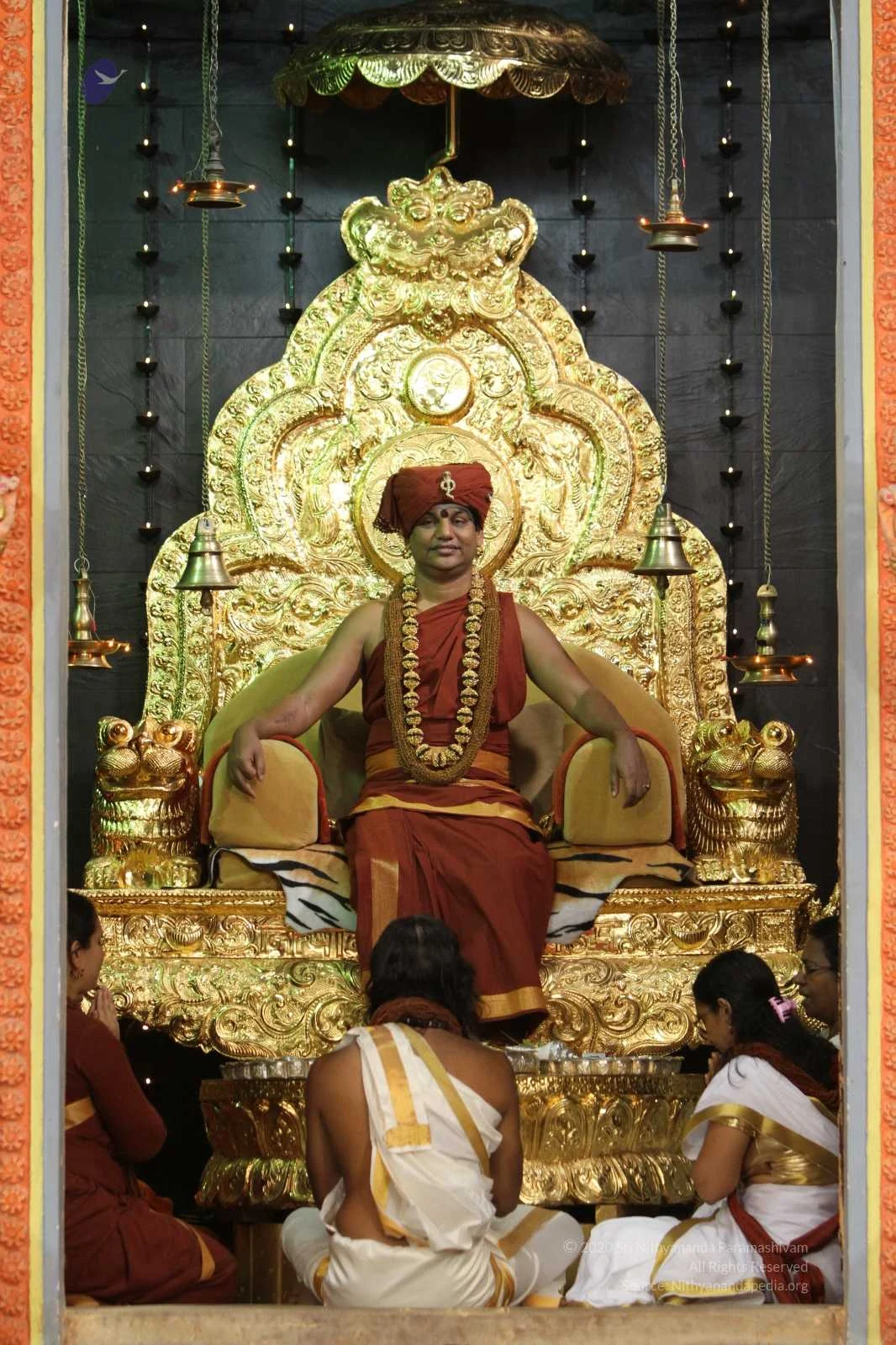
21 photosSource gallery
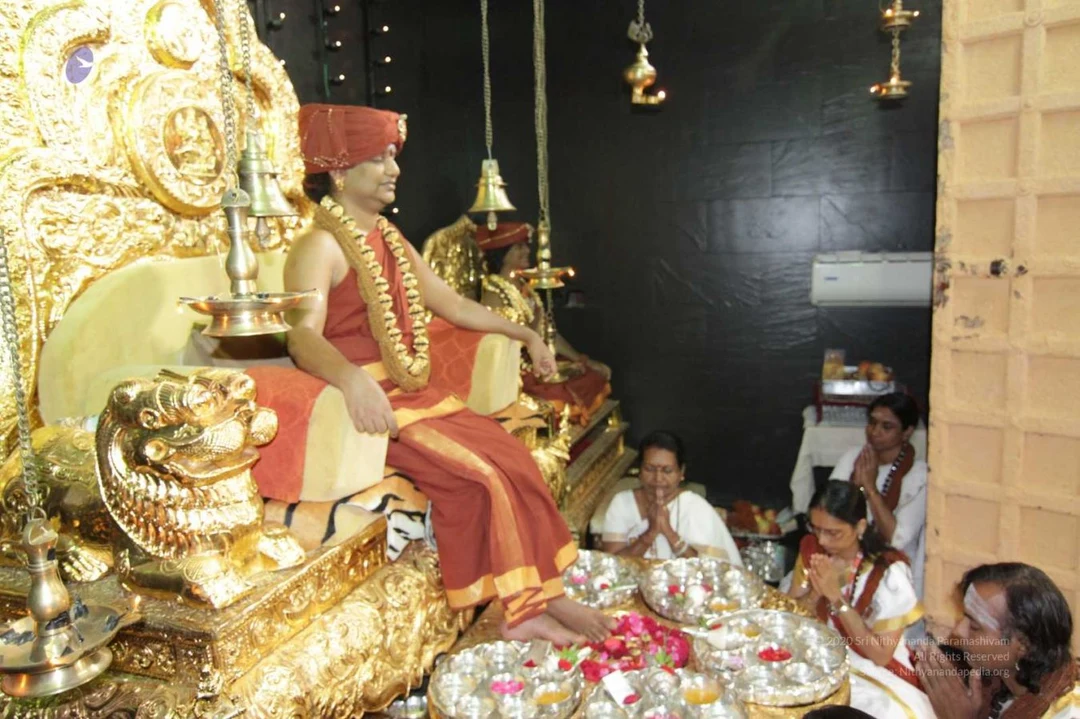
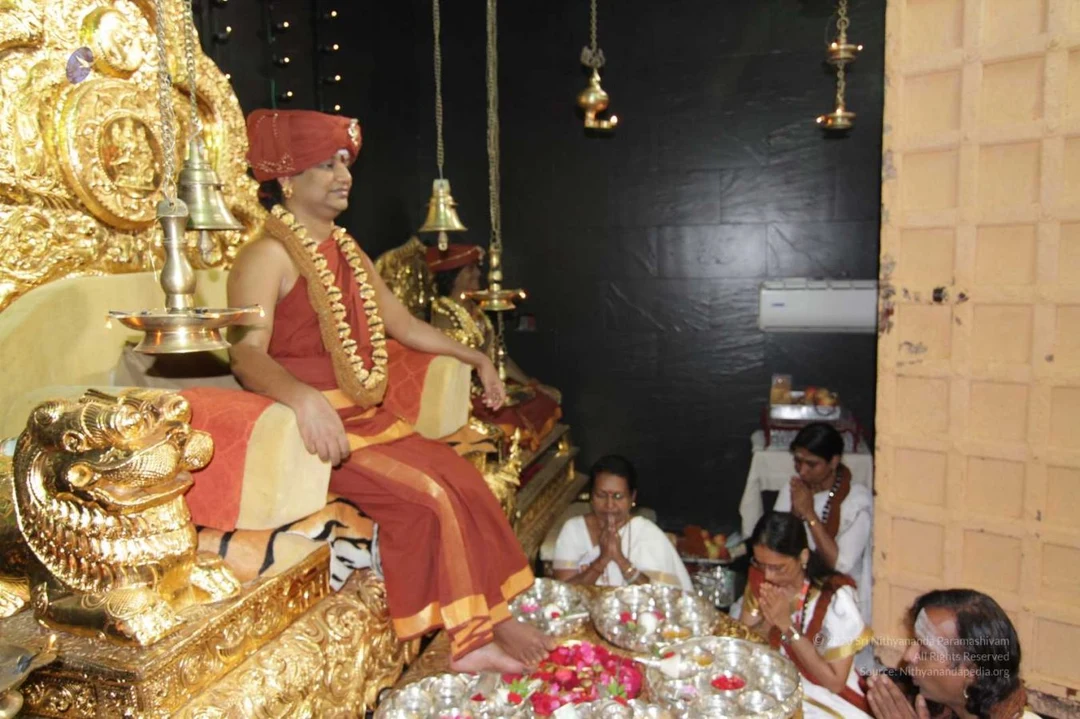
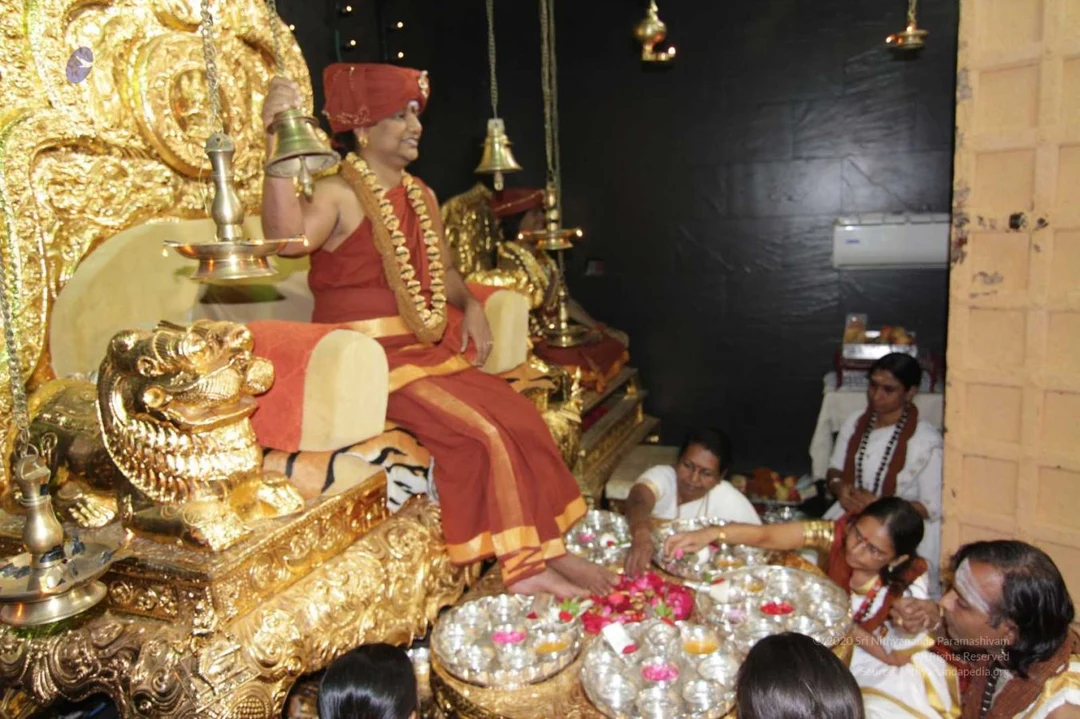
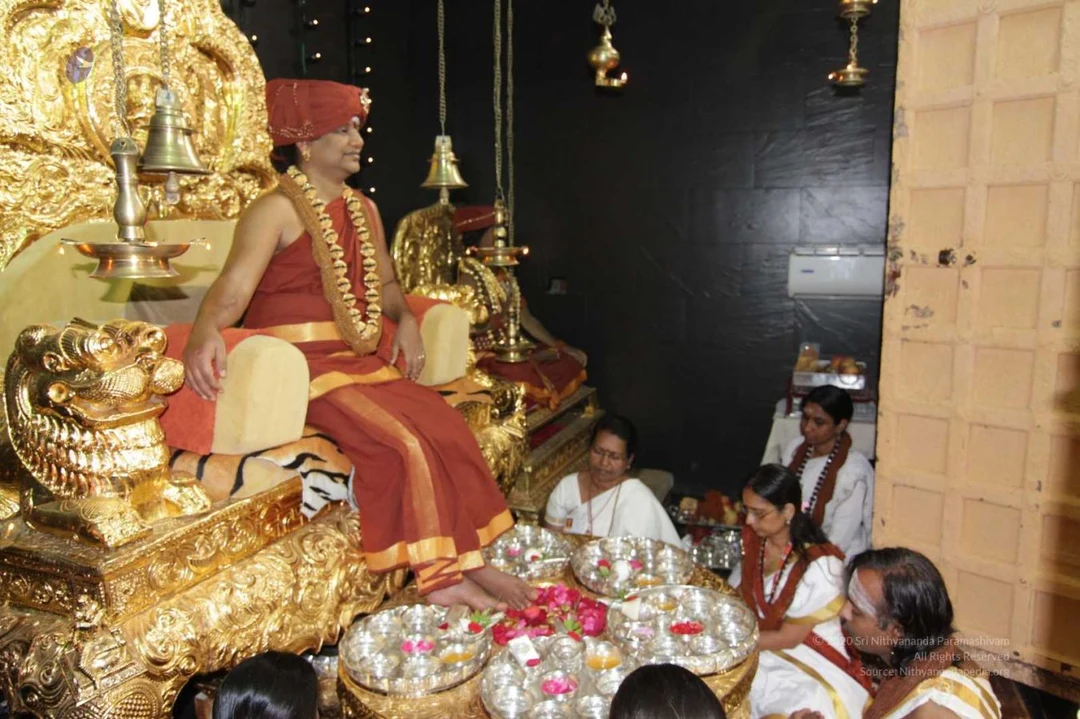
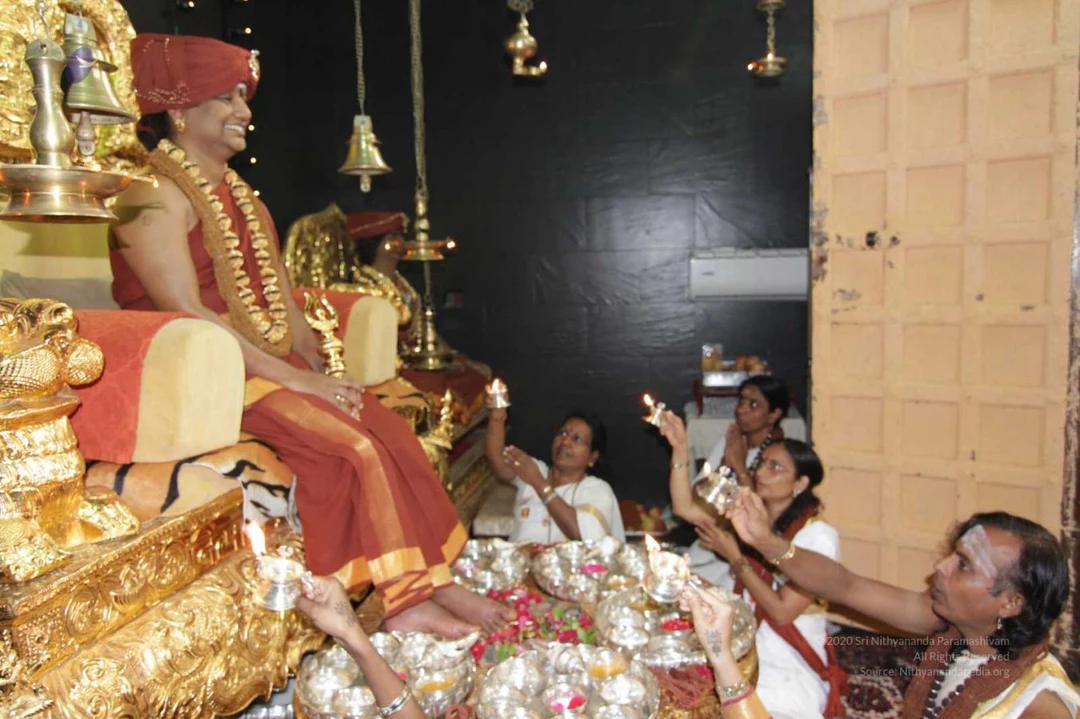
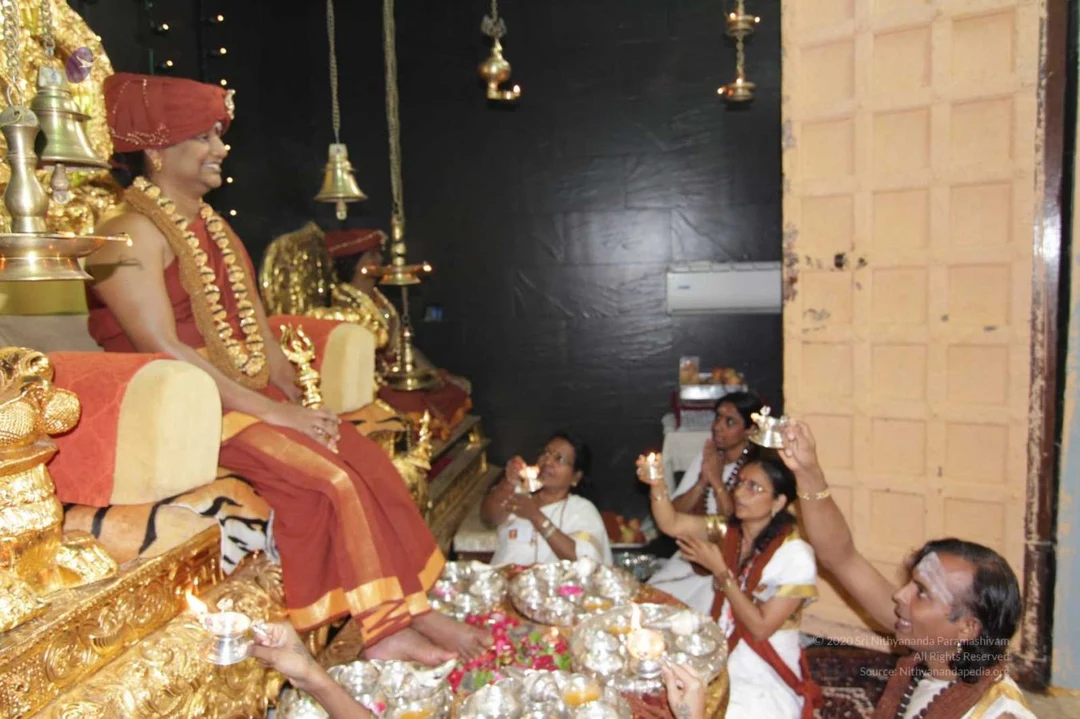
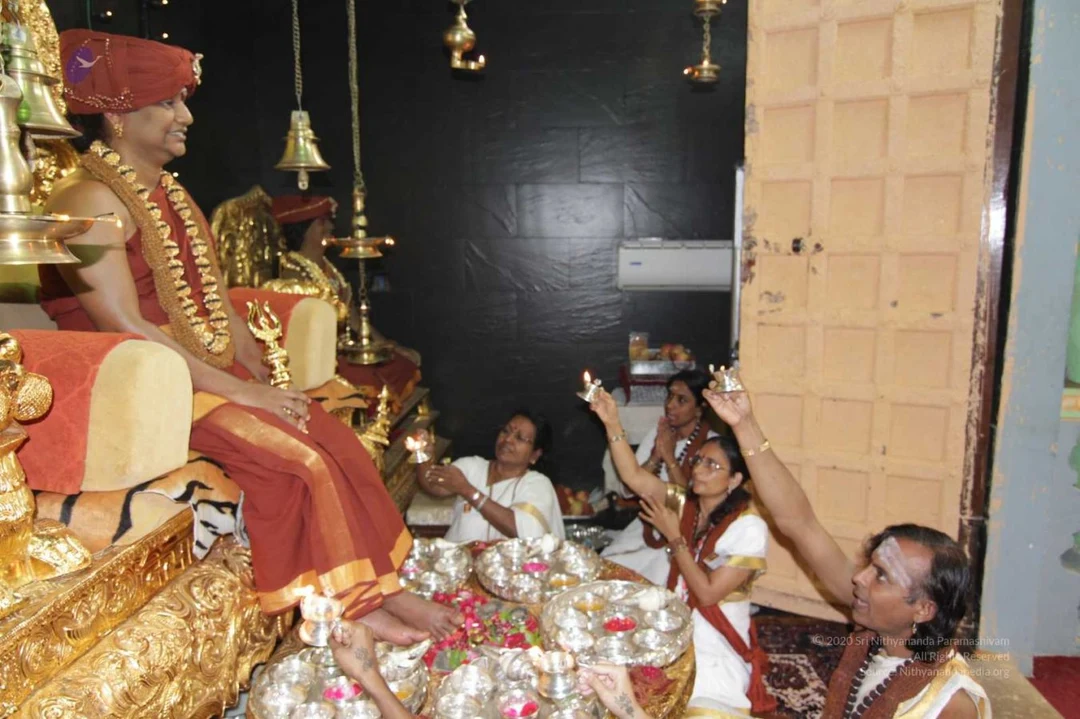
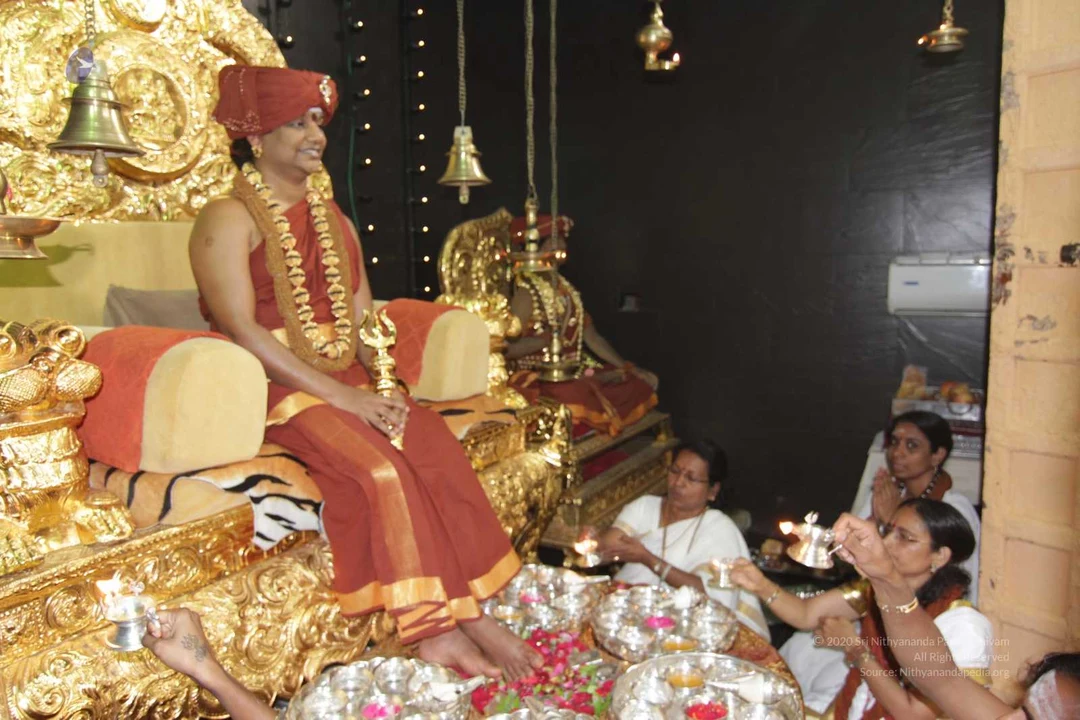
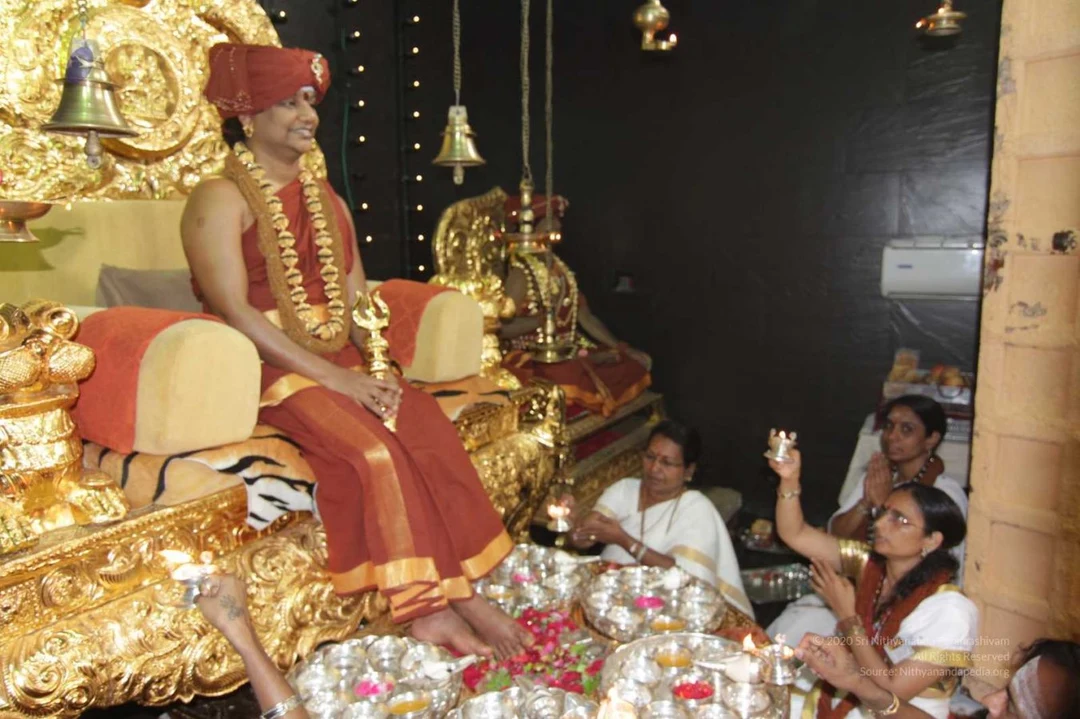
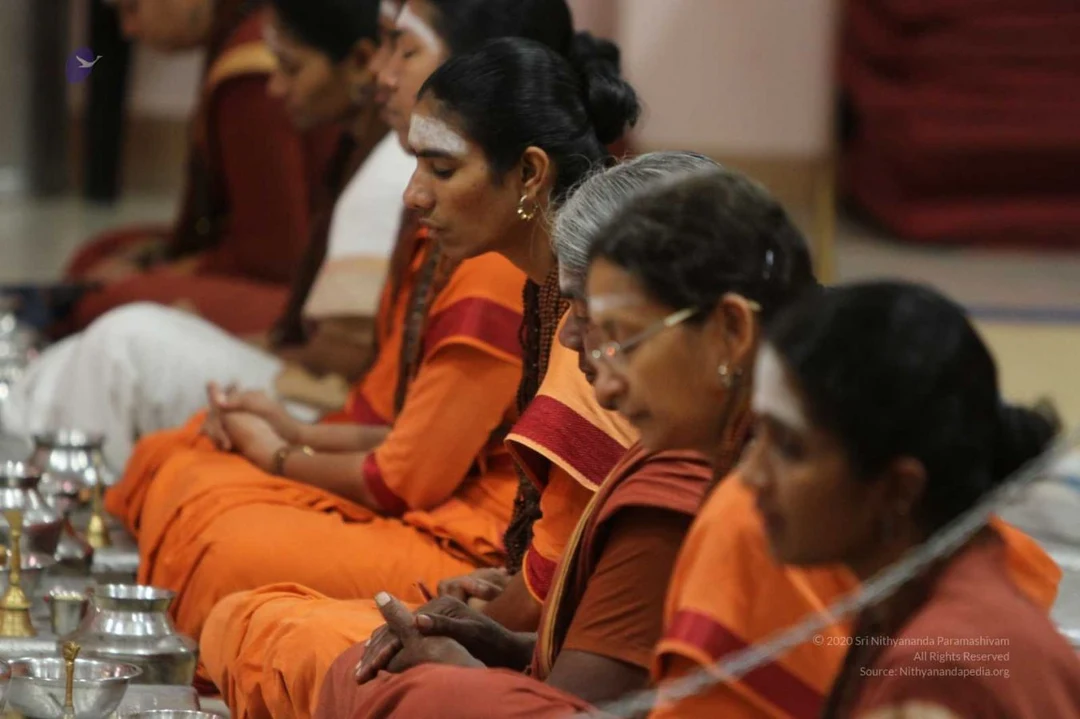
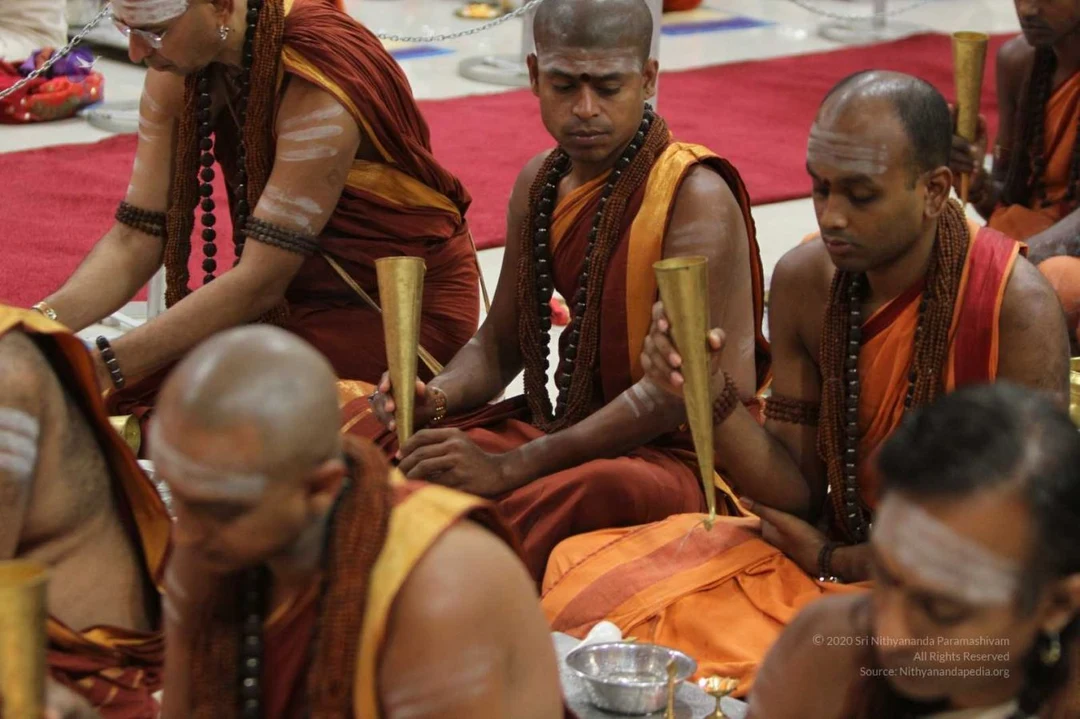
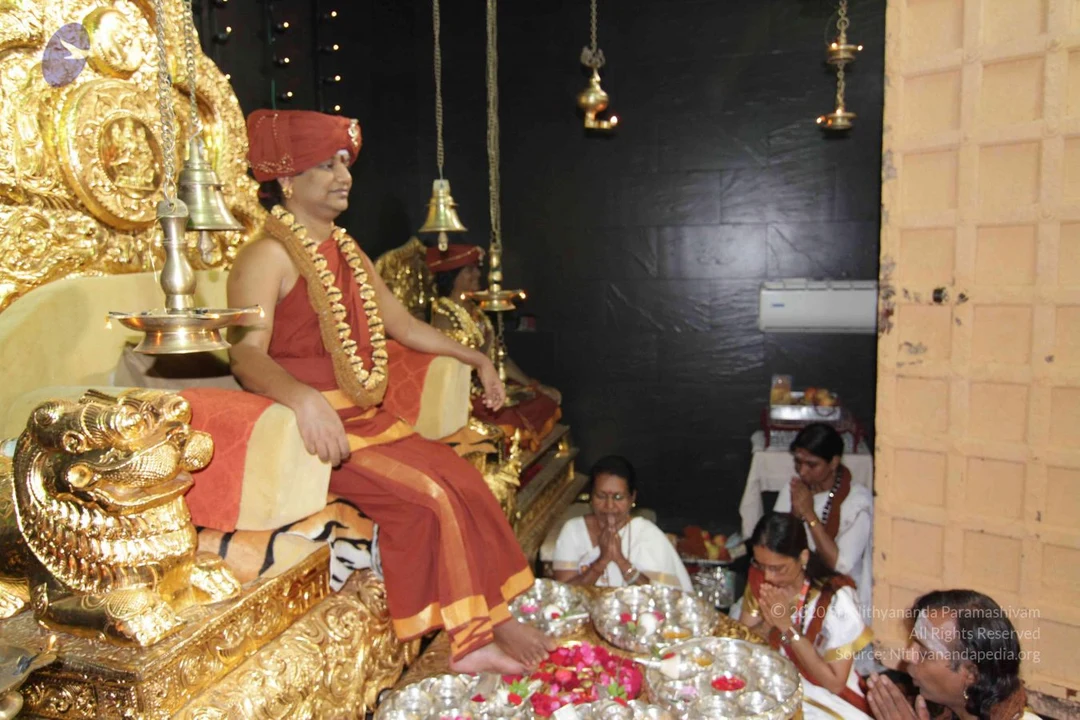
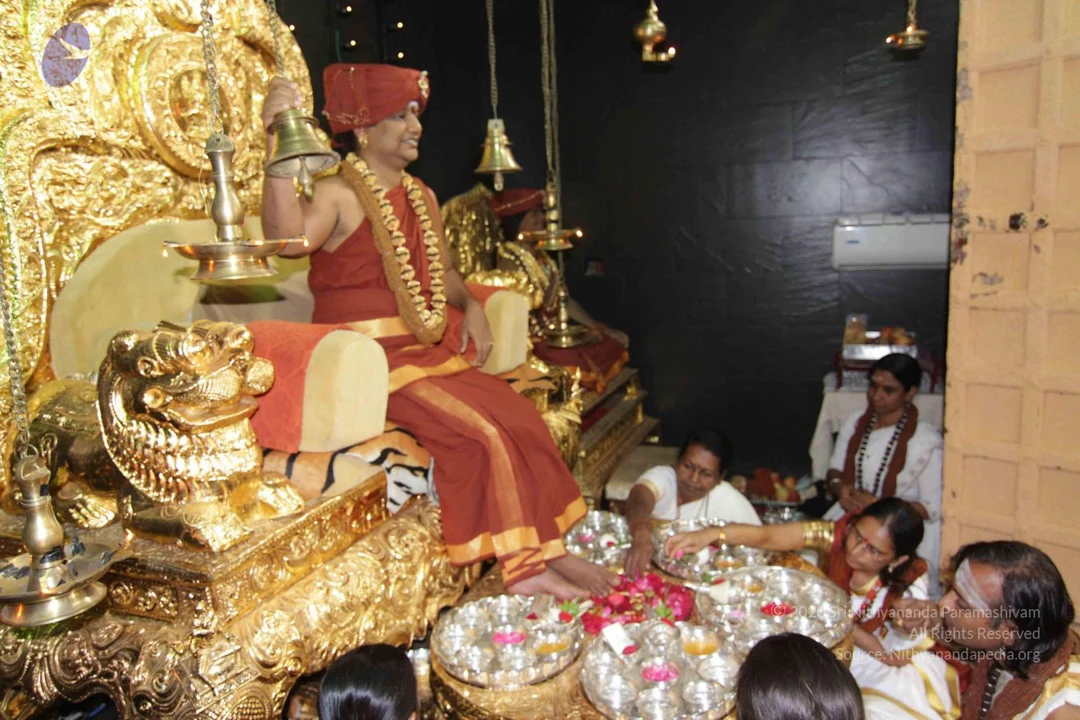
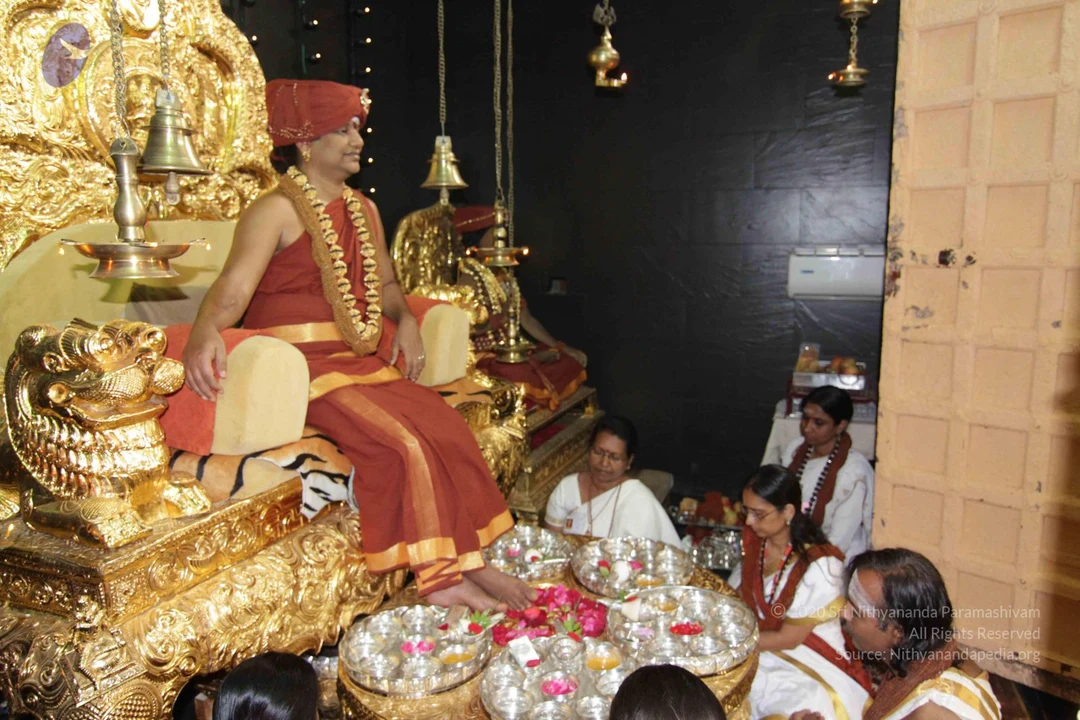
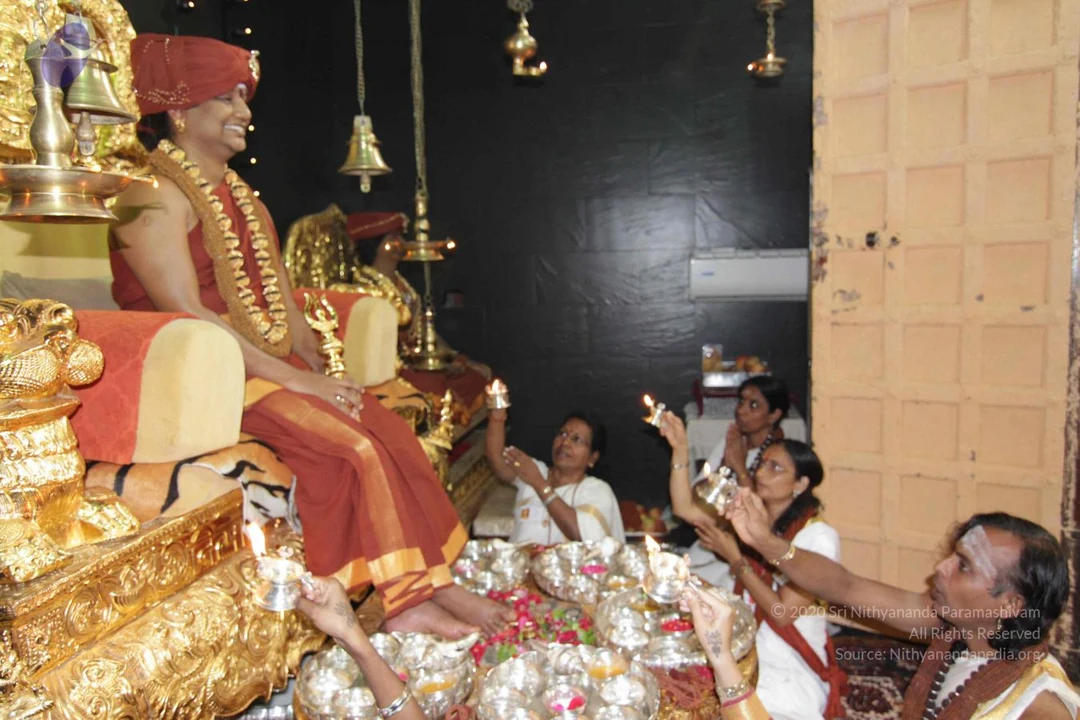
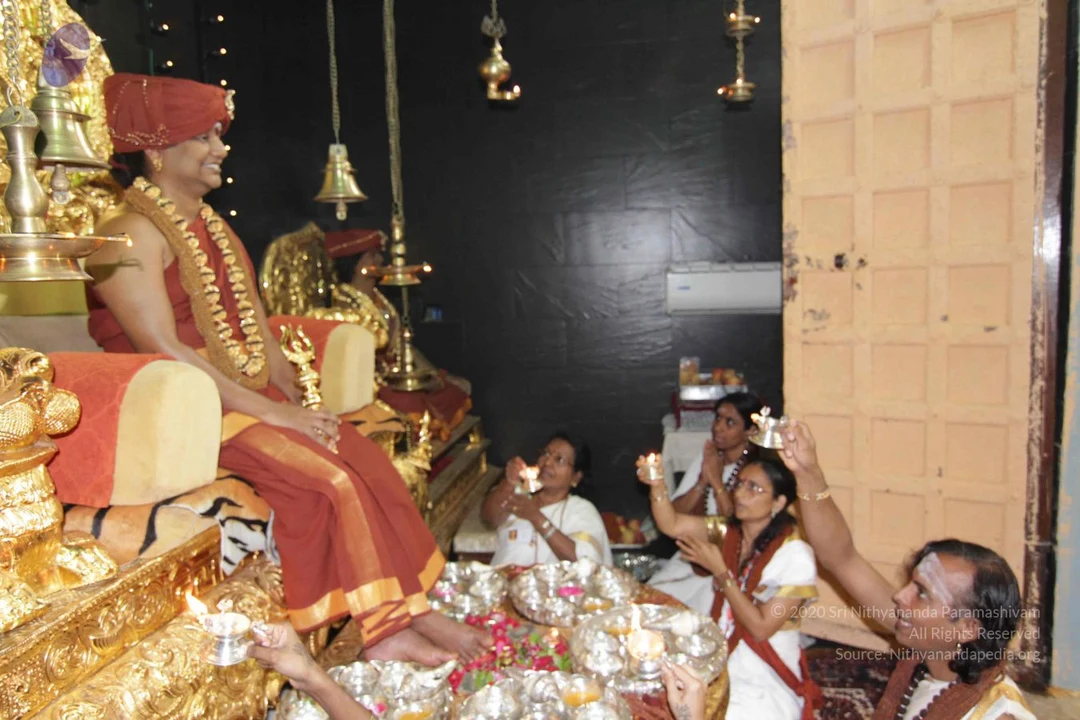
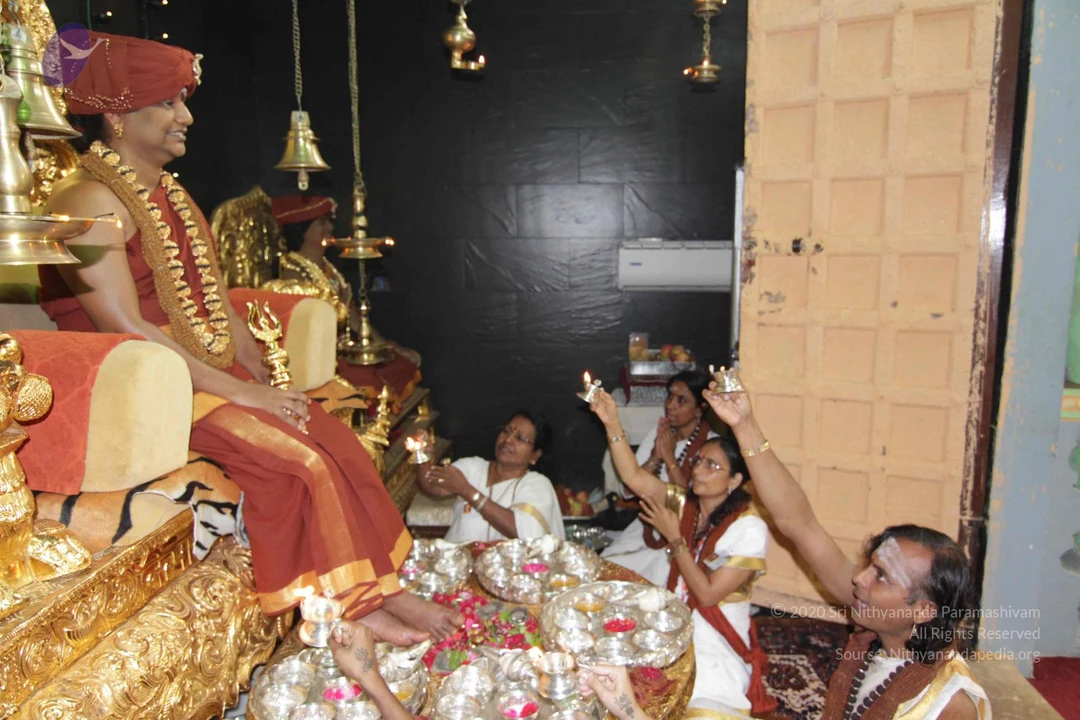
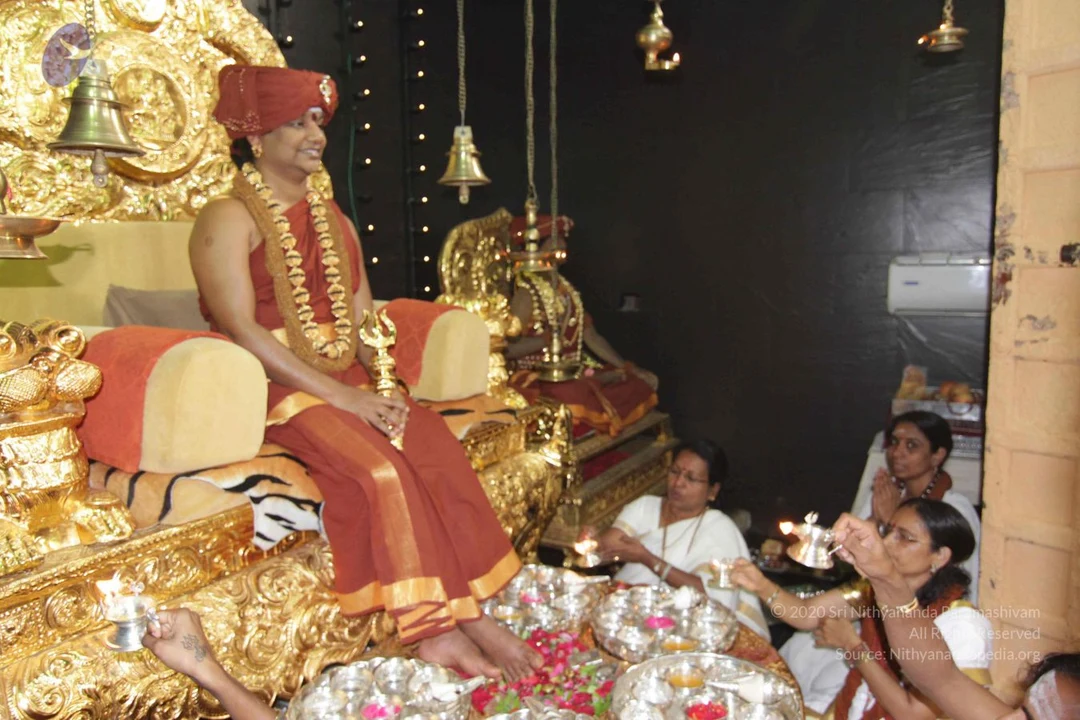
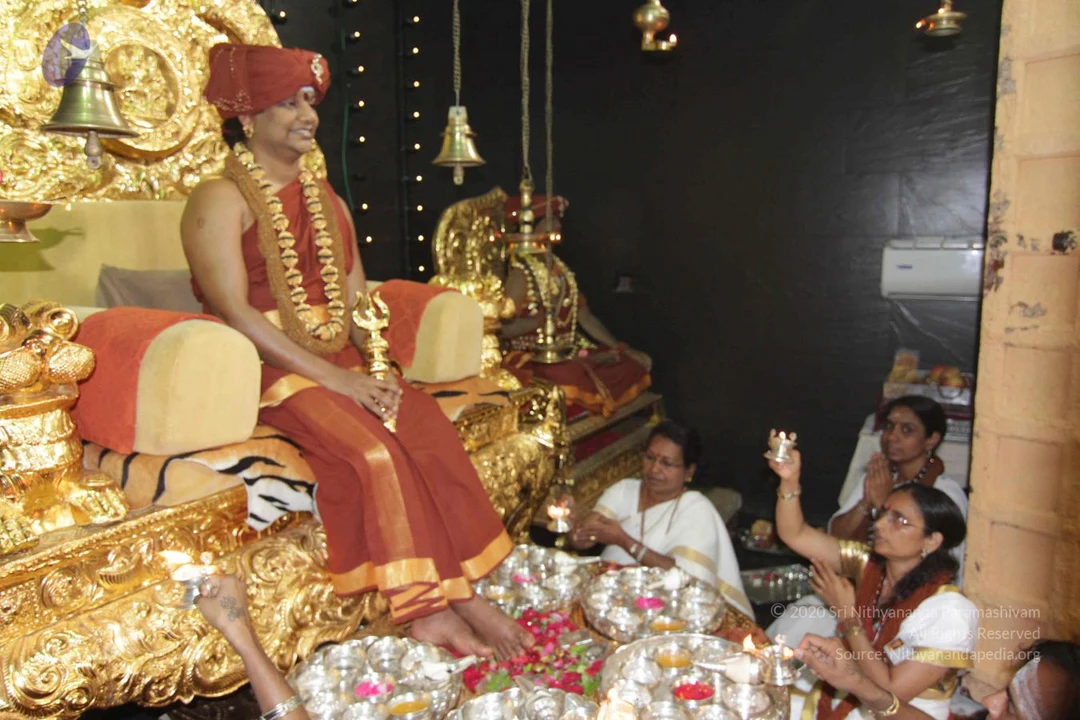
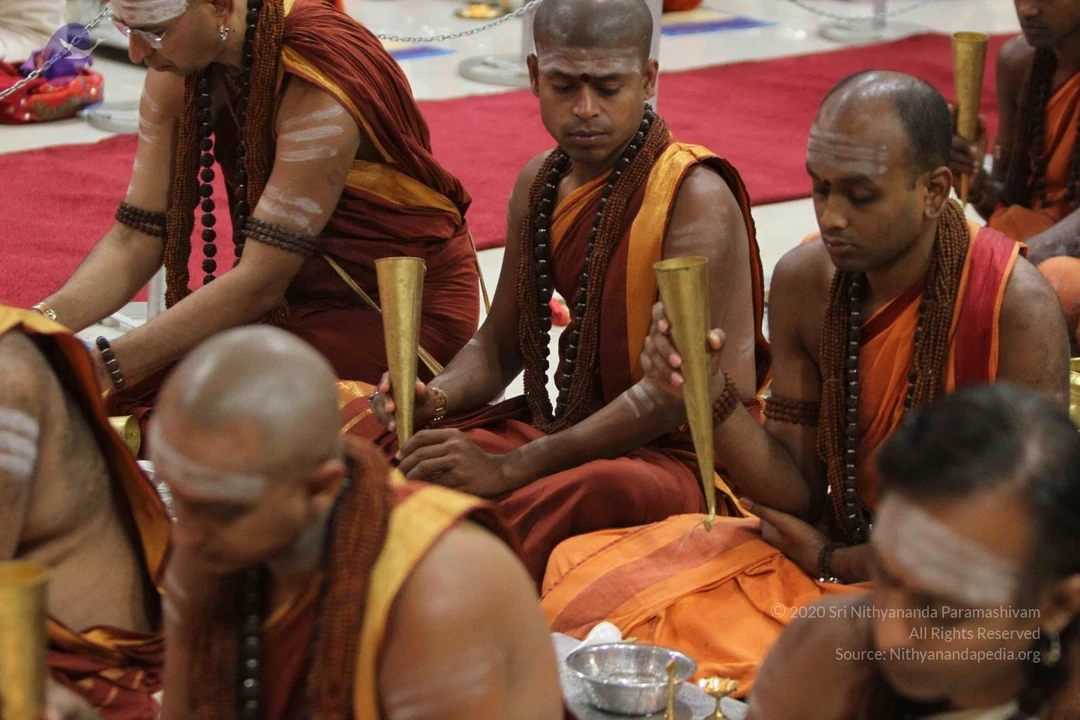
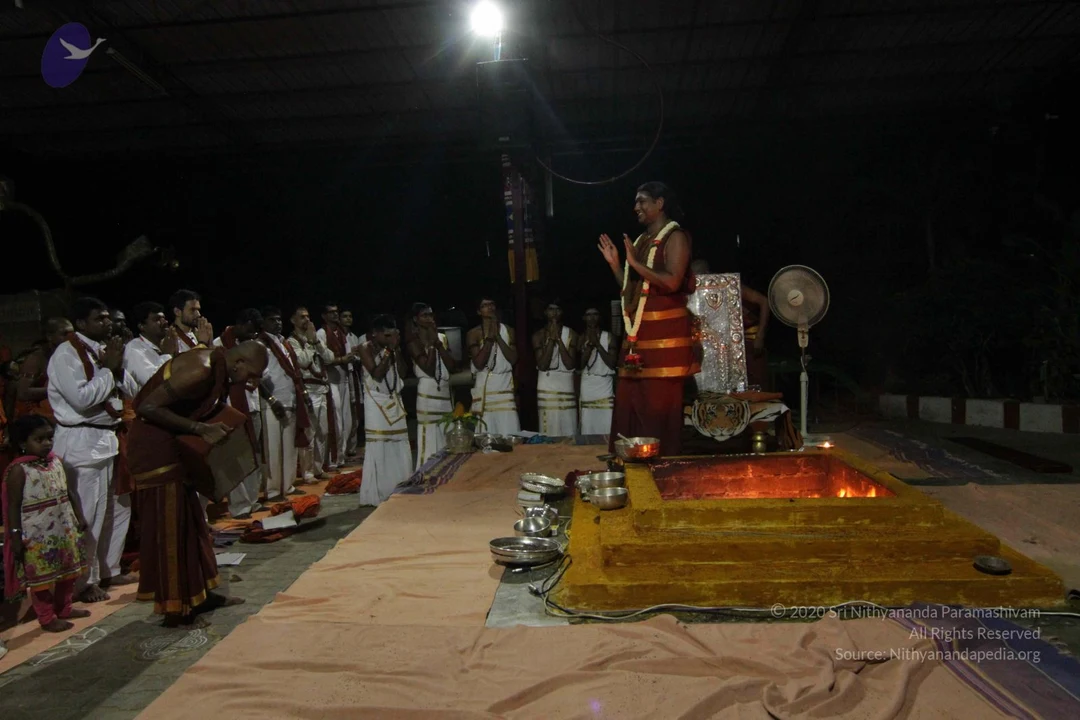
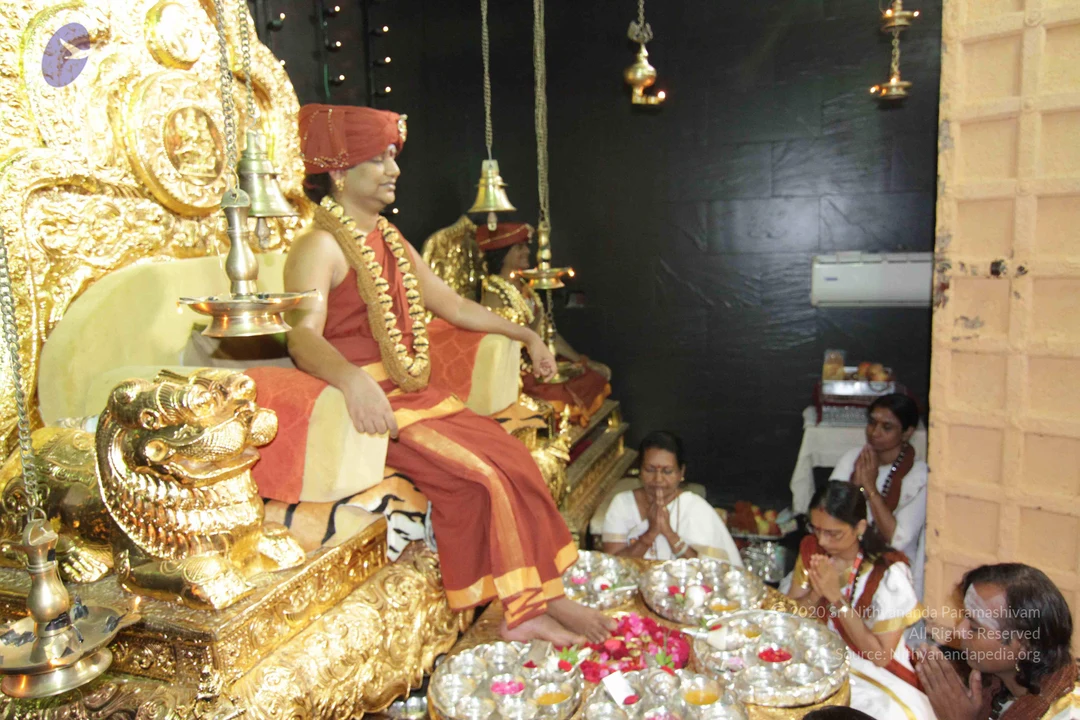
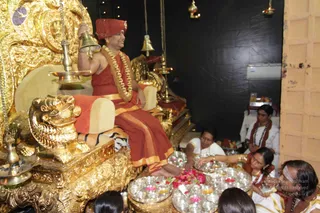
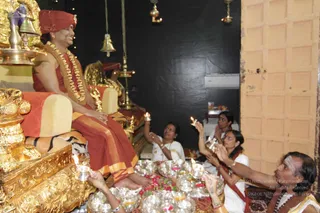
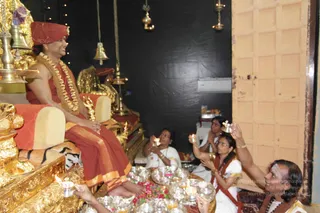
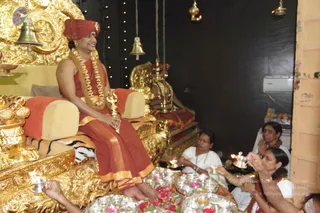
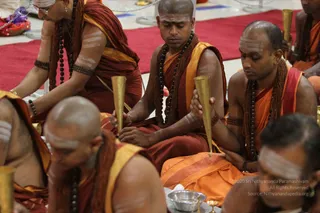
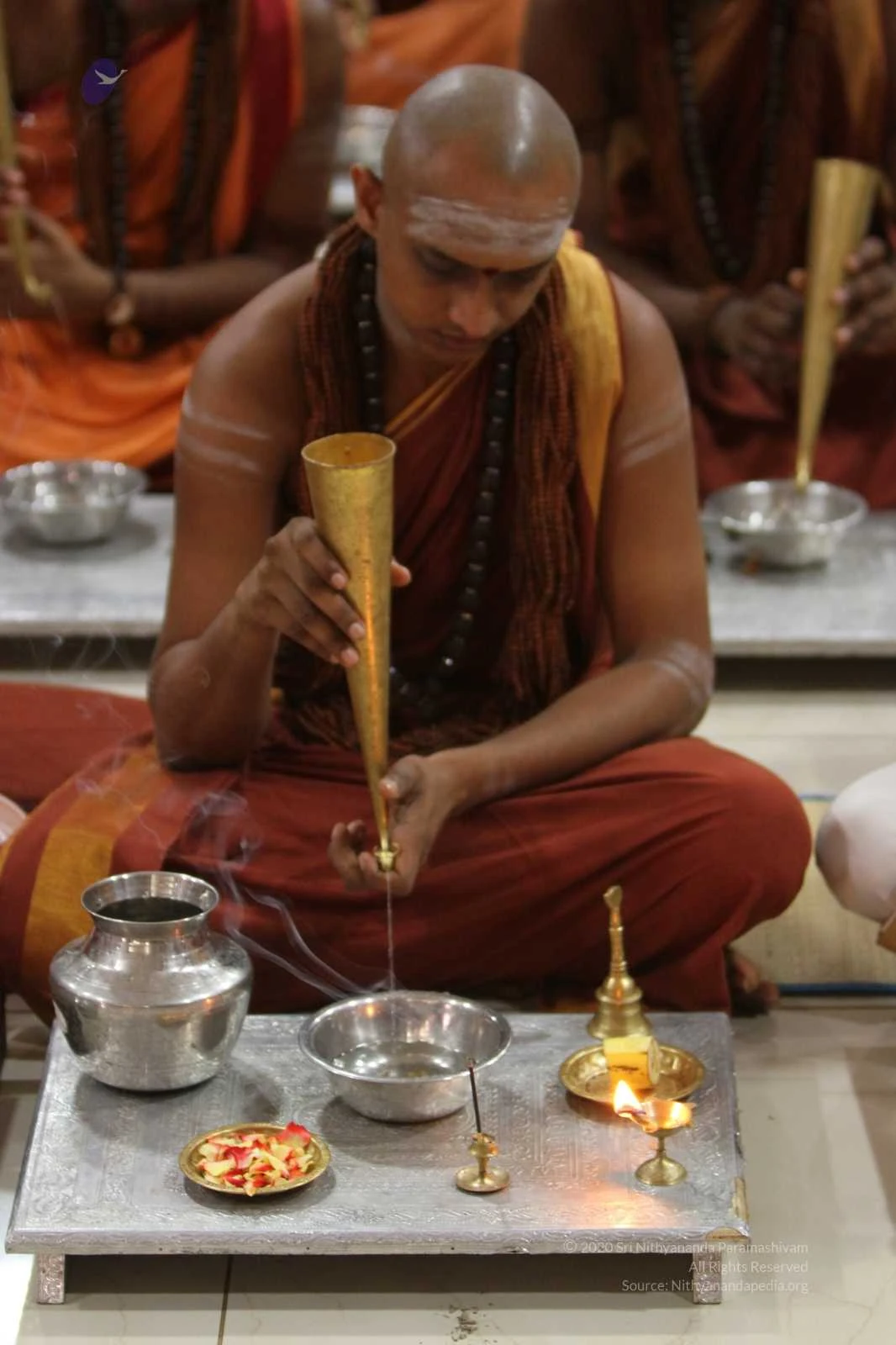
A photograph inside a shrine-like hall with black walls and a gold-ornate throne. A figure seated on the left wears a red-orange turban and orange robe, with a white flower garland and a long bead-and-flower necklace; his bare feet rest on a golden footstool and he has his hands resting on the throne arm. Behind him is a second seated figure in a red turban and gold-embroidered clothing. In front, women in white and cream saris with folded hands and rudraksha-style necklaces face the seat, and steel trays of offerings, including red flower petals and white flowers, sit on the floor. Brass oil lamps hang from chains above, and a white air conditioner is mounted on the wall at right. A seated woman in white and a woman in orange-red folded hands in prayer, while a man at the lower right also folds his hands.A figure in an orange-red robe with a gold-bordered shawl, a red turban and a white flower garland sits on a gold-carved throne holding a brass hand bell in one raised hand. Brass oil lamps hang on chains above the throne. Women in white saris, one wearing a red shawl and rudraksha-style beads, sit at the base of the throne before silver trays holding flowers, small lamps and red offerings, and a woman's feet are being washed or honoured in a puja. Photo of a ritual at an ashram with a gilded throne and brass bells.A photograph of a seated figure on an ornate gold throne with a red-and-gold cushioned seat, wearing a red turban, a red-and-gold saree-like robe and a beaded garland with gold trim, smiling and extending bare feet. Several women in white clothes sit on the floor below, holding oil lamps and lit wicks toward the throne while silver bowls with flowers and offerings are arranged in front. Behind the throne are hanging brass bells and a lamp. A man with white forehead markings and a sacred thread sits at the right, also lifting a hand toward the offerings. The setting is a dark-walled room beside a wooden panelled door. Swamiji (probable): the seated figure wears a red turban, long hair under it, a beaded garland and red-gold robes on a throne.A photograph of a seated figure on an ornate gold throne with orange cushions, wearing a red-orange turban, a red-orange dhoti-style garment with a gold border, and a long garland of marigolds and beads. Several devotees in white and red clothing sit on the floor in front of silver plates holding flowers and oil lamps, raising small brass lamps in aarti. Brass hanging lamps and bells hang in the background against a dark wall. Probable Swamiji (probable) appears in the throne-seated figure, based on the turban, saffron-orange garments and ceremonial garland. Ritual lamp offering in progress.A seated figure on an ornate gold throne with orange-red cushions and a tiger-print seat cover, wearing an orange-red turban, an orange-red robe with gold border, and a long flower garland, holding a gold trident-like staff. Beside him, a gold throne and a second seated figure are partly visible. At lower right, three women in white and orange saris perform aarti with small oil lamps and offer silver plates of flowers and puja items. Hanging brass bells and lamps decorate the dark backdrop, and a wall air conditioner is visible at right.Several shaven-headed priests in orange and rust-coloured robes sit cross-legged on a red mat during a ritual. Each wears long rudraksha-style beaded malas and horizontal white sacred ash marks across the forehead and arms. Two central priests hold tall brass cones and attend to a small silver bowl. The scene is an indoor ritual with white floor tiles and a metal chain in the background.
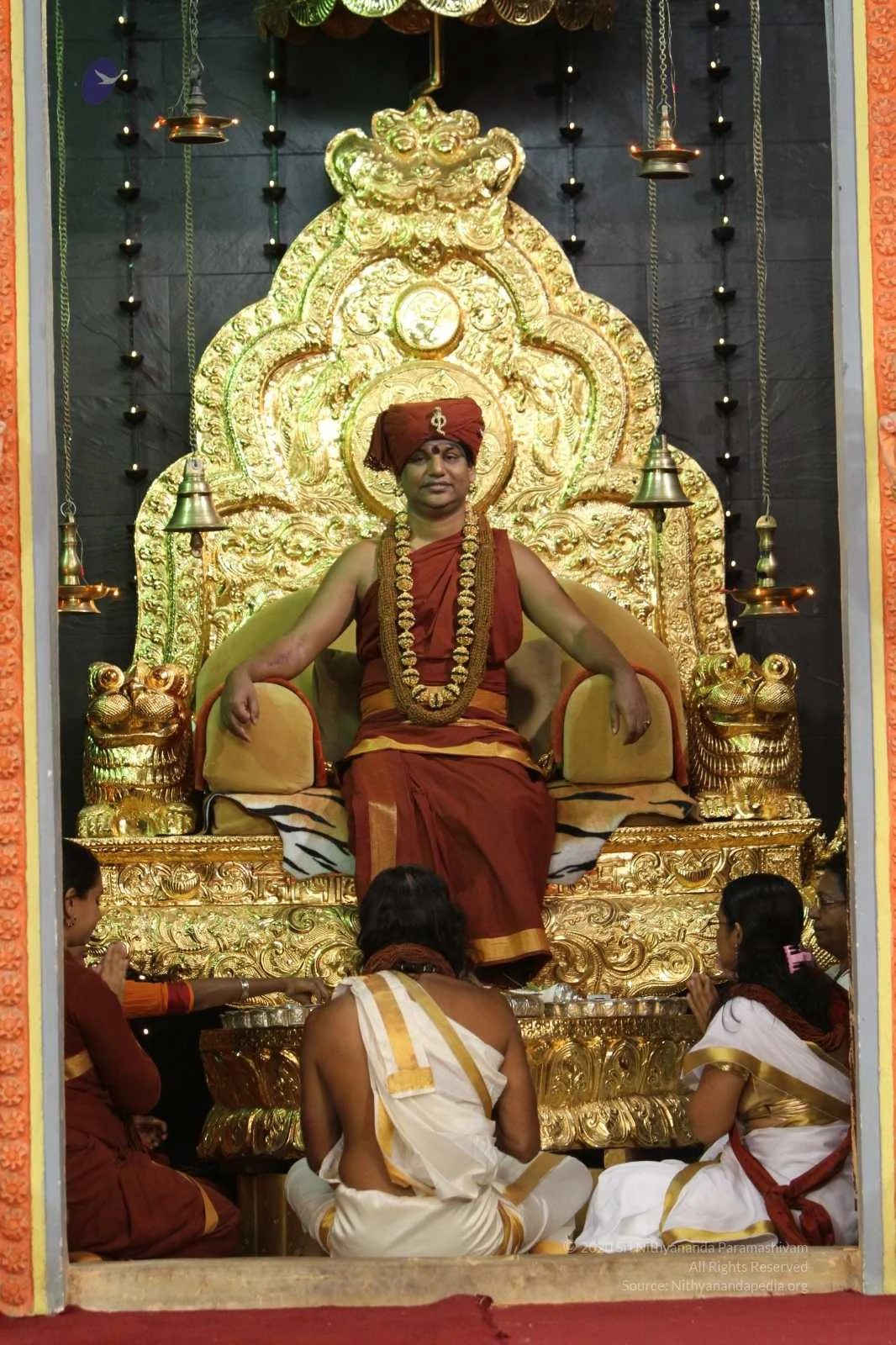
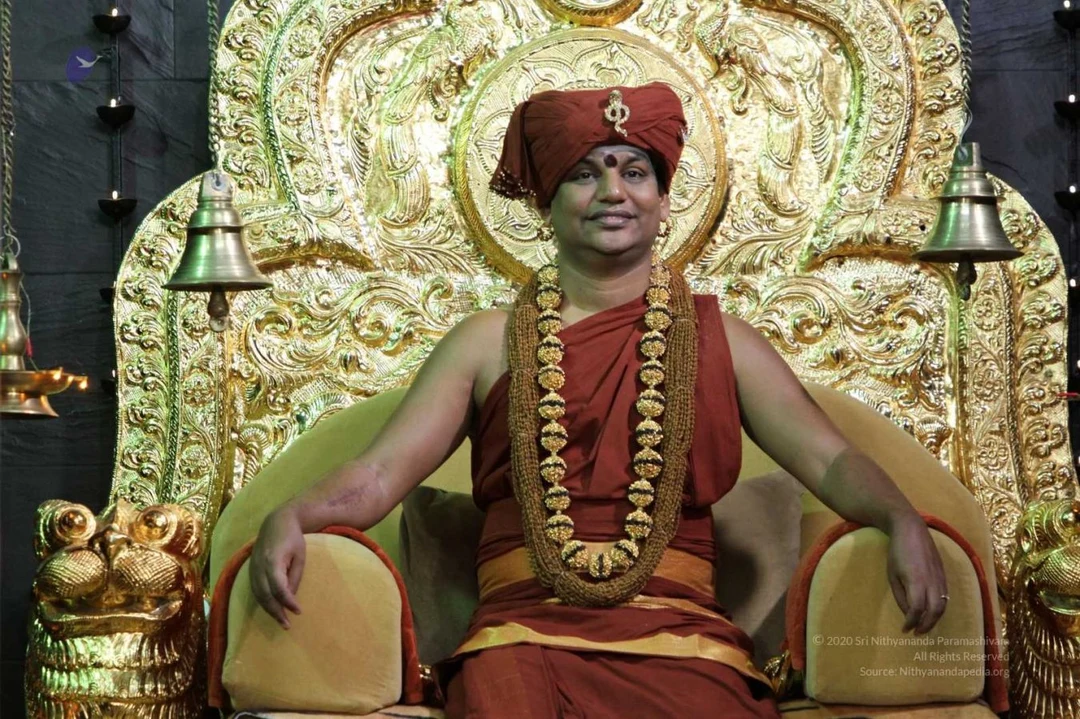
Bhajans-&-Satsang
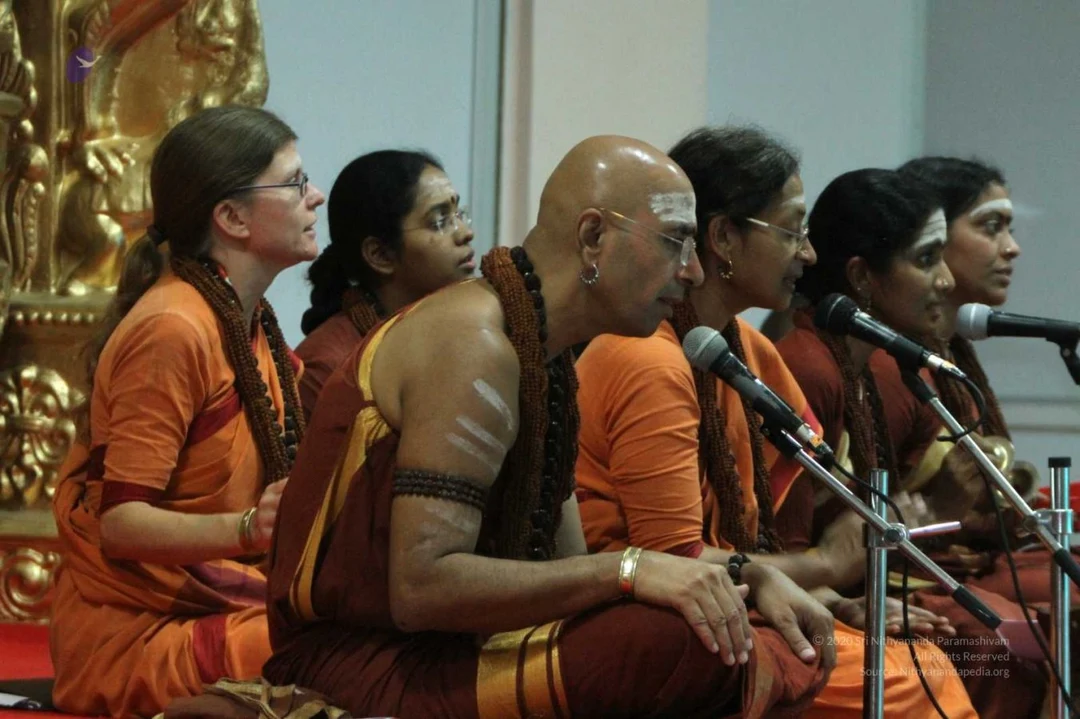
9 photosSource gallery
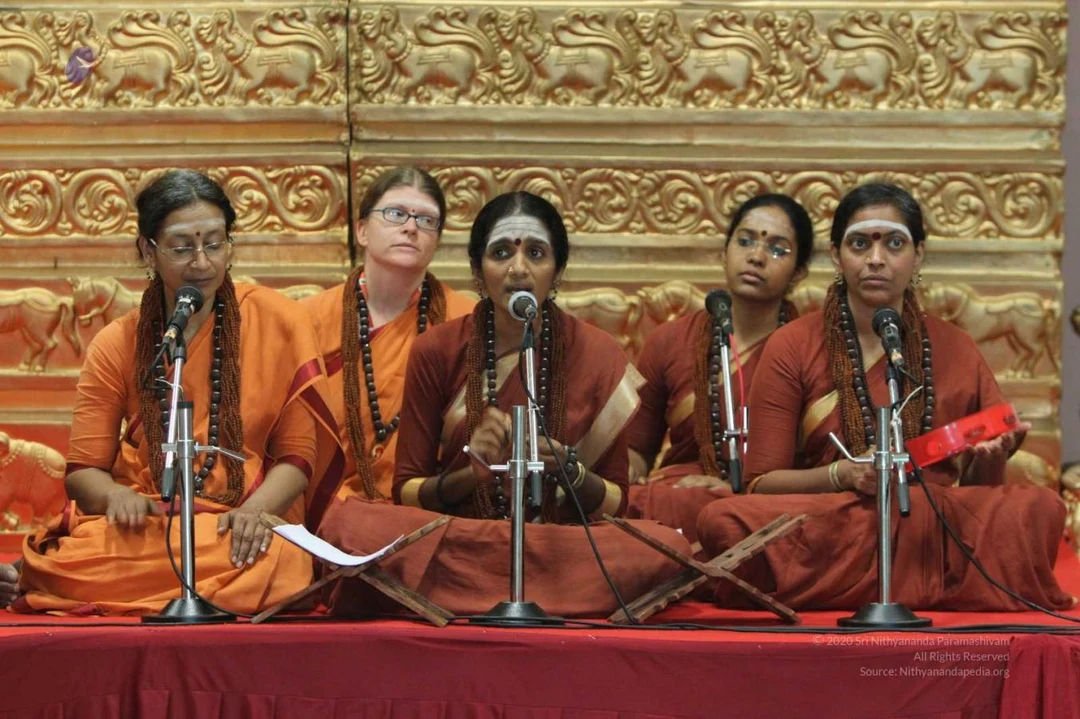
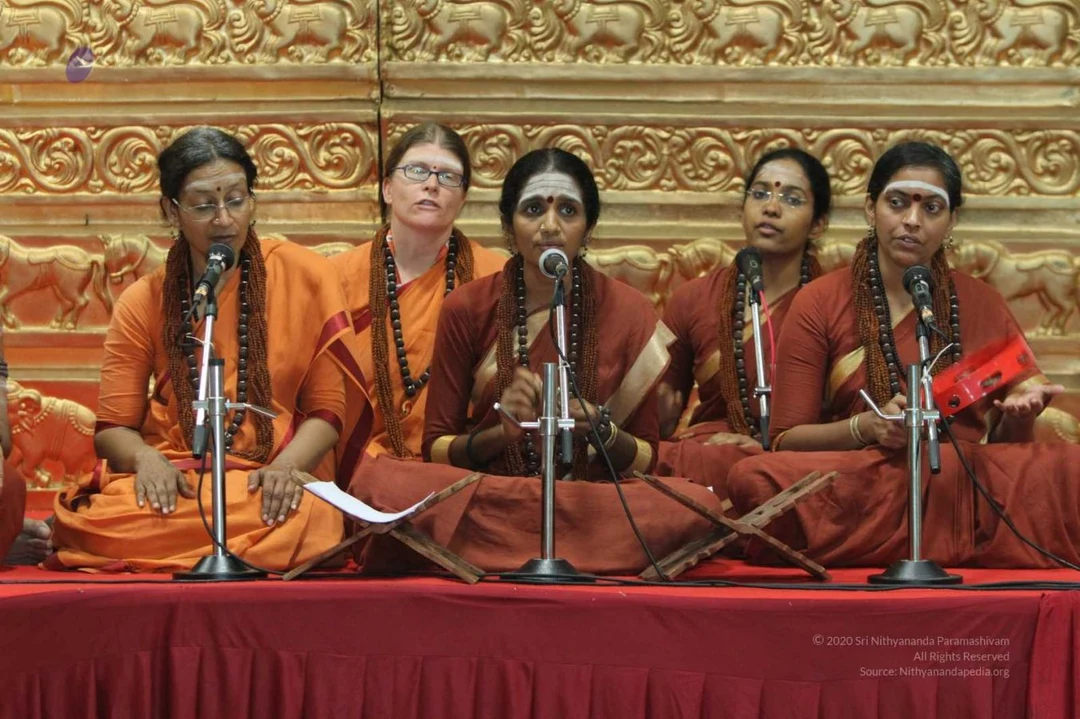
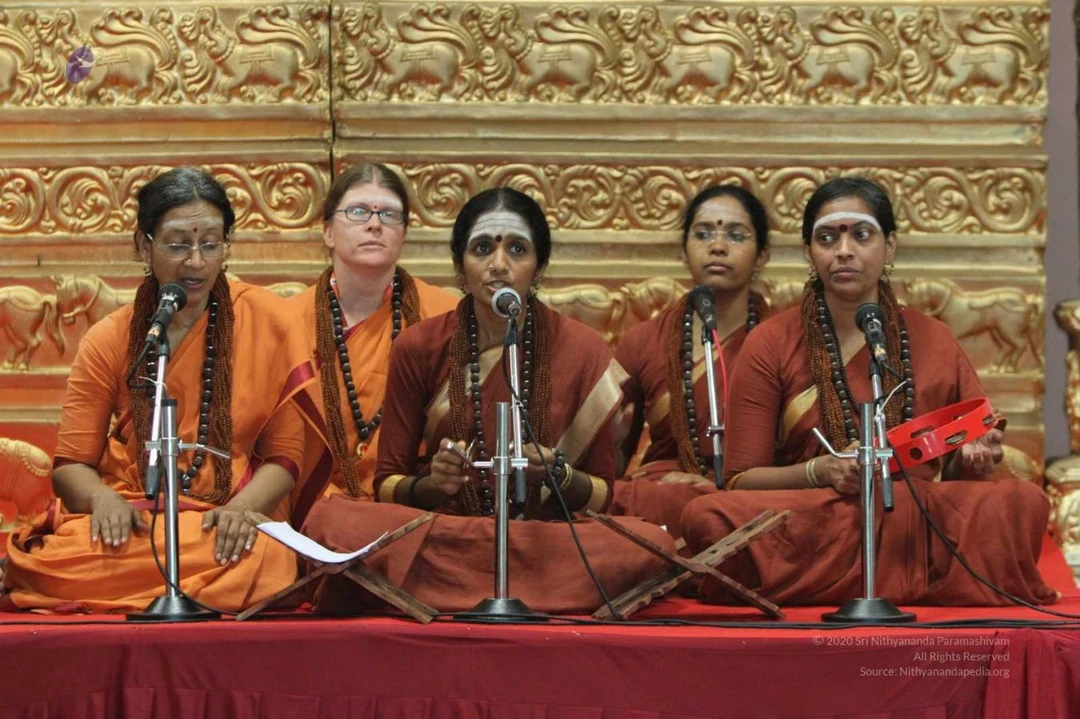
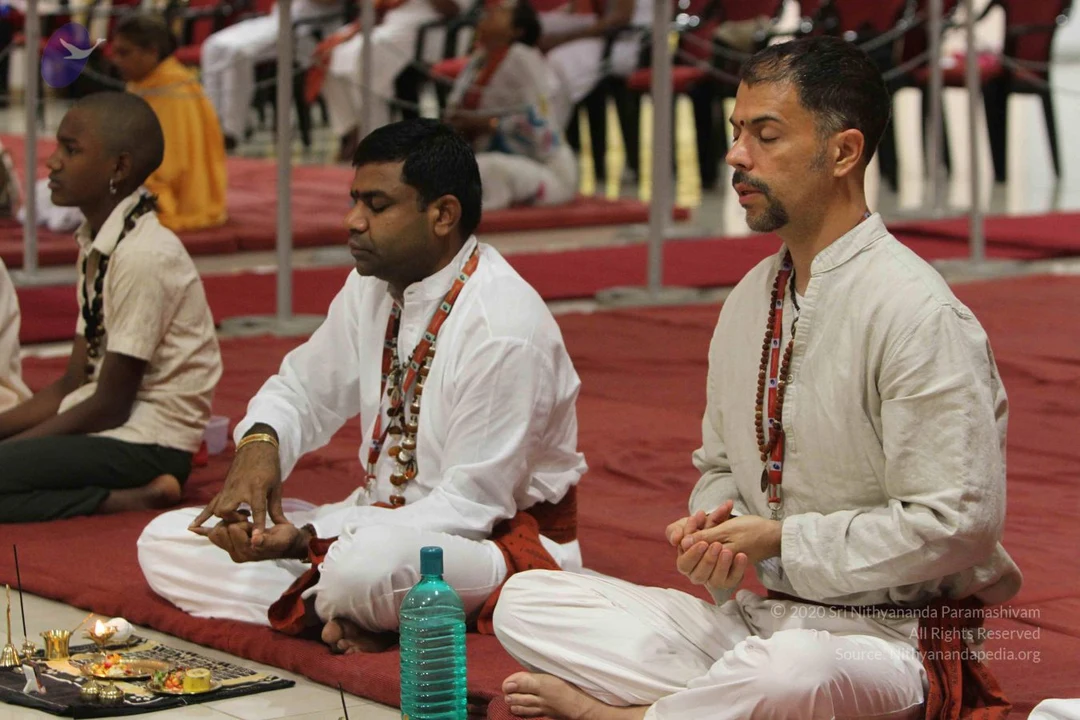
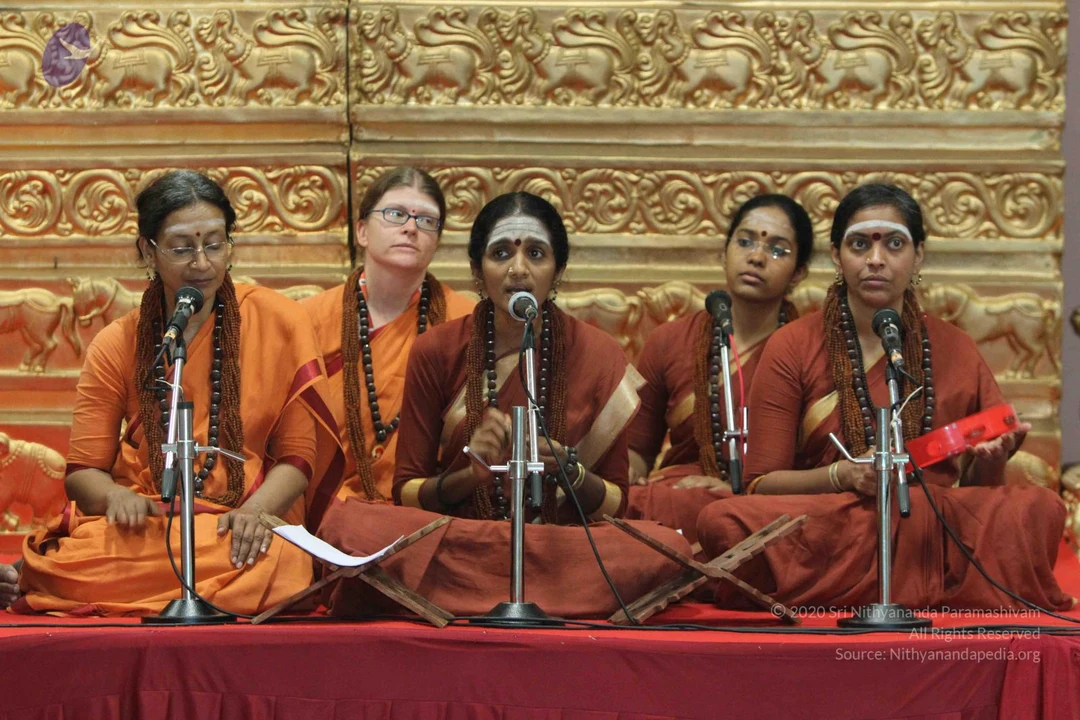
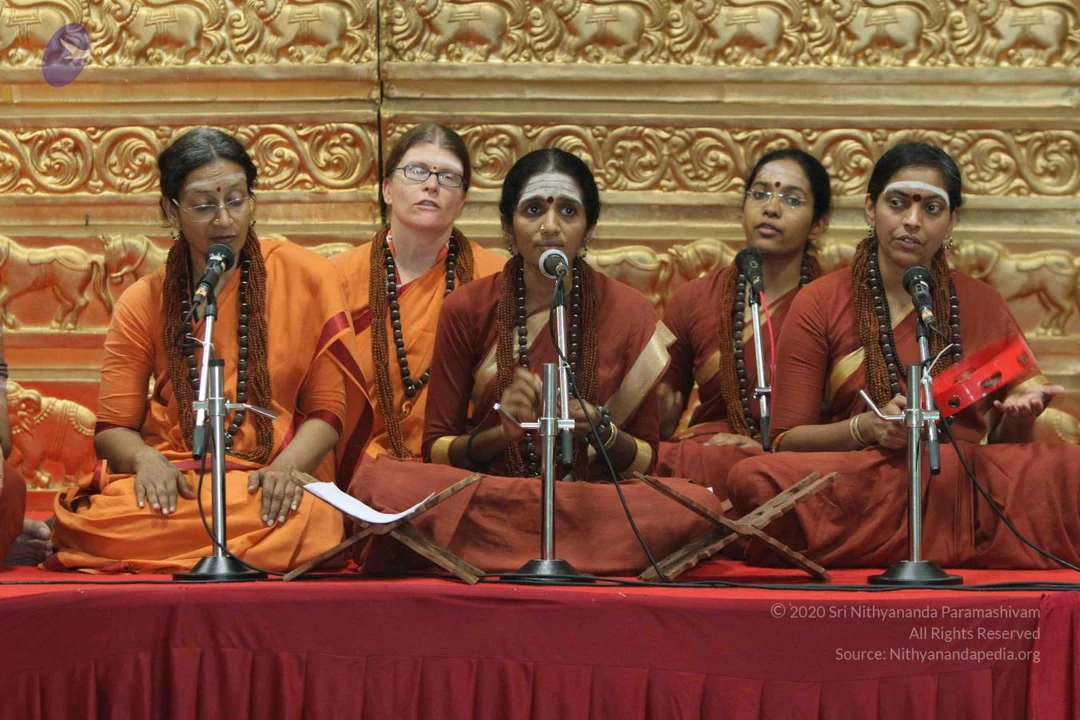
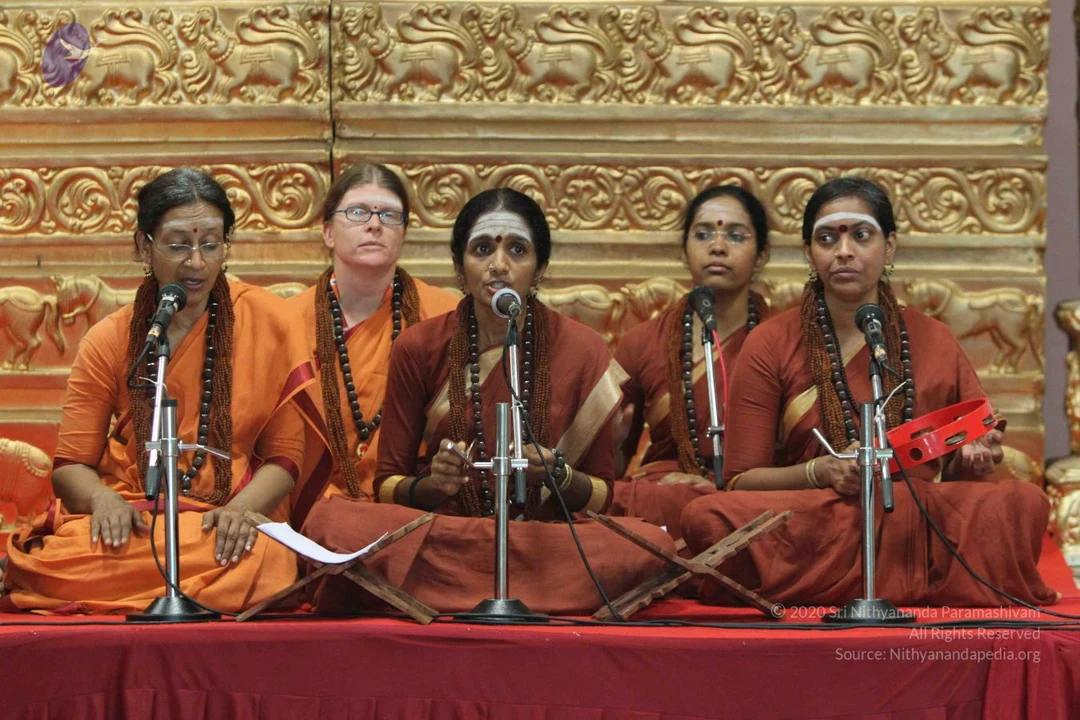
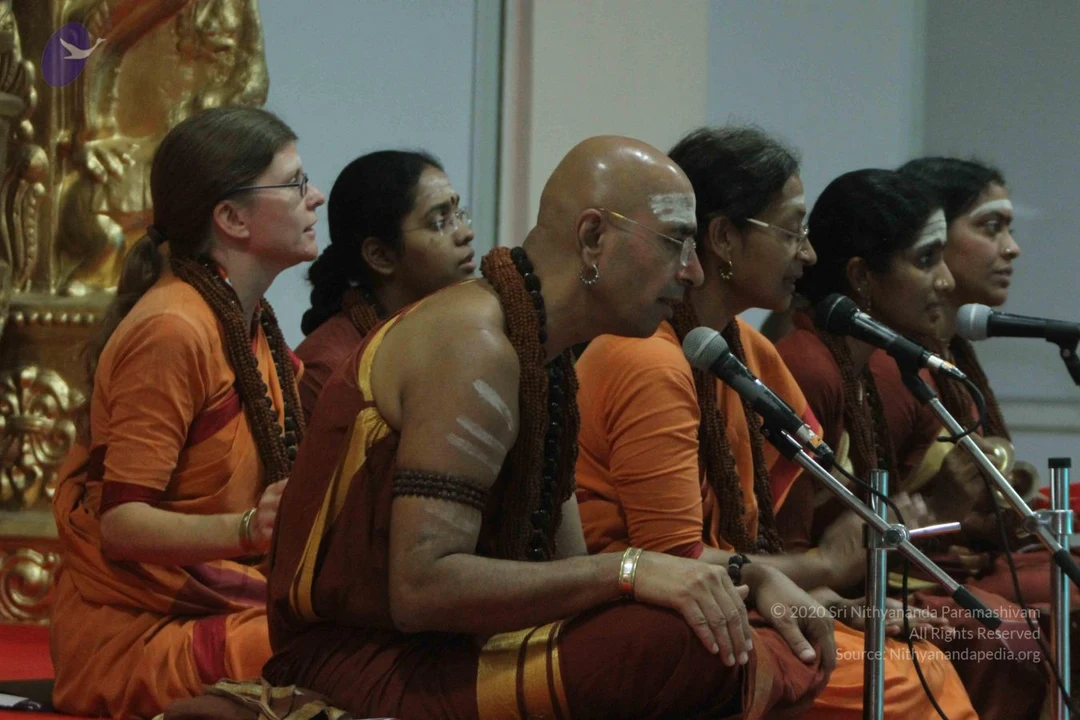
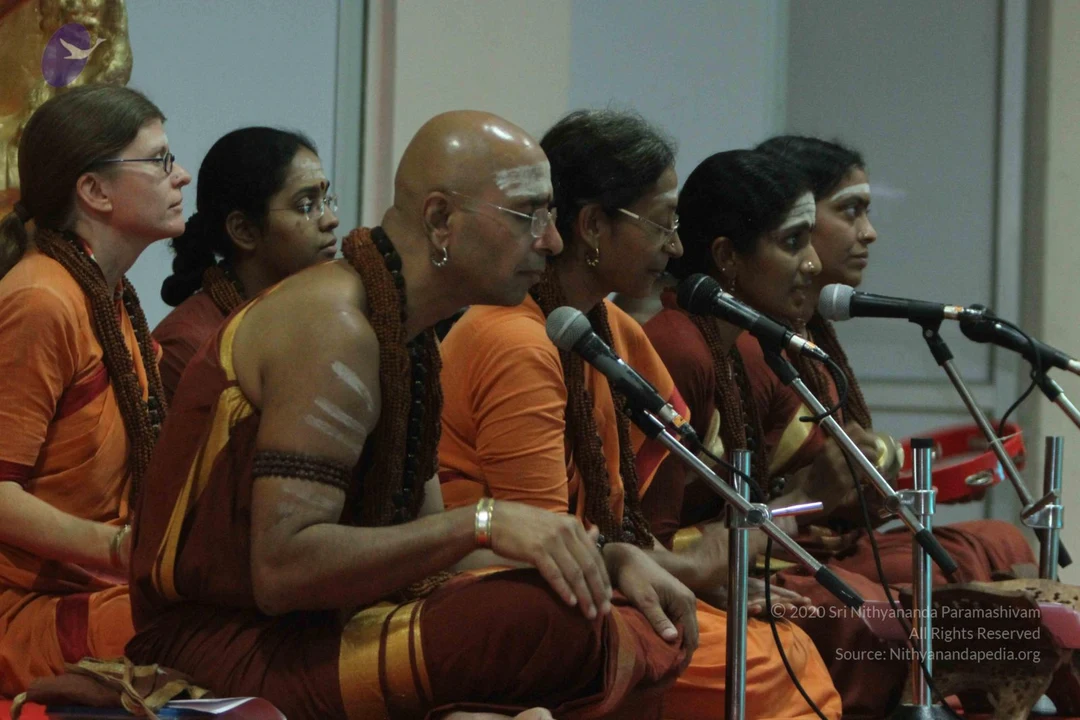
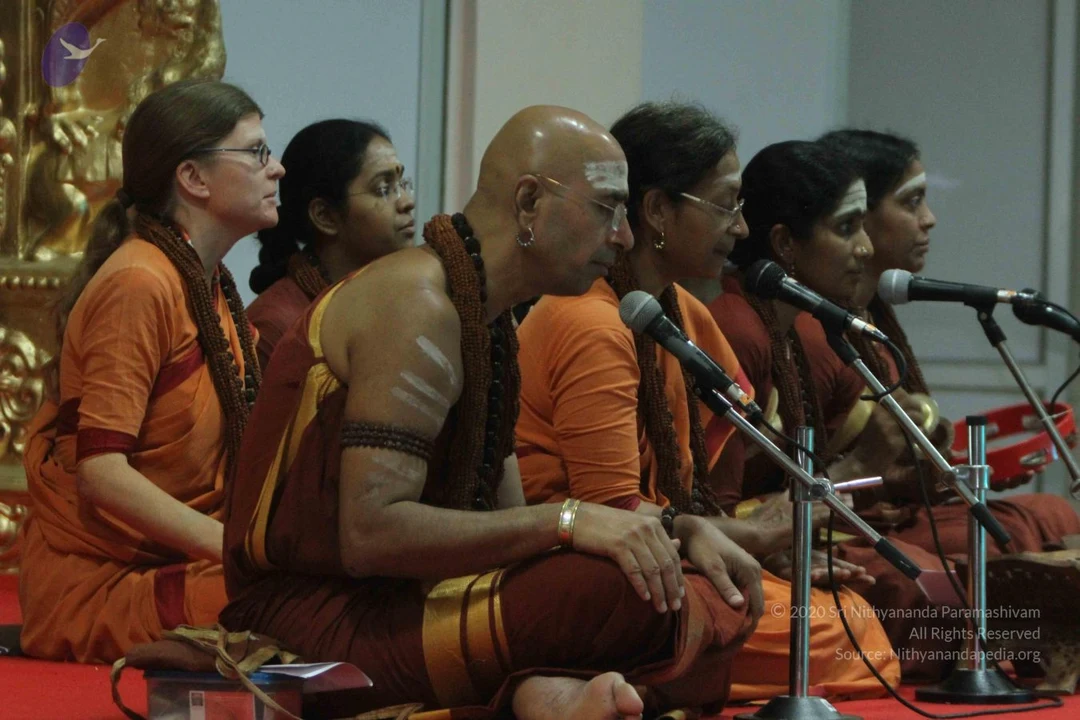
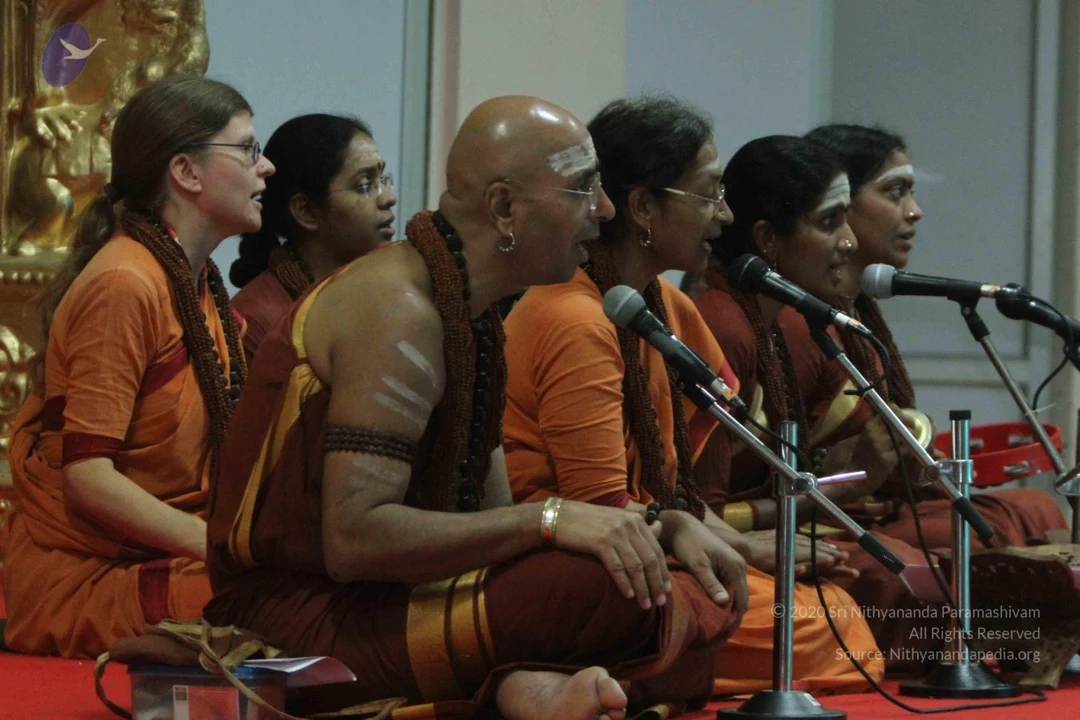
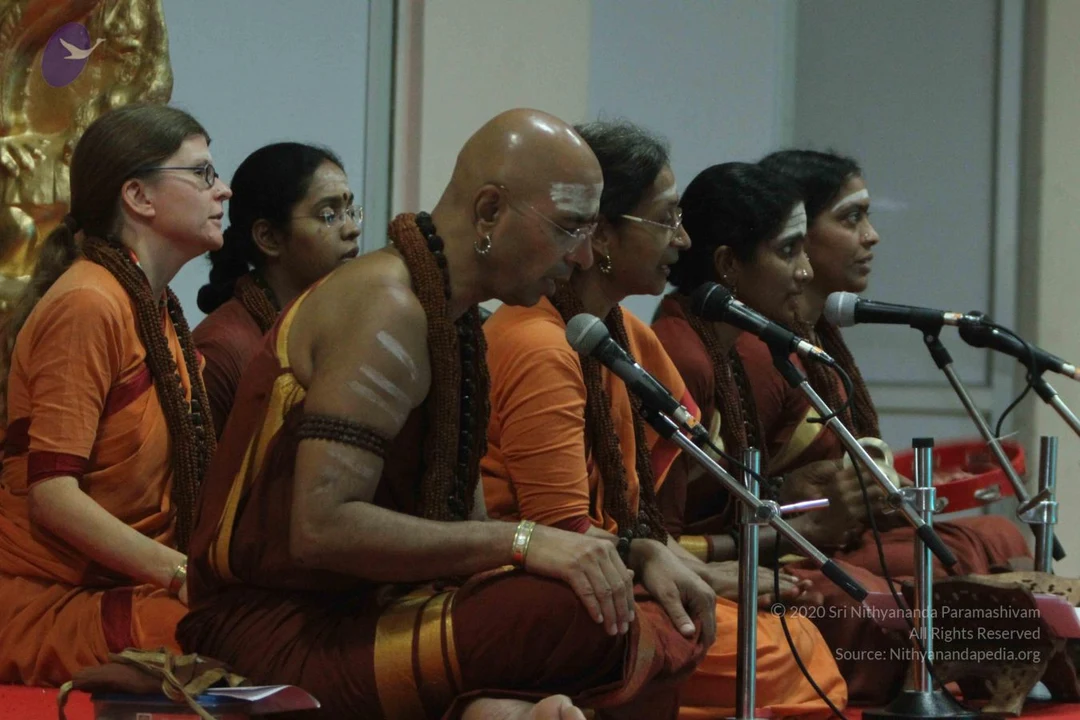
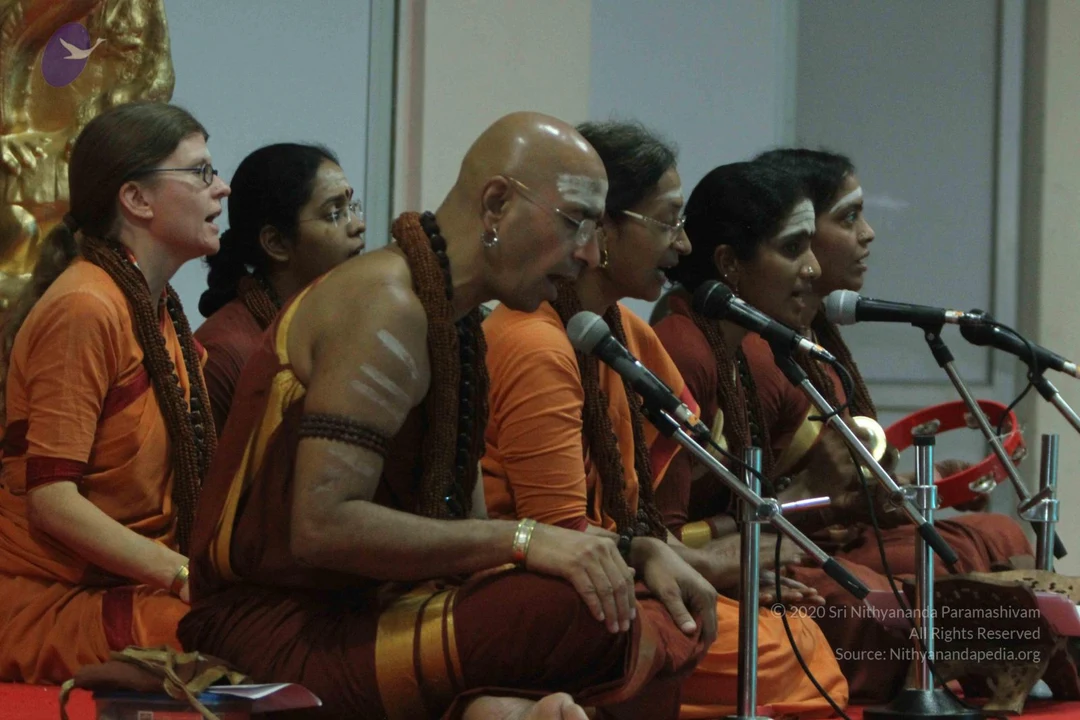
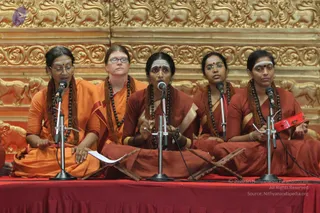
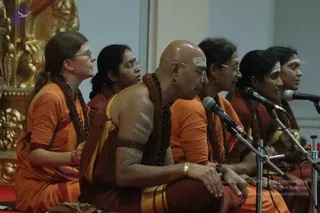
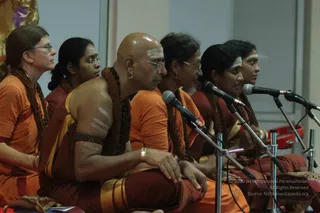
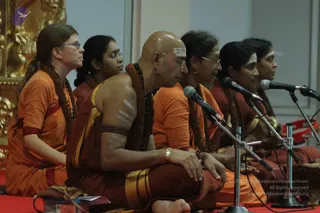
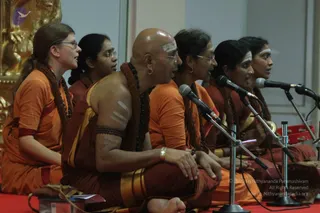
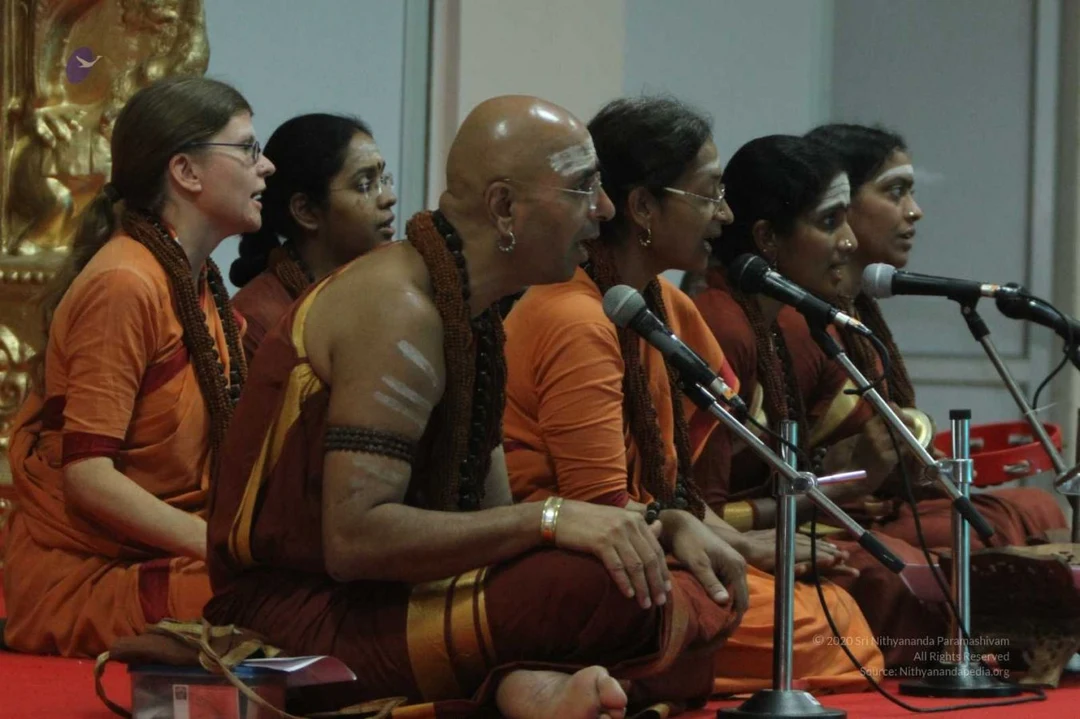
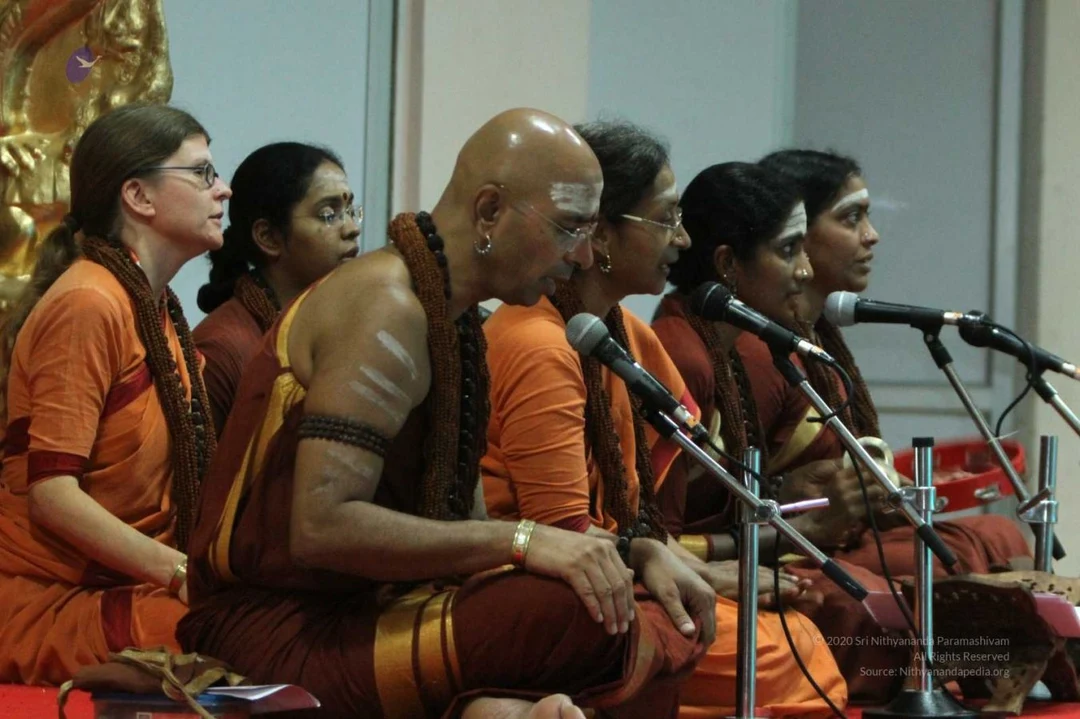
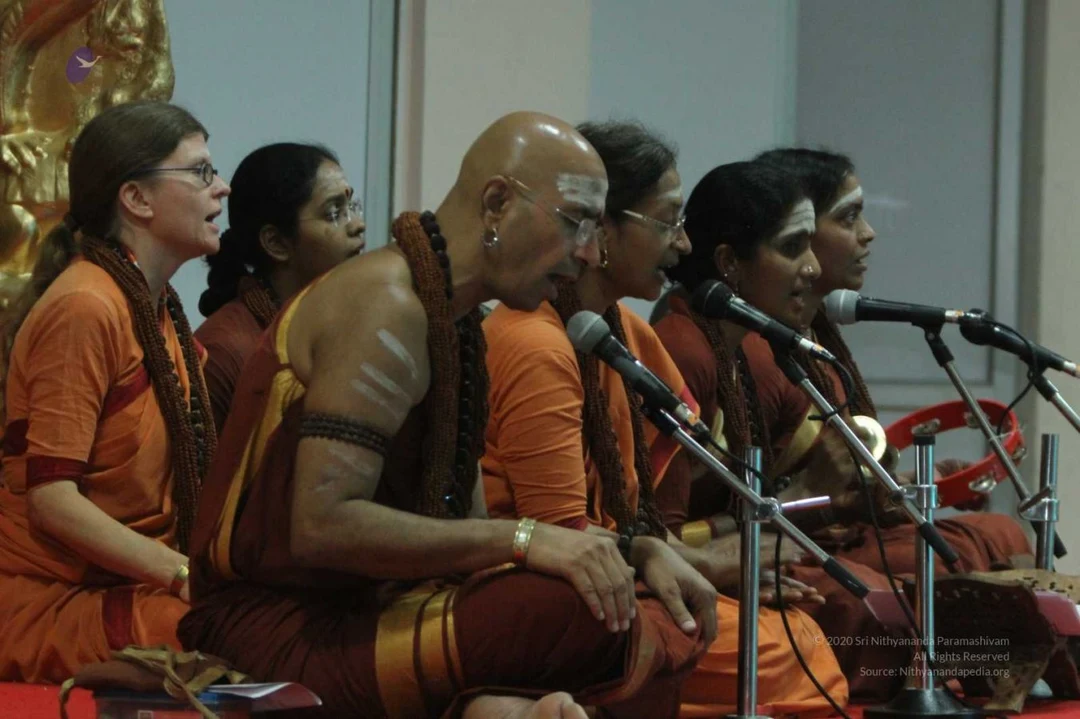
Photograph of five women seated in a row on a red draped stage before microphones on stands, singing or chanting in front of a gold embossed wall with relief figures of animals. The women wear orange and rust-red saris and shawls, with rudraksha mala necklaces and white forehead markings; the second from left wears glasses and a bright orange wrap, and the rightmost woman holds a red device. Sheets of paper rest on wooden stands in front of the centre singer, who is mid-recitation. No a person candidate is visible among the people shown.Five women in orange and rust-red saris sit cross-legged on a red cloth-covered stage before a gold-embossed backdrop of lions and floral reliefs. Each has a microphone on a stand in front of her; they are singing. The woman at centre wears a white-and-red forehead mark and rudraksha mala, with a bangle on her wrist. At far right, a woman holds a red tambourine. Two women wear round glasses, one in a pale orange sari and one in a rust sari. Several hold sheets of paper on music stands.Photo of a row of women and one bald man seated cross-legged on a red floor before microphones on stands, at a satsang or chanting session. The left woman wears an orange sari with a rudraksha mala and gold bangles; a woman behind her wears a dark red top and a mala. The bald man in the centre wears glasses, a rust-red dhoti with a gold border, a rudraksha mala and hoop earrings, with white horizontal markings on his forehead and bare arms. Women to the right wear orange and red saris, white forehead markings and malas. A gold ornate carved panel stands at left. No deity or a person identification is made from appearance.A seated group of six devotees in orange and maroon robes sits in a row before microphone stands, with a golden figure partly visible at the top left. A woman on the left wears glasses and orange clothing with rudraksha malas. Next to her, a woman with a red-and-white vibhuti mark sits in a maroon garment. A bald man in the centre wears glasses, rudraksha malas, an orange garment with gold-bordered maroon wrap, and white tilak marks on his forehead and arm stripes. Two women in orange sit beside him, one with a white tilak and gold bangles, and a woman on the right wears maroon with a white forehead mark. Red and brass percussion instruments sit at the right.Photograph of a row of seated devotees in orange and maroon robes on a red floor, facing right toward microphones on stands during a sung or chanted satsang. Foreground, a bald man with thin-rimmed glasses, bare upper arm marked with white ash lines and a beaded rudraksha-style mala, sits cross-legged beside a woman with a braided ponytail and glasses in orange clothing. Behind them women wear white forehead markings and beaded malas, and a tambourine rests at the right edge. A gold-painted deity carving is visible at the left. No candidate for a person is clearly identifiable from appearance, so no specific identity is asserted.A group of six devotees sits cross-legged on a red mat, singing into microphones on stands. They wear orange and saffron robes with rudraksha malas and white tilak marks on their foreheads. The bald man in the centre wears a brown-and-gold dhoti and has white markings on his arm and chest. A woman on the left wears glasses and an orange top. Behind them, a golden ornate deity murti and a small framed image are visible. A small red and white pot sits near the front left. The scene appears to be a satsang or devotional chanting session.
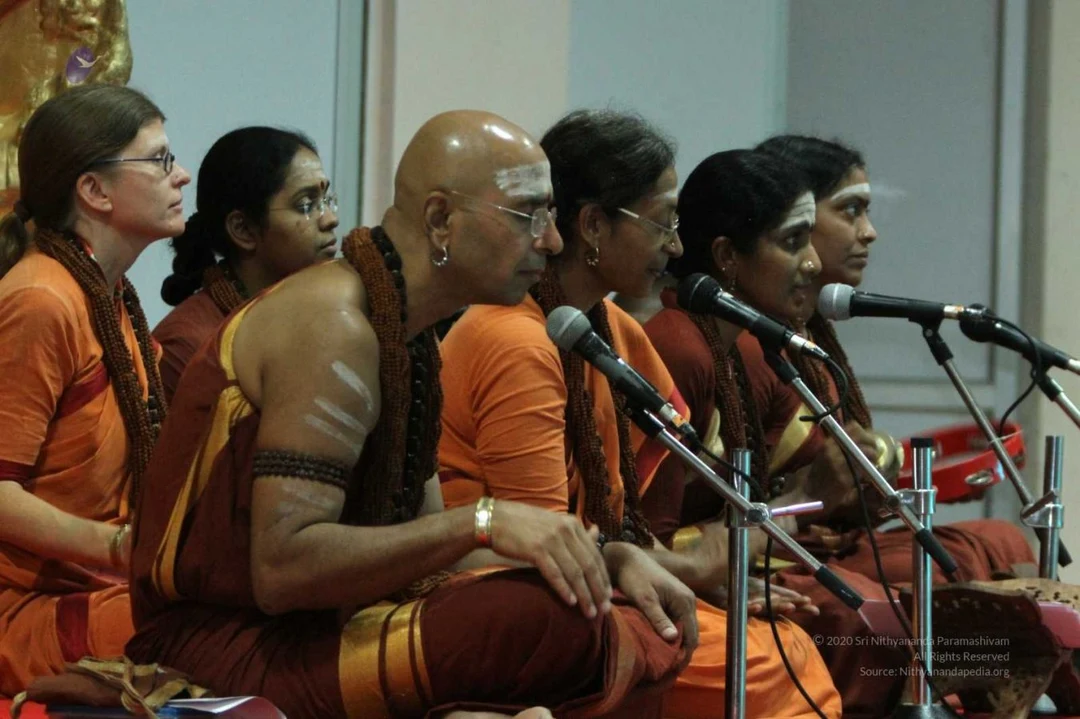
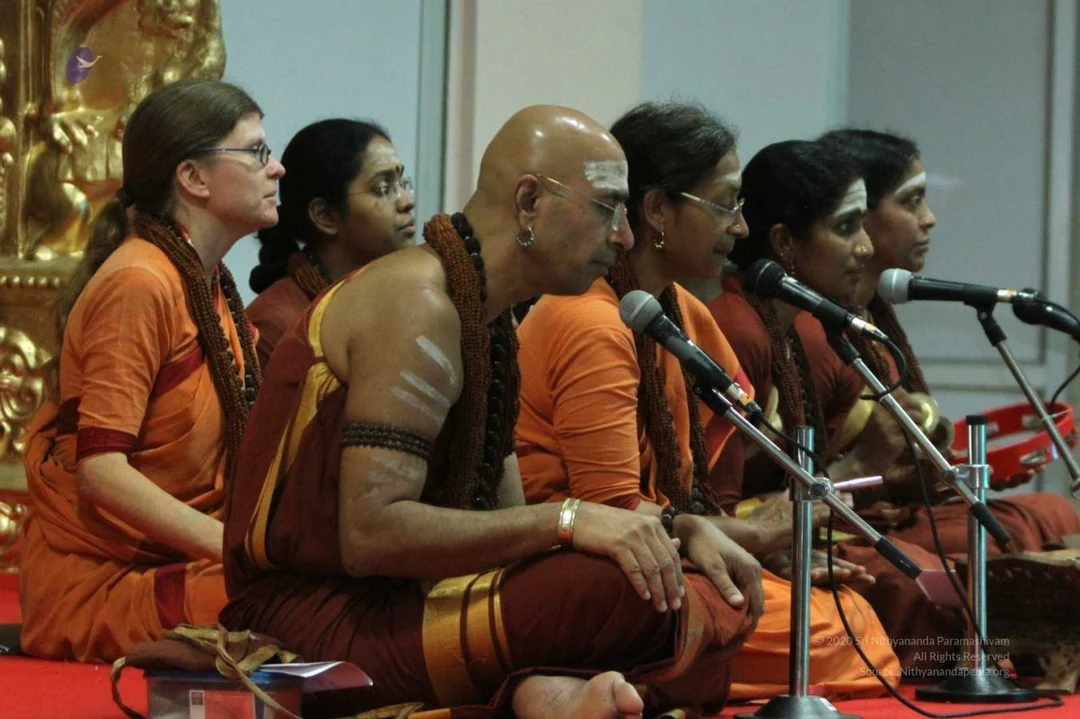
SATSANG

39 photosSource gallery
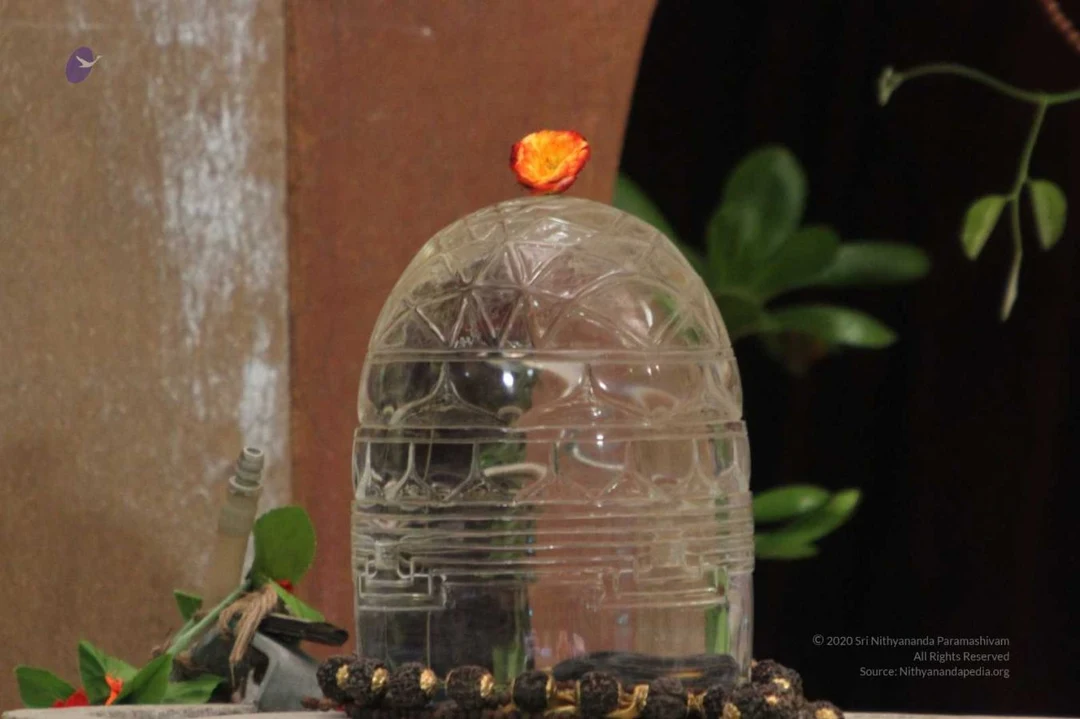
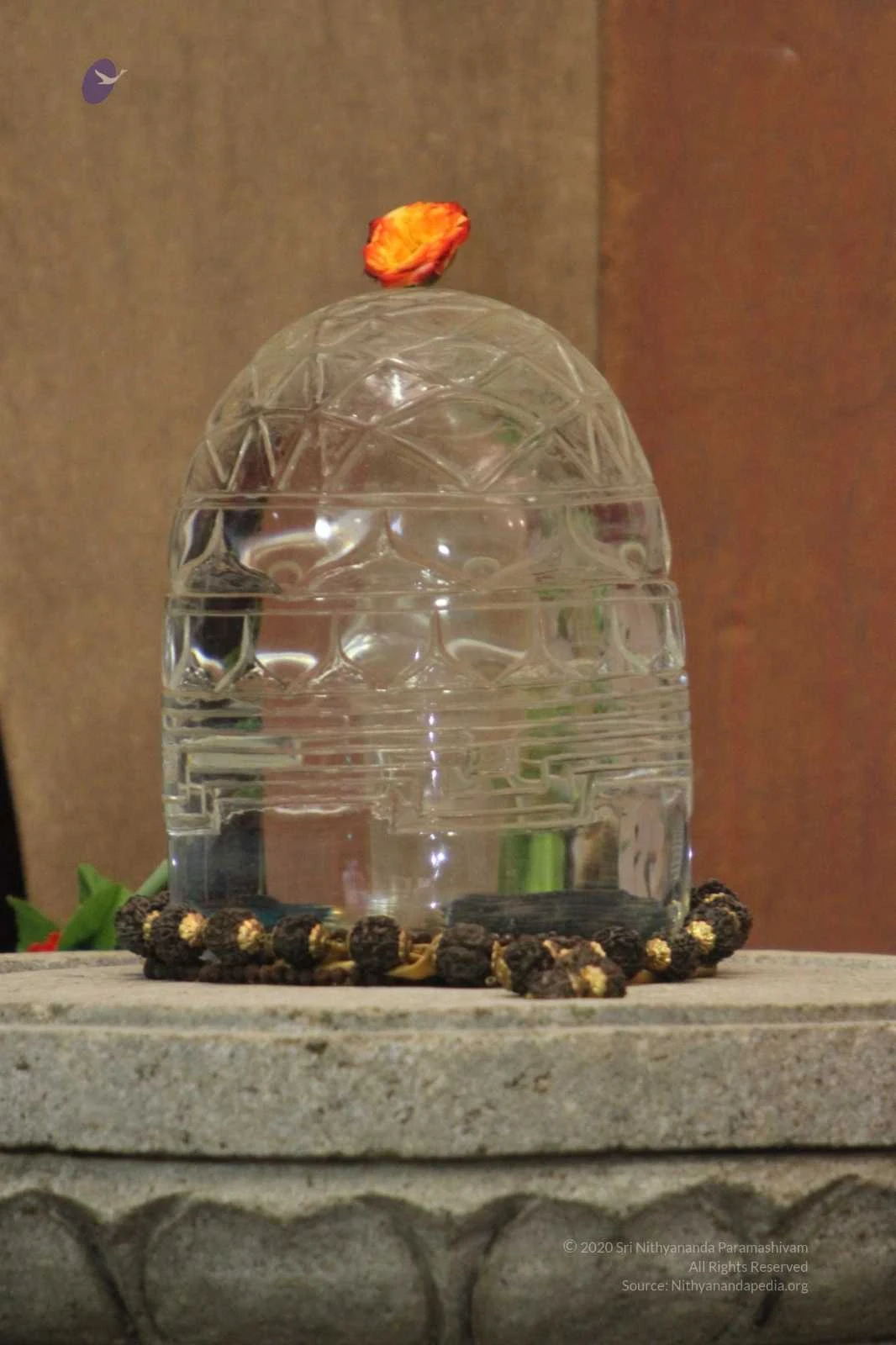
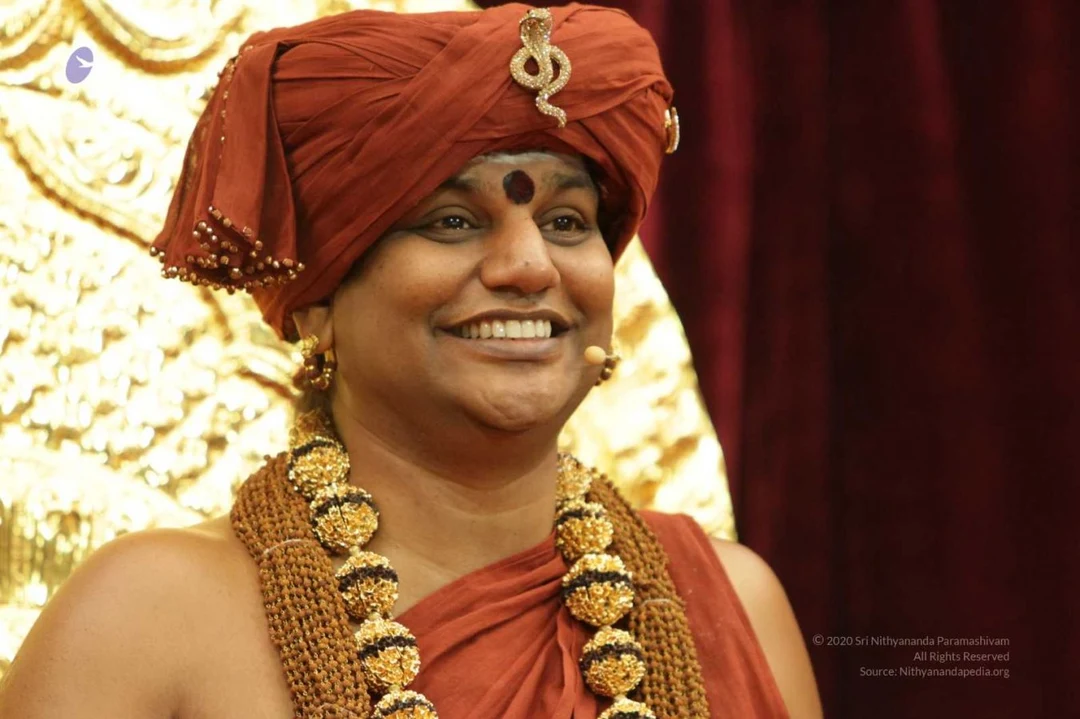
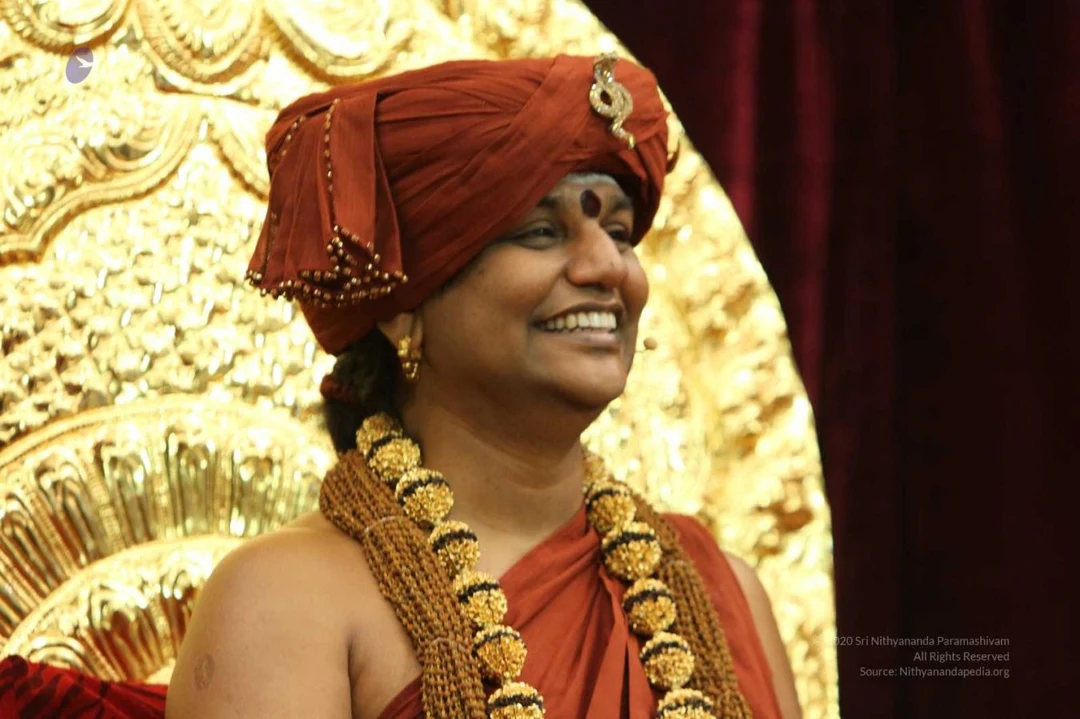
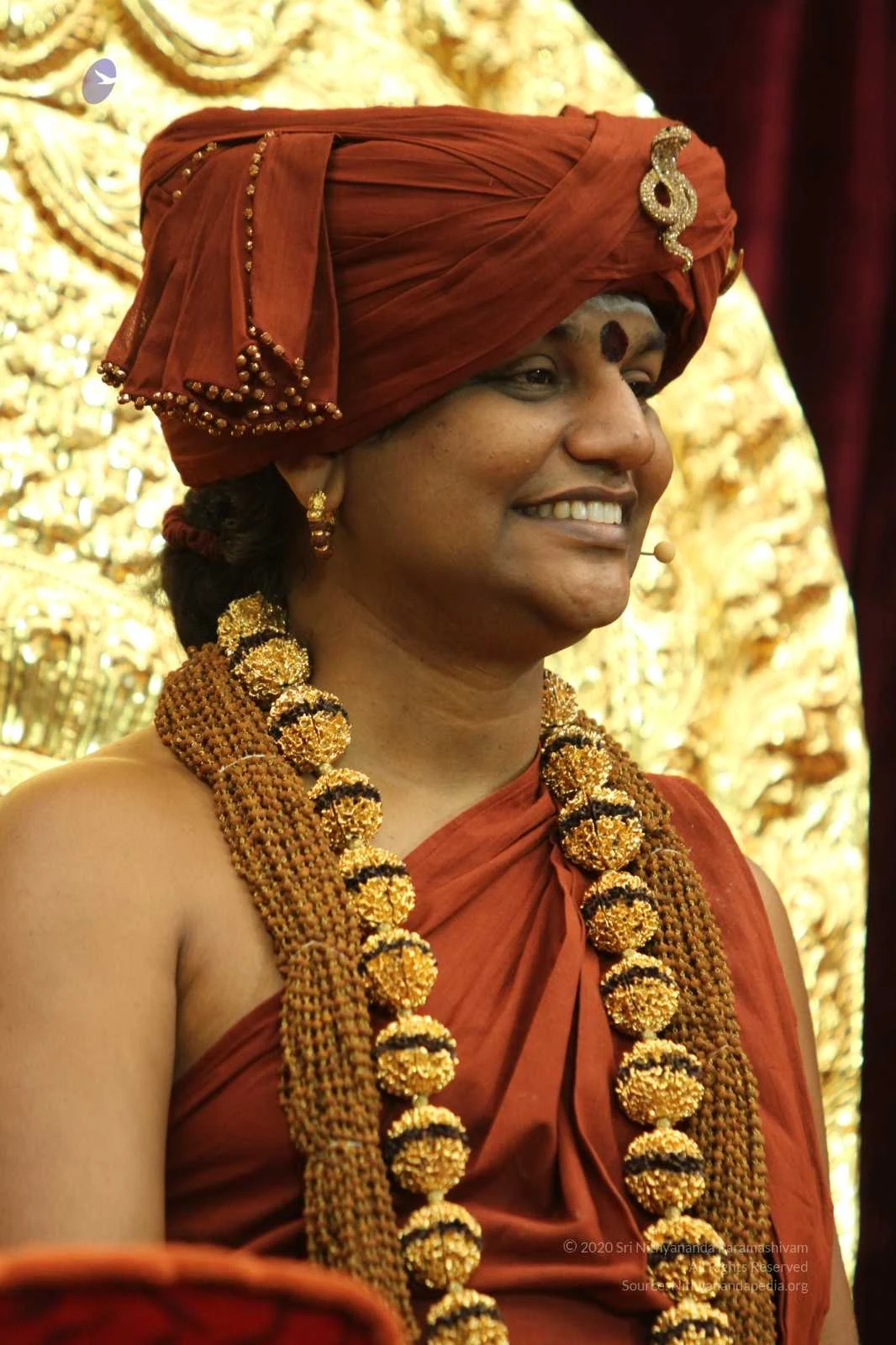
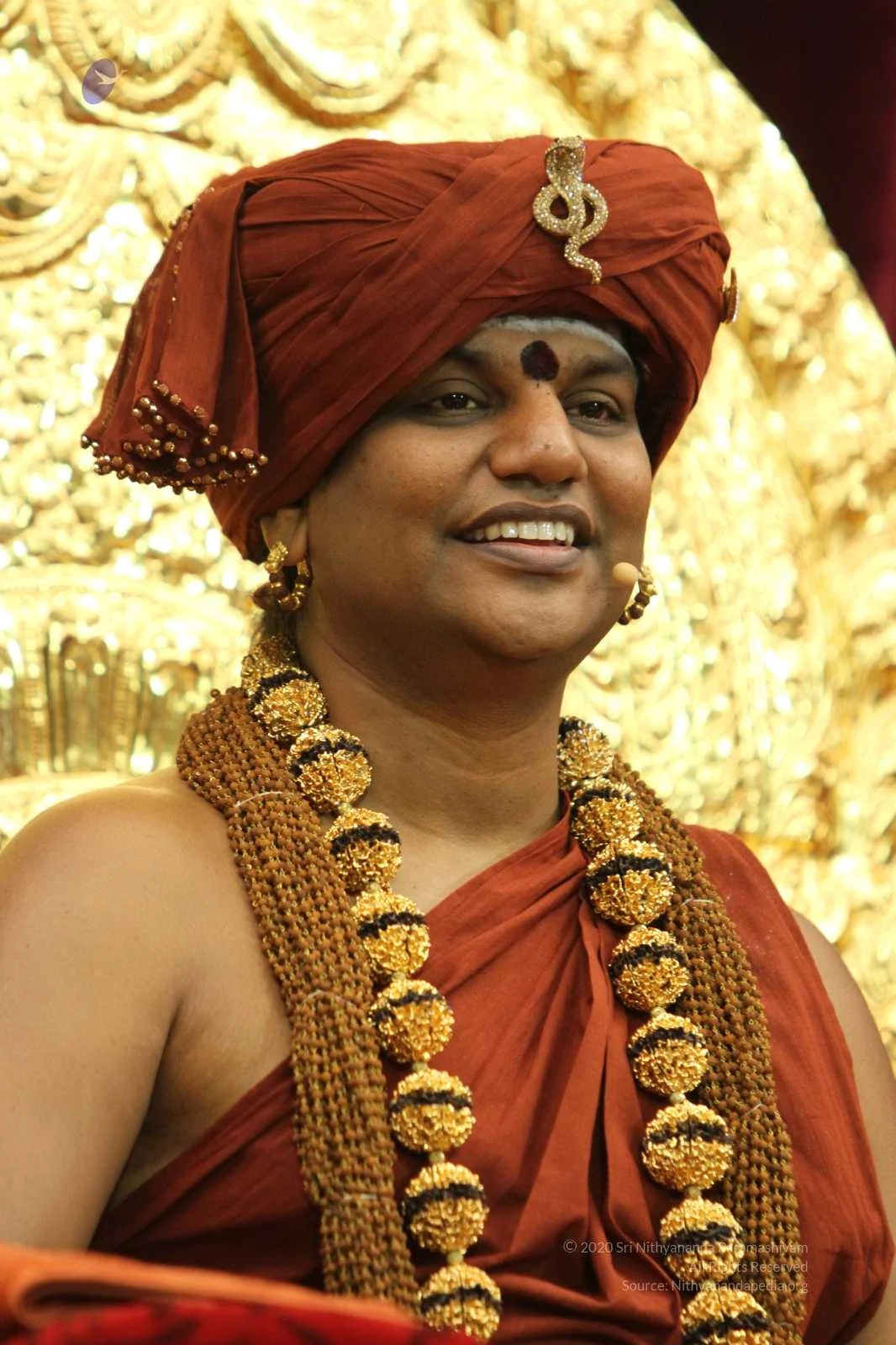
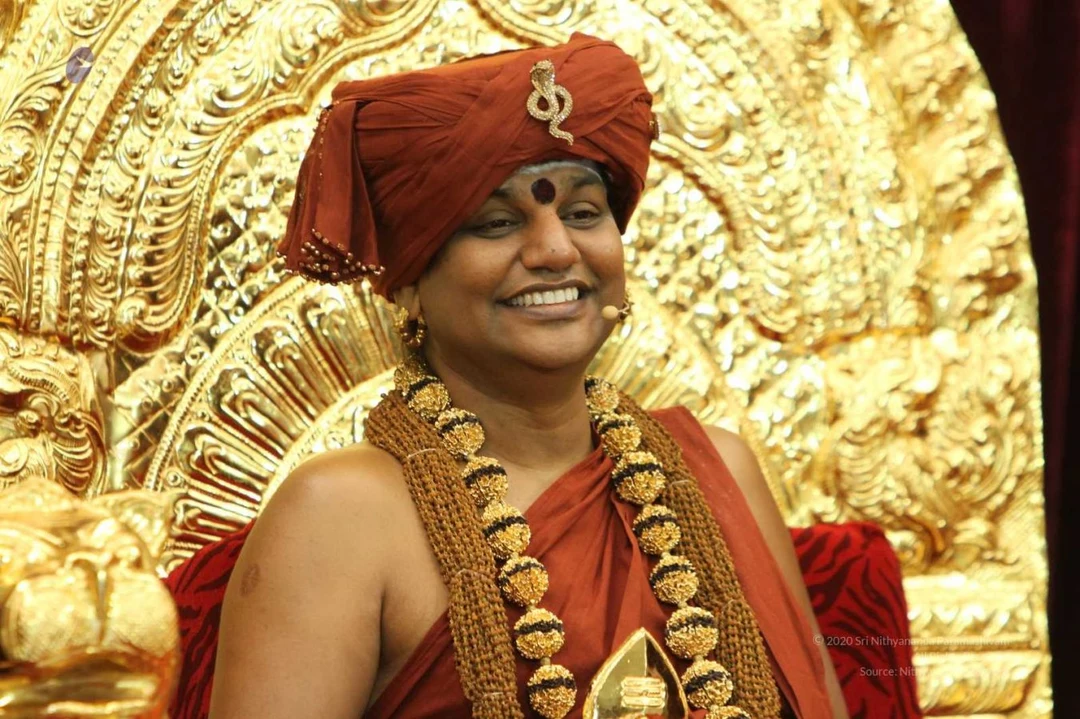
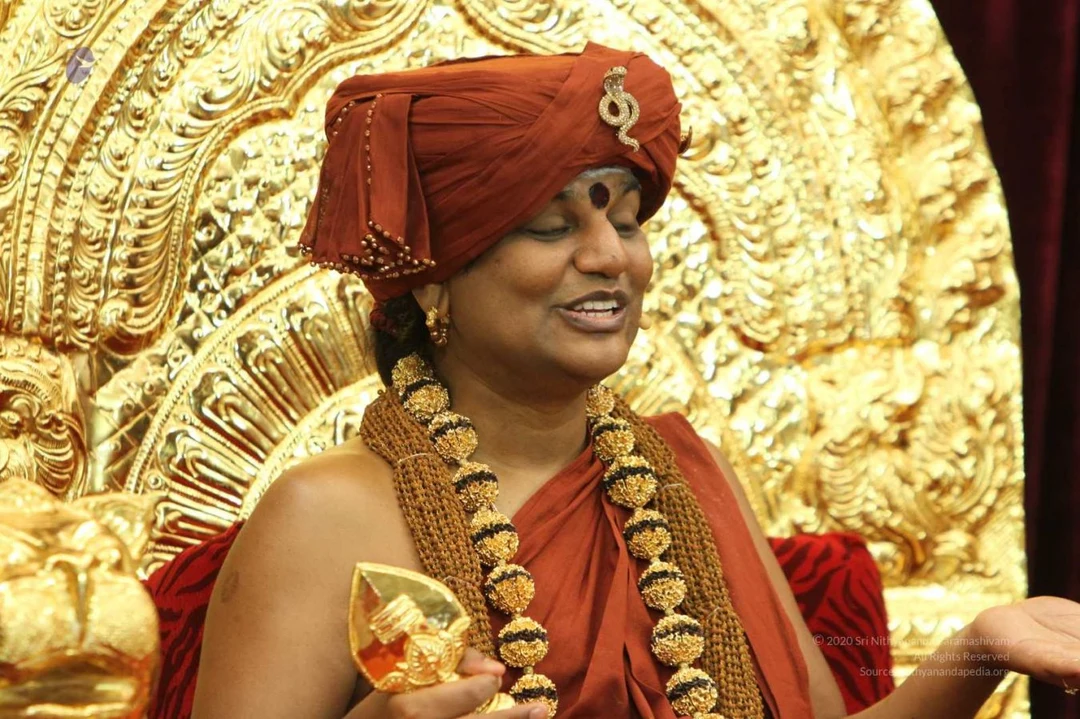
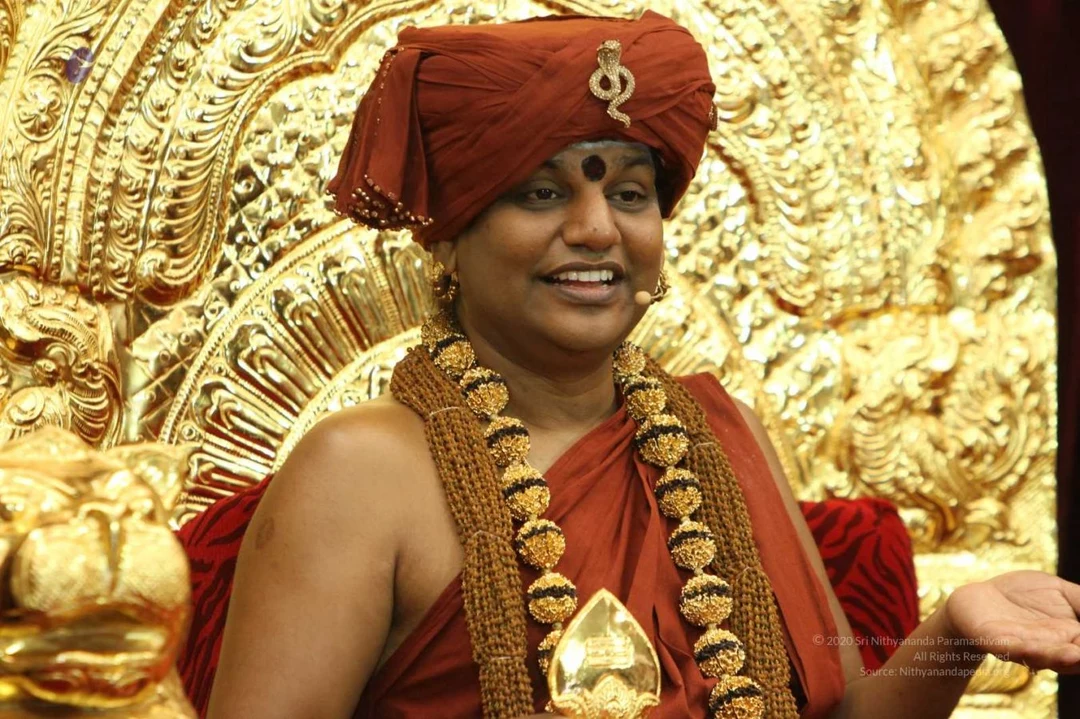
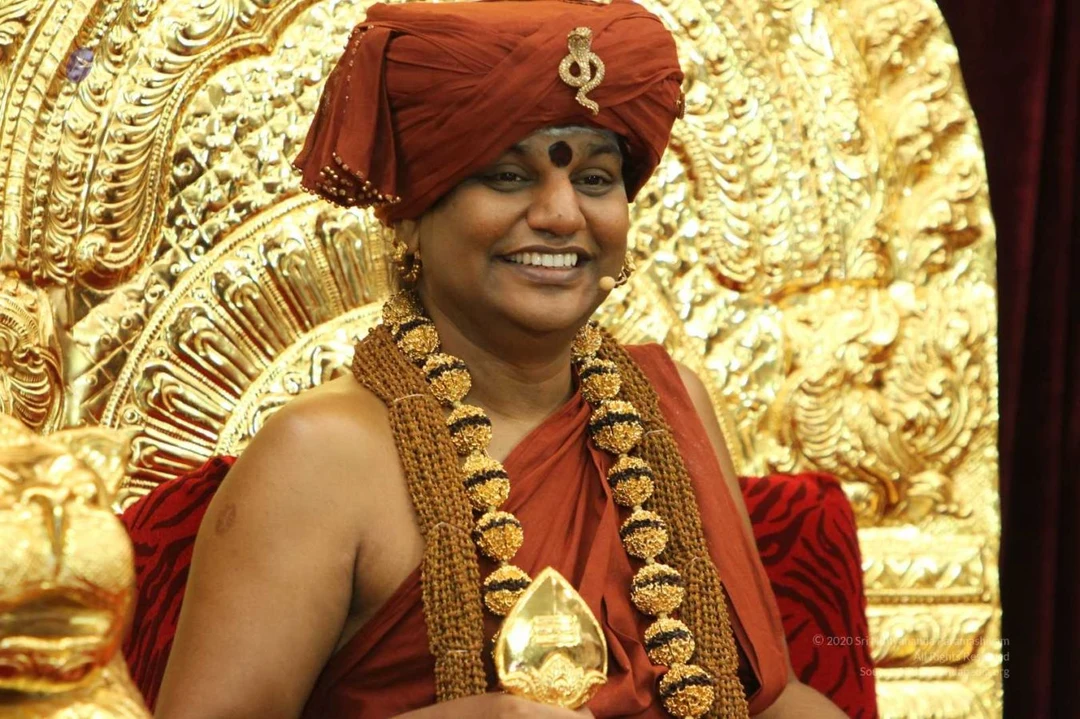
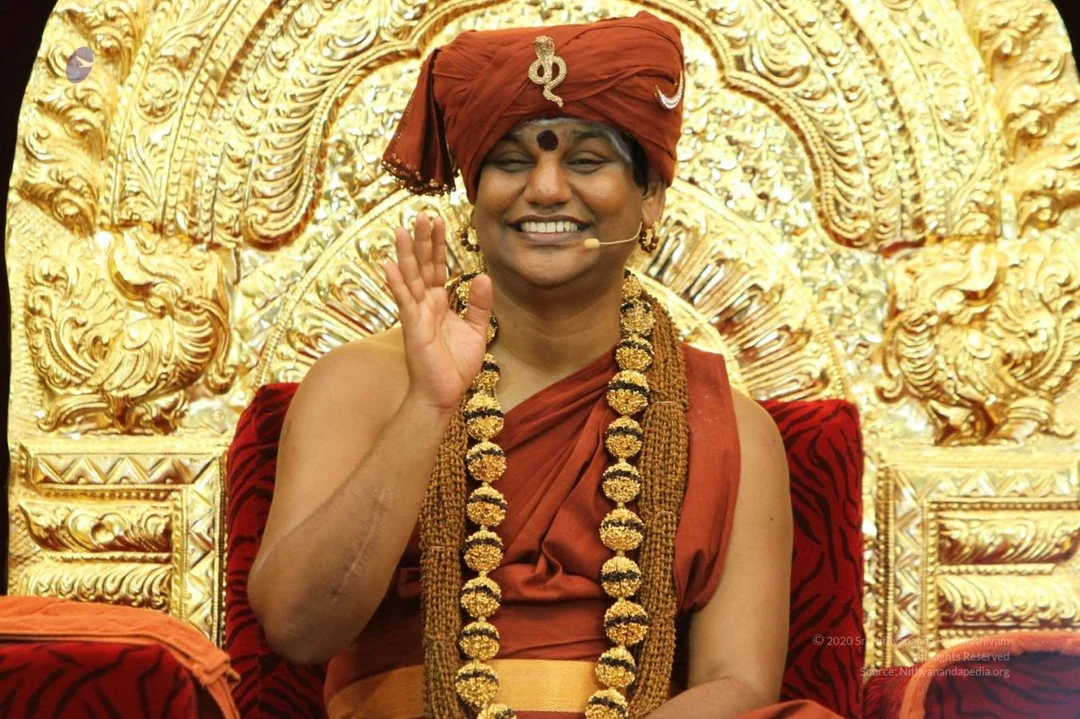
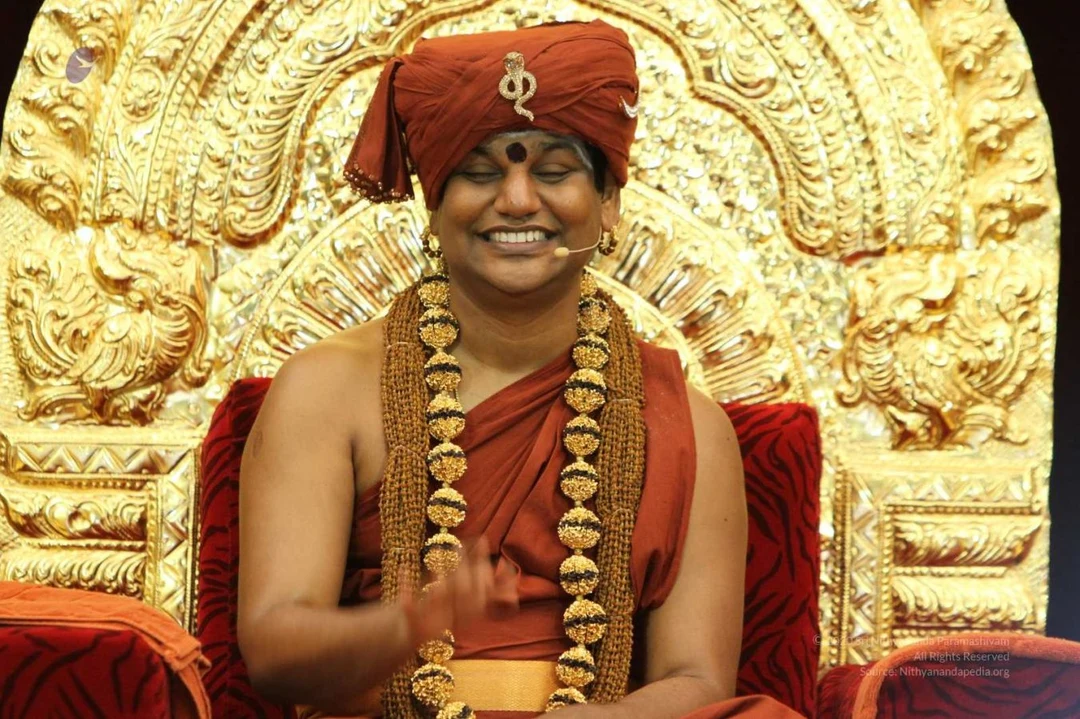
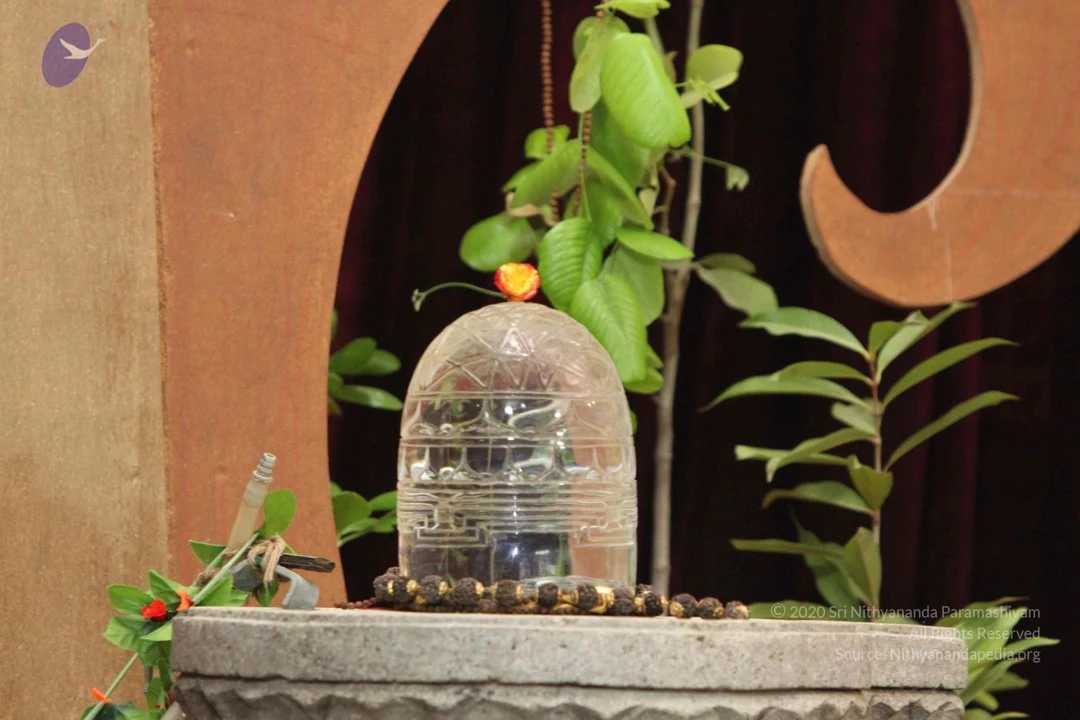
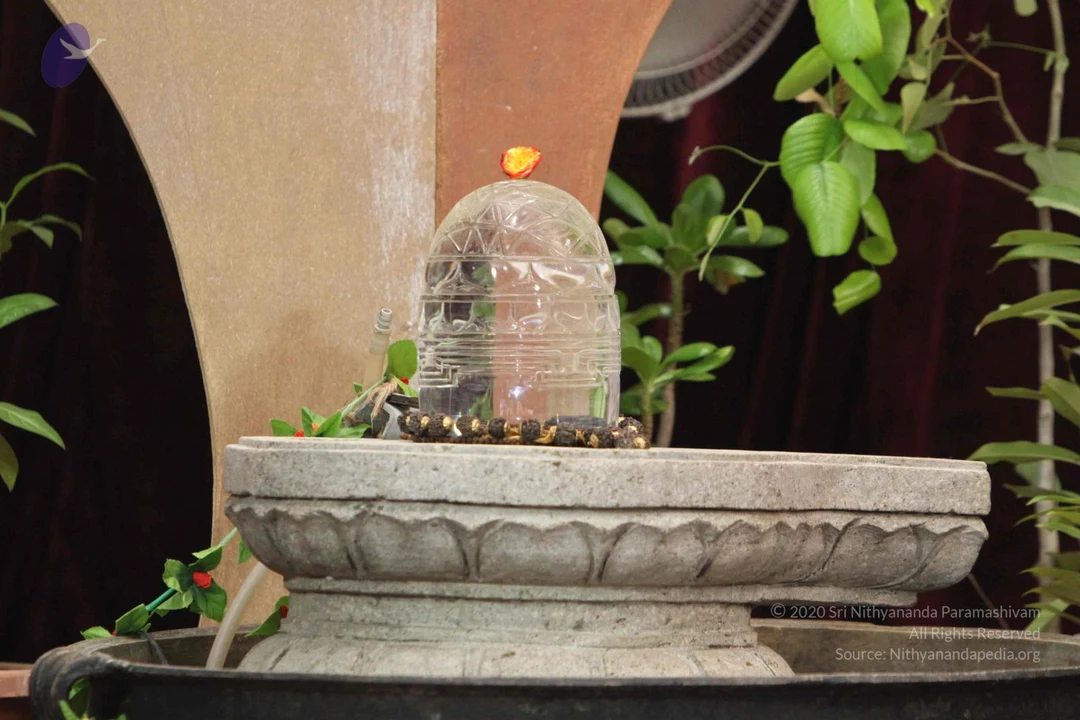
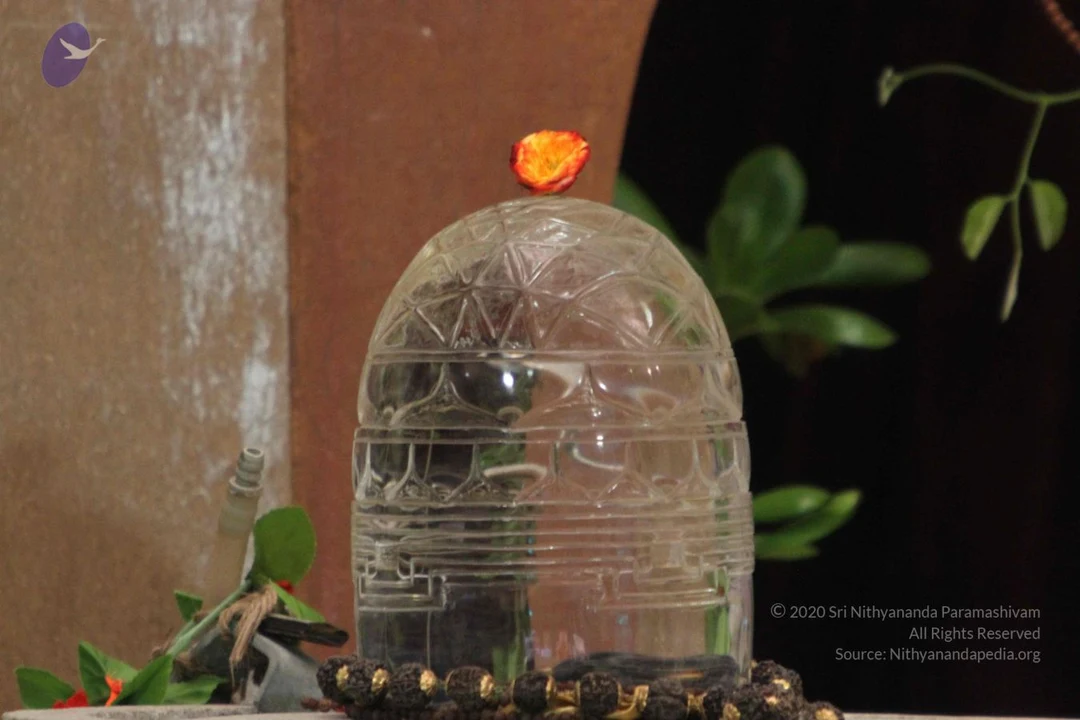
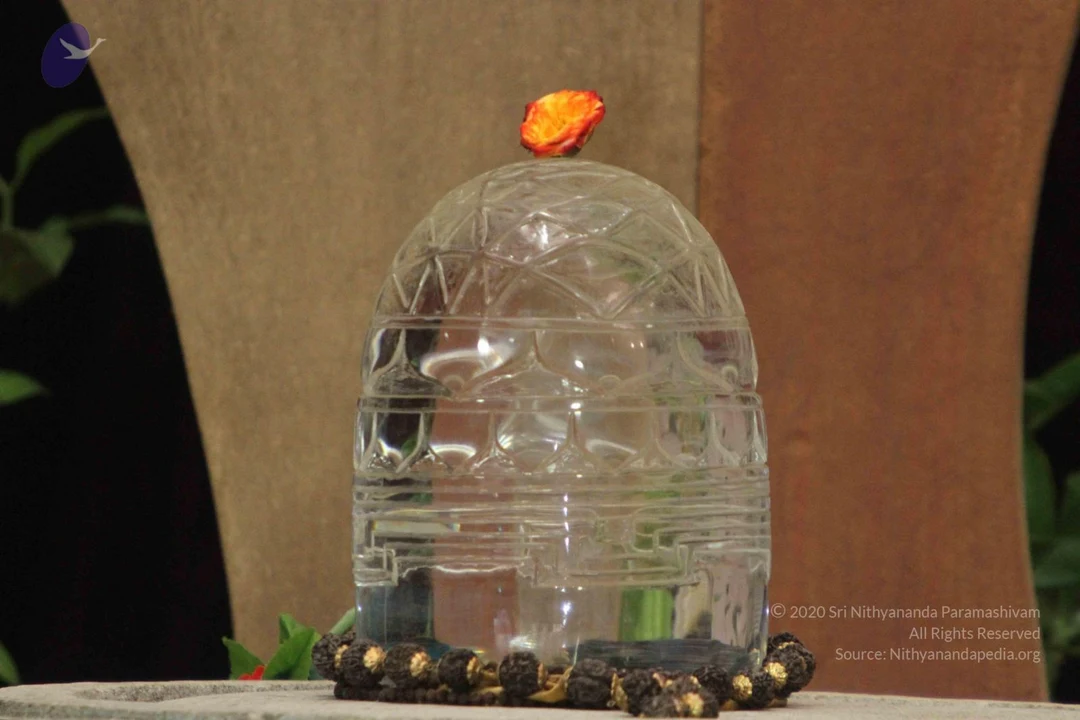
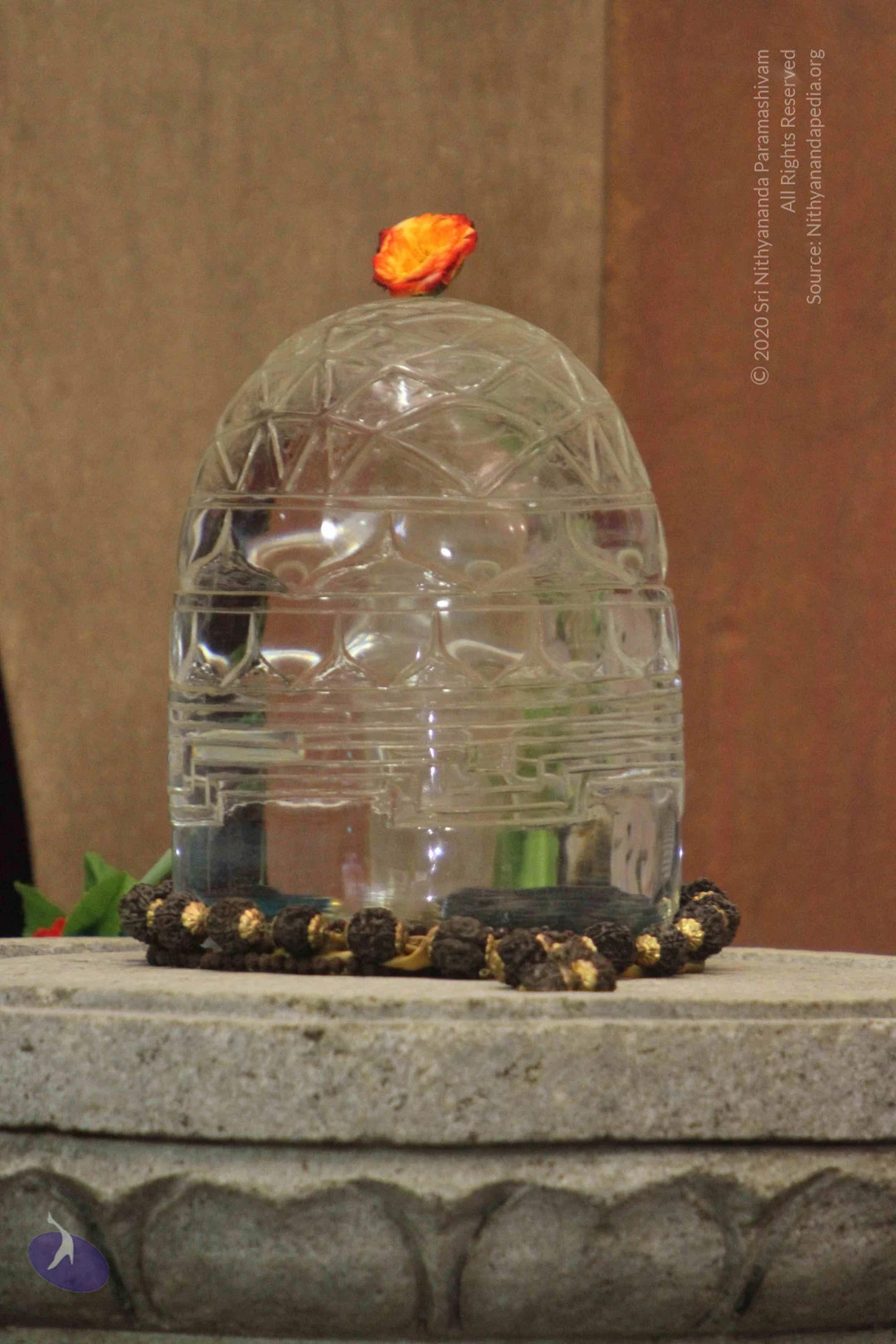
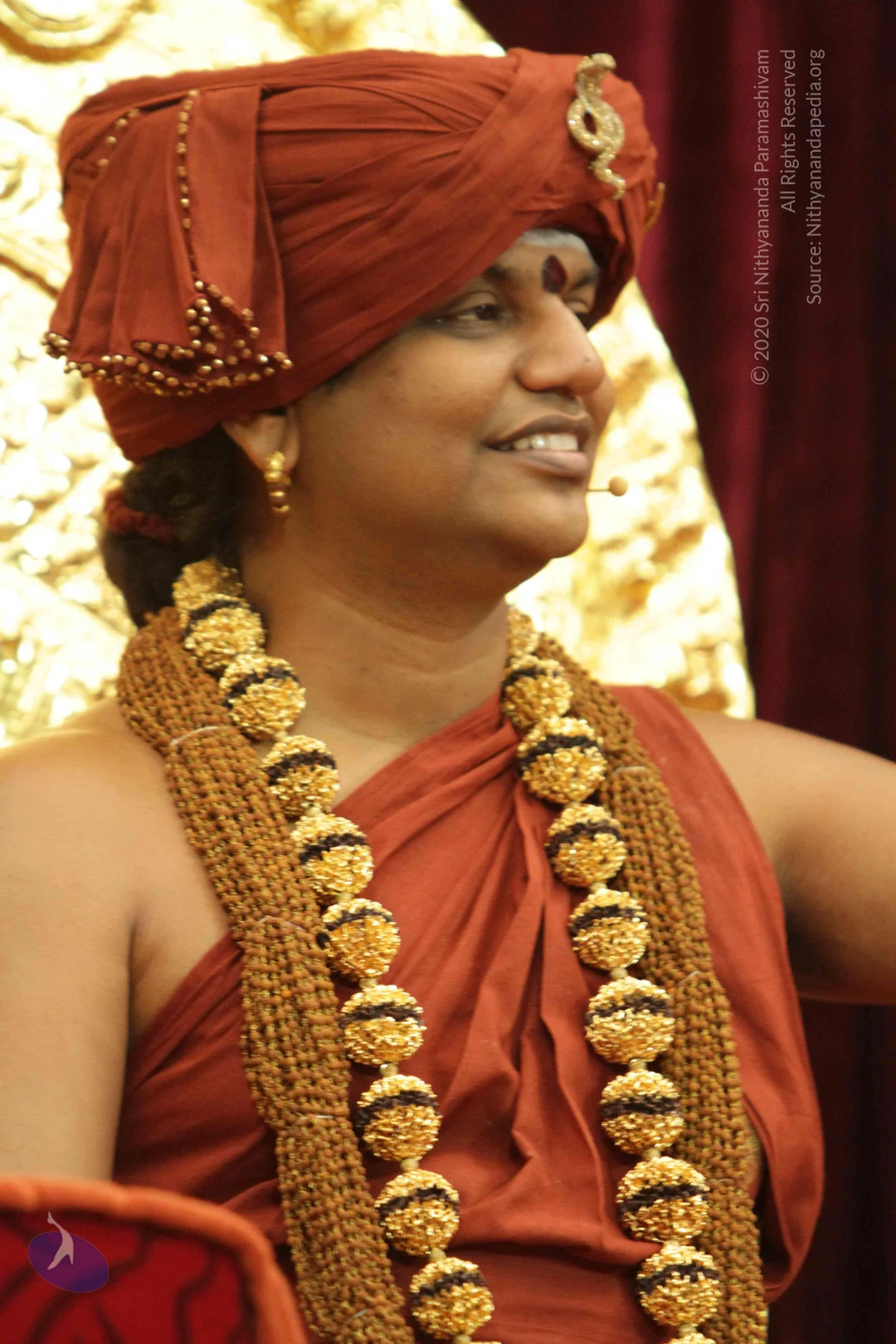
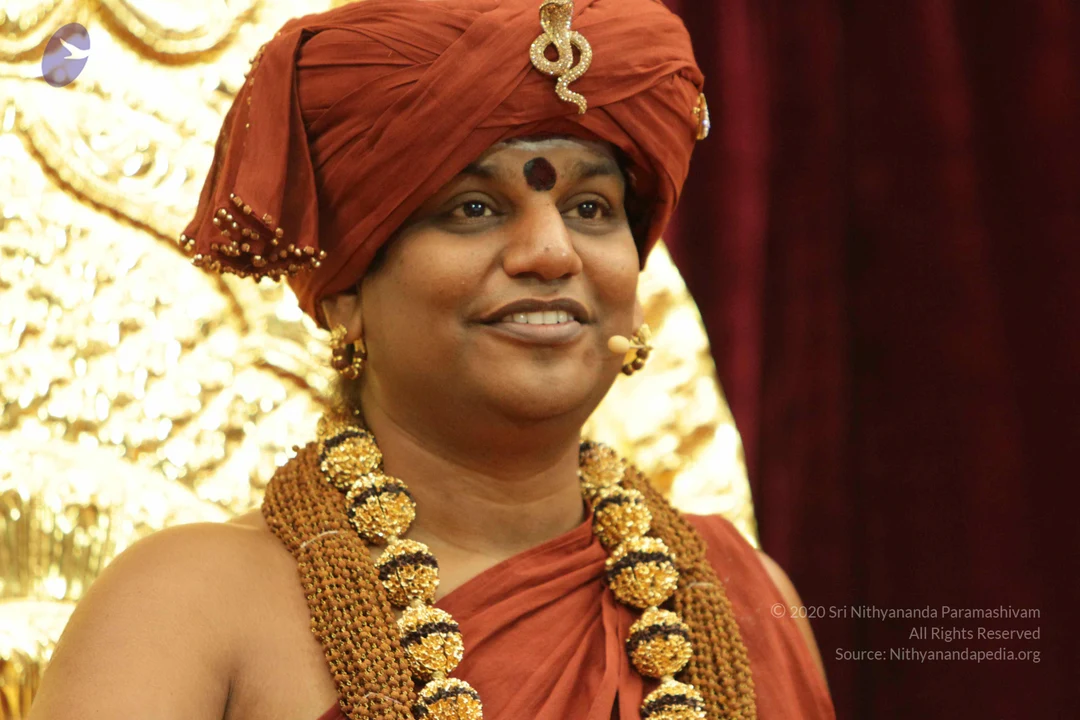
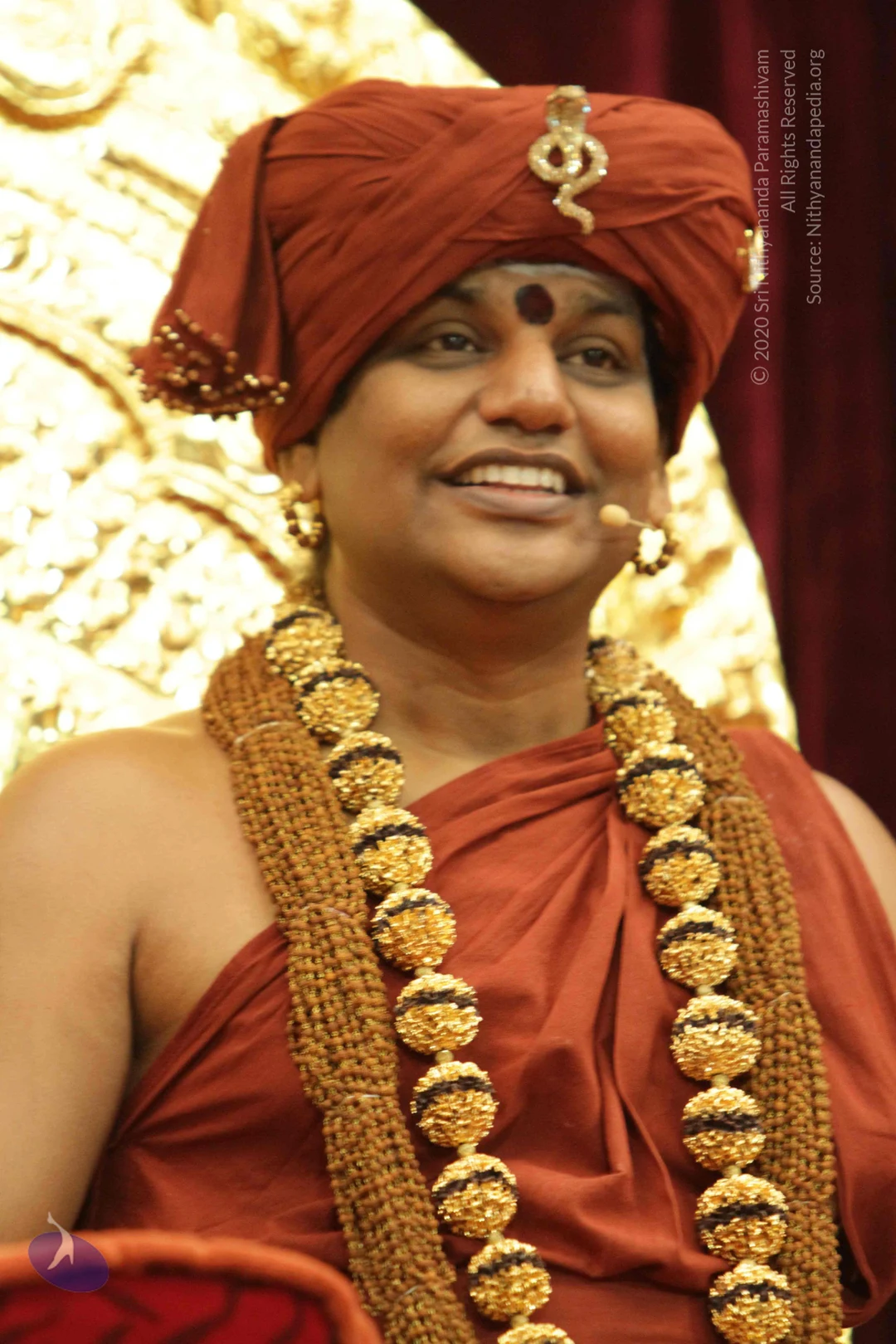
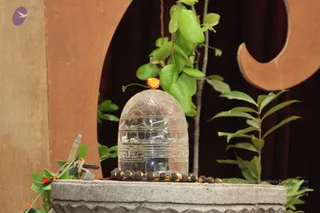
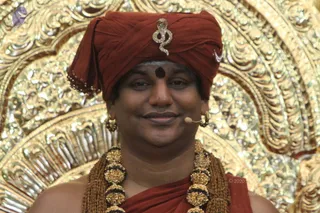
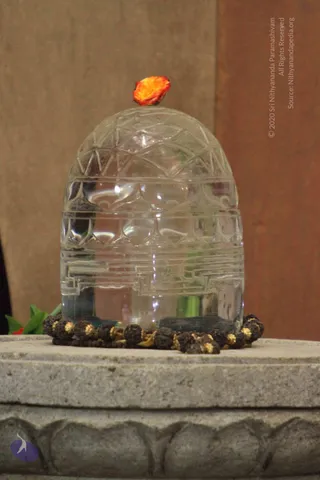
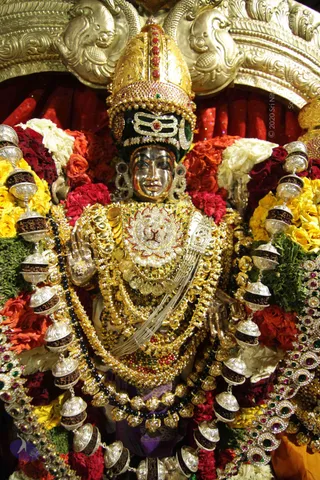
A clear crystal Shivalingam sits on a grey stone pedestal with a carved base, encircled by a string of dark rudraksha beads. A small red flower and a flame-like red bloom rest on its top. Green leaves and a slender plant rise behind it against a curved orange-brown wall and deep maroon drape. A few stems of green leaves with small red flowers lie at the left edge of the pedestal. No people are visible.A photograph of a clear glass shivling resting on a grey stone yoni pedestal, with a small orange flower on top of the lingam. Green leafy plants and a red flower sprig frame the base, and a dark red curtain and a beige pillar stand behind it. The pedestal sits in a dark metal basin with a water pipe running beside it. No people are visible.A clear crystal Shivalinga with carved geometric bands stands on a dark base, topped by a single orange-red flower bloom. Rudraksha beads with gold-coloured spacers are arranged at its base, and green leaves with small red blossoms sit to the left against a brown wall. No people are visible, and the scene is a ritual setting with an abhishekam-ready linga.A clear crystal Shivalingam sits on a pale stone base against a dark background with two brown wooden pillars. A single orange flower petal rests on its top. Dark rudraksha beads with gold-coloured caps are arranged around its base. Green leaves appear at the left edge. No people are visible.A decorated deity murti, a metal image shown from the chest up, dressed heavily in gold jewellery and layered necklaces with a blue and gold ornamented chest piece. Red and white rose and jasmine garlands wrap the figure and a golden arched backdrop. A tall conical crown of golden beads sits on its head, and a trident-like spear and a small white flag with a red emblem stand beside it. Two smaller decorated figures flank it, also adorned with gold ornaments and garlands. No physical people are visible.Close-up photo of a smiling man in a rust-red turban with a jewelled serpent ornament at the front and a small pearl-like pendant at the side. He wears a dark round bindi on his forehead, gold hoop earrings, a small headset microphone near his mouth, and a layered gold and black beaded necklace over a rust-red shawl. Behind him is an ornate gold repoussé backdrop with scrolled floral patterns.

DARSHAN

23 photosSource gallery
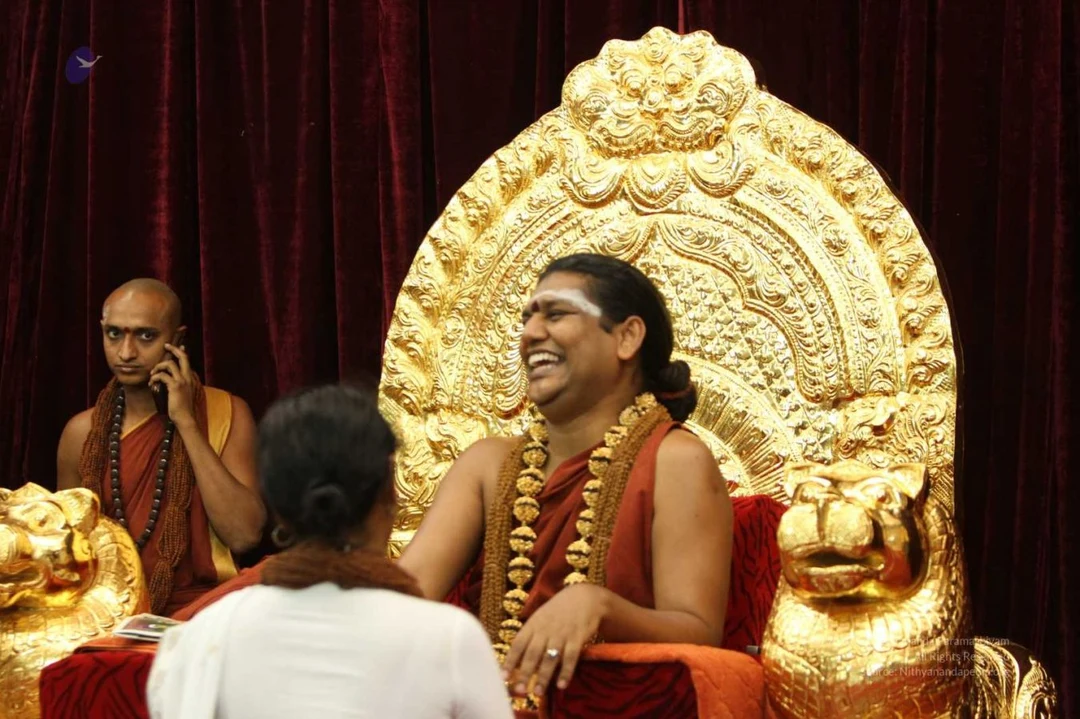
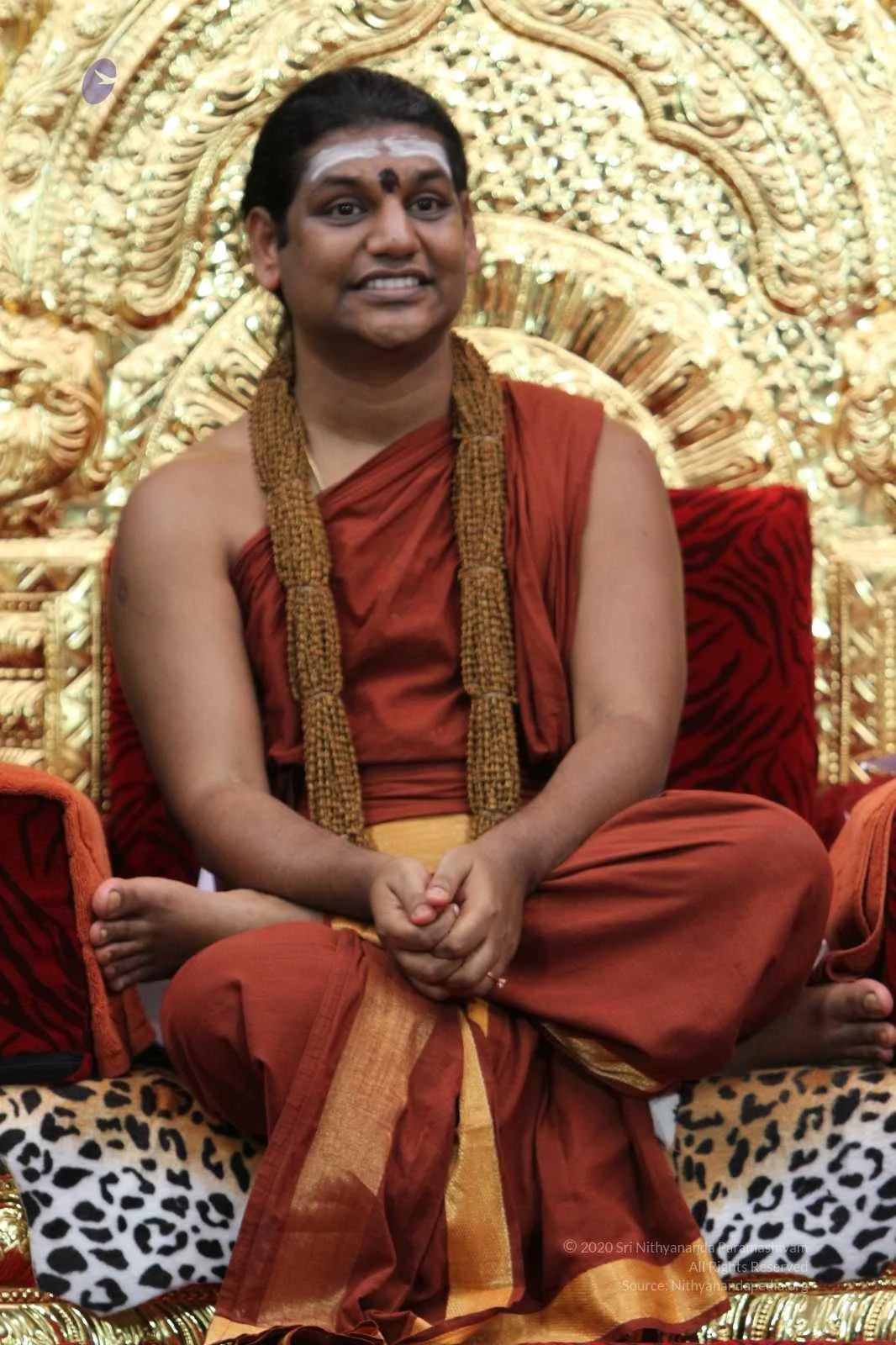
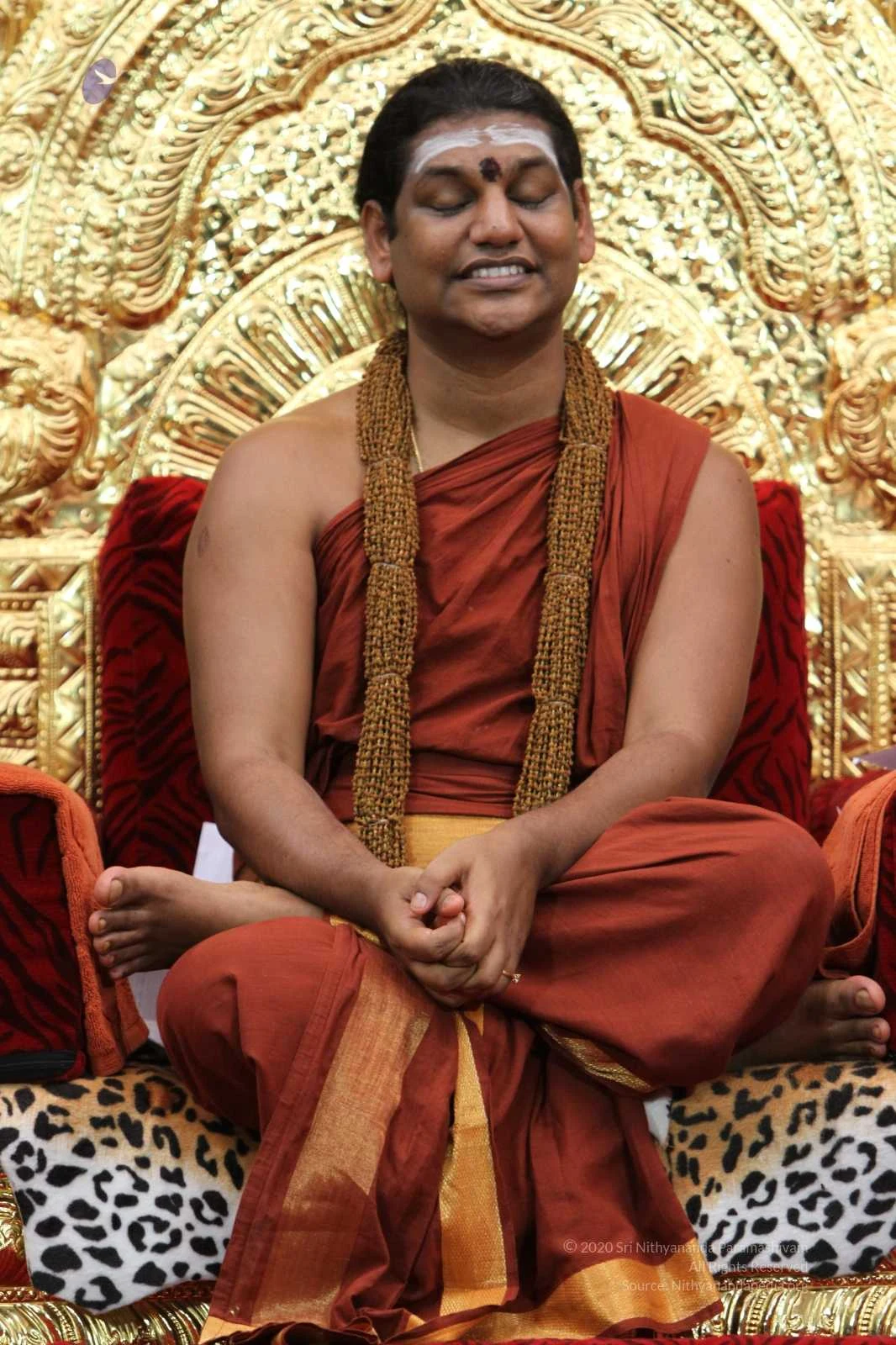
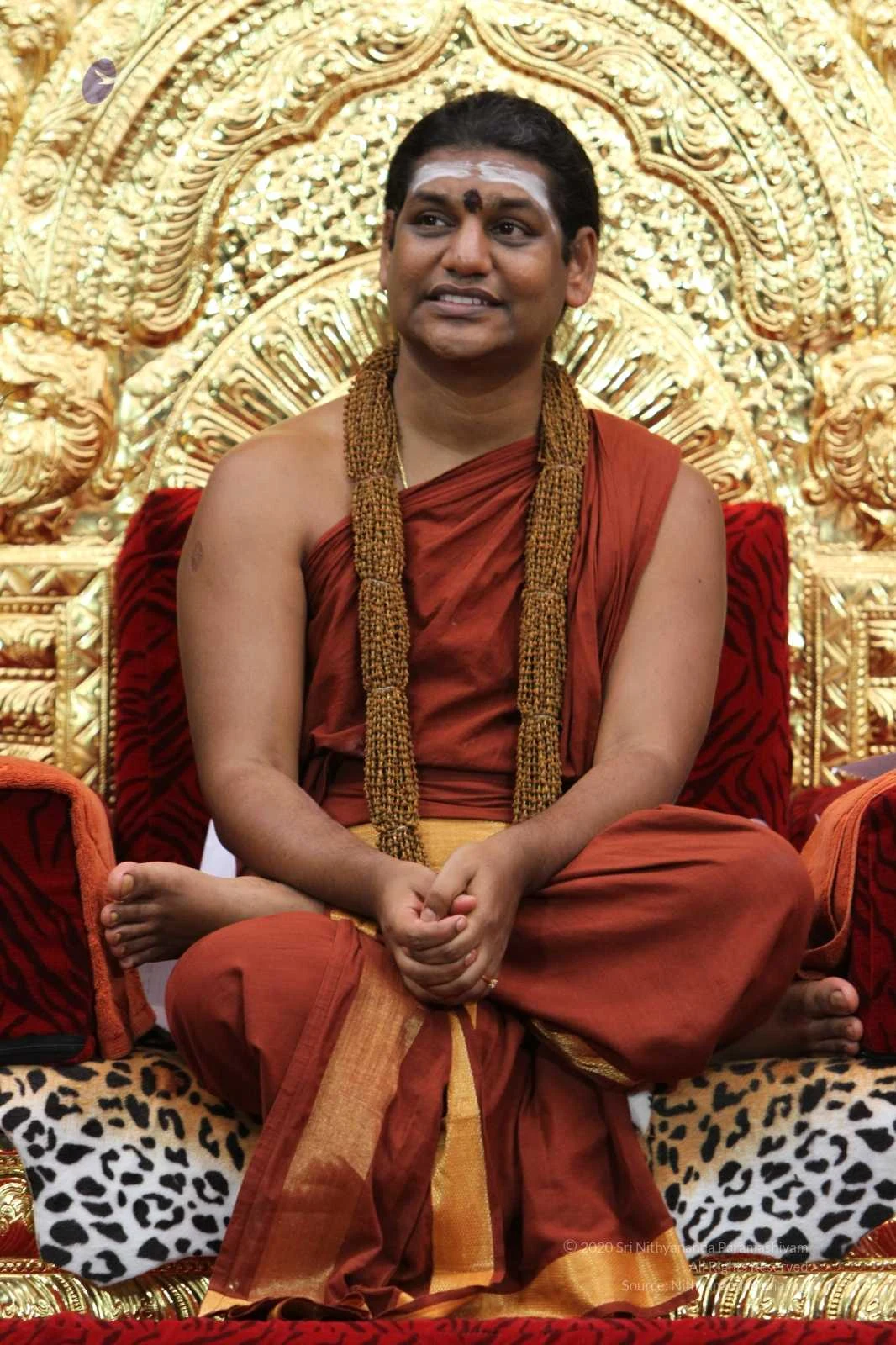
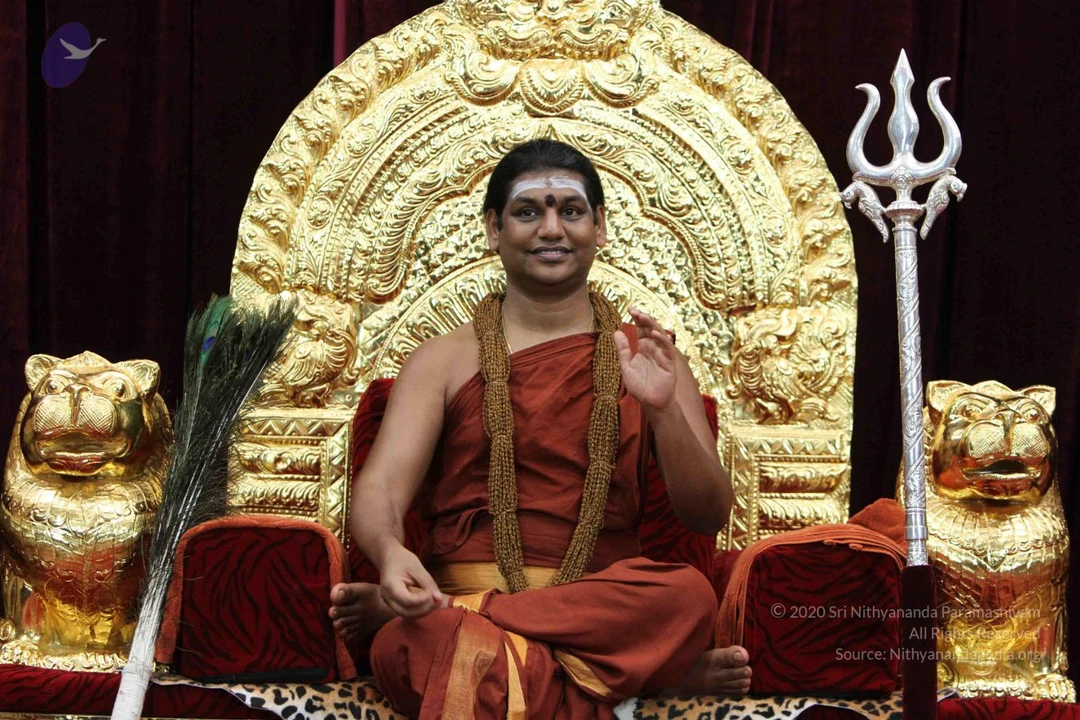
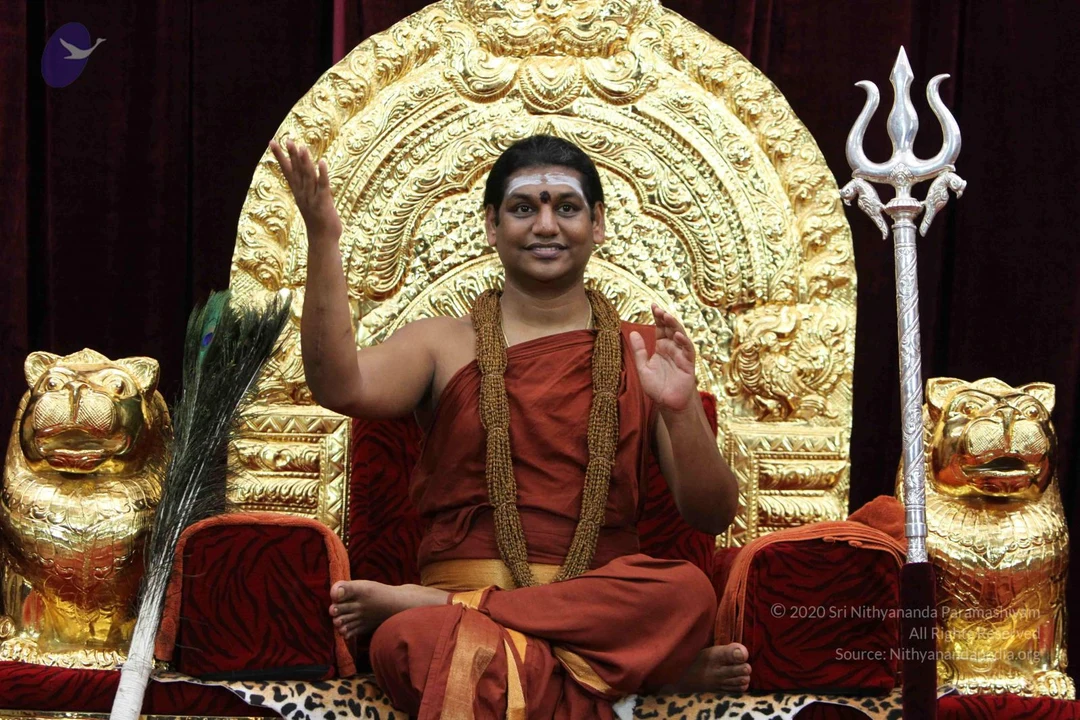
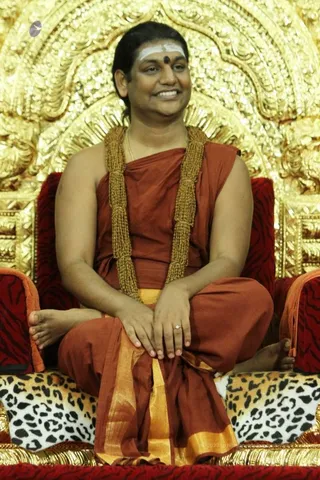
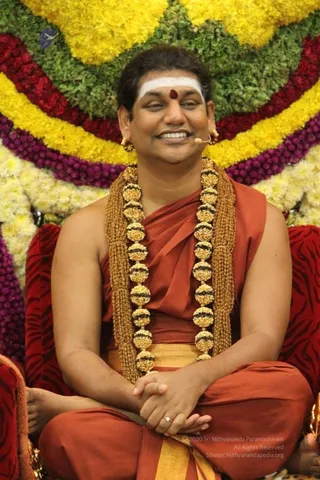
A smiling man with a short-cropped head and white and red forehead markings sits cross-legged on an ornate gold throne with a large gilded arch behind him. He wears a saffron-orange robe with a gold-bordered shawl and a long beaded mala around his neck, and he has bare feet and clasped hands. Two golden lion sculptures flank the throne, which sits on a leopard-print cloth and red-tiger-striped cushions. A silver trident stands to the right and a peacock-feather fan leans on the left, against dark maroon drapes. The man is seated with no other people visible.A smiling man with short dark hair and a white tilak on his forehead sits cross-legged on an ornate gold throne with a carved arched backrest and two golden lion figures at its sides. He wears an orange-red saffron robe with a gold border, a long gold-beaded mala around his neck, and holds his hands together in his lap. A tall silver trident stands to the right and a peacock-feather fan rests on the left, while a leopard-print cloth covers the dais. Dark red drapes hang behind him. The page identifies this as a person, but the appearance is uncertain for this figure, so the identity is marked unsure and the person is described by role. Printed copyright and source text appears on the image.A man seated cross-legged on an ornate gilded throne with a tall arched back carved in scrolls and lion-like motifs. He wears a rust-orange sleeveless robe with a saffron-and-gold border, a long gold-beaded necklace and a gold chain, and has a white and red forehead mark. He sits on a red velvet cushion over a leopard-print cloth, flanked by two golden lion statues. A silver trident stands at right and a peacock-feather fan at left, with dark red drapery behind. a person seated on the throne in a ceremonial setting.A seated man in saffron-orange robes sits cross-legged on an ornate gilded throne with a large arched backrest carved with floral and scroll motifs. Golden lion figures flank the seat, and a silver trident stands at his right while a peacock-feather whisk rests at his left. He wears a rudraksha mala with a ceremonial necklace, a white forehead marking, and is barefoot. A red velvet curtain and a leopard-print cloth form the backdrop.A photograph of a man seated cross-legged on an ornate gilded throne with lion-head armrests and a red velvet cushion, against dark red drapery. He wears a saffron-orange robe with a gold-bordered dhoti, a long gold-coloured beaded necklace, and a white tilak on his forehead. His right hand is raised in a teaching gesture. Beside the throne stand a silver trident and a peacock-feather fan. Visible text in the lower right is a copyright line and source credit. Appearance-based label: a person, seated in the throne with saffron robes, rudraksha-style beads and ceremonial trident, teaching in satsang.A seated man in saffron-orange robes sits cross-legged on an ornate gold throne with a tall gilded arched back, flanked by two golden lion statues. He wears a long rudraksha-style bead necklace and a white forehead marking with a red dot, and raises both hands in an animated teaching gesture. A silver trident leans to the right and a peacock-feather fan rests at the left, with a leopard-print cloth and red velvet cushions below. Red drapes hang behind. The appearance-based label is a person: the saffron robes, long mala beads and throne suggest the a person of the page, but the face and features are not used for identification.

Inner-Awakening-Session

7 photosSource gallery
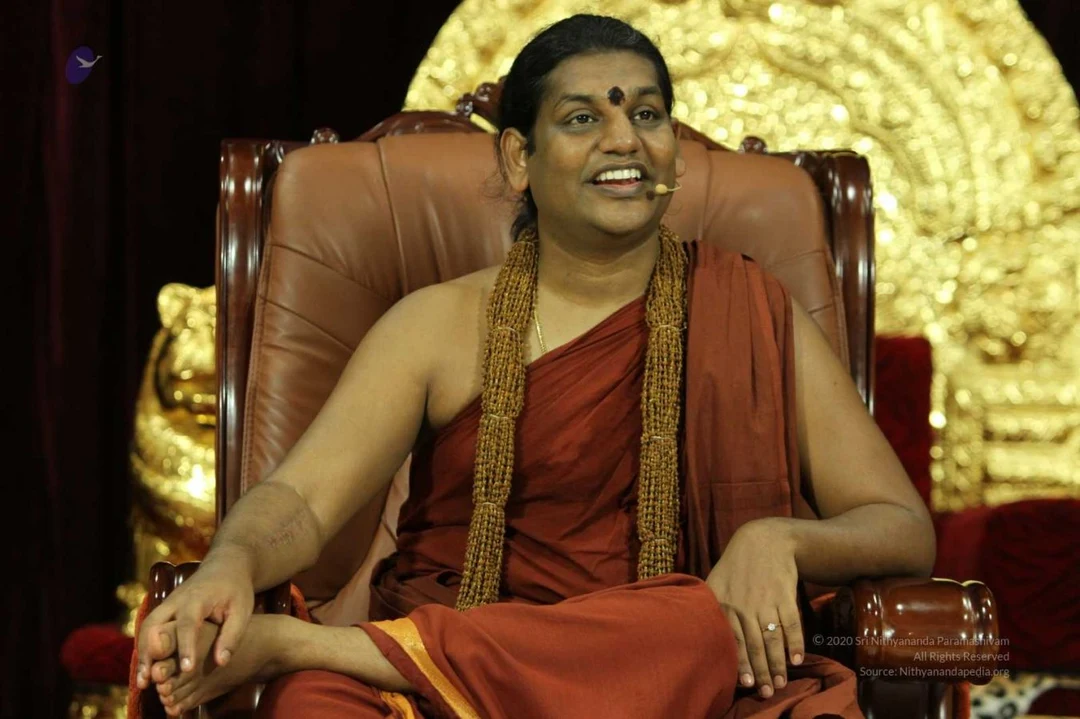
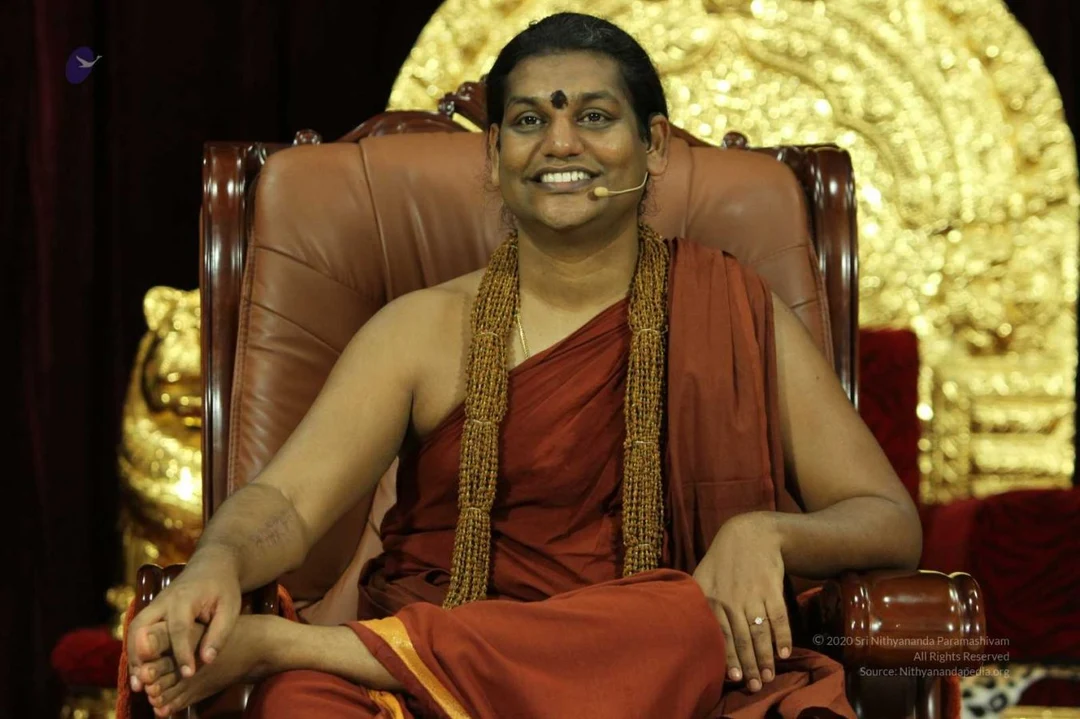
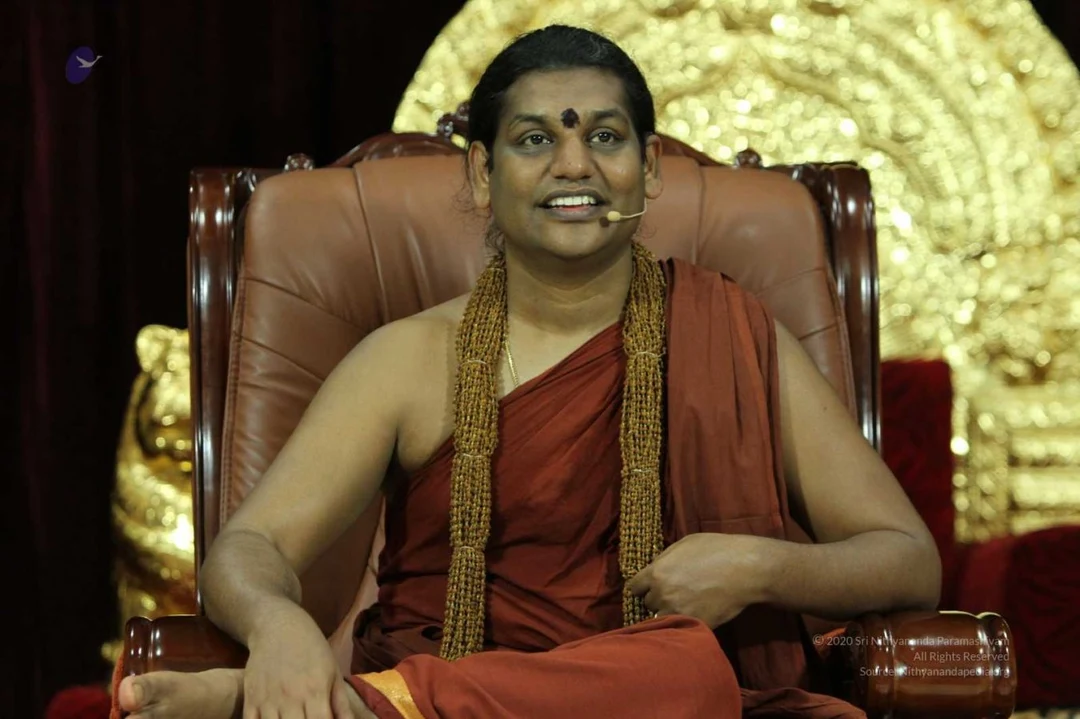
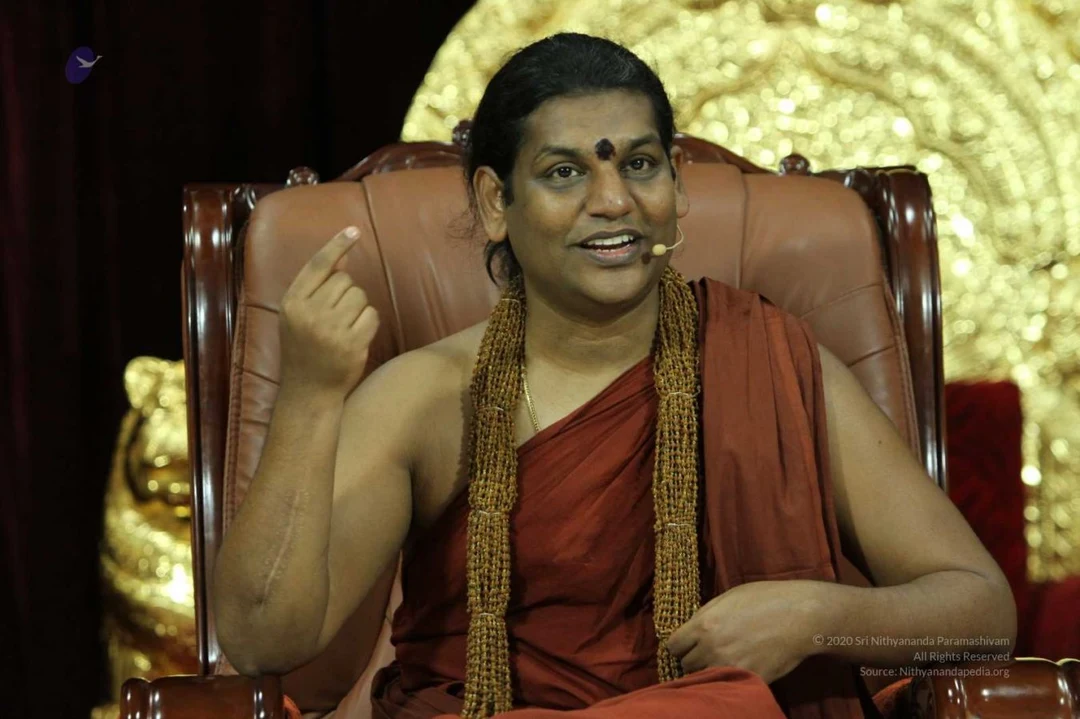
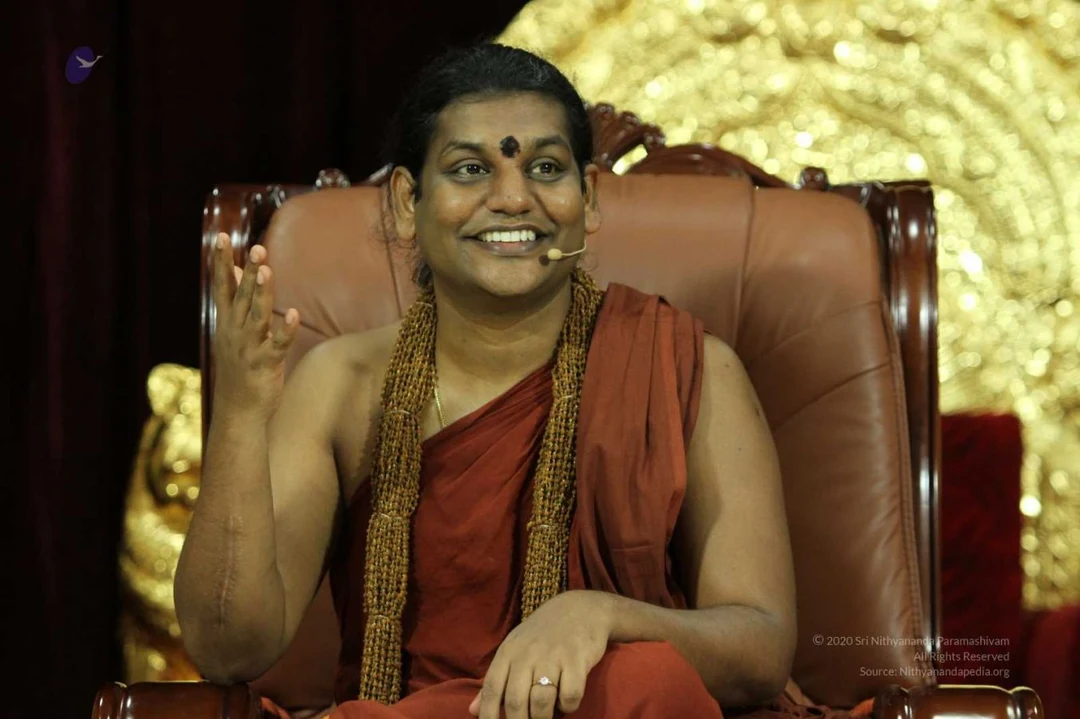
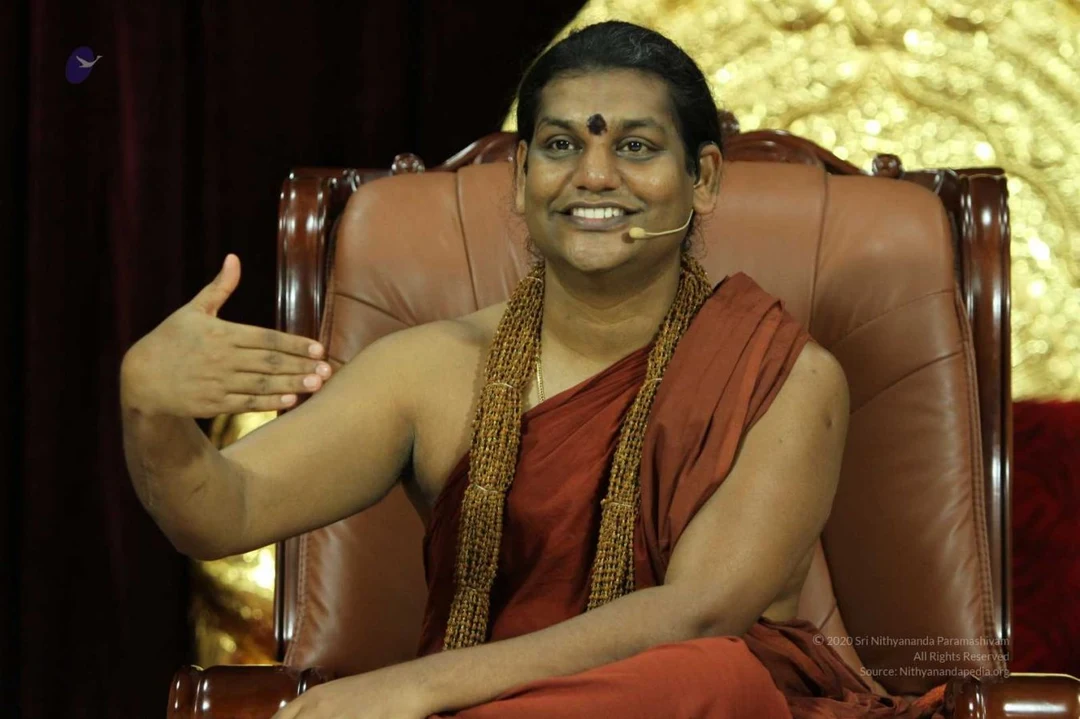
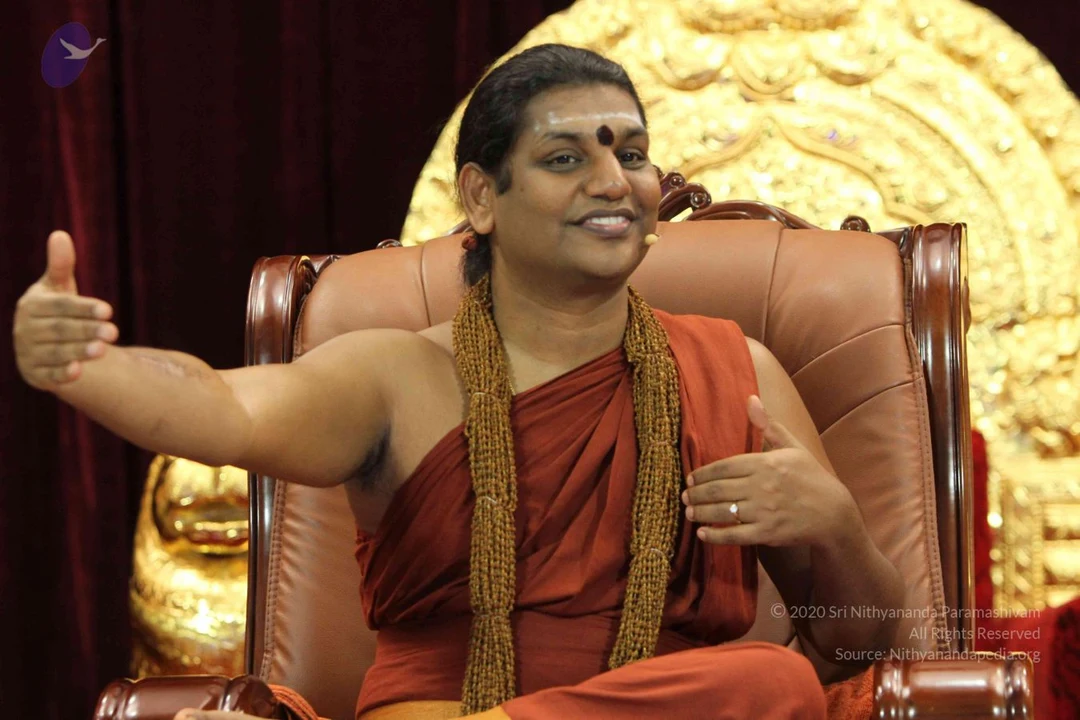
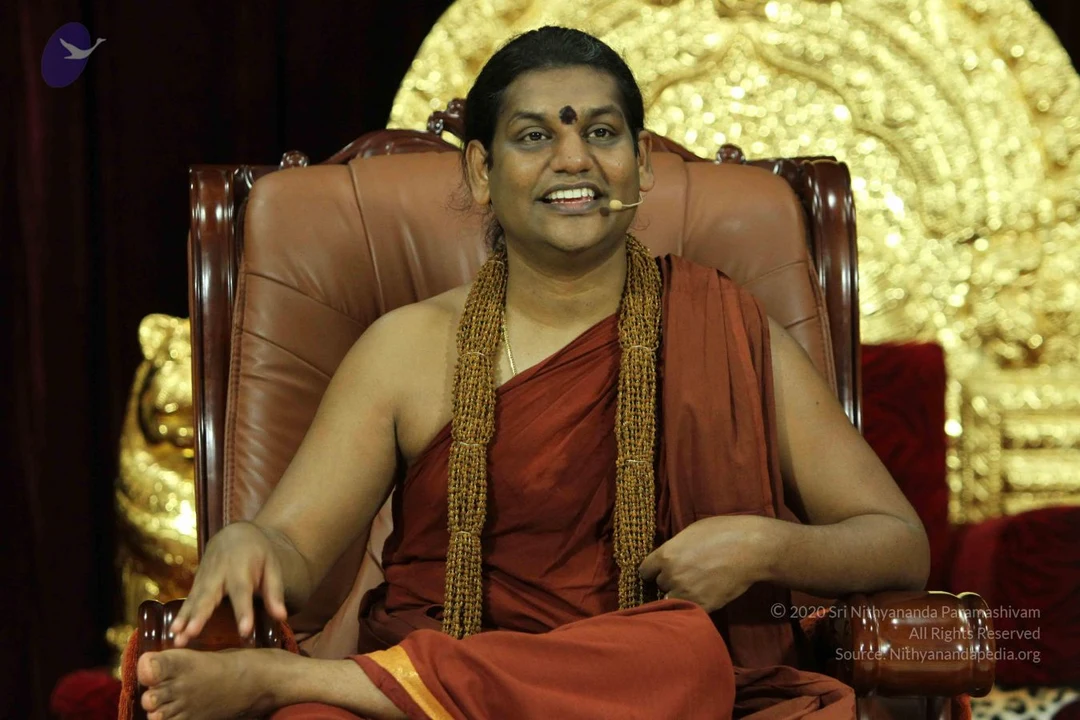
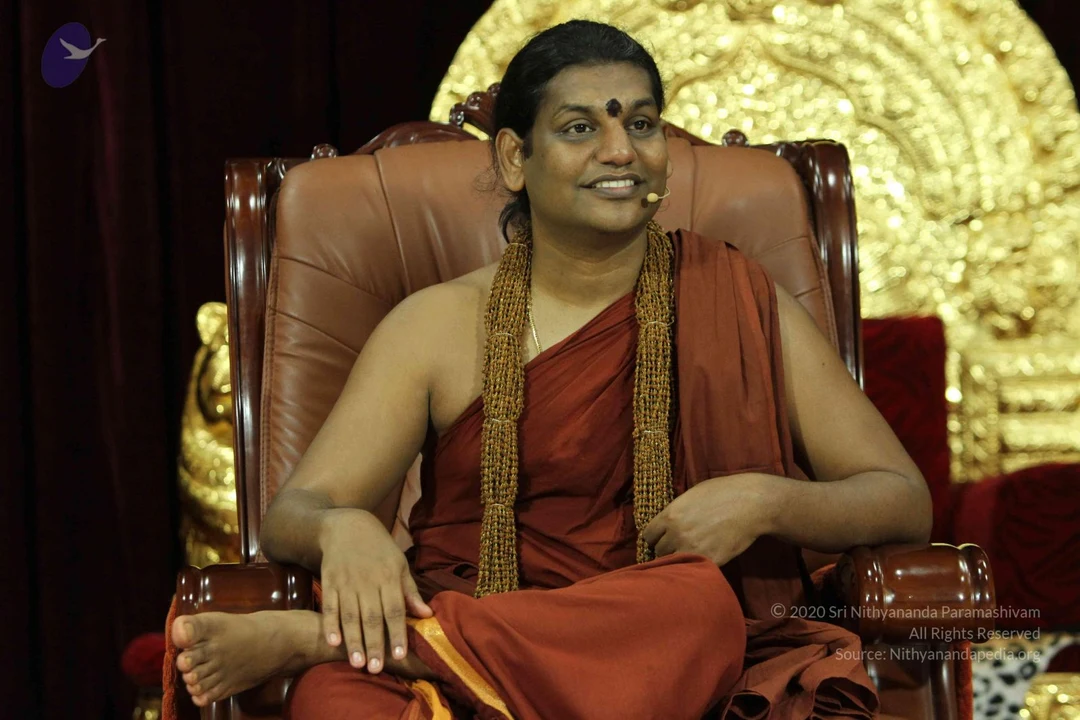
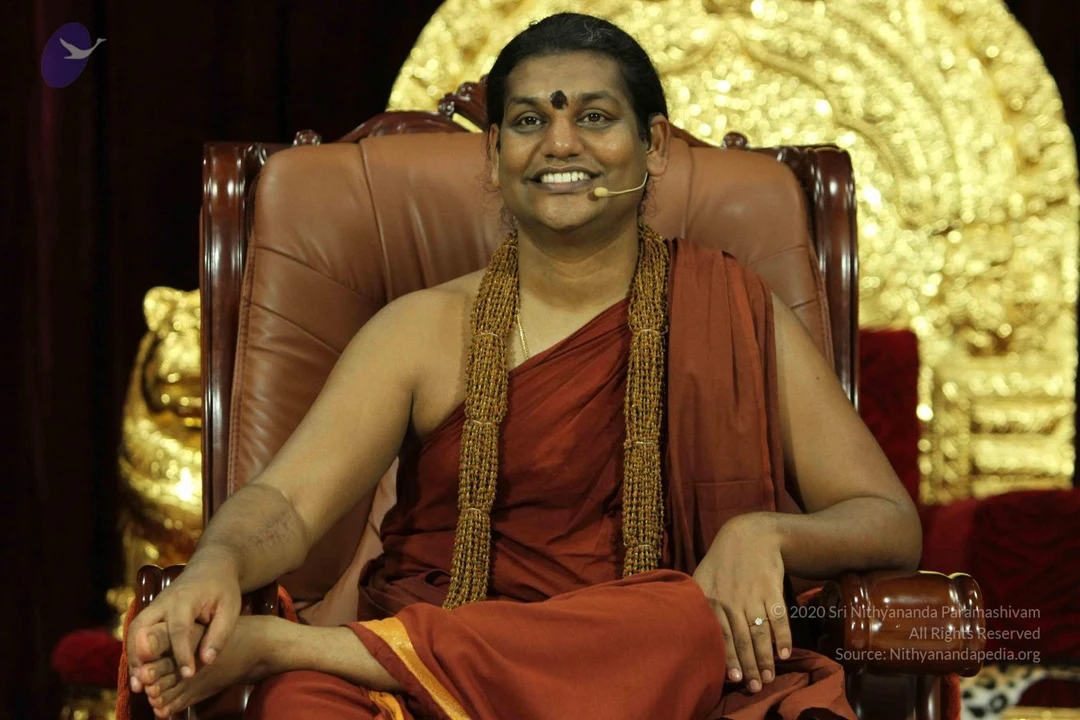
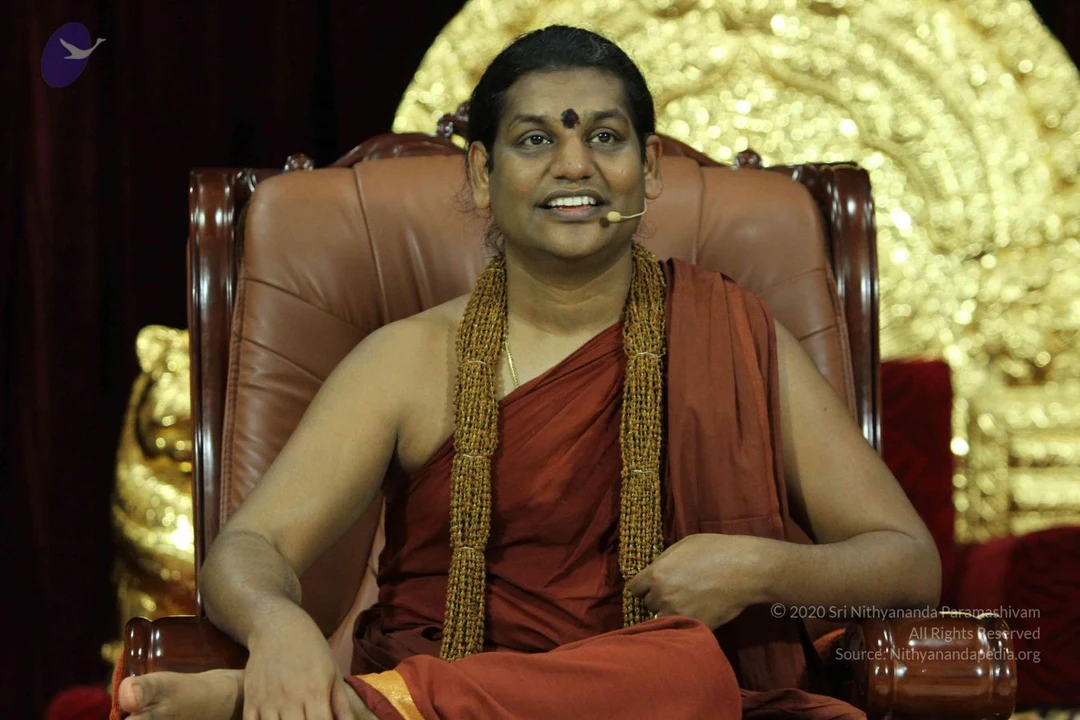
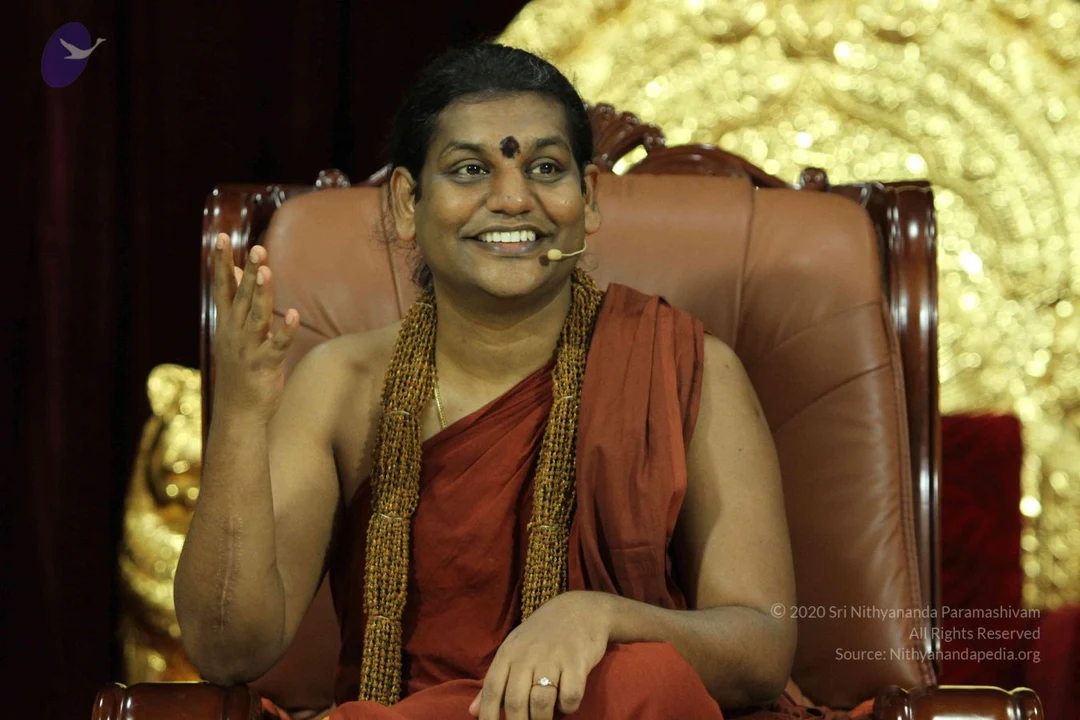
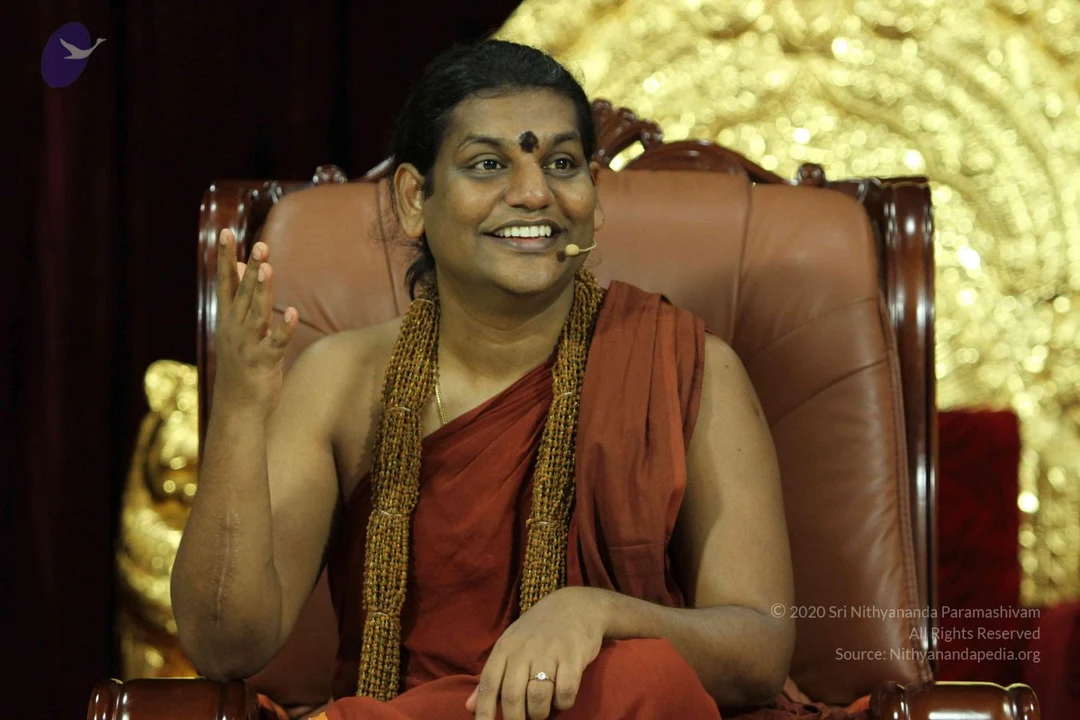
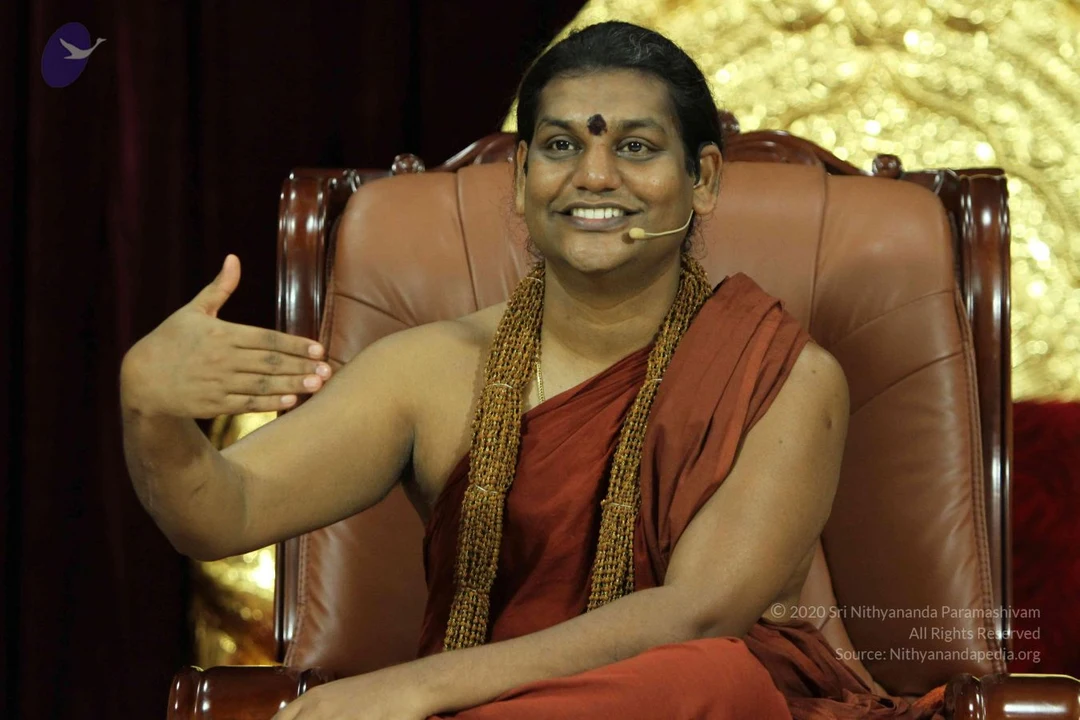
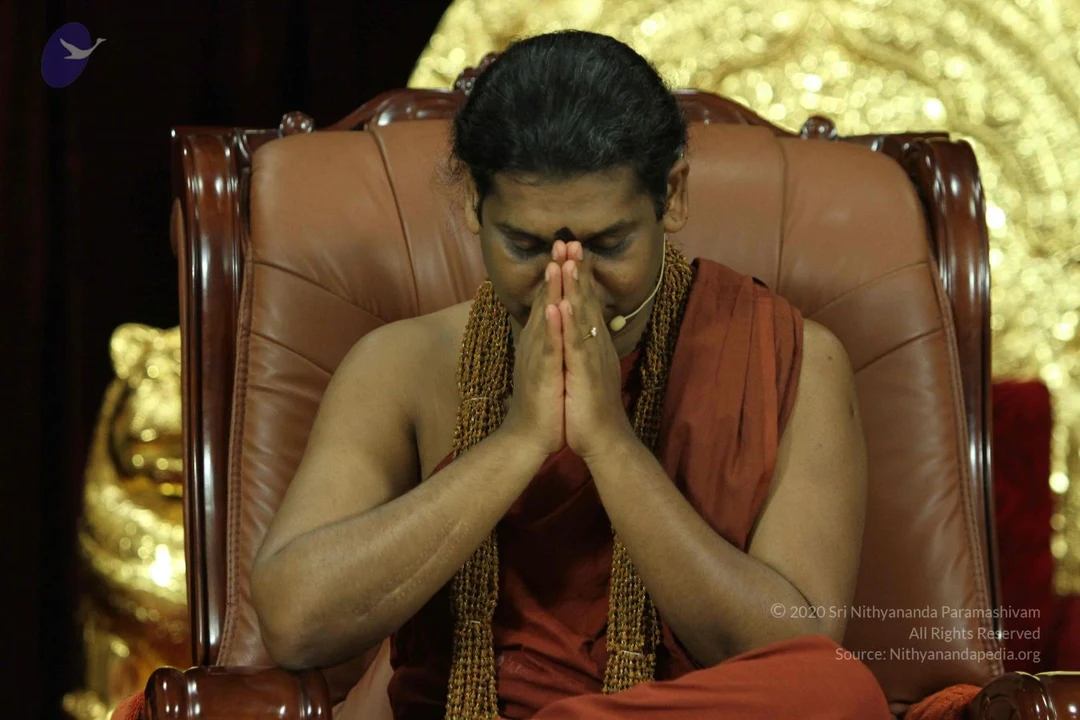
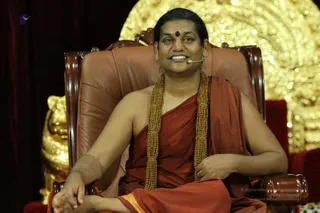
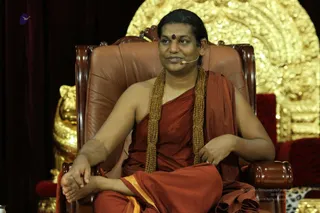
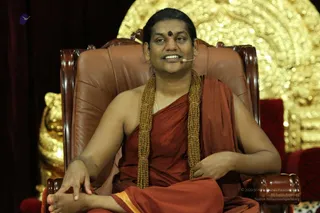
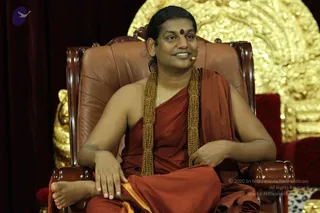
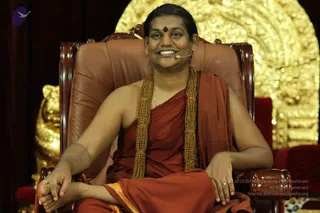
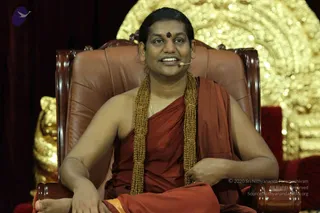
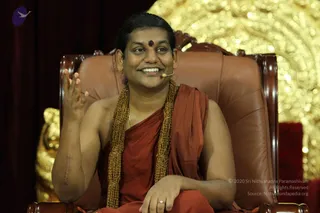
A photograph of a smiling man seated in an ornate brown leather armchair with carved wooden armrests, speaking during a satsang. He wears a saffron-orange dhoti and shawl, a long gold-toned rudraksha mala draped over the chest, a white vertical tilak with a red dot on the forehead, and a small clip-on microphone. His left arm is extended outward while his right hand rests near his lap. Behind him is a large gold-coloured carved backdrop and deep red drapery. The a person cues are the orange clothing, rudraksha mala and throne seating, so this is an appearance-based candidate, not a confirmed identity.A barefoot man in rust-orange robes sits cross-legged on a brown leather throne-style chair, speaking with a headset microphone and a smile. He wears a long rudraksha-style bead necklace over one shoulder, a small dark vermilion mark on his forehead, and a bare-shouldered wrap in deep red-orange. Behind him a large ornate gold carved backdrop glows, with a golden lion-like carving on the left and red velvet draping at the lower right. The scene is a seated discourse setting. Swamiji (probable): the figure has long swept-back hair and rudraksha beads over saffron-toned robes with a throne and an ornate golden backdrop, matching the page's Swamiji reference.A photograph of a man seated on a large brown leather throne with carved wooden armrests, smiling and looking to his left. He wears a rust-red saffron robe draped over one shoulder, a long gold-toned beaded necklace of rudraksha-style beads, and a small dark bindi-style mark on his forehead; a small headset microphone is clipped near his face. He has his bare feet crossed and one hand resting on the armrest. Behind him is an ornate golden carved backdrop and a dark red curtain.A smiling man with short dark hair and a small red bindi sits in a large brown leather throne chair before an ornate gold backdrop. He wears a reddish-orange robe over one shoulder and a long gold-coloured beaded mala draped across his chest, with a small headset microphone at his cheek. His legs are crossed and he rests his hands on the chair arms, with a gold ring on one finger. Behind him are gold carved panels and a red velvet cushion.A man seated on a brown leather throne-style armchair with carved wooden arms, speaking with a head microphone clipped near his mouth. He wears a rust-red saffron robe draped over one shoulder, with a long gold-brown rudraksha mala hanging across his chest, and a small red-maroon dot on his forehead. His hair is swept back. Behind him a large golden, sparkling decorative backdrop and deep red drapes frame the stage. a person: the seated speaker appears to be a person, identified by the long rudraksha mala, saffron robe and throne-seat presentation.A smiling man sits on a brown leather throne-style chair with carved wooden armrests, raising his right hand in a teaching gesture. He wears a dark red-orange robe draped over one shoulder and two long rudraksha-style brown seed malas around his neck, with a small dark dot on his forehead and a small clip-on microphone near his face. A large gold ornate backdrop glows behind him.

Inner-Awakening-SMKT

3 photosSource gallery
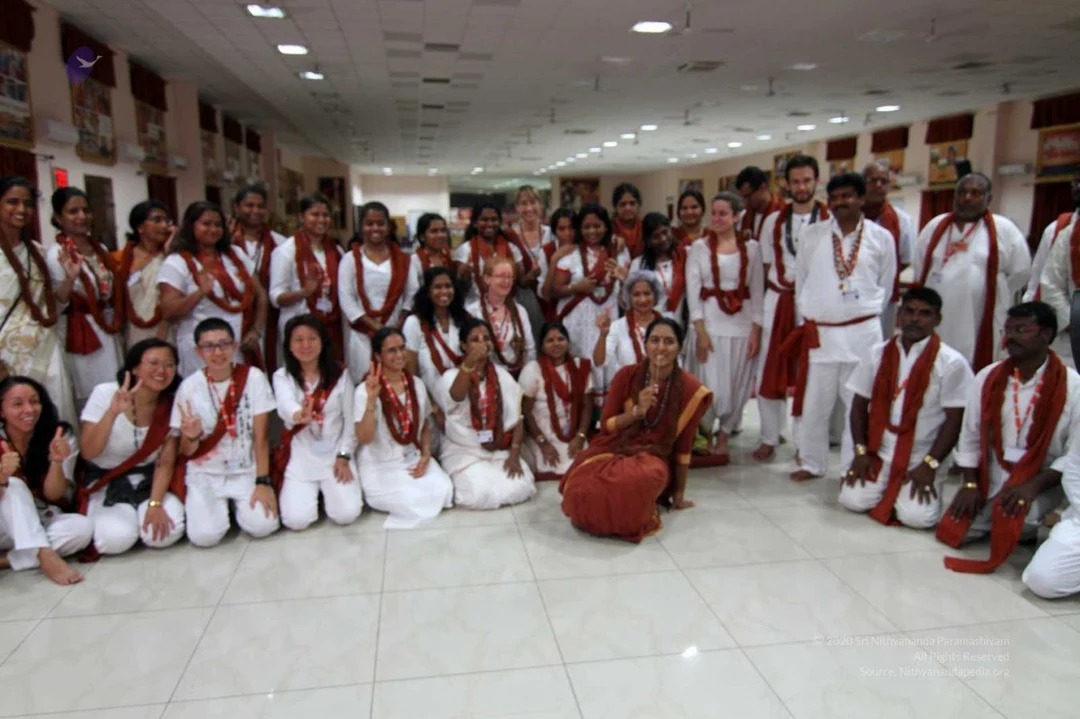
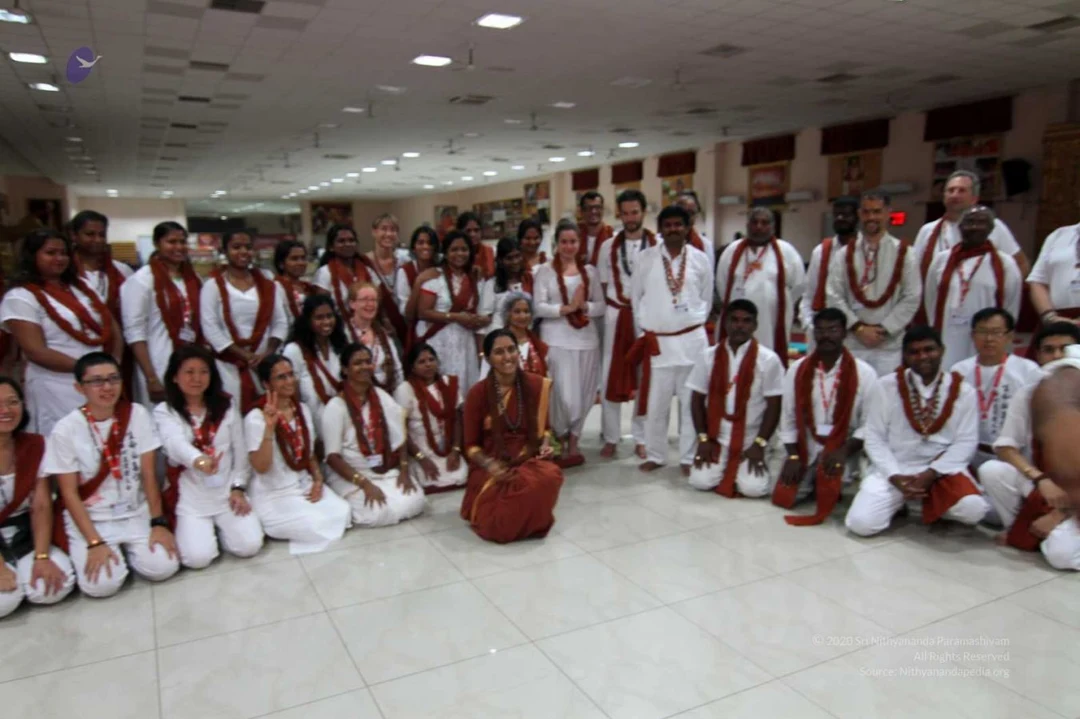
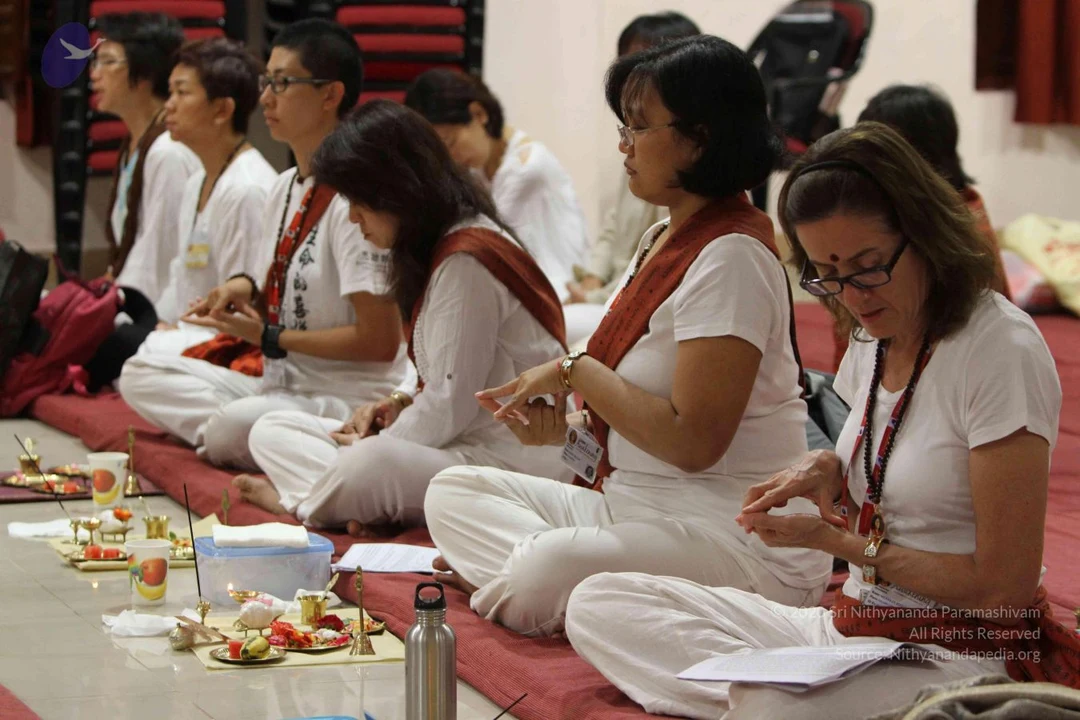
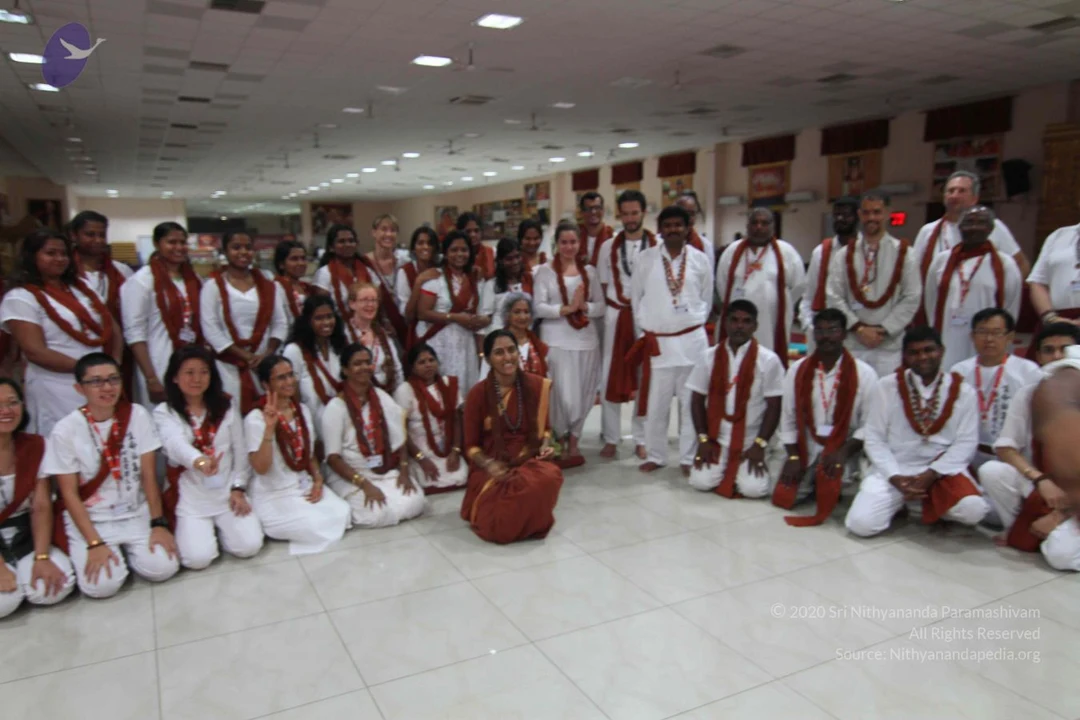
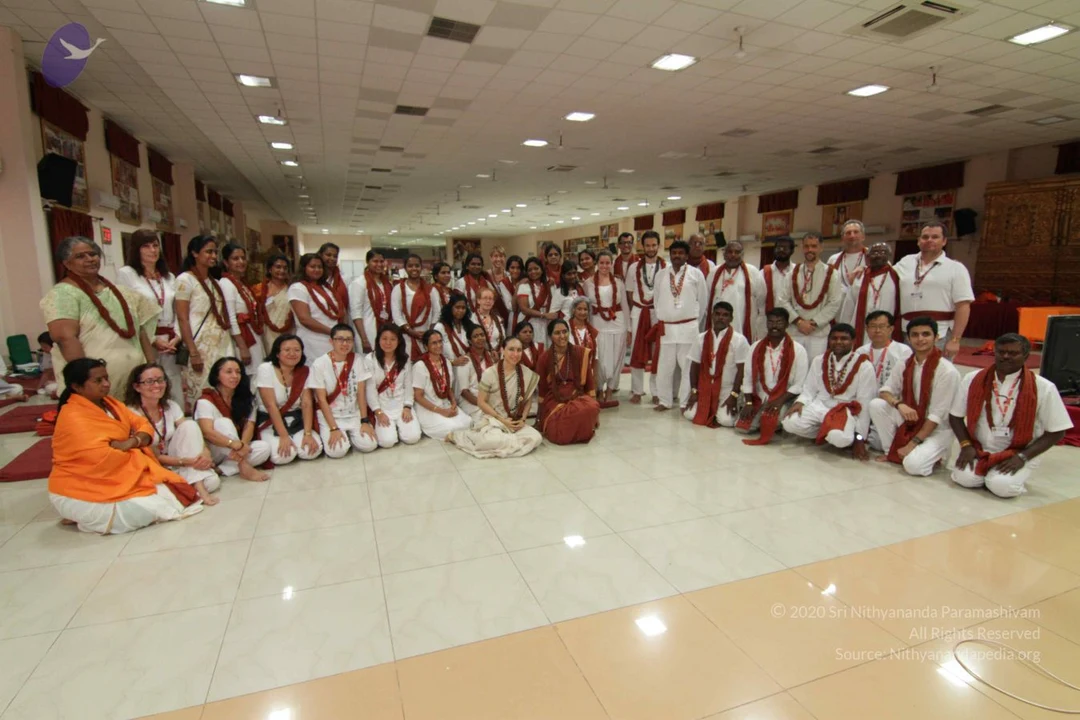
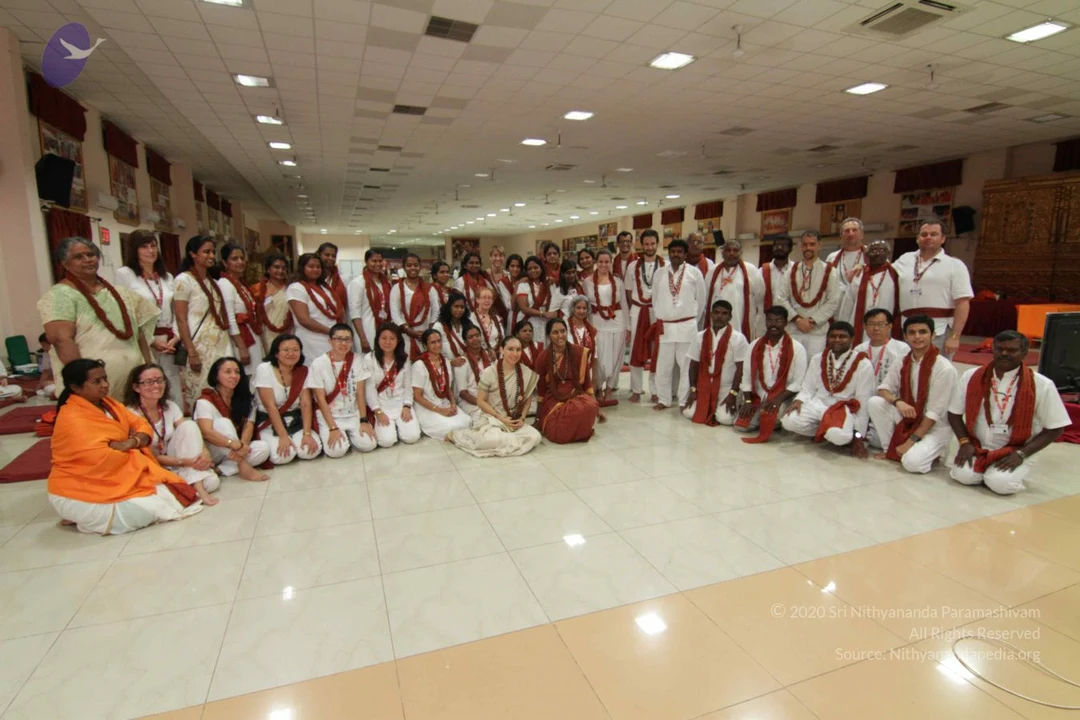
A large group photo taken indoors on a tiled white floor in a hall with framed pictures on the walls. Many people in all-white ritual clothing wear red-orange shawls draped over their shoulders and red-and-white beaded necklaces. Most stand in rows at the back, while a few kneel in front. A woman in a rust-coloured sari sits centrally on the floor with her hands pressed together and a red shawl across her shoulders. Several people make peace signs and smiles toward the camera. No single figure is clearly identified as a person, and no specific ritual is visible.Group photograph in a large, bright hall with cream tiled floor and red-curtained walls. A man in an orange shawl sits at far left, while a large group of women and men in white clothing with red sashes and red-and-white beaded garlands kneel and stand in rows. A woman in a red-brown sari sits centrally, a woman in cream sari sits near the middle, and framed pictures hang along the back wall. Several people wear name badges. The group appears to be posing together after a satsang gathering.A large group photograph in a bright, tiled hall with a long row of ceiling lights and brown curtains along the walls. Roughly forty people are gathered closely, many wearing white kurtas, white saris and white tops with red-brown shawls and scarves, and many wearing red-and-white beaded necklaces. Some people sit cross-legged on red mats in the front row, while others stand behind. A woman at the far left wears a green-and-white sari; a woman at the front left wears a saffron-orange shawl. A gold-carved wooden cabinet stands at the far right. No individual is identified as a person in this photo.
Rudra-Homa-&-Viraja-Homa

63 photosSource gallery
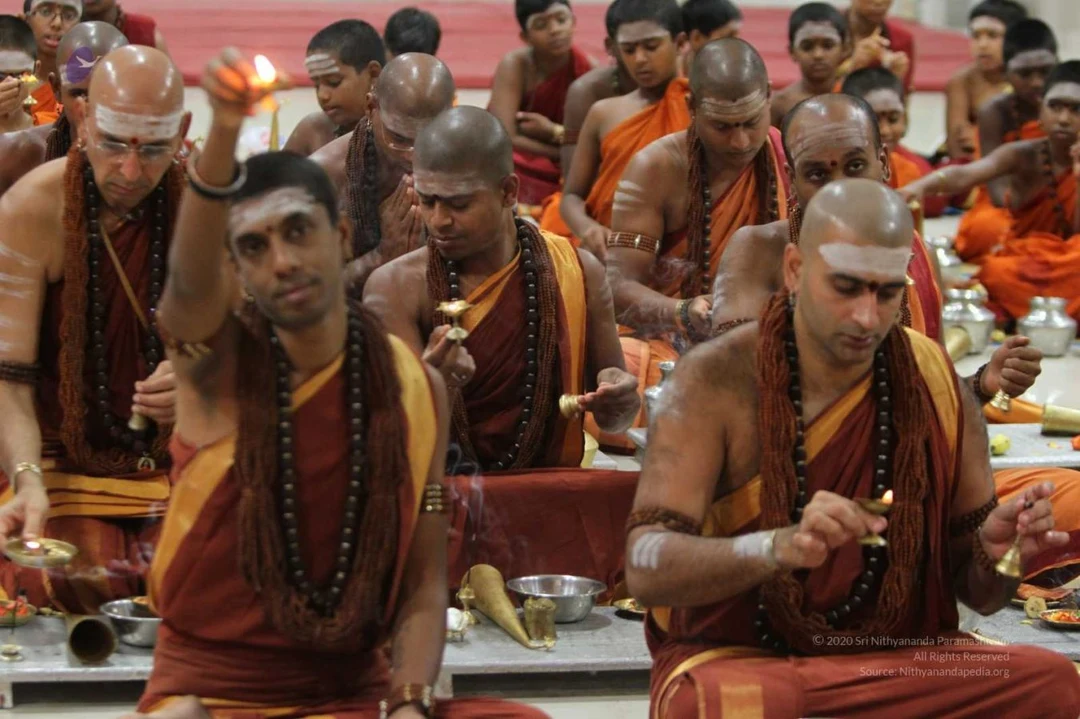
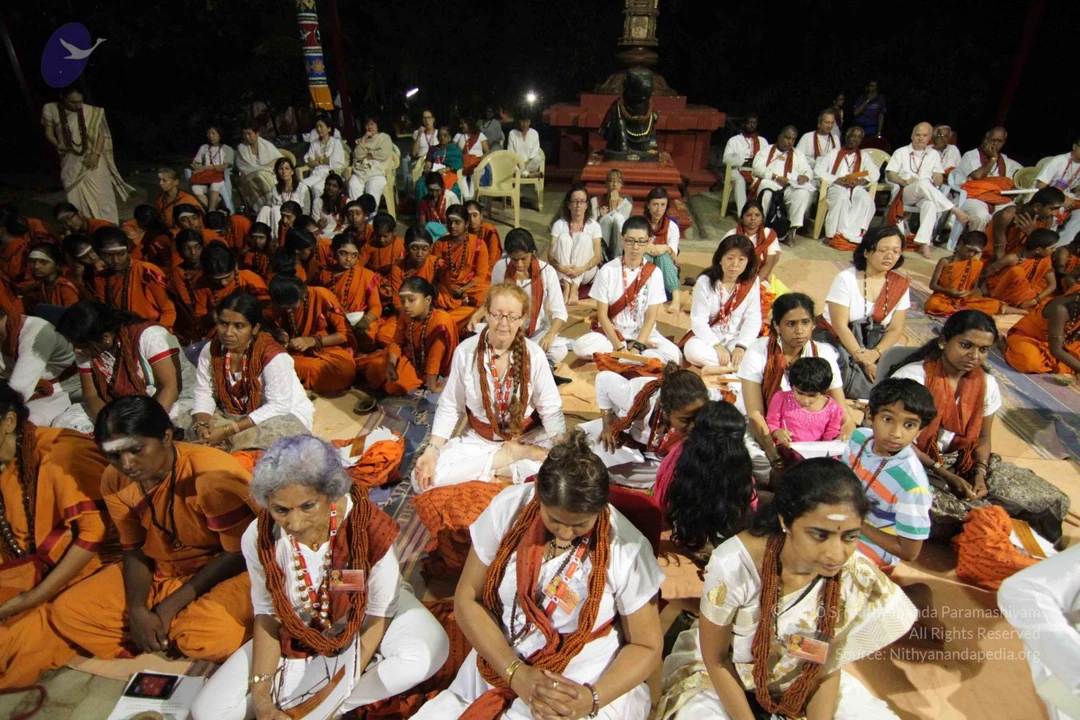
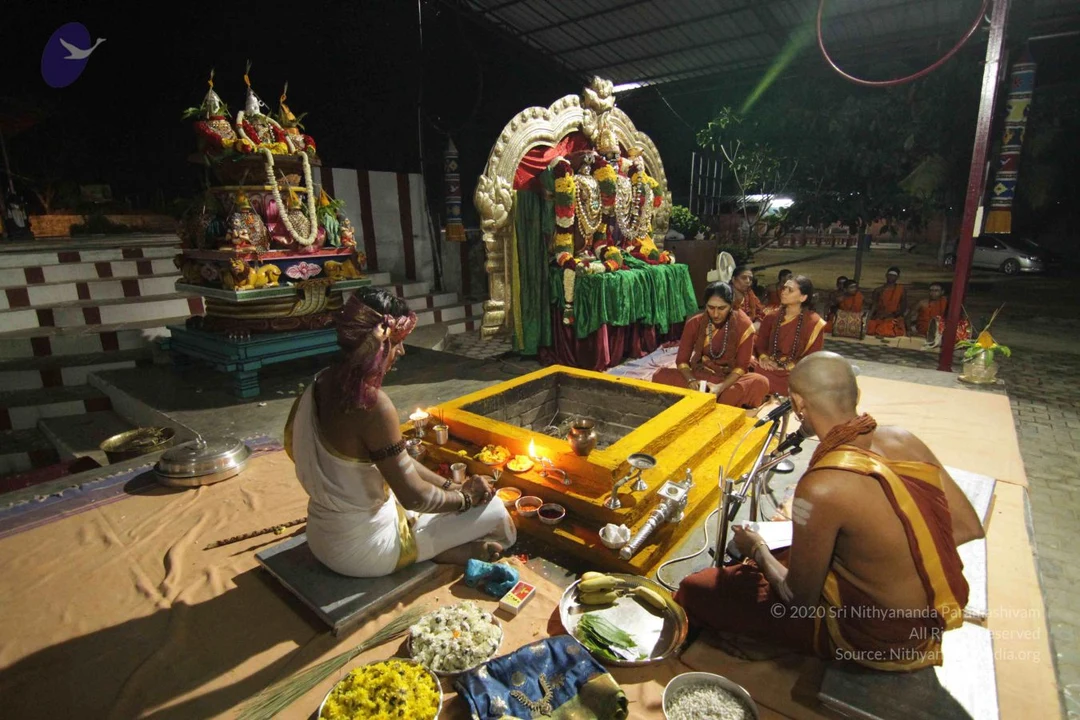
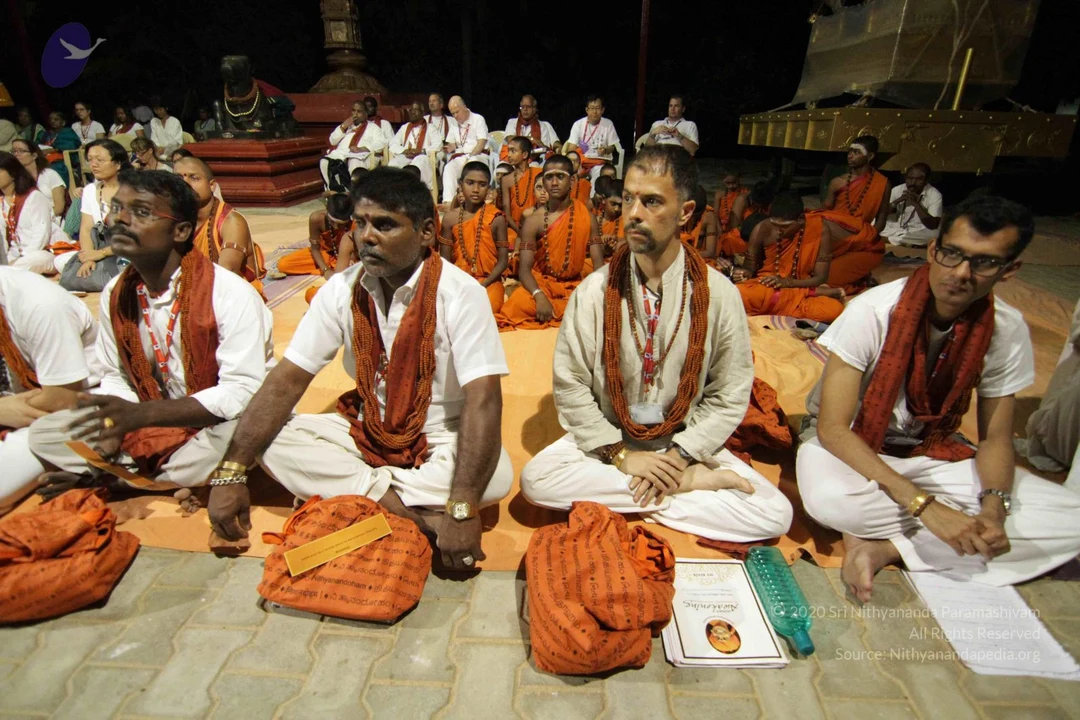
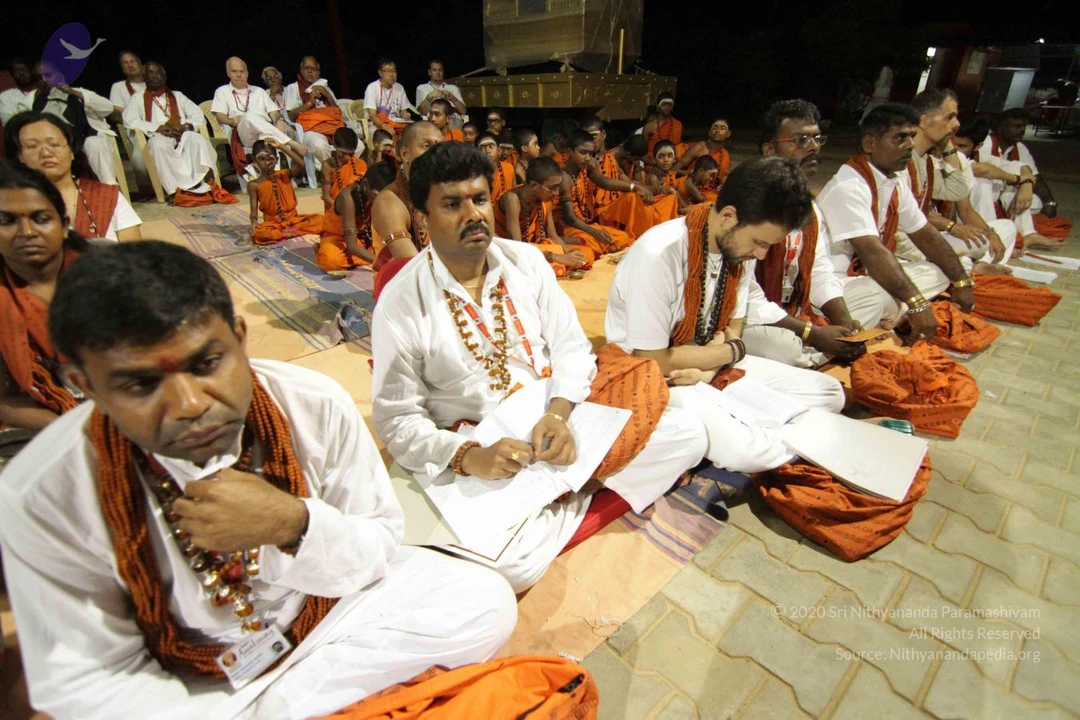
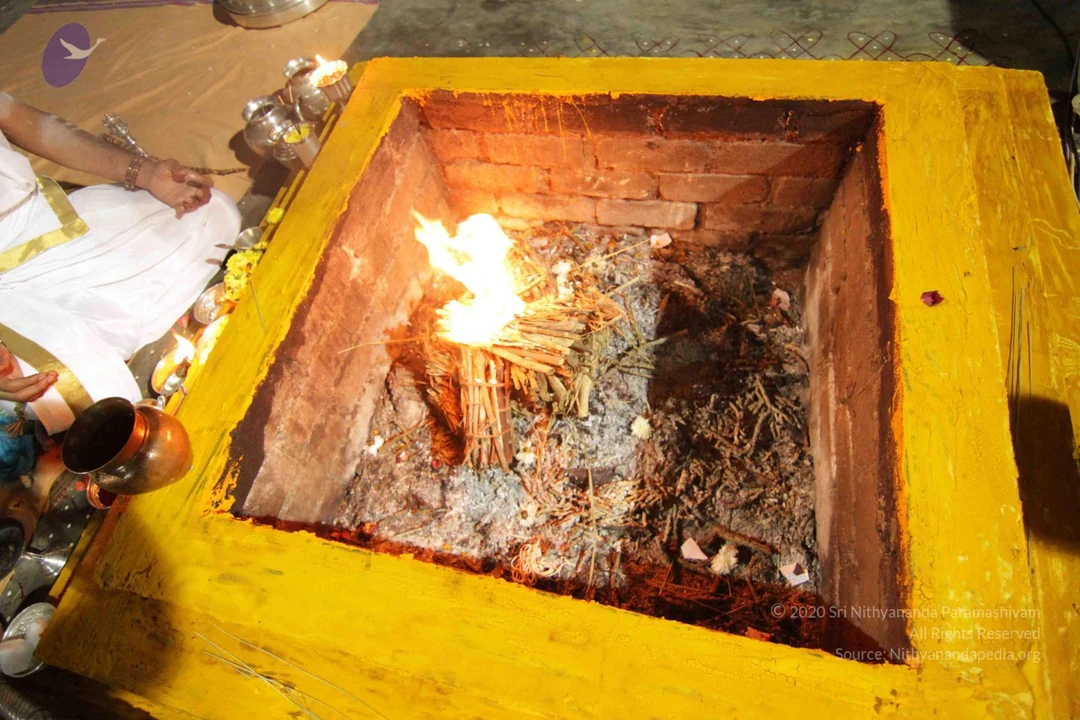
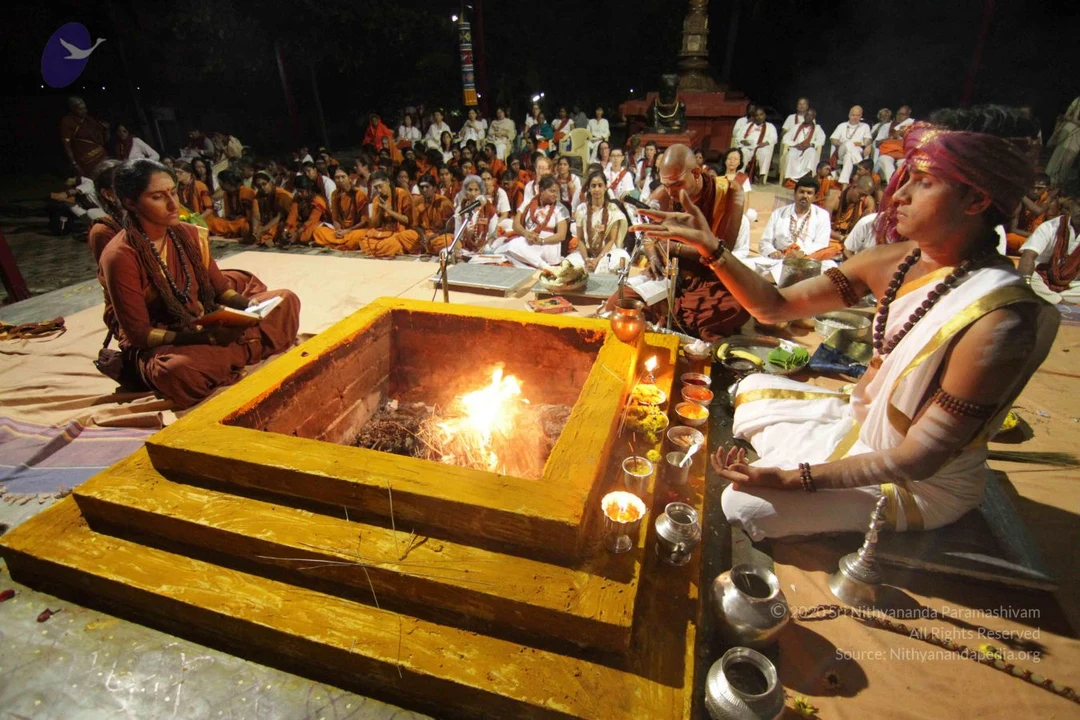
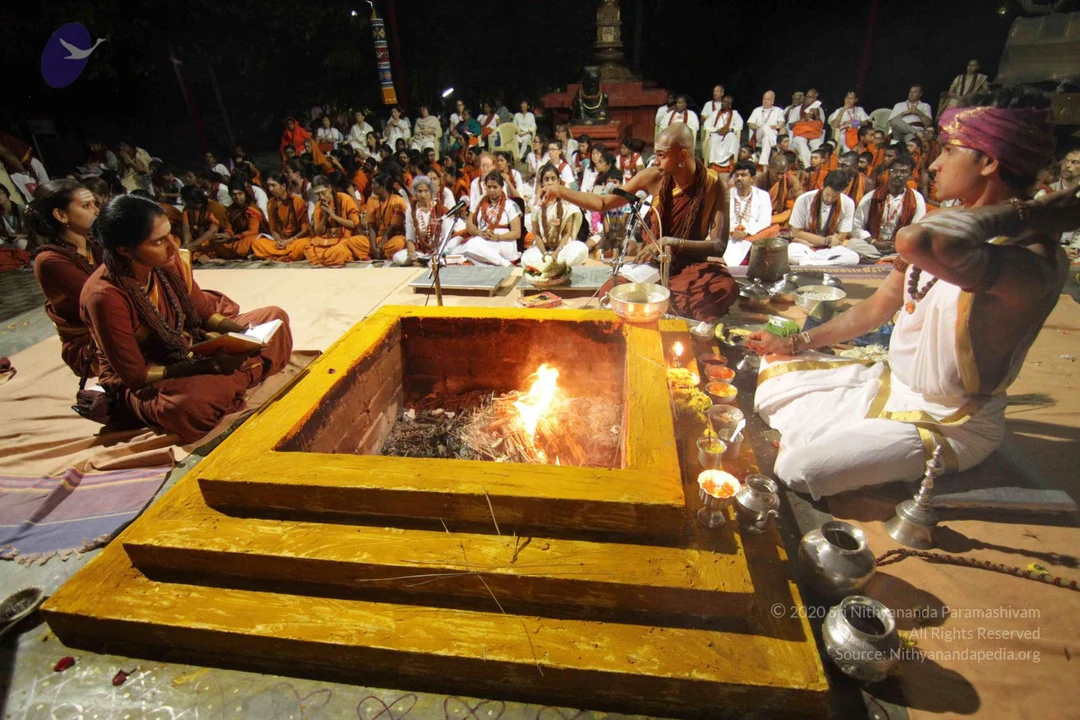
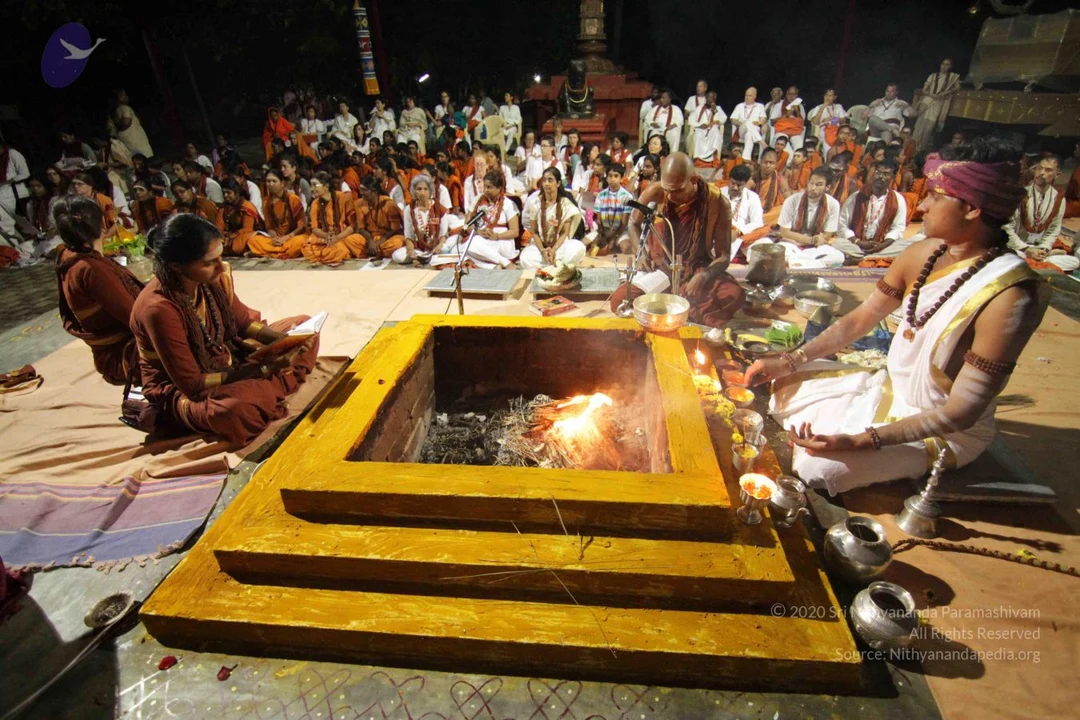
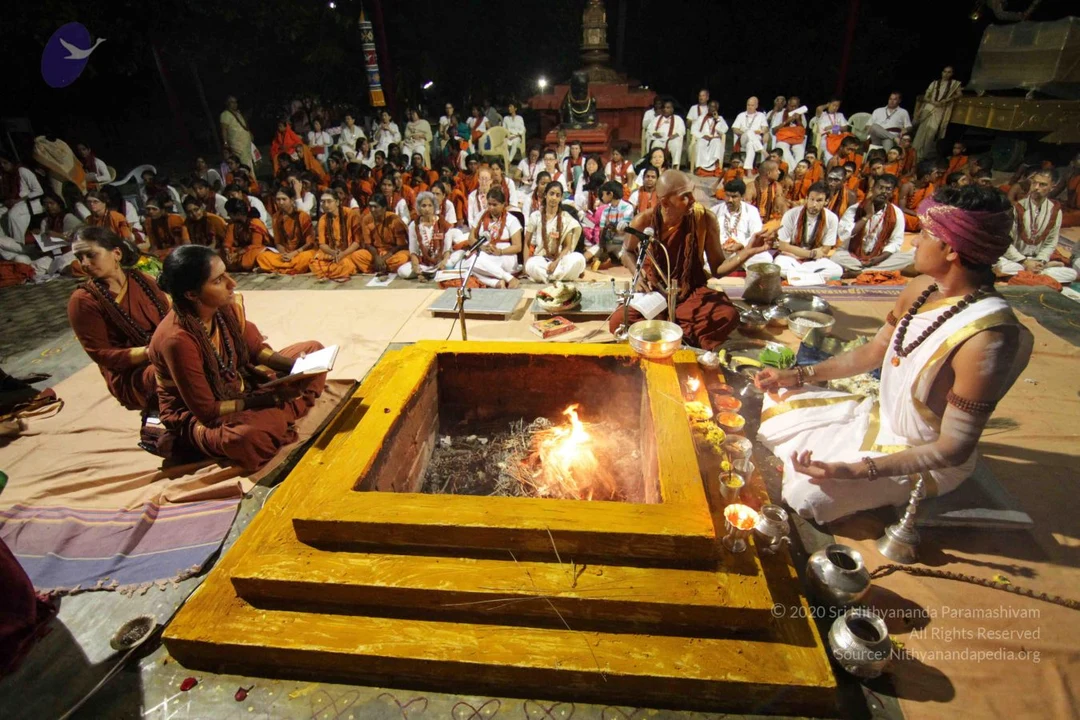
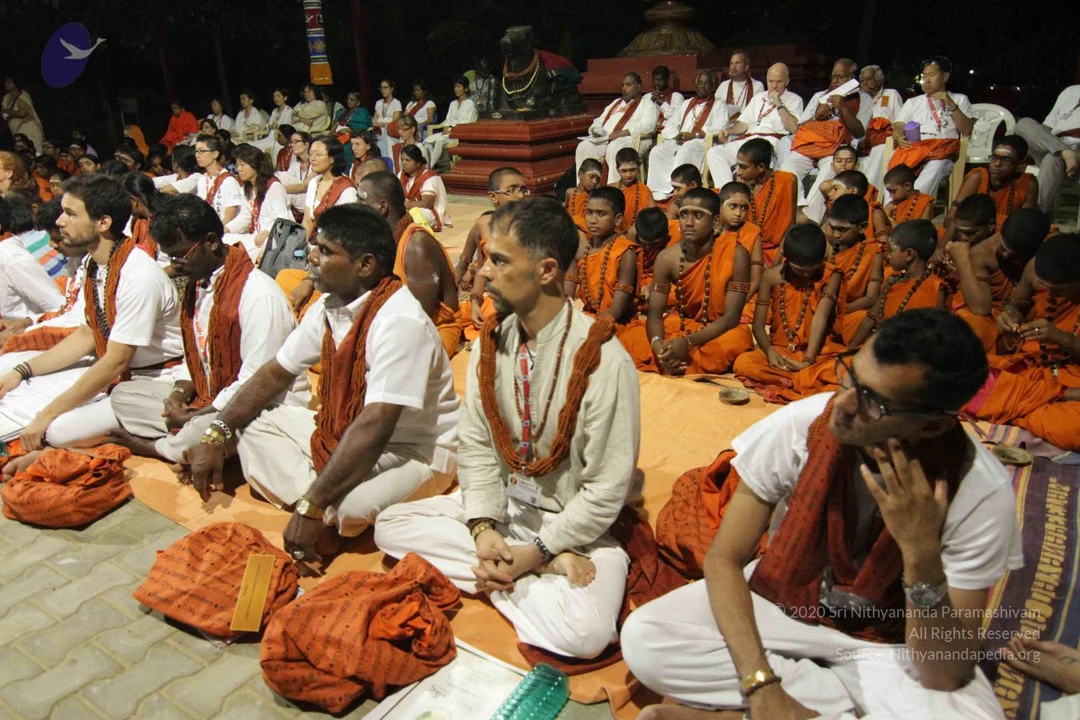
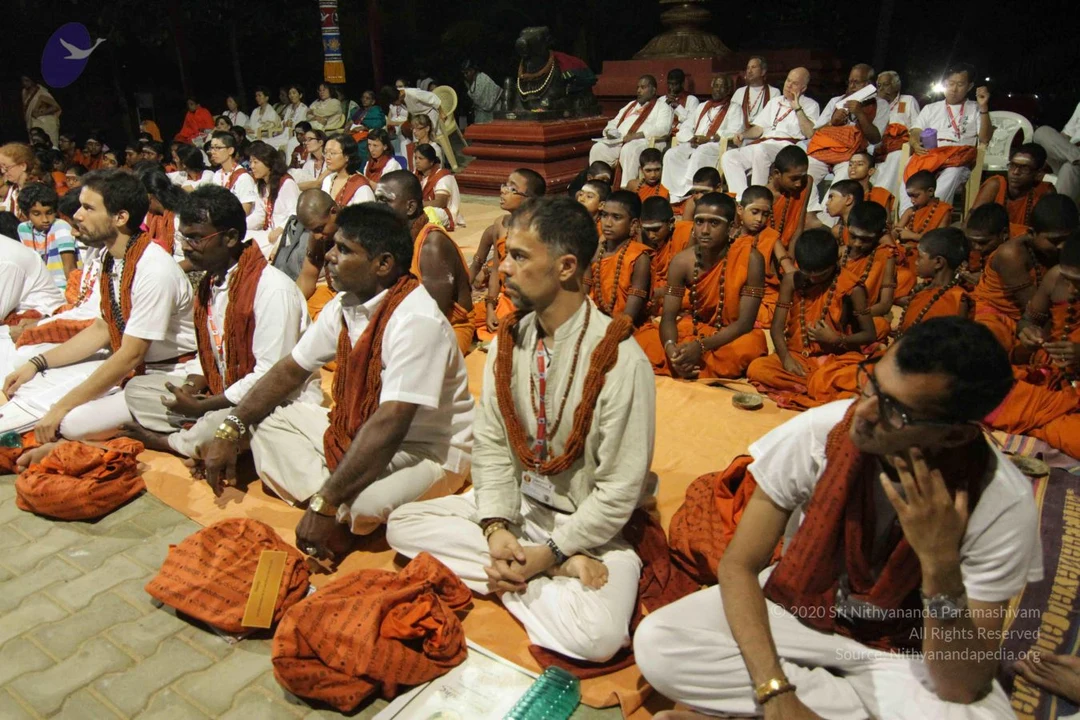
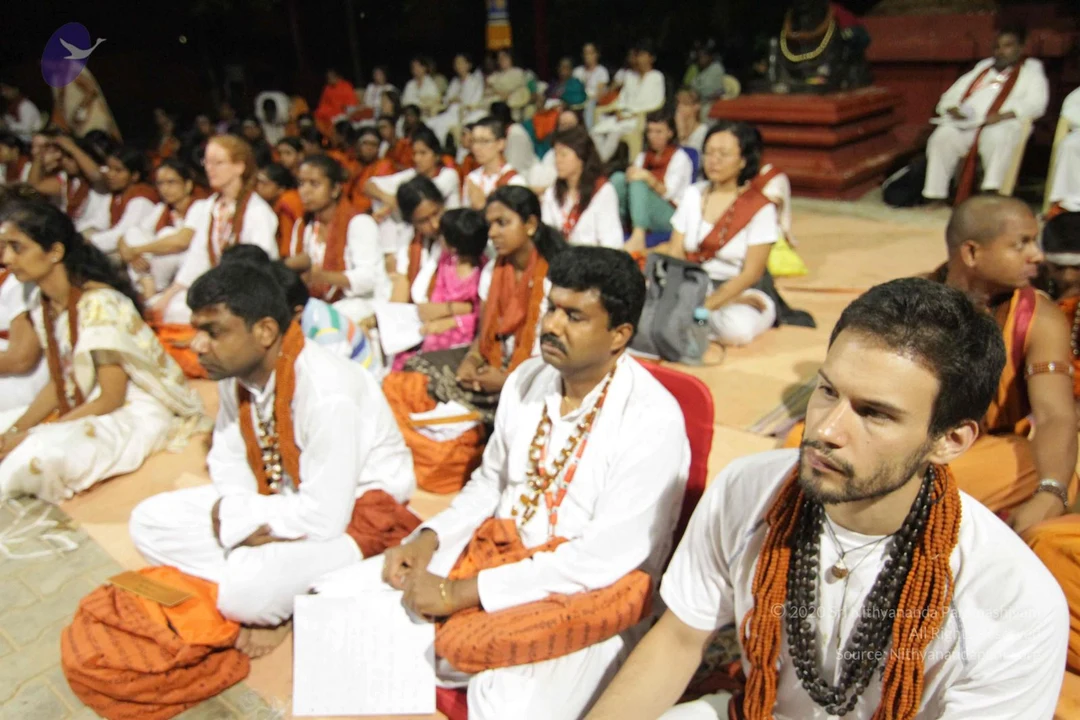
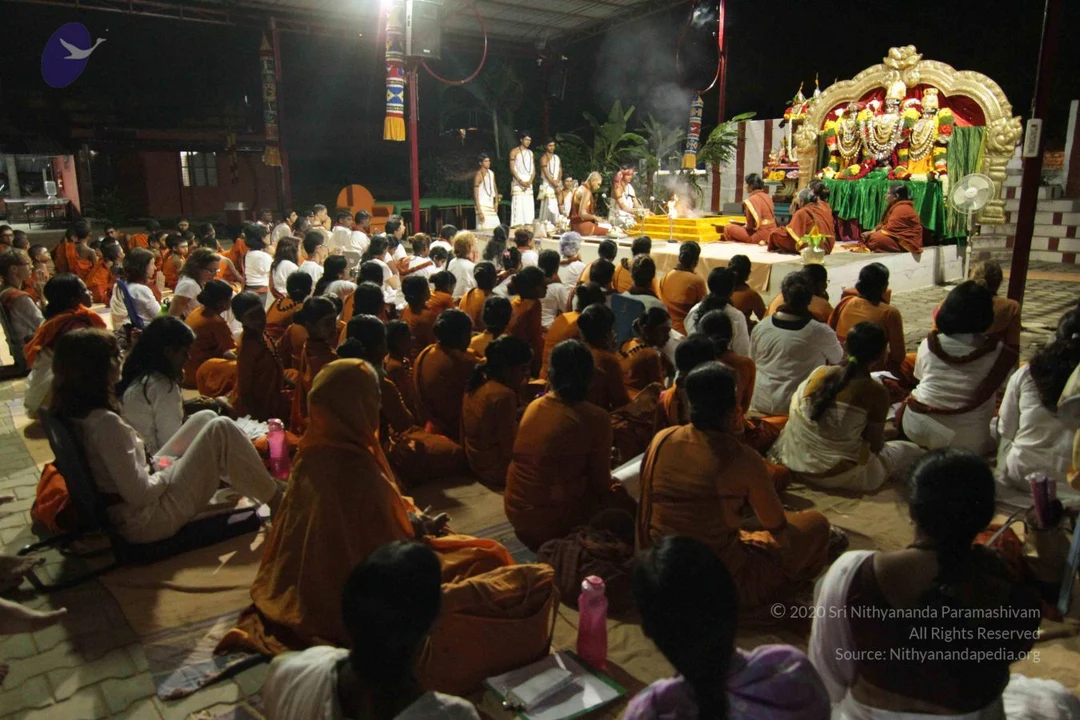
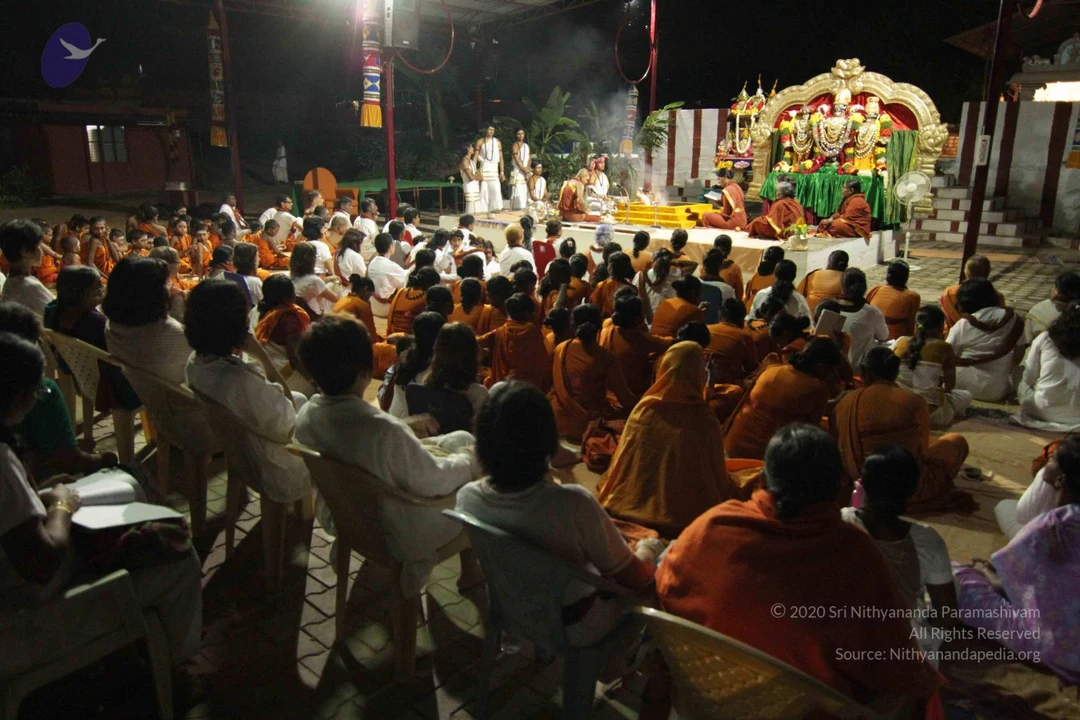
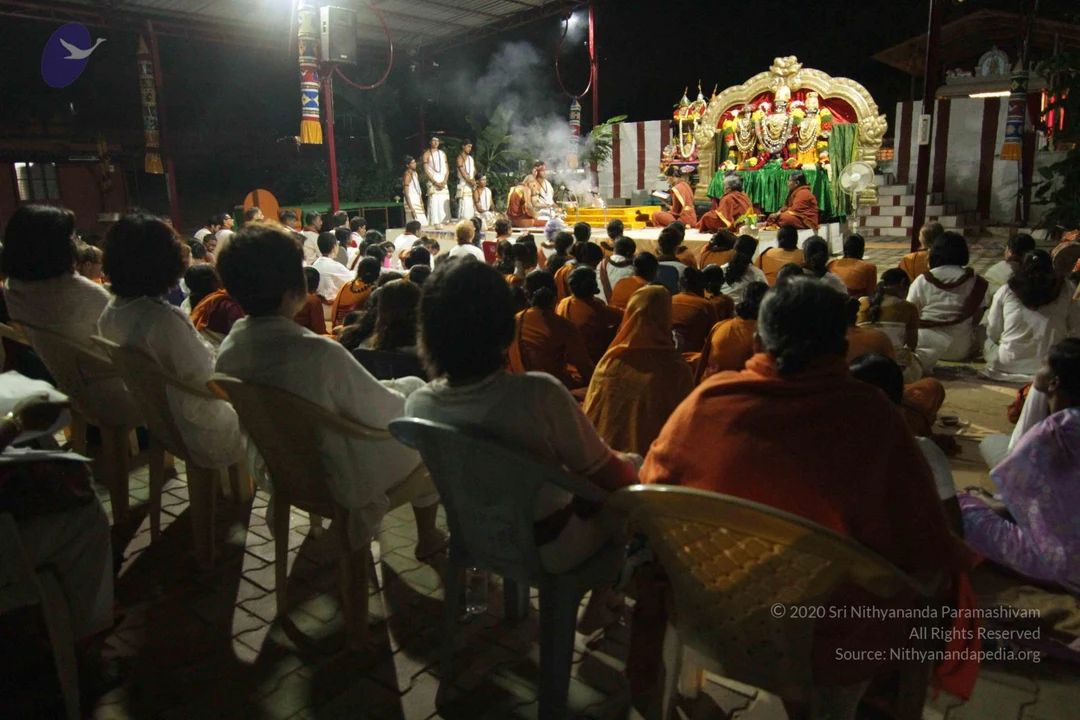
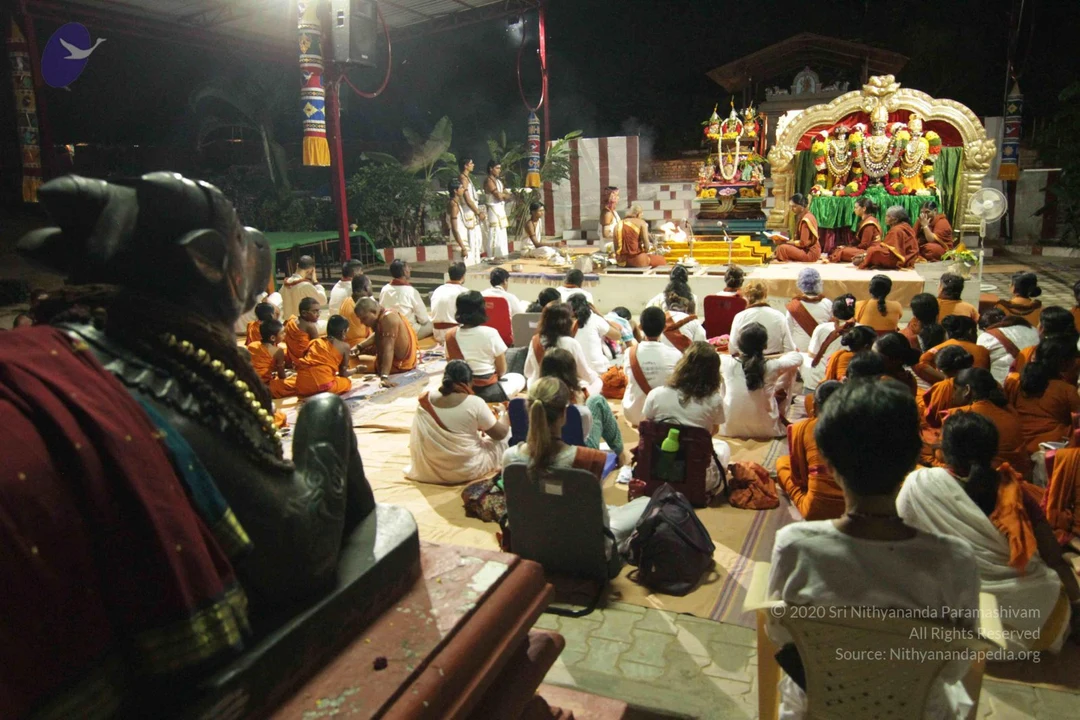
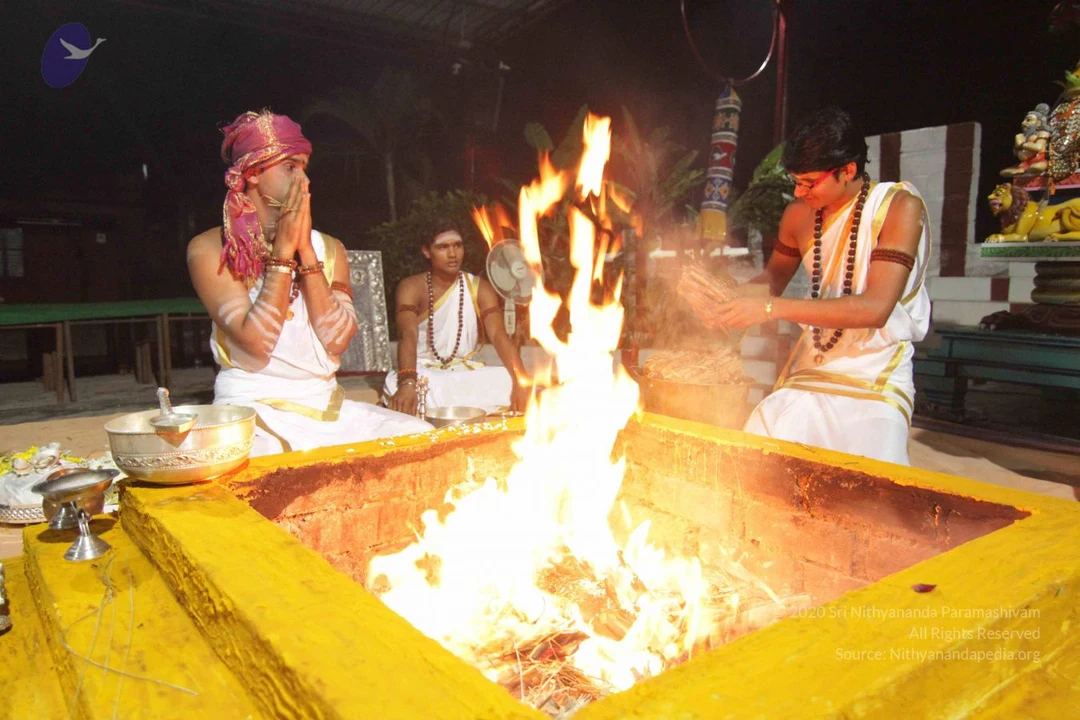
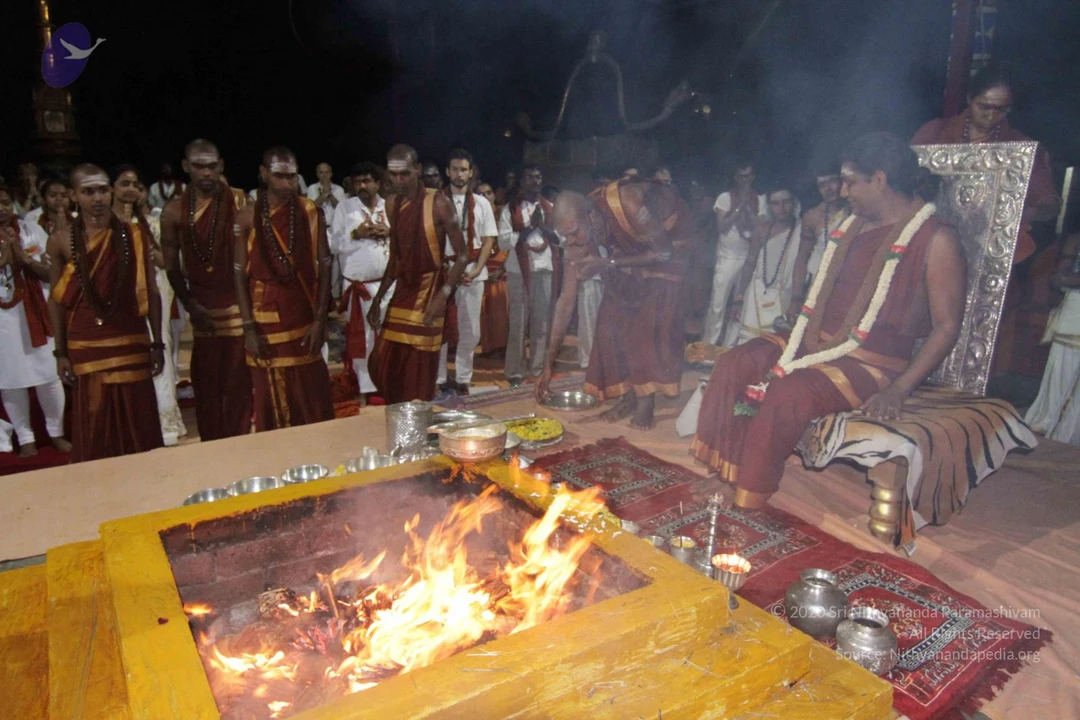
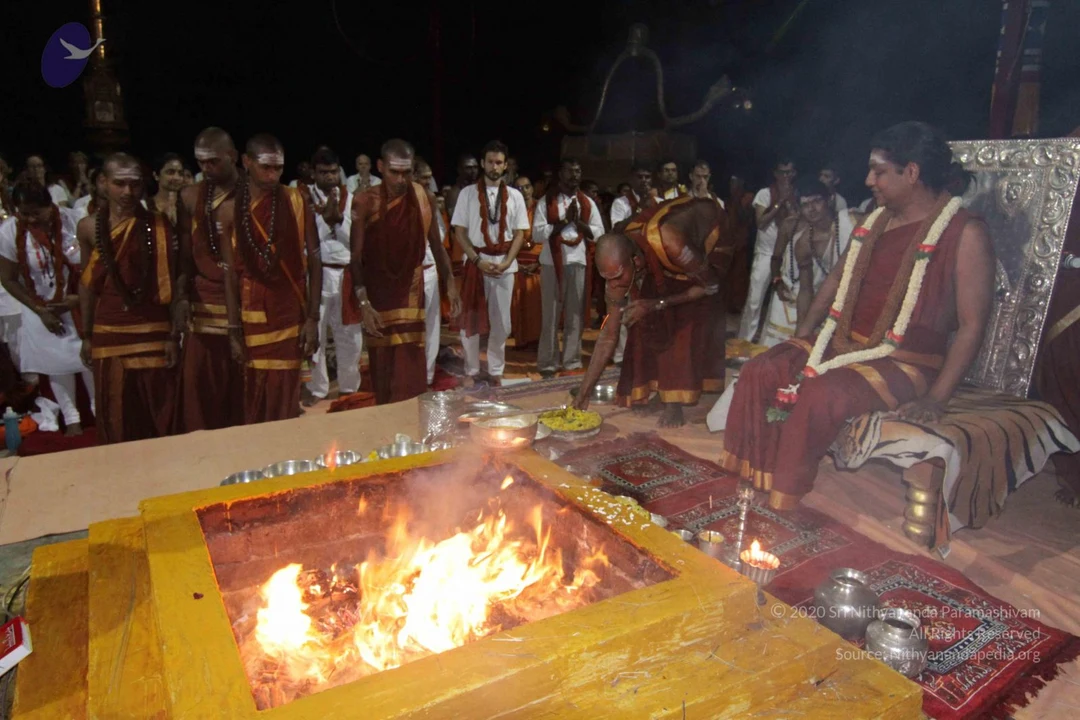
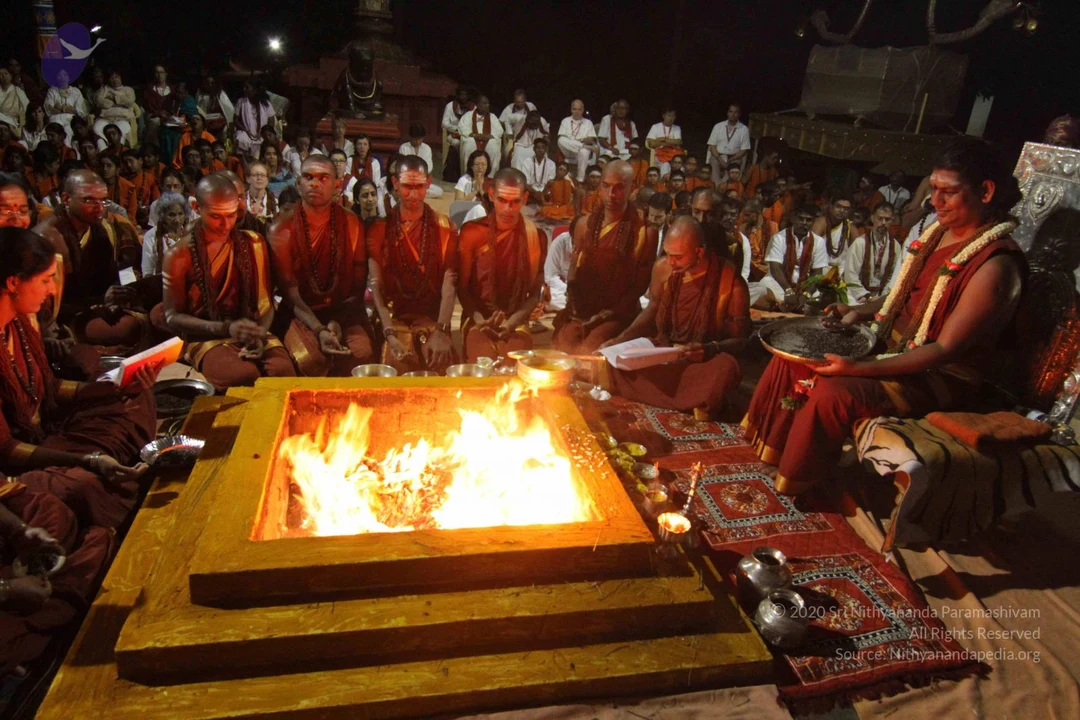
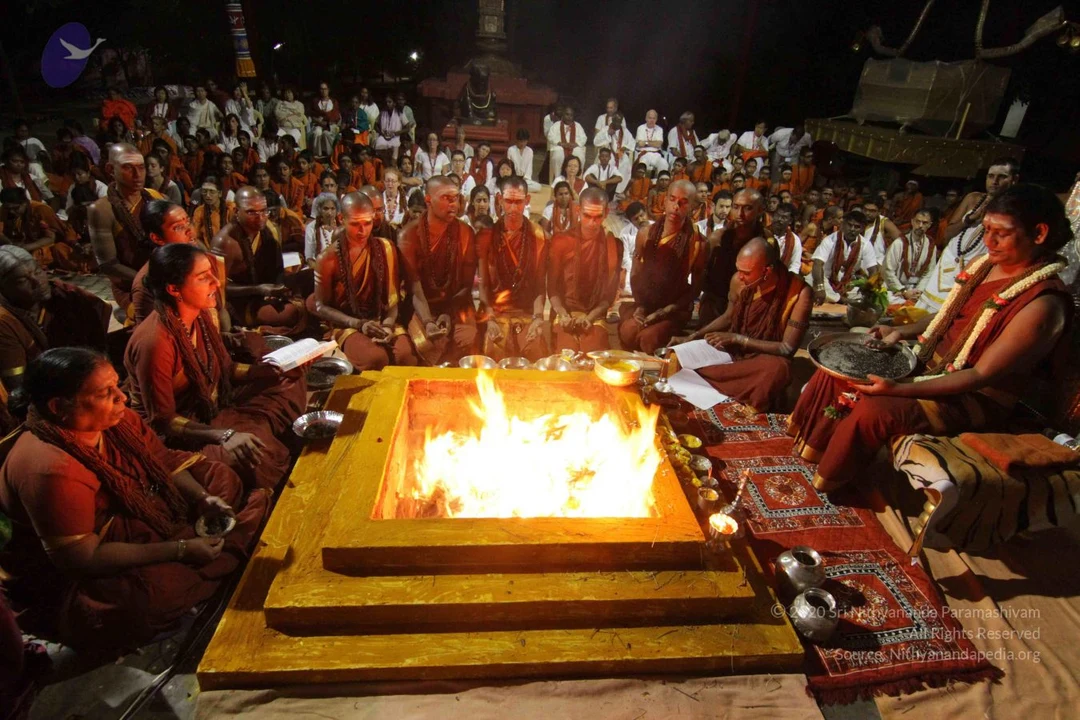
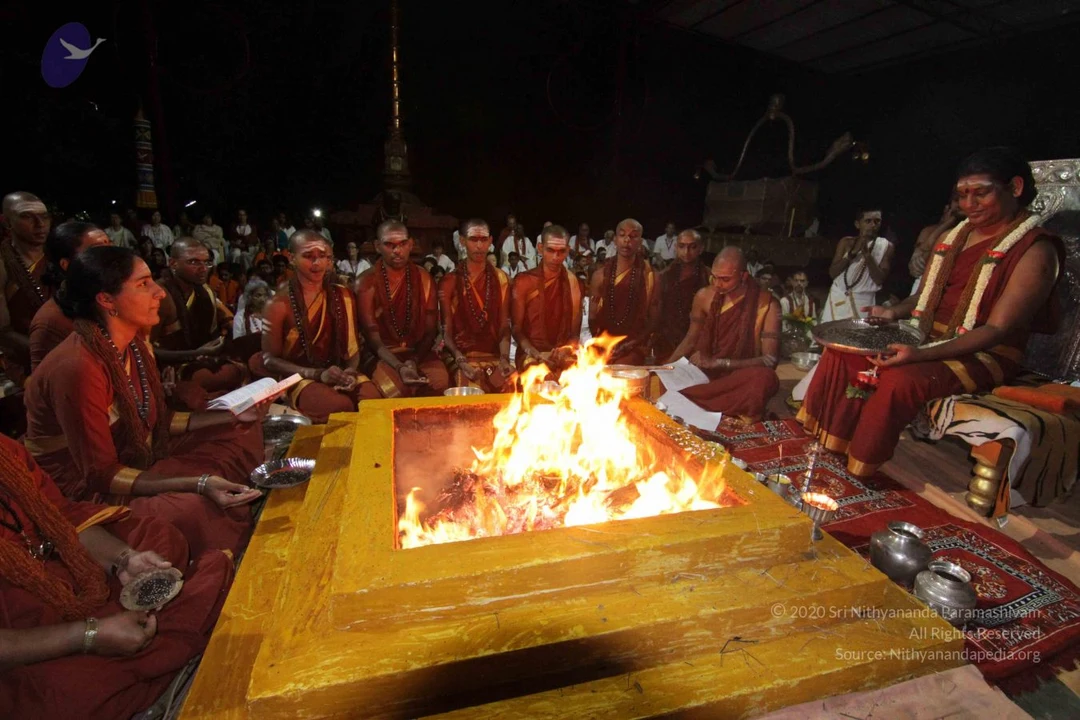
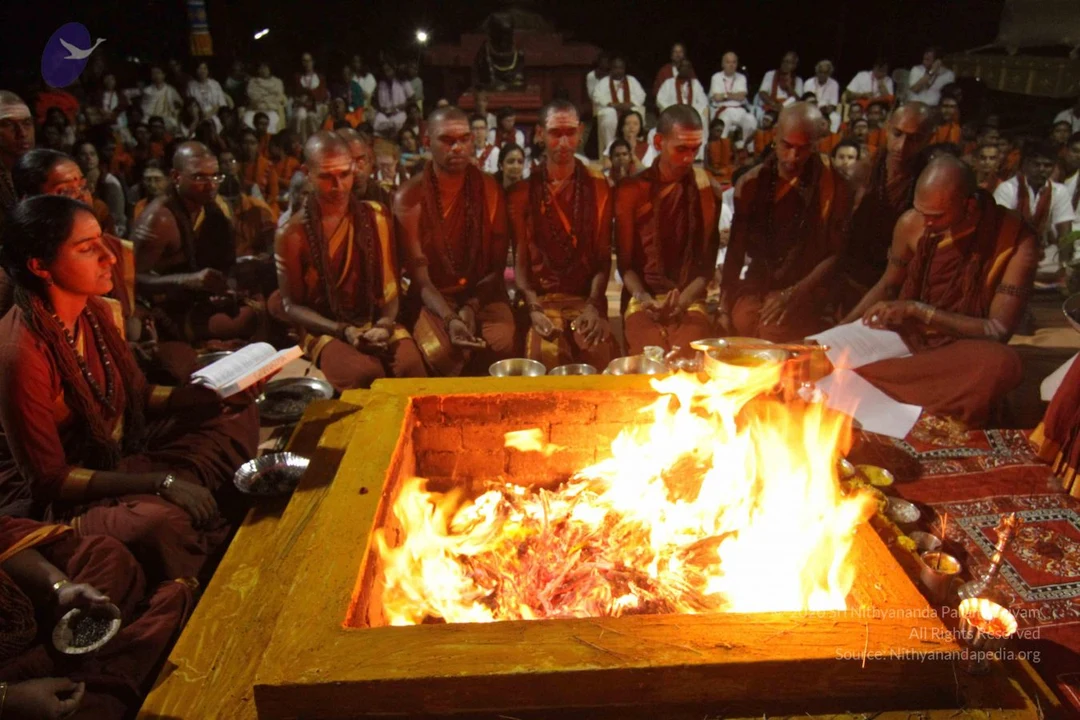
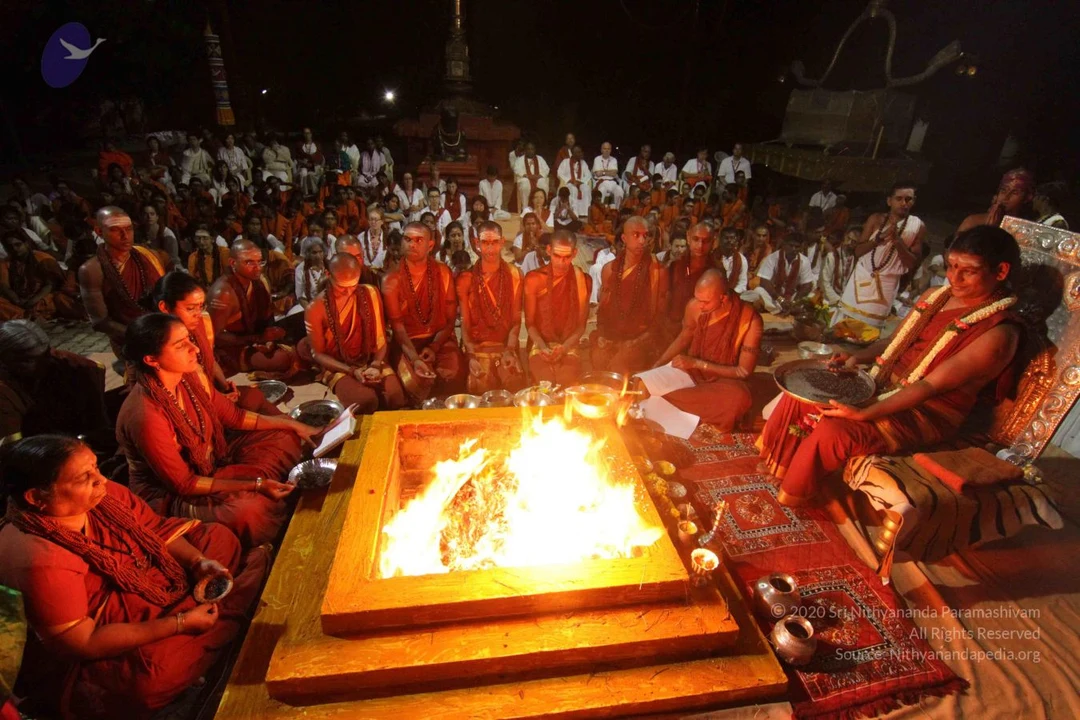
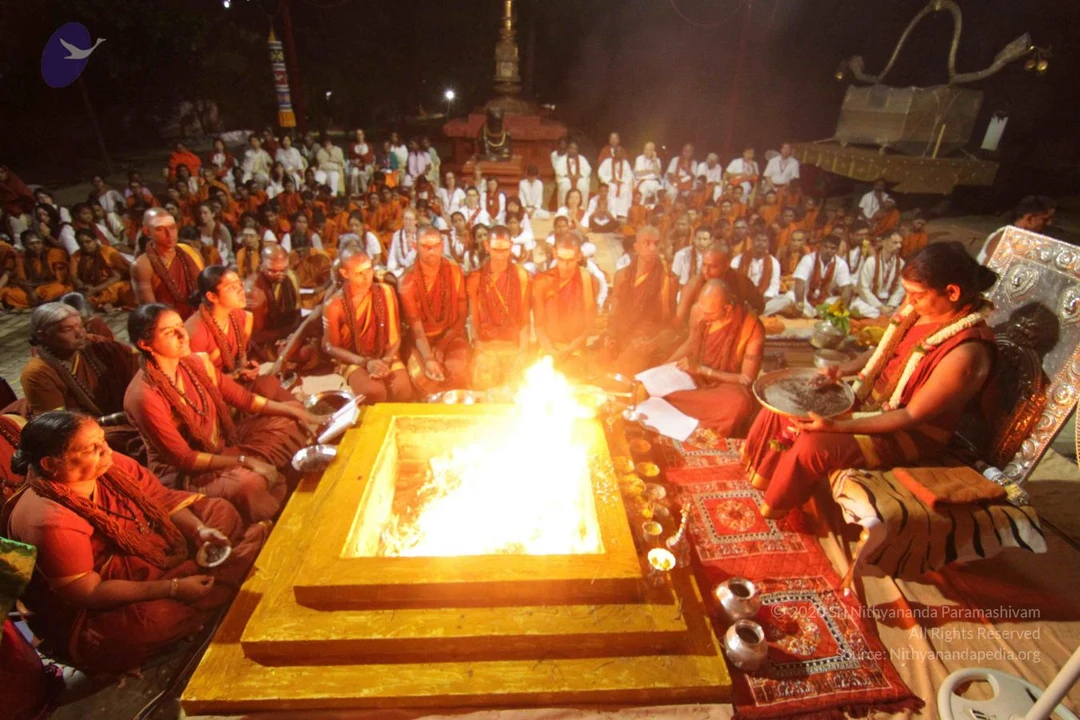
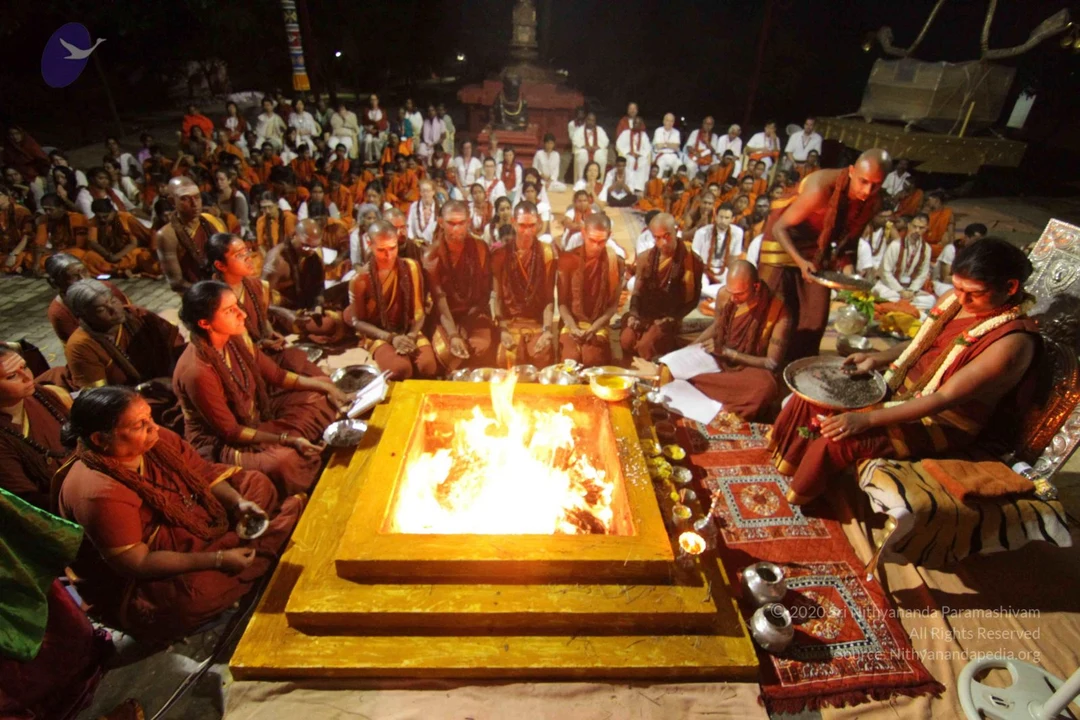
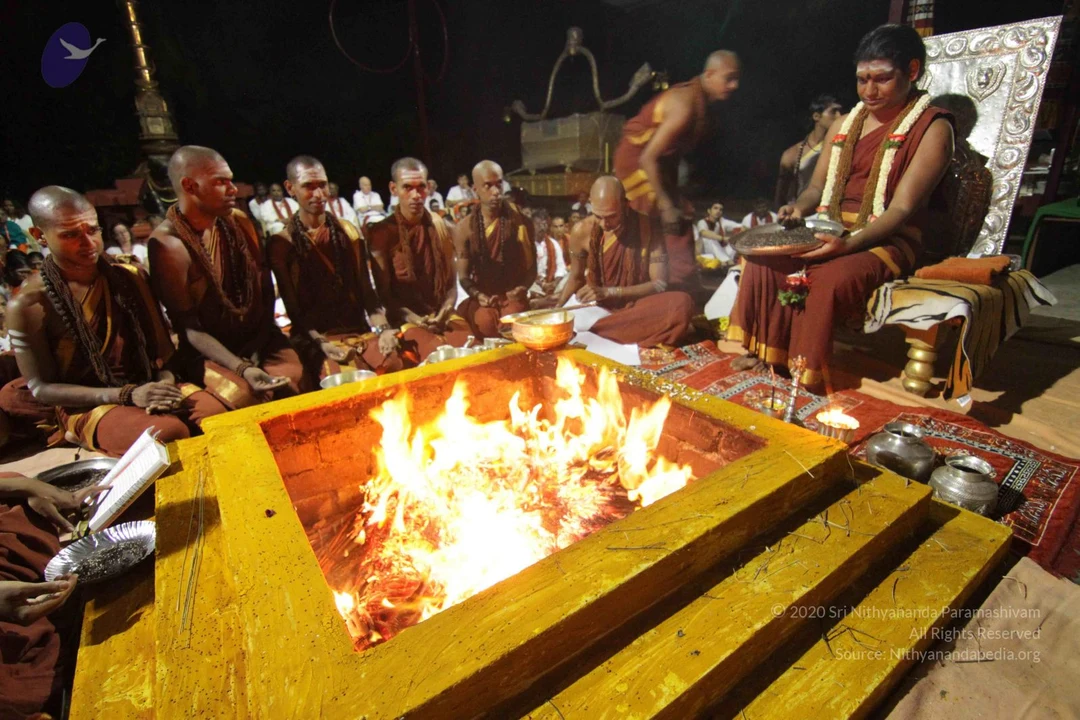
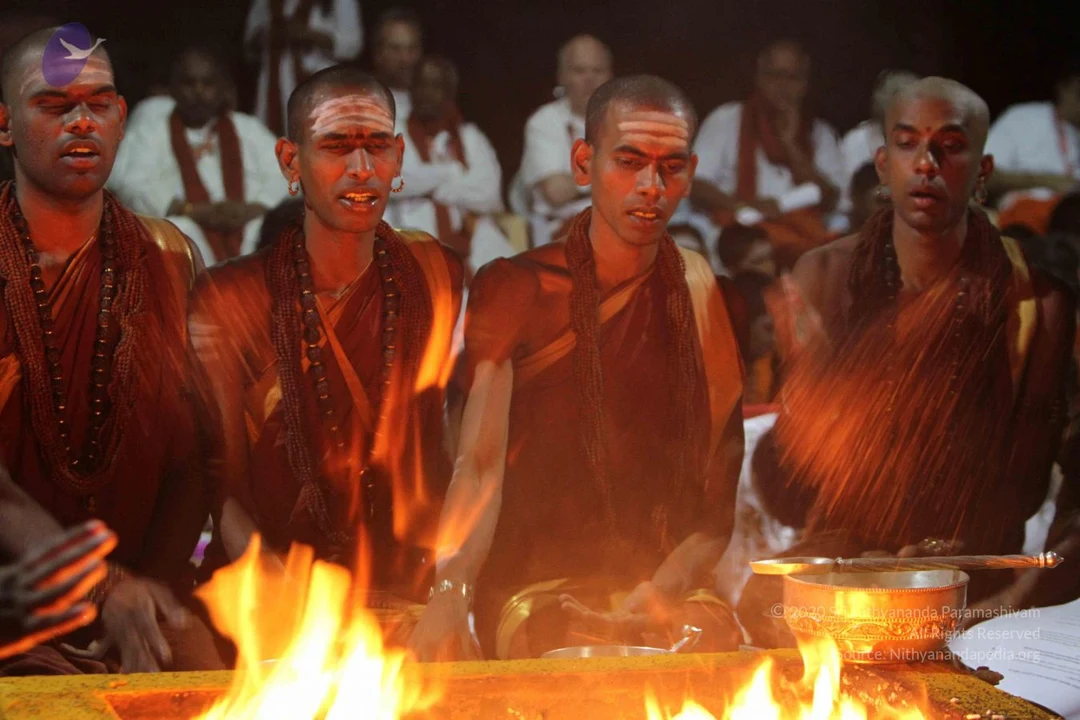
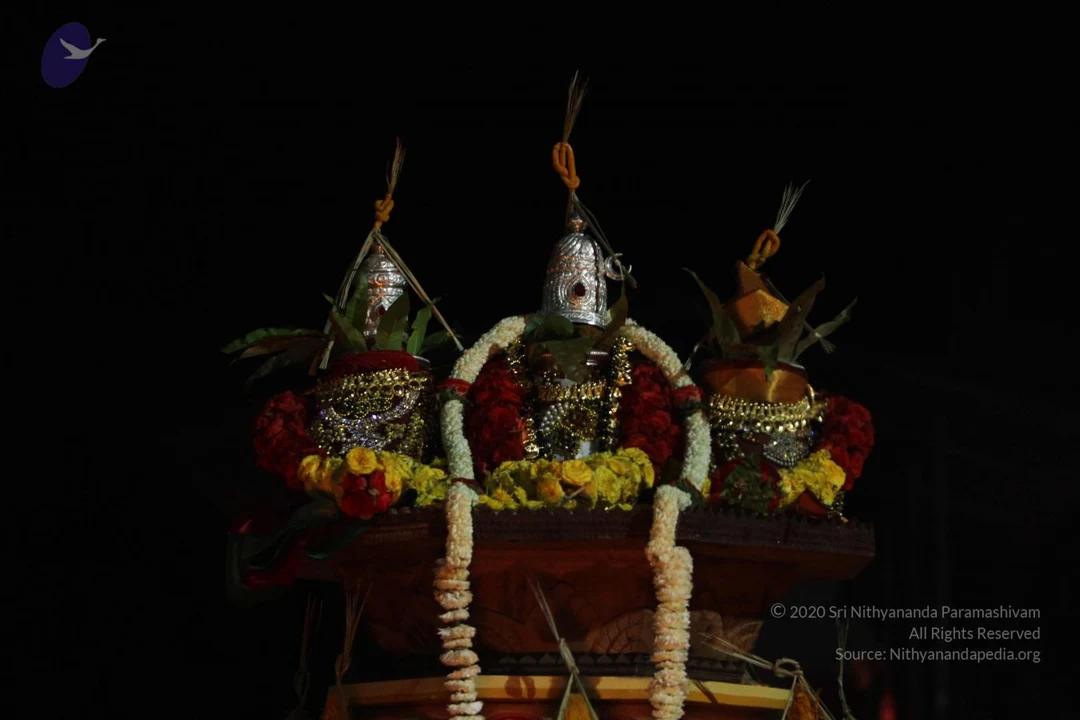
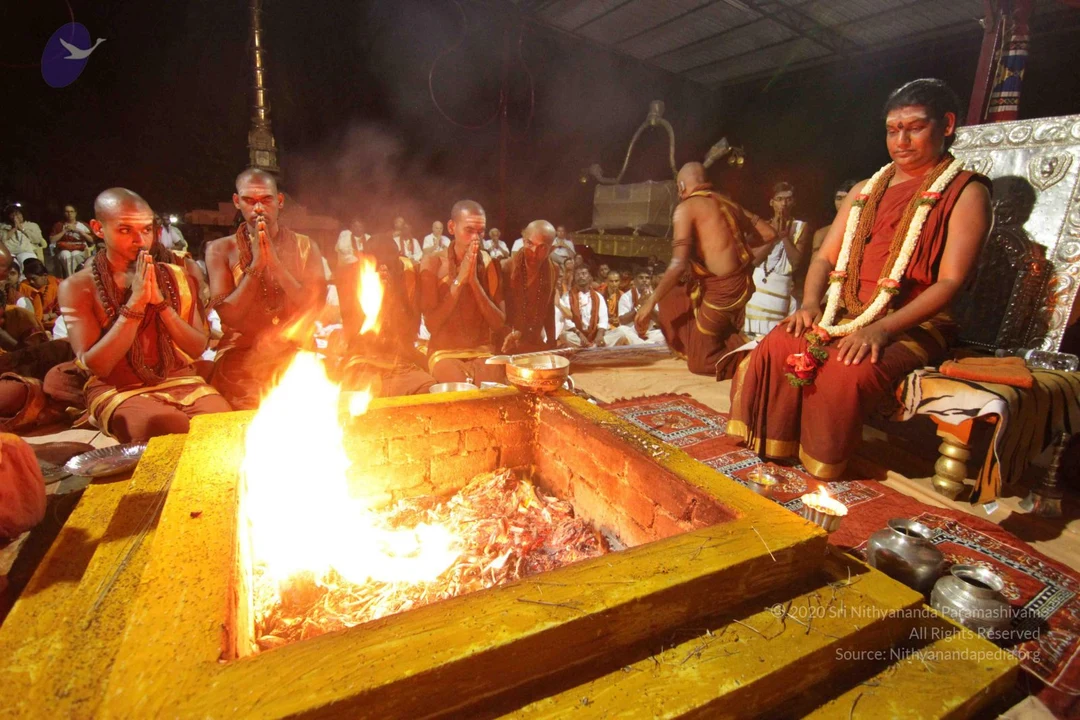
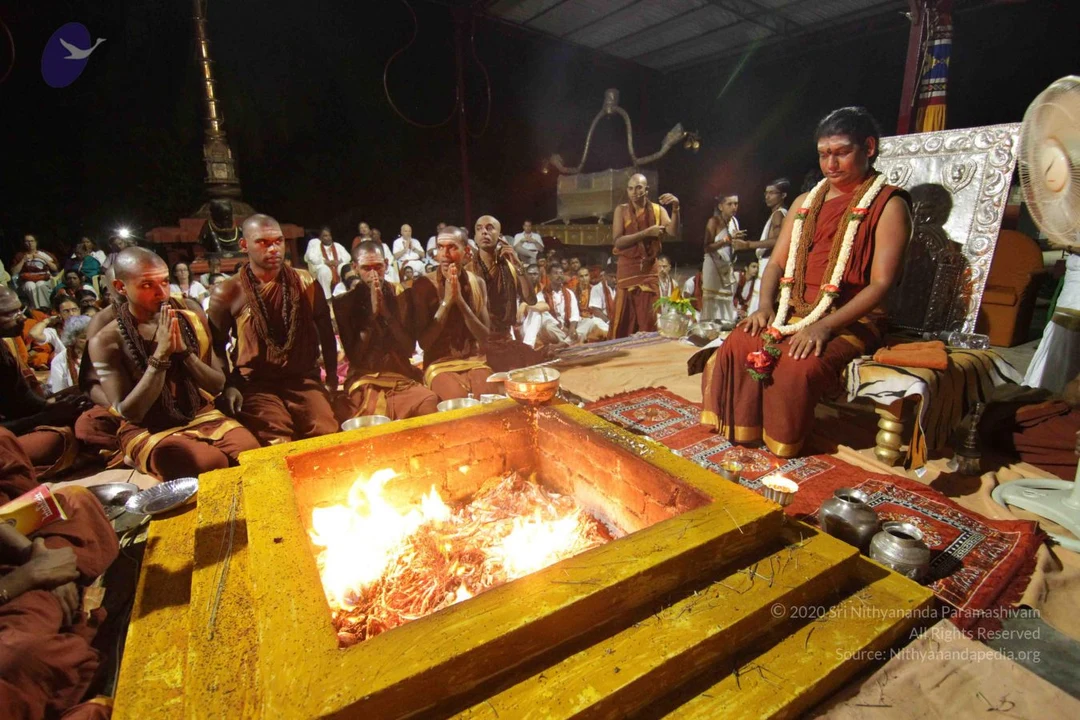
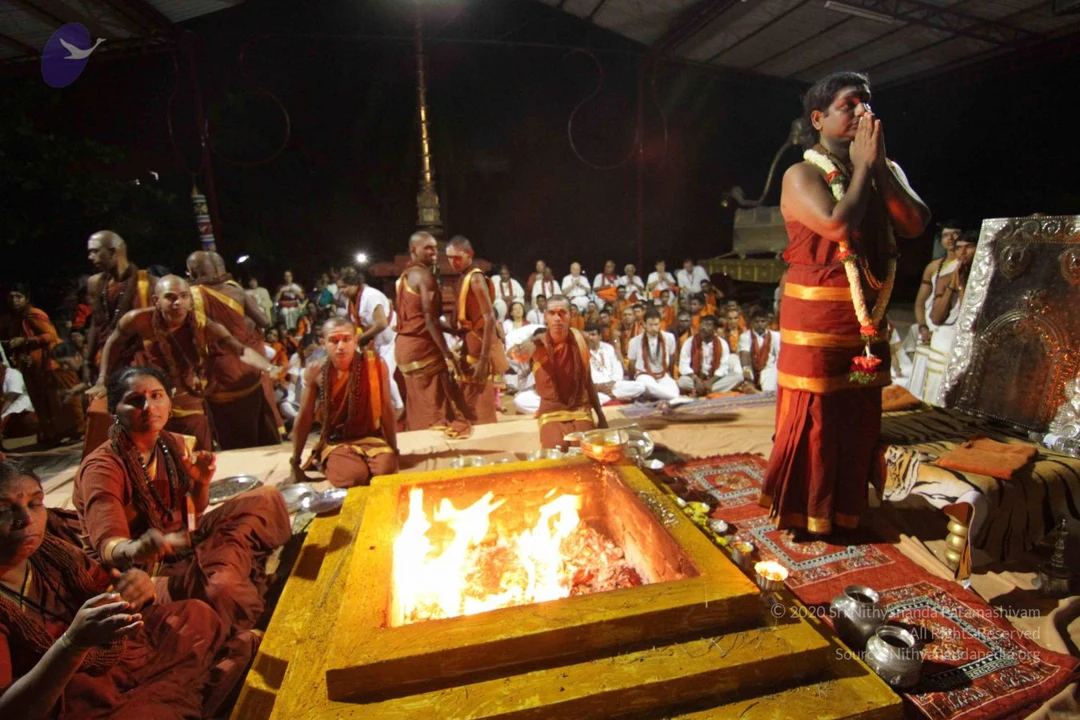
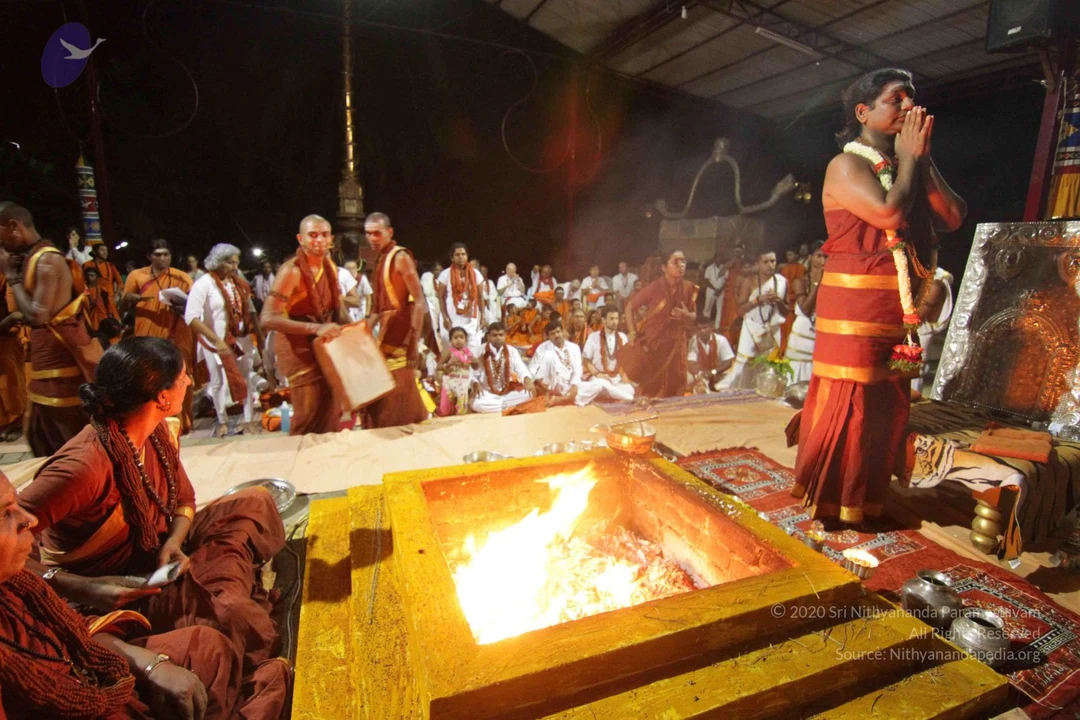
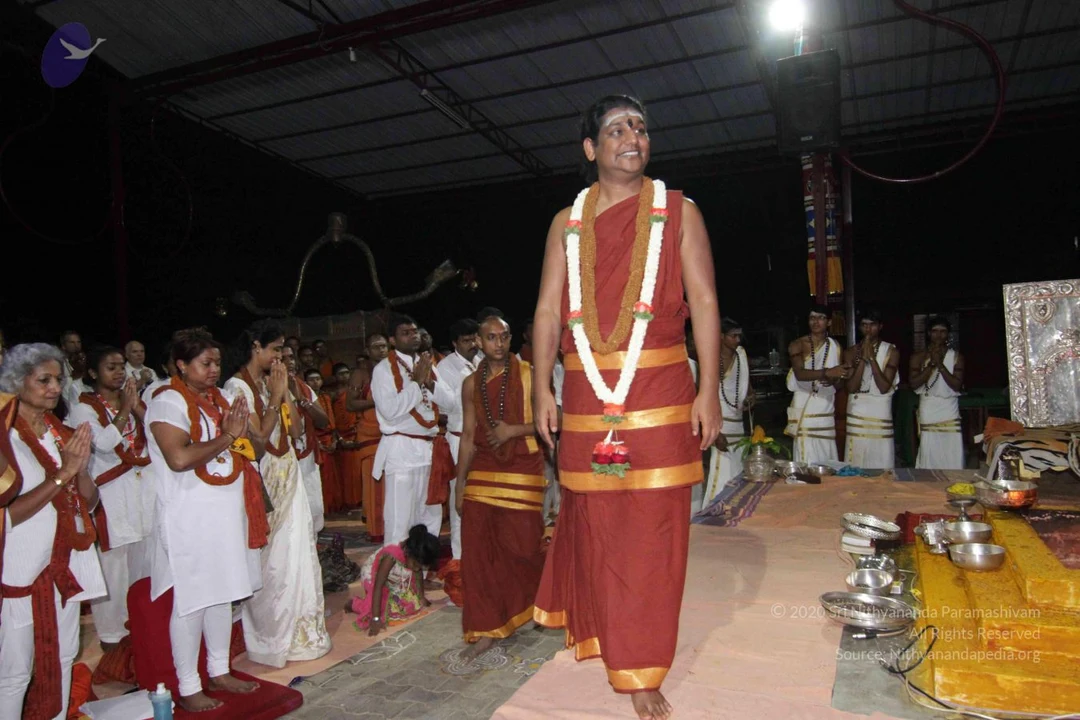
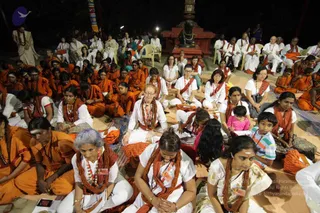
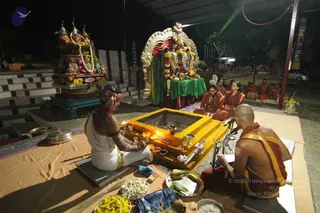
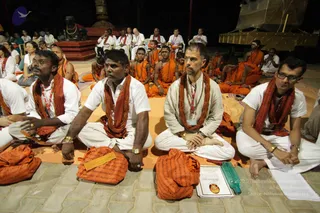
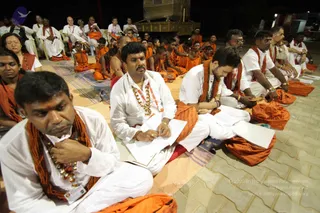
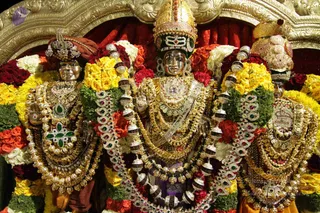
A night-time outdoor gathering of many seated devotees on a paved courtyard, most wearing orange or saffron garments with rudraksha-style red-orange bead necklaces, and others in white kurtas, saris or shirts with orange shawls. In the centre background, a dark statue of a seated figure with garlands rests on a red pedestal near a tall ornate pillar. Several elderly people sit on chairs at the upper right, and a child in pink and a boy in striped shirt are seated near the front. Lamplight illuminates the scene. A small round logo appears at the top left corner.Night photograph of an outdoor ritual at a shrine with a yellow-painted square fire pit containing a lit oil lamp and small offering bowls. A bare-chested priest in white dhoti with a yellow border sits cross-legged at the pit's left, hands near the flame, a brass plate of rice and fruit before him. Across from him, a seated man with a shaved head, orange-and-gold shawl and sandalwood-marked chest reads from a book on a stand with a microphone. Behind them, a decorated deity murti stands under a golden arch garlanded with marigolds and beads, with a green and red cloth backdrop. A second tiered shrine with garlands is at left, and several seated people in orange and red robes sit at right. Counting only visible people, about nine are present.Night outdoor satsang at an ashram with many devotees seated on orange and saffron cloths on a paved floor. Front row men wear white kurtas and dhotis with rust-red and orange shawls and rudraksha malas; several sit with hands folded or hands on knees. Behind them, saffron-robed sannyasis and younger devotees sit in rows, some with shaved heads. Further back, people in white sit on a raised platform near a dark stone deity murti with a garland and a brass lamp. A large gold-coloured ratha or palanquin stands at the upper right. Orange cloth bags and a water bottle lie in the foreground.Night-time outdoor satsang with devotees seated on mats and a paved courtyard. In the foreground, a man in white with a red tilak and orange-red beaded rudraksha-style mala sits at left, while a man in white kurta with orange-red beaded necklaces and a red-orange shawl holds papers and writes, beside a man in white with an orange shawl reading notes. Behind them rows of seated men in white and orange-saffron shawls and young boys in orange robes listen attentively. A golden palanquin or ratha-like structure stands in the background.Three gilded deity murtis stand together in a decorated shrine, heavily adorned with gold jewellery, layered necklaces, and jewelled ornaments. The central figure wears a tall gold crown with a red gem and a Shaiva tripundra marking on the forehead, with hands raised in blessing. Flanking figures wear ornate crowns and bejewelled chests. The murtis are garlanded with yellow and orange roses, white flowers, green leaves, and rudraksha-like silver-capped beads, set against a gold-framed backdrop and red drapery. No living people are visible.Three gilded deity murti stand before a gold ornate arch with a red drape behind them, decorated with heavy gold jewellery, garlands of yellow roses, red roses and green foliage, and white flowers. The central figure wears a tall gold crown with jewelled band and a white-and-black urdhva tilaka, with a sacred thread and rudraksha-style beaded garlands. The figures on each side wear jewelled crowns and ornate gold necklaces, one with green stones. No physical people are visible.
FB-photo-of-the-day

3 photosSource gallery
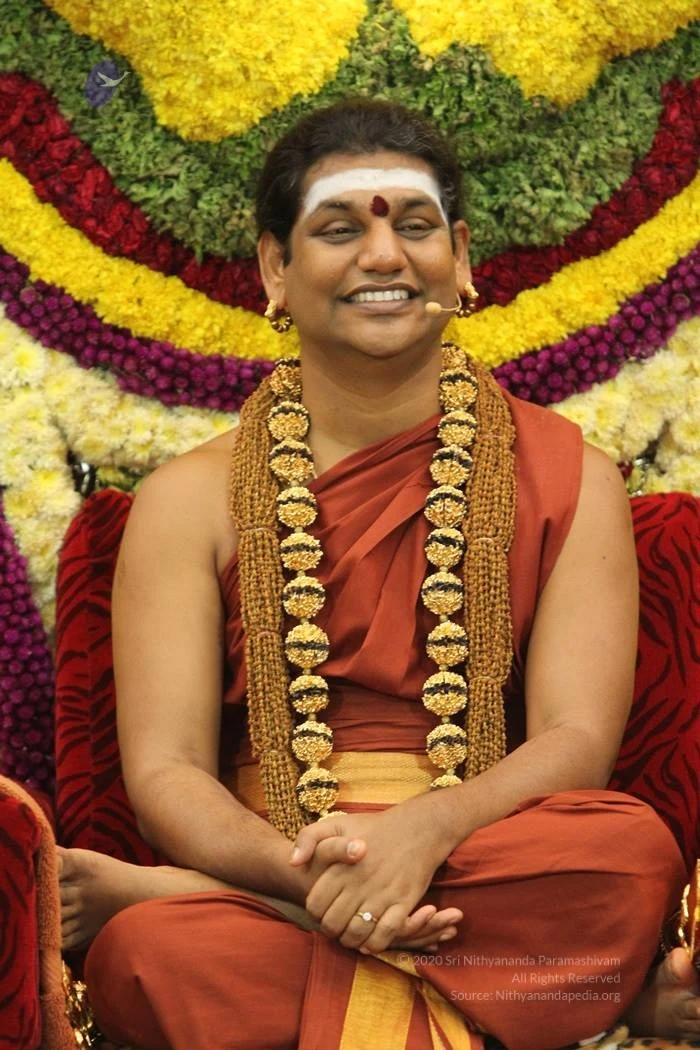
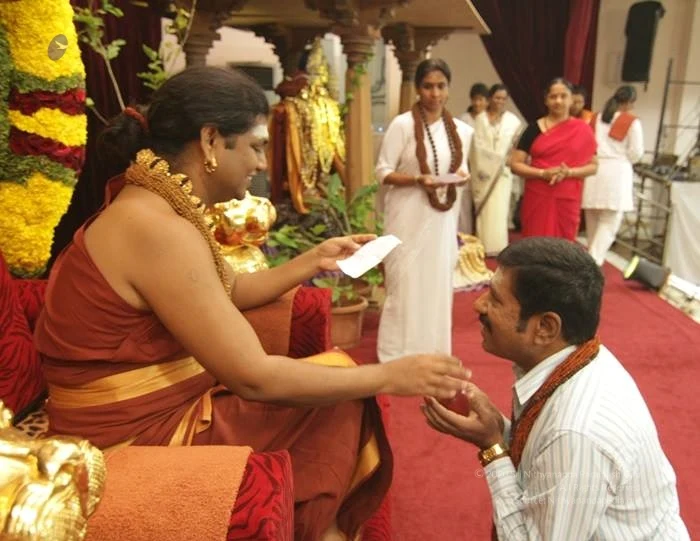
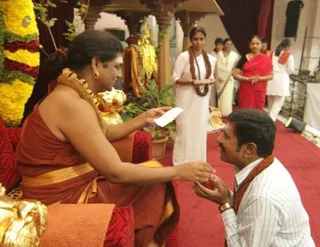
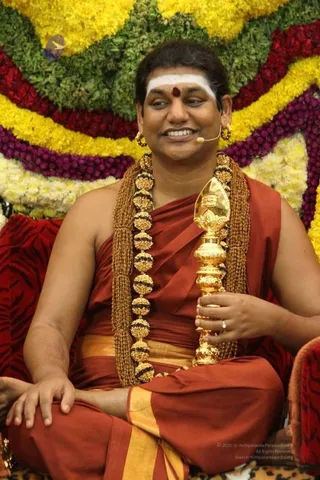
A seated man in saffron-orange robes smiles broadly while sitting cross-legged on a red velvet seat with a dark tiger-stripe pattern. He wears a large gold-toned rudraksha mala with dark beads, a white vibhuti line and a red kumkum dot on his forehead, a microphone clipped at his ear, and gold earrings. His hands are clasped in his lap, and he wears a ring on one finger. Behind him is a dense arrangement of flowers in yellow, red, purple and white, with green foliage. The image is a photograph of a person, a single individual shown in a ceremonial seated setting.A seated figure in long, swept-back hair, a saffron-orange robe with gold border, and an ornate gold necklace sits on a red-cushioned throne-like chair, extending a folded white card to a kneeling man in a white striped shirt with a light garland. Behind them, women in white and red saris stand on a red carpet near a golden deity murti, potted plants, and yellow and red flower garlands. The seated figure's cues are consistent with a person presence, though the appearance is only partly visible.A smiling man sits cross-legged on a red tiger-striped seat in front of a dense backdrop of yellow, red, purple and white flower garlands. He wears a rust-red and gold-bordered dhoti and shawl, a long brown rudraksha mala with gold beads, gold earrings and a white forehead band with a red dot. He holds a tall gold ceremonial staff with a kalasha-like top, and a small headset microphone is clipped near his mouth. a person: the appearance cues are the saffron-red ascetic clothing, rudraksha mala with gold beads and ceremonial gold staff, seated as a teacher at a satsang.

01-PADA-PUJA

1 photoSource gallery
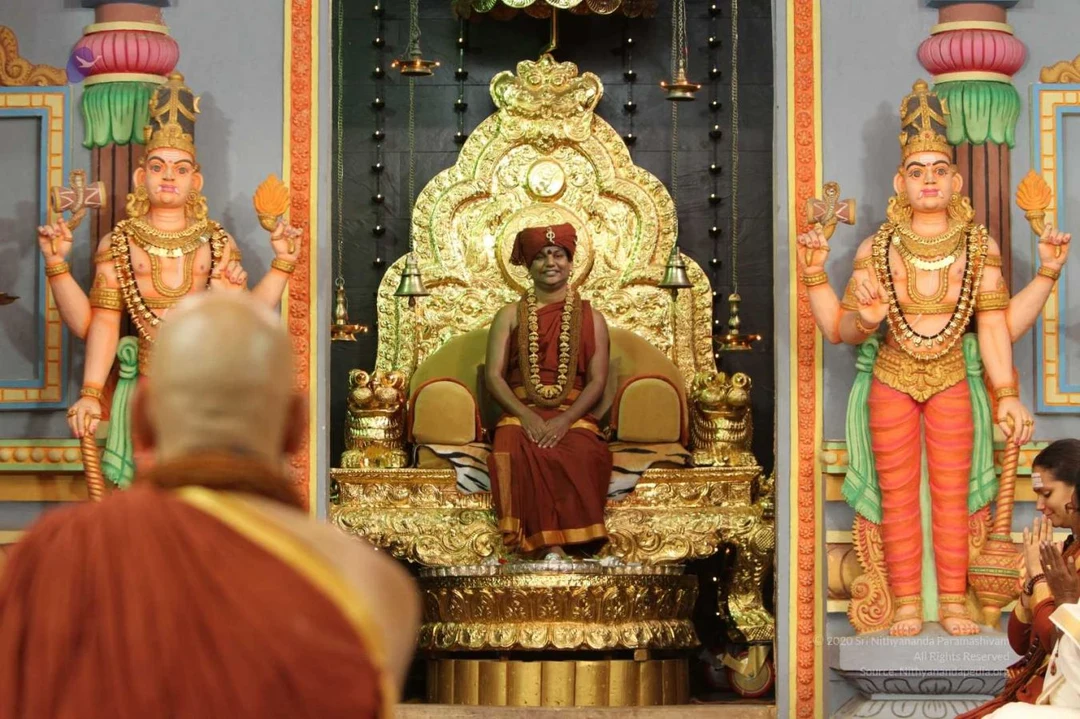
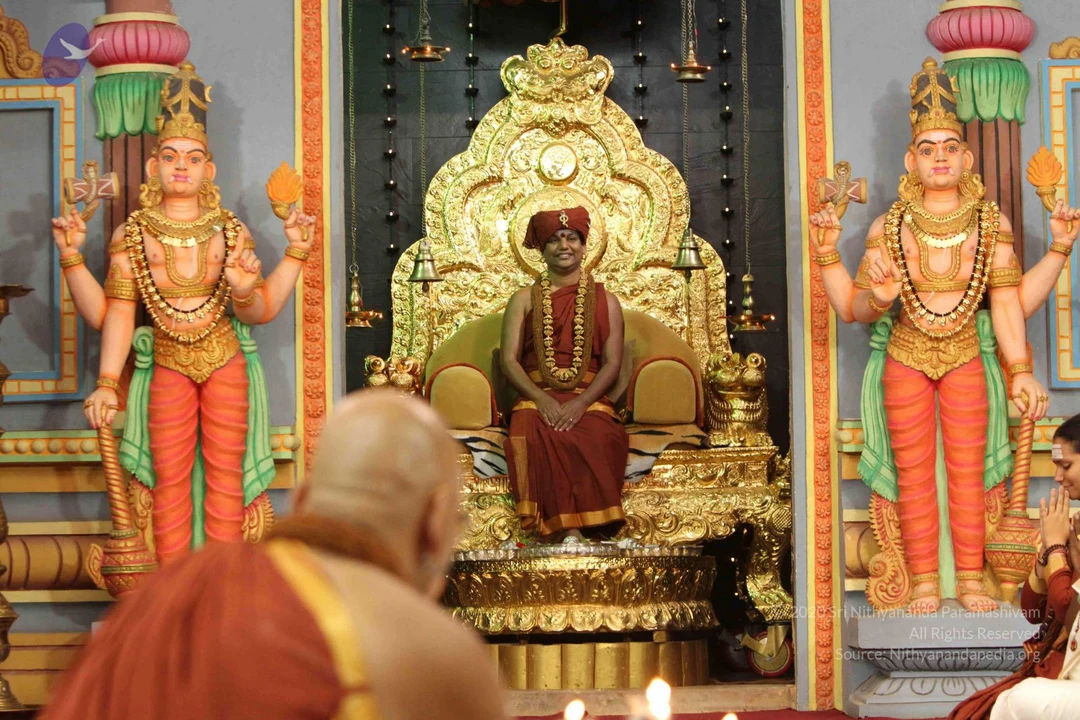
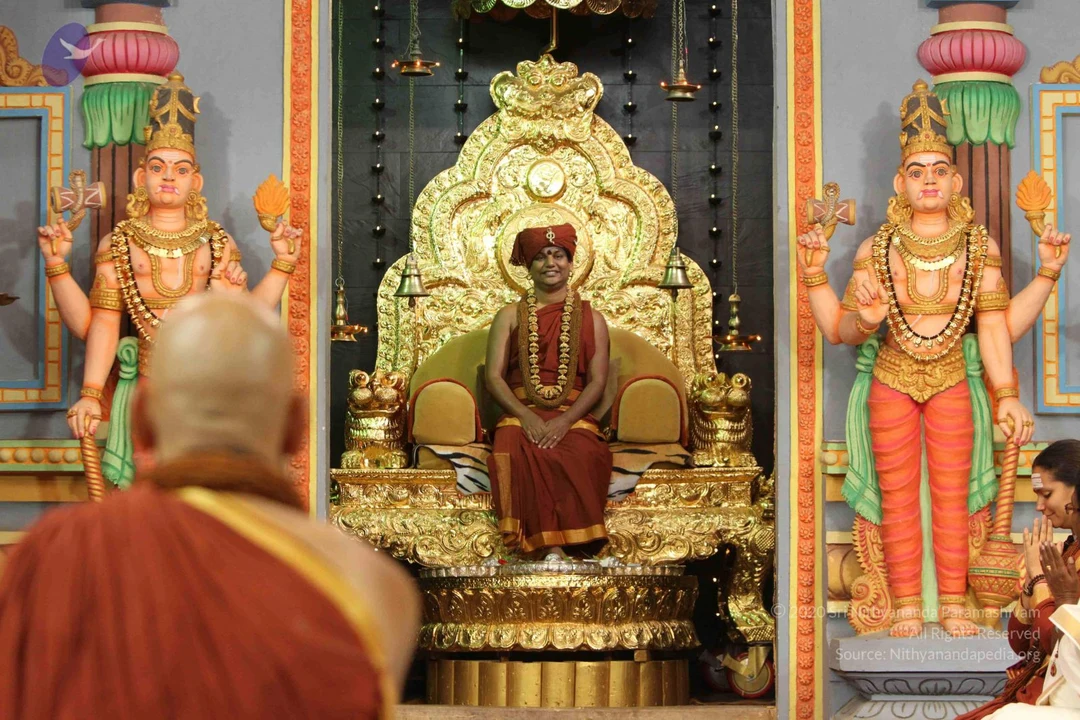
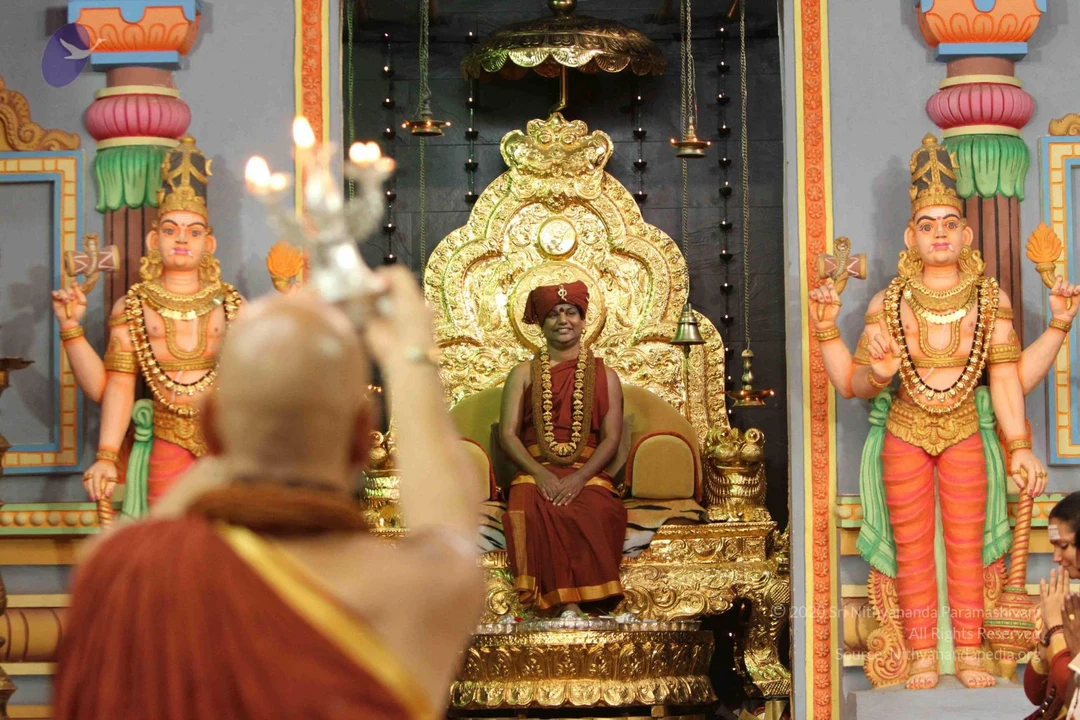
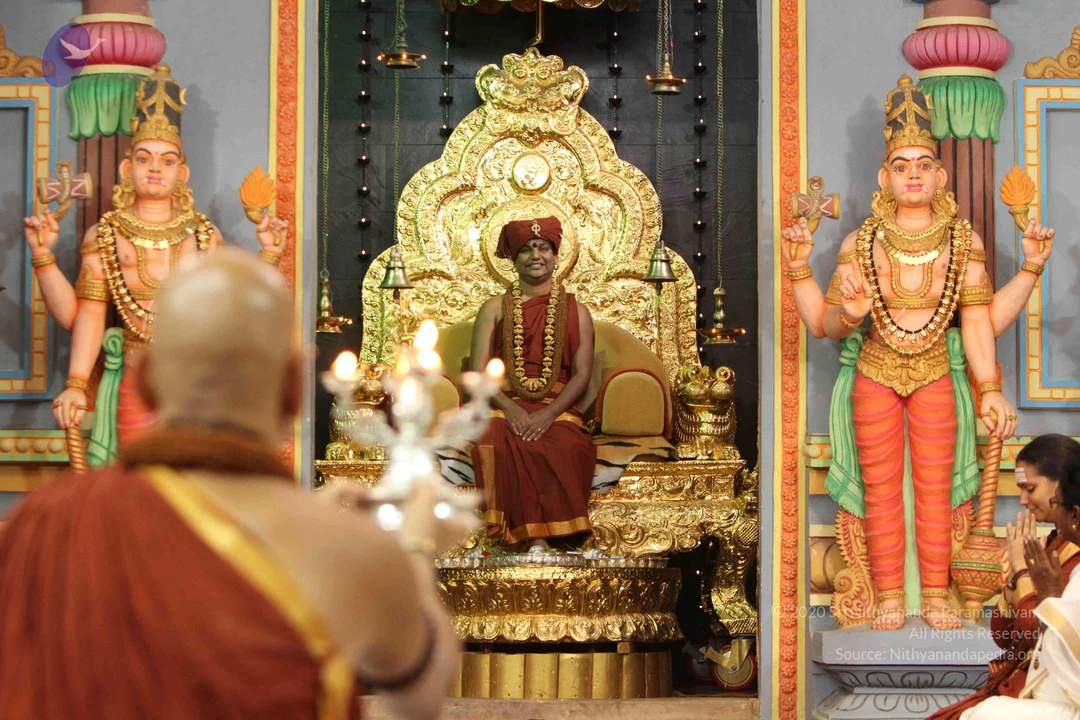
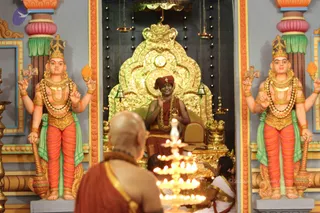
Photo inside a temple hall before a golden ornate throne flanked by two large painted dvarapala-style guardian statues with four arms, gold necklaces and orange-red dhoti. Seated on the golden throne is a figure in saffron-orange robe and matching orange head covering, wearing a long beaded garland, with hands raised in a gesture. In the foreground a bald man in orange-saffron cloth stands with his back to the camera facing the throne, holding a lit multi-tiered oil lamp (aarti) with flames. A young girl in white dress sits at lower right near the lamps. Hanging brass bells and lamps are suspended above the throne and an orange-red kalasha or pot sits in front of the dais.

02-NITHYA-SATSANG

5 photosSource gallery
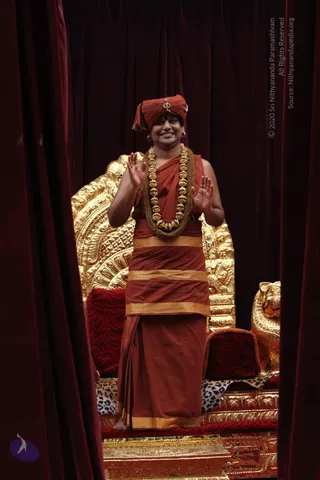
A person stands on a raised platform framed by dark red velvet curtains, smiling with palms pressed together in greeting. They wear a rust-red turban with a small gold emblem, a rust-red robe with broad gold-bordered waist cloth, and a long layered necklace of large golden-brown beads. Behind them is an ornate gold throne with a carved lion head and red zebra-striped cushions. The page notes the event as a satsang, and the figure's rust-red turban, robe and bead necklace match the Swamiji (probable) appearance cues. A gold lion-headed throne stands behind the figure.A standing man in a rust-red turban with a gold emblem and a red tilak, wearing a rust-red shawl and dhoti with gold borders and a heavy gold bead necklace, smiles and raises both palms in front of a gilded throne carved with lions and a burgundy velvet backdrop. A leopard-print cloth lies on the platform. Visible copyright text runs vertically along the right edge. Appearance-based candidate, probable Swamiji, standing before the throne with raised palms, distinctive rust-red turban, gold necklace and gold-bordered robes.A photograph of a clear crystal Shivalinga standing on a grey stone pedestal, its surface carved with fine geometric facet lines and bands. A small orange-red flower rests on top of the lingam. A ring of dark rudraksha beads with gold-toned spacers lies at its base, and green leaves appear faintly behind it against a brown wall. No people are visible in the scene.Close-up photo of a smiling person wearing a rust-orange turban with a gold serpent-shaped ornament at the front and small beaded tassels at the side. A dark red bindi is on the forehead, and a small microphone headset is at the cheek. The person wears layered gold-and-black beaded necklaces with rudraksha-style beads over a rust-orange garment draped over the shoulders. A gold embroidered backdrop and deep red velvet curtain stand behind. Swamiji (probable) based on the saffron-orange attire, ornate turban and gold necklaces with the page's attribution to a satsang event.A person seated cross-legged on a gilded throne with a large ornate golden back and two golden lion-shaped armrests, draped over a leopard-print cloth. The person wears a rust-orange turban with a small gold emblem, a rust-orange robe, a long beaded rudraksha-style mala and a gold necklace, and holds a golden ceremonial staff with eyes closed, mid-speech with a microphone at the ear. Deep red velvet curtains form the background.
03-E-KALPATARU

1 photoSource gallery
A photograph of a television screen showing a video-conference link. On the left, a woman in a red top with a white forehead mark holds a phone to a woman in a white top with a blue emblem and a dark bead necklace, who speaks into it. Behind them is a framed portrait labelled "Paramahamsa Nithyananda" of a long-haired man with ornate gold and red clothing and rudraksha malas, beside pink roses. In the lower right corner is a small inset of a figure seated on a red cloth with garlands. Caption text reads PHOENIX Kanchipuram.

04-IA-SESSION

2 photosSource gallery
A man stands on a red carpet in an indoor hall, wearing a maroon-brown dhoti-style garment with broad gold borders and a matching maroon shawl draped over one shoulder. He wears a long multi-strand necklace of brown beads and a red bindi on his forehead, with hair pulled back. Behind him are red-curtained barriers, a red banner with partial lettering, and a woman in white seated at a table with bags and mats. The man's appearance is uncertain and no clear identifying cues beyond the clothing are visible, so he is described by role as a devotee in ashram attire.A smiling man in a rust-orange sleeveless wrap and dhoti with gold borders walks barefoot-style in black slippers along a red carpet lined with silver stanchions inside an indoor hall. He wears a long brown rudraksha mala draped over his shoulder, a tilak on his forehead, and his hair tied back. Behind him a red banner reads Nithyananda Gaurava, and shelves of religious items and framed pictures are visible. Appearance suggests a person with distinctive rudraksha and saffron-toned clothing cues, but the identification is uncertain from the image alone.

05-ENERGY-DARSHAN

2 photosSource gallery
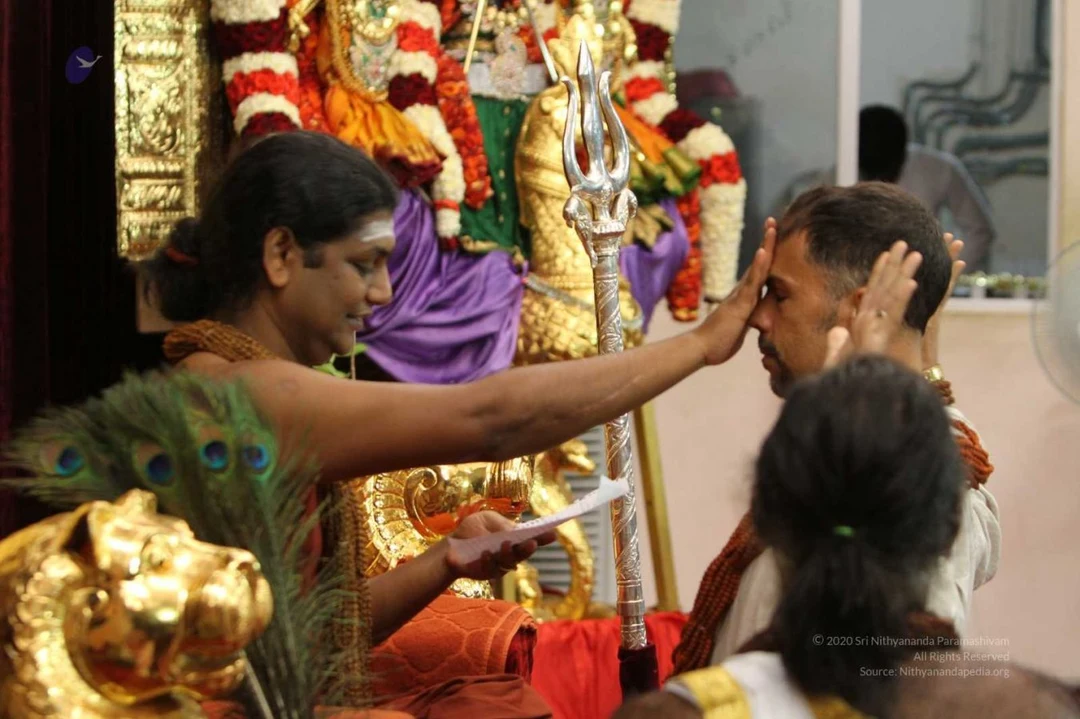
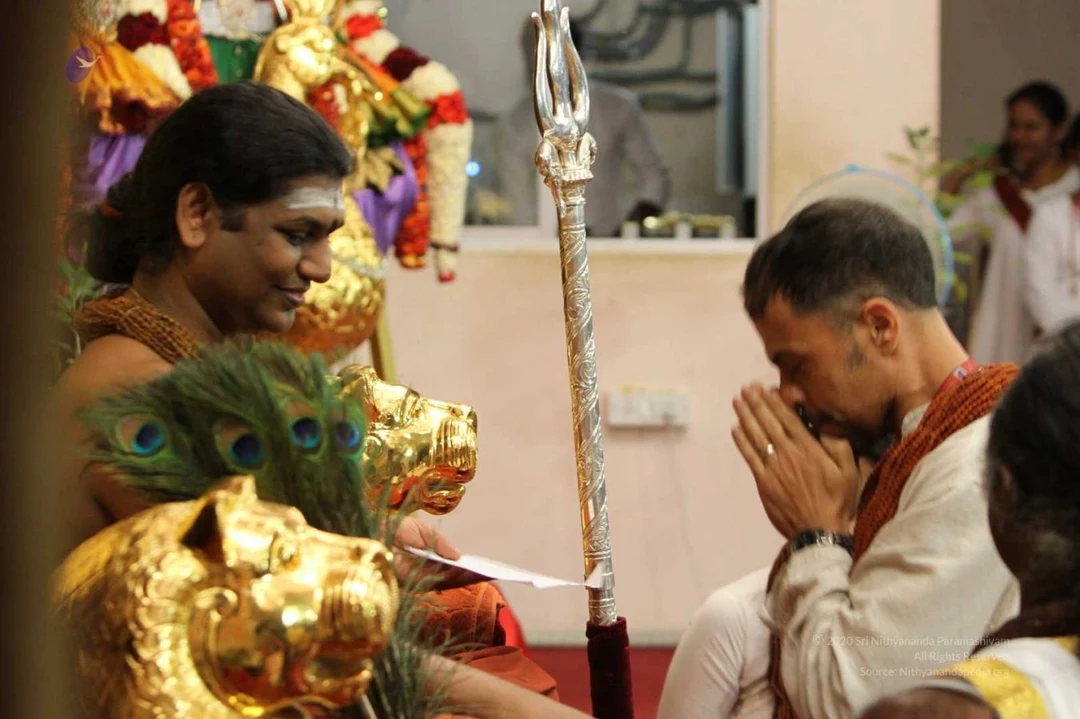
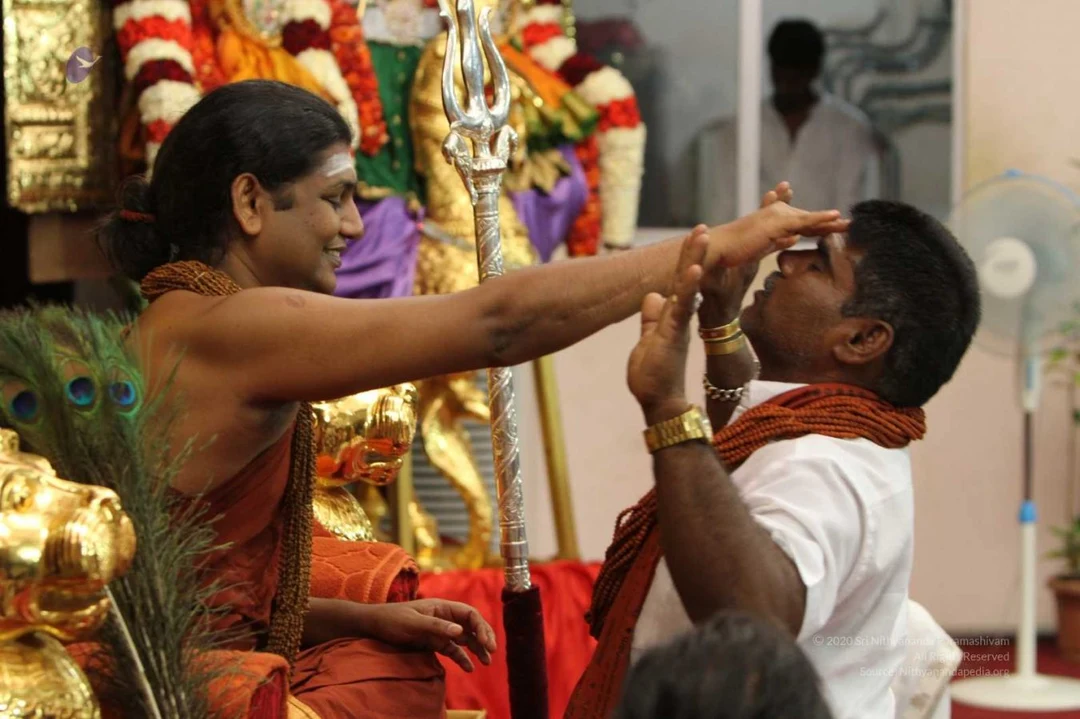
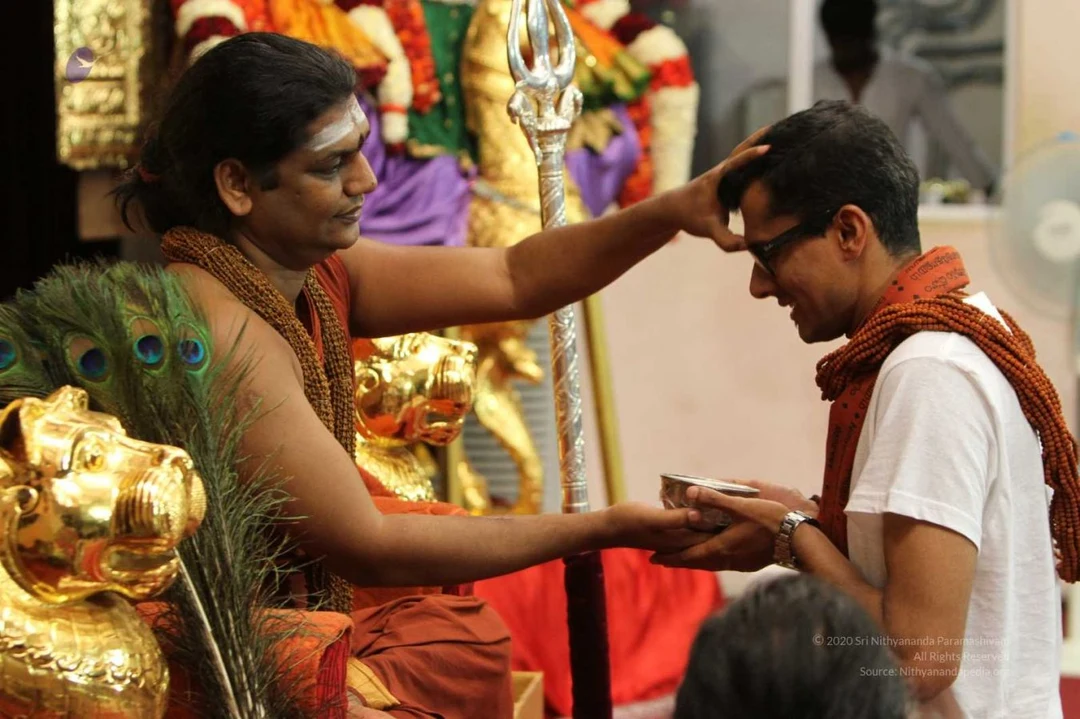
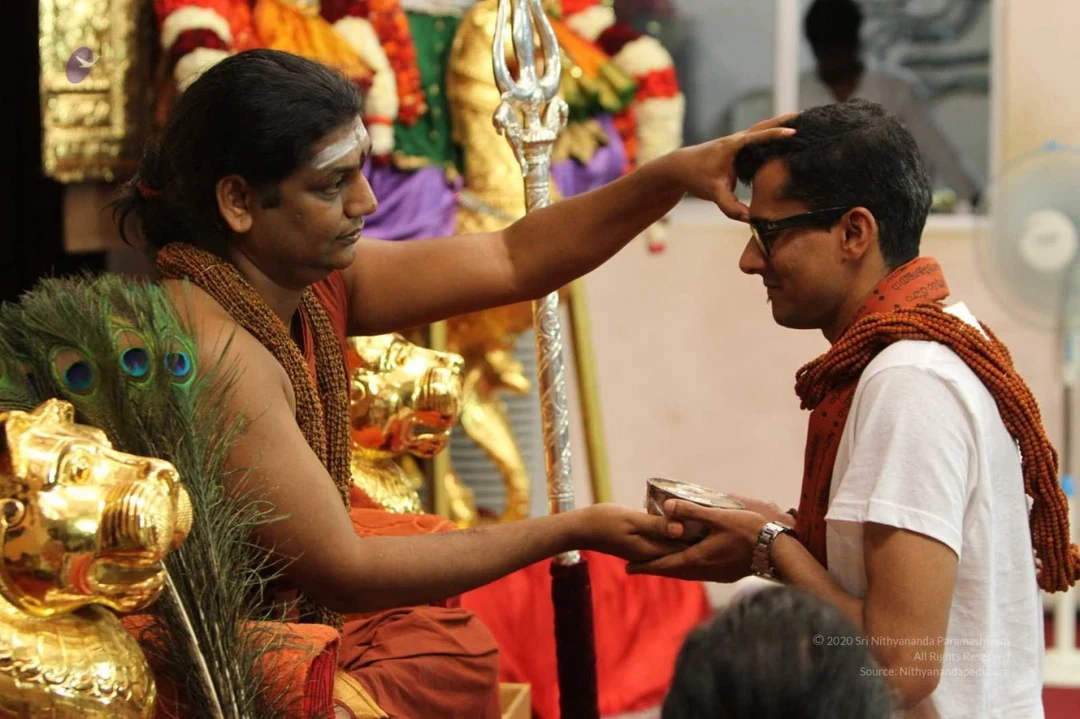
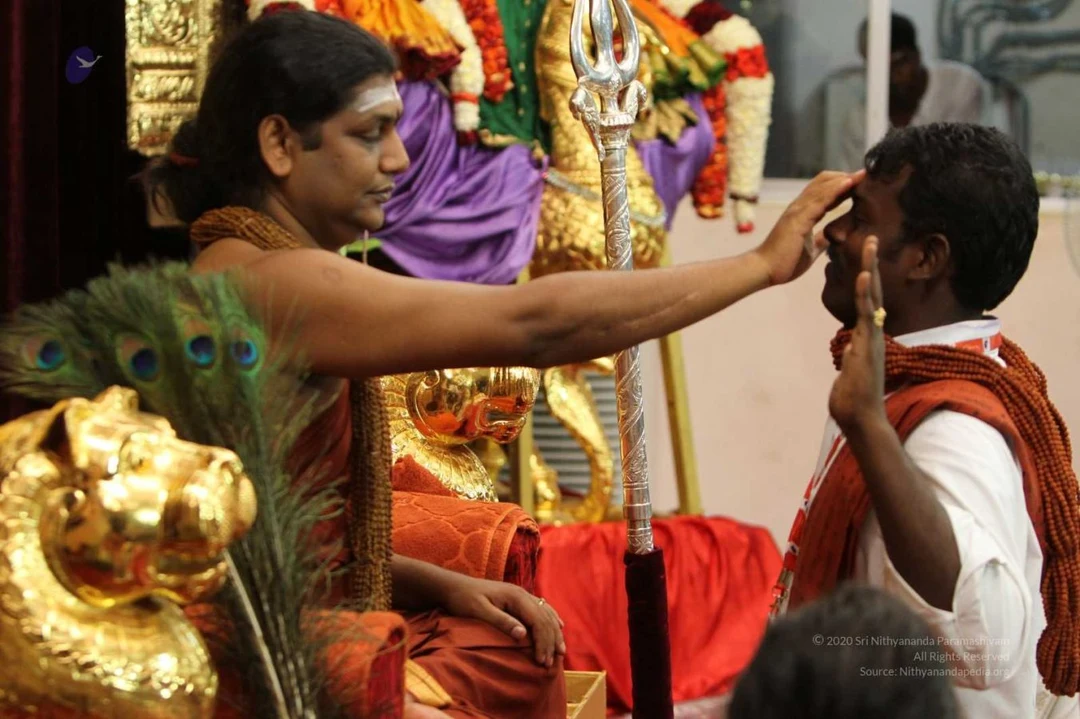
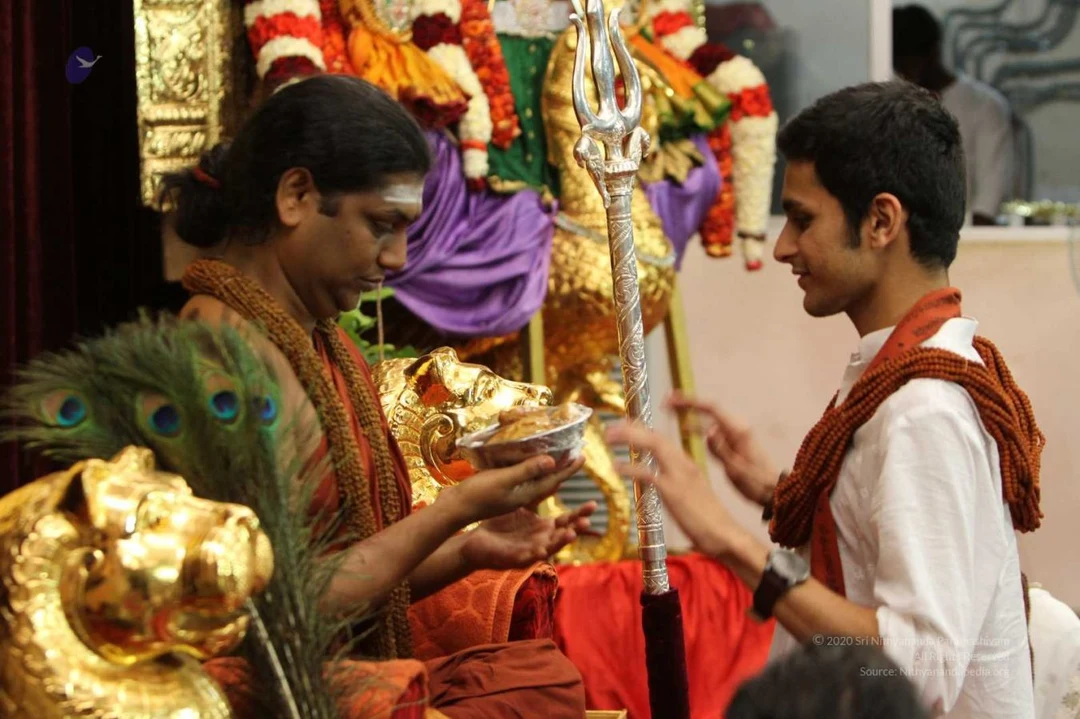
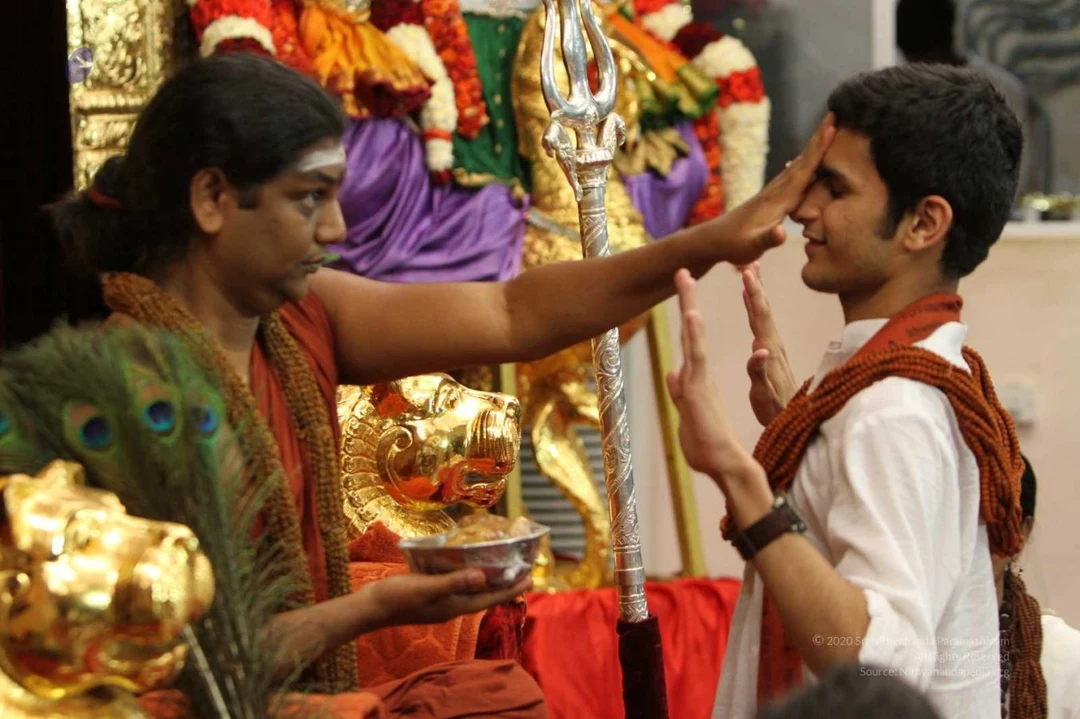
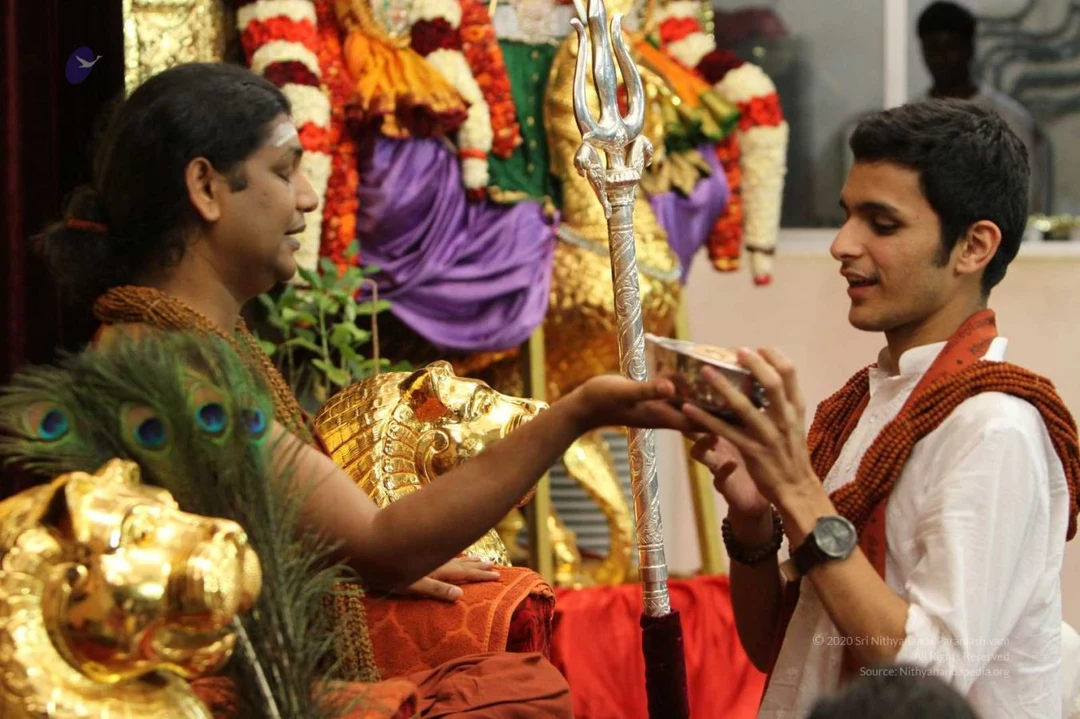
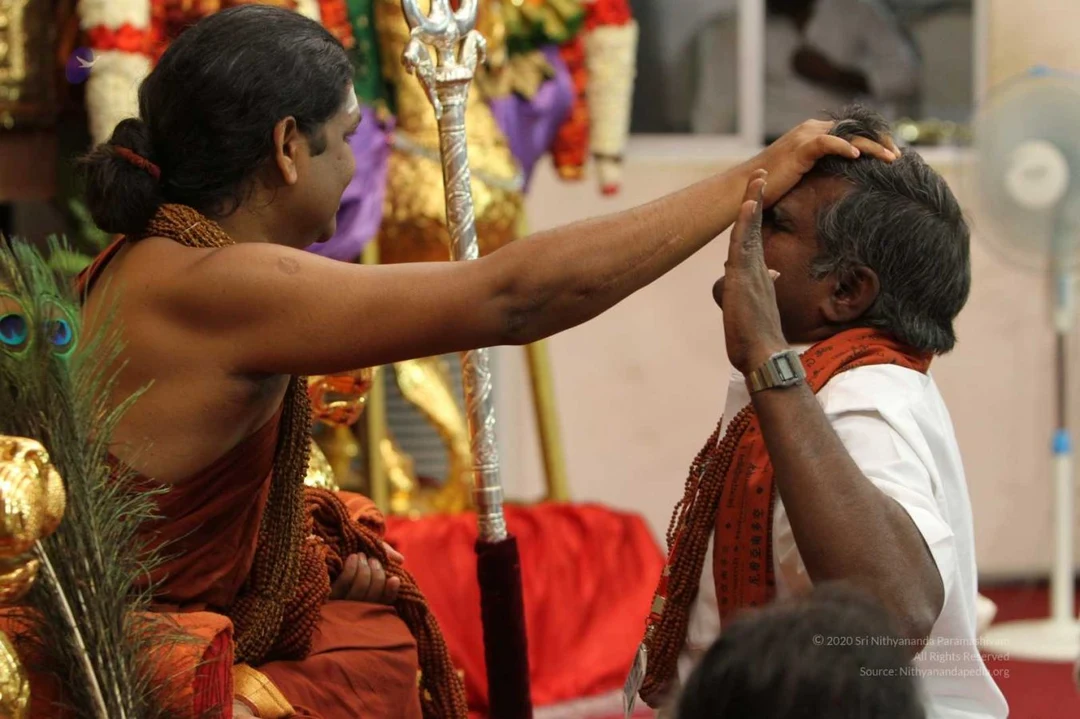
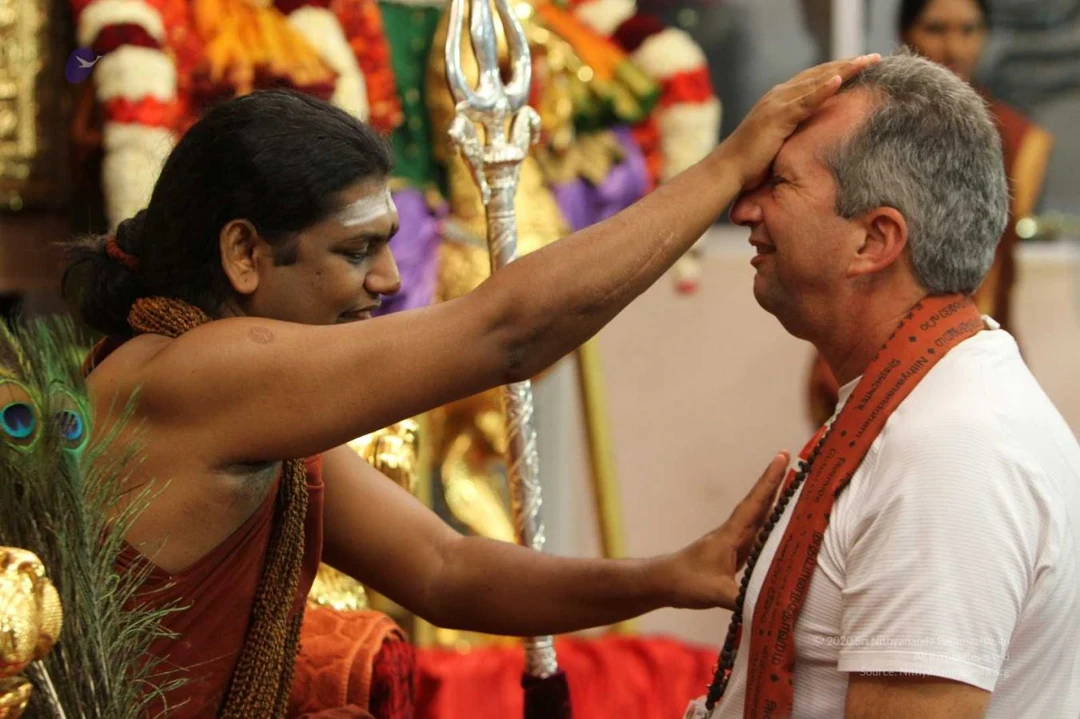
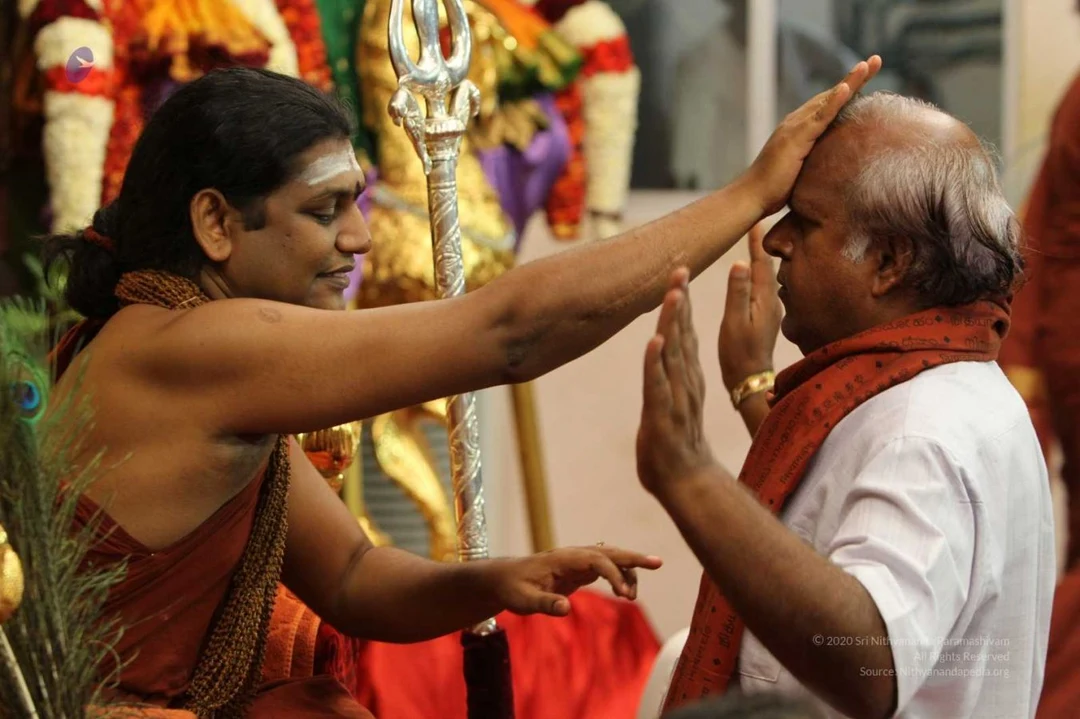
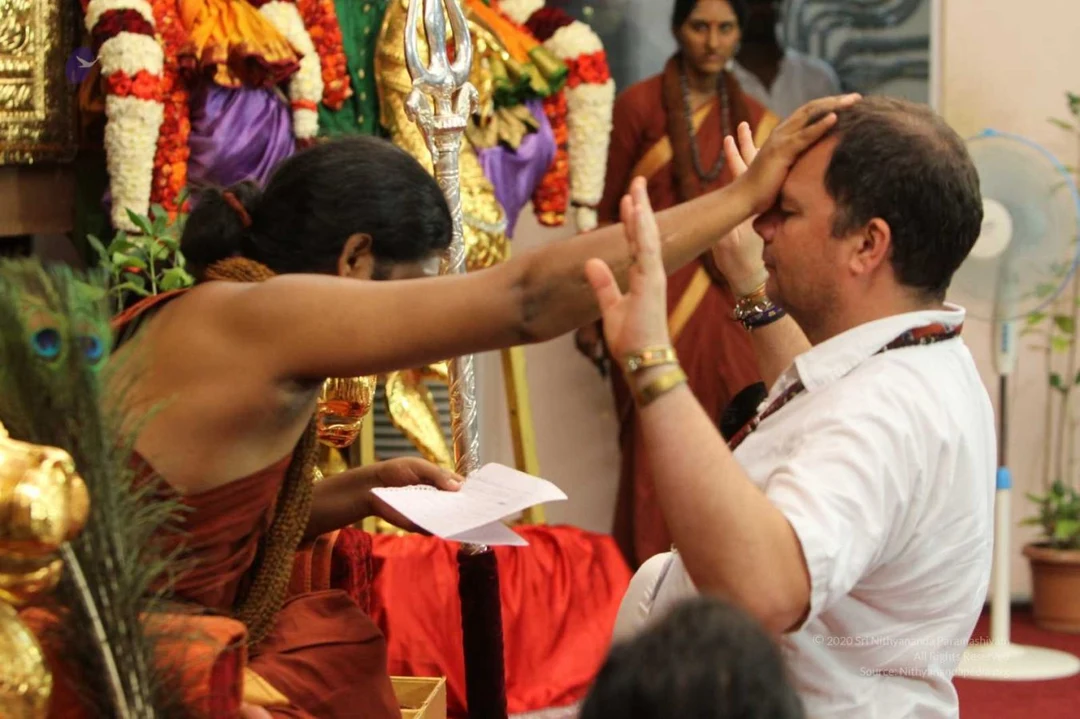
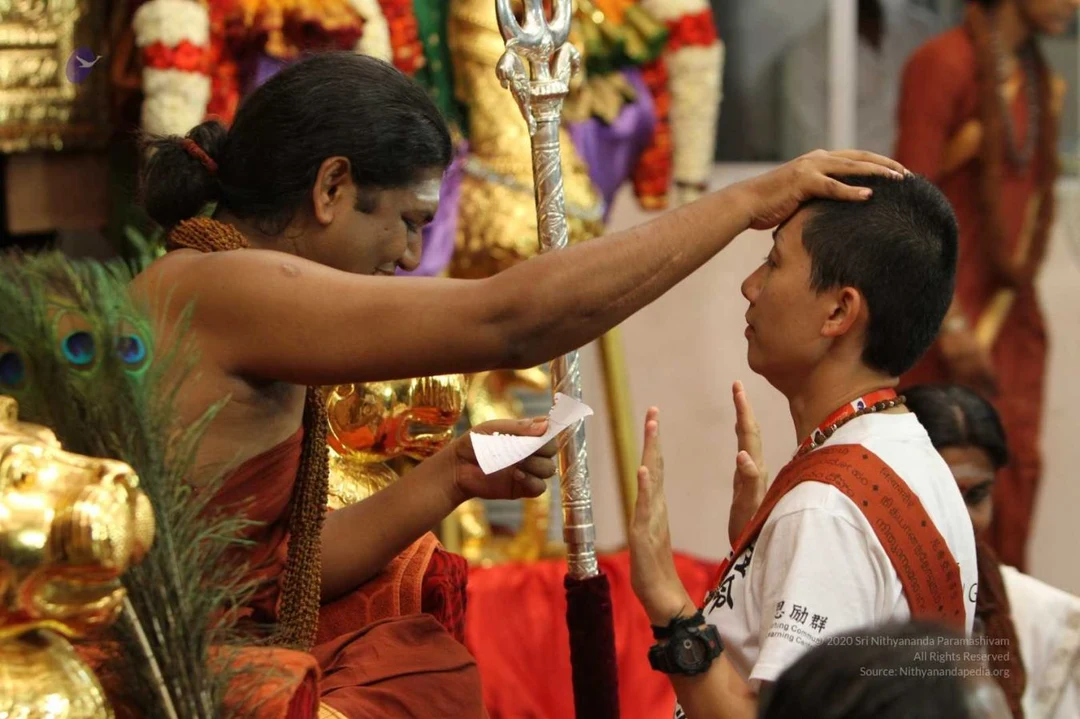
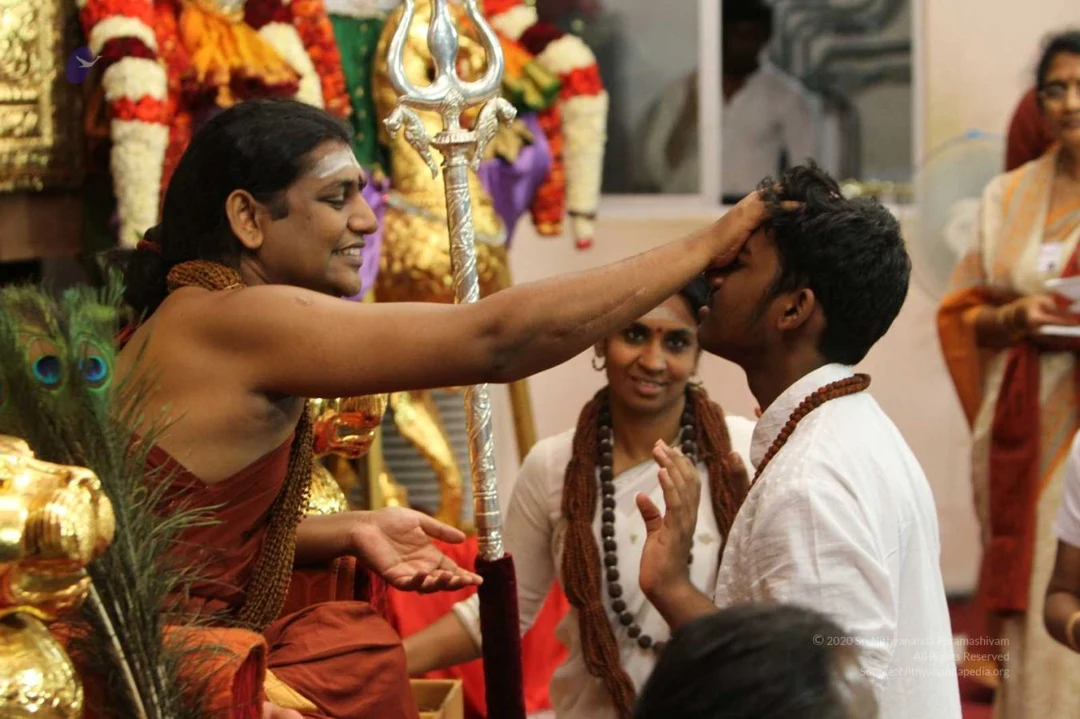
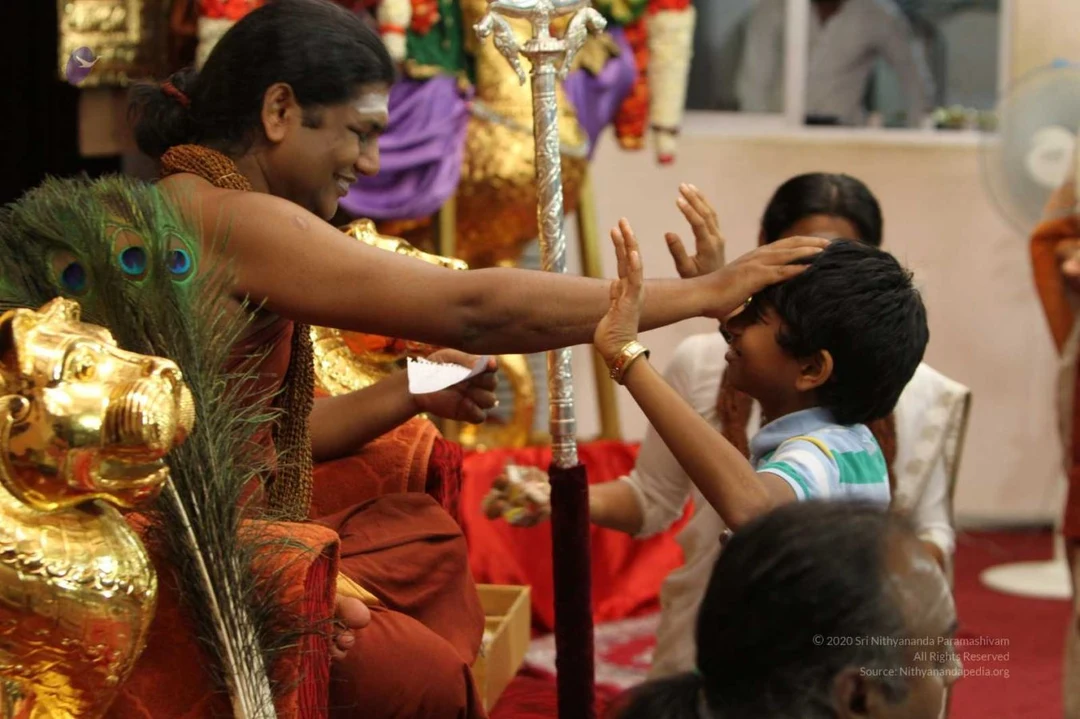
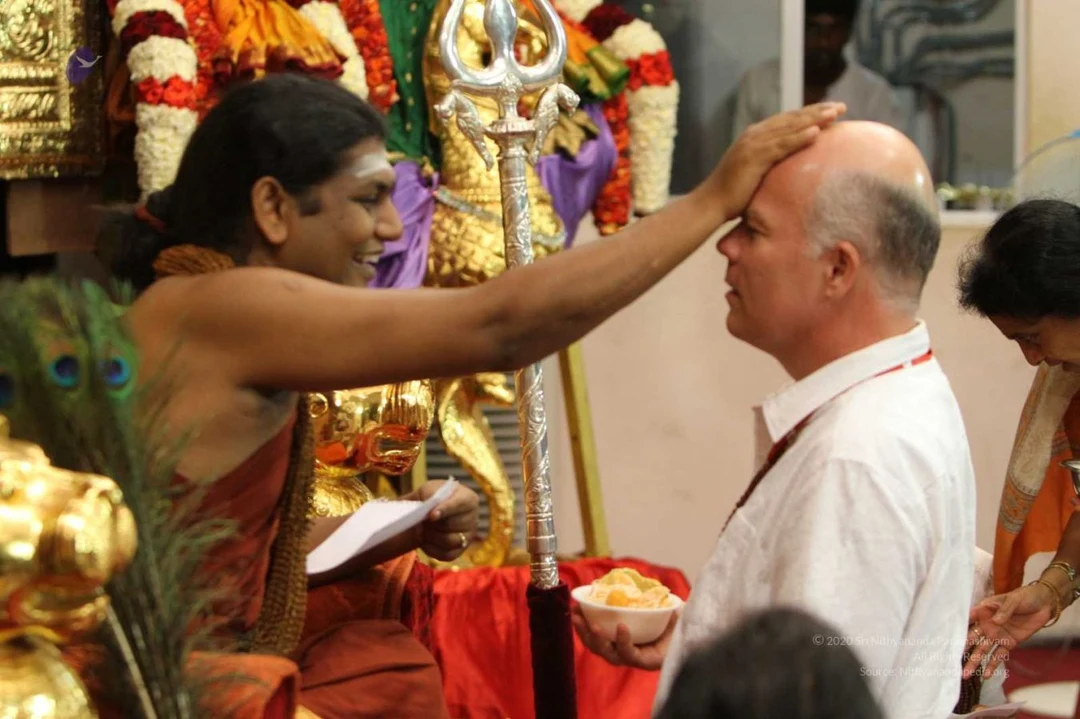
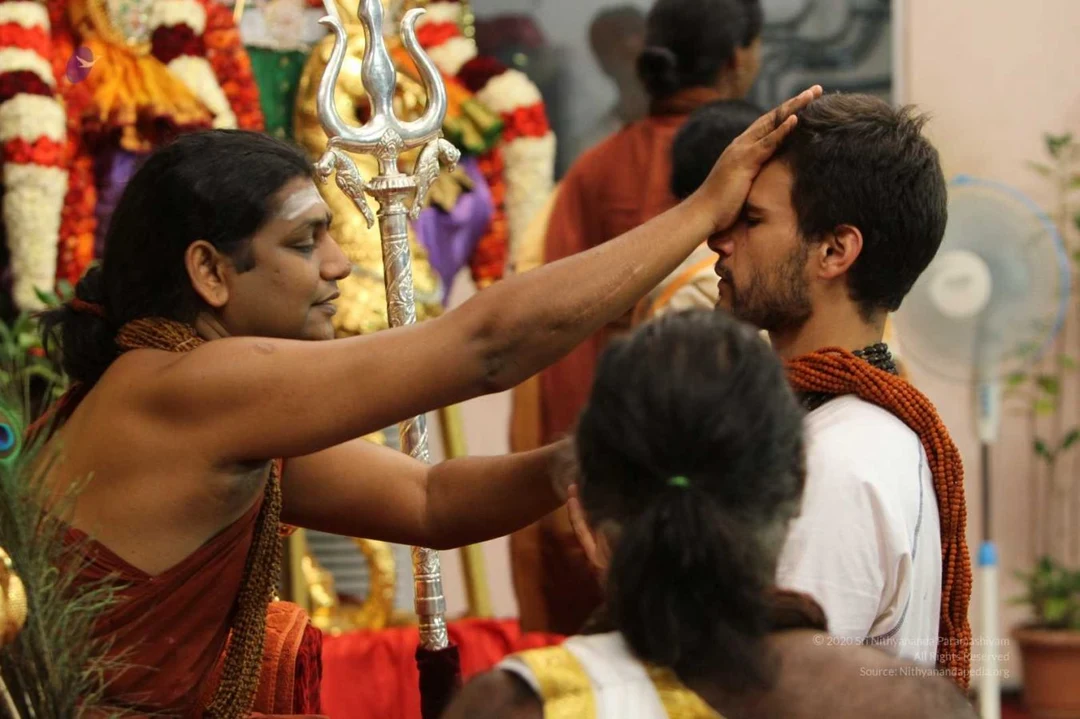
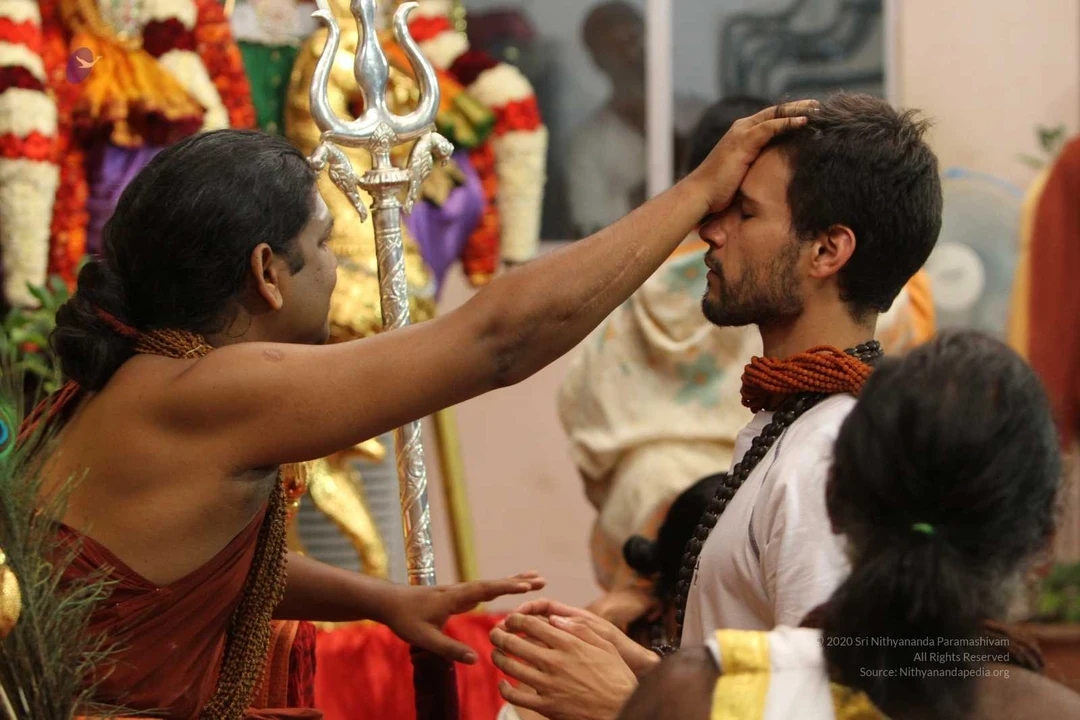
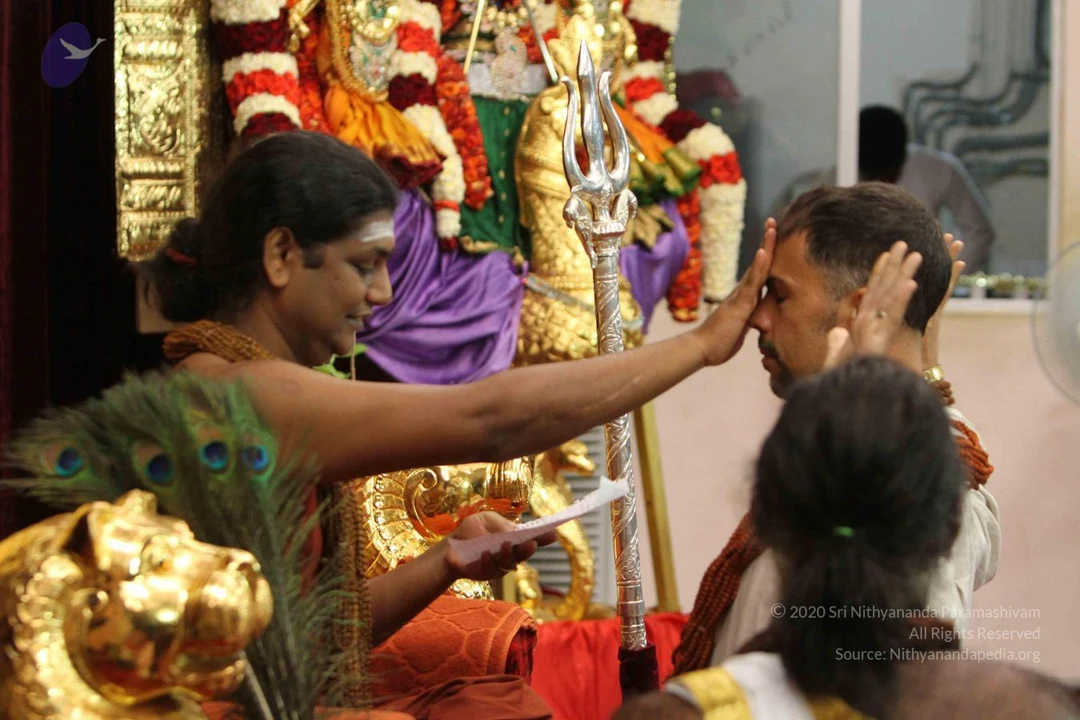
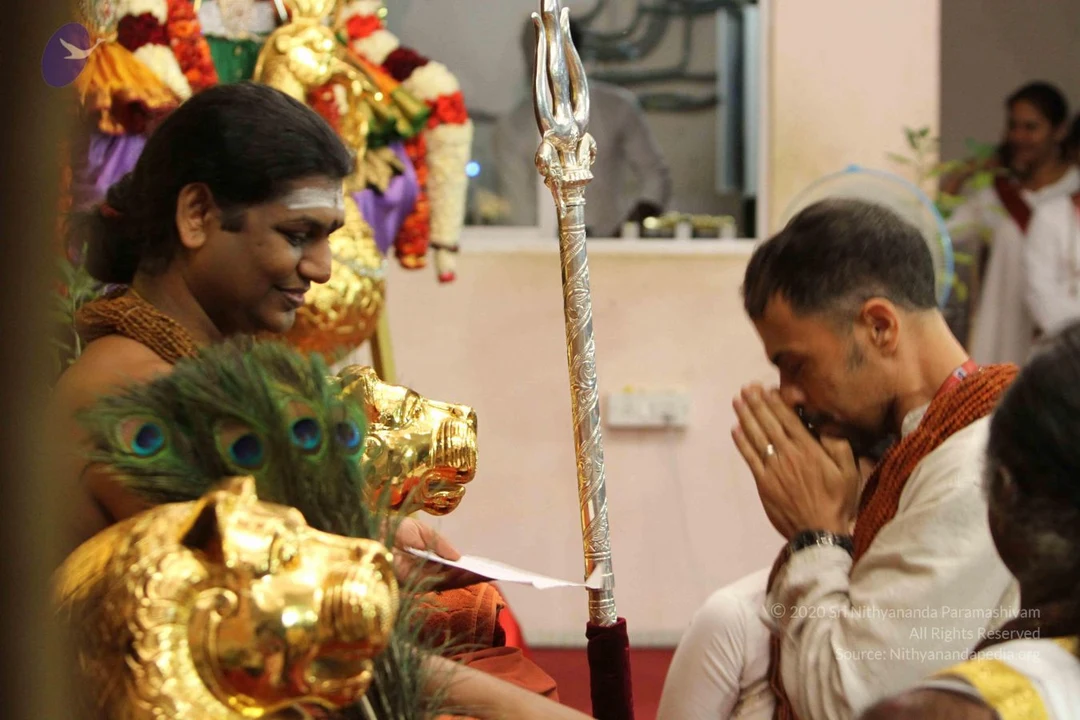
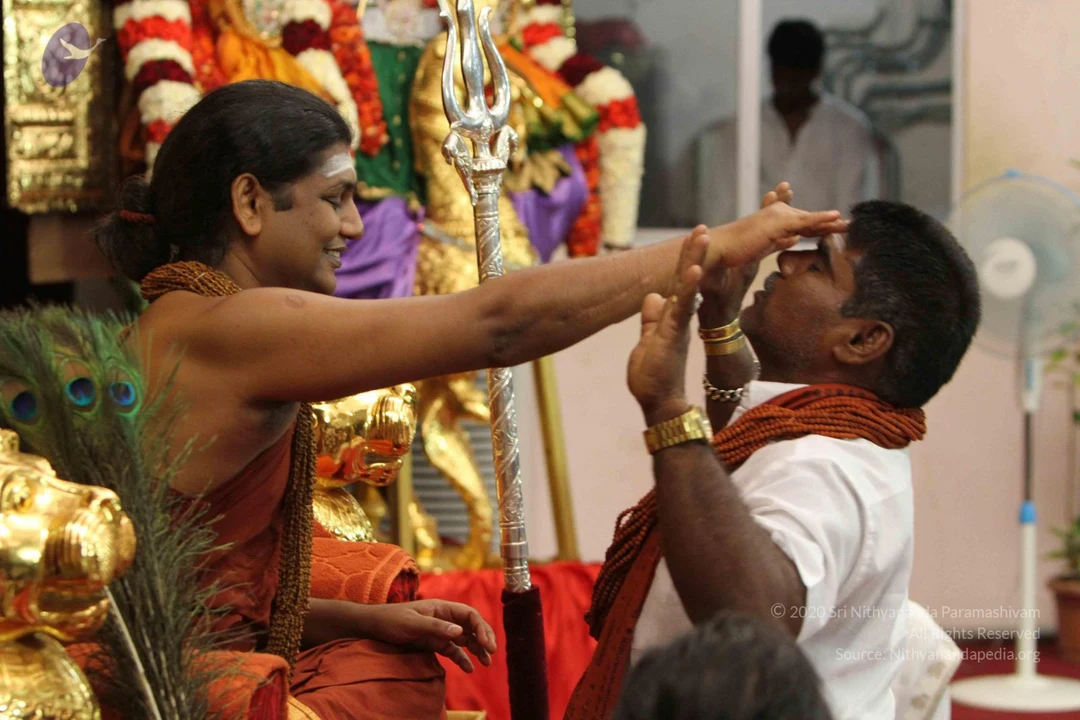
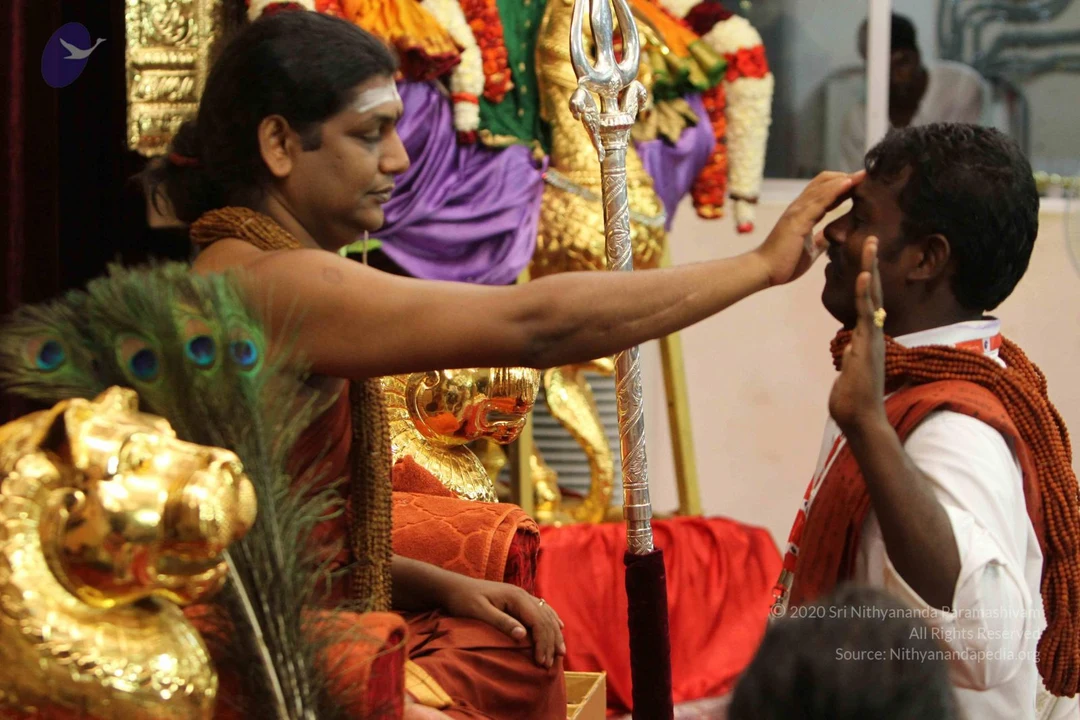
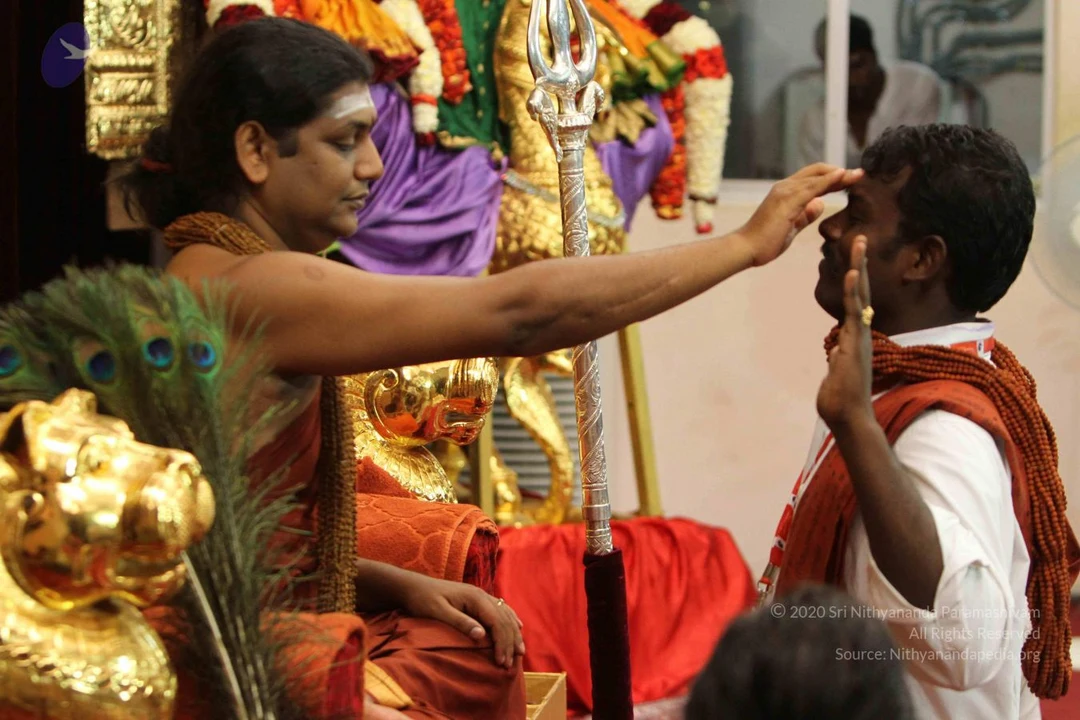
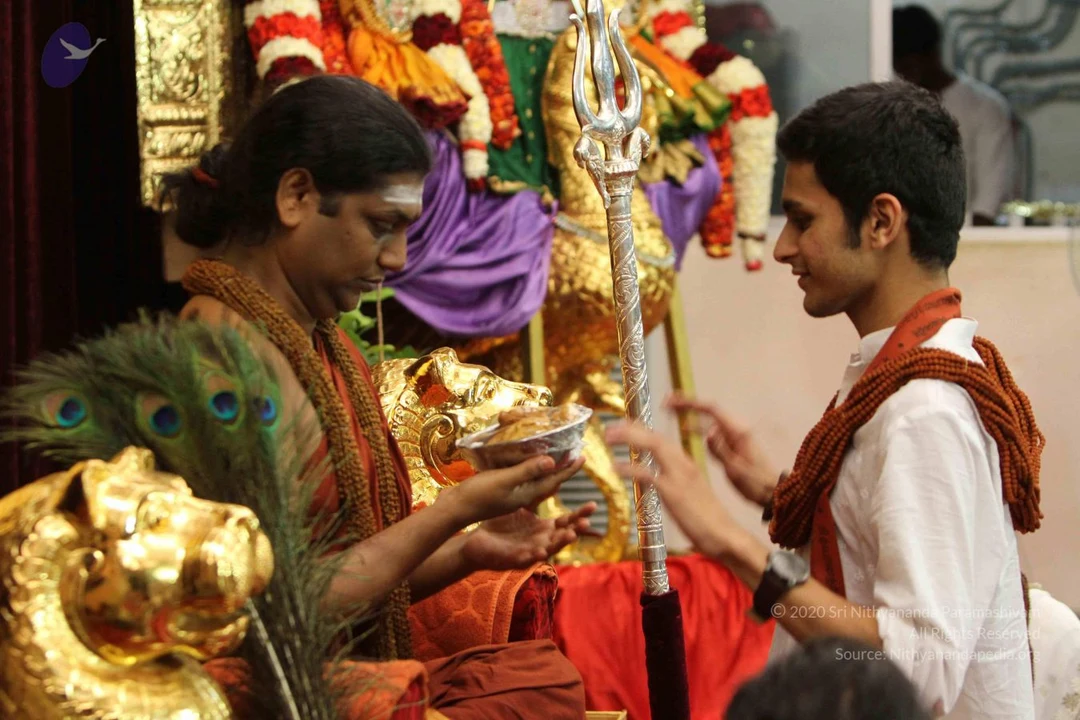
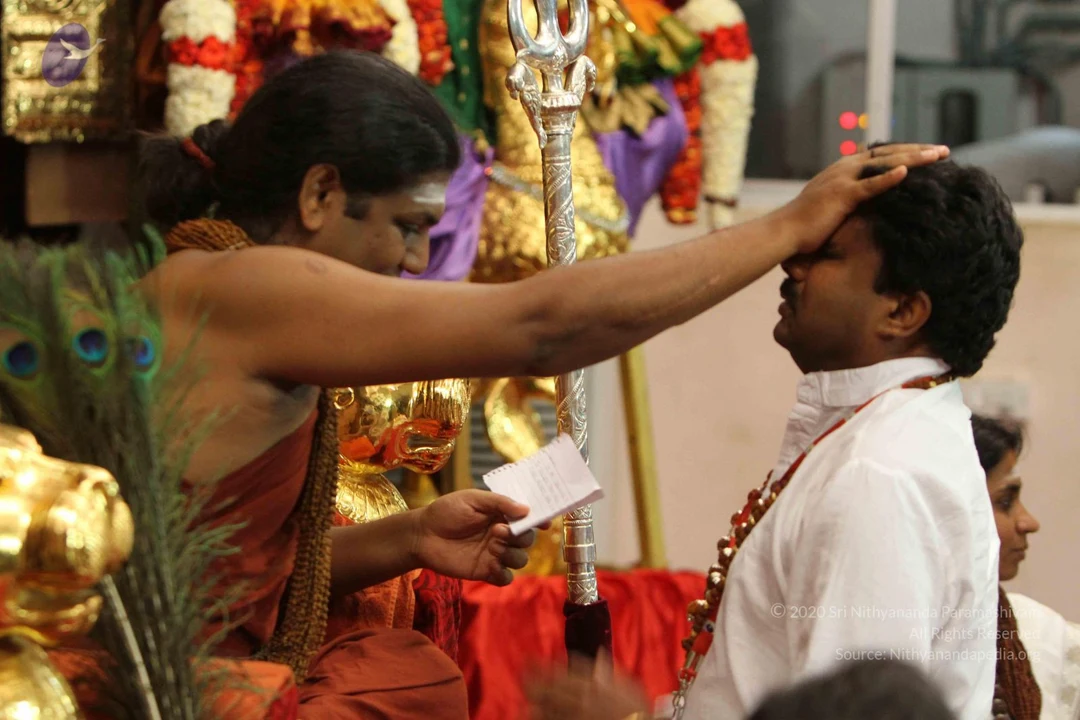
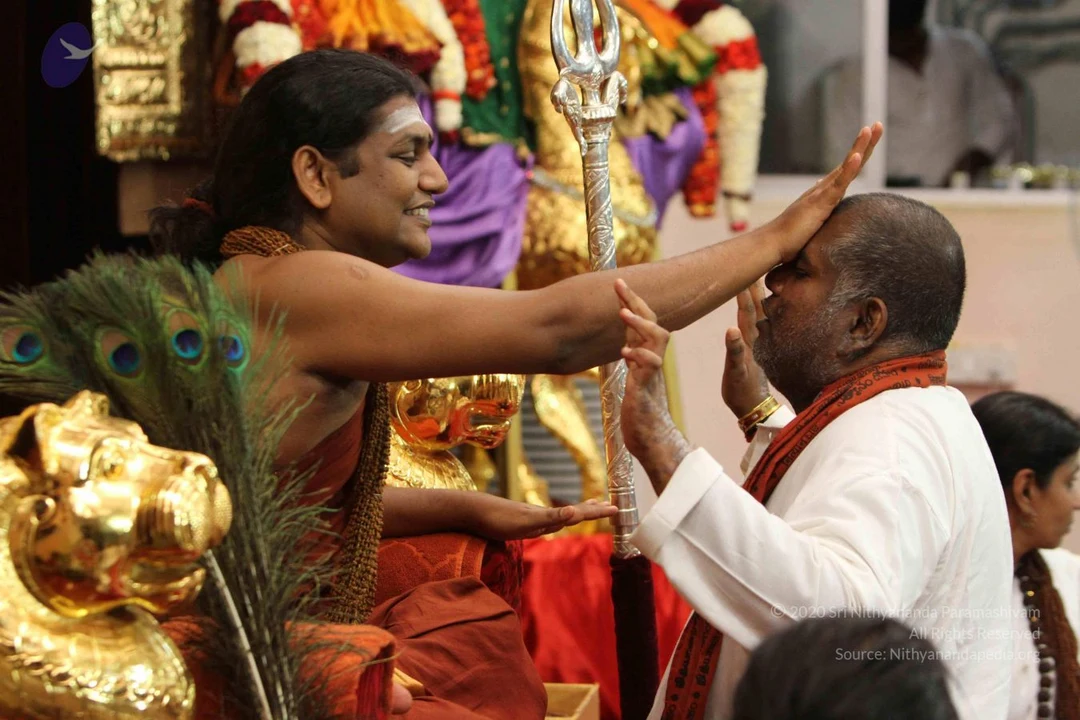
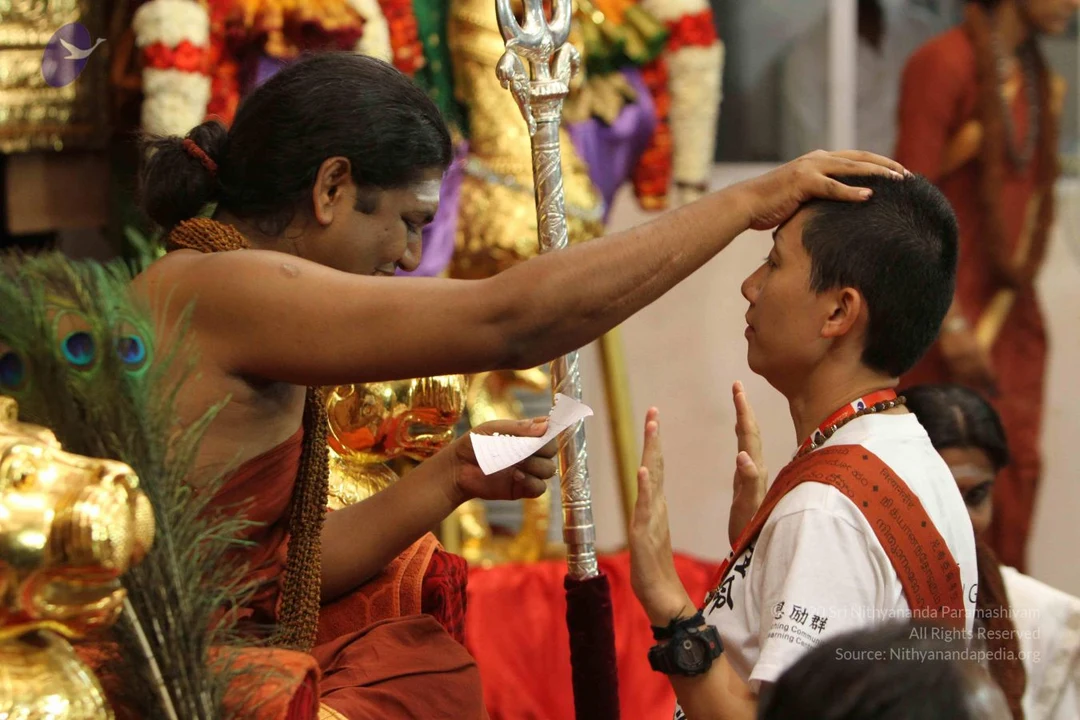
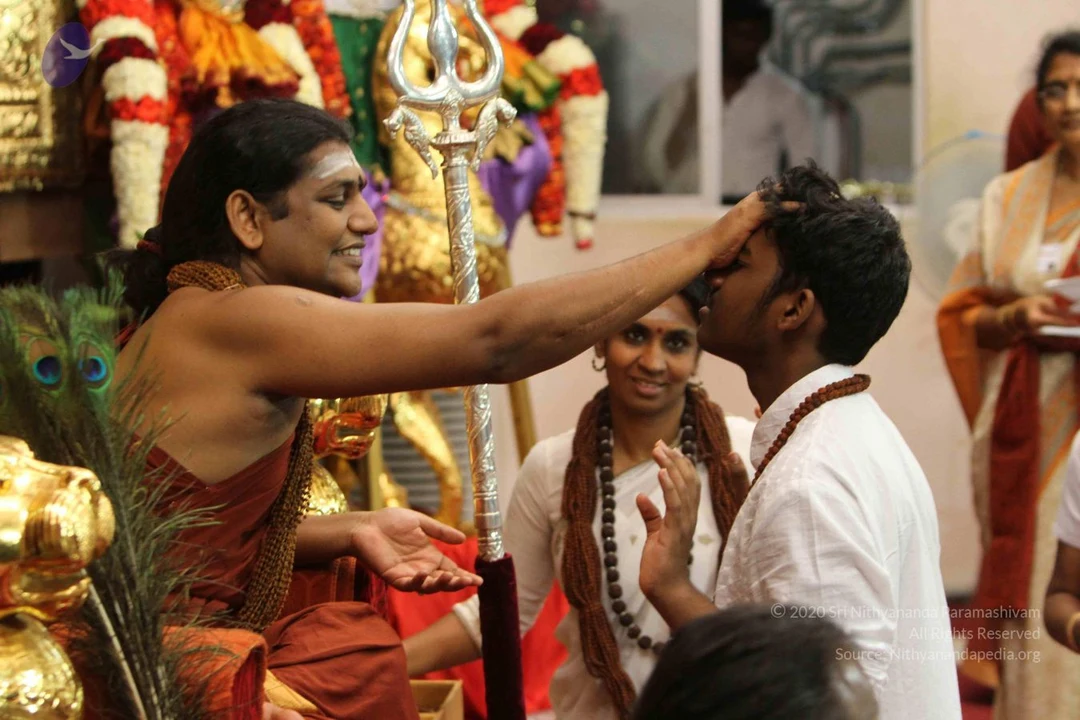
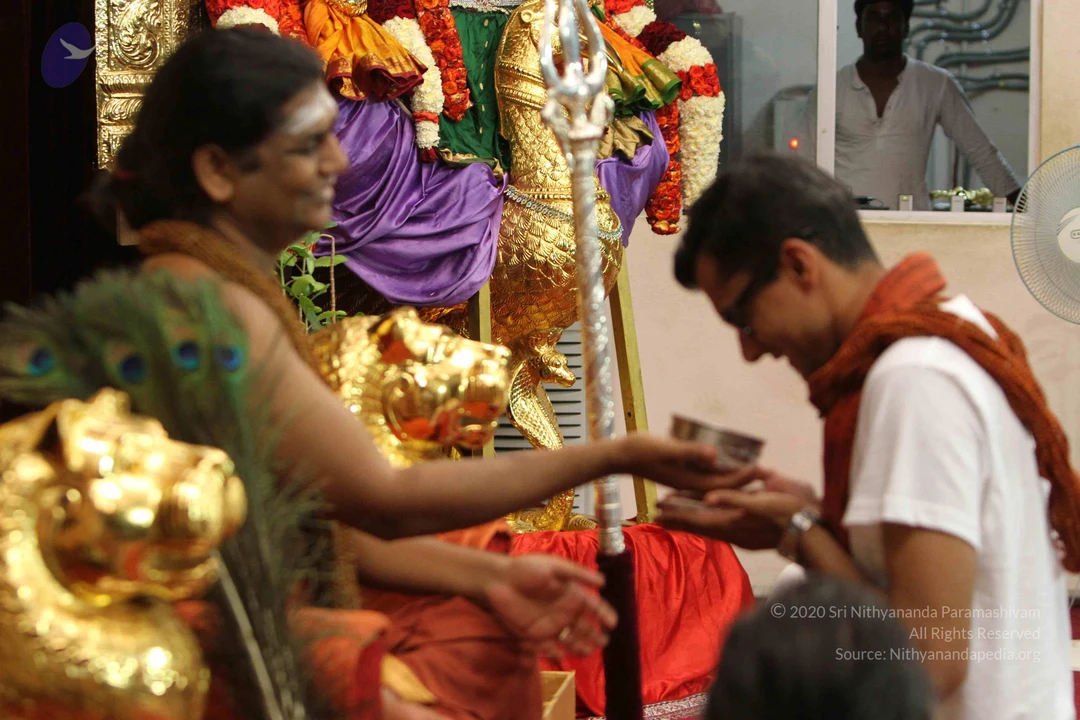
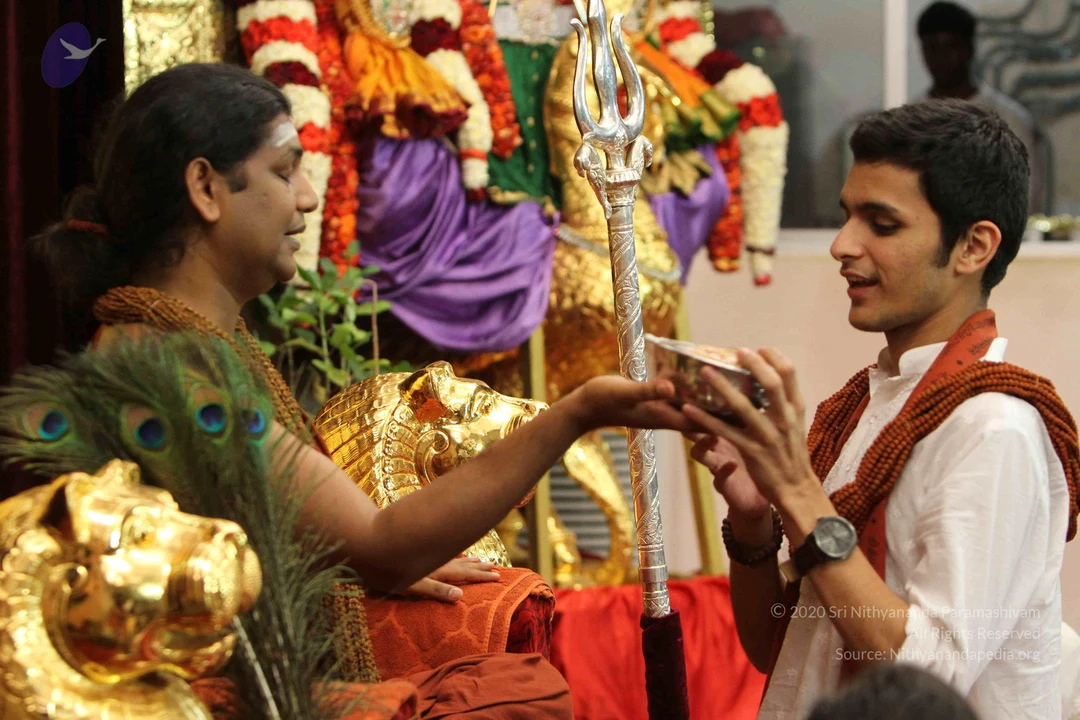
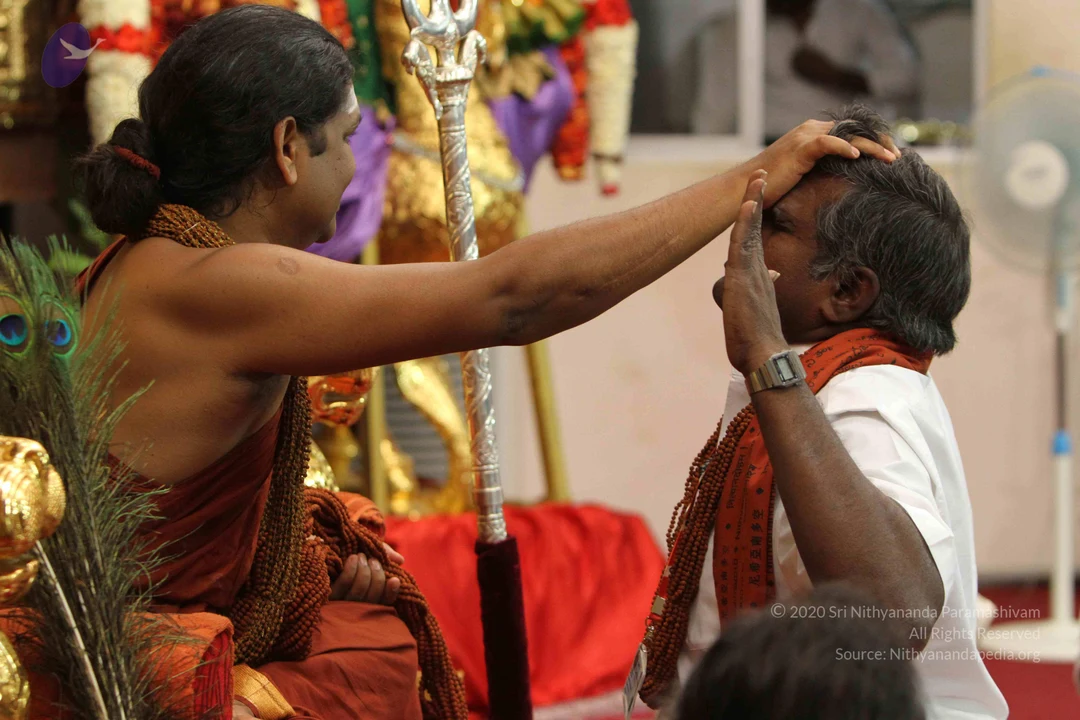
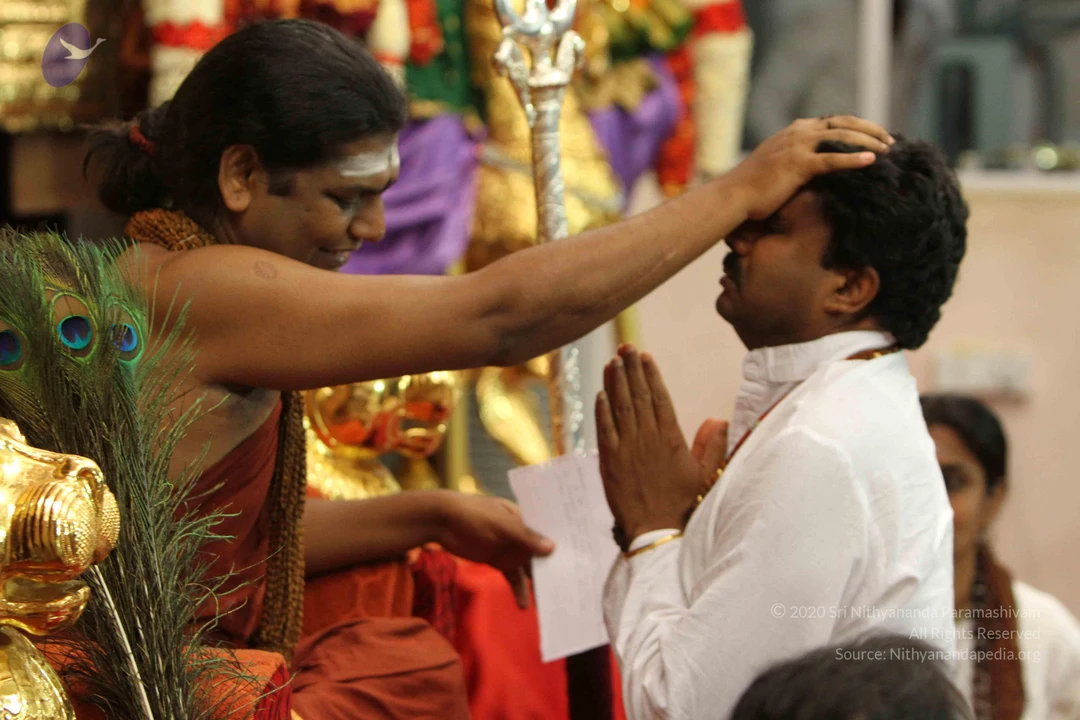
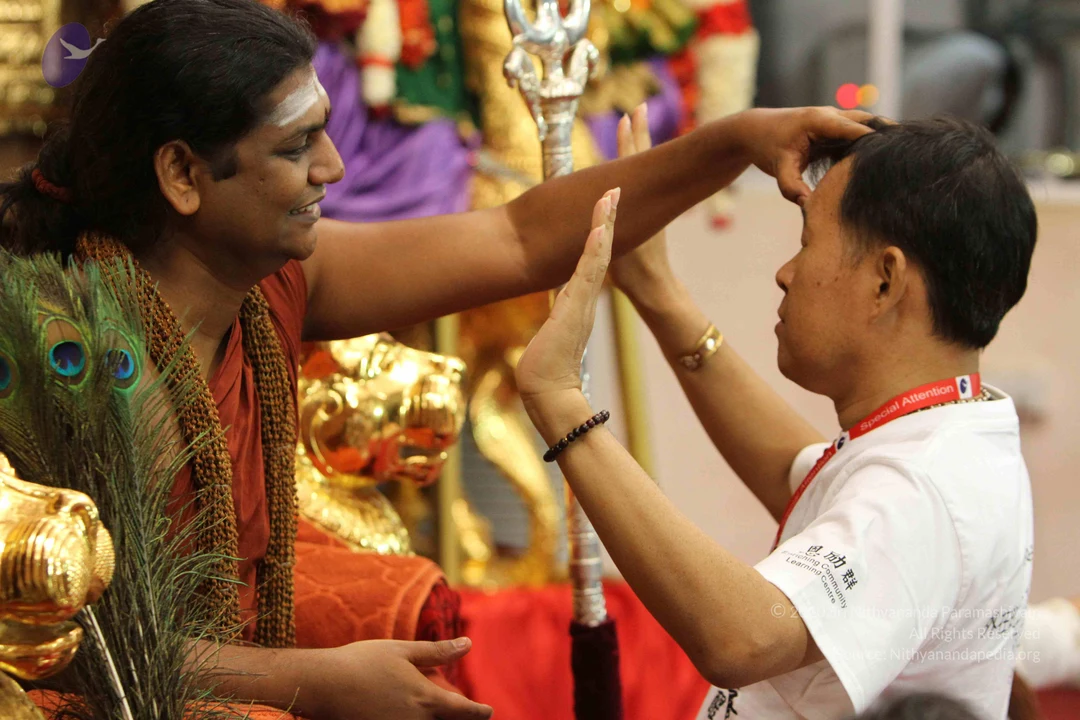
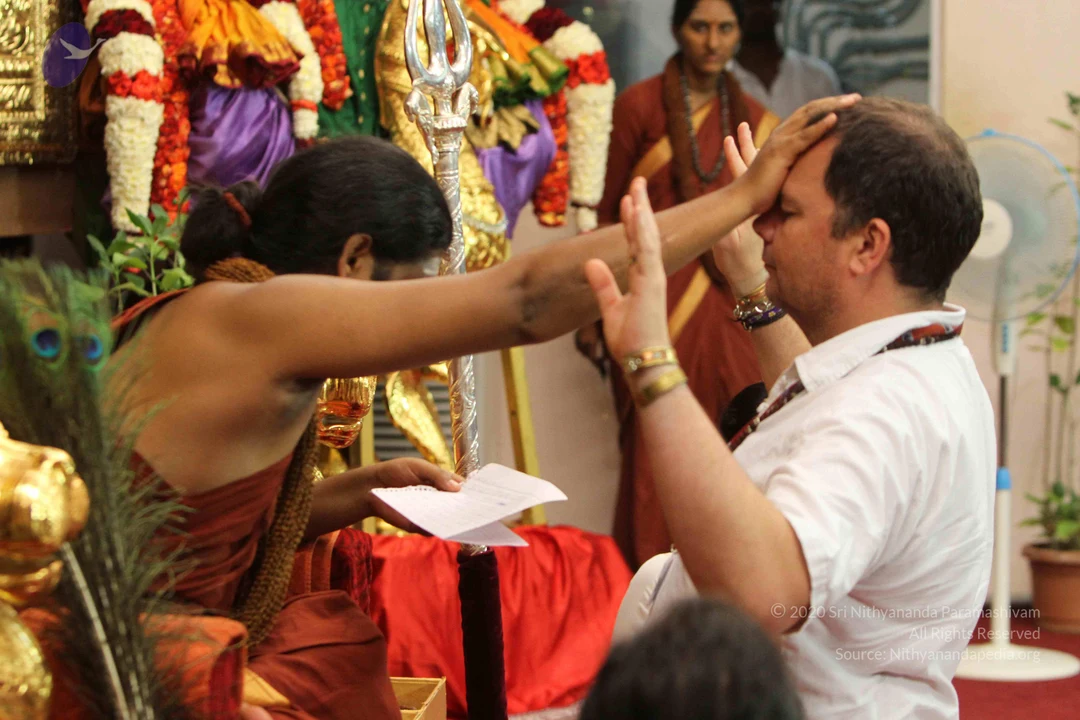
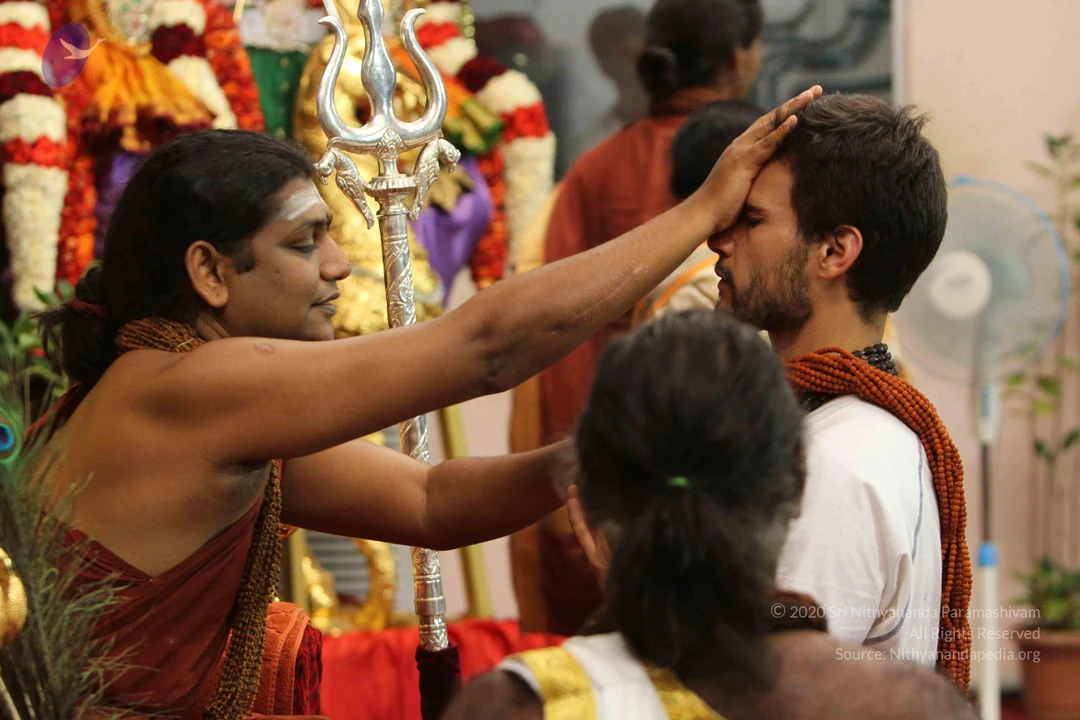
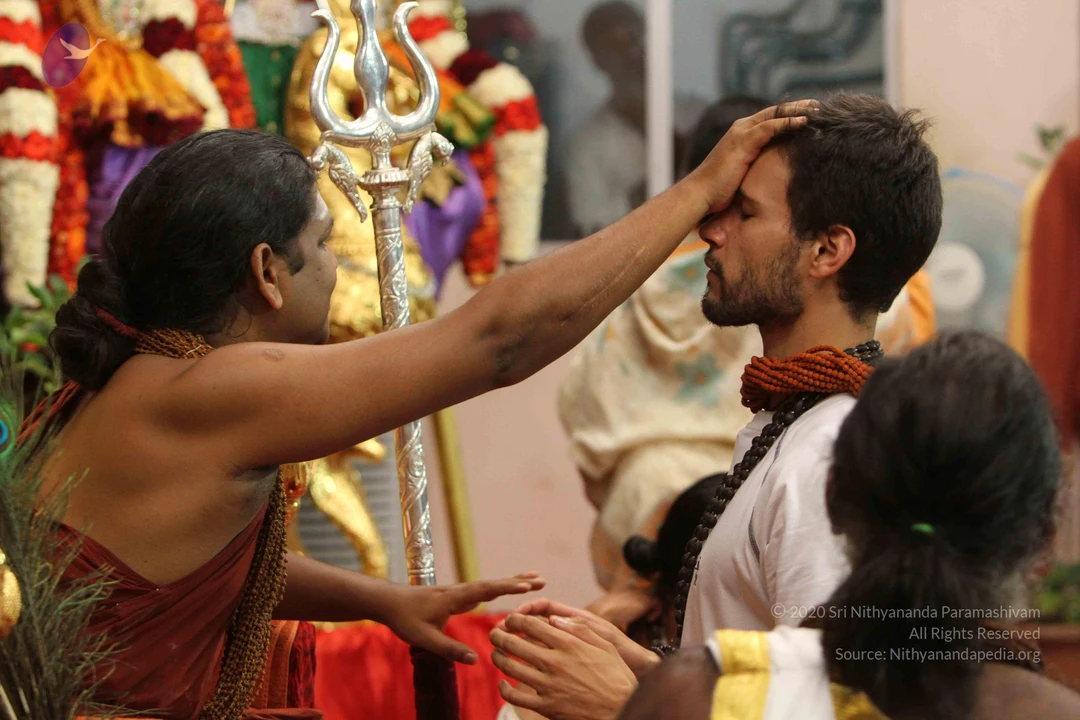
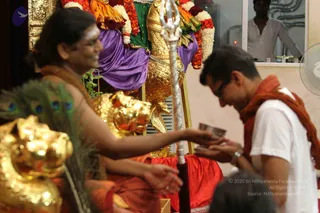
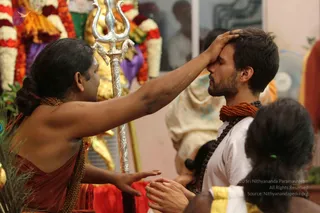
Photograph of a ritual at a golden peetha-style seat draped in purple cloth and garlanded with orange and white flowers. A seated figure in orange robes with a white forehead mark sits to the left, extending an arm toward a man in a white t-shirt and orange shawl who leans forward, offering or receiving a small silver bowl. A silver trident stands in the foreground, a peacock-feather fan and gold vessels are at left, and a man in white stands in the background near a fan. The seated figure wears a rudraksha-style mala and the layout suggests a puja offering, though the seated person's identity cannot be confirmed from appearance.A photograph of a diksha-style blessing in a temple-like setting. A bare-shouldered figure in a maroon-red cloth with a dark rudraksha-style necklace and a gold chain places one hand on the forehead of a bearded young man with closed eyes, who wears a white shirt and an orange-and-black beaded necklace. A silver trident stands upright beside them. Behind are garlands of white and red flowers, a golden deity murti and draped cloth. Two other people, a woman with hair in a bun and a figure in white, sit at the lower right with hands folded in namaskar.

06-RUDRA-HOMA-AND-VIRAJA-HOMA

46 photosSource gallery
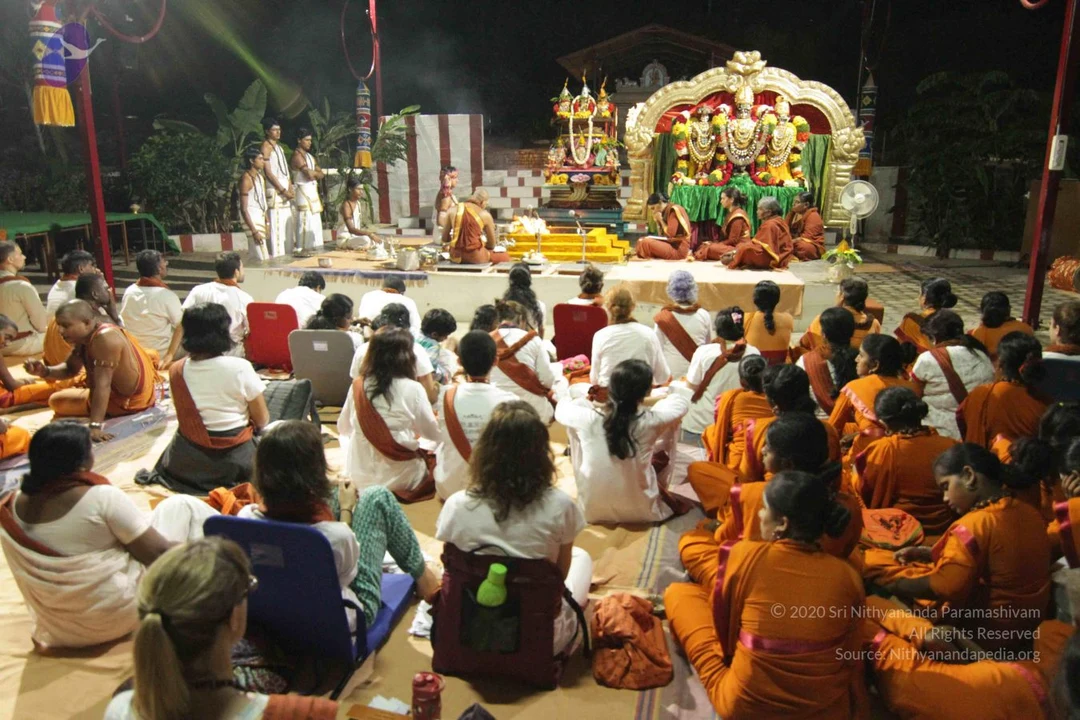
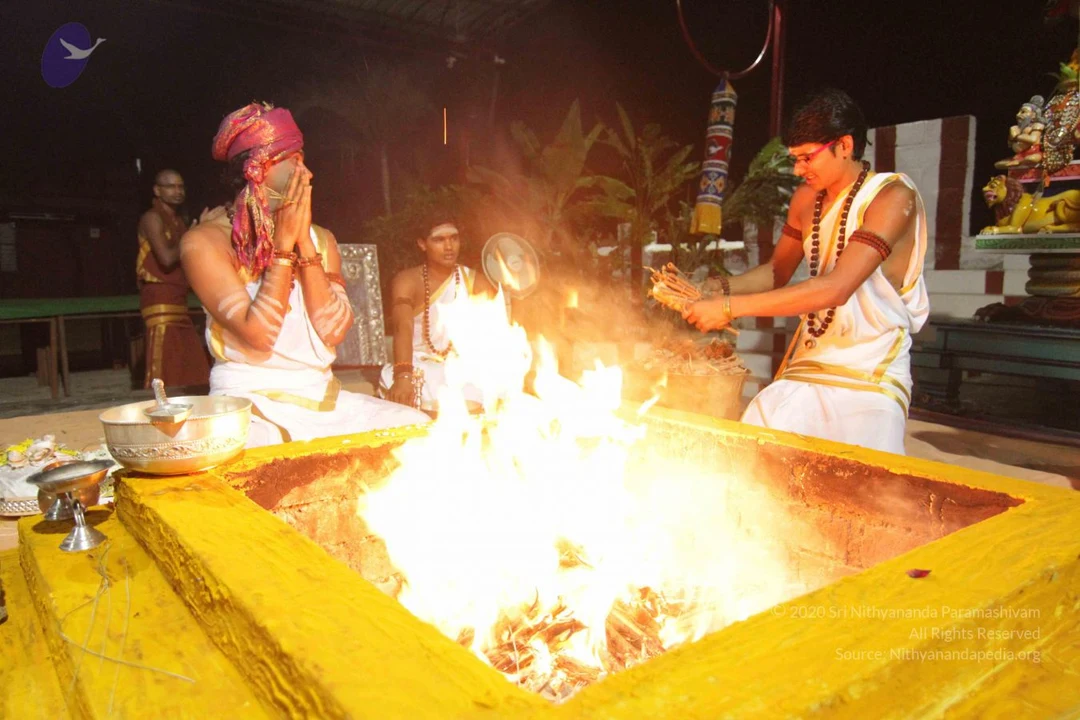
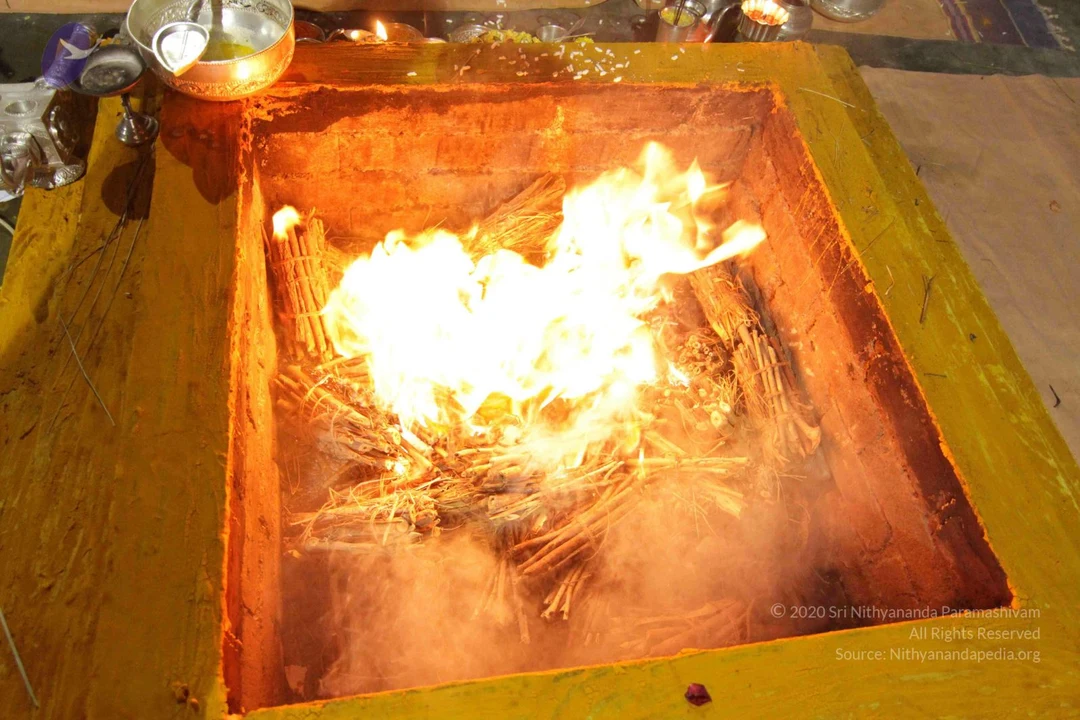
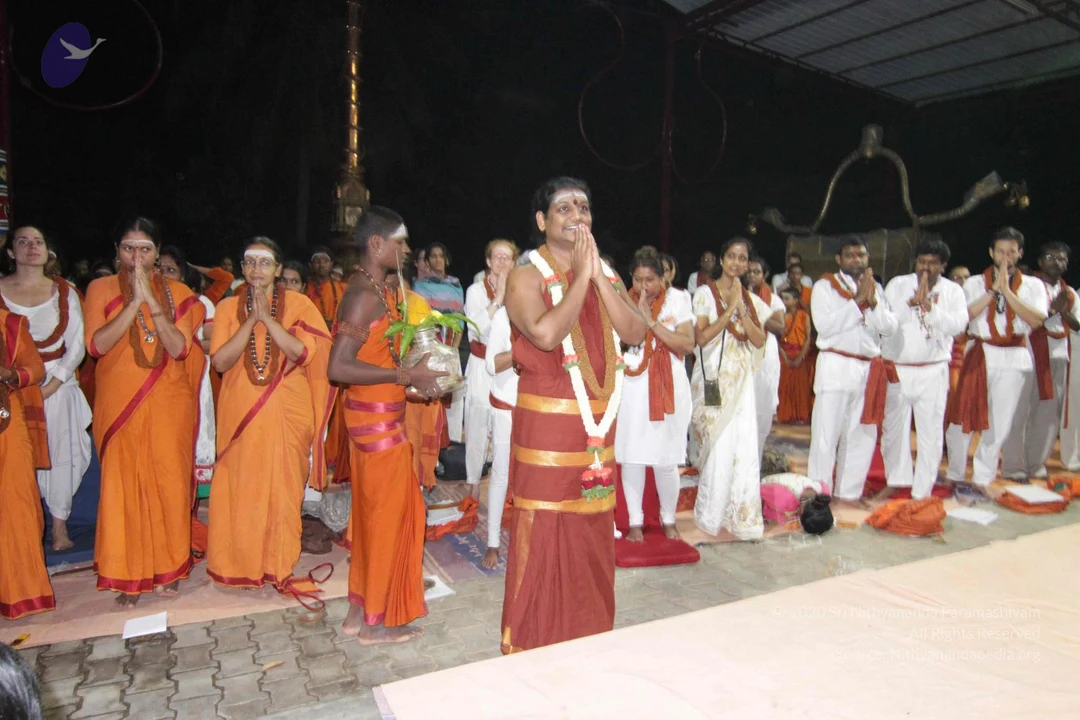
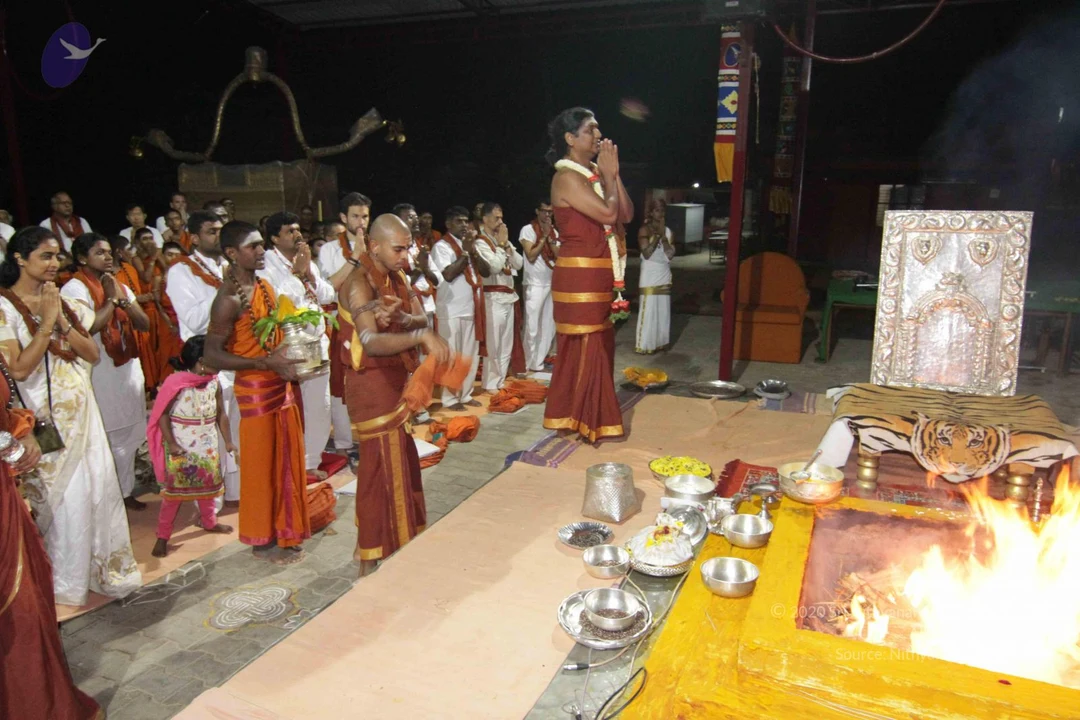
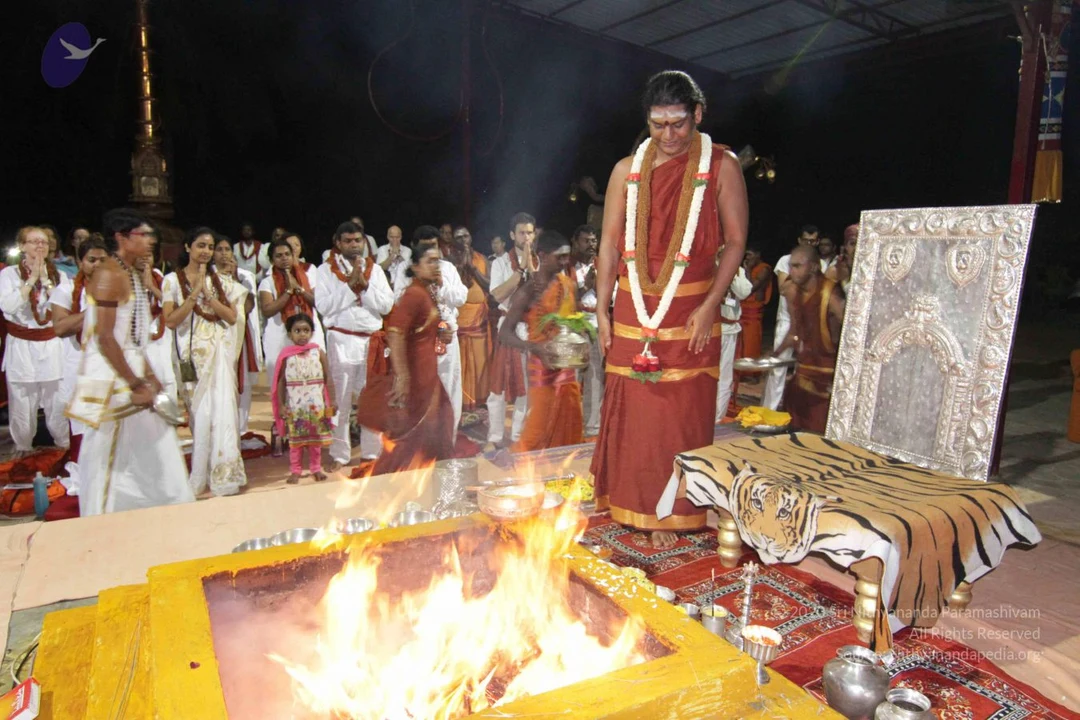
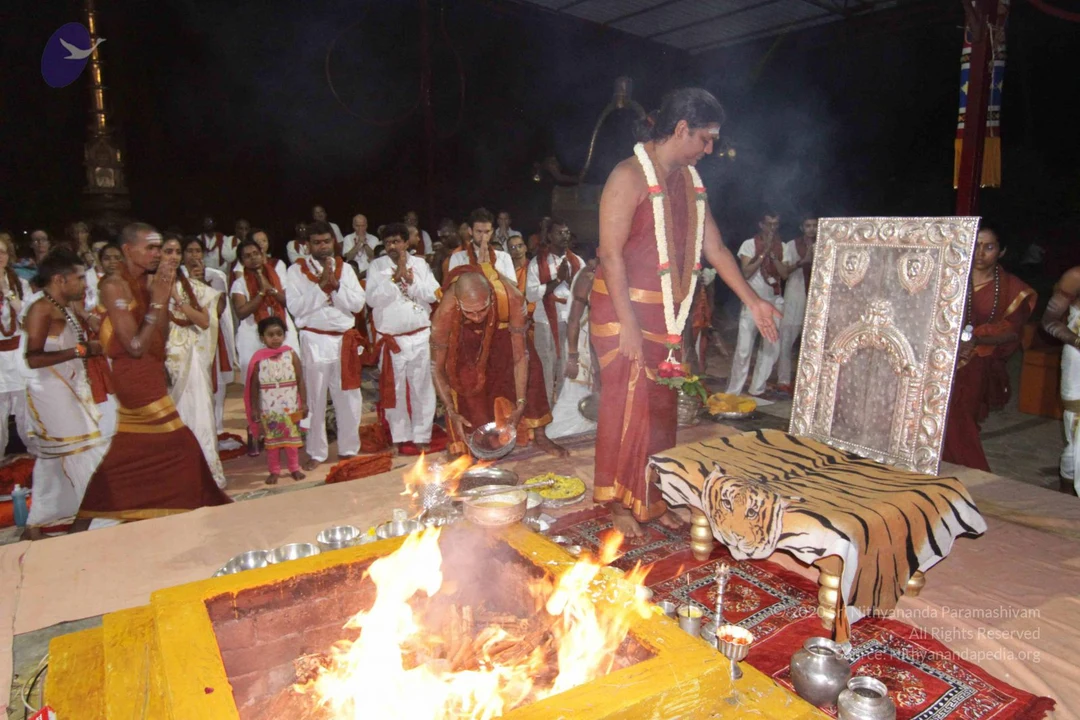
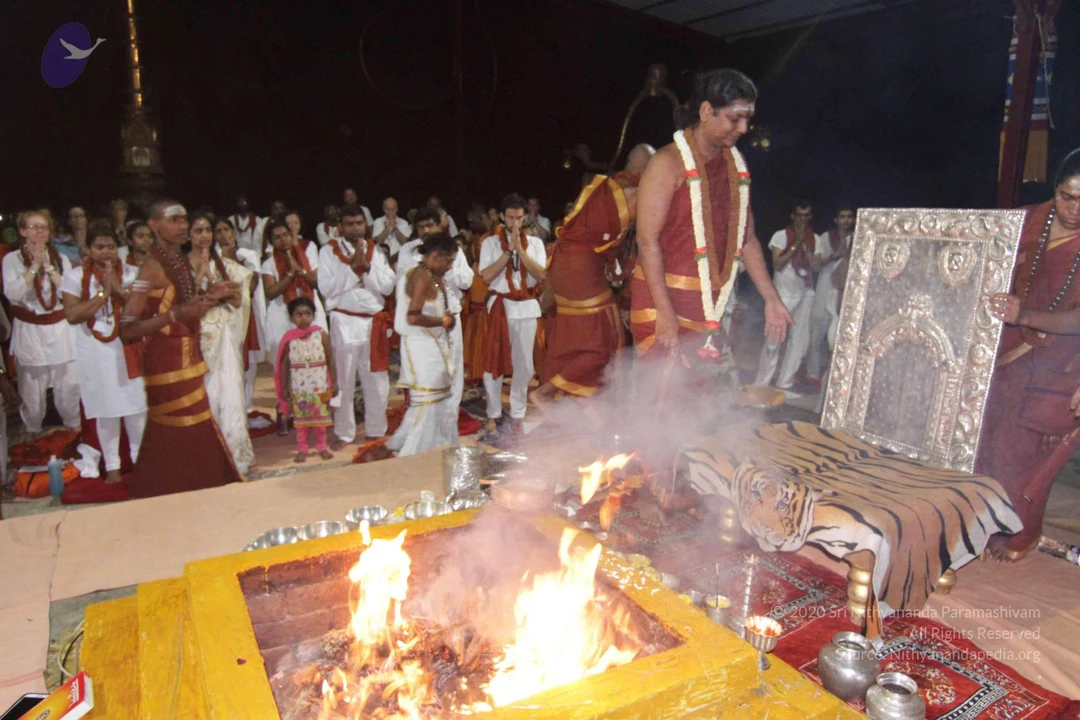
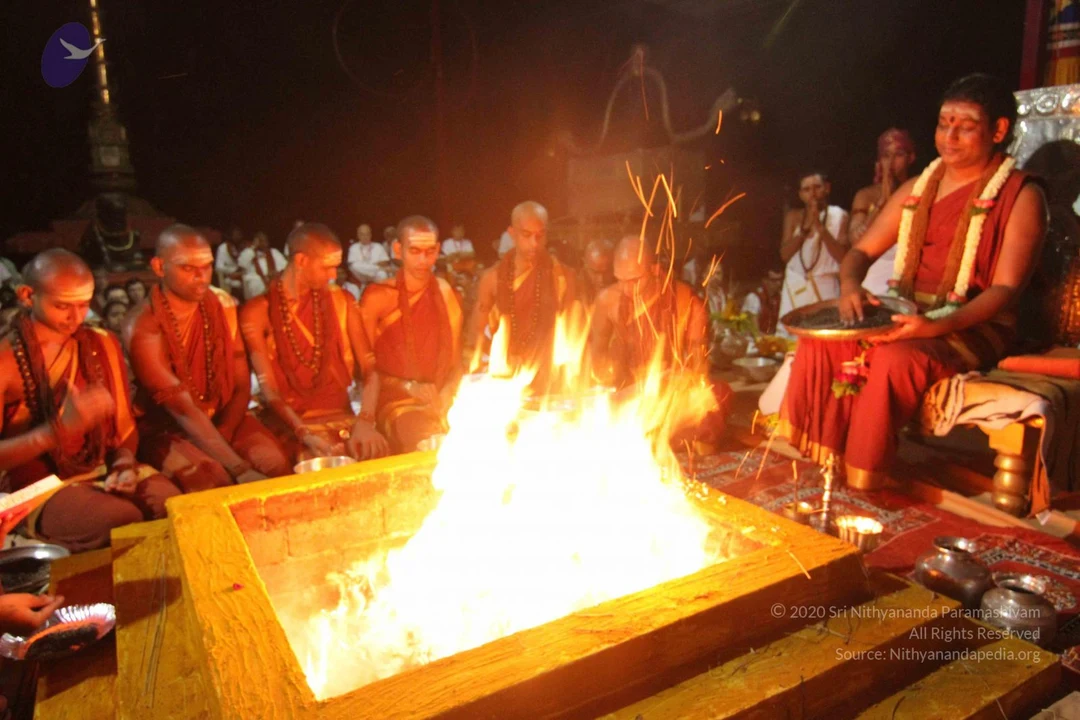
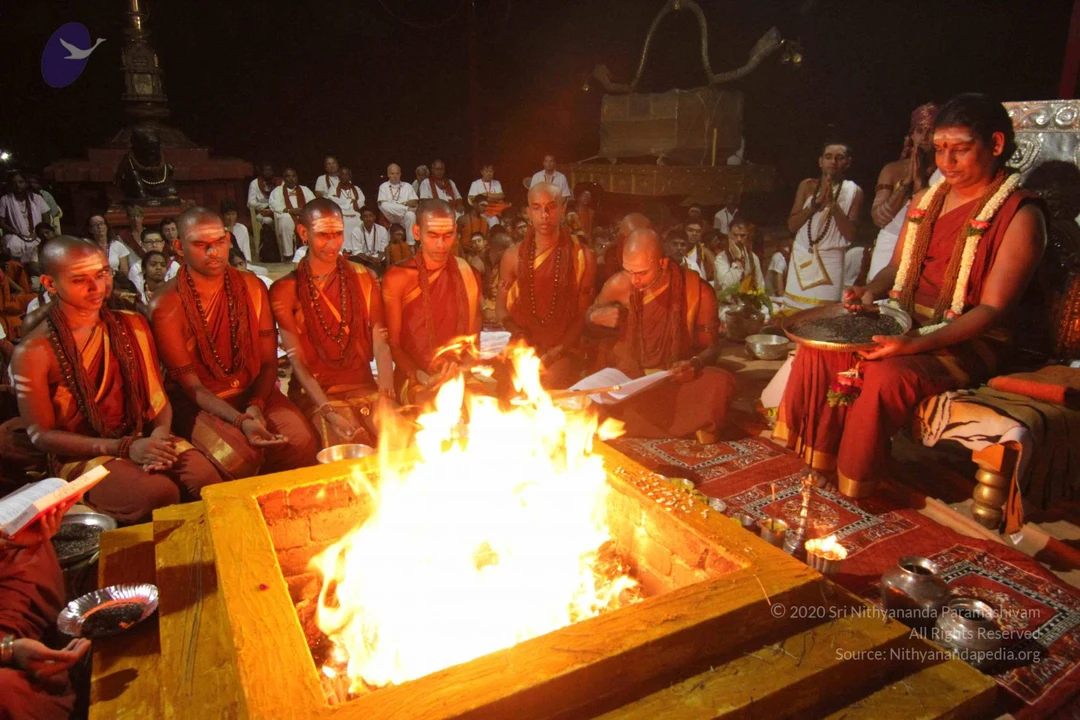
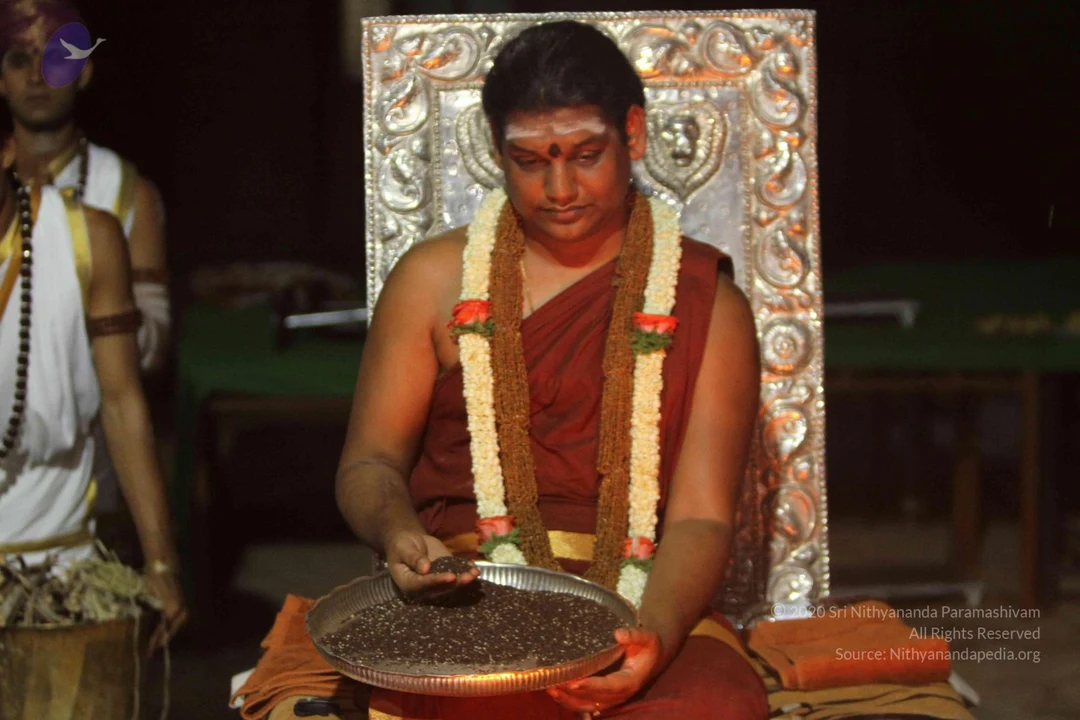
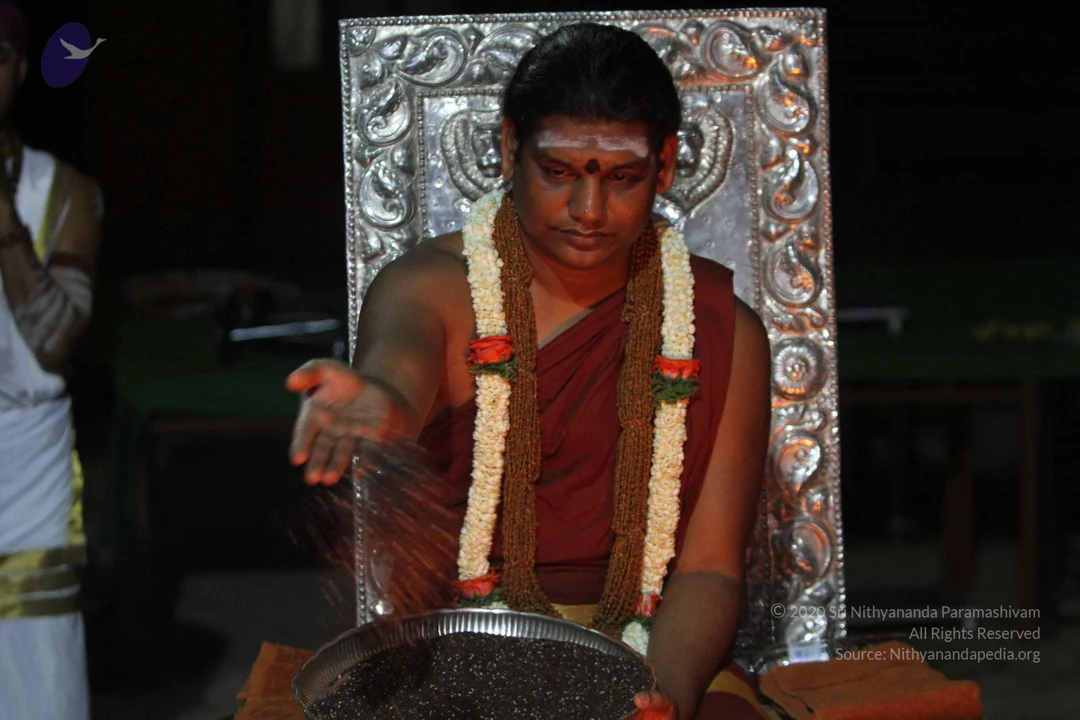
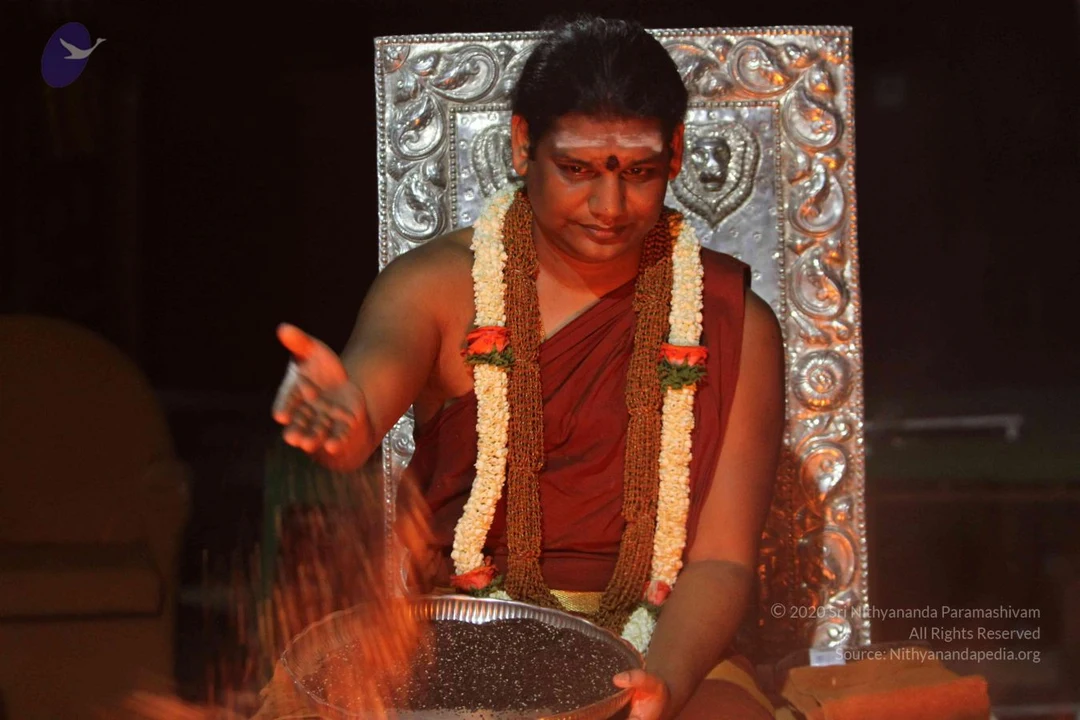
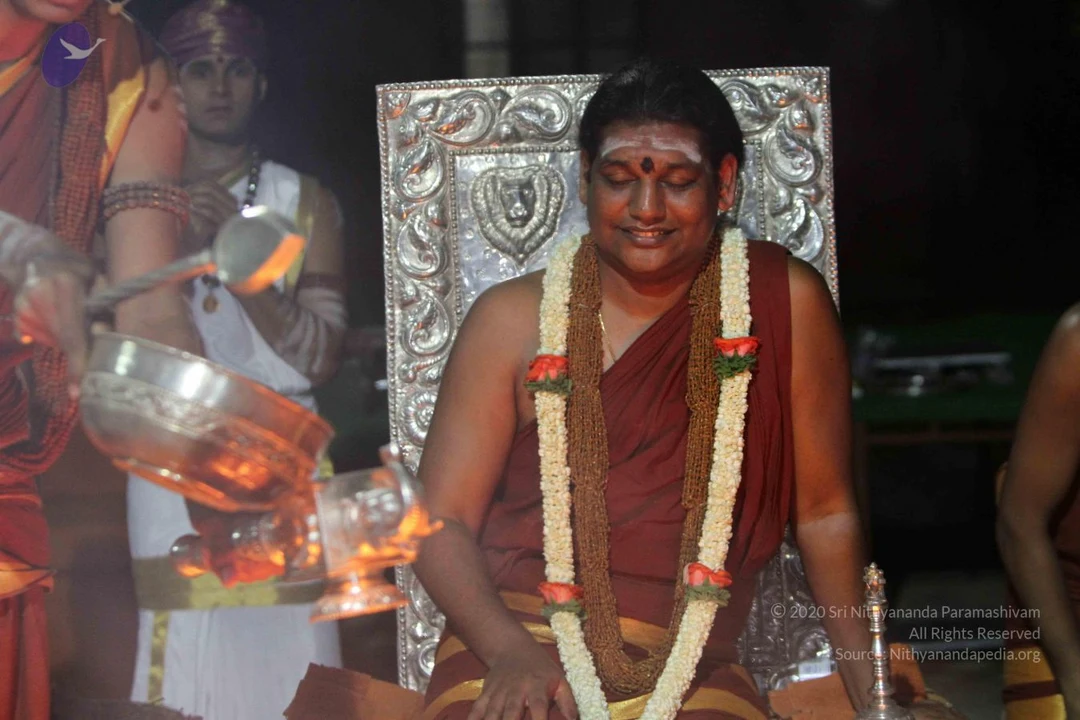
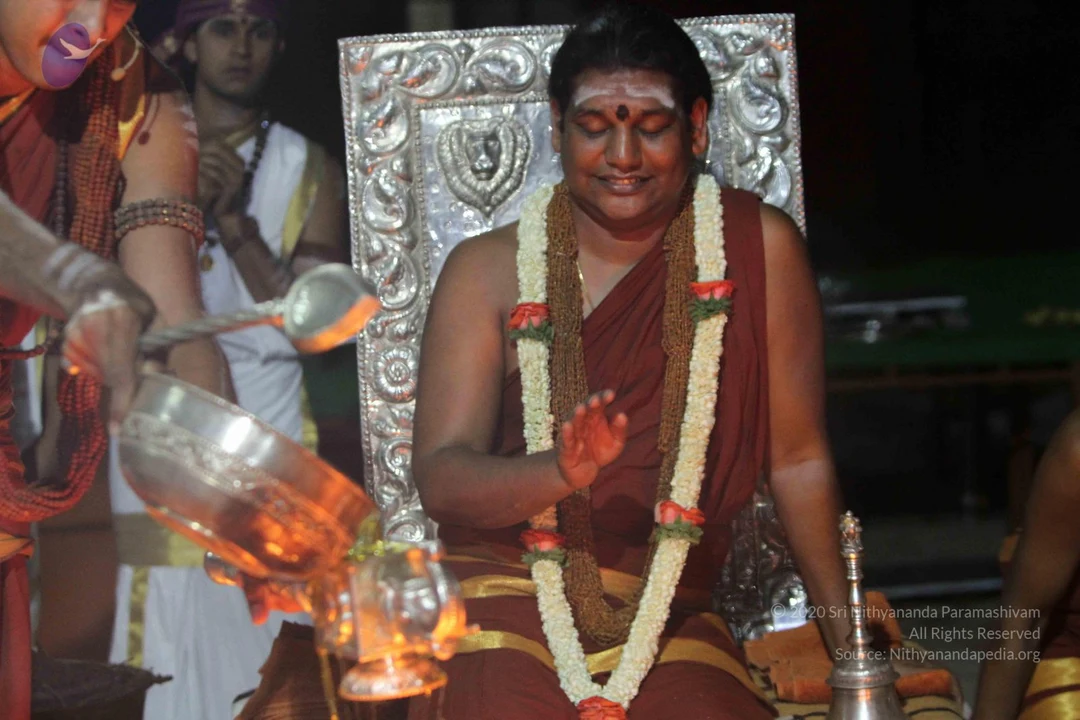
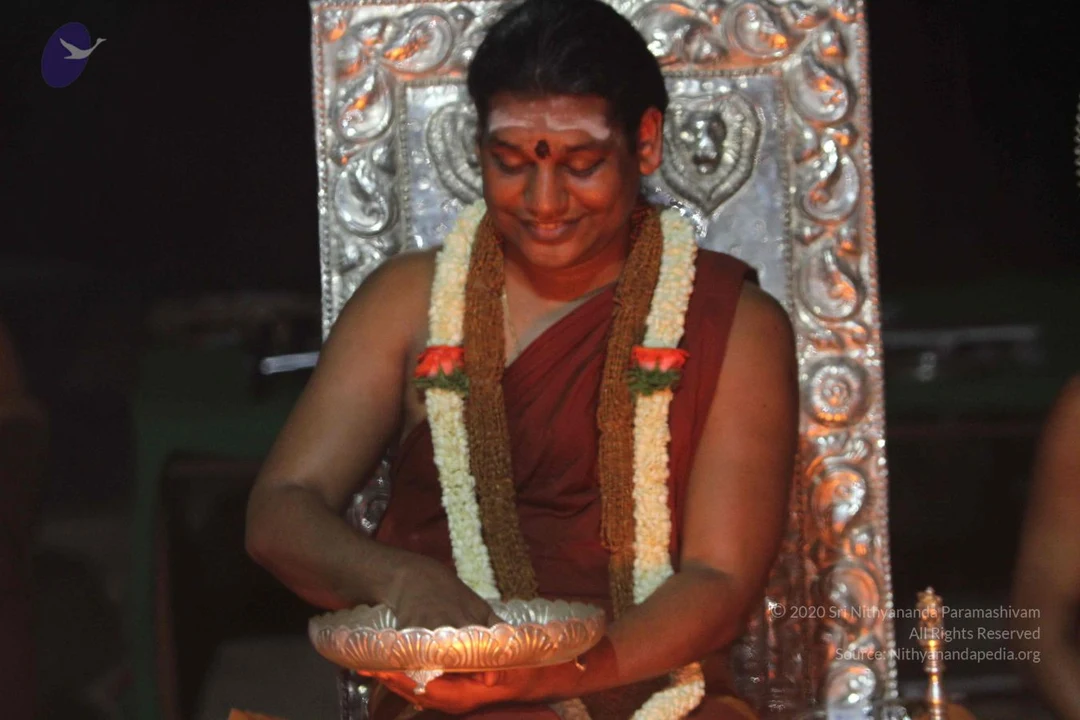
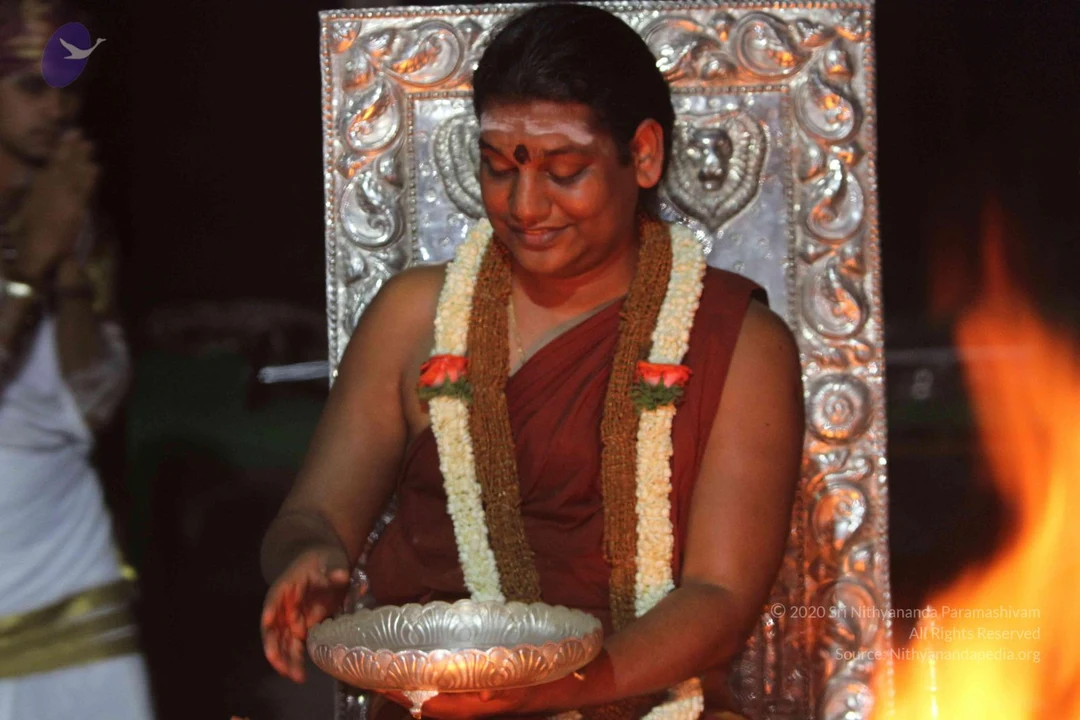
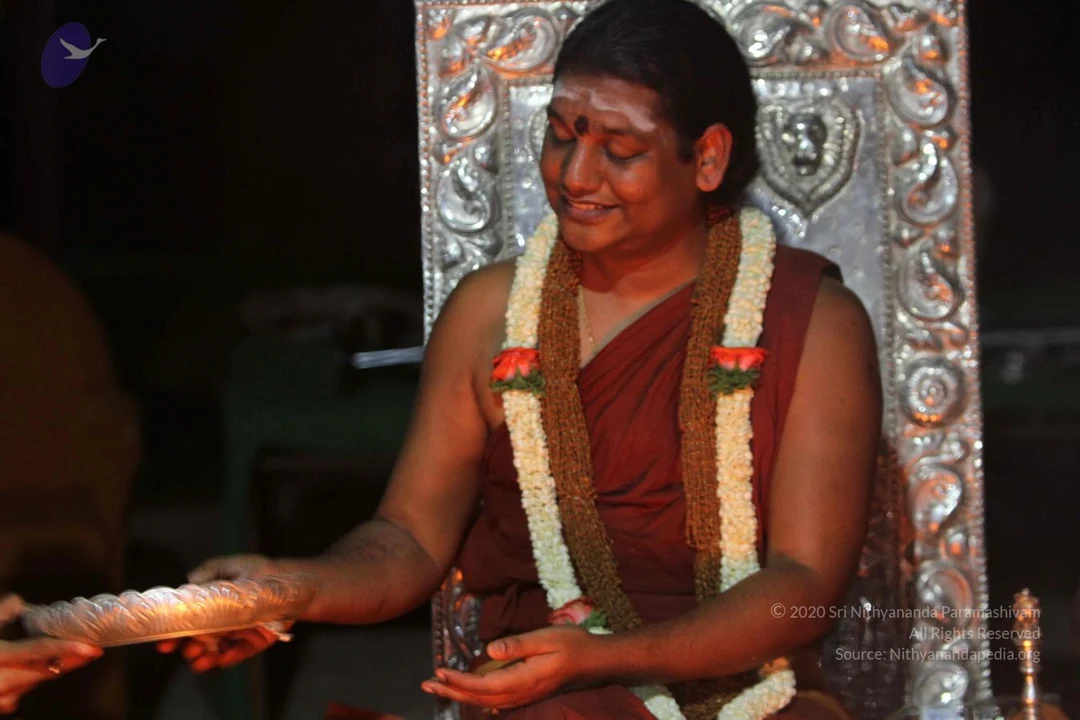
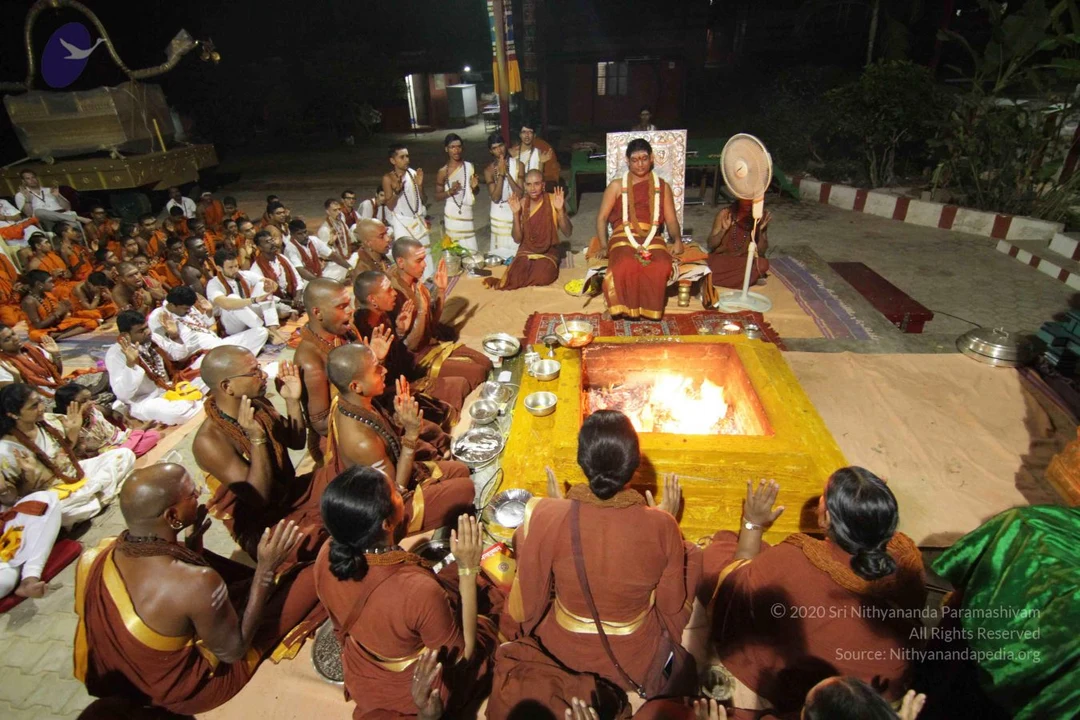
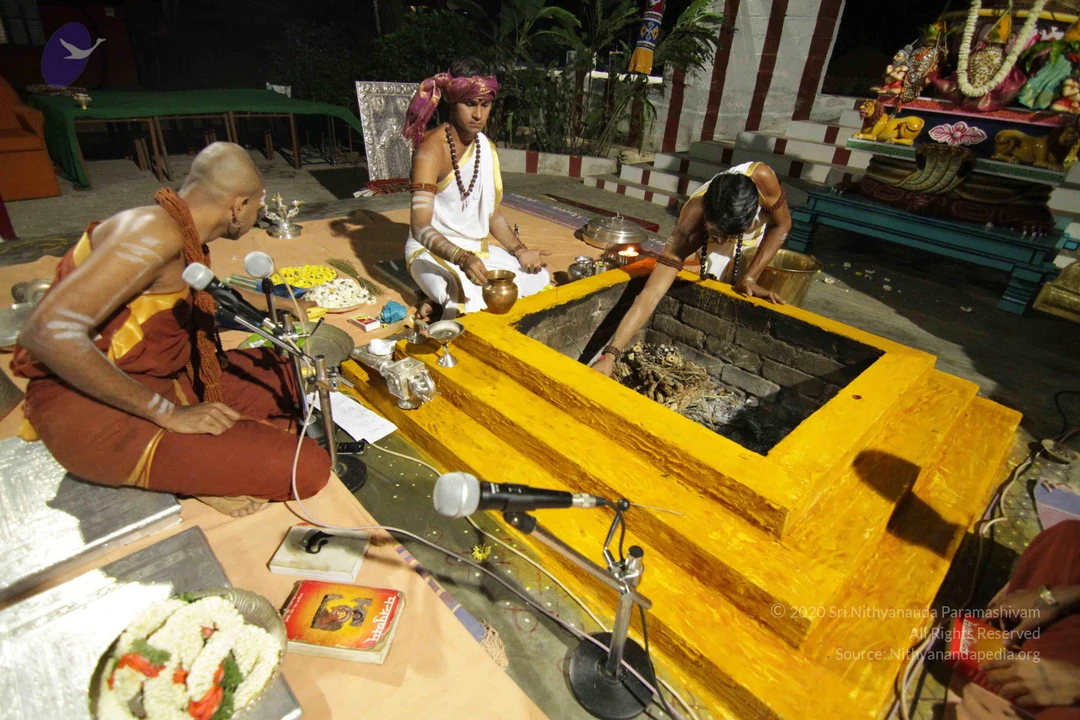
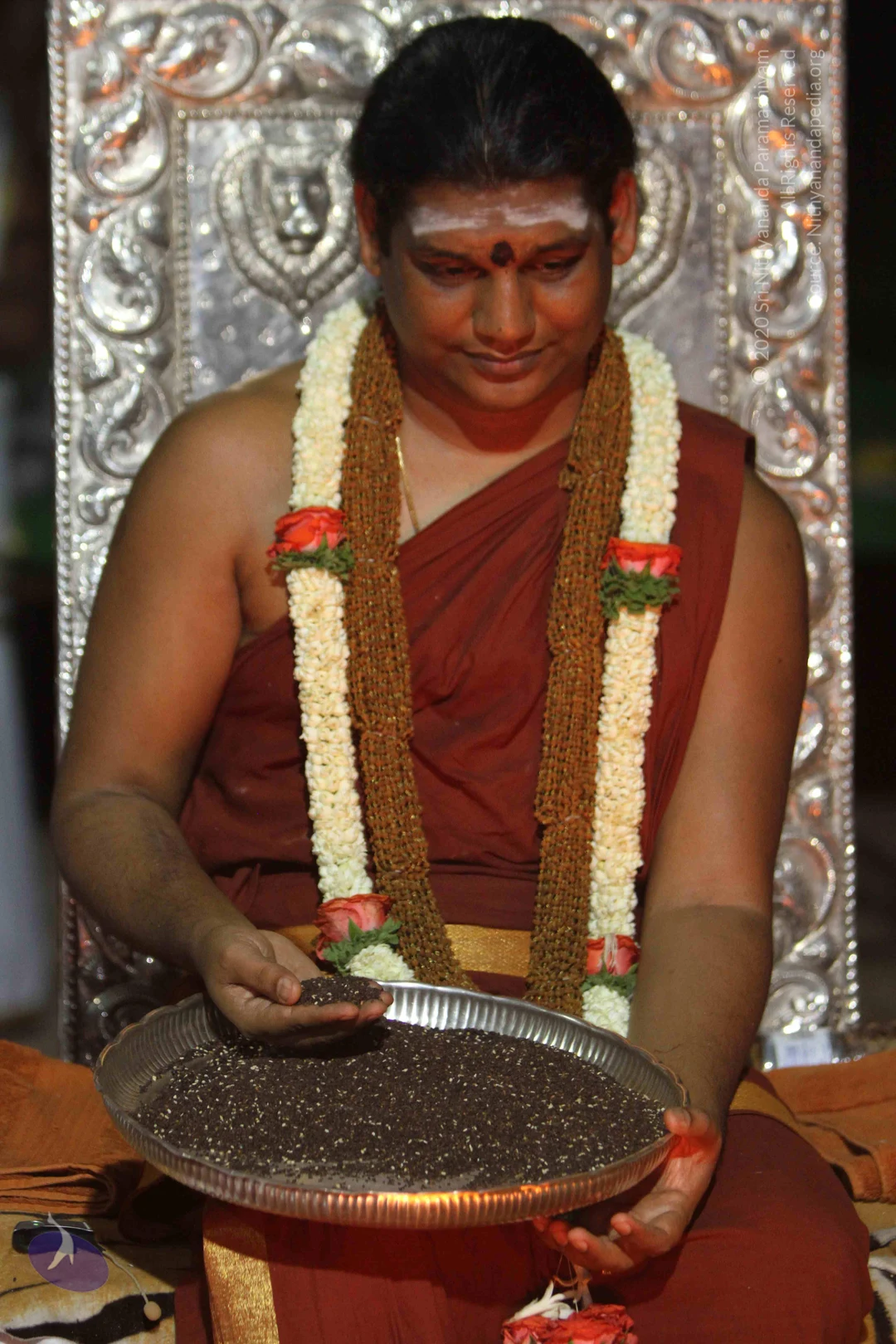
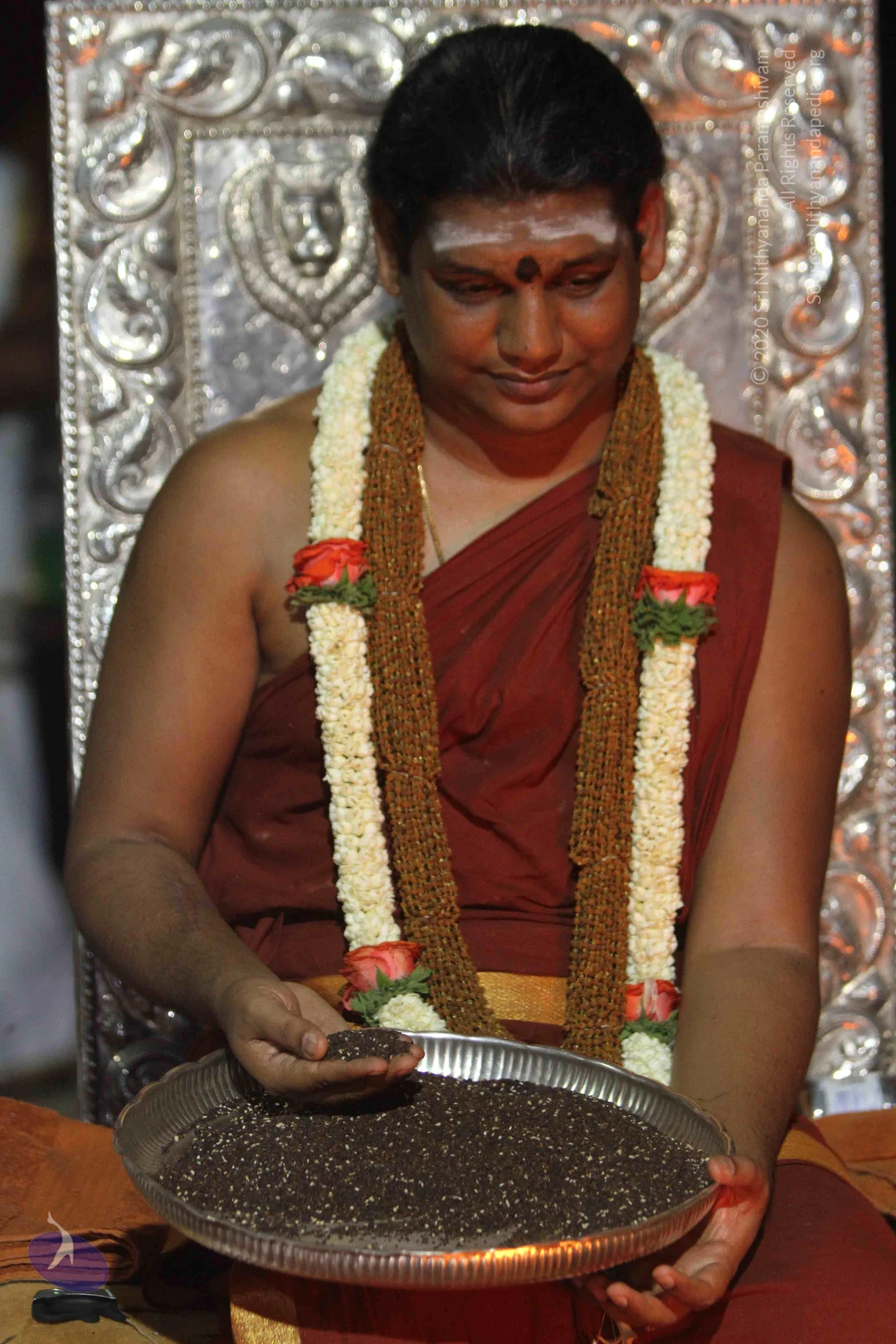
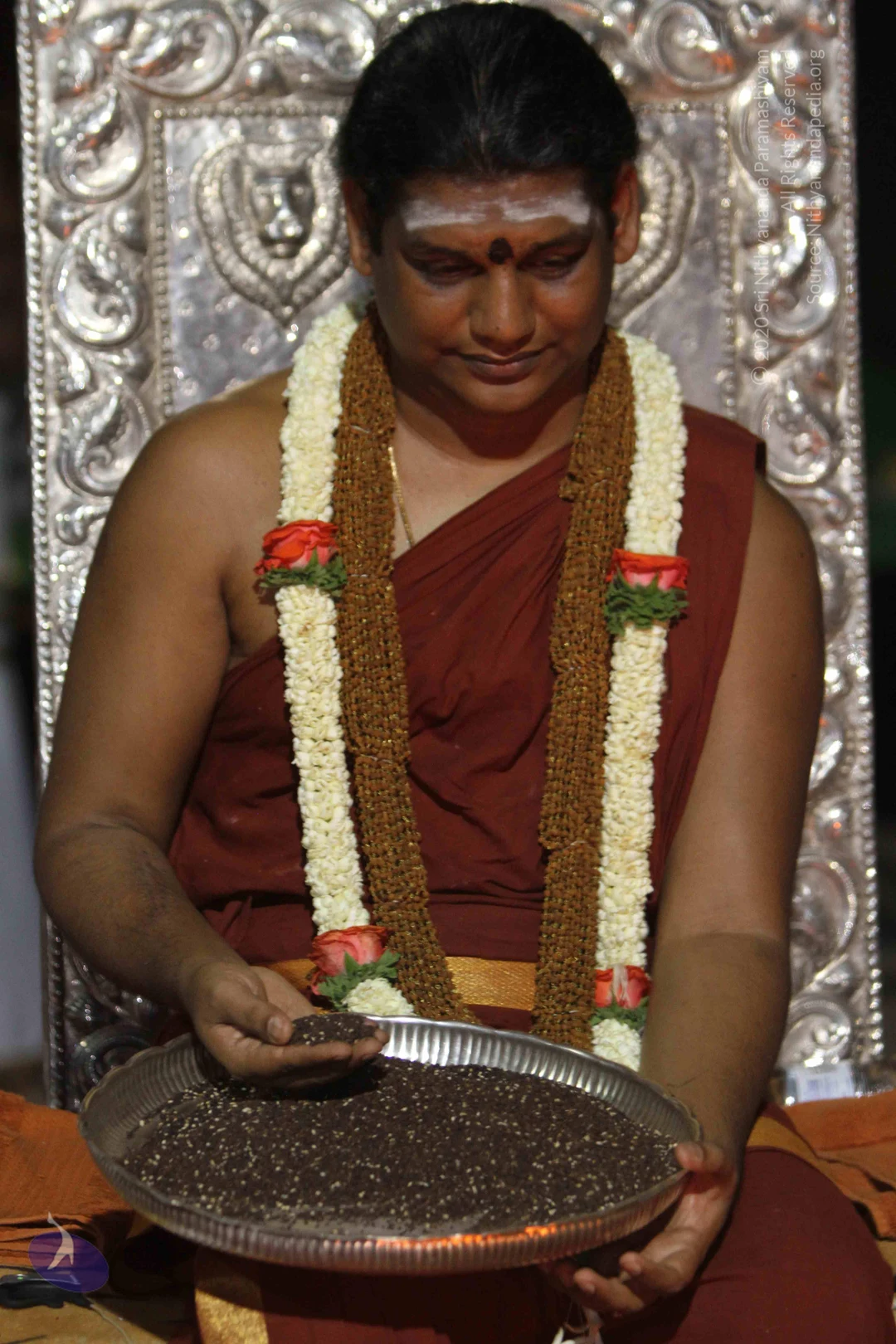
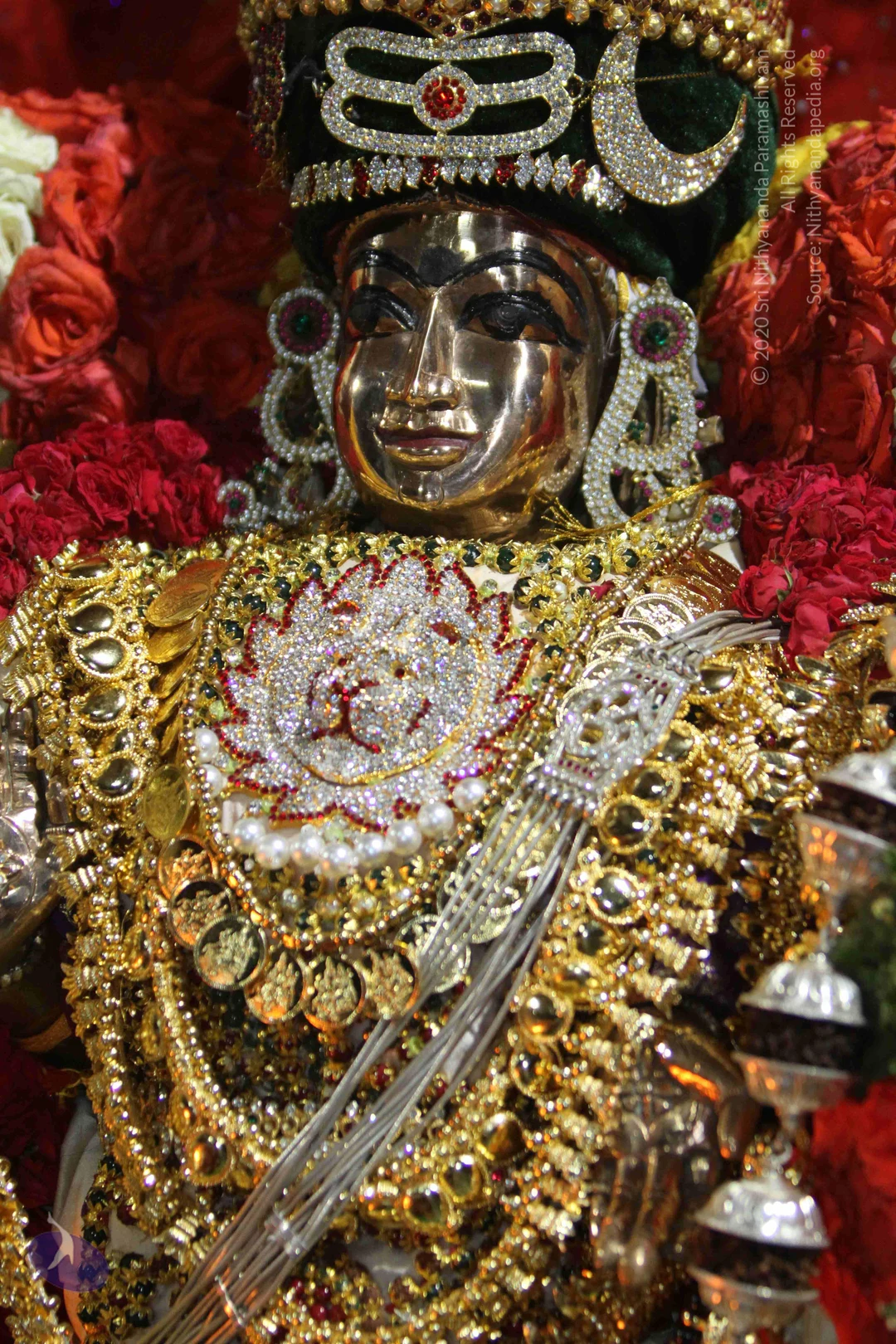
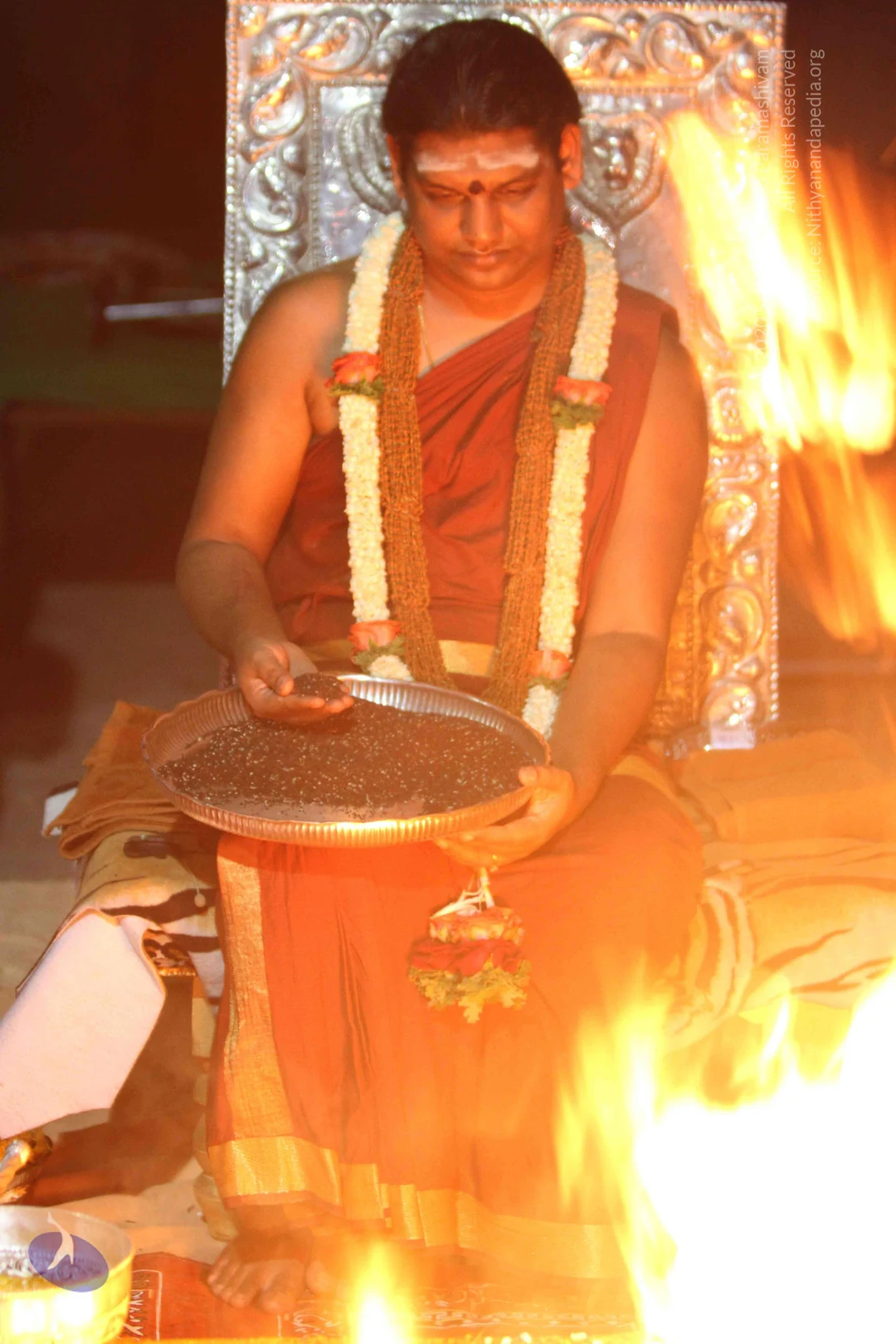
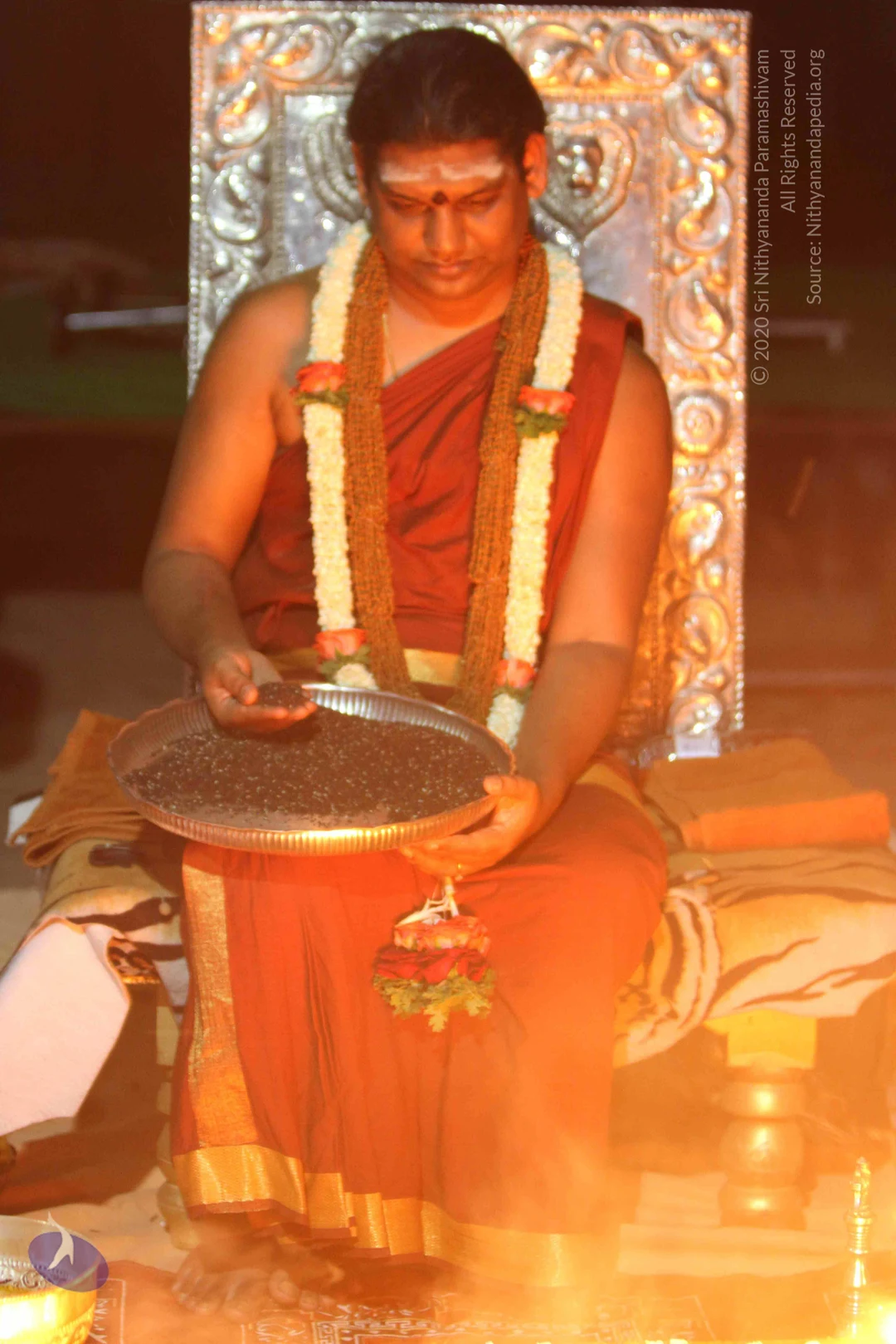
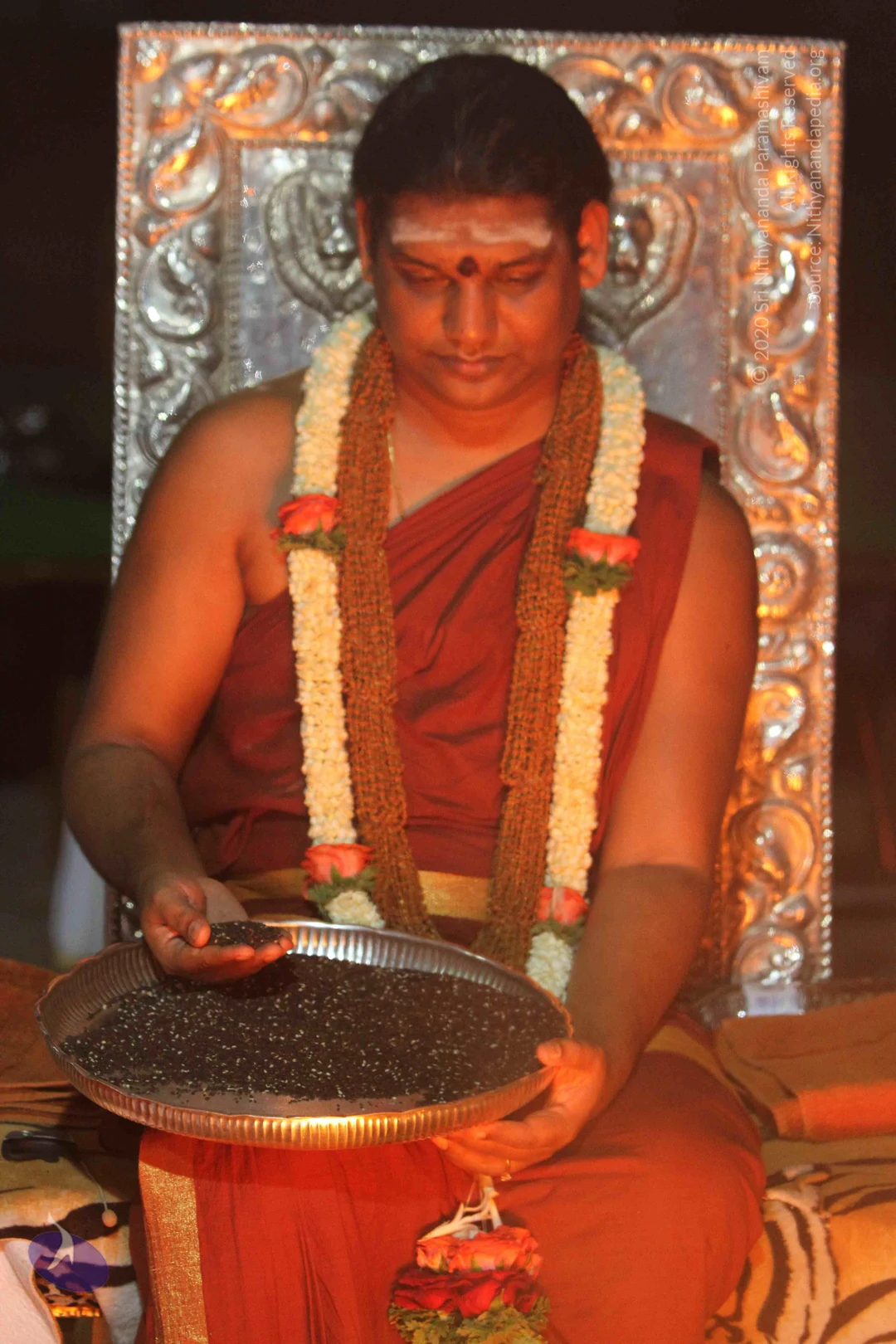
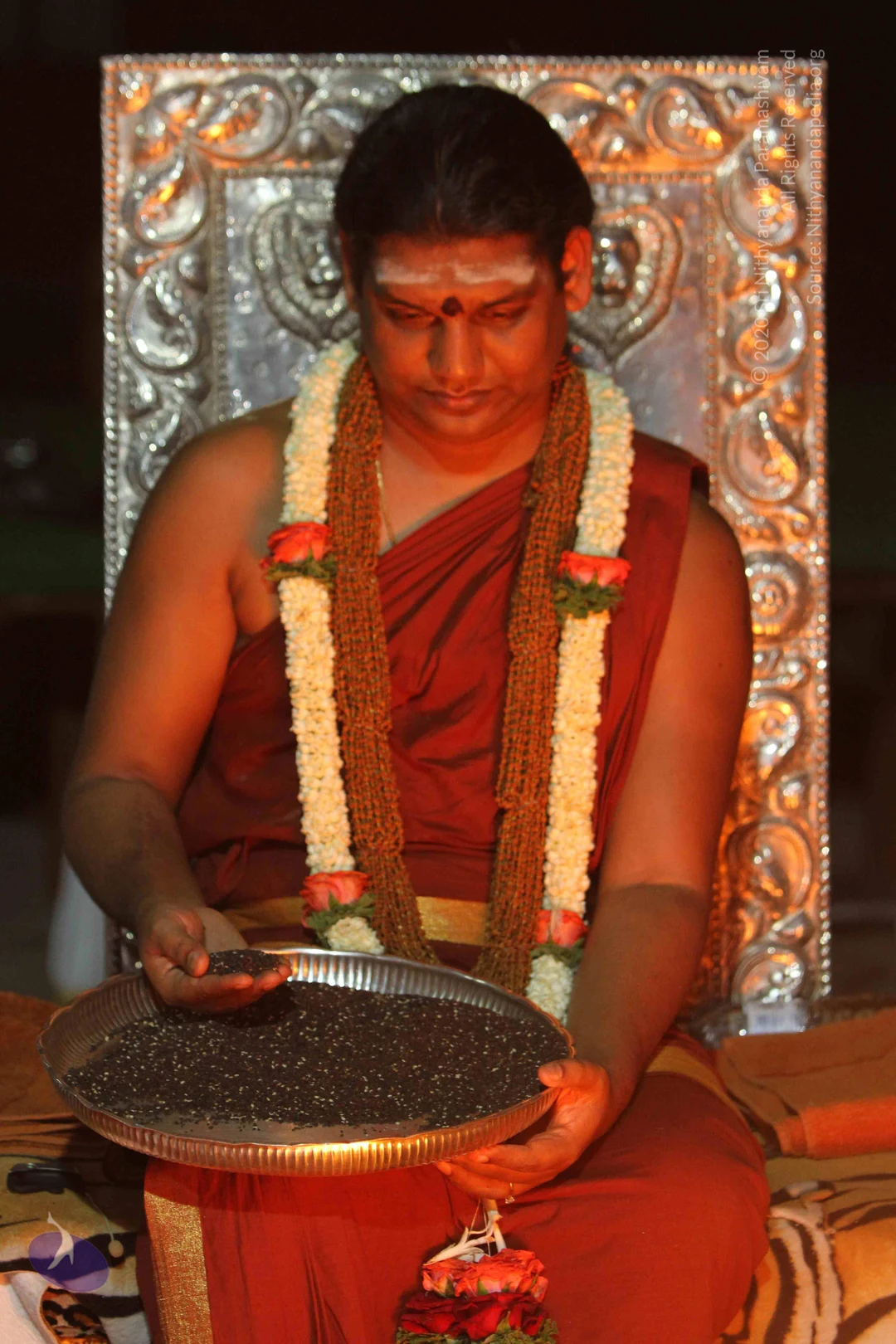
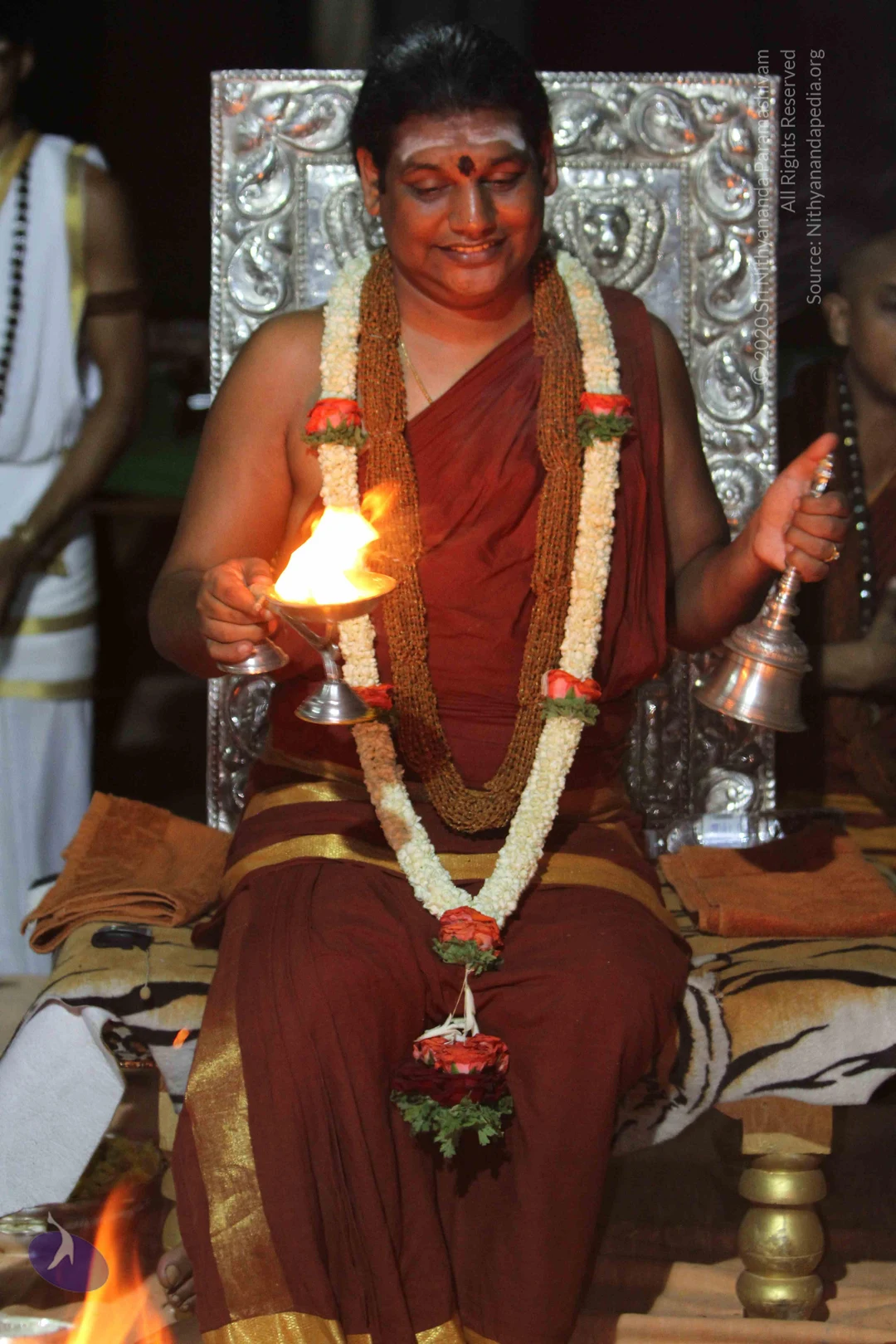
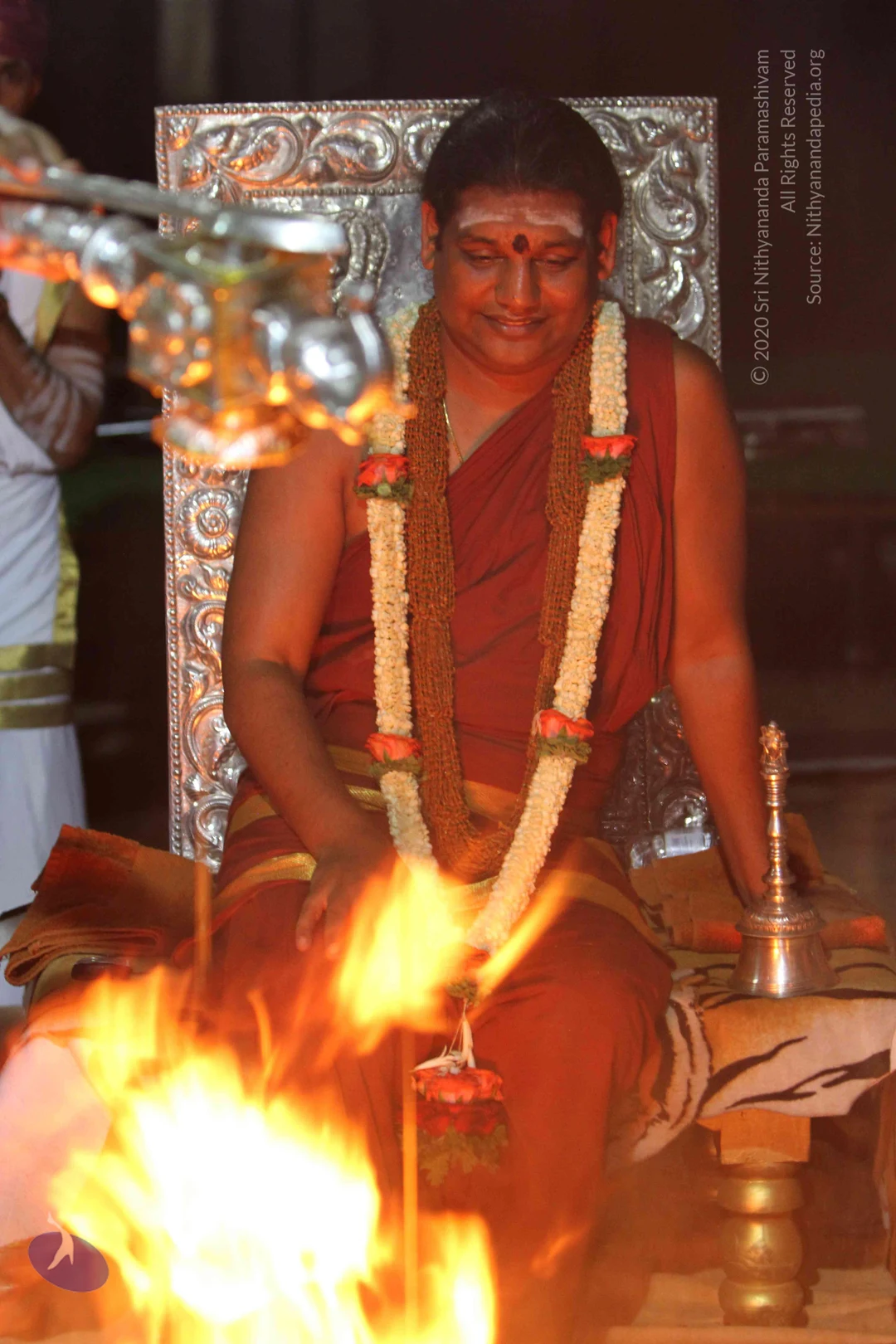
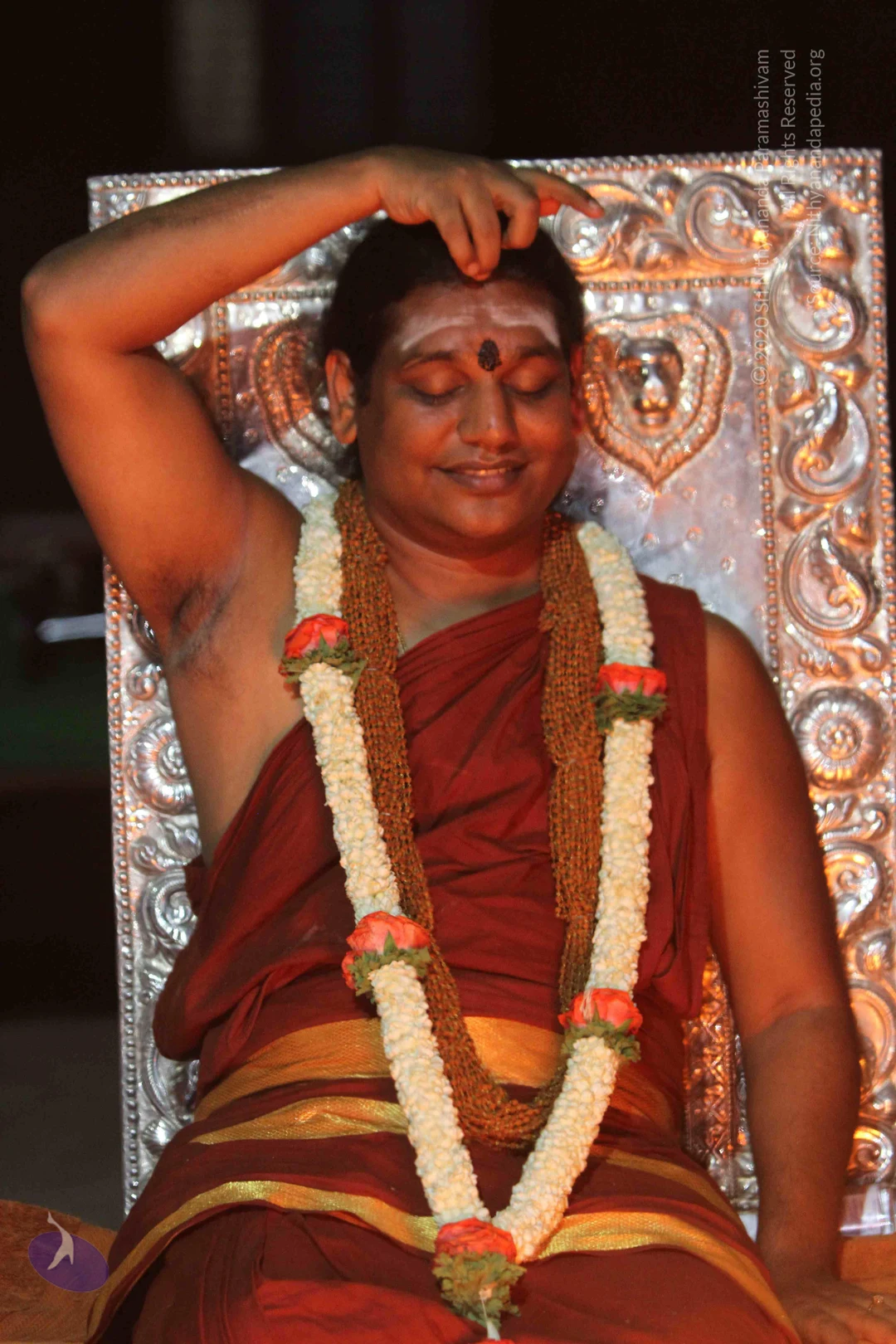
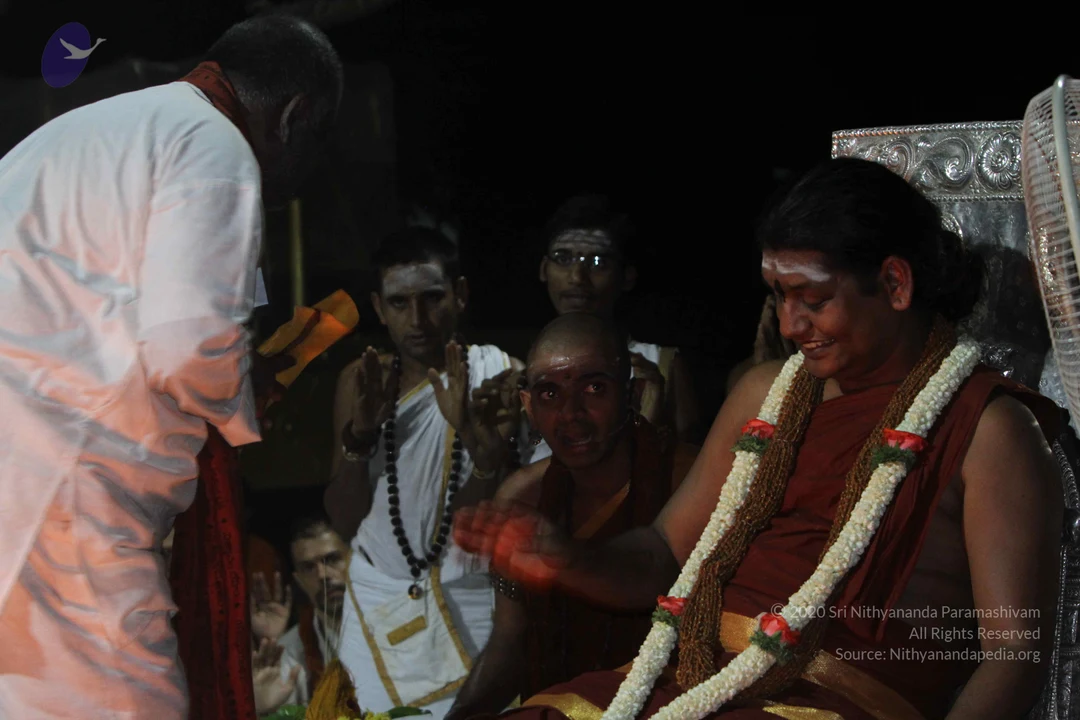
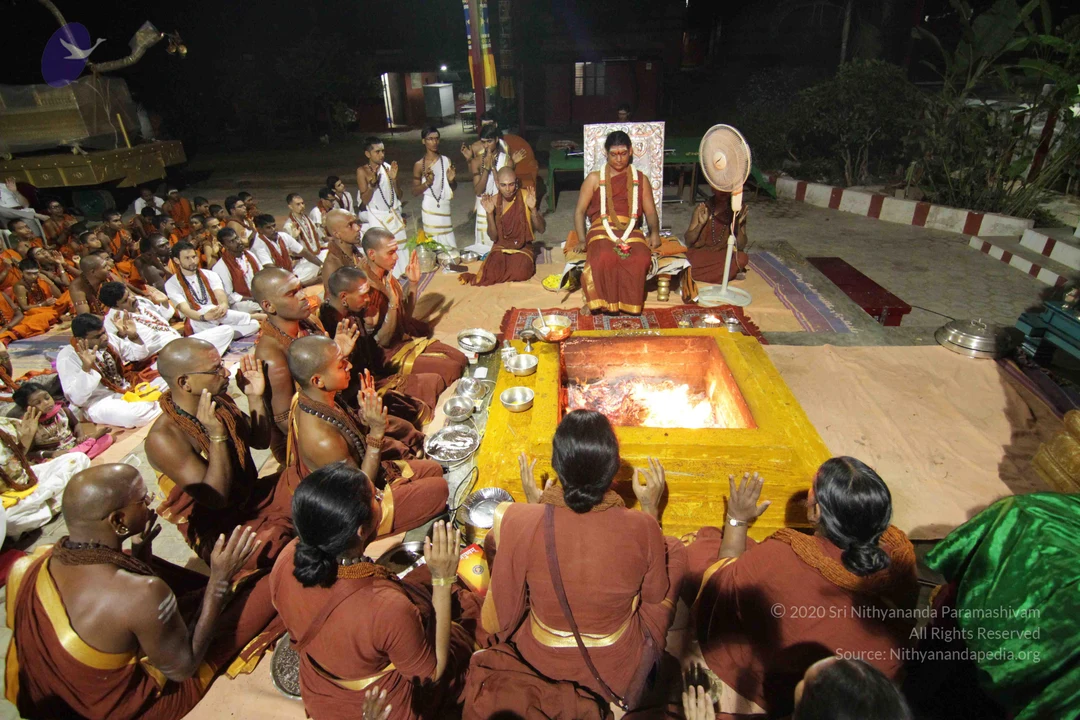
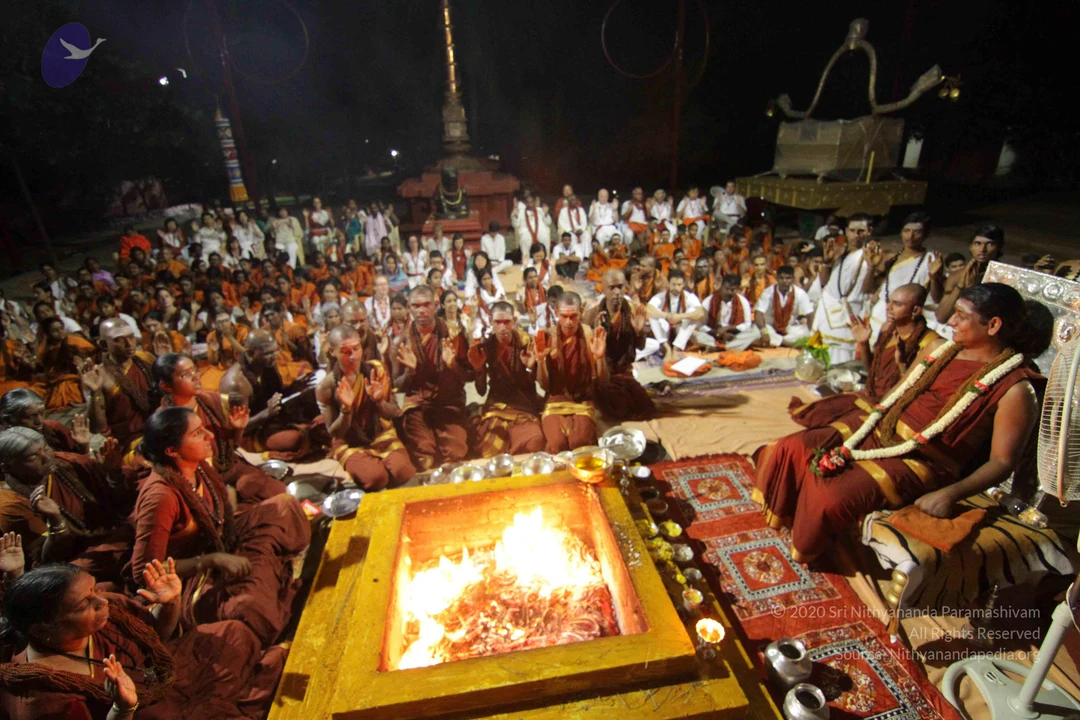
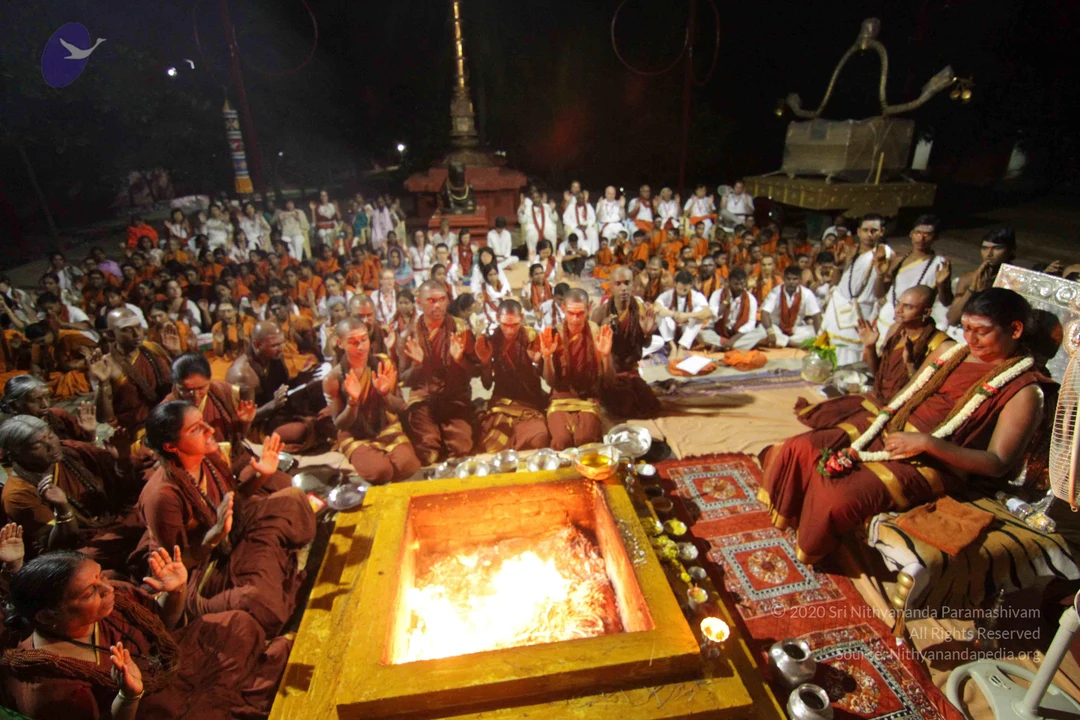
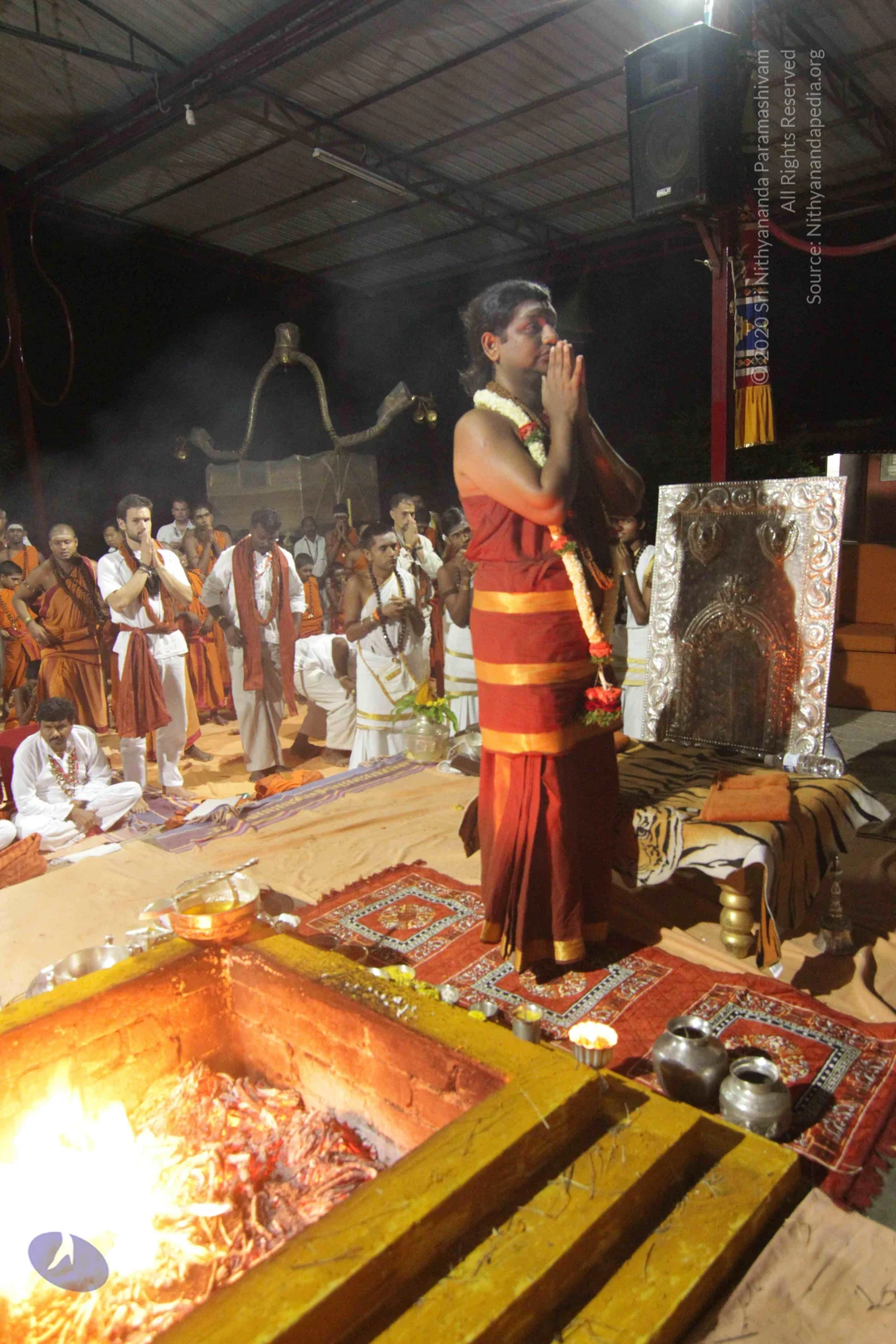
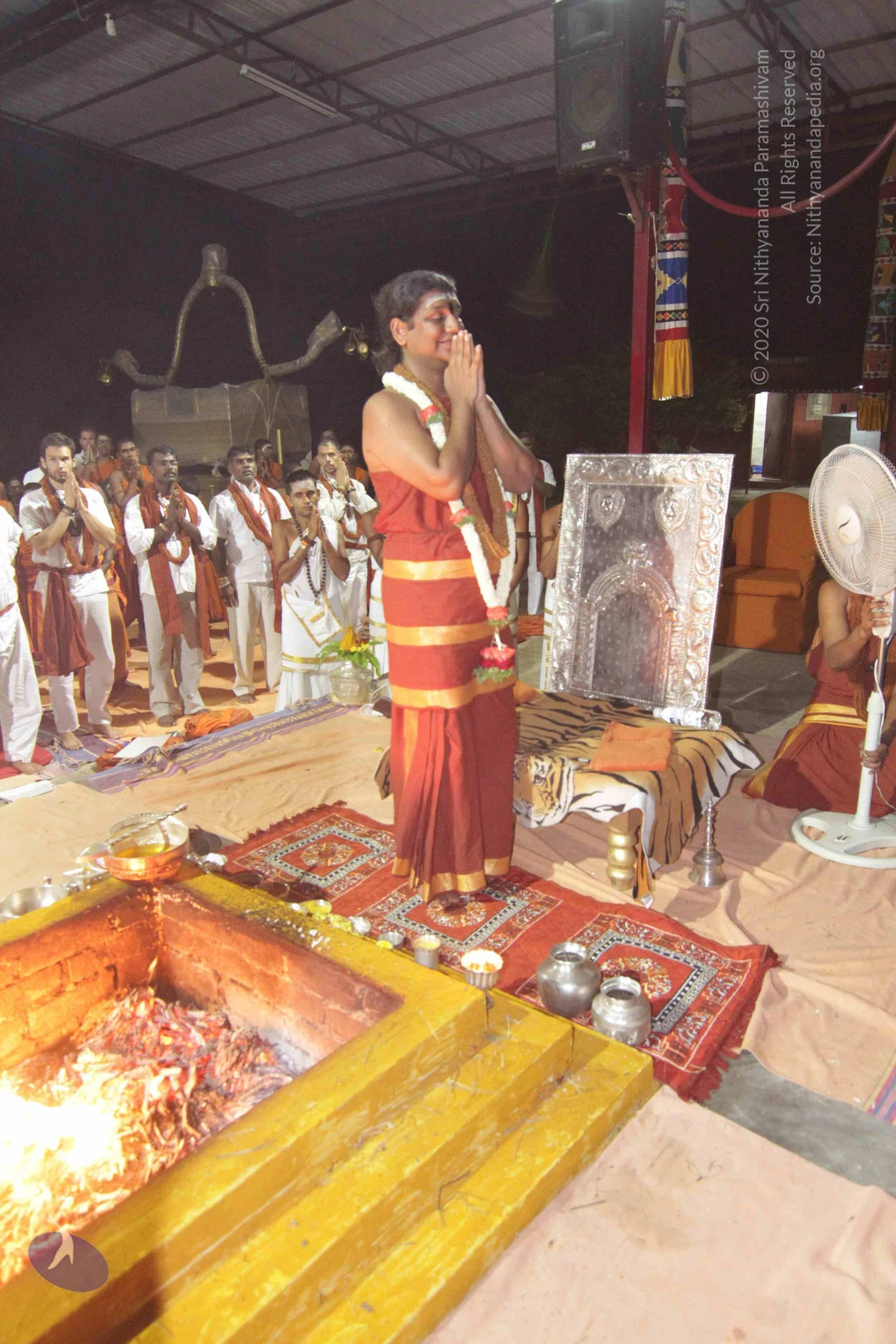
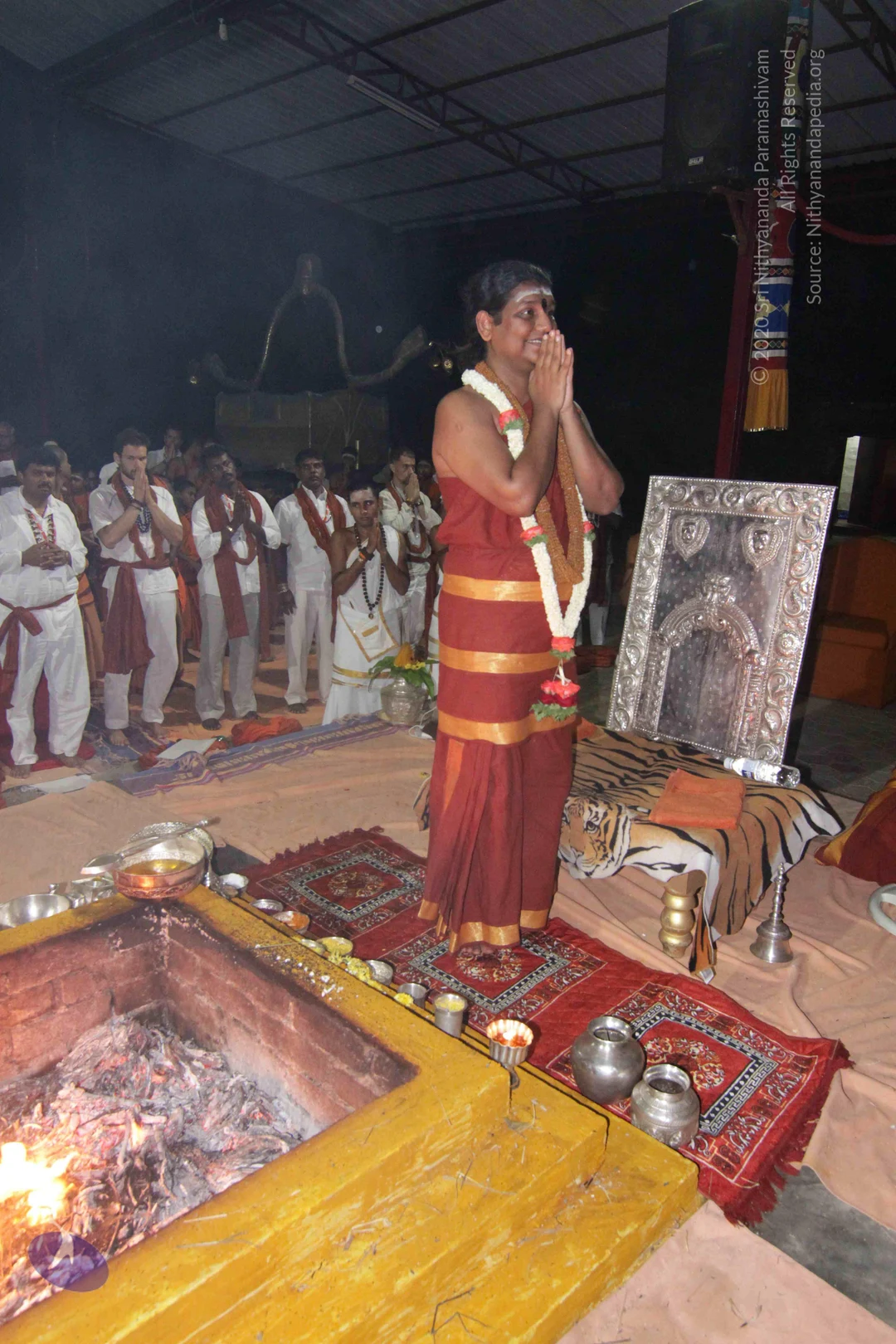
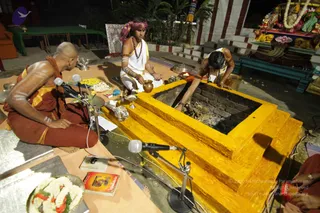
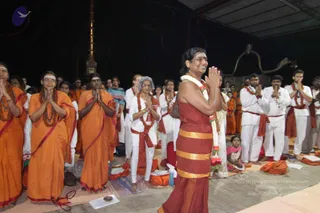
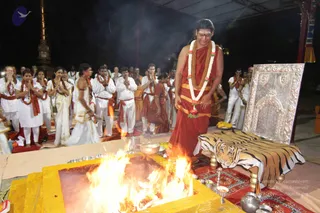
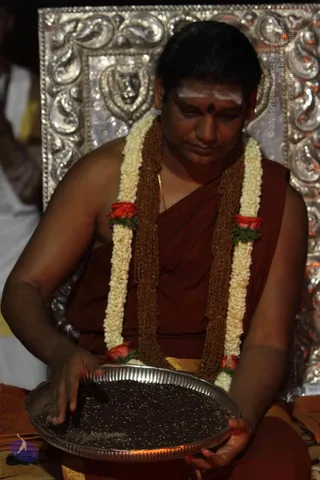
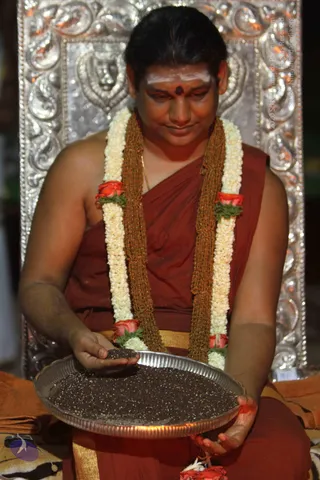
Night outdoor homa ceremony beside a temple-like shrine. A large yellow-painted rectangular fire pit with stepped sides holds burning wood and embers. Two priests in white dhotis and yellow-bordered garments kneel at the pit: one in a white top and red-pink head cloth tends the fire, another bare-chested with white body markings and a dark red-orange cloth crouches to feed it. A third ritual participant in red-orange robes sits to the left with a microphone stand, a small book and a silver plate with white flowers and fruit. Brass vessels and a kalasha sit near the pit. Behind them a shrine displays carved deity figures and a white floral garland, with a lion statue and painted pillars nearby.A richly decorated deity murti, shown frontally, with a silver face and a tall gold crown set with red and green stones, marked with a Shiva-linga style tilak. The figure wears heavy gold jewellery, layered necklaces, a jewelled lotus-shaped chest piece, and silver arm ornaments. Silver bell-topped garlands strung with rudraksha beads hang at the sides, framed by red, orange, yellow and white flowers and a silver arch behind. No physical people are visible.Outdoor evening ritual at night under a tin roof. A woman in a maroon-red dress with a broad gold band and a white flower garland stands at centre-right with palms pressed together in namaste, smiling. Around her, devotees in saffron-orange robes and white clothes with red sashes stand with hands folded, some wearing rudraksha malas and white forehead marks. A young girl in pink sits on the mat at right. A tall brass lamp stand and a metal ritual frame are behind the crowd, and white sheets and orange cloths lie on the ground.Night outdoor fire ritual at an open-air pavilion. A bare-chested man in saffron-orange cloth, a white flower garland and a tilak on his forehead stands at a yellow-edged fire pit with tall flames, his hands folded. Beside him a silver-covered seat is draped with a striped tiger-skin cloth on a red carpet, with brass pots and oil lamps nearby. Behind him a line of devotees in white dhotis and saffron shawls stand with palms pressed together in namaskar, with a few women in white saris. The man's appearance with his distinctive adornments is consistent with the page's a person reference, though the image alone is not conclusive. Homa ritual with fire and offerings.A man seated in front of an ornate silver-embossed backdrop holds a round silver tray filled with dark grains, possibly seeds or grain offerings. He wears a rust-red robe, a double garland of white jasmine strands with red rose accents, a brown rudraksha-style mala, and a white tripundra with a red bindi on his forehead. His eyes are lowered as he gazes at the tray. A shadowy figure in white is partly visible at the left edge. The setting suggests a ritual homa or puja. The a person candidate cannot be confirmed from appearance cues alone, since the head is shaved-free and the clothing is priestly rather than distinctively saffron.A seated man in a rust-red sannyasi robe with gold border sits before an ornate repoussé silver backdrop. He wears a white jasmine garland with red roses and a brown rudraksha-style mala, a white tilak with a red bindi on his forehead, and a thin gold chain. He holds a round silver plate filled with dark seeds, sprinkling some from his right hand. One figure only is visible; no other people appear in the frame.