Skip to content
Sunday

26 October 2014

Guru - Embodiment Of Advaita

Dated photos
168
Source pages
1
Media
4
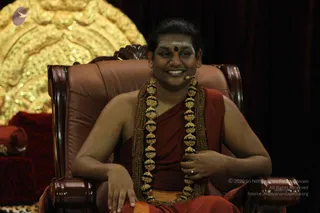
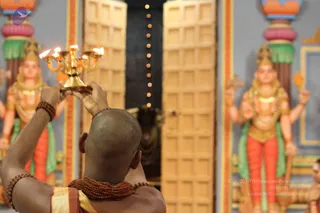
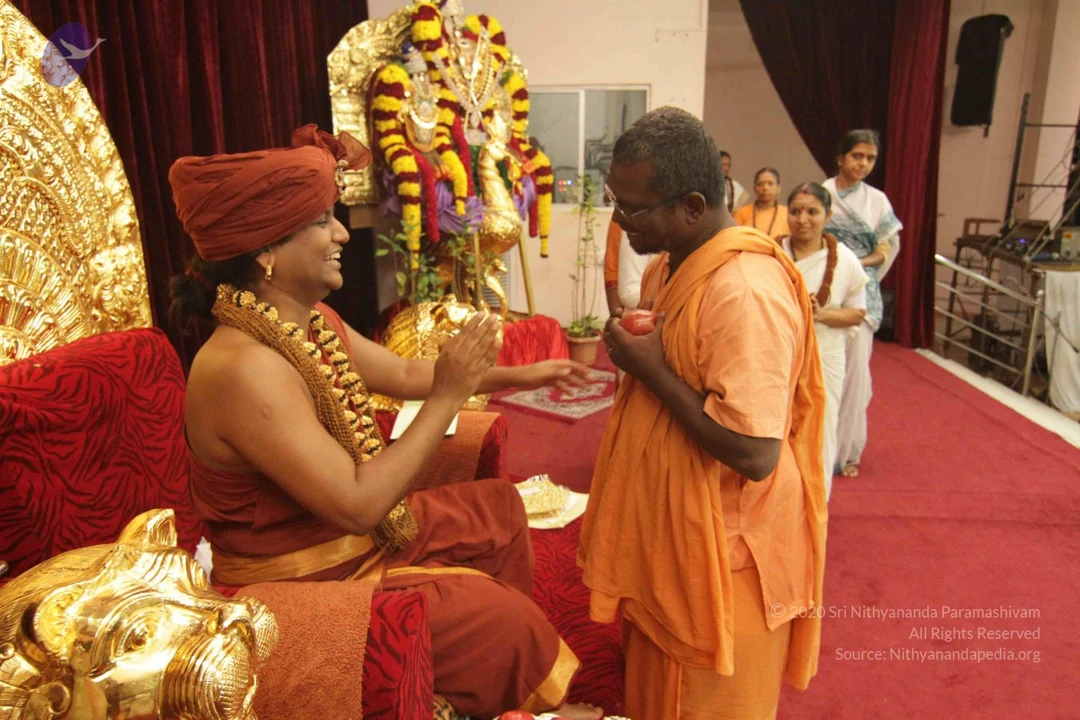
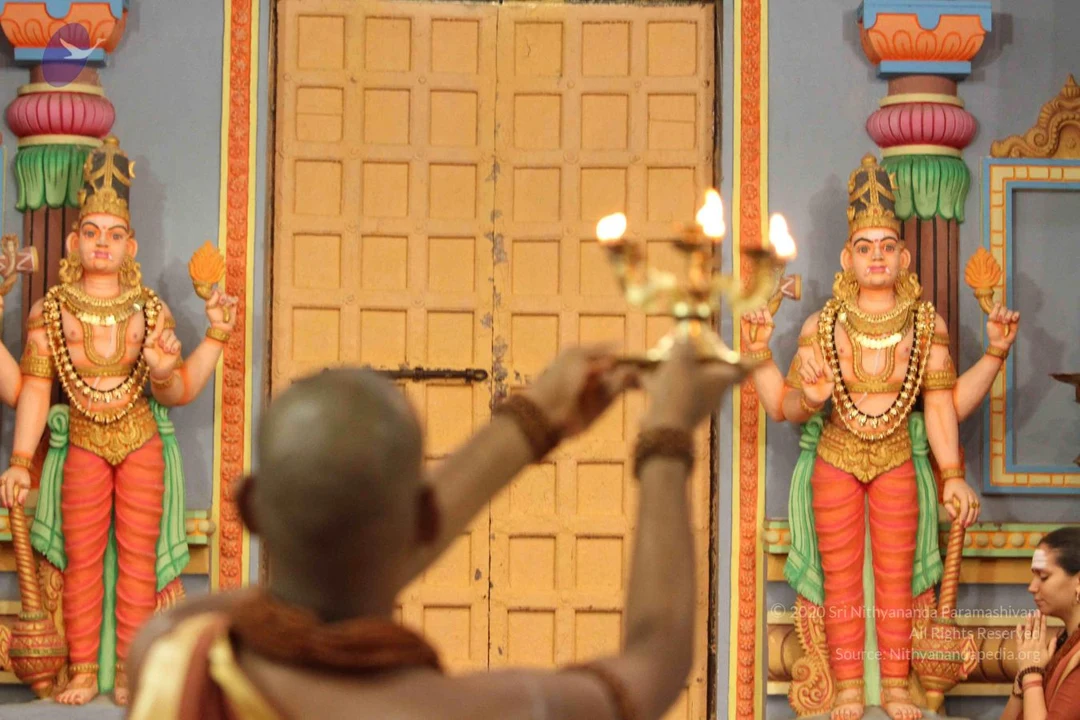
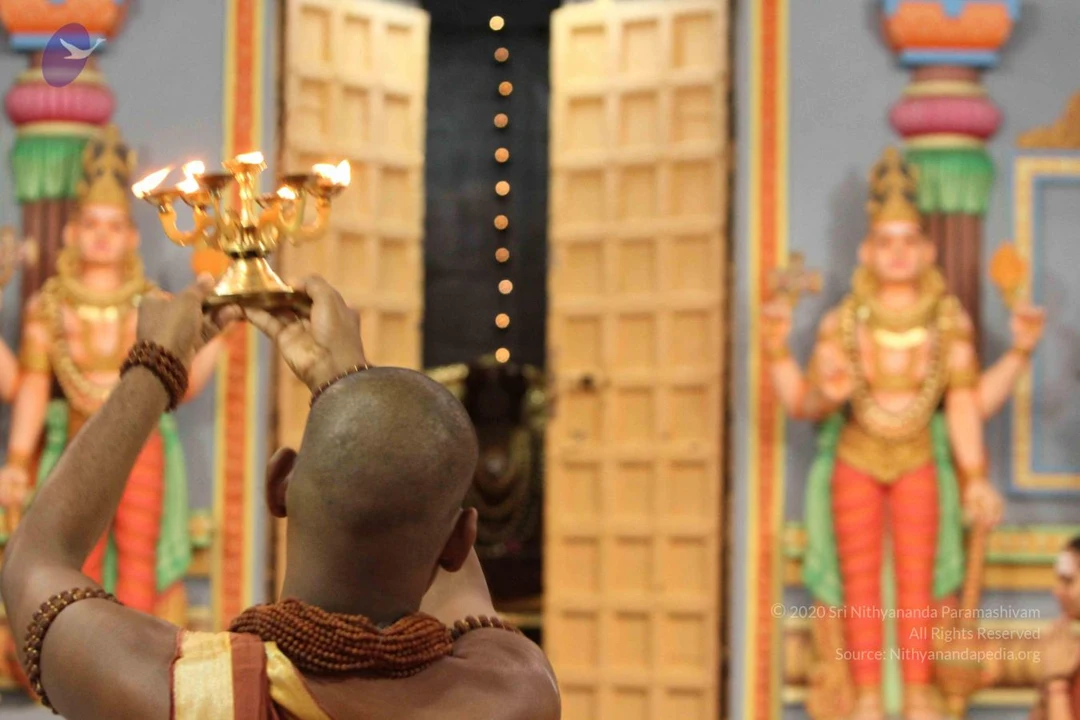
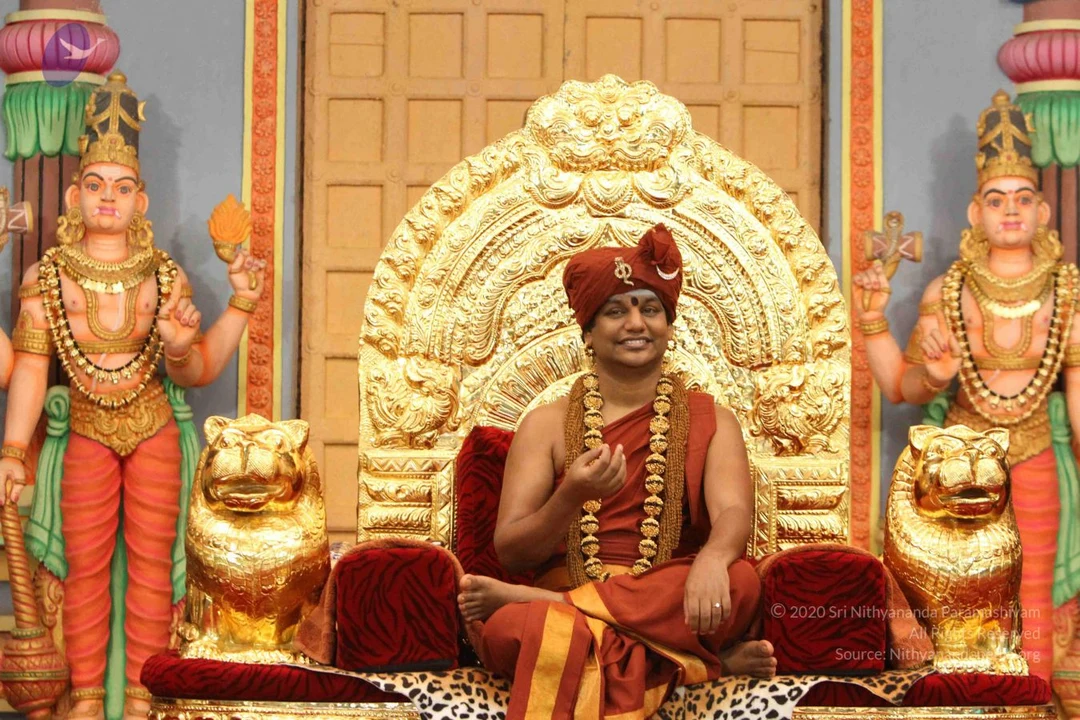
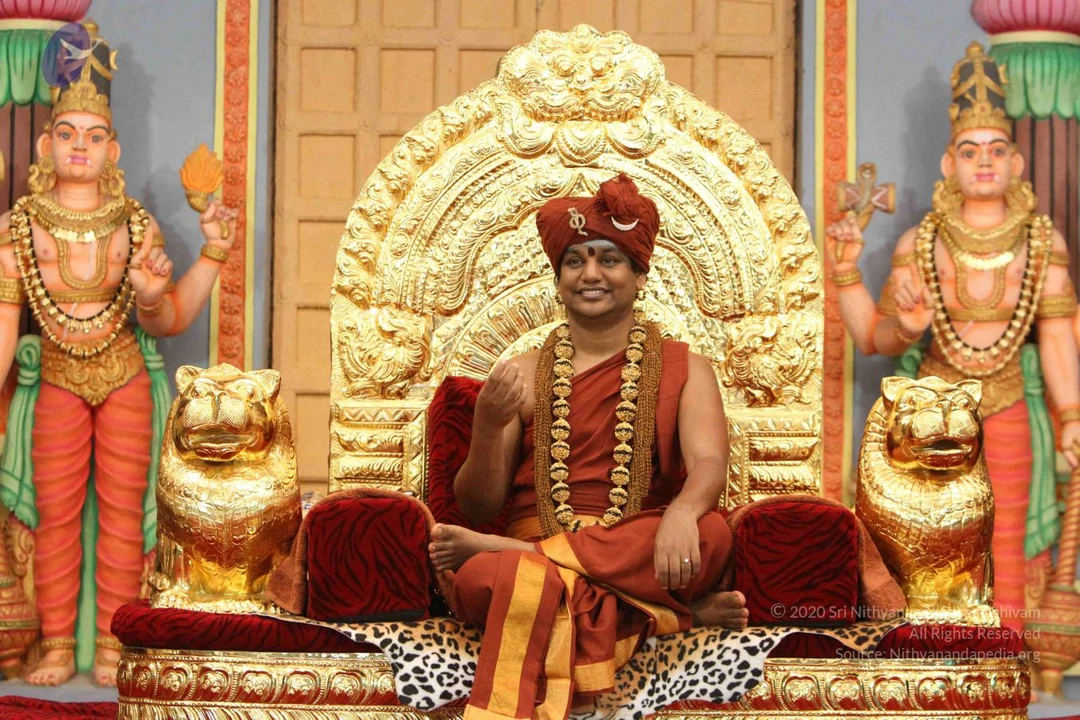
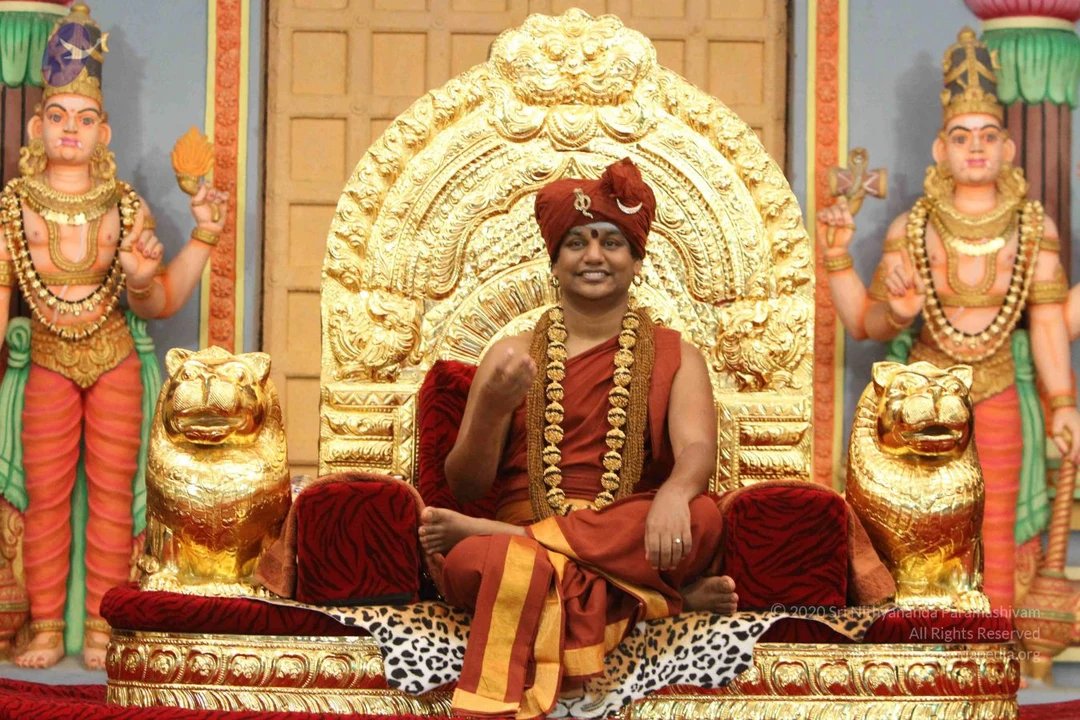
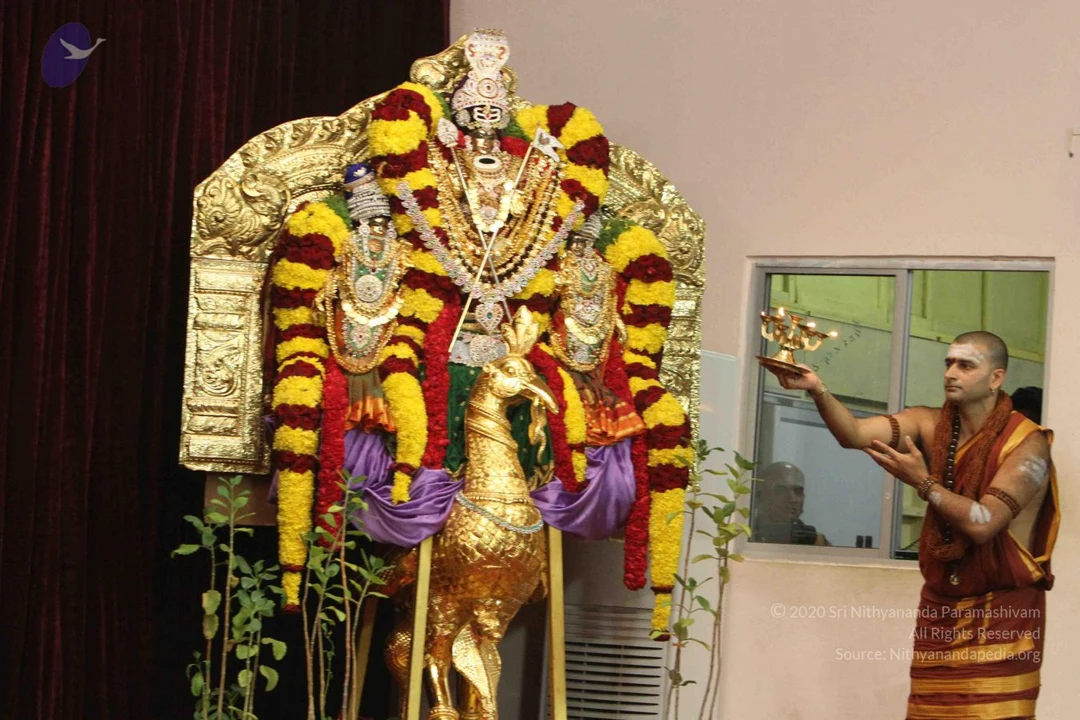
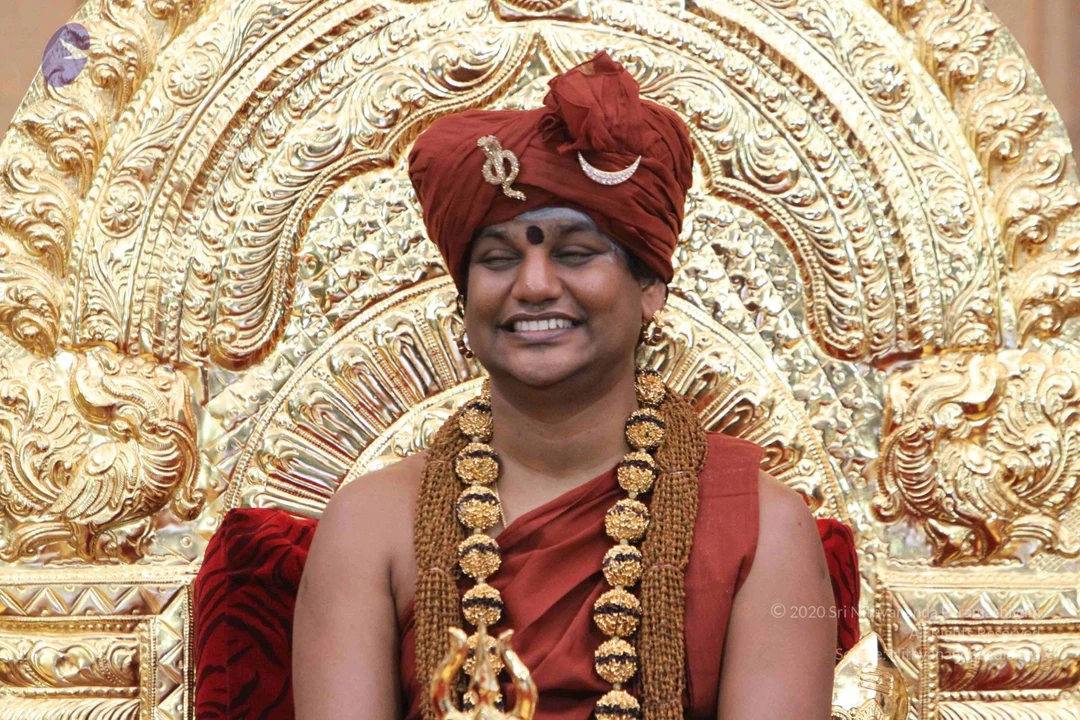
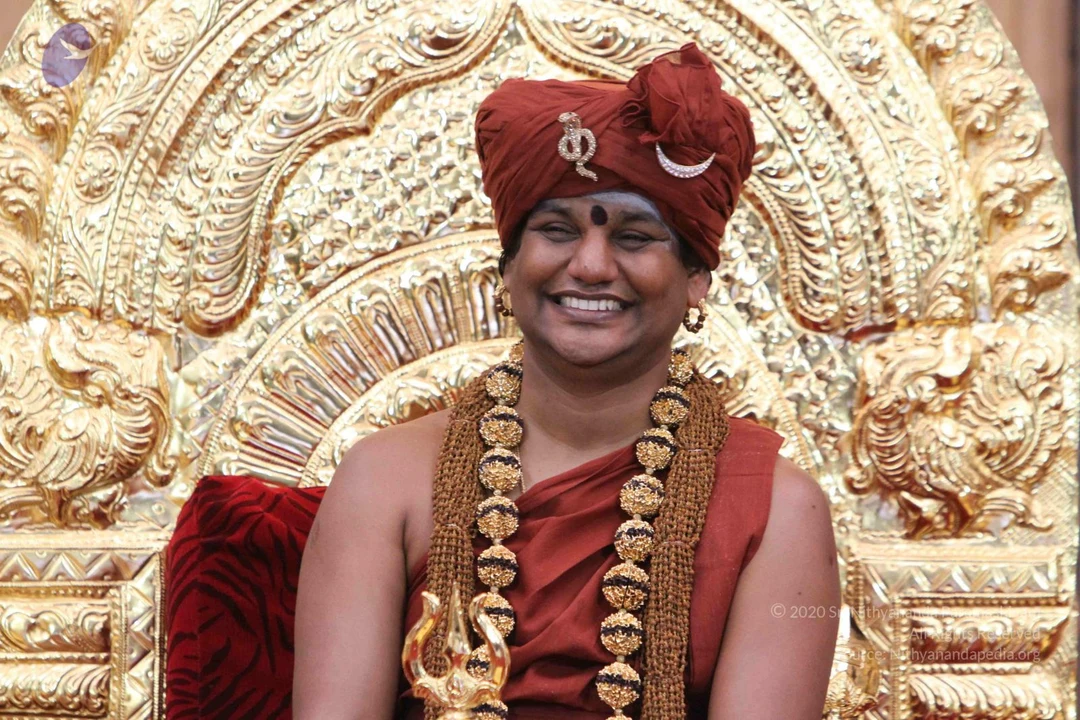
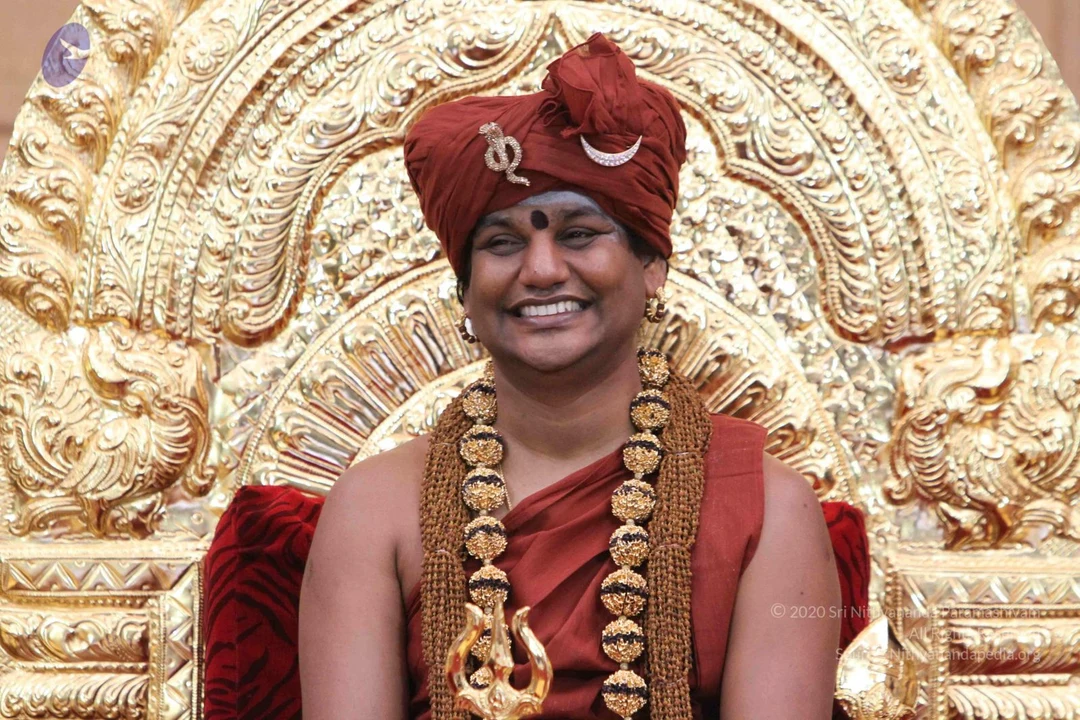
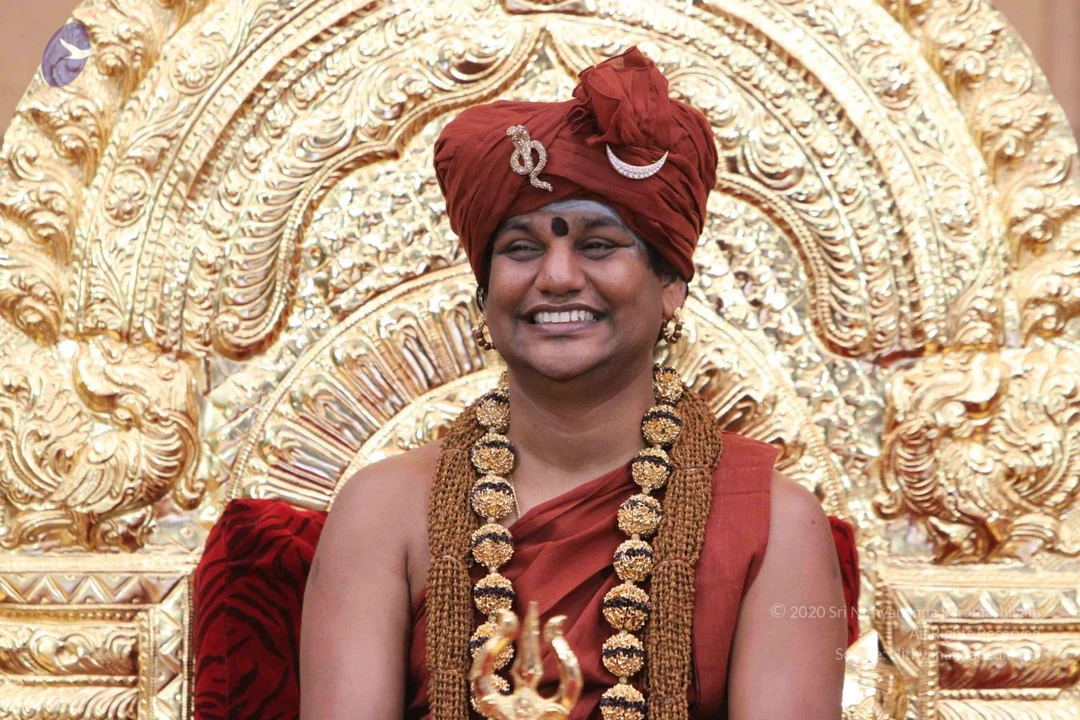
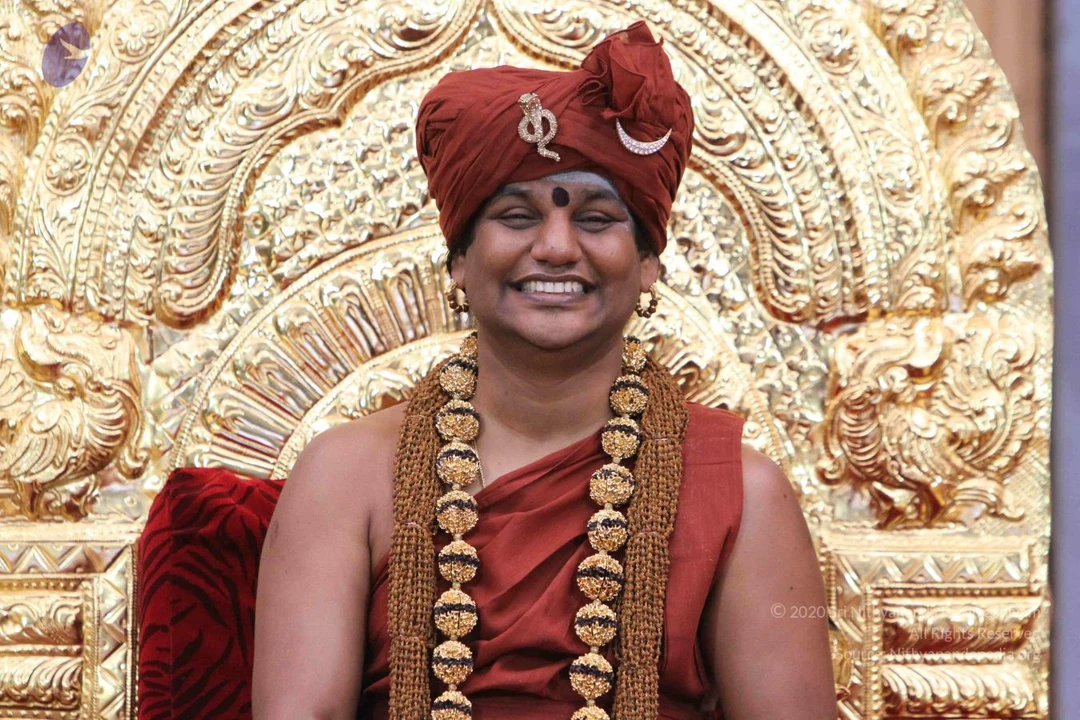
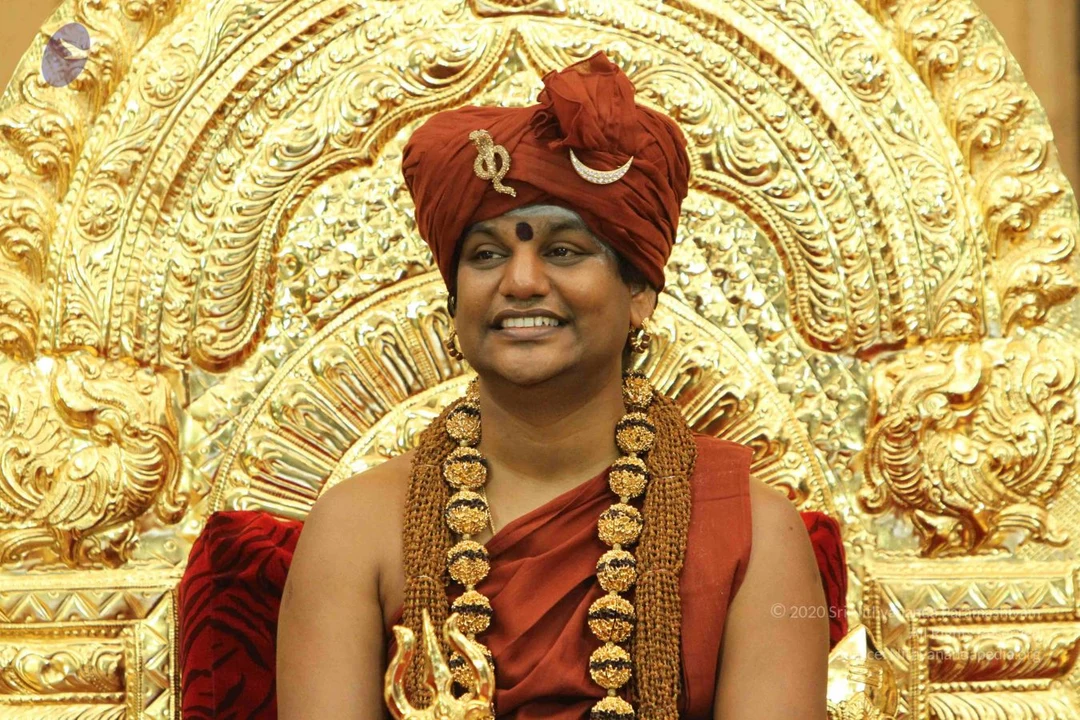
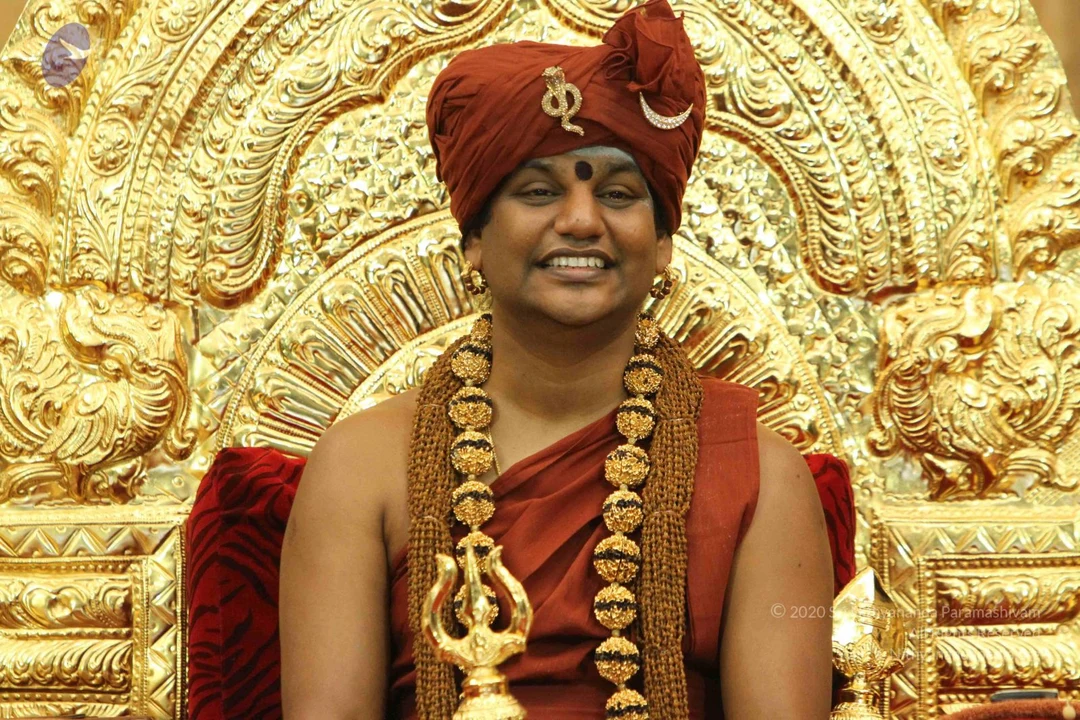
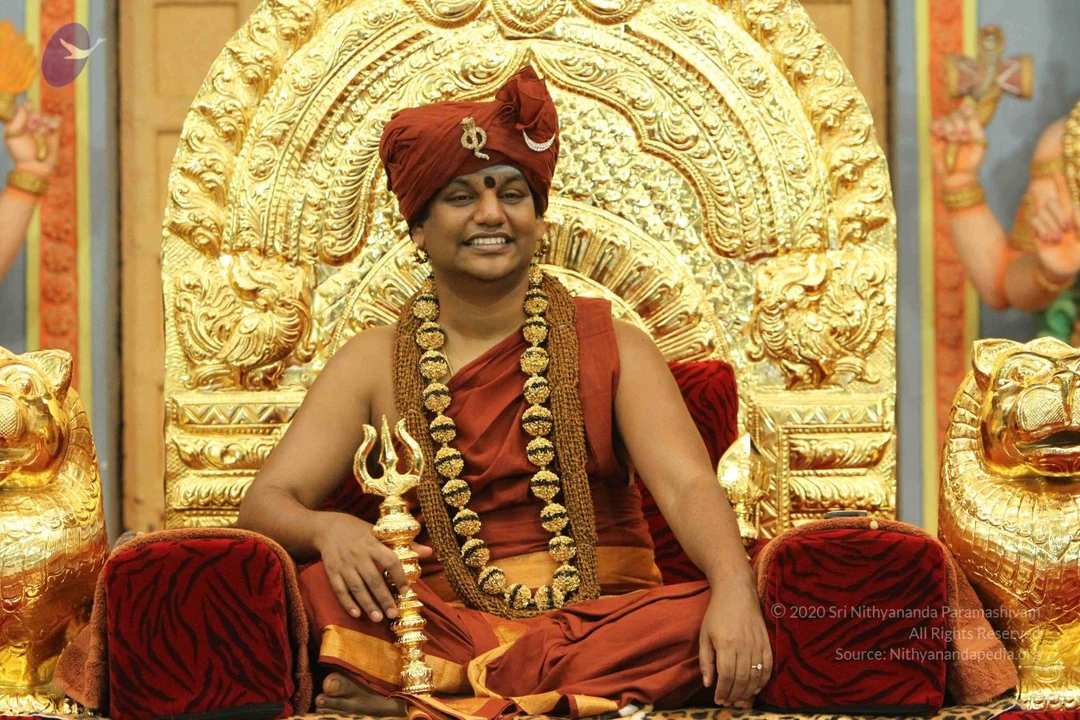
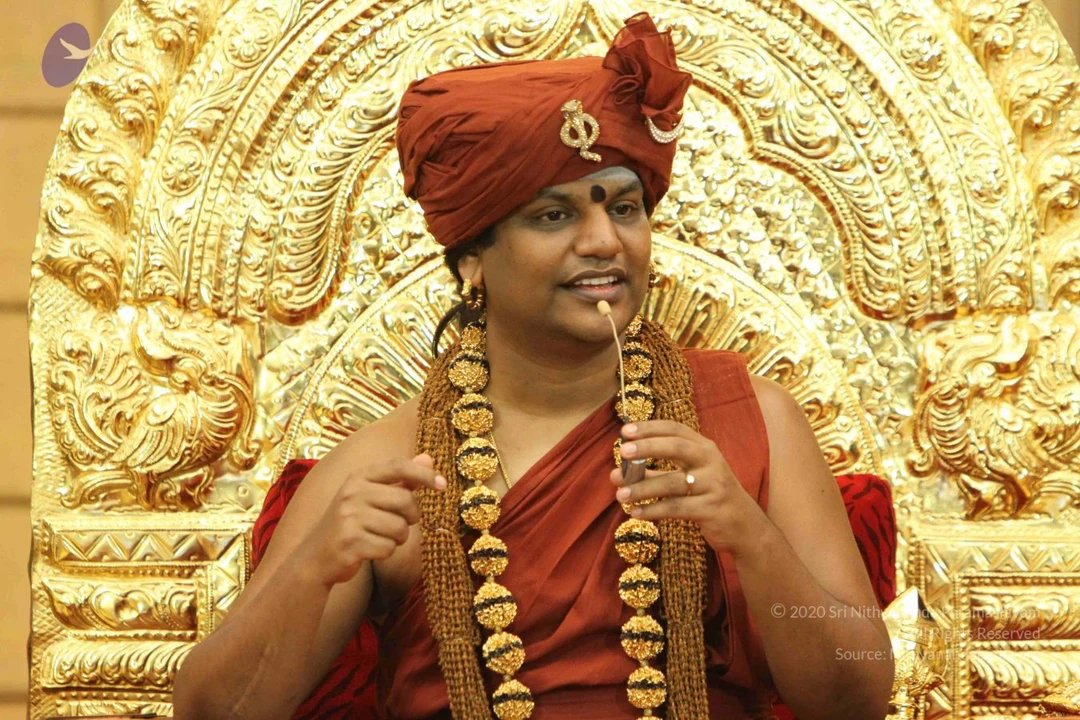
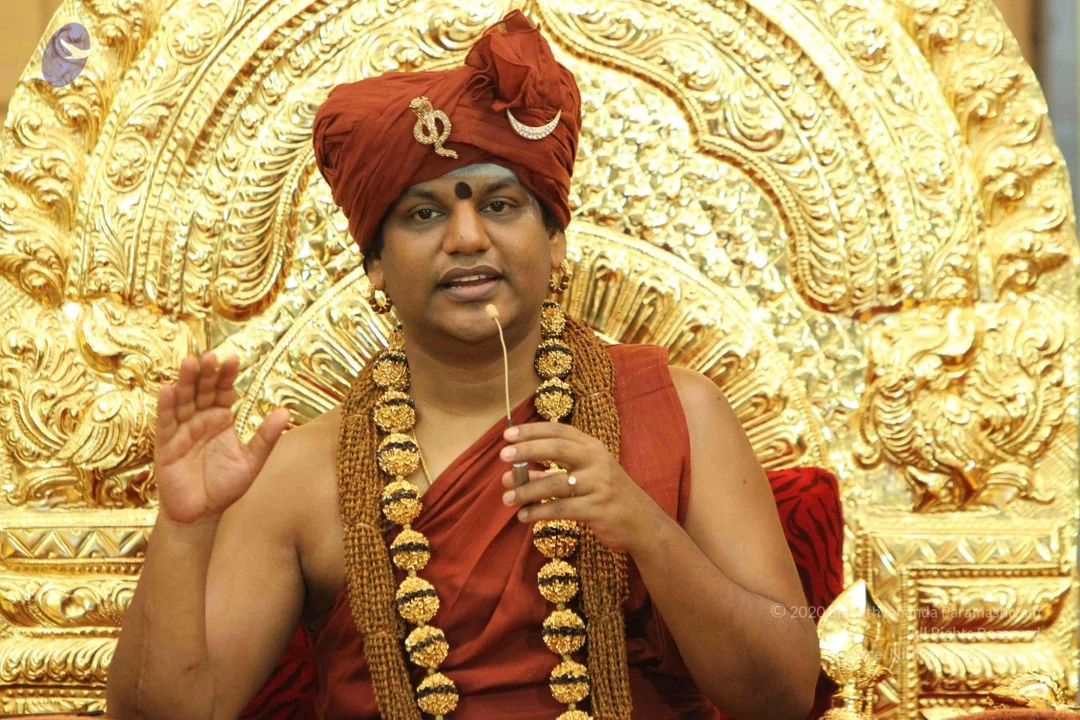
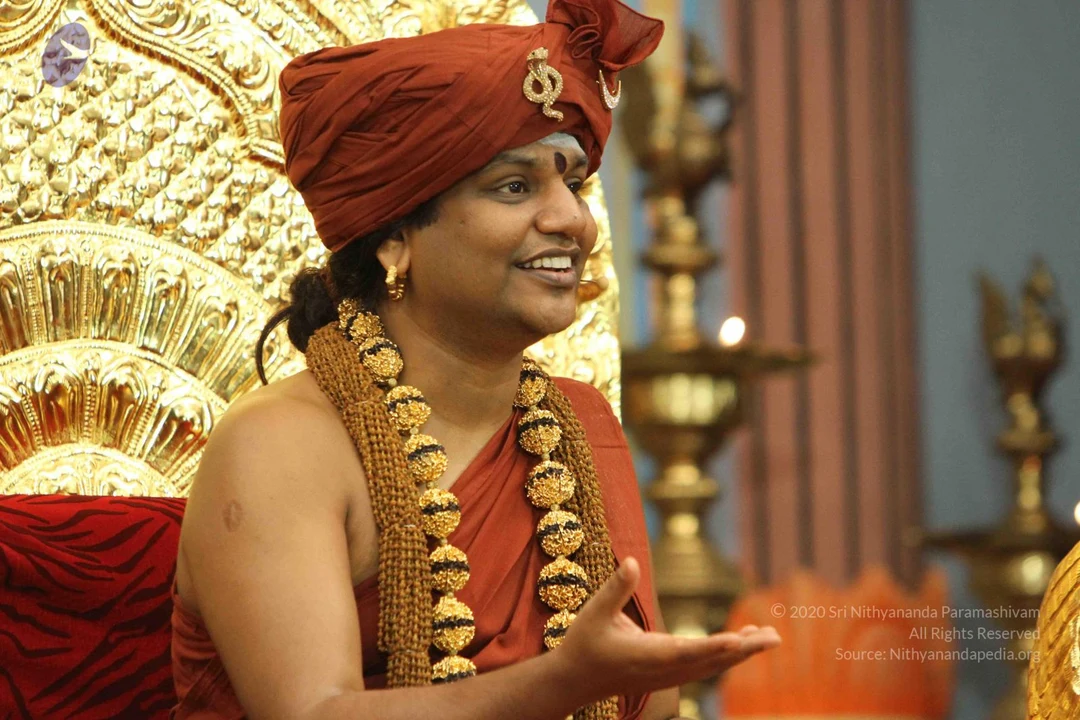
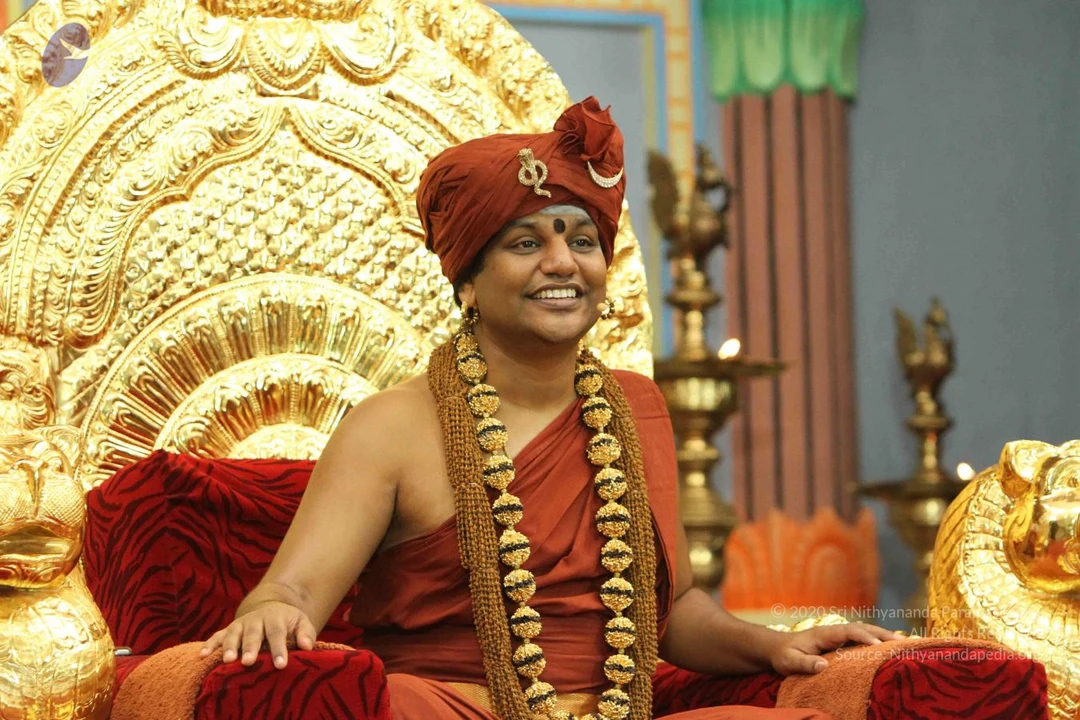
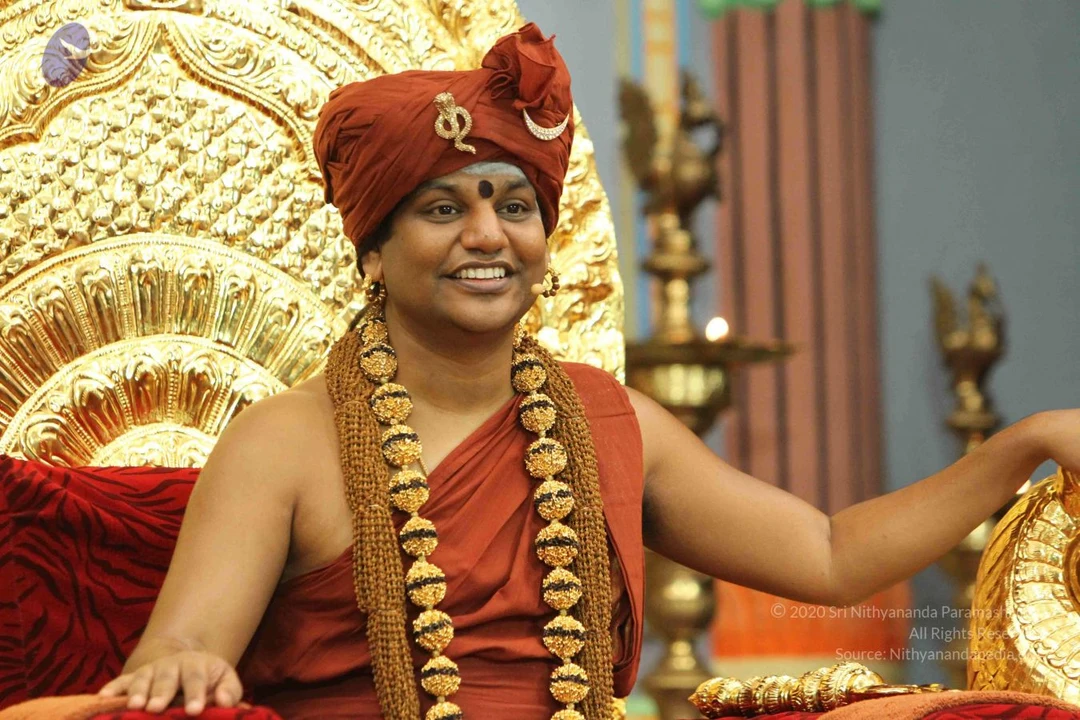
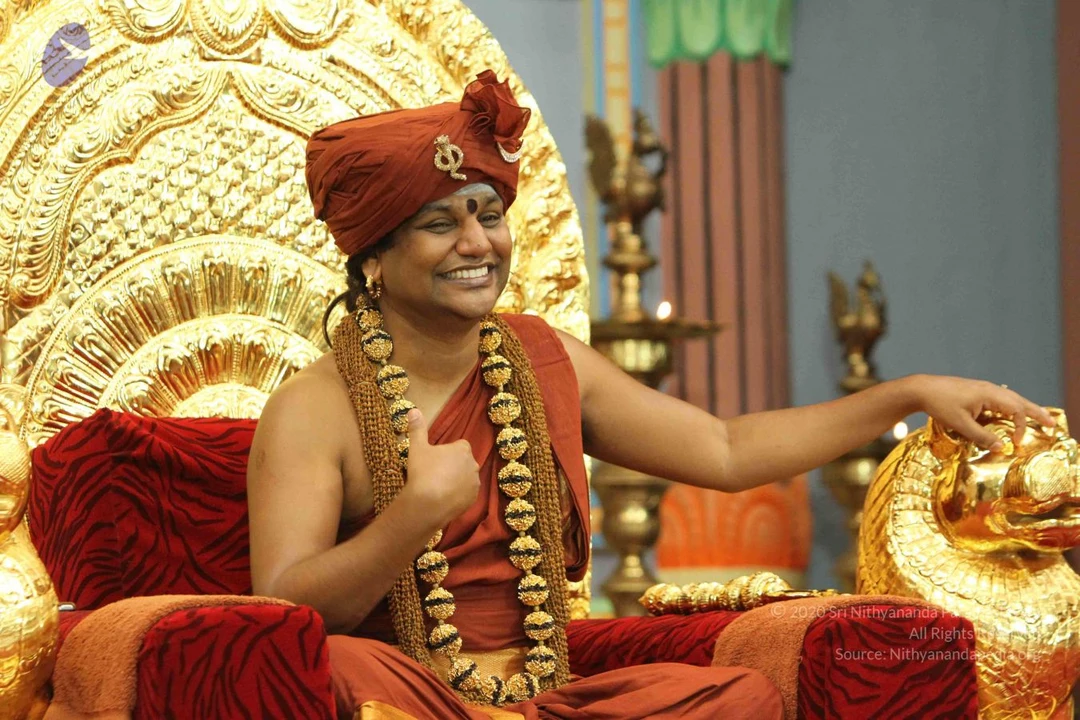
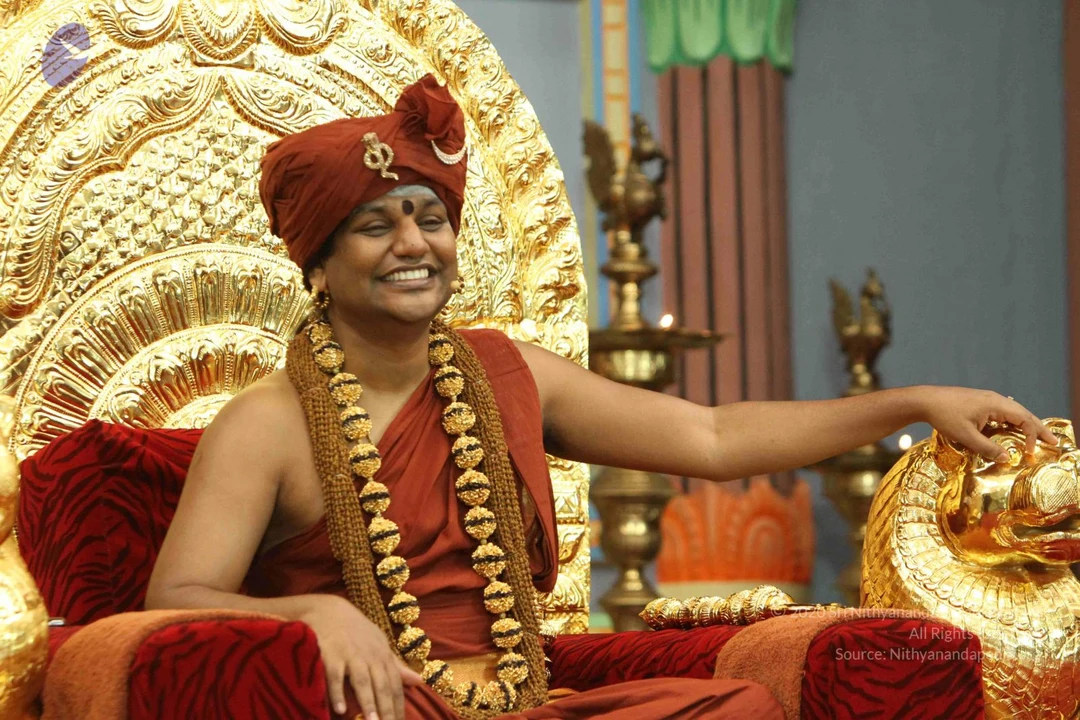
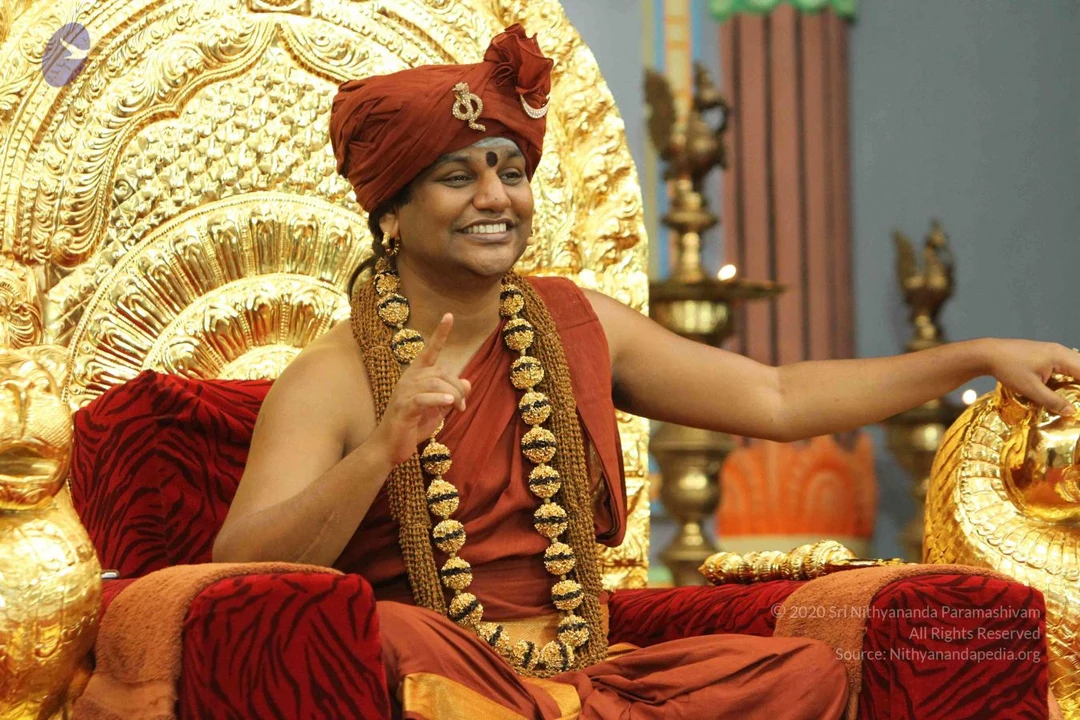
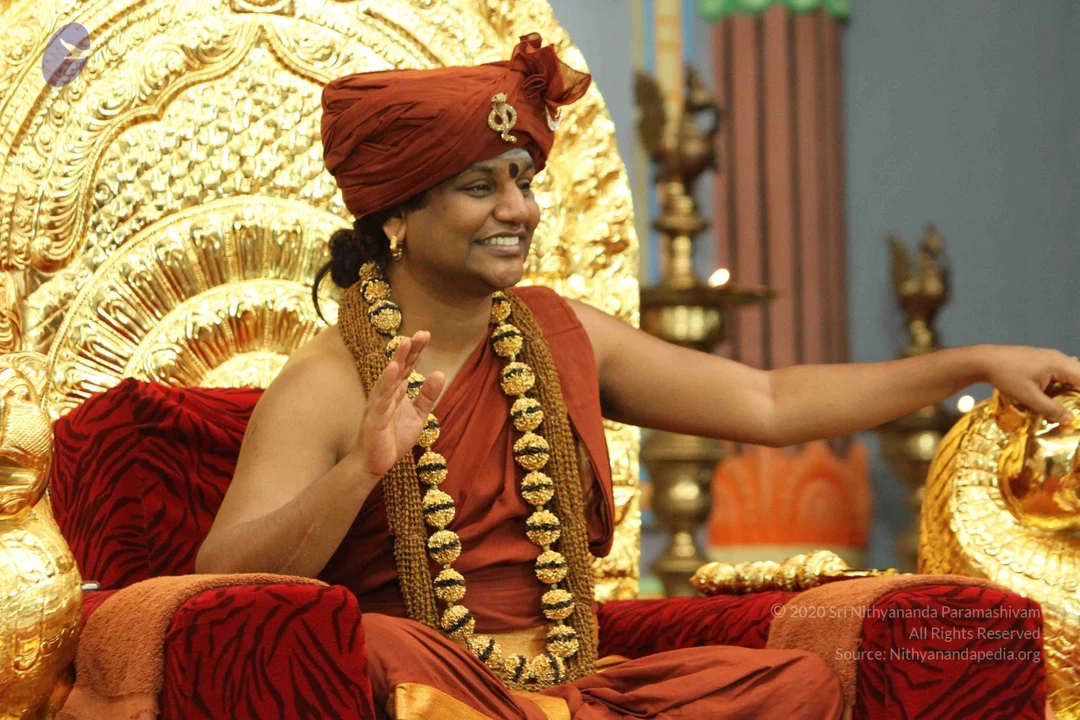
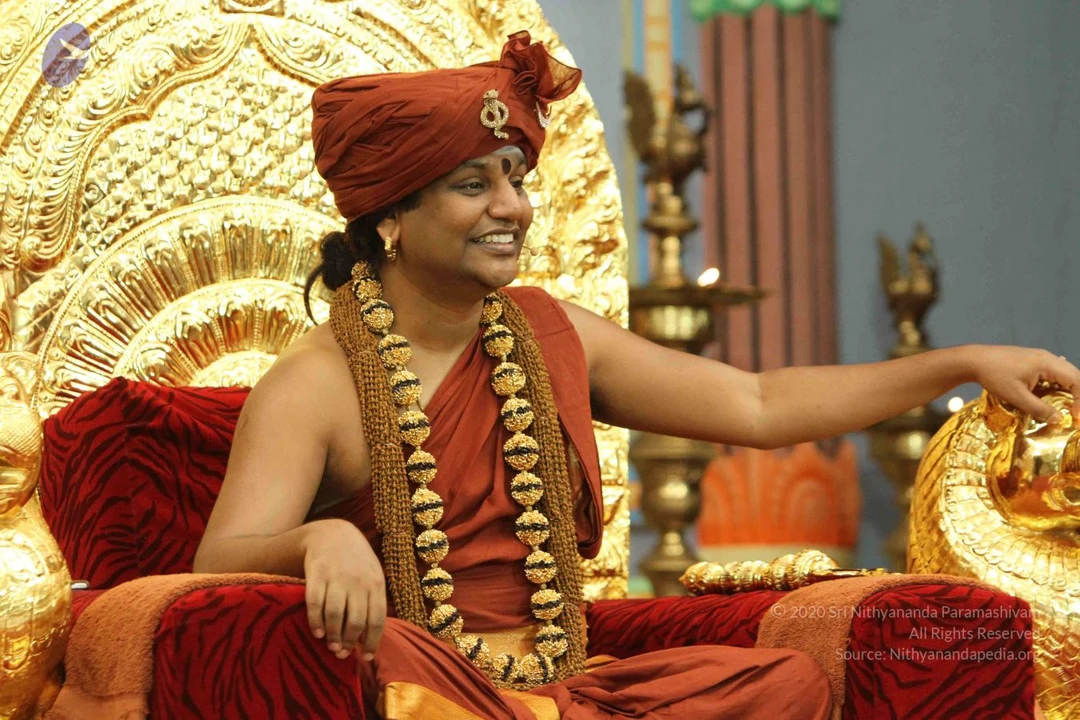
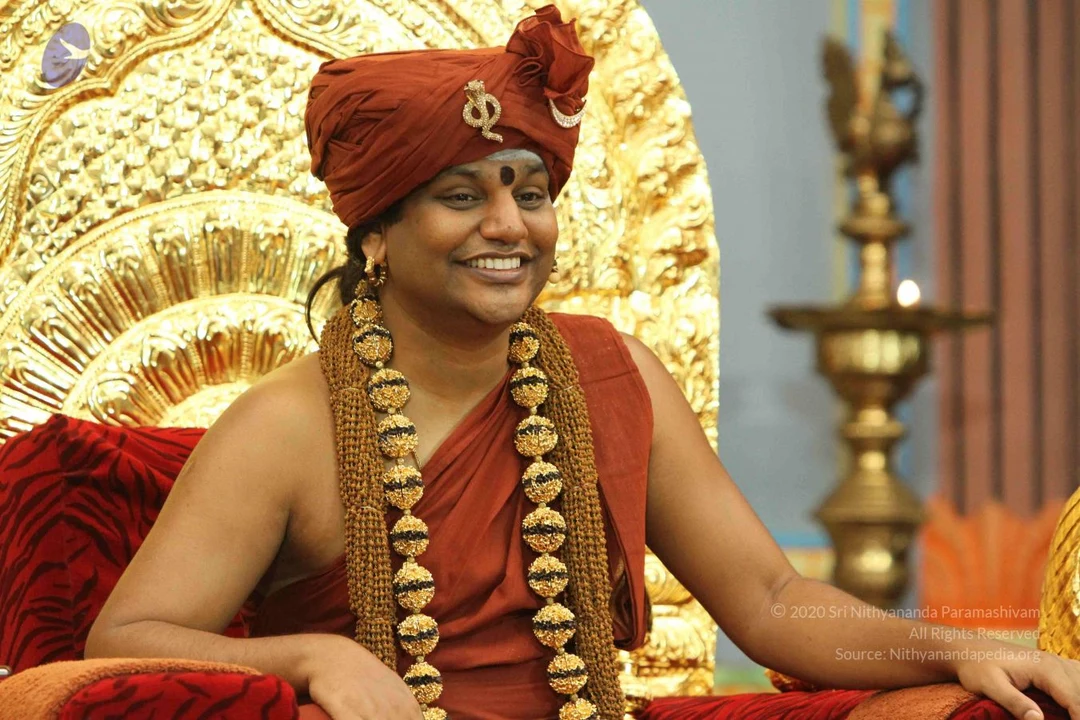
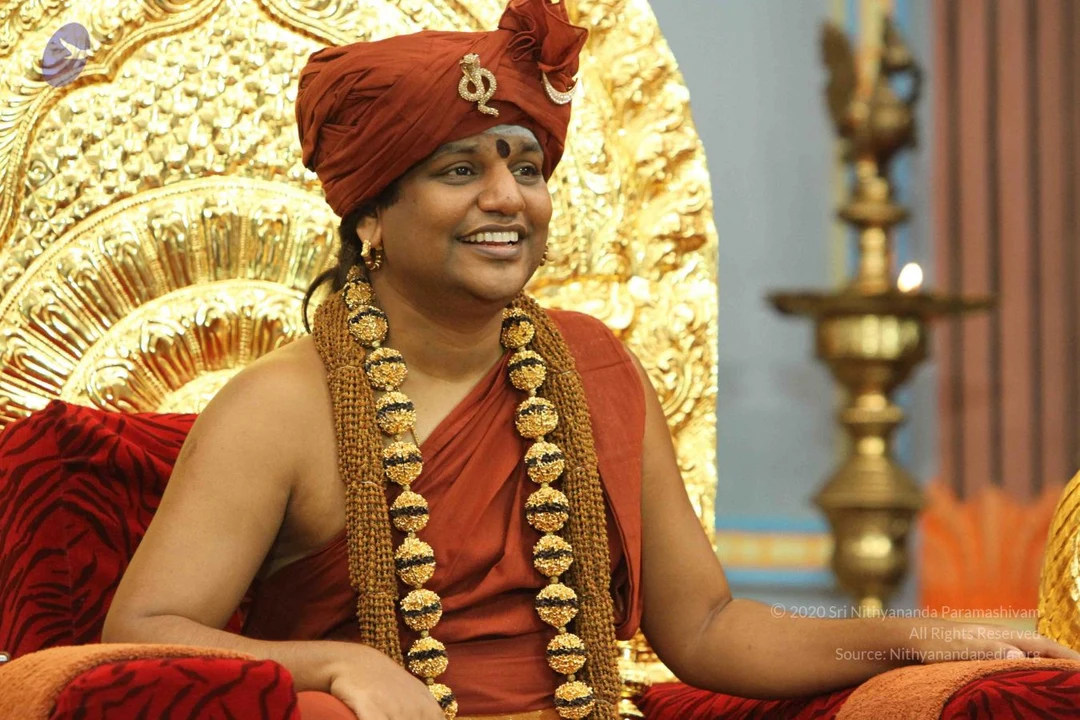
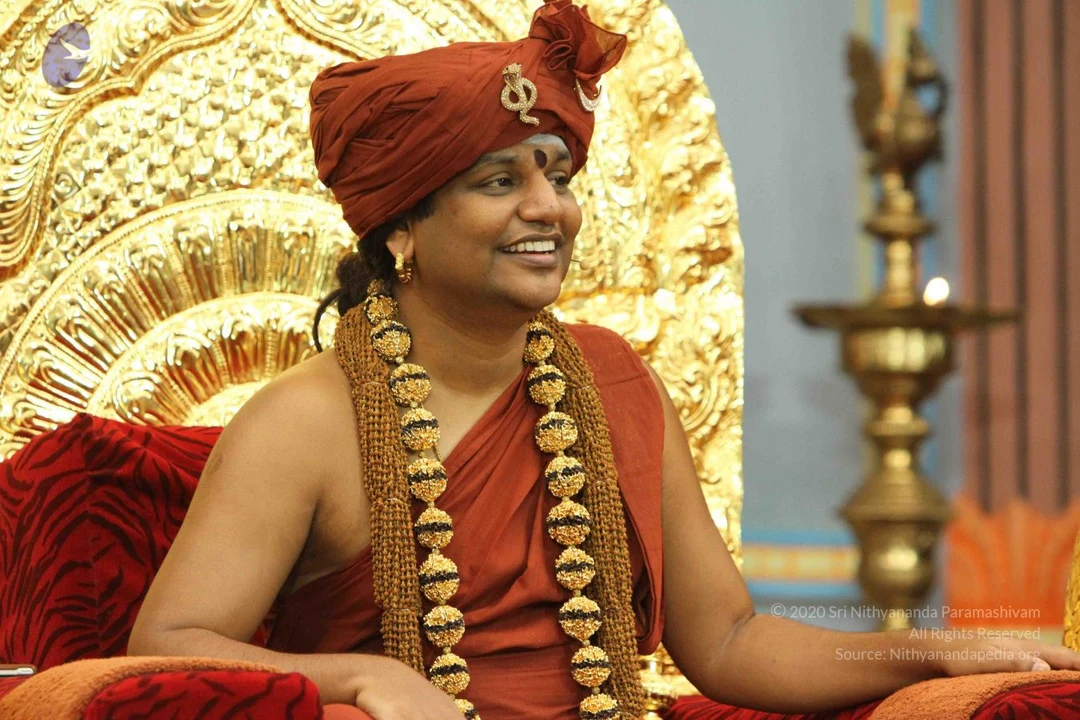
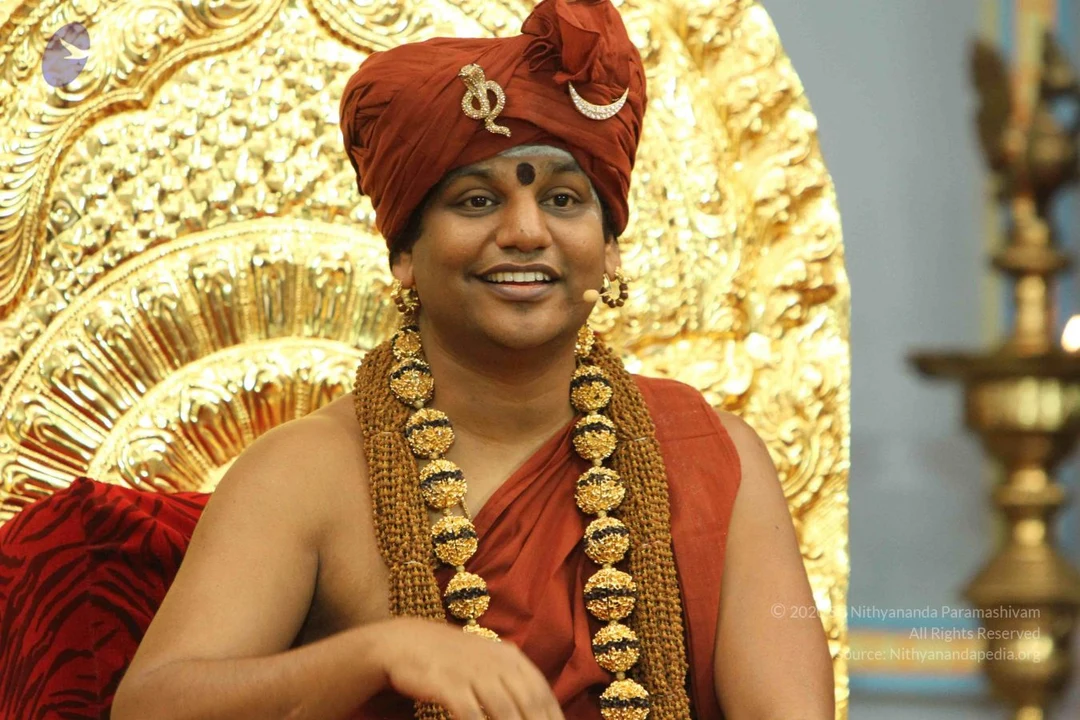
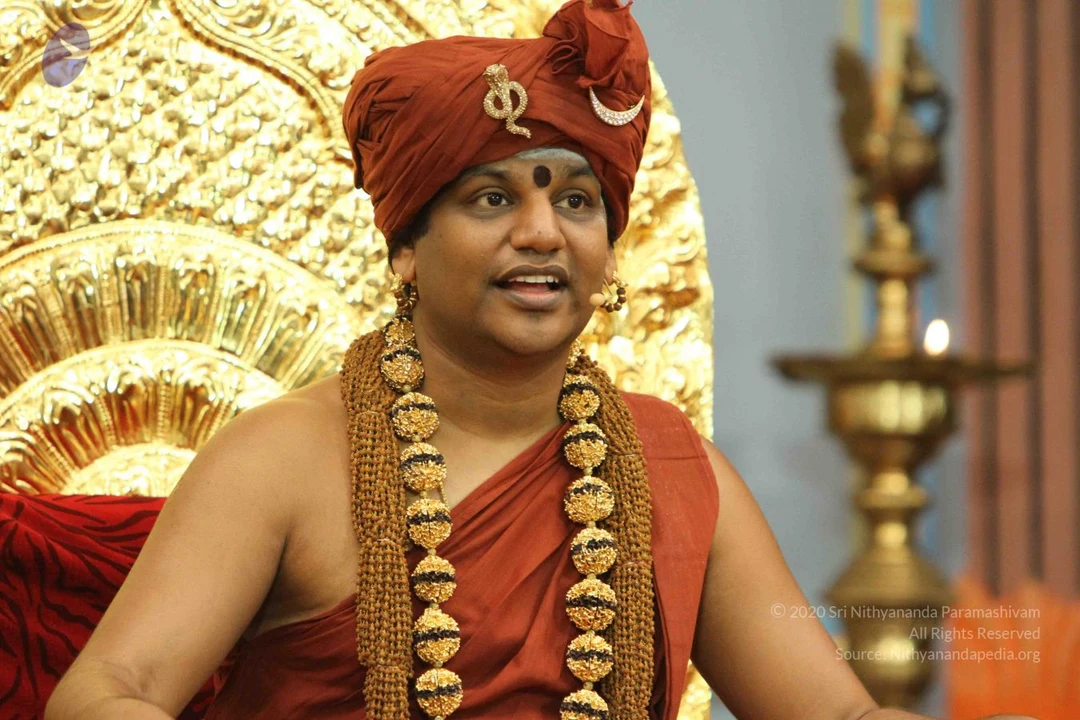
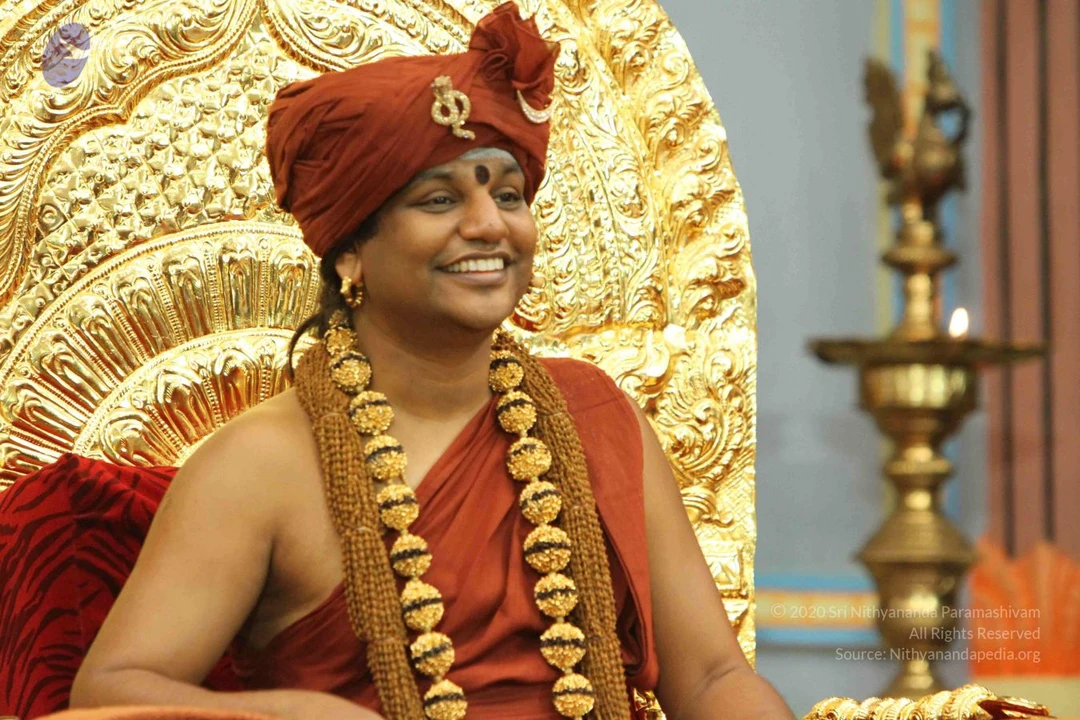
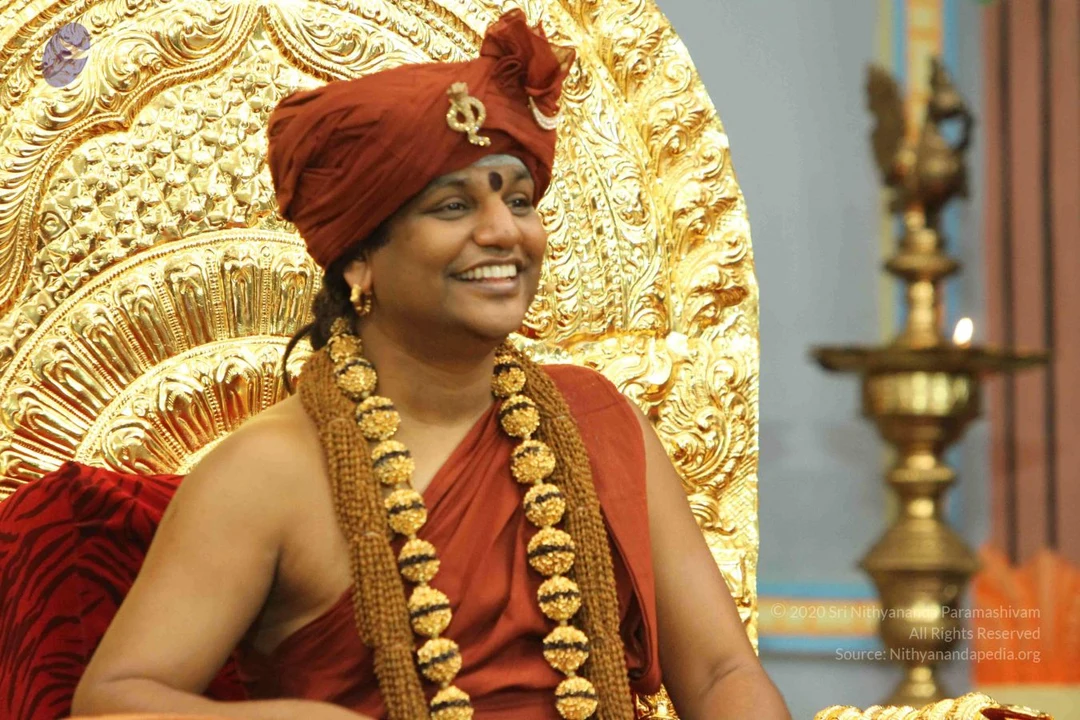
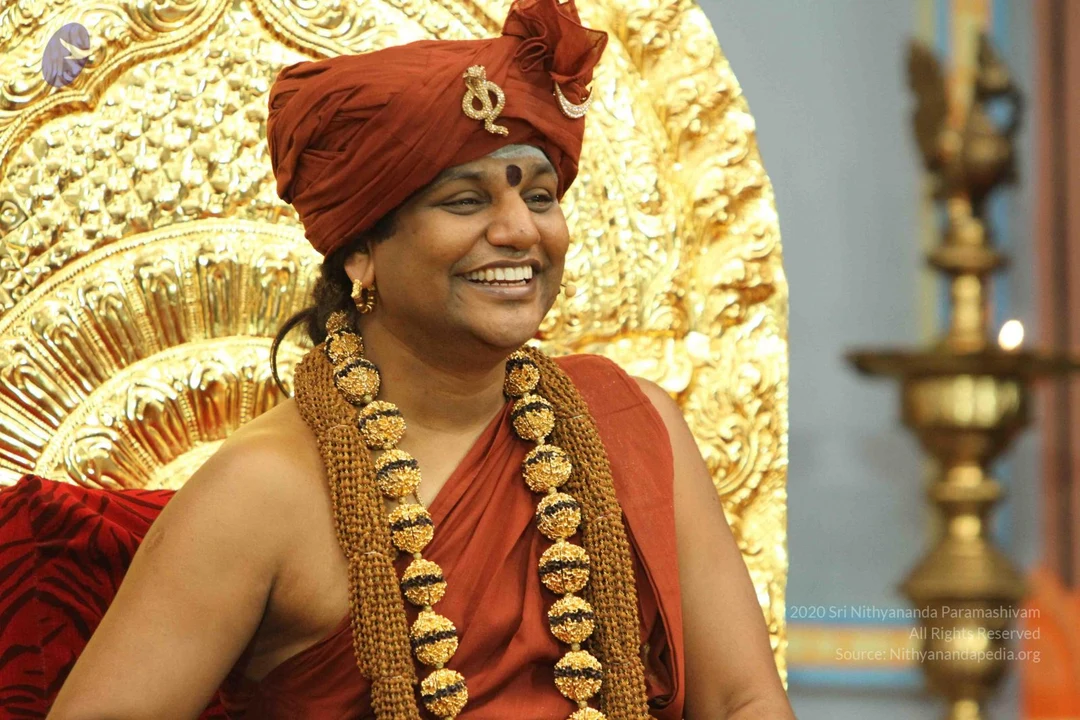
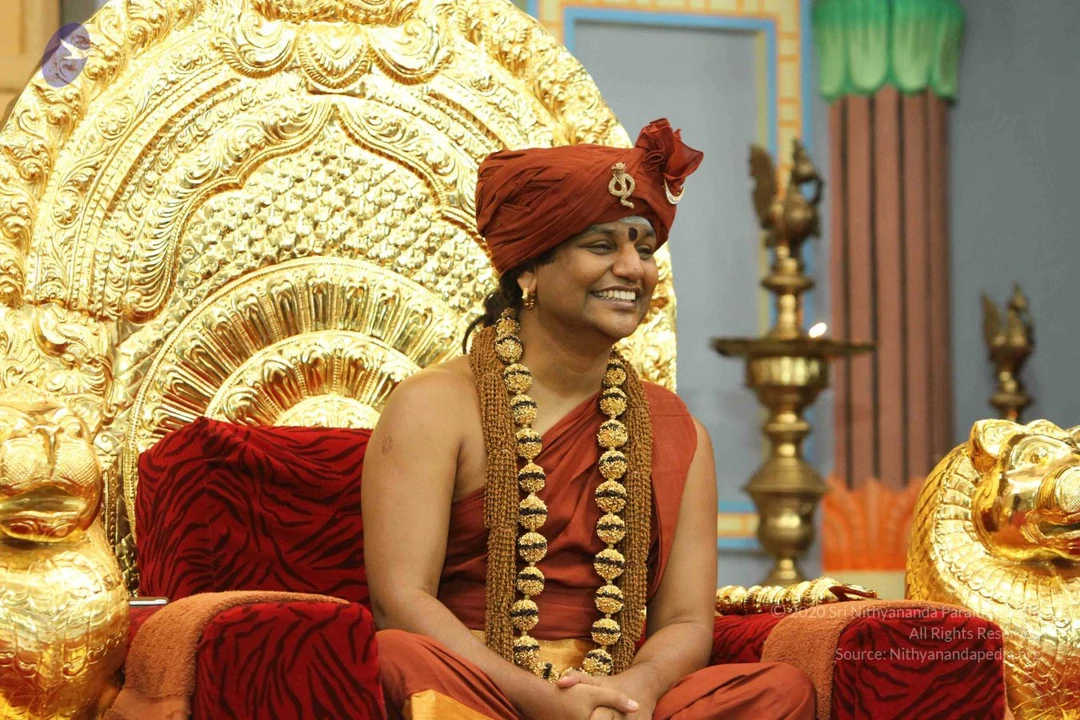
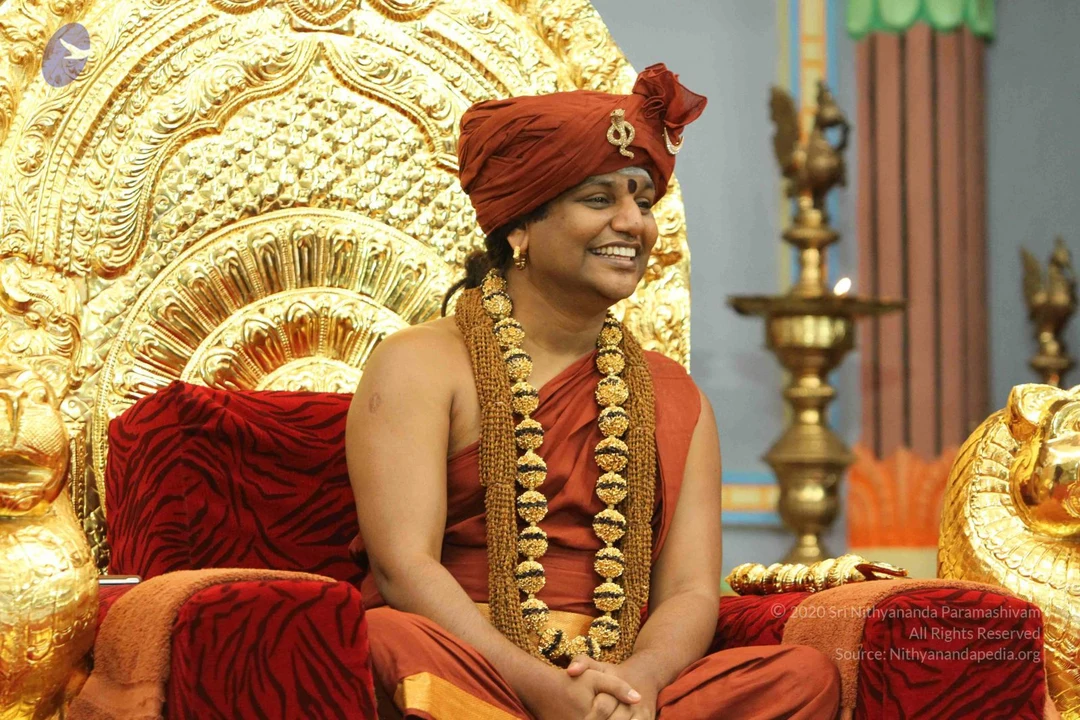
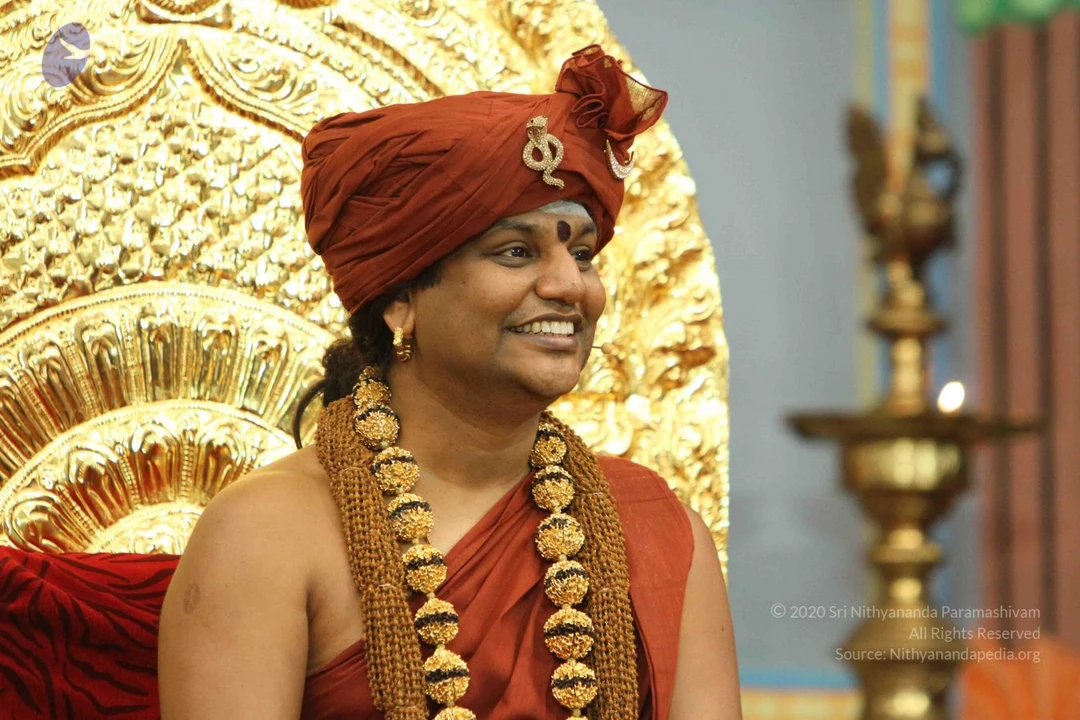
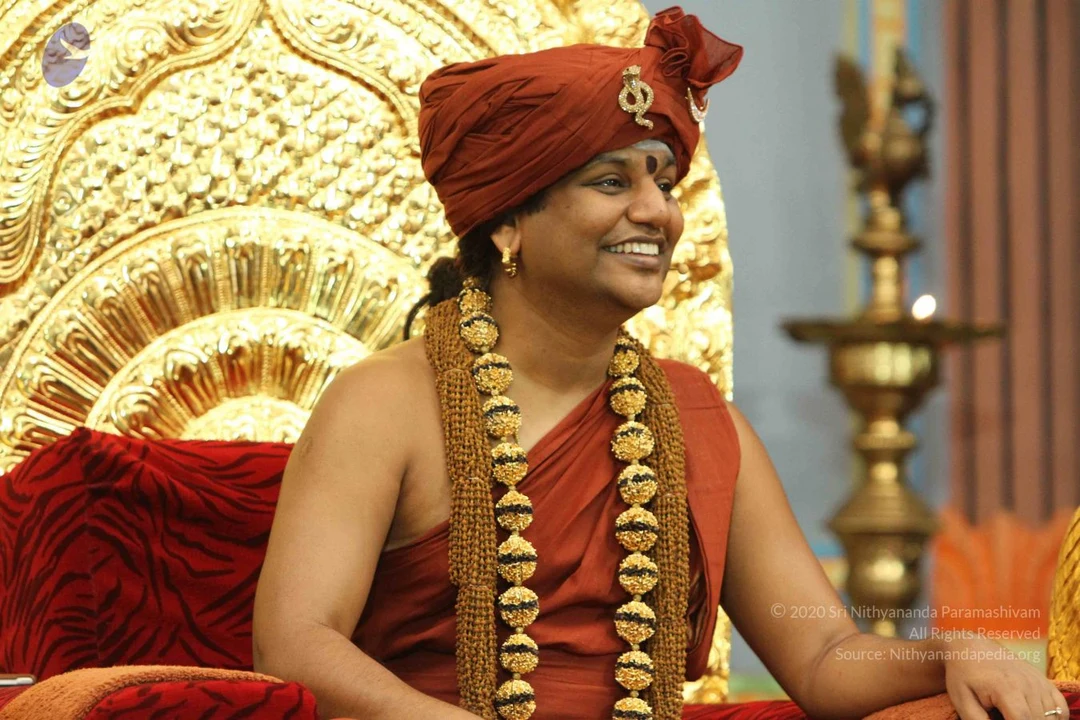
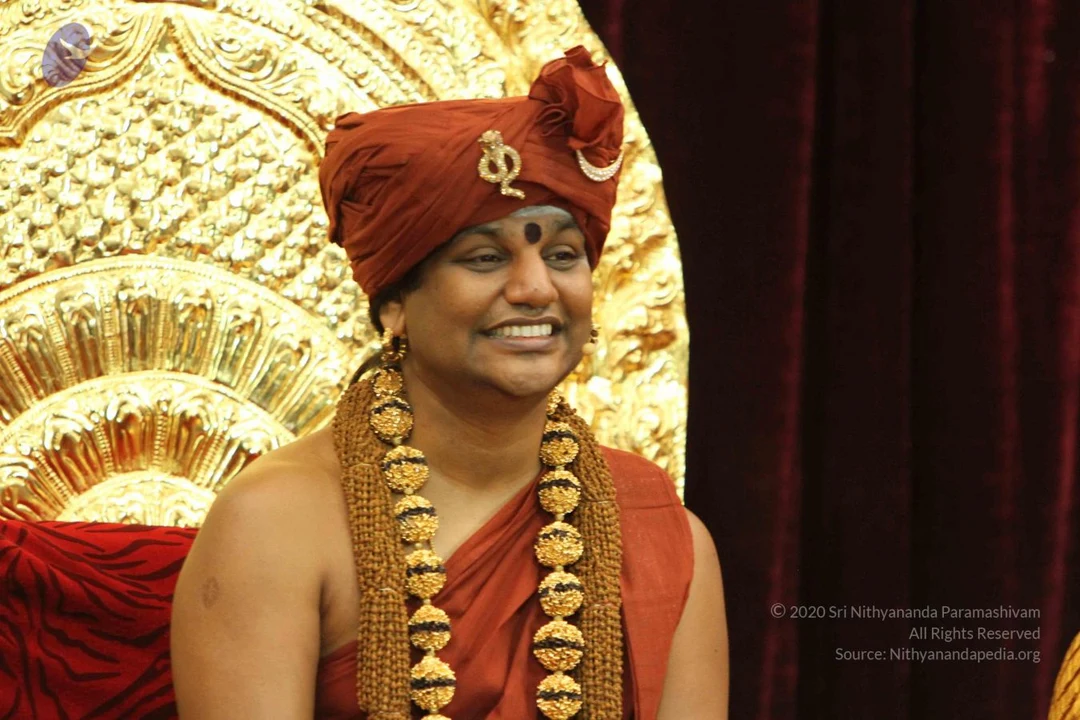
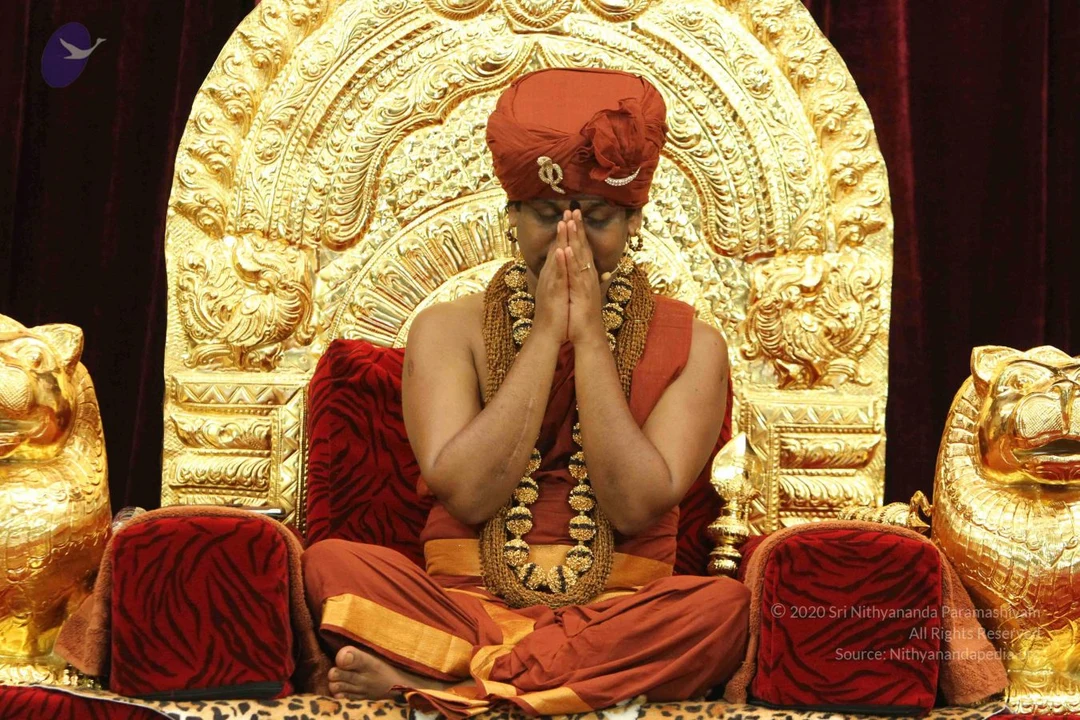
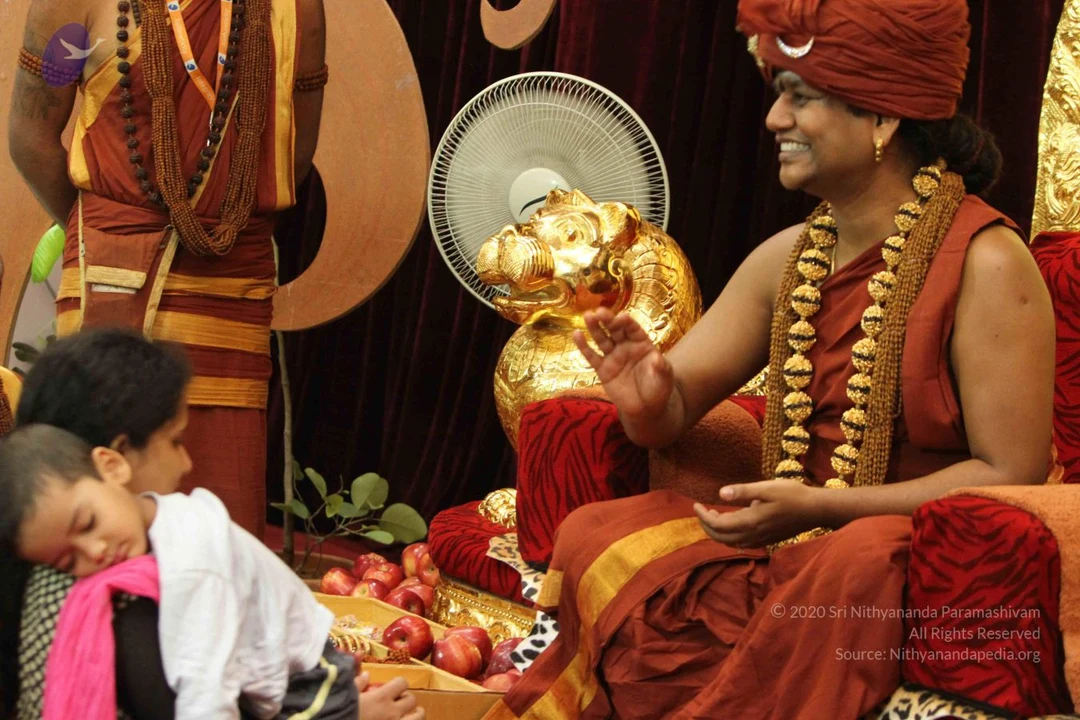
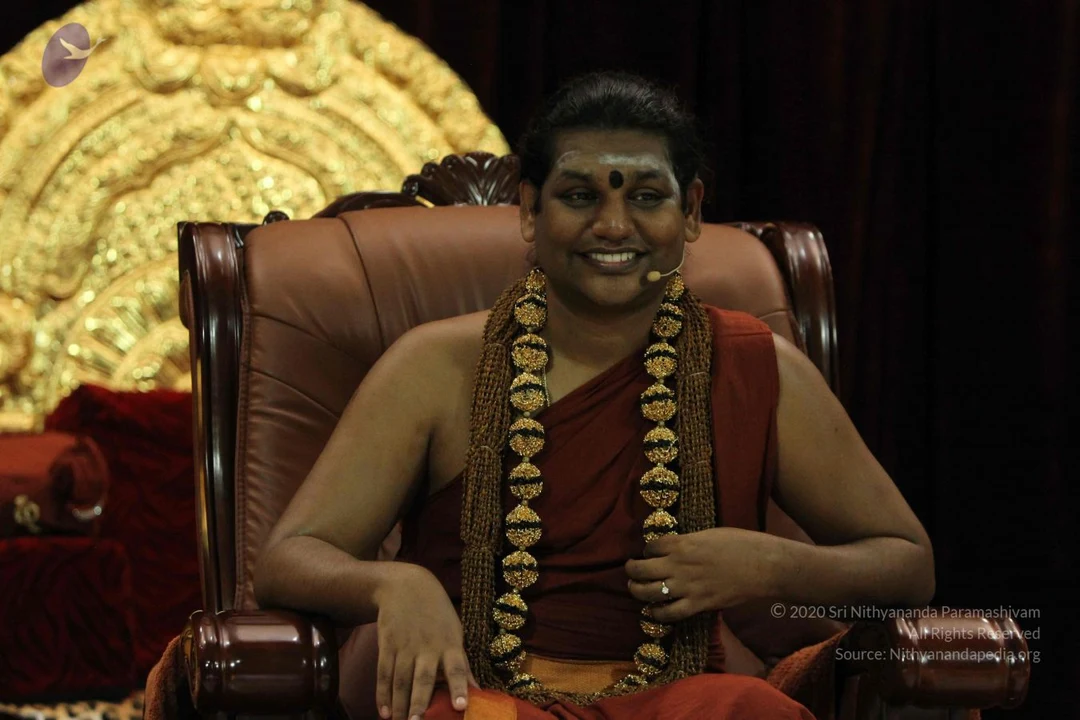
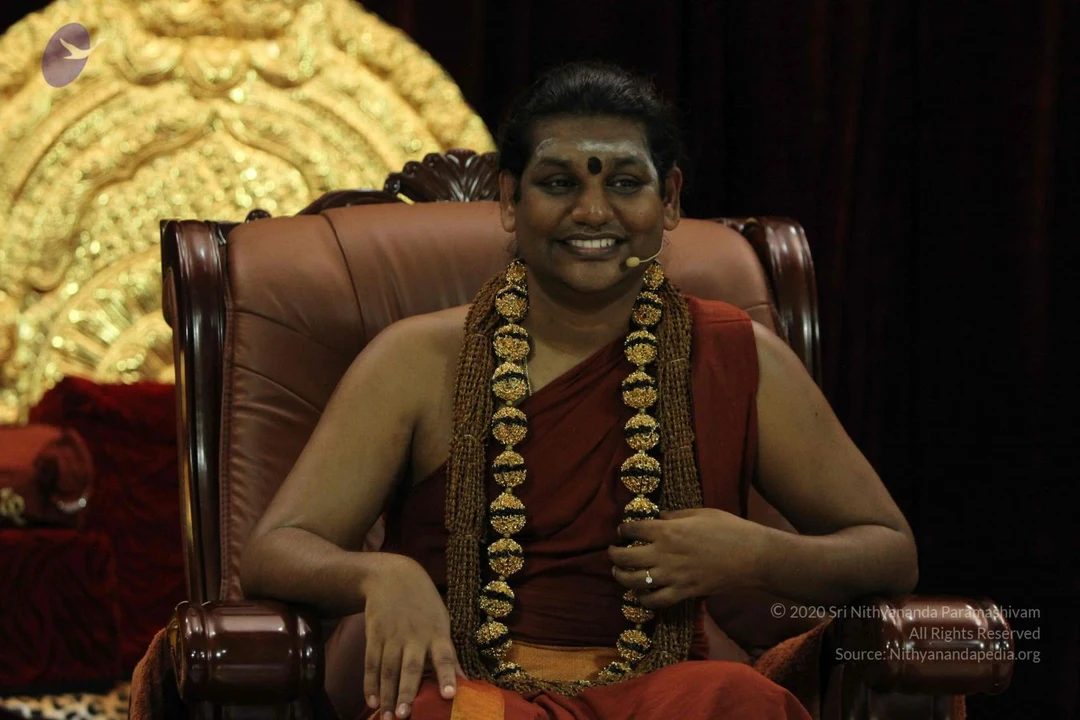
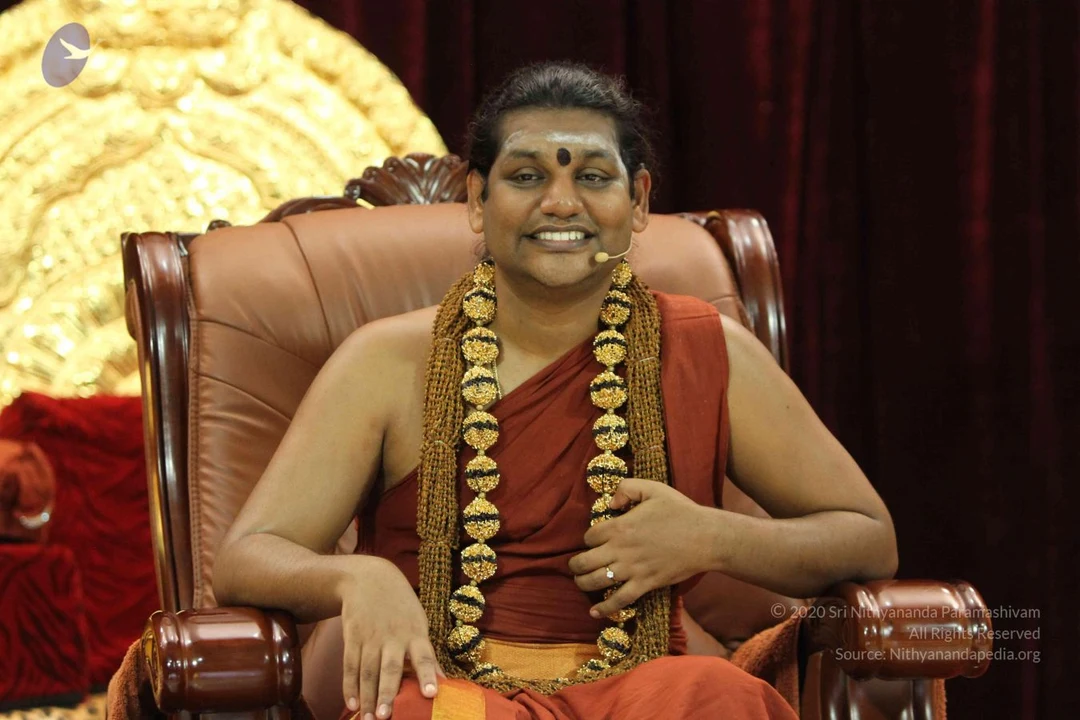
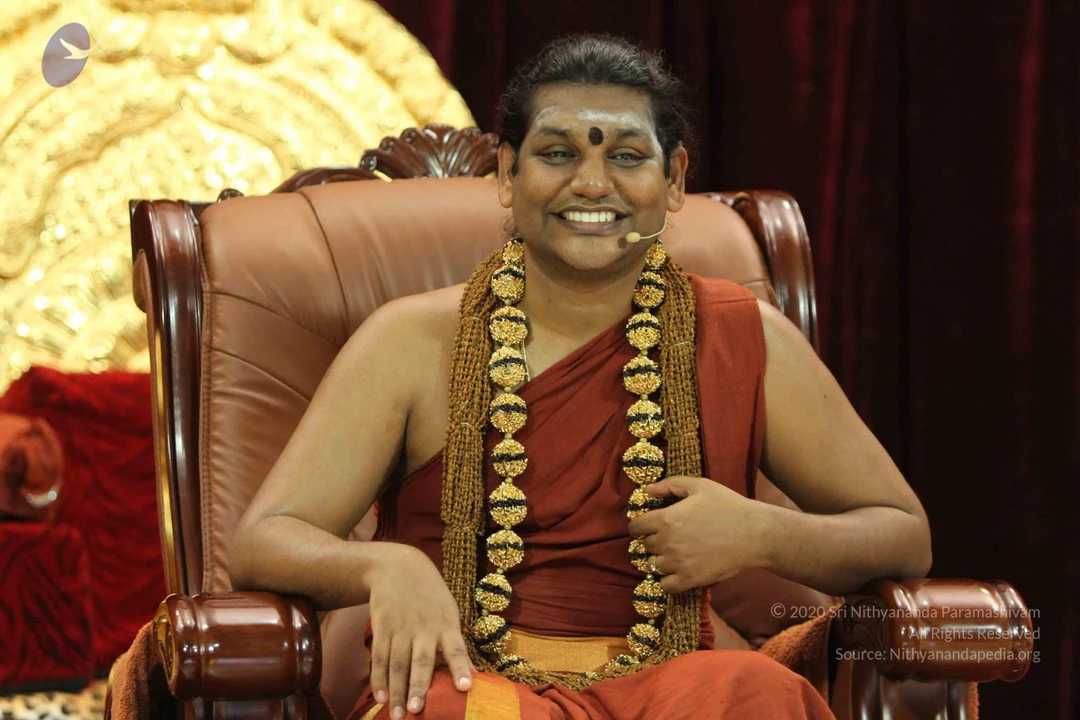
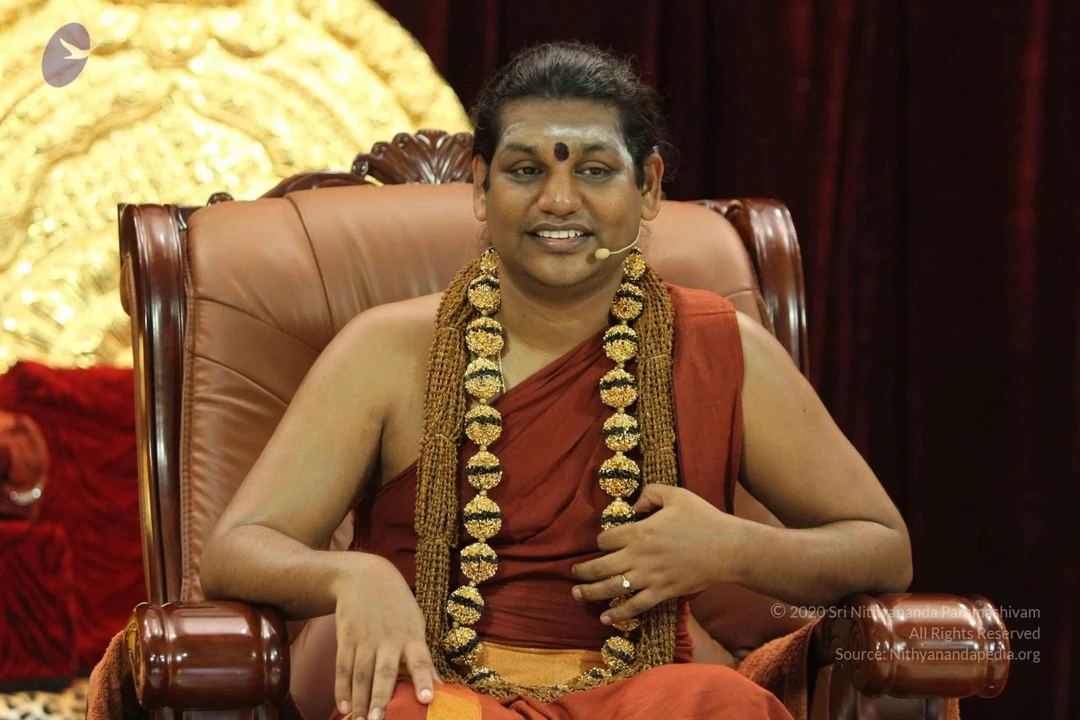
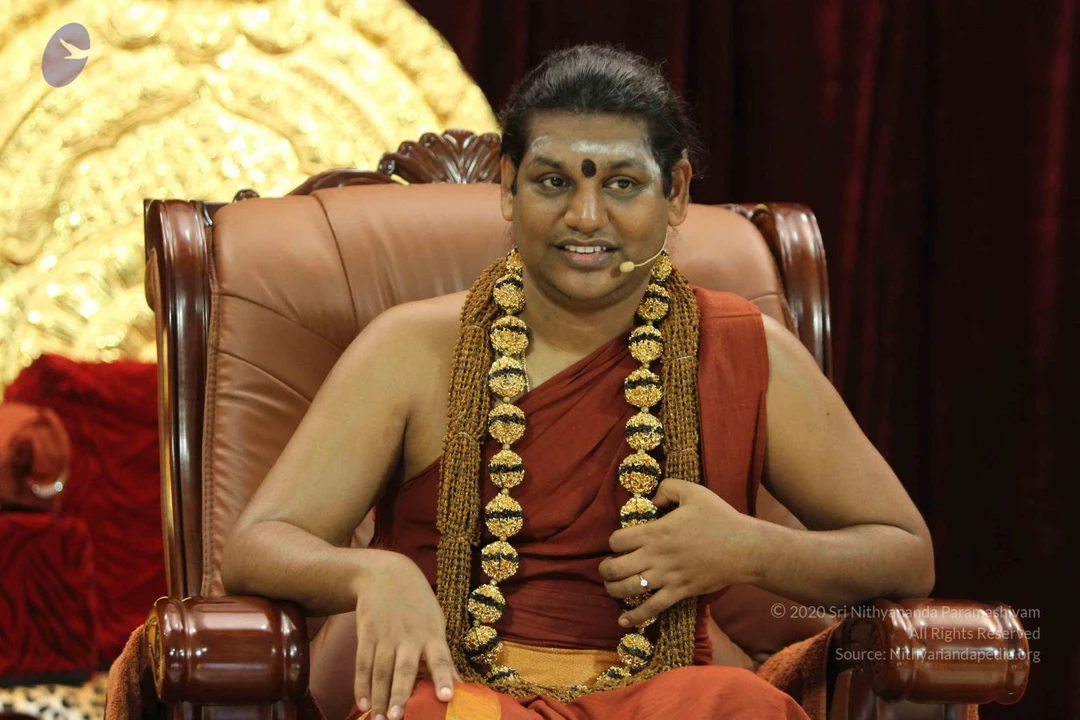
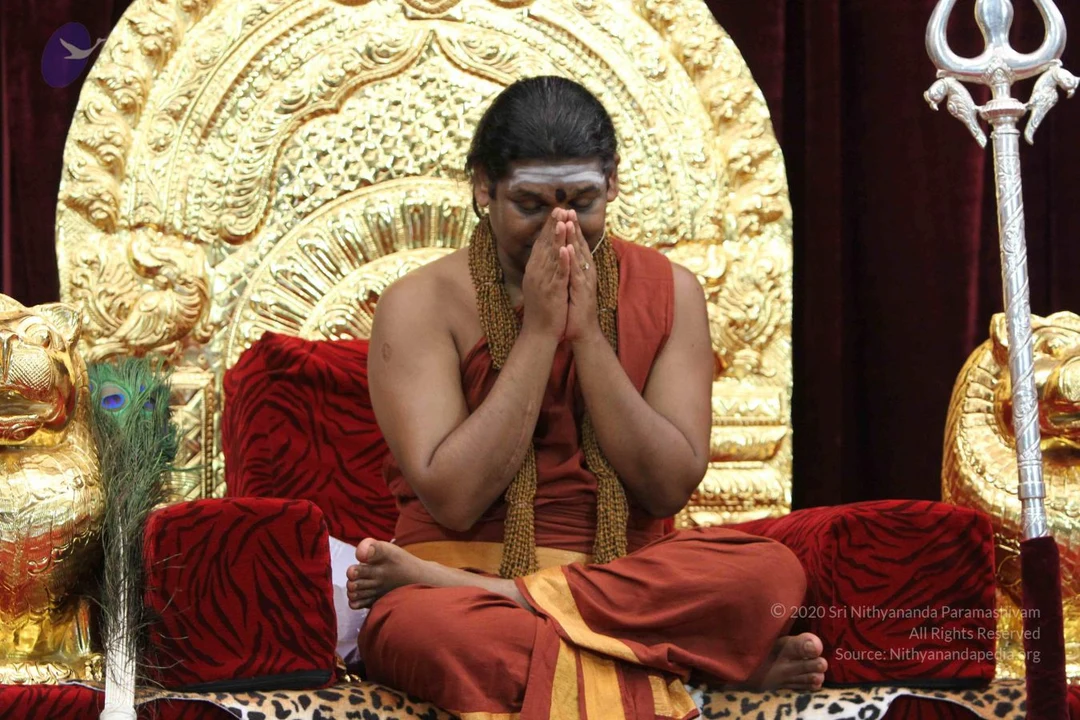
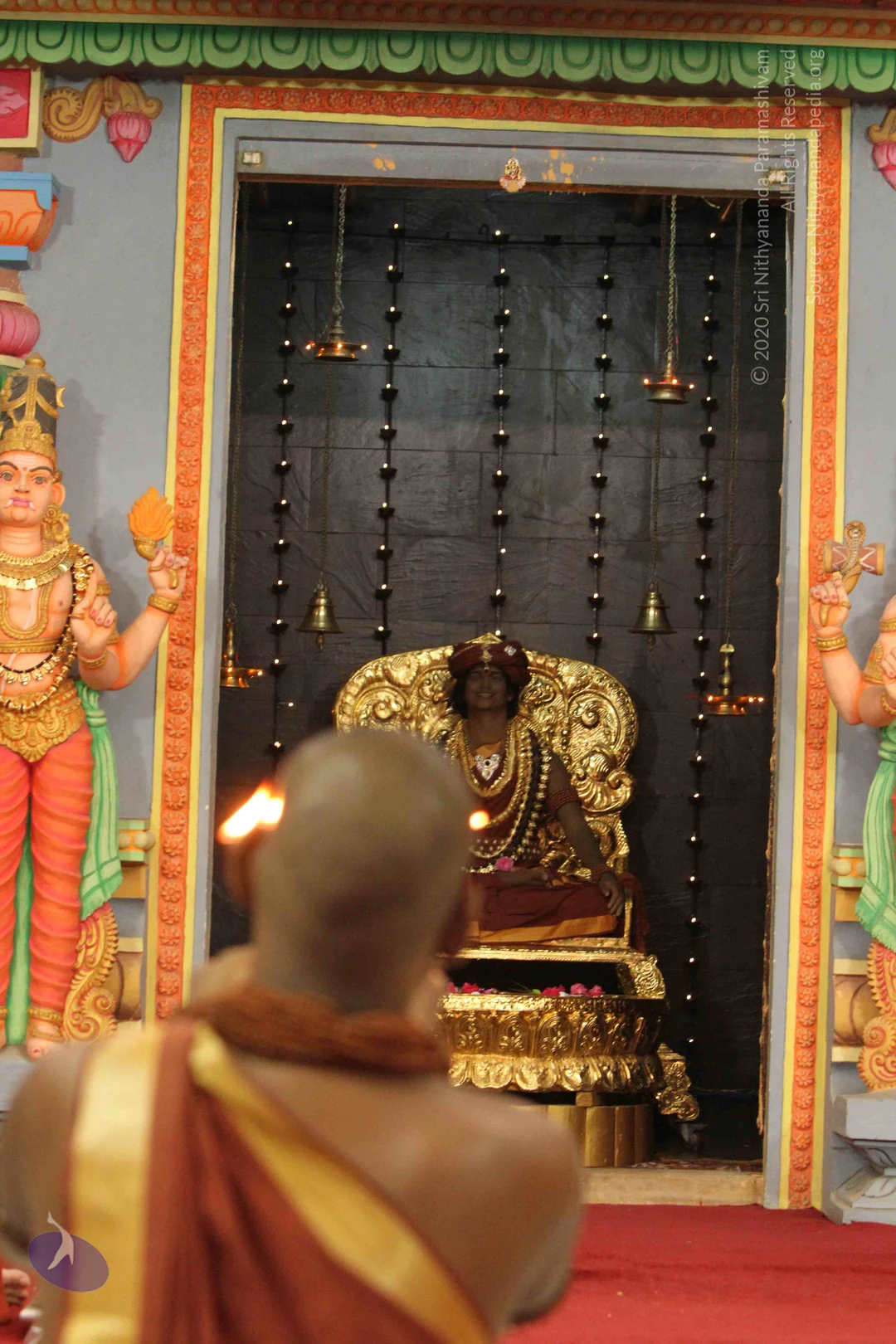
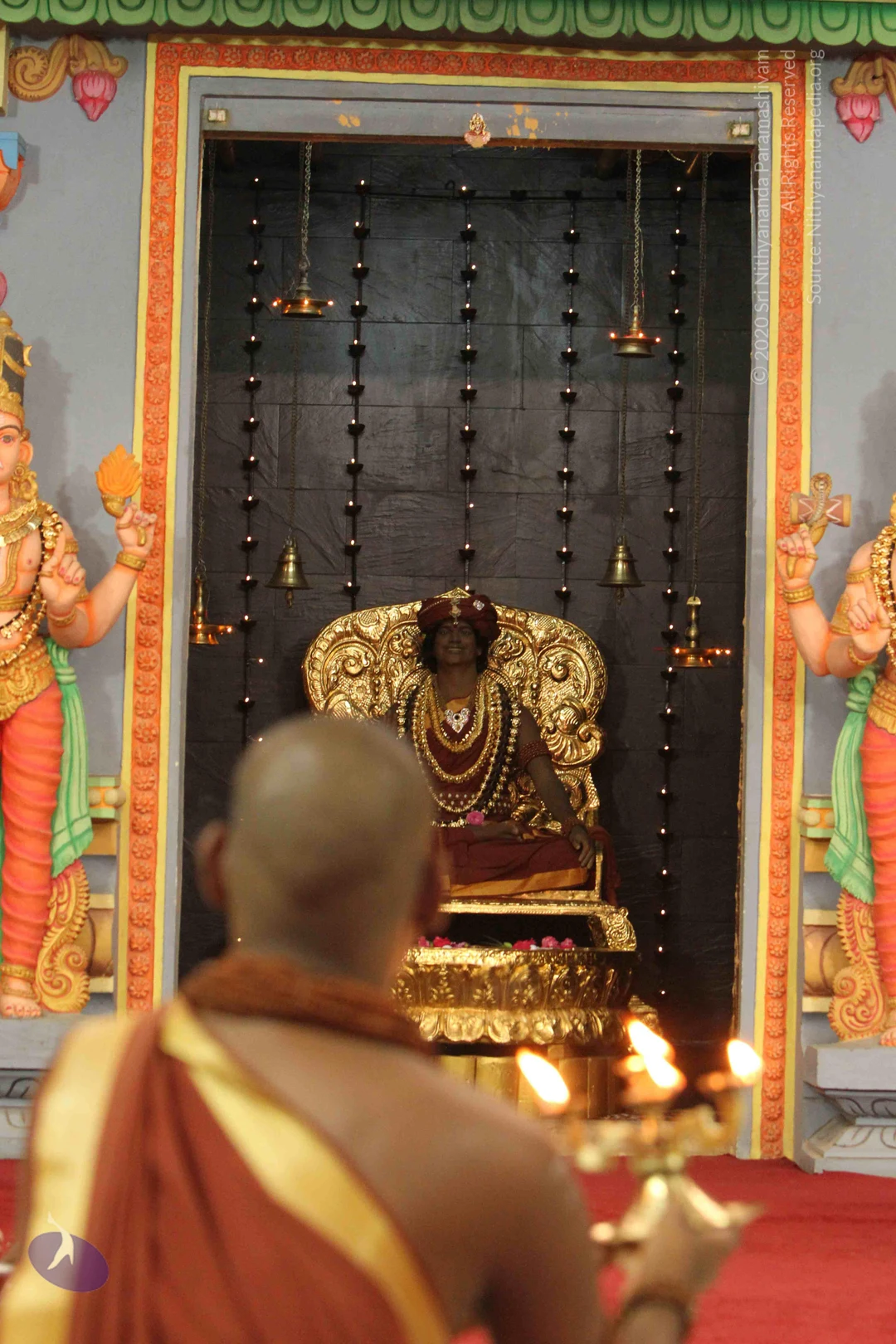
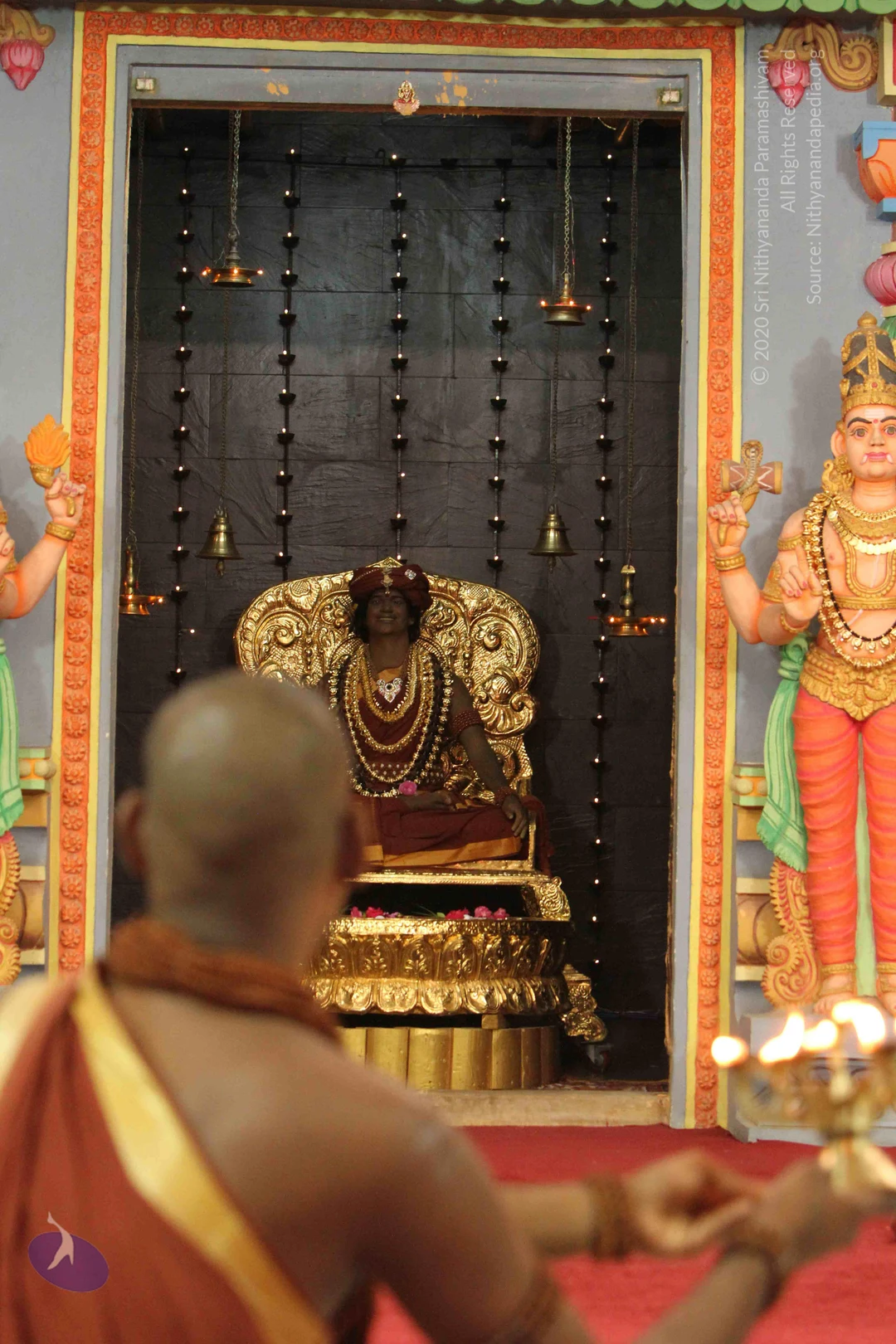
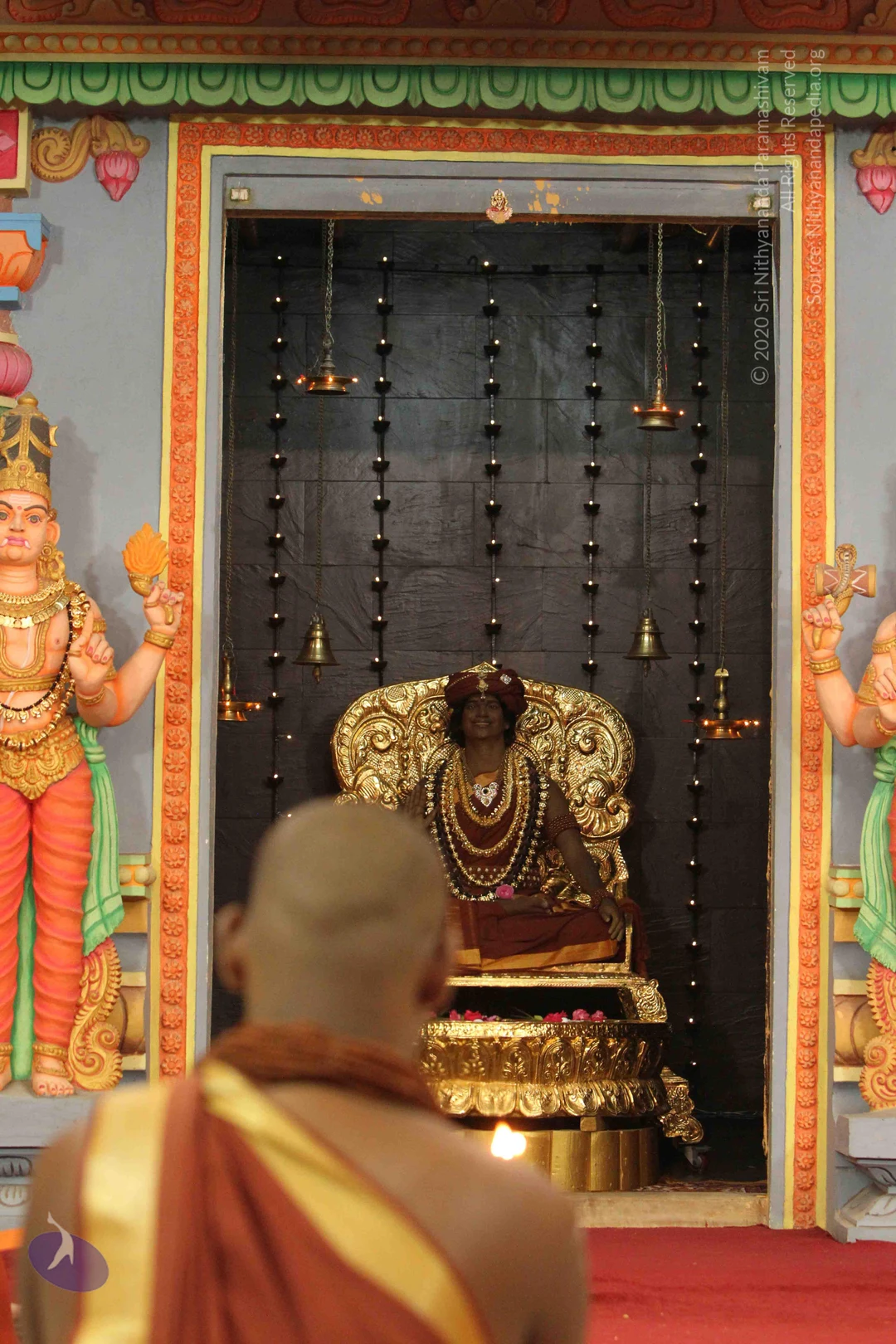
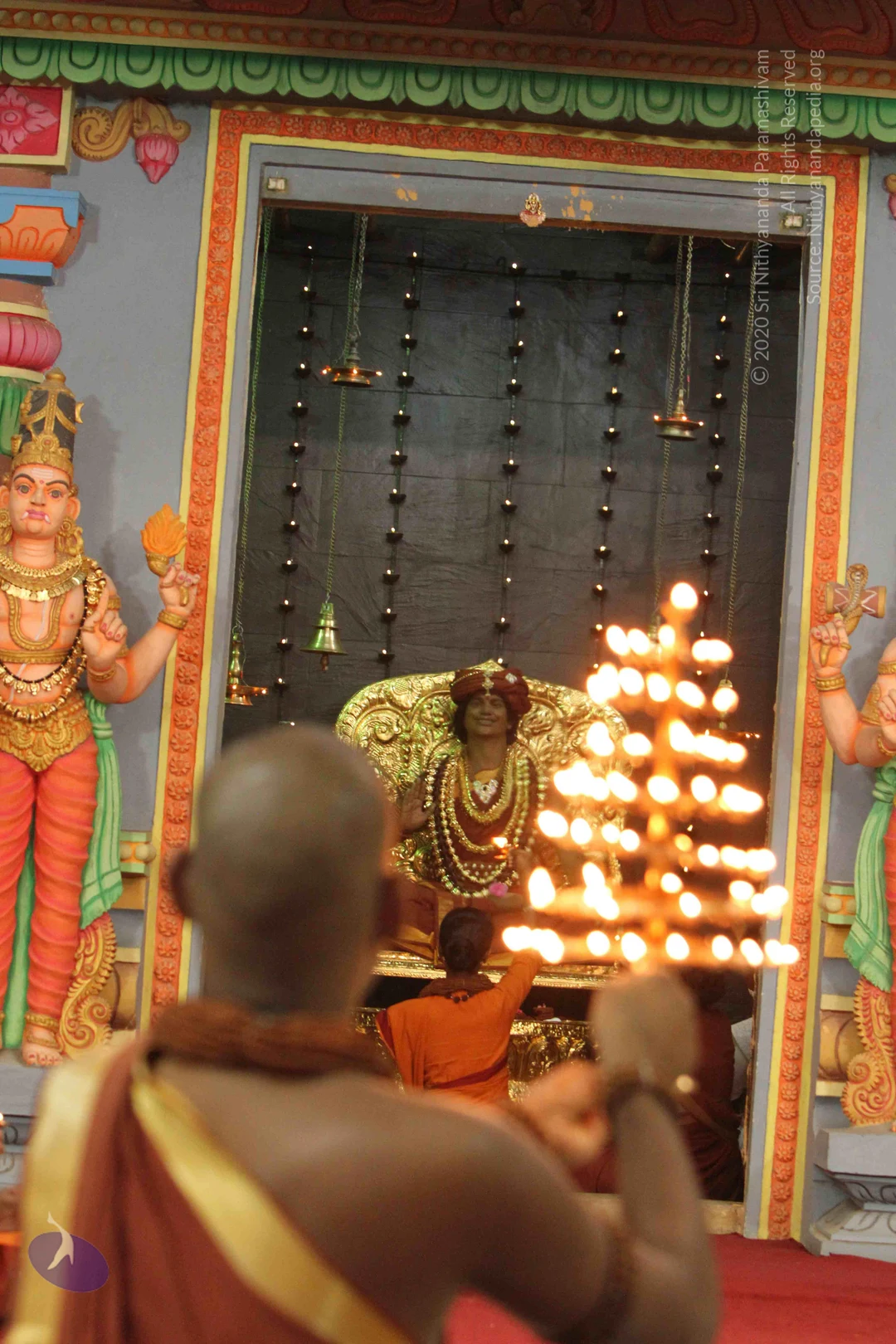
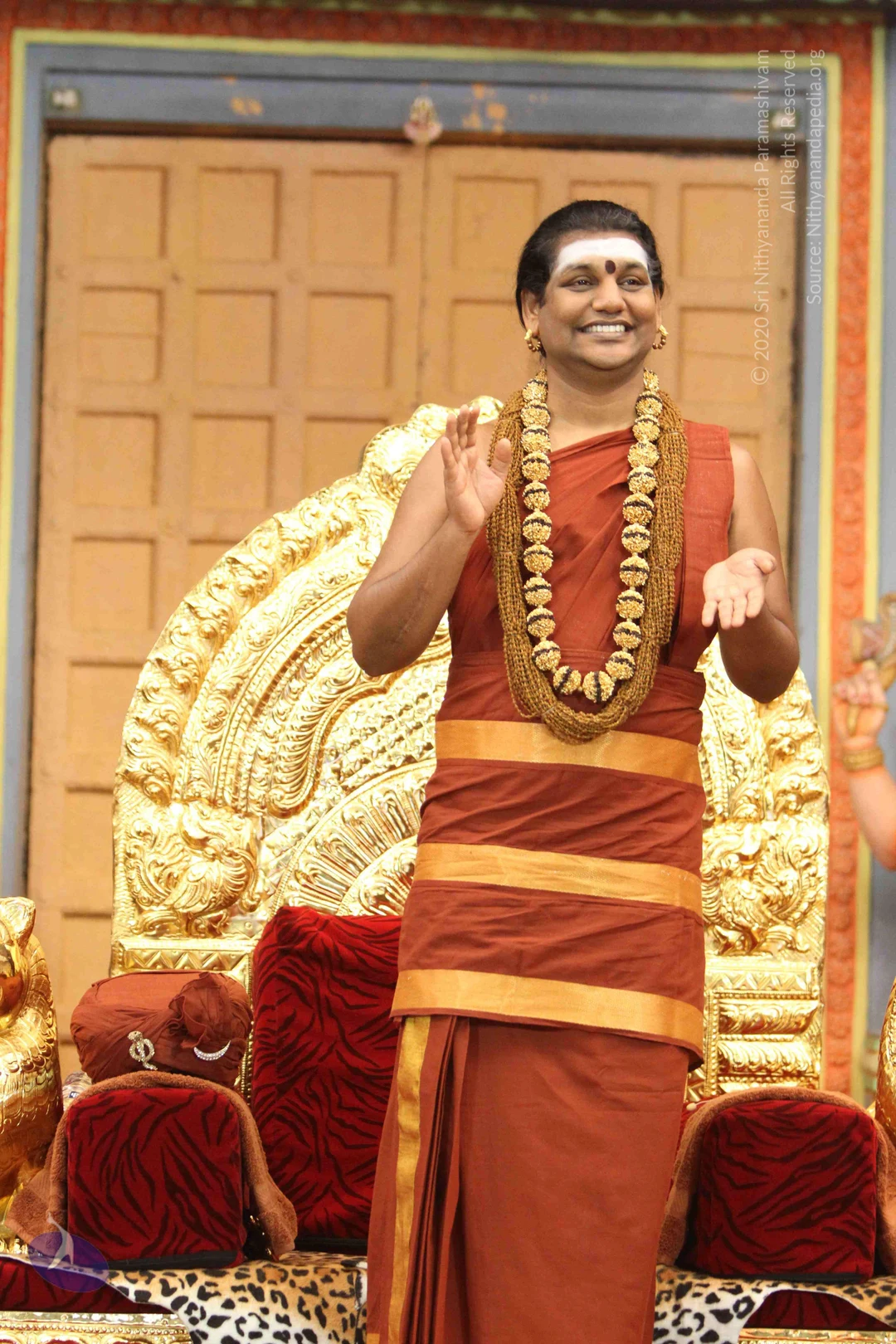
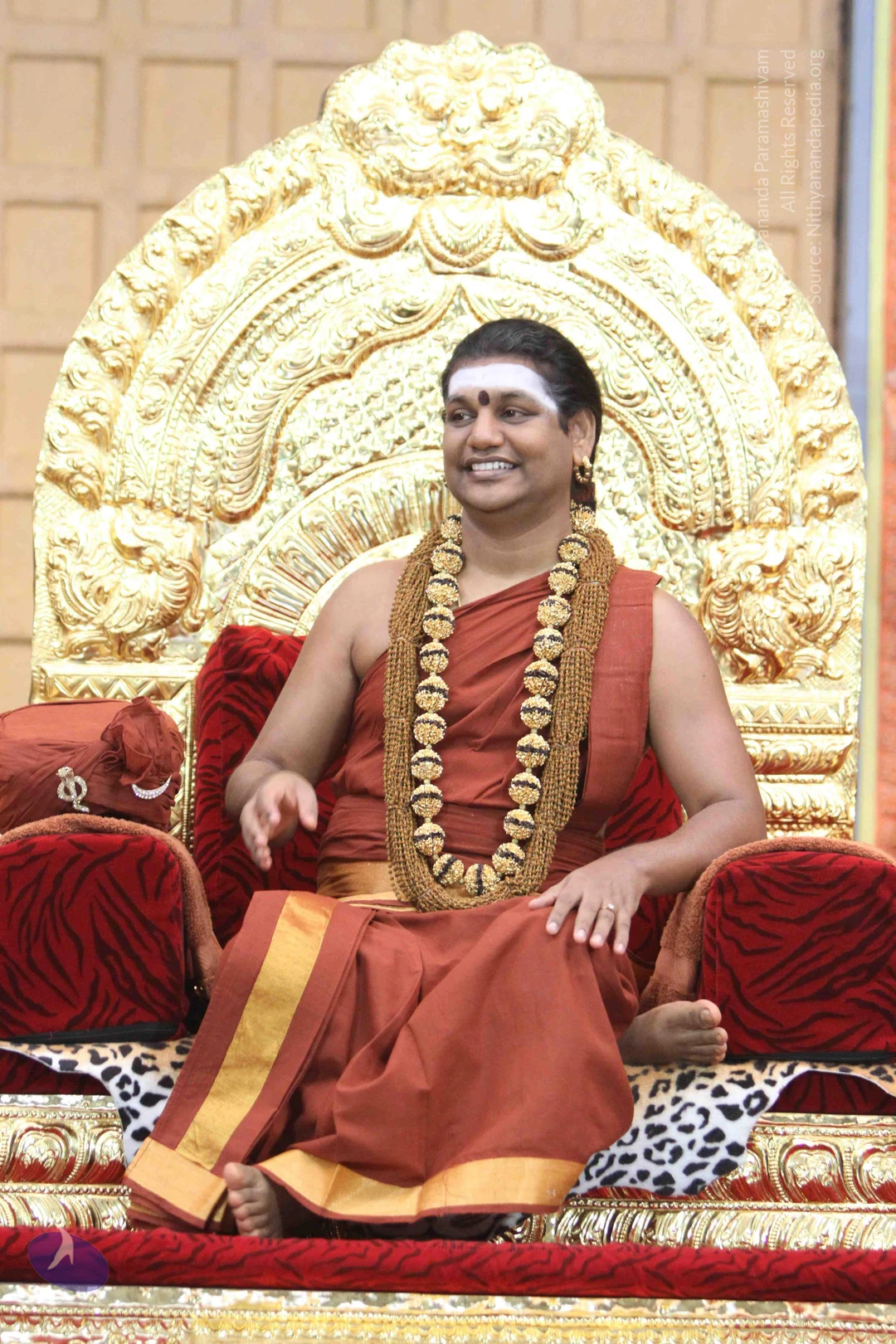
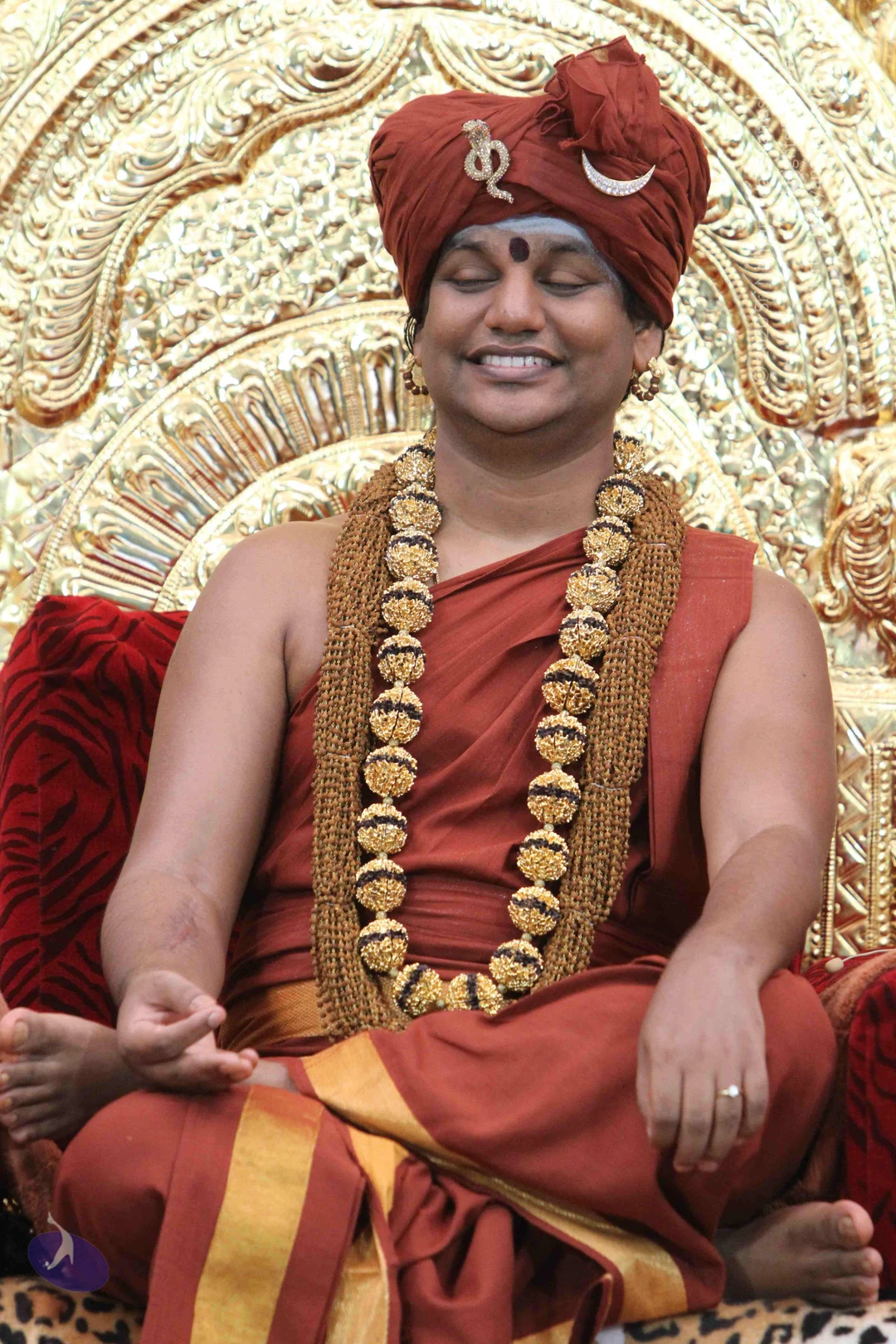
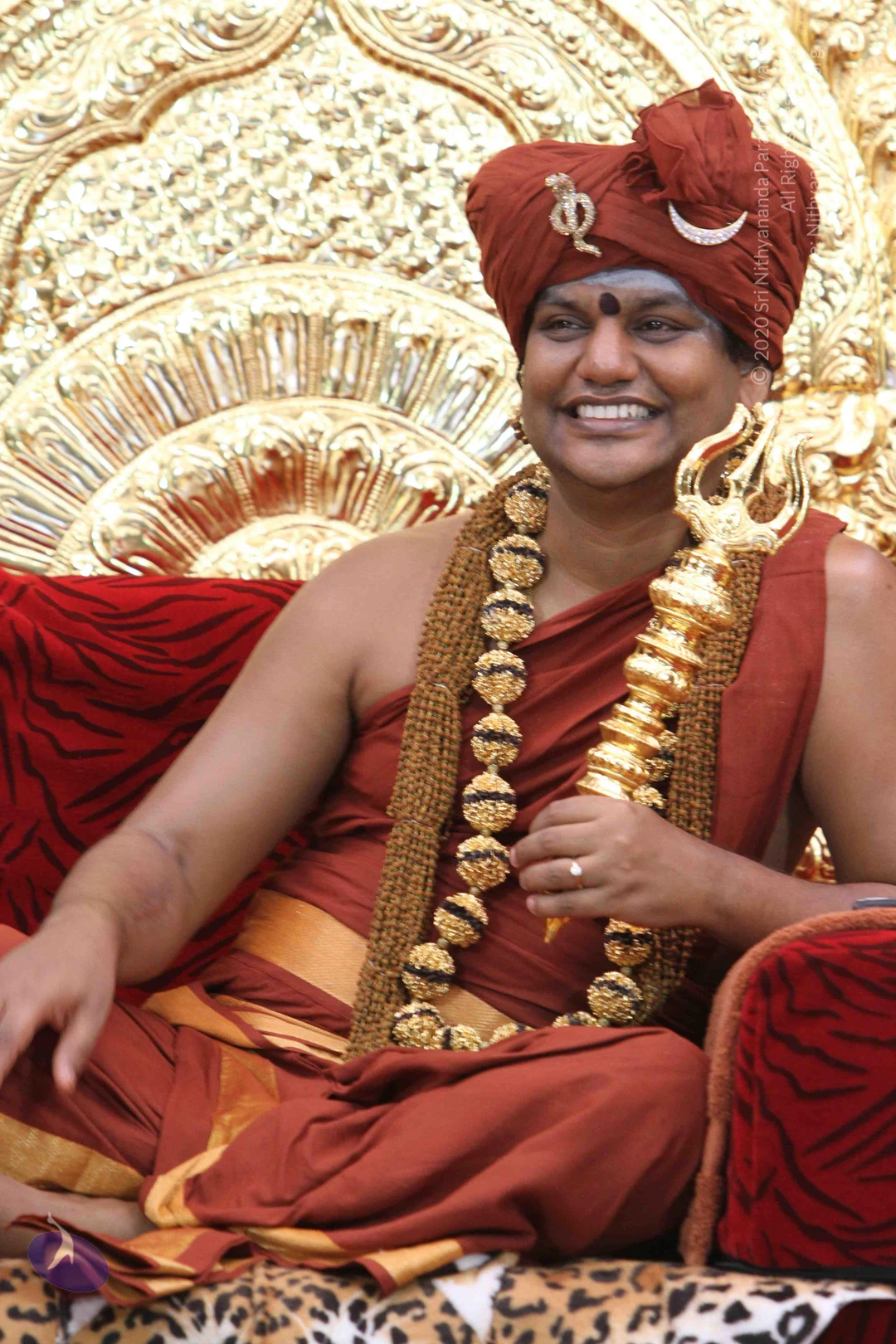
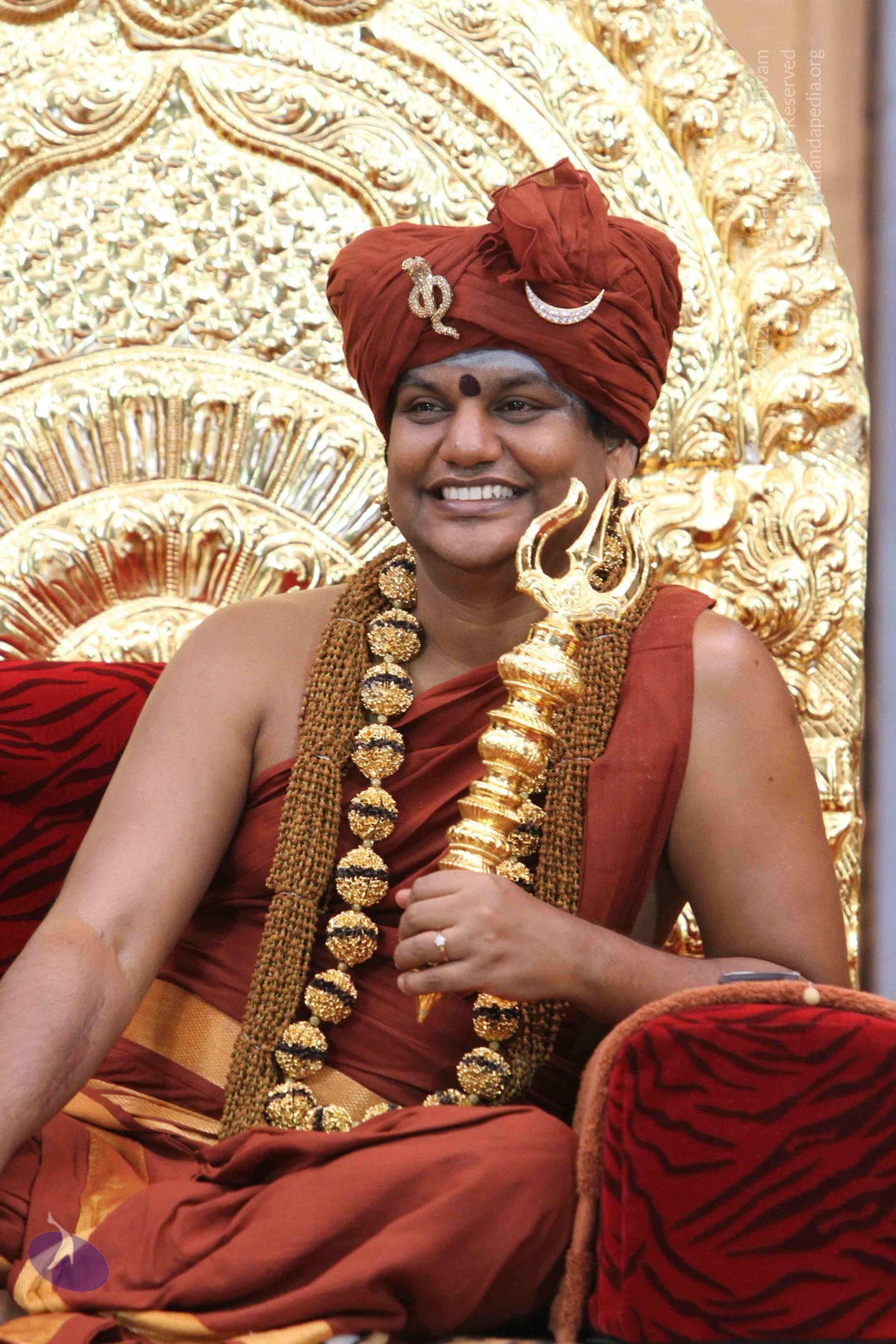
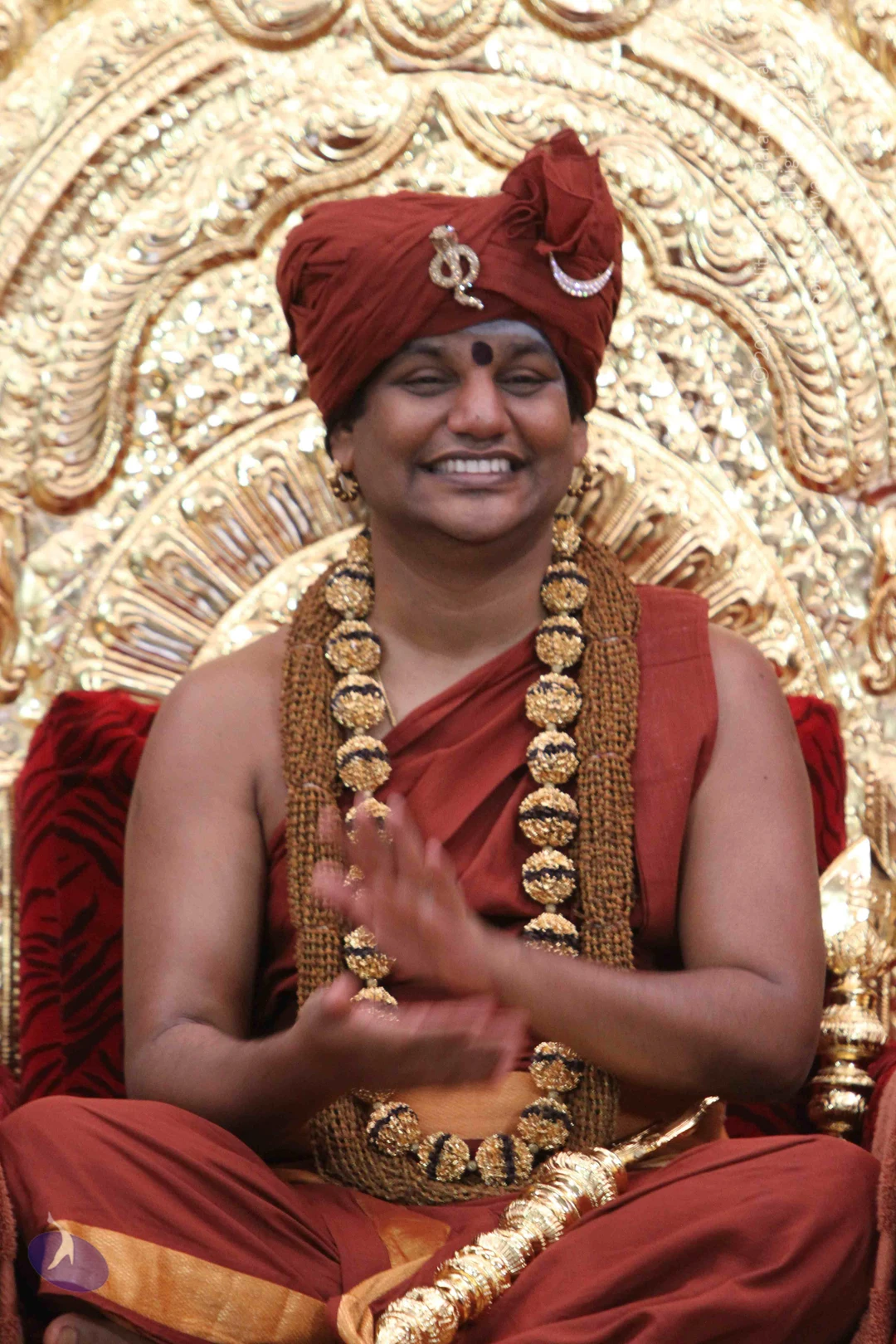
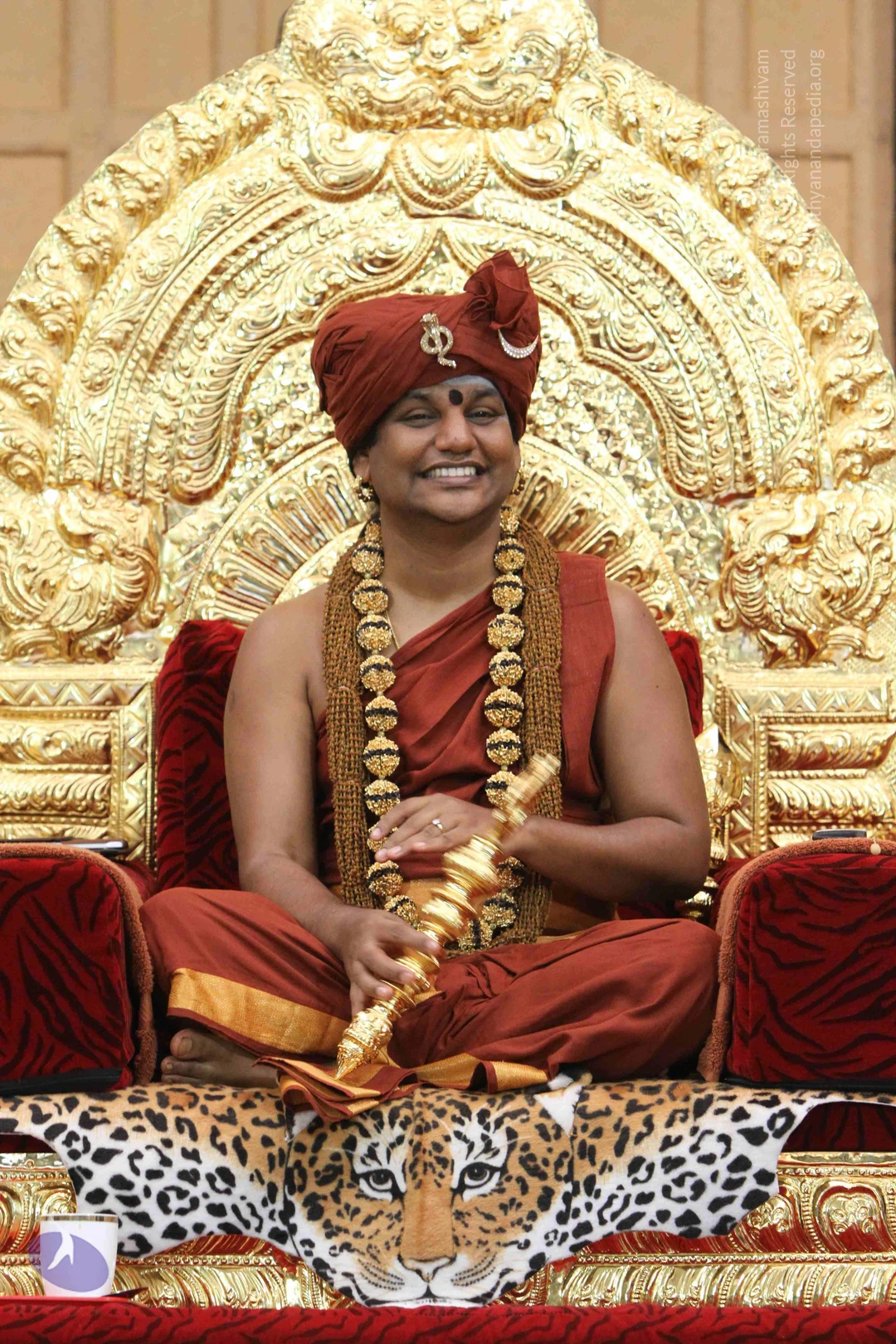
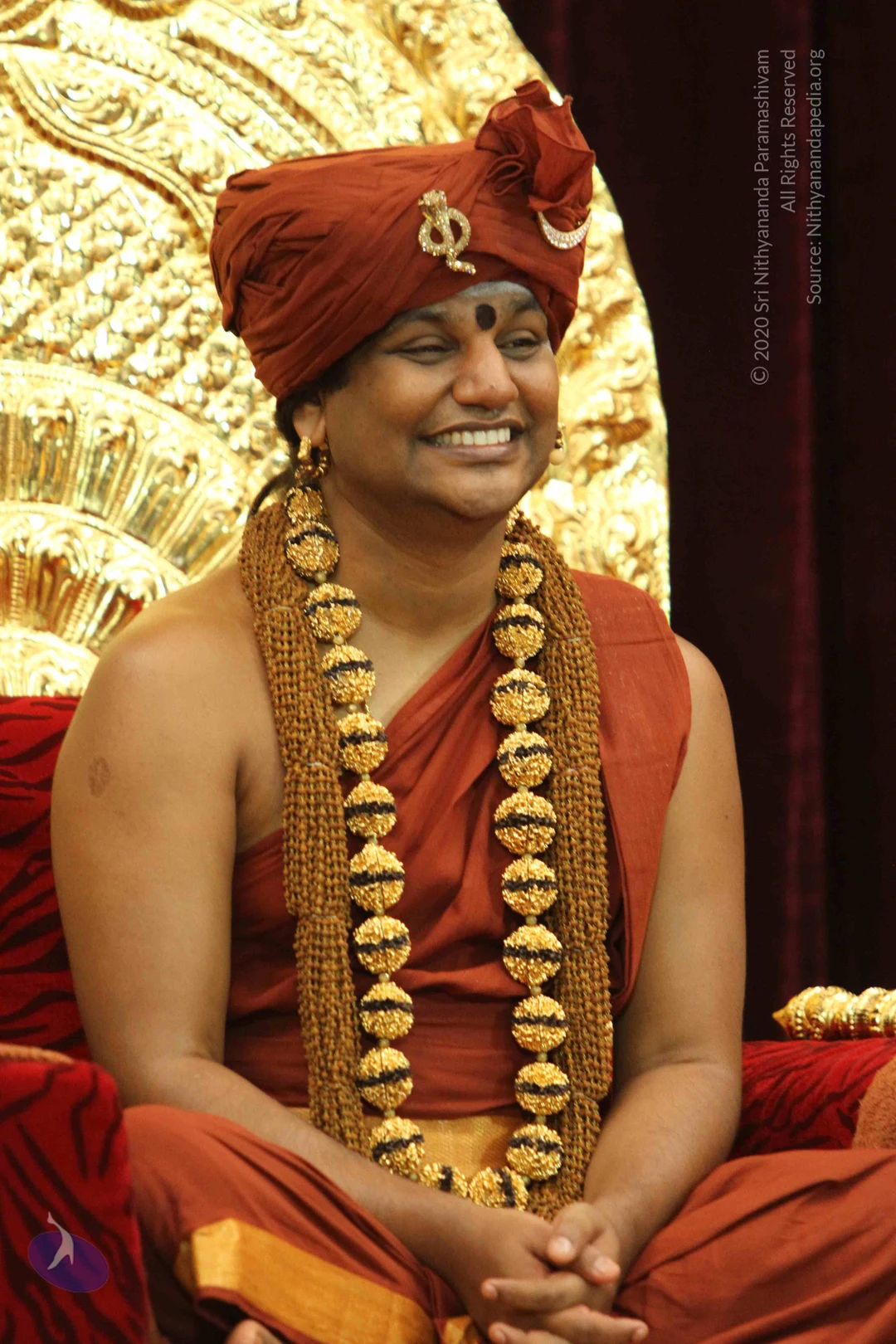
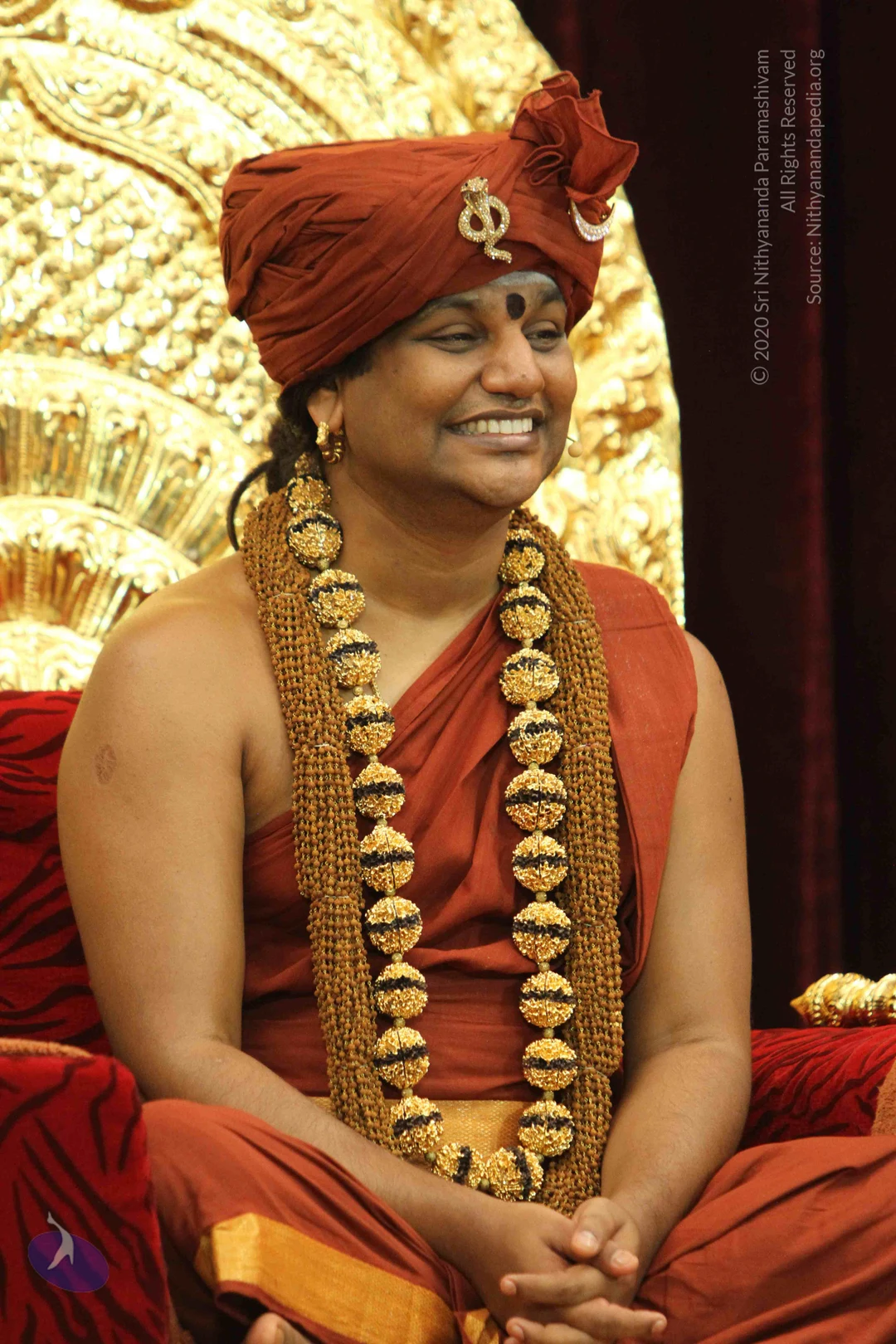
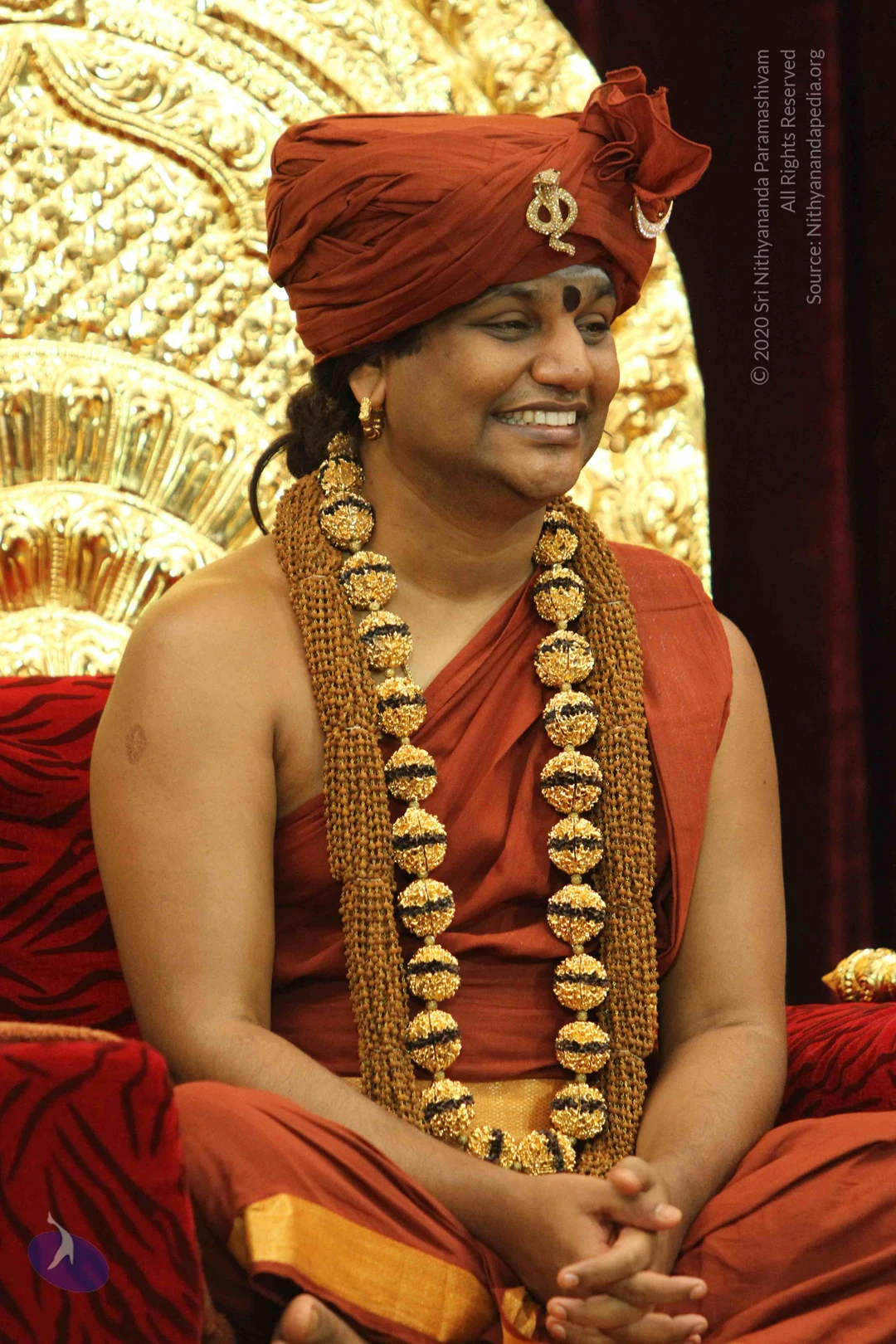
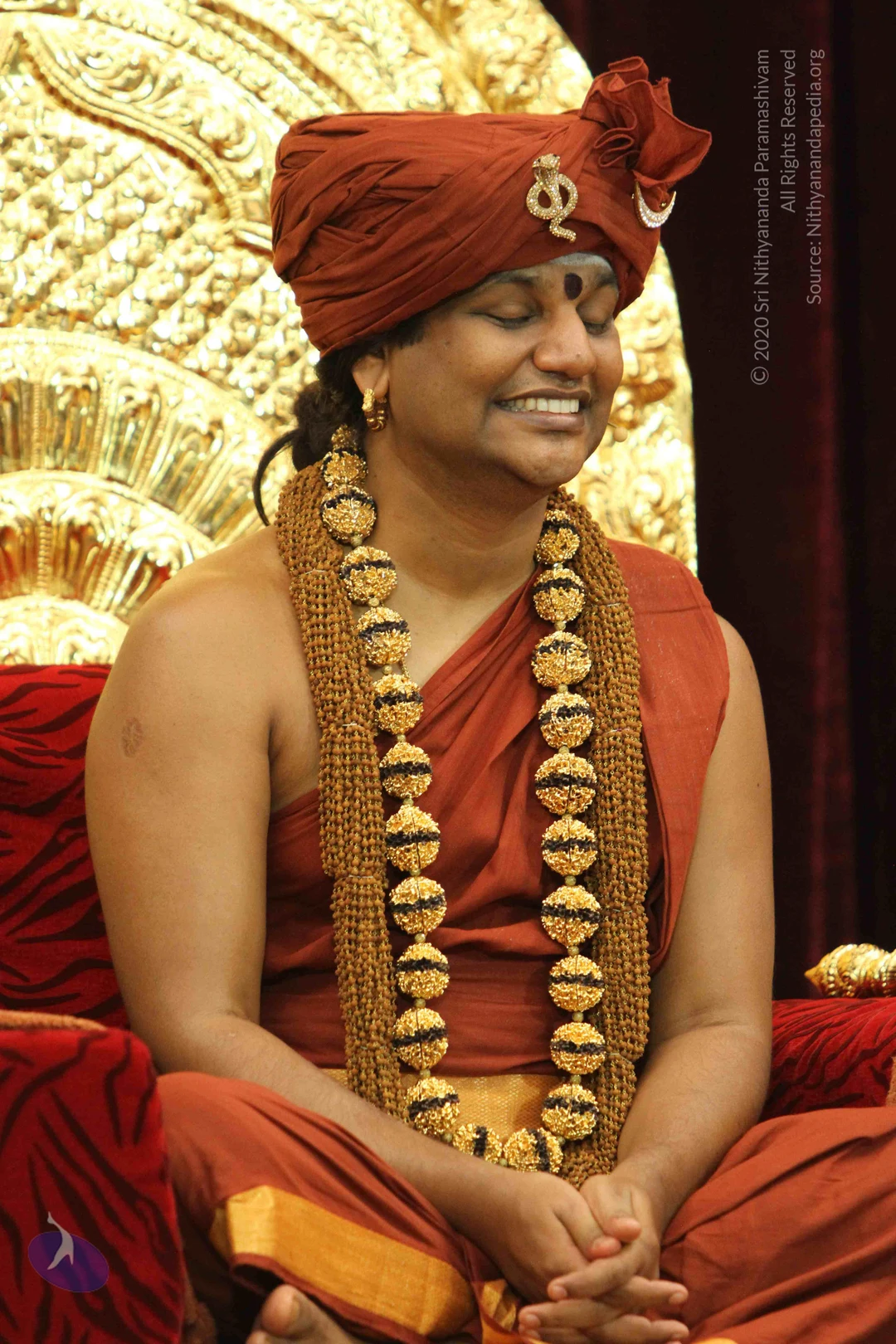
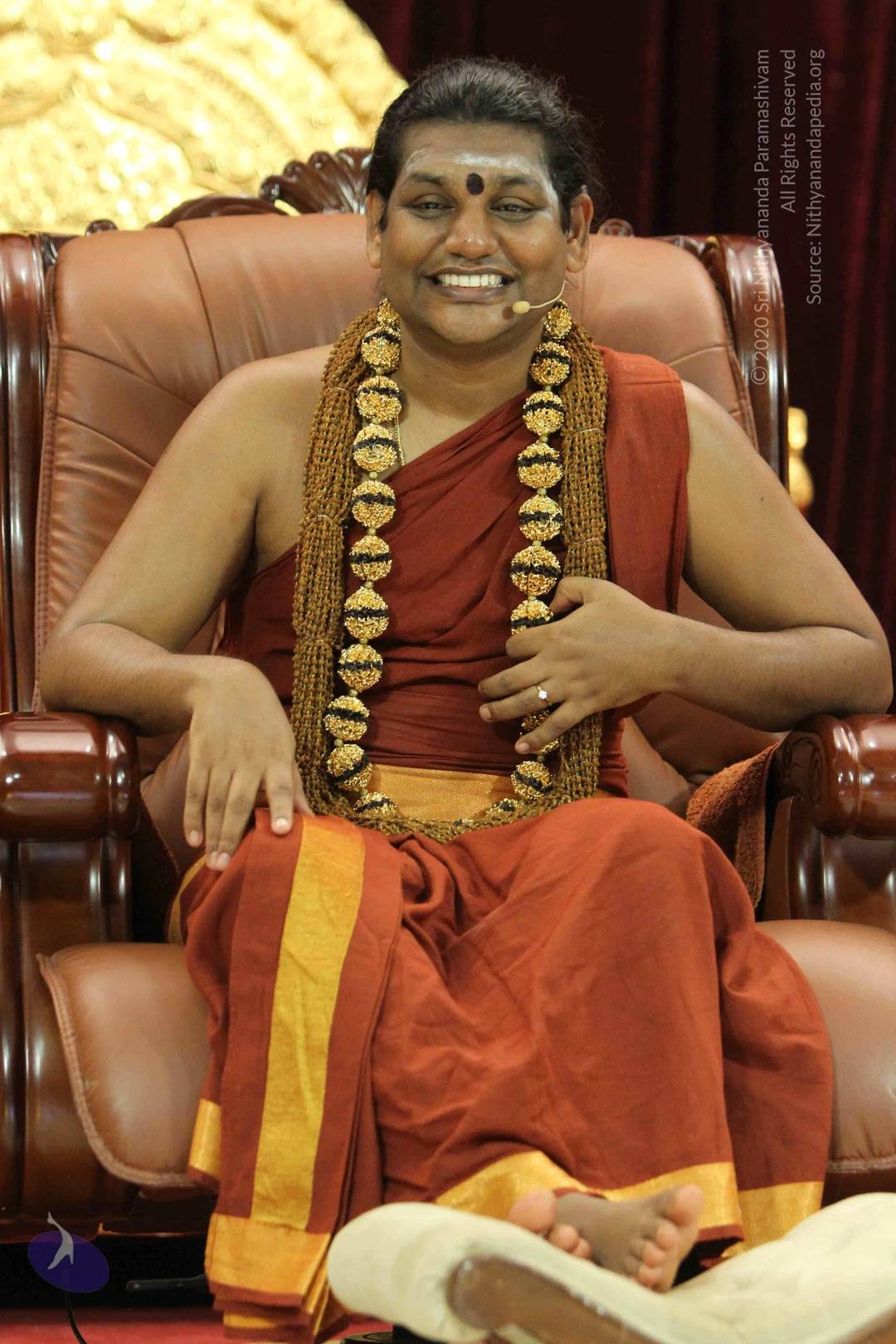
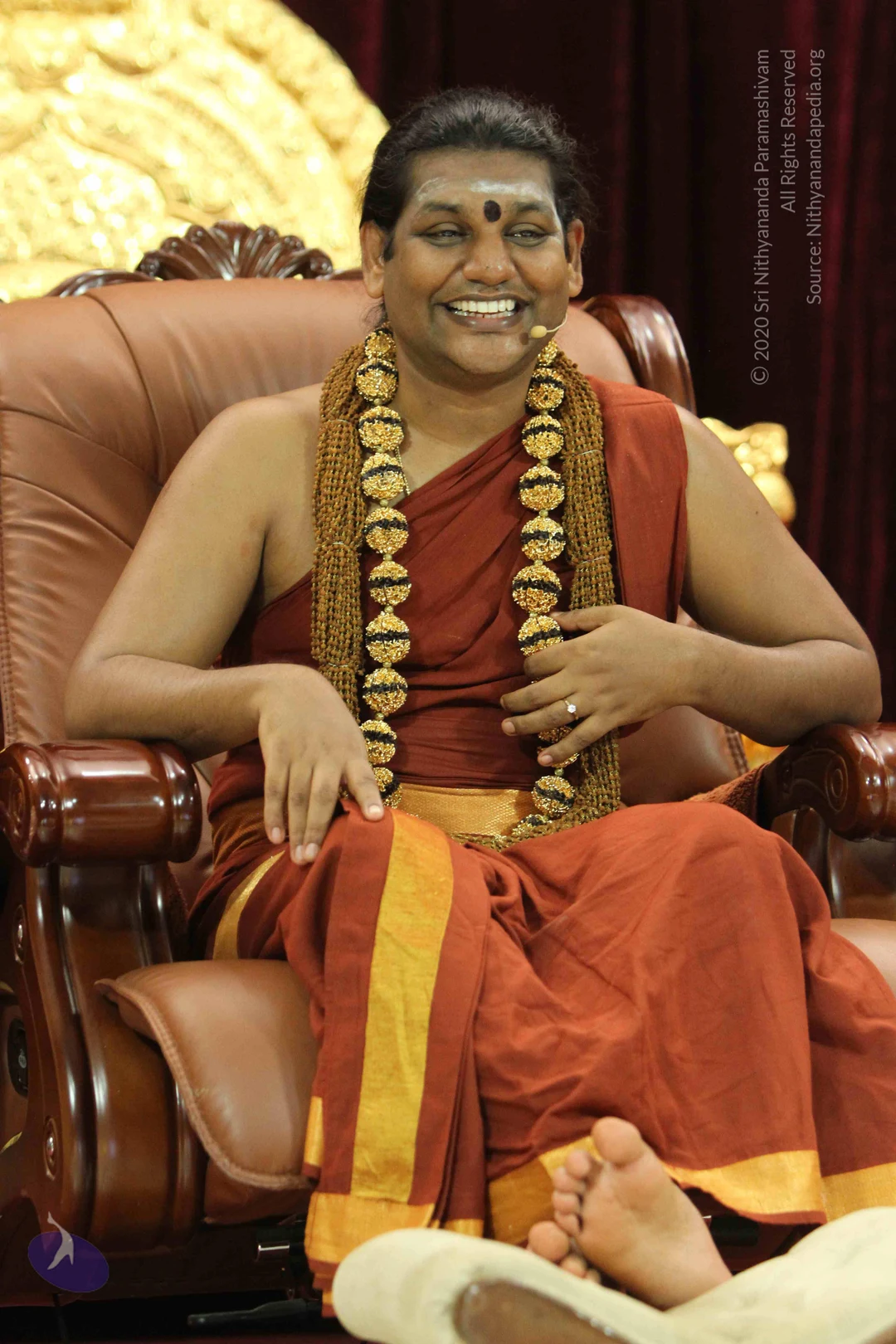
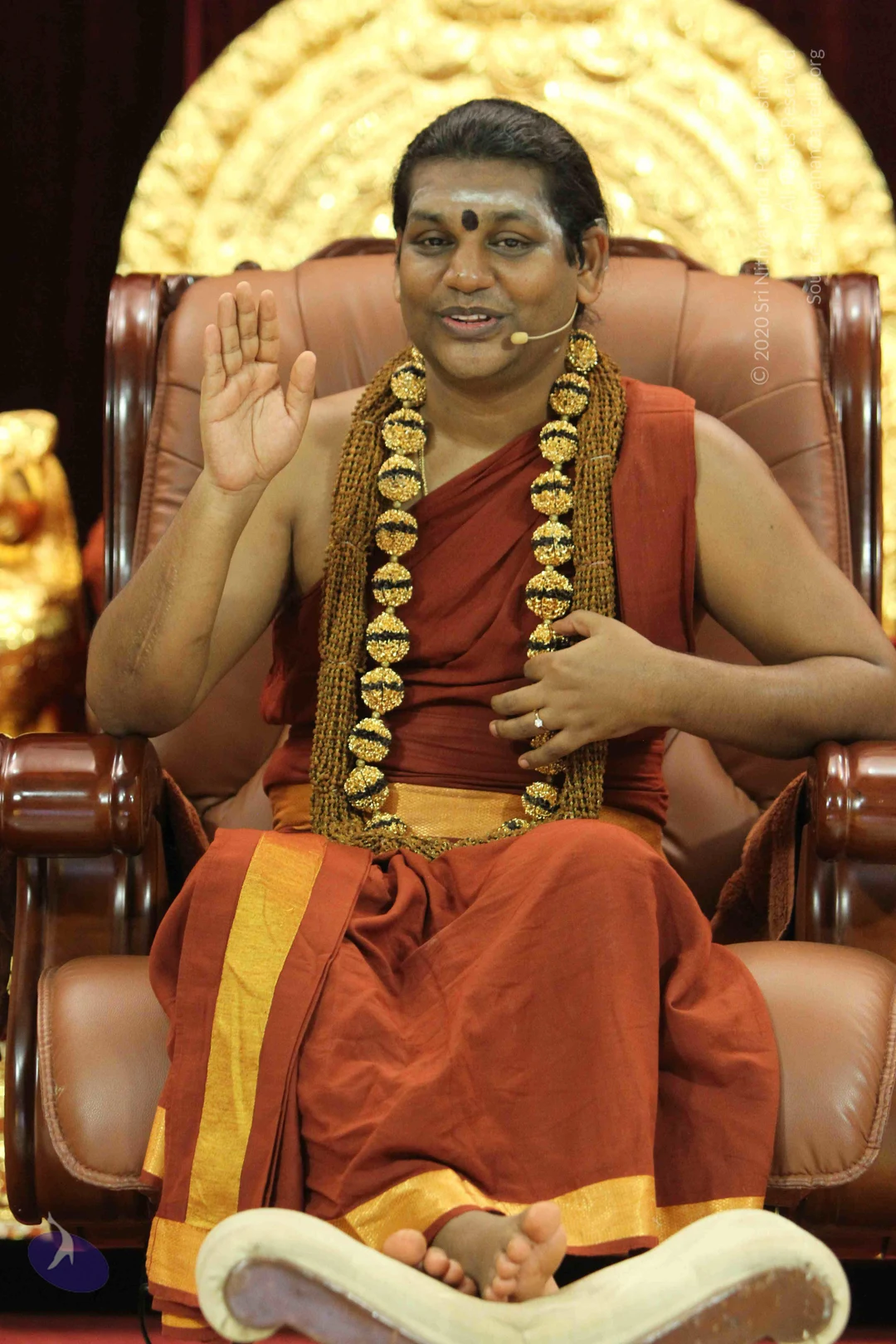
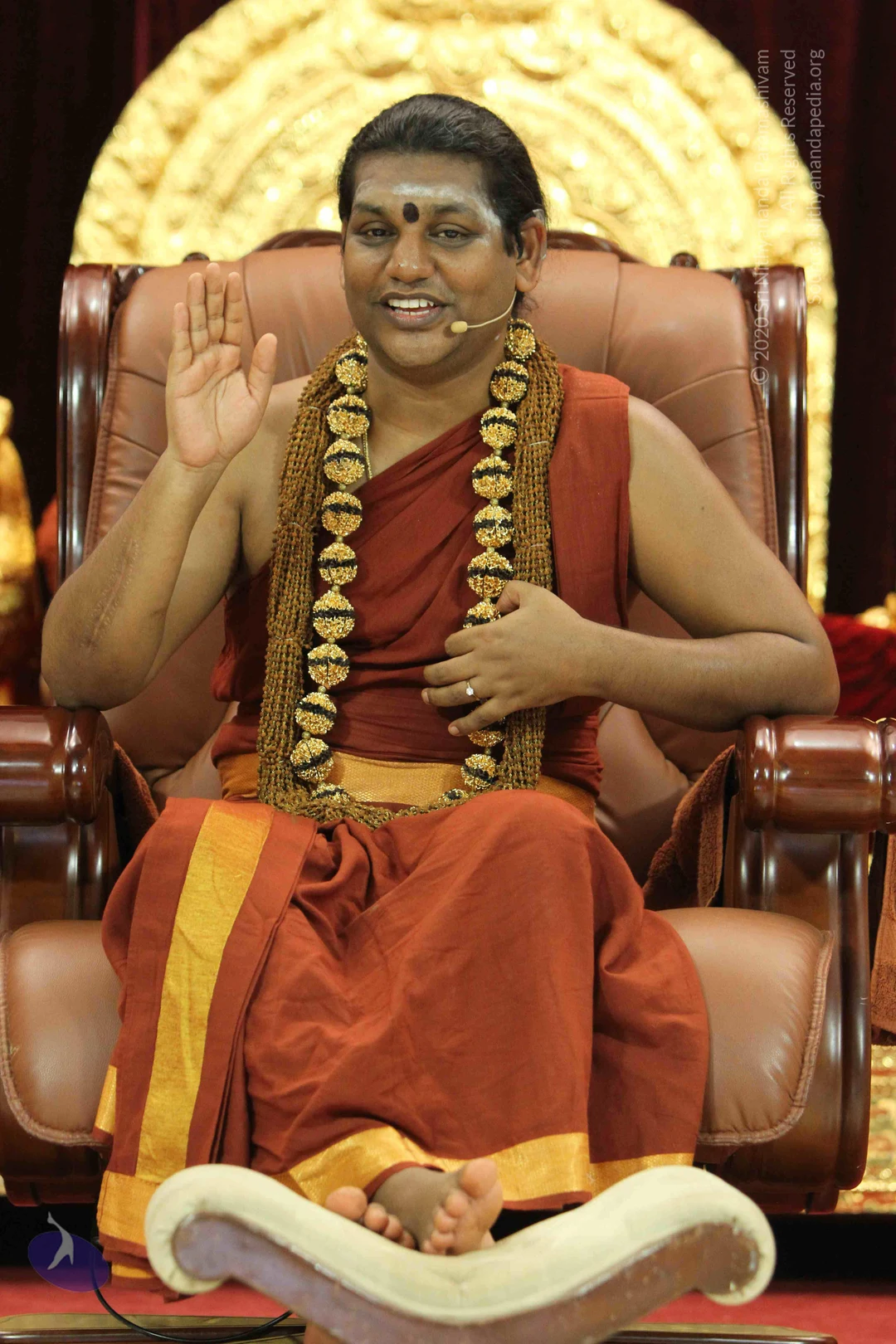
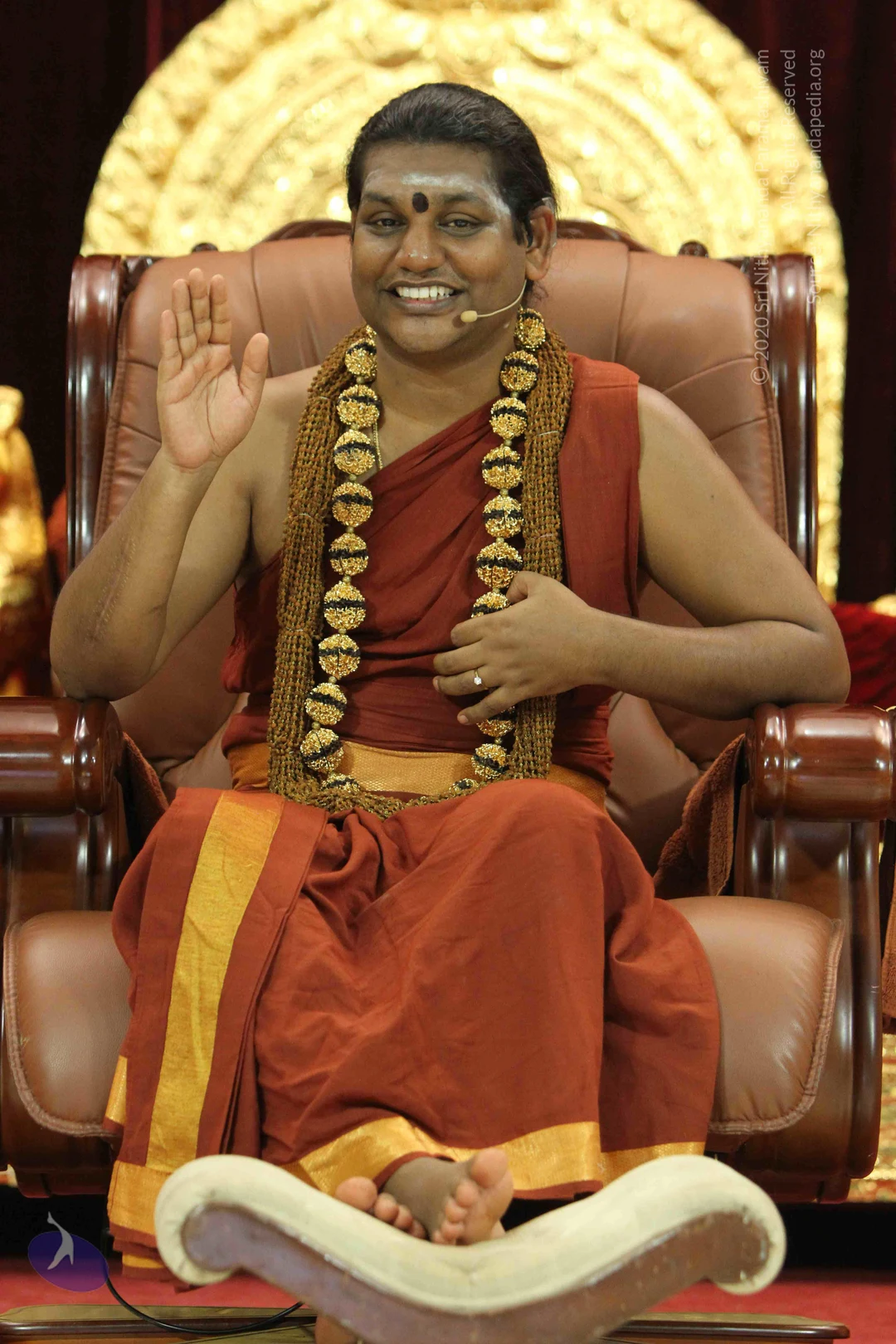
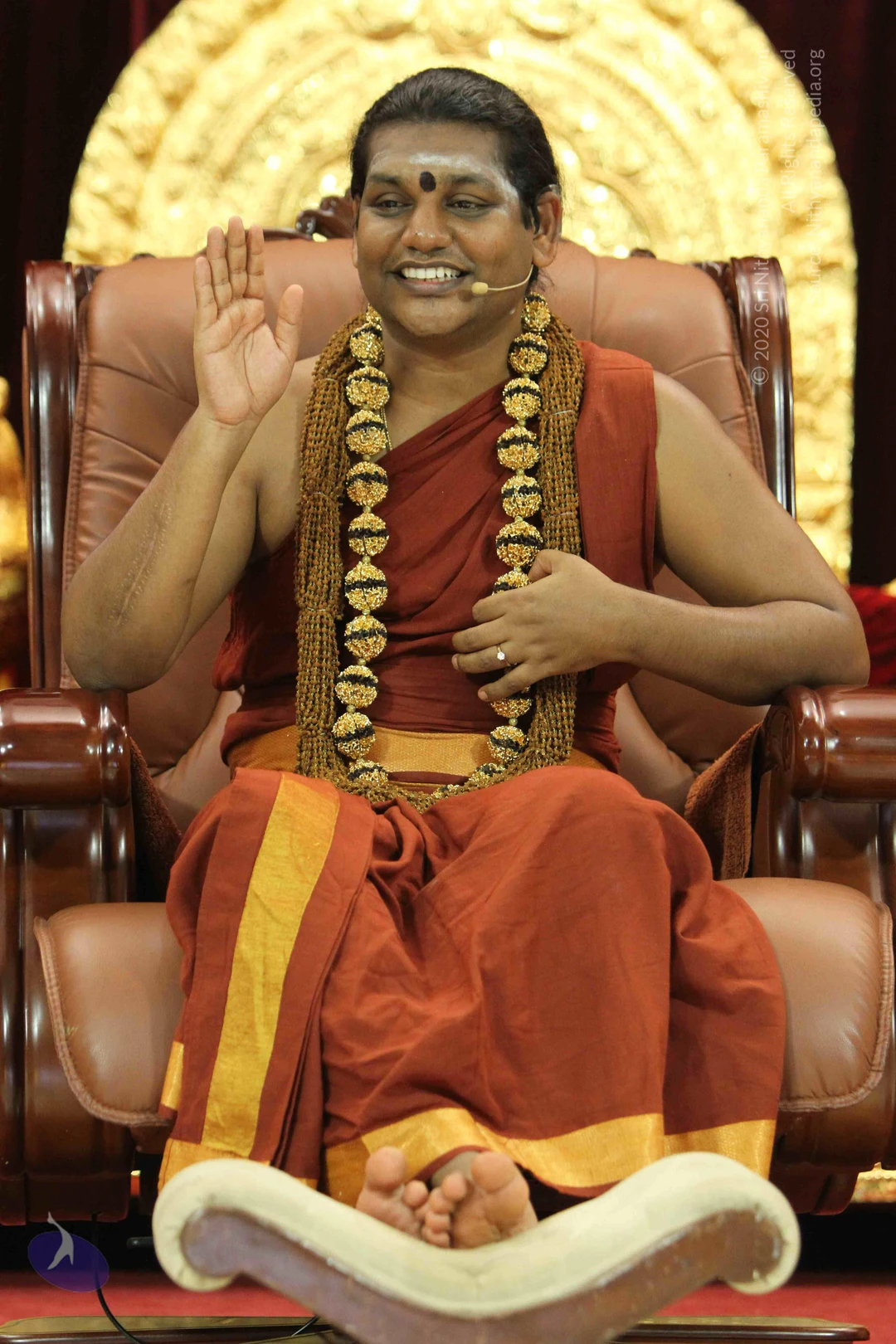
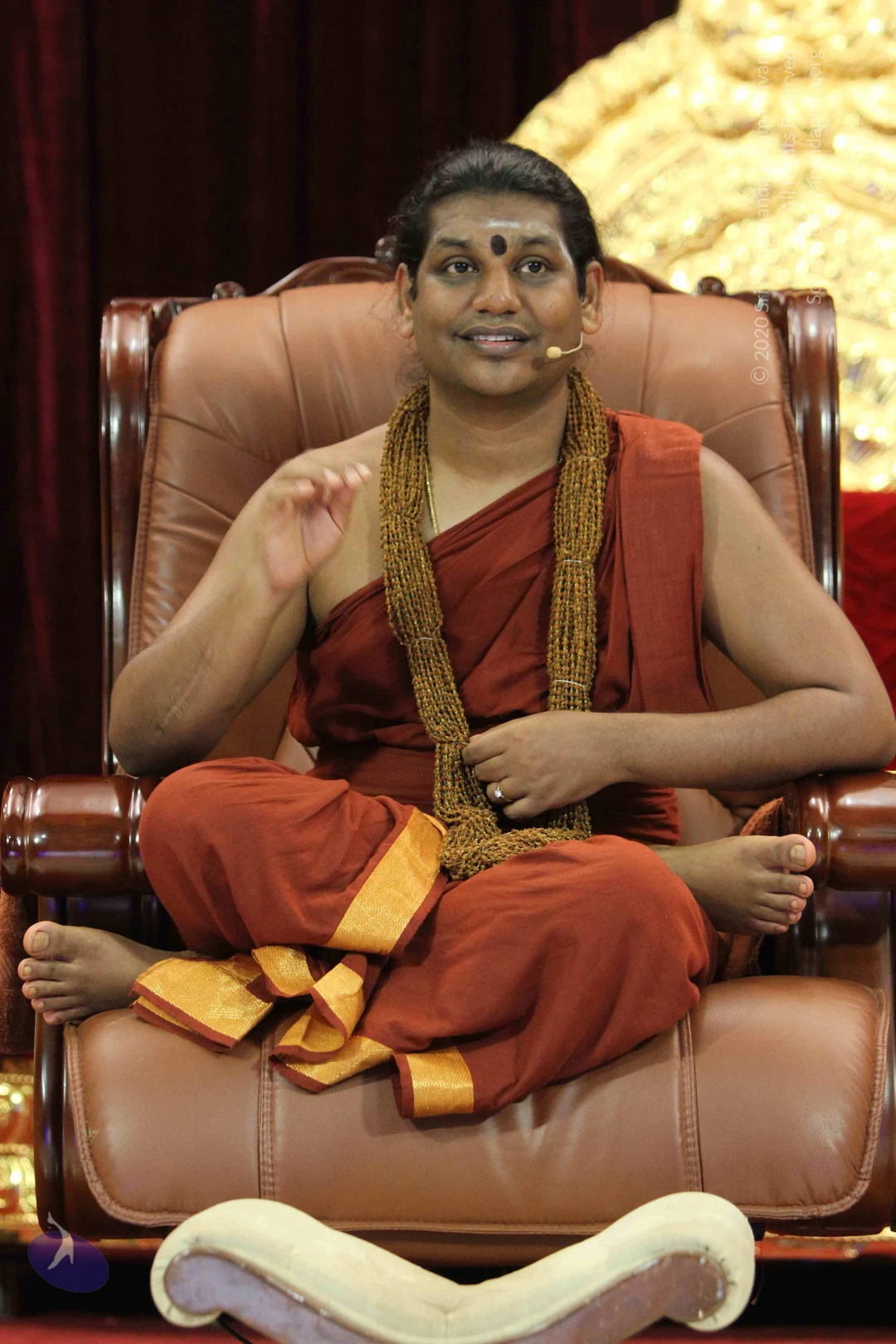
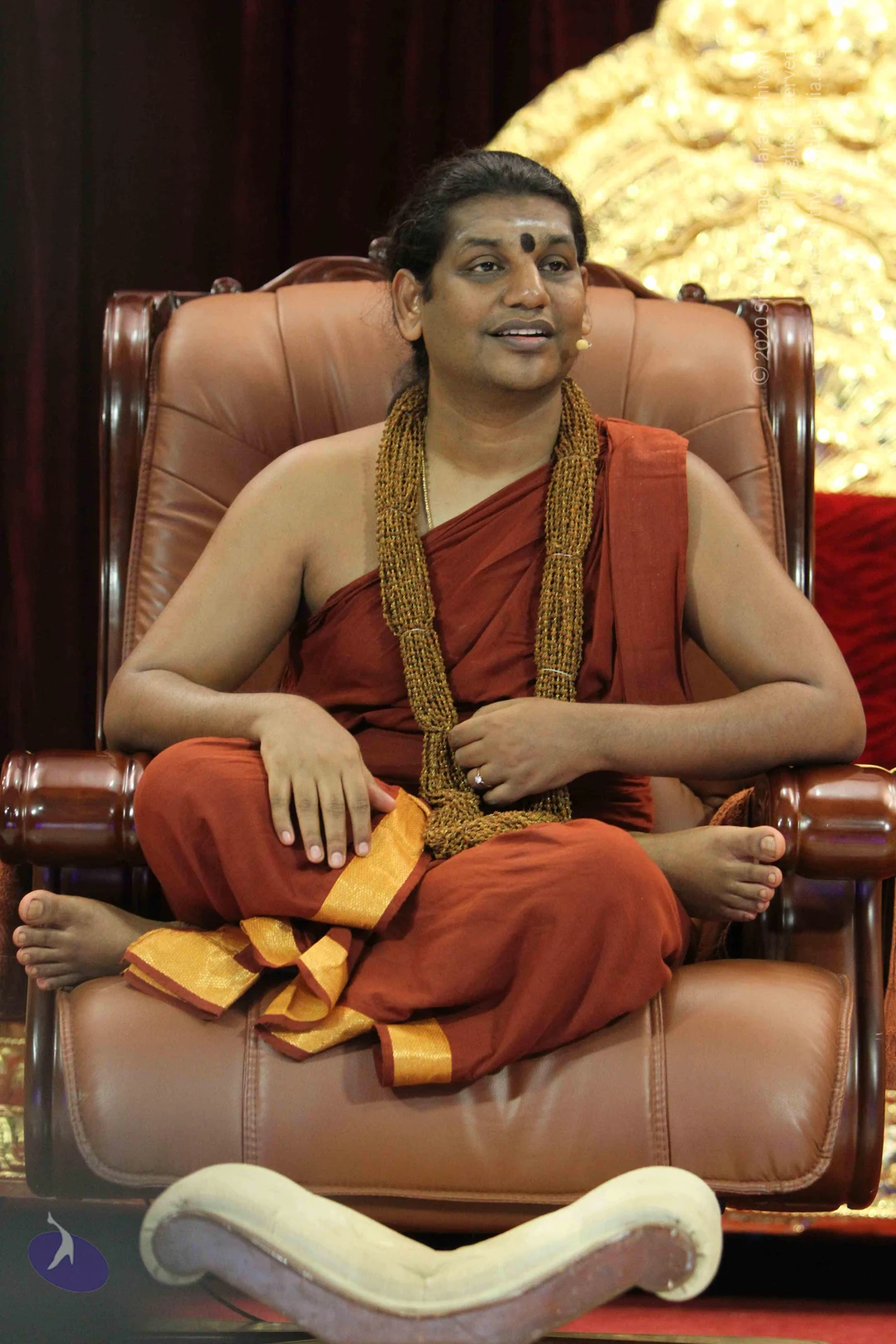
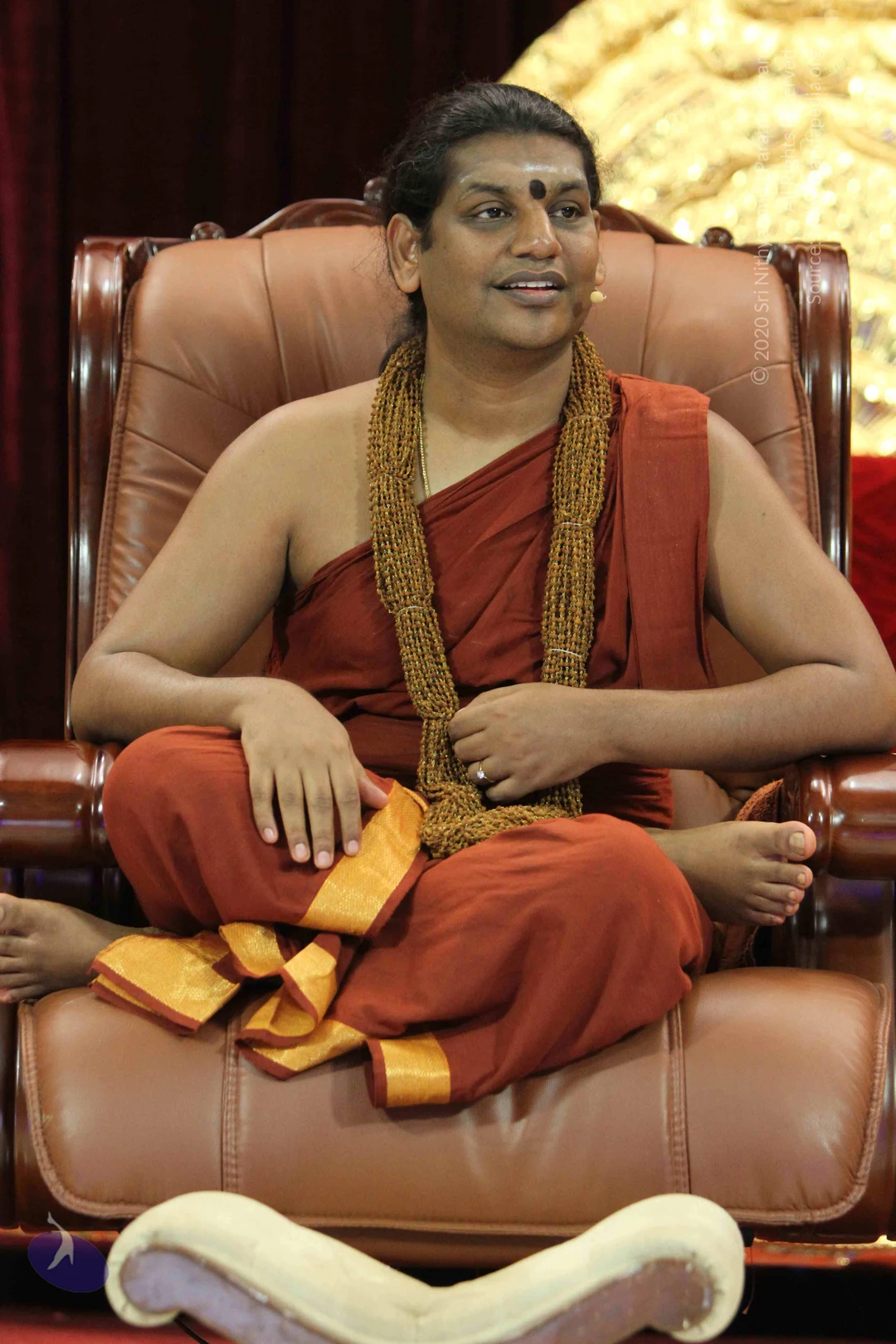
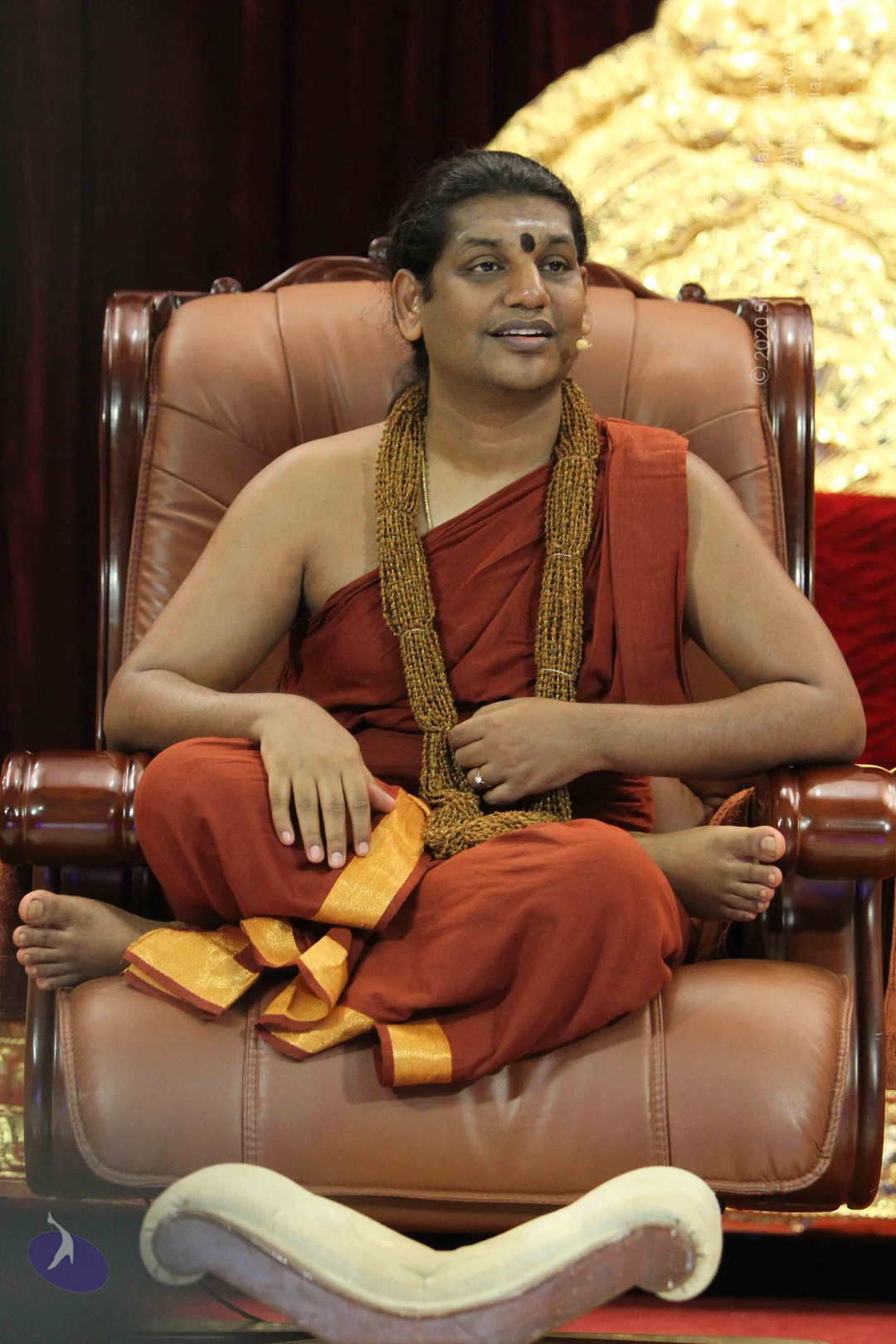
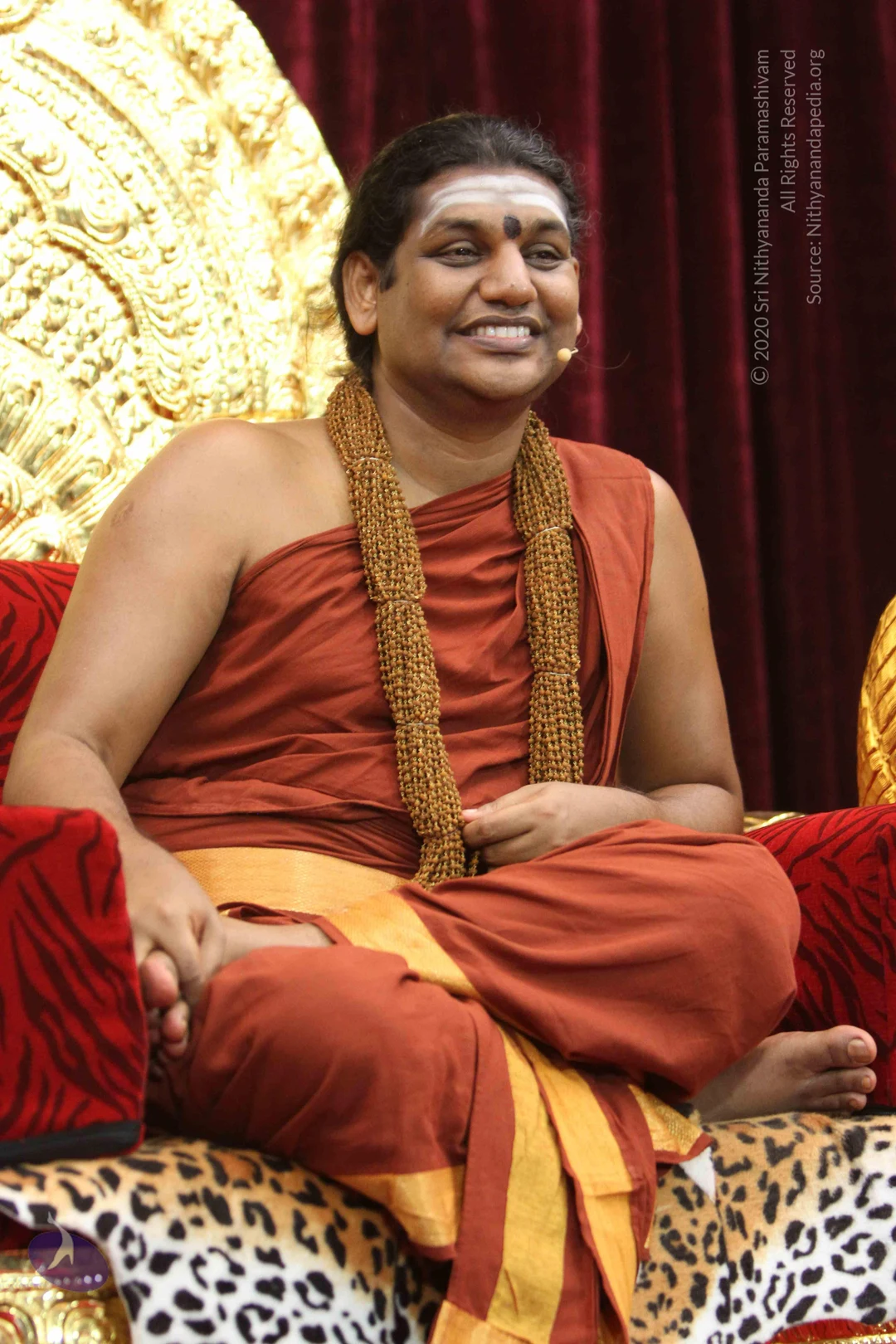
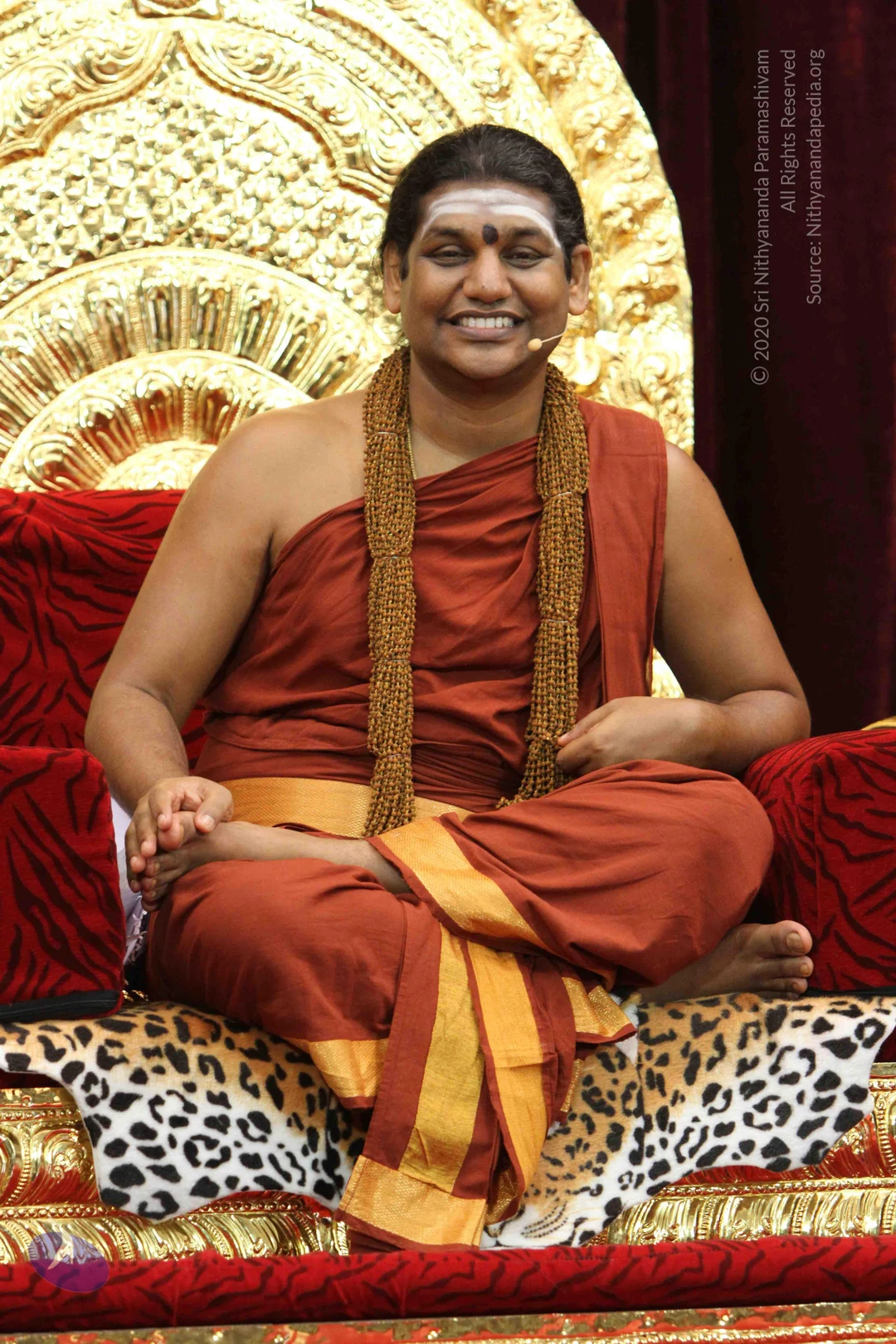
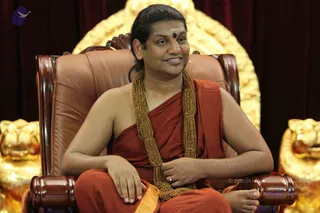
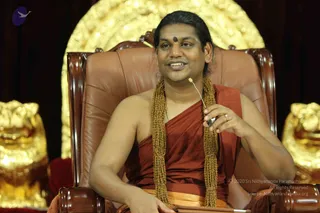
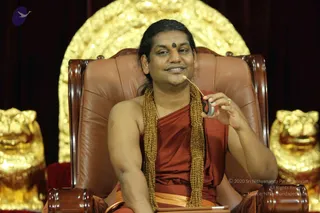
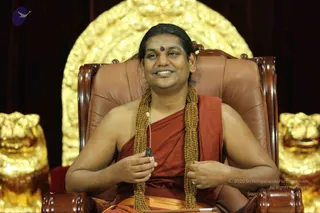
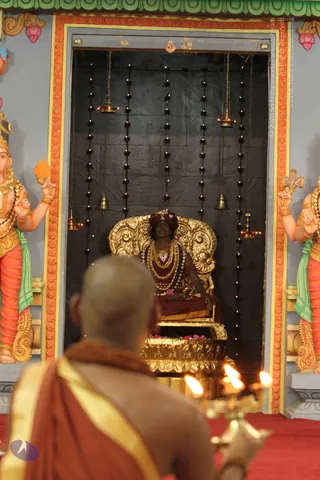
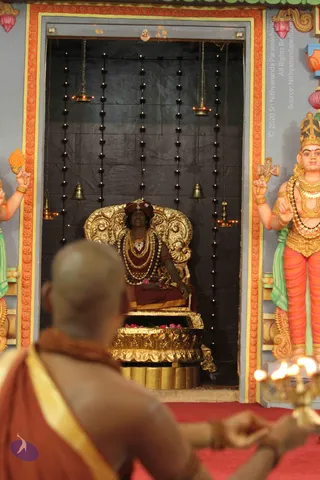
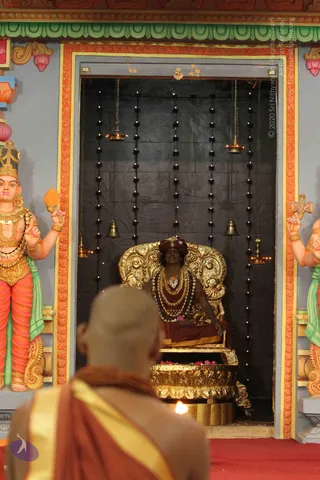
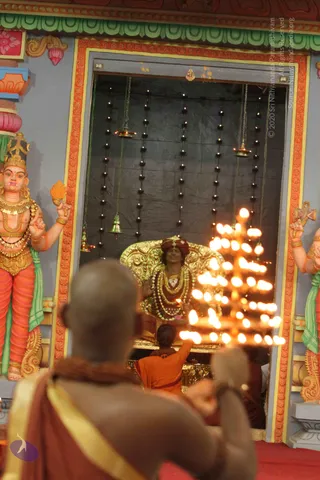
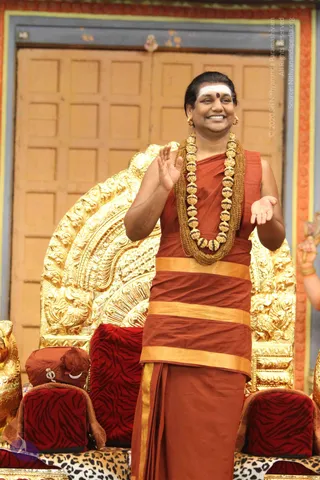
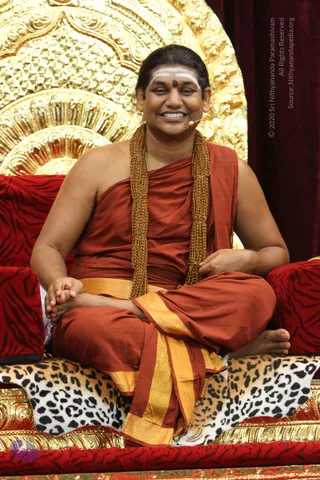
A photograph of a smiling man seated on an ornate golden throne with a red velvet cushion. He wears a red-orange turban with a gold ornament at the front, a gold-coloured forehead marking, and a red-orange robe draped over his shoulders. He has a long gold-and-black rudraksha-style mala with gold beads hanging across his chest. His left hand is open and gesturing outward as he speaks. Behind him, brass oil lamps with lit flames stand near a golden backdrop, and a red and orange cloth lies at the bottom right.A smiling man sits in a dark brown leather armchair with carved wooden armrests, wearing a red-maroon sannyasi-style cloth draped over his shoulder and a long multi-strand necklace of golden beads on brown rudraksha-style cords. He has a small red bindi and a headset microphone, and his right hand rests on his chest while his left arm rests on the armrest. Behind him is an ornate gold-leaf backdrop and a dark red velvet curtain, with a red cushion at left. Swamiji (probable): long hair swept back, ornate golden necklace and saffron-orange clothing with a devotional seated pose on a throne-like chair.A photograph of a temple ritual at a closed wooden double door shrine. A shaved-headed priest seen from behind, bare-chested with a saffron-gold cloth over his shoulder and a rudraksha mala around his neck and bracelets on his wrists, raises a lit multi-branched brass aarti lamp with both hands. Two painted deity statues flank the doors, each with a gold crown, gold necklaces and orange-red dhoti with green sashes. A row of small round lamps lines the door centre.

October 26 2014

Original wiki page
Contents

Title:

Guru - Embodiment Of Advaita

Description:

In today’s morning Satsang, Paramahamsa Nithyananda and viewers have a wonderful opportunity to listen to the experiences shared by the current Inner Awakening graduates. Later, Paramahamsa Nithyananda shares his own story about being in complete completion with Advaitha and a few of the precious moments spent with Arunagiri Yogishwara in Tiruvannamalai.

Link to Video:

VideoAudio

Transcript:

Nithyanandeshwara Samaarambhaam Nithyanandeshwari Madhyamaam | Asmath Aachaarya Paryanthaam Vandhey Guru Paramparaam ||

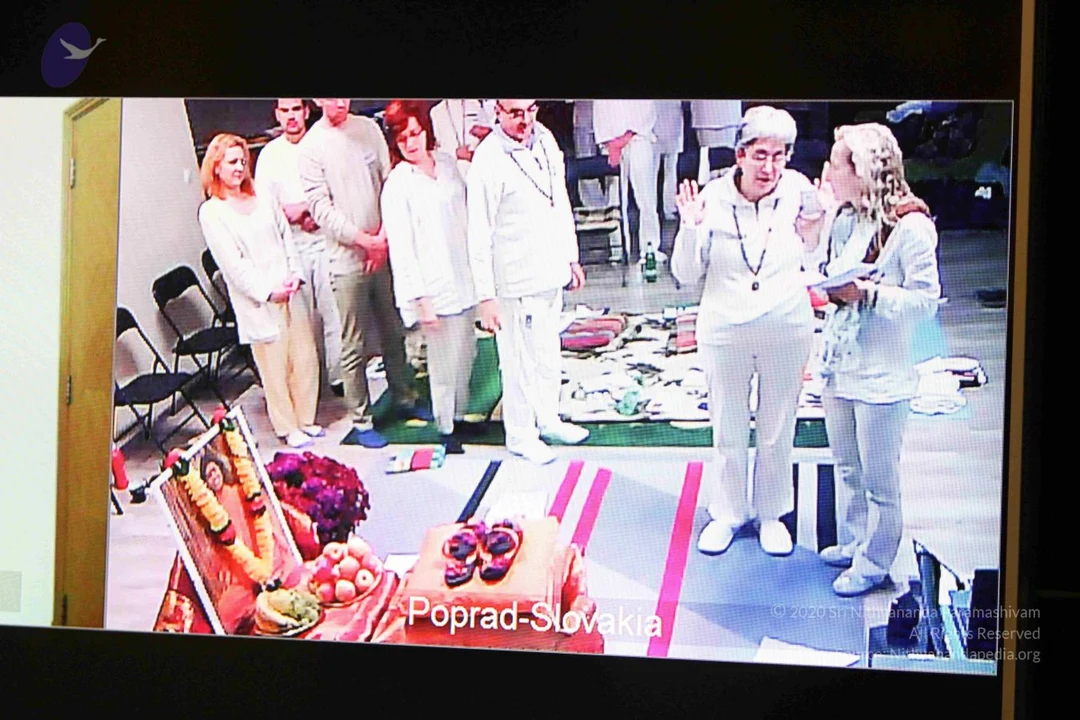
I welcome all of you with my love and respects. I welcome all the devotees, disciples, sitting with us all over the world through Nithyananda TV, Sadhna TV, two-way video-conferencing.

Today, “Glimpses of my Inner Awakening”! The participants who are having their Inner Awakening are going to share their experiences with all of you.

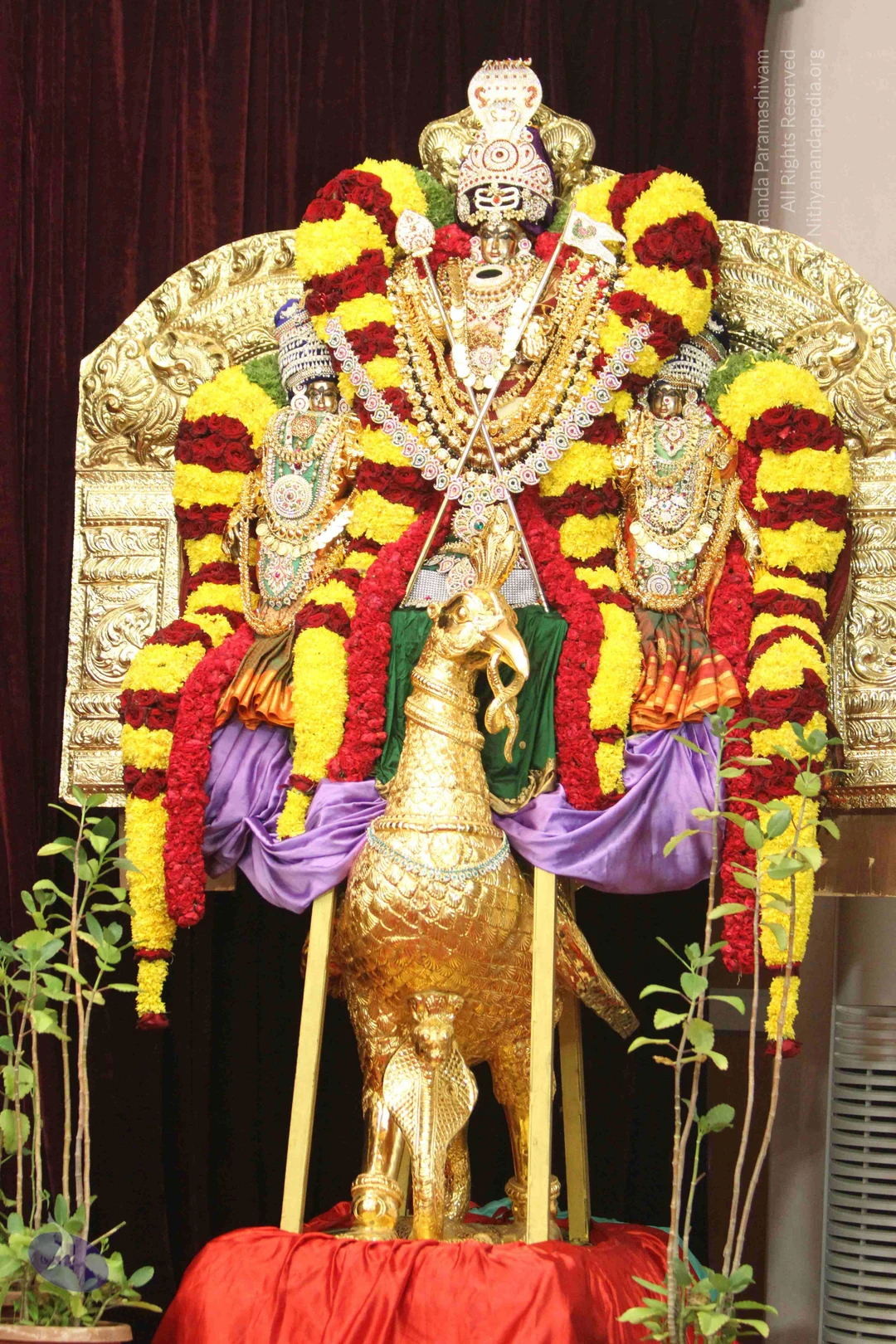
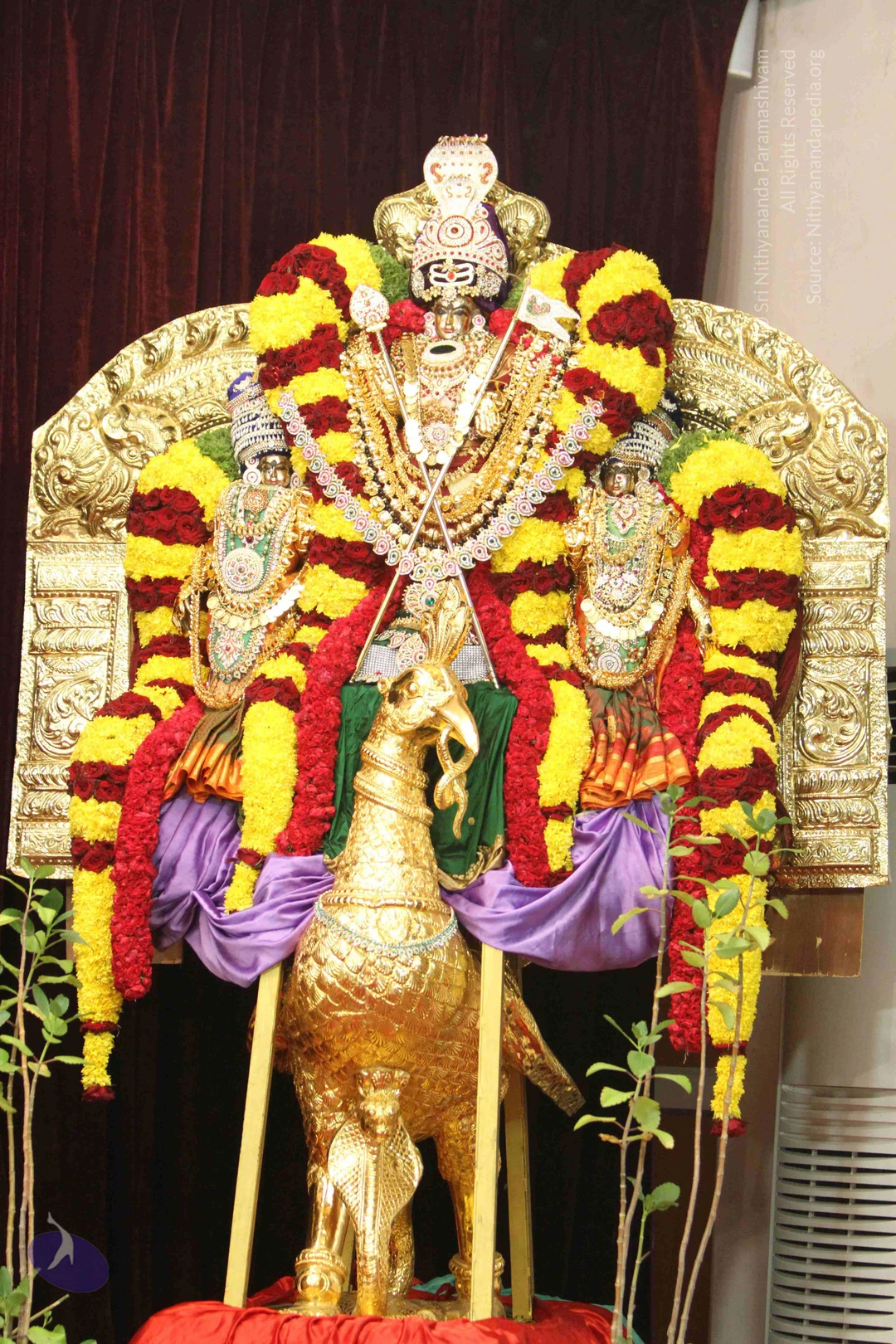
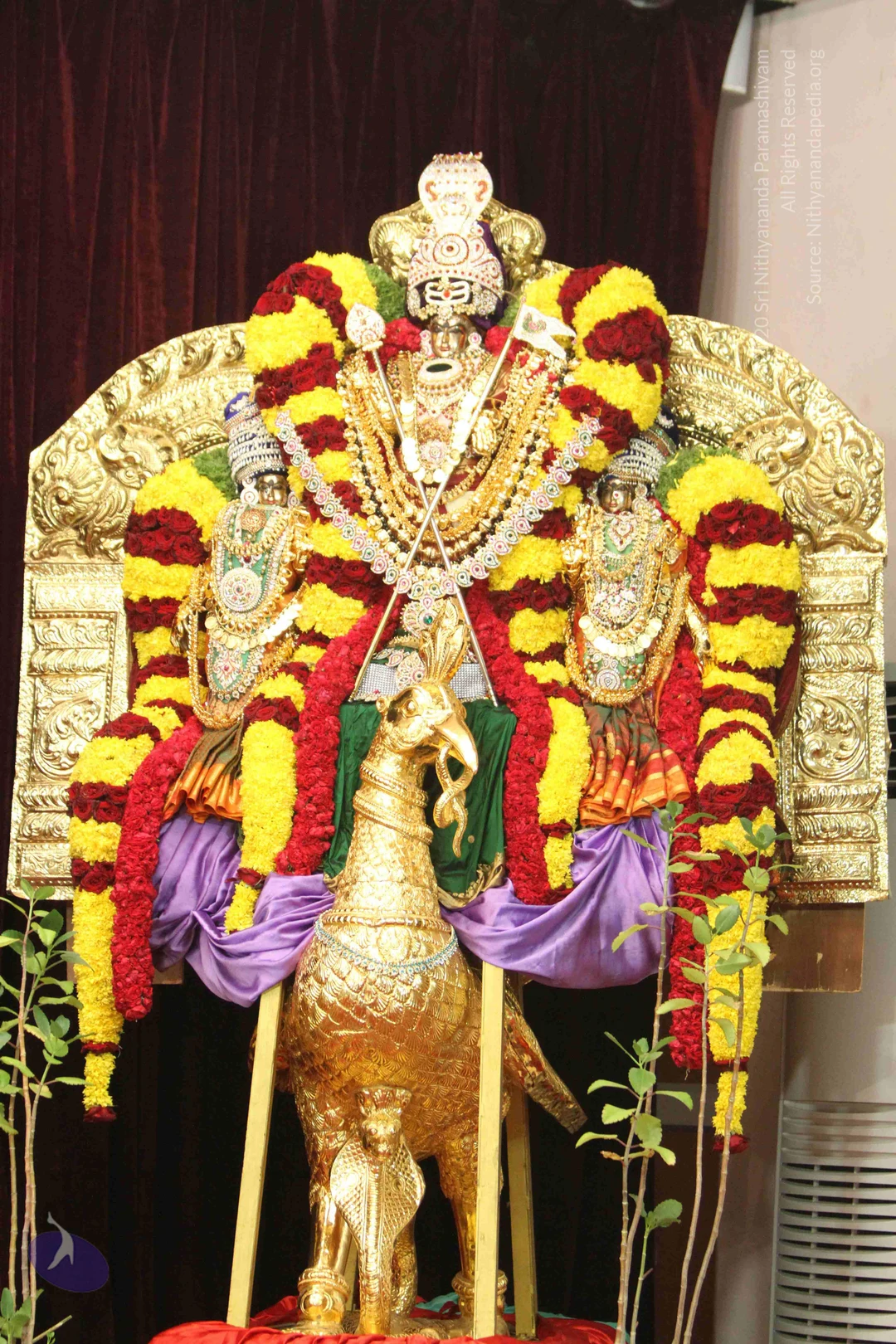
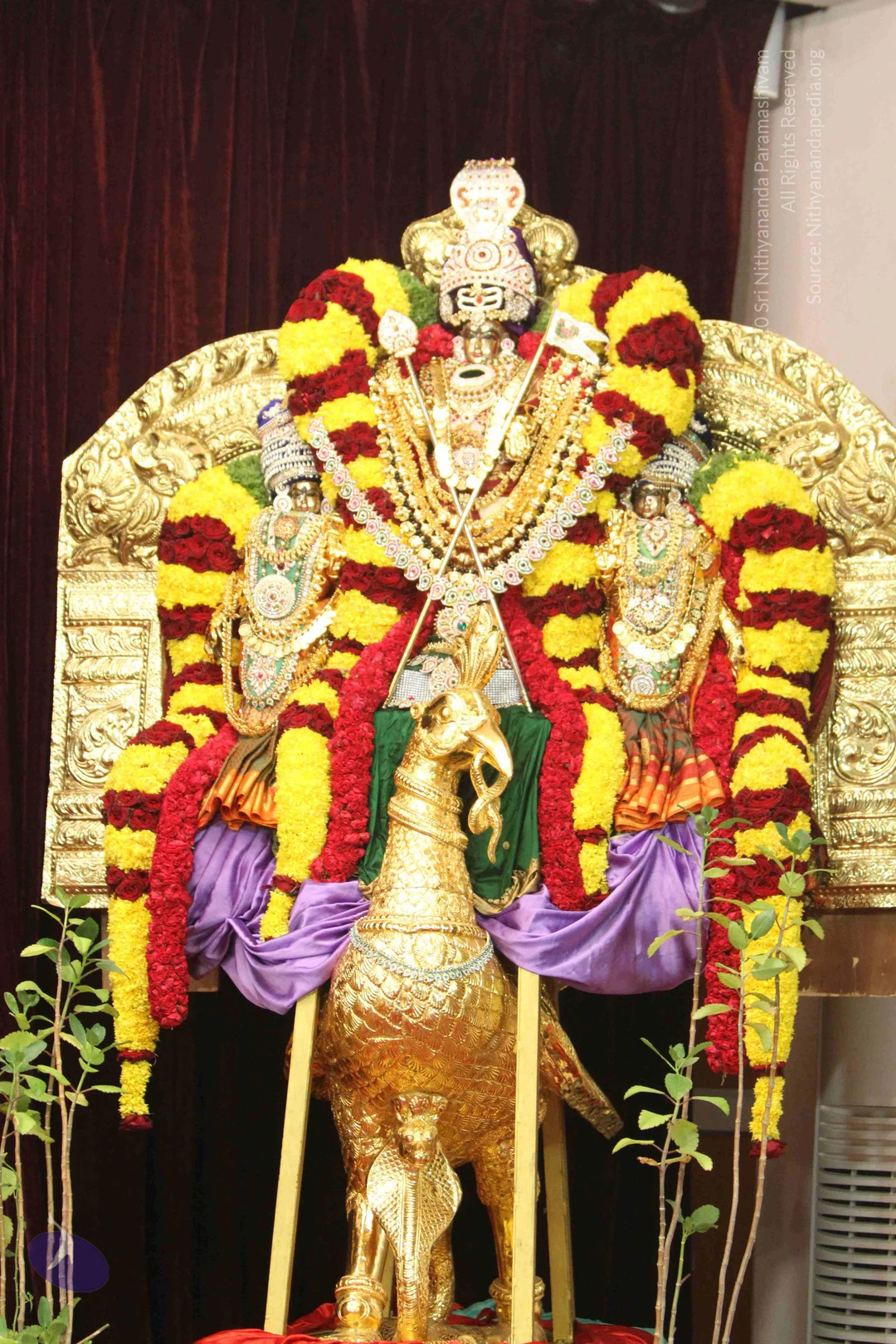
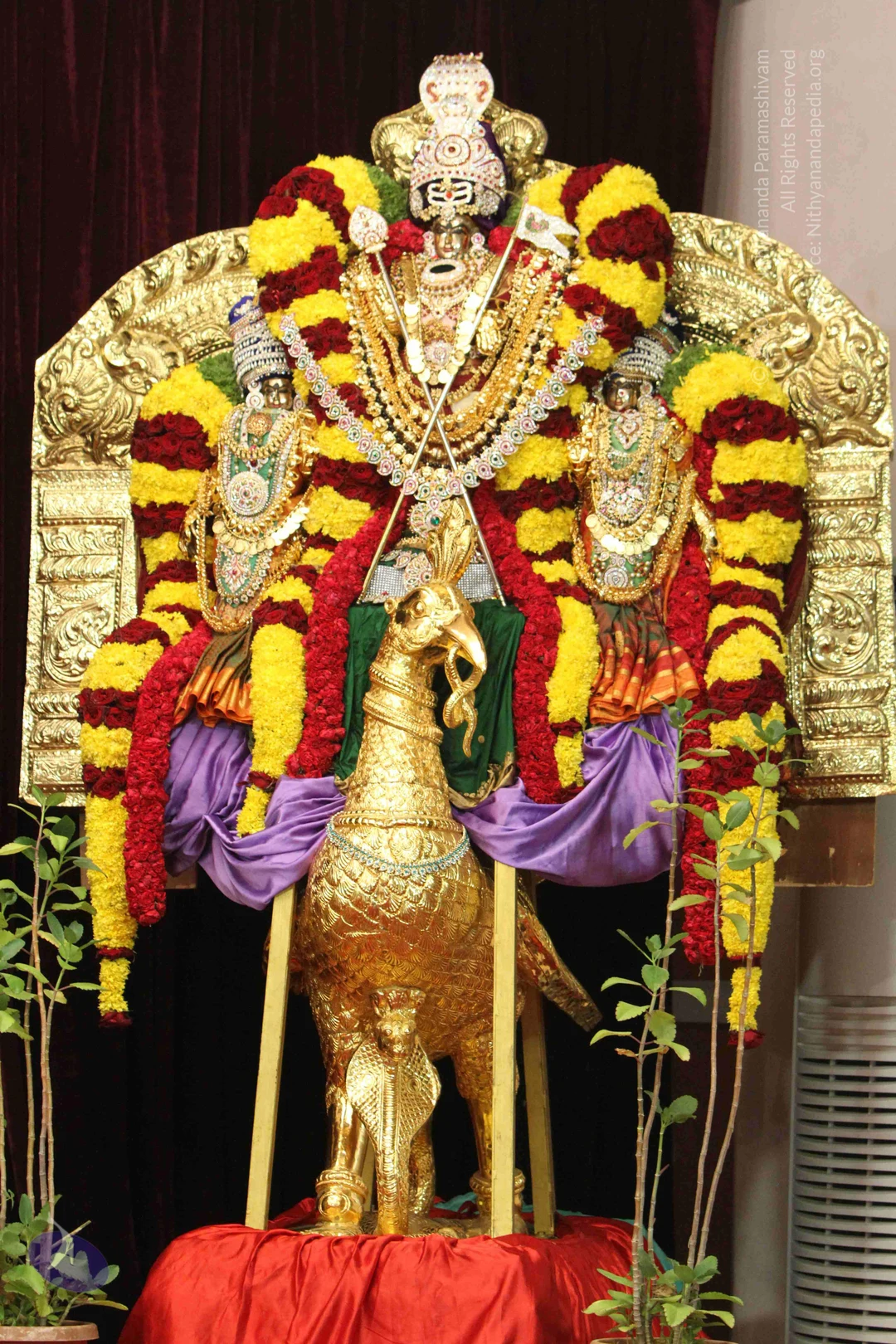
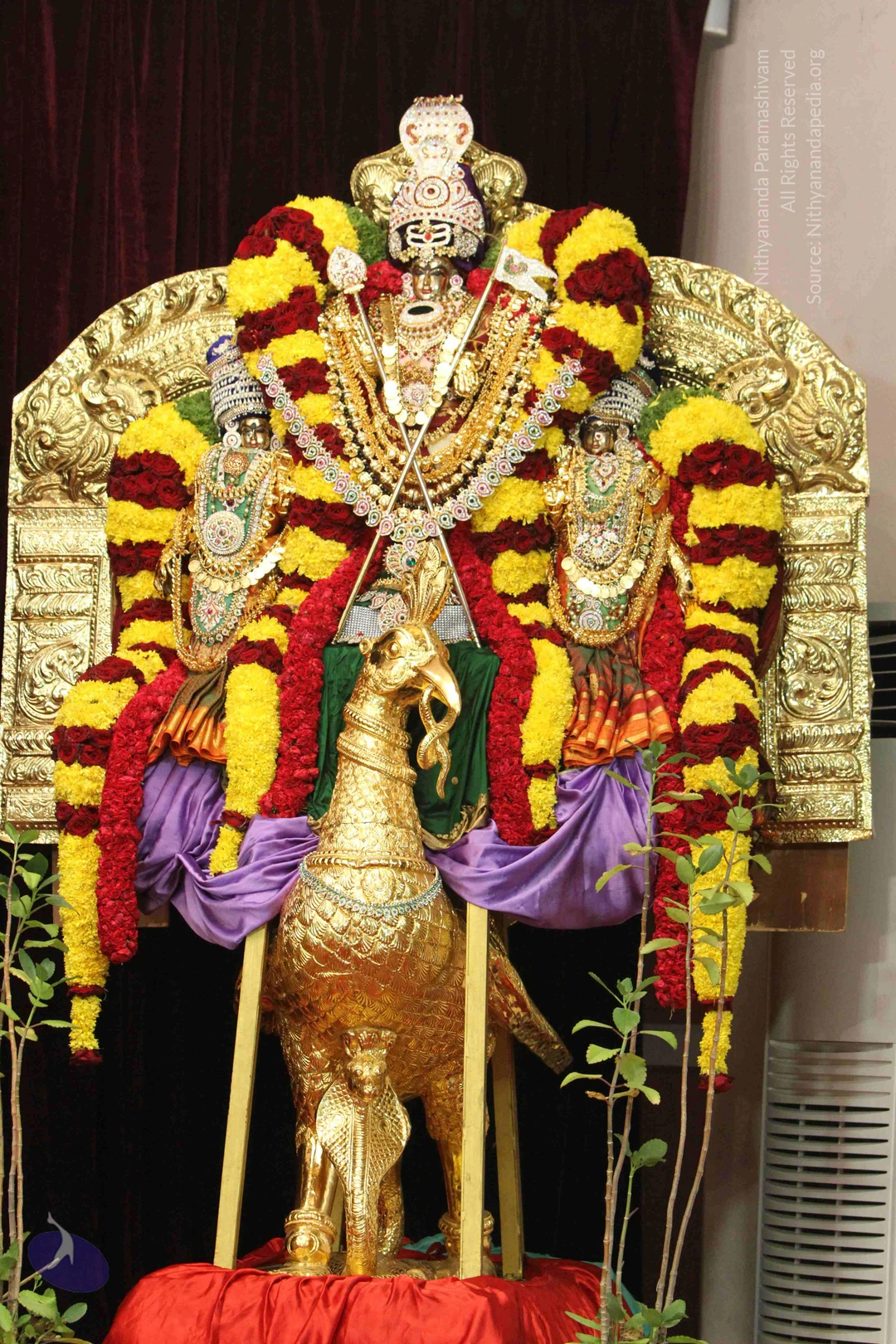
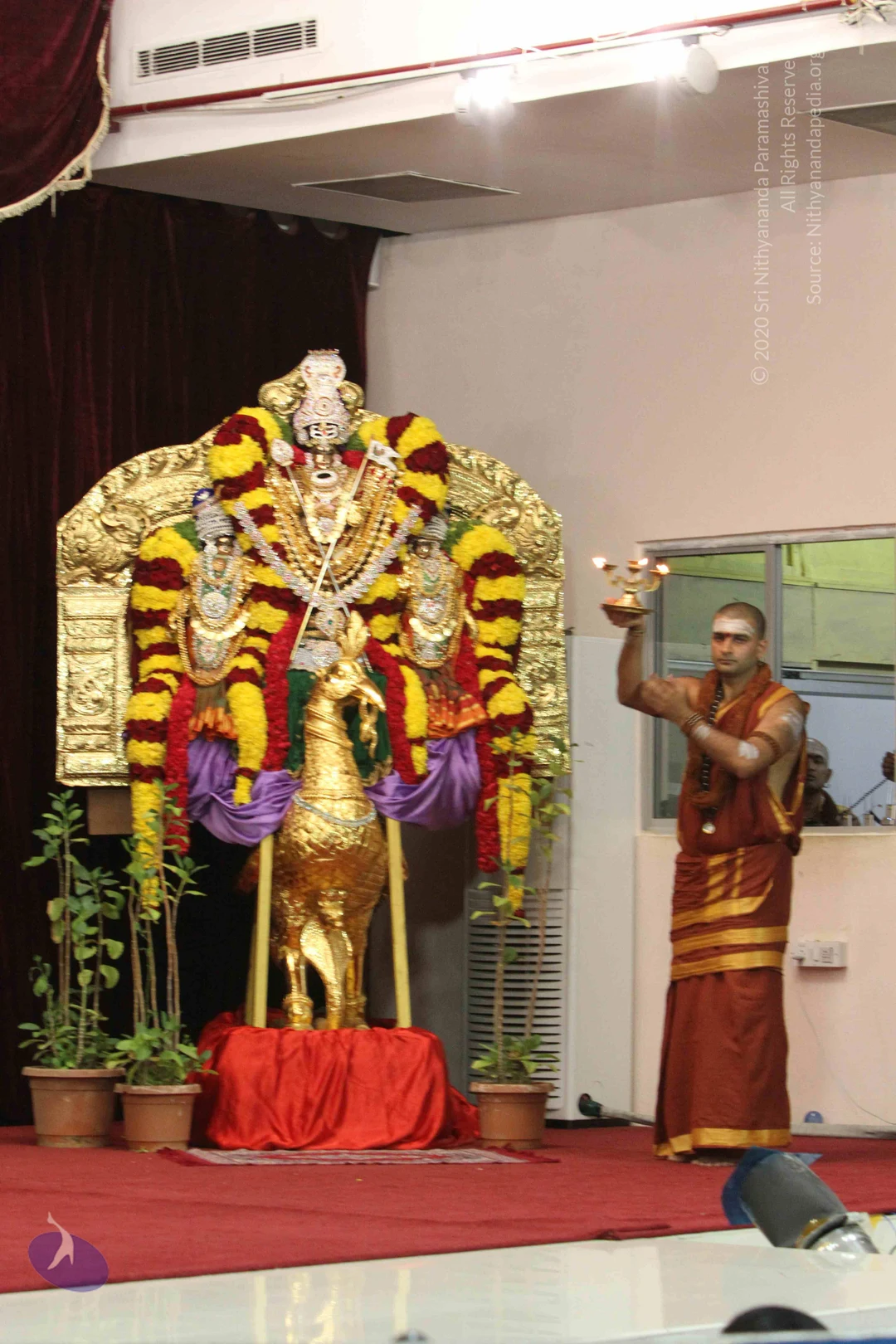
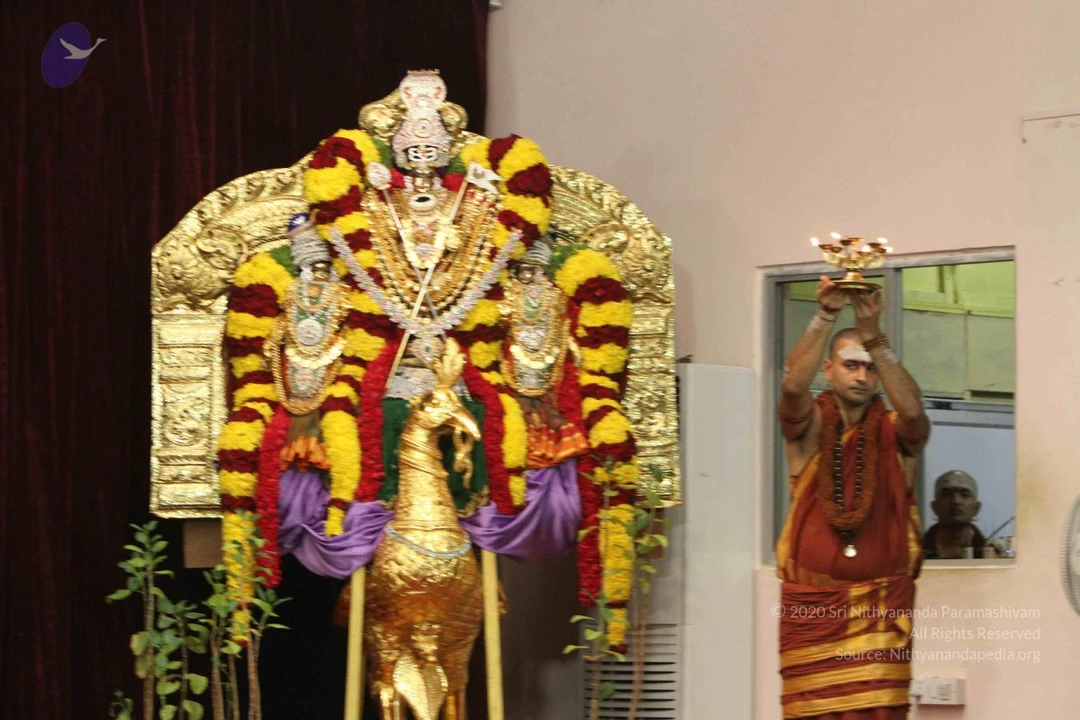
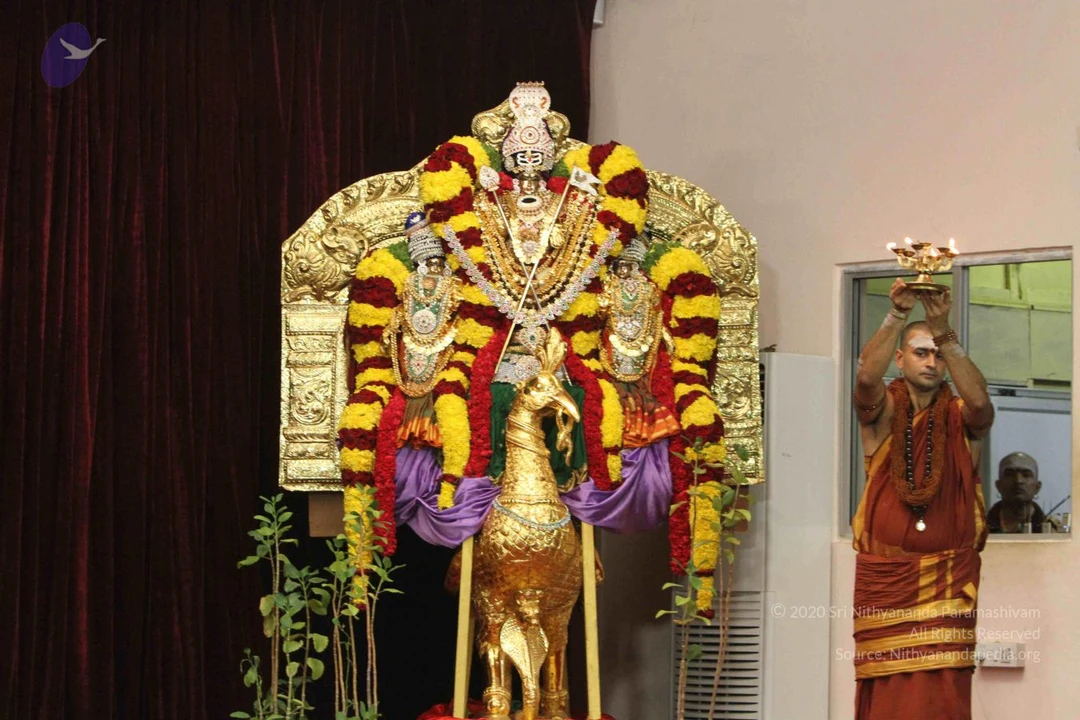
Before that, today, Skandha Sashti Brahmotsava is happening in Bidadi, the third day of Skanda Sashti Brahmotsava. Skandha, Subrahmanya, with both his consorts, Valli and Devayanai, is gracing us on the Suvarna Mayura Vaahana. On the Golden Peacock Vehicle he is gracing us.

So, let us first have Skandha’s darshan. With his blessings, we will proceed now into the programme.

(SWAMIJI CONTINUES THE SATSANGH AFTER THE INNER AWAKENING PARTICIPANTS SHARE THEIR EXPERIENCES):

Actually, you can see the whole Cosmos here! HAHAHAHAHAHAHA! A teenage Residential Non-Indian (RNI), and elderly couple who are soaked in orthodox brahmanical lifestyle, an elderly western lady who has her own problems, and a young western man who has his own life and incompletions, and a person who is born in India, brought up somewhere, living in UK.....! No, you can see, whatever is their inner awakening, their Completion! HAHAHAHAHAHA! It is so nice! It’s amazing to see!

Actually, even Ganga enjoys the various people entering into her ghat and using her in multiple ways. Understand, when she is coming down to Gangotri, she sees only Yogis; when she is coming down further to Uttarkashi, she sees people who are worshippers; when she comes down to Rishikesh, she sees people who are doing Hatha Yoga; when she comes down to Haridwar, she sees Naga Sadhus; when she comes down to Varanasi, she sees people who are taking bath; when she moves further to Manikarnika, she sees tons of dead bodies getting relieved, having enlightenment; when she comes down to Kanpur, she sees all the leather factories; when she comes down to Kolkata, she sees the amazing Kaali worshippers! And, thousands of people, millions of people enjoying her in many ways, even she enjoys! I tell you, millions of people enjoying me in millions of ways, even I enjoy it! Somebody enjoying the friendliness, somebody enjoying my mystical powers, somebody enjoying my intelligence, somebody enjoying the way I give attention, somebody enjoying just looking into my eyes! And, I also enjoy the way all of you enjoy me! So, understand, it is not that only you are grateful to me, I am also grateful to you guys for being here and sharing this joy, this bliss with me! It is nice to be with you guys!

And, I wanted to just make this one statement as the essence of today’s satsang, of whatever you heard: HAVING COMPLETION WITH THE PRINCIPLE OF ADVAITHA, DHARMA.

Understand, when I found Advaitha, when Advaitha clicked with me..... Let me be very honest, it is Arunagiri Yogishwara who taught Advaitha to me personally!

The moment I uttered the word “Arunagiri Yogishwara”, I know I am going to speak more time......HAHAHAHAHA......I am not going to end the satsangh! HAHAHAHAHA!

I tell you, the first thing I experienced, I found solution, I do not have any more anxiety, fear, cause for fear! I do not have anything which can make me powerless or frighten me. That Completion, like a bomb exploding in me! I fell in love with Advaitha! I fell in love with the person who introduced that Advaitha to me! Understand, I fell in love with Advaitha, and I fell in love with the person who introduced Advaitha to me and who was the embodiment of Advaitha for me.

I tell you, that Completion, and I know for sure, anything in life, I know this dhamma, dharma, the Advaitha is there. I can never fall into powerlessness, and I am always powerful, and the powerlessness has lost meaning. Even Fear cannot frighten me, Death cannot kill me! The whole thing, the powerlessness, fear, anxiety, everything lost meaning in my life. The Completion with Dhamma, the Completion with Advaitha, when that clicked into me, I know I have experienced that space of falling in love with.....I can say, “rising in love” with dhamma, and rising in love with the Master who gives that dhamma, who is the embodiment of that Advaitha. Because I experienced this with Arunagiri Yogishwara, I can understand you guys, what you guys actually experienced with me. And, I want to tell you, with all my being, I sincerely reciprocate that with you guys, reciprocate that to you guys. And I know what you are going through! You don’t have to think, ‘Oh, whether he understands or not what I am feeling for him?’ Don’t worry, I understand! HAHAHAHAHA! I understand more than you understand, because I have been through this with Arunagiri Yogishwara....I have been through this with Arunagiri Yogishwara.

And, I still remember.... It may look too mystical, but I am not talking to.....I am very clear, I am talking to my disciples, my devotees. I am not talking to anybody else. When I was seeing Arunagiri Yogishwara every day and listening from him, learning from him, experiencing from him, every night I have to leave the temple to come to the house. I will leave around eleven o’clock, because by twelve they will lock the doors, all the watchmen. Actually, in those days, the temple used to be very free. The watchman will.... just if I say, ‘I will sit here some more time’, they will adjust, and allow me; they will not have any problem. And, by night eleven I will come back to the house, and early morning four o’clock I will run back to the temple. But those four hours used to look too much! I used to feel it is like ten days, those four hours. And, I will be constantly used to be watching the clock, ‘Why this clock is not moving? This stupid clock, why the time is not happening?’ And I used to suspect whether the clock has stopped. I sometimes used to run and see the next room clock to see whether that clock is also showing the same time, or whether my clock has stopped running! I used to have this cranky thing. I just want to run back to be with him, with Arunagiri Yogishwara. It used to be so strong, may be, after ten-fifteen days I told him directly, ‘I feel that every night the time is too long.’ I am trying to get the exact words, Tamil words I said. I told him — the conversation I was having with him, I am trying to translate exactly that. I told him that, ‘Every night it is too much!’ I will repeat in Tamil. I will say in Tamil; then I will translate. I don’t want to miss that original statement as it happened.

I was sitting with him holding his knee, the right knee. Whenever I sat with him, I will always hold his hand or his leg or some part of his body. I used to feel some energy is coming from him. HAHAHAHAHAHA! I was putting both my hands on his knee and I was saying, ‘Saami, Saami, dhinam raathiri indha watchu nagaravey maateyngudhu! Indha time-piece (alarm-clock) nagaravey maateyngudhu! Raathiri pogavey maateyngudhu! Naalu mani neram, naalu naal maadhiri irukudhu! Indha time-piece ah naanum nagathi nagathi paakiren, timeay nagara maateyngudhu! Time-piece ah nagathina, time nagara maateyngudhu! Enna pannaradhu Saami?’

Please understand, I was telling him that ‘Even if I move this time piece, the time is not moving. So I don’t know what to do! The time looks ....too much! These four hours look like four days! I don’t know what to do!’ I remember exactly what he said: ‘Unakku mattum illada! Enakkum appadi thaanda irukku! Adhunaala thaaneyda kaalatthaye surukkidaren unakkaaga!’ He told me, ‘Not only for you, even for me it is like that only! So, that is why I am reducing the whole Time for you to be with me!’ He said these very words! He said...then he expanded: ‘Nee vandhu enna paaka, Sooryan, Chandran, ellaatheyum naan maatha veyndi irukke!’ Means, he said, ‘For you to come quickly and sit with me, I have to move the Sun, Moon, everybody, and change the whole timing, and quicken the process of time movement!’ Then I know, it is not that only the disciple feels, the Master also feels!

If you guys are moving only small things to be here, I am moving bigger things for me to be here with you guys! Understand, if you guys are moving only small things, whatever you know, to be here with me, I am moving bigger things for you guys for you to be with me! I am trying to move only the stupid time-piece, alarm-clock, to be with Arunagiri Yogishwara; he is moving the Sun and the Moon for me to be with him! Understand, what we move is toys; what he moves is Cosmos! You move your toys to be with me; I move the Cosmos for you to be with me! I moved my toy alarm-piece to be with him; he moved the Sun and the Moon for me to be with him! Understand, he also celebrates....I understood. I wanted to tell you guys, I also celebrate you being here....you being here!

What to say? The essence: See you guys all in Cambodia to celebrate! And, I tell you guys, you move yourself just to fill the Intention Form; I move the whole Cosmos to make it into reality! HAHAHAHAHAHA! I only moved the time-piece, alarm-clock; he moved the Sun and the Moon! I tell you, you just move to fill the Intention Form, I will move the Cosmos to make it into reality! See you guys in Cambodia! That is all!

I bless you all! Let you all radiate with Integrity, Authenticity, Responsibility, Enriching and Causing eternal bliss, Nithyananda! Thank you!

Sakshi Pramana:

Sharing from INNER AWAKENING

VideoAudio

Tags:

Paramahamsa Nithyananda, Inner Awakening, Advaitha, Arunagiri Yogishwara, Tiruvannamalai

Photos Of The Day:

Morning-satsang
IA-Session

Darshan

01-MORNING-SATSANG

02-IA-SESSION

03-DARSHAN

Photos from this day

View all 168 photos

Morning-satsang
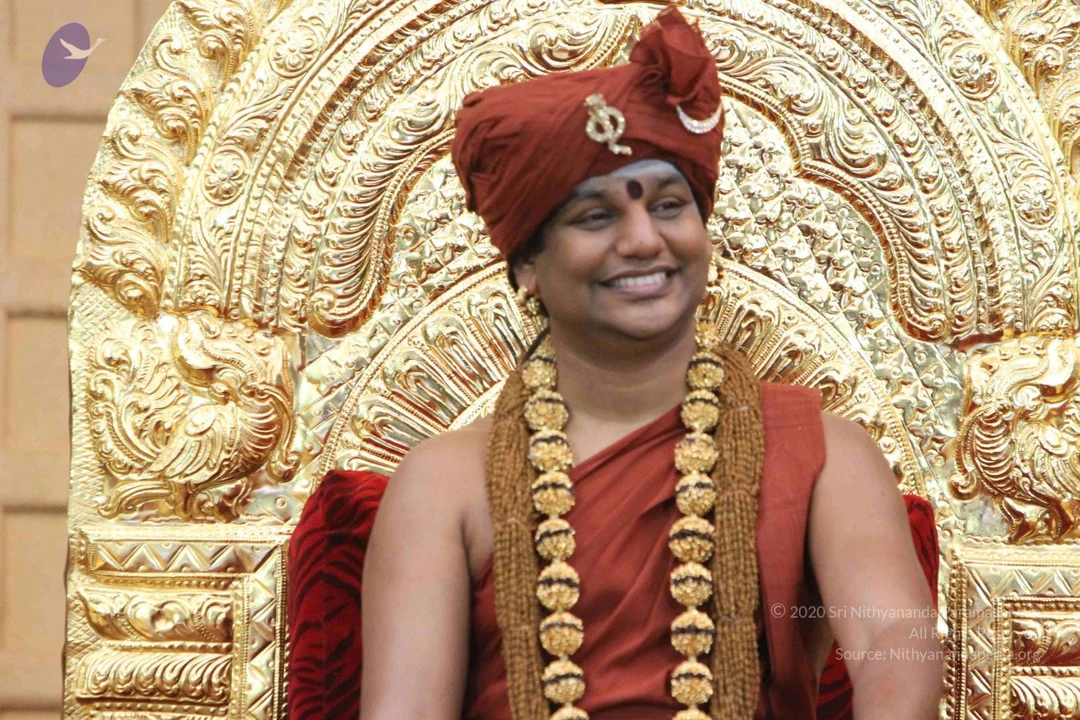
86 photosSource gallery
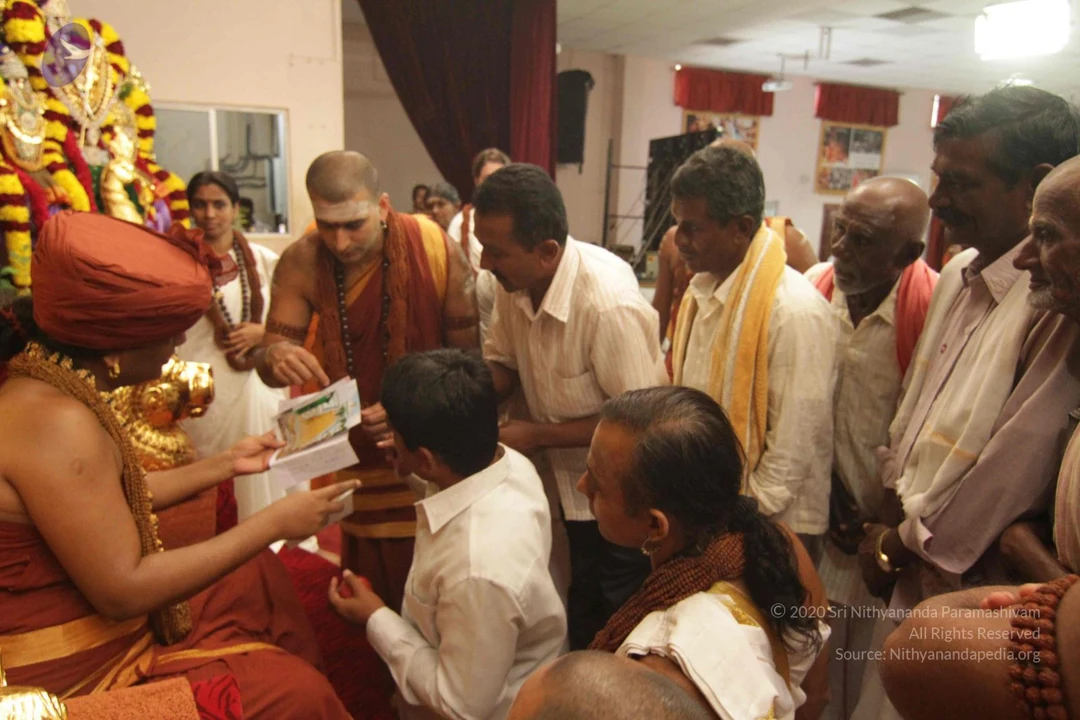
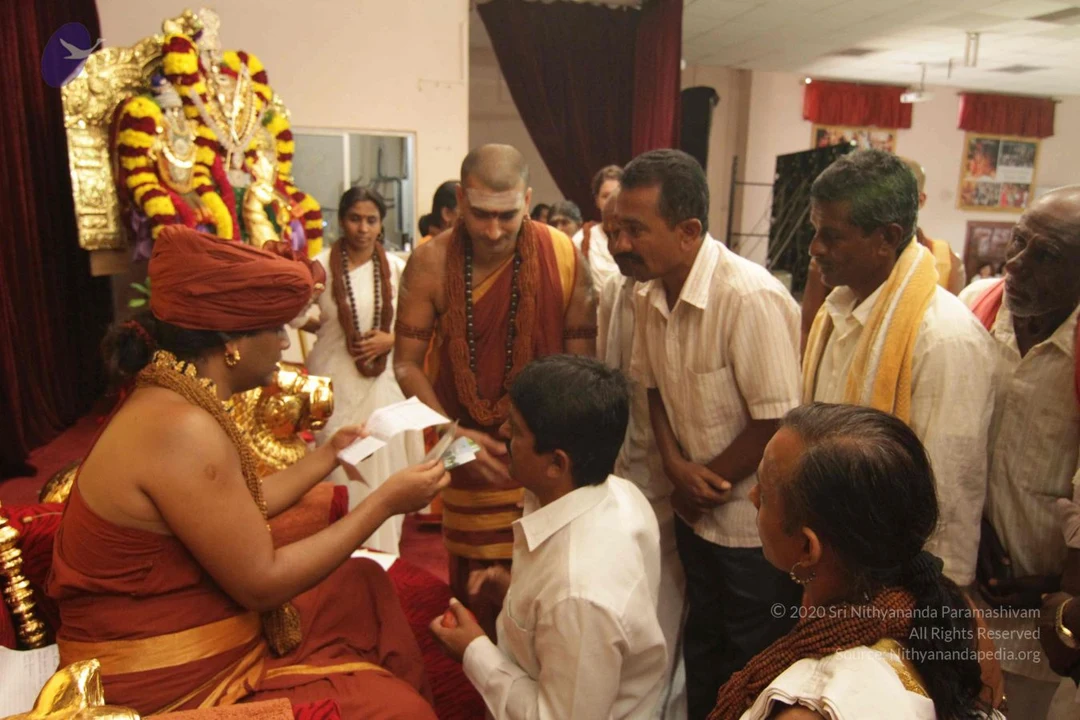
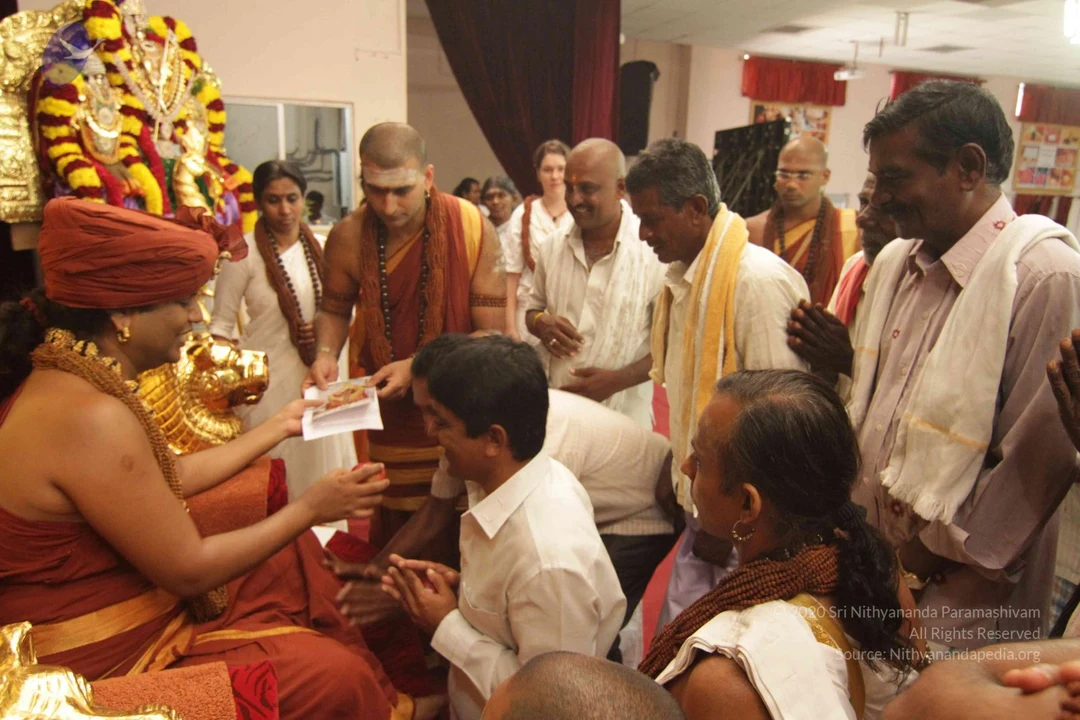
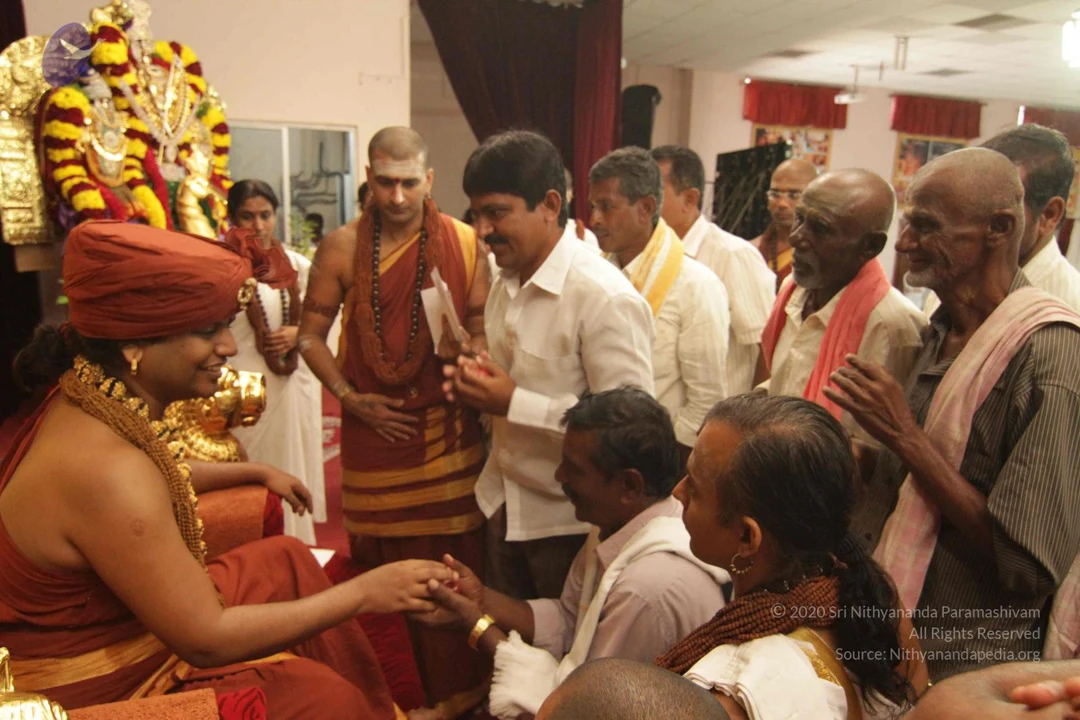
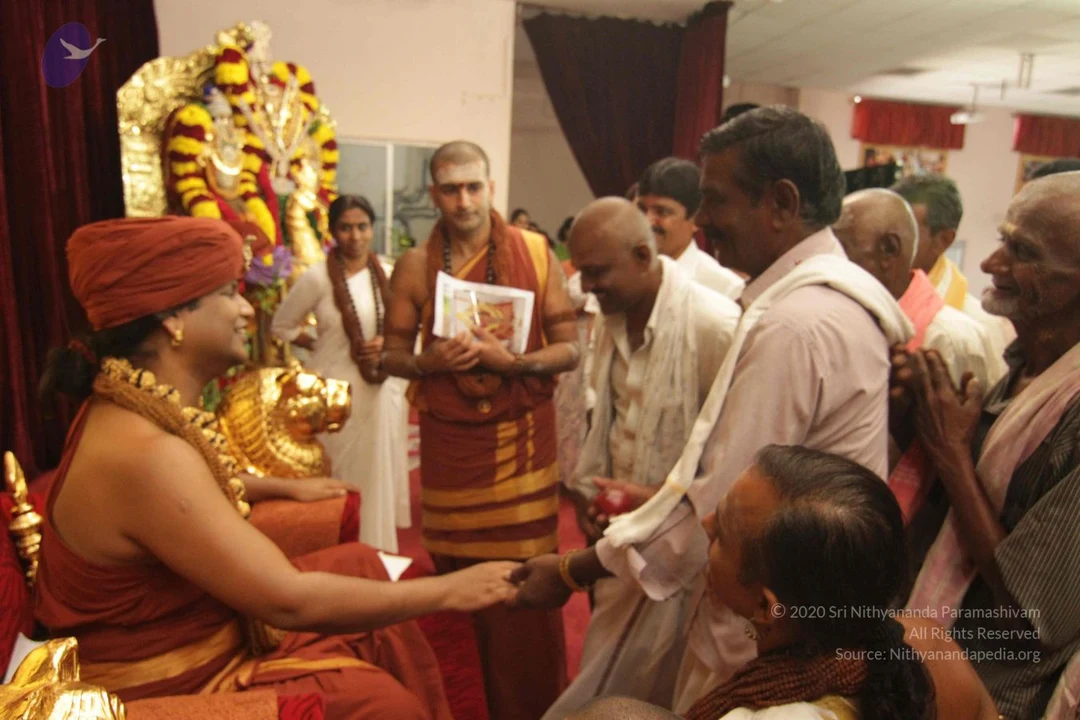
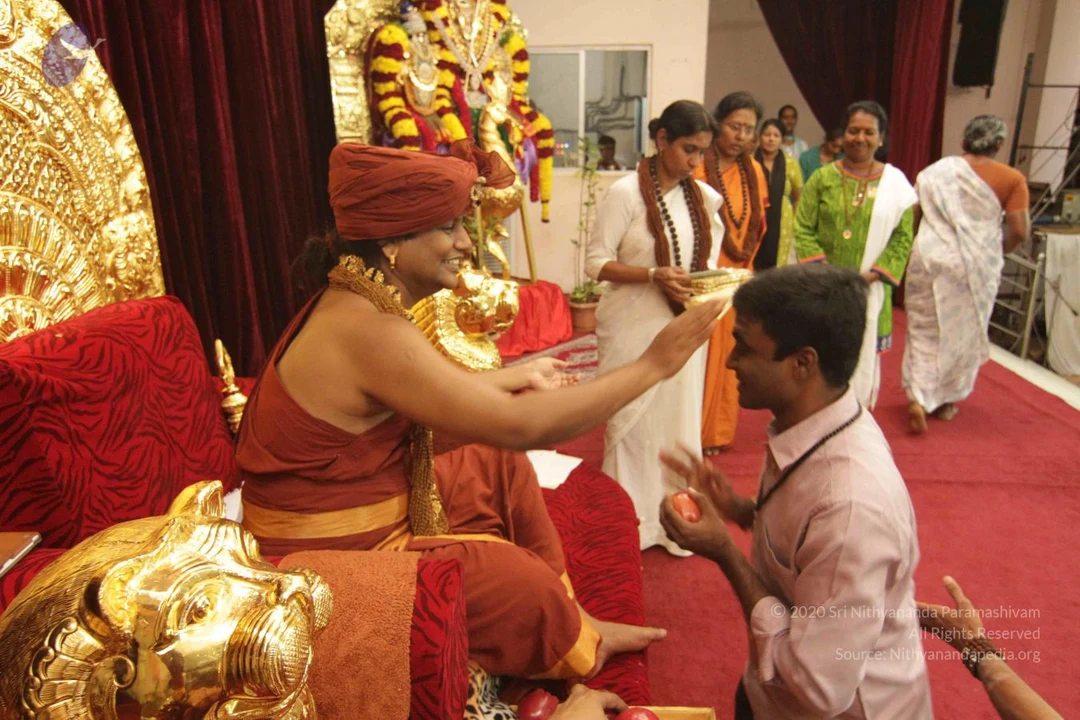
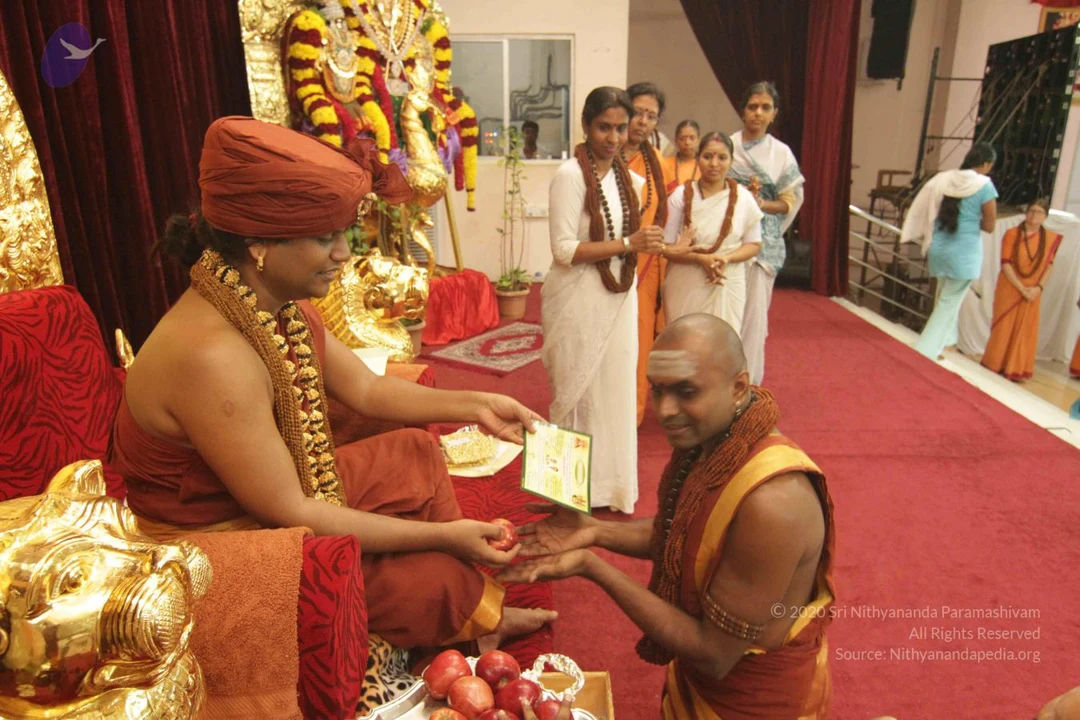
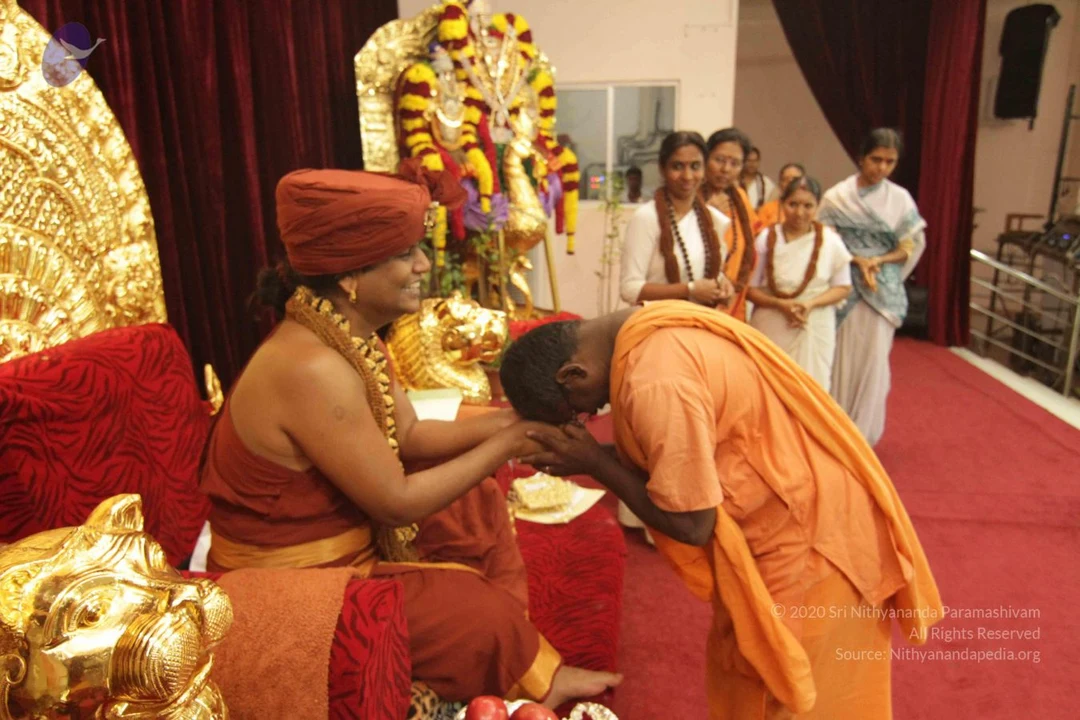
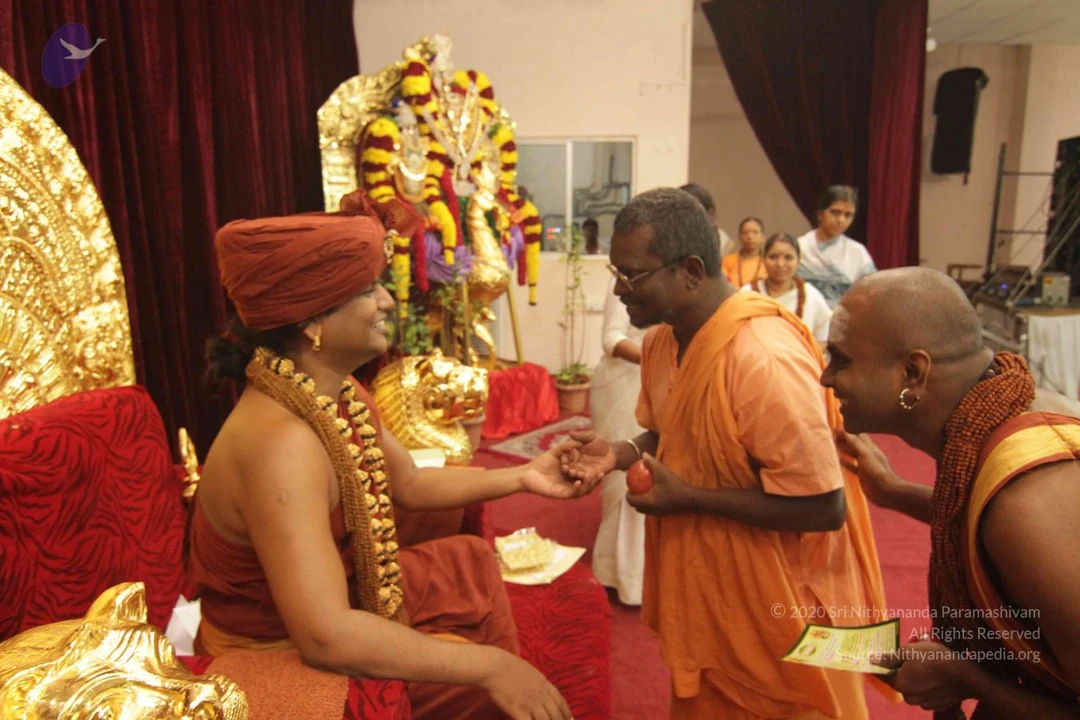
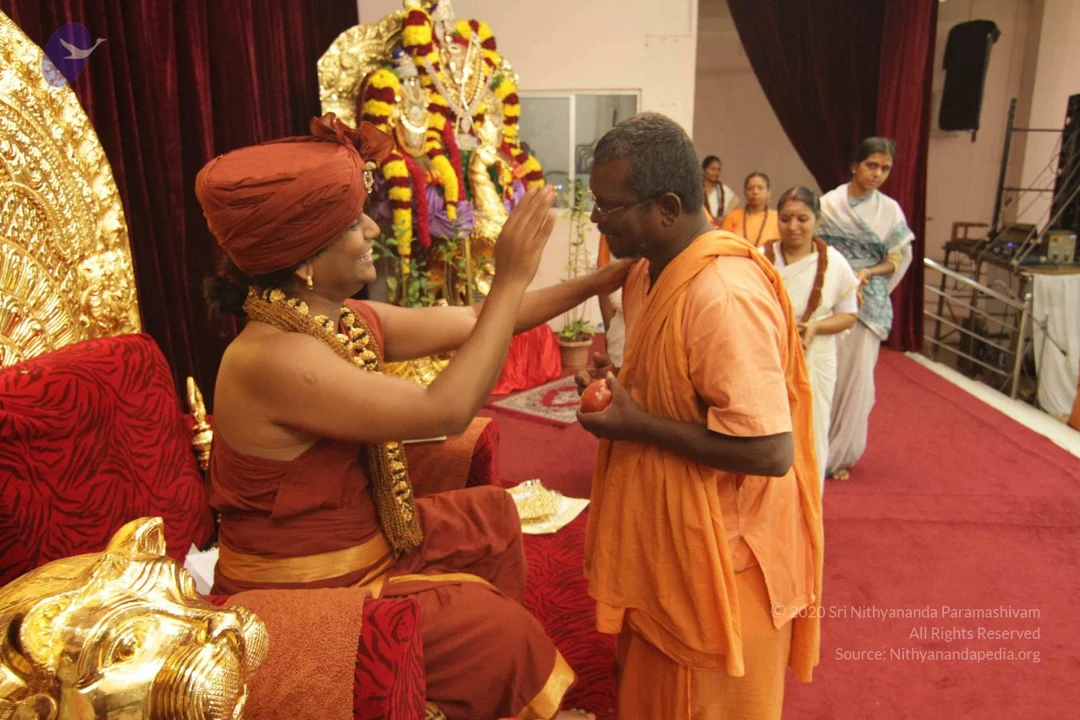
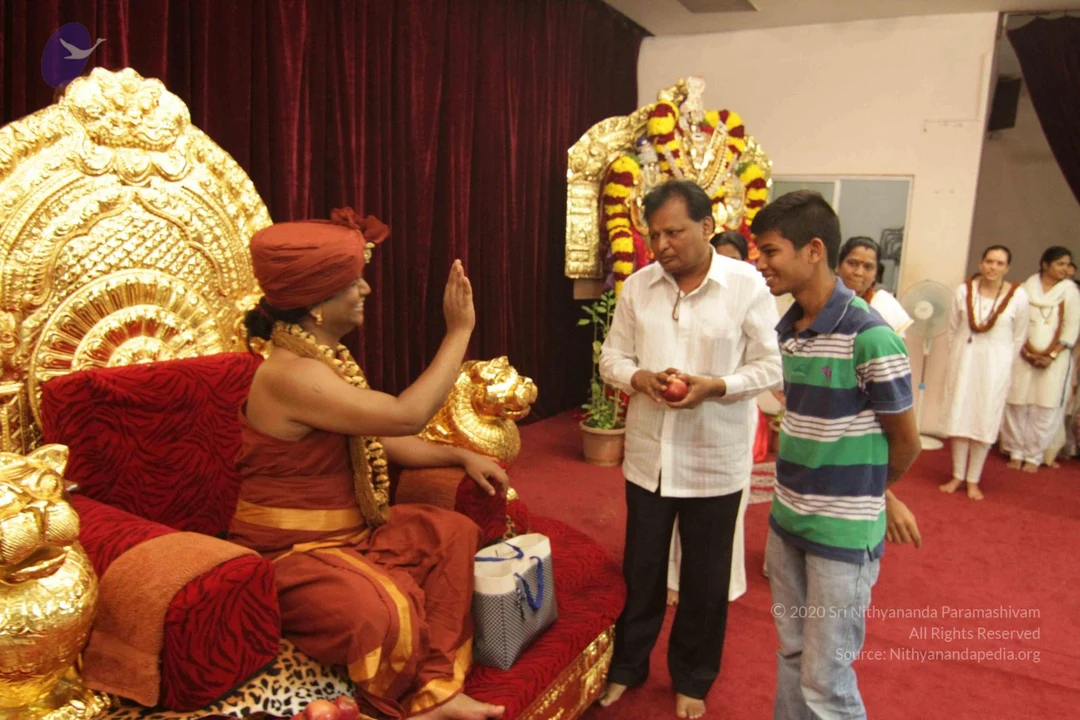
A photograph in a red-carpeted hall of a seated figure on an ornate gold throne with red cushions, wearing an orange-red turban, orange-red robes and a long gold-bead necklace, raising one hand in blessing toward visitors. A man in a white shirt and black trousers holds red fruit or apples, while a boy in a green-and-blue striped polo and jeans smiles beside him. Behind them, women in white garments with orange-red garlands stand near a gold-framed deity murti decorated with yellow and orange marigold garlands.A photograph of a devotional gathering in a hall with red curtains and framed pictures on the walls. A shaved-headed man in saffron-orange robes with a rudraksha mala and sacred markings on his forehead stands centre, handing a card or envelope to a seated figure on the left wearing an orange turban and gold ornaments. Behind him a woman in white holds a mala, and a row of devotees in white and cream clothes, some wearing yellow or red shawls, stand and watch on the right. A small boy in a white shirt reaches forward. Floral garlands and gold-decorated deity murti are visible at the upper left. The man in orange does not show the appearance cues required for a person candidate, so he is described by role only.Indoor devotional scene in a hall with red drapes. A seated woman in a rust-orange sari with a red turban and gold necklace, facing left, hands over papers or cards to a standing man. Beside him a shaved-headed man in an orange-saffron robe with a rudraksha mala and a white vertical mark on his forehead, looking down. Behind them a woman in white with a brown shawl and a bead mala. Several men in white shirts and yellow or cream shawls stand in a line, and a man kneels in white in front. A gold-framed deity murti decorated with yellow and orange marigold garlands stands at left. Framed pictures hang on the wall at top right. The shaved-headed man in orange lacks the long hair, crown or ornate cues needed for a probable identification, so his identity remains unsure.A photograph of an indoor ritual setting with a figure seated at left in a red-orange turban, red-orange robe and a gold-toned ornate necklace, holding out a small paper or card toward a bald man in orange-saffron robes with rudraksha mala and white-painted forehead markings who stands center-right. Behind them a woman in white with a red-orange shawl stands near a gold deity murti draped in marigold and yellow garland. Several devotees in white dhotis and shawls, some with yellow and white cloths, kneel or stand with hands folded, smiling. A red curtain and framed posters hang in the background. The seated figure's appearance shows only a turban and saffron clothing, insufficient cues for a confident identification, so the figure is described by role.Indoor temple-hall scene with a seated figure in saffron-orange robes and an orange turban at lower left, wearing a gold necklace and extending a hand to a devotee who is bending forward to receive contact. Behind, a priest in saffron dhoti and orange shawl with rudraksha mala stands beside a white-clad woman. Standing men in white shirts and white dhotis, some with yellow or pink shawls, watch and clap. A decorated deity murti with marigold and yellow garlands stands at upper left, and red curtains hang on the back wall. The figure at lower left shows distinctive saffron attire, a turban and a gold necklace, but the appearance is not clear enough to confirm identity, so the seated figure is treated as unsure.A seated figure on a gold-and-red throne, wearing a saffron-orange turban and saffron-orange robes with a gold-embroidered shawl, reaches out to shake hands with a devotee in a pale pink shirt and white dhoti. Behind the throne stands a decorated deity murti garlanded with yellow and red flowers, and a gold-painted lion-headed piece sits nearby. Around them, a man in saffron robes with a rudraksha mala holds a printed booklet, a woman in white wears a mala, and several elderly men in white and cream clothing press their palms together, some holding fruit. Red curtains and a pale wall frame the room.

IA-Session

5 photosSource gallery
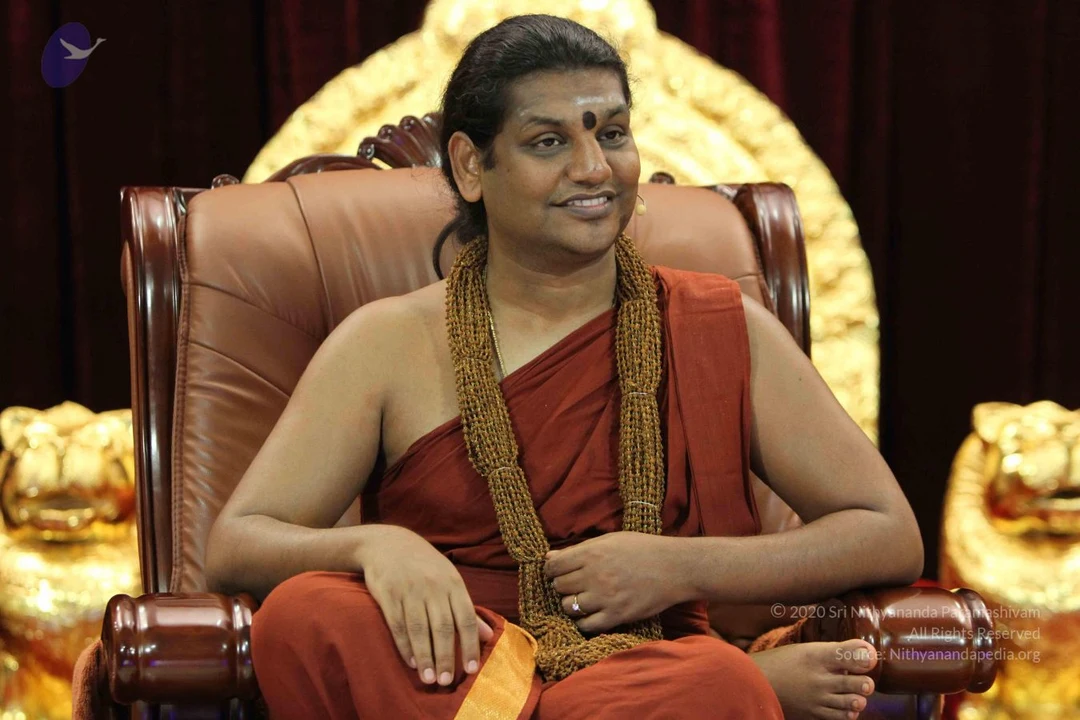
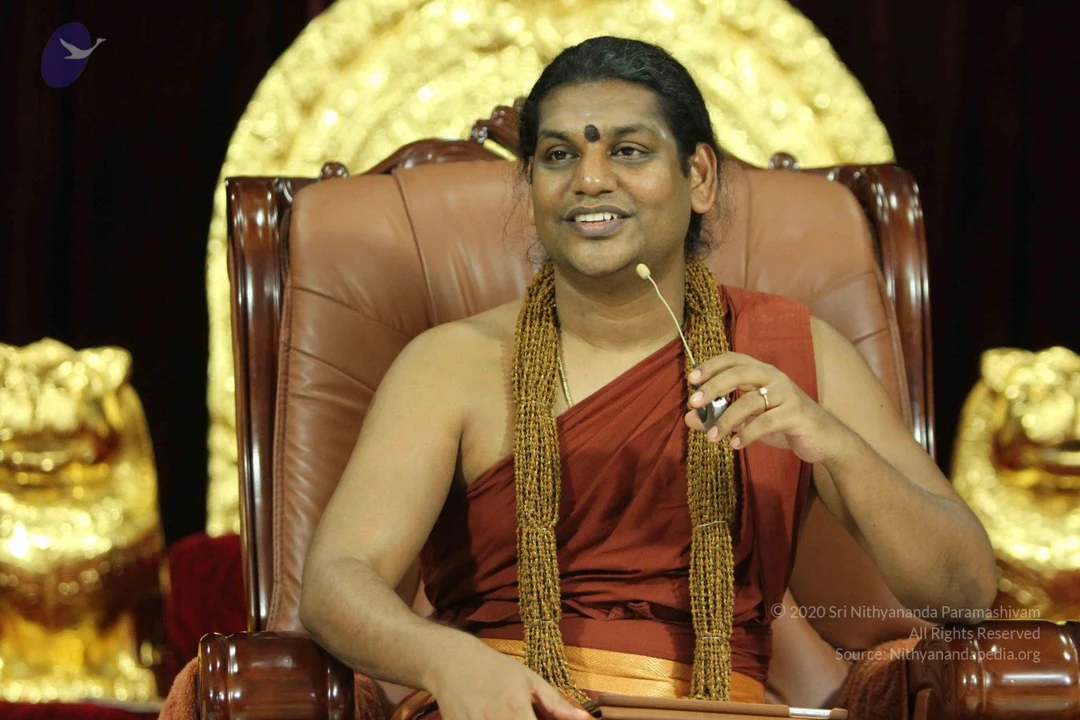
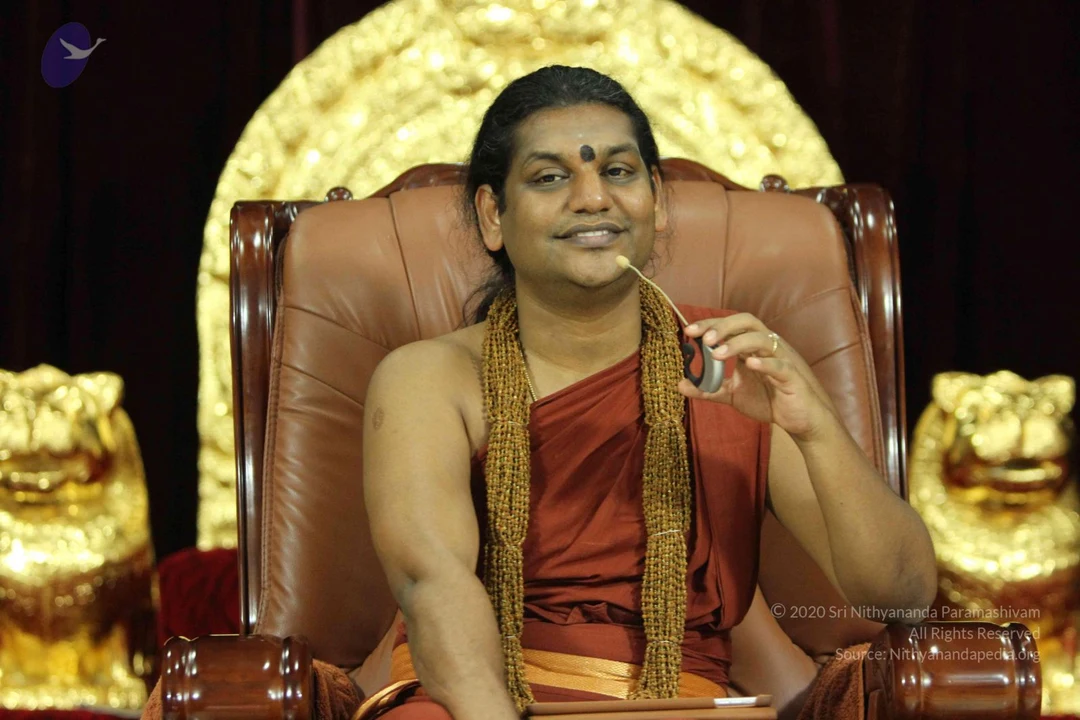
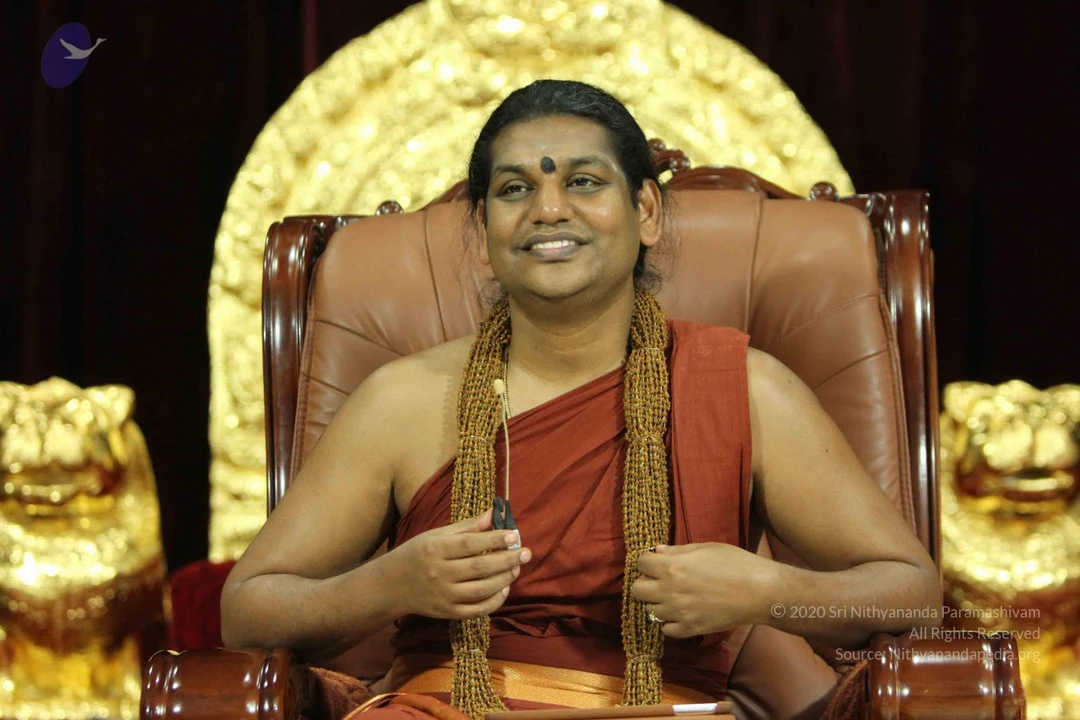
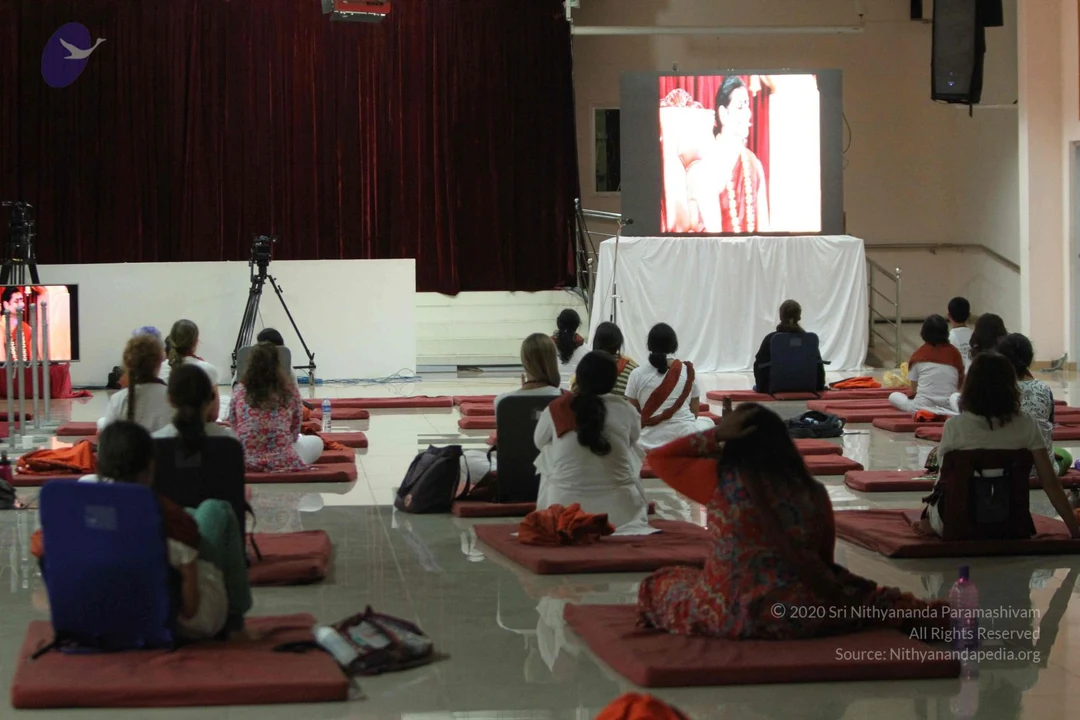
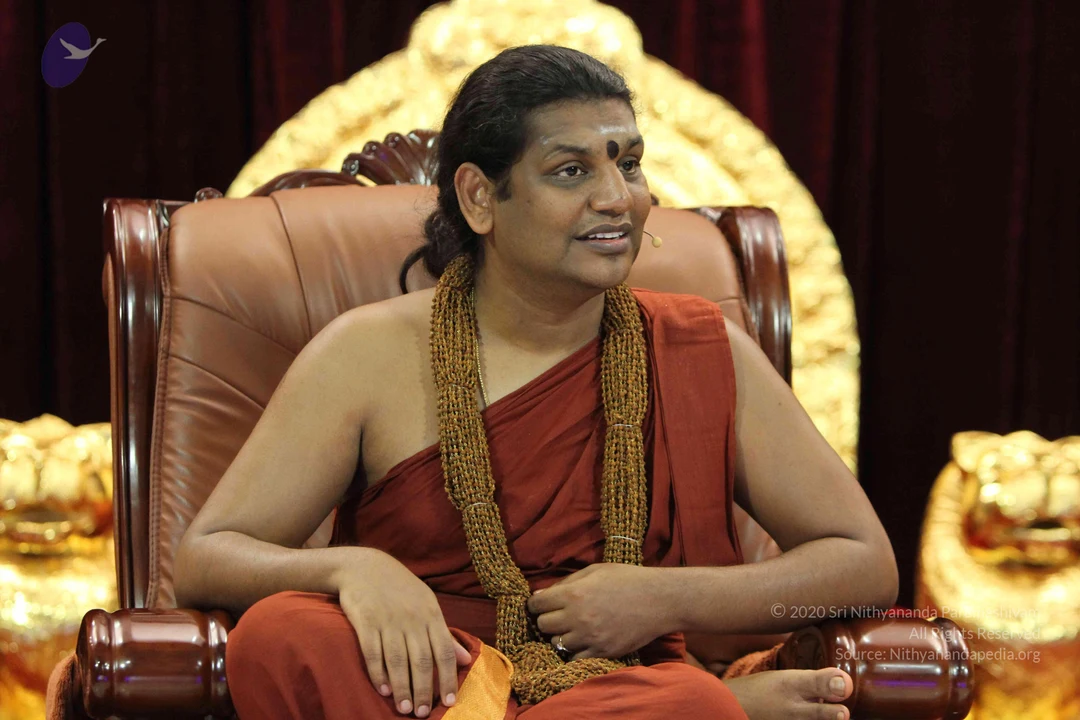
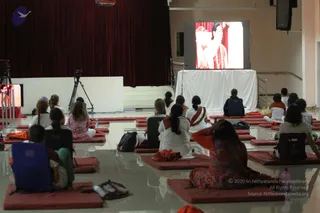
A photograph of a man seated on an ornate brown leather throne with carved wooden arms and golden lion-head armrest finials. He wears a rust-orange wrap over one shoulder, an orange-red dhoti with a yellow-gold border, and a long braided golden-brown rudraksha-style mala around his neck, with a red bindi on his forehead and his hair swept back. He sits with hands resting on his lap and smiles toward the side. Behind him a large gold-leaf halo-shaped backdrop and dark maroon drapes frame the throne. The appearance matches the a person description based on the orange clothing, mala and throne cues, seated in a satsang-style setting.A man seated on a brown leather throne-style chair in front of a large gold-coloured arched backdrop with golden lion-like carvings at each side. He wears a rust-red wrap over a bare shoulder, a thick gold-toned rudraksha-style mala around his neck, and a dark bindi on his forehead. He holds a small wireless lapel microphone in his right hand and speaks with a smile, while his left hand rests on a wooden armrest. Visible printed text in the lower right reads a copyright notice and source credit. a person is seated in a teaching posture with a microphone, consistent with a satsang discourse setting.A man sits on a brown leather throne-style chair in front of a large gold-coloured circular backdrop, with two golden lion-head armrest carvings visible at the sides. He wears a rust-orange sleeveless robe with a gold waist cloth and a long beaded rudraksha-style mala necklace, a small dot on his forehead, and holds a small microphone near his mouth while smiling. The appearance is consistent with the a person cues of a robed teacher seated on a throne with a mala, though the image is not conclusive.A smiling man with short dark hair and a small dark bindi sits on a brown leather throne-style armchair with carved wooden arms. He wears a rust-red saffron-toned shawl over bare shoulders, with a golden-yellow border at the waist, and wears long multi-strand gold-coloured rudraksha-style malas draped over his chest. He holds a small black microphone clipped near his collar in one hand. Behind him a large golden arched backdrop with a carved halo-like design rises above two gilded lion-head pedestals. The page describes a satsang discourse, but the visible setting is the seated speaker and throne. Swamiji (probable) appears as the seated man, identified by the crown-free ornate ceremonial cues of long hair, saffron clothing and ornate malas, with the throne.Seated audience in a hall with red-cushioned floor mats watches a large screen at the front showing a woman in a red sari with a red backdrop. Many attendees wear white or orange clothing and sit with bags and water bottles beside them. Camera tripods and stage equipment stand near a white-draped platform on the left. Dark red curtains line the back wall. The people are seen from behind, watching the satsang broadcast.
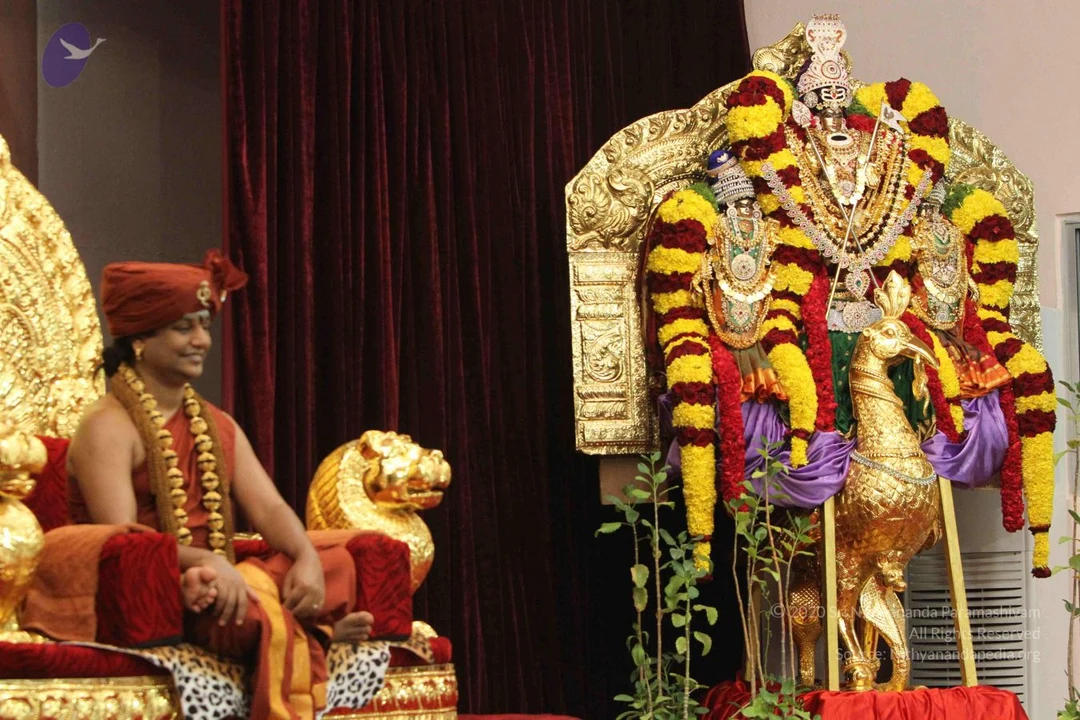
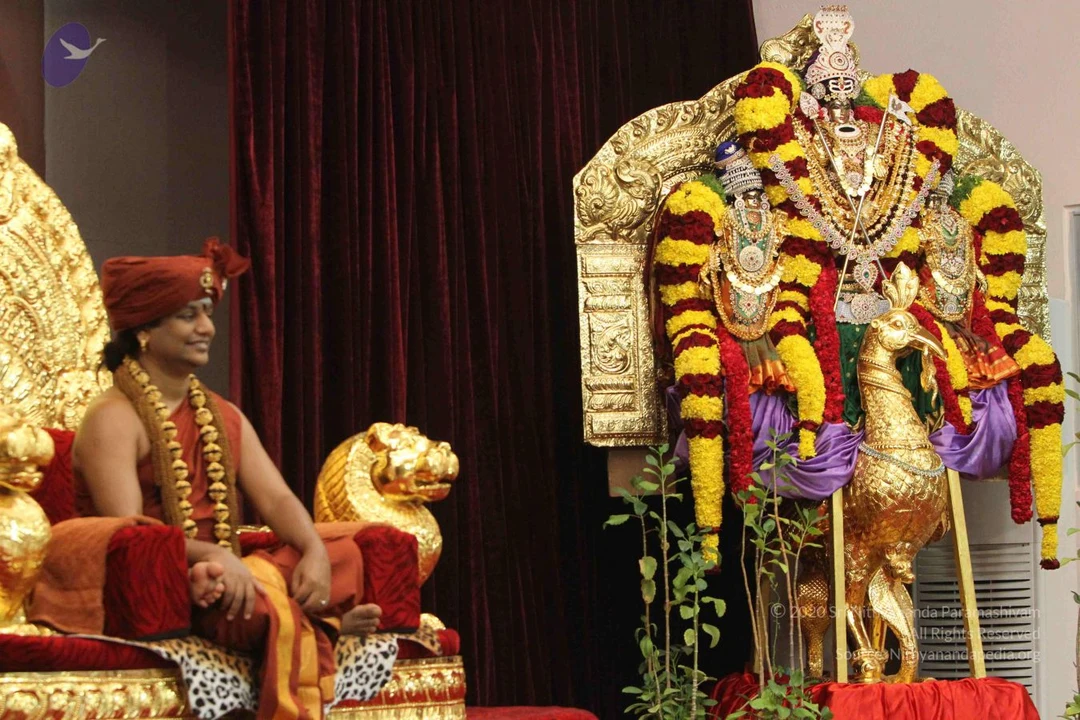
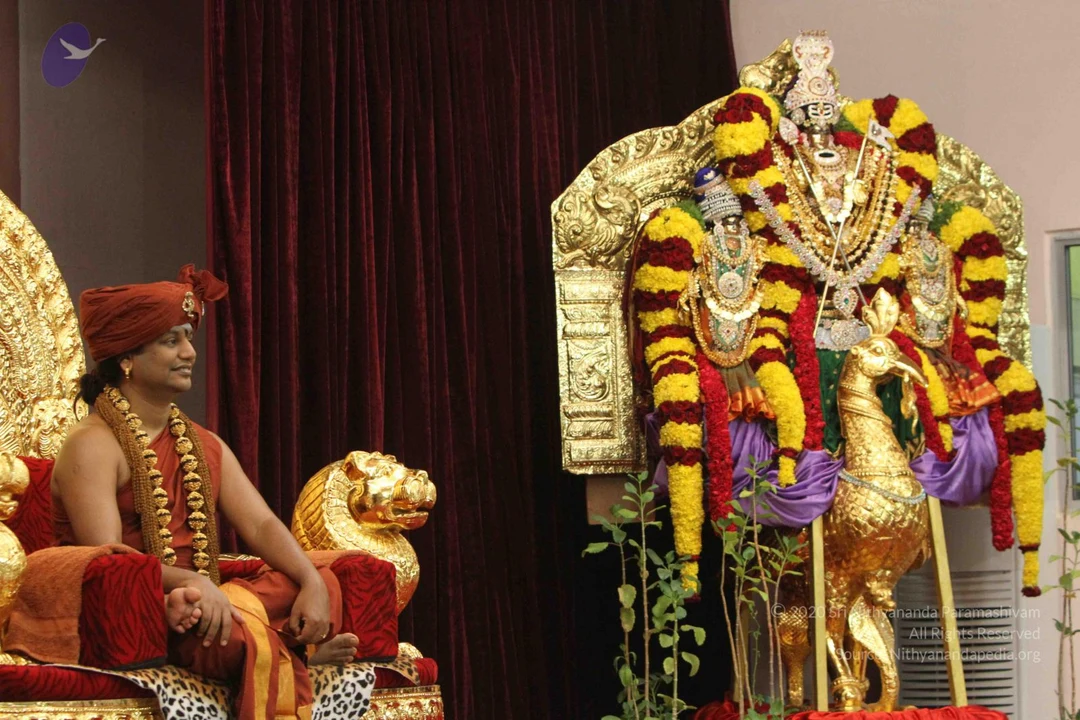
Darshan

12 photosSource gallery
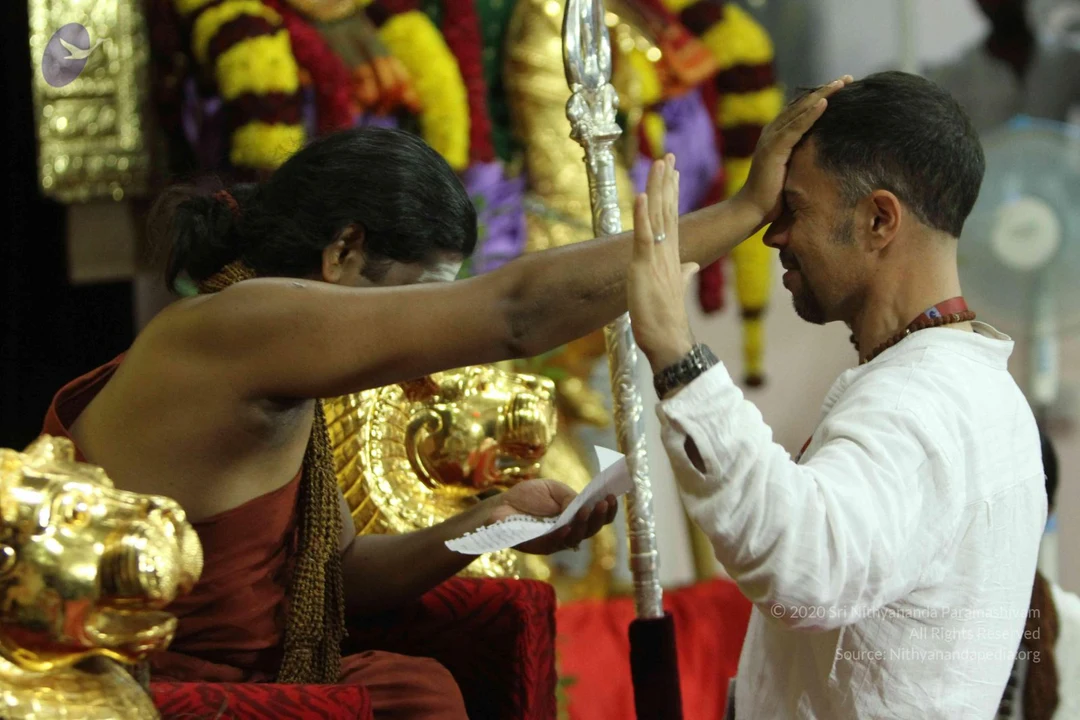
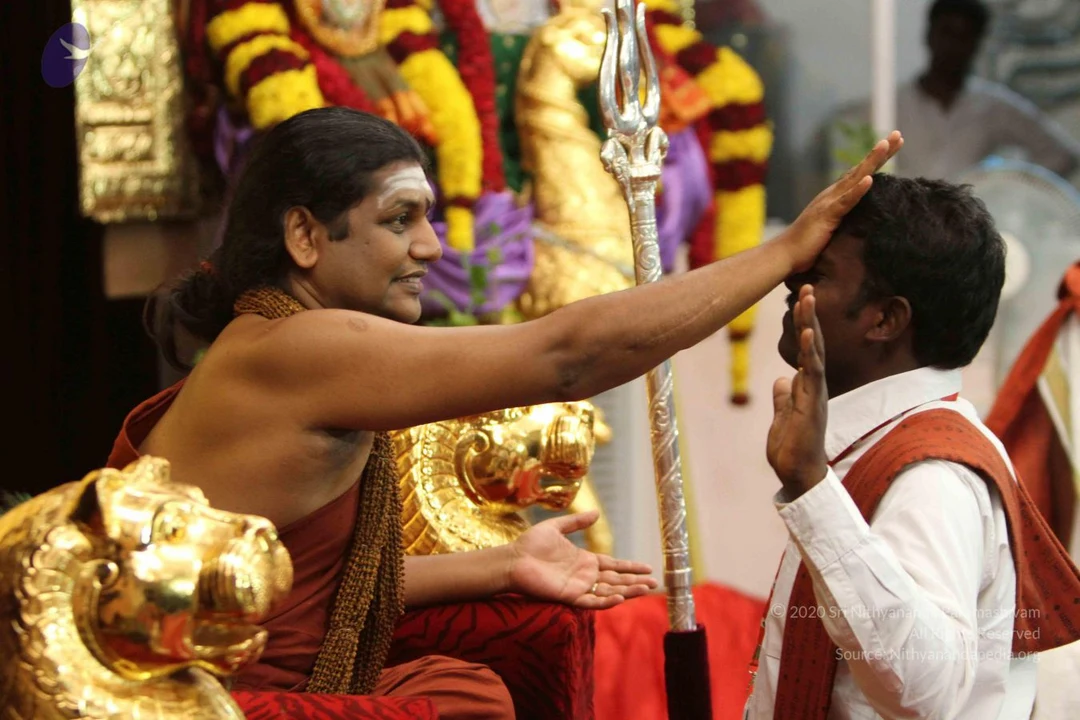
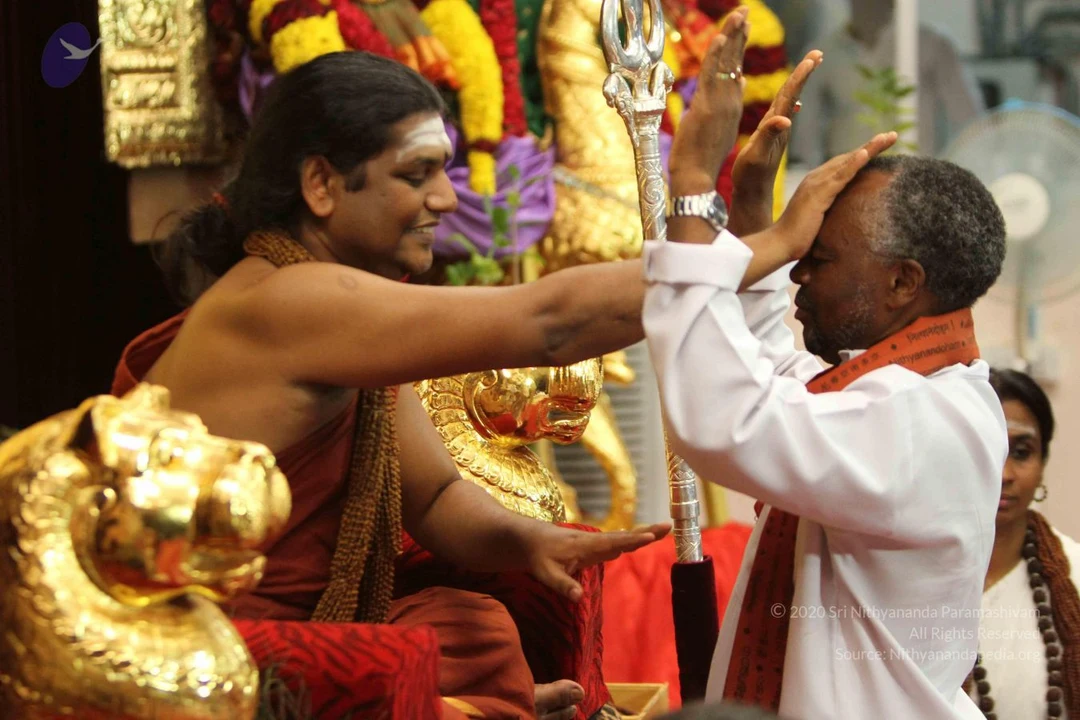
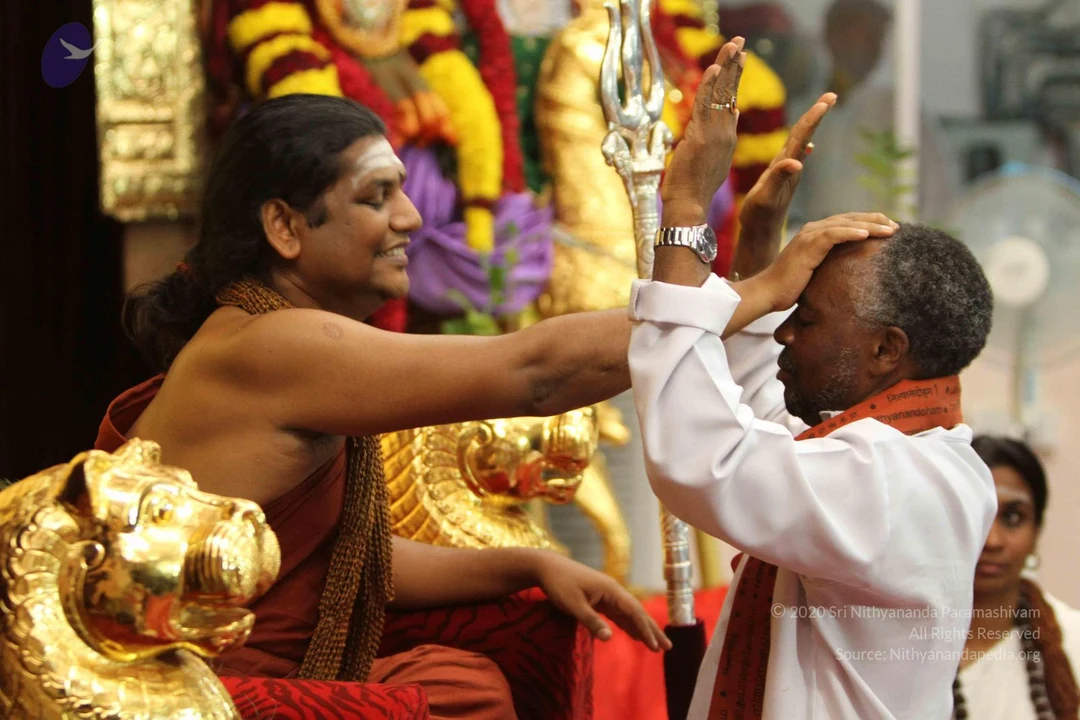
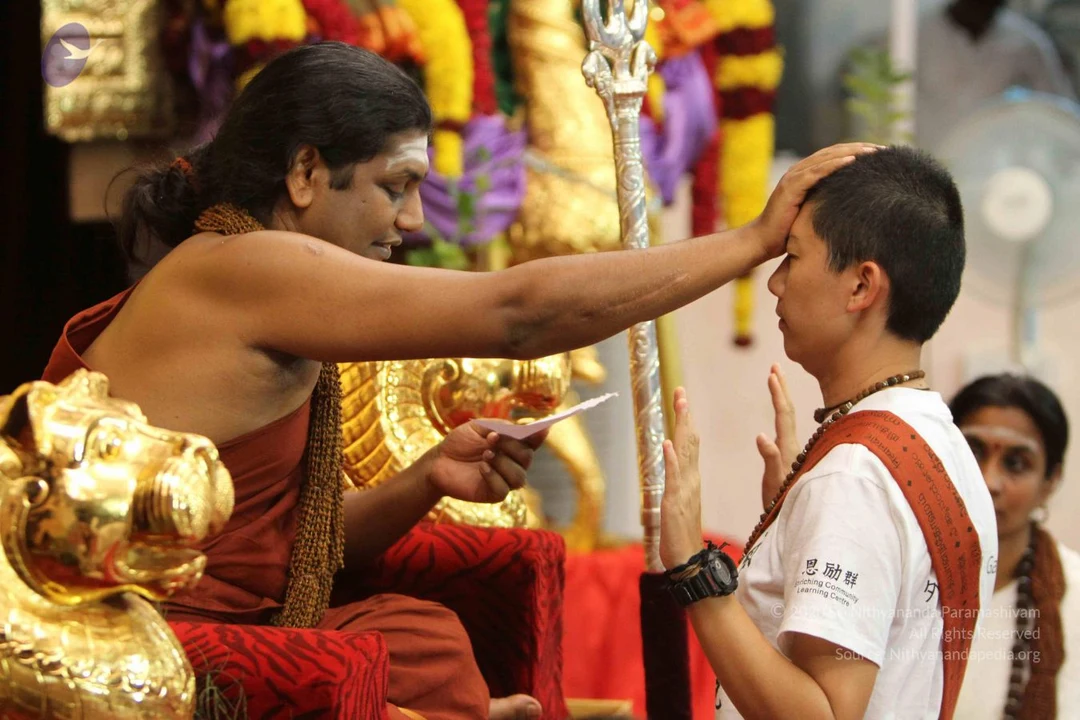
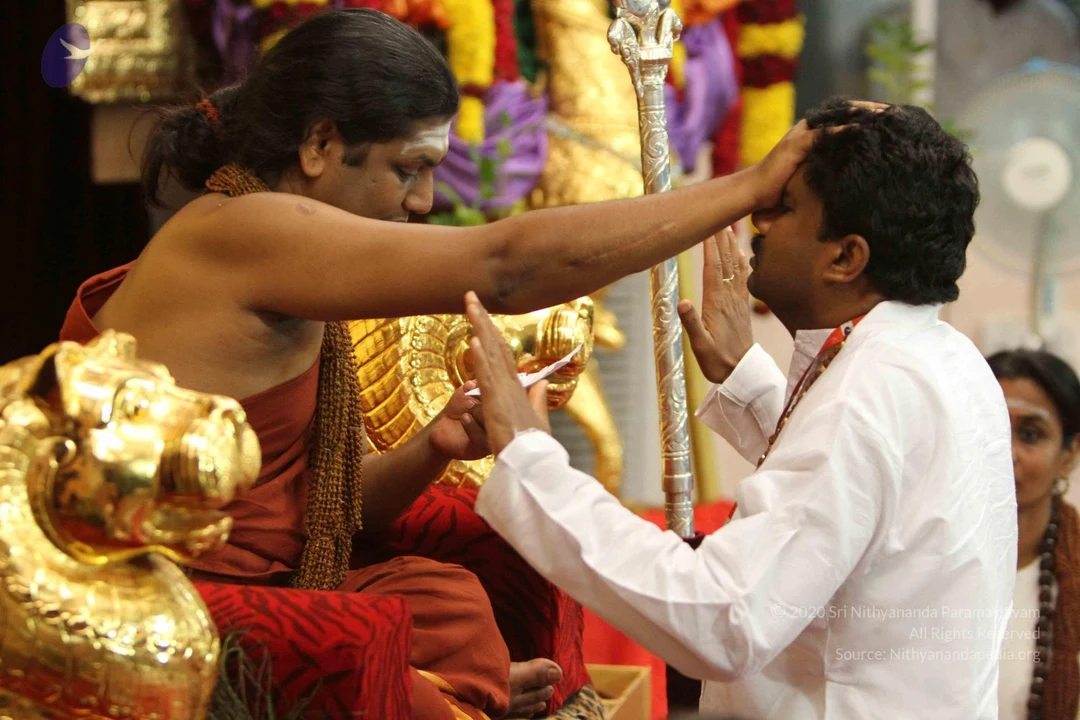
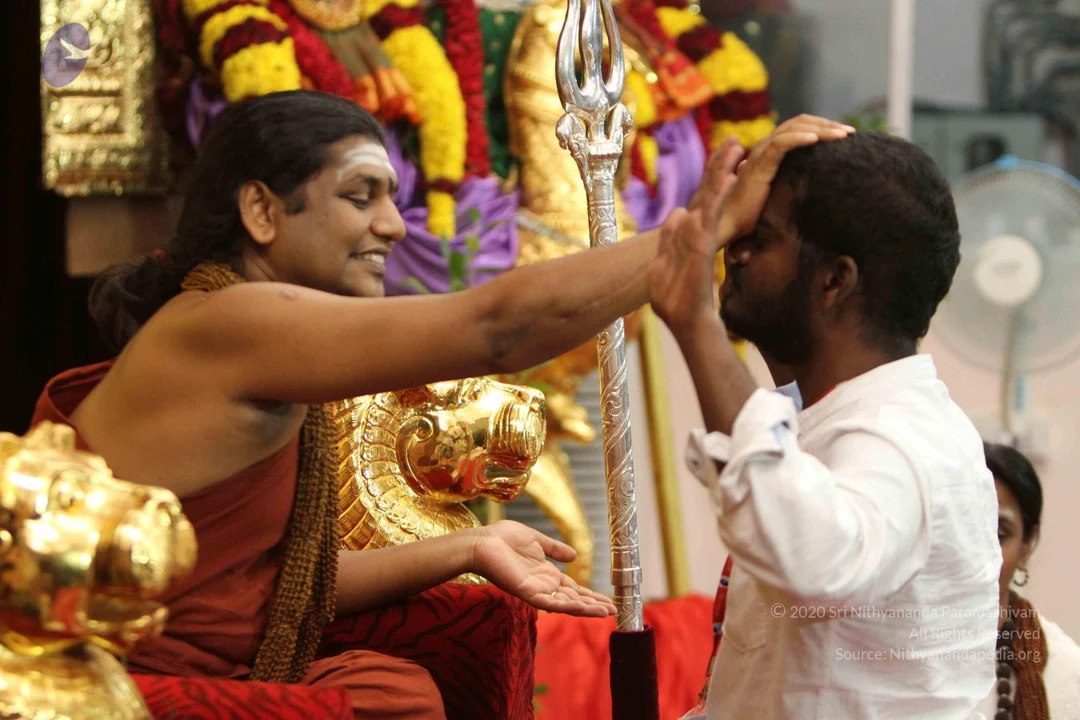
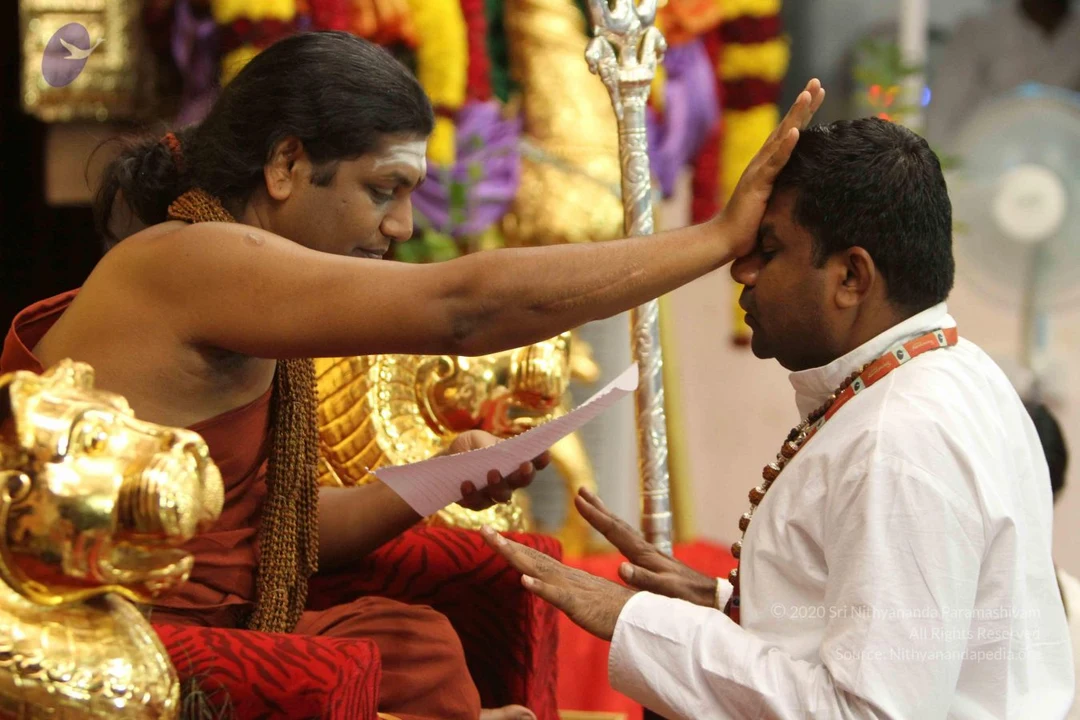
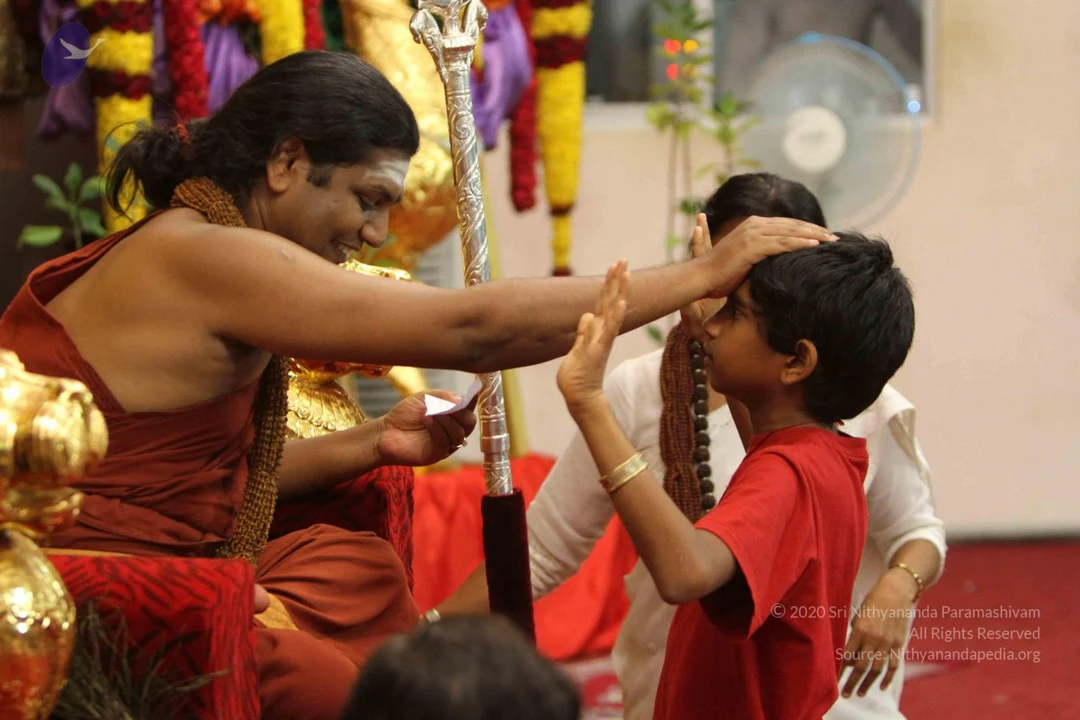
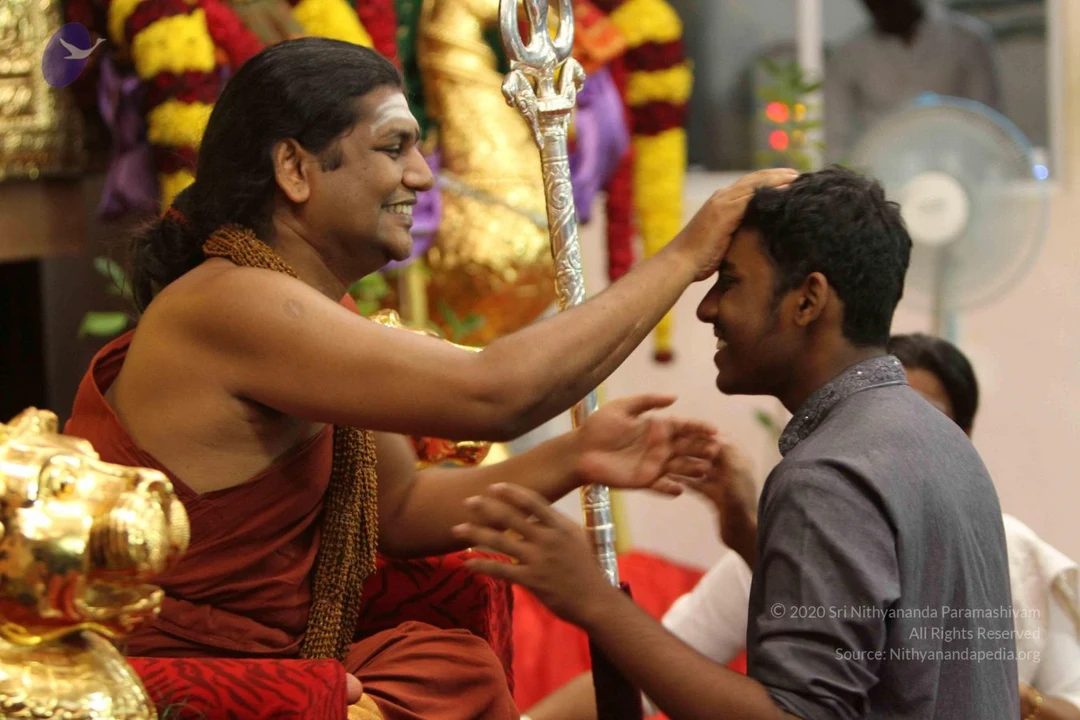
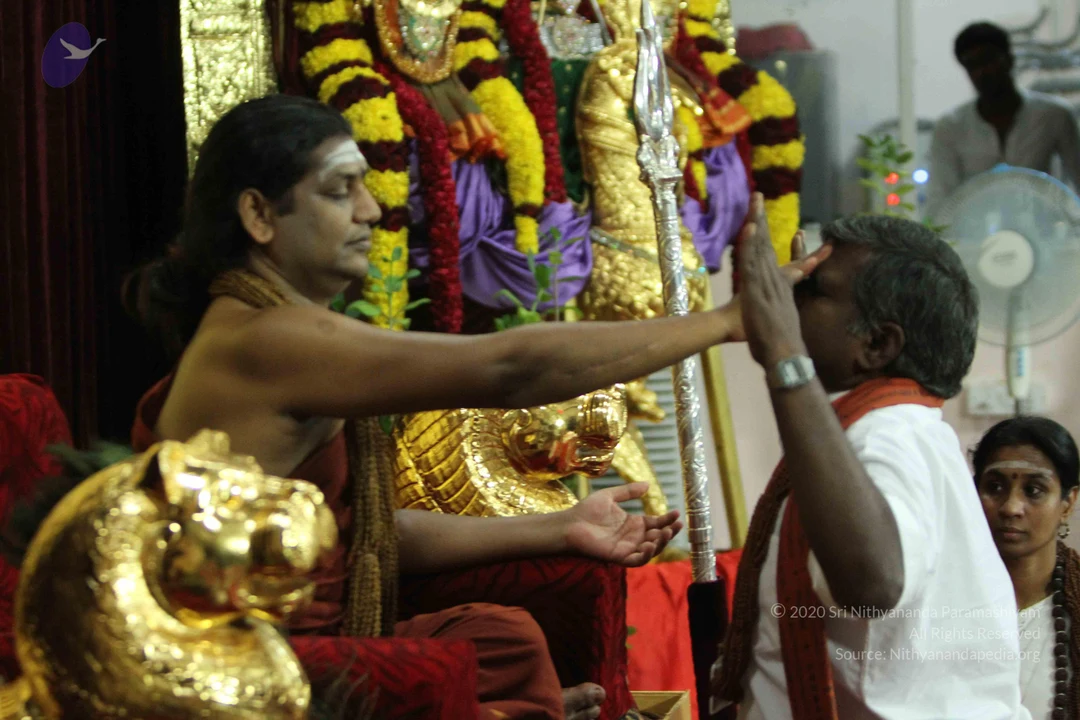
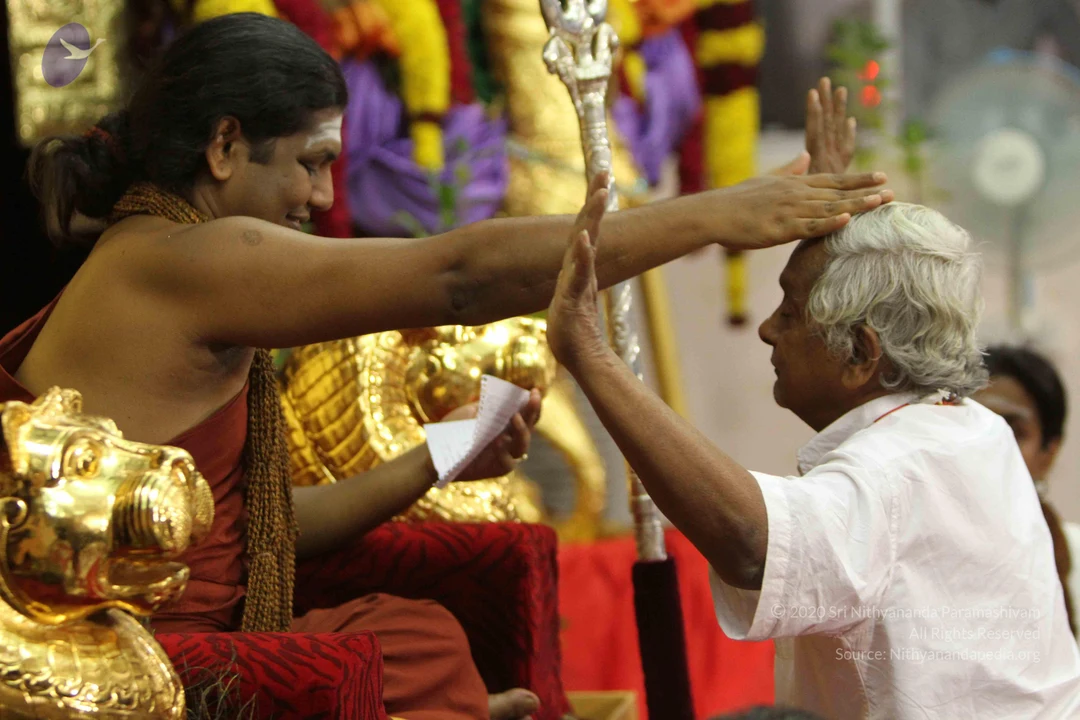
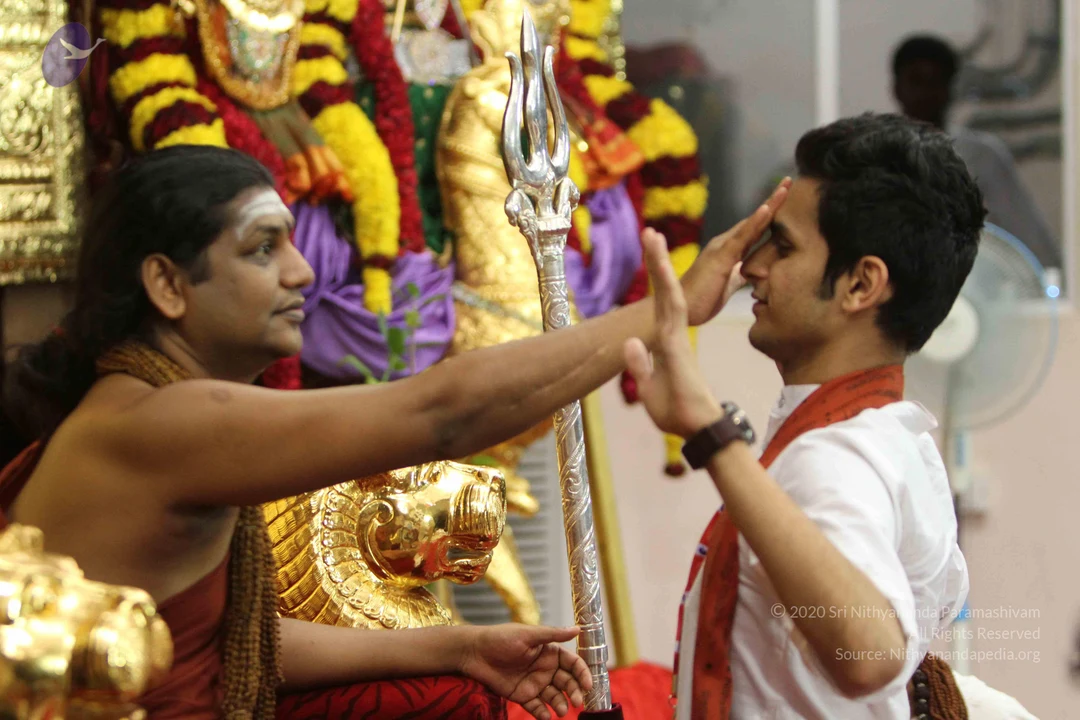
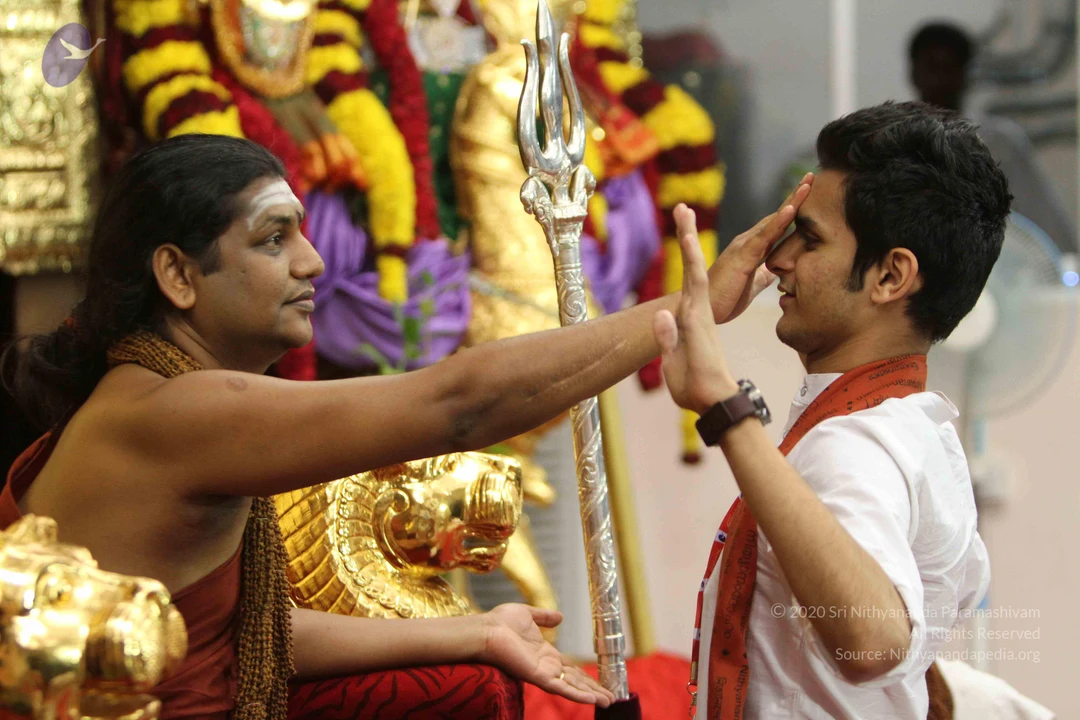
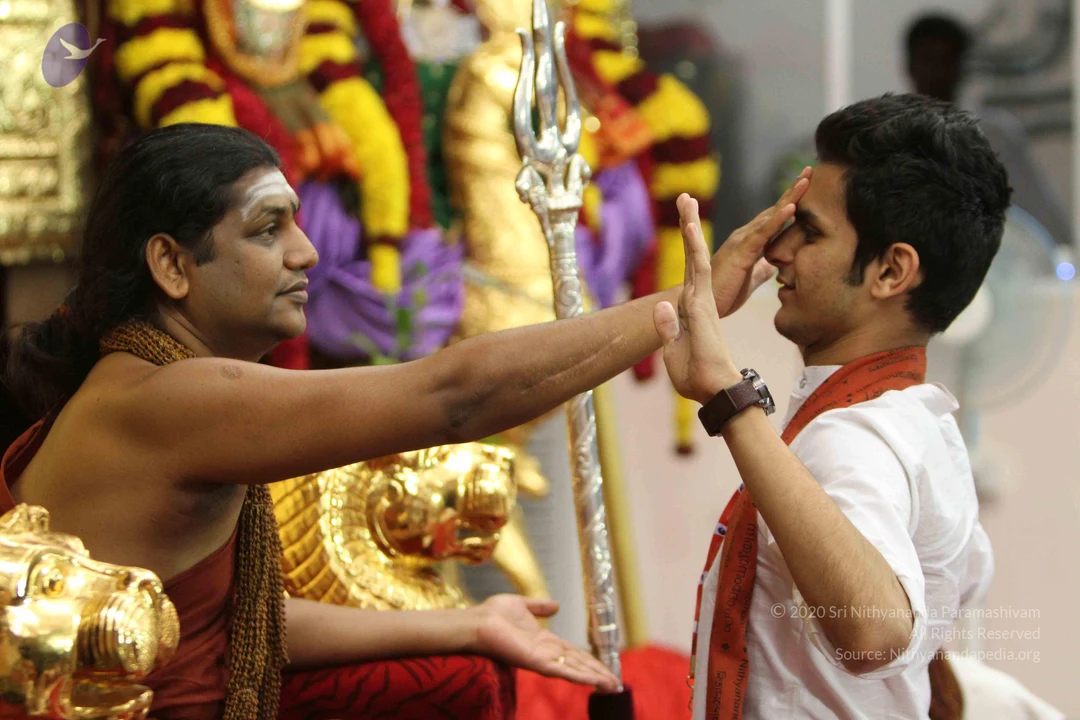
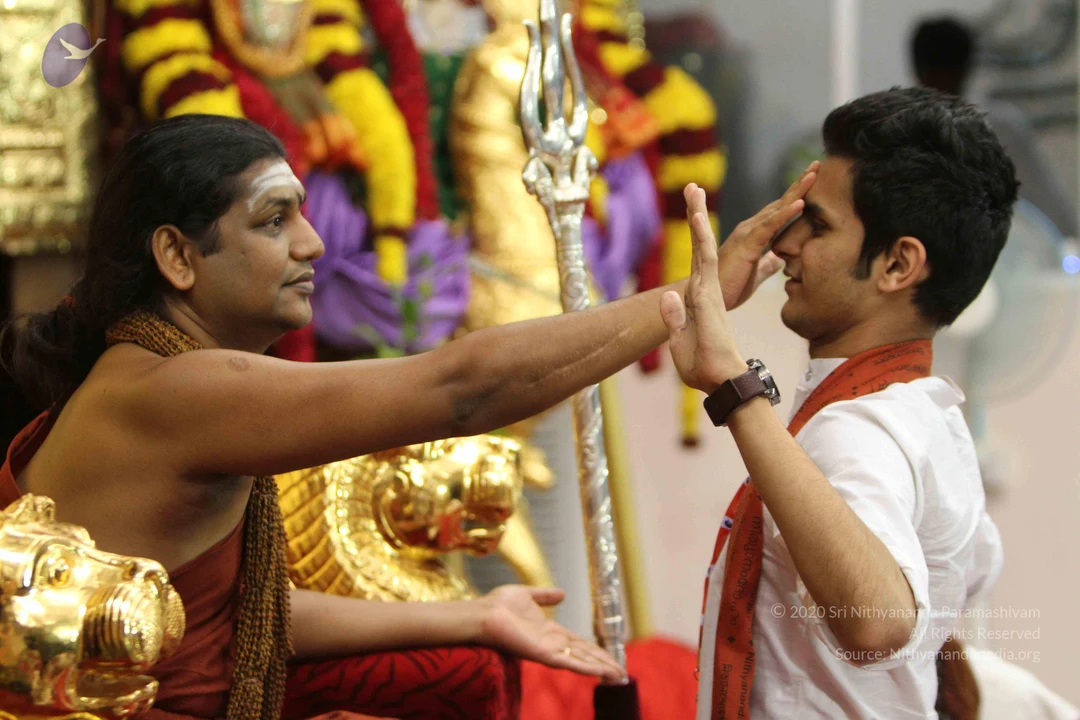
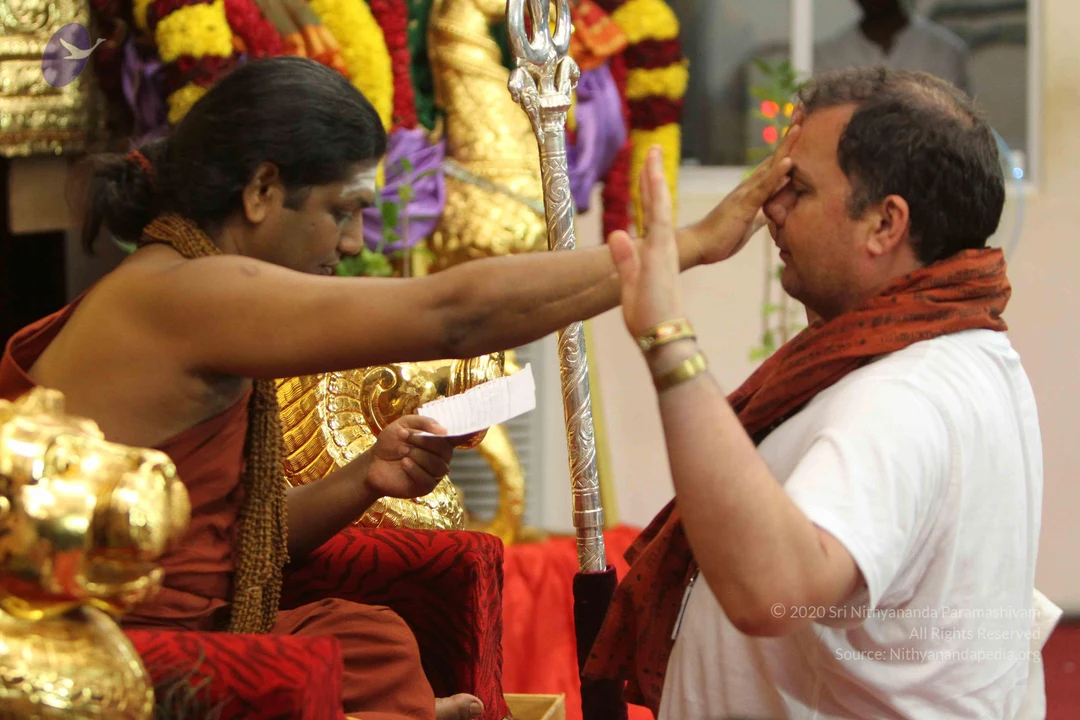
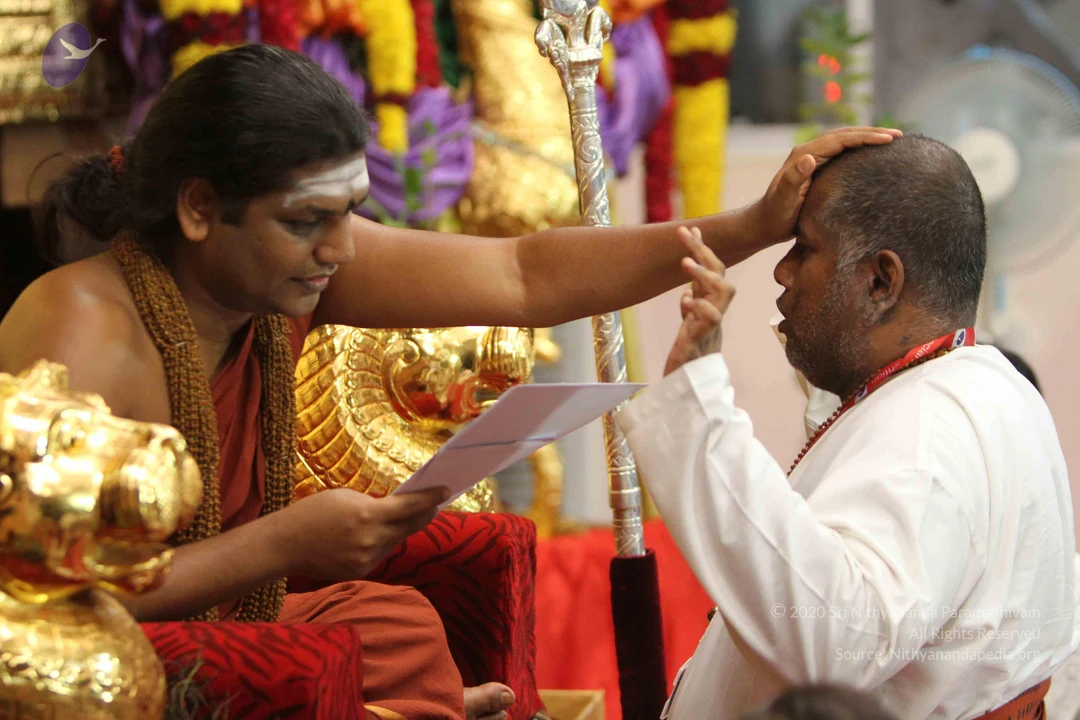
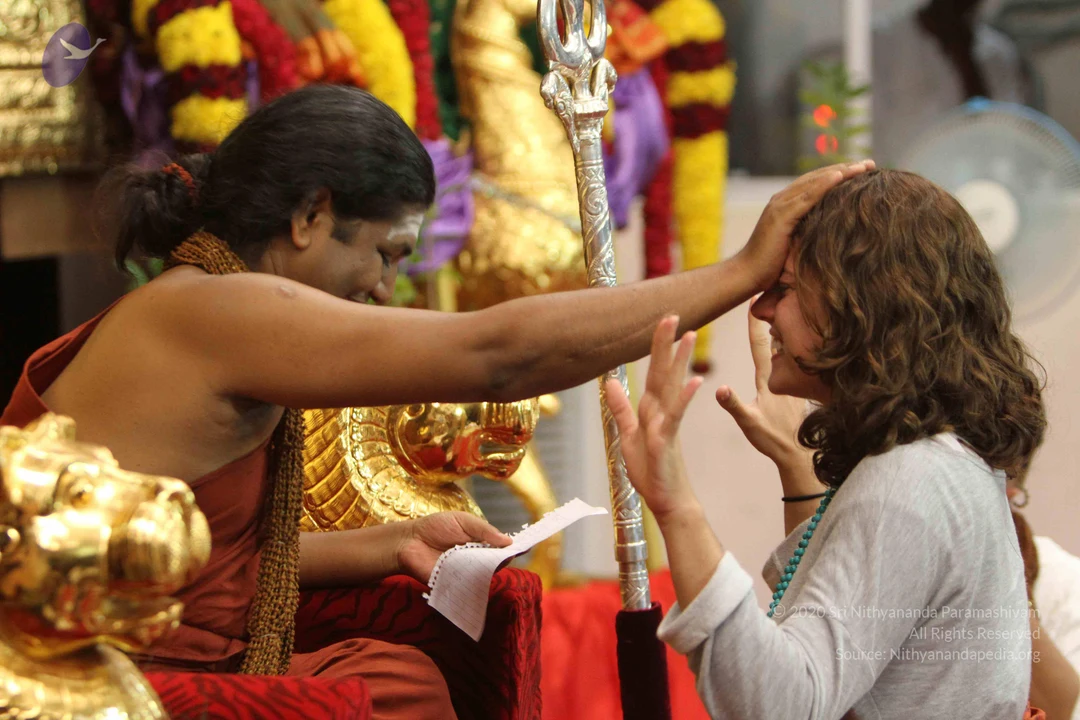
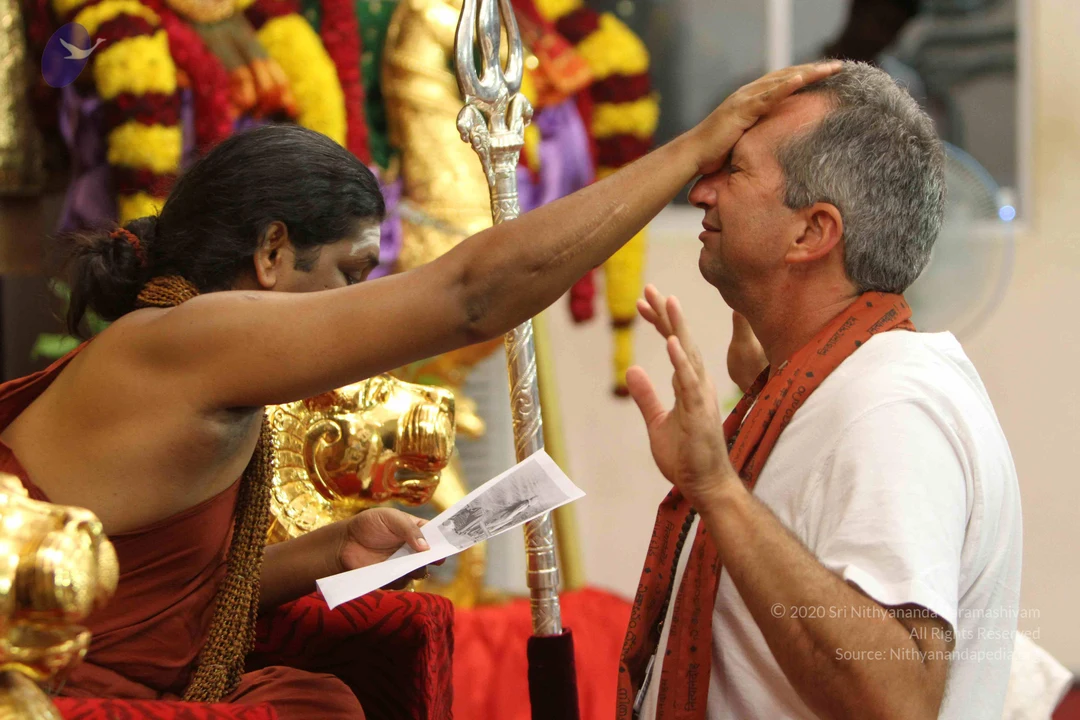
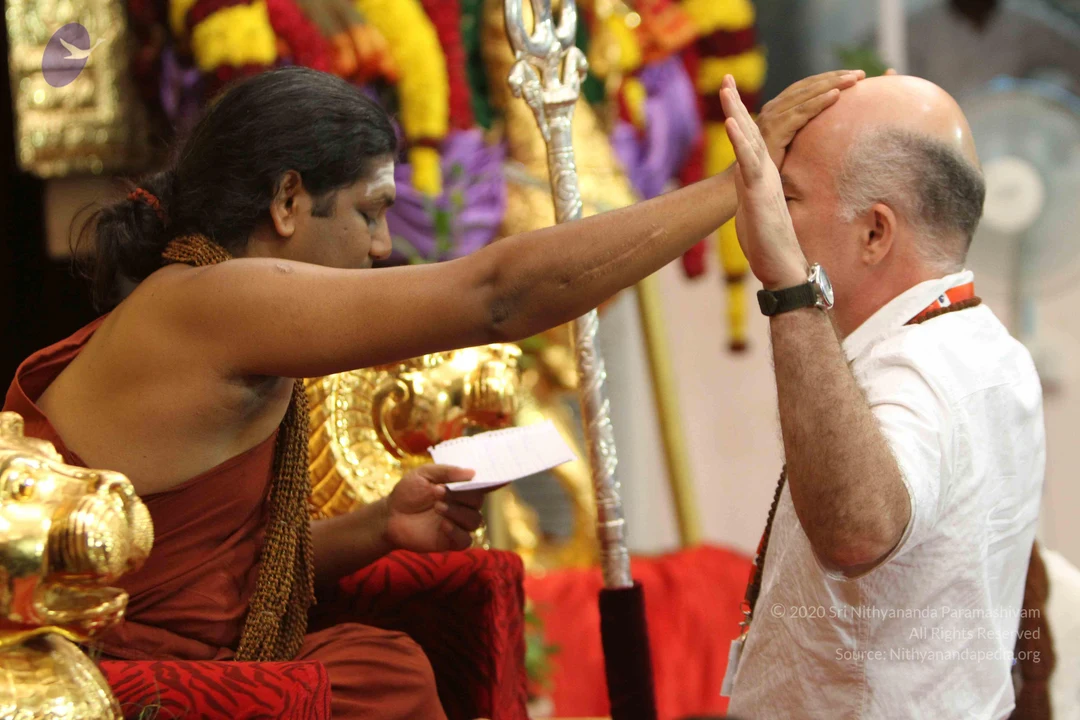
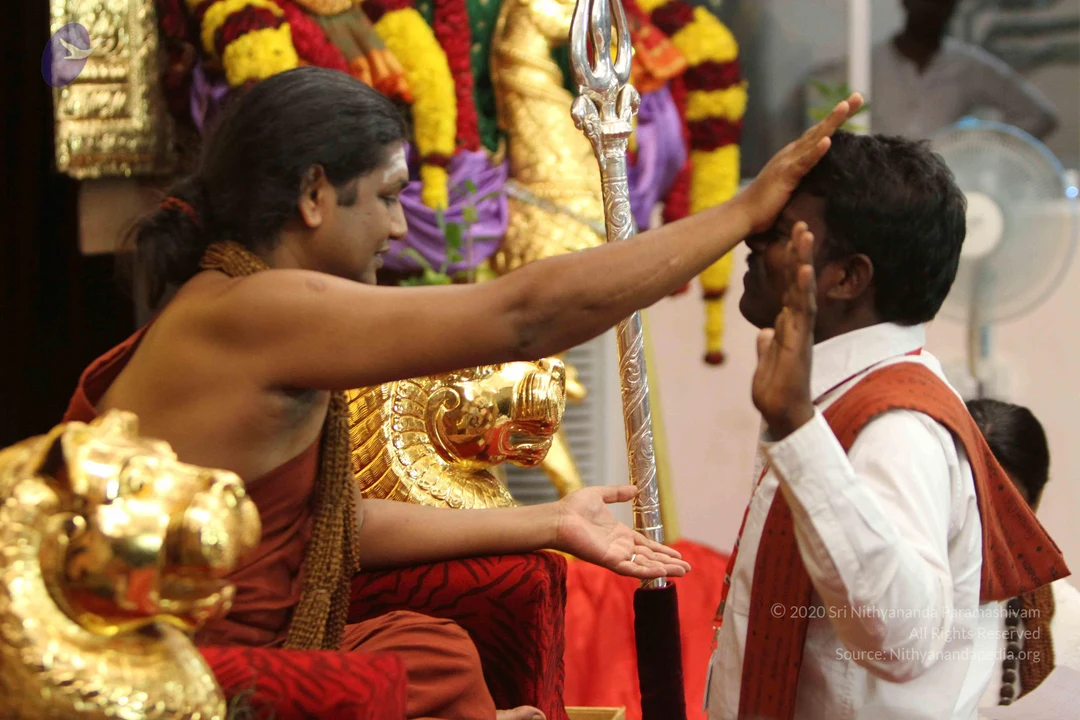
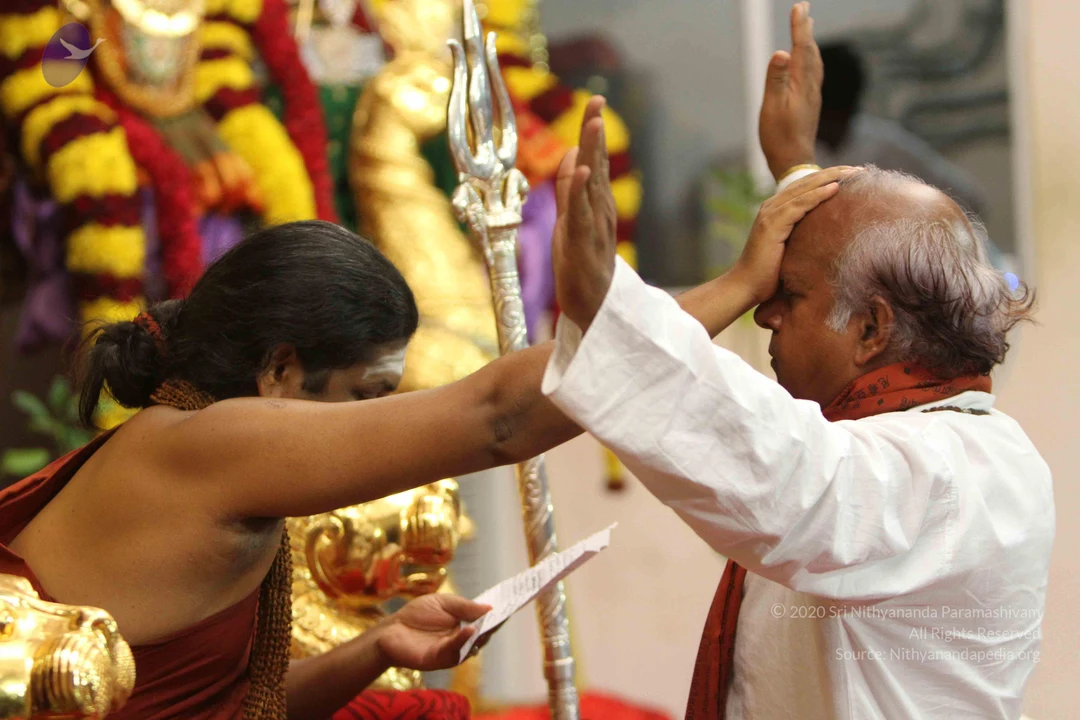
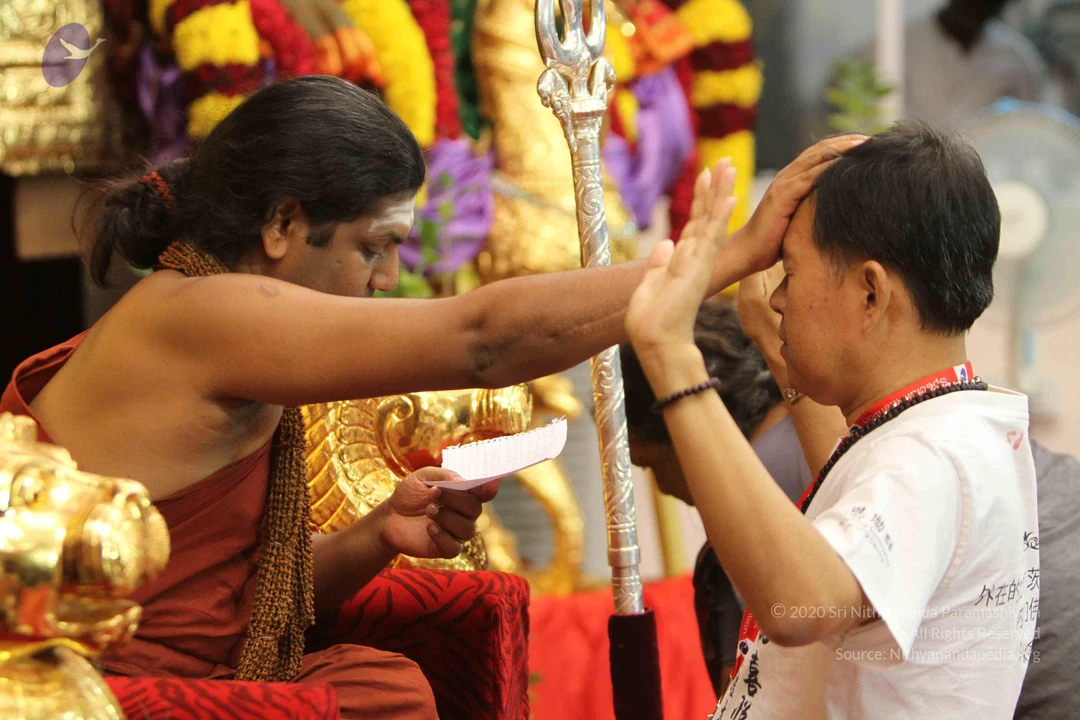
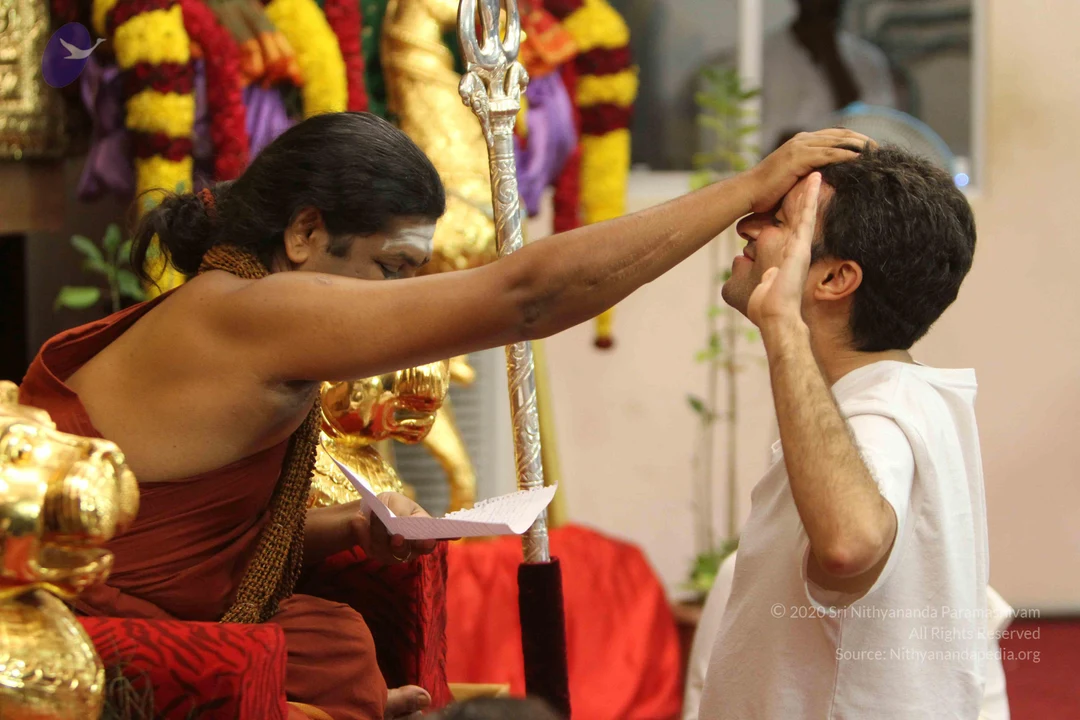
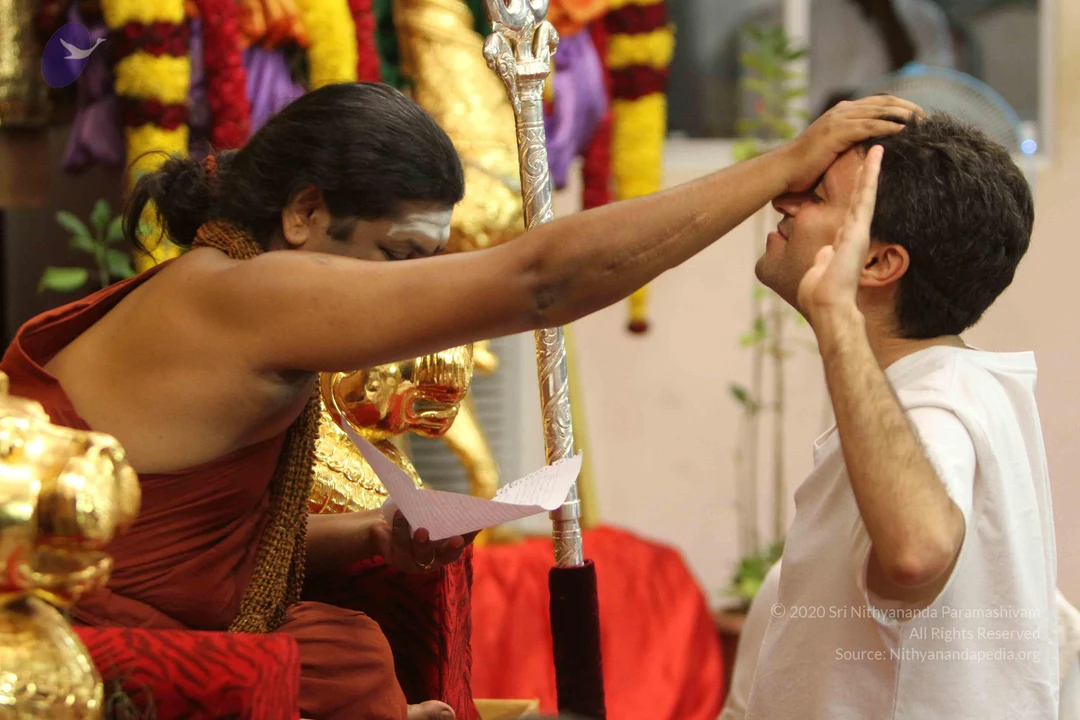
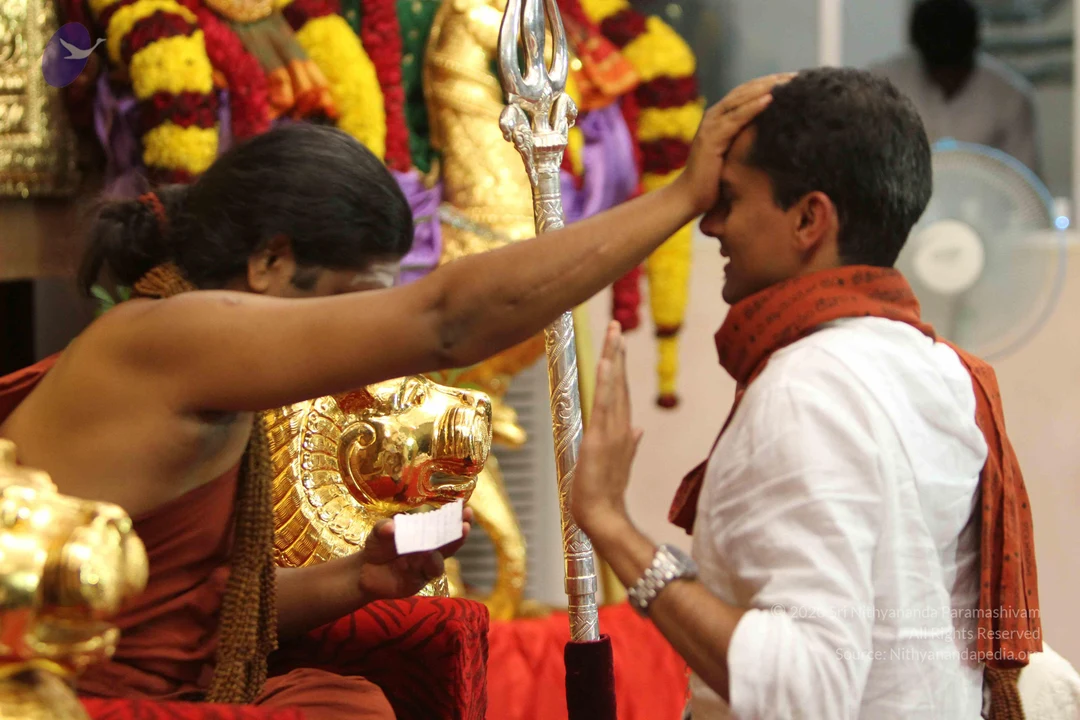
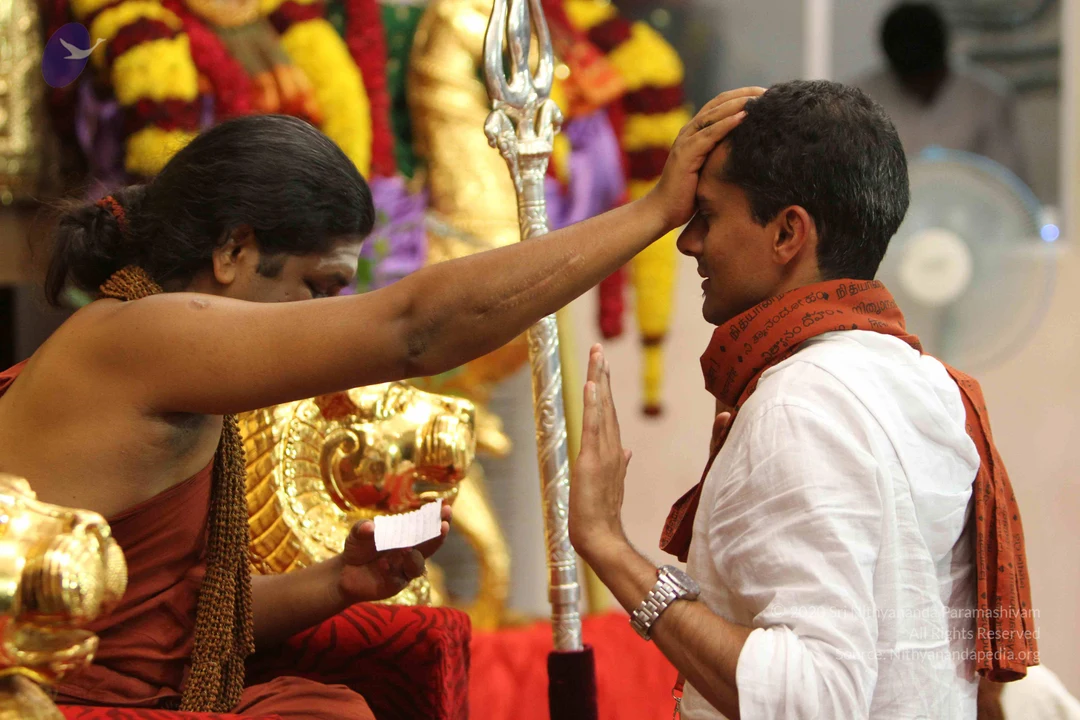
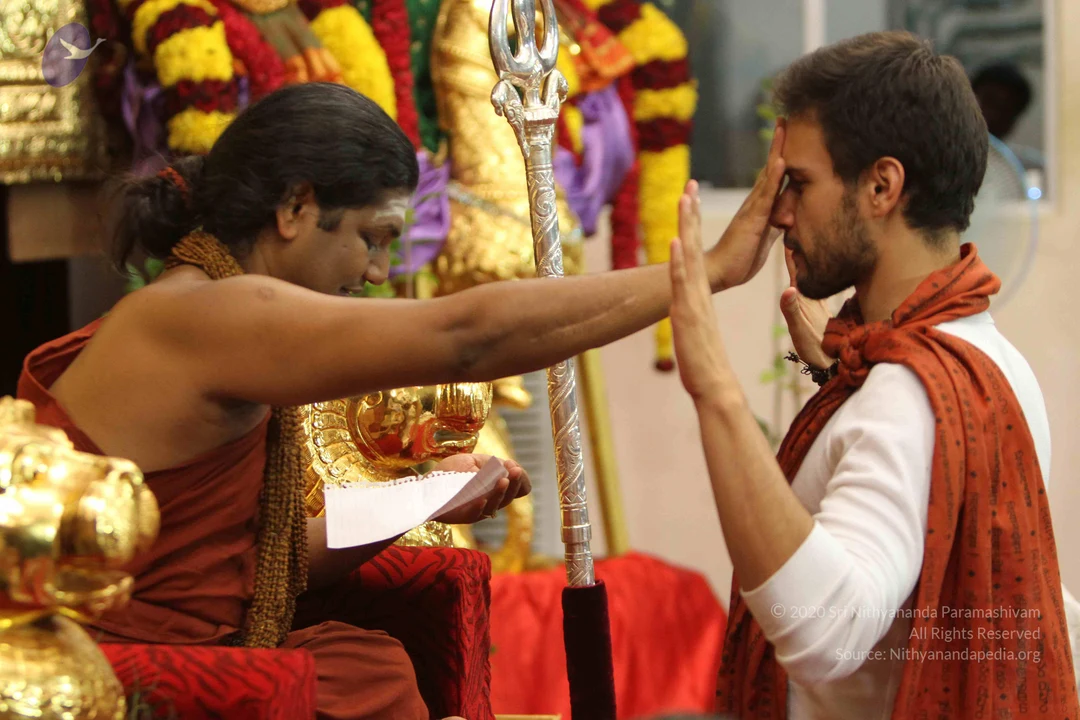
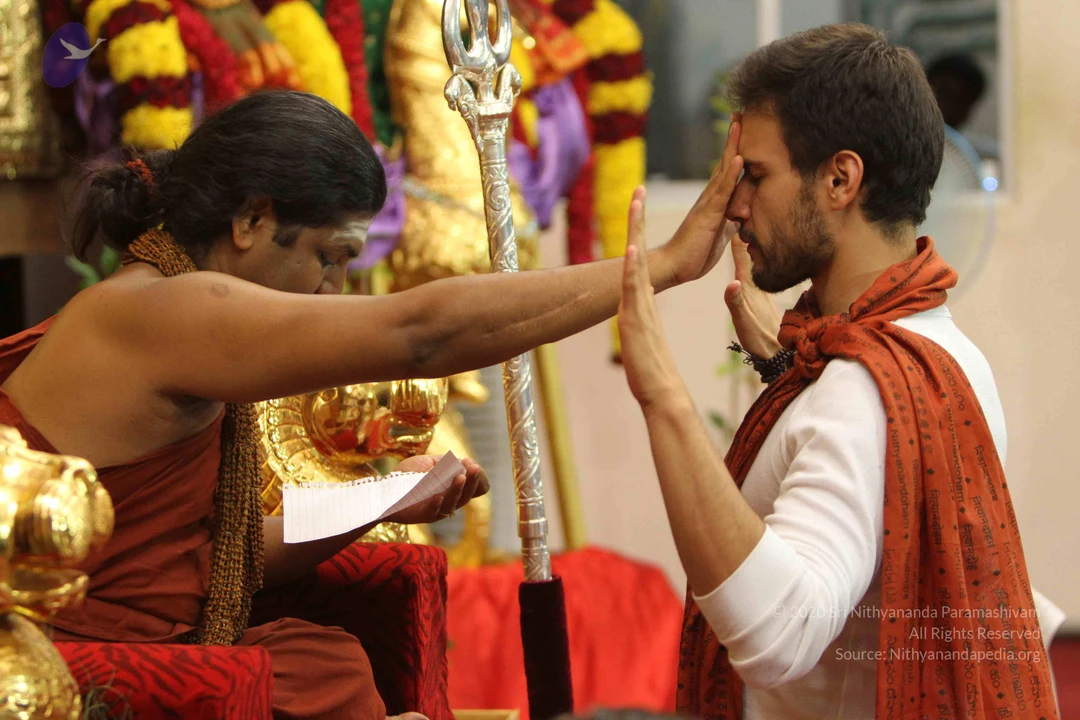
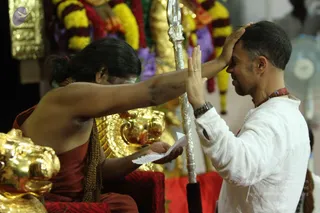
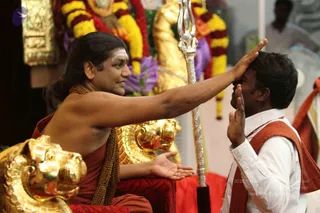
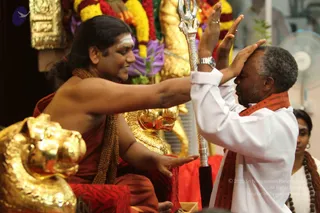
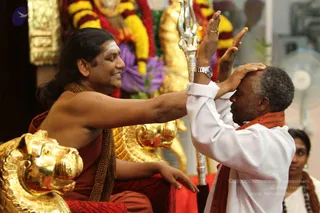
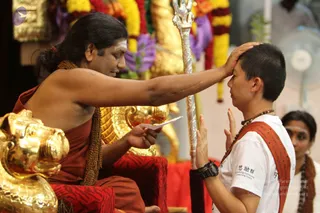
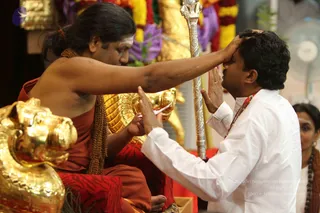
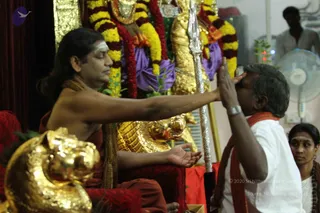
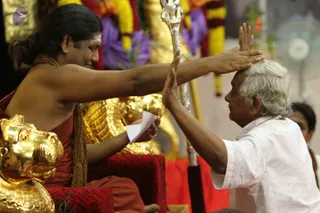
A photograph of a ceremonial blessing in a temple-like setting. A seated figure in a rust-red robe and a long beaded necklace leans forward and presses one hand on the forehead of a man in a white kurta, who has his palm raised in reverence and eyes closed. Behind them stand a silver trident-shaped staff, golden lion-head ornaments and a golden throne-like seat, with marigold garlands in yellow and orange. A man in a white shirt wears a red and white rudraksha-style mala and a wristwatch. The scene suggests a devotional blessing or darshan.A photograph of a bare-chested man with long swept-back hair, white tilak on his forehead, and a dark rudraksha-style mala with gold beads, seated on a red cushioned seat. He extends his right hand to press onto the forehead of a young man in a white shirt and red-orange shawl, who presses his palms together in response. Behind them stands a silver trident and golden lion-shaped ornaments, with yellow and red marigold garlands and a gold deity murti in the background. A second man is partially visible at the top right.A seated man with long dark hair, bare-chested and wearing a rust-red dhoti and a long beaded necklace, extends his raised hands in blessing toward a grey-haired man in a white kurta with an orange-red shawl. The receiver's palms are pressed together at his forehead, and a silver trident stands between them. Behind them is a golden peacock-style vehicle with ornate gold figures and garlands of yellow and red flowers. A woman in a brown shawl and beaded mala is visible at the right edge. The seated man has distinctive long hair, a white forehead mark and ceremonial adornments, which is a probable match to a person, given the page's reference to him.A seated man with long dark hair, a white tilak on his forehead, bare-chested and wearing a rust-red wrap with a gold-coloured beaded necklace, extends his hands to bless a standing man's head. The seated figure appears to be a person with a long swept-back hairstyle, ornate gold necklace and rust-red clothing, giving blessing. The standing man wears a white long-sleeved shirt and an orange-red shawl with printed text, his eyes closed and head bowed. Behind them are golden lion-form armrests, a silver trident, garlands of yellow and purple flowers and a golden shrine backdrop. A woman in white is partially visible at the right edge.A seated man in a rust-red robe, with a long dark braid, white forehead markings and a gold-threaded sash, places his right palm on the forehead of a young person in a white T-shirt with a red-orange sash and a dark rudraksha-style bead necklace. He holds a small white card in his left hand. Behind them are a silver trident-topped staff, gold ornamental pieces, and strings of yellow and purple flower garlands. A woman with white forehead markings and beaded necklace sits at the right edge, and a fan is visible in the background. Swamiji (probable) appears as the man seated on the red-cushioned throne, based on long swept-back hair, rust-red robe and gold-chain adornment, and is performing a blessing on the initiate.A photograph of a seated figure in an orange-red dhoti and bare-chested with a long brown beaded necklace and a white tripundra mark on the forehead, pressing his right palm onto the forehead of a man in a white shirt with a red-and-cream rudraksha-style necklace. The seated figure holds a small folded paper or card in his left hand. Behind them are a silver staff, gold lion-shaped and ornate gold objects, and a garland of marigolds and purple flowers. A woman with a white forehead mark stands at the right edge. Three physical people are visible.

01-MORNING-SATSANG

43 photosSource gallery
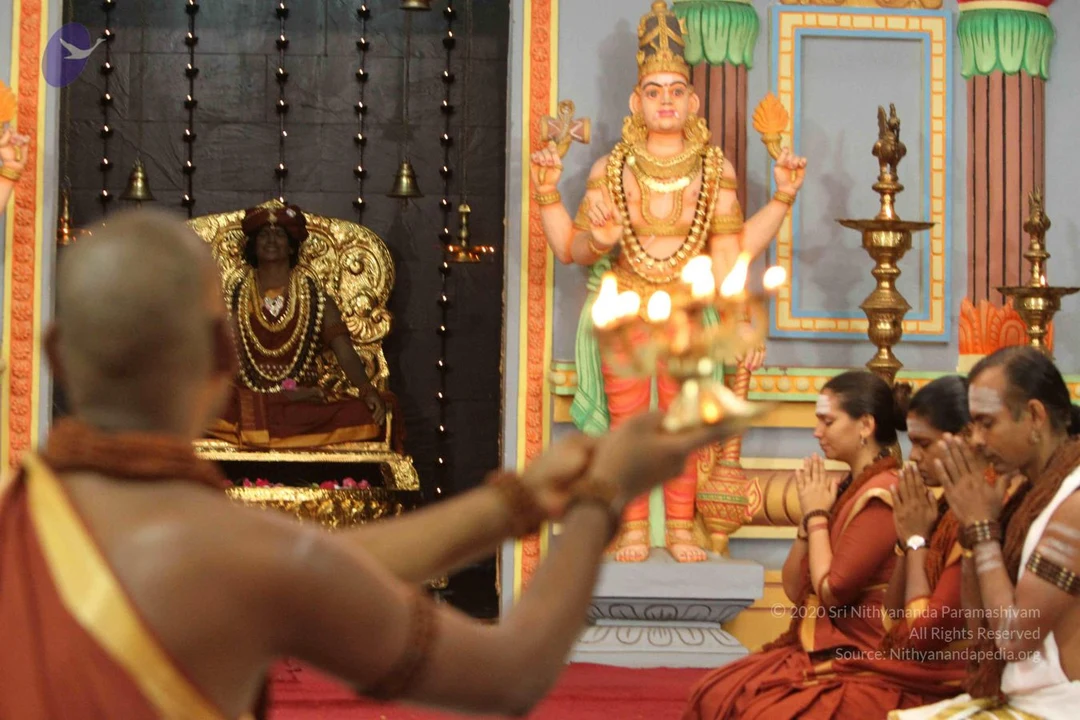
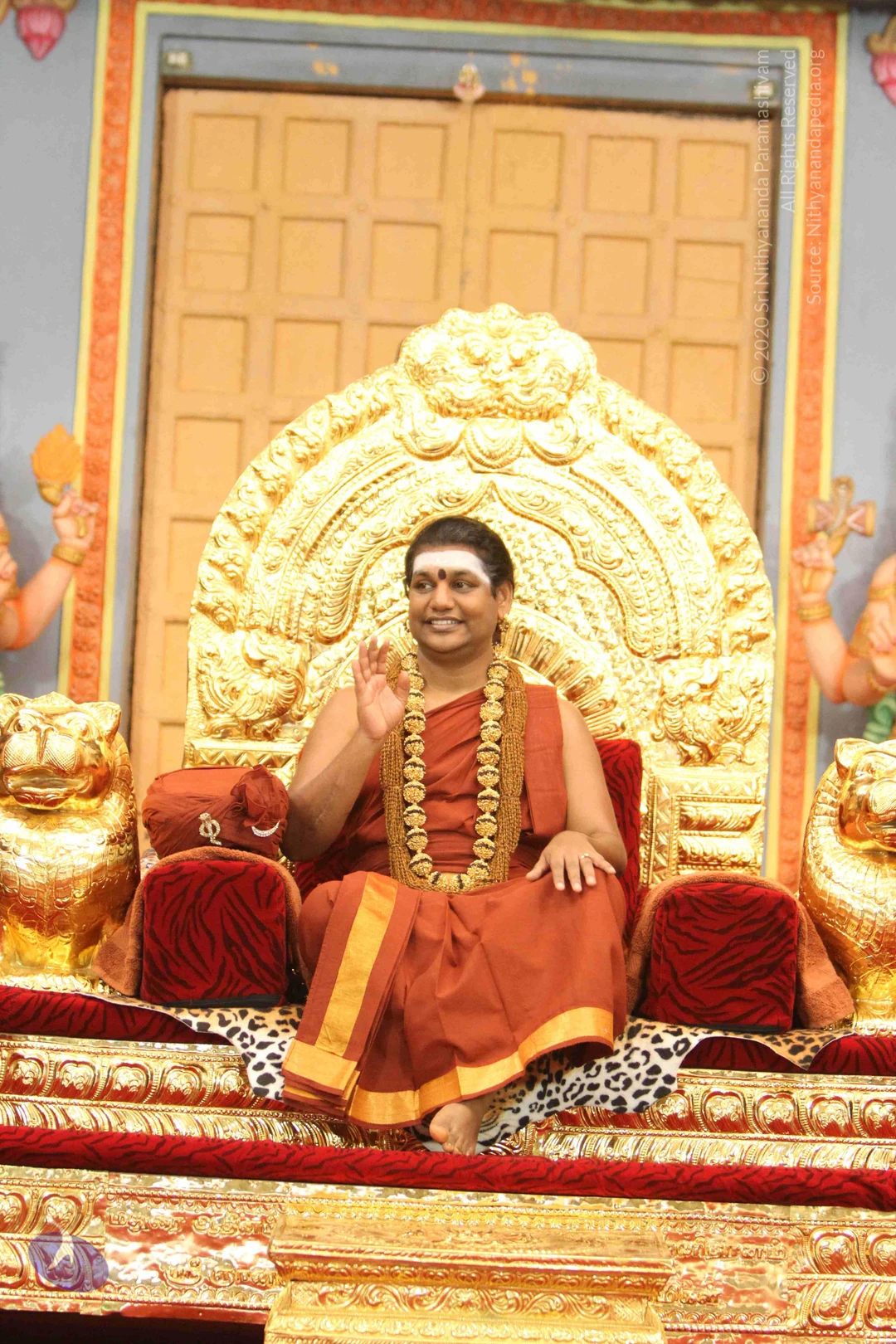
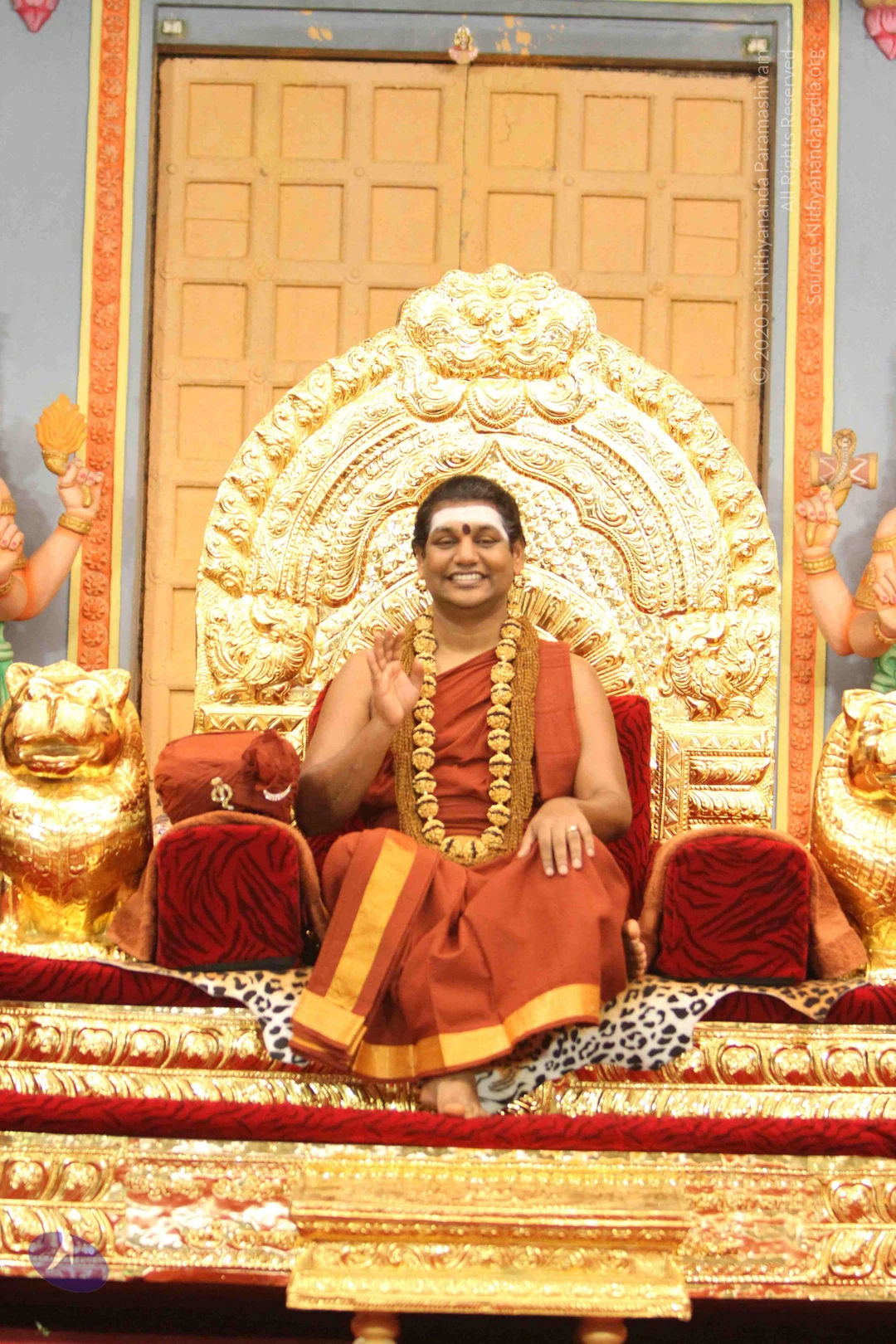
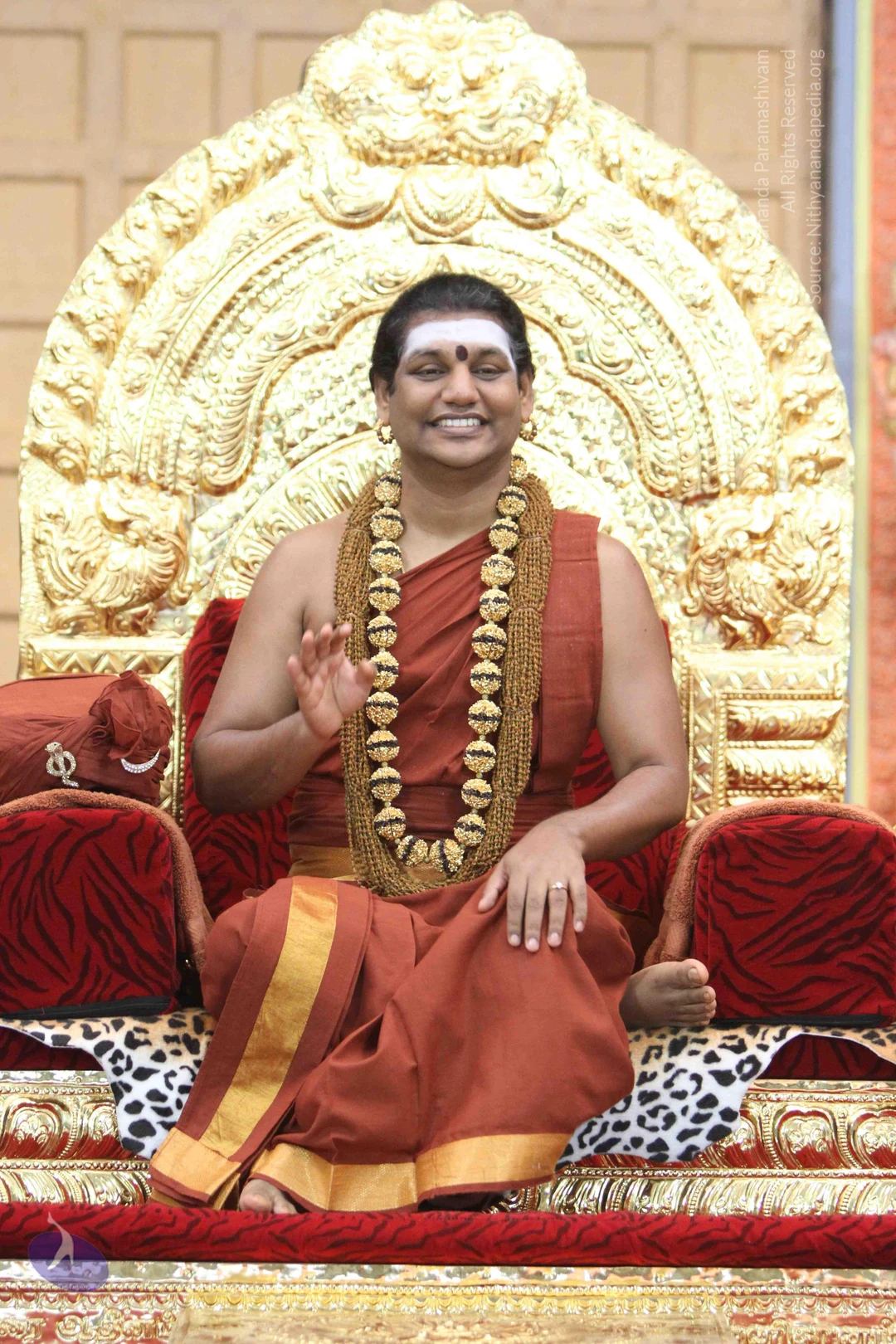
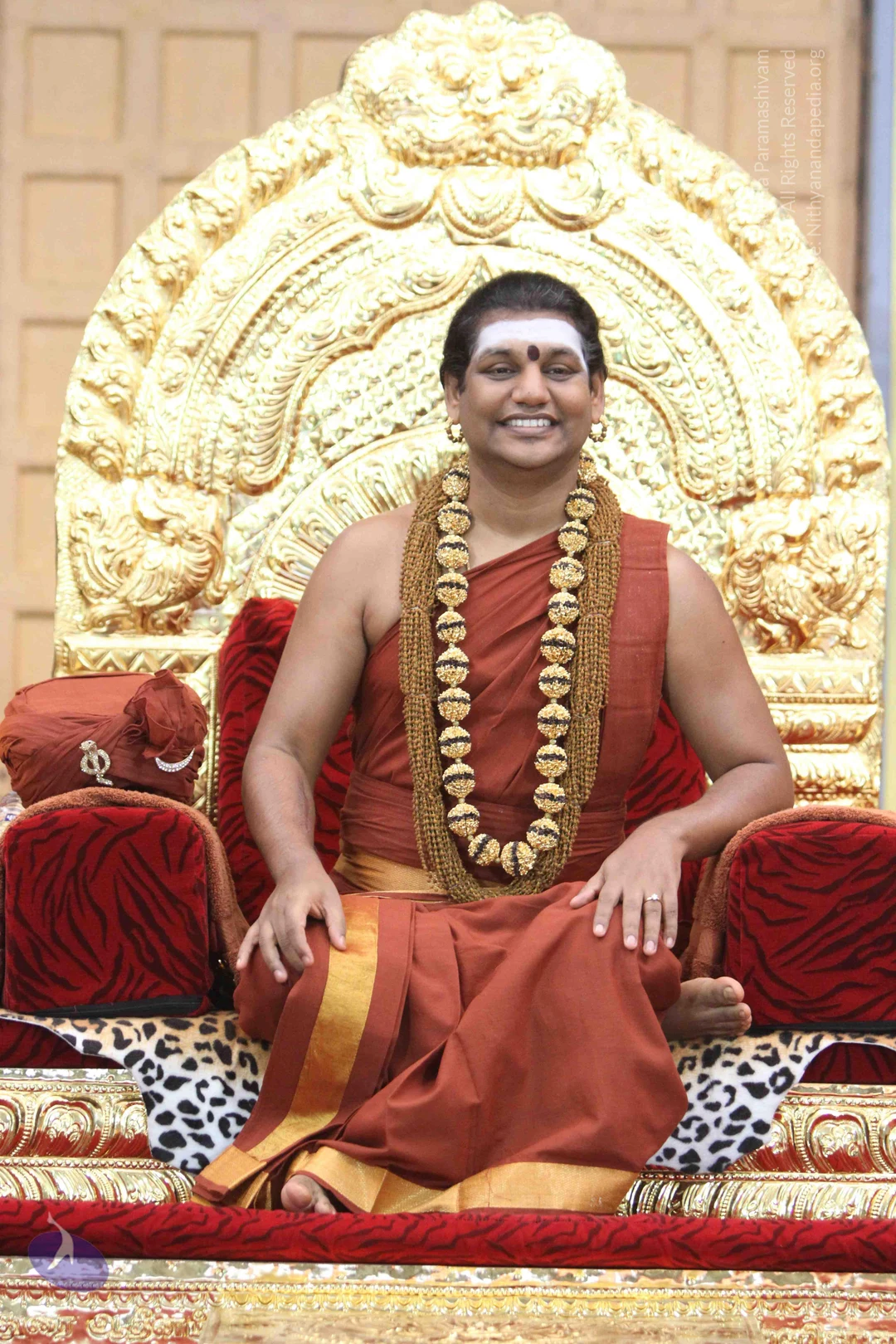
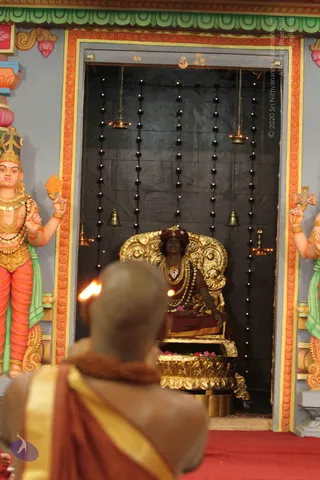
A photograph inside a temple shrine doorway framed by painted orange and green columns. In the centre, a seated figure in a gold-and-red ornate throne wears a maroon turban, layered gold necklaces and a red garment, with flower offerings at the base of the throne. Flanking the doorway are painted deity statues with four arms, gold crowns and jewellery. Hanging brass oil lamps and black bead strings decorate the dark backdrop. In the foreground, a bald man in an orange-brown garment with gold border is seen from behind, holding a lit flame during worship. The seated figure is a statue or depiction on the throne, while the foreground devotee is the only physical person present.A shrine doorway framed by painted guardian figures holding lamps and ritual objects, with strings of dark beads and hanging brass bells. Seated on a gilded throne inside is a figure in a maroon turban, layered gold and red garlands and maroon robes. In the foreground, a bald priest in a saffron robe with gold border faces the throne, holding a lit multi-flame brass lamp (aarti) with a red carpet underfoot. Two people are visible: the seated figure and the priest.Photograph inside a temple shrine with a dark wall hung with rudraksha strands and brass bells. A seated figure on an ornate gold throne wears a maroon turban, layered gold and bead necklaces, and a red-maroon garment, with flowers at the base of the throne. In the foreground a bald man in an orange-red robe with a gold border holds a lit oil lamp aarti toward the throne. Colourful painted deity statues with raised hands and crowns stand on either side of the doorway.Photograph inside an ornate temple-style hall. In the centre, a seated figure sits on a gilded throne with carved scrollwork, wearing a maroon turban, multiple gold and beaded necklaces, flower garlands and a maroon garment, with flowers placed at the base of the throne. Behind him hang black beaded strings and small brass hanging bells and oil lamps against a dark slate wall. Painted colourful guardian figures with raised arms holding a flame and a staff flank the doorway. In the foreground, a shaven-headed person in an orange-brown robe with a gold border is seen from behind, facing the throne, with a small lit flame at the lower edge.Temple-style aarti scene before an ornate golden throne set in a dark-curtained shrine doorway flanked by painted guardian statues with gold ornaments. A shaved-headed priest bare-chested with a gold-bordered cloth in the foreground holds a large multi-tier lamp with many lit wicks, while an attendant in orange robes stands at the throne's base. Seated on the golden throne is a figure in a red-maroon turban, layered beaded garlands and ornate necklaces; whether this is a person cannot be established from appearance, so the figure is described by role only. Hanging brass bells and rudraksha-style bead strands decorate the doorway.A smiling man stands on a stage before a golden ornate throne with carved floral scrollwork and red velvet cushions, a wooden paneled door behind. He wears a rust-red sleeveless robe with gold-bordered cloth wrapped at the waist, a white vertical forehead mark with a red dot, gold earrings, and a long multi-strand necklace of gold beads and rudraksha-like seeds. He raises one hand in a gesture of address while the other hand opens palm-up. A gold-tasselled red cloth and a small ornament sit on the armrest at left. Presentation cues appear consistent with a probable Swamiji (probable) figure: long swept-back hair, rudraksha mala and ceremonial gold necklace, and a white forehead mark. The photo is watermarked with a copyright notice, but no other printed names are legible.
02-IA-SESSION
3 photosSource gallery
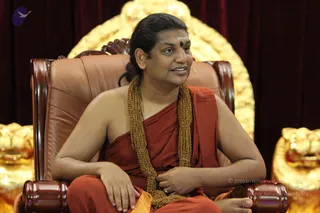
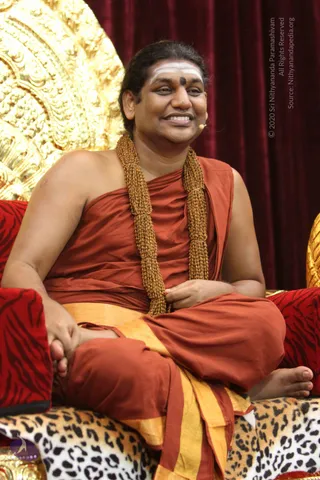
A man sits in a brown leather throne chair with carved wooden arms, in front of a large golden halo-shaped backdrop, with golden lion-head carvings visible at the edges. He wears a rust-red unstitched robe over his shoulder, a long braided rudraksha-style necklace of golden-brown beads, and a red bindi on his forehead. He has a small clip microphone on his cheek, one hand resting on his lap and the other on the chair arm, speaking while looking to his side. a person: the appearance cues of a swept-back long hairstyle, ornate golden-brown mala and red sannyasi robe match the page's claim, placed on the throne as the speaker. No other people are visible.A smiling man sits cross-legged on an ornate golden throne with a red-and-black tiger-striped cushion and a leopard-print cloth beneath him. He wears a rust-orange unstitched robe with a gold border, a long dark-beaded rudraksha-style mala of gold-brown beads around his neck, and a white horizontal tilak with a dark bindi on his forehead. A small clip-on microphone is attached near his face. Behind him hangs a deep red velvet curtain. The man's hair is swept back and he is barefoot.A smiling man with short swept-back dark hair sits cross-legged on a red tiger-striped cushioned throne with an ornate gold carved backrest. He wears an orange-red ochre dhoti and shawl with gold border, a long multi-strand brown rudraksha mala, a white vertical tilak with a red bindi on his forehead, and a small head microphone. His hands rest in his lap atop a leopard-print cloth. Gold-framed ceremonial setting.

03-DARSHAN

20 photosSource gallery
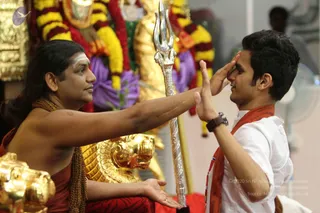
A man with bare upper body and a red-orange wrap, wearing white vertical tilak on his forehead, sits on a red-draped seat and extends his right arm to bless a devotee in a white shirt with an orange shawl, who presses his palms to his forehead in reverence. Behind them stand a large silver trident and a golden deity murti of a peacock-vehicle form adorned with yellow and red marigold garlands and a purple cloth. A golden vahana-like figure and a woman in a white sari with a bindi look on at the right, with a fan and a bright red light in the background. Several people are visible, including the seated figure, the devotee and a woman at the right.Photograph of a seated figure with long dark hair in a low bun, bare-chested under a red-orange wrap and a long beaded necklace, extending an arm to bless an elderly man in a white shirt who kneels with palms pressed together and head bowed. The seated figure holds a folded white paper. Behind them stand a gold deity murti, a gold lion-face ornament in the foreground, a silver staff, and garlands of yellow and purple flowers. Red-cushioned seating and a golden throne-like support are visible. The seated person is a person by appearance: long hair, orange-red wrap and beaded necklace, presiding over a blessing. Two people are visible, the blessed devotee and the seated figure, with a partly visible third at the right edge.Photo of a ritual blessing in front of a decorated deity display with golden lion-shaped vahana and garlands of yellow and red flowers. A bare-chested man with long swept-back hair, a white tilak on his forehead, a saffron-orange waist cloth and a gold-beaded rudraksha-style mala presses his palm to the forehead of a young man in a white kurta with an orange-red shawl and a wristwatch. The young man holds his palm up in reverence while a silver trident stands between them. Background includes gold metalwork and a fan.A photo of a seated bare-chested man with a long swept-back hair and white vibhuti horizontal mark on his forehead, wearing a rust-red cloth and a brown beaded mala, raising his right hand to touch the forehead of a young man in a white shirt with an orange-red shawl and a lanyard. The young man has his palm raised in front of him. Between them stands a silver trident (trishul). Behind them is a golden deity murti or ornate golden figure, a golden lion-faced piece, marigold and red garlands and a purple cloth. The setting is a temple-like hall with brass and gold decorations.Photograph of a man with long dark hair pulled back and white vibhuti marks on his forehead, bare-chested with an orange-red cloth and a beaded brown mala, reaching out his right hand to touch the forehead of a younger man in a white kurta with an orange-red scarf and a wristwatch. Behind them stand a silver trident and gold-and-silver ritual items, a golden lion-form figure, and garlands of yellow and red flowers with purple drapery. The man in the foreground appears to be a person, identified by his long swept-back hair, bare-chested orange cloth and beaded mala; the younger man receives the blessing.A photograph of a seated man with long dark hair, bare-shouldered in a rust-red cloth, a rudraksha-style beaded necklace and white sacred ash on his forehead, extending his arm to touch the forehead of a young man in a white shirt with an orange-red shawl and a wristwatch. The young man's palms are pressed together in respectful greeting. Behind them stand a silver trident, golden floral garlands in yellow, red and purple, and a gilded lion-faced ornament on a golden stand. The setting appears to be a ritual or blessing moment.