Skip to content
Saturday

26 October 2013

Completion is Shiva!

Dated photos
248
Source pages
1
Media
2
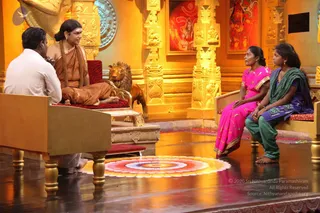
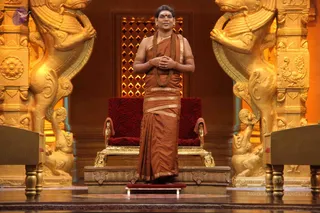
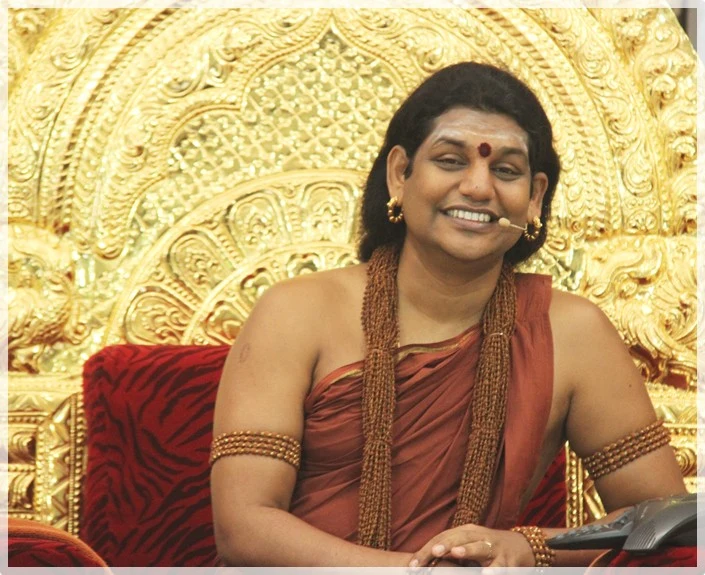
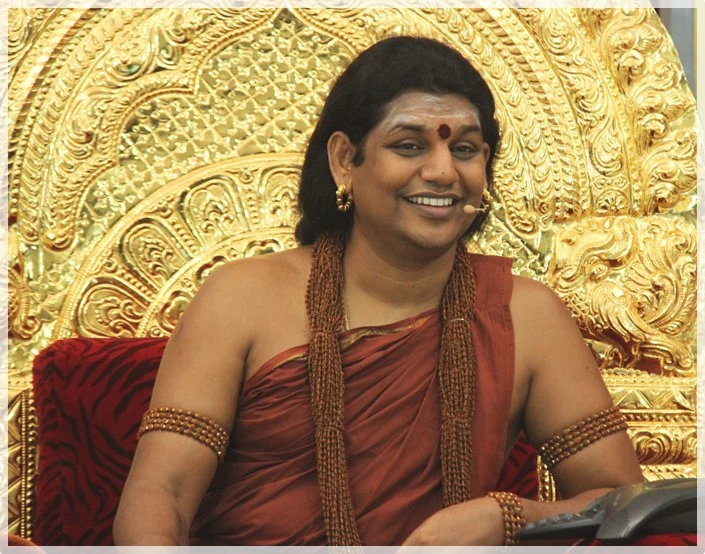
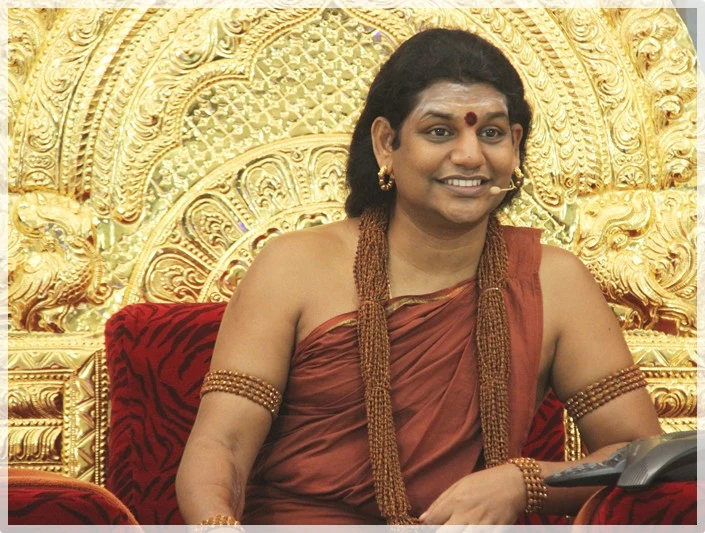
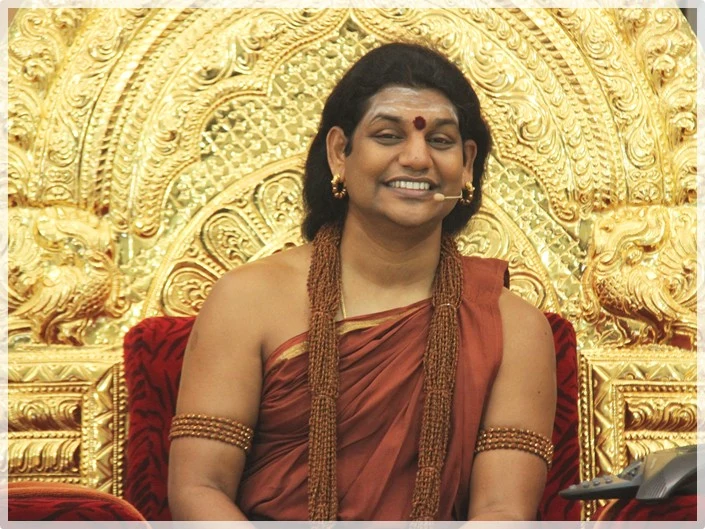
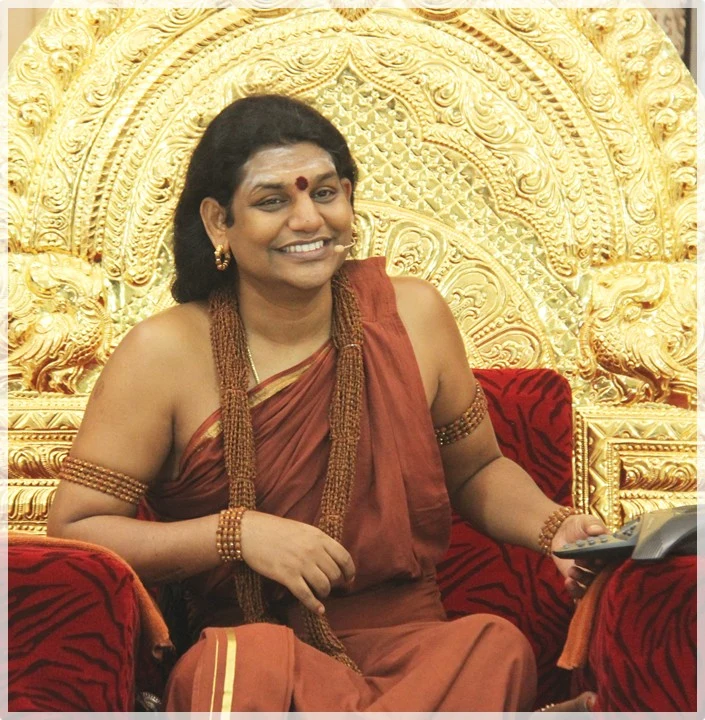
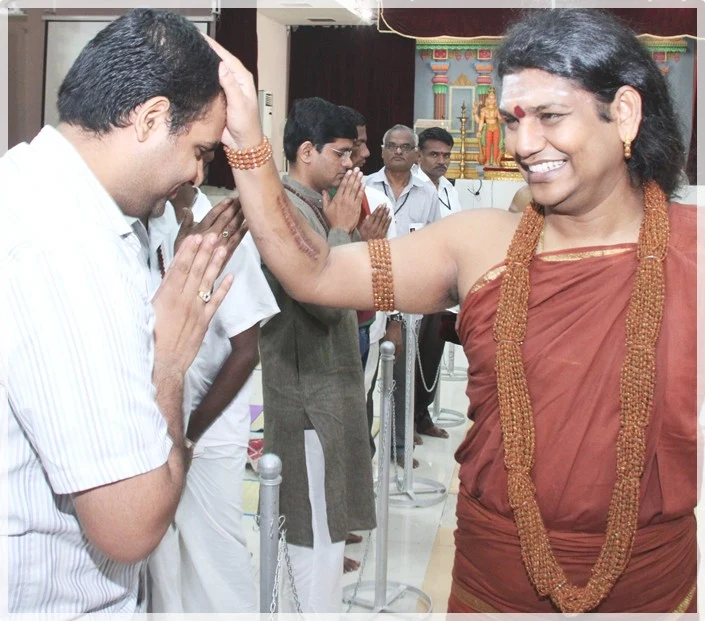
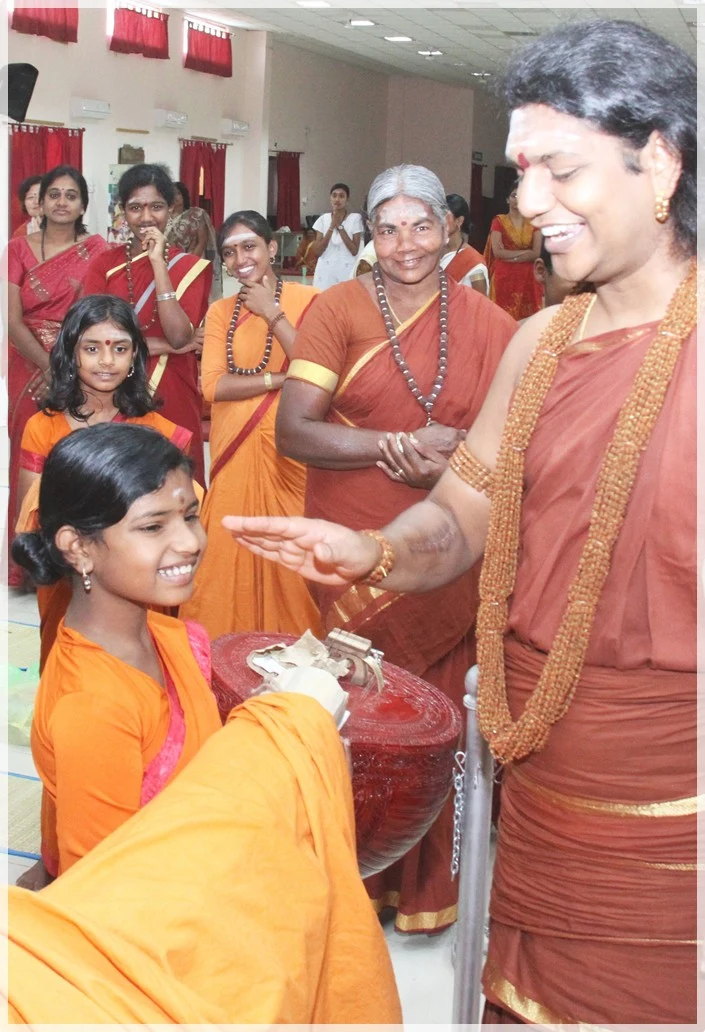
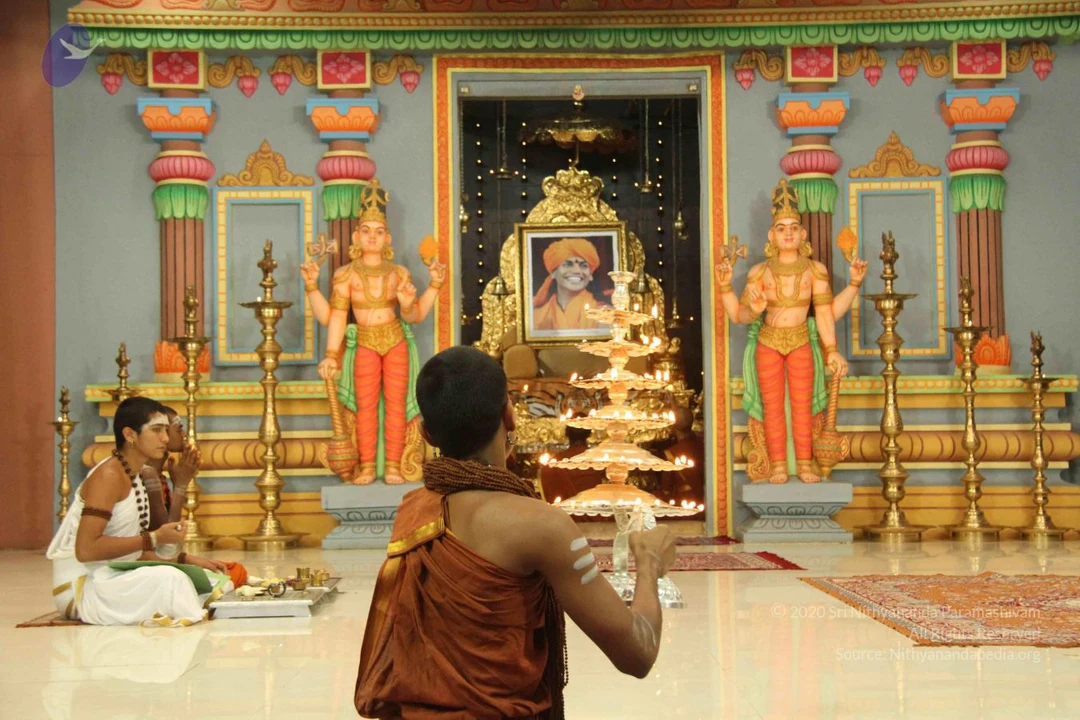
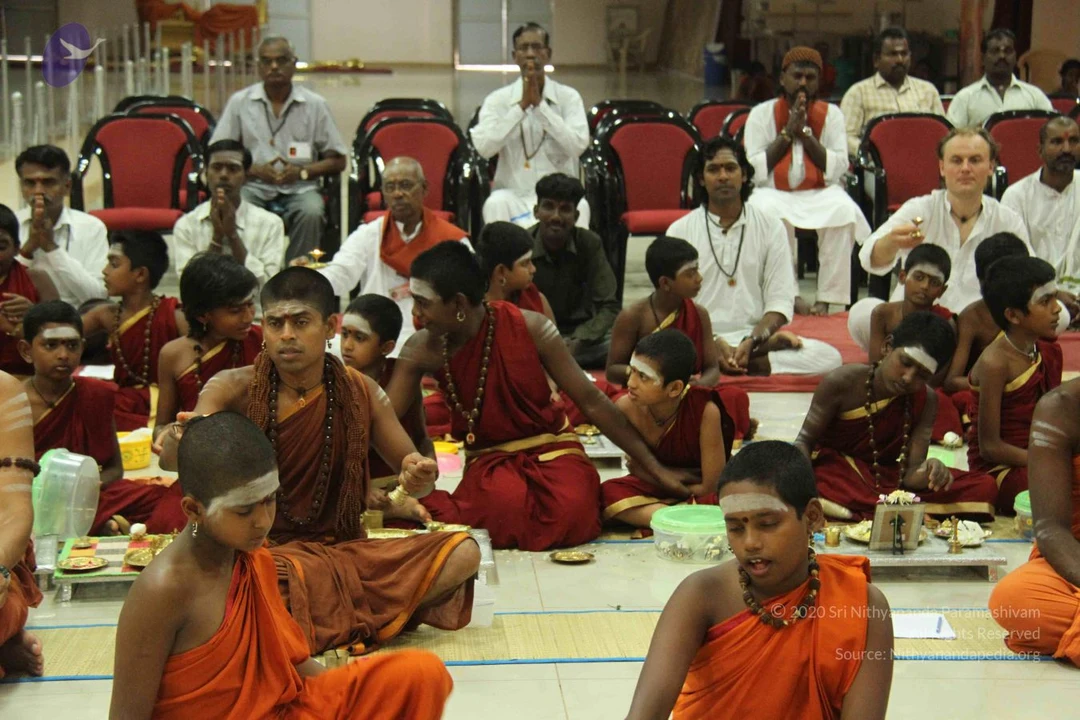
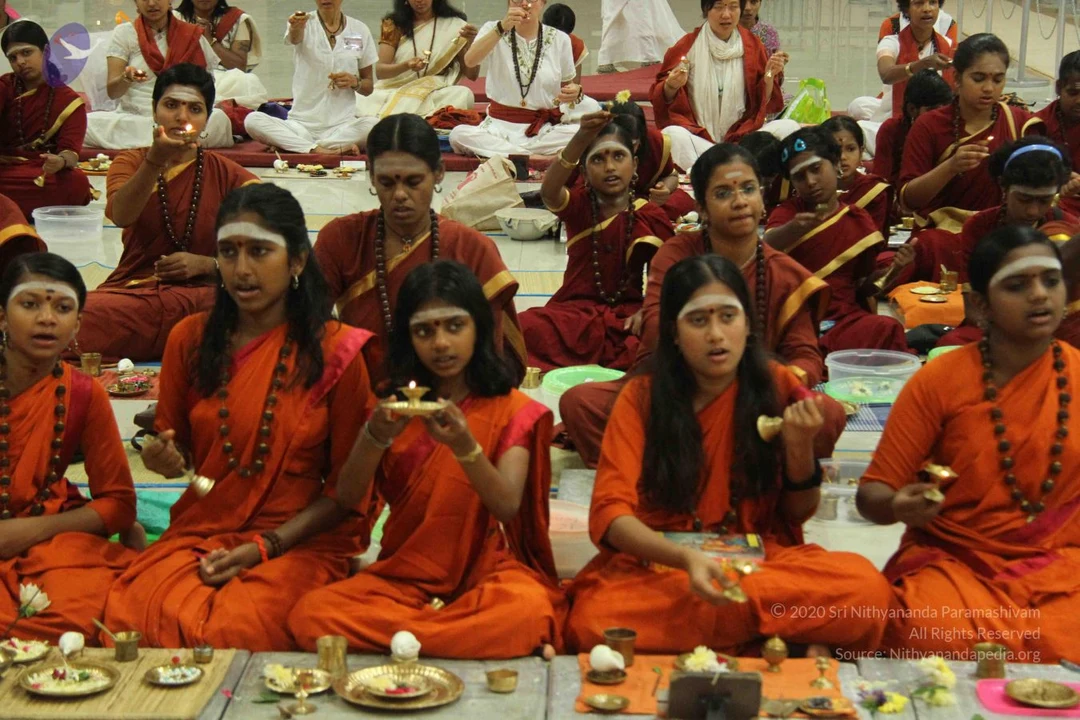
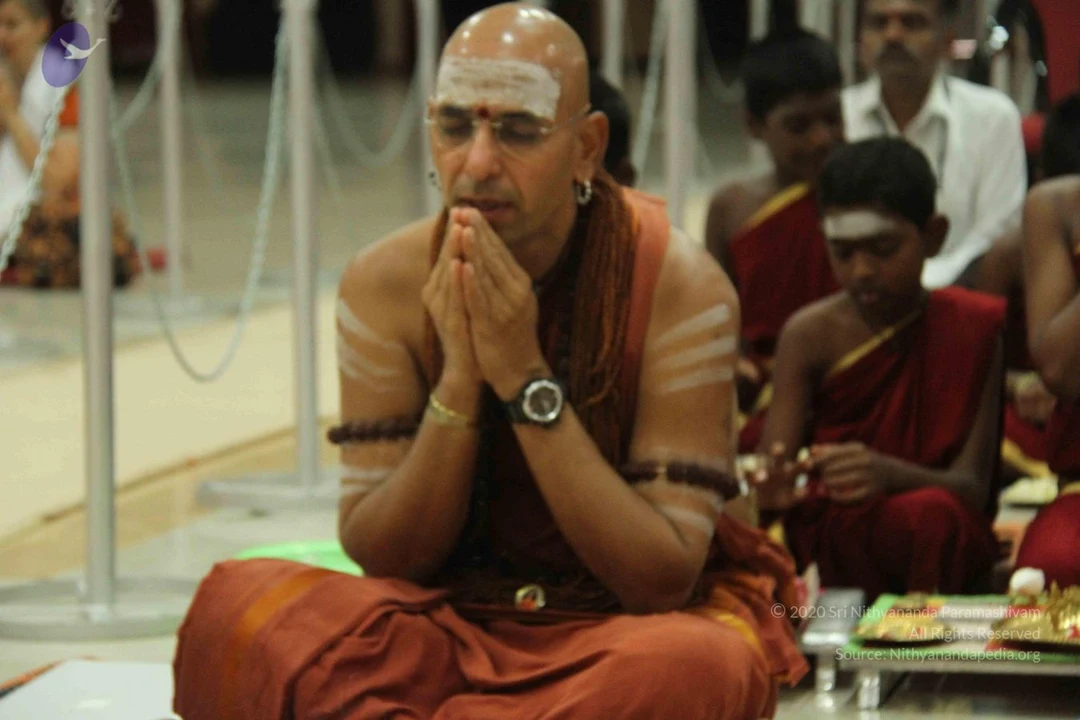
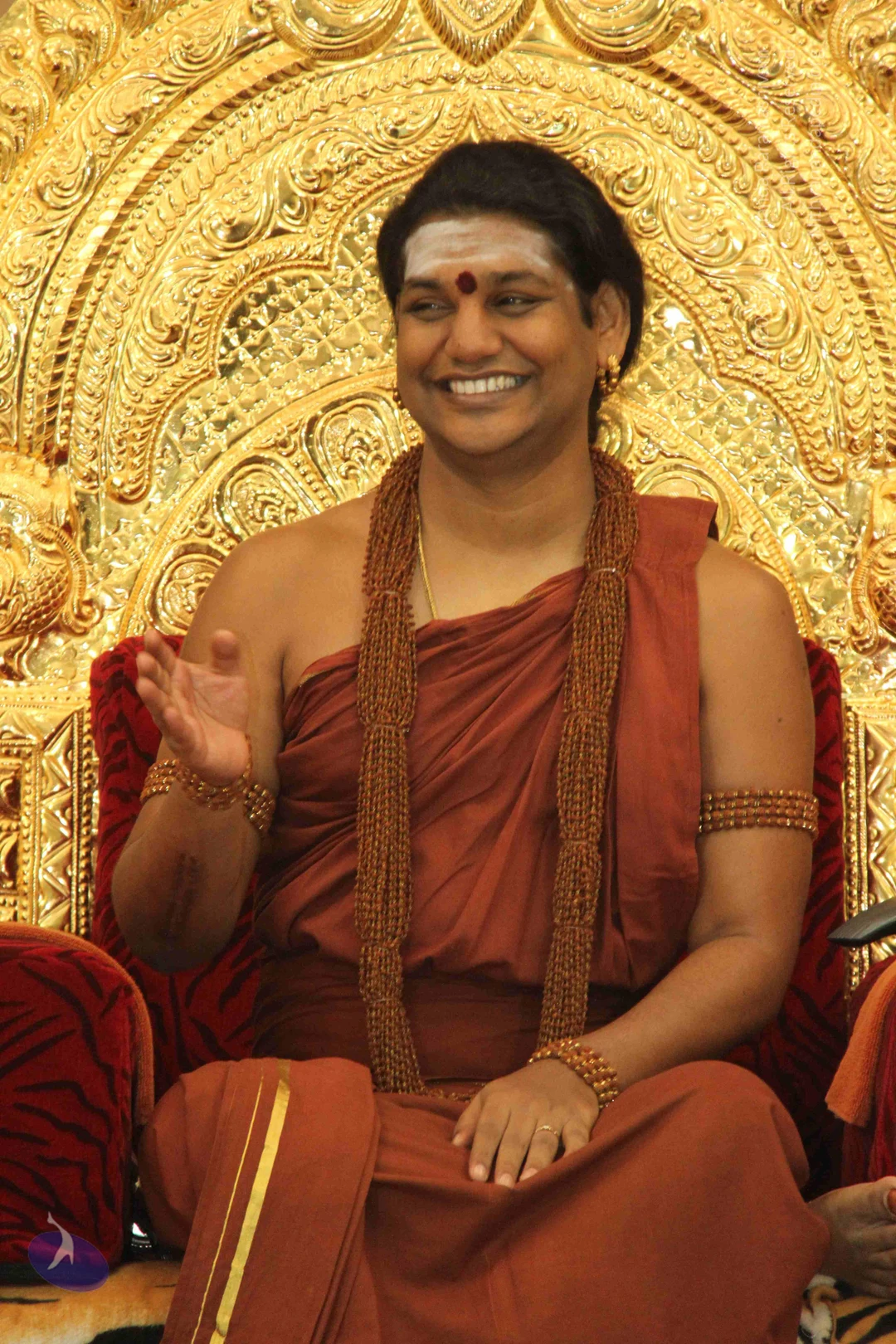
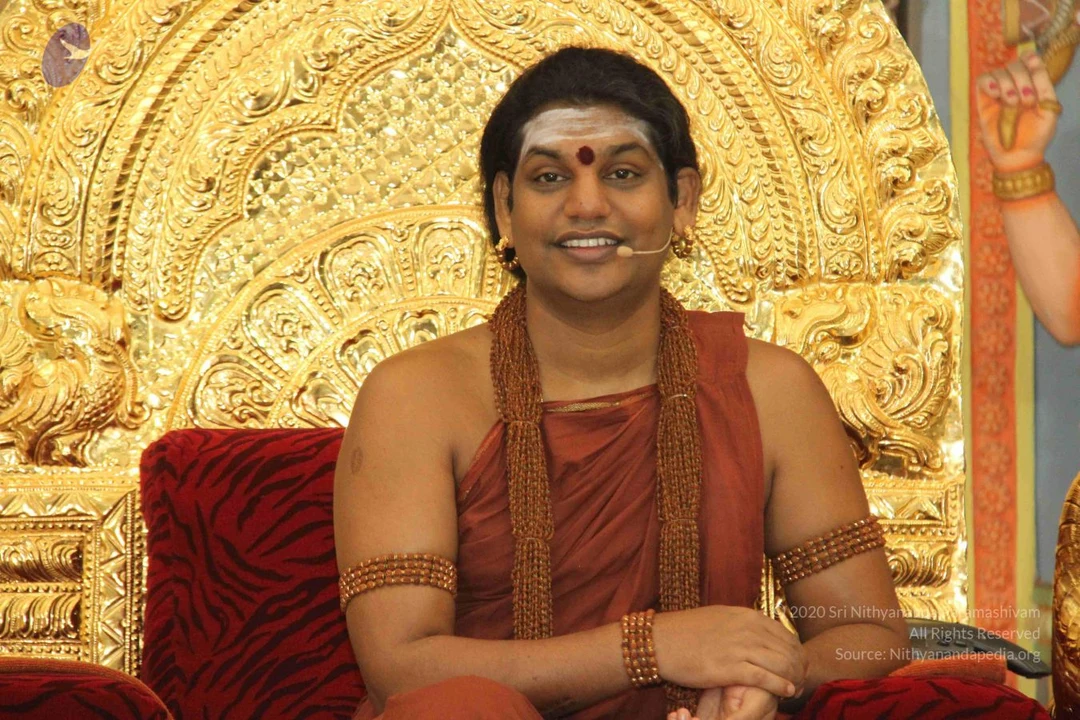
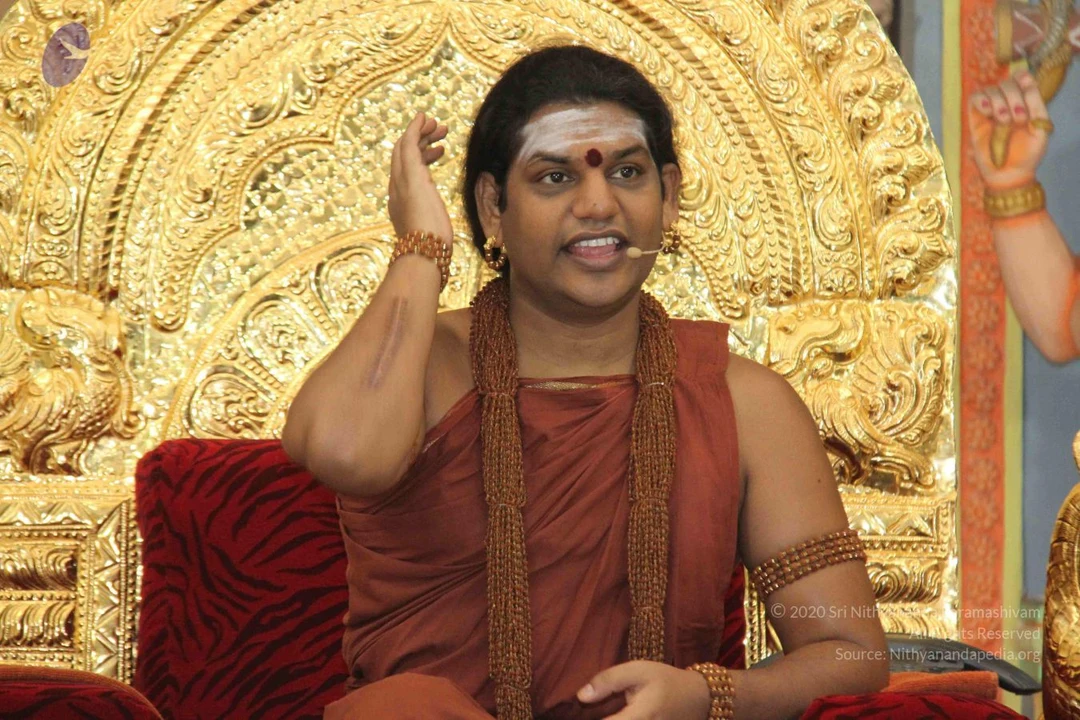
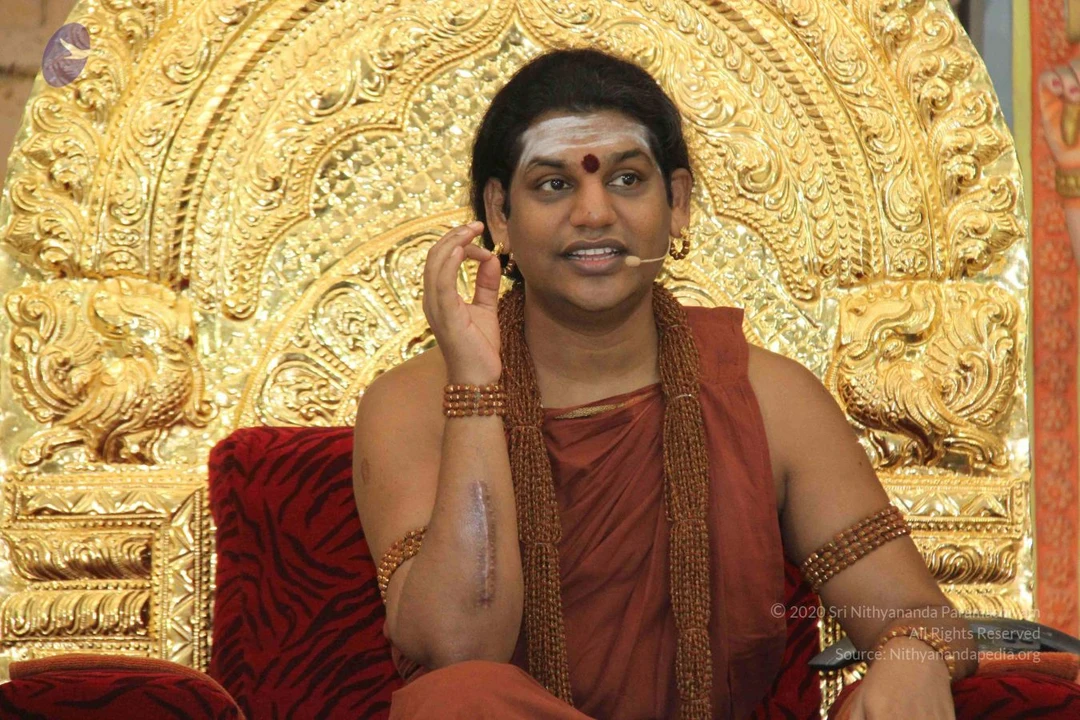
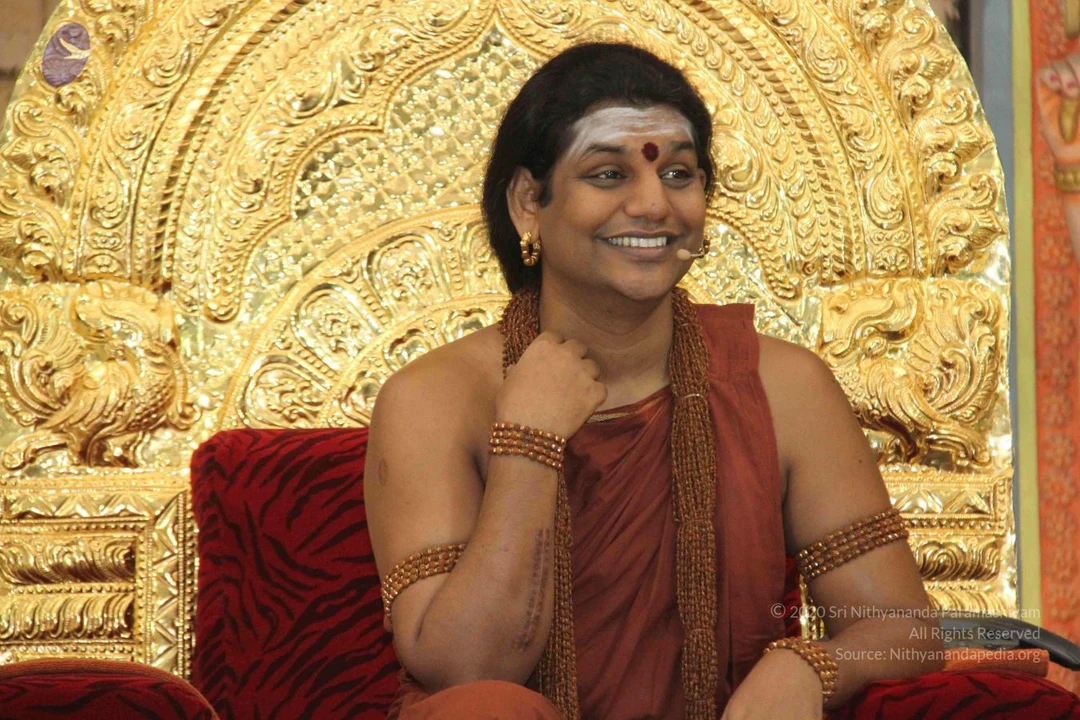
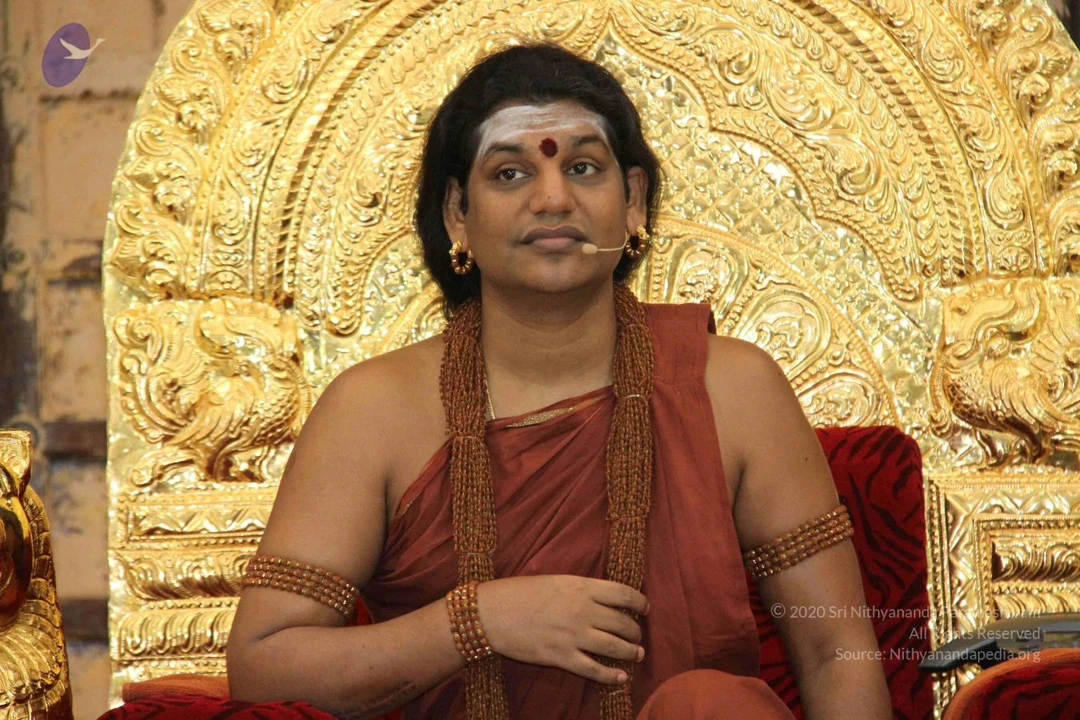
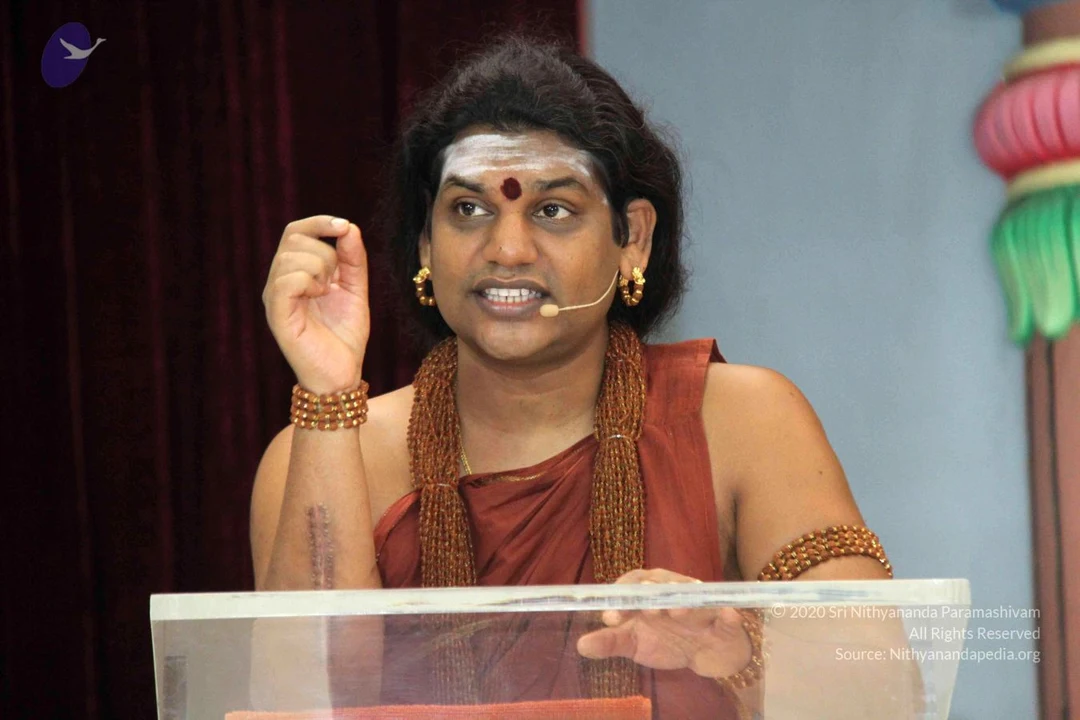
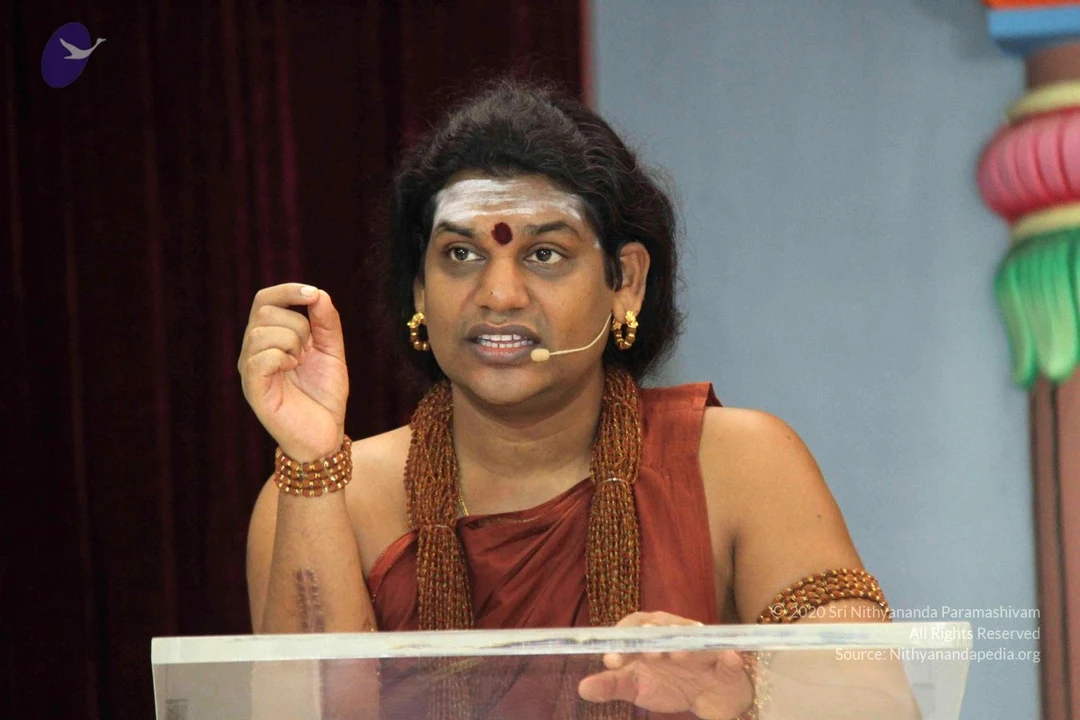
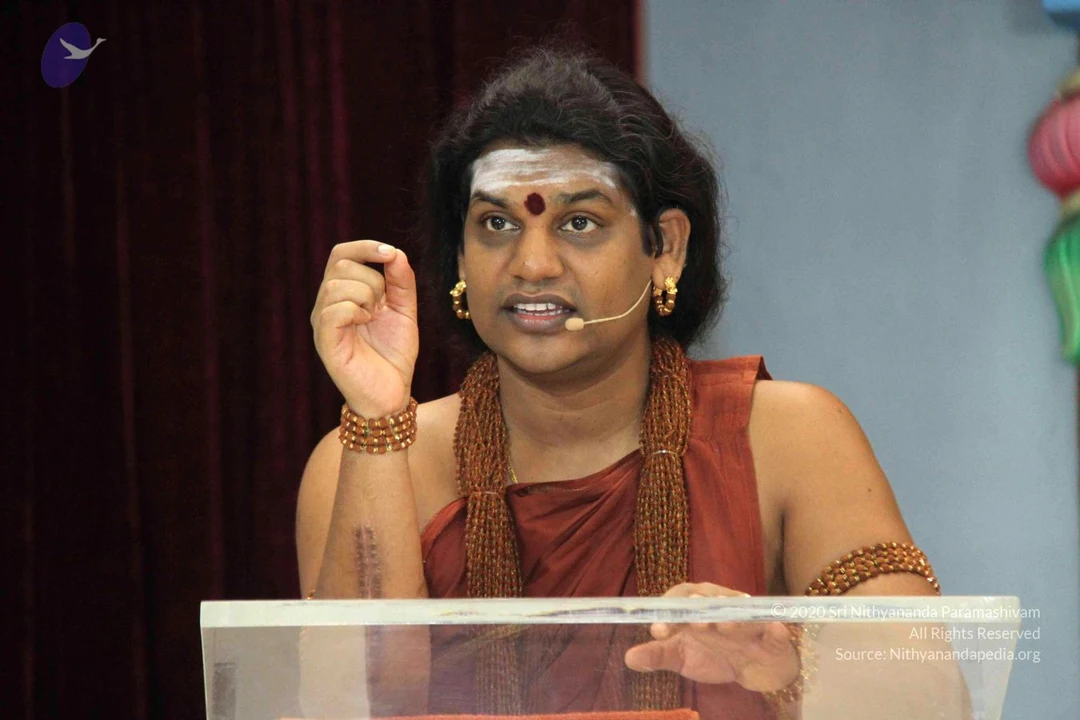
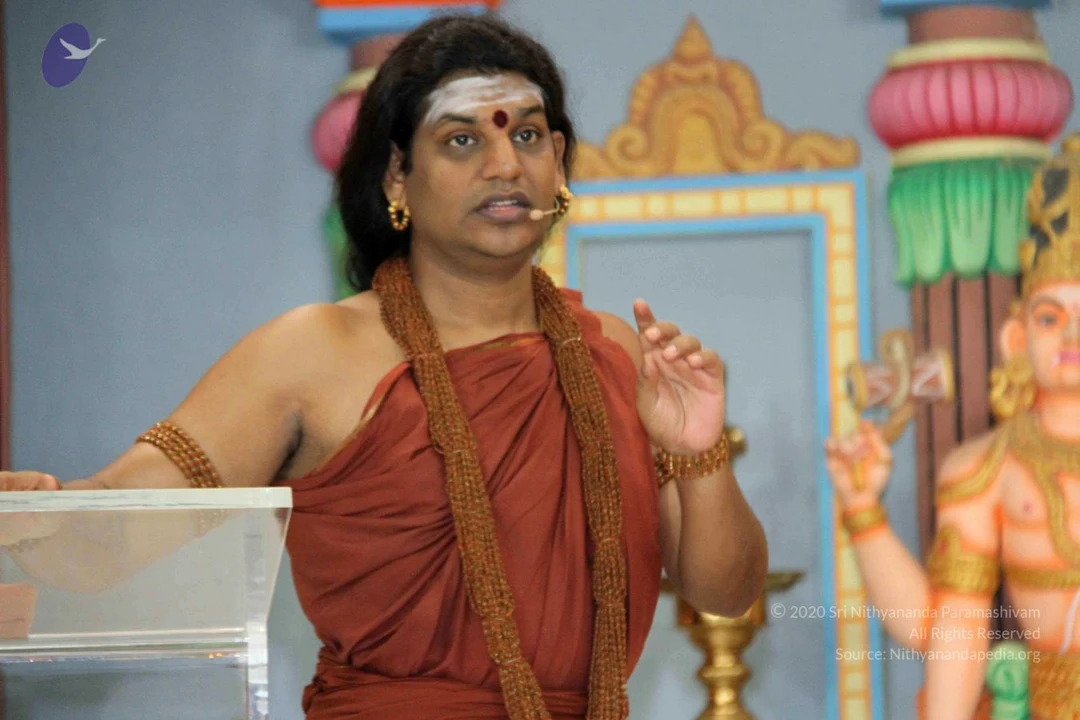
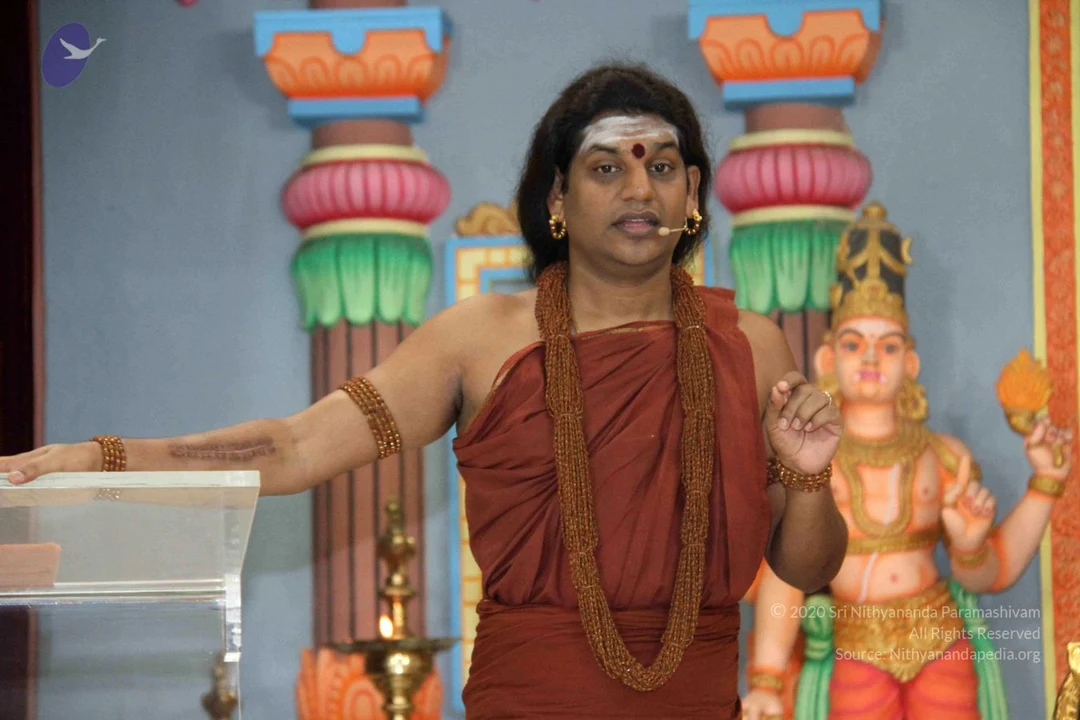
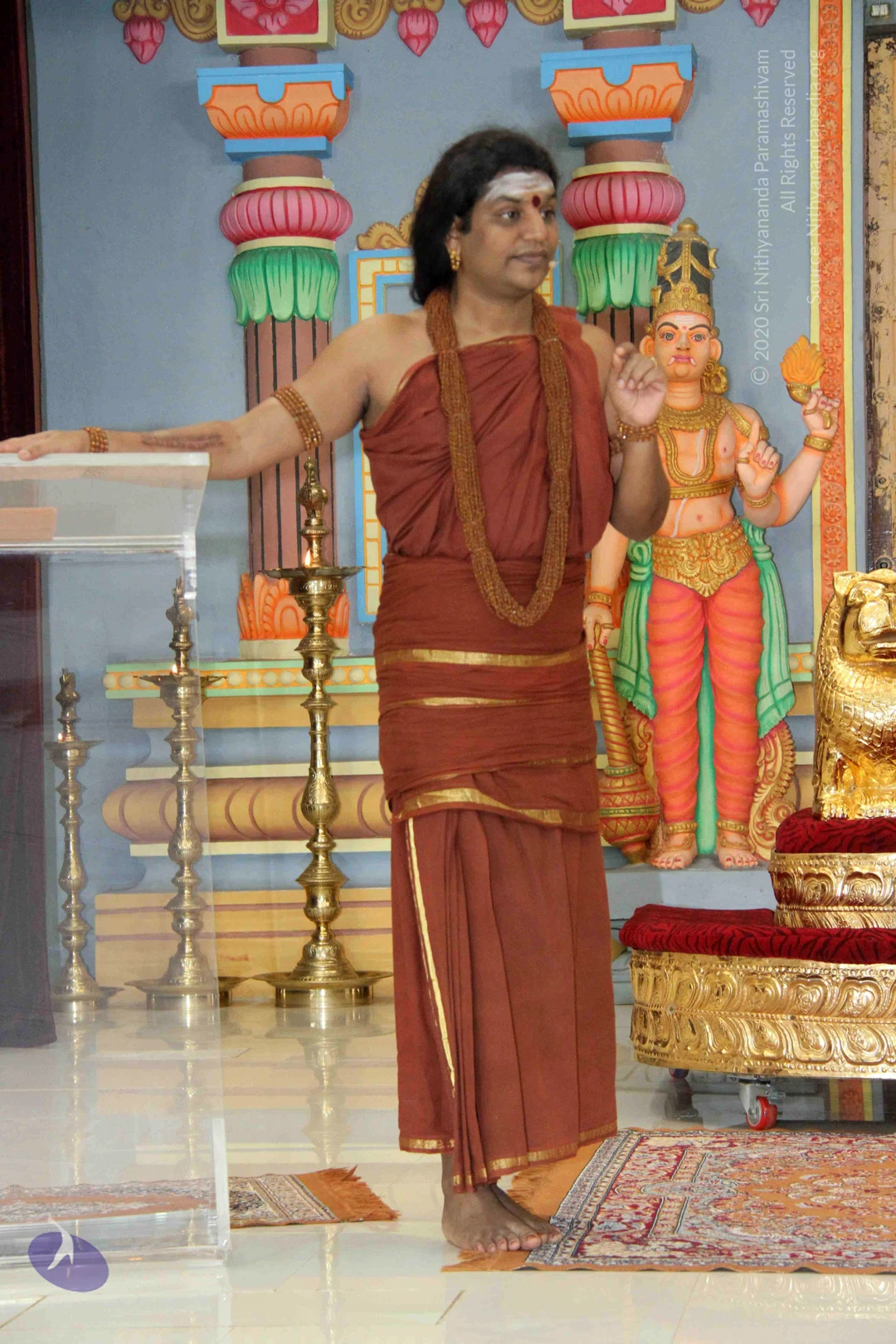
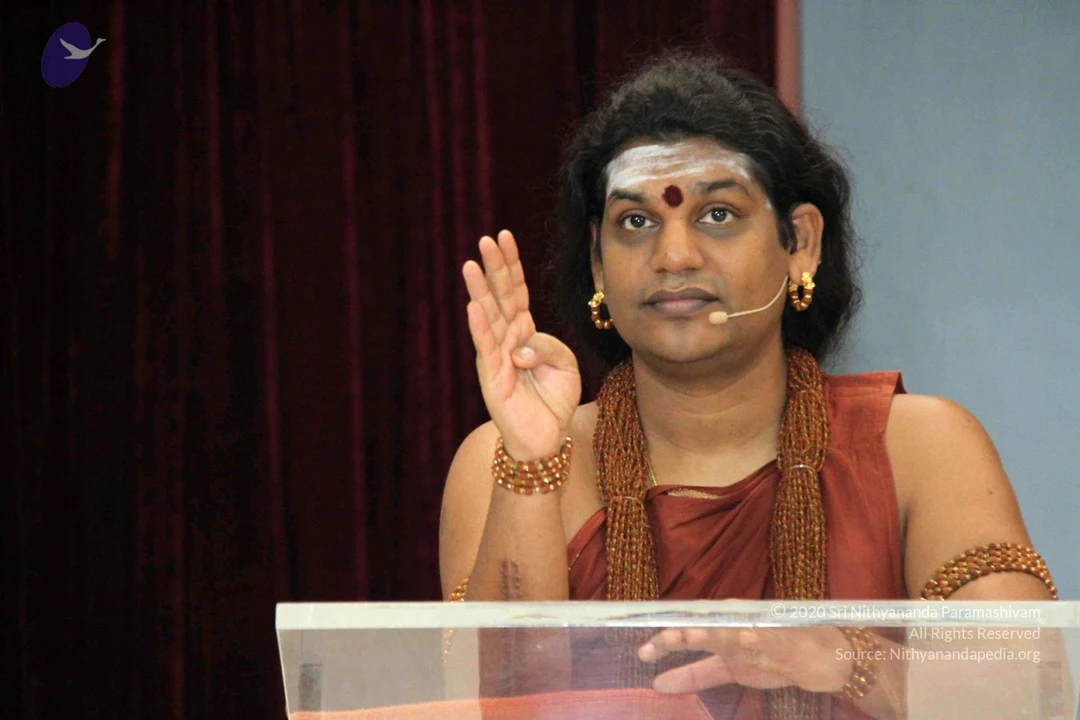
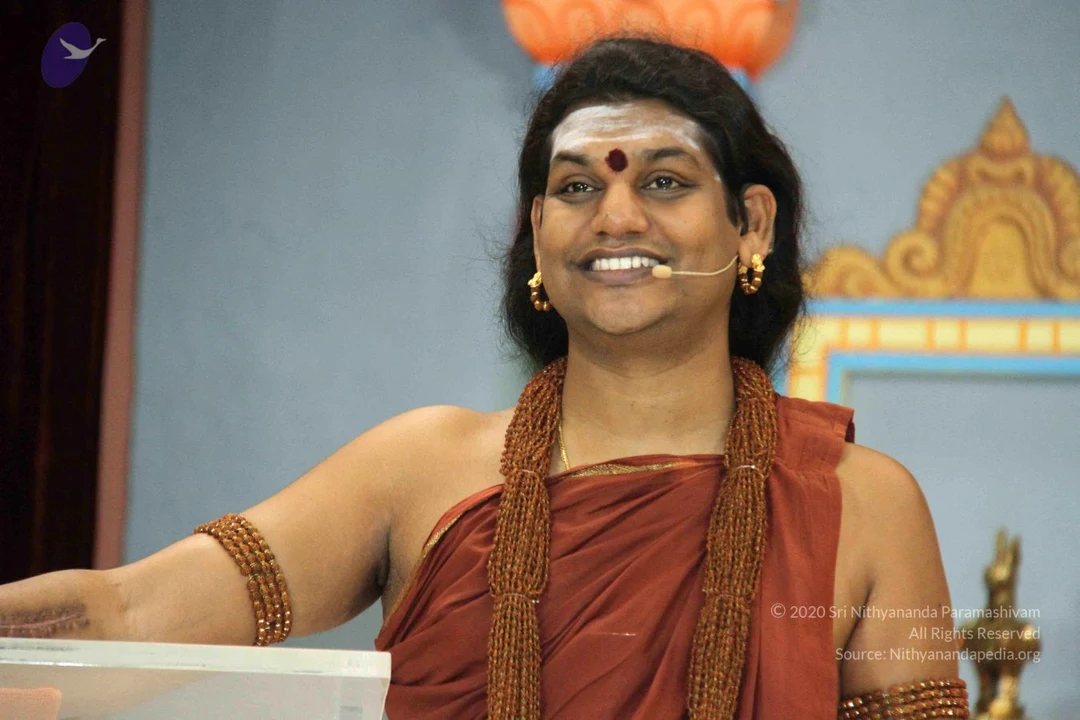
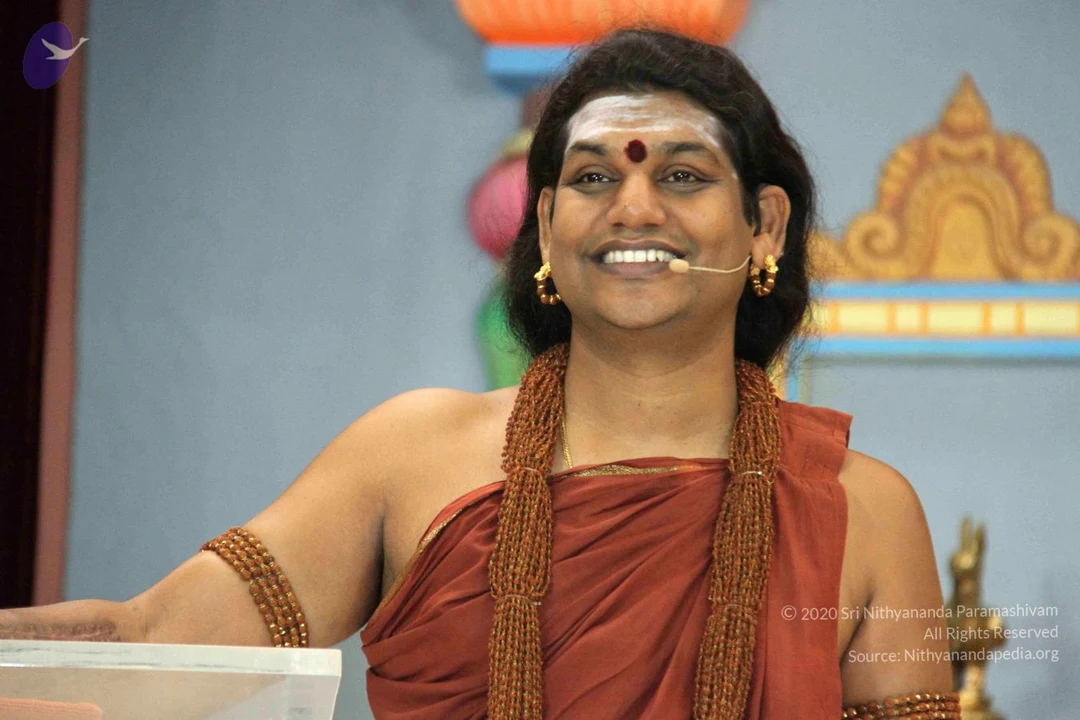
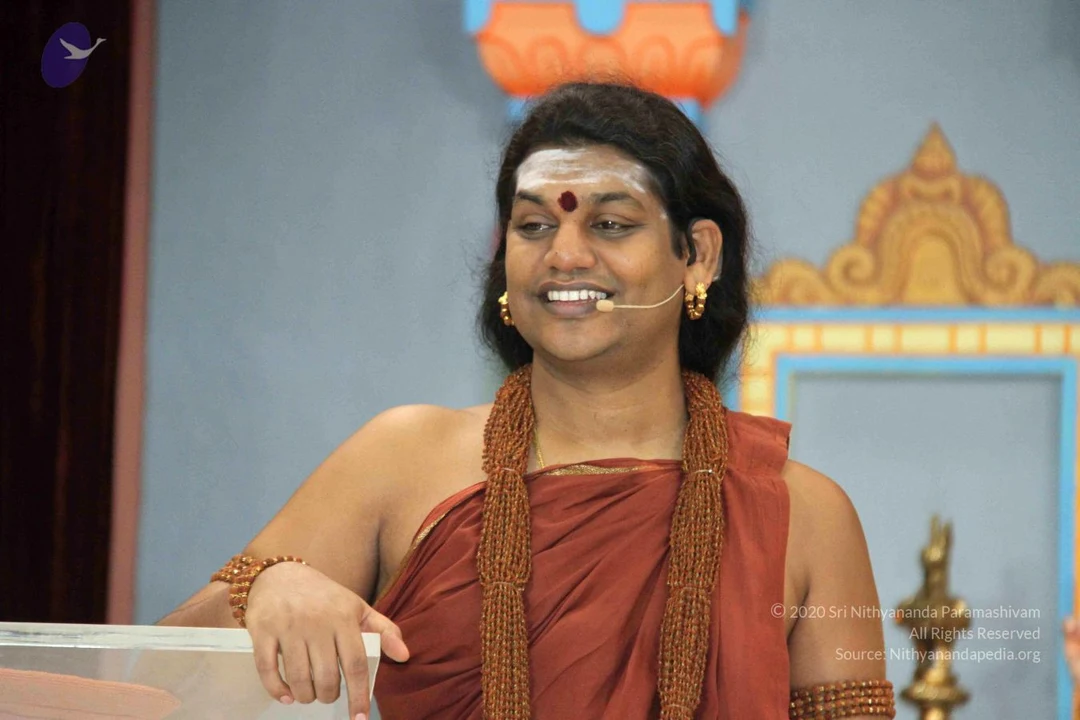
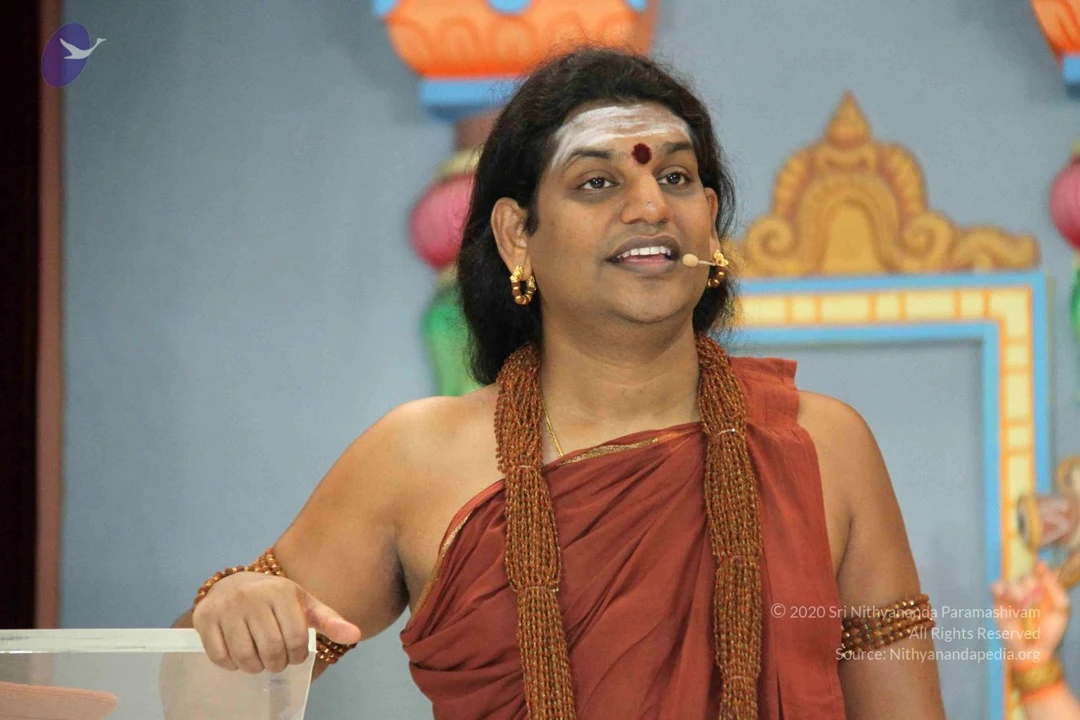
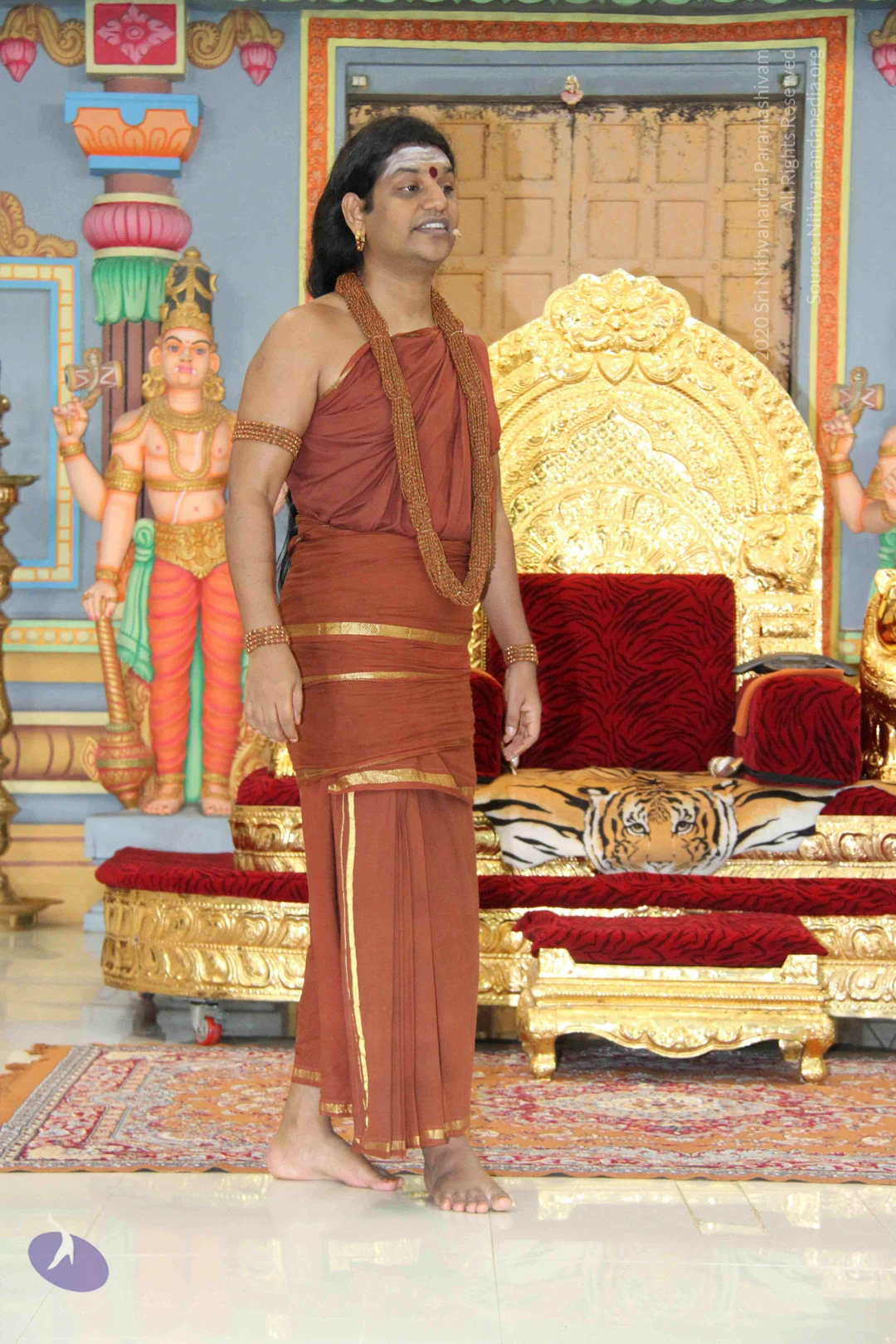
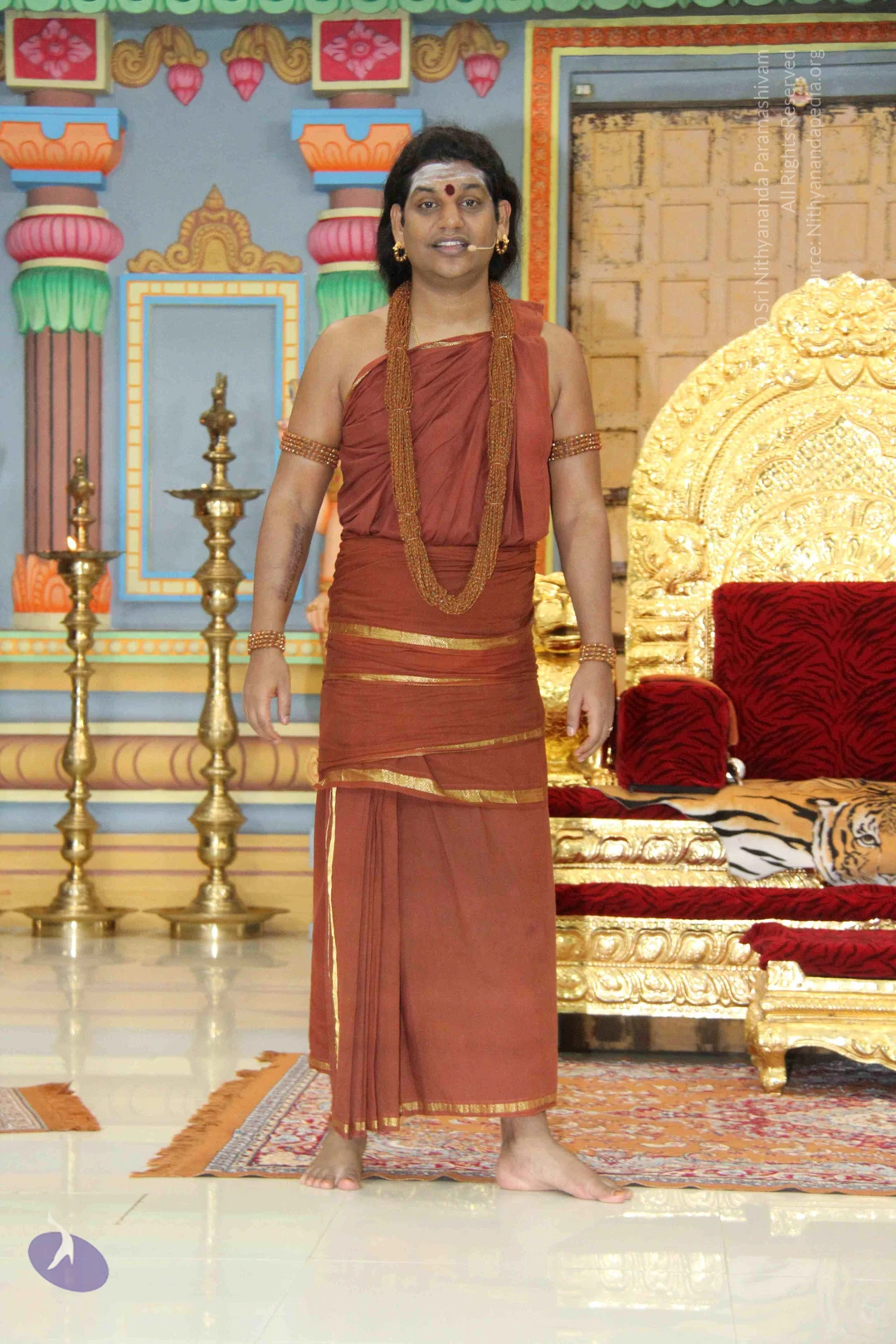
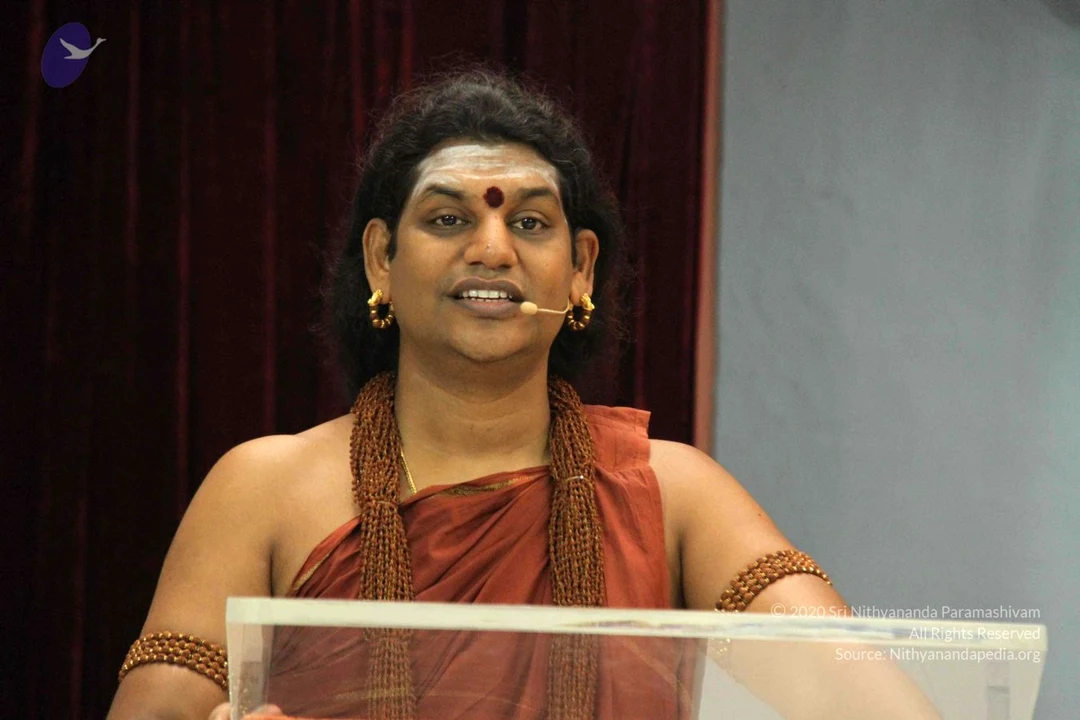
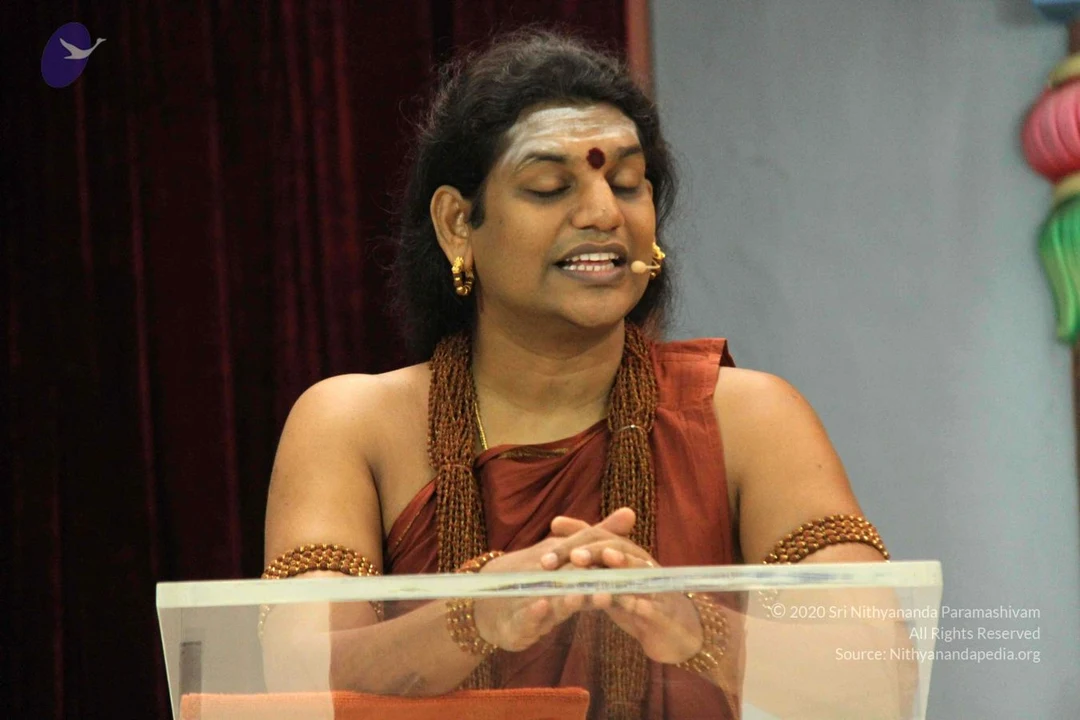
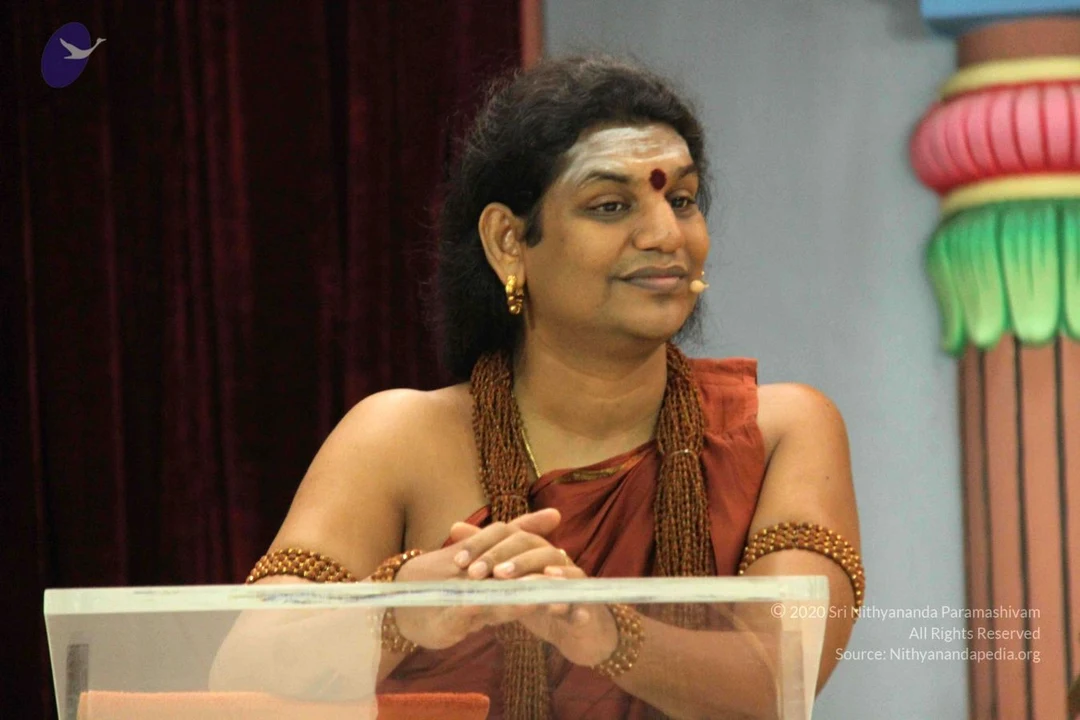
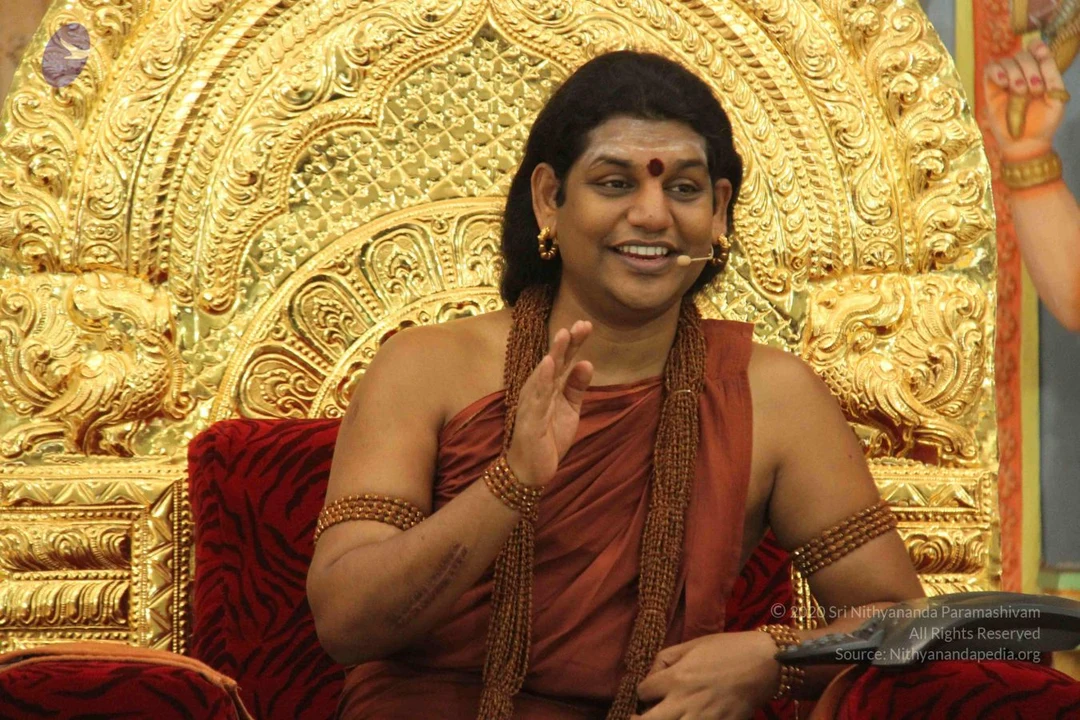
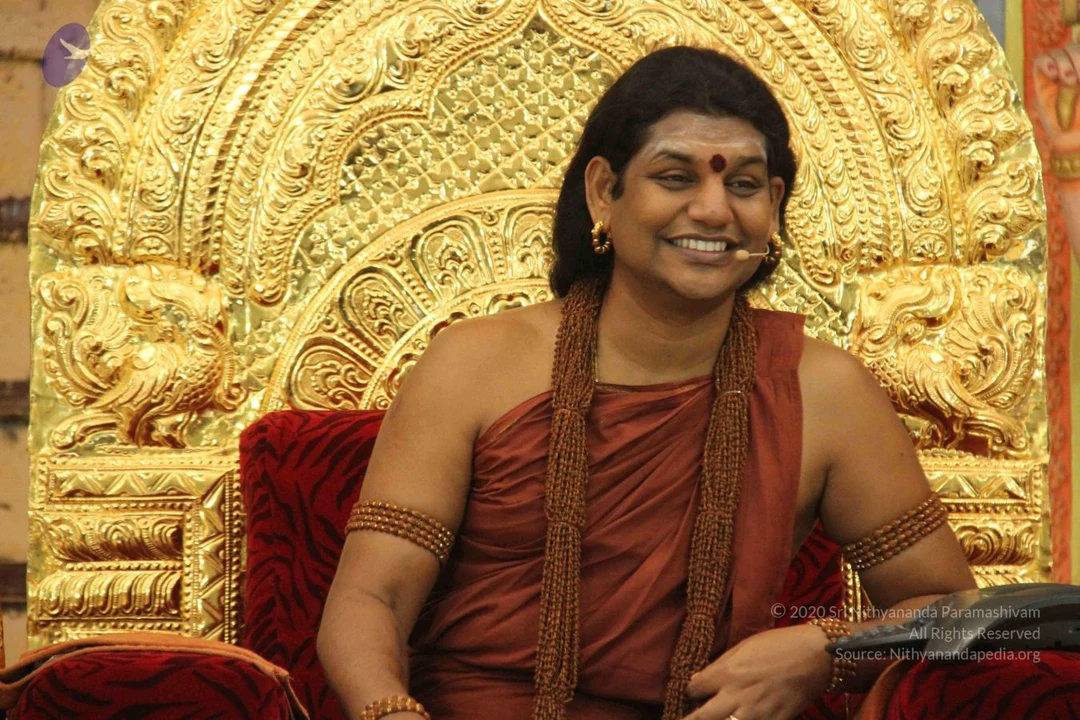
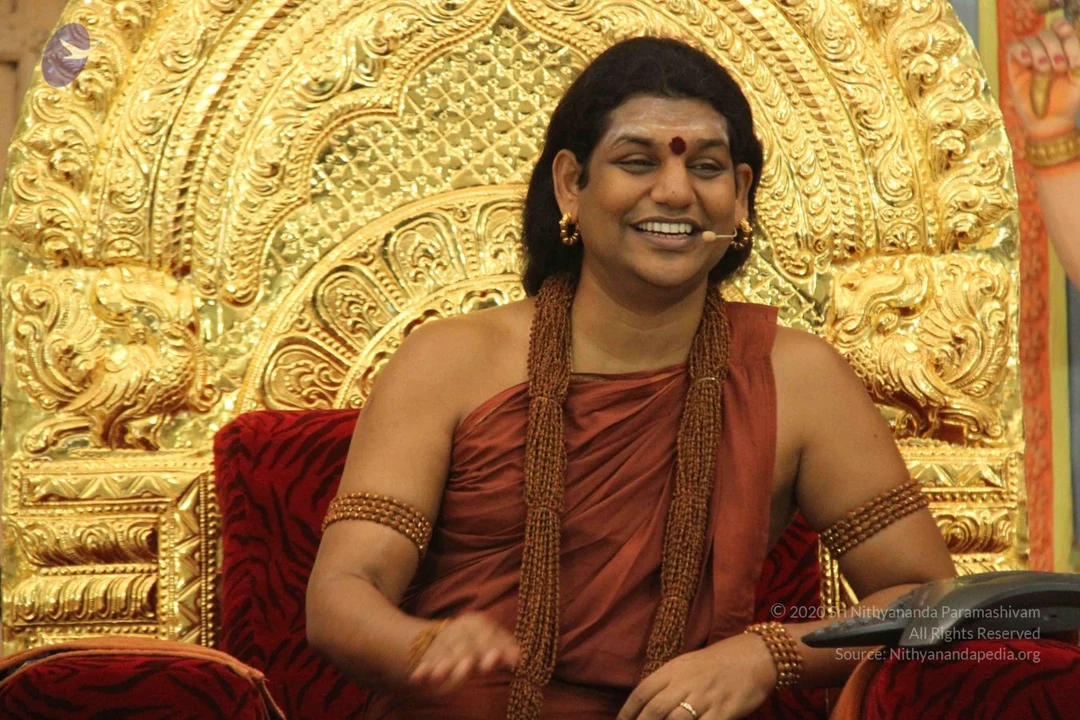
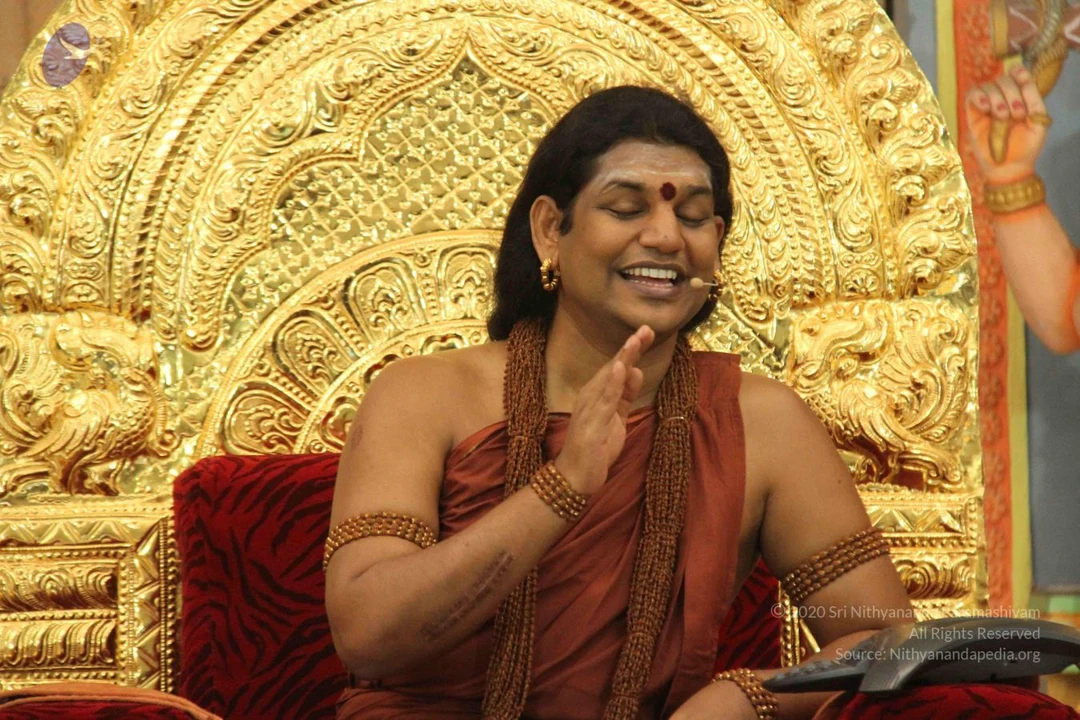
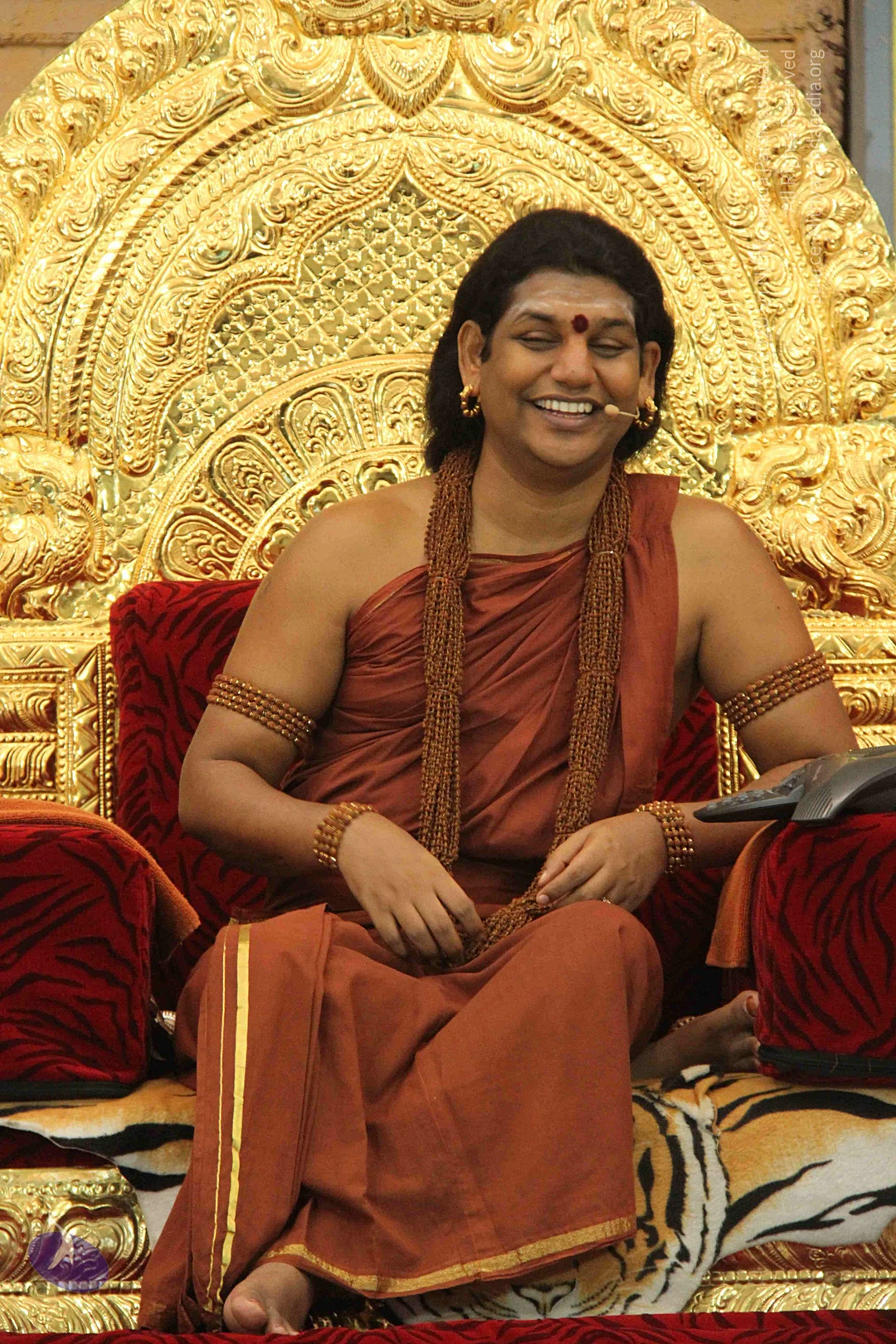
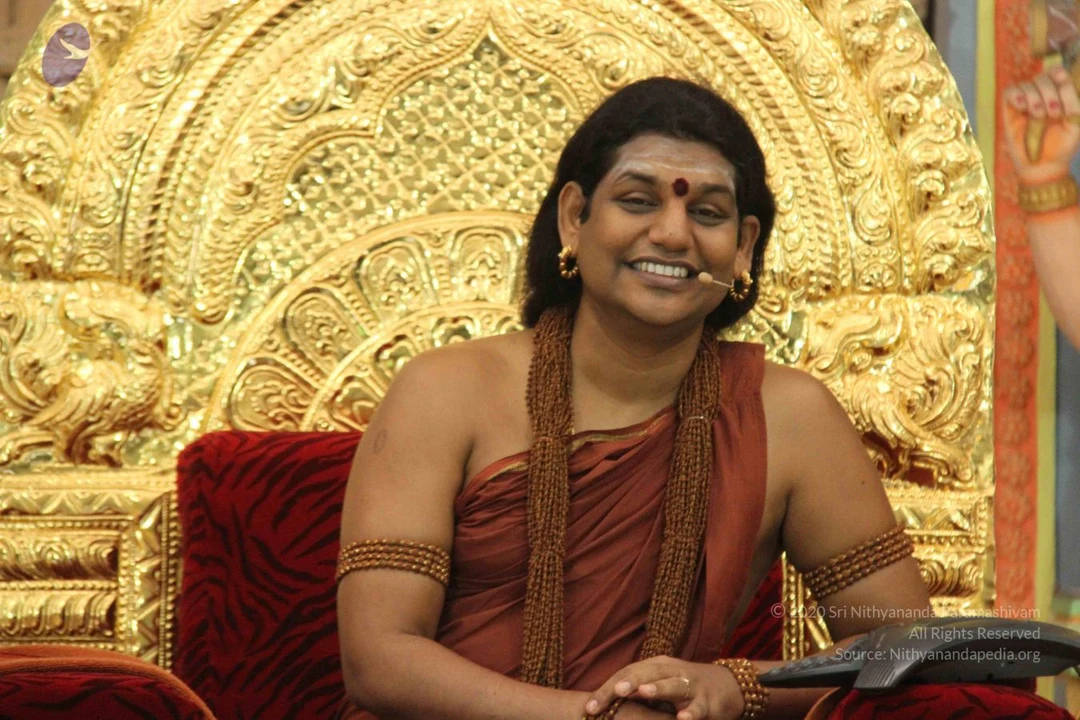
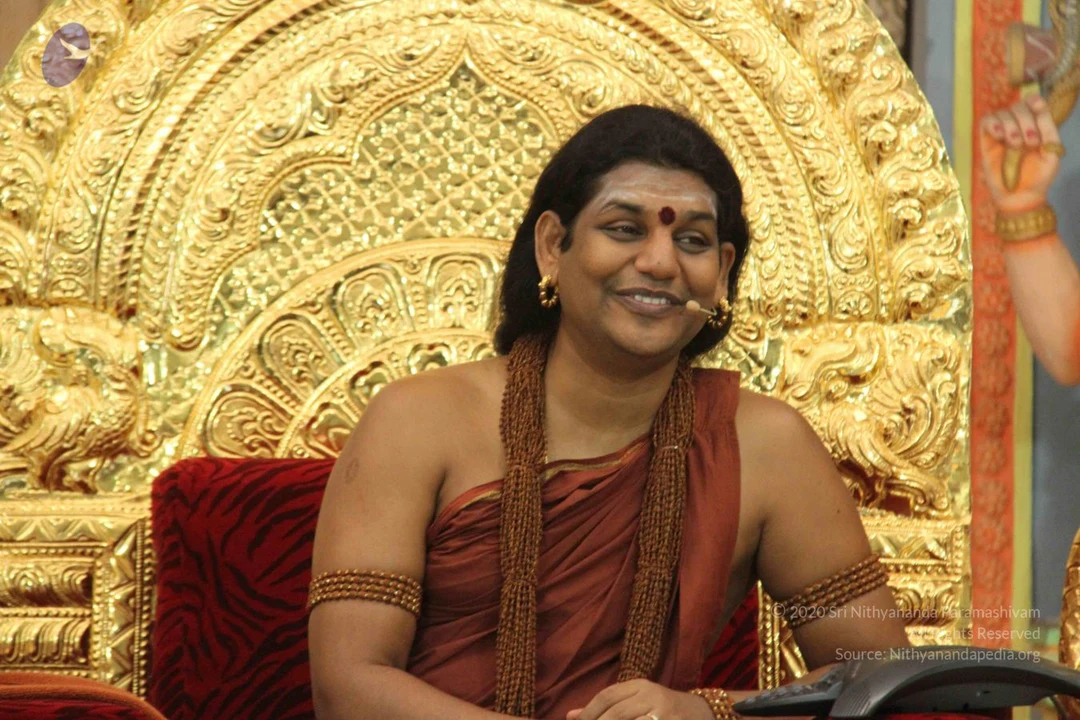
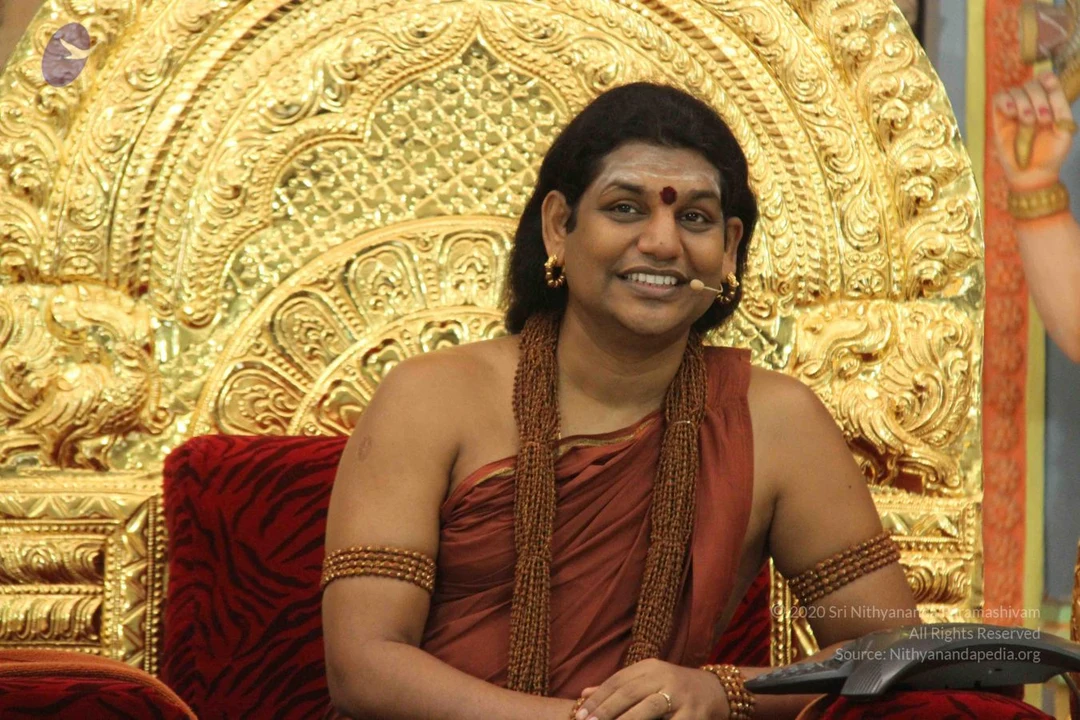
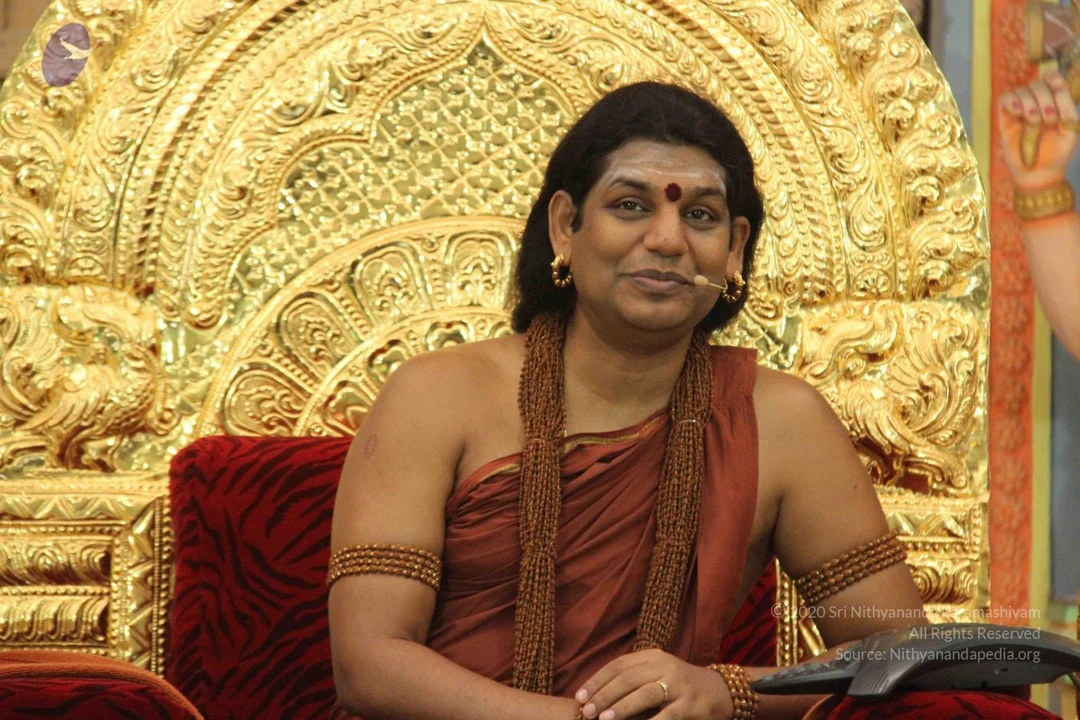
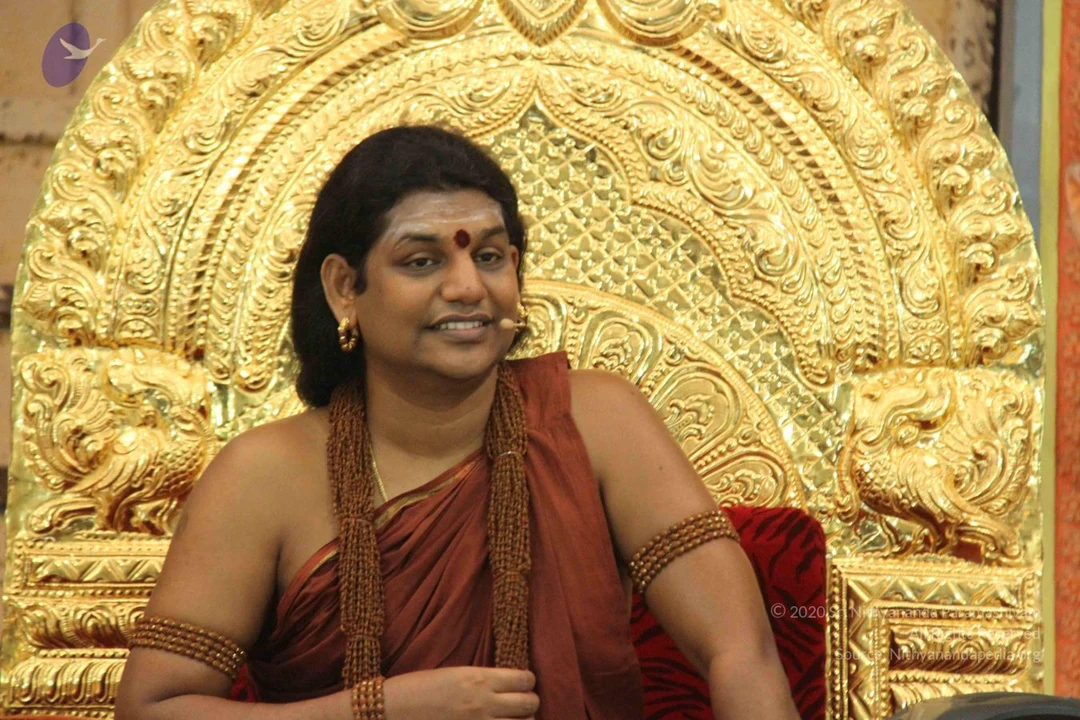
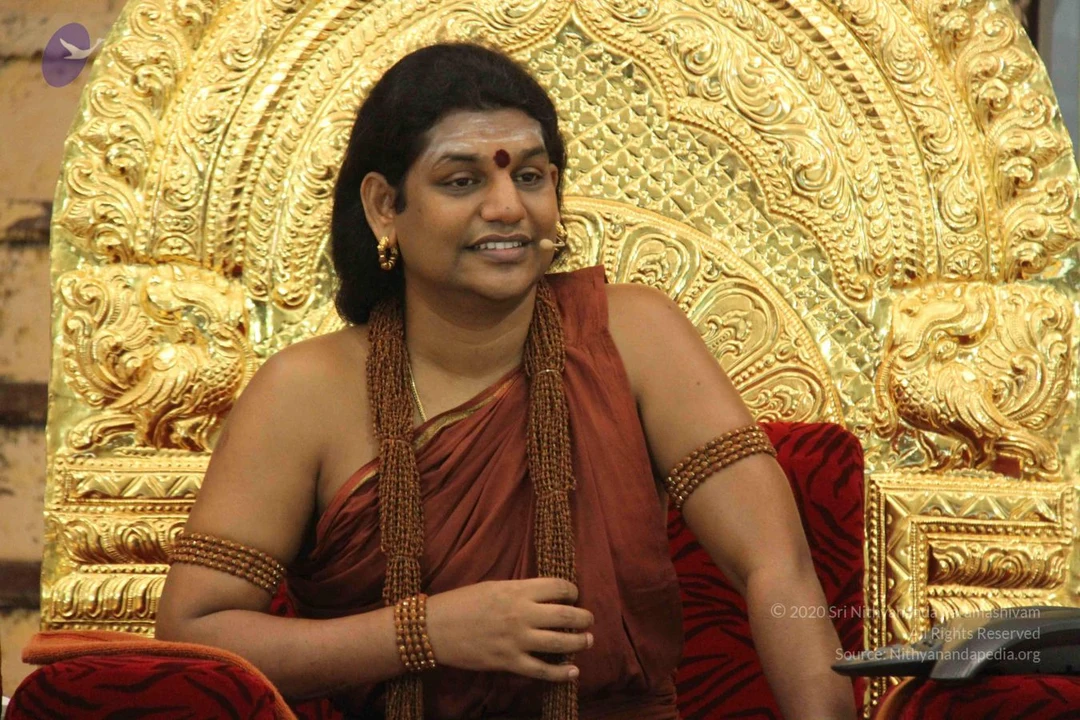
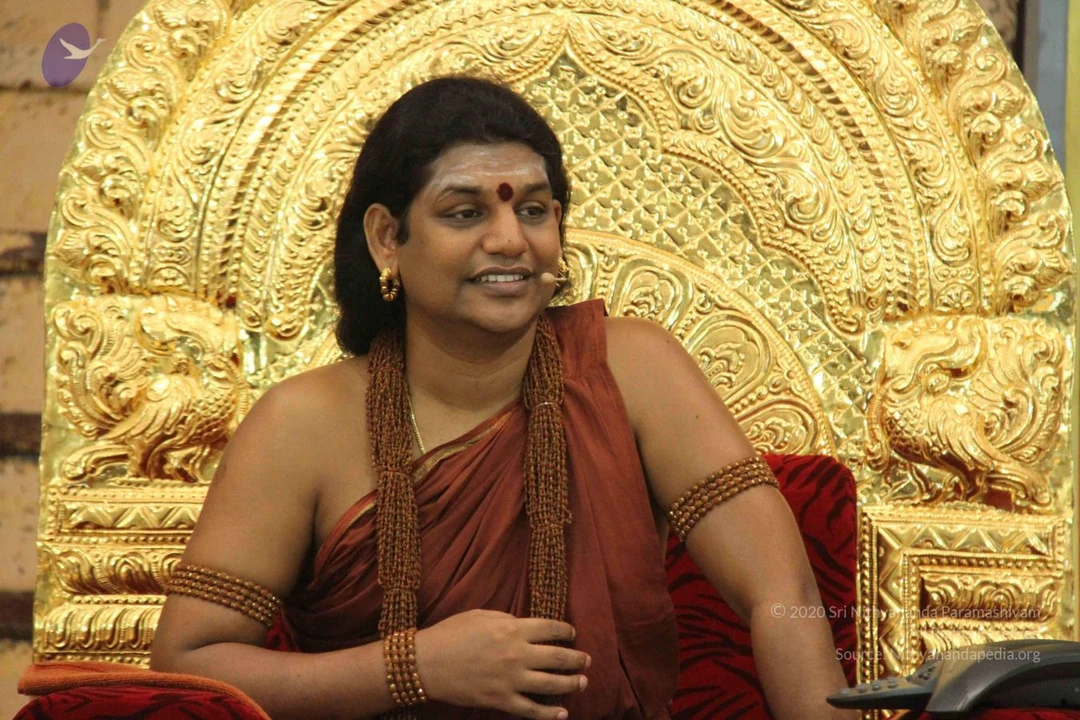
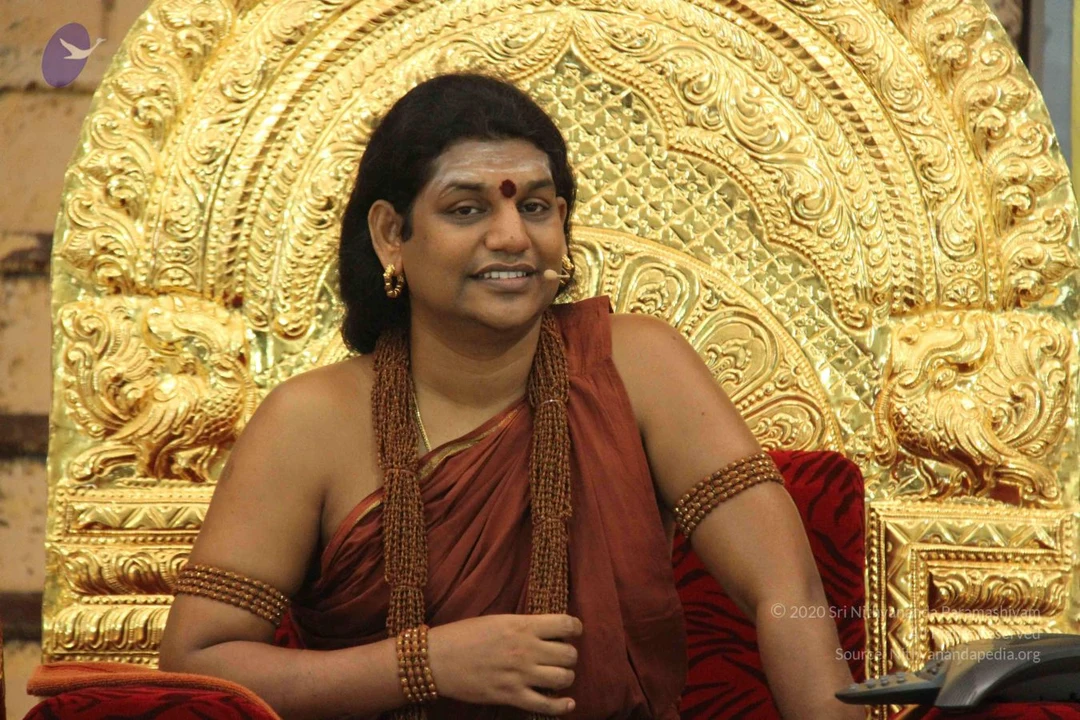
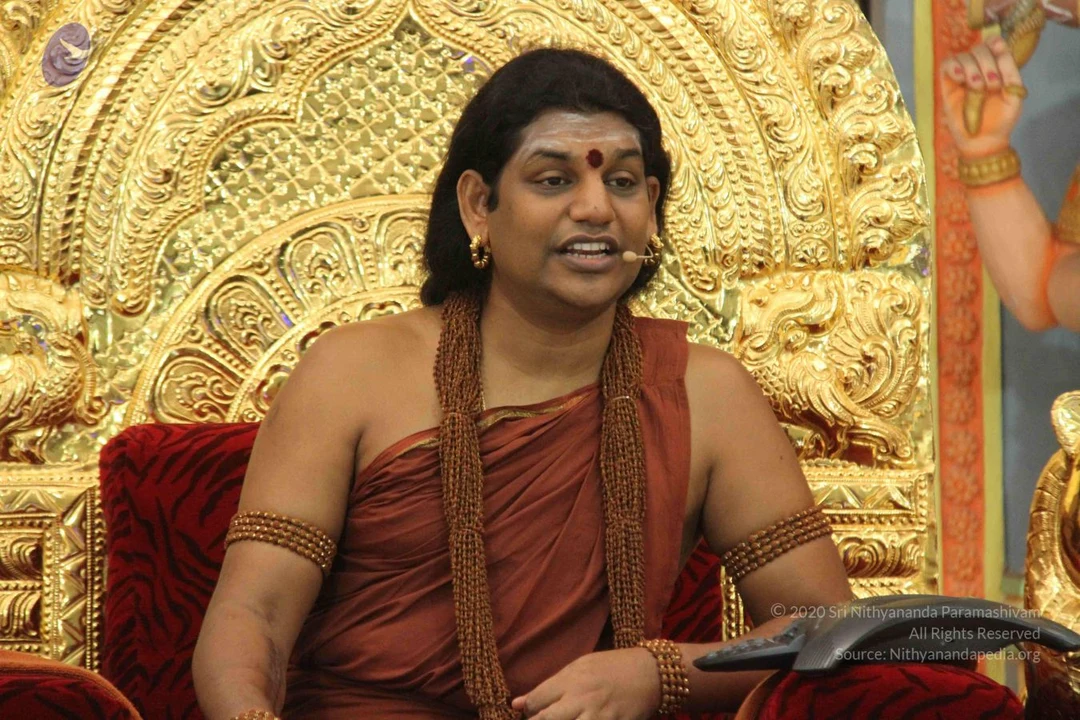
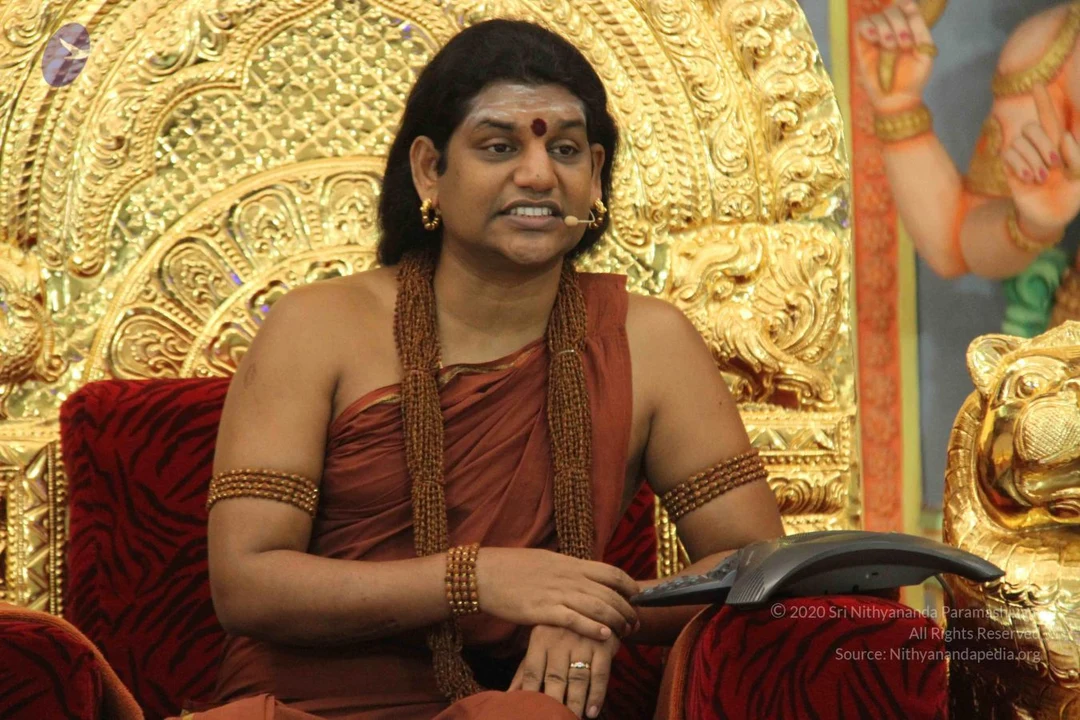
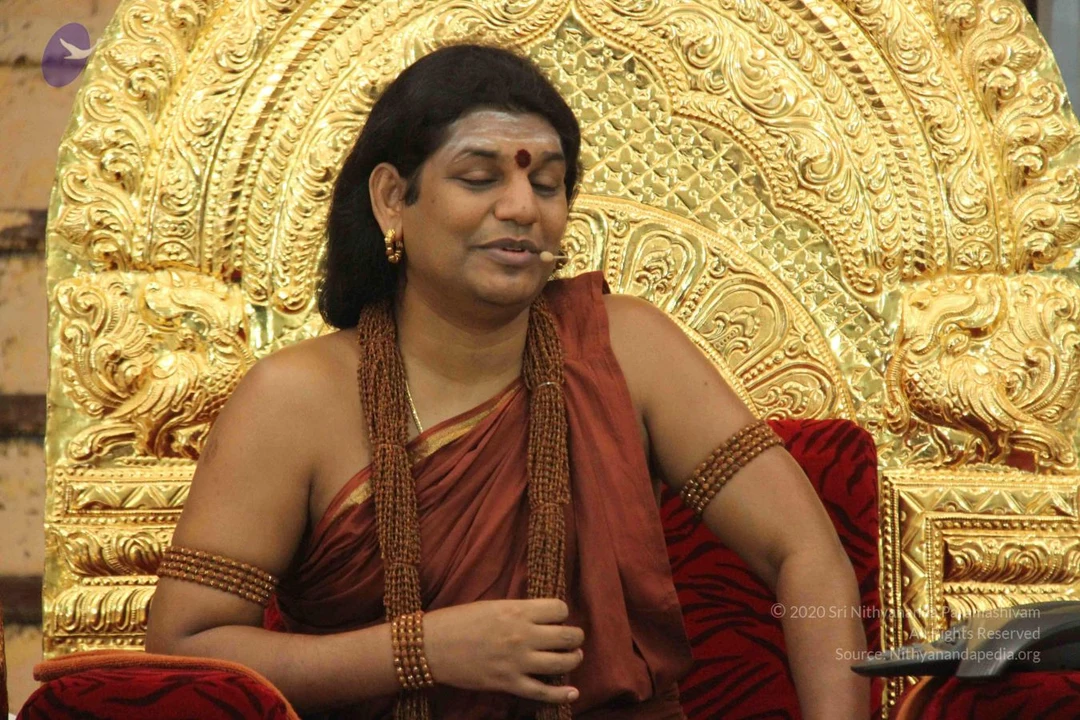
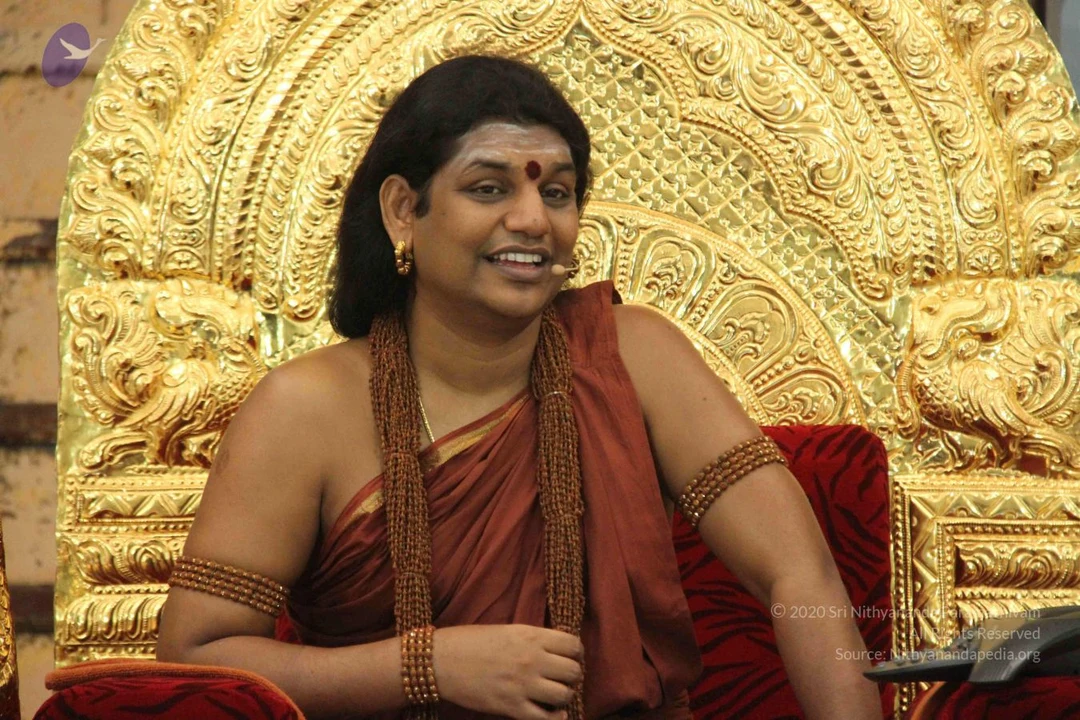
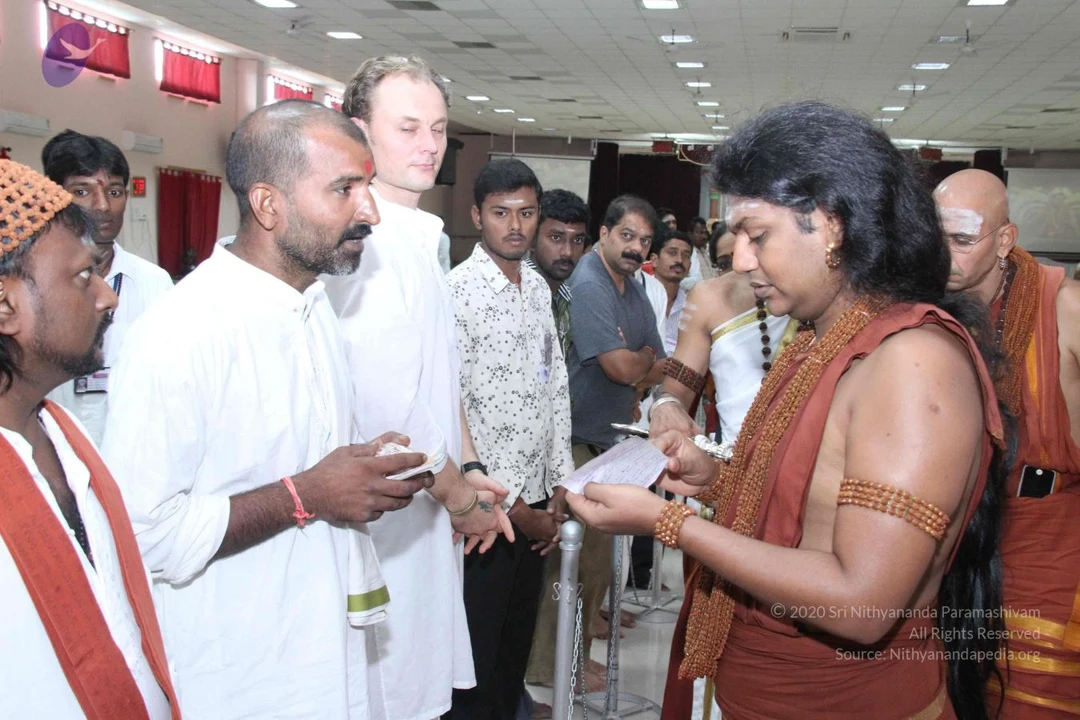
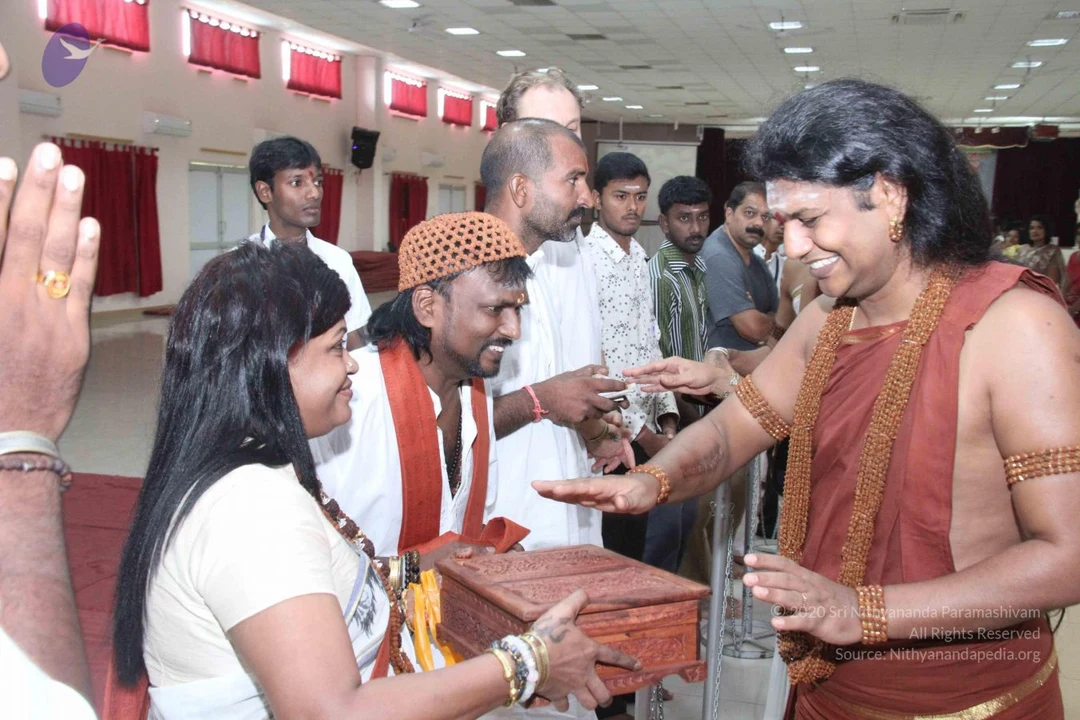
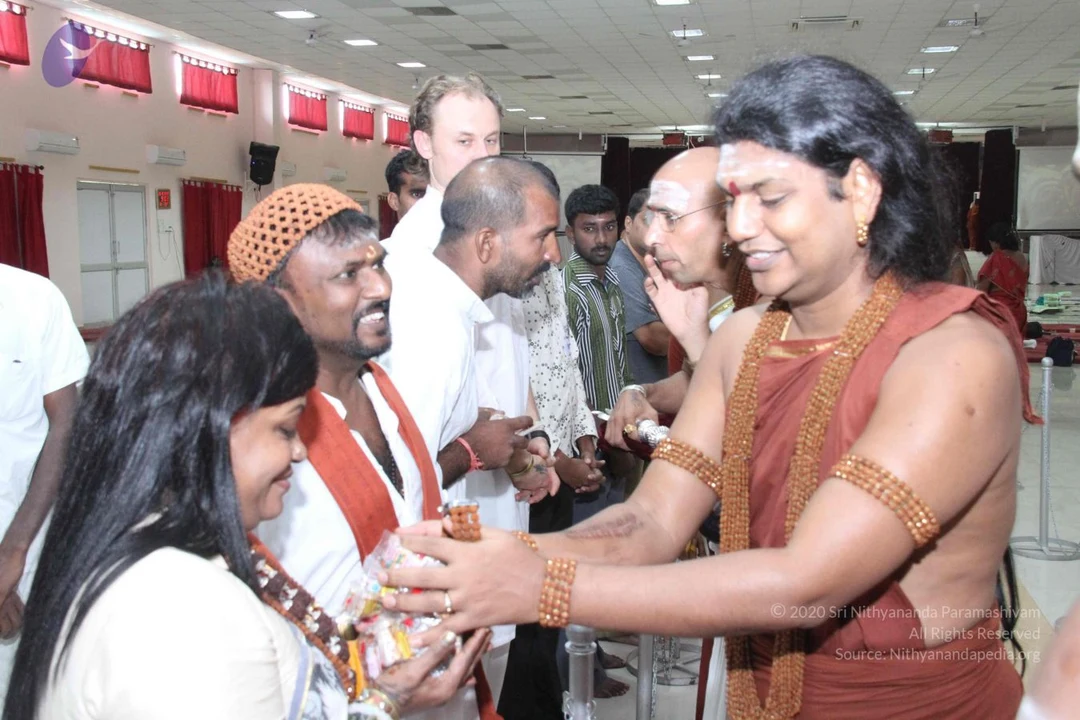
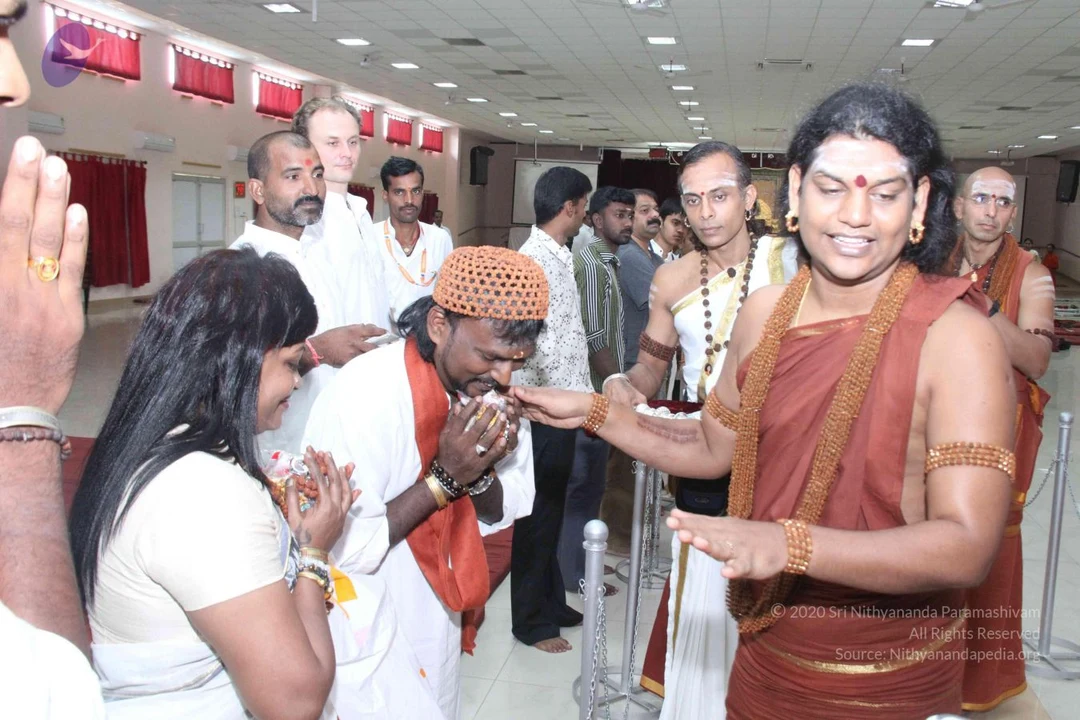
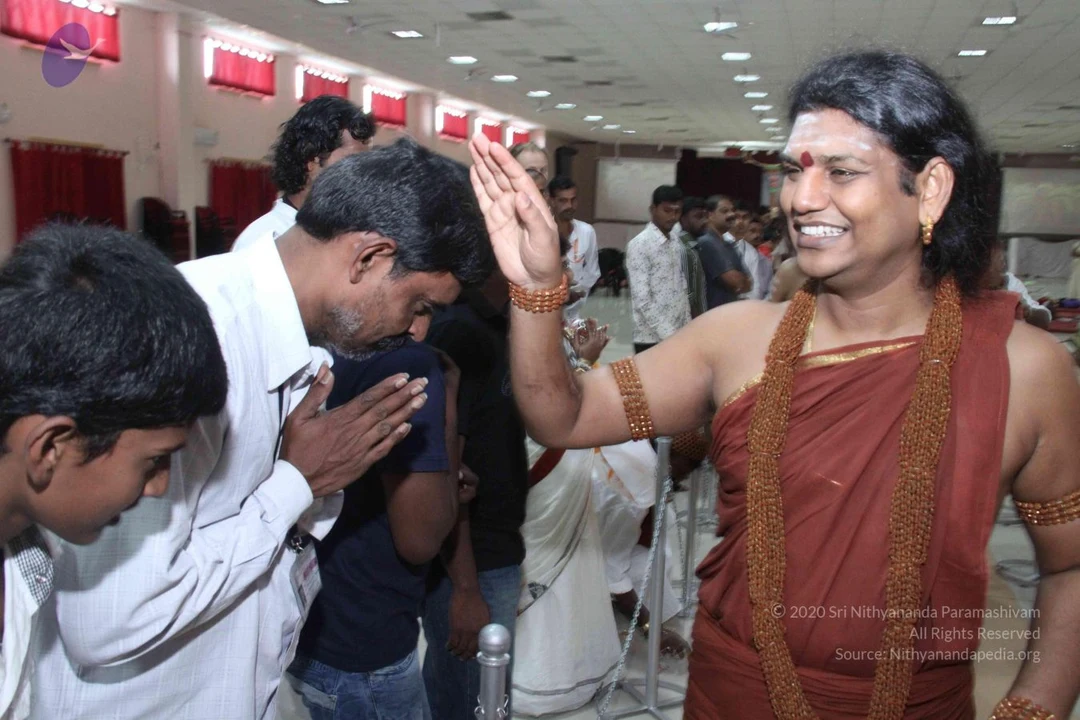
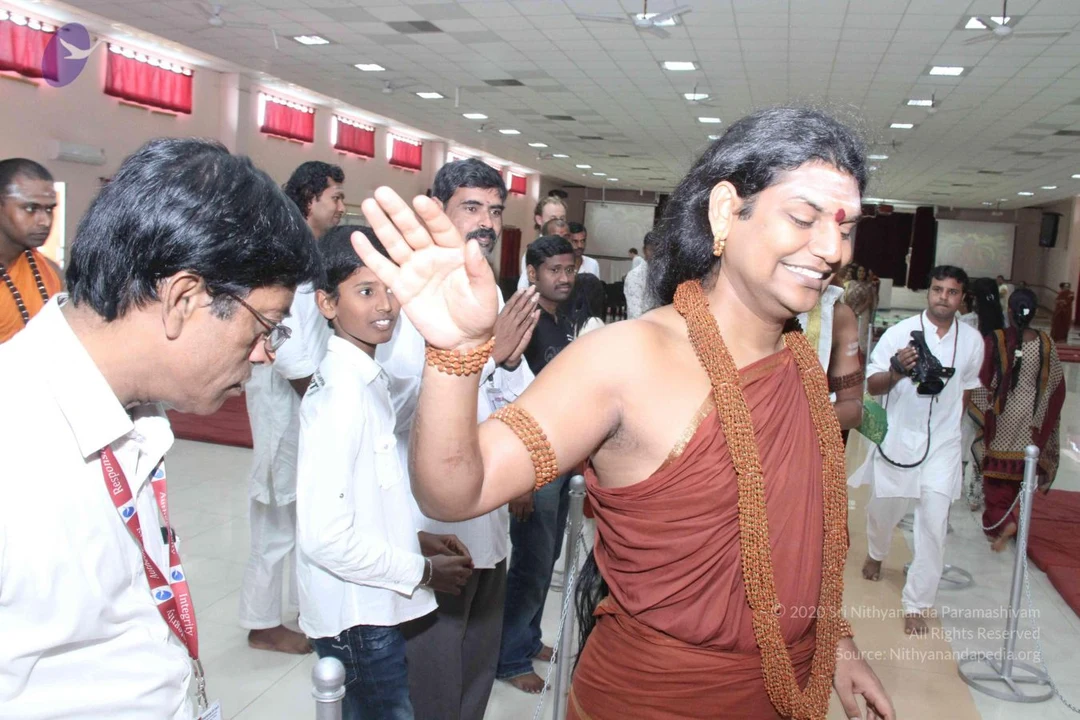
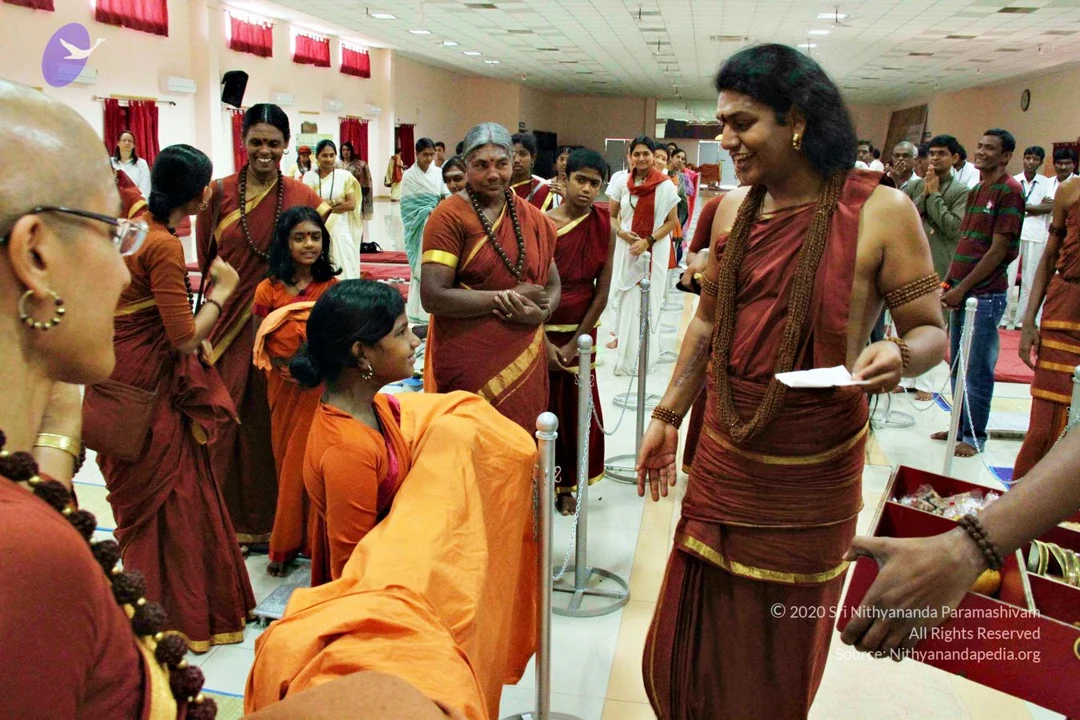
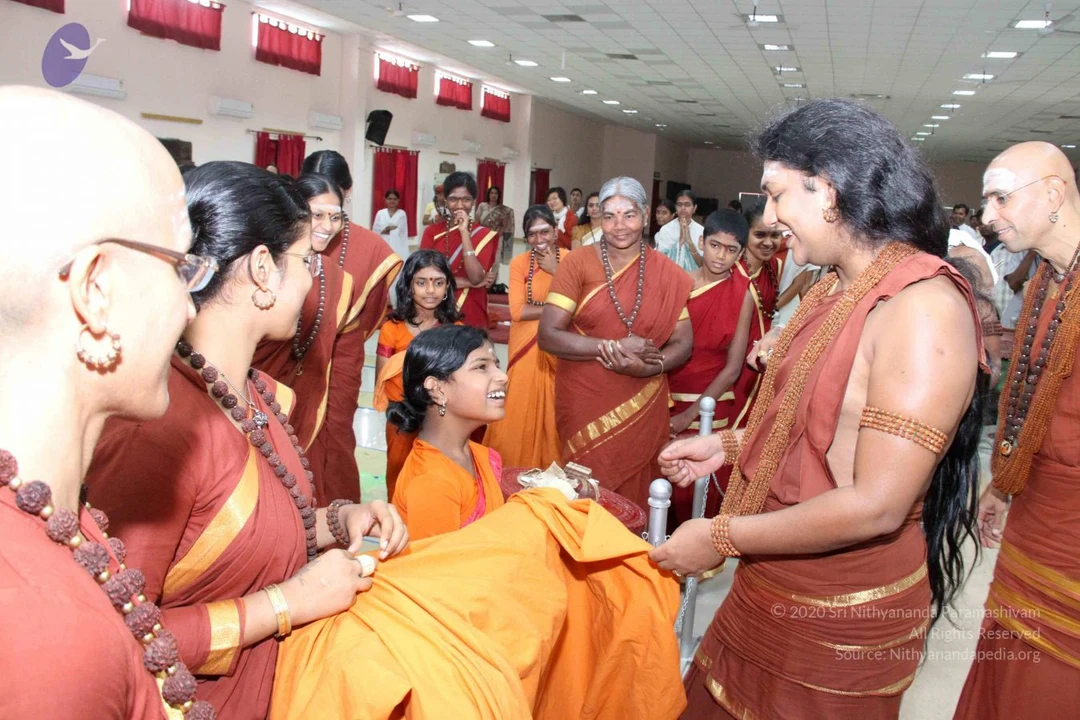
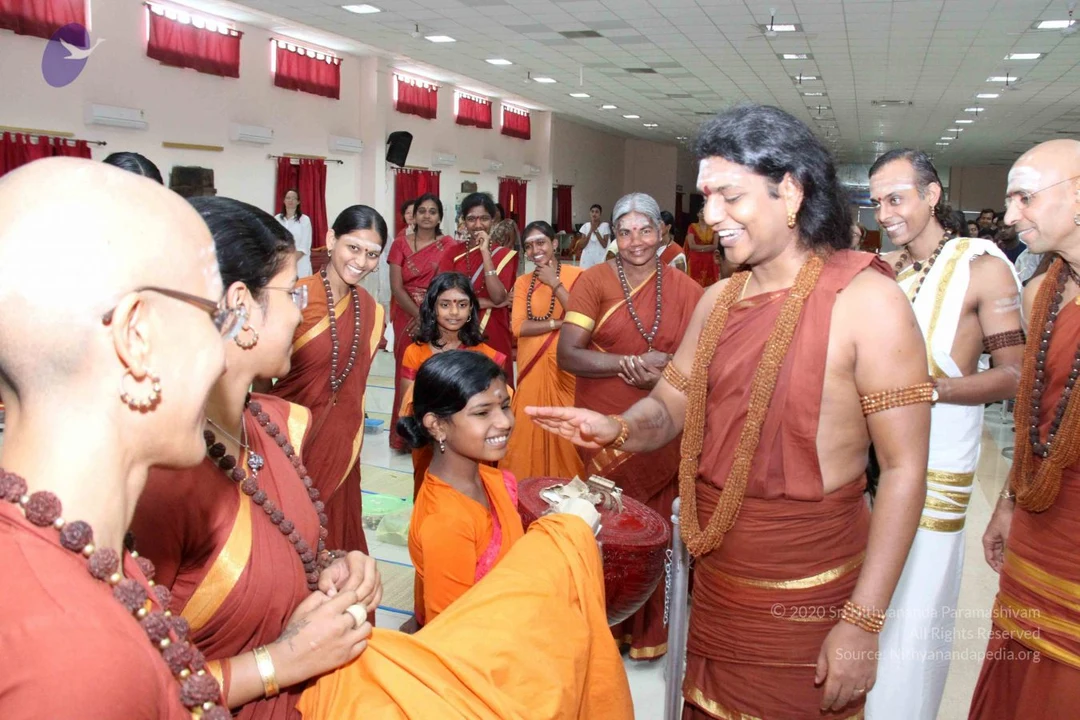
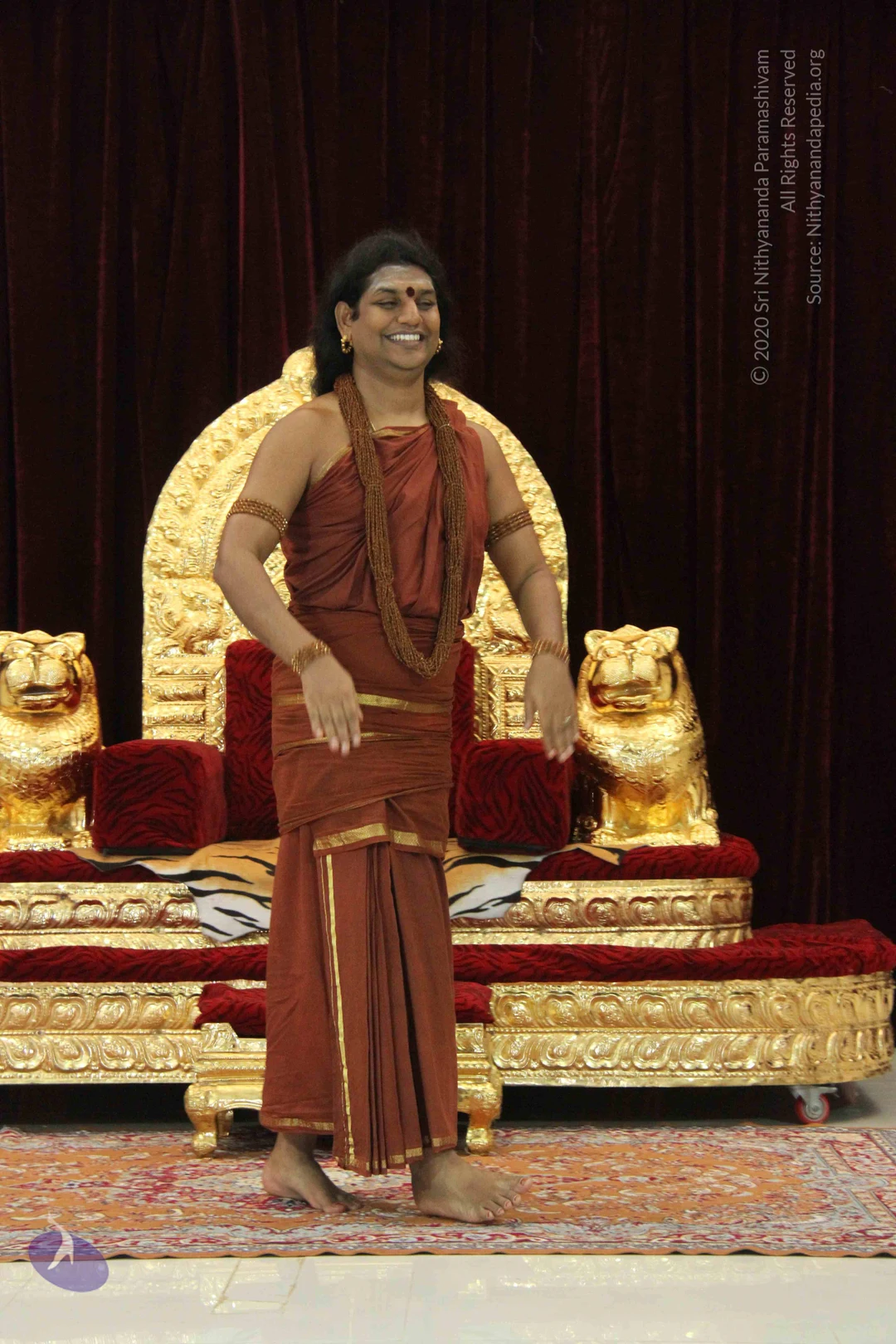
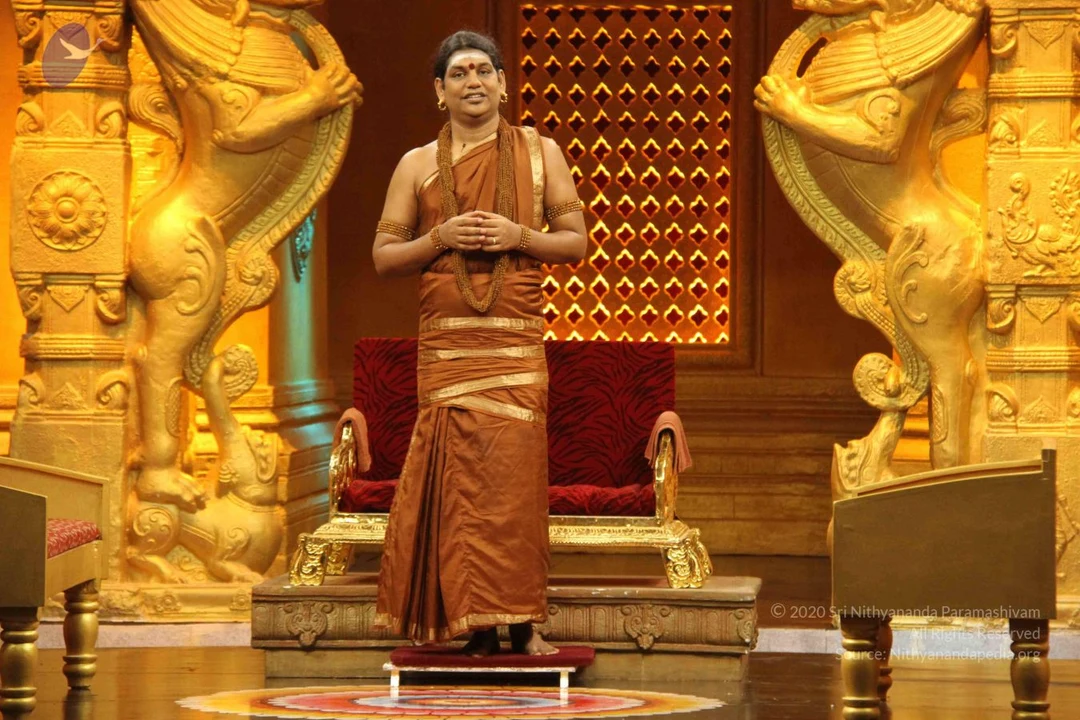
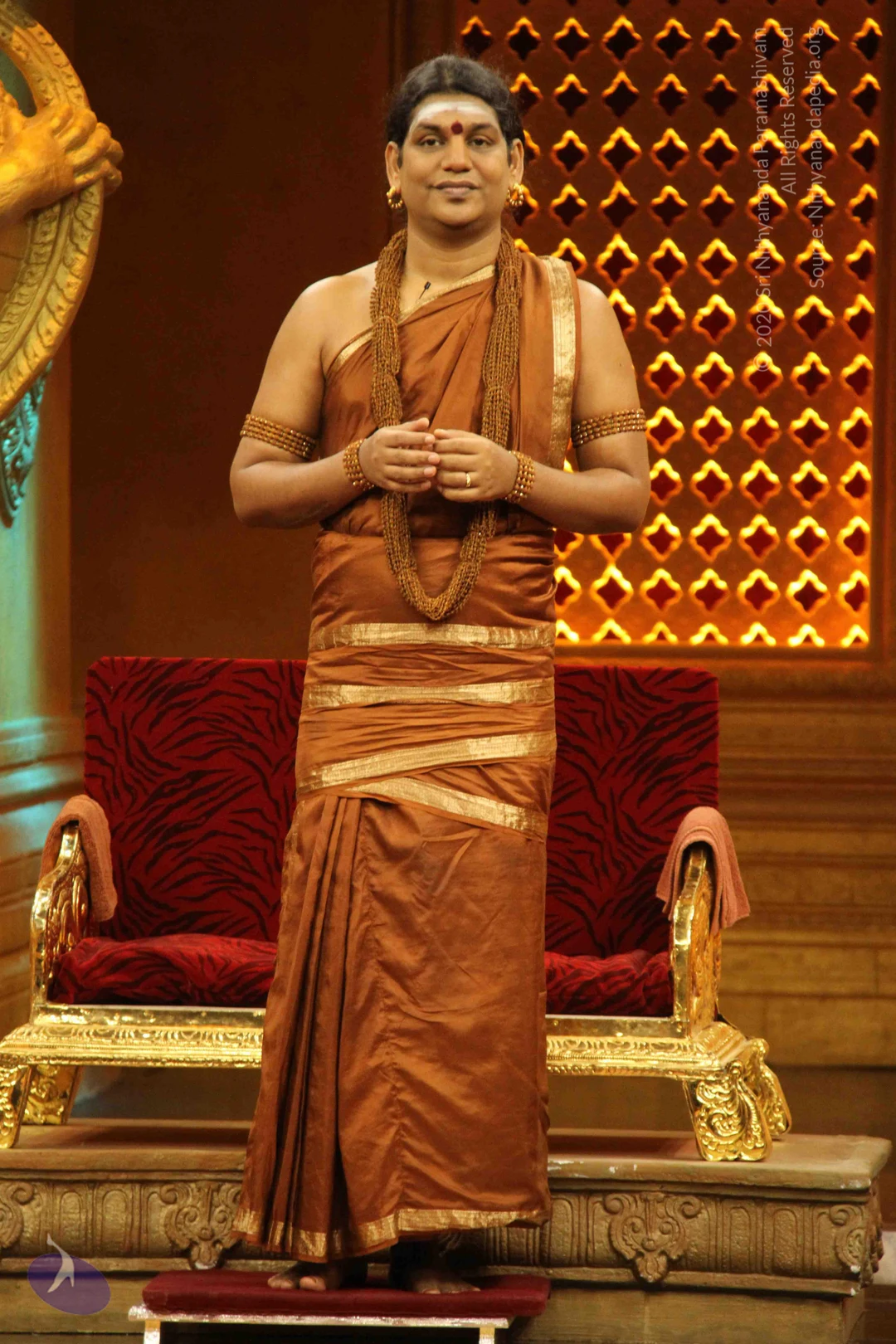
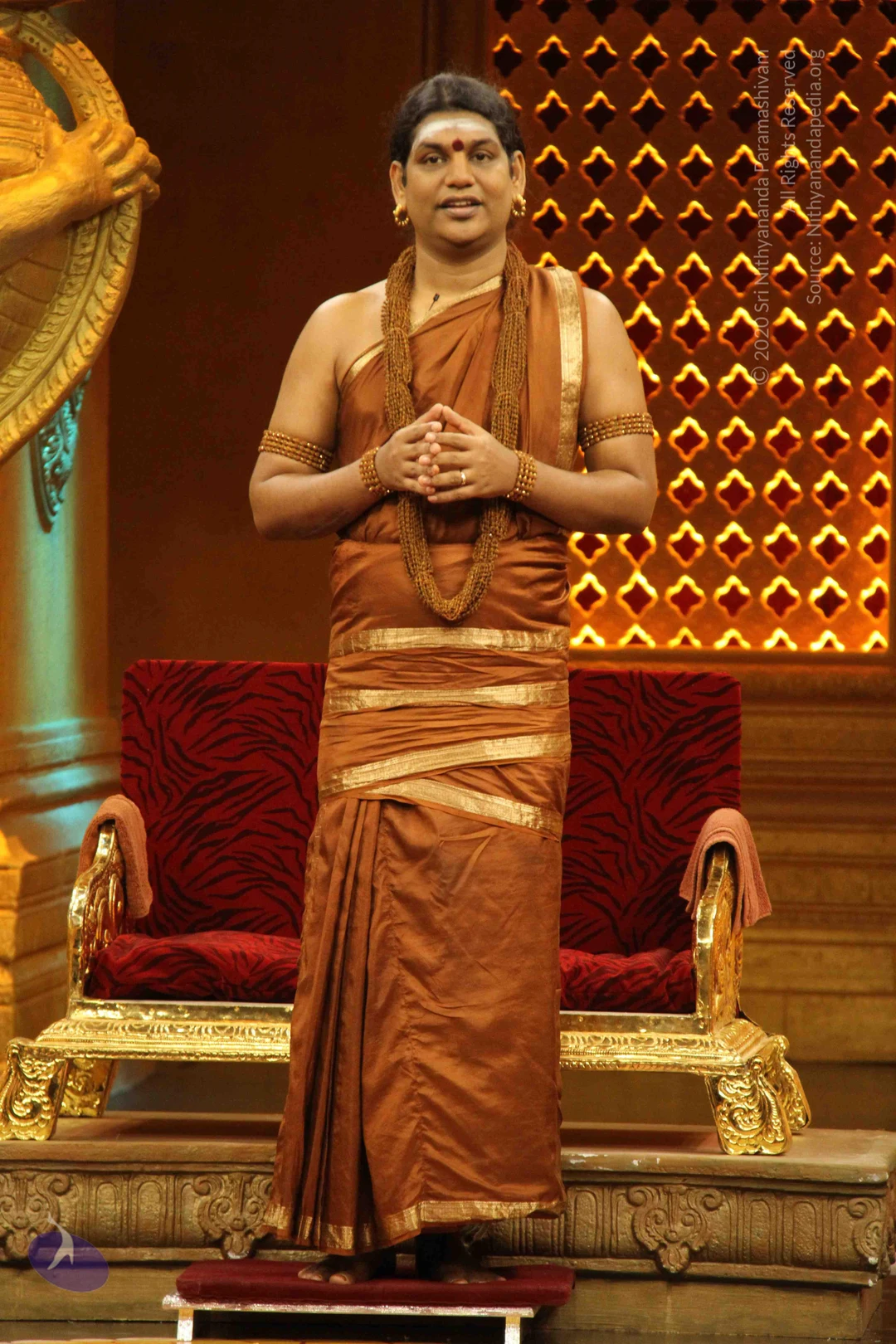
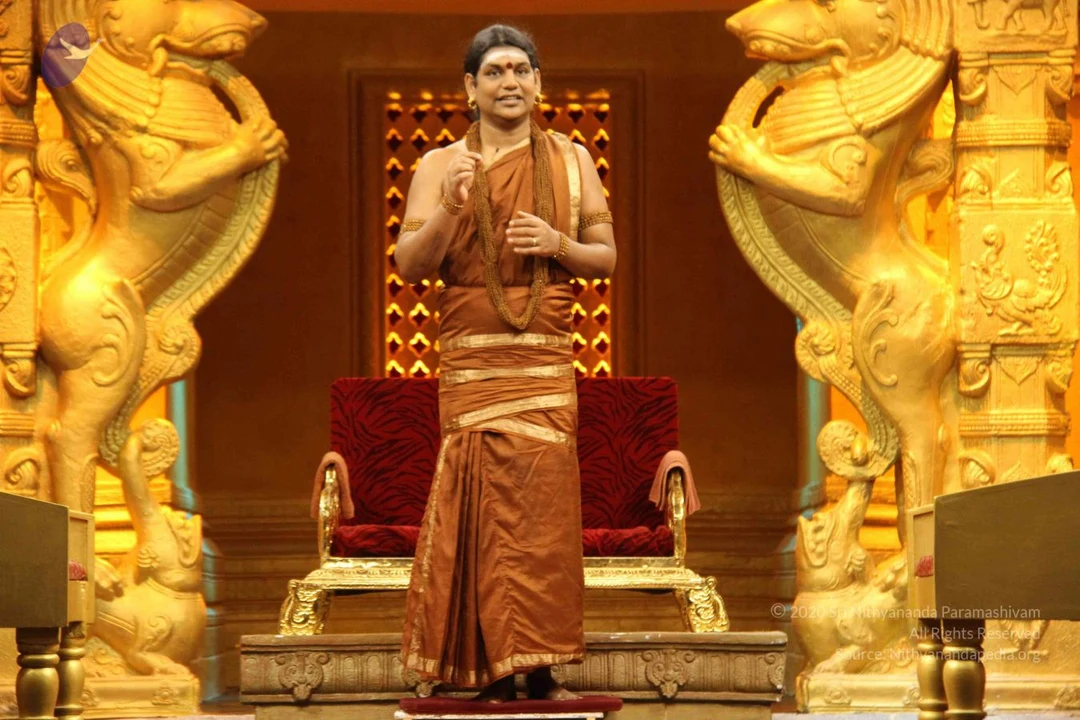
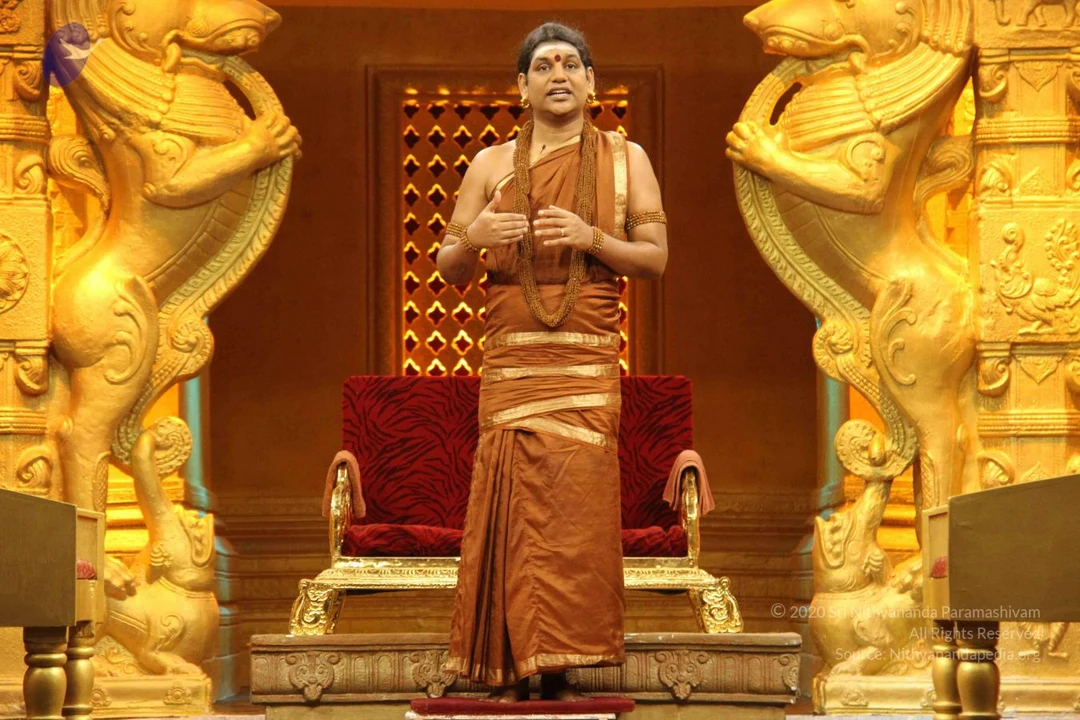
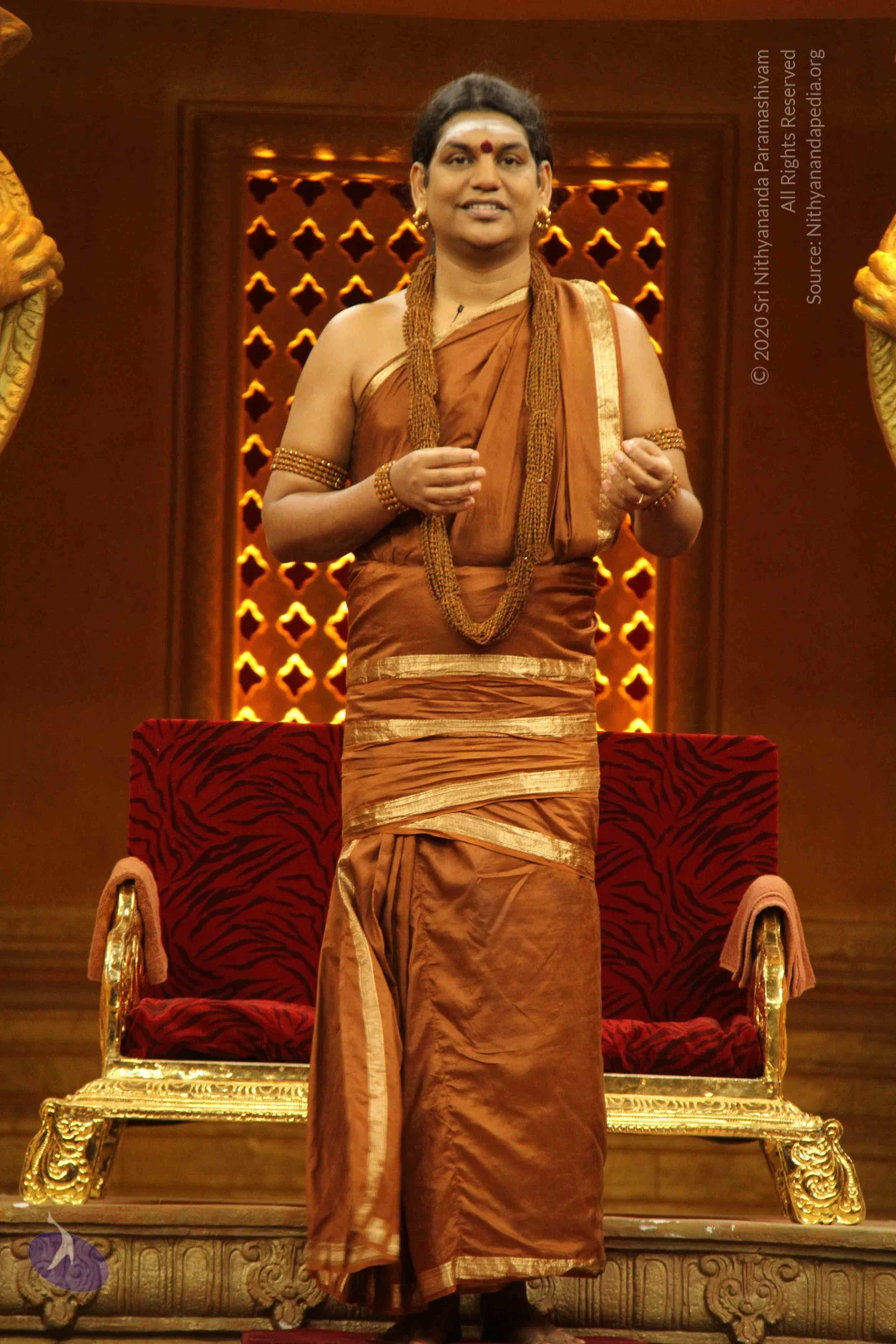
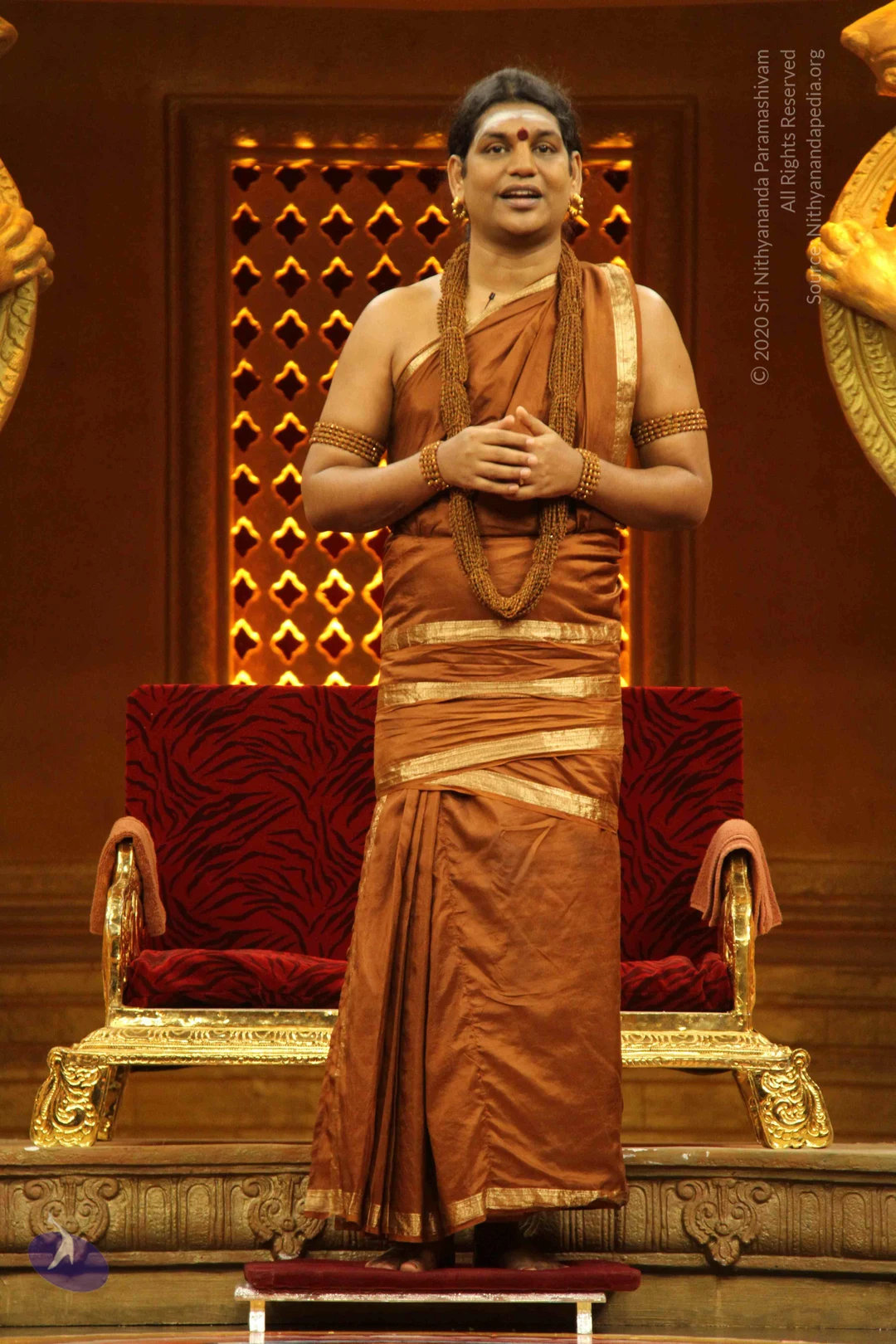
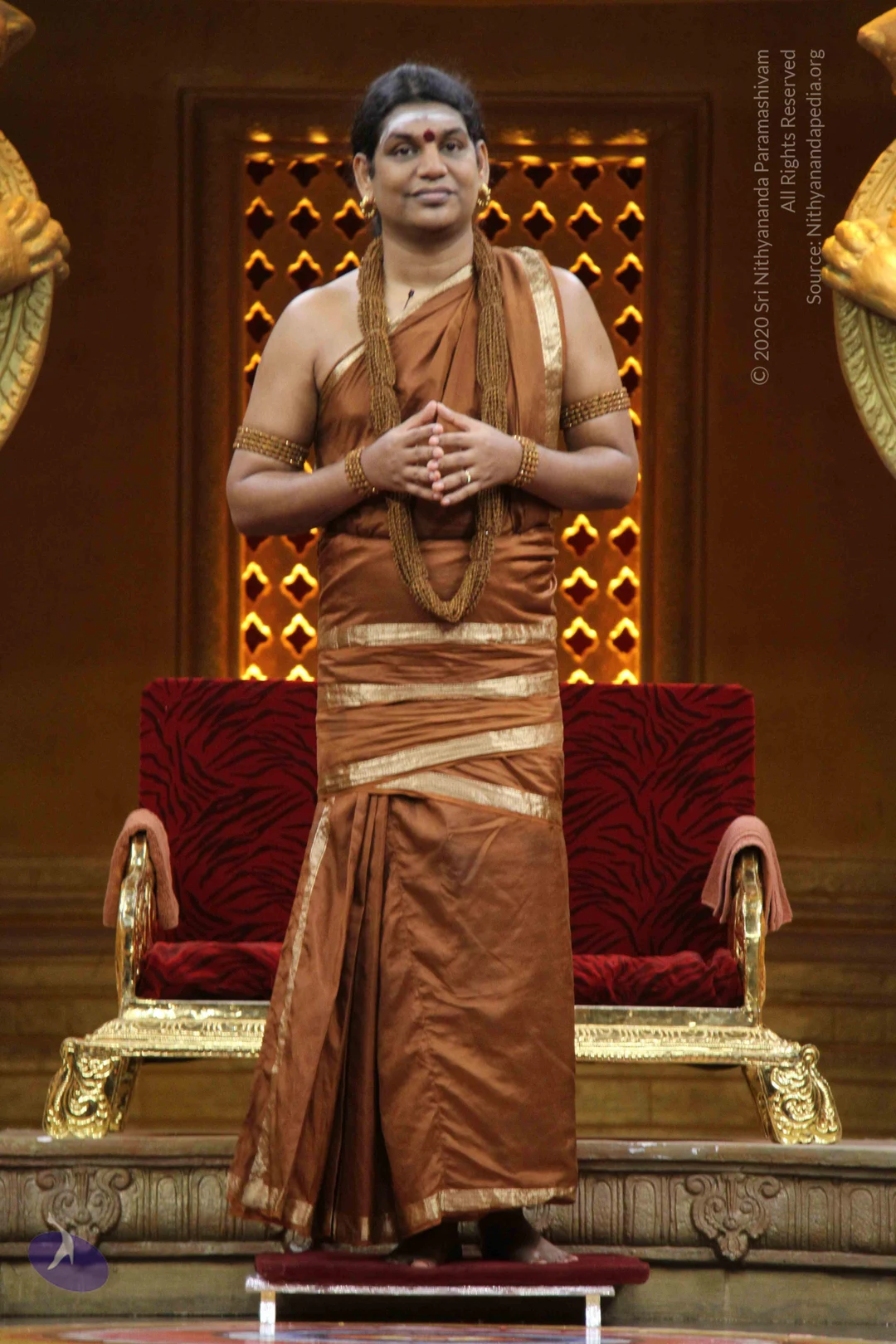
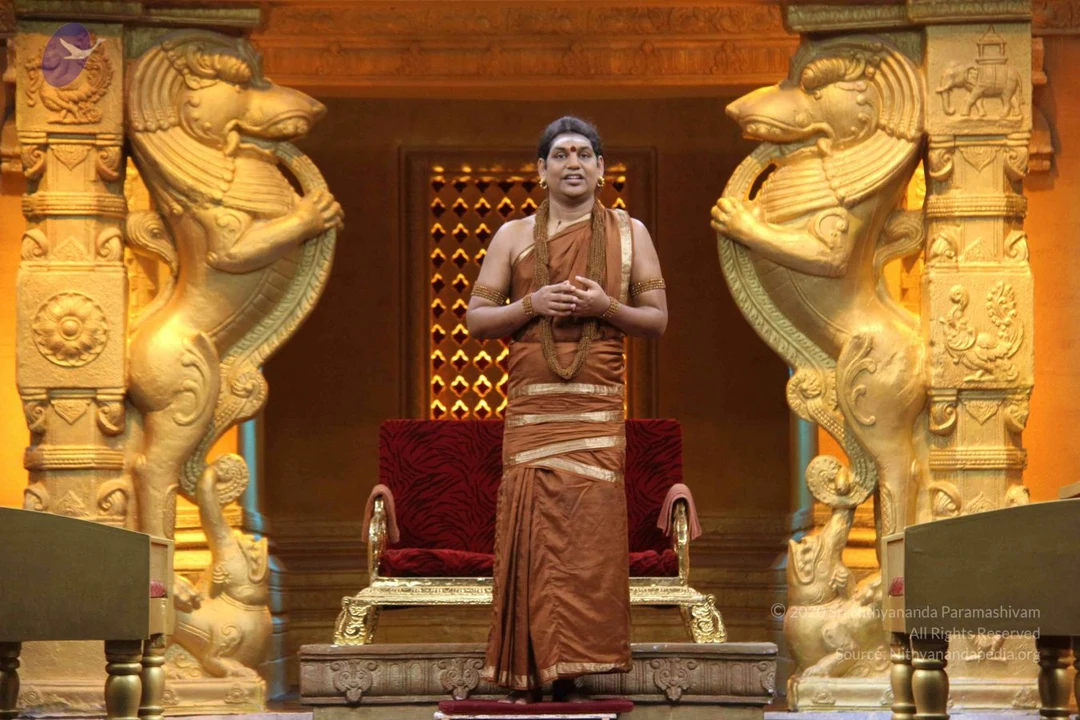
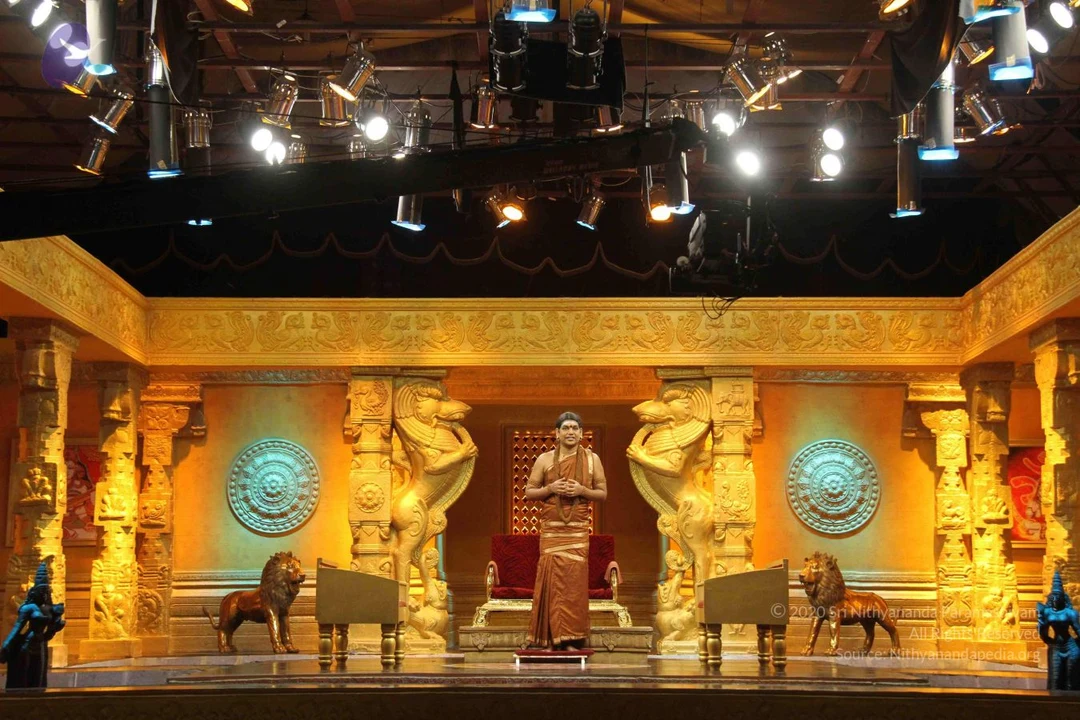
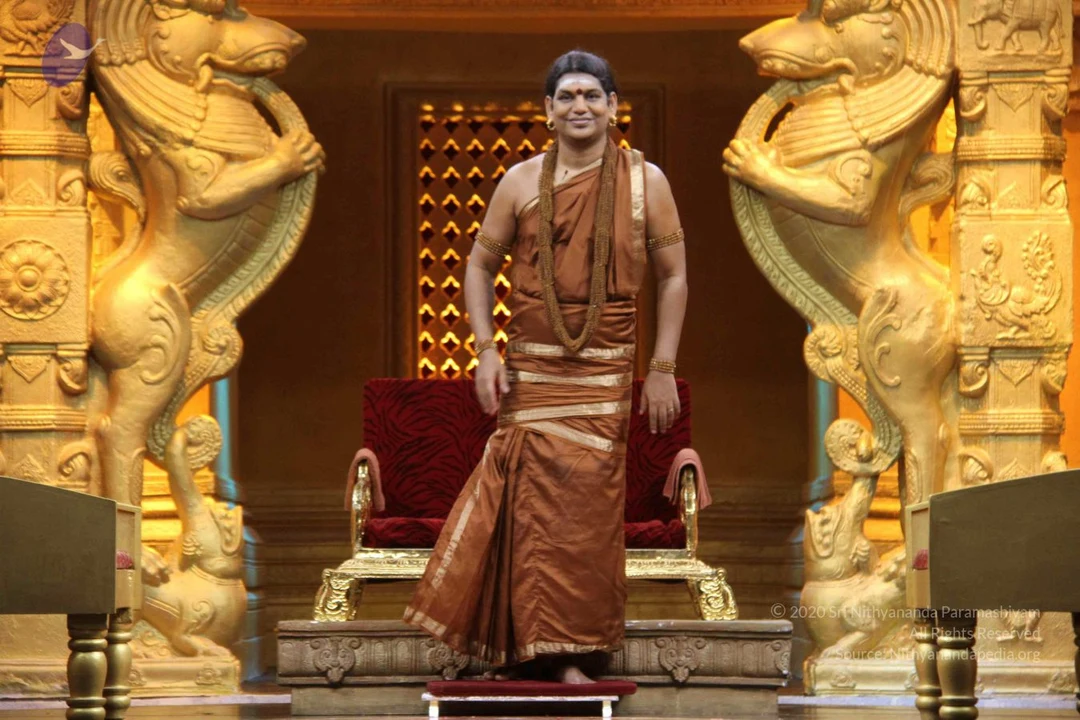
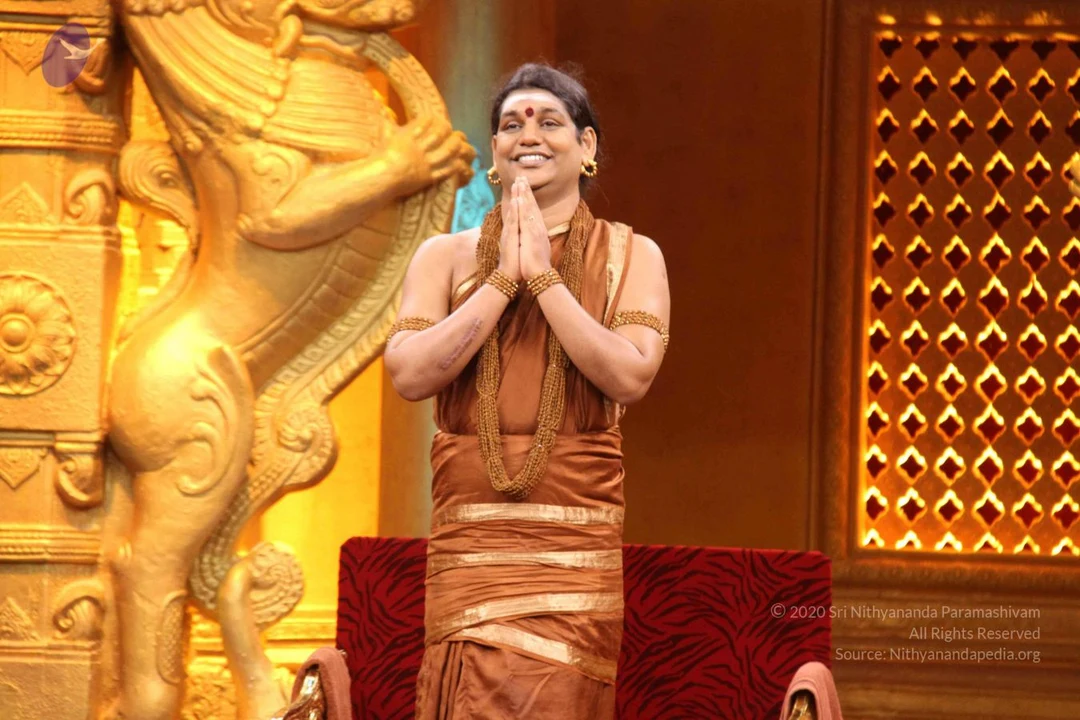
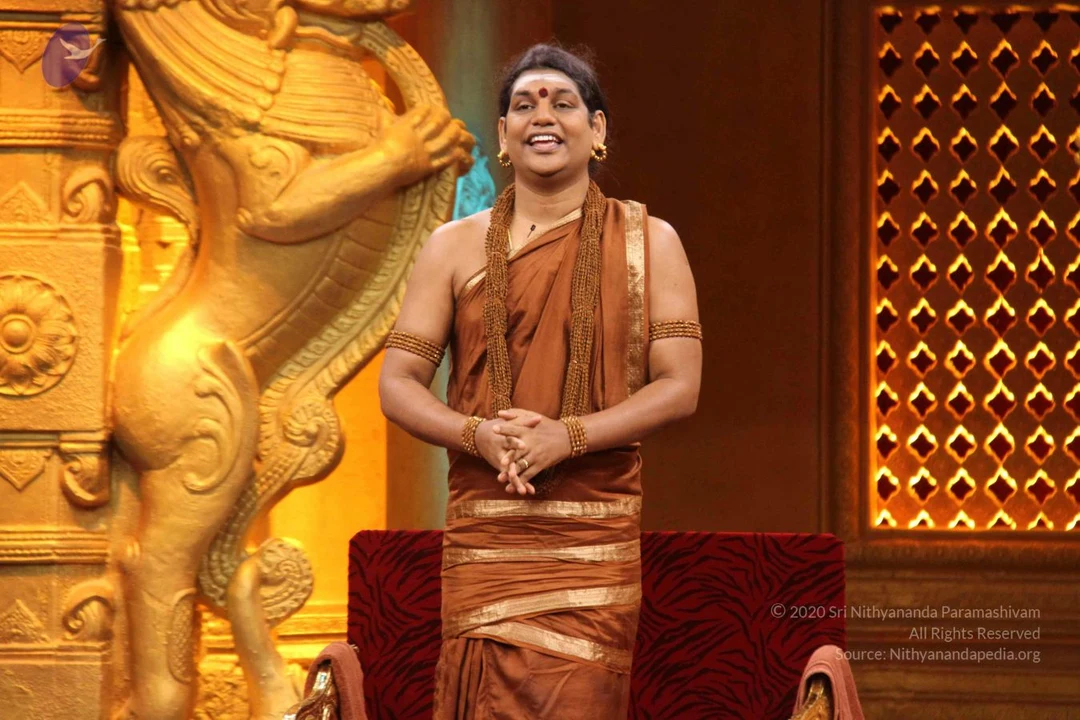
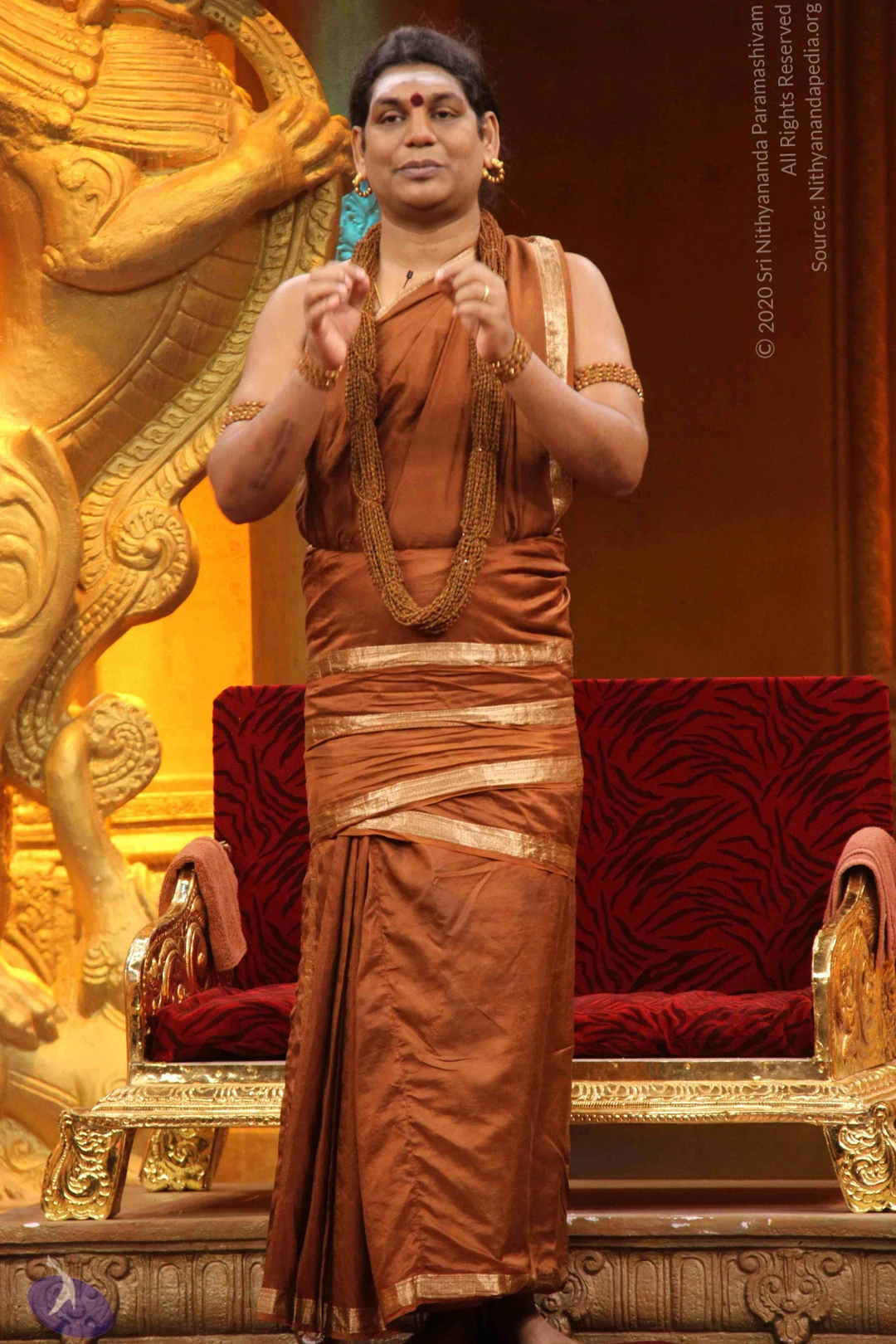
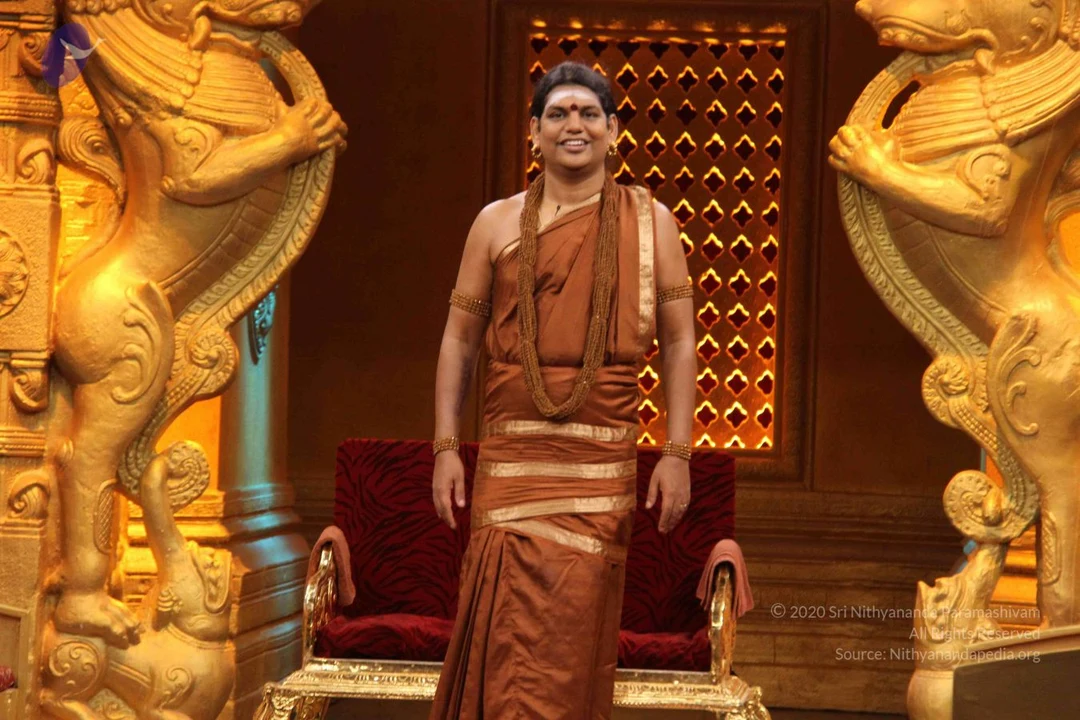
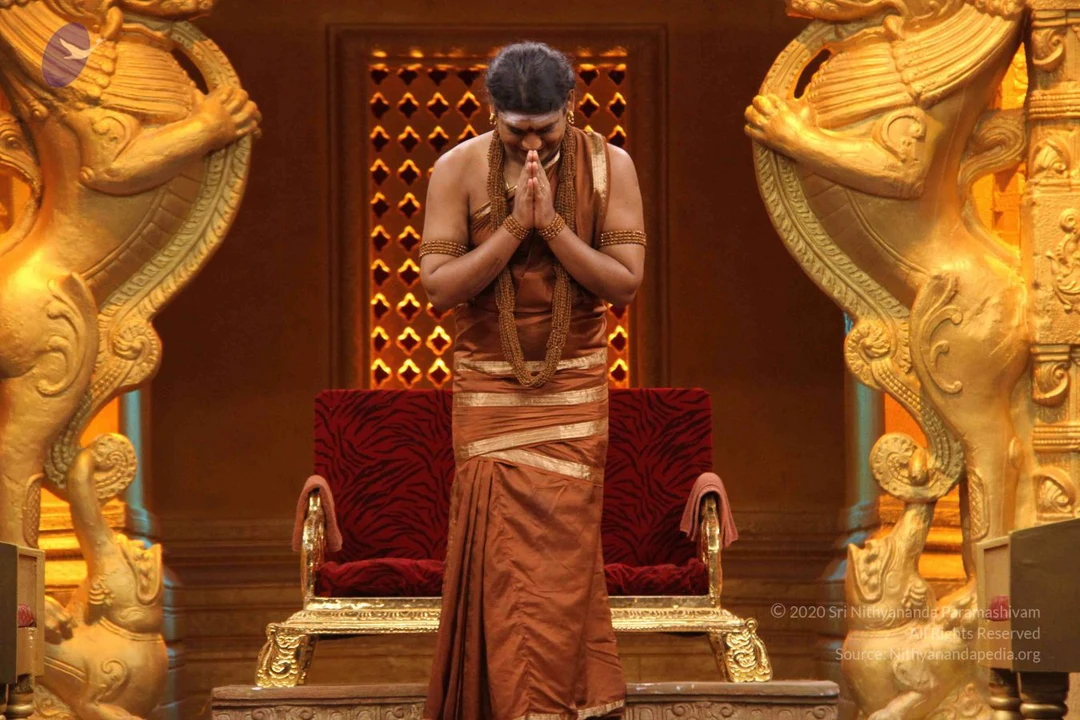
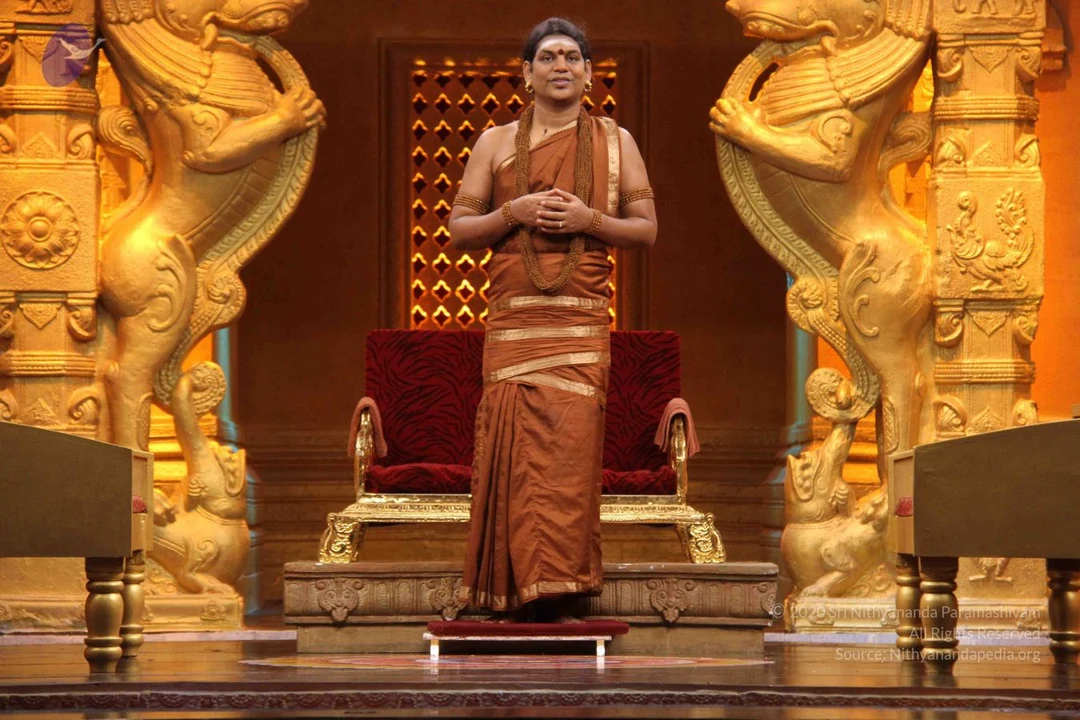
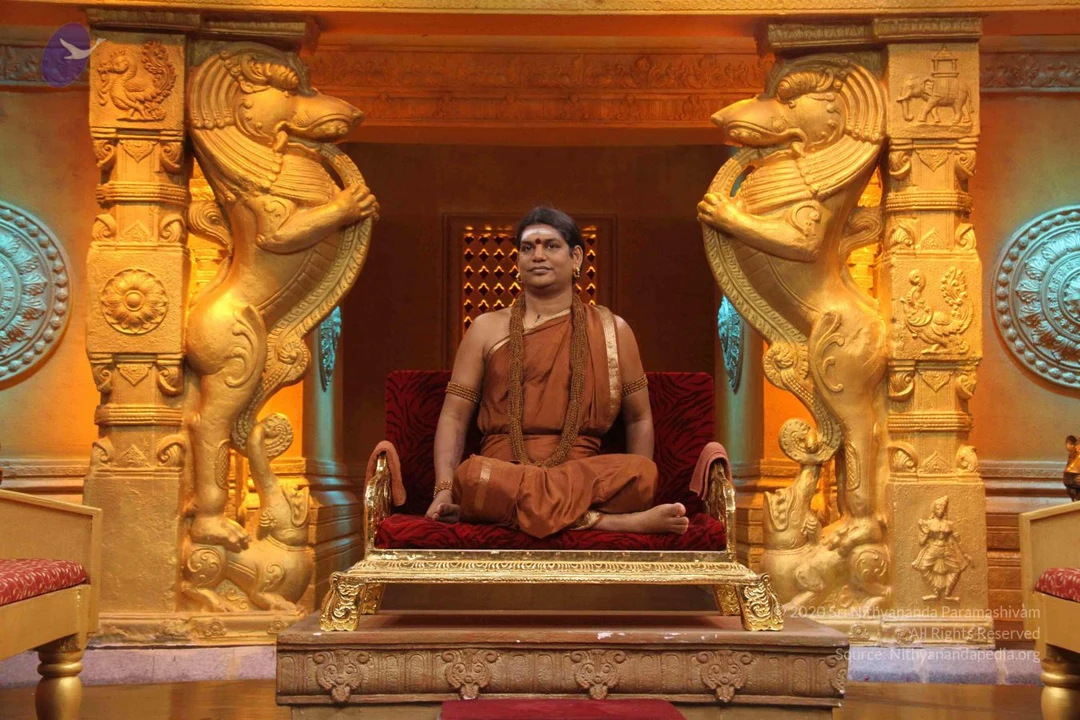
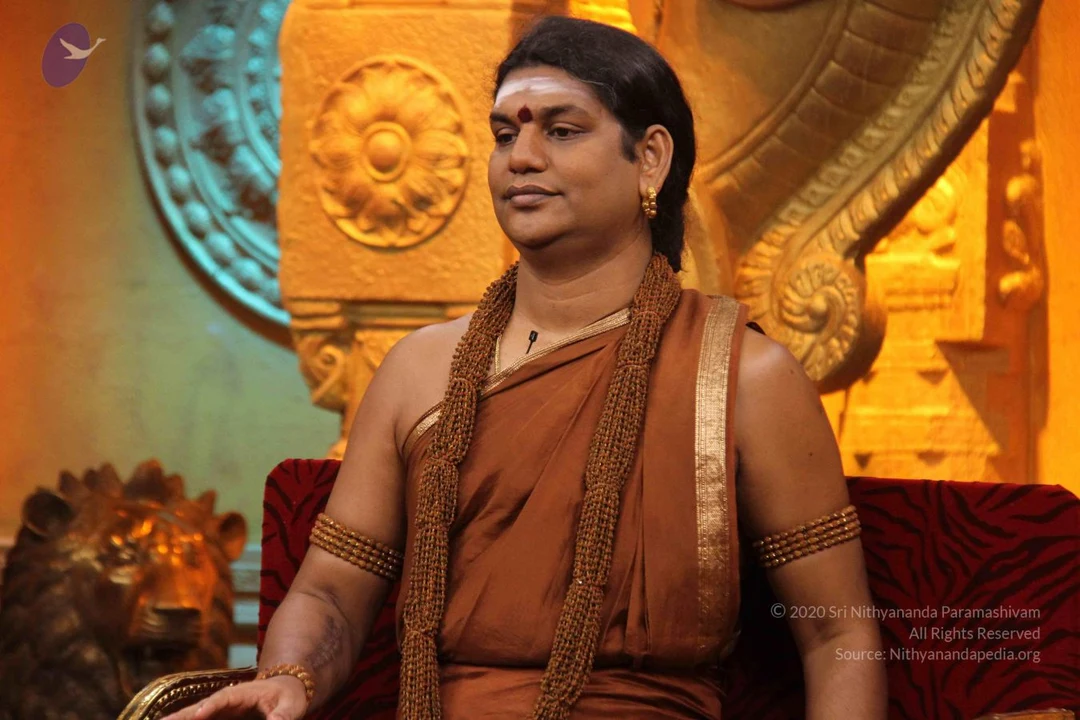
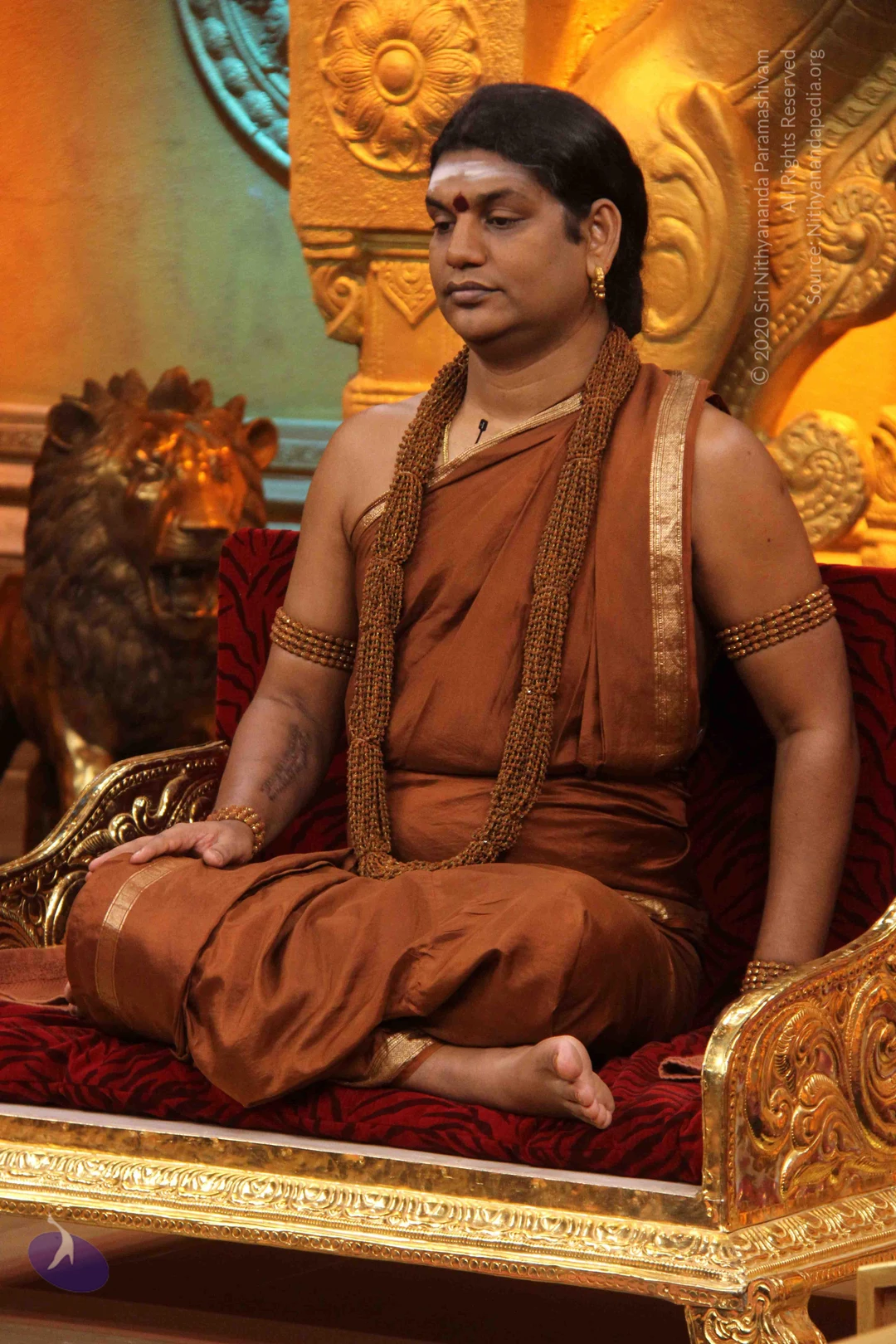
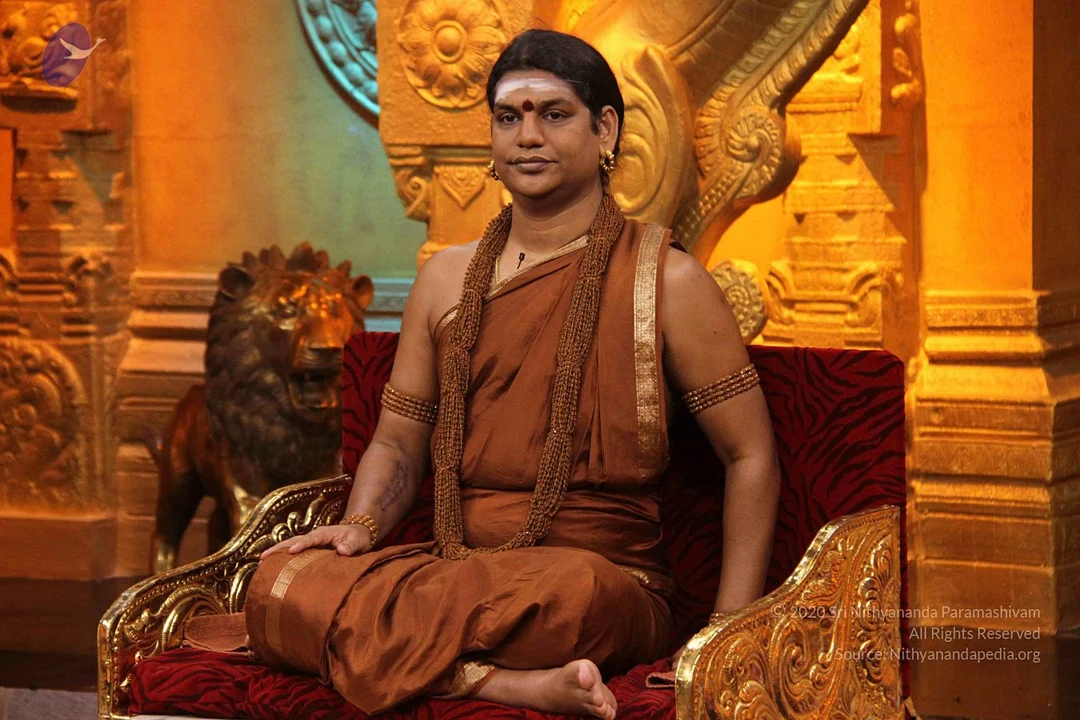
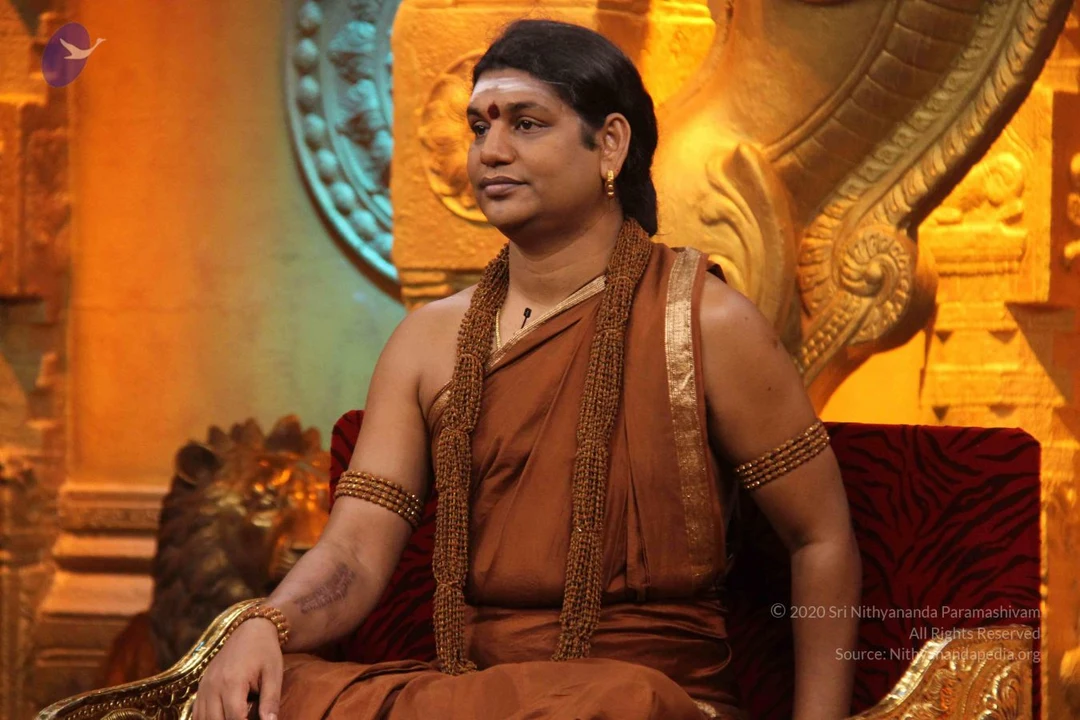
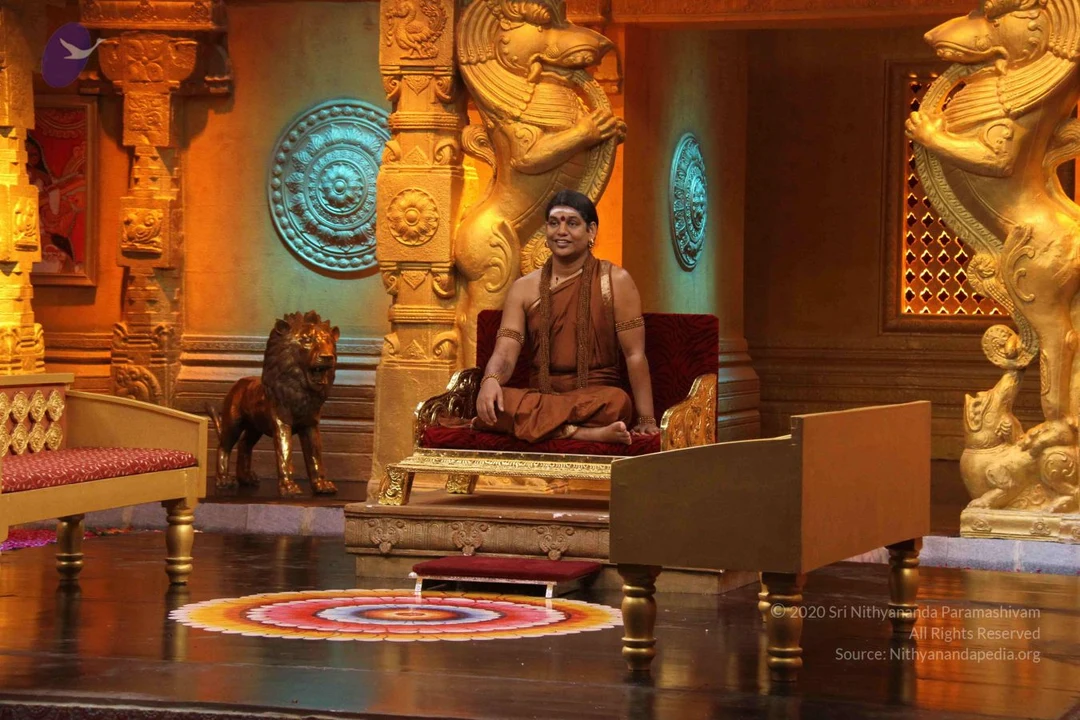
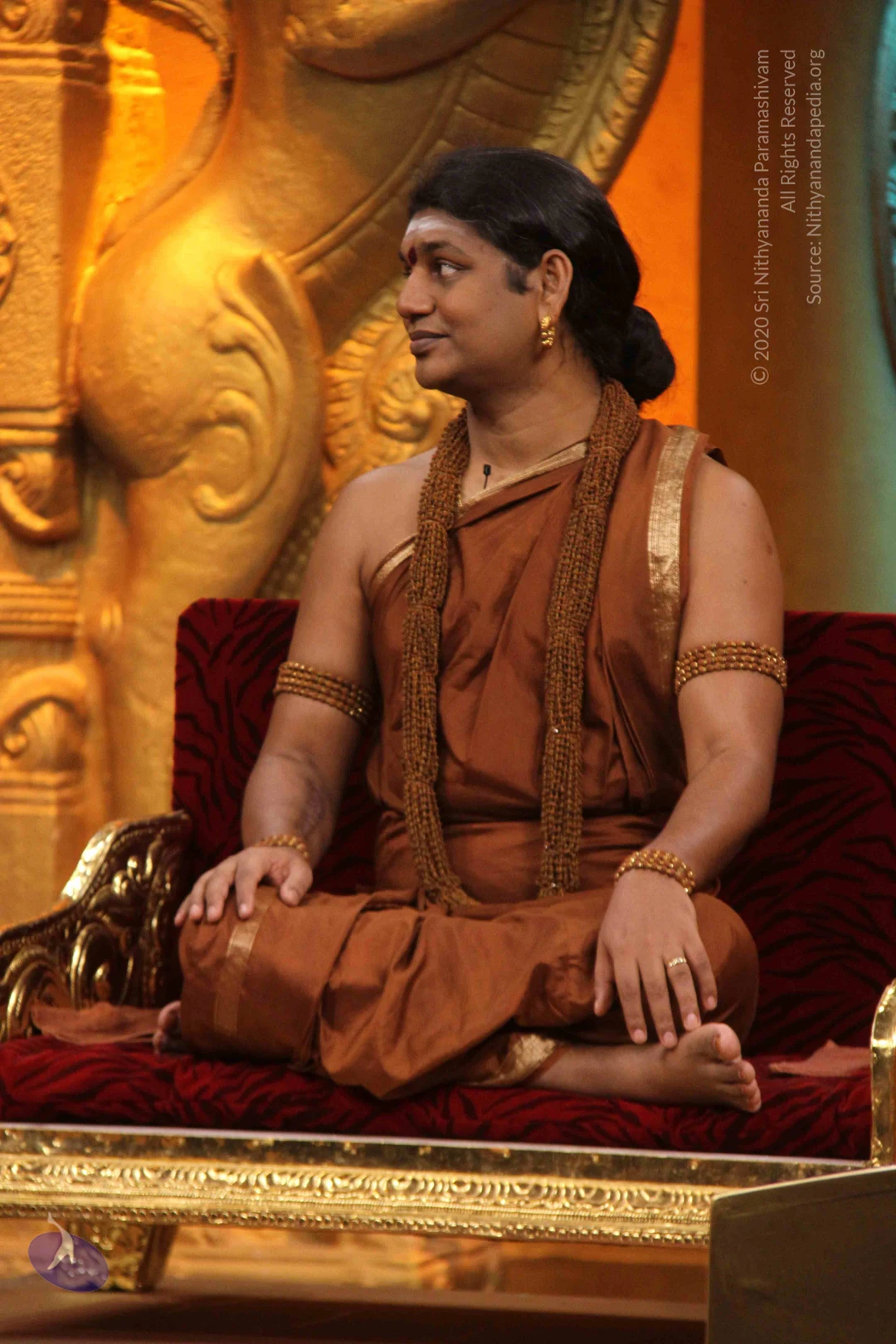
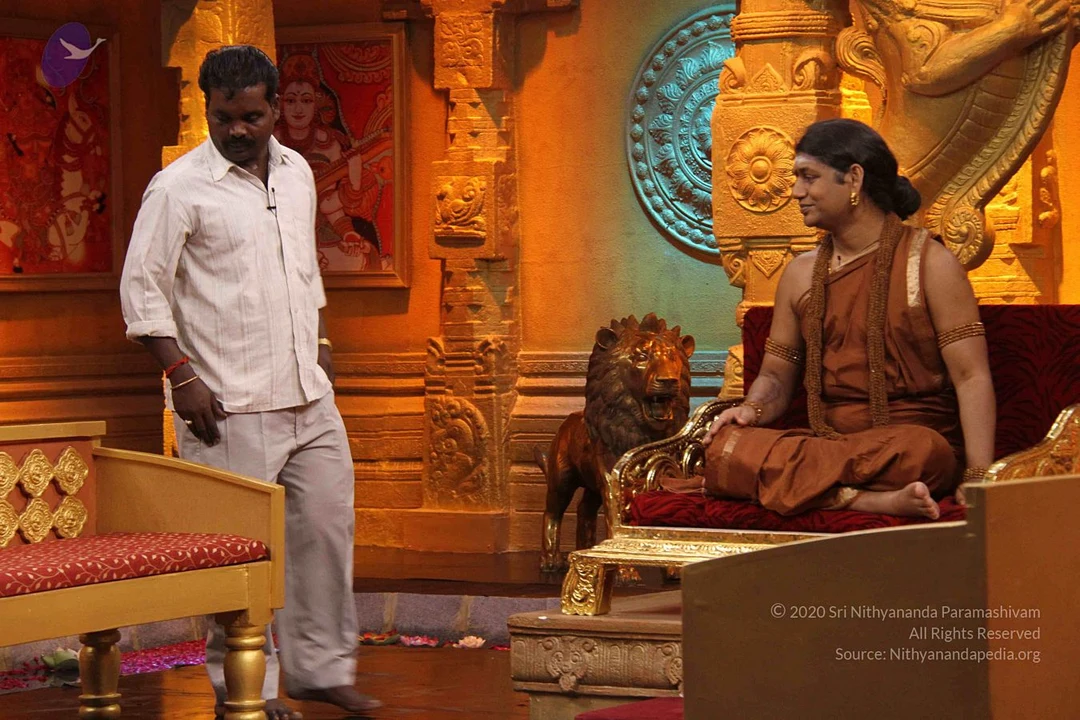
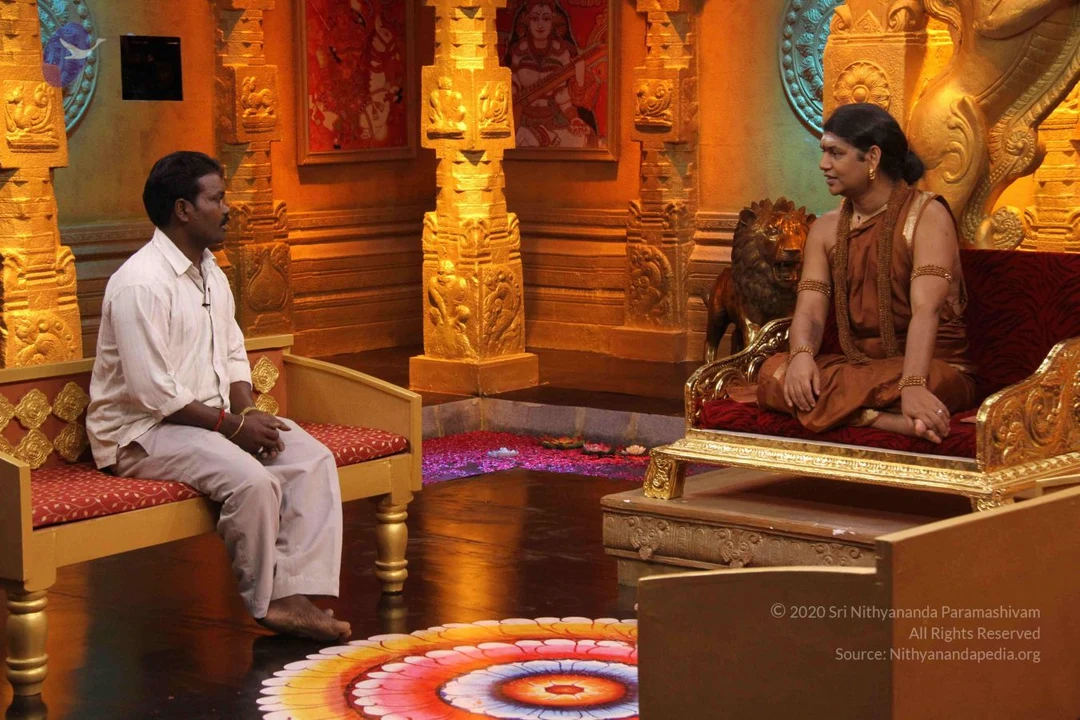
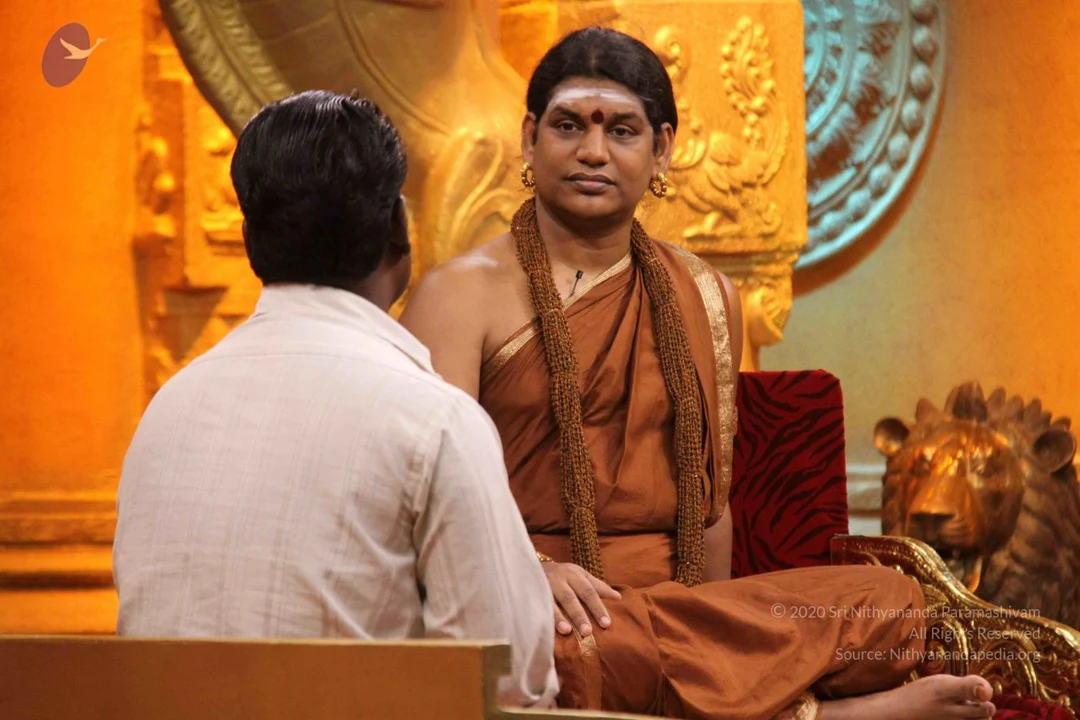
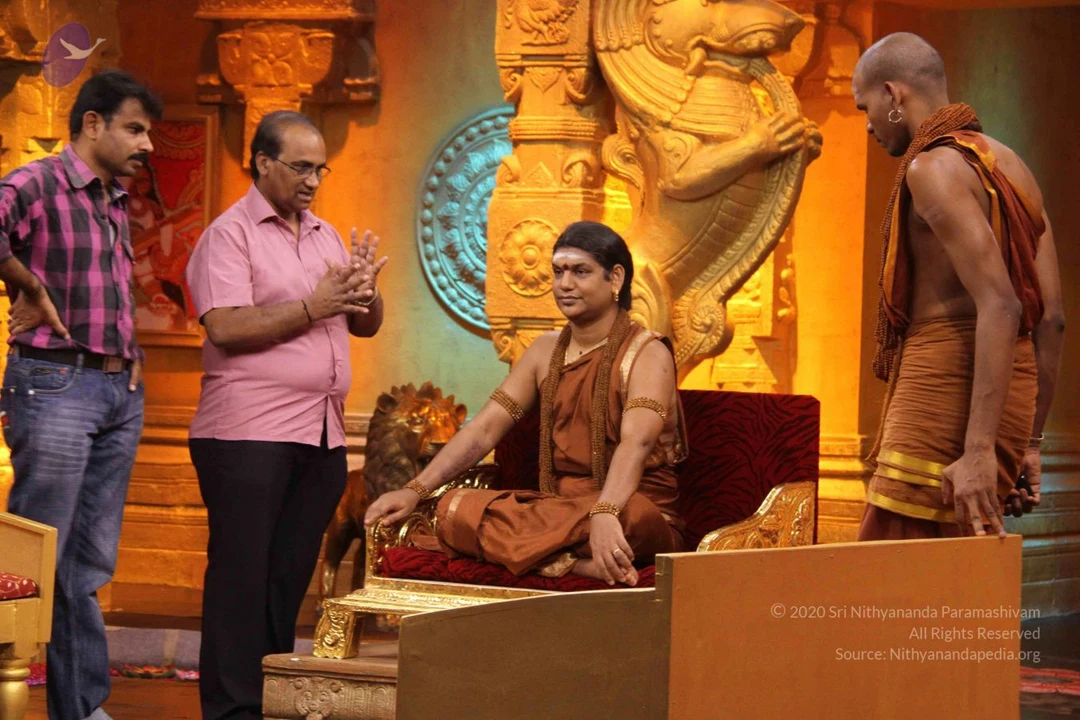
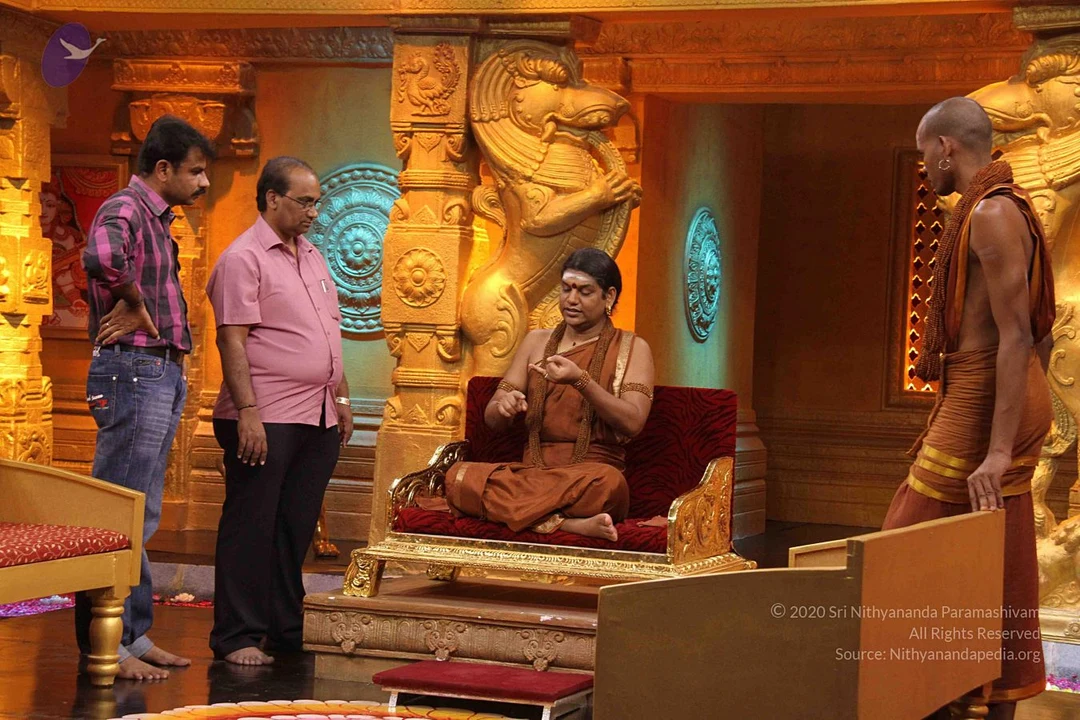
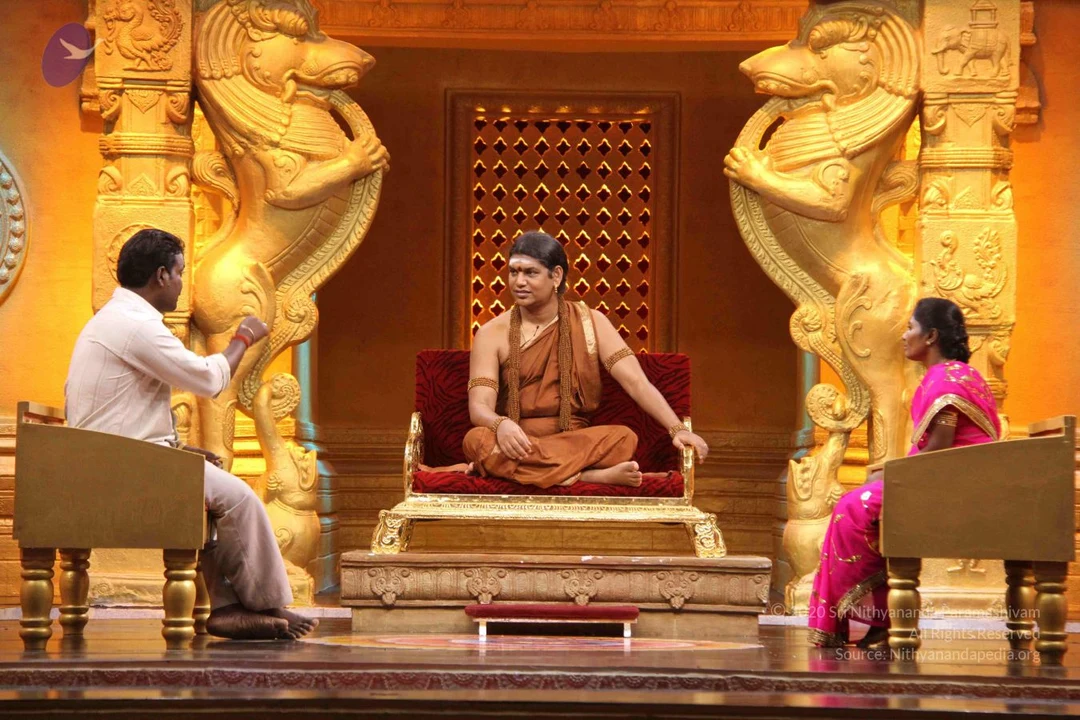
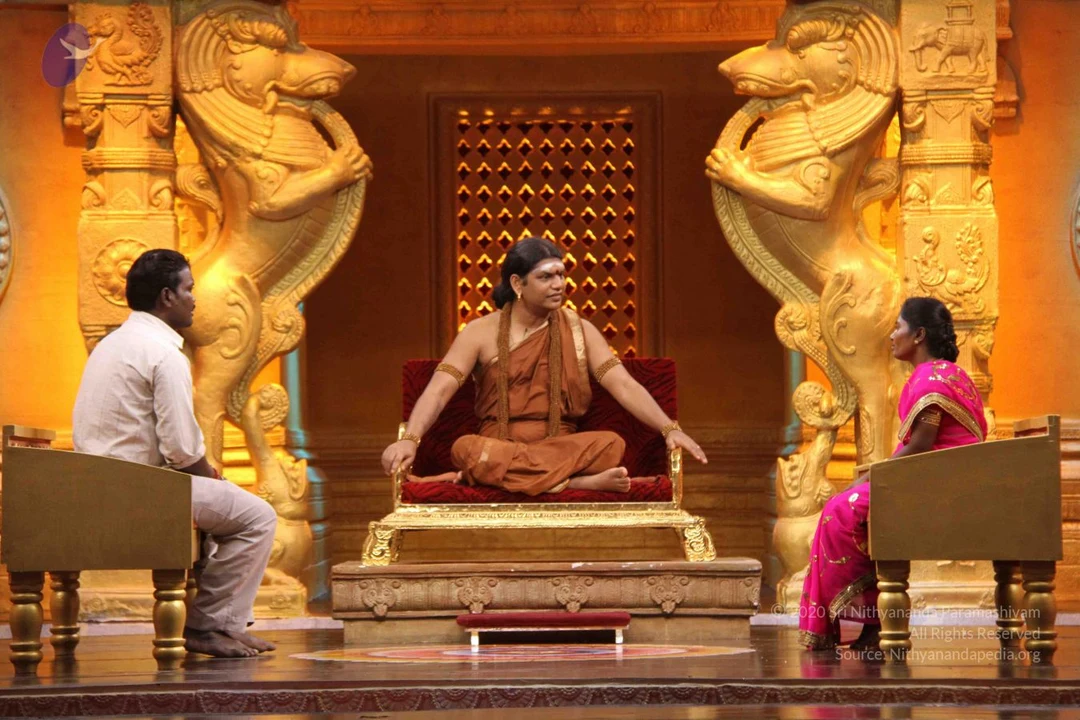
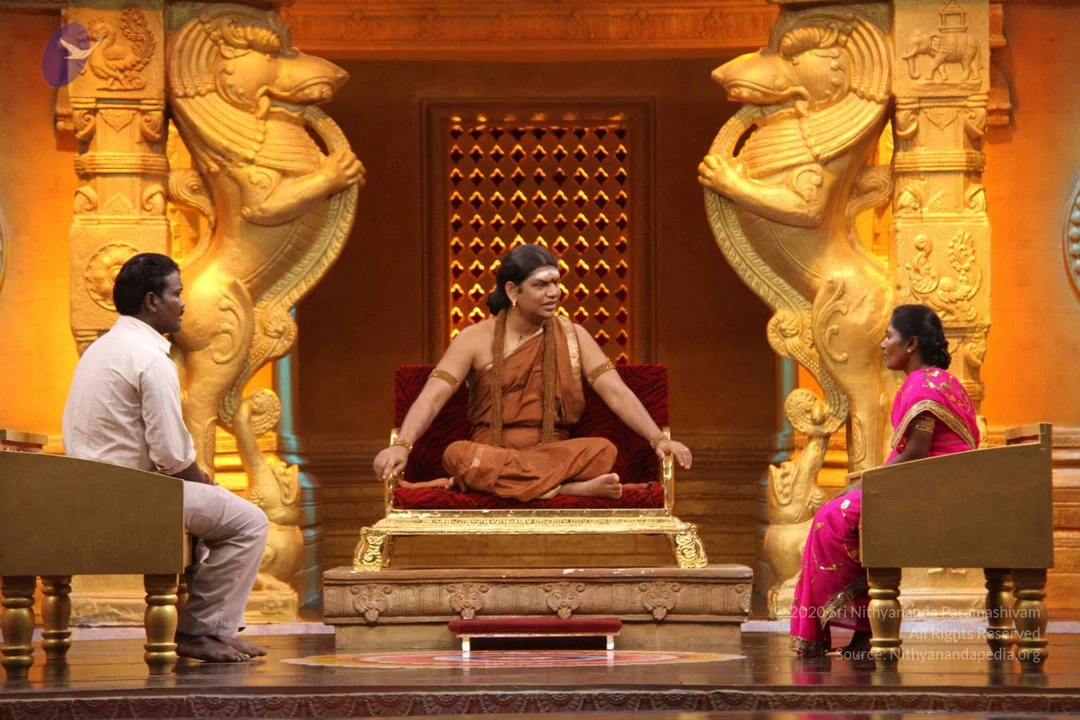
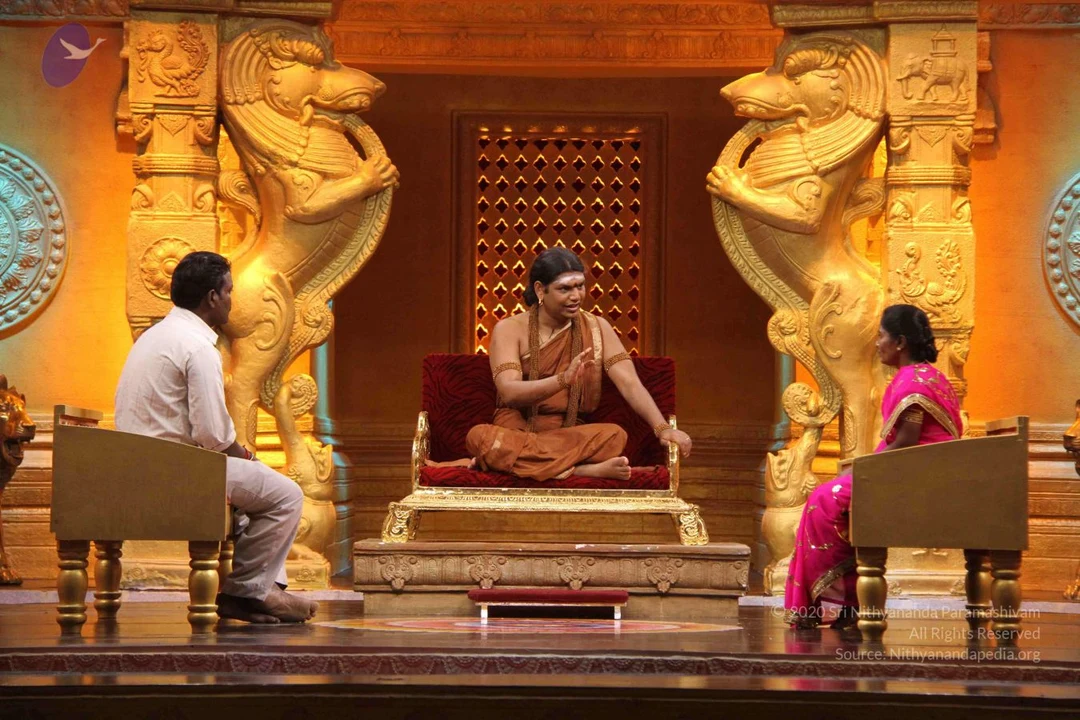
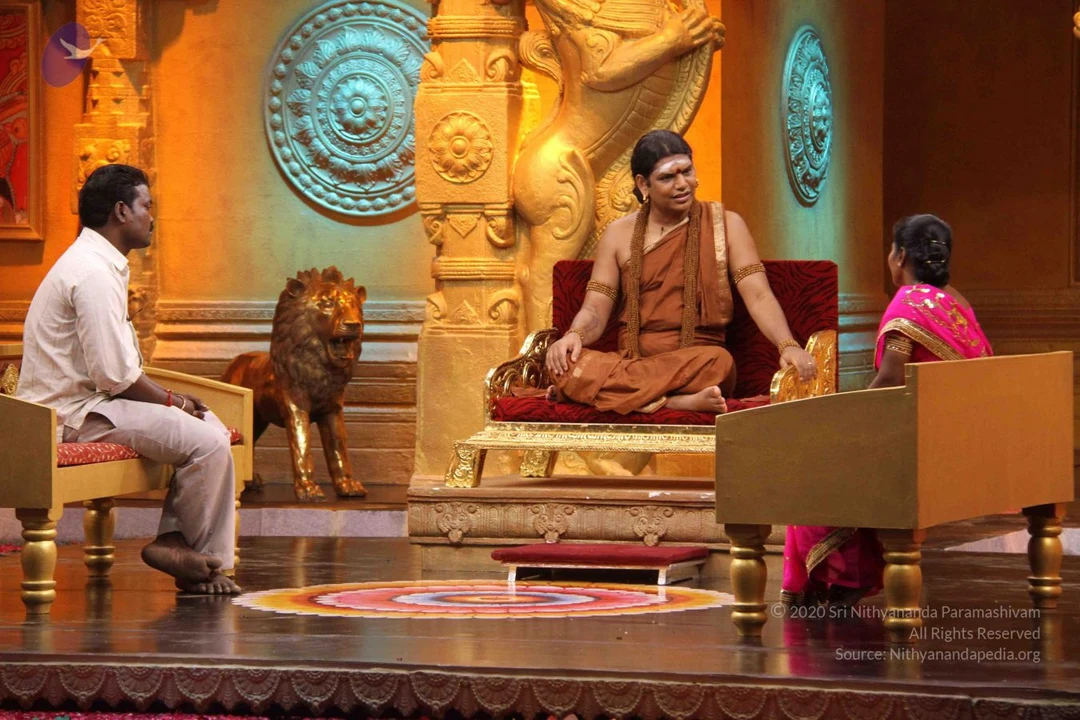
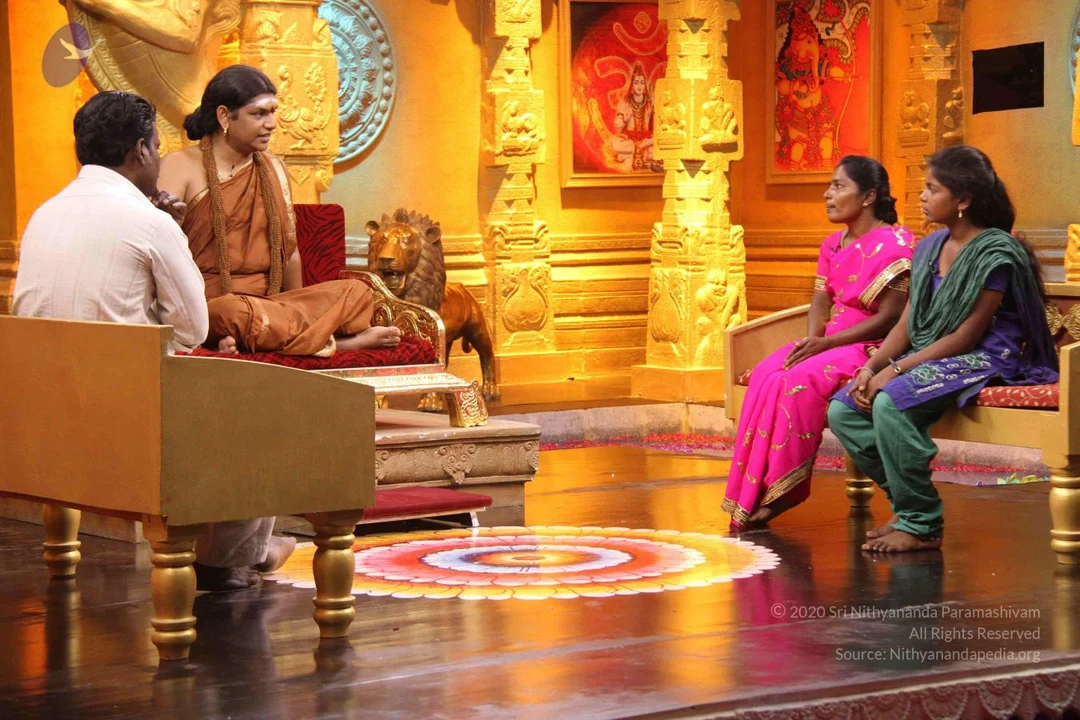
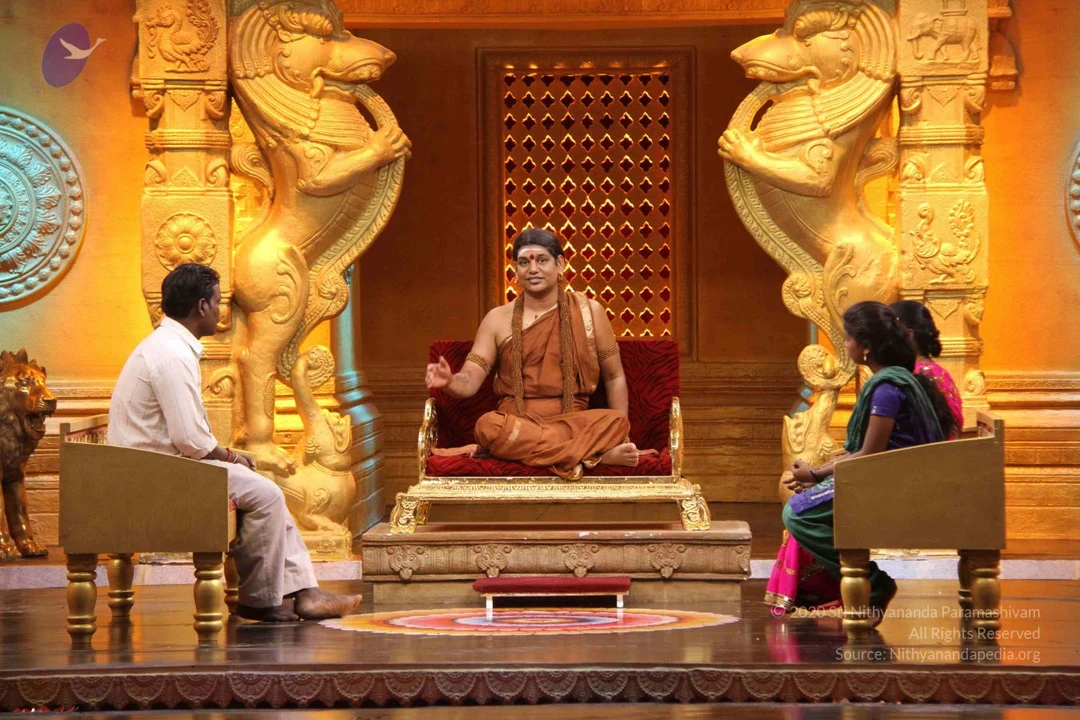
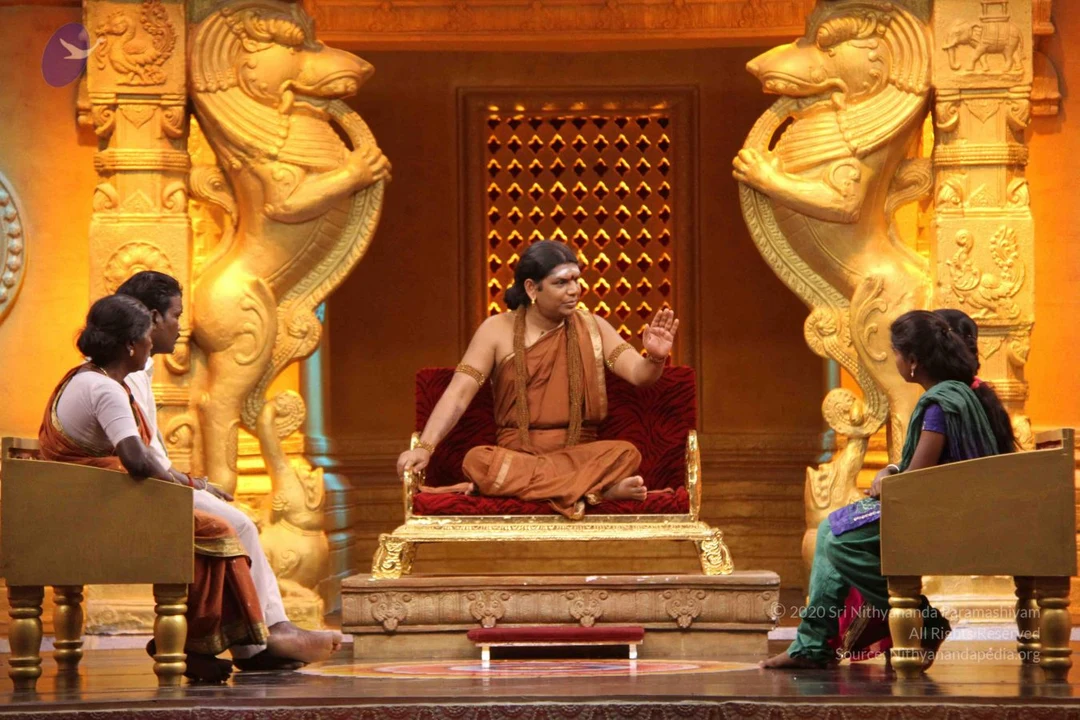
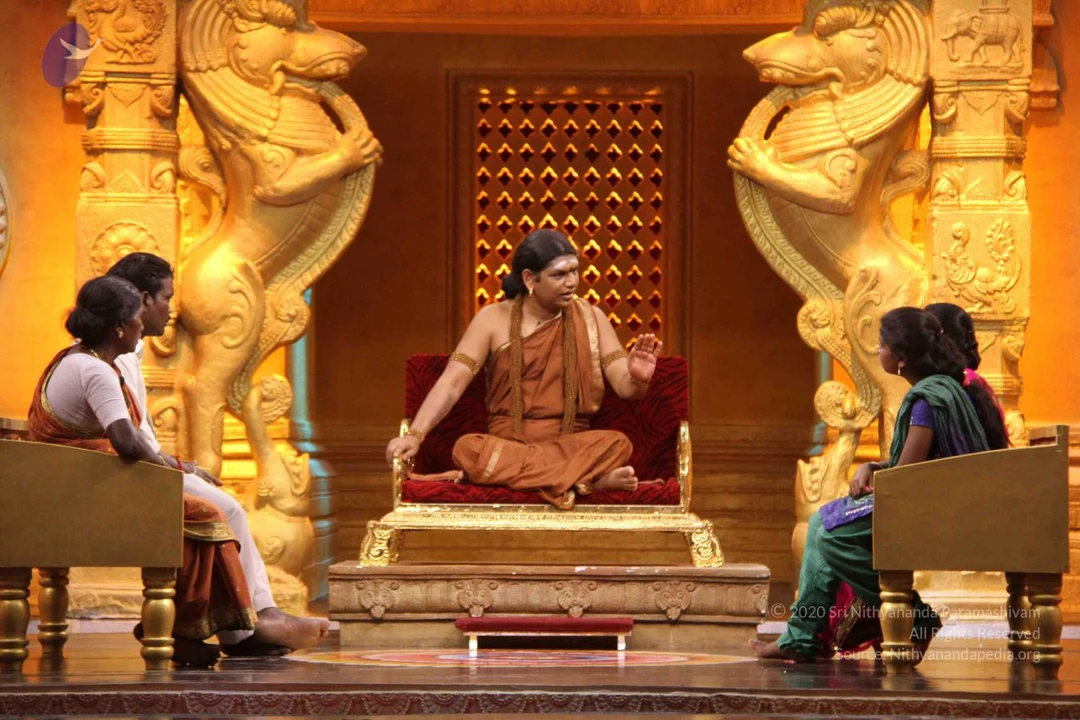
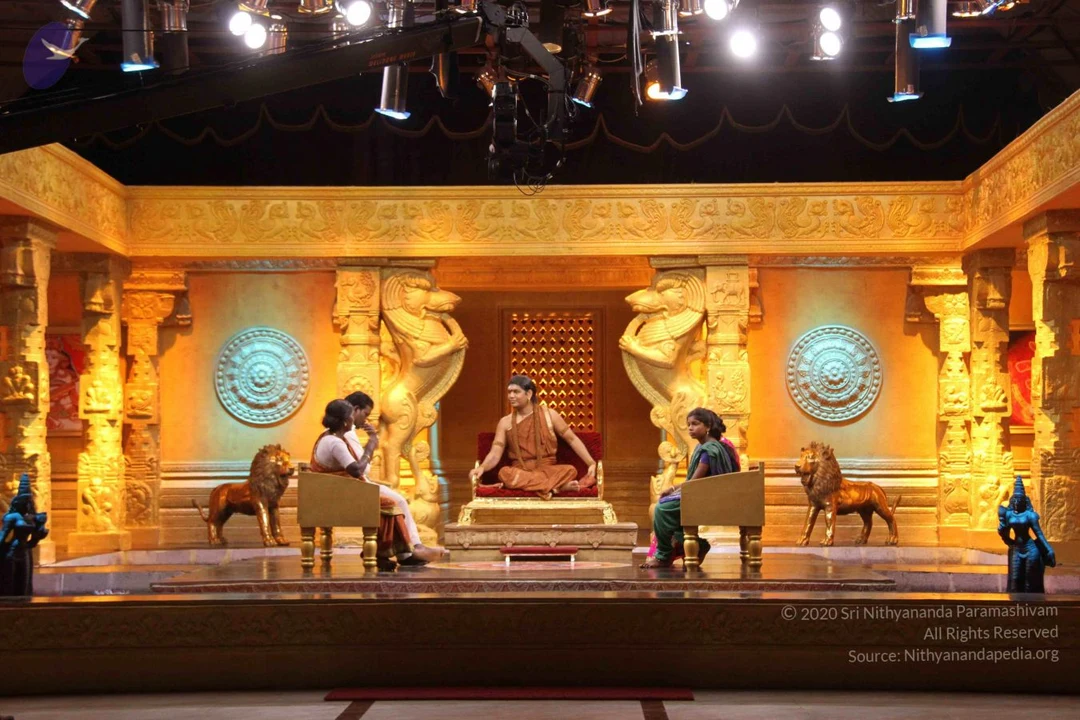
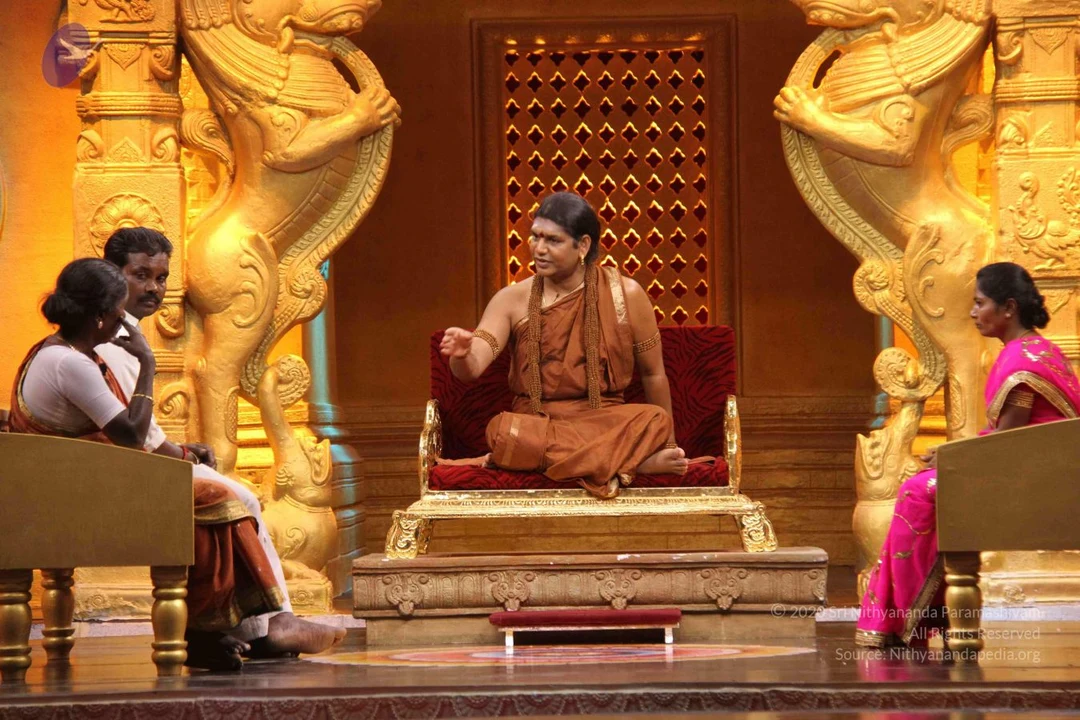
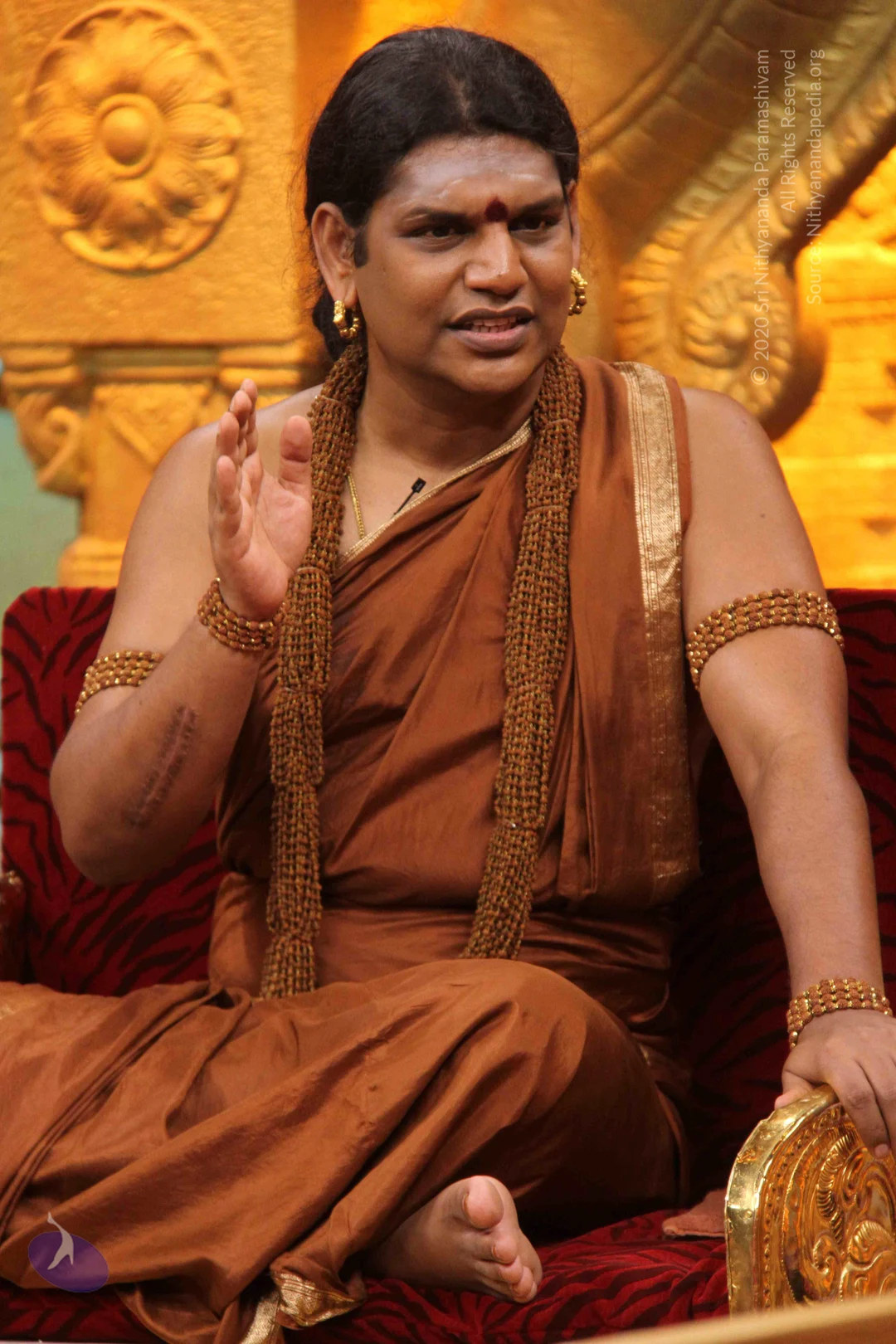
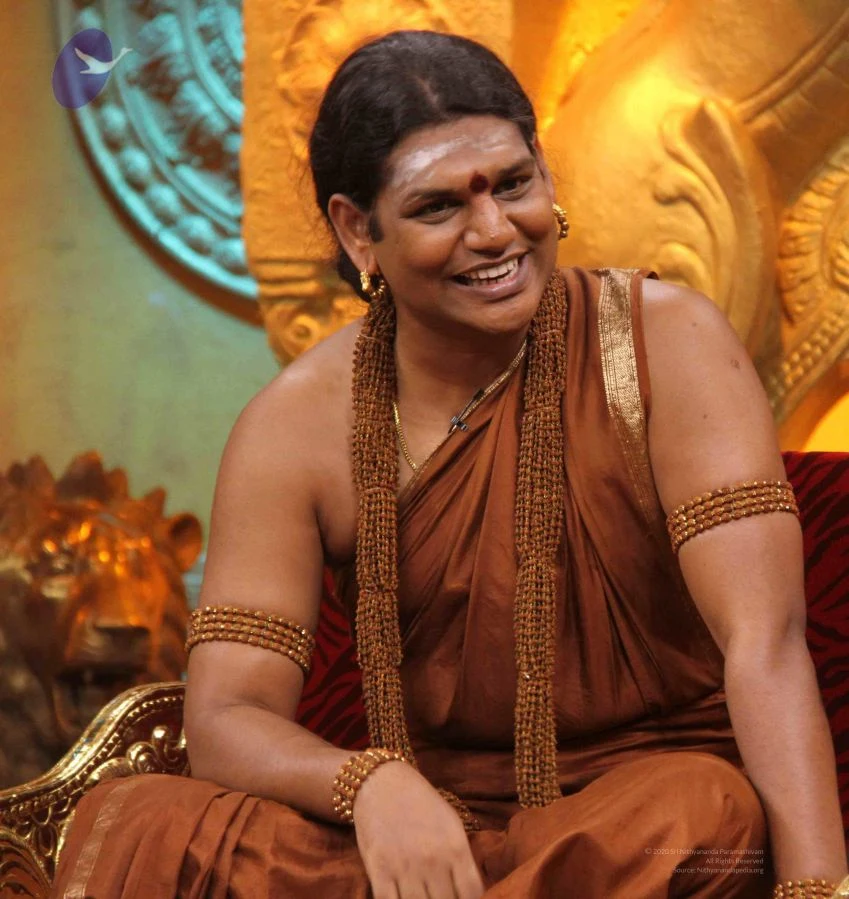
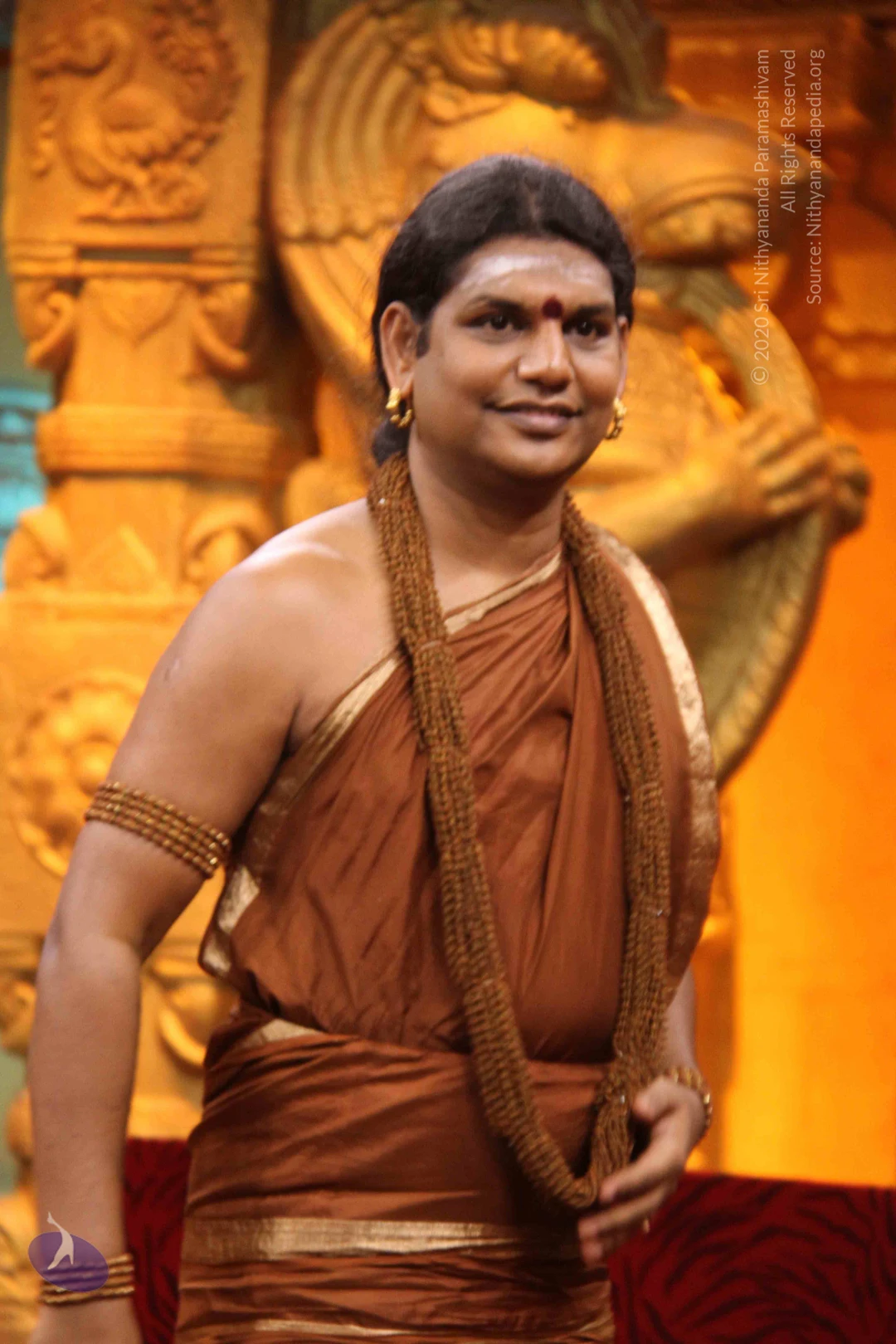
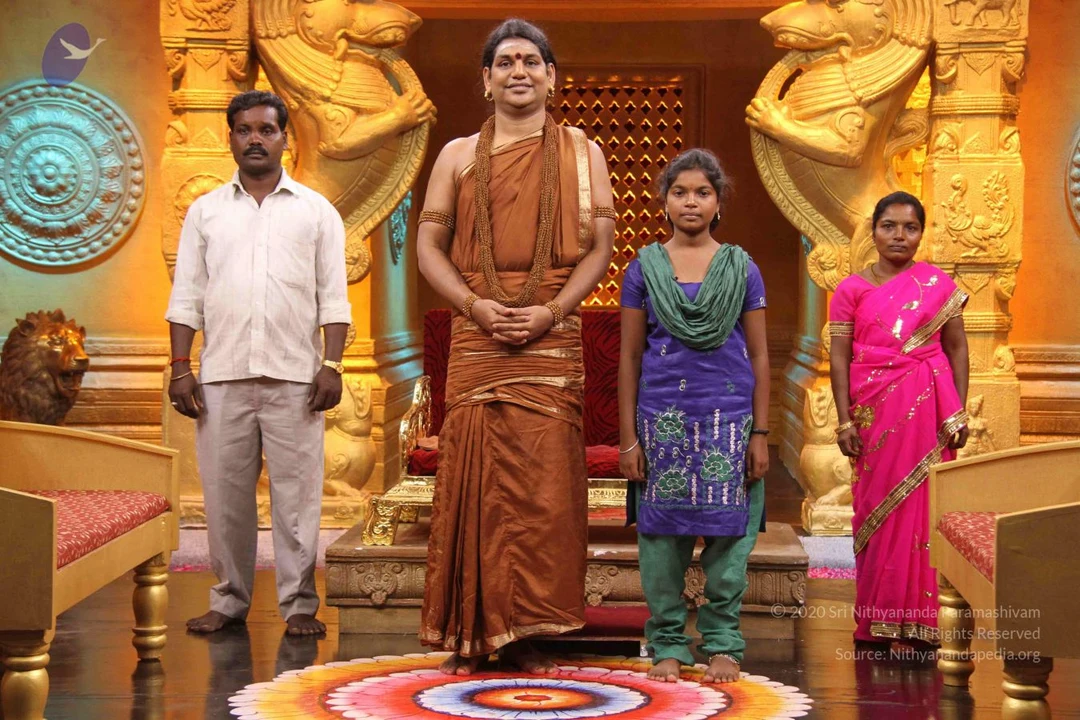
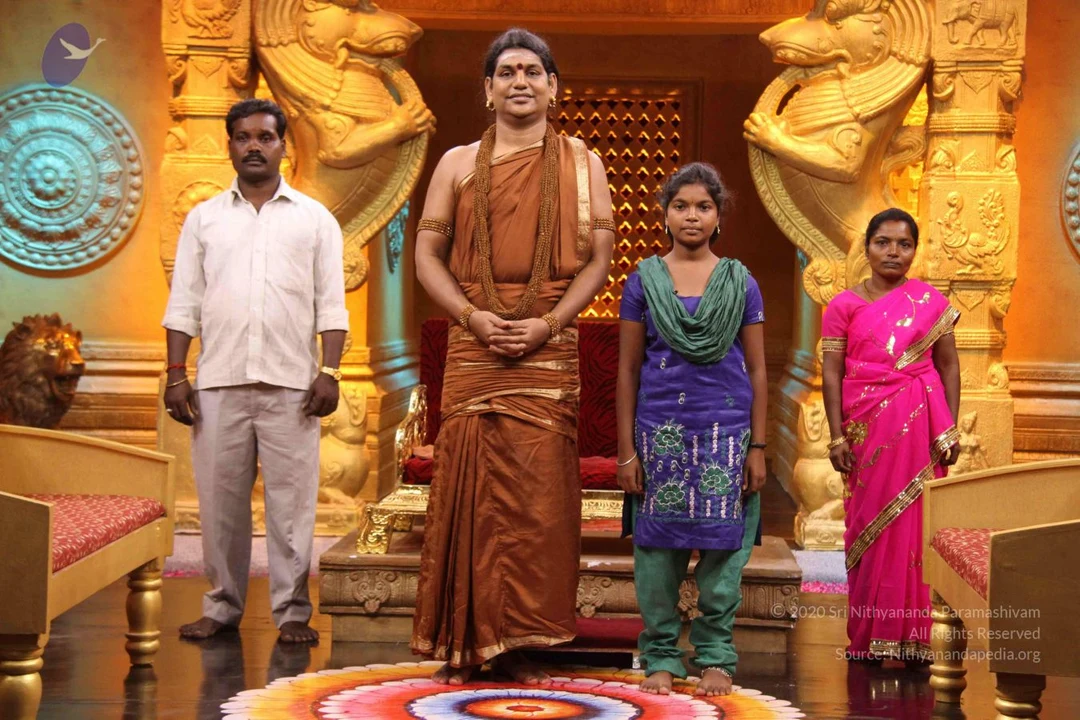
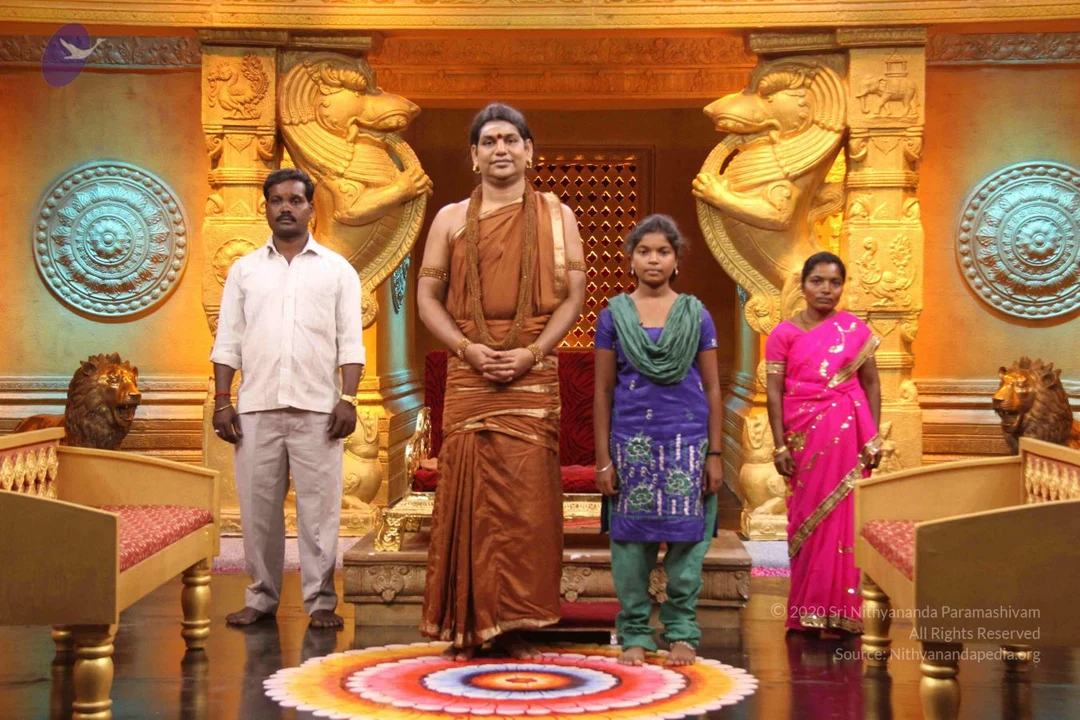
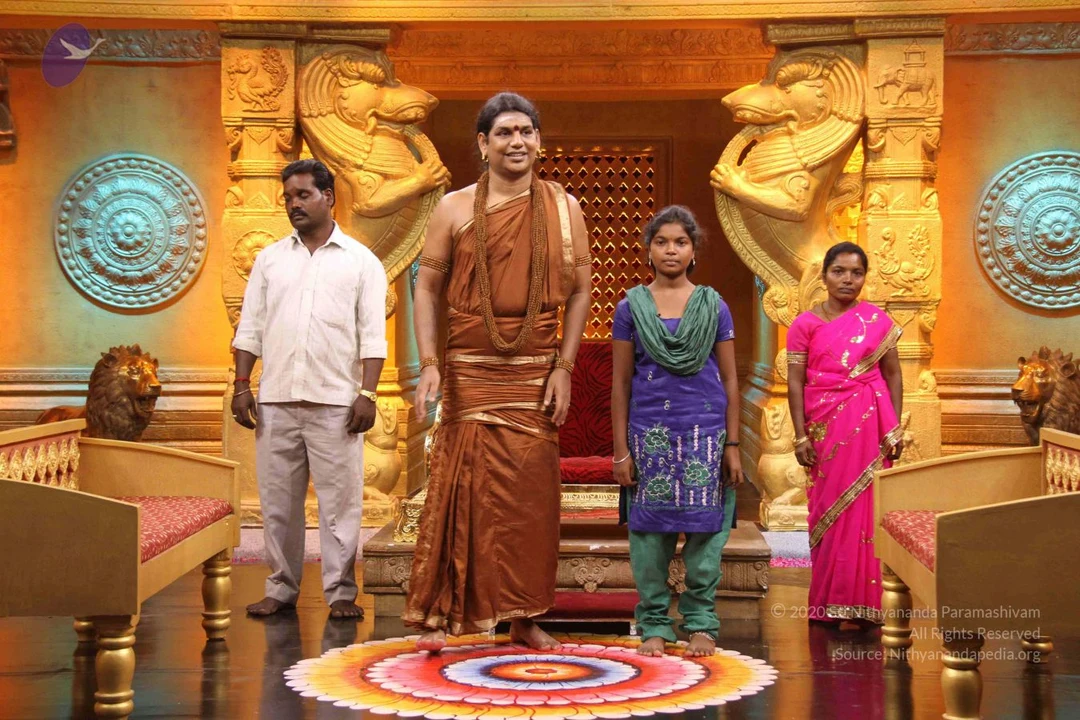
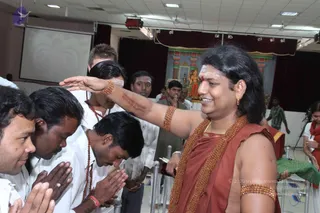
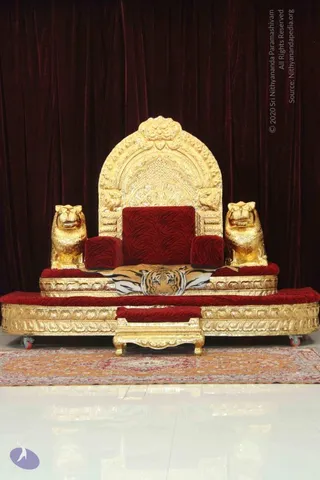
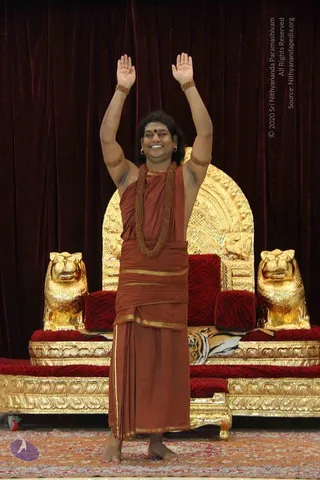
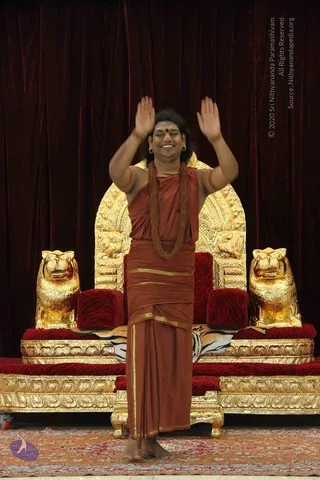
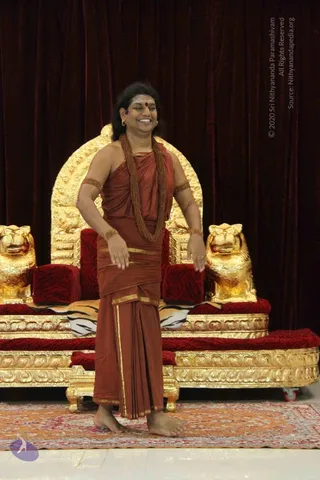
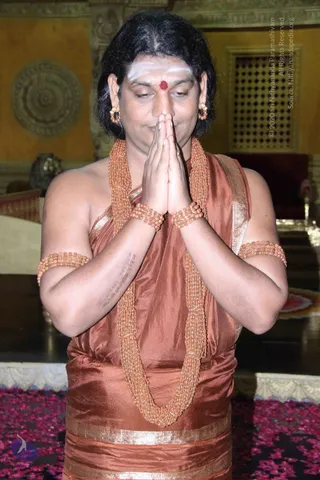
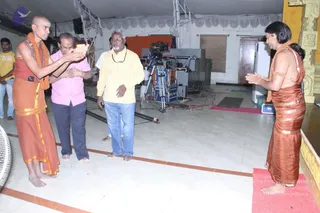
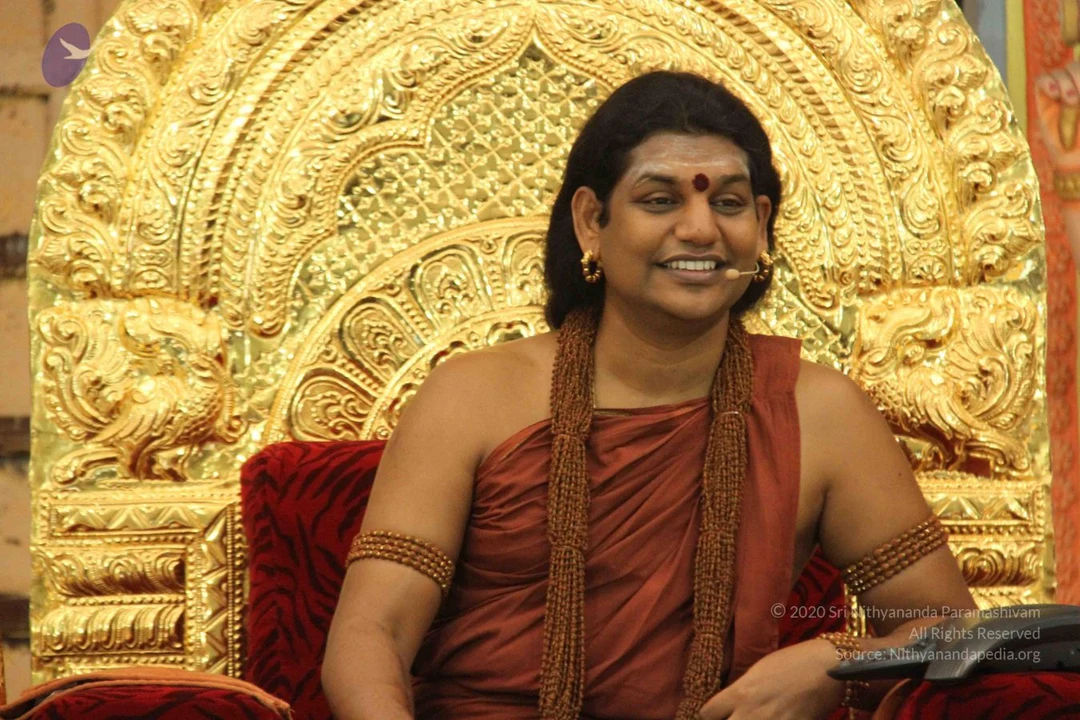
A photograph of a satsang-style set with golden temple-like pillars, a golden lion statue and framed religious paintings on the walls. A woman in an orange-brown saree with rudraksha-style beaded mala and a traditional ochre-and-gold draped shawl sits cross-legged on a red-cushioned throne-like seat, facing three people in conversation. a person is indicated by the saffron-toned clothing, long mala and throne seating. Opposite her, a man in a white shirt and white dhoti sits on a wooden chair with his back to the camera. On the right, two women sit on a wooden bench: one in a bright pink saree with gold border, the other in a green salwar with a blue and purple top and dupatta. Rangoli-style circular floral designs decorate the floor.Indoor photo in a hall with a white ceiling, fluorescent lights, red curtains and a projector screen. A figure with long black hair, a tilak on the forehead, rudraksha malas around the neck and arms, and a rust-orange cloth draped over the body stands at right, handing papers to a man. The man beside them wears a white kurta and holds small papers; a second man in a white shirt and a younger man in a patterned white shirt stand in line. Several other people, including a bald man in orange with rudraksha beads at right, stand behind in a queue. A printed photo caption at lower right is copyright text, which is not included here.A photograph of a single person standing on a small red-carpeted platform in front of an ornate golden throne with red velvet upholstery and gold armrests. The person wears an orange-brown saffron-toned draped garment with gold-coloured bands, multiple beaded rudraksha-style mala necklaces, gold bangles and a red bindi, with hands pressed together in namaskar. Flanking the throne are large golden carved lion-like pillars and a gold lattice panel behind. a person: the figure has a long swept-back hairstyle and saffron clothing with a rudraksha mala and ceremonial gold ornaments, consistent with the page's reference to a person at this satsang.

October 26 2013

Original wiki page
Contents

Title:

Completion is Shiva!

Description:

In today’s morning Satsang, Paramahamsa Nithyananda describes the importance of aligning our thinking to the four identities we carry - inner image, outer image, others’ image of us, and life’s image. Once we decide what we want the best images of ourselves to be, we need to review all our thoughts, completing with the ones that do not align with our peak possibility. Intense thinking leads us to Authenticity and gives us the clarity to be who we are supposed to be in our lives.

Link to Video:

VideoAudio

Transcript:

Nithyanandeshwara Samaarambhaam Nithyanandeshwari Madhyamaam | Asmath Aachaarya Paryanthaam Vandhey Guru Paramparaam ||

00:40 Hindi - 00:50

Completion is Shiva. Please understand, Mahadeva’s responsibility is not destroying; rejuvenation. He destroys all old things which cannot stand alive in the present. He destroys the past which is a dead weight on the present, but not power for the present and creates the space for present to expand and be alive. Completion does exactly the same thing.

Please understand, I can give same definition to Completion and Mahadeva:

“Which burns all the dead past which is sitting as a weight over the present but never as a power for the present and creates a space for the present to become presence and expand, be alive.”

The definition which I gave now is for both Mahadeva and Completion.

Please understand,

02:27 Hindi-02:49

Mahadev is the embodiment of Completion. Completion is the process of Mahadev. Please understand, intense contemplation is the trishul in the hands of Mahadev. Intense contemplation. I tell you, just like how they value a cow, a product, a house, you can be valued based on your ability to think intensely. Your ability to think intensely, your ability to think intensely gives value to you. Whatever field you are in, if you start thinking intensely, first thing you will find out is which is really, really your field.

People try to become doctors when they are supposed to be sannyasis. People try to become engineers when they are supposed to be rishis. People try to become lawyers when they are supposed to be doctors. They do surgery of the case: operation success, case failed. People try to be in wrong places because thinking has not become intense. When you have become intense, you will know whether you have to be in the place of doctor or engineer. You will be in right place.

I tell you, this is going to be the main point why my gurukul kids are going to be successful all over the world, because I teach them sincere thinking, intense thinking, authentic thinking. They do not have vague thinking.

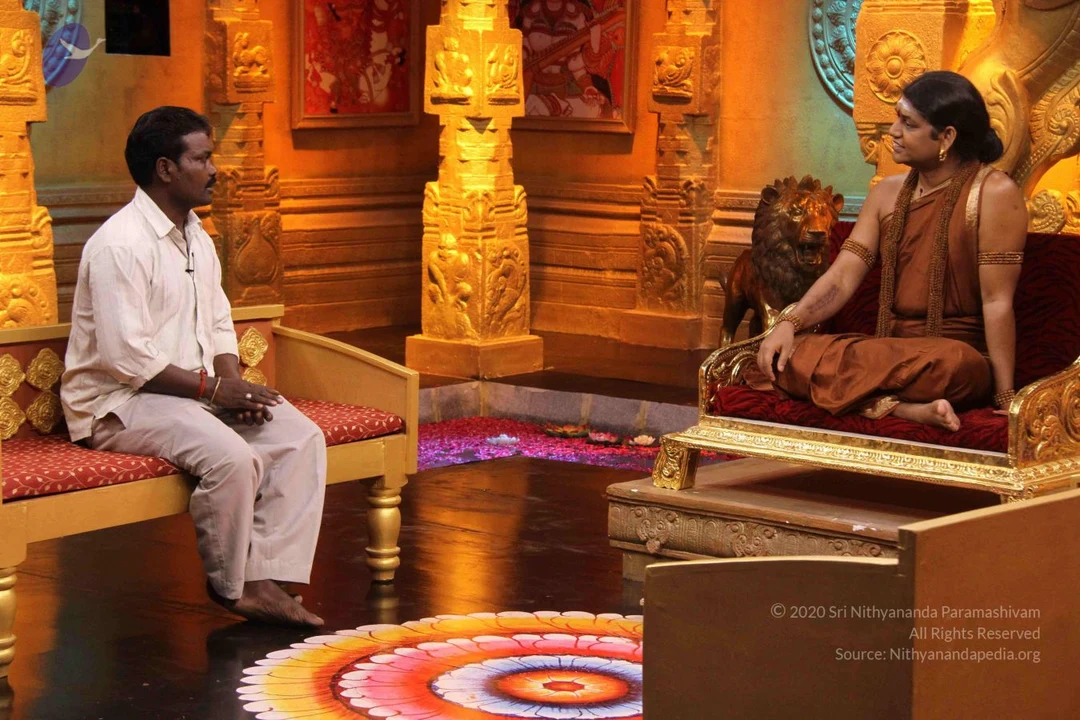
When I am attending this reality show, Nithya Dharmam, in Thanthi TV, whenever I attend the reality show and talk to people, I always found the person who thinks vaguely, insincerely, is failure wherever he goes. When I say “failure”, I really mean it. Please understand, if you are supposed to be making billion dollar and you are making 2,500 dollars per month, don’t think it is a big success. It’s a failure.

The vague thinking is one of the biggest psychological disorders humanity has and nobody attends to it. The Dentists’ Association is responsible to think and protect humanity from dental problems and come up with innovative solutions for existing problems. Psychiatrists’ Association is responsible for solving the psychiatric problems of humanity and protecting them from getting affected by further problems. Liver Association is responsible for protecting the liver of the whole humanity and finding solution for existing problems. Same way, an incarnation is responsible for protecting the spiritual welfare of the whole universe and solving the existing problems humanity has spiritually. Understand, I feel that responsibility. That is why day and night I am rushing, rushing, rushing to reach out to human-beings, to reach out to remind human-beings about the poverty with which they’re struggling, the spiritual poverty with which they’re struggling.

Vague thinking is one of the biggest mental disorder, psychological disorder, conscious disease, disease with which your consciousness is suffering. First thing, let your thinking be aligned to your Inner Image, Outer Image, Life’s Image, Others’ Image. Anything which is away from these four, consciously, decisively complete with that pattern. Let your energy be intensified just on these four.

Please understand, “manana” means all your thinking is concentrated on your Inner Image, Outer Image, Others’ Image and Life’s Image betterment. Please understand, Inner Image is the ideas you carry about you. Outer Image is the ideas you project about you. Others’ Image is the ideas others carry about you. Life Image is the idea you carry about others and life. Constantly concentrate your thinking to make all these four better, better, better. Betterment of all these four leads to intense thinking and intense thinking leads to betterment of all these four. Dyanse suniya. Thinking to better all these four is what I call “manana”. The Inner Awakening Level-4, the second day,the initiation you are going to receive is “Manana Deeksha”.

Stop this vague thinking. Learn to think. I wanted this to be a syllabus for our Gurukul kids. Around four days, whole day they will have to sit with paper and pen from the moment they wake up till they go to bed, constantly writing whatever they are thinking, and editing and realigning. Writing whatever they are thinking, editing and realigning. Realigning your thinking to the betterment of all these four. And some of you may be thinking how can Gurukul kids understand all these big concepts? If you are thinking like this, be very clear, you are a dull, vague thinker. My kids can understand two hundred times more than what you can understand. And Vivekananda says very clearly, before the age of fourteen, a child has all the capability to become enlightened.

And I really wanted all my disciples, followers also to practice this. Take four days off from your regular routine. Go somewhere where you are not demanded, where you are not expected to follow any routine. Wake up whenever you want. Start writing down your usual thinking but if you wake up, naturally your usual thinking will start. Pen down. After you pen down half-an-hour or one hour, when you don’t have further any thoughts, then read what you wrote, see how you can align your thinking to the betterment of these four – Inner Image, Outer Image, Others’ Image, Life Image. Whatever is not in alignment, complete with those thought patterns. For example, if you are a sannyasi and if you have a thought pattern of the lust or power, then sit with yourself and complete with that root-pattern. Find out why that parasite patterns exists in you. I tell you, at some point you would have felt powerless, weak; that is why you wanted social power or political power as a alternative to your existential power. So complete with that pattern. I am not saying you should not have social power or you should not have political power, no. All I am saying is, having social power or political power due to the powerlessness inside is something seriously wrong. That powerlessness has to be completed, has to be attended. Complete with all the root-patterns which is not in sync, alignment with your Inner Image, Outer Image, Others’ Image and Life’s Image, which is not helping you to better all these four. Betterment of all these four is “manana”. Please listen if your thinking is vague, you do not align yourself with these four.

14:38 Hindi - 16:38

Authentic thinking, authentic thinking is “manana”. As I said, at least spend four days in learning authentic thinking and completing with all the inauthentic patterns. This literally like a designing your inner space. Designing your inner space. Many of you want beautiful inner space, but you go on travelling in a completely opposite direction. It is like you want to go to Bangalore, but you are travelling towards Mysore. On the way if I tell you, you say, ‘No, no, no, even in this road if I go, one day I’ll come back to Bangalore.’ When? If you go around the whole Planet Earth one round, you may come back to Bangalore. By the time you may die. That is what exactly we are doing.

Please understand, our thinking, is it going hand-in-hand with the way we want to build ourselves? If your thinking is bettering your four identities, then your thinking is your friend. If your thinking is functioning in the opposite direction of your four identities, if they are not bettering that four identities, then your thinking itself is your enemy. Please understand, first you need to find out whether your thinking is acting as a god inside you or as a demon inside. Whether it is acting as a god inside you or as a demon inside you. Sometime many of you are possessed by ghost. What is that ghost? Your own thinking which is not in alignment with the betterment of your four identities. First, sit and pen down the four identities you wanted to have – the best Inner Image, best Outer Image, best Other’s Image, best Life Image. Have that four. Pen down. Then align all your thinking to it. If there is some thinking which goes in a completely different direction, complete with it, complete it. Declare spontaneous completion and drop it. Align your thinking towards these four identities – Inner Image, Outer Image, Others’ Image and Life’s Image.

Please understand, authentic thinking is one of the greatest treasure a human being can have. Authentic thinking is one of the greatest treasures a human being can have. So the second initiation you are going to have in the Inner Awakening Level-4 is “Manana Deeksha” – initiation into authentic thinking. I tell you, suddenly you find all the pebbles in the sea beach are diamonds. You can’t even say you landed on a treasure, because a beach full of diamonds can’t even be called “treasure”. It is like suddenly you are transported to a different world. I tell you, that is exactly what will happen whole day if your thinking is aligned towards these four identities. Like a intense coal, dense coal becomes diamond. Dense carbon only becomes diamond. So, dense thinking becomes authenticity. Understand, dense carbon becomes diamond. Dense thinking, intense thinking, sincere thinking becomes authenticity. You don’t need to do anything special to be authentic. You don’t need to spend every day some time to become authentic. First, spend few days and learn authenticity, learn to think in an authentic way.

22:19 Hindi -23:33

In Inner Awakening Level-4, you will be receiving the initiation into “manana”. Means, through the spiritual energy, Kundalini awakening, you are aligned to do “manana”, complete with all the patterns which is not supporting, helping you to better your four identities. “Manana” is one of the biggest treasure, power, God has given you and unfortunately, you are not using it. Sometime, when people come and stand here asking me for healing them, I really feel, ‘Oh, God, why are you coming and standing in front of me like a beggar? Narayana, why do you stand here like a “daridra” without realizing you are Narayana? You are capable of everything I am capable of!’

It is unfortunate, people have, their own head becomes a dead-weight on themselves. It is like a big rock is sitting on you, you cannot move your body. So their own thinking becomes a big rock on themselves and they feel they are bound, they are bound, they are bound. They are bound, they are bound, they are bound. So unfortunate. All you need to do is only one thing: align your thinking towards your four identities. That’s all. That’s all.

25:34 Hindi - 25: 58

Your thinking can become your enemy; your thinking can become your friend. Your thinking can become your enemy; your thinking can become your friend. Bringing intensity into your thinking is “manana”.

Essence of today’s satsang:

Bring authenticity in your thinking. Align your thinking to these four identities – your Inner Image, Outer Image, Others’ Image and Life Image.

Let you all achieve, experience, live, express, radiate, share and explode in eternal bliss, Nithyananda.

Photos From The Day:
Photos Of The Day:

PadukaPuja_Crowd_Individual

NithyaSatsang_Swamiji

SarvaDarshan

Final_blessing

NithyaDharmam_Day1

Thiruvamayur_Dhyanapeetam_NDY

Tags:

Paramahamsa Nithyananda, identities, image, life, thoughts, completing, Authenticity.

Photos from this day

View all 248 photos

Photos From The Day:
19 photosSource gallery
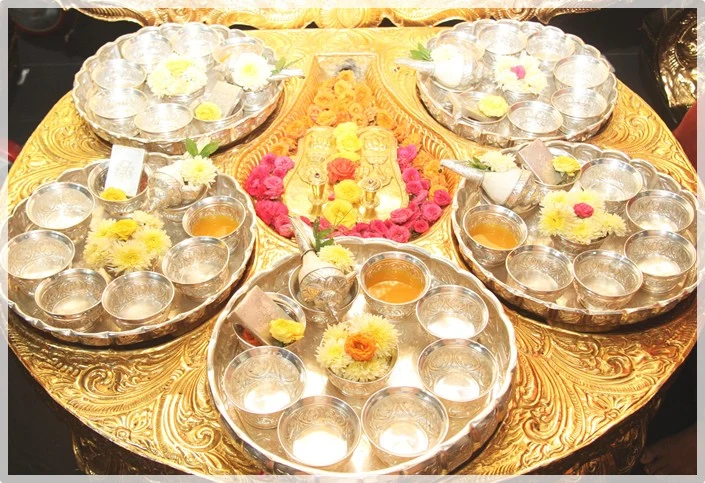
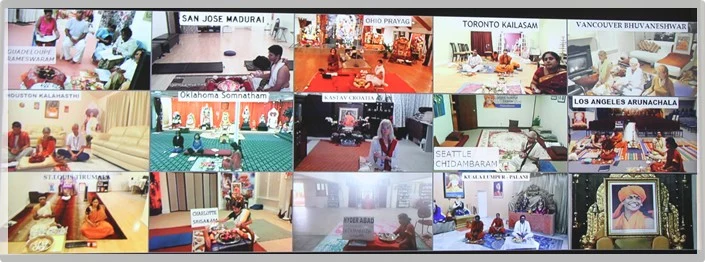
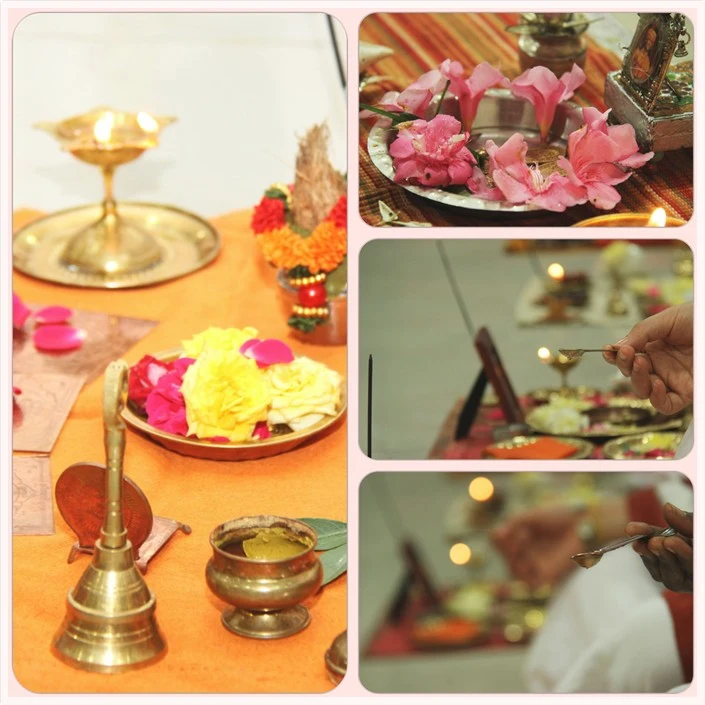
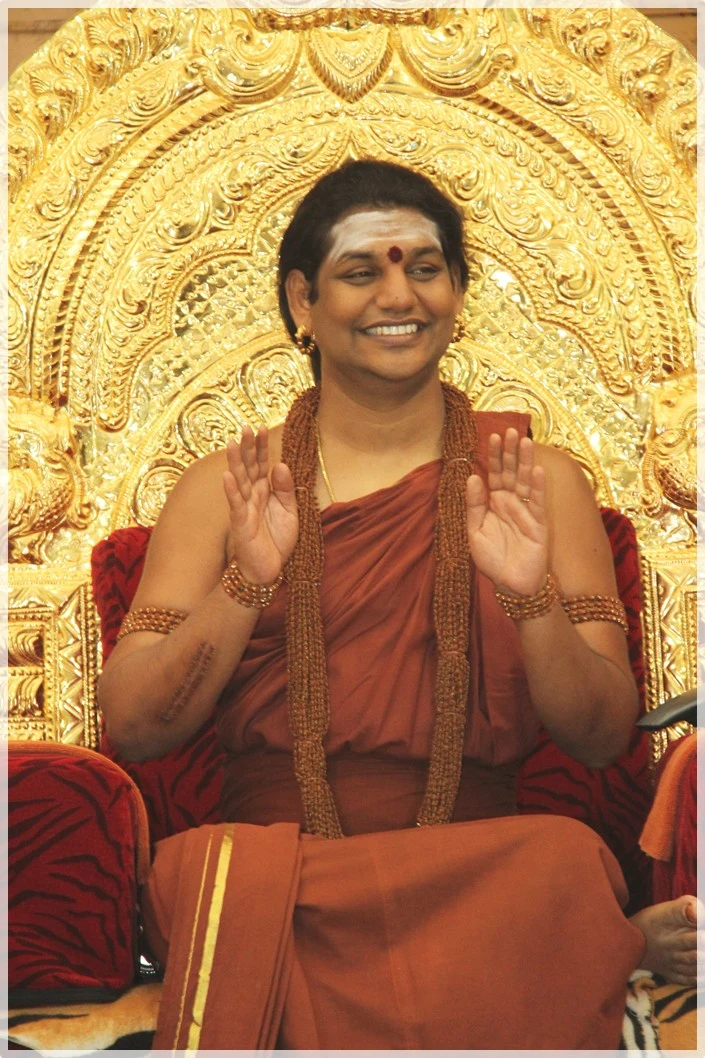
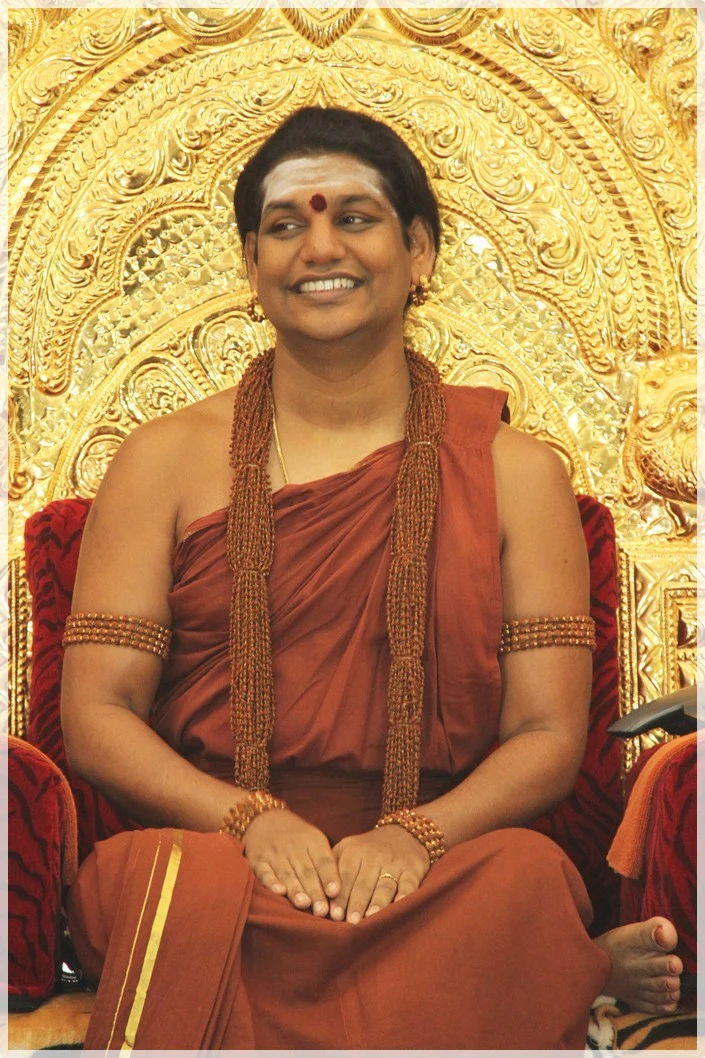
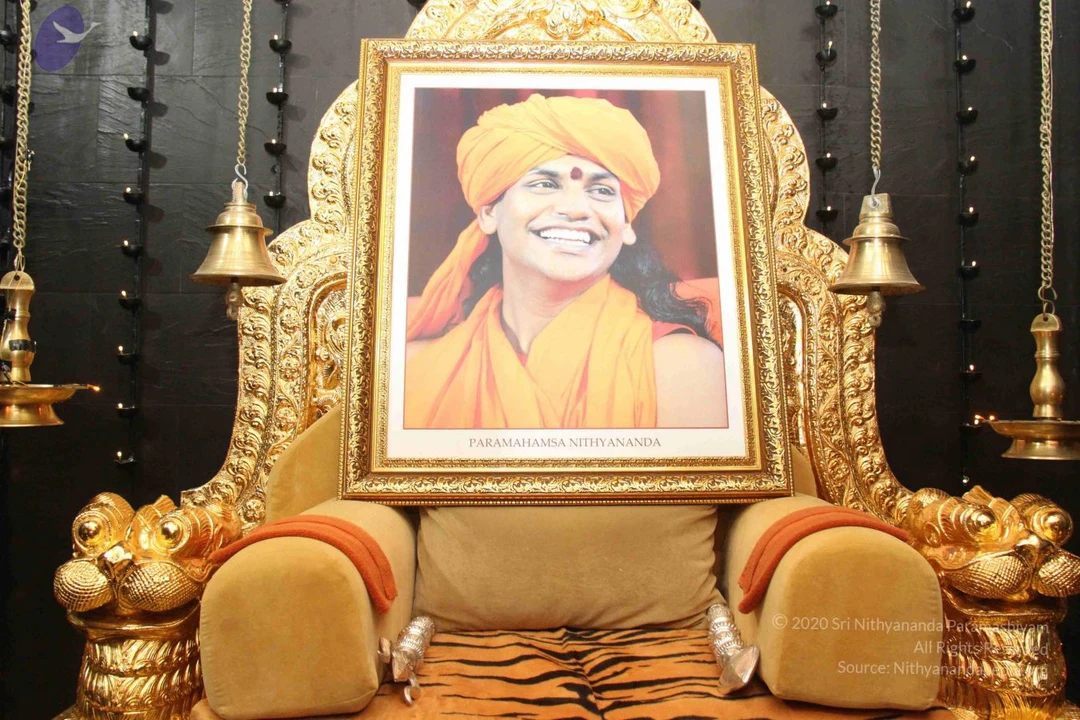
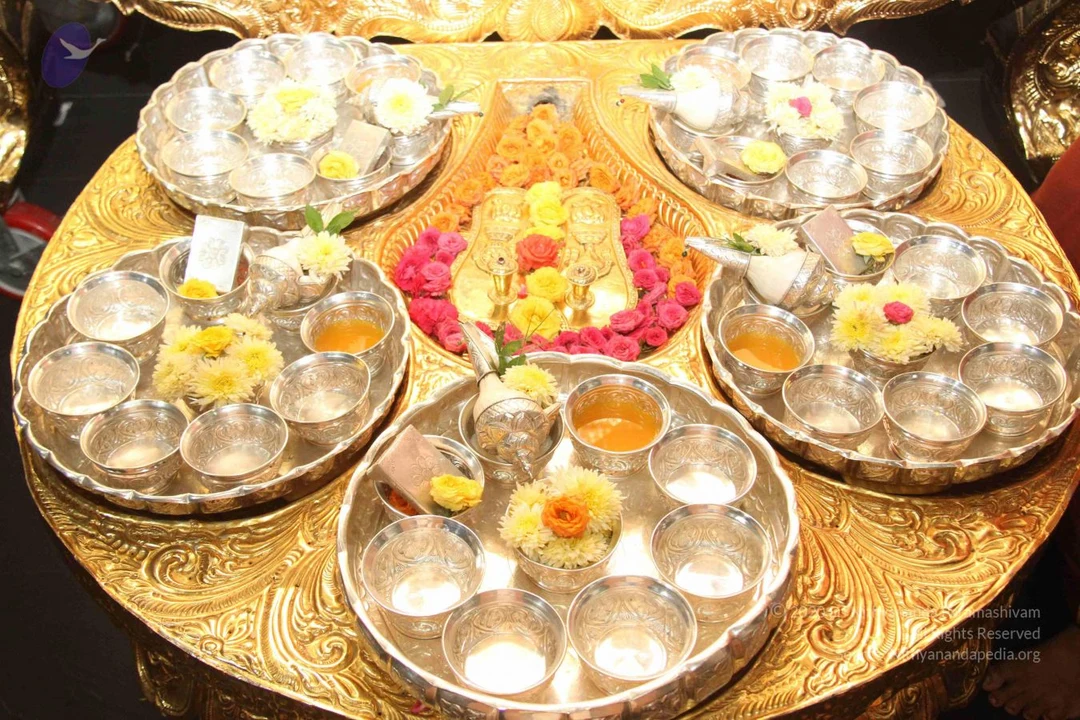
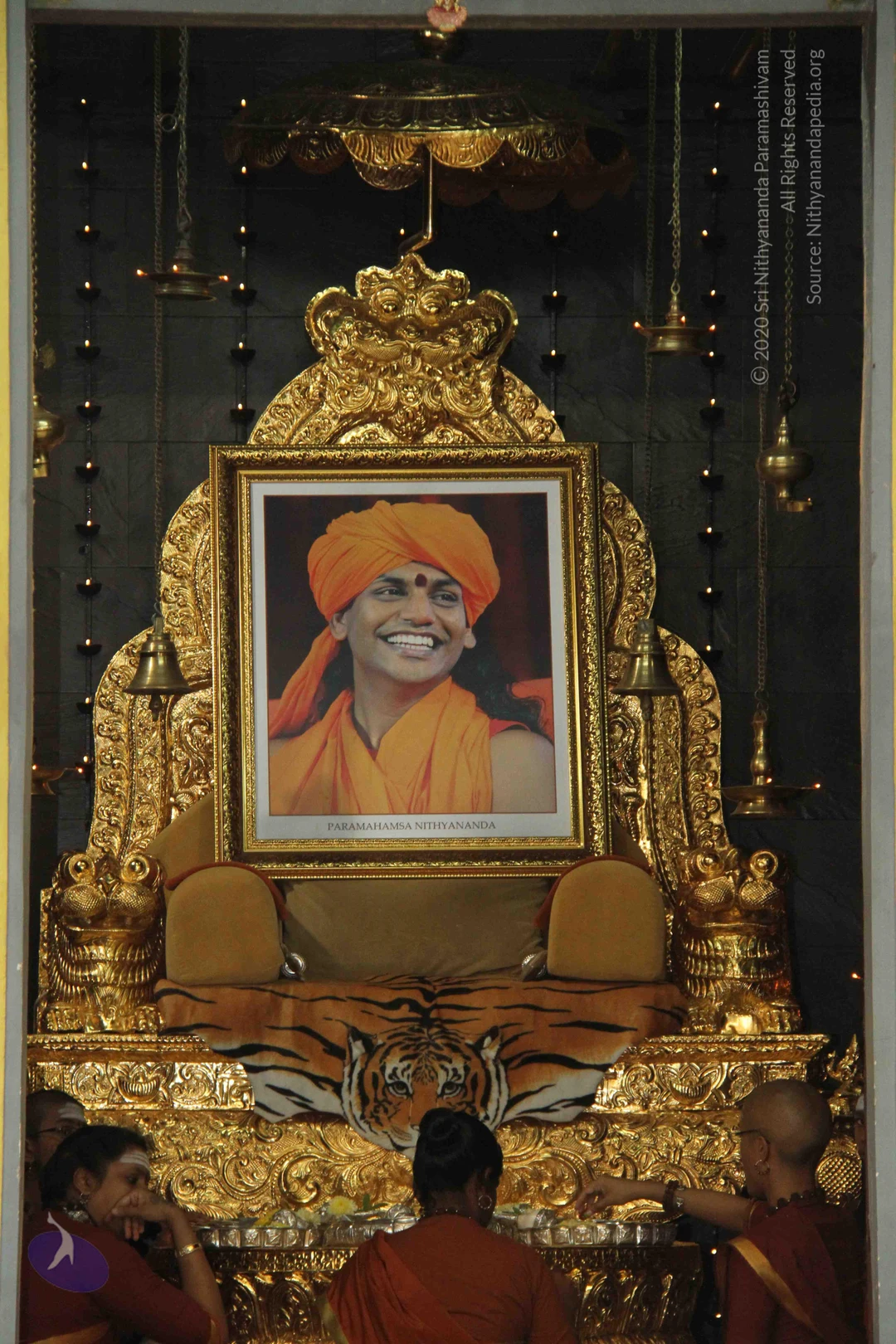
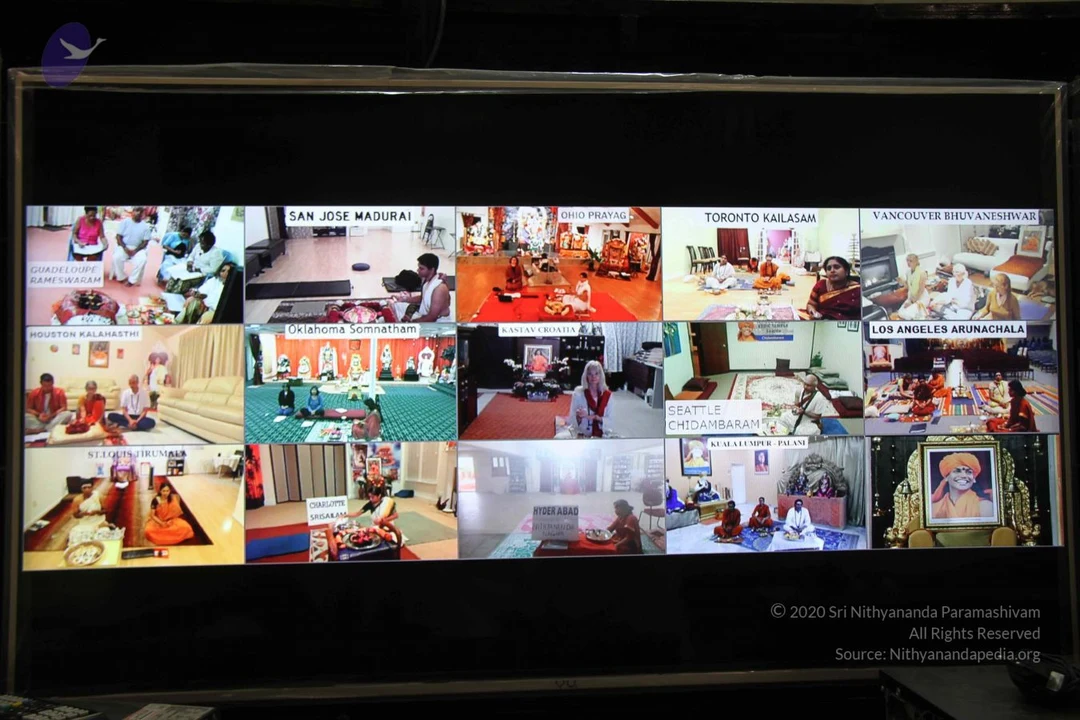
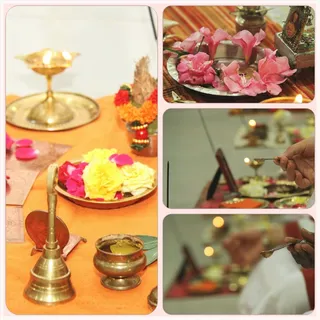
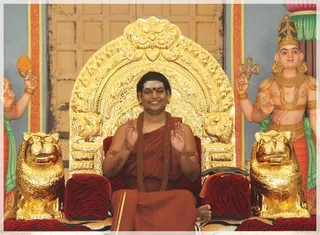
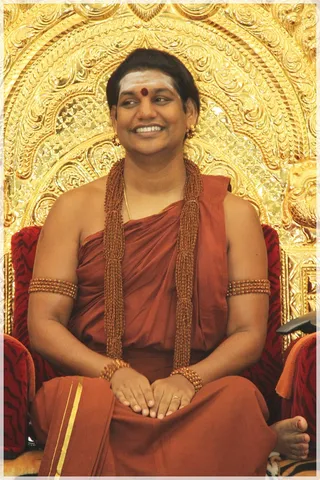
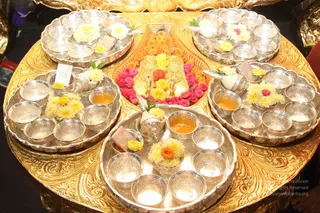
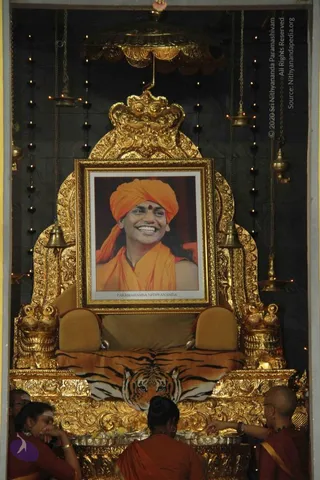
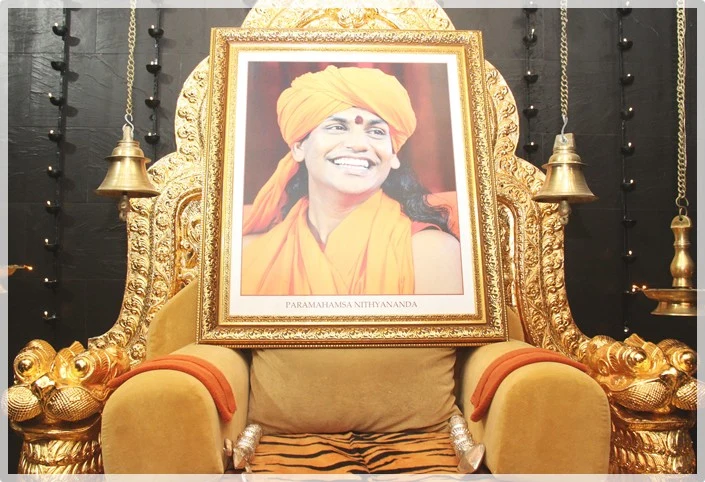
A framed portrait labelled "PARAMAHAMSA NITHYANANDA" sits on an ornate gold throne with carved lion-head armrests, draped with an orange cloth and a tiger-striped seat cushion. The portrait shows a smiling man with an orange turban, red bindi, and orange robe. Brass bells hang on chains on either side and a brass oil lamp stands at right against a dark wall. No physical people are visible; the figure appears only as a printed portrait.A photograph of a ritual offering arrangement on an ornate gold-embossed table. Four large silver trays each hold multiple small silver bowls filled with honey or sweets, decorated with yellow and white flowers such as chrysanthemums and marigolds. At the centre, a gold-coloured deity murti sits amid a ring of pink and red roses and yellow blossoms, with small brass lamps around it. No people are visible in the scene.A collage of fifteen video-conference tiles from a remote satsang, each labelled with a city or temple name such as Toronto Kailasam, Vancouver Bhuvaneshwar, Los Angeles Arunachala, Seattle Chidambaram and Oklahoma Somnatham. Participants sit in home or temple rooms; several wear white, saffron and orange clothing, and some tiles show deity murti, kalasha pots, oil lamps and floral decorations. In the bottom-right tile a framed portrait of a saffron-robed figure with a crown-like headdress is displayed, labelled Paramahamsa Nithyananda in the caption. No single figure can be confidently matched to the portrait as a physical person in the scene.A four-panel collage of a puja setup on an orange cloth. The large left panel shows a brass oil lamp on a tray, a brass bell with a handle, a small brass pot with yellow paste, a tray of yellow and pink petals, a red and orange marigold garland, and scattered petals. The top-right panel shows pink flowers on a brass plate beside a small framed picture. The middle-right panel shows a hand holding a spoon over an offering tray with a lit oil lamp and incense sticks. The bottom-right panel shows a hand holding a small spoon near a blurred tray with lit lamps. Collage of ritual objects; no people's faces visible.A seated man in a saffron-orange robe sits on an ornate gold throne with a large arched backrest carved with floral and scroll motifs. Two gold lion figures flank the throne on red velvet cushions. He has a tilak on his forehead, a gold-toned necklace and bracelets, and bare feet, and he raises both palms in a gesture of blessing while smiling. Behind him stand painted deity statues in gold crowns and jewelry, one holding a trident-like staff and the other a flame-like object. The setting is a temple-style hall with pastel blue walls and a wooden door. a person: saffron robe, rudraksha-style jewelry and gold throne fit the page's presentation, though the features are not certain. Seated on a gold peetha in a satsang setting.A smiling man sits cross-legged on a red and gold upholstered throne in front of an ornate gilded backdrop with repousse floral and scroll patterns. He wears a rust-orange sleeveless robe with a golden-edged dhoti, long rudraksha mala strands draped across his chest, rudraksha armlets on both upper arms and beaded bracelets on his wrists. He has a white vibhuti stripe and a red kumkum dot on his forehead, plus gold earrings. His hands rest folded in his lap and his bare feet are visible.

PadukaPuja_Crowd_Individual
30 photosSource gallery
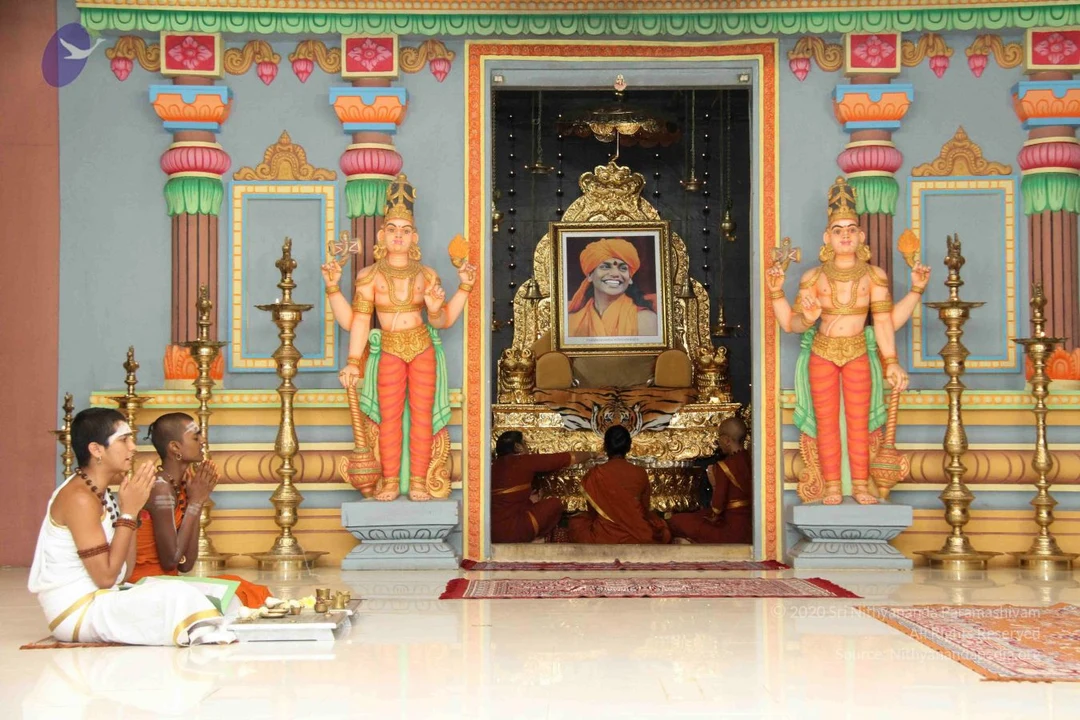
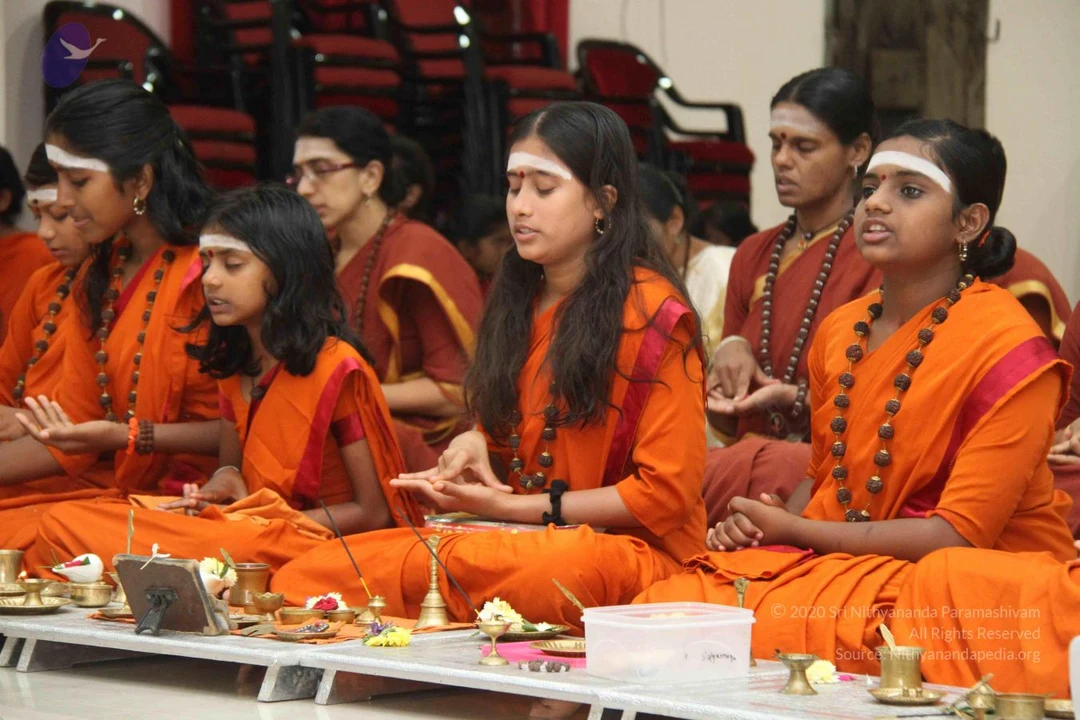
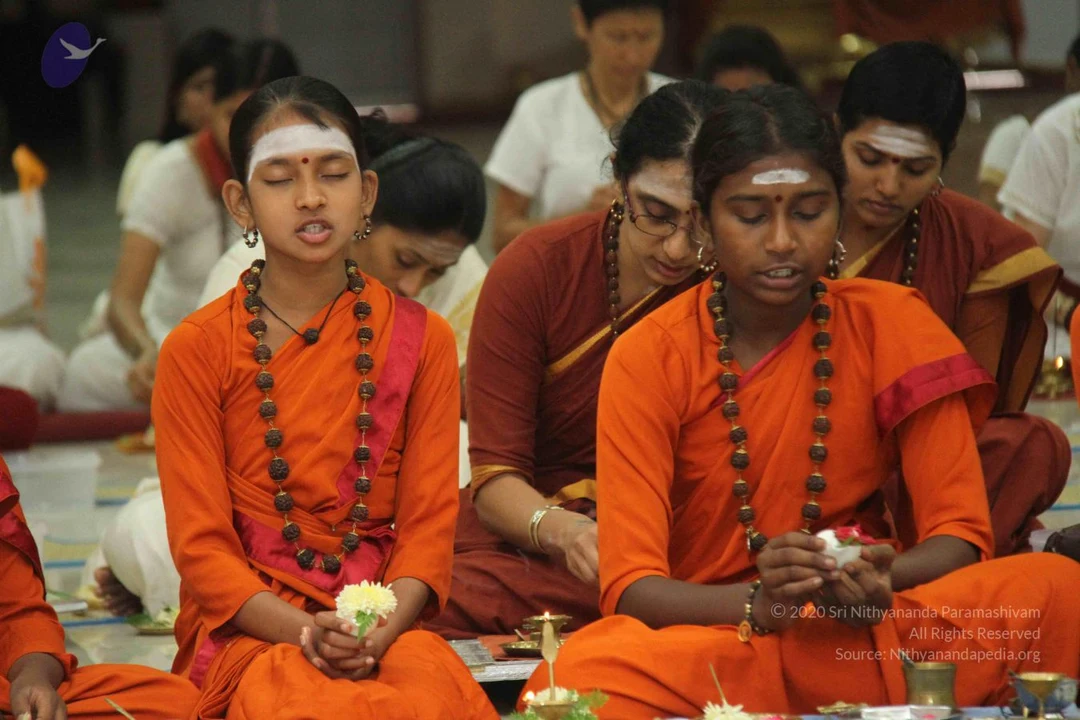
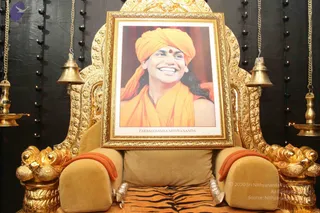
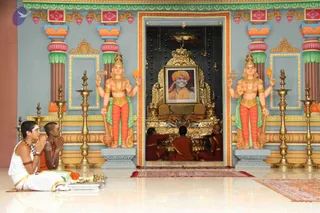
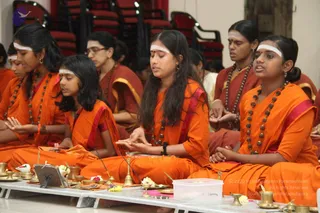
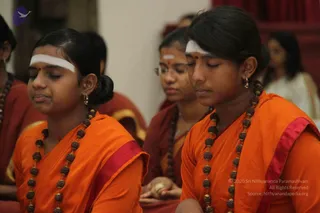
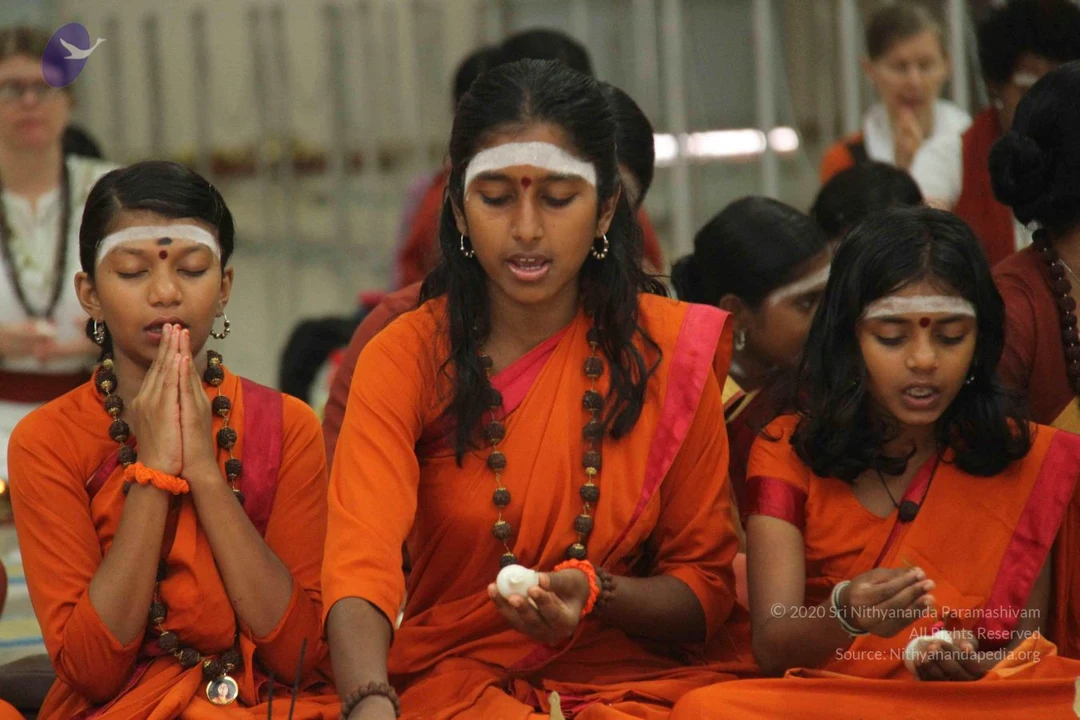
A framed portrait of a smiling man in an orange turban and orange shawl, with a red bindi and long dark hair, rests on an ornate gold throne with lion-head armrests, a tiger-striped seat cushion, and hanging brass bells and oil lamps on the black wall behind. A printed caption under the portrait reads Paramahamsa Nithyananda. Cues include the orange turban, orange shawl, long hair and bindi, so this is a probable depiction of Swamiji shown as a printed portrait on a throne.A photograph of an ornate gold-toned ritual table set with five large silver trays arranged around a central gold lingam-shaped stand. Each tray holds ring-arranged small silver bowls filled with yellow, orange and cream flowers, with silver jugs and spouted vessels, pale offering cakes or sweets, and amber liquid in some bowls. Yellow and orange marigolds and pink roses are laid around the centre. No people are visible, so the setting appears to be a puja or abhishekam arrangement with offerings prepared for worship.Inside a temple hall with pastel blue and green walls, two statues of deity murti stand on either side of a central shrine. Each statue has multiple arms, a tall crown, gold jewellery and an orange-red dhoti with a green sash. Between them, a golden throne with a tiger-skin seat holds a framed portrait of a smiling man in an orange turban and saffron robe, labelled as a portrait of Paramahamsa Nithyananda. Three figures in saffron robes sit before the throne. In the foreground, two shaven-headed people in white dhotis and orange garments kneel with palms pressed together beside a brass puja tray, with brass oil lamps lining the floor.Photograph of a gilded ceremonial throne (peetha) in a shrine hall, with a framed portrait of a smiling man in an orange turban and orange shawl placed on the seat. The portrait is labelled "PARAMAHAMSA NITHYANANDA" on its printed caption. The seat is draped with a tiger-skin cloth showing a tiger's face, and brass oil lamps hang from chains above. Beneath the throne, several people in orange and saffron garments sit at a offering table laid with plates; one woman in an orange sari and another person with a shaved head are visible in the foreground. Strings of small lamps line the dark wall behind a golden canopy.Several young women and girls in saffron-orange robes with pink borders sit cross-legged on a low white platform during a ritual, many with white tilaka bands across their foreheads and wooden rudraksha mala beads around their necks. The central young woman has her palms together in front of her chest while others hold their hands in mudra or are seated with eyes closed. On the platform before them are brass oil lamps, small brass bowls, a brass kalasha-style vessel, white and yellow flowers, and a framed picture. A clear plastic box sits at the right edge, and an older woman in maroon and gold clothing sits behind them. Their eyes are lowered and the setting appears to be a hall with red chairs stacked behind. No a person candidate is clearly visible.A photograph of young women seated in meditation at an indoor satsang. The two foreground women wear orange saris with red borders and long rudraksha malas, with white forehead bands and red bindis, eyes closed. Behind them, other seated women in red and orange garments sit in quiet focus, and a woman in white stands at the right edge. No a person candidate is visible in the frame.

NithyaSatsang_Swamiji
71 photosSource gallery
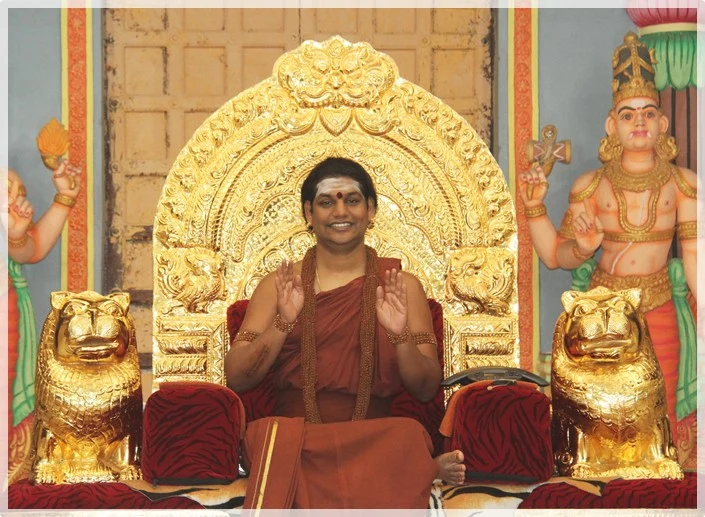
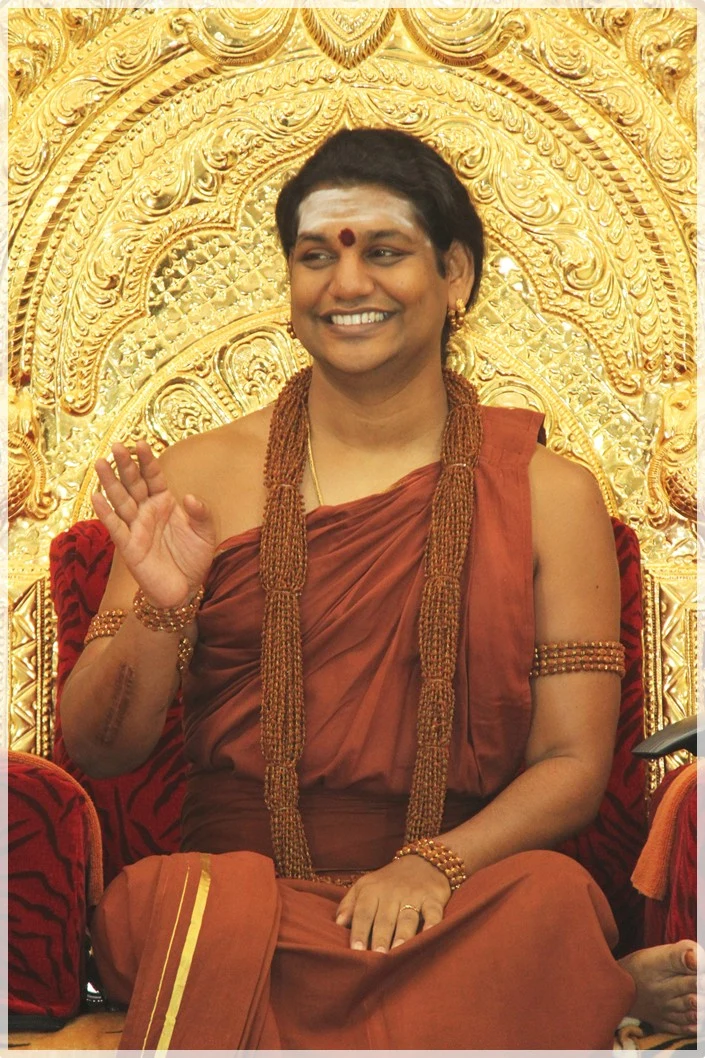
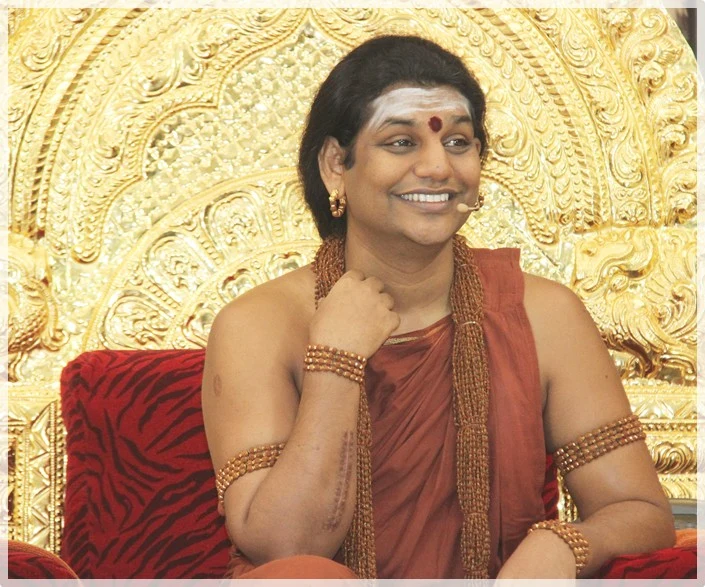
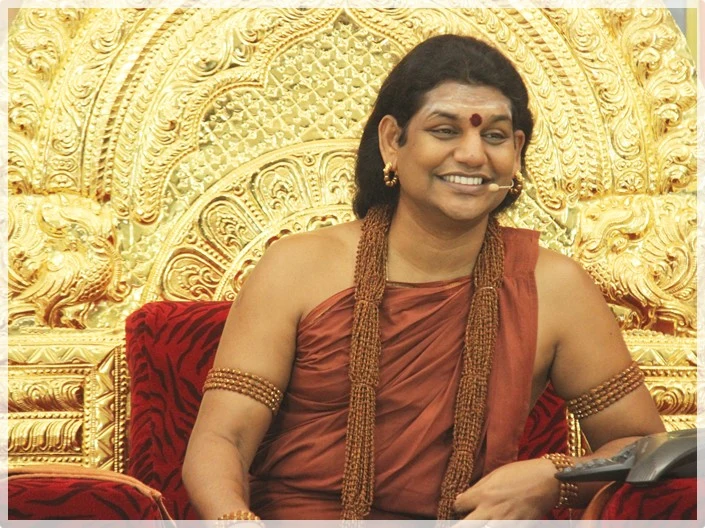
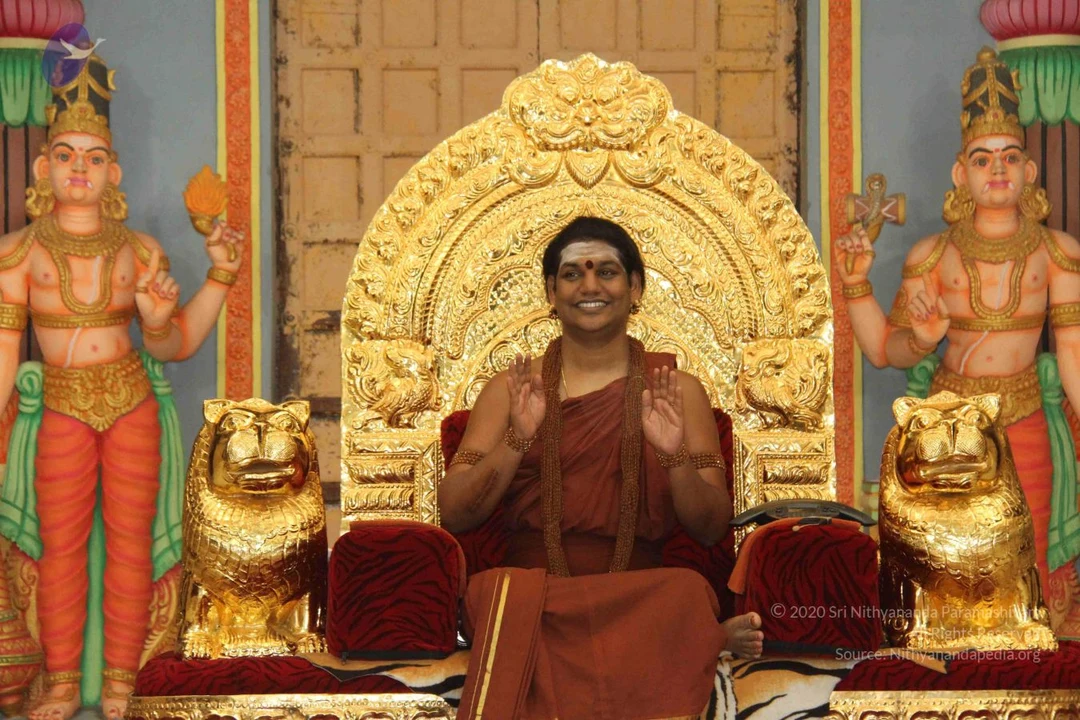
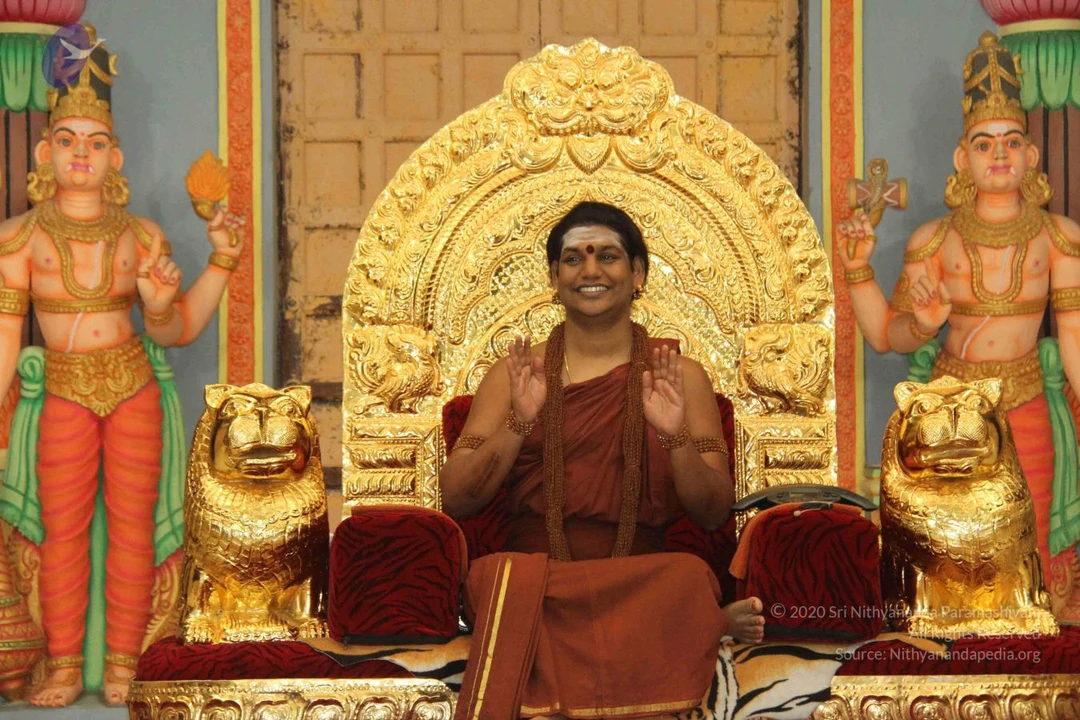
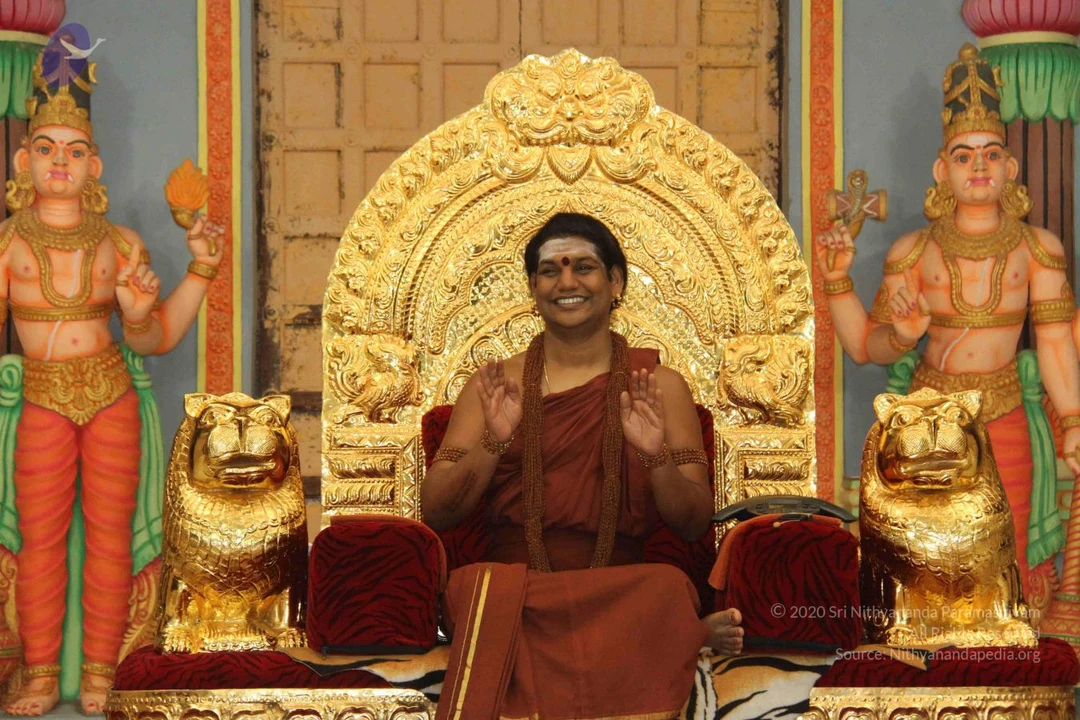
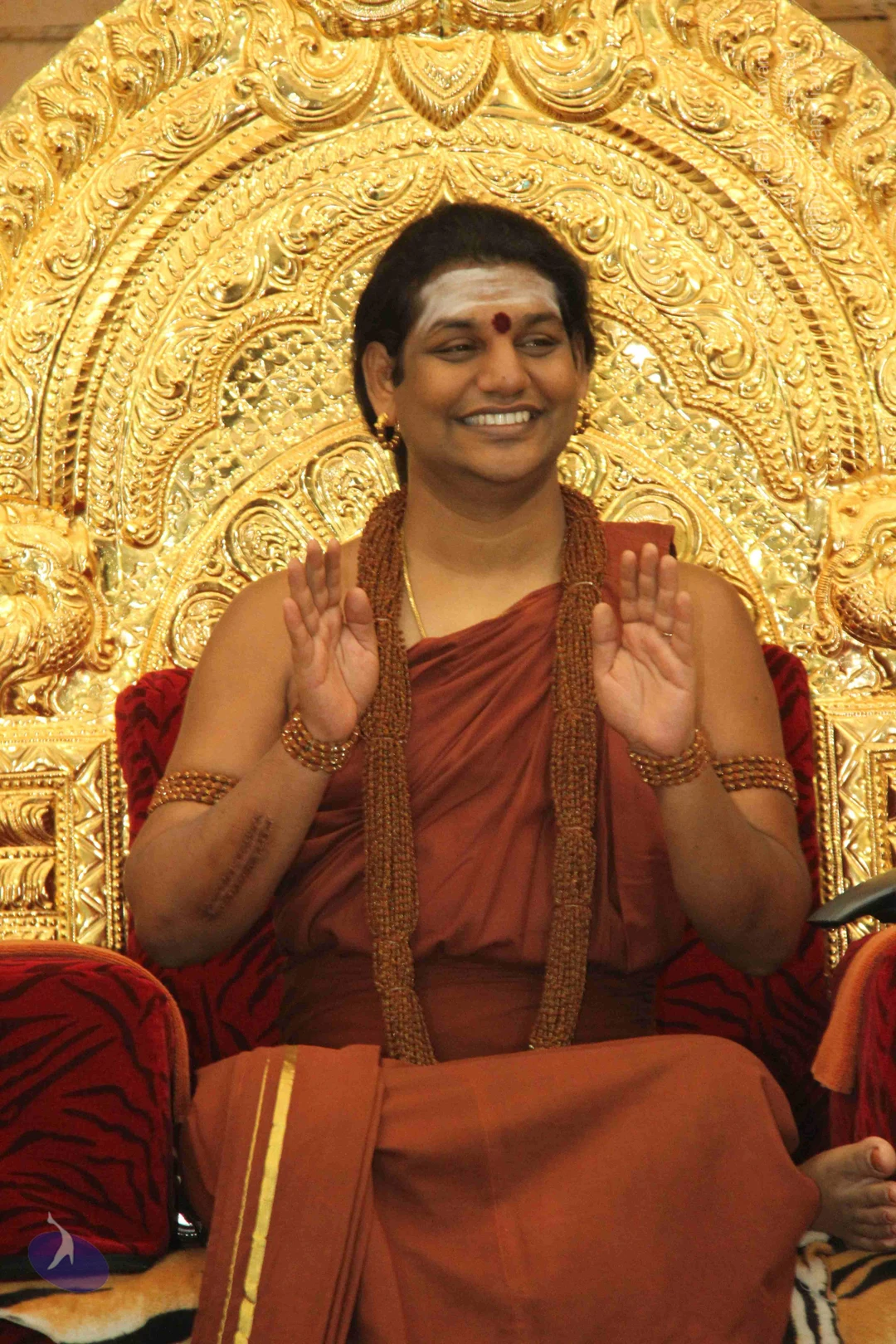
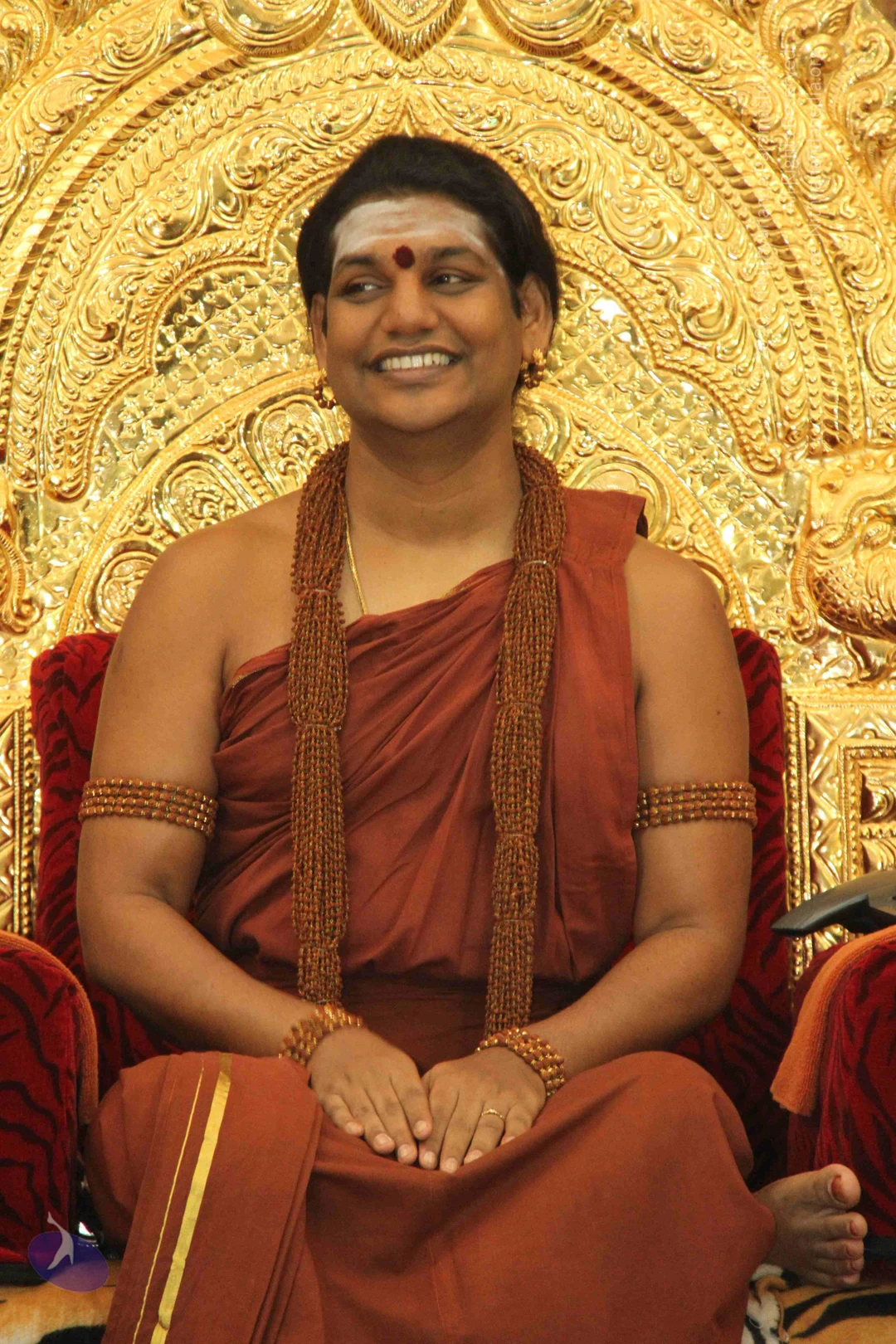
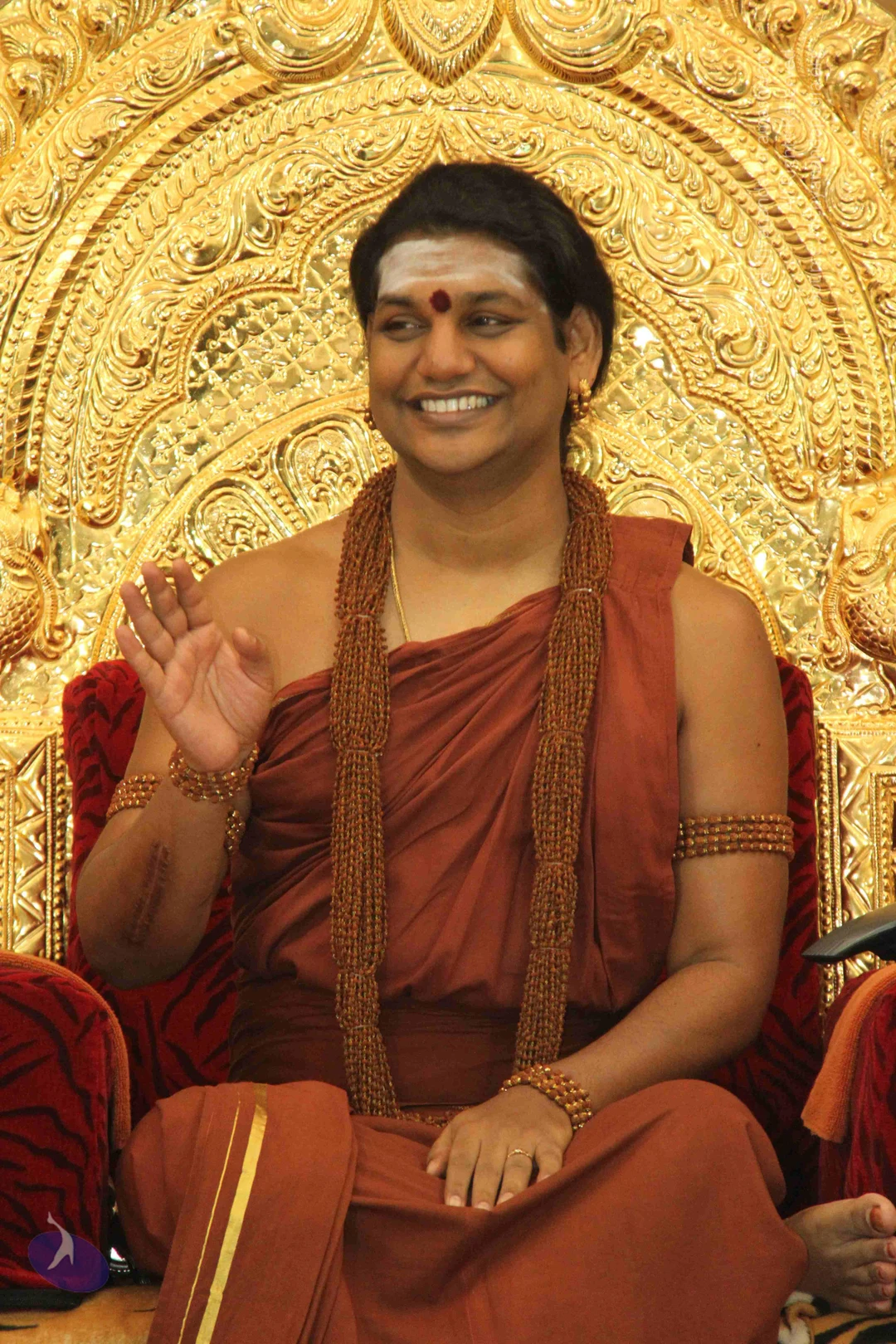
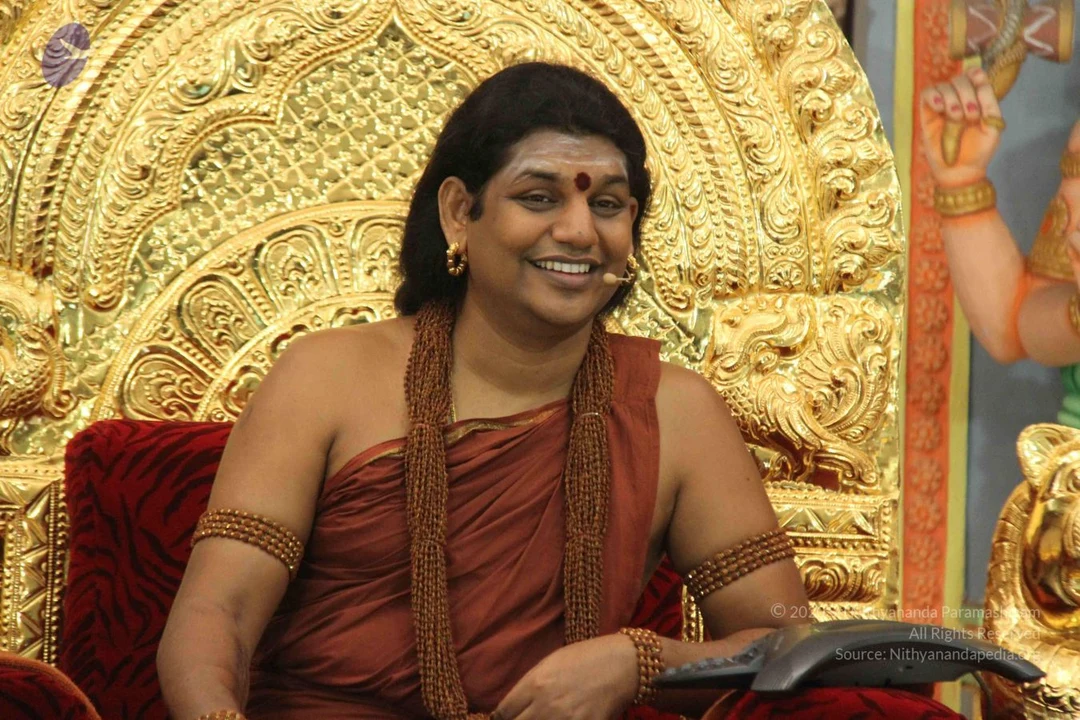
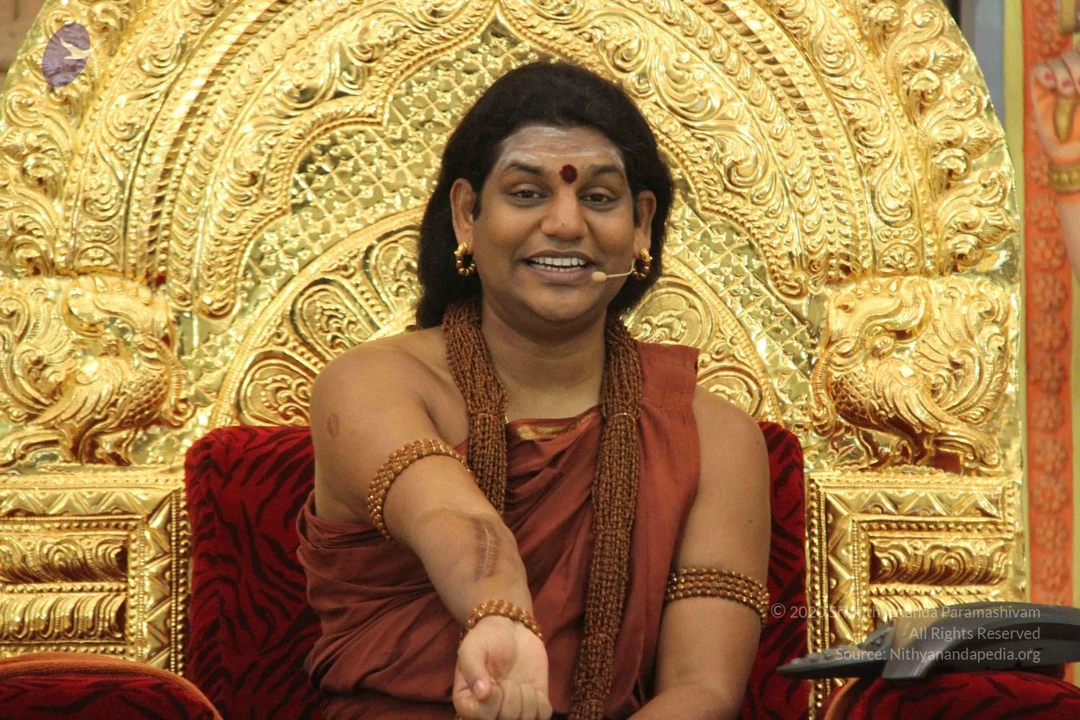
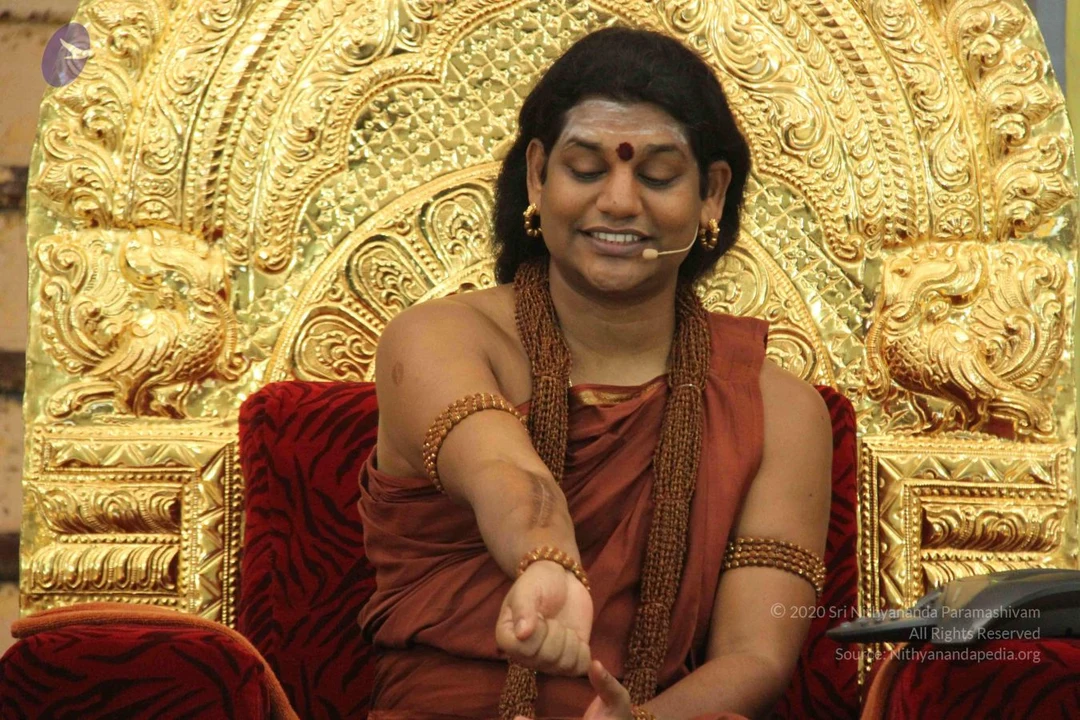
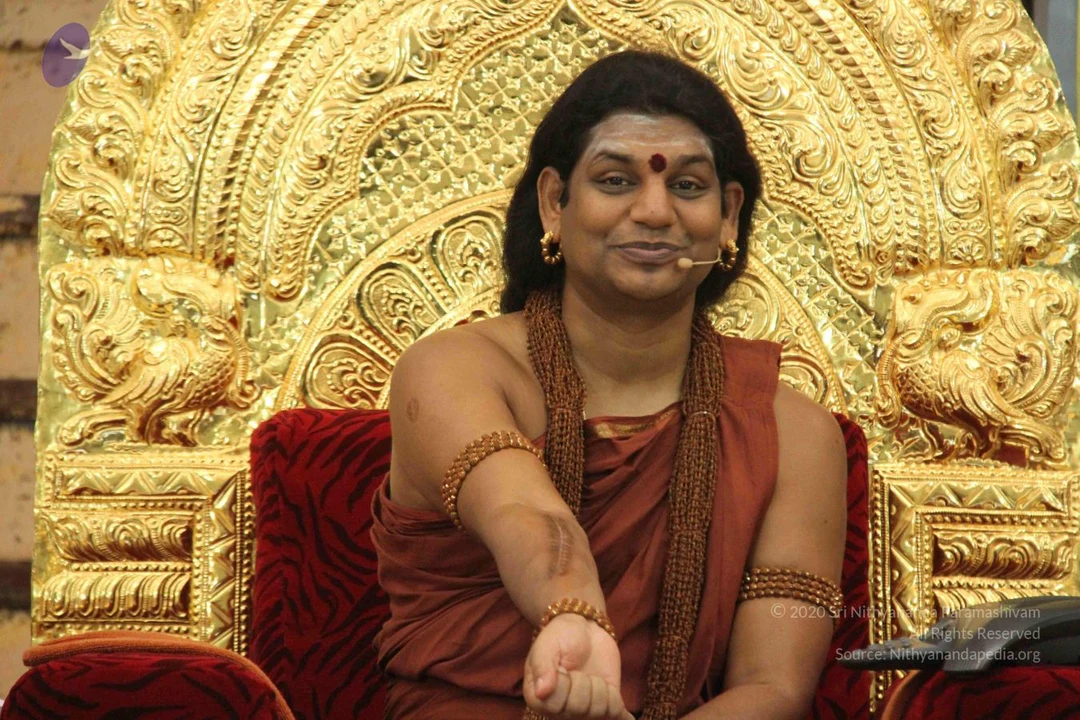
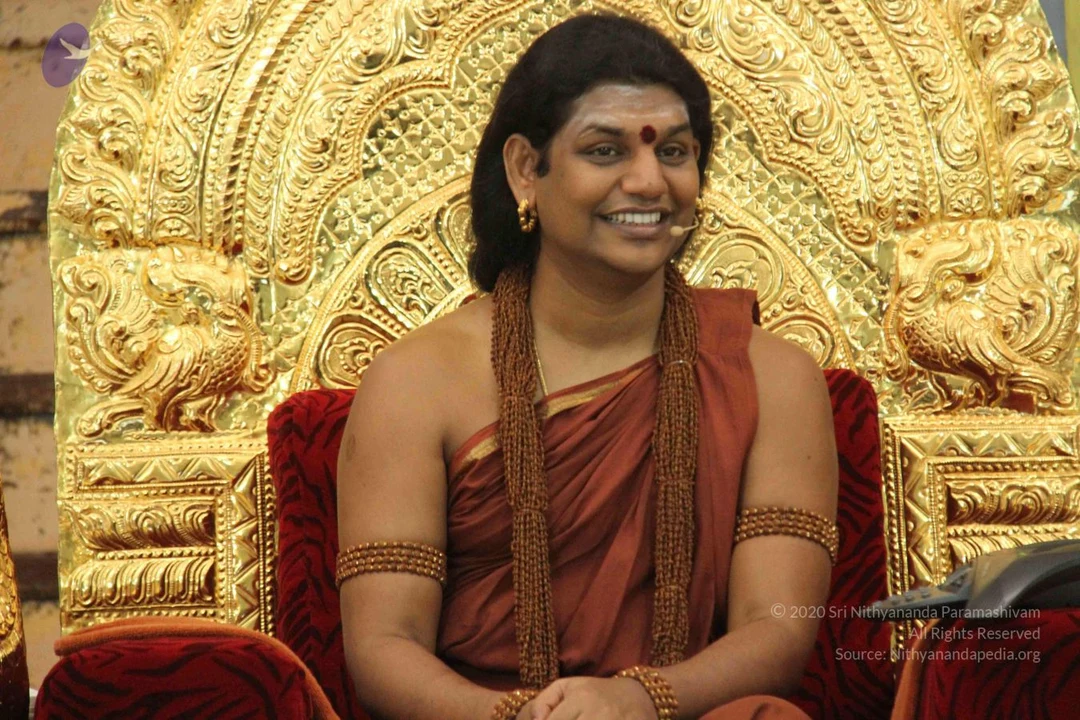
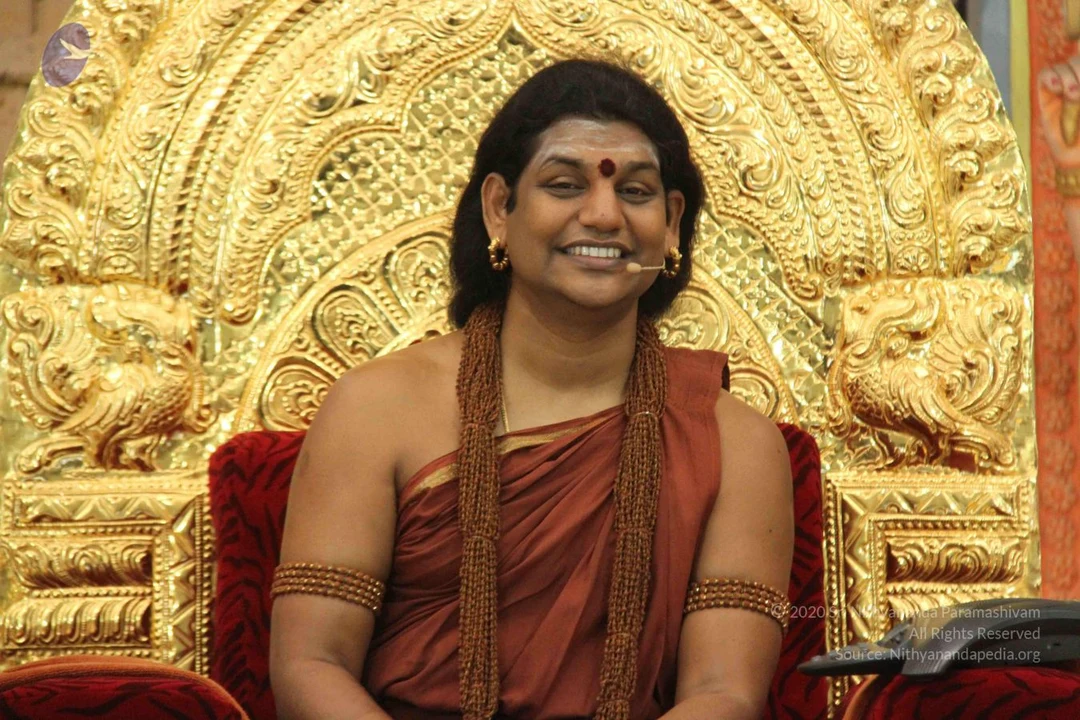
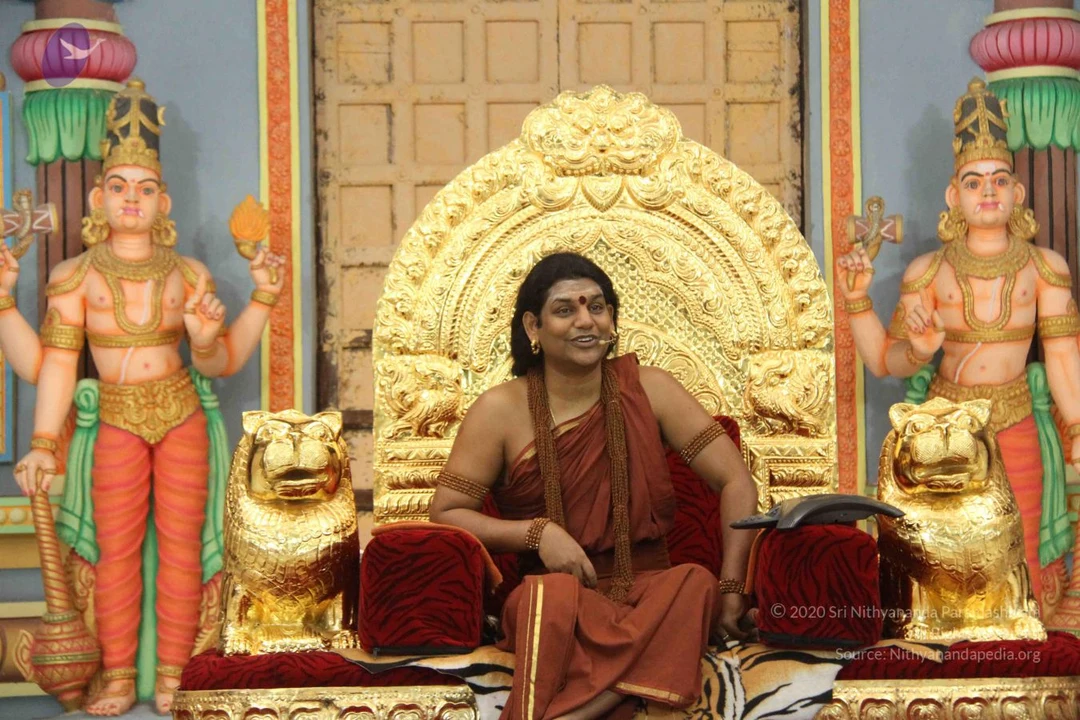
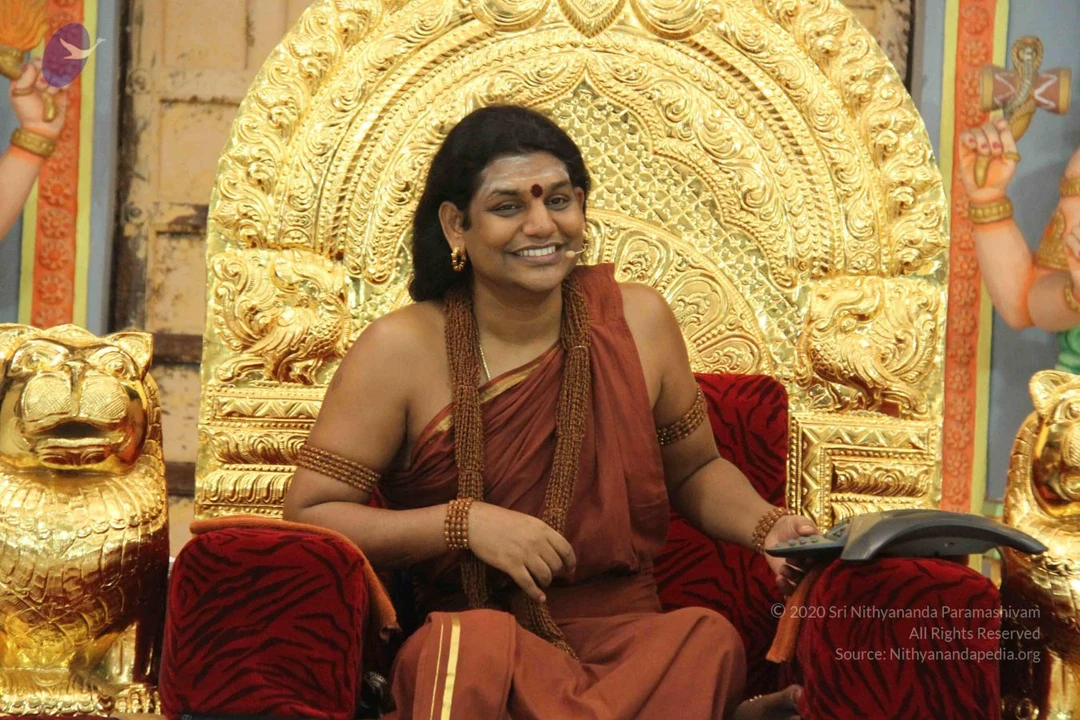
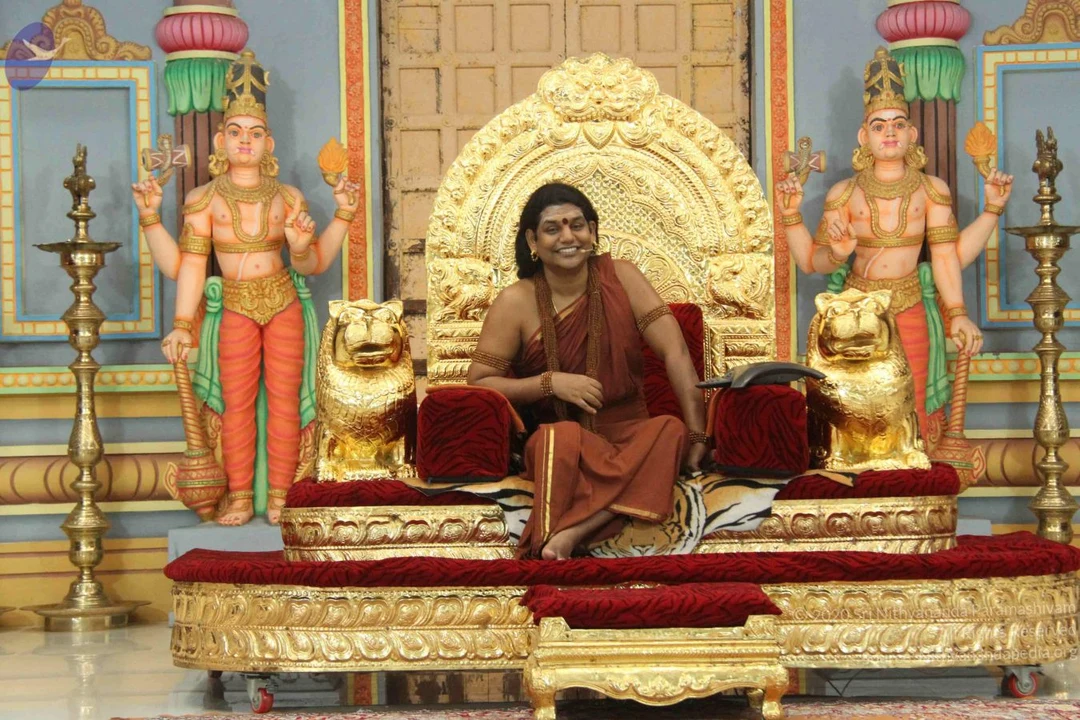
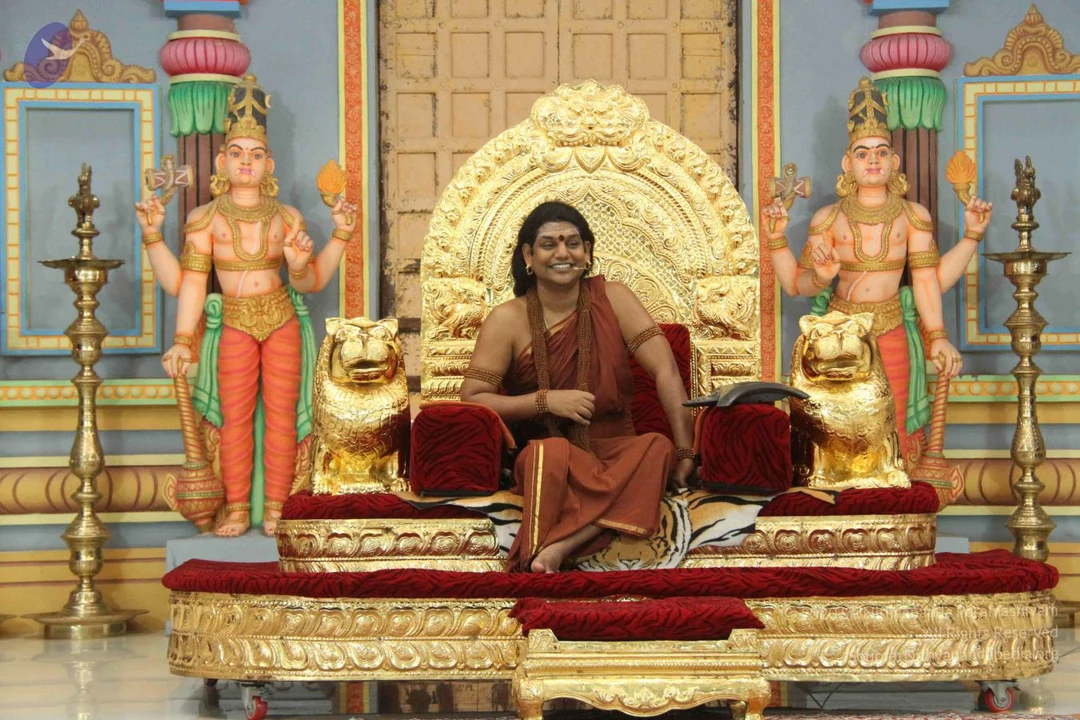
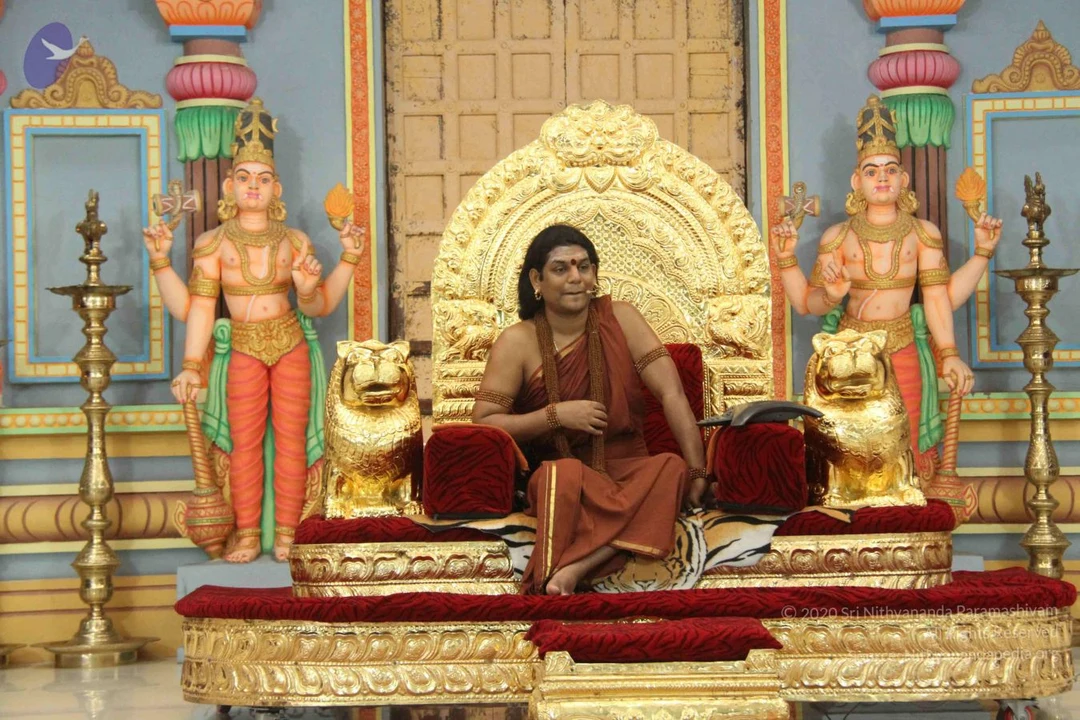
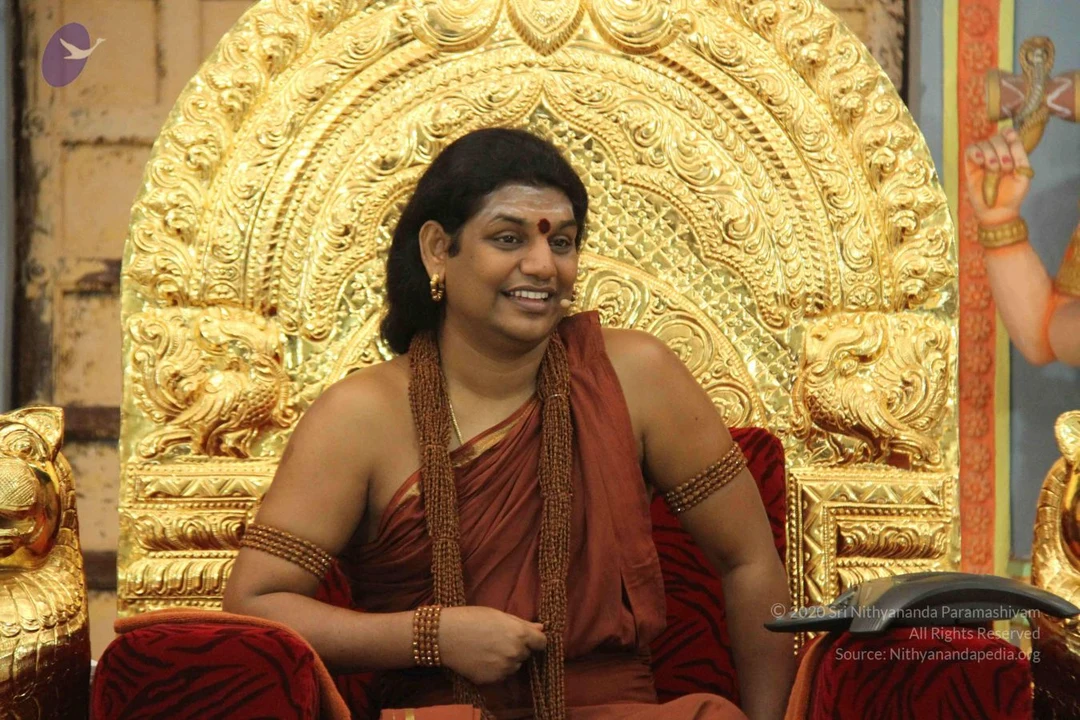
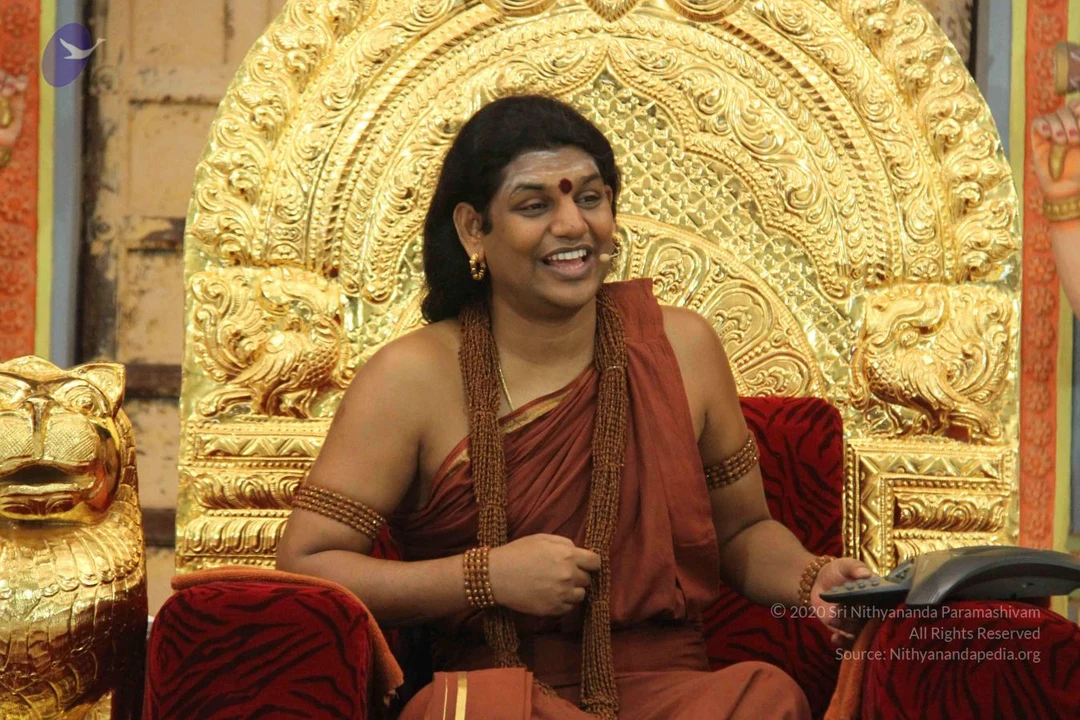
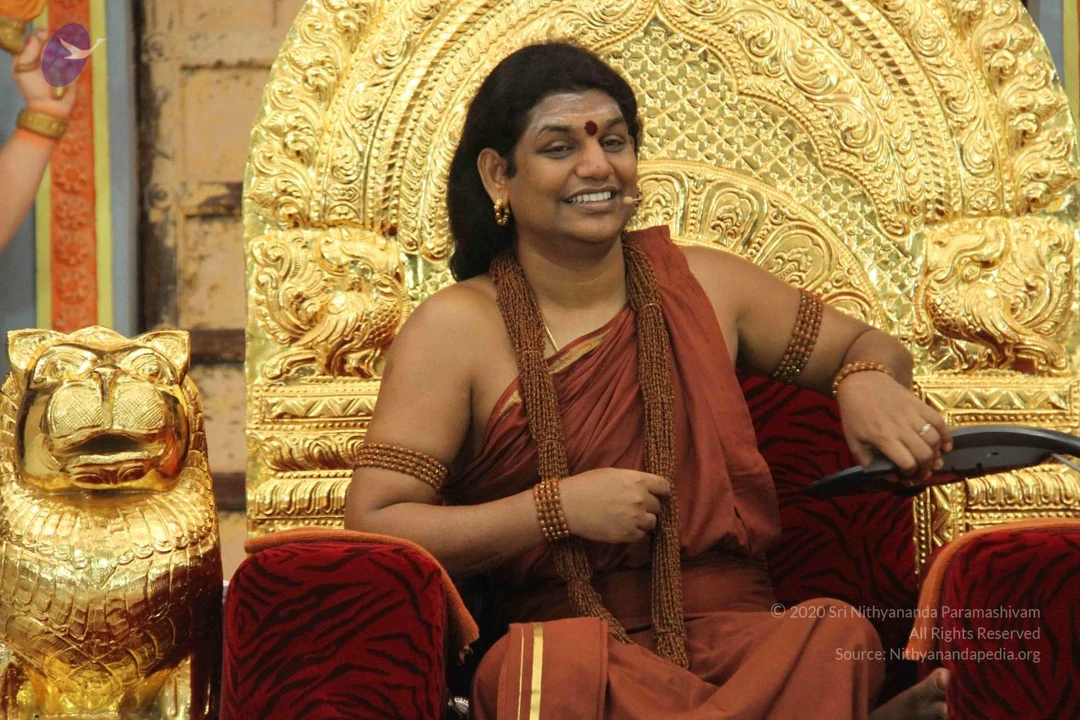
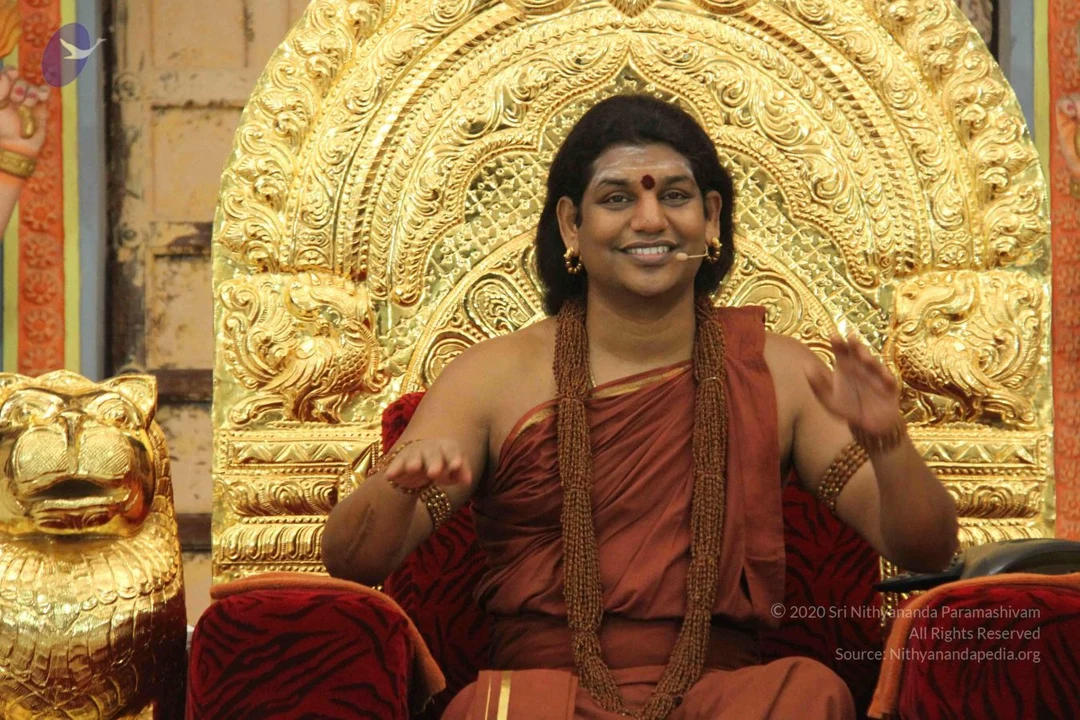
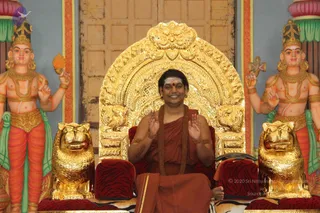
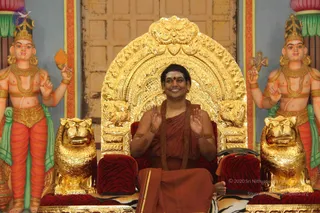
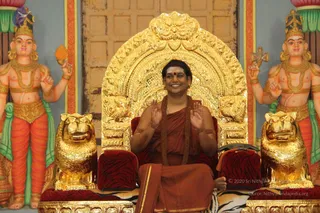
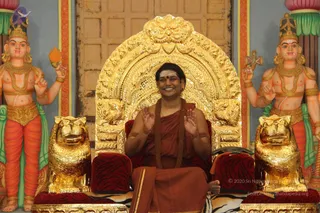
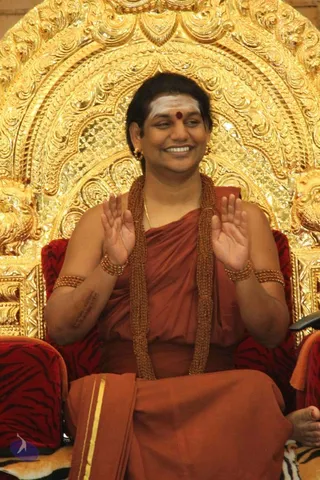
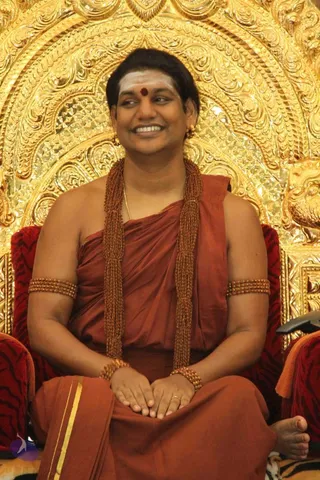
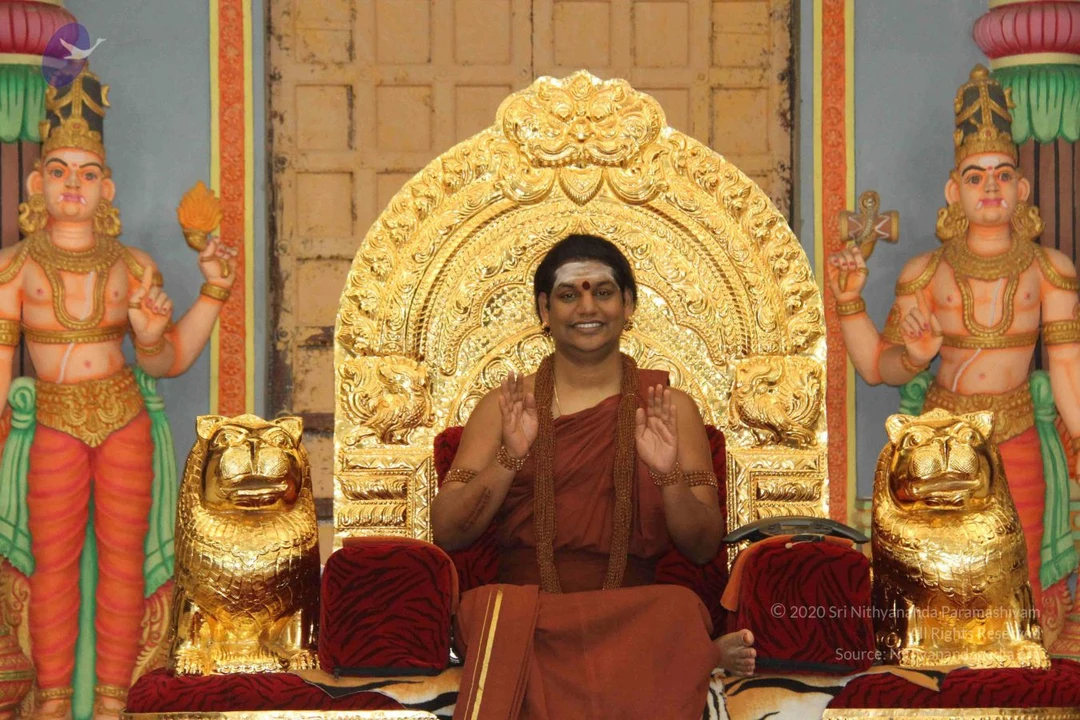
A photograph of a seated man on an ornate gold throne with a large carved arched back, flanked by two golden lion-head armrests draped in red tiger-striped cushions. He wears a rust-orange robe over one shoulder, a long multi-strand rudraksha-style mala necklace, gold bangles, and a white vibhuti marking with a red dot on the forehead. He smiles with both palms raised in front of his chest, apparently giving a discourse. Two painted standing guardian figures with crowns, gold jewellery and red-and-green dhoti-style garments stand on either side of the throne against a wooden door. a person is a probable identification based on the robe, mala, vibhuti and throne cues.A seated man in a maroon-red robe and matching shawl sits on an ornate gold throne with a large arched backrest and carved lion-head armrests, flanked by two gold lion sculptures on red-cushioned seats with tiger-striped fabric below. He wears a rudraksha mala and a red-and-white forehead mark, smiles and raises both palms in a gesture of blessing. Behind him stand two painted, bare-chested deity statues with ornate gold necklaces and crowns, one holding a flame and one a trident-like object. A large wooden door forms the backdrop. a person is the seated figure, distinguished by the saffron-maroon ascetic robe, rudraksha mala and gold-throne setting.A photograph of a seated man on an ornate gold throne with carved arch and two golden lion figures at its base, set before a painted backdrop of two standing deity figures with raised arms, crowns and gold necklaces. The seated man wears a rust-red robe and a long rudraksha mala, with a red tilak on his forehead, and holds his palms together in a blessing gesture while smiling. Red and tiger-striped cushions cover the seat, and a wooden door panel stands behind the throne. The scene suggests a seated discourse or satsang setting, and the man is shown in a teaching posture.A seated man in a rust-red saffron robe and matching shawl sits on an ornate gold throne with a tall arched backrest carved with floral and foliate motifs. Two golden lion figures flank the seat, and a red and black tiger-striped cushion covers the seat. He has a red tilak on his forehead, a rudraksha mala around his neck, bangles on his wrists, and he smiles with palms raised in a blessing gesture. Behind him stand two painted deity guardian figures with multiple arms, crowns and gold jewellery, and a wooden door is visible in the background. a person is shown seated on the throne in a rust-red robe with rudraksha mala and ornate gold setting, blessing the audience.A smiling man seated on an ornate gold throne with repoussé floral and scrollwork backrest, wearing a rust-orange robe, a multi-strand rudraksha mala necklace and matching beaded bracelets and armlets. He has white vibhuti and a red kumkum dot on his forehead, gold earrings, and raises both palms in a gesture of blessing or teaching. A red tiger-striped cushion and a tiger-striped rug appear at the lower edge. A single person is visible in the scene.A photograph of a smiling man seated on a red velvet and gold-embossed throne with ornate golden repoussé backrest. He wears a rust-orange (saffron) unstitched robe draped over the shoulder, multiple rudraksha mala garlands around the neck, rudraksha armlets on both upper arms, and rudraksha bracelets on the wrists. He has a white vibhuti line and a red kumkum dot on the forehead, gold earrings and a thin gold chain, and his hands are folded in his lap. A single person is visible in the scene.

SarvaDarshan

23 photosSource gallery
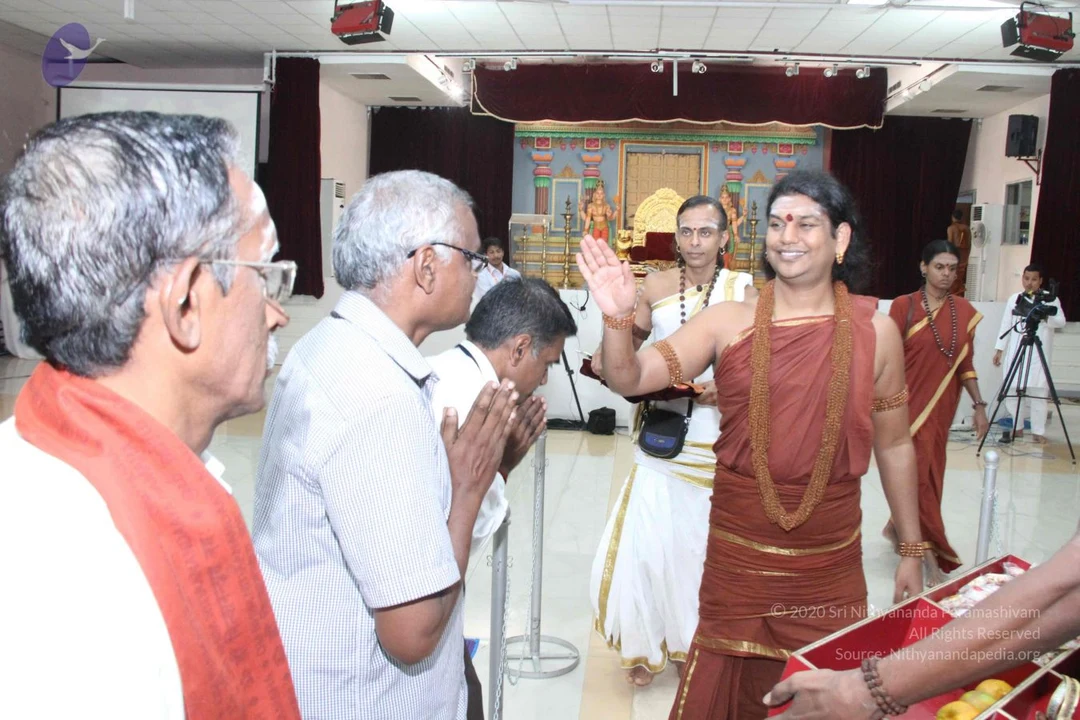
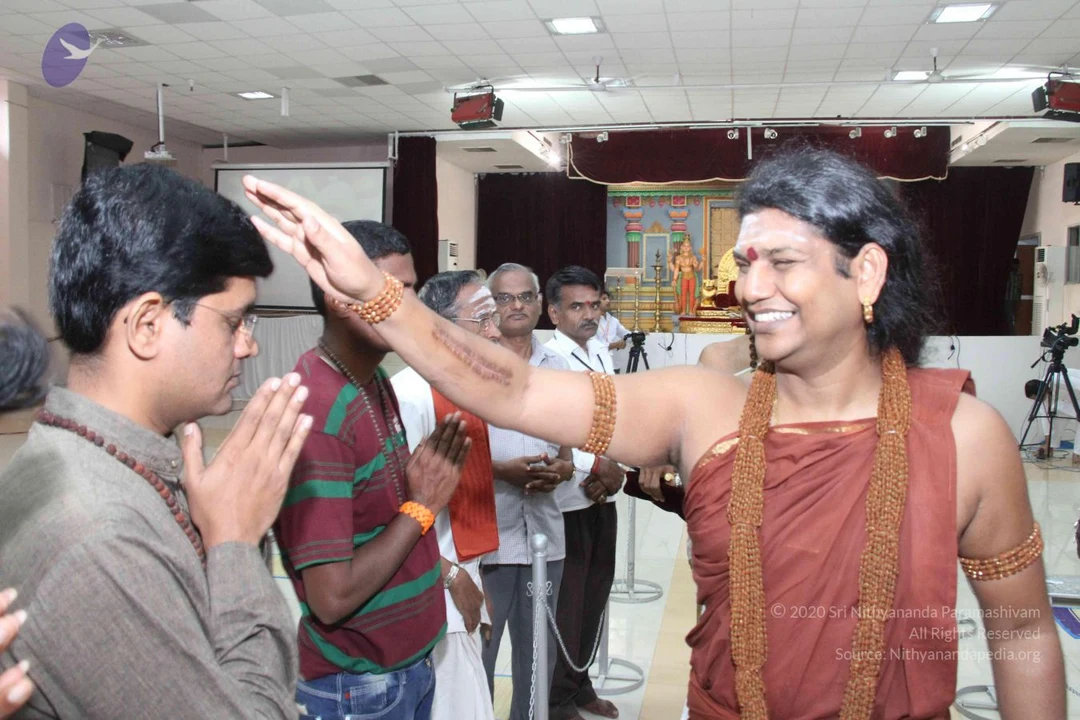
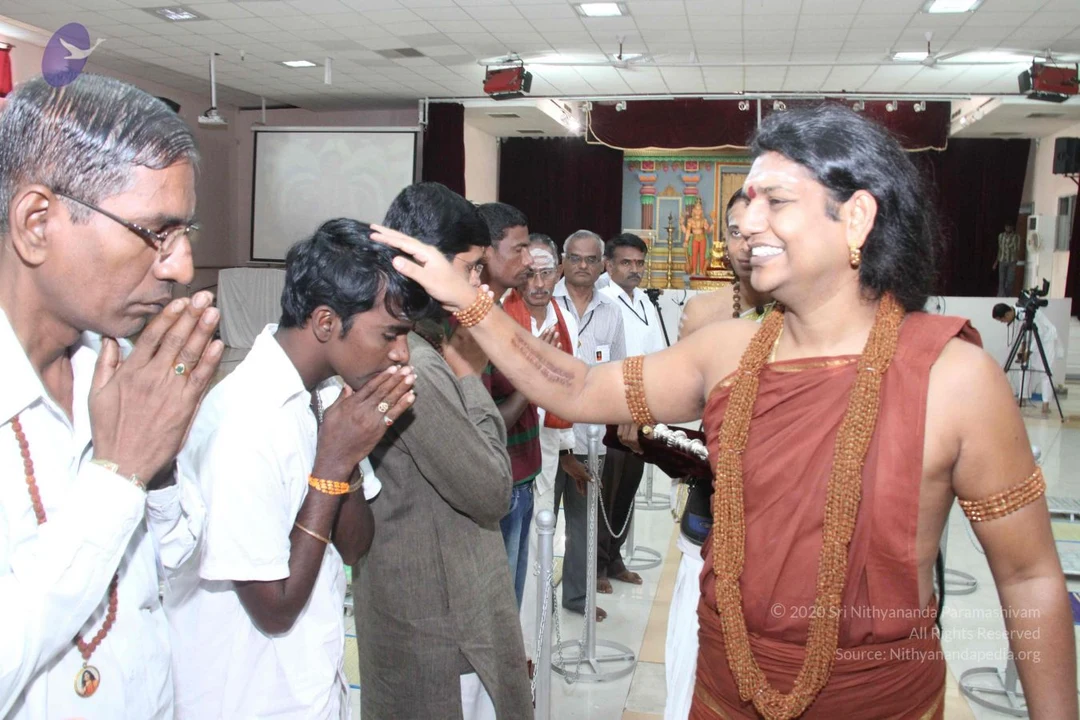
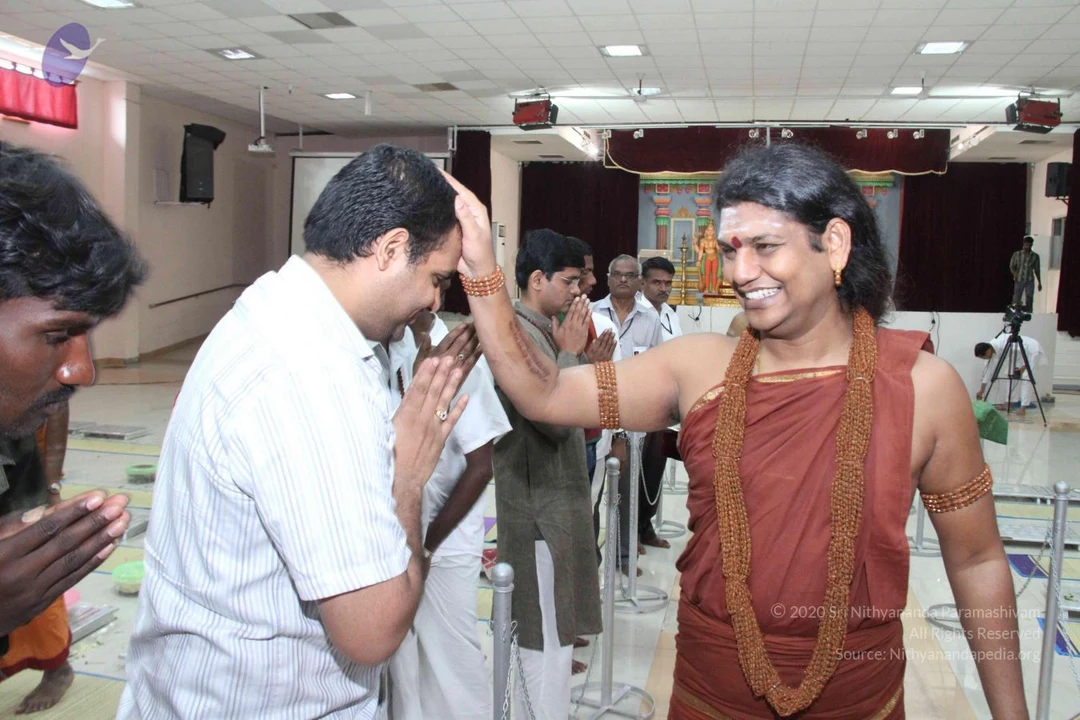
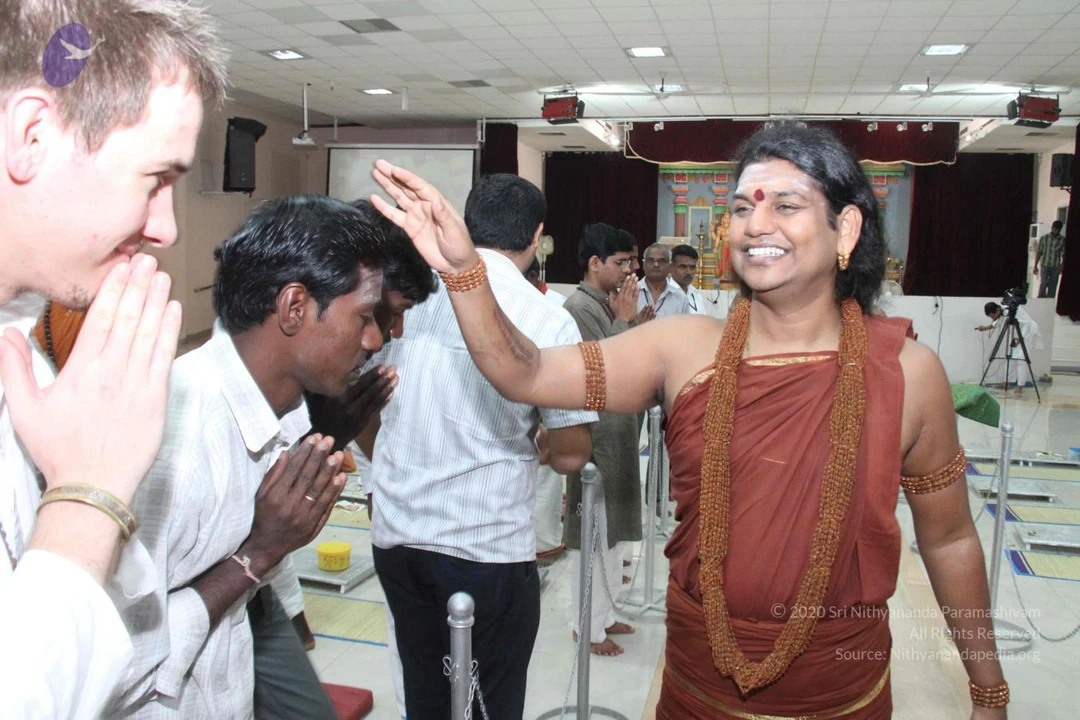
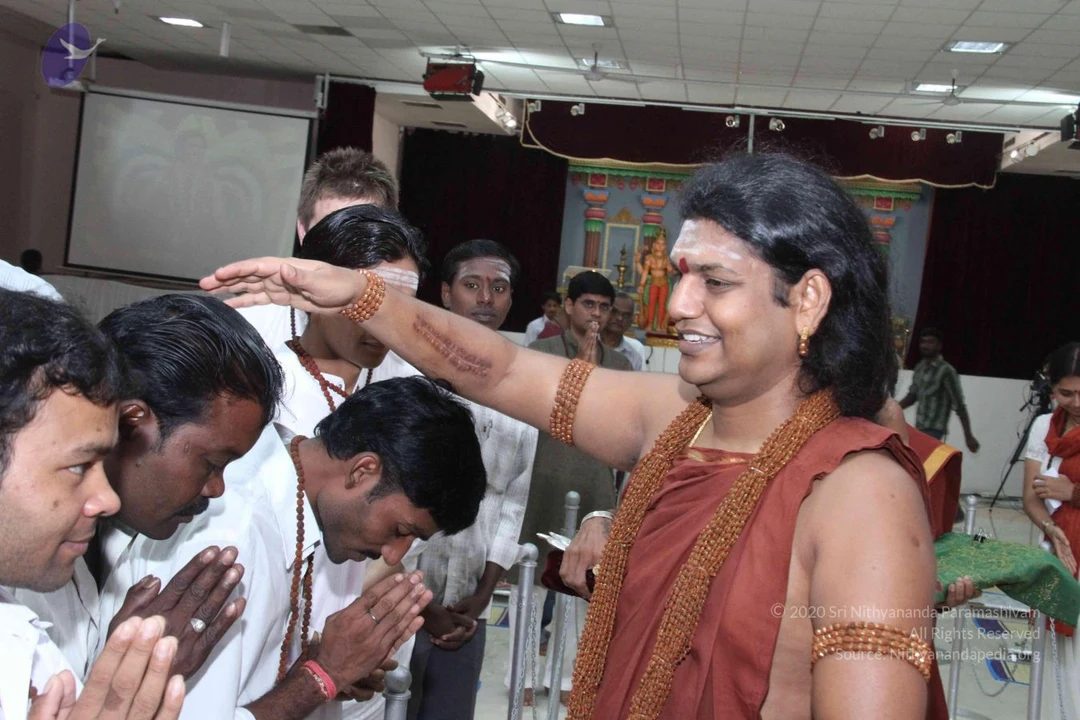
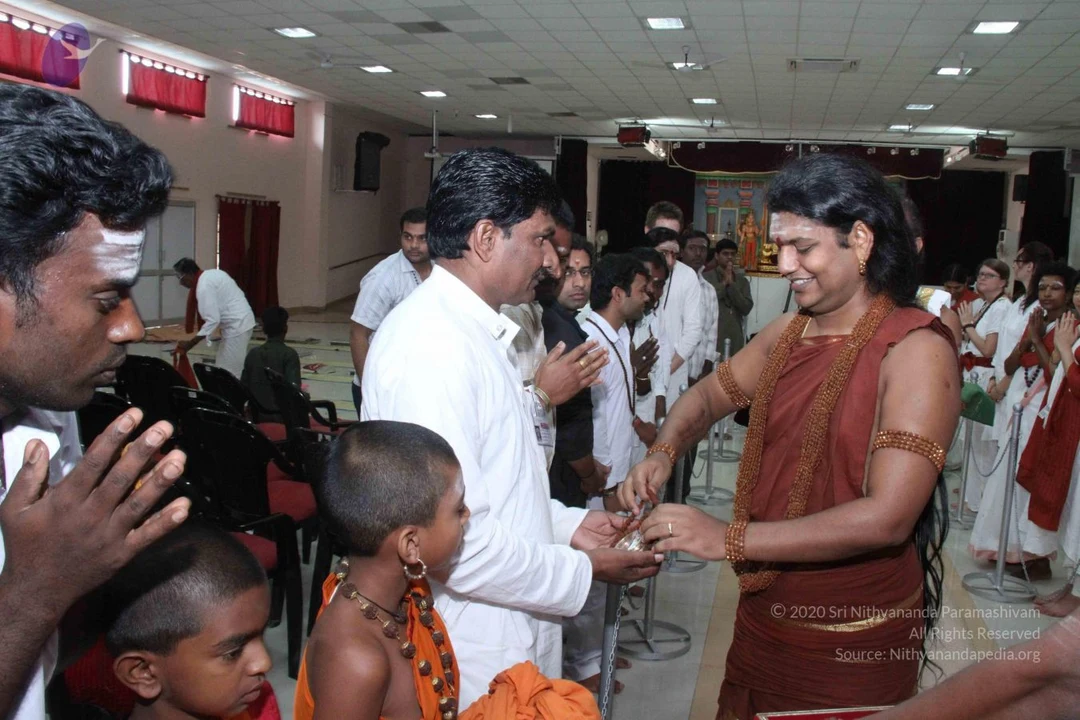
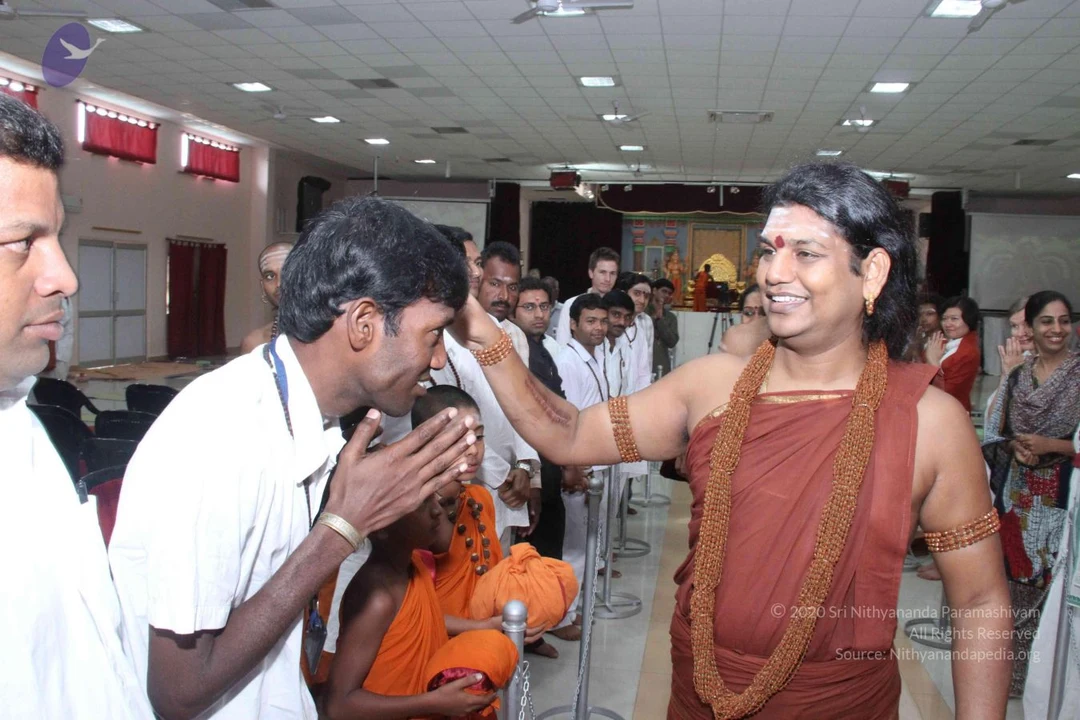
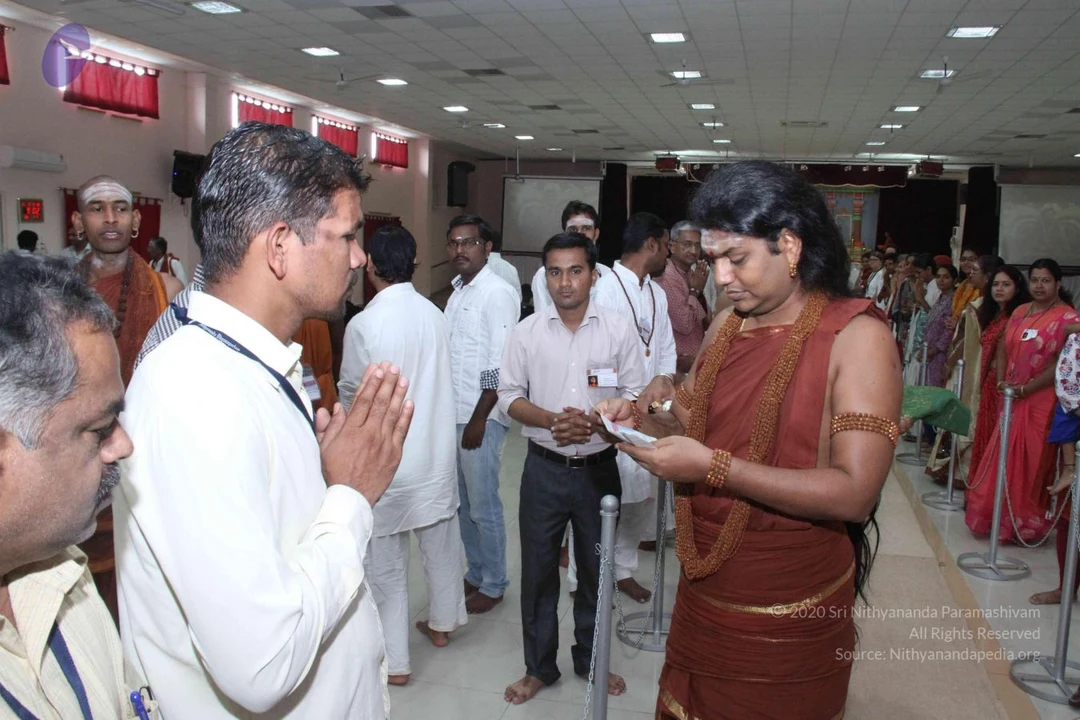
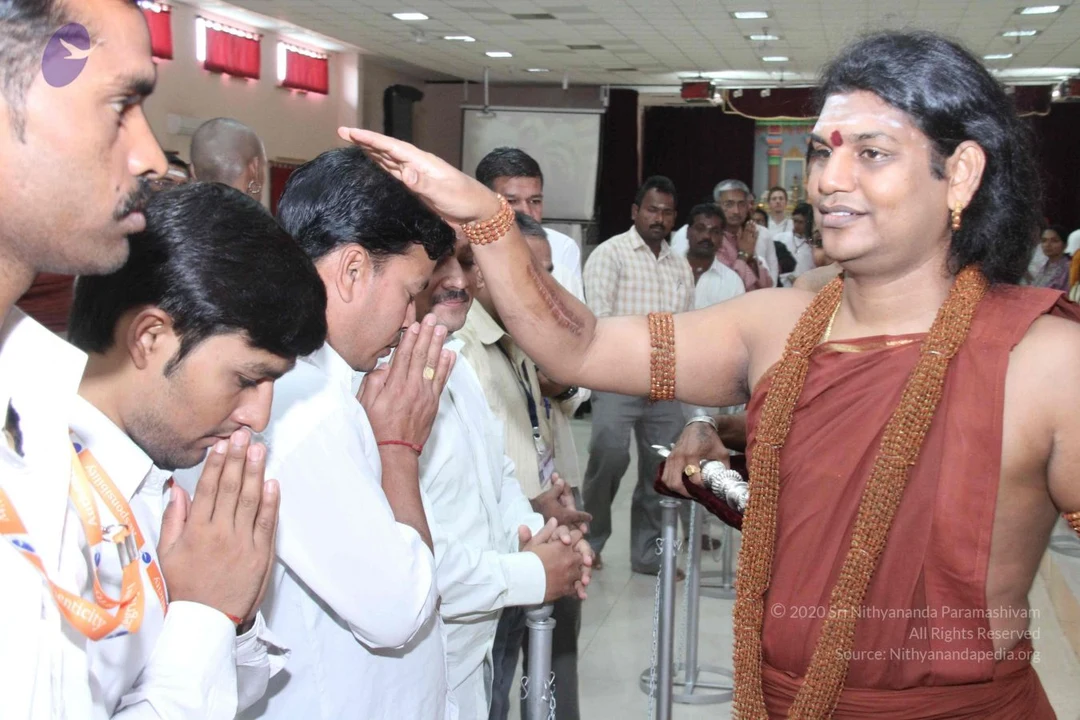
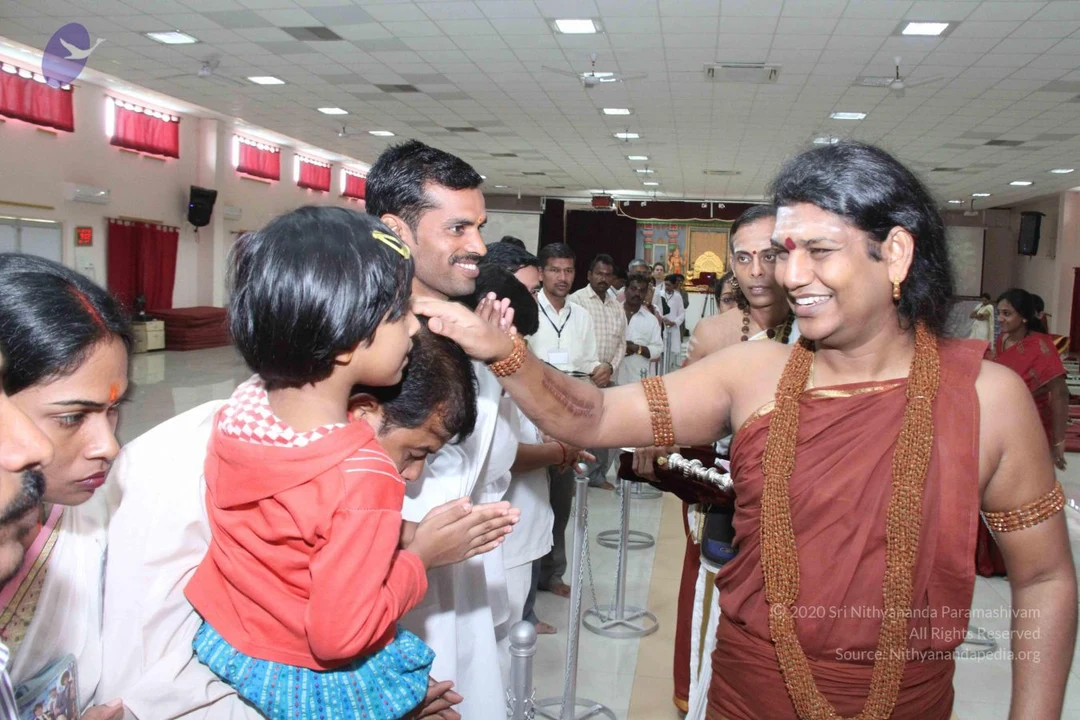
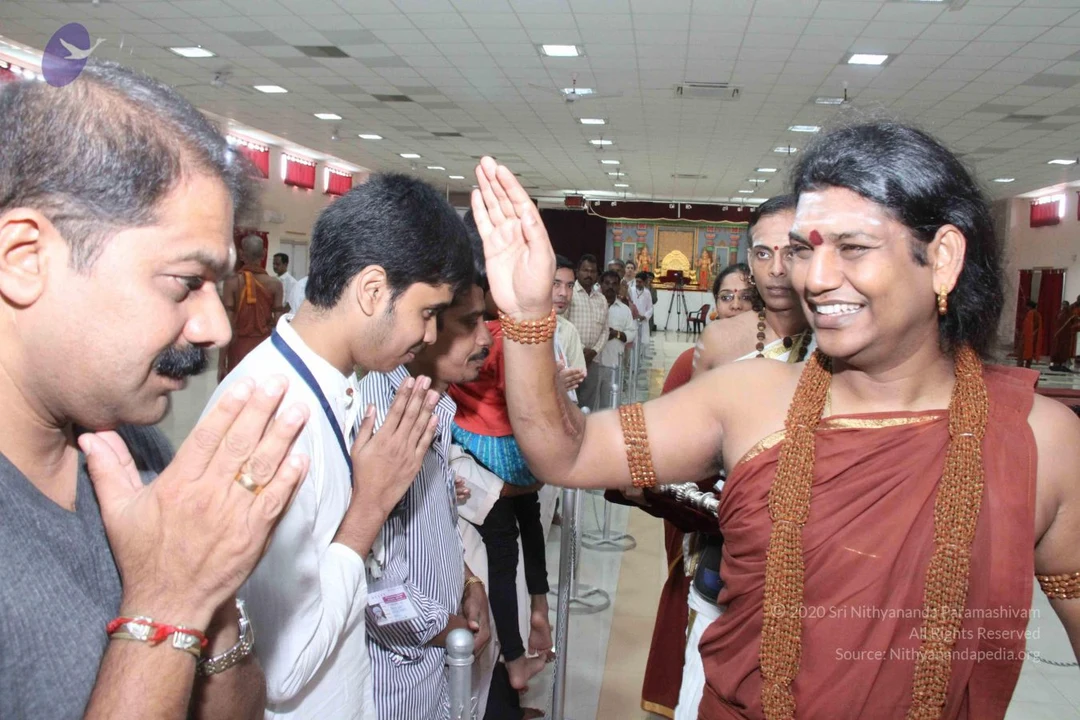
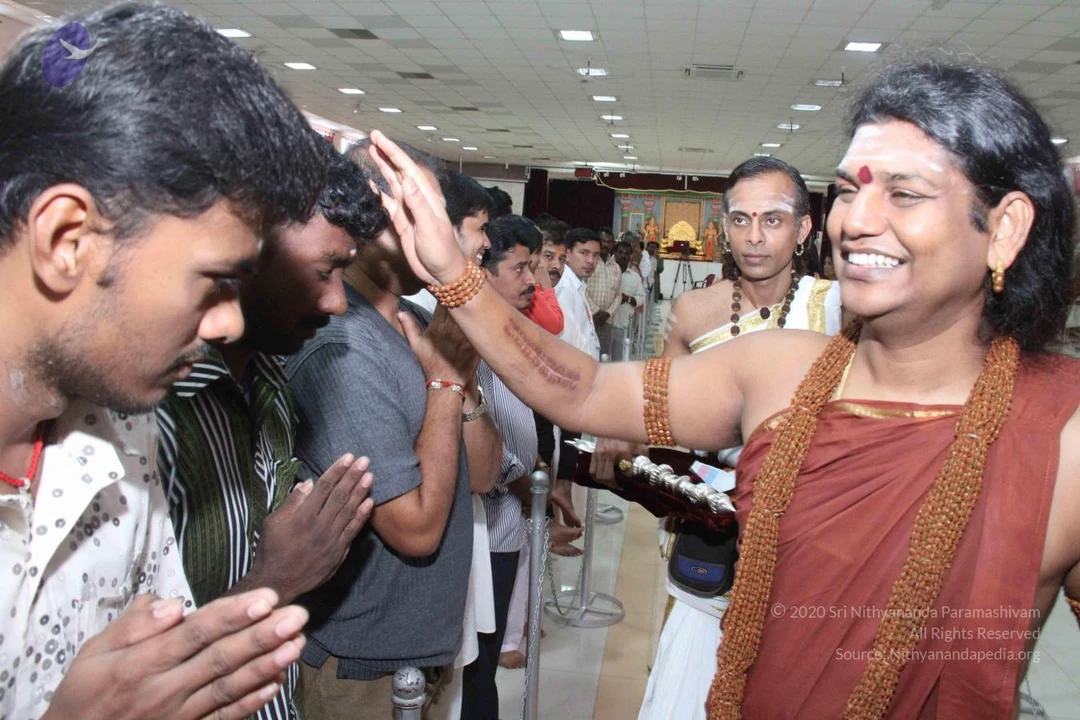
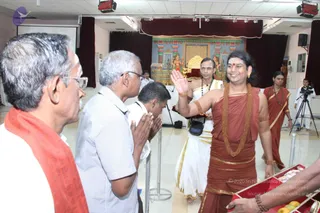
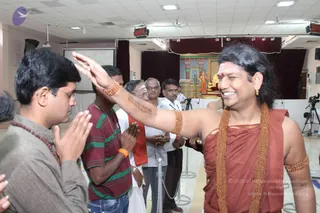
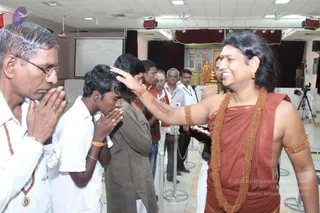
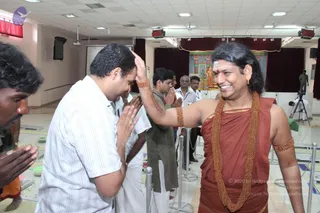
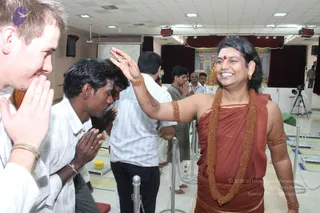
A photograph of a hall with a red-and-gold backdrop featuring painted deity figures and a gilded throne. In the foreground a man in a red shawl stands at left, and a man in a checked shirt with hands joined in greeting stands beside him. At centre, a smiling man with long dark hair, a red bindi, rudraksha mala and gold bangles wears a saffron-red robe and raises one hand in greeting toward a tray of fruit and offerings held by a person at lower right. Behind him a man in white dhoti with gold border and long beaded necklace walks, and a woman in red sari with mala stands at right; a cameraman on a tripod is visible at far right. a person: the centre figure wears a saffron robe, rudraksha mala and a bindi, with long swept-back hair, in a ritual greeting setting.A photograph in a hall with a stage and a deity murti backdrop. A man with long dark swept-back hair, a red bindi, rudraksha malas and gold earrings, wearing a saffron-orange shawl, is extending his raised right arm toward a bespectacled man on the left who is holding his hands in anjali mudra. The man on the left wears a grey kurta and rudraksha mala. Behind them, a row of standing men watch, including one in a striped red-and-green shirt with an orange wristband and another in a white shirt. Video cameras on tripods and stage lights are visible. Swamiji (probable) cues: long swept-back hair, rudraksha malas, saffron shawl and ceremonial gold necklaces, shown extending a blessing gesture to a devotee.A photograph inside a hall with a tiled floor, red stage curtains and a deity murti shrine at the back. A man in a rust-red dhoti-style wrap with a long rudraksha mala and gold earrings, with long swept-back hair and a red tilak on his forehead, places his hand on the head of a young man in white. Two men in white with folded hands and prayer beads stand at left, one wearing a rudraksha mala, and a man in a grey shirt bows his head in front. Several more people stand in the background, and a camera on a tripod is visible at right. Appearance-based label: a person for the man in rust-red with the rudraksha mala, giving blessing to the devotees.A photograph in an indoor hall with white ceiling tiles and red curtains. A man in a white striped shirt bows with palms joined while a figure in a rust-red dhoti and wrap, with long dark hair, a red tilak on the forehead, beaded rudraksha-style malas across the chest and beaded armlets, extends a hand to touch the bowed man's head in blessing. The figure smiles broadly. Other people in white shirts and white dhotis stand behind, some with hands joined in namaste. A deity mural hangs on the back wall, and a cameraman with a tripod is visible at right. a person appearance: the figure with long hair, rudraksha malas and saffron-red garments is blessing the devotee. Stanchions and a mat-covered floor are in view.Indoor photo in a hall with a tiled ceiling and red stage curtains. A smiling man with long dark hair, a red bindi and tilak, and an orange-red shawl with a beaded rudraksha-style mala and gold bangles raises a hand in blessing toward devotees. Two men in white shirts and a man in a grey shirt with palms pressed in namaste stand close; a bare-armed foreign man at left also holds his hands in prayer. Background shows a deity mural and people seated on mats, with a videographer on a tripod at right. Appearance-based a person giving blessing to devotees, with a clearly visible rudraksha mala and saffron-red clothing; identity is uncertain from appearance alone.A photograph of a satsang-style event in an indoor hall. On the right, a man with long dark hair, a white and red forehead marking and a red bindi, wears a rust-orange shawl over the shoulder and bare arm, multiple rudraksha mala necklaces and rudraksha bracelets, and extends his right arm forward in blessing over the bowed heads of devotees. Several men in white shirts with rudraksha malas on the left stand with palms pressed together in namaskar, heads bowed. Behind them stand additional attendees and a camera operator. A backdrop shows a painted deity figure framed by ornate red and green decorations, and a projection screen hangs on the left wall. Swamiji (probable): the man giving blessings has long swept-back hair, a rudraksha mala and orange shawl, consistent with the page's claim.
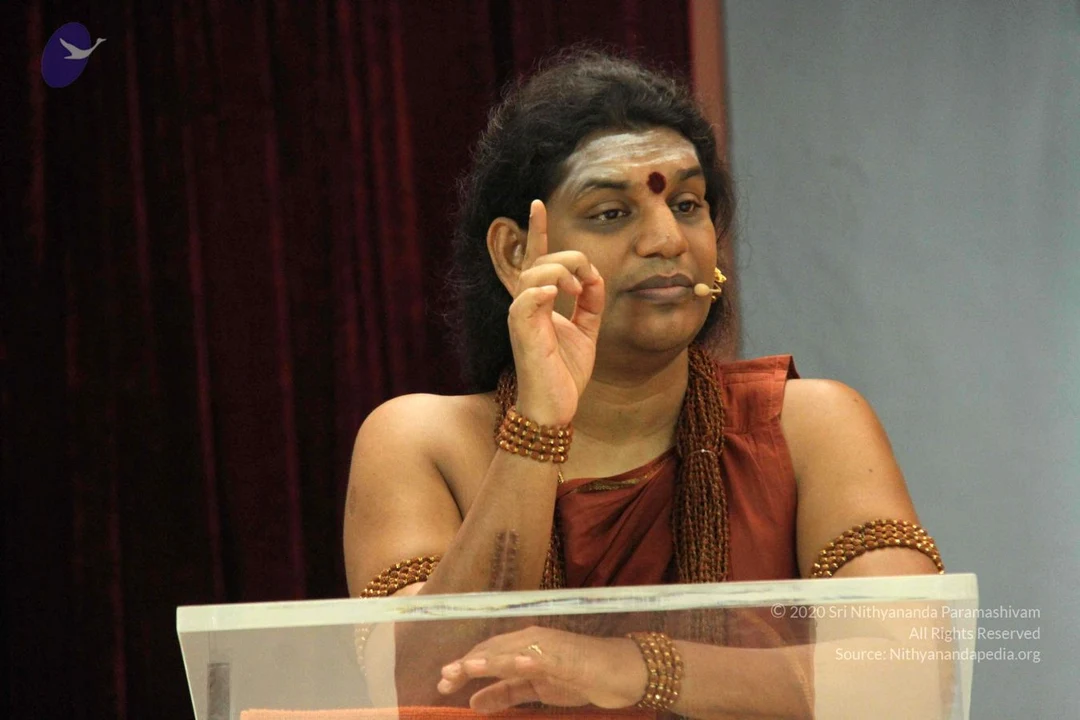
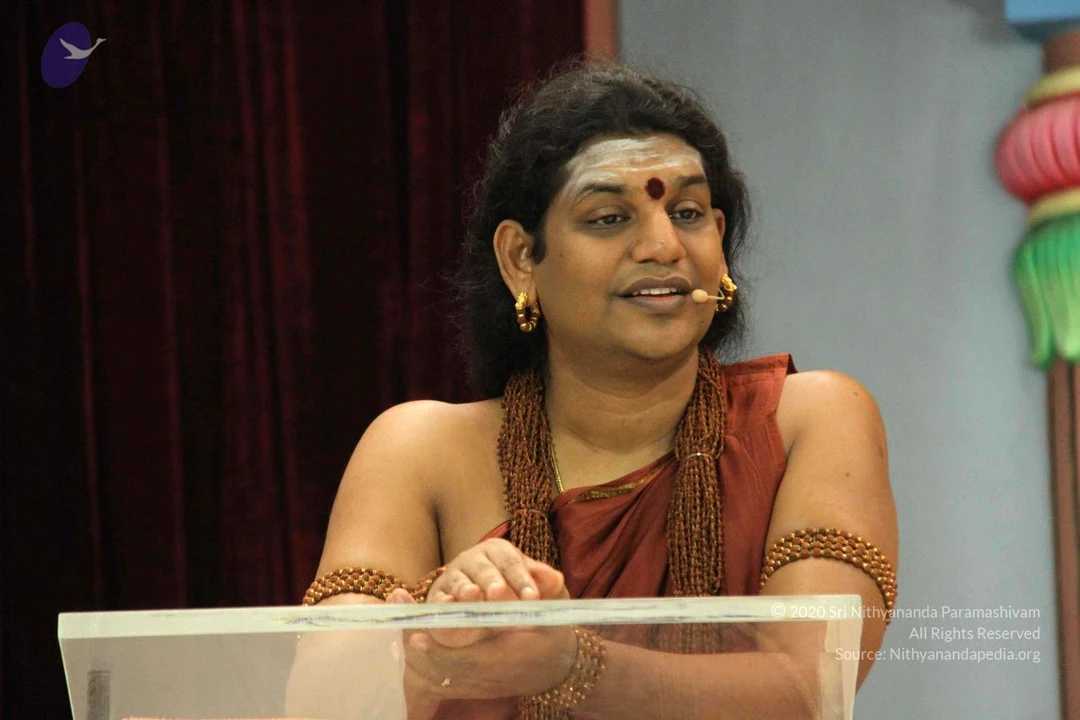
Final_blessing

5 photosSource gallery
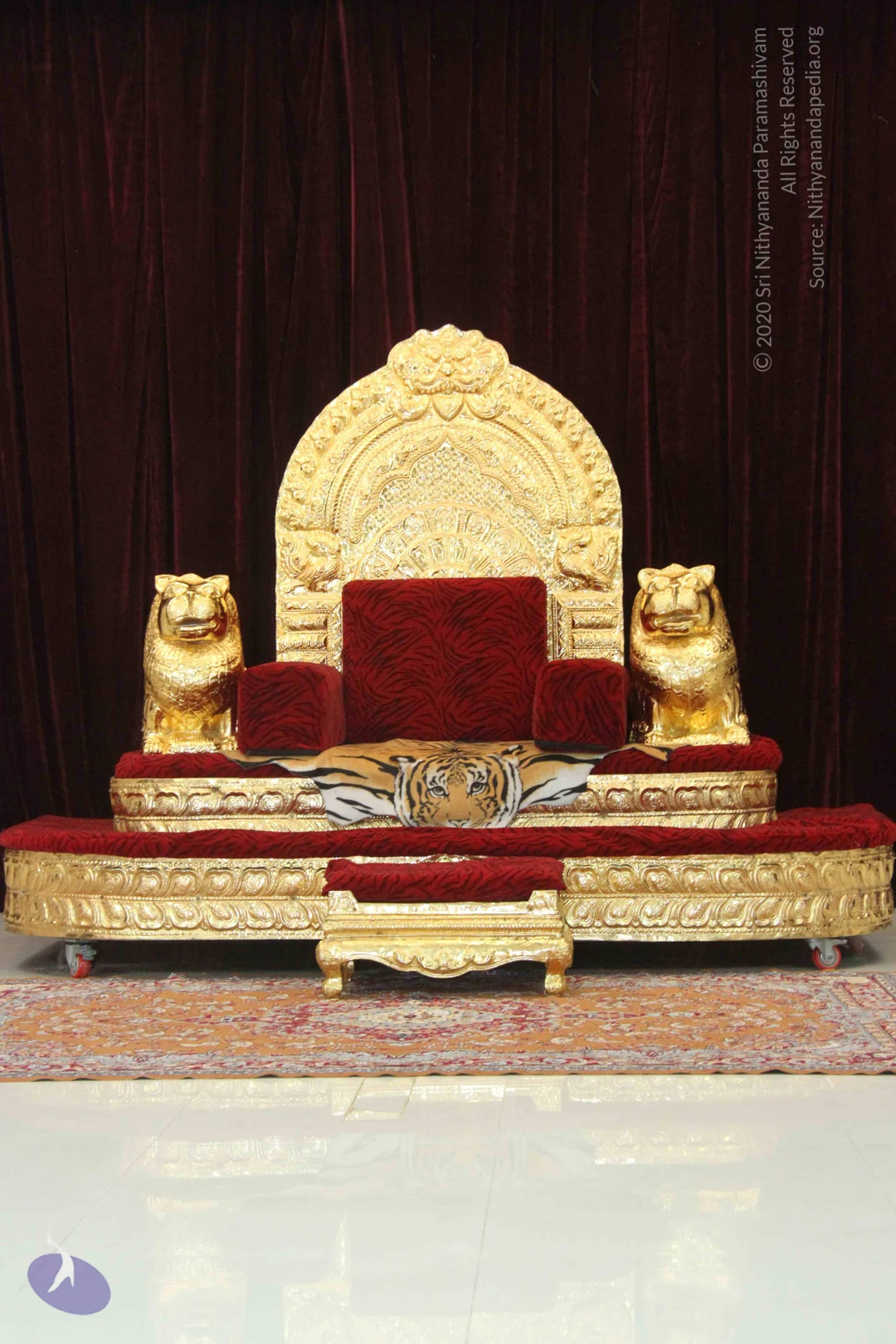
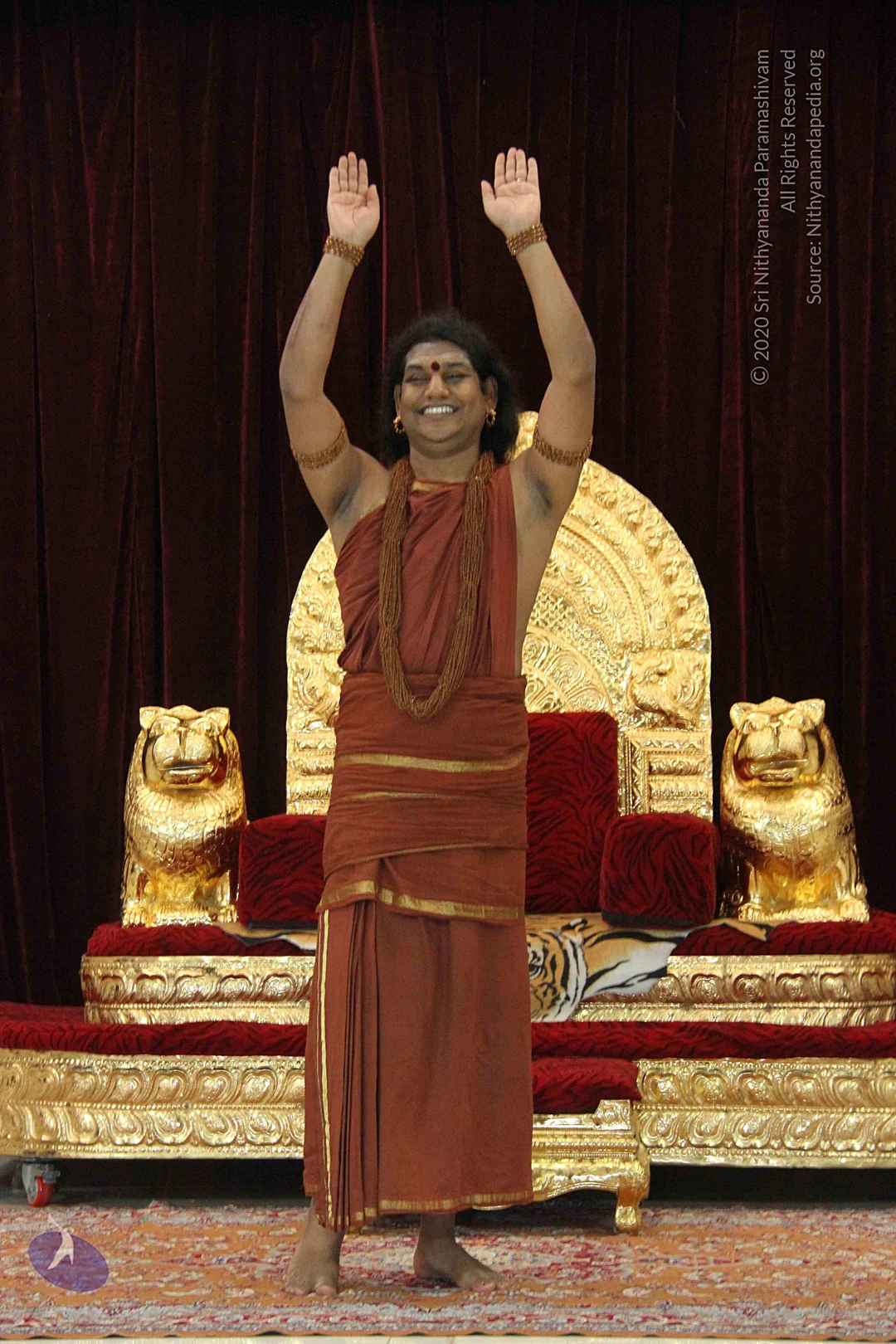
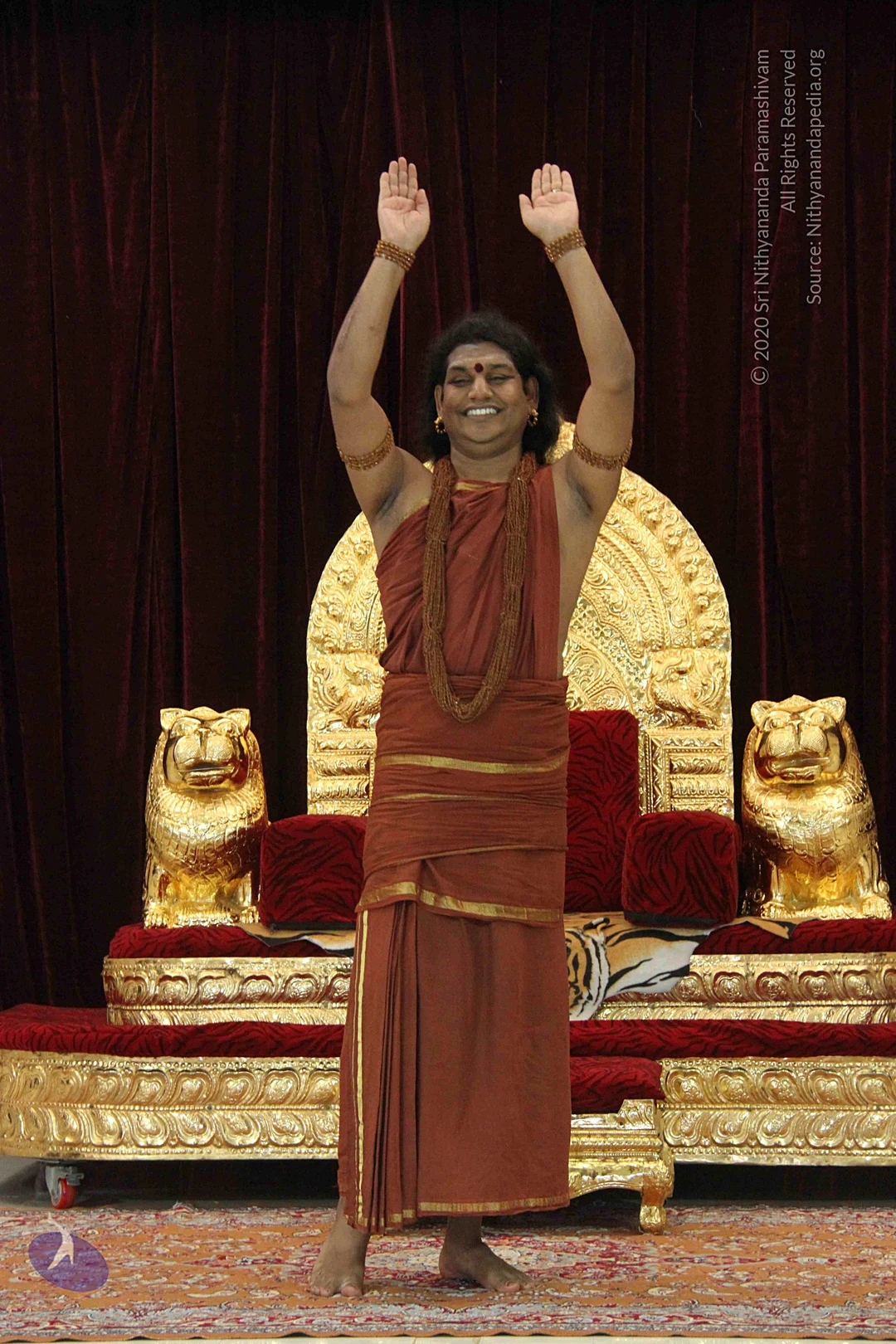
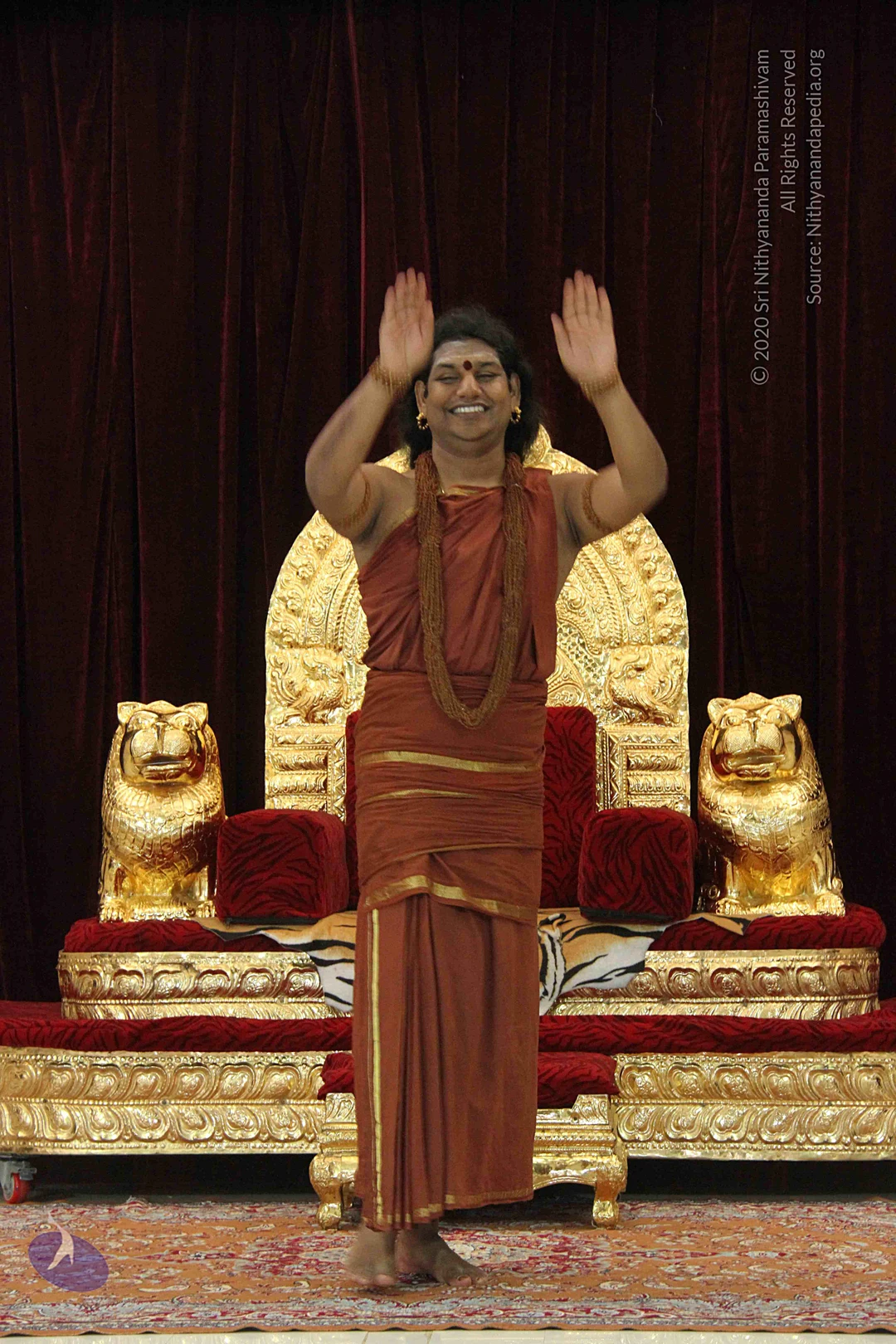
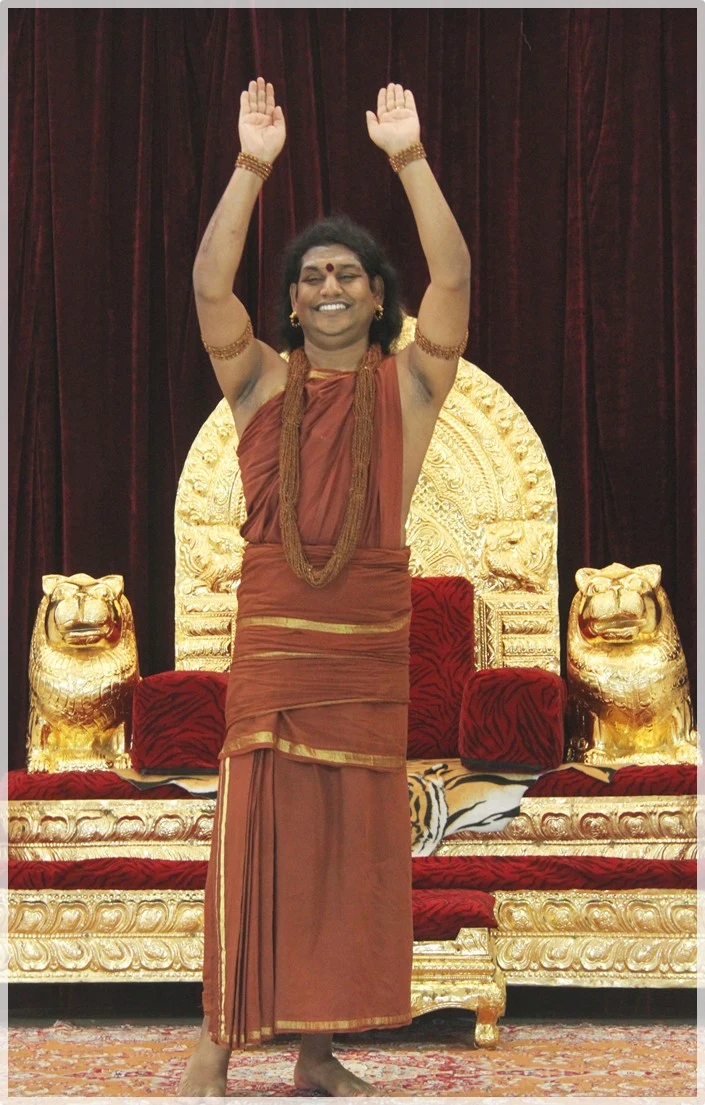
Photograph of an empty ornate gold and red throne on a raised platform against a deep maroon velvet curtain. The arched golden backrest is heavily carved, flanked by two gilded lion figures, with a red velvet-upholstered seat and armrests and a tiger-striped cloth draped over the seat. A gold footstool sits before the platform on an oriental carpet over a glossy white floor. No people are visible.A standing man with both arms raised high in an open-palmed gesture, smiling, before an ornate gold throne with carved lion-head armrests and red velvet cushions draped with a tiger-skin cloth, against a dark red velvet curtain. He wears a rust-red draped garment with gold-striped border, a long rudraksha mala around his neck, gold bangles on his wrists and upper arms, and a red bindi on his forehead, and stands barefoot on a patterned carpet. a person: the rudraksha mala, gold armlets and red-robed presentation with ceremonial throne are the qualifying cues, and he is physically present.A man stands barefoot on a patterned rug before an ornate golden throne with lion-head armrests and red tiger-striped cushions, with dark red velvet drapes behind. He raises both arms overhead, smiling with eyes closed. He wears a rust-red draped garment with gold border stripes, a multi-strand rudraksha mala around his neck, beaded bracelets and upper-arm bands, gold earrings, and a red bindi. Appearance-based candidate: a person, standing as a teacher giving an ecstatic gesture during a satsang-style setting.A standing man in rust-orange robes with gold trim smiles with eyes closed and both palms raised above his head in a blessing gesture. He wears a red bindi, gold earrings, a thick rudraksha mala, and wrists with bangles. Behind him is an ornate gold throne flanked by two gold lion sculptures, with red velvet cushions and a tiger-striped cloth, set against dark red velvet drapes. He stands barefoot on a patterned carpet.A photograph of a single standing person in a rust-red draped garment with gold-edged border, a long rudraksha-style bead mala around the neck, gold bangles on the arms and a red bindi on the forehead. He smiles and stands barefoot on an ornate patterned rug in front of a gold throne with red velvet cushions, a tiger-striped cloth and two gold lion figures, with dark red drapery behind. Swamiji (probable): the long swept-back hair, ornate beaded mala, saffron-toned draped clothing and gold adornments are consistent with the page's reference to Swamiji at this event, so the figure is treated as a.
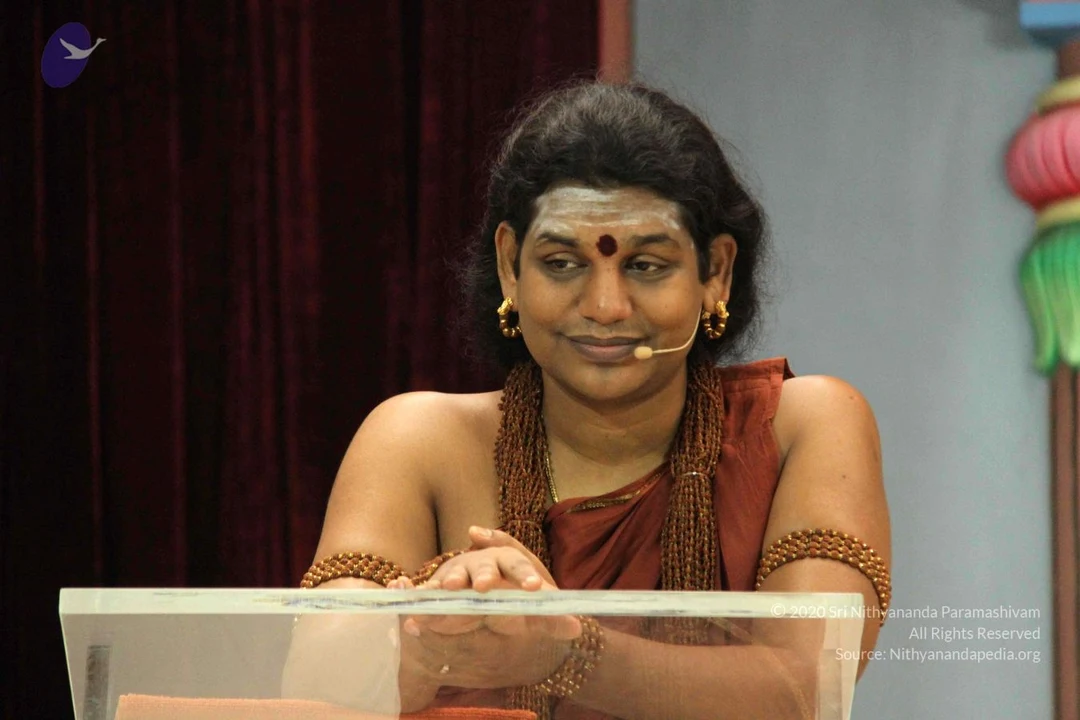
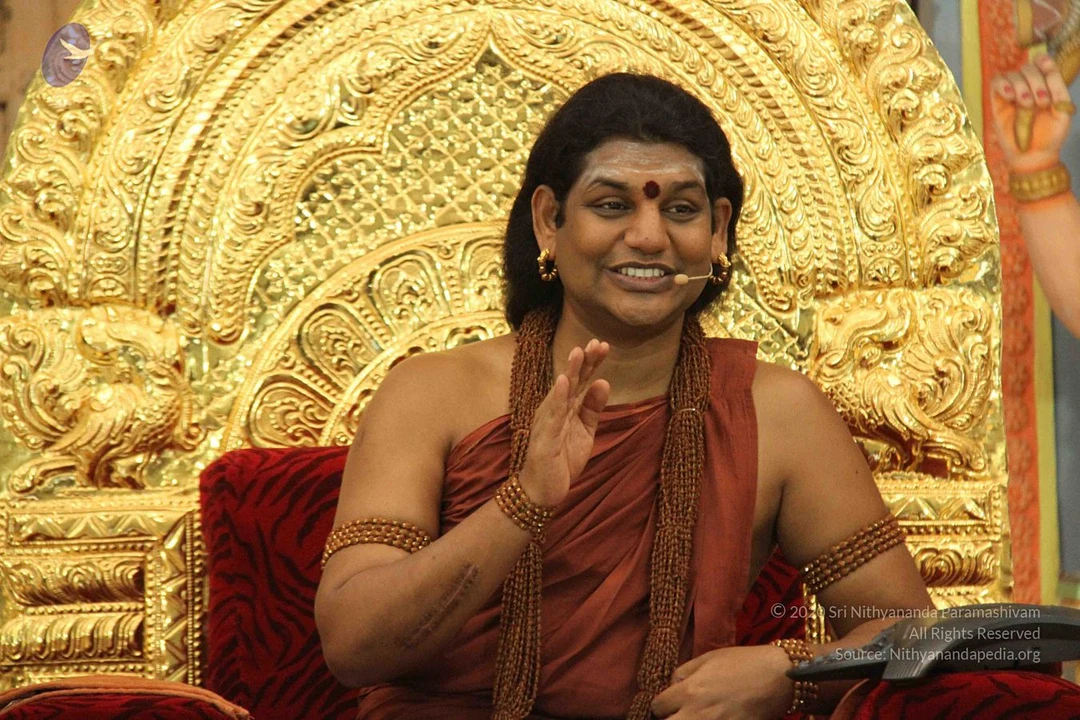
NithyaDharmam_Day1

85 photosSource gallery
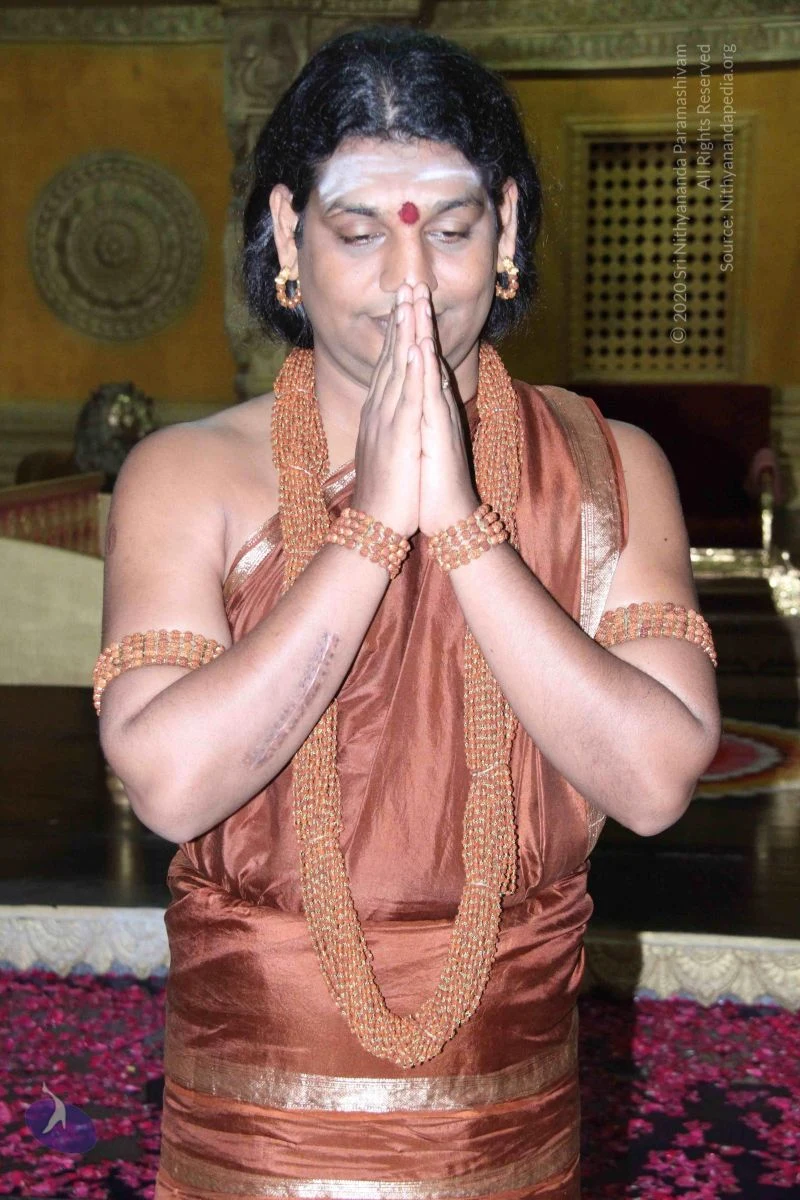
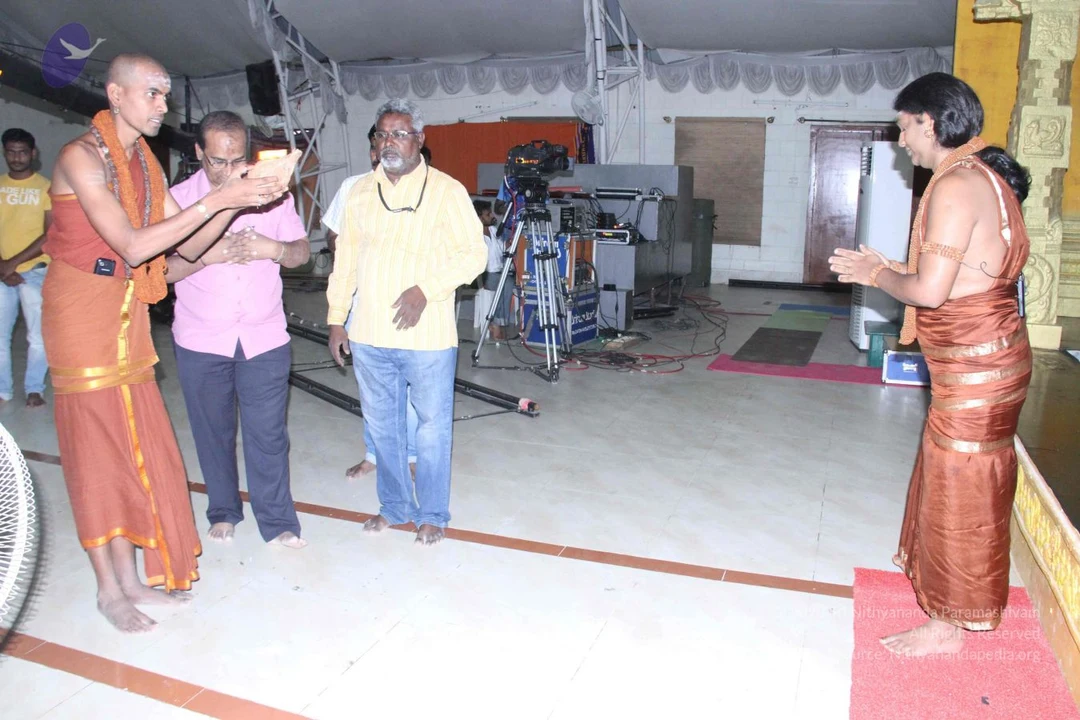
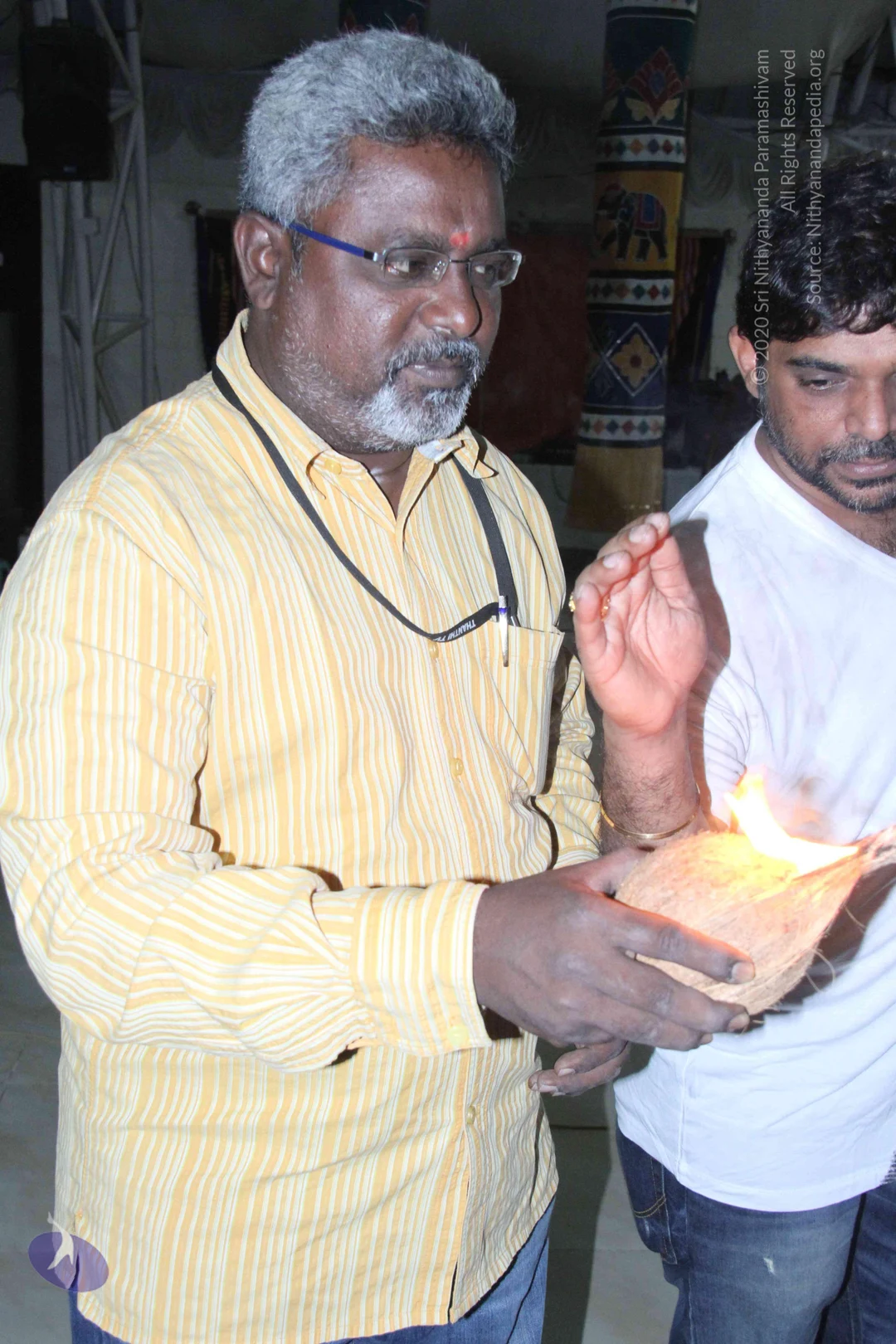
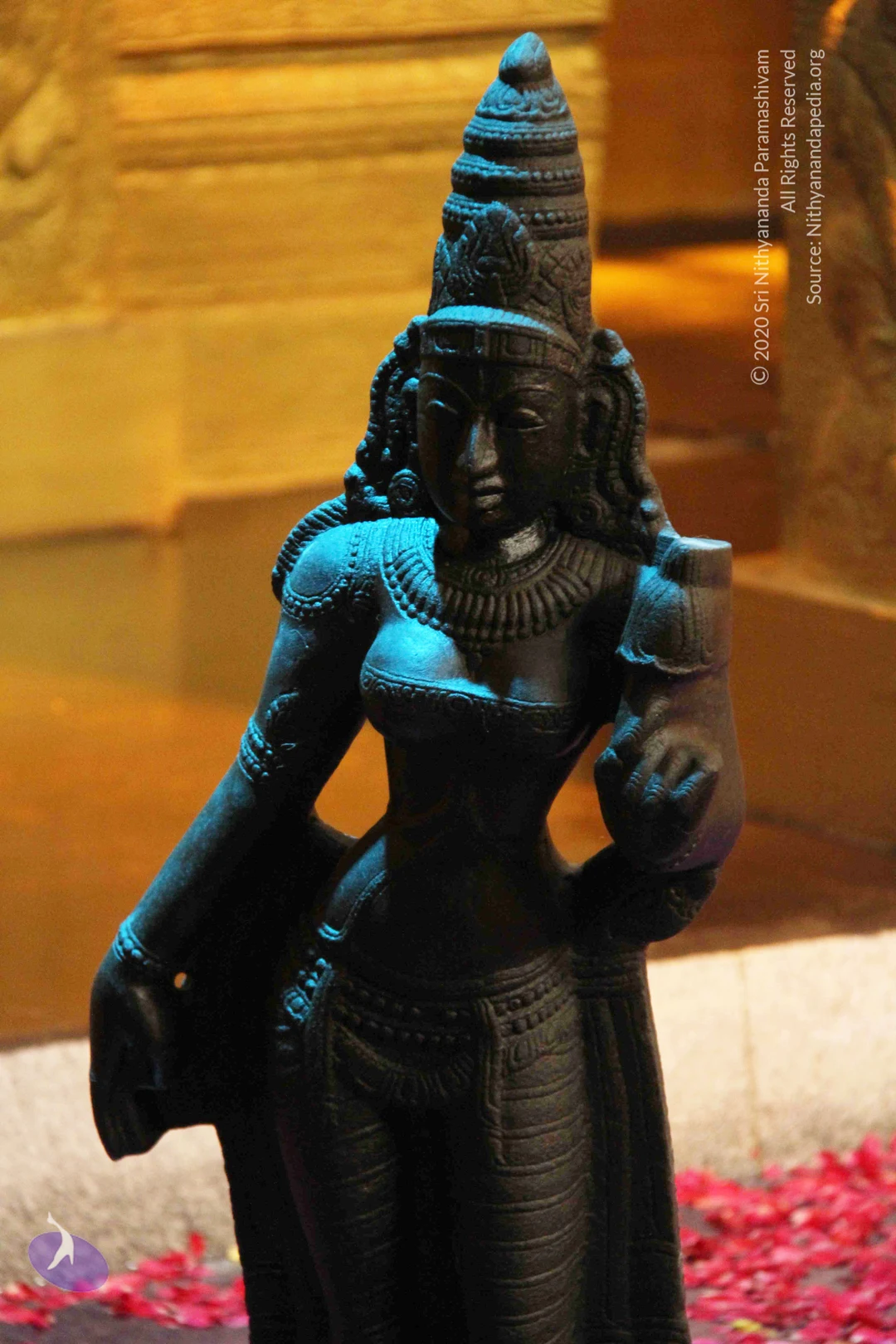
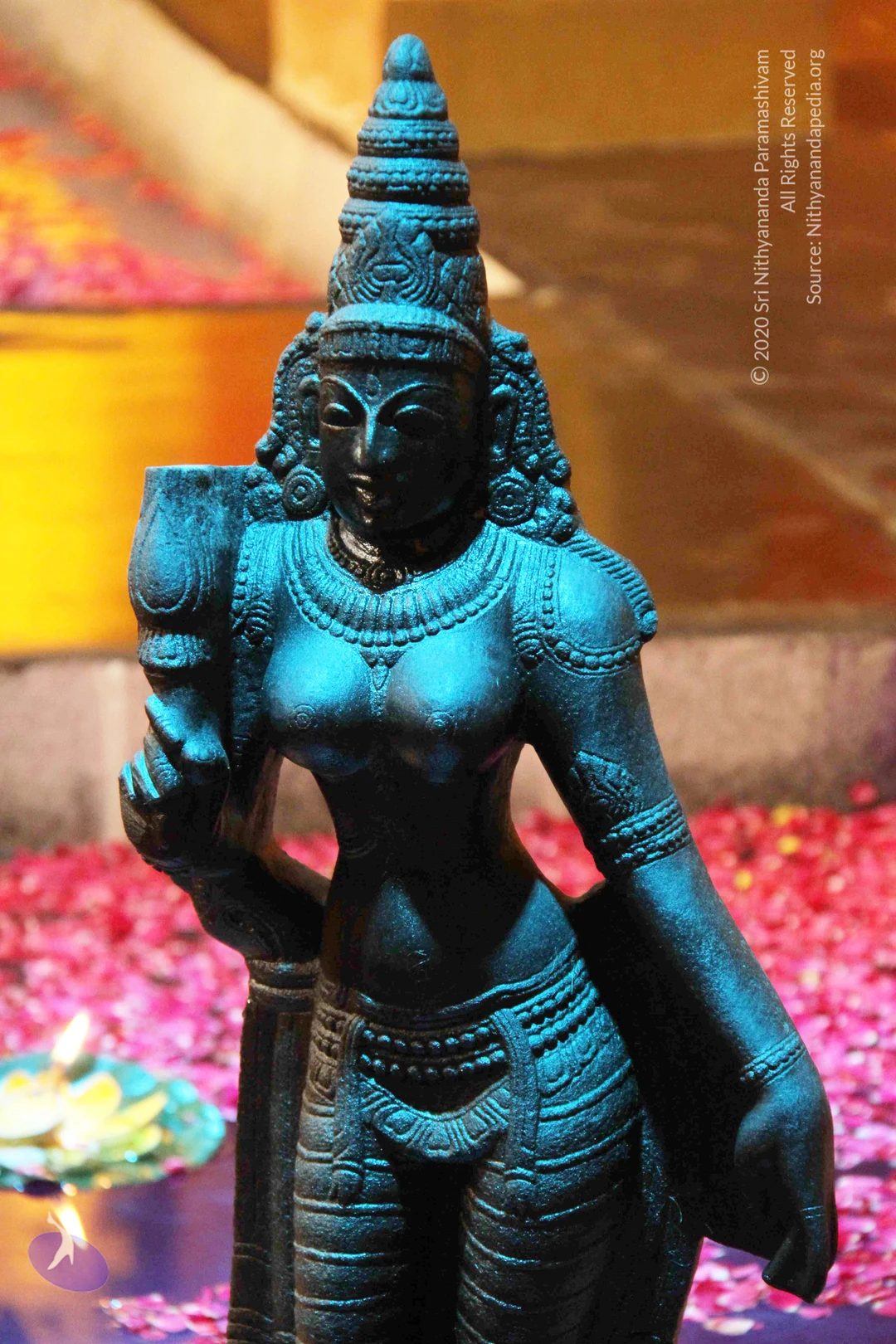
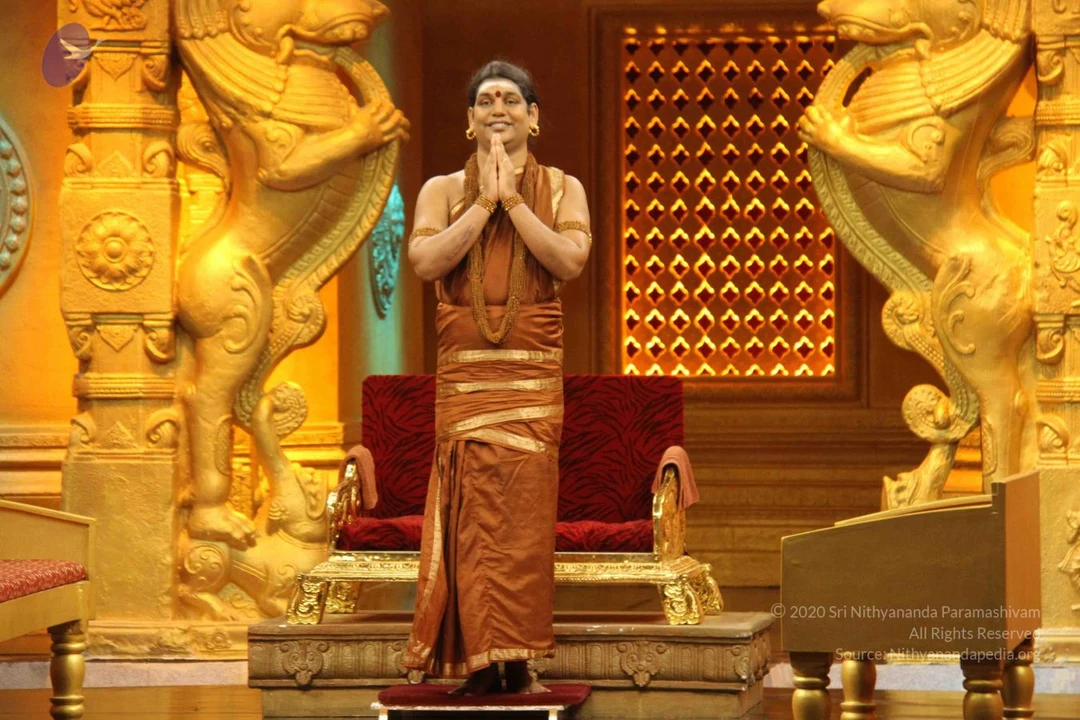
Photograph of a single person standing with palms pressed together in namaste, eyes lowered, before a floor scattered with pink flower petals. He wears a copper-brown silk garment with gold border draped over the shoulders and a long rudraksha mala around the neck, with matching rudraksha bands on the upper arms and wrists. He has white vertical tilak on the forehead, a red bindi, and gold earrings. Behind him are warm ochre walls with carved decorative panels and a latticed window.A photograph inside a hall with a tent-like white ceiling, where a shaved-headed man in an orange-saffron dhoti and orange shawl with a garland holds a small brass plate toward a man in a pink shirt and dark trousers. Beside them, a man in a yellow striped shirt and jeans stands and watches, and a woman in a rust-brown sari with a garland and gold bangles stands on a red carpet at right with palms pressed together in greeting. Behind them are a tripod-mounted video camera, lighting stands, cables, an air conditioner and a small table. Several people stand in the background.Photograph of a grey-haired man in glasses and a yellow-and-white striped shirt with a lanyard, wearing a red tilak on his forehead, holding a flaming piece of dried leaf or coconut husk in both hands. Beside him a younger man in a white t-shirt and jeans watches the flame, with a bracelet on his wrist. Behind them are a decorated cloth-patterned pillar with an elephant motif and draped fabric. Two physical people are visible; no candidate for a person's appearance is present, so the lamp-lighting scene involves ordinary devotees.A dark stone or bronze-finished standing deity murti, photographed up close against a warm golden-lit wall. The figure wears a tall conical crown, layered jewellery including a broad collar necklace, and a fitted bodice with a waist sash and dhoti-style lower garment. One hand rests on the hip and the other holds a small pot or vessel at shoulder height. Scattered red flower petals lie on the stone ground below. No physical people are present.A close photograph of a teal-painted stone deity murti standing on a bed of scattered pink and red flower petals. The figure wears a tall conical crown, layered necklaces, armlets and a decorated waist cloth, and holds a cylindrical vessel in one hand. Two small oil lamps with flames sit on the petals at the lower left, and warm golden light fills the background. No people are visible.A photograph of a standing figure with palms pressed together in anjali mudra on a raised platform in an ornate golden hall. The figure wears a rust-orange draped garment with gold borders, a long beaded mala around the neck, gold bangles and gold earrings, with a red bindi on the forehead. Behind is a red and gold throne with a zebra-patterned velvet seat, flanked by carved golden makara-style pillars and a golden lattice screen. A small red mat sits on the platform. The setting suggests a stage or satsang dais.
Thiruvamayur_Dhyanapeetam_NDY
15 photosSource gallery
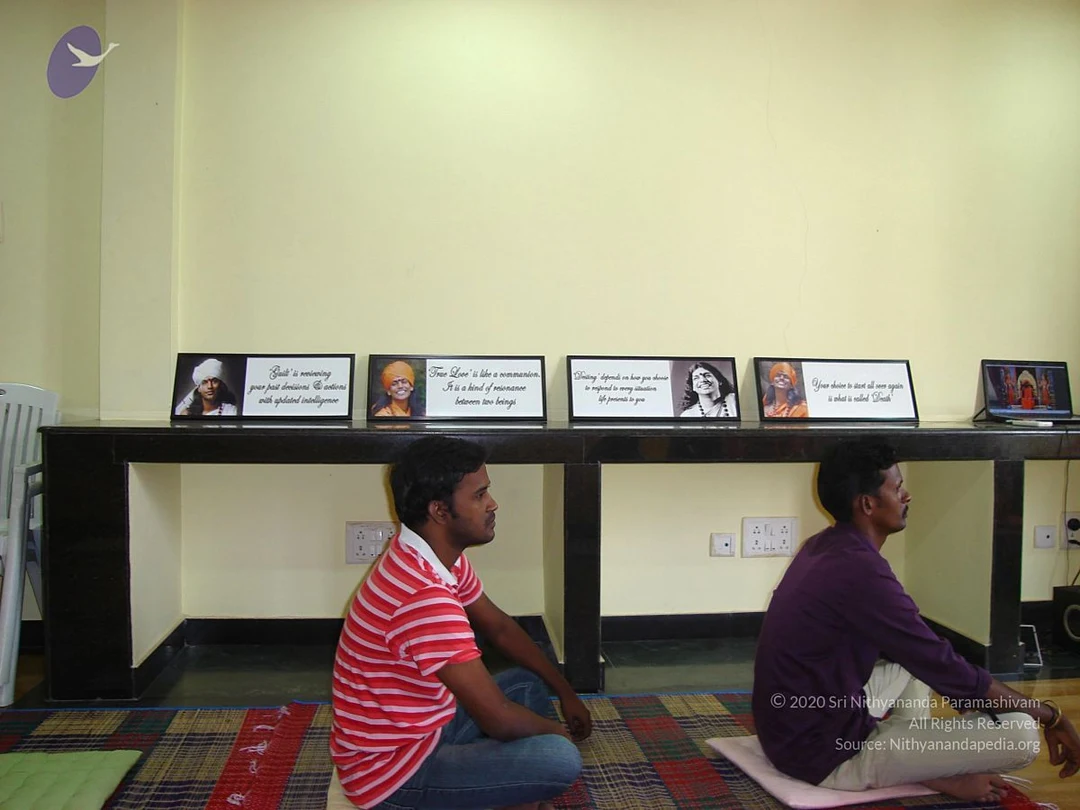
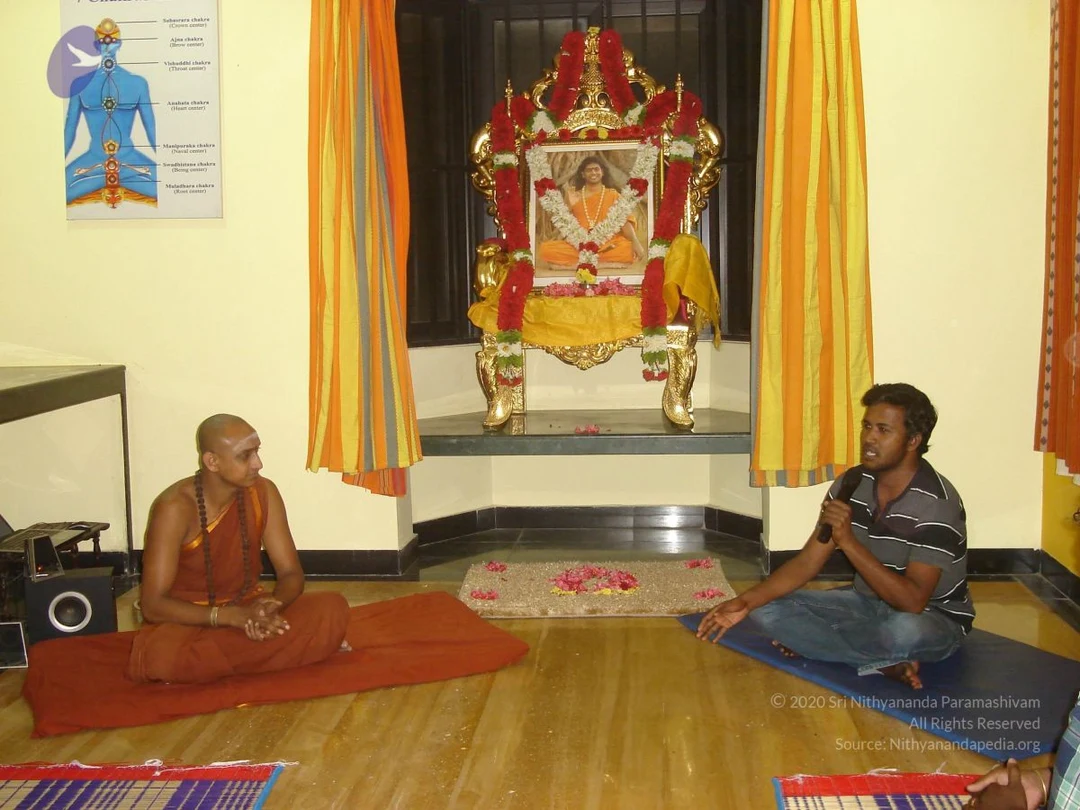
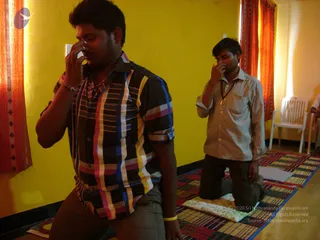
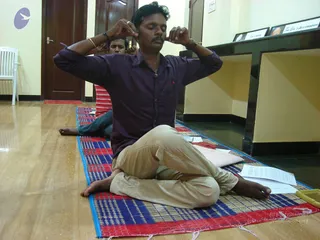
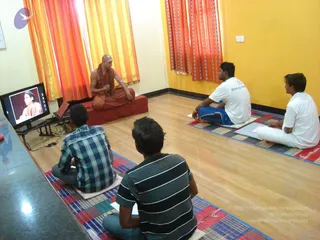
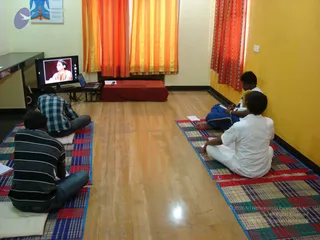
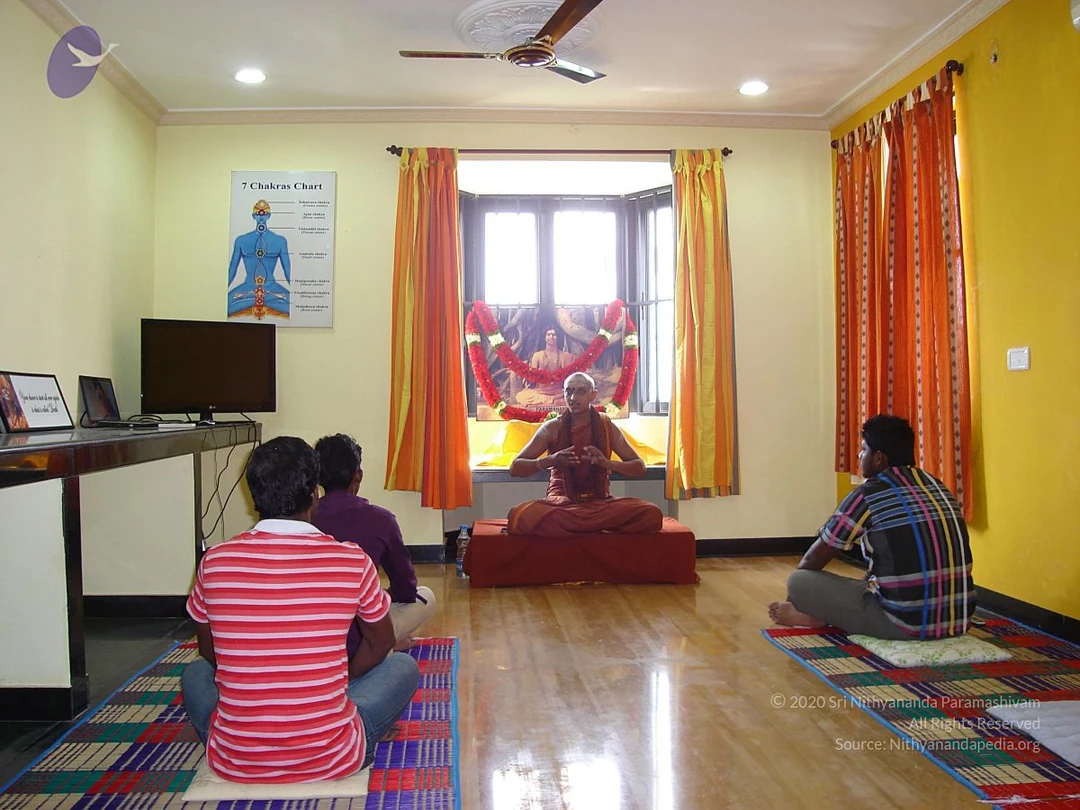
A small yellow-walled room holds a satsang: a shaved-headed teacher in orange robes sits cross-legged on a red cushioned seat in front of a window draped with orange and yellow curtains, with a red and white floral garland on a framed picture behind him. Three people sit on colourful striped mats facing him, one in a red-and-white striped shirt, one in purple, one in a blue-and-black striped shirt. A seven chakras chart hangs on the left wall and a monitor sits on a desk at left.A photograph of two men seated on a colourful patterned mat in a plain room with pale yellow walls. The man on the left wears a red and white striped polo shirt and jeans, and the man on the right wears a purple long-sleeved shirt and white trousers; both face left toward a long black console table. Along the table stand framed black-and-white portraits, each paired with a short quotation in script, and at the far right a small screen shows a colourful deity scene. The portraits show a figure in a white turban, figures in orange headwear and robes, and a woman with long hair. The printed captions read the quotations shown in the text field. Two physical people are visible.A photograph in a yellow-walled room with orange curtains. In the foreground a young man in a multicoloured striped short-sleeved shirt and a bangle stands with one hand raised to his nose, fingers pinched. Behind him a man in a beige checked shirt with a wooden pendant on a dark cord kneels on a woven mat, also holding his hand to his nose. A white plastic chair and a small white cushion sit on the mat. The scene suggests a breathing practice during a session. No a person appearance is clearly visible in this image.A photograph of a man seated cross-legged on a woven red, blue and yellow mat on a polished wooden floor, eyes closed, both hands raised to his ears in a meditative gesture. He wears a purple button-up shirt and beige trousers, with a bracelet and a thin cord around his neck. Behind him, a second man in a red-and-white striped shirt sits on the mat with his bare feet visible and also raises his hands to his ears. Printed papers lie on the mat and a yellow tray sits at the right edge. In the background are a white plastic chair, a dark wooden door, a cream wall and a dark cabinet with framed pictures and a printed sign.A photo of a small room with yellow walls and orange-striped curtains. A bald man in a saffron-orange robe and shawl sits cross-legged on a red cushion, hands in a teaching gesture, facing four men seated on woven striped mats. Two men in white shirts sit in the foreground-right; two men in casual shirts sit in the foreground-left, their backs to the camera. A flat-screen TV on the left shows a woman in red and gold. The man in orange is visible in person, and the appearance is not enough to confirm an identity.A photograph of four men sitting cross-legged on woven checked mats in a bare room with a wooden floor and orange striped curtains. They face a flat-screen monitor showing a woman in a red and gold outfit with a beaded necklace; a laptop sits on a low table beside a dark red cloth-covered stand. A man in a white shirt and blue trousers wears a wristwatch and holds papers, another in a green checked shirt sits near the monitor, and a man in a striped shirt has his back to the camera. A wall poster hangs in the upper left. The scene suggests a video satsang being watched in a small classroom-like hall.