Skip to content
Sunday

27 October 2013

Declare and Live Your Power.

Dated photos
472
Source pages
1
Media
2
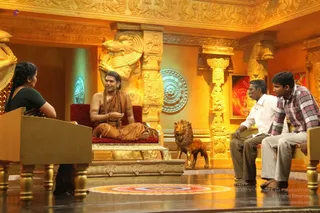
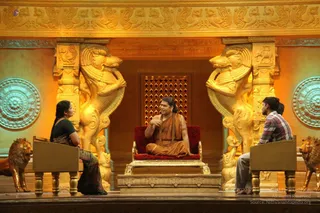
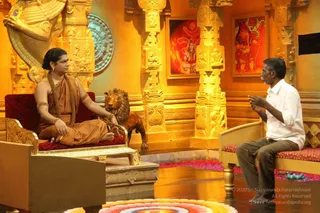
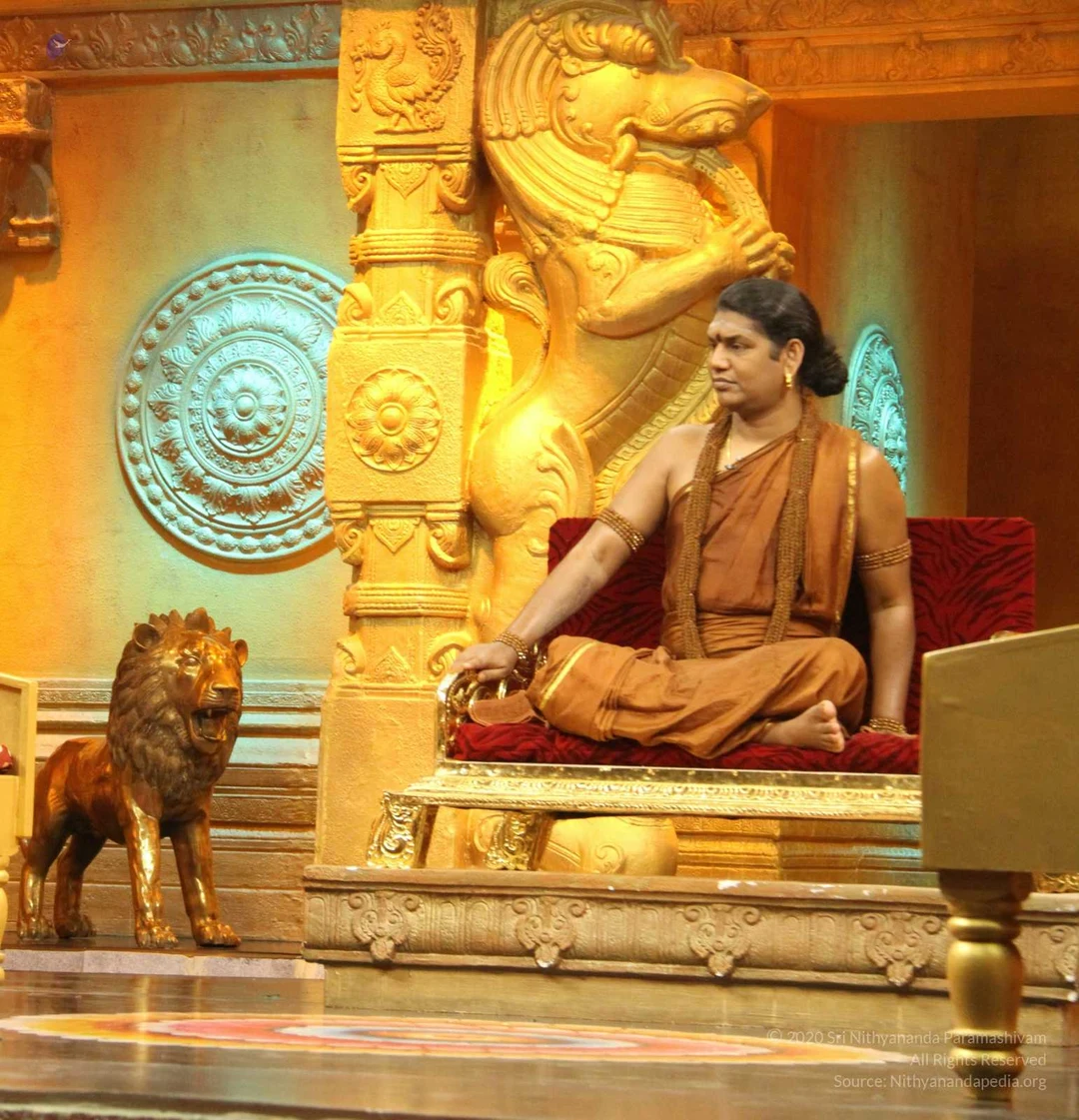
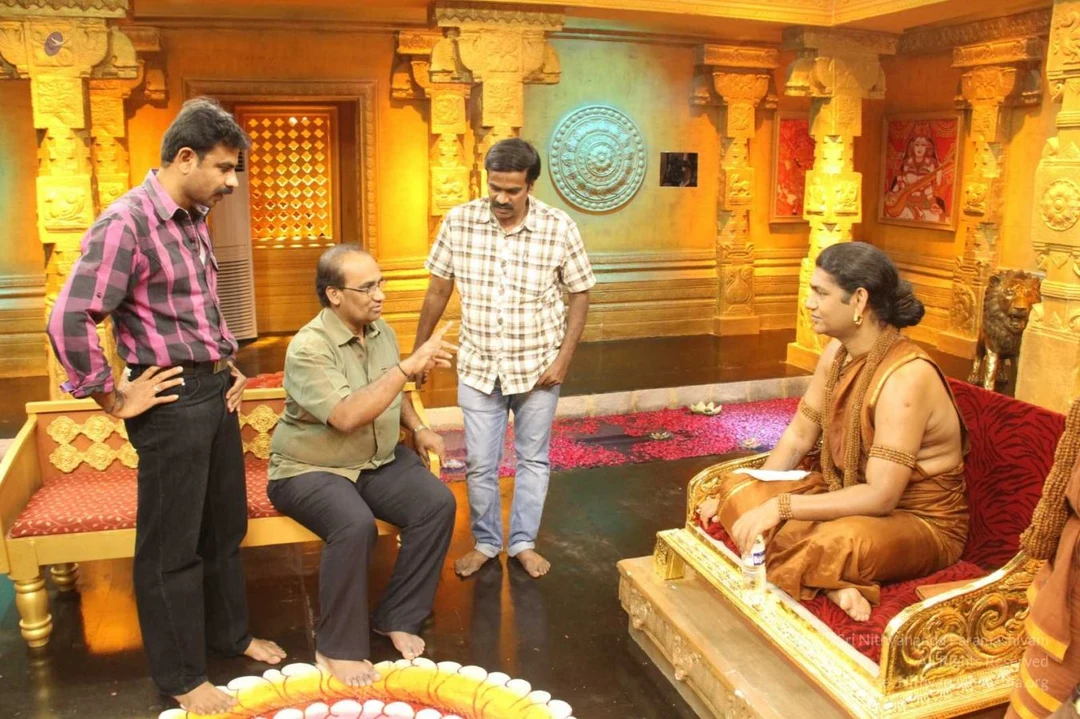
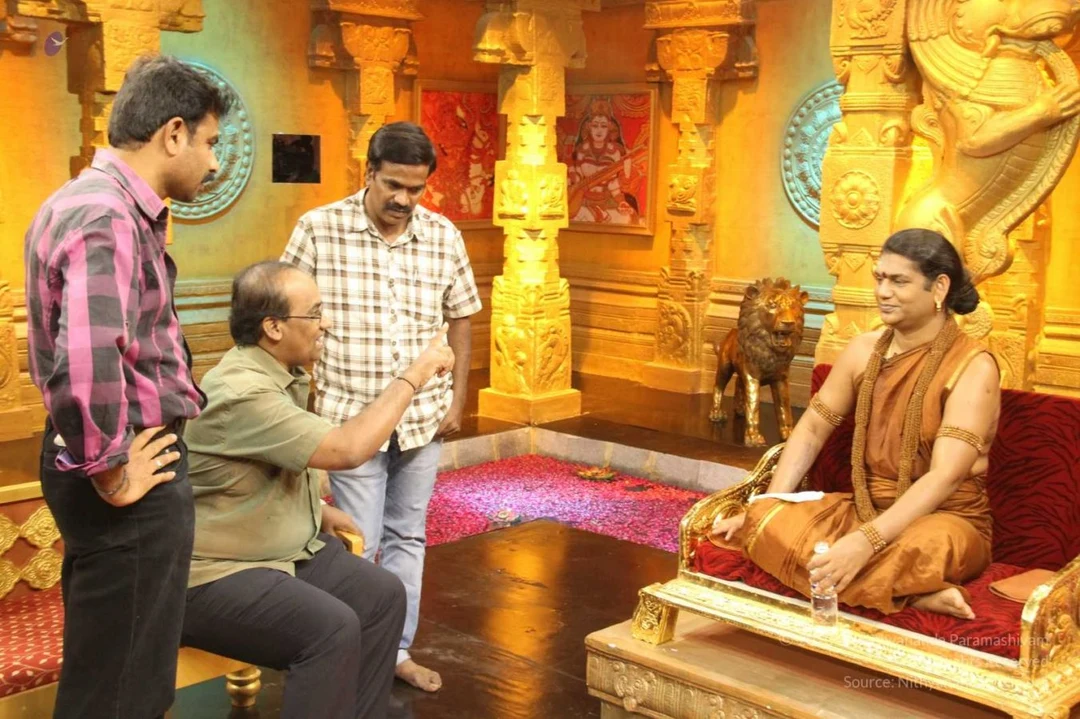
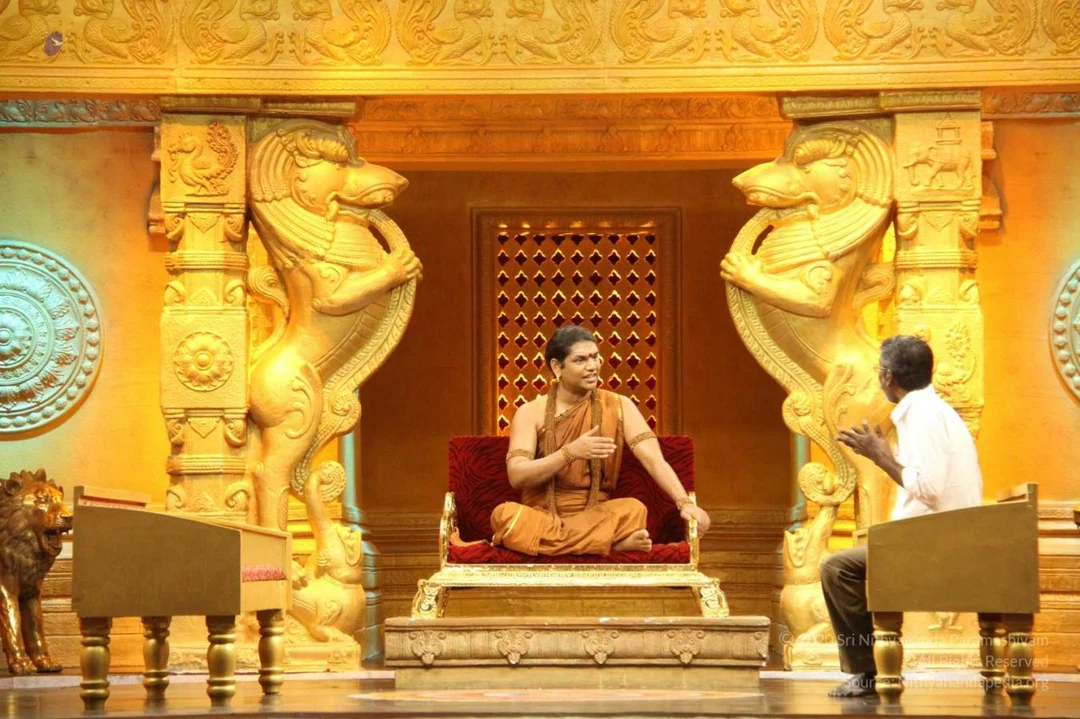
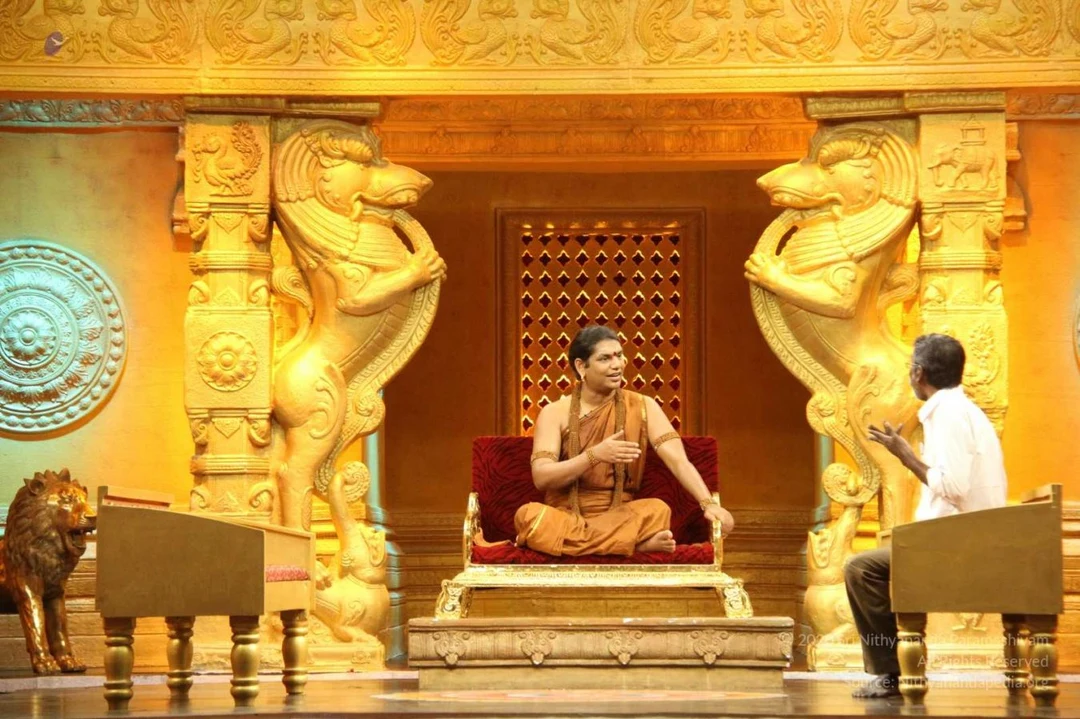
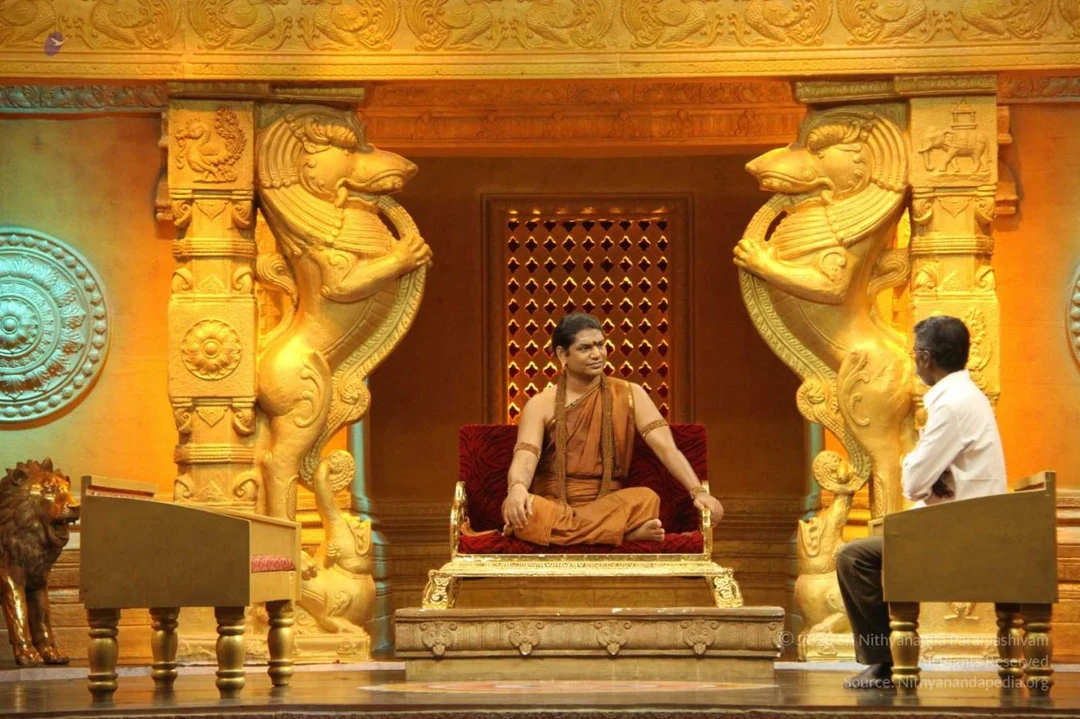
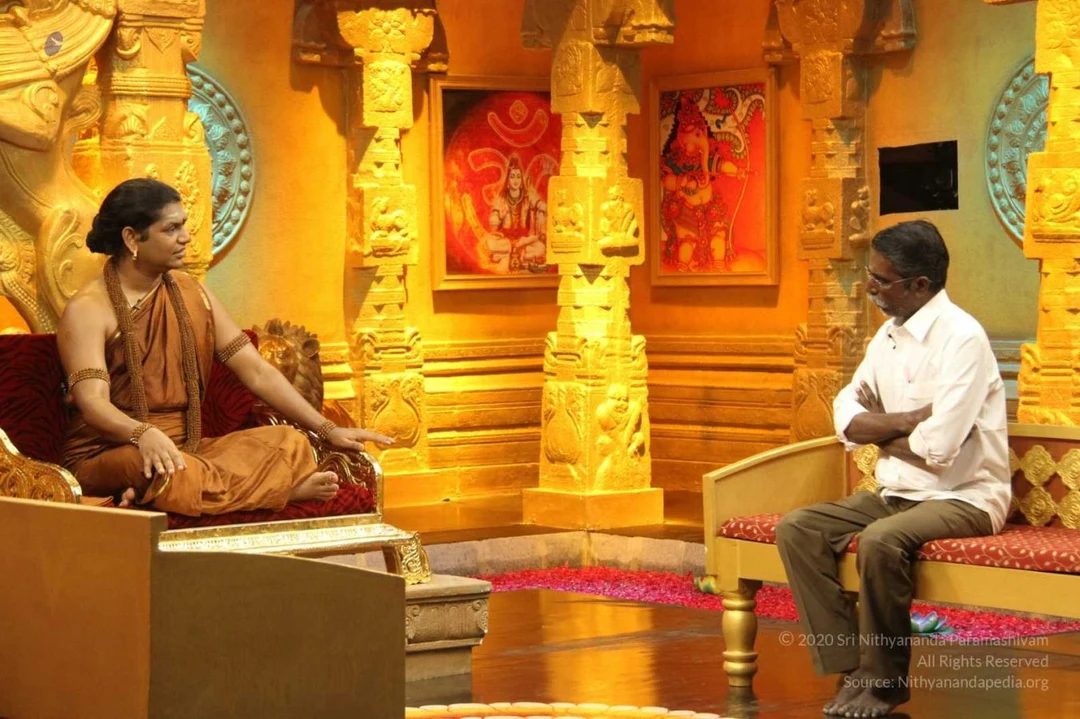
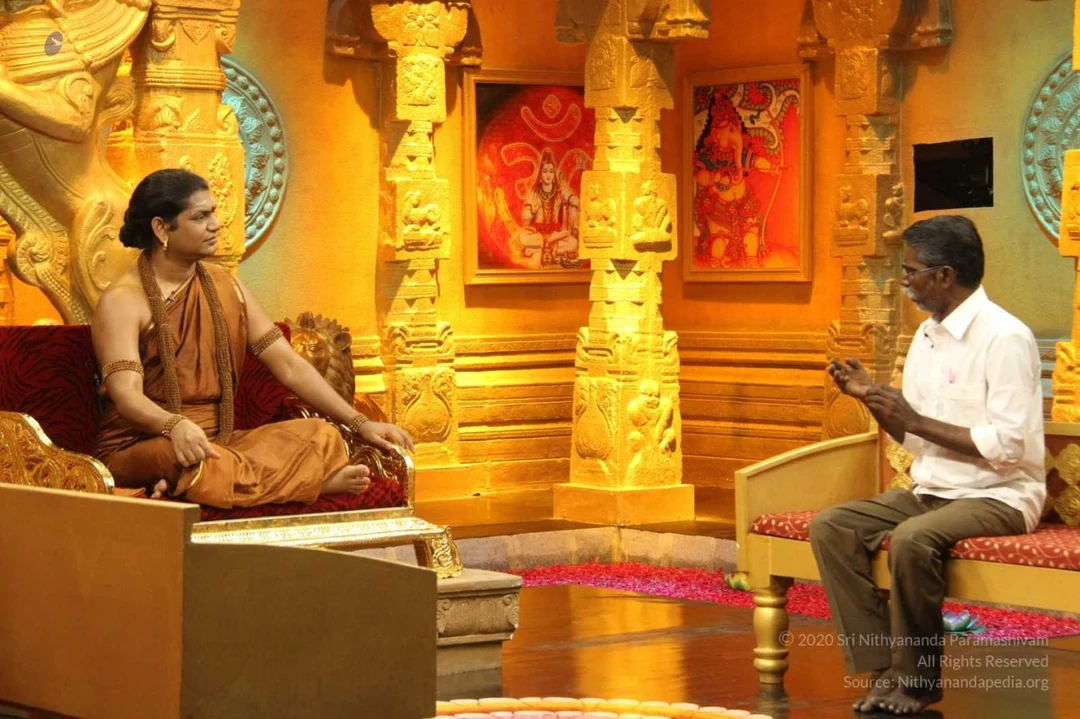
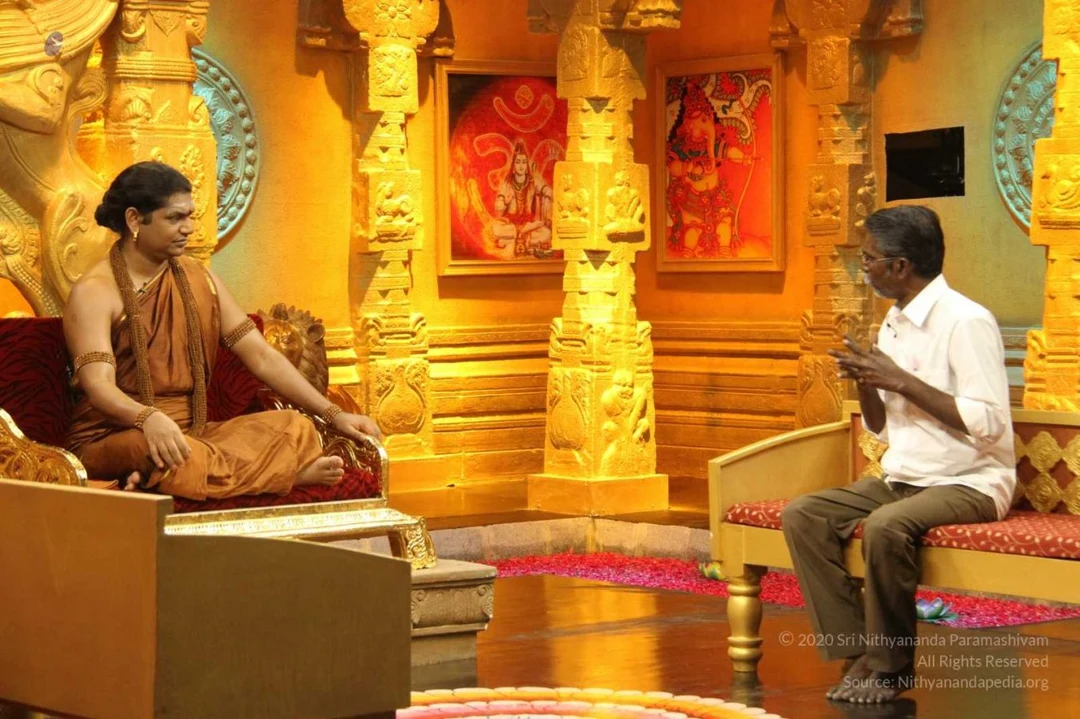
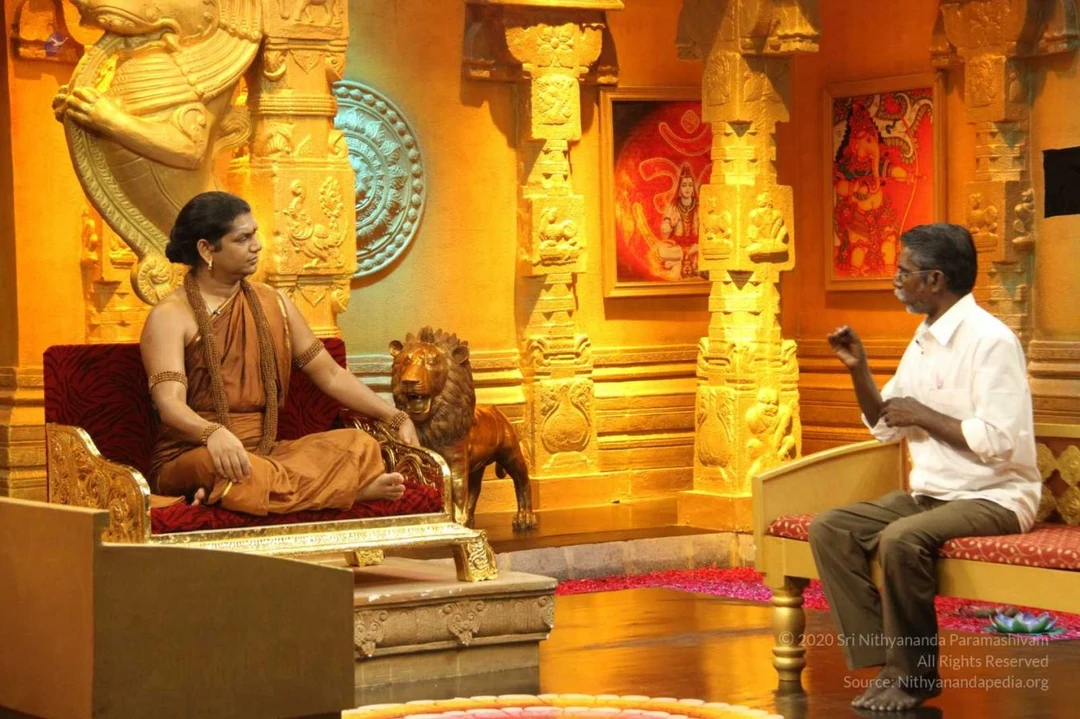
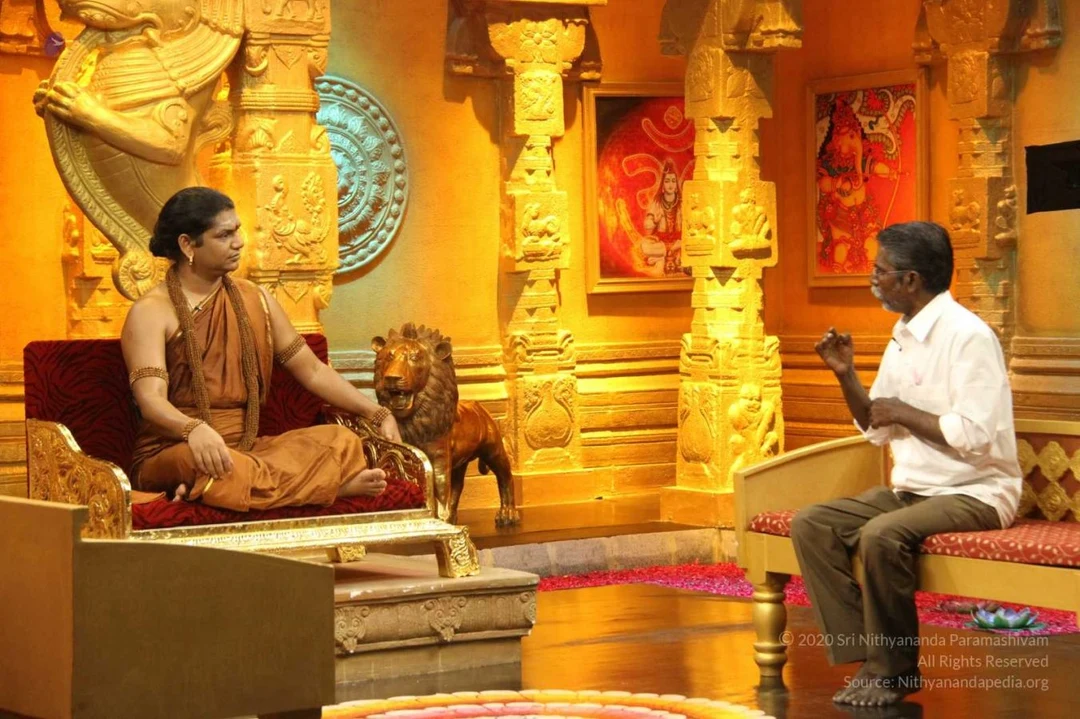
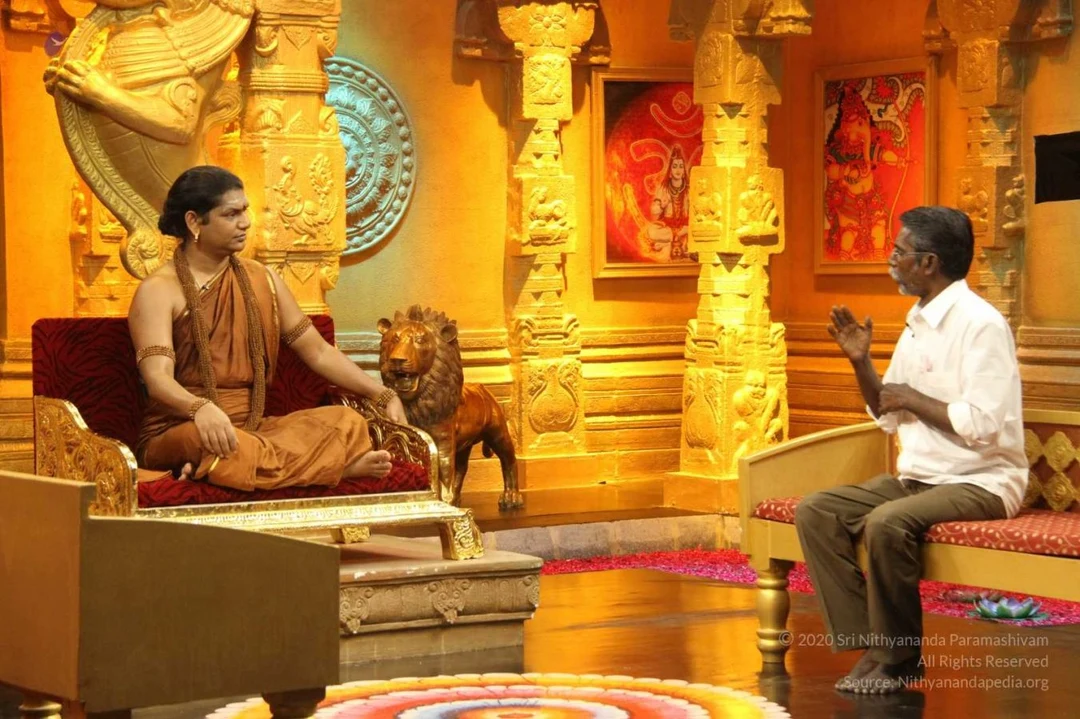
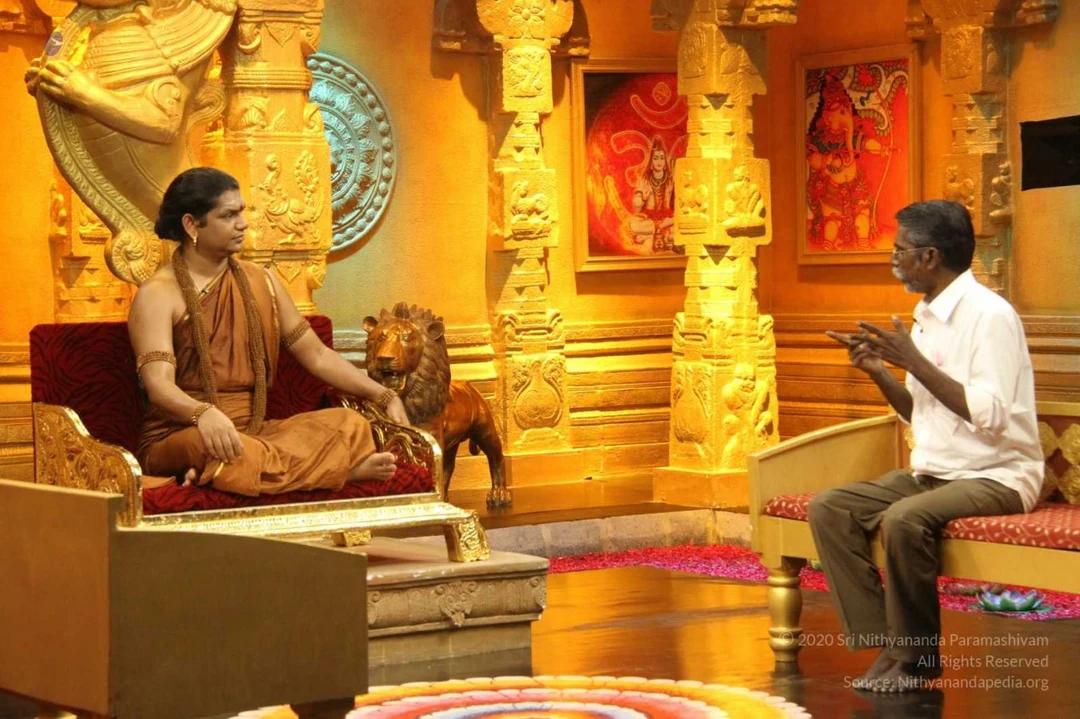
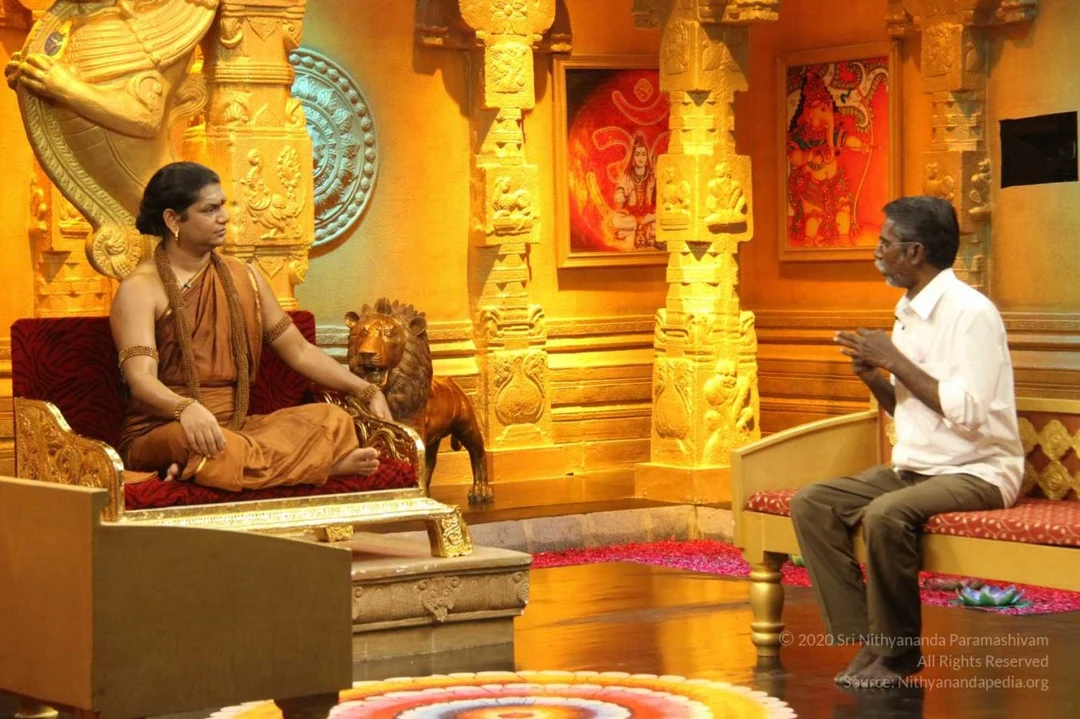
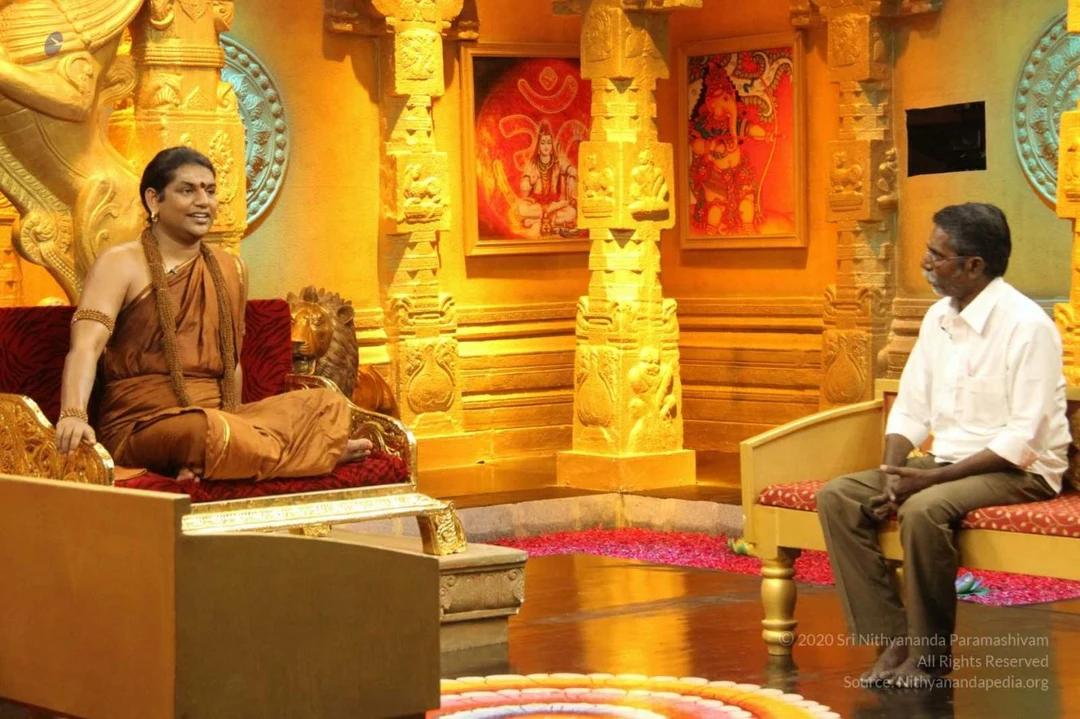
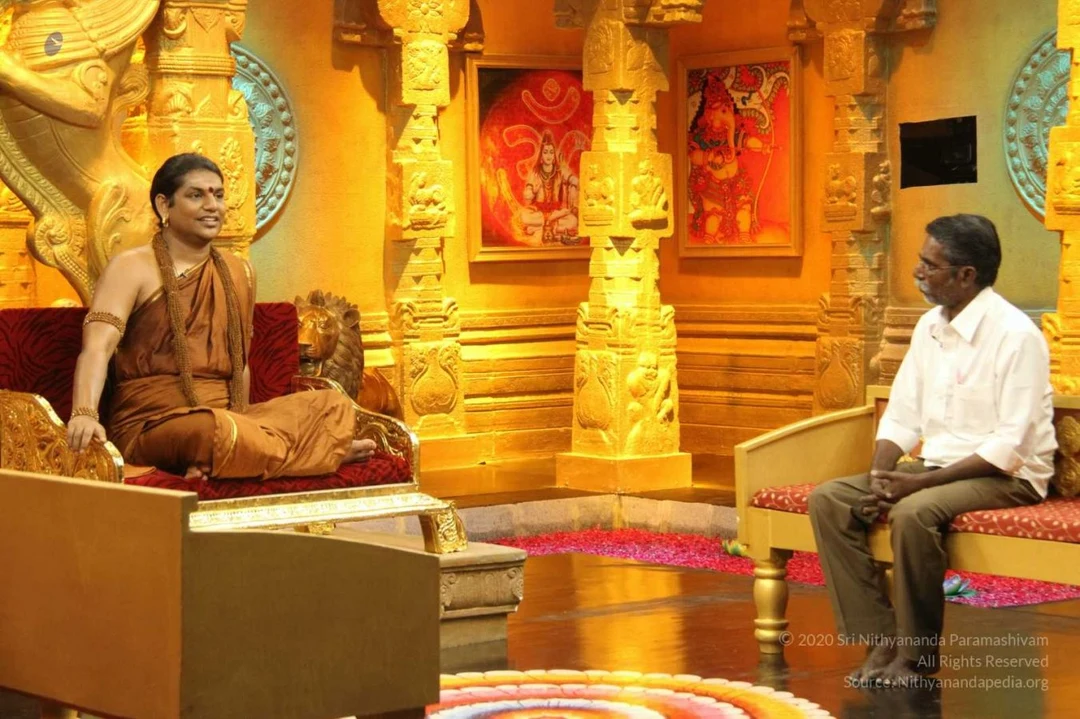
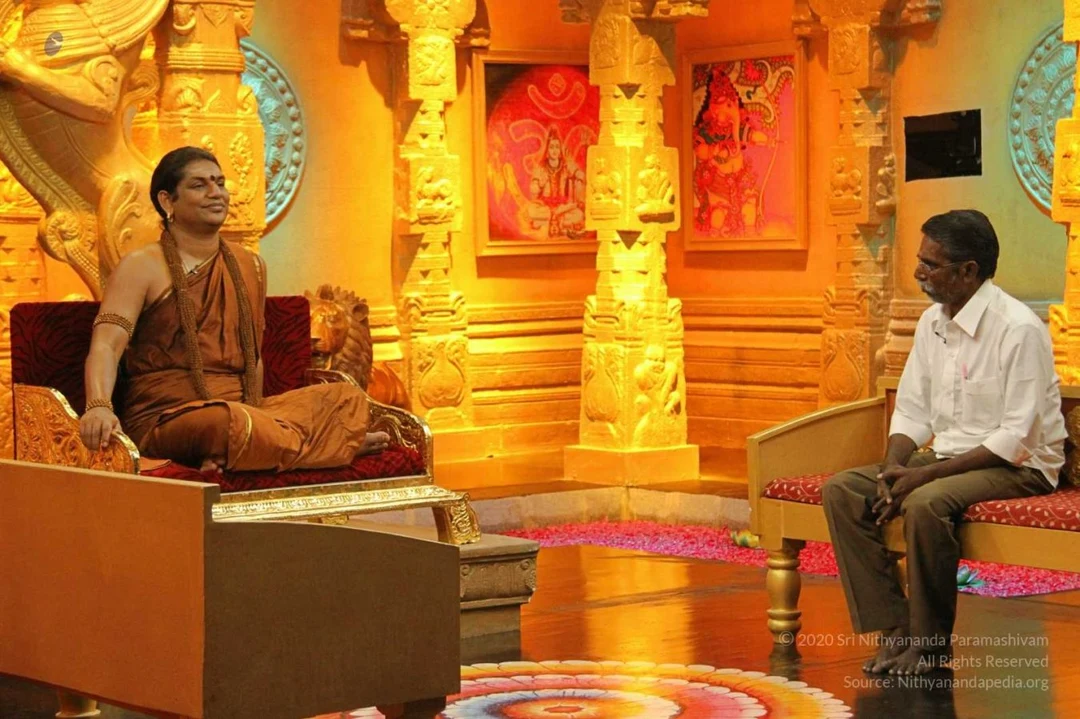
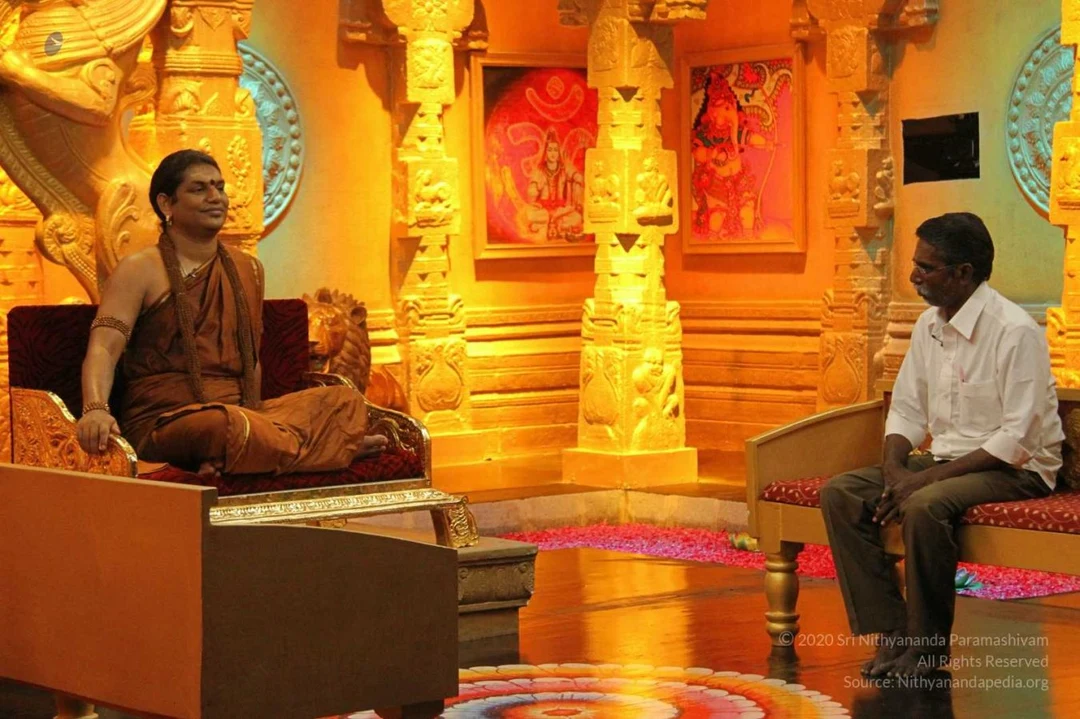
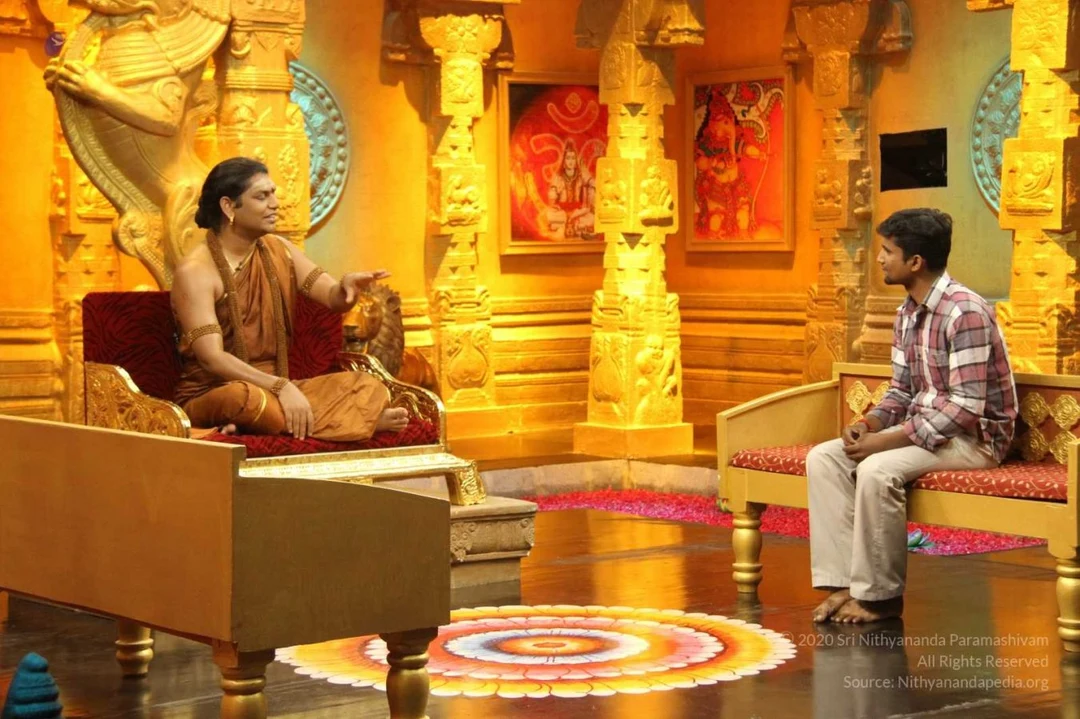
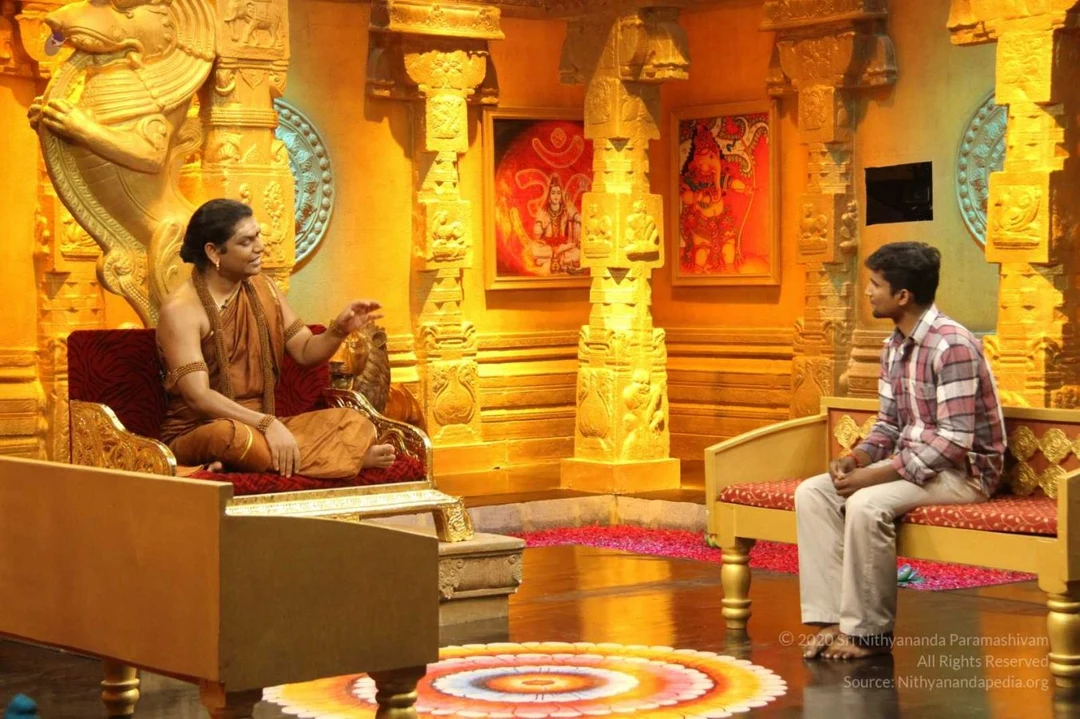
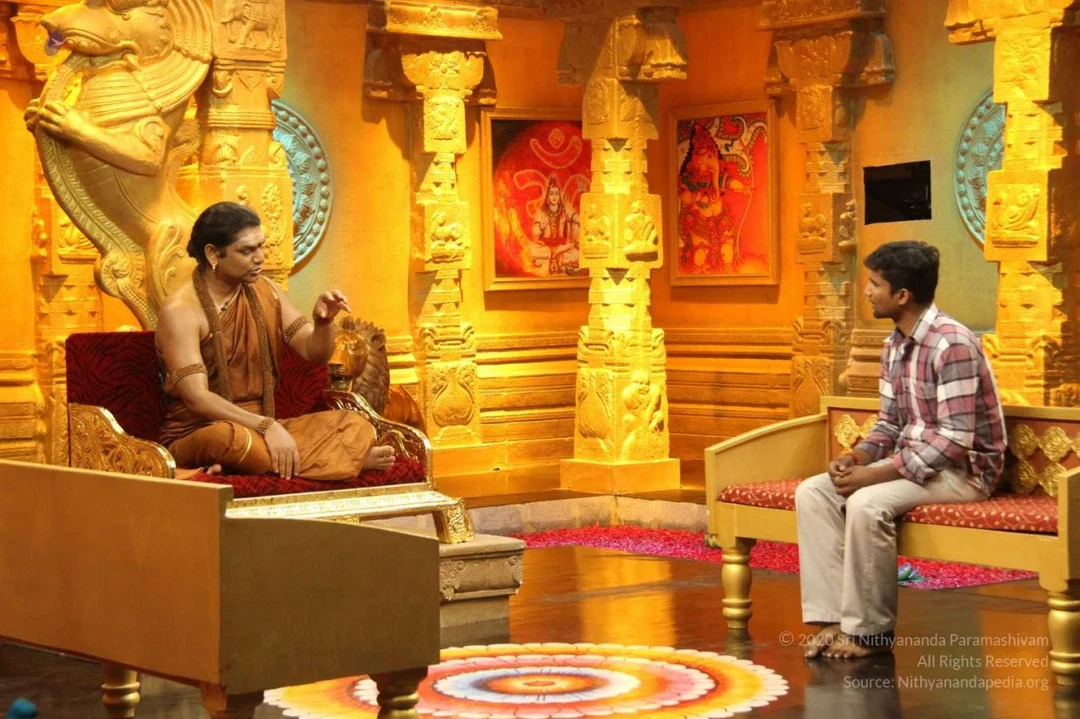
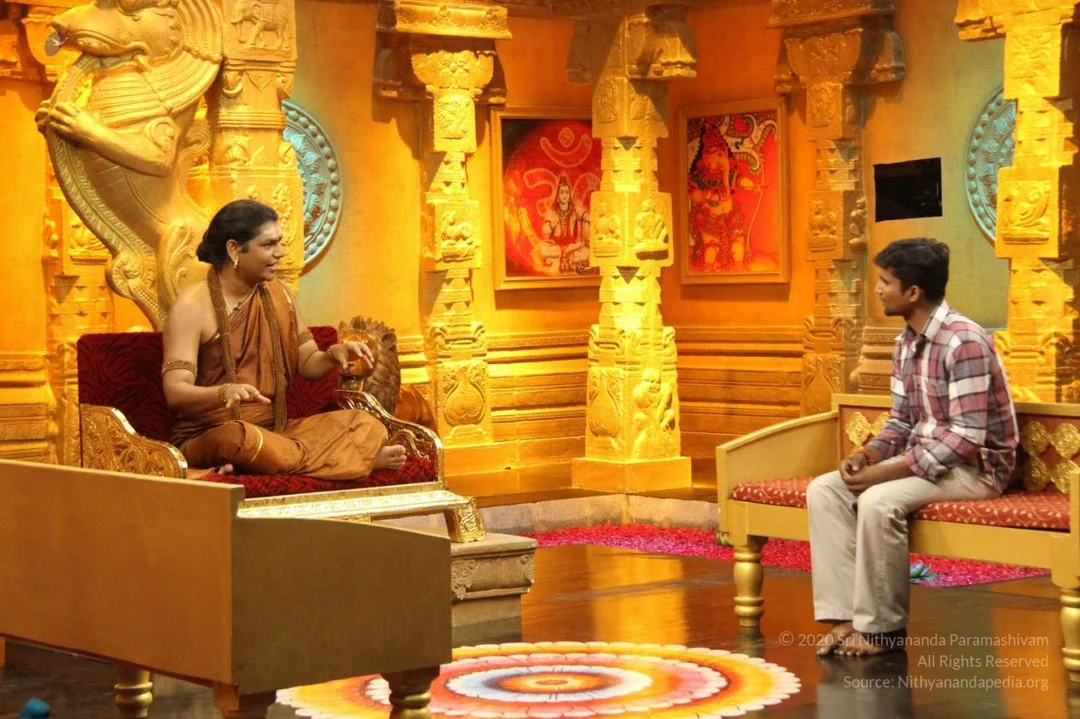
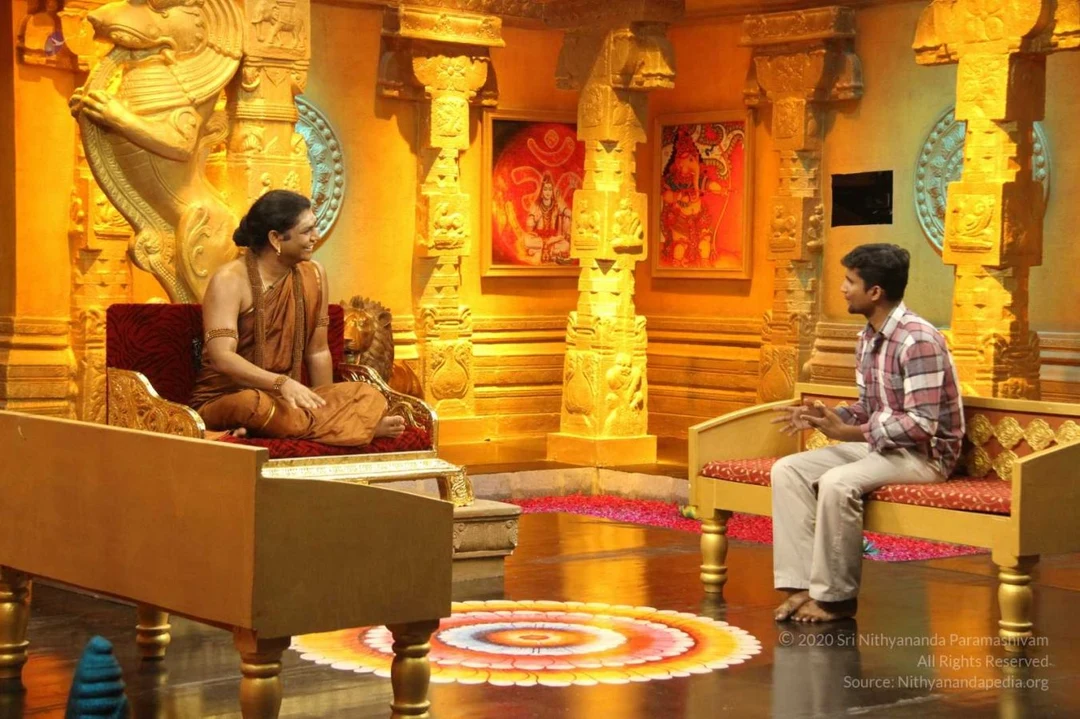
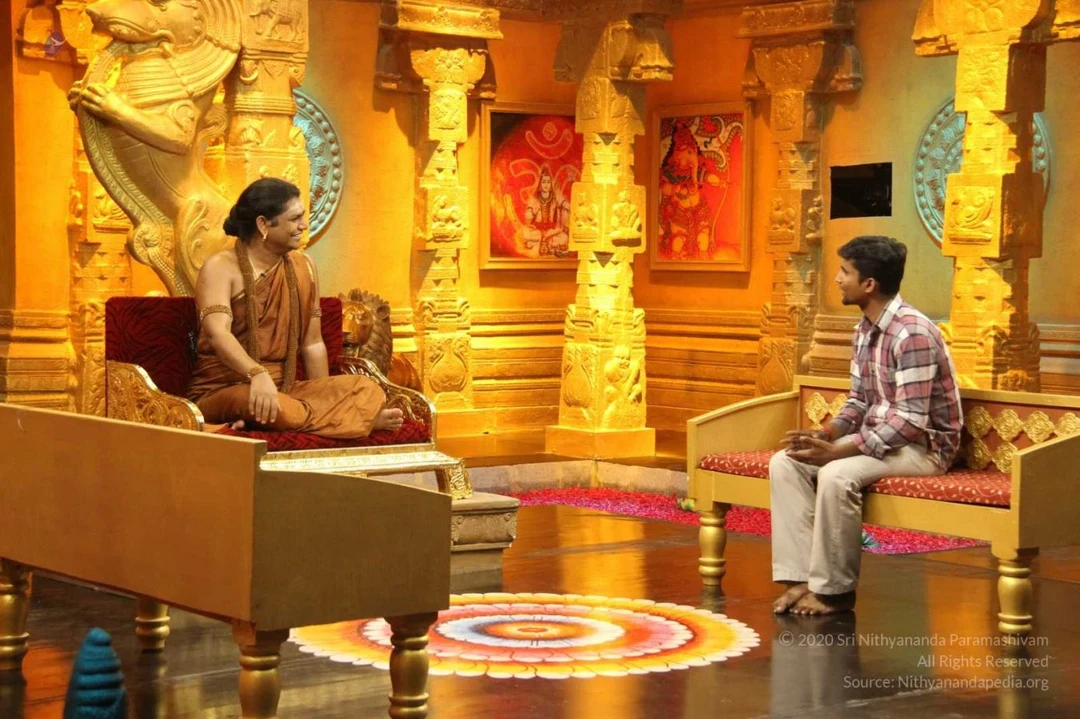
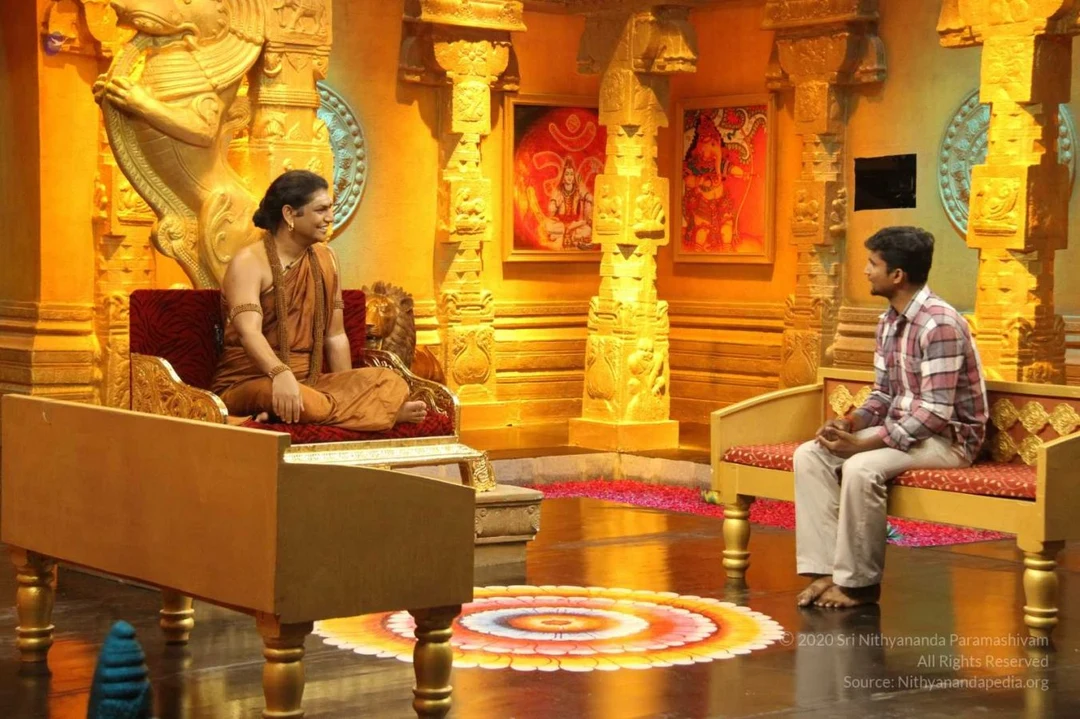
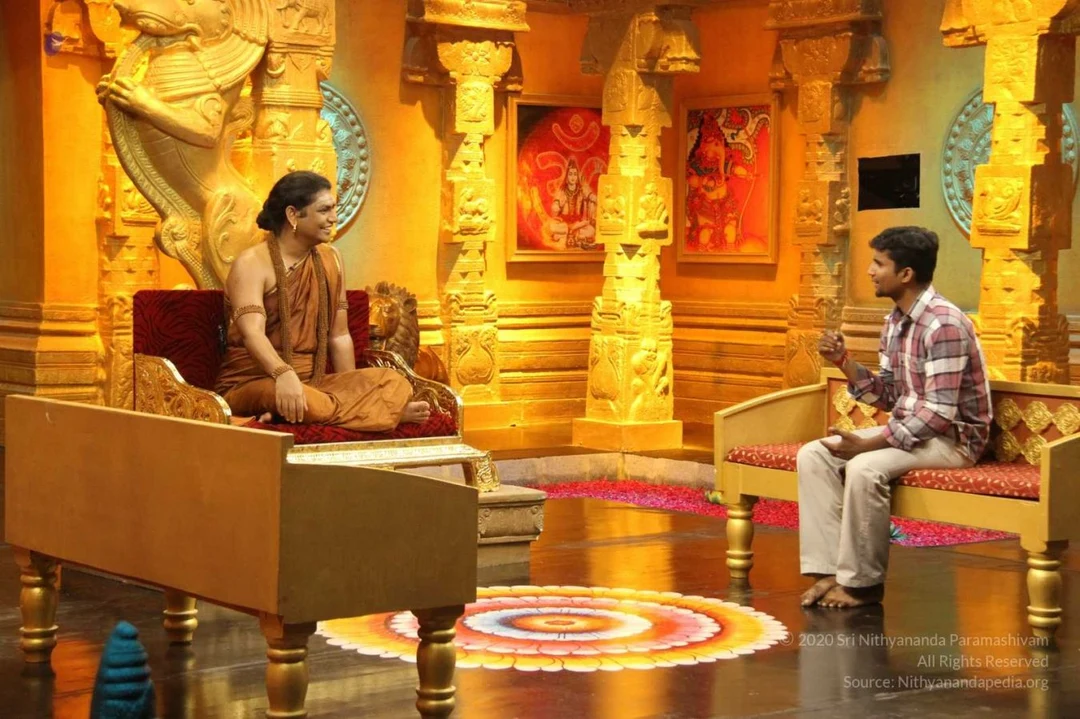
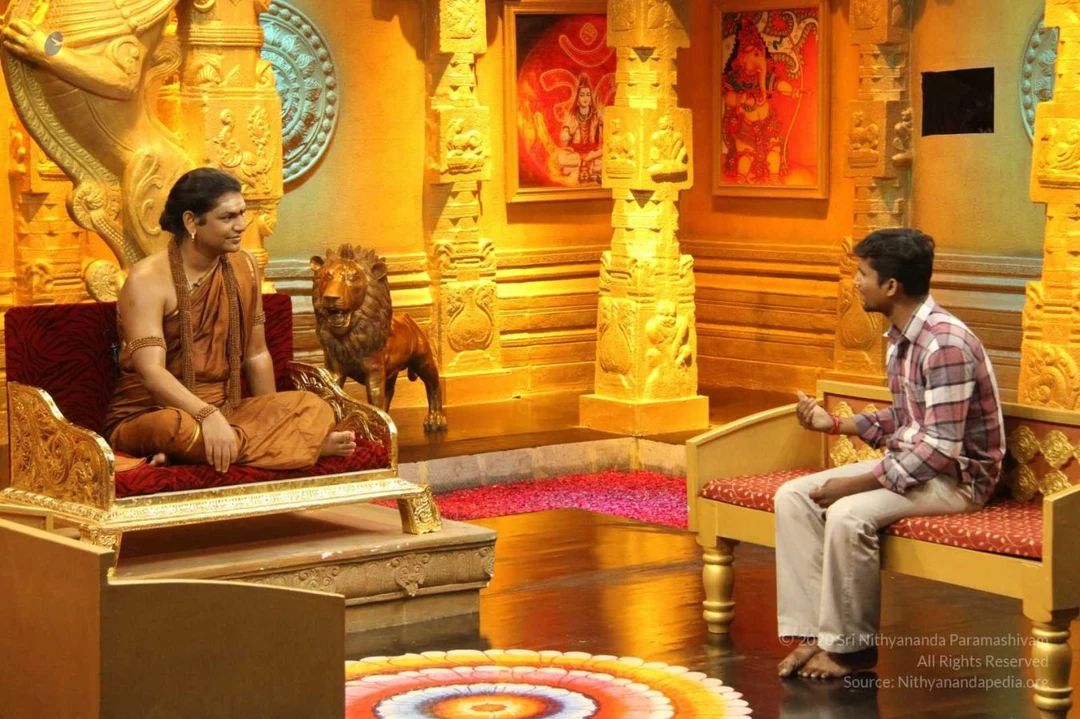
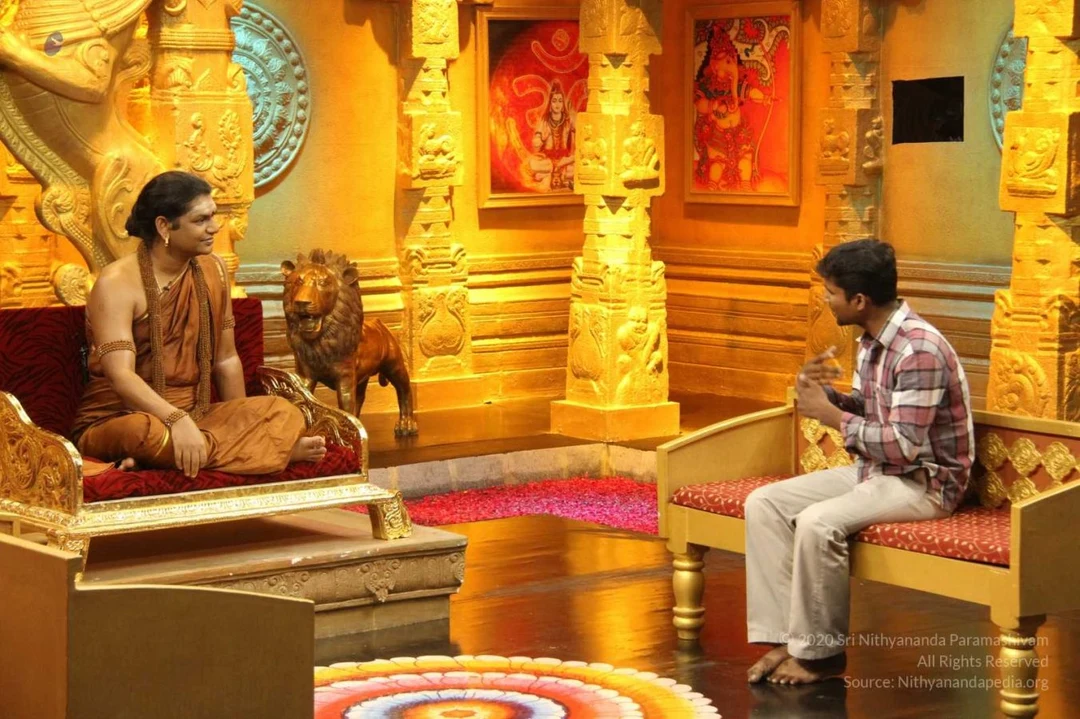
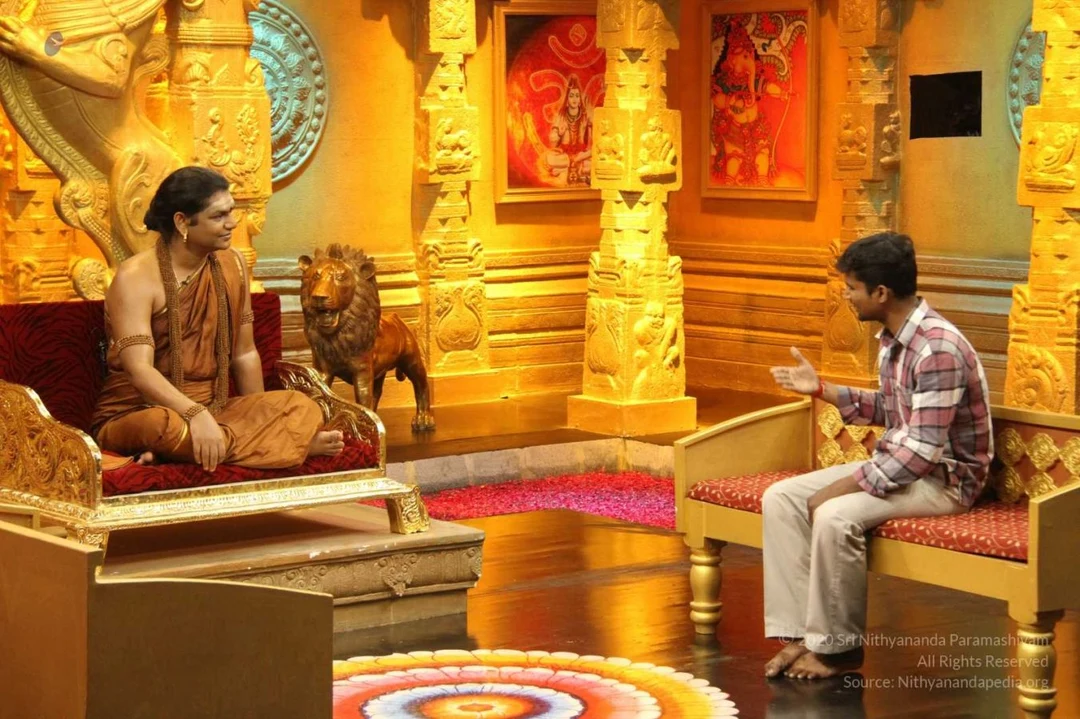
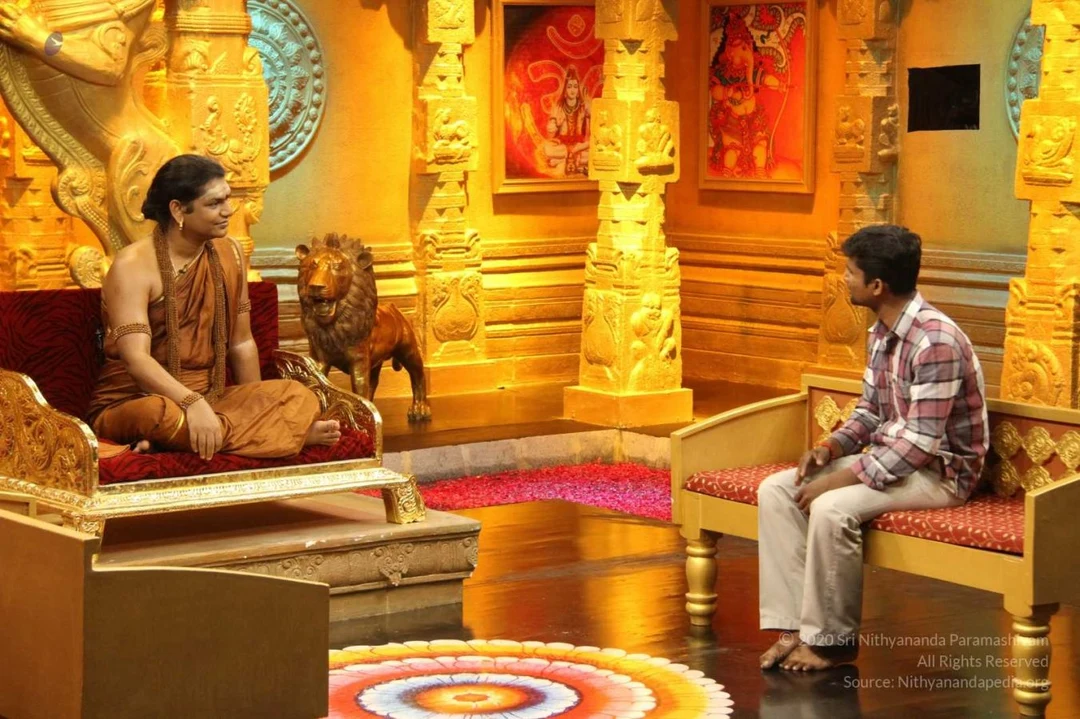
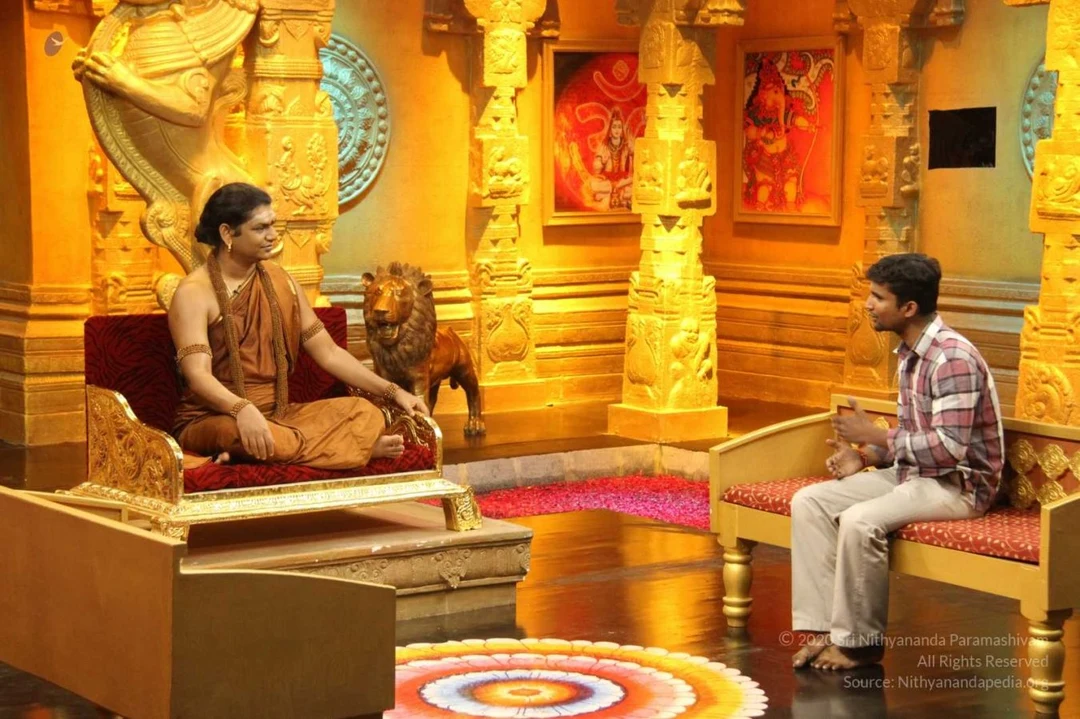
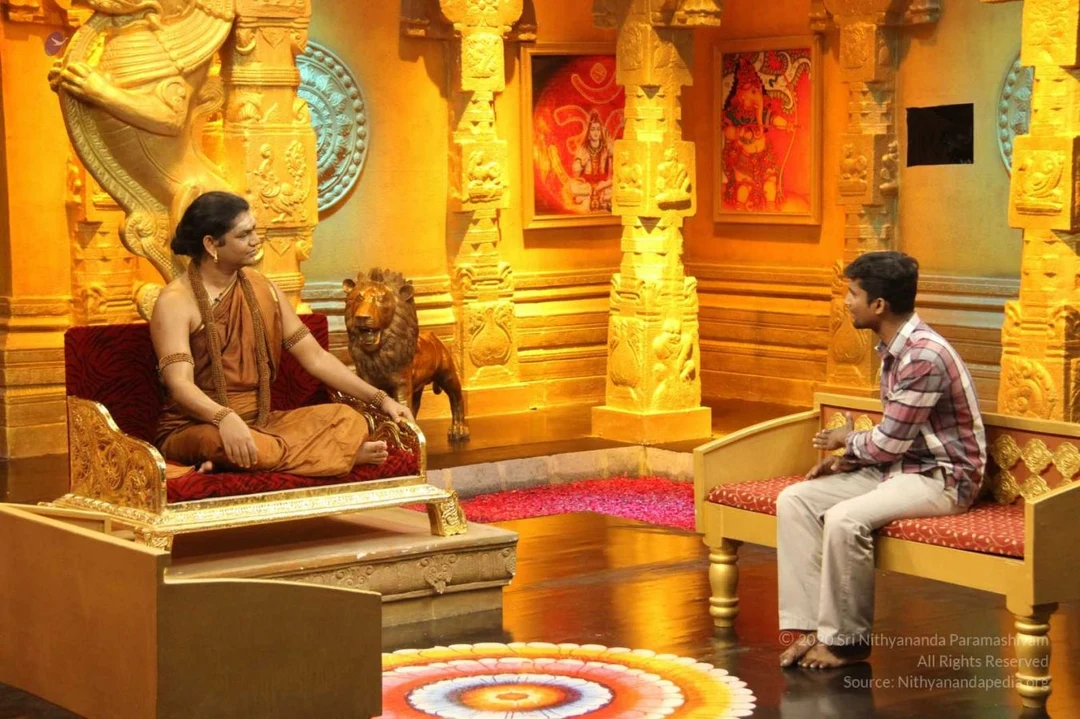
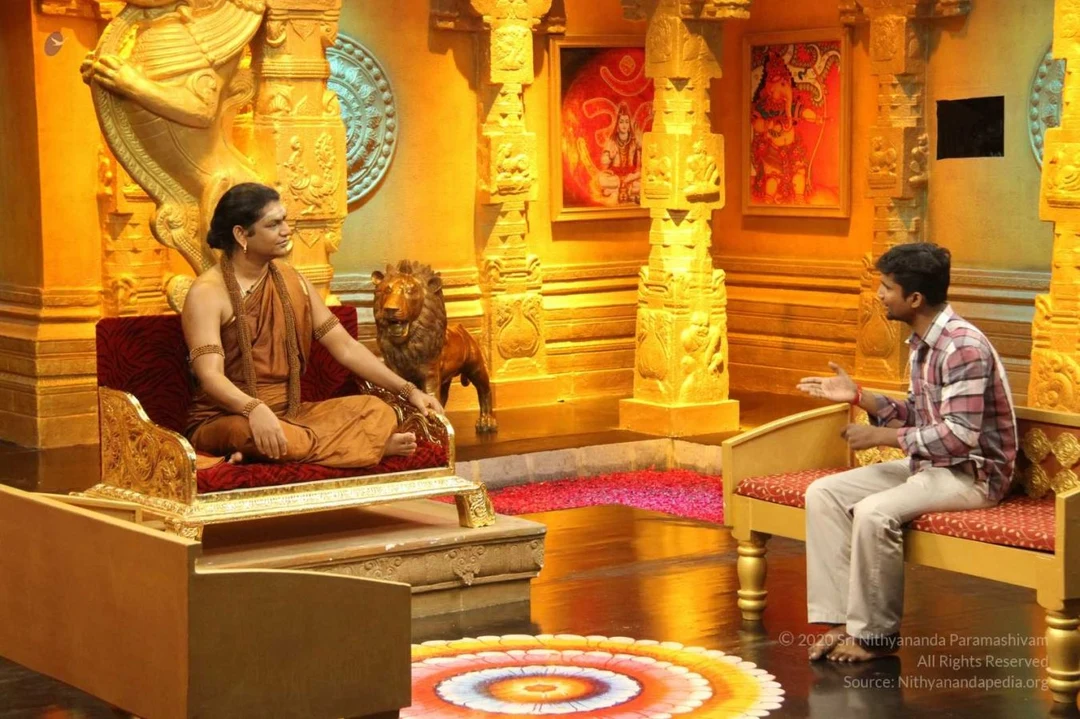
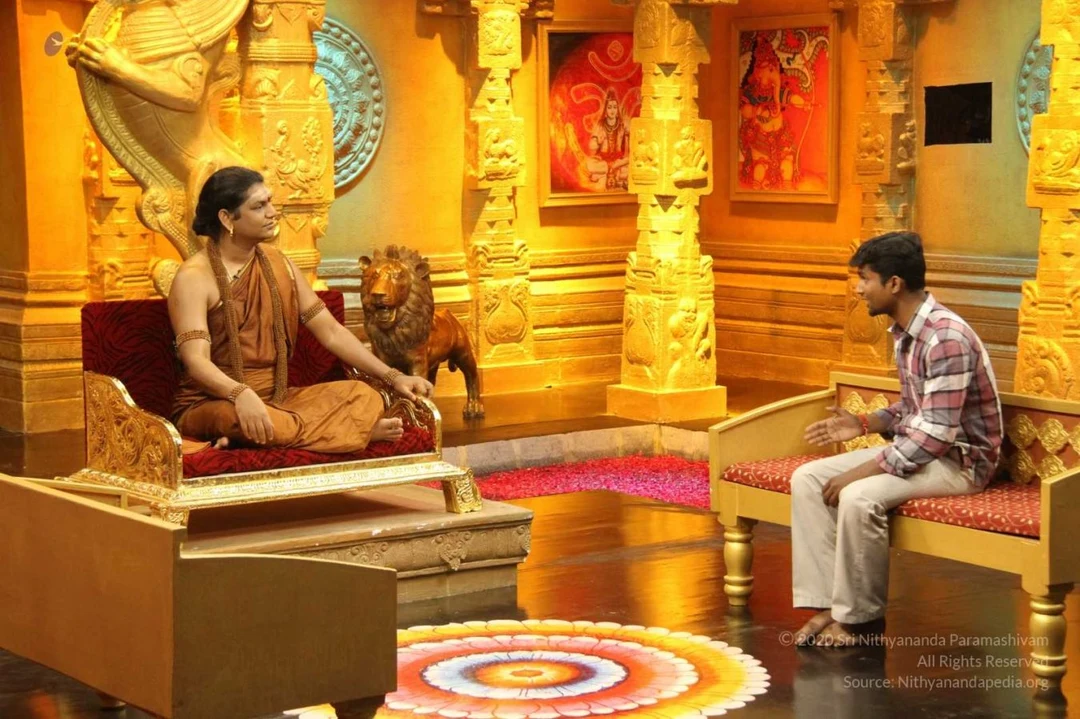
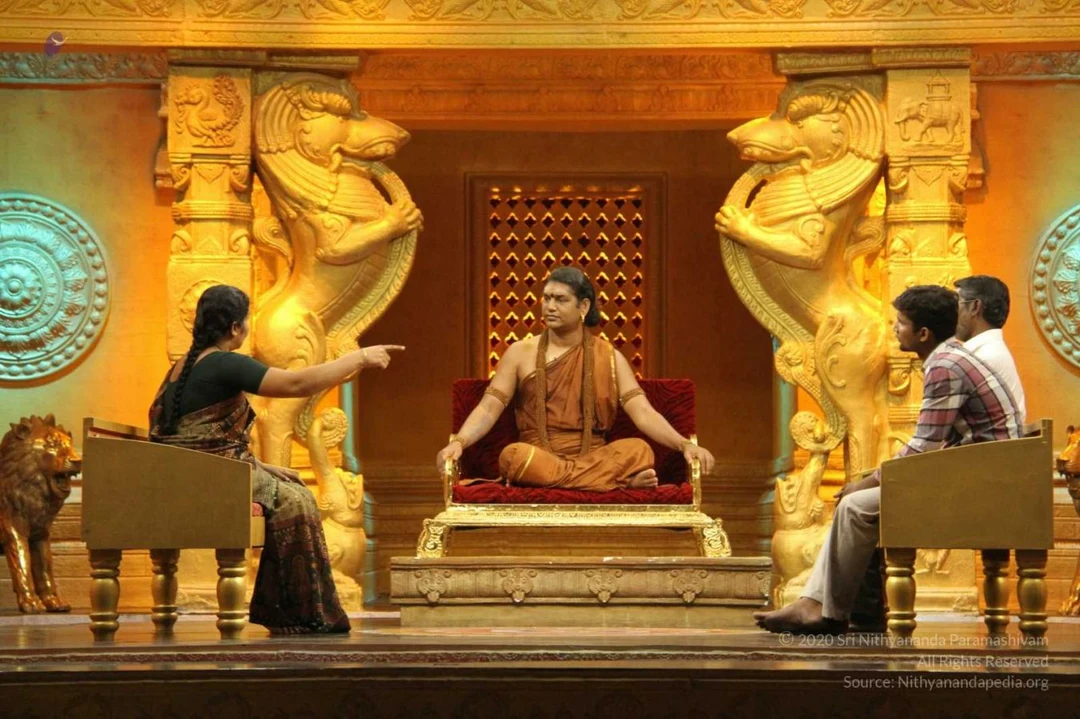
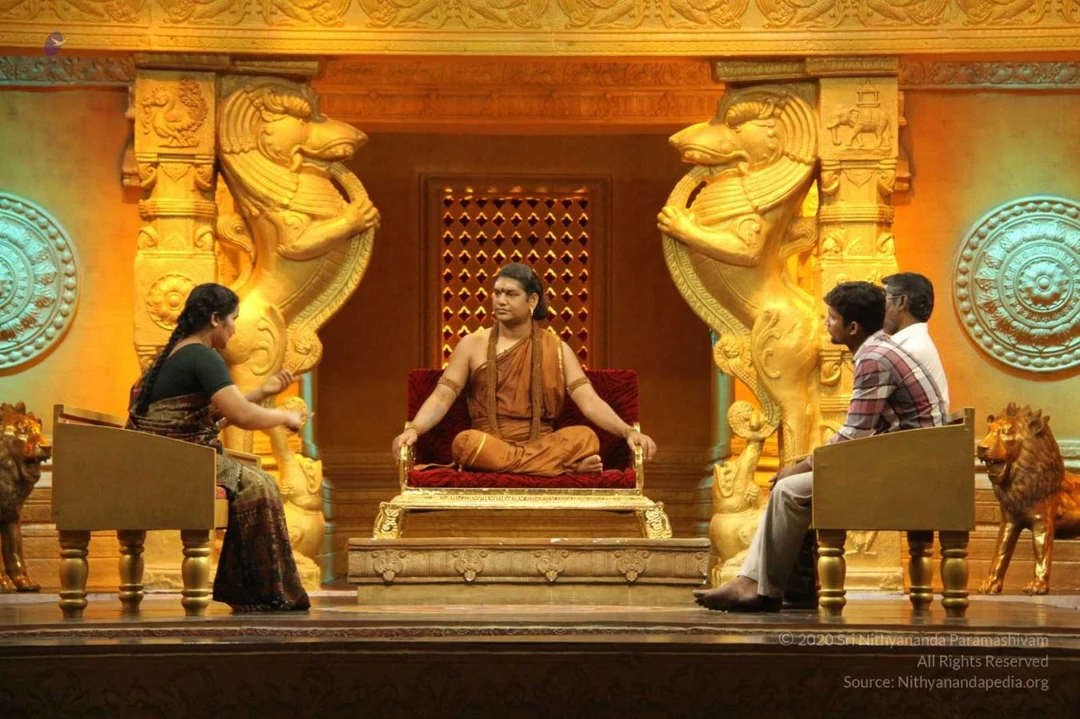
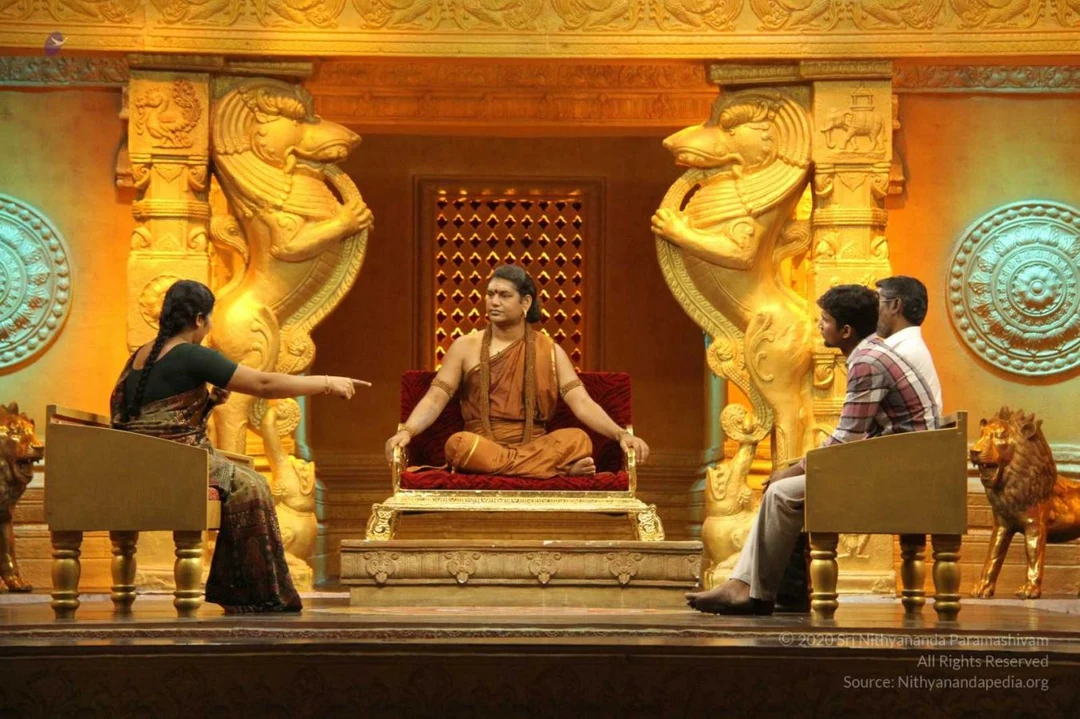
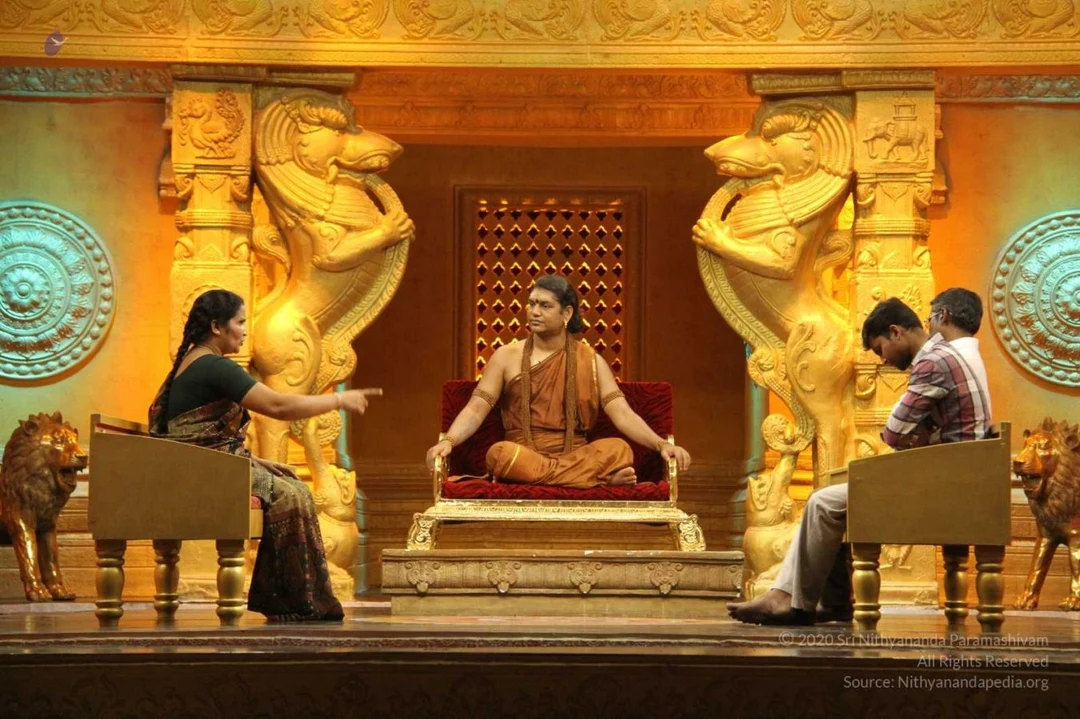
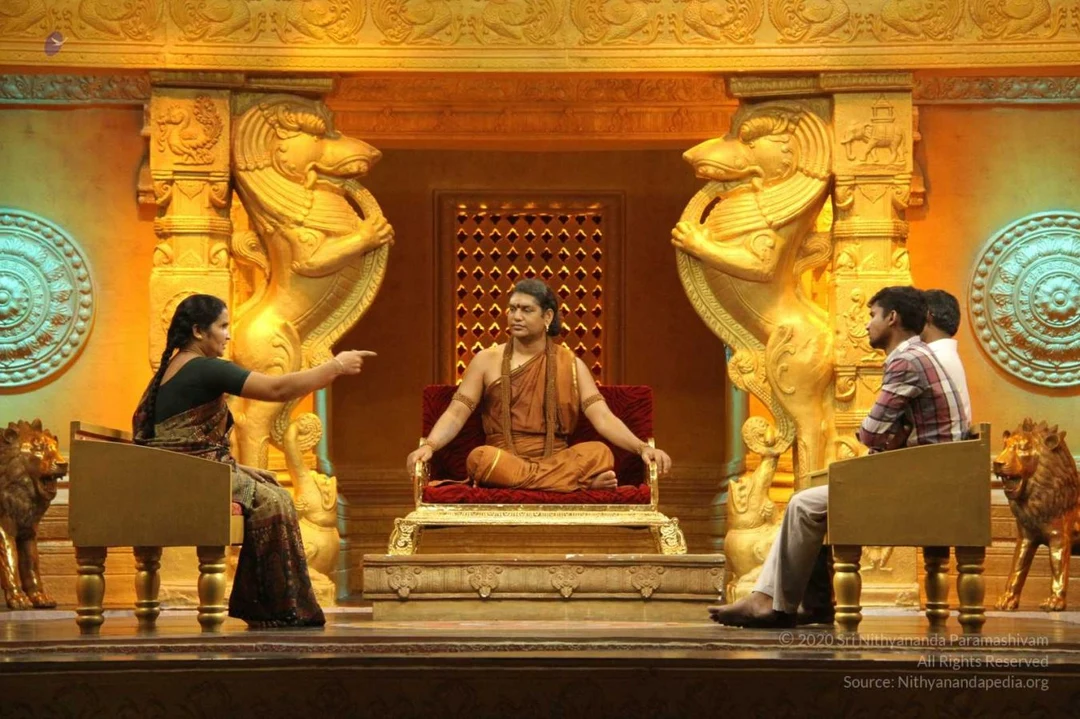
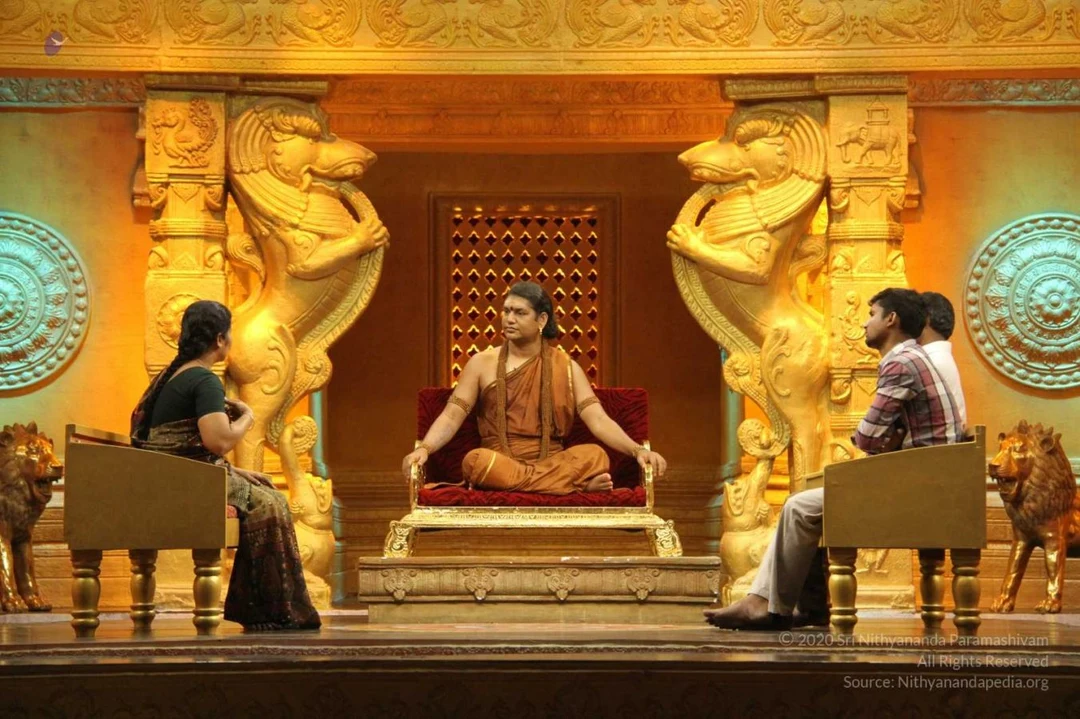
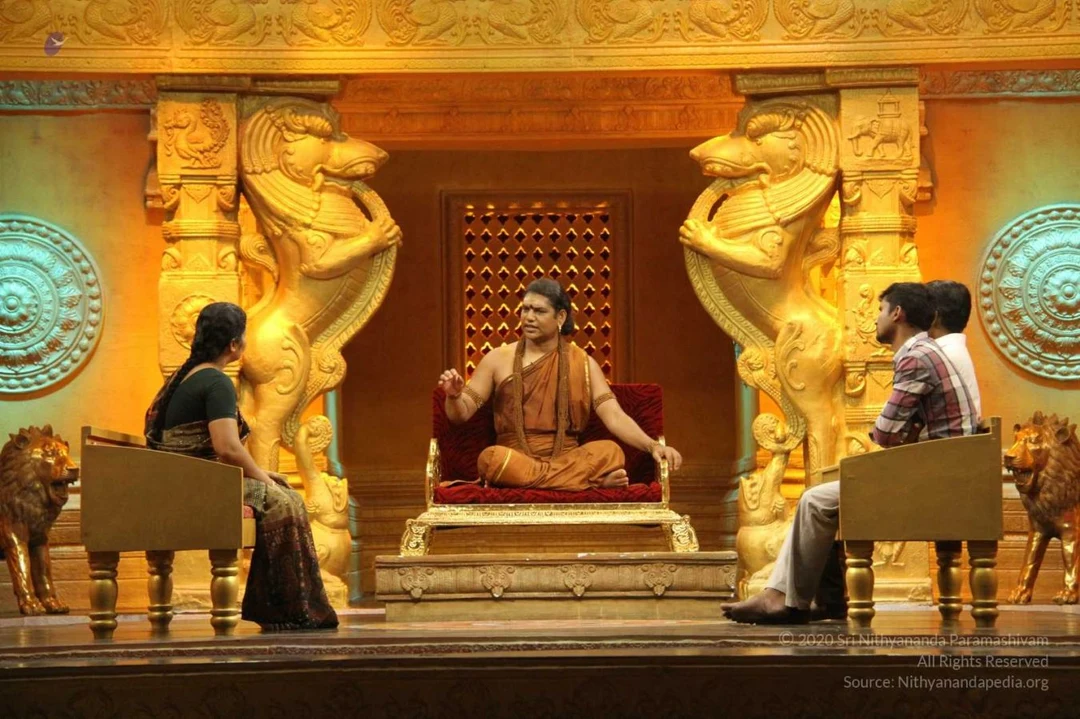
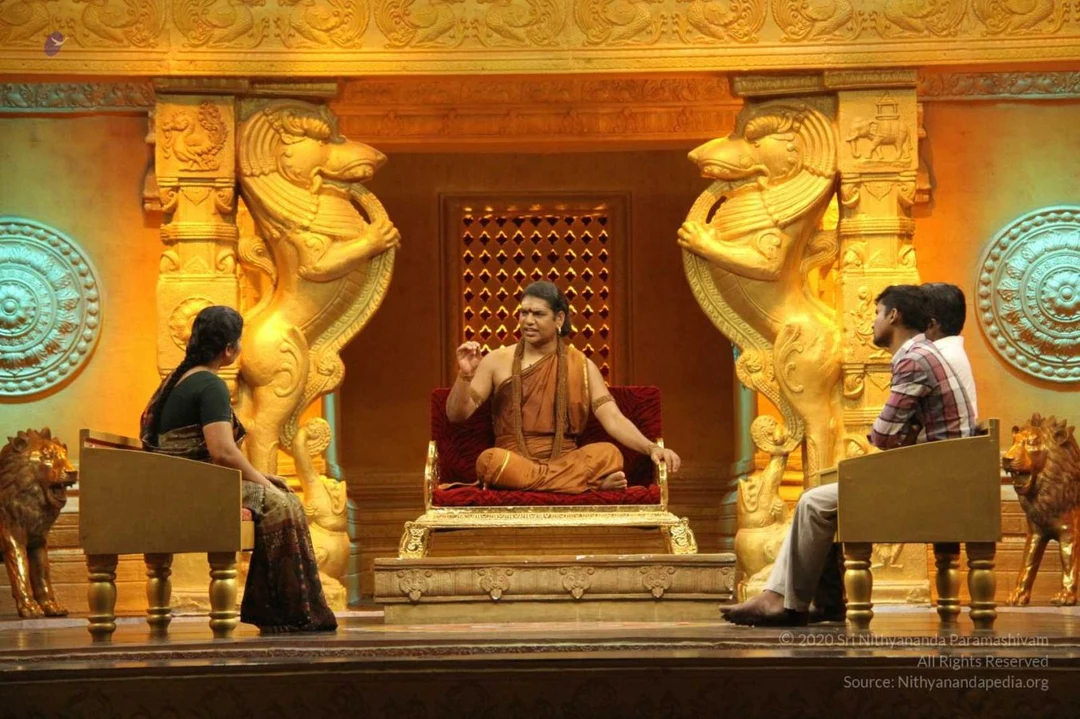
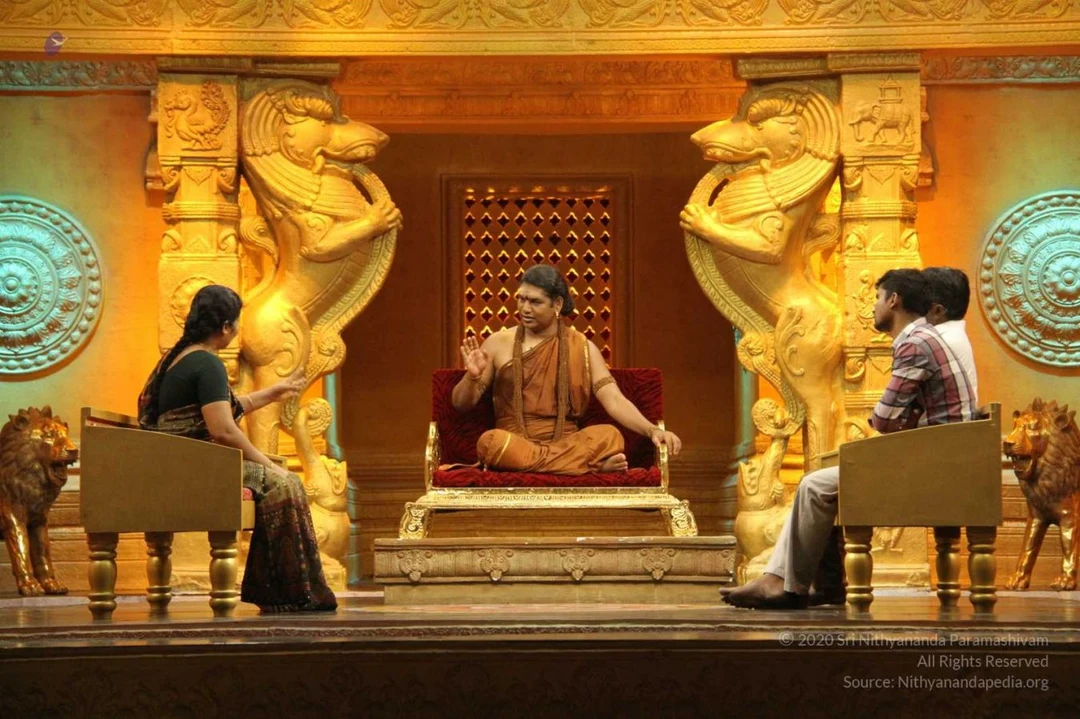
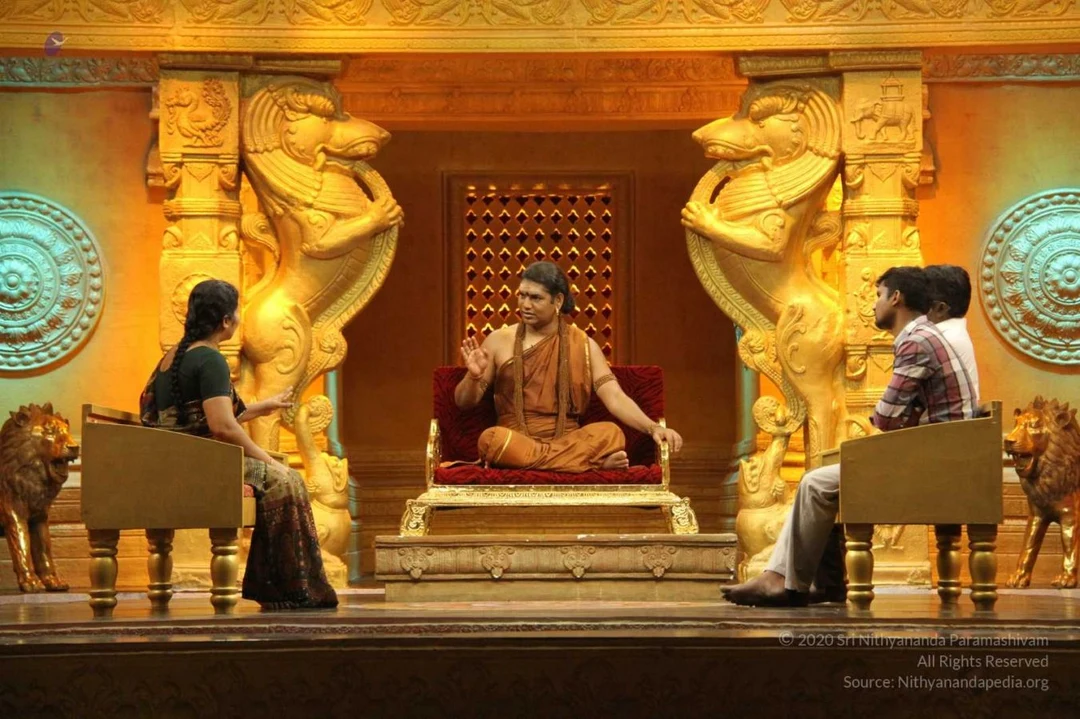
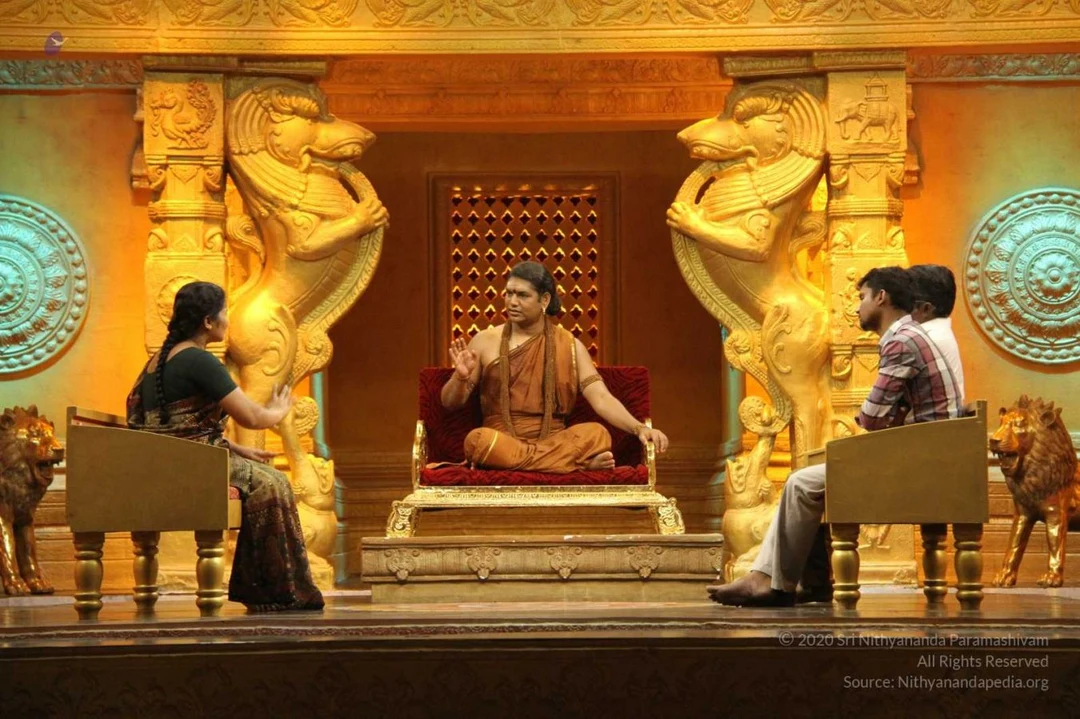
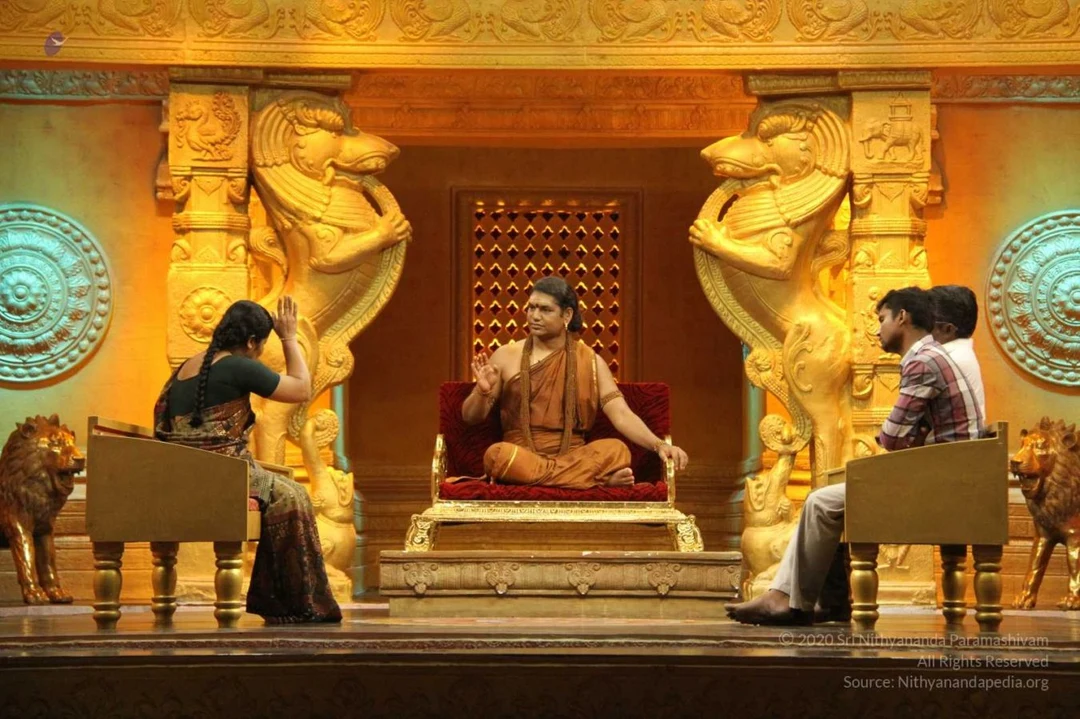
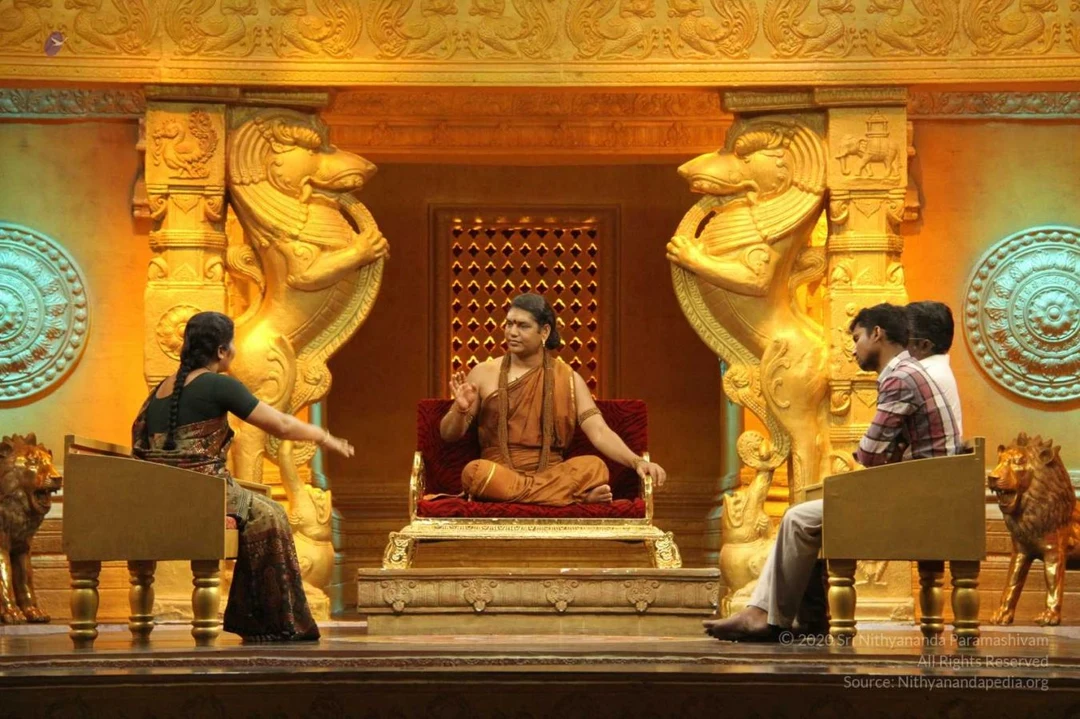
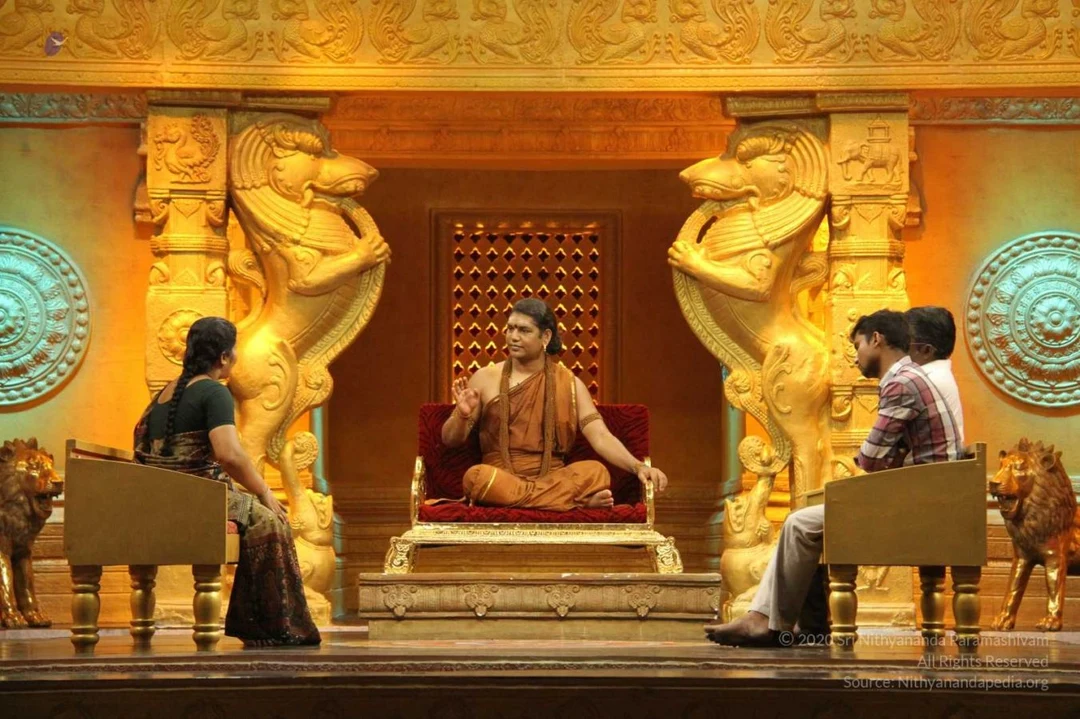
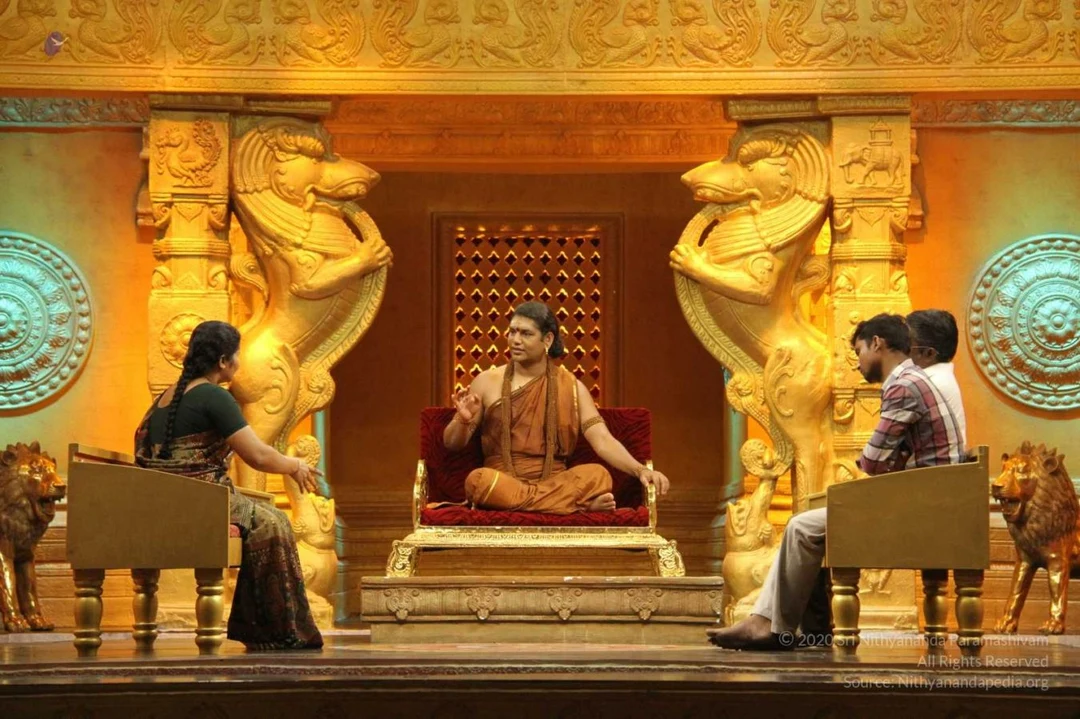
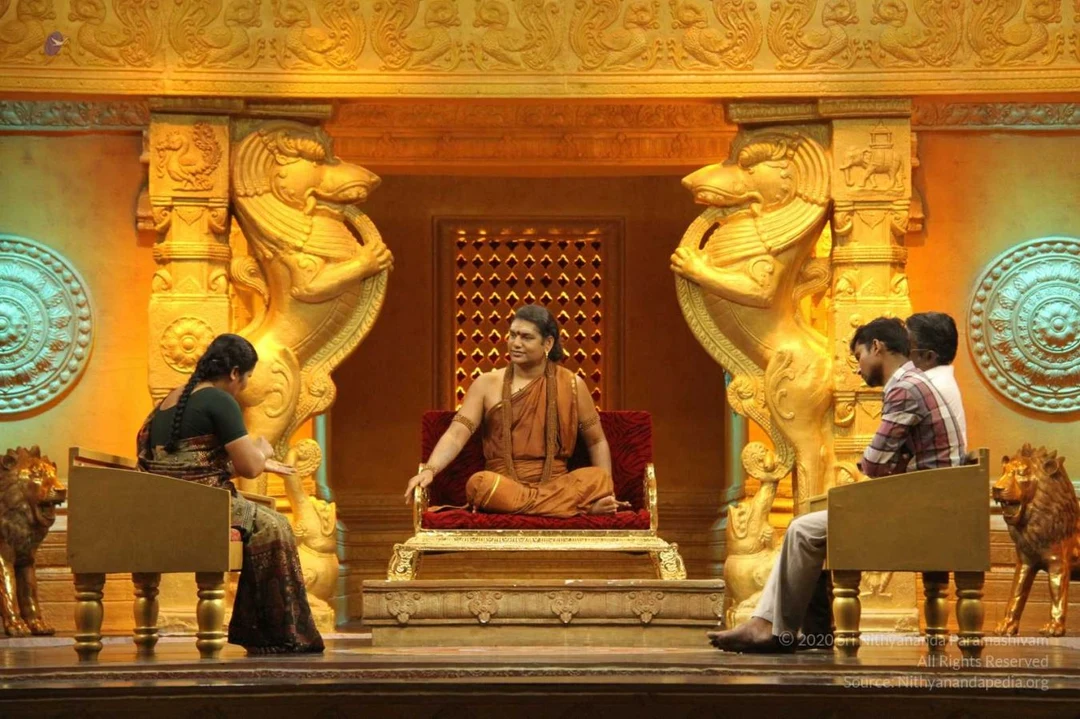
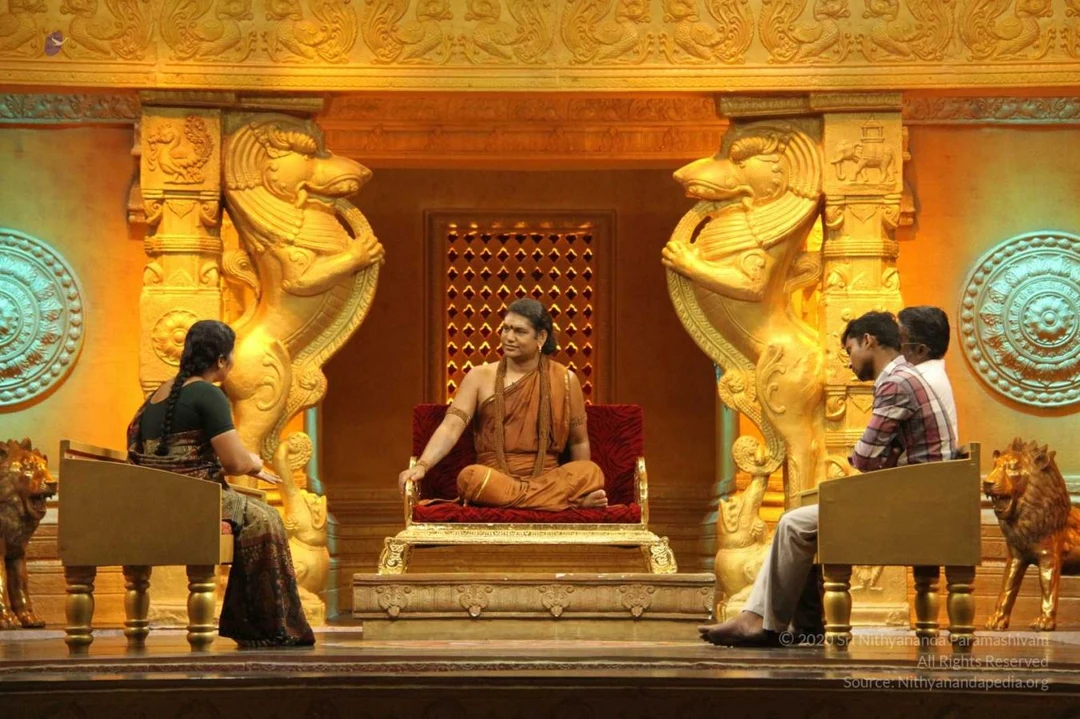
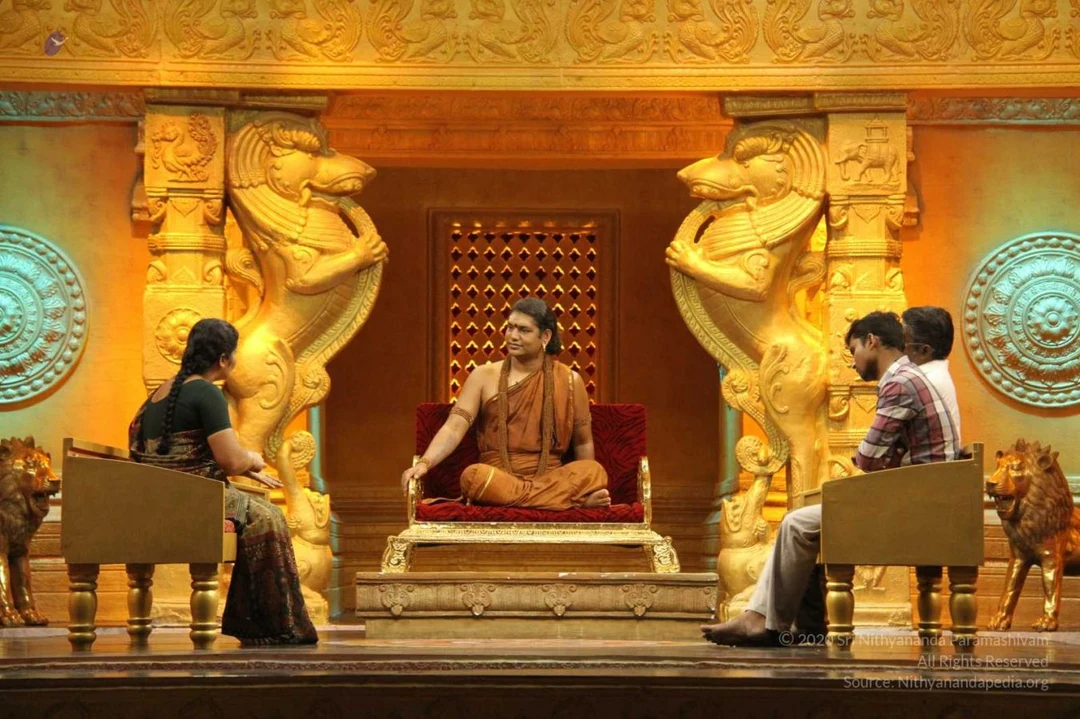
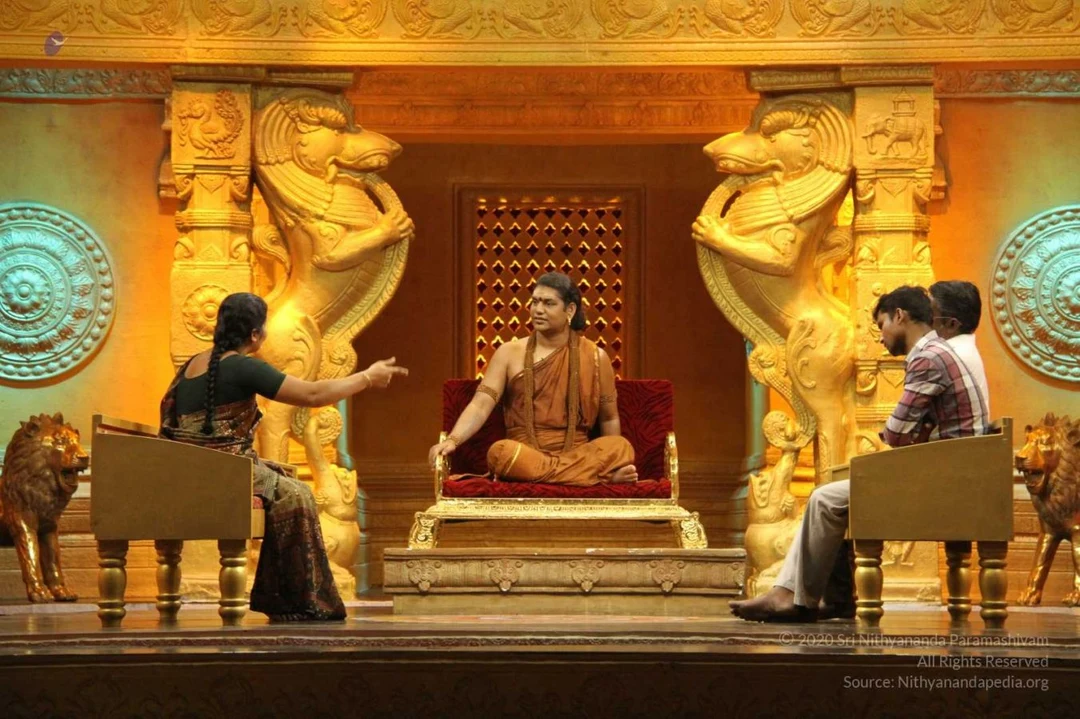
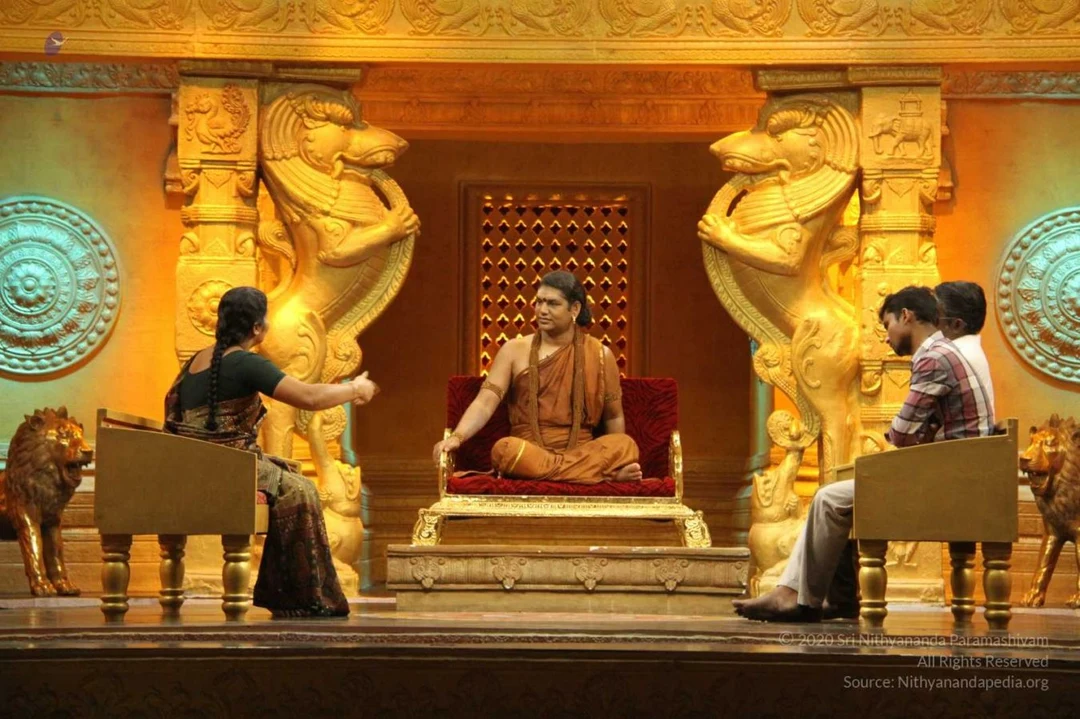
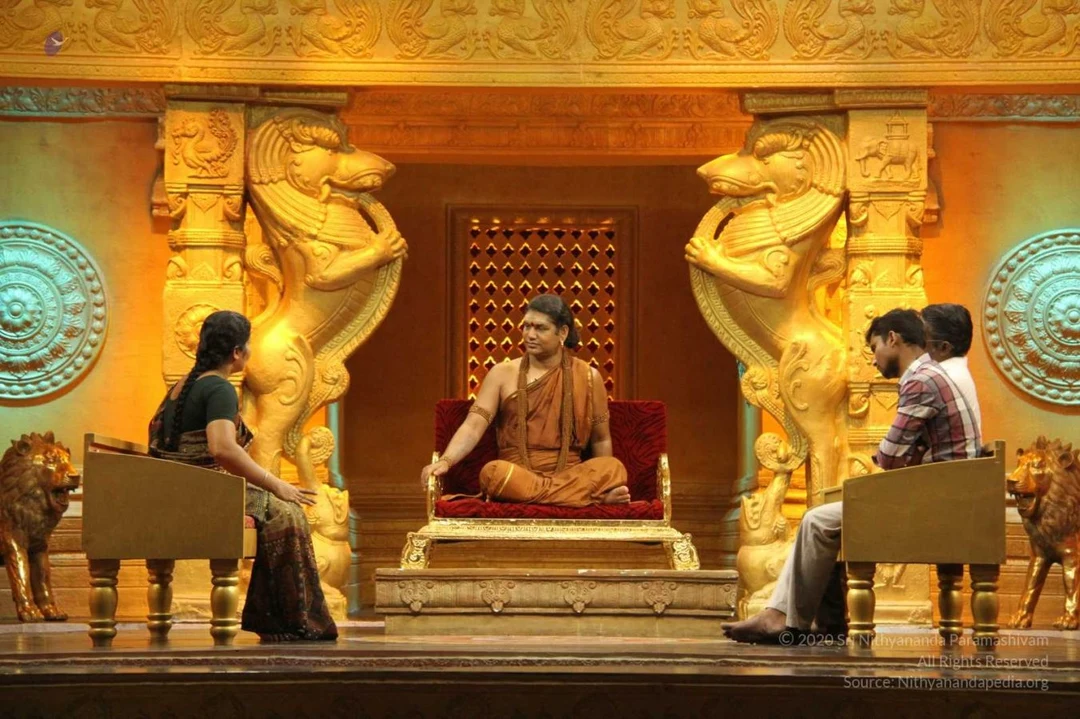
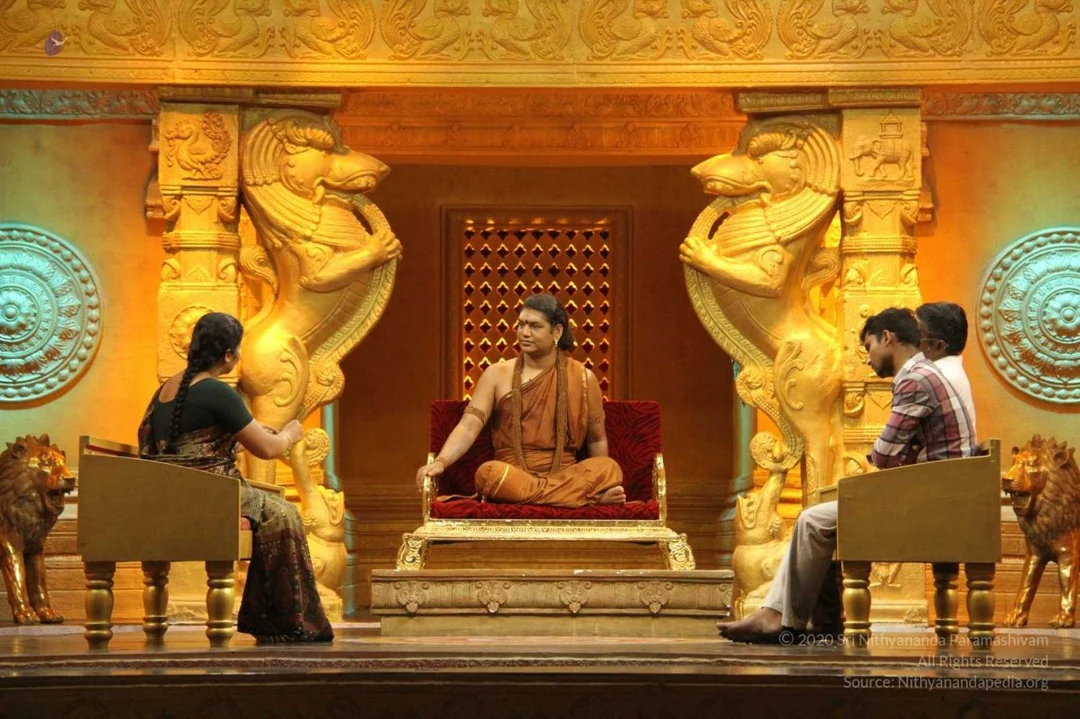
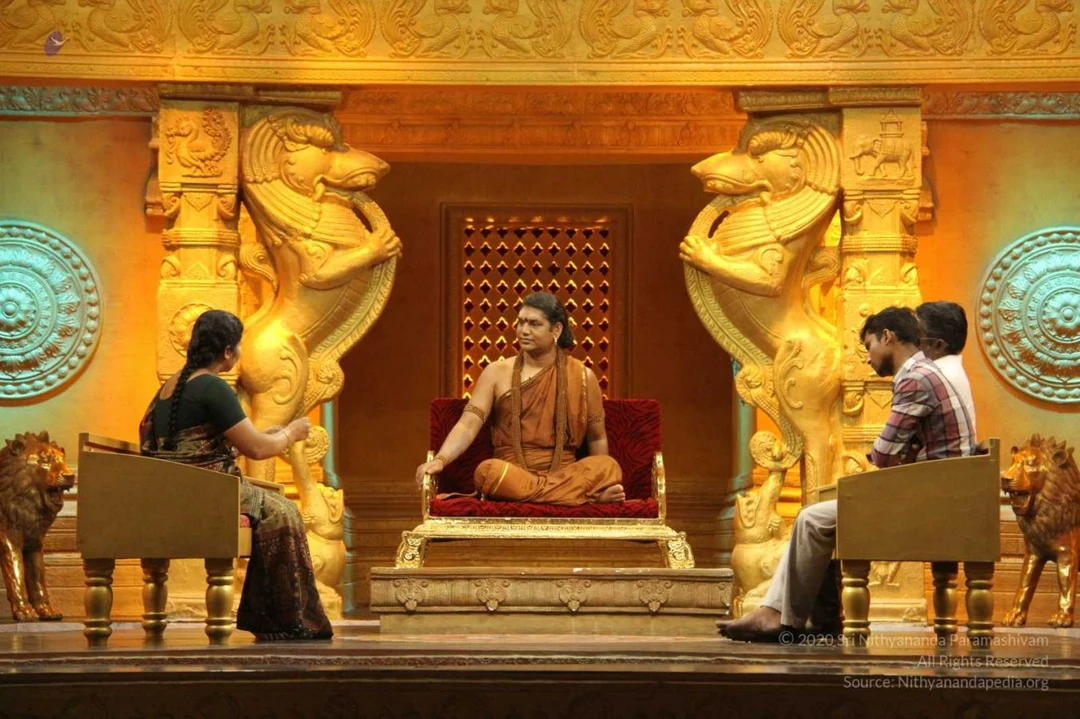
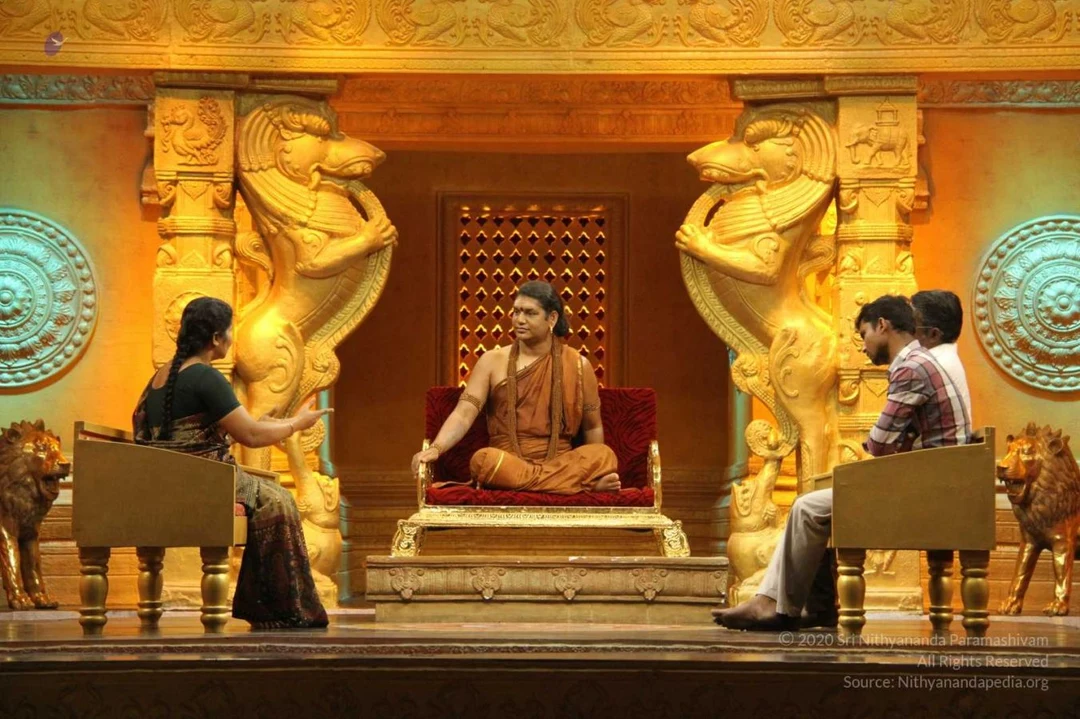
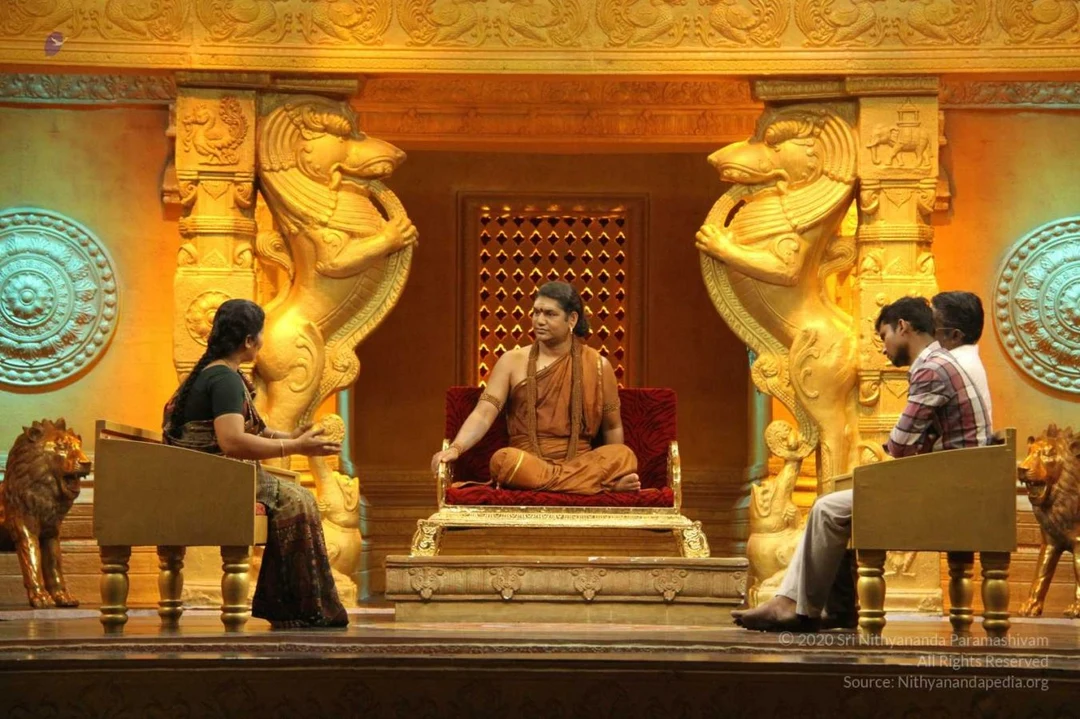
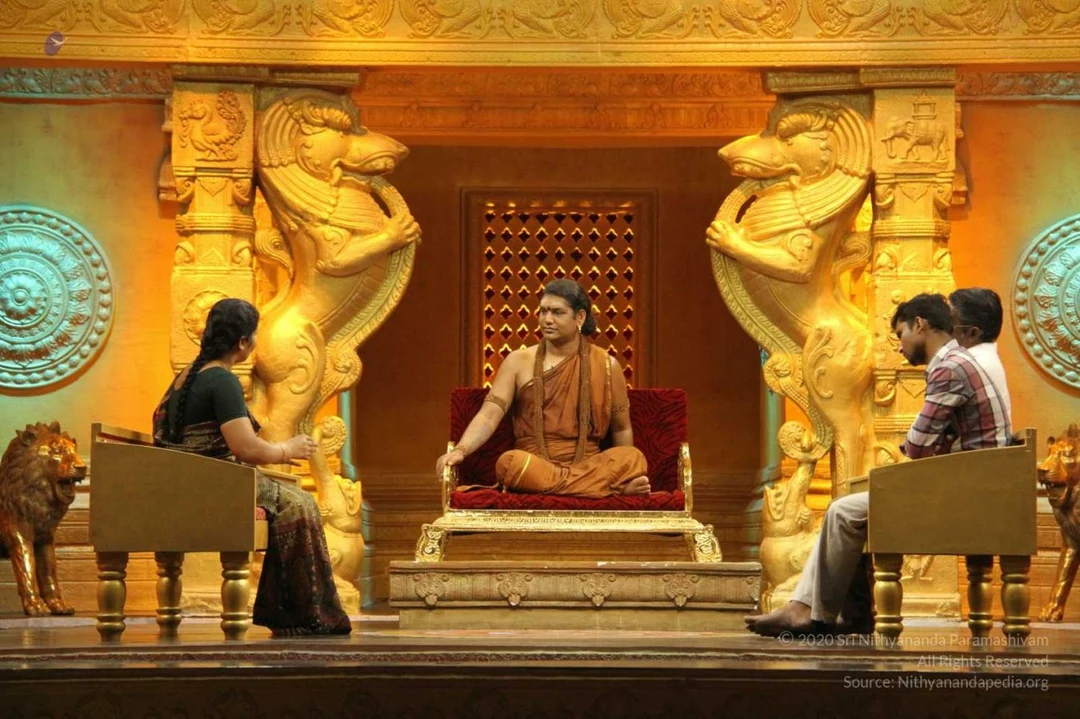
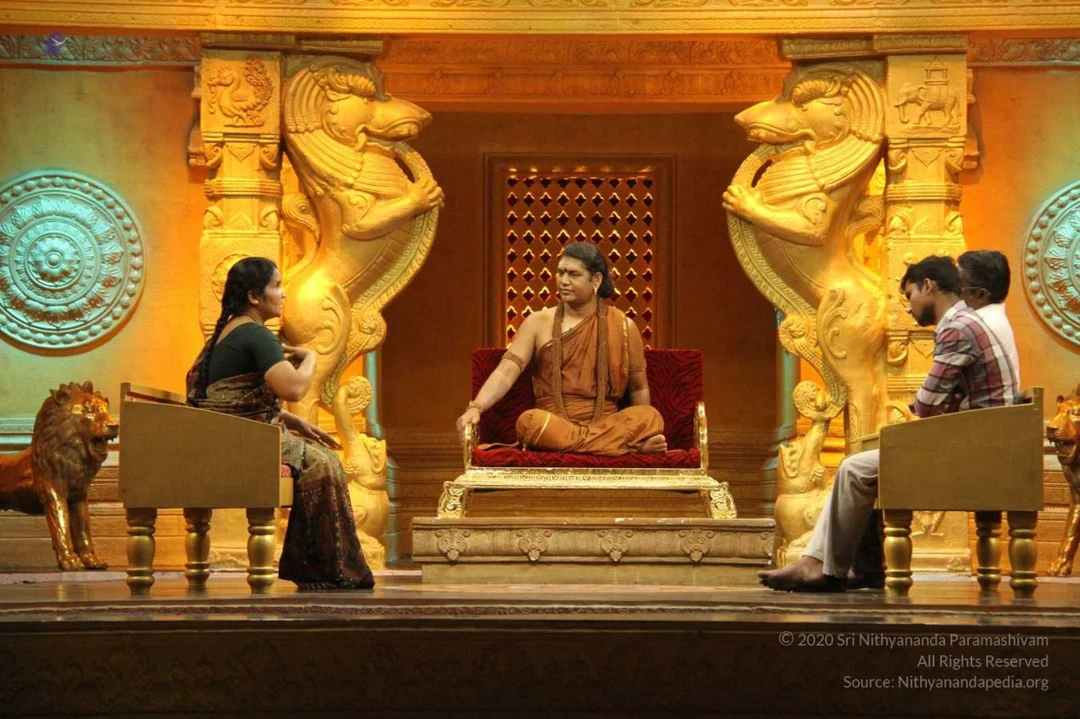
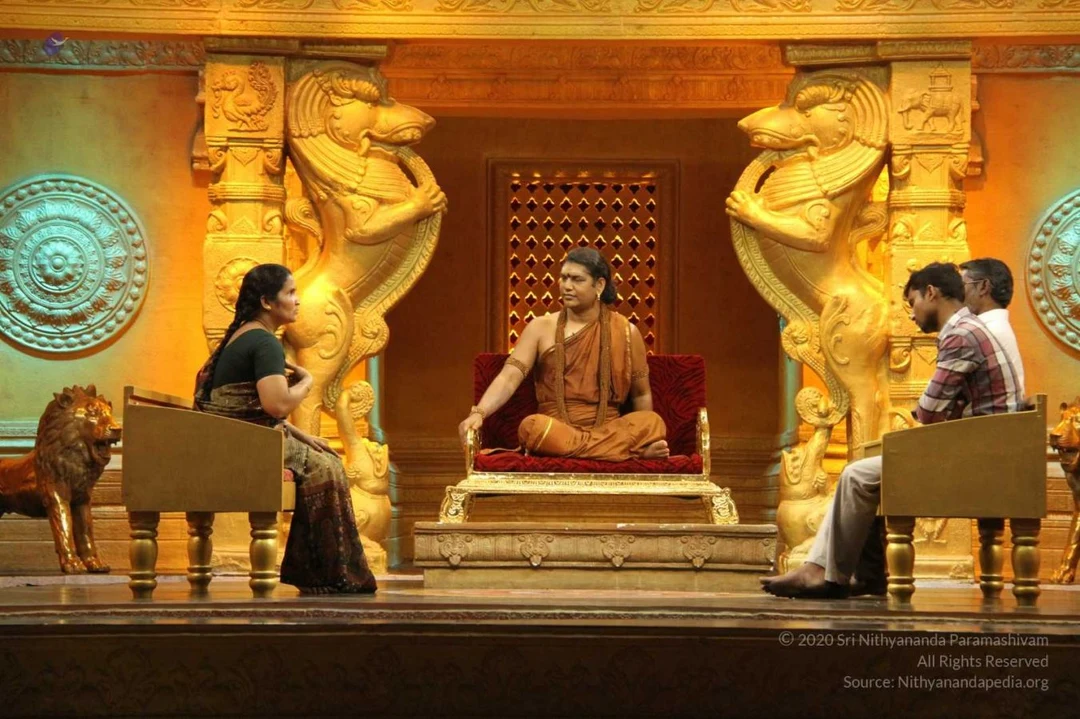
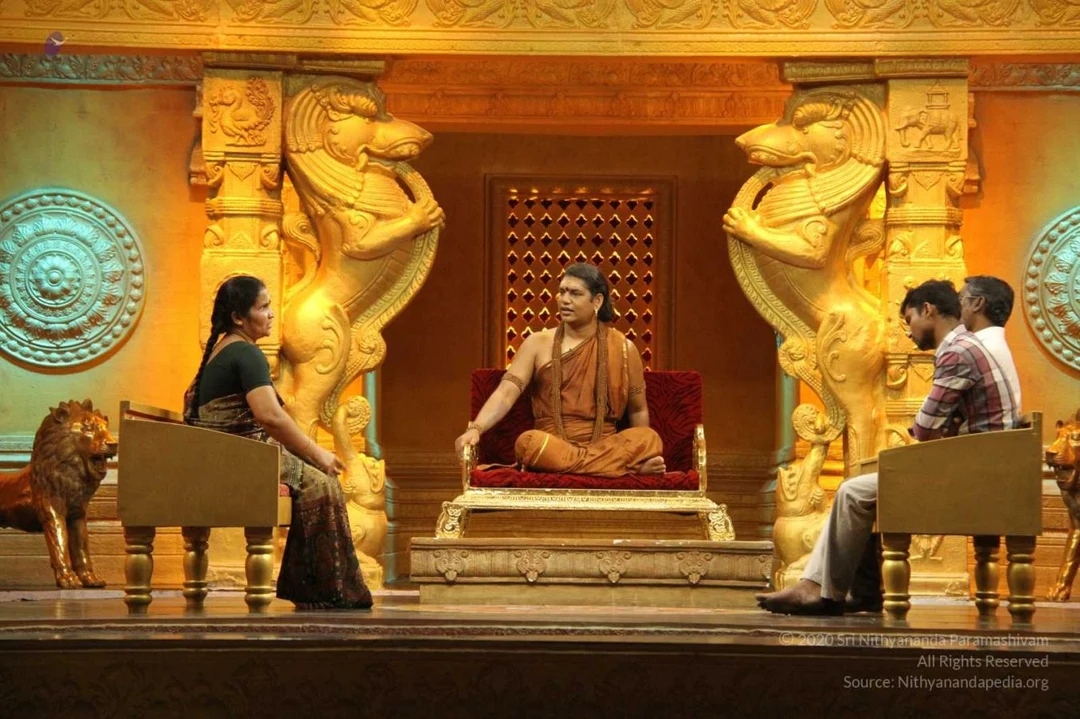
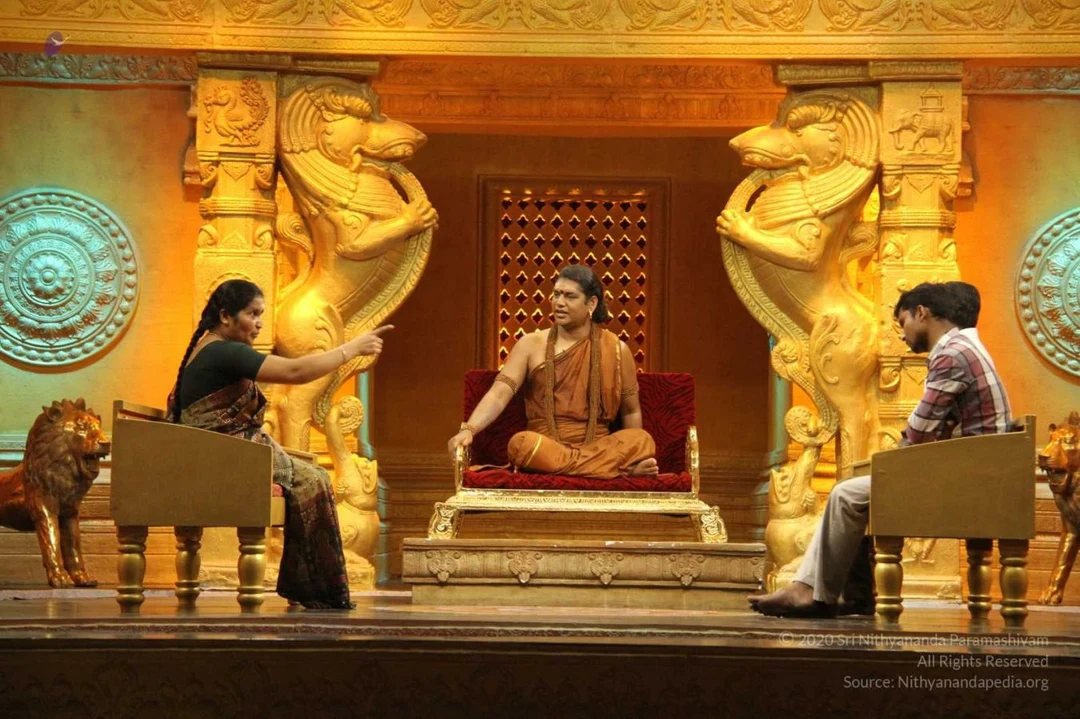
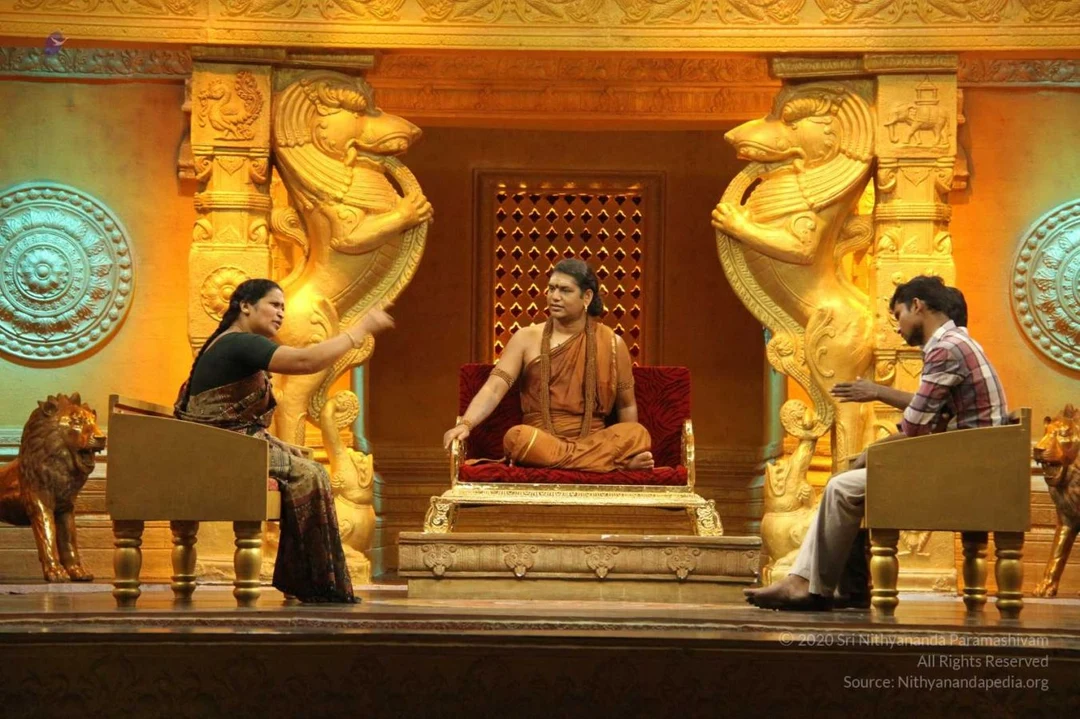
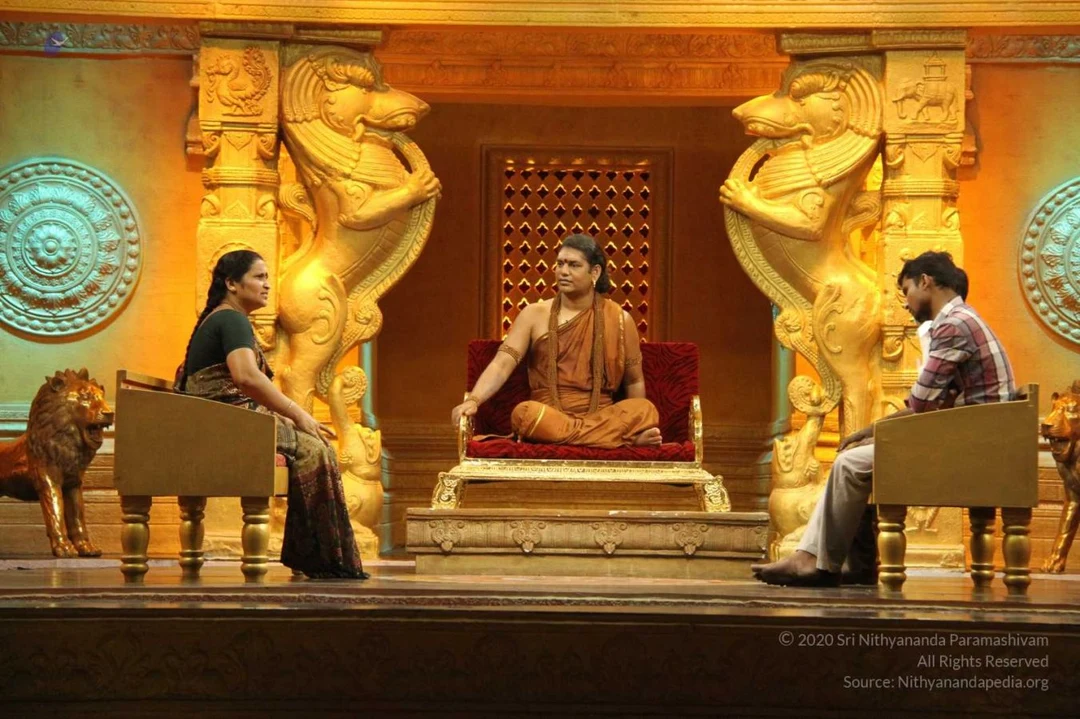
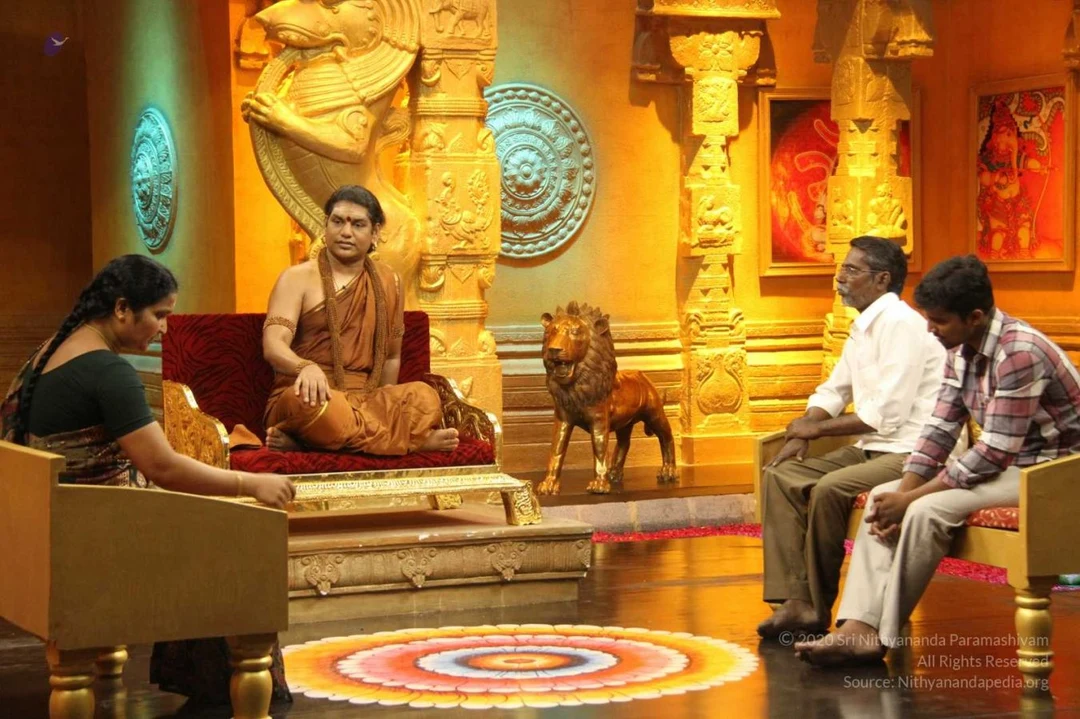
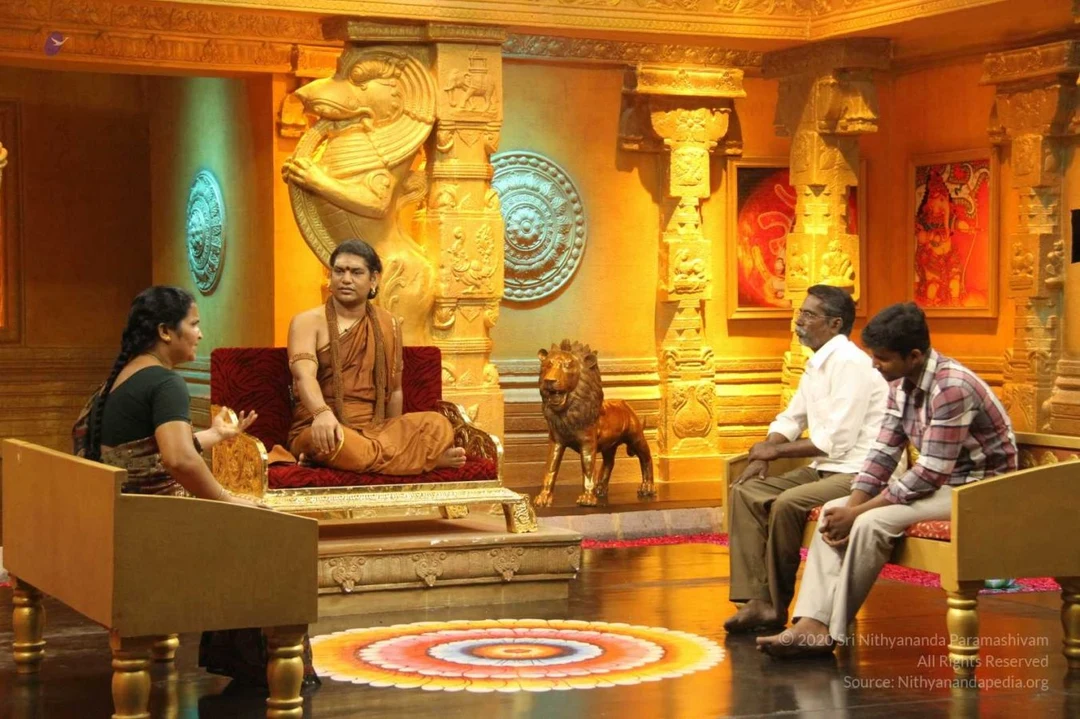
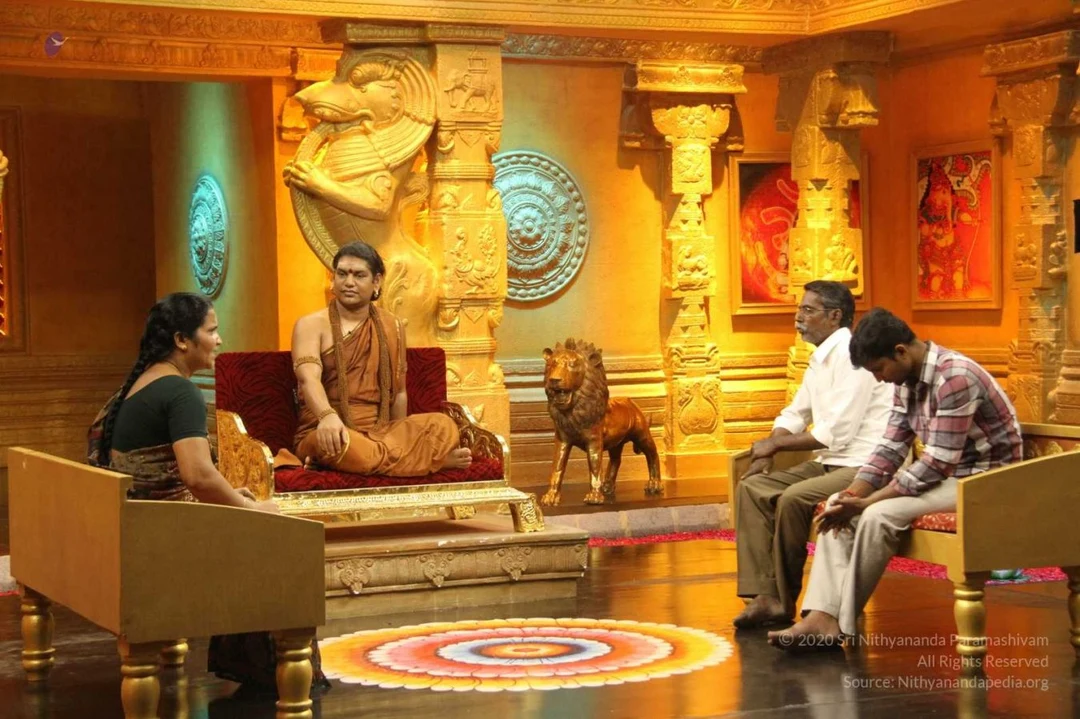
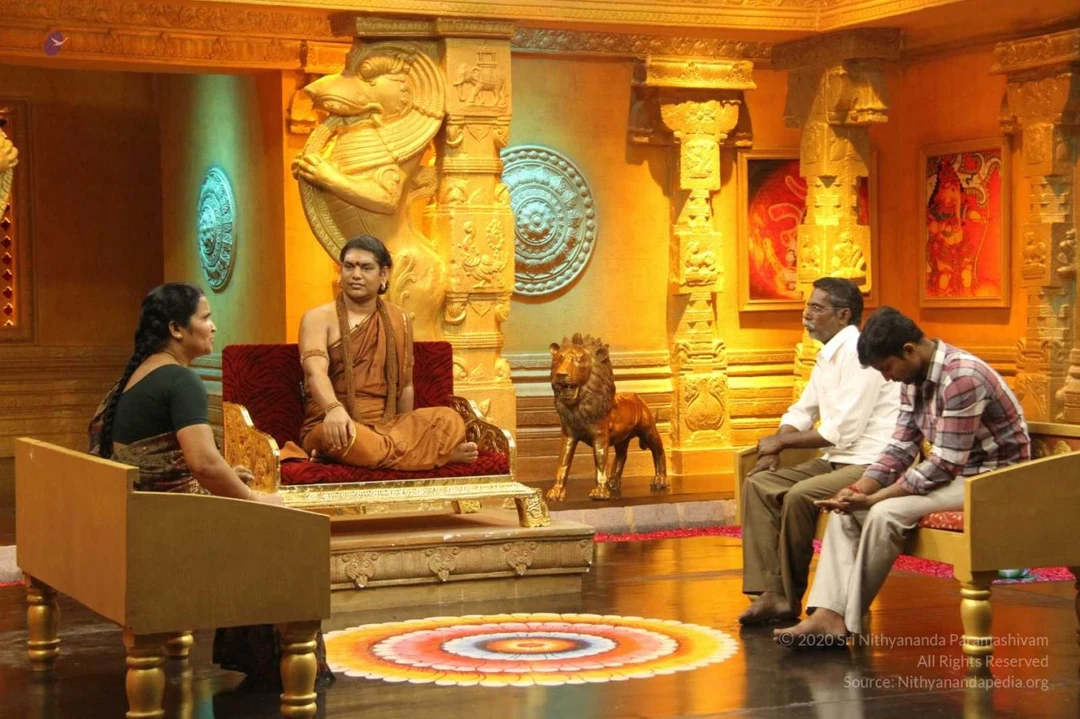
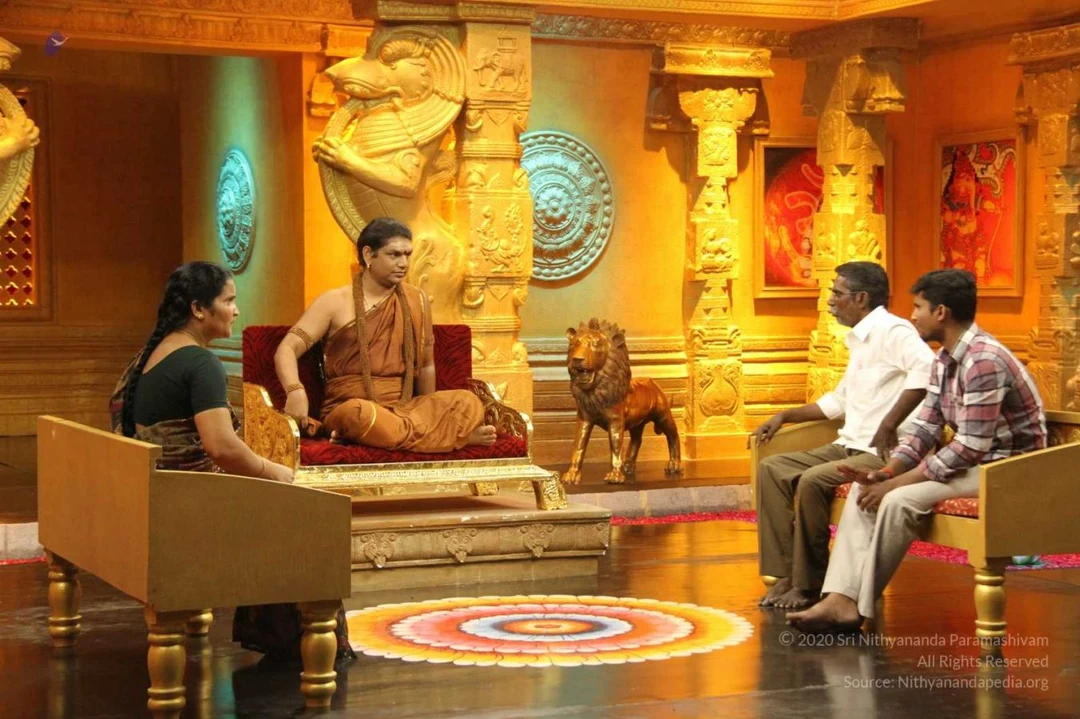
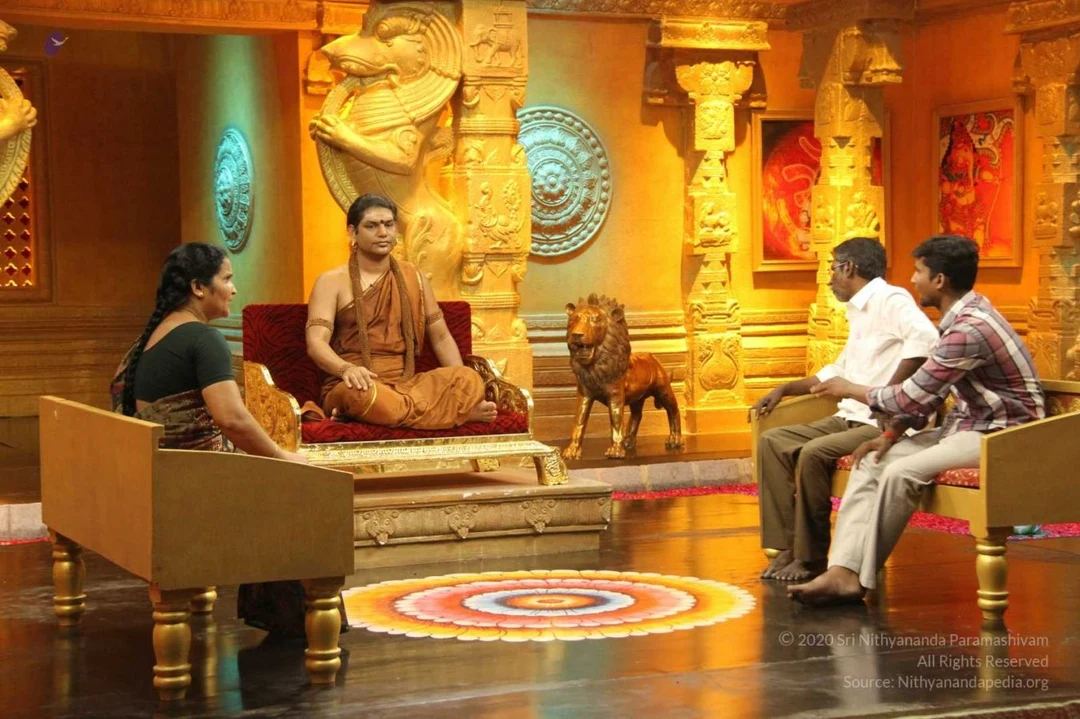
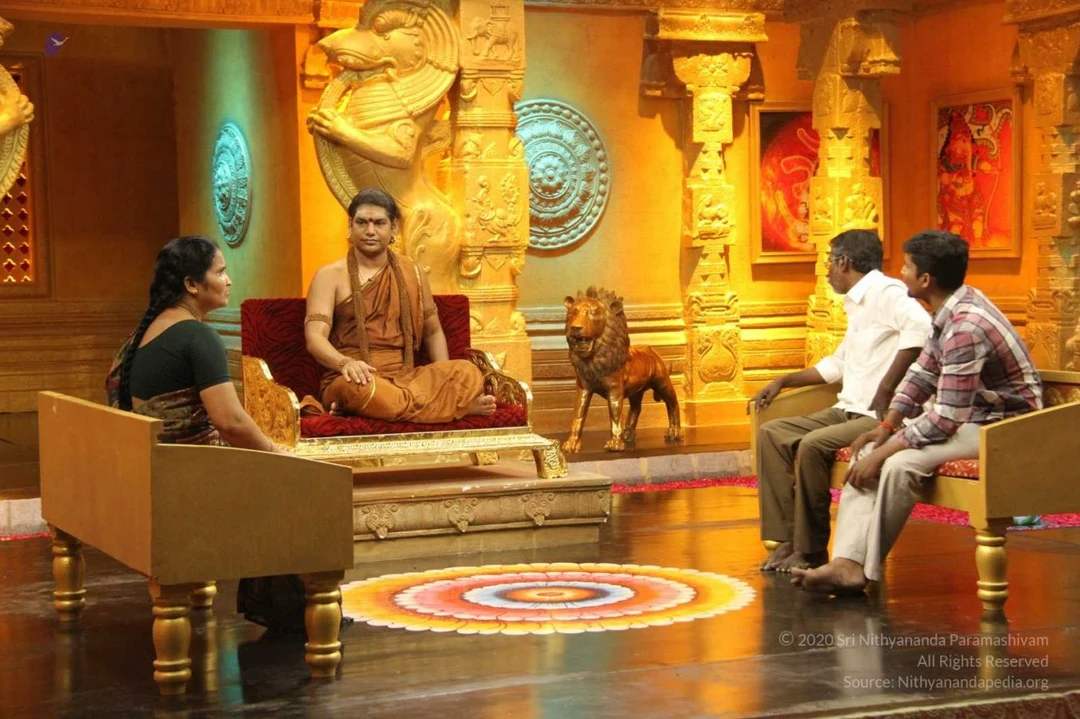
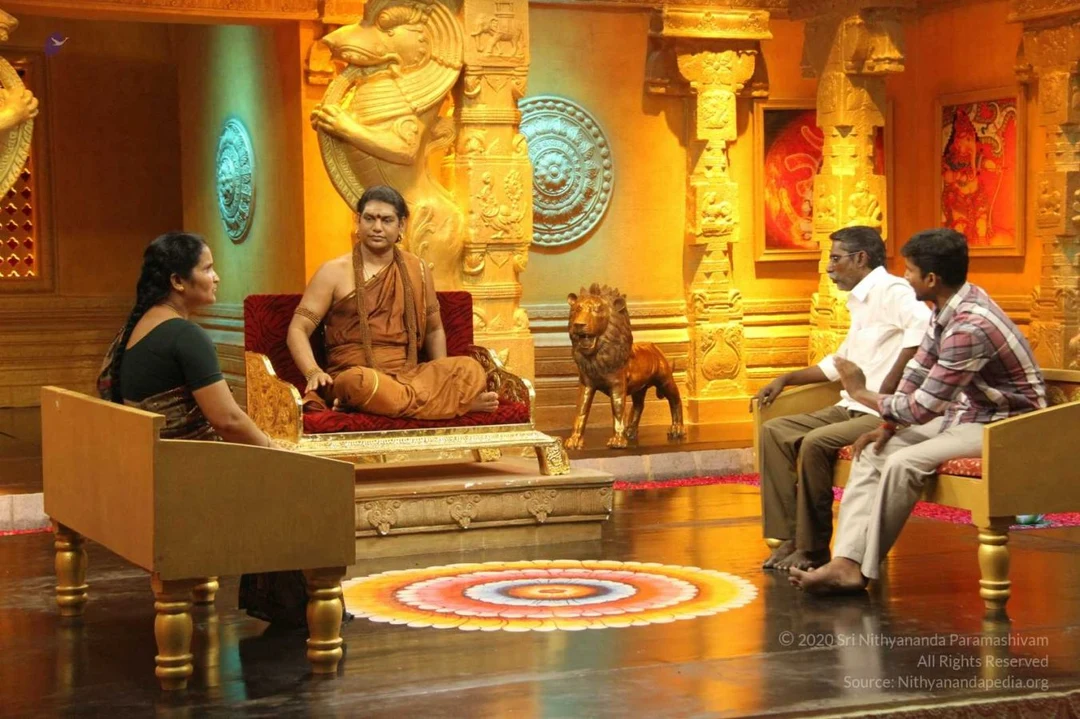
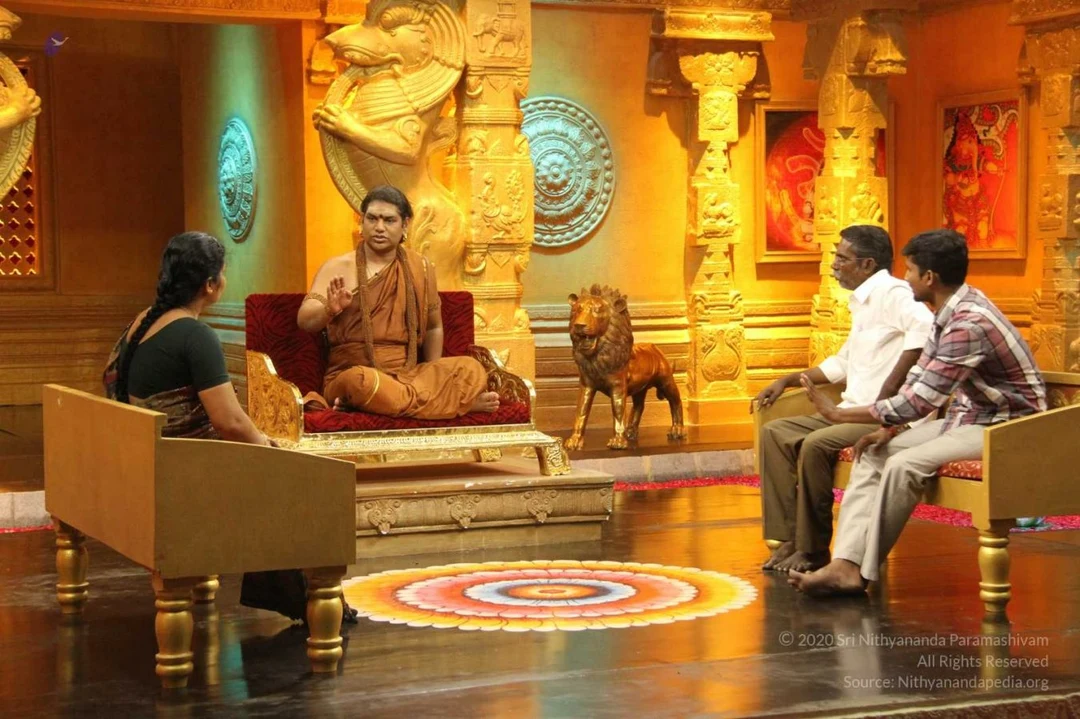
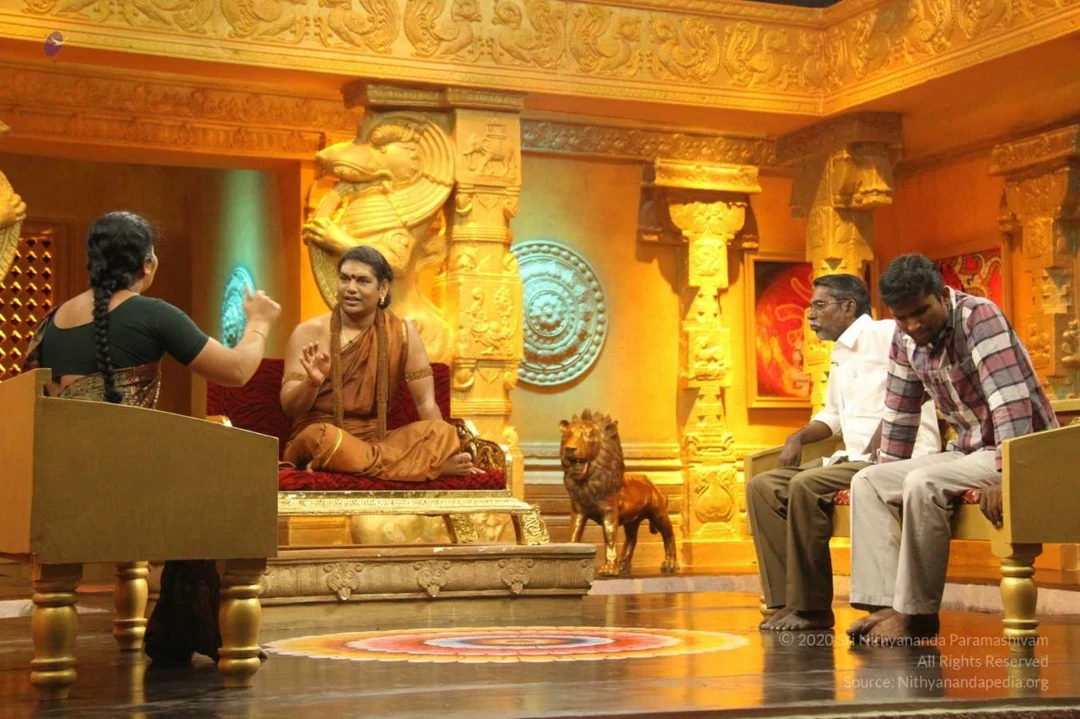
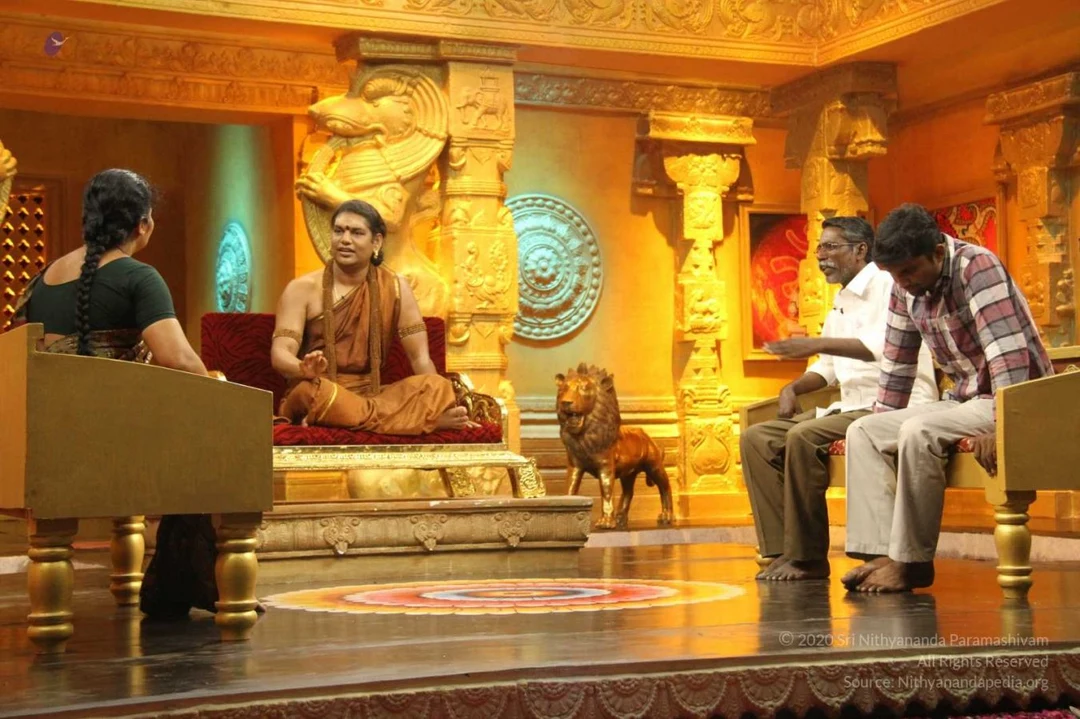
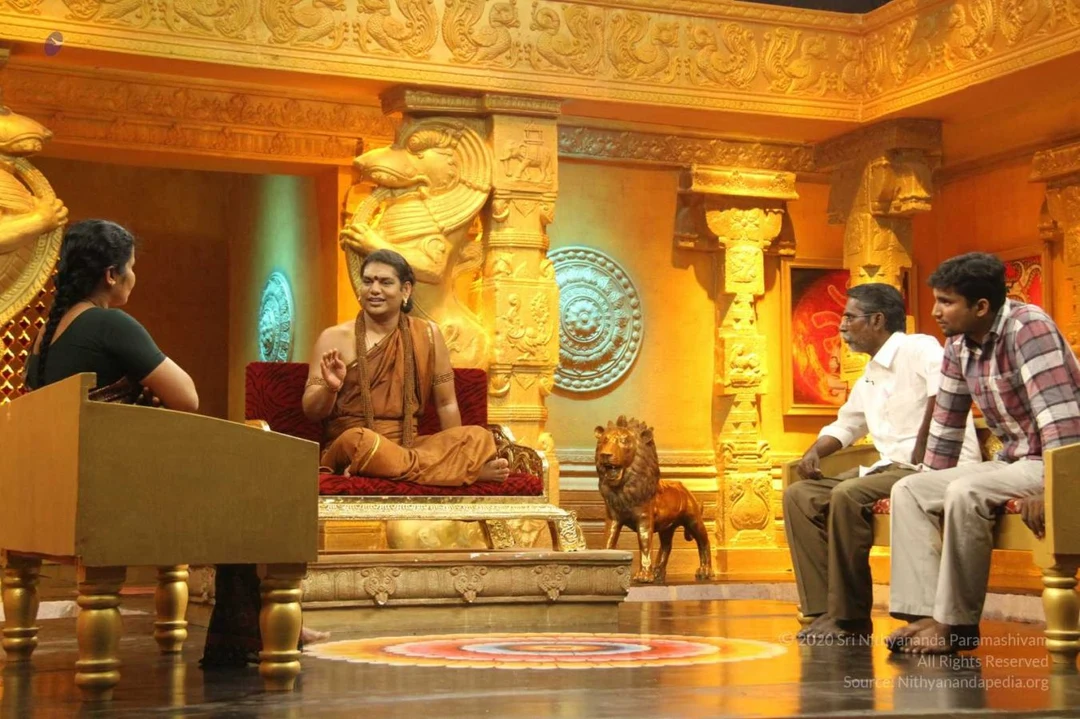
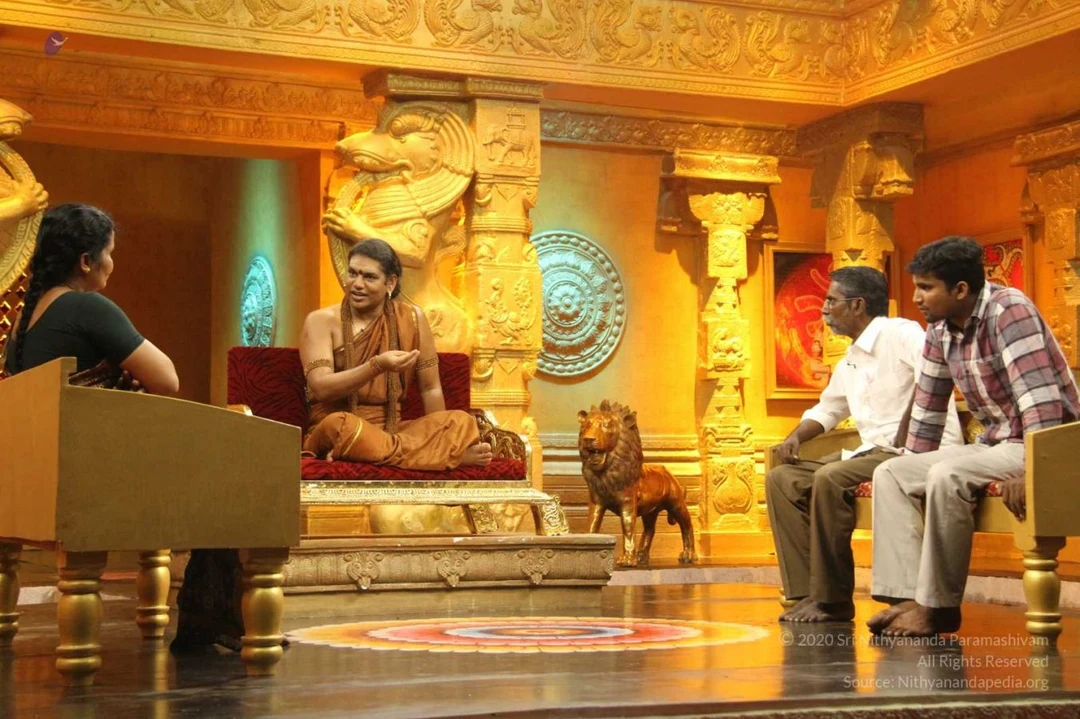
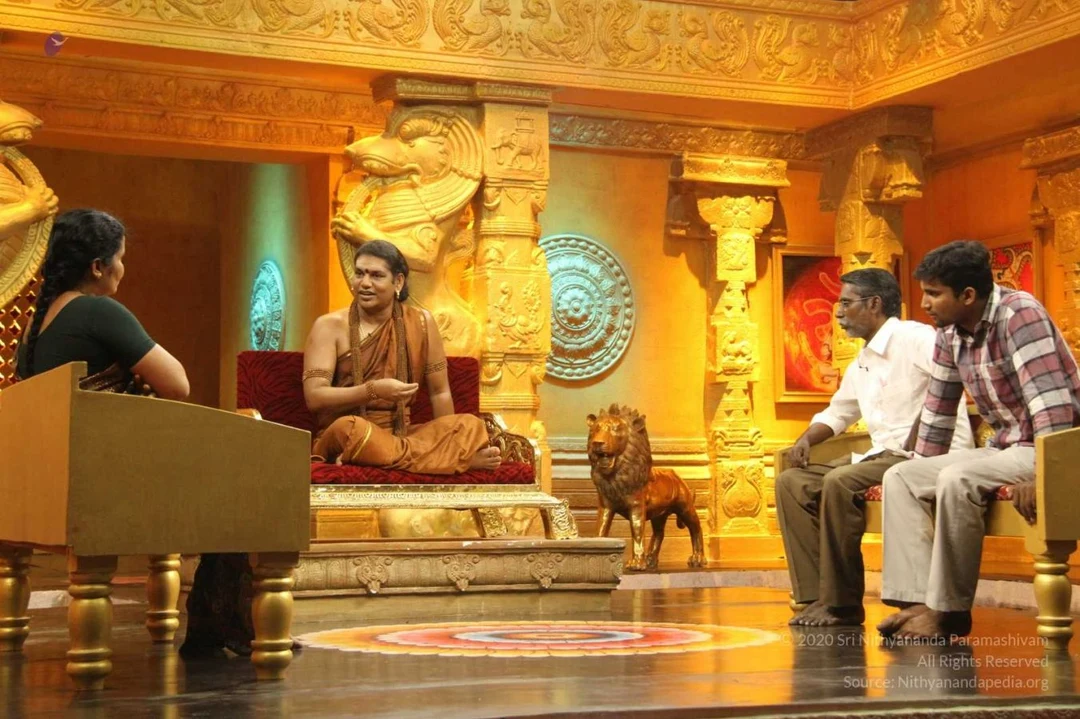
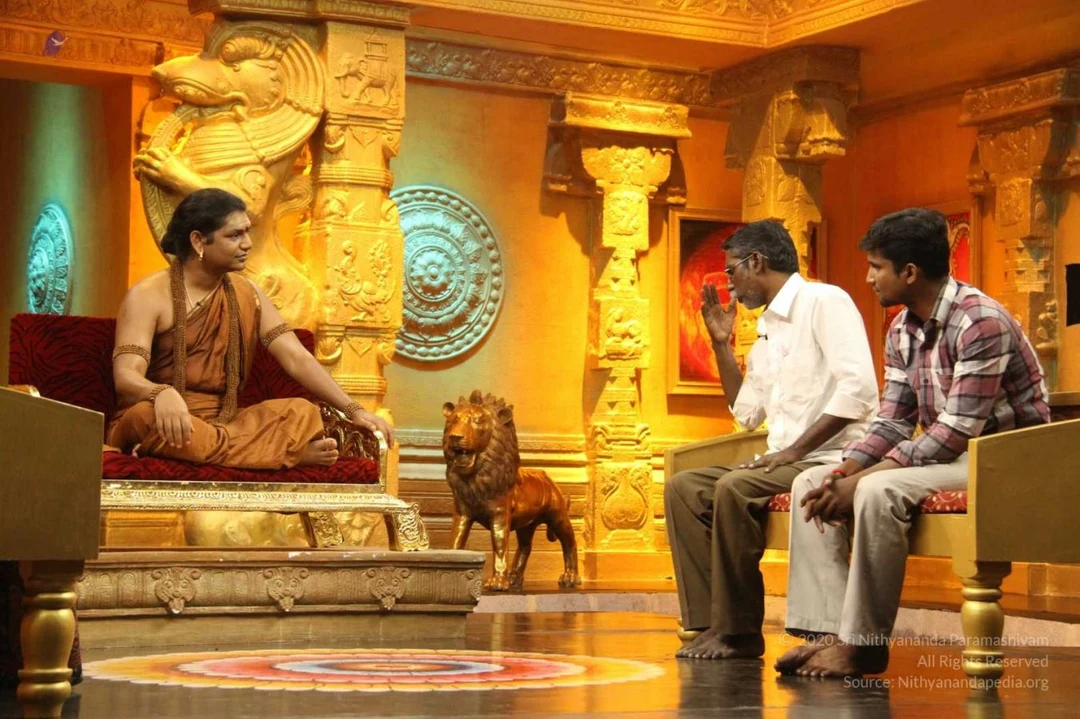
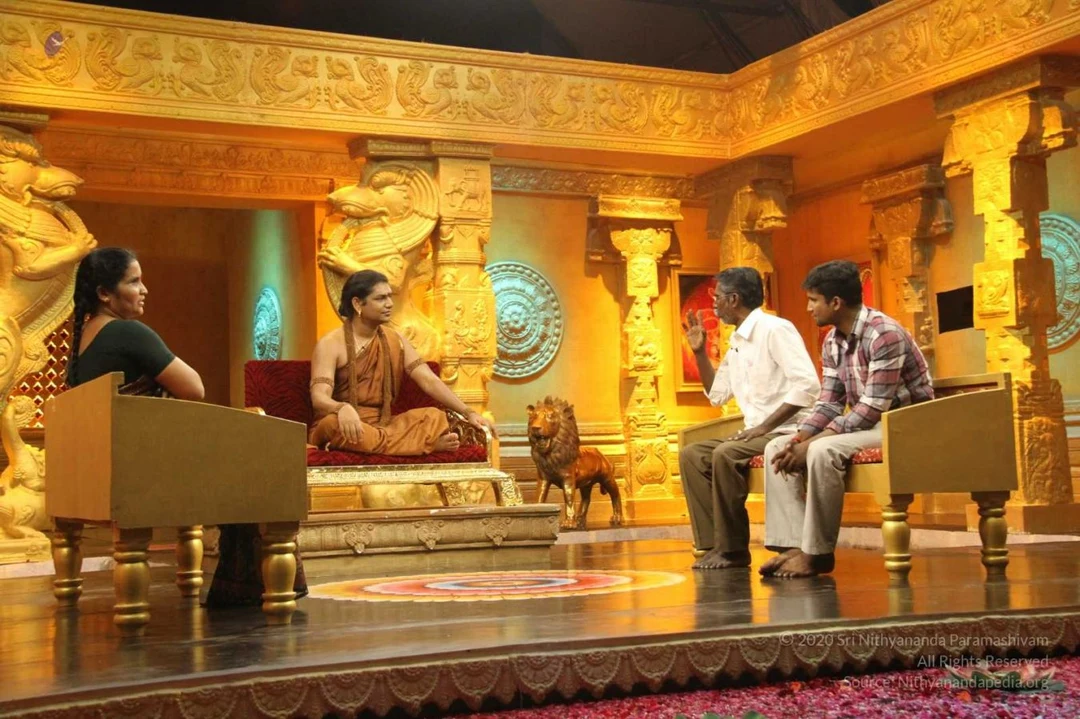
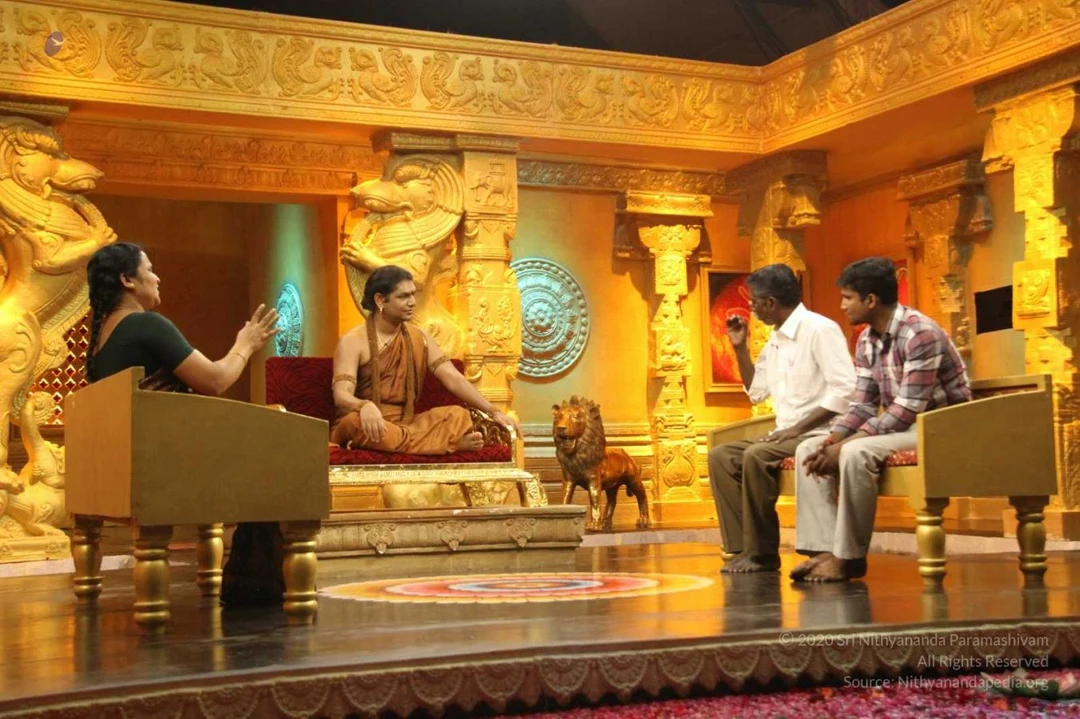
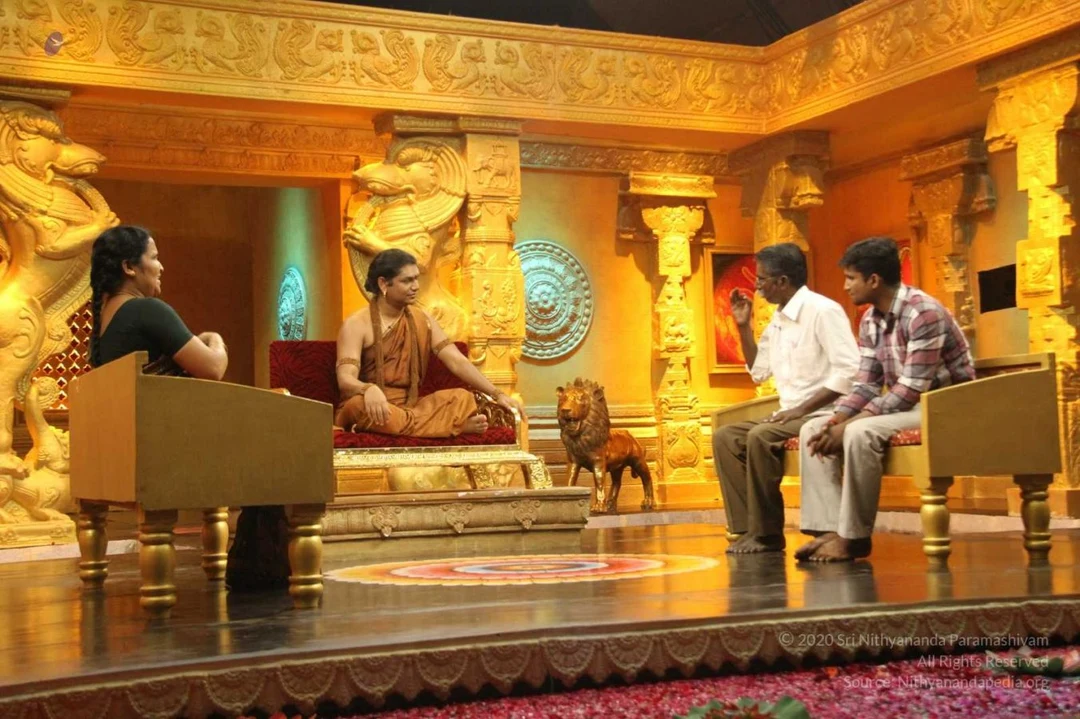
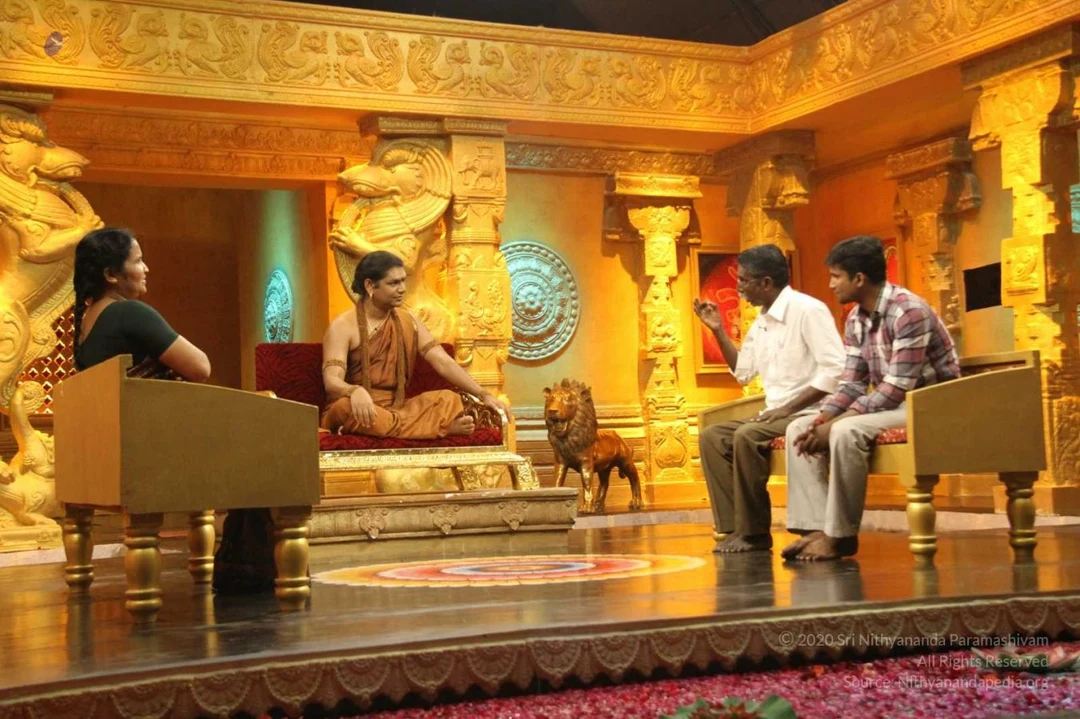
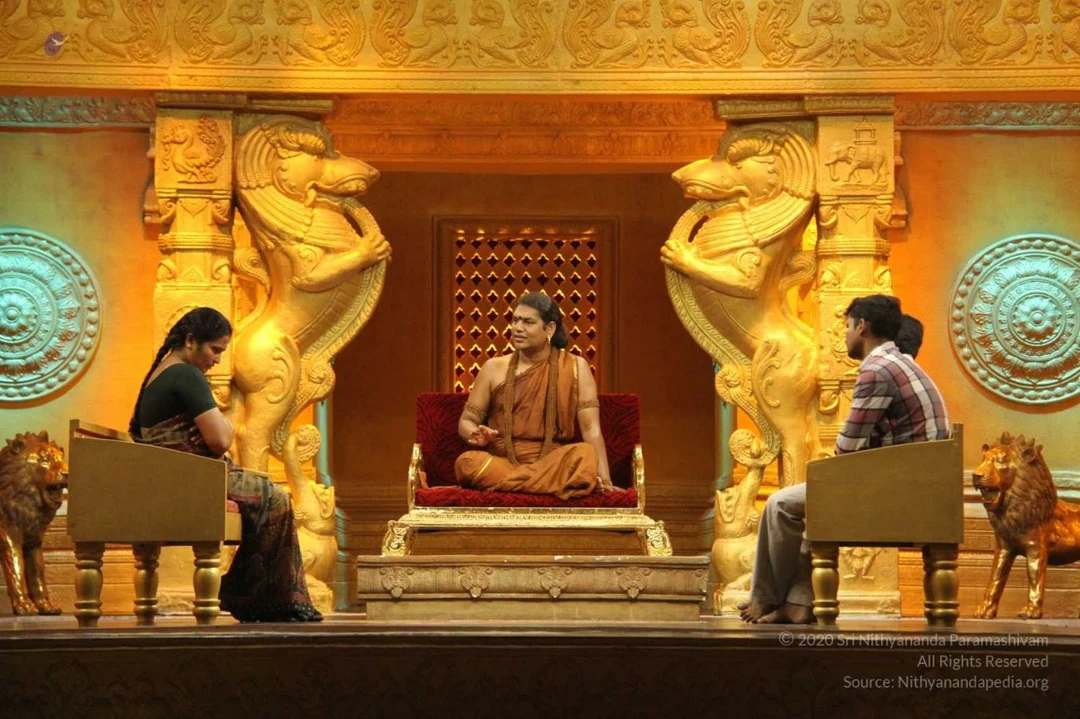
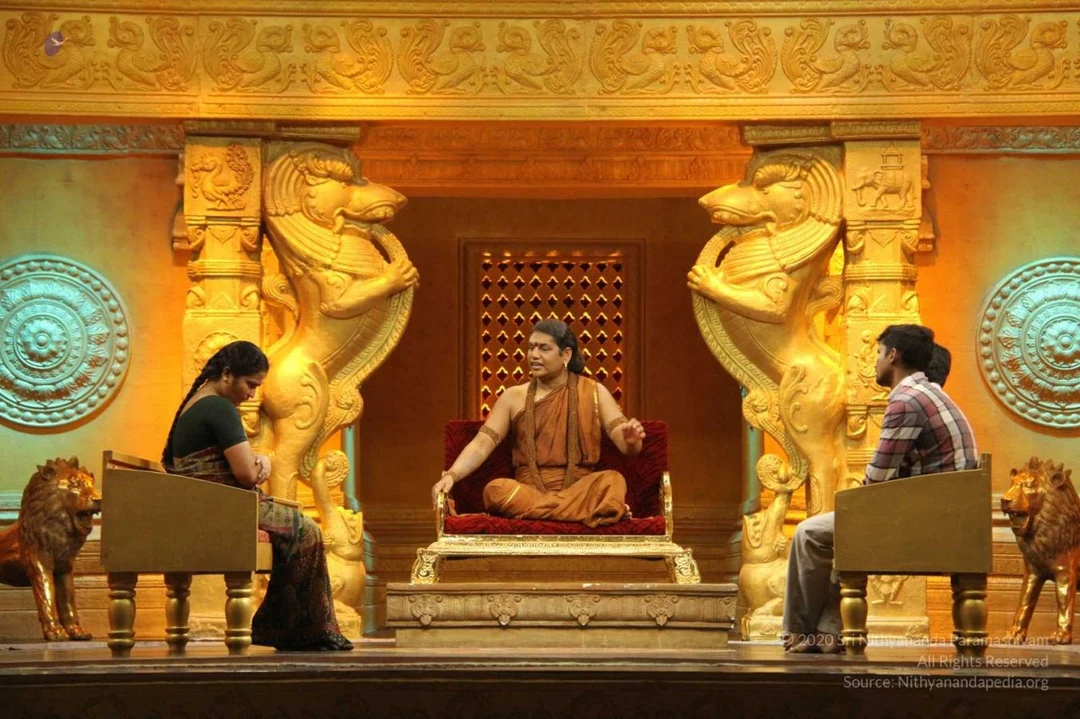
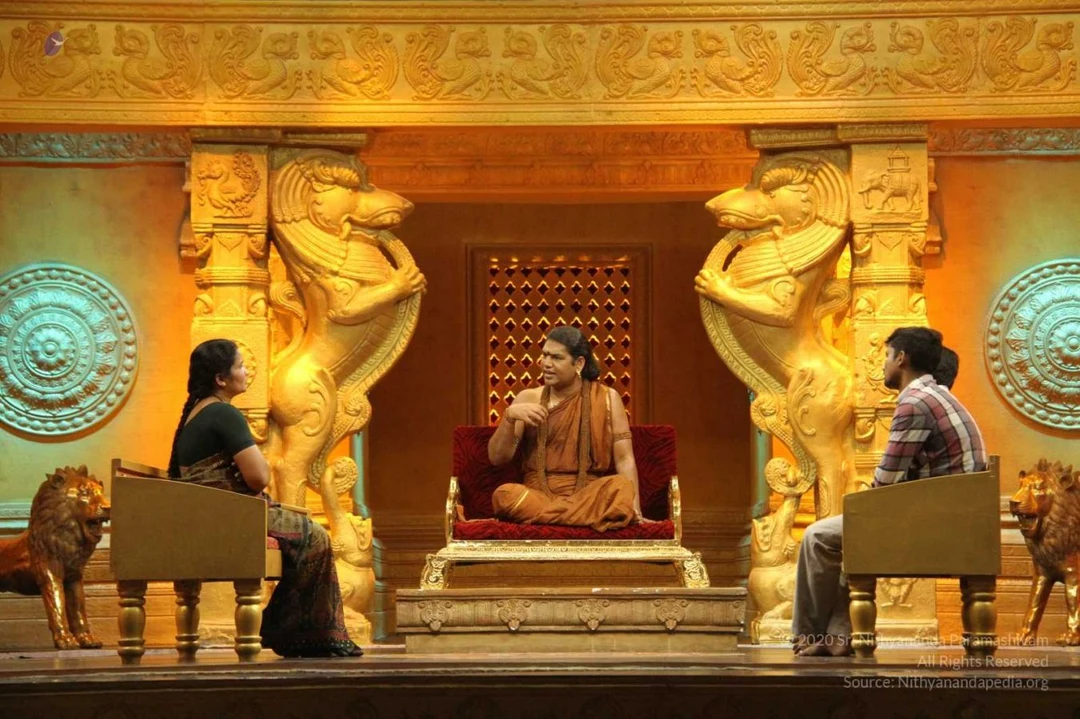
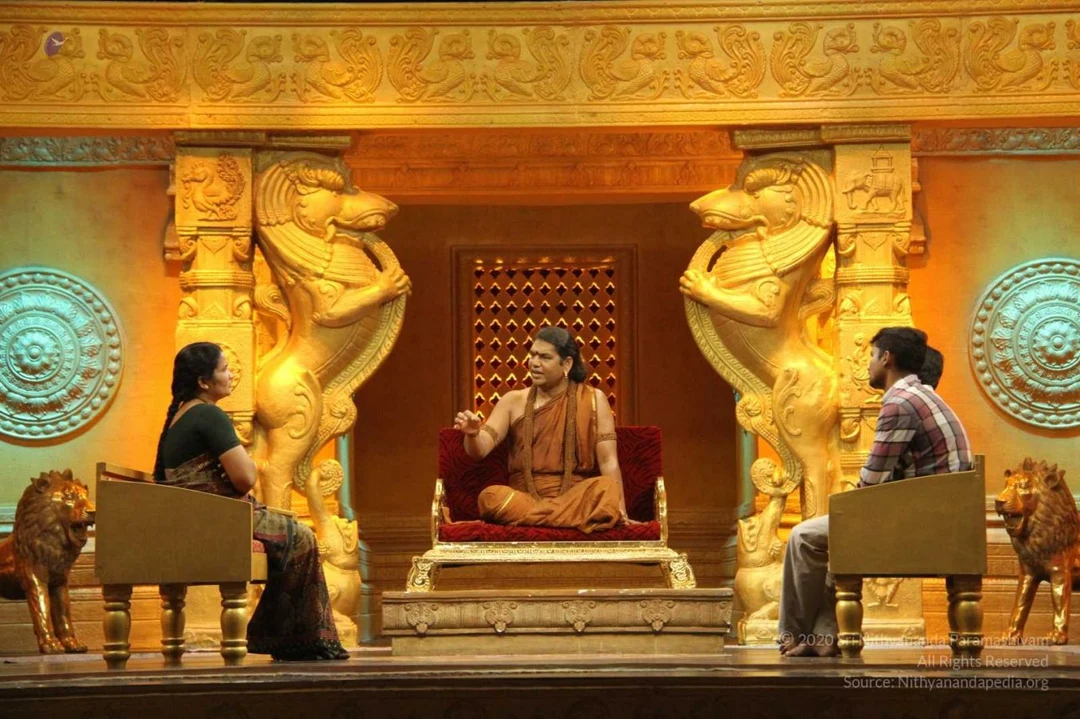
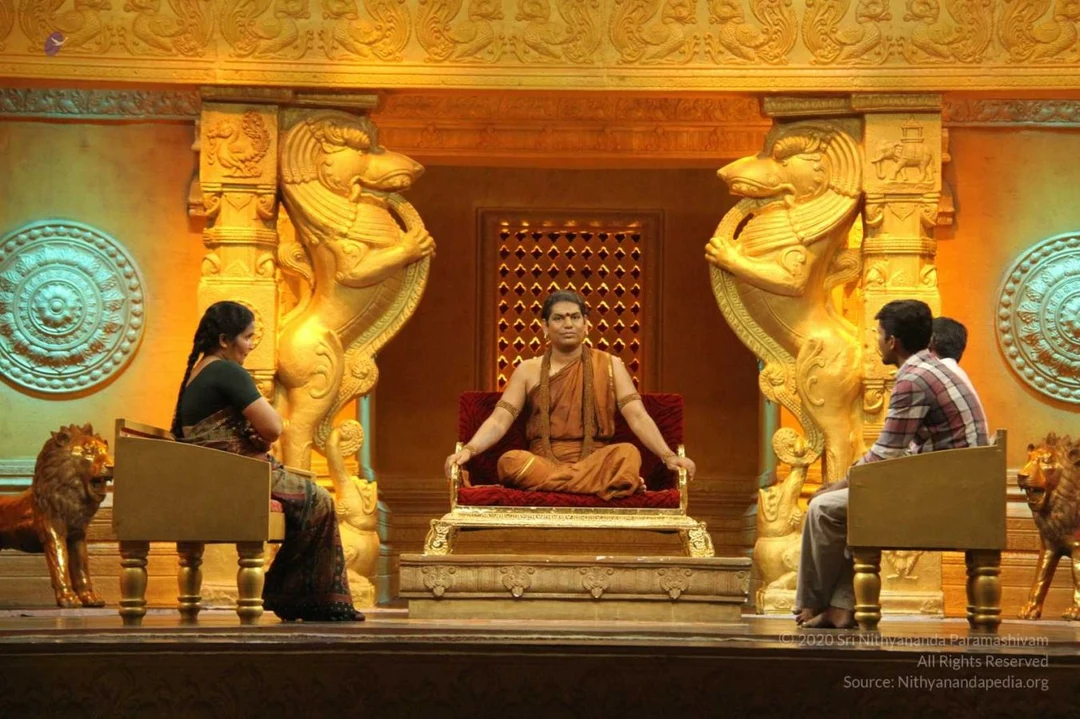
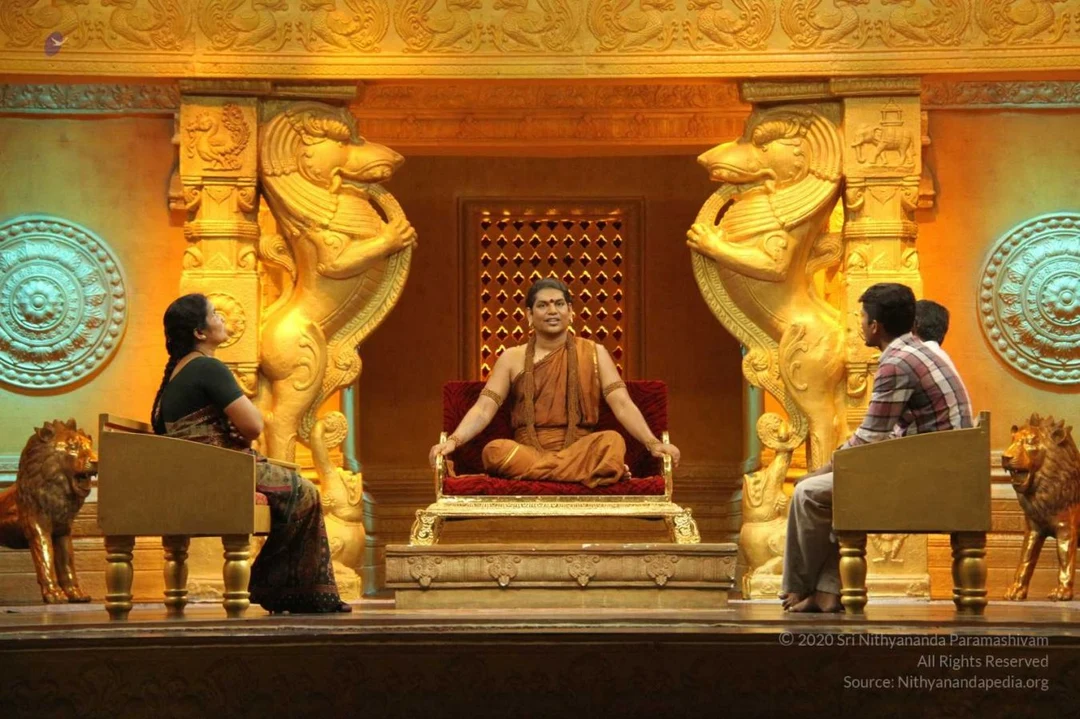
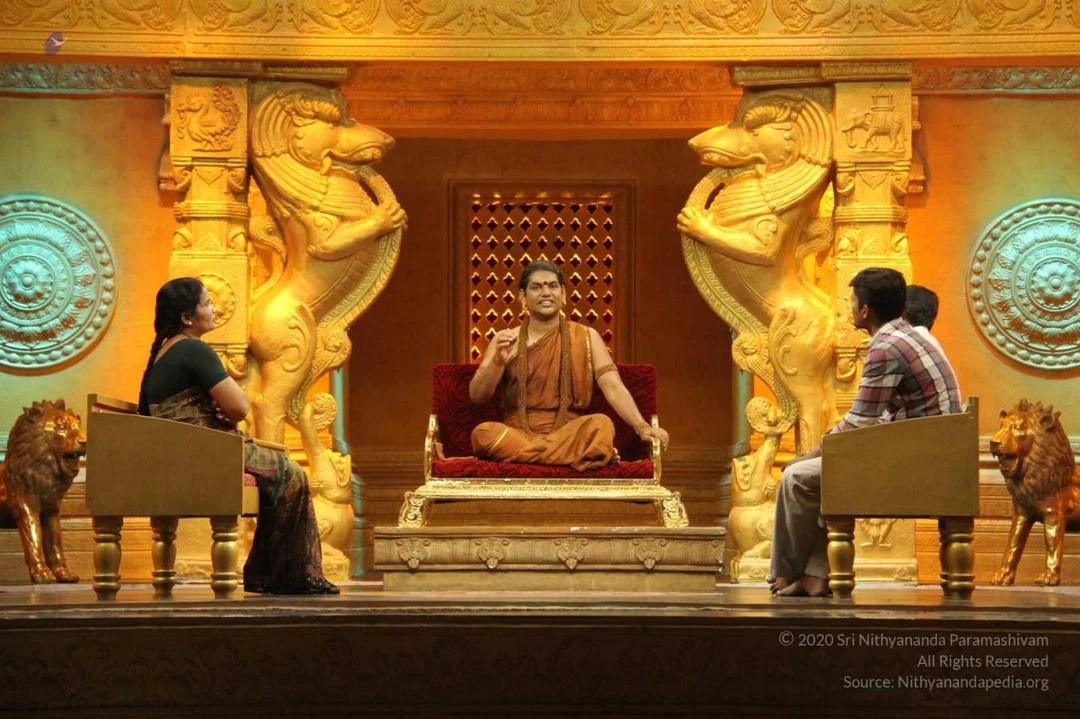
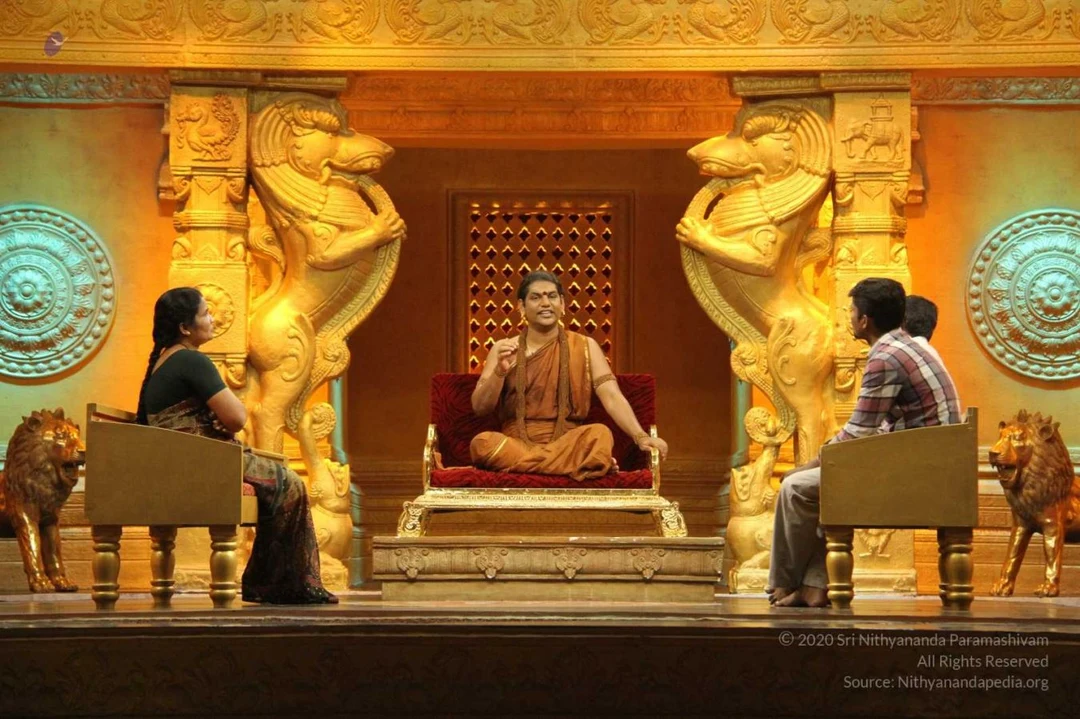
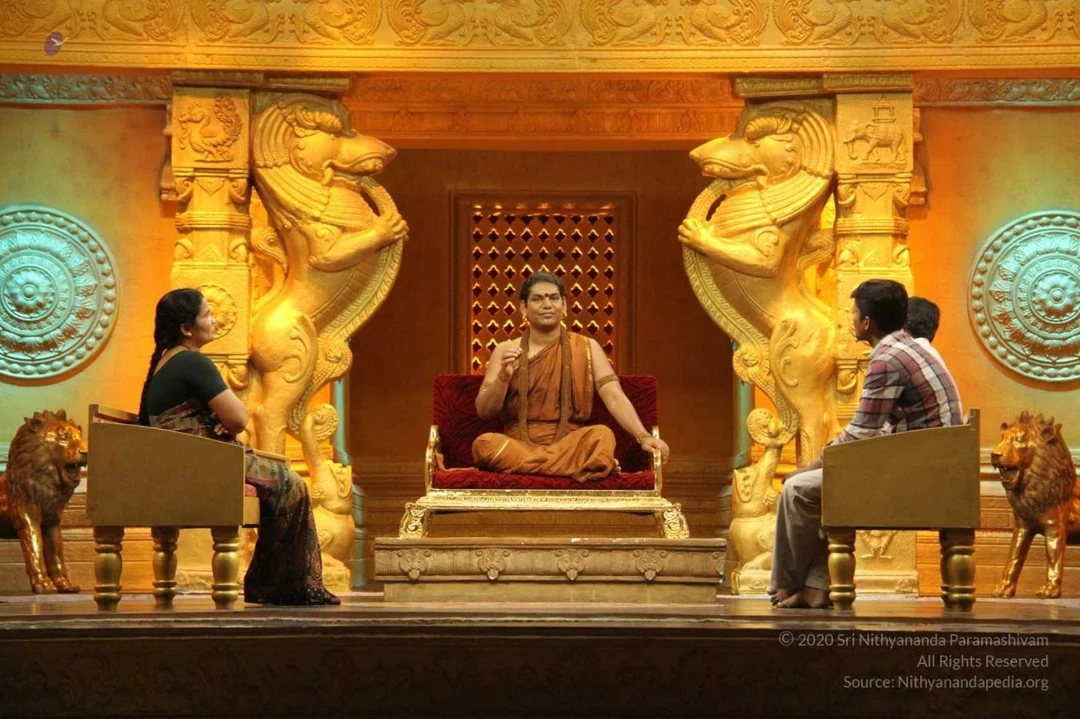
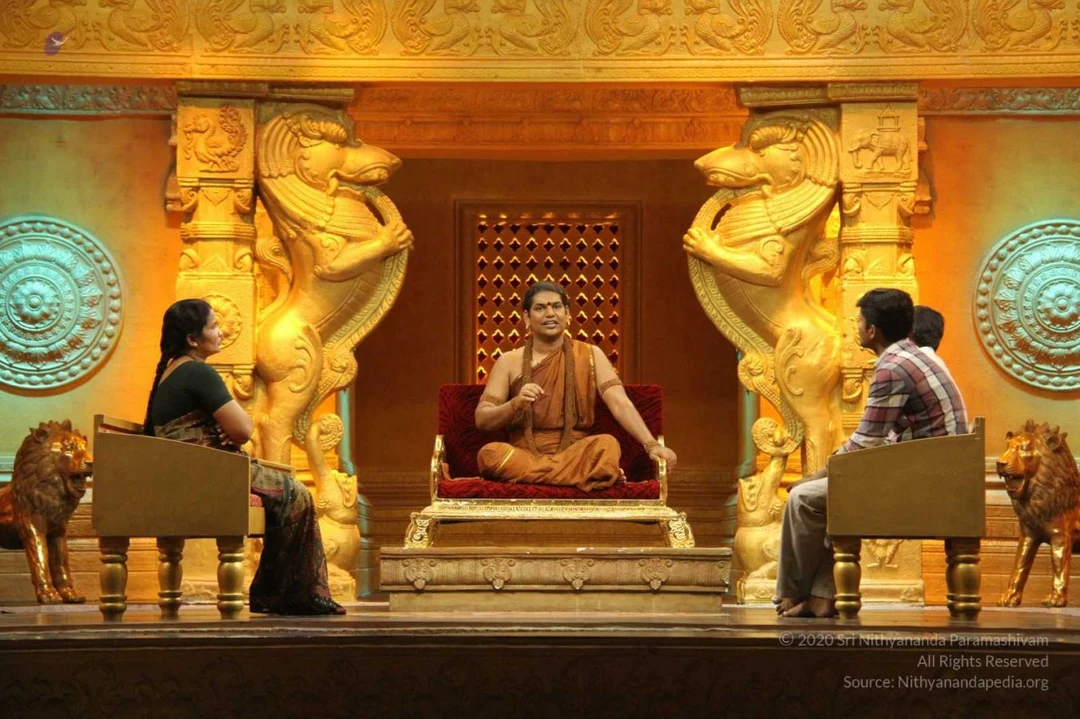
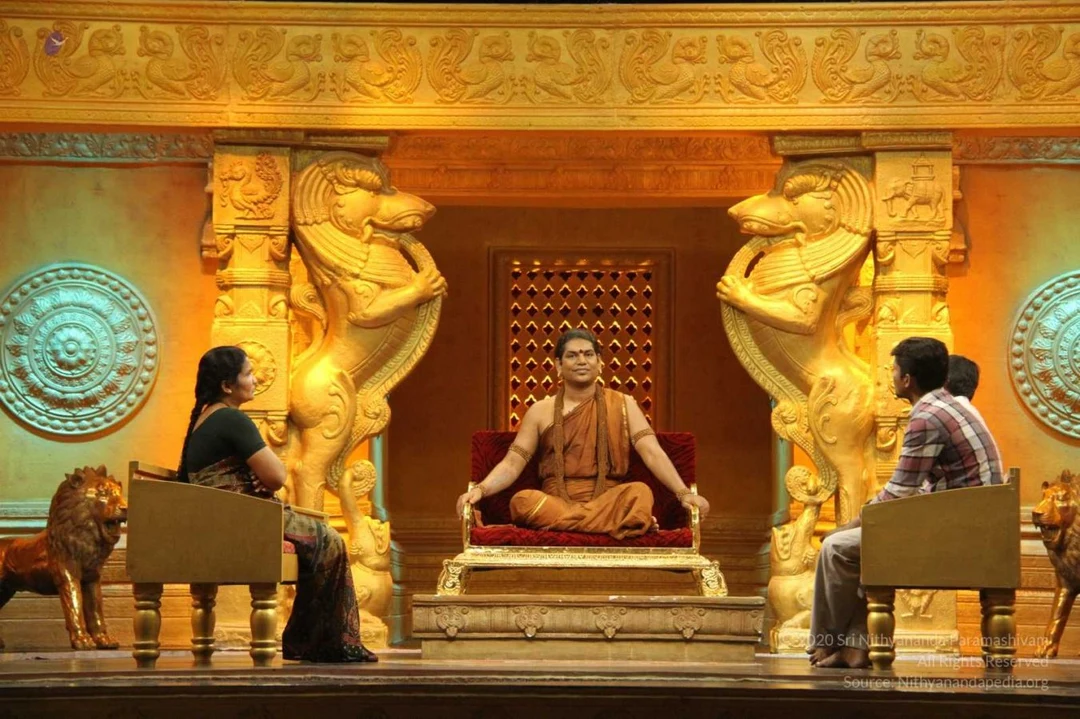
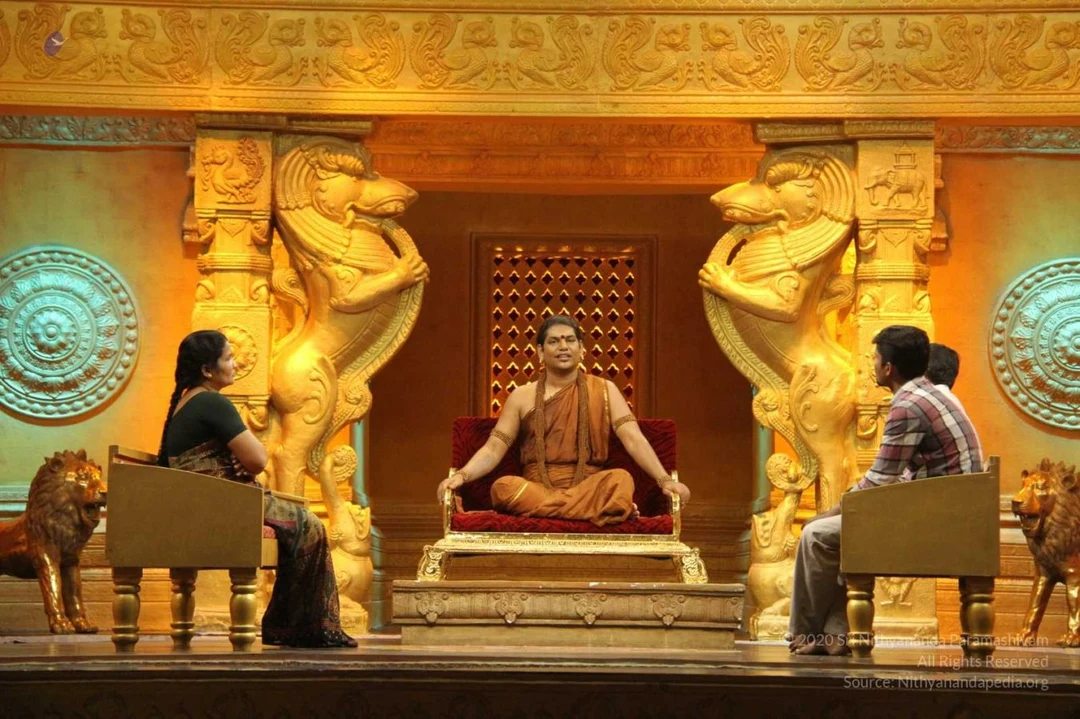
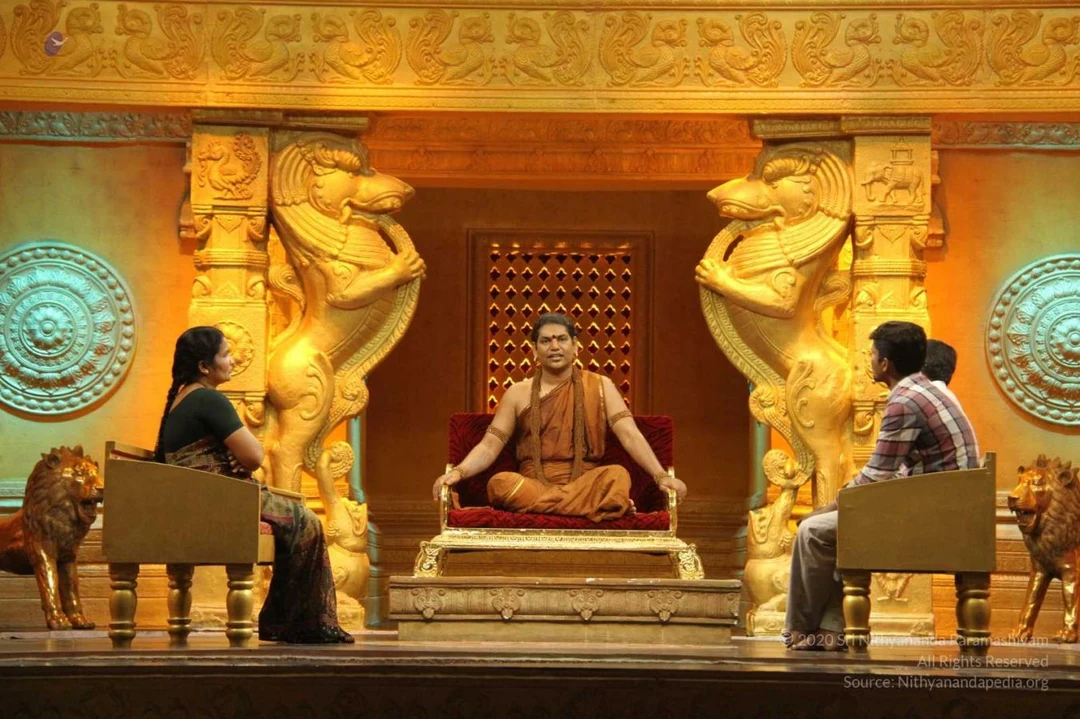
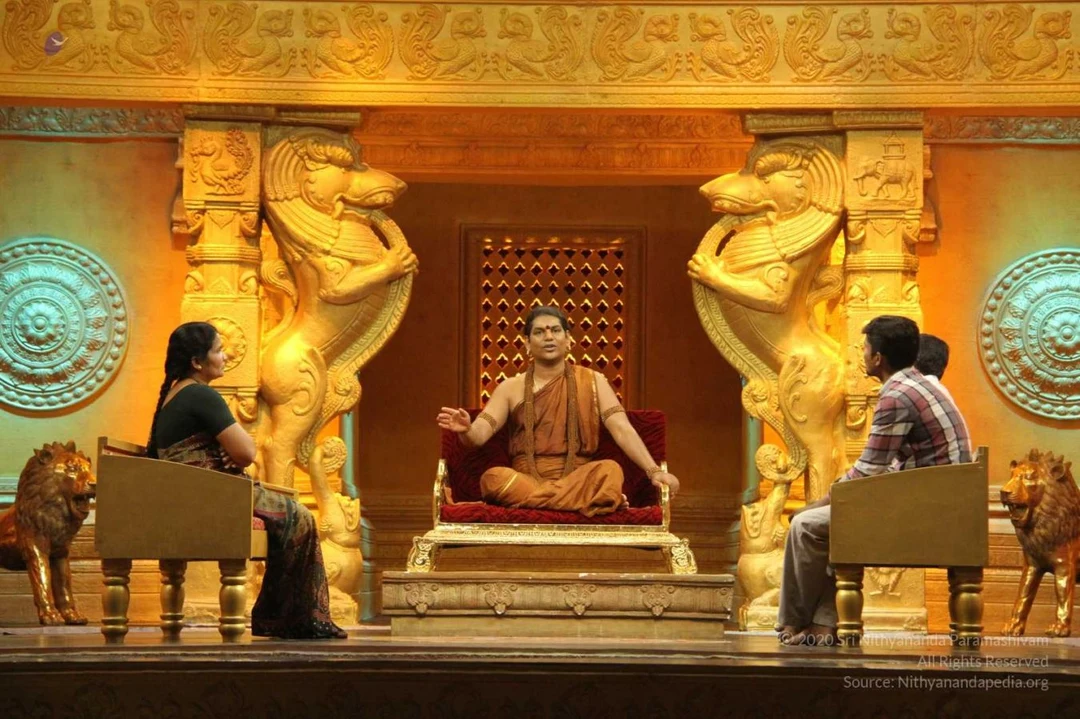
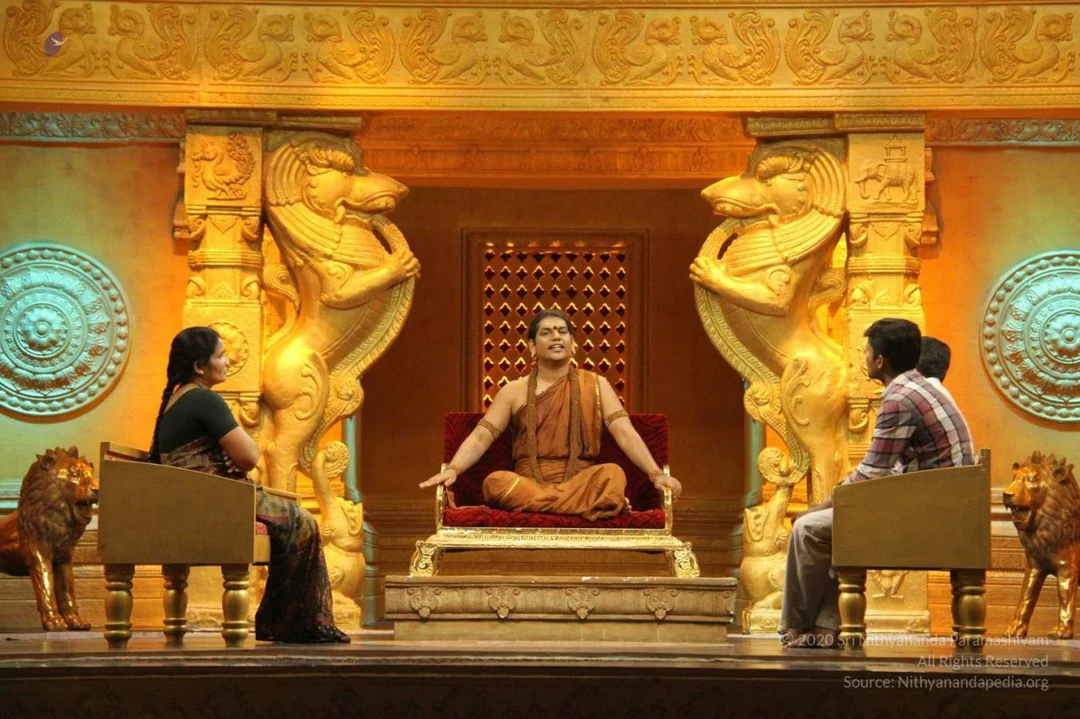
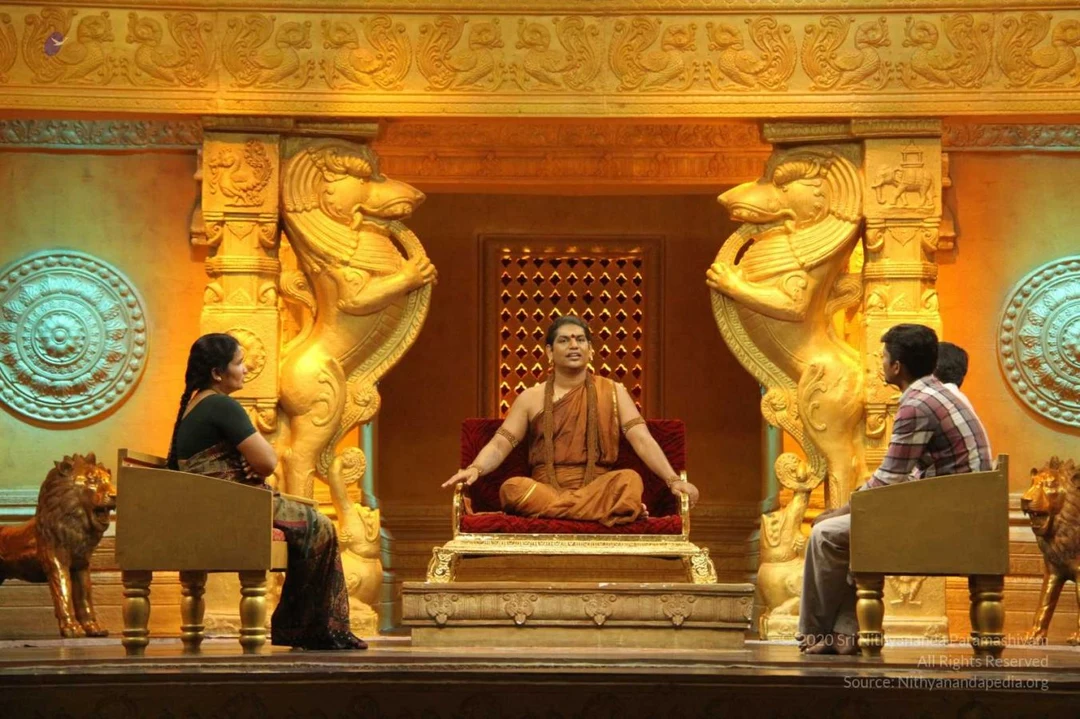
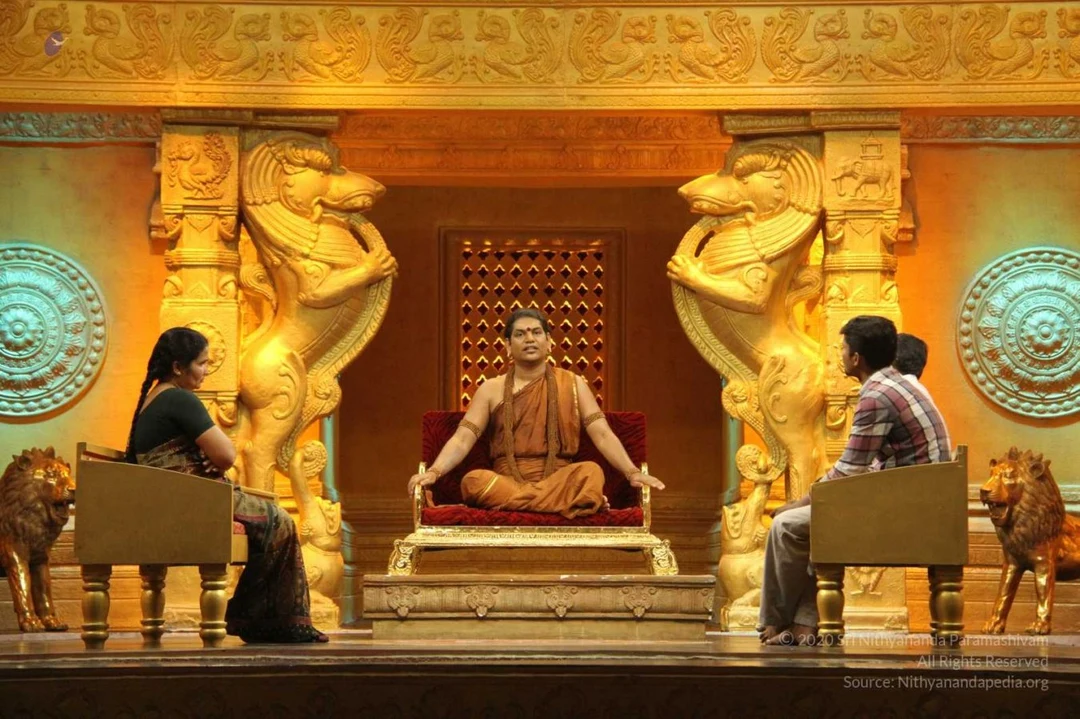
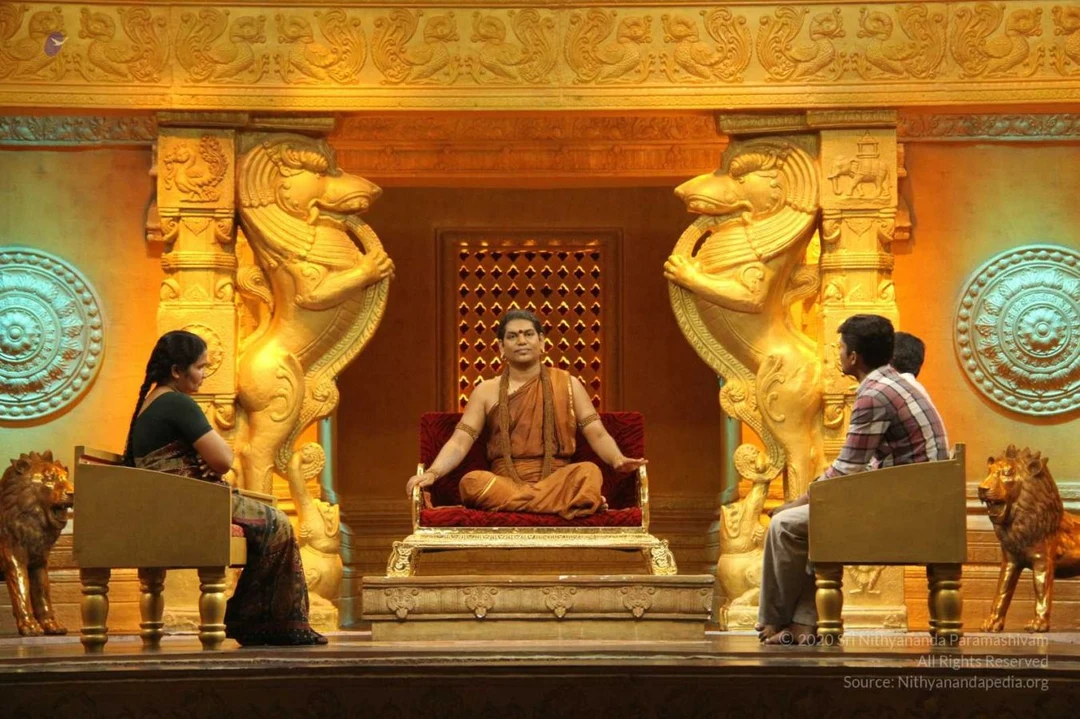
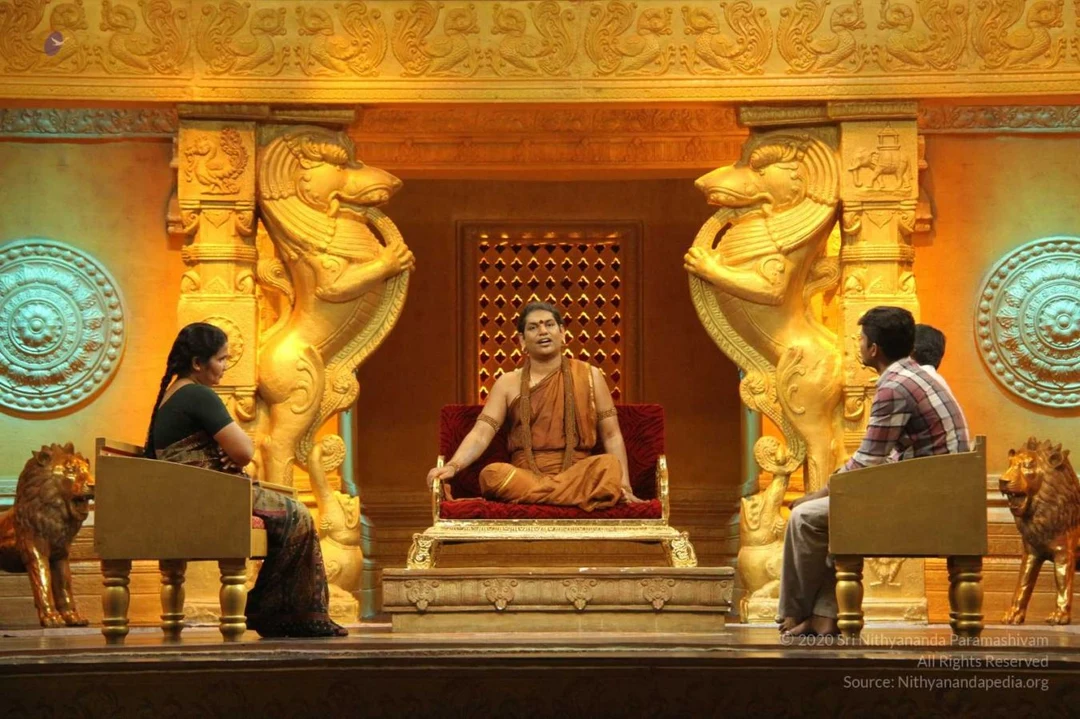
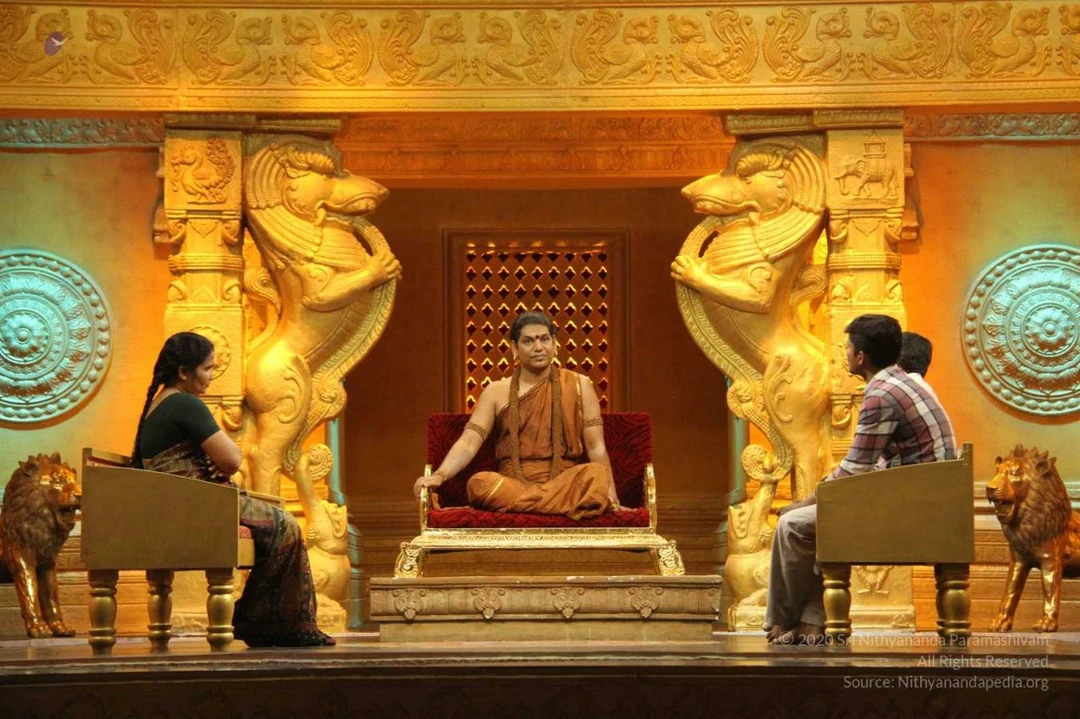
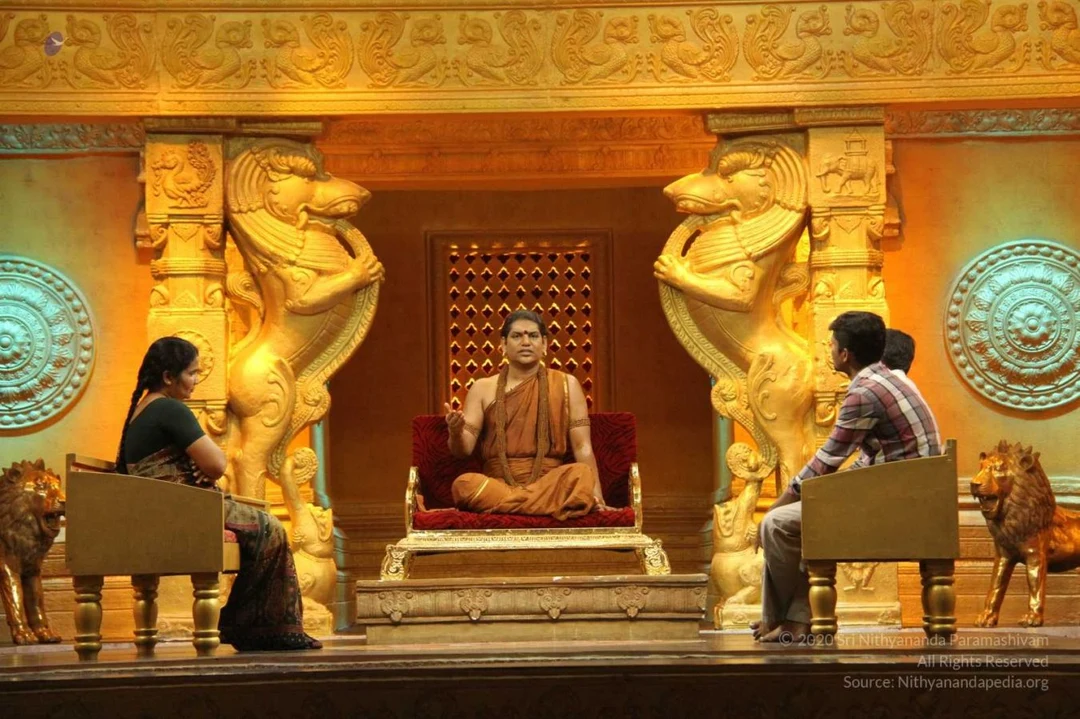
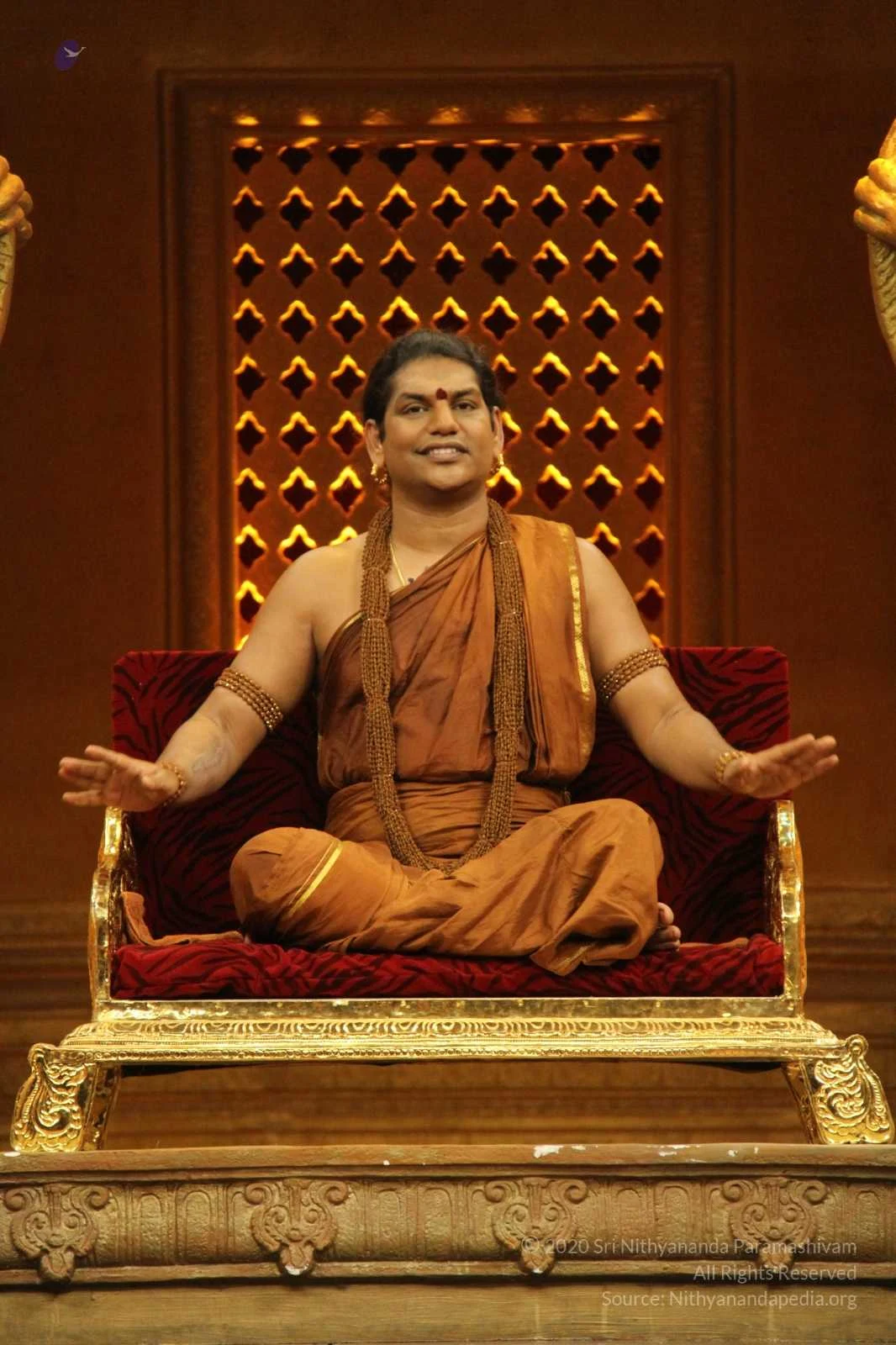
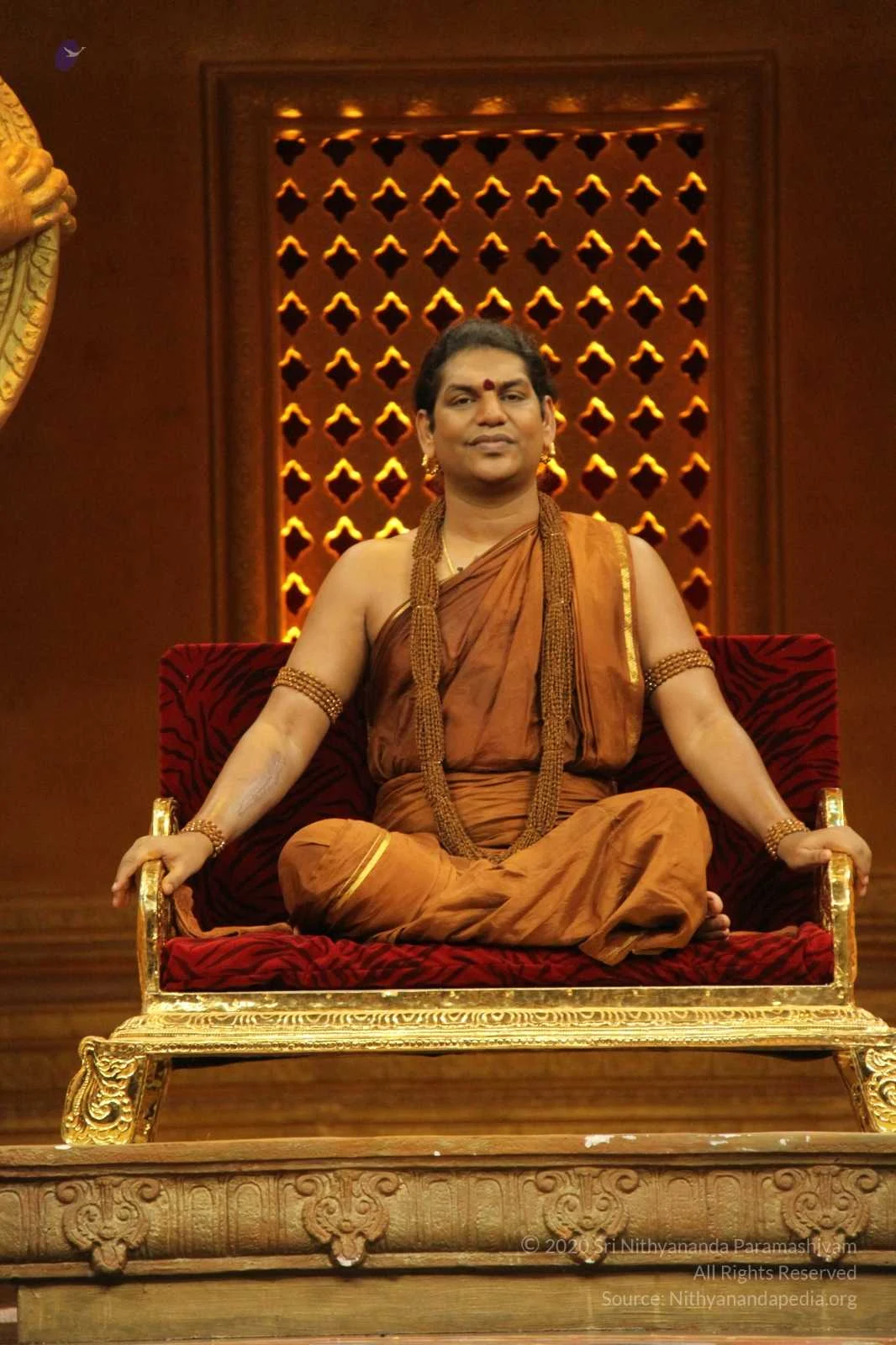
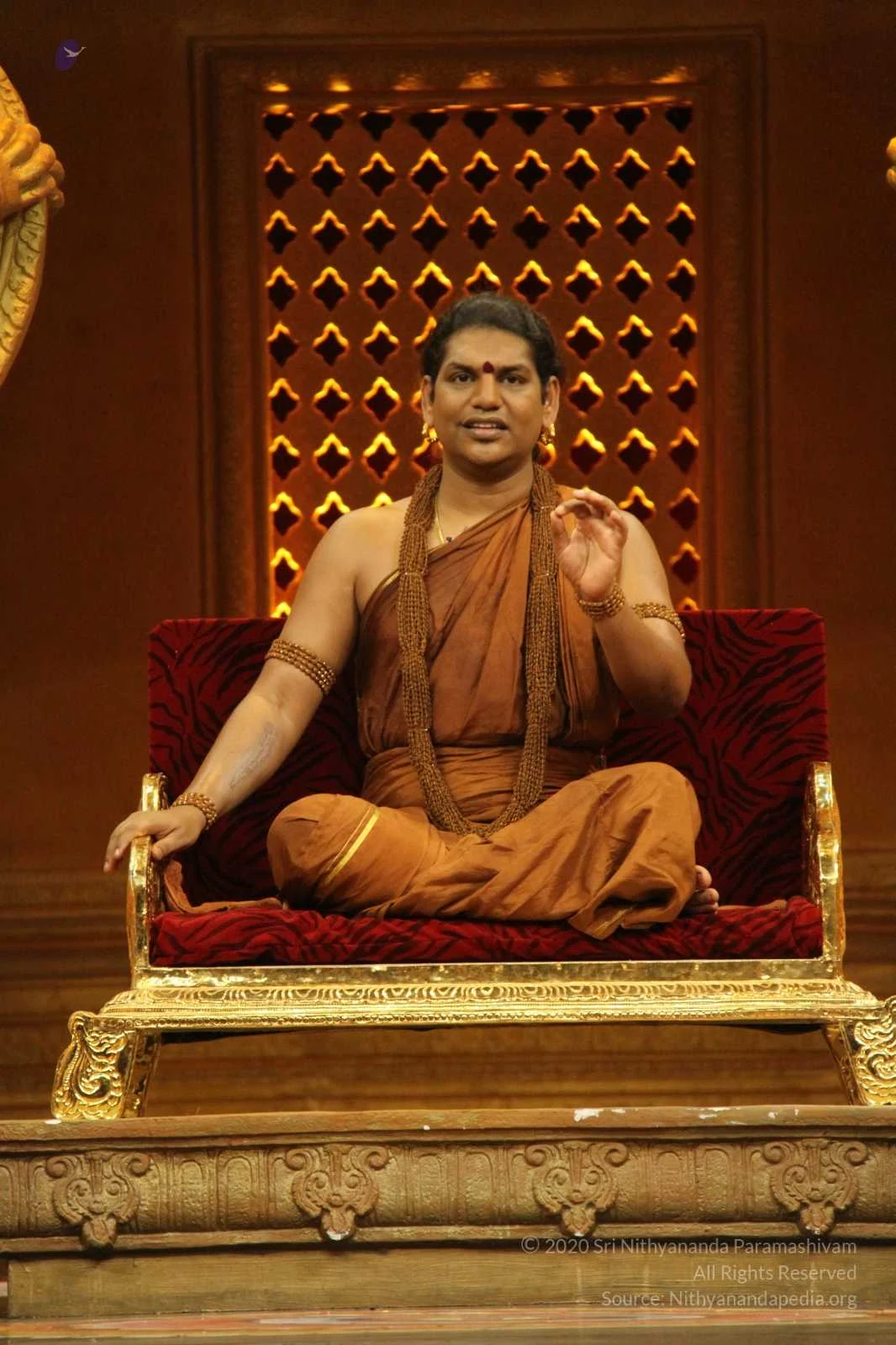
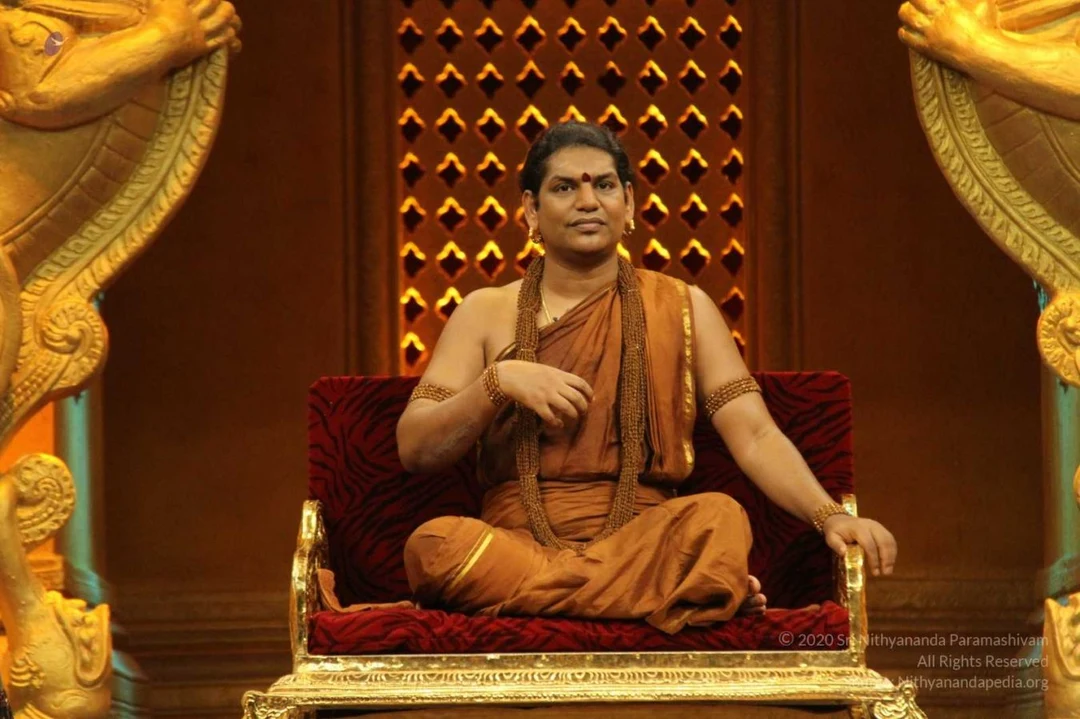
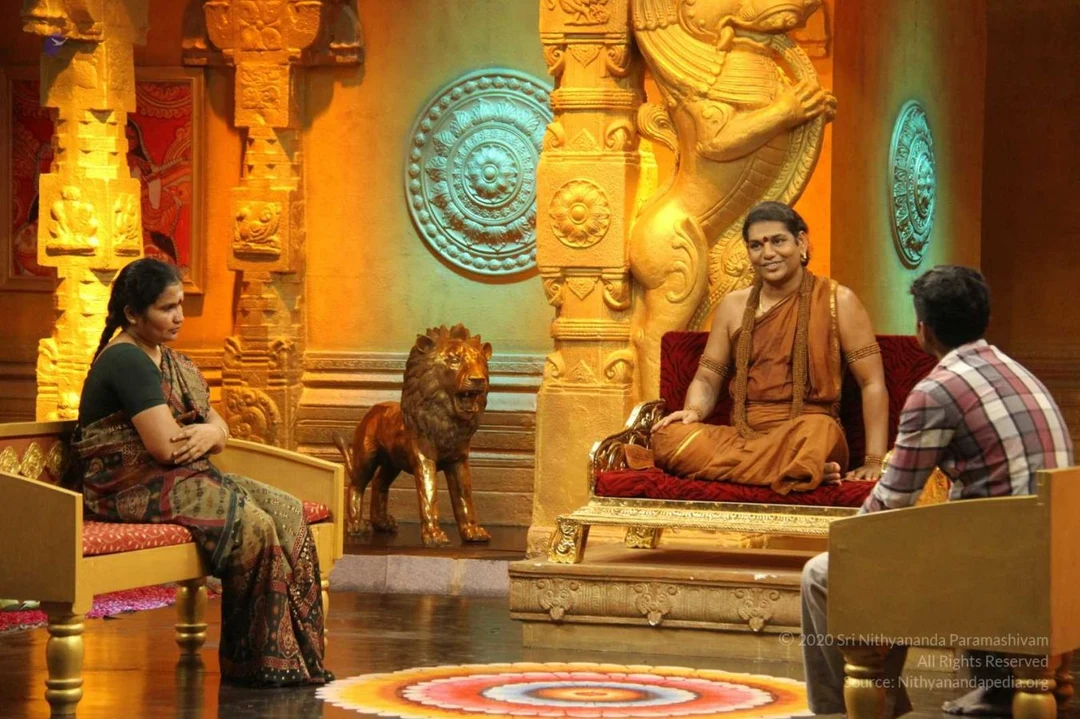
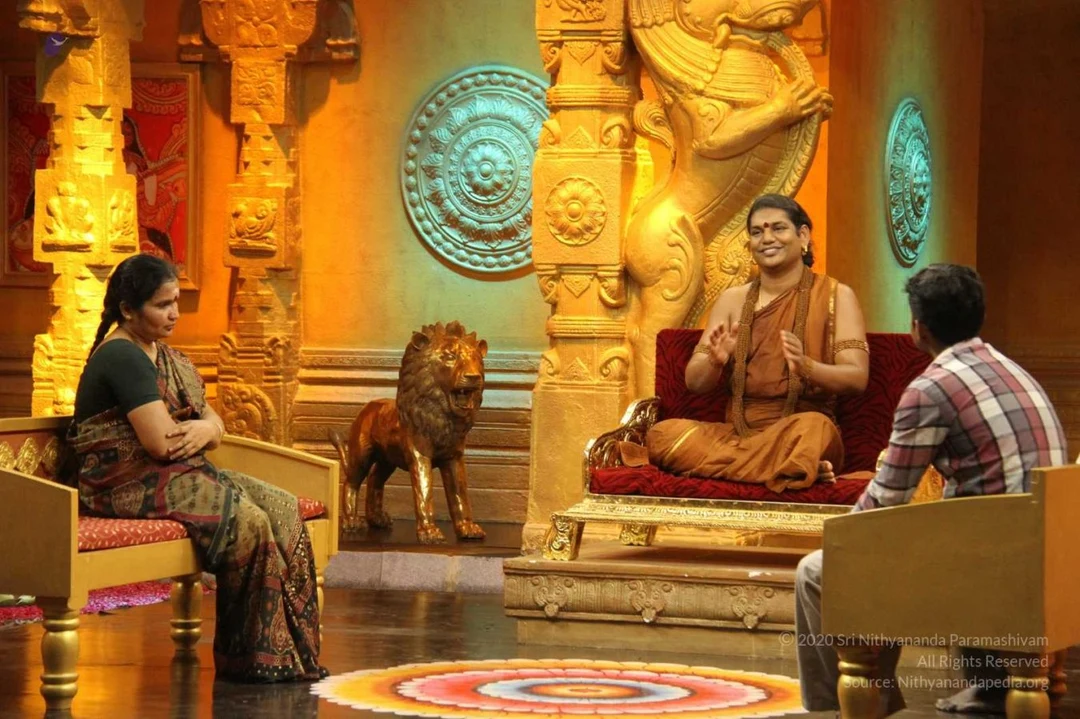
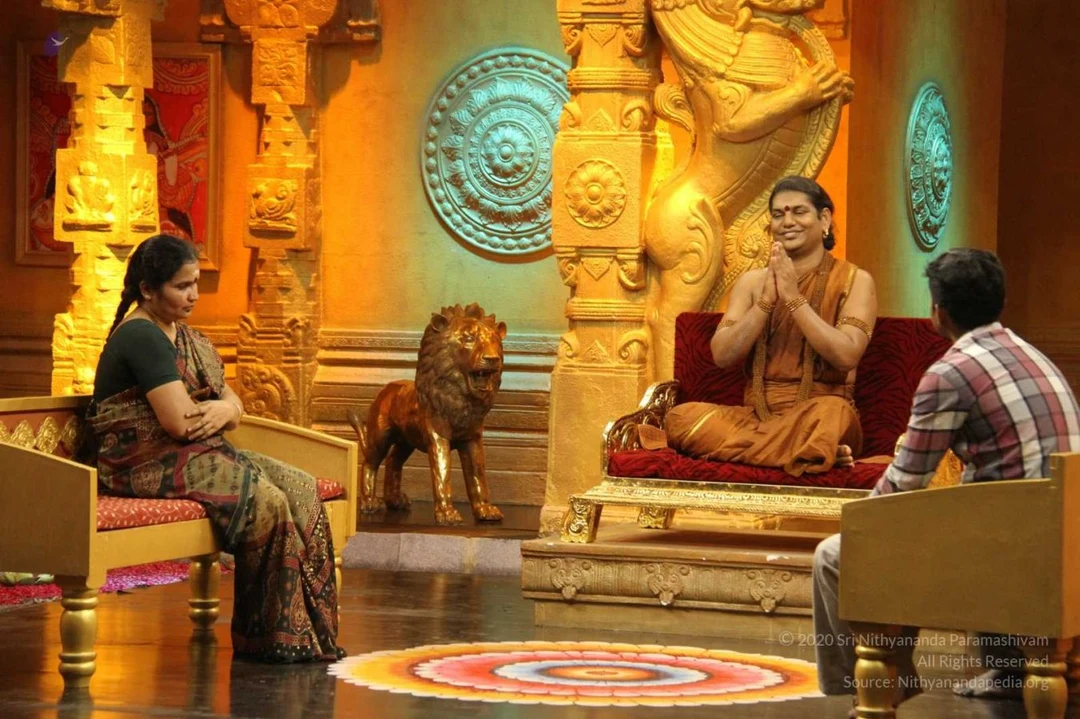
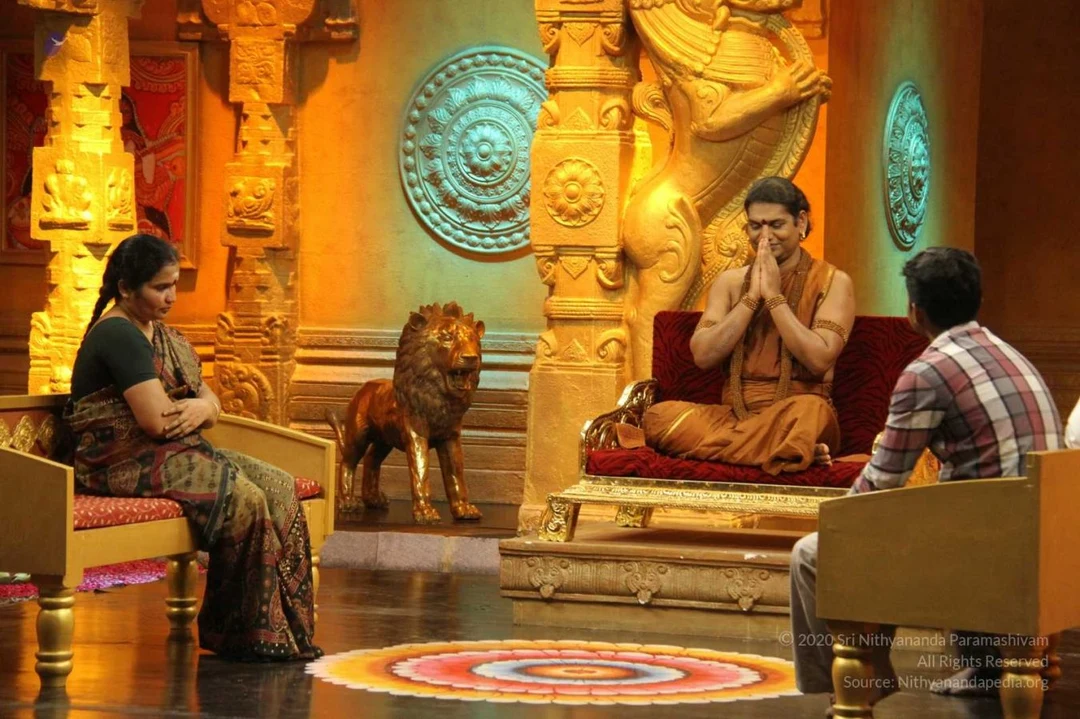
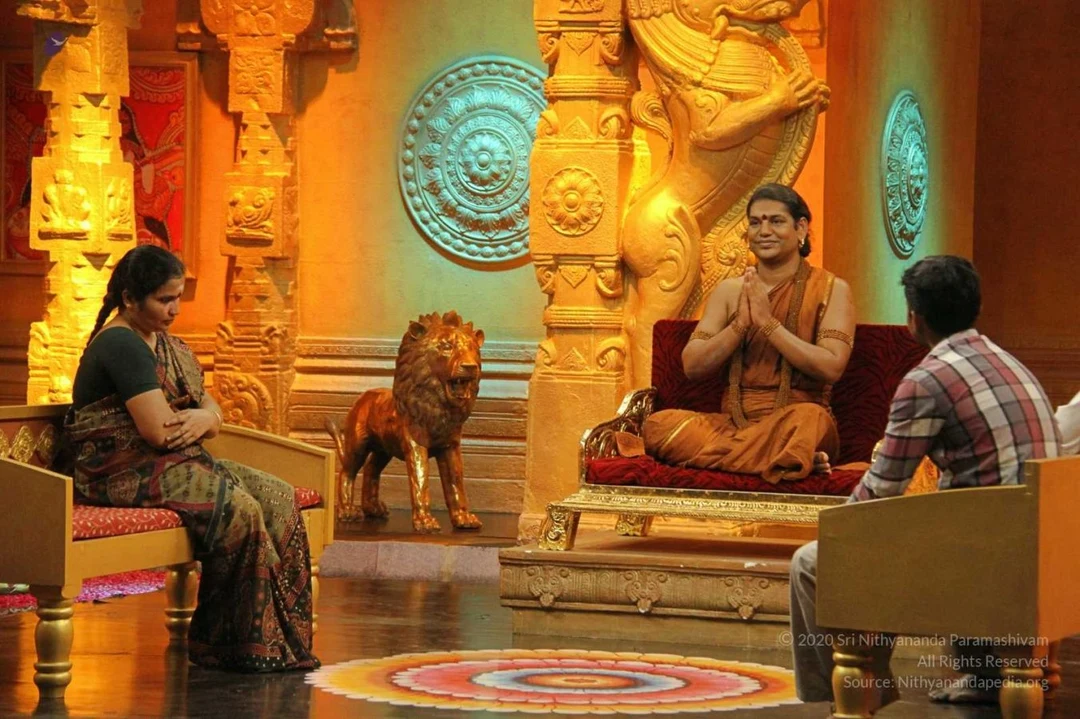
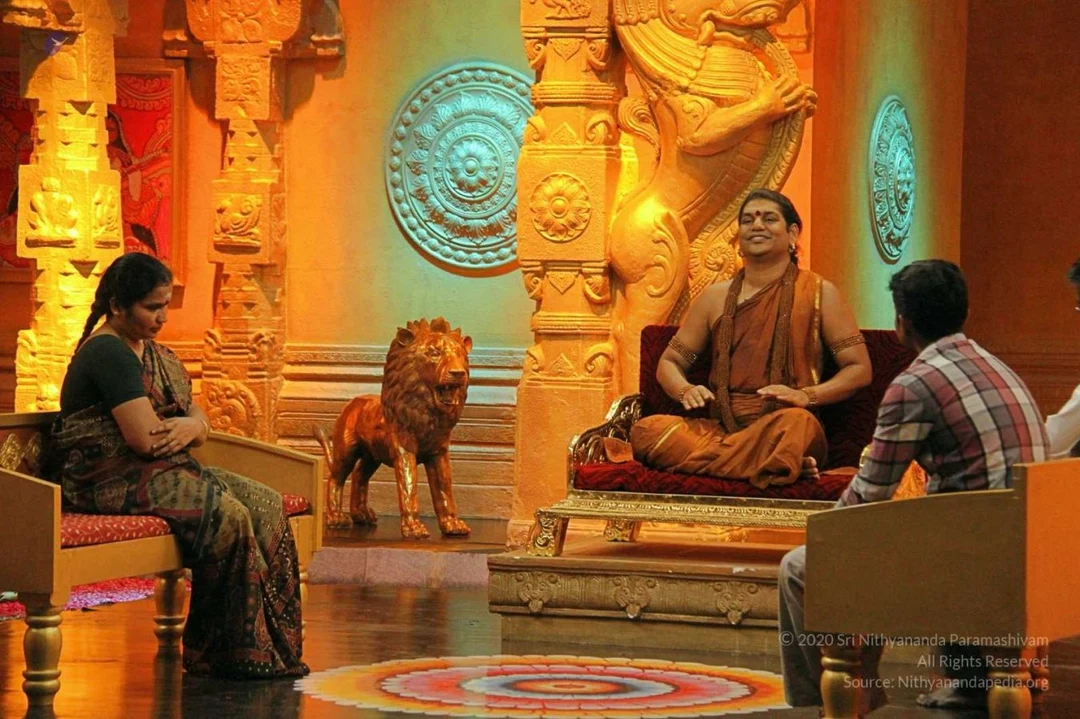
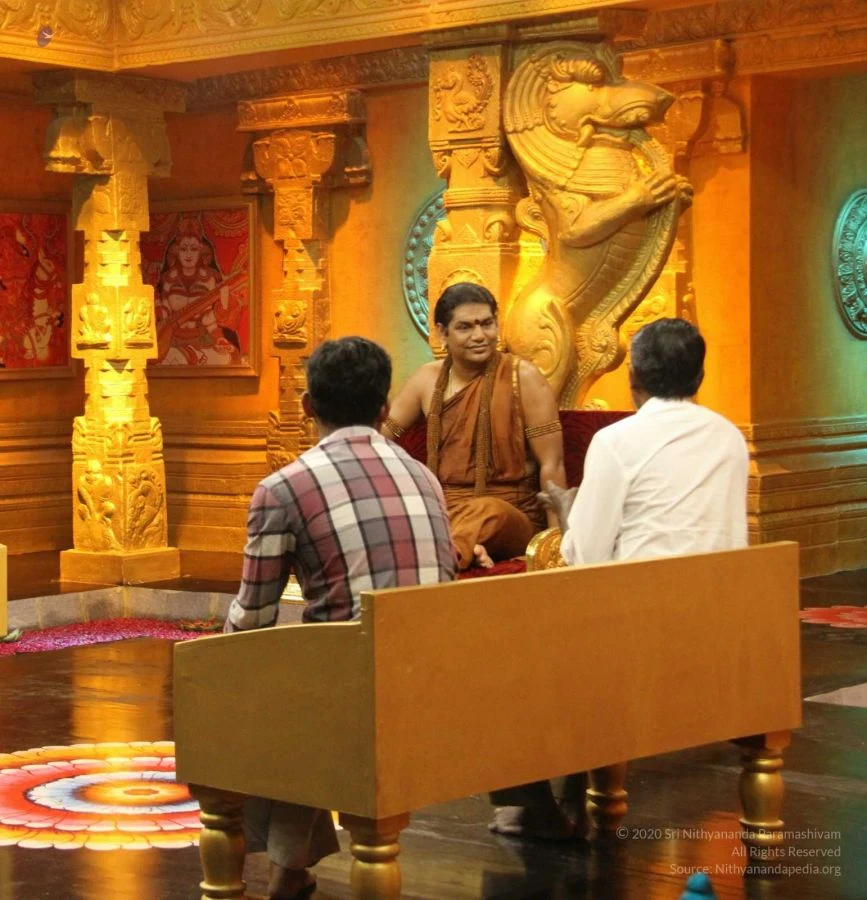
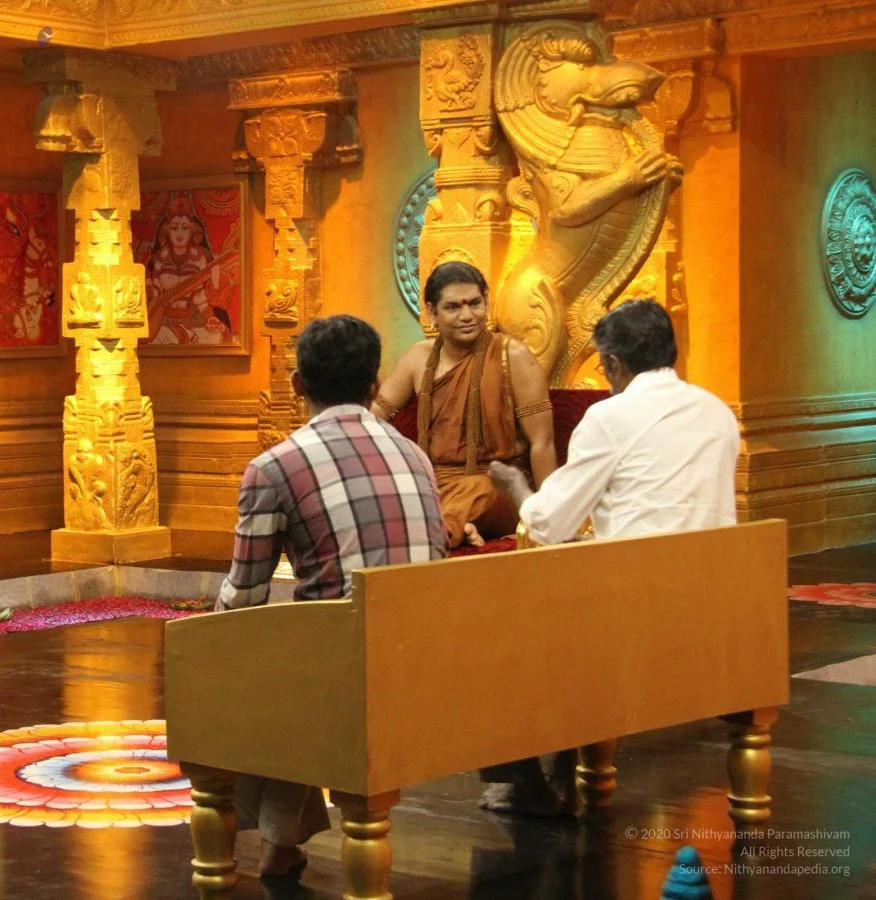
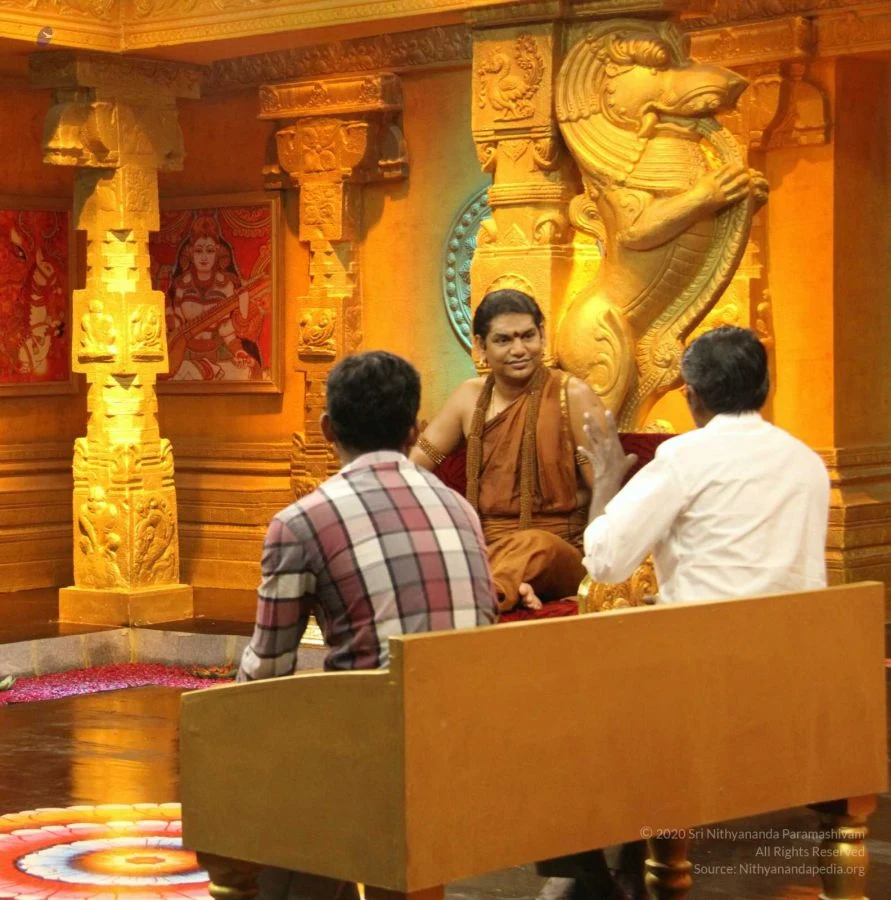
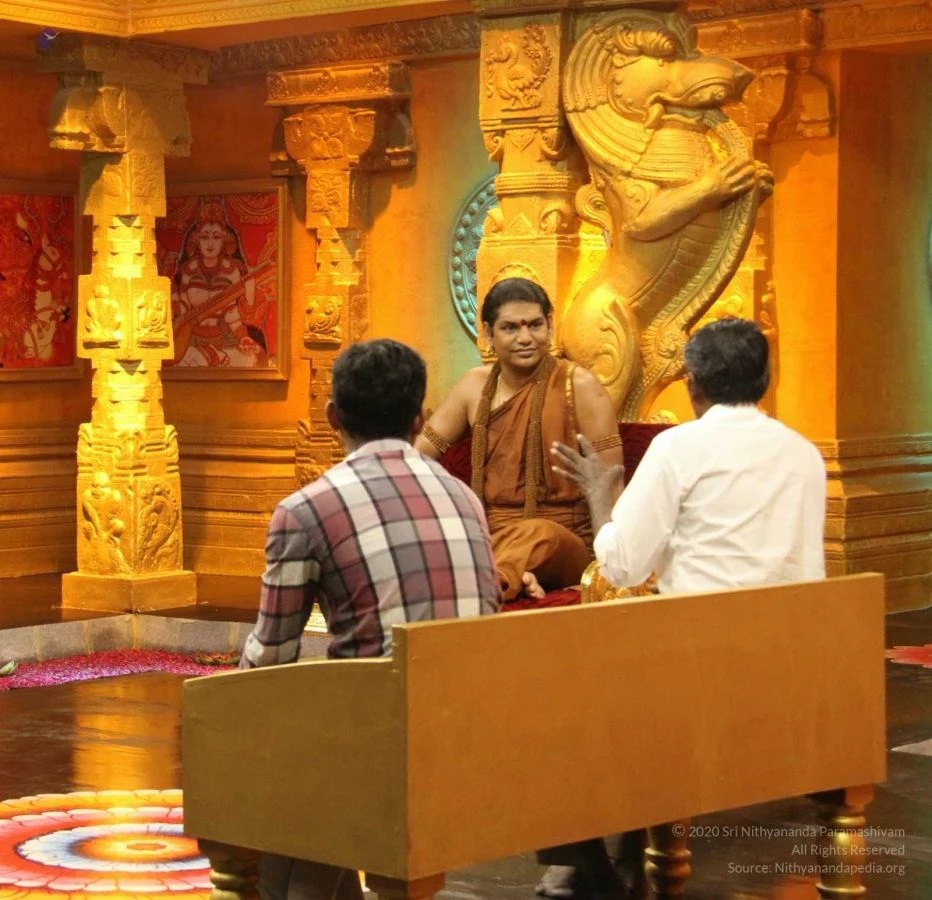
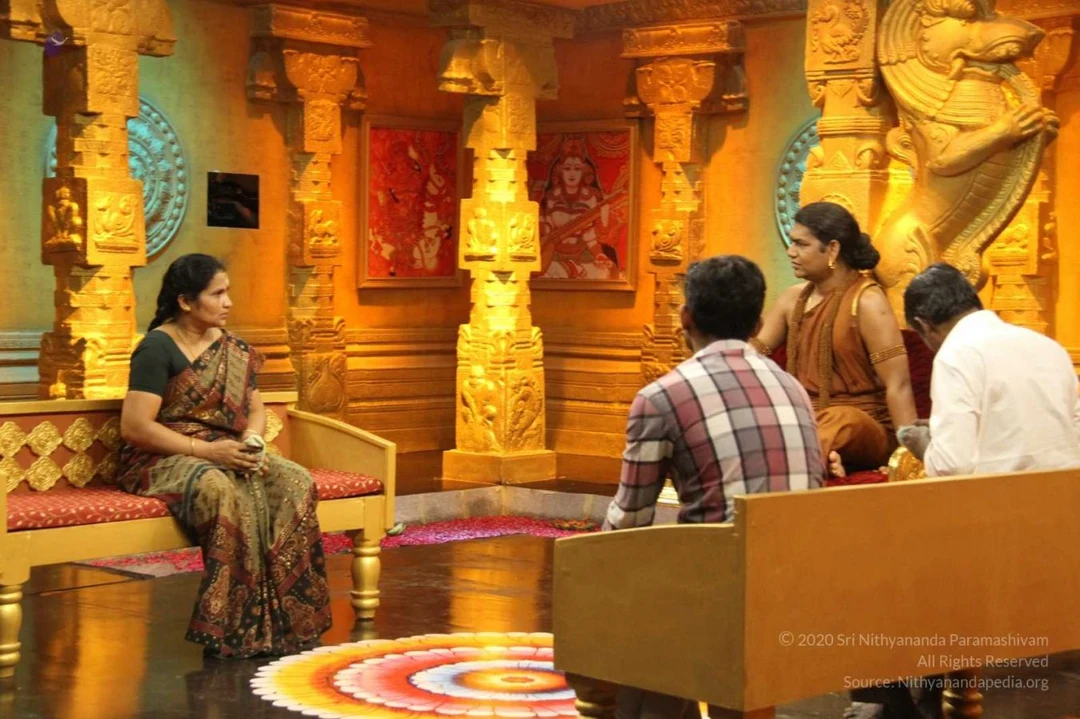
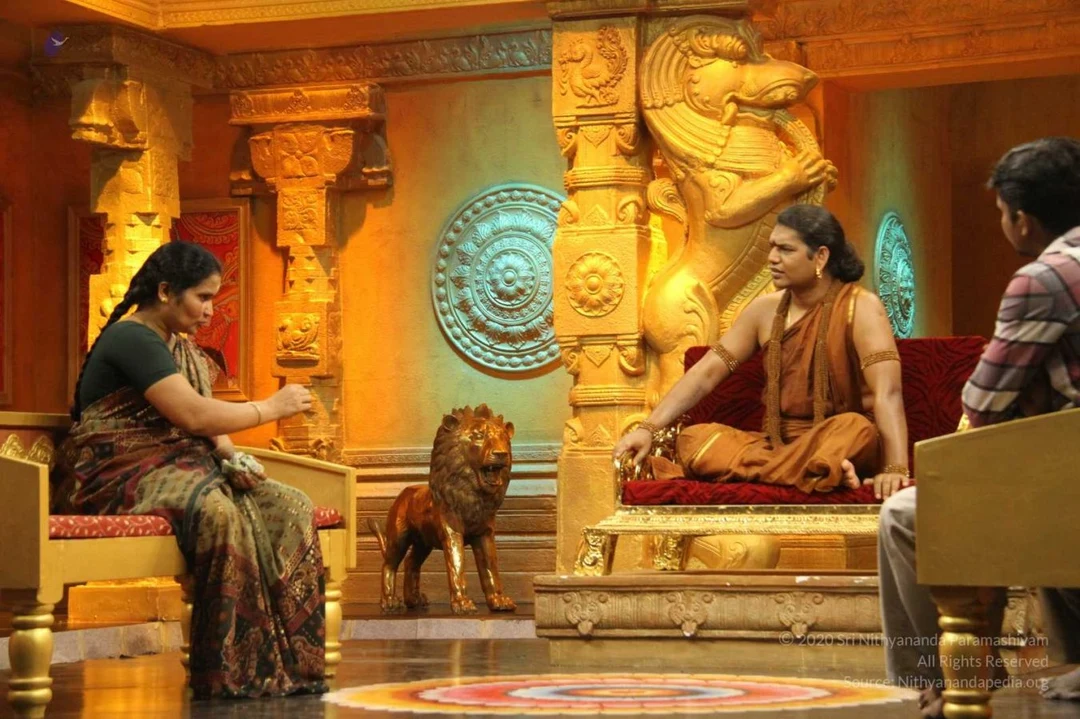
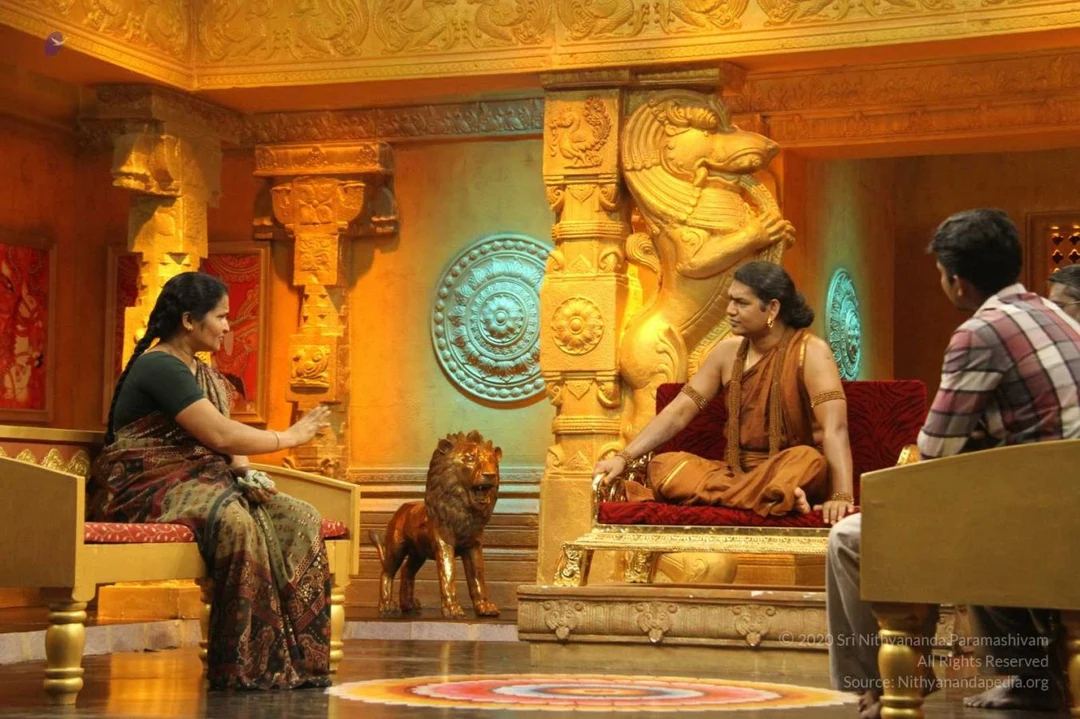
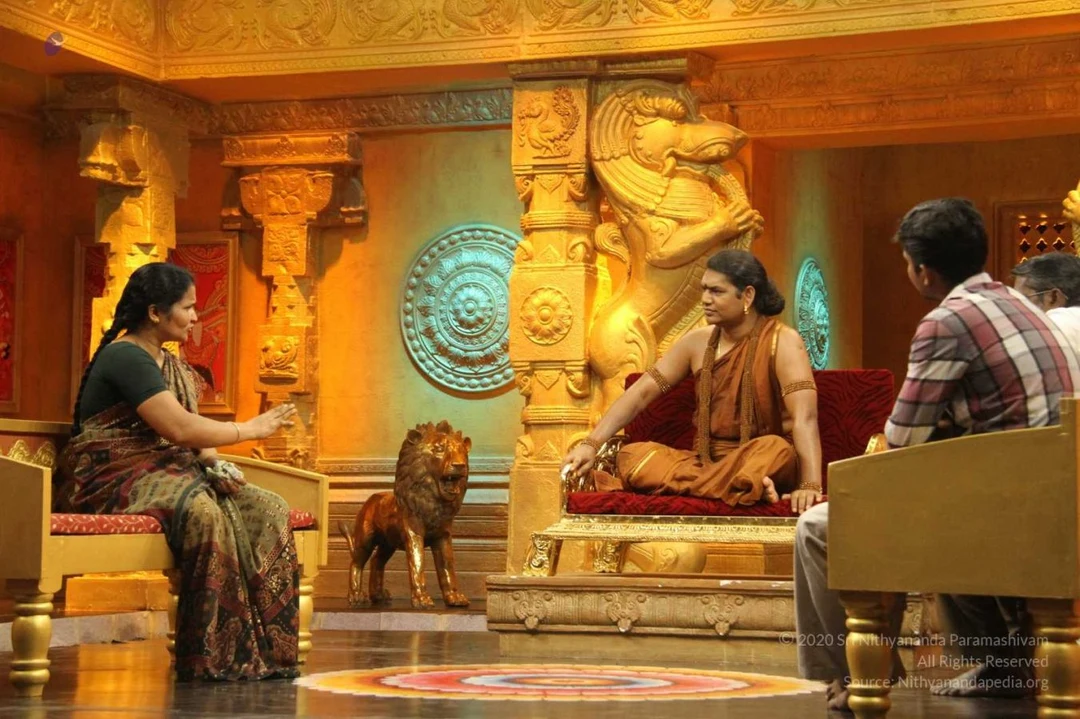
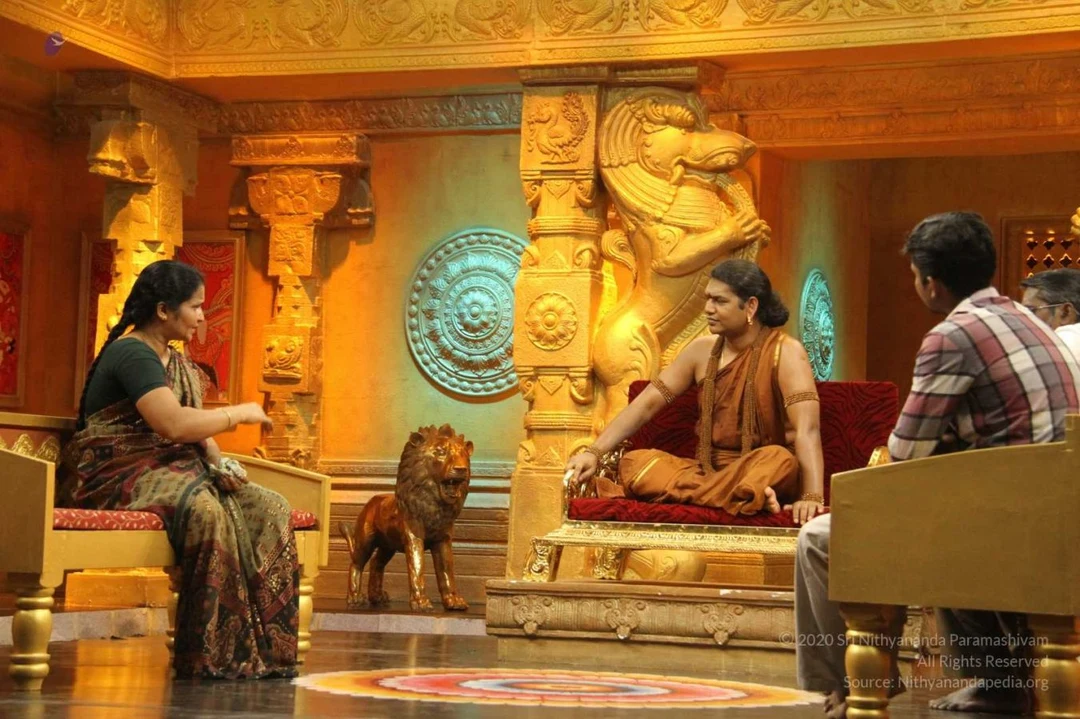
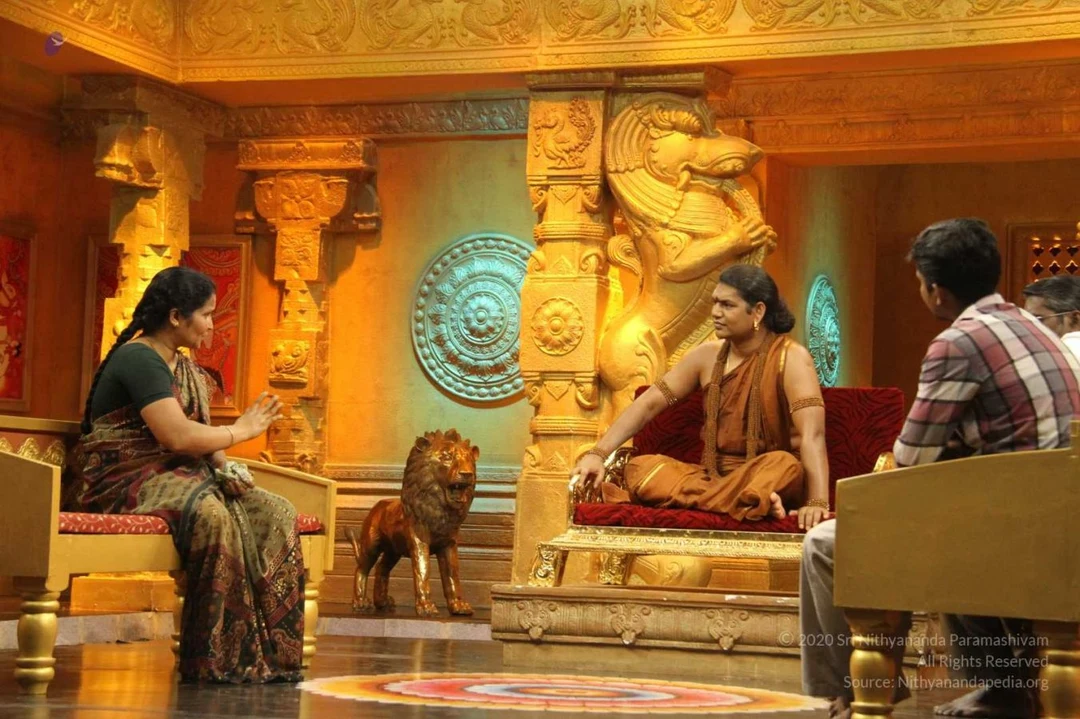
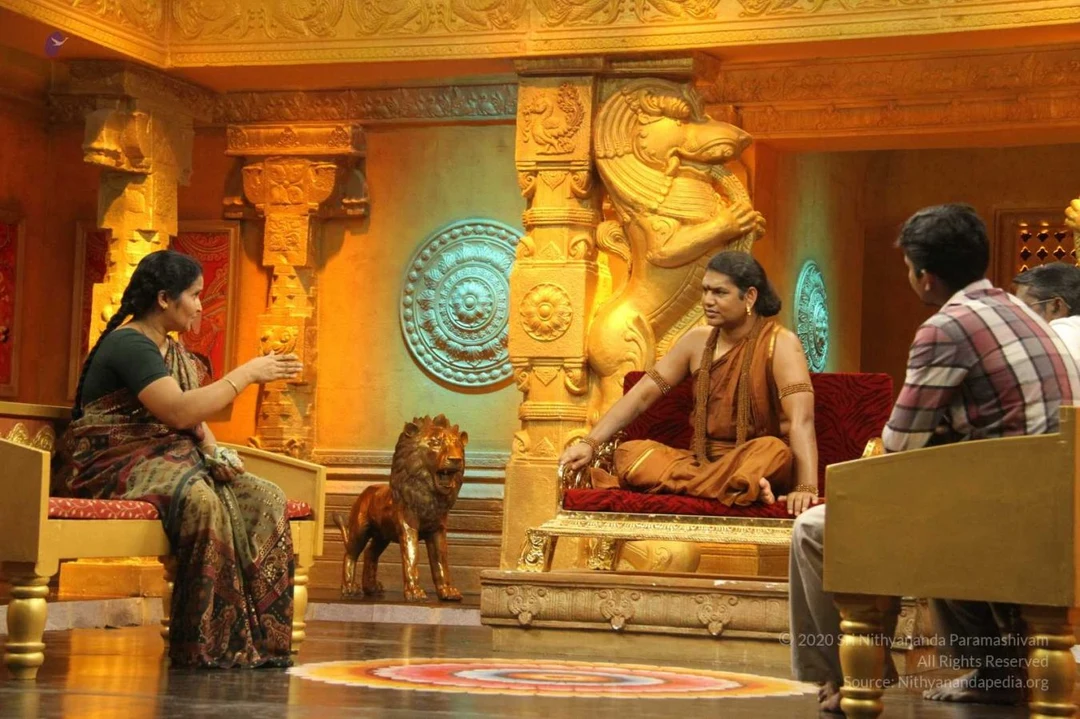
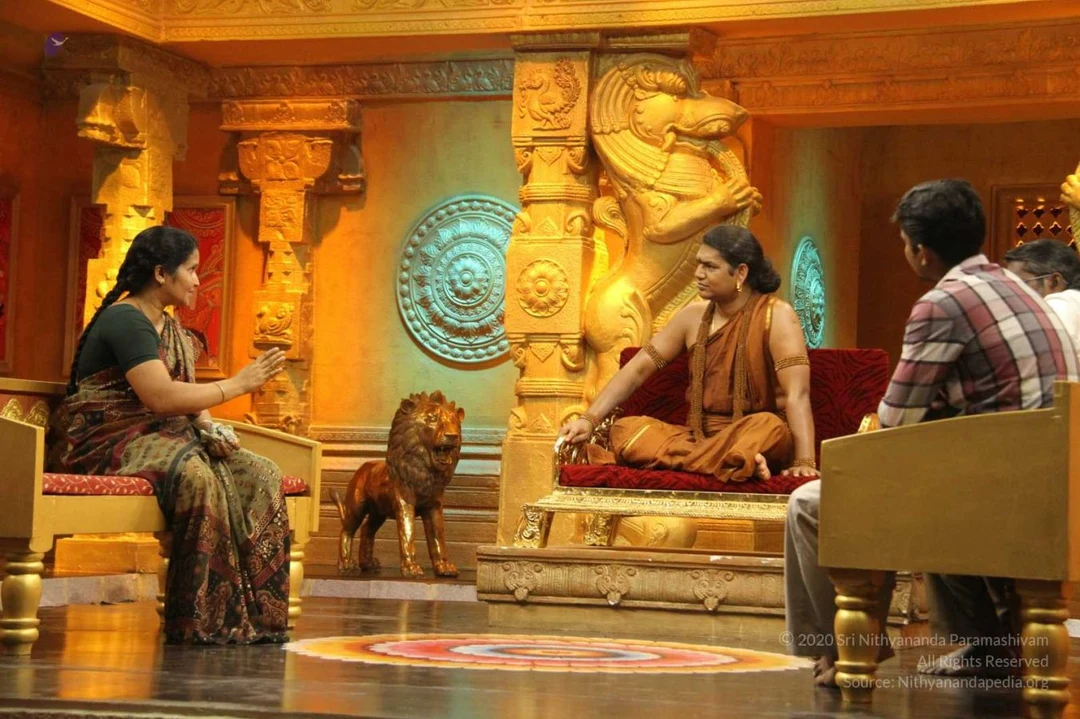
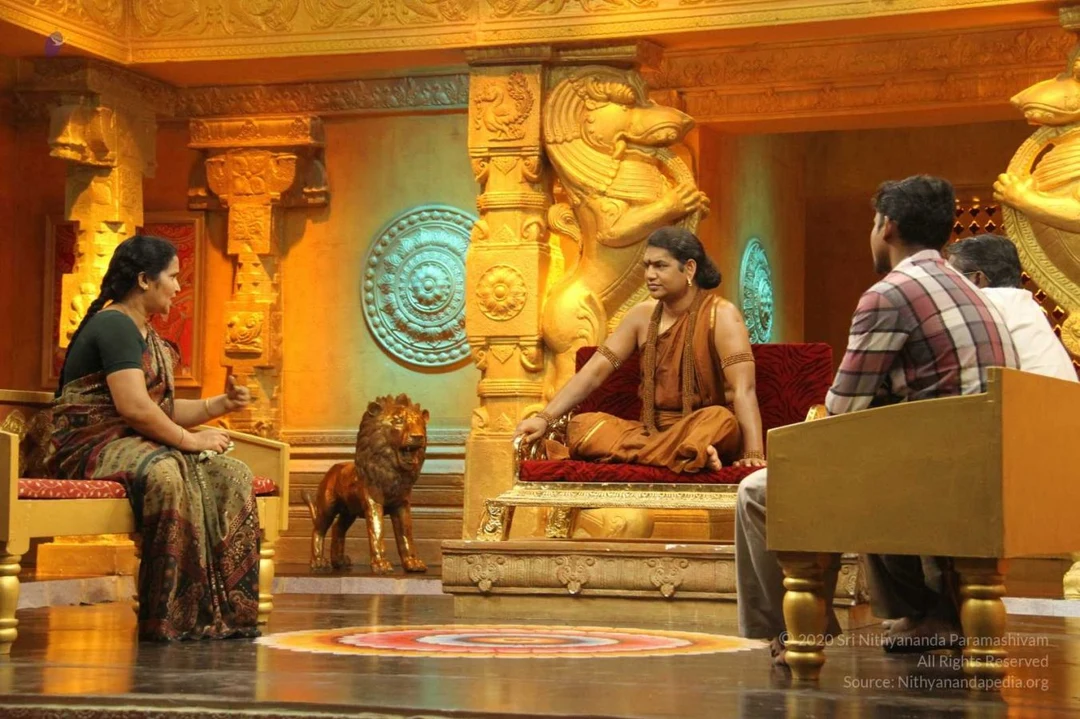
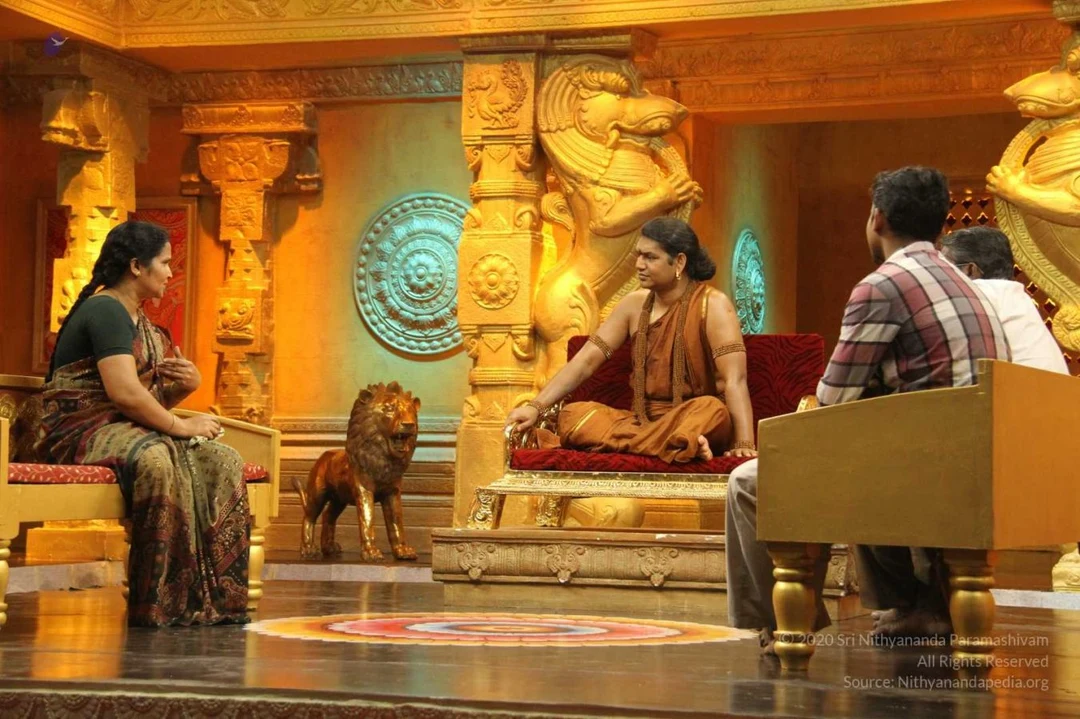
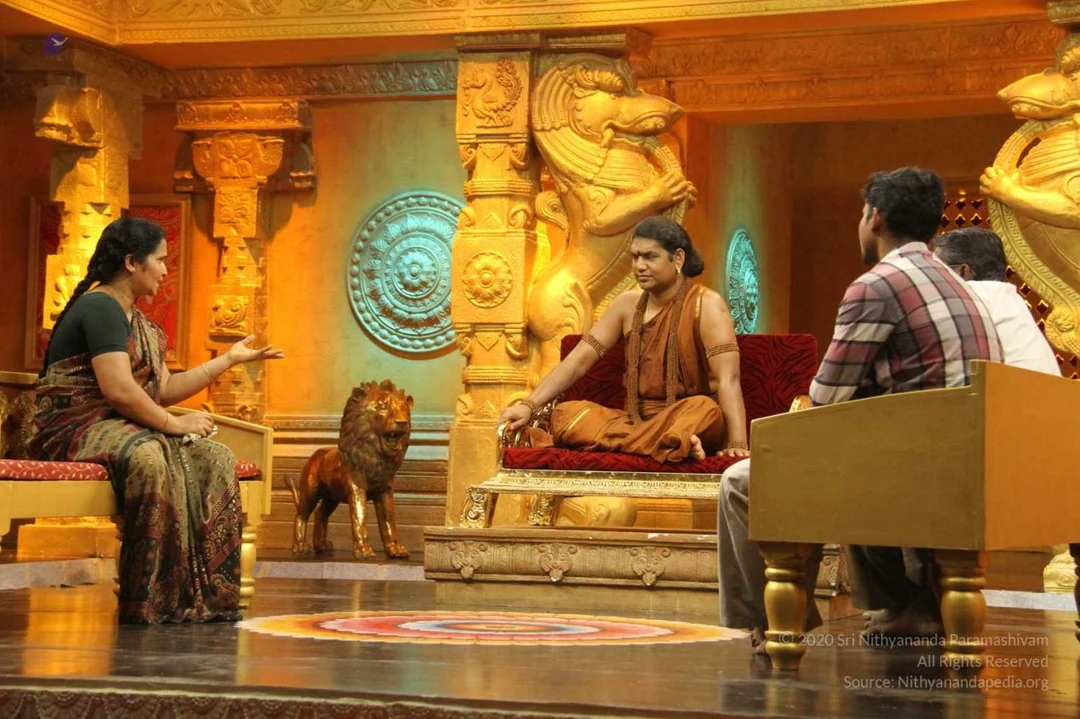
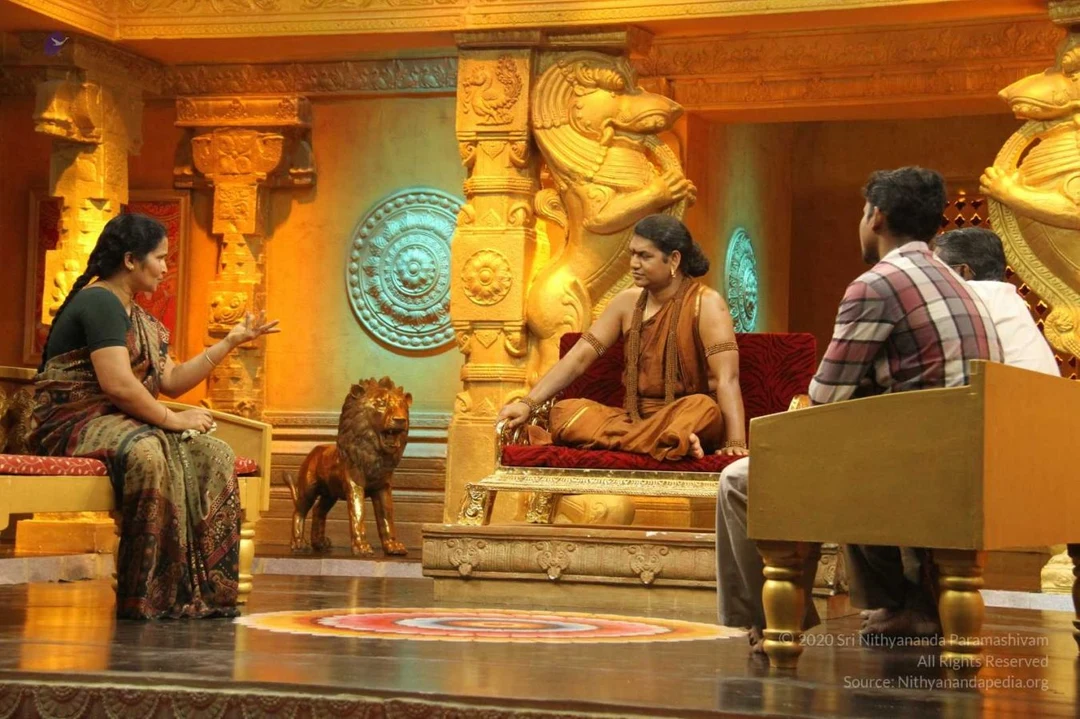
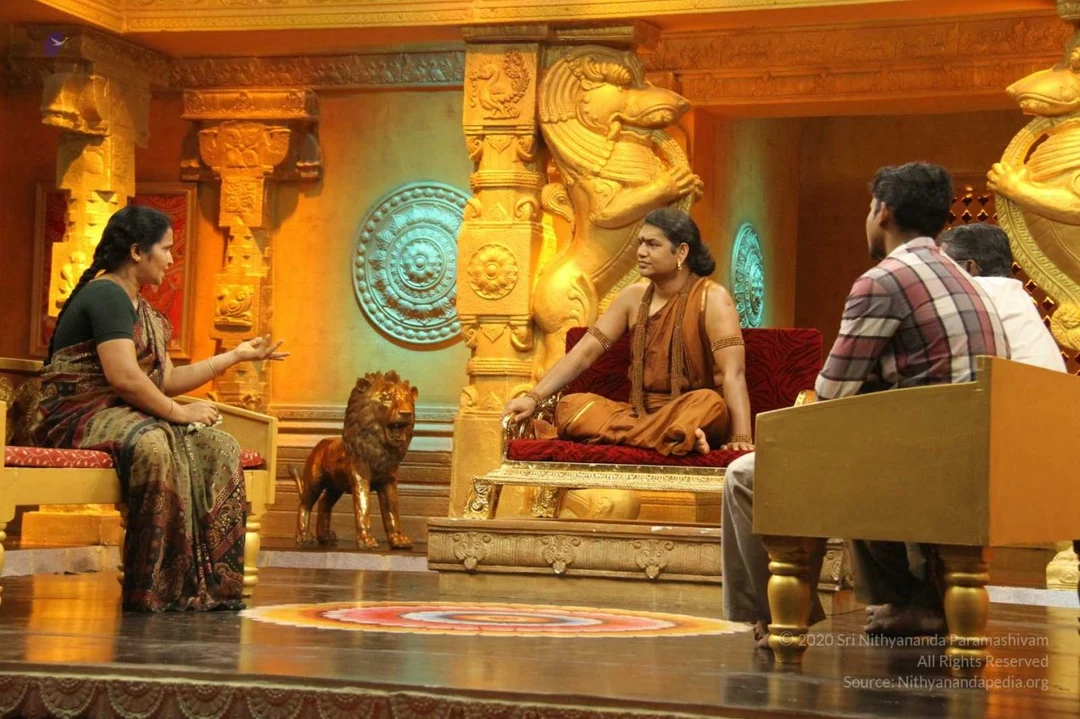
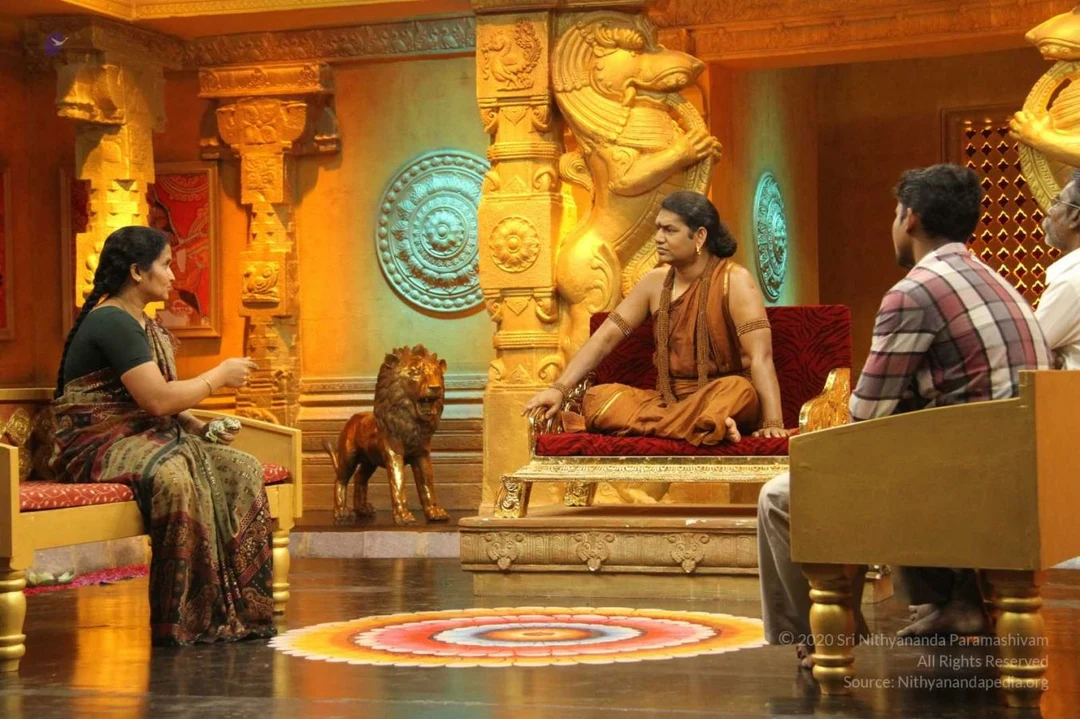
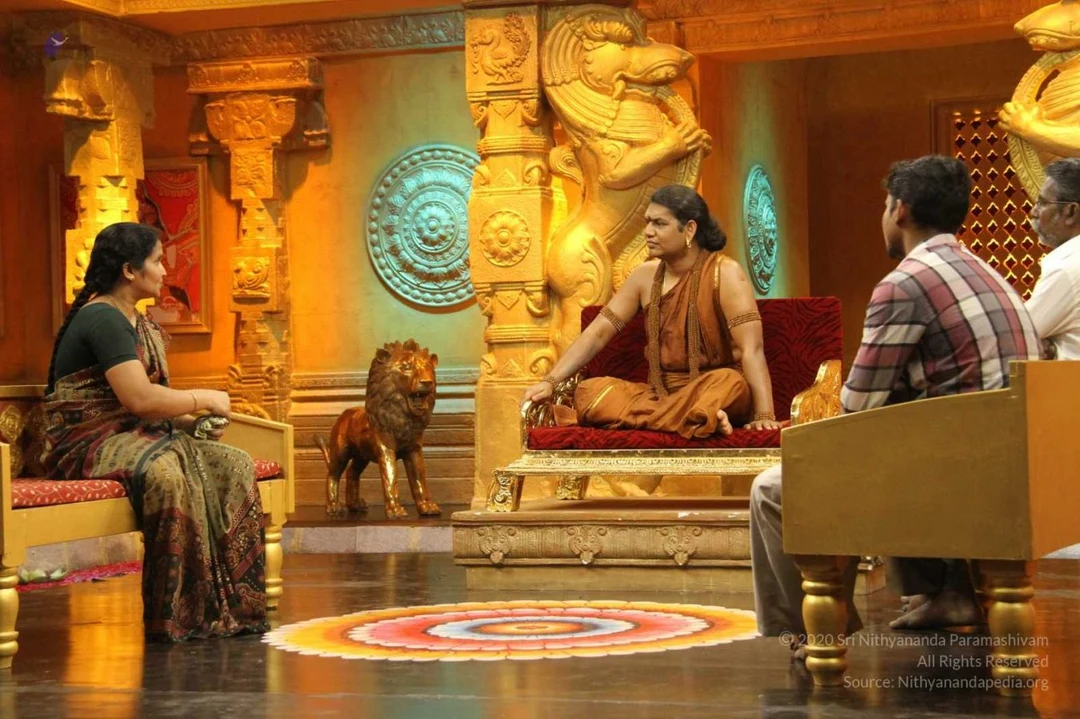
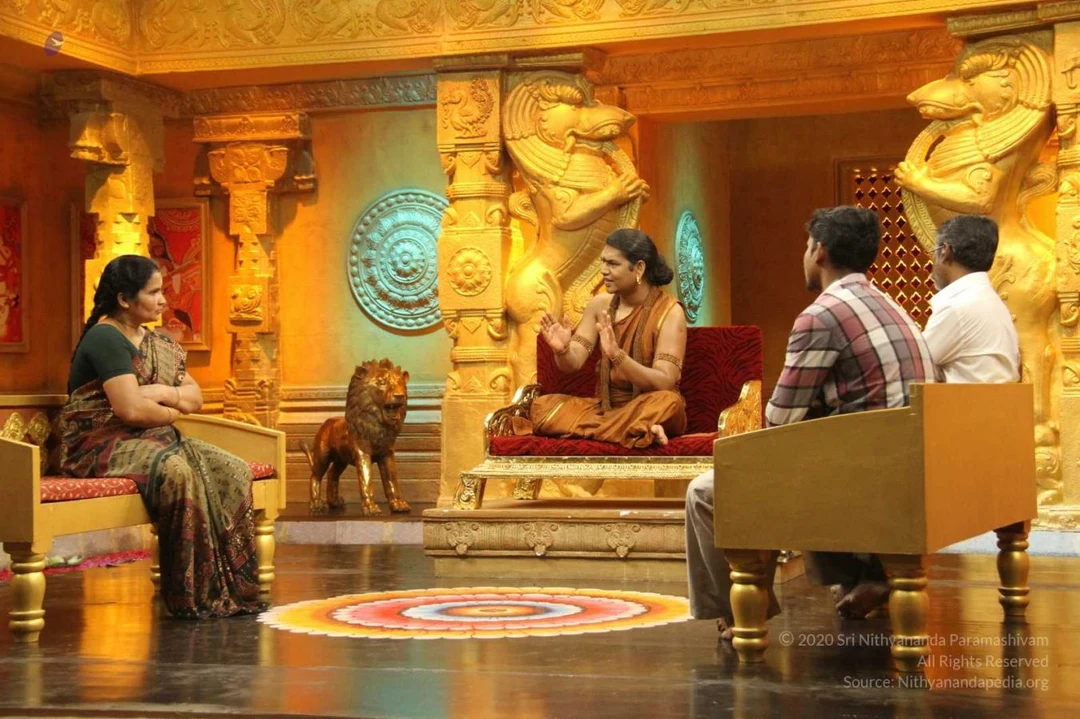
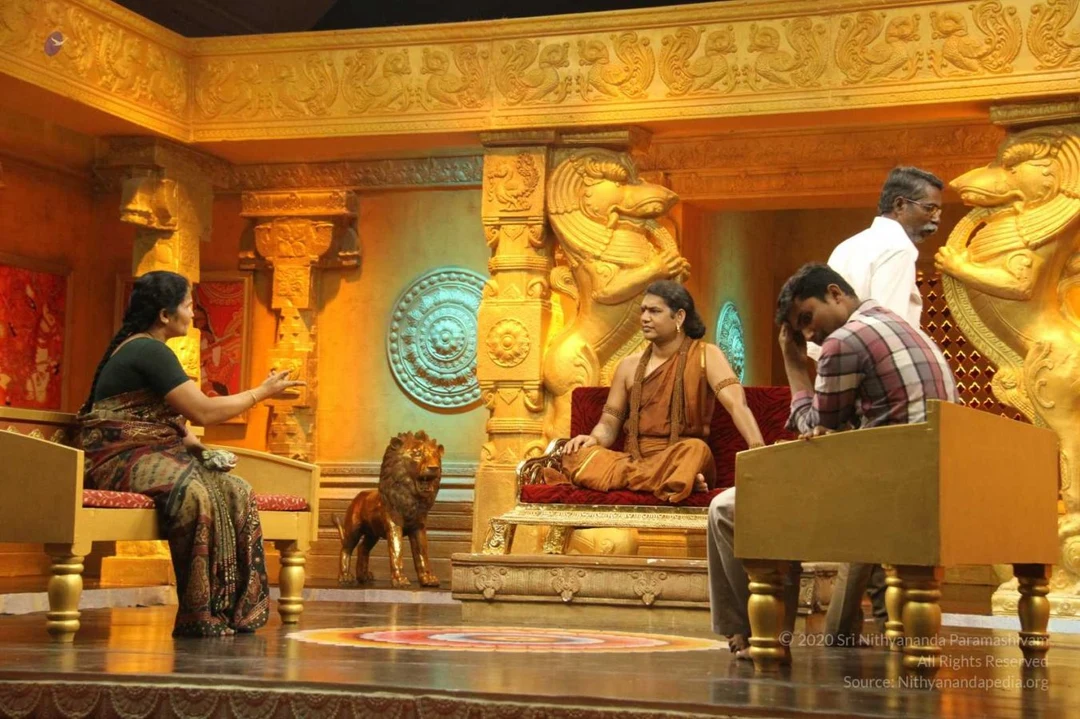
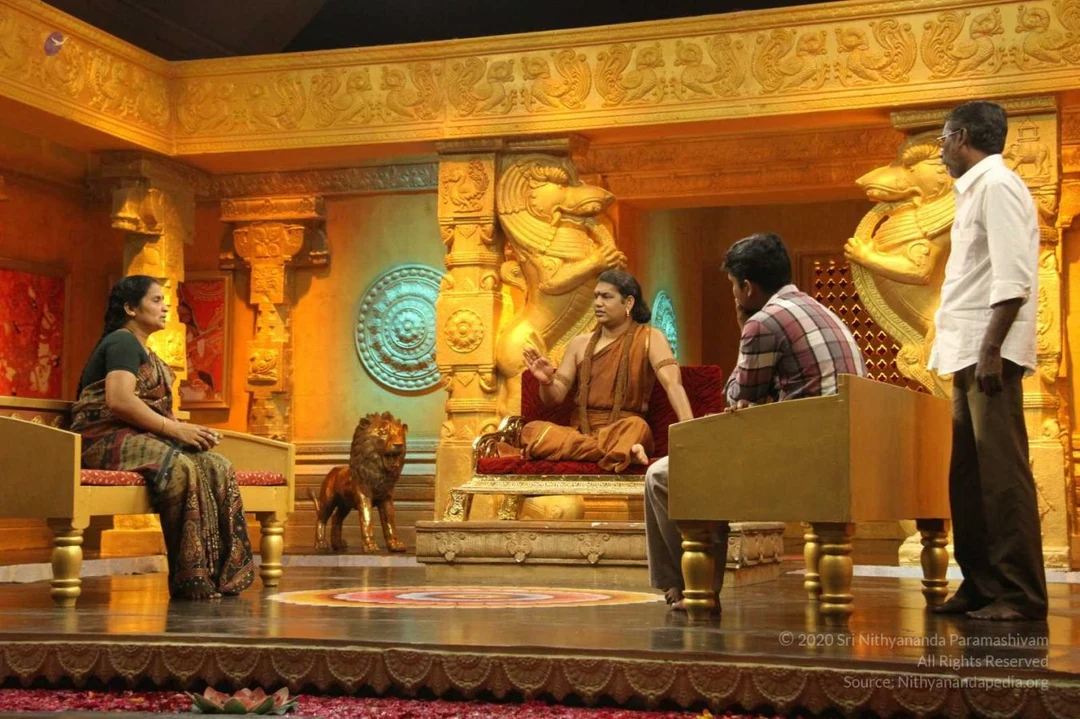
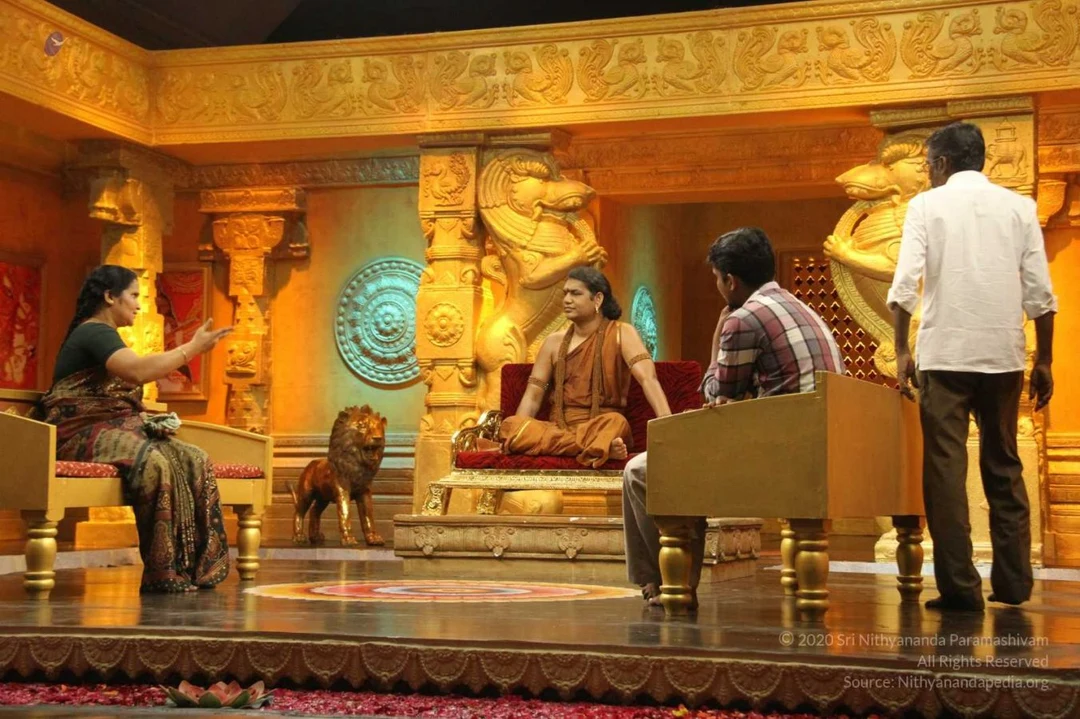
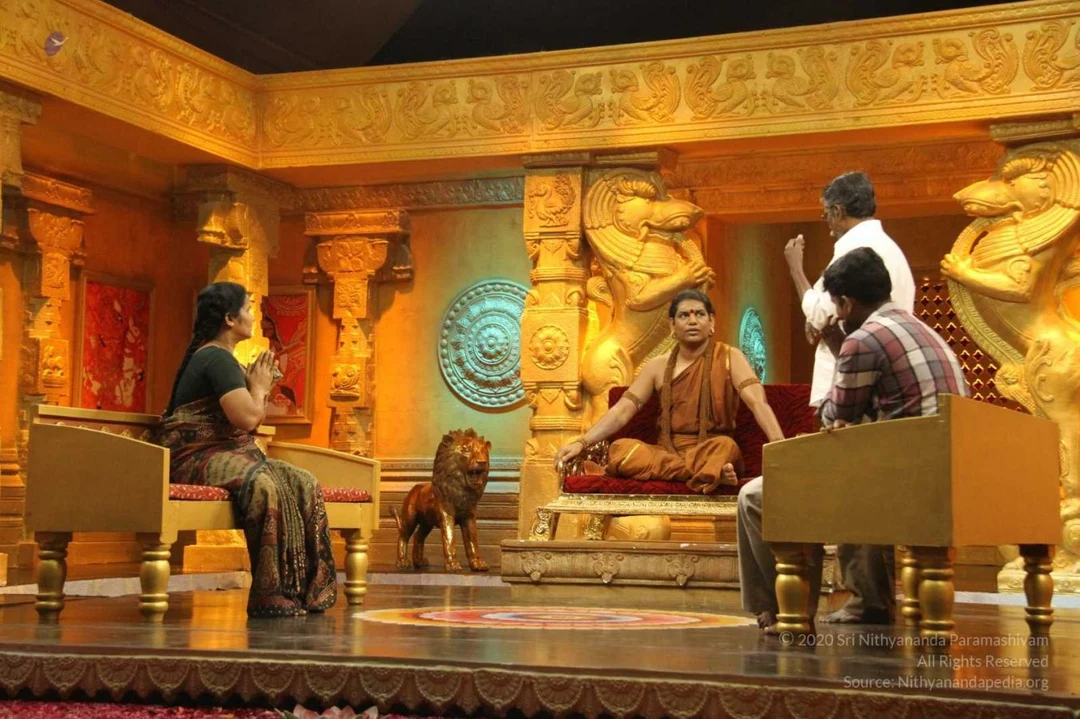
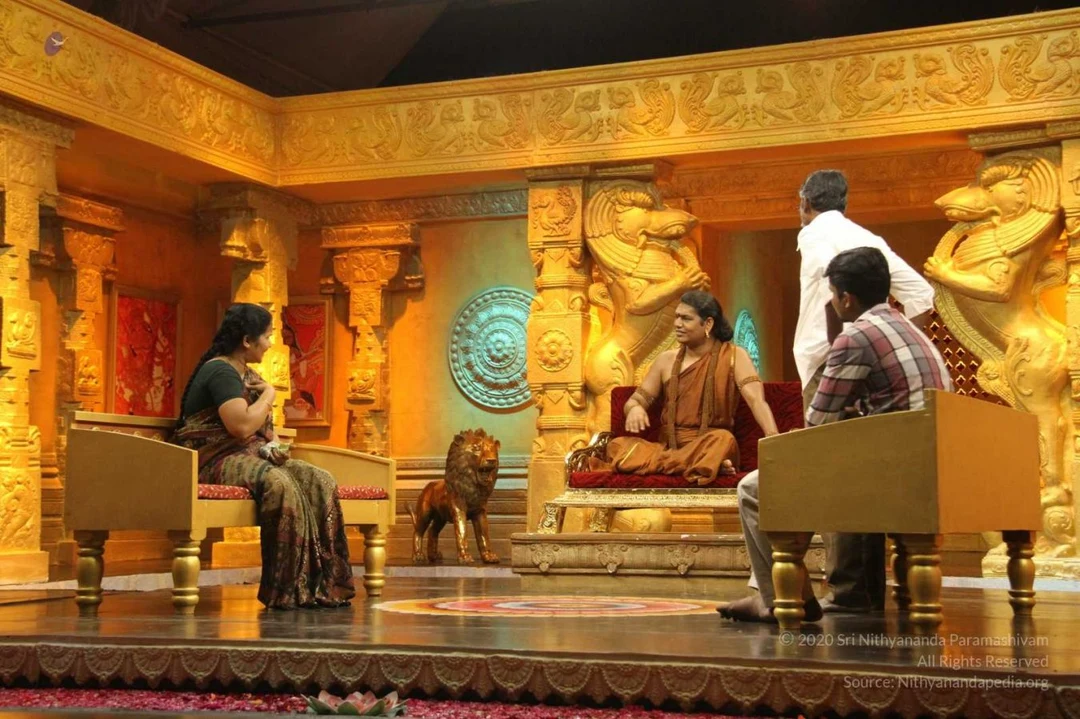
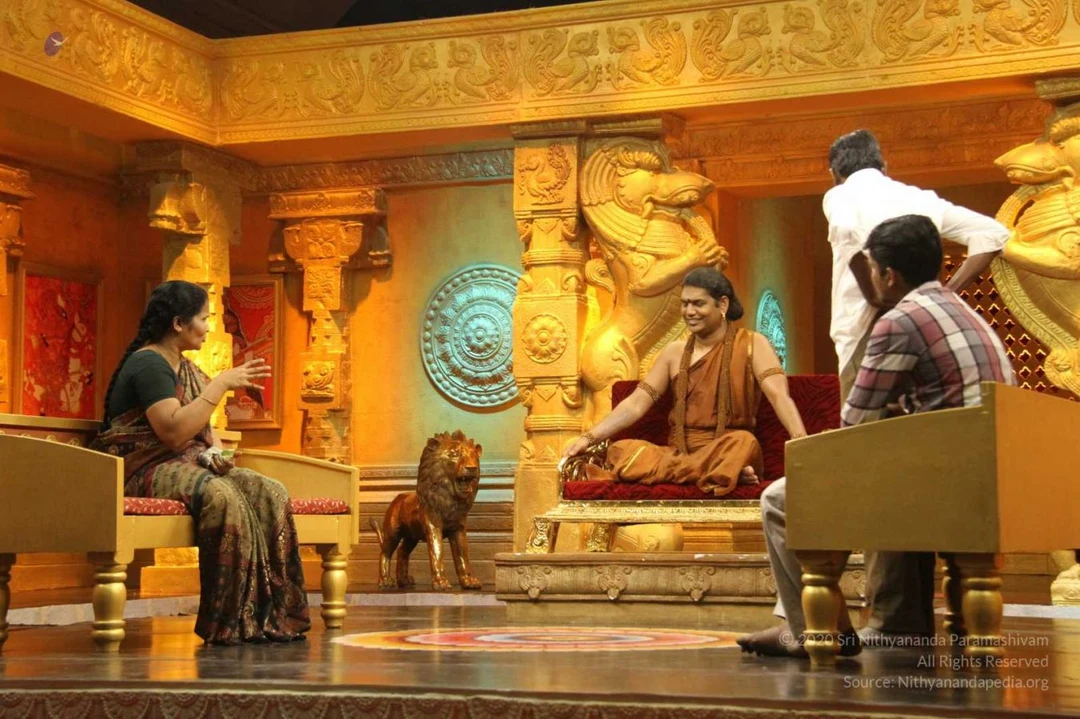
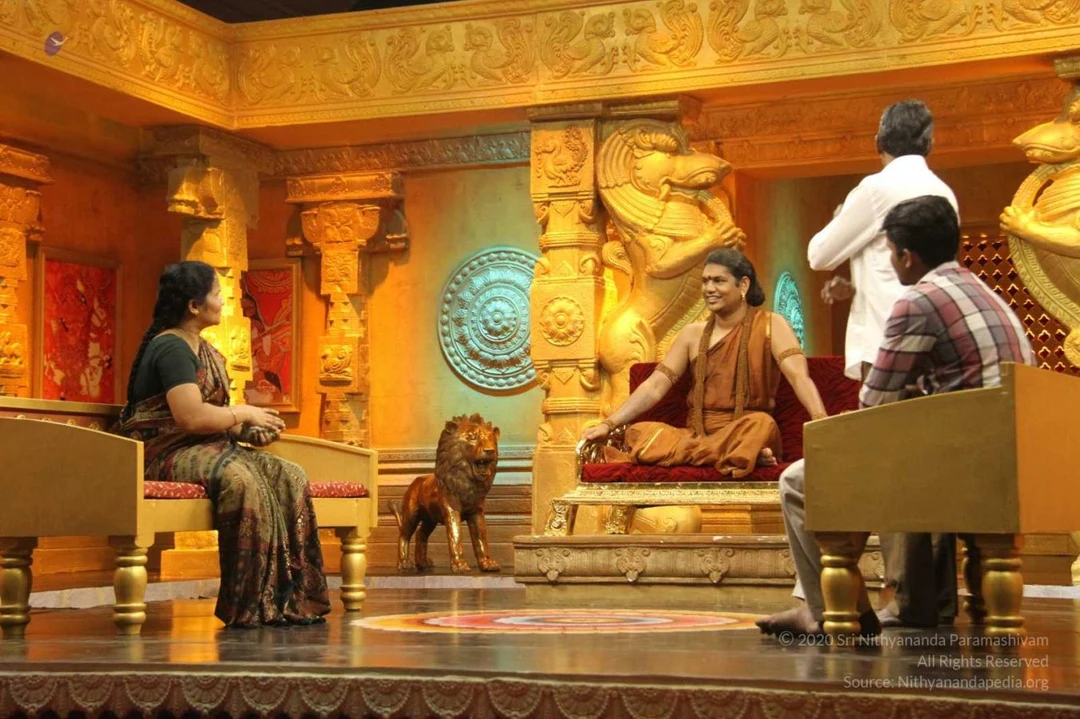
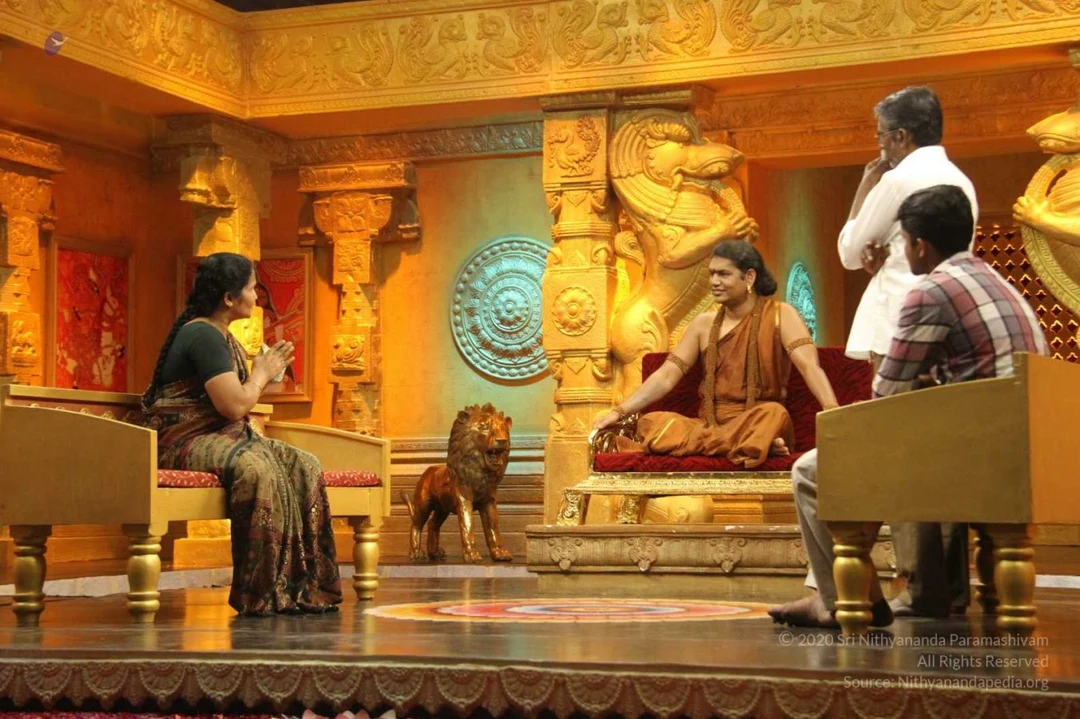
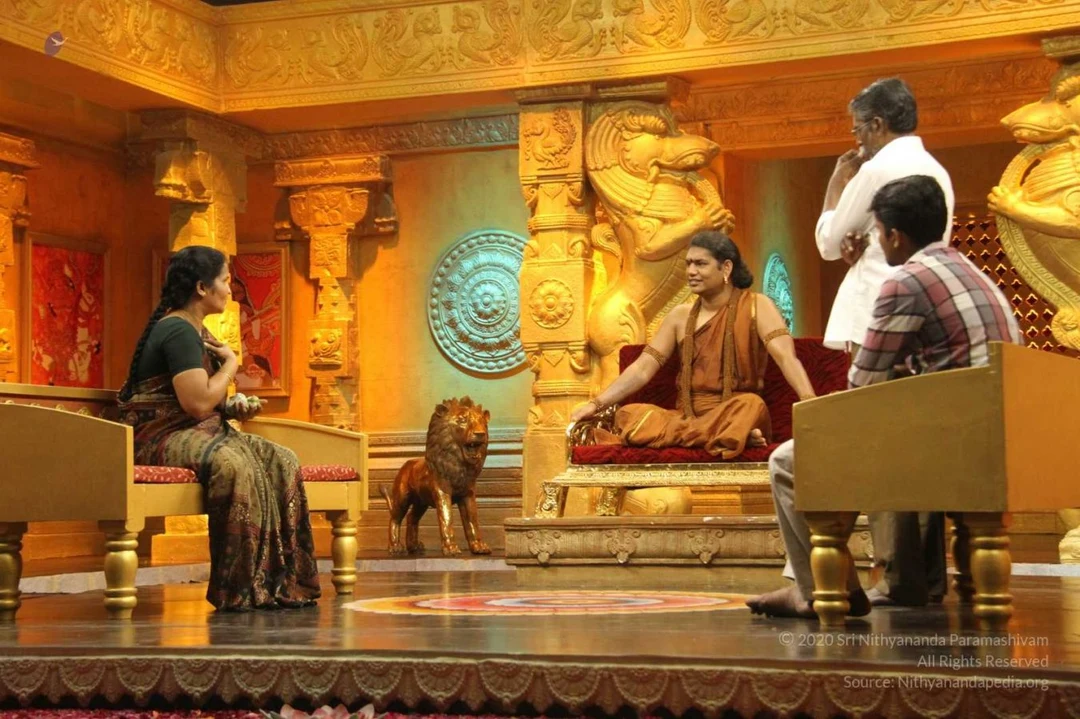
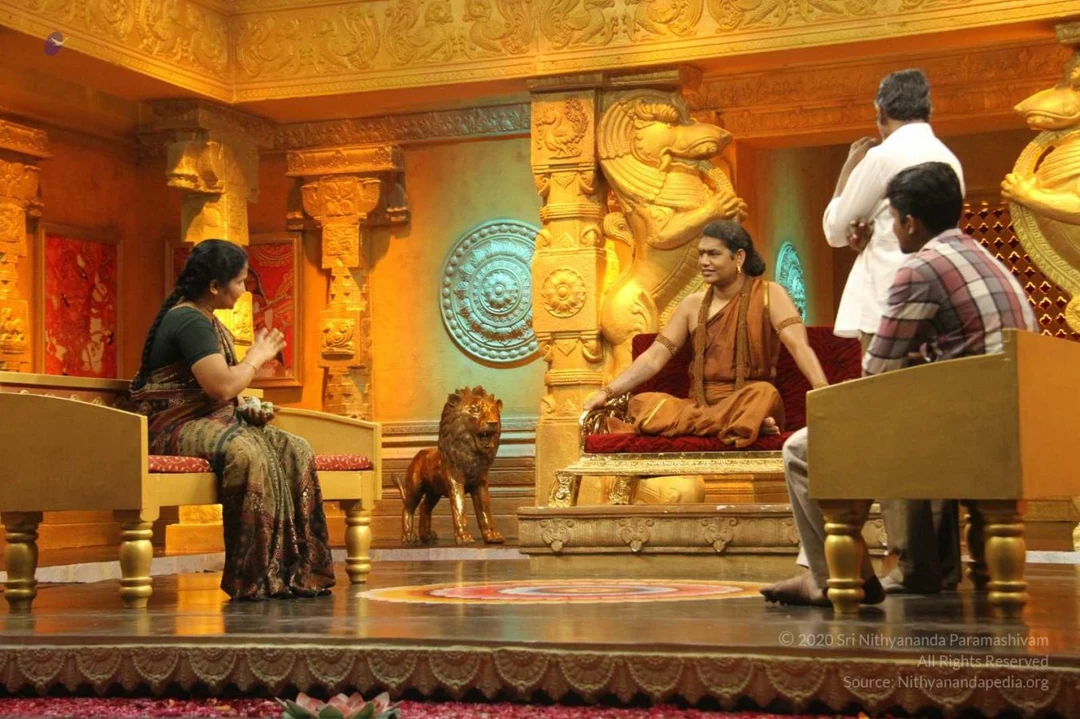
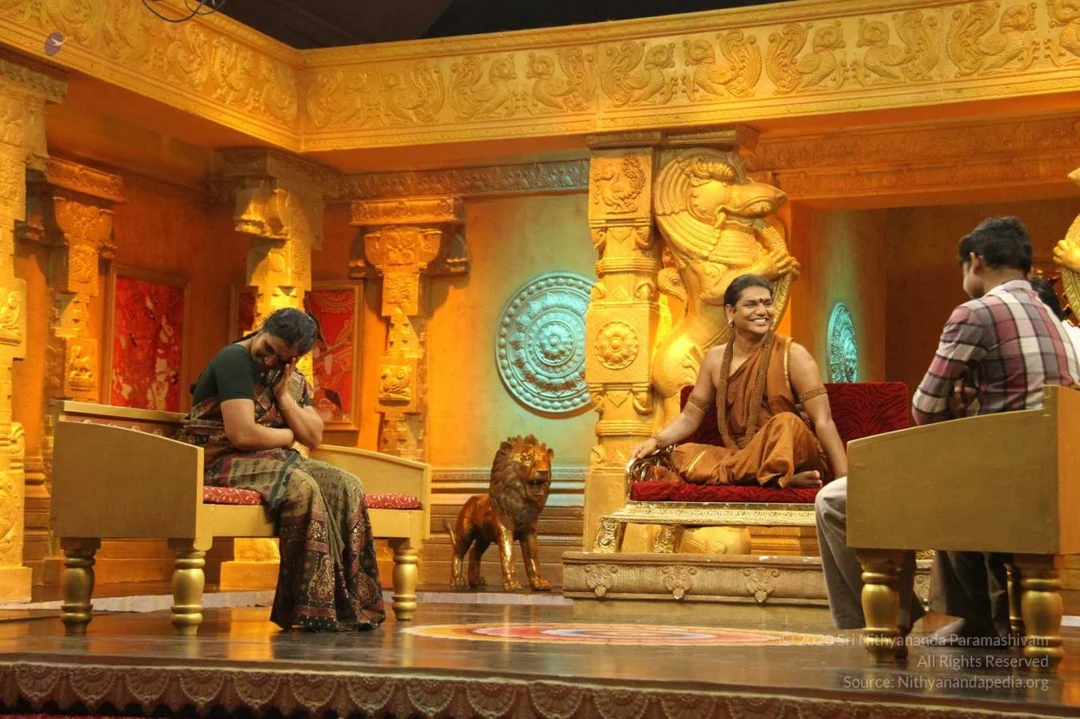
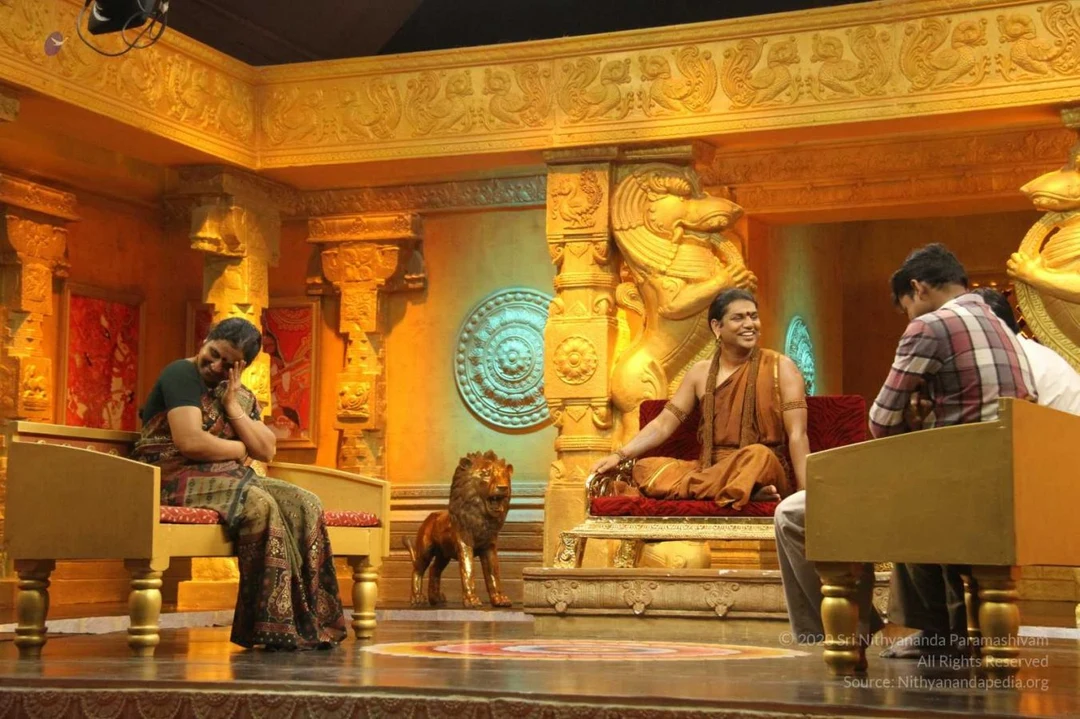
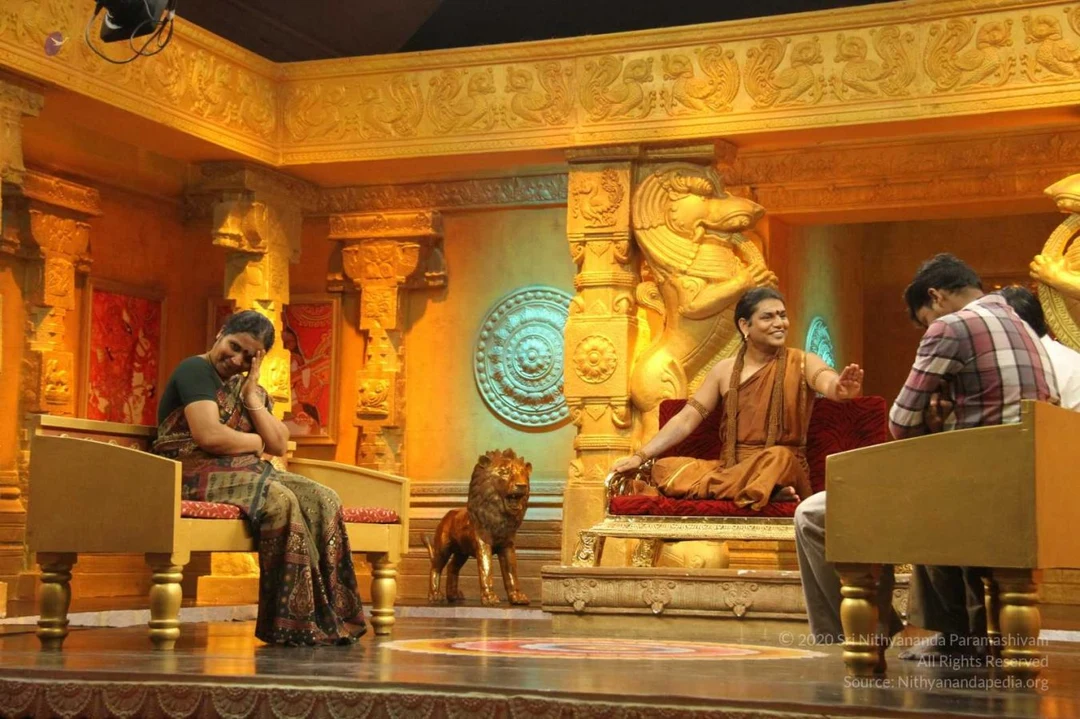
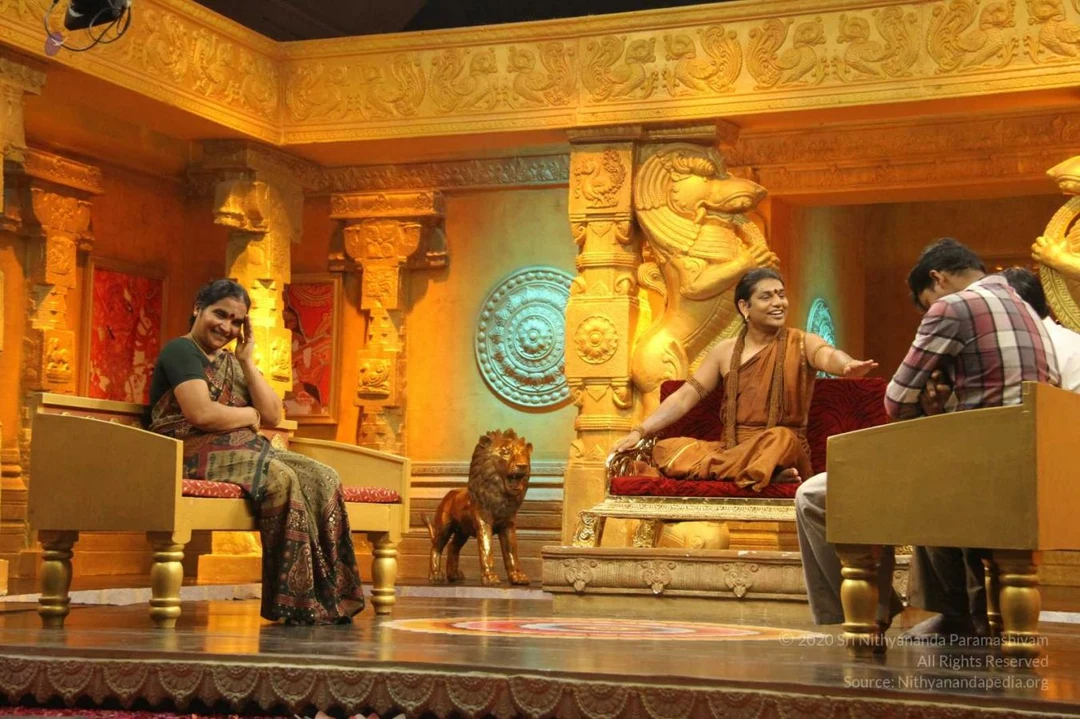
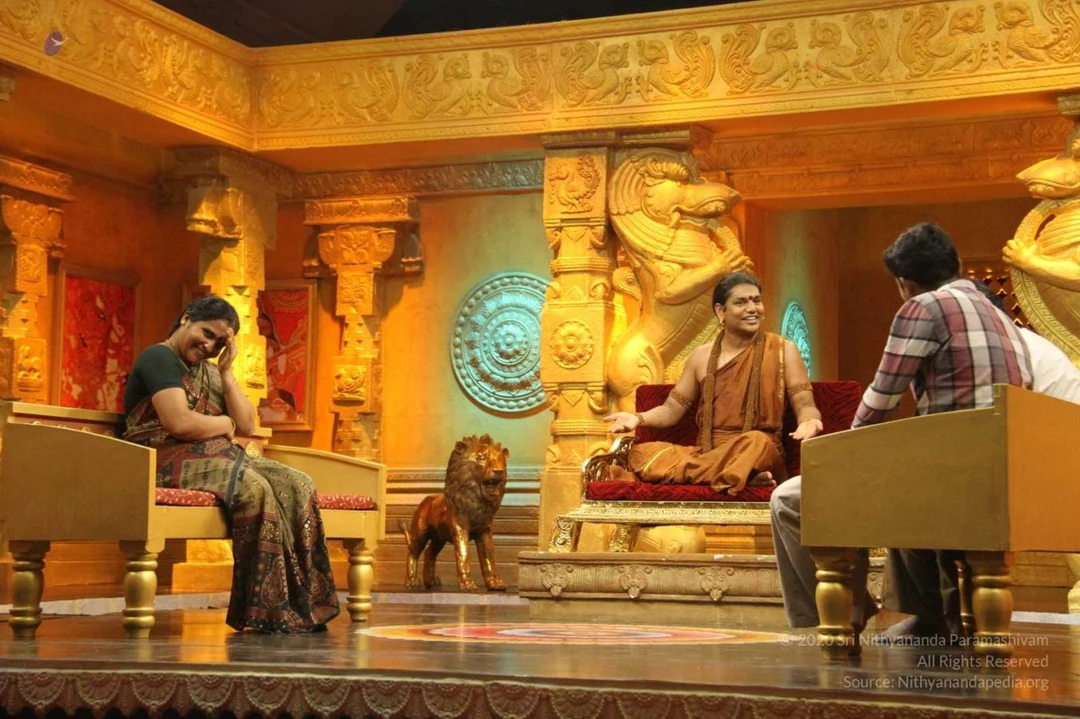
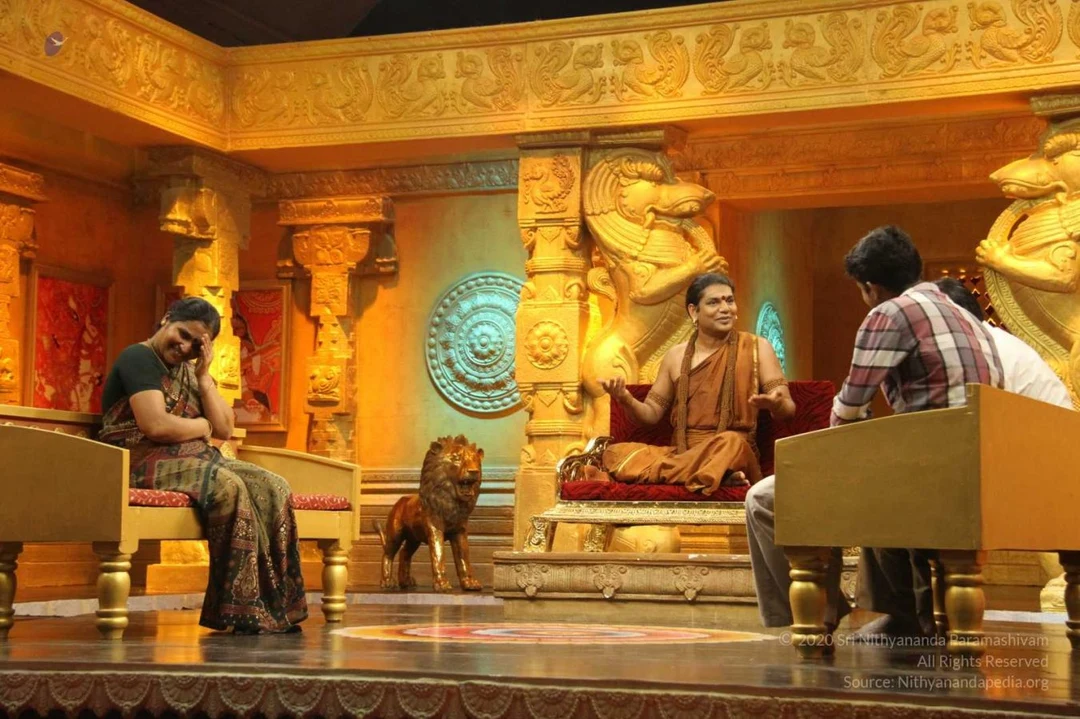
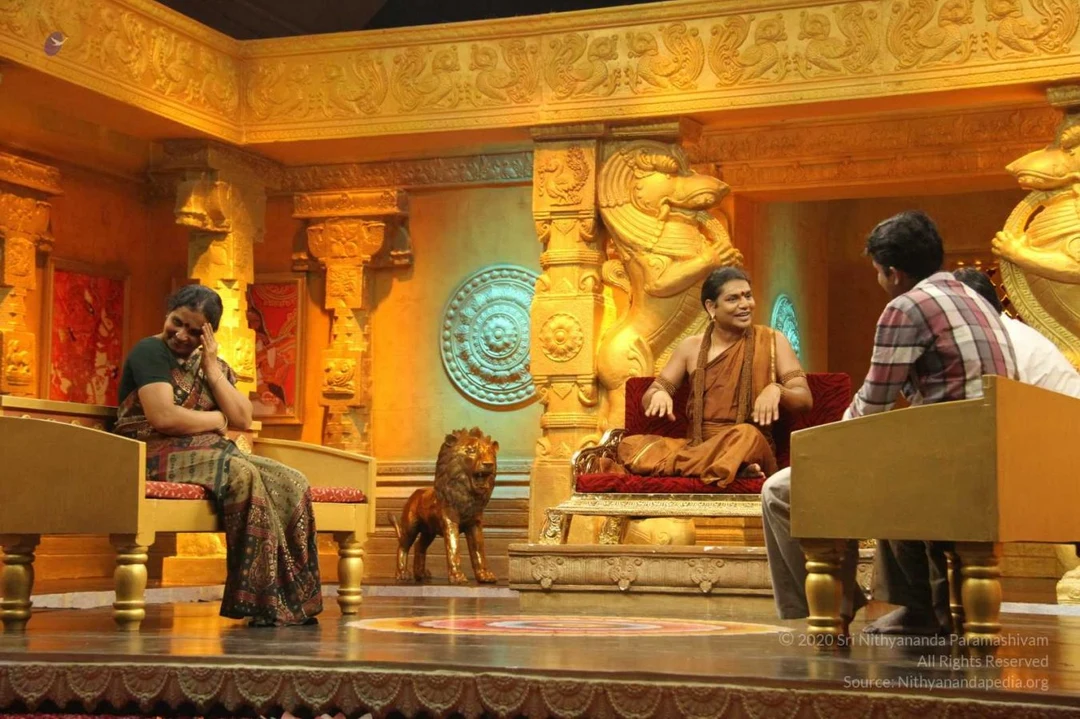
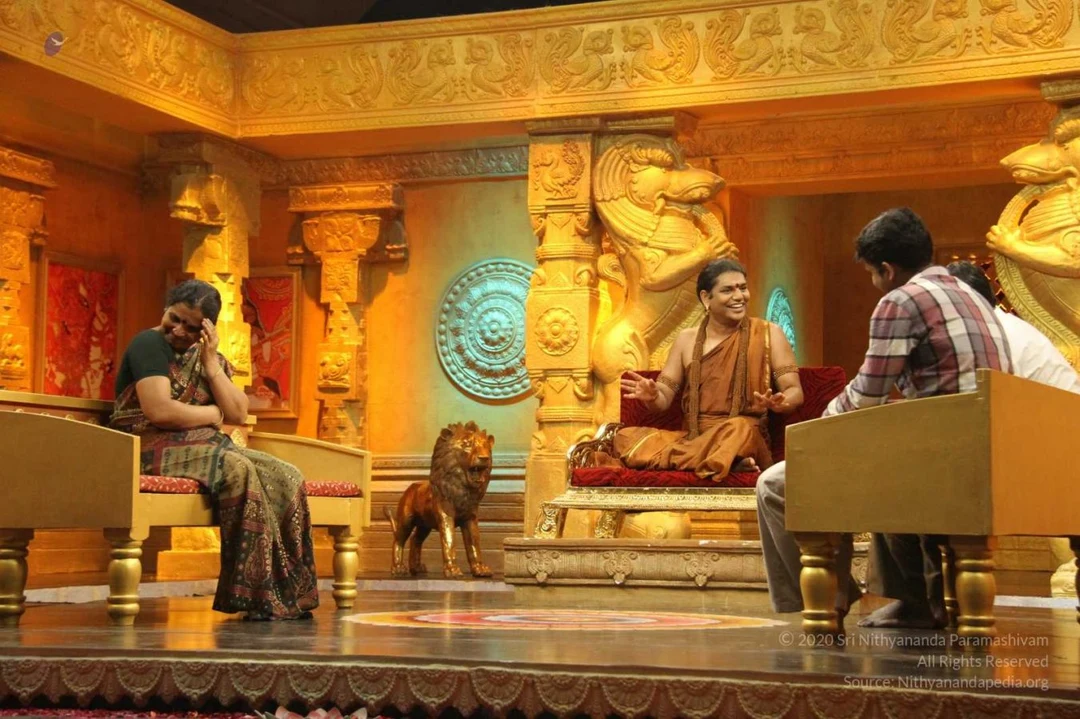
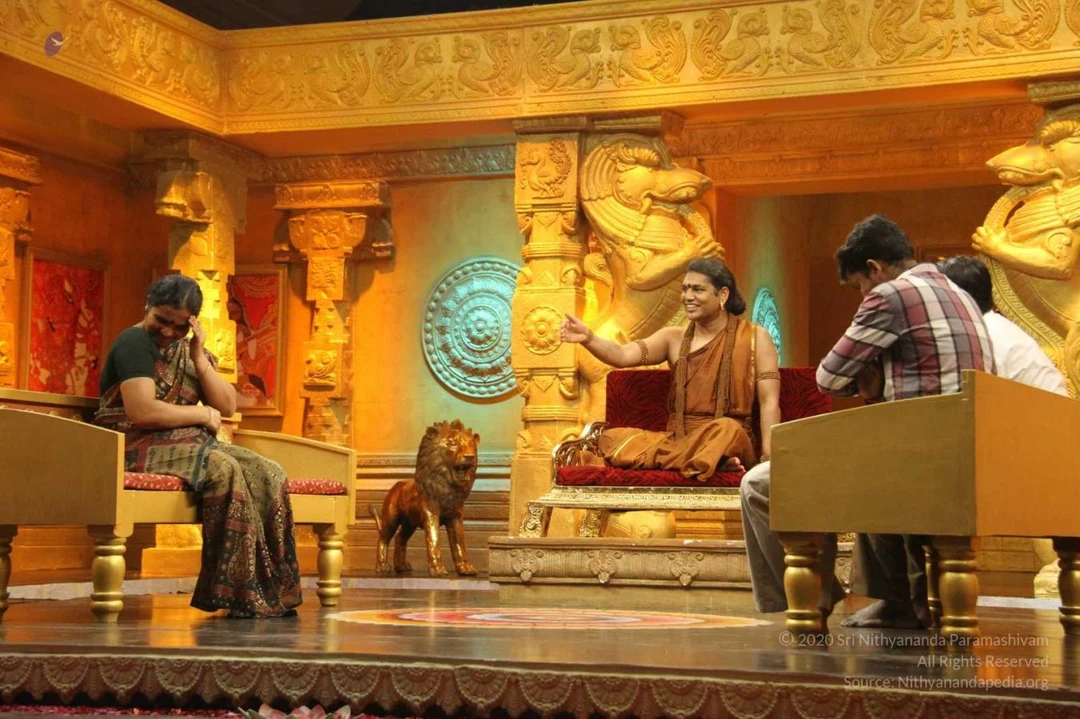
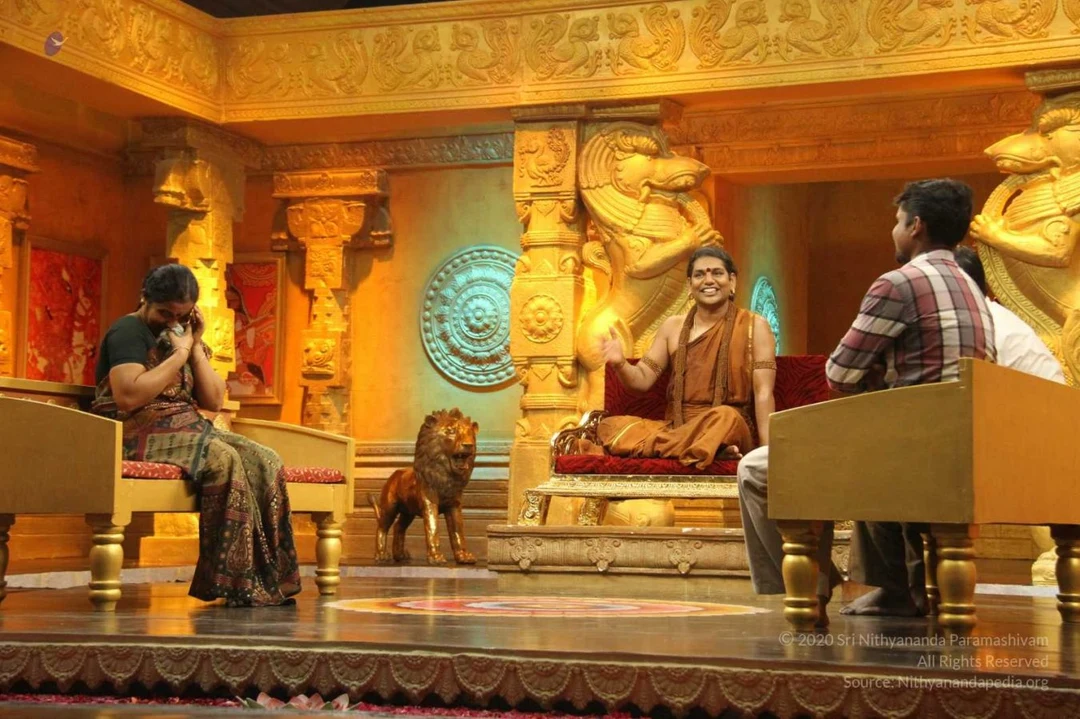
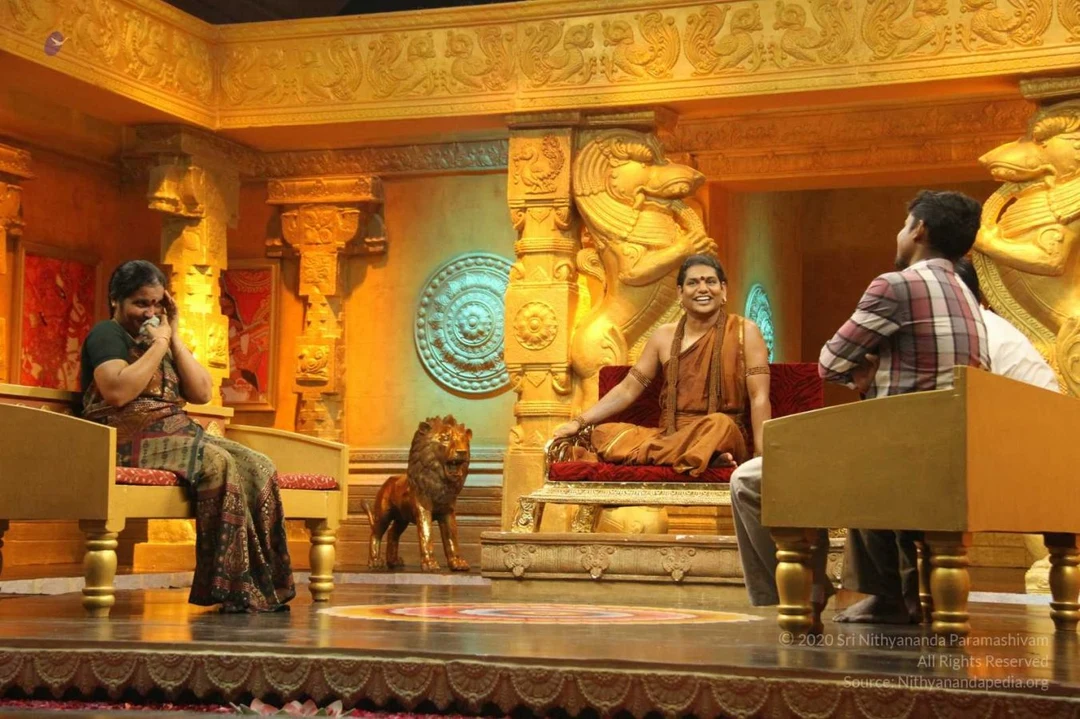
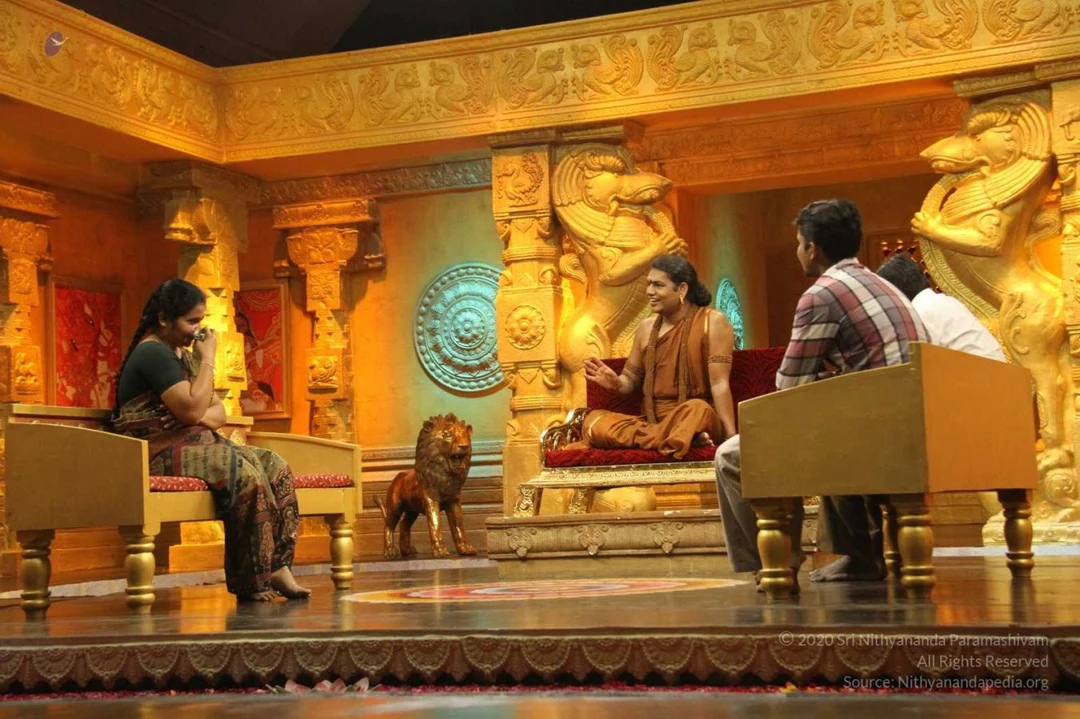
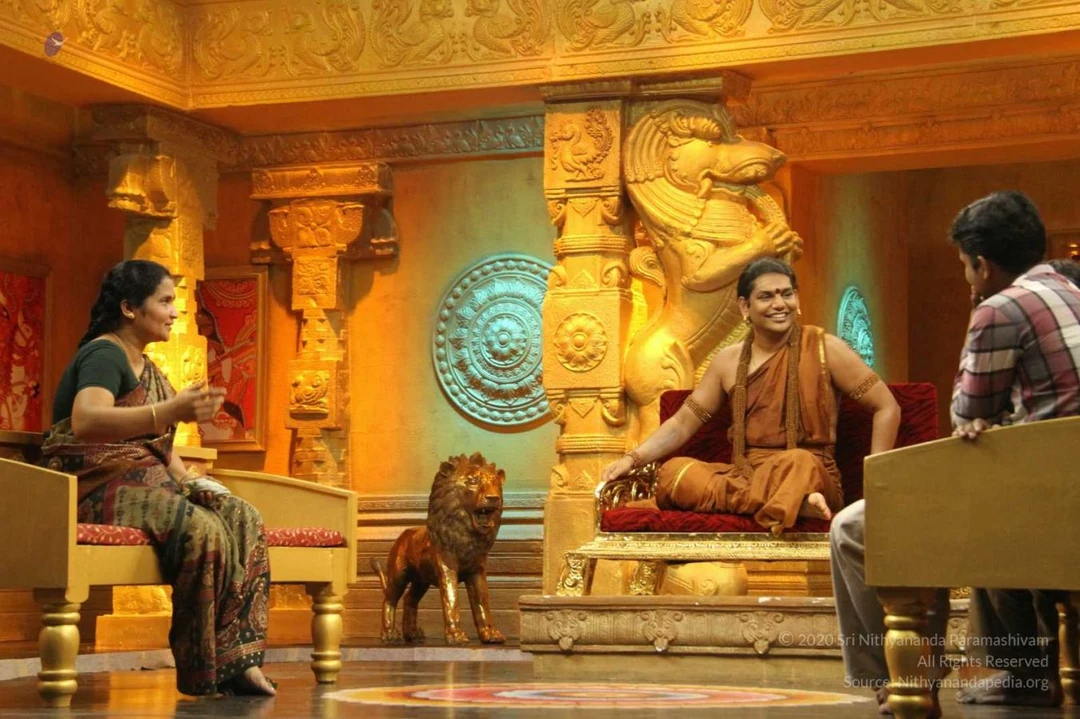
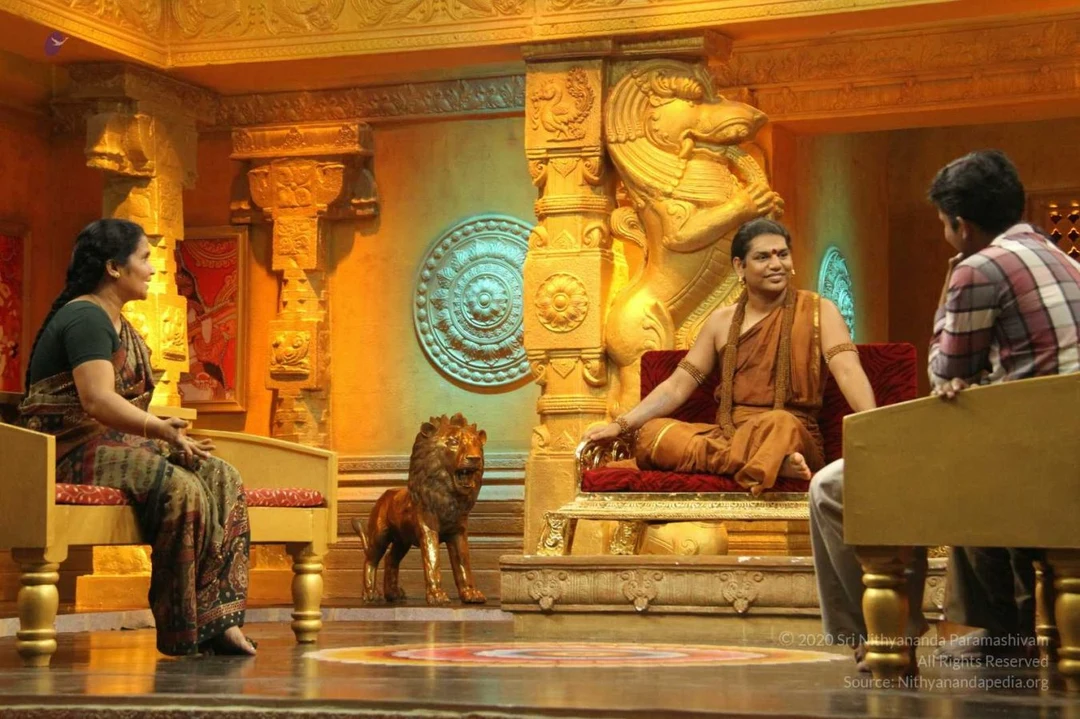
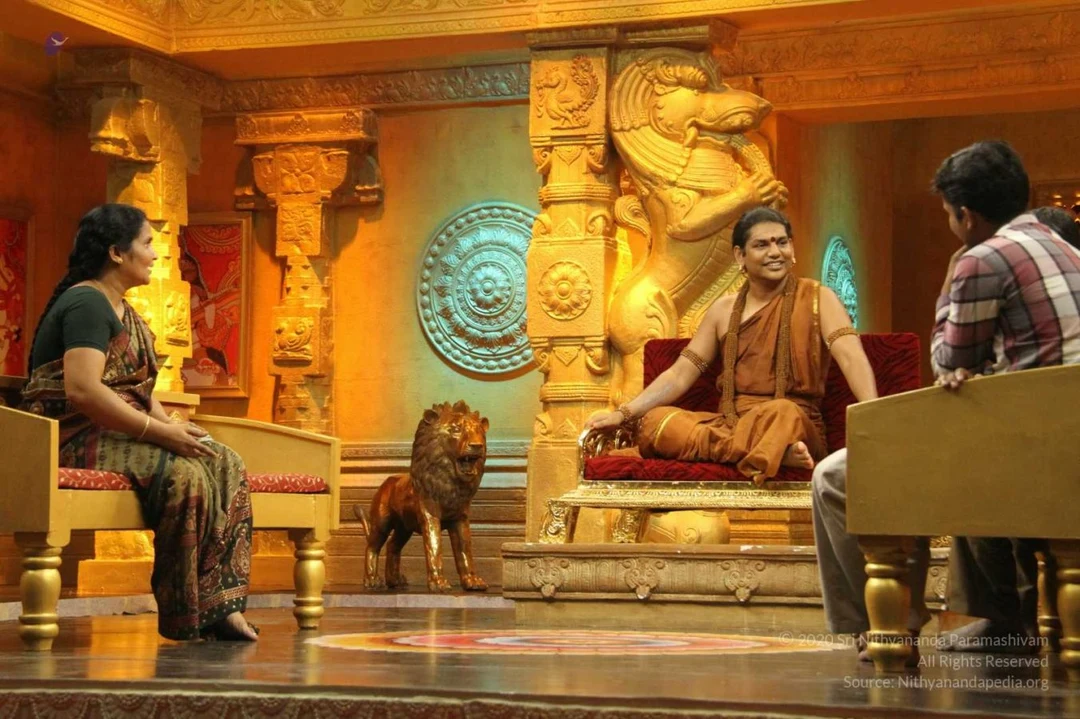
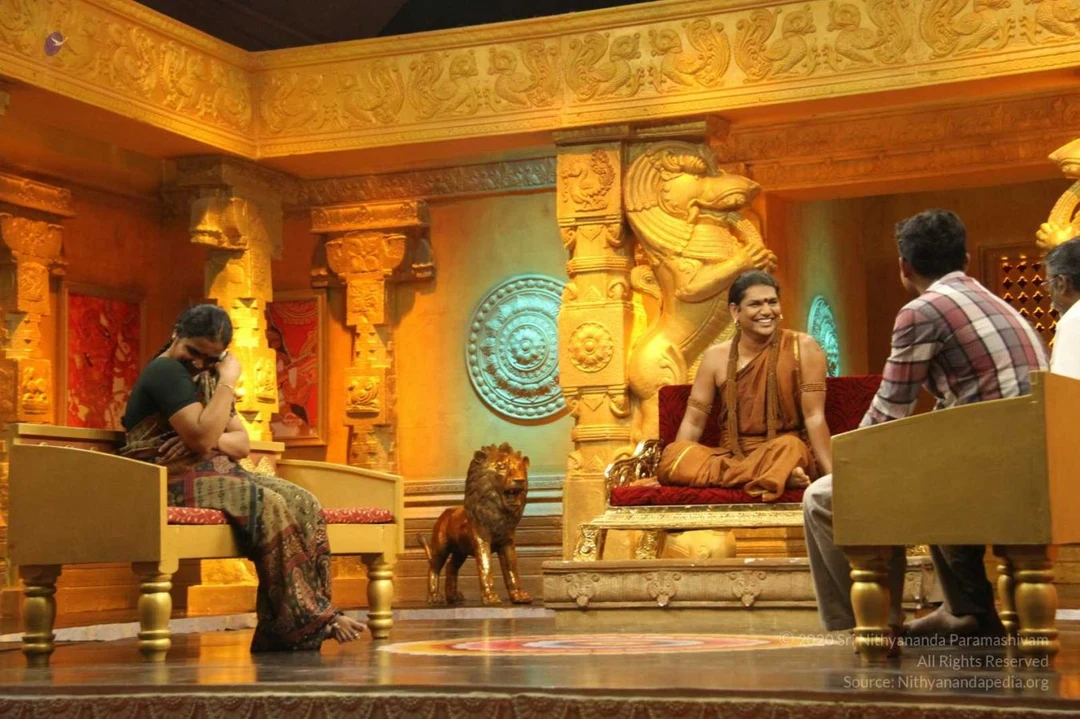
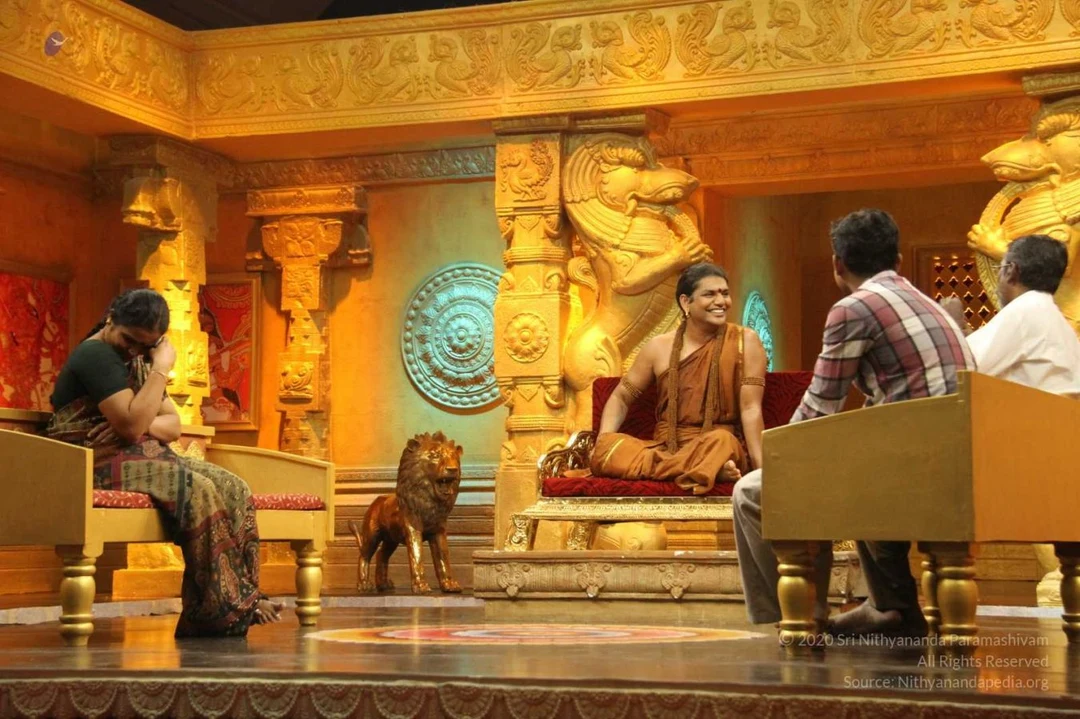
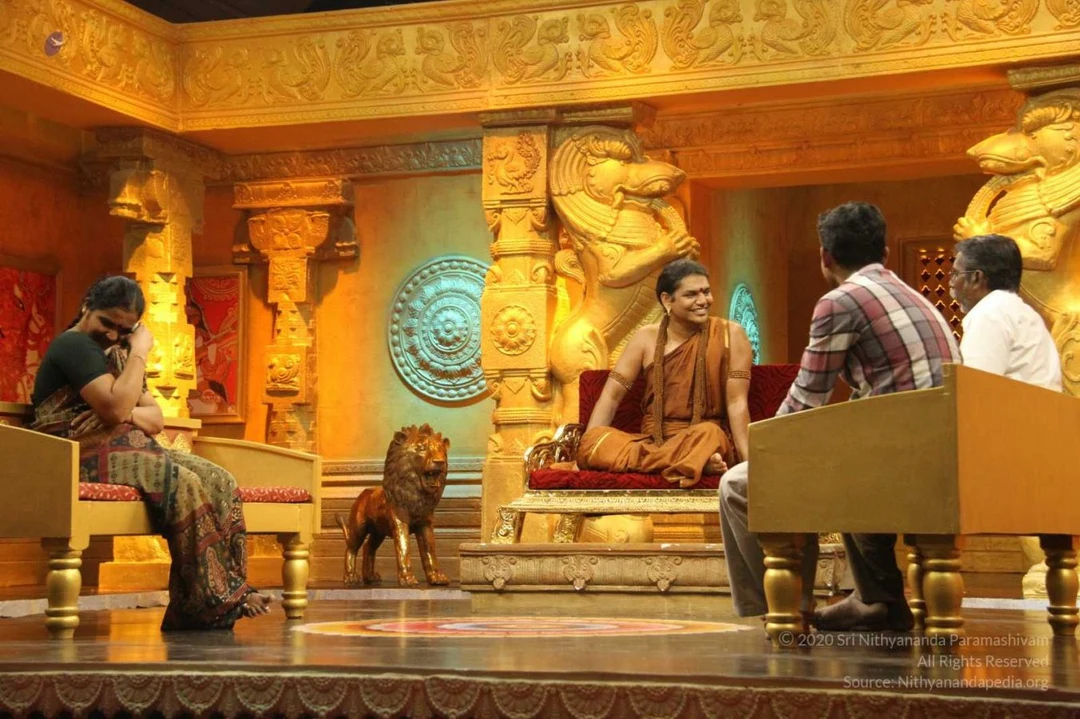
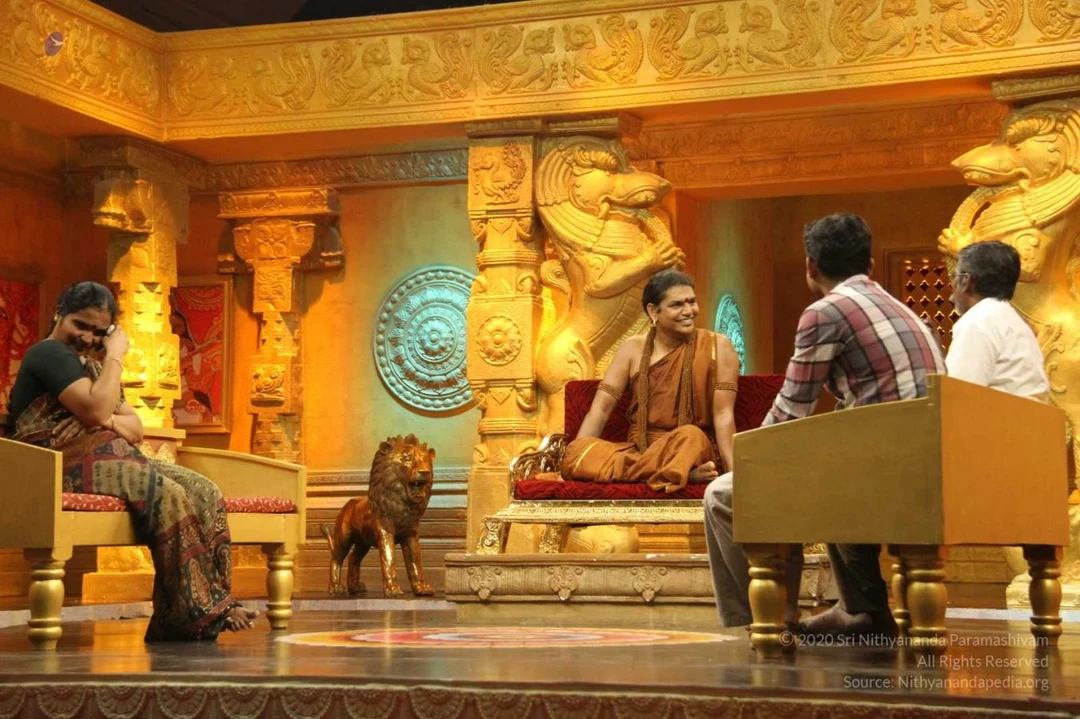
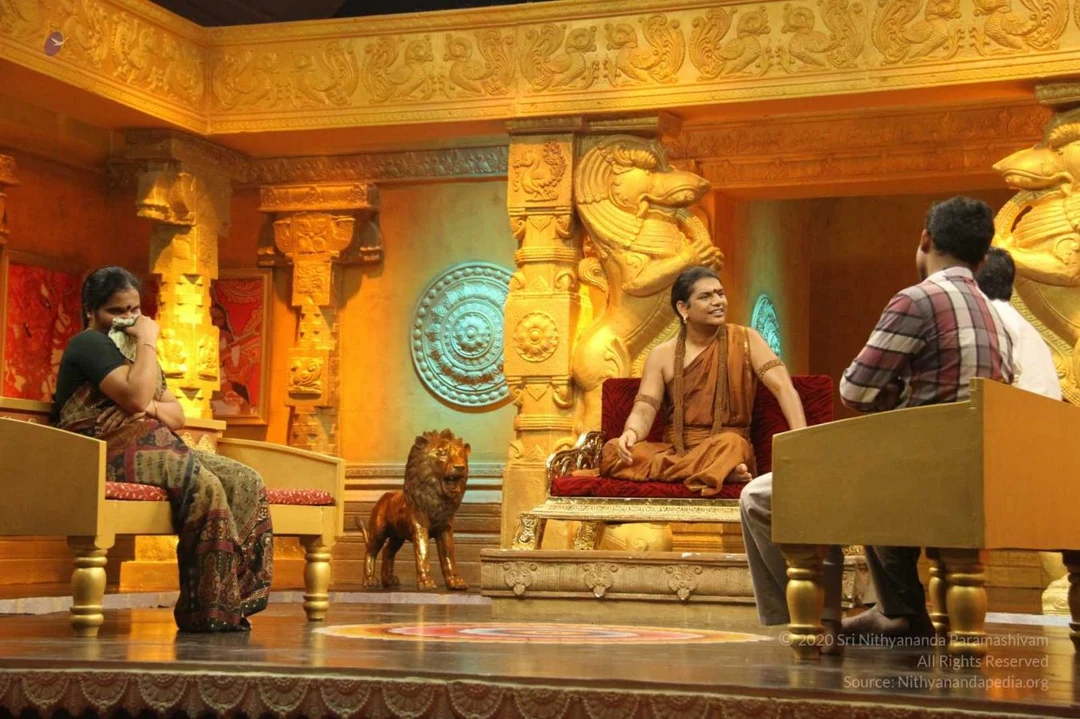
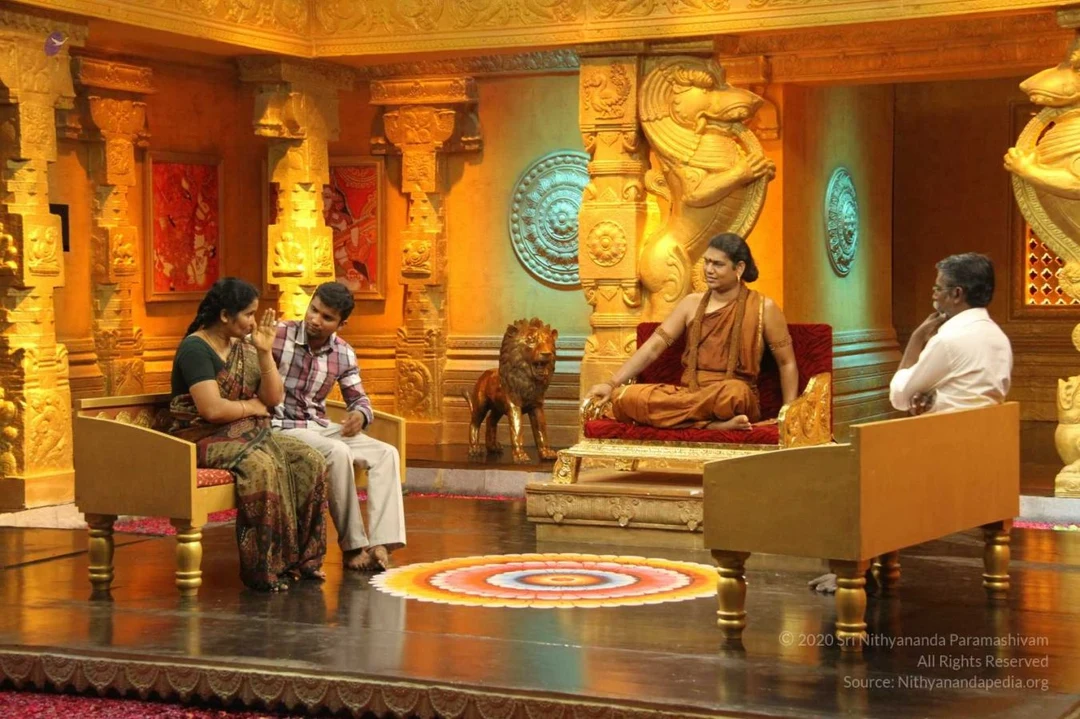
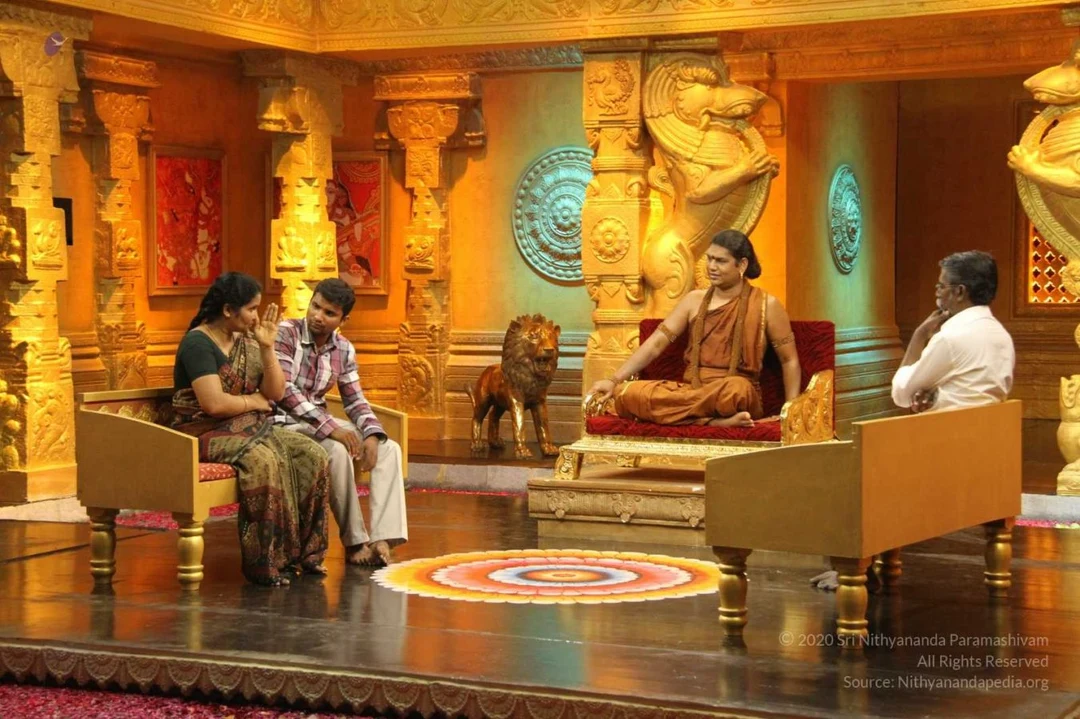
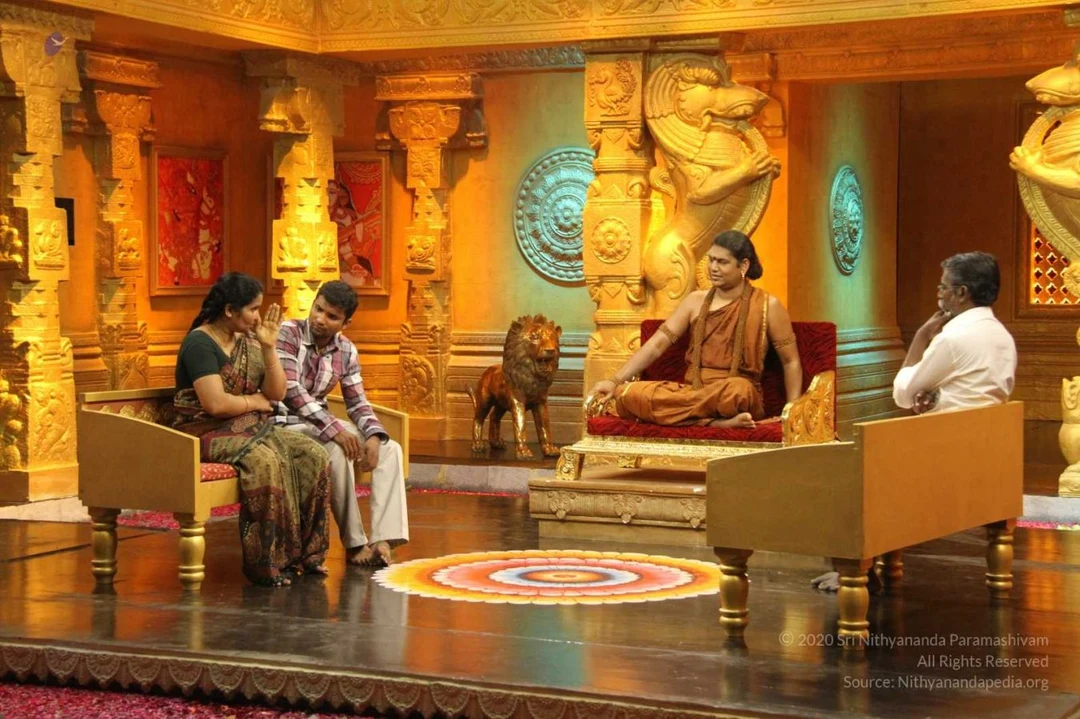
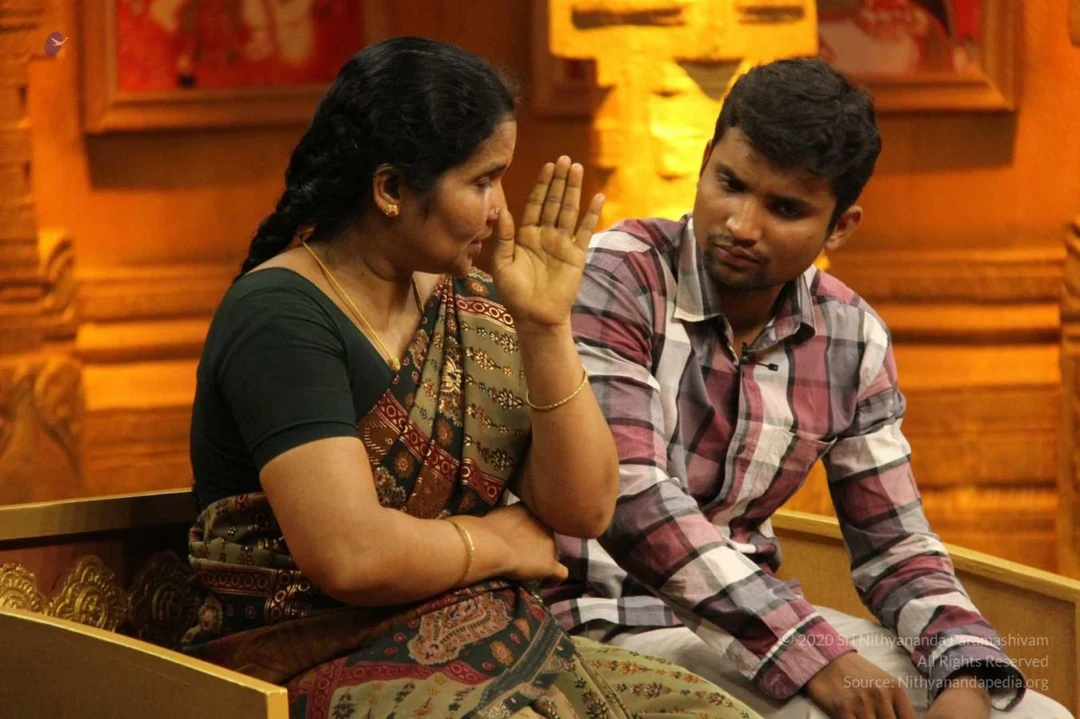
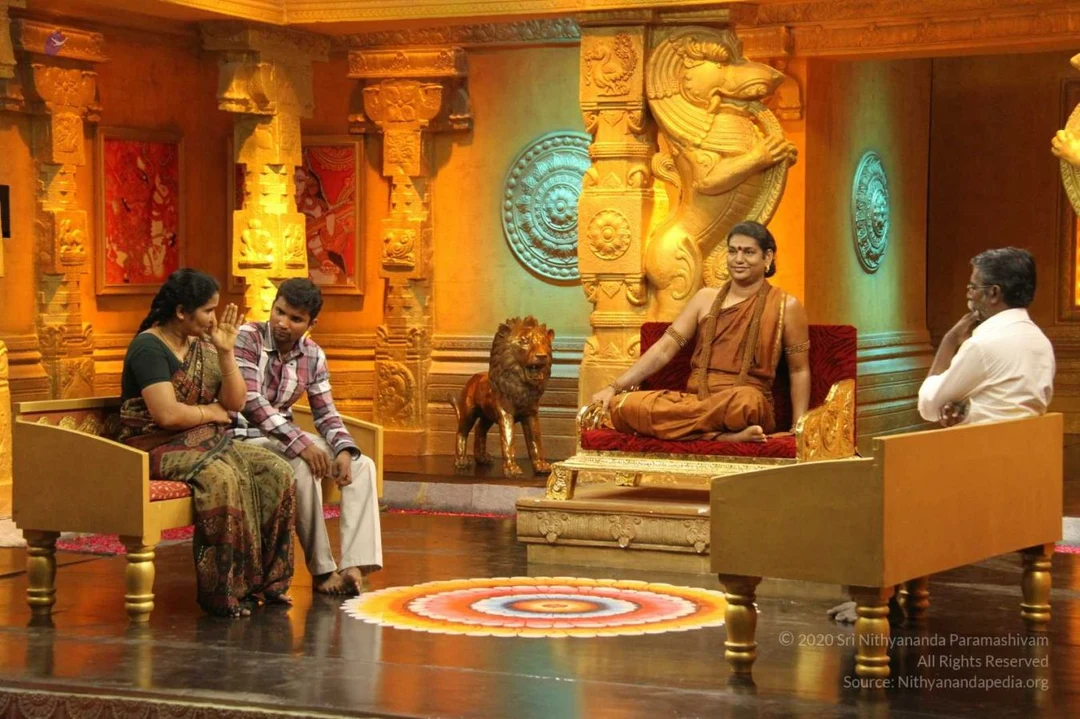
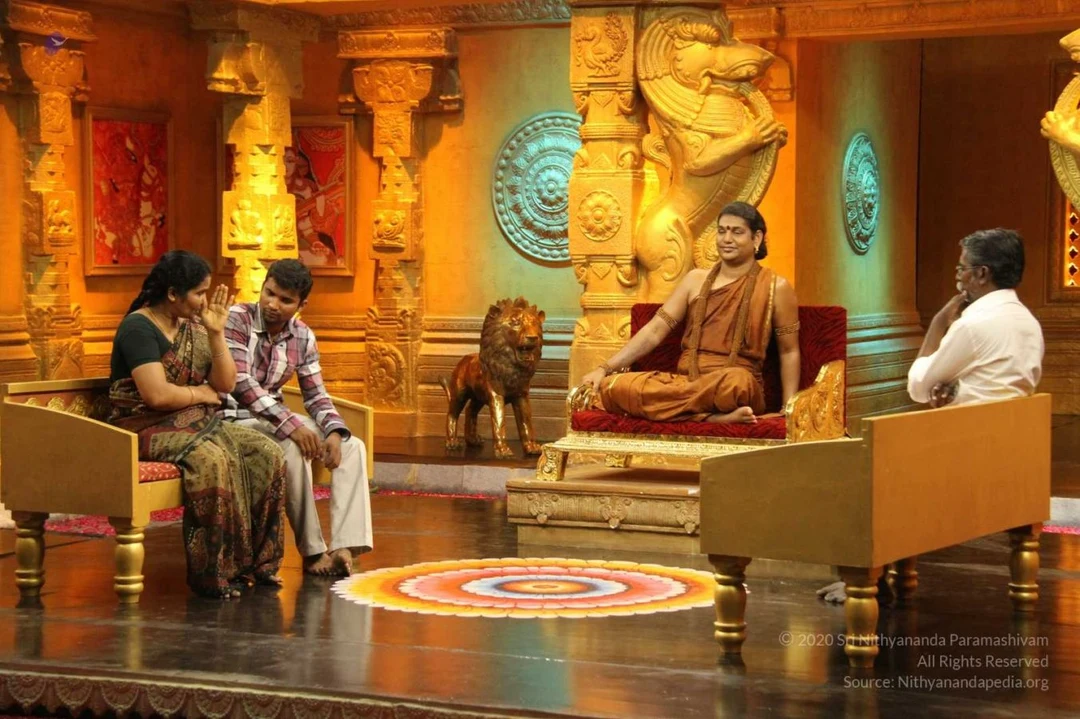
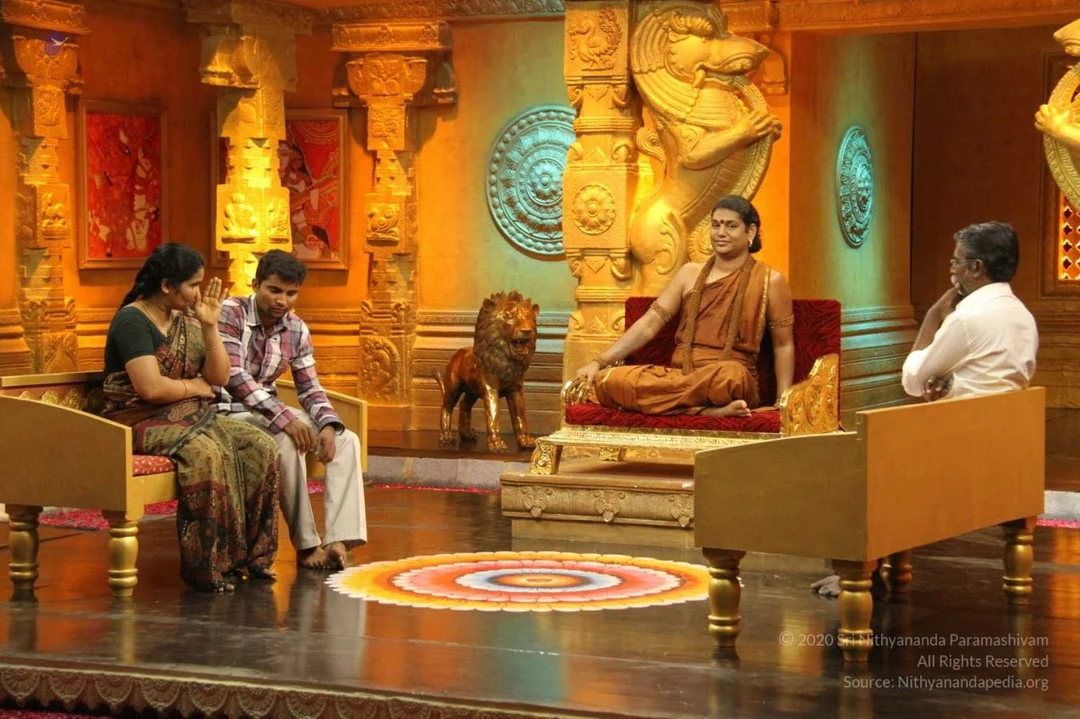
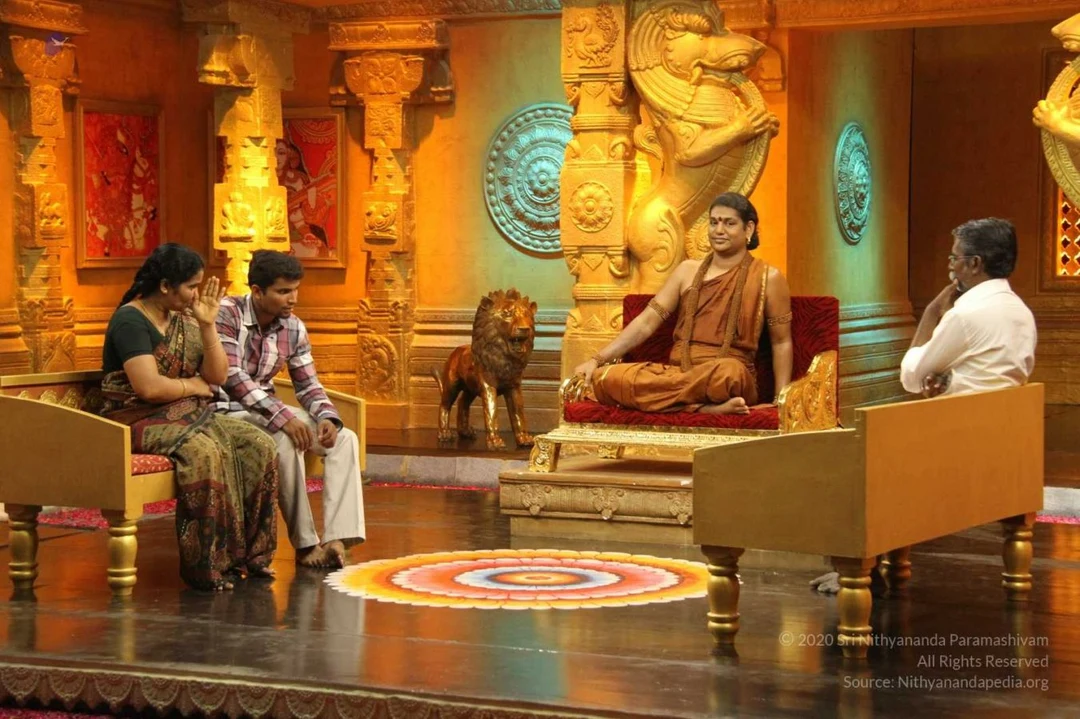
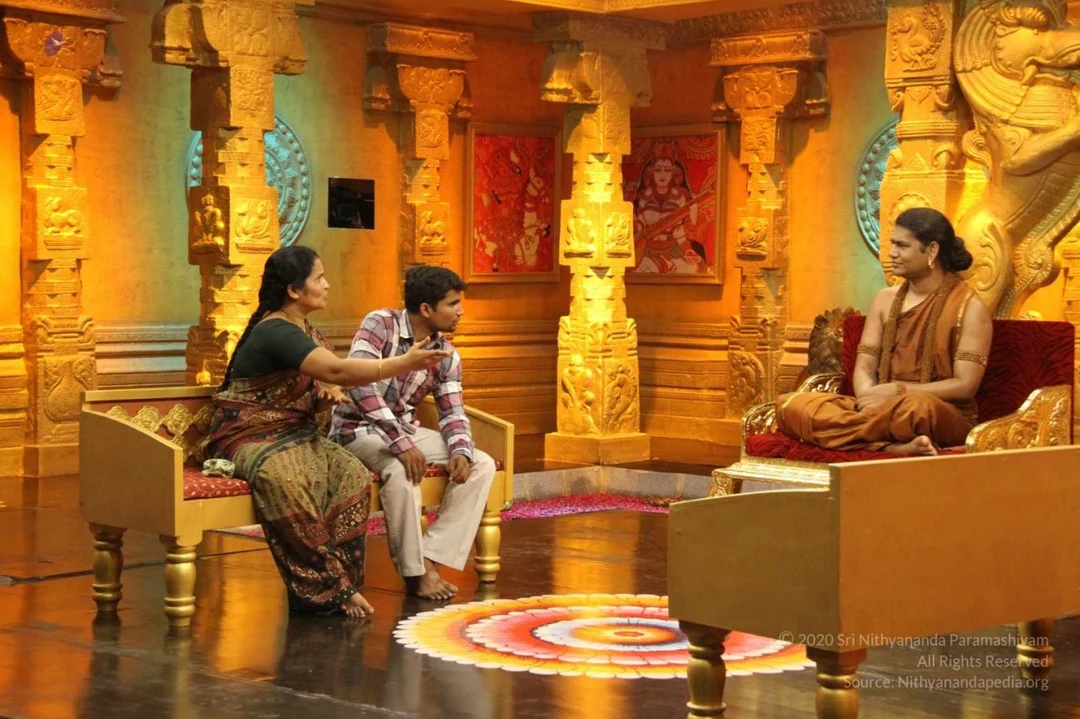
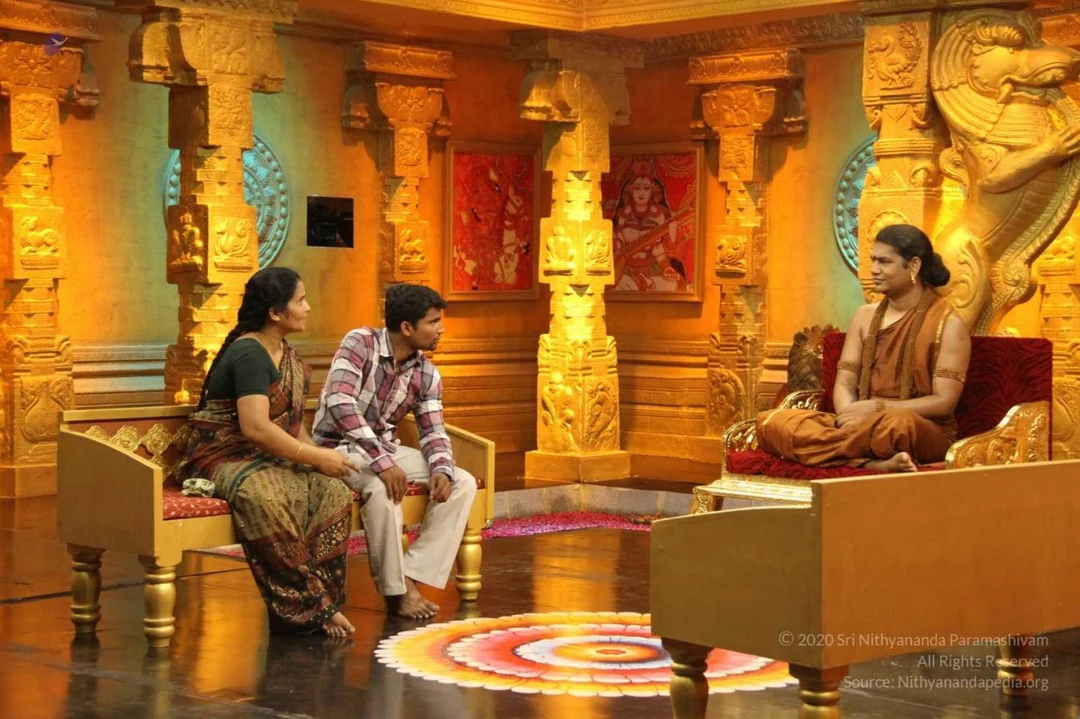
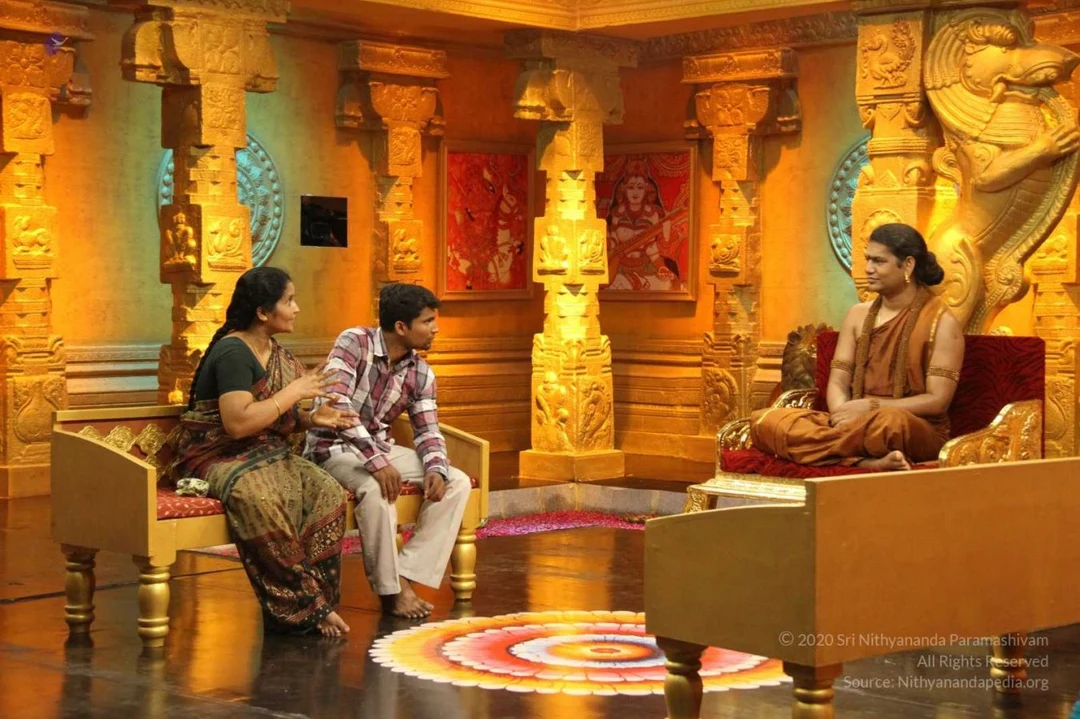
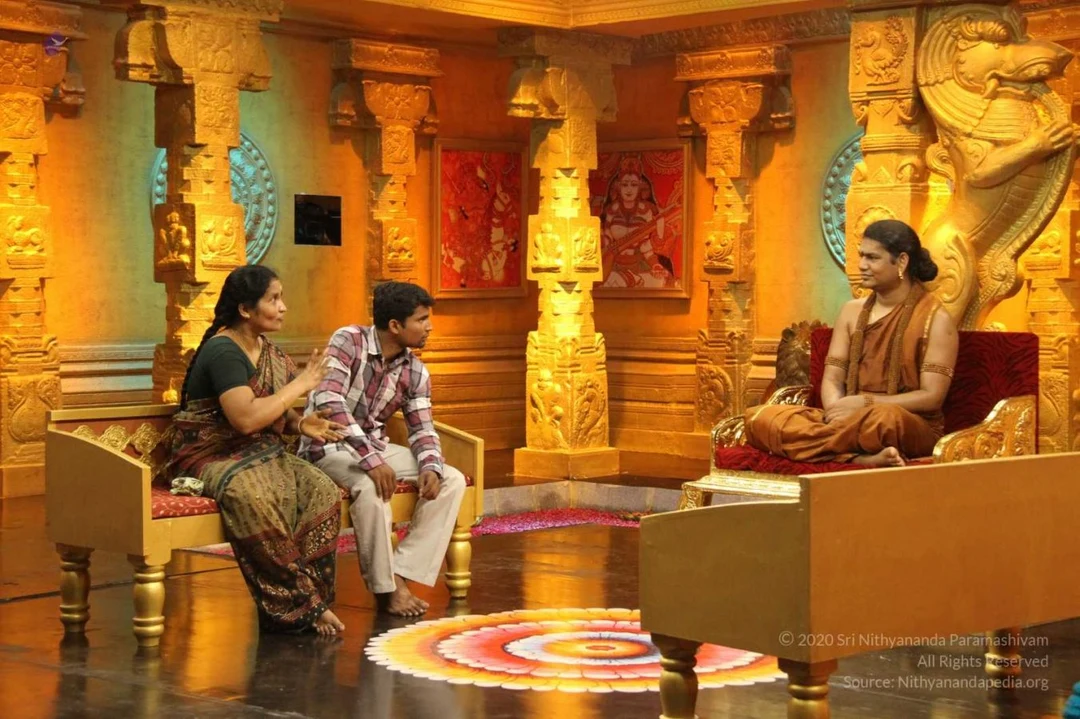
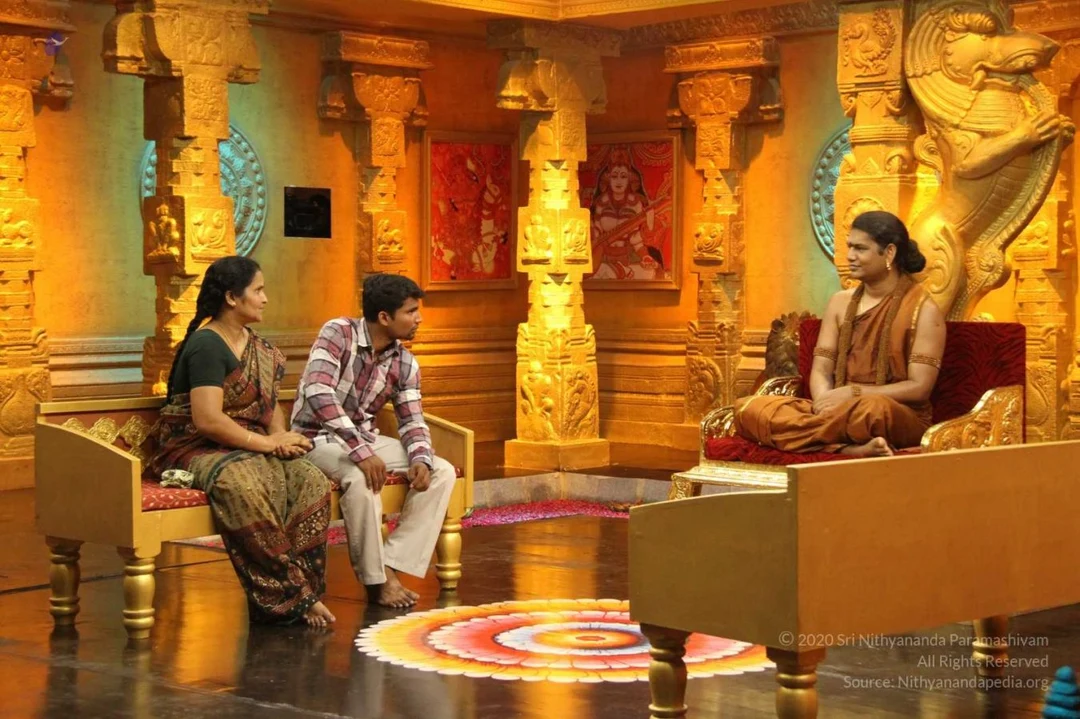
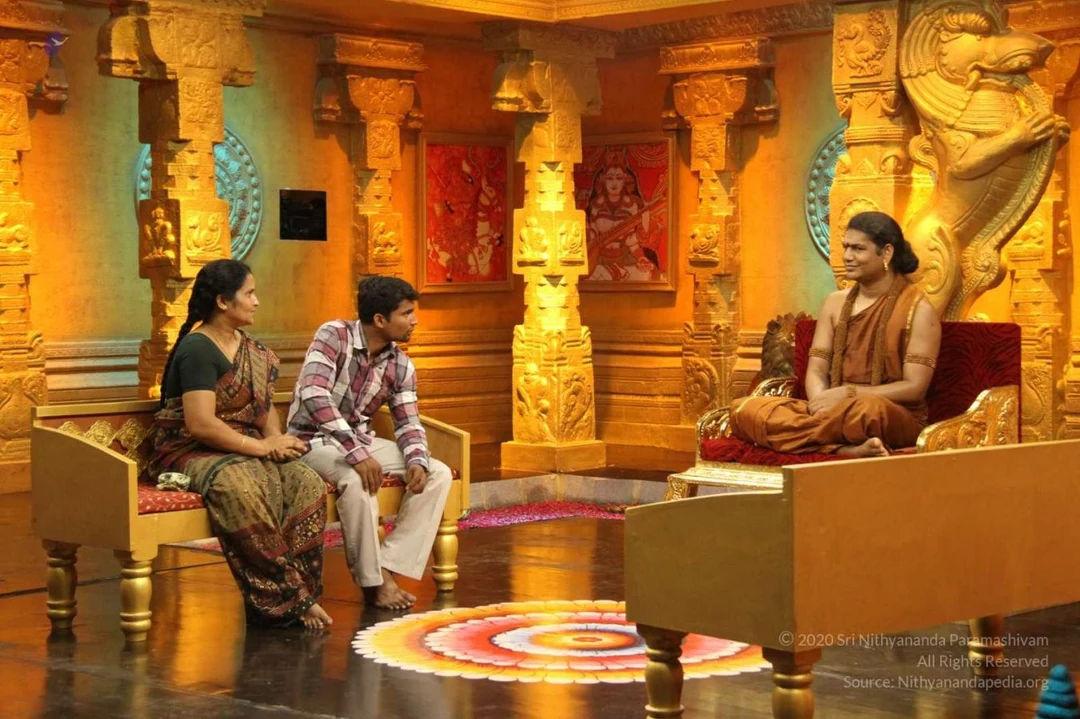
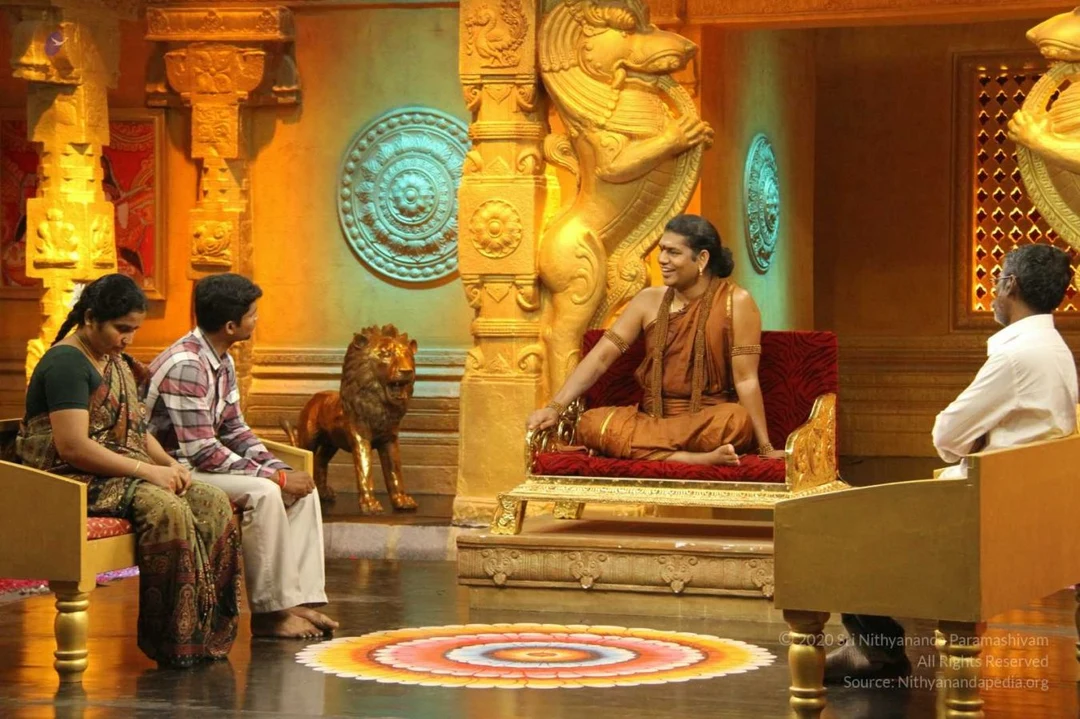
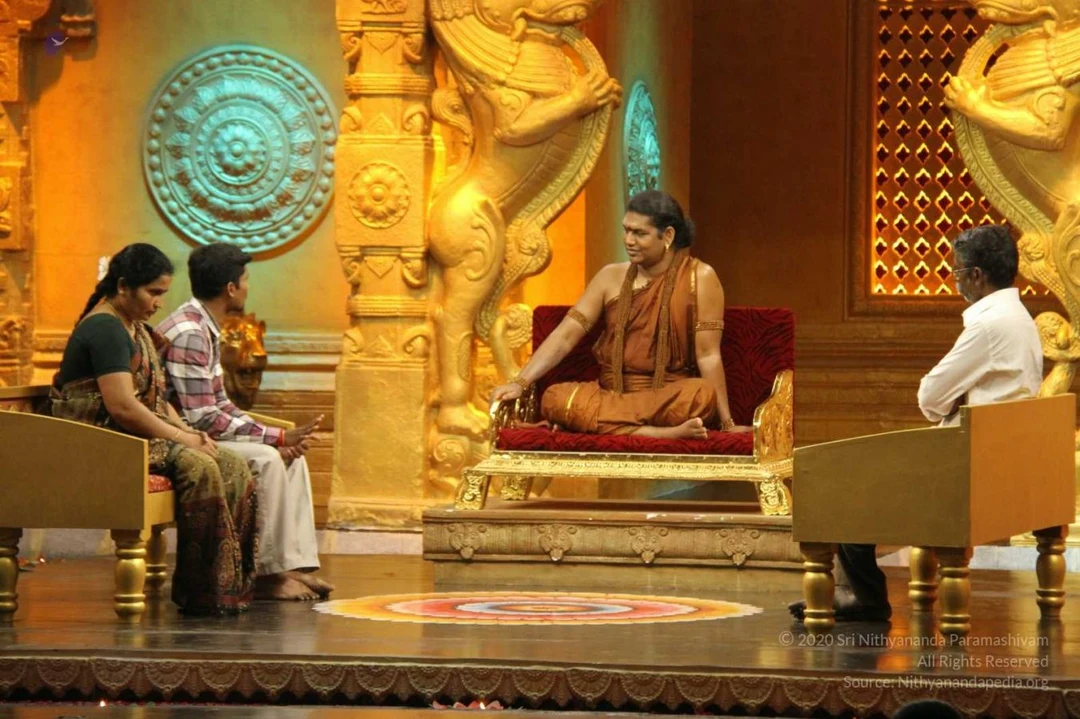
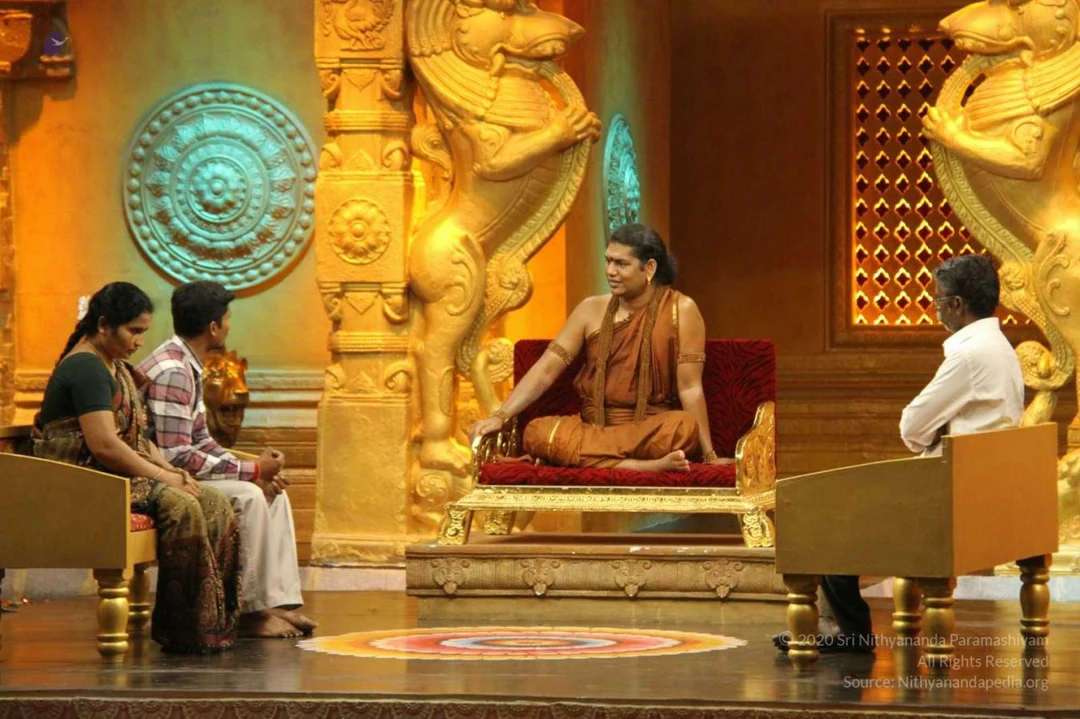
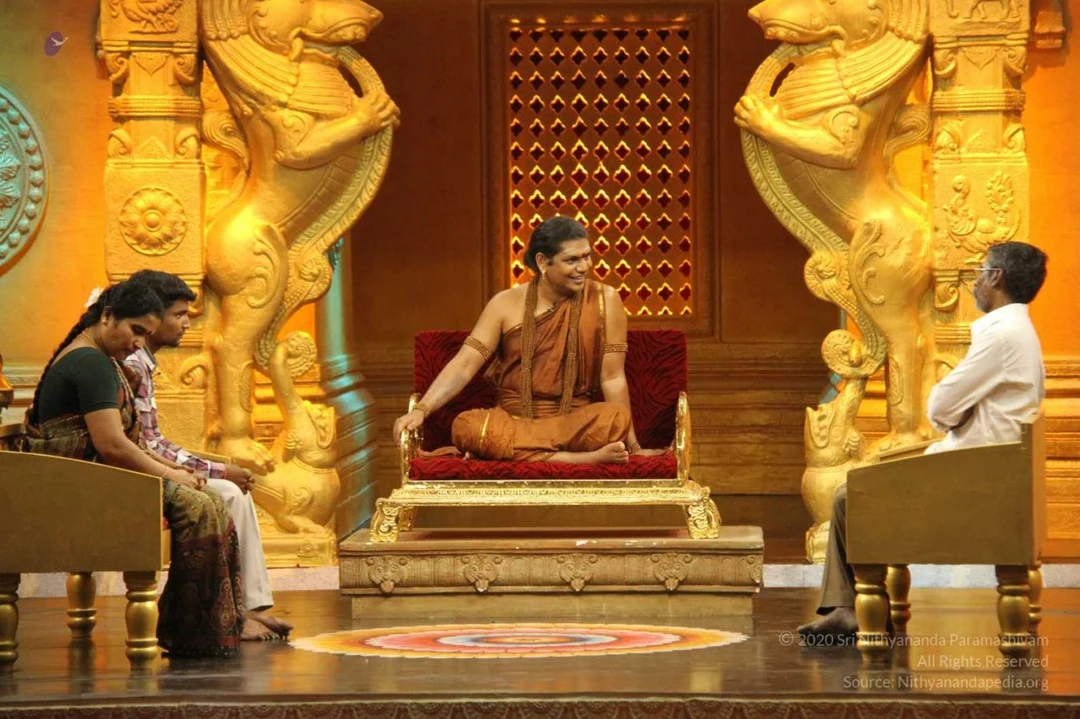
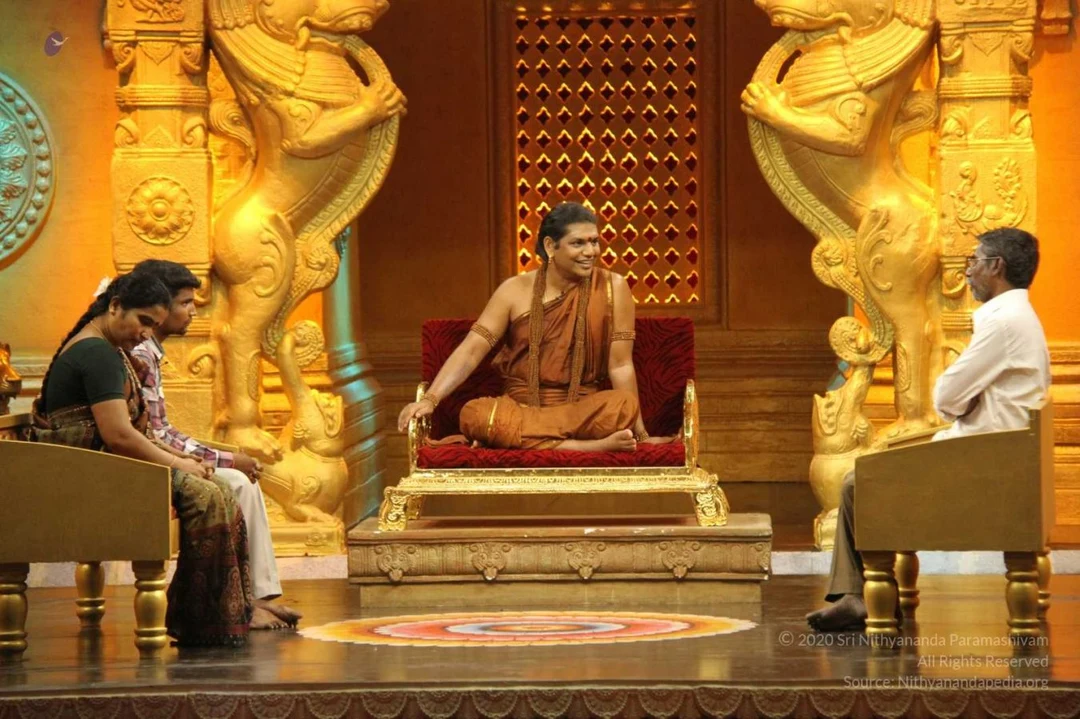
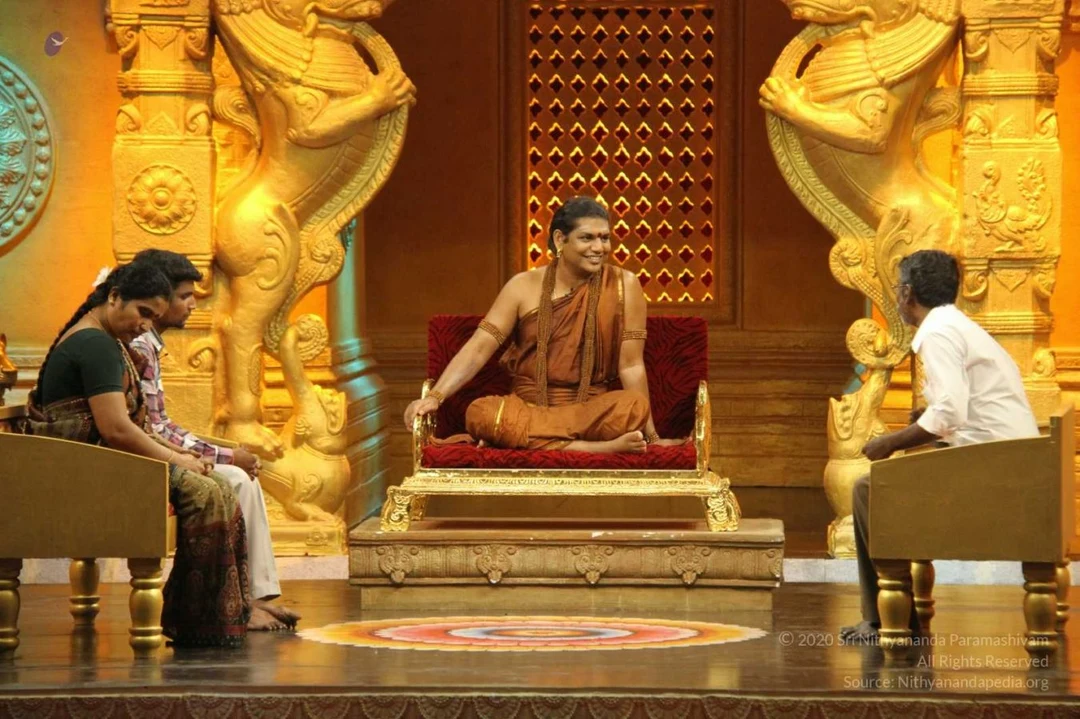
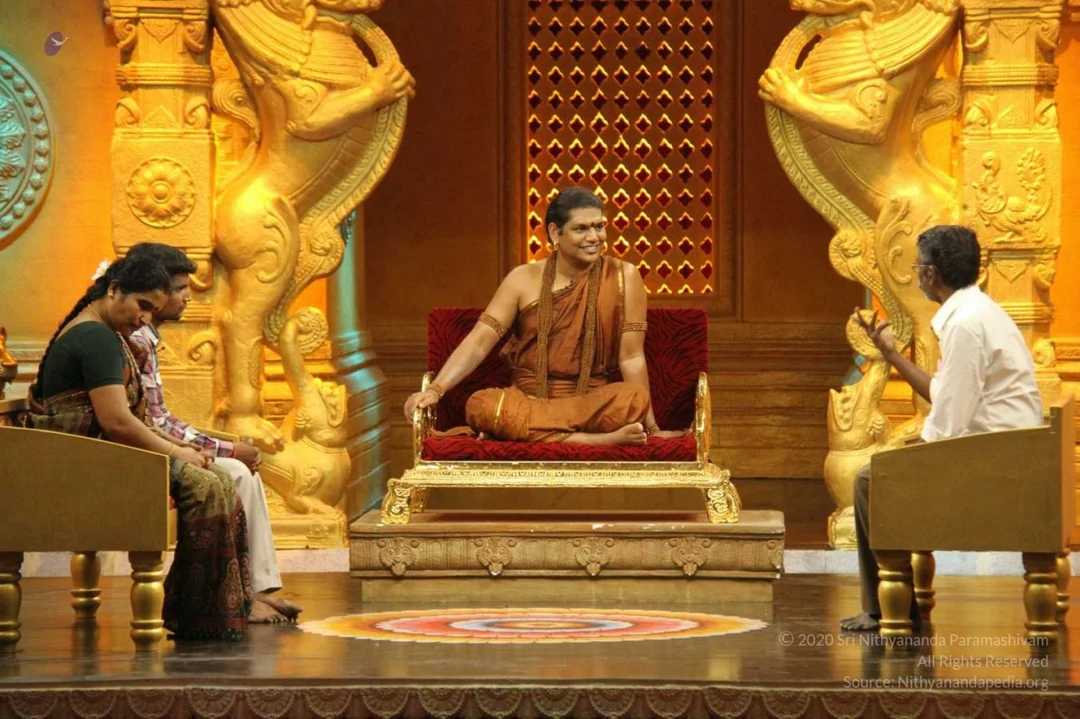
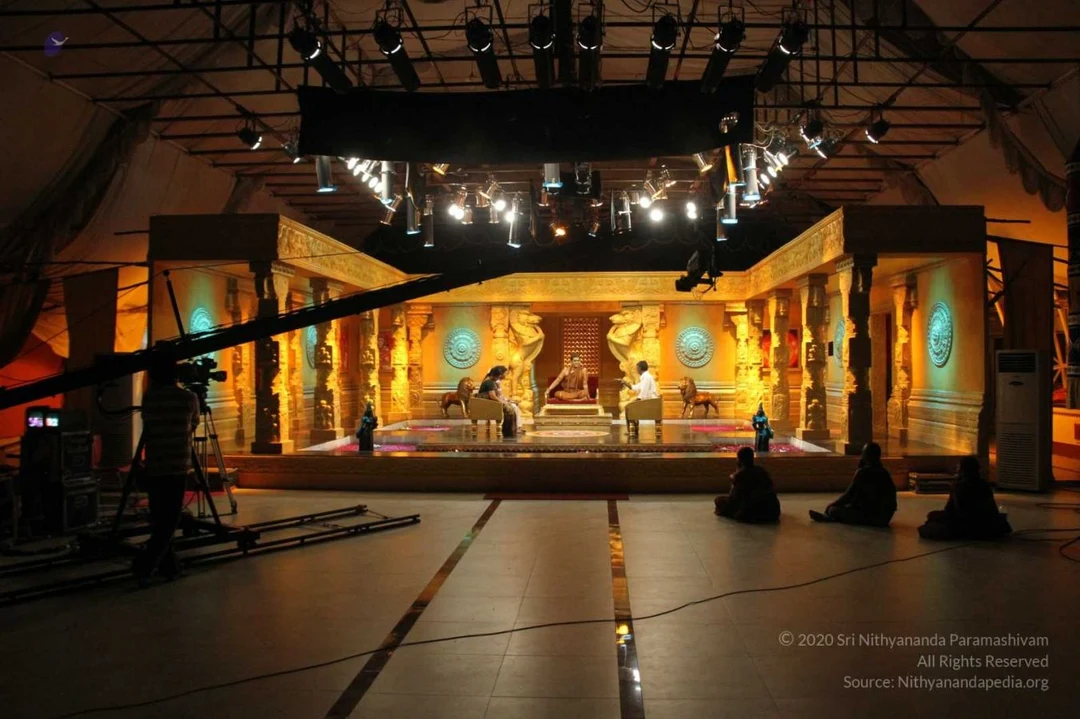
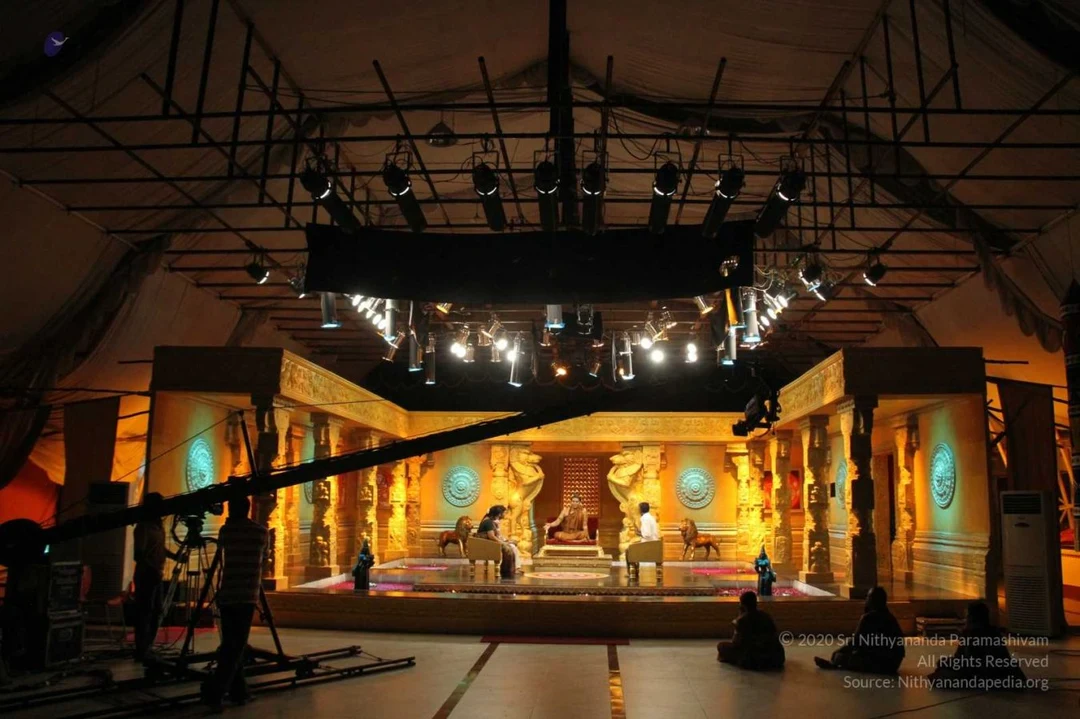
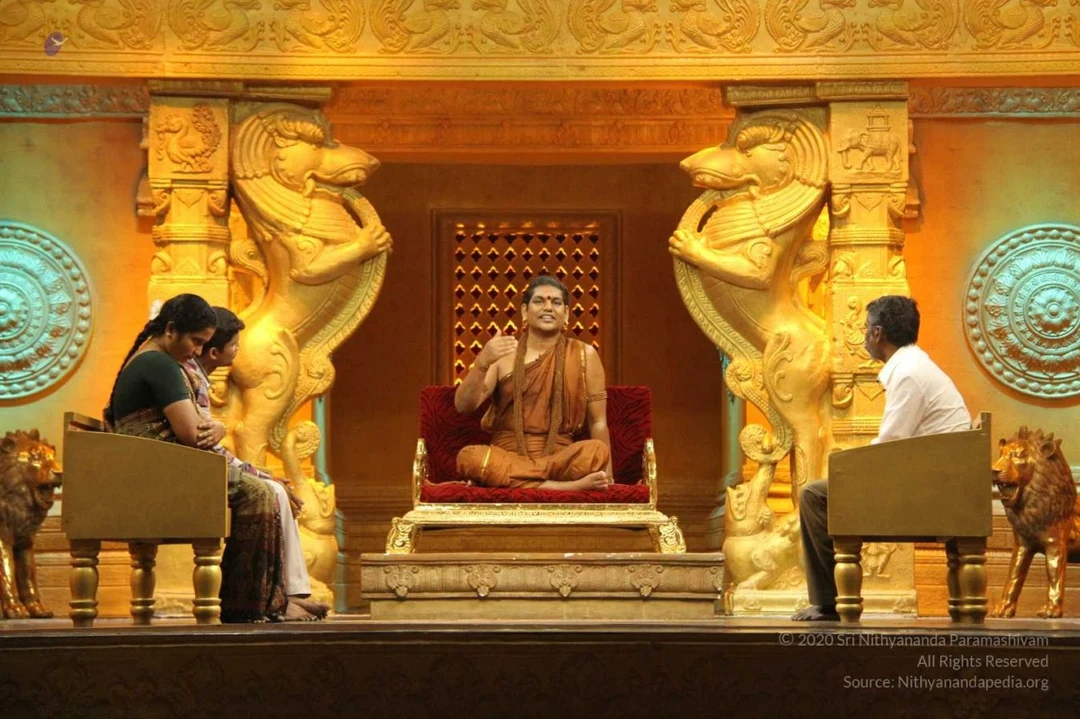
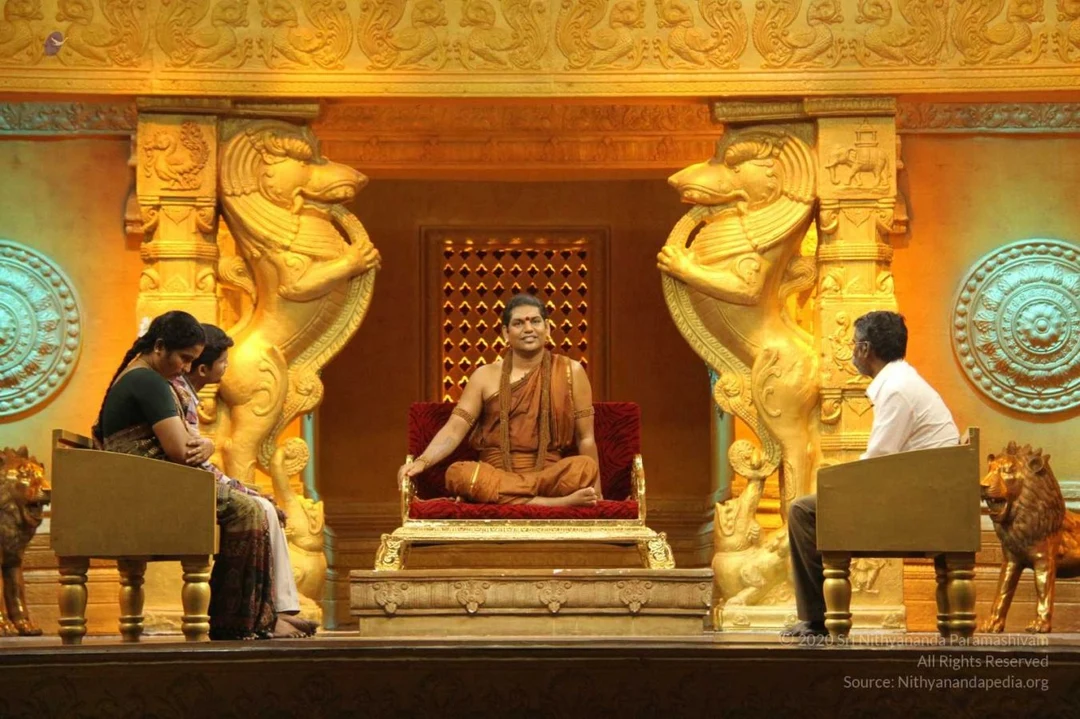
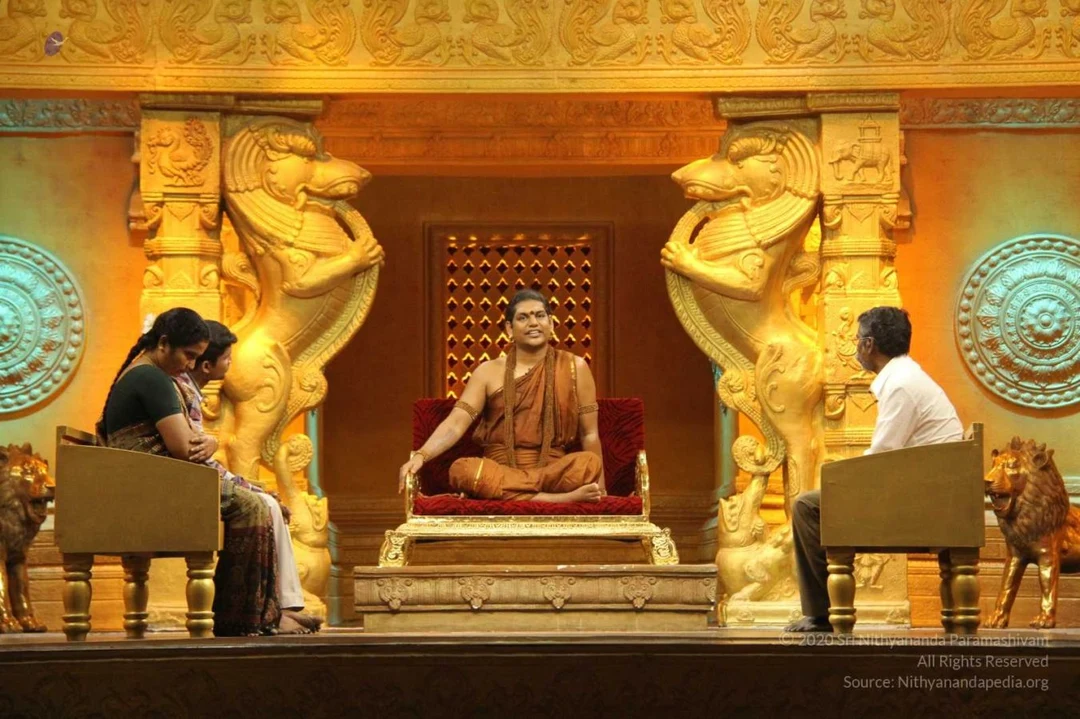
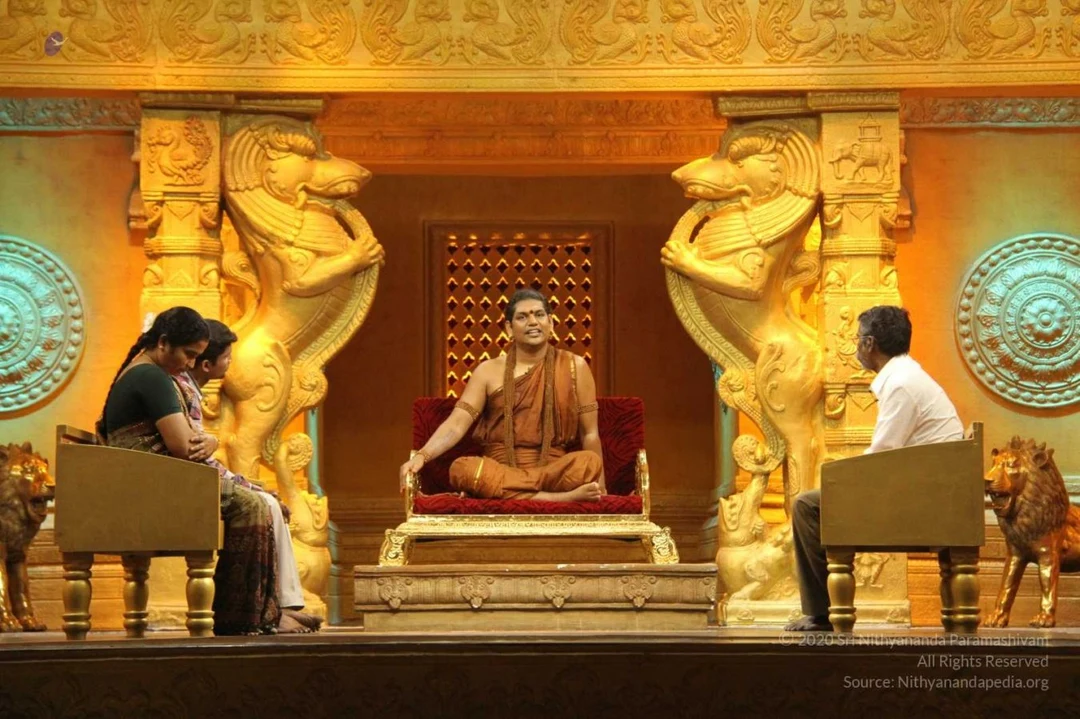
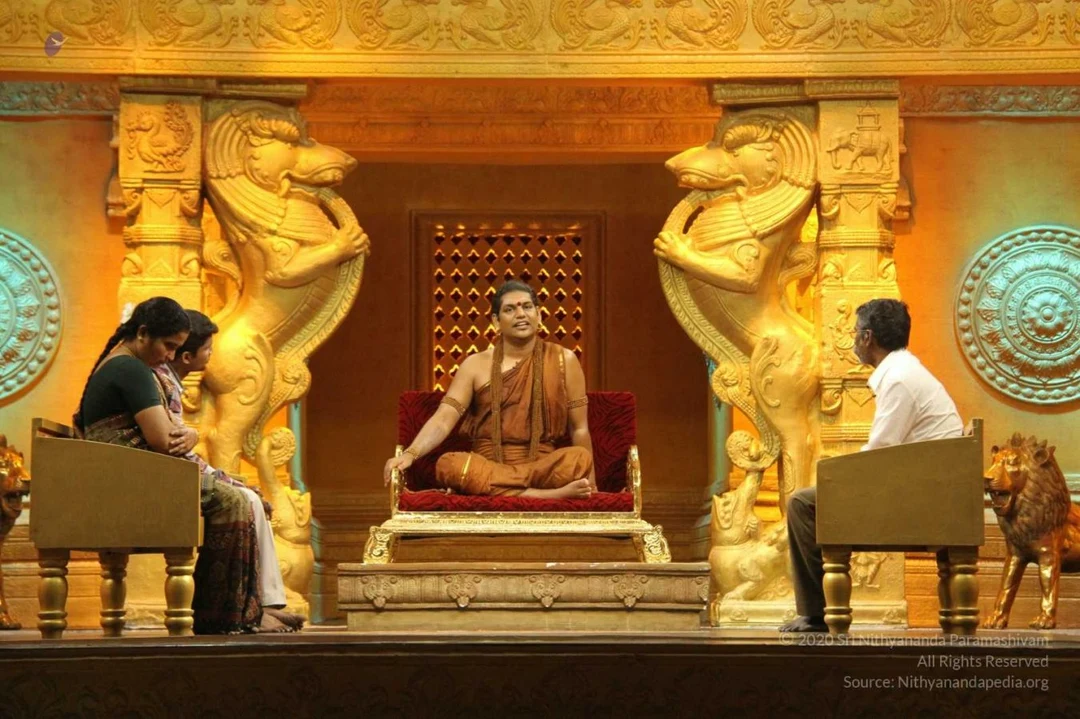
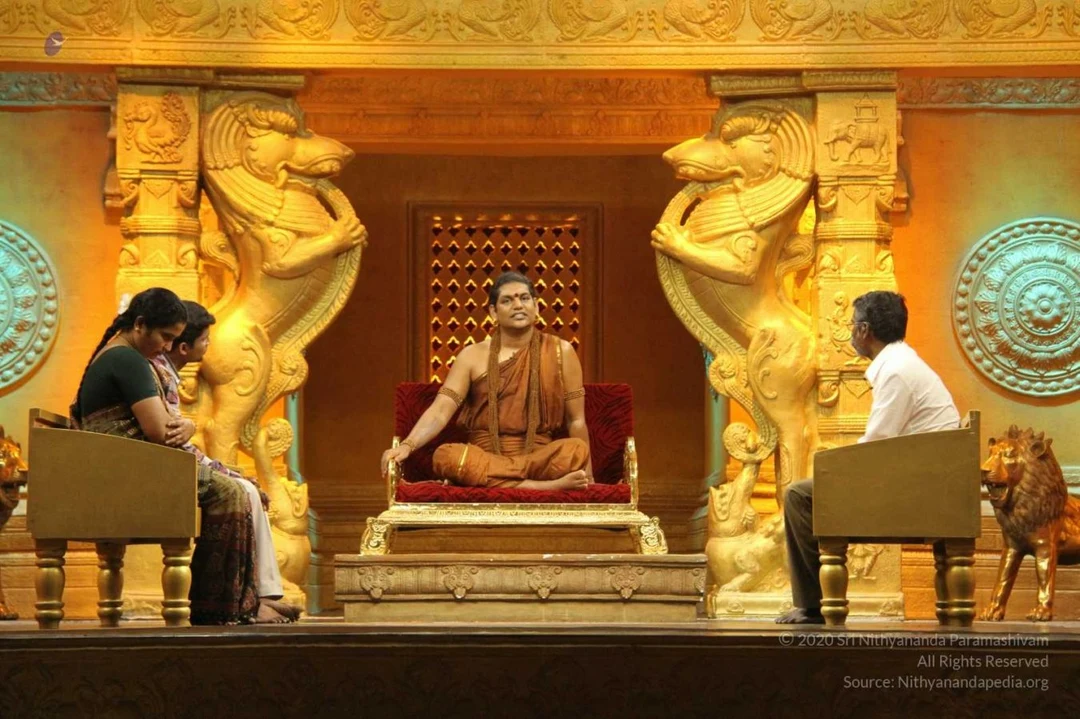
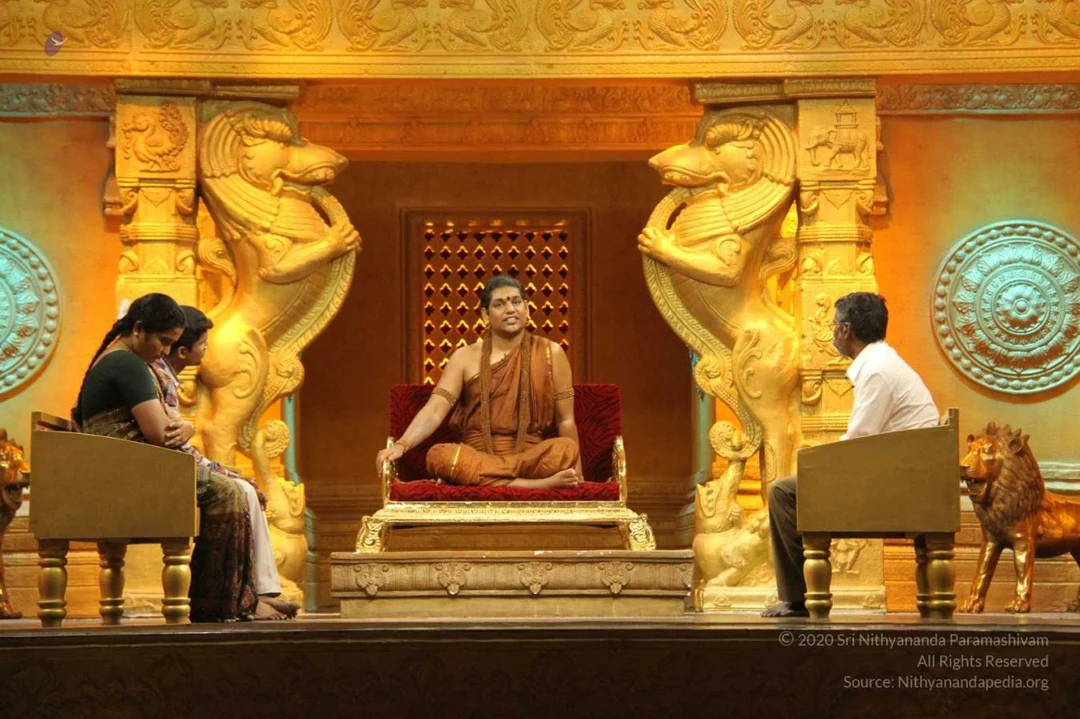
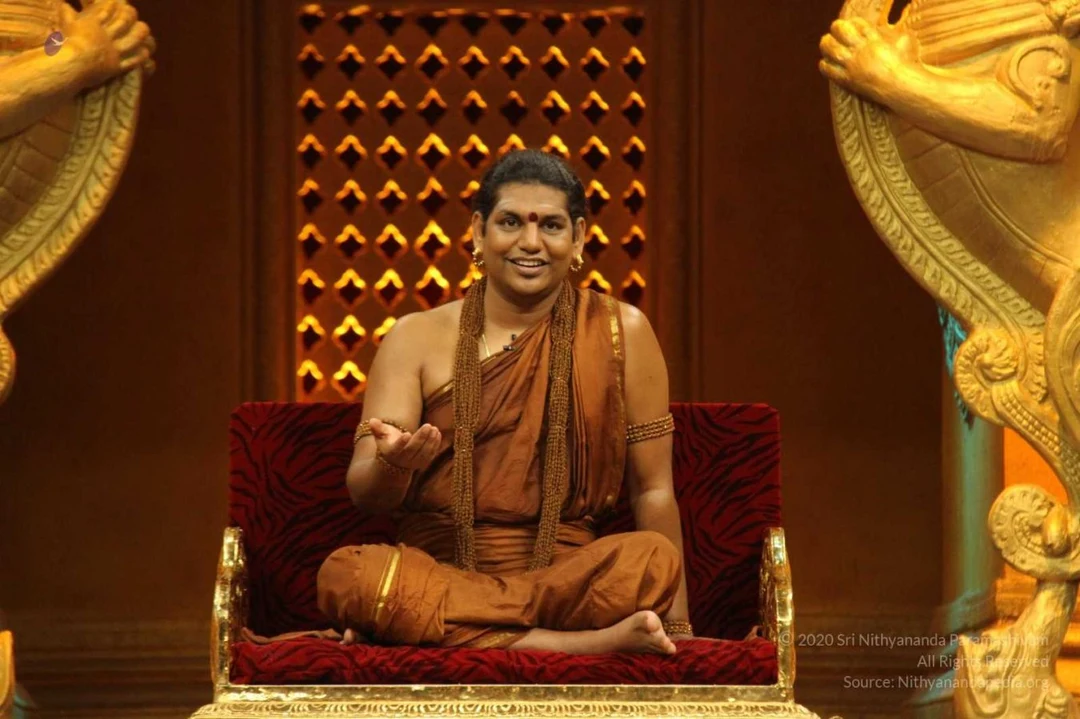
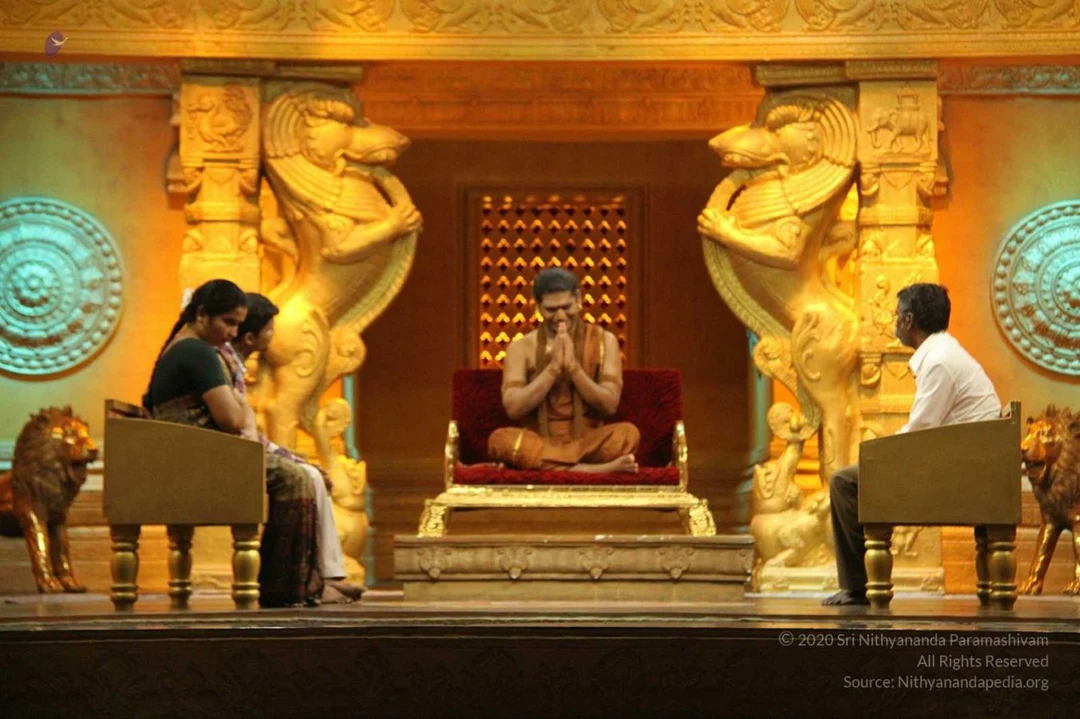
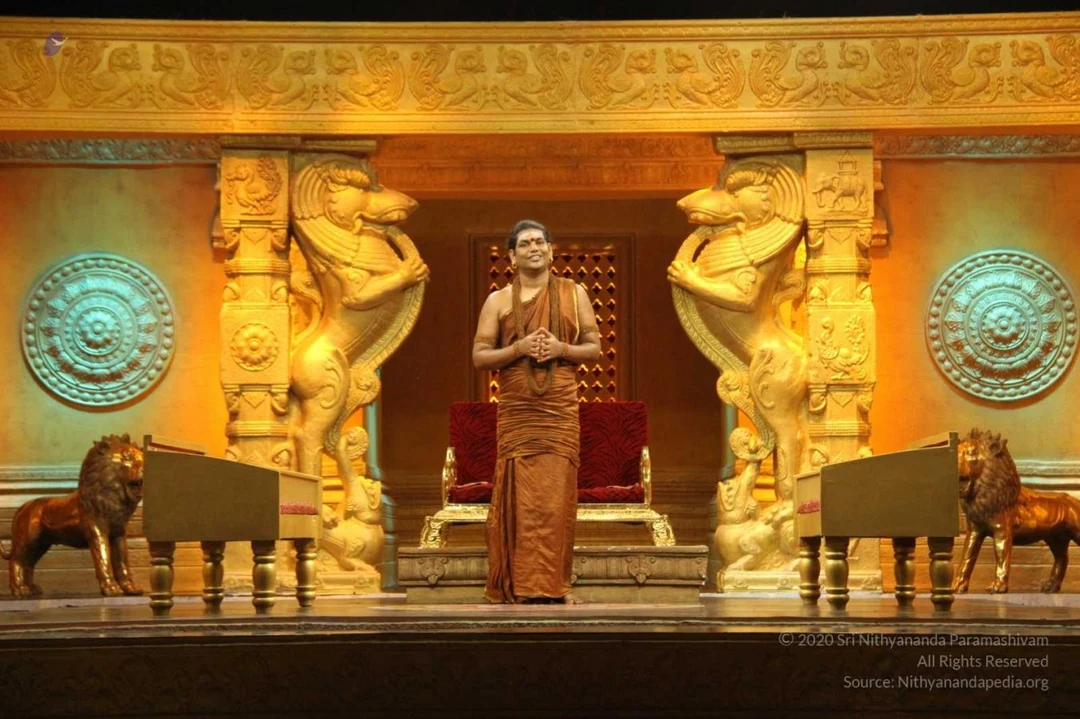
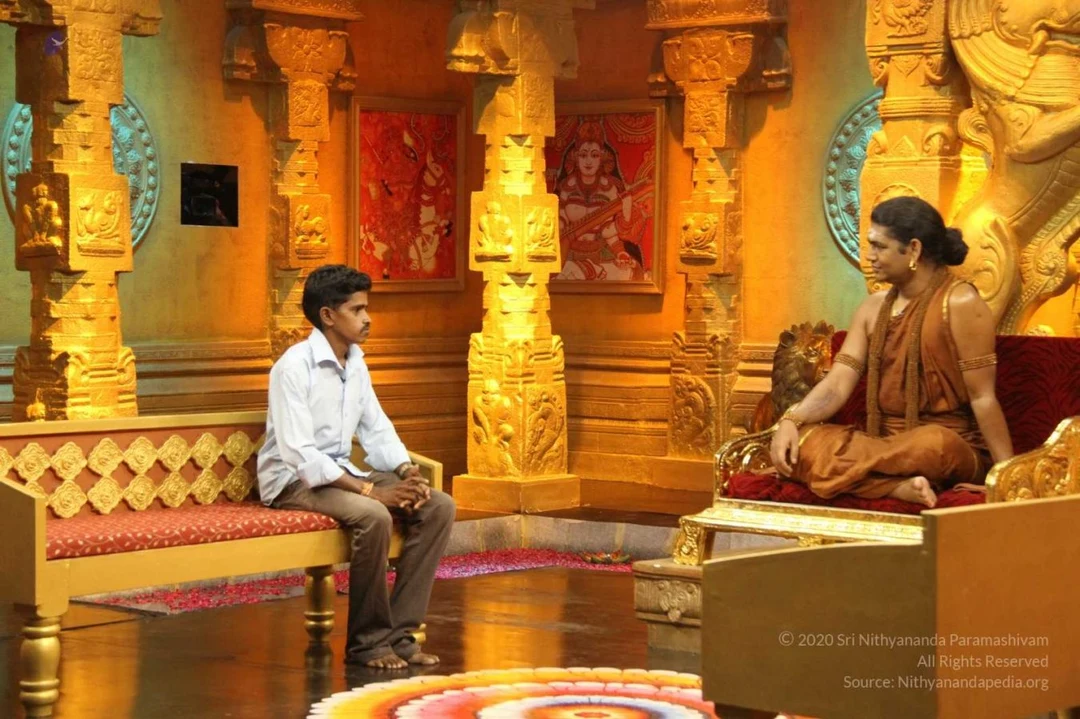
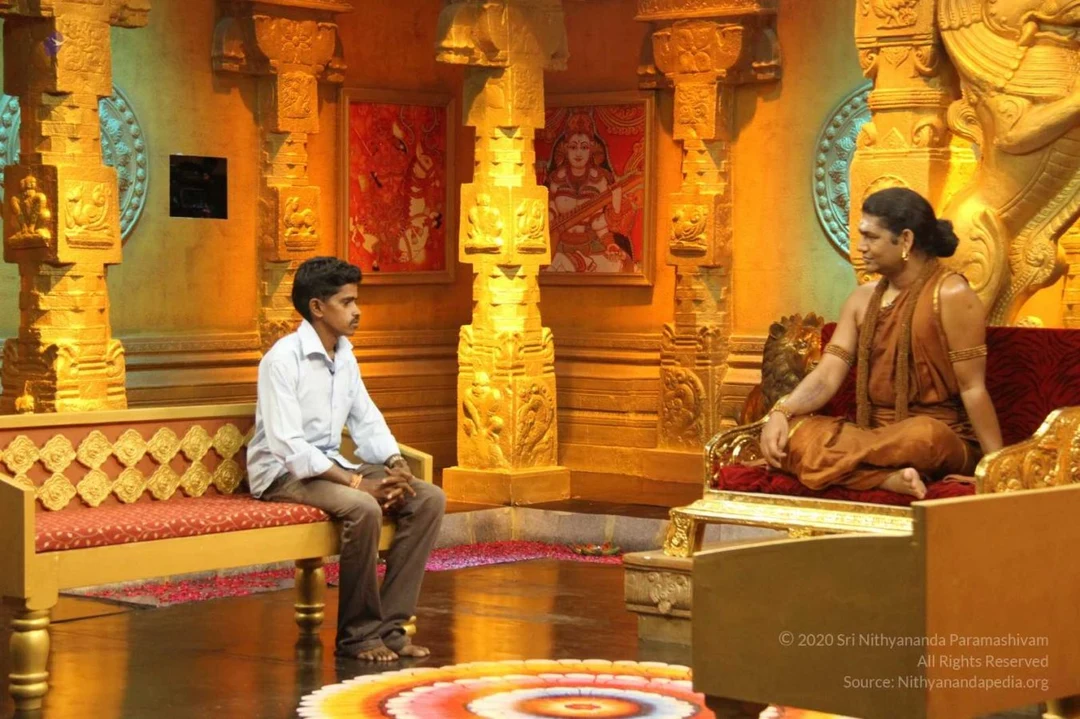
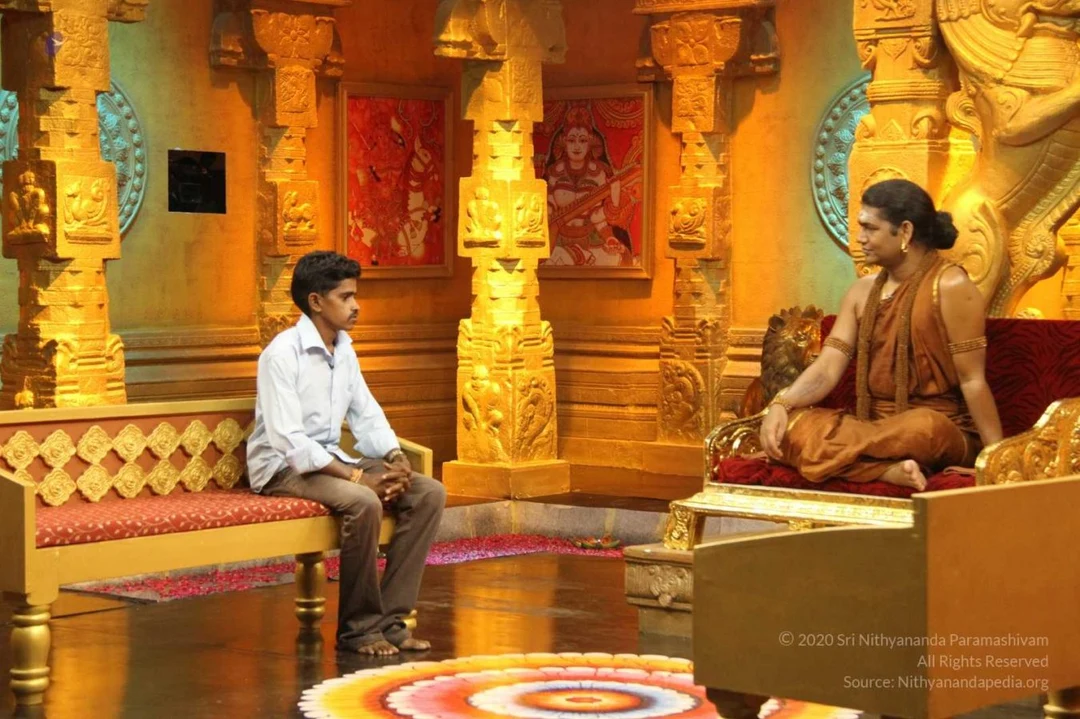
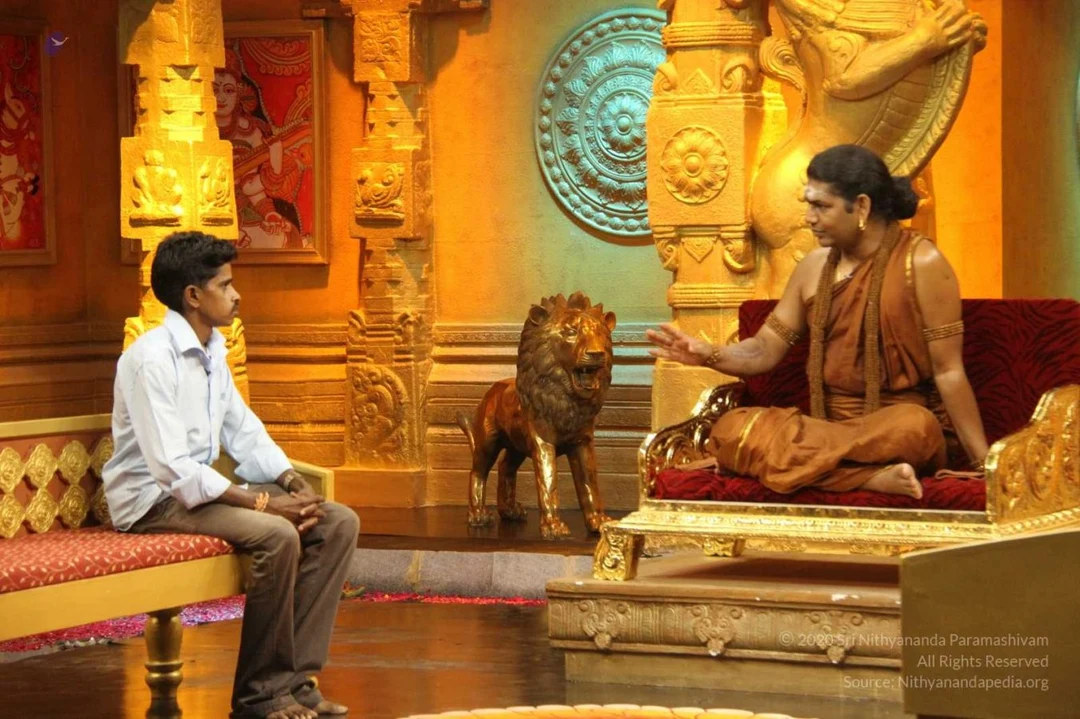
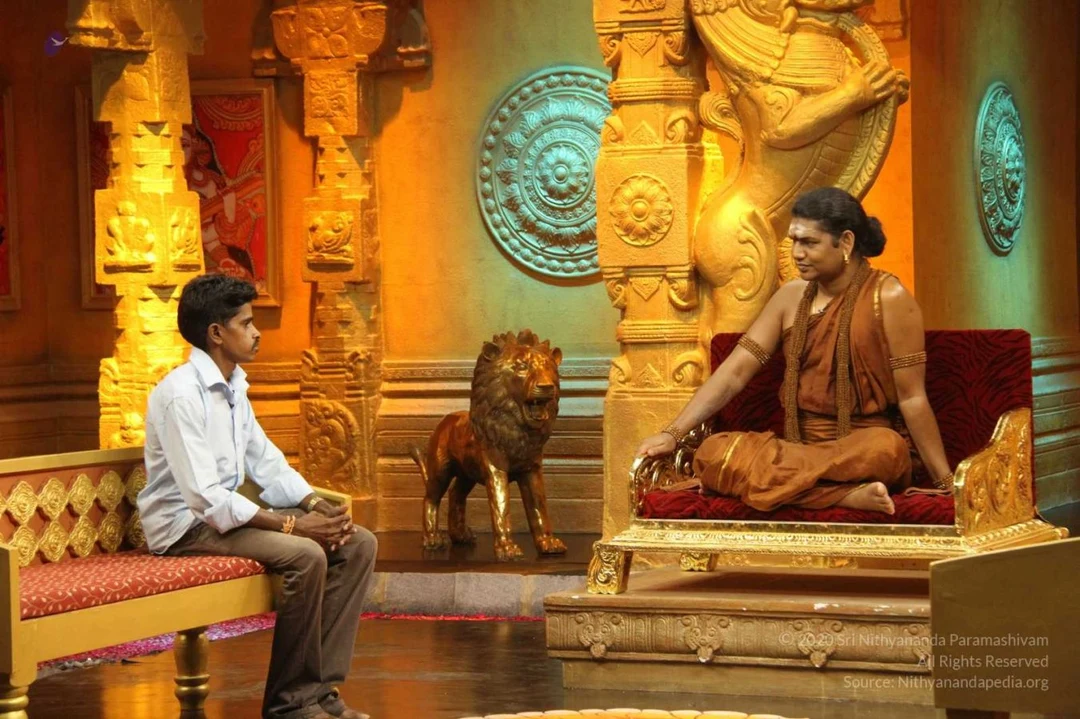
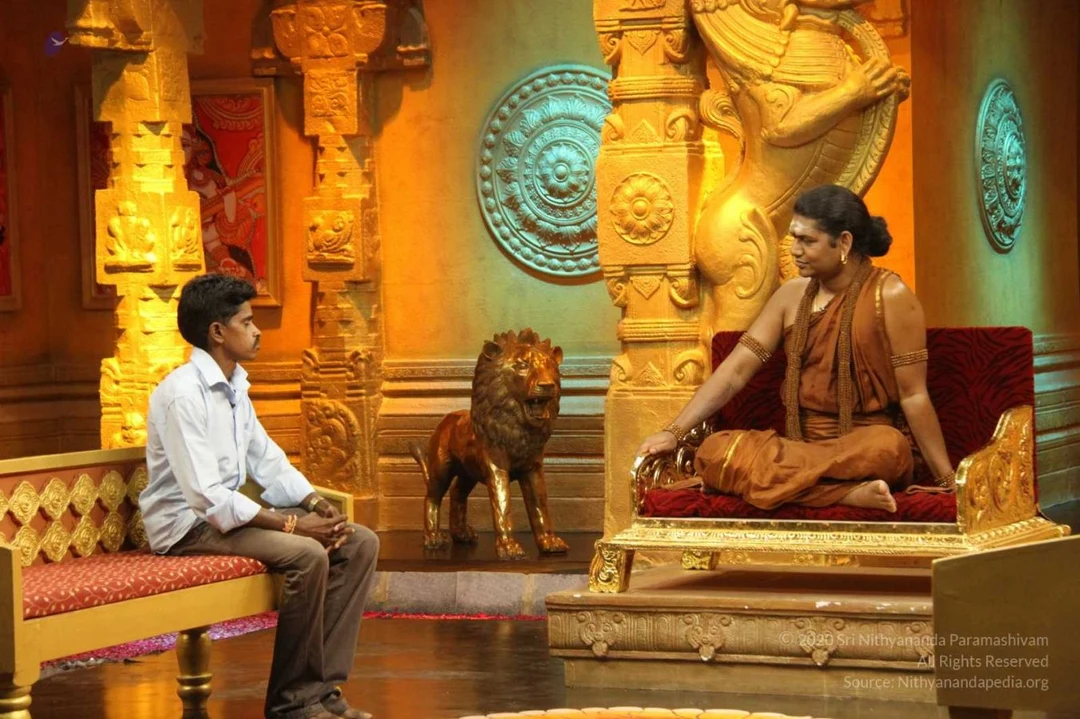
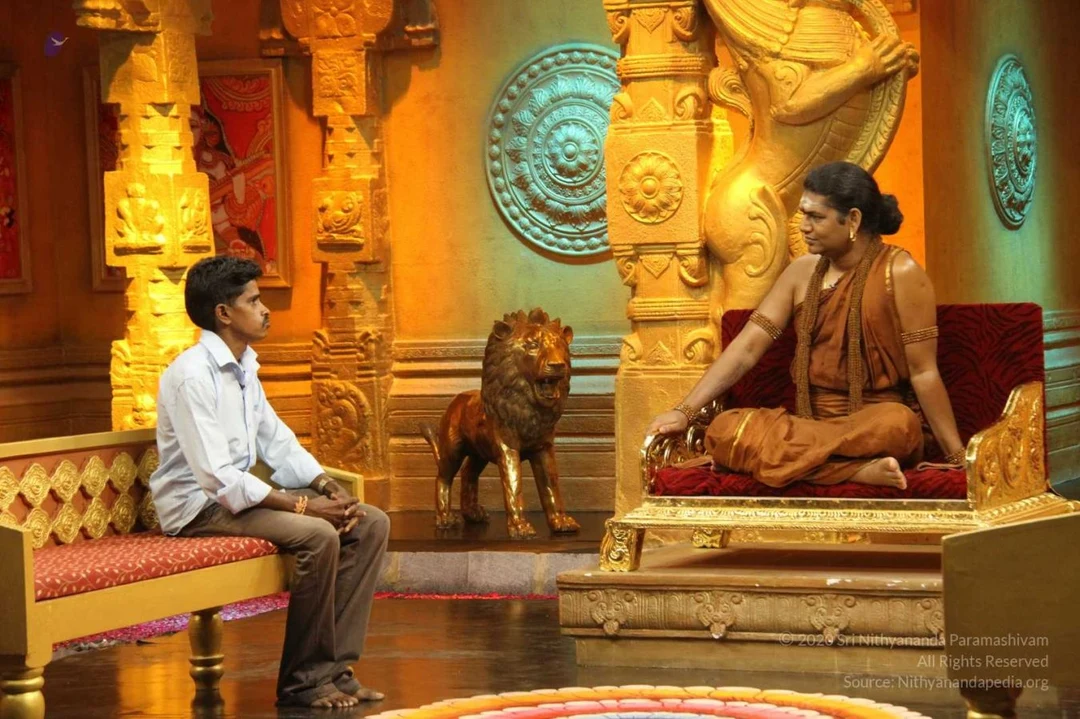
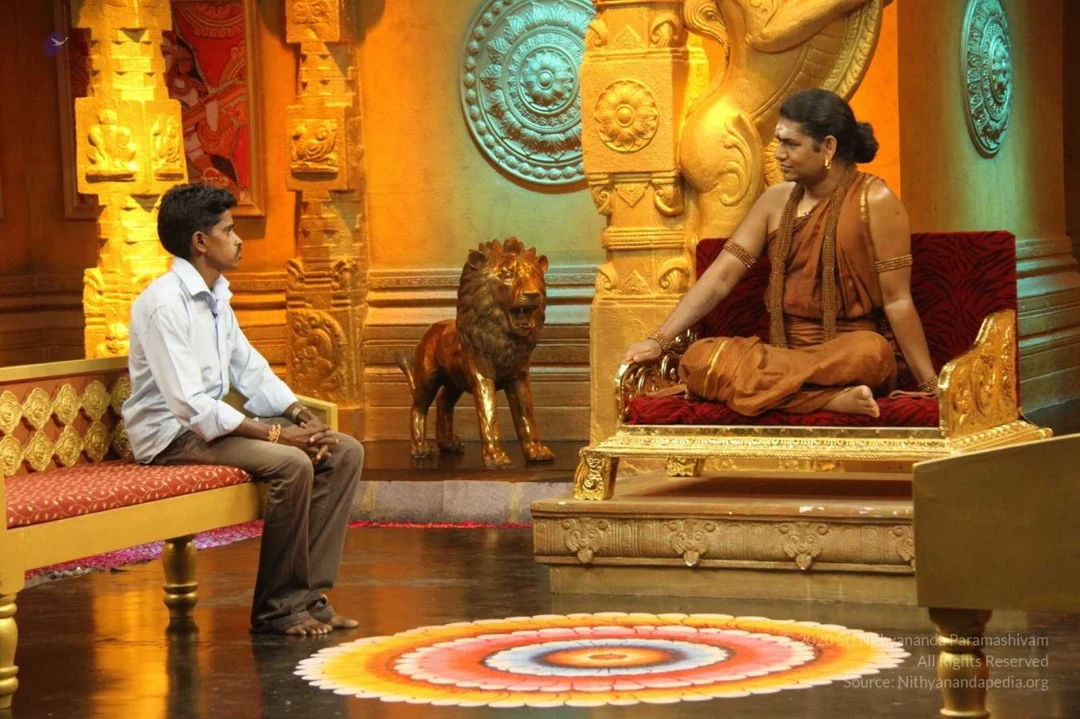
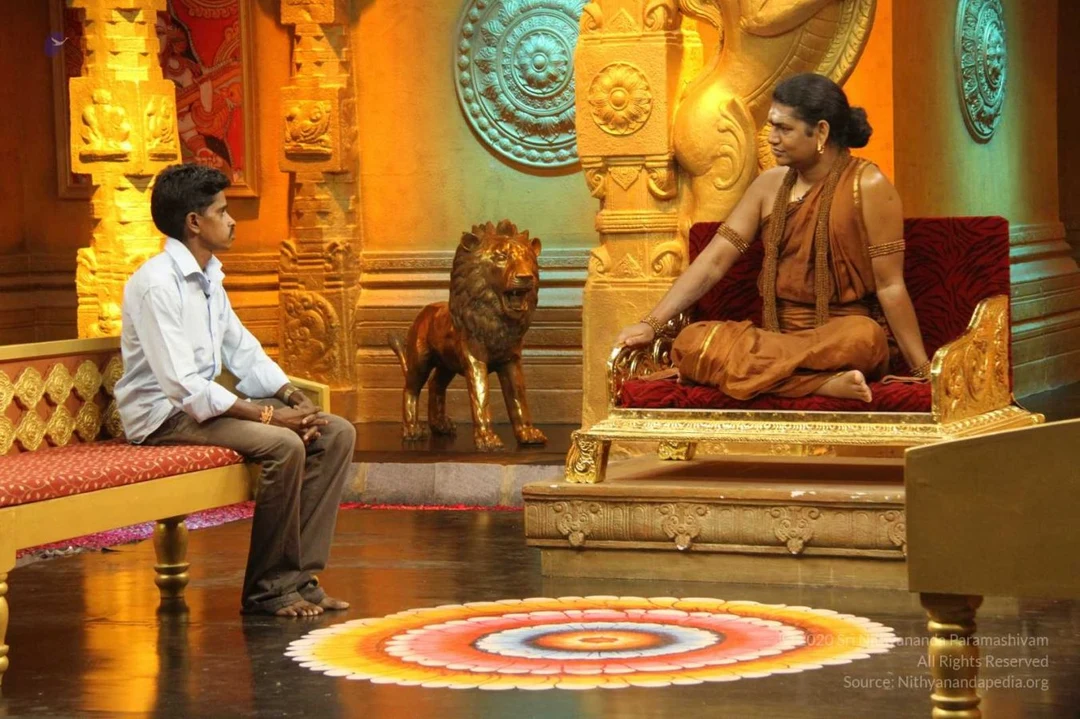
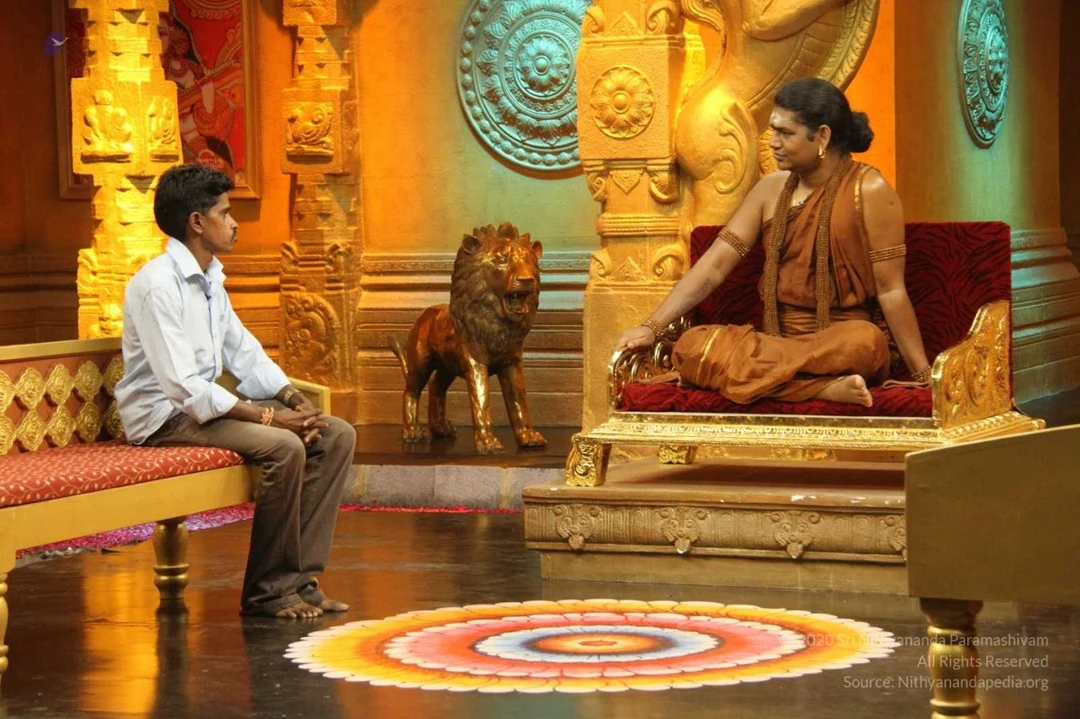
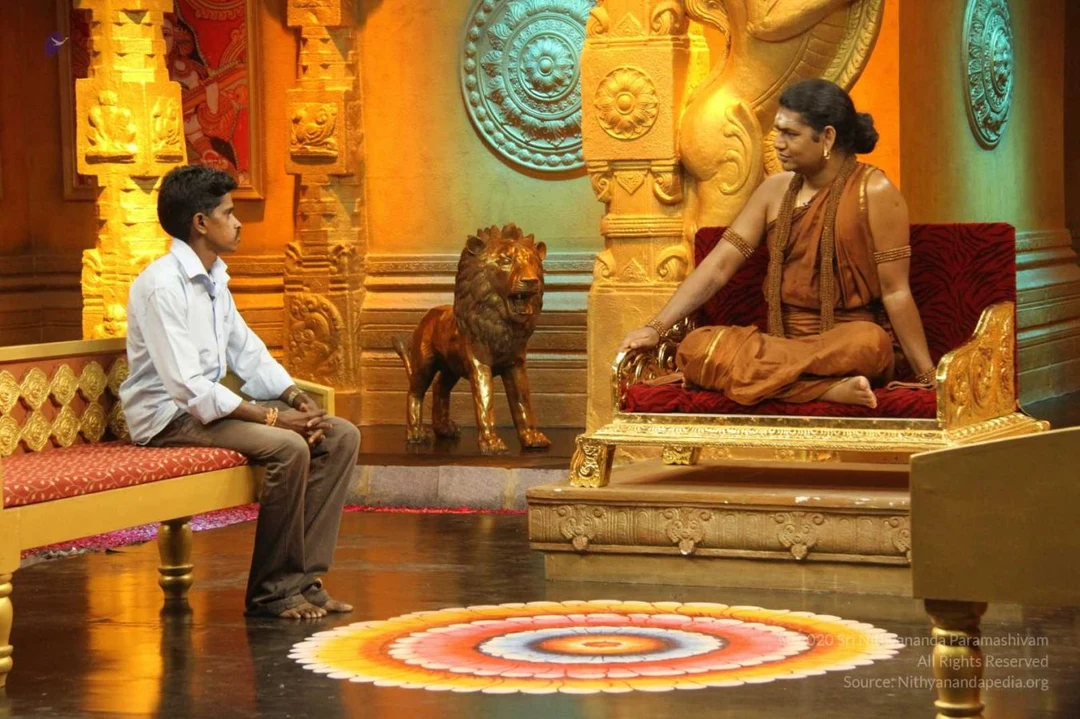
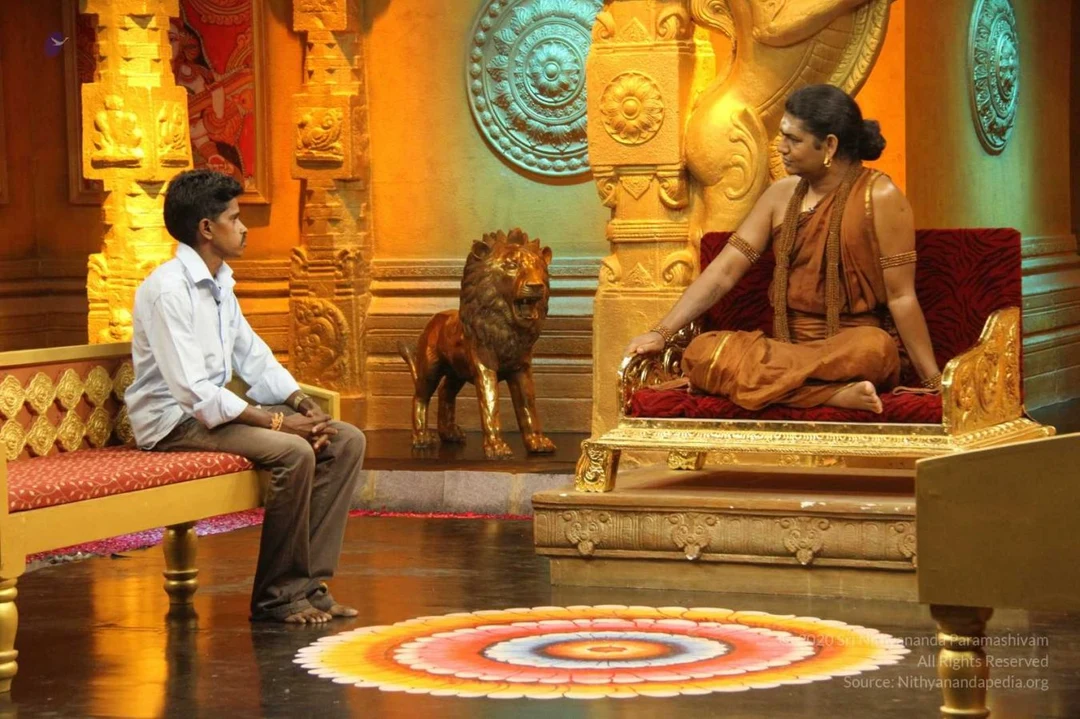
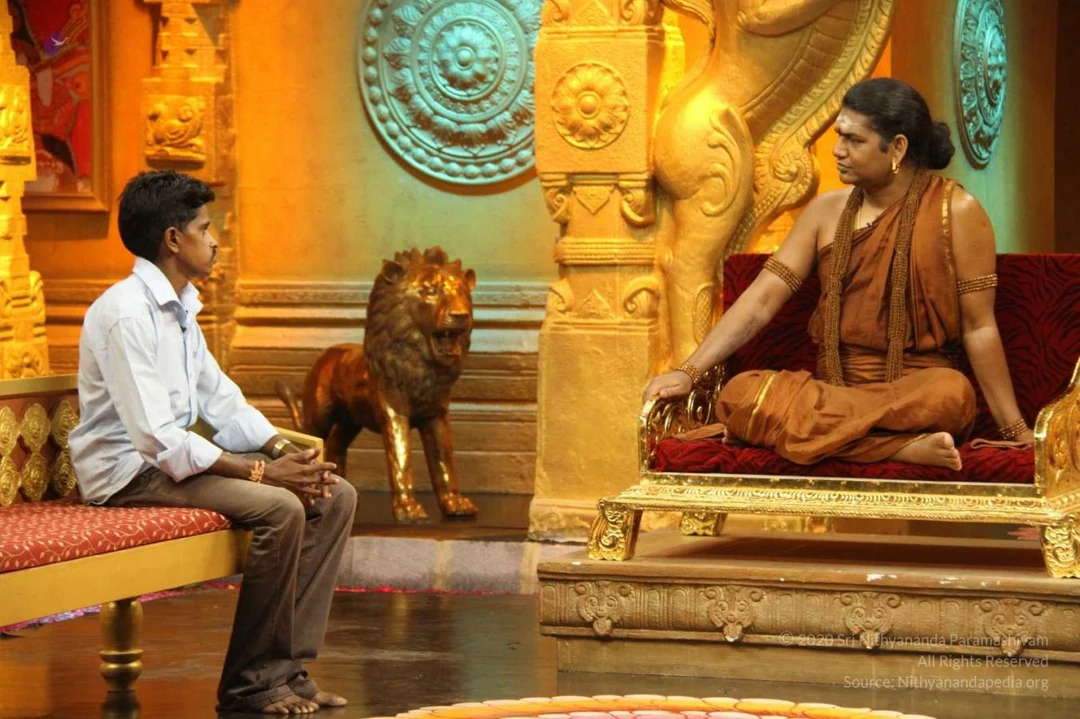
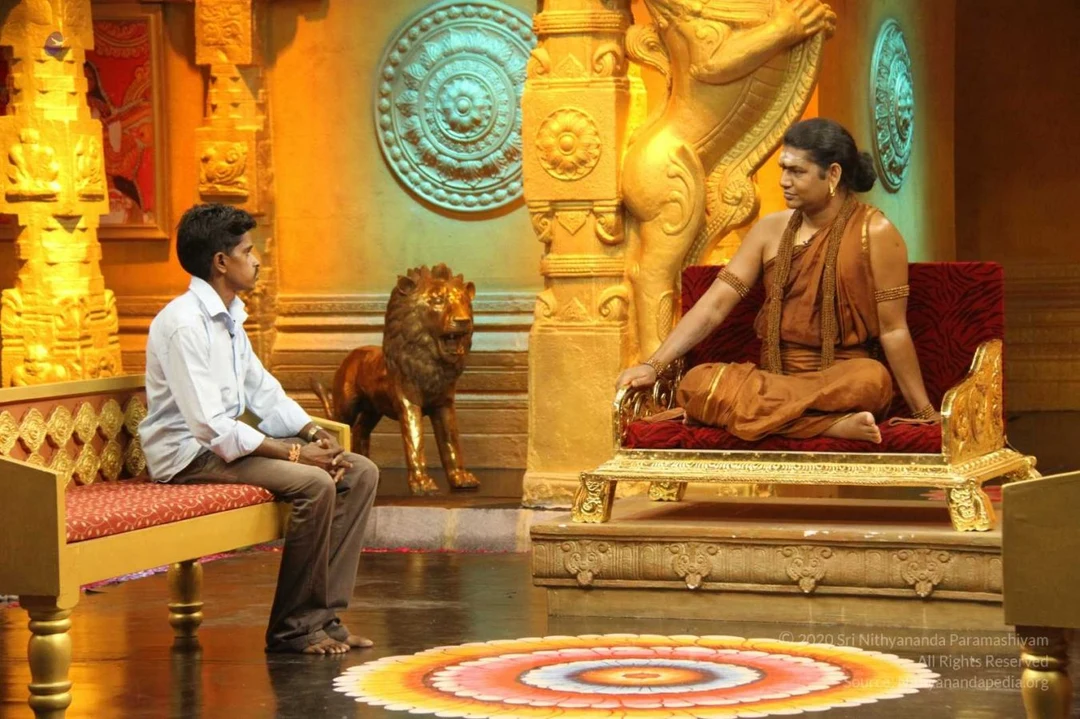
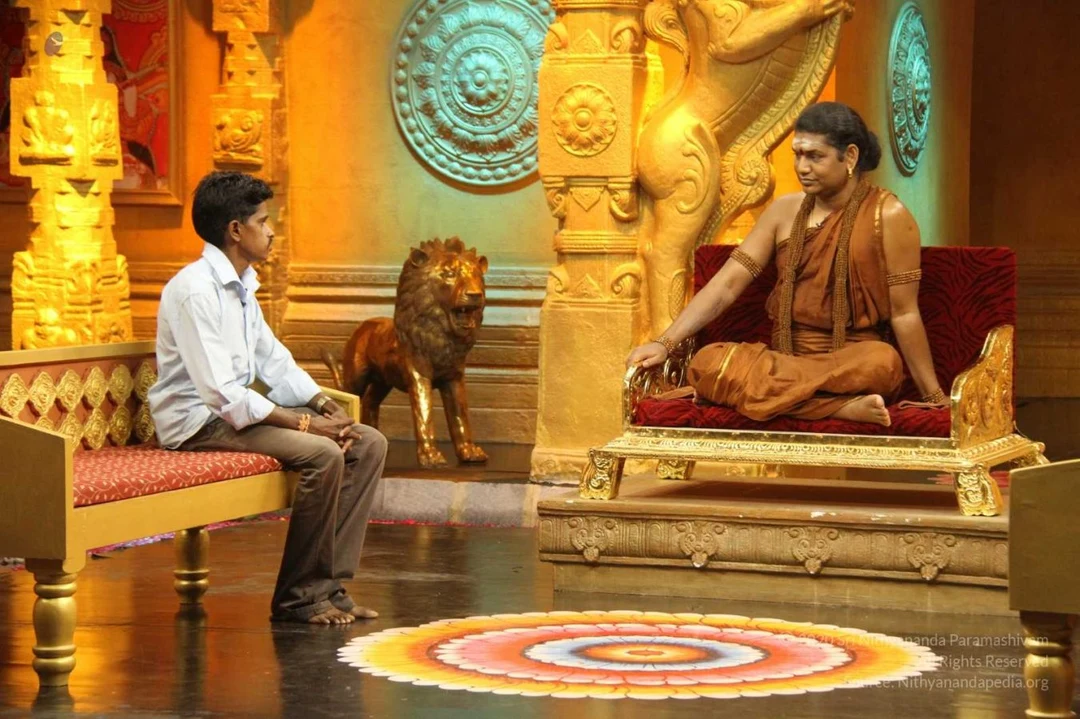
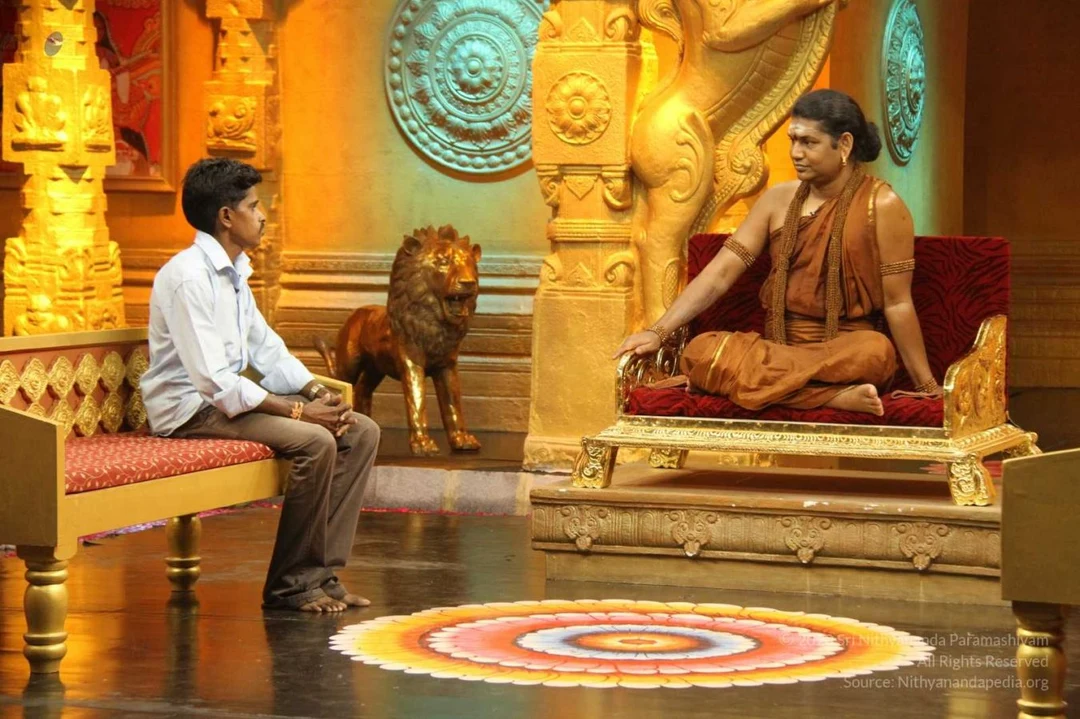
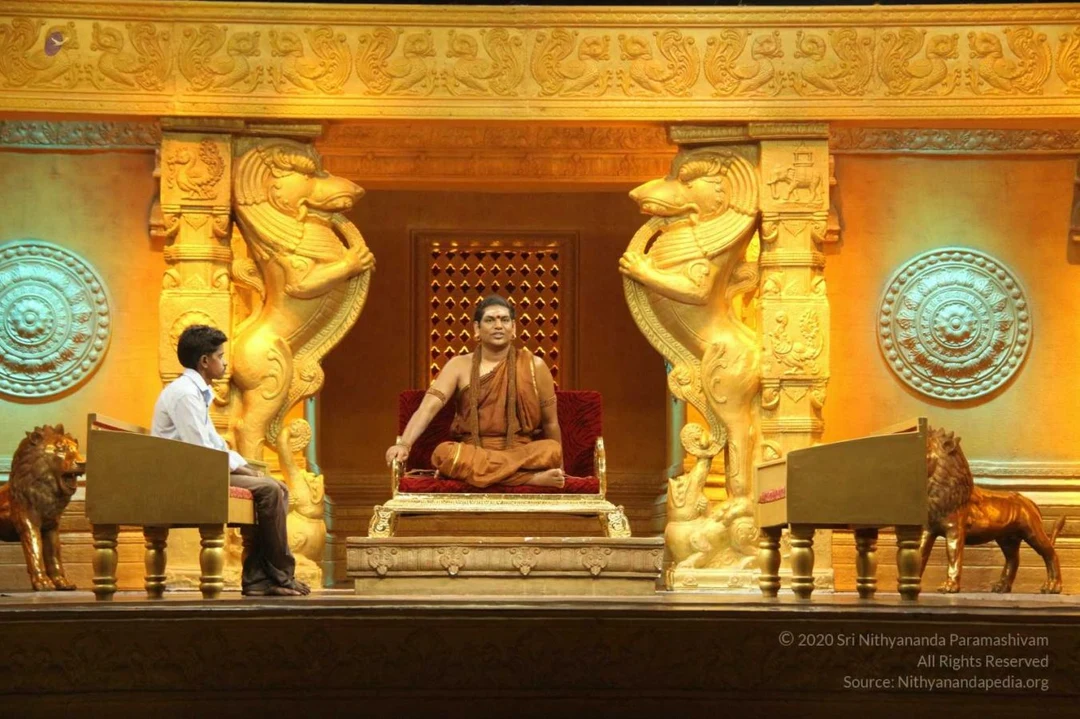
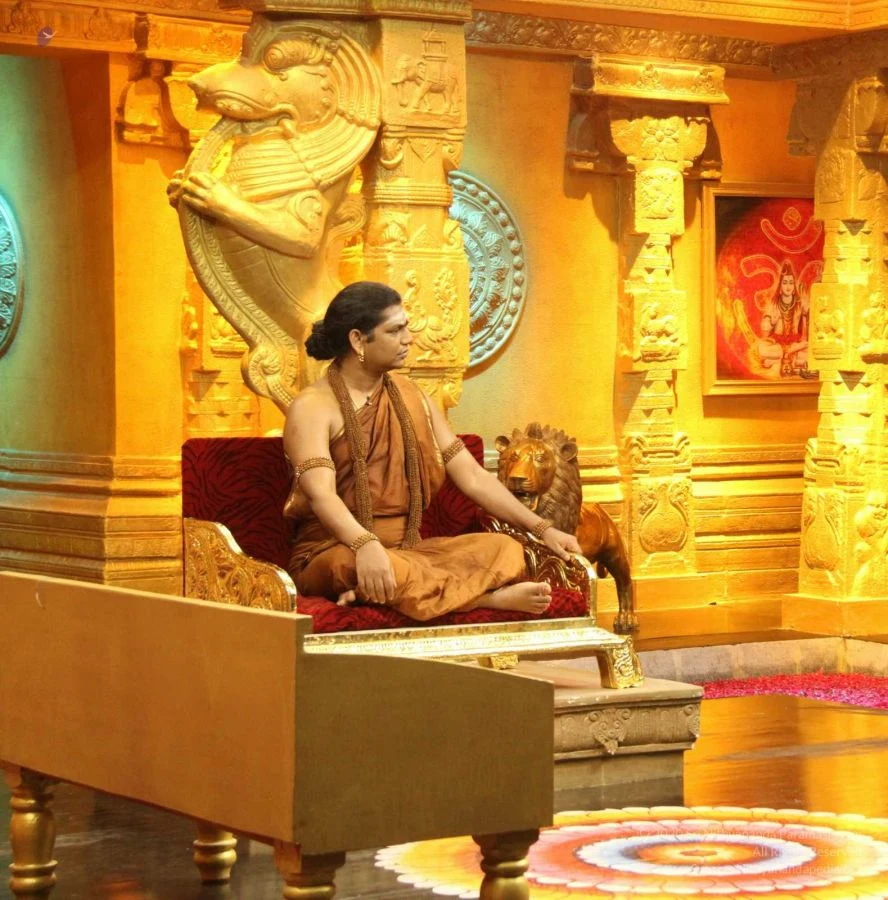
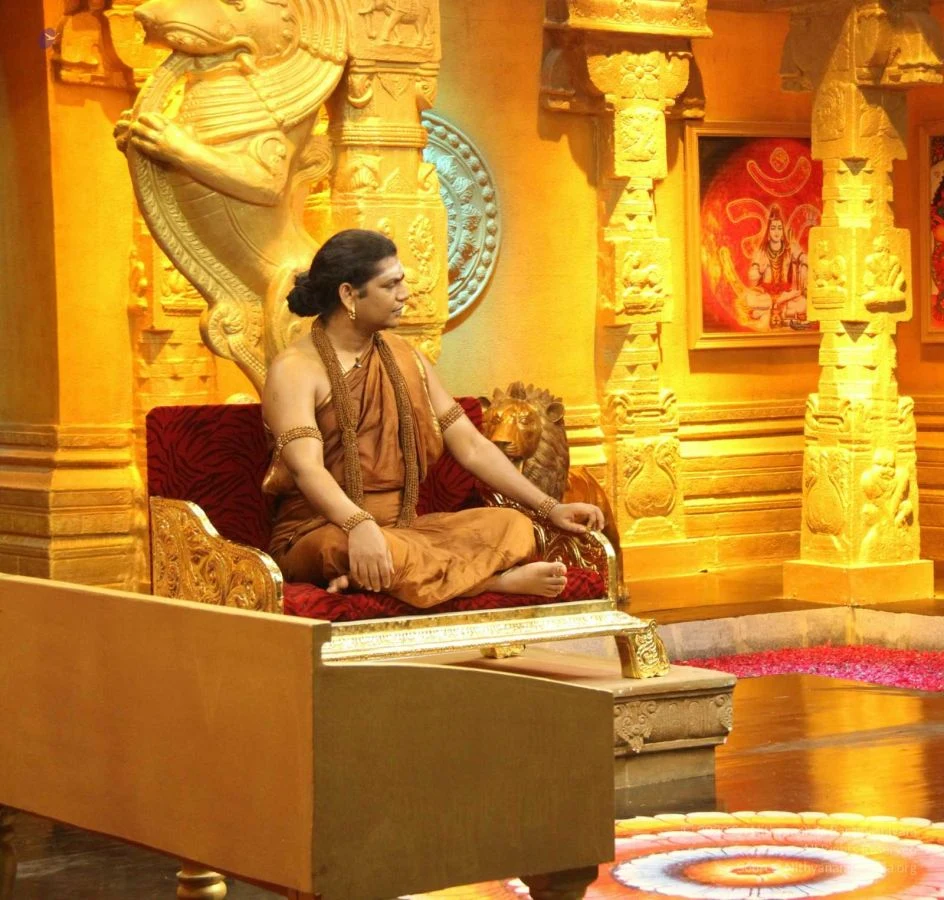
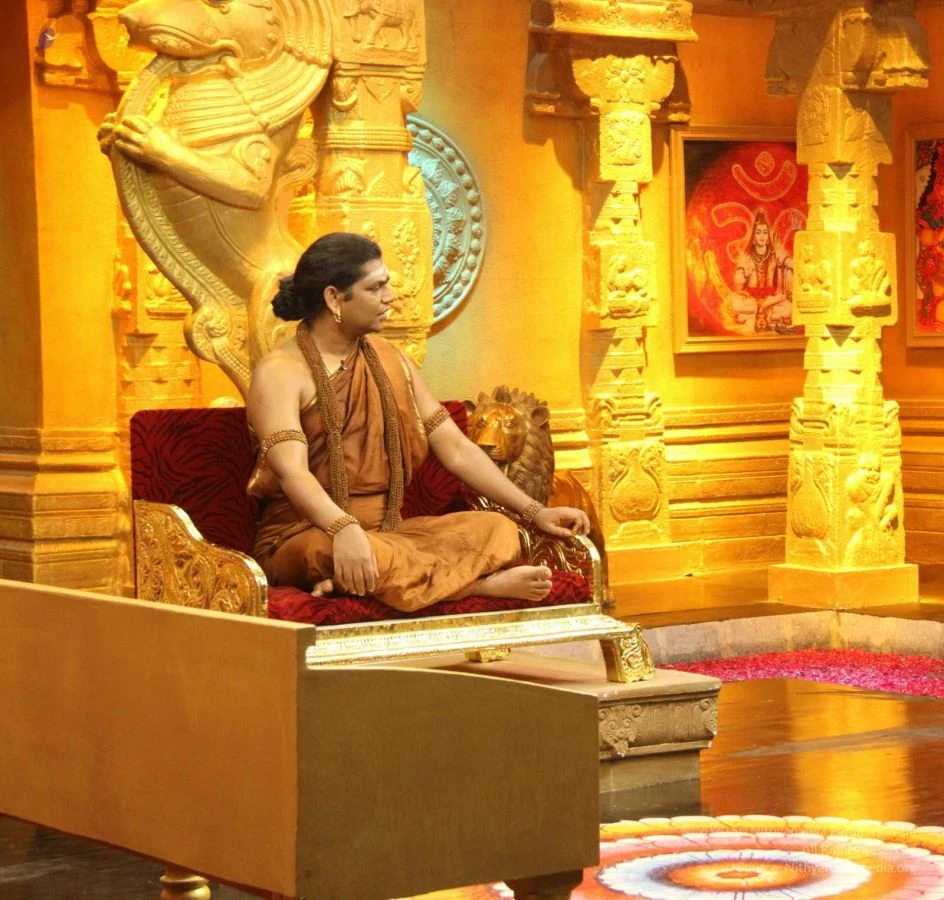
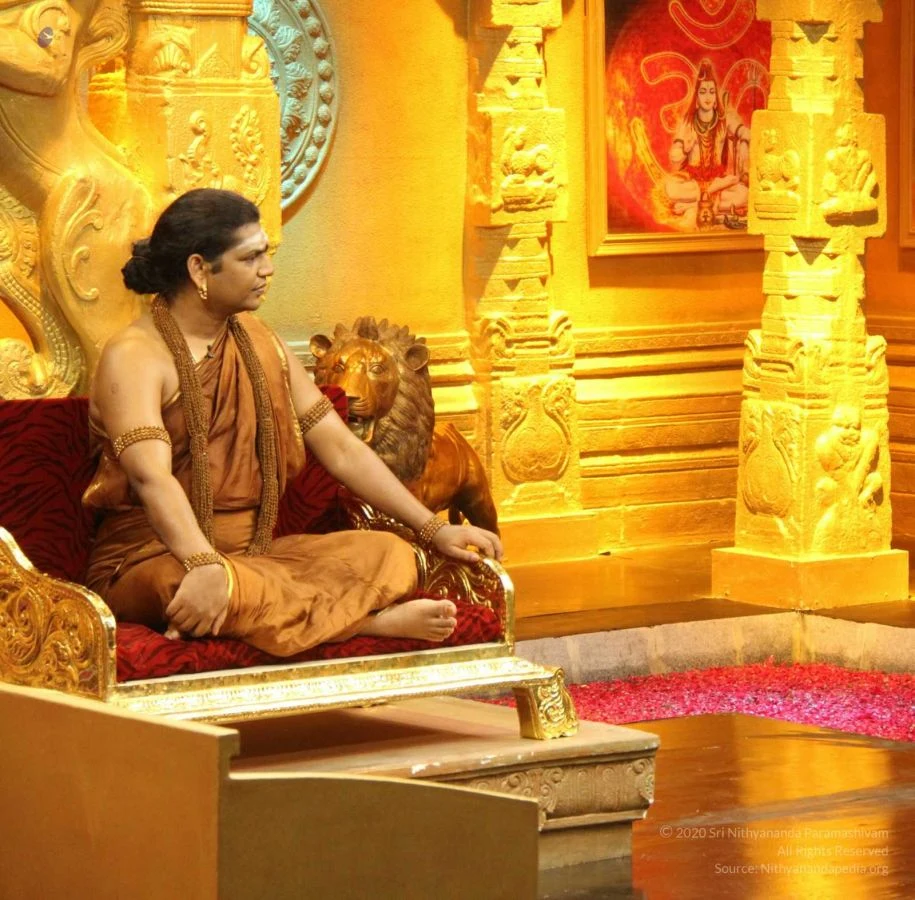
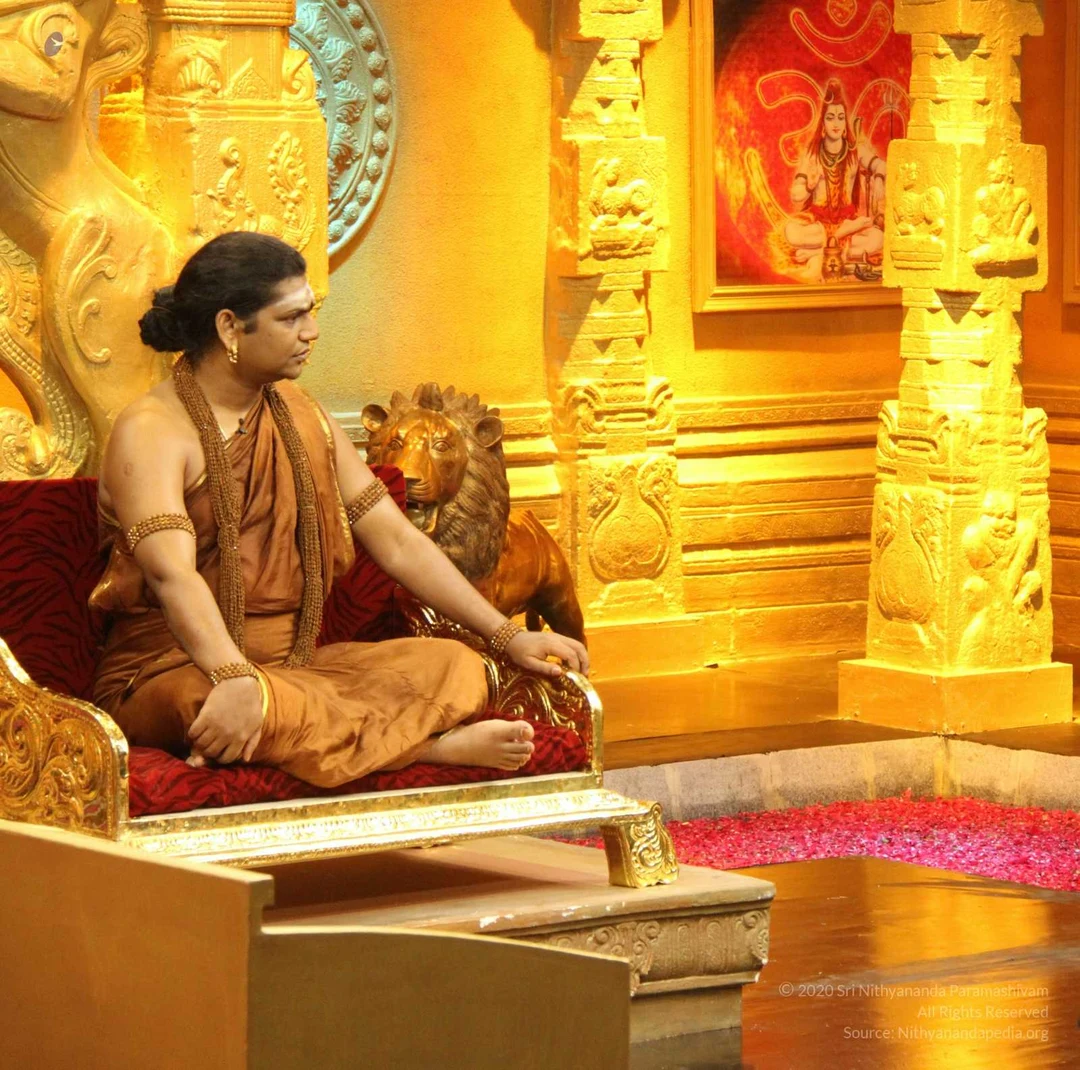
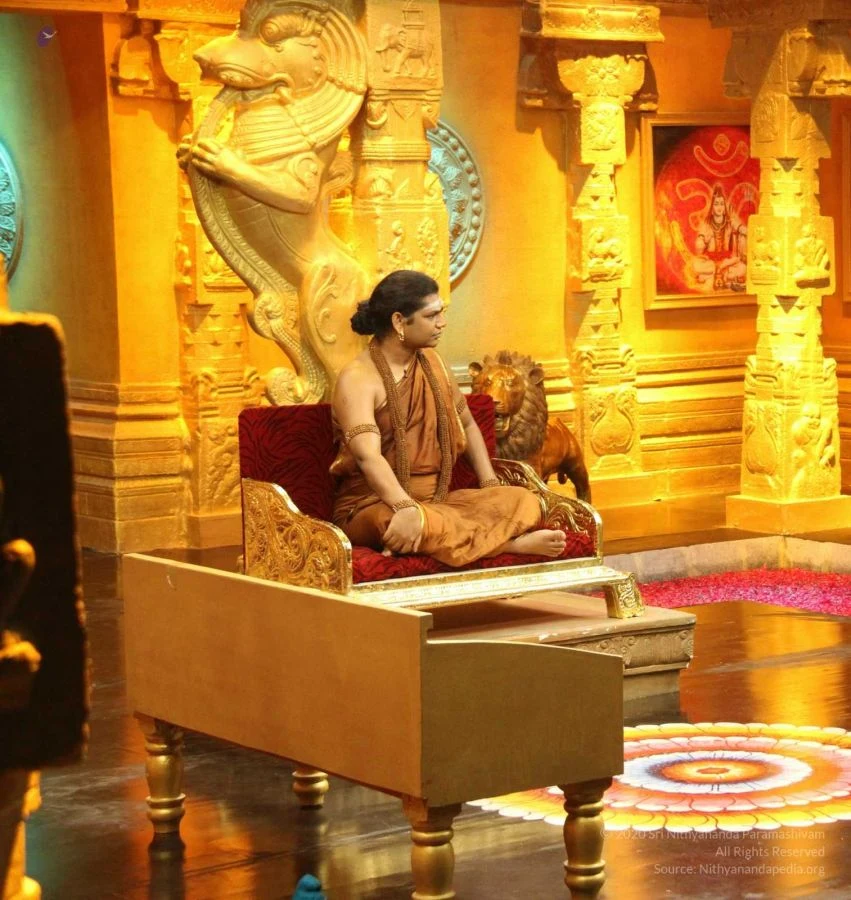
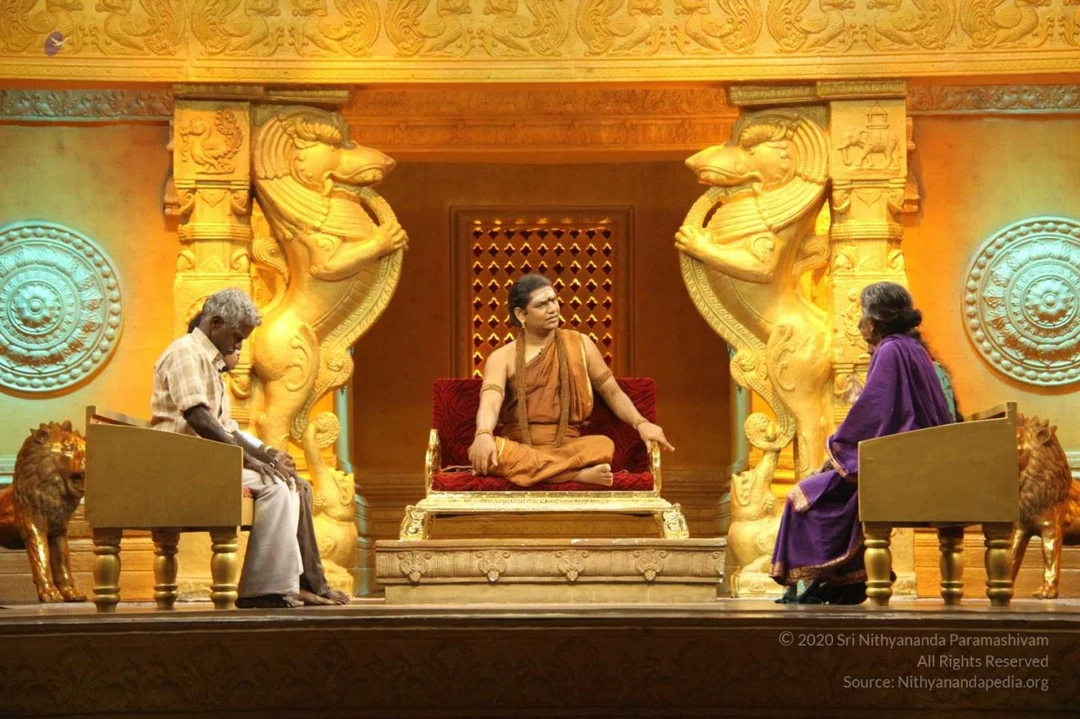
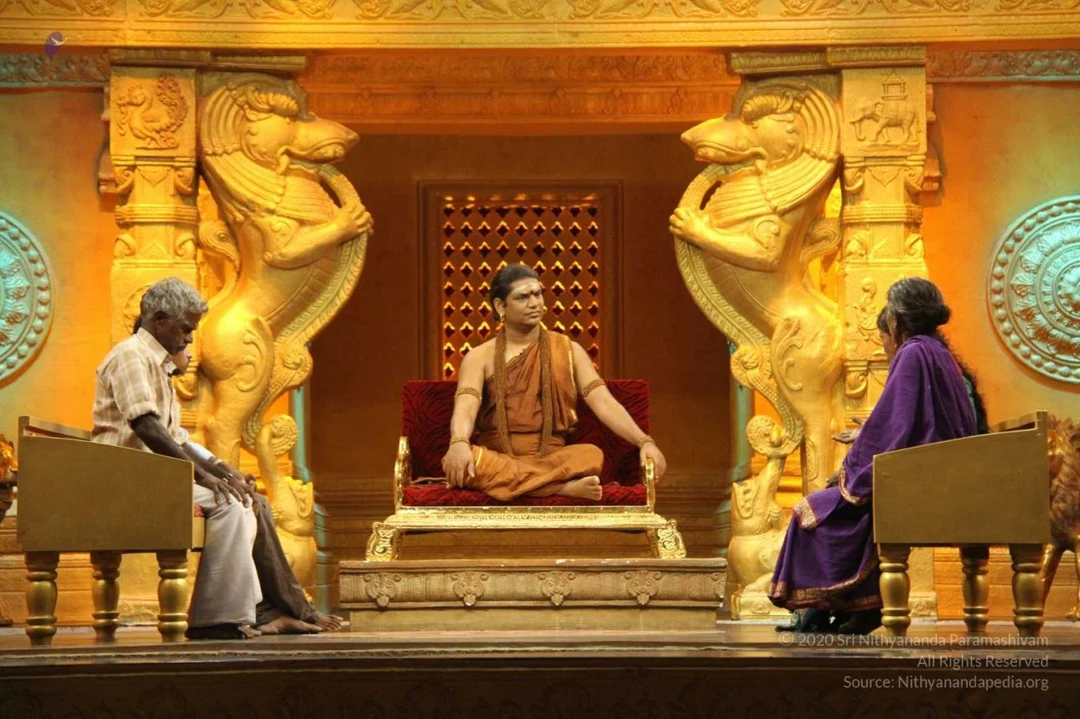
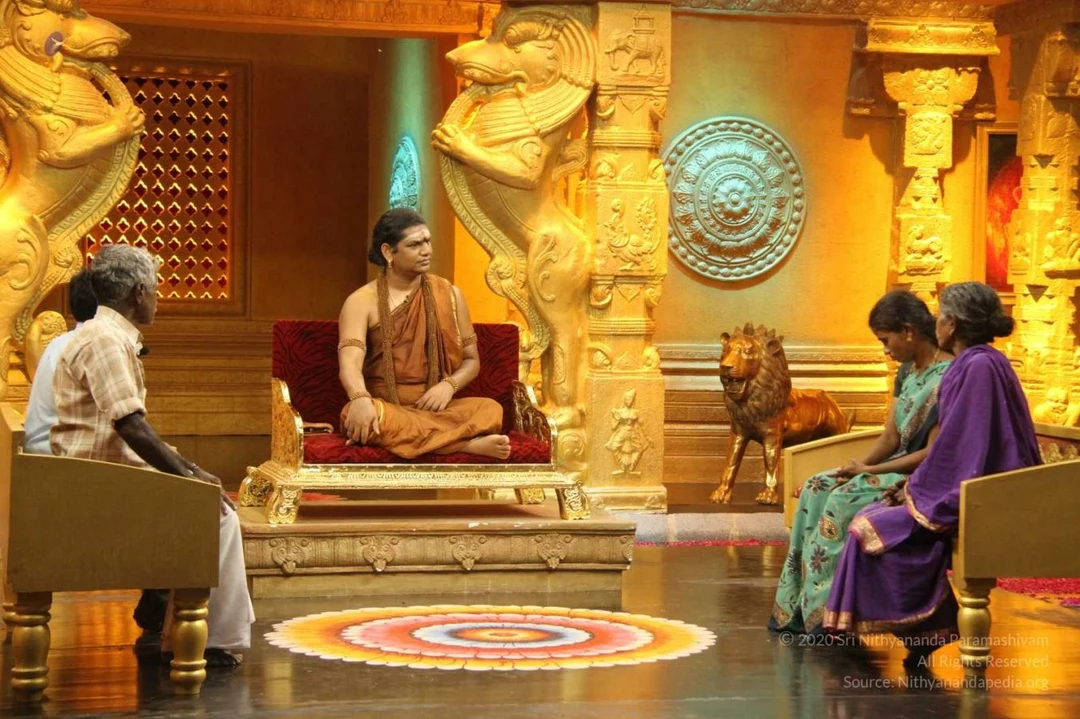
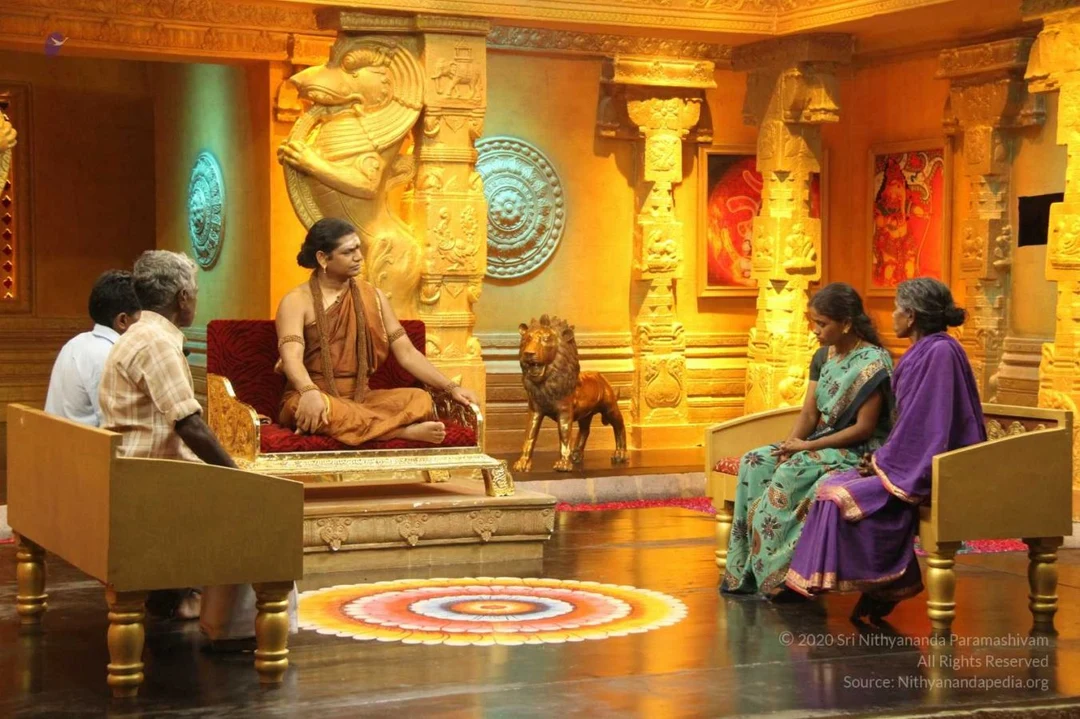
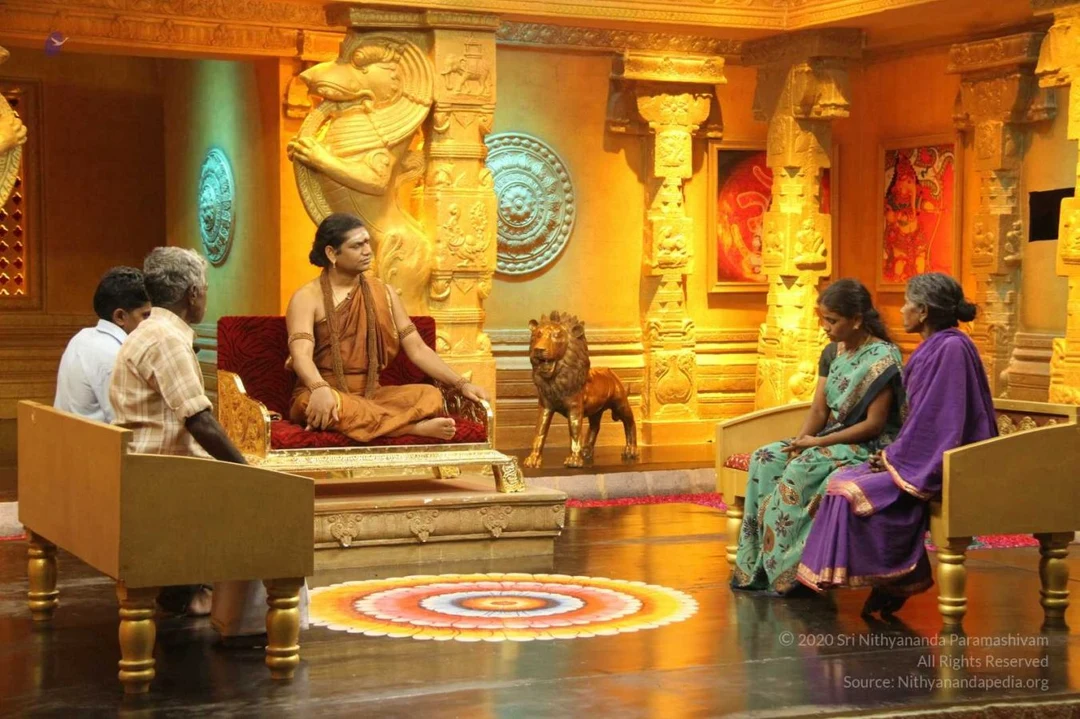
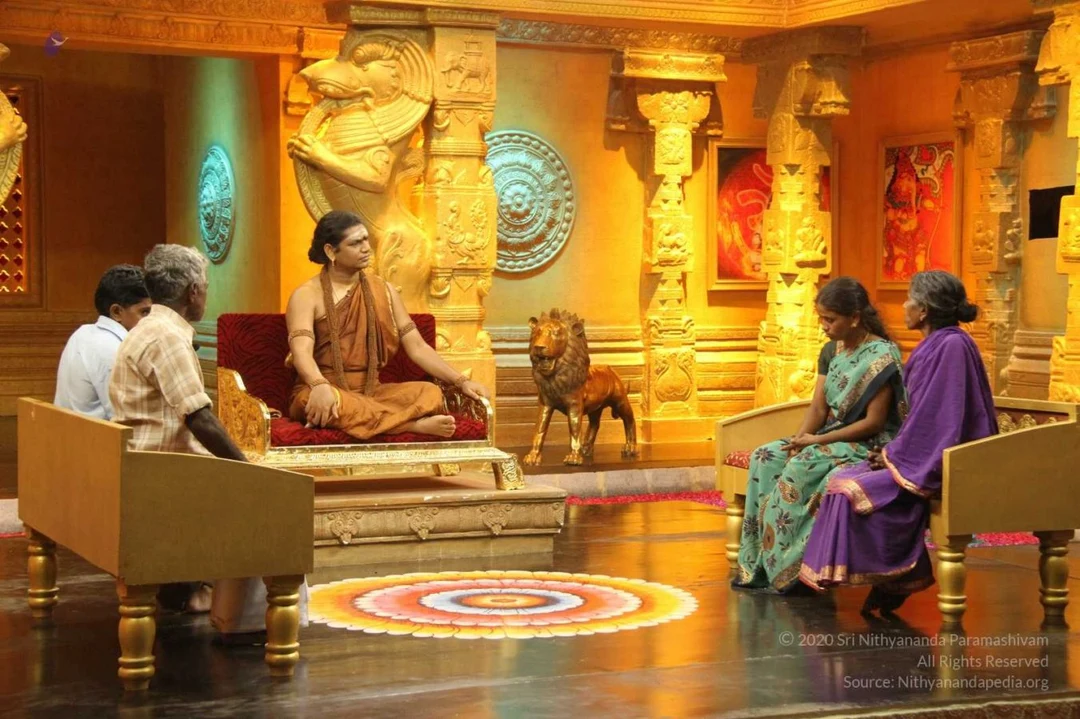
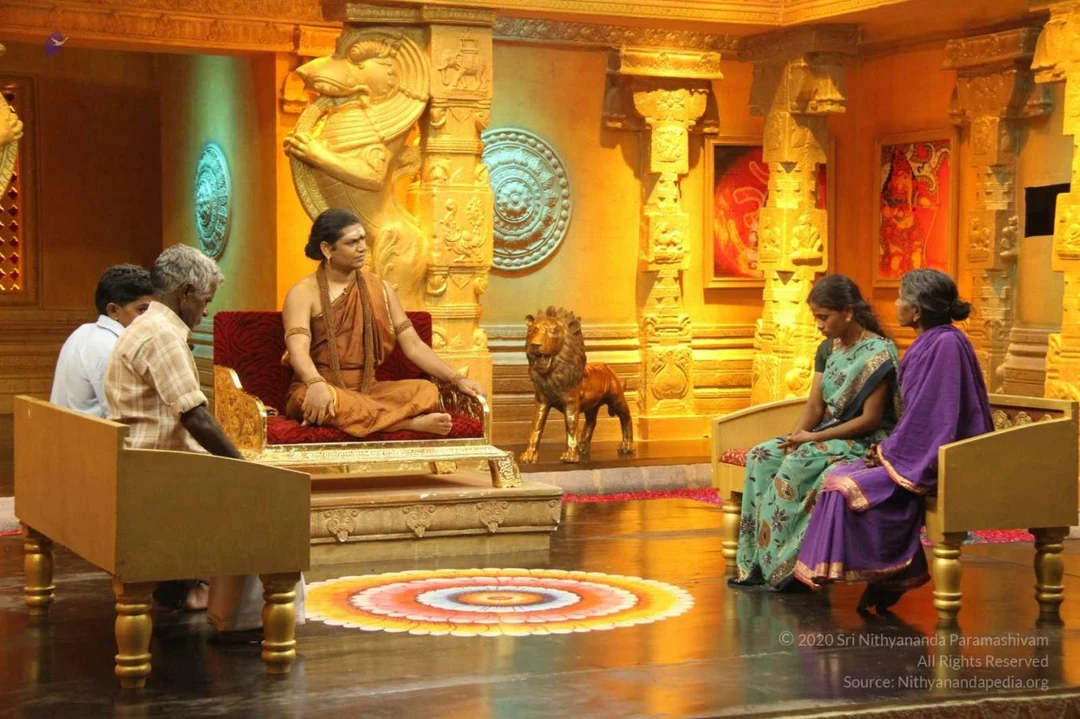
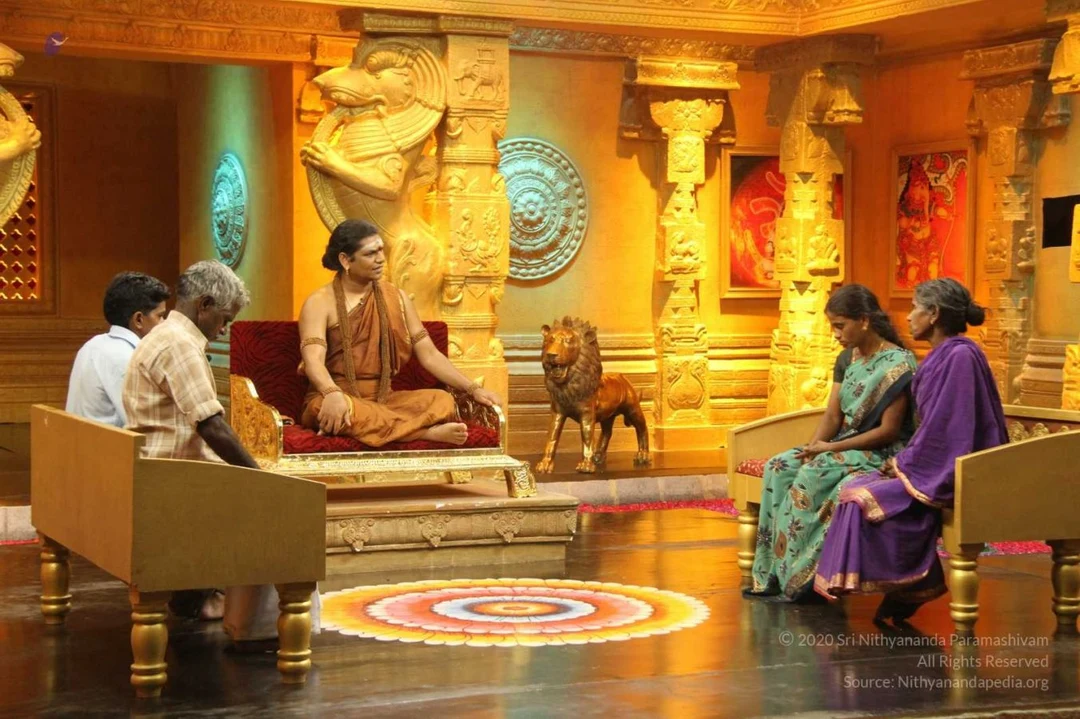
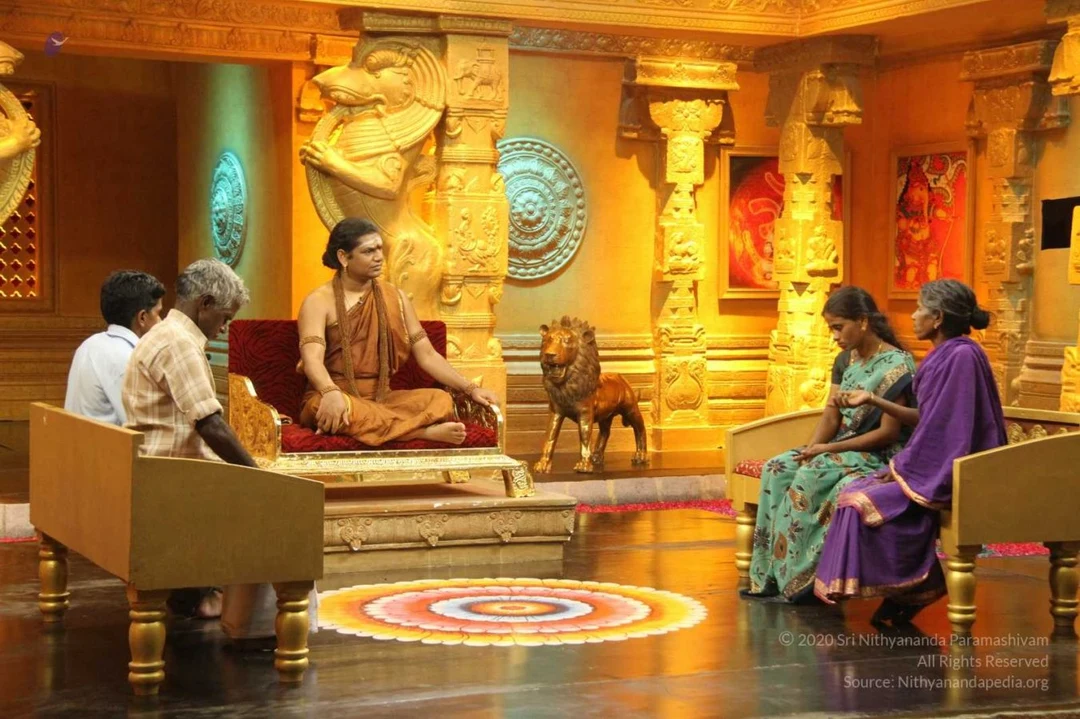
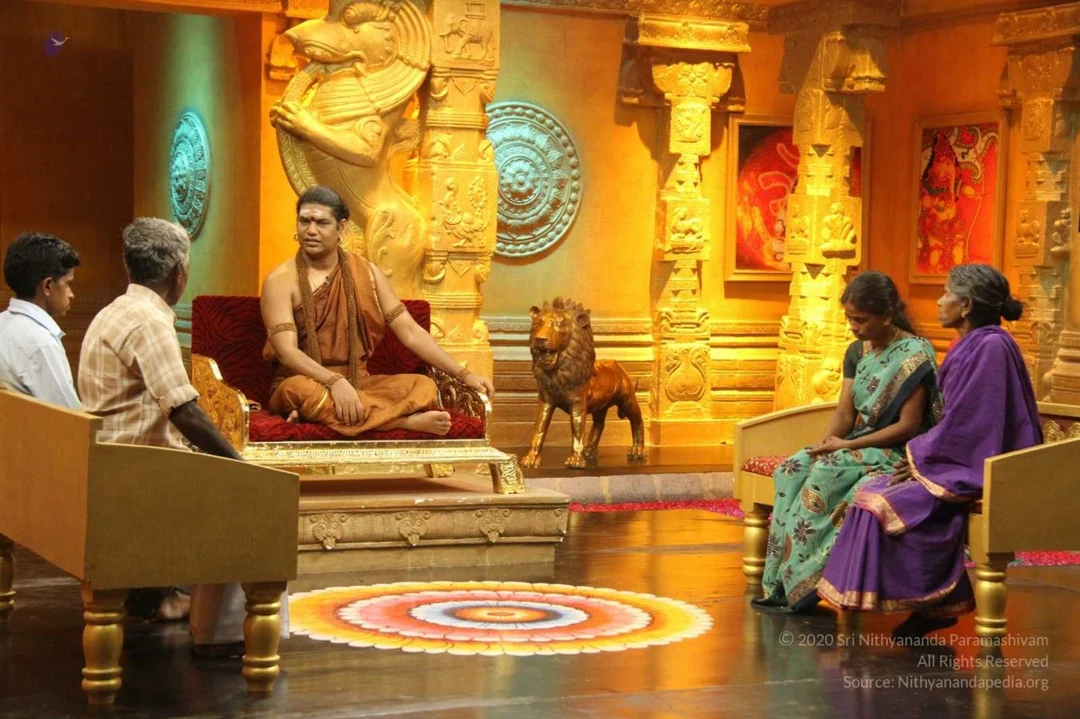
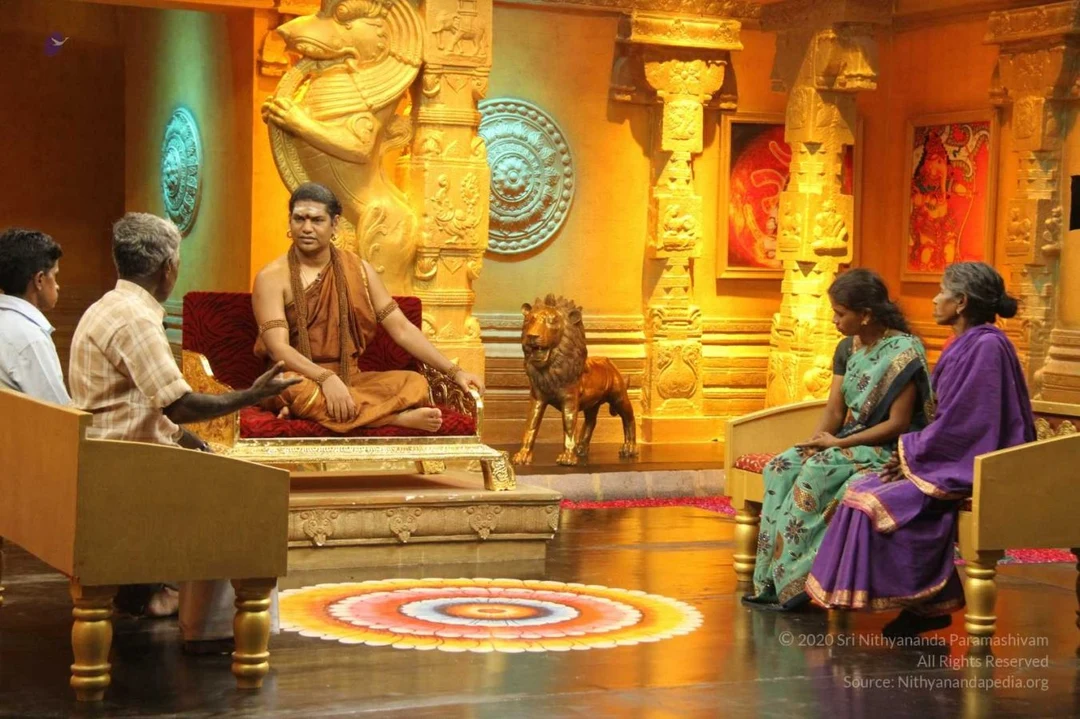
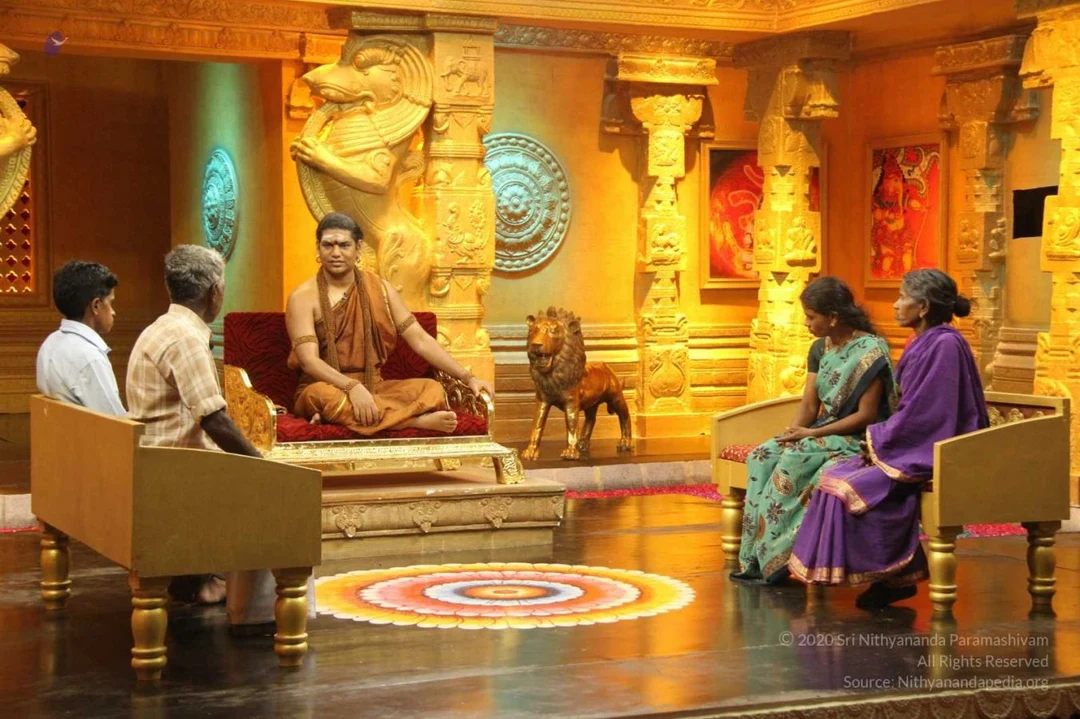
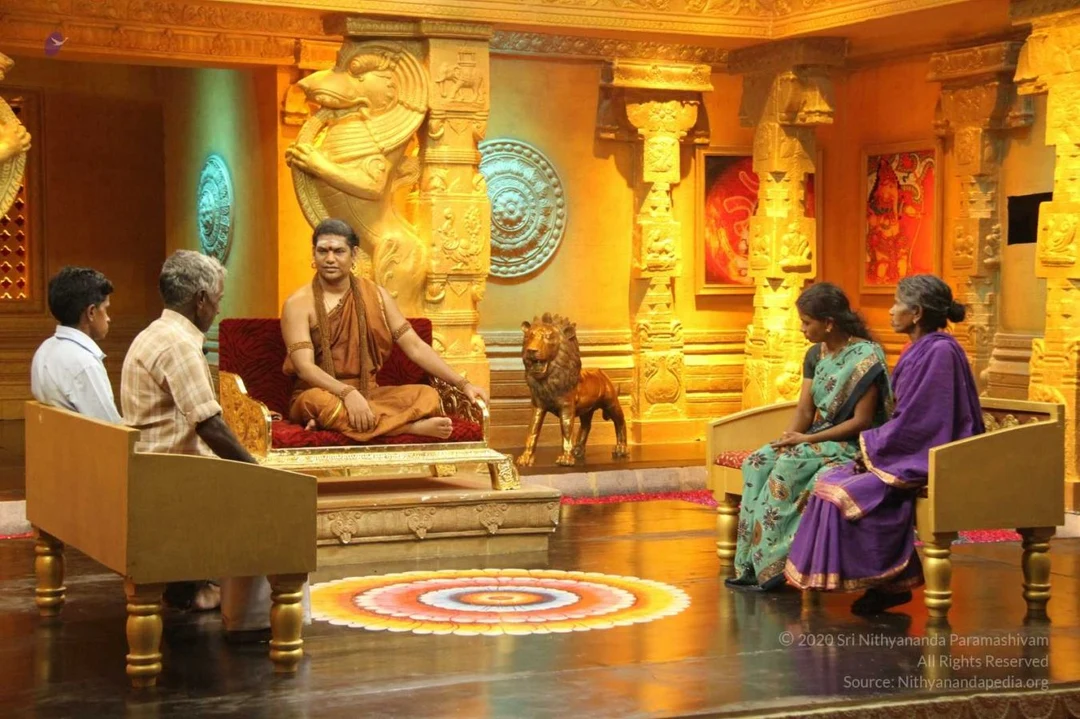
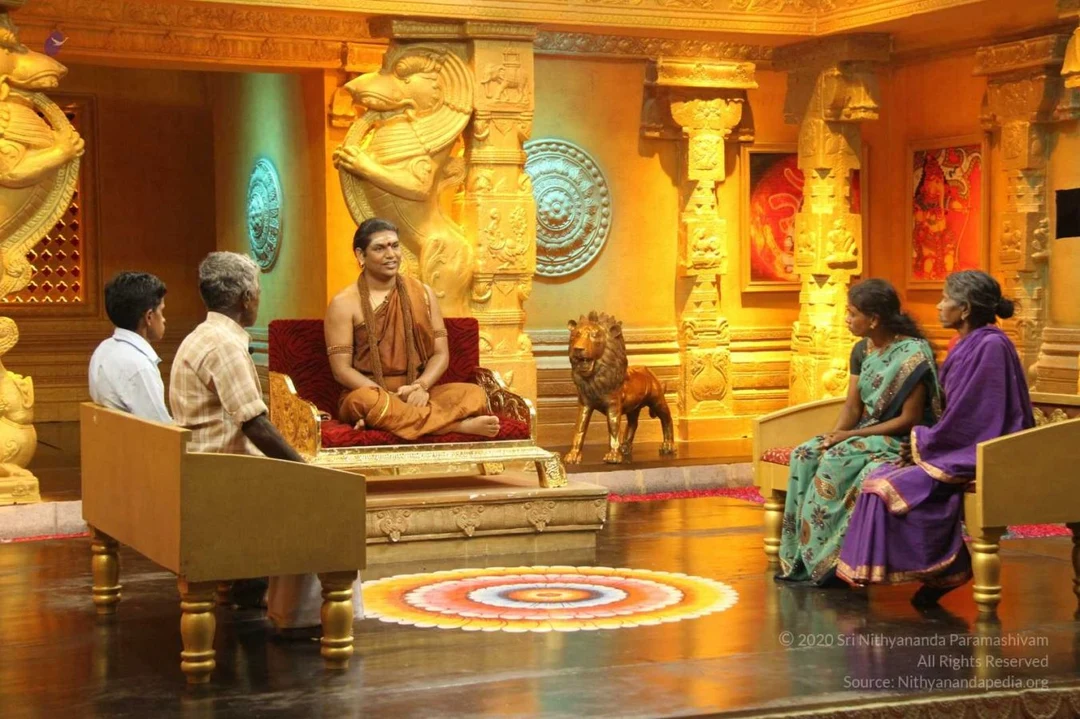
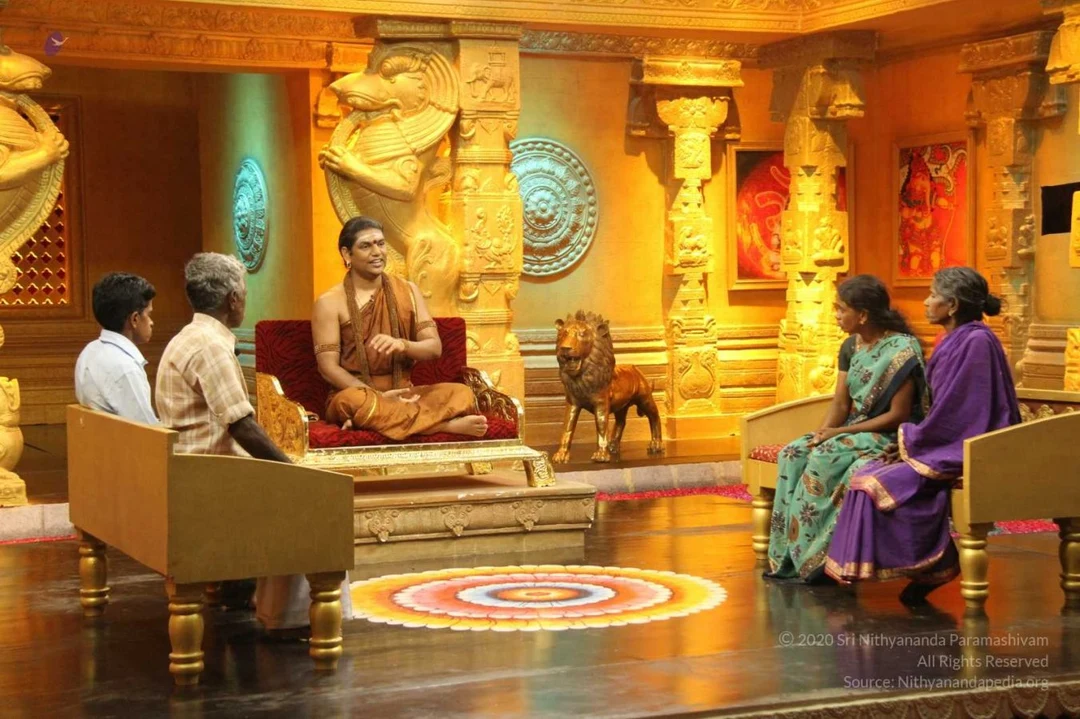
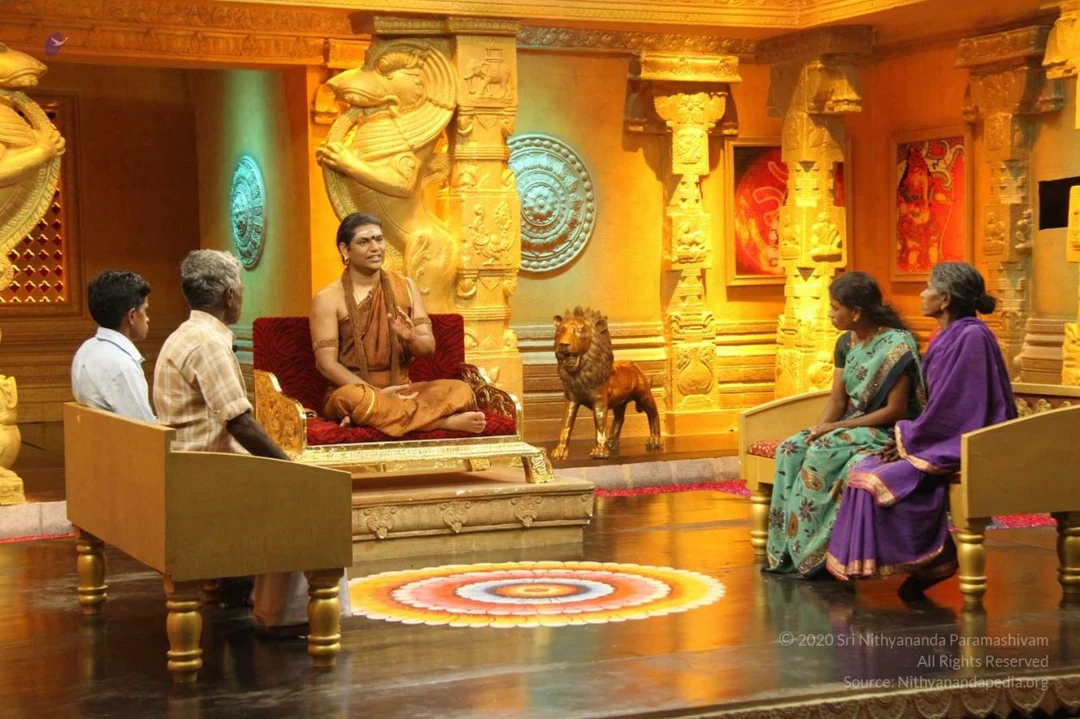
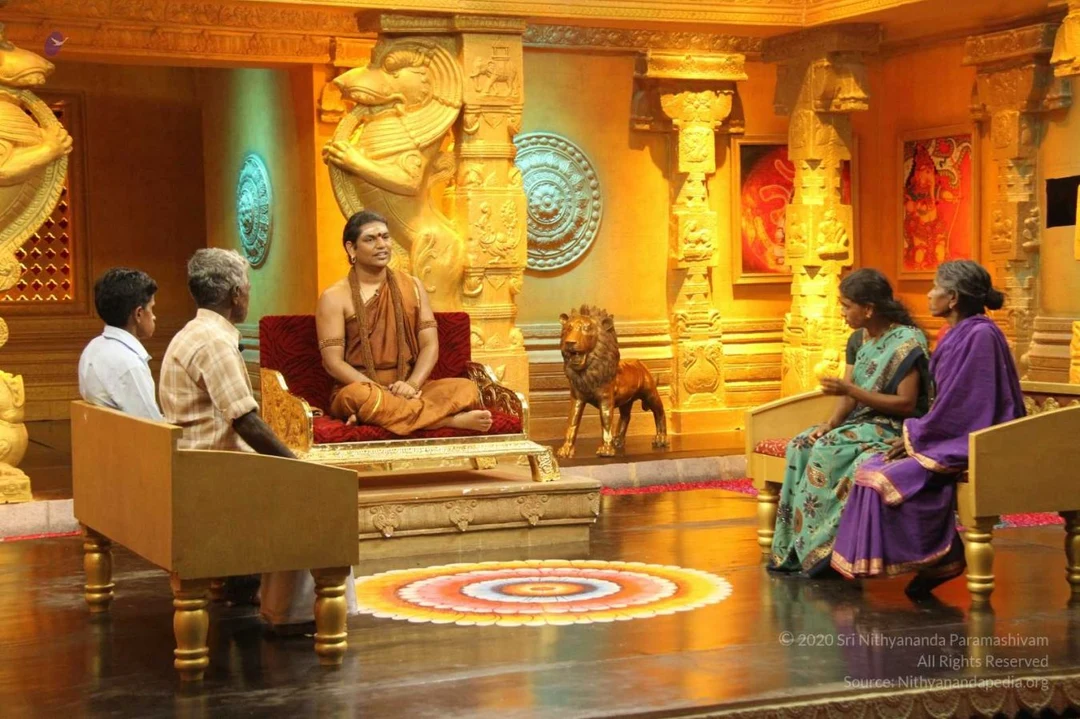
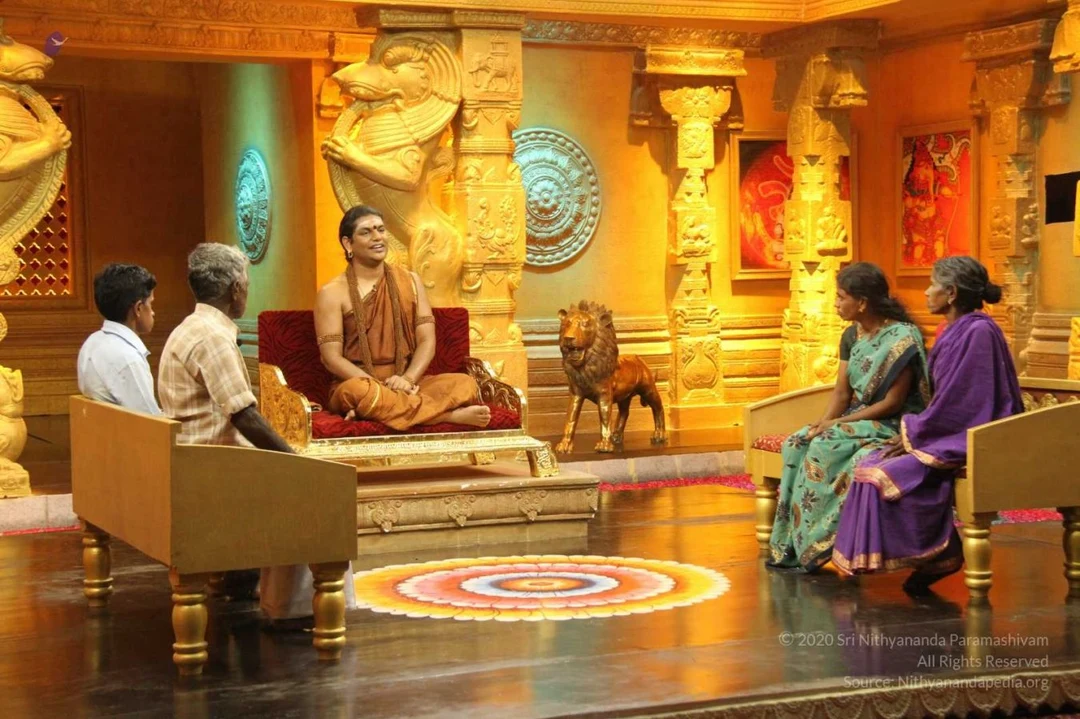
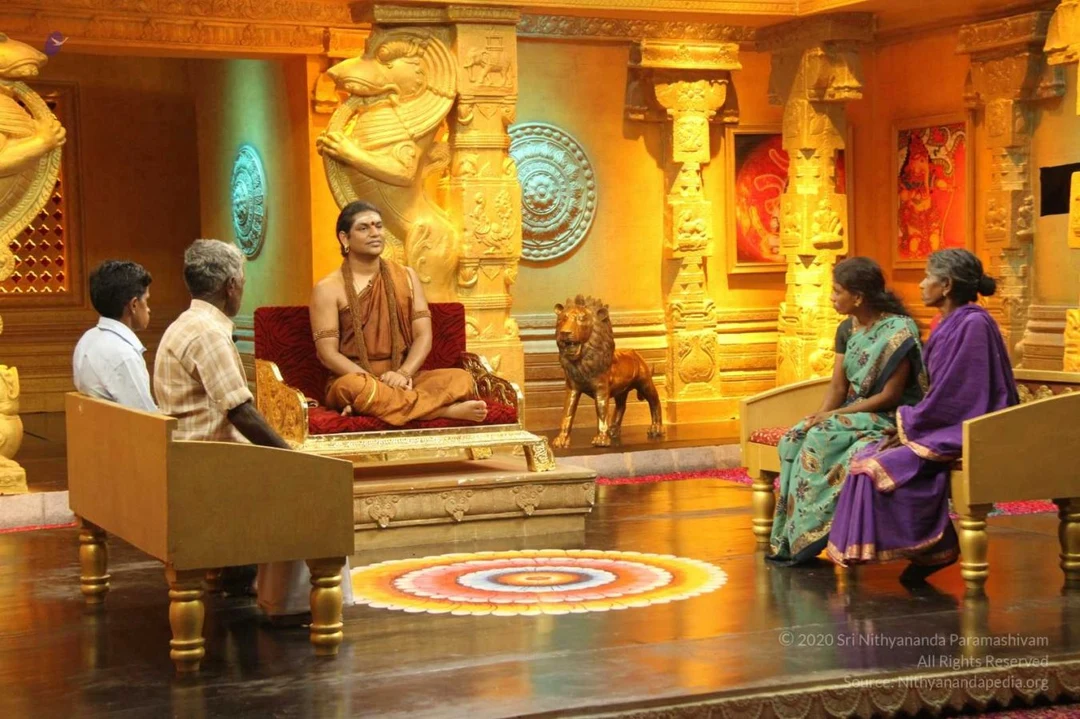
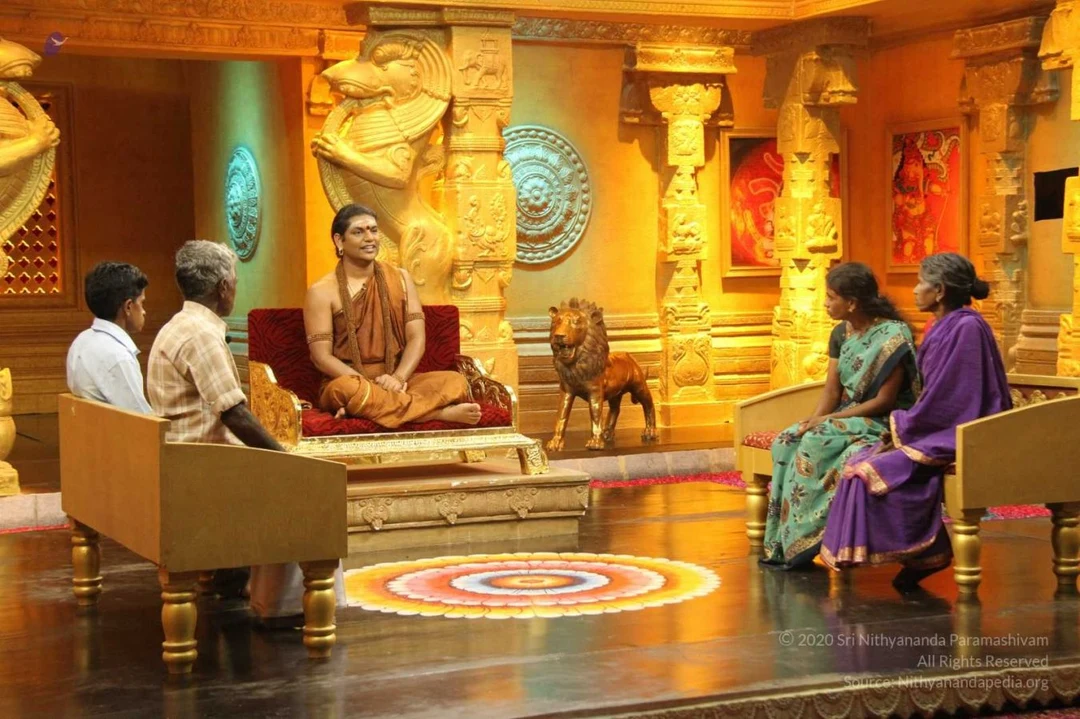
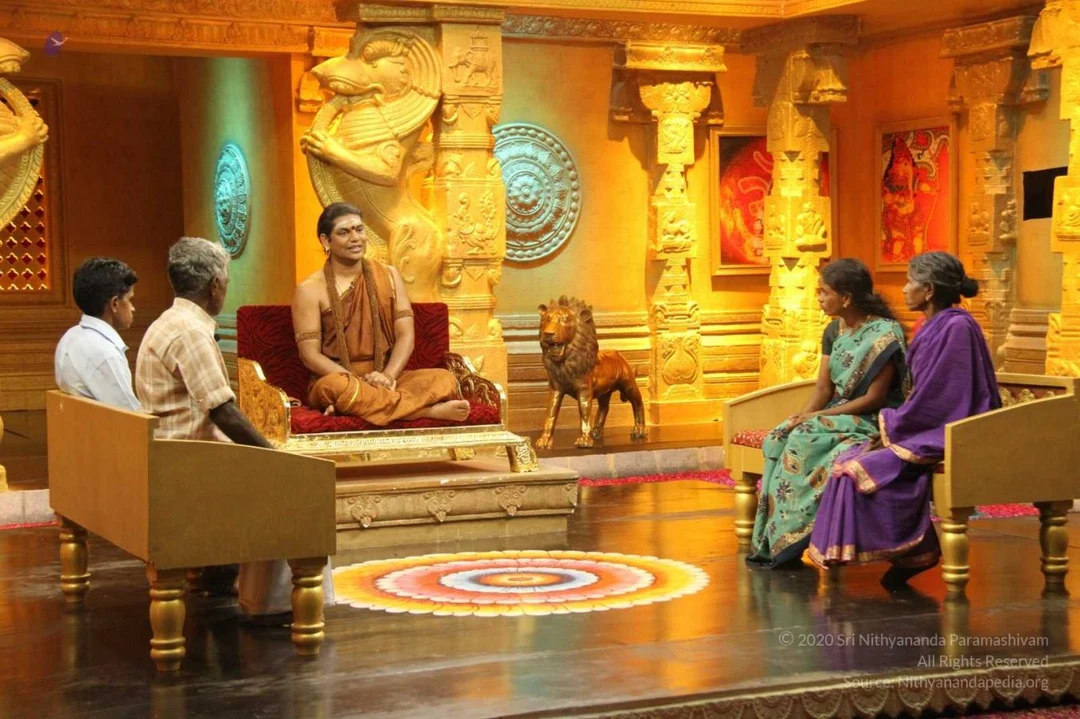
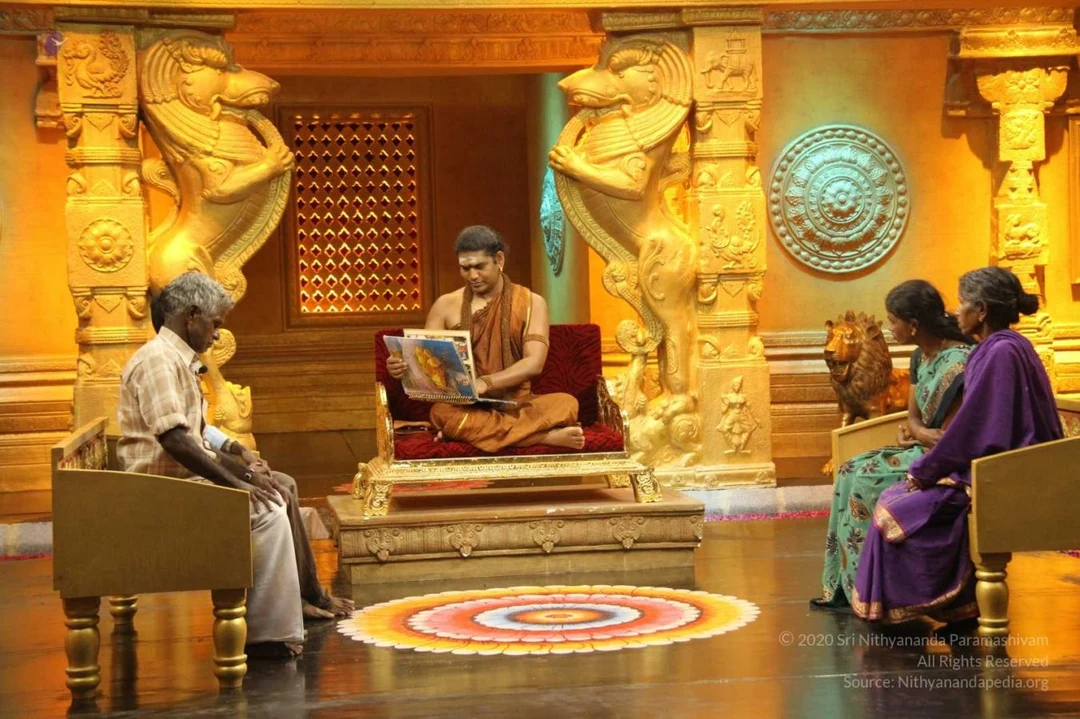
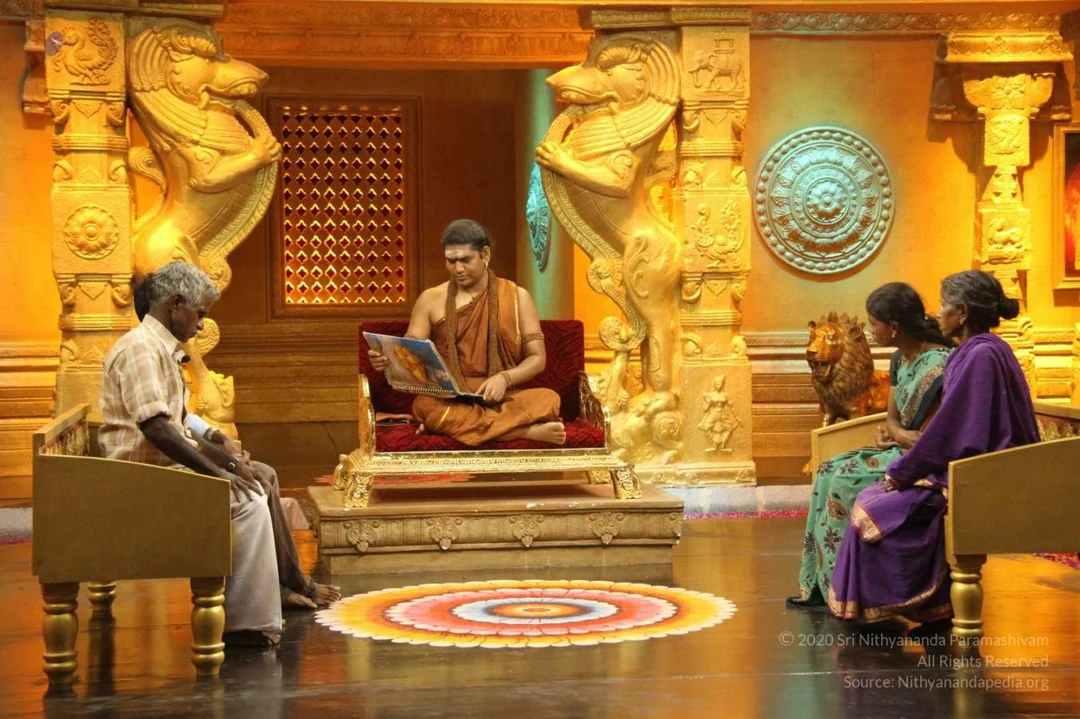
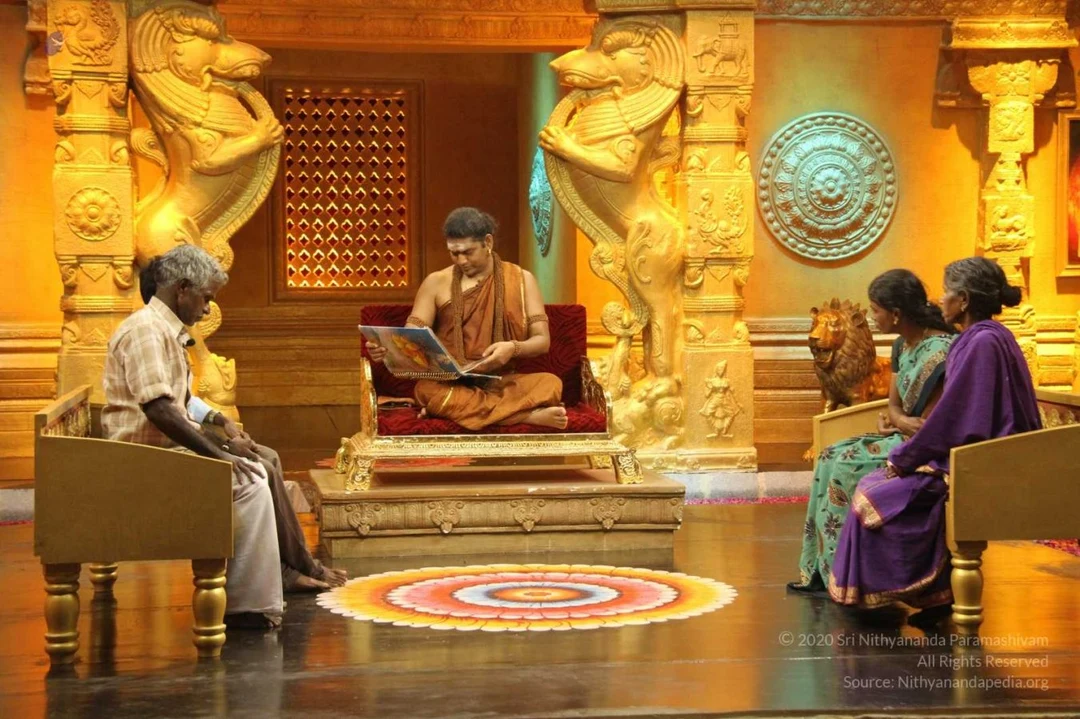
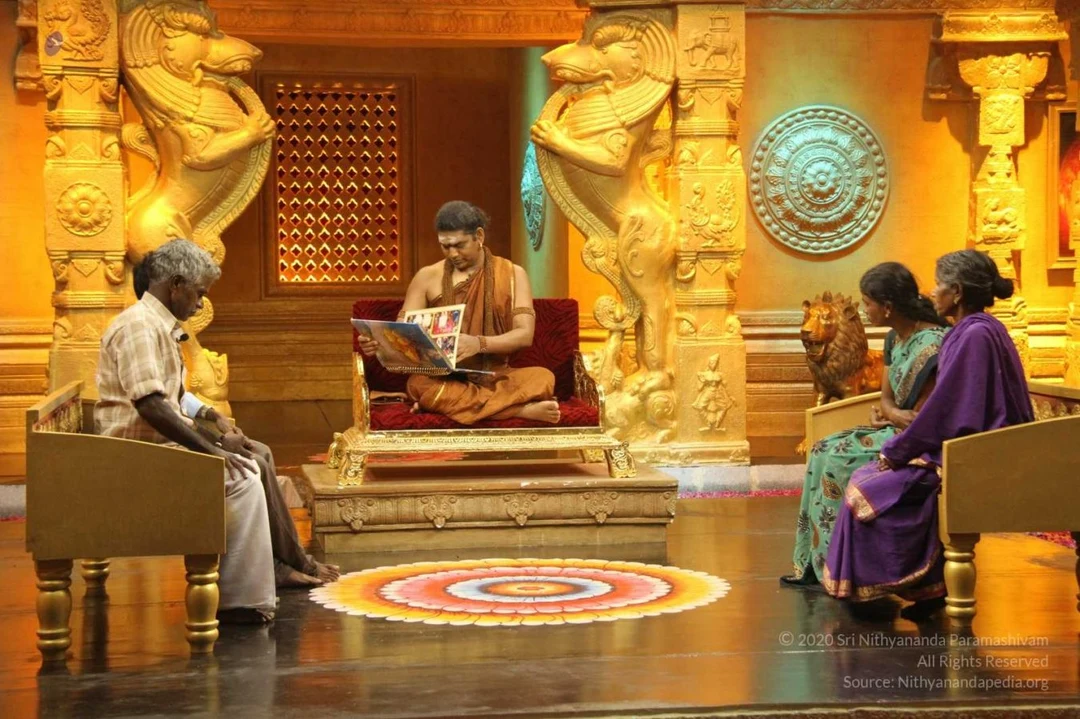
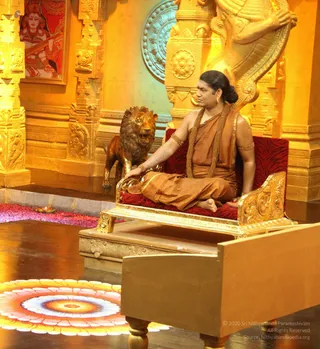
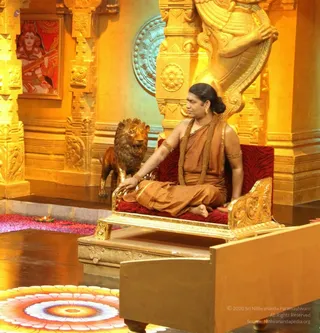
A golden-themed studio set with ornately carved pillars, a gilded lion-headed carving and a golden lion statue on the floor. A man with long swept-back dark hair sits cross-legged on a red-cushioned throne-like seat, wearing an orange-saffron cloth draped over his shoulders and a saffron dhoti, with bangles on his arm, speaking with his hands. Three people face him: a woman in a black top with a long braid seated at left, and two men seated on a gold-trimmed bench at right, one in a white shirt and trousers and one in a pink-and-white checked shirt and light trousers. The floor has a circular rangoli-style design.A photograph of a stage-set discourse in an ornate golden hall. A man in orange-saffron robes sits cross-legged on a red-cushioned gilded throne flanked by carved golden makara-like pillars. He wears a long orange shawl and has long swept-back hair, gesturing with his hand while speaking. A woman in a black blouse and patterned sari sits on the left in a wooden chair, and a man in a checked shirt and grey trousers sits on the right, both facing the central figure. Golden lion statues stand beside the wooden chairs, and carved ornamental panels decorate the walls. The central figure has distinctive long hair and saffron clothing consistent with the a person label, seated on a throne in a discourse setting.A seated man in an orange-brown robe and gold bangles sits on a red-cushioned golden throne beside a carved wooden lion, with a long rudraksha-style beaded mala across his chest. Opposite him on a low golden bench sits an older man in a white shirt and brown trousers, gesturing as he speaks. The set is ornately gilded with carved pillars, a painted red panel of a deity and a framed Ganesha-style image, and a rangoli-like floral and coloured pattern on the floor.

October 27 2013

Original wiki page
Contents

Title:

Declare and Live Your Power.

Description

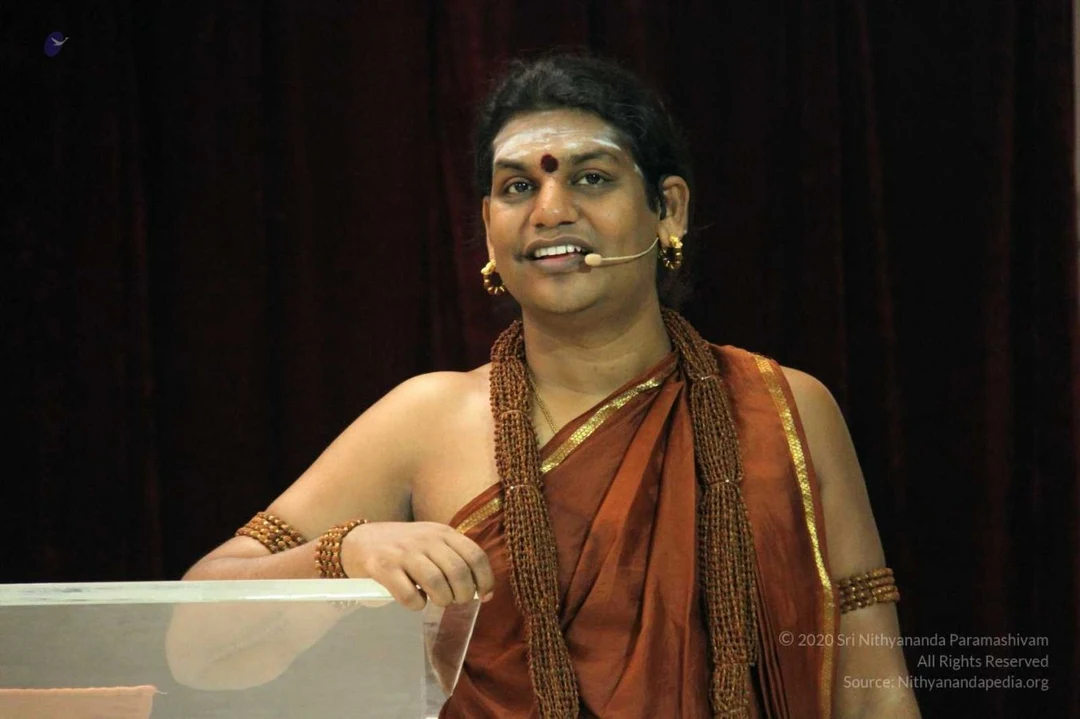
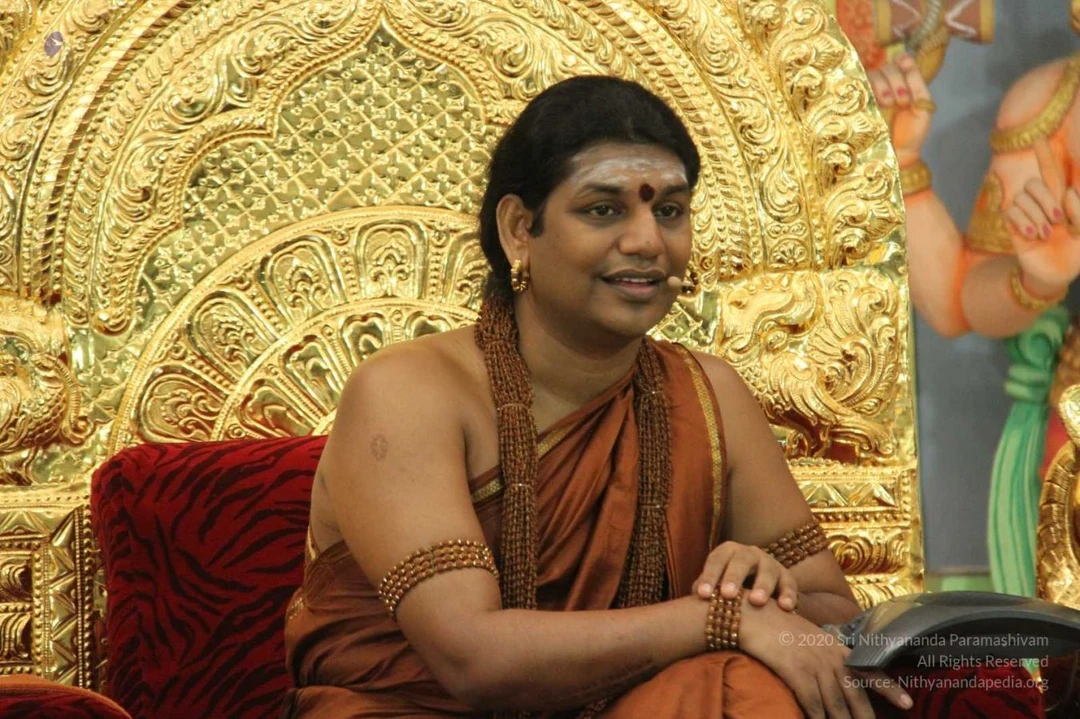
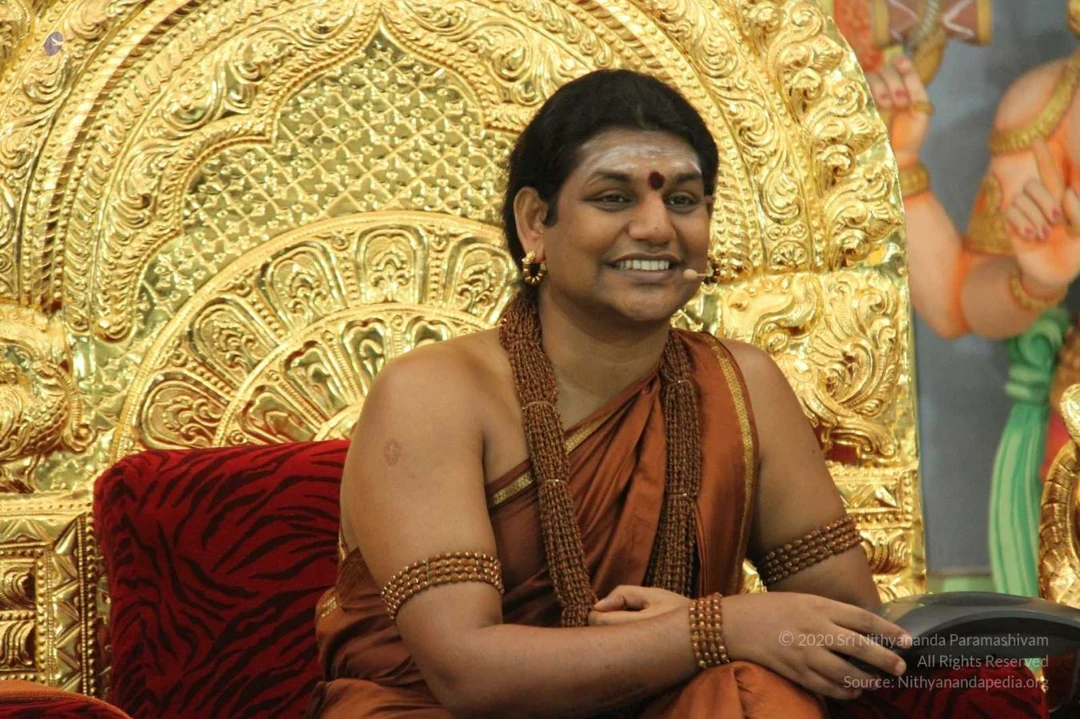
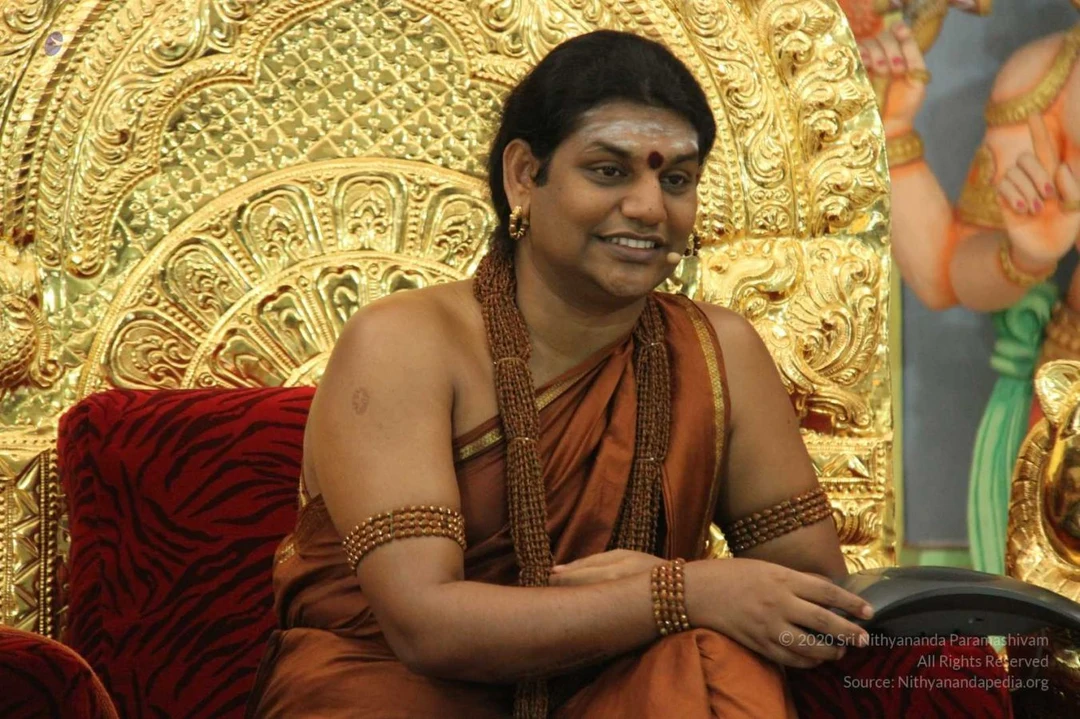
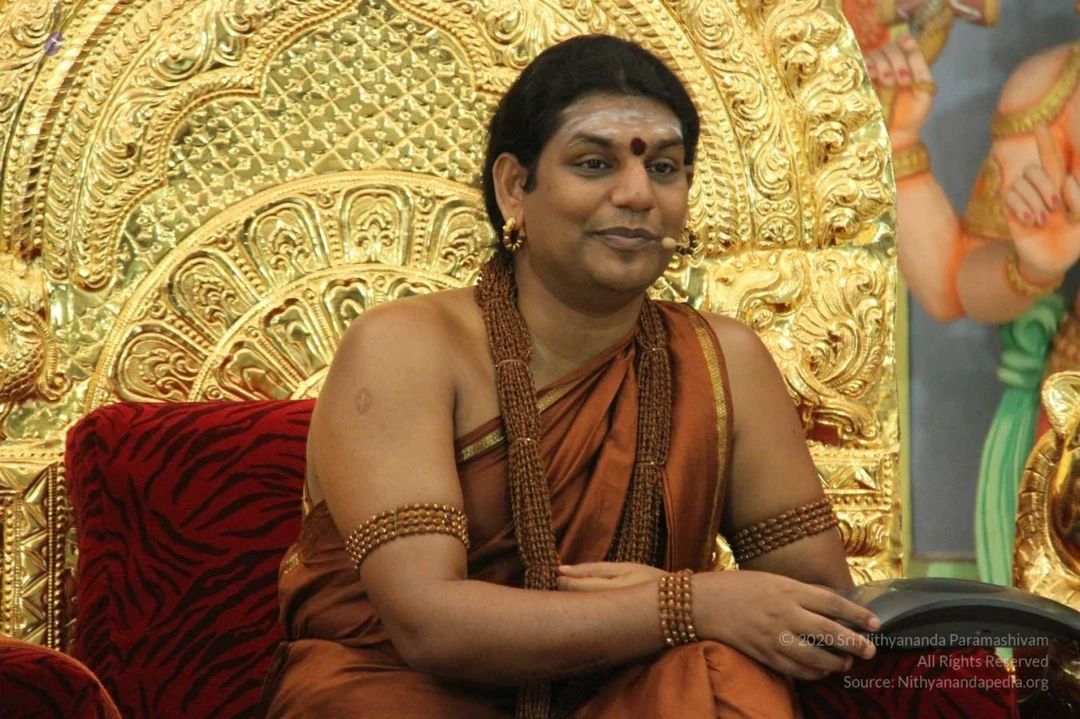
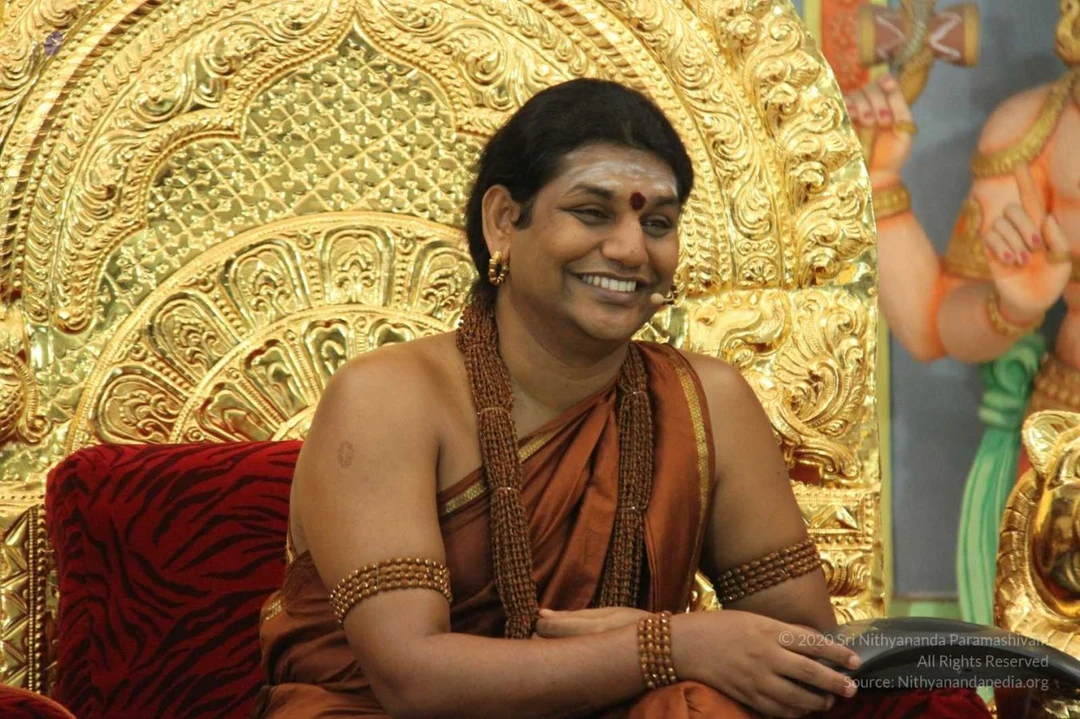
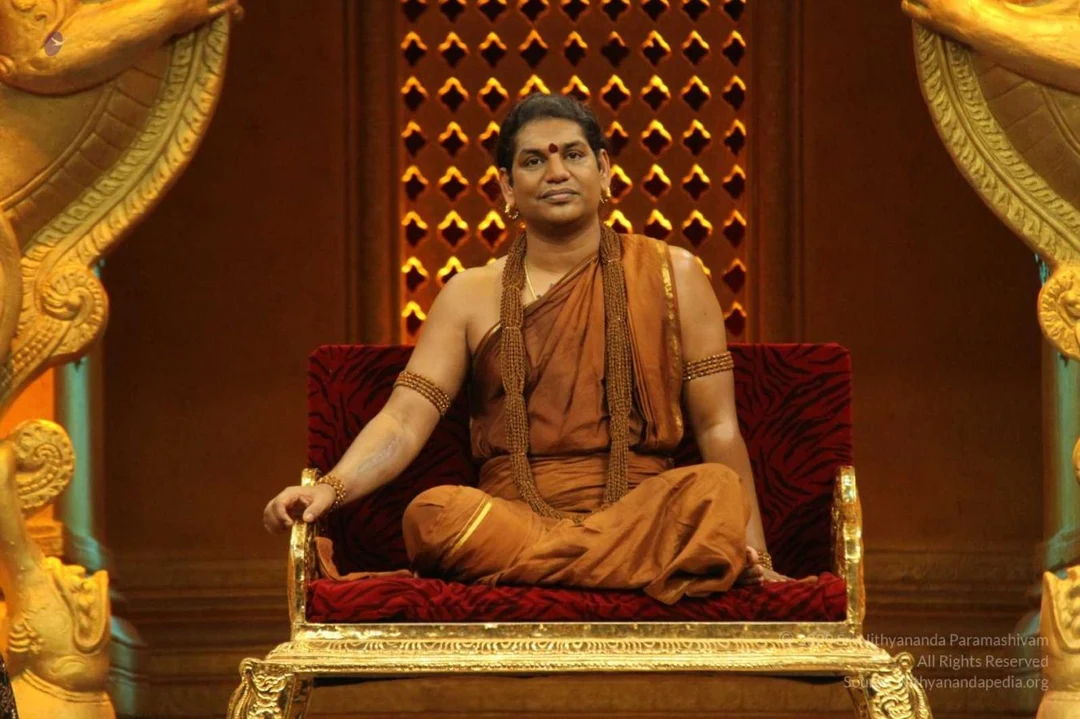
In today’s morning Satsang, Paramahamsa Nithyananda shares an important secret about our thinking – it can be trained as we want. We can govern our mind in the same way we control our body’s movements. In this way, we can decide and declare who we want to be. It is possible to train our minds and encourage only the thoughts that are in alignment with our highest possibility, discouraging and completing with low ideas. Let us take responsibility for ourselves and align ourselves to our peak possibility!

Video

VideoAudio

Transcript

Nithyanandeshwara Samaarambhaam Nithyanandeshwari Madhyamaam | Asmath Aachaarya Paryanthaam Vandhey Guru Paramparaam ||

00:40 Hindi - 00:50

I welcome all the devotees, disciples, samajis, satsanghis sitting with us in two-way video-conferencing and Nithyananda TV, Sadhna TV, Lotus News Channel, Janashree TV, Eshwar TV and two-way video-conferencing in thirty places having Nayana Deeksha, in twenty-one countries around the world as per the statistics.

Cities sitting with us in two-way video-conferencing: Seattle-Chidambaram, Guadeloupe-Rameshwaram, Guru’s Gate-California, Hyderabad-Nithyanandanagaram, Ohio-Prayag, Kuala Lumpur-Palani, Houston-Kalahasti, Charlotte-Srisailam, St. Louis-Tirumala, Toronto-Kailasam, San Jose-Madurai, Los Angeles-Arunachalam, Enriching Temple-Bidadi, Jorpati-Nepal, Antigua, Oman-Sivagangai, Tiruvannamalai Dhyanapeetam, Toronto-Scarborough, Mattakalapu-Sri Lanka, Redmond-Washington, Melbourne-Australia, Singapore-Singapuram, Hyderabad-Gupta Kashi, Wellington-New Zealand, Bali, Mumbai-Chembur, Dakota Dunes, Bogota-Colombia, Vancouver-Bhubaneshwar, San Diego-Tiruvalavai, Mulund-Mumbai, Indrani-New Jersey, New York-Varanasi, Washington DC-Sripuram, Atlanta-Ujjaini, Devon-UK.

I welcome all of you with my love and respects.

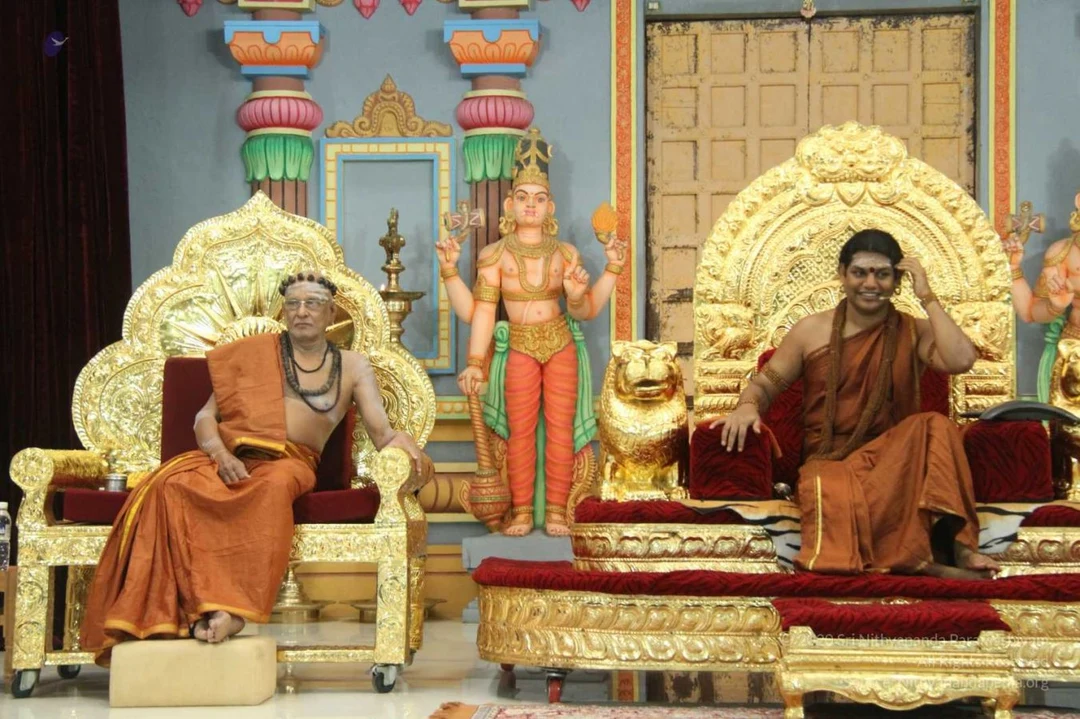
I also welcome Sri Sri Guru Maha Sannidhanam of Tondaimandalam Adheenam gracing us here on the morning. Swamiji will be staying with us for next few days and blessing our new project for the temple beginning. The Master Plan for the temple has come. Swamiji will be here for next few days gracing the whole project.

On October 28th morning, Los Angeles is celebrating Hindu Open House. My blessings for the program.

And Tiruvanmiyur Center, blessings for the NDY program in Tiruvanmiyur.

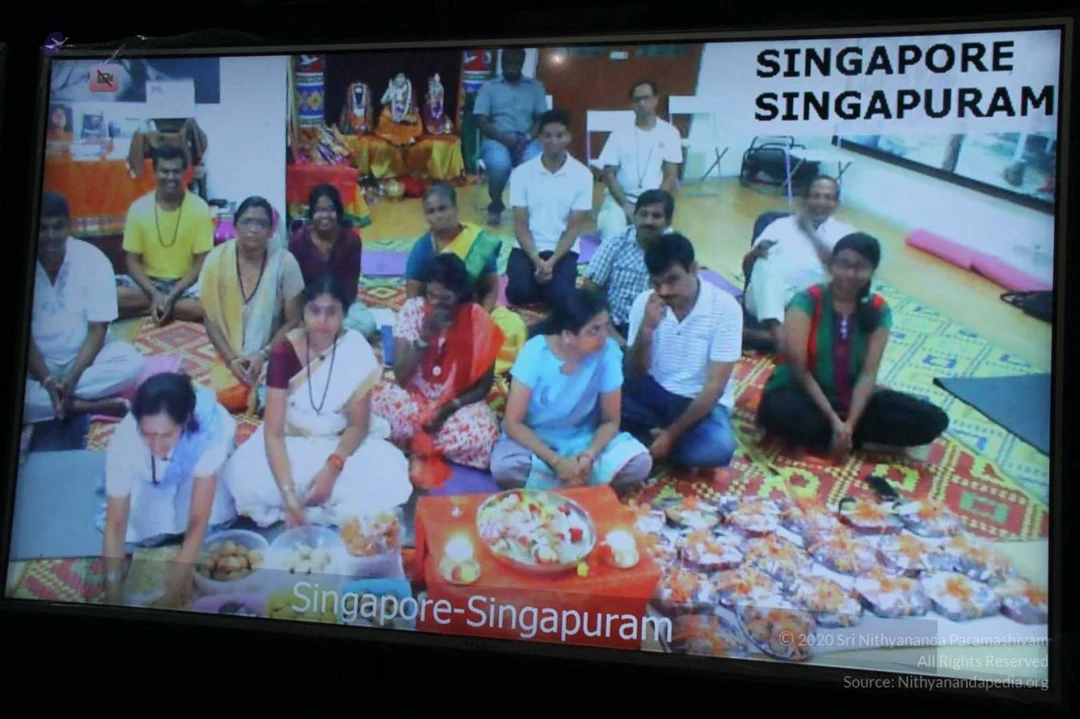
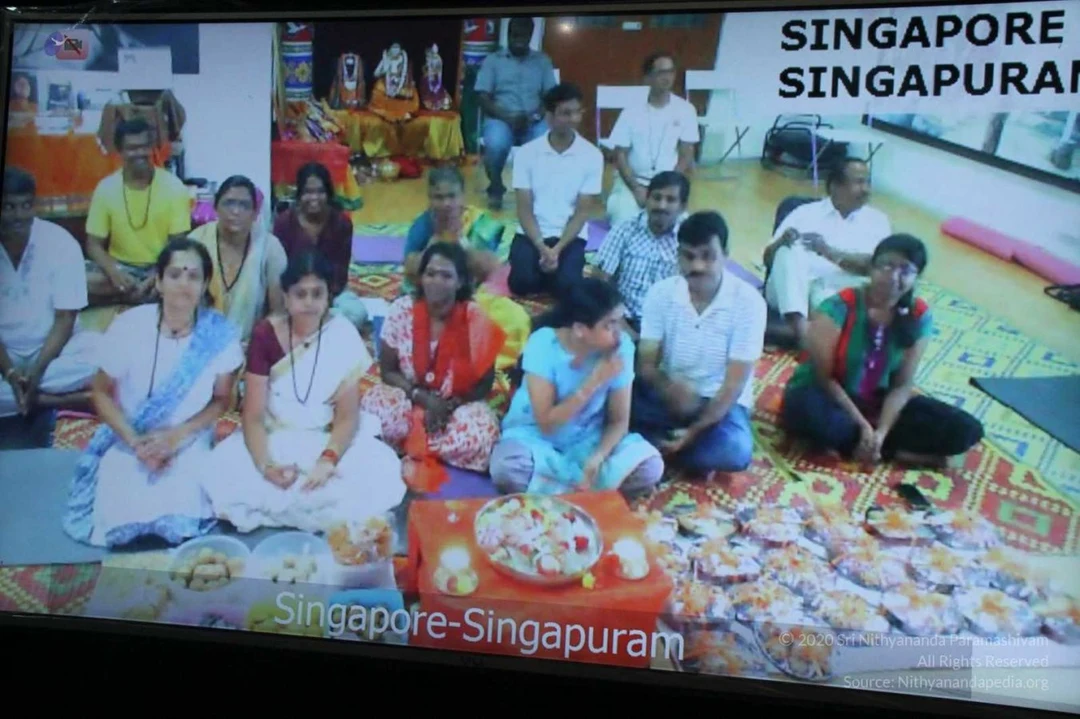
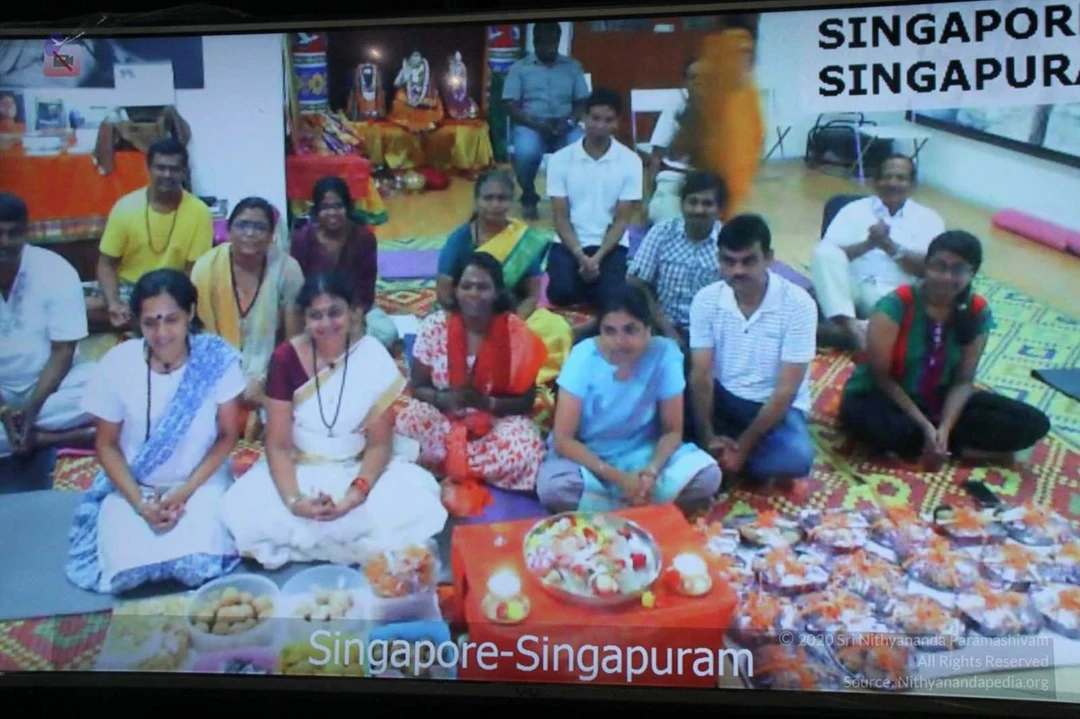
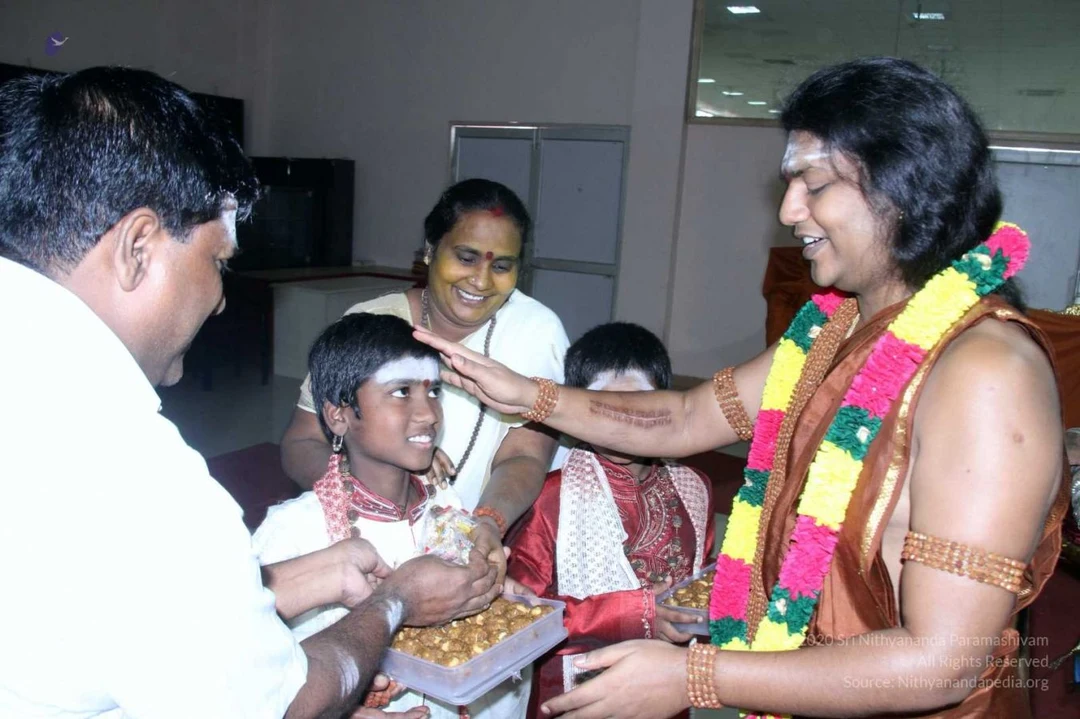
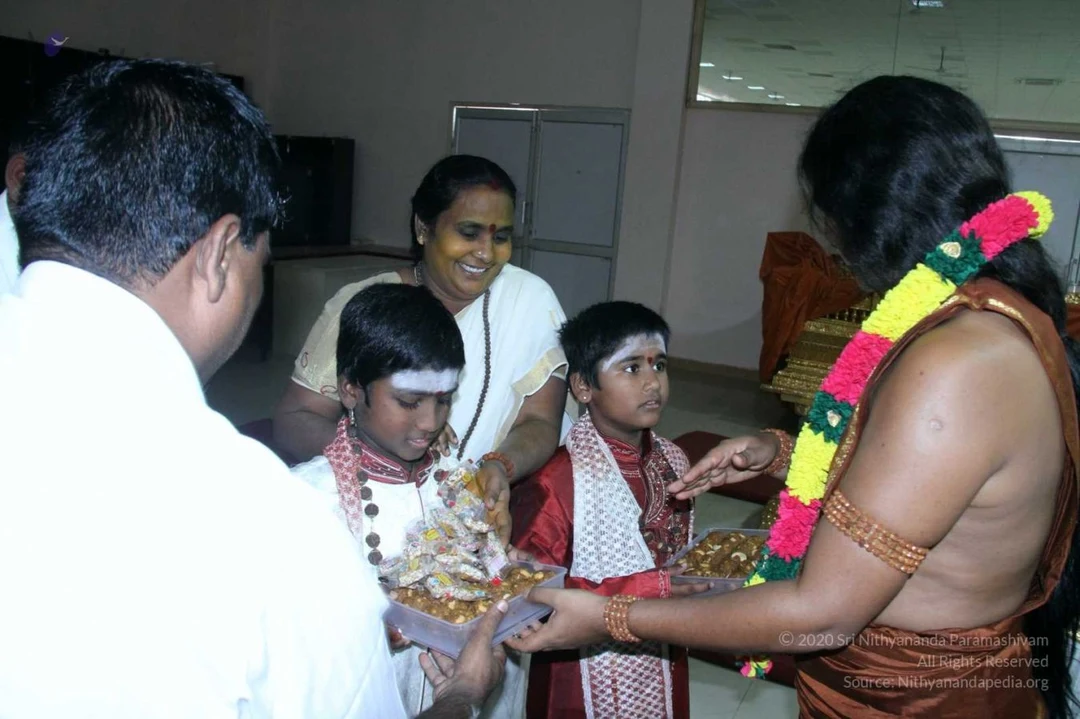
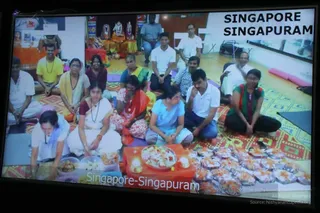
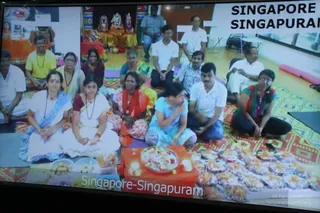
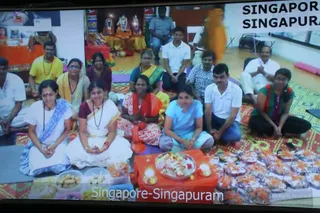
And blessings for the Singapore Sangha for the new project they have taken up – Enriching the people through Diwali Sweets. They are going around all the Singapore Sangha is going to all the Hindu organisations, the Indian organisations, connecting with them enriching with them with the Diwali homemade sweets. It’s beautiful, my blessings, accepted. Blessings, I think all the international ashrams should do this. Anupama, I accepted all the sweets, great please do it. Great! And I wanted, I wanted all the international sangha to do this. Seattle, Los Angeles, Oman, Nepal, Toronto, Colorado, all the international sangha, San Jose, all of you should do this. You should create a friendly atmosphere among the Indian organizations. You should visit all the organizations andenrich them with the Diwali sweets and the friendship, friendliness. It’s really a wonderful way to get together. Diwali sweets are more sweeter in the initial level than spiritual ideas. So, start with the Diwali sweets. Great, Singapore organization has done a beautiful work. They have clearly categorized all the organizations. So, I wanted all the centers all over the world, all of you to do the same thing. St Louis, Ohio, Toronto, Seattle, Varanasi, Charlotte,Houston, all of you please do it. My blessings. It’s a beautiful way of reaching out to all the organizations and having friendliness.

So, with this, I will move to the today’s satsang.

I was expanding on the concept of “sincere thinking”, “intense thinking”. Yesterday I was explaining the definition of “manana”, how the thinking can be aligned, how thinking can directly become wealth, treasure in your life, how it can directly make you rich.

Please understand, your thinking makes you or breaks you and the thinking pattern you develop, first of all I wanted you all to know, thinking is not an accidental; it is happening with your voluntary involvement. Unfortunately, you always think, thinking is an accidental and you cannot control your mind. Please listen. Yes, you cannot directly cut the root of a huge banyan tree with the bare hand, but that does not mean you cannot control it.

Please listen, danse duniya. I’ll give you a little better example. Your thinking process encouraged, entertained, enriched by you; but we go on believing because of our fake attempts to stop thinking has failed, it cannot be controlled. If you just try to run the centre of the road and stop the traffic, you can’t do, but just a small red-light can stop the whole traffic. Please understand, if you try to run in the middle of the road and stop the traffic, it is a fake attempt. If that attempt fails, you cannot say the traffic can never be stopped. It can be stopped with the common understanding of red signal with the right attempt. It can’t be stopped with the fake attempt; but it can be stopped with the right attempt. Same way, because your fake attempts have not helped you to stop thinking, you think thinking is not in your hand. No, is directly part of you. Just like your body movements are directly in your control, the mind movements are a directly in your control. So, first thing you need to know is, your thinking can be trained as you want. You do not need to constantly encourage the low self-esteem or very low ideas about you. That does not need to be encouraged and that is not your fate.

Somebody came and asked me yesterday, ‘Swamiji, what is the meaning of dreams?’

I said, ‘Your waking state itself has no meaning, why are you bothered about dream?’ Because, even in your waking state, how you behave, why you behave the way you behave, why you do the way you do, why you do what you do, has no meaning!

I have seen many people; sincerely they want to be always eternally loving, compassionate. Sincerely they want they should love the whole world, but they cannot even stand their wife! They don’t do anything to make themselves as they want, but they go on dreaming how they want themselves to be and continue to do how they are as and now. It is like two different direction the travel continues. Please understand, dream is nothing but the pus getting cleaned. If you are having dream, still you are carrying conscious pus. If there is pus, naturally there will be wound, the pus will be coming out. Same way, dream is nothing but the pus coming out of your body. Dream is nothing but it is reminding you that how your thinking, how you want to be is in one direction, how you are is in another direction. Dream is nothing but the complication between how you want to be and how you are.

The first thing you need to know is, how you want to be is possible. Second, your thinking is not automated, dangerous machine. You always approach your thinking as “I cannot control it! I cannot do anything about it, it is there. Why? Who knows? Fate, all in the fate!” Please understand nothing is fate other than your decision to give up on yourself thinking it is fate. Please listen nothing is fate other than your decision to give up on yourself concluding it is fate.

Sometimes people come and tell me, “I am always in Completion, in the space of Completion.’ If you are in the space of Completion, no one will have incompletion with you, be very clear. If people have incompletion with you, you are not in the space of Completion. You are in incompletion.

We always think, ‘This much only can be done; nothing more can be done’. Giving up on yourself. Giving up on yourself, please listen, giving up on yourself is the only worst thing can happen to you as fate. Nothing else can happen. Sincere thinking, authentic thinking is the first step you need to take up for “manana”. Means, sitting and aligning, contemplating what you really want your Inner Identity to be, what you really want your Outer Identity to be, what you really want your Life Image to be, what you really want your Others’ Image to be. Look in, clearly define.

And I wanted all the sannyasis, gurukul kids, ashramites to define your whole identity in a clear paper and stick it near your bed. When you wake up, read that. When you go to bed, read that. That is your God, that is the Nithyananda residing in you. So that is the Atma residing in you, Soul residing in you. So, whatever is in alignment with that, encourage it, enrich it. Whatever thinking trend, thought-trend in alignment with that four, encourage it, enrich it, entertain it. Whatever thought-trend is not in alignment that those four, complete with it. And be very clear, you have the ability to complete. If you think you can’t complete with it, complete with that pattern that you can’t complete . That is one more self doubt come on complete with it! Take time, complete with it. Completion is possible, with Completion, anything can be achieved.

17:24 Hindi - 19:04

Listen. Listen, look in. Every time your thought trend is supporting what you want to be, encourage it, enrich it. If your thought-trend is against what you want to be, complete with it. It is possible. You can complete with your whole past at this moment and be a new being. Valmiki did it, Pattinathar did it, Arunagirinathar did it. It is called “spontaneous enlightenment”. Ramdas did it. For all these people, it did not take years to get enlightened, years to complete with their past. Just one moment, only one moment, Valmiki, Ramdas, Arunagirinathar, just one moment, they did it. I tell you, spontaneous Completion is possible, sudden enlightenment is possible. At least go on completing every day with those patterns which is distracting you, which is detracting you from who you want to be, what you want to be, how you want to be. This is “manana”, bringing authenticity into your thinking, authentic thinking. This is “manana”, authentic thinking.

Listen, next we are moving – please listen to this word – next we are moving to “nididhyasana”. Means, “declaring and living” is nididhyasana. Declaring the way you are going to think, the way you are going to live and living, is “nididhyasana”. In Vedanta, the word “nididhyasana” is used again and again. In Saiva Siddhanta, Thirumoolar uses this word “nididhyasana”. And among the modern day saints, one great saint, Vallalar, from the South, who is a disciple of Madurai Adheenam, he uses this again and again. Originally, the word belongs to the Upanishads, the Vedic tradition, the source of all the Hindu scriptures, source of the whole Vedic civilization, source of the oldest spiritual civilization.

The word “nididhyasana” – please listen, I am defining this word in very clear, pure form of definition – listen, “nididhyasana” means “declaring and living”. Means, “deciding to be responsible for your actions”, “deciding to be responsible for your feelings”. Now, if you feel you are Head of a family, you feel responsible for your family, you feel responsible for your father, mother, wife, son, daughter, because all of them are your family. If you feel responsible for the village, you feel responsible for everyone who is in the village. If your feeling responsible expands, your leadership quality also expands. Deciding to feel responsible for the whole Cosmos is enlightenment. Expand the decision to feel responsible, feeling responsible for the whole and declaring from now on you will feel responsible for everything and continue to live like that, with that responsibility, is “nidhidhyasana”.

Immediately, we have doubts: ‘How can I? If I feel for all the garbage in the streets of Bangalore and feel responsible, then I’ll be stuck cleaning it up whole day, I’ll not be able to go to my office I’ll not go to my family. I’ll not be able to do this, do that.’ This is the doubt usually people create. Please listen, I am not saying if you feel responsible you will clean the street by yourself or you will not clean the street by yourself. Anything may happen but don’t be afraid to dive into that feeling responsible just because of your imaginary complications. Don’t stop yourself feeling it first. The problem is, because of your imaginary complications, the first feeling itself is getting stopped. There are tons and tons of ways and methods you can transform without complexity if you start feeling it. I am telling you, the feeling responsible, if you allow that inside you, feeling responsible if you allow that inside you, all these imaginary complications which you are having before allowing that feeling will disappear. Do not entertain these imaginary complications. Complete with those imaginary complications. Allow this feeling. First, take little time for this feeling to sink inside you and be in sync with your actions. It has to sink inside and be in sync with your actions. Then responsibility will become synergy, it will be in sync with your energy; energy will expand, your imaginary complications will disappear. Please listen, completing with the imaginary complications is the first step towards enlightenment.

I am defining the word “tapas”. “Tapas” means “completing with imaginary complications”. “Tapas” is nothing but completing with imaginary complications. “Ojas” is a Sanskrit word. Please listen, “Ojas” means “ability to complete with imaginary complications”. How many of you, the moment you wanted to feel responsible for the whole universe start getting all imaginary complications? Raise your hand. So, all of you need a little tapas, because imaginary complications can be completed. Why? Because it is imaginary. Imaginary complications can be completed because it is imaginary. If you feel responsible for all the garbage in the street, I am not saying you will immediately start cleaning them, or I am not saying you will not clean them. Do not worry about that imaginary complications, ‘If I start cleaning the garbage, who will do my work? who will give me food?’ Stop having that imaginary complications and allow this responsibility feeling to sink inside you. Because, this responsibility is power, responsibility is power.

I have seen in my life, whenever I took responsibility, I was always empowered by the Cosmos. Please understand, Cosmos is waiting to empower every one of you. Cosmos is literally begging every one of you to become powerful. It is unfortunate you think Cosmos also functions with the same political system with which you are functioning, the top guy never wants anyone to raise. But you should know, the logic of the Cosmos is totally different. The Prime Minister of a country will never want everyone to become a Prime Minister, because then his identity is lost but the Head of the Cosmos wants everyone to become Head of the Cosmos. Because, the more and more Heads, more and more expansion. You are not replacing Him, you are not occupying His seat, you are reproducing Him. Please understand, that is why I am telling you, even the concept of God in our Hinduism is based on this concept. So many gods, so many lokas. If you become God, you have your loka now. You are not going to be competition for Indraloka, Brahmaloka, Vaikunta, Kailaasa. No! Unfortunately, in the western civilizations, even their concept of God is from the political setup. Learn politics from a spiritual leader, but don’t learn spirituality from a political leader. Understand, that is why they go on standing with the idea of one God, one God. Please listen, this one God is nothing but the extension of your autocratic mind. In Hindu tradition, we have millions and millions of gods and each one of them have their own lokas, and you can go on growing, expanding. All of them will have their own loka. And we always think, if there are millions and millions of gods, then who will head them, who will regulate them? No need. Everyone is independently intelligent. No need for Head to exist, but these western civilizations always feels if there is no Head it will be anarchy, chaos, rule-less, lawless, because they do not believe everything is independently intelligent. Who is controlling the traffic of all the planets? Who is standing with the red signal or “Stop” board, “Take Diversion”? It is moving around so beautifully. It is unfortunate we don’t understand the power of independent intelligence.

Please listen, there are only two types of civilizations: One, the civilizations which believe everything is independently intelligent; we can all co-exist together without being ruled by some ultimate power or single decision-making authority. There is the other group which believe, ‘No, only with a single, ultimate decision-making authority, power centre, can run it!” I tell you, you don’t need a single power centre. The “Dhamma”, independent intelligence is enough to run it. Dhamma-based religions, autocratic, god-based religions; there are only two types of religions. Dhamma-based , autocratic, god-based .

Even in Hinduism, when there are definition of Gods, they were never presented, they were never conceived, they were never understood, they were never realized as an autocratic power. They were only presented as the experience of Dhamma. The person who makes the Dhamma move, who makes the Dhamma alive, who makes the Dharma Chakra moving continuously, who interferes only to keep the Dharma Chakra moving continuously, smoothly.

35:50 Hindi - 38:25

Understand, bringing responsibility into your feeling is “nidhidhyasana”. In the Inner Awakening Level—4, the third initiation you are going to receive is “Nidhidhyasana Deeksha”, bringing responsibility into your feeling. Bringing responsibility into your feeling is “Nidhidhyasana Deeksha”, is “nidhidhyasana”.

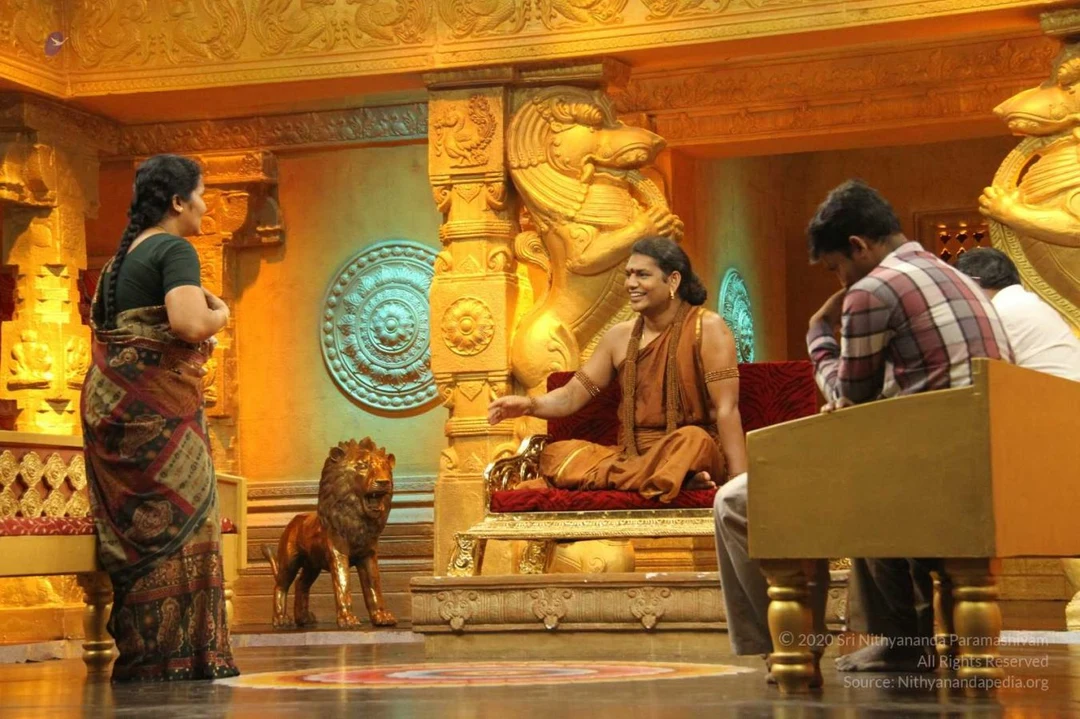
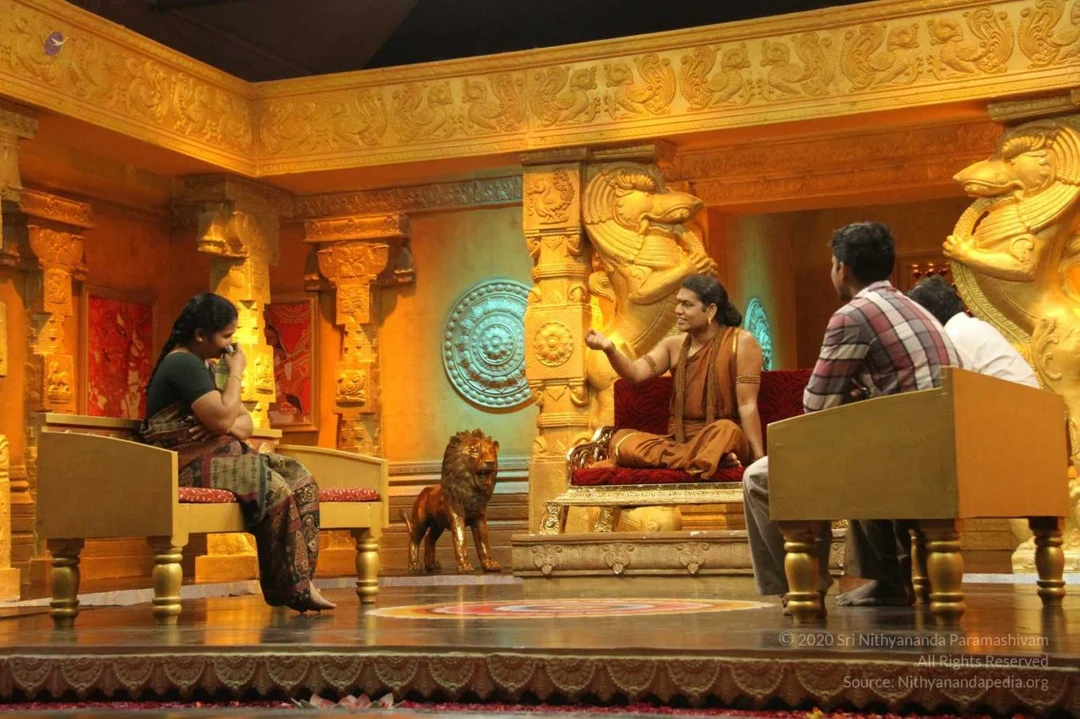
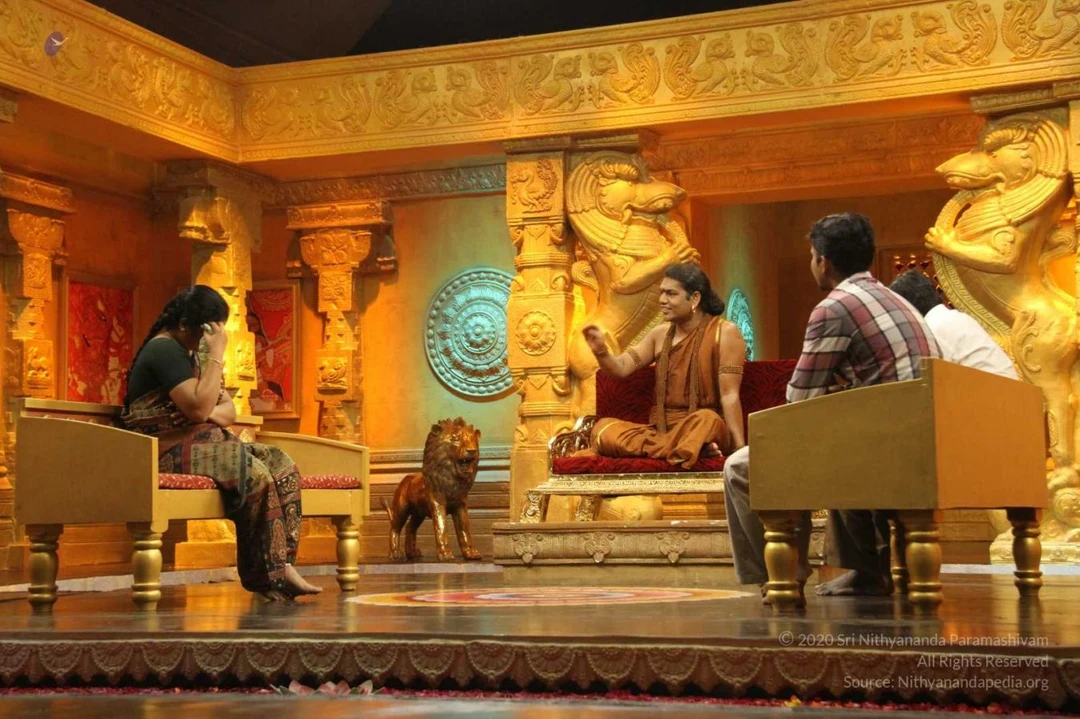
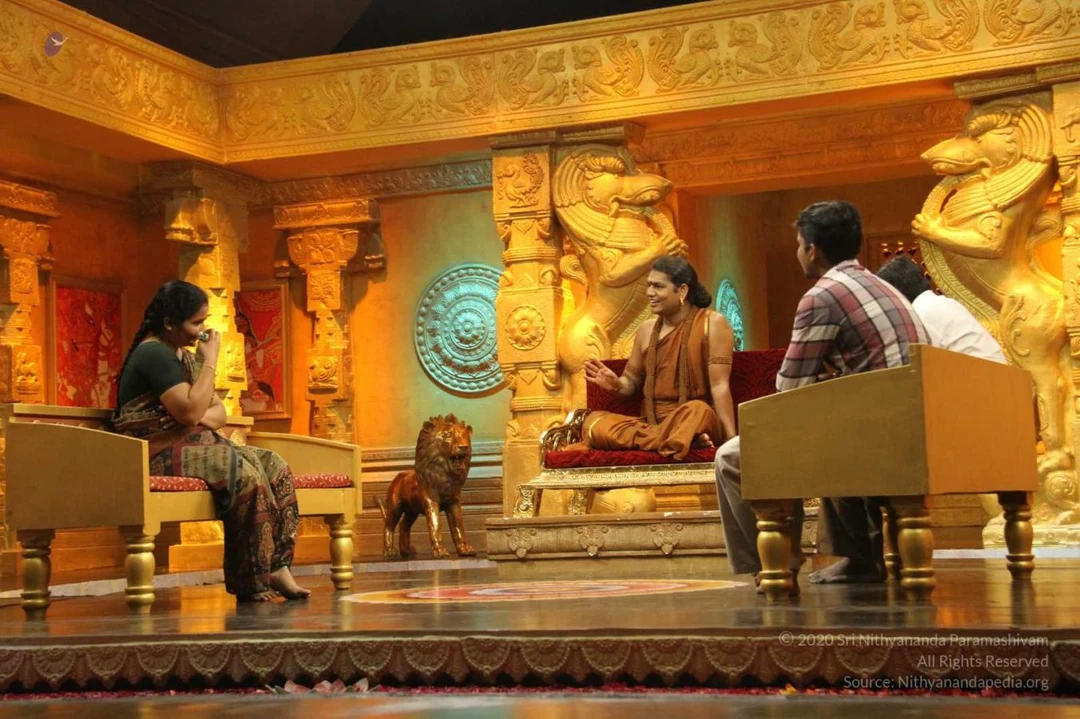
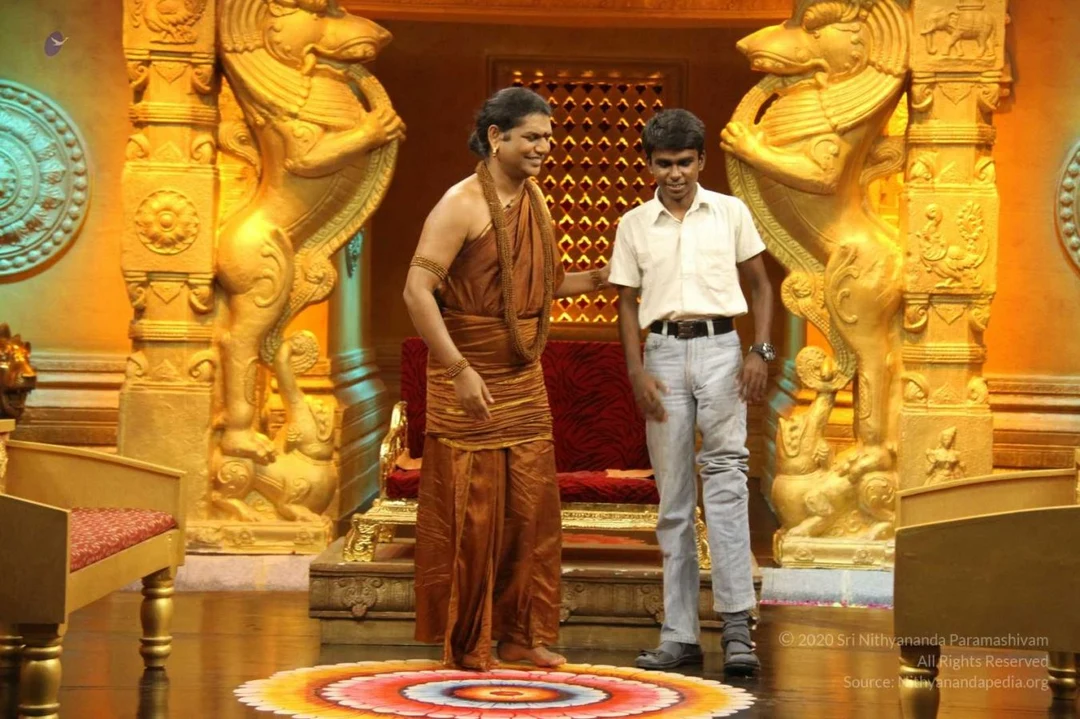
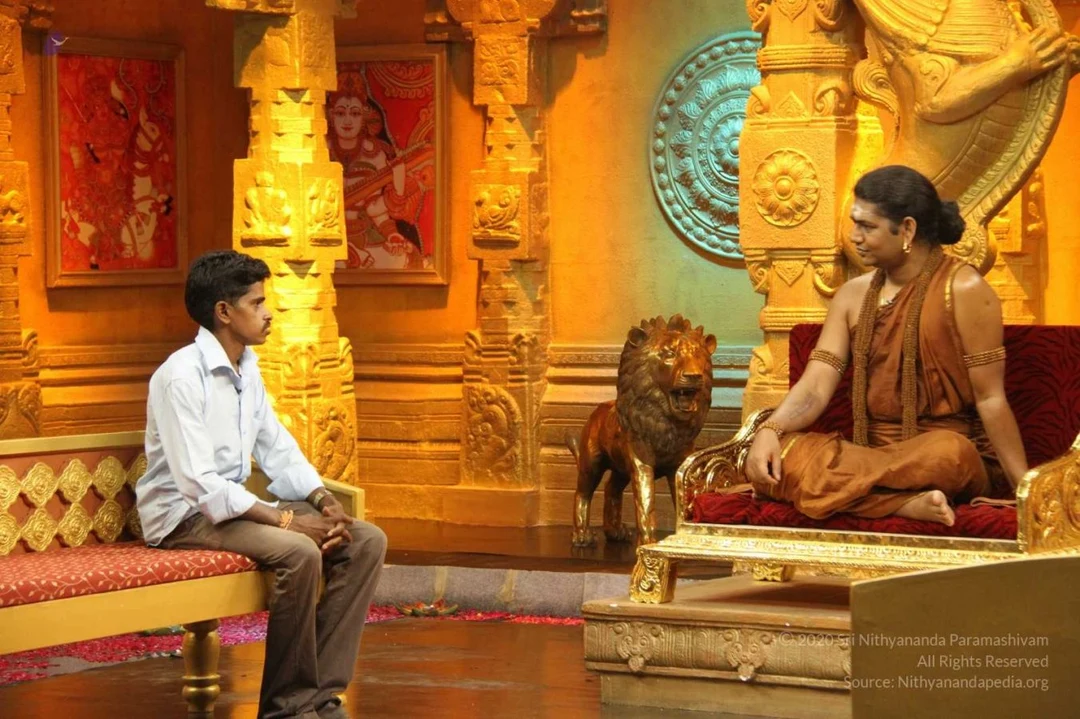
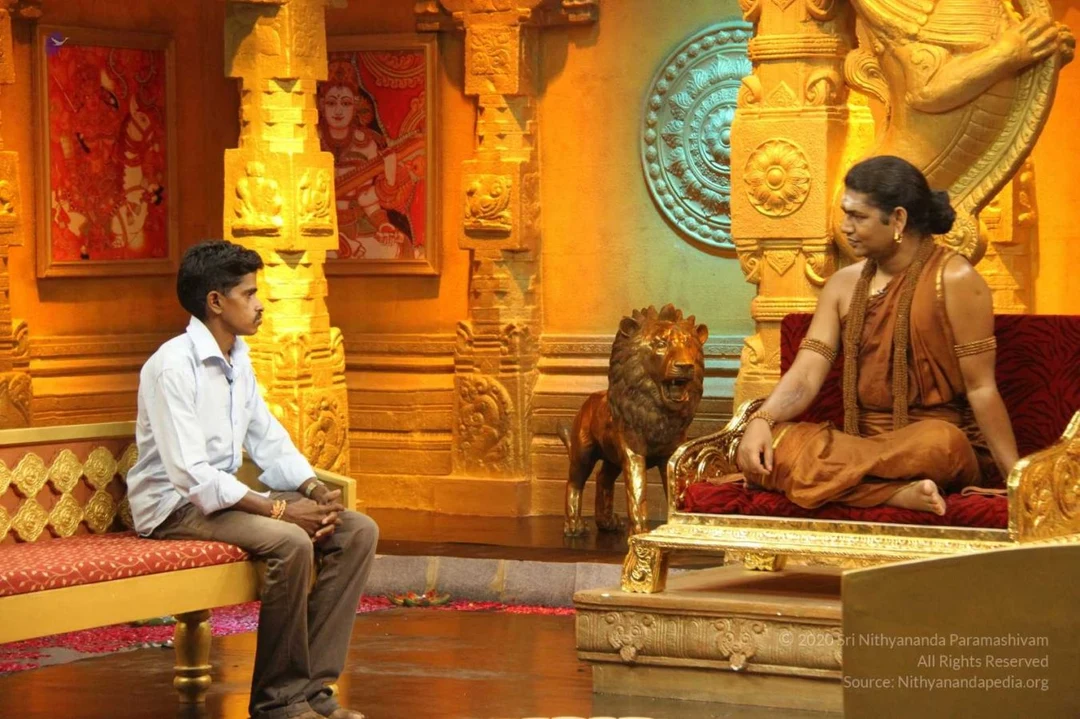
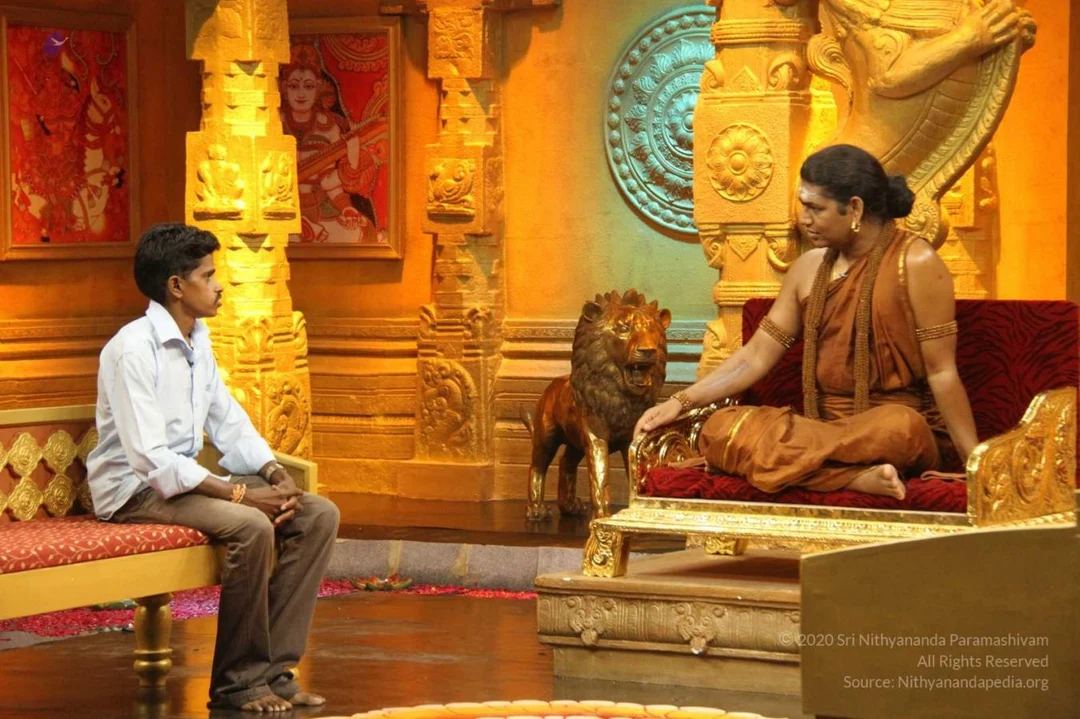
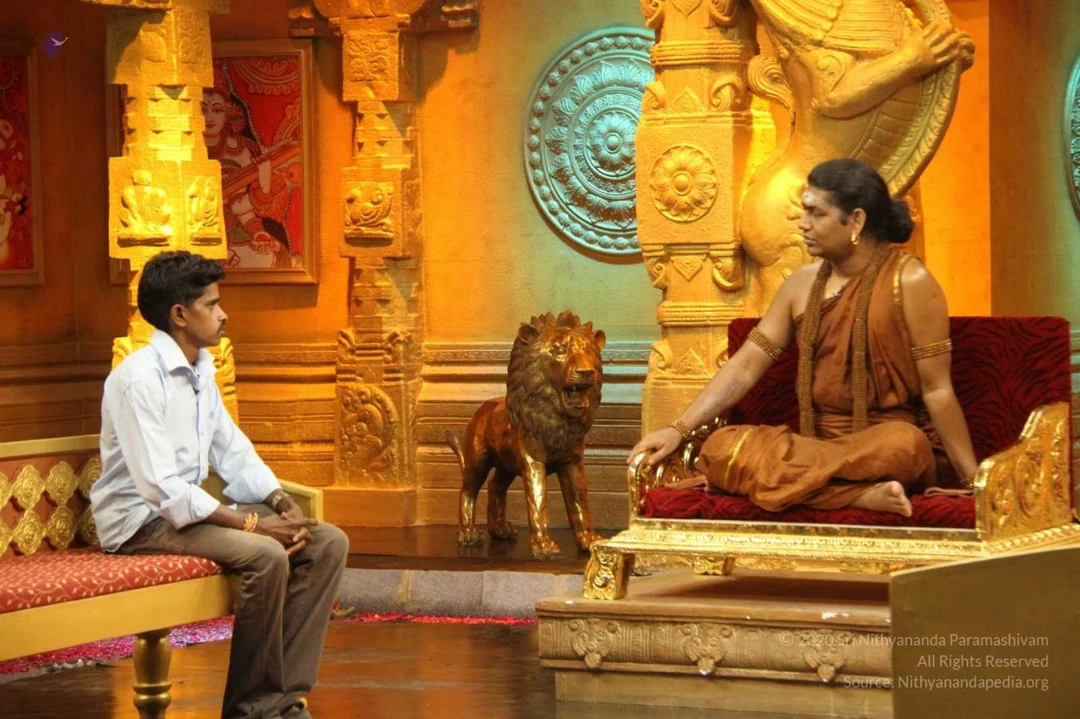
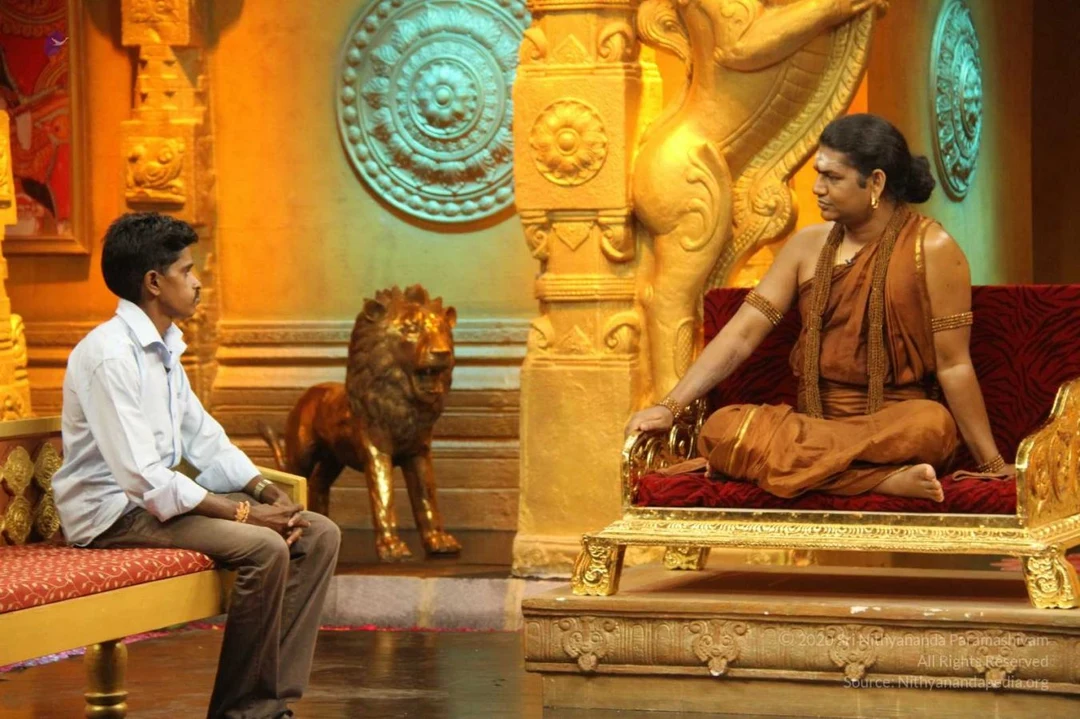
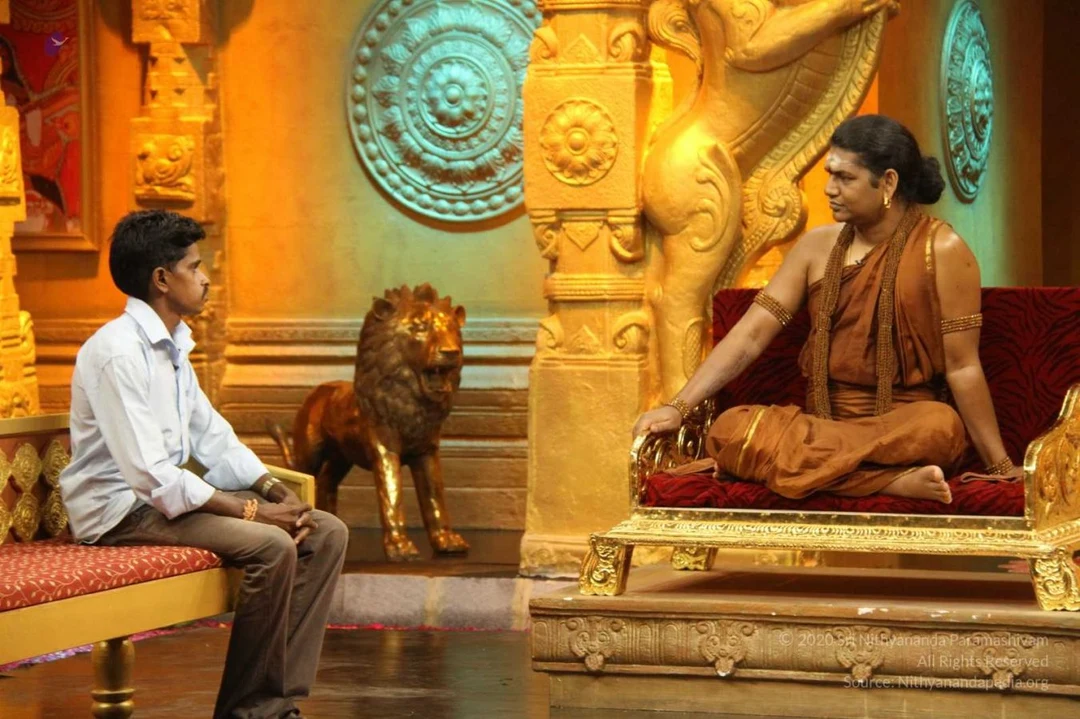
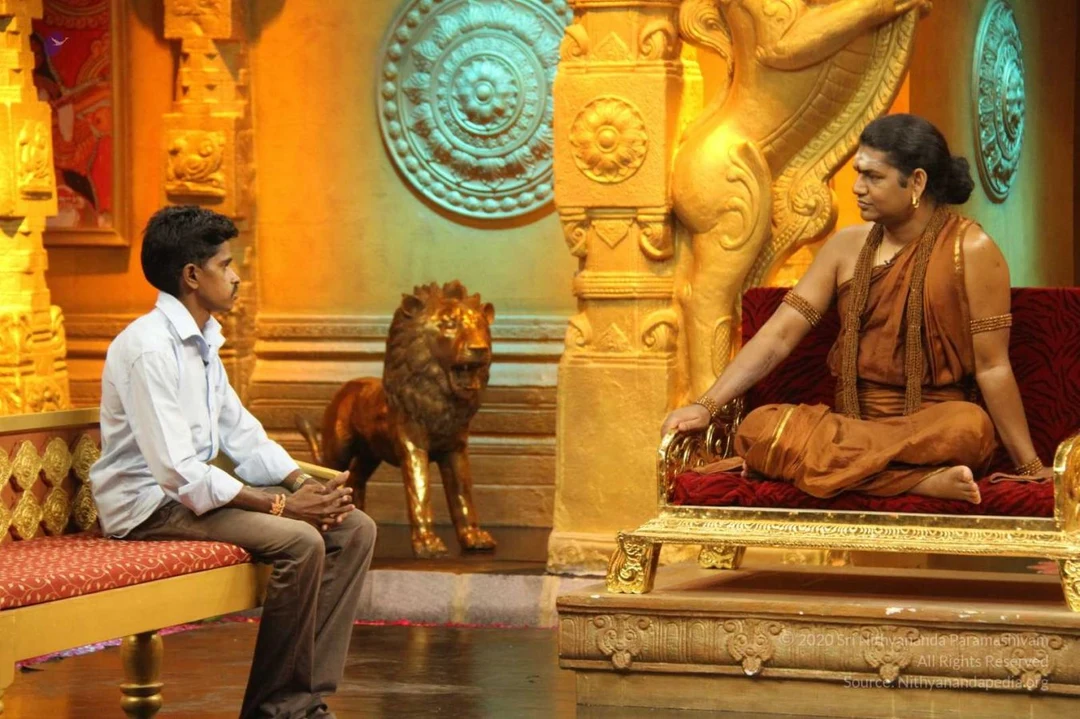
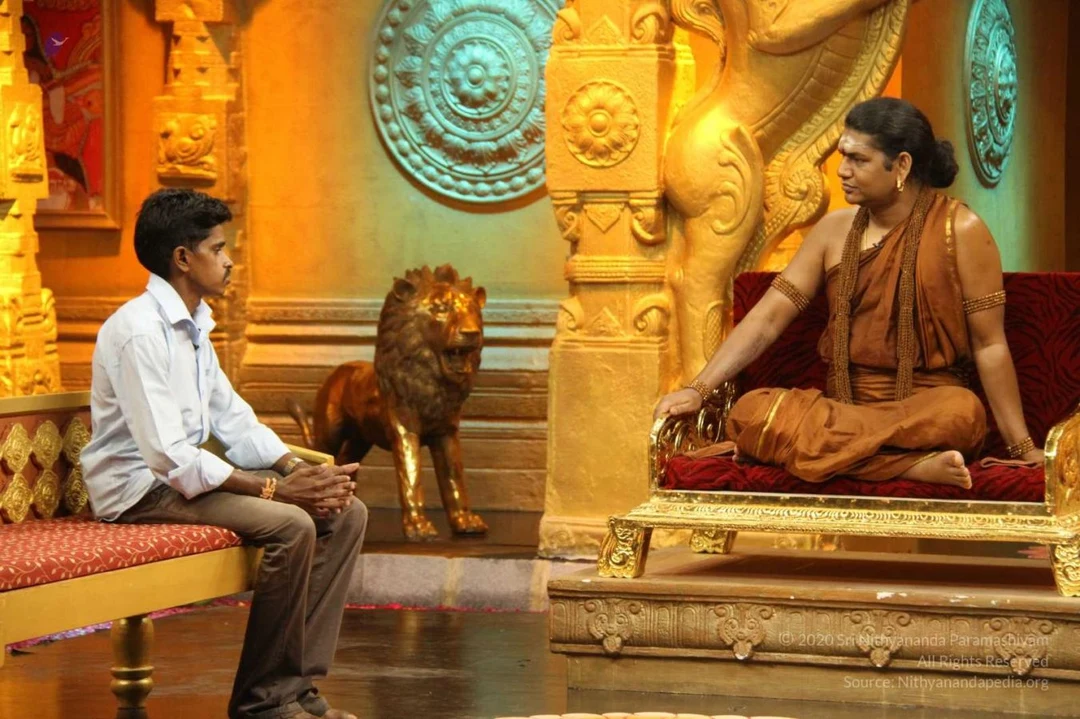
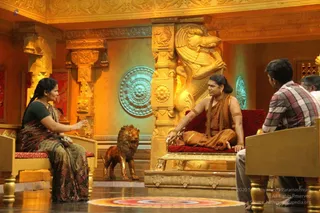
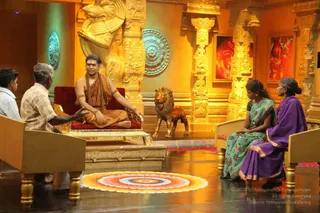
From yesterday night, our Enriching Temple has become too busy, because yesterday, the Nithya Dharmam, Thanthi TV reality show is about guiding somebody into their unconsciousness and digging out the memory that person has forgotten forty-three years before. One person came to the Nithyan Dharmam show saying he lost the memory of his parents. He got lost at the age of nine and he forgot his family, parents, everything. He is brought up by somebody else. So now he wants to find his parents. So I guided him into his past, through the completion process, through meditation and he explained everything to the details of his house number, street name from his unconscious memory, from his akashic records. He spelled out everything and the funny thing is, the surprising thing is when we went there, everything matched. When we went to the place, everything matched! He has discovered all his relatives. Now they are still tracing his father and mother. Yesterday this was the show. I was shocked seeing the response from the public. Then people are so much interested in the process of Completion! It is only we are not yet reaching out to them. We have to take the responsibility in our feeling and do “nidhidhyasana”, start living. Just one show, so much interest. If you missed the yesterday Nithya Dharmam reality show, please see in the YouTube; they would have uploaded it. Or today there is a re-telecast; don’t miss it. Today noon 3 pm Indian Standard Time, there is re-telecast. Don’t miss it. On Thanthi TV.

42:19 Hindi - 42:45

Let you all to achieve, experience, live, express, radiate, share and explode in eternal bliss, Nithyananda.

Photos

Paduka Puja
Nithya Satsang

Singapore Singapuram Nayana Deeksha

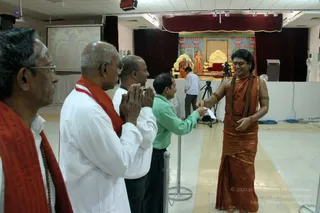
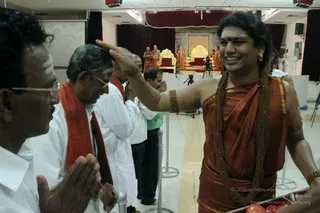
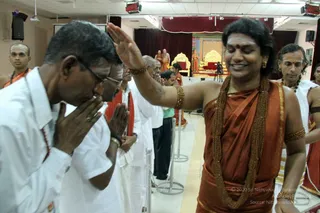
Sarva Darshan

Final Blessing

Nithya Dharmam Day 2

Tags:

Paramahamsa Nithyananda, secret, mind, body, possibility, responsibility, peak.

Photos from this day

View all 472 photos

Paduka Puja
28 photosSource gallery
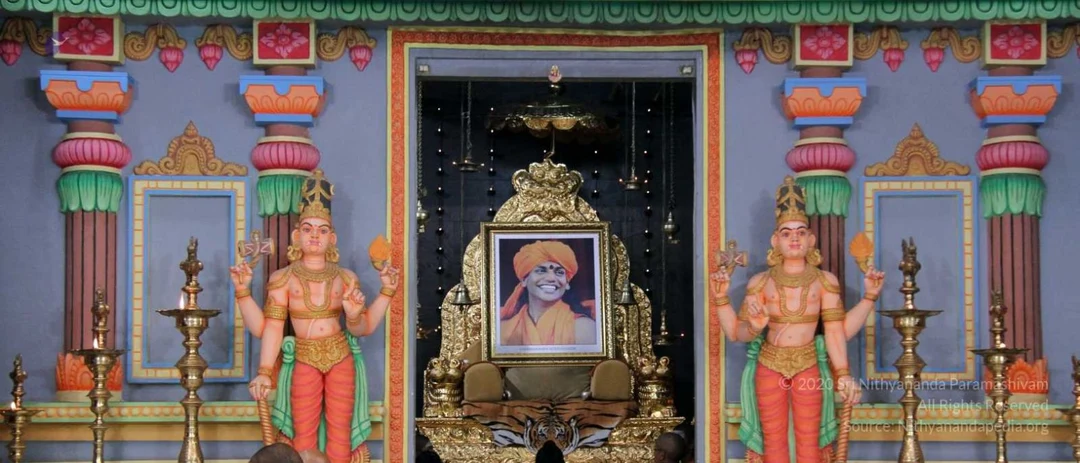
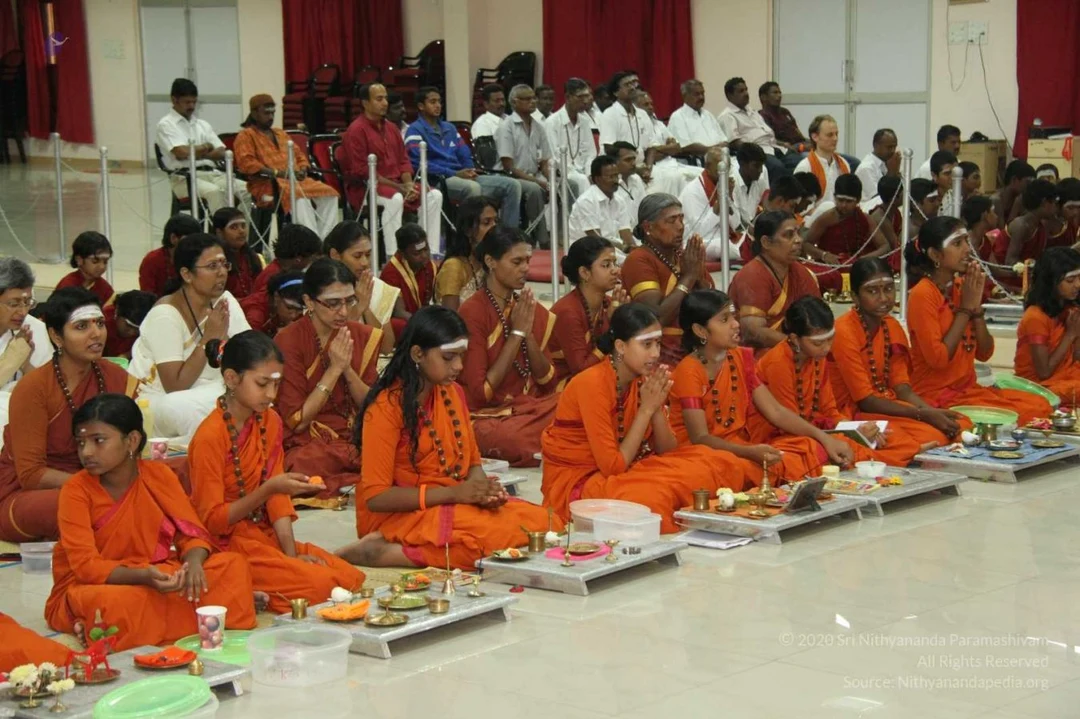
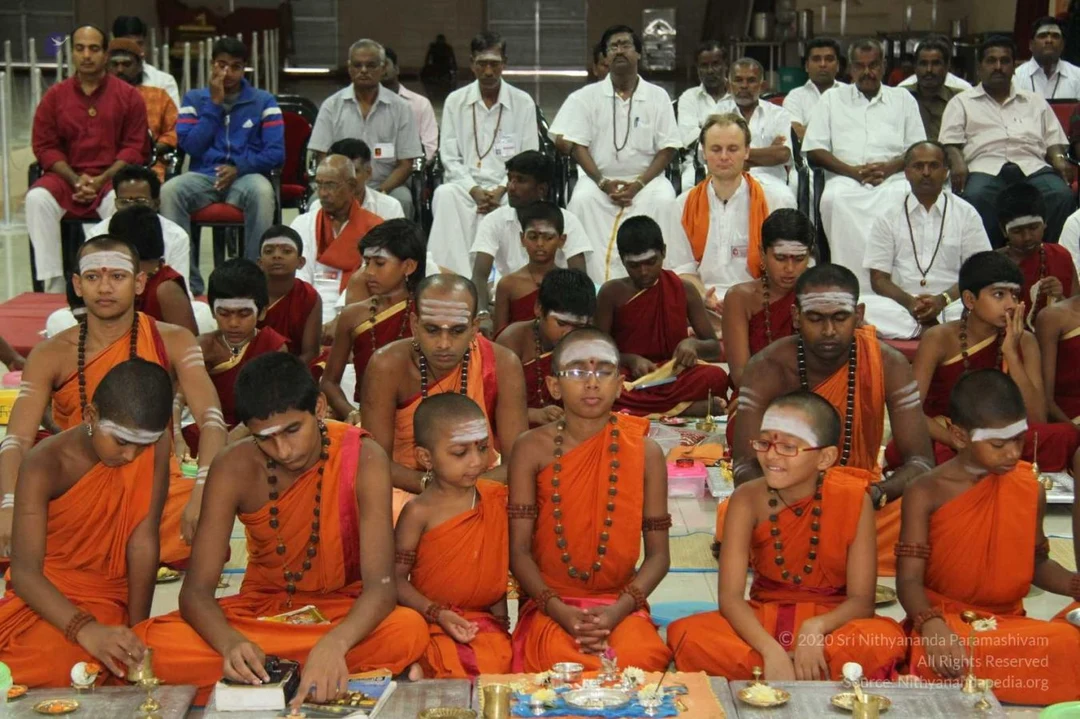
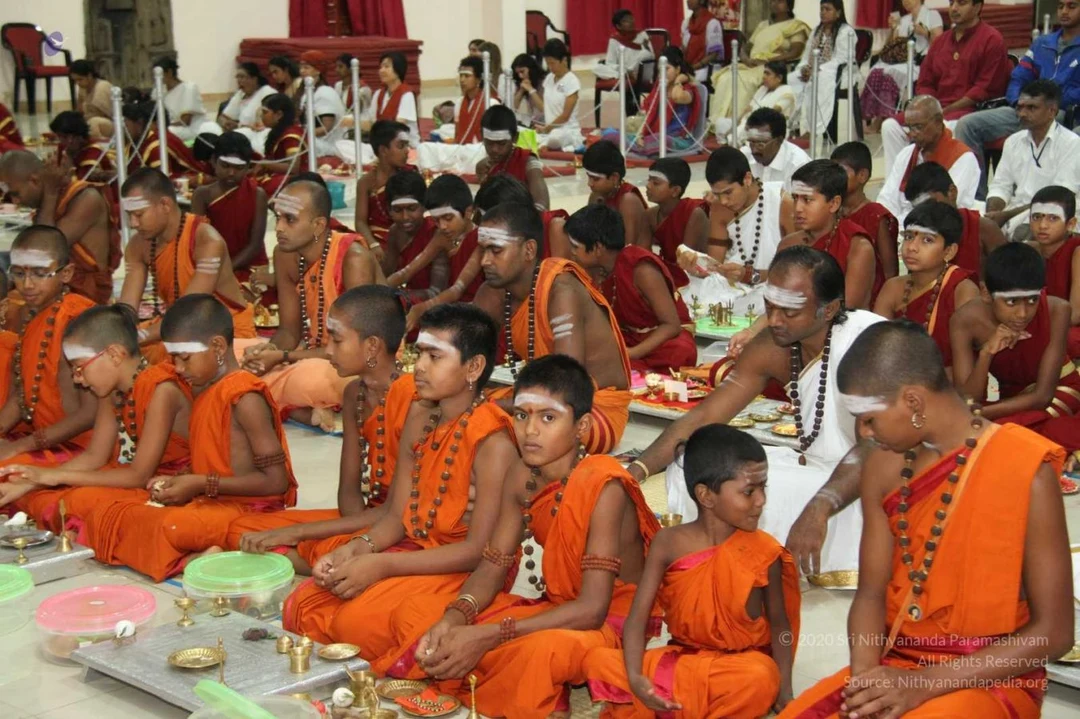
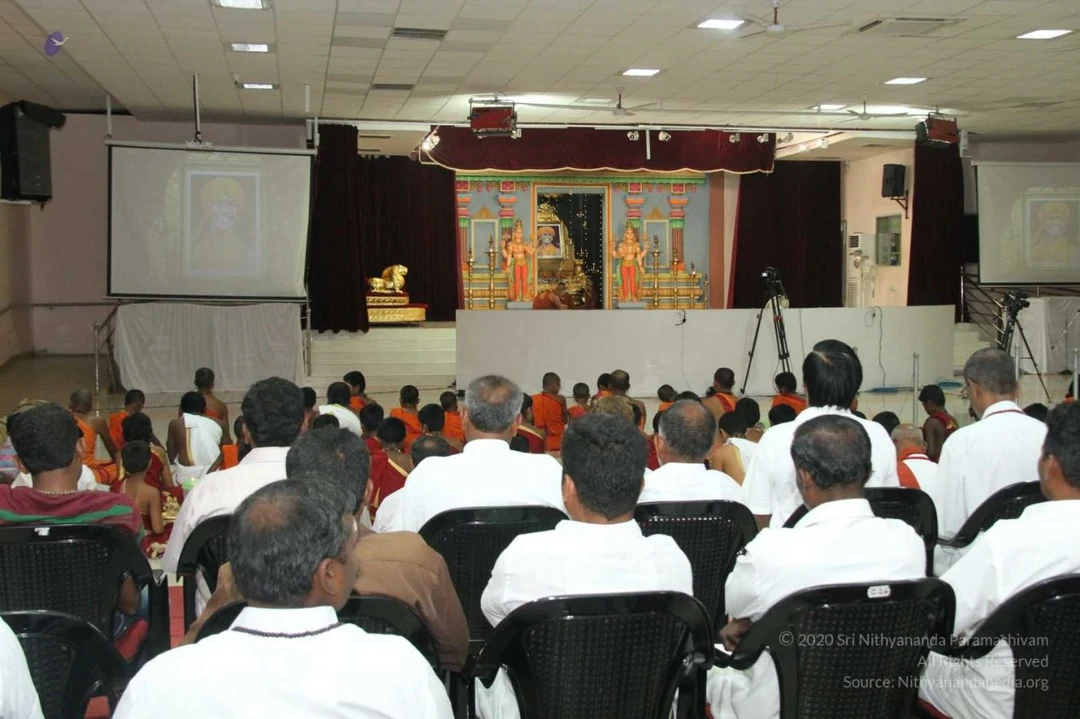
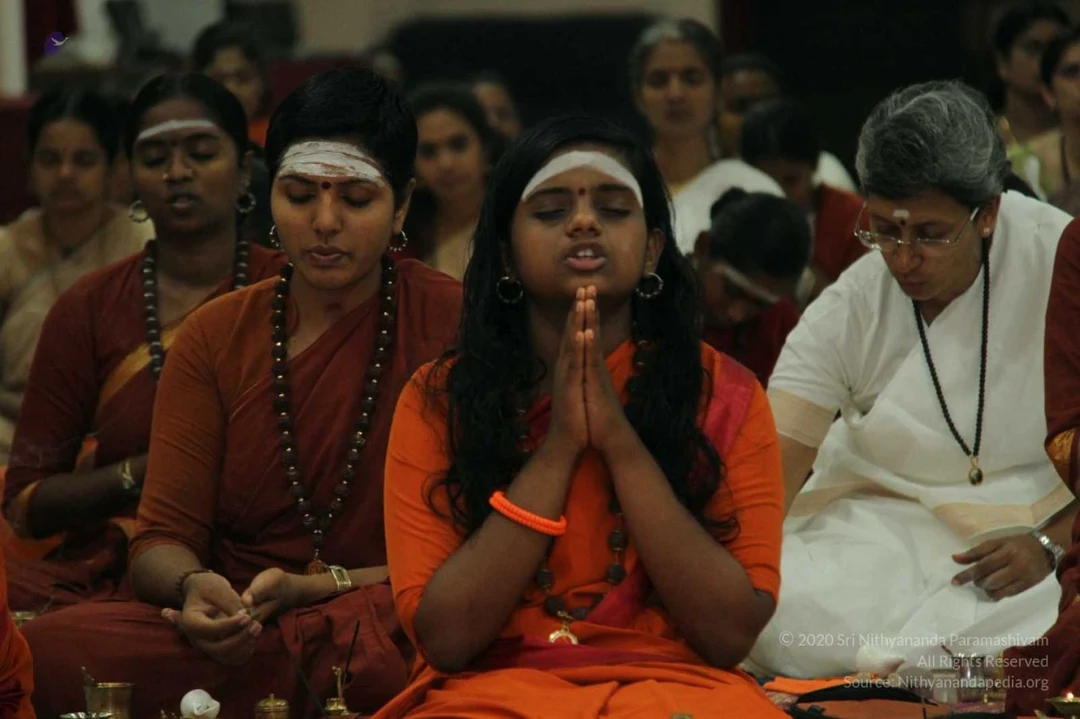
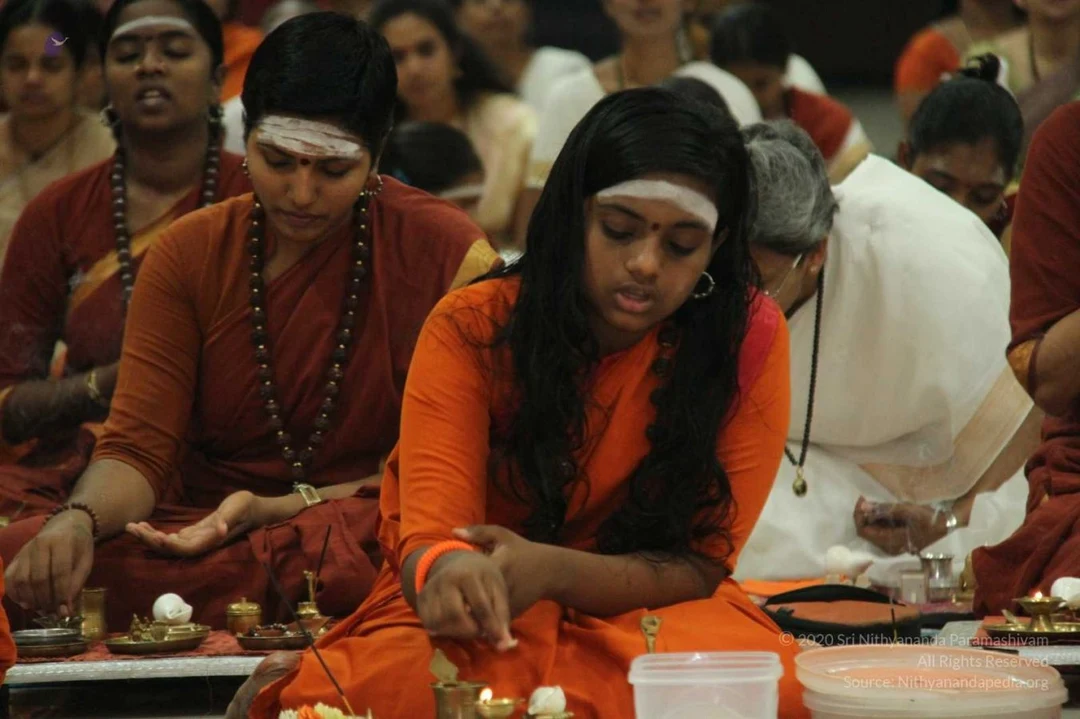
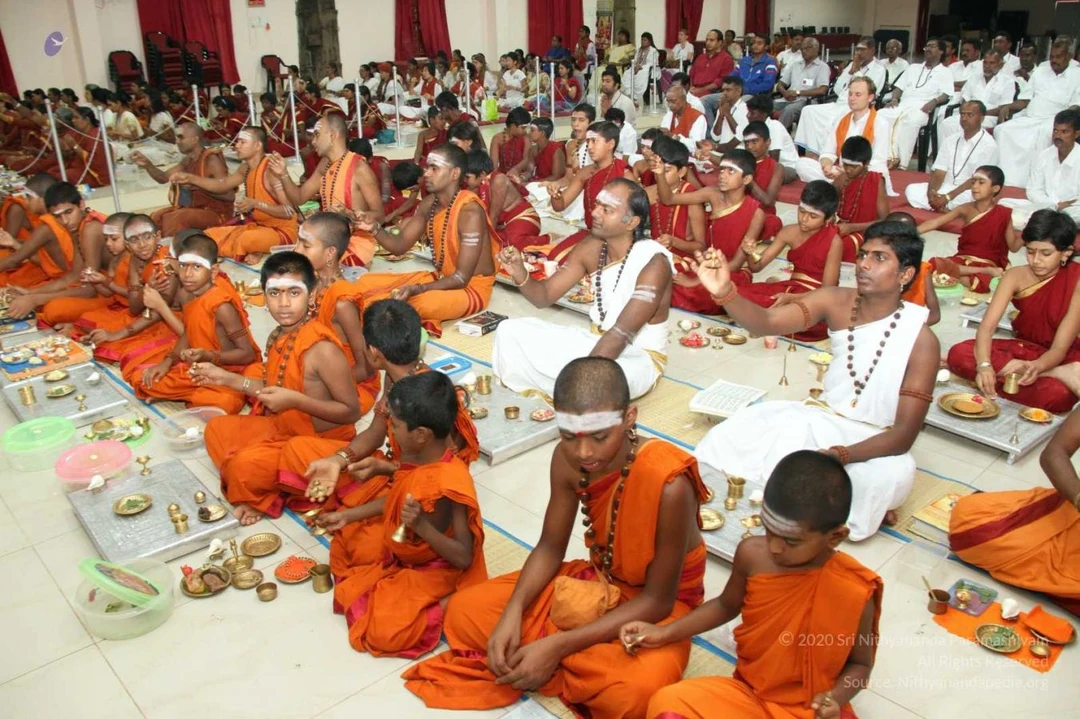
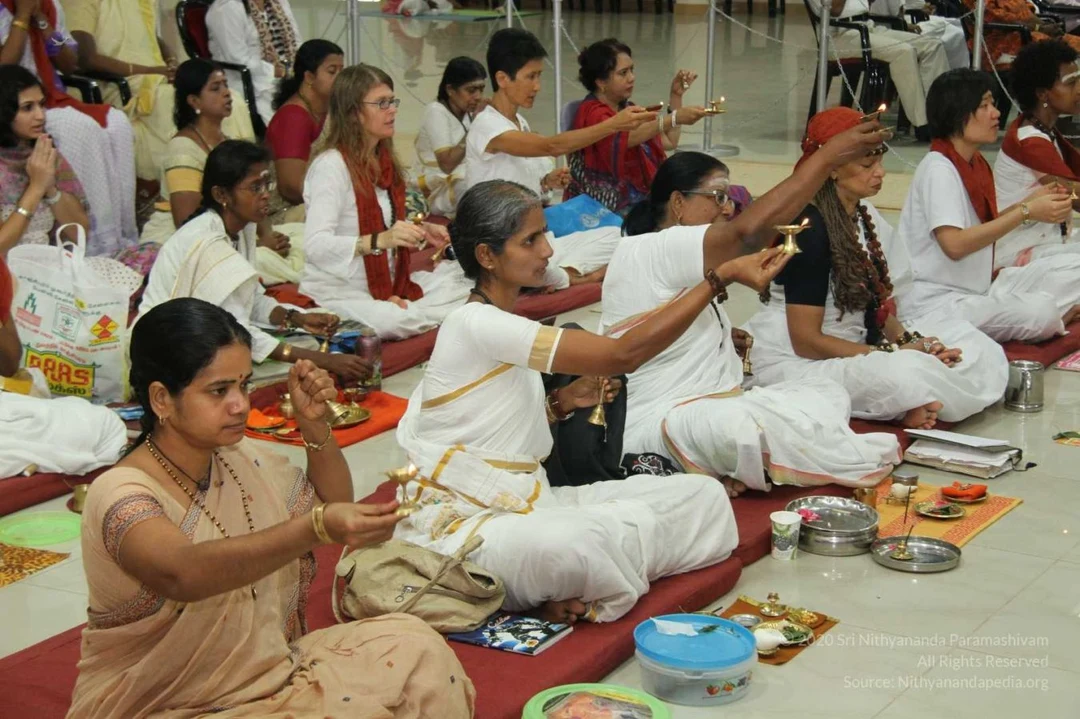
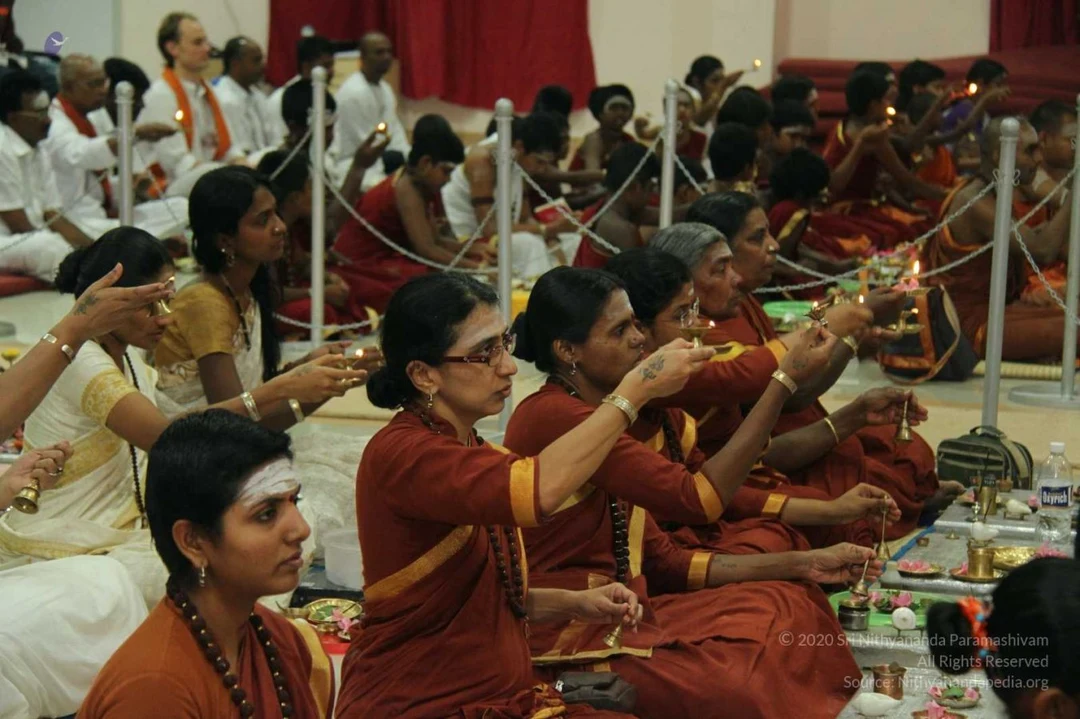
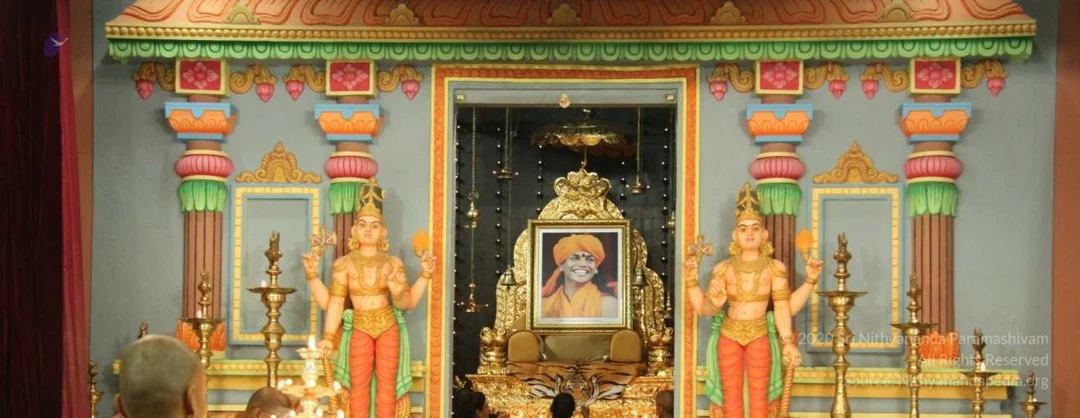
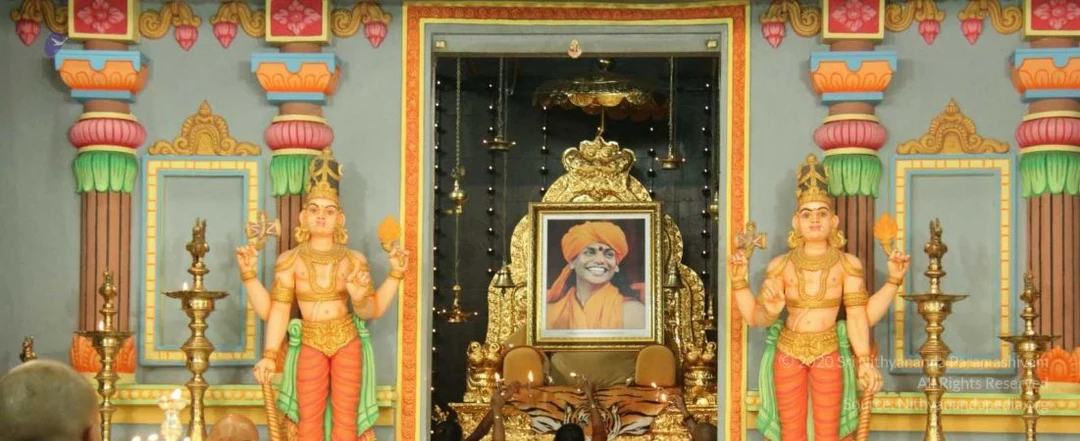
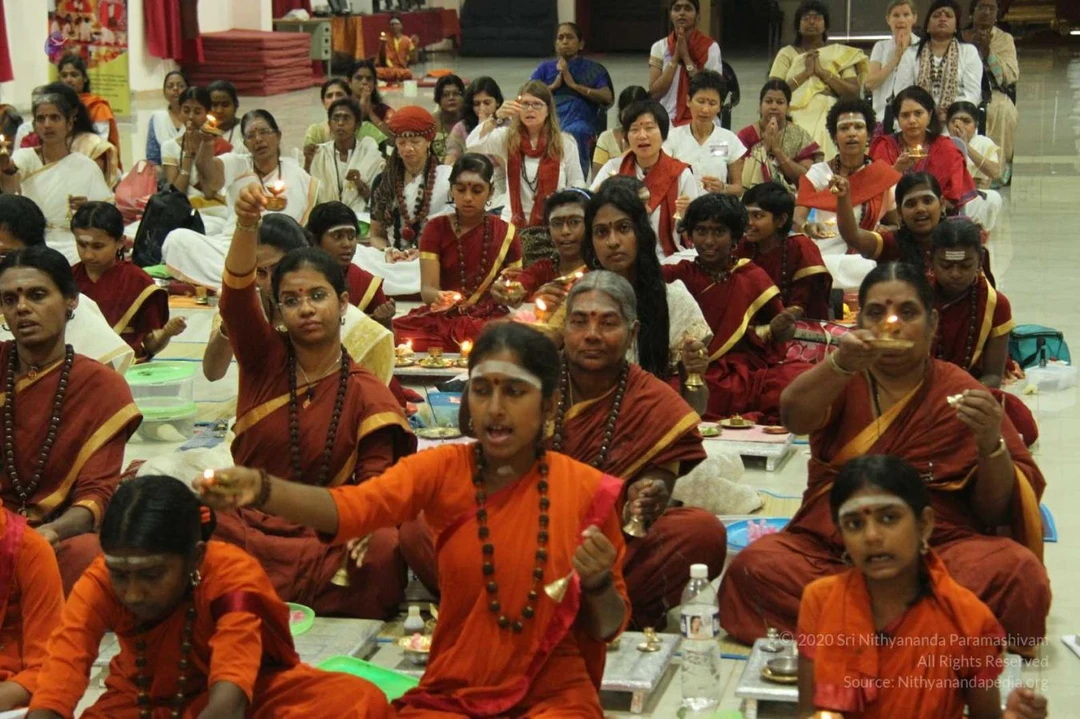
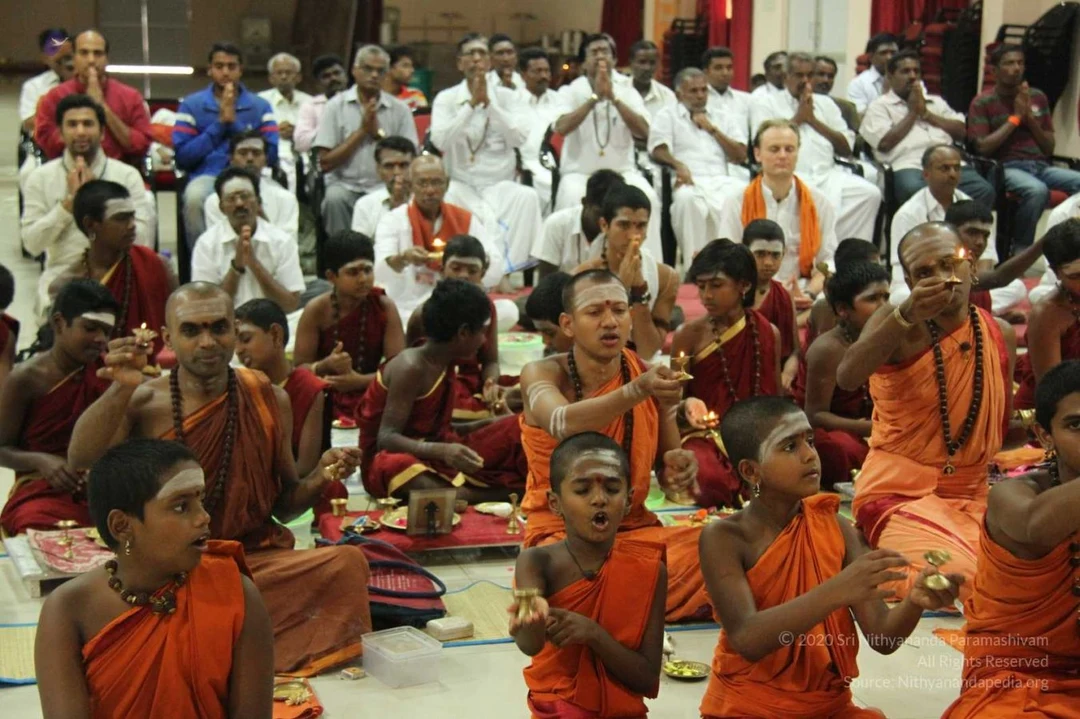
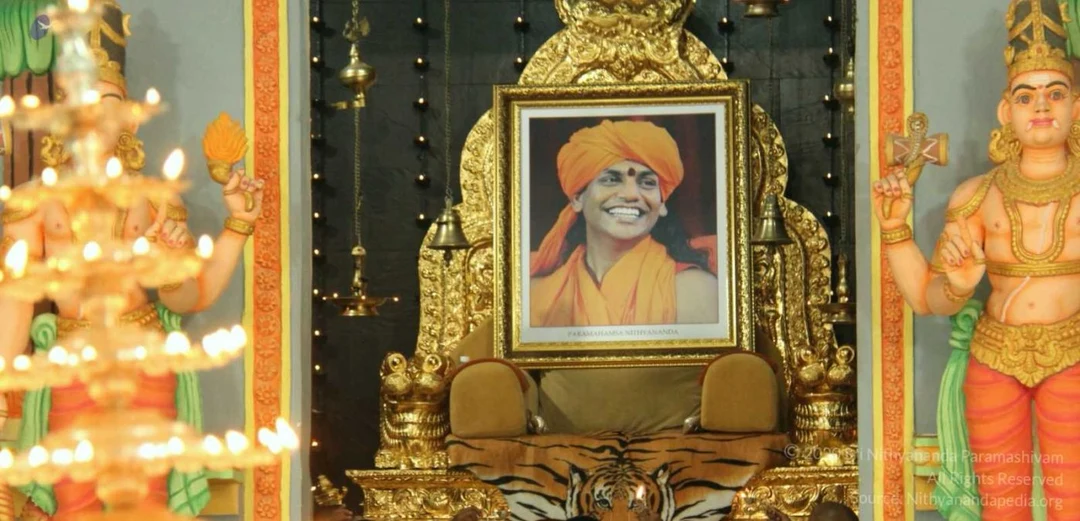
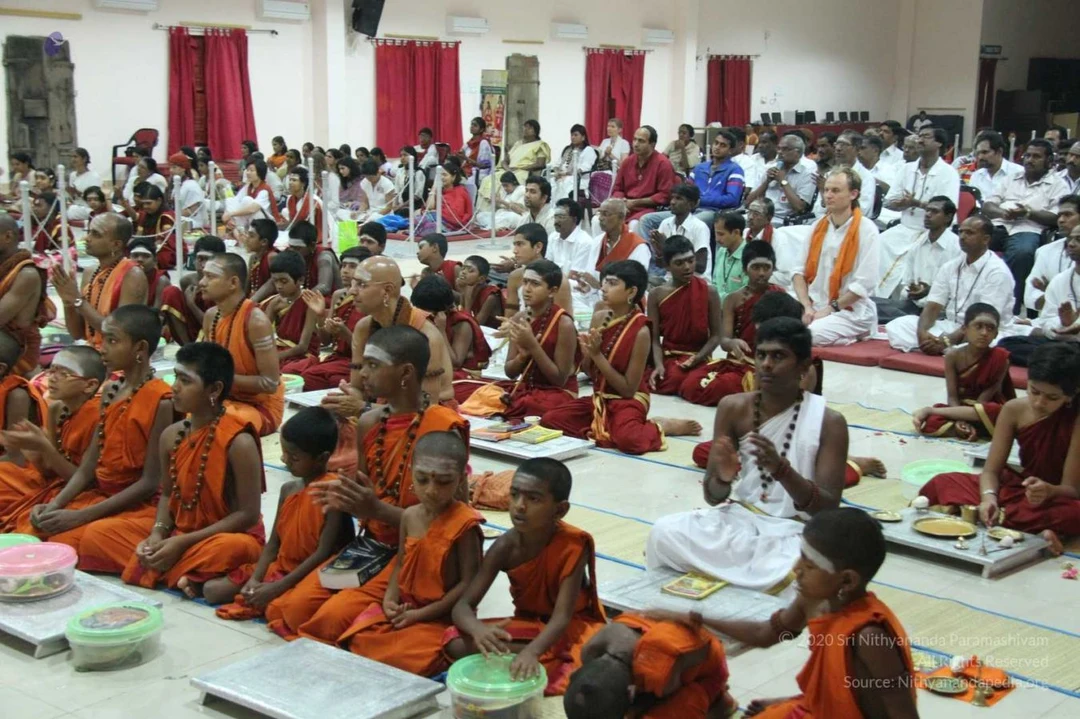
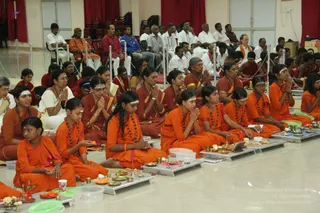
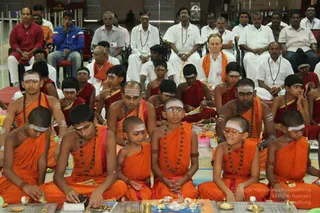
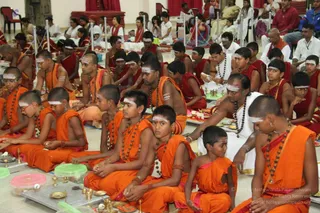
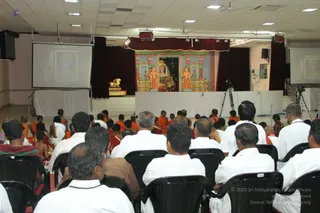
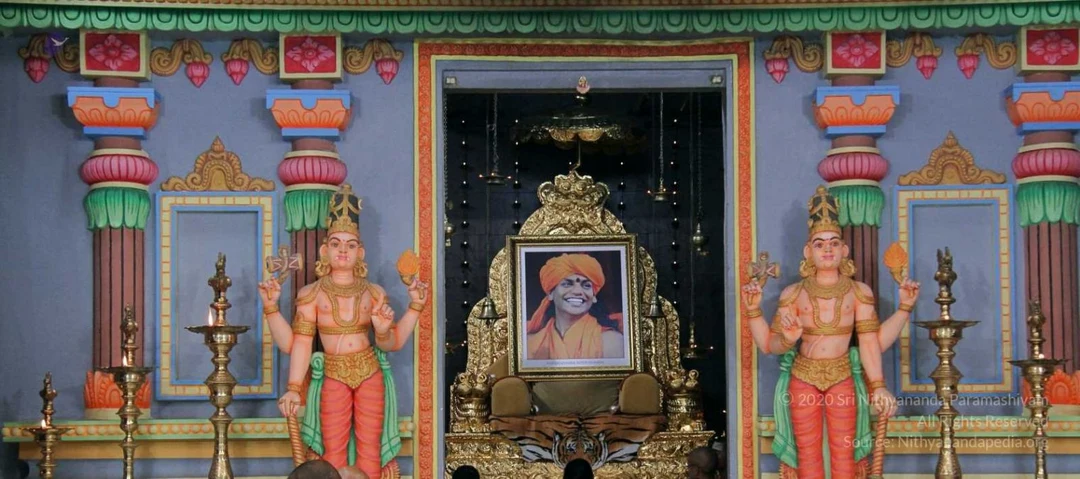
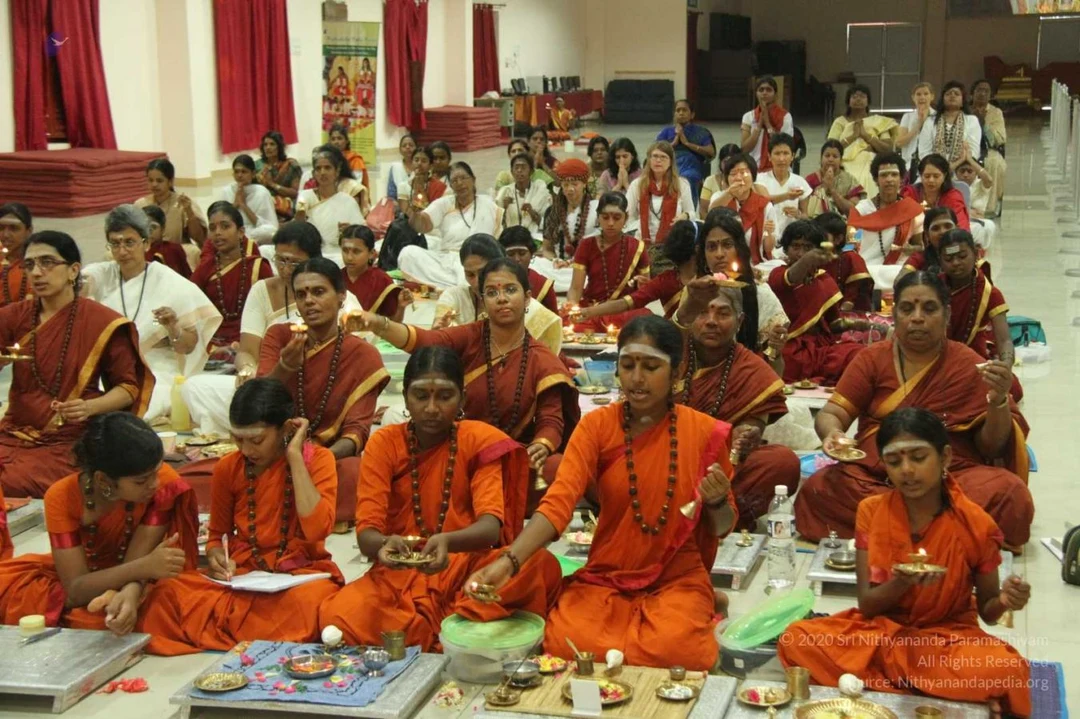
A decorated temple shrine with a golden throne-style seat in the centre, its back framed by a rectangular doorway hung with strings of beads and bells. On the throne sits a framed printed portrait of a smiling man in an orange-saffron turban and orange robe, shown as a depiction rather than a person present. Flanking the throne are two painted deity murti figures with four arms, gold crowns, gold necklaces and armlets, green and orange waist cloths, holding ritual objects. Brass oil lamps stand on both sides, and the pillars are painted in pink, orange, green and blue lotus-style patterns. Only the tops of a few heads are visible at the bottom edge of the frame.A decorated shrine interior with a golden throne-like seat at the centre, draped with a tiger-skin cloth at its base. Above the seat hangs a framed portrait labelled "Paramahamsa Nithyananda" showing a smiling man in an orange turban and orange robe. Two painted standing figures flank the entrance, each holding ritual objects in raised hands, wearing gold ornaments, green and orange garments. Brass oil lamps stand on both sides, and the walls are blue with pink and green column capitals. No clearly visible living people apart from a few partially visible figures at the bottom edge.A photograph of a large indoor hall where rows of devotees sit on the floor in orange and maroon robes with rudraksha malas, many with white vibhuti on their foreheads. Young girls and women in front sit with palms joined in prayer beside small metal plates holding oil lamps, fruit, flowers and offerings. Men in white shirts and dhotis sit in chairs and on the floor at the back, and a monk in saffron stands among the seated rows. Red curtains line the walls and white stanchions with red cords separate the seating area. The scene appears to be a puja or satsang gathering.A photograph of a seated group of young boys in saffron-orange dhoti and shawl with rudraksha malas and white vibhuti stripes on their foreheads, sitting cross-legged on a floor before brass puja plates with flowers, lamps and small vessels, in a large hall. Behind them rows of older men in white shirts and dhotis, many with rudraksha malas, sit on chairs. A man in an orange shawl and white clothing sits among them. Floor cushions and a red mat are visible.Photograph of a seated ritual gathering in a hall with white floor tiles. Thirty-plus young boys and youths sit in rows wearing saffron-orange cloth and rudraksha malas, with white horizontal tilak marks on their foreheads. Several wear white-clad, bare-chested adult attendants in white dhotis with rudraksha malas. Brass puja vessels, small lamps and plates of offerings sit on metal trays in front of them, with a few small plantain or flower arrangements. Behind them, adult devotees in white, red and saffron clothing sit or stand, and an elderly man in white and an orange-clad man sit on the right. Pillars and a red curtain frame the background.Rear view of a seated audience in a hall facing a stage. Rows of men in white dhotis and shirts sit on black plastic chairs in the foreground, with saffron-robed monks and boys seated on the floor near the front. On stage, a gold throne-like seat with a lion figure sits at left, and a decorated shrine with gold pillars and two standing deity murti flanking a central doorway. Projection screens on both sides show a portrait image. A video camera on a tripod is set up at the side of the stage. Some people in the audience wear brown and red garments.

Nithya Satsang
62 photosSource gallery
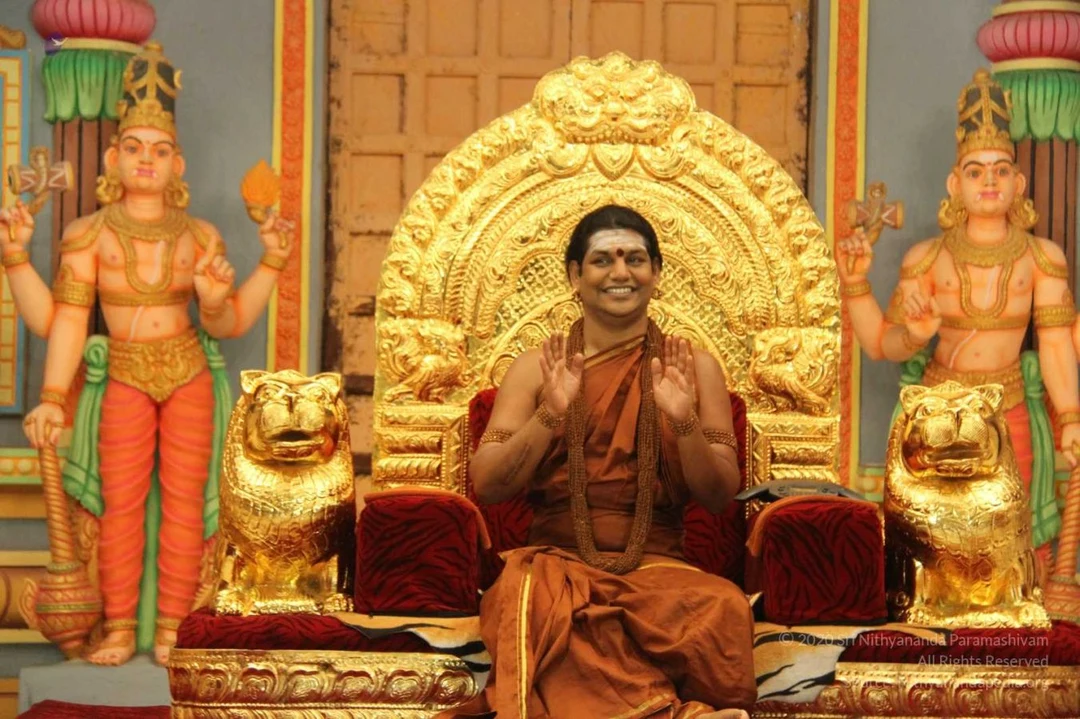
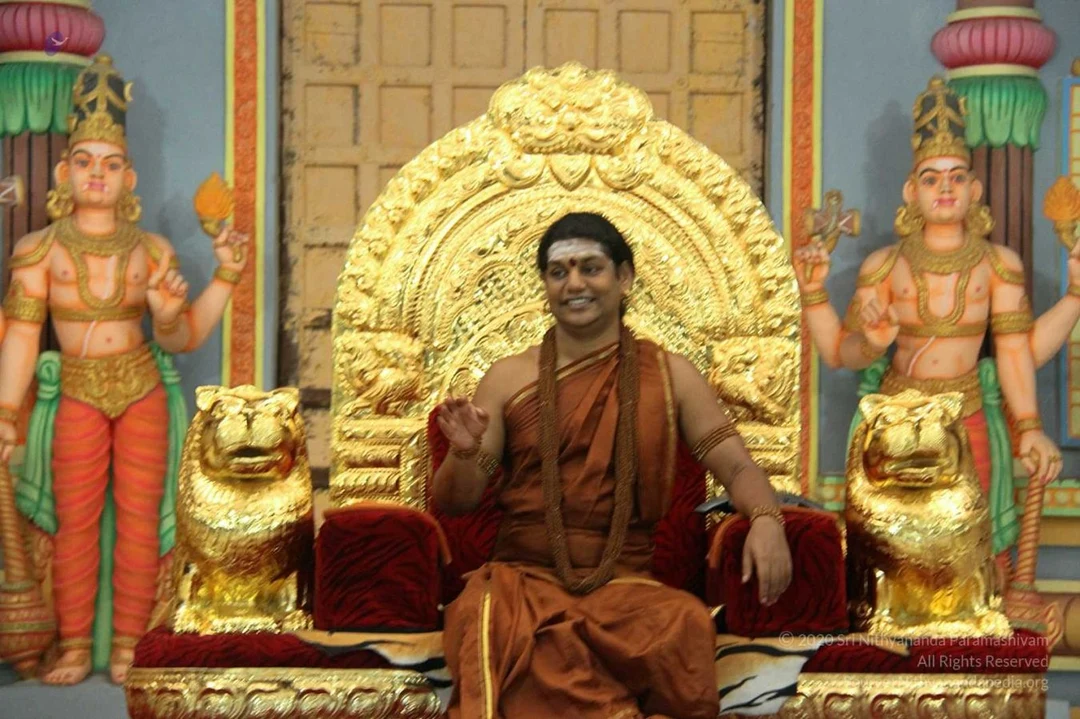
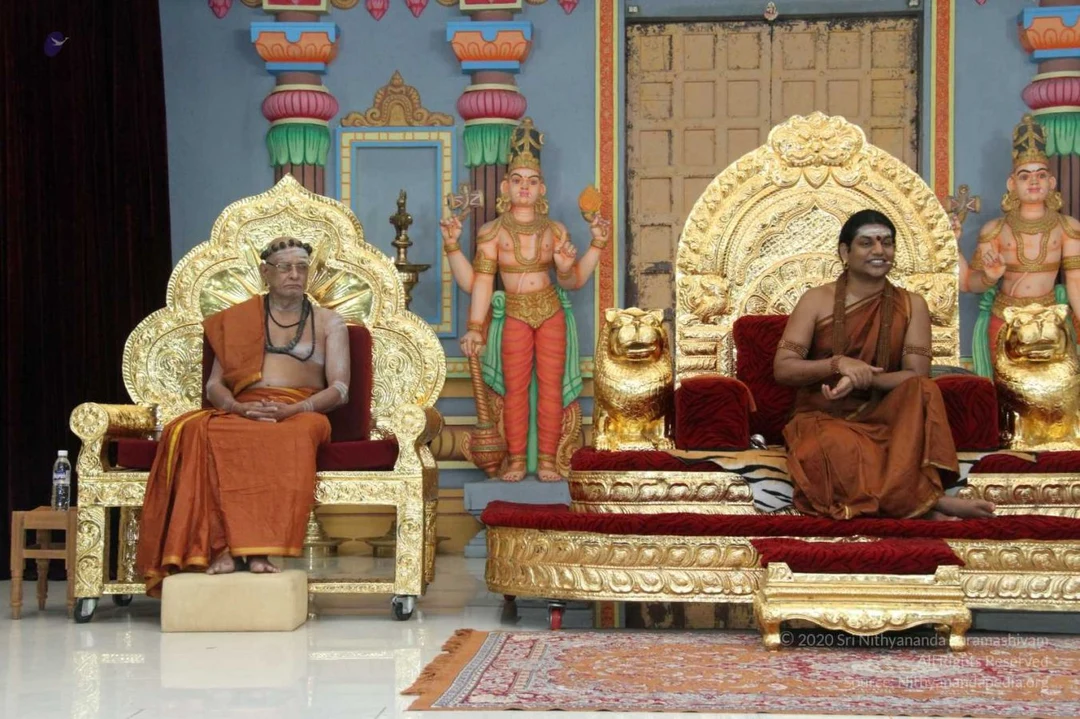
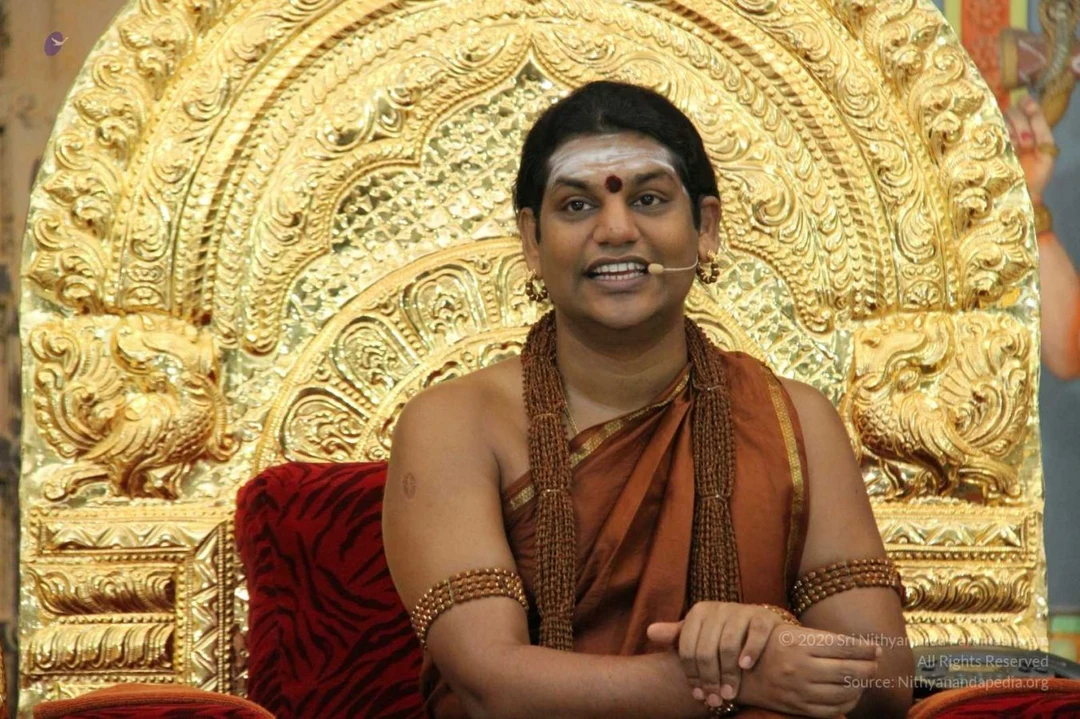
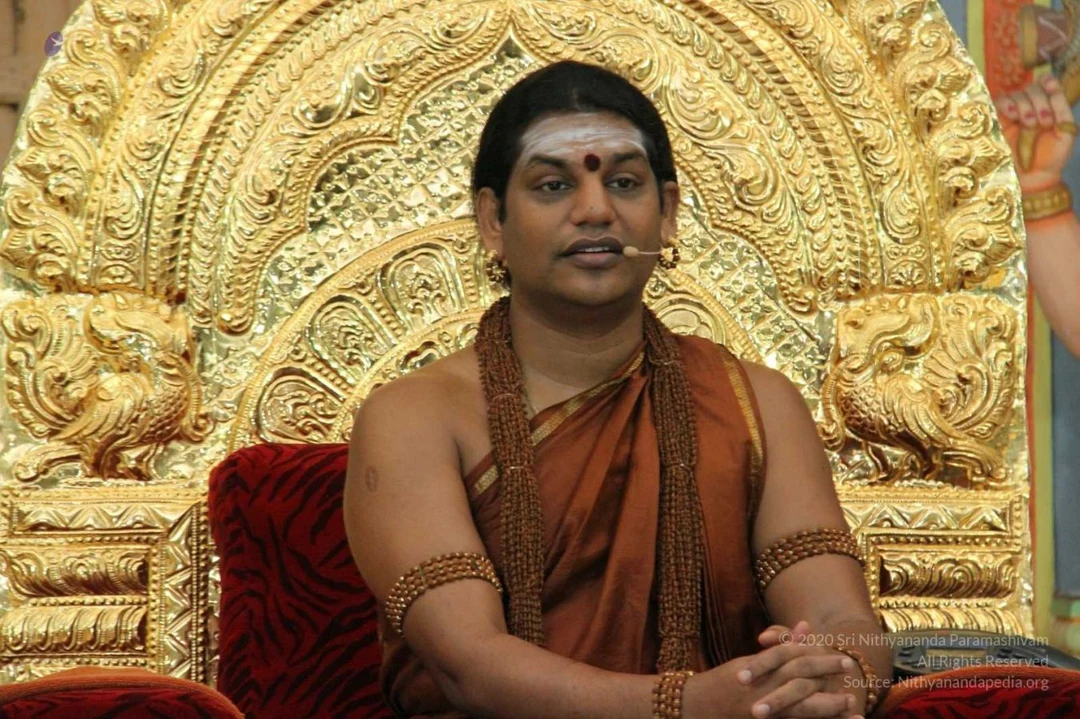
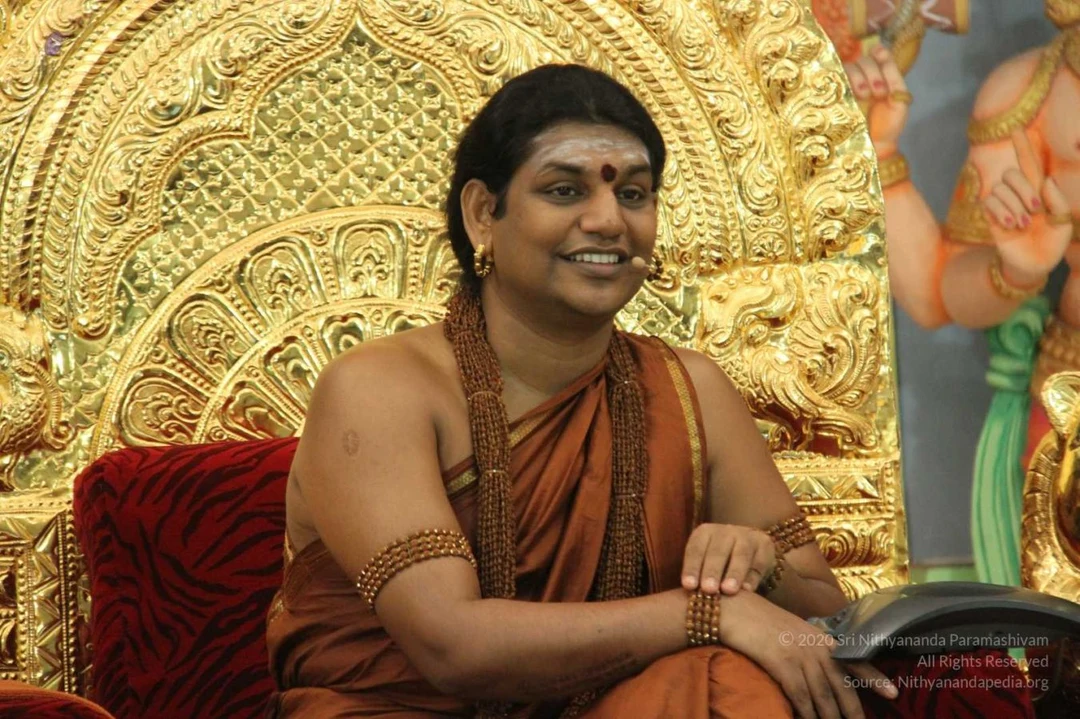
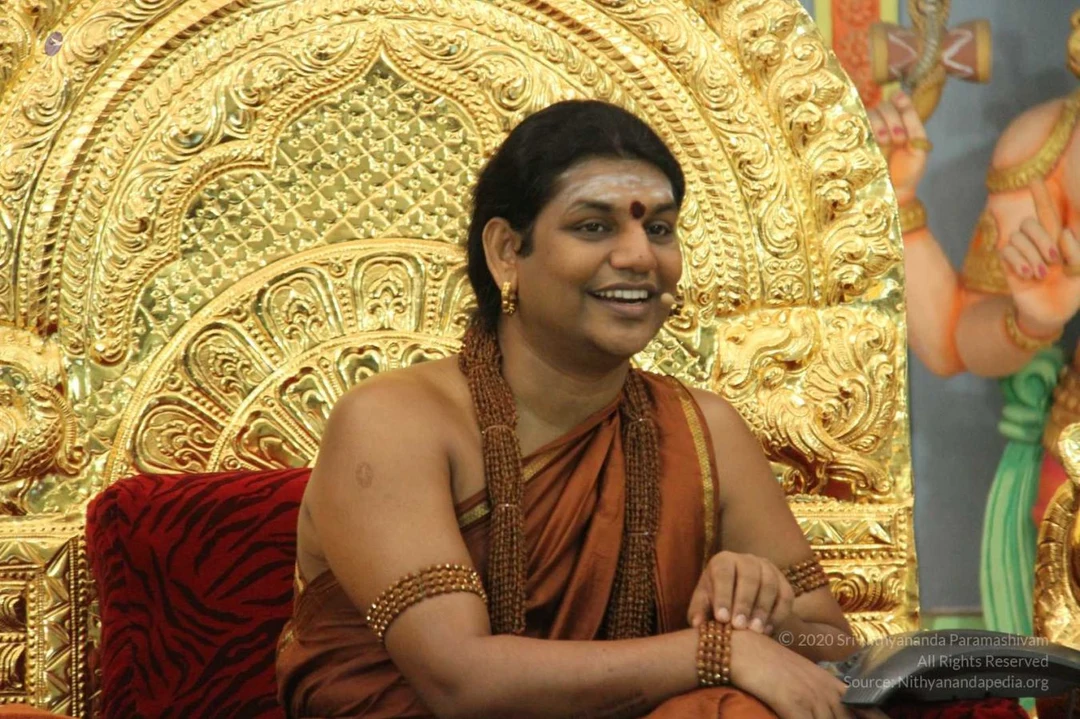
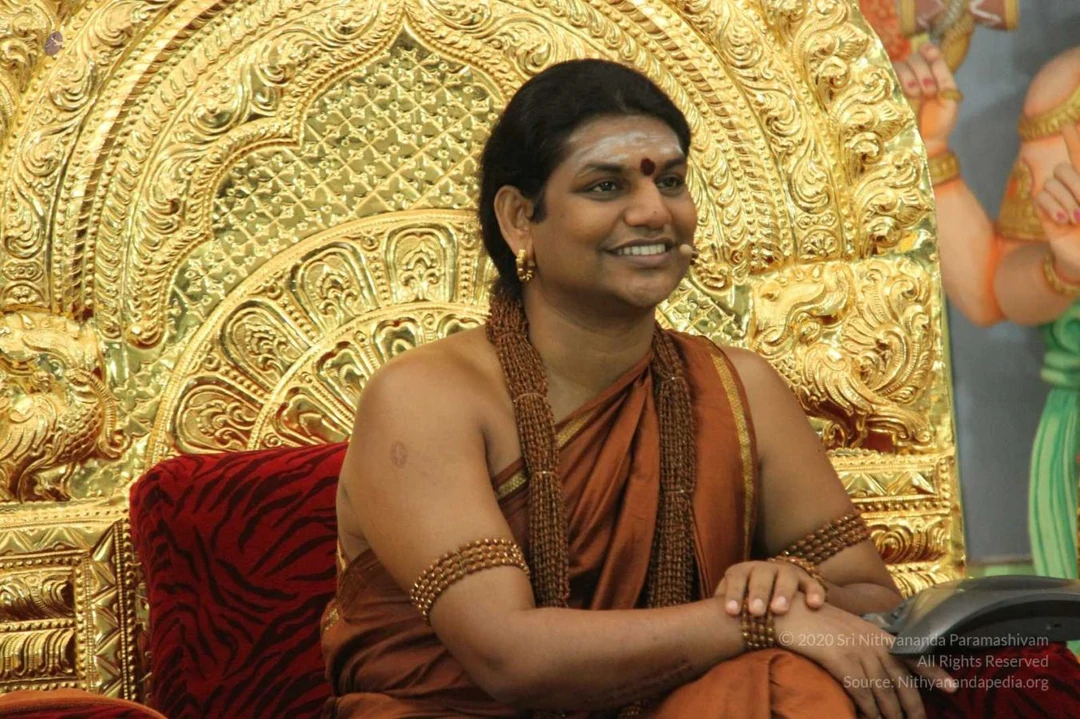
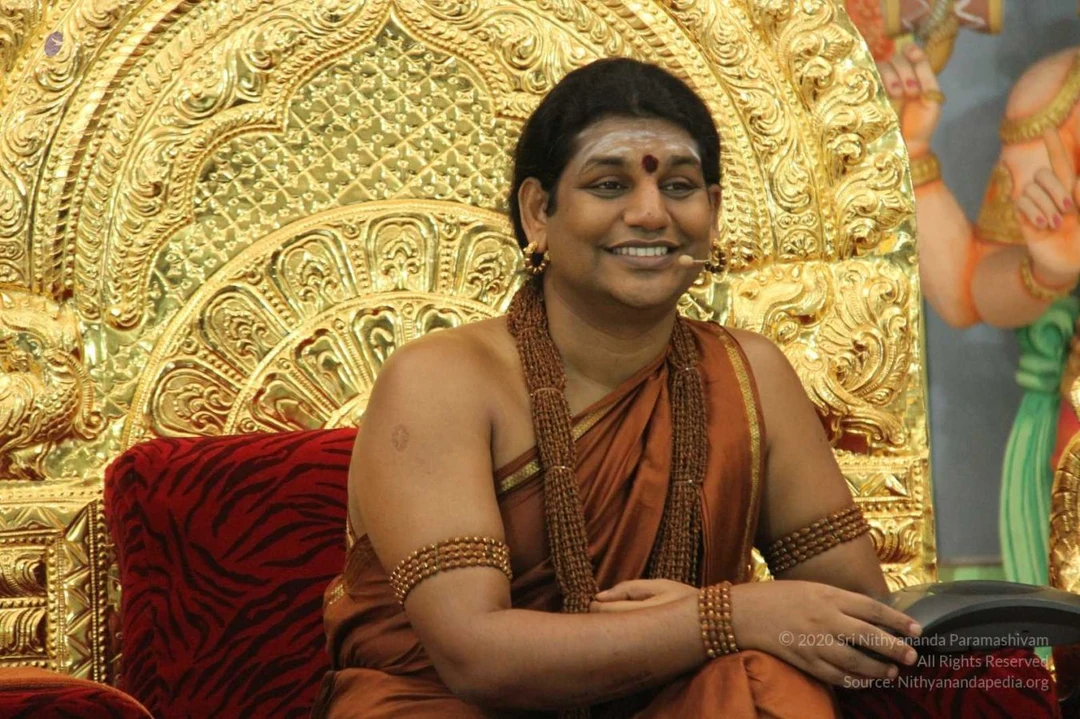
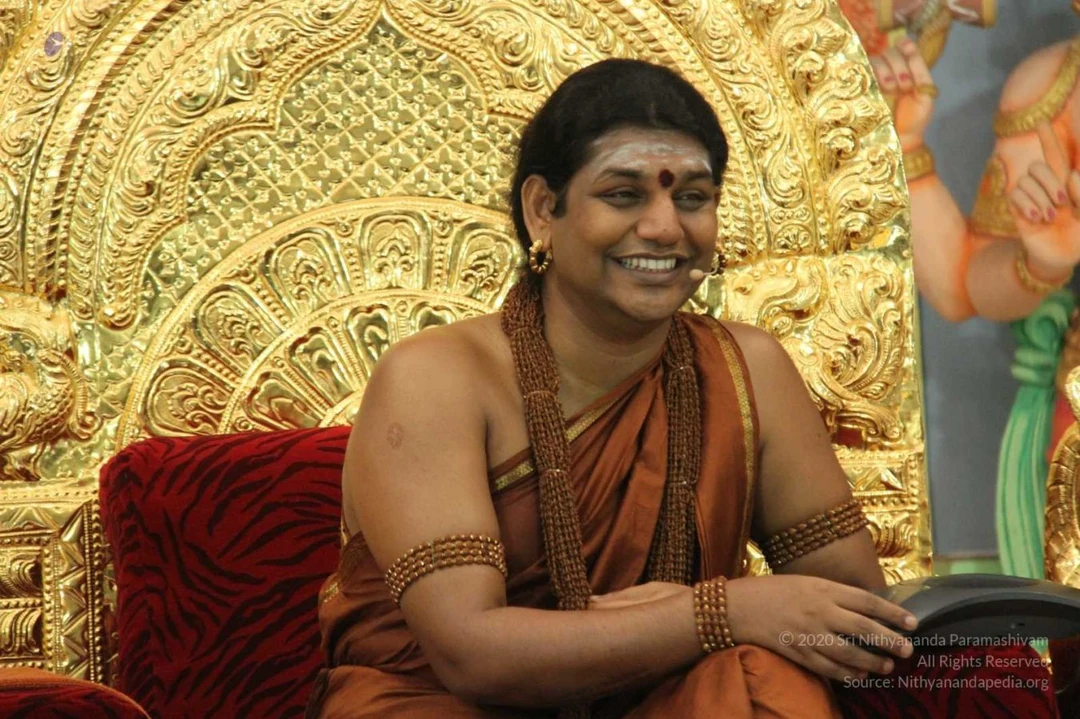
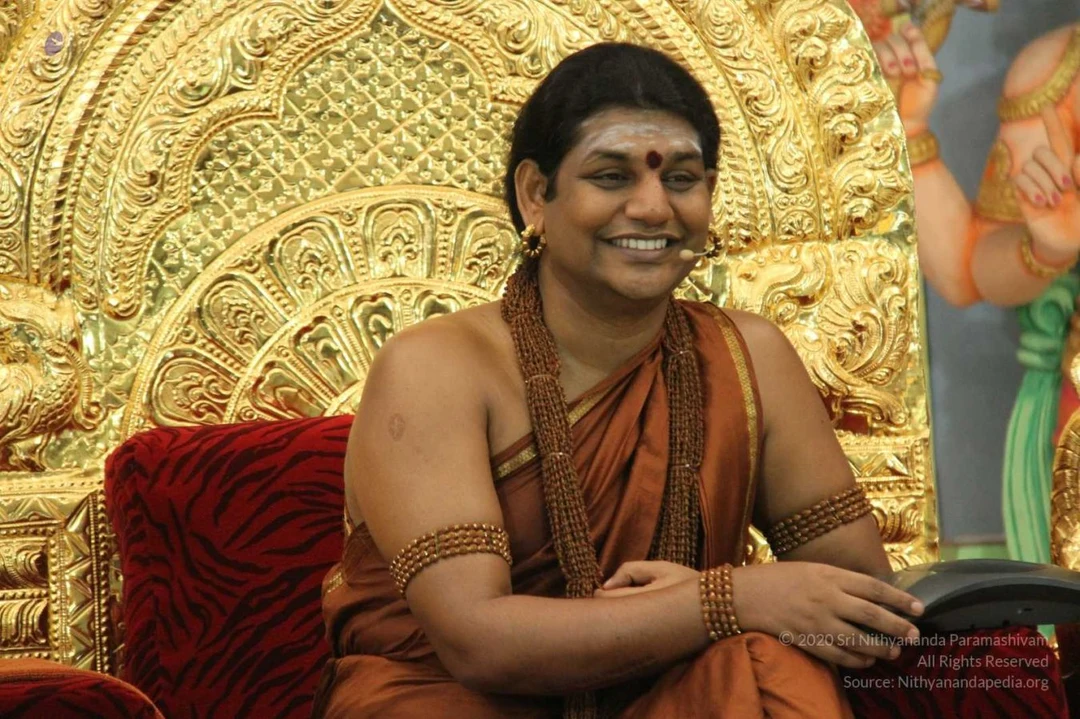
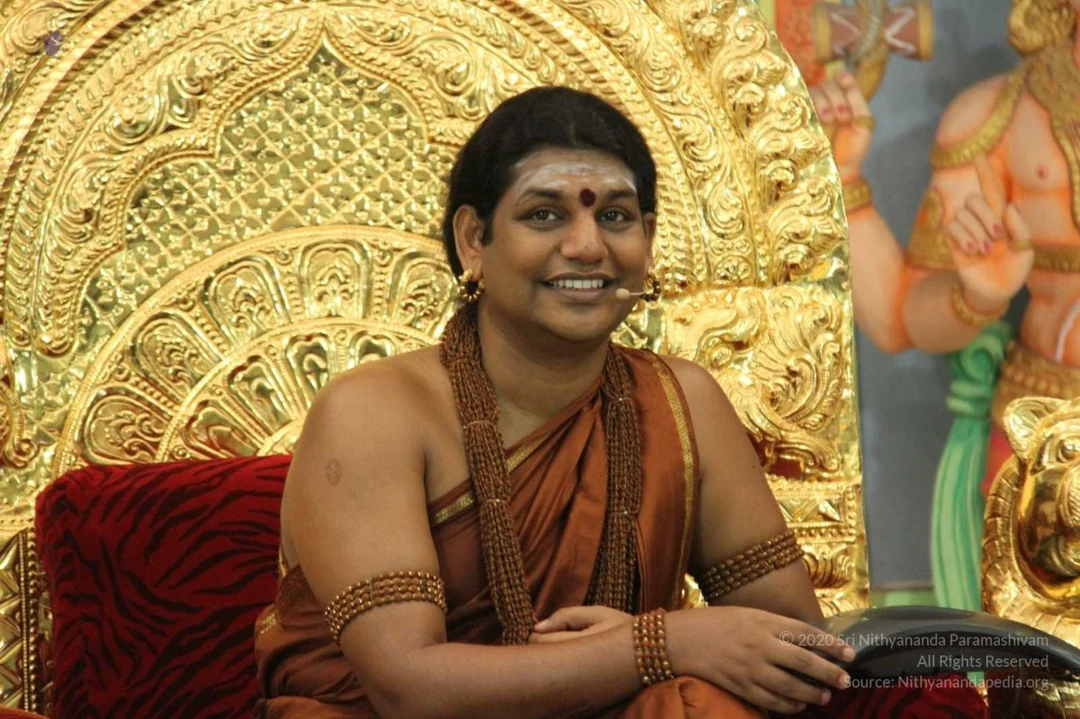
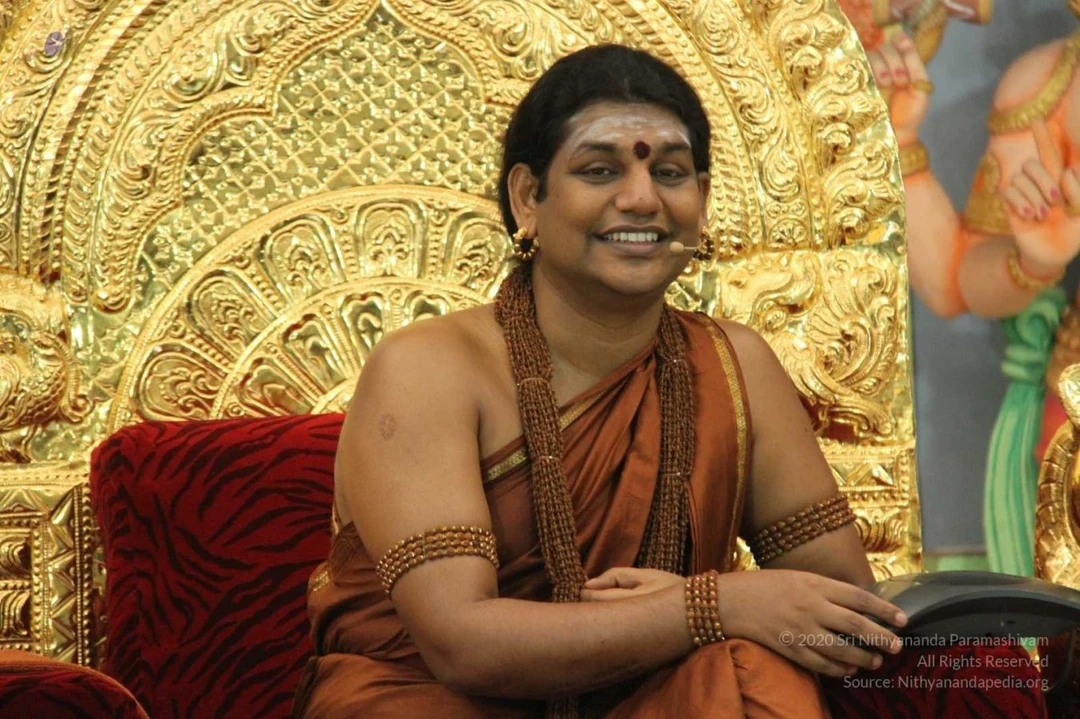
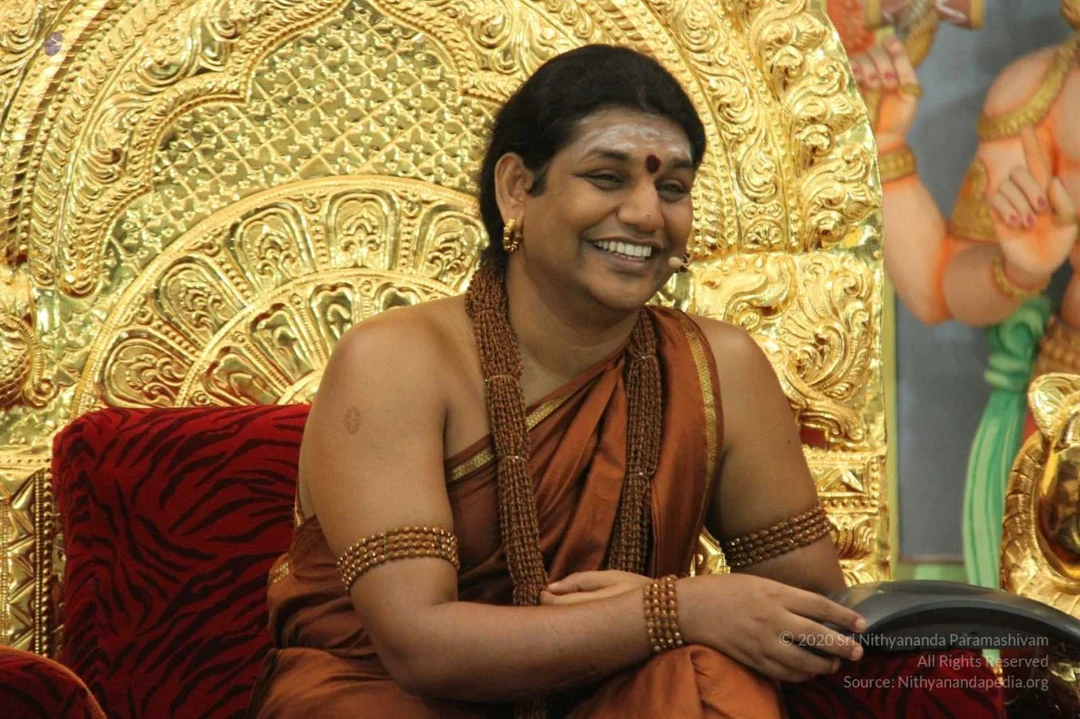
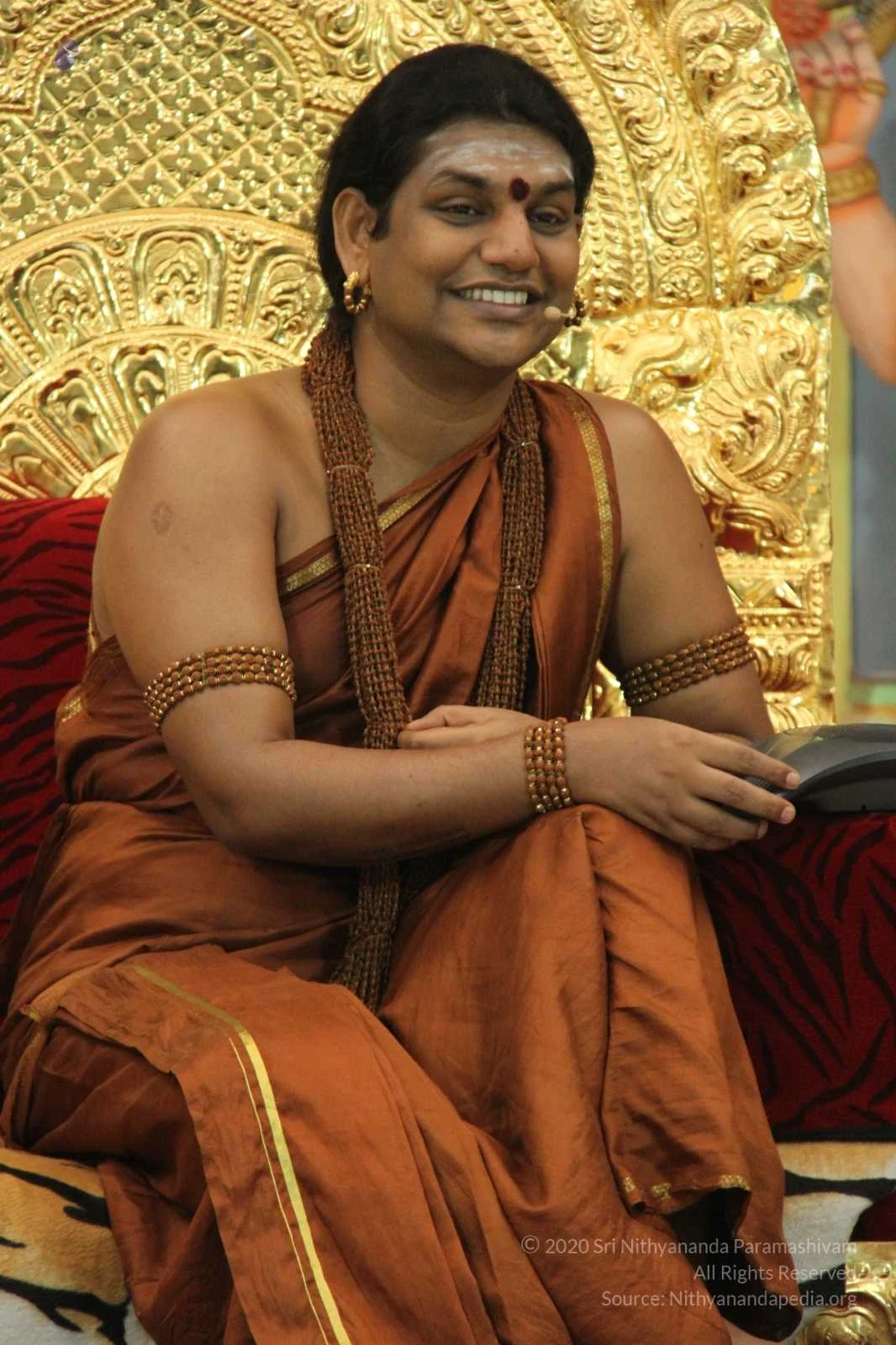
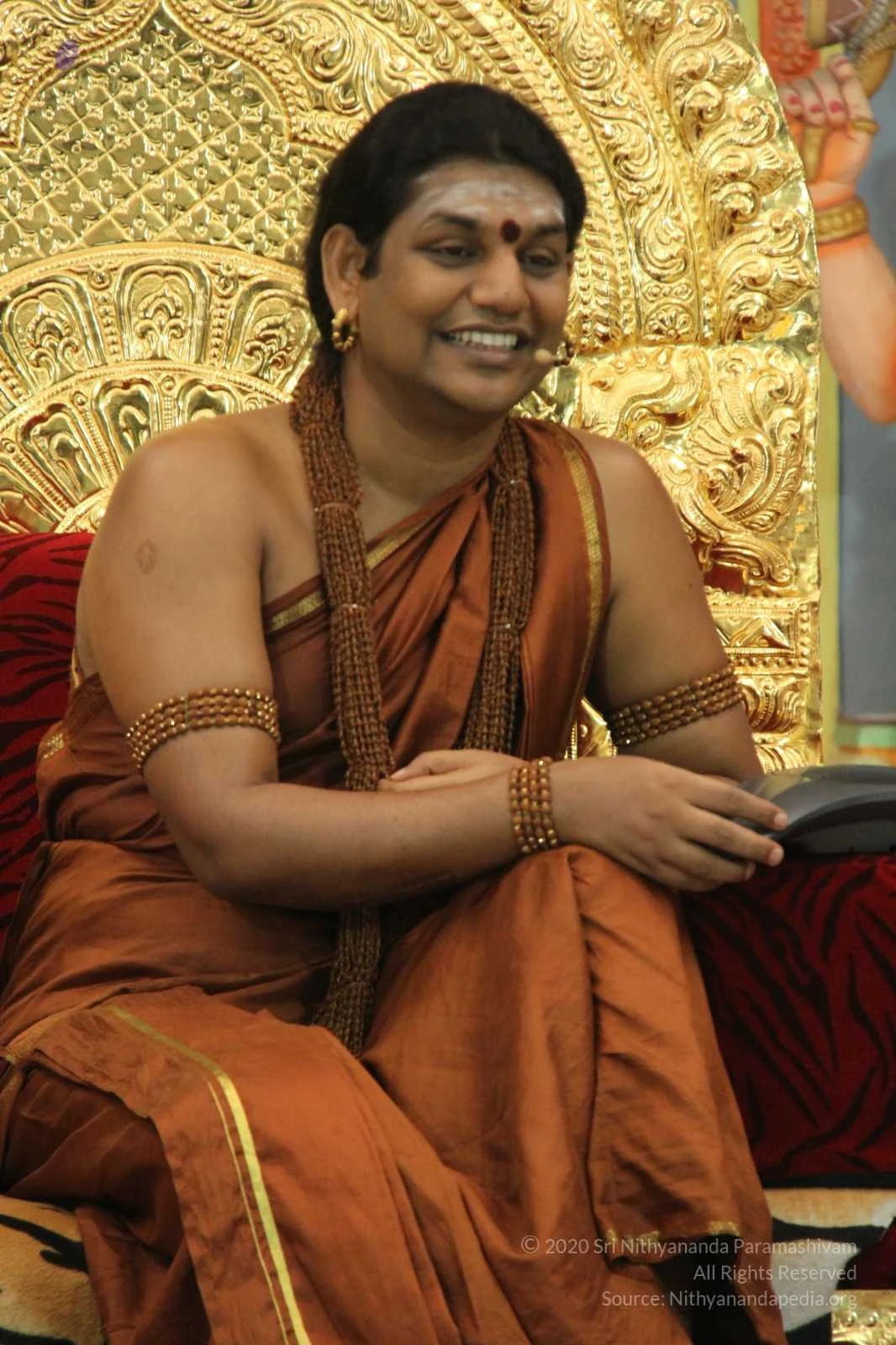
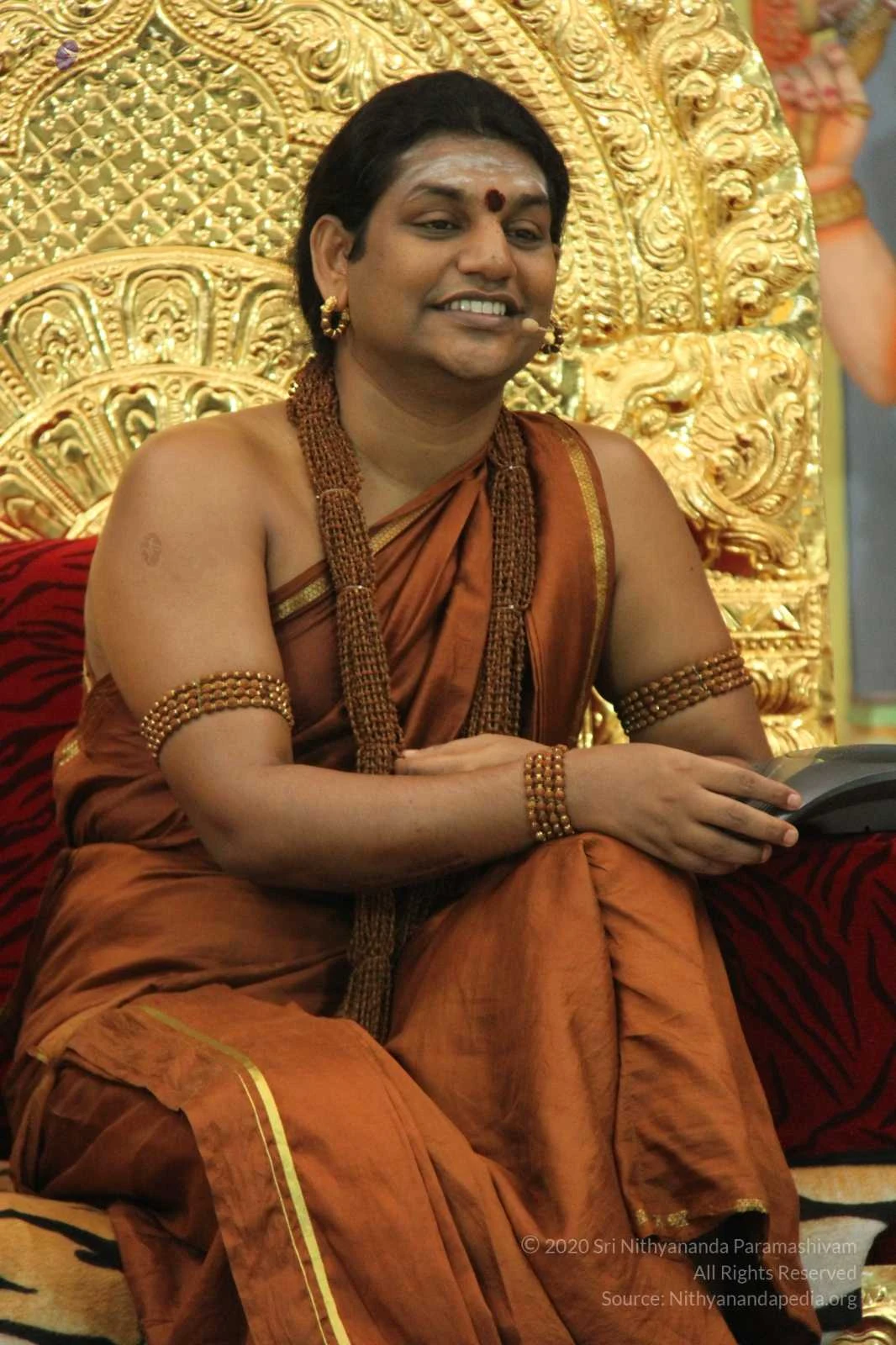
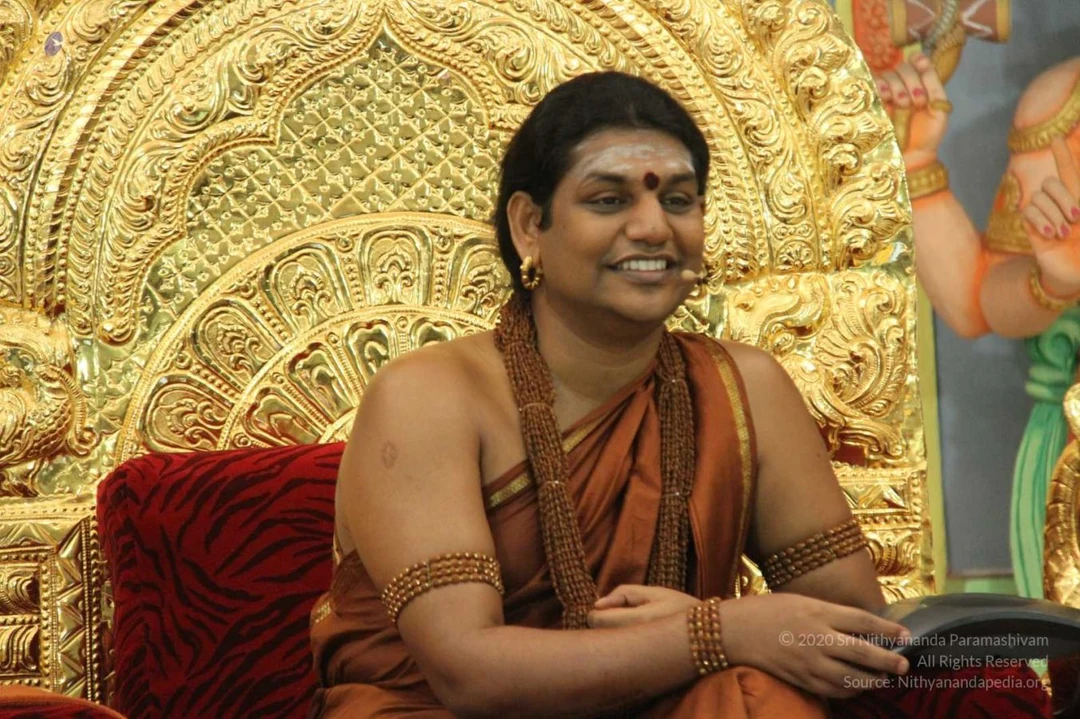
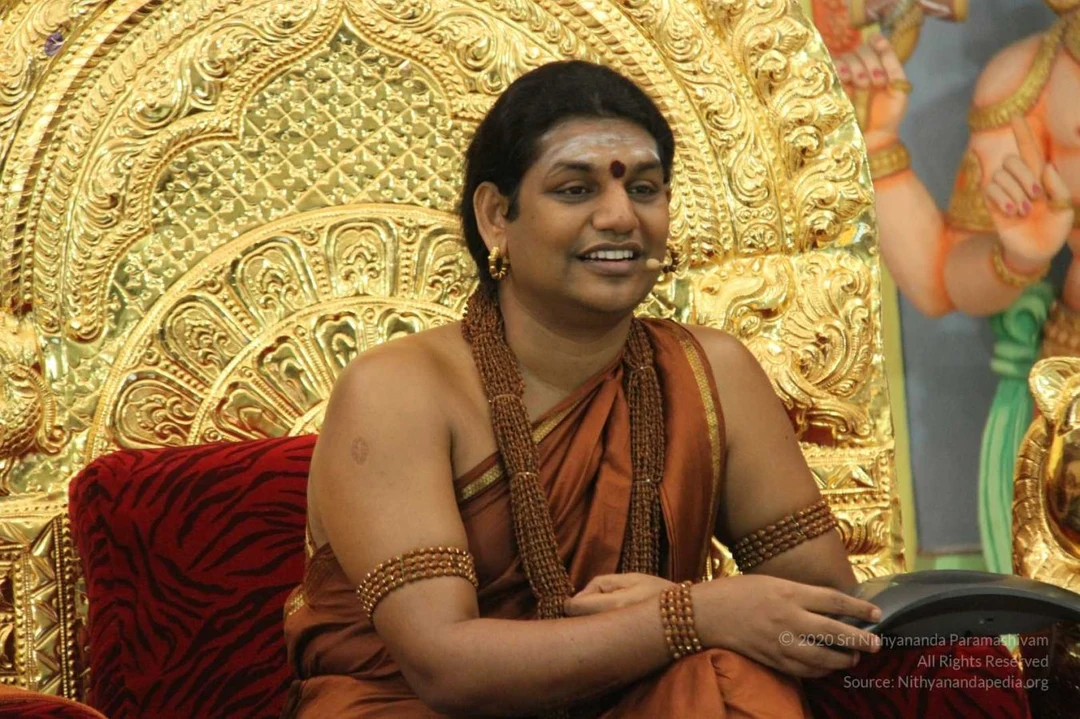
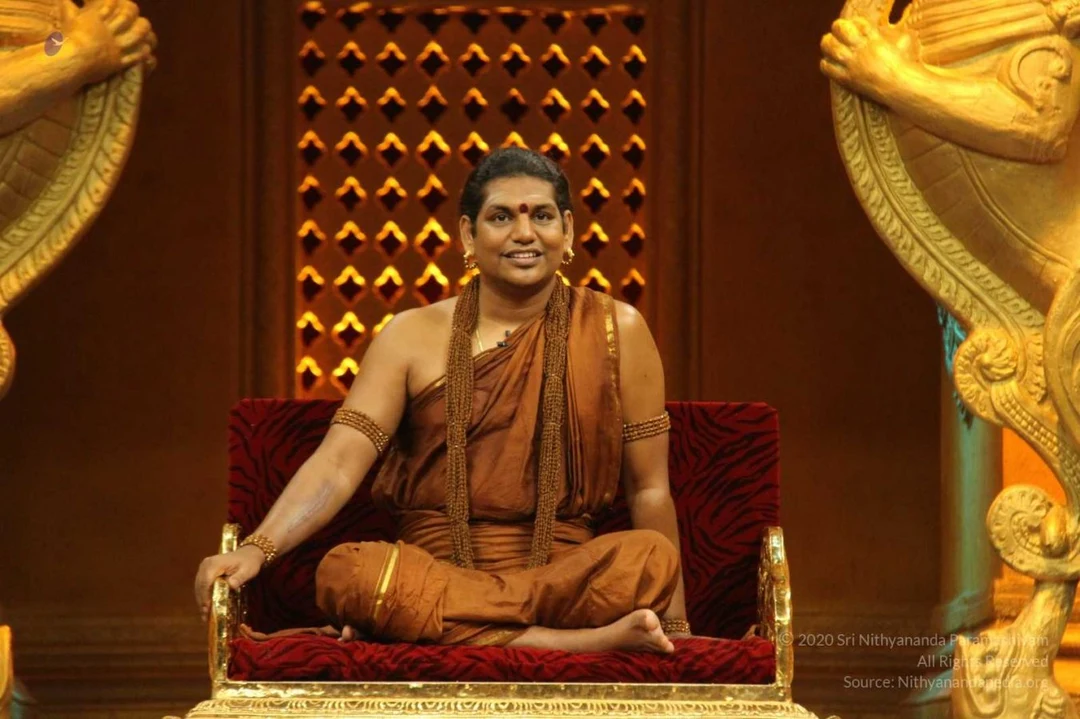
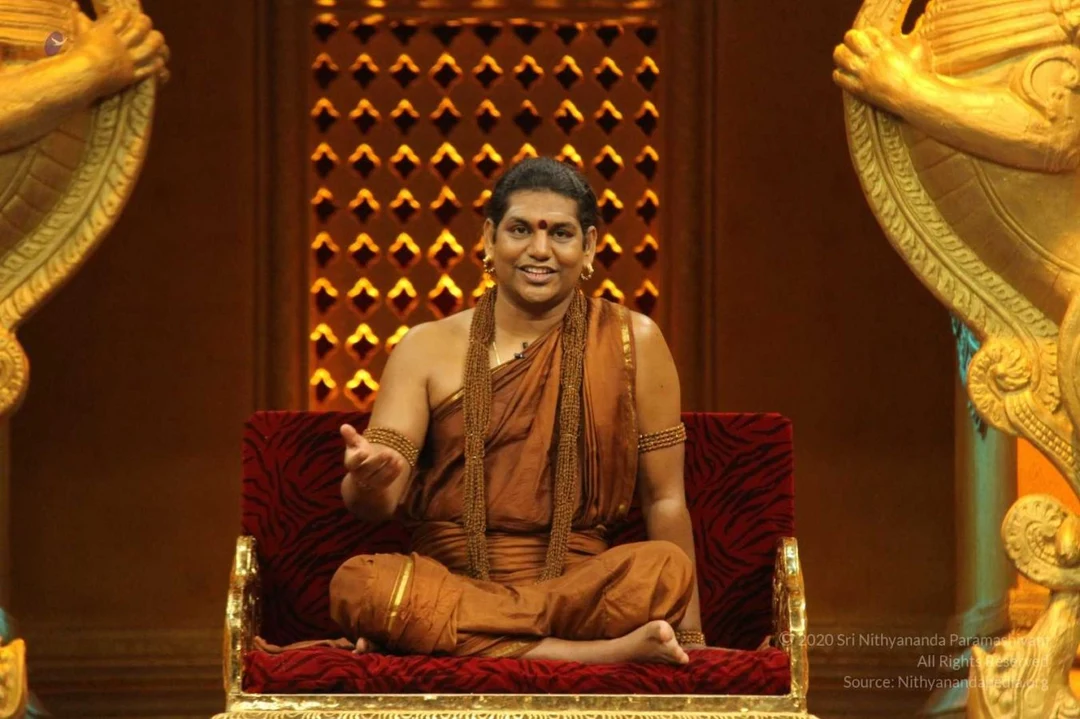
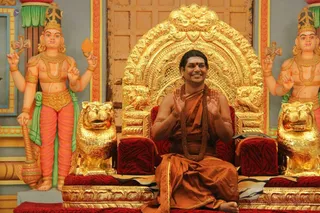
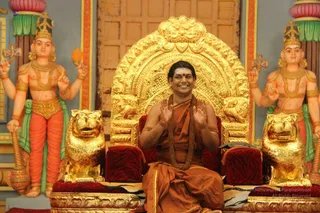
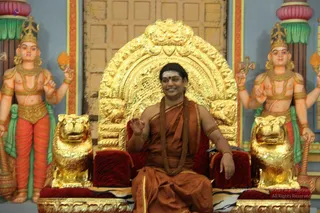
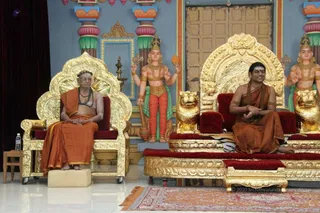
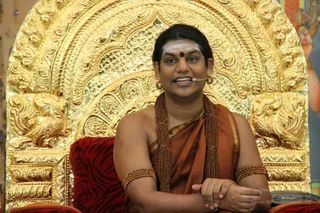
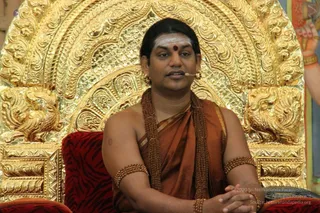
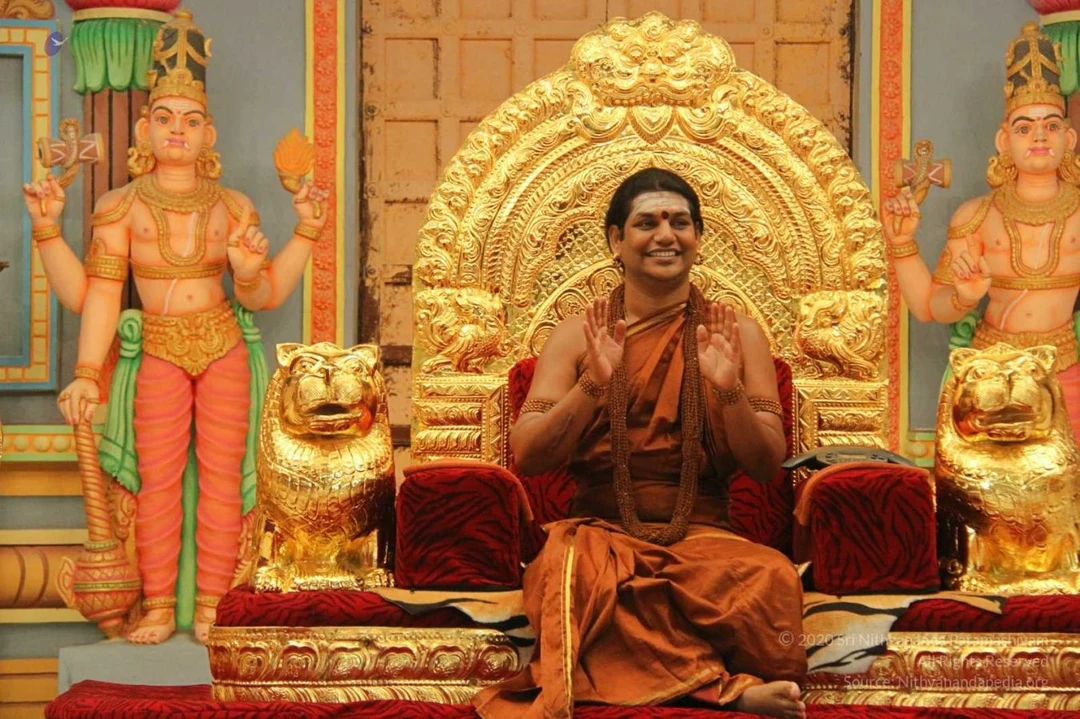
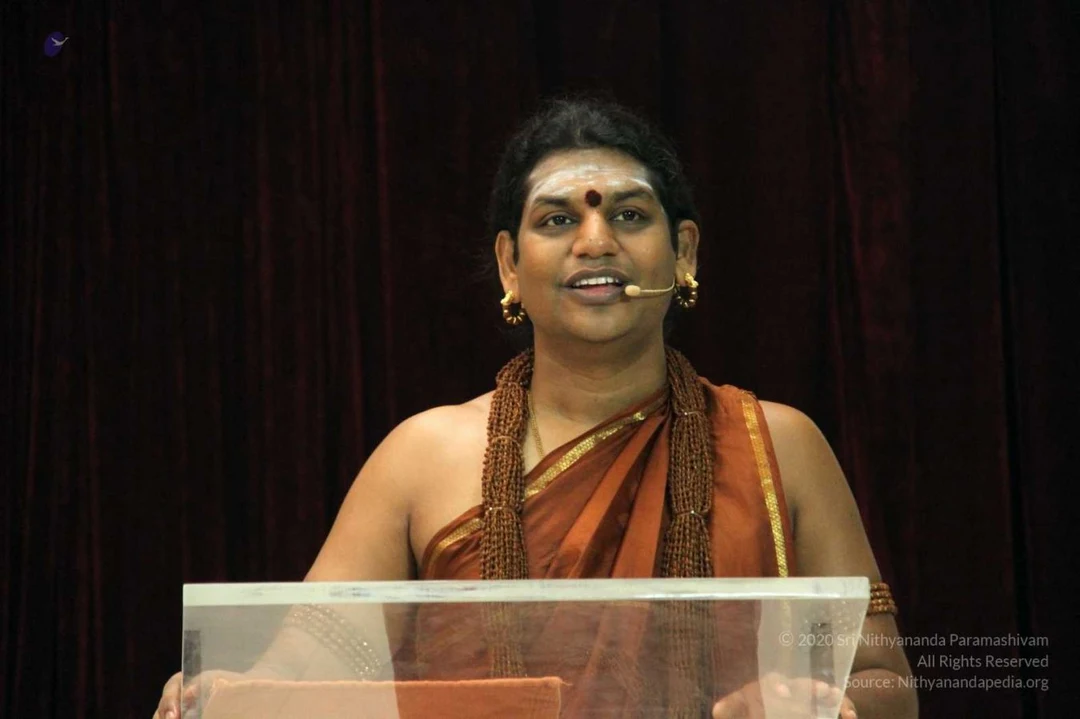
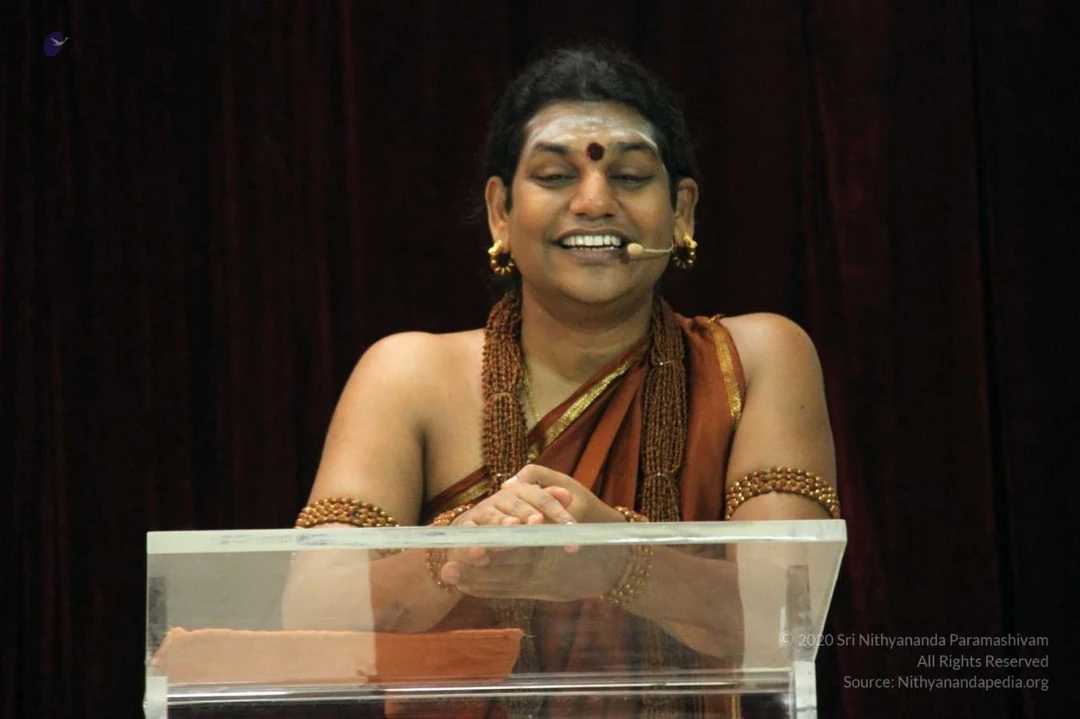
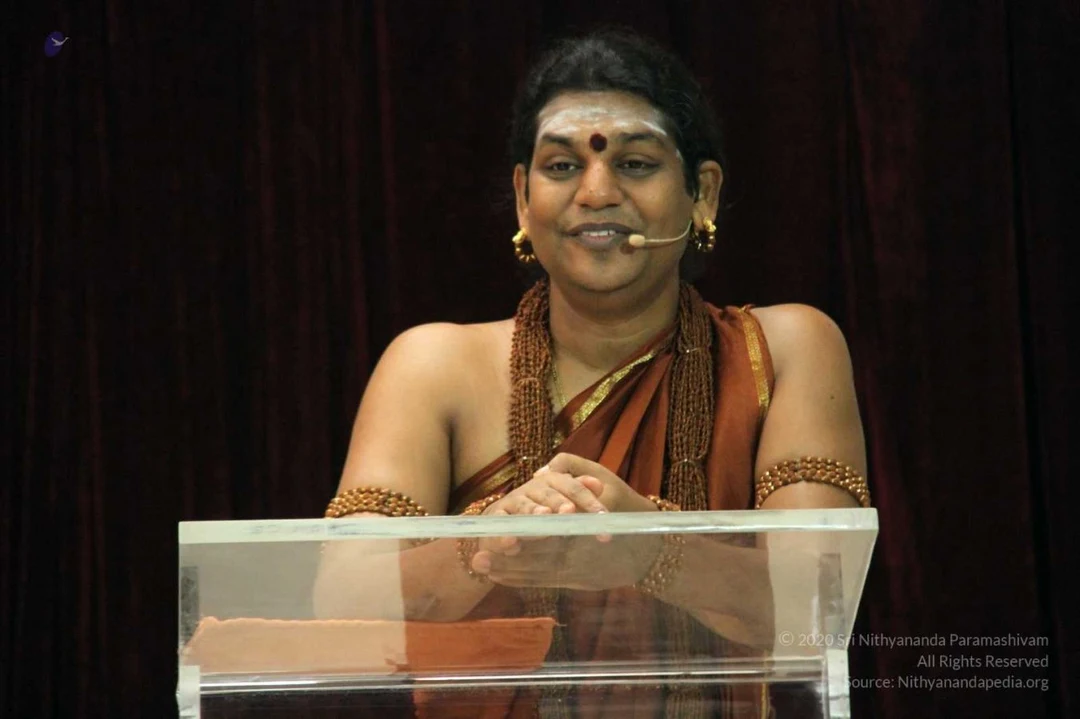
A seated man in saffron-orange robes and a rudraksha mala sits on an ornate gold throne with carved lion heads and red velvet cushions. He smiles with palms pressed together in greeting, with a red tilak on his forehead. Flanking the throne are two painted multi-armed deity murtis in gold crowns and gold necklaces, with gilded lion statues at their feet. The setting resembles a temple-style satsang hall.A seated man in saffron-orange robes sits on an ornate gilded throne with a large golden arched backrest and carved lion heads at the arms, backed by a red velvet cushion. He wears a rudraksha mala necklace, a red forehead mark and gold bangles, and he has his palms pressed together in greeting while smiling. Flanking the throne are two painted deity statues with multiple arms, orange dhotis and green sashes, holding ritual objects, with golden lion figures in front. a person, seated on the peetha as the central figure, identified by the saffron robes, rudraksha mala and ornate throne.A man in a saffron-orange robe with a long rudraksha mala around his neck sits on an ornate gold throne with a carved arched back and two gold lion figures at its base, cushioned in deep red velvet. He smiles and gestures with his right hand. Two painted deity statues flank the throne, each with a tall crown, multiple arms, gold necklaces and armbands, and red-orange lower garments. Behind them are a panelled wooden door and blue-grey walls with pink and green pillar tops.Two seated men on ornate gold thrones on a stage with a painted backdrop of two standing deity murti with raised arms, holding ritual objects, flanking a large wooden door. The man on the left, elderly and shaved-headed, wears an orange shawl over a white undergarment, a rudraksha mala and a long beaded necklace, with hands folded in his lap. The man on the right, wearing an orange robe and a rudraksha mala, sits with hands clasped and smiles. Golden lion figures sit at the thrones' bases, a brass lamp stands nearby, and a red patterned rug lies on the floor. The left figure shows no distinctive visible cues beyond ordinary ritual clothing, so his identity stays unsure.A man seated on a red and black tiger-striped cushioned chair in front of an ornate gold repoussé throne with carved lion-like figures and scrollwork. He wears a rust-orange robe draped over one shoulder, with a gold-edged border, multiple rudraksha mala necklaces, and beaded bangles on both upper arms. He has white vibhuti lines and a red bindi on his forehead, gold earrings, and a small clip microphone at his cheek. His hands rest folded in his lap as he speaks mid-discourse. a person, seated and teaching in a satsang setting.A man seated on an ornate gold-leaf throne with carved floral and scrollwork backrest, speaking into a small clip-on microphone. He wears an orange-saffron robe draped over one shoulder, long rudraksha mala necklaces, beaded bracelets on the upper arms and wrists, a white vibhuti line on the forehead with a red kumkum dot, and small gold earrings. His hands rest folded on his lap, and the red-and-black patterned upholstery of the seat is visible below. The setting suggests a satsang or discourse, with a painted backdrop partly visible at the right edge. Only one person is present.
Singapore Singapuram Nayana Deeksha

3 photosSource gallery
A photograph of a large screen showing a live video link labelled SINGAPORE SINGAPURAM. Around a dozen people sit on colourful patterned mats in a hall; a woman in white with a red border sits near the front, a woman in red and gold sari sits centre, and a man in a white shirt sits at right. Behind them, a shrine with deity murtis draped in colourful cloth and a yellow-cloth altar. In the foreground, a red cloth table holds a plate of fruit, a brass lamp with flames, and rows of packaged food offerings wrapped in plastic. A small lower-third caption reads Singapore-Singapuram.A photograph of a large screen showing a live video-conference feed from Singapore-Singapuram. Several dozen seated devotees, mostly in ordinary clothes, sit on colourful woven mats and rugs in a room with a small altar behind them holding deity murtis draped in yellow and orange cloth. Women in sarees, one in a red and white saree with a red shawl, and men in white and striped shirts sit in rows. In the foreground a red tray holds a plate of fruit and sweets beside rows of small lit oil lamps. The screen shows the caption Singapore-Singapuram and copyright and source text in the corner.A screen capture of a video-conference feed showing a group of about fifteen seated devotees on a colourful patterned mat in a room labelled Singapore-Singapuram. Women in white and blue saris and a red-and-white salwar sit in front, and men in white shirts and a yellow shirt sit behind. A red cloth-covered table holds a steel plate of fruit and sweets, lit oil lamps and packets of offerings. Behind them is a shrine with several deity murtis draped in yellow cloth and a yellow-robed figure walking by. A printed banner reads SINGAPORE SINGAPURA. The image is a screenshot of a live two-way video feed.

Sarva Darshan

30 photosSource gallery
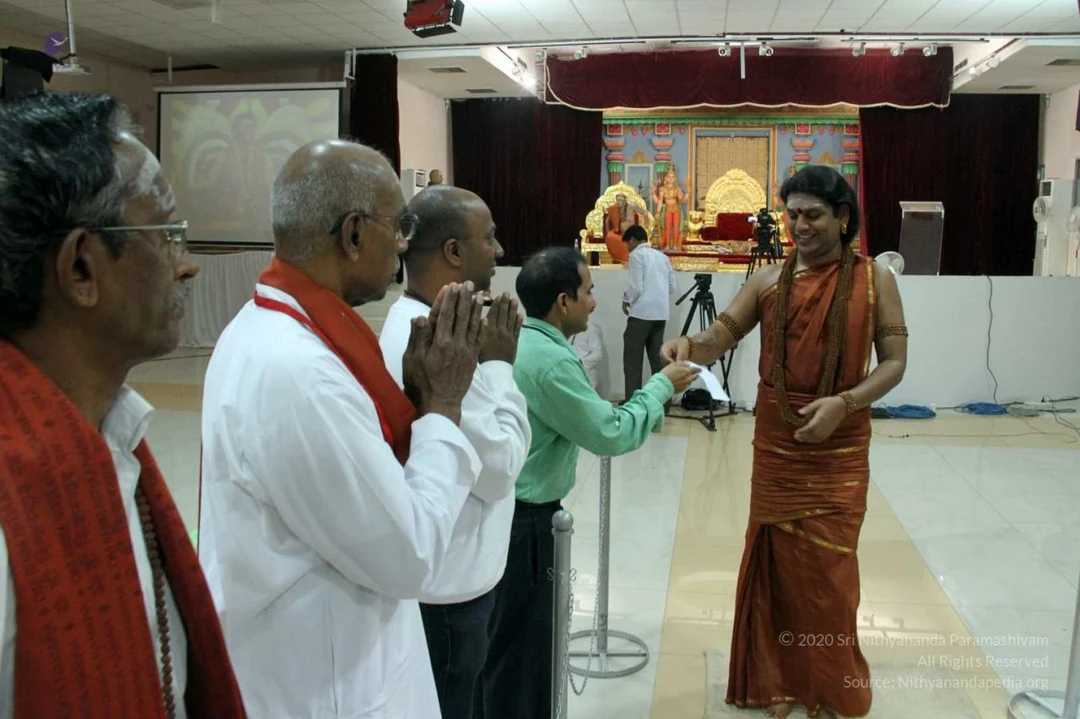
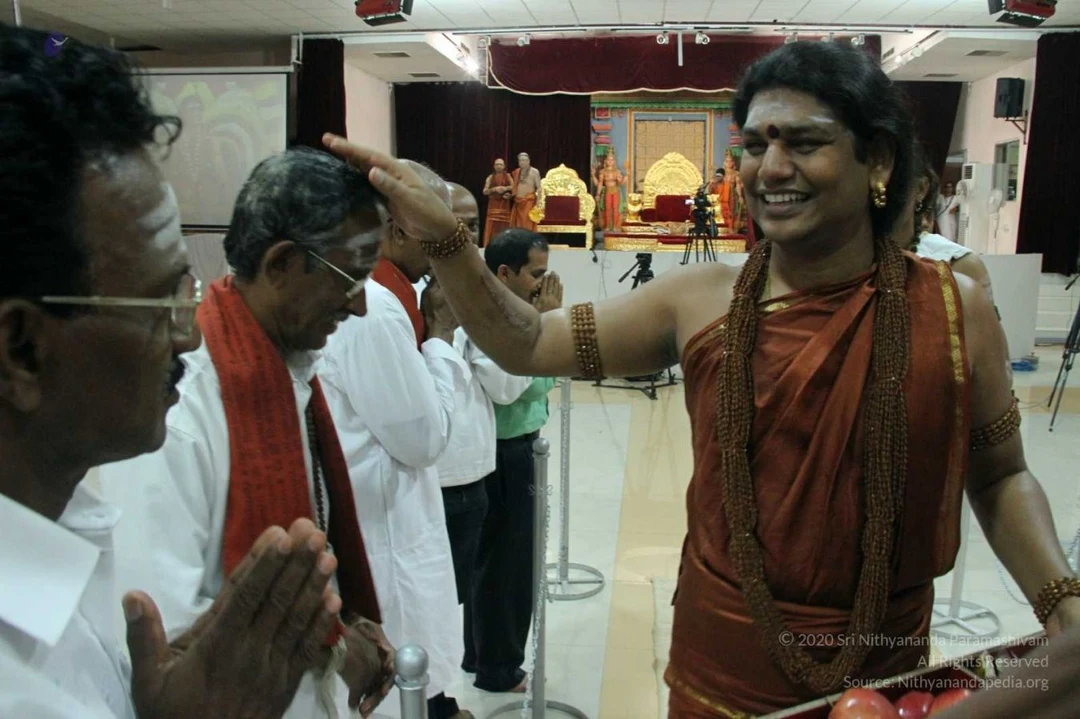
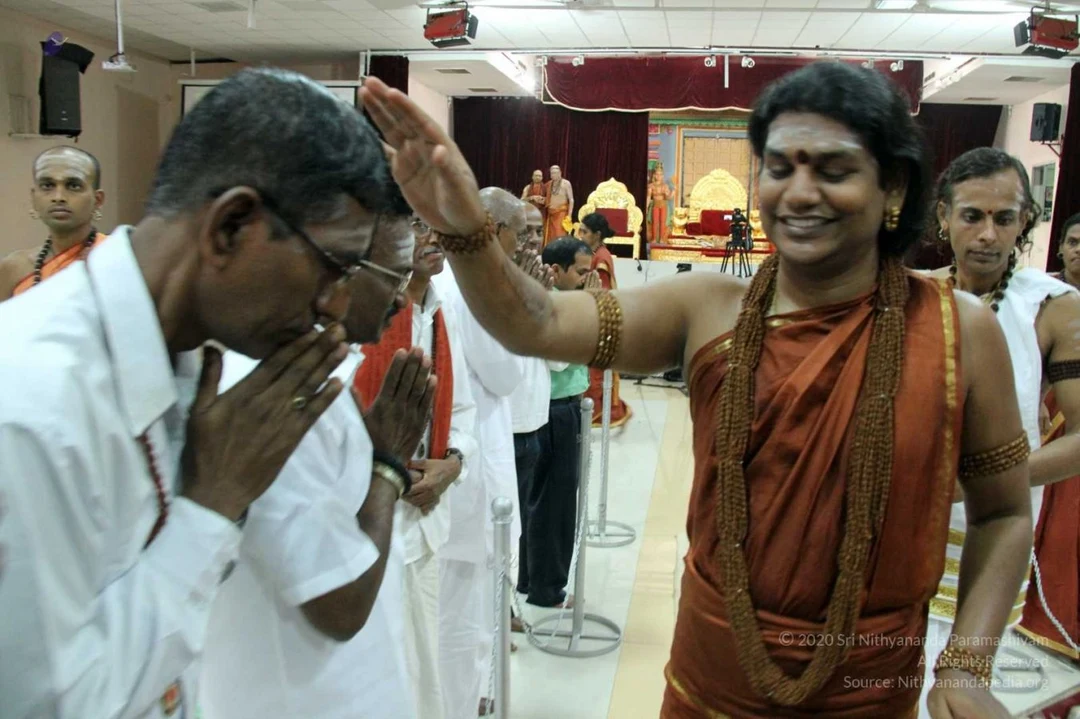
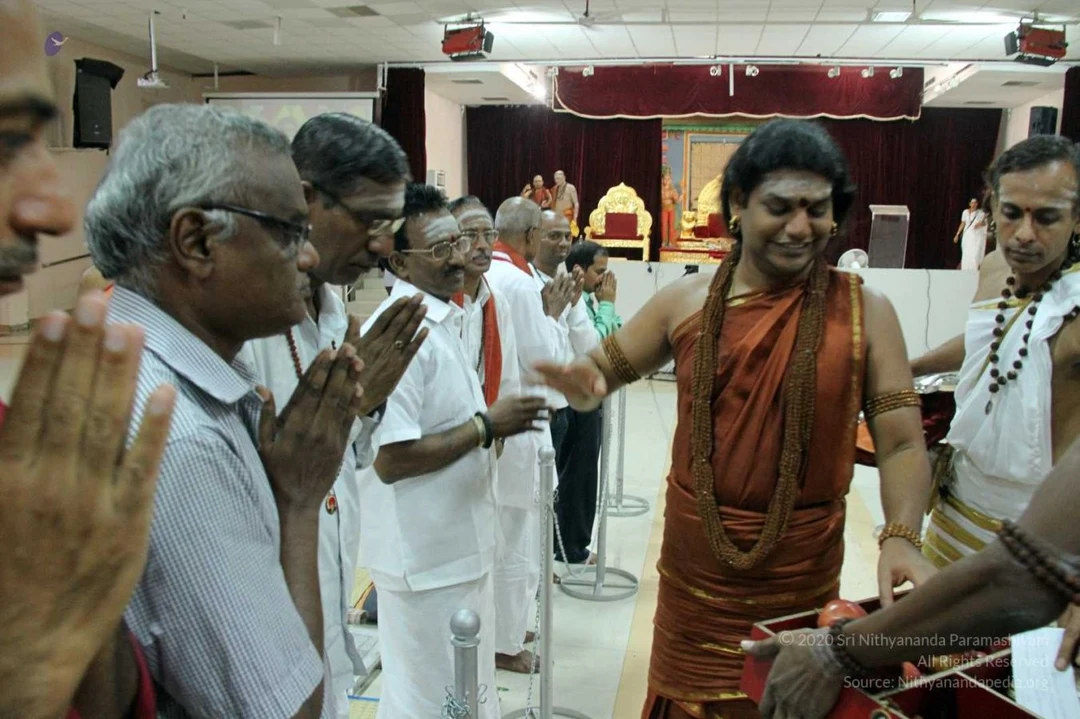
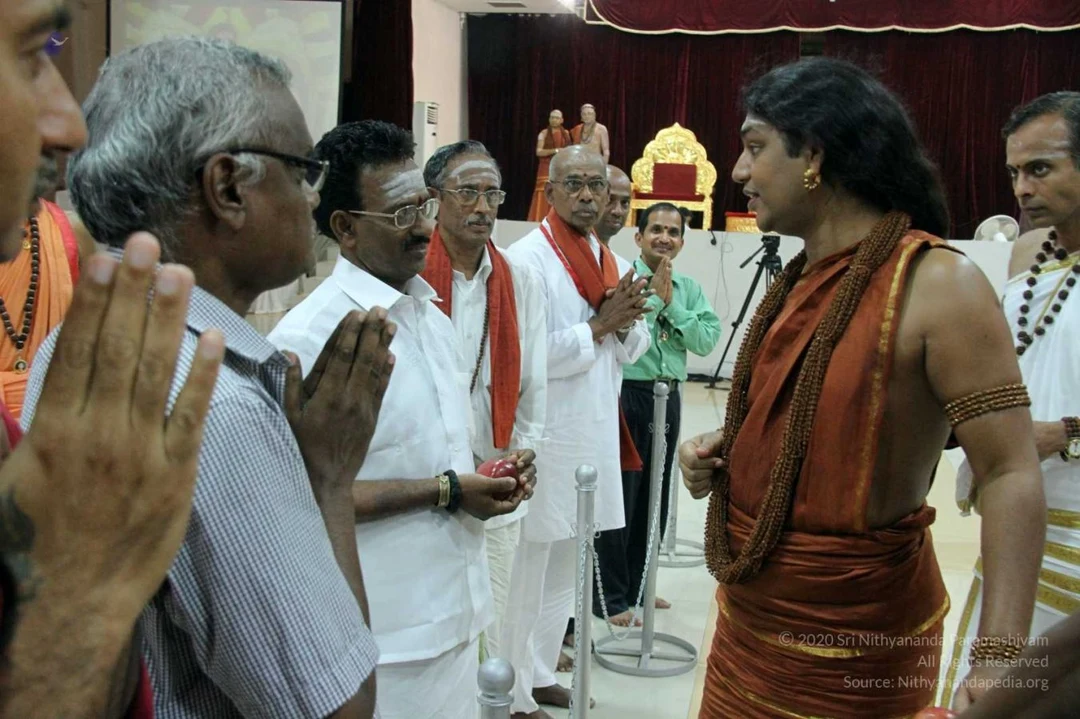
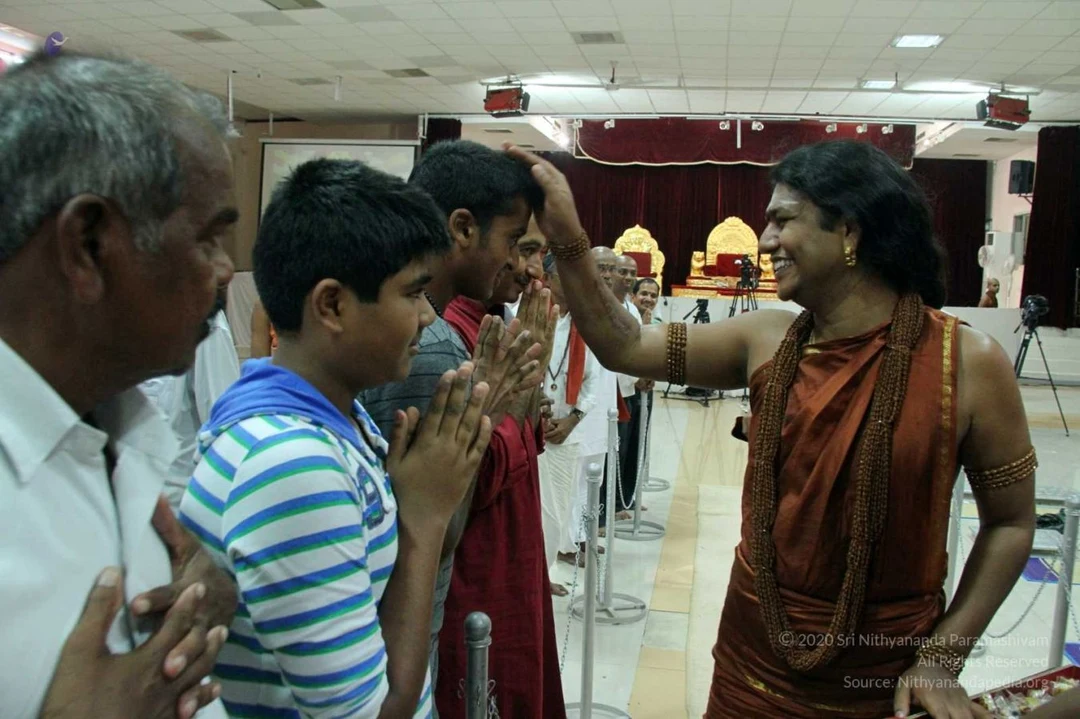
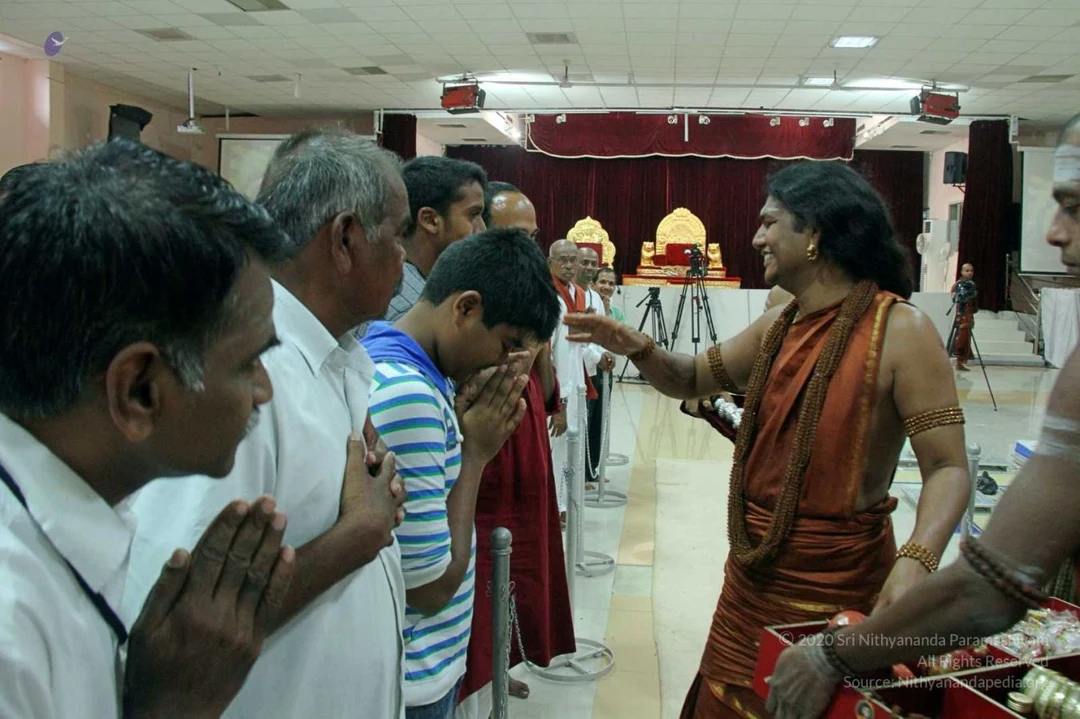
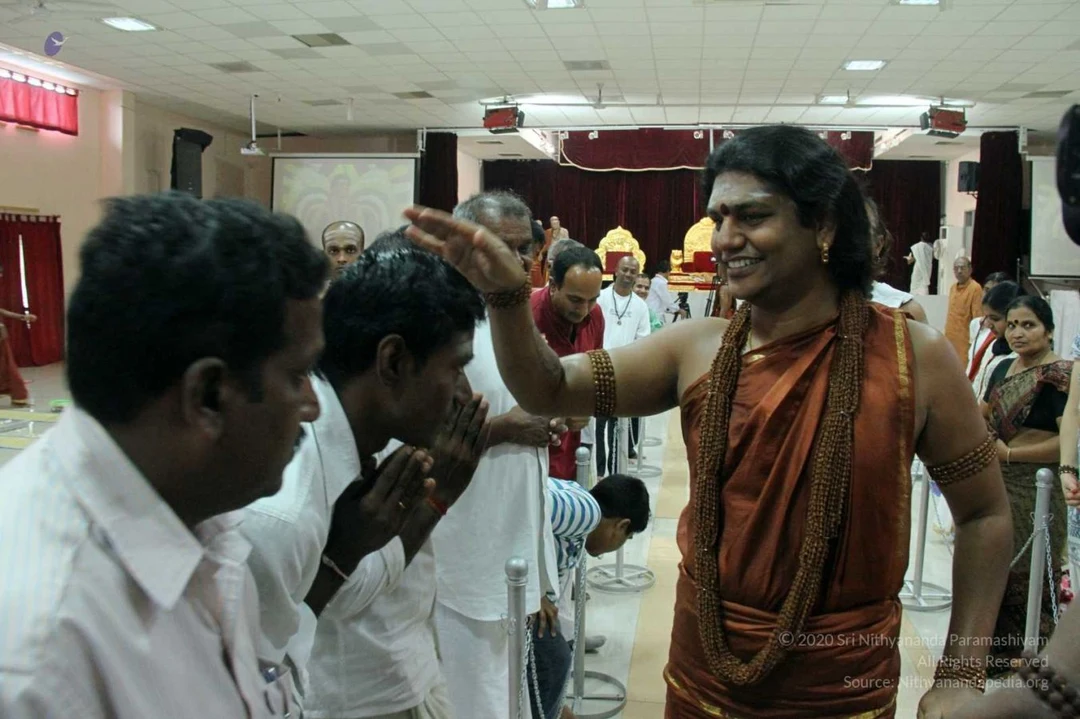
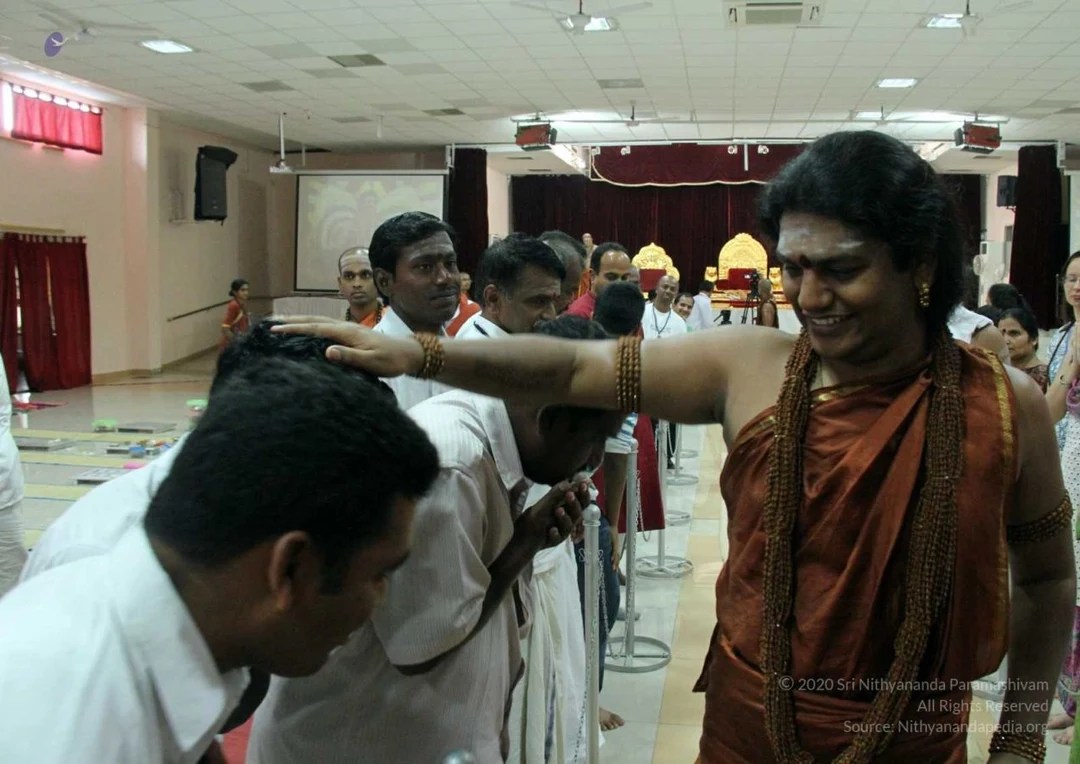
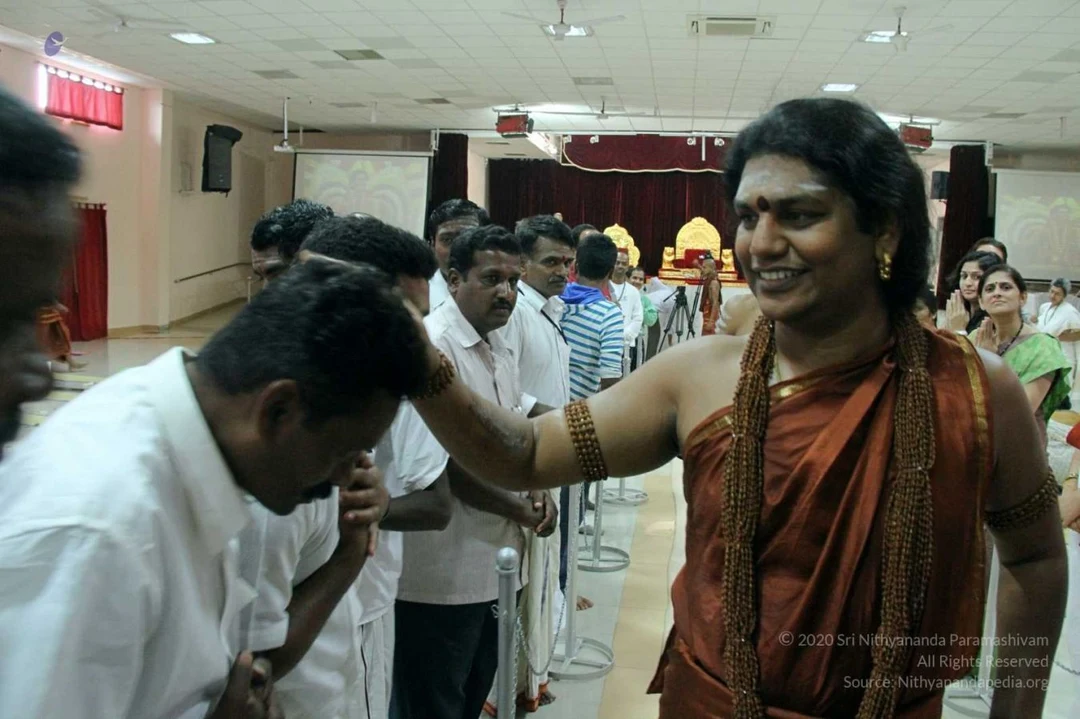
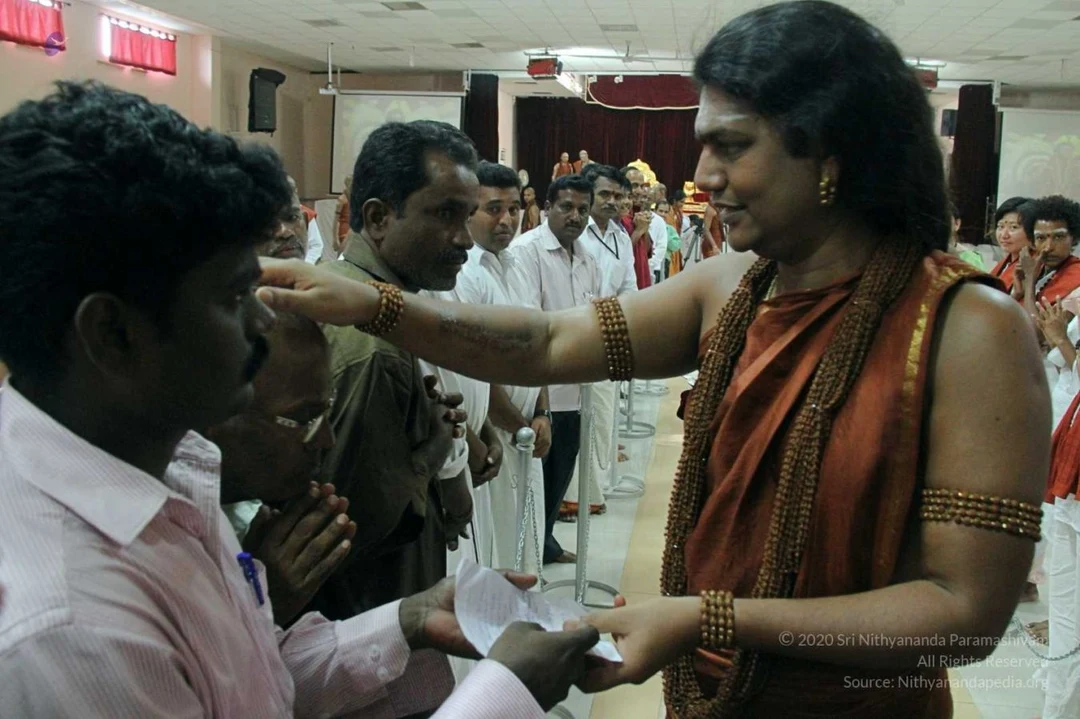
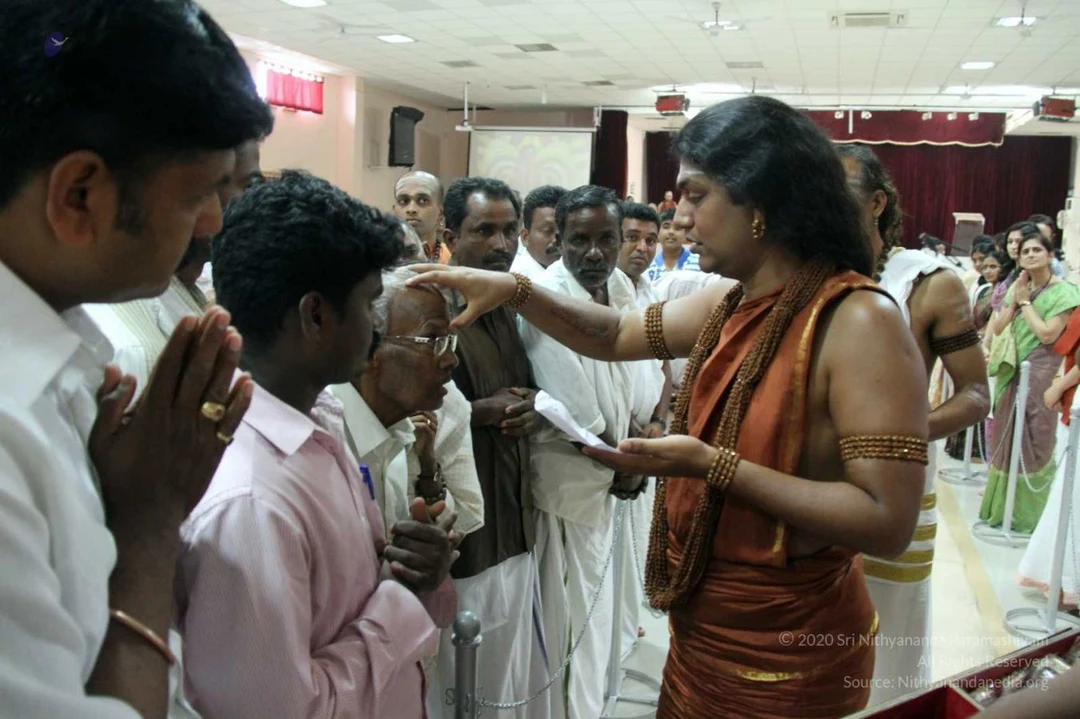
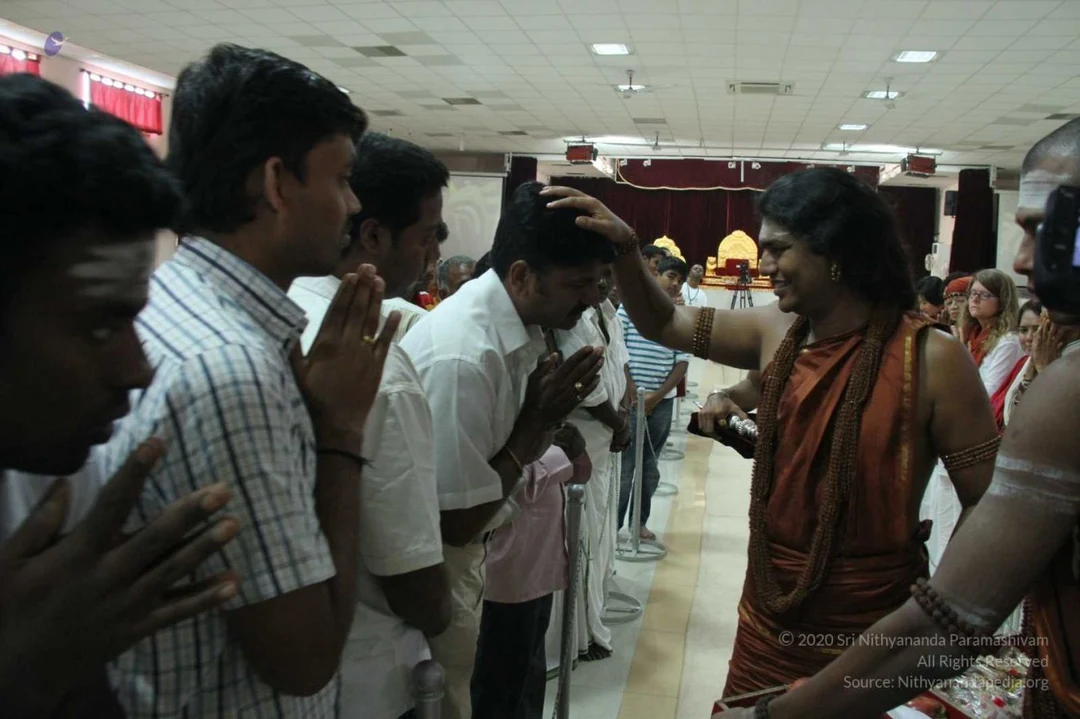
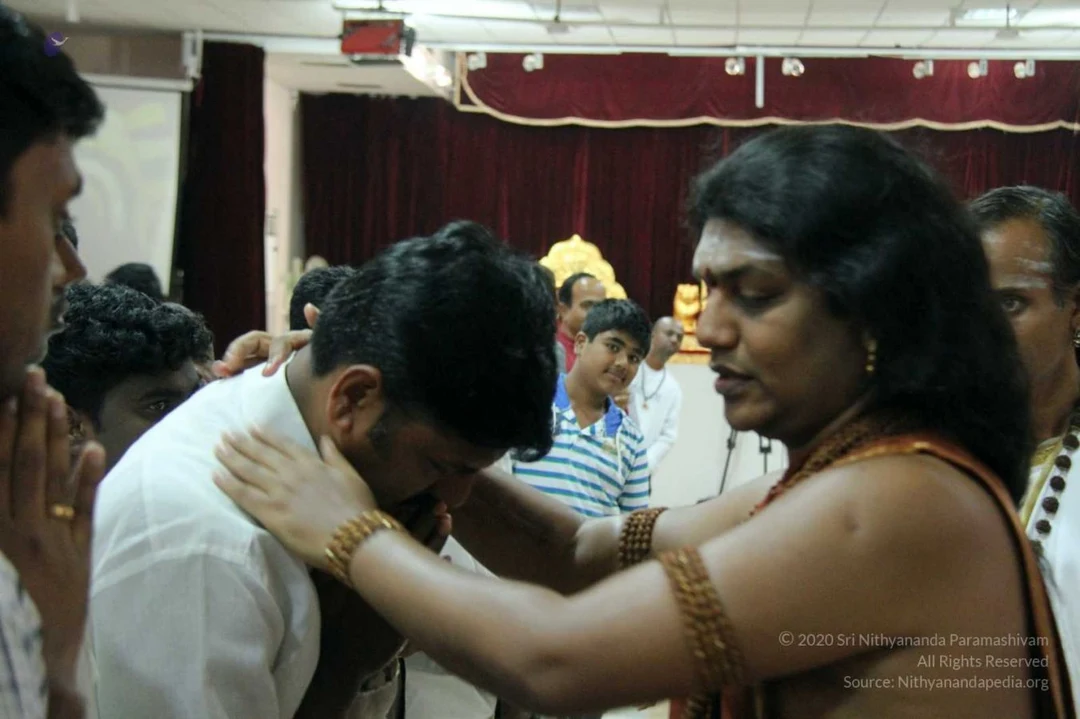
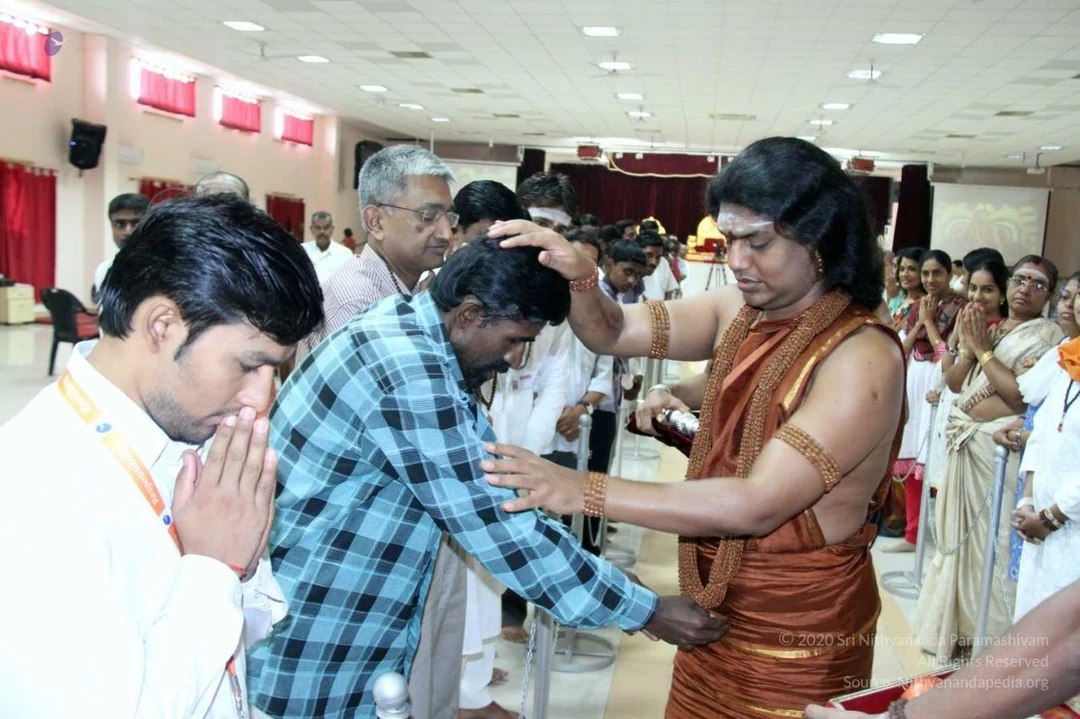
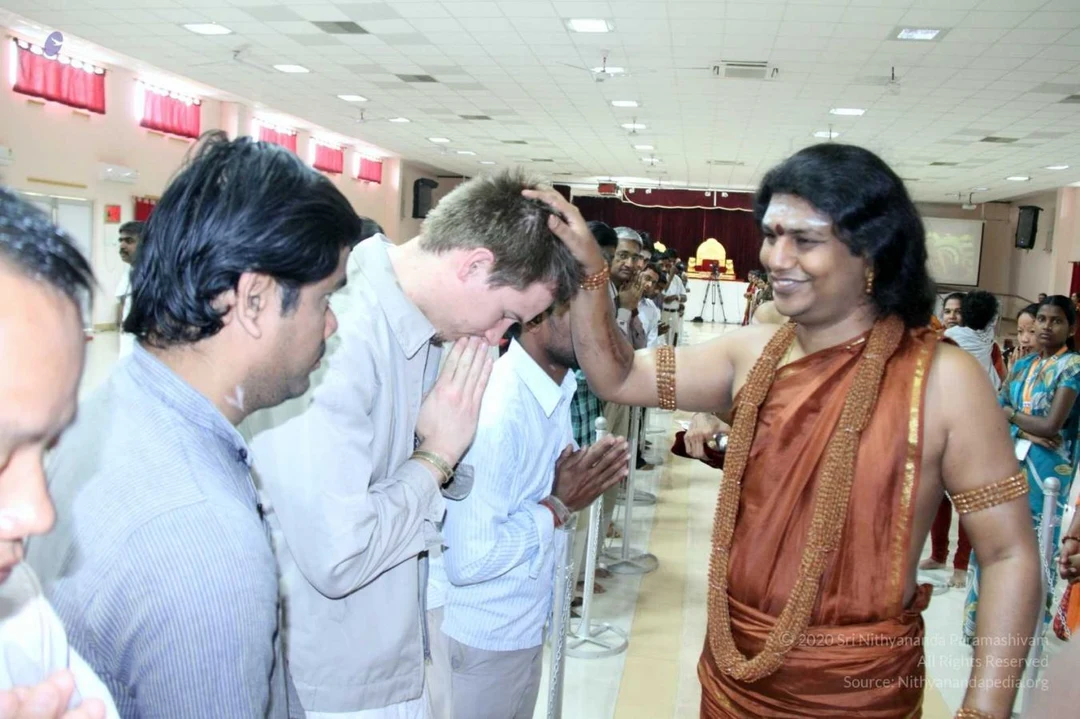
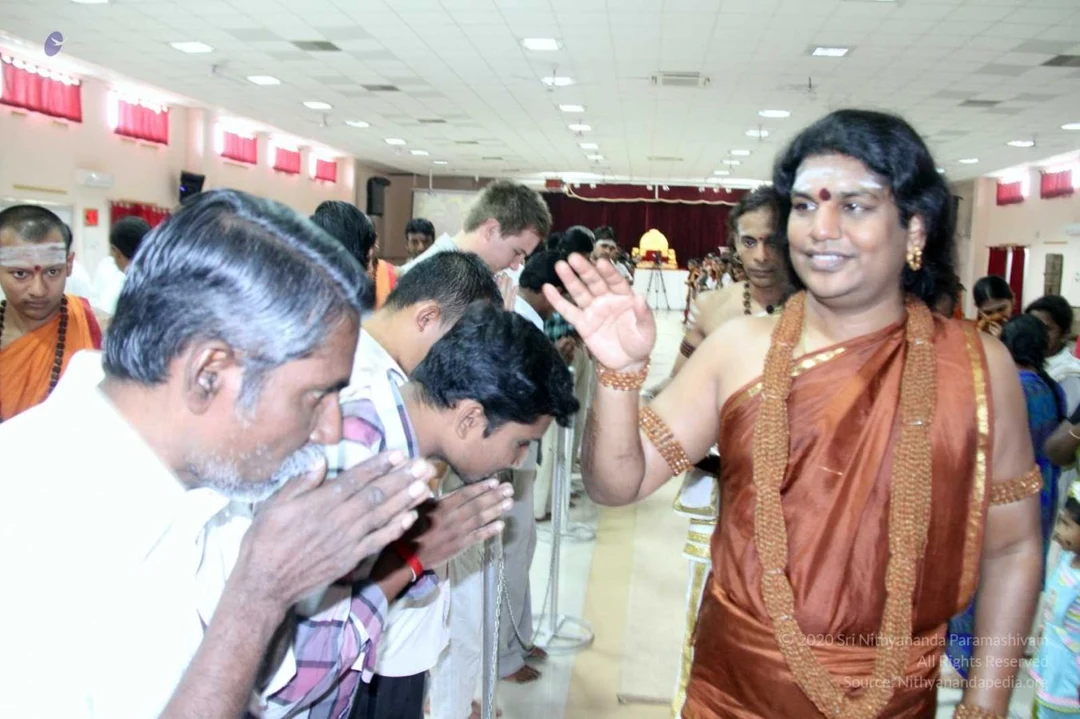
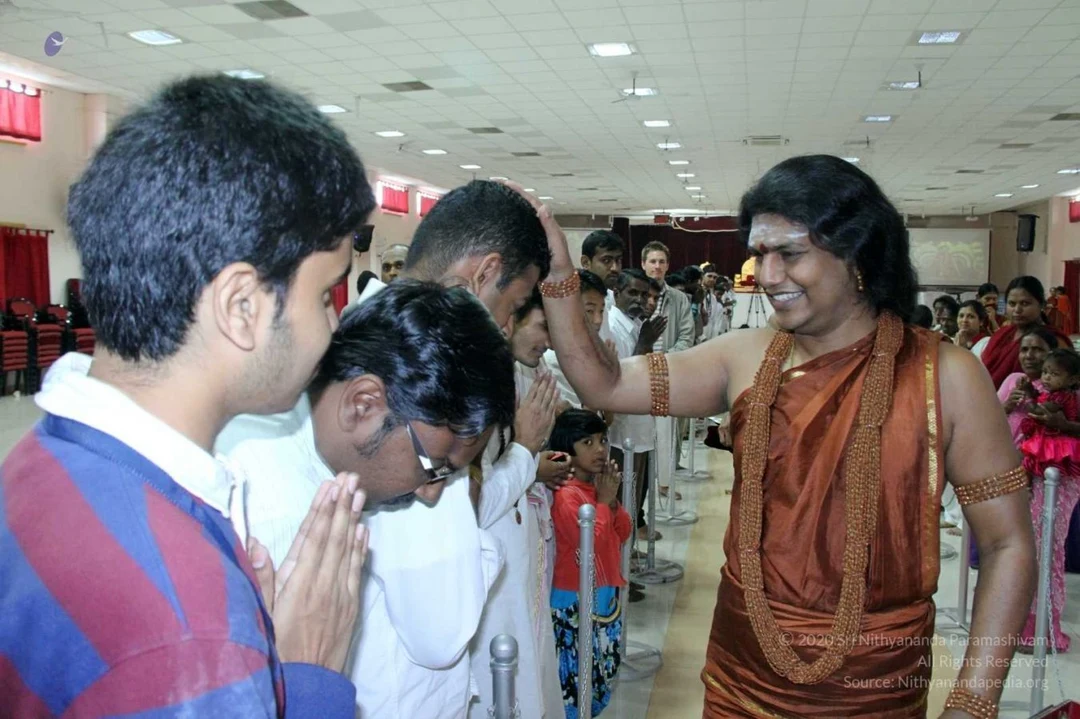
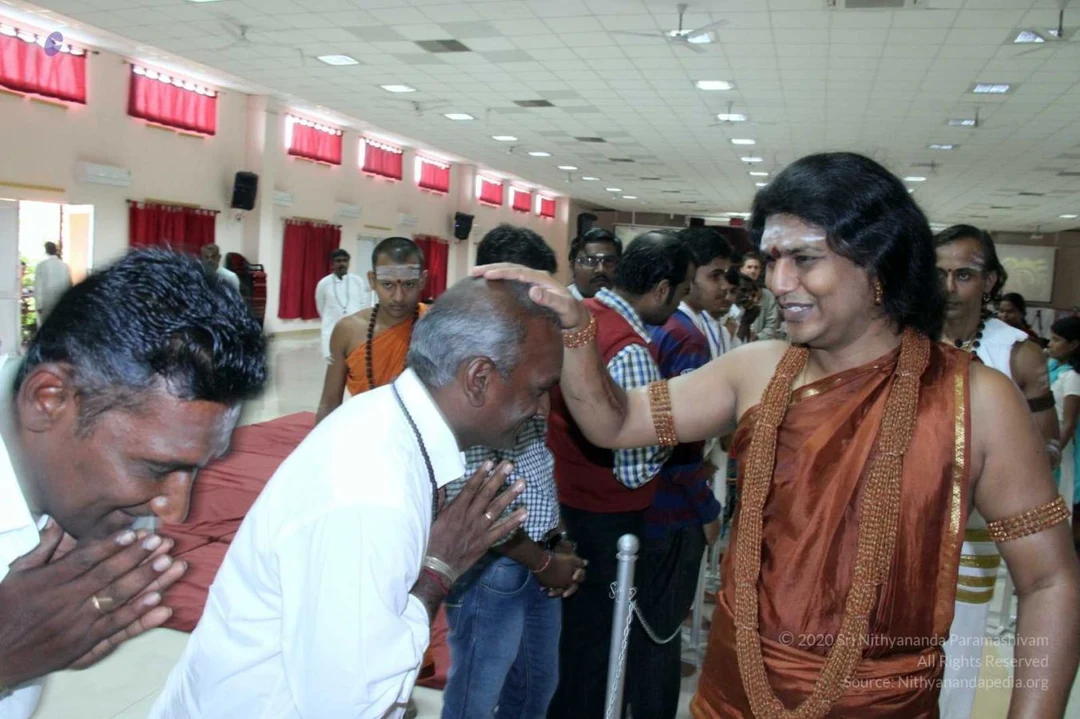
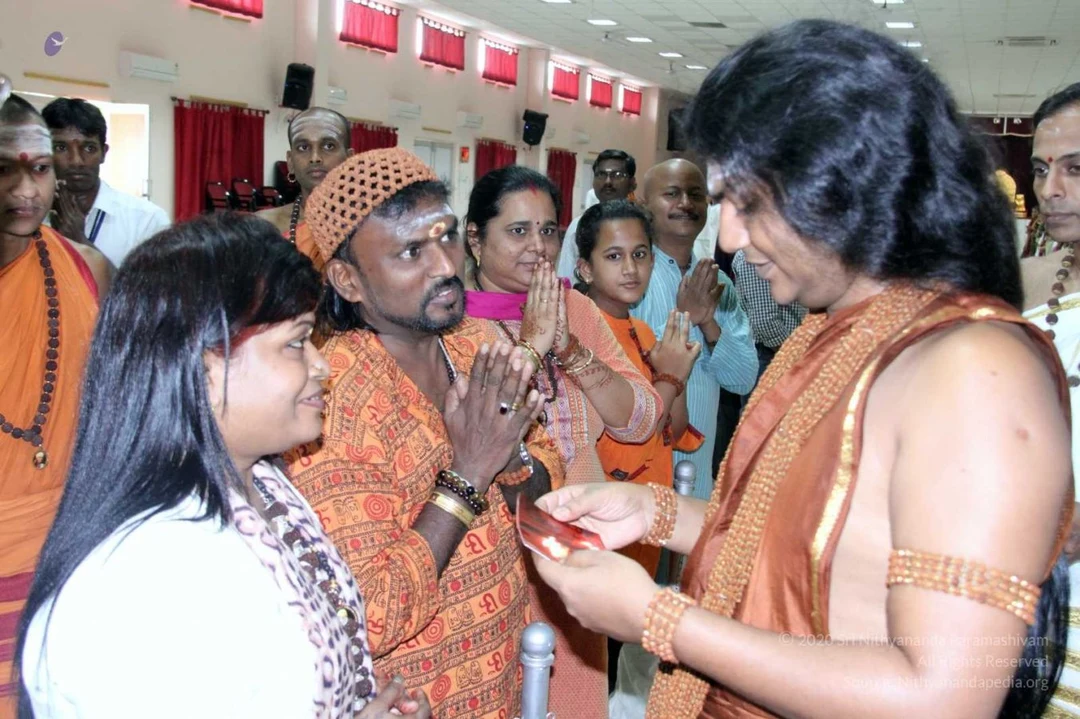
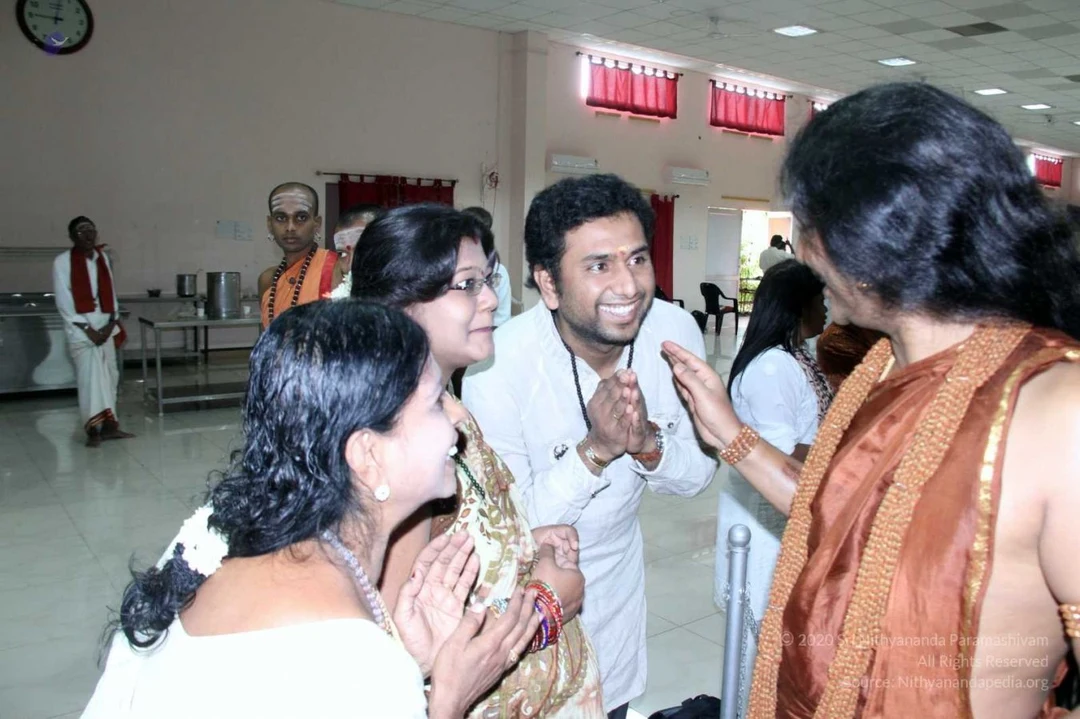
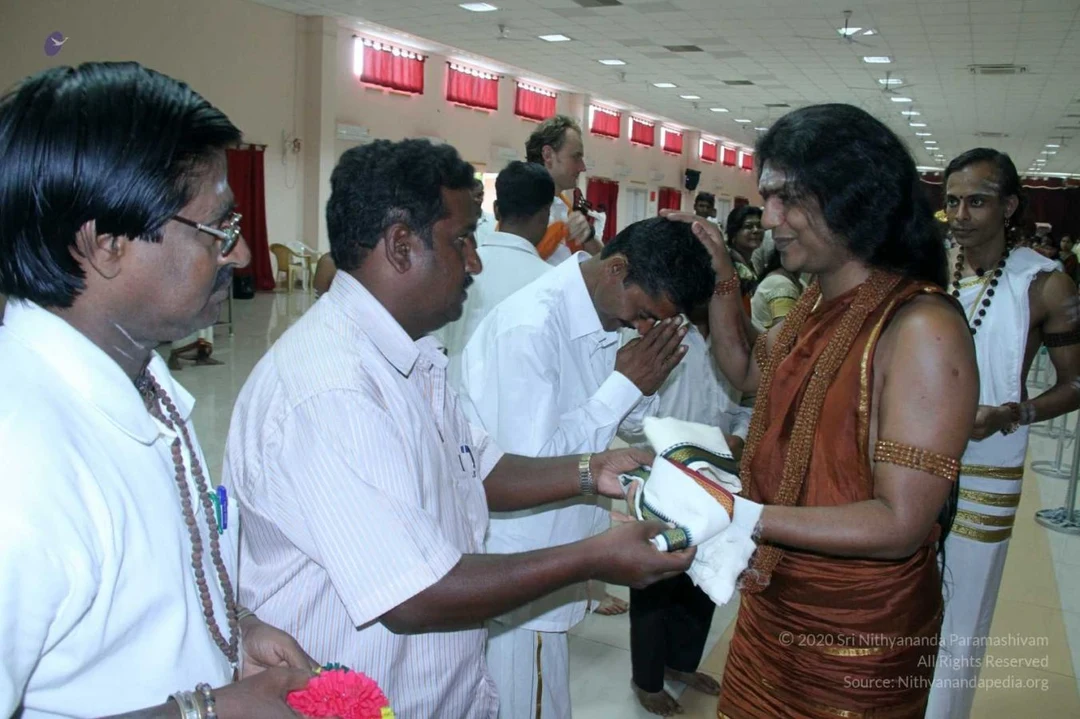
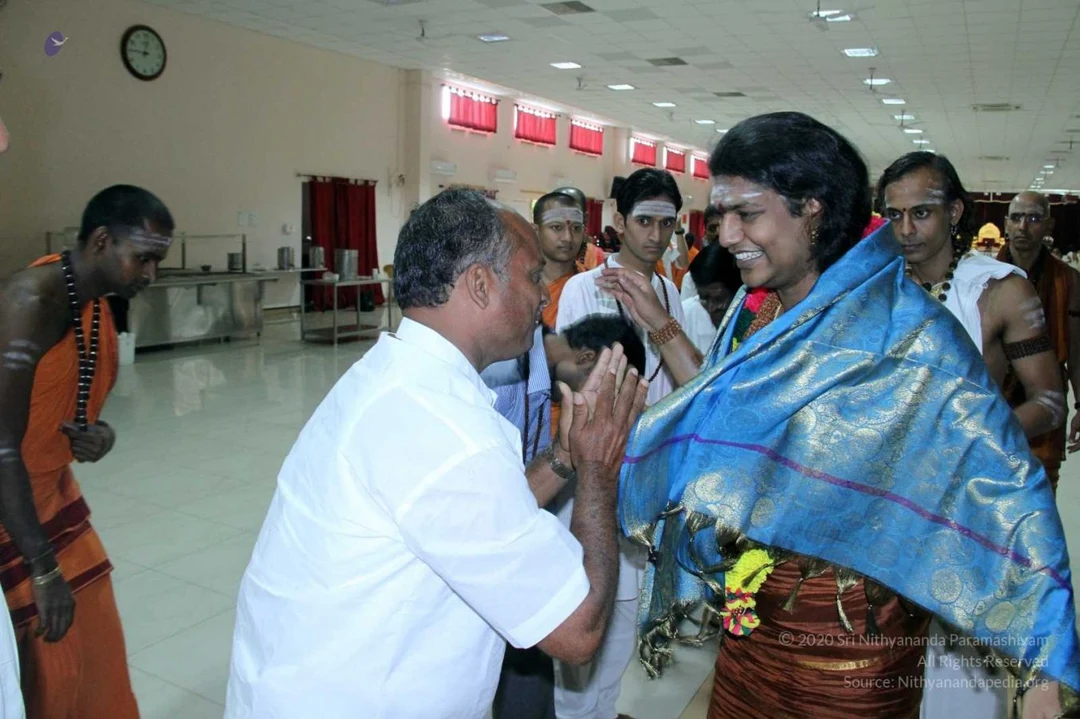
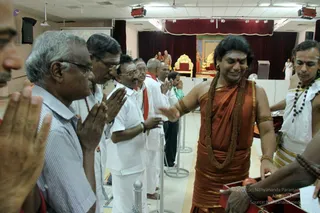
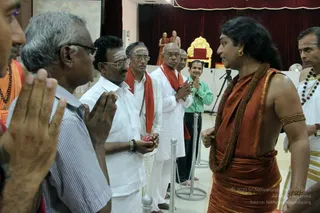
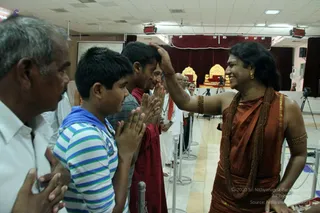
A photograph in a hall with a stage backdrop featuring a golden throne and deity figures in the background. On the right, a man with long swept-back hair, a bare upper body wearing an orange-red dhoti-style wrap and a long beaded rudraksha-style mala, with bangles on his arms, smiles while receiving a folded paper from a man in a green shirt. Three men on the left stand with palms pressed together in anjali, wearing white shirts and red-orange shawls. A small sign-like label is not visible; the tripod and a camera are set up near the stage. Appearance cues include long hair, orange clothing and beads, so this is a probable Swamiji appearance, though the image alone does not confirm identity.Indoor event photo in a hall with white tiled floor and maroon curtains. A man in a rust-orange dhoti and shawl, with long swept-back hair, rudraksha bead malas around his neck and wrists, a red bindi and gold earrings, rests his palm on the head of a devotee, smiling. The devotee wears a white shirt and a red-and-white shawl and has his palms pressed together in namaste; he has vibhuti marks on his forehead. Other devotees in white and red shawls stand behind in line, with more people in the background. A golden throne with a golden canopy and orange-robed figures stand on a stage at the back, with a video camera on a tripod. Red bowls or fruit sit at the lower right.A photograph of an indoor hall where a man in an orange-brown dhoti and shawl with a thick rudraksha mala and gold bangles raises one hand in blessing while smiling. Several men in white shirts and dhotis stand with palms pressed together in namaste, one bowing with head lowered. In the background, a gold ornate throne and a decorated backdrop with a deity mural are visible, with a few saffron-clad attendants behind. The scene suggests a devotional gathering. Visible text reads a copyright notice.A photograph of a hall during a devotional gathering. In the foreground, several men in white dhotis and white shirts stand with palms pressed together in anjali, some wearing glasses and red shawls. On the right, a figure in an orange-brown saffron wrap with a long brown rudraksha mala and bangles, hair swept back, smiles and extends a hand toward a small red-lidded container held by an attendant in white dhoti with a rudraksha mala. Behind them, a gold-cushioned throne and an ornate deity backdrop with a decorative canopy stand on a stage draped in maroon curtains, with a few more people in white nearby. Overhead, stage lights and speakers are visible.A photograph of an indoor hall with red curtains and a gold throne-style chair in the background. In the foreground, a bare-chested man in a rust-orange cloth wrap and a rudraksha mala stands facing a group of older men in white dhotis and red-orange shawls, several with hands folded in anjali. The man in orange wears gold earrings and a gold armband and speaks to them. Two men in white on the left and a man in a green shirt are also visible. Several more people appear partially at the edges, and a pair of orange-robed figures stands near the back. The orange-clad man has distinctive ceremonial adornments, which fits a person appearance, but the image is an appearance-based candidate only, and the group is shown in devotee-style greeting.A photograph in a hall with red curtains and gold thrones in the background. A person in a rust-orange silk wrap, with long dark hair, rudraksha mala necklaces and gold bangles, stands at right with a raised hand touching the head of a young man in a red shirt. Before them, a boy in a blue and white striped shirt and an older man in white shirt stand with palms pressed together in anjali. Other figures in white and red clothing stand in the background. Gold thrones and stage lights are visible behind.

Final Blessing

2 photosSource gallery
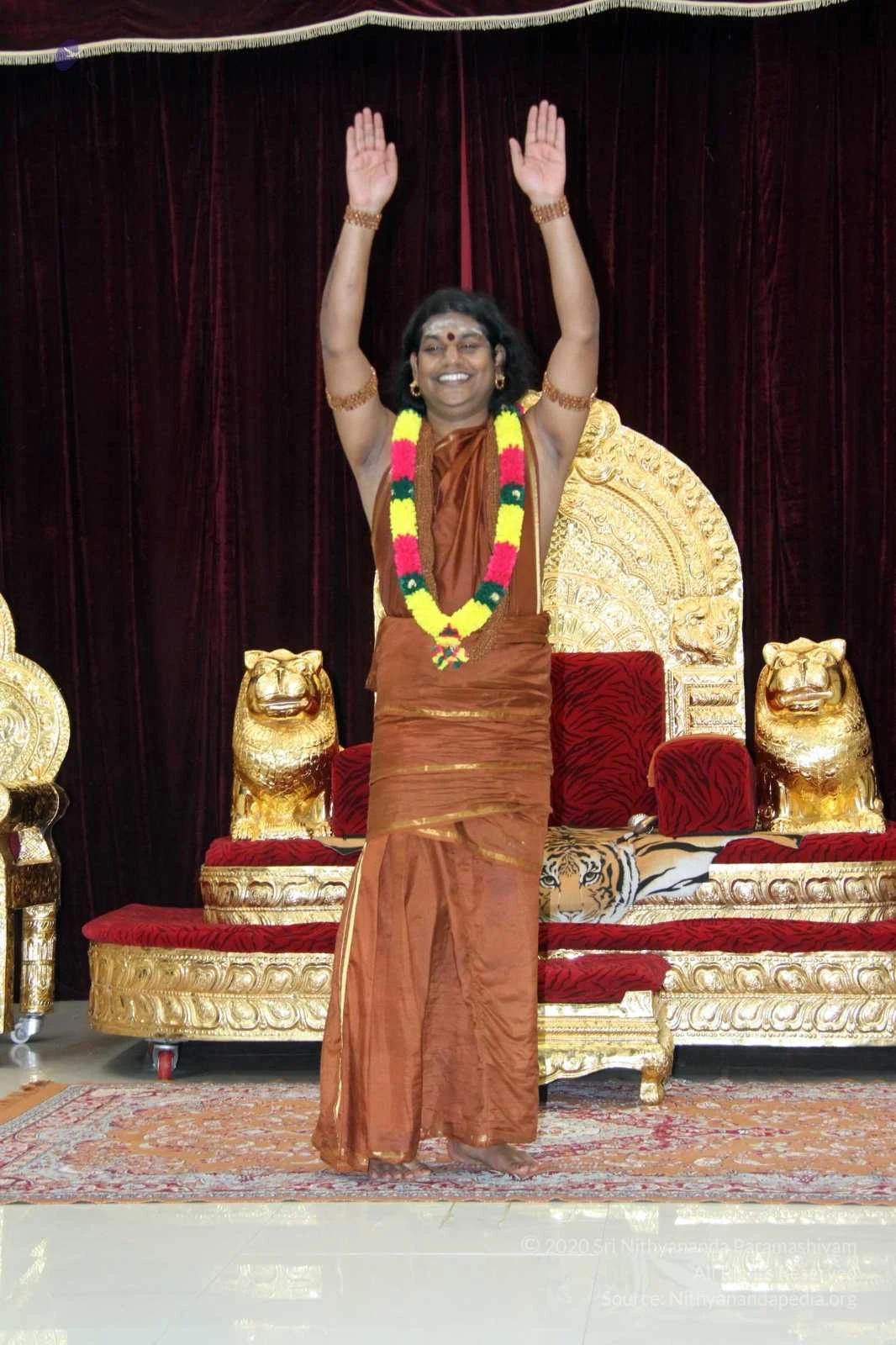
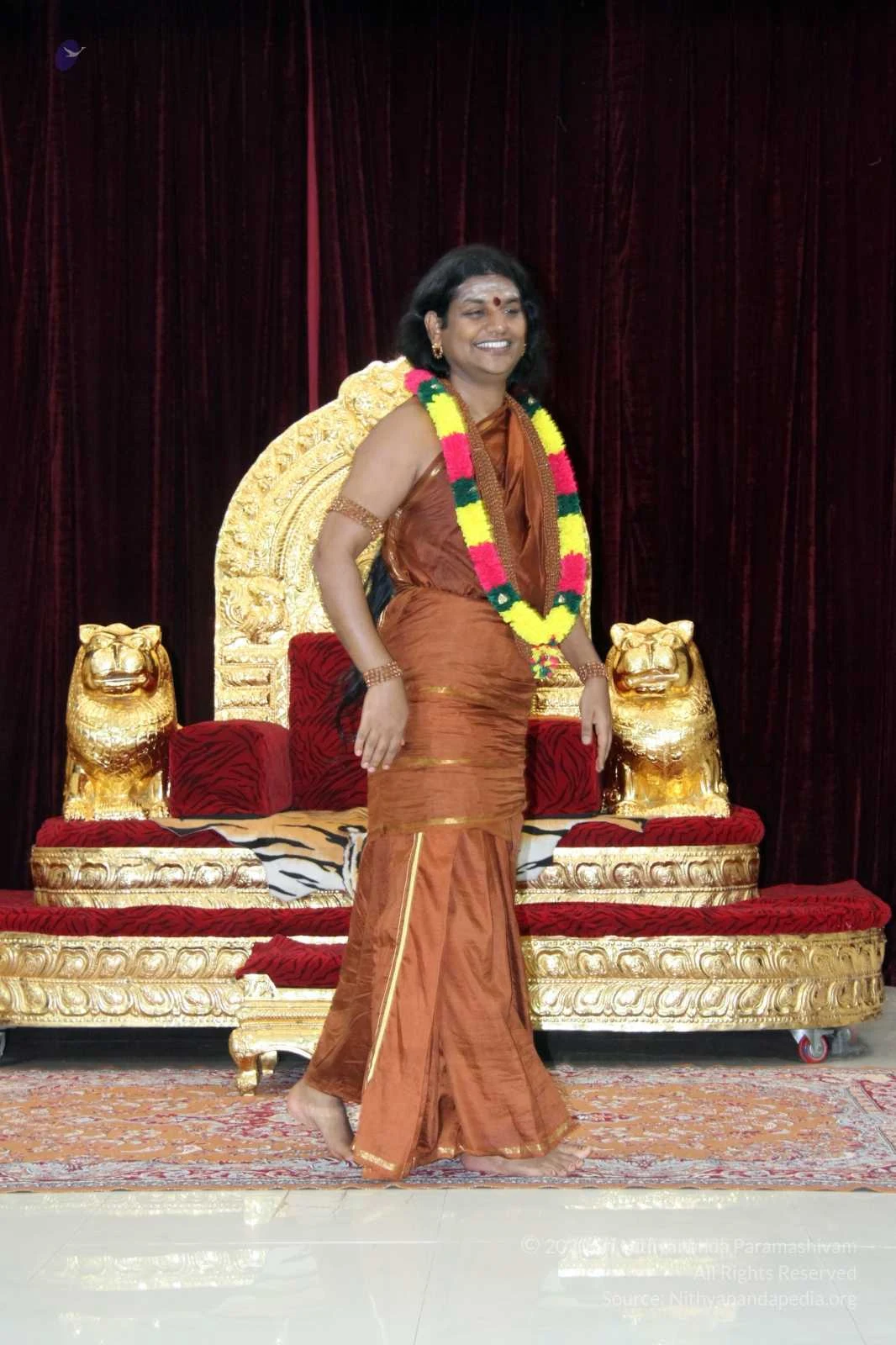
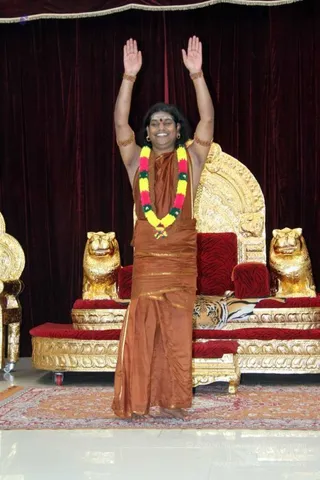
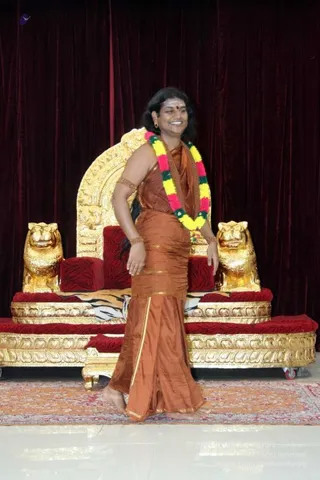
A standing man in a rust-orange silk dhoti and shawl, with a multicoloured yellow, red and green flower garland, raises both arms in greeting and smiles. He wears a red bindi on his forehead and gold bangles on his wrists and upper arms. Behind him stands an ornate gold throne with carved lion heads and red velvet cushions, with a tiger-striped cloth draped over the seat, in front of dark red velvet drapes. The floor is covered by a patterned red and cream rug. No other people are visible.A photograph of one standing person in front of an ornate gold throne with lion-head arms and red tiger-striped cushions against dark red velvet drapes. The person wears a rust-brown silk garment draped over the body with gold borders, a multicoloured yellow, red and green flower garland, gold armlets and bangles, and a red bindi on the forehead. They stand barefoot on a patterned red carpet with a smile, looking to the side.

Nithya Dharmam Day 2

173 photosSource gallery
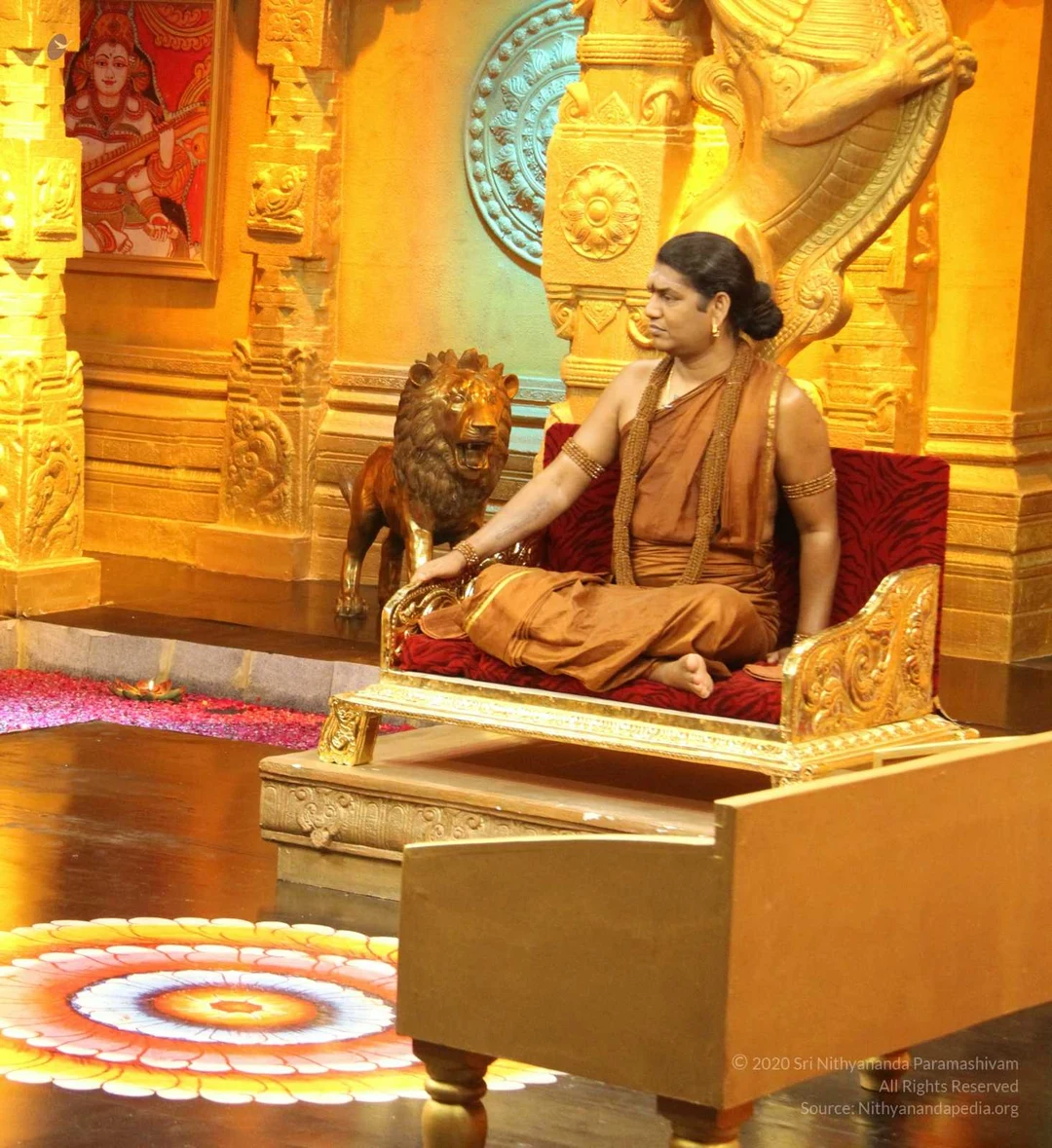
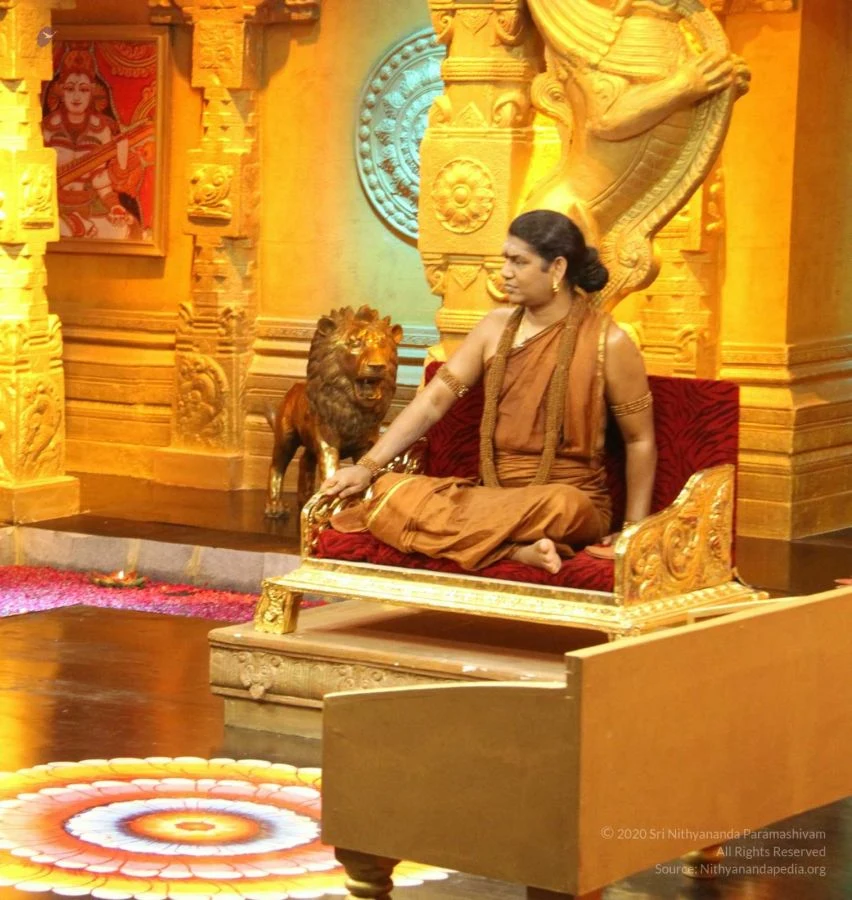
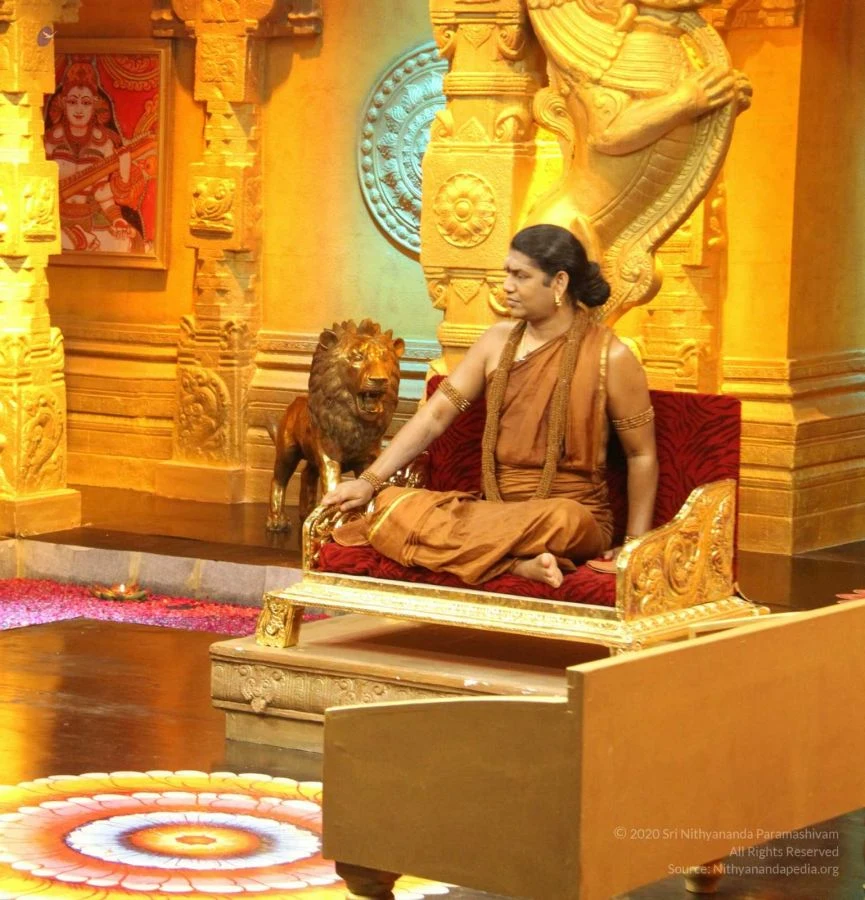
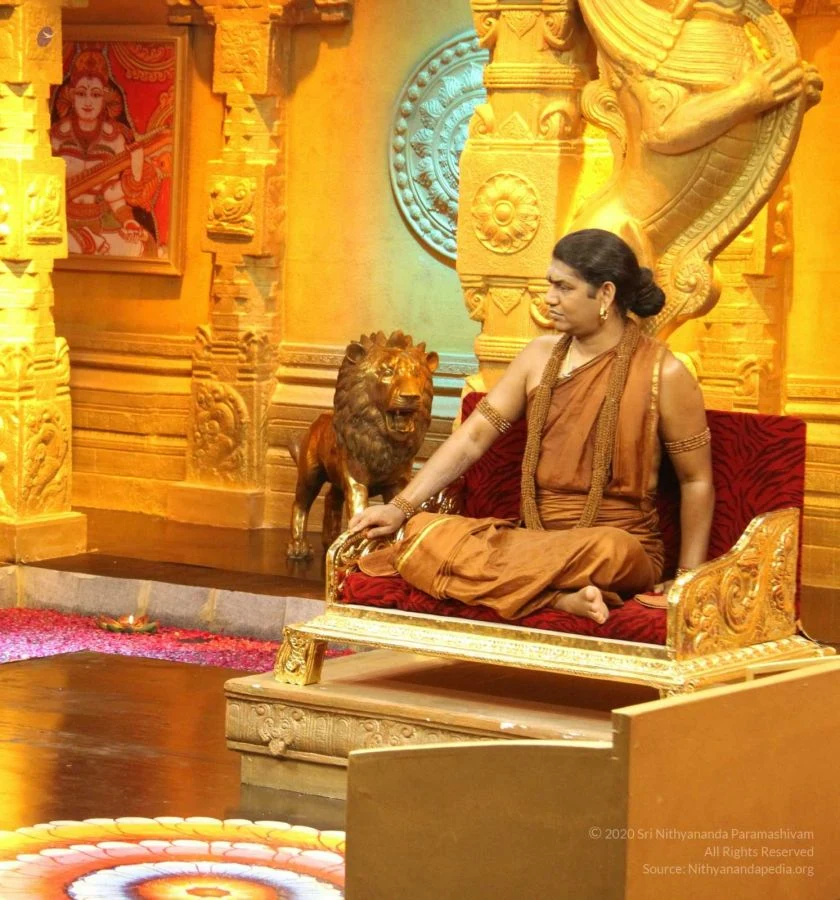
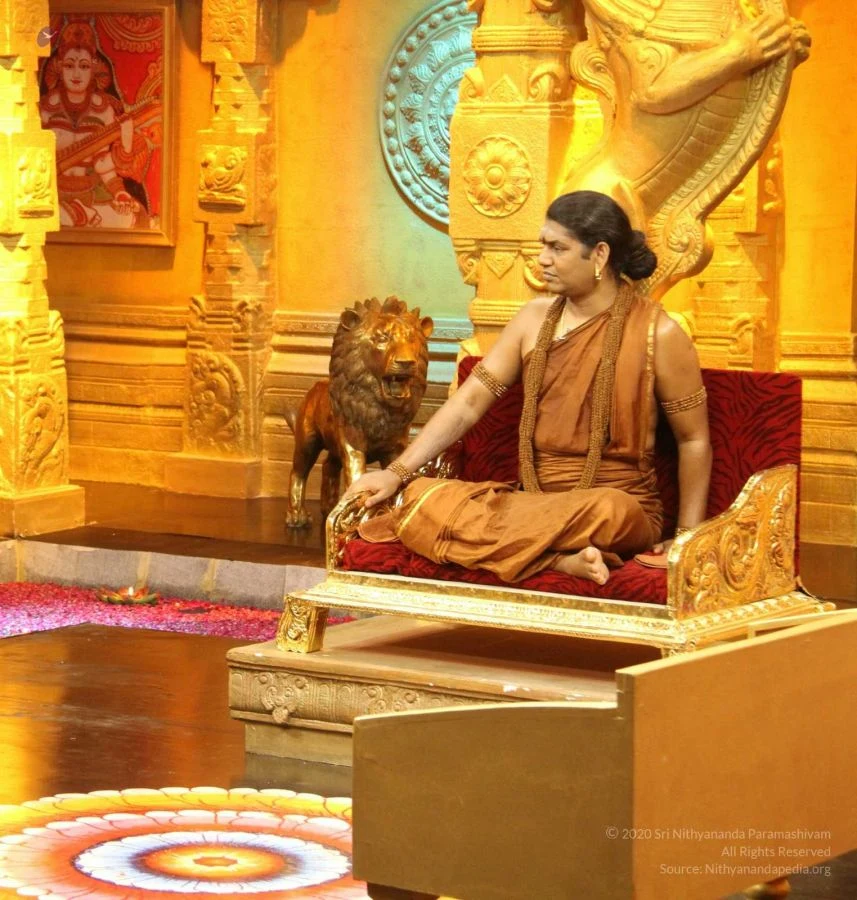
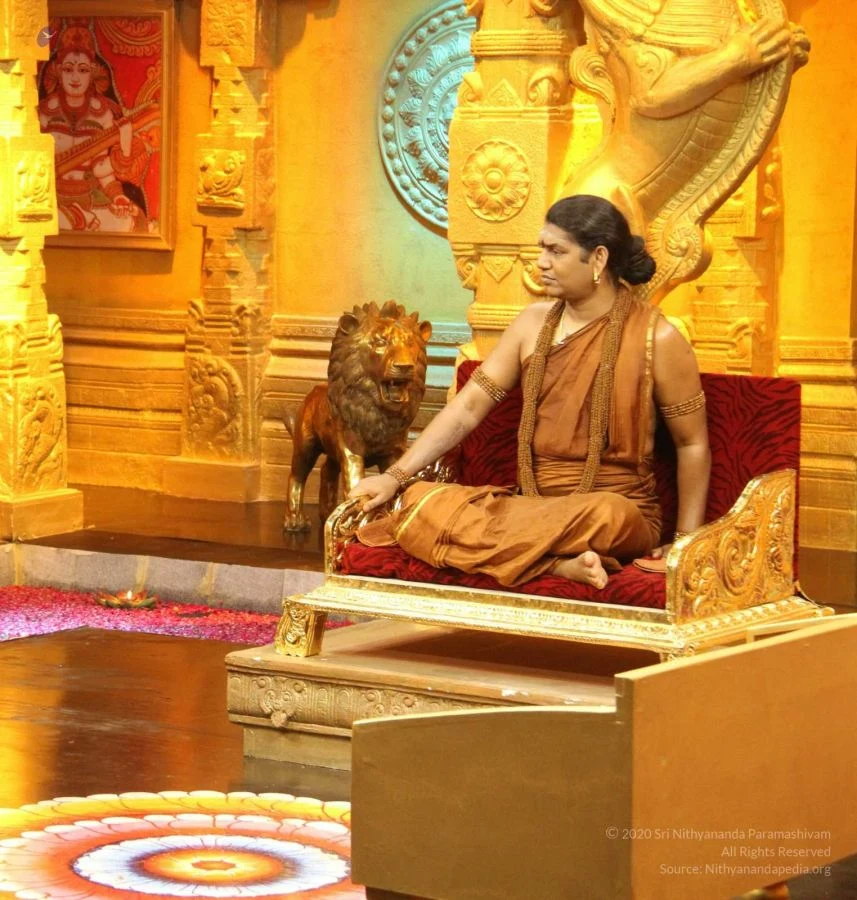
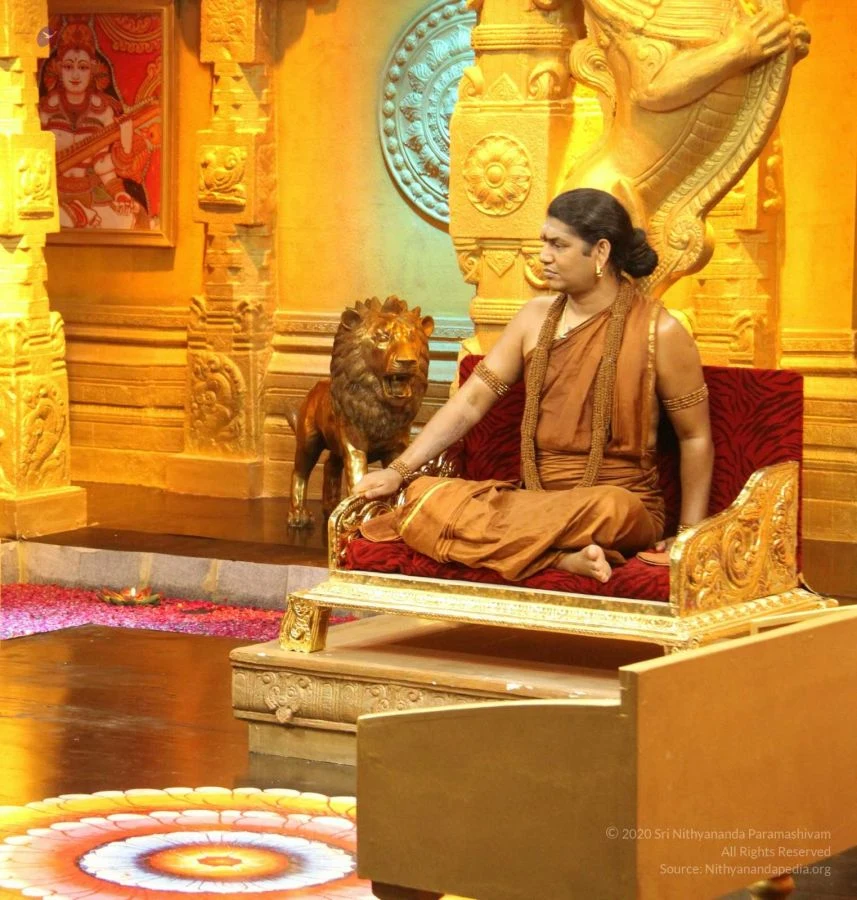
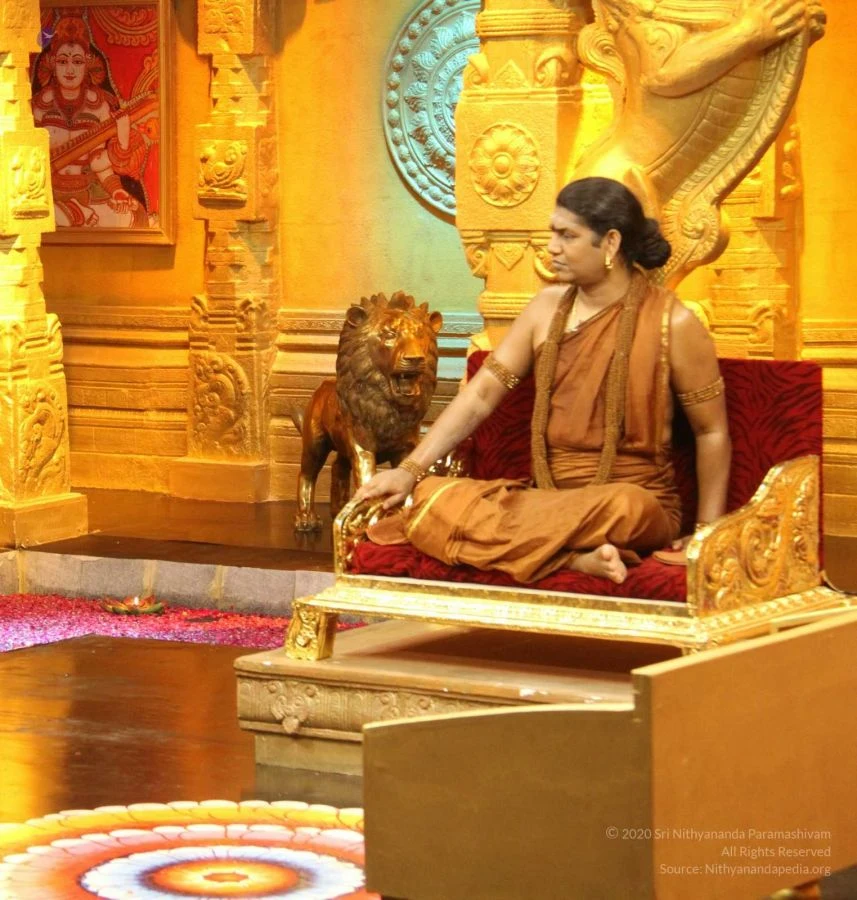
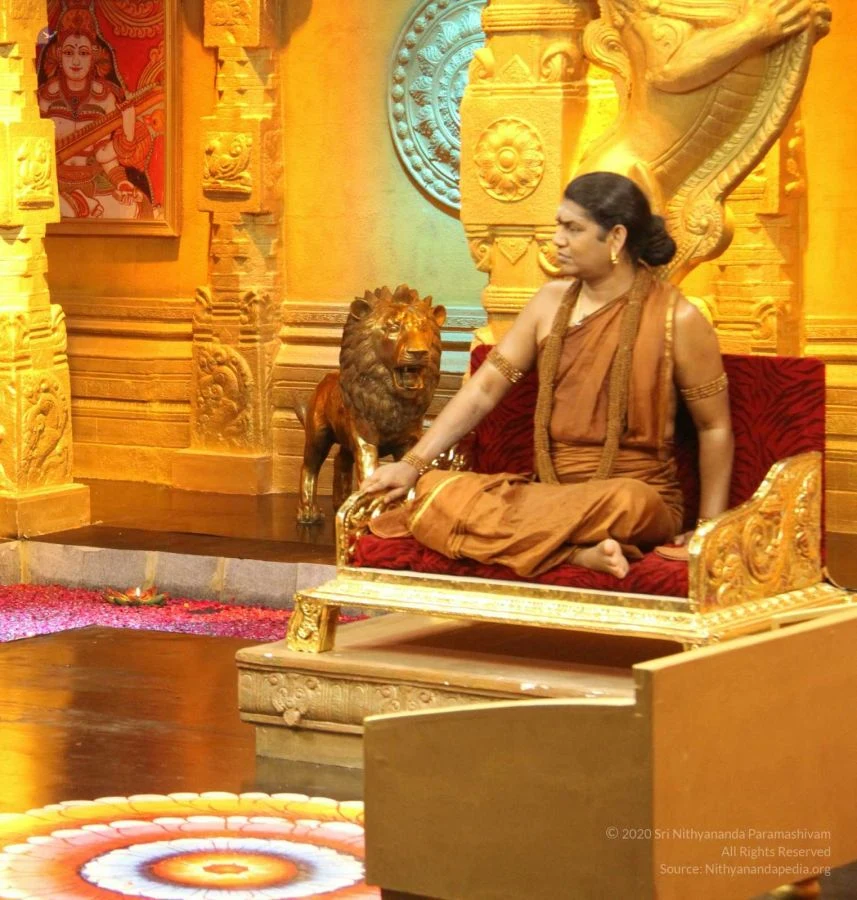
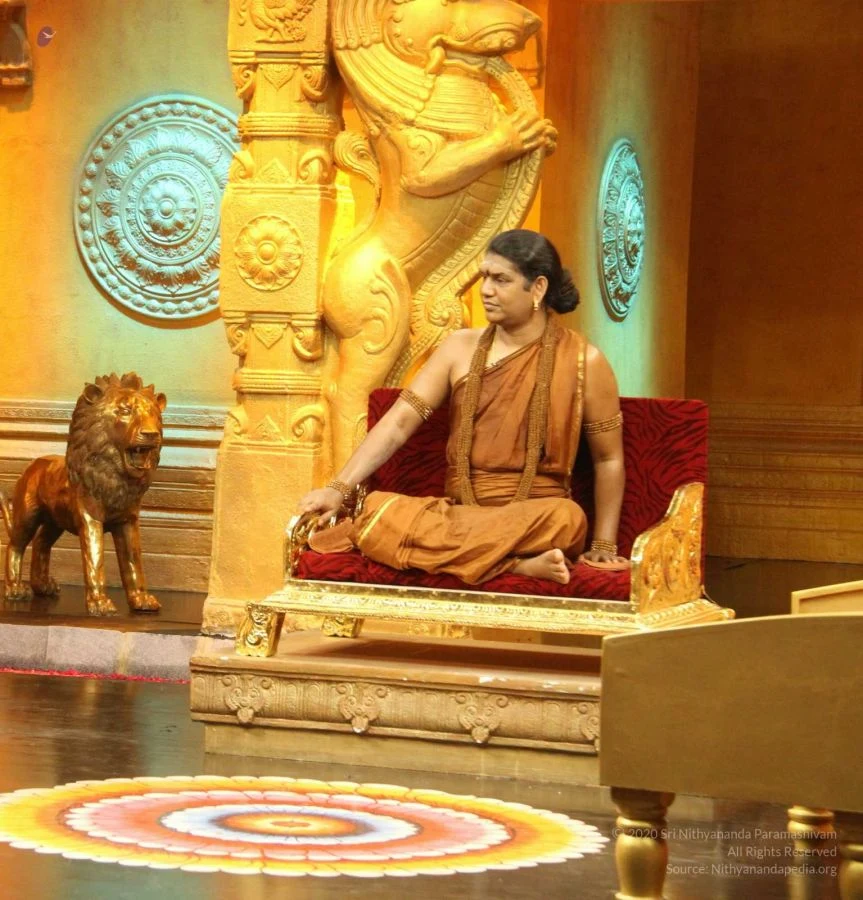
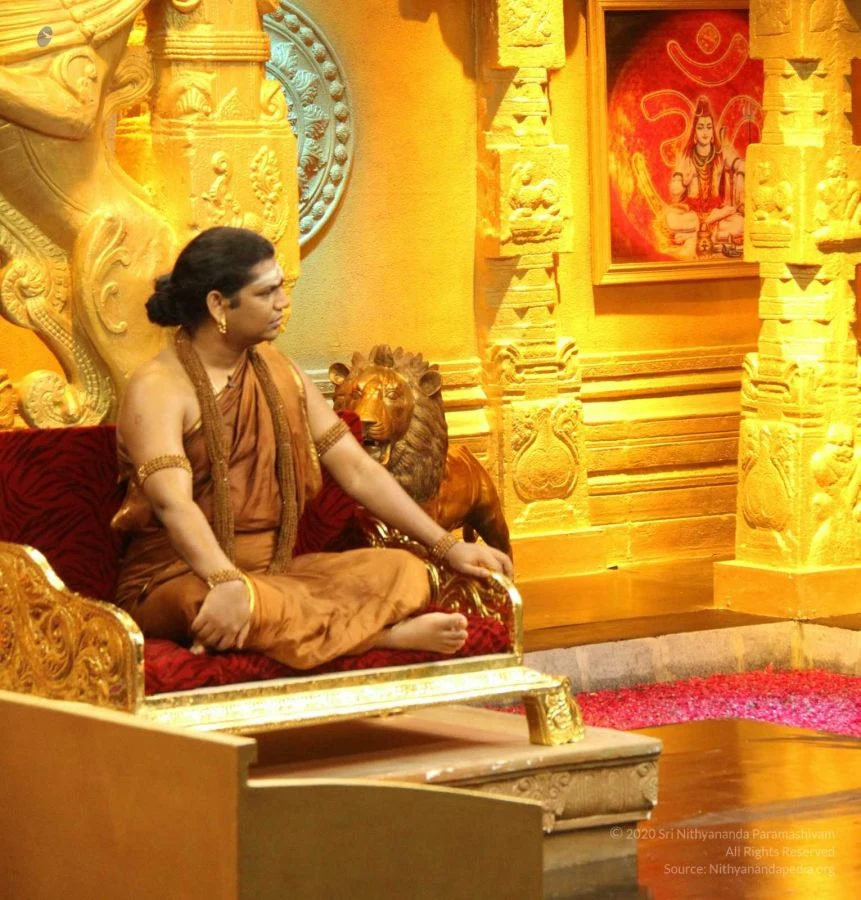
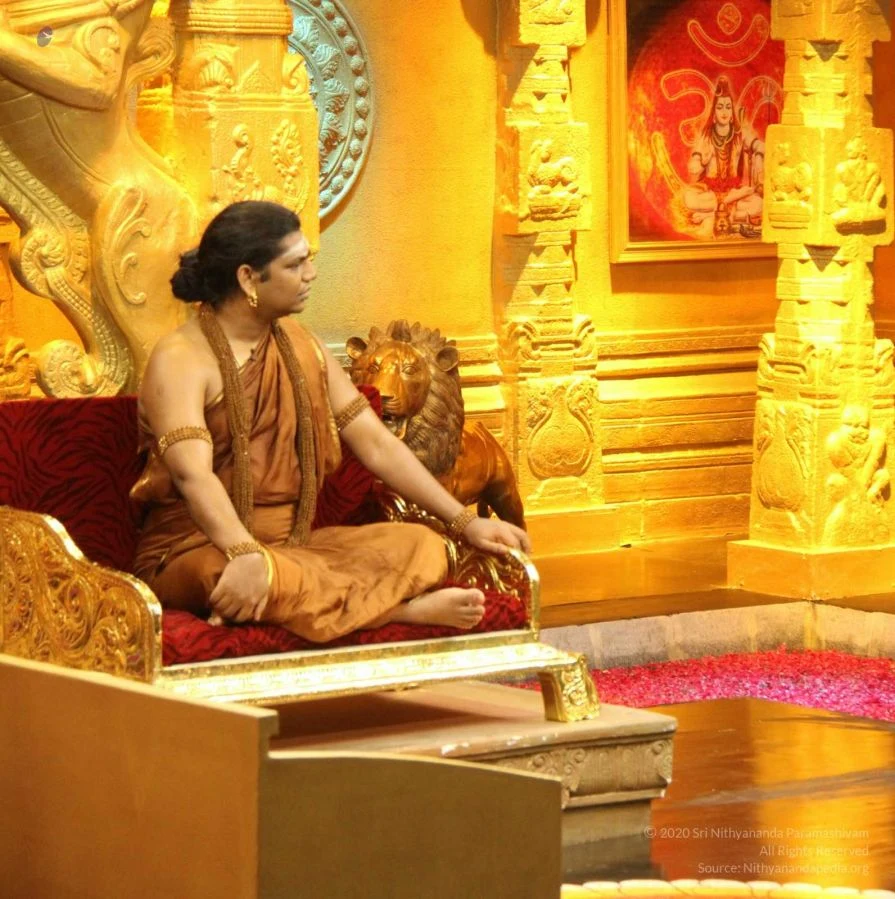
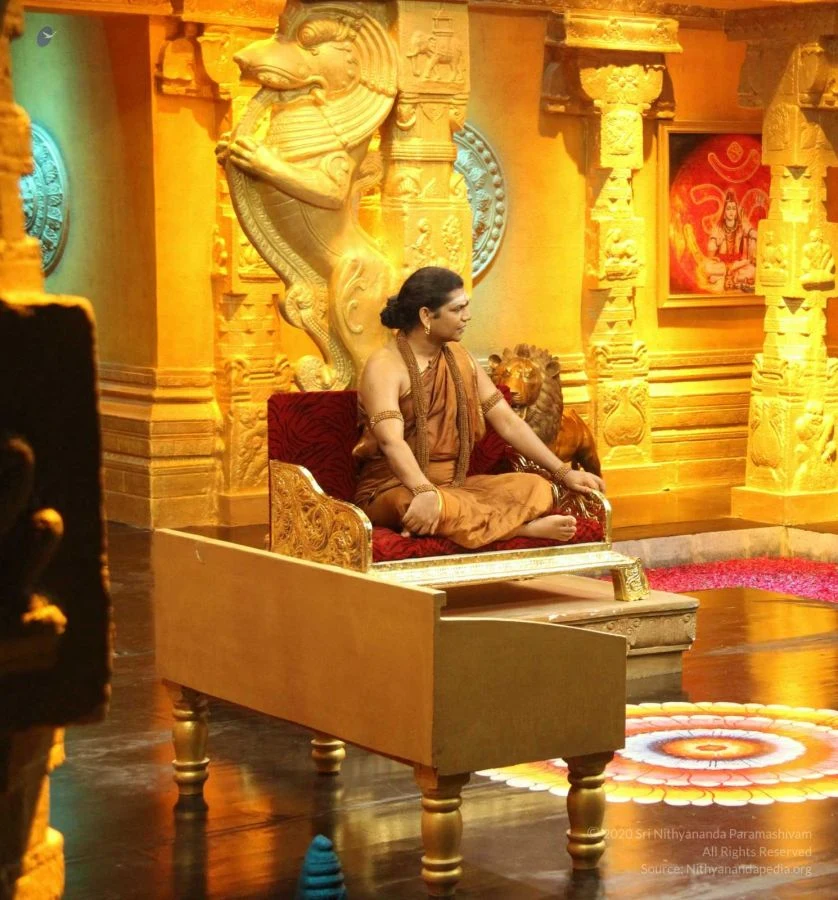
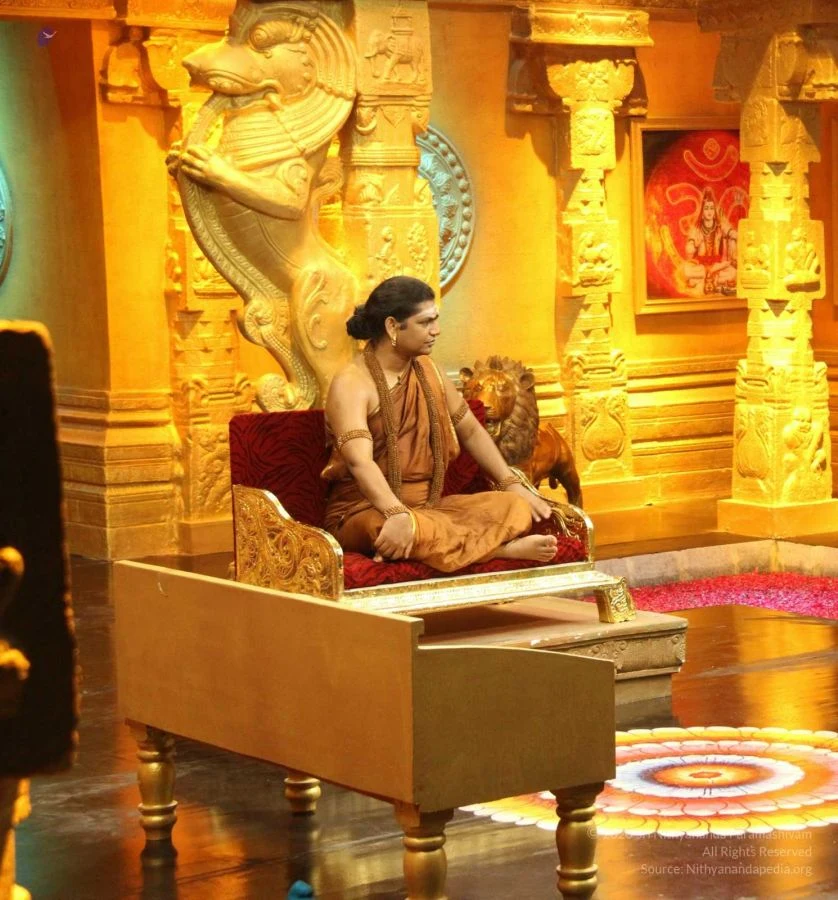
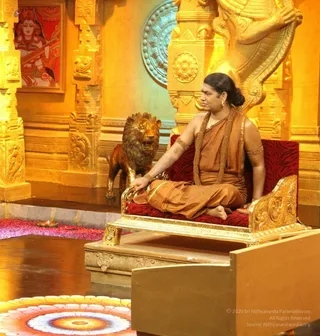
A seated person in a golden temple-style hall sits cross-legged on a red and dark-striped cushioned golden throne with carved gilt armrests. The person wears an orange-brown draped garment, a long beaded rudraksha-style mala over one shoulder, gold armbands and bangles, and has hair in a bun. One hand rests on the throne arm beside a golden lion statue. Behind is a gilded carved pillar with a serpent-like sculpture, a painted panel of a goddess playing a stringed instrument, and an ornate teal medallion. On the floor sit a lit oil lamp and a rose-petal and rangoli mandala. A wooden lectern stands in the foreground. a person cues: long orange draped clothing, rudraksha mala and throne seating.A seated person in an ornate golden hall sits cross-legged on a gold-framed throne with red cushioned upholstery, one hand resting on the armrest beside a golden lion statue. The person wears a rust-orange wrap over the shoulders and a long beaded rudraksha-style mala, with gold armbands and small gold earrings, and the hair is swept back into a bun. Behind stand golden temple-style pillars, a carved golden figure, a framed painting of a goddess holding a veena, and a lotus-patterned floor rangoli with a small oil lamp. Appearance-based label: a person, with the seated figure's throne, orange wrap and rudraksha mala as the qualifying cues.A seated man in an orange-brown robe and matching shawl sits cross-legged on a gold-framed throne with red velvet upholstery, his right hand resting on the armrest. A seated golden lion statue stands beside him, and a small oil lamp burns on a bed of pink petals to the left. Behind him, gold carved pillars and a large golden serpent sculpture frame the set, with a painting of a goddess playing a veena on the left wall and a round floral pattern on the floor in front. He wears a rudraksha mala and bangles. a person cues are the throne seat, the rudraksha mala and orange-brown robes, though the face is not used for identification.A seated figure in a saffron-orange robe sits cross-legged on a gold and red velvet throne with a carved golden lion statue beside it, one hand resting on the armrest. The figure wears a long orange shawl, gold armbands, gold earrings and a hair bun, with bare feet. Behind is an ornate golden temple-style backdrop with carved pillars, a naga-like carving and a painted deity image of a goddess playing a veena. Rose petals and a small oil lamp lie on the floor below, with a colourful rangoli at the bottom edge. a person cues include the saffron-orange clothing and ornate golden setting, though appearance is only partly clear.A seated man in an orange-brown dhoti and matching shawl sits cross-legged on a red velvet-upholstered gold throne with carved golden armrests. Bangles on his upper arms and wrists, a beaded mala draped over his shoulders, and a hair bun are visible. He rests one hand on the throne armrest and looks to the side. Behind him a large gilded carved pillar with a mythical lion-like creature rises beside a stylized gold-painted lion statue on the left. A colourful circular rangoli decorates the floor in front of the stage, and a wall medallion glows in teal light.A seated man in a rust-orange sannyasi-style dress with a bare shoulder and a long beaded rudraksha-style necklace sits on a red-cushioned gilded throne with a carved golden dragon-like guardian behind it. A golden lion statue stands at left and a patterned rangoli-style floor design lies in front. The man has long dark hair gathered at the back and rests one hand on the armrest. Ornate golden architecture and turquoise circular wall motifs fill the background.

Oct272013

174 photosView all
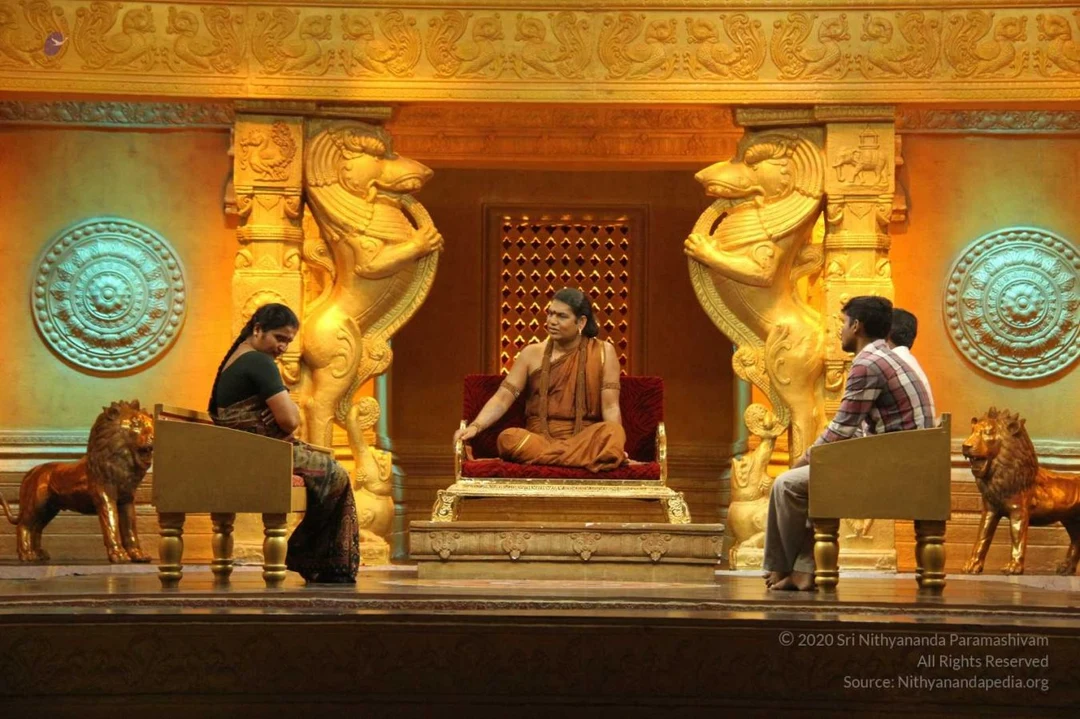
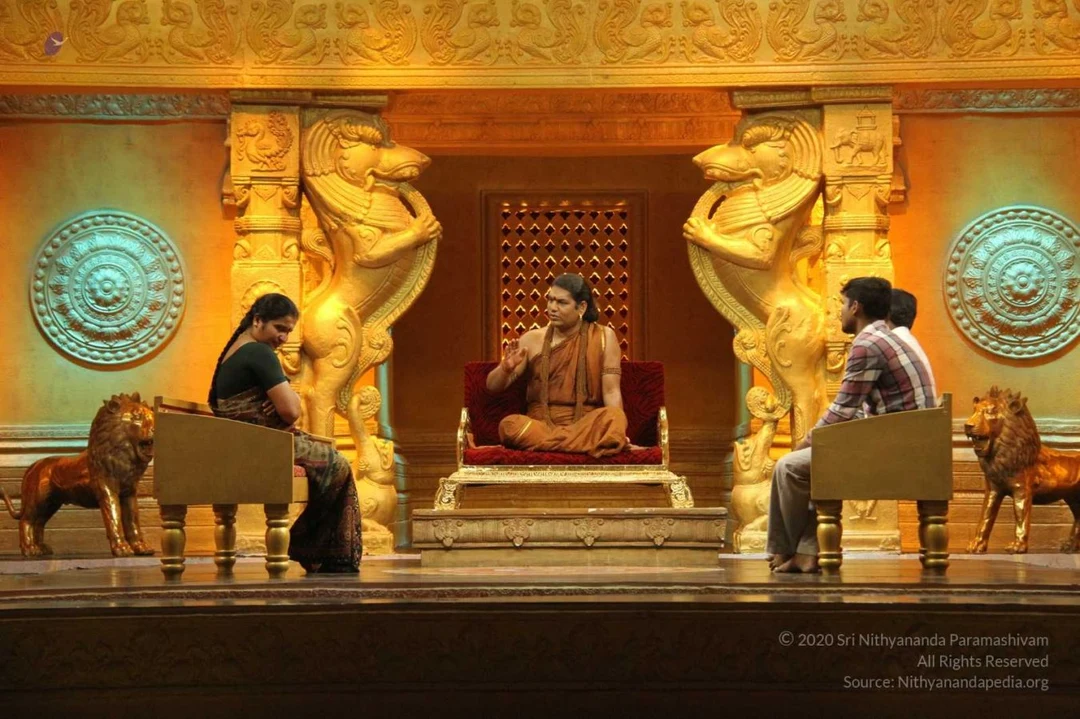
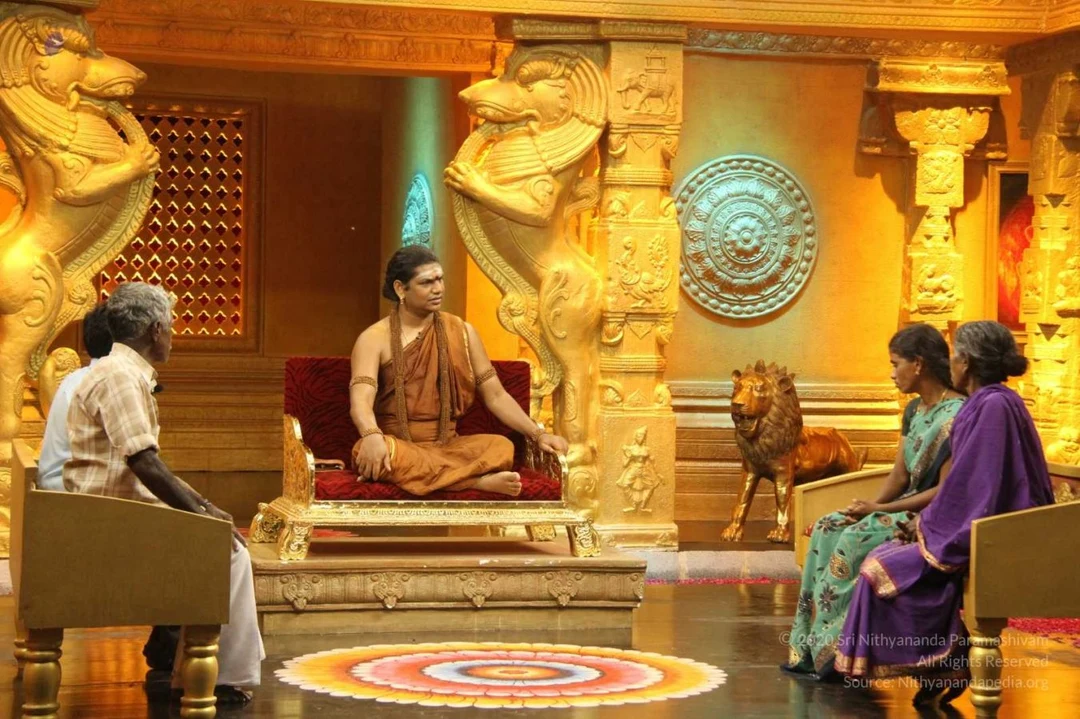
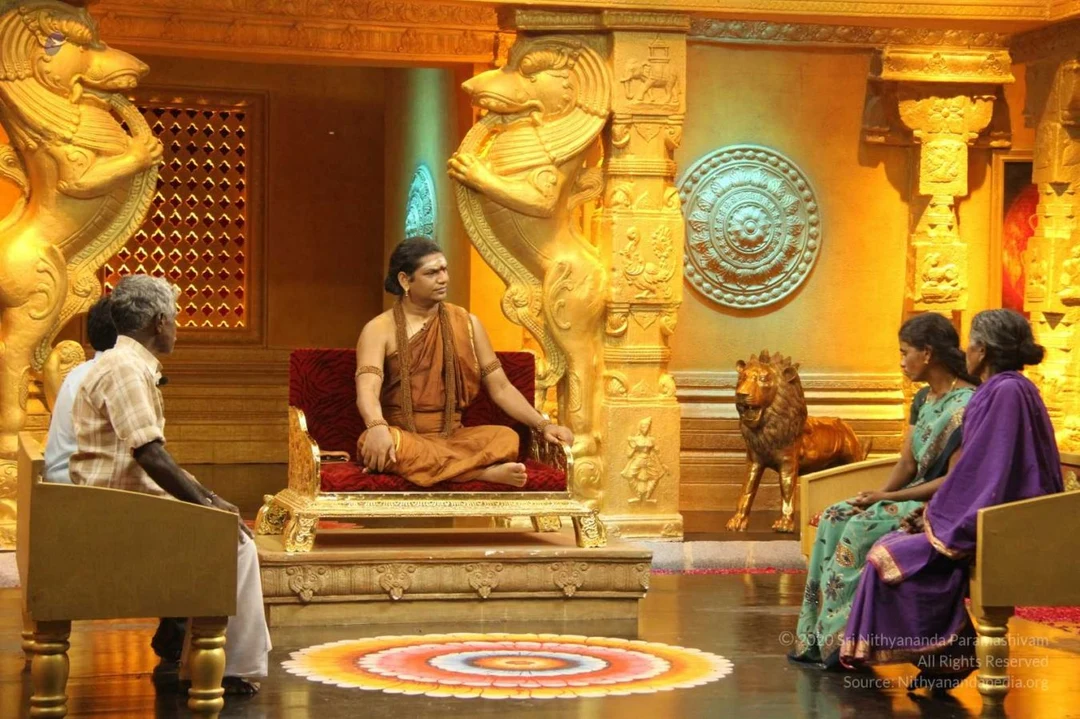
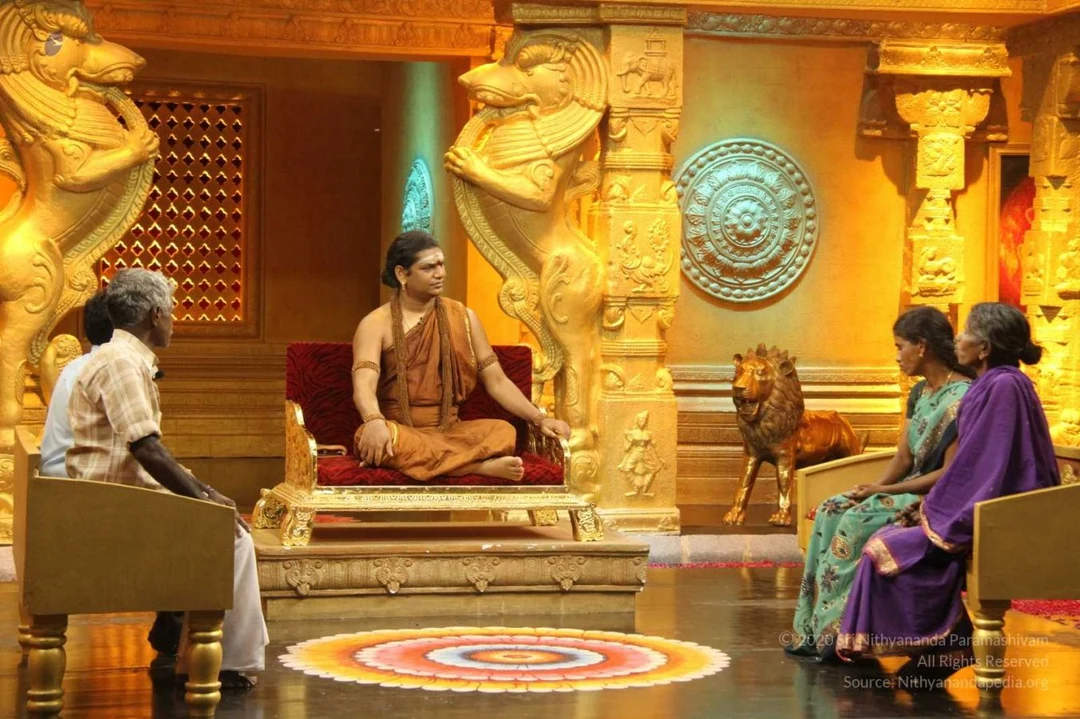
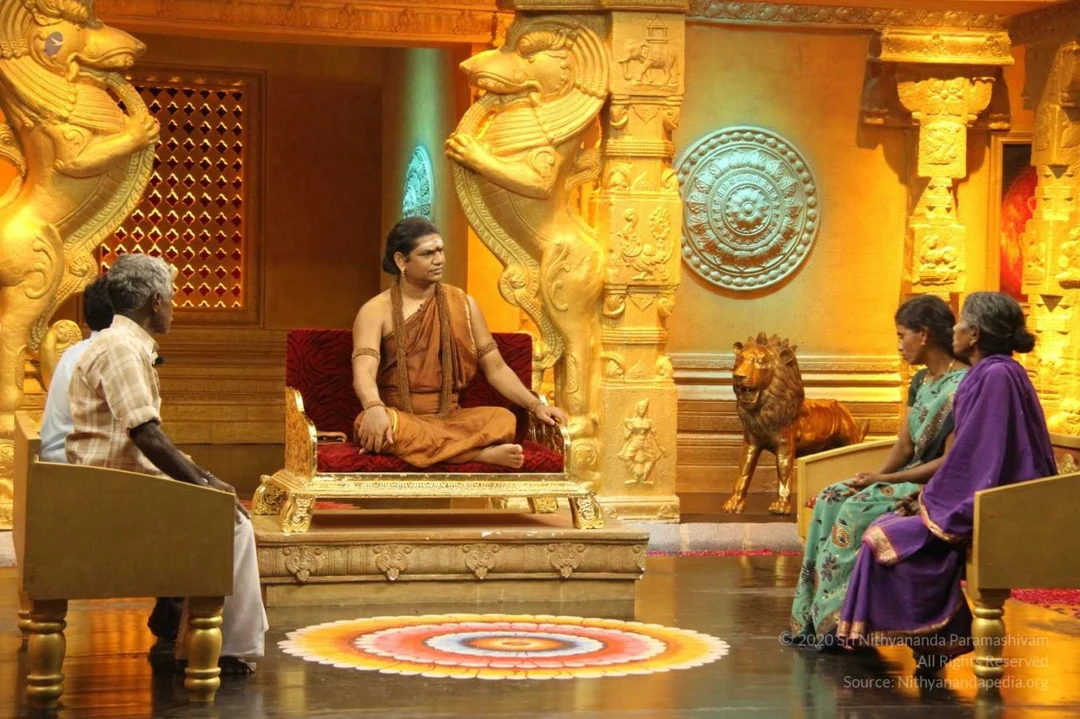
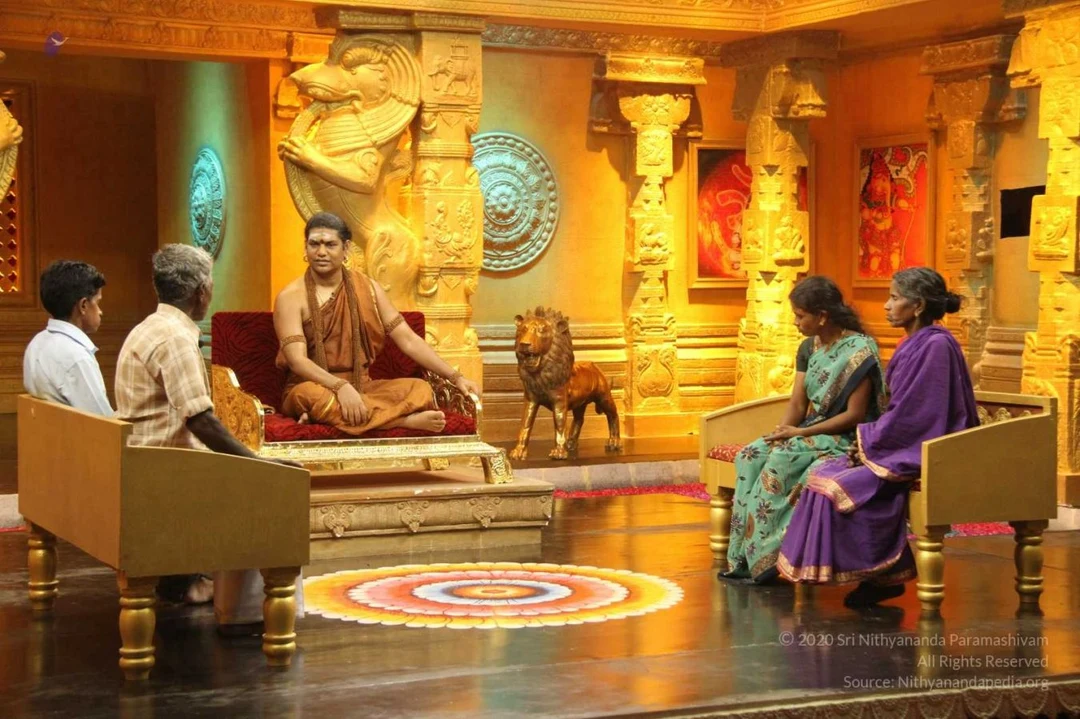
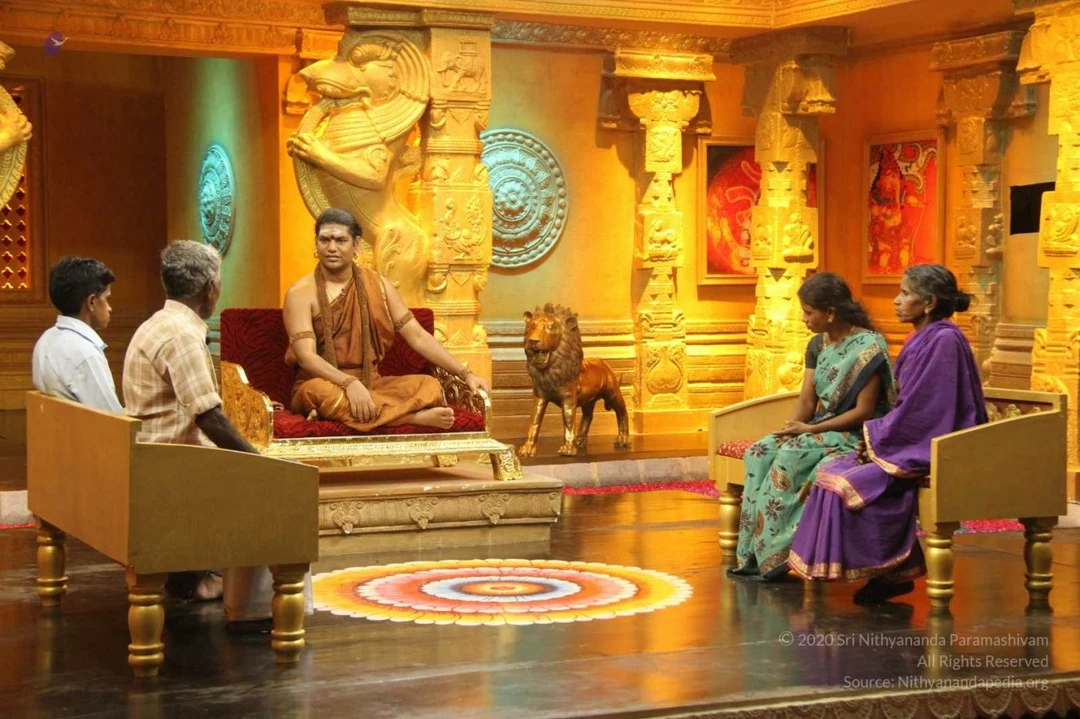
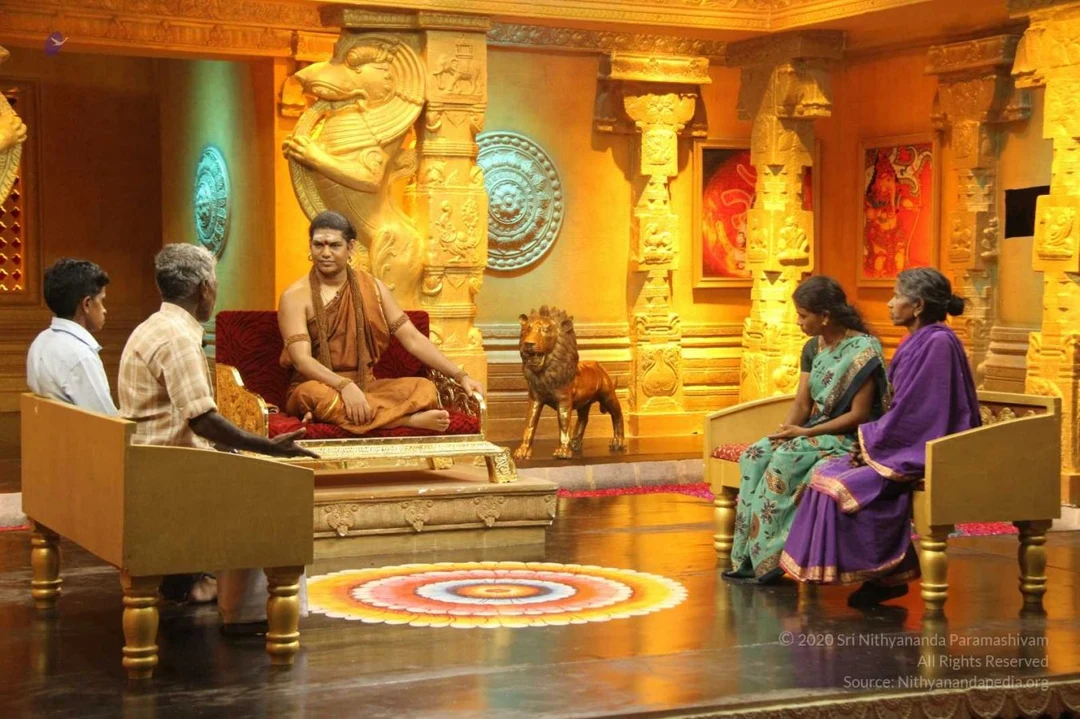
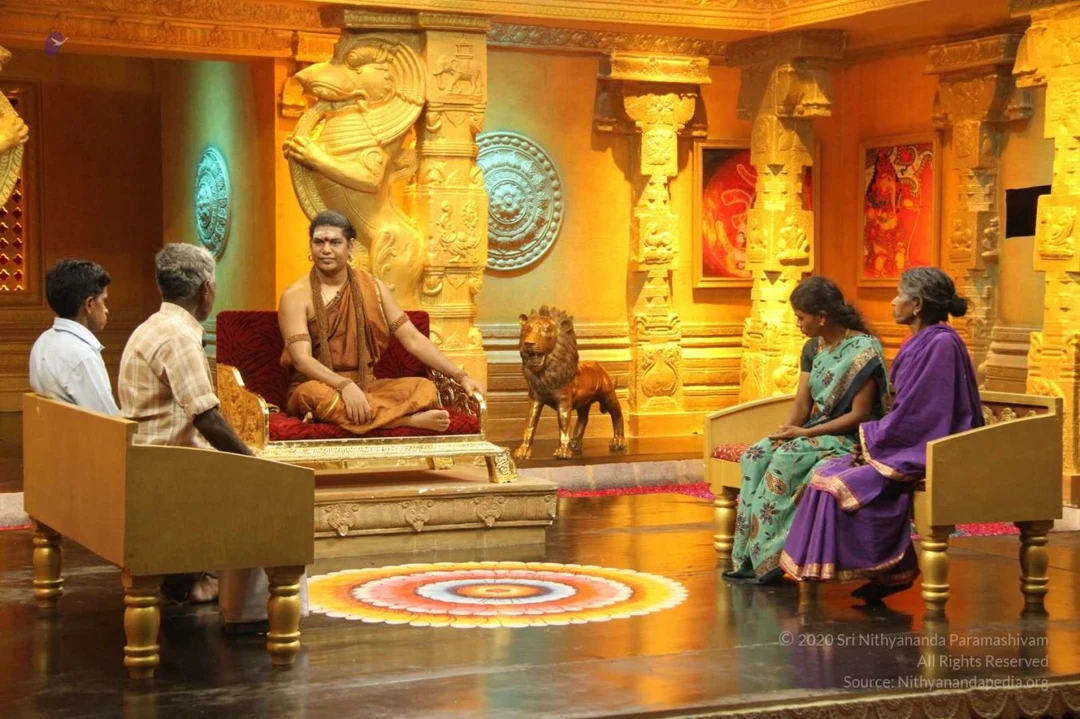
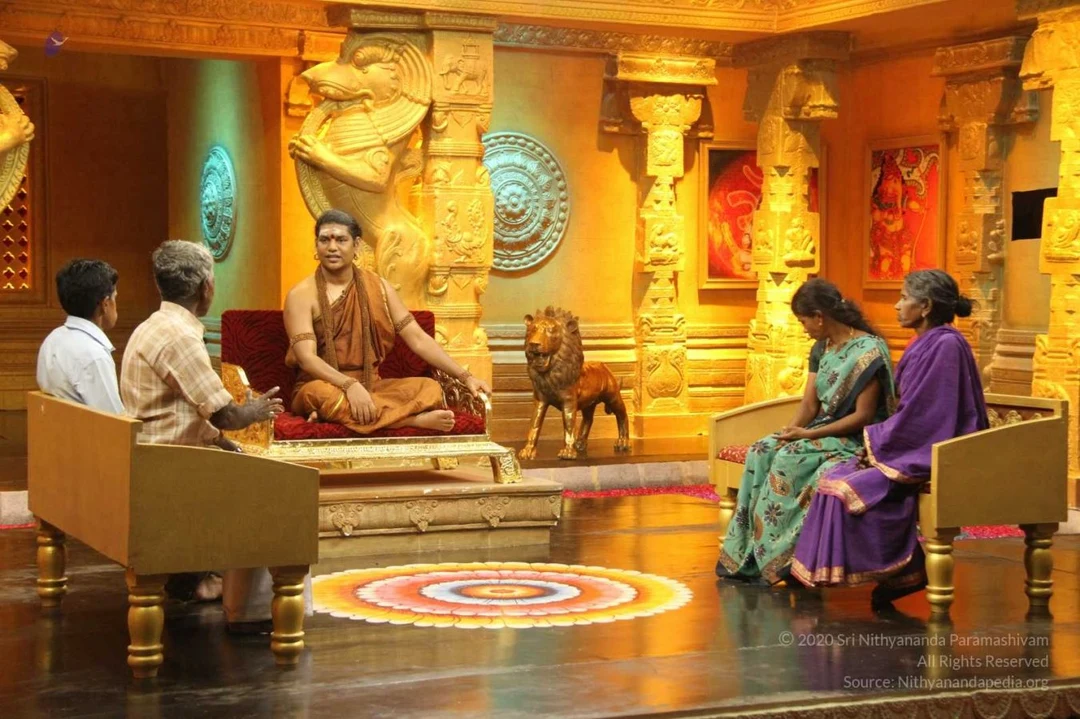
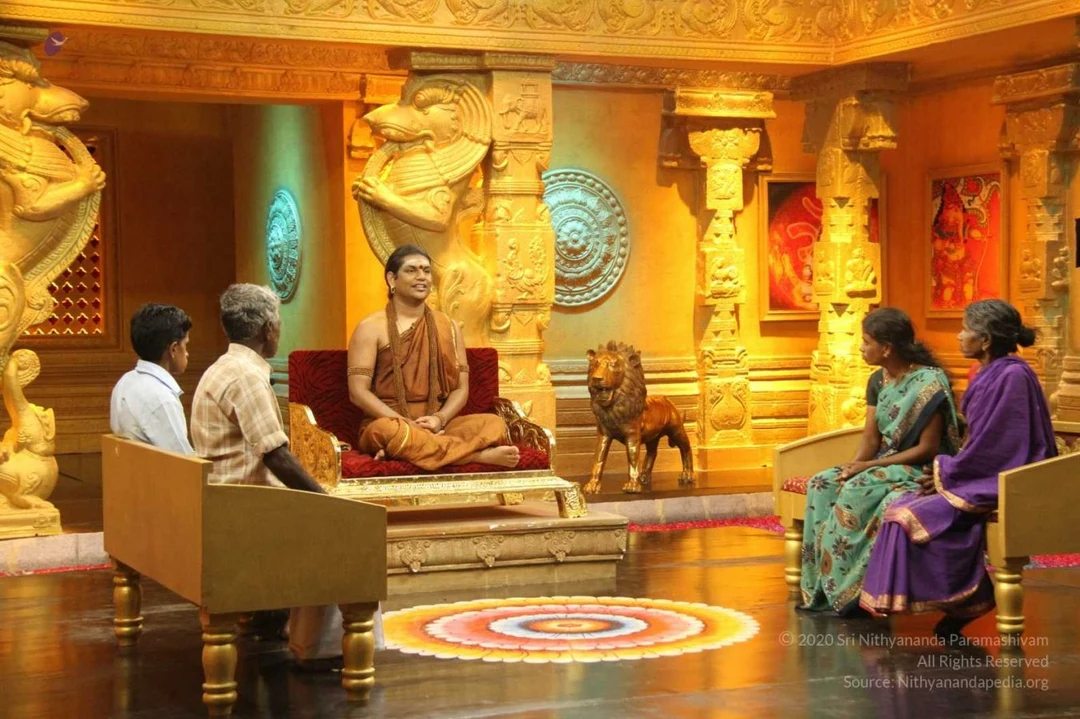
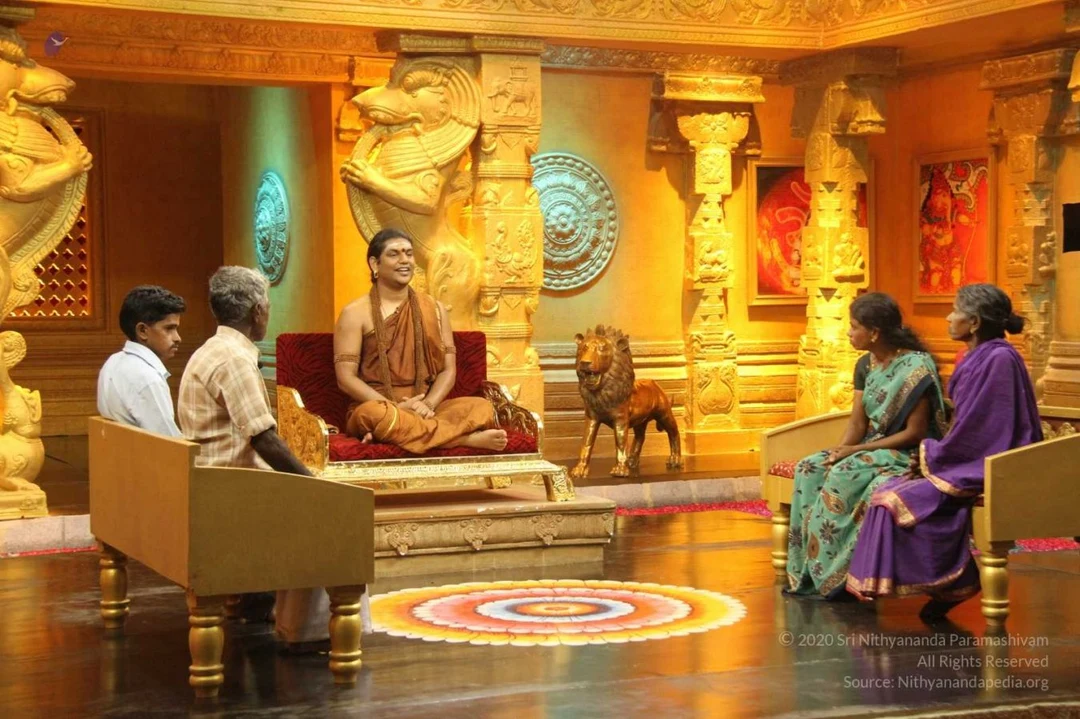
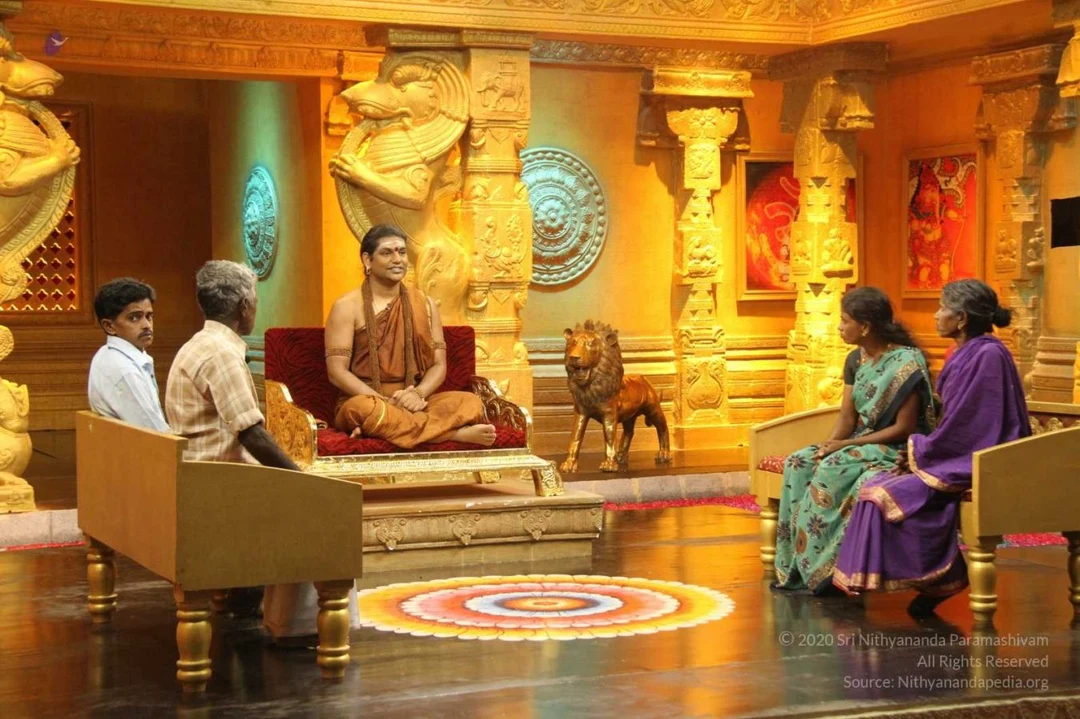
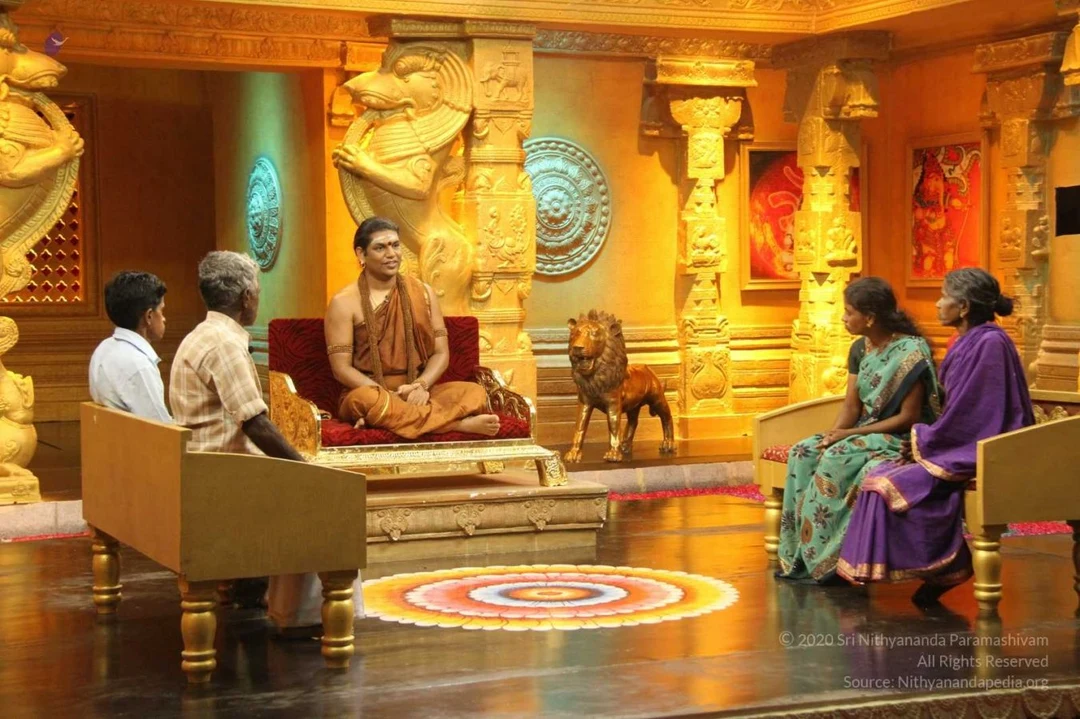
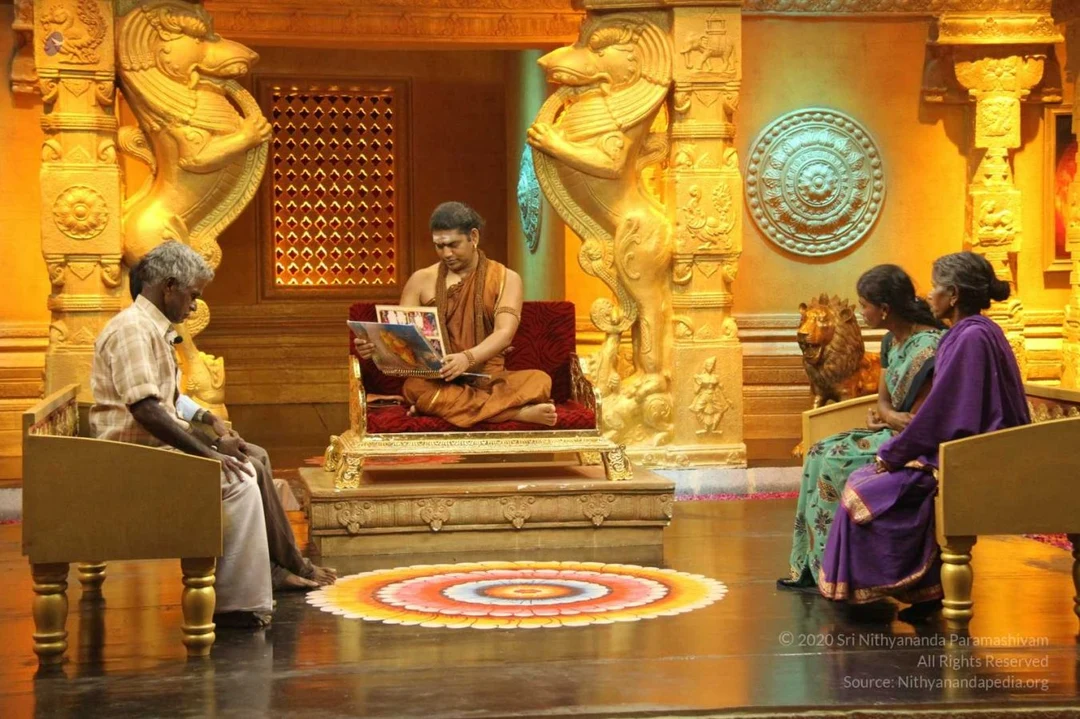
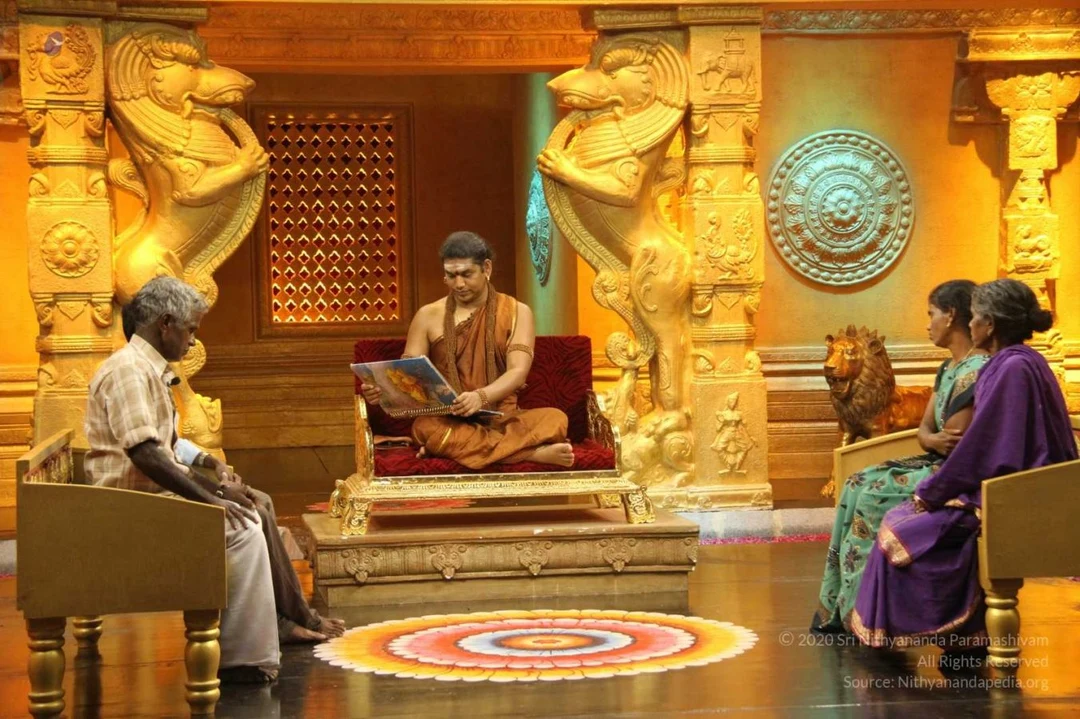
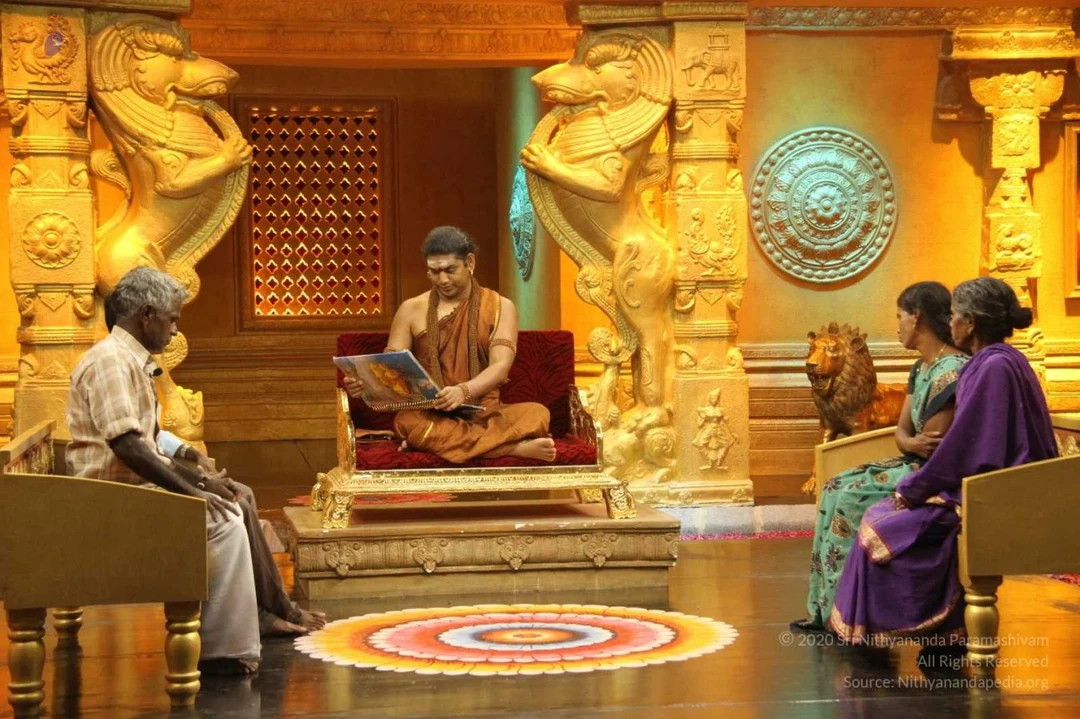
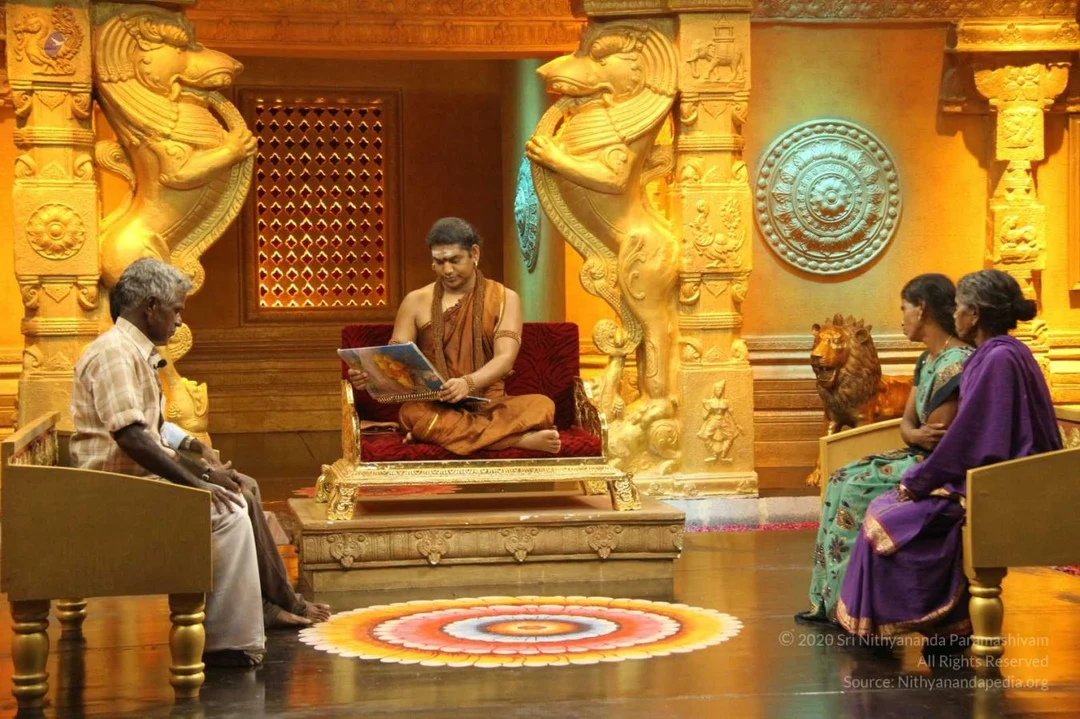
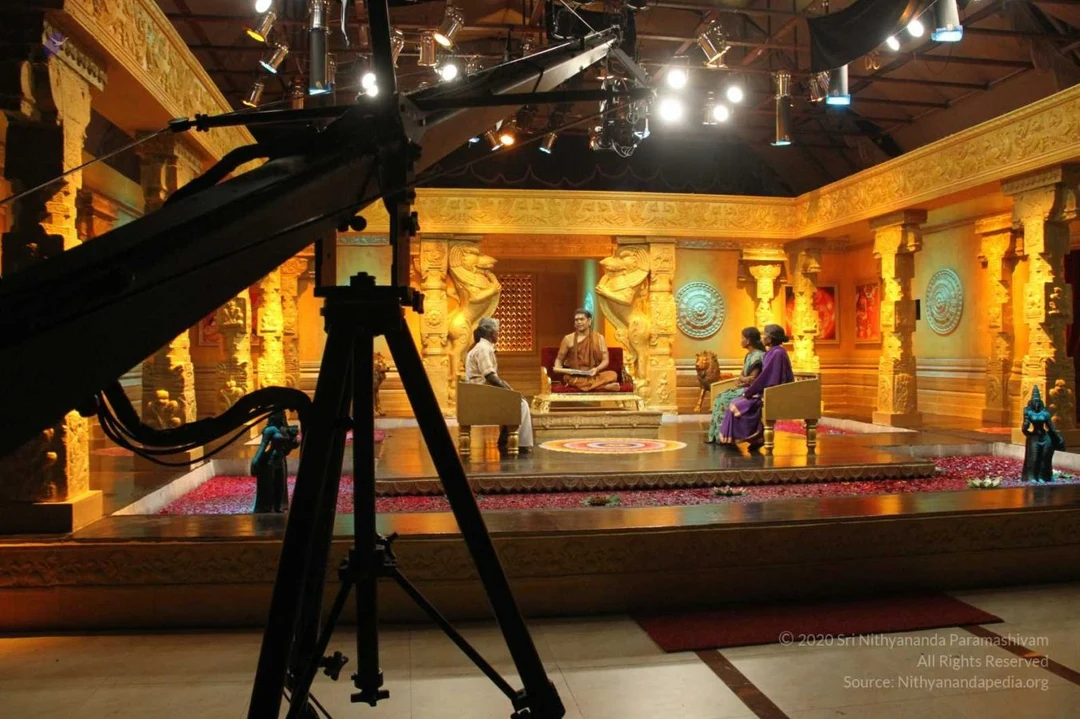
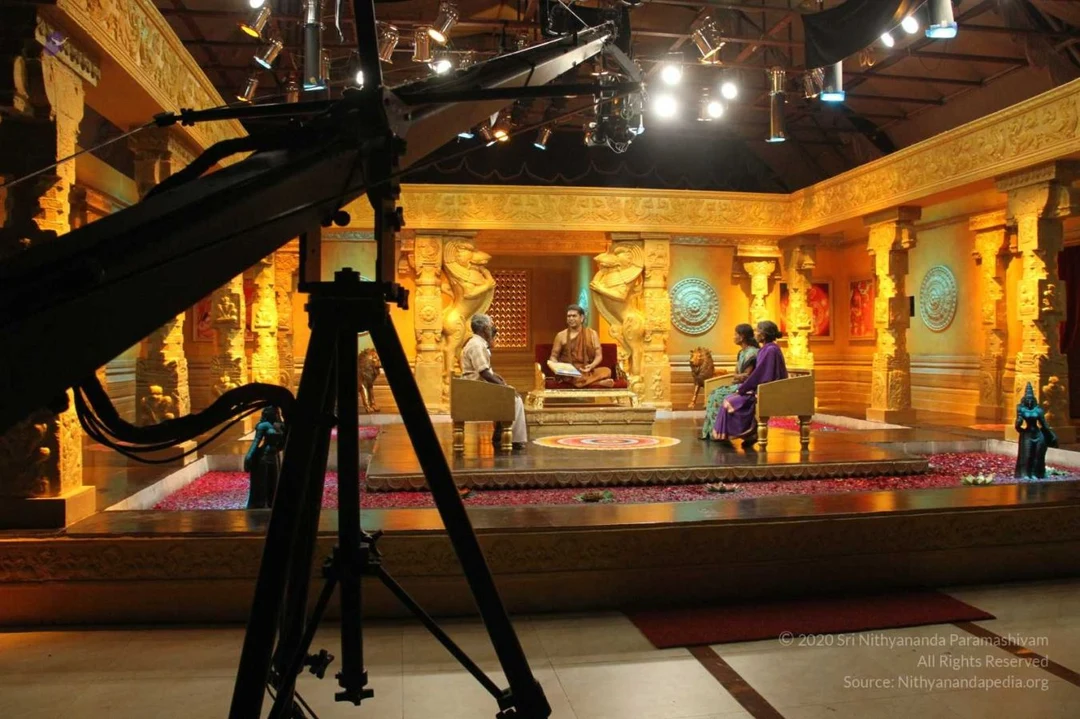
A golden-themed studio set with ornately carved pillars, a gilded lion-headed carving and a golden lion statue on the floor. A man with long swept-back dark hair sits cross-legged on a red-cushioned throne-like seat, wearing an orange-saffron cloth draped over his shoulders and a saffron dhoti, with bangles on his arm, speaking with his hands. Three people face him: a woman in a black top with a long braid seated at left, and two men seated on a gold-trimmed bench at right, one in a white shirt and trousers and one in a pink-and-white checked shirt and light trousers. The floor has a circular rangoli-style design.A photograph of a stage-set discourse in an ornate golden hall. A man in orange-saffron robes sits cross-legged on a red-cushioned gilded throne flanked by carved golden makara-like pillars. He wears a long orange shawl and has long swept-back hair, gesturing with his hand while speaking. A woman in a black blouse and patterned sari sits on the left in a wooden chair, and a man in a checked shirt and grey trousers sits on the right, both facing the central figure. Golden lion statues stand beside the wooden chairs, and carved ornamental panels decorate the walls. The central figure has distinctive long hair and saffron clothing consistent with the a person label, seated on a throne in a discourse setting.A seated man in an orange-brown robe and gold bangles sits on a red-cushioned golden throne beside a carved wooden lion, with a long rudraksha-style beaded mala across his chest. Opposite him on a low golden bench sits an older man in a white shirt and brown trousers, gesturing as he speaks. The set is ornately gilded with carved pillars, a painted red panel of a deity and a framed Ganesha-style image, and a rangoli-like floral and coloured pattern on the floor.A seated figure in a saffron-orange robe sits cross-legged on a red-cushioned golden throne centred on an ornate gold stage, gesturing with one raised hand as they speak. Golden carved yali-like lions with raised paws flank the throne, with gilded lion statues at the edges and round turquoise-lit medallions on the walls. Facing the throne, a woman in a black blouse and patterned sari with a long braid sits on a gold-trimmed bench on the left, while on the right a man in a plaid shirt and grey trousers and another person sit on a matching bench, all listening in a discourse-style setting. The seated figure wears a rudraksha-style neck adornment and has long hair pulled back.A photograph of a studio-style gilded set with ornate golden carved pillars, a carved lion-headed or makara-like sculpture on a column, a golden lion statue on the floor, and a floor medallion of coloured rangoli. A man in an orange-brown dhoti and shawl sits cross-legged on a red-cushioned golden throne, gesturing with one hand, with gold armlets and a rudraksha-style necklace. Opposite him, a woman in a dark green blouse and a patterned sari sits on a golden bench, gesturing as she speaks. At the right edge, two seated men in plaid shirts and trousers face the throne from golden benches.A studio-style discourse set with gold and orange ornate pillars, a golden lion statue and carved decorative panels. A man in saffron-orange robes with a bare chest and a gold-tone shoulder shawl sits cross-legged on a red-cushioned golden throne, with a tilak on his forehead and gold bangles on his arms. Facing him on golden sofas are two men and two women: one man in a checked shirt gestures toward him, another man in a white shirt sits at the left edge, and two women sit at the right, one in a teal saree and one in a purple saree with a grey bun. A circular multicoloured rangoli decorates the floor, with red petals scattered nearby. Two colourful framed paintings hang on the back wall.