Skip to content
Sunday

11 May 2014

Life Bliss Meditation

Dated photos
263
Source pages
1
Media
2
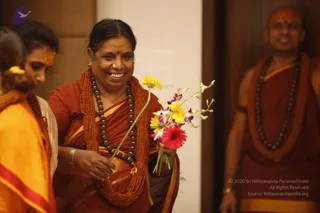
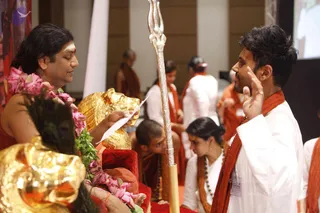
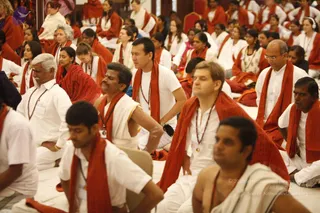
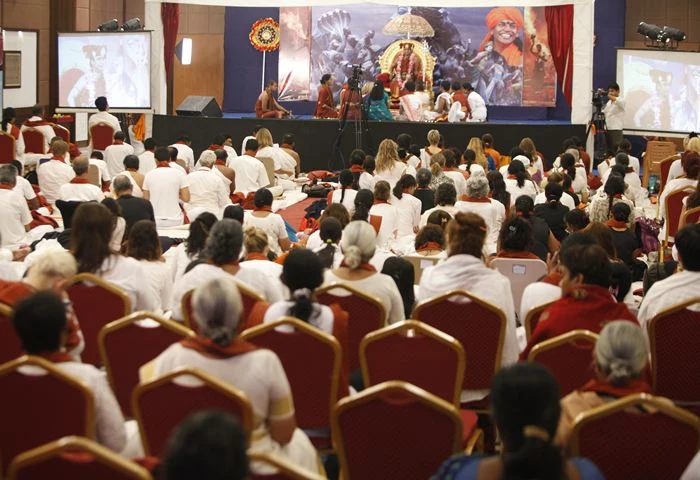
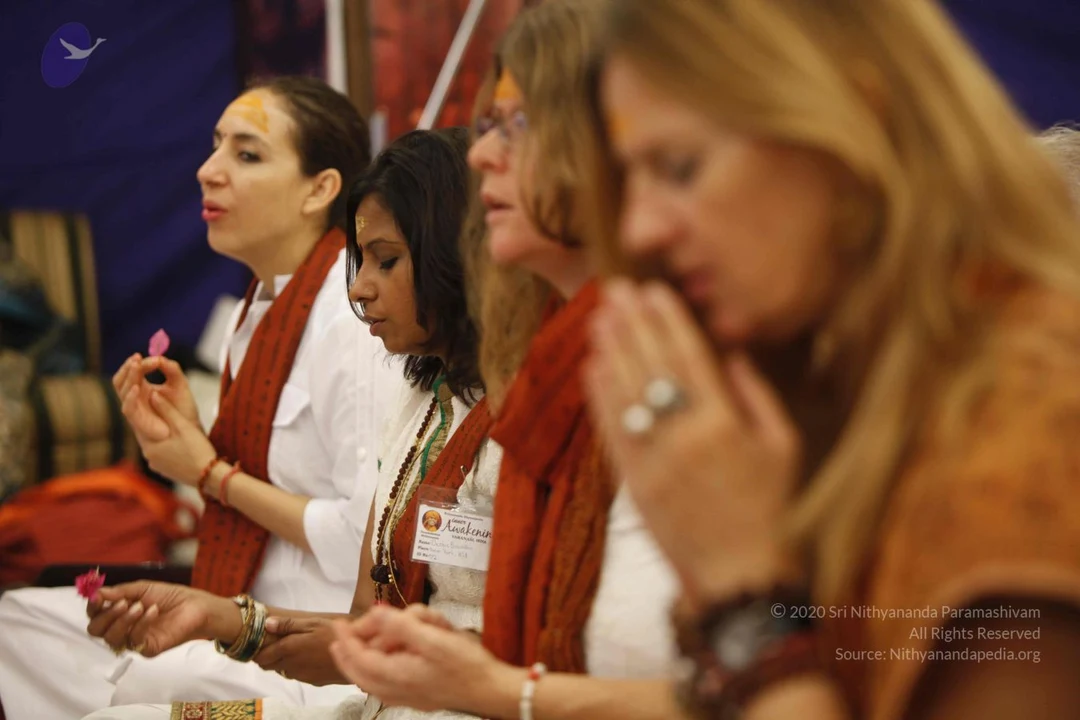
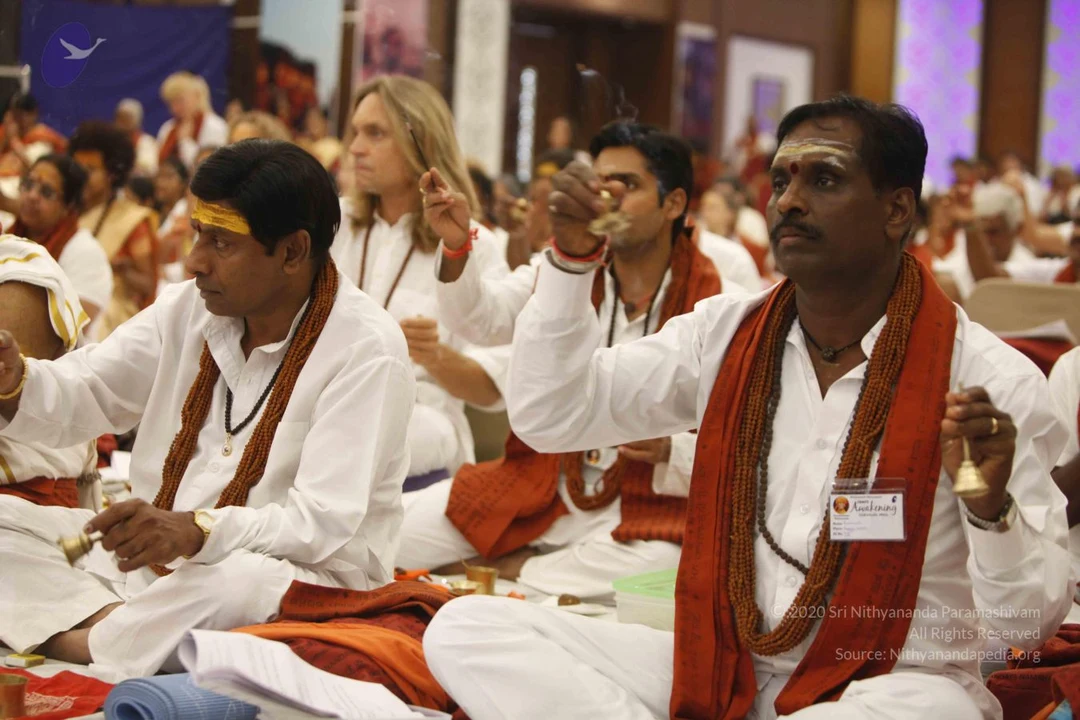
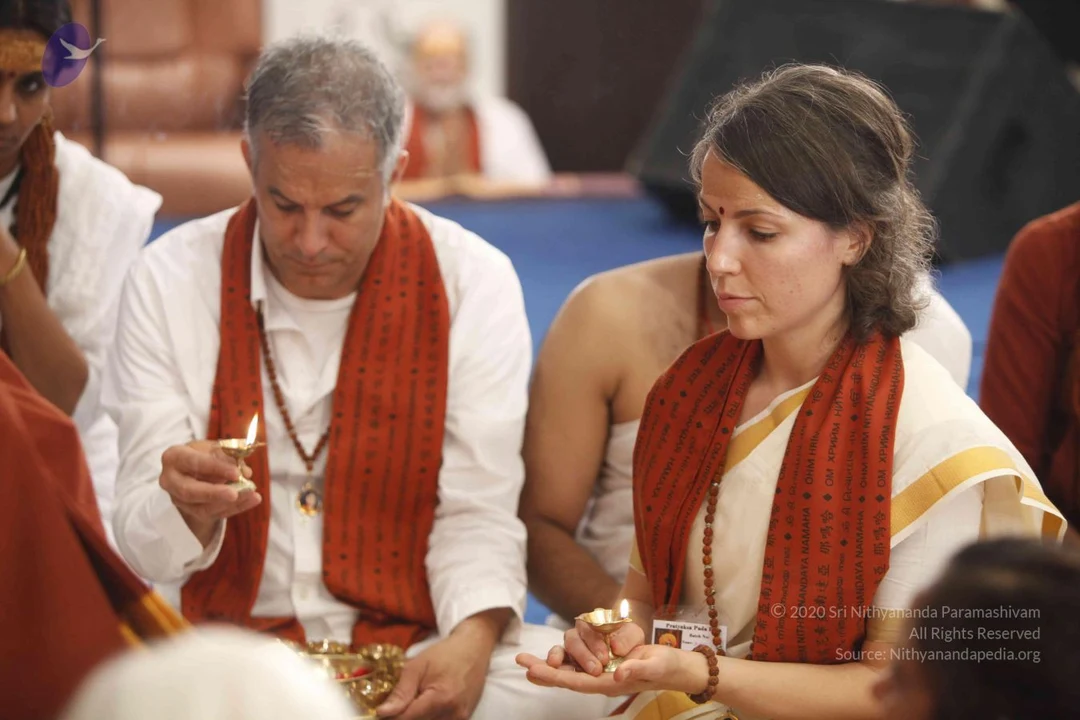
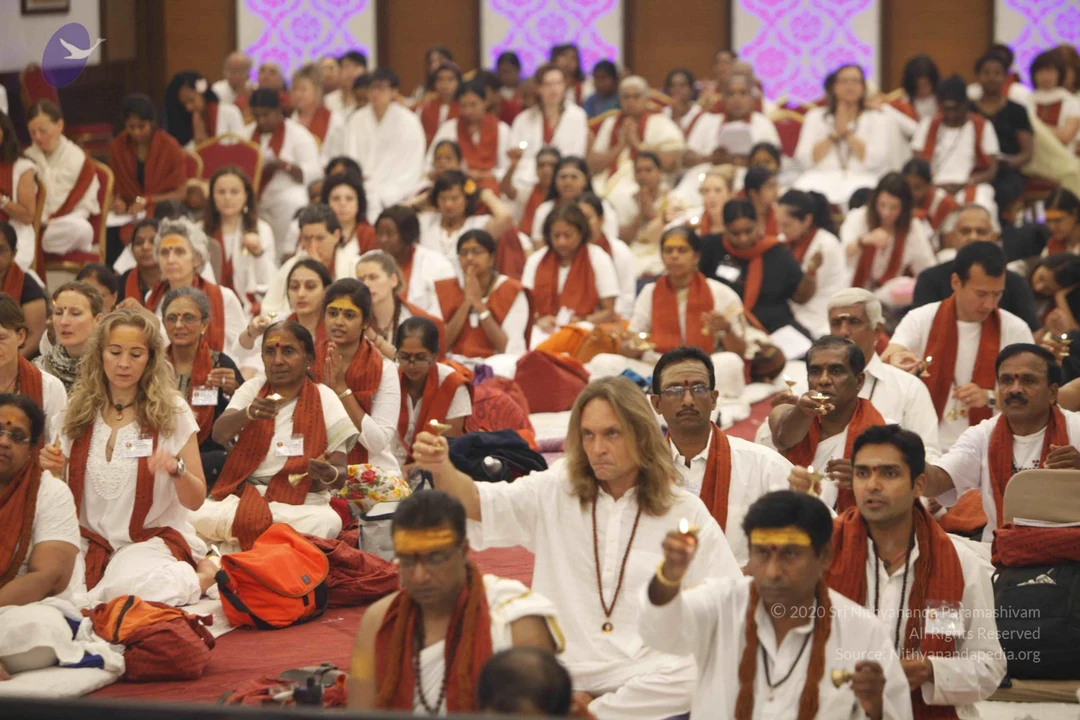
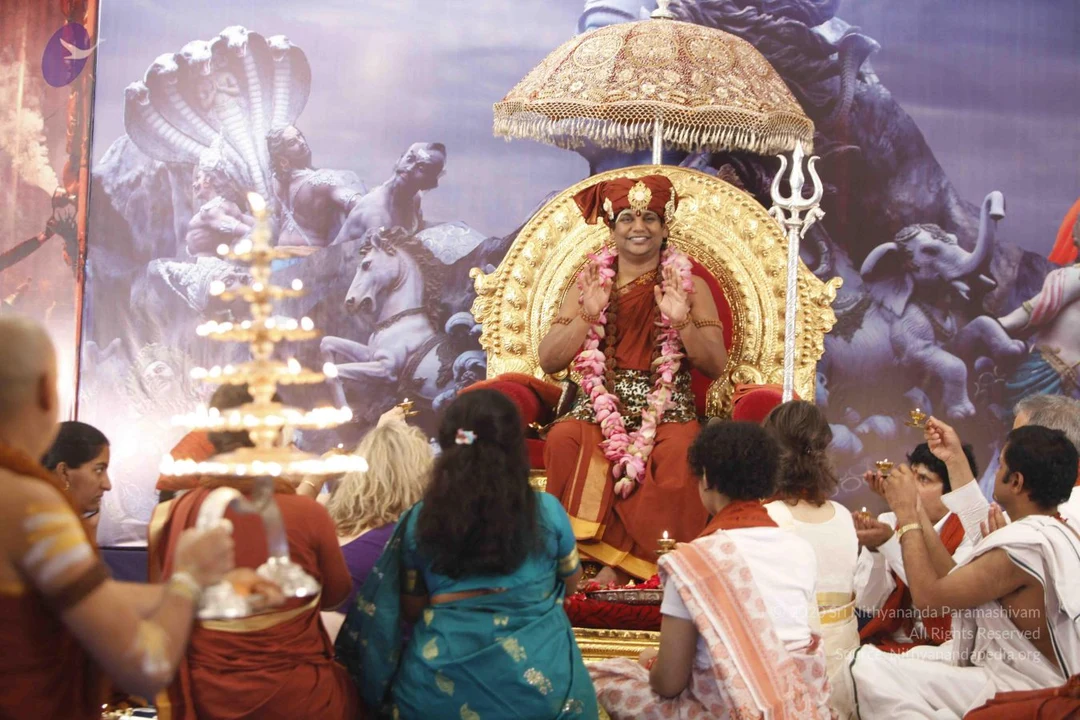
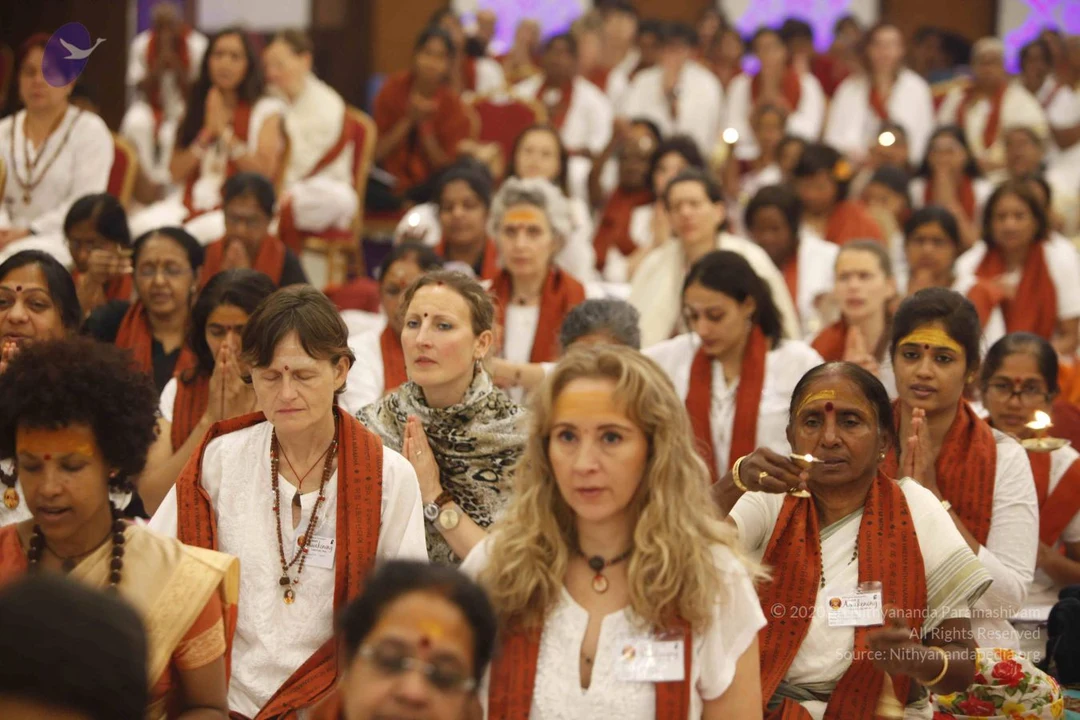
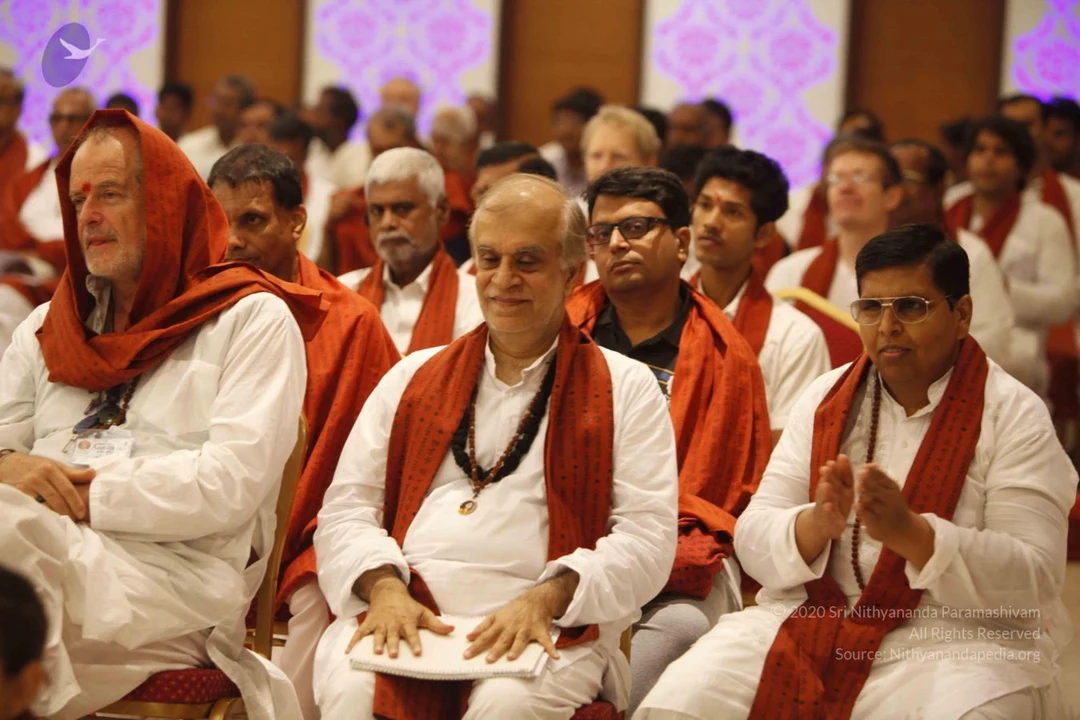
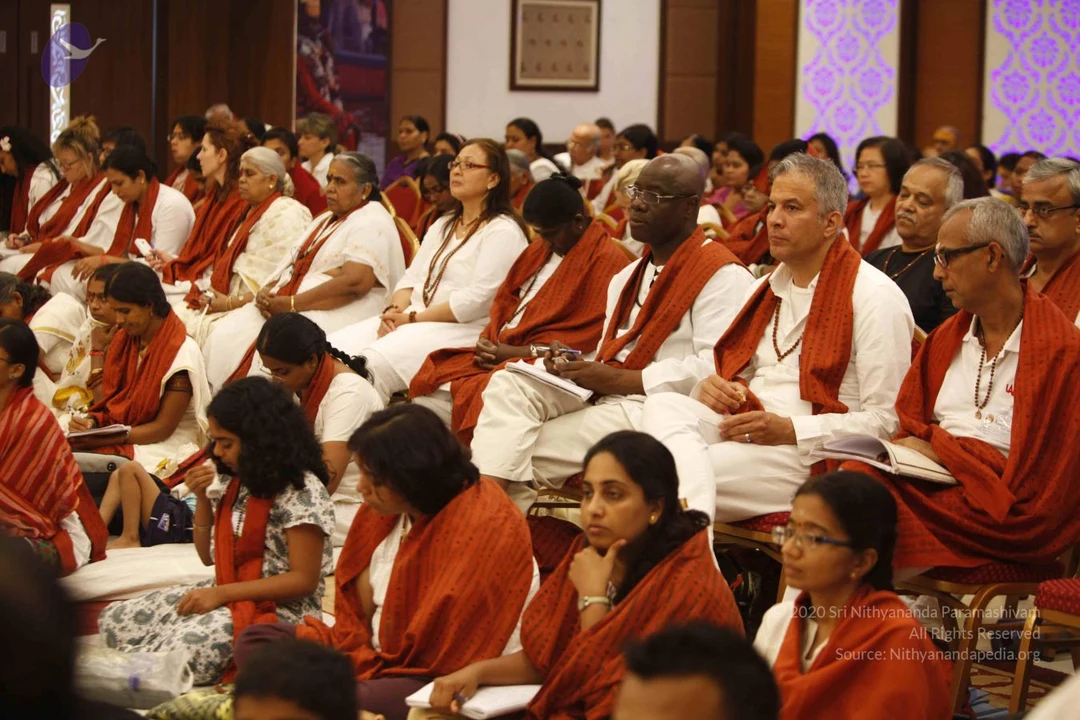
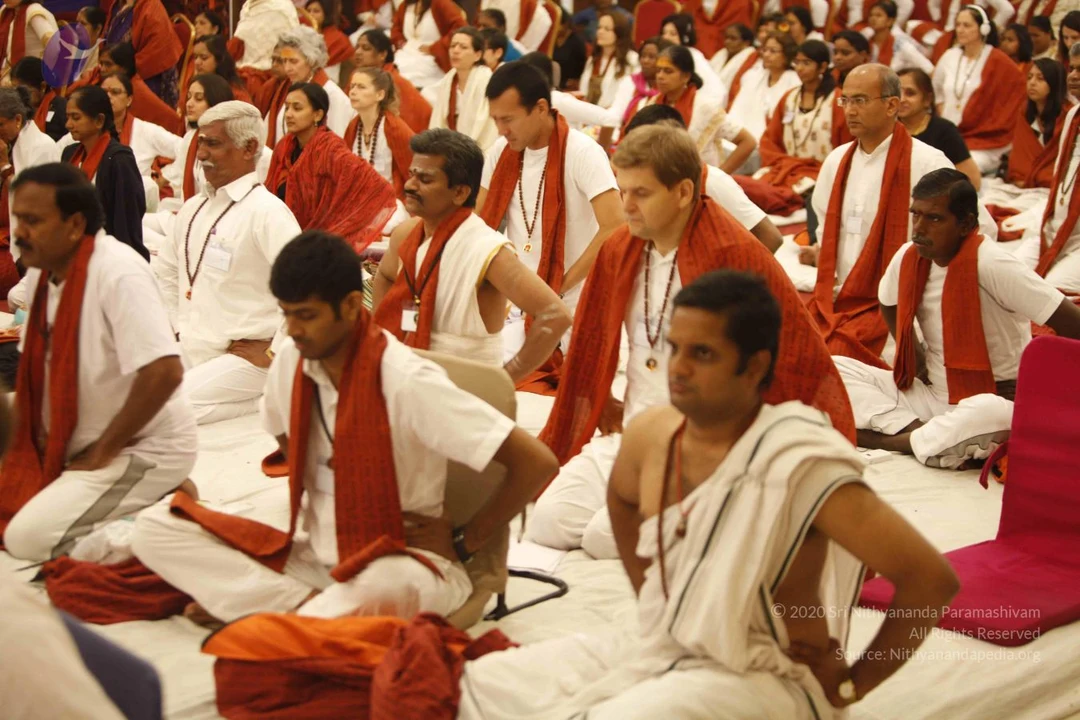
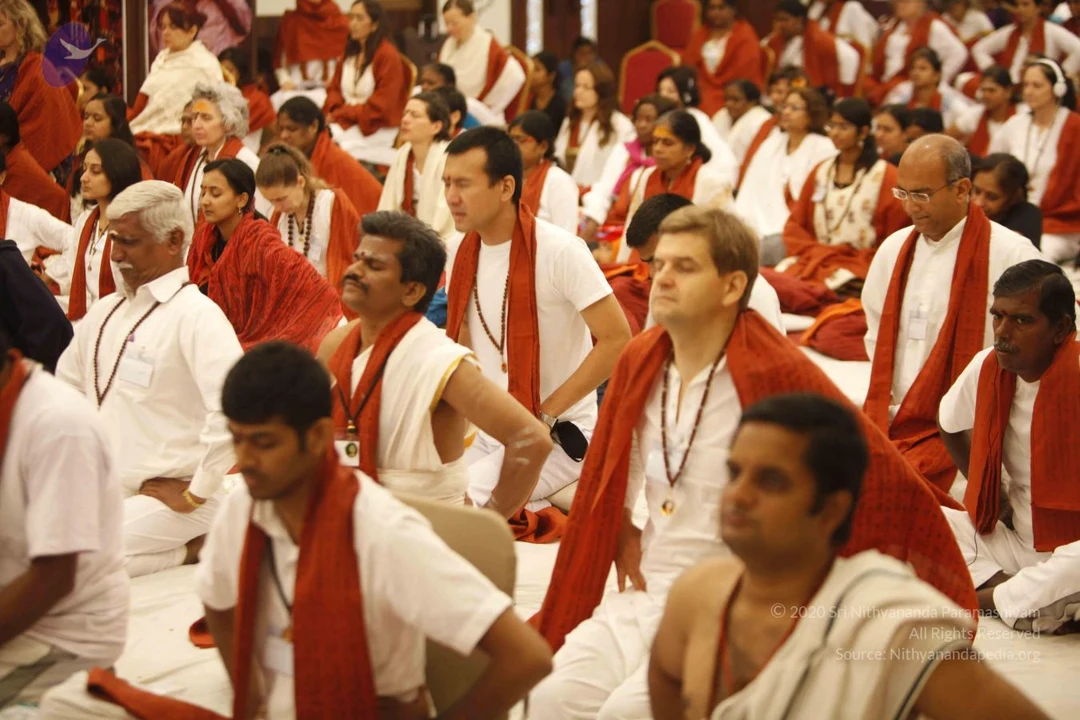
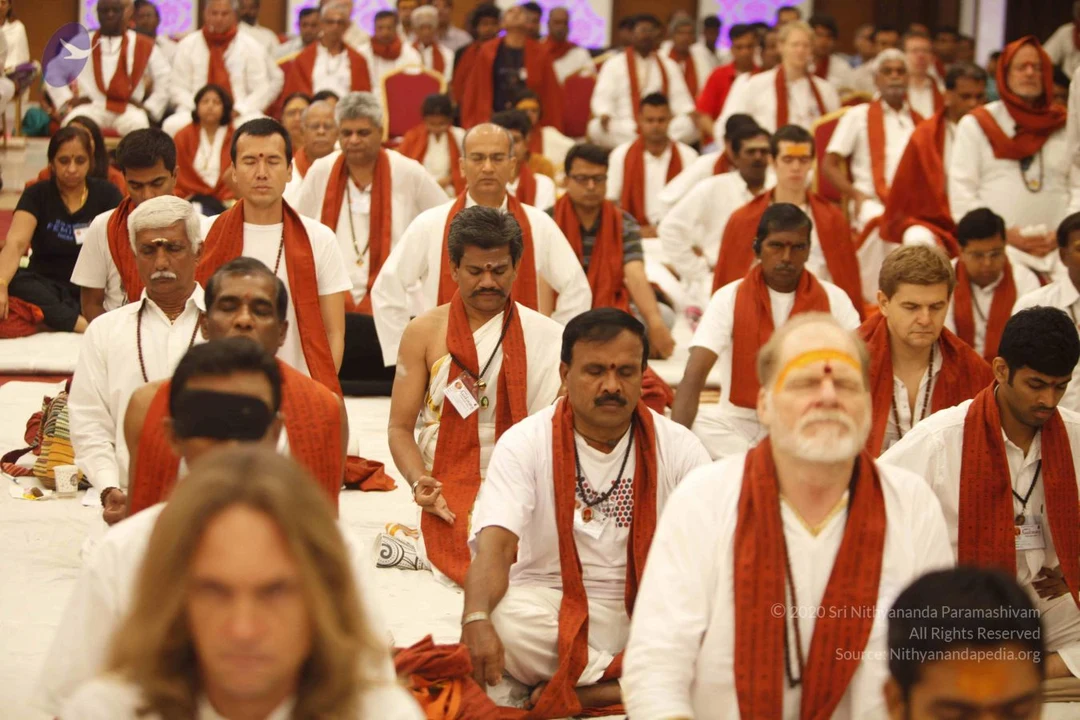
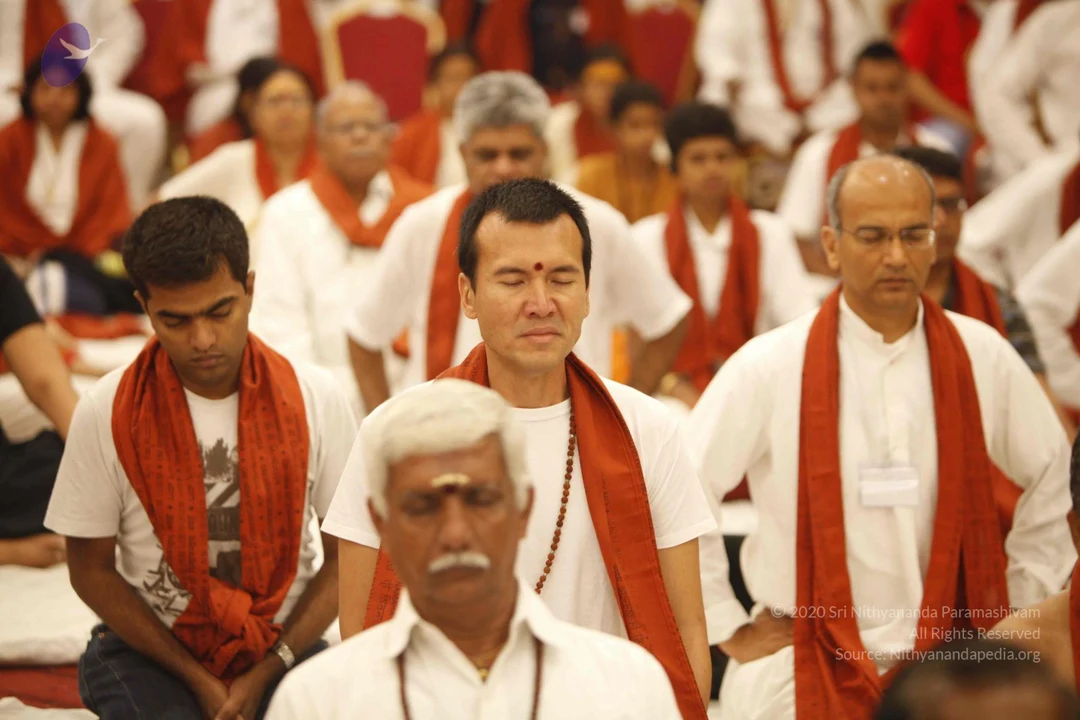
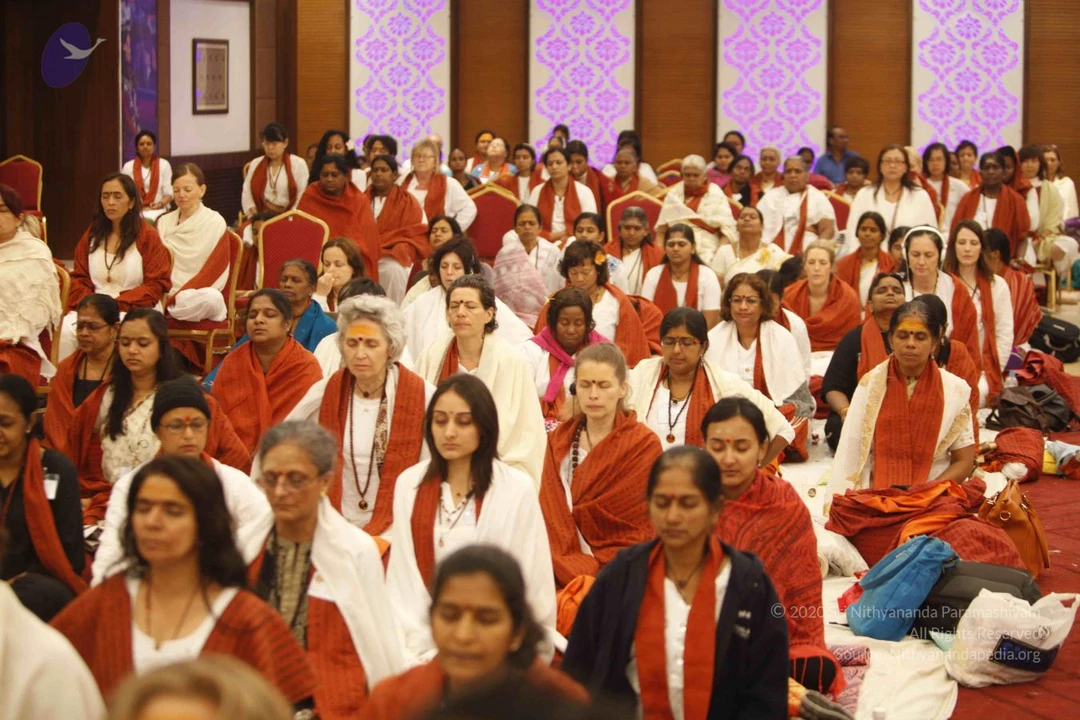
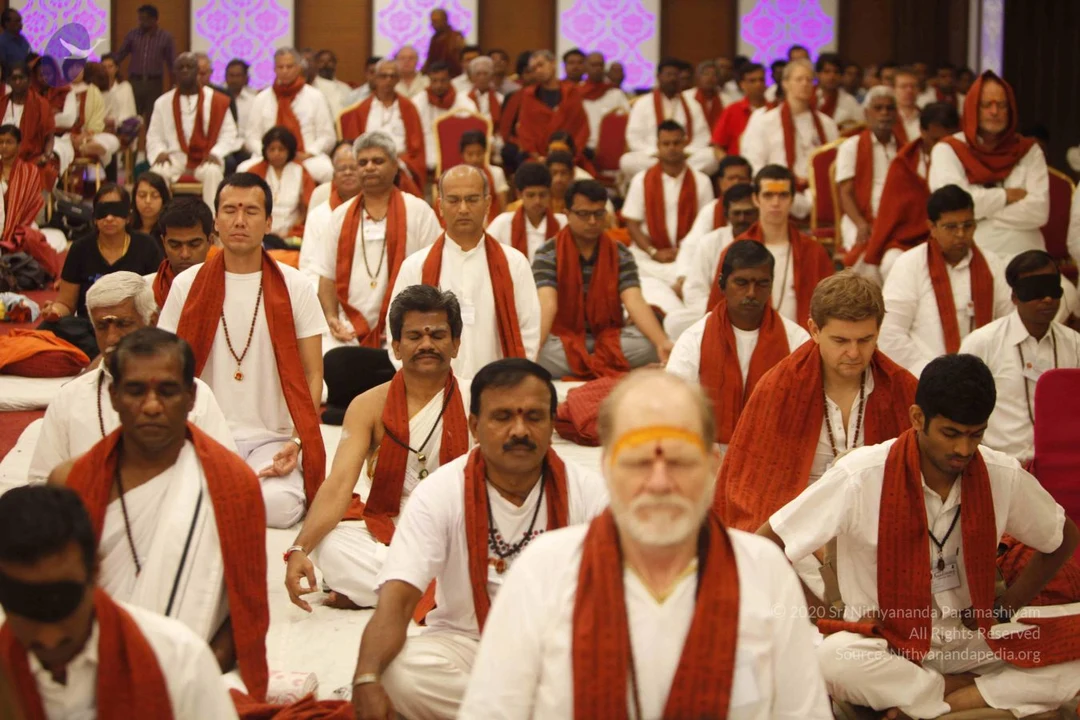
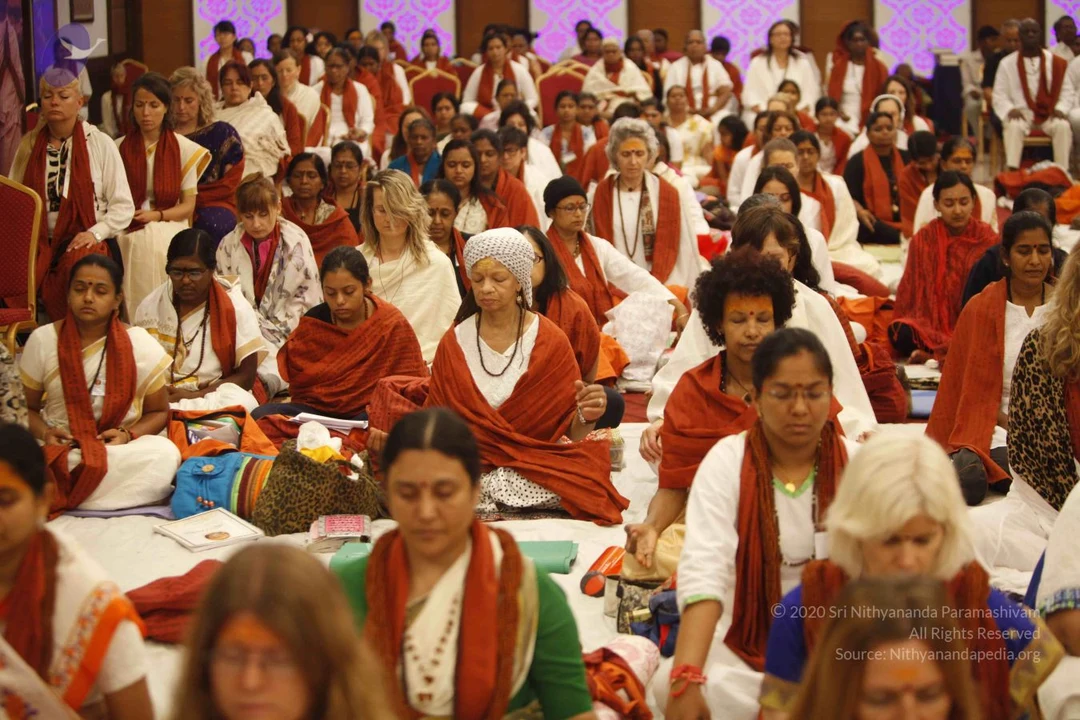
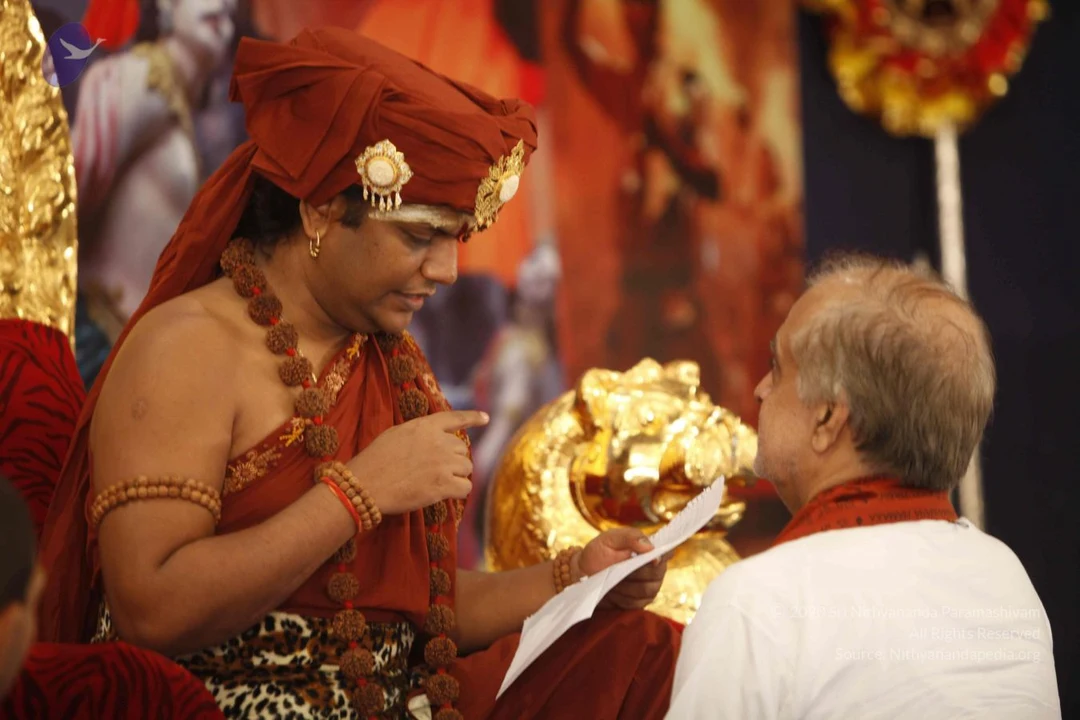
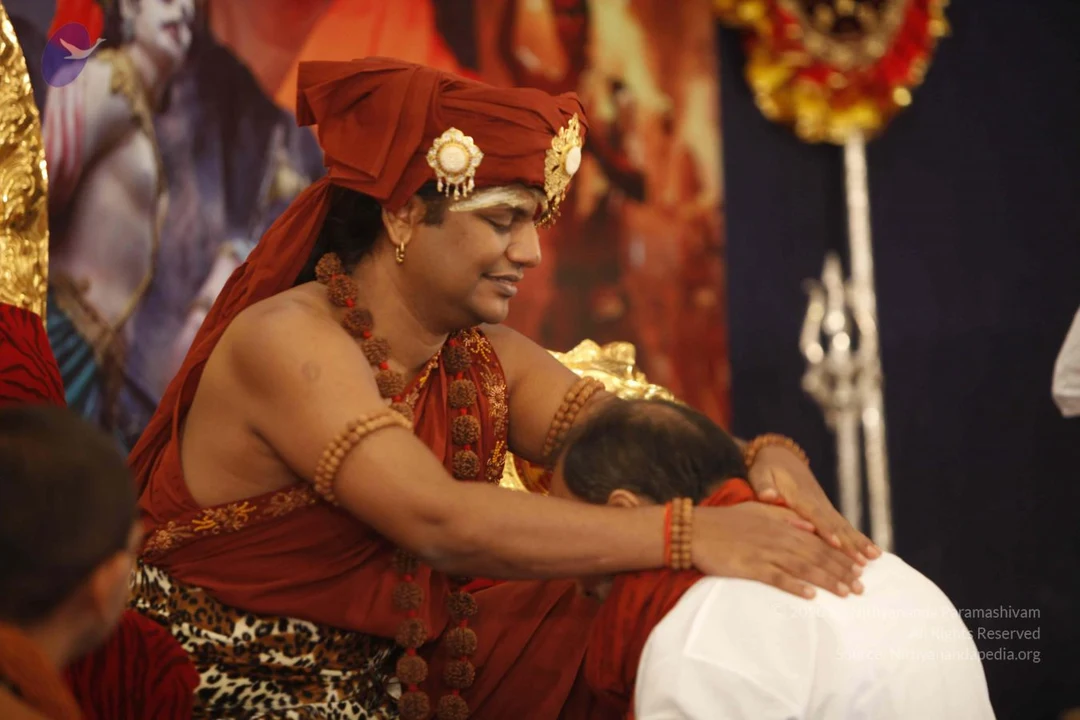
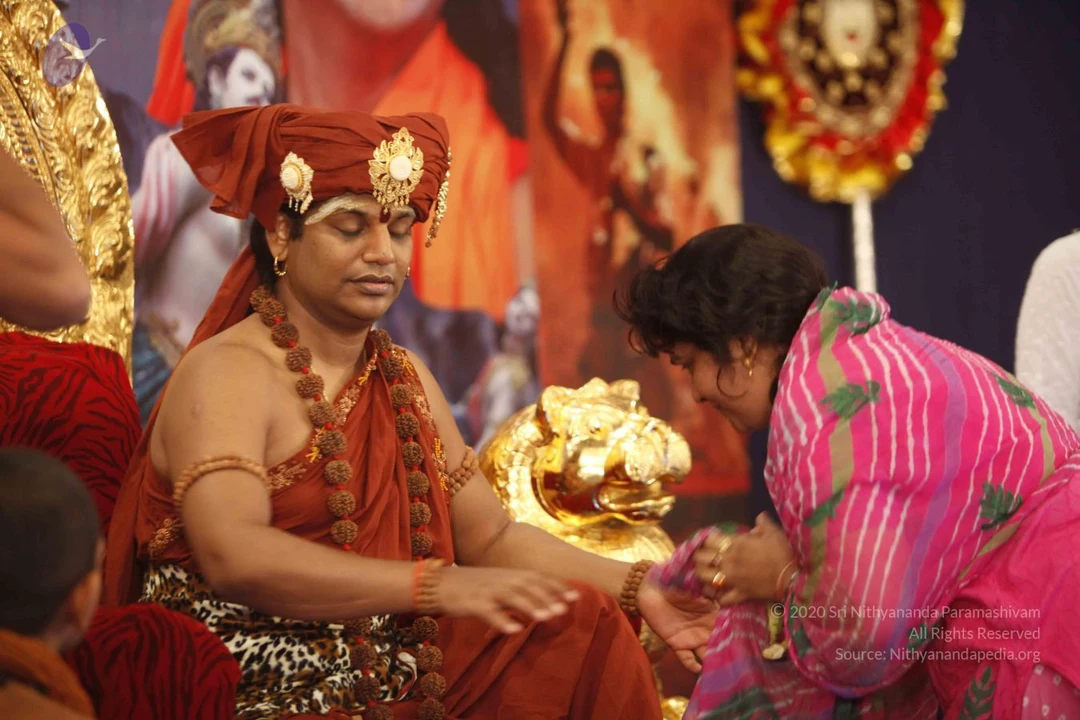
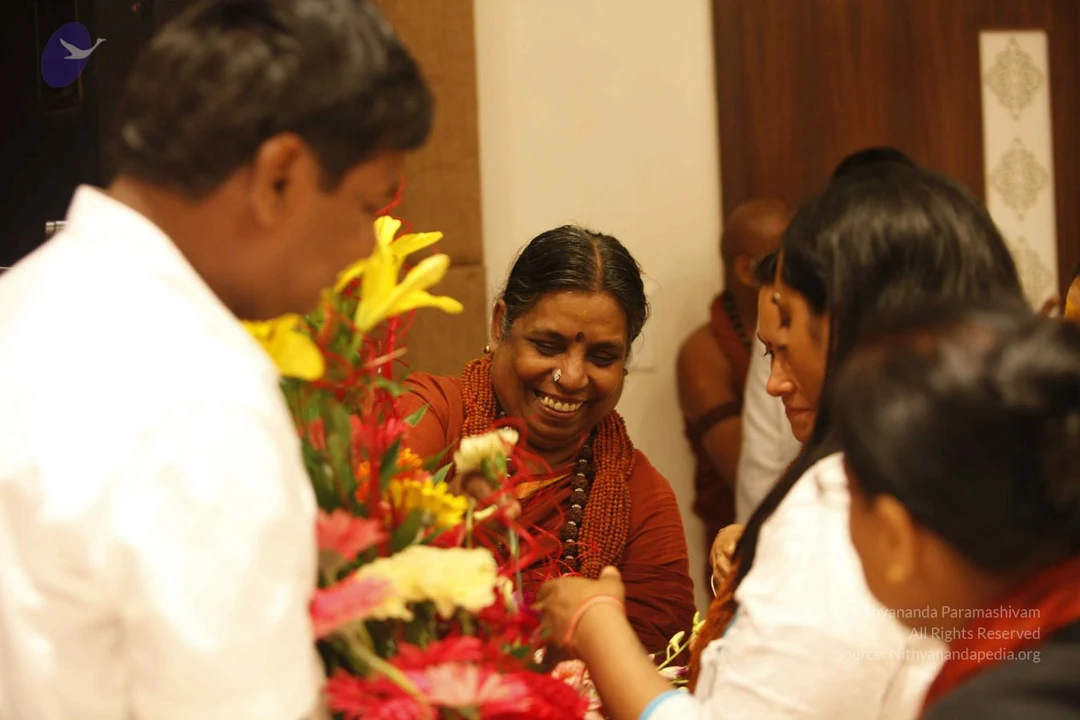
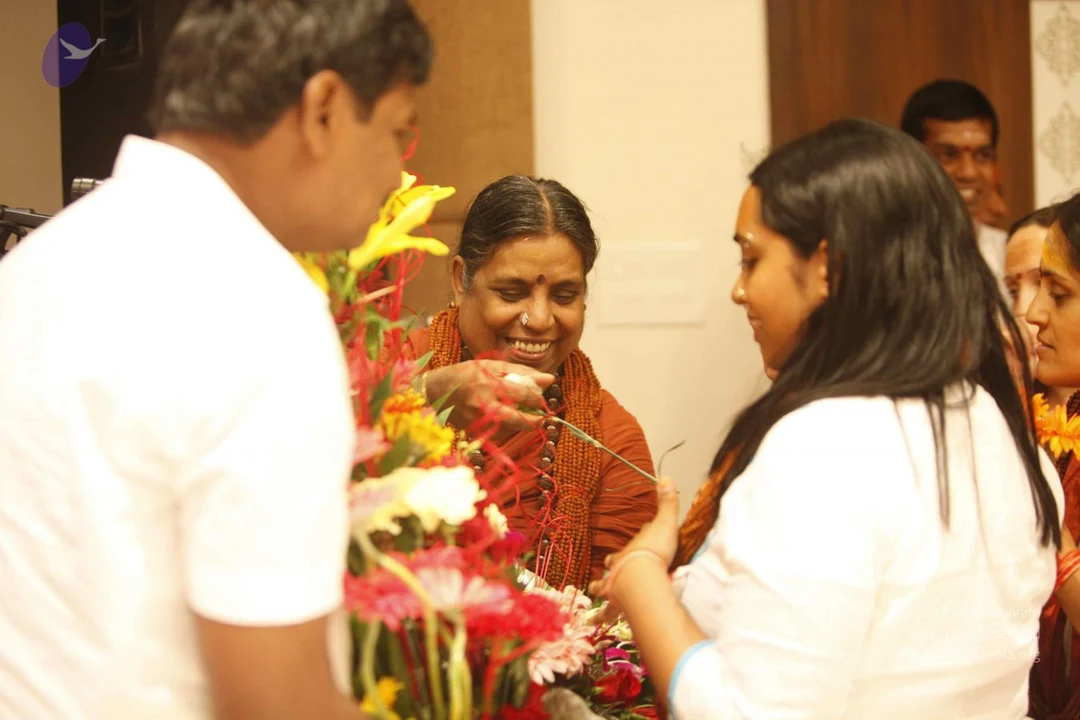
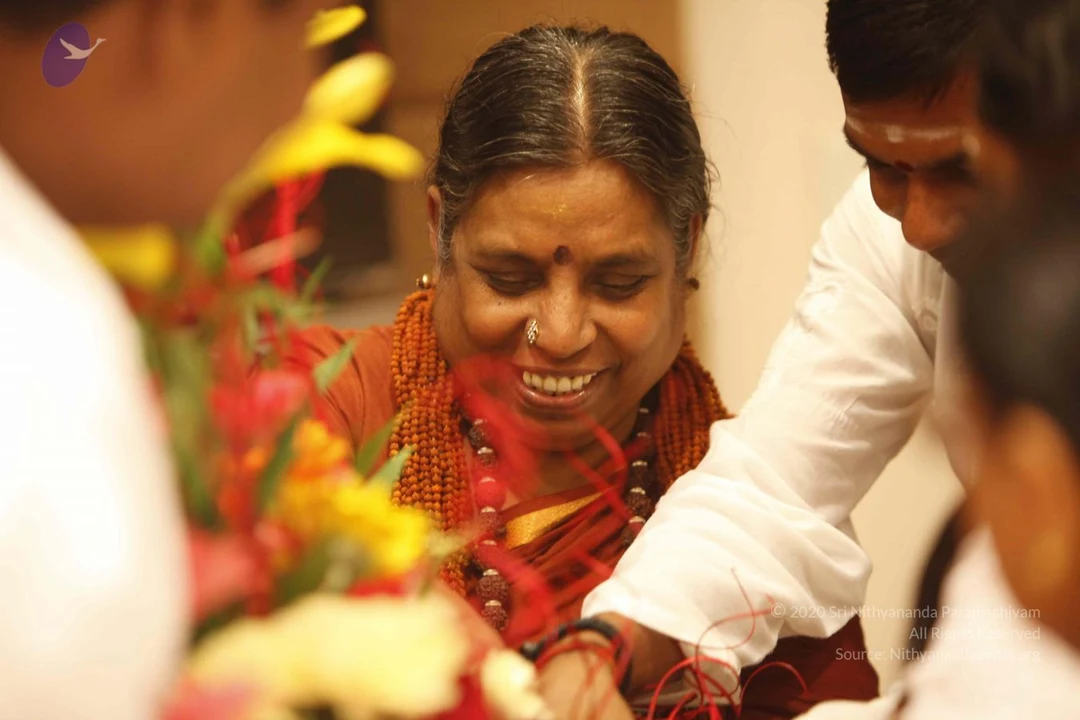
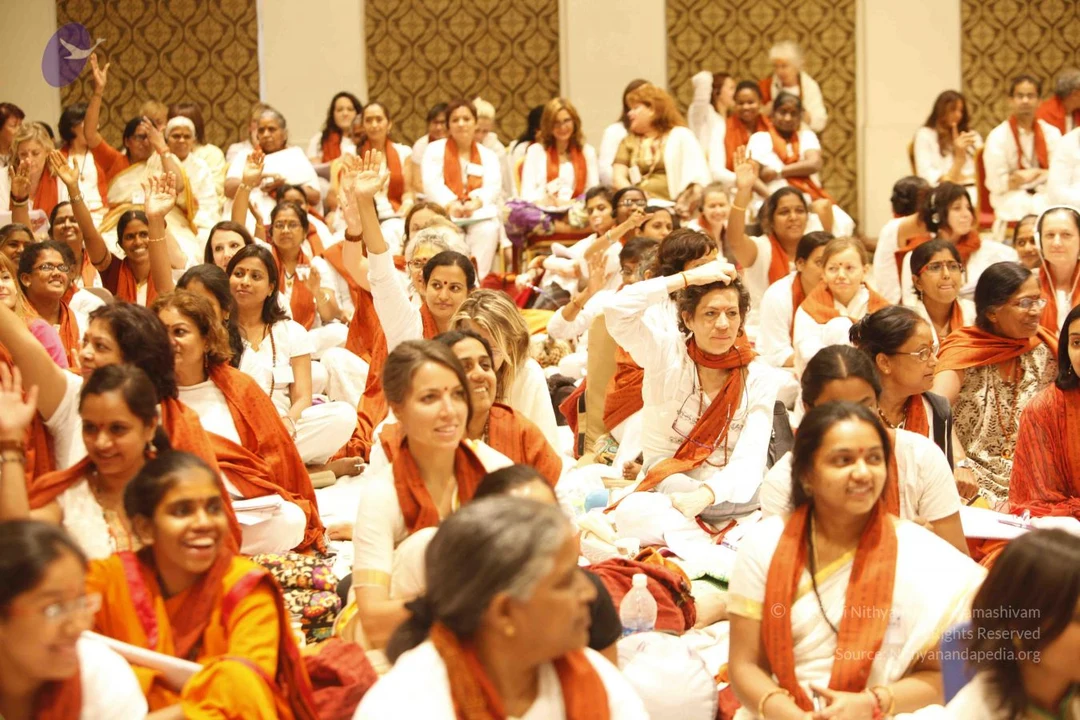
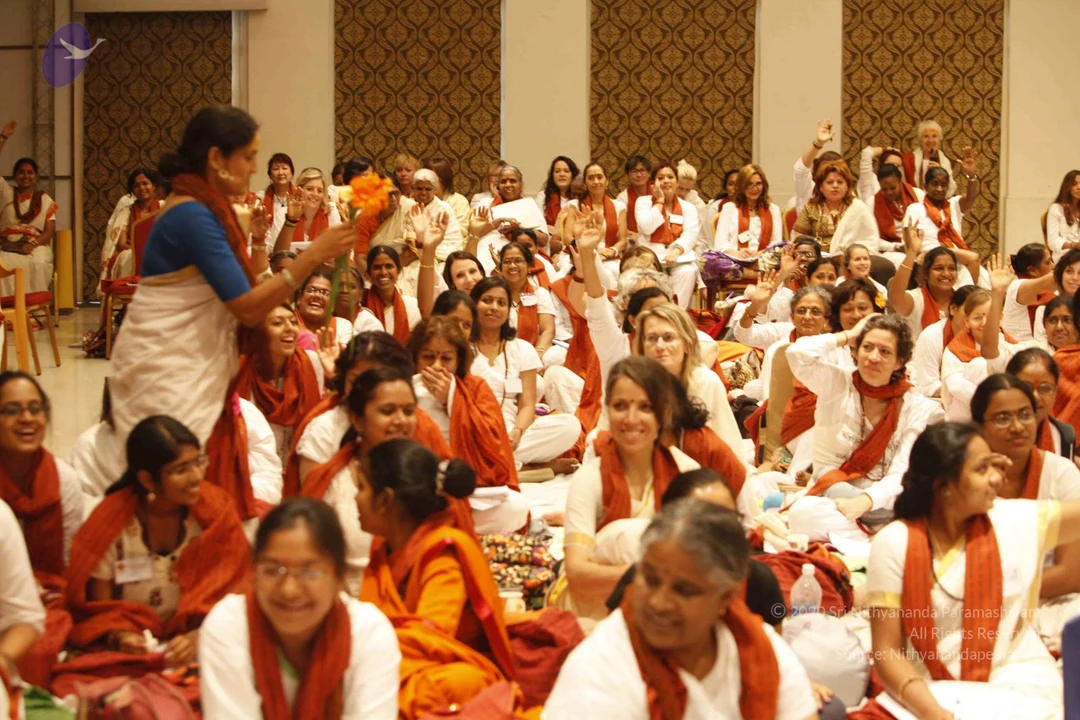
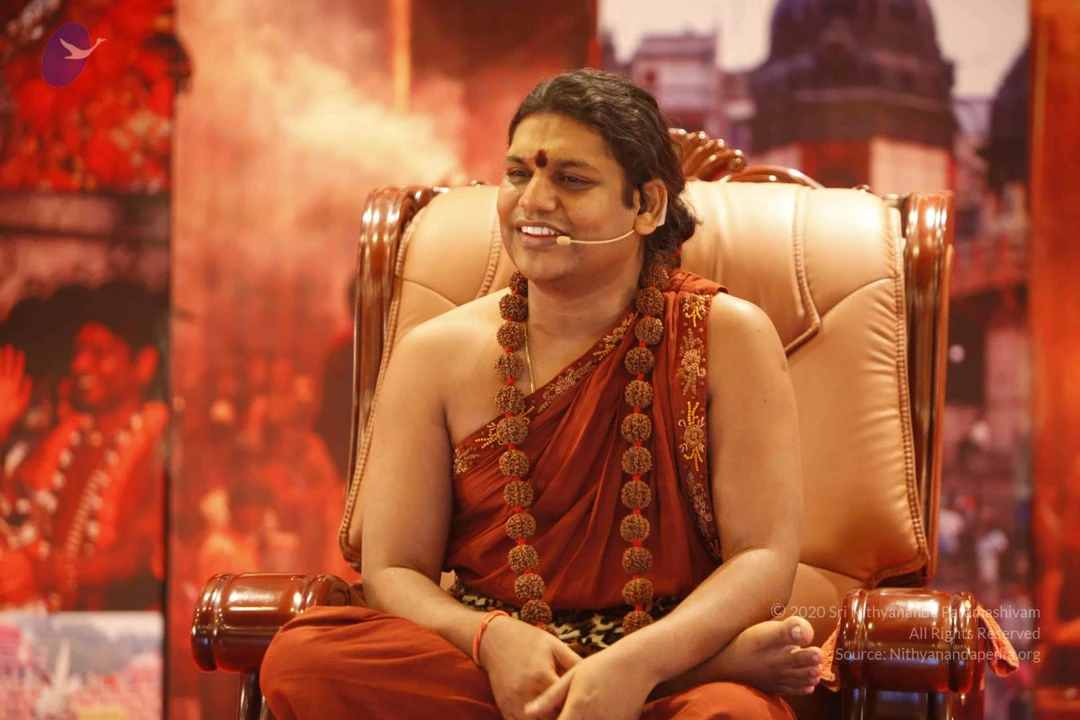
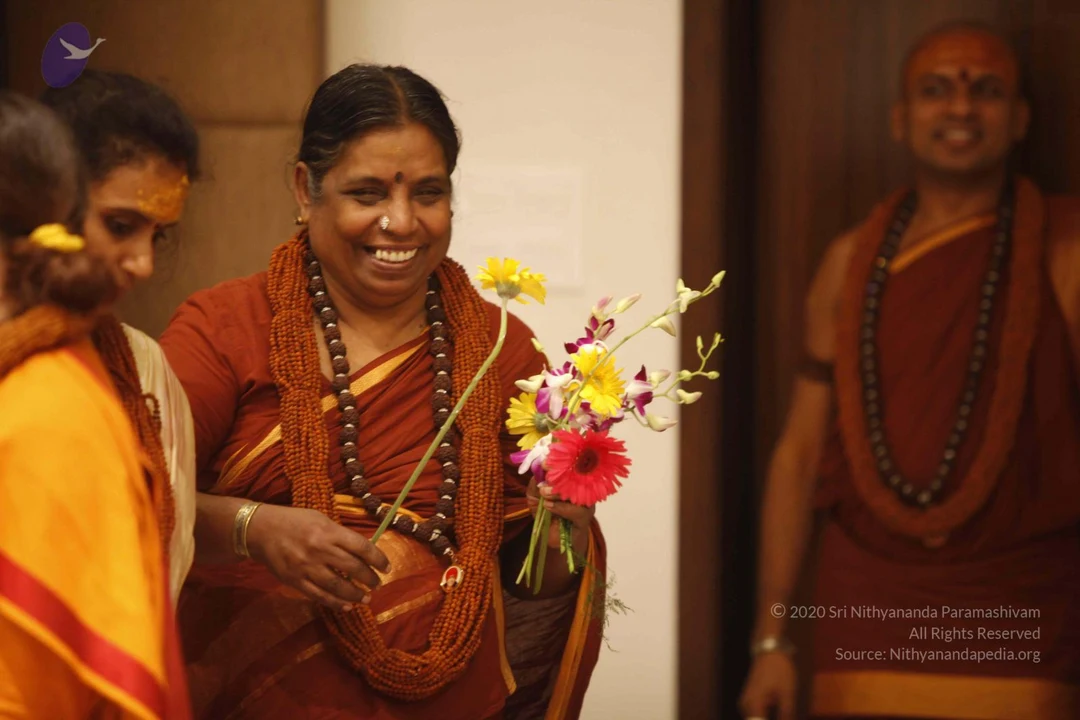
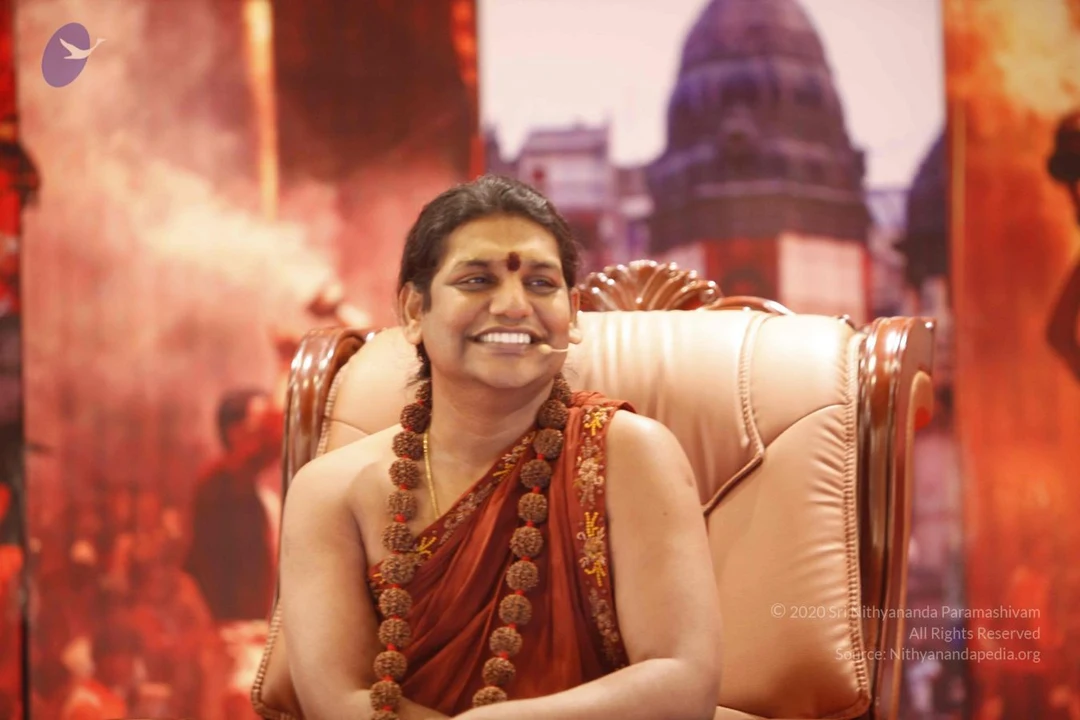
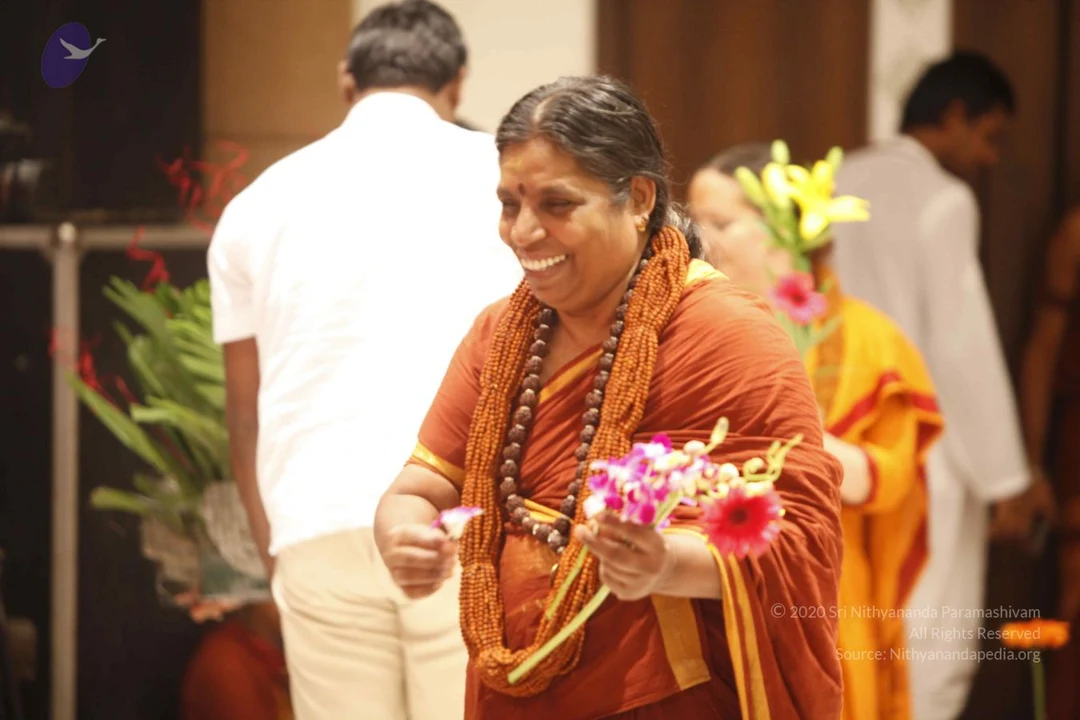
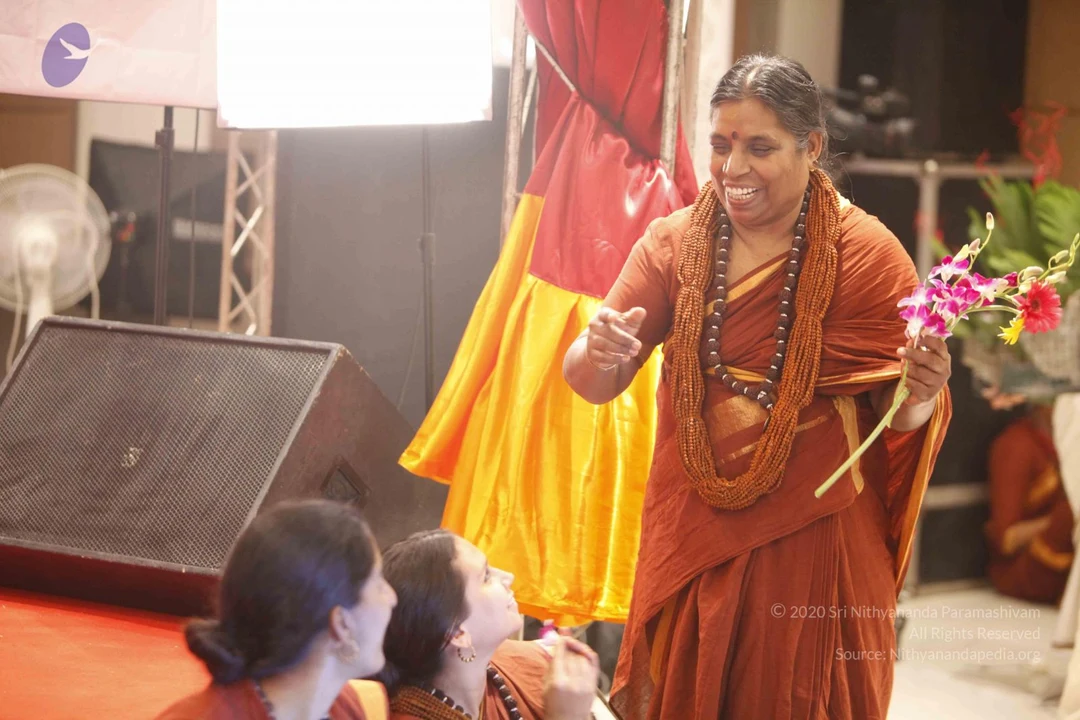
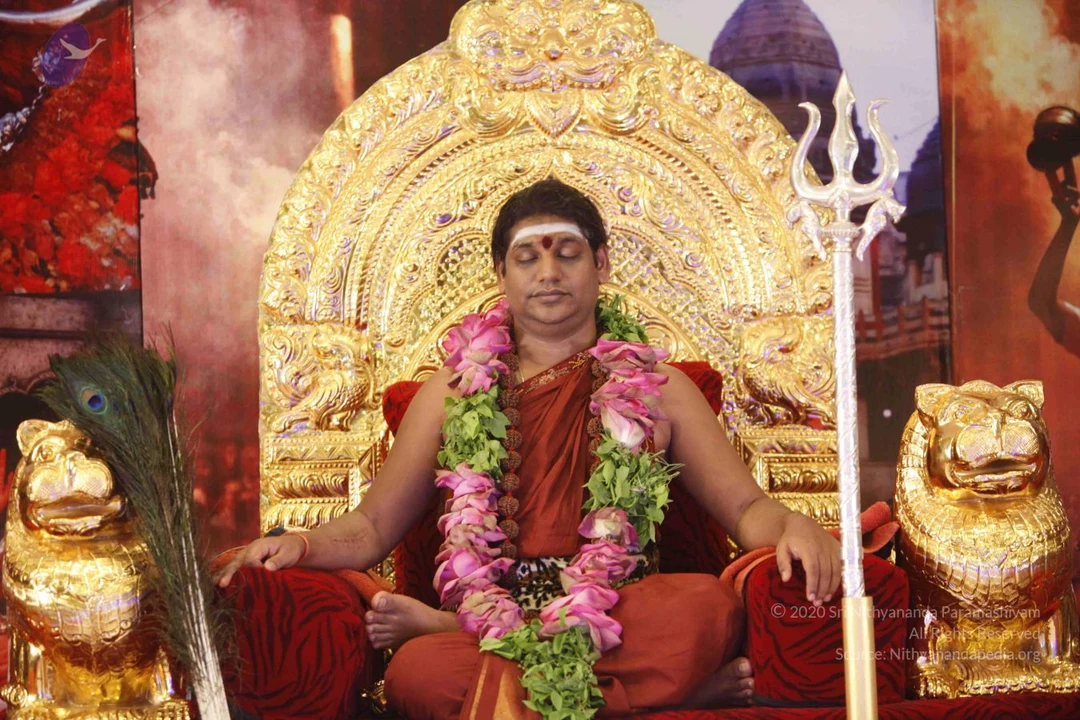
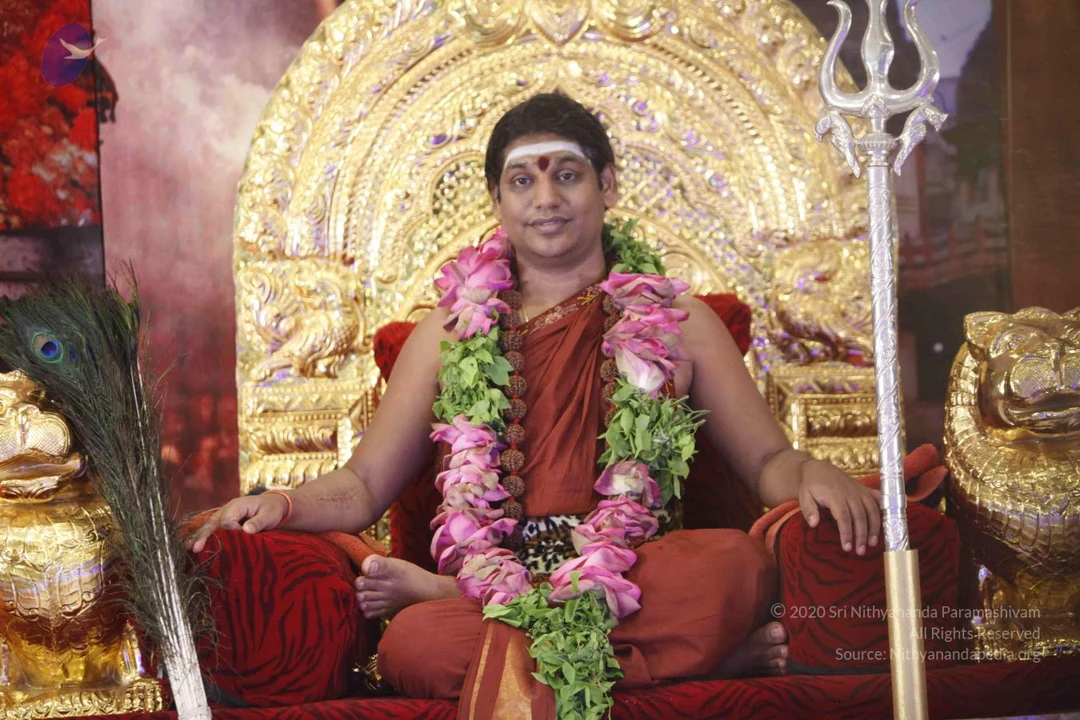
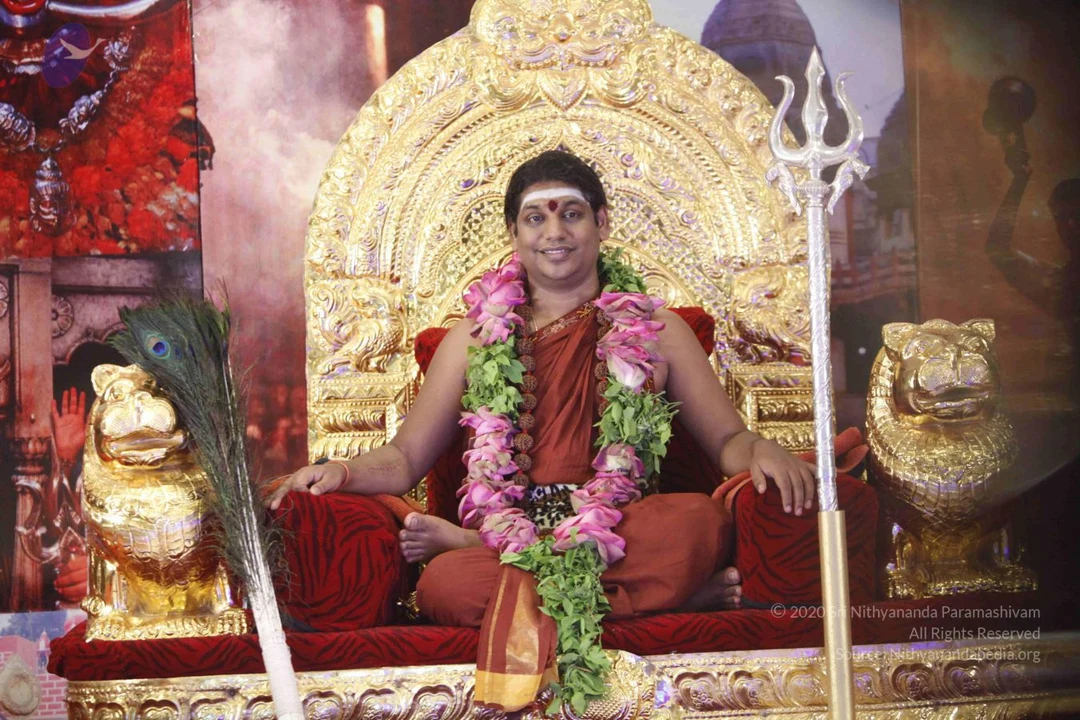
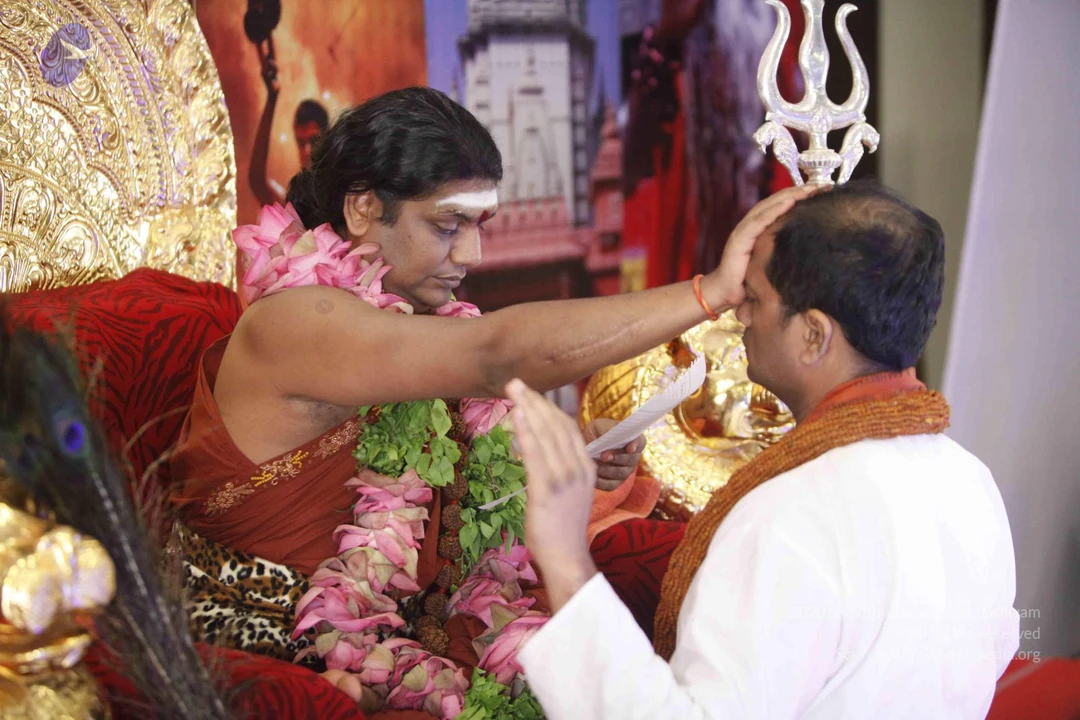
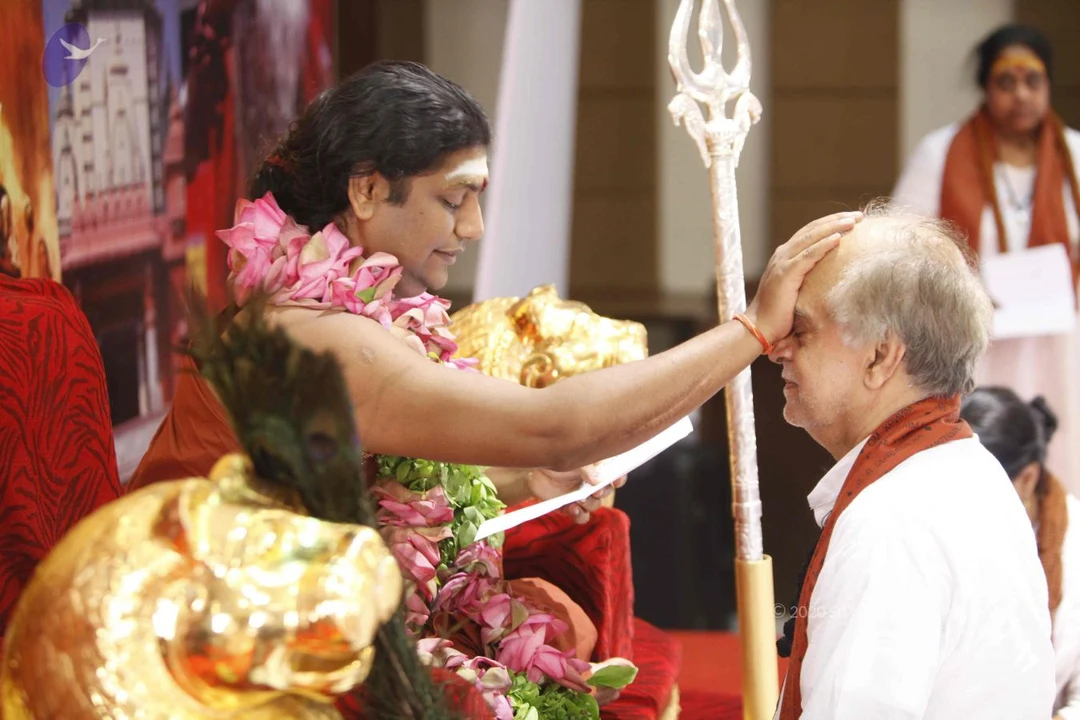
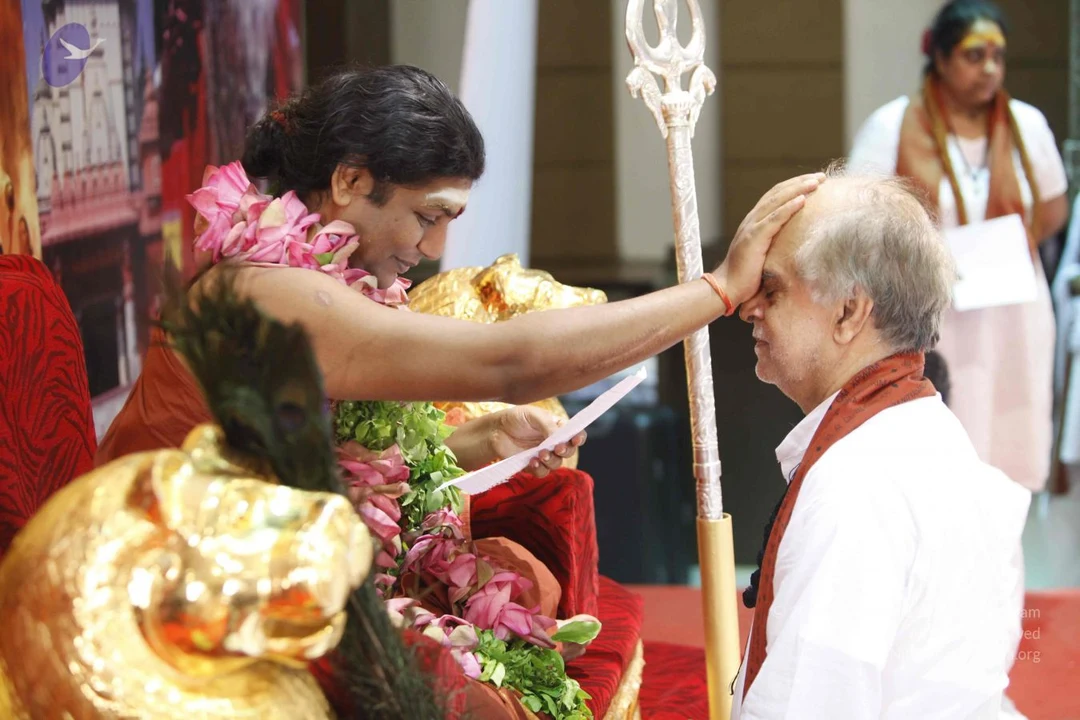
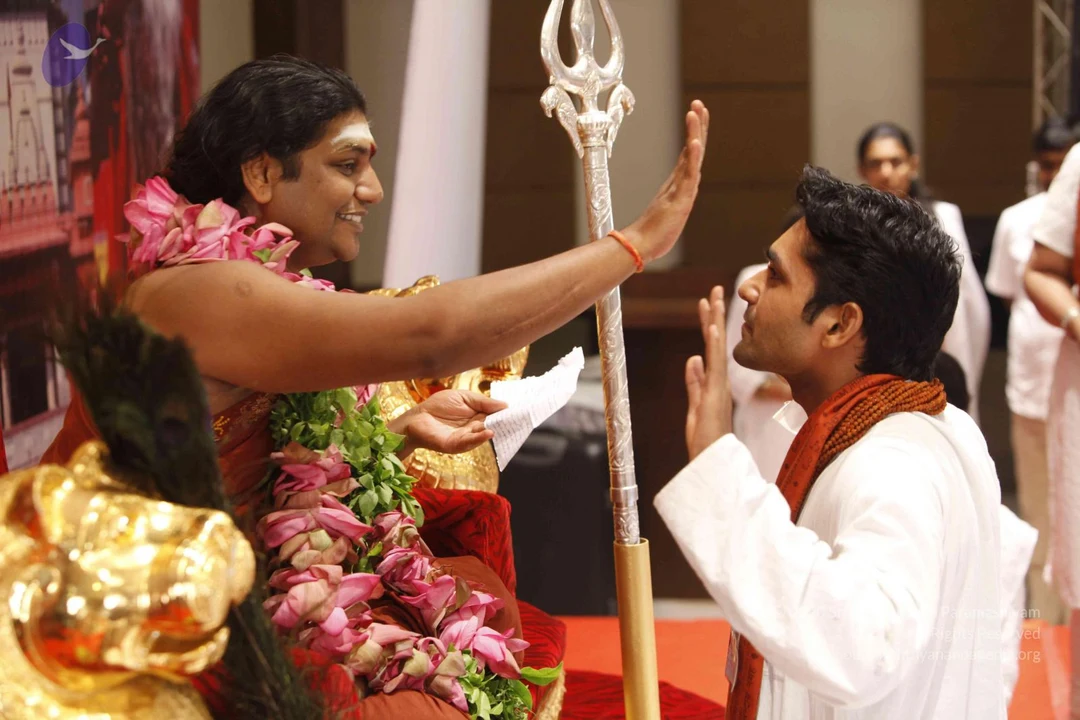
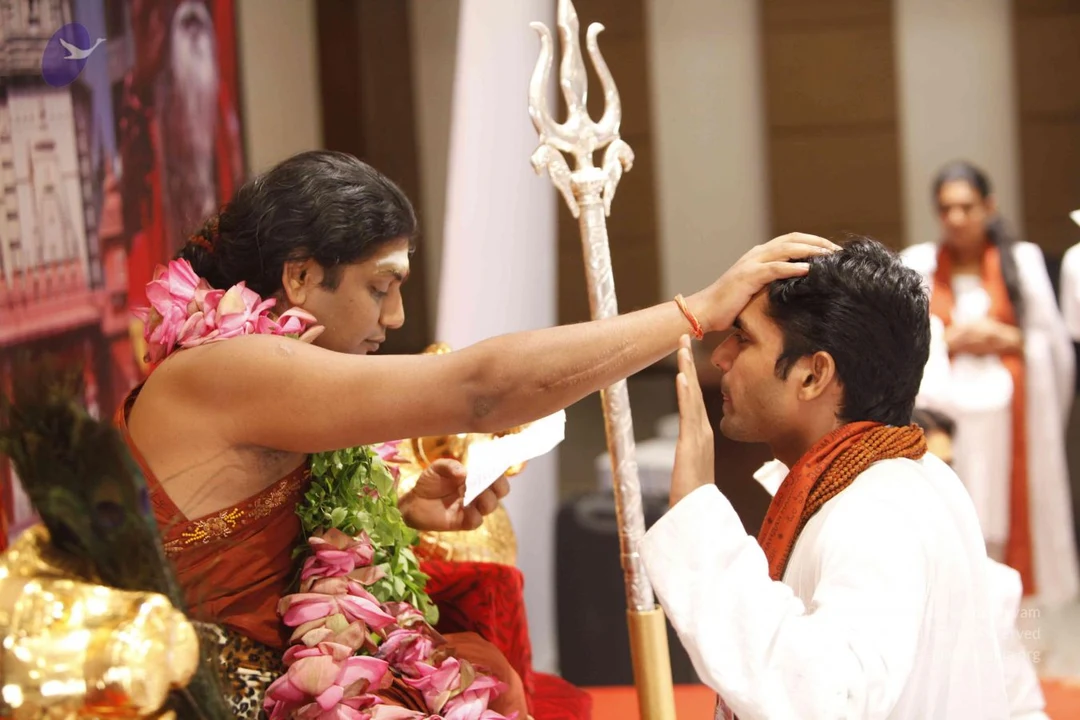
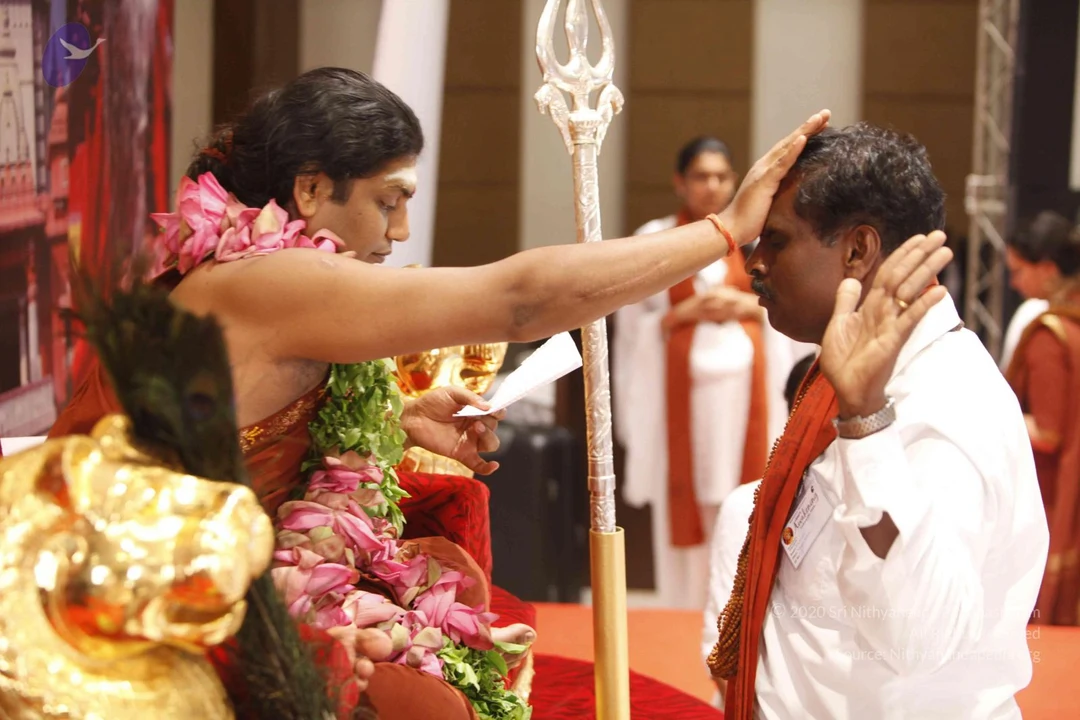
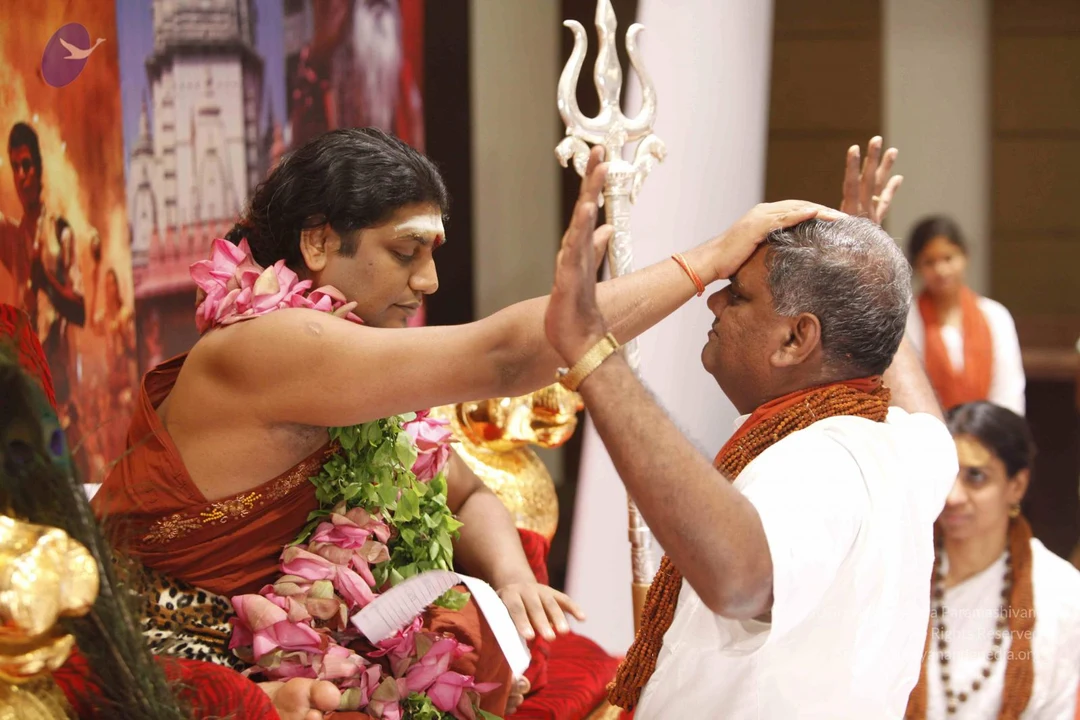
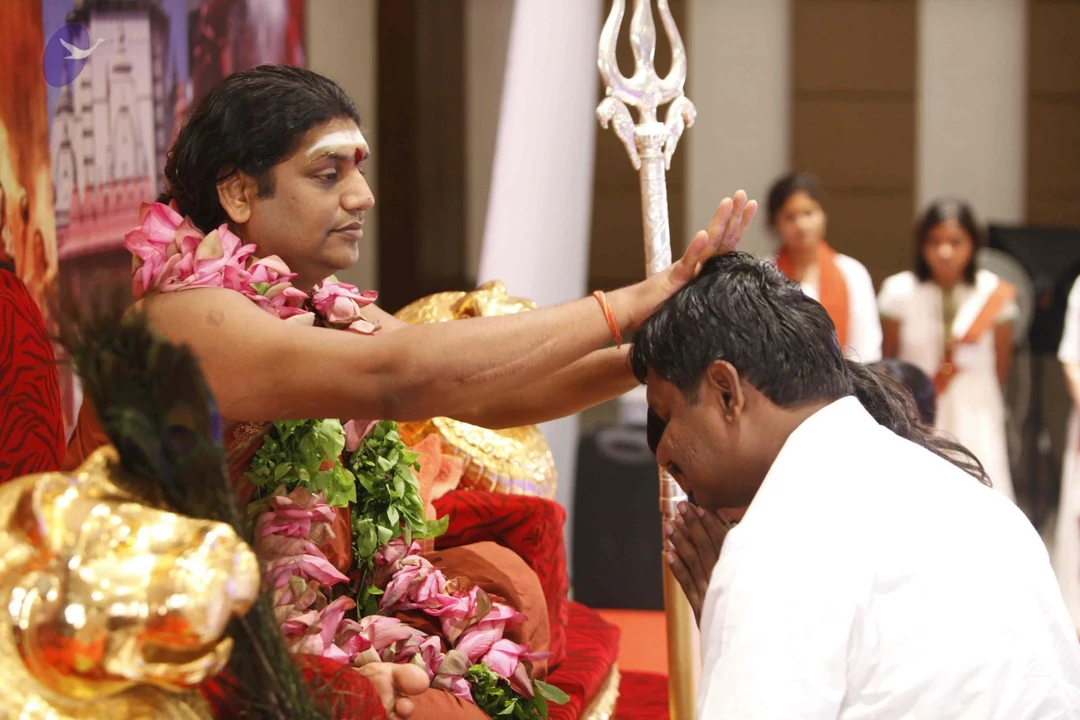
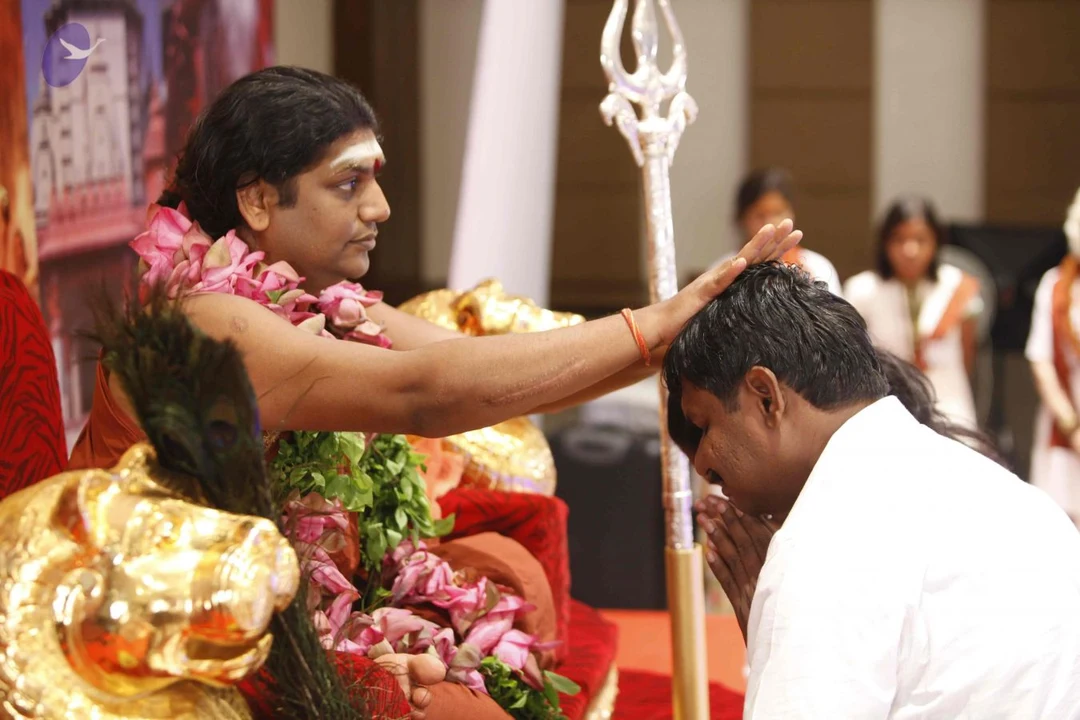
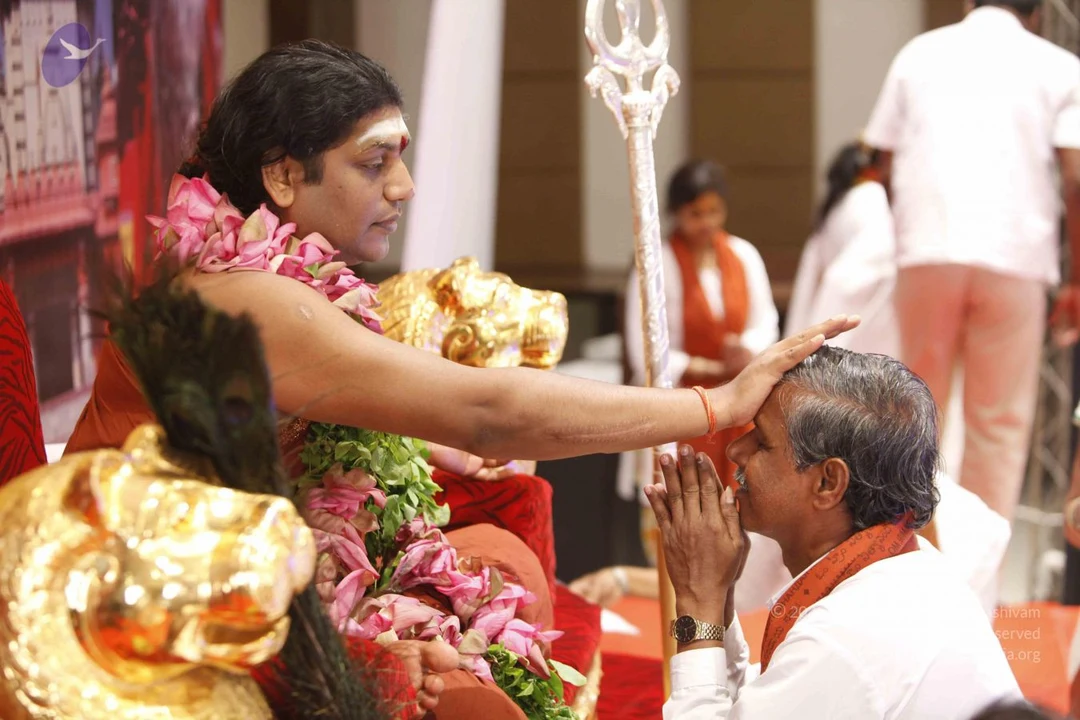
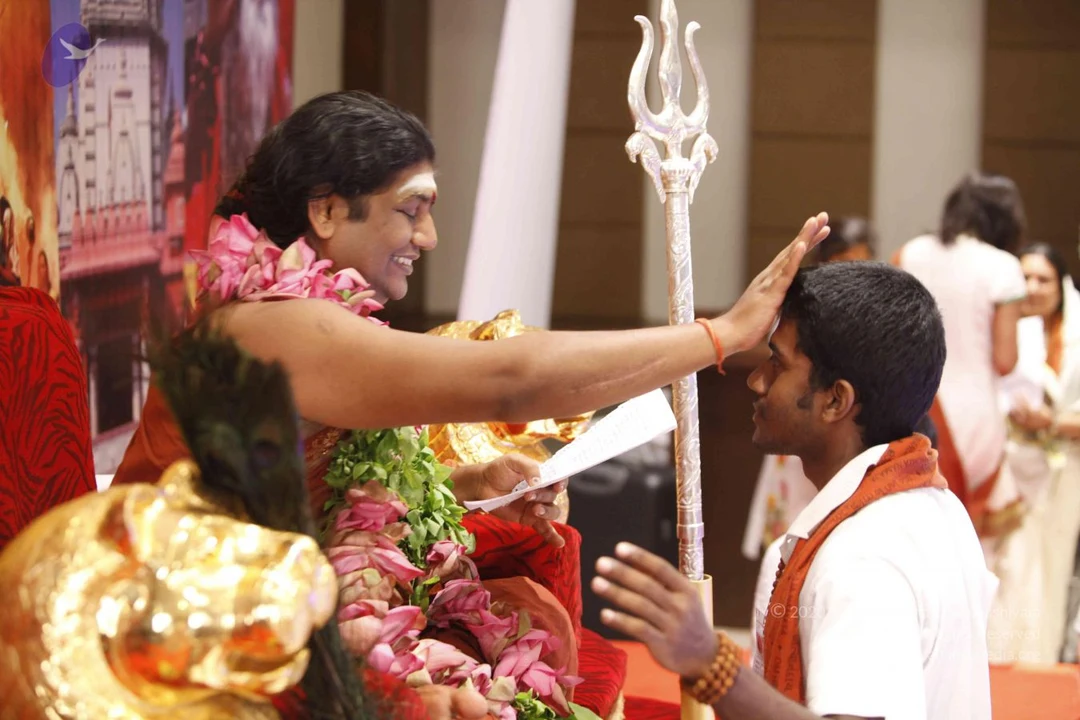
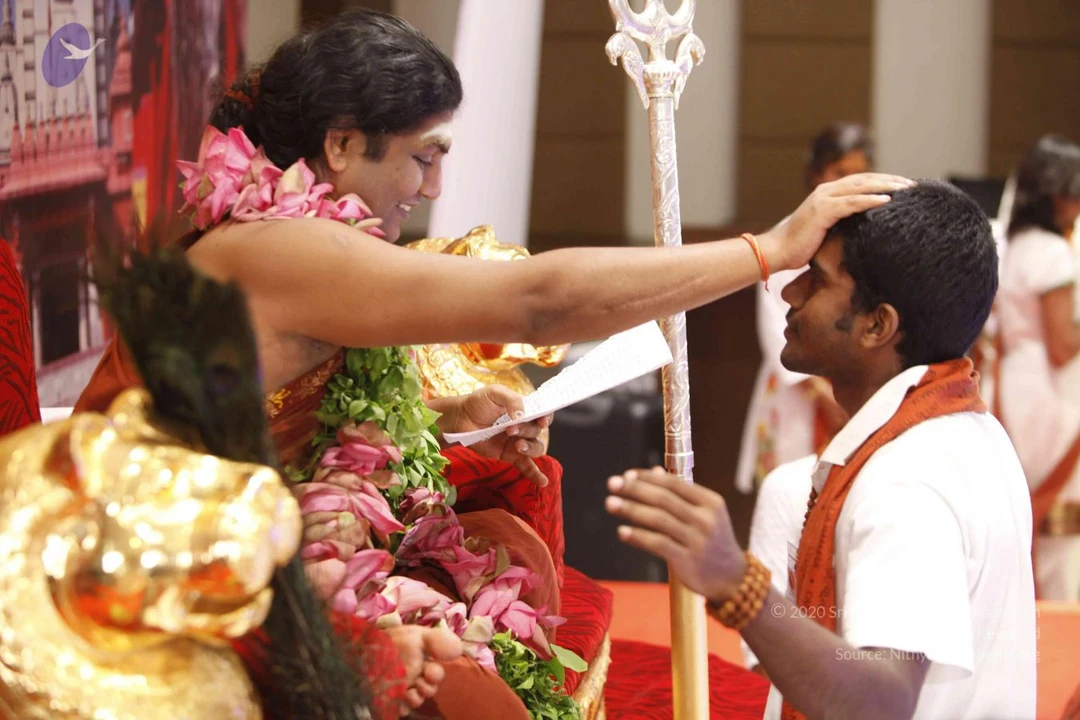
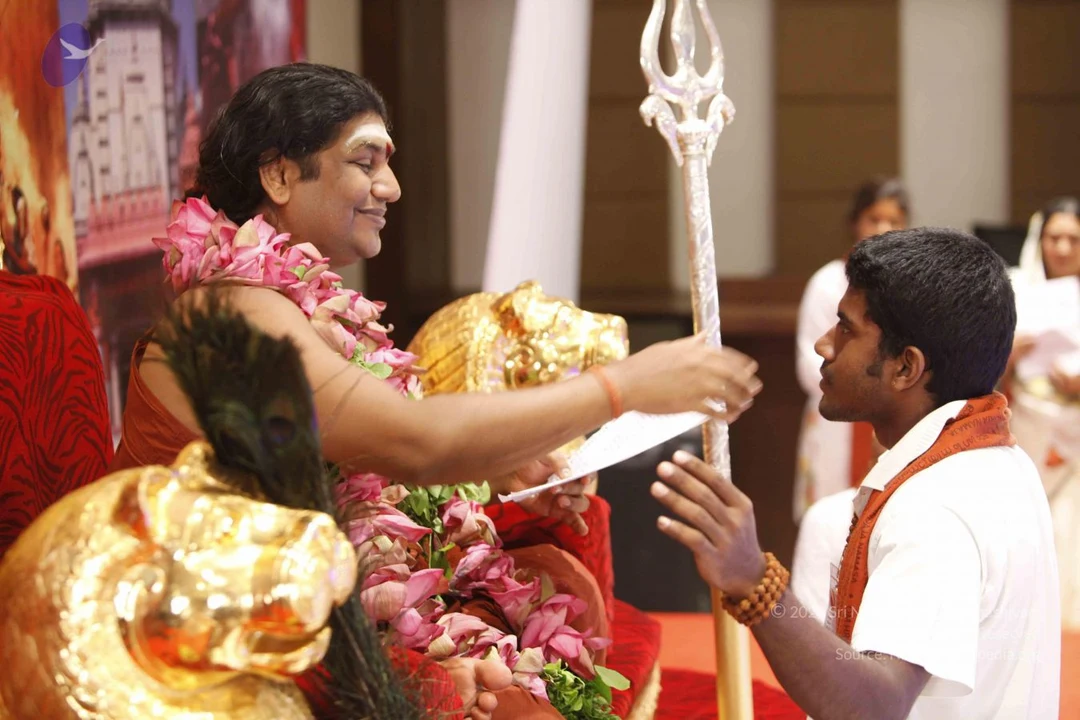
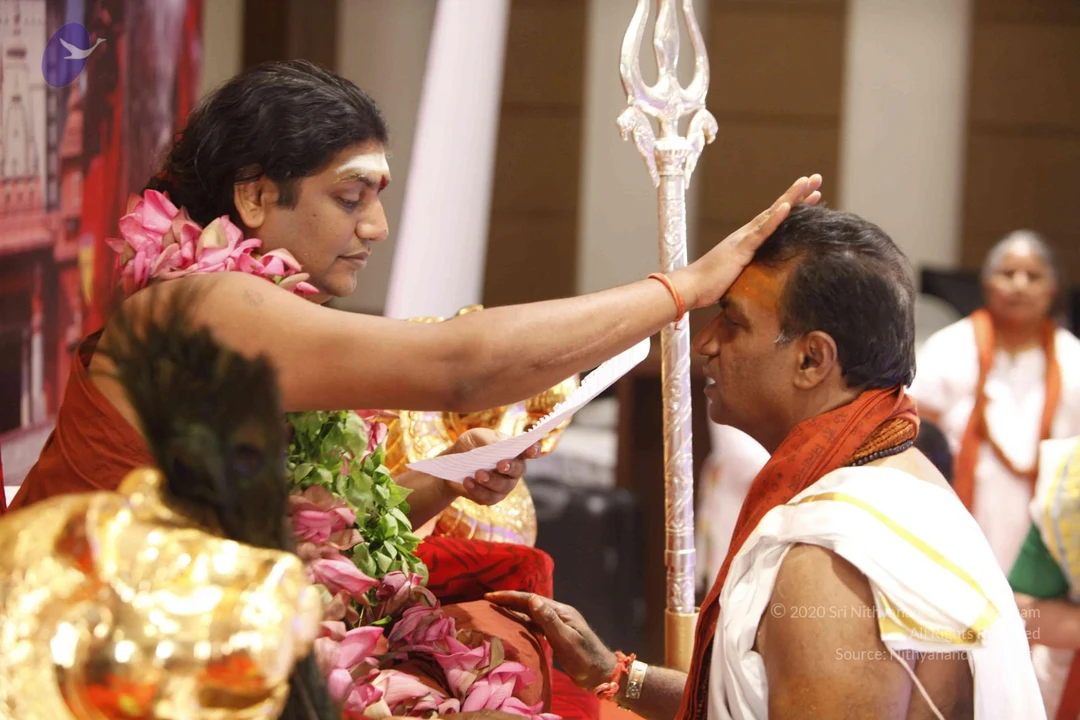
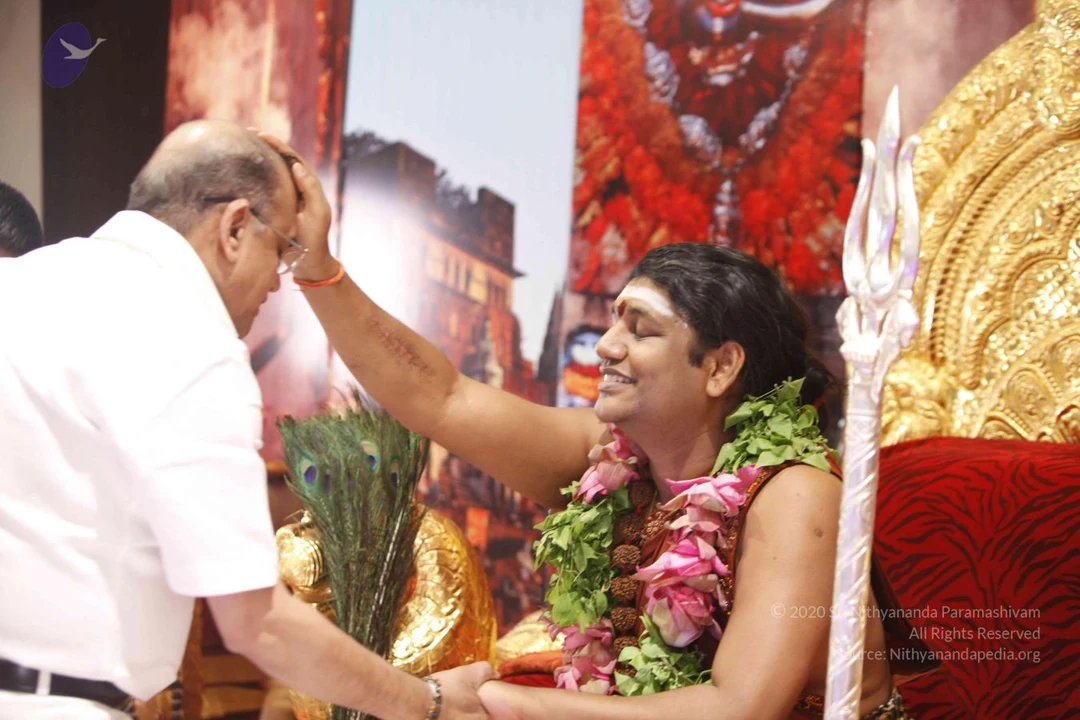
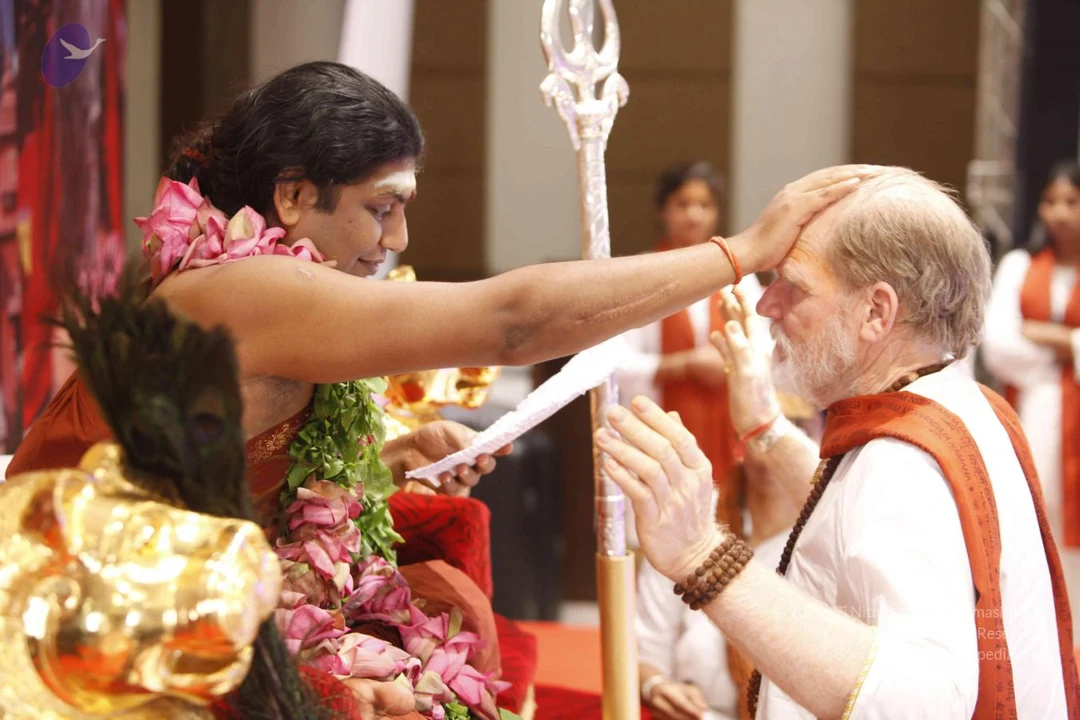
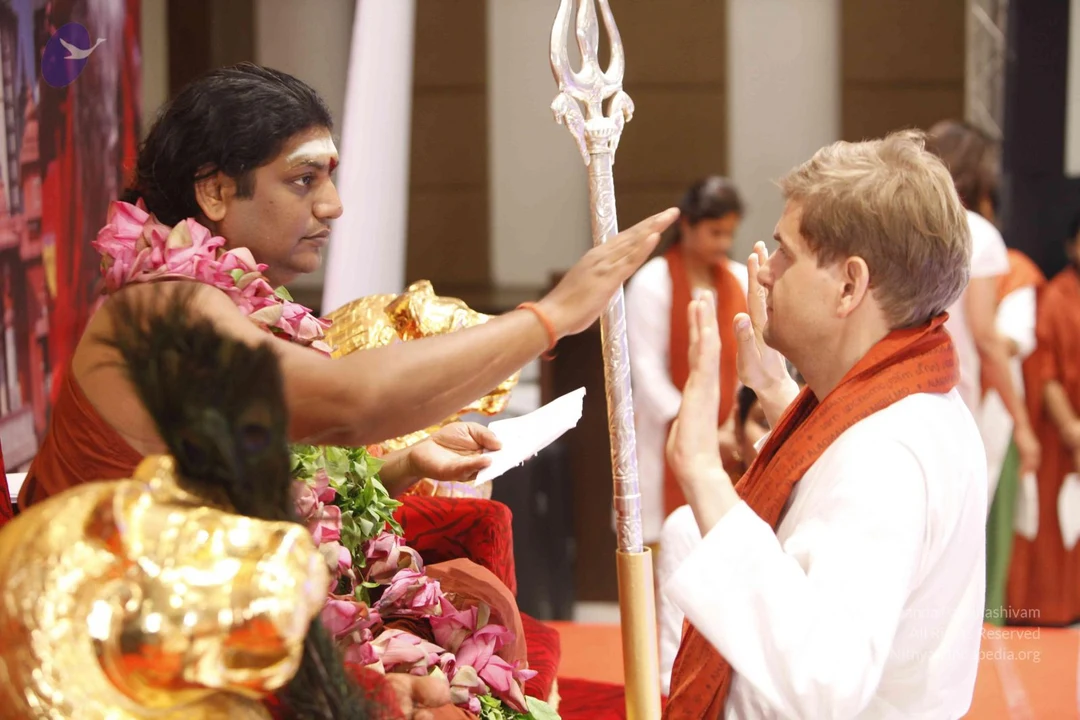
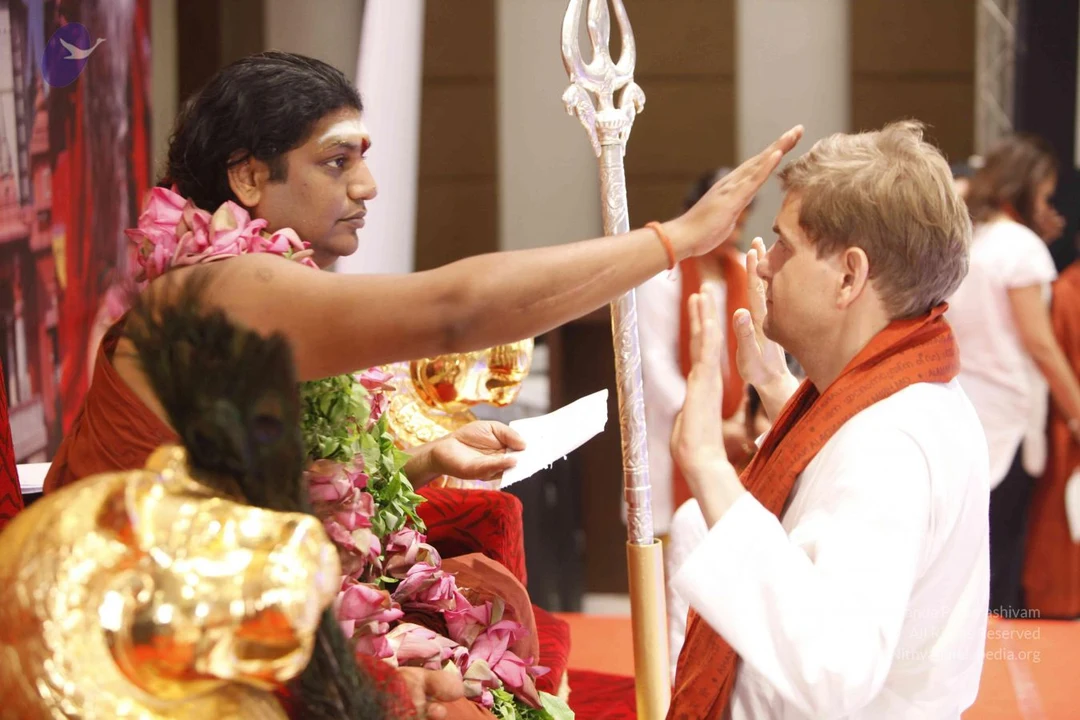
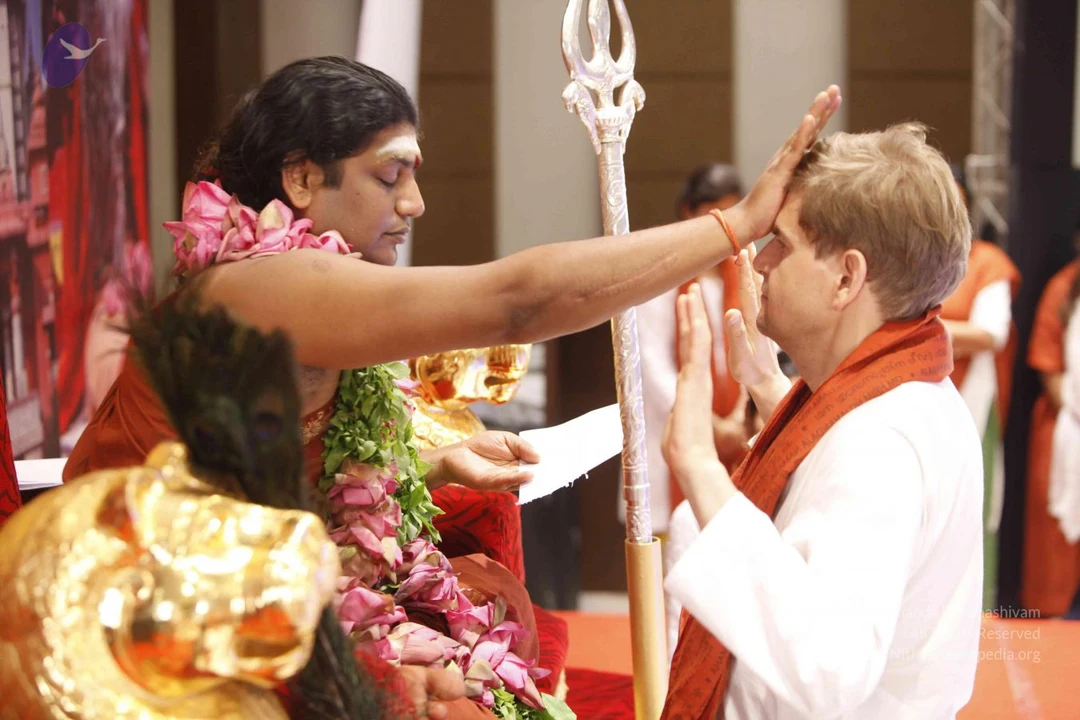
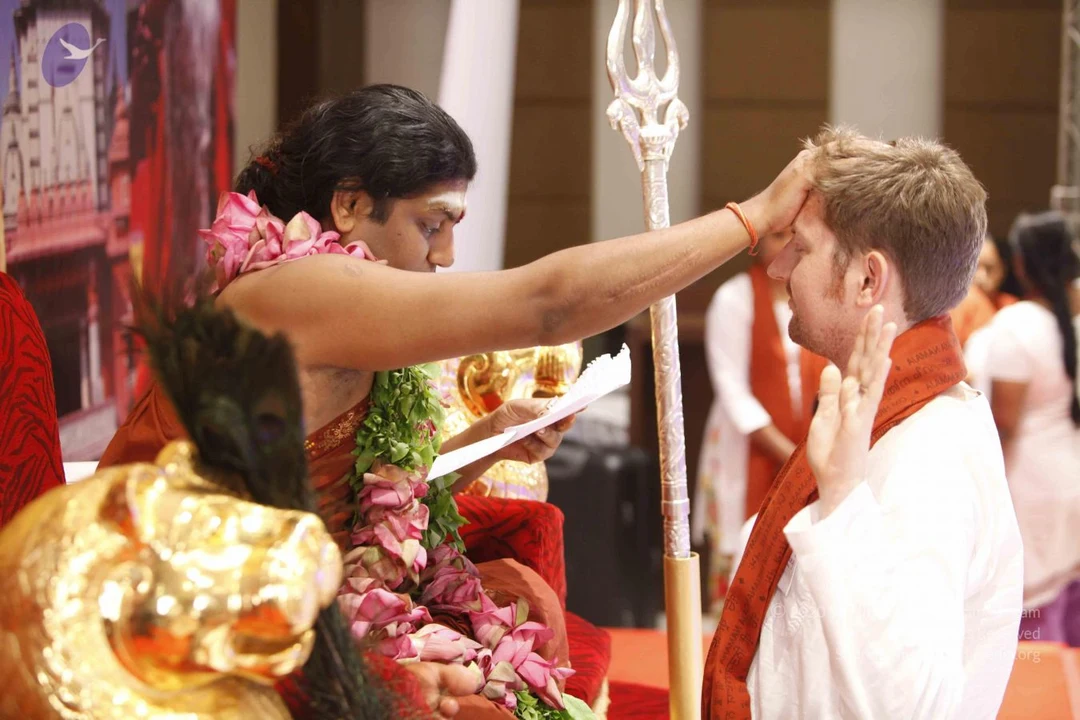
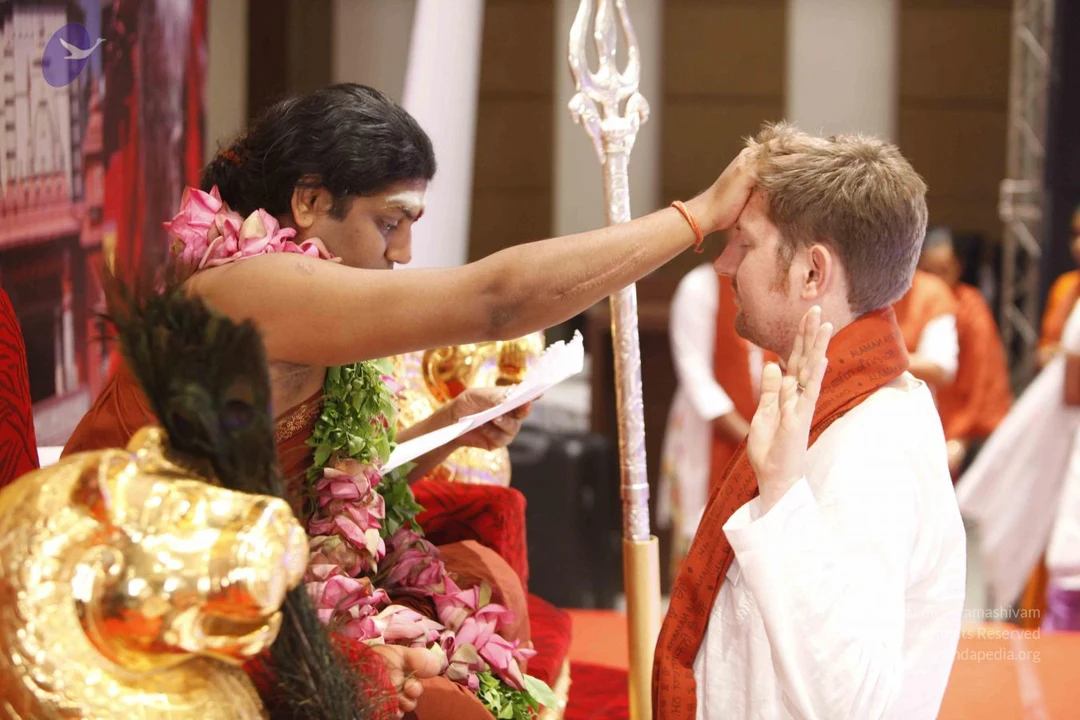
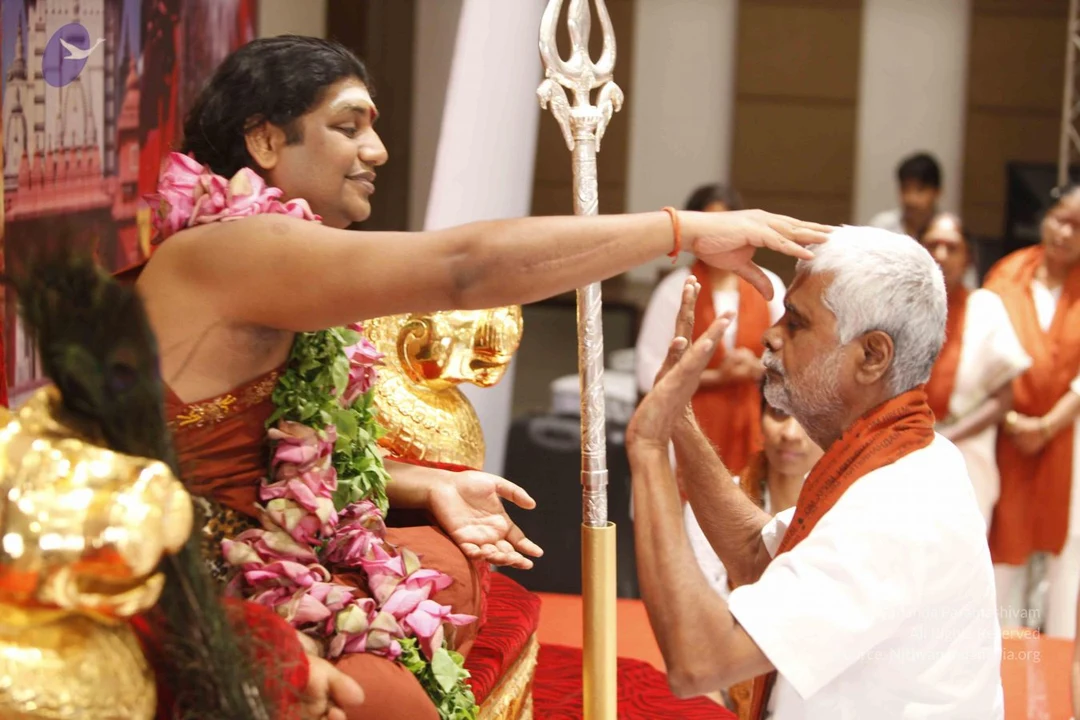
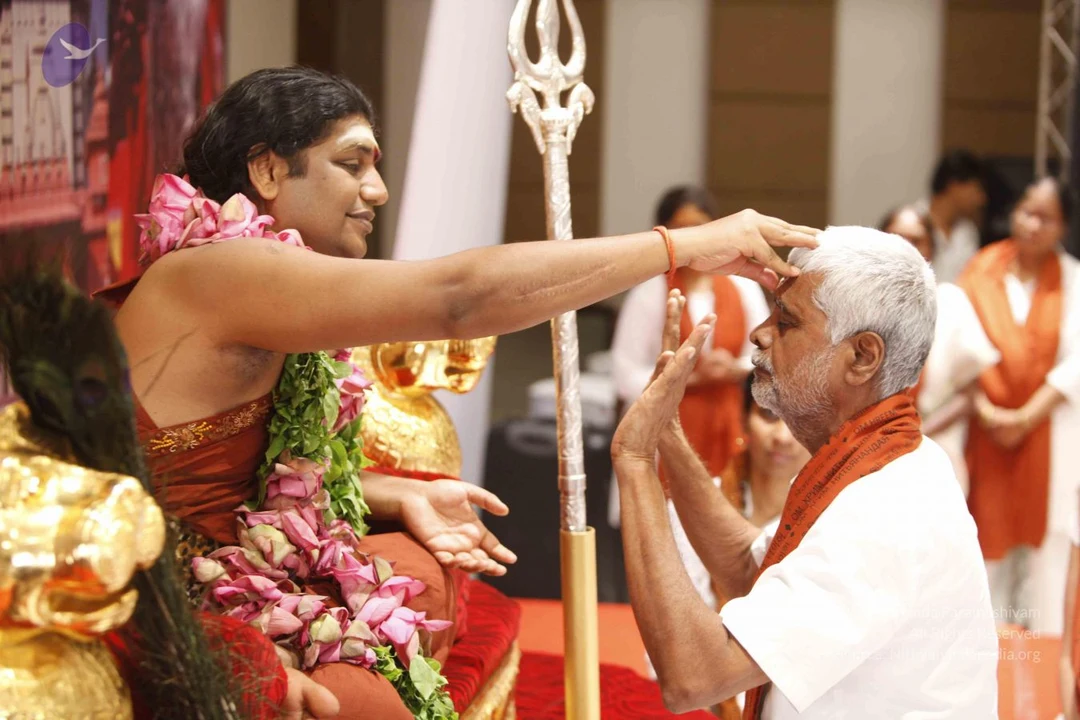
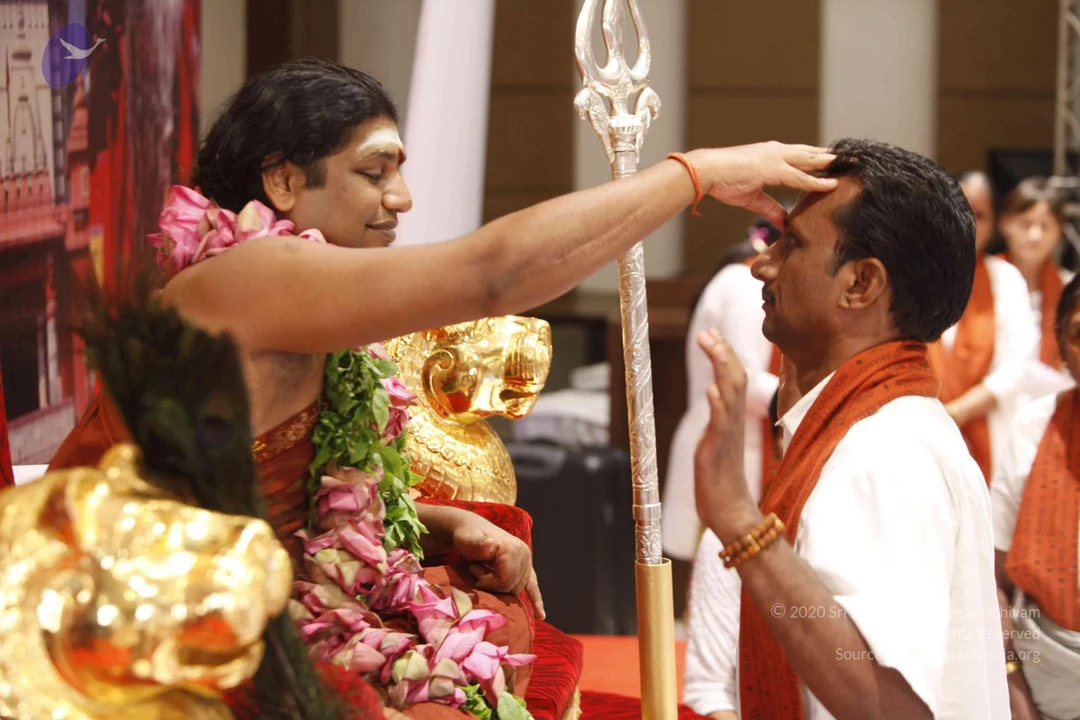
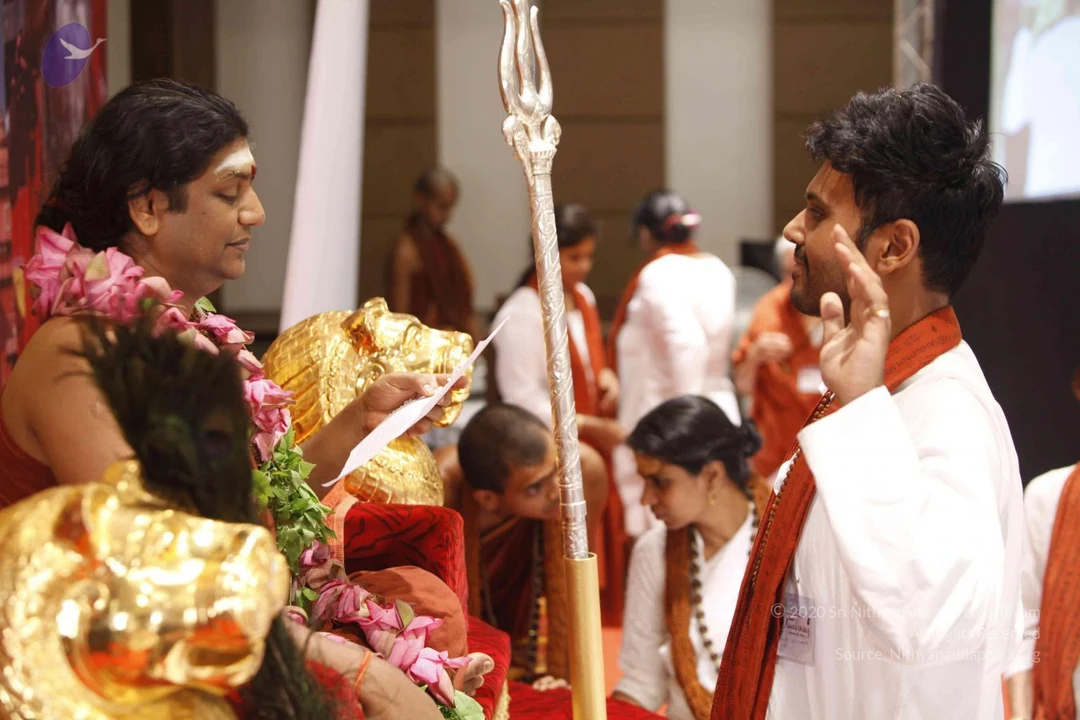
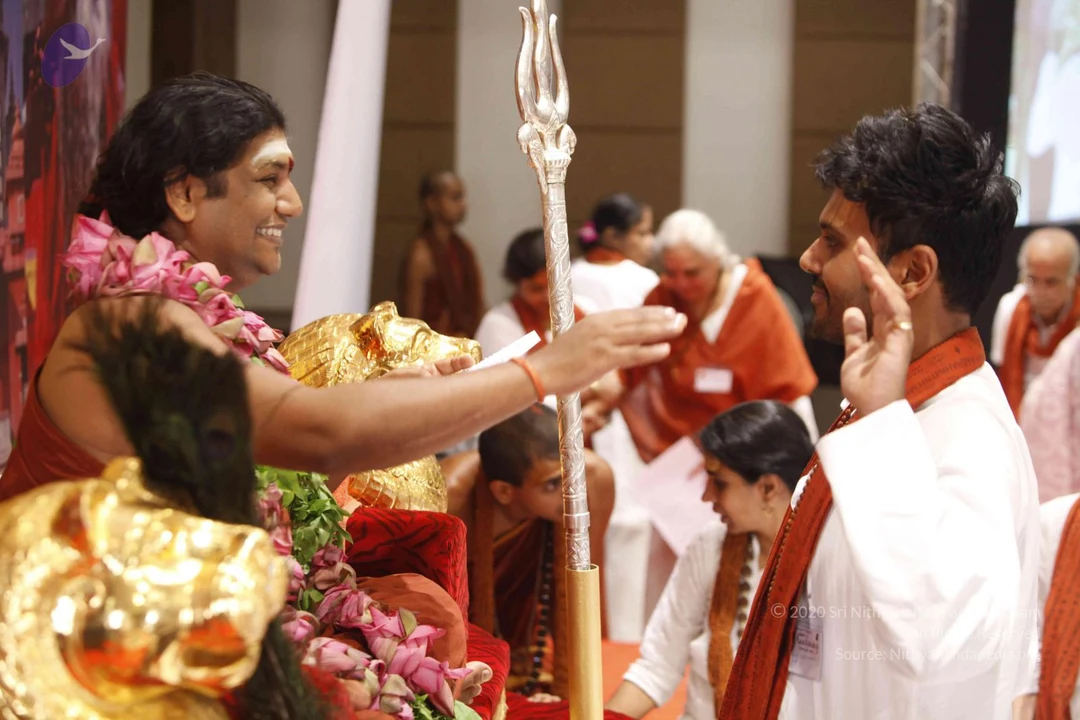
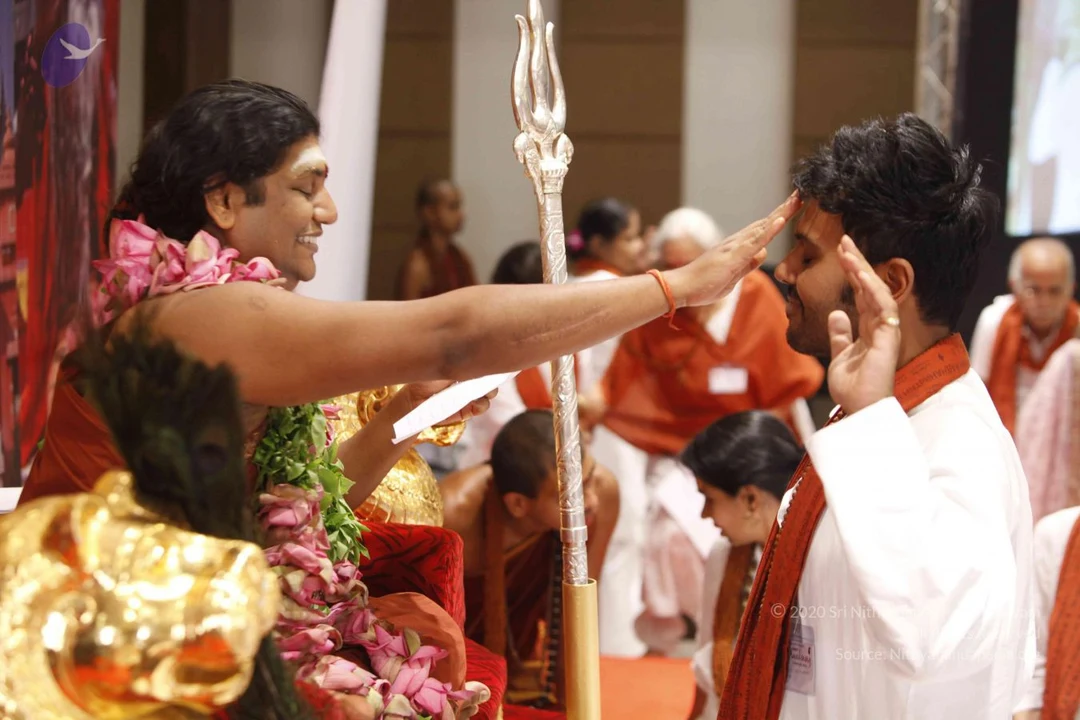
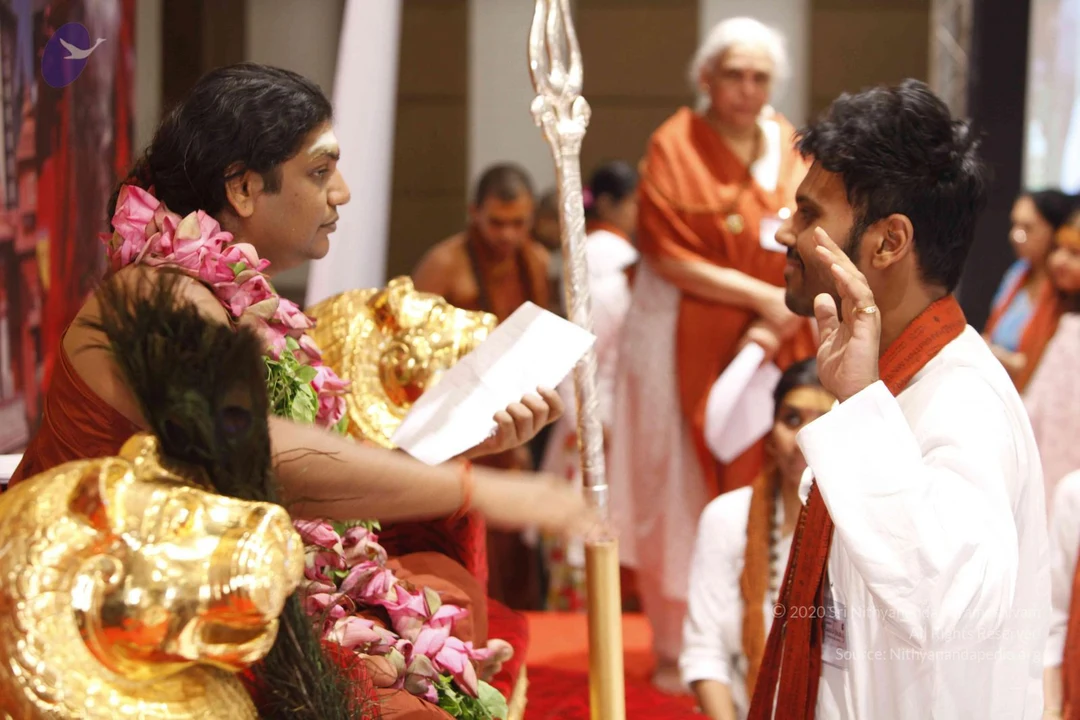
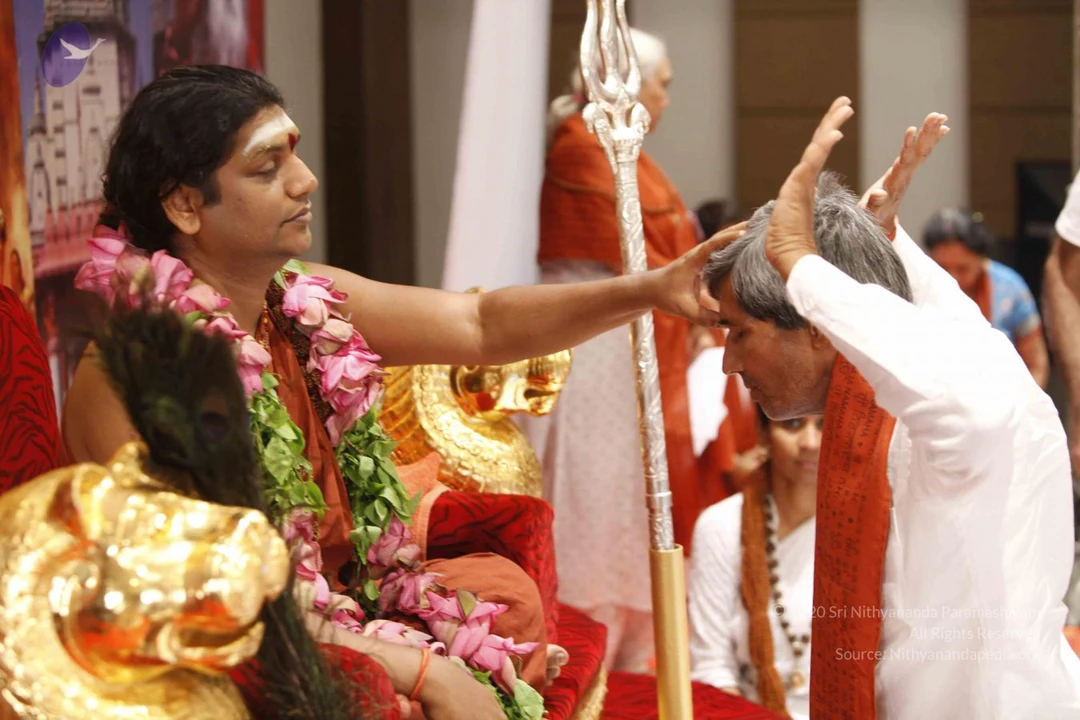
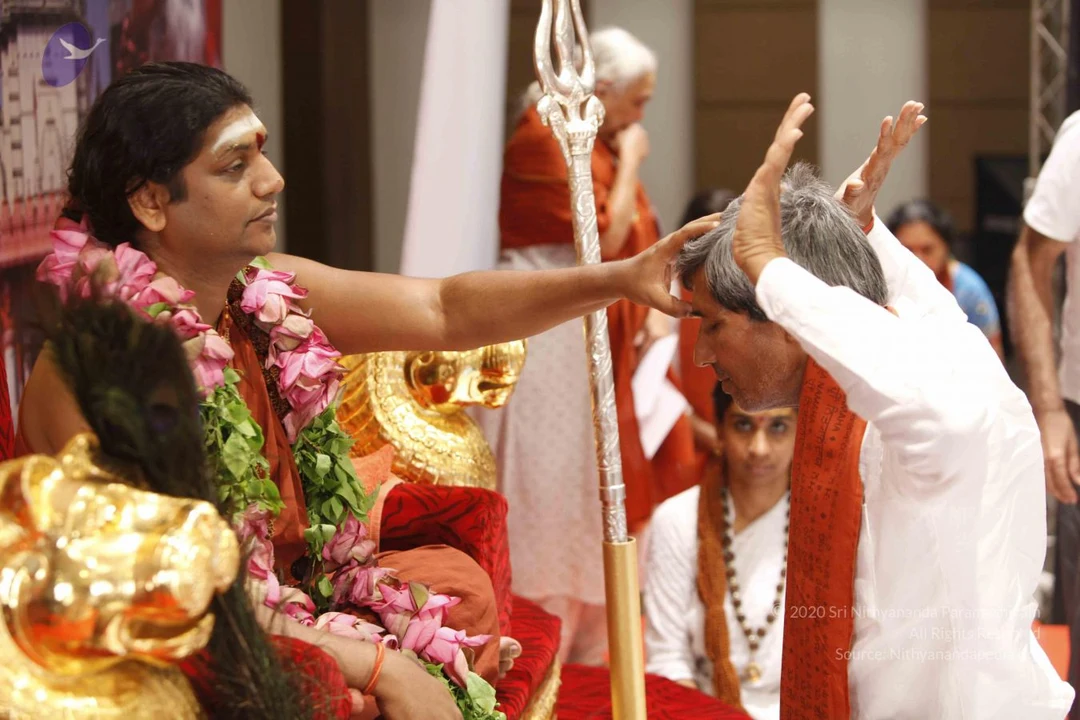
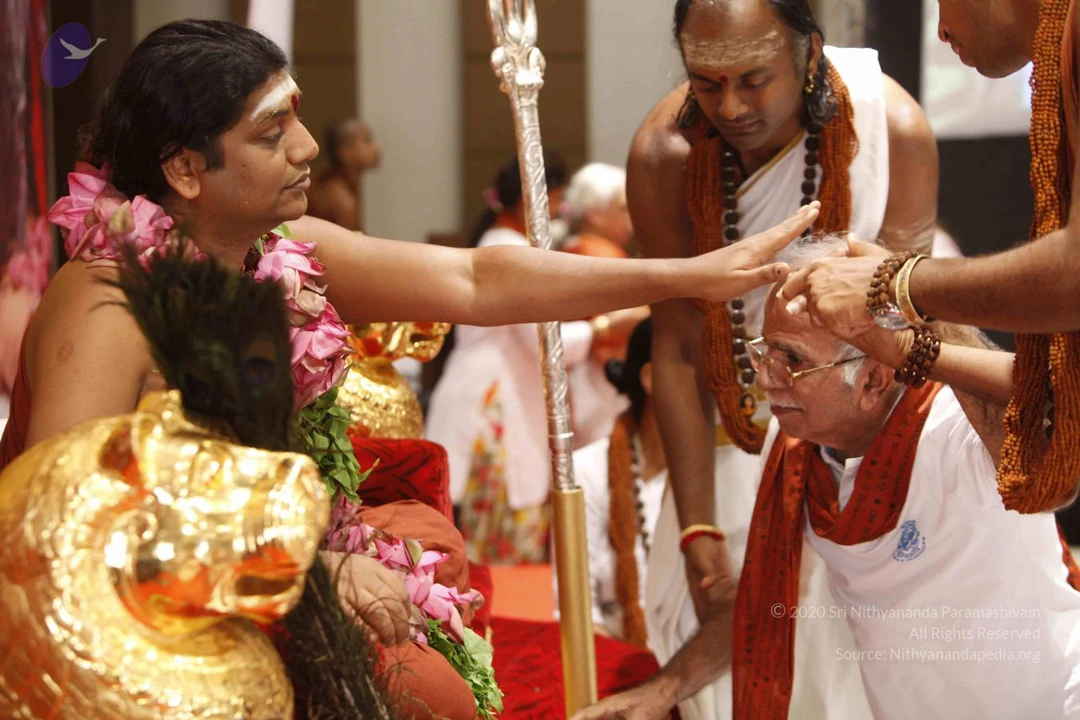
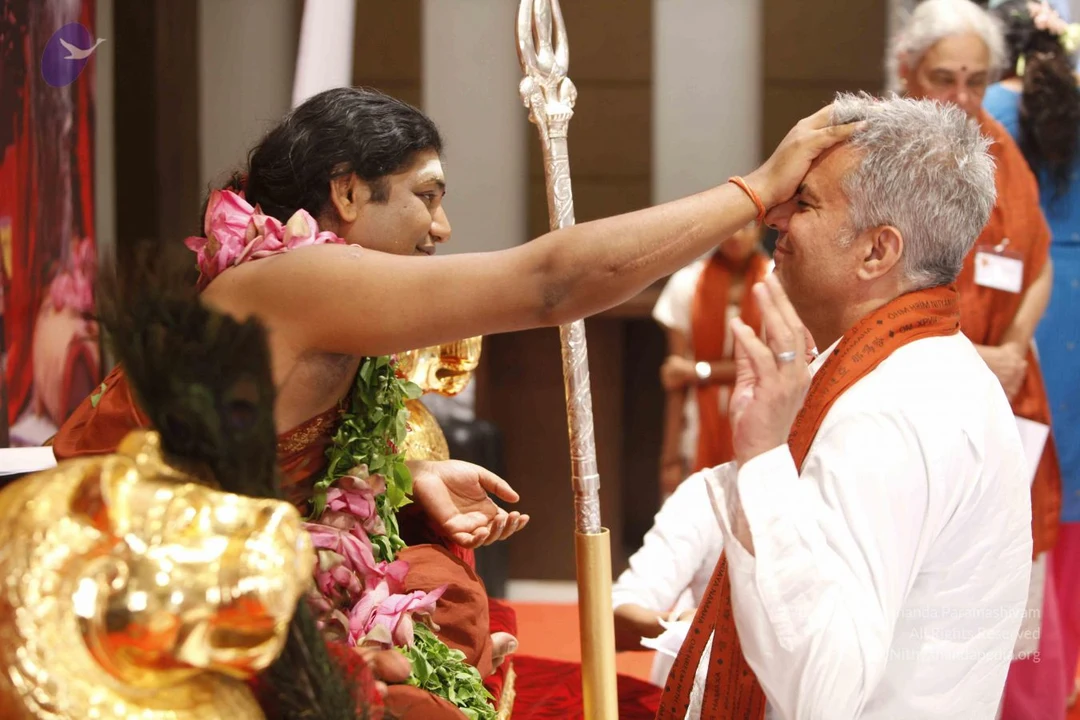
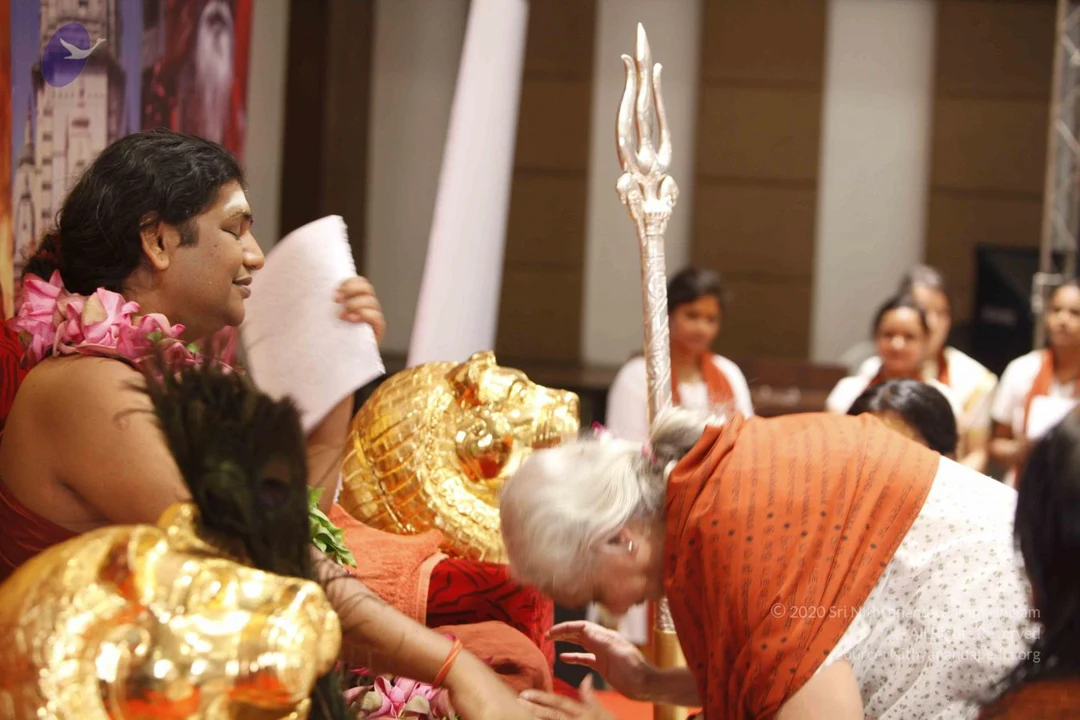
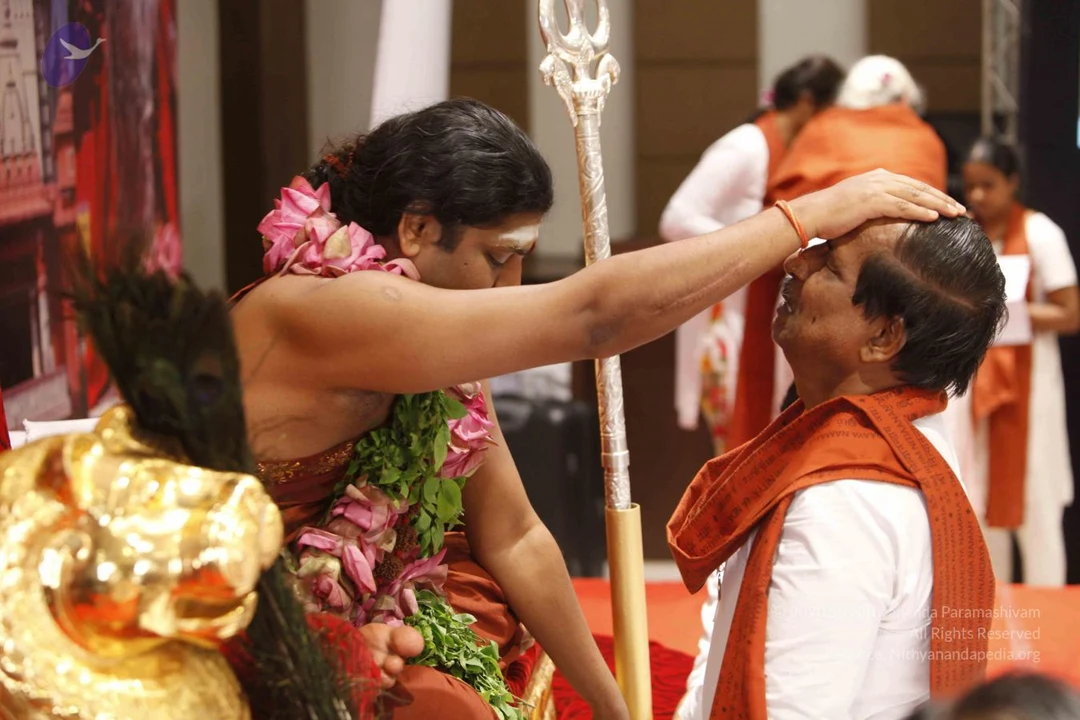
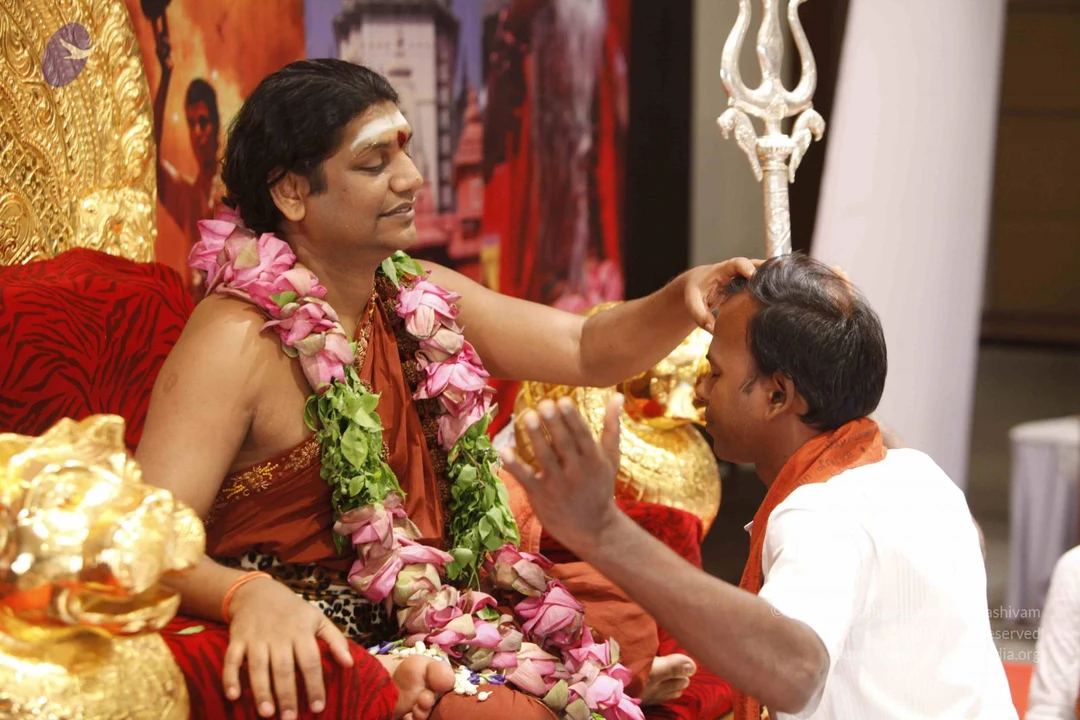
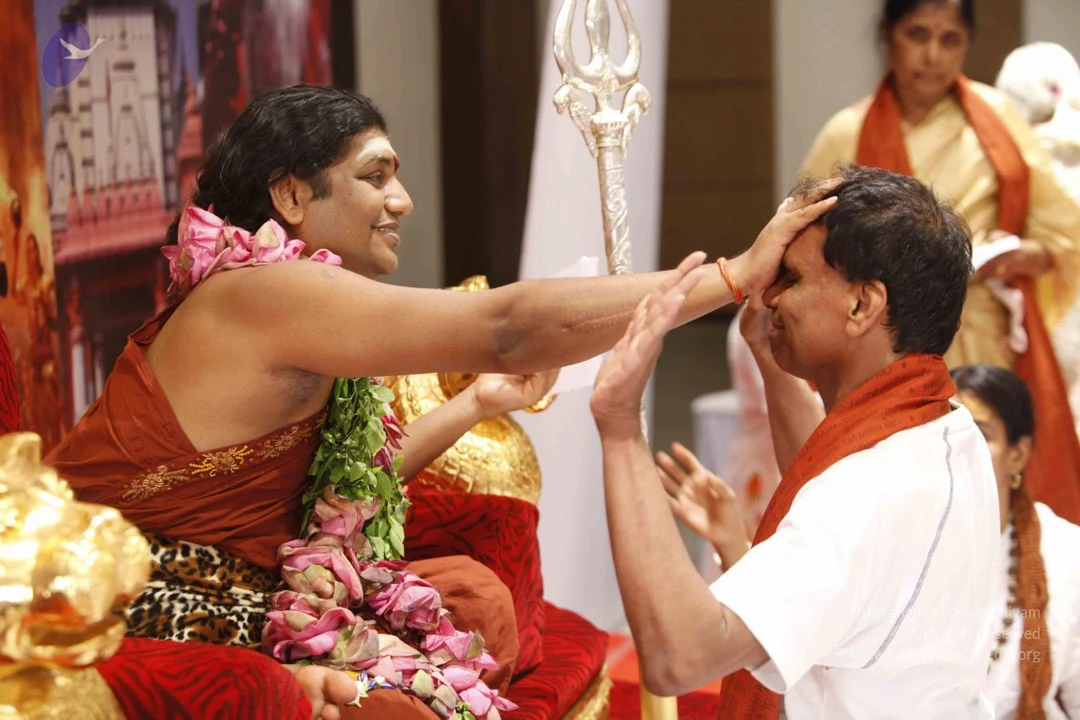
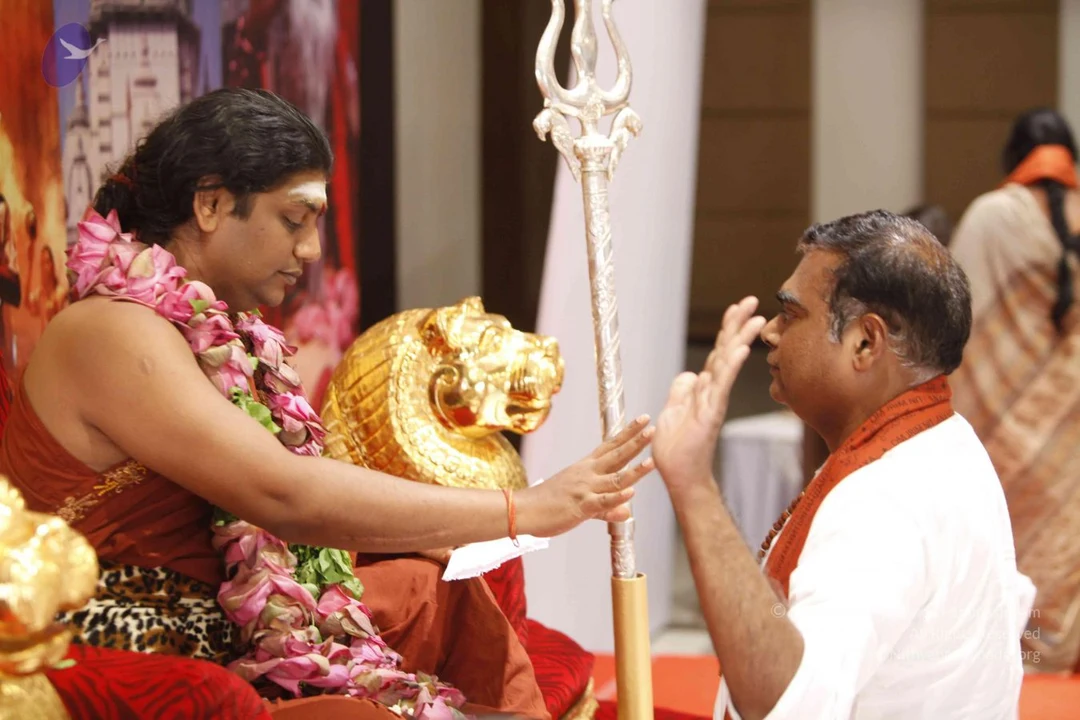
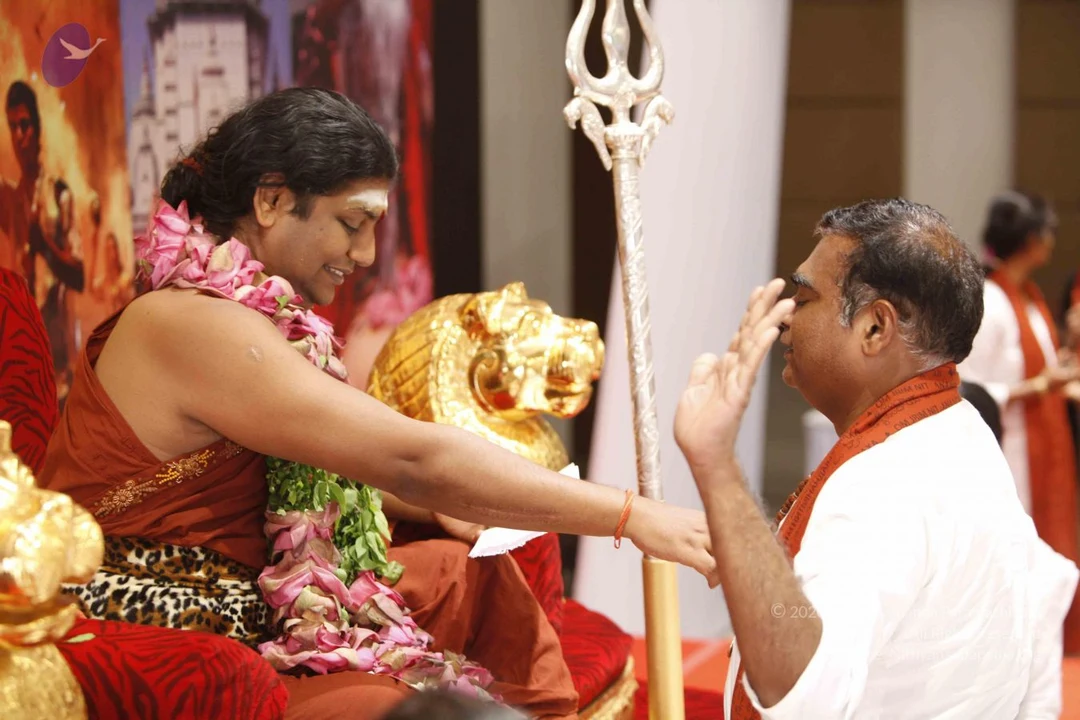
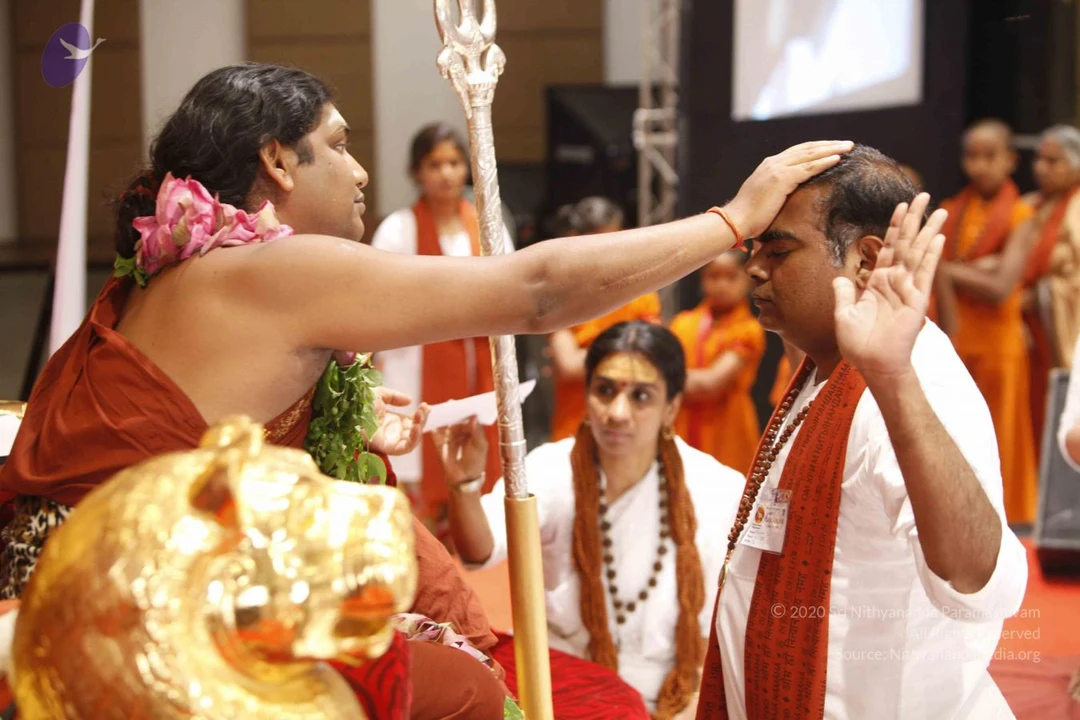
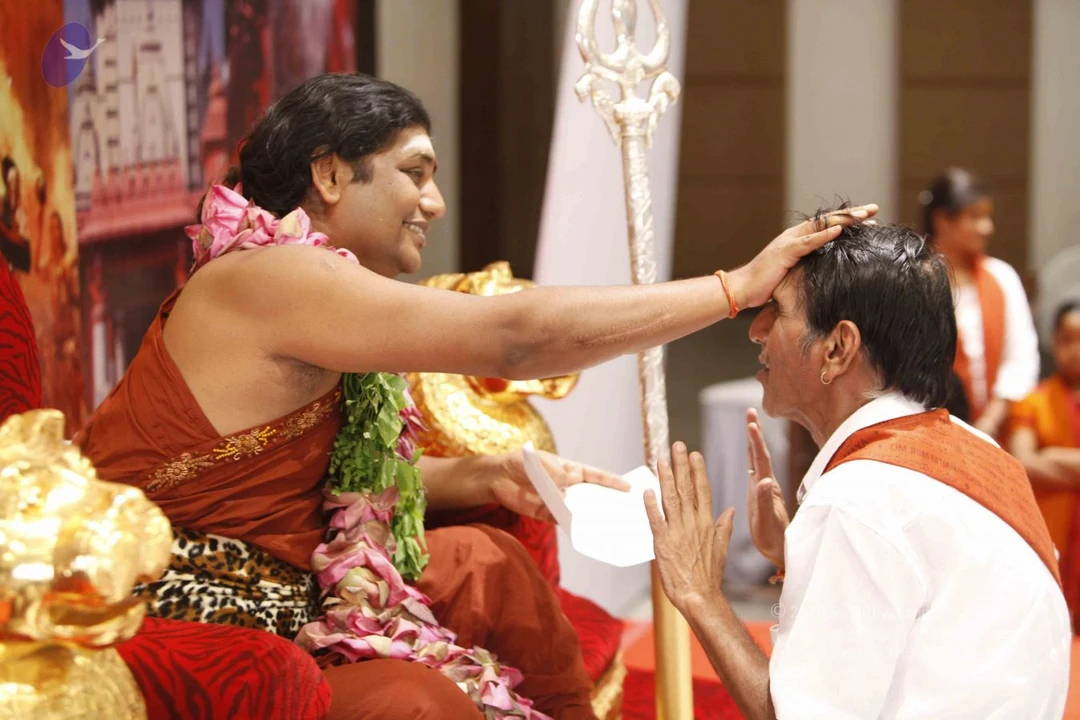
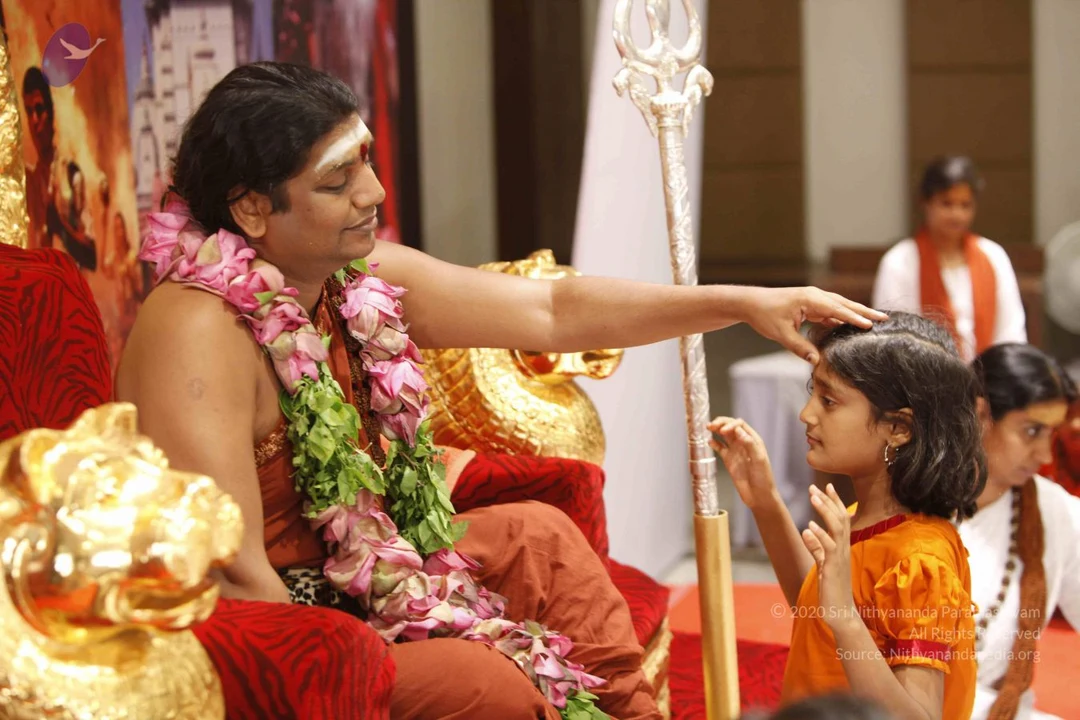
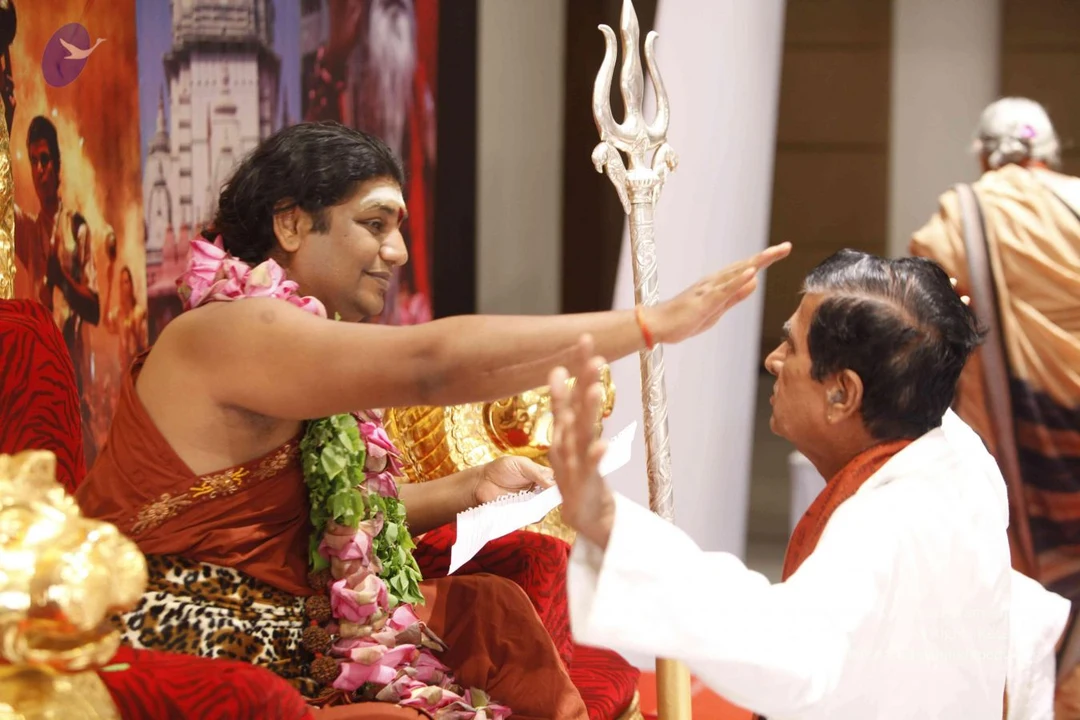
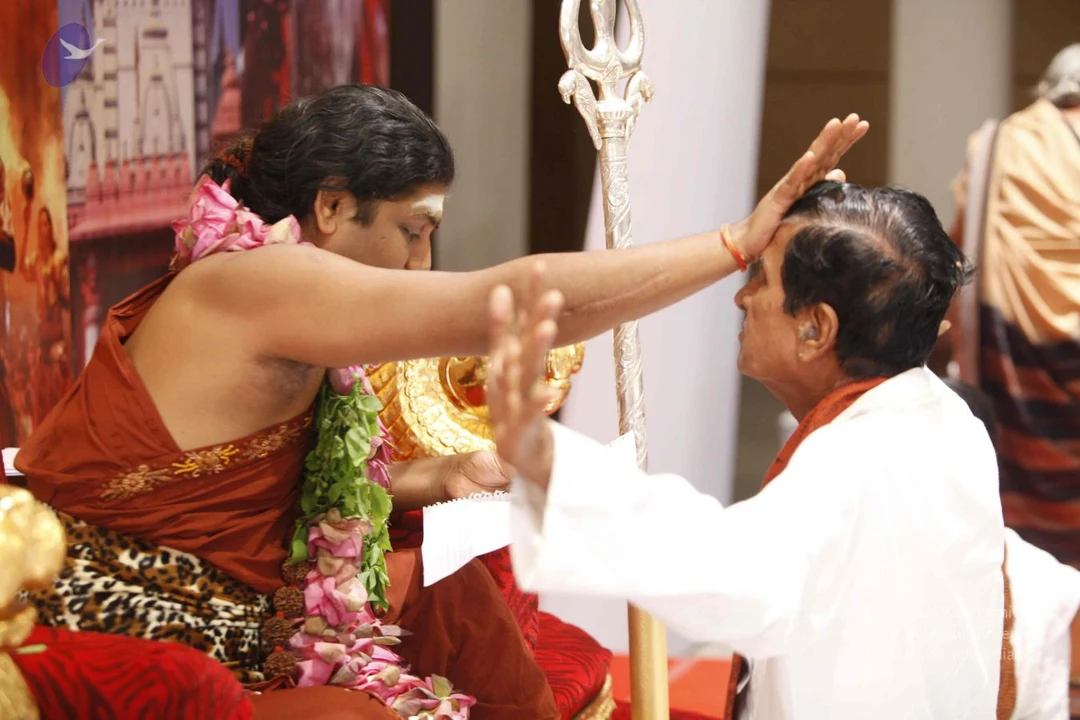
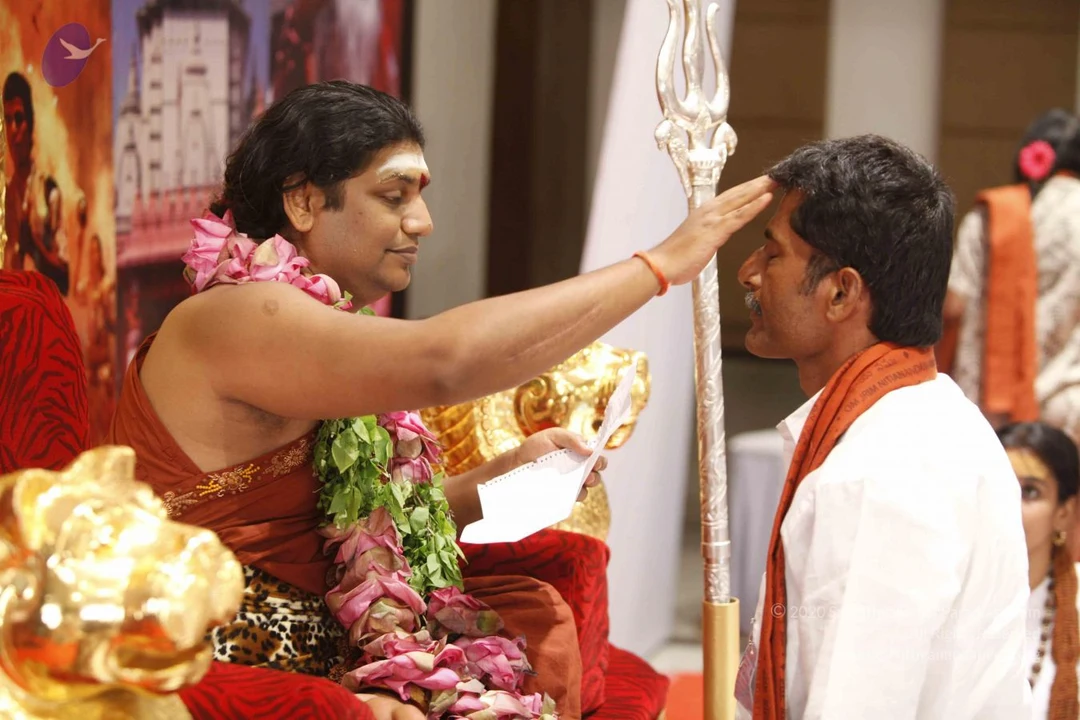
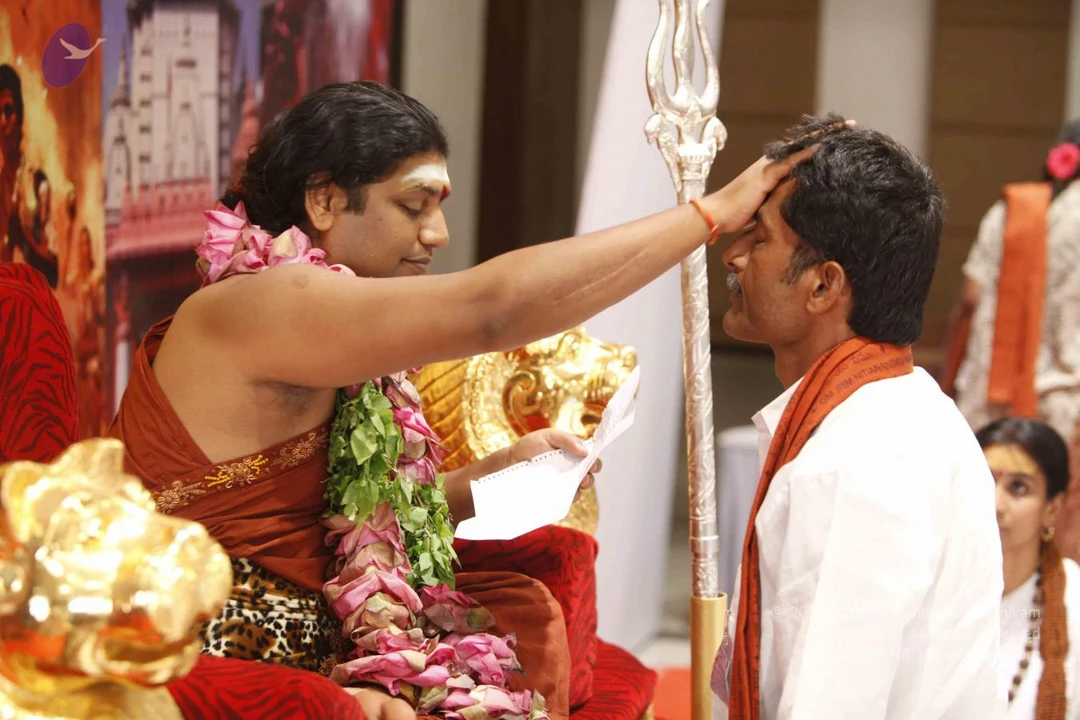
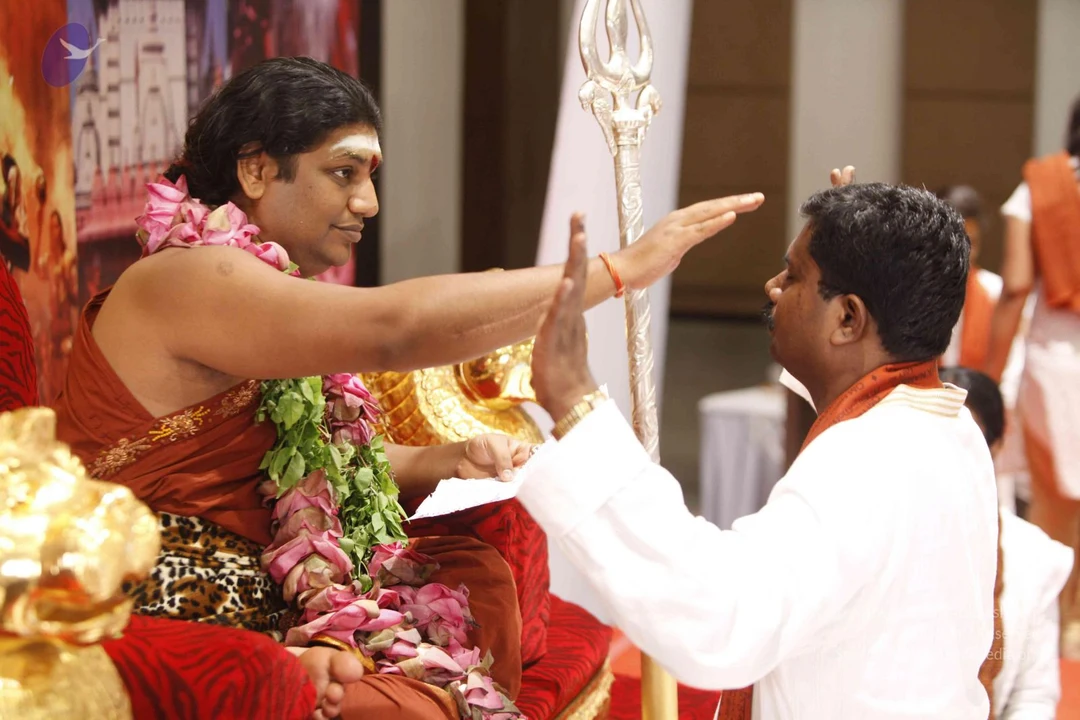
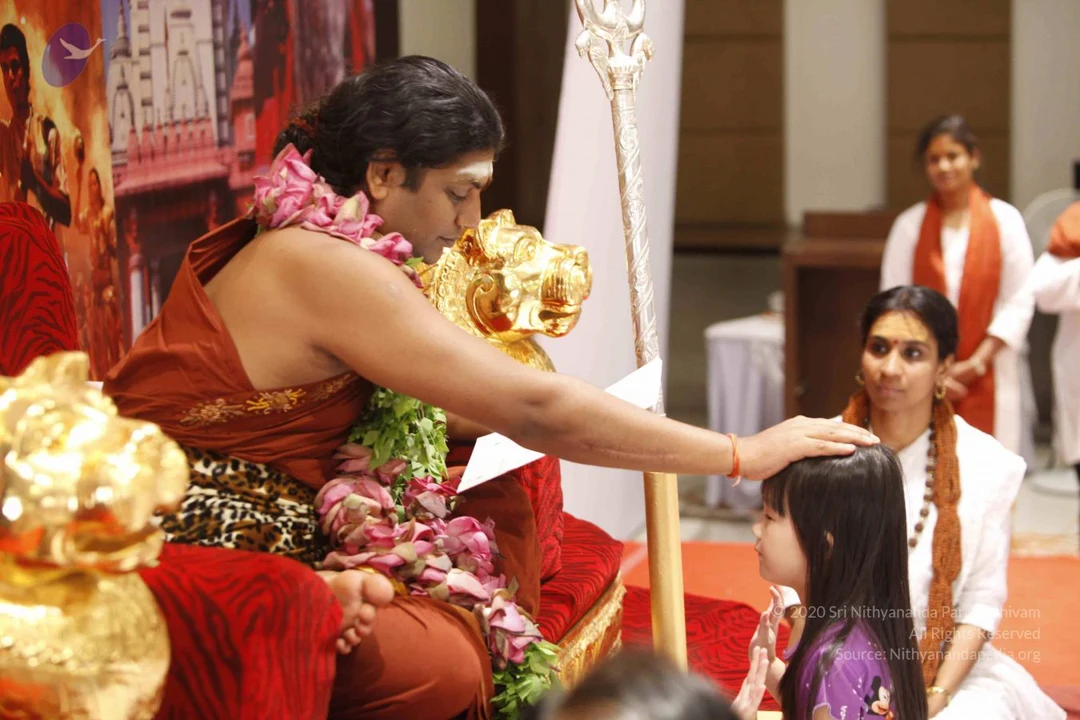
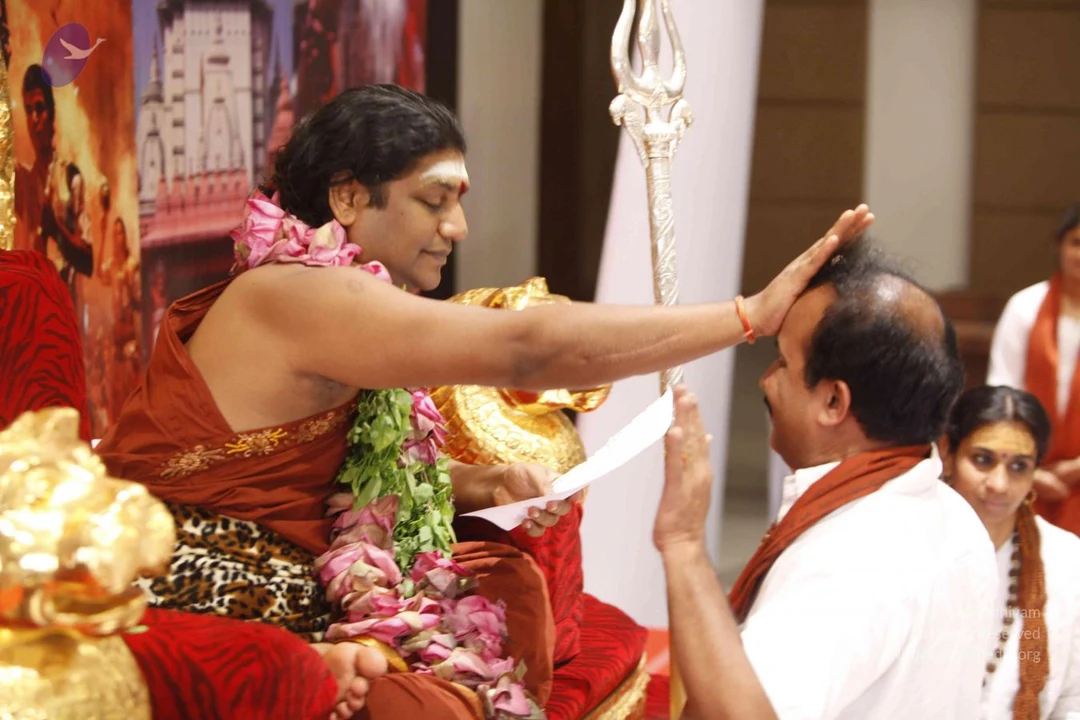
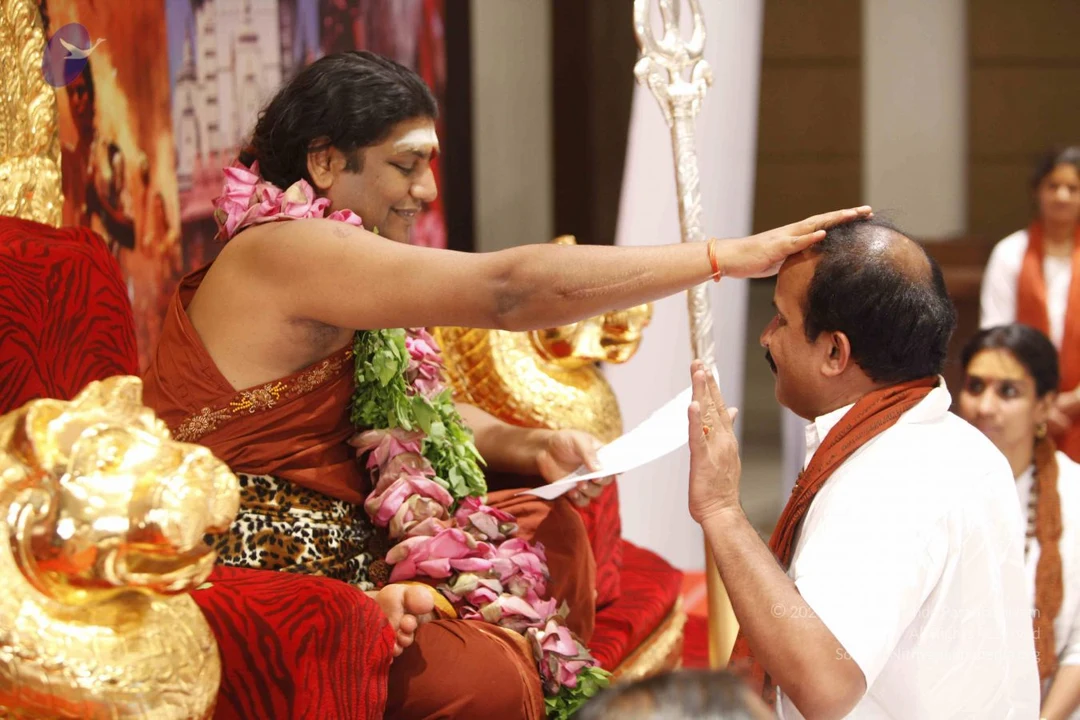
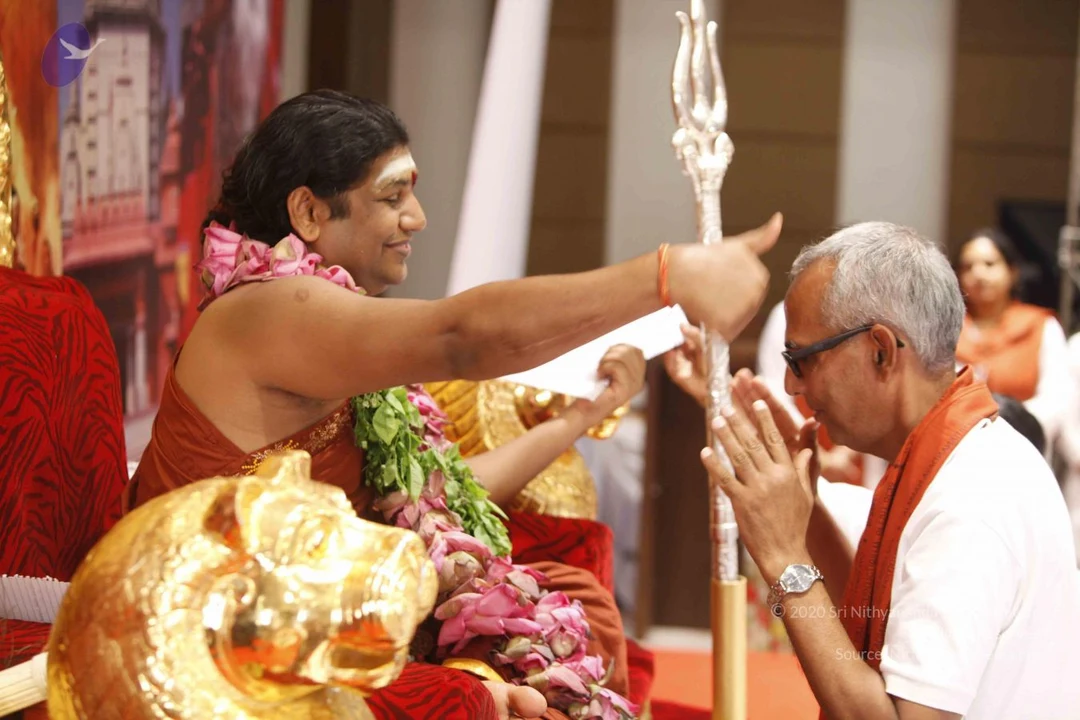
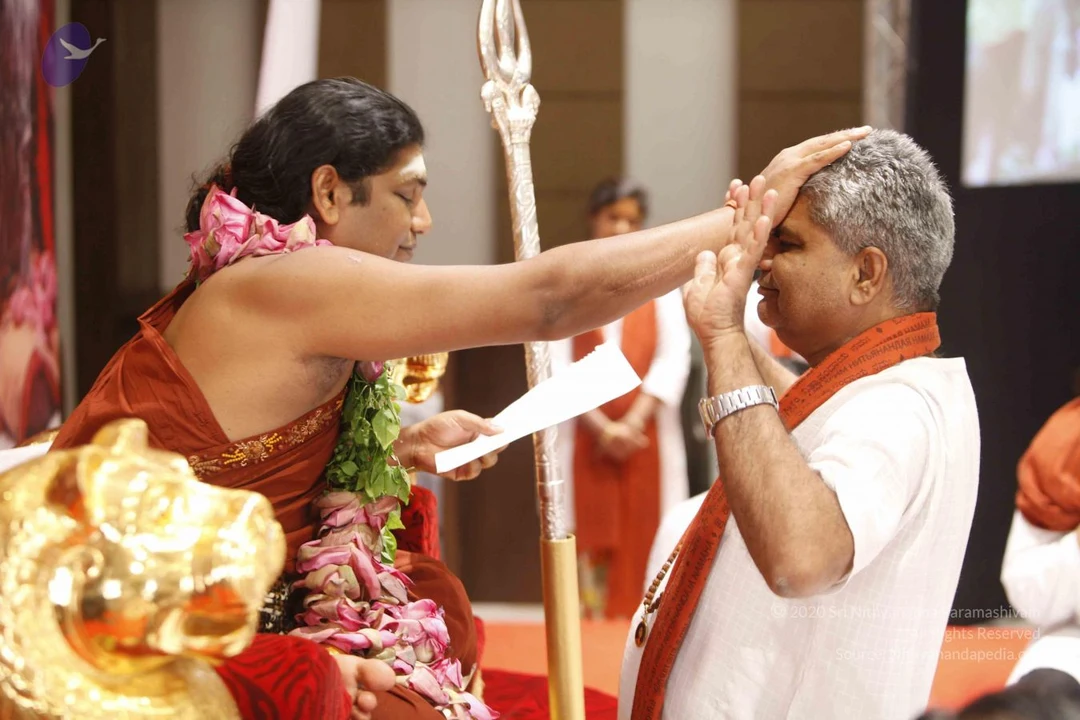
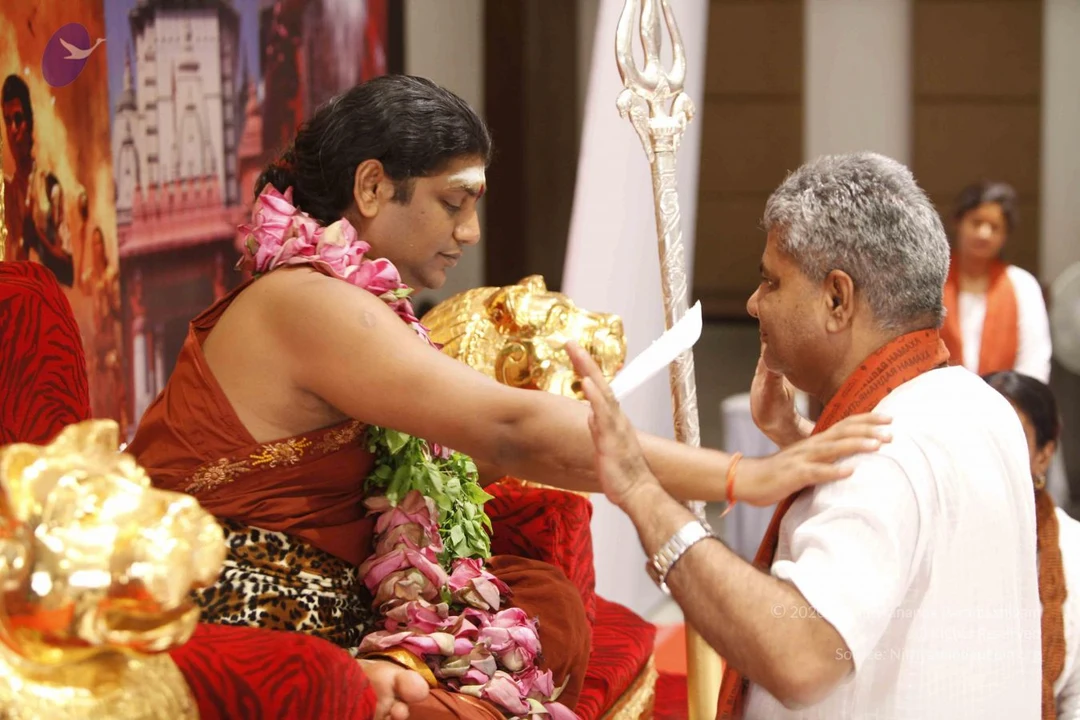
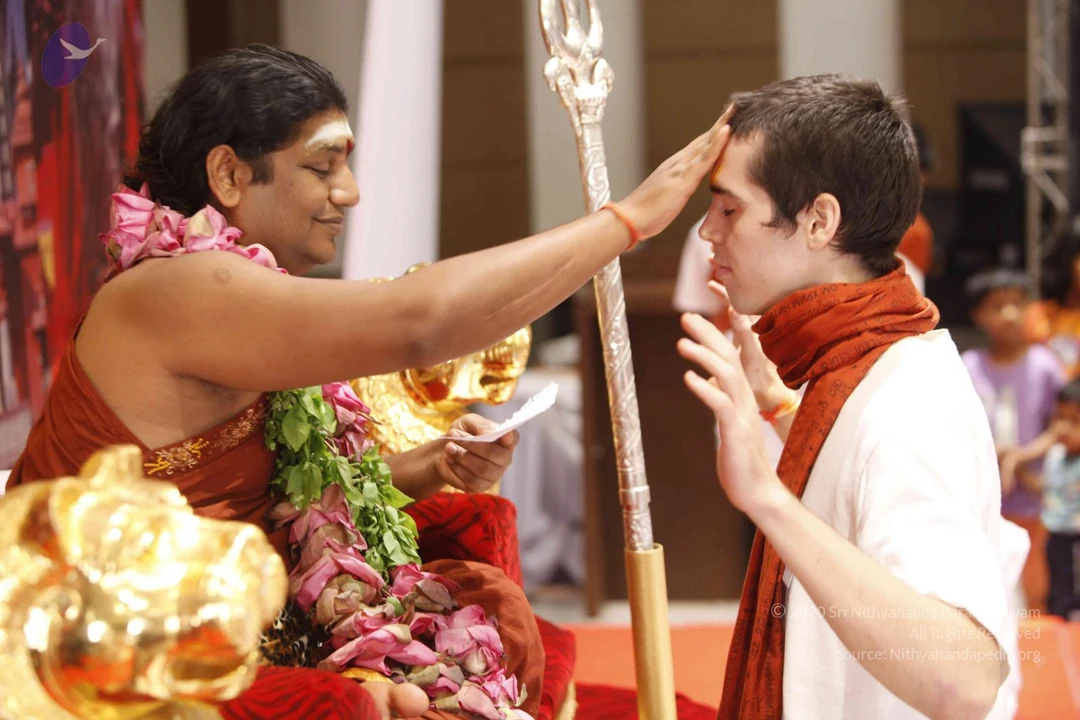
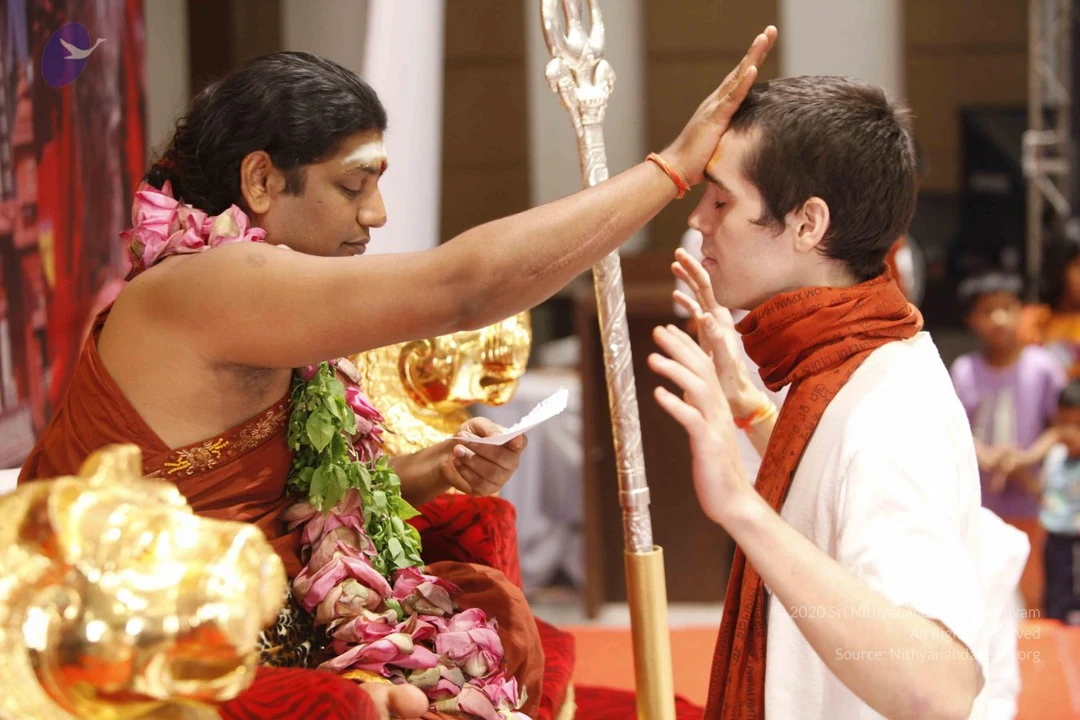
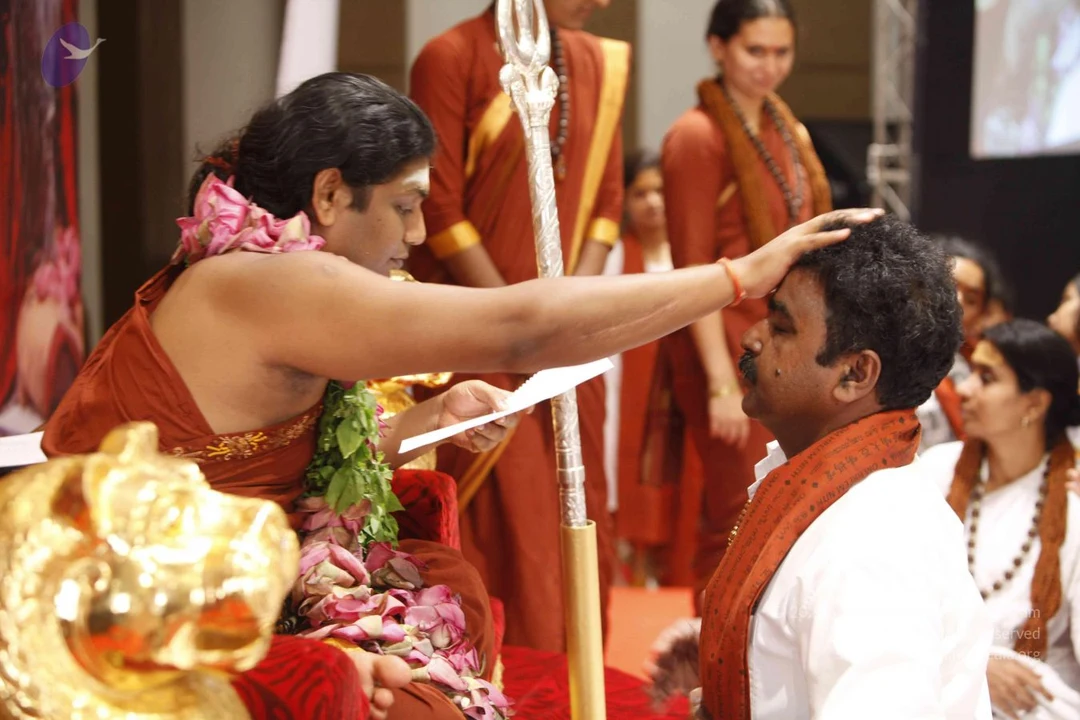
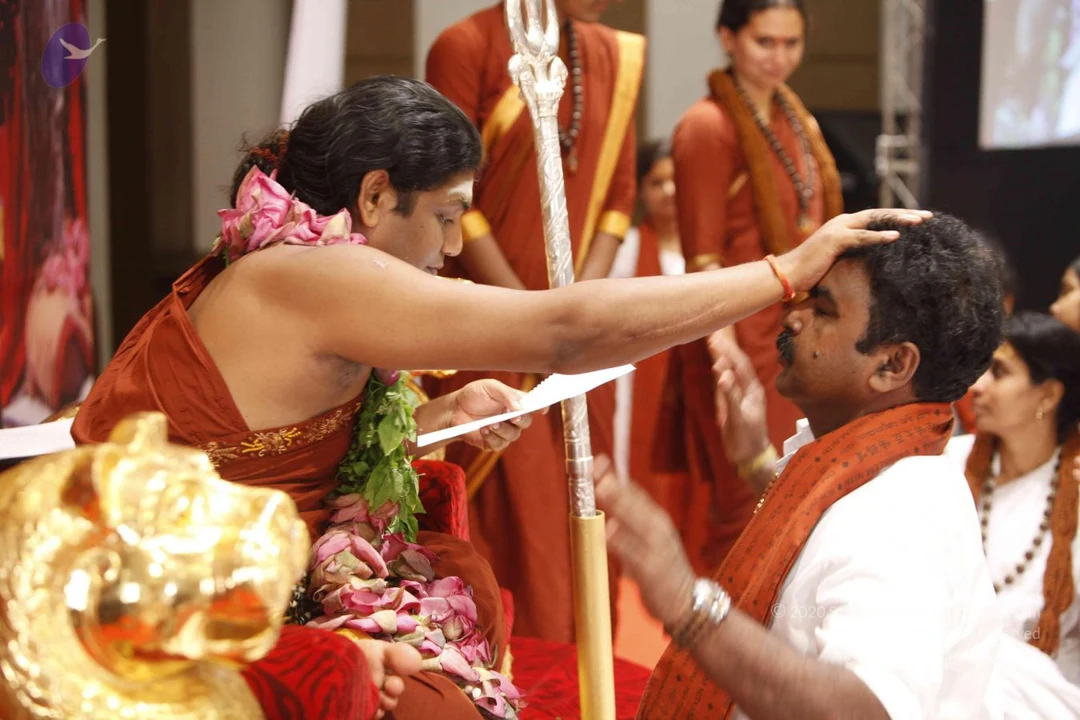
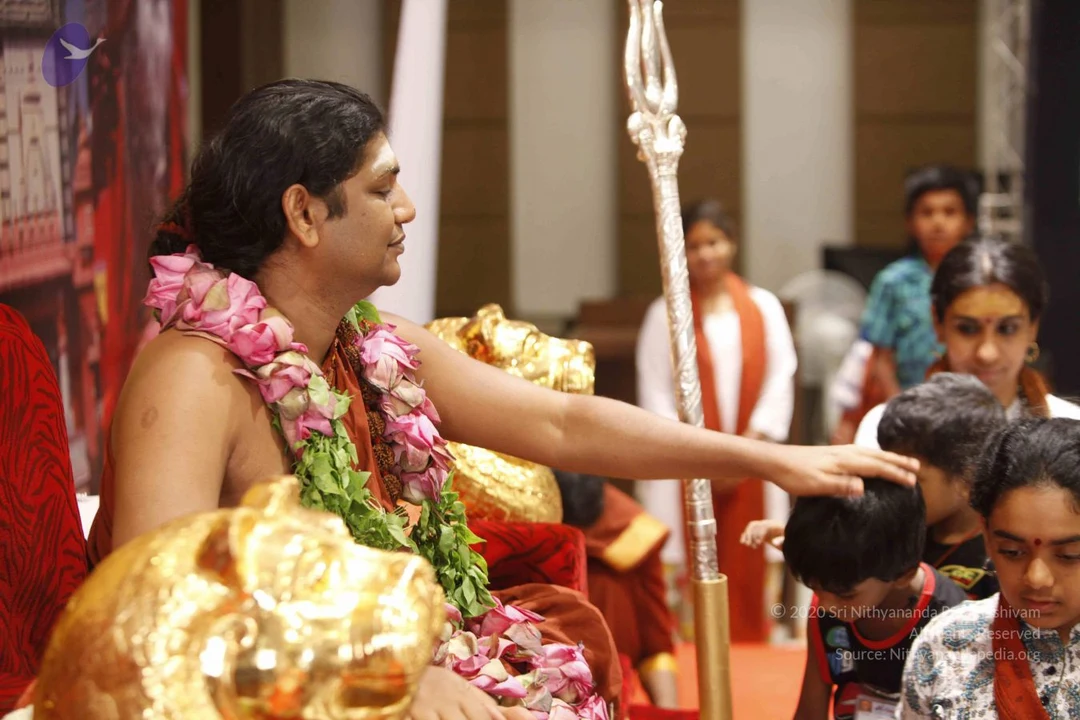
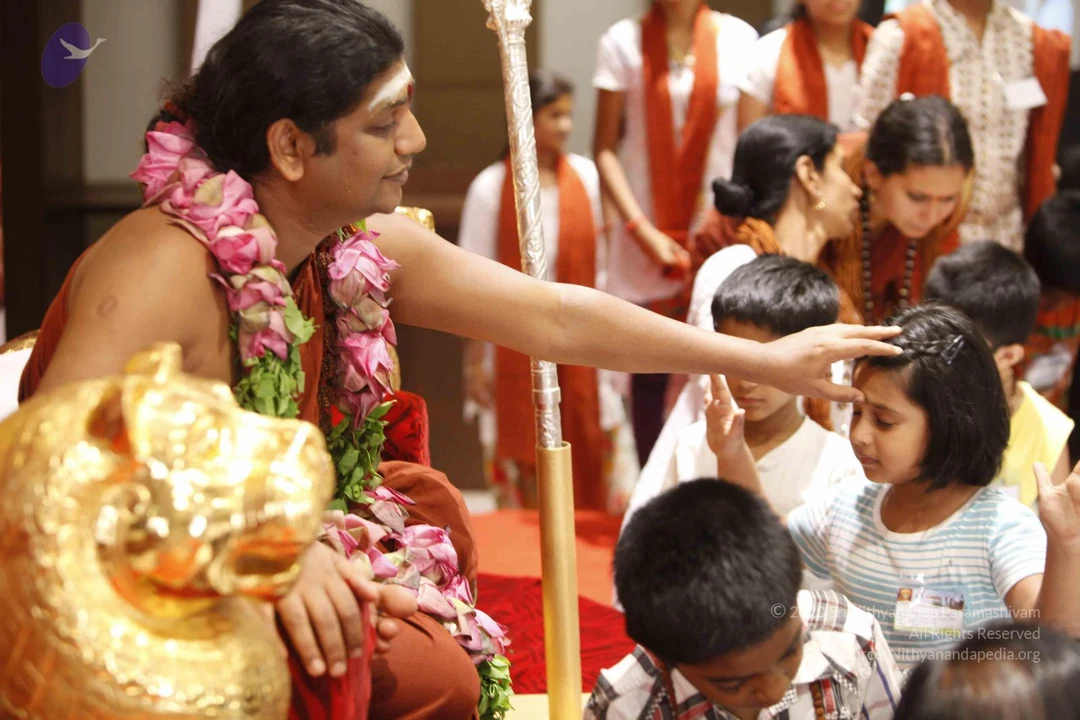
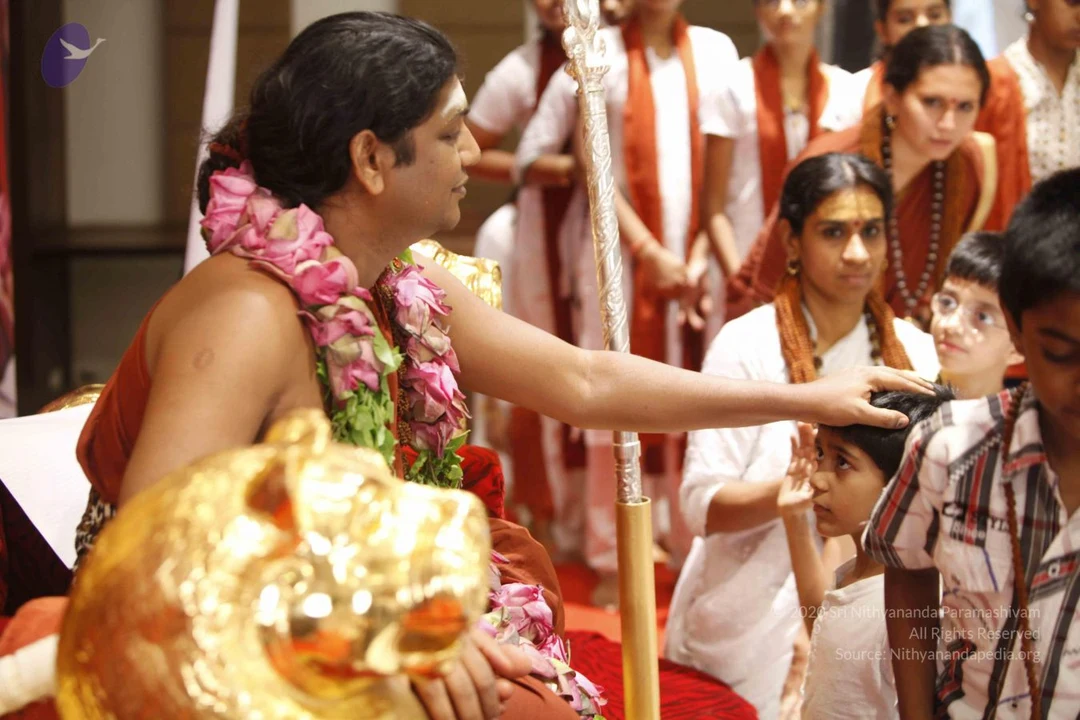
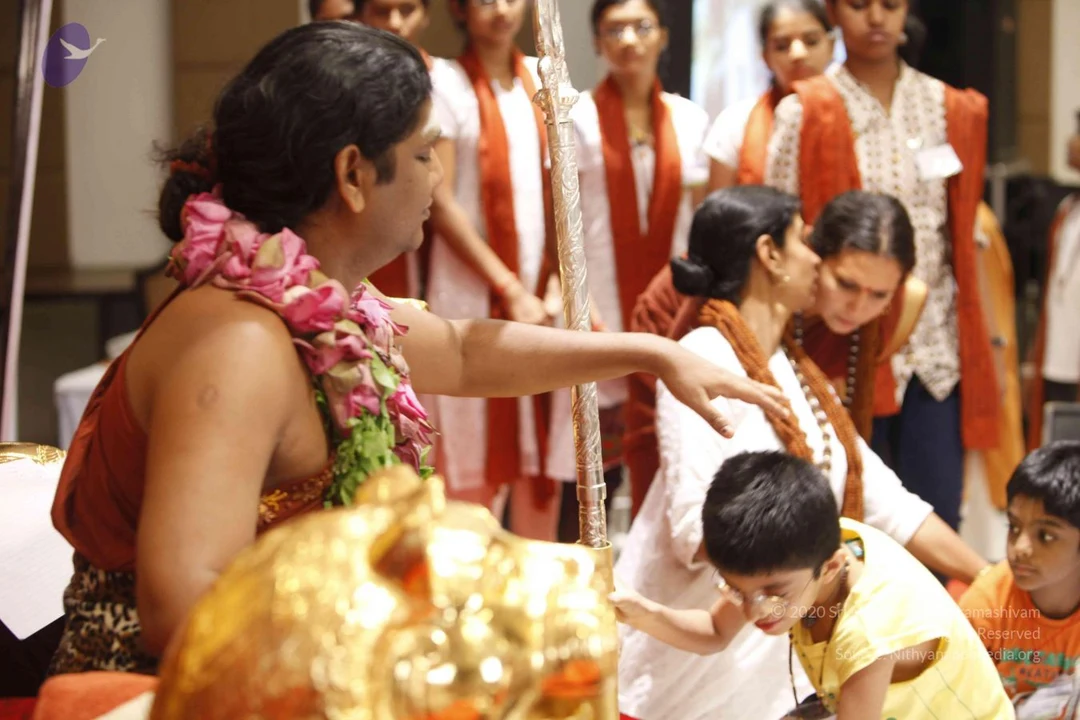
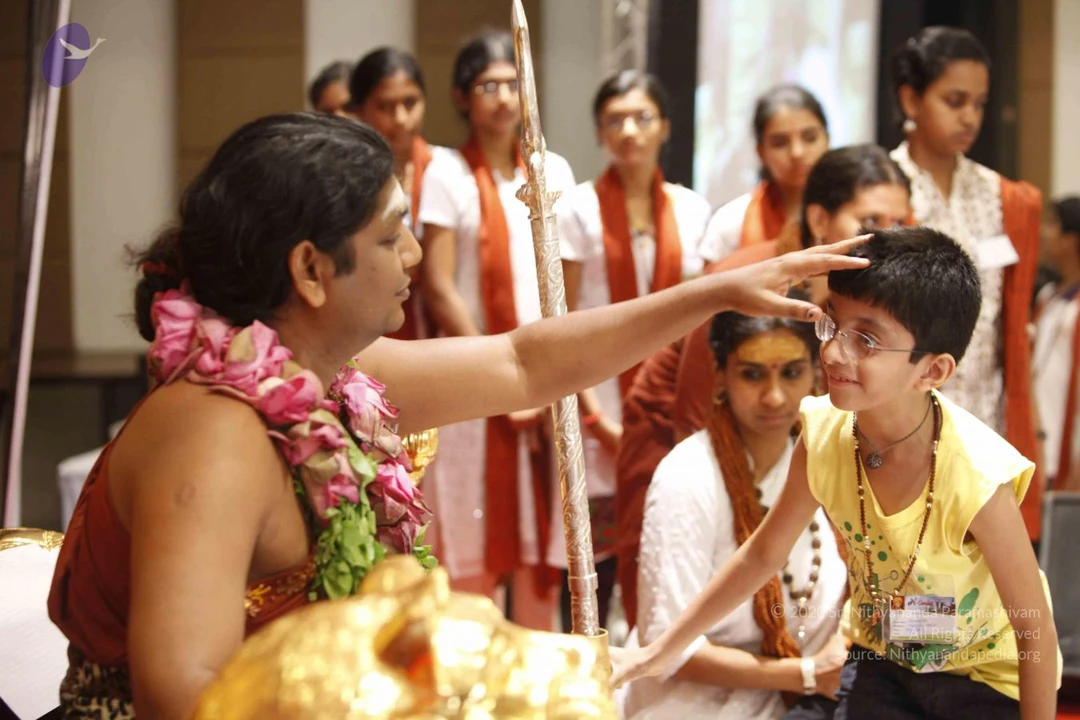
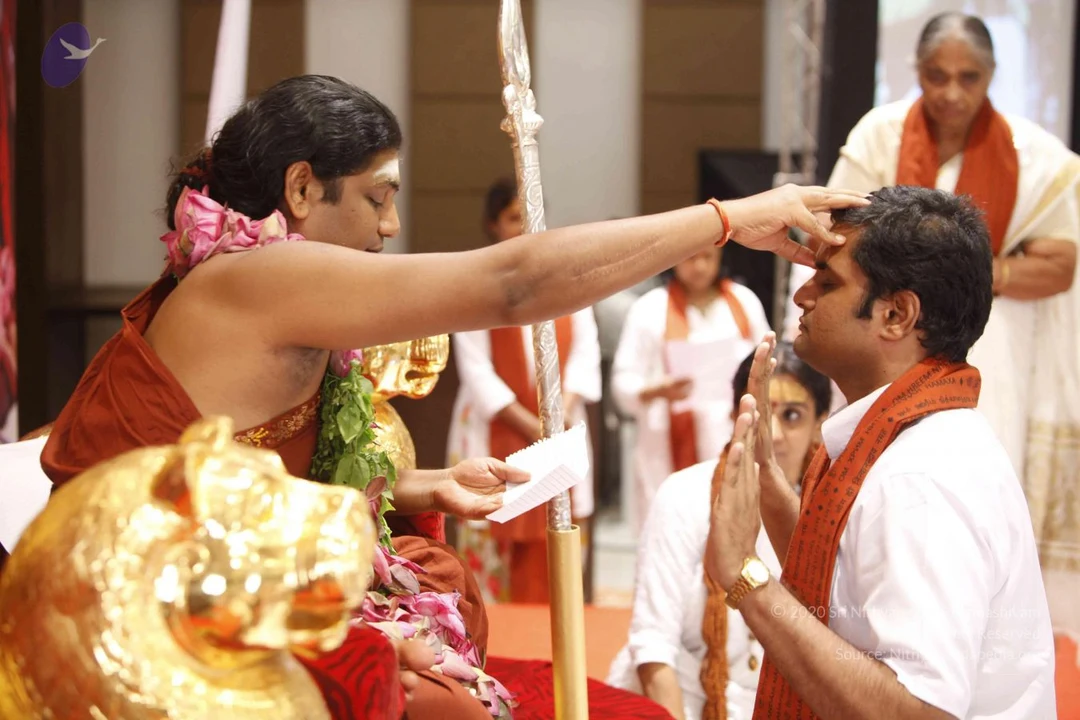
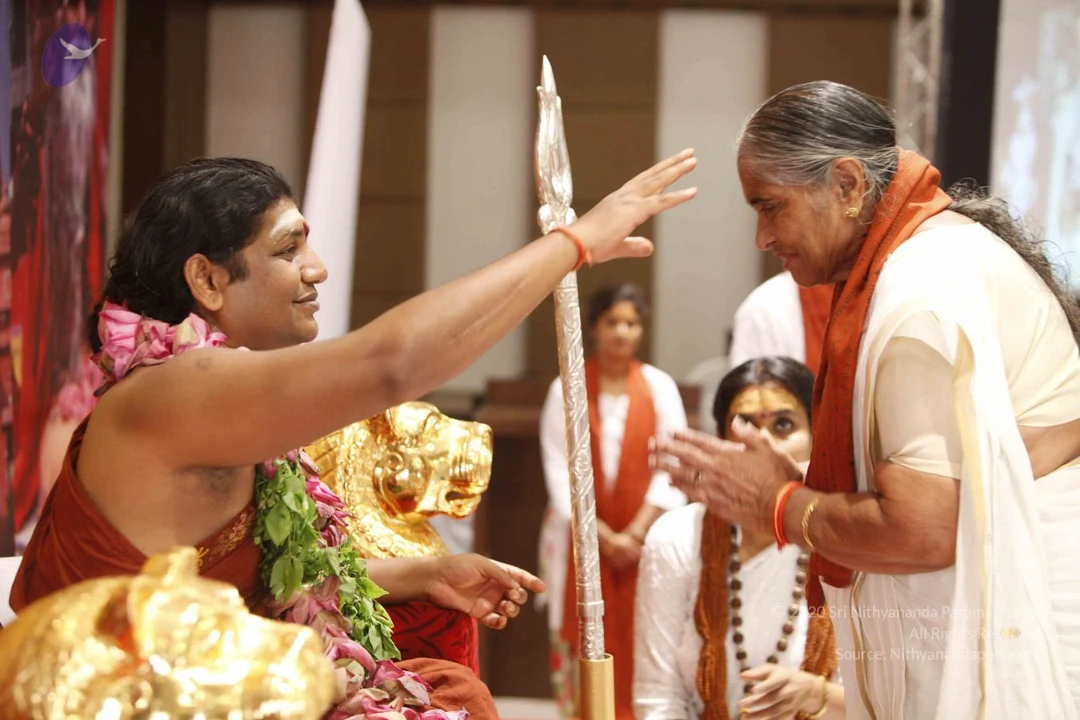
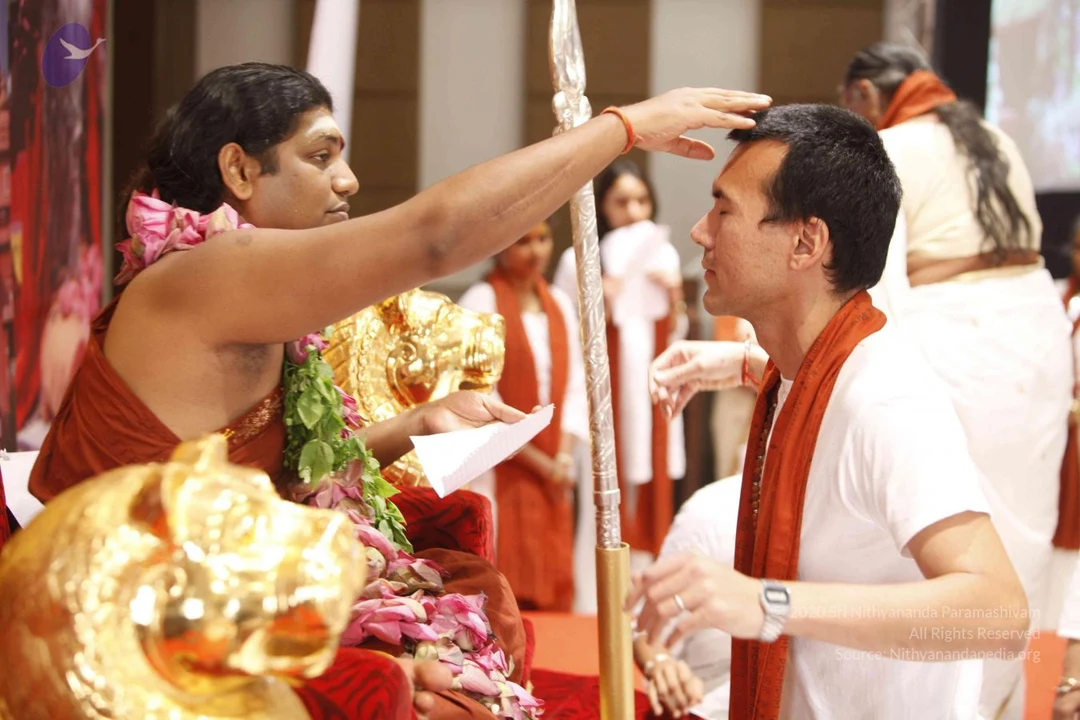
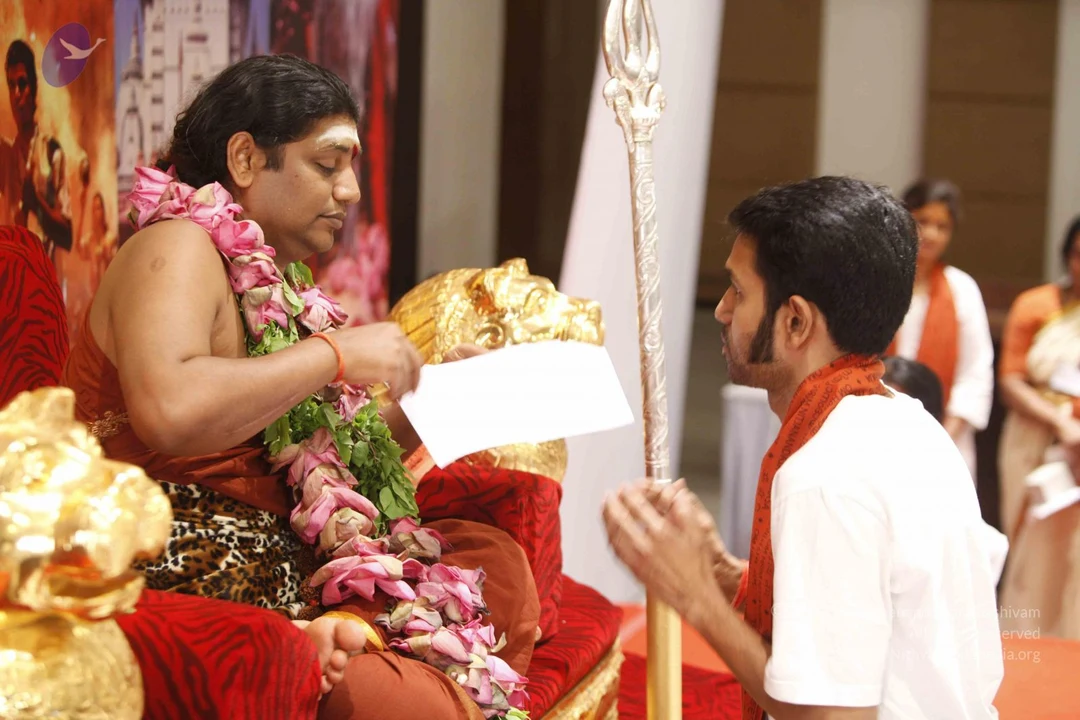
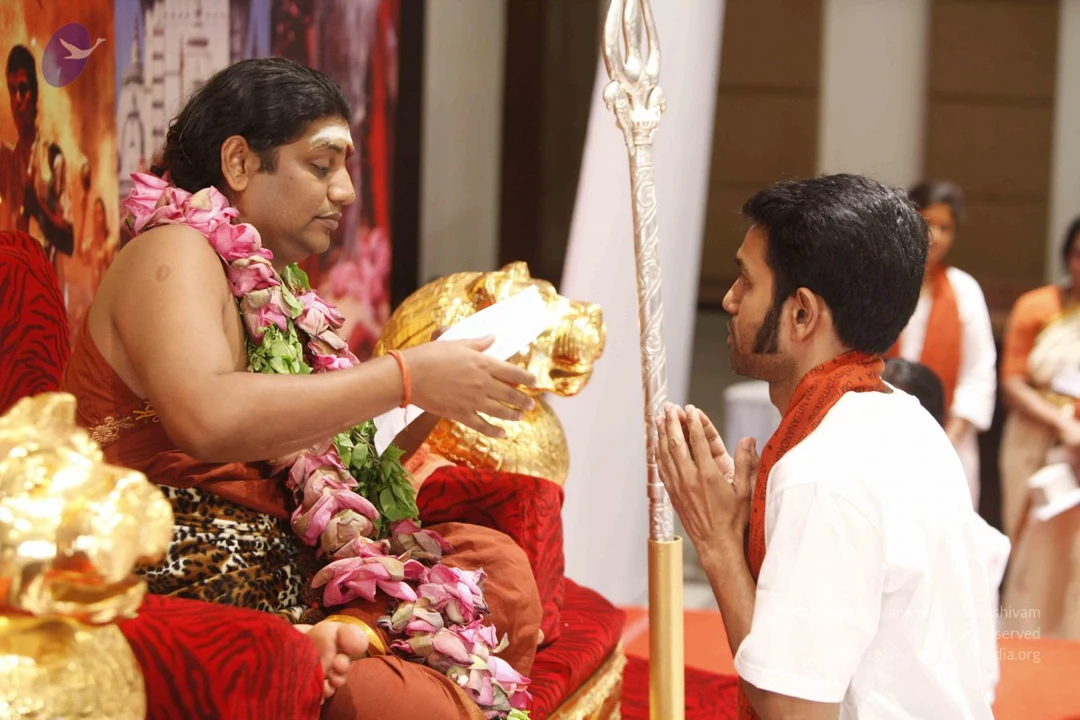
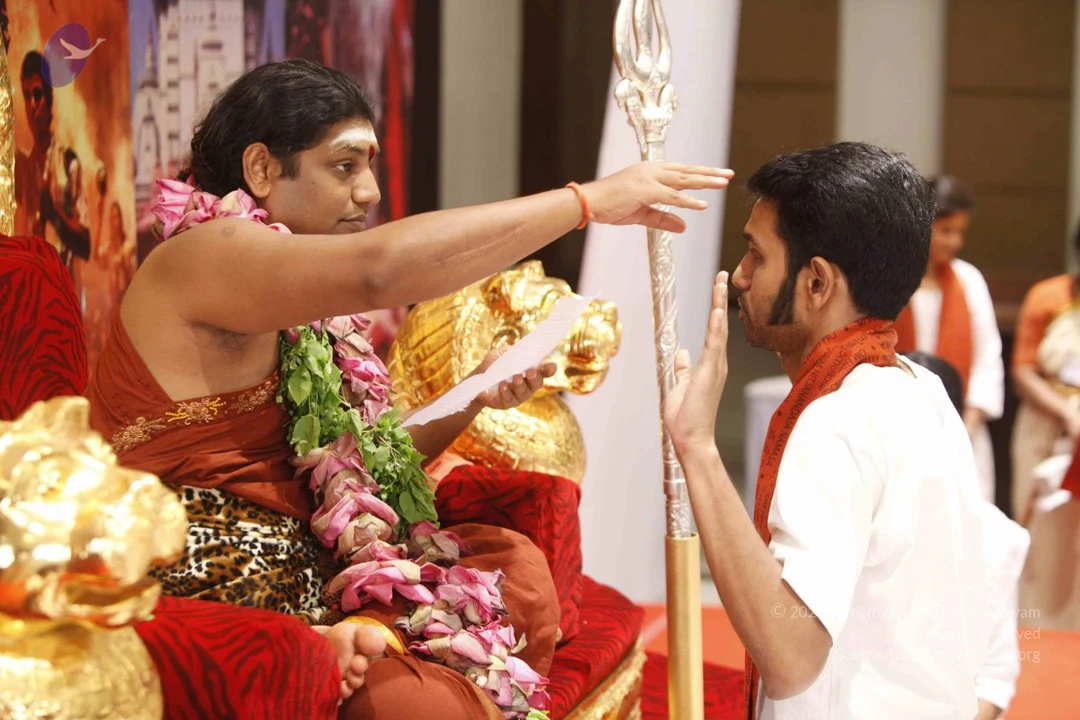
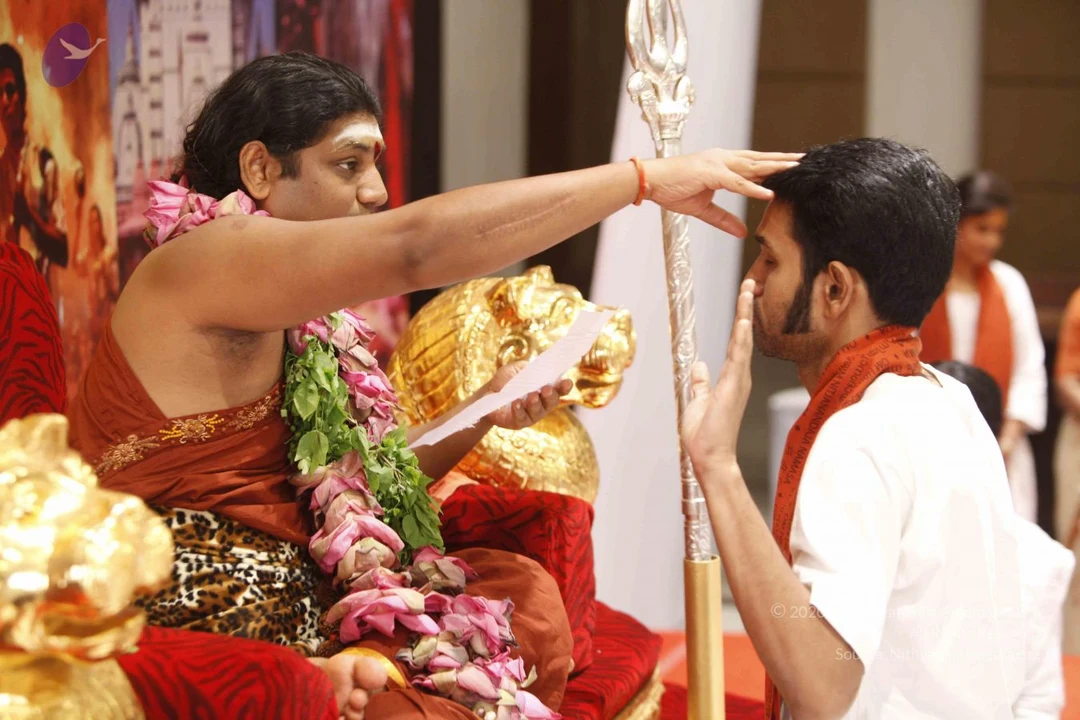
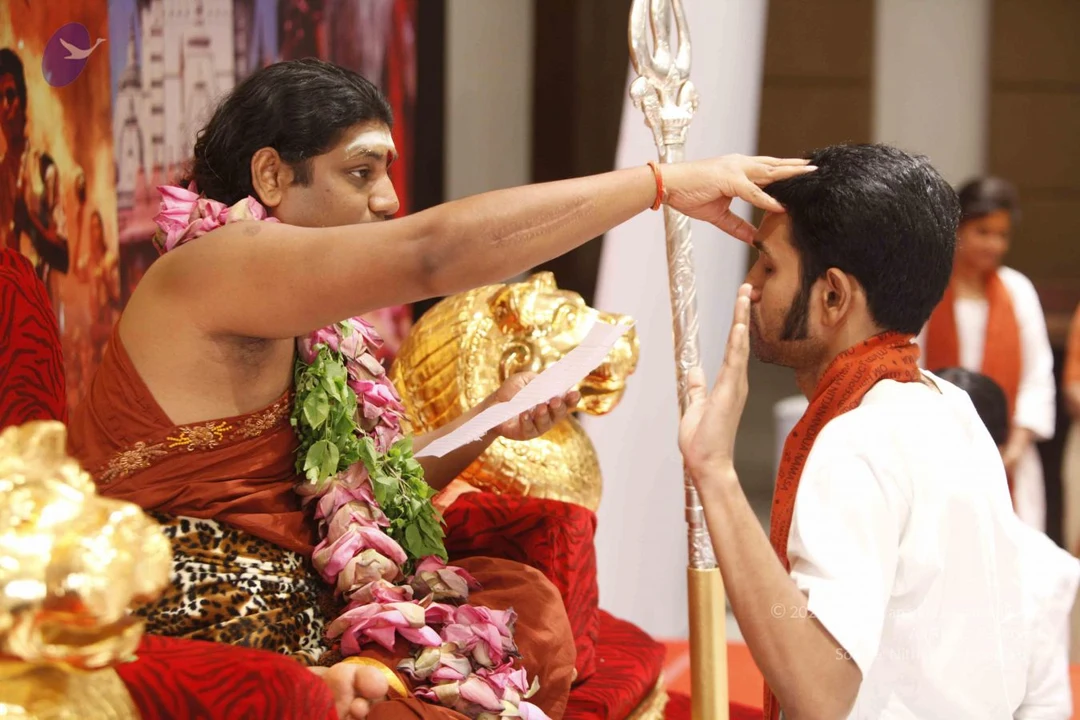
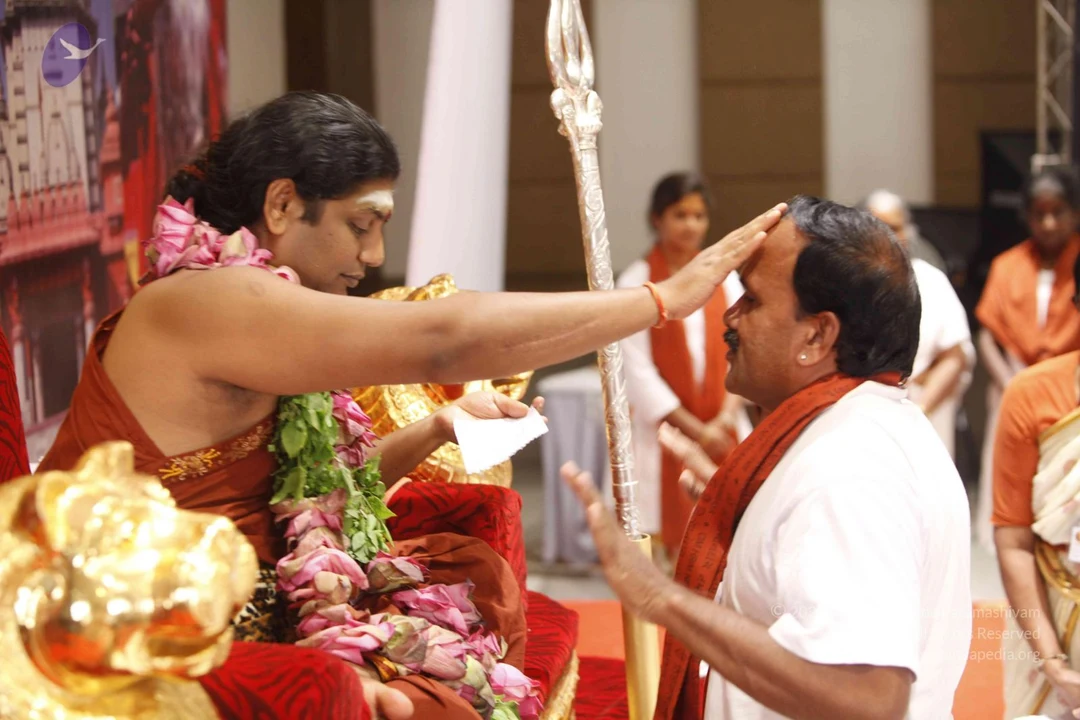
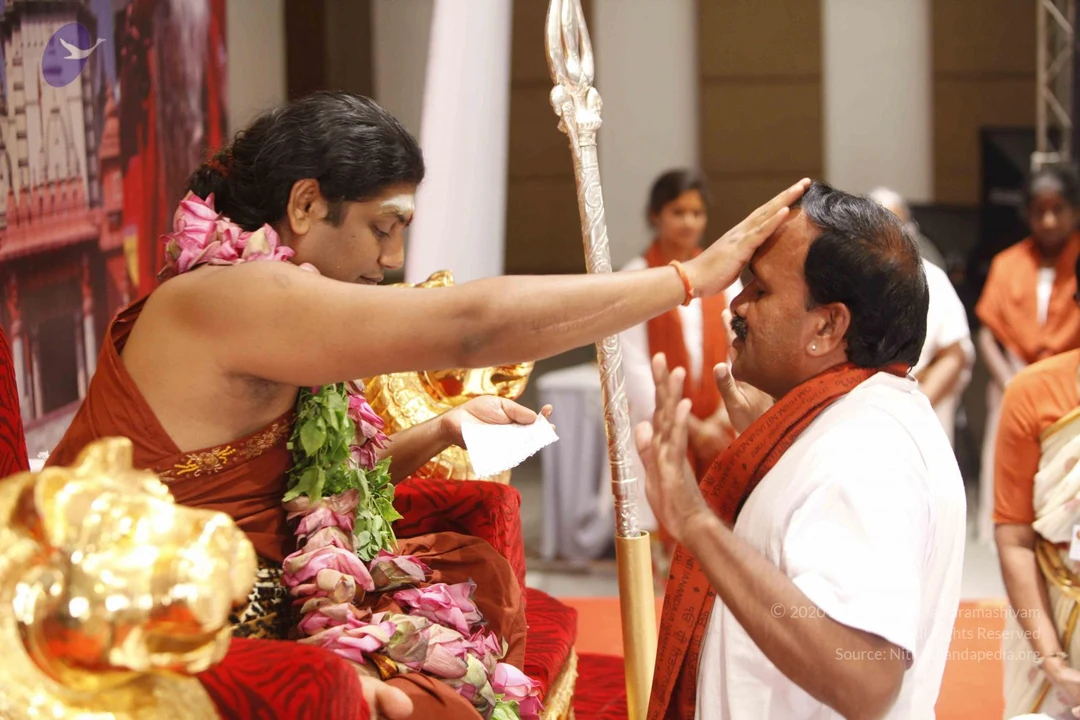
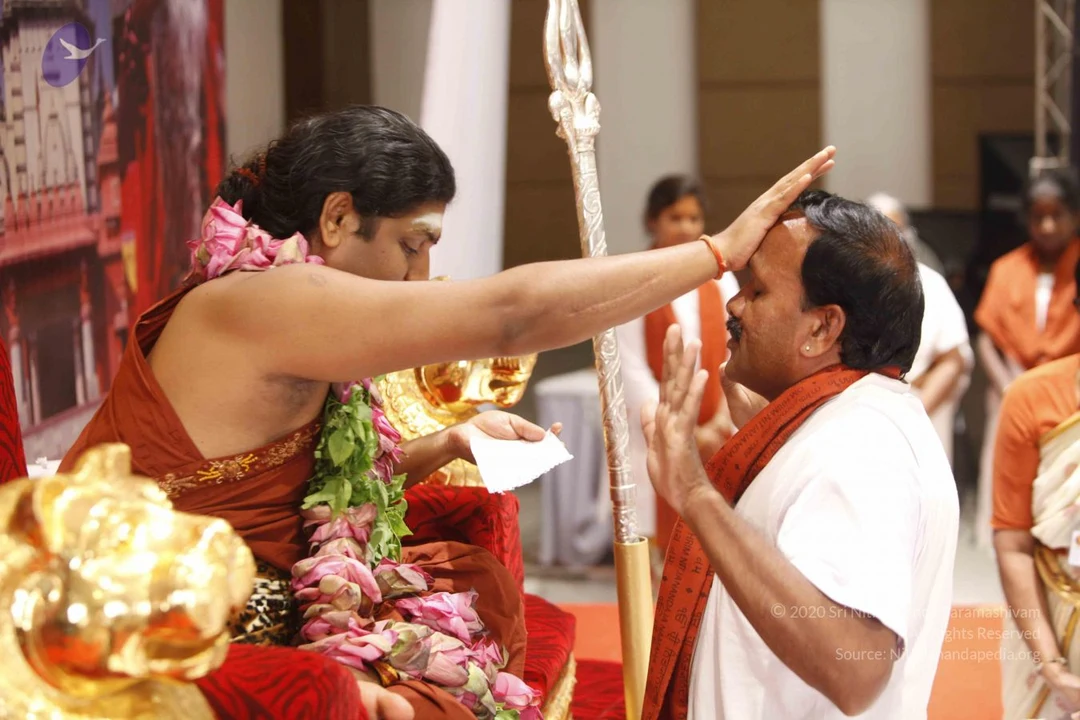
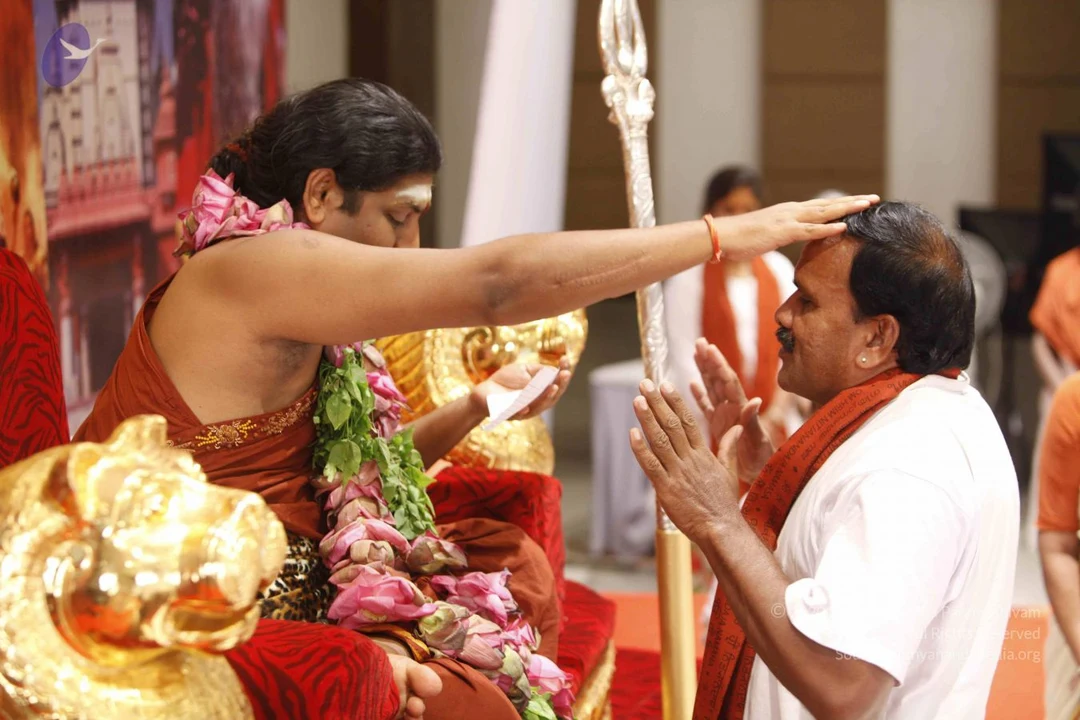
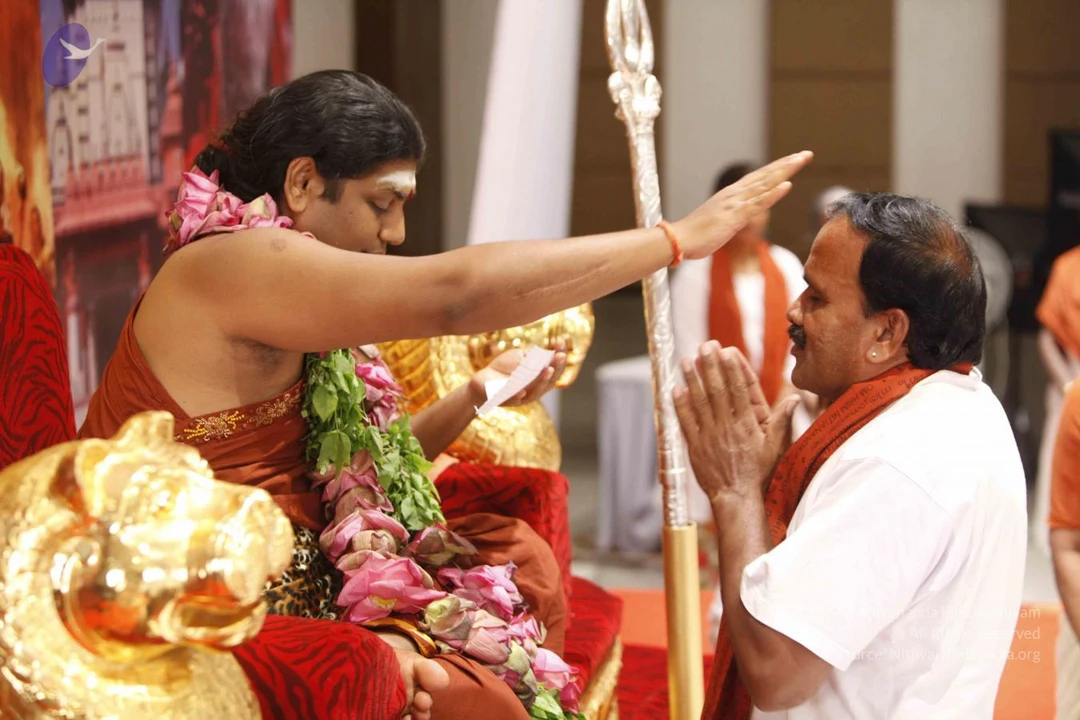
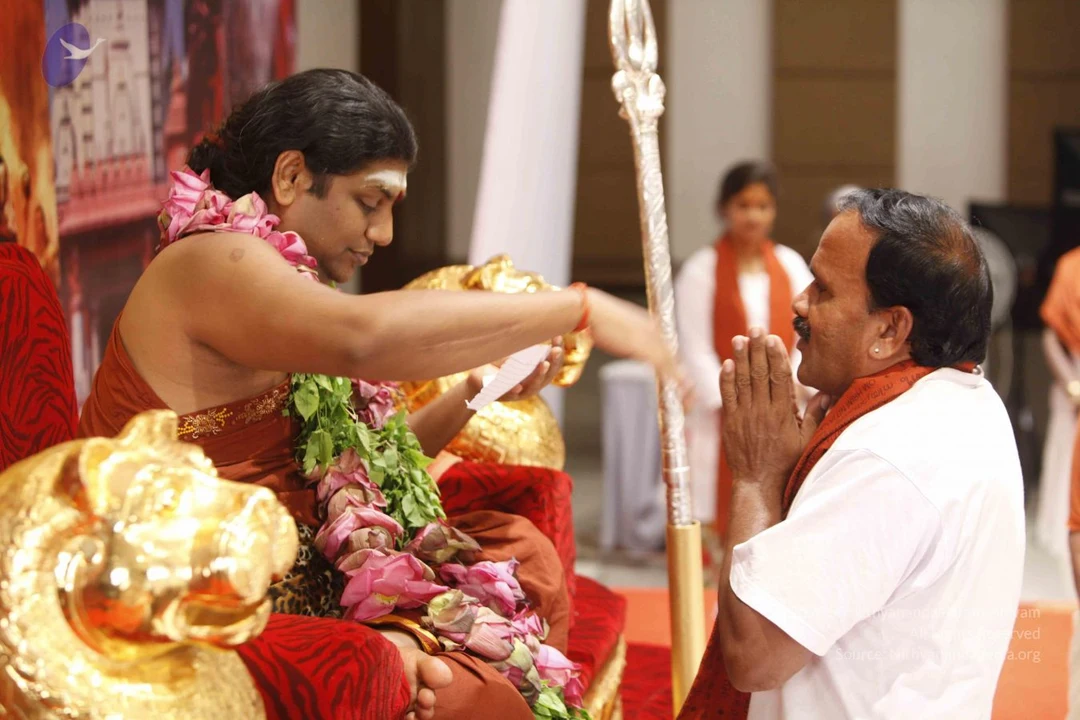
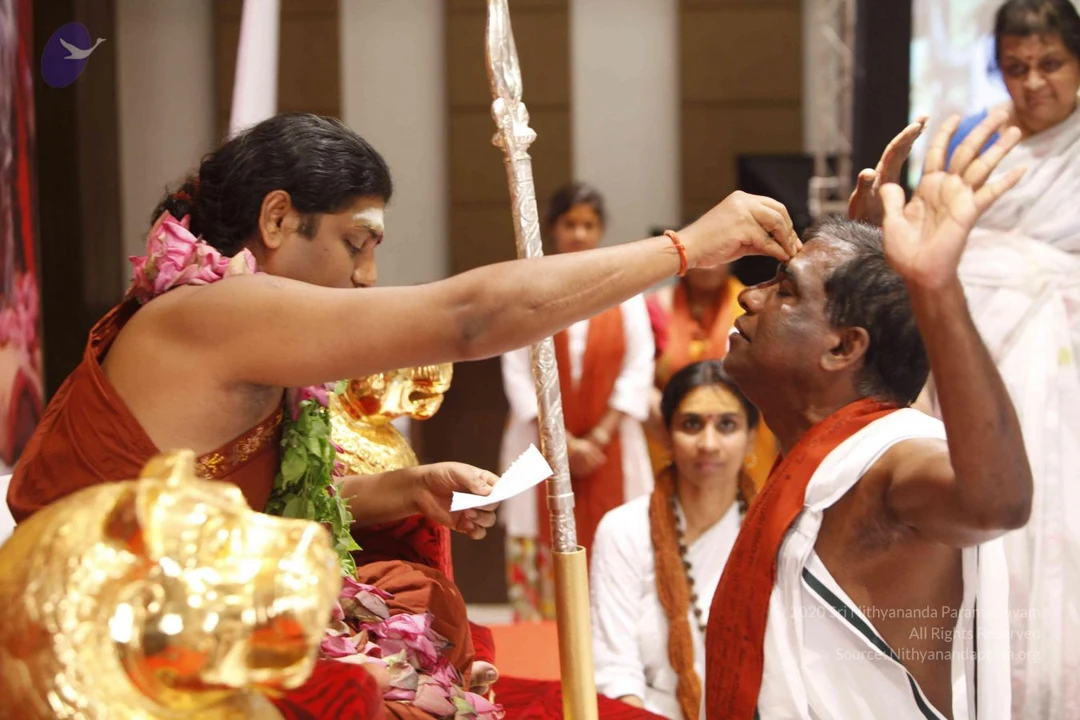
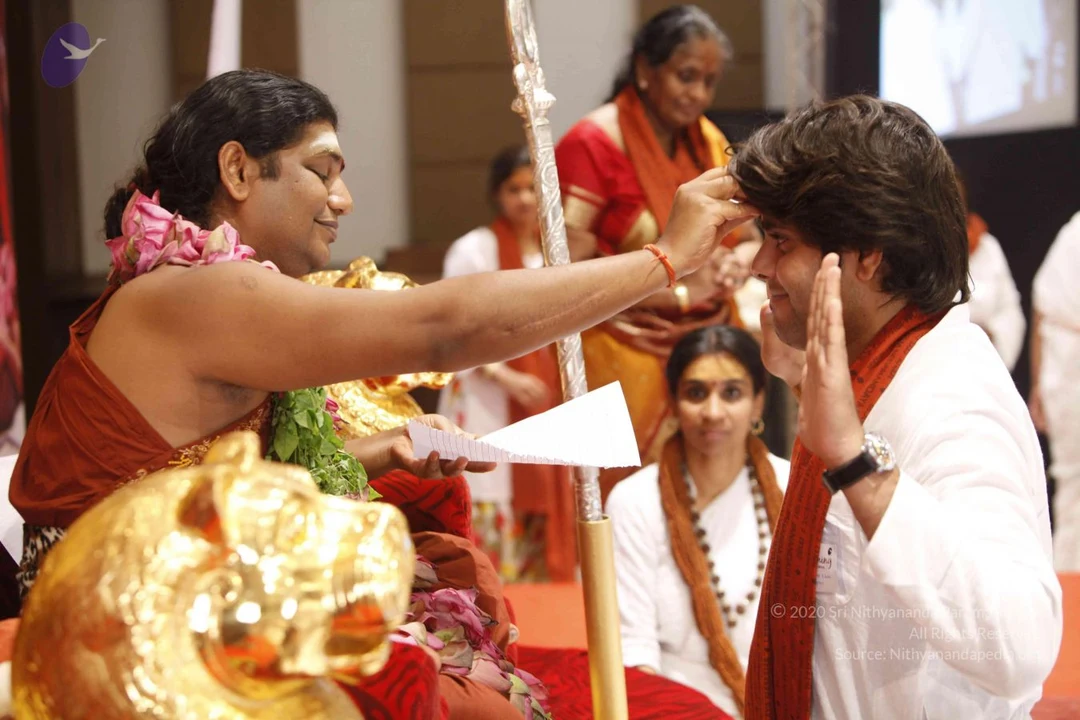
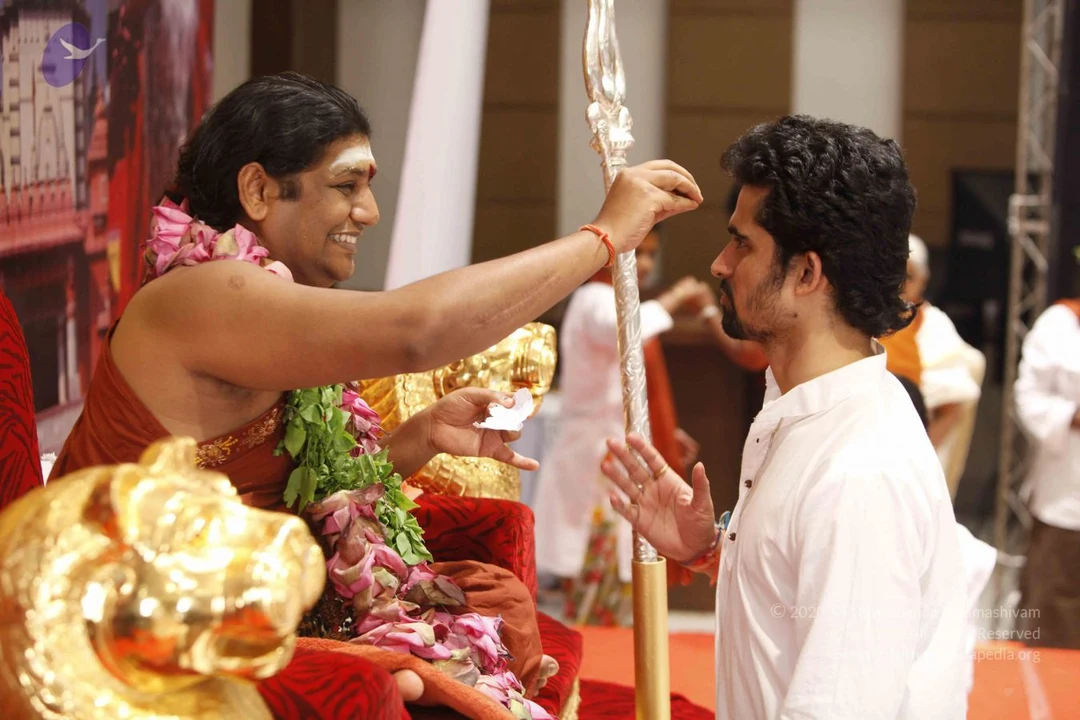
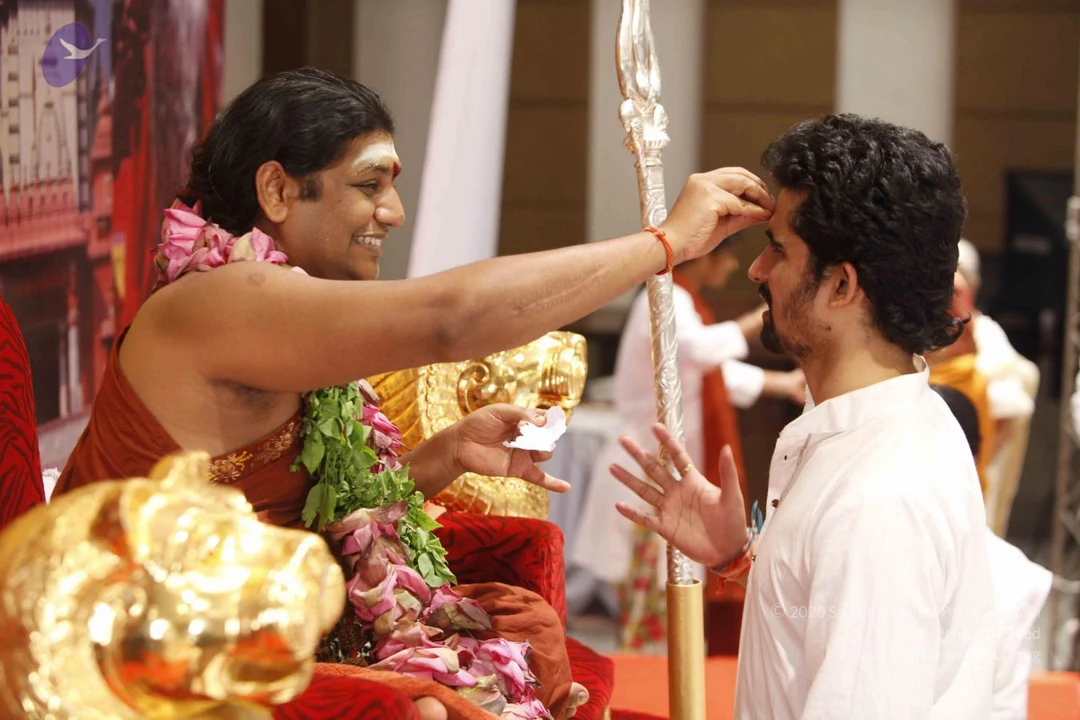
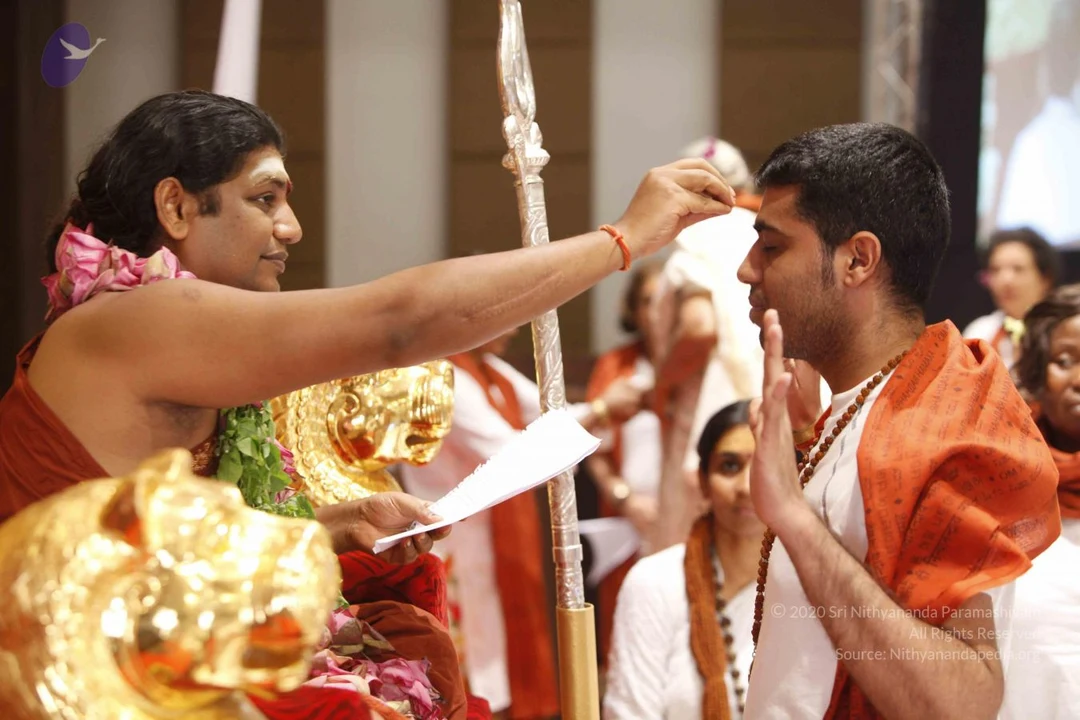
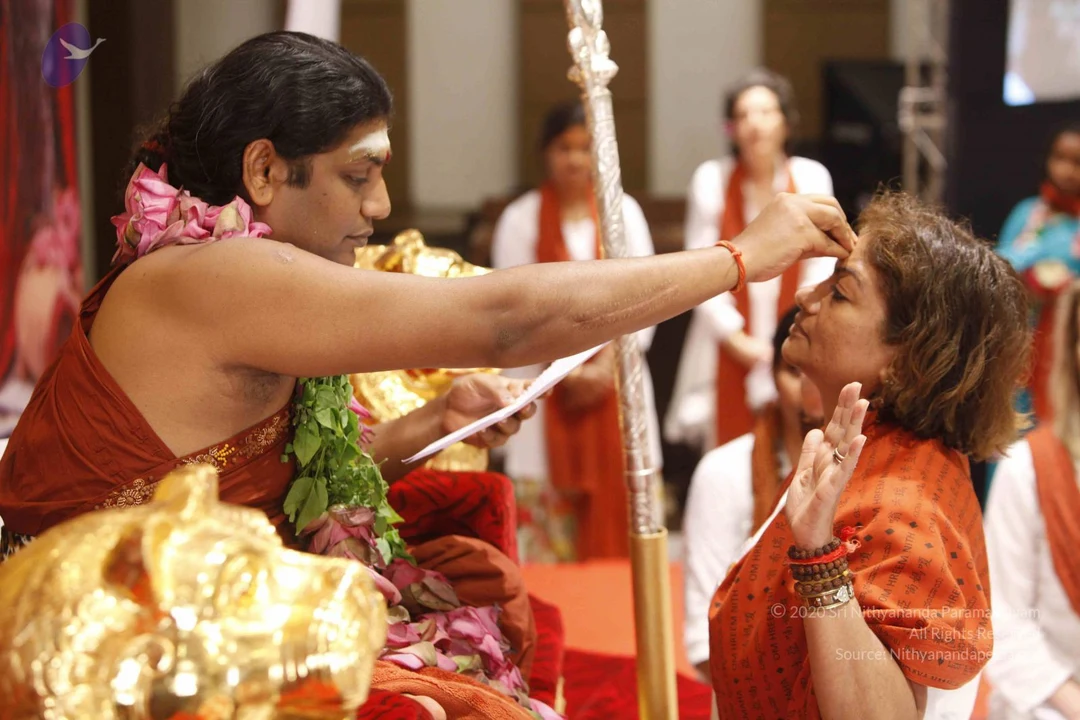
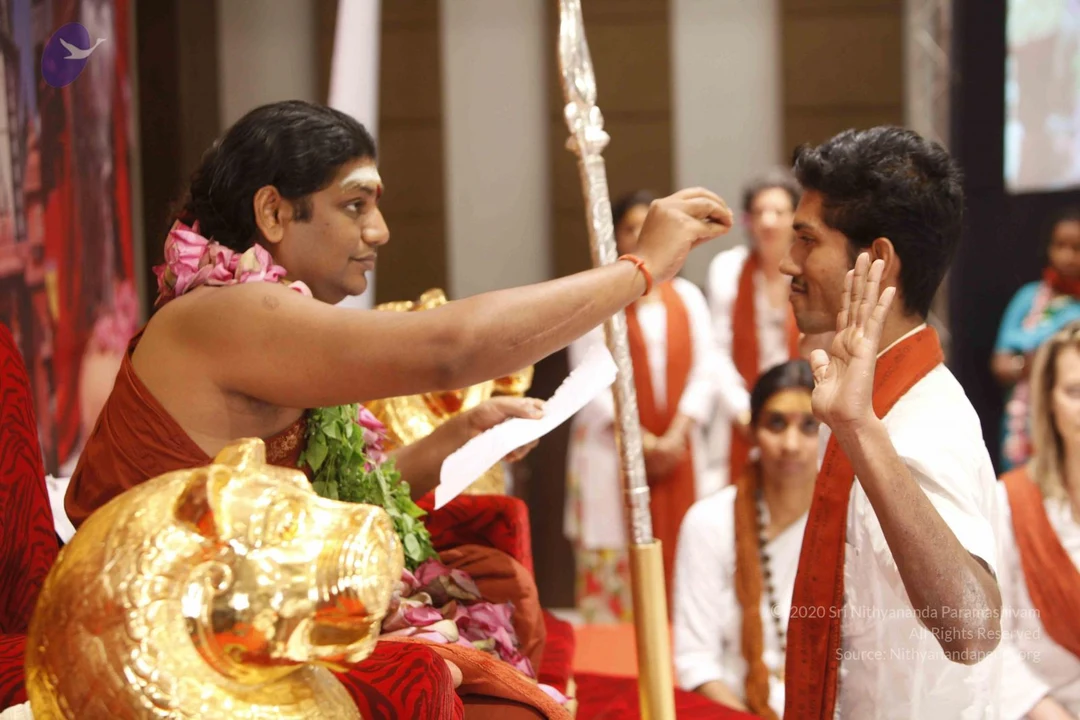
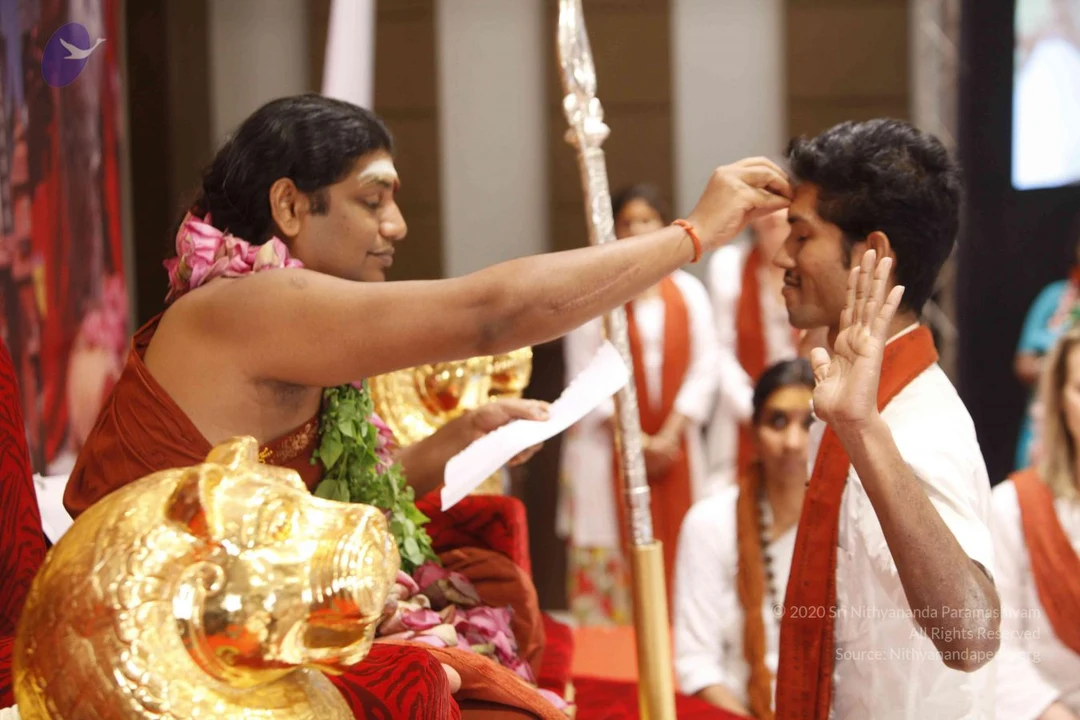
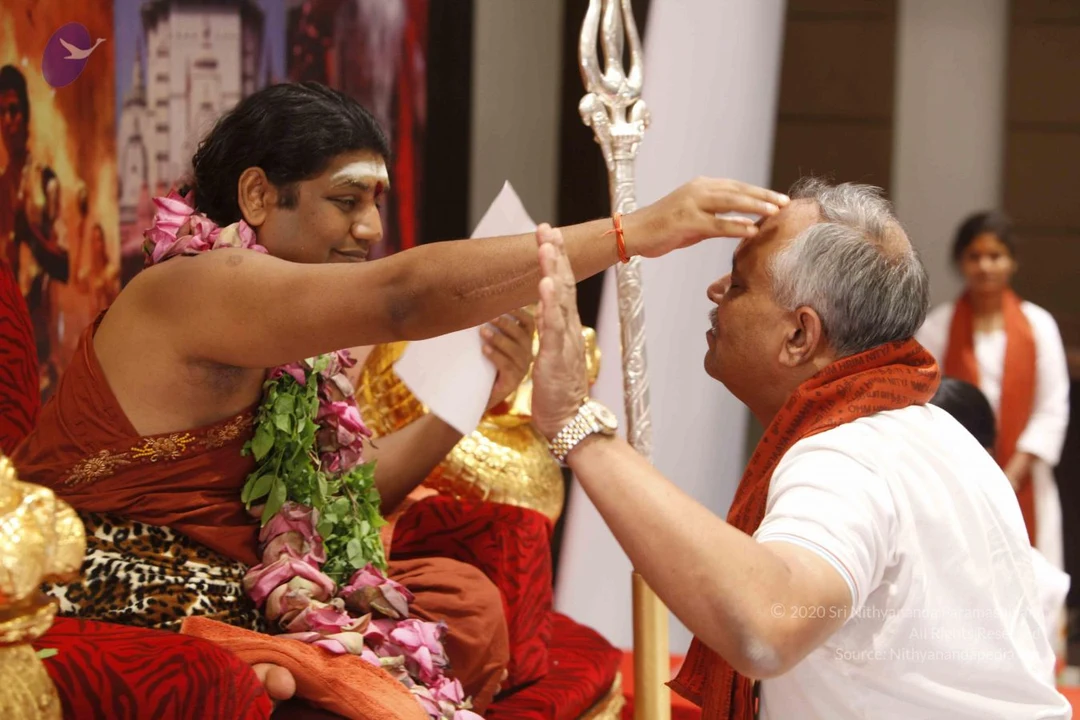
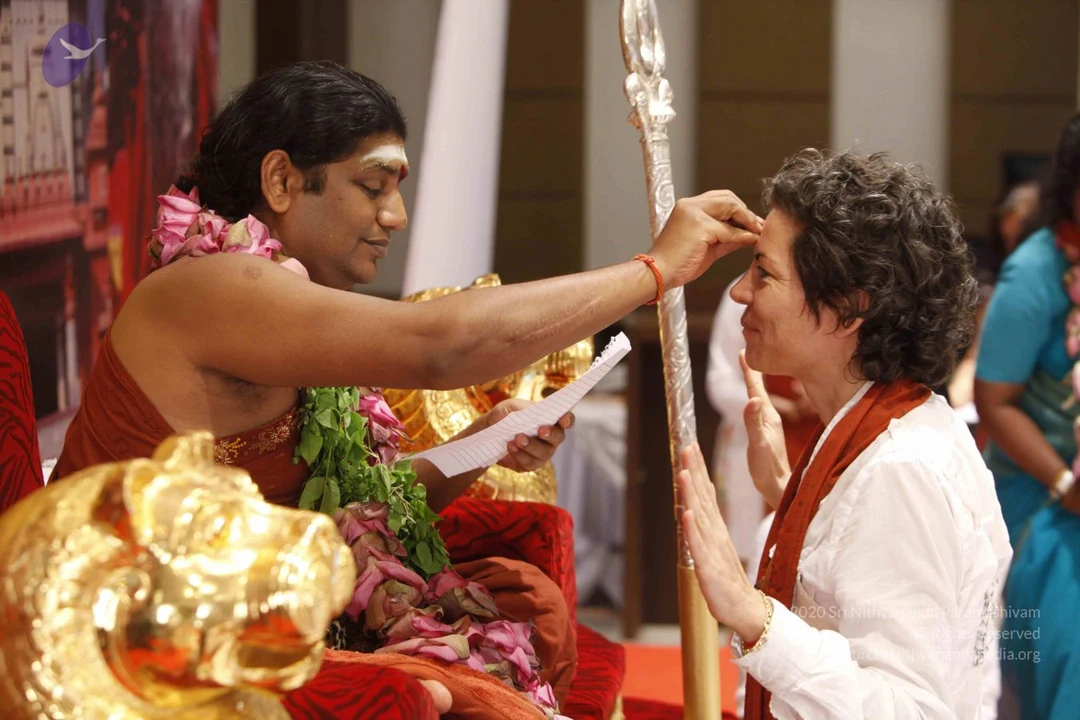
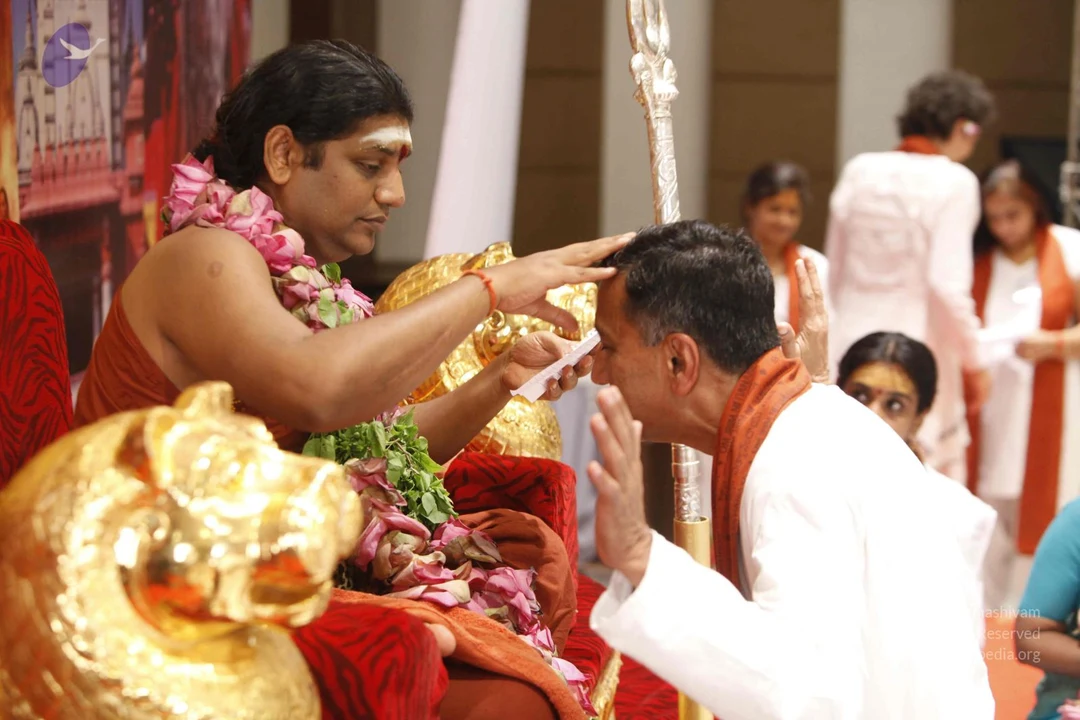
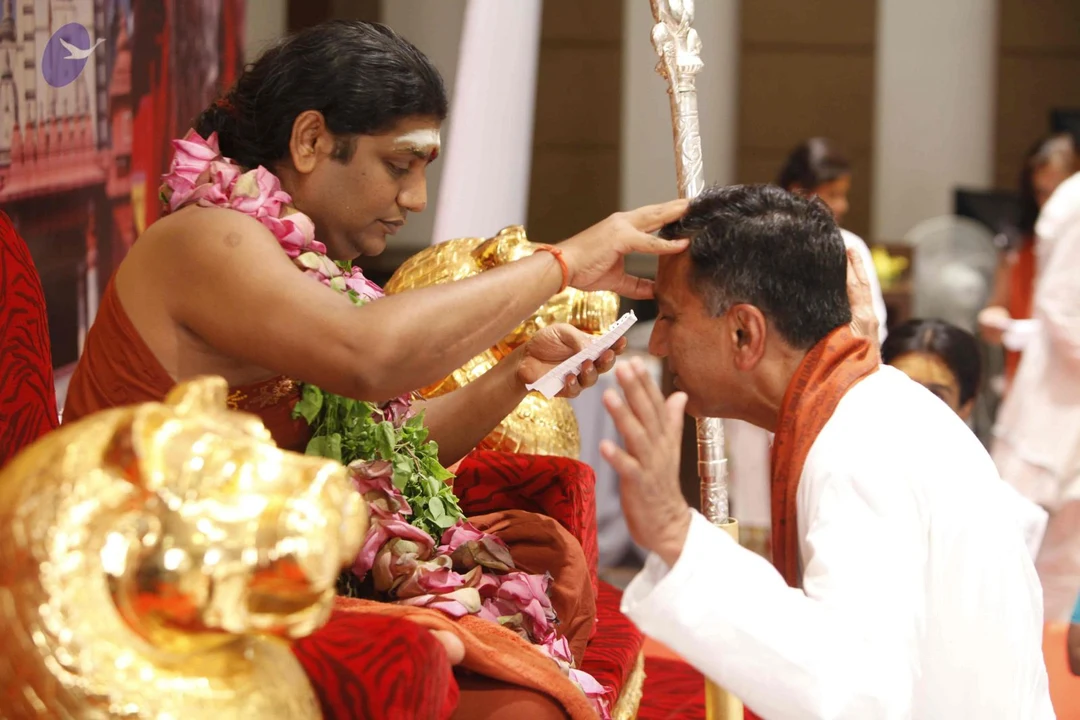
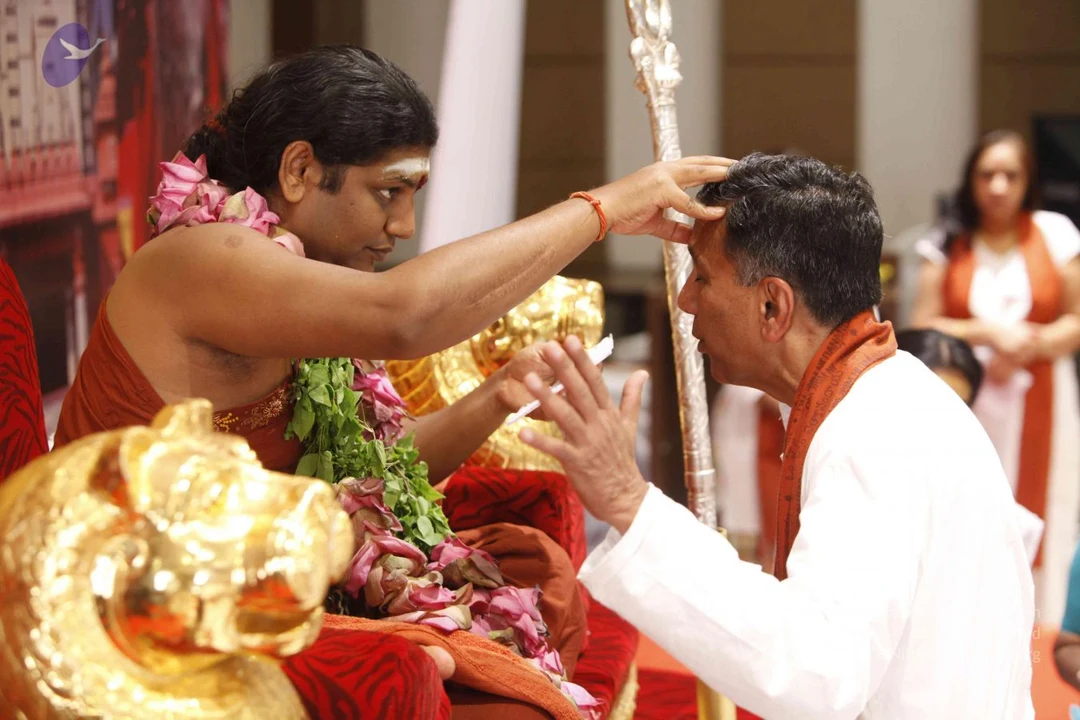
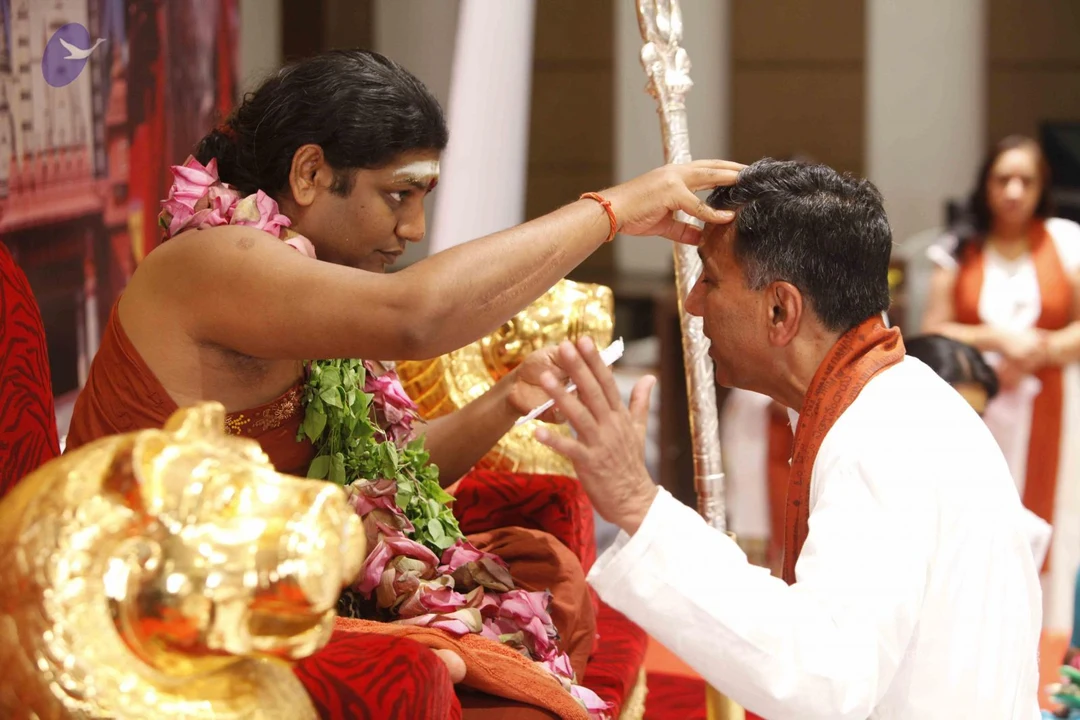
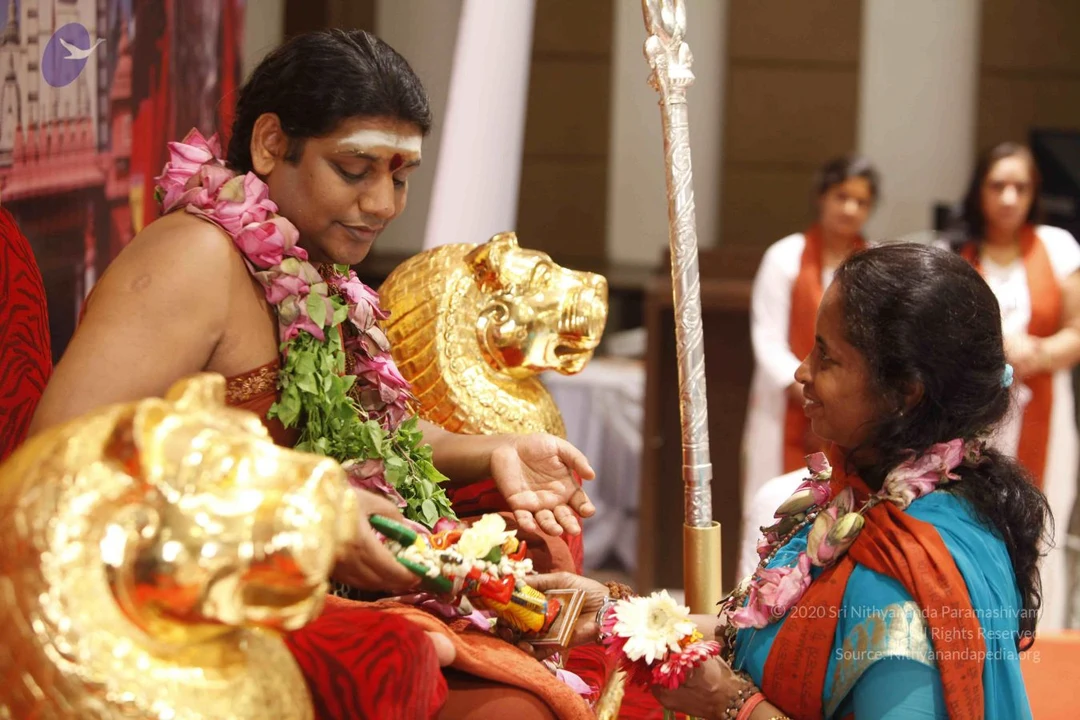
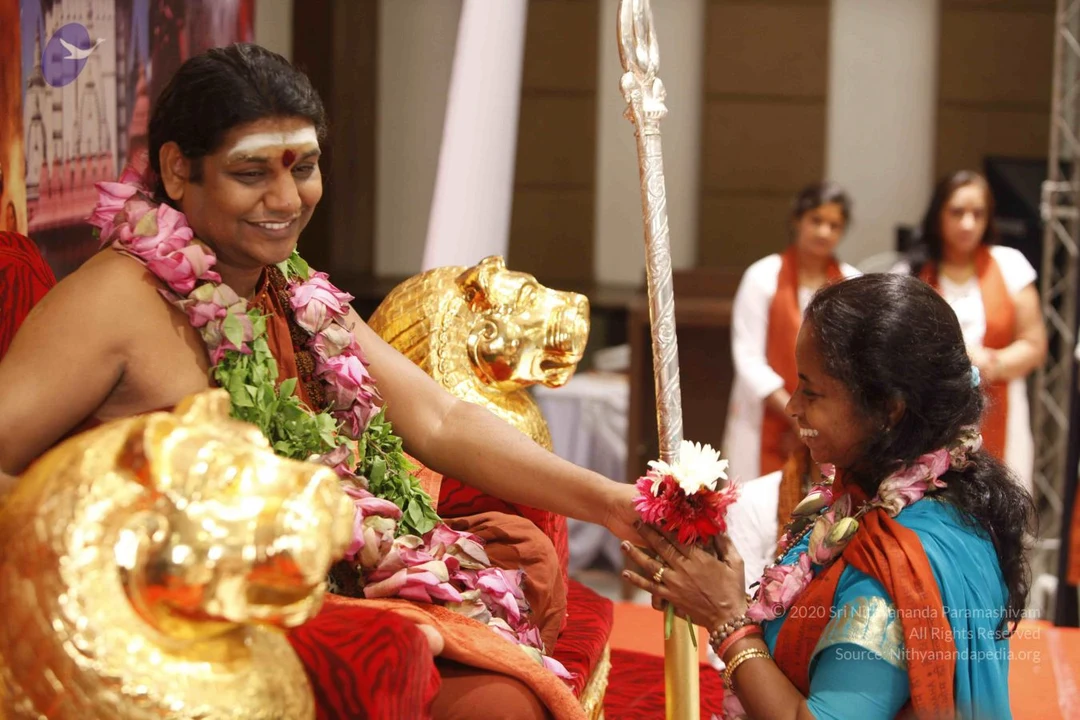
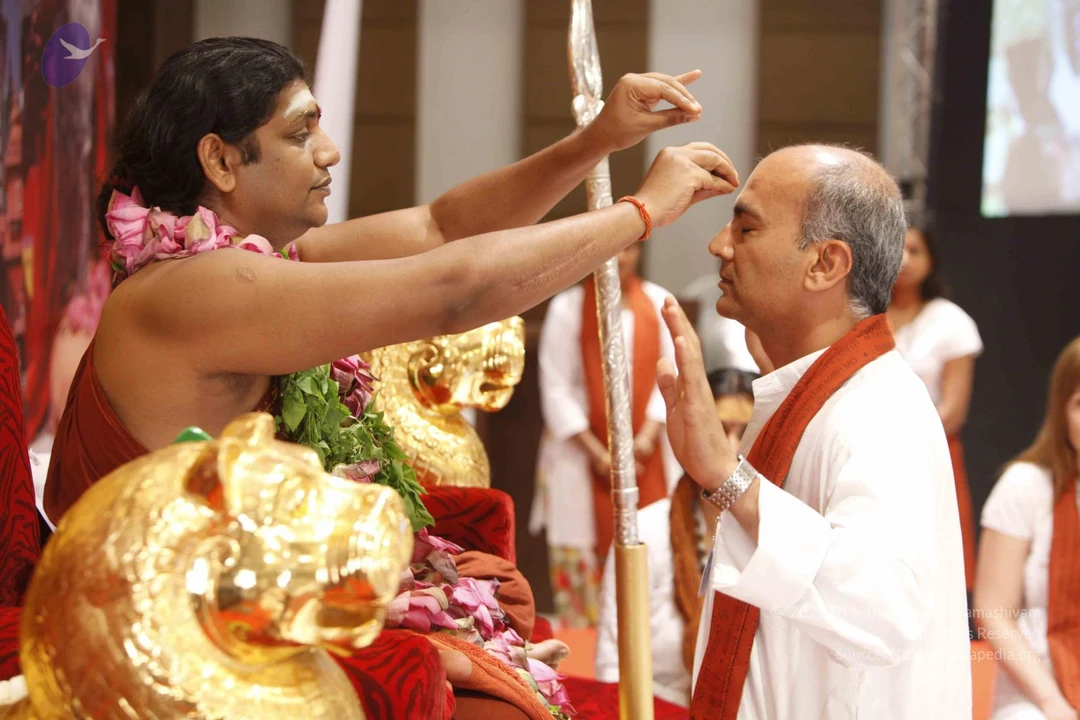
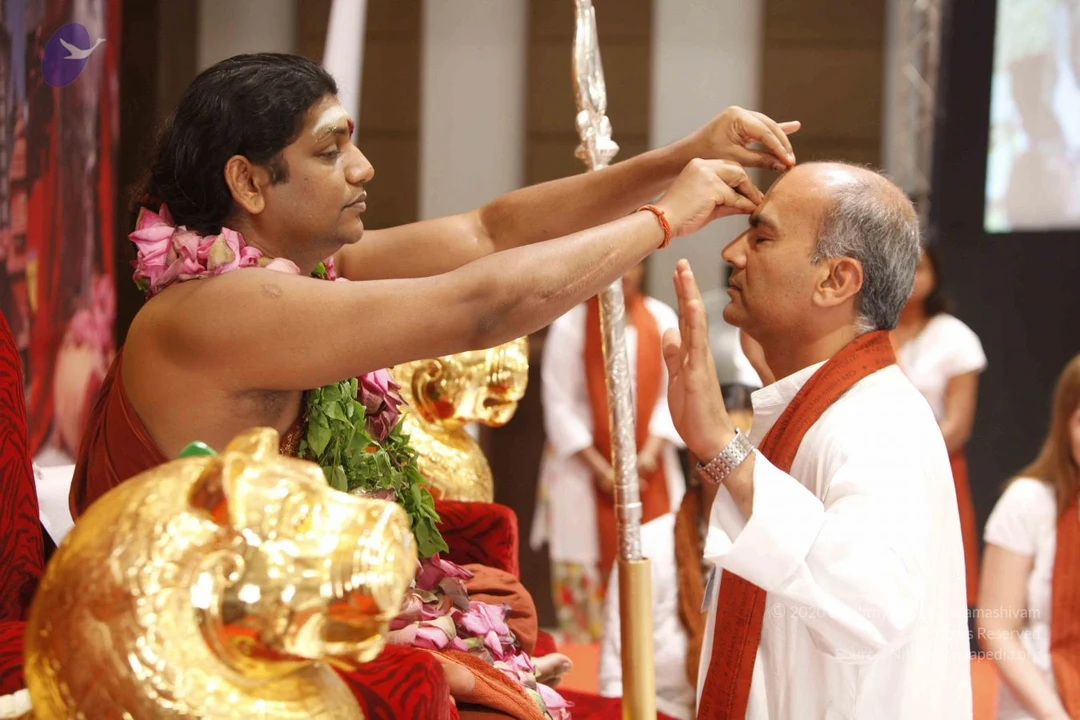
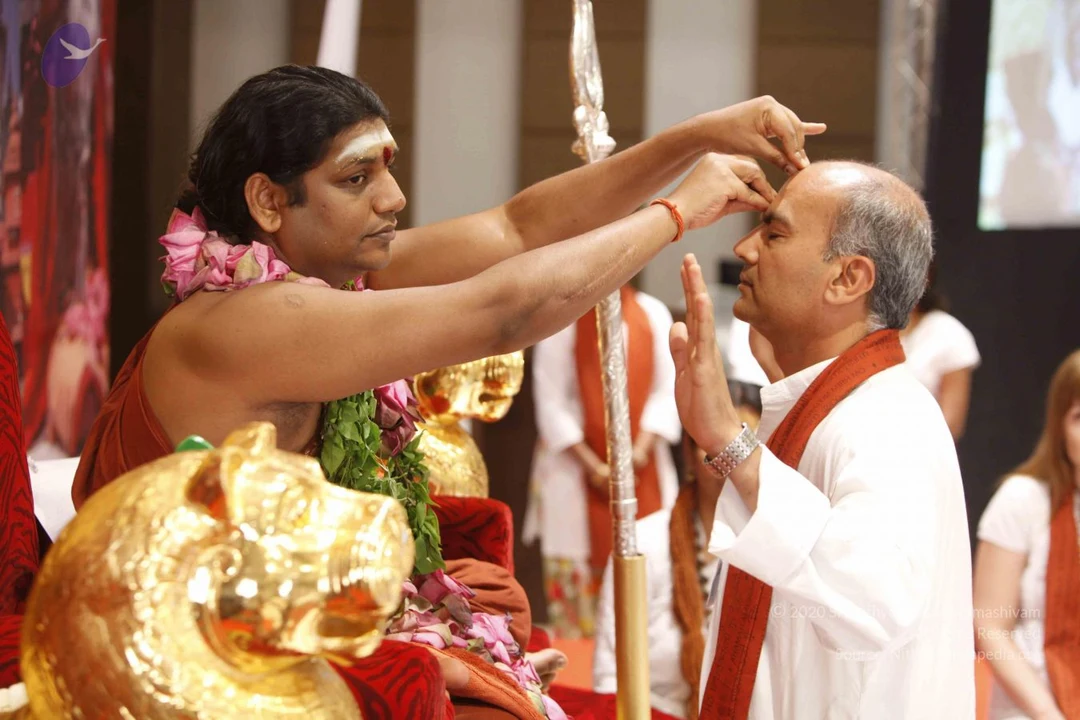
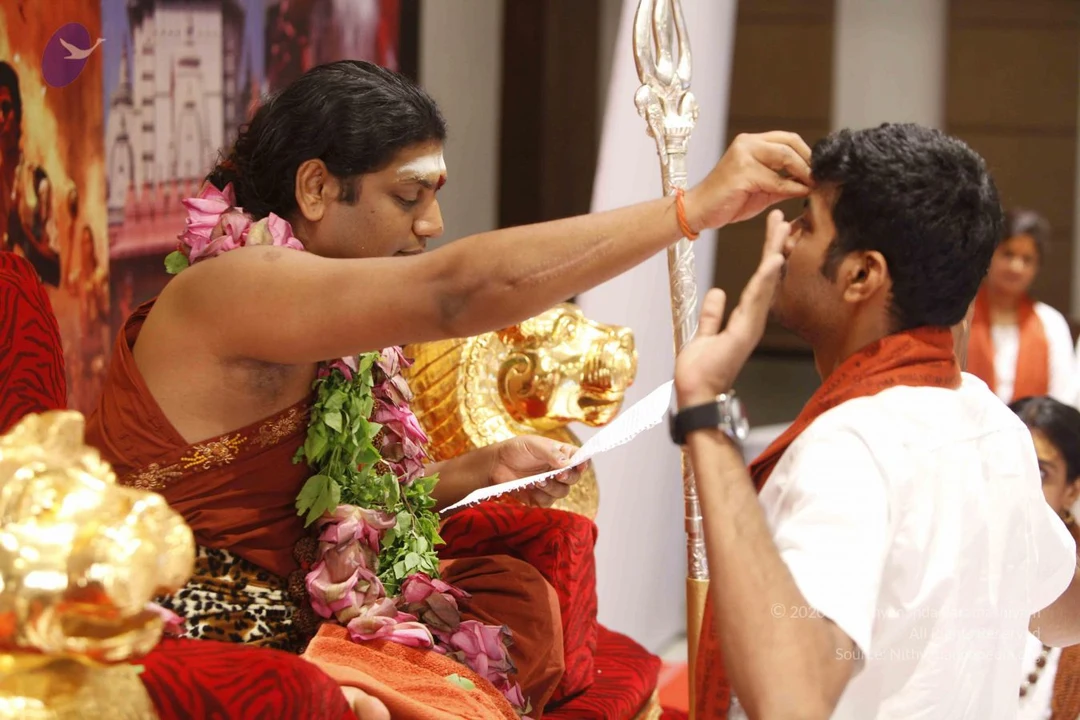
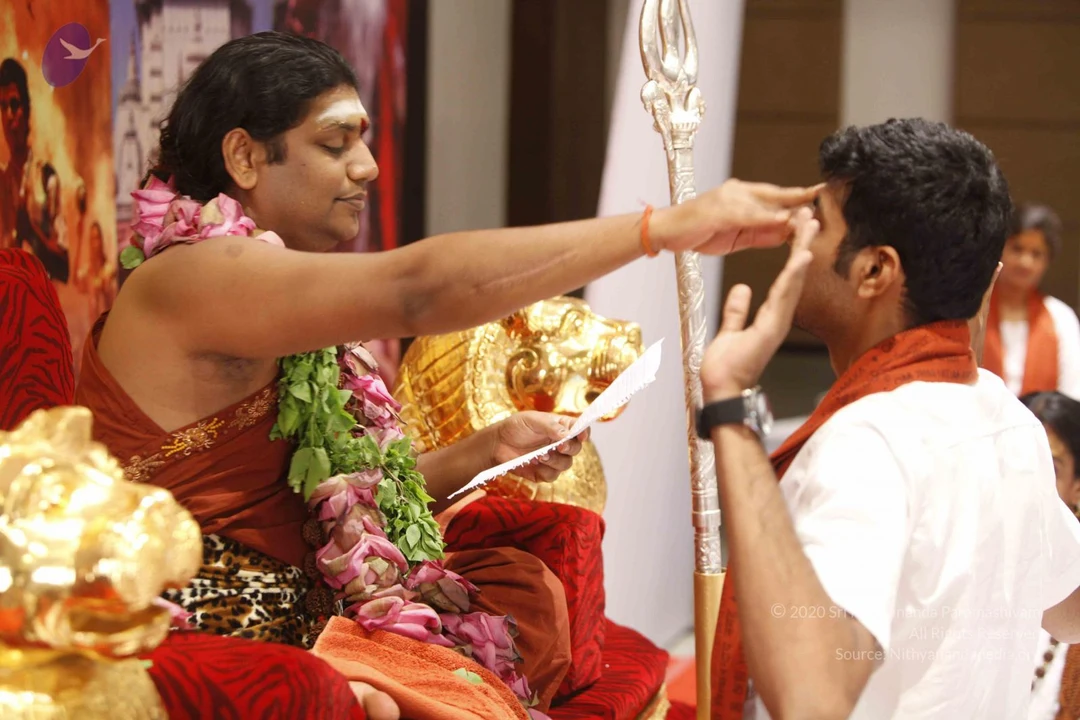
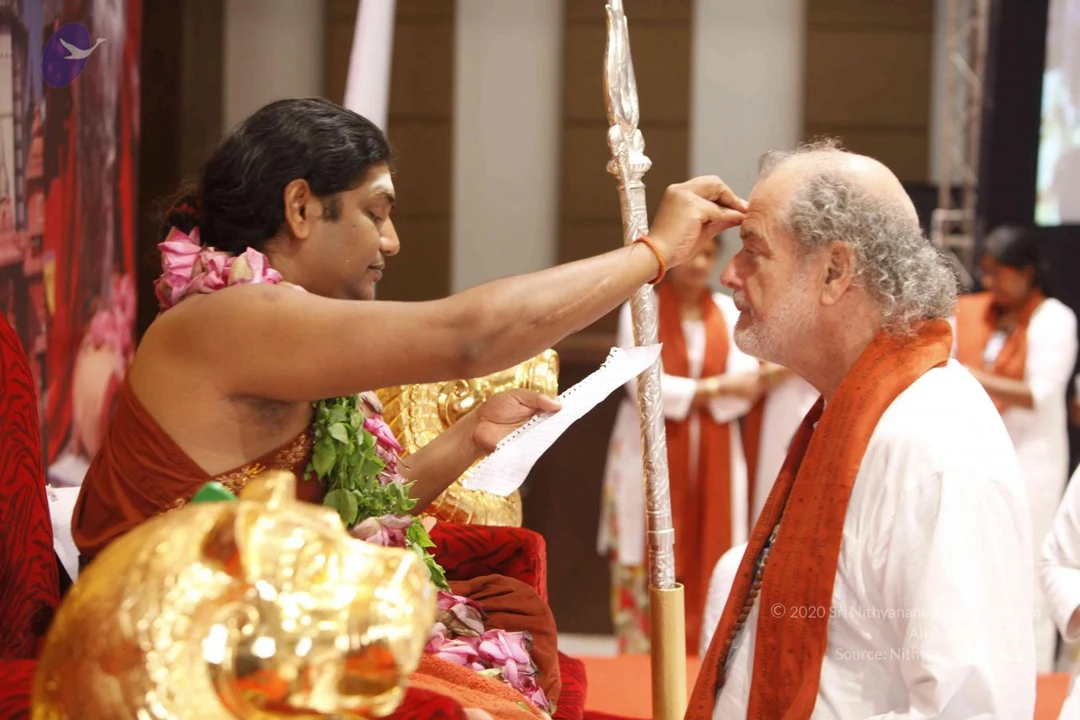
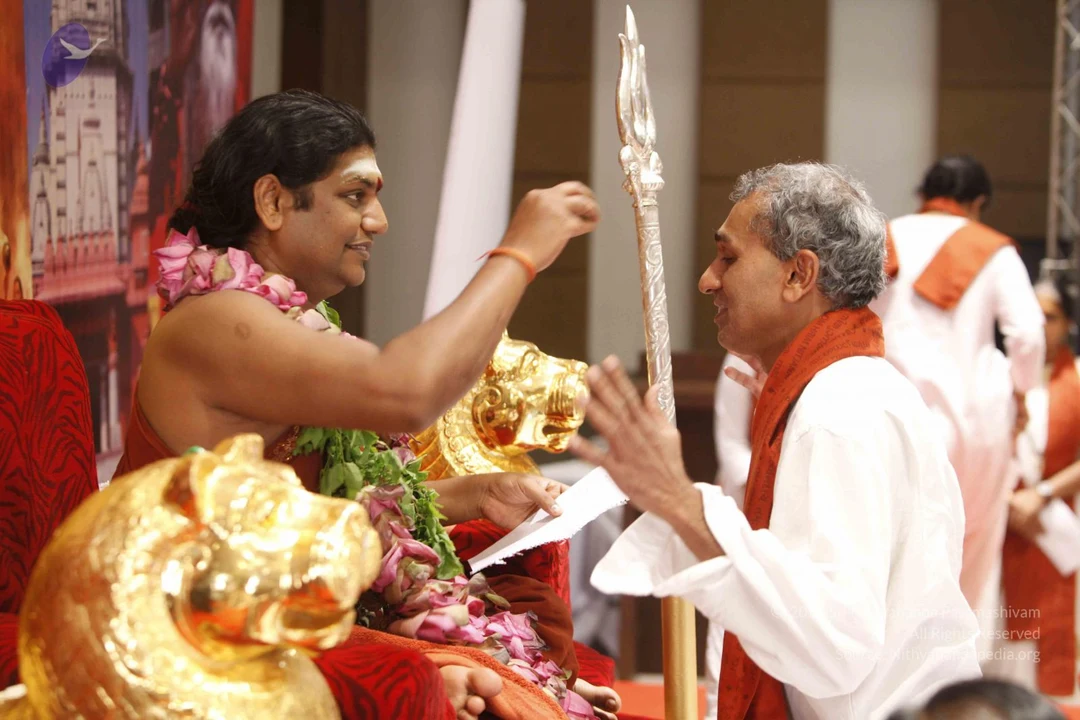
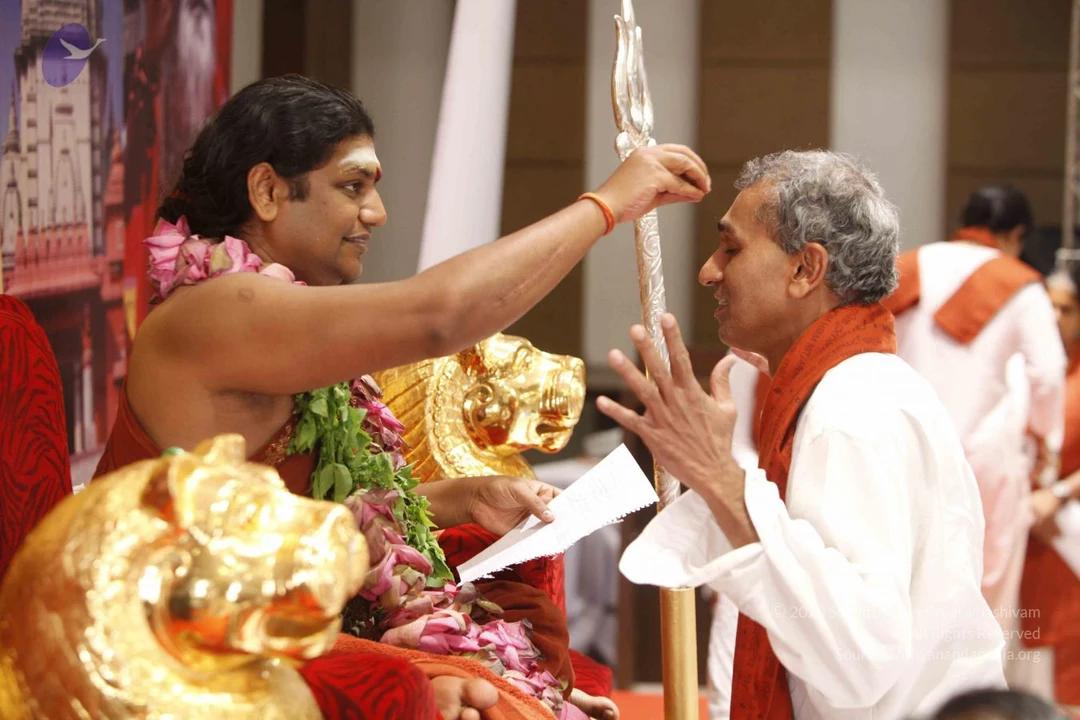
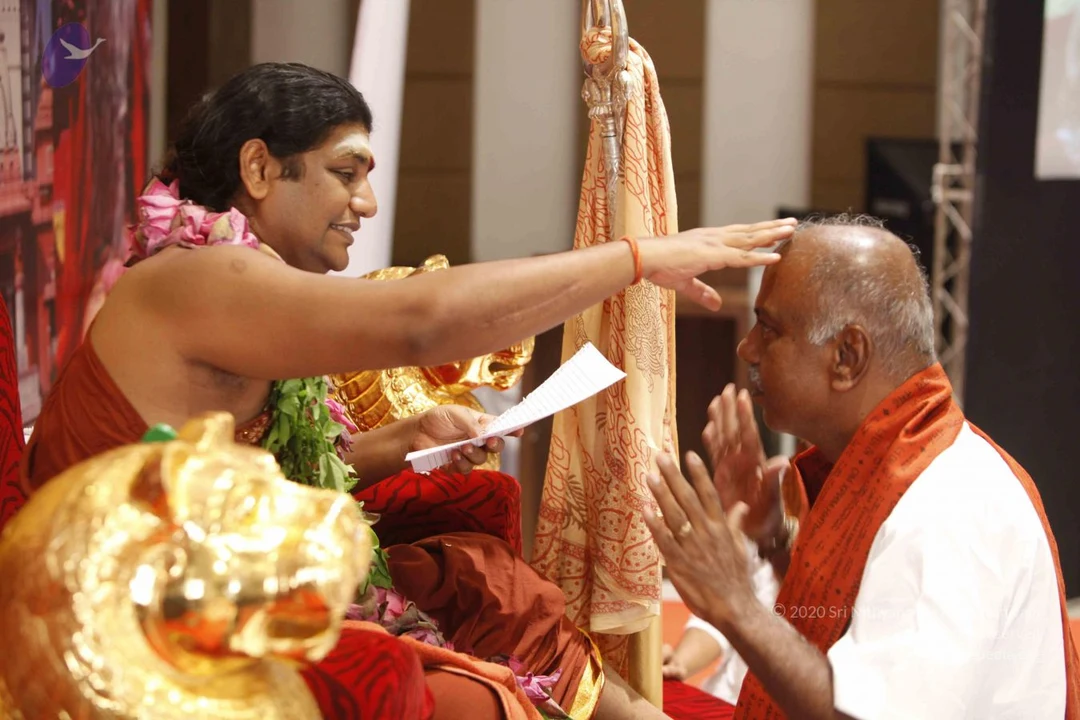
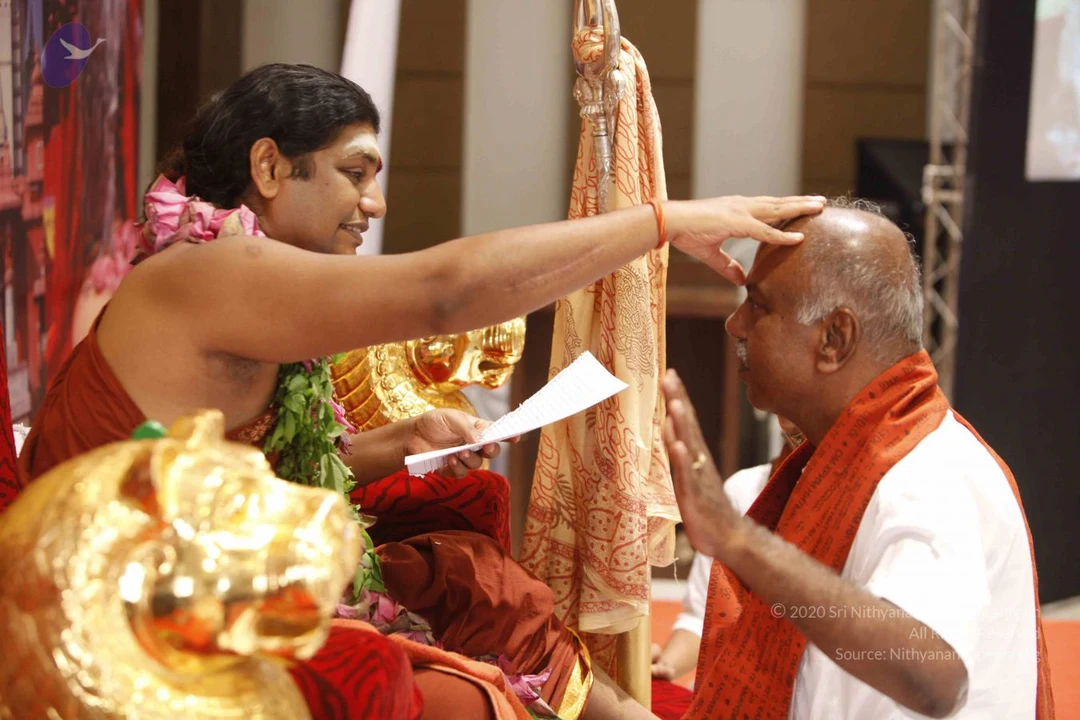
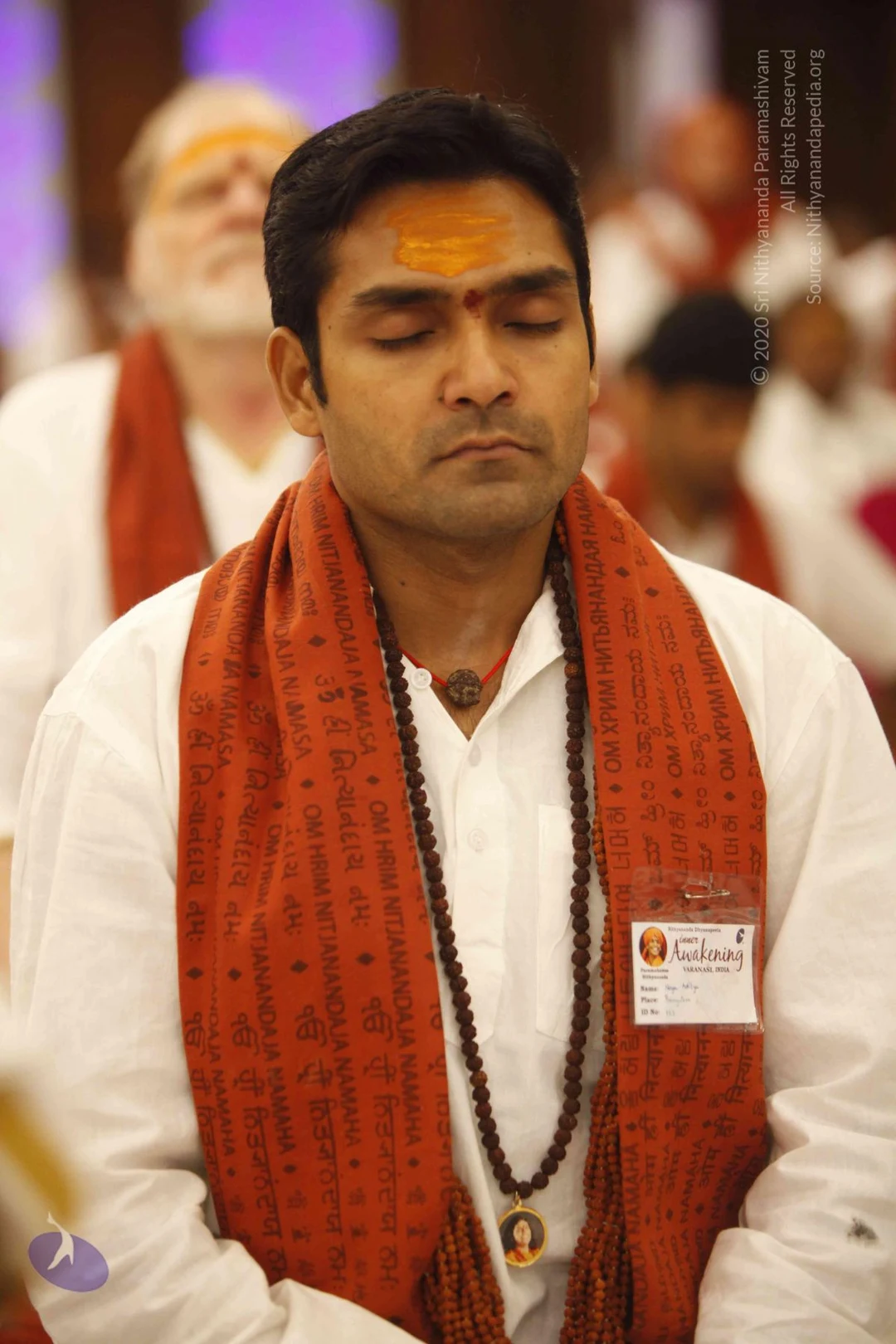
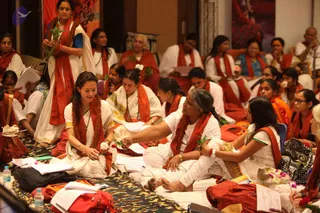
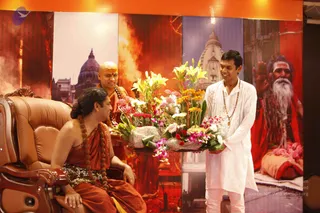
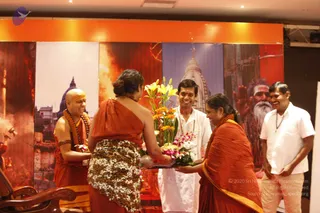
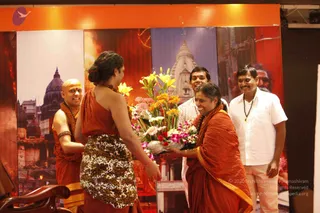
A smiling woman in a rust-orange sari with a beaded rudraksha-style mala and matching orange shawl holds a bouquet of yellow and magenta flowers, including gerbera daisies and orchids. Beside her on the left, a woman in a yellow-orange sari with flowers in her hair stands partly visible. On the right, a smiling shaved-headed man in an orange-brown robe and dark beaded mala stands in a doorway with a sandalwood-coloured forehead mark. The setting is an indoor wooden-panelled room with pale walls.A man in white ritual clothes with an orange shawl stands at right, palm raised, facing a seated figure at left. The seated figure wears an orange-red garment and a garland of pink flowers and green leaves, with a white tilak on the forehead, and holds a folded white paper. Beside him is a large gold-coloured deity murti with a peacock feather decoration, and a silver trident stands upright in the centre. Behind them, several people in white and orange robes sit or stand in an indoor hall with a red cushioned seat, and a screen is visible at upper right. Seated figures and devotees in white and saffron clothing surround the scene.A photograph of a large seated gathering of devotees in a meditation or satsang session in an indoor hall. Many people sit cross-legged or kneel on white floor cushions, dressed in white kurtas and dhotis with saffron-orange shawls draped over their shoulders. Several wear rudraksha malas and lanyard name badges. Some have eyes closed in meditation, and a few have forehead markings. Ornate red chairs and a wall are visible in the background. No individual is clearly identifiable as a person from appearance in this view, so no candidate is marked.

May 11 2014

Original wiki page
Contents

Title:

Life Bliss Meditation

Description:

In today’s morning Satsang from Varanasi, Paramahamsa Nithyananda introduced the powerful meditation NithyaDhyan or life Bliss Meditation. He explained that Living Advaitha is possible by living in perpetual completion. In Nithya Dhyan al lthe best methodologies are used to awaken the non-mechanical parts of the brain which put you into a state of restful awareness or being sure about you. When you are permanently sure about you this is perpetual completion or living Advaitha.

Link to Video:

VideoAudio

Transcript:

Nithyanandeshwara Samaarambhaam

Nithyanandeshwari Madhyamaam |

Asmath Aachaarya Paryanthaam

Vandhey Guru Paramparaam ||

I welcome all the participants, devotees, disciples, who have come for this Webinar, special Webinar on Life Bliss Meditation – NITHYA DHYAAN. I welcome all the cities, centres, temples, universities, sitting with us all over the world, and all the participants of this Webinar through Nithyananda TV, Sadhna TV, and two-way video-conferencing. I thank sincerely all of you for taking your time and being here.

The cities sitting with us: Grow Yoga Studio-Columbus-Ohio, Ohio-Prayag, Nithyananda Nagaramu-Hyderabad, Nithyananda Nagara-Bidadi, Nithyananda Nagar-Tiruvannamalai, Nithyananda University-Los Angeles, Phoenix-Kanchipuram, San Jose-Madurai, St. Louis-Tirumala, Washington DC-Sripuram, Vancouver-Bhubaneshwar, Toronto-Kailasam, Singapore-Singapuram, Hyderabad-Gupta Kashi, Charlotte-Srisailam, New York-Varanasi, San Diego-Tirualavai, Killinochchi-Ilangai, Scottsdale-Arizona, Port Washington-New York, Slovakia-Shivaloka, Philip Island-Australia, Mill Valley-Vairavan Koil, Dubai-Vaidyanatham, Auckland-New Zealand, Chicago-Srirangam, Dakota Dunes, Calgary-Amarnath, New Zealand-Adi Arunachalam, Tuen Mun-Hong Kong, Gyaneshwor-Nepal, Klang-Malaysia, Johns Creek-Georgia, Oakland-California, Colorado Springs-USA, Life Bliss Studio-Kajang-Malaysia, Guadeloupe-Rameshwaram, Toronto-Kailasam.

I welcome all of you with my love and respects.

First, before starting the satsangh, I wanted to wish you all Happy Mothers’ Day!

I would like to make few statements, the sacred secrets of life, before entering into today’s Webinar.

First, life starts with Completion with yourself. When you achieve Complete Completion with yourself, you open yourself, you are ready for Completion with others. When you are completely complete with yourself and others, you are living enlightenment.

Please understand, living Advaitha, living enlightenment, living that non-dual consciousness, the perpetual Completion, perpetual space of possibility, all this is simply possible. It is possible! The Vedic tradition gives so many methods, techniques, using verbalization, visualization, awakening of the non-mechanical parts of the brain, using Yoga, Kriya, using various breathing methods, balancing your body, balancing the mind, using the intranalyzing process, through various methods, the Vedic tradition teaches us to experience the truth of living Advaitha, living enlightenment, living in the perpetual Completion state, living in perpetual Upanishad, living in the space of perpetual possibility.

All of you may be aware, last three months I am giving a series of discourses on living the non-dual consciousness, the practical way, the most practical way, making the non-dual consciousness as your every-day reality, making the non-dual consciousness as every-day reality. Today, I am going to share with you all a powerful technique and process where all the best methodologies used in Vedic tradition are used, all the tools are used to raise you and make you be established in the space of Complete Completion. Your Kundalini Shakthi, the inner potential energy is awakened through all the methodology – Yoga, Kriya, intranalyzing process, through everything that energy is awakened, that shakthi is awakened. Using sounds, visualizations, intranalyzing process – in Sanskrit we have various words for all this – using all the possible tools, helping you to achieve the Complete Completion, awakening the non-mechanical parts of your brain and establishing yourself in eternal powerfulness.

Please understand, it is the way you feel about you, you will make others experience you. If you carry you with incompletions, naturally others will perceive you with incompletions. If you carry you with Complete Completion, whatever opinion with which they come near you, they will simply start experiencing Completion and go back with Complete Completion. Living Advaitha means living the non-dual consciousness. You are the source of your own Completion and you are the source of Completion for others. That space is achieved very easily, very quickly, if certain kriyas are practised along with intranalyzing. Please understand, just one method like balancing your body, or balancing your breath, balancing your visualization, intranalyzing, just one method may not be sufficient or quick enough to make the Complete Completion happen in you. That is why I am saying, all the tools available, all the methodology available in Vedic tradition; I have combined all of them, all the best things and created this process called Life Bliss Meditation. I wanted the whole world to know, this meditation only the permutation combination is my contribution. Otherwise the other tools are themselves are from Vedic tradition. Every step is from traditional Yogic, Vedic scriptures. I experienced it in my life and I am sharing it.

This meditation is like a dose of happiness for you every day, understand. Every day when you infuse happiness in you, you achieve bliss, and you also need to know, there is no method to directly jump into bliss other than infusing happiness every day. It is like eternal happiness only becomes bliss. When the happiness settles in you as a layer after layer after layer, it becomes bliss. This meditation, the Life Bliss Meditation, Nithya Dhyaan, is equalant to every-day happiness dose. And it also brings you back every day to your original living enlightenment space, the amount of energy, intelligence, clarity it brings.

The person who creates a formula to reproduce the outer world experience is a “scientist”. The person who creates a formula to reproduce the inner world experience is “enlightened being”. Person who creates a process to mirror the ultimate neuron activities in his system is an “incarnation”. Please understand, Nithya Dhyaan is not just an ordinary kriya, it is not an ordinary meditation process. Even though I used tools from various yogic, Vedic scriptures, the permutation combination was such, it is organized such a way, it is not ordinary kriya or yoga or just pranayama. Like there are some medicines; if they are used separately, the effect is different; if they are used by combining, the effect is different. Because I combined all of them, the permutation combination was such, it is no more an ordinary technique or process or kriya; it is the ultimate alchemy to mirror the neuron activities of an incarnation.

An incarnation’s neuron activities are nothing but perpetual Completion, perpetual non-duality, perpetual ultimate possibility, perpetual possibility, perpetual non-doing. Listen. Please understand, I am using the word “non-doing”. The perpetual possibility is directly connected to perpetual non-doing. Please listen. Sometimes the perpetual non-doing happens because of your strong decision about nothing is possible. But here, the non-doing I am talking is because you are established in the possibility. A non-doer who is established in perpetual possibility is living enlightened. The non-doership of Ramana Maharshi can never be equated to the non-doership of a beggar in the street or a lazy man. The restful awareness which yogic scriptures, Vedic Upanishads describe happens by being in the perpetual space of possibility. I can say this Kriya which I am presenting, is the most powerful, most practical methodology, most powerful, most practical methodology to grow the enlightened consciousness in you, the space of perpetual possibility in you, whether it is in the field of health, the field of relationships, the field of wealth, the field of mental peace, above all feeling sure about yourself.

Please understand, in the modern day, one of the biggest crisis human-beings are facing is identity crisis. Probabilities are open, but brain is not prepared to experience possibility. Please listen. In next few years, our next generation kids are going to have the choice: the moment they grow up, they will have the choice, which country to live in, which language to speak, which religion to follow, which gender to be. All probabilities are going to be open for our next generation. Please understand, it can be a great possibility if our consciousness is prepared. If not, great calamity. Because when the choices go on increasing without you being sure about what you are, what you want, just the choices can kill you.

I have seen dilemma killing people. Dilemma kills more number of people than bondage, understand. The problem in the modern-day...modern-day slavery is not bondage; it is dilemma. Dilemma is much, much worse than any slavery. The root cause of dilemma is “not being sure about yourself”. Please understand, Happiness is “being sure about you for few moments”. Bliss is “being sure about you forever!” If I am asked what will be the first thing I want to attend on the Planet Earth, I’ll say, I won’t say “health”, I won’t say “mental health”, I won’t even say “spreading enlightenment”, I will say “helping human-beings to be sure about themselves!” This meditation, this process – Nithya Dhyaan, Life Bliss Meditation – first helps you to be sure about you. It helps you to be sure about you. What you want, what you want to become, what you want to be. Please understand every word has a different meaning. If you think all these words same meaning, you are confused! What you want, what you want to be, what you want to become, what you are. All these words have a complete different meanings, different meanings.

One of the important crisis we, this generation is going to face in next few years is too many choices in front of us. The choices will be so much, even if you think you are already 18, 17 but the choices are going to be so much and they are going to be presented in such a commercial way, even you may think of gender change. Don’t think you will not be swayed by the possibilities. I tell you unless you are sure about you, the dilemmas, you will be flooded by dilemmas. This only, this gender change is only one small example I am giving. The tons and tons of things life will be much more than any science fiction movie you have seen but please understand it is the choices which are responsible for depression terrorism which West is suffering. Please understand, this is the word I will use – “depression terrorism”. It is terrorism; creating a lifestyle where people will be depressed is terrorism, which is being practiced in many of the so-called developed countries. People are just kept in the mode of eating and shopping.

Please understand, being sure about yourself is the most important thing in the life. Above all, experiencing the space of enlightenment. I’ll describe this word “enlightenment” as “living in the space of perpetual possibility”. First I need to assure you, with integrity and authenticity I am telling you, the perpetual possibility is possible. Because you constantly experience, you are brainwashed, to believe the impossibility; because the moment man starts believing impossibility, he will start demanding his rights. Man who believes everything is possible cannot be controlled, manipulated. Society wants you to believe strongly the idea of impossibility so that you can be manipulated, you can be controlled, you can be controlled, you can be manipulated. So please understand, the first and foremost thing a human-being should do to himself is being sure about himself, being sure about you and understanding living in the perpetual possibility is possible, living in perpetual possibility is possible. The perpetual possibility, perpetual Completion, perpetual Upanishad, perpetually living enlightenment is possible. This is what I call the DNA of all the great enlightened Masters. That programming can grow in you through this Life Bliss Meditation, Nithya Dhyaan.

Please understand, yesterday I was expanding the DNA of the Masters, enlightened Masters from Buddha to J. KrKrishnamurti I was expanding on the DNA of enlightened Masters. Today what I am sharing with you all, this Life Bliss Meditation, Nithya Dhyaan, will give you the experience of that DNA of enlightened beings. And this process when it is done every day makes the DNA of enlightenment grow in your system. You will experience the restful awareness, the experience of non-doing among all your doing. Please understand, when I say “non-doing”, I don’t mean lying down lazily; I mean enjoying the restful awareness of non-doing amidst doing everything!

Nithya Dhyaan is like coming to terms with reality. Please understand, constantly we try to build our life on doing from the context of delusion. Please understand, whether doing or non-doing, if it is from the context of delusion, it will lead to more and more incompletion, you will be moved away from the reality. Whether doing or non-doing, when it is from the context of reality, you will be more and more complete. From the context of reality if you are in the space of doing or non-doing, whether you are in the space of doing or non-doing, you will become more and more complete. This meditation, Nithya Dhyaan, Life Bliss Meditation, is like every-day happiness dose, leads you to Complete Completion with yourself, makes you a source of Completion for others. Whoever you meet in your life, they will all experience you as source of their Completion. Whoever you meet, you will go on be completing all of them, leading all of them into the space of Completion.

Essence of today’s Webinar, what I wanted to convey:

Please do this meditation process which I am going to teach you now, Kriya which I am going to teach you now, which mirrors the ultimate neuron activities, the ultimate neuron activities of an incarnation in your brain. Do this process at least once a day. It is just forty-two minutes. I tell you these forty-two minutes will not be expense, it will only be an investment for you; because, it is like every day upgrading yourself to the peak possibility, perpetual Completion, perpetual possibility. I will be leading you all into the process in next few minutes. Before that I want you to understand the power of this process which leads you to perpetual Completion, the perpetual restful awareness, perpetual fulfilment, perpetual Upanishad.

So, get ready, make yourself comfortable. I’ll start this Nithya Dhyaan, the ultimate meditation process to help you to mirror the neuron activities of the peak possibility.

We will now move to the meditation process.

Life Bliss Meditation, the meditation process which creates the perpetual Completion in your system.

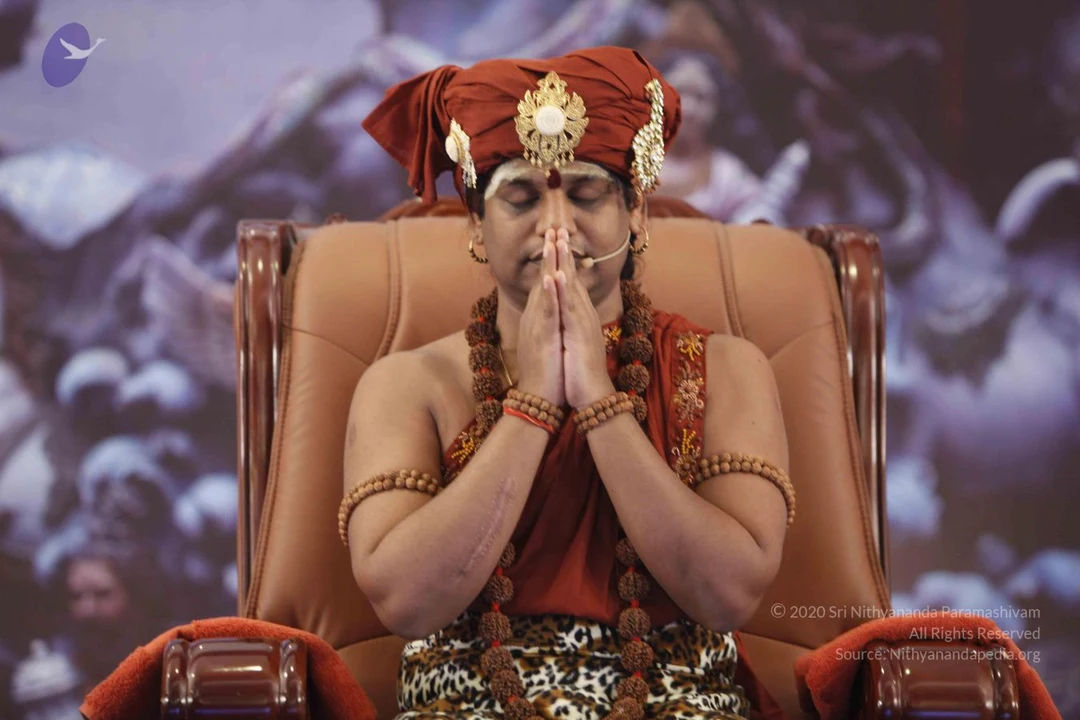
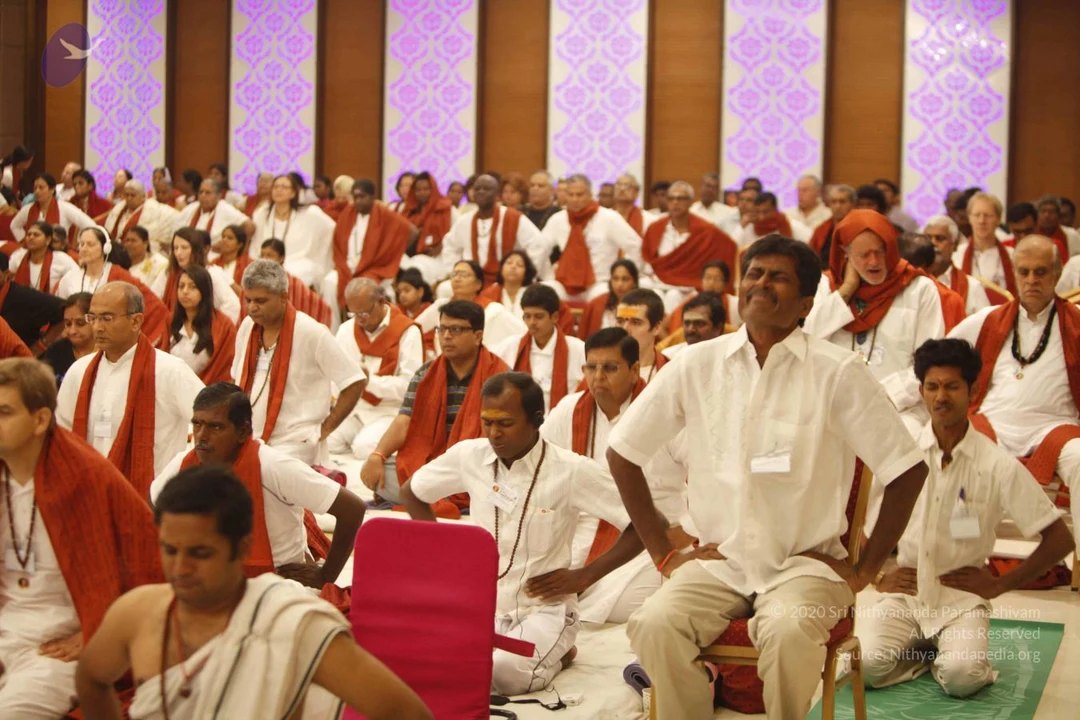
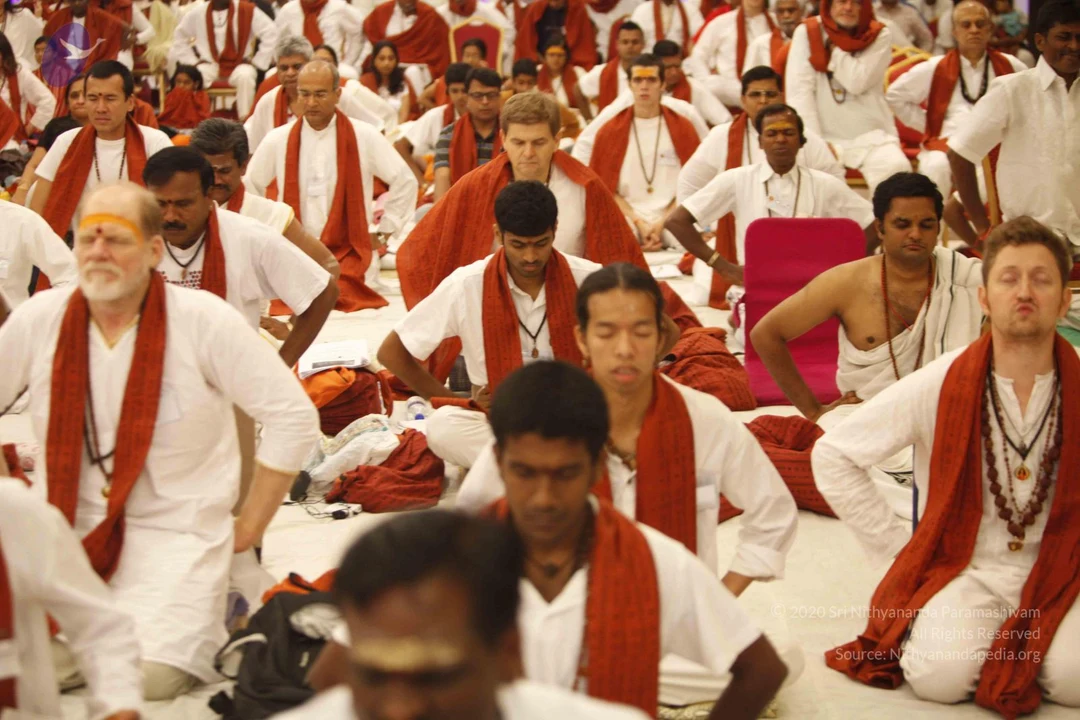
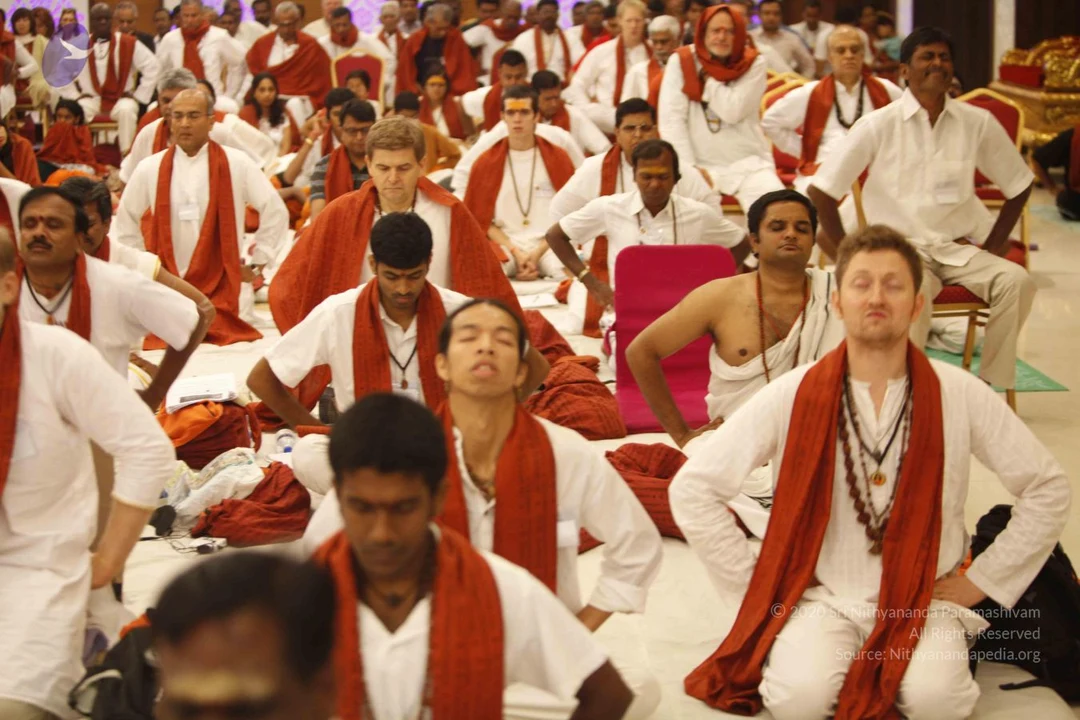
The first step, please understand, first step of the process is “CHAOTIC BREATHING”. Means, awakening and raising the prana, life energy level in your body to its peak possibility. It is a most dynamic aspect. You can put your hand on the hip and start breathing as deeply as possible and as powerfully as possible. It is like hyperventilating; that’s all; nothing else; hyperventilating, I can show you. Use your whole body to breathe.

The first step is just seven minutes. If you want, you can sit on your heels with knees and feet together in Vajarasana, or you can sit comfortably; but use your whole body and breathe!

I bless you all! Let you all radiate with Integrity, Authenticity, Responsibility, Enriching and Causing eternal bliss, Nithyananda. Thank you.

Photos From The Day:
Tags:

Varanasi, Paramahamsa Nithyananda, powerful, meditation, Nithya Dhyan, Life Bliss Meditation, Living Advaitha, perpetual completion, non-mechanical parts of the brain, restful awareness, being sure about you.

Photos Of The Day:

Padapuja
satsang_kalpatharu

IA_Darshan

Photos Of The Day:

Inner-Awakening

Photos from this day

View all 263 photos

Photos From The Day:

4 photosSource gallery
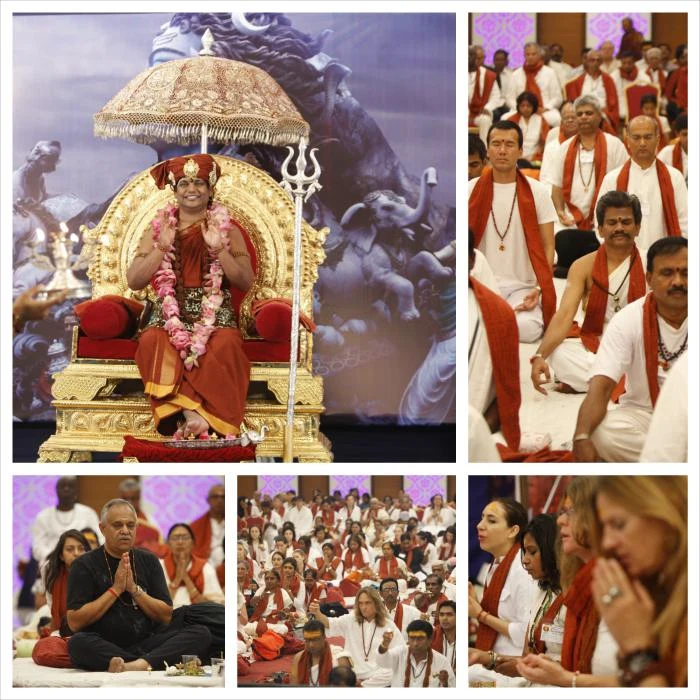
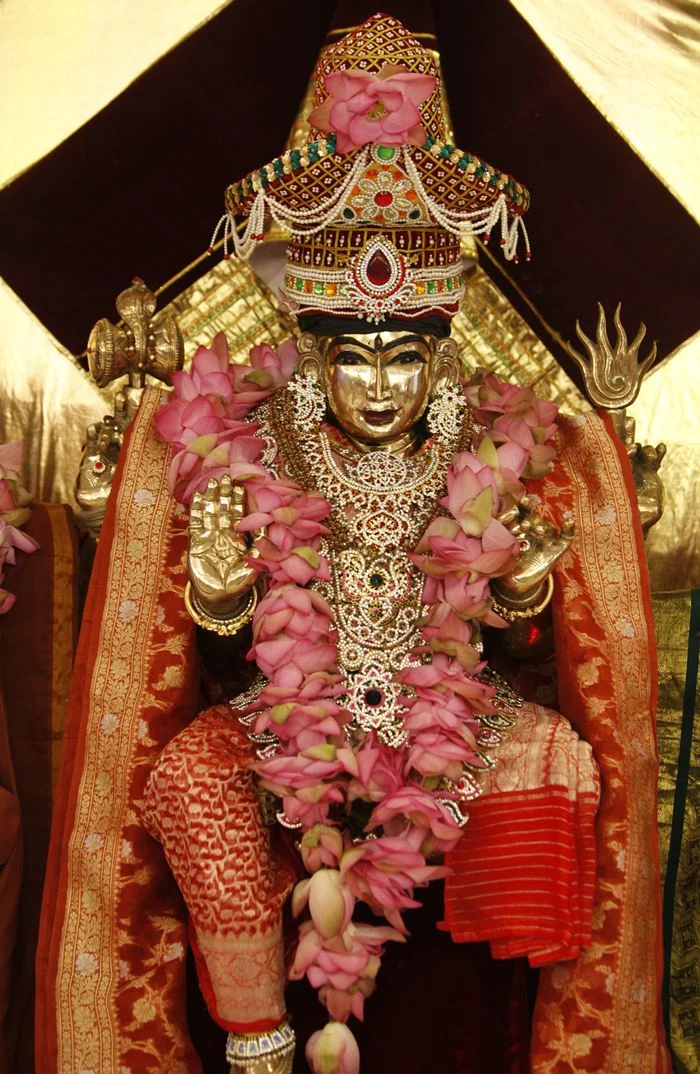
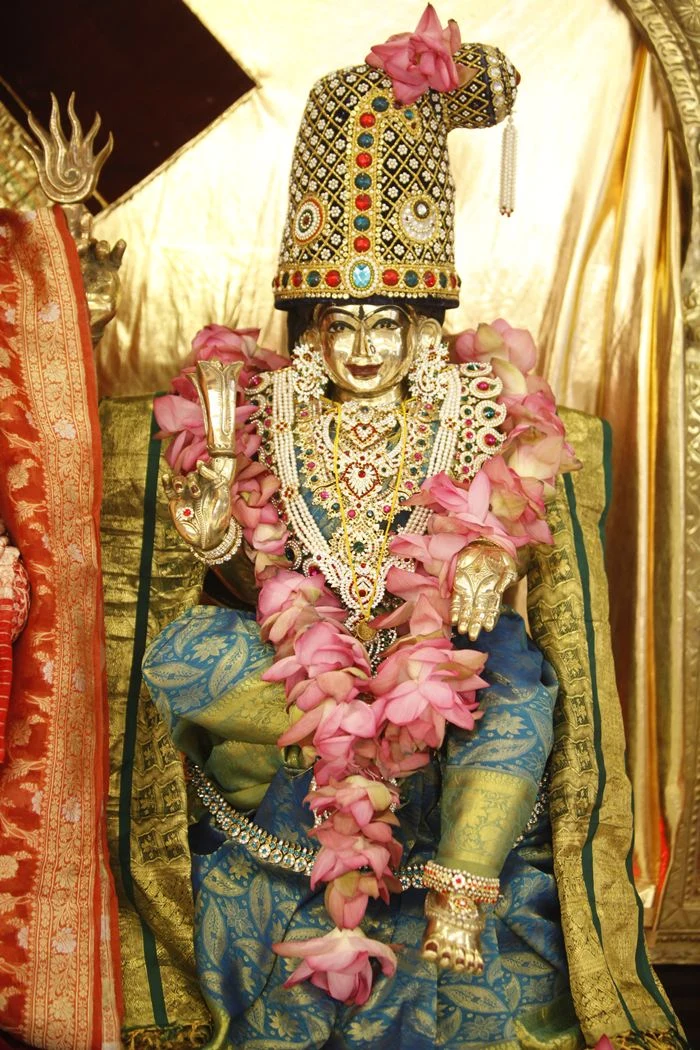
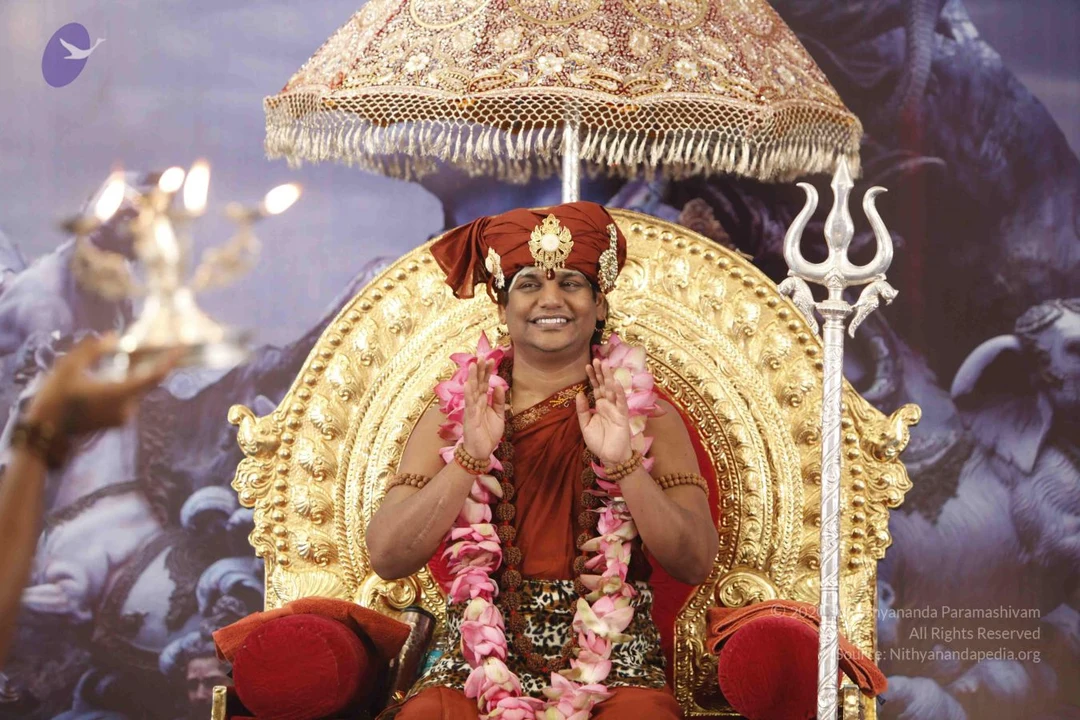
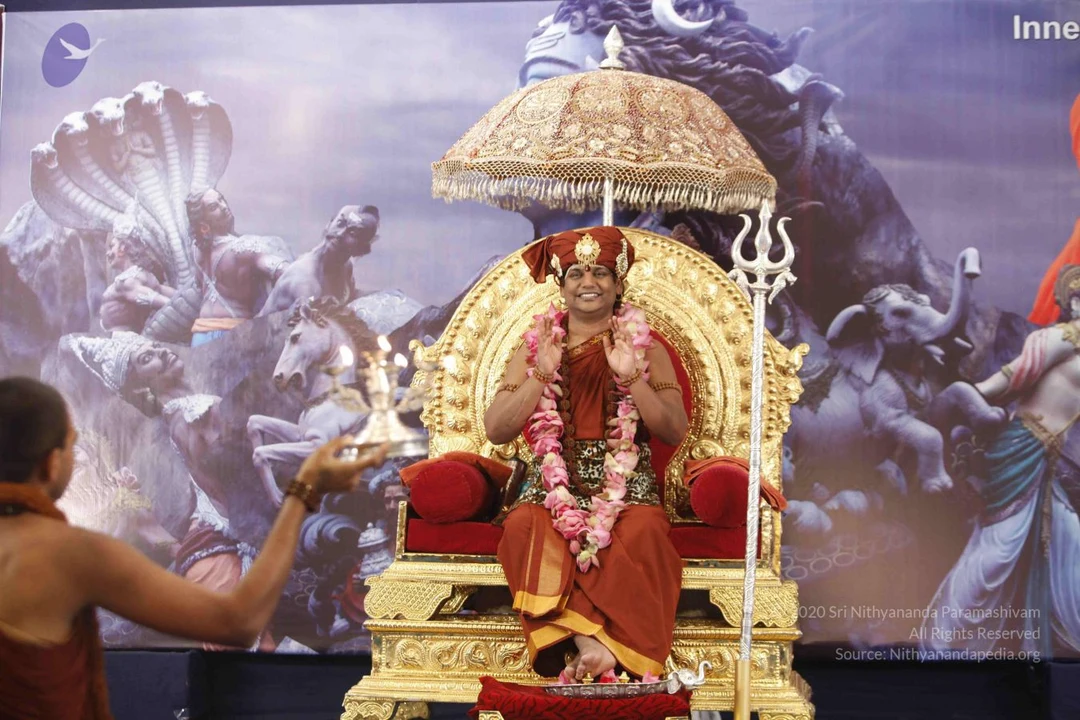
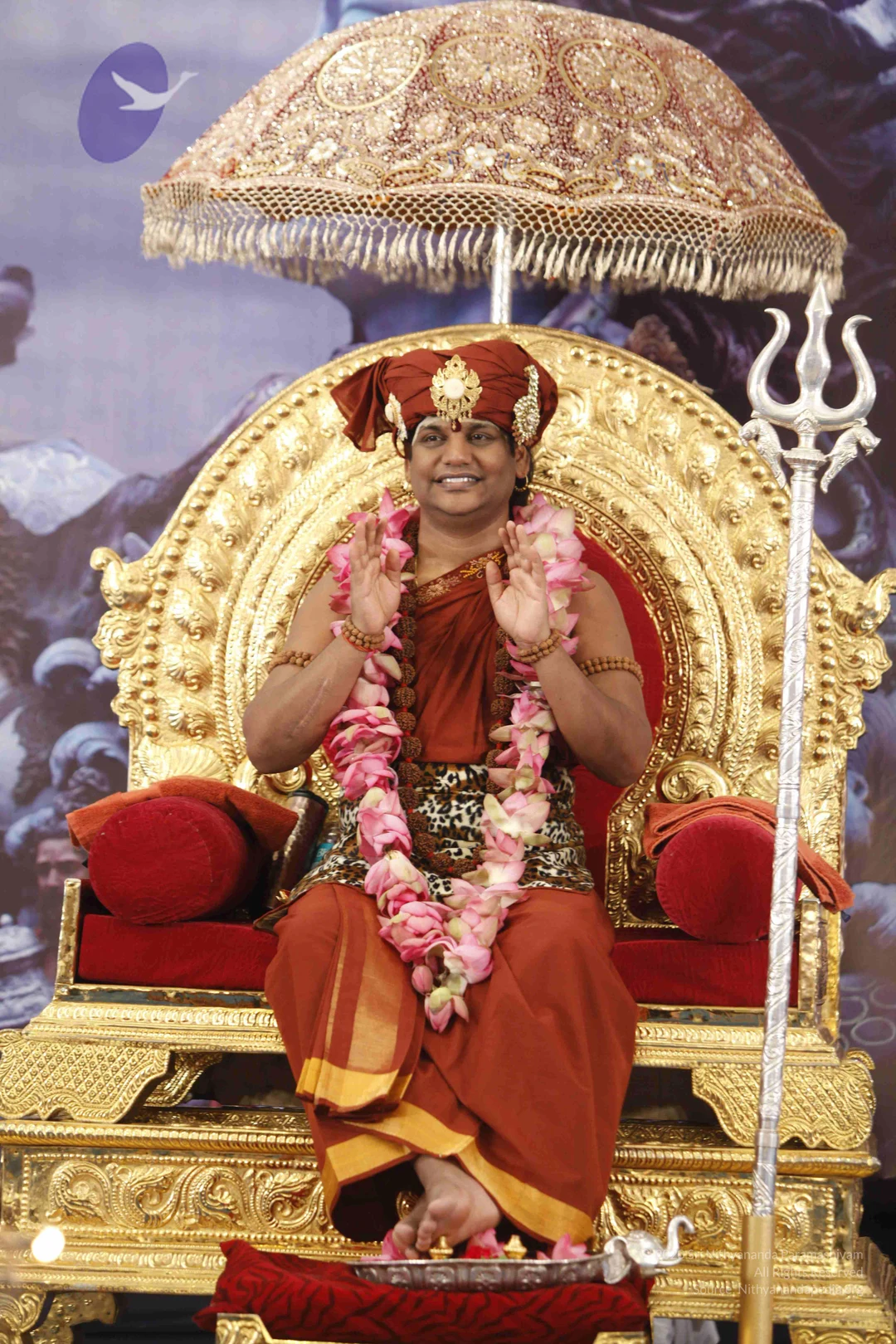
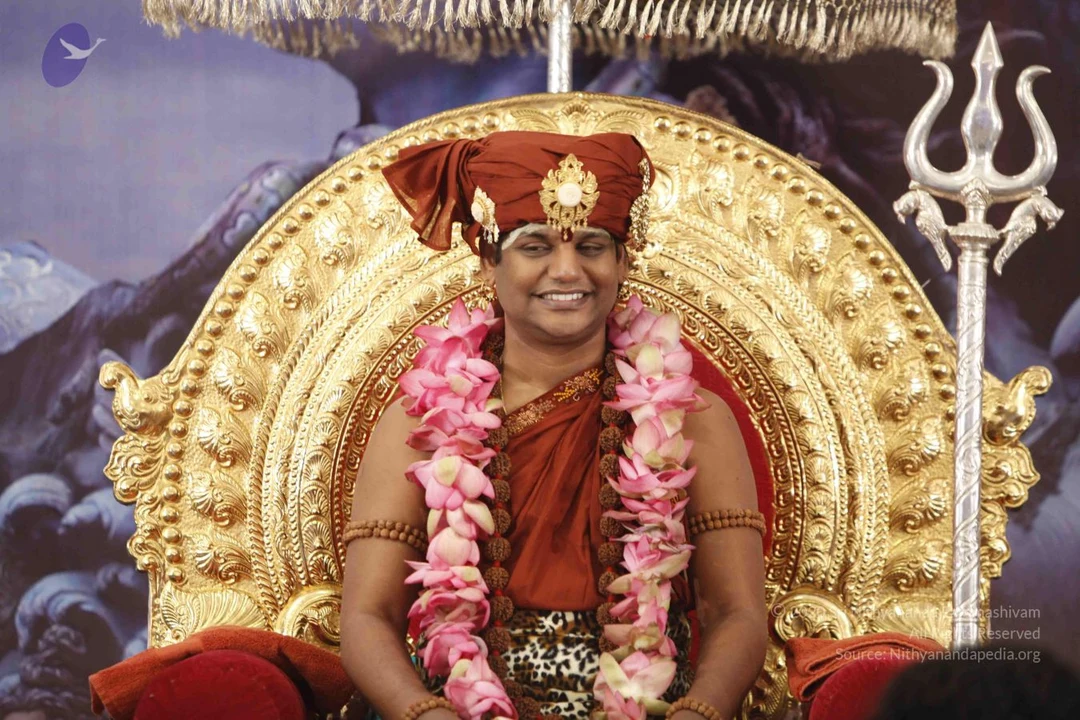
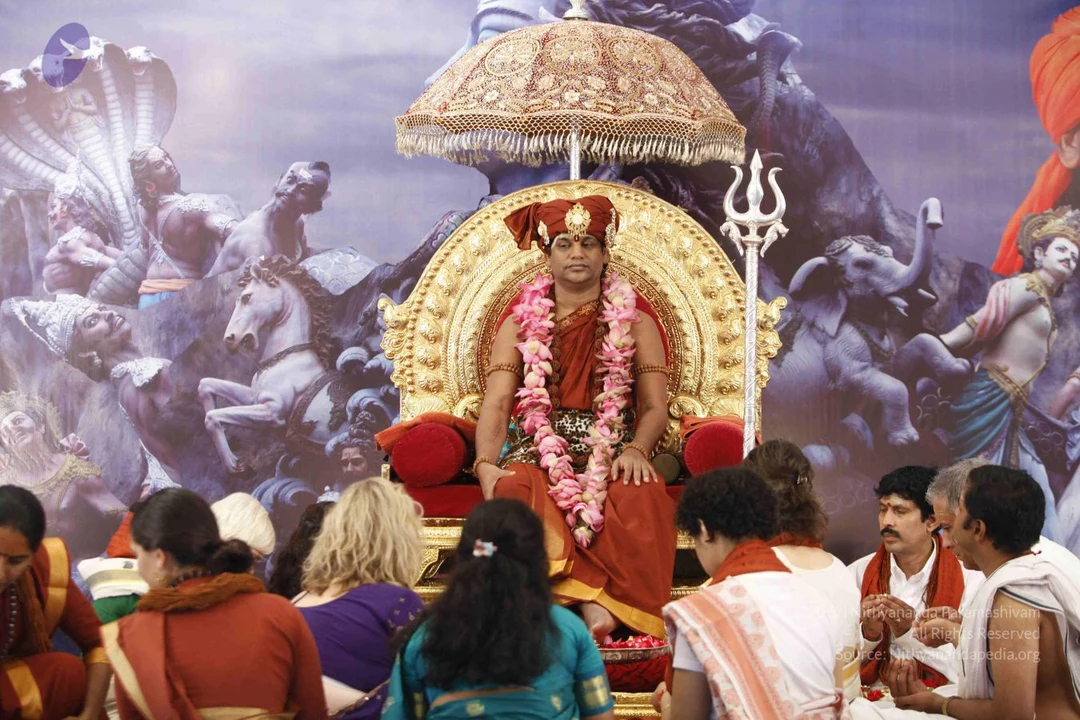
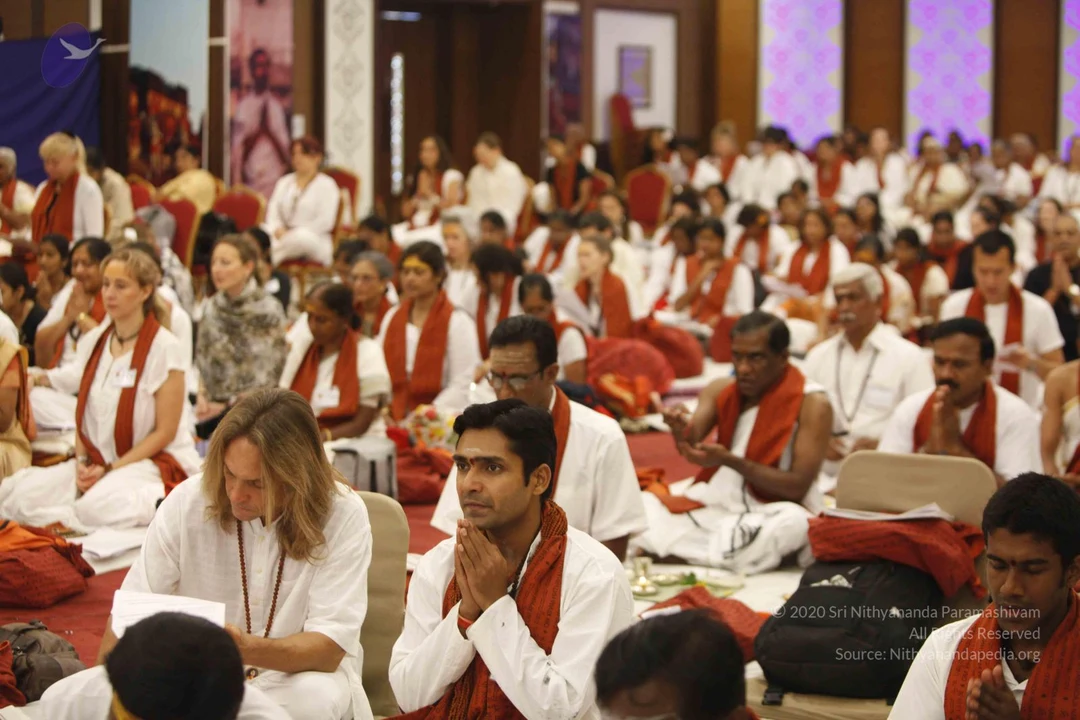
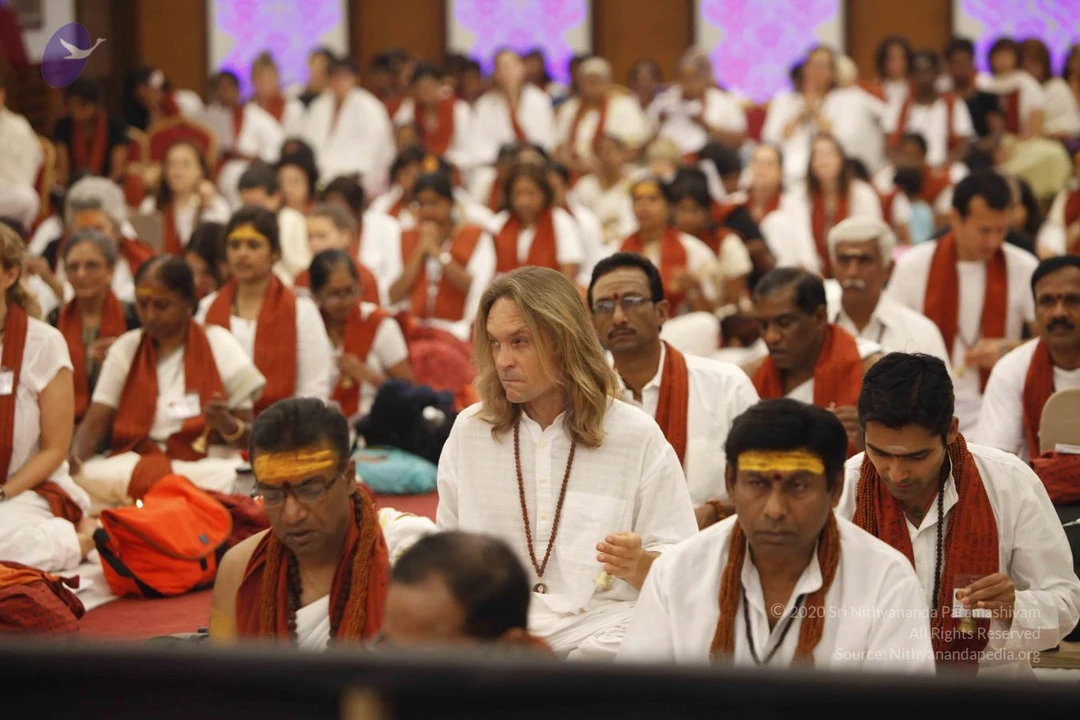
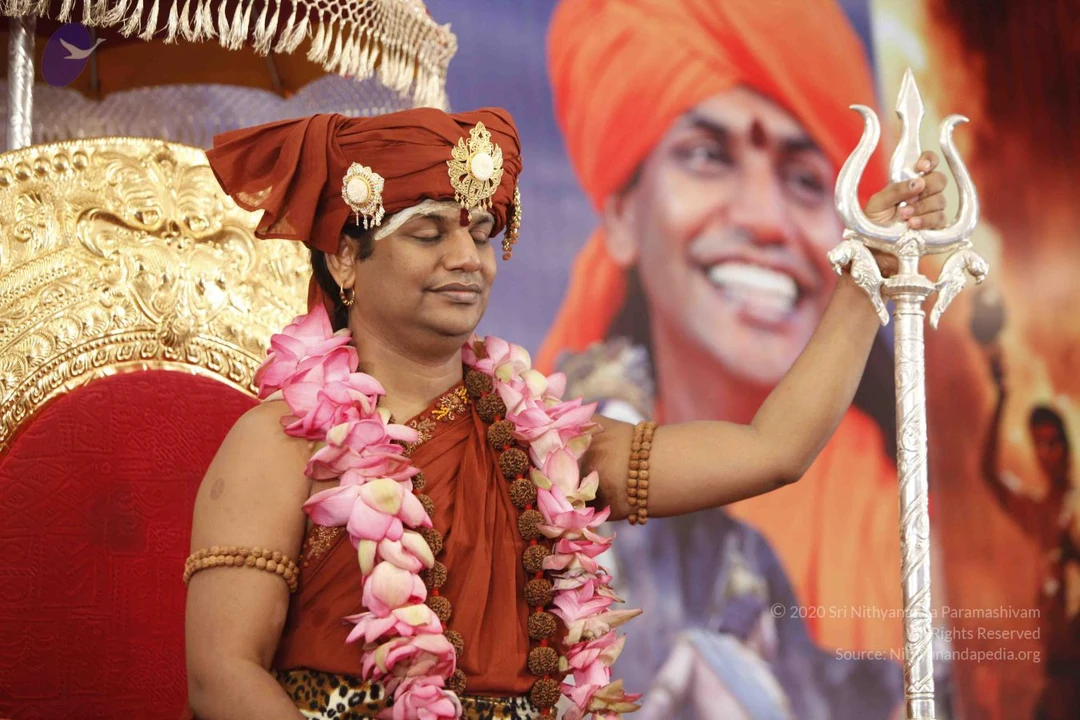
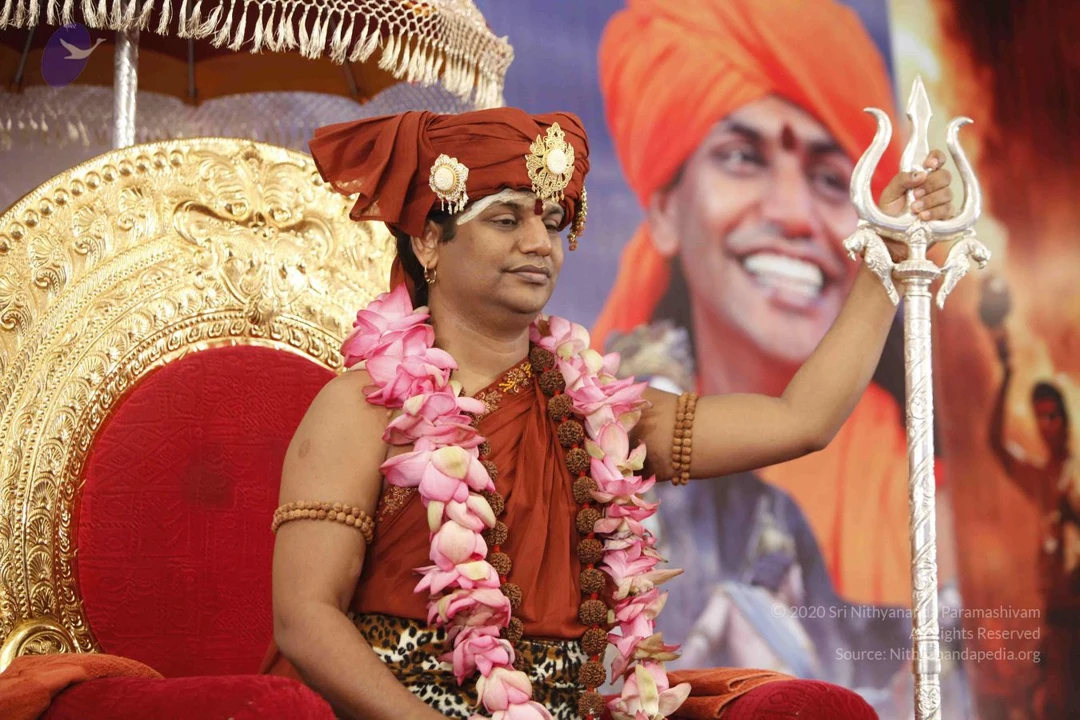
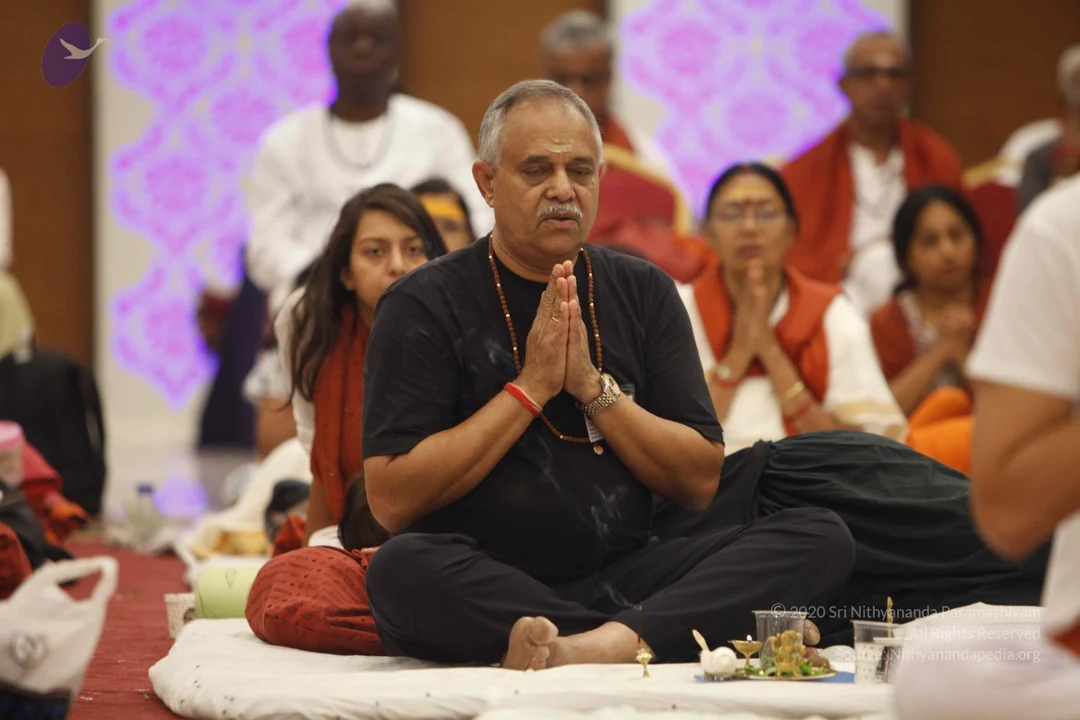
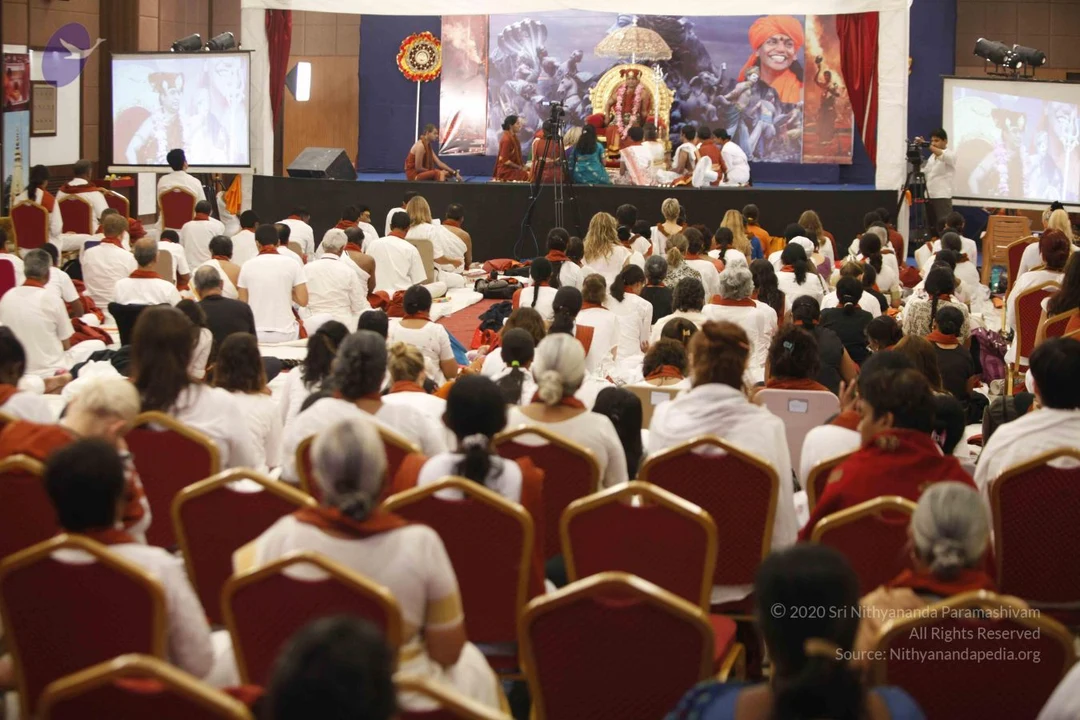
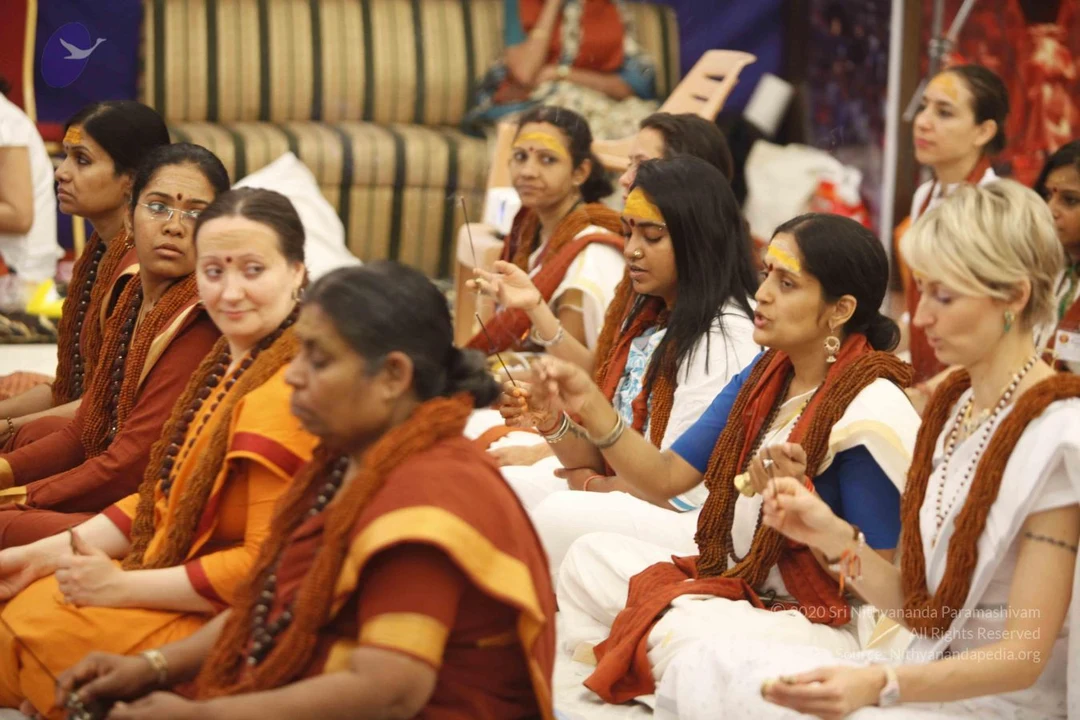
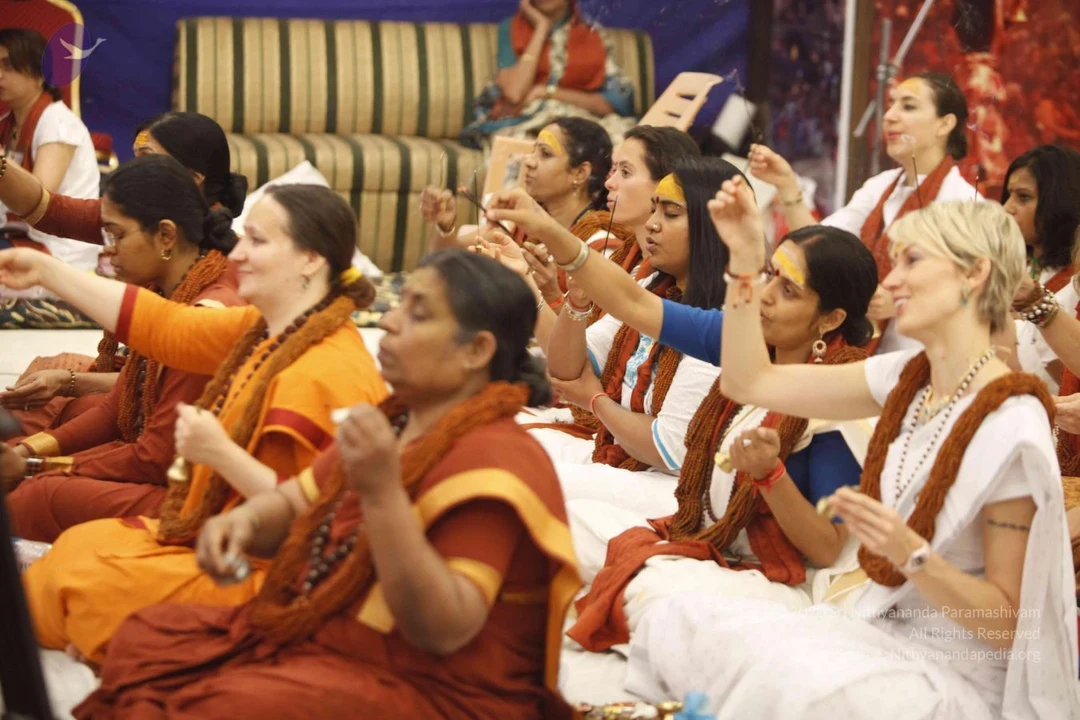
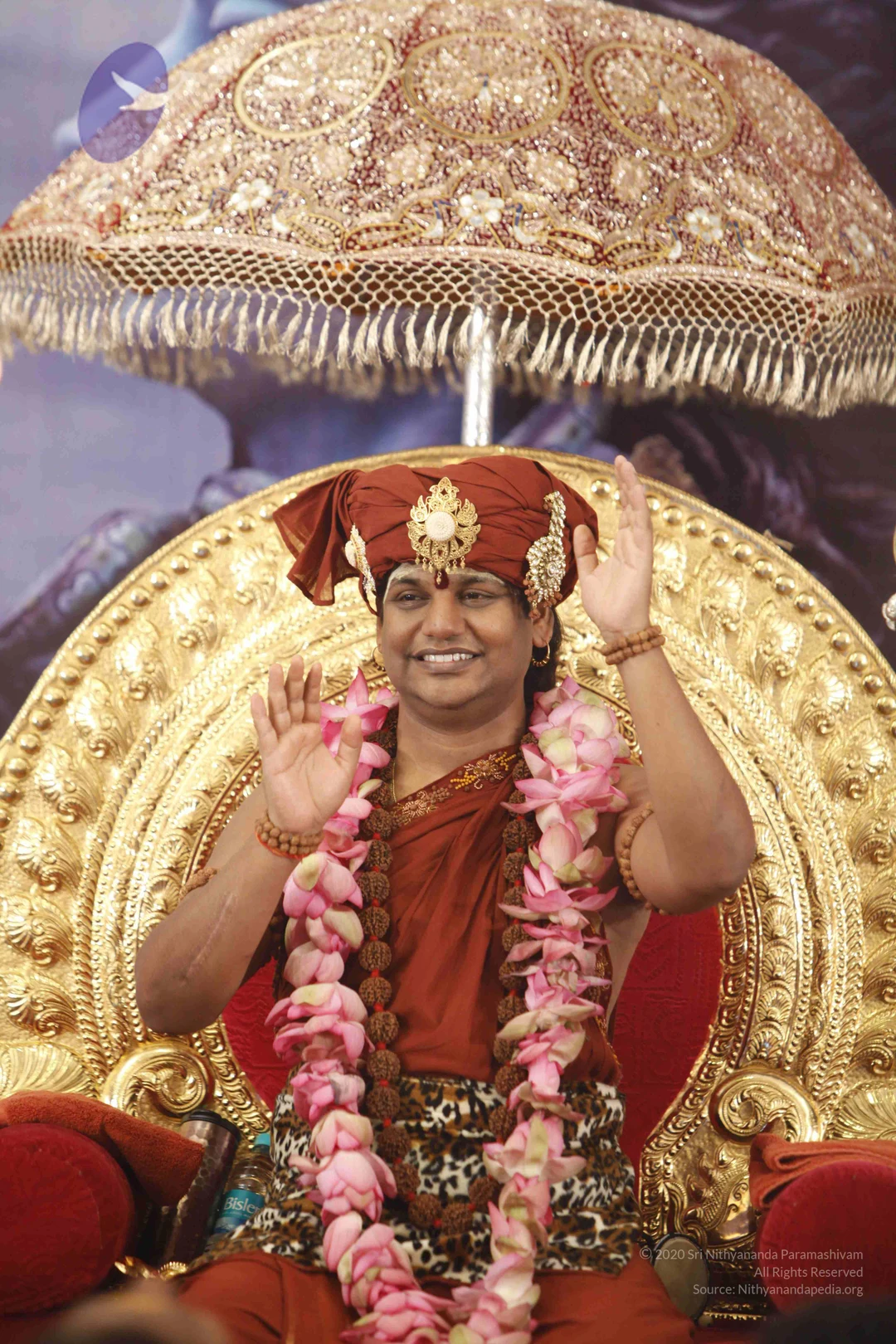
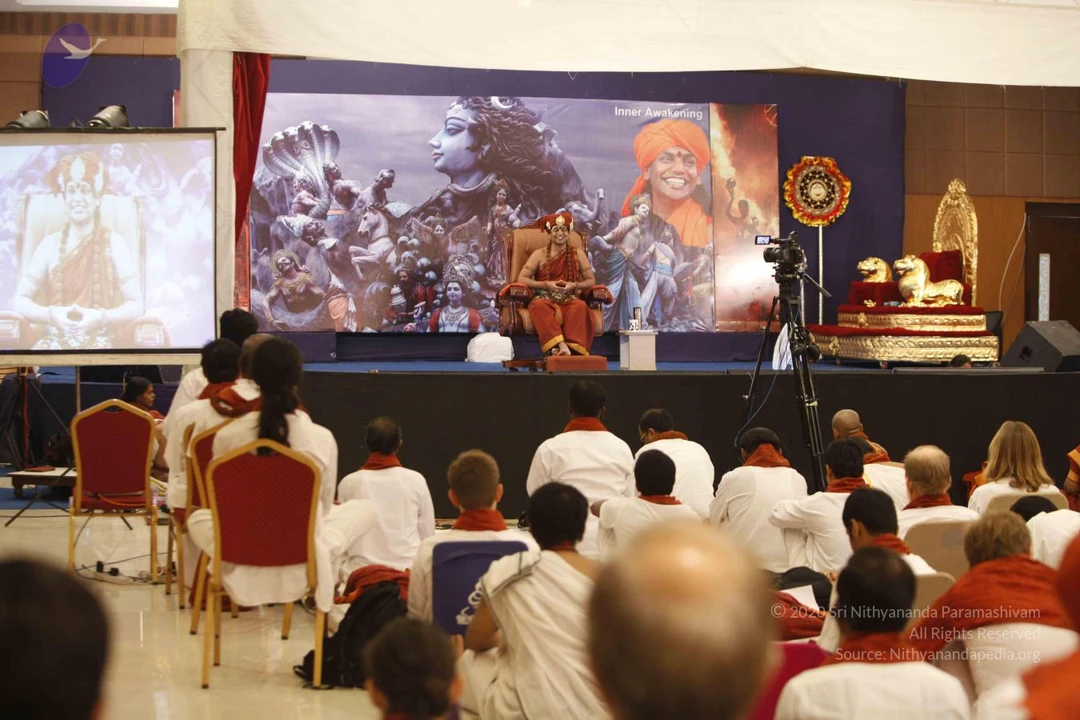
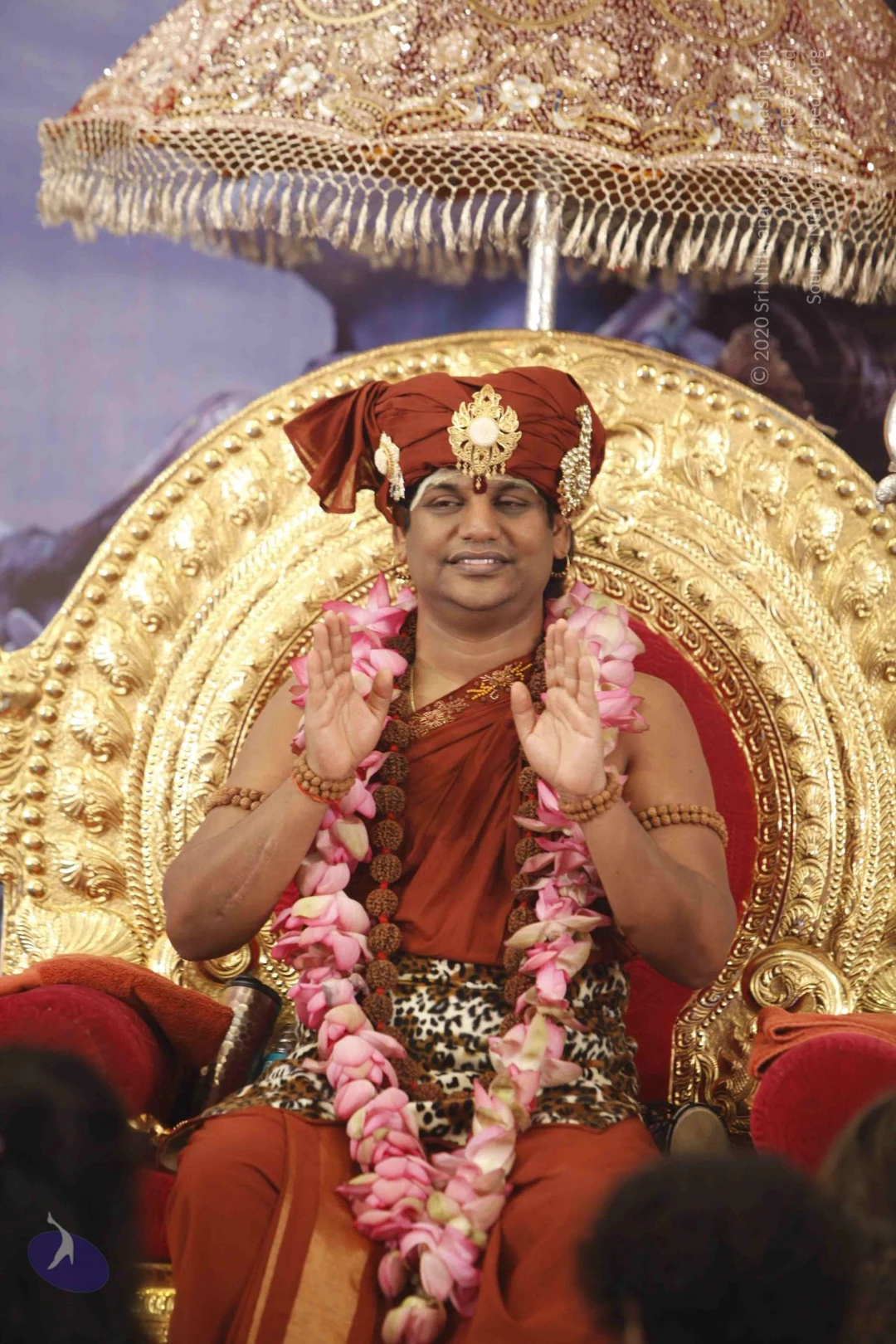
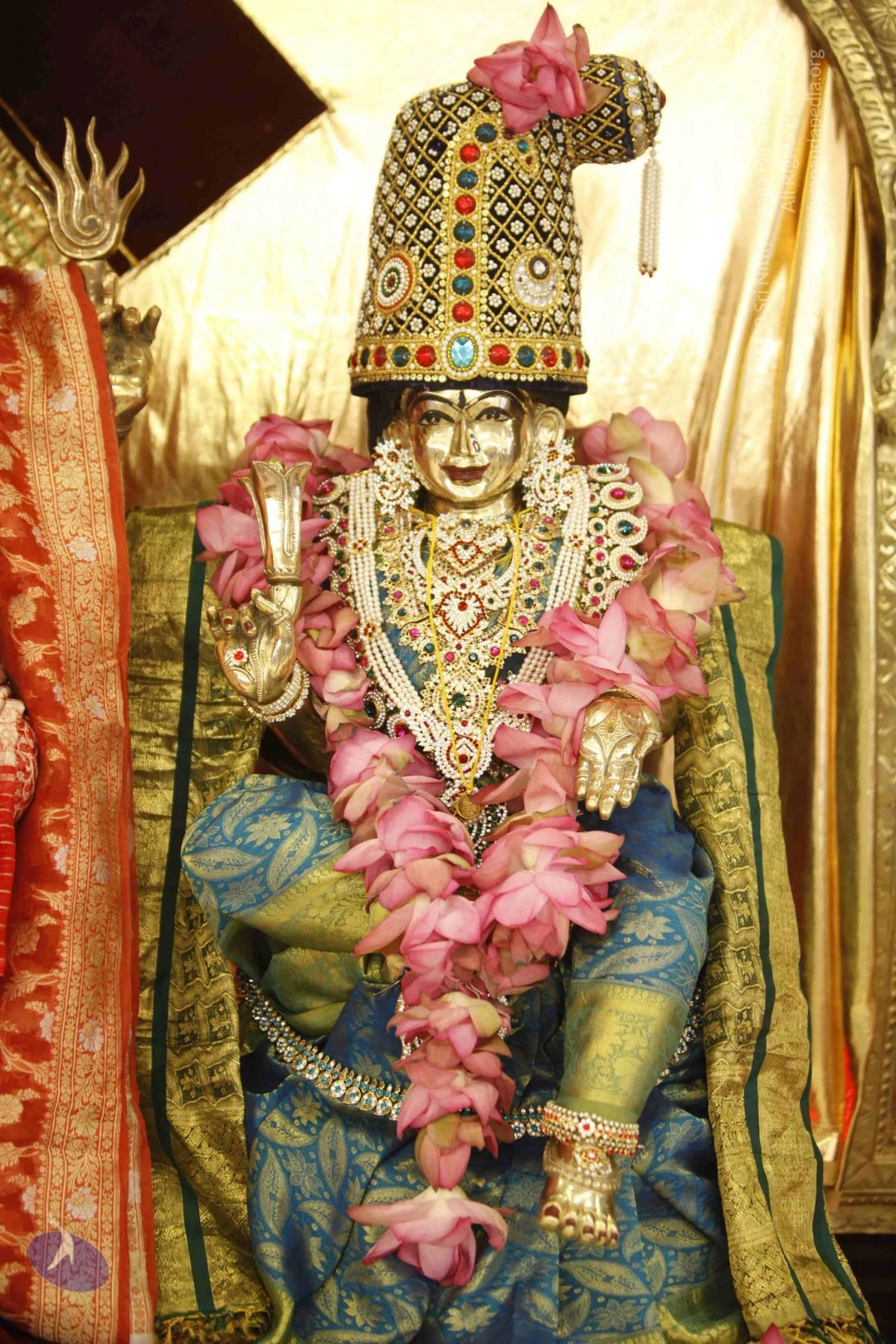
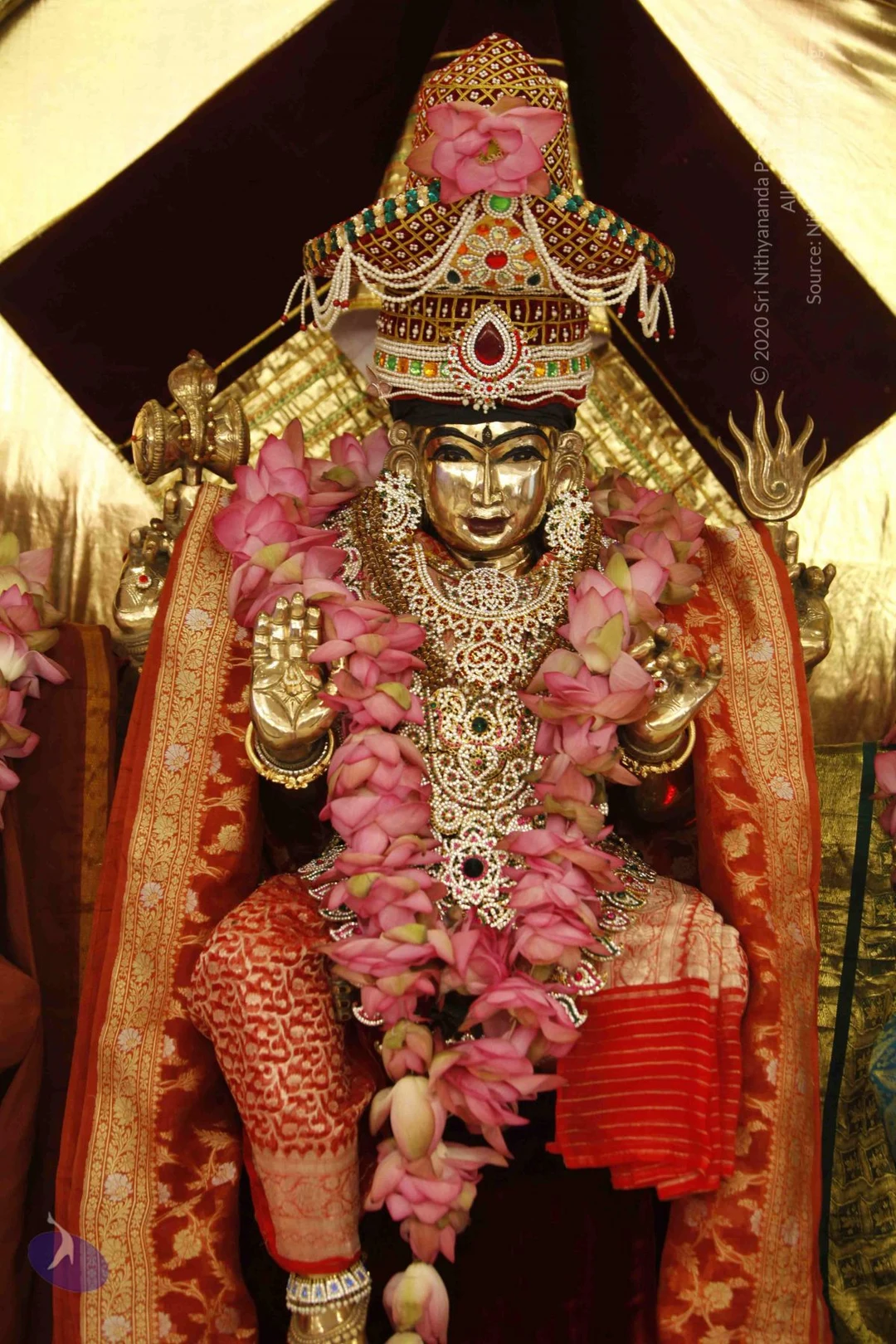
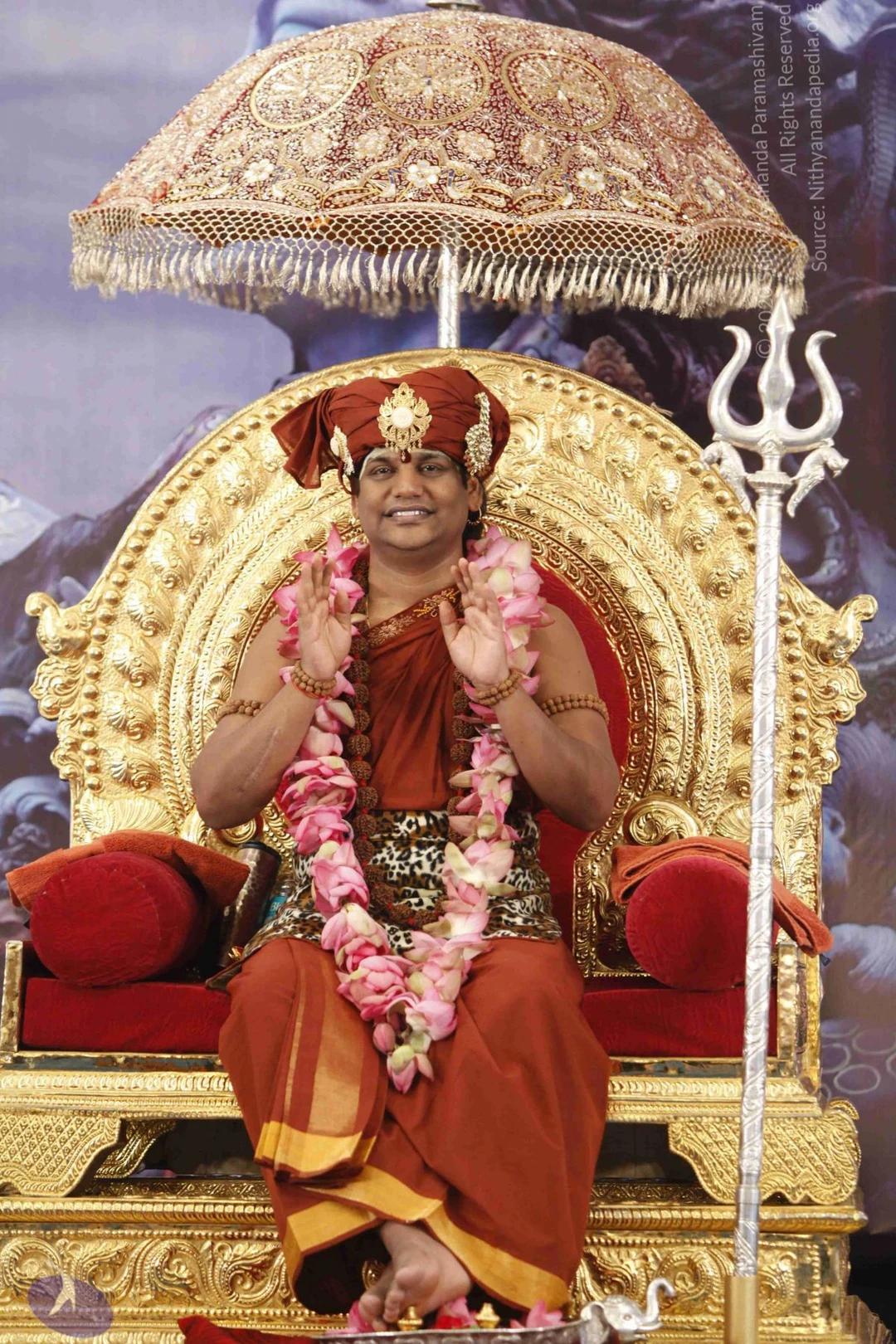
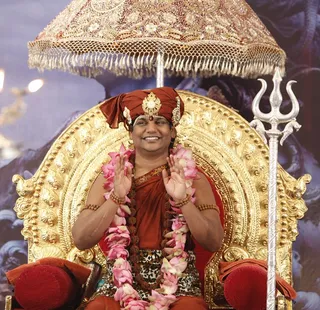
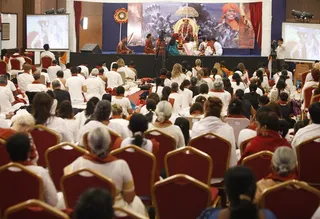
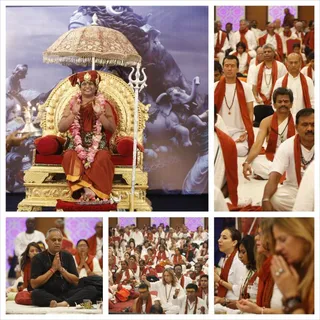
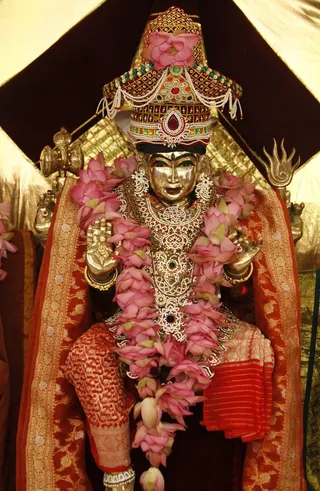
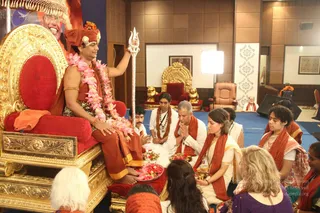
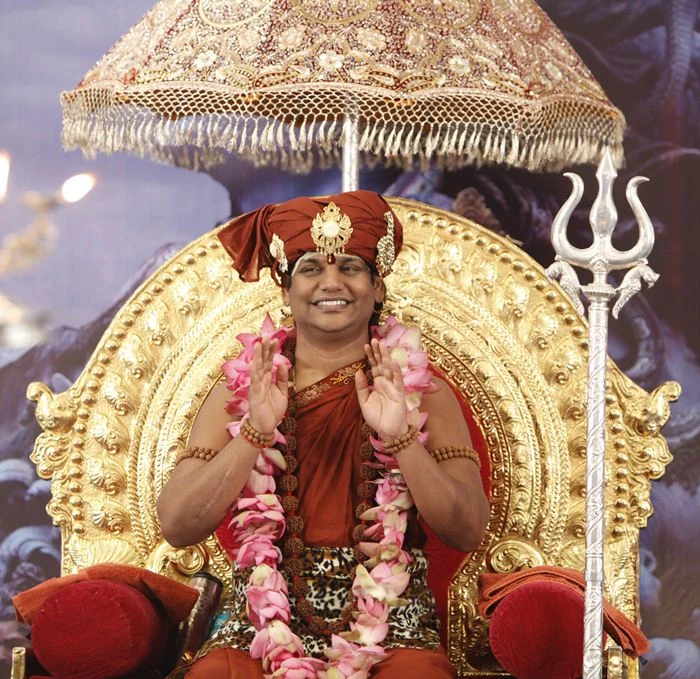
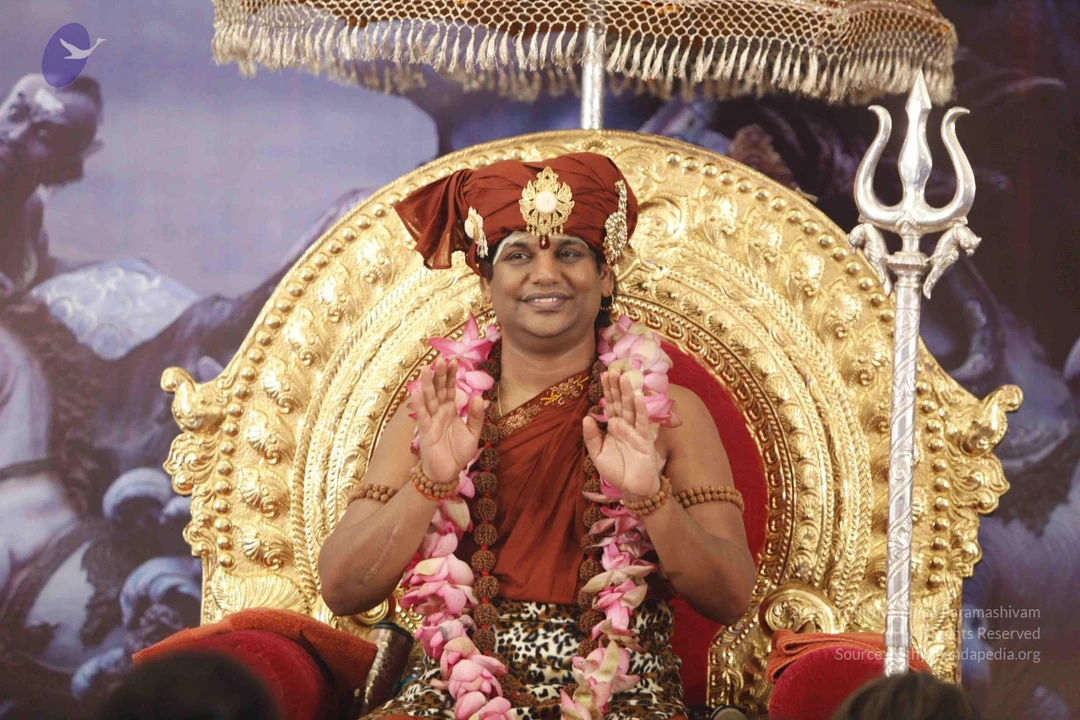
Photo of a smiling man seated on an ornate gold throne with a carved backrest, under a decorative embroidered canopy with fringe. He wears an orange-red turban with gold ornaments, an orange-red robe, rudraksha beads, and a long garland of pink flowers. He holds both palms raised together in greeting. A silver trident stands to his right and a blurred painted backdrop of deities is behind him. Probable Swamiji: the throne, canopy, turban, orange robe, rudraksha malas and ceremonial garland match the presentation of the page's subject, but the face is not used for identification.Photograph of a large seated audience in a hall with rows of red-cushioned chairs, most attendees dressed in white with red or orange shawls. On a raised stage at the front, several people in saffron and orange clothing sit before a central golden throne-like seat. Behind the stage hangs a large backdrop painting of a crowned figure and a deity with multiple arms amid warriors, with a smiling figure in an orange turban shown on the banner at upper right. Two projector screens flank the stage and a camera operator stands at the side. Dozens of attendees are visible from behind, many with grey or white hair.A five-panel collage of a meditation puja event. The top-left panel shows a man seated on an ornate gold throne with a gold canopy and trident, wearing an orange-red robe with a gold waist belt, pink floral garland, and a red turban-like head covering, hands pressed together in greeting; a painted backdrop of a deity with elephant and lion figures appears behind him. The top-right panel shows rows of seated participants in white with orange-red shawls and rudraksha malas, some with hands folded. The bottom-left panel shows a seated man in black clothing with hands in anjali mudra, a brass oil lamp to his side, and women in white and orange shawls behind him. The bottom-middle panel shows a large hall of seated devotees in white and orange. The bottom-right panel shows close-up women in white and orange shawls with hands folded in prayer. Panel subjects are physical people only in the photographs; the collage itself is a graphic.A golden deity murti stands at the centre, adorned with an ornate jewelled crown decorated with red and green stones and white pearl strands. Layers of pink lotus flower garlands drape the figure, with a heavy gold and gemstone necklace beneath. The murti wears a red and gold brocade cloth with gold border patterns, and gold bangles on its wrists. Its hands are raised in blessing postures. Behind it are gold and red draped fabrics and a gold ceremonial canopy, with a golden trident-like staff visible at the right. No people are visible in the image.

Padapuja
42 photosSource gallery
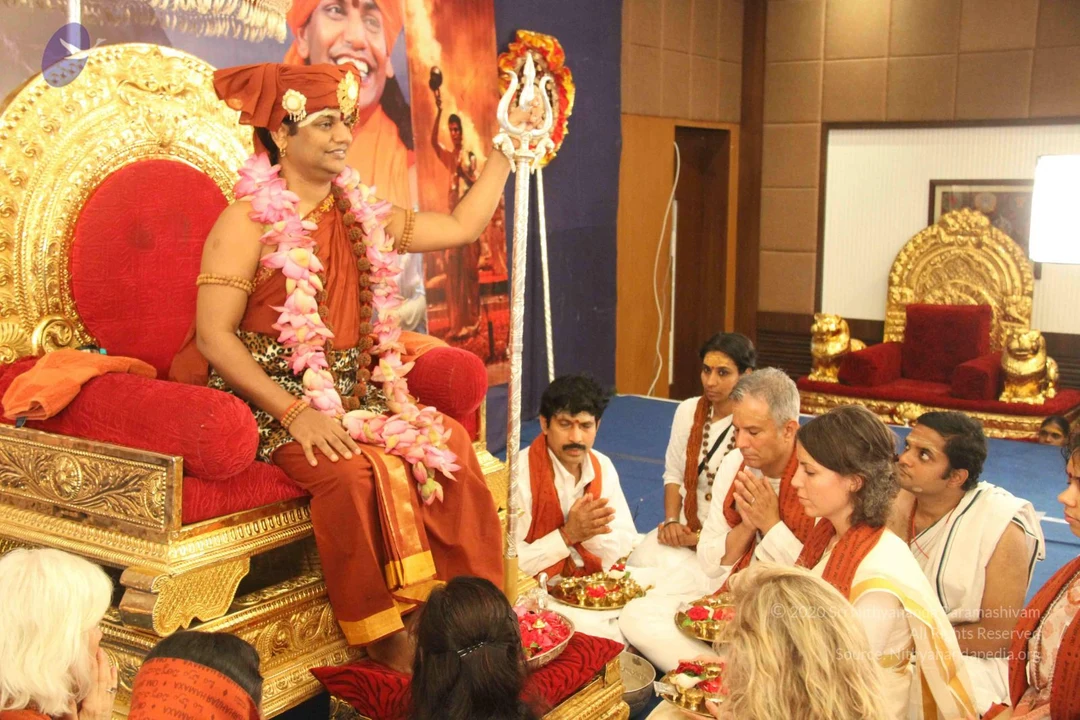
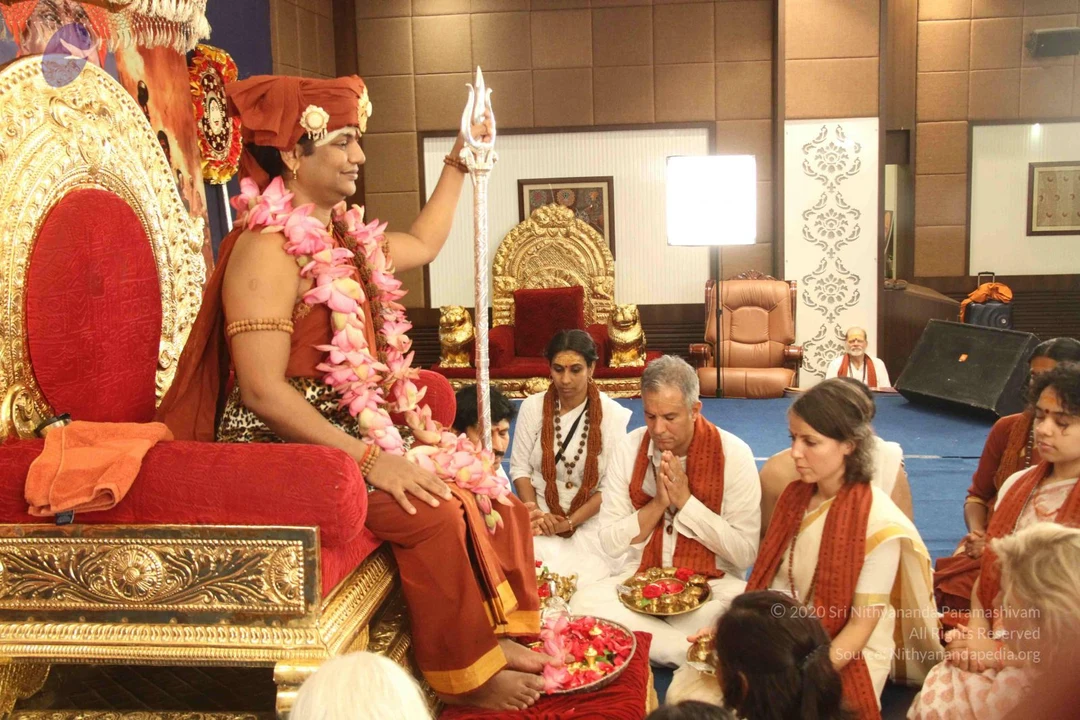
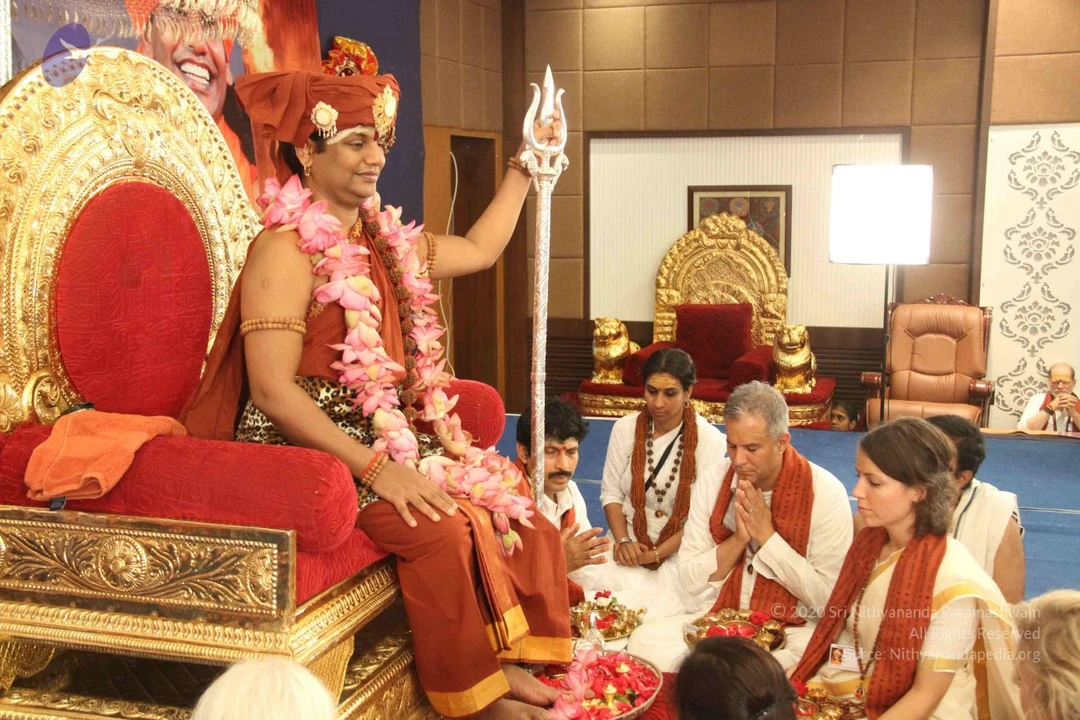
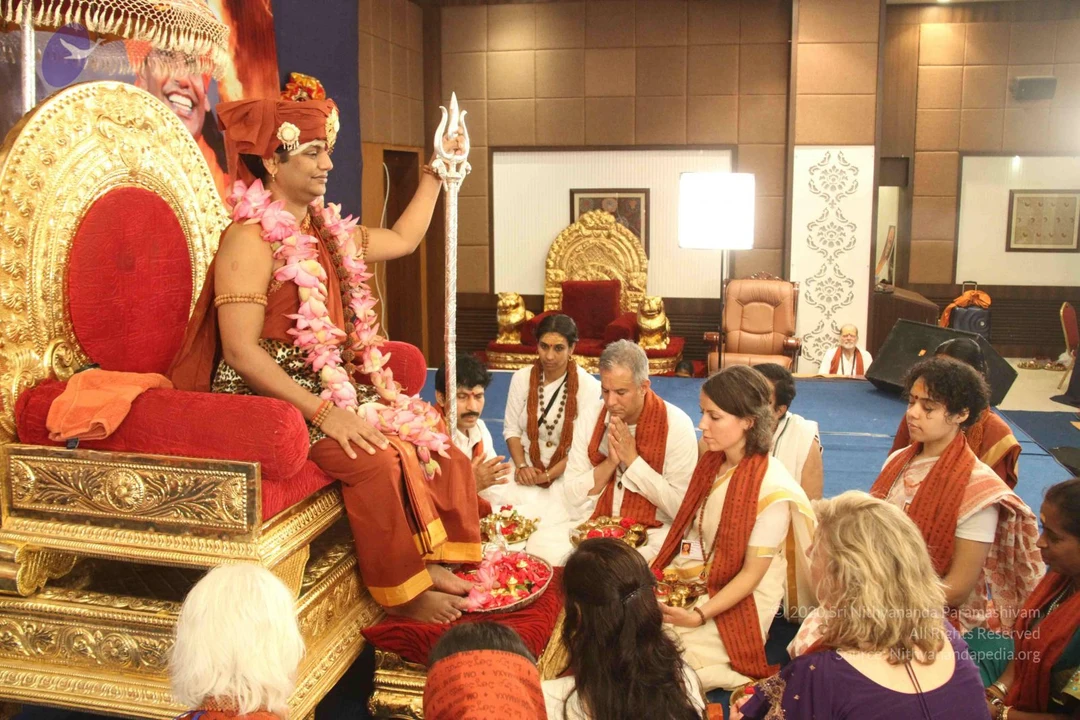
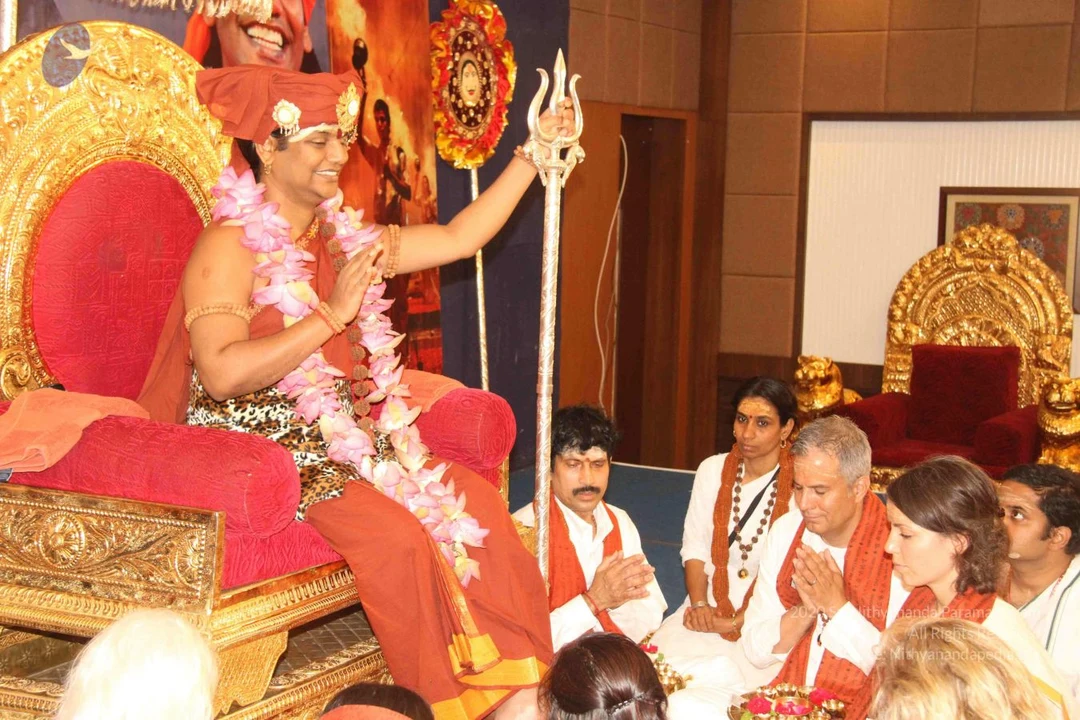
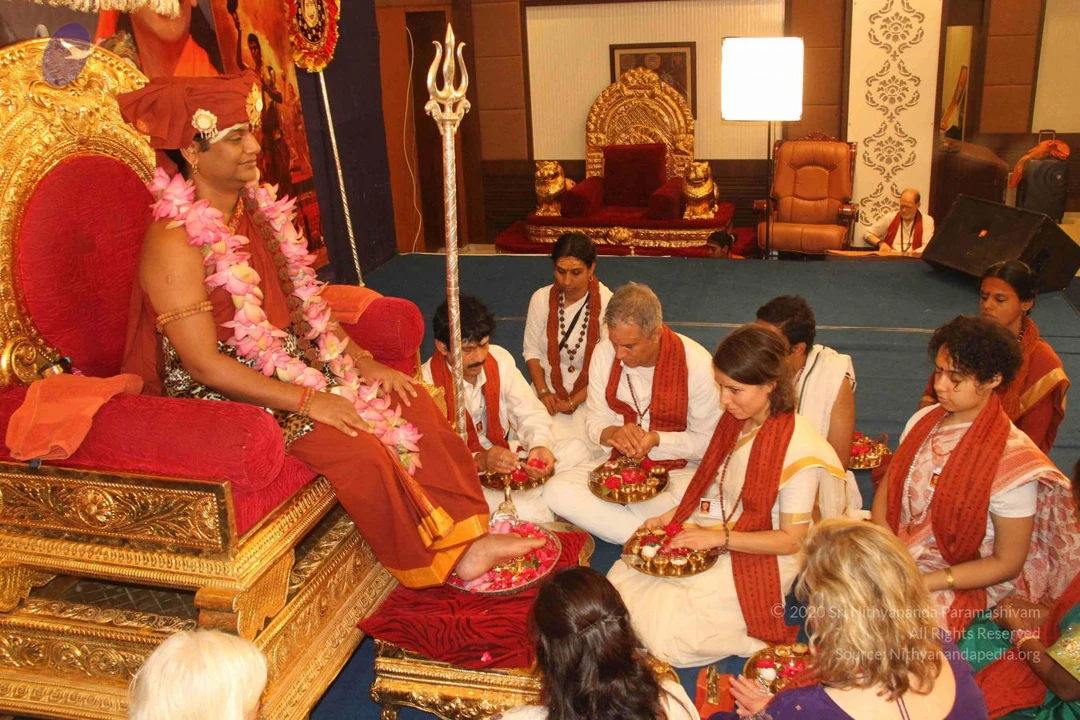
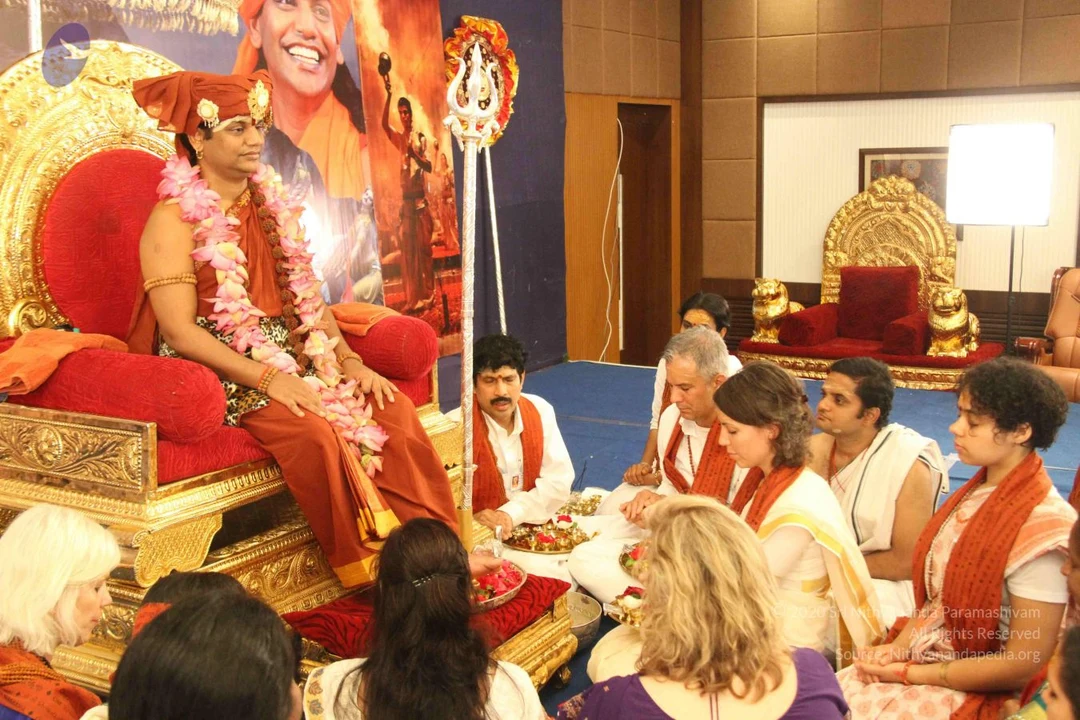
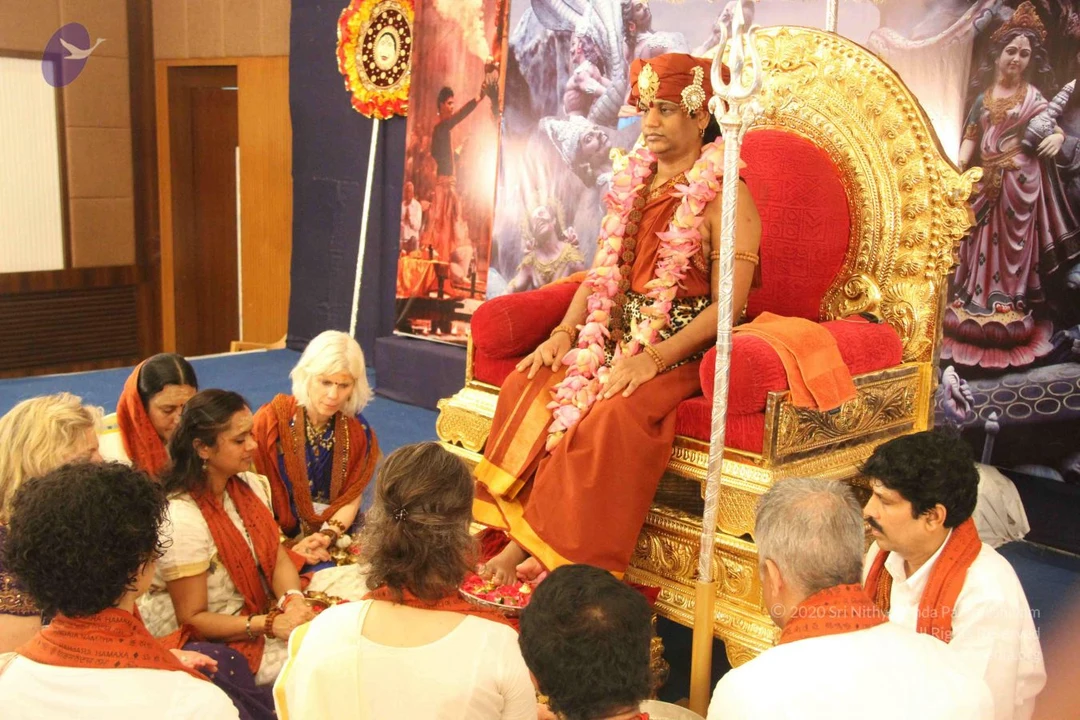
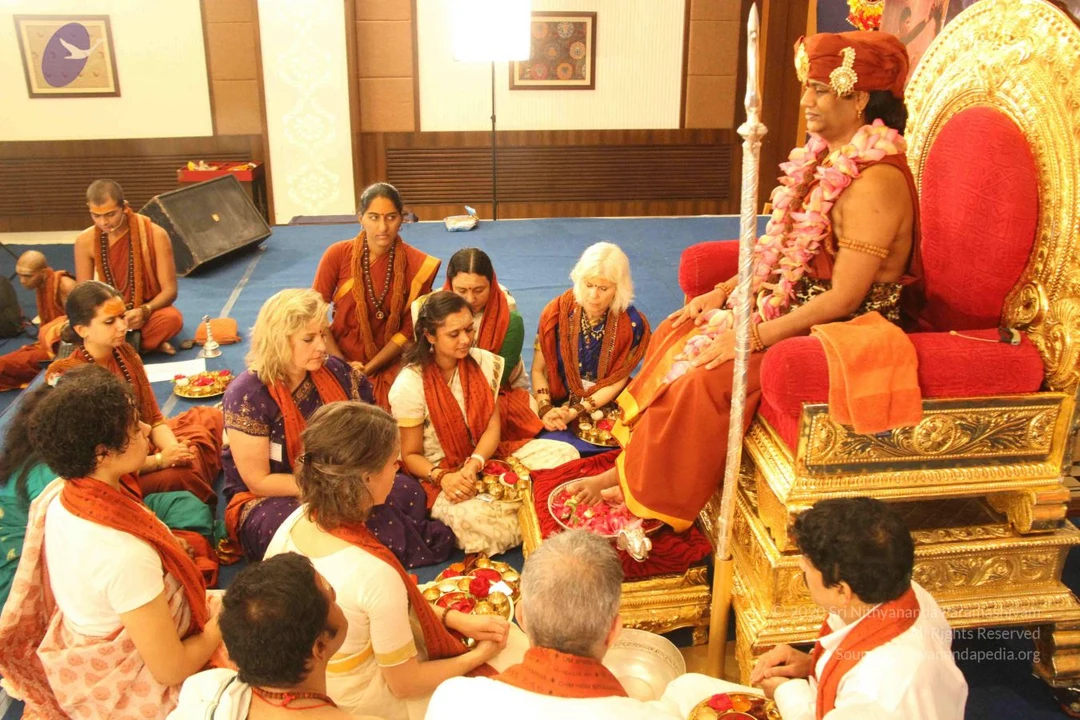
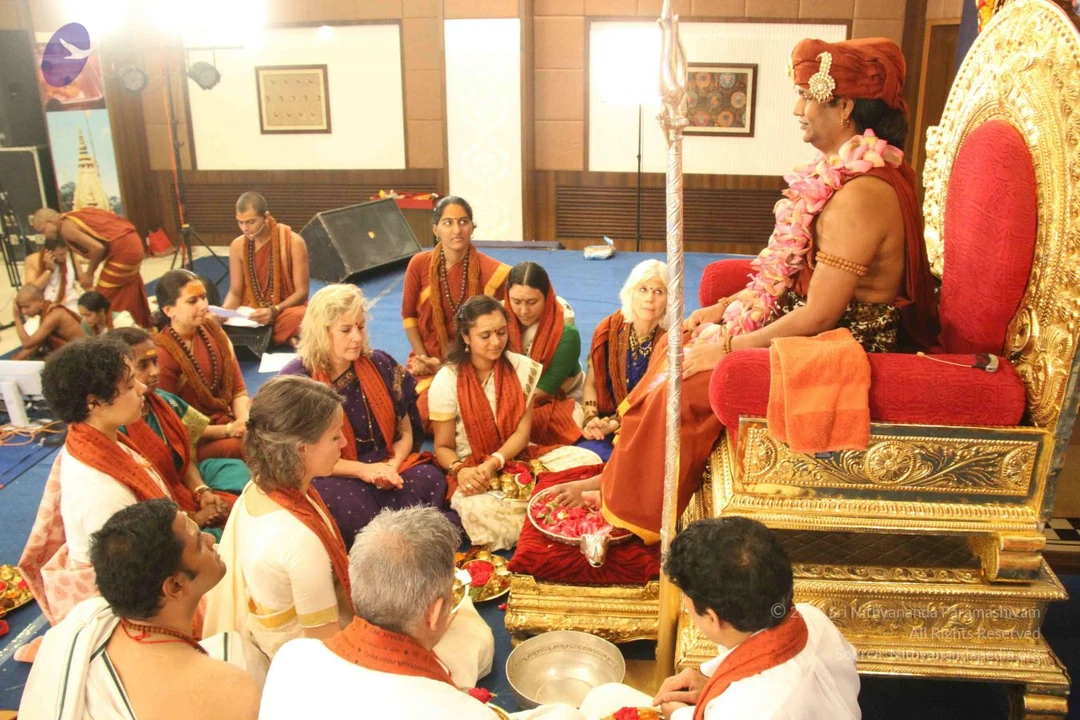
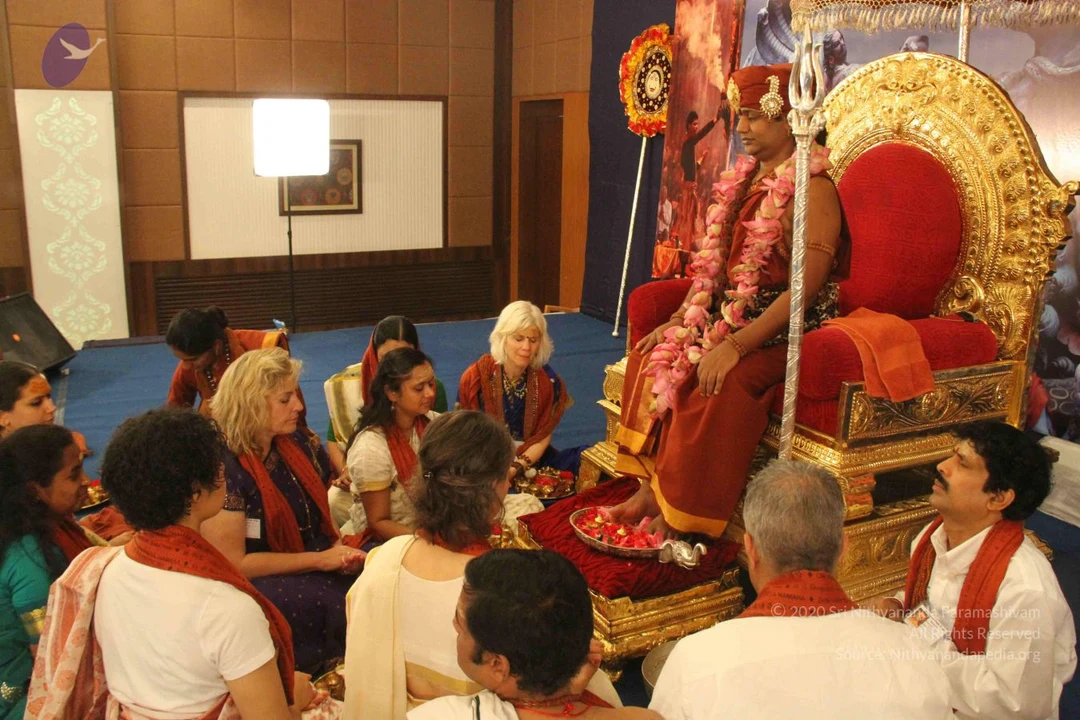
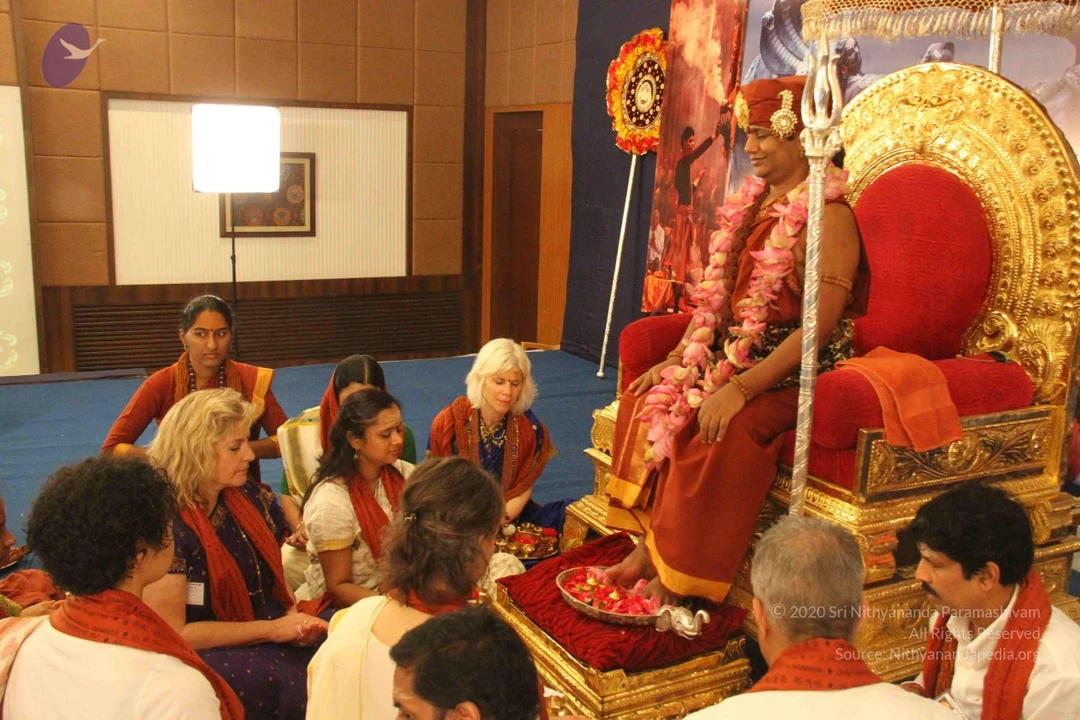
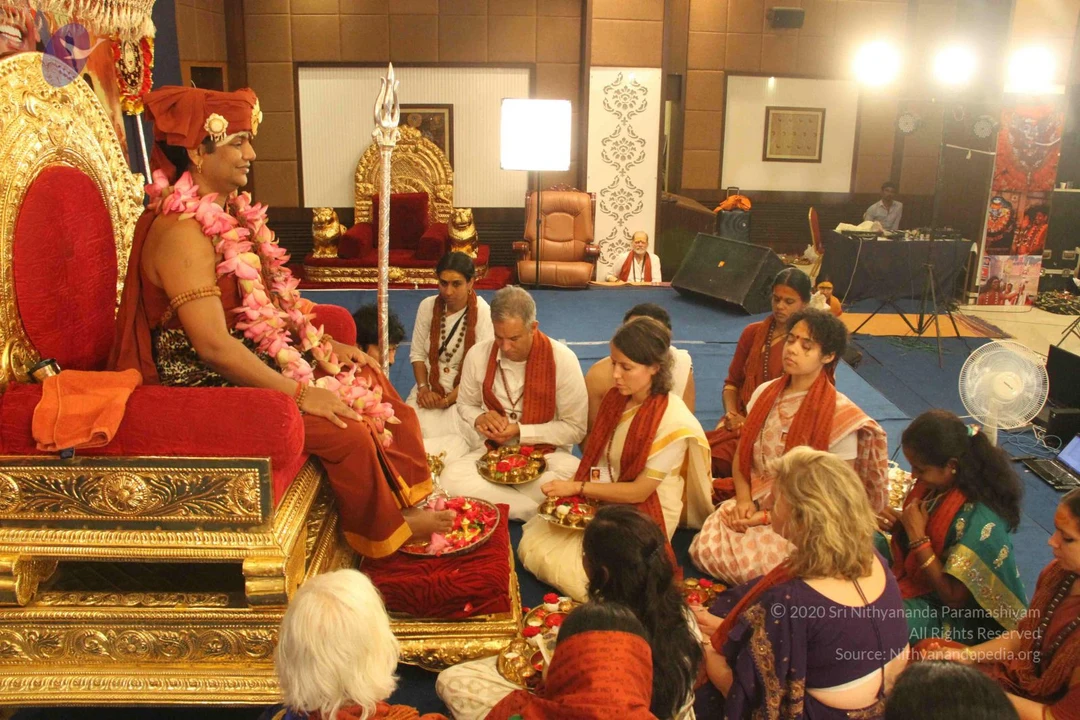
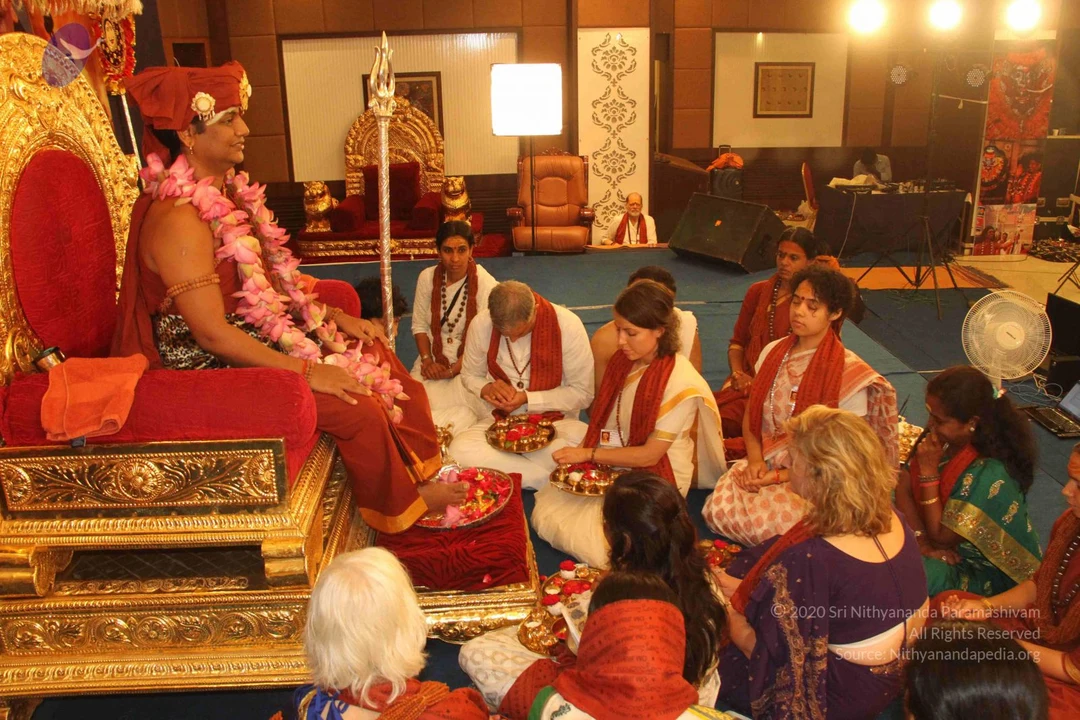
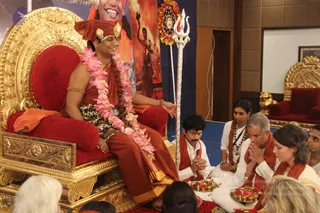
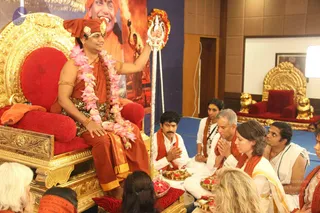
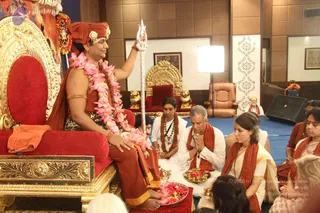
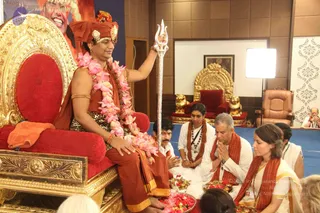
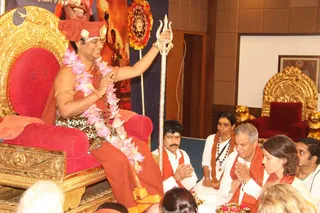
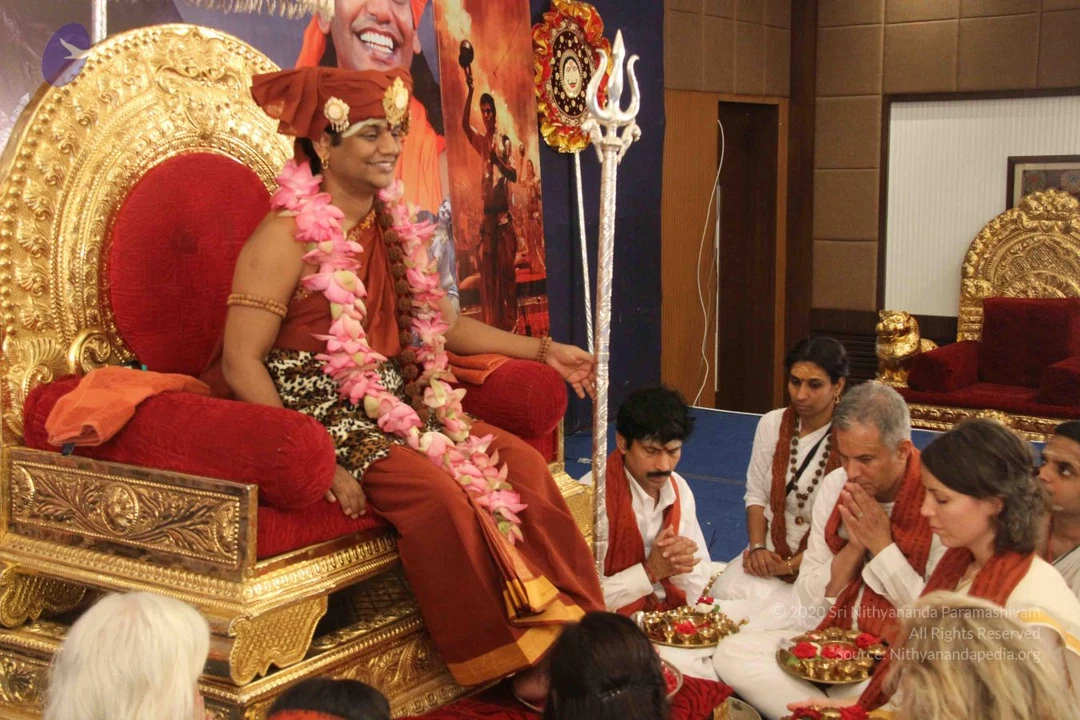
A seated man on an ornate gold-and-red throne wears a red-orange head wrap with gold ornament, a long pink and white flower garland, a rudraksha mala, orange robe and a leopard-print lower cloth, smiling as he gestures toward a silver trident. Around him, devotees in white with orange shawls sit with folded hands; one woman holds a brass plate of flowers and offerings, and a man beside her holds a plate with lit lamps and petals. A large portrait of a smiling man in orange and a painted figure hang behind, along with a second empty gold throne at right.A seated figure on an ornate gold-and-red throne holds up a silver trident with one hand, wearing an orange-saffron turban, orange robes, a leopard-print garment, a pink and white flower garland and gold armlets. Several people sit on a blue mat in front, many wearing white with orange shawls. Two in front hold brass trays of flowers and offerings, and a woman in the middle has her hands folded in anjali. A large backdrop portrait behind the throne shows a smiling figure in orange with a flaming torch, and an empty gold throne stands at the right. The setting appears to be a formal satsang hall. a person: the seated figure wears saffron-orange turban and robes with a pink flower garland and ornate gold jewelry, and sits on the central throne. Visible people number about seven.A photograph of a satsang hall where a bare-chested figure with long hair, wearing an orange head wrap with a white flower, saffron cloth, a pink flower garland and rudraksha-style bracelets, sits on an ornate gold-and-red throne holding up a silver trident. Seated on the floor before him, a man with grey hair in white clothes and an orange shawl presses his palms together, while a woman in white with an orange shawl sits nearby, and a woman in a cream sari with a red-orange shawl holds a brass plate of red petals. Other devotees in orange shawls sit around, and a man in white is seated in the background beside a second empty gold throne. Gold lion statues flank a dais and a plain wall panel is decorated with carved motifs.A seated man on an ornate gold-and-red throne raises a silver trident with his right hand. He wears an orange-saffron turban with a floral brooch, a long pink lotus and rose garland, an orange shawl over the shoulders, and a leopard-print lower garment with saffron cloth. Beside him, a row of devotees kneels on a blue platform: a man in white with folded hands, a woman in white with a rudraksha-style mala, a man in white with a red shawl, and a woman in cream clothes with a red shawl, with brass plates of flowers and oil lamps before them. A second gold throne with lion figures stands behind. Printed text on the image reads and , from . Some of the figure's cues match the page's Swamiji reference: a turban, flower garland, saffron clothing and a trident, so the candidate is probableA photograph inside an ornate hall with blue carpeting and a golden throne. A man seated on a gilded red throne wears an orange-and-red turban with a flower ornament, a long pink and white flower garland, a leopard-print cloth around his waist and an orange wrap, and raises a silver trident with one hand. Swamiji (probable): the seated figure's long hair-free turban, layered saffron-orange clothing, garland and ceremonial trident match a distinctive ritual presentation, though the face is not used for identification. Before him, a group sits on the floor: a man in white with an orange shawl and a rudraksha mala palms together, a woman in white with an orange shawl holds a brass plate, a man in white with an orange scarf sits with hands joined, a woman in a white and yellow sari holds a small brass lamp, and a woman in a purple top sits in the foreground. A flower-petal offering tray sits near the throne. An empty golden throne and a standing elderly man in orange appear in the background, with a large banner behind the throne.A seated figure in an orange-red turban and orange wrap, with a pink and white flower garland and a leopard-print lower garment, sits on a red and gold ornate throne with hands in anjali mudra. Beside him a silver trident stands upright. Seated on the floor before him are four devotees in white clothes with orange shawls: a man with a moustache pressing palms together, a woman in a white sari with a rudraksha mala, a man with grey hair and a woman with brown hair, both with orange stoles and palms joined. A second gold and red throne stands empty on the right, beside a framed painting on a wood-panelled wall with a painted banner behind the figure. Appearance-based candidate is probable; caption-free photo.
satsang_kalpatharu
43 photosSource gallery
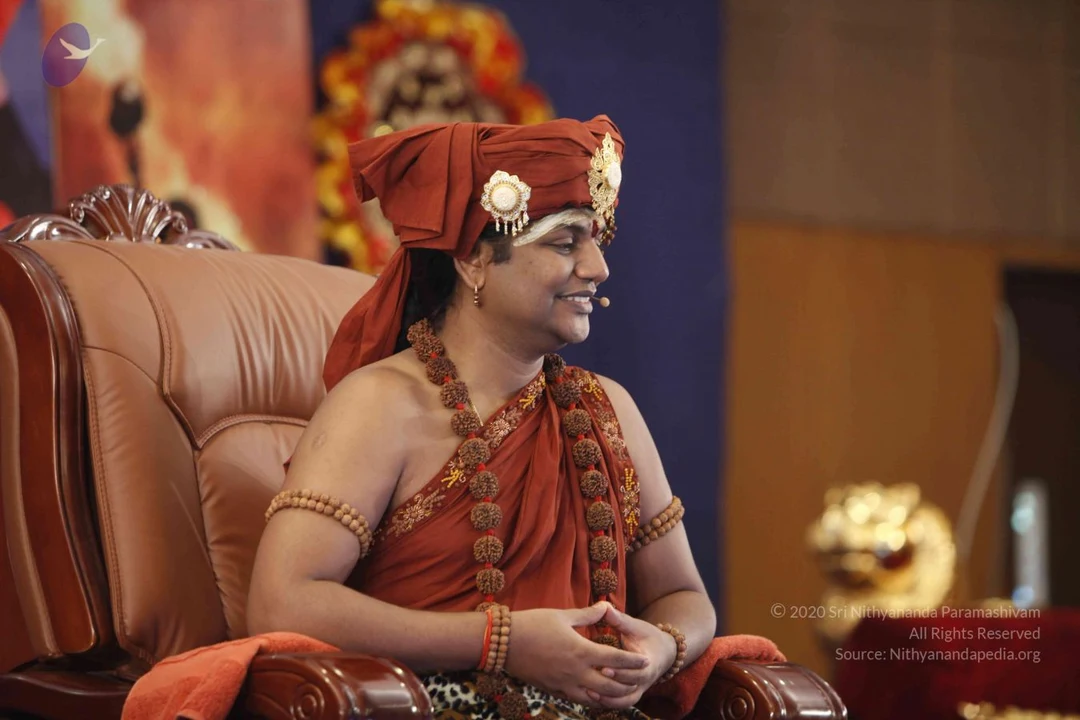
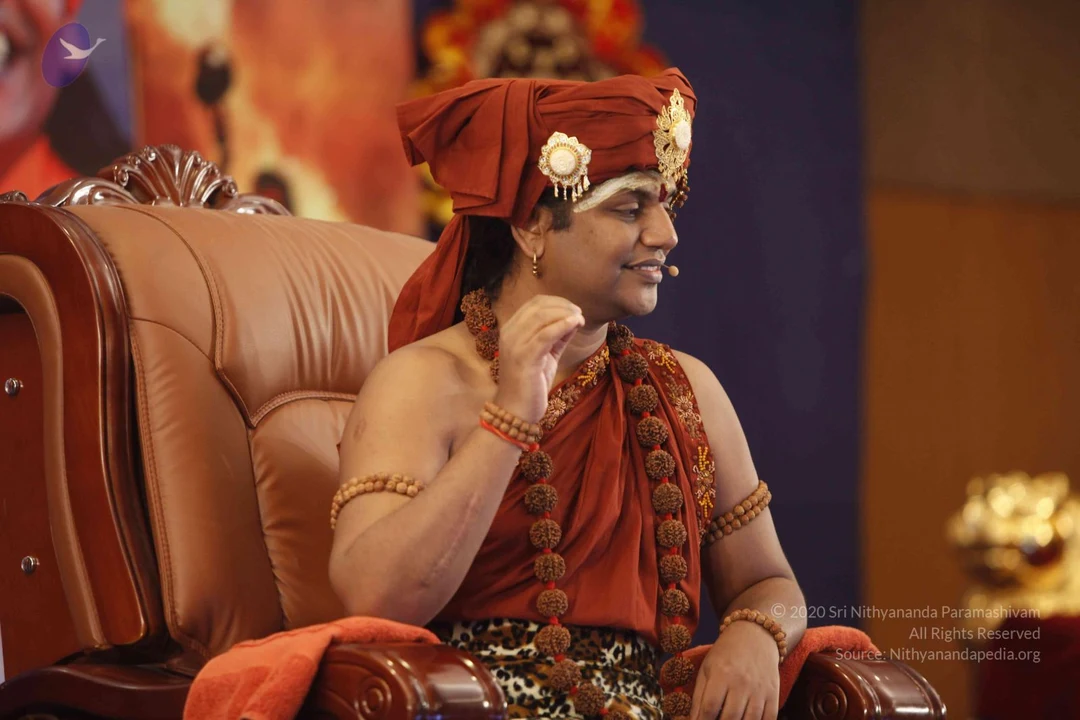
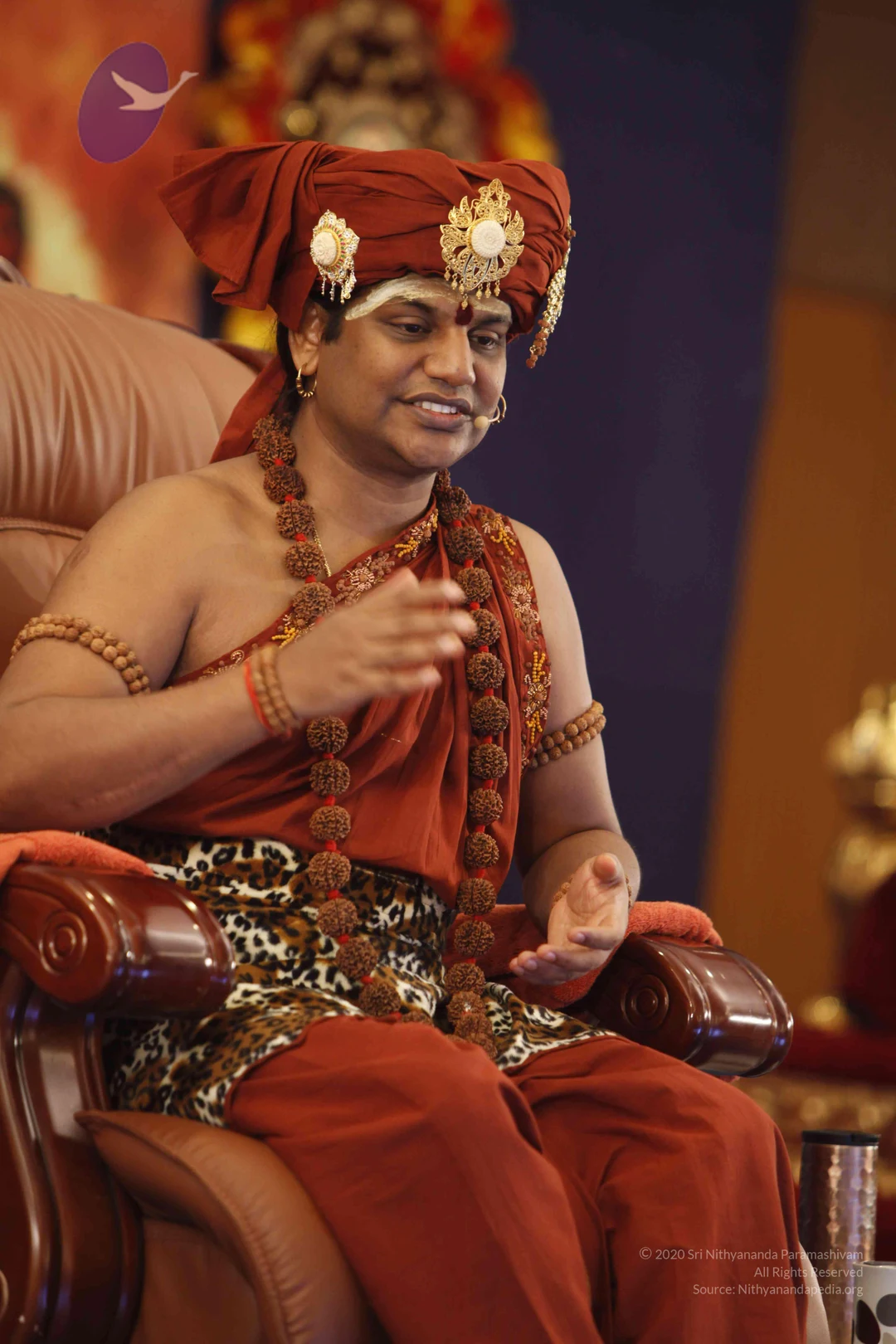
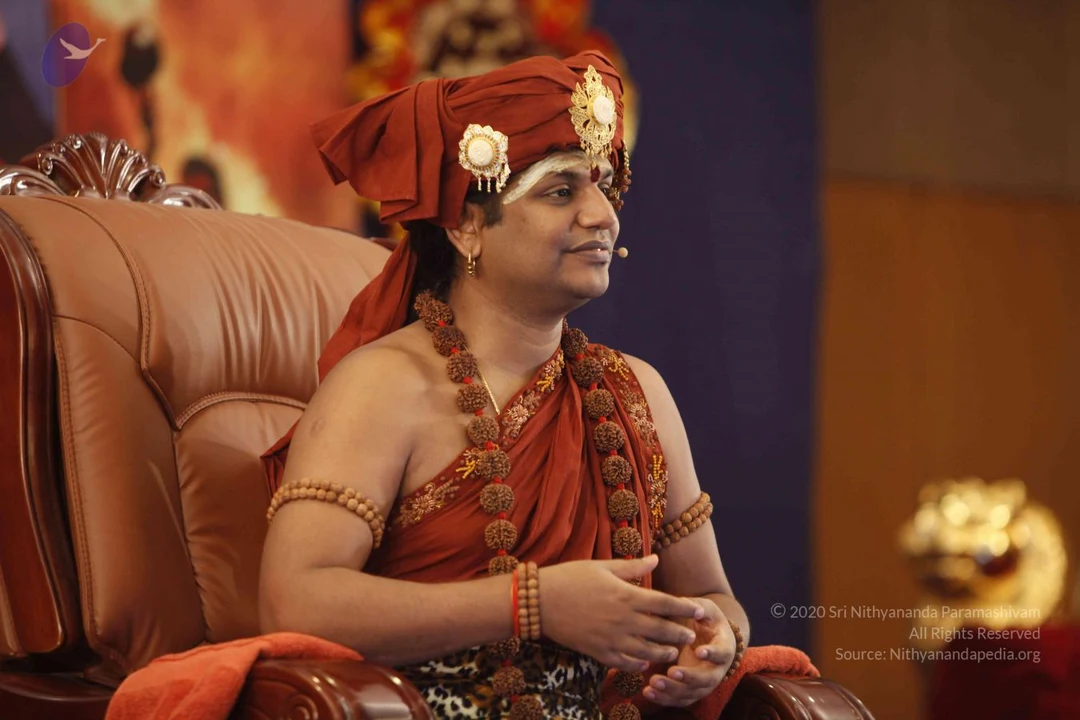
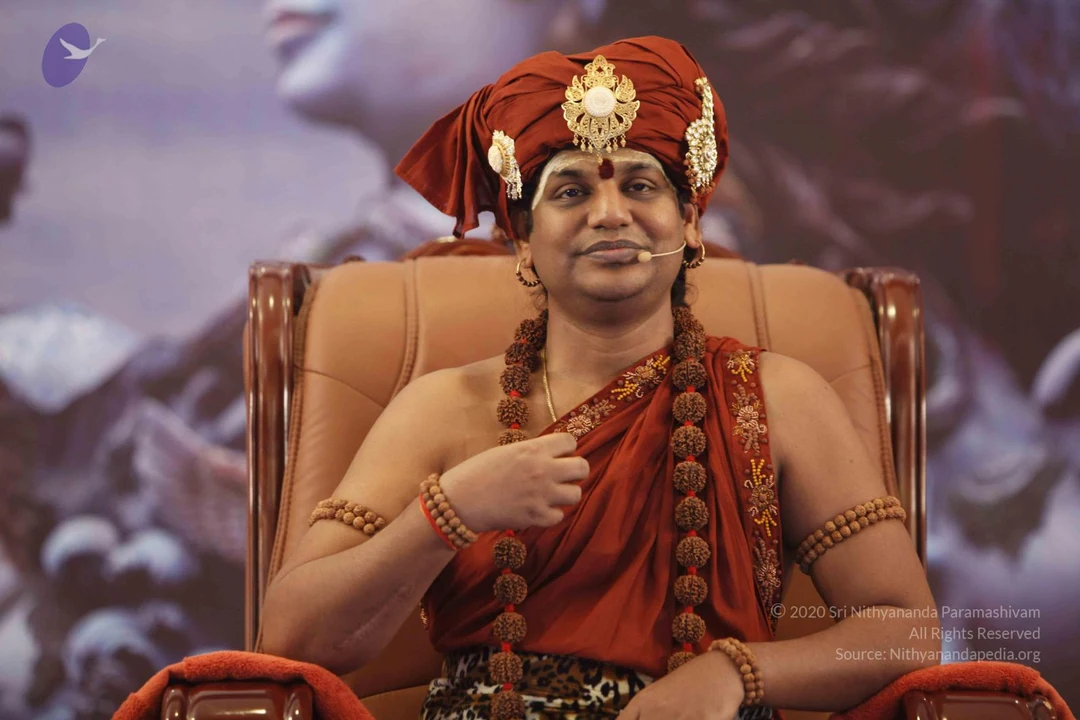
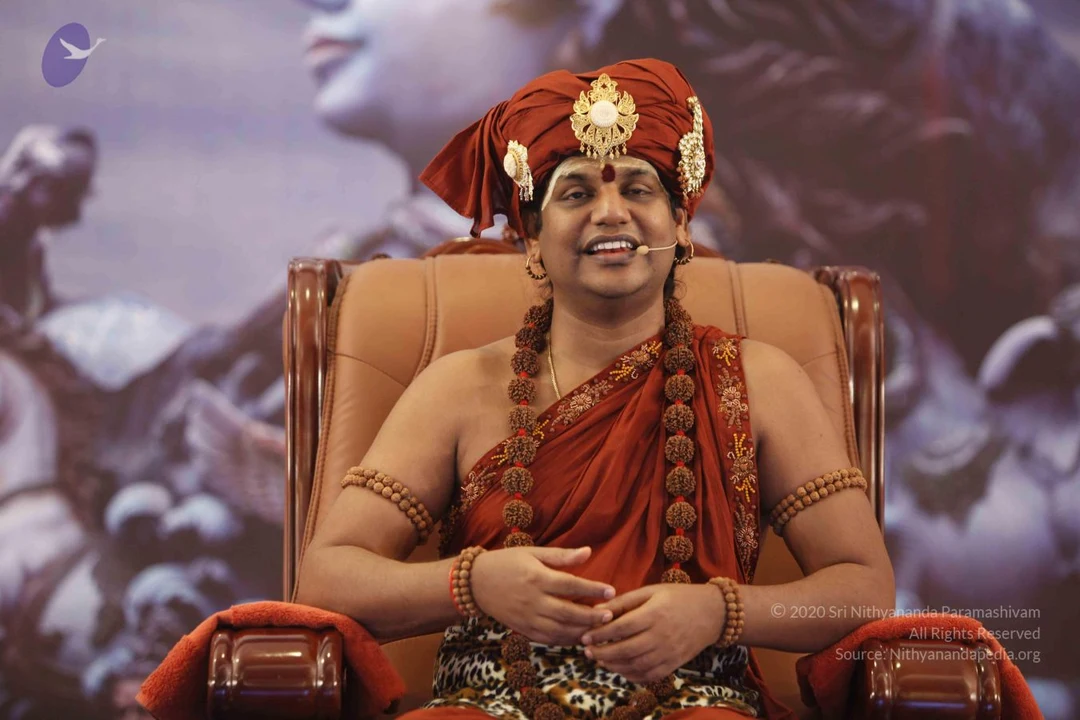
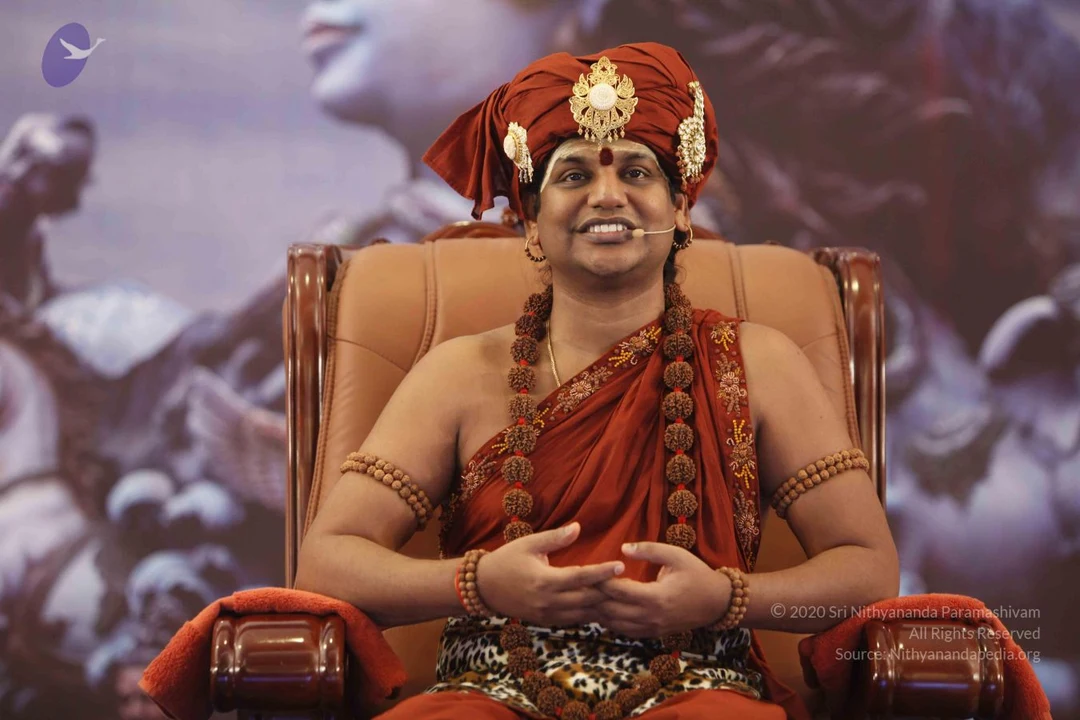
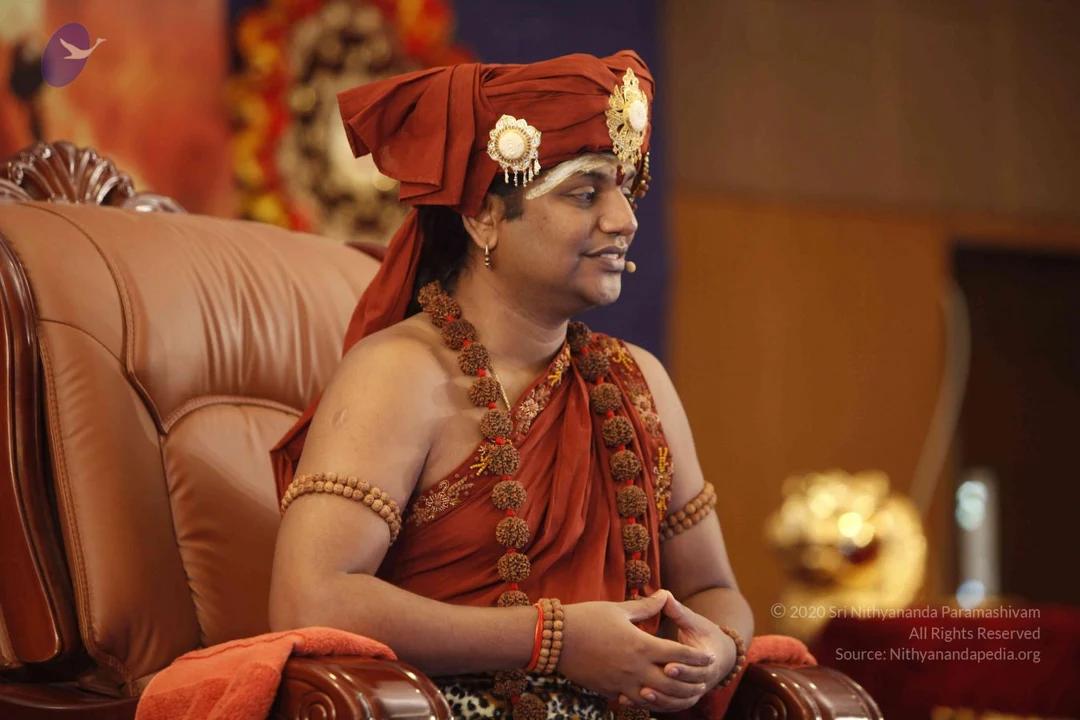
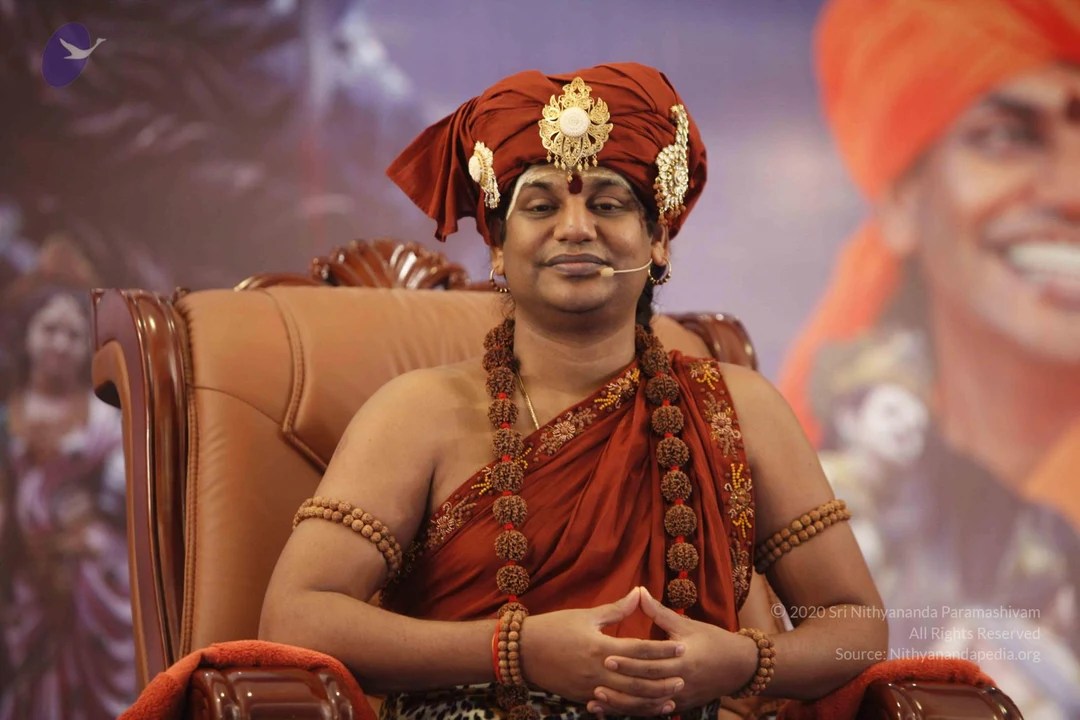
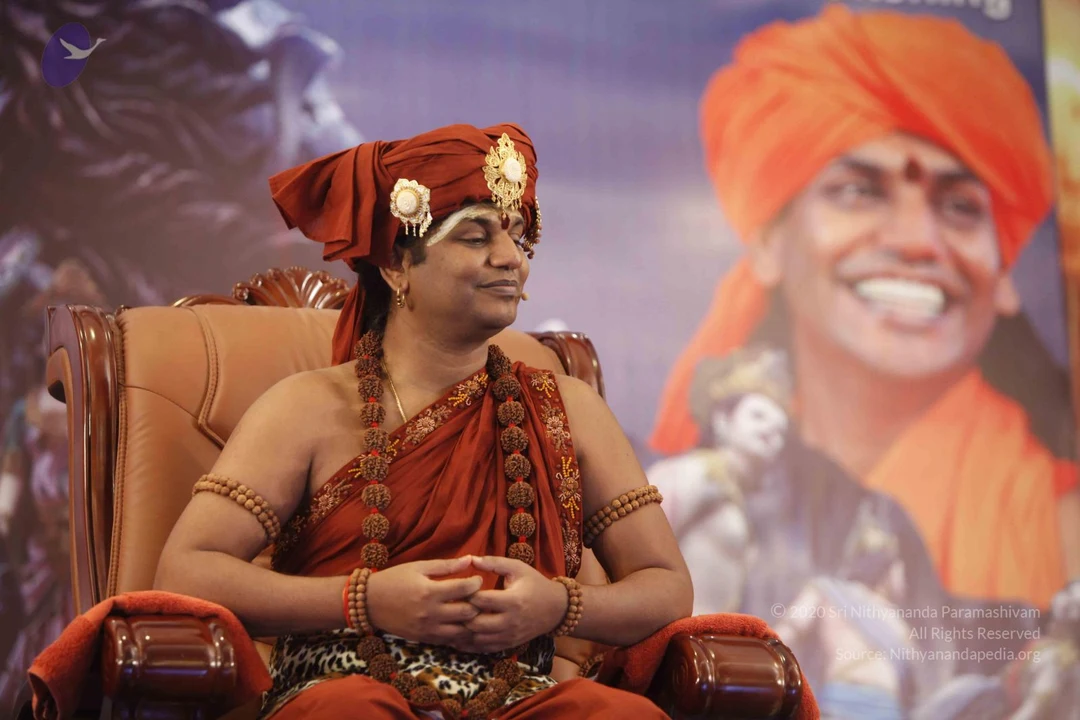
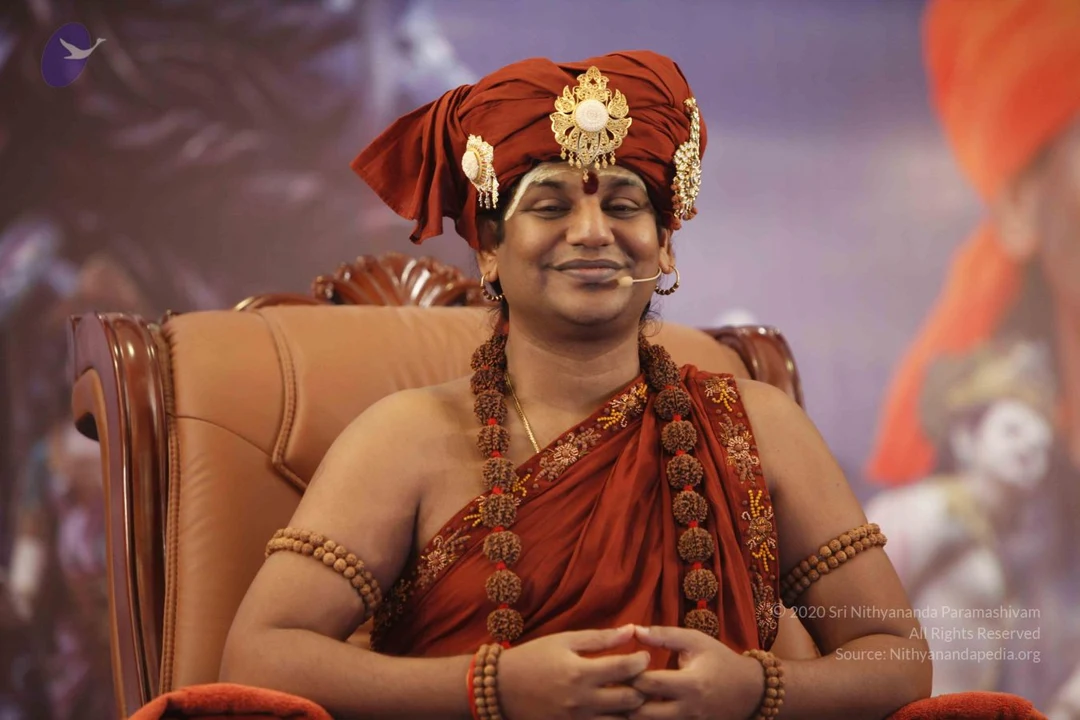
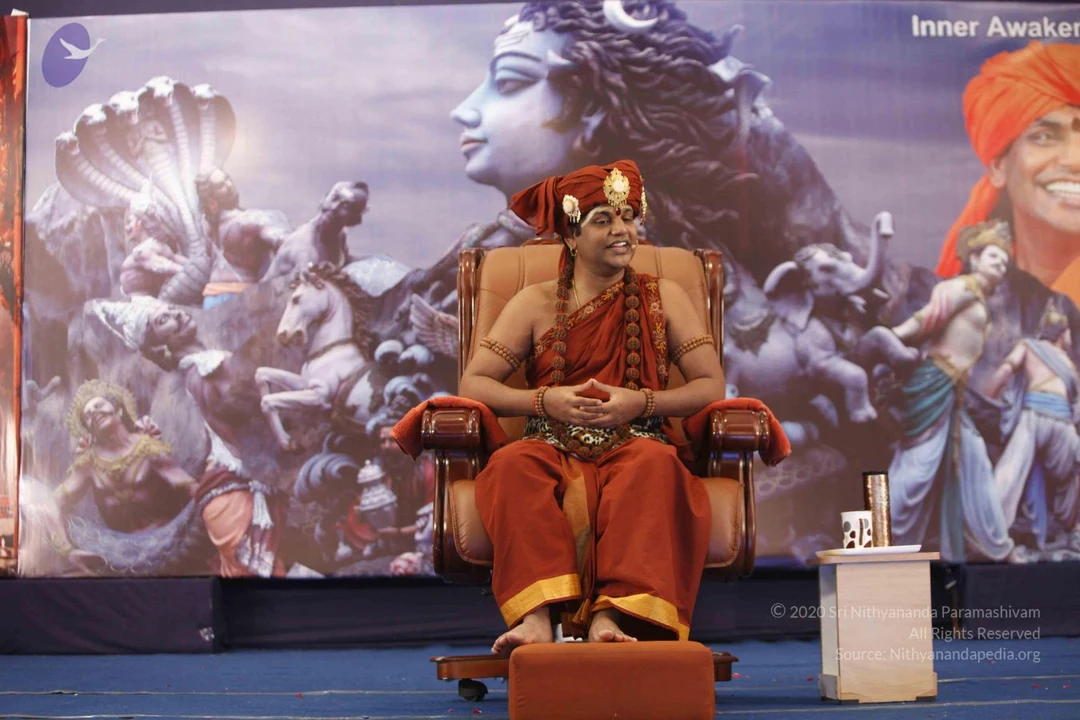
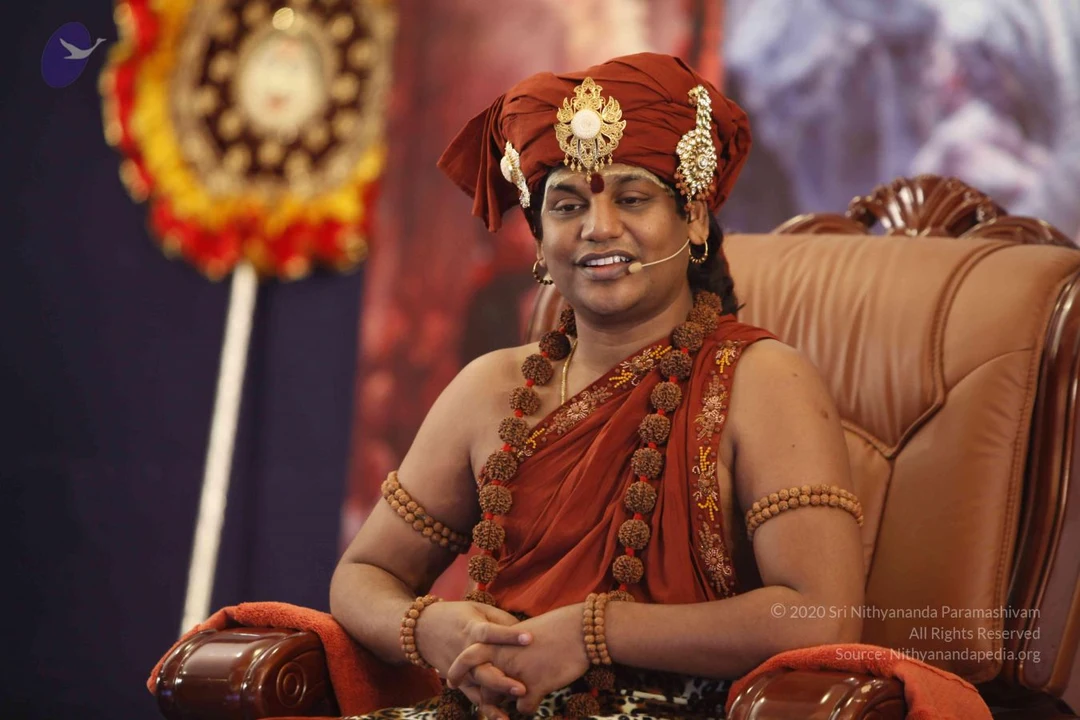
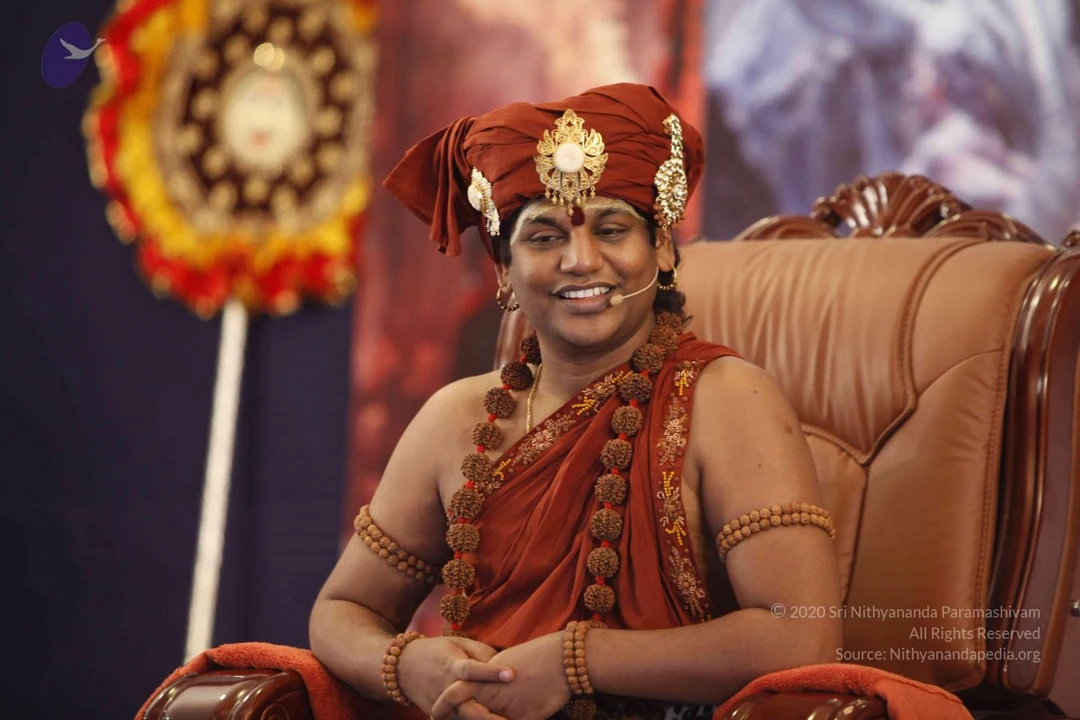
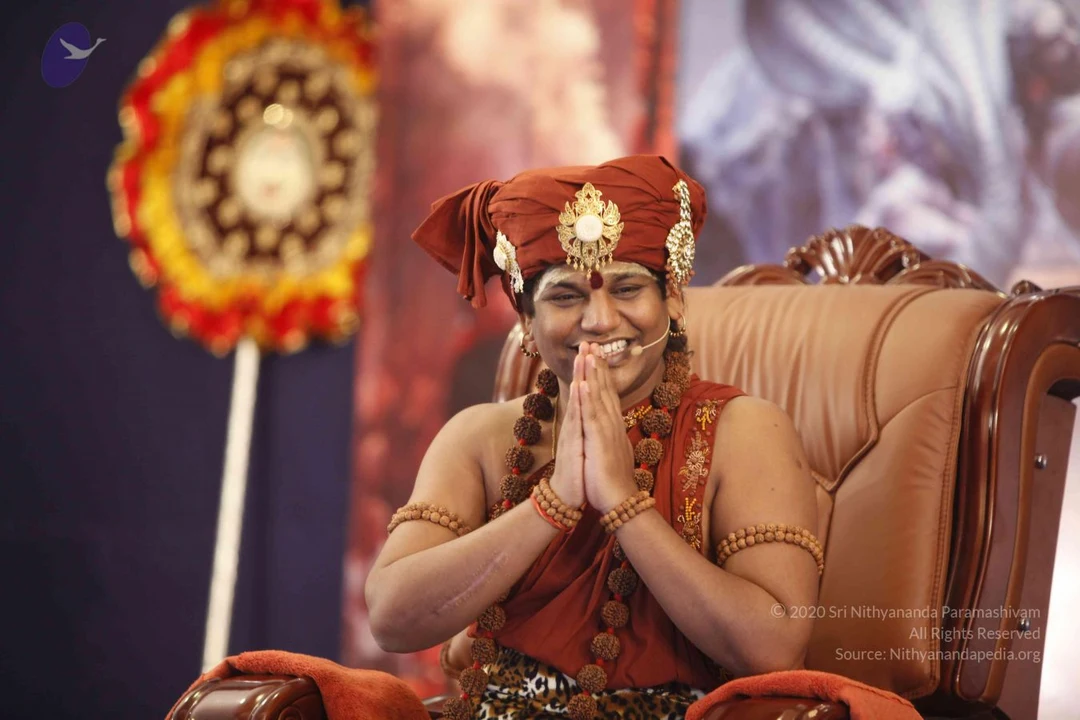
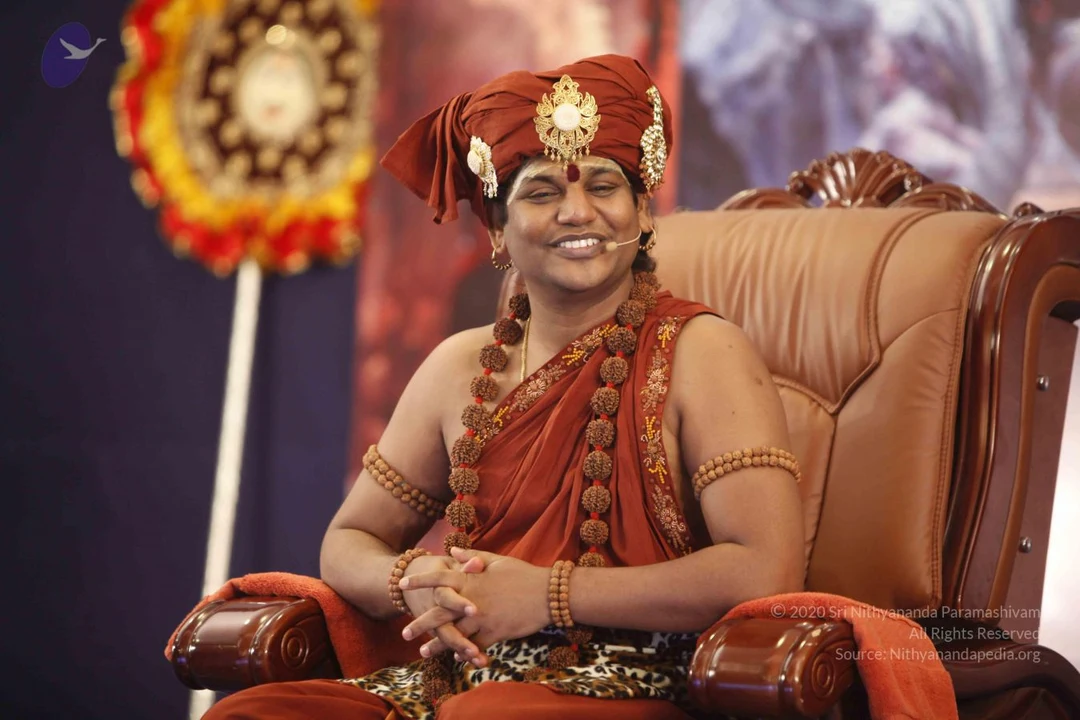
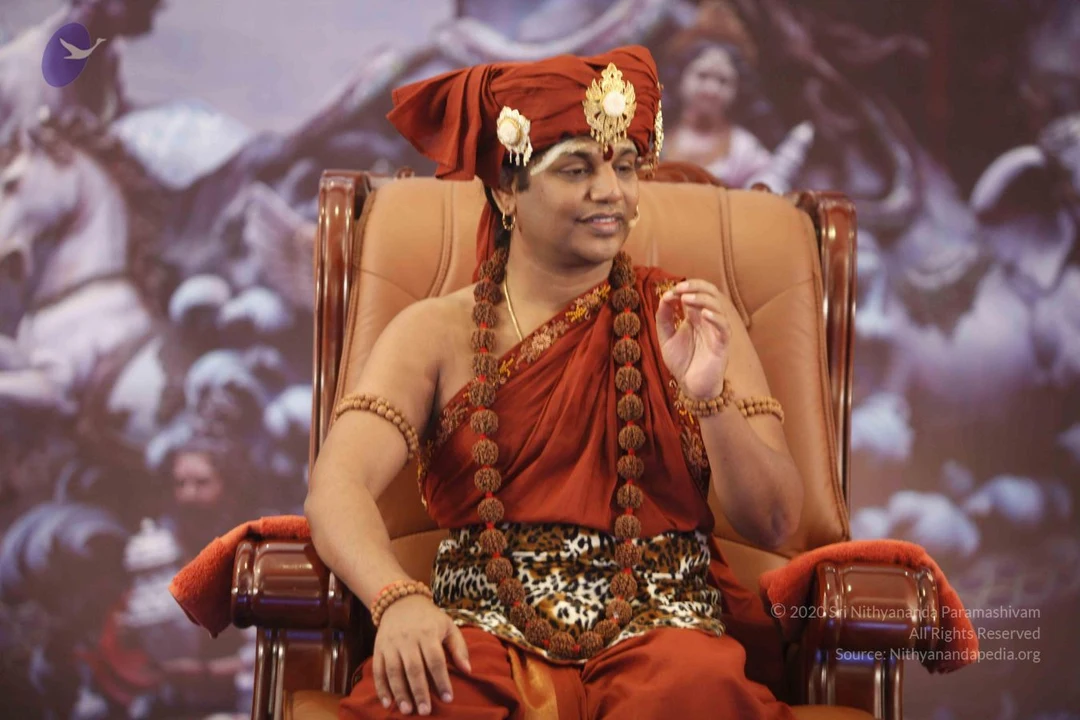
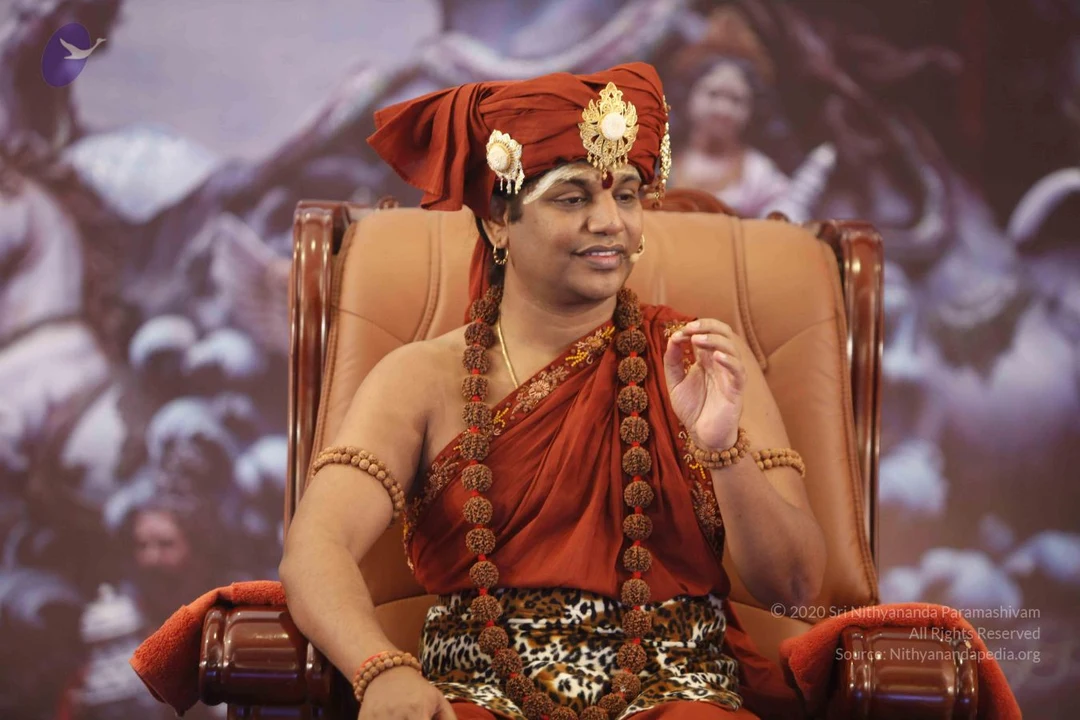
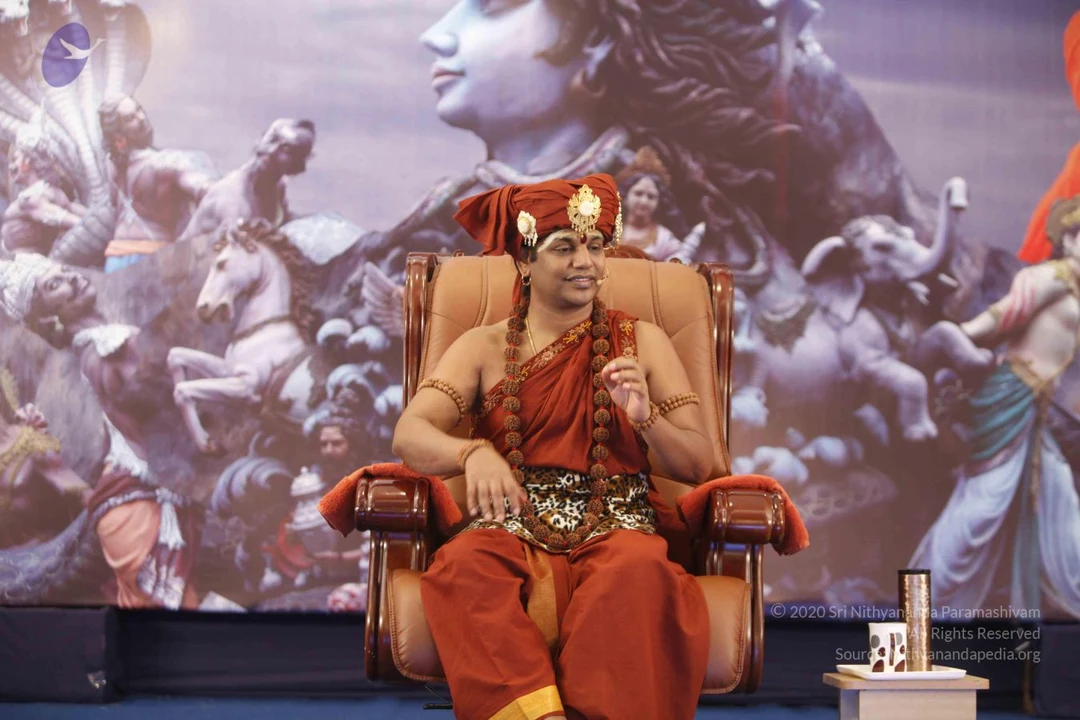
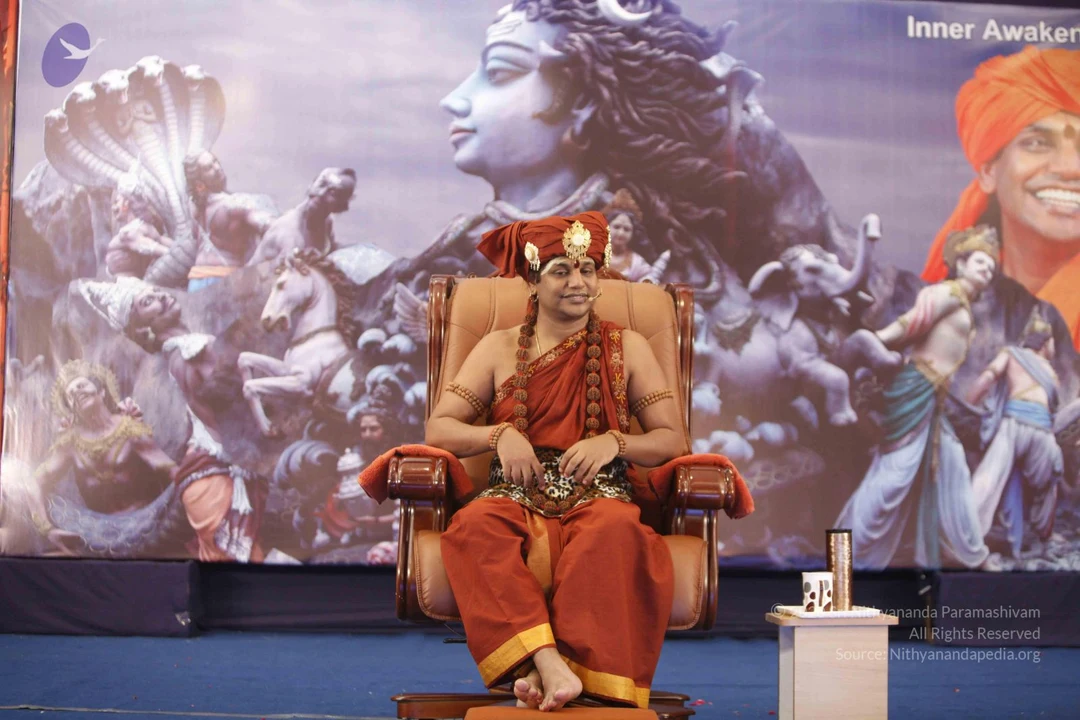
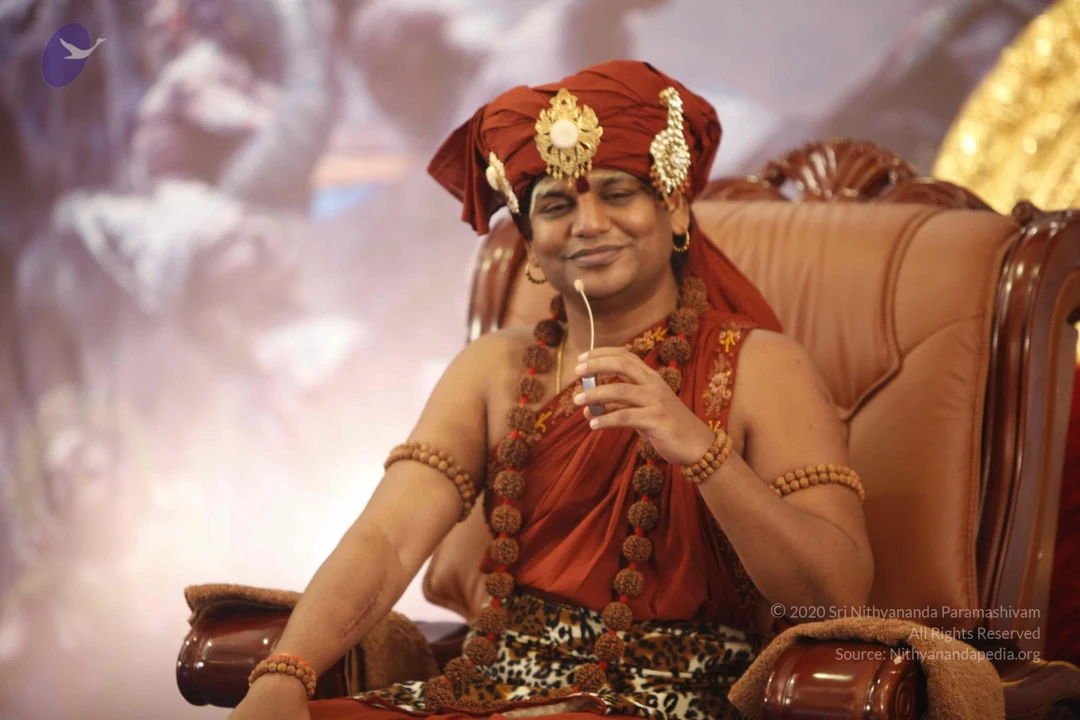
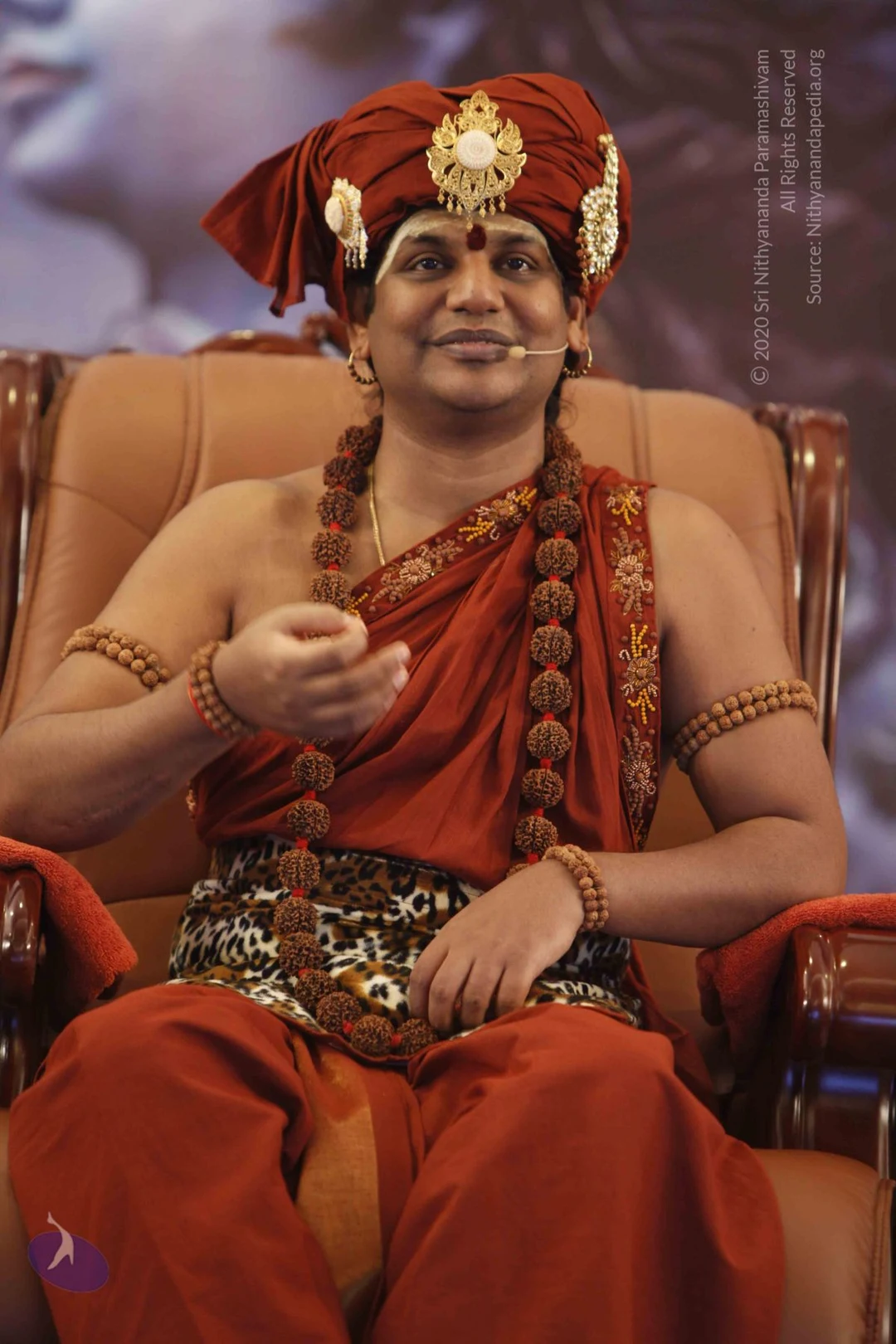
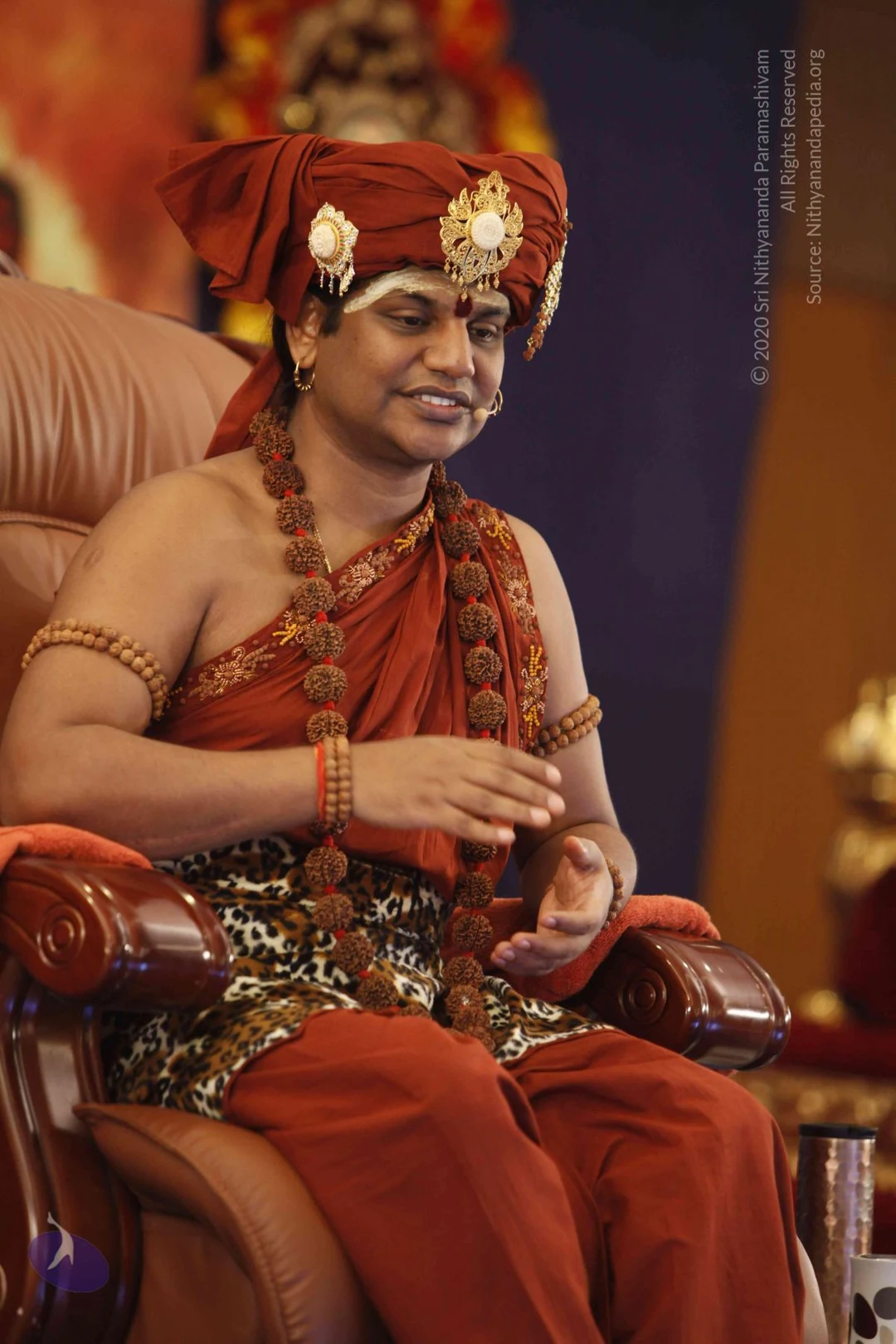
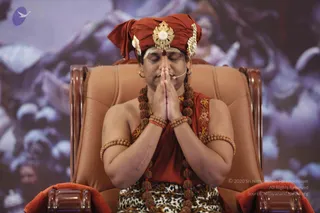
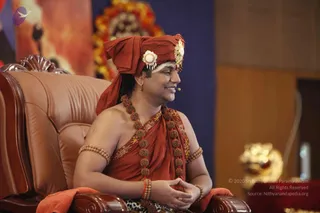
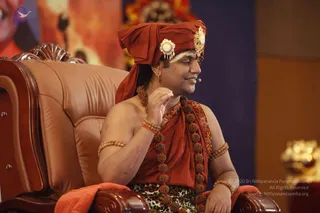
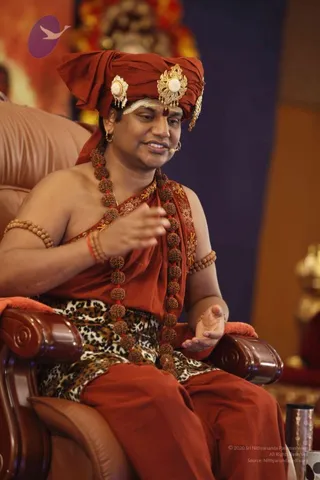
A blurry photo of a seated group in a temple-like hall, photographed off a screen during a webinar broadcast. A standing woman on the left wears a black embellished outfit with gold detailing and folds her hands. Rows of seated devotees in white, pink, red and green clothing sit on a carpeted floor before altar shelves holding deity murtis and garlanded images. A small cloth-covered table with offerings sits in the foreground, with a printed sign reading SAN JOSE at the bottom edge. No figure is clearly identifiable as a person in this image.A blurry photograph of a webinar screen showing a group meeting indoors at a centre. A standing woman in a black embroidered outfit with gold trim stands at left, beside a figure in white on the left edge. Many seated devotees in white, red and green clothing fill the room, sitting on a carpeted floor before altars with deity murti and framed pictures. A flower arrangement and a white sheet lie in the foreground.Photograph of a seated man with eyes closed and palms pressed together in anjali mudra. He wears a red-orange turban with a gold and white ornamental crest, a red-orange shawl over a bare chest, a leopard-print lower garment, and multiple rudraksha malas around his neck and arms. A small headset microphone is on his face, and a red bindi marks his forehead. He sits on a tan leather throne-style chair with orange towels on the armrests, against a blurred purple backdrop of painted figures.A photograph of a man seated in a brown leather armchair on a stage, wearing a saffron-orange turban with a white floral brooch, an orange-red draped garment, and multiple rudraksha mala necklaces with a gold pendant. He has bead bracelets on his arms and a small lapel microphone, and is smiling with hands clasped in his lap. Behind him are a blue backdrop with an ornate floral panel and a gold decorative object on a side table. Swamiji (probable) appearance-based label applies to this seated speaker with saffron turban, rudraksha malas and orange robes.A photograph of a seated man on a brown leather throne-style chair in a stage setting. He wears a rust-red turban decorated with a white flower ornament and gold brooch, a rust-red shawl over bare shoulders, and a long rudraksha mala with wooden beads, with bead bracelets on his arms and wrists. He has a headset microphone and raises one hand while speaking. Behind him are red and orange banners, and a gold ornamental object is visible at the right edge. Swamiji (probable) appears here: the saffron-red turban, ornate ceremonial gold ornaments, rudraksha malas and the throne seating are consistent with the page's claim, and he is physically present. The photo credit overlay is not repeated here.A man seated in a brown leather armchair, speaking into a headset microphone during a satsang. He wears a rust-orange turban decorated with gold and white ornaments, a rust-orange shawl over bare shoulders, a leopard-print waist cloth, rust-orange trousers, and multiple rudraksha mala necklaces and armlets. He has a white forehead marking and a red bindi, and gestures with his open hands. Behind him are warm orange and gold decorative hangings and a deep blue wall. Swamiji (probable): the rust-orange turban, rudraksha malas and ornate ceremonial clothing match the presentation of the page's named teacher, giving a probable identification.

IA_Darshan

159 photosSource gallery
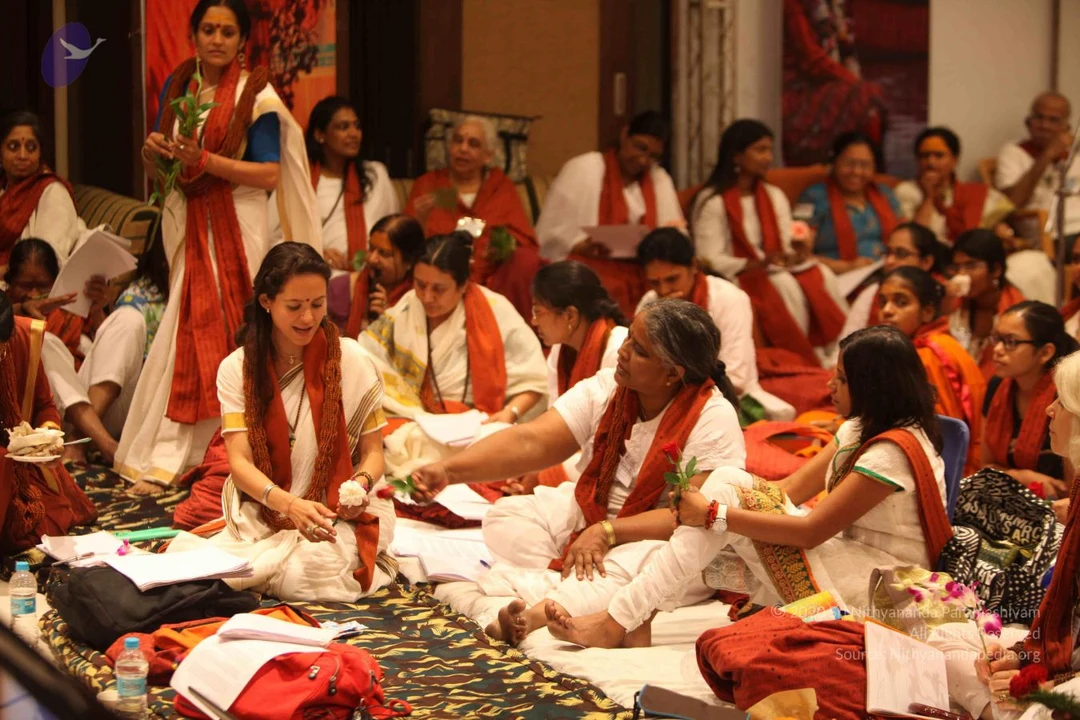
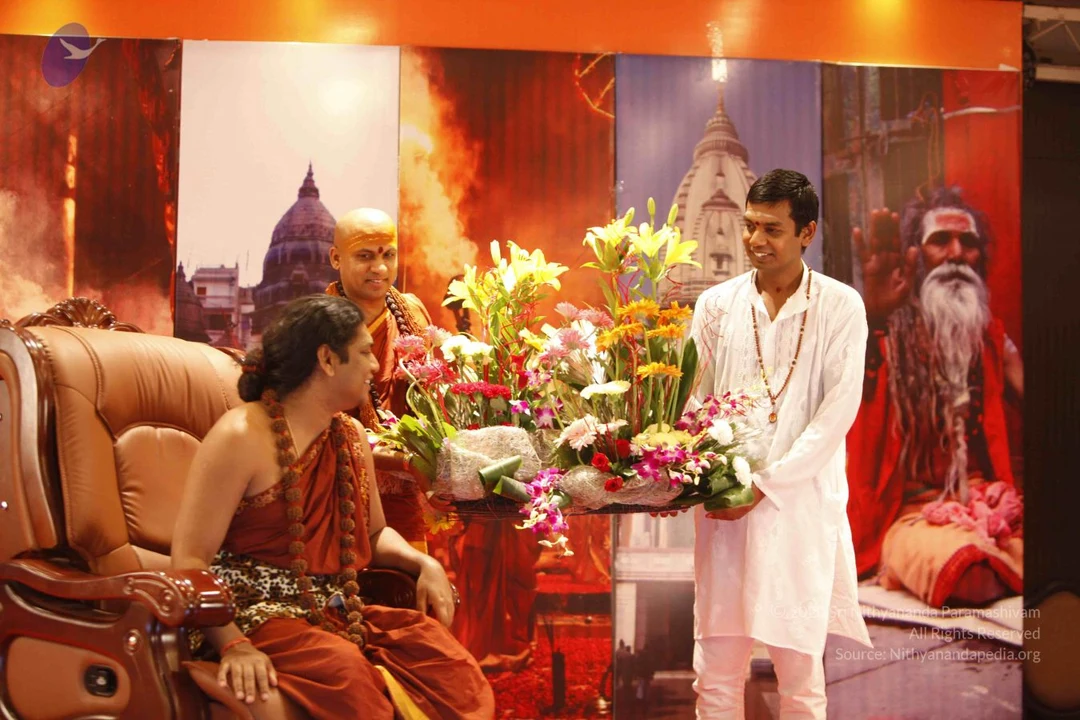
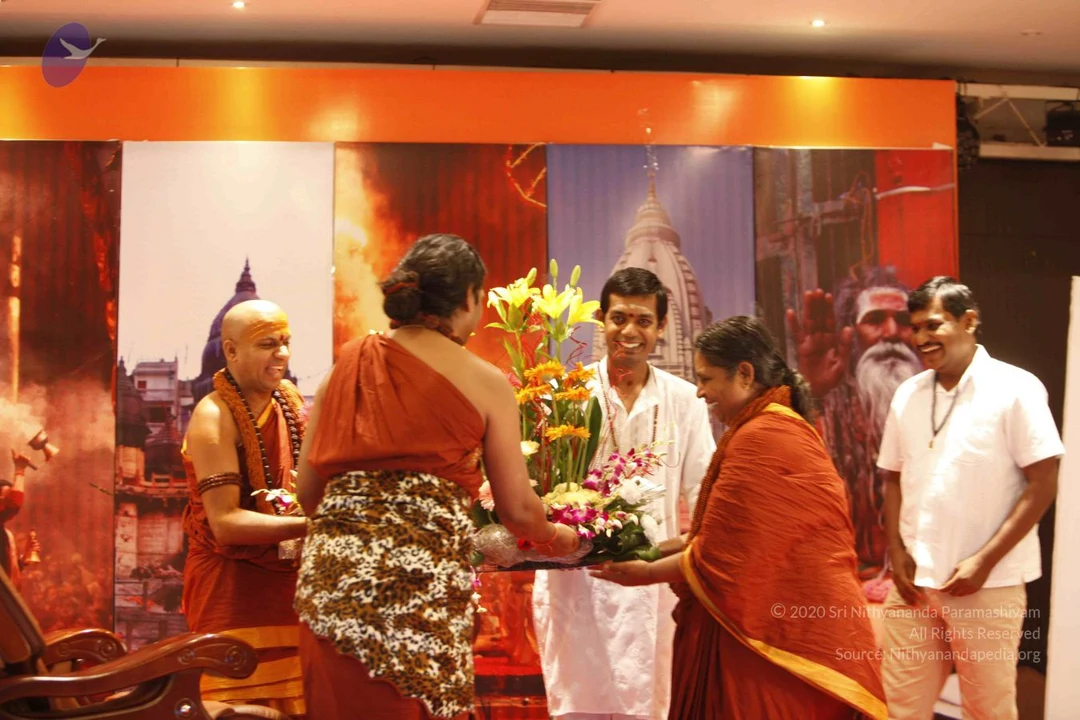
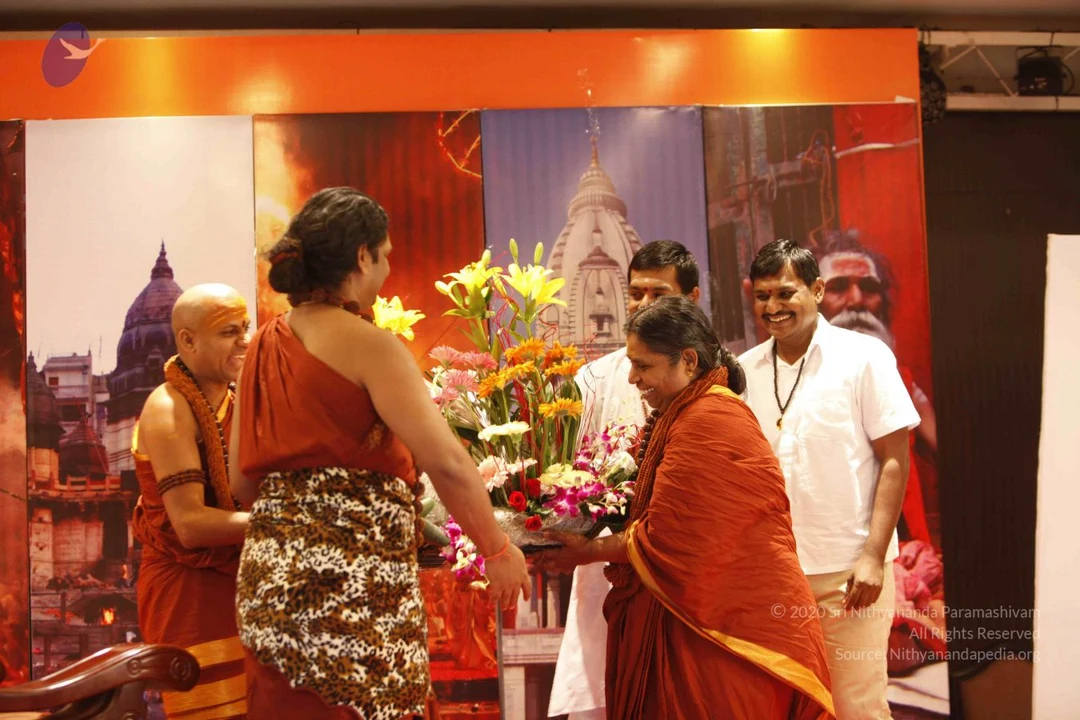
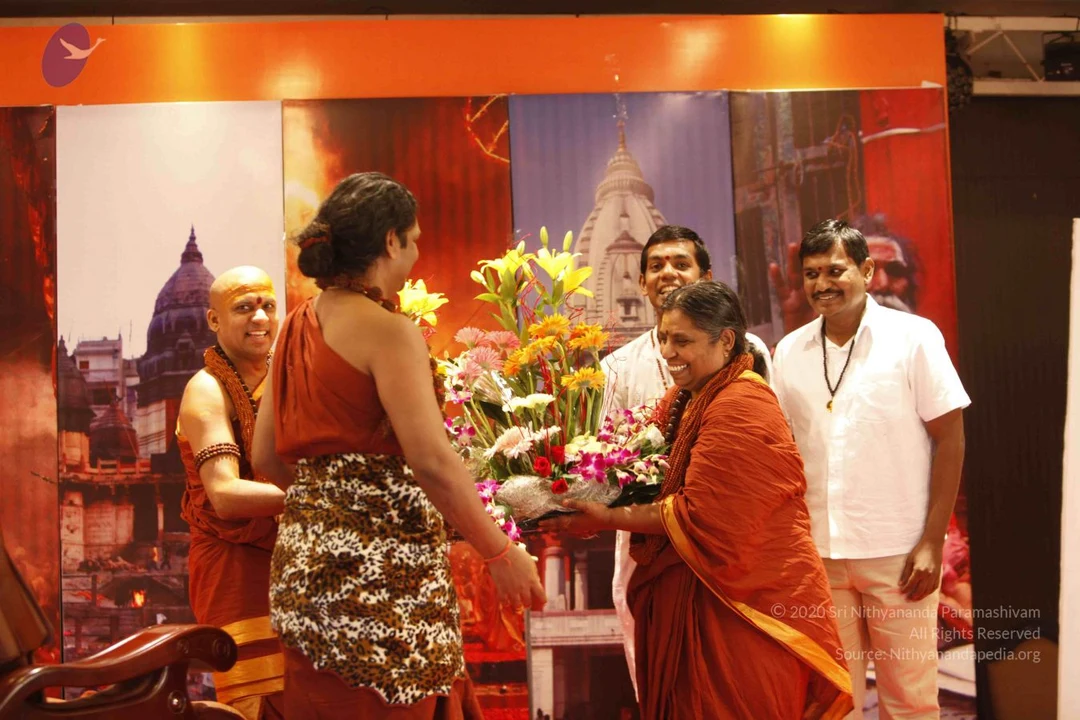
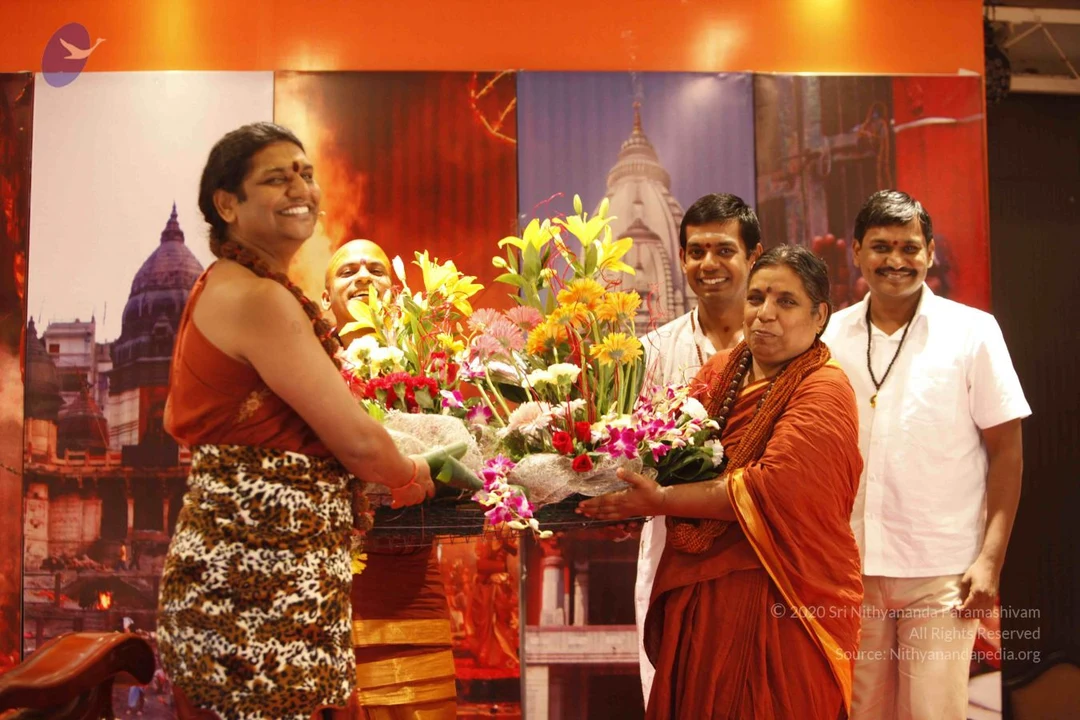
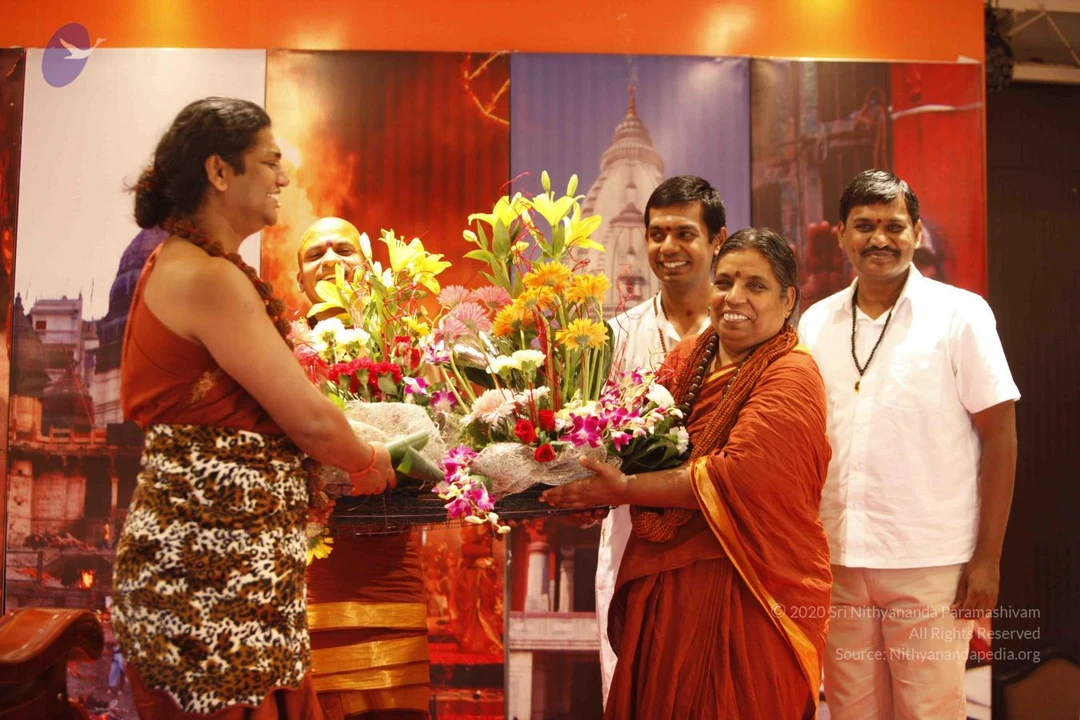
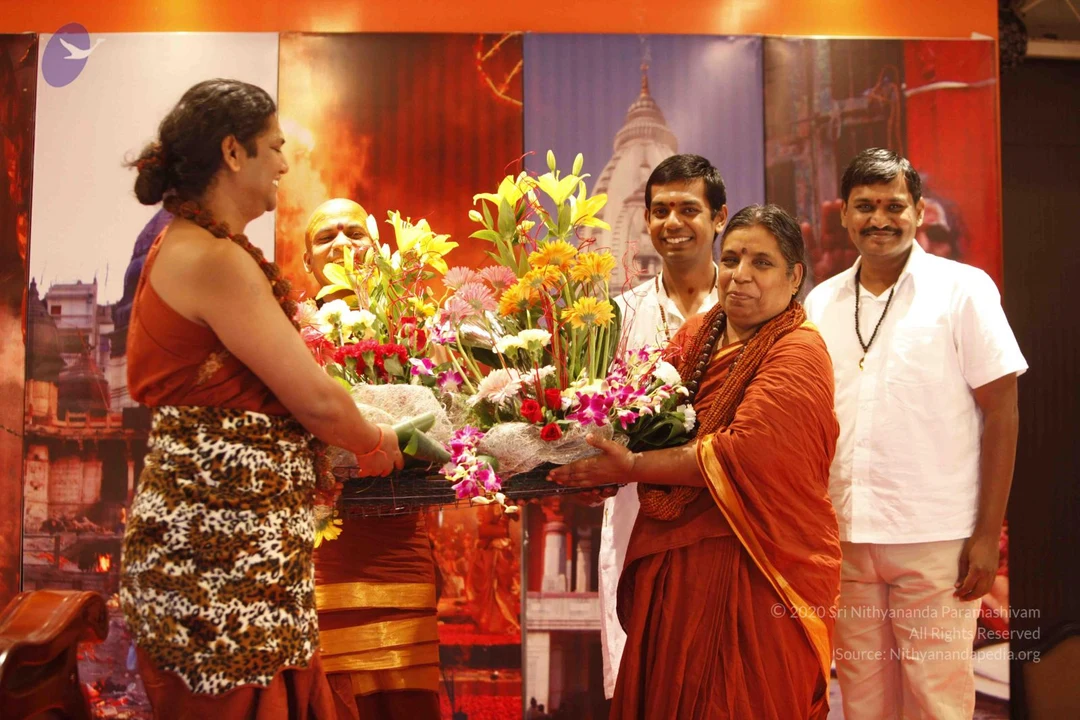
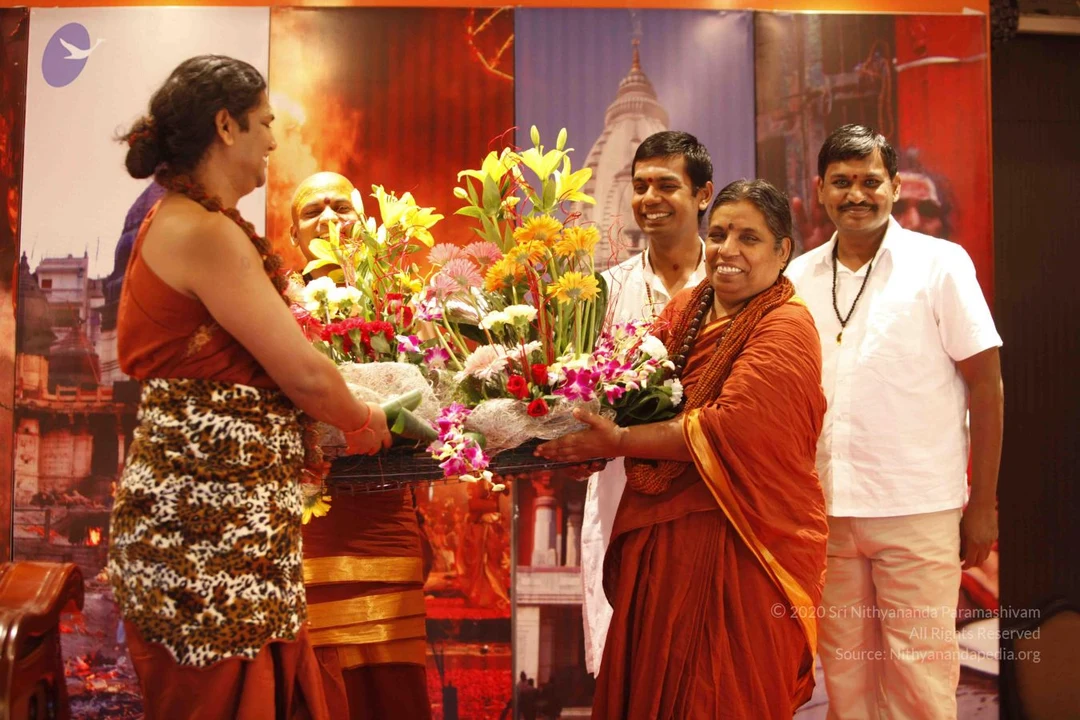
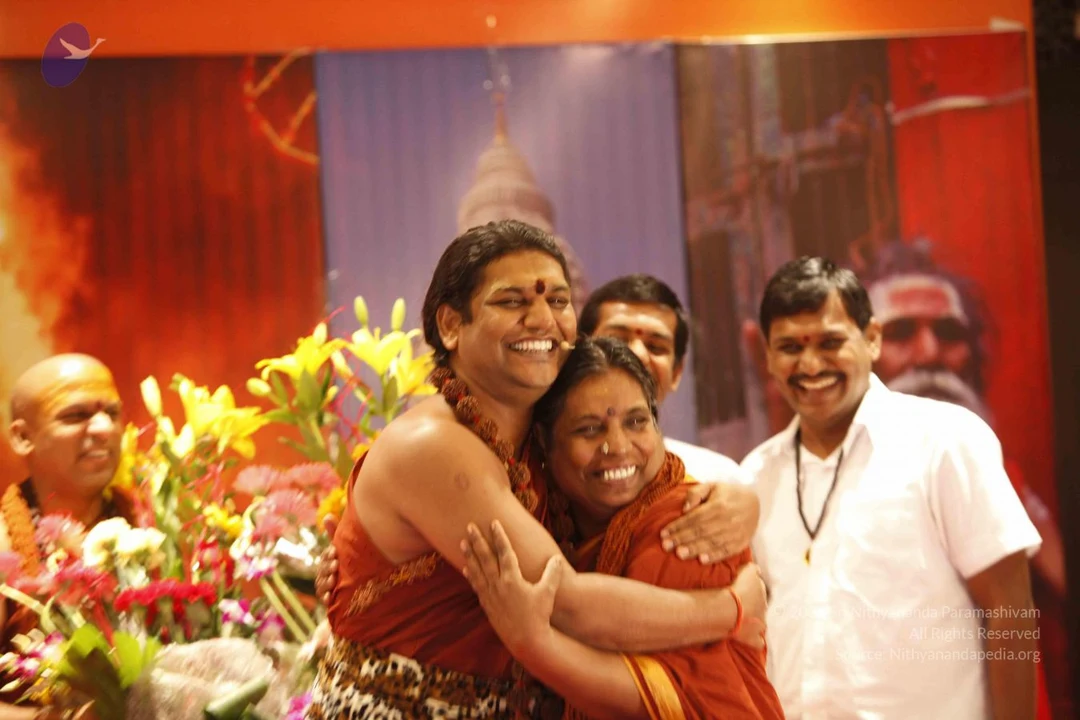
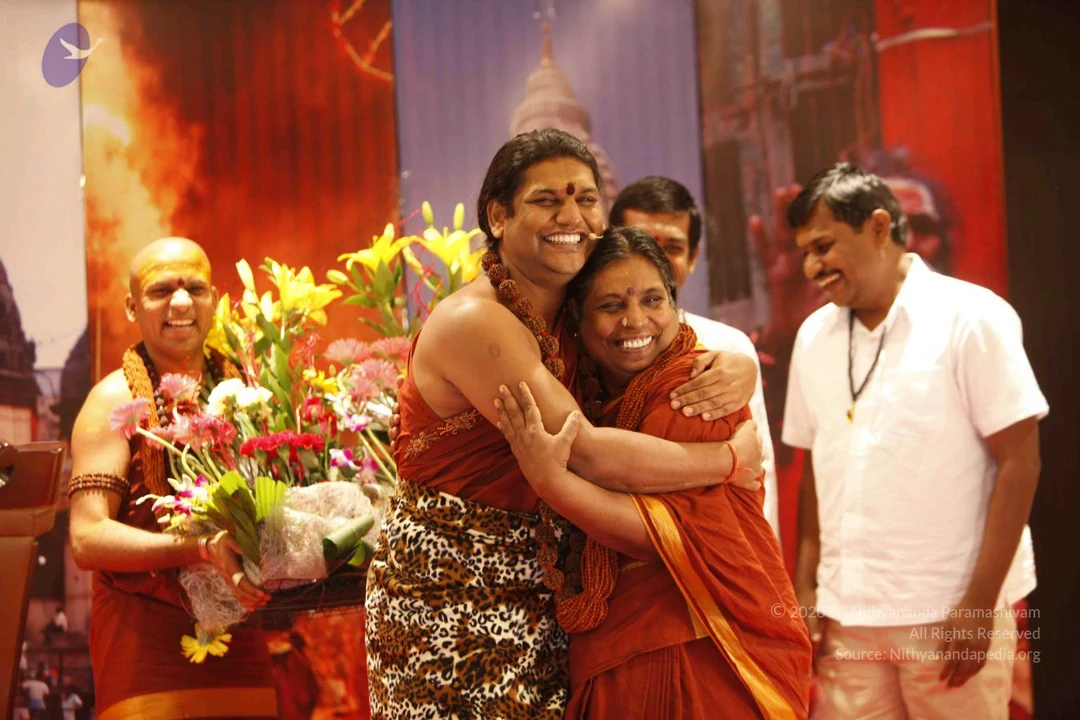
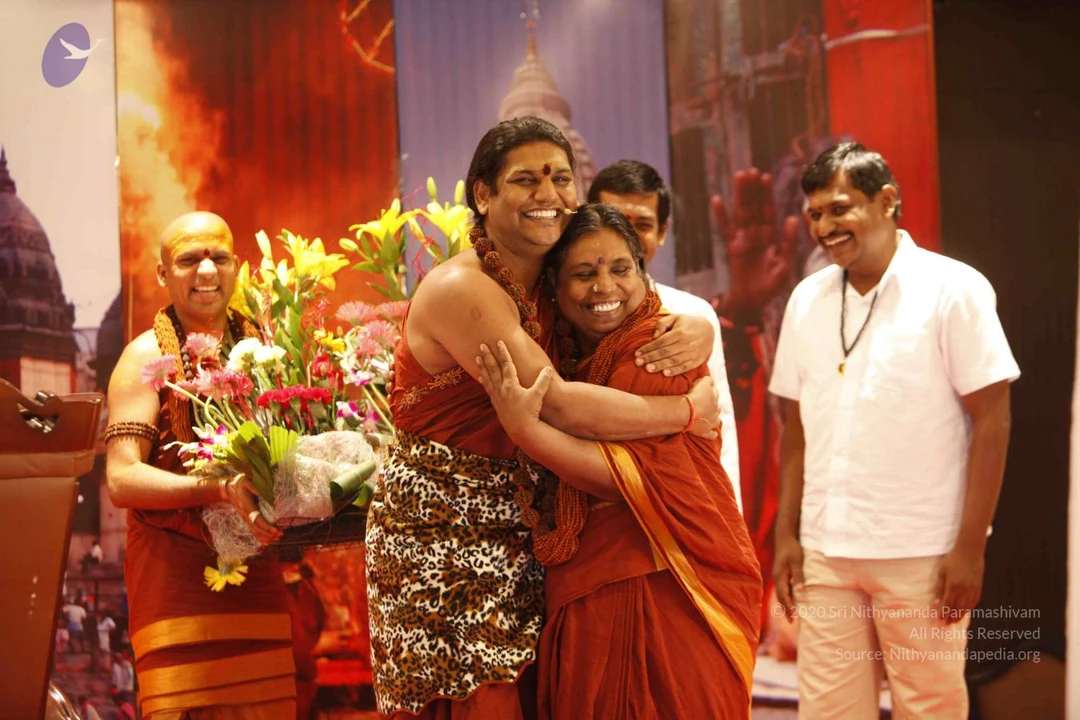
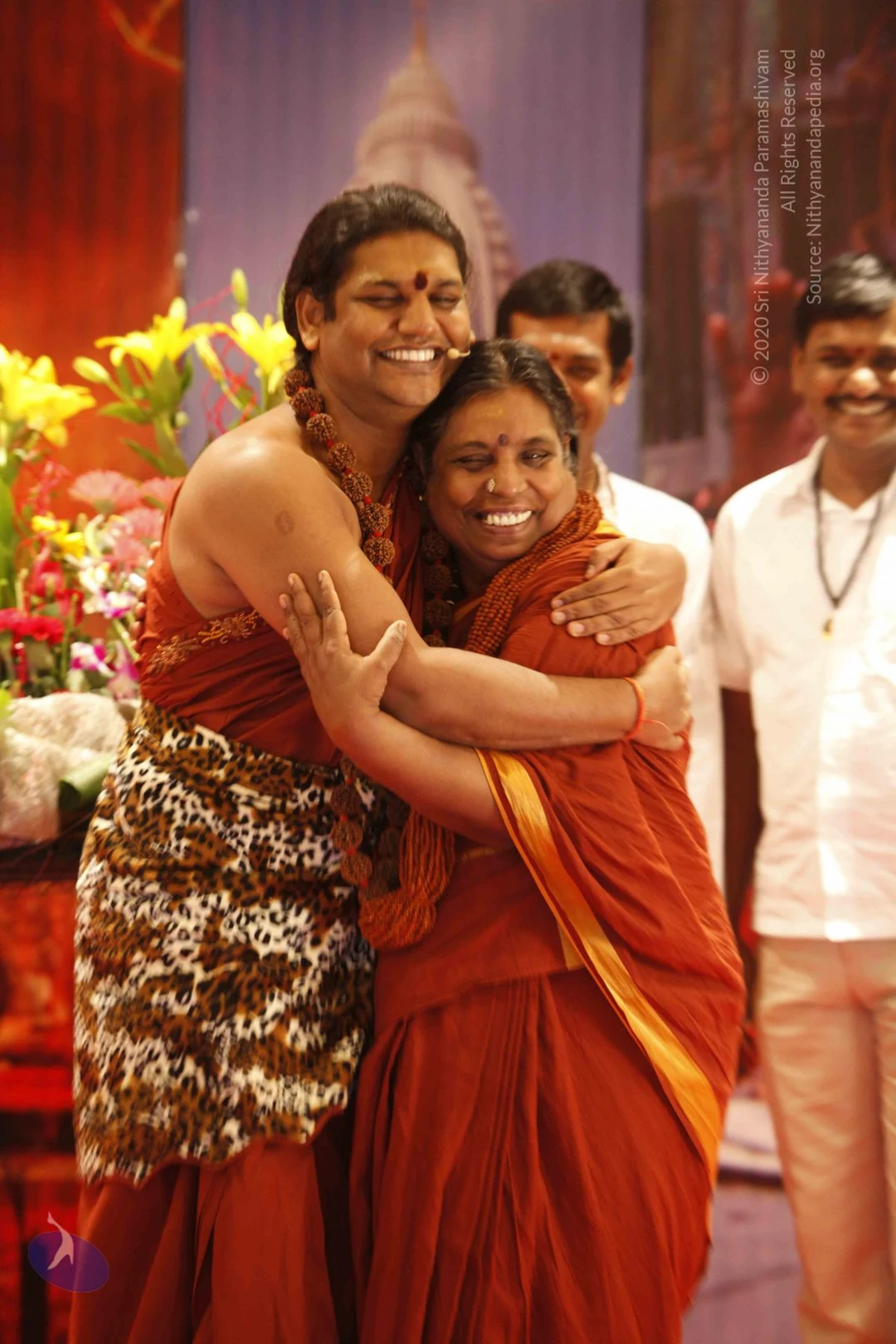
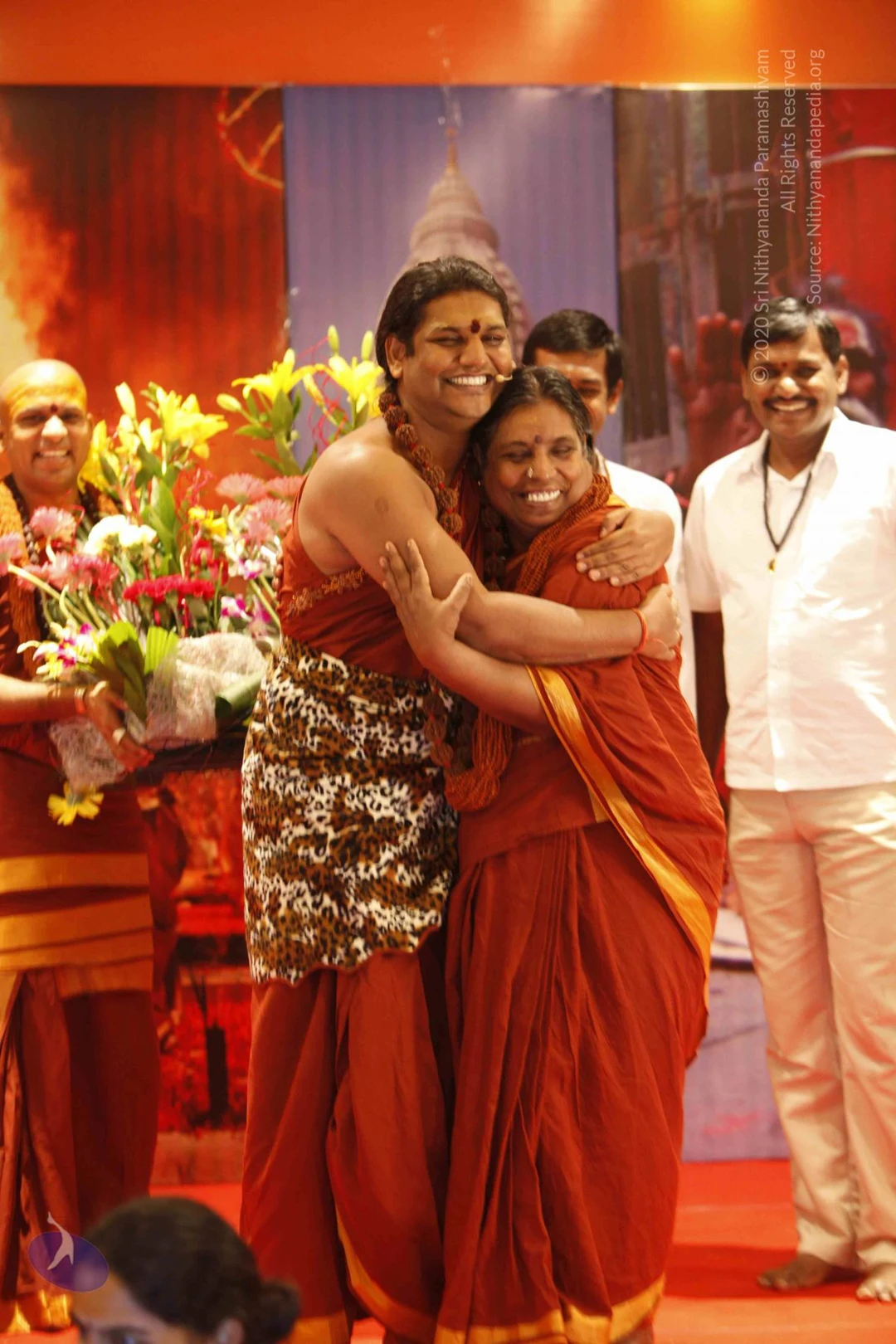
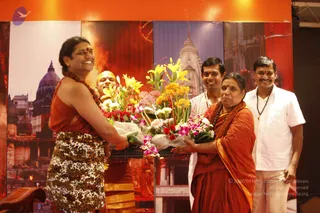
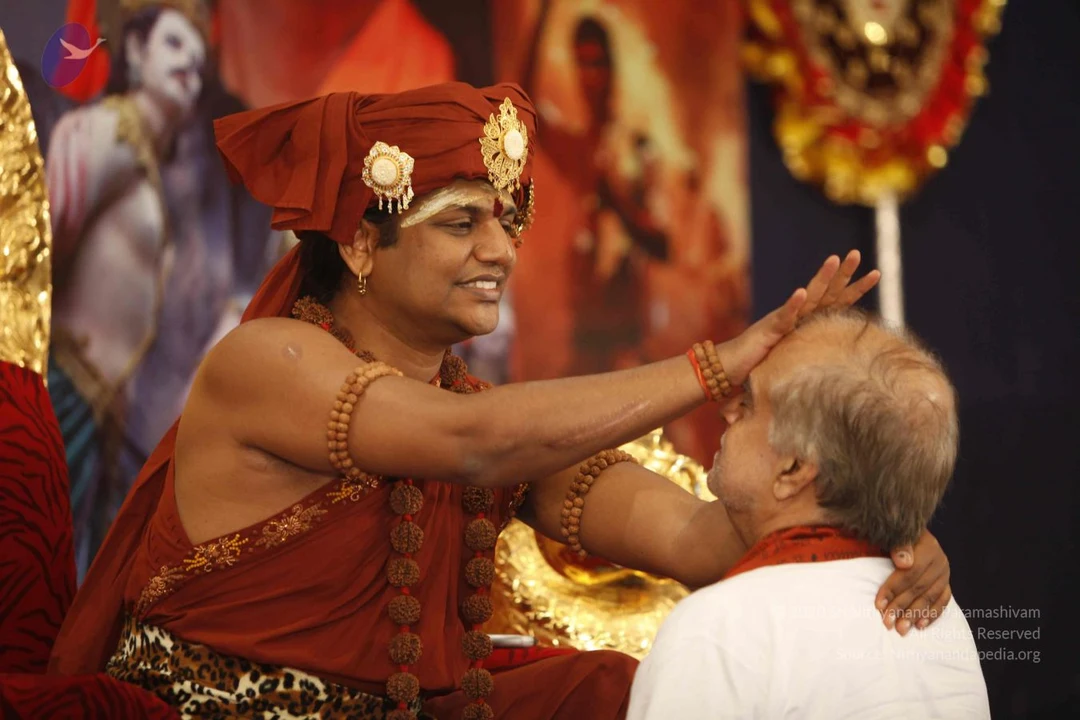
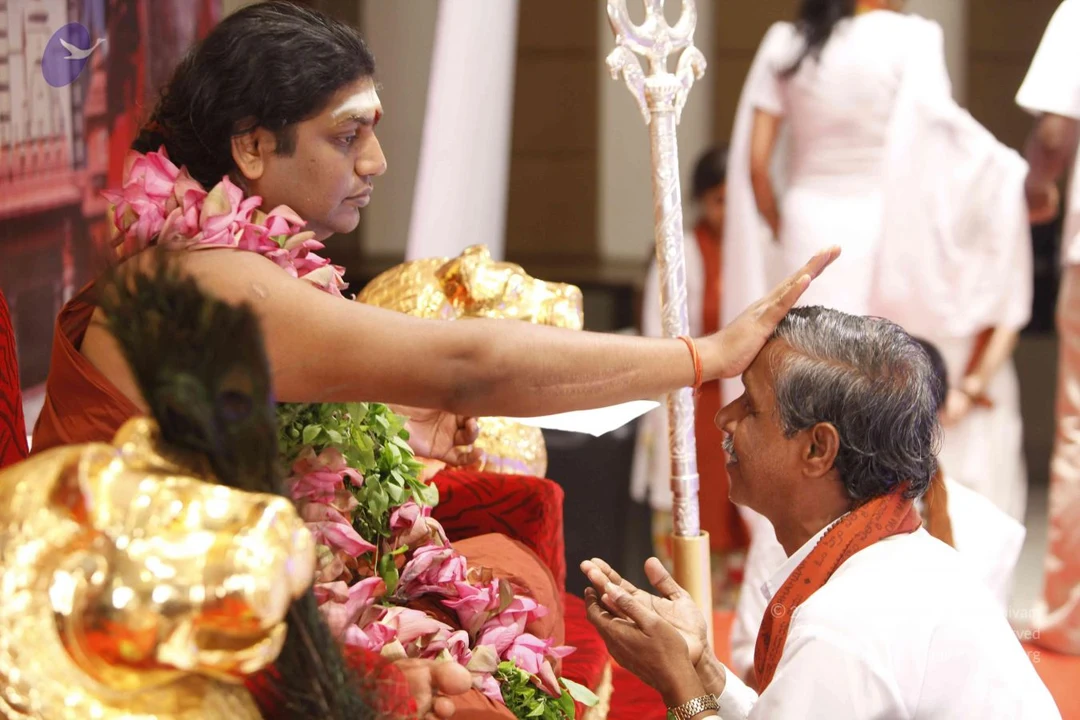
A seated group of women in white and orange-red shawls sits on floor mats at an indoor gathering, many holding notepads and papers. In the foreground a woman in a white sari with a red-bordered shawl and a red bindi holds a white flower, while a woman in white with a red shawl offers a red flower and green leaves to another woman in white with a gold bangle. Behind them rows of attendees in red and orange shawls sit on chairs and mats, with a red-and-gold banner on the back wall. No single figure is identifiable as a person in this frame, so no candidate is marked.A seated figure in an orange-saffron robe with a rudraksha mala and a long garland of beads sits in a large brown leather armchair, appearing to be honoured. A bald priest in orange robes with a yellow-orange forehead mark stands behind him. A standing man in a white kurta and white trousers, wearing a rudraksha mala, holds a large flower tray of white lilies, pink and orange blooms and purple orchids. Behind them are large printed backdrops of a temple dome, a sadhu with long white beard and tilak, and fiery orange imagery.Indoor event photo on an orange-backed stage with large printed panels showing Varanasi ghats, a temple spire and a sadhu. A bald man with orange-ochre robes, a rudraksha mala and a horizontal tilak sits at left, smiling. A woman in an orange sari with a shawl and a cheetah-print skirt holds a tray of lilies, orange and purple flowers toward a woman in an orange sari with a garland who receives it. A young man in a white kurta and a white shirted man stand at right. Several people are visible.A photograph of a stage event with a backdrop of Varanasi ghat and temple imagery in orange and red tones. A woman in an orange sari with a leopard-print wrap stands at left holding a large floral bouquet of yellow lilies, pink and orange flowers, and red roses, presenting it to a smiling woman in an orange-and-gold shawl at centre. A bald man in orange robes and a rudraksha-style necklace stands at far left, and two smiling men in white shirts stand at right, one with a rudraksha mala. Six people are visible in total. The orange-and-gold shawl wearer is presented with flowers in an honouring gesture; no one in the scene is identified by name.A photograph of a bouquet presentation on a stage backed by orange panels showing Varanasi ghats and temple spires. A woman in an orange and gold-bordered shawl holds a large floral bouquet of yellow lilies, pink and orange flowers, and red blooms toward a smiling woman in an orange shawl with a red-beaded garland. Behind them stand a smiling man in a white shirt and garland, and a man in a white shirt and cream trousers wearing a rudraksha-style necklace. A bald man in orange clothing with a gold-edged shawl and bangle smiles at left. Tall stage-side chair at lower left. a person's appearance is not clearly established.A woman in an orange sari with a rudraksha mala holds a large floral arrangement of yellow lilies, pink and white blooms and red roses, while a person in an orange-and-leopard-print wrap on the left smiles and reaches to receive it. Behind them, a backdrop of temple and ghat photographs with red-orange tones. Two men stand at the right: one in a white shirt and white dhoti-style trousers with a mala, another in a white shirt and cream trousers. A shaved-headed man in orange stands partly behind the left figure. The arrangement is being presented in a stage-like setting.
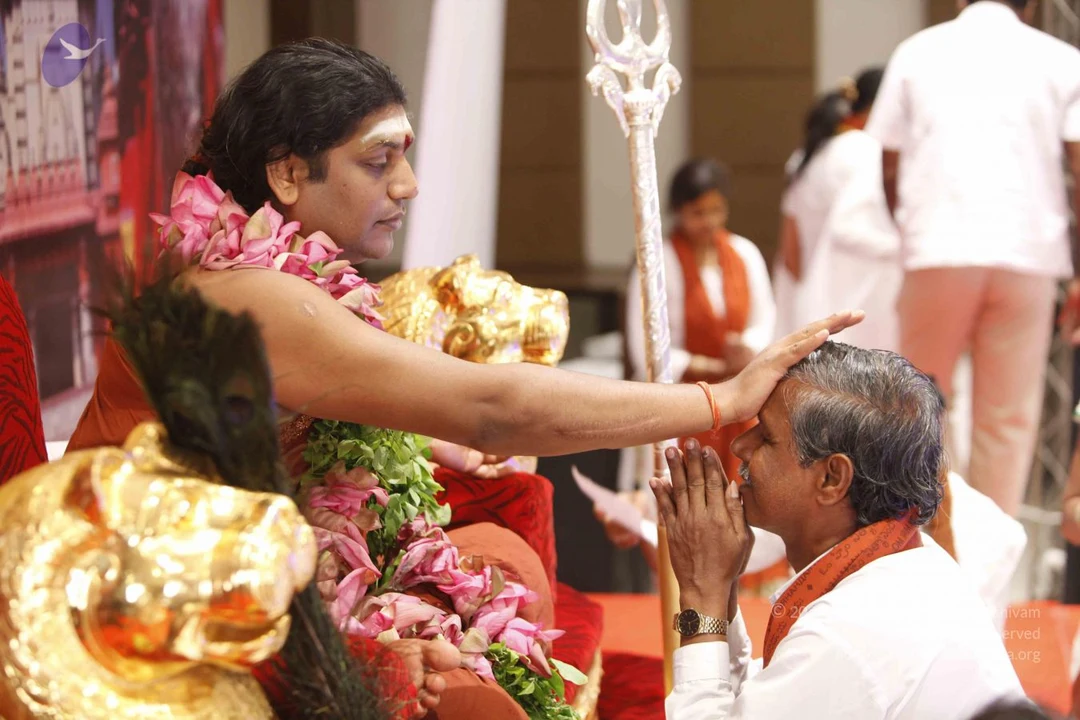
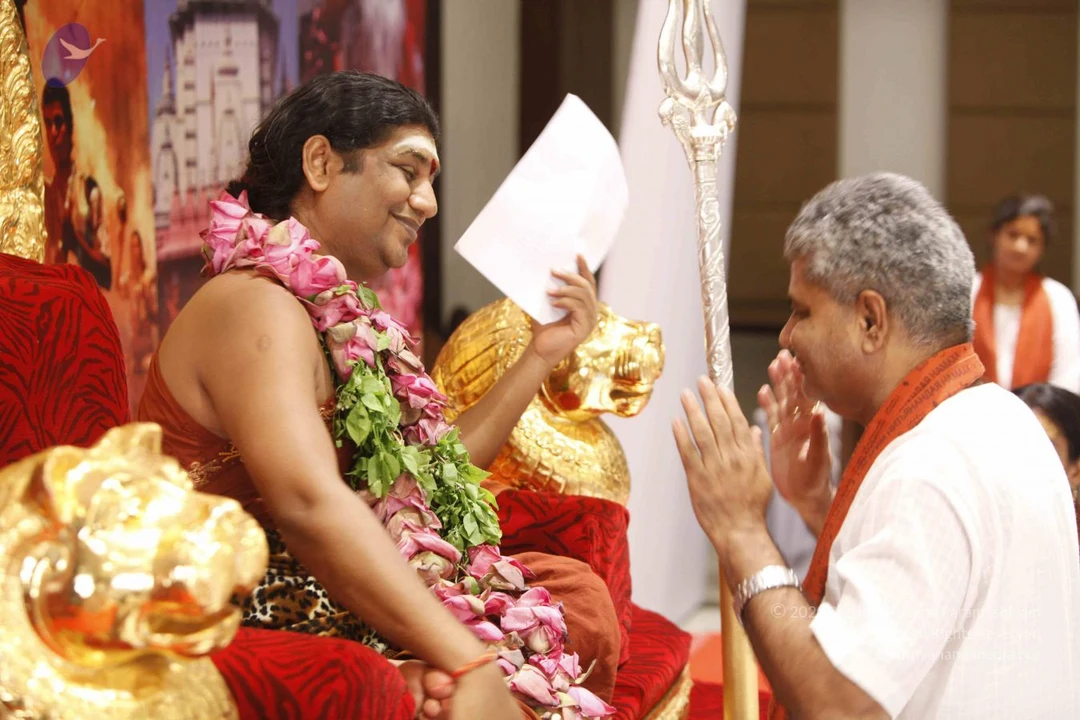
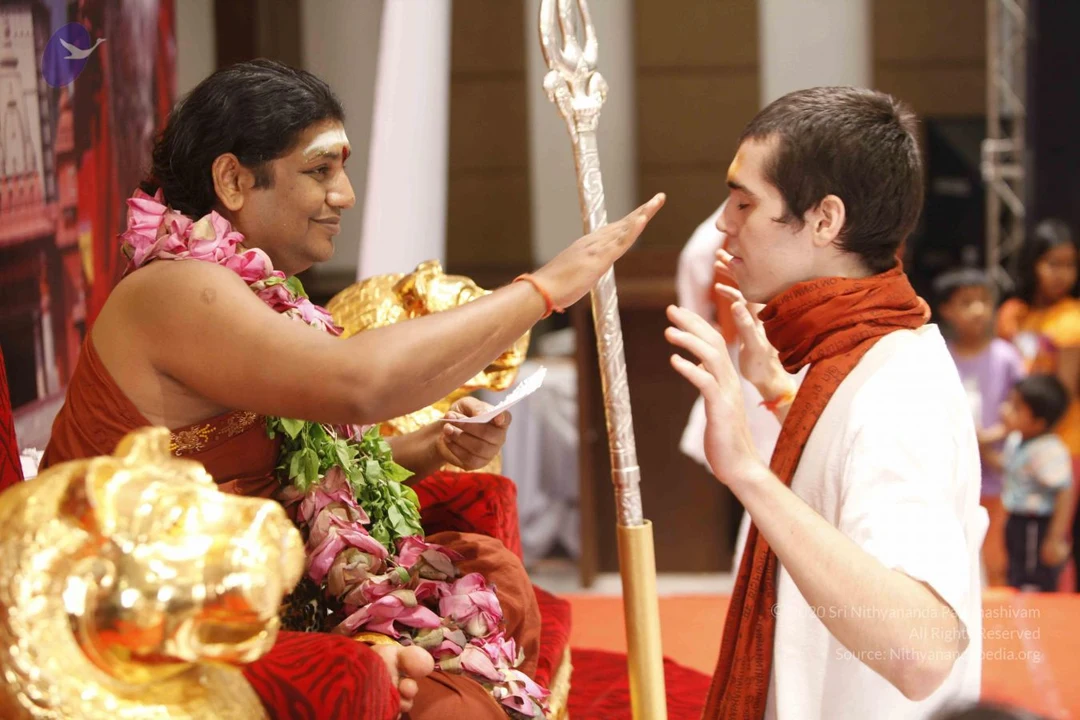
Inner-Awakening

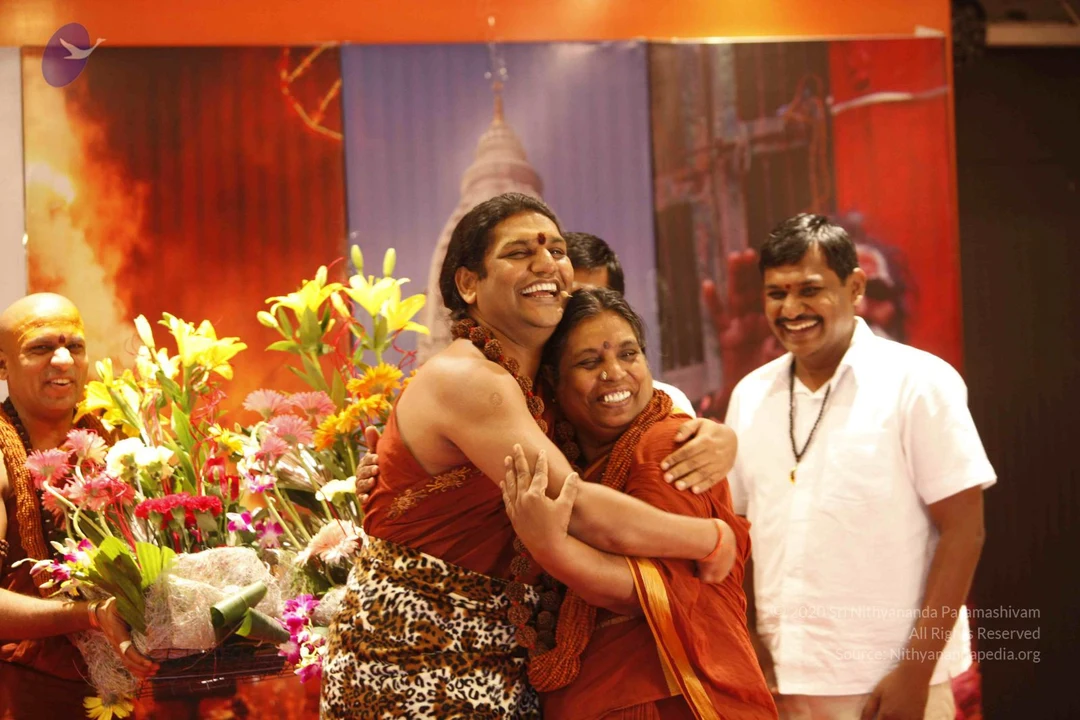
15 photosSource gallery
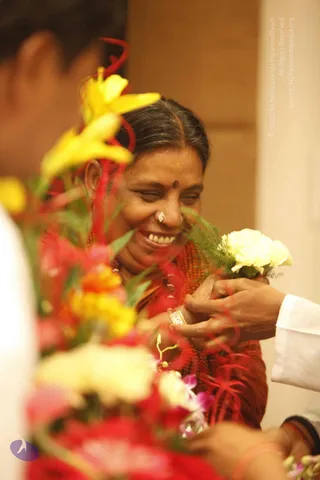
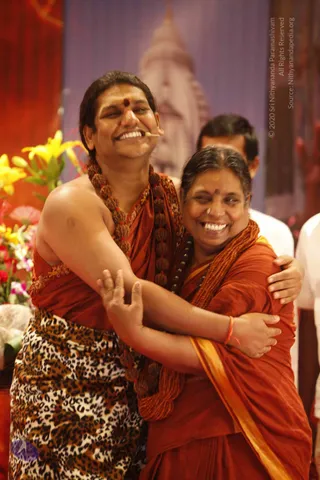
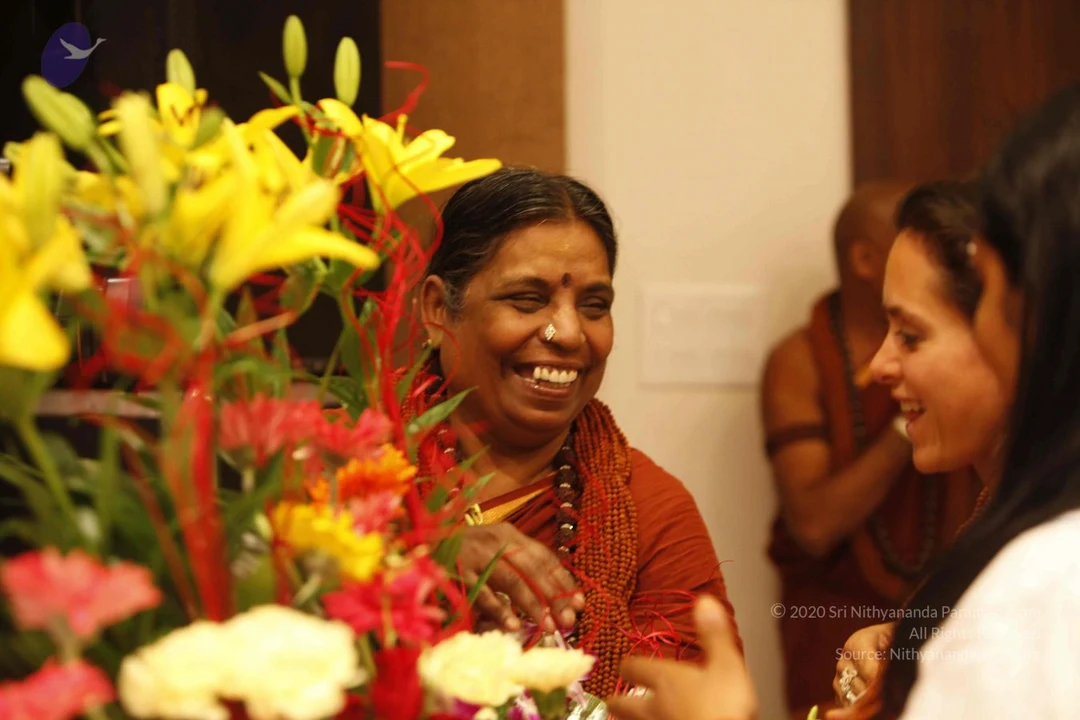
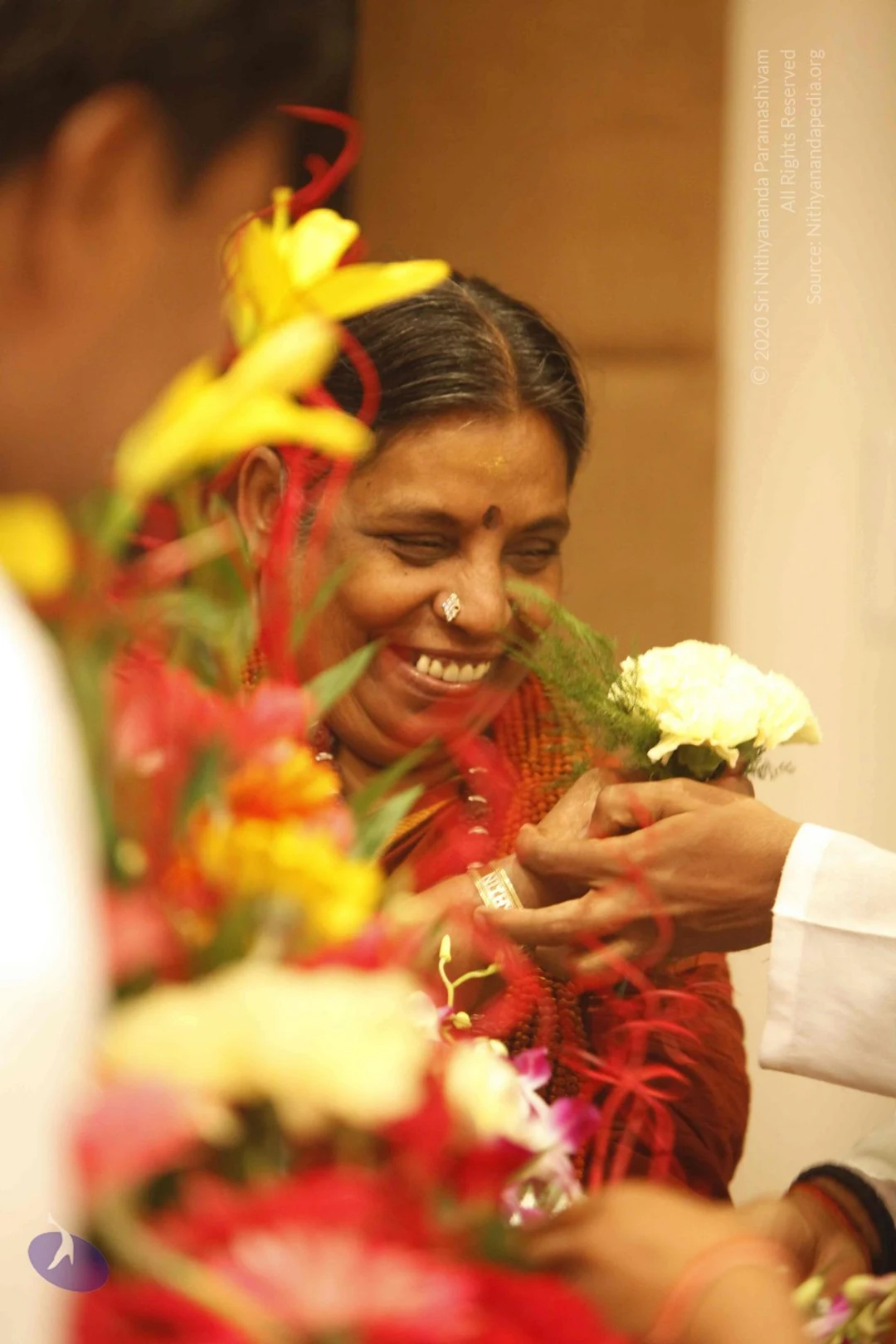
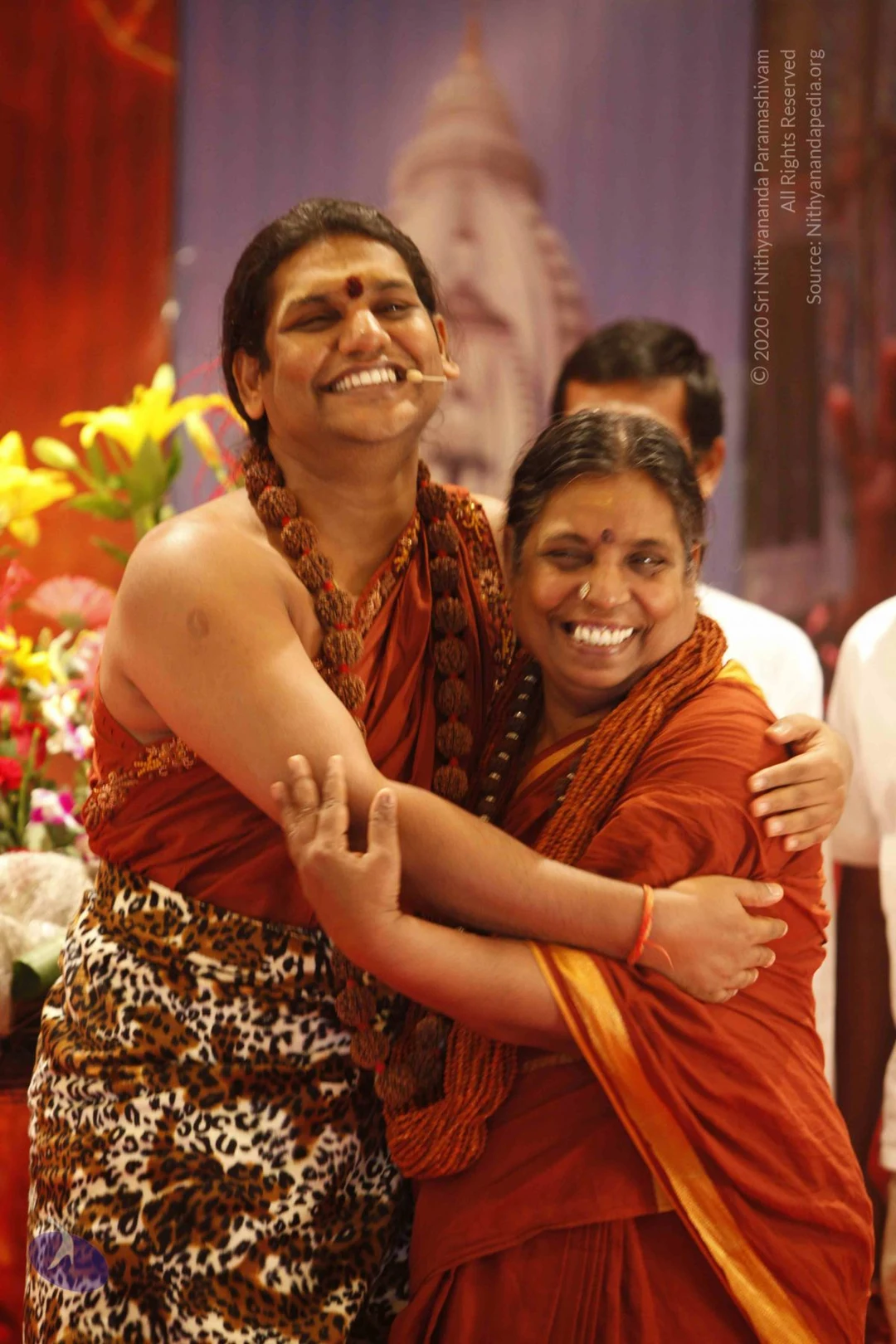
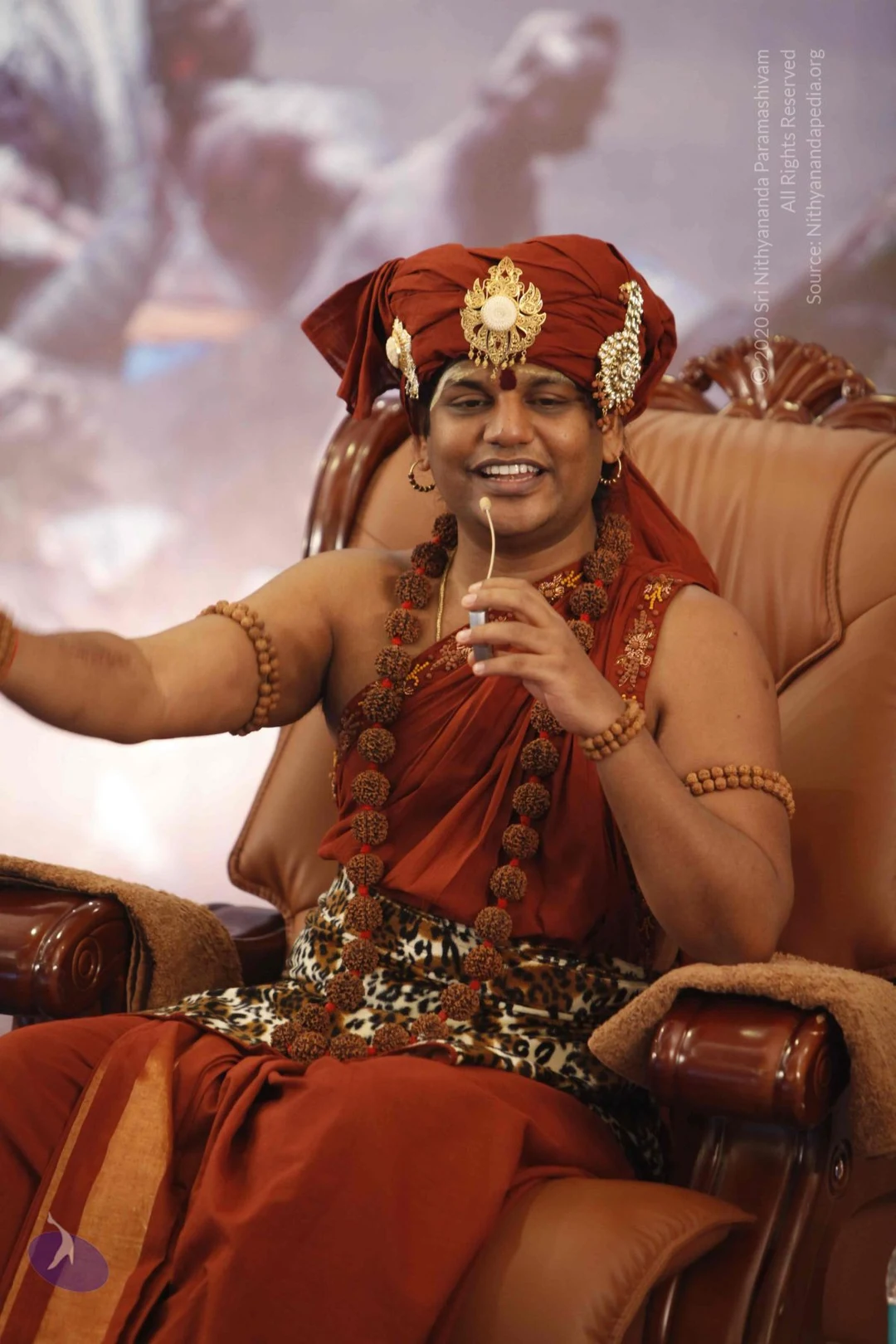
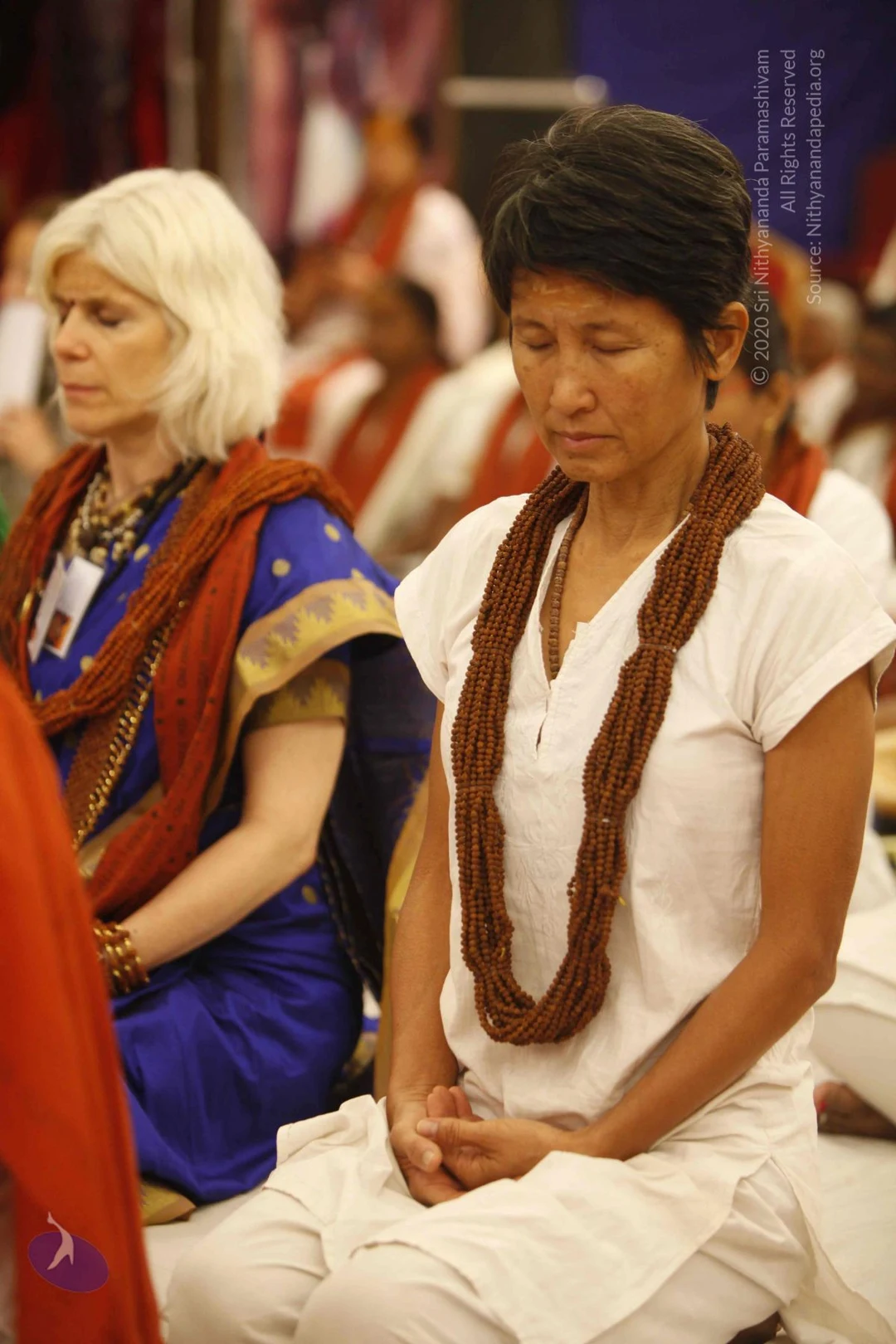
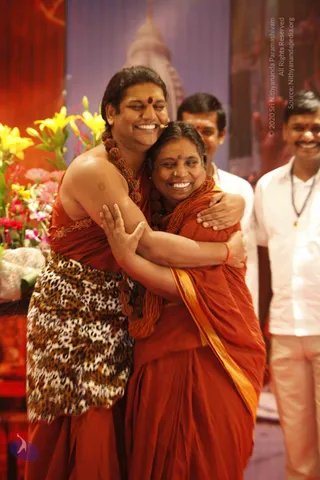
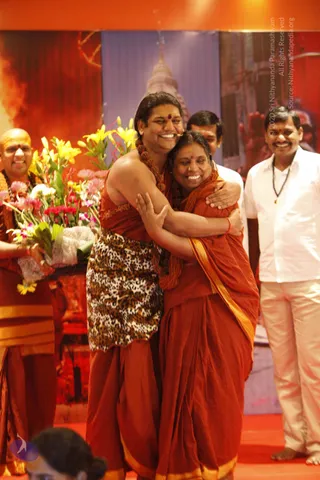
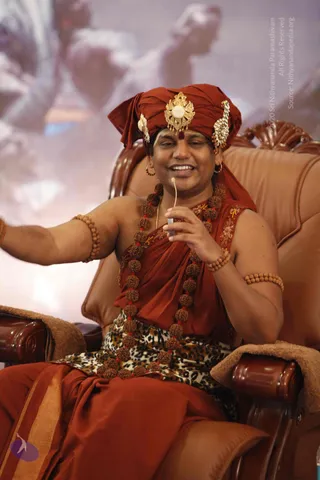
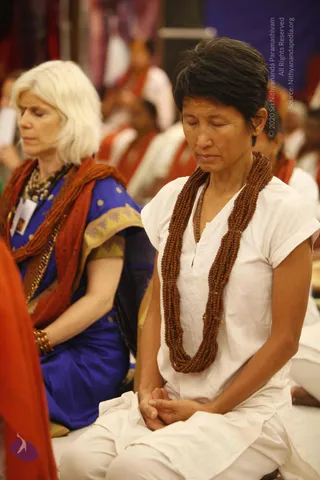
Close photo of a smiling Indian woman with grey-streaked hair pulled back, a red bindi and a small silver nose stud, wearing a red and orange garment with a red beaded necklace. A hand in white sleeve offers her a white carnation tucked among red, yellow and pink flowers and fern sprigs, with a red ribbon-like strand in the foreground. Blurred flower arrangement and warm beige wall behind.Two smiling people in orange-red robes embrace closely on a stage. The man on the left is bare-chested with long swept-back dark hair, a red bindi, a headset microphone, a leopard-print wrap and a long rudraksha mala with ornate gold trim. a person by appearance cues: long hair, rudraksha mala and ornate clothing. The woman beside him wears an orange-red sari with gold border, a red bindi and an orange-red beaded necklace. A man in white stands behind them, and a vase of yellow lilies and pink flowers stands at left, with a temple tower painted in the blurred backdrop.Two people embrace warmly on a stage decorated with yellow lilies and pink flowers, with a temple-tower backdrop behind them. The man on the left, with swept-back dark hair and a red bindi, wears a rudraksha mala with a leopard-print wrap over saffron-orange clothing and a headset microphone. The woman beside him in orange-red sari with a gold border, also wearing rudraksha beads and a red bindi, smiles with her eyes closed. Two men in white shirts stand smiling behind them. The embrace suggests a warm welcome at a satsang or public event.A joyful embrace on a red-and-orange stage. A man with long dark hair, a red bindi and a rudraksha mala, wearing a leopard-print wrap over an orange dhoti with a white-and-gold border, hugs a smiling woman in a rust-red saree with a gold border and a red bindi. Both wear rudraksha malas. Behind them stand a bald man in orange with a yellow garland holding a bouquet of yellow lilies and pink flowers, another man partly hidden, and a smiling man in a white shirt and cream trousers. Red backdrop with a temple spire image. Two other people visible, one partly cropped at the bottom.A seated man in an ornate brick-red turban decorated with a gold crest and jewelled side ornaments, smiling as he speaks into a small headset microphone held near his mouth. He wears a red-orange shawl, long rudraksha mala necklaces, rudraksha bracelets and a leopard-print lower cloth, and sits in a brown leather throne-style chair with a fringed armrest. His left arm extends outward in a gesture while a blurred pale backdrop with figures fills the background. Swamiji (probable): the candidate wears a crown-like turban, saffron-red ceremonial clothing and multiple rudraksha malas, and sits on a throne-style chair as the speaker of the satsang. The visible cues are the turban, the rudraksha malas and the ornate red attire.Two women sit with eyes closed in meditation in a crowded hall, with other seated devotees blurred behind them. The woman in front wears a plain white kurta and white pants and multiple strands of rudraksha beads around her neck, her hands folded in her lap. The woman to her left has white shoulder-length hair and wears a royal blue sari with gold border and an orange-red shawl over her shoulders, with gold bangles and beaded necklaces. Several people in orange and white clothing sit in rows behind them.