Skip to content
Saturday

11 May 2013

Dated photos
683
Source pages
1
Media
7

May 11 2013

Original wiki page
Contents

Title

Practice, Practice , Practice!

Description:

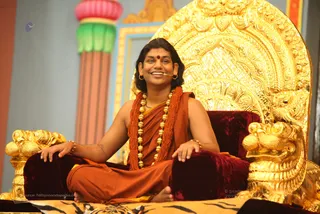
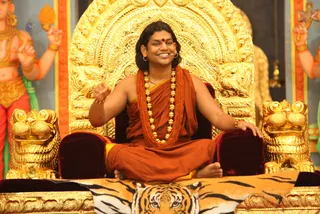
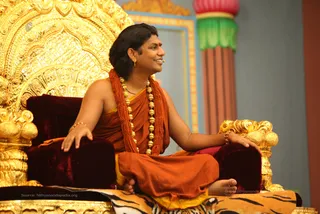
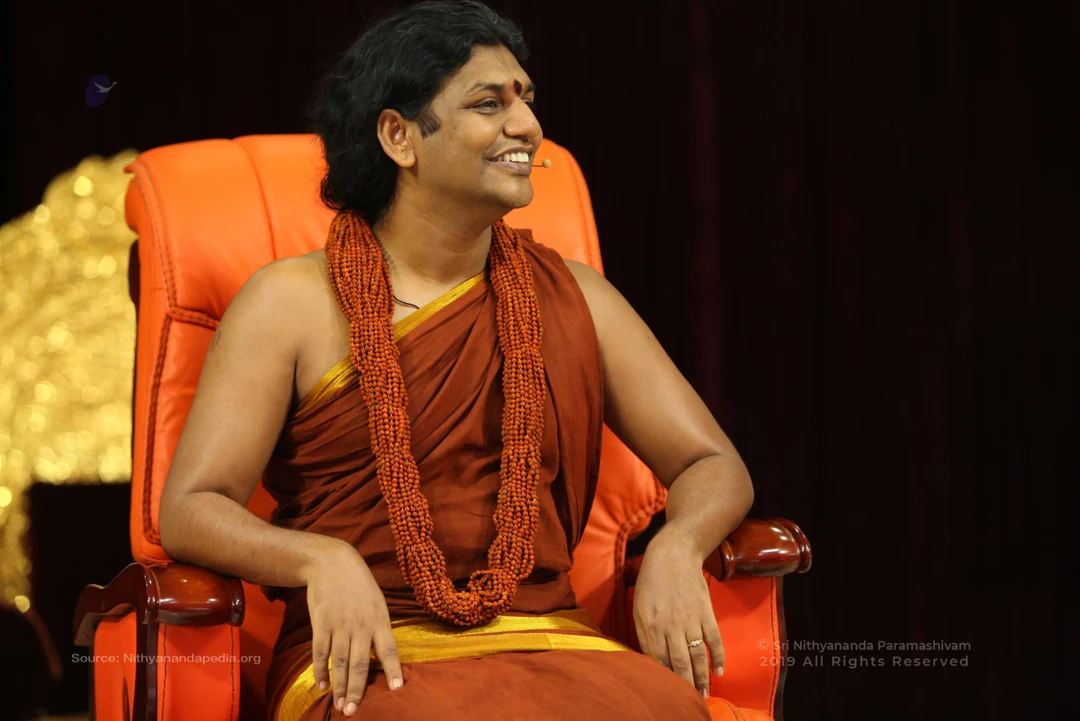
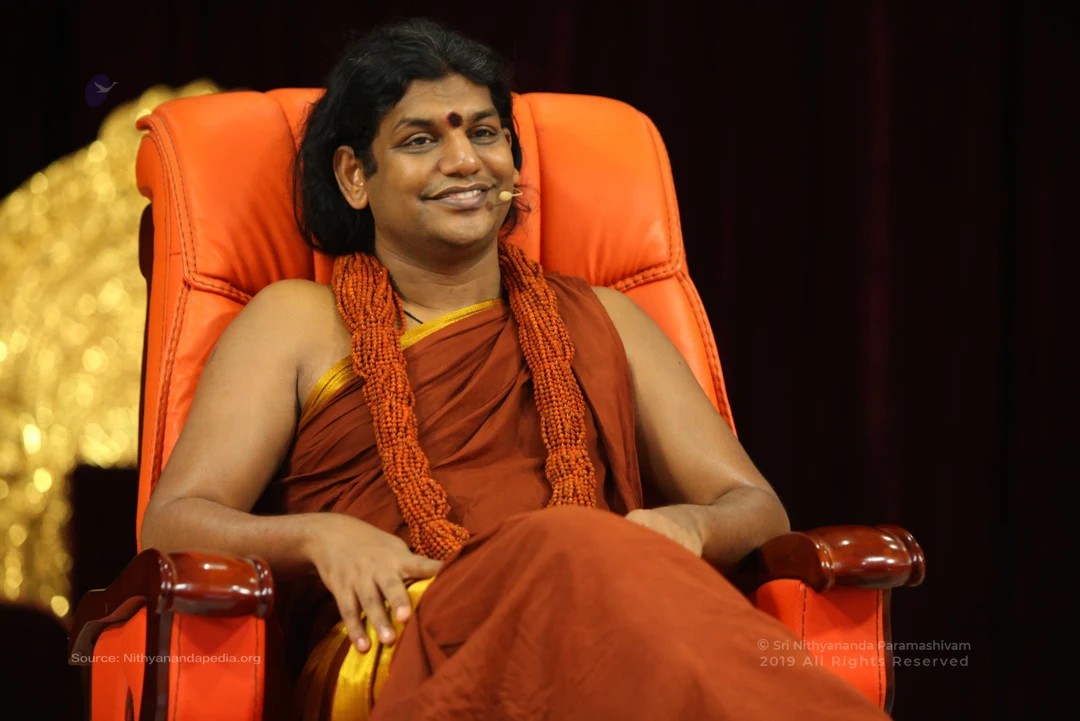
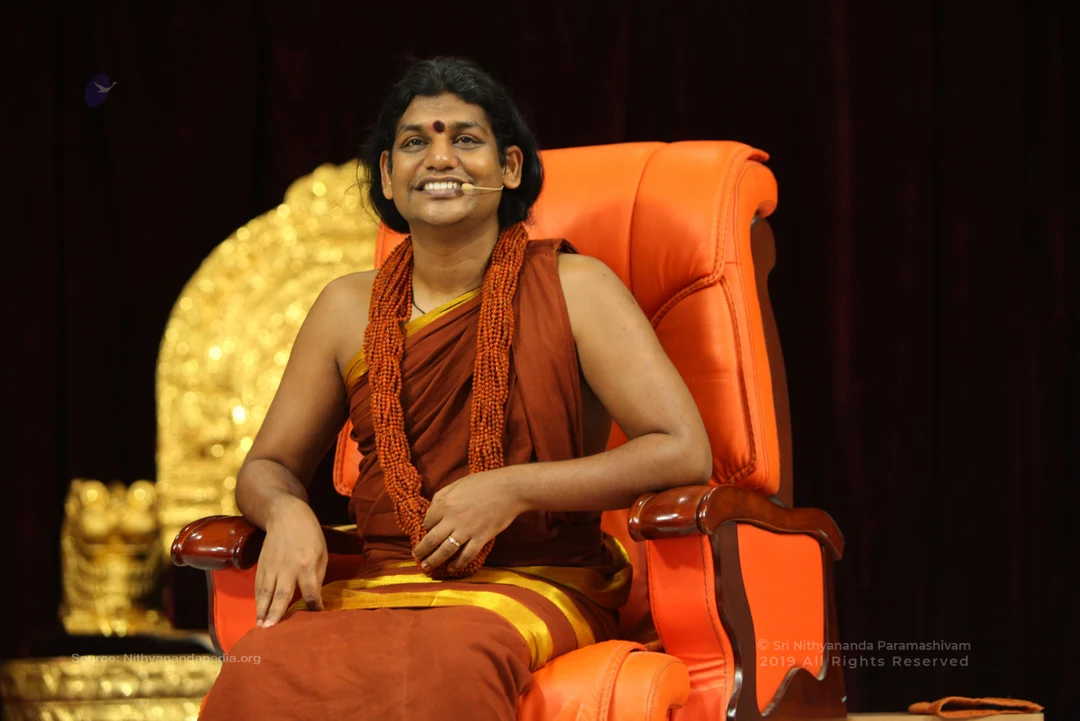
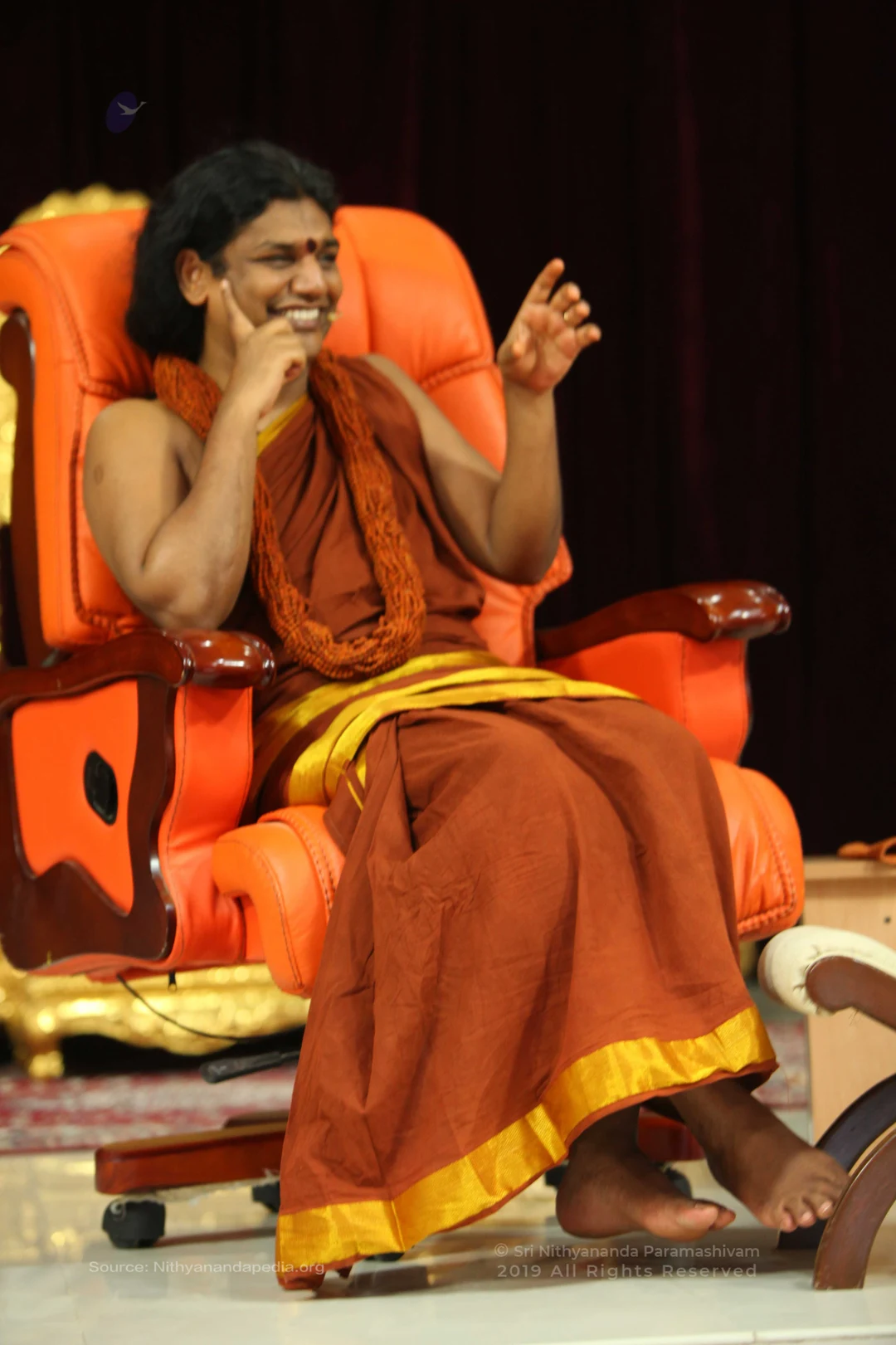
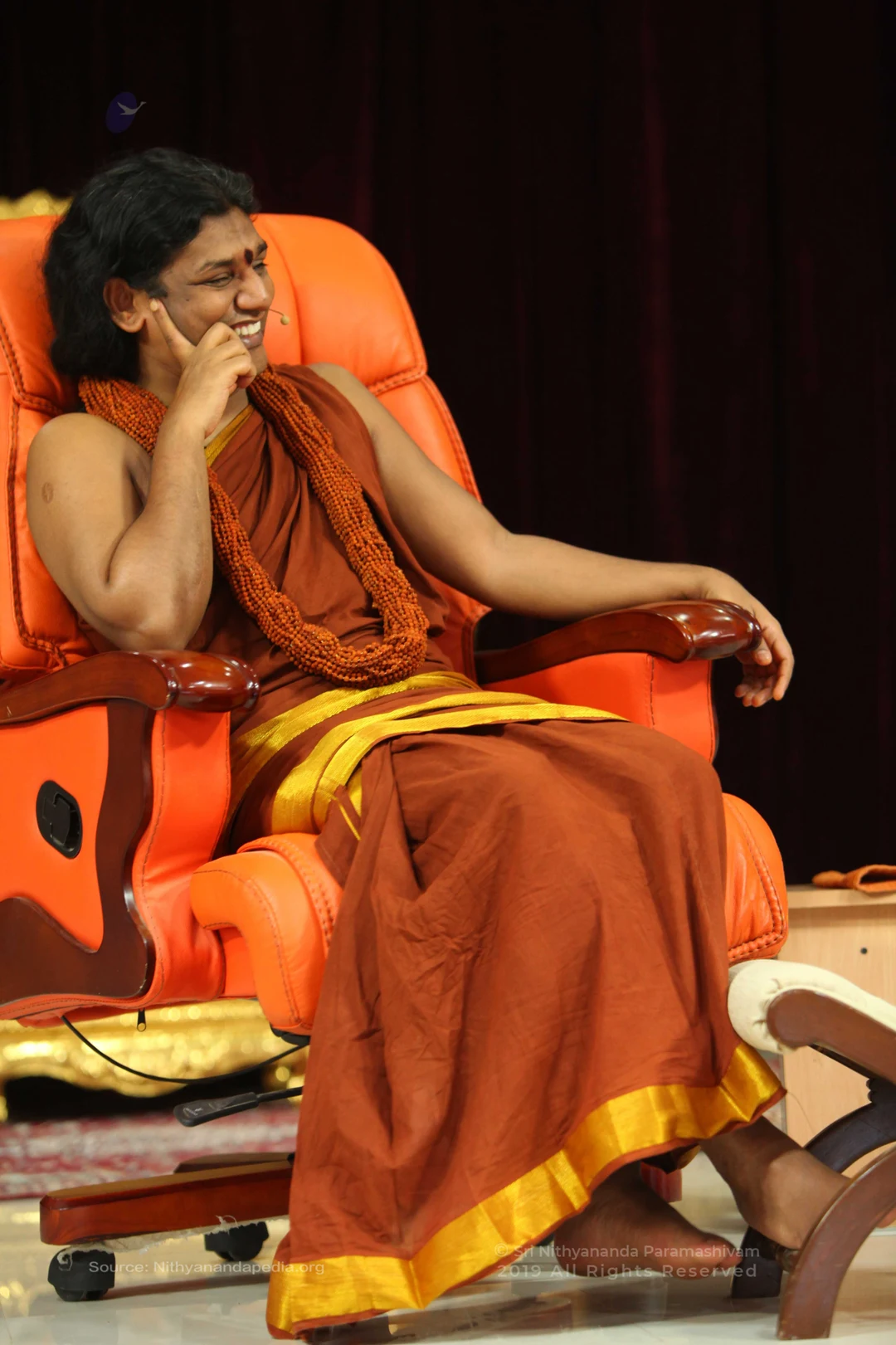
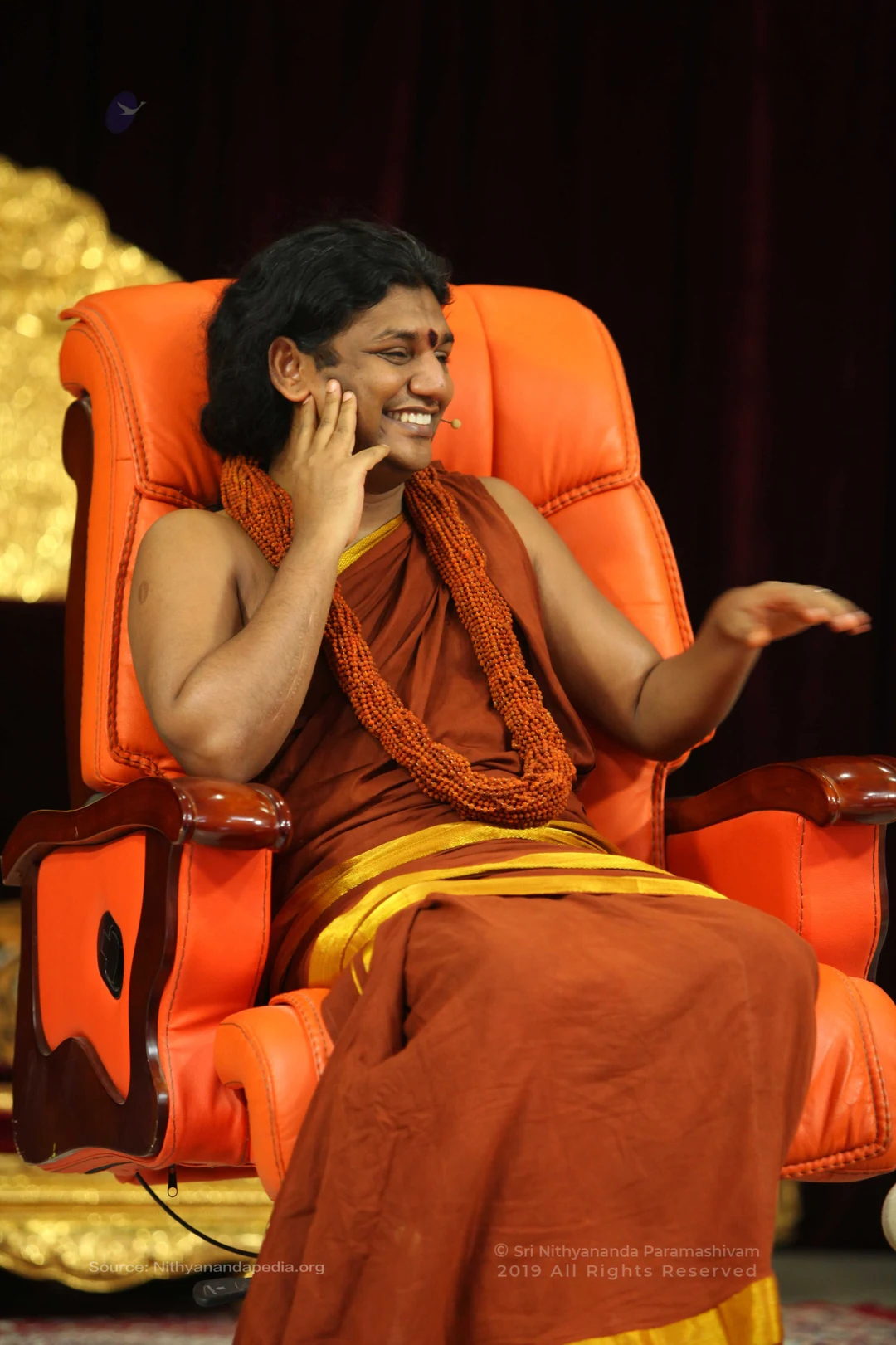
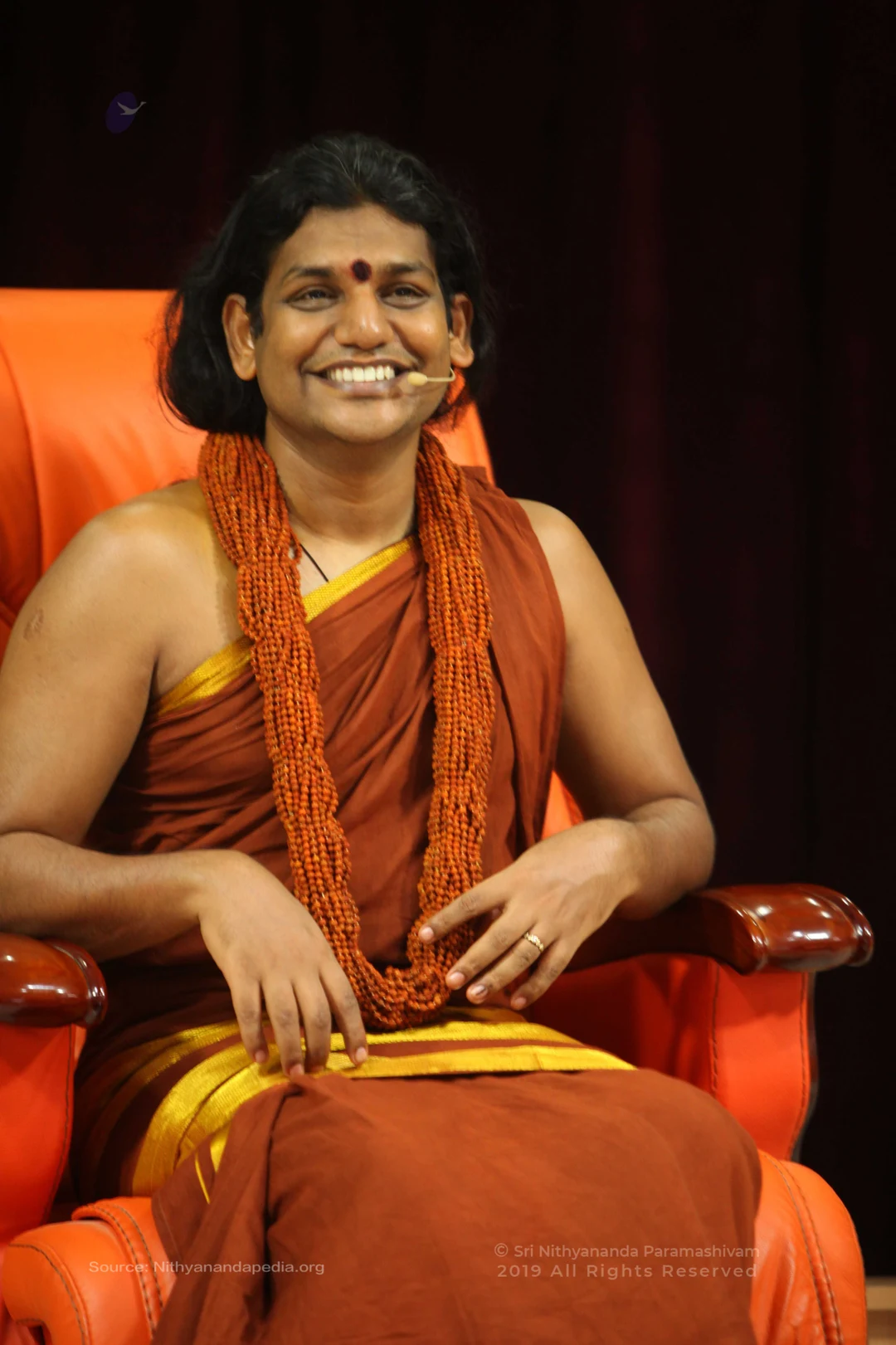
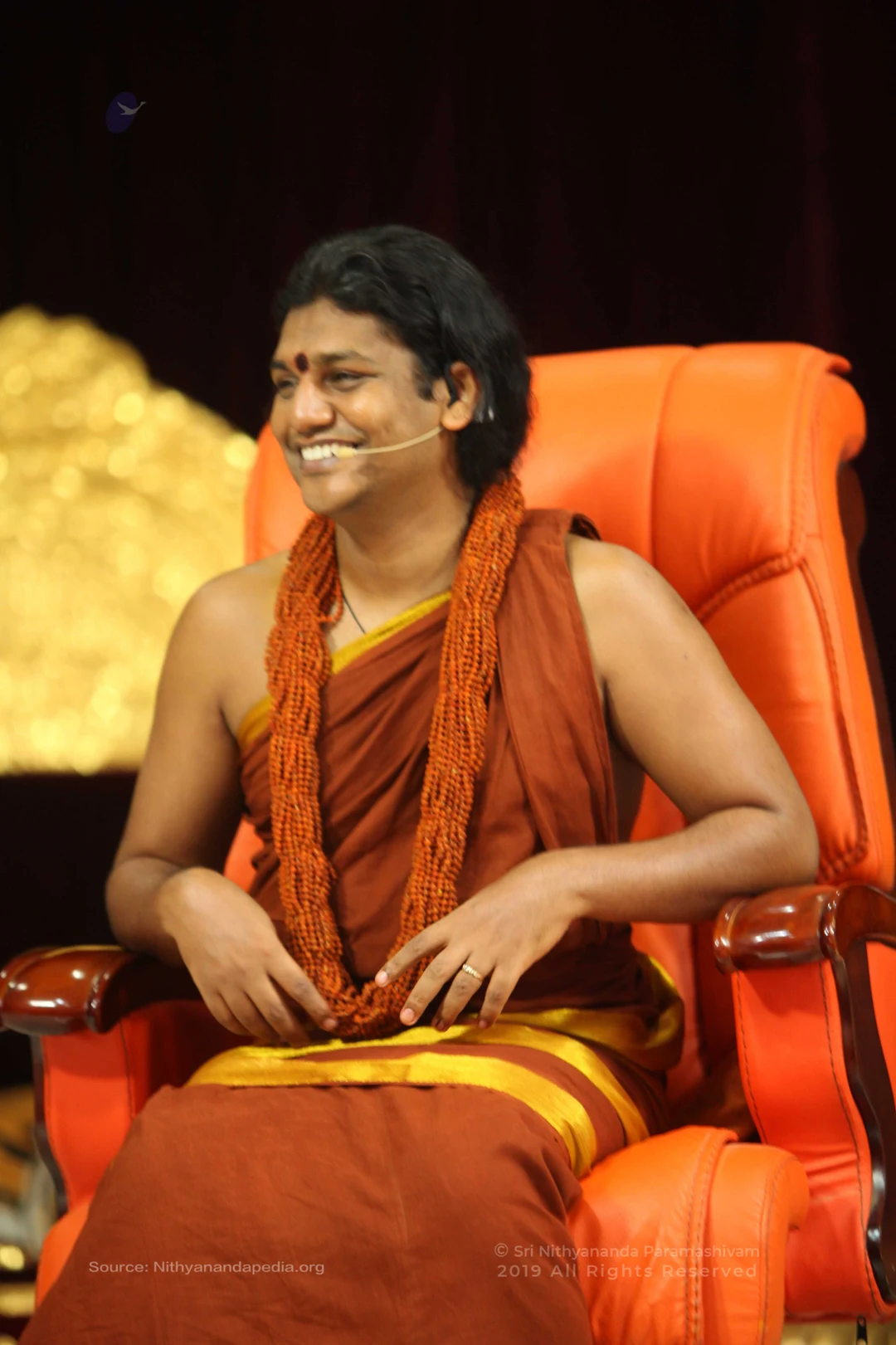
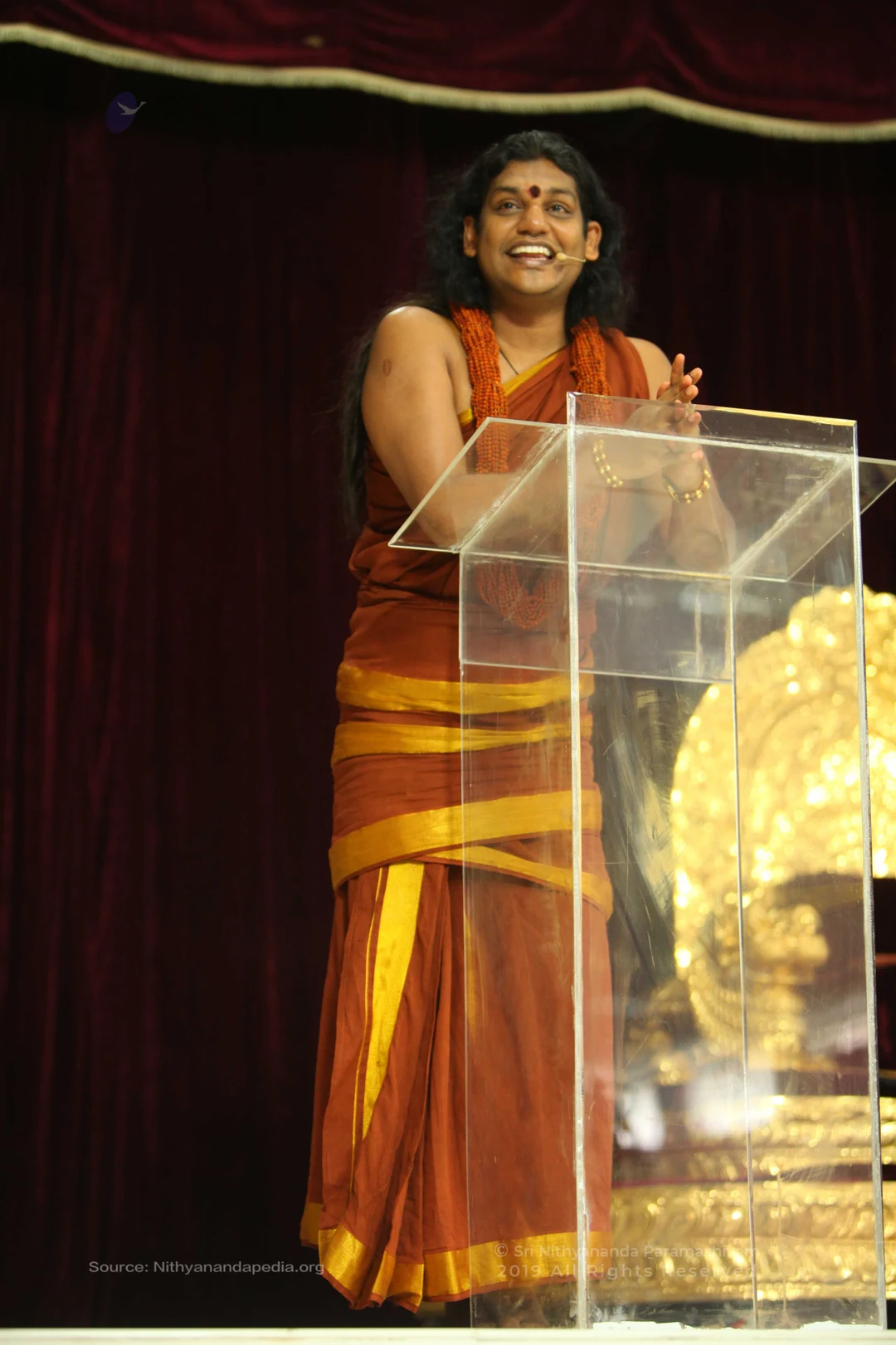
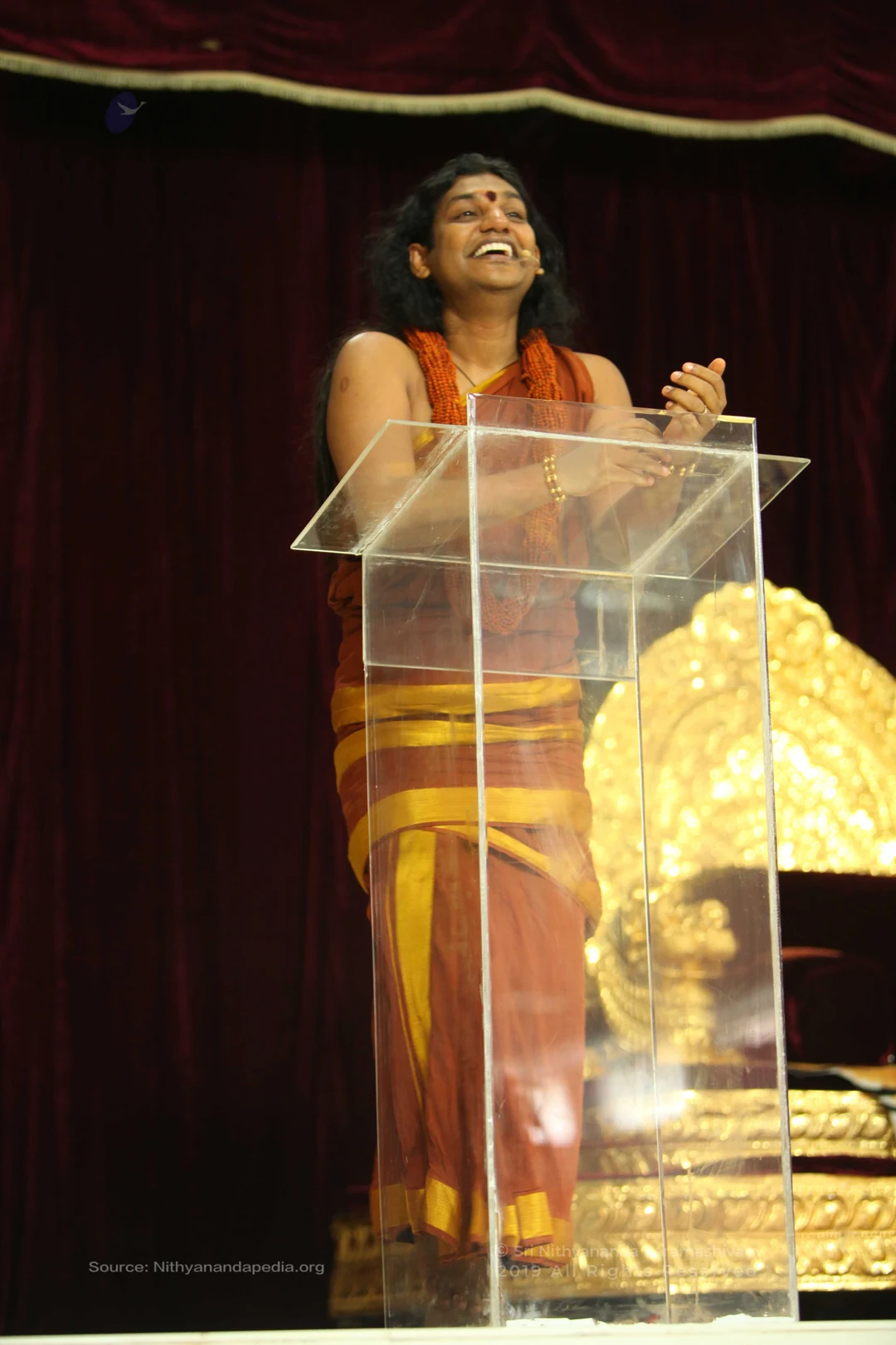
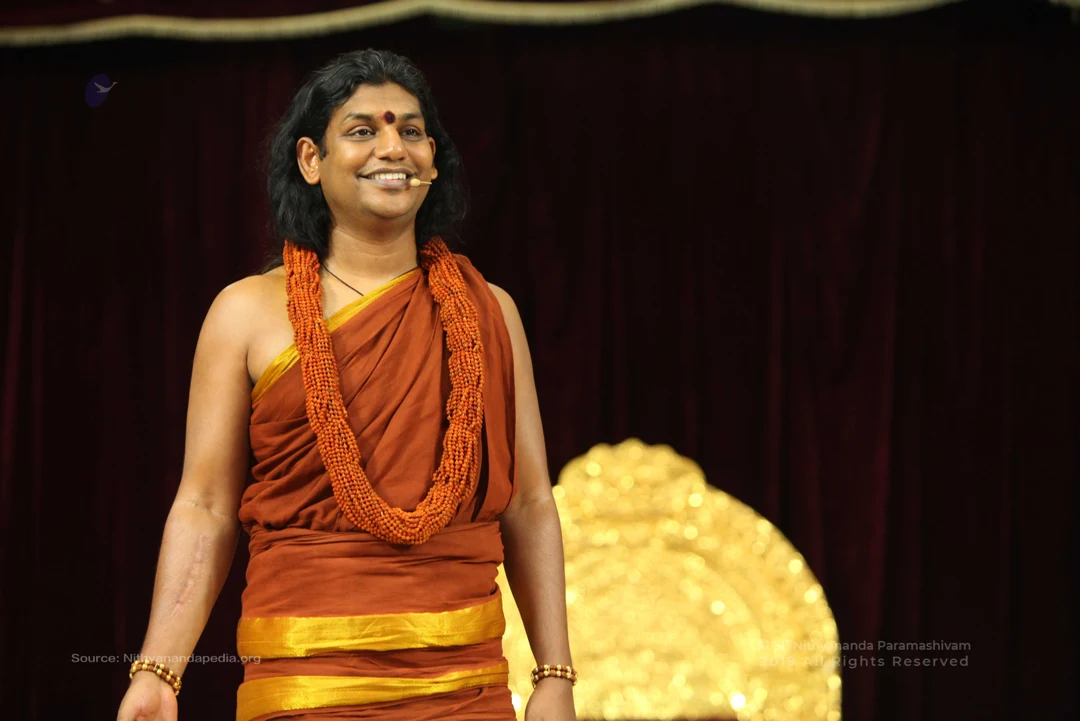
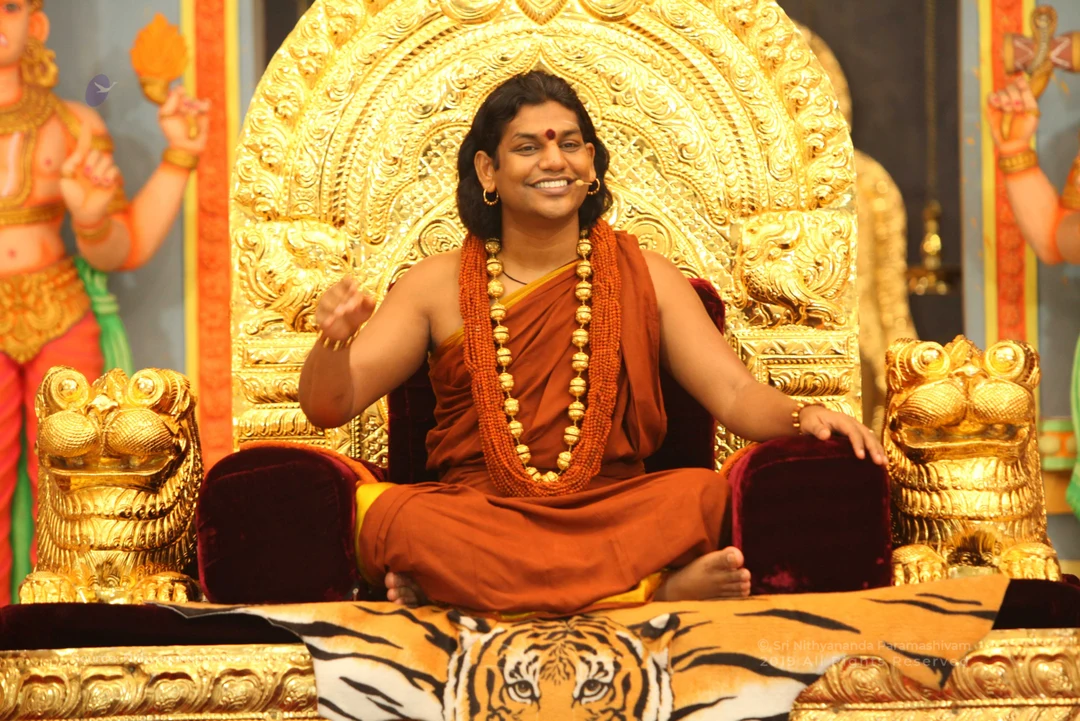
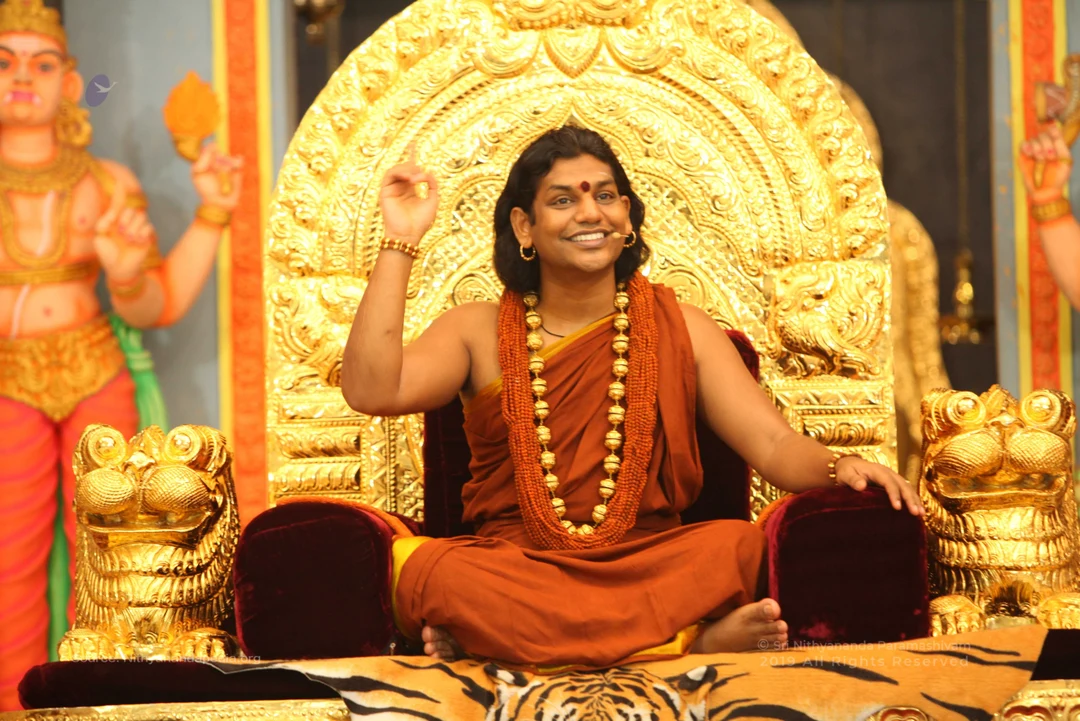
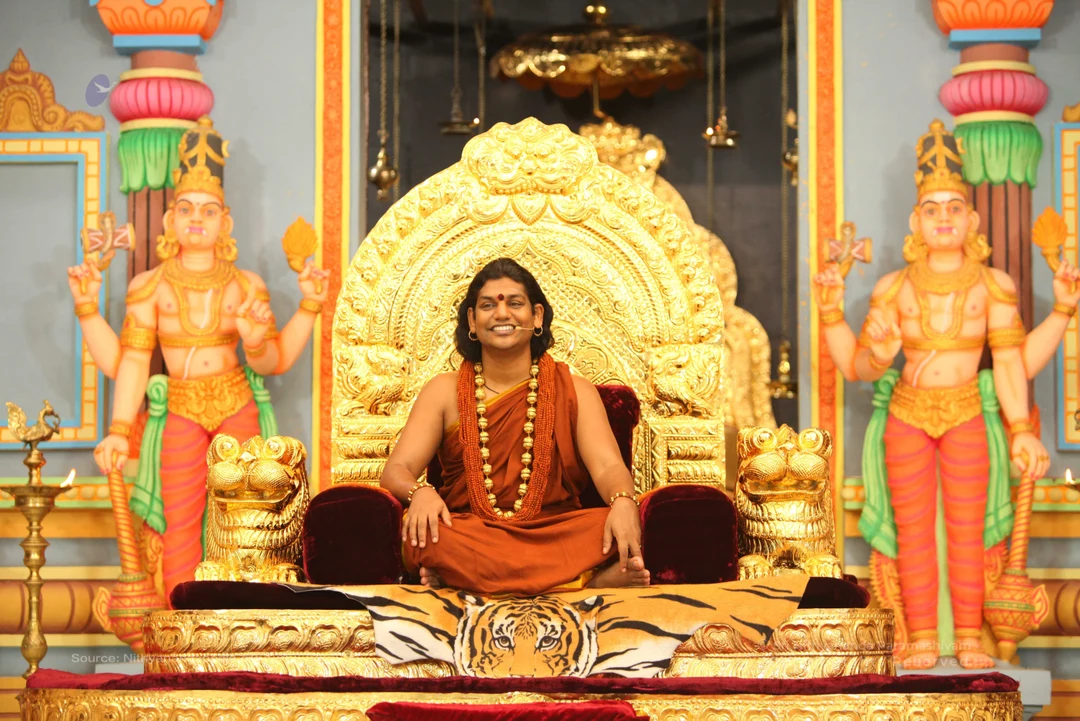
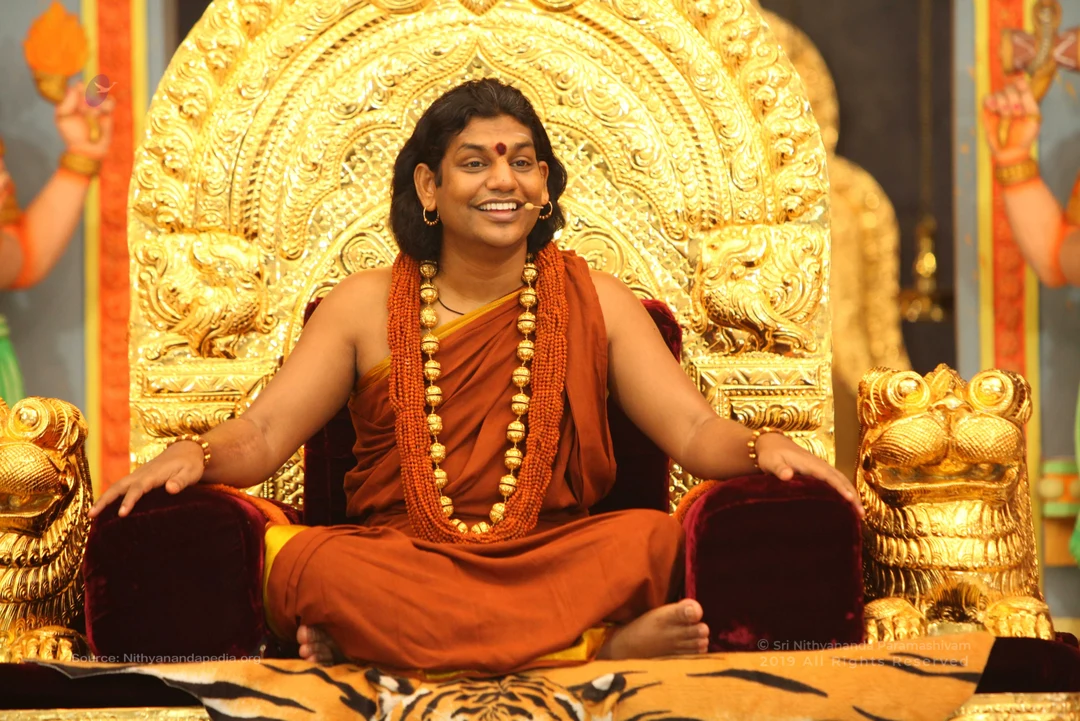
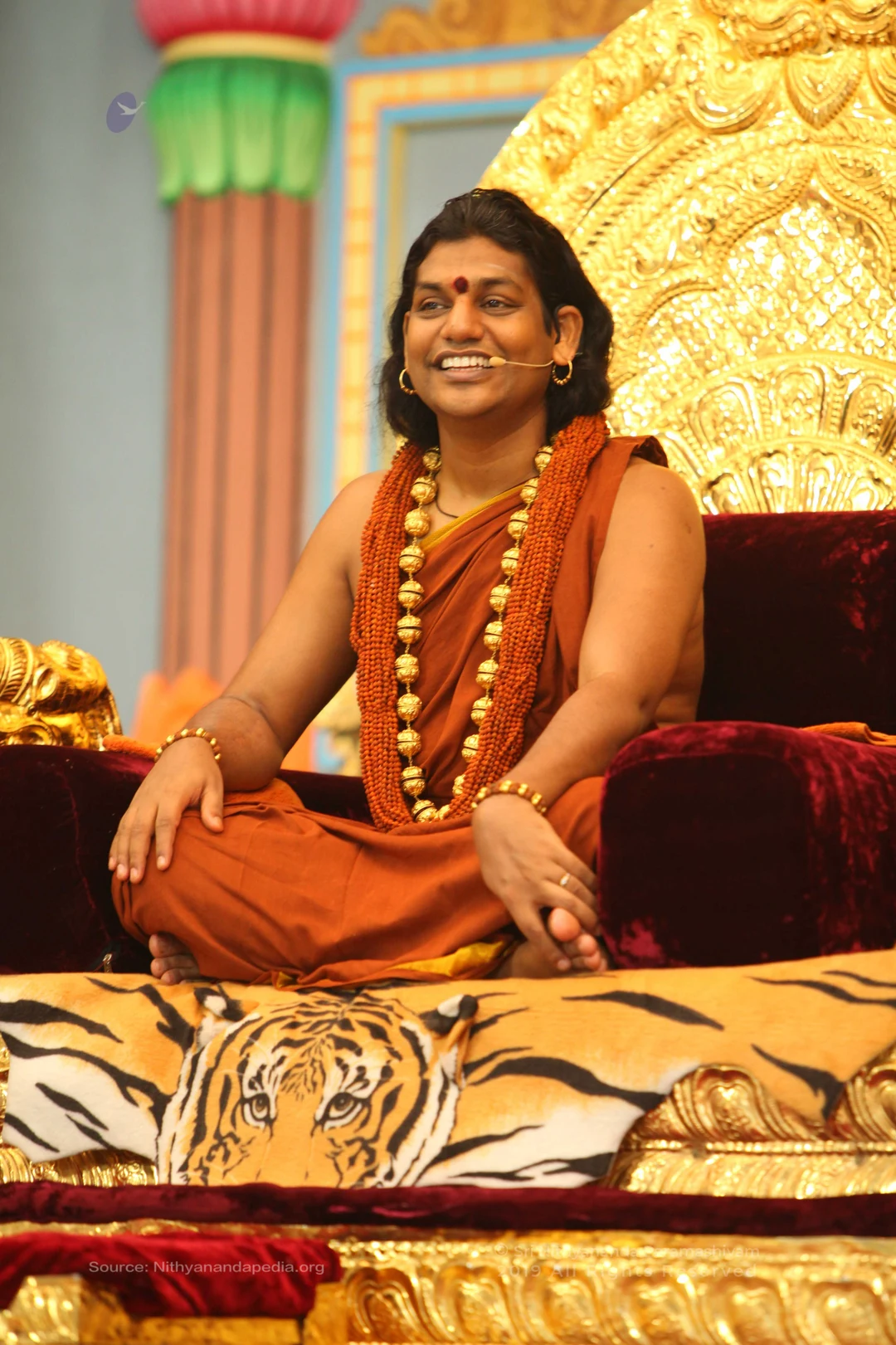
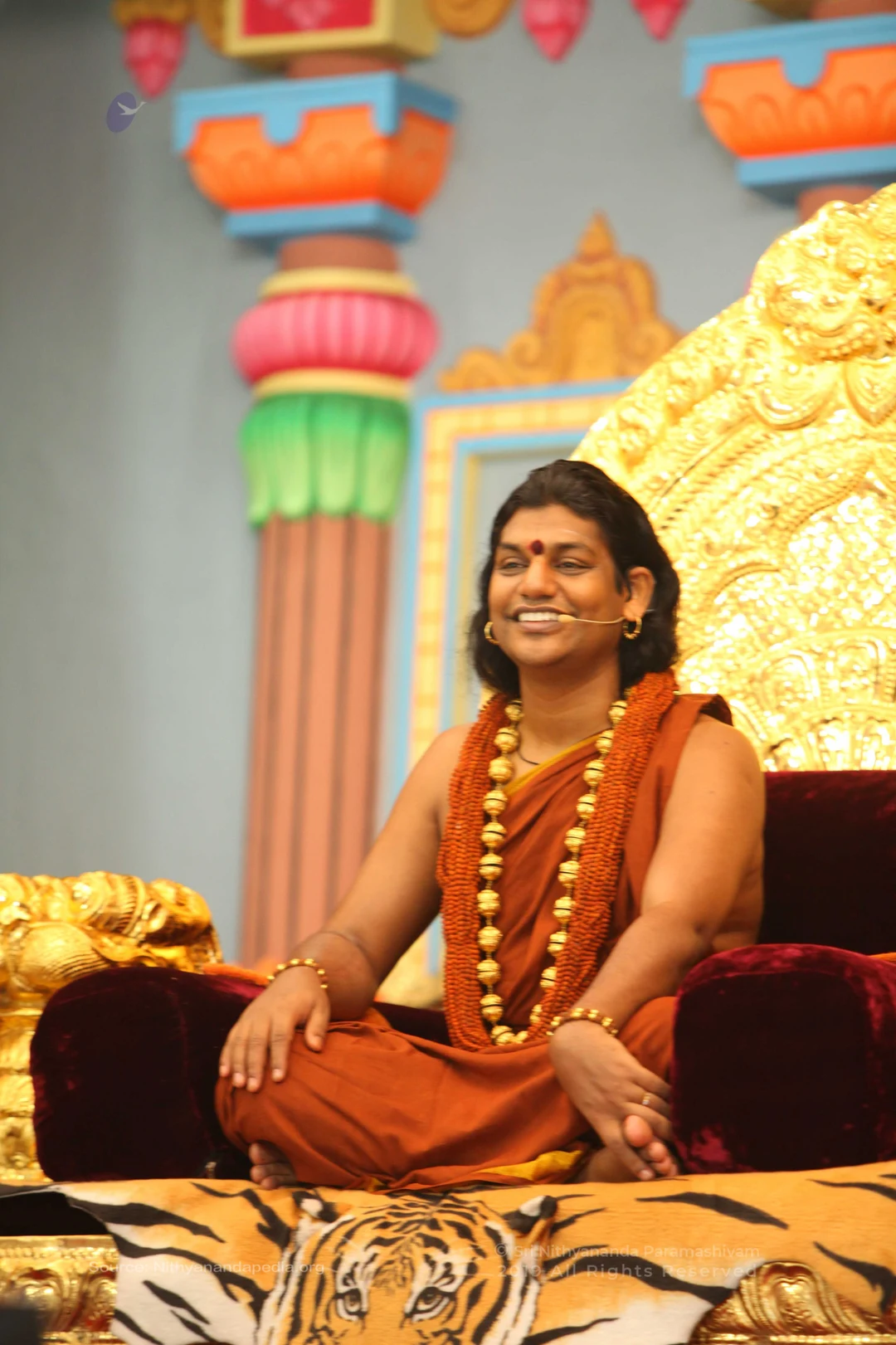
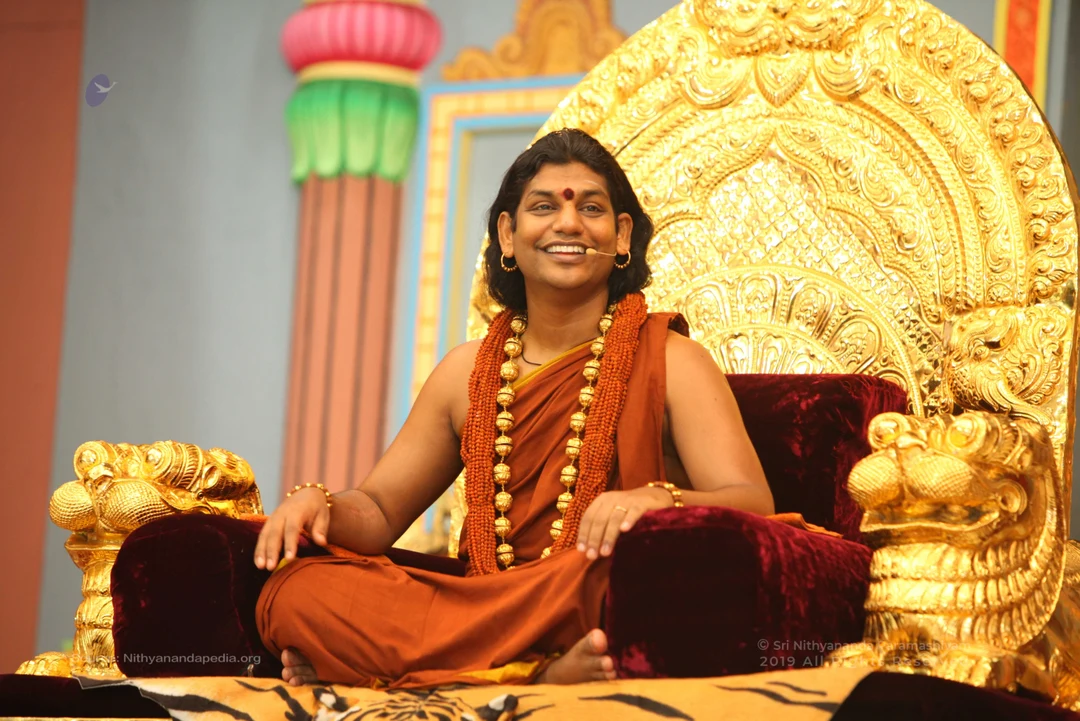
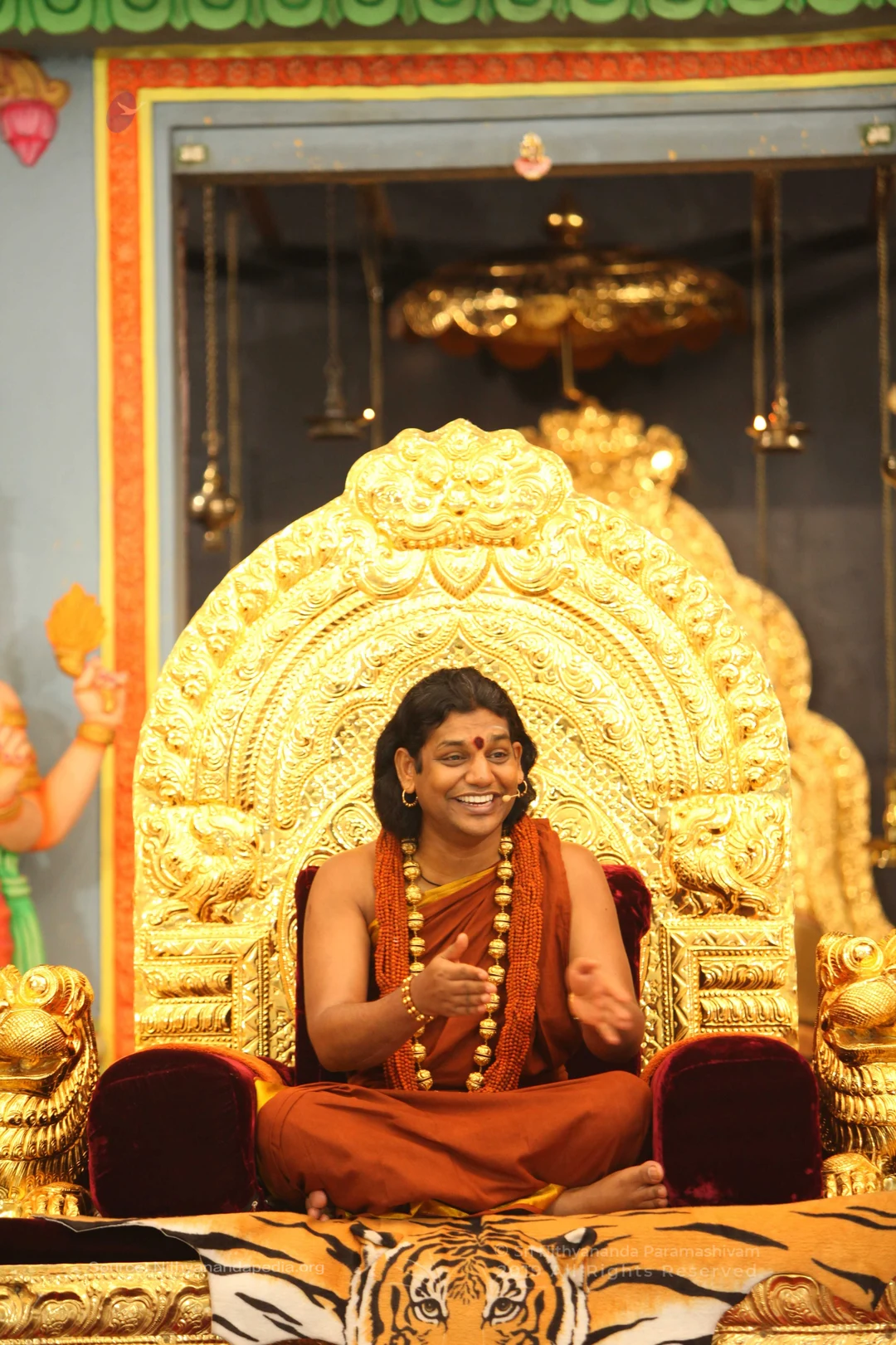
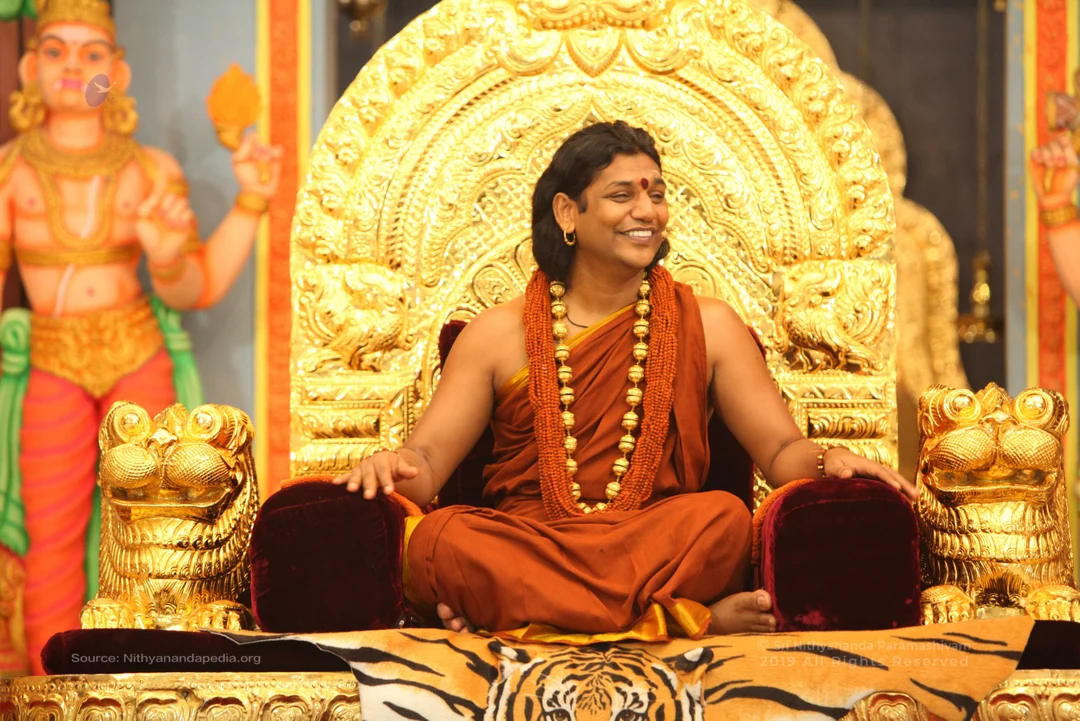
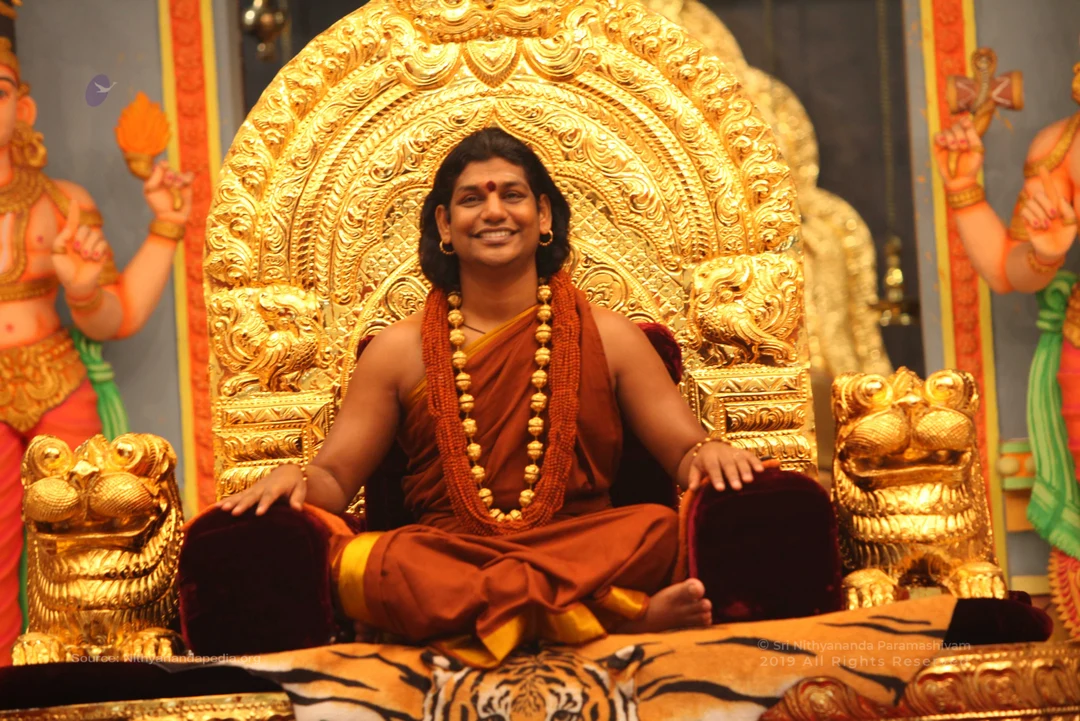
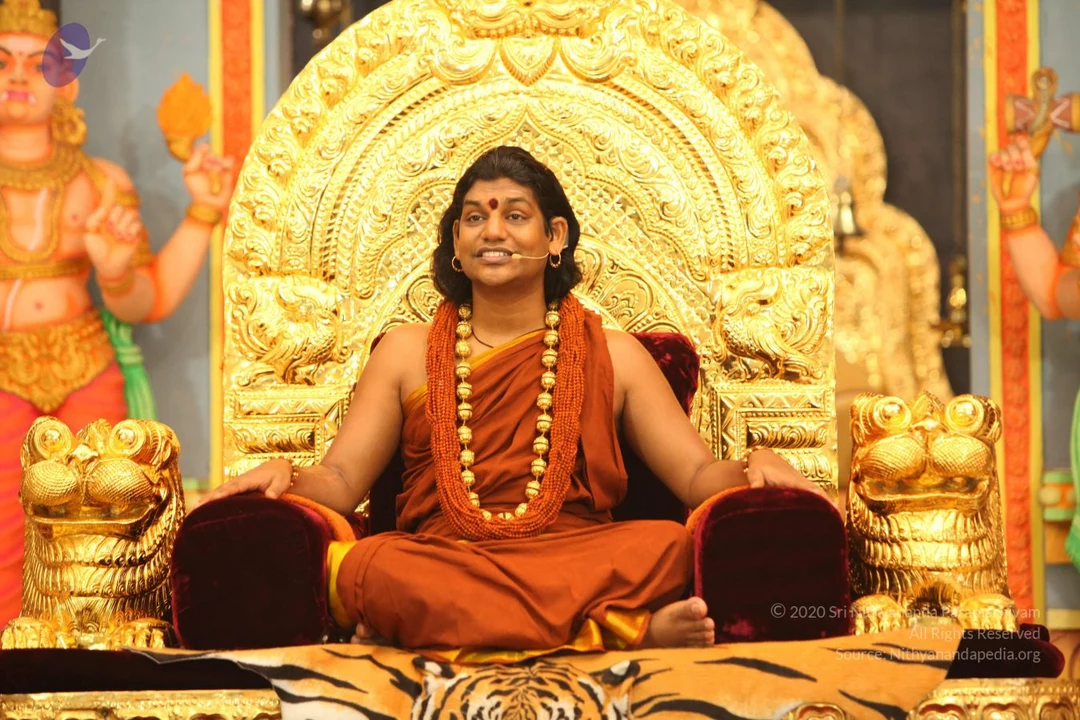
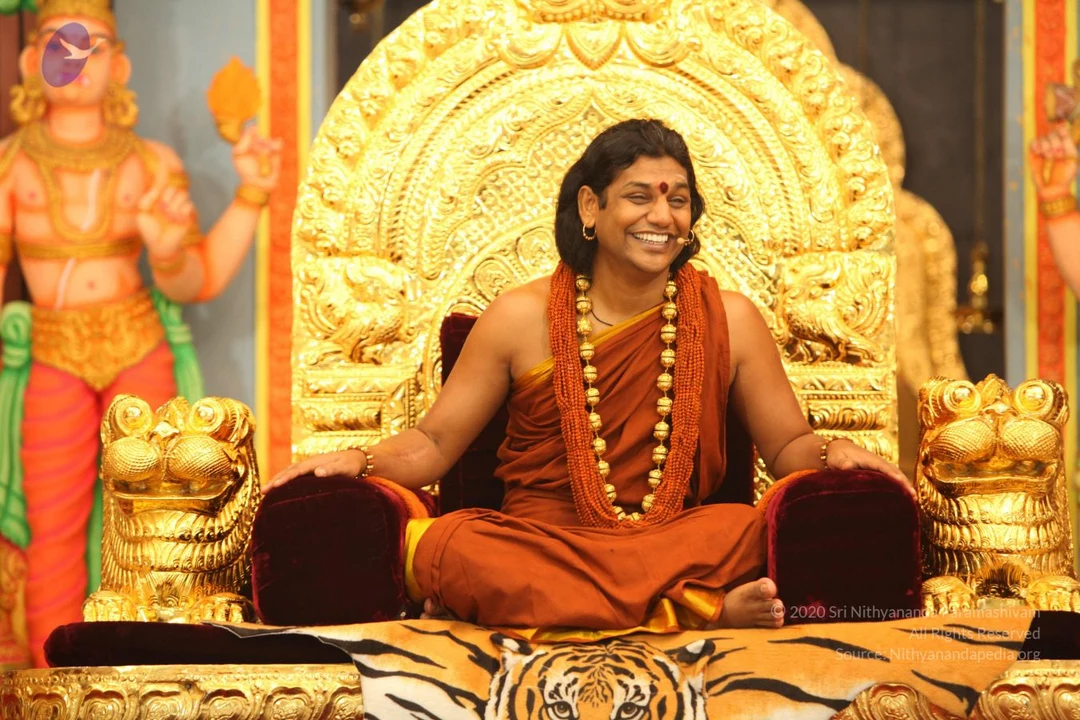
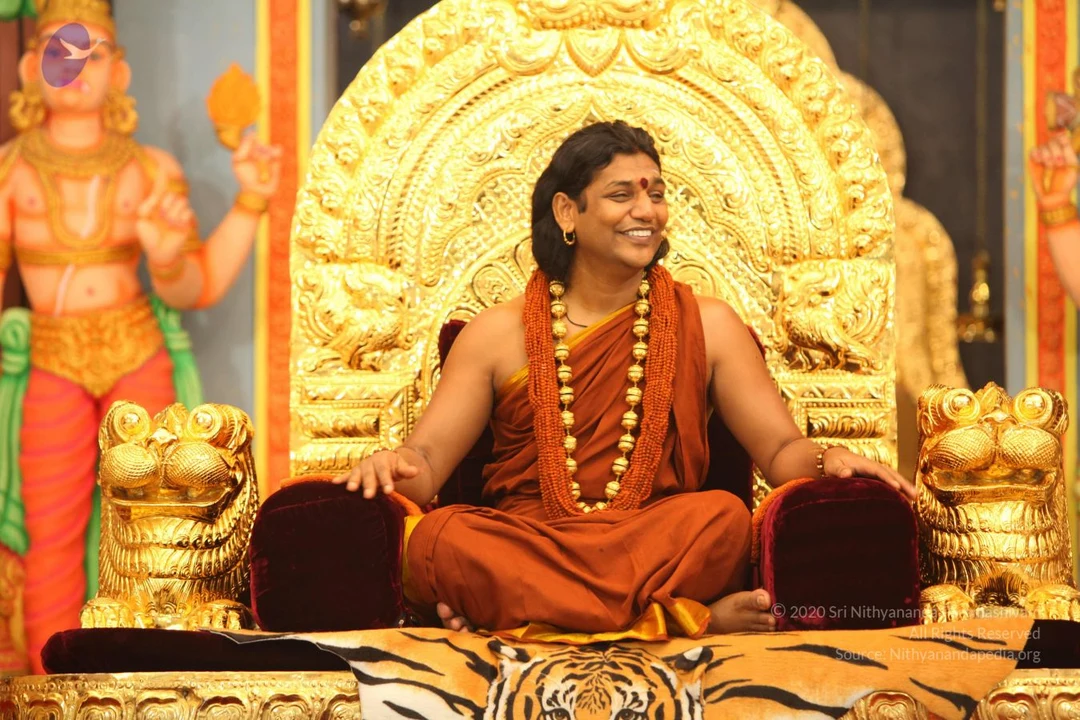
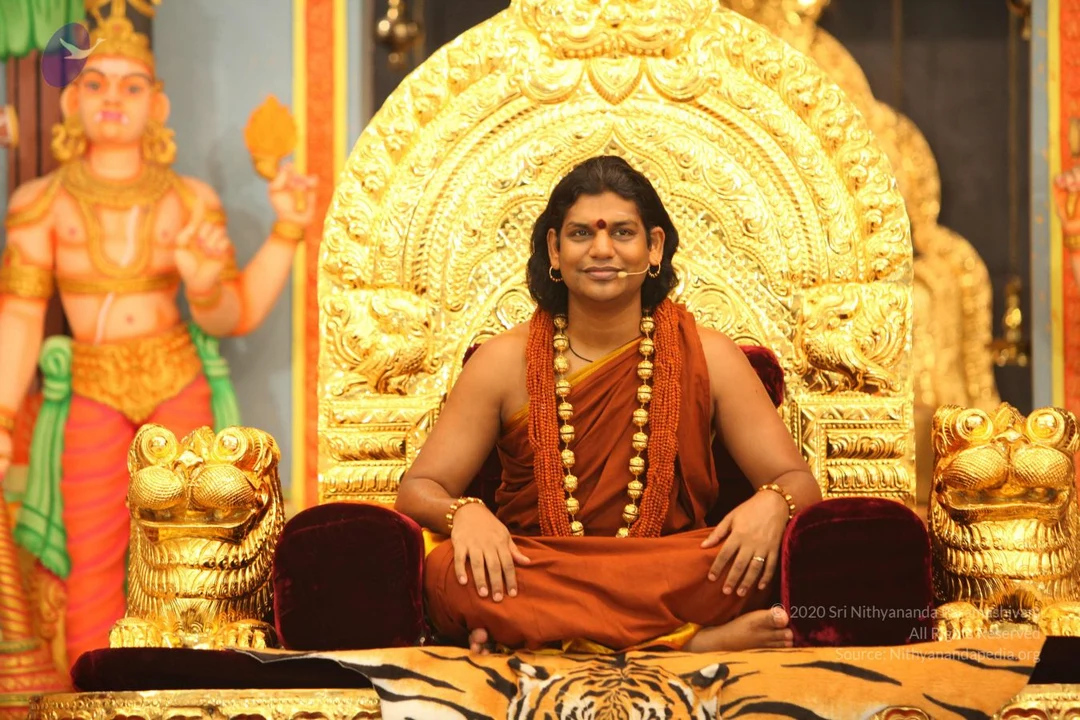
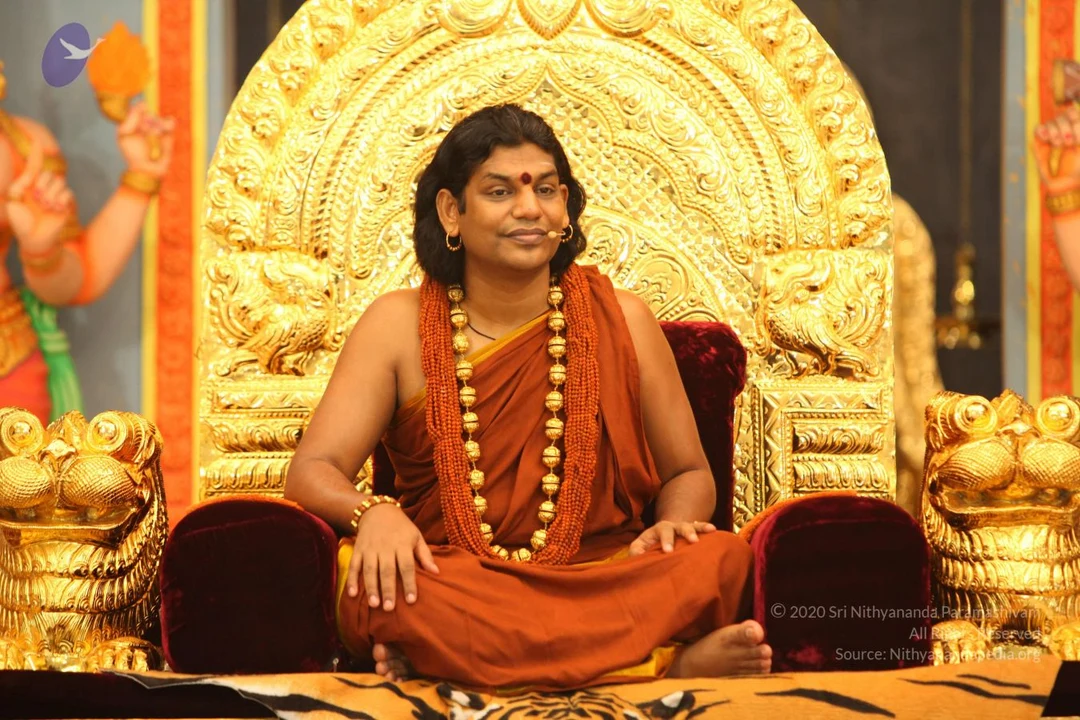
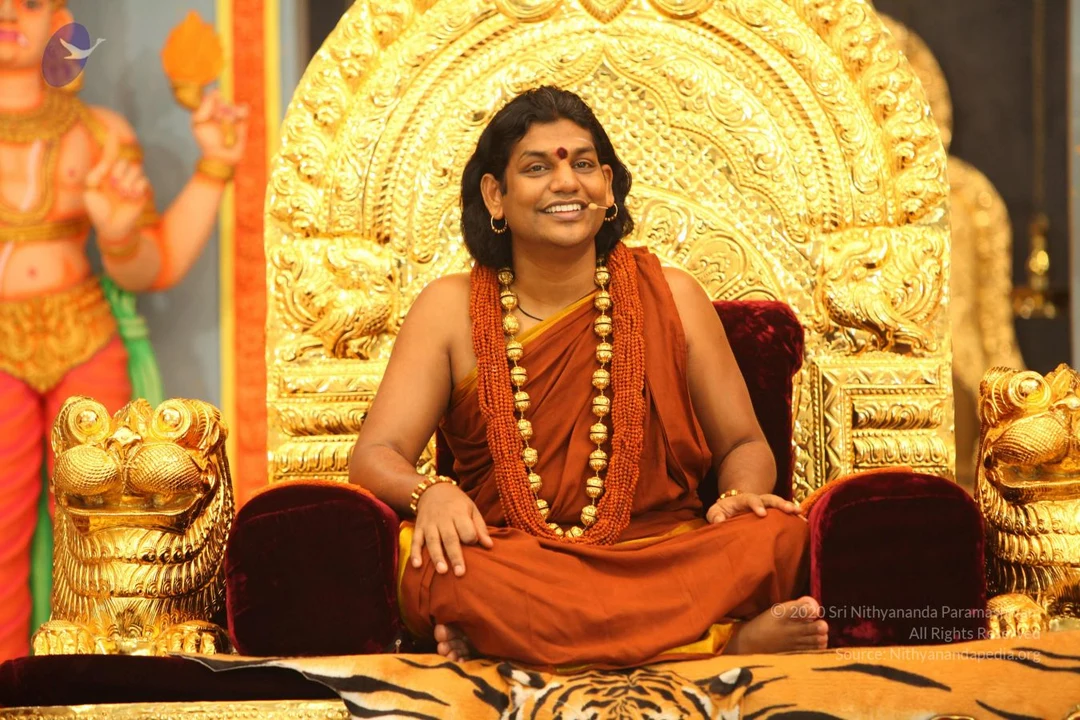
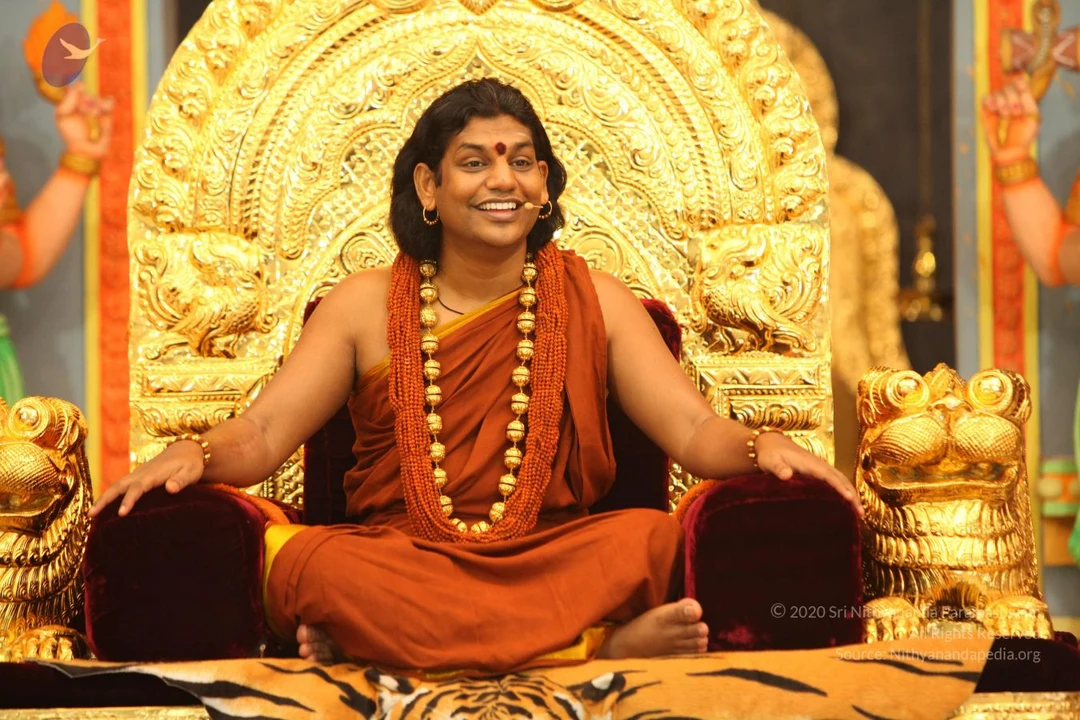
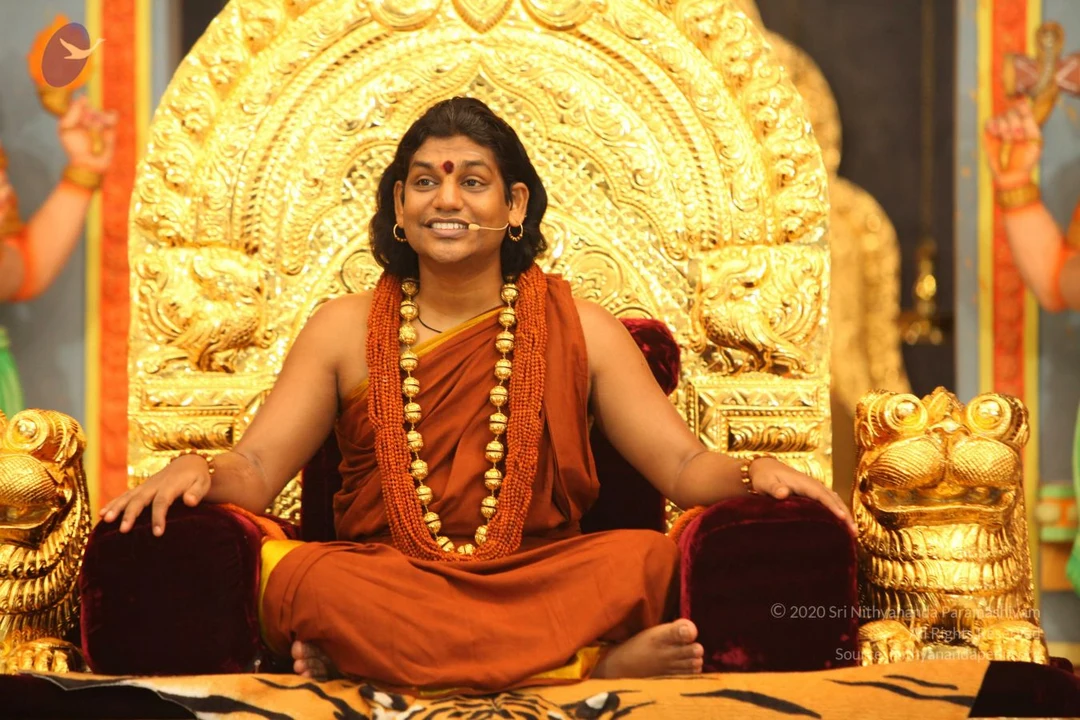
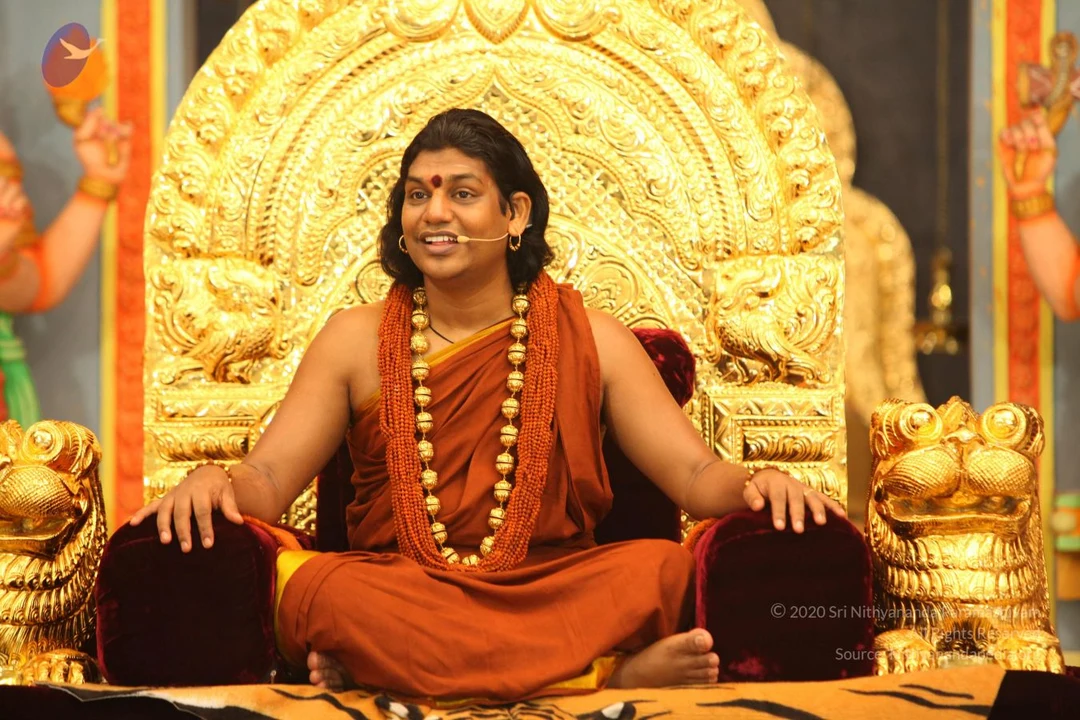
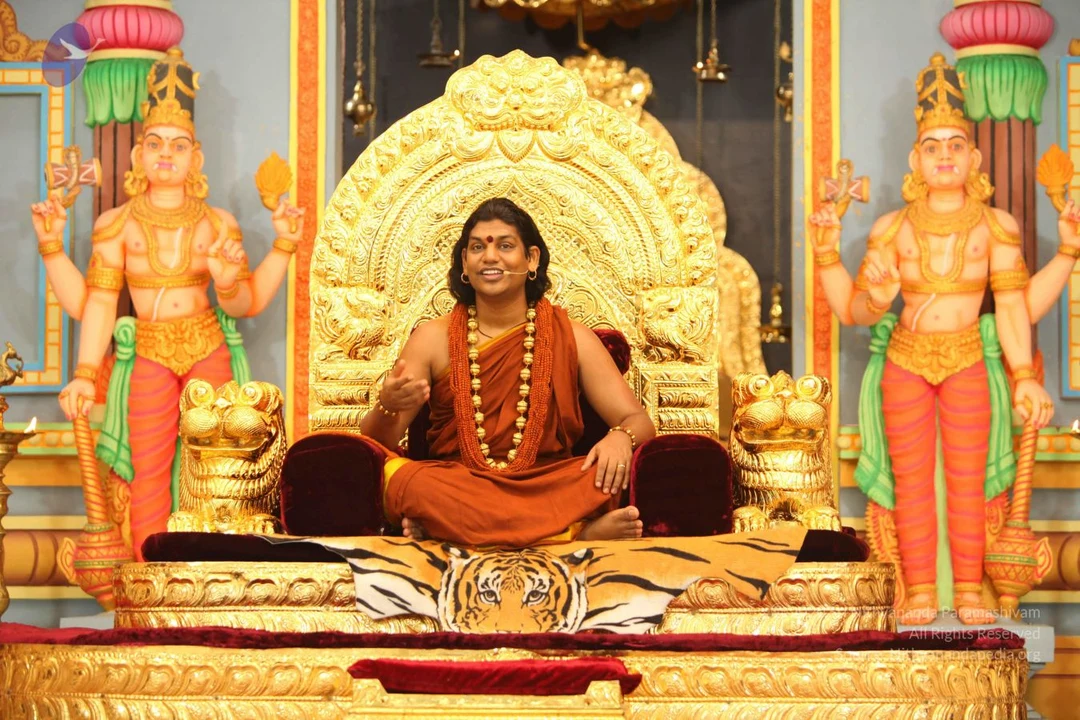
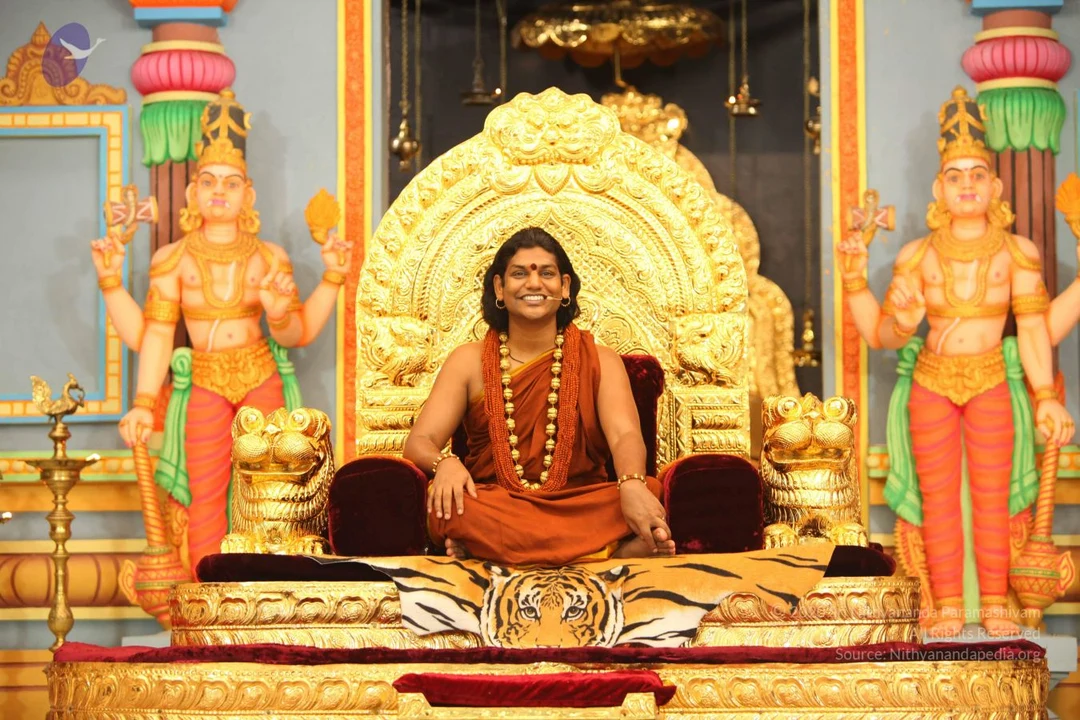
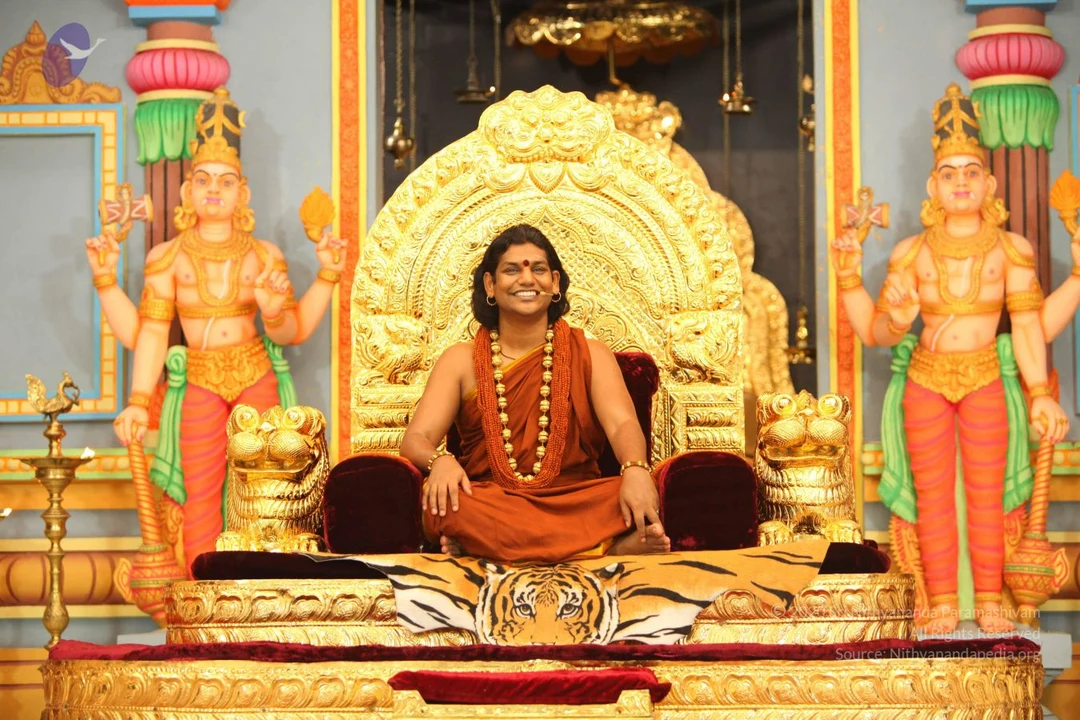
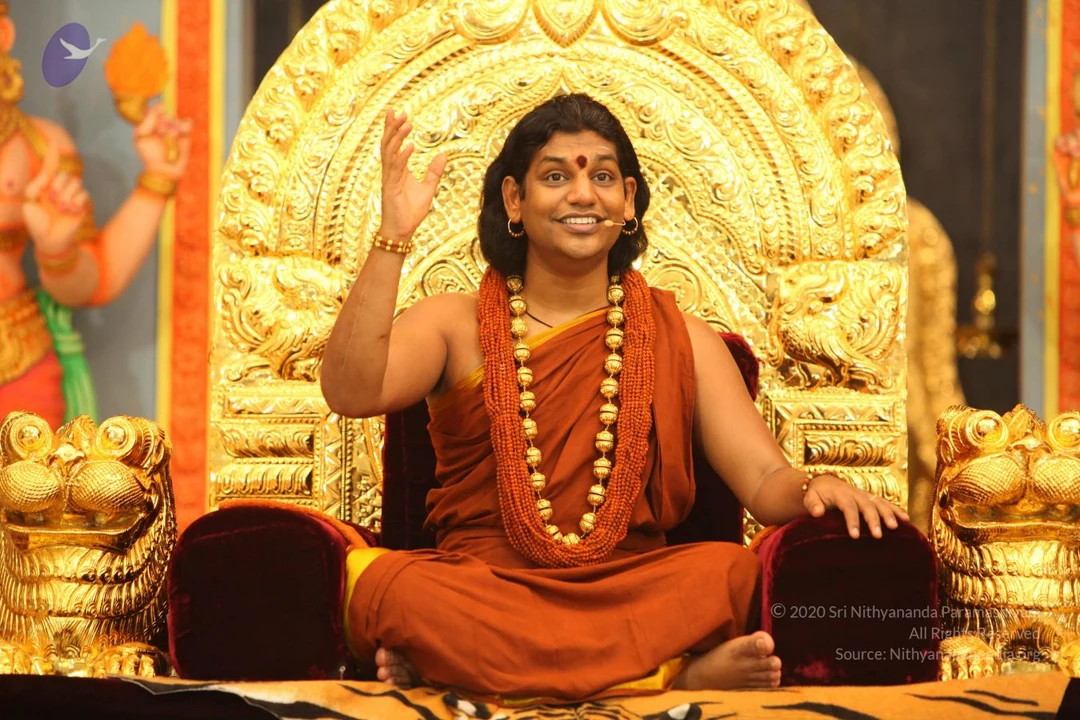
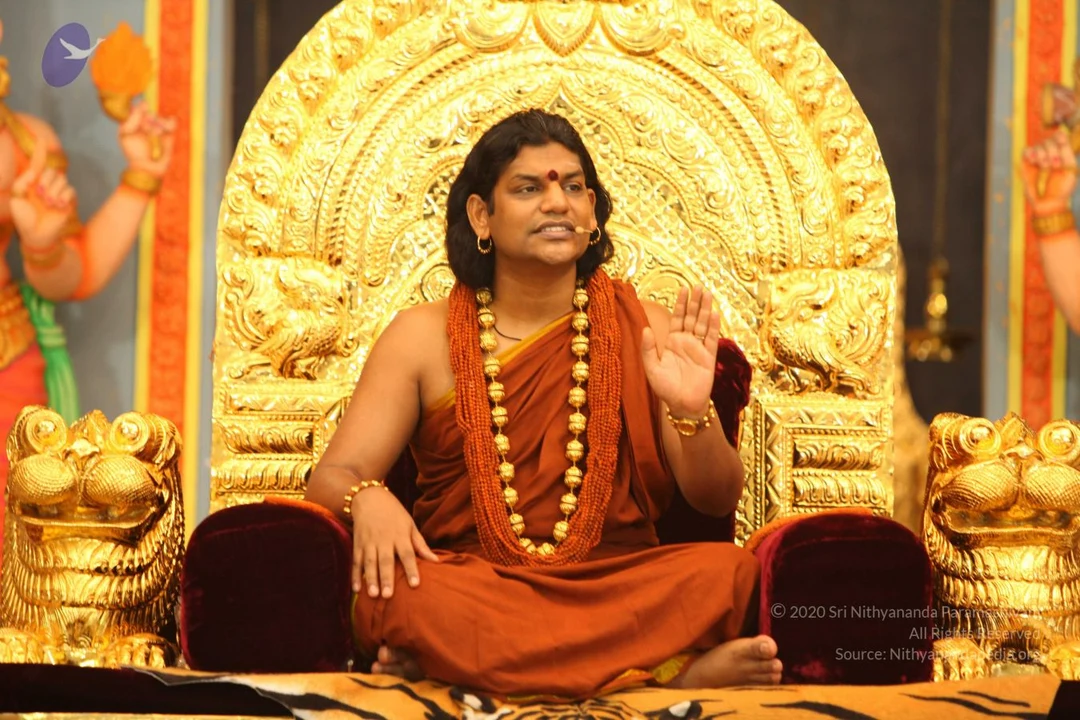
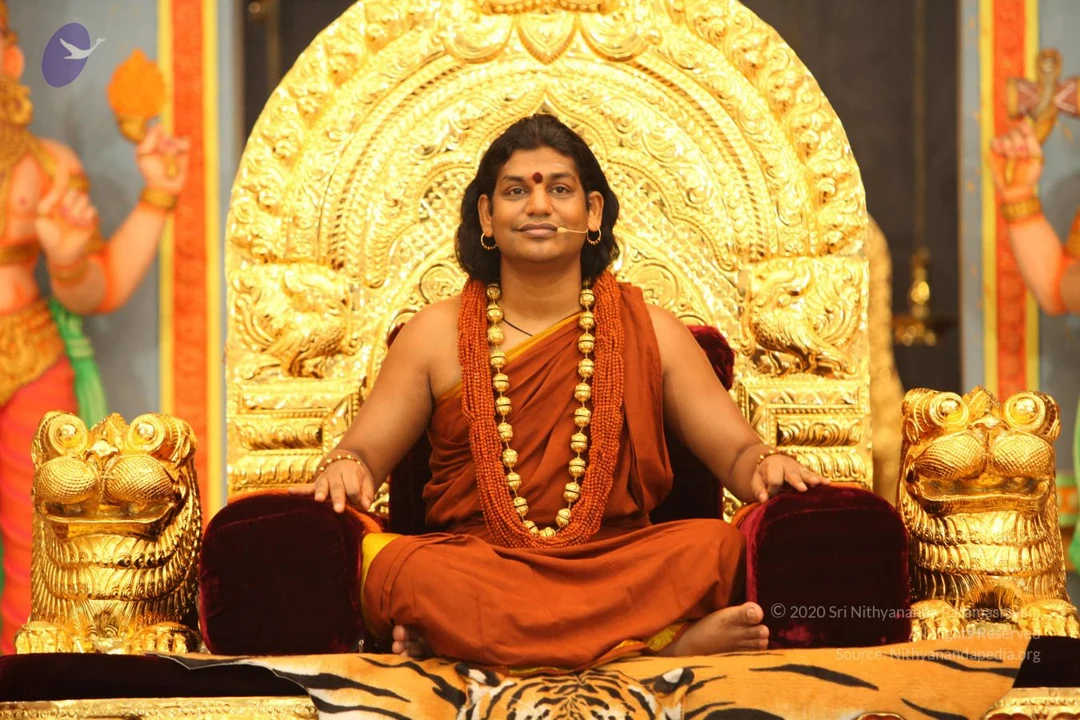
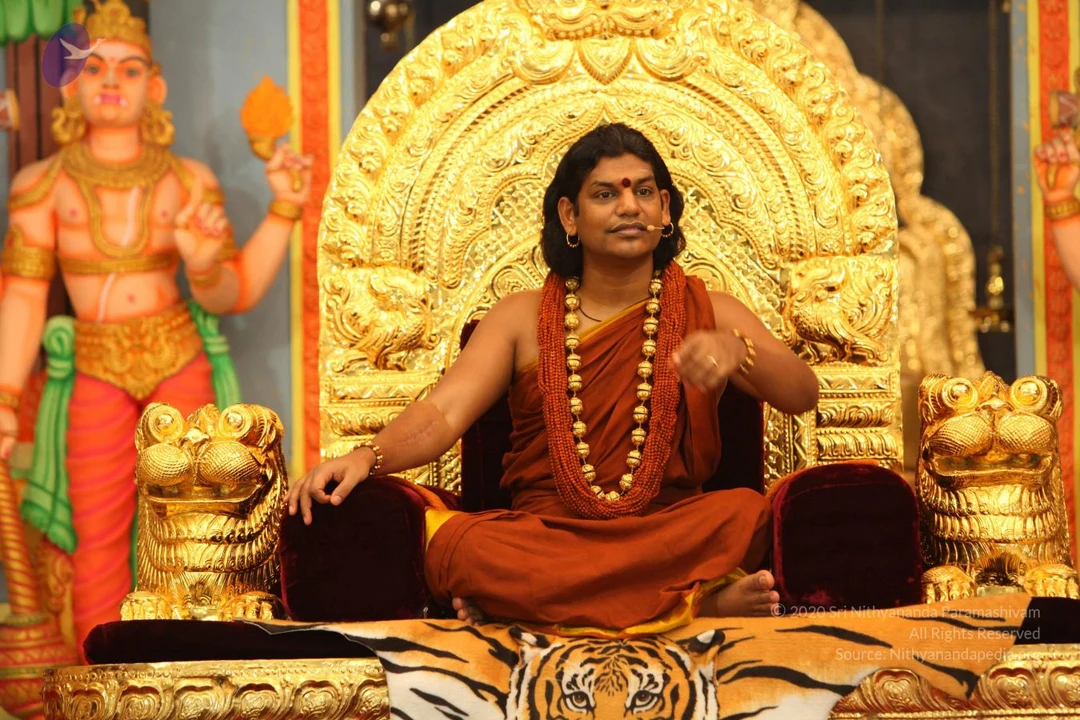
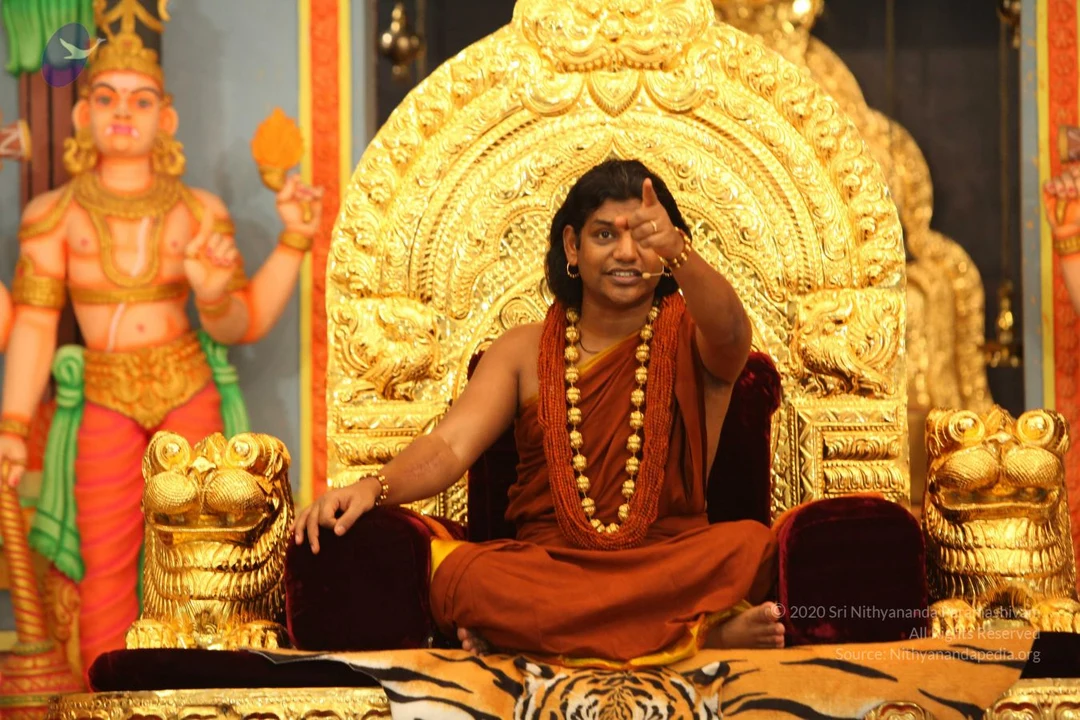
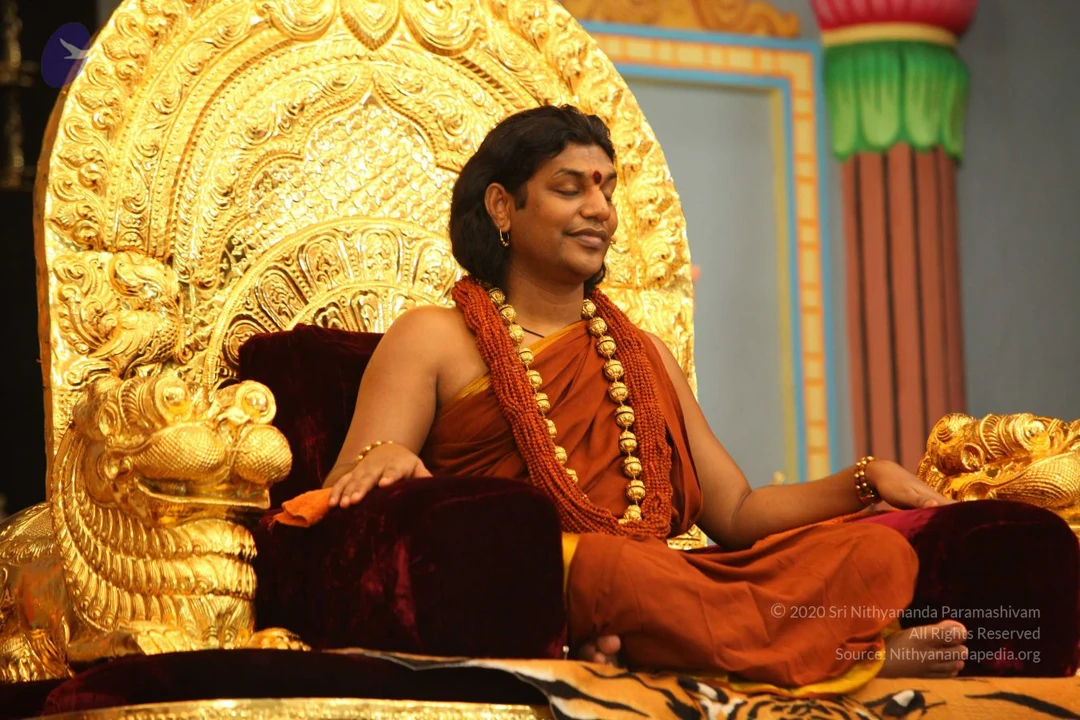
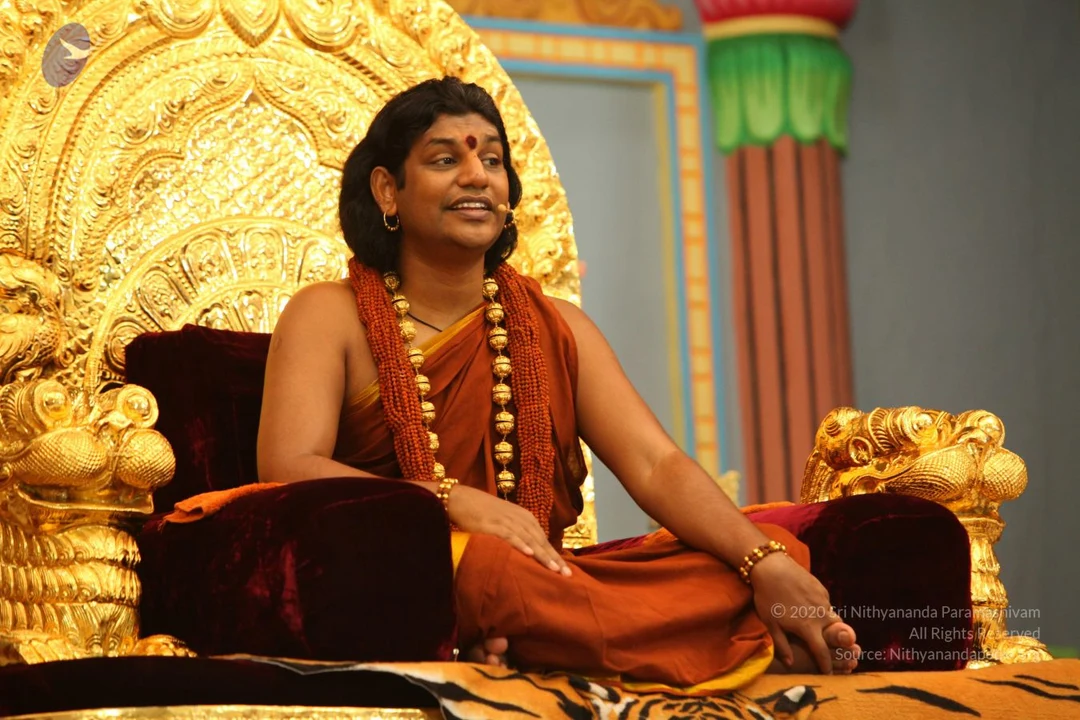
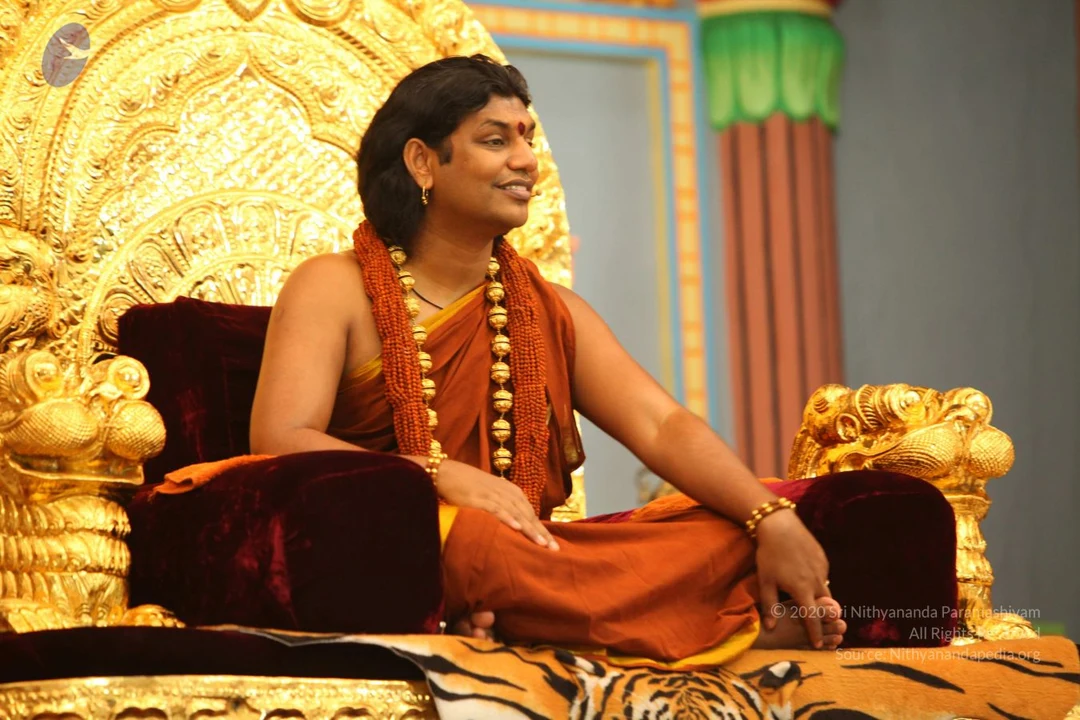
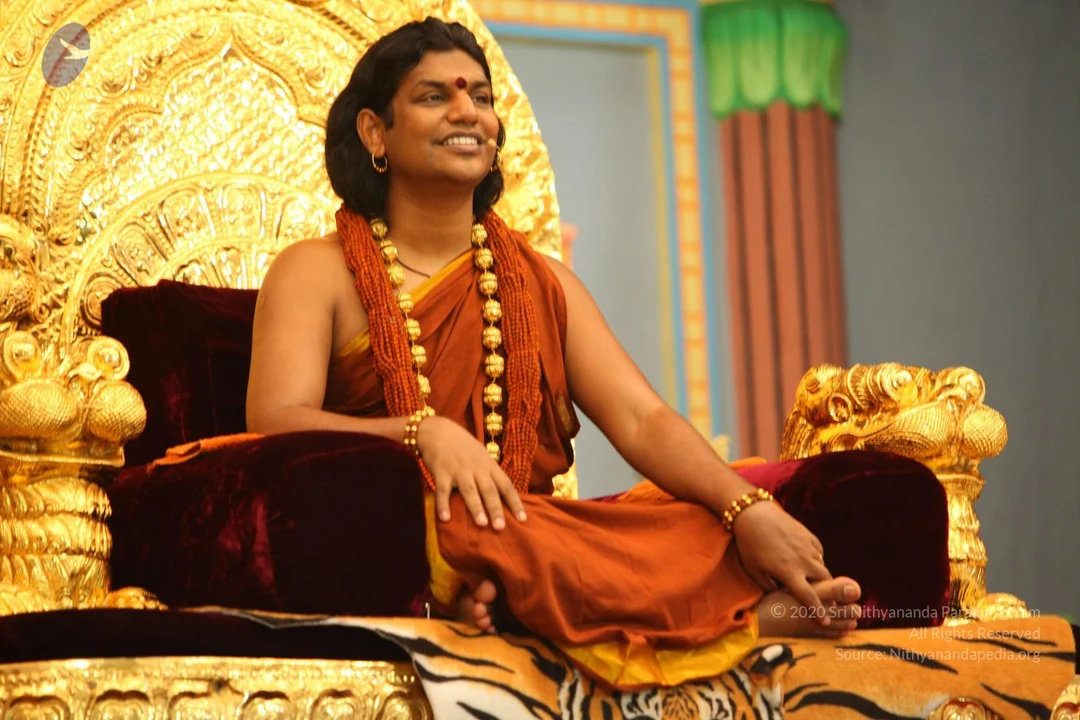
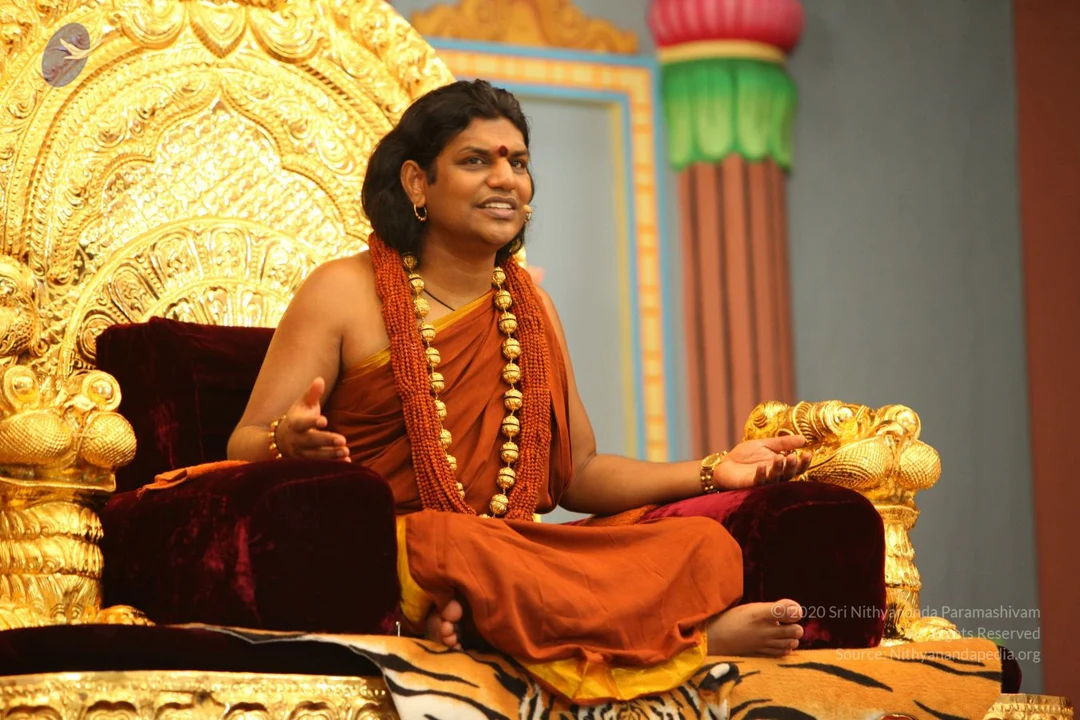
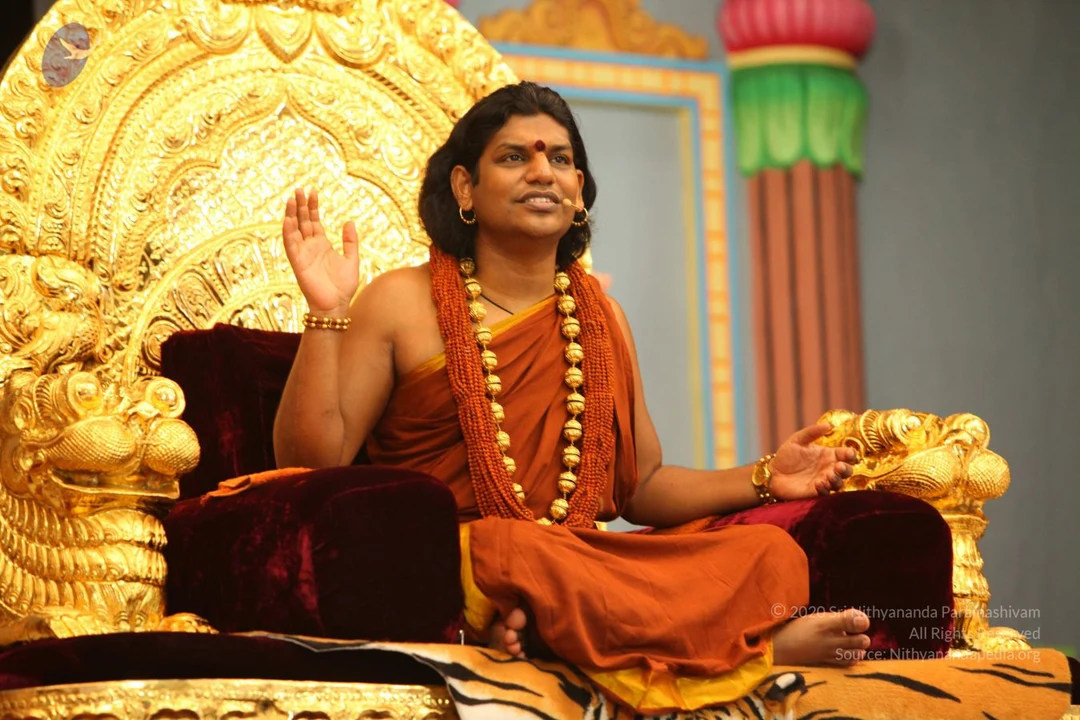
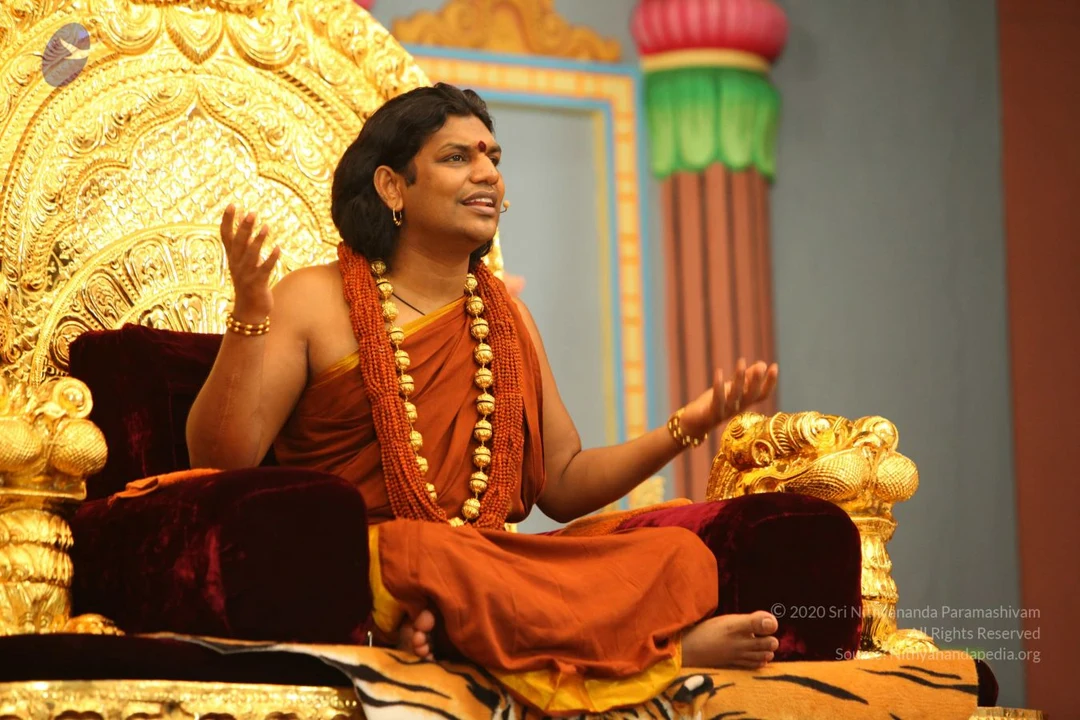
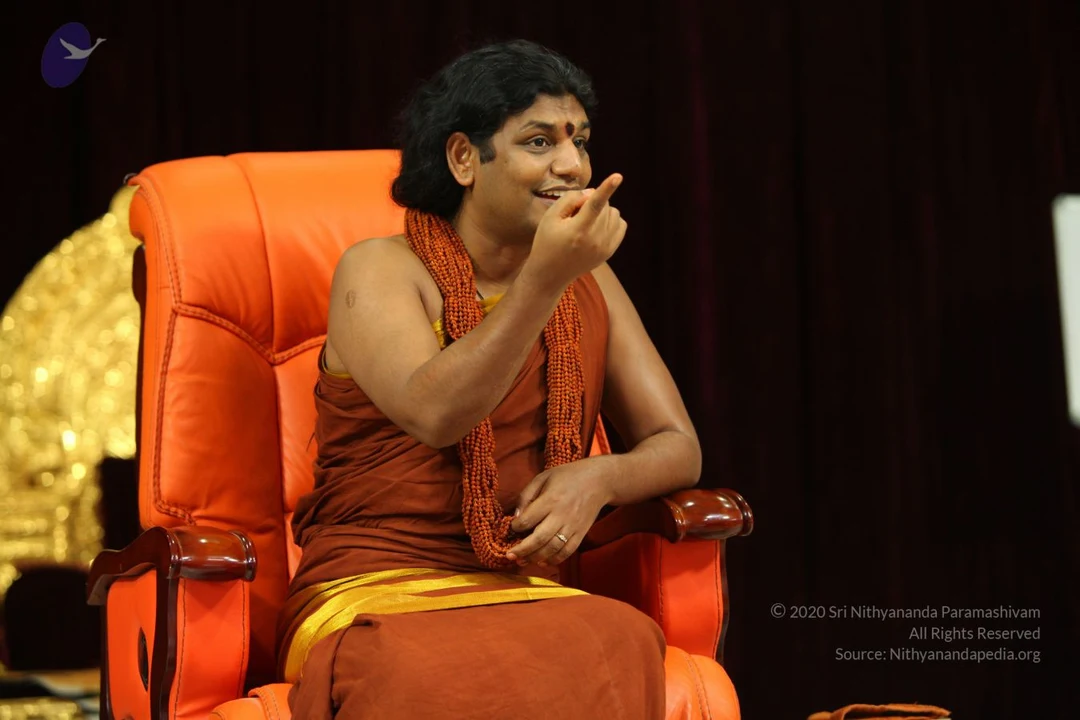
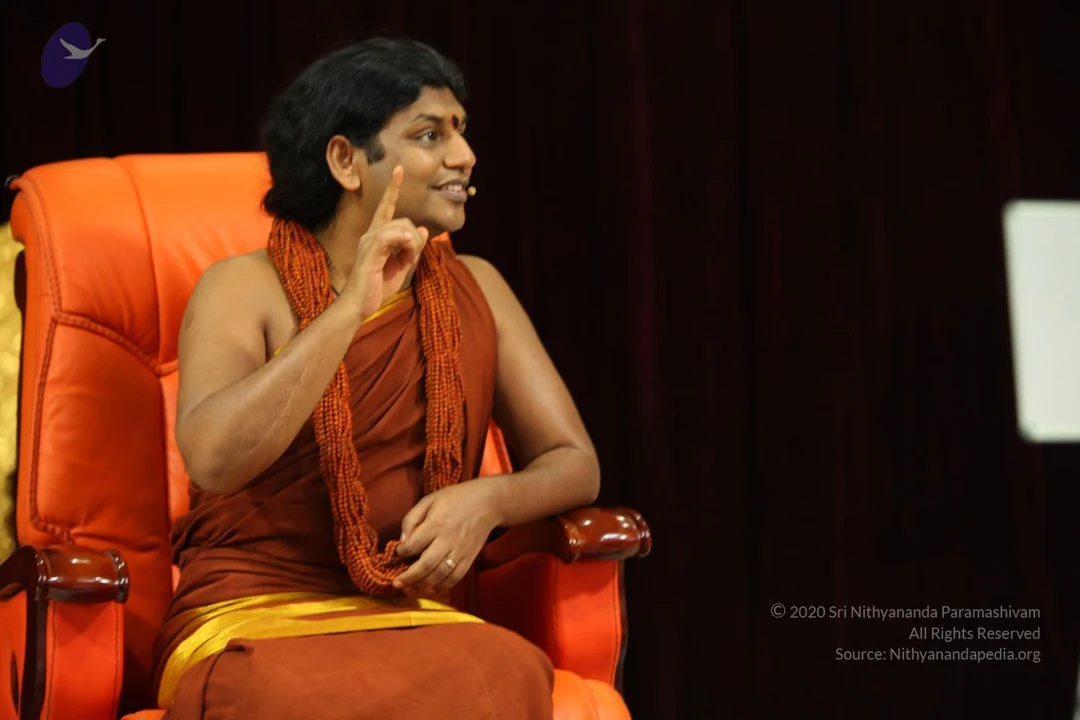
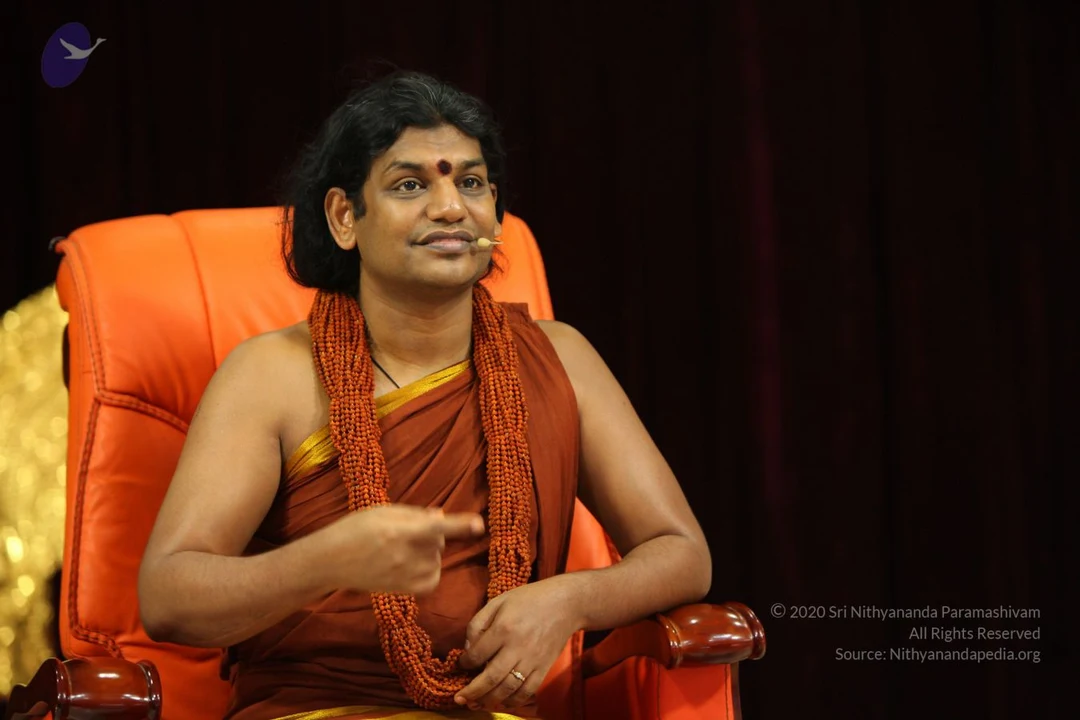
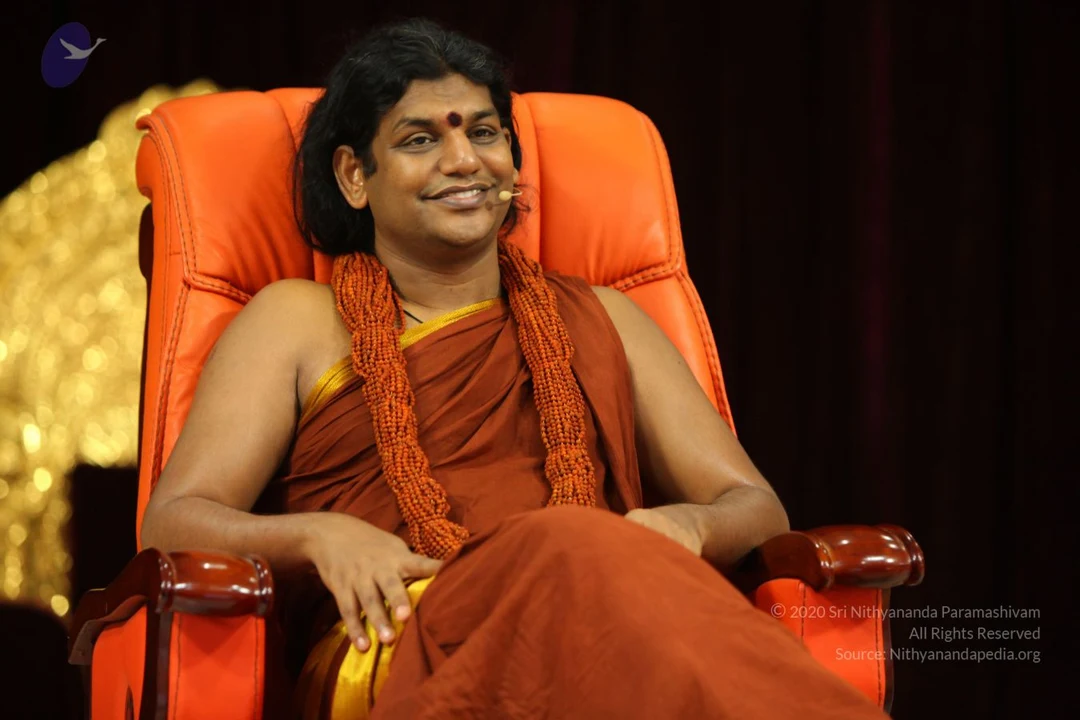
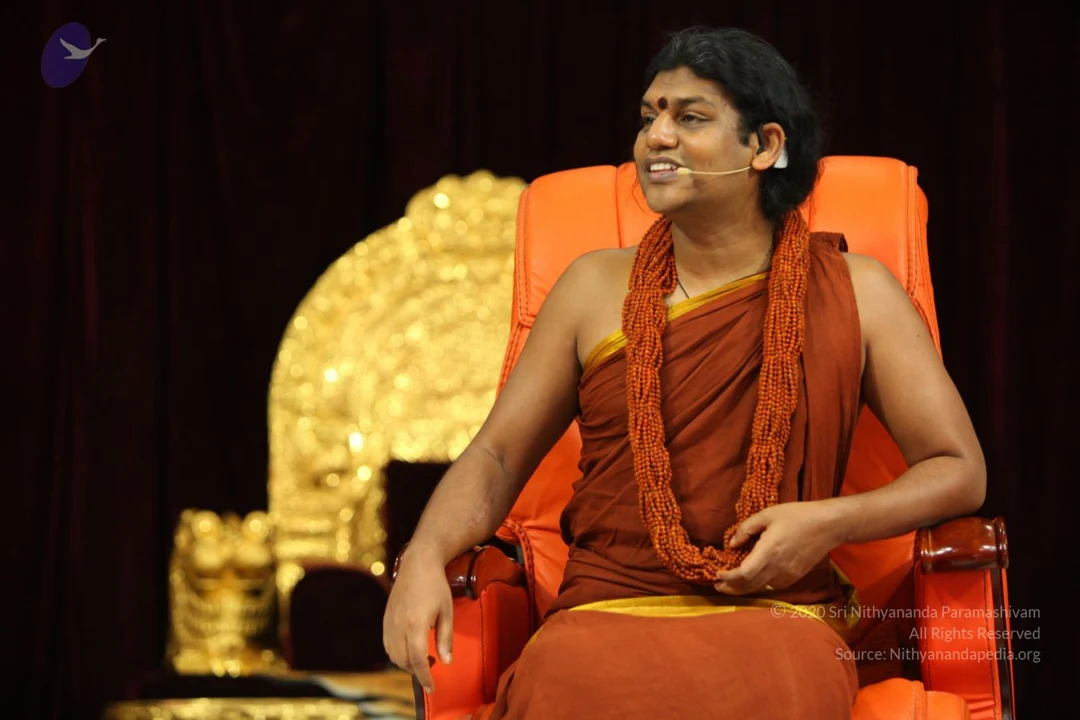
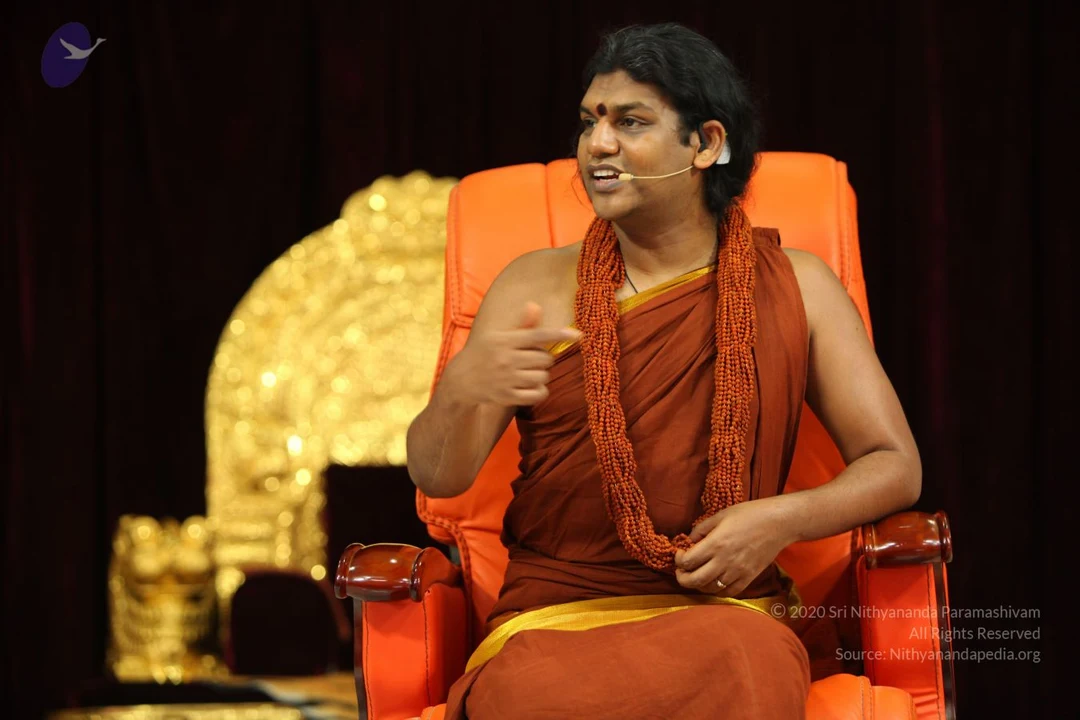
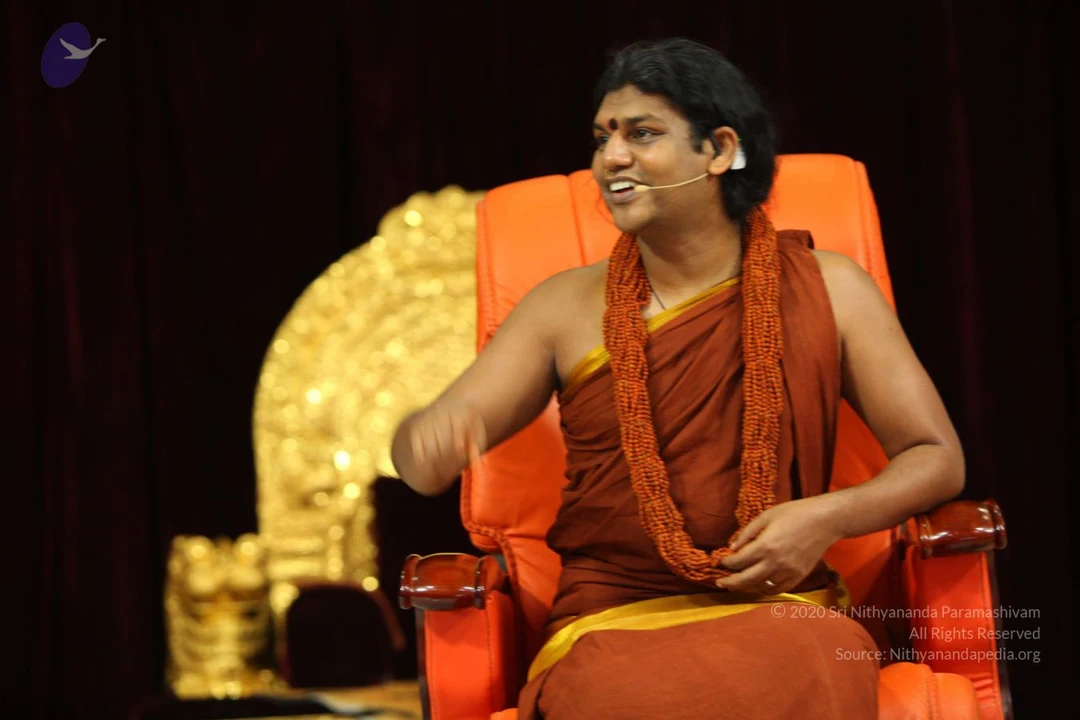
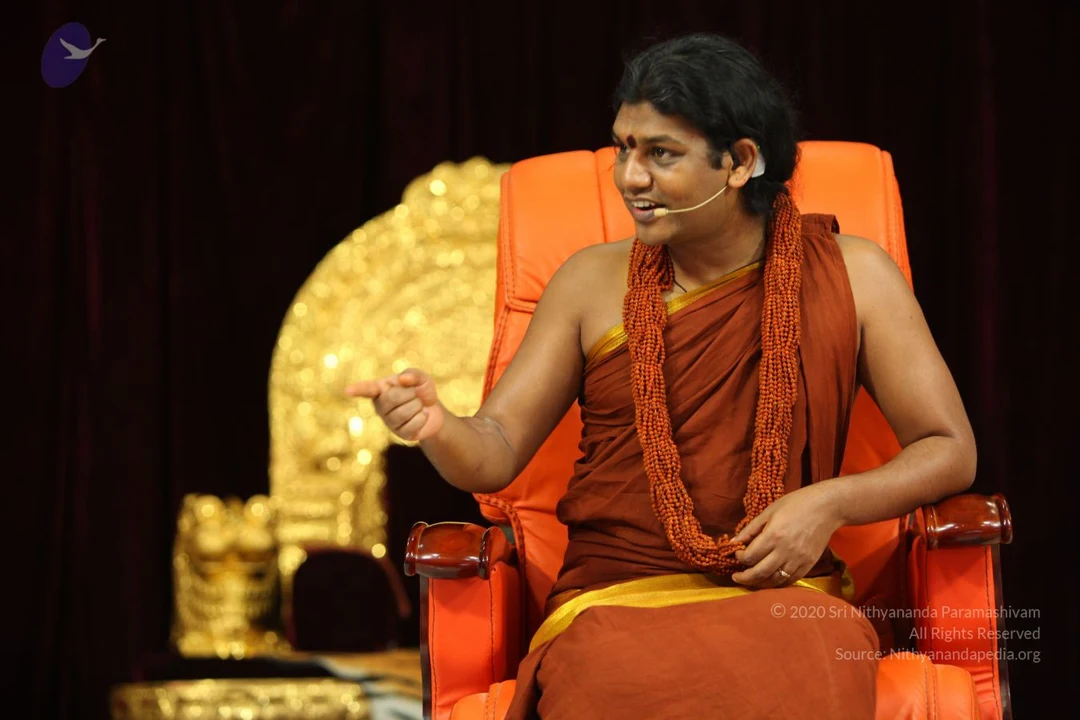
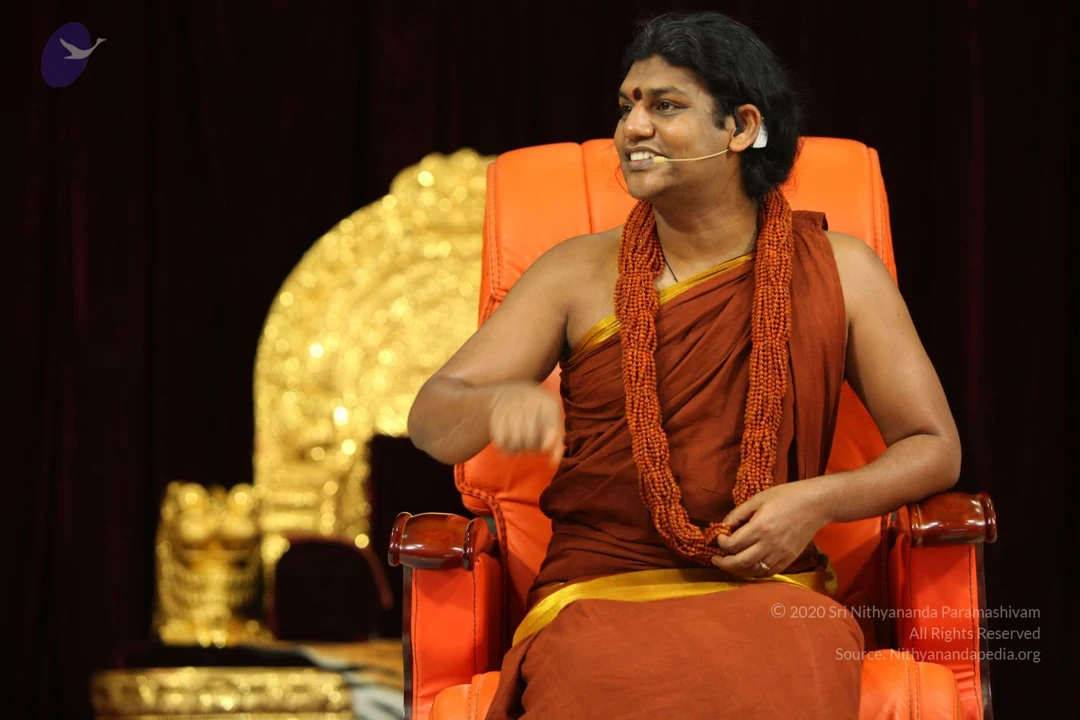
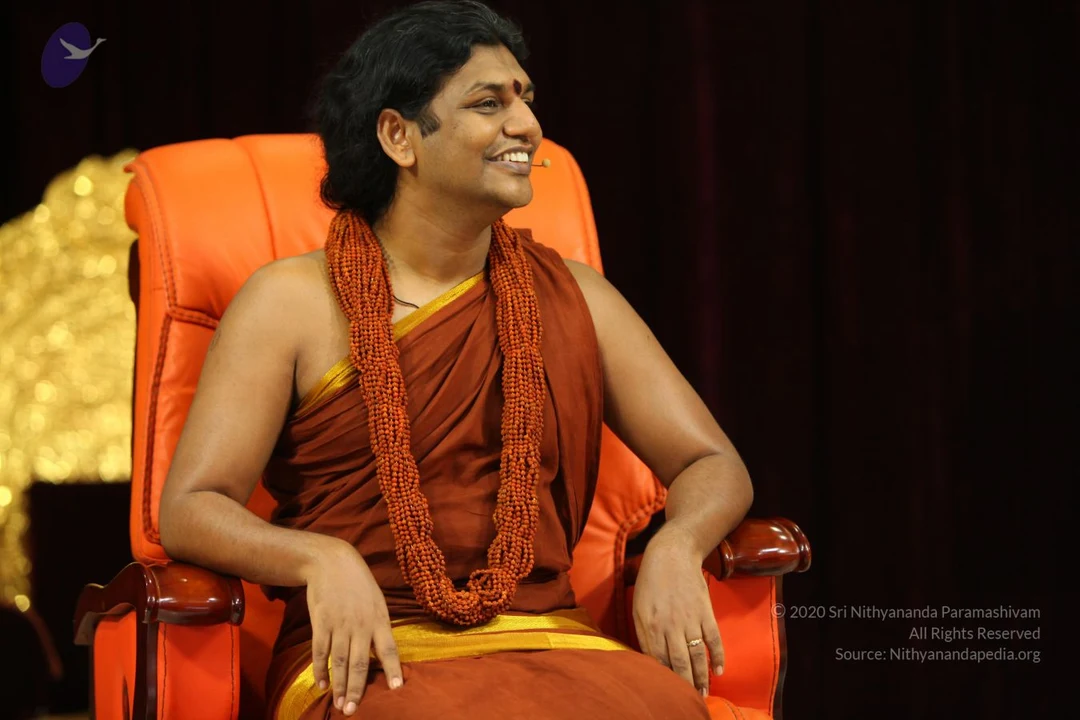
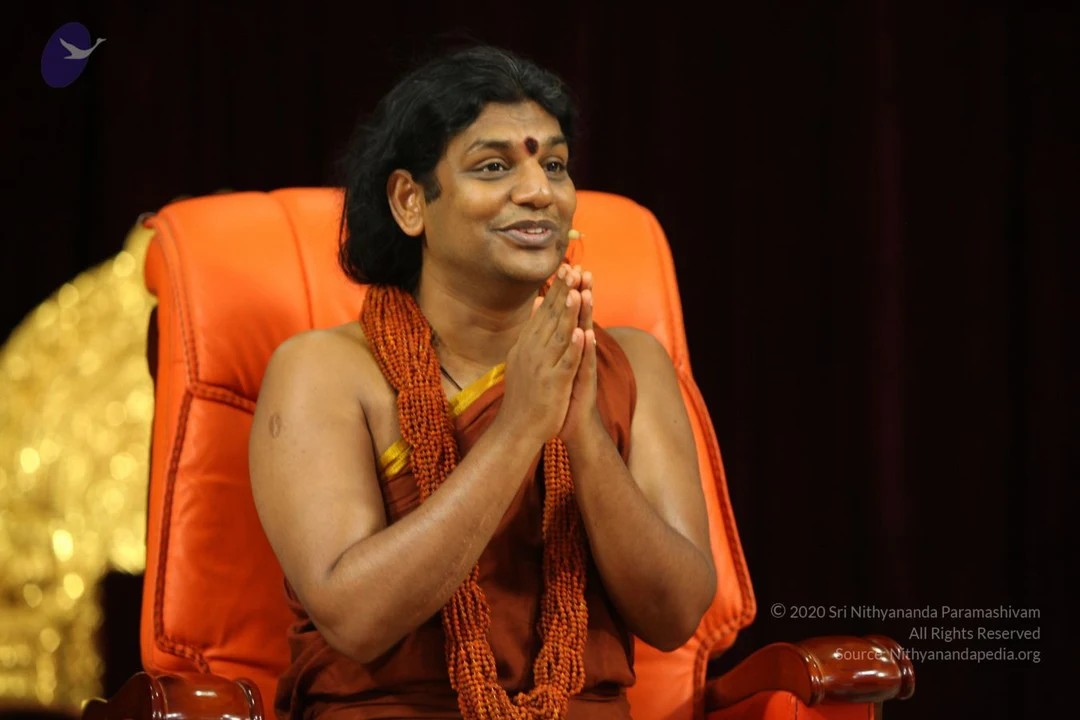
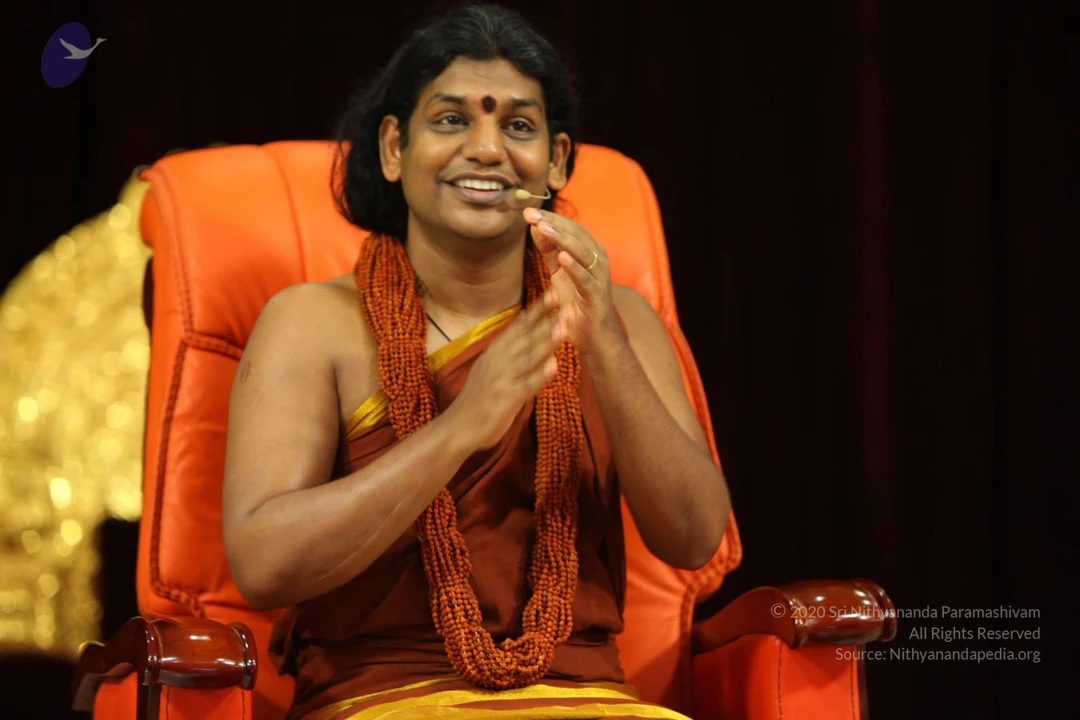
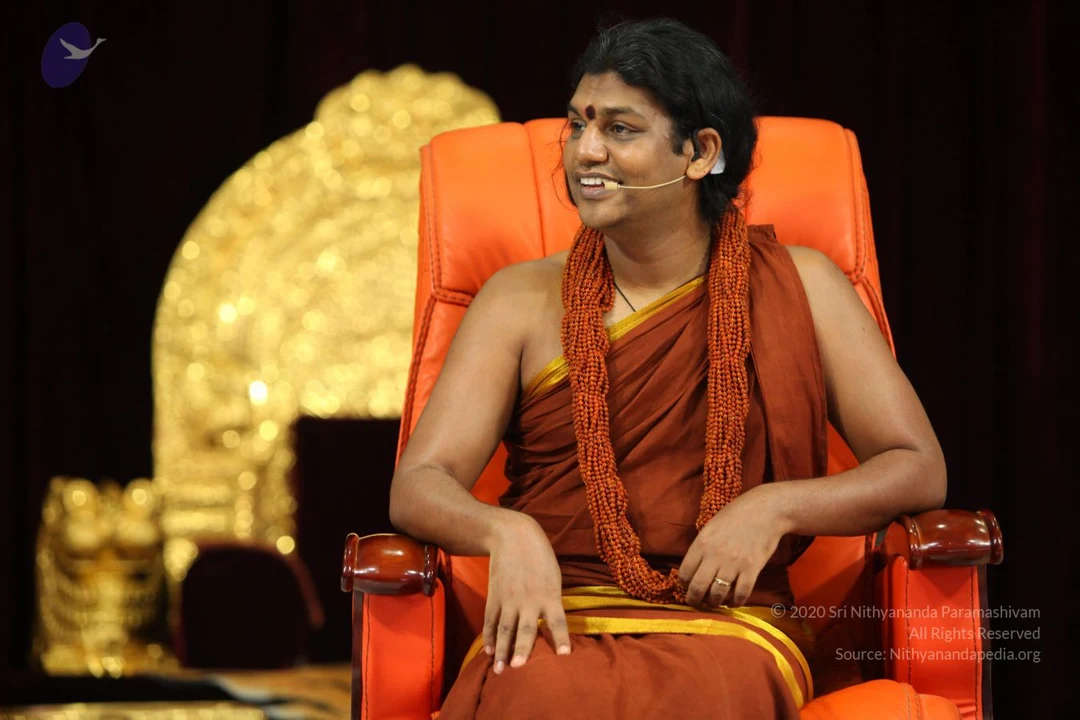
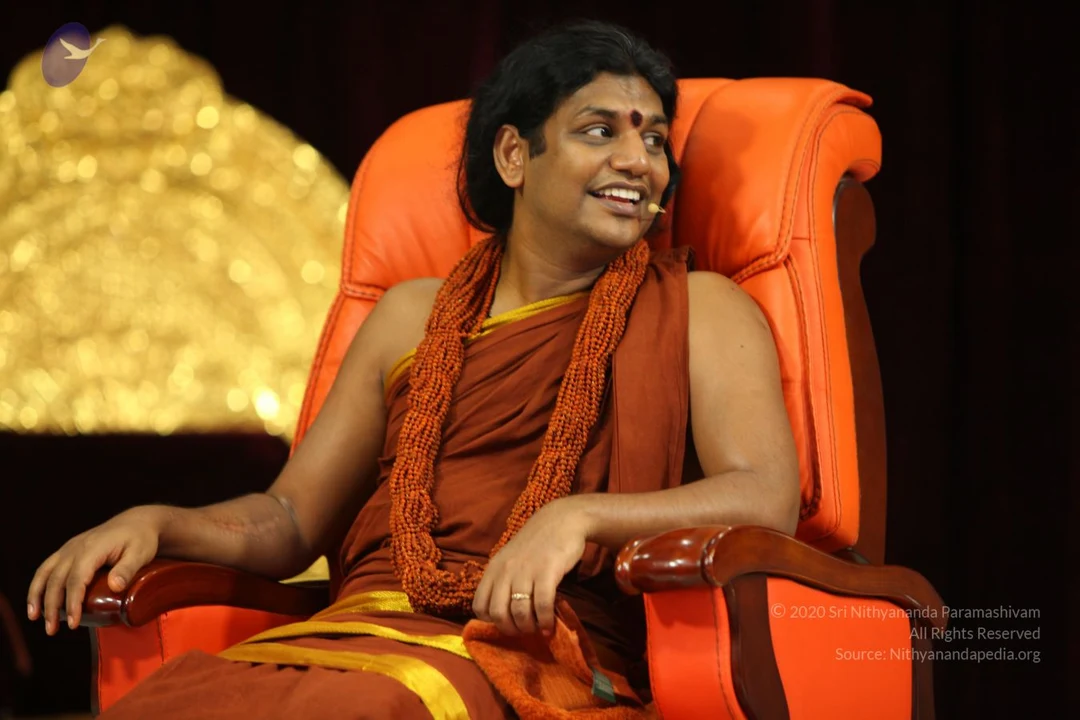
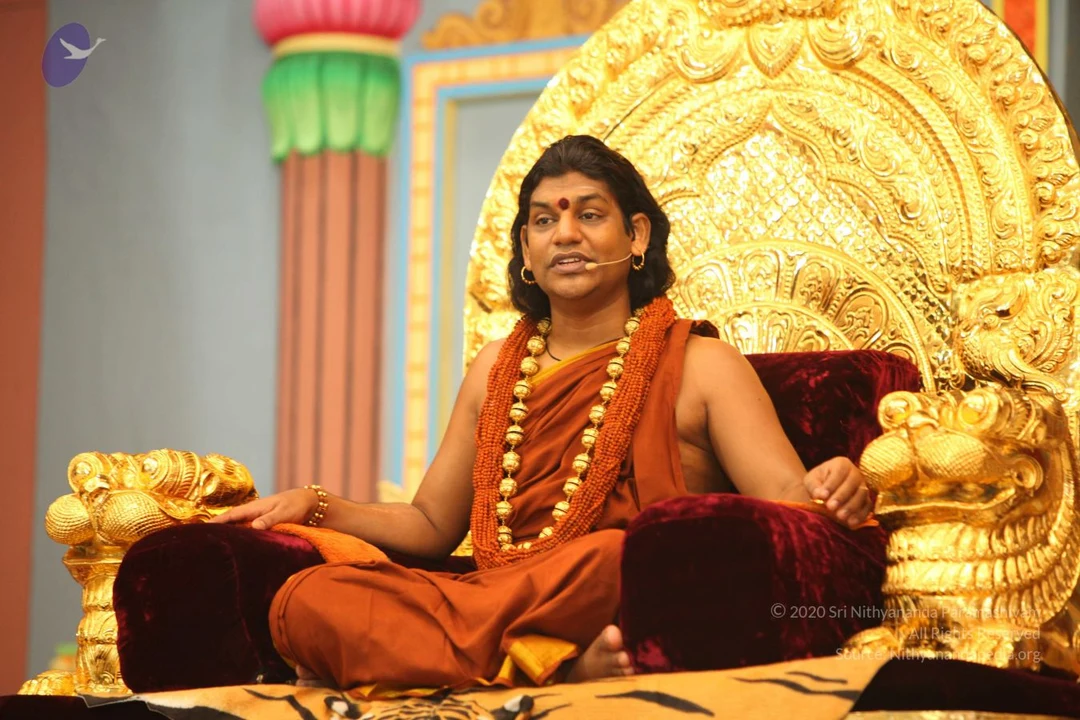
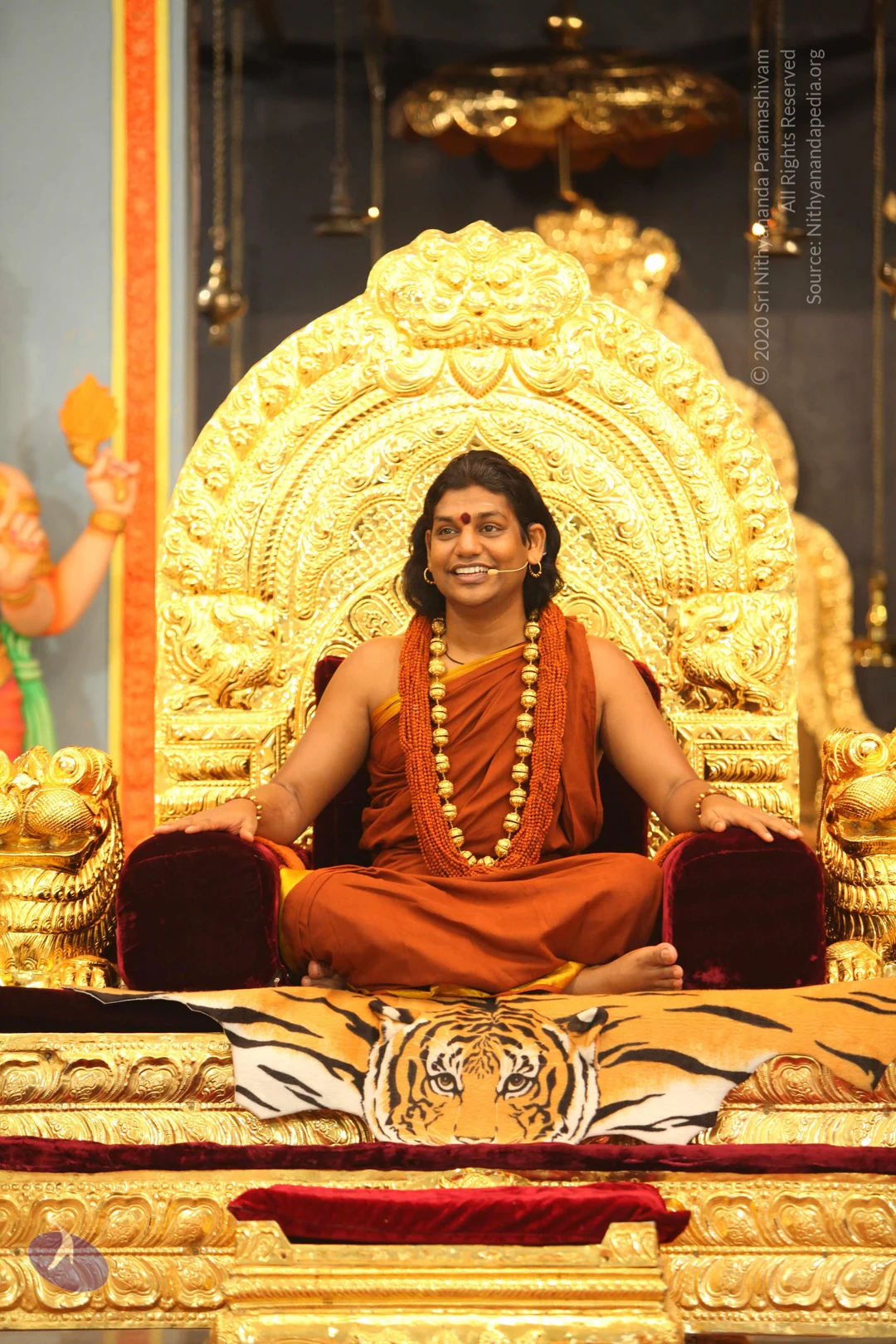
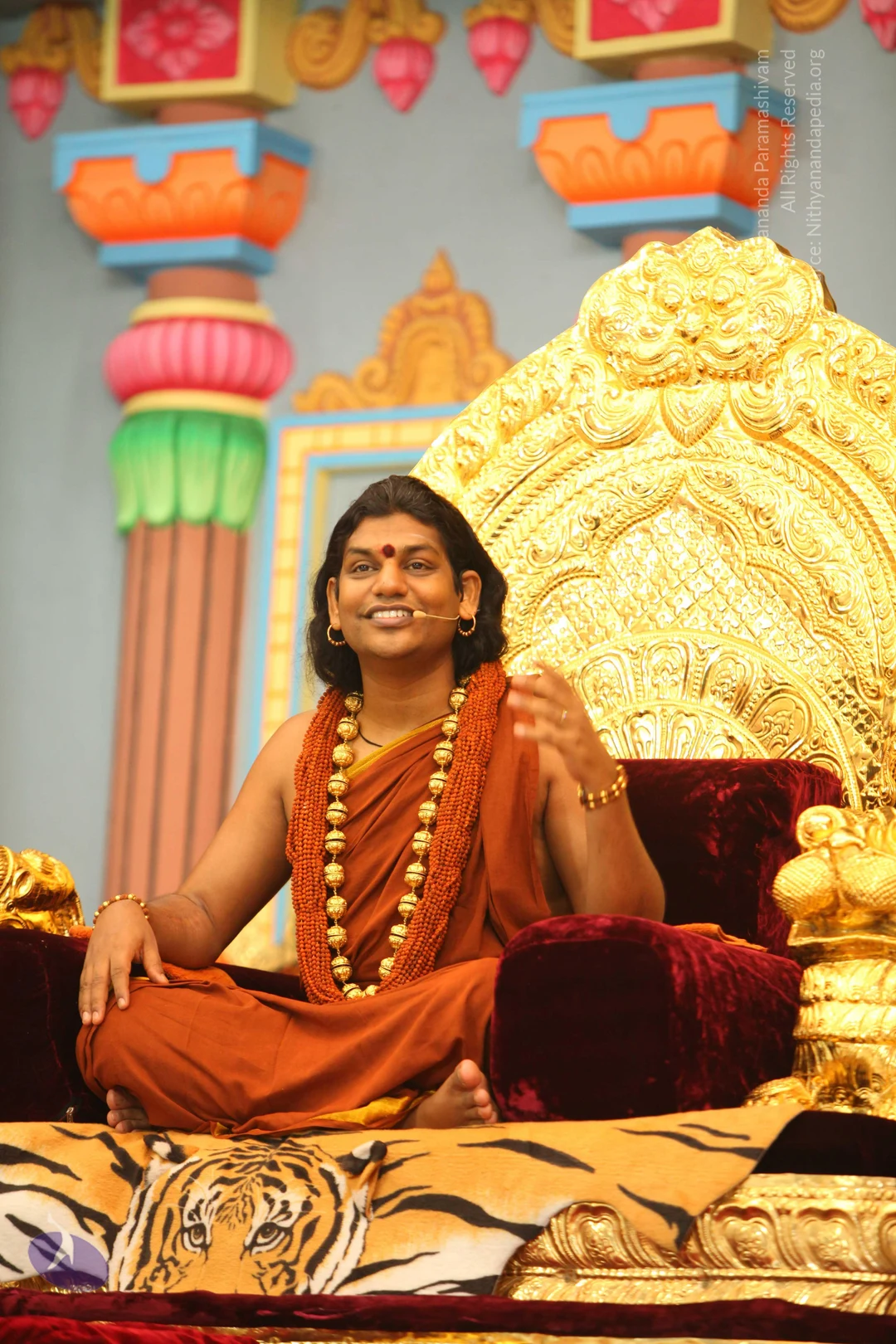
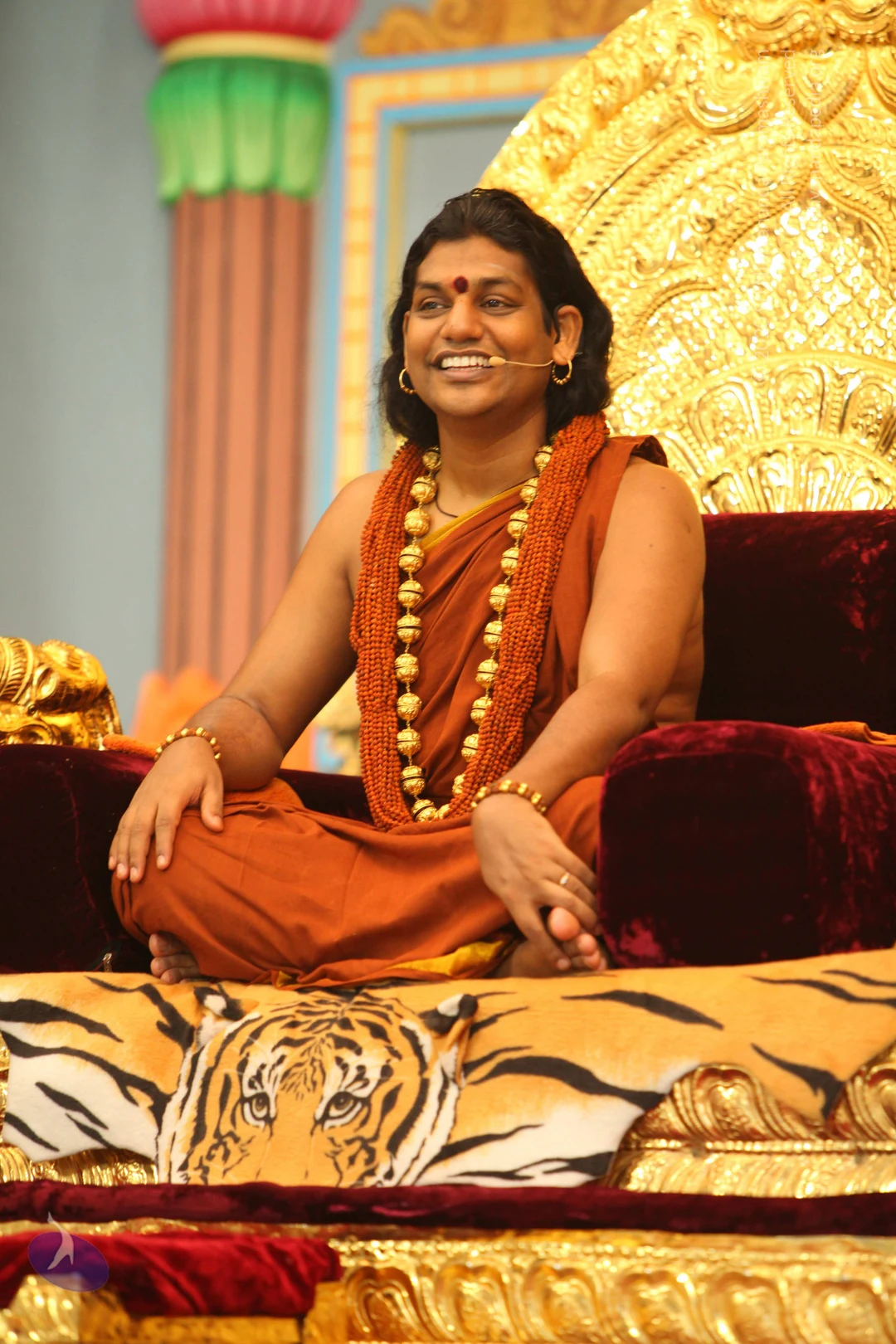
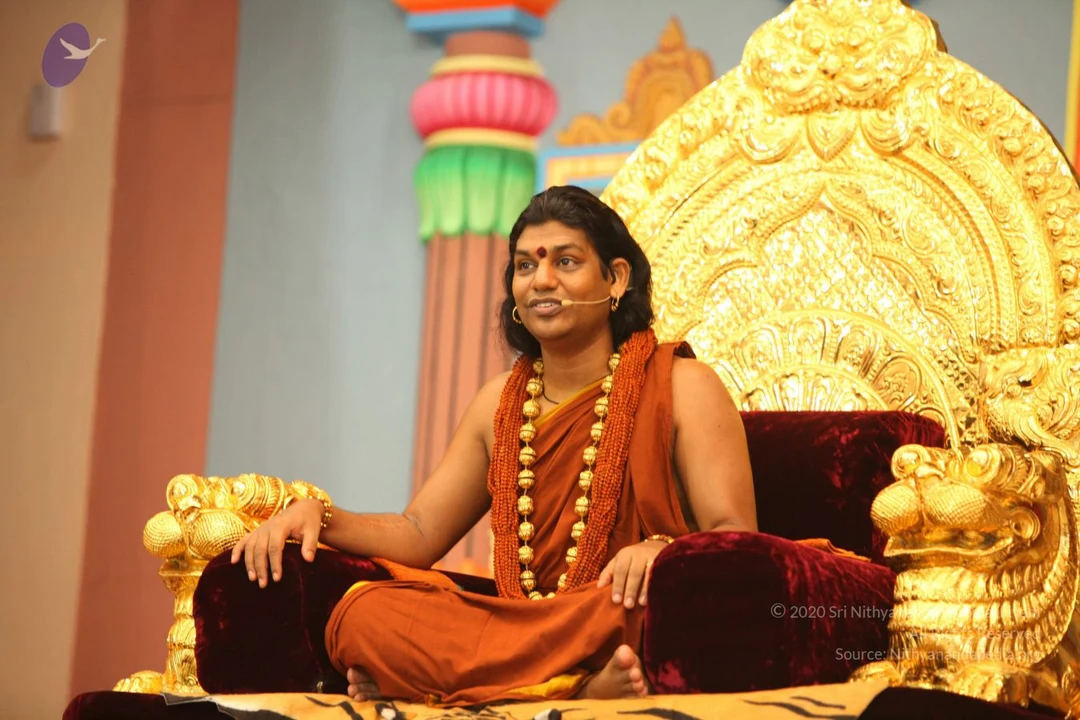
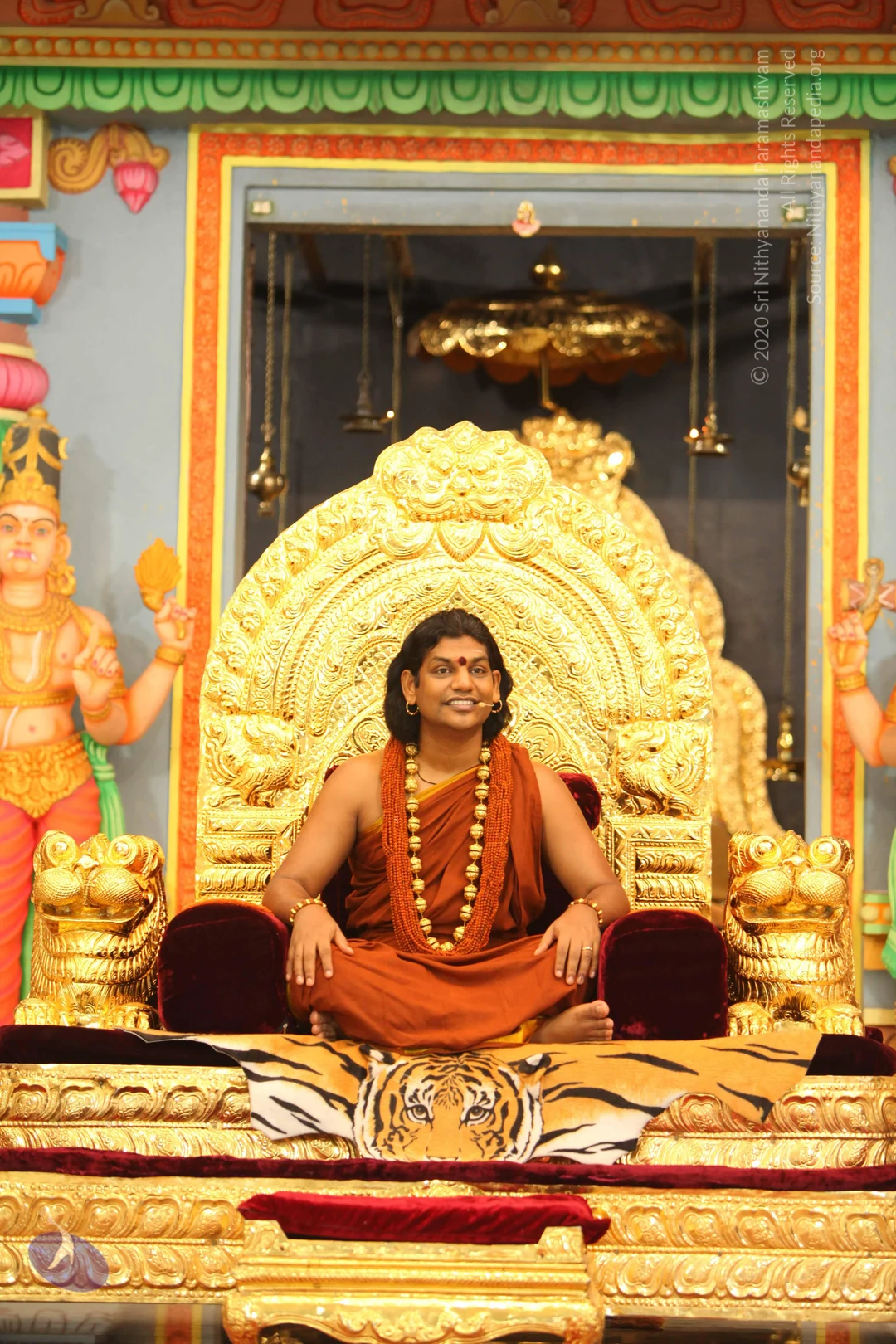
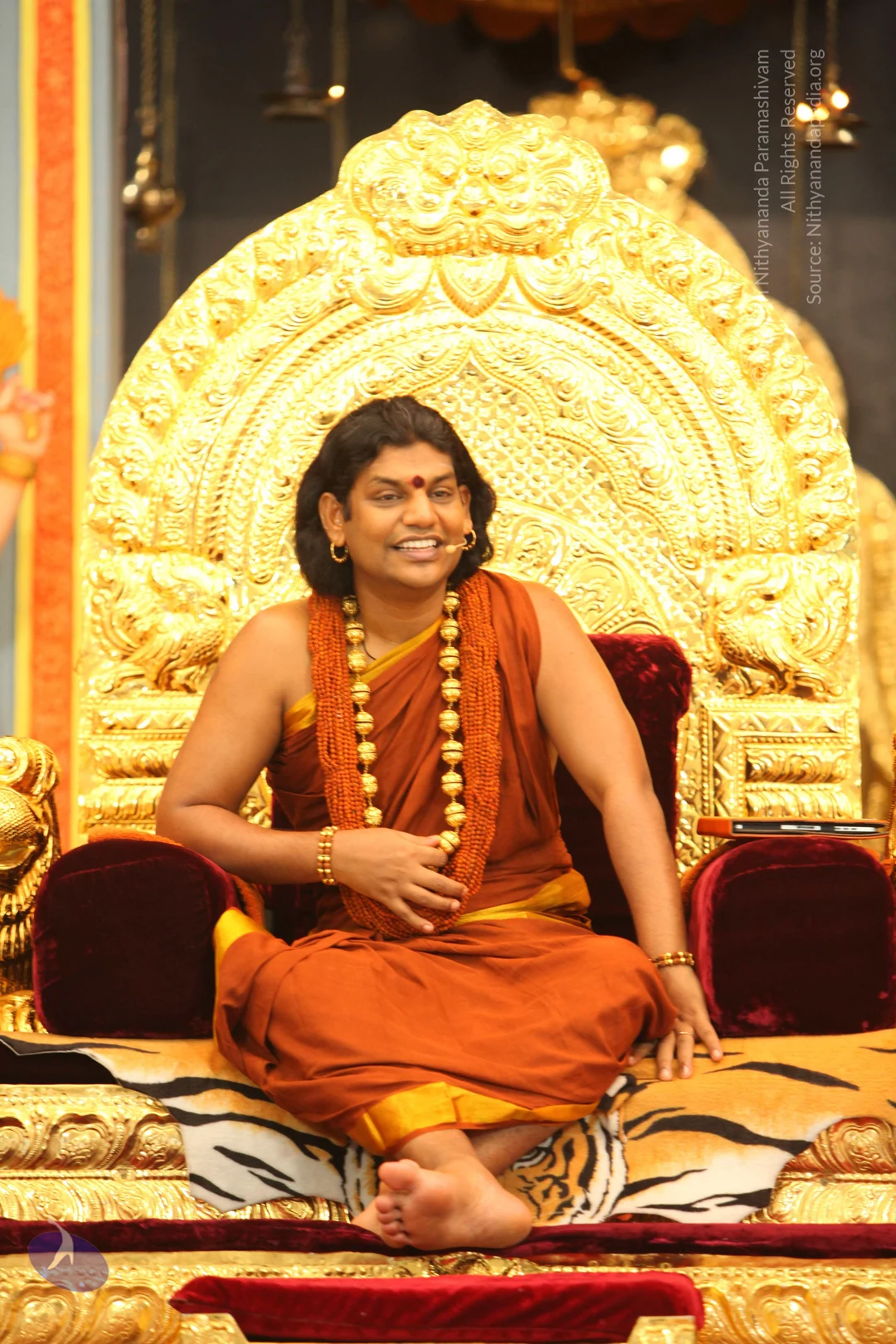
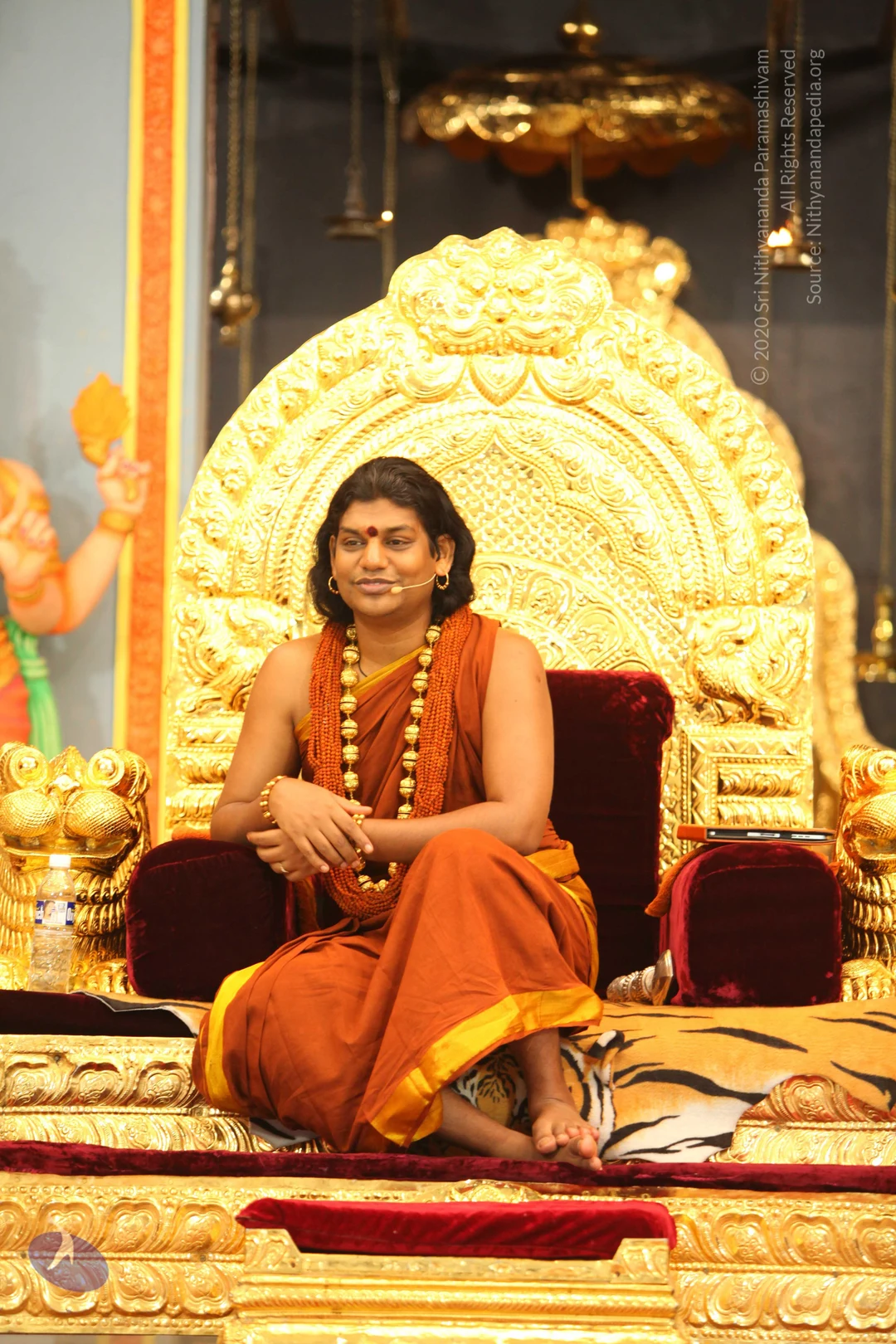
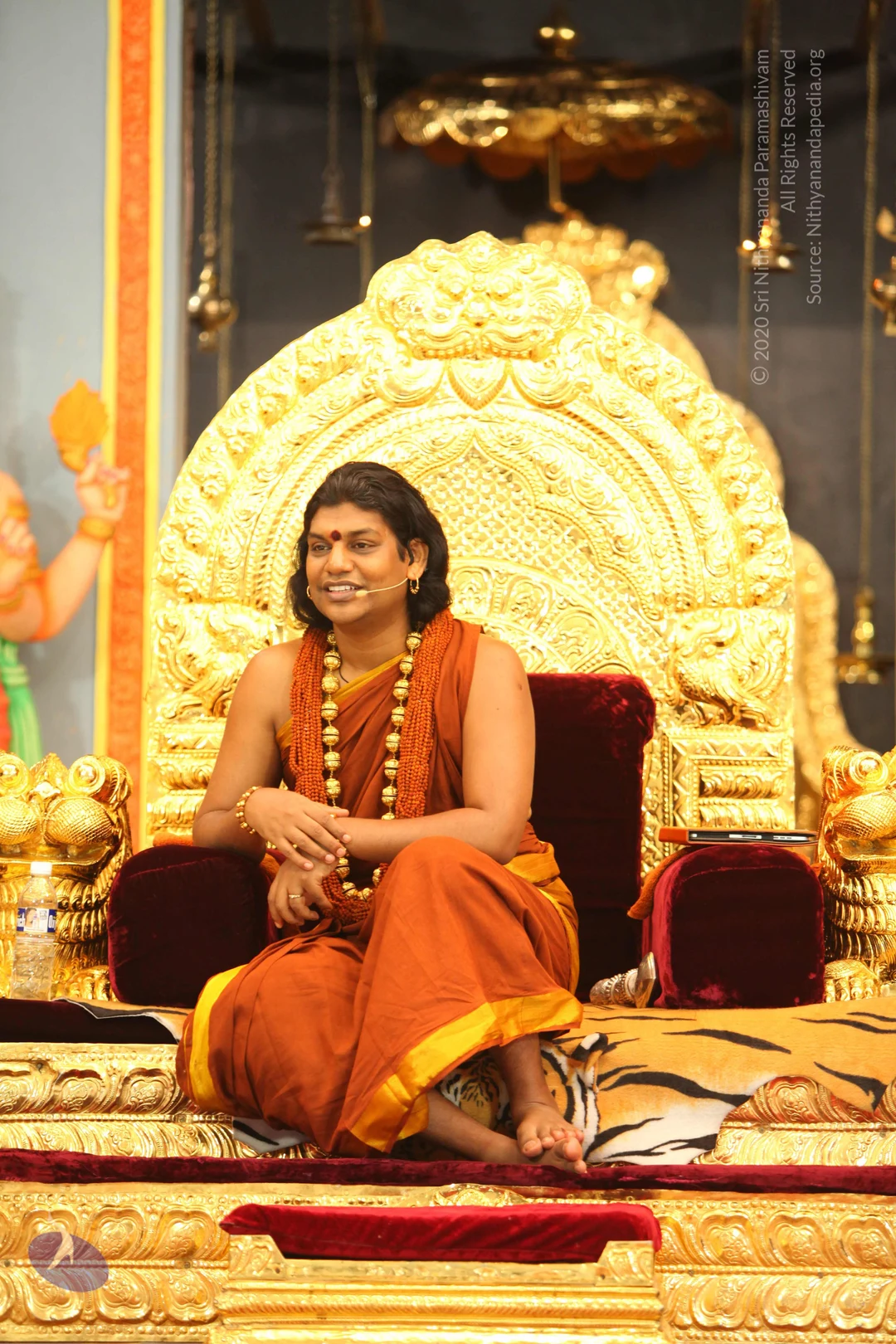
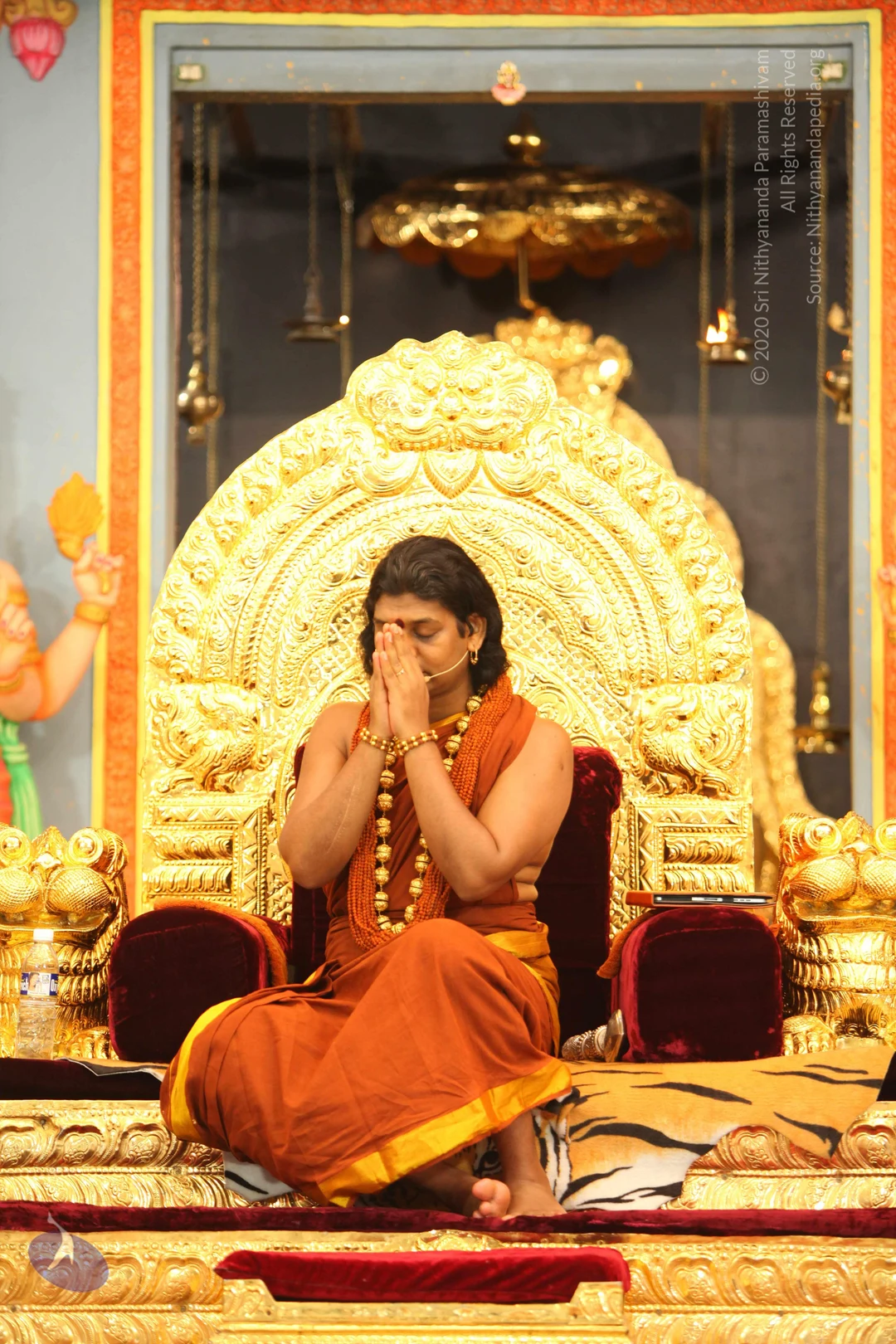
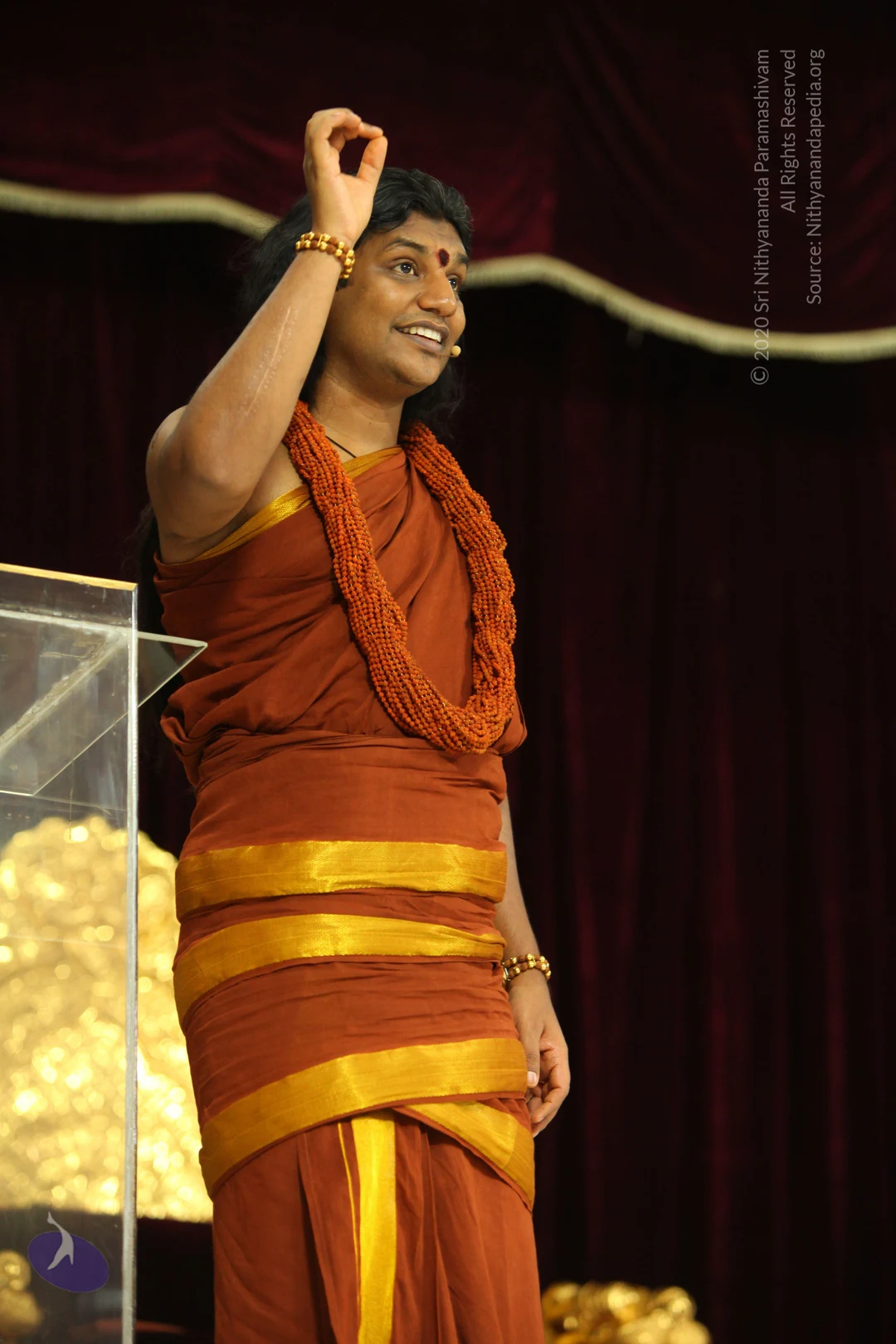
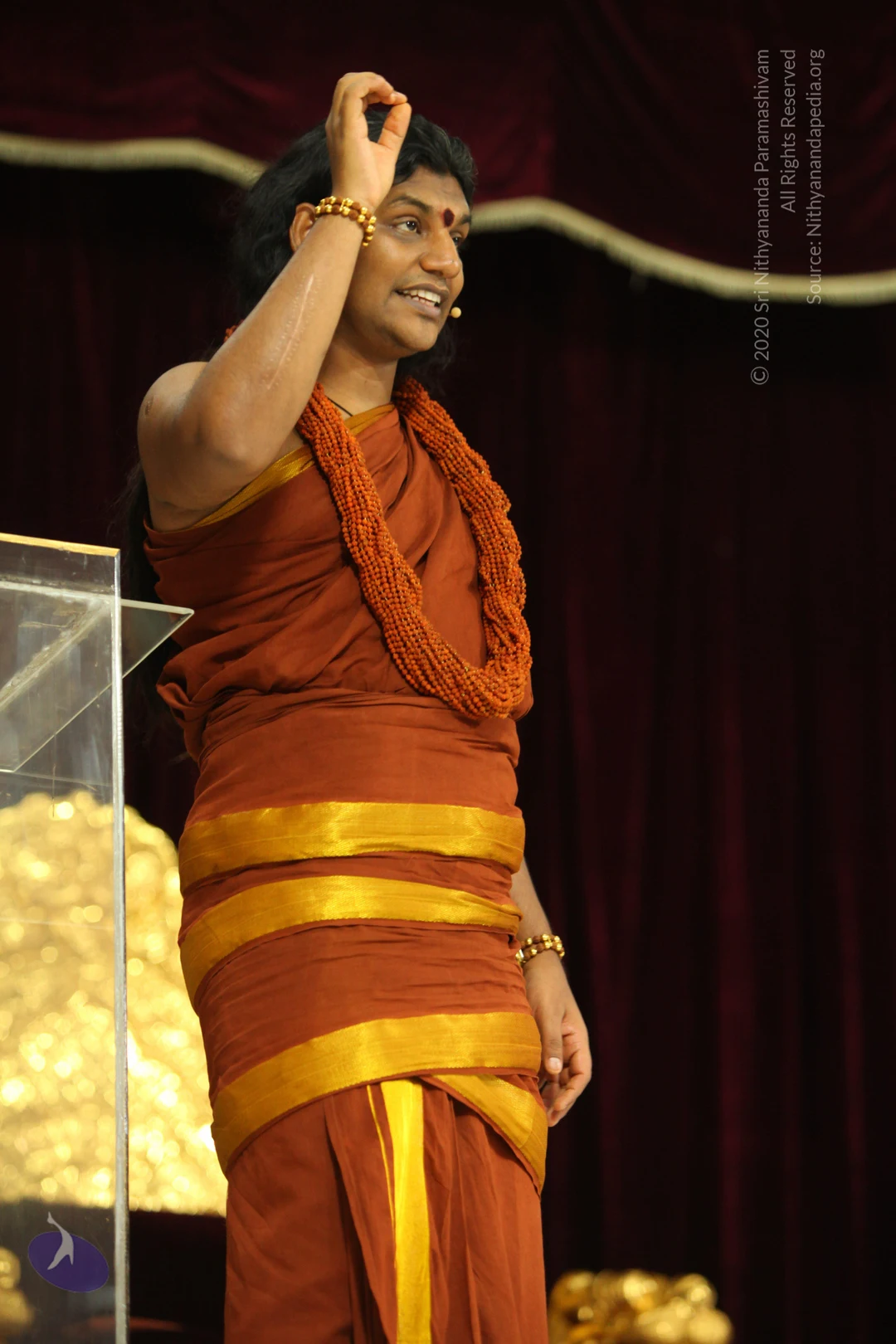
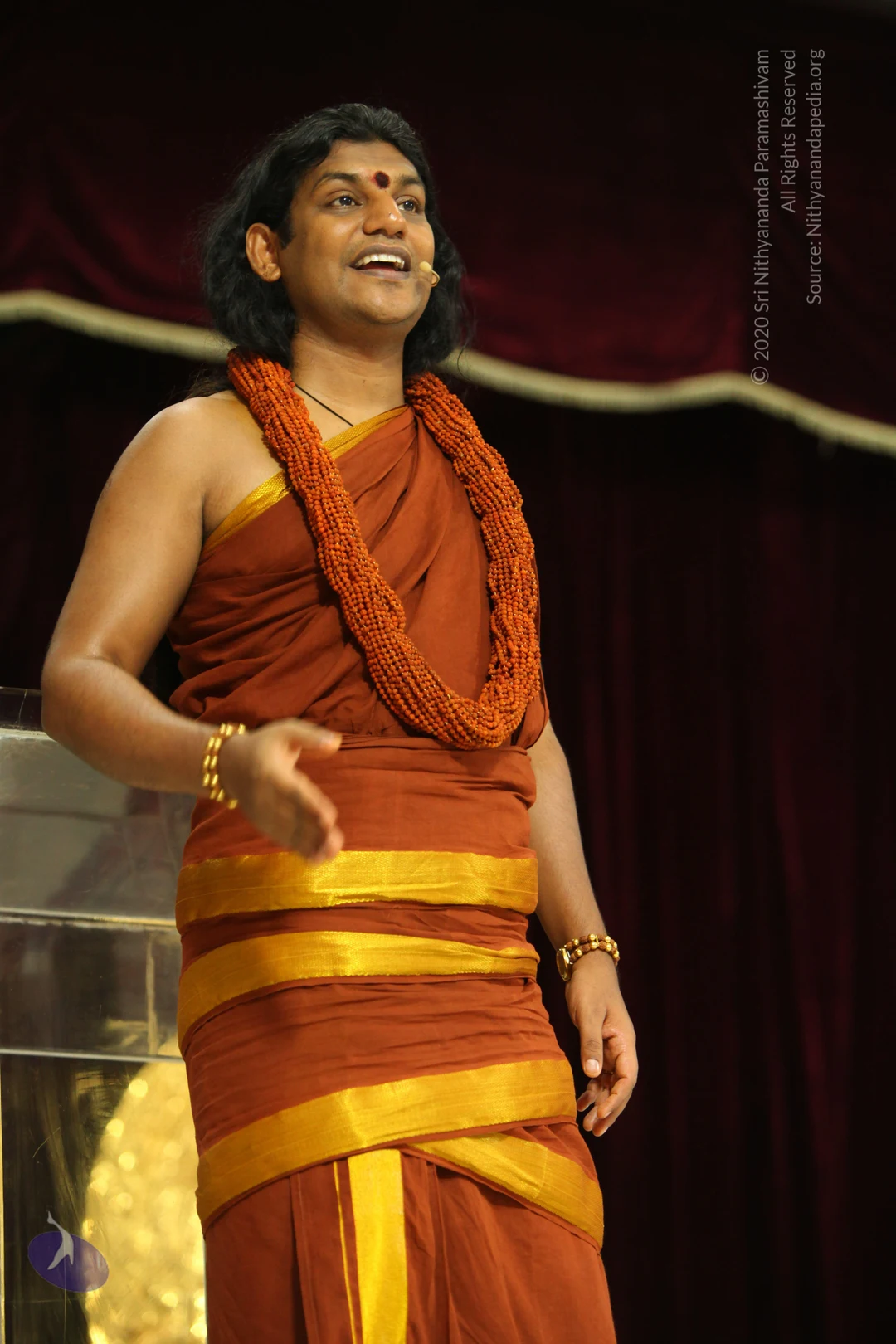
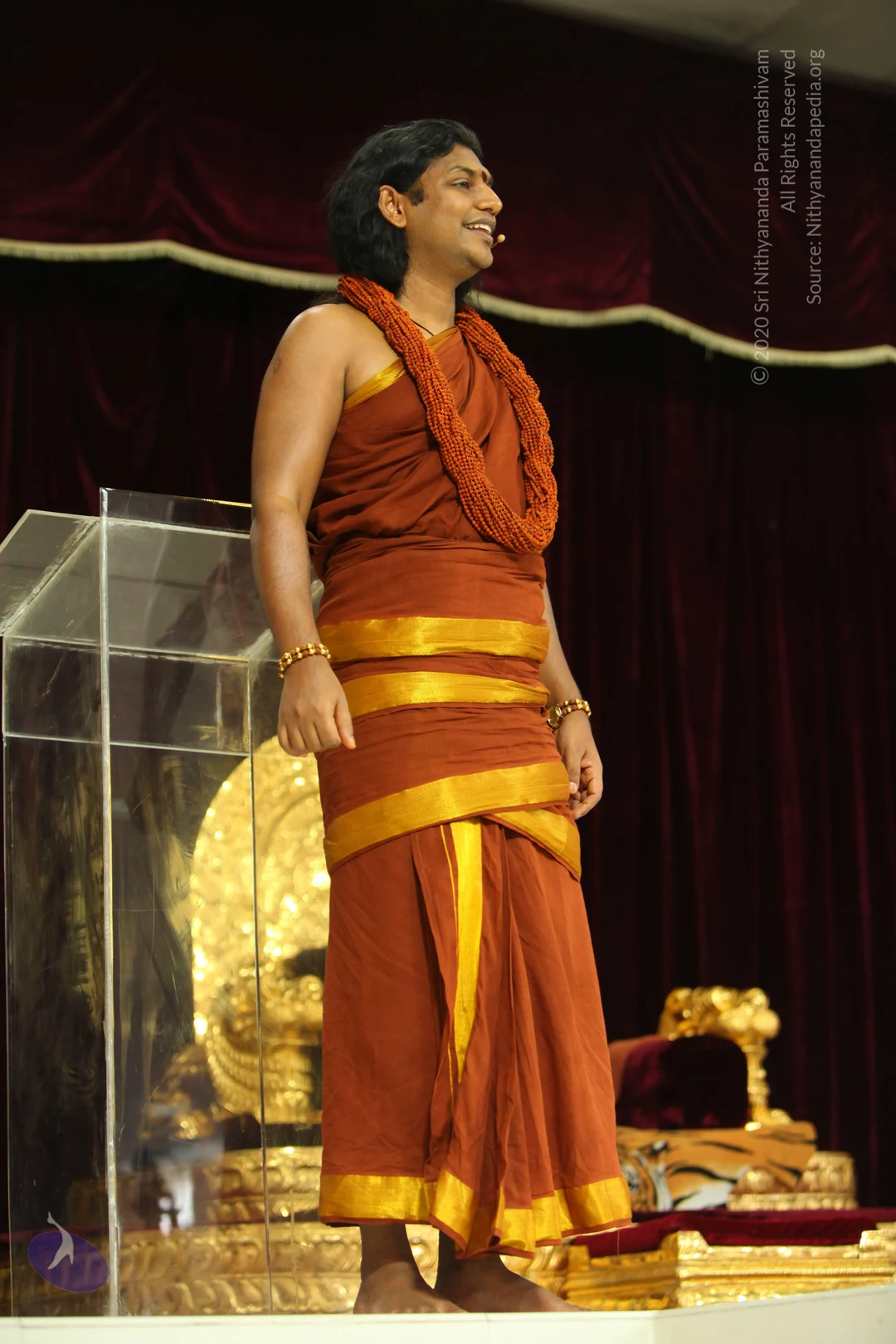
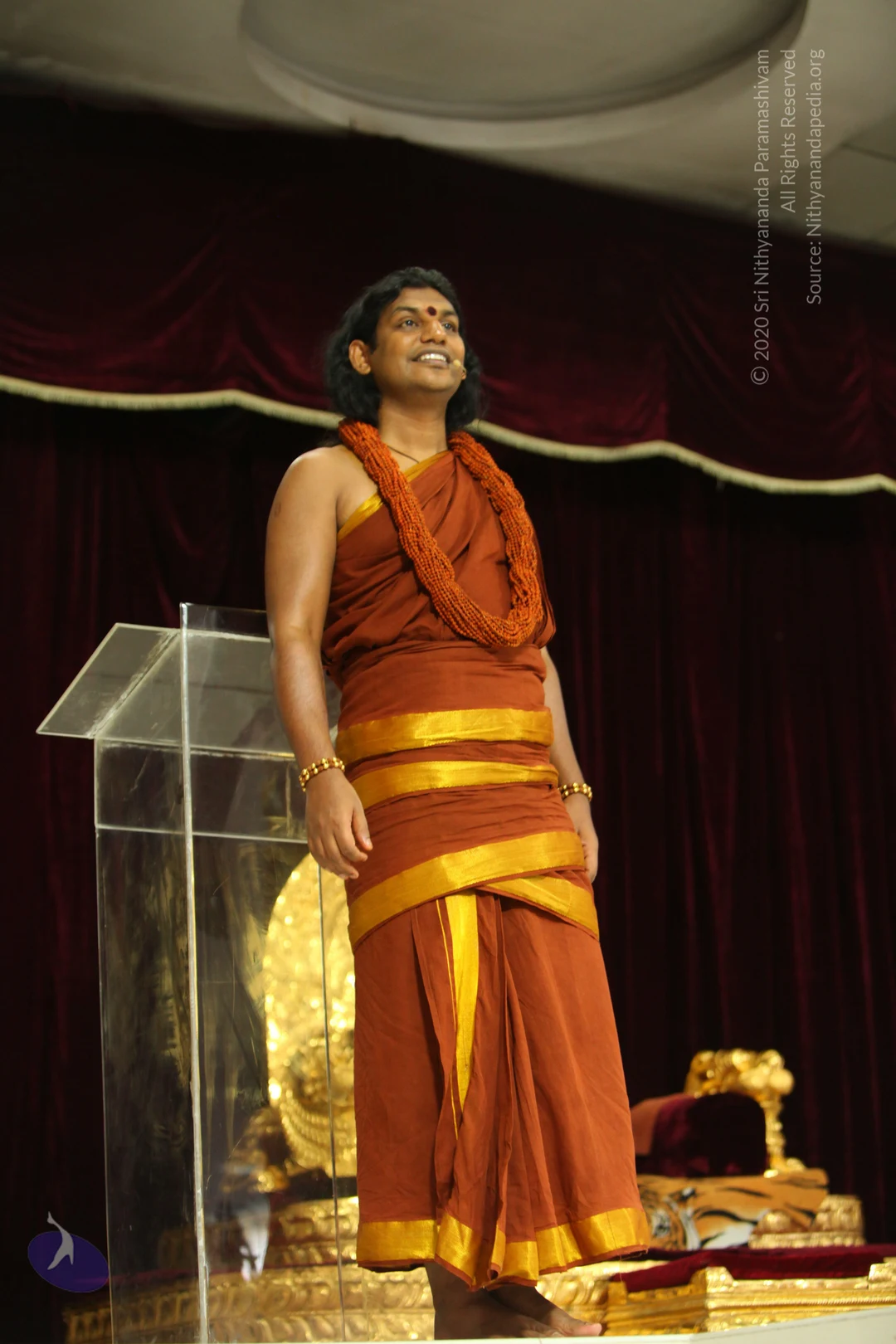
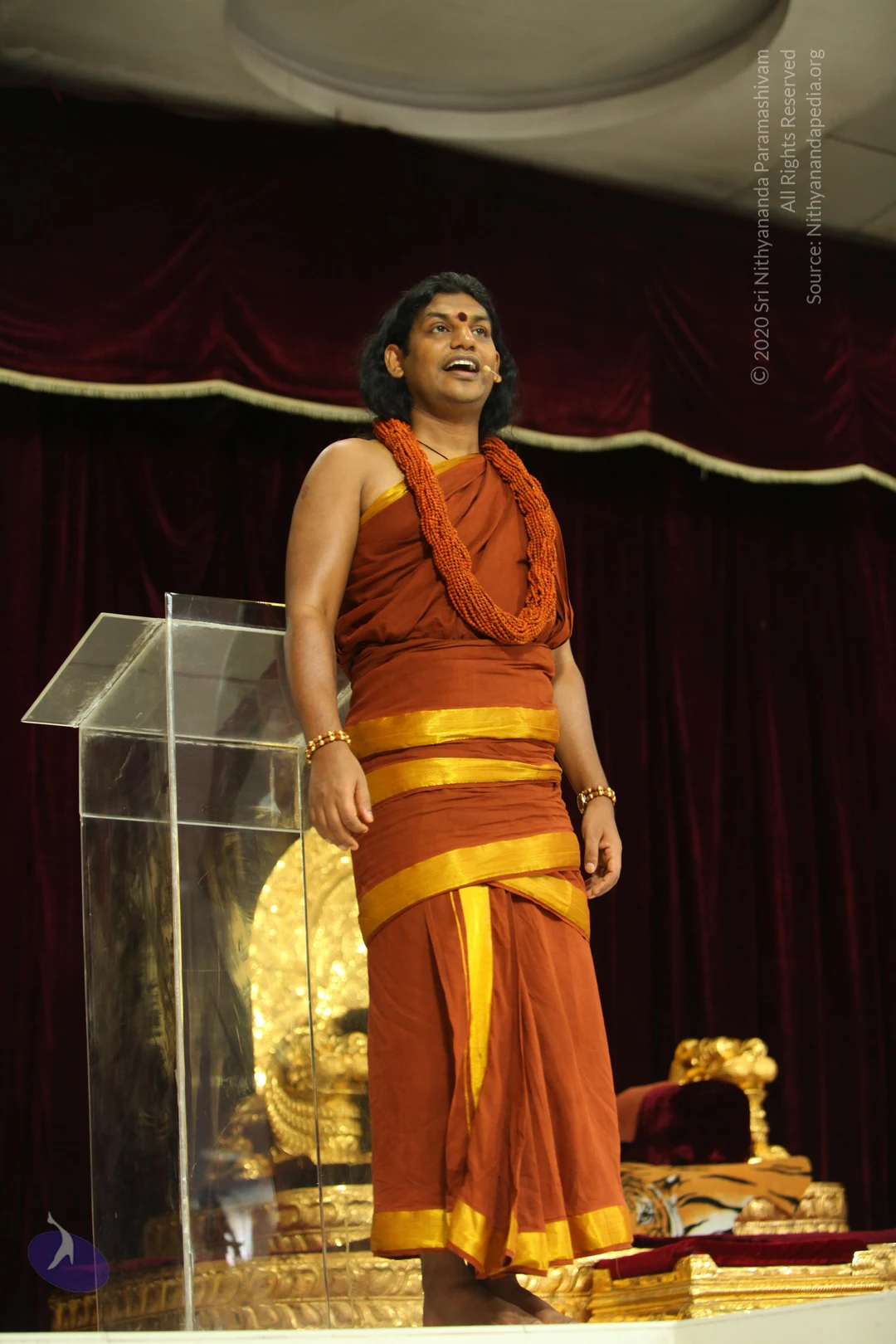
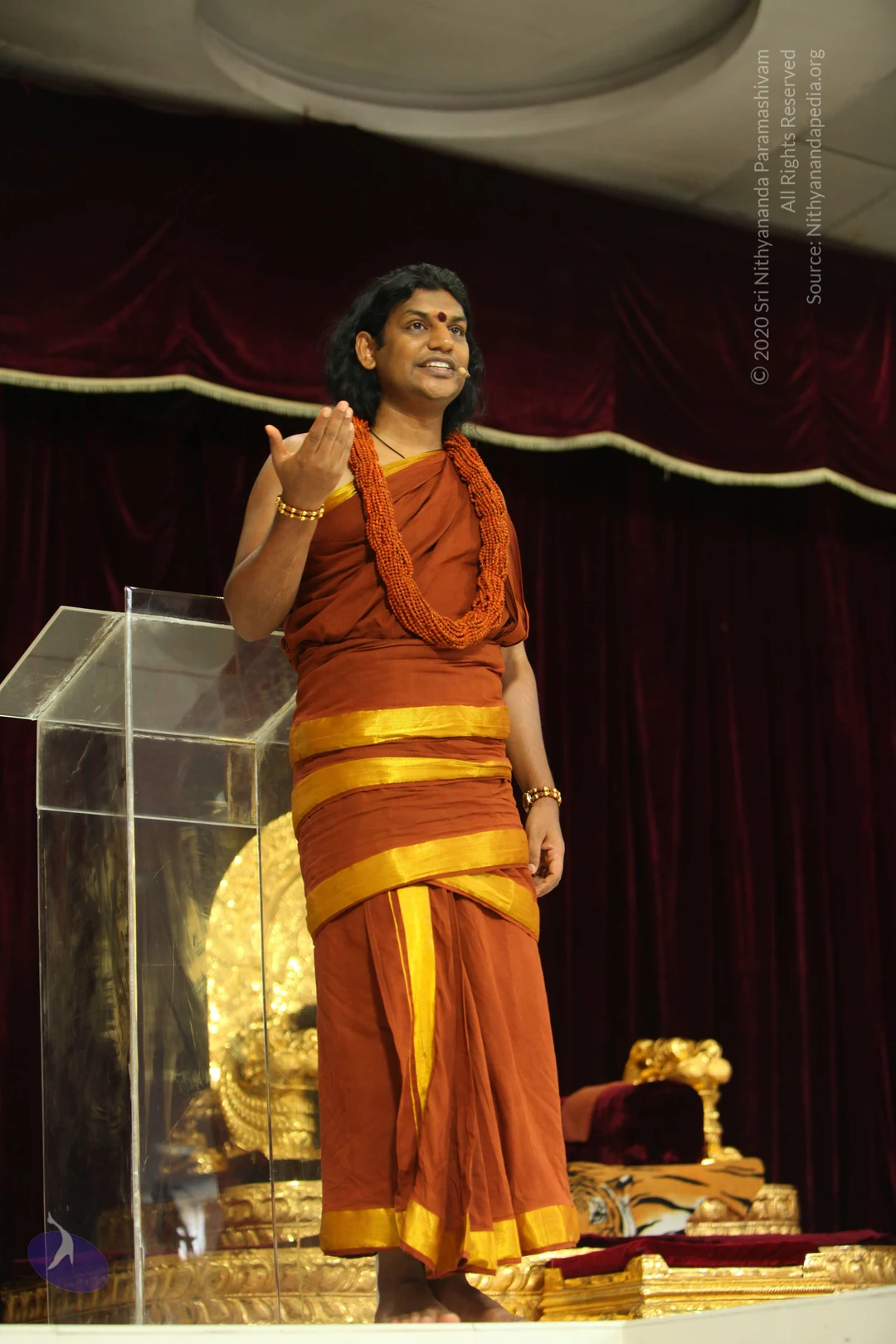
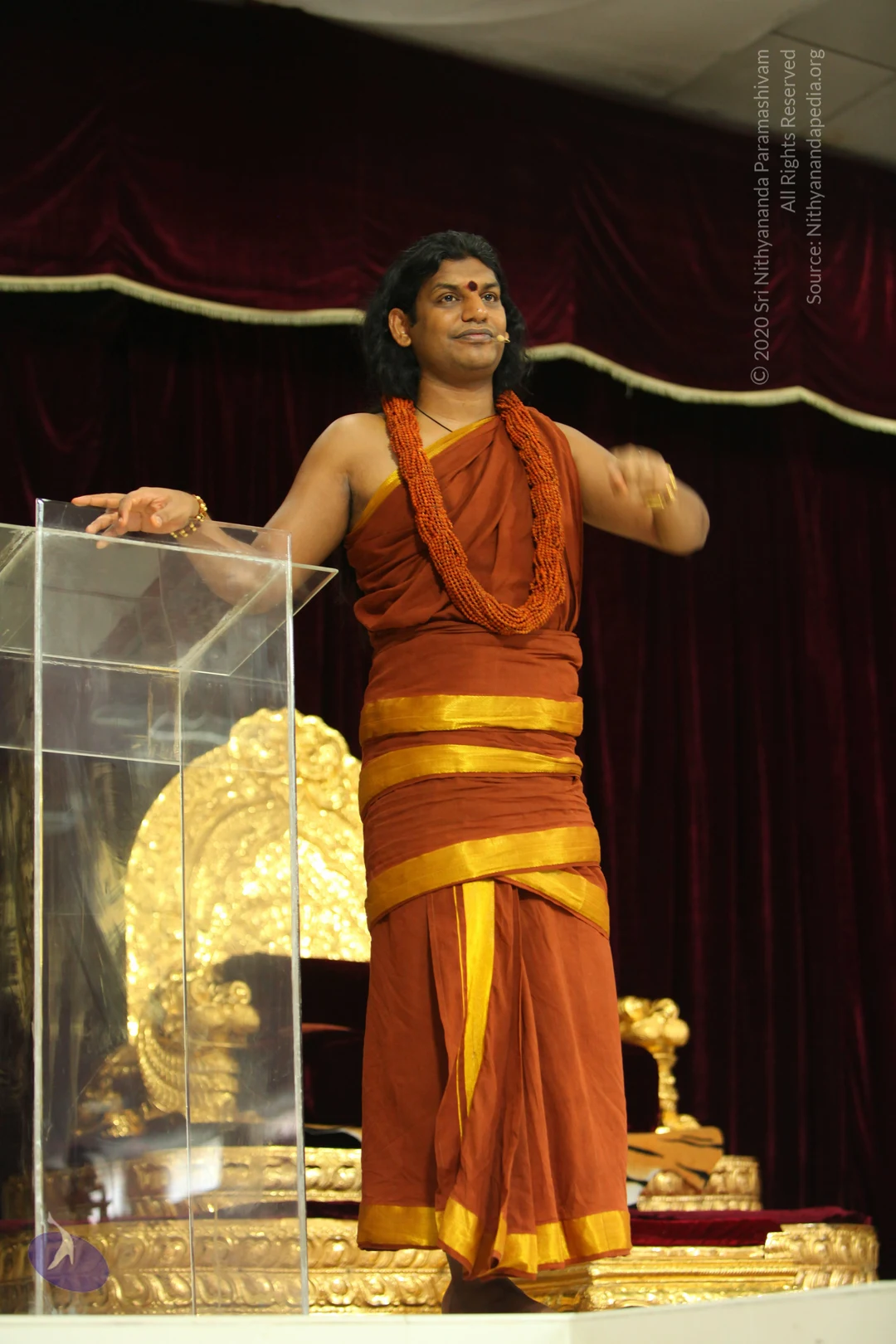
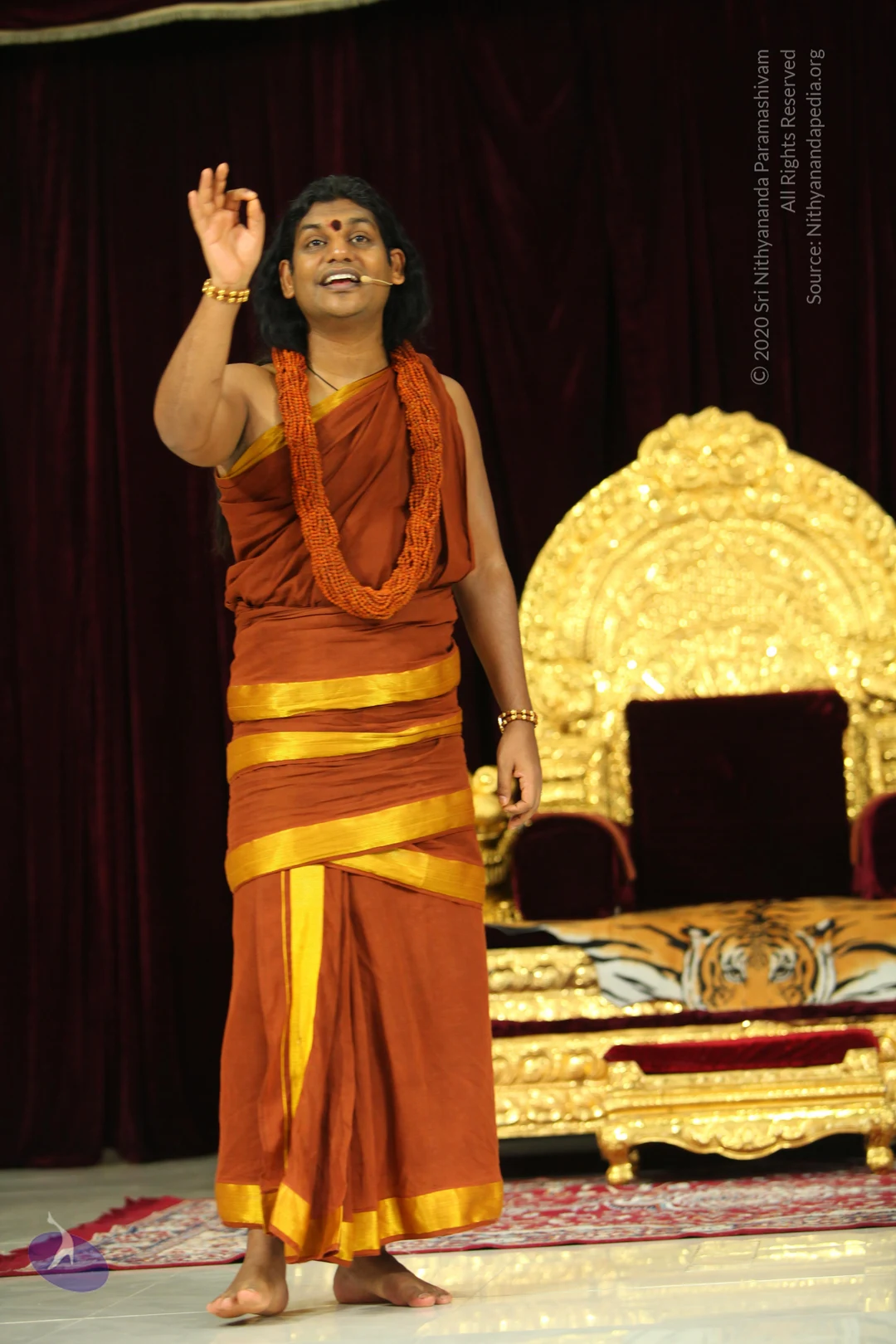
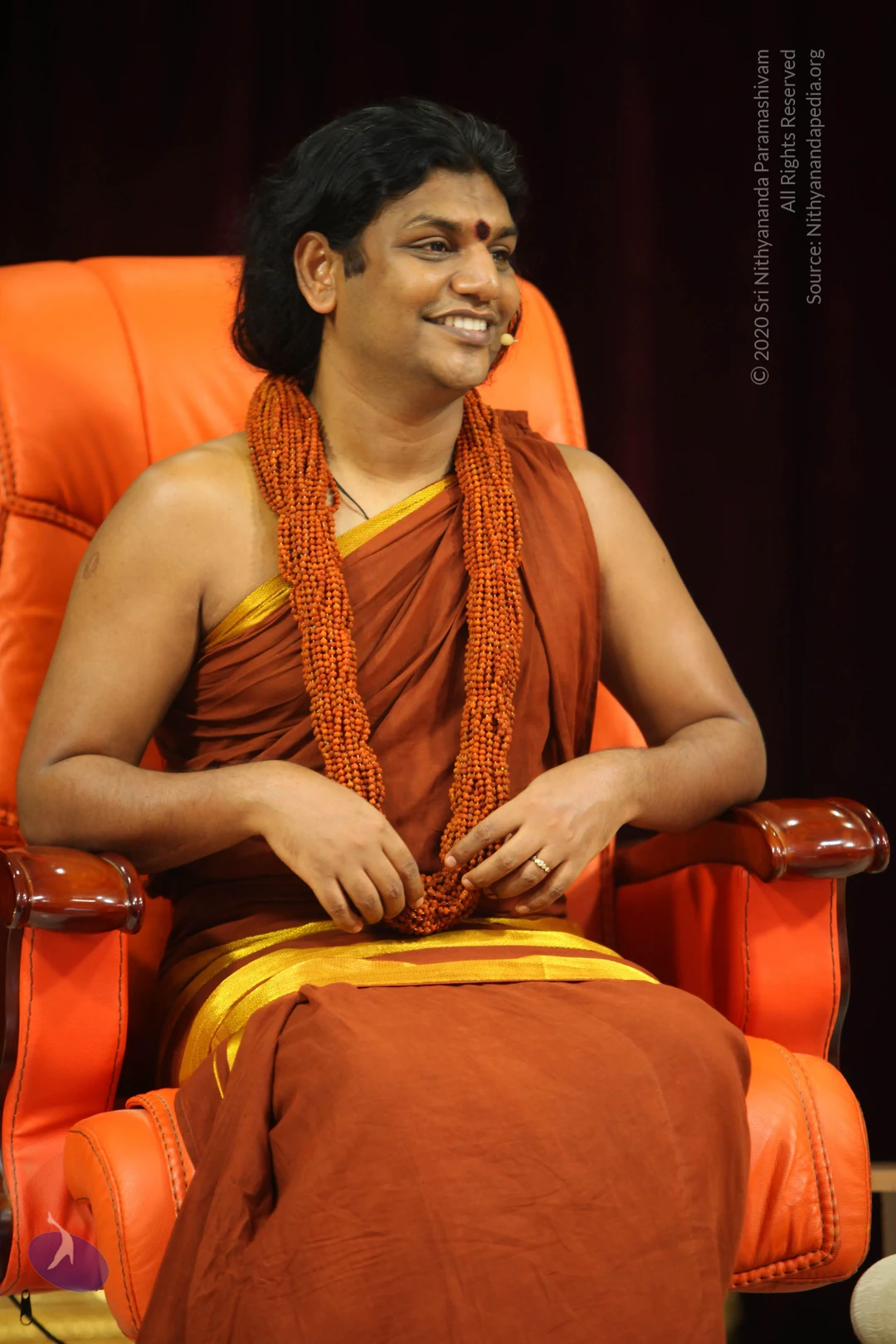
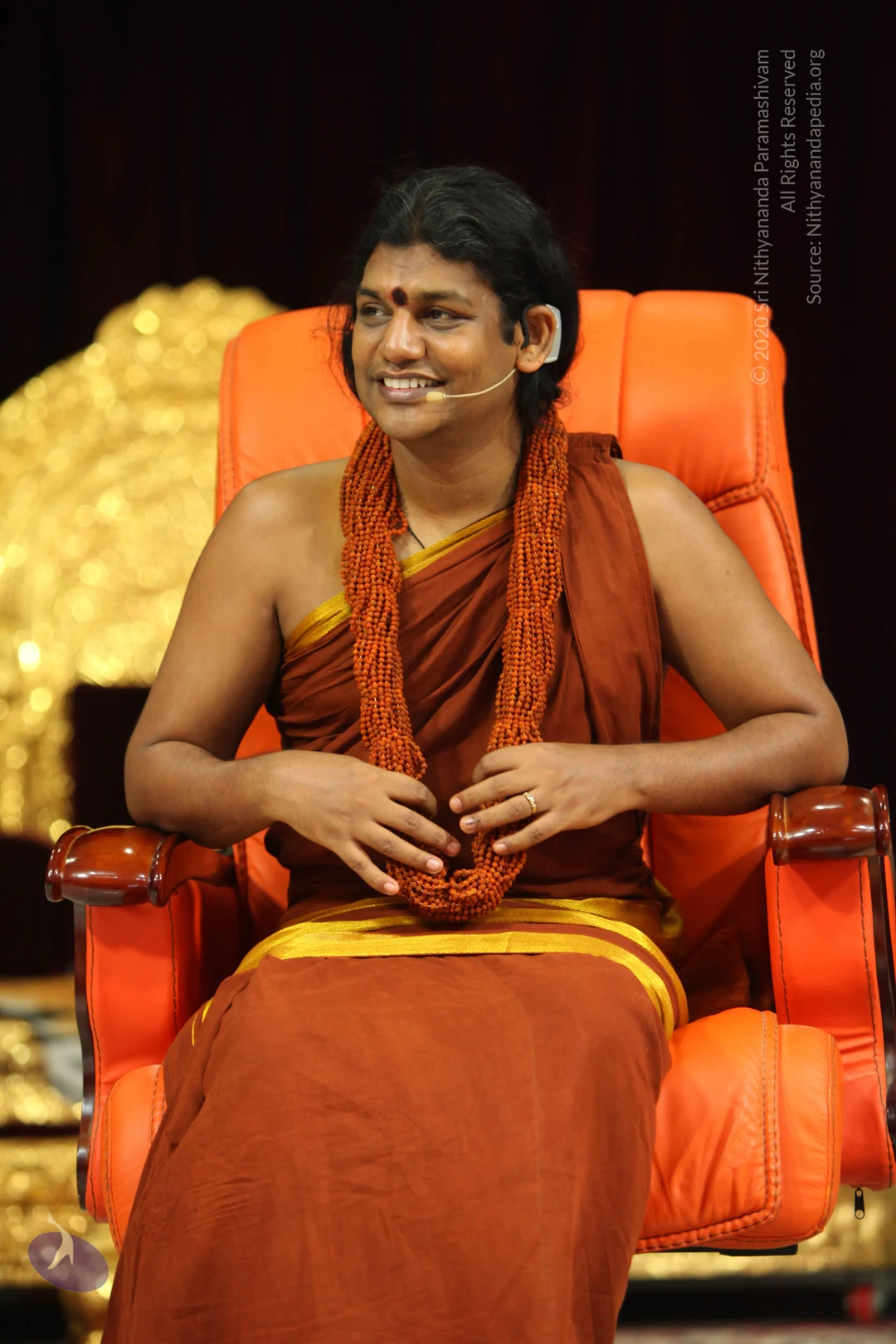
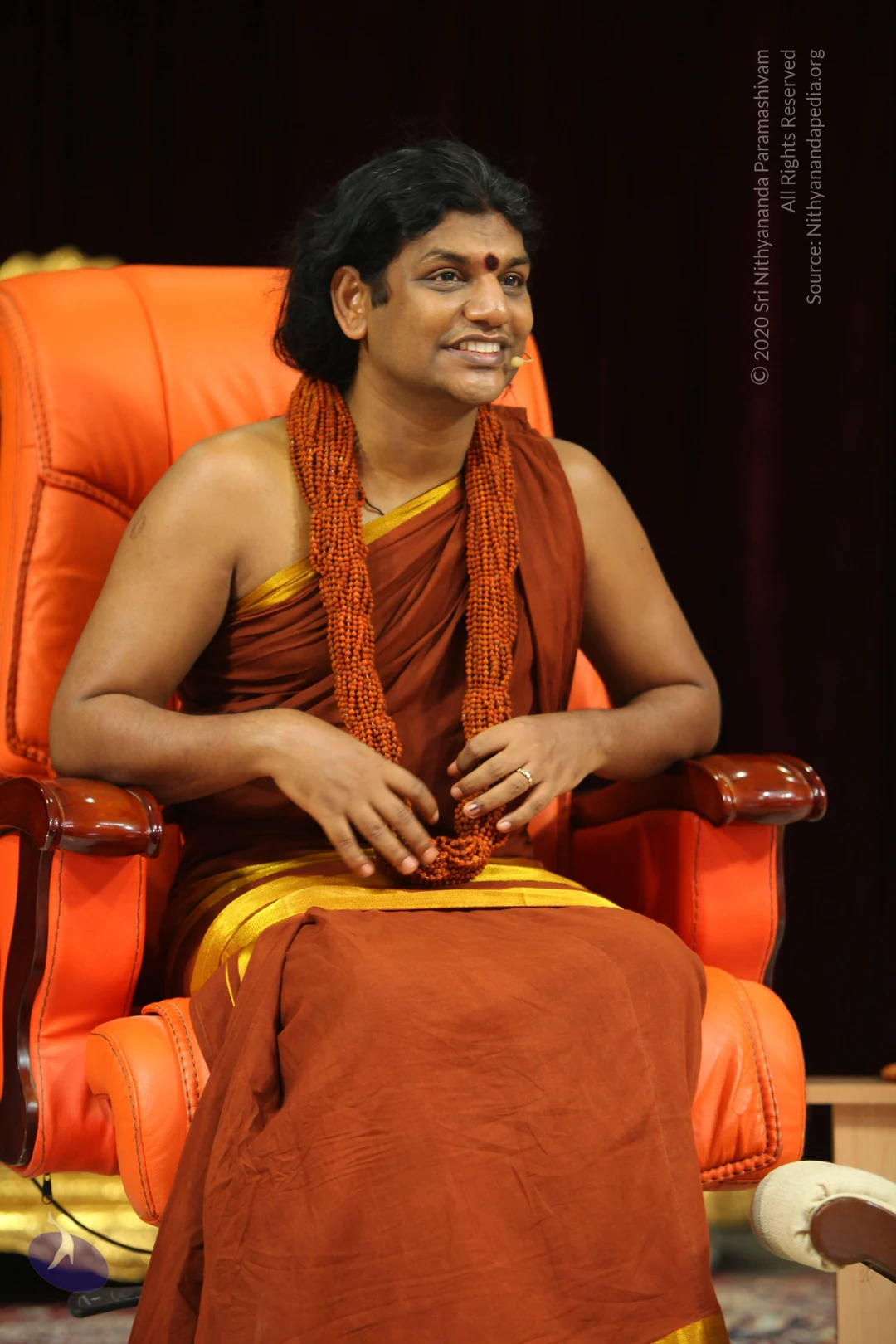
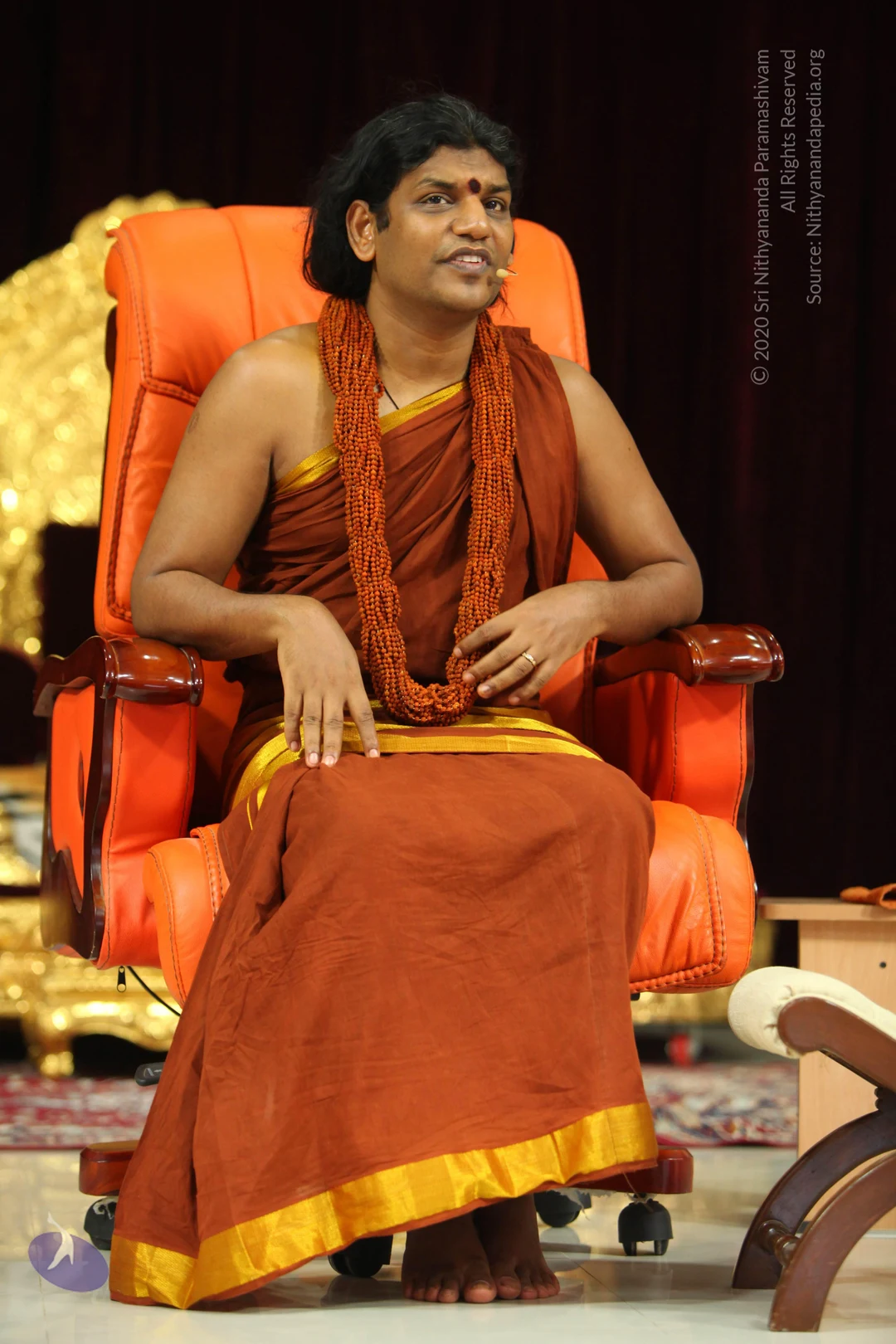
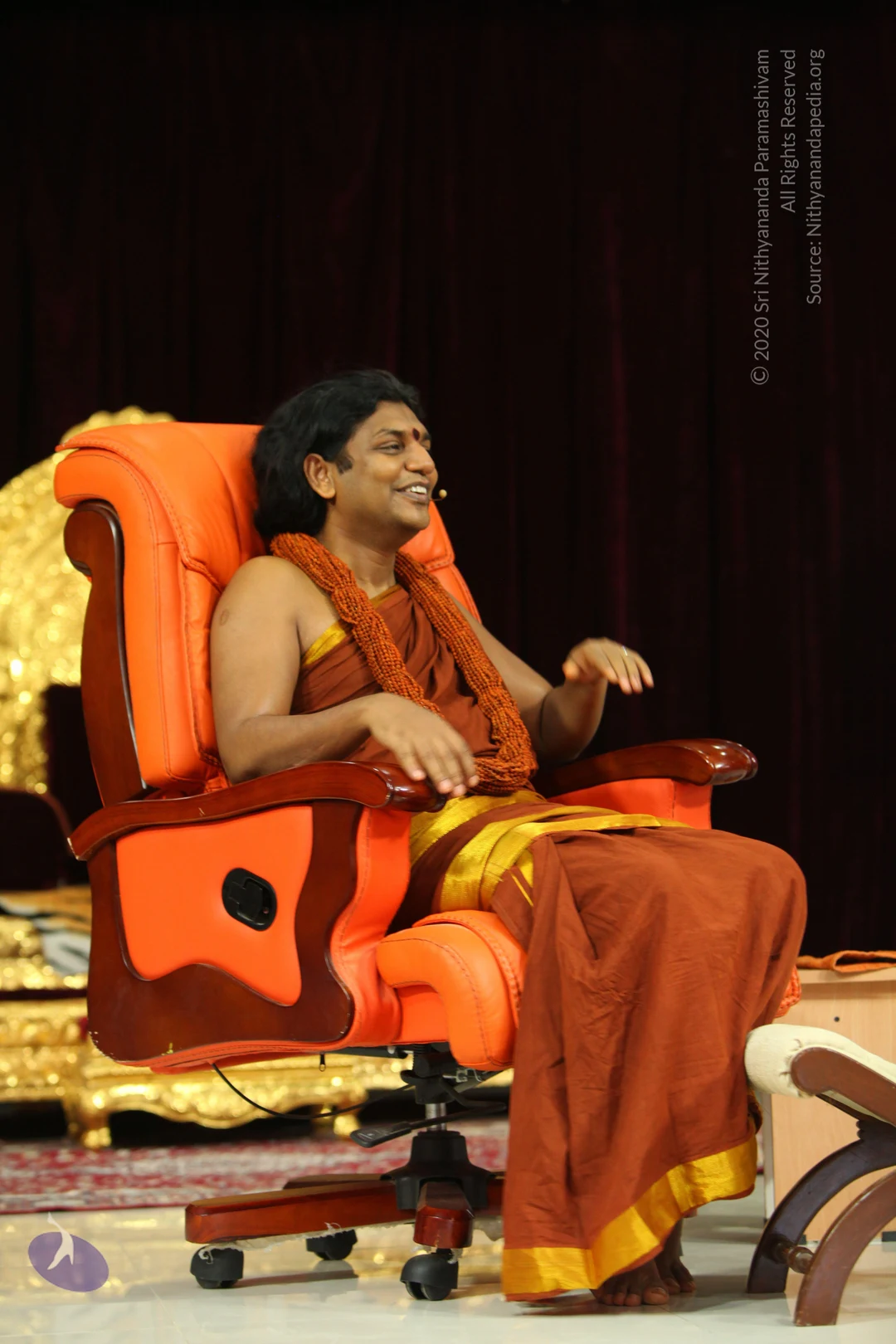
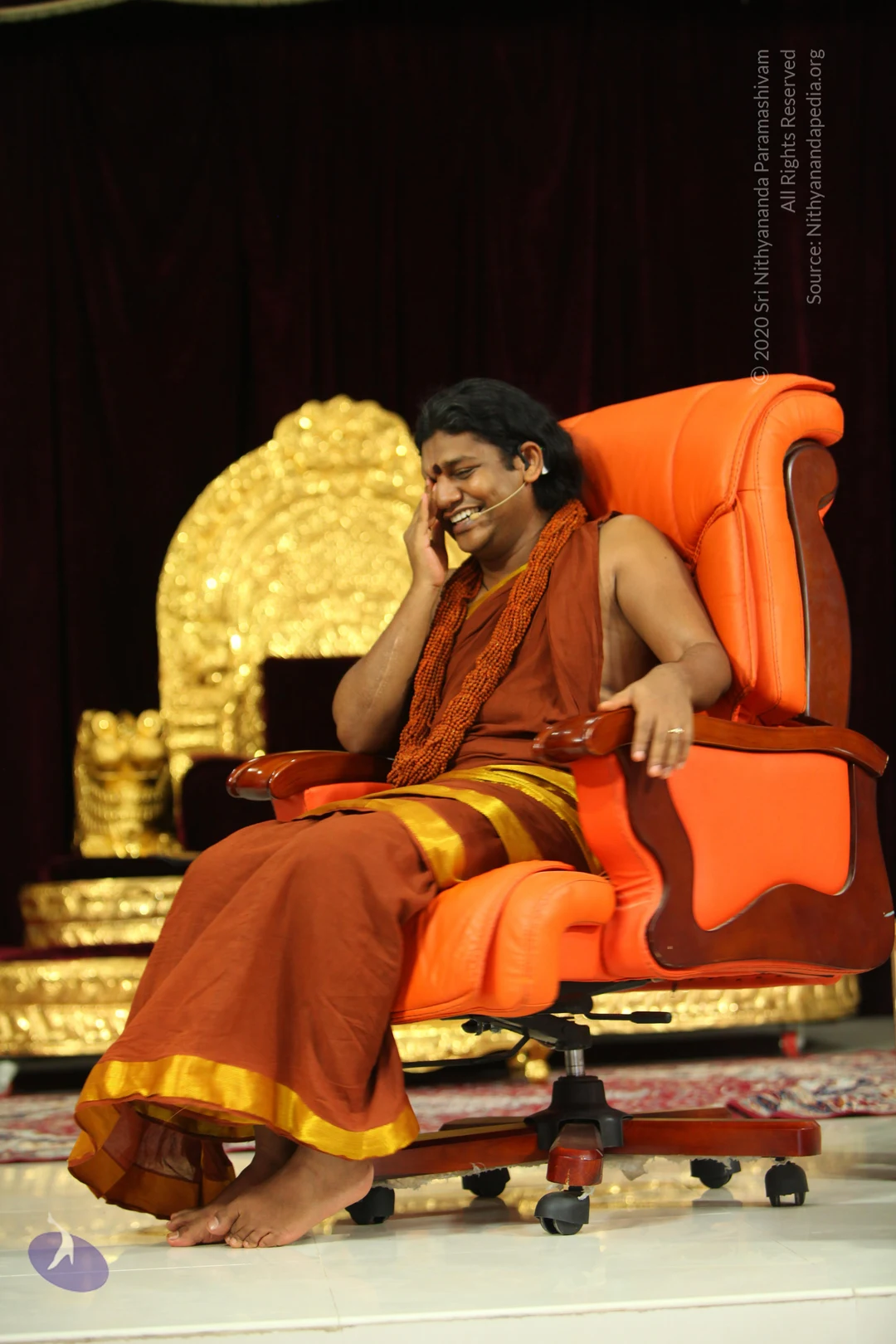
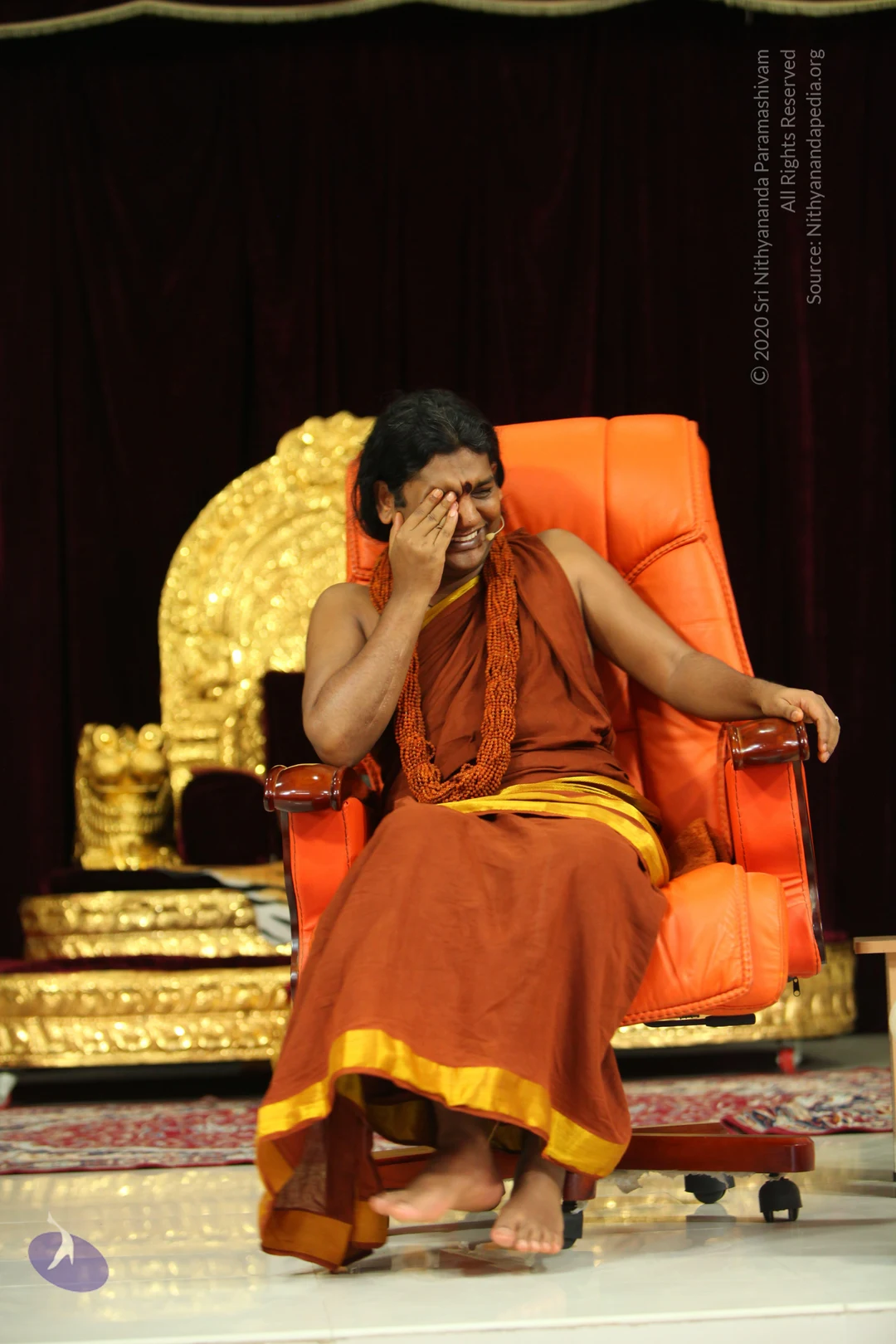
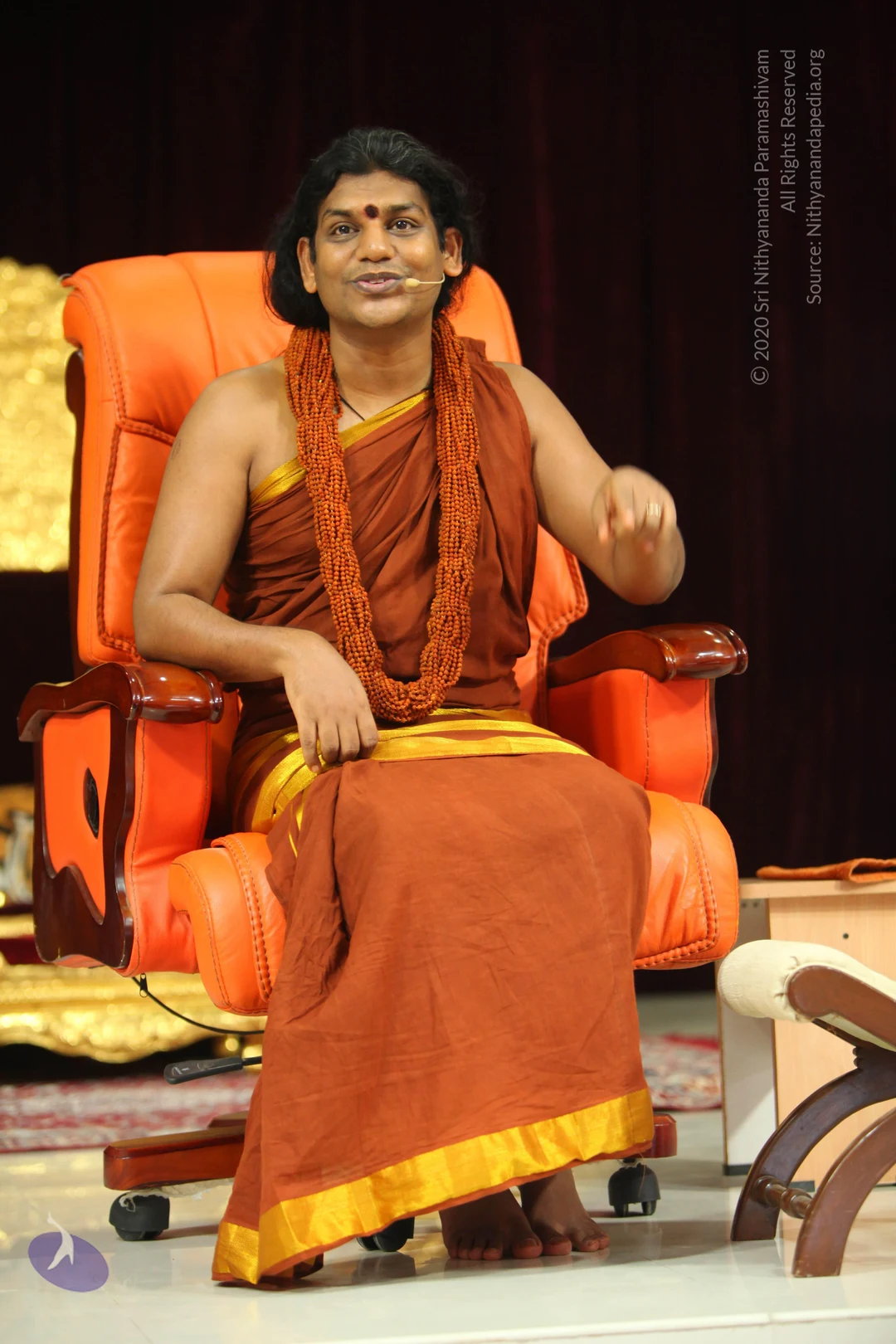
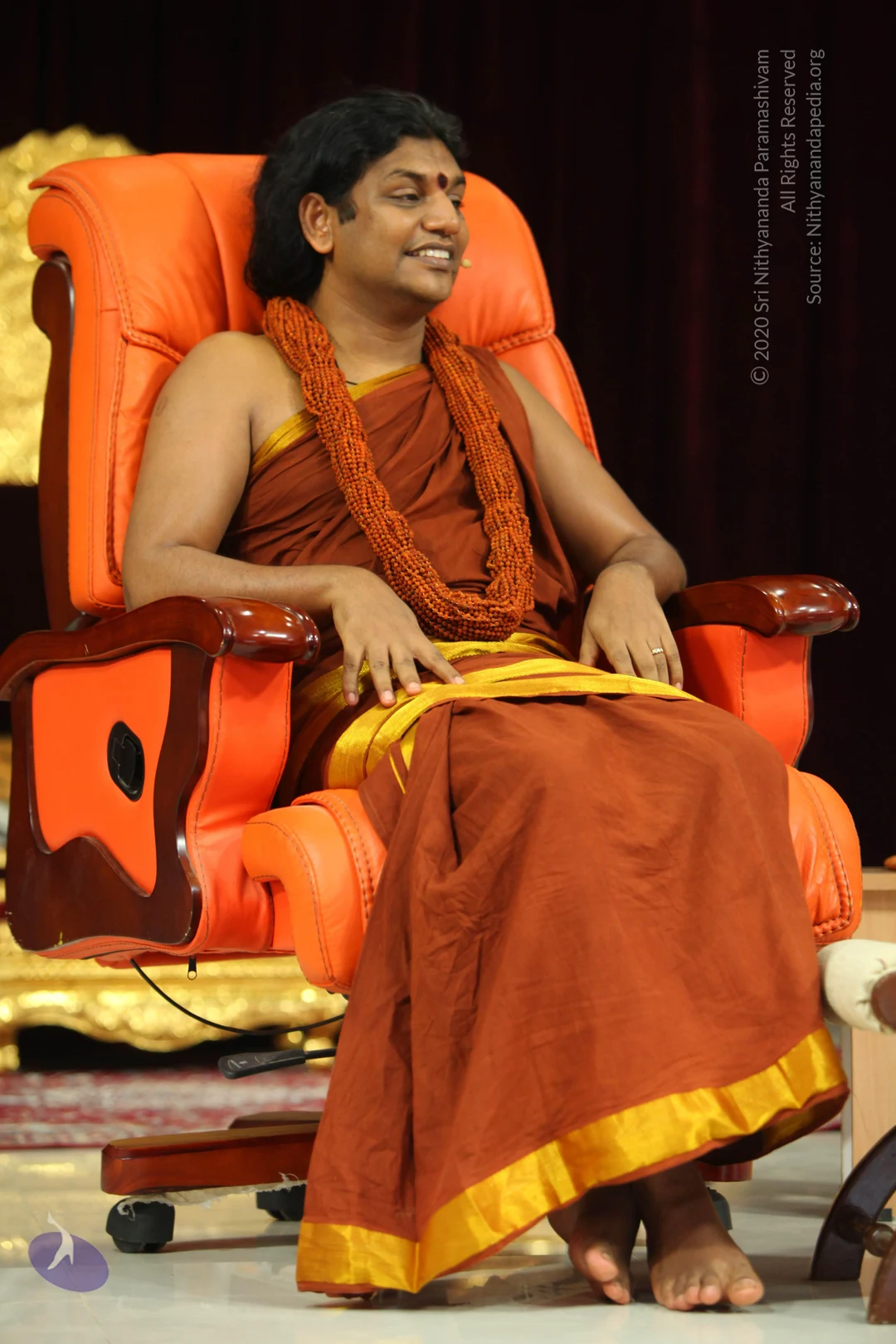
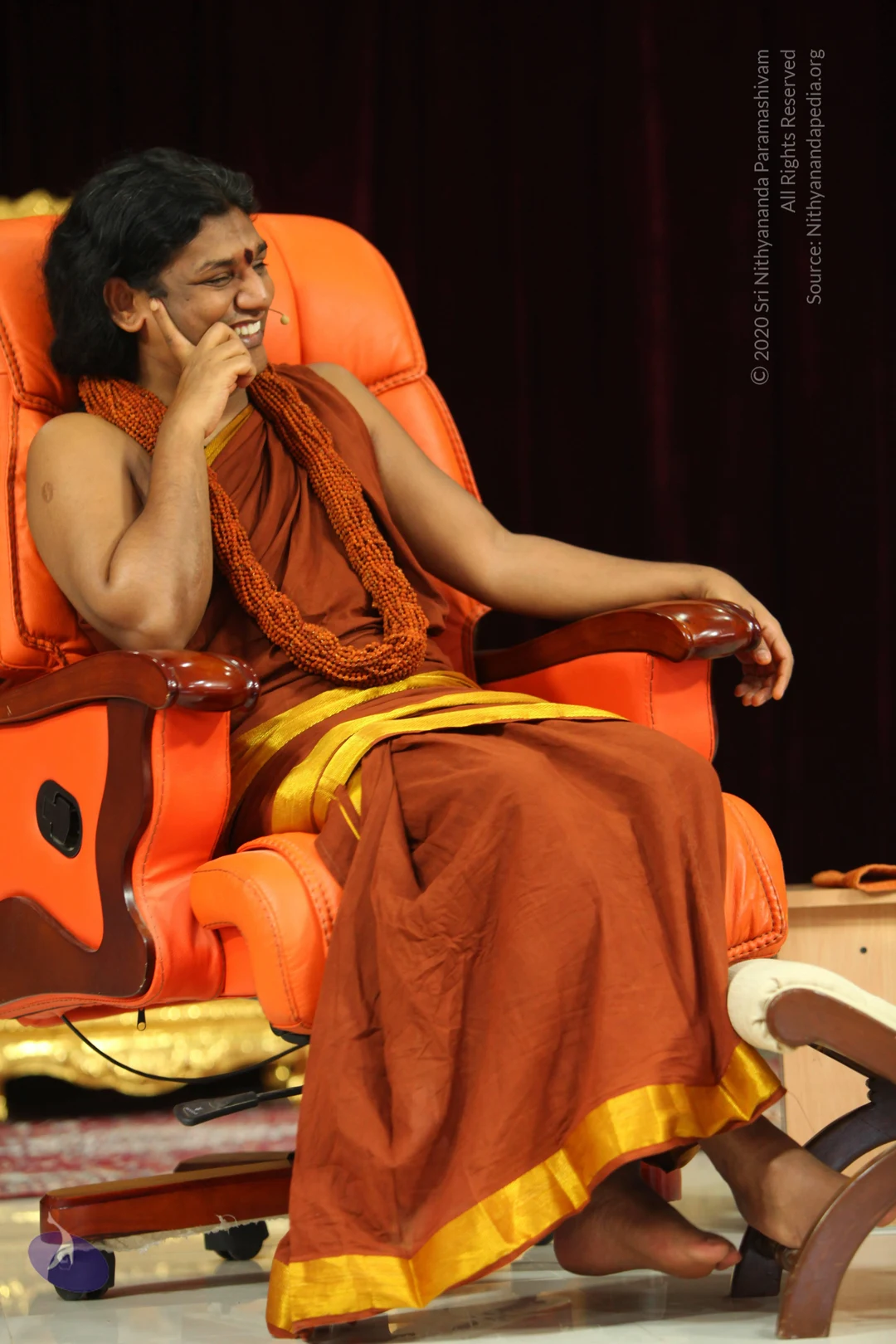
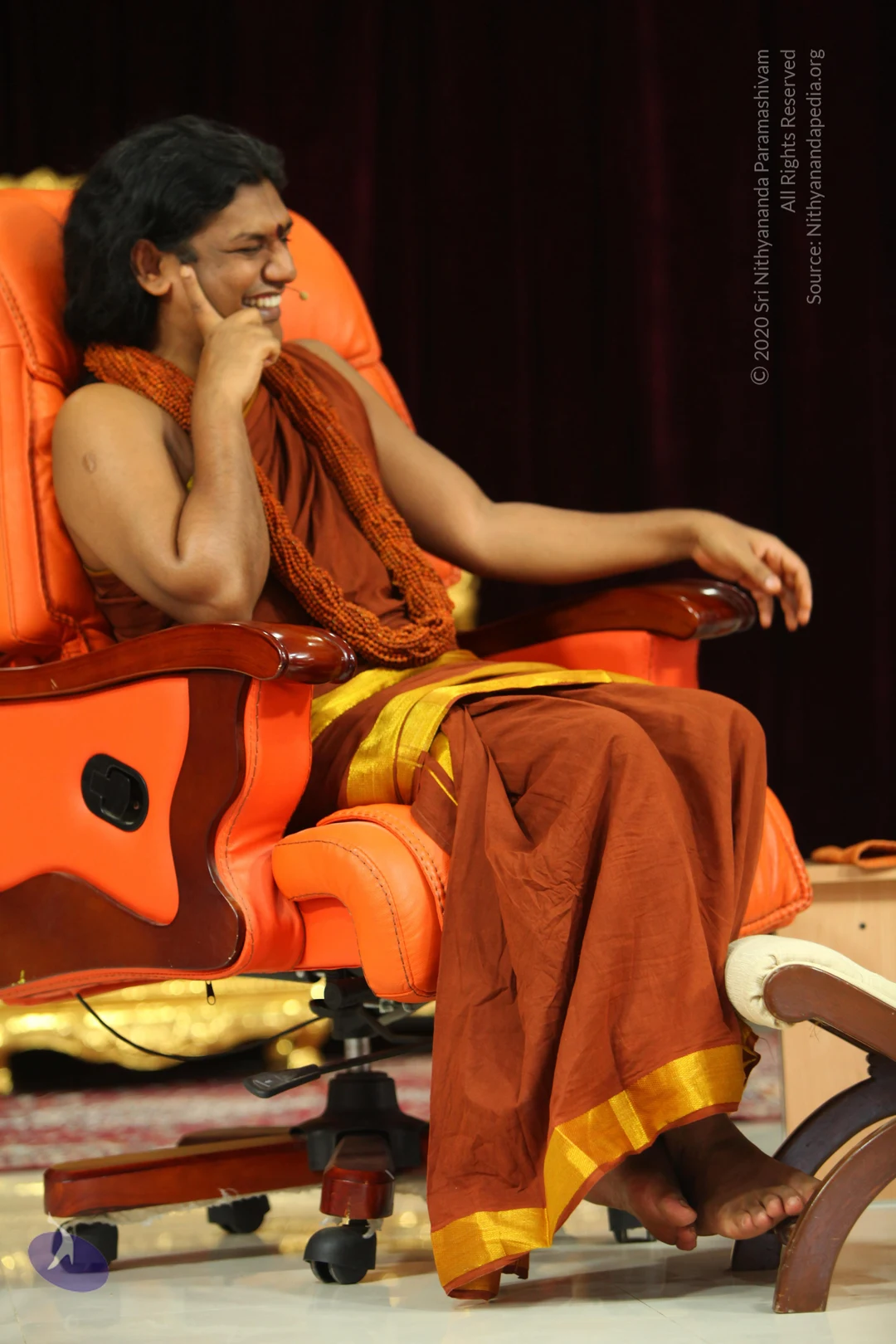
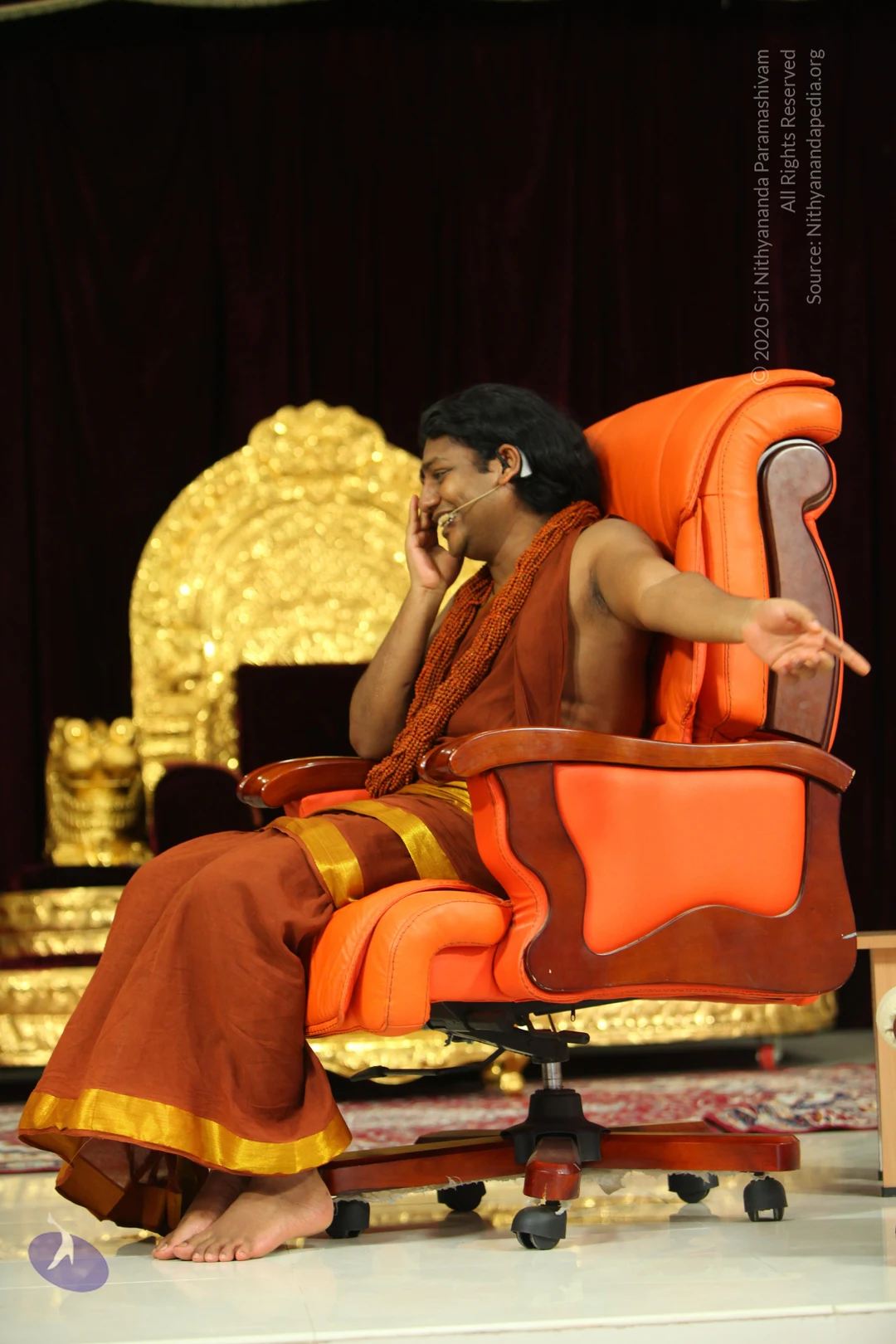
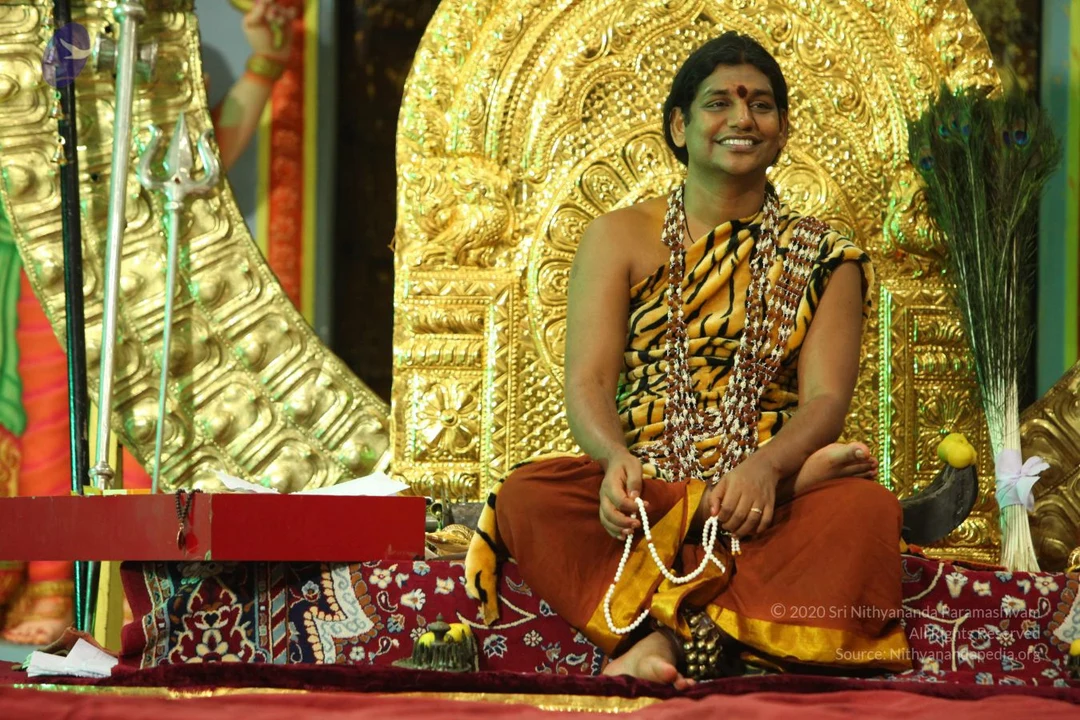
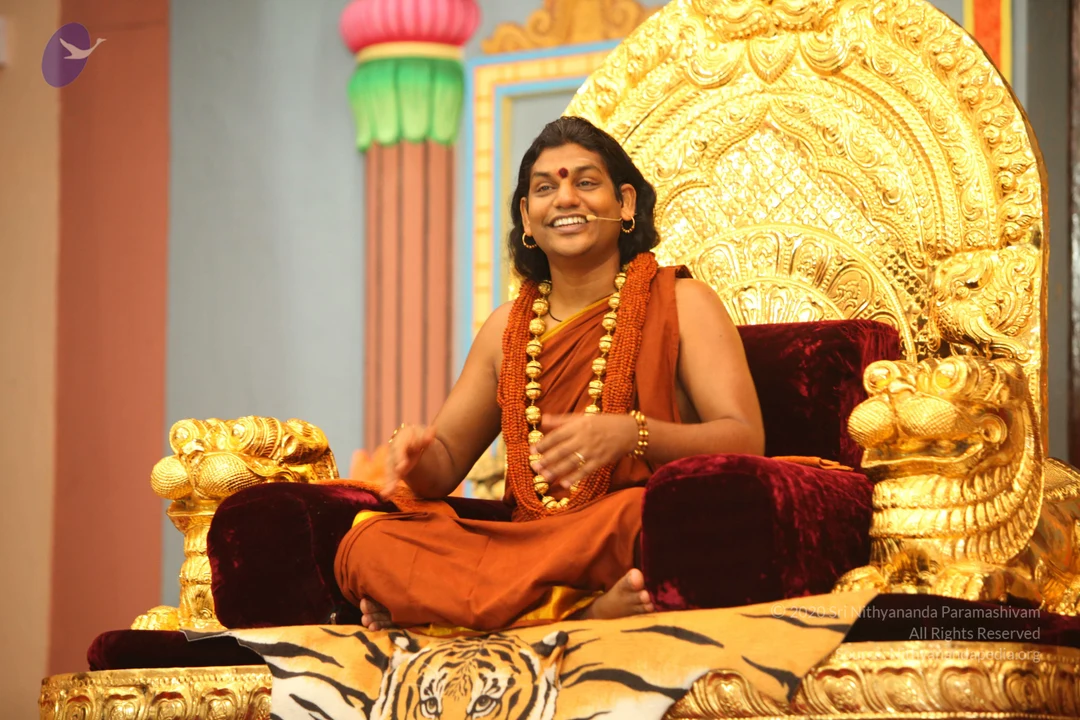
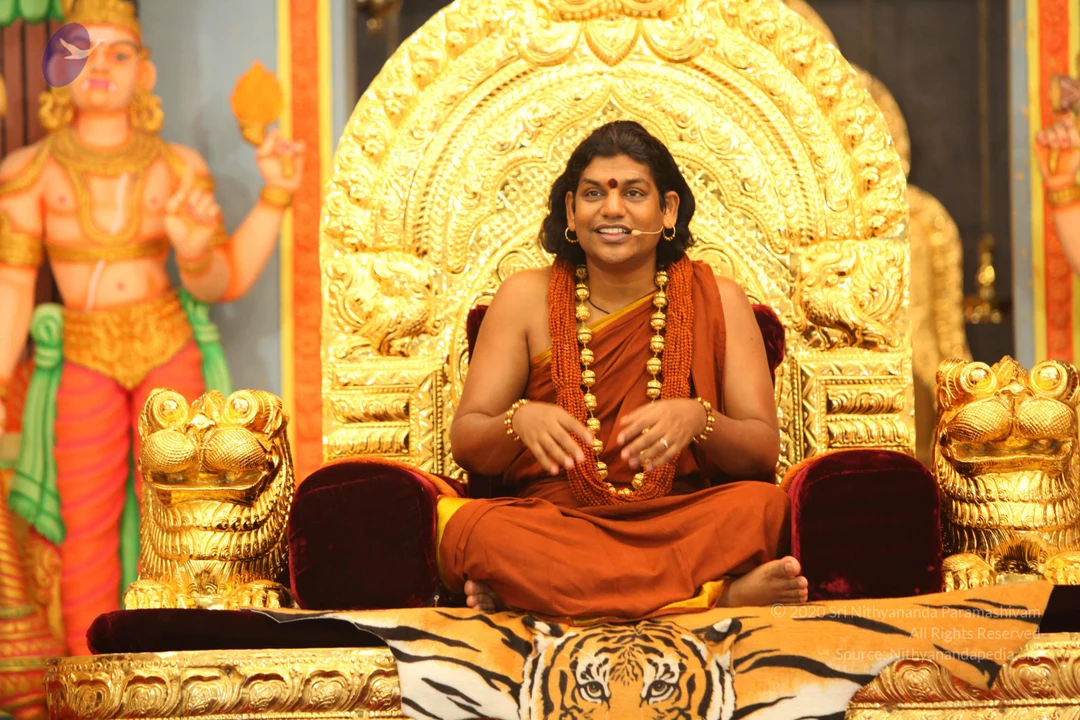
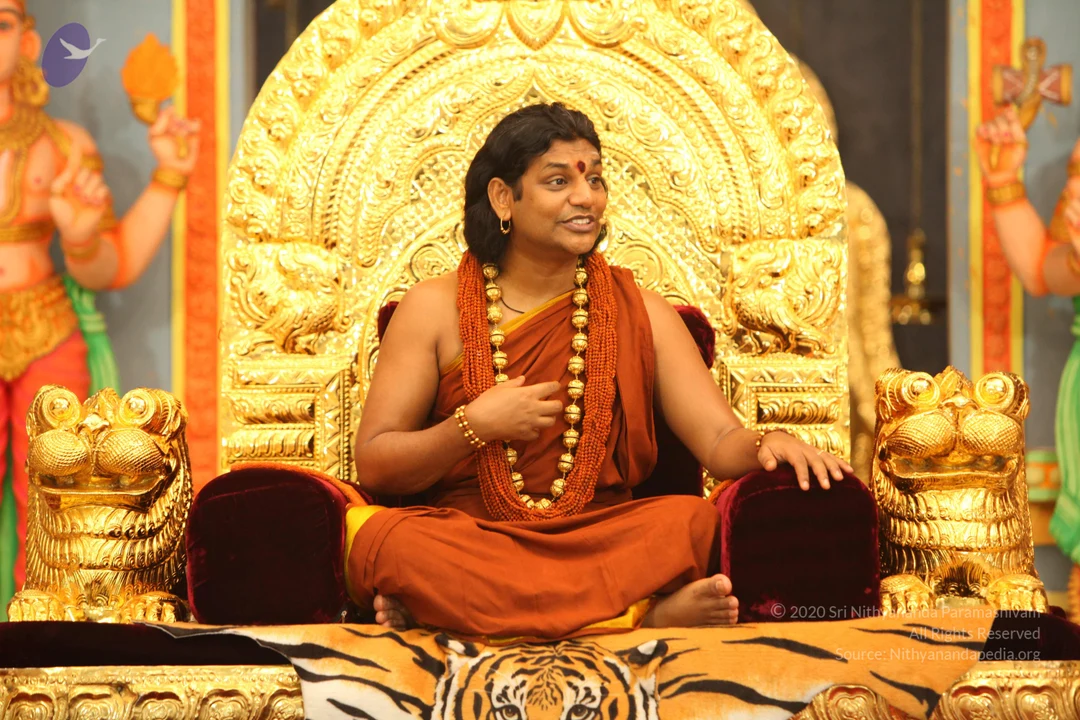
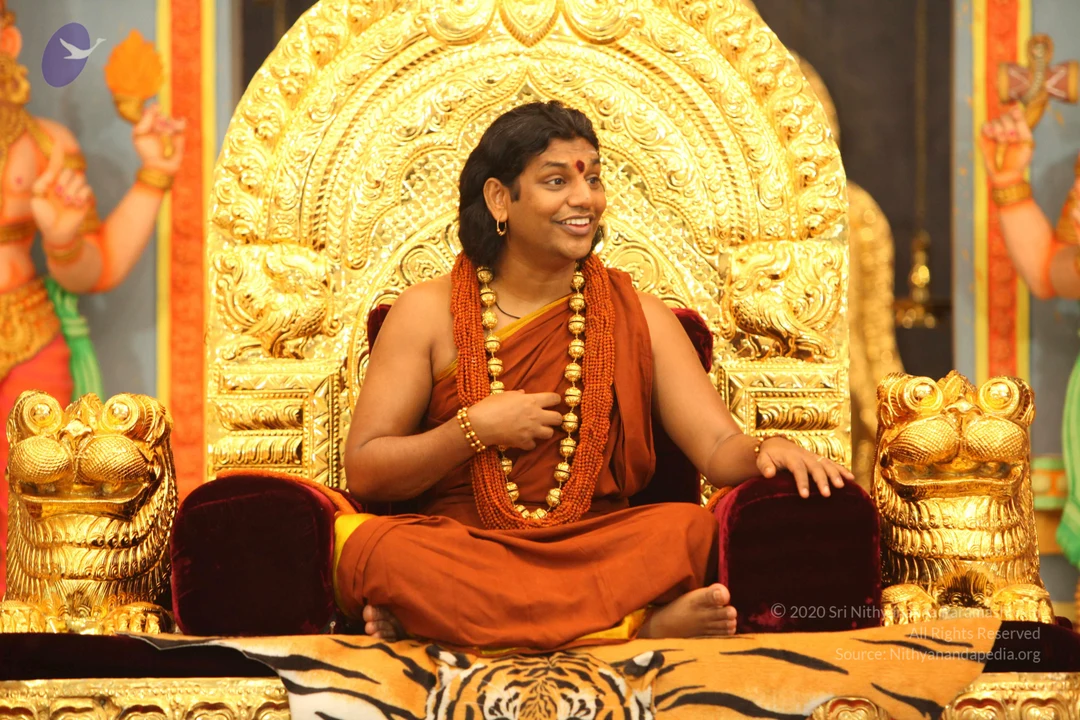
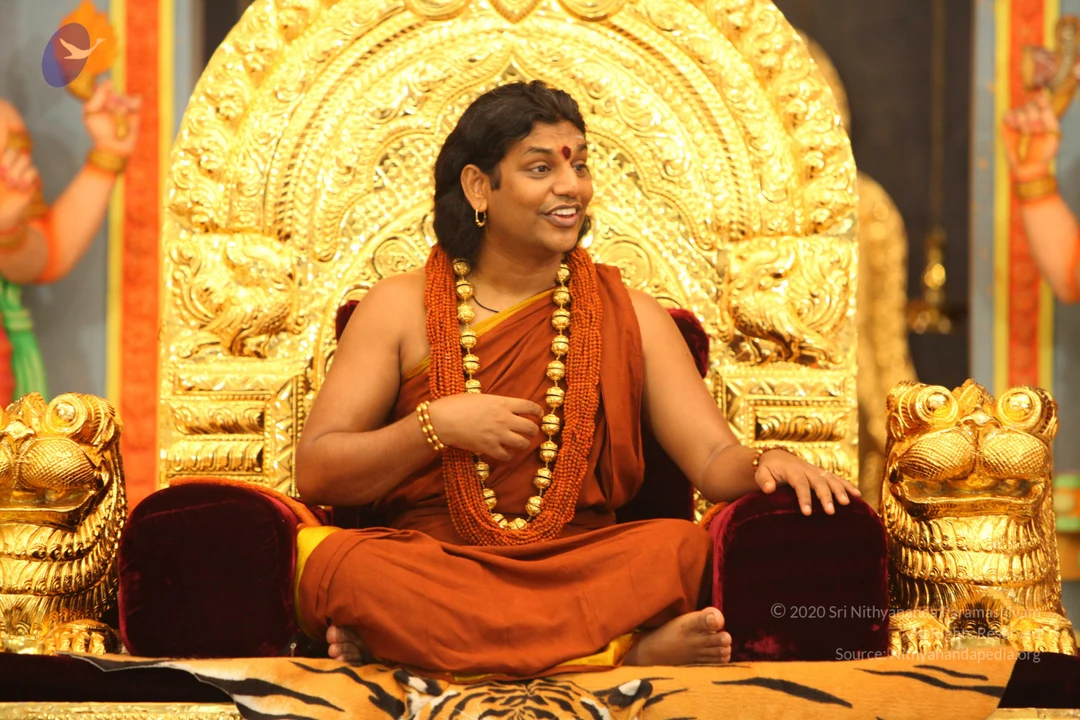
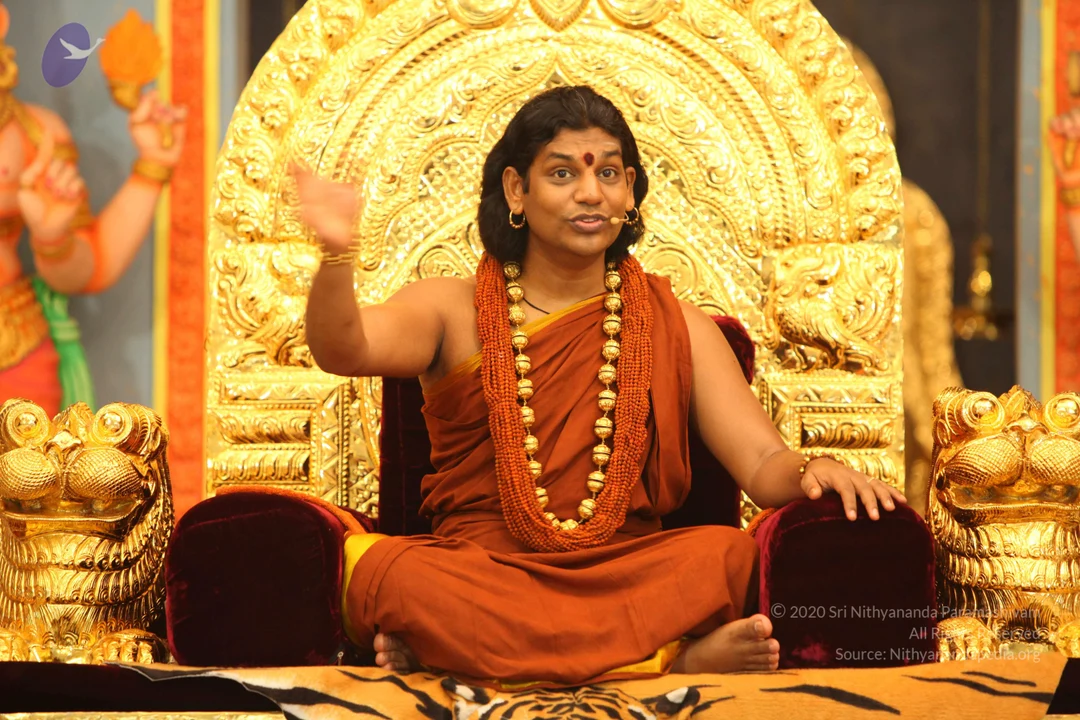
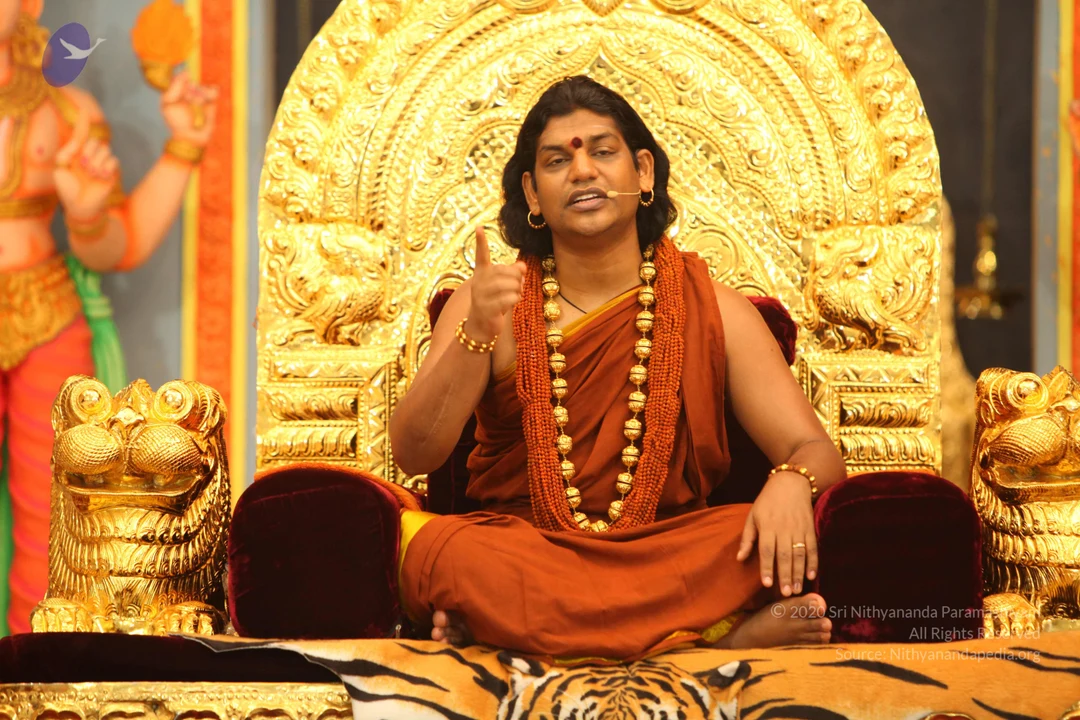
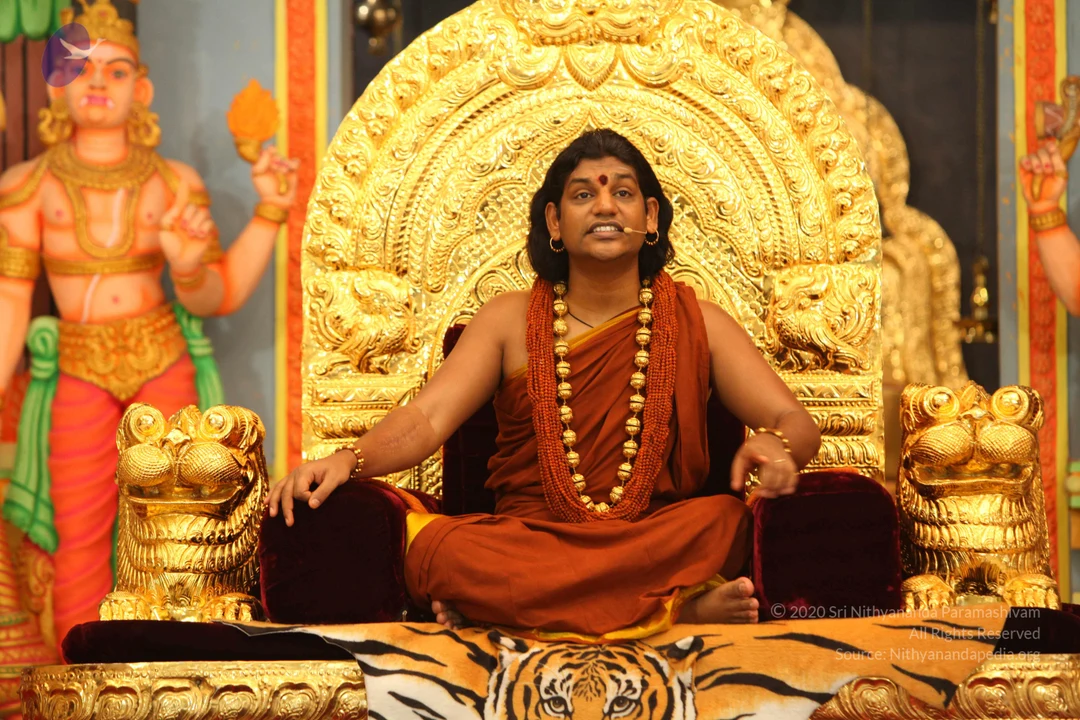
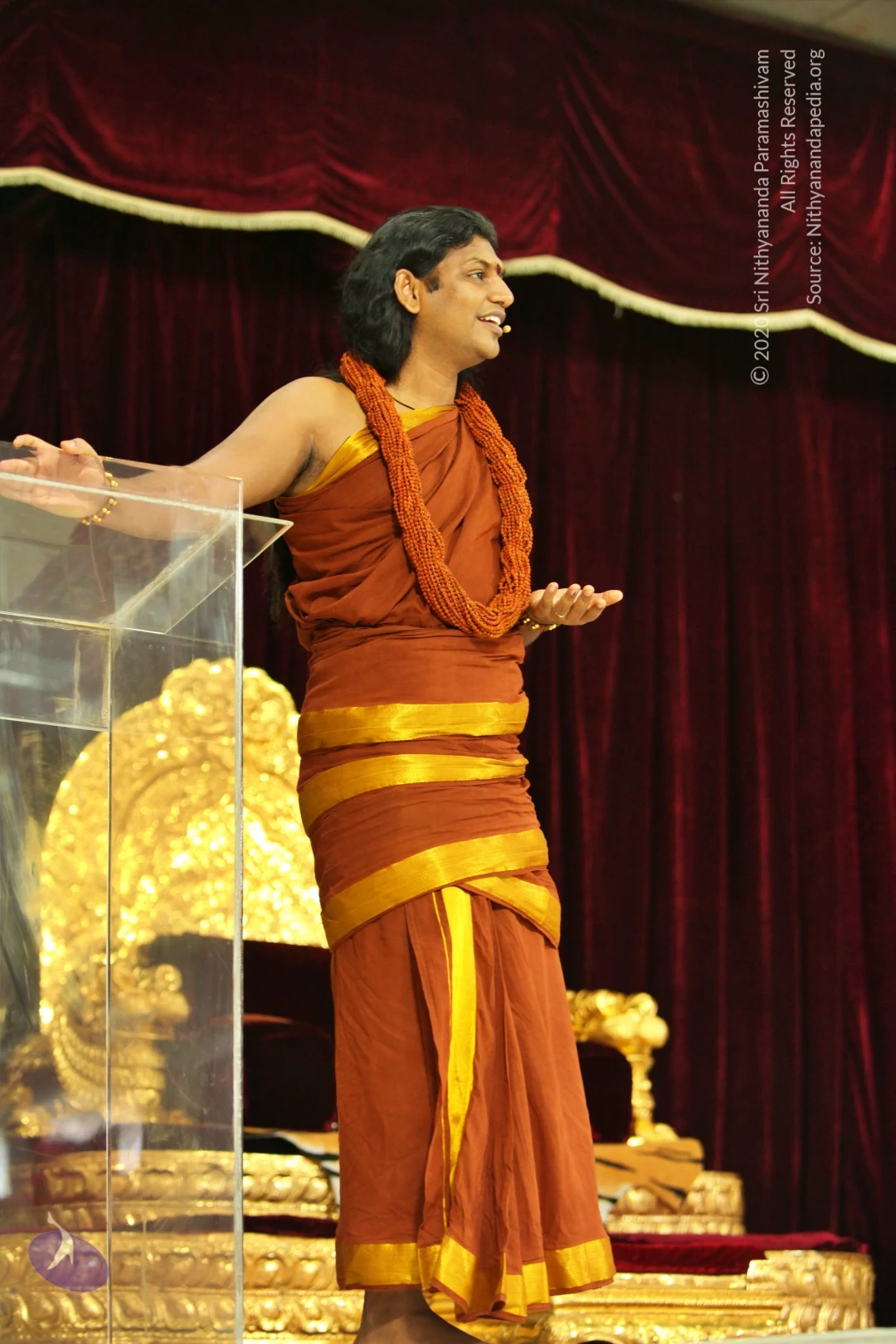
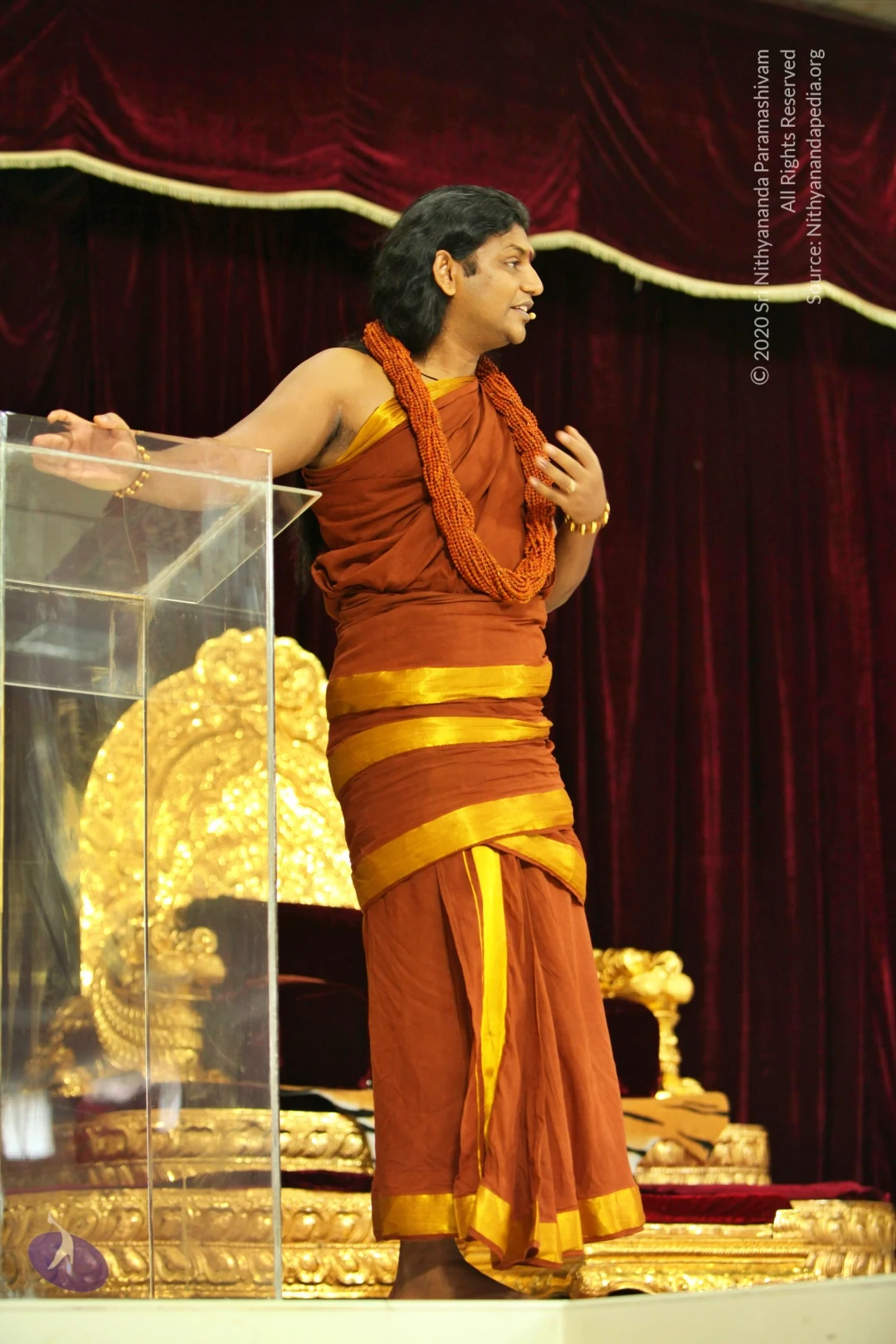
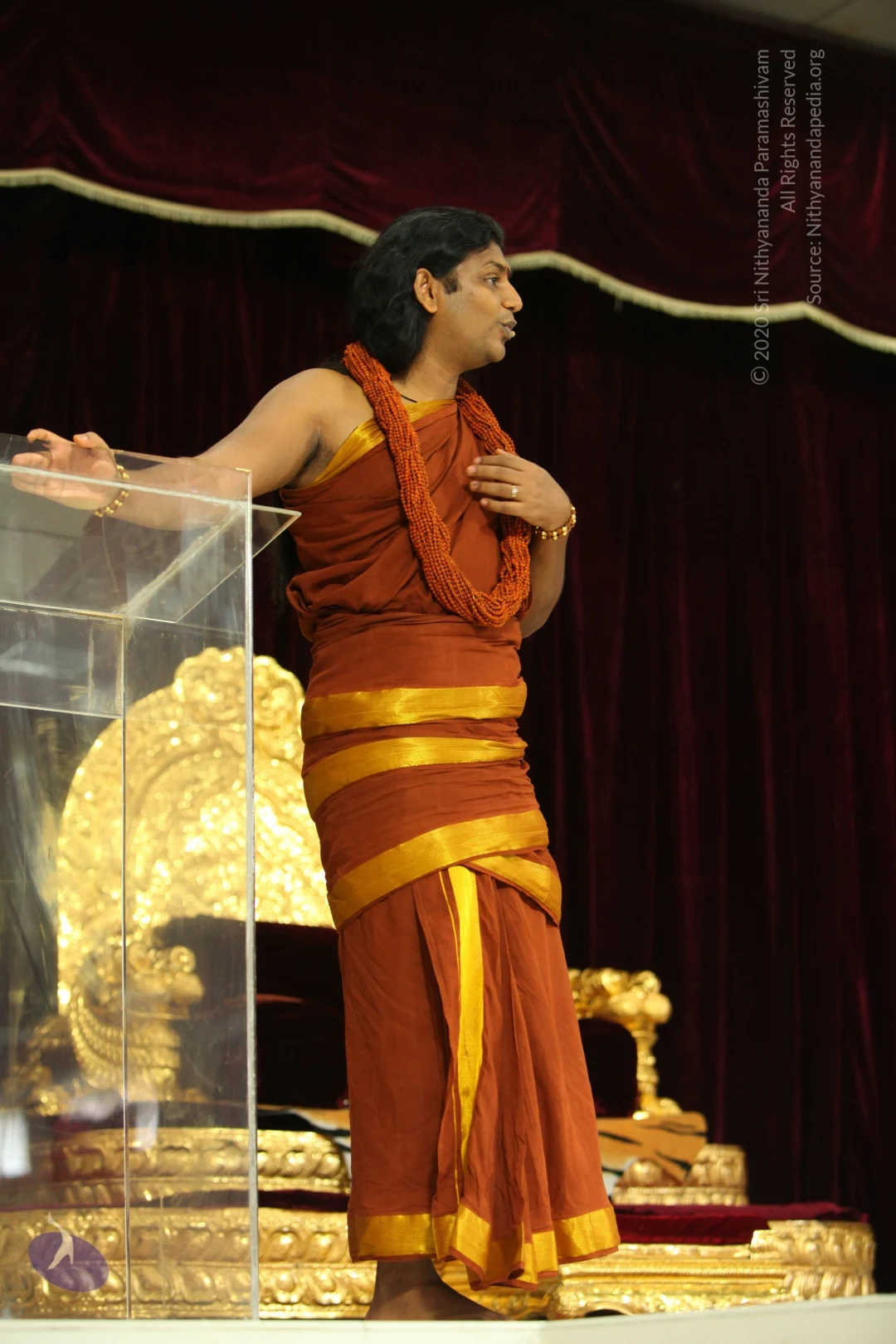
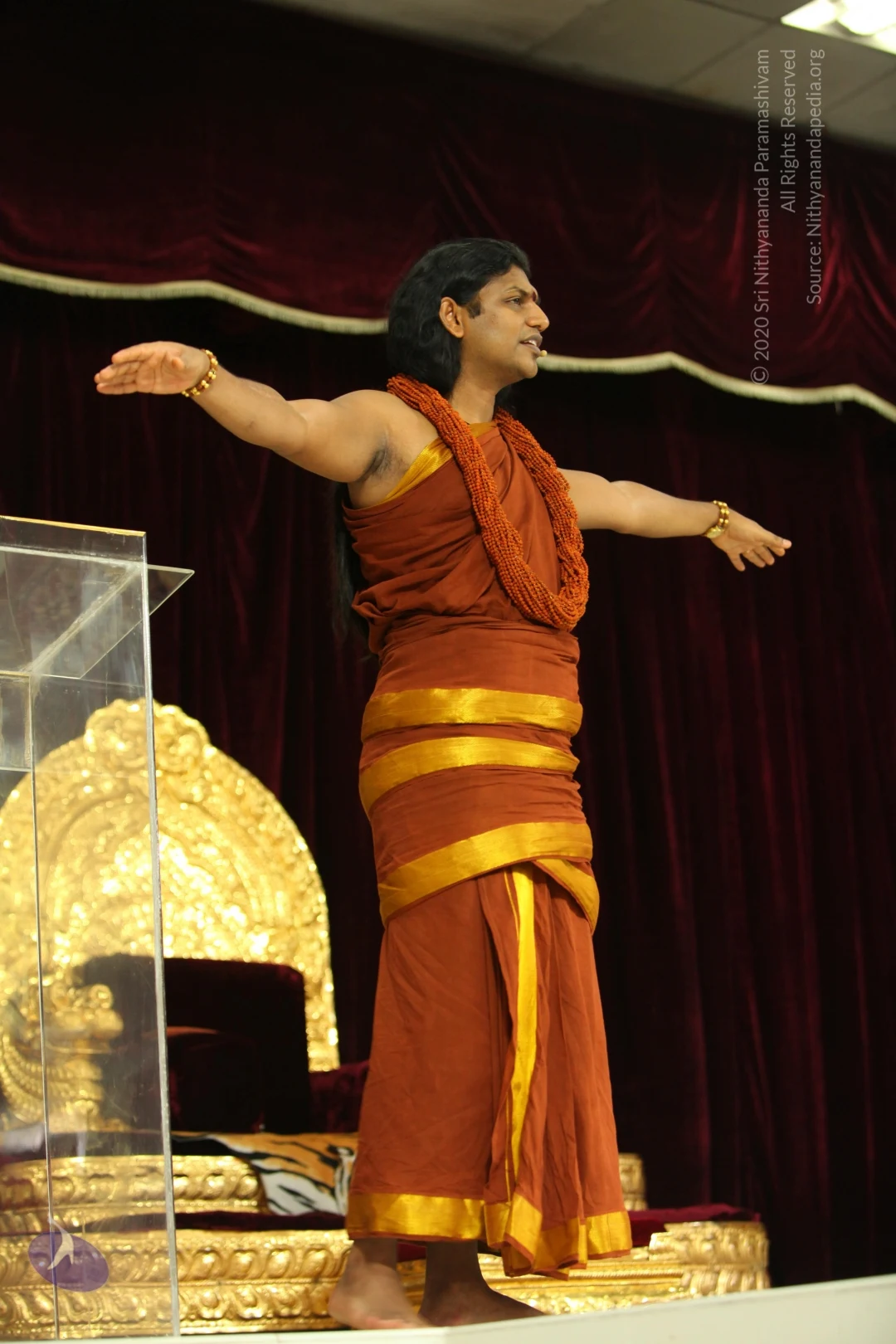
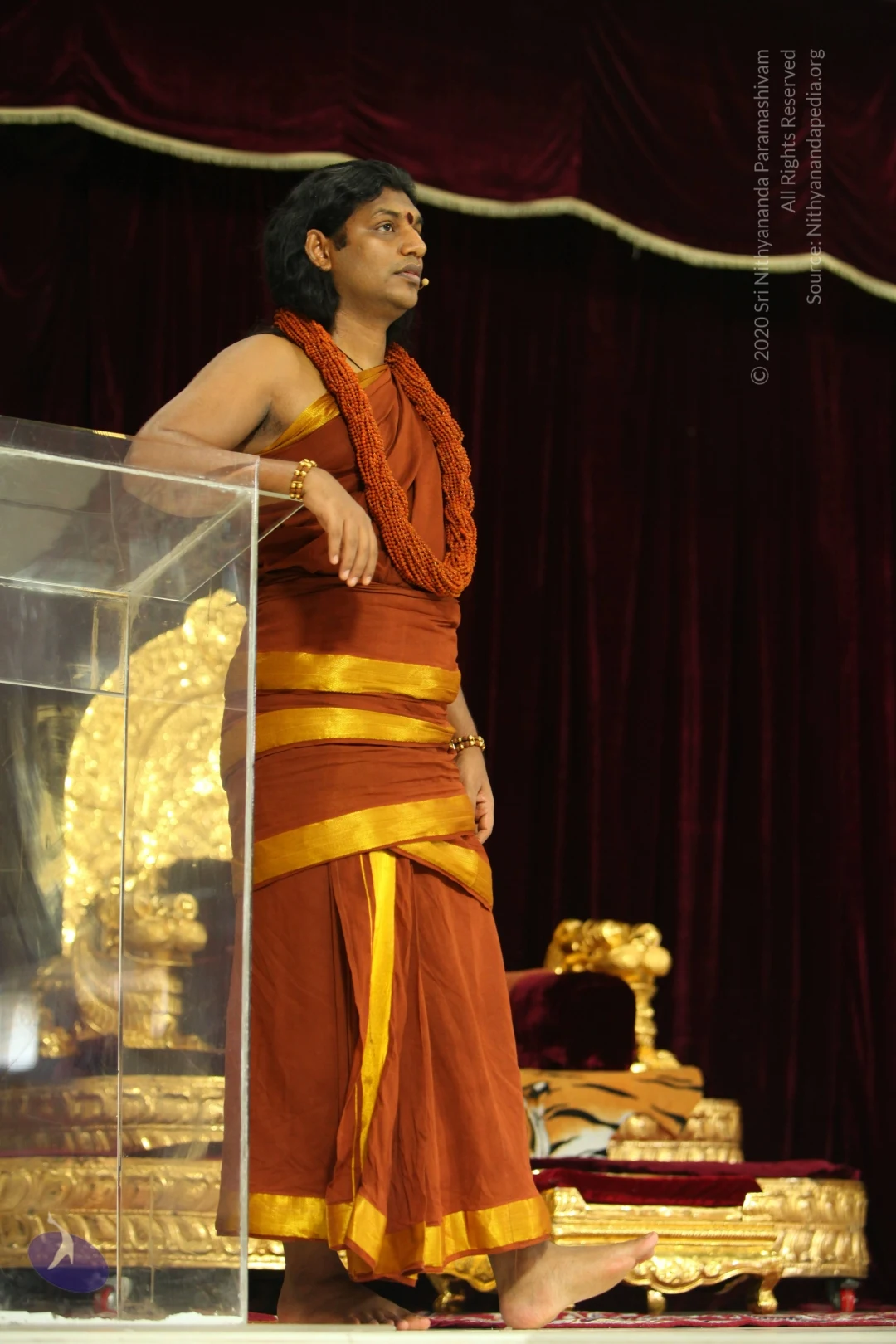
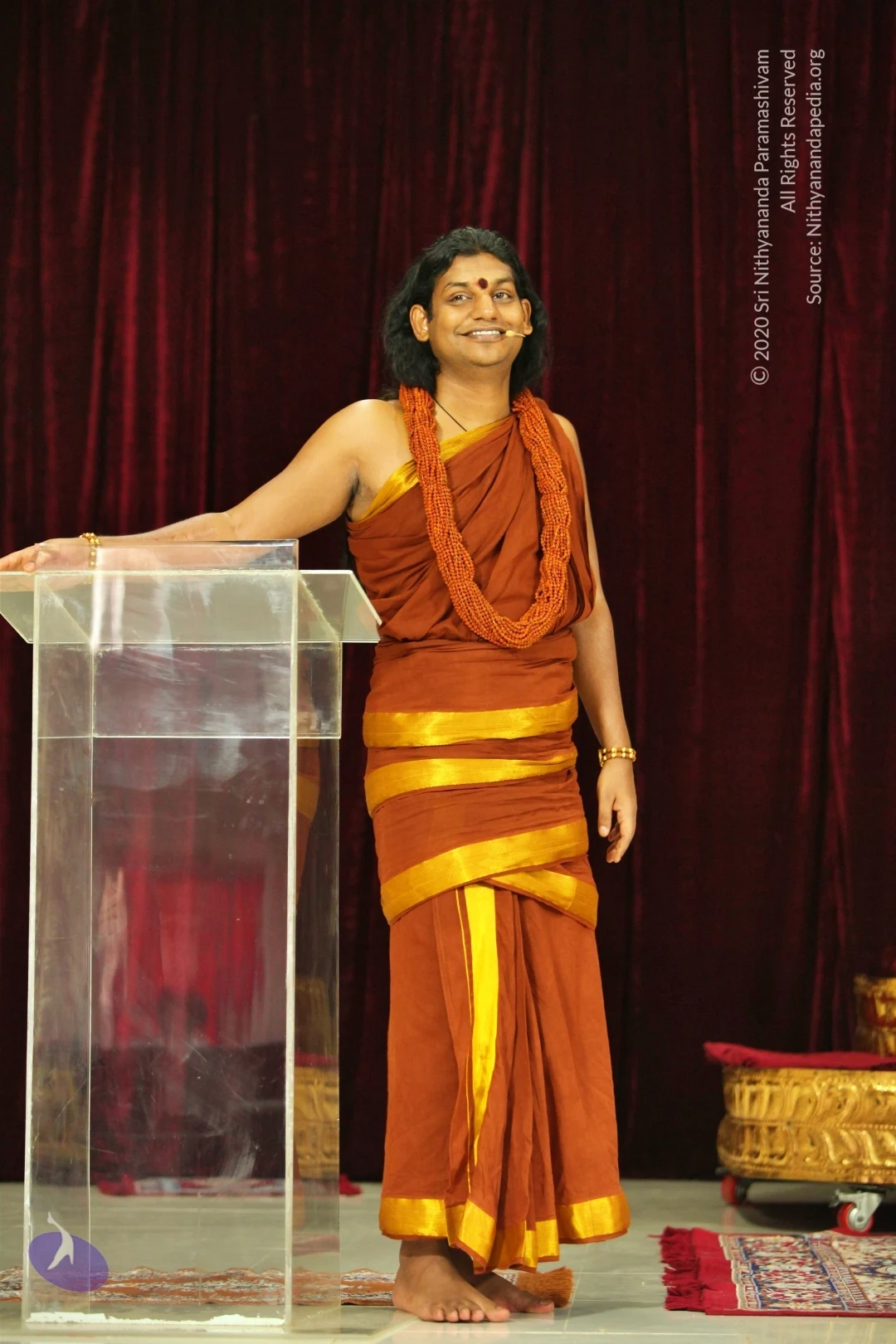
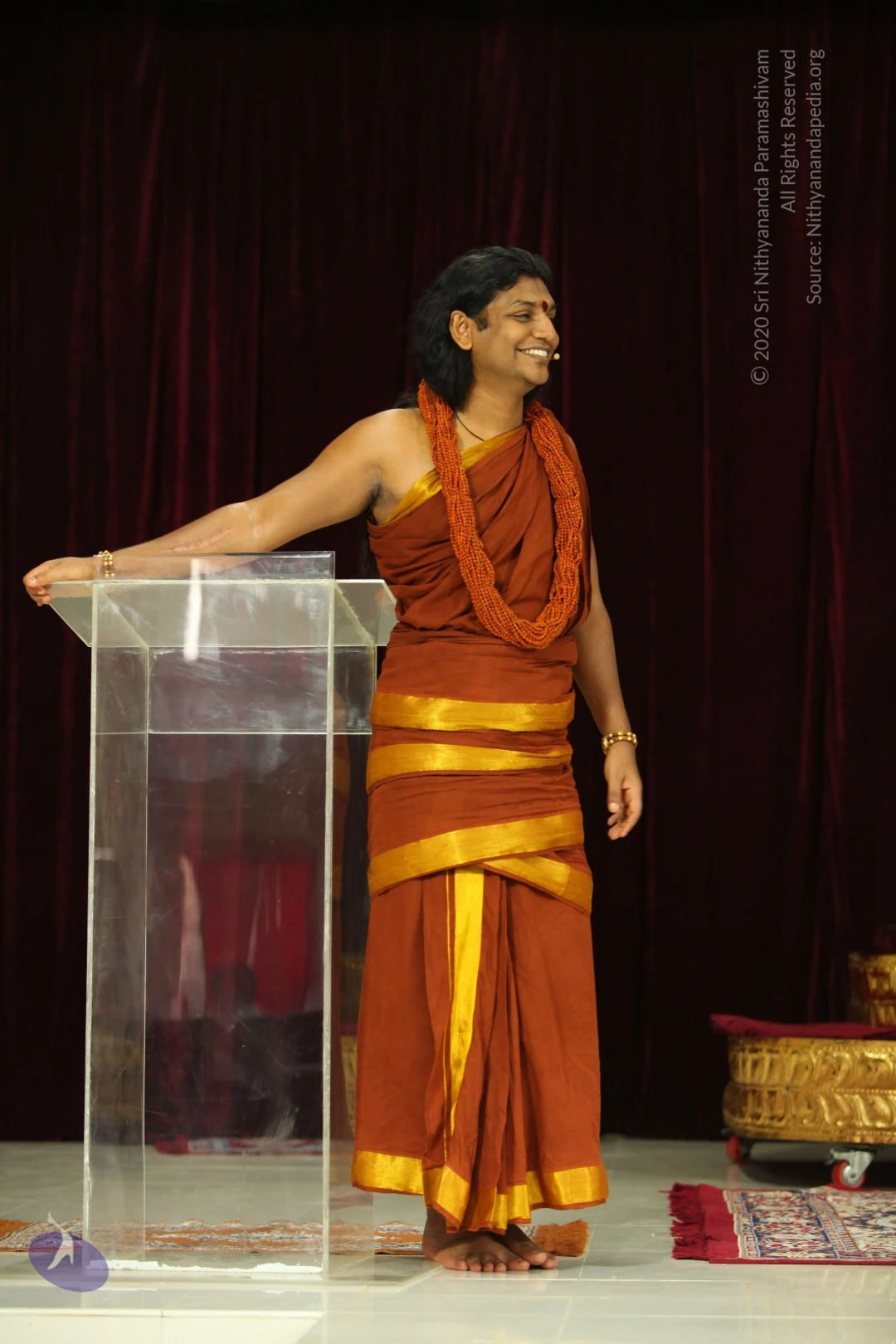
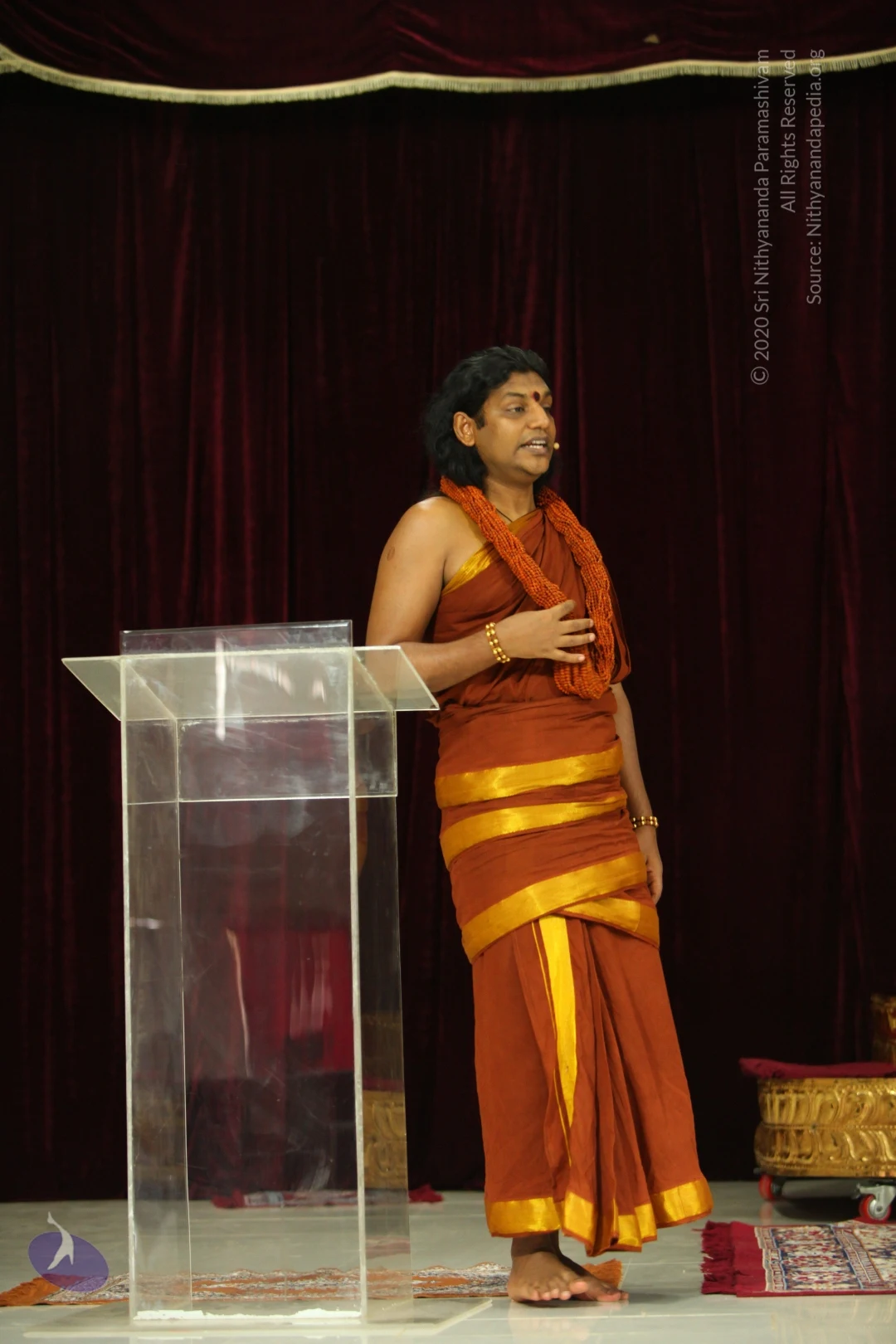
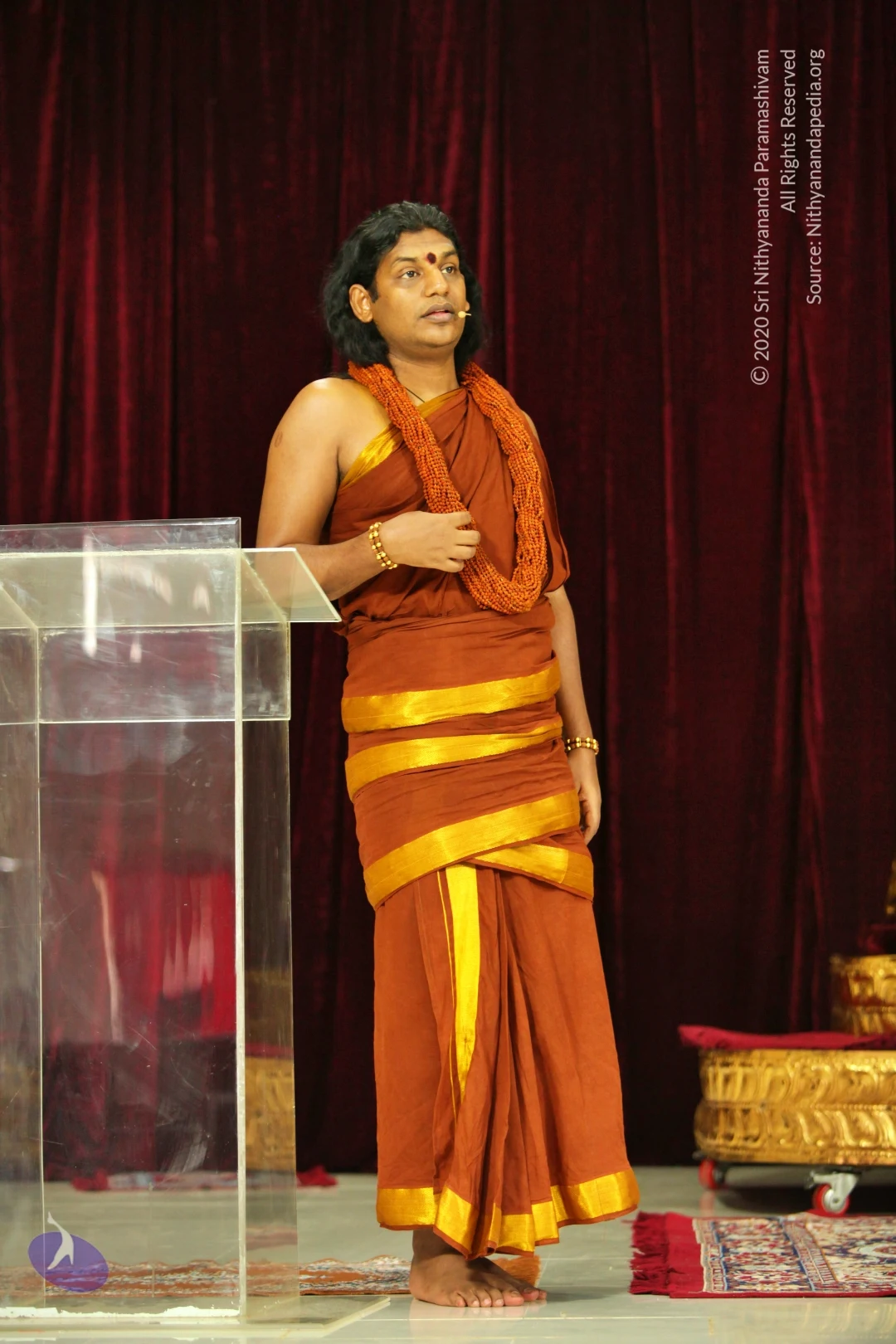
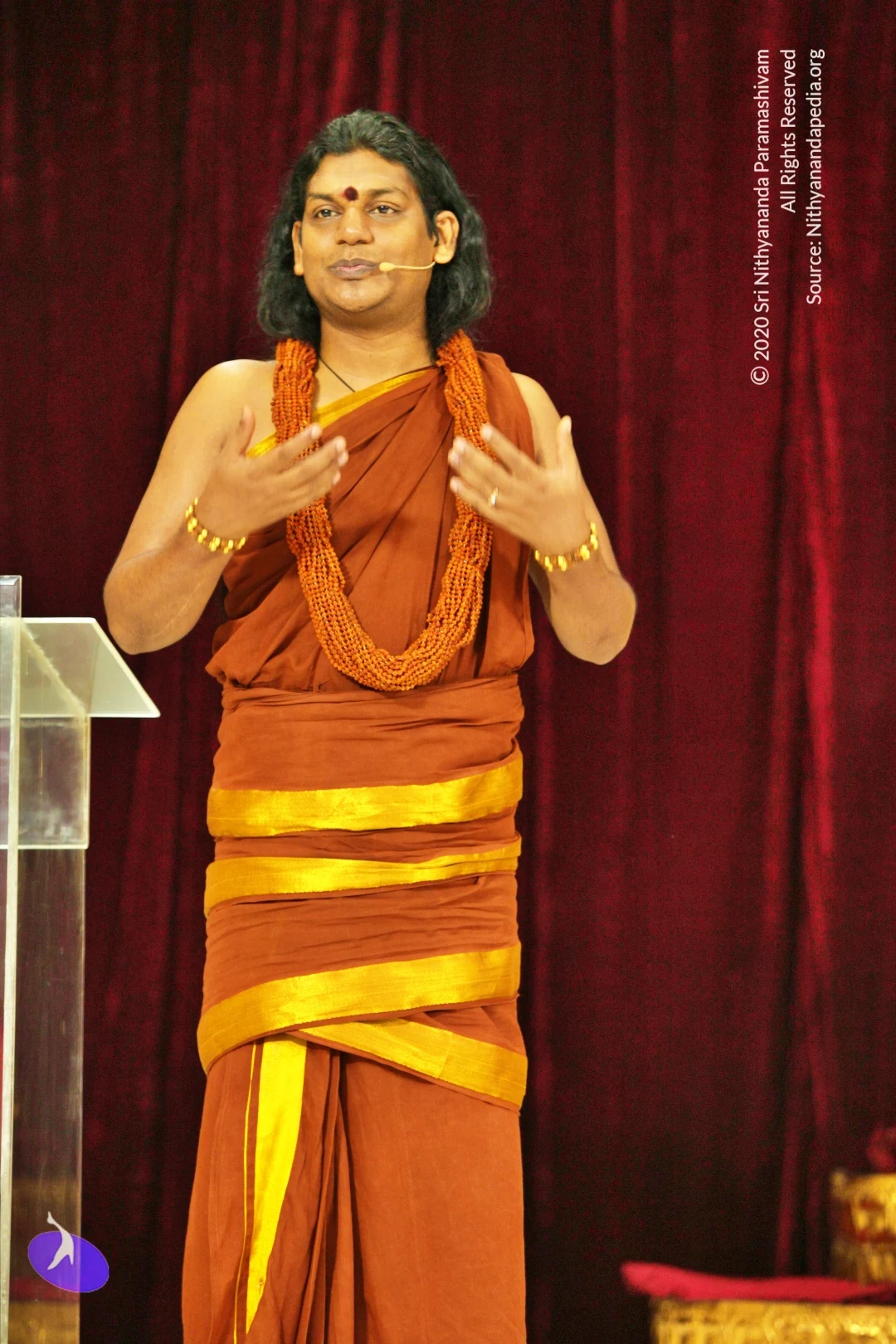
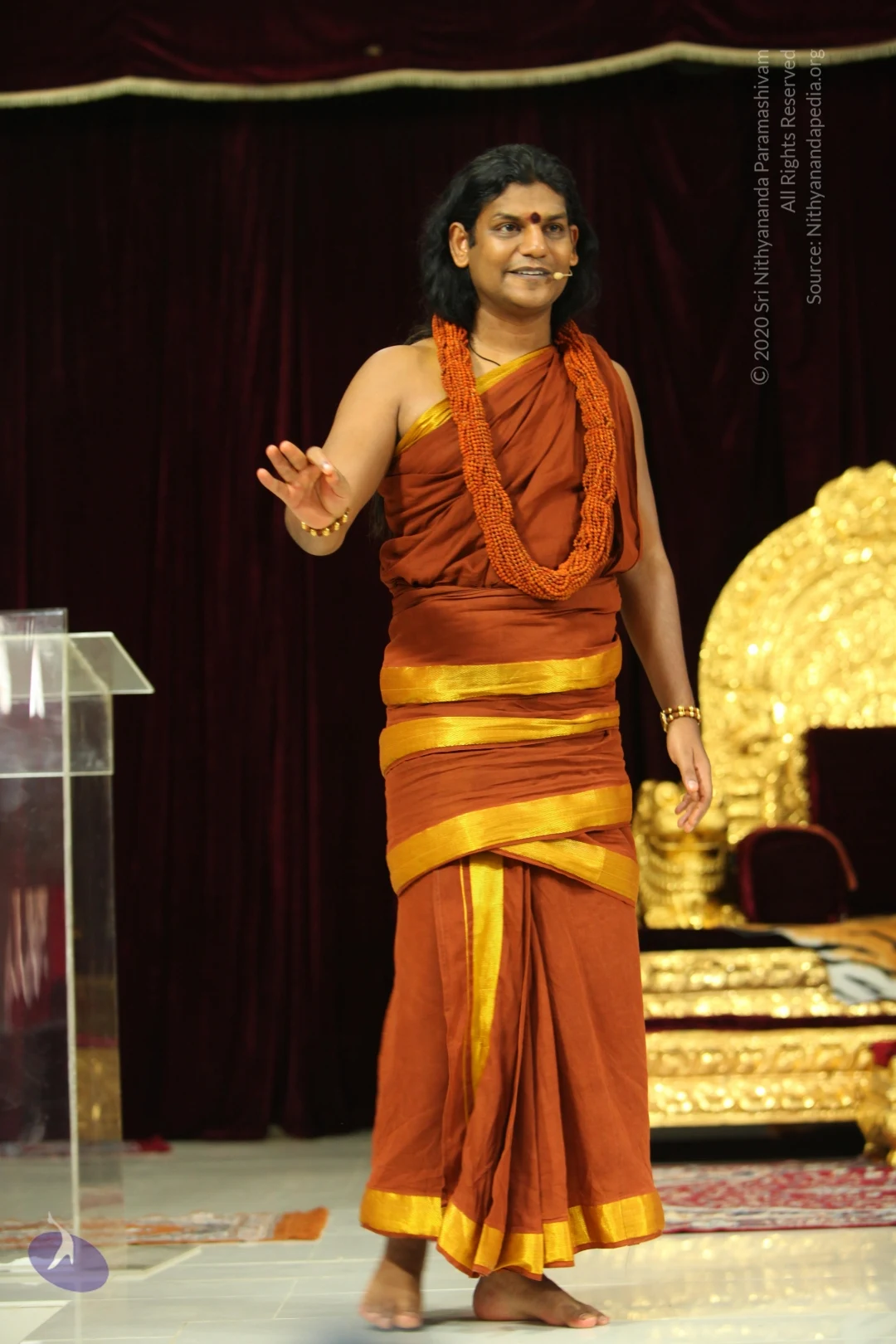
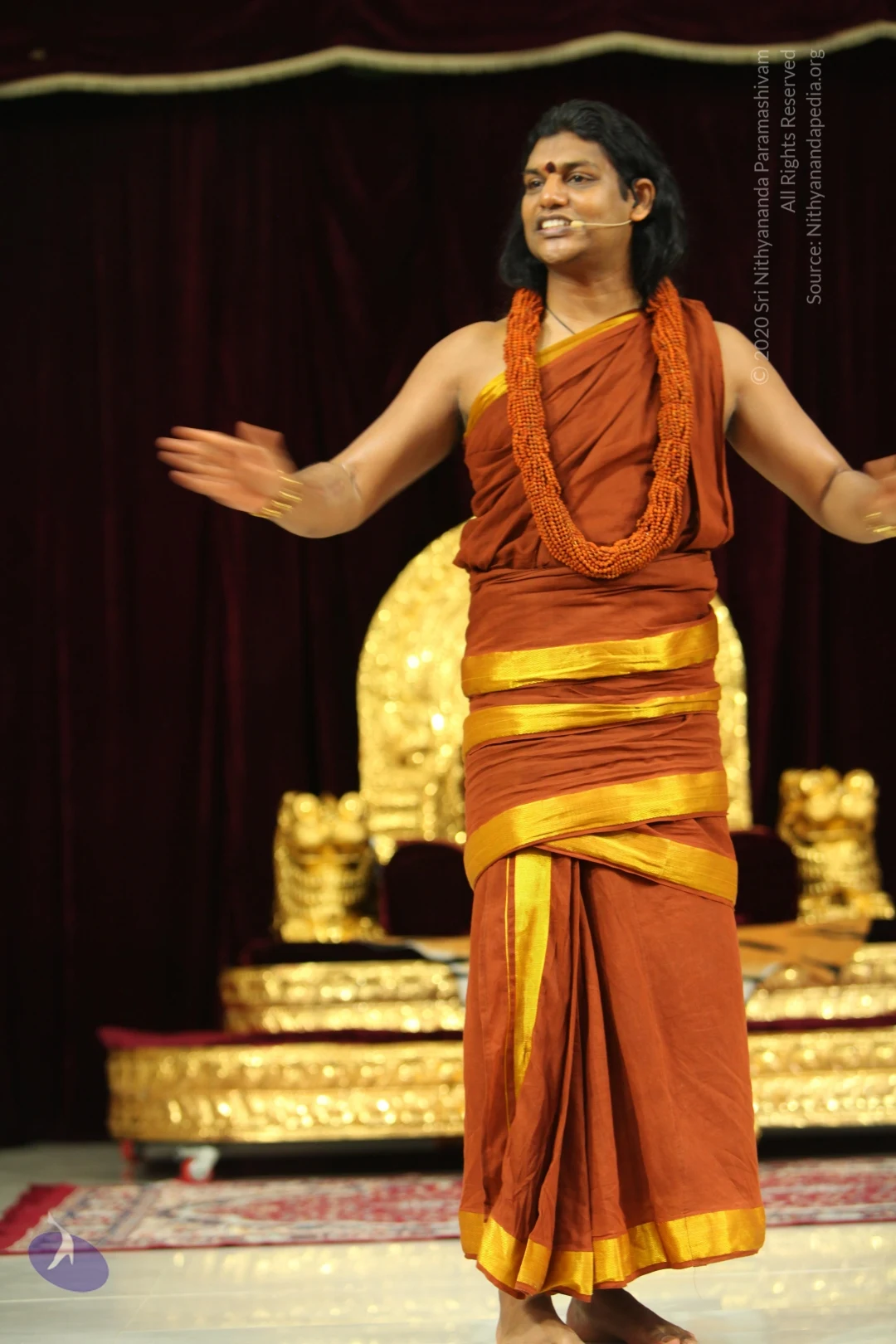
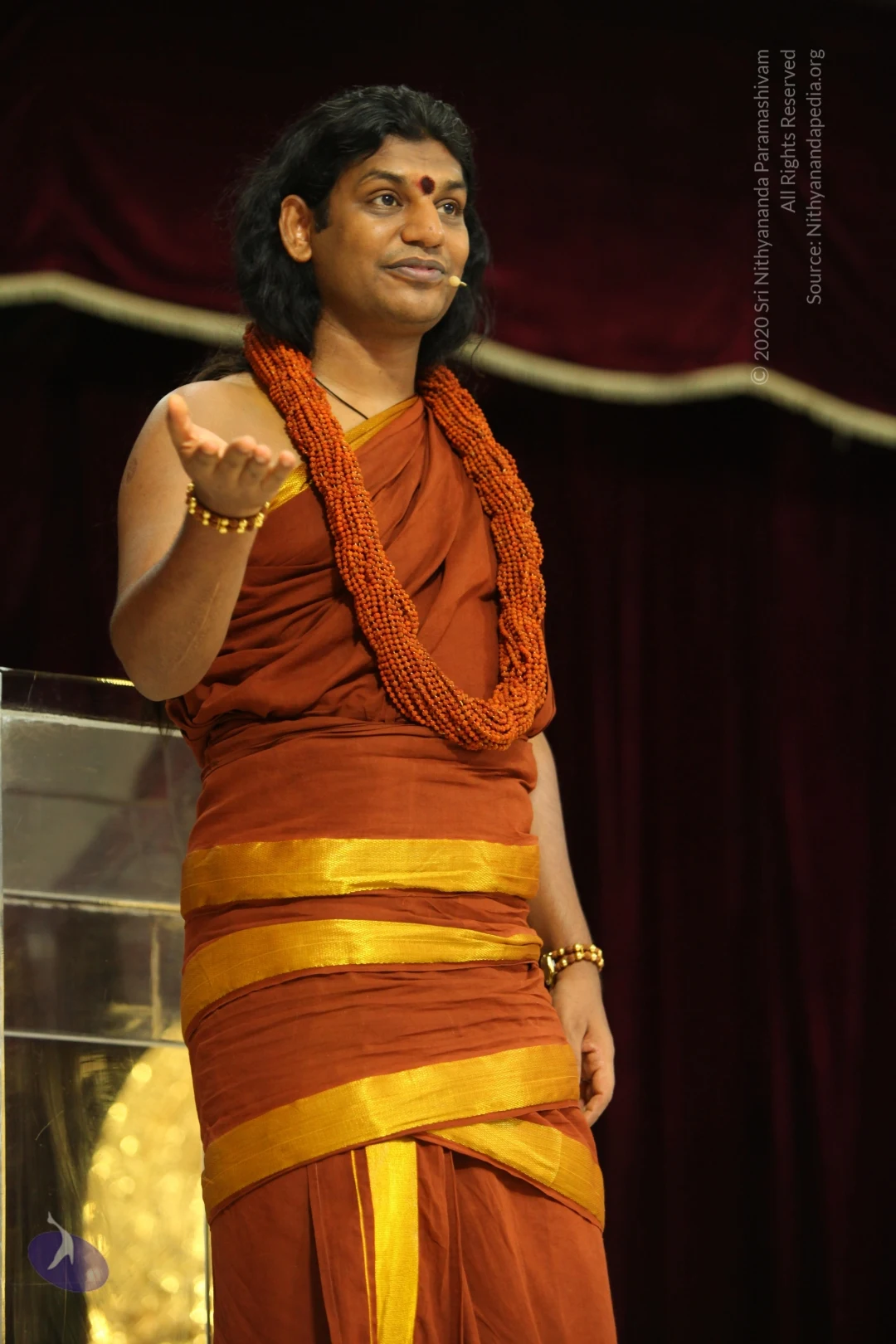
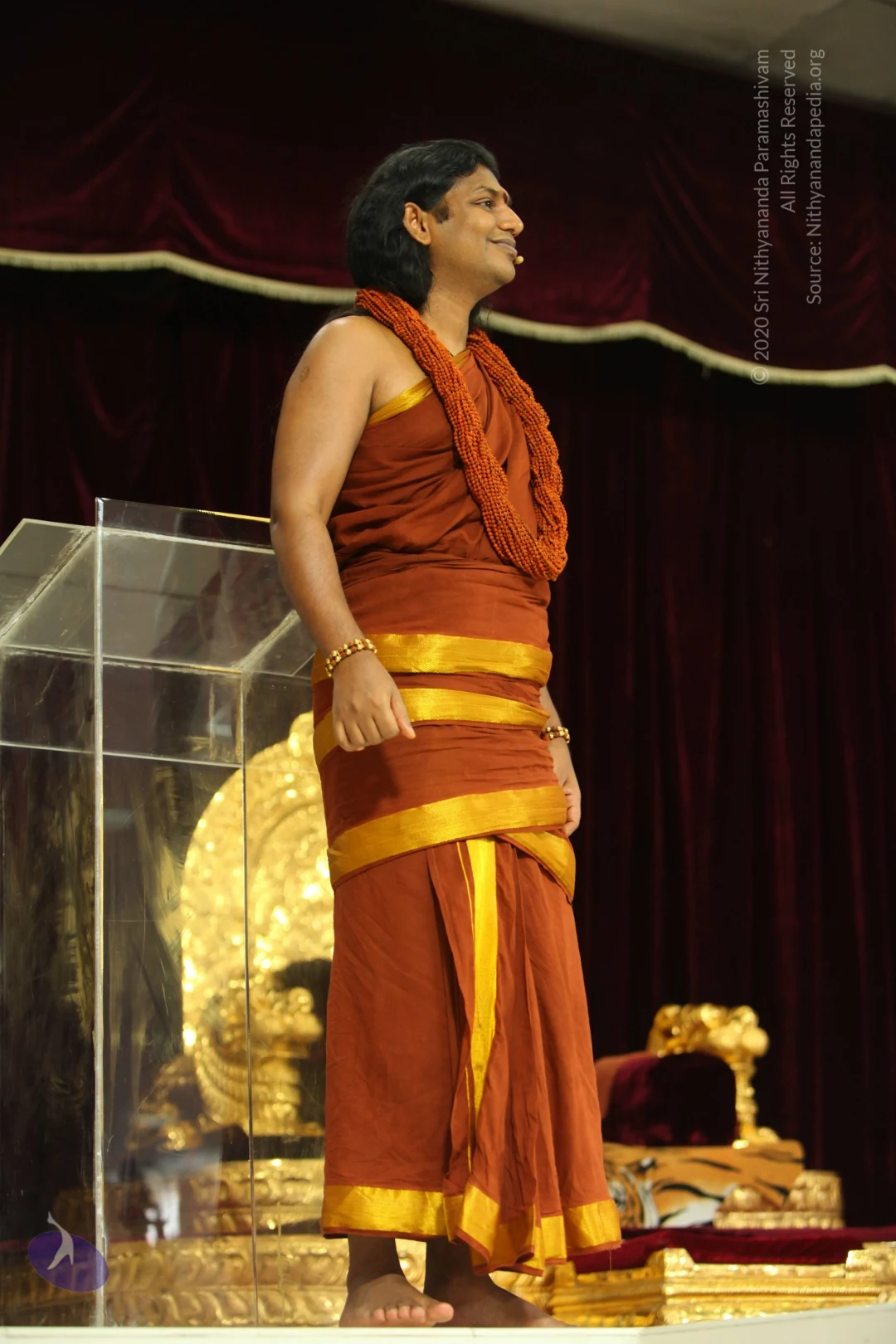
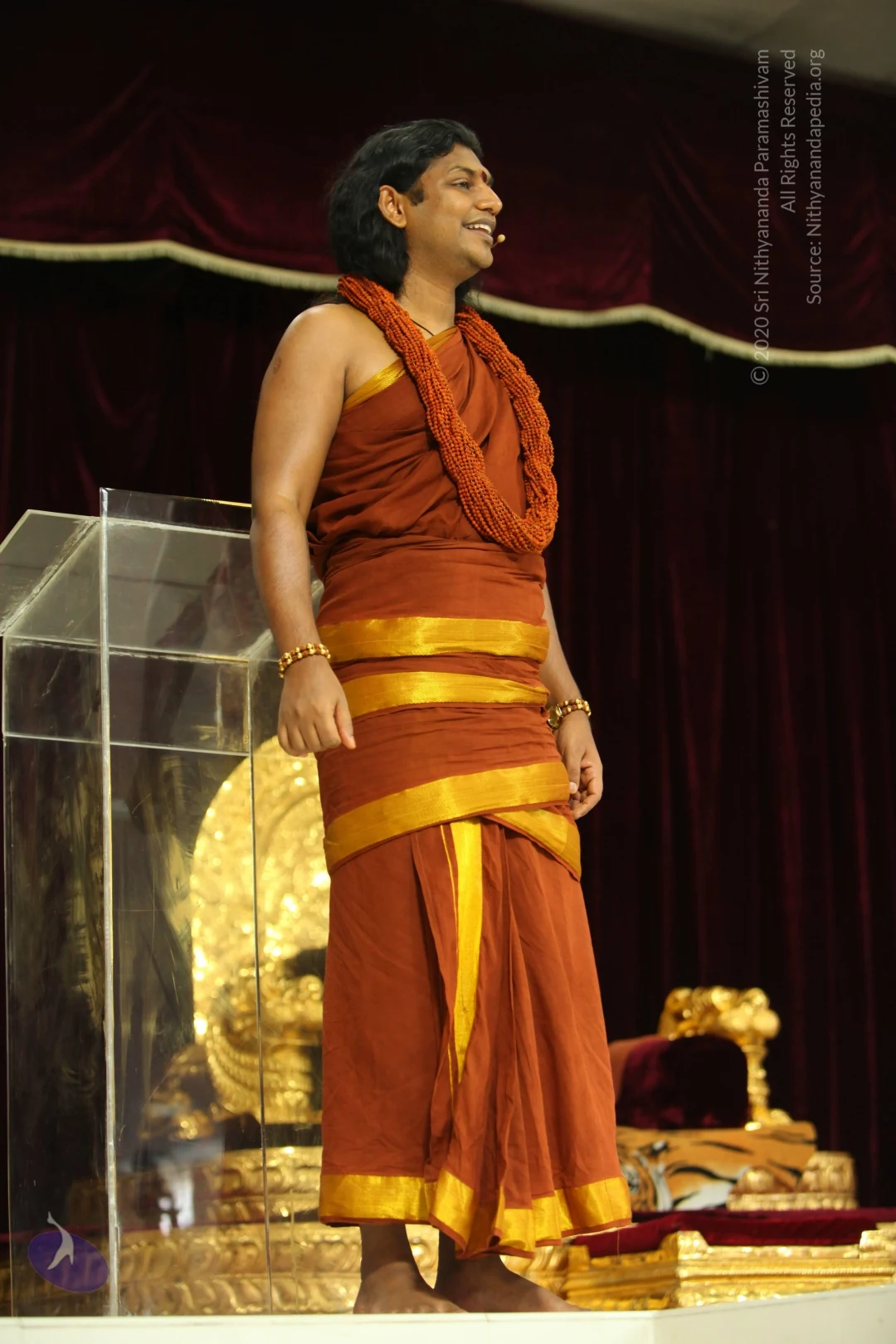
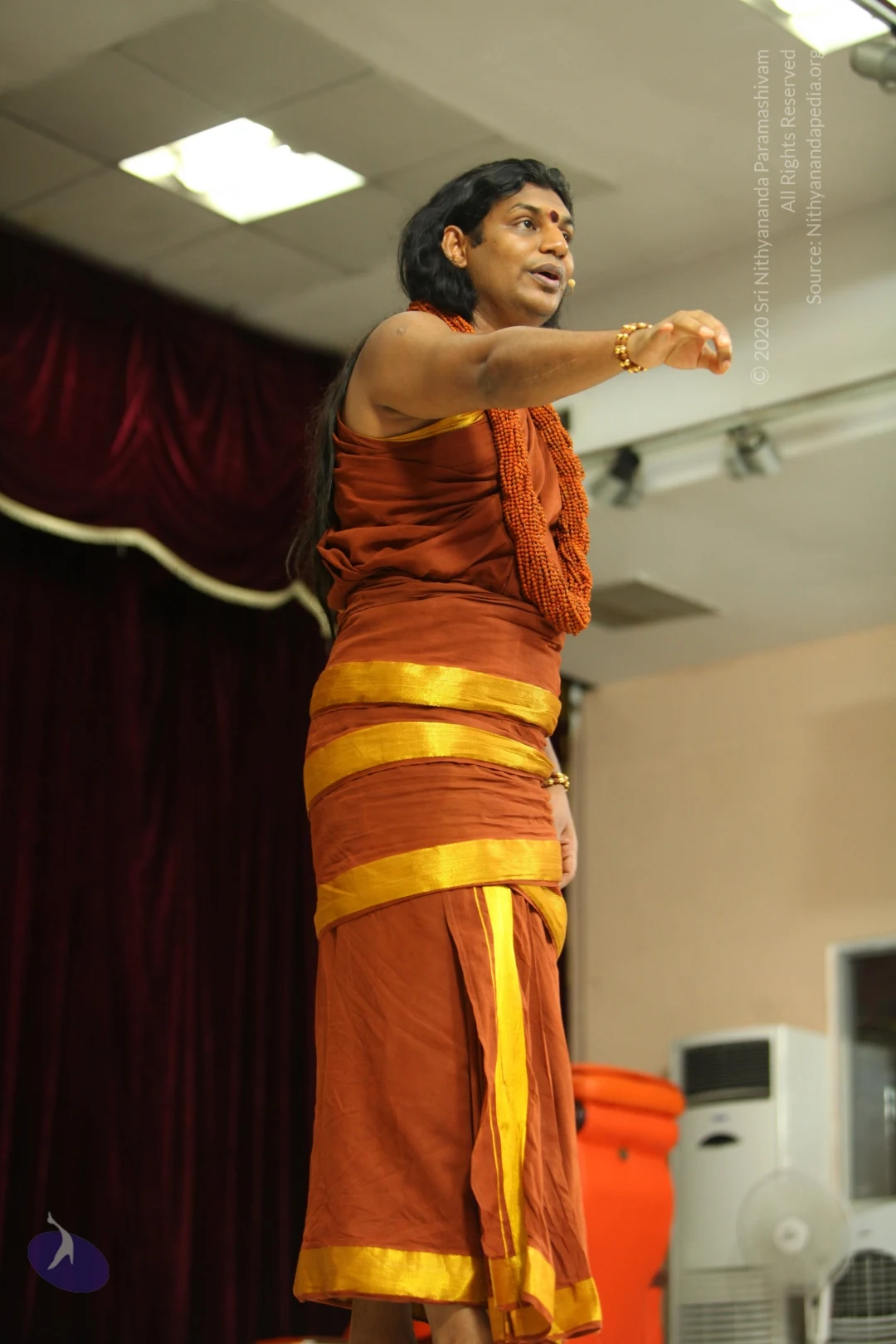
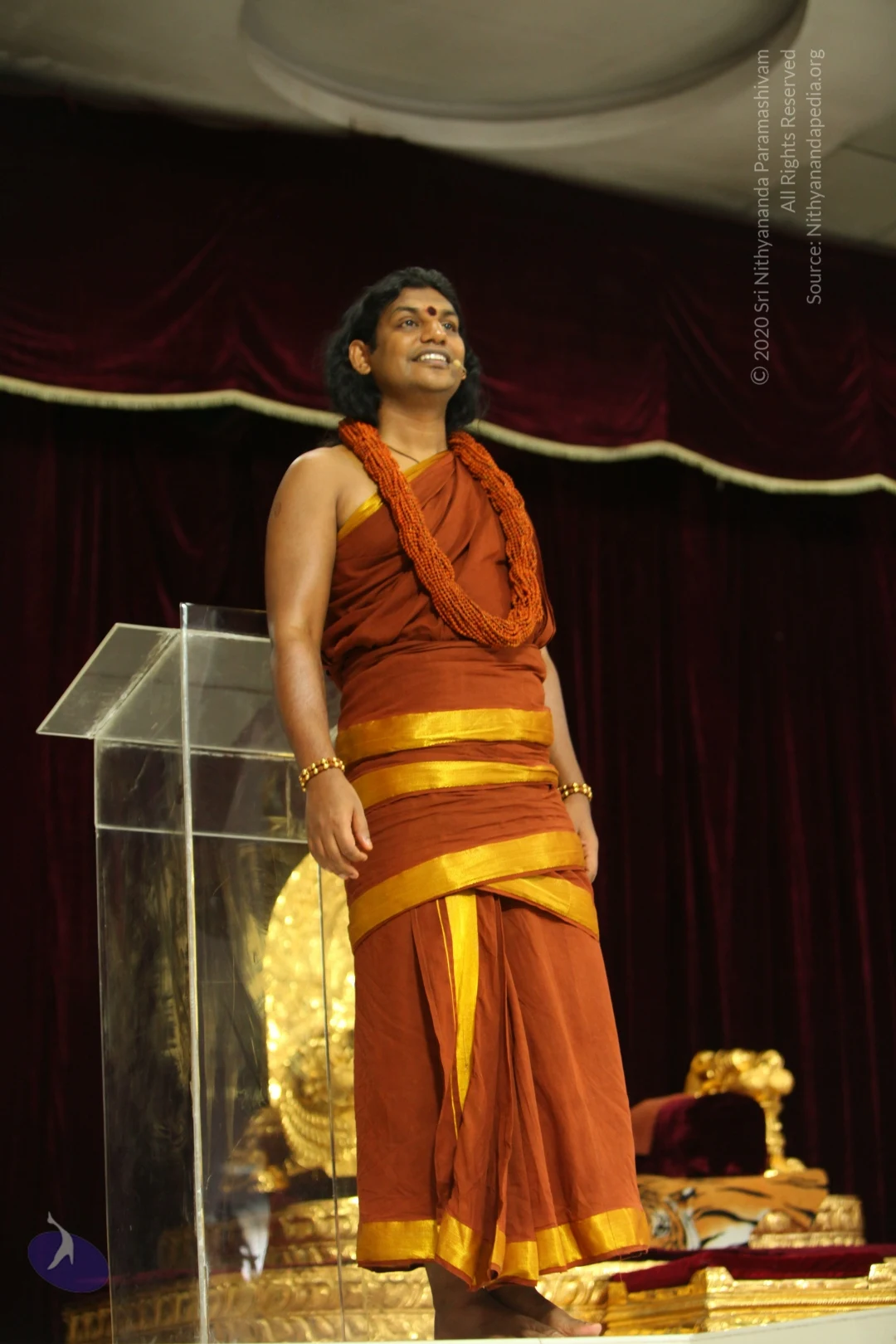
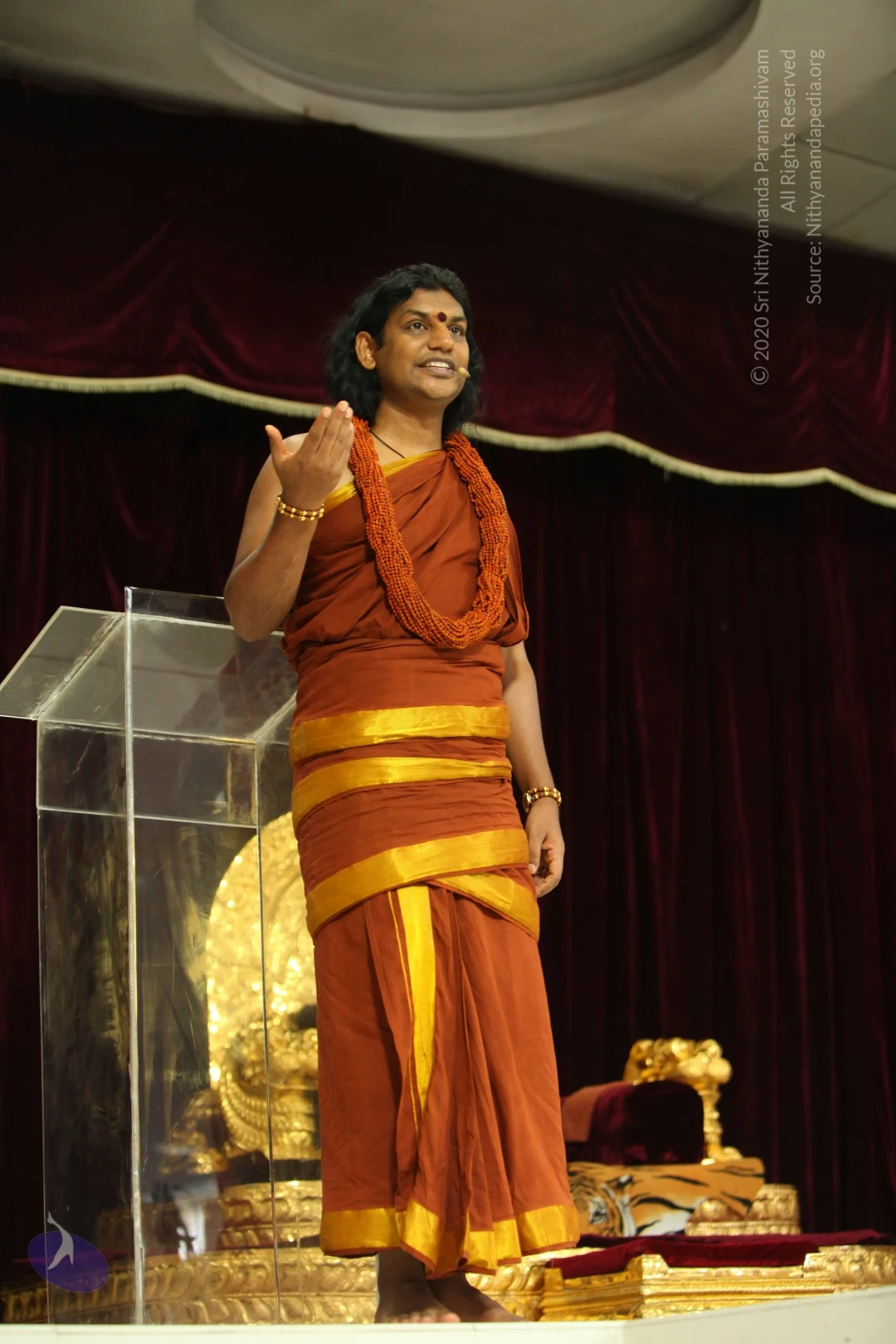
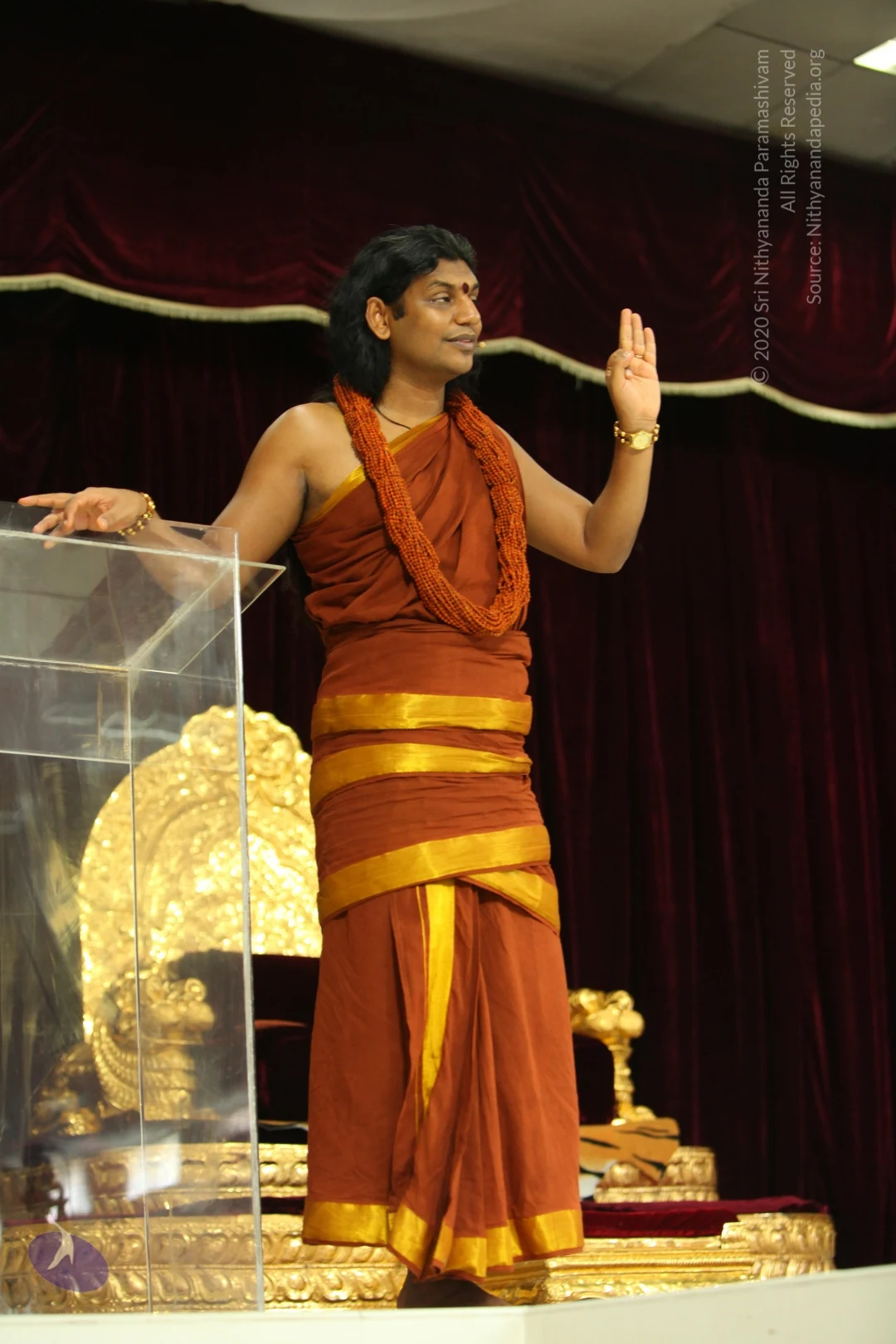
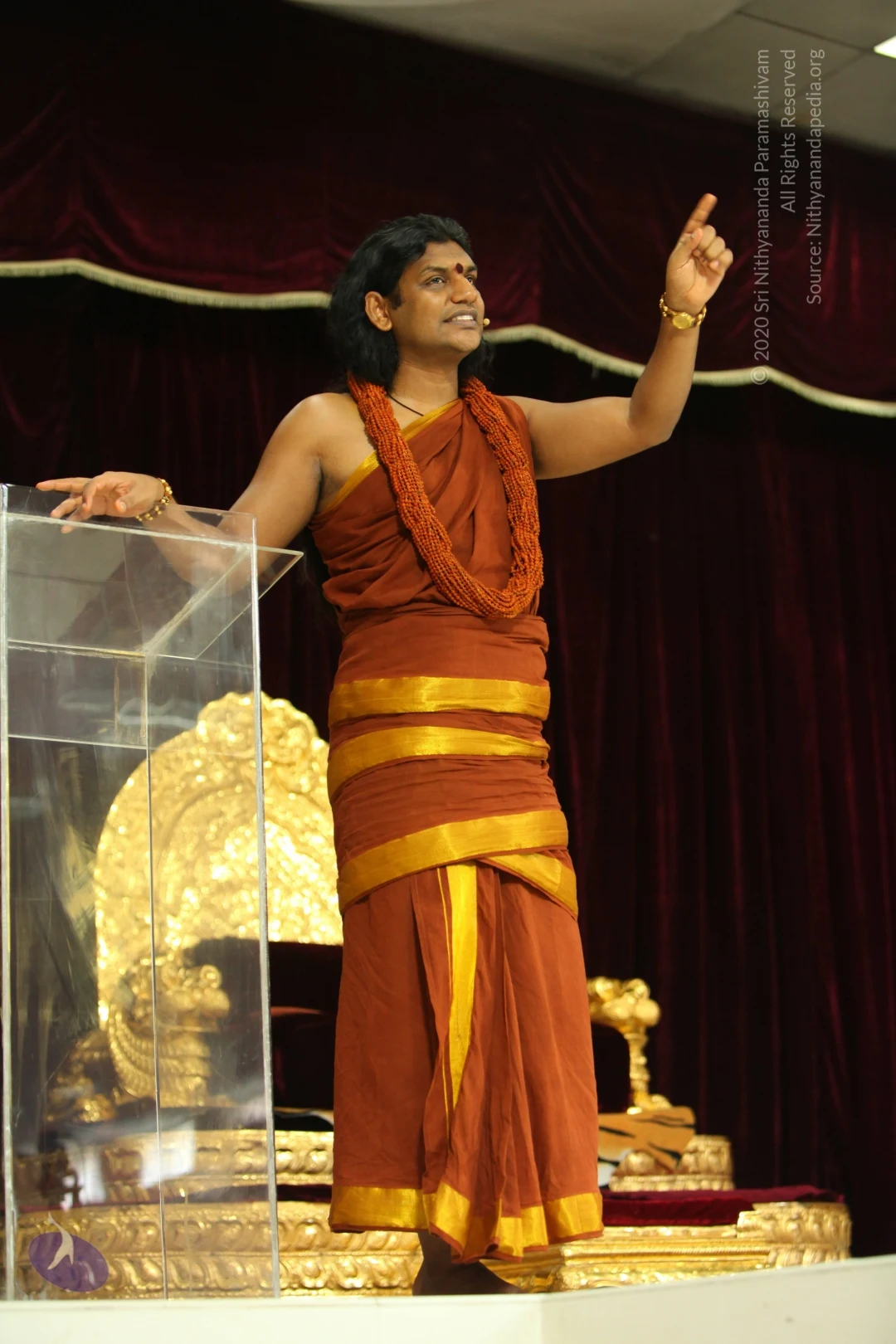
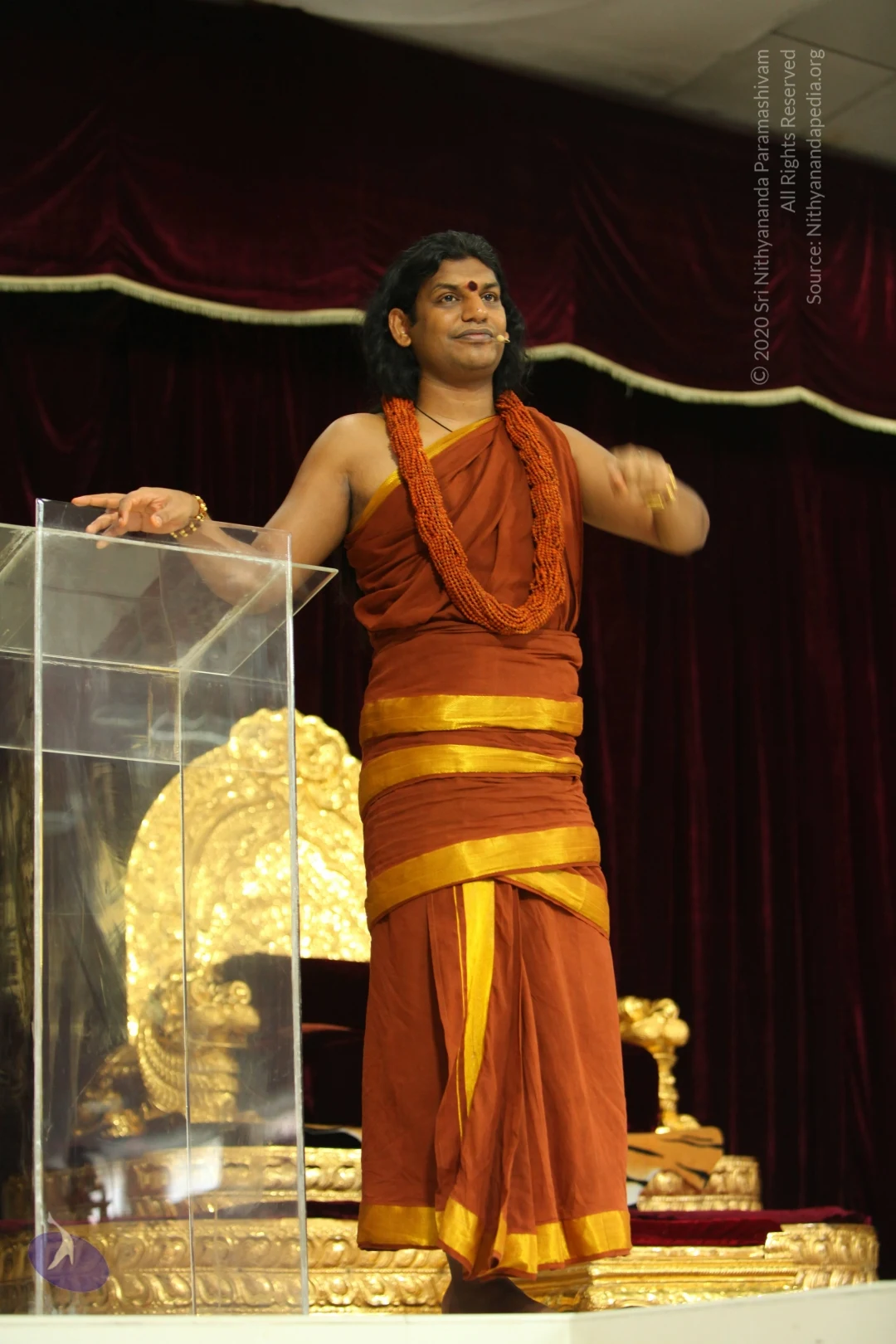
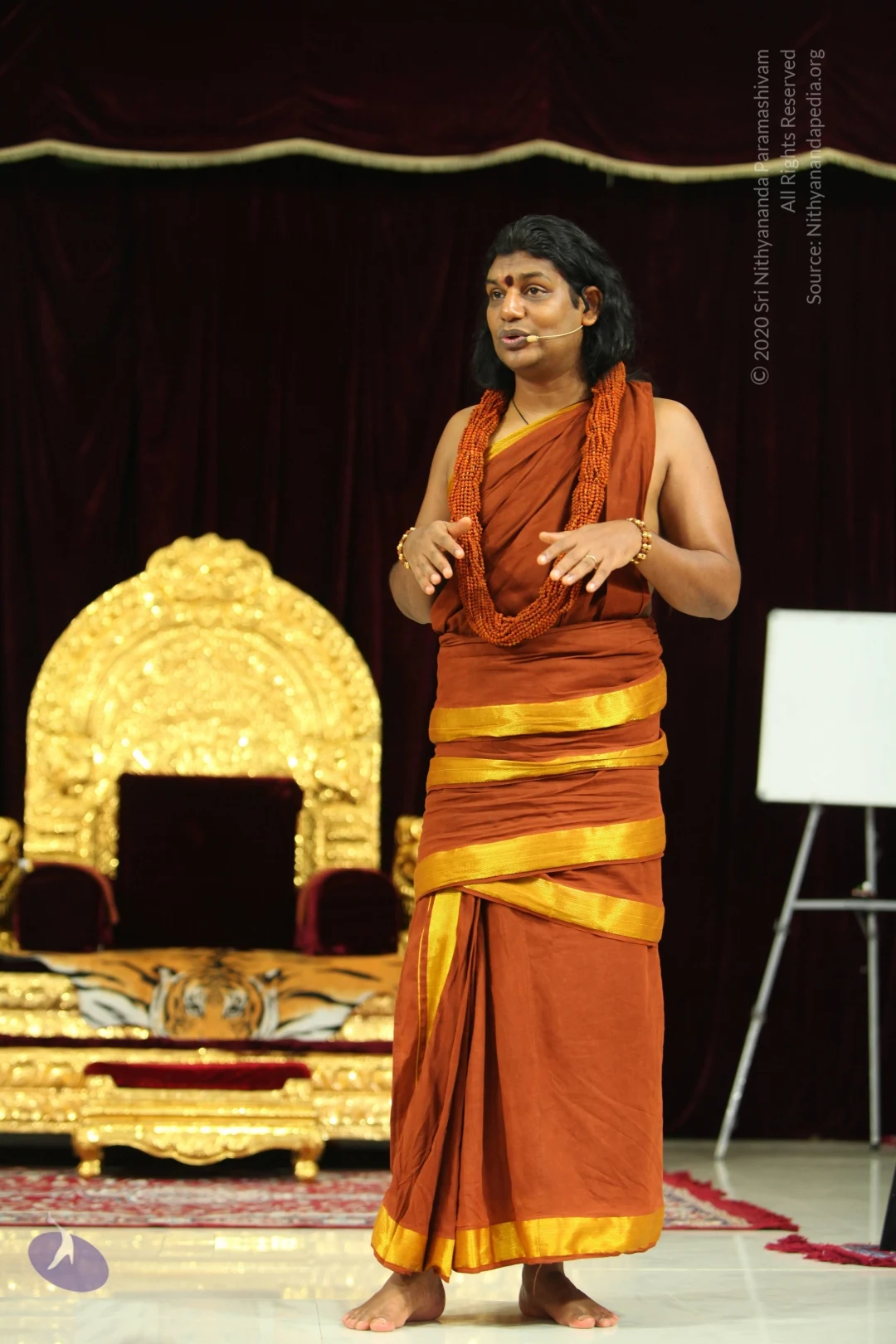
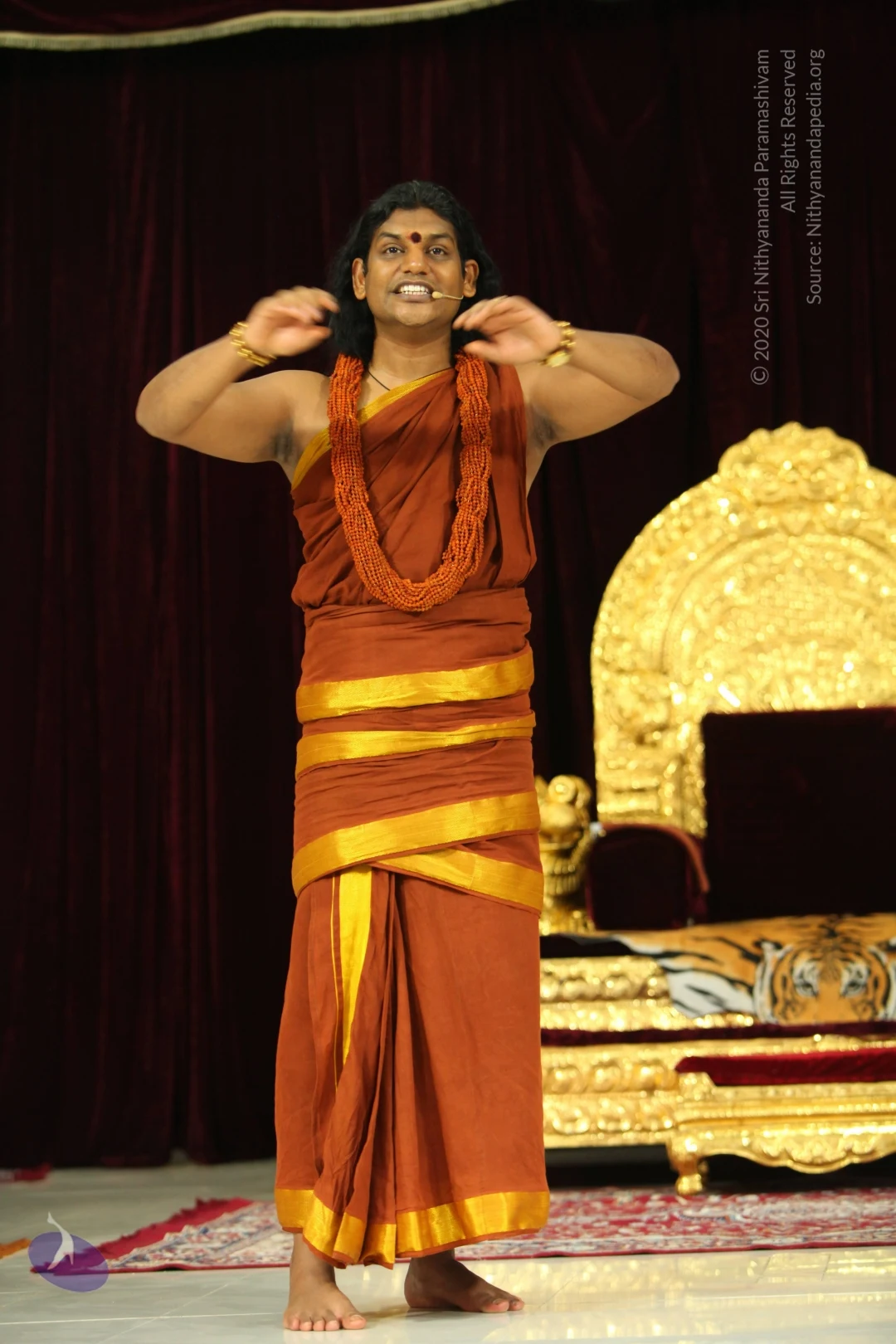
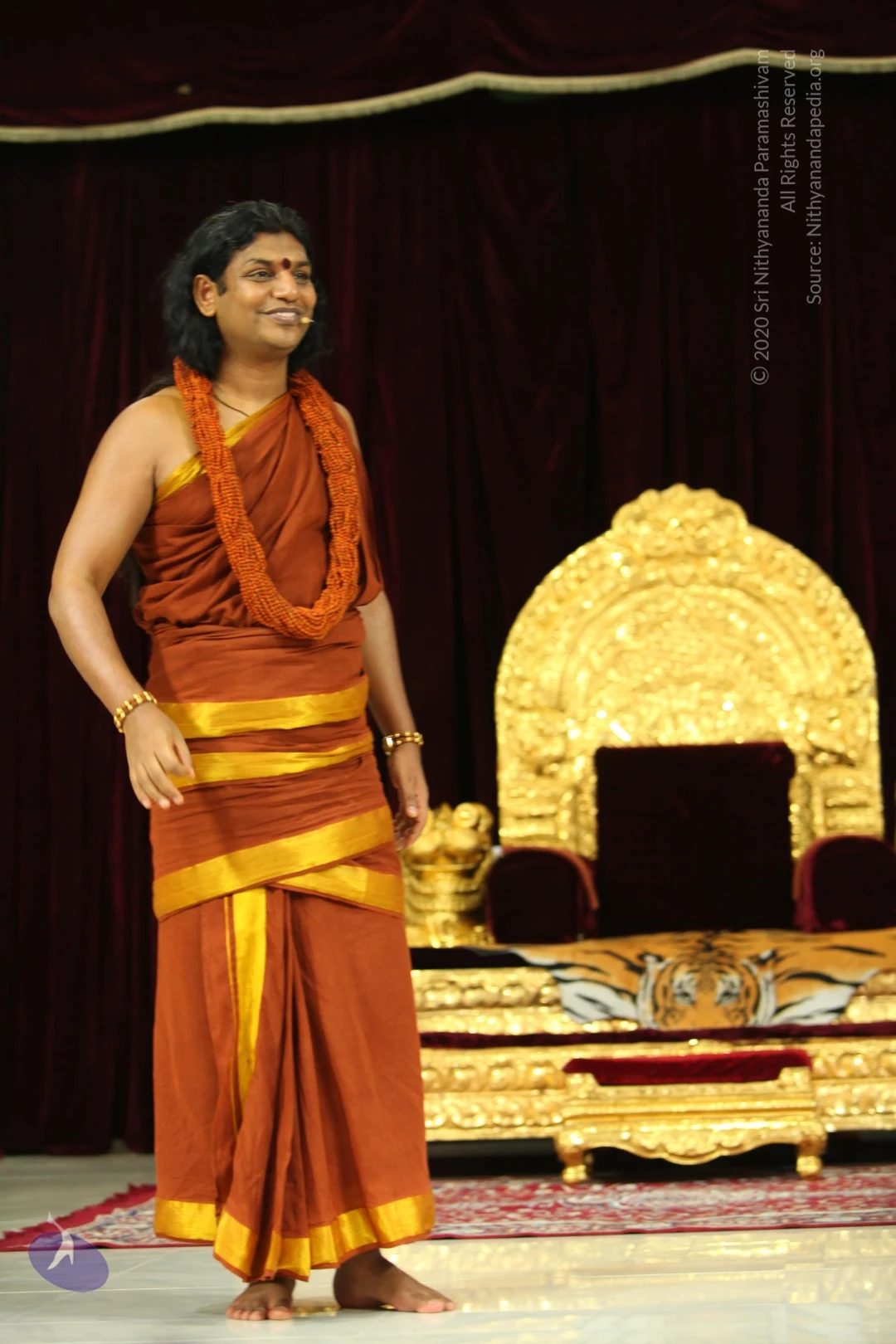
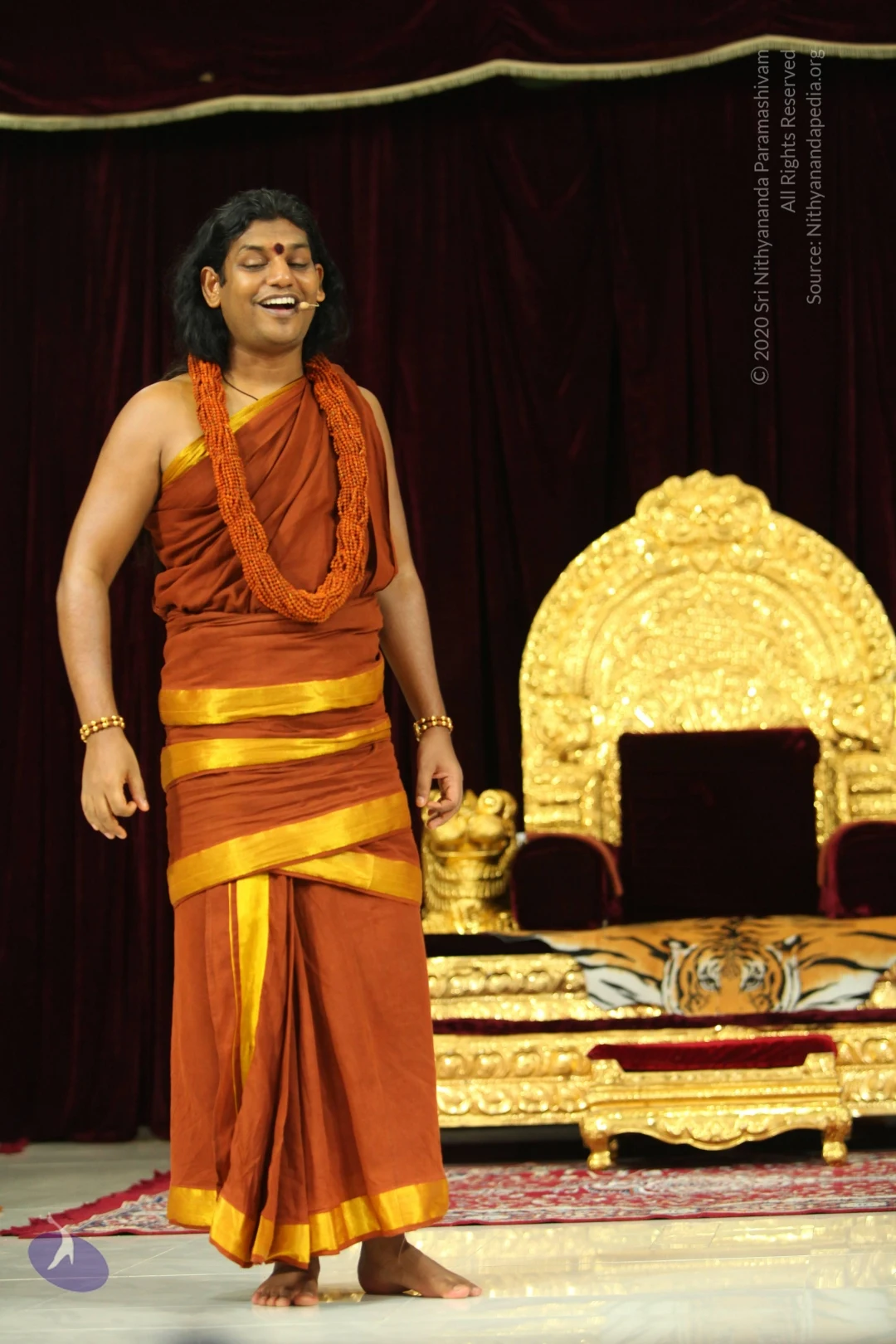
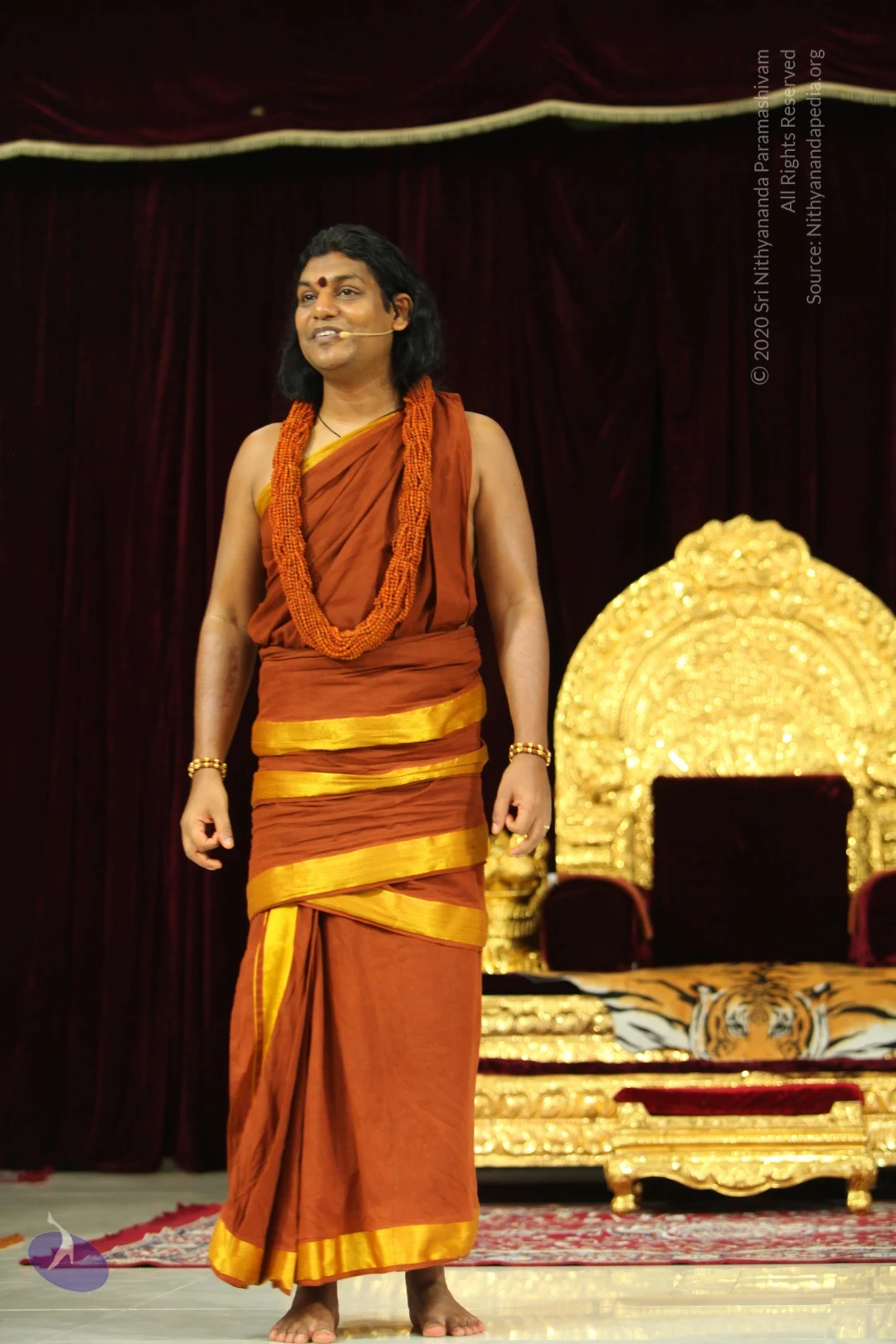
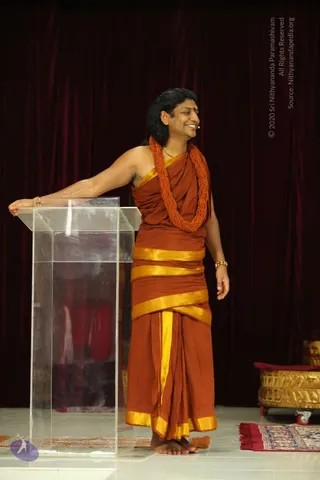
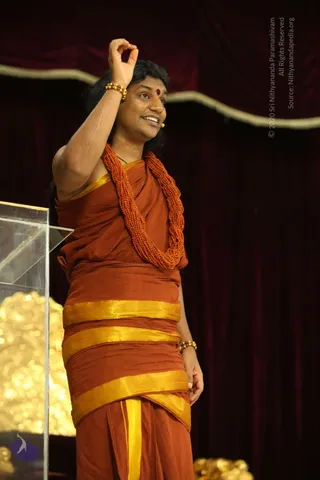
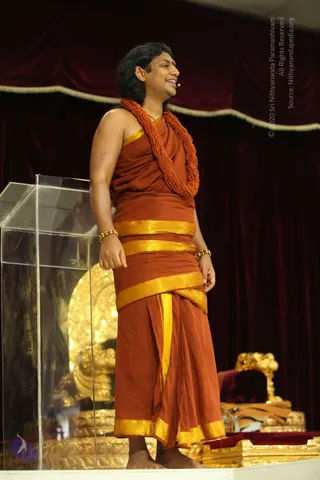
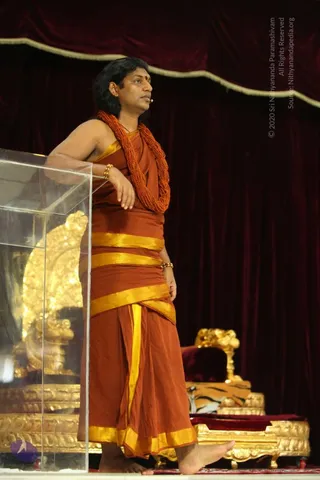
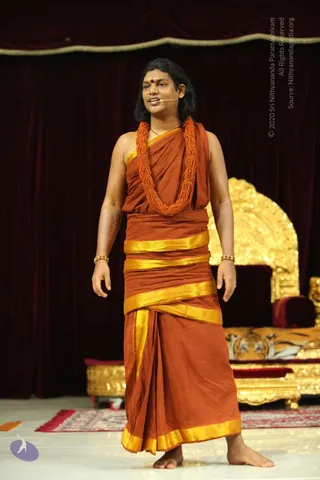
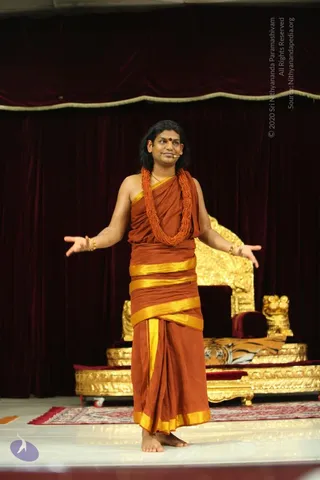
In today’s morning satsang, Paramahamsa Nithyananda unveils the secret of escaping from boredom. Boredom develops to enslave us whenever we establish a habitual way of life. Once we cease to explore the deeper dimensions of our environment – work, relationship, even spiritual practice – our intelligence falls asleep. We become so bored that we create destructive situations or abandon promising projects. Even deadly disease can be caused by desire for change from boredom. To keep ourselves excited and active we should continue to seek, to challenge and to acquire new understanding. Then we become fully alive.

VideoAudio

Transcript:

0:18

Nithyanandeshwara Samaarambhaam Nithyanandeshwari Madhyamaam | Asmath Aachaarya Paryanthaam Vandhey Guru Paramparaam ||

I welcome you all with my love and respects.

(HINDI)

Today’s subject for Nithya Satsang: PRACTICE! PRACTICE! PRACTICE! Yesterday I was attending the great WHY? today the great HOW!

(HINDI)

Listen! Please listen! How many of you are bored of going to the same office, living in the same house, of course, with the same spouse, same lifestyle? Can you raise your hand? With Integrity and Authenticity raise! (Some people raise their hands). Understand, you need to know, No! Relax. I can say 99%! And the remaining people are lazy to raise their hand, that’s all!

No, you need to understand, if you don’t explore, you will end up in boredom. If you are doing a job, if you don’t explore the deeper and deeper dimensions of that job, even if that job is paying billion dollar, you will be bored, you will donate everything to charity and start doing charitable work, like Bill Gates! No! Bill Gates must have been thoroughly disgusted and bored of life! It is the boredom made him donate all the money to charity and doing the charitable work! Any field, whether it is your relationships, business, even living with your body, if you are bored of same routine, you bring sickness to your body, so that you have a change of routine. Many time, just for a change, you bring disease to your body! It is the truth. Listen!

Listen! Anything, anything, anything you don’t explore will bore you.

(HINDI)

5:40

If your so-called exciting things like money, profession, business, even sex, even all these things can lead to boredom, then what about spiritual practice? If you don’t explore, this will also lead you to boredom! That is why, millions of unguided seekers, in the name of meditation, everyday, sleep well! But that one good thing is happening! Because even sleep has become……people are bored of even sleeping! That is why sleeplessness! Anything which you don’t explore will bring boredom. That is why, sometime people are terrorized about meditation. No, really! ‘Meditation! Not for me!’ As if they have been asked to take poison! Meditation terrorizes them! ‘No, no! I will die by boredom!’

Listen! ‘Practice’ means ‘exploring the deeper dimensions’. Listen! I am defining Practice. Exploring deeper dimensions! I tell you, don’t go to a person who is not exploring deeper dimension for any purpose.

If you want to invest your money, go to a person only who is exploring the deeper dimensions of, in the field of investment.

If you want health, go to doctors or institution which is constantly exploring the deeper dimensions of health.

If you want legal services, go to a person exploring the deeper dimensions of law, different aspects of law.

If you want to know spirituality, go to a person continuously exploring the deeper dimensions of spirituality.

Practice has died! Even in the big companies, established companies, they will suddenly sit and try to follow, get ideas from start-up companies. Because start-up companies has a new brain, new blood!

9:08

Listen! Listen! As long as you continue to explore, you continue to practice, you continue to raise yourself, you will be alive; life will be oozing out in you. In any field, continuous exploration keeps you alive. There is no such thing as ‘top person’. Who is the top person? Who is still exploring is top person! Listen! Listen! Listen! Come back to listening, listening space! In any field, people who explore, people who explore remain alive. Even in spirituality! Yoga! I wanted Dhyanapeetam to be ever-practicing, alive, exploring.

(HINDI)

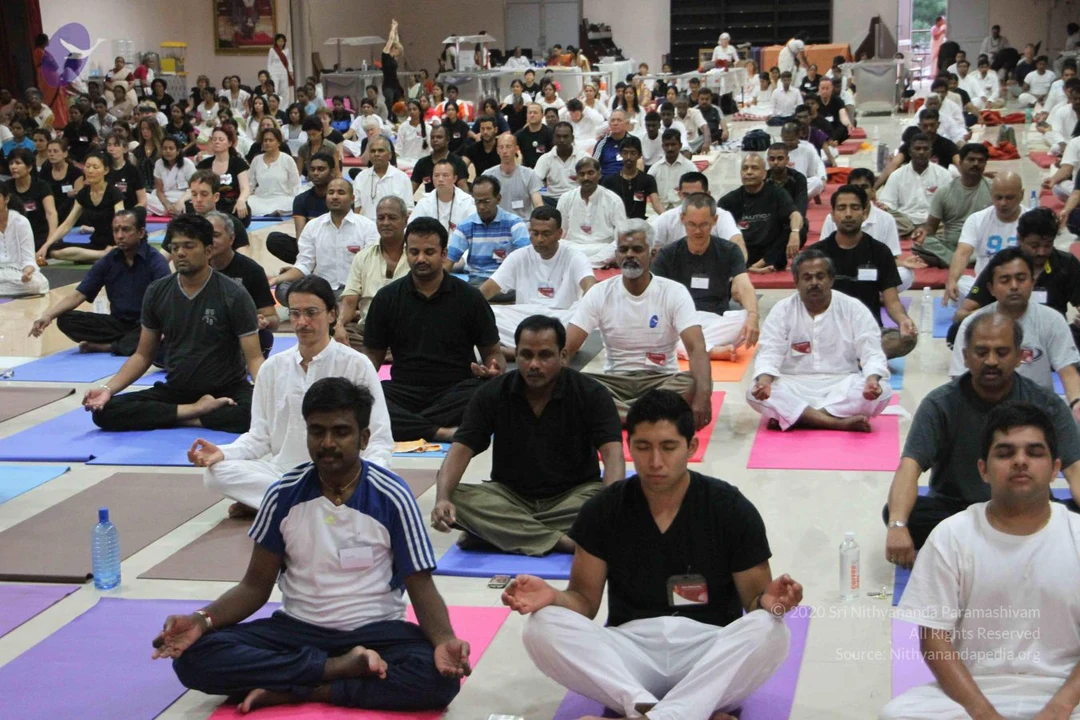
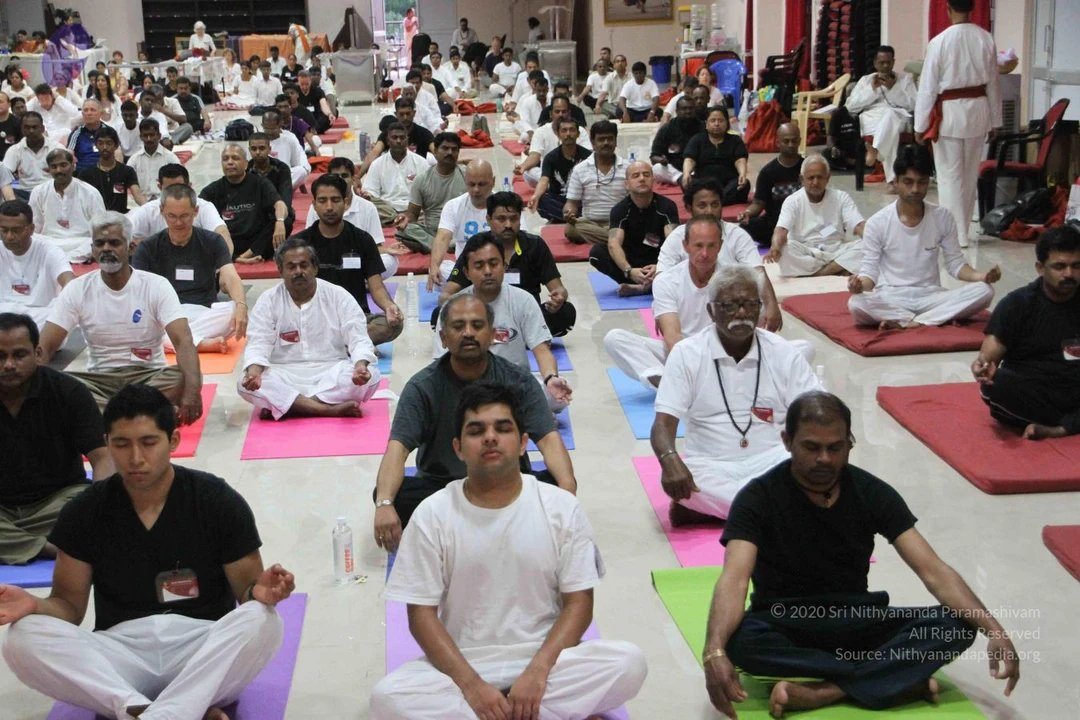
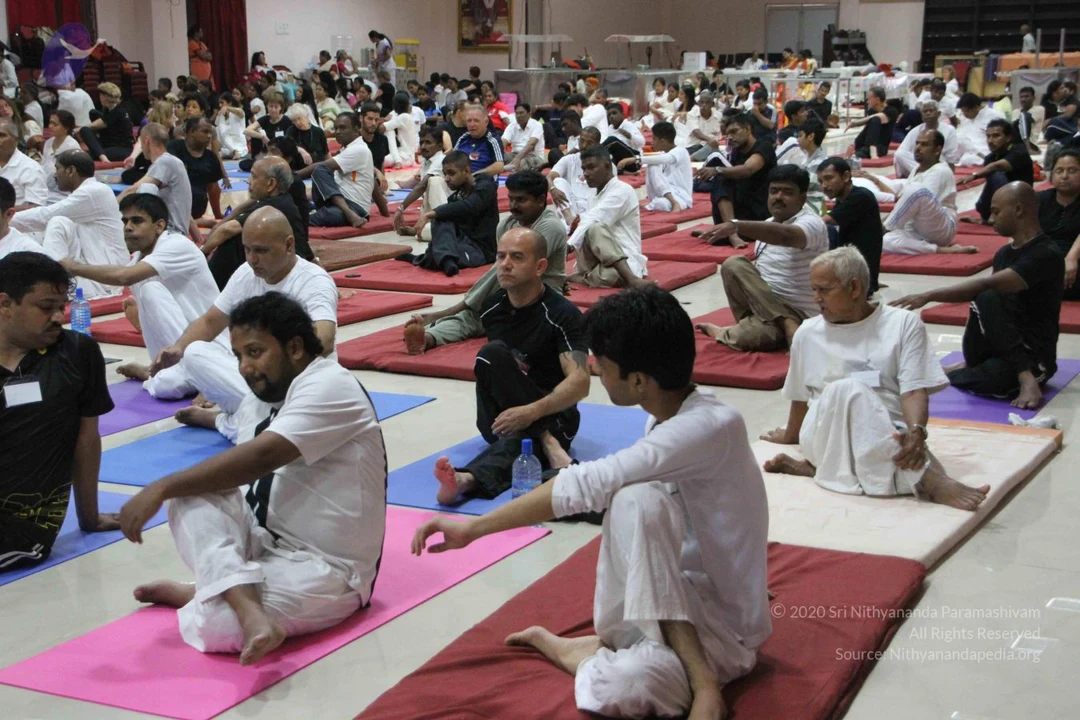
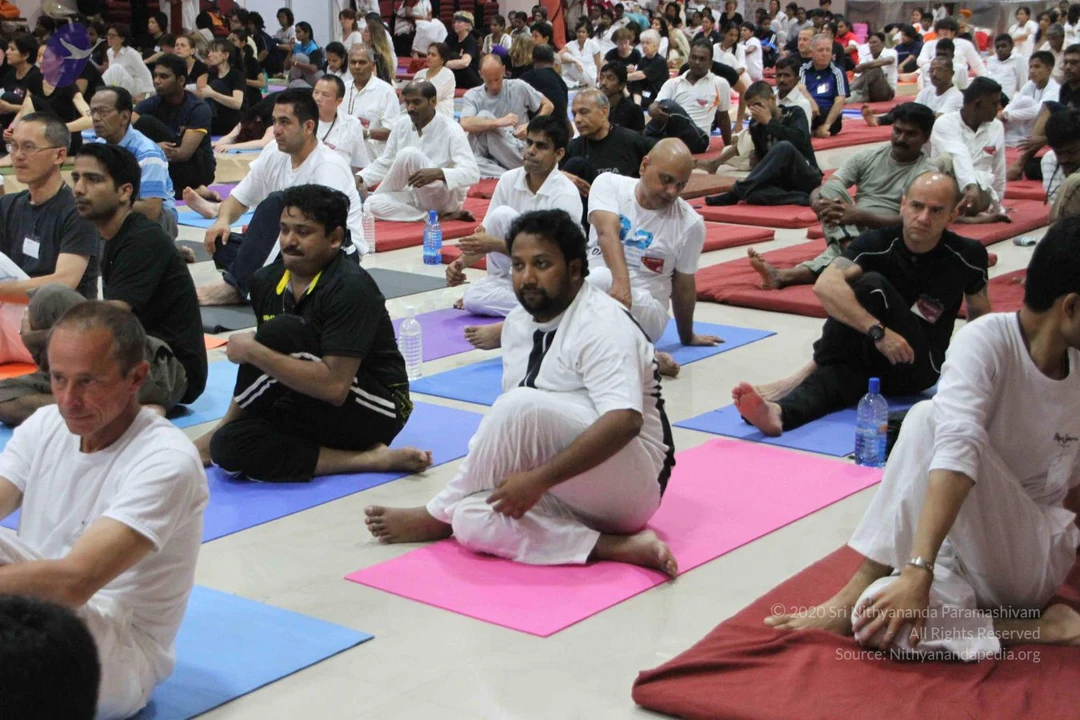
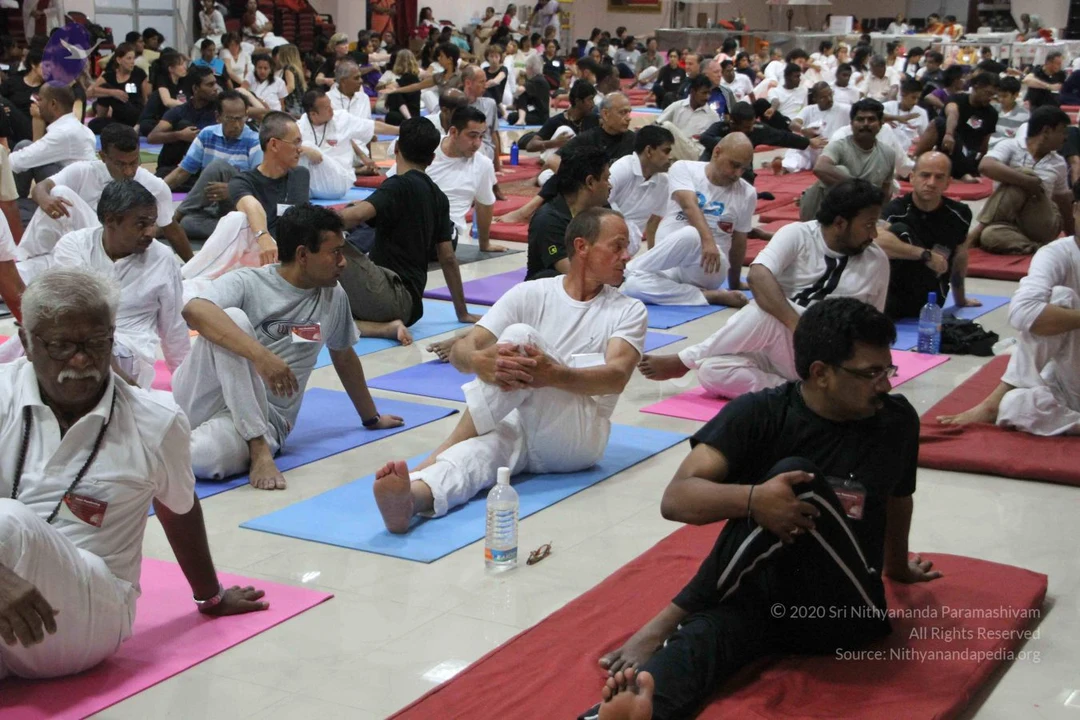
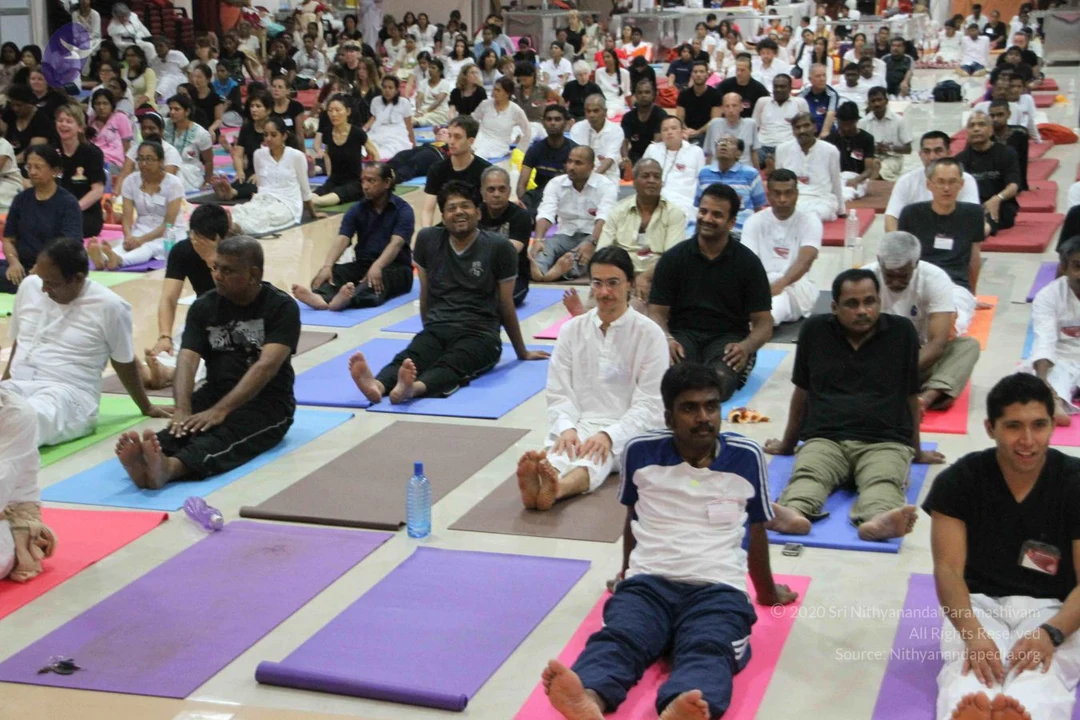
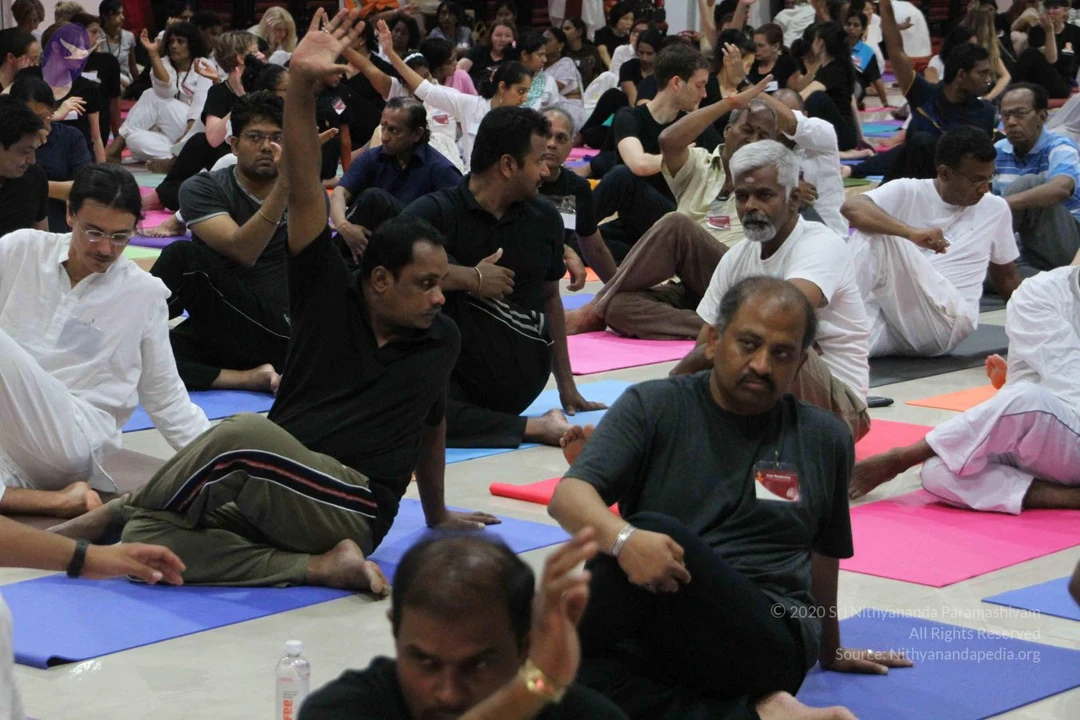
Understand! Get it! Get this truth! If you don’t practice Authenticity, you will be practicing slow suicide. There is only two ways of life: either you go on expanding you, practicing Authenticity, exploring OR you will be practicing slow suicide. First, your mind will say, ‘Oh, every morning I have to come for yoga, Paada Pooja, what is going on?’ Then you will come and sit, and do the yoga. I have seen people doing yoga. Yoga should be done as bhoga, not as roga! Yoga should be done as an enjoyment, excitement, not as a roga, disease. The excitement you radiate in your body, the whole bio-memory should be alive! Whole intelligence should be alive, up! Practice constantly exploring, constantly exploring, constantly exploring! If you are doing yoga, explore the different possibilities of your body. The ability to bend, make your body strong, flexible. If you are sitting in paada pooja, explore your emotions, heart.

15:21

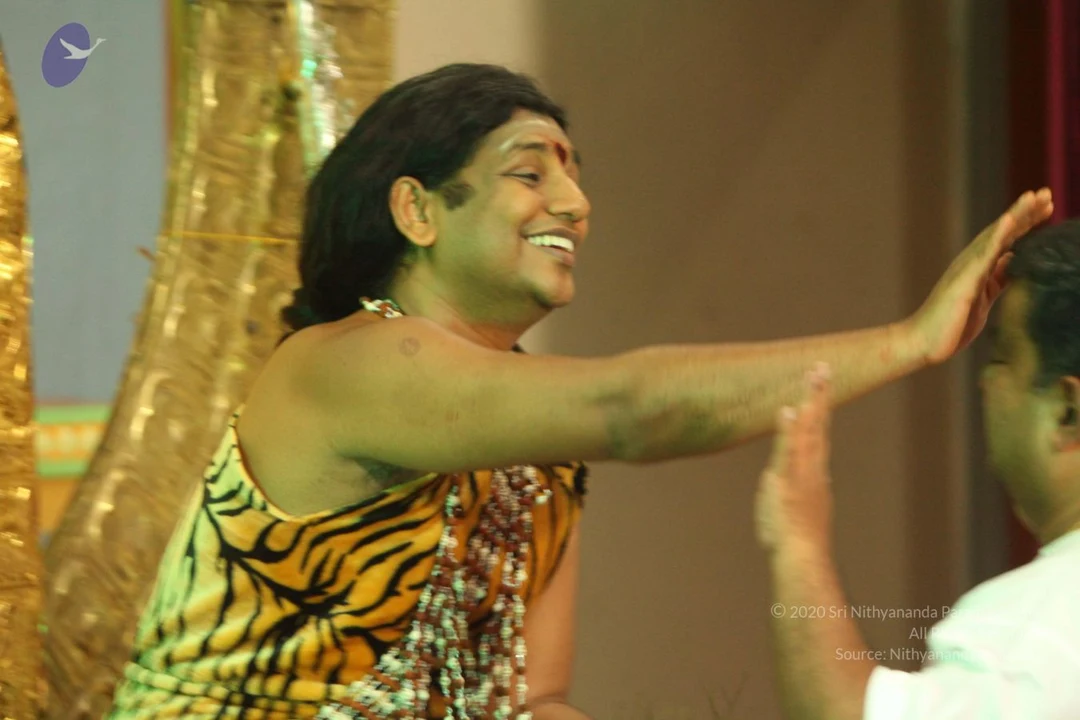
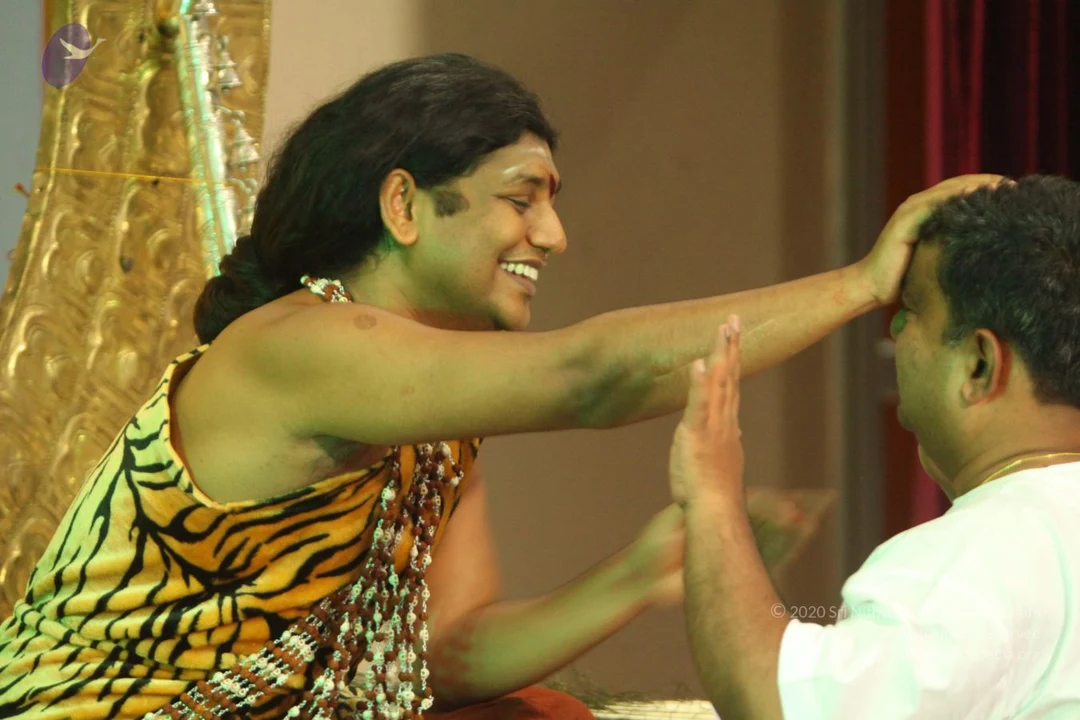
Somebody told me yesterday in the energy darshan, ‘Swamiji, I have developed such an intimate, close relationship with you through the computer watching your discourses. When I come near you, see you, actually I feel distanced! Because, you know so many people by names, I feel they are all getting your attention, not me!’ In Hindu tradition there is a concept called “atma moorthy” – my own version of Shiva. Atma Linga. Means, He is just my version; nobody else is allowed. That is the beauty of Hinduism!

Please understand, you can have your own version of God – that is atma moorthy. When you go to temple, you cannot push your possessiveness on atma moorthy, on the temple deity. That is for all! Understand! You can have your own laptop and screensaver with whom you talk whole day and night. How many of you have that habit of talking to my photograph? (People raise their hands). See! Great! Actually, it is called “ishta nishta”. Leela Dhyana! Bhagavatha acknowledges this process as a very powerful spiritual practice. That having your own version of the Guru or God, and relating is a very powerful process! It is called “Leela Dhyana”. Literally living with him!

What I did with my Ganesha; See my Ganesha ate. But I cannot go to the temple and make that Ganesha eat. Because, the temple Ganesha belongs to whole world. I cannot tell the temple Ganesha, ‘I will put you in the well!’ But, my own version of the Ganesha, I can play with him. I can say, ‘I will put you in the well!’ I can do anything I want! I tell you, with your atma moorthy the spiritual life starts. But you should take care you don’t lose that feeling connection when you go to the temple moorthy also. You should understand temple moorthy has space for everyone!

The problem is, listen, problem is, in your inner space if you have one person, you don’t have place for anybody else! That is why you go on believing I am also like that! You are a house connection; I am a transformer! Understand! In your house the electricity connection you have you can use it only in your house. It cannot light up the whole city! But you cannot have the same idea when you go to the transformer! You are a house connection; I am a transformer! I have place for everyone!

19:49

Listen! When you explore more and more, deeper and deeper dimension of your heart, life will be so exciting, joyful! I have seen people who are lost during the Paada Pooja! Whole day they will be so active, alive, because still they are in that feeling-connection, they are exploring that feeling-connection. Still their honeymoon is not over! Still their joy, their life, their devotion aspect is not over! Blessed are those whose feeling-connection continues to explode, explode and explode! Unfortunate are those whose feeling-connection ends, whose possibility for exploring ends!

I know if somebody sleeps during Paada Pooja, whole day his life is in hell; he is in depression! Because, what else is there? Such beautiful moment if you are not able to explore your heart! See, only if you have that attitude of that atma moorthy, having your own version of me and talking to it, sometimes fighting with it; you cannot have one God for Paada Pooja, one God for fighting. Both you have to do with one person only. Of course, he hits back very strongly, don’t worry! I will never be a victim just because you fight with me. THU! I will give back! I am not going to be taking it. But, only with that….!

22:26

In Narada Bhakti Sutras, there is a beautiful word, Narada’s aphorisms of bhakti explains the spaces a devotee travels during the journey and how to keep the practice alive. How to keep the bhakti kindled, rekindled, alive. I tell you, when the bhakti is alive, you will see, continuously you are showered with miracles! Not only you have the problem, ‘When I am far away, I have such a strong feeling-connection; when I come near I have so much fear and feel intimidated!’ How many of you have this problem? Raise your hand! (People raise their hand). HAHAHAHAHAHA!

Even Meera had this problem! Andal had this problem! Meera had this problem! Andal had this problem! But this is not a problem. It is like a….when you get too many orders in your industry and you are not able to supply that level, it is a right problem to have. Understand! Wrong problem is not having any order and you are just empty! That is the wrong problem! There are some problems which are right problems to have! This problem is a right problem! So don’t worry! But just because of this problem, don’t allow the feeling-connection to reduce. Continue with this Leela Dhyana. You will see the power of your Leela Dhyana moves even the temple deity and makes the temple deity responds to you as you want! See, temple deity shows as if it doesn’t even know you and it doesn’t responds to you, just to see the depth of your Leela Dhyan! Whether still you will strengthen your Leela Dhyan, or ‘Oh, you will not respond to me? Then I also don’t care!’

‘If you don’t care, I don’t care!’ - is inauthentic attention-need! Not devotion or love! ‘Whether you care or not, I take the responsibility to build the bridge between you and me!’ is authentic devotion! Paada Pooja time is the space for exploring that possibility. Exploring that possibility! Exploring that practice! Understand? Practice, Exploring, keeps the possibilities alive!

26:17

I used to do this. I used to have a Shiva Linga in the house and do pooja every day. I have read in many of the saints’ lives, the flower they offer in the house doing Shiva Pooja will be there suddenly on the temple deity! And the king will find out! And he will call and recognize the great devotion of a devotee! We have lot of stories, you see, like that. Poosalaar Naayanaar who built temple inside his visualization; Means, just through his Leela Dhyaana!

God himself went and appeared and told the king, the temple king built, God said, ‘Don’t do inauguration on that day; I am too busy in attending another one function.'

He said, ‘What, what, what function?’

‘No, I have given my appointment for attending the inauguration ceremony of the Poosalaar’s temple.’

As if God cannot attend both the functions at a time! He just wants the world to know, the word moves the world! The space you carry can move the world! I used to think. I used to play with that deity. And every day I select one particular bel or flower and offer it to him; then run to the temple and see whether it is there on the deity or not; whether it is there on the temple Shiva or not; whether it reached him or not! I have never seen even once the same flower appearing there. But, I tell you, that excitement and exploring of that Leela Dhyan has made me realize that the flower I offered to my deity, it may not appear on the temple deity, but it has reached the main deity itself!

Listen! Constantly exploring in every field you spend time, is ‘Practice’! If you are spending one hour with your family, get to know each other! Not that you will be staring at the TV and Facebook! Sit with others! Get to know each other! Explore the possibilities of each other! How, one another can support the other’s fulfillment! Don’t be like street dogs! If you see the street dogs, even if they live together for seven years in the same street, the way they relate is Grrrrrr! Grrrrr! Grrrr! Grrrr! That is their way of saying Hello! Every morning this fellow wakes up and that fellow wakes up Grrrrrr! Grrrrrr! No! Explore the other person! He may be your son, brother, sister, spouse, daughter, mother, father. Listen!

31:18

Exploring every dimension of your life for which you spend your time is ‘Practice’! Even while you are attending your patient, if you are a doctor, you are attending a patient, look at the whole patient. Don’t say, ‘I am a lung specialist! I am going to look at only lungs! Let him have diarrhea and die! I don’t care!’ No, that is what all the research scientists are doing! Do you know? I was studying. I wanted to do some scientific researches and I wanted to record medically, scientifically the powers of meditation and initiation, Kundalini awakening. Already I have proved that Alzheimers can be healed by the Kundalini awakening by healing many patients. But I wanted to scientifically record.

So, I was studying the Alzheimer research field – the people who are doing research on that Alzheimers, people who are doing research on Parkinsons – I was studying their papers and their purpose, motto, vision, who is doing, how they are trying to record, how the trials are done. You will be shocked! The only purpose of that people who are doing research on Alzheimers is, they are saying, ‘If we somehow postpone Alzheimers, the Alzheimers and Parkinsons death five years’, means, at least, five years they should not die of Alzheimers and Parkinsons, ‘they will have some other disease and die! That is not our problem! The patients will have in that five years some other disease and die! That is not our problem!’ What a narrow purpose, you see. And you call them as scientists and you believe them! Good punishment!

When the Vedic Rishis who can see the things holistically and who don’t have any vested interest, when they say, ‘You say, no, no, no, no, no! It is not scientific! It is all old stuff! Mom, keep it for you! Don’t put it on me!’ You want to go for cool stuff nah, go! All your cool stuff is fool stuff, understand? No, the very aim of these guys is just to push the death through Alzheimers and Parkinsons five years more! It is all boiling down to statistics and reports and….! It is….the aim is not to look at human-beings as whole! If you just remove all the holes in the medical field, we will know Whole!

34:52

Listen! So what these people who do research and pharmaceutical companies are doing? They only push your death! They try their best to just push your death little away and make sure that you don’t die out of this disease! That’s all! They want to just postpone the onset of disease for which they have not yet come up with any cure, so that the patient can get some other disease instead and die! That is life! That is life!

When you are attending a patient, look at him as whole! Expand your possibility. What you mean for him, fulfill his anyakaara. Life will not be boring. If you think, ‘Why should I fulfill his anyakaara?’, then die! Life will be boring! If you fulfill others anyakaara, life will be exciting! If you fulfill only your own anyakaara, you will shrink, shrink, shrink, and die in boredom!

In every step of life, explore. Exploring is ‘Practice’. Whether in your profession, or relationships, spiritual practice, knowledge accumulation; if you are reading only your syllabus, you are never going to be successful! You may pass exam, but you will not be successful! The kid who is educated only in the school, is uneducated! Understand! This is the statement of the day! The kid who is only educated in the school, is uneducated! Means, he has not explored the possibilities of life. He has not explored the possibilities of life.

(HINDI)

39:07

I have a story:

Patient comes to a doctor with cold.

Doctor says, ‘Stand outside in the snow at night for three days.’

Patient says, ‘Won’t I get Pneumonia if I do that?’

Doctor replies, ‘But you see, unlike the Common Cold, I know only how to cure Pneumonia!’

Because, the cure for Common Cold, he left it in choice in examination!

(HINDI)

Everything you do, even eating, if you don’t explore the different possibilities, it will be boring! Even sleeping, if you don’t explore the depths of the sleep or decide to explore the depths of the sleep, you will be so bored, you will start suffering with insomnia, sleeplessness! As long as you continue to explore, you will be practicing life. As long as you practice life, life practices you. Means, keeps you alive! When you stop practicing life, life also feels you are useless; no need, no need to keep your body alive anymore!

44:44

Practicing! Practicing! Practicing the different possibilities! Practicing every inch! Try to explore the different ways of dressing. Try to explore the different ways of brushing. Every small, small things in your life, the small things like brushing your teeth, to great things like sitting and unclutching for enlightenment, in everything, explore, explore, explore. Exploring keeps the practice alive! When the practice is alive, you are enlightened! Listen! Enlightenment is not end of the practice. When you learn to keep the practice alive forever, you are enlightened! Keeping the practice alive is enlightenment.

(HINDI)

Exploring life is practice. Unfortunately you have been taught, you can’t explore the field of emotion, excitement; it has to come by itself, you cannot explore. No! You can create anything, including your own consciousness, then why not your emotions? It is you who create it! I am not born with devotion; I created it! Devotion is one of the best way to be eternally excited in life. Devotion keeps you in eternal excitement. I don’t need anything. Just if I morning I go and see Nithyanandeshwara and the Banyan Tree, I am excited. And this Bhairava, this fellow, the morning the moment he comes and sees me, he is excited! He jumps all around! So understand, devotion keeps you eternally excited! Devotion keeps you eternally excited! Understand this! That is why atheists are so boring, so dull, colorless, dead!

49:46

When I went to Melkote, I understood what devotion can create! God! He has created an empire thousand years before in that dense forest, purely out of devotion! Understand, just purely out of devotion! Only devotion creates! Devotion makes you explore deeper and deeper dimensions of life. If the temple of that city or village, town is alive, I can say, the collective mental health of the village is alive! The collective mental health of the village can be measured only by the health of the temple, the way the temple is functioning; because that is the symbol of the collective devotion, mental health, the excitement of that village. Devotion excites you, helps you to explore the different possibilities of life.

I tell you, I tell this as my command to Dhyanapeetam, Nithyananda Dhyanapeetam and my Sangha, in every city, the way our temples function only will tell the way our devotees health and the excitement to explore life. I can see very clearly; no, any temple, I can say that the way the temple is flourishing very clearly will show the way those people are excited in their life. I have seen all the successful temple heads are successful in their business, in their profession, in their family, in their whole life; because devotion excites you to explore life.

I give you this word, as long as you guys continue to build temples and run, you will be alive. The day you stop building temples and stop running temples, you will be dead. So, to keep yourself alive, continue to build temples. And keep it running, up alive, with excitement!

The essence of today’s satsang is:

Explore! Explore! Explore, everything you do in your life, from brushing your teeth to cleaning your garage, to sitting in unclutched space for enlightenment! In everything; for whatever you spend time, spend your energy and explore it, so that you practice life, you are excited about life, you are alive! This is the essence of today’s satsangh.

(HINDI)

Title

Who Am I? || Part 1 || Inner Awakening || 11 May 2013

Description

This video is an excerpt from Inner Awakening on Day 4, 11 May 2013 in Adi Kailasa. In this video, the Supreme Pontiff of Hinduism HDH #Nithyananda Paramashivam shares the topic of Manakara and Swa-anyakara to Inner Awakening delegates.

The Supreme Pontiff of Hinduism Jagatguru Mahasannidhanam His Divine Holiness Nithyananda Paramashivam (HDH) is the reviver of #KAILASA - the ancient enlightened civilization and the great cosmic borderless Hindu nation. Revered as the incarnation of Paramashiva - the primordial Hindu Divinity, HDH has a following of 2 billion Hindus worldwide with de facto spiritual embassies in over 150 countries. He has worked untiringly for over 26 years for the revival of Kailasa, for global peace and to give super conscious breakthrough to humanity. He has survived the worst persecution of multiple assassination attempts on person and on character by anti-Hindu elements. He is collecting, organising, preserving, time capsuling, decoding, spreading and reviving 20 Million source books of Hinduism and the 64 sacred arts & sciences like Ayurveda, music, dance, sculpting, astrology, vastu and much more. Close to 20,000 hours of HDH’s timeless talks have been recorded till date (Sep 2020), which are a treasure trove of powerful cognitions to solve individual and global problems of any kind.

VideoAudio

Title

Who Am I? || Part 2 || Inner Awakening || 11 May 2013

Description

This video is an excerpt from Inner Awakening on Day 4, 11 May 2013 in Adi Kailasa. In this video, the Supreme Pontiff of Hinduism HDH #Nithyananda Paramashivam shares the topic of Manakara and Swa-anyakara to Inner Awakening delegates.

The Supreme Pontiff of Hinduism Jagatguru Mahasannidhanam His Divine Holiness Nithyananda Paramashivam (HDH) is the reviver of #KAILASA - the ancient enlightened civilization and the great cosmic borderless Hindu nation. Revered as the incarnation of Paramashiva - the primordial Hindu Divinity, HDH has a following of 2 billion Hindus worldwide with de facto spiritual embassies in over 150 countries. He has worked untiringly for over 26 years for the revival of Kailasa, for global peace and to give super conscious breakthrough to humanity. He has survived the worst persecution of multiple assassination attempts on person and on character by anti-Hindu elements. He is collecting, organising, preserving, time capsuling, decoding, spreading and reviving 20 Million source books of Hinduism and the 64 sacred arts & sciences like Ayurveda, music, dance, sculpting, astrology, vastu and much more. Close to 20,000 hours of HDH’s timeless talks have been recorded till date (Sep 2020), which are a treasure trove of powerful cognitions to solve individual and global problems of any kind.

VideoAudio

Photos
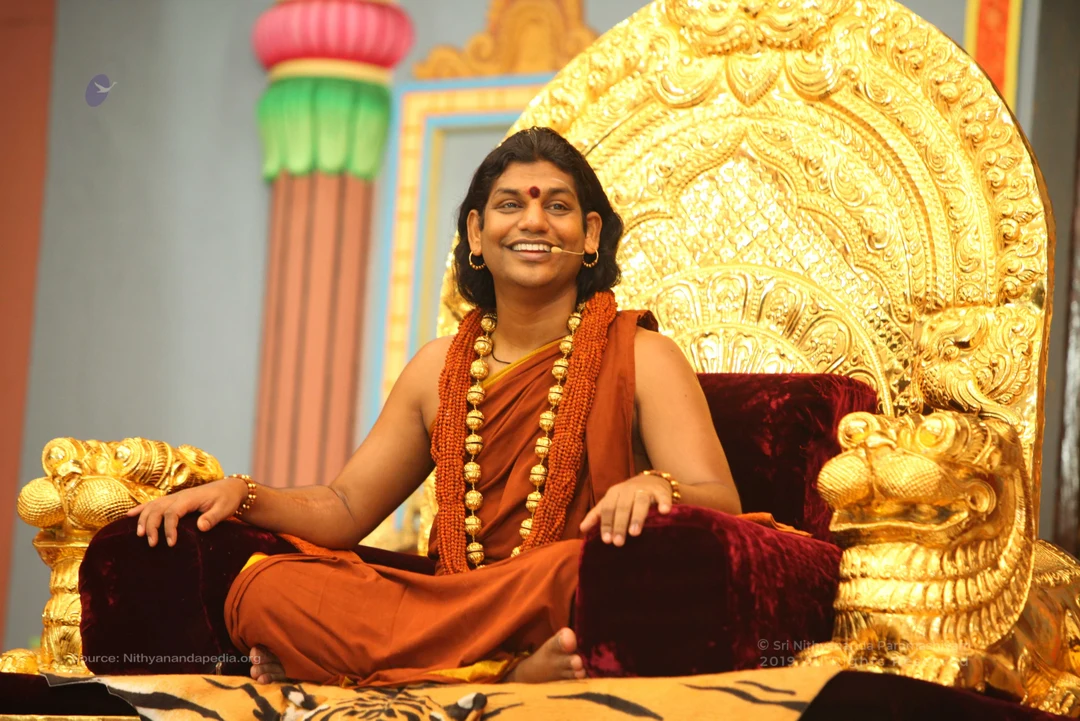
Inner Awakening

PHOTOS

Nithyananda Times

Fb link

https://www.facebook.com/srinithyananda.swami/posts/187320518089622

Photos Of The Day:
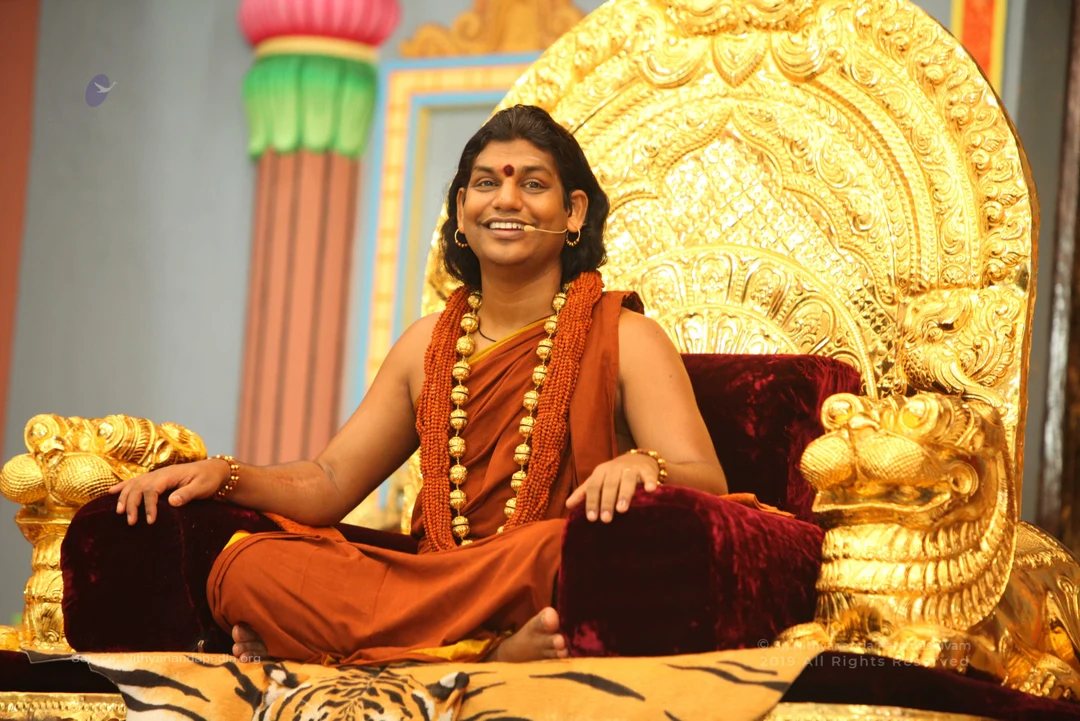
Nithyayoga

Padapooja-Templetour

inner-awakening

Photos Of The Day:
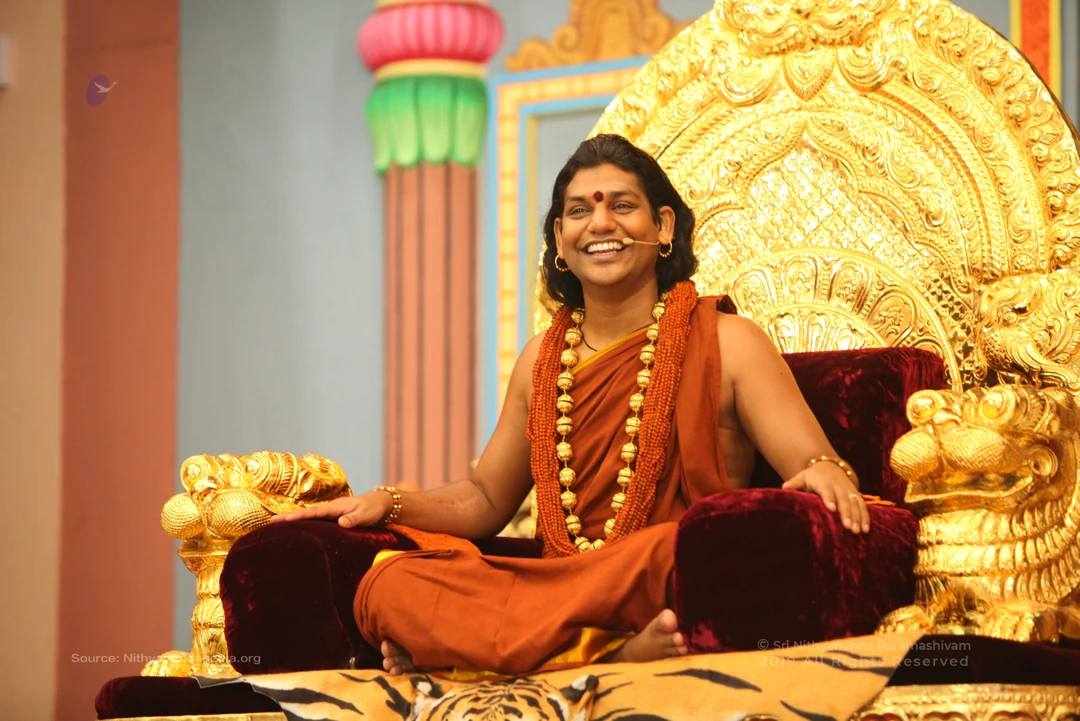
NITHYA-YOGA

TEMPLE

PADA-POOJA

NITHYA-SATSANG

SARVA-DARSHAN

HDH-conducting-inner-awakening-session

INNER-AWAKENING-SESSION

AKASHIC READINGS

AKASHIC-READINGS-BY-KALABHAIRAVA

KAALABHAIRAVA-DARSHAN

Photos Of The Day:
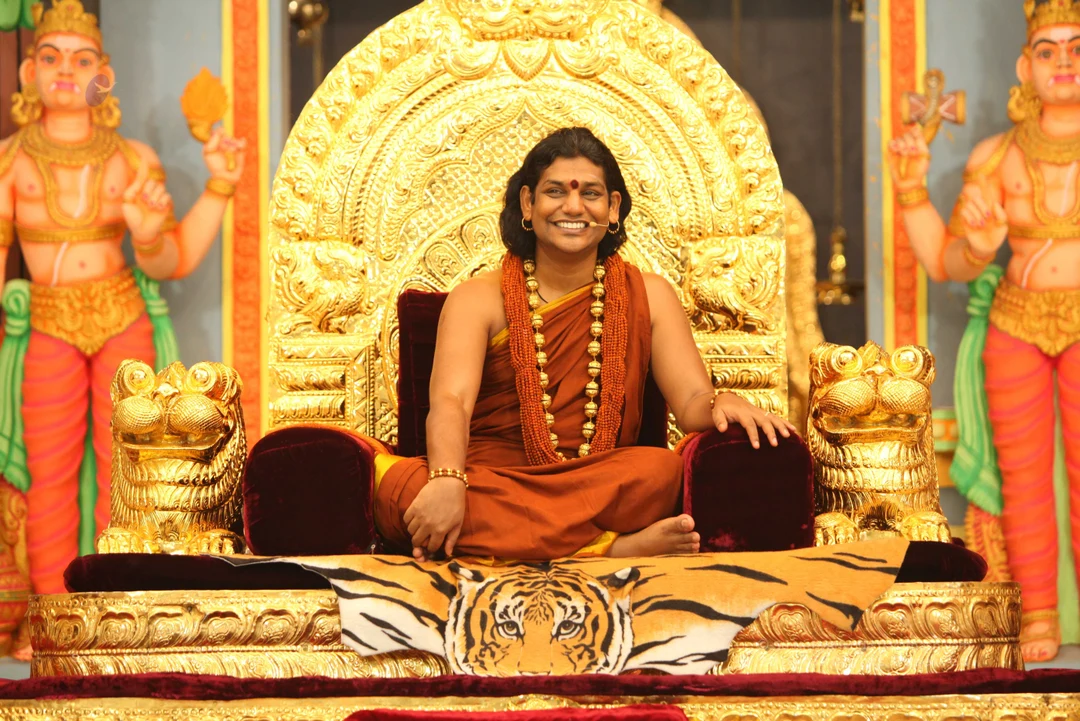
Inner Awakening Session

Photos Of The Day:
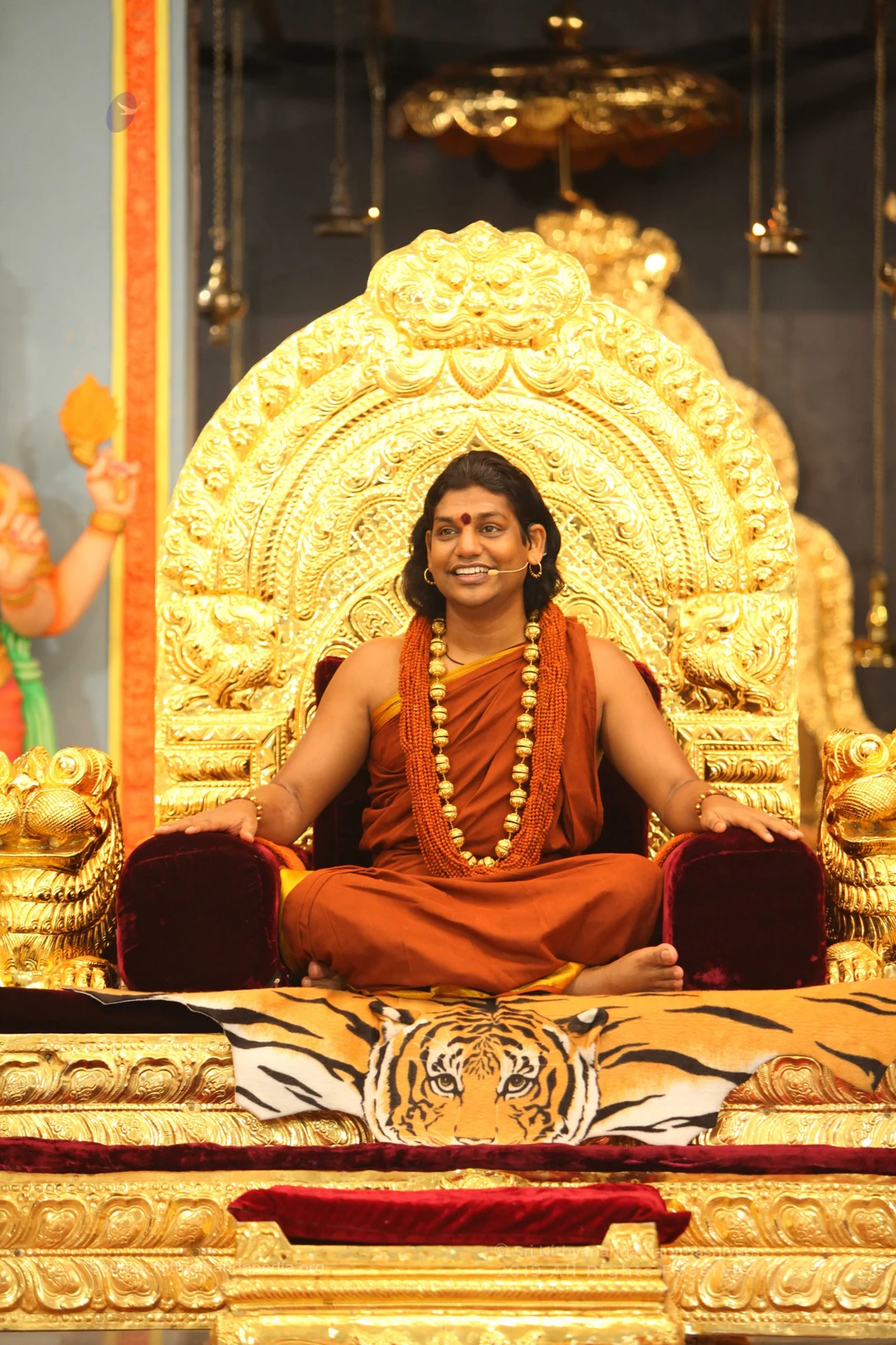
Pada-Puja

01-Pada Pooja

02-IA Session

Photos from this day
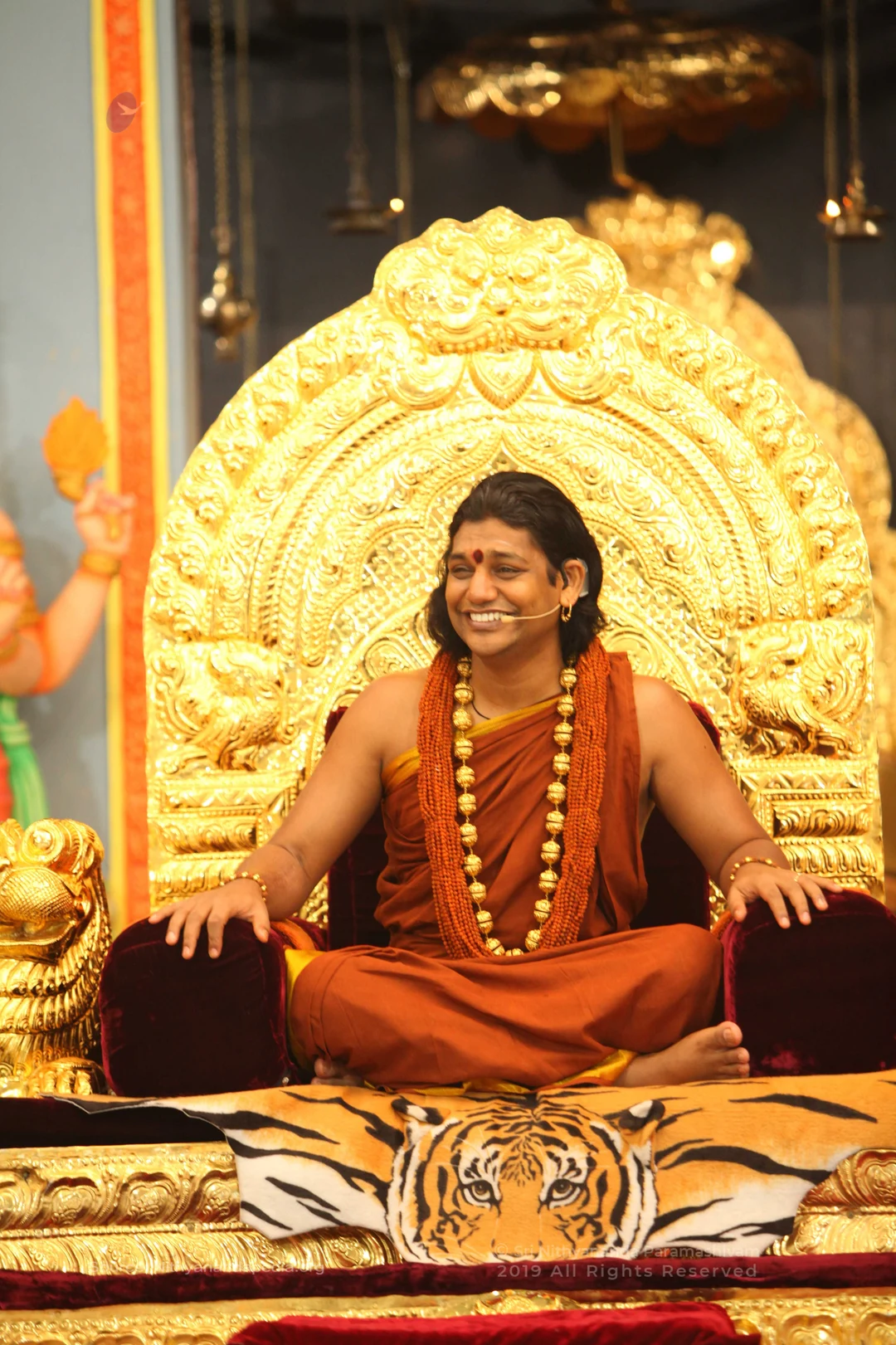
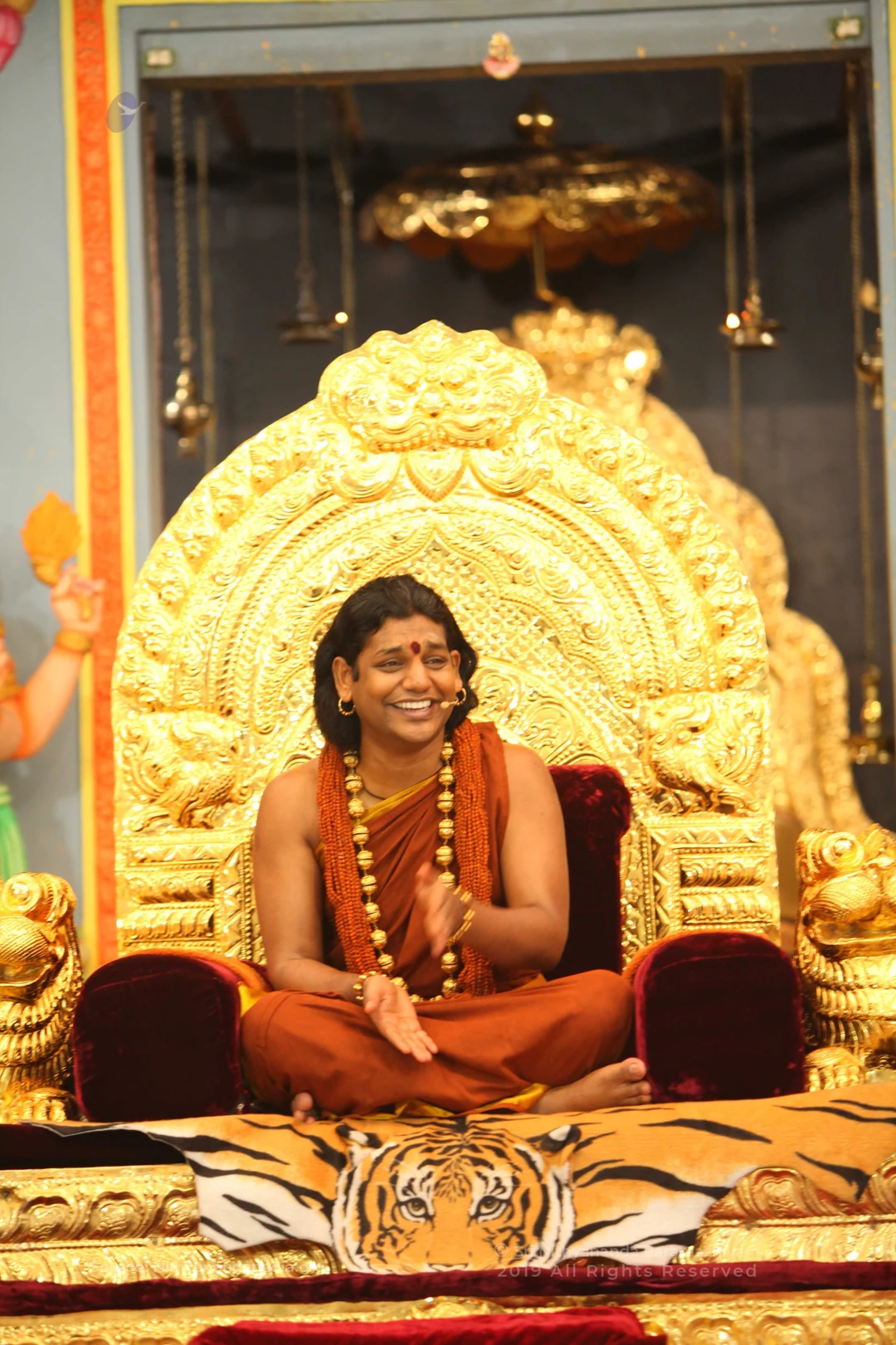
View all 683 photos

Photos

12 photosSource gallery

Nithyayoga

26 photosSource gallery
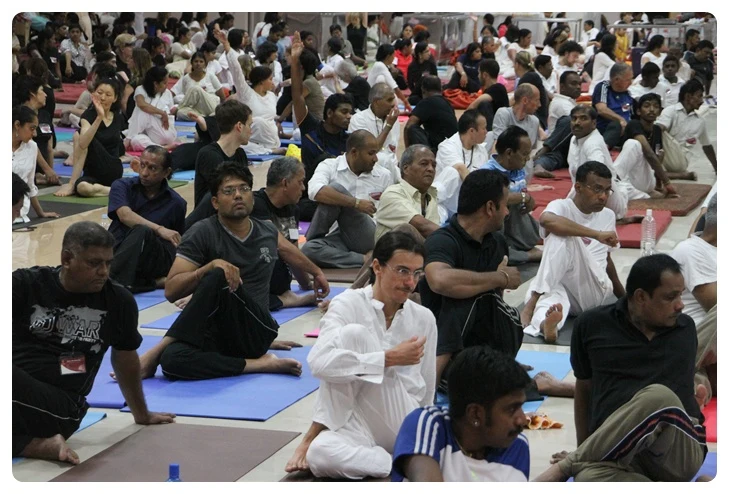
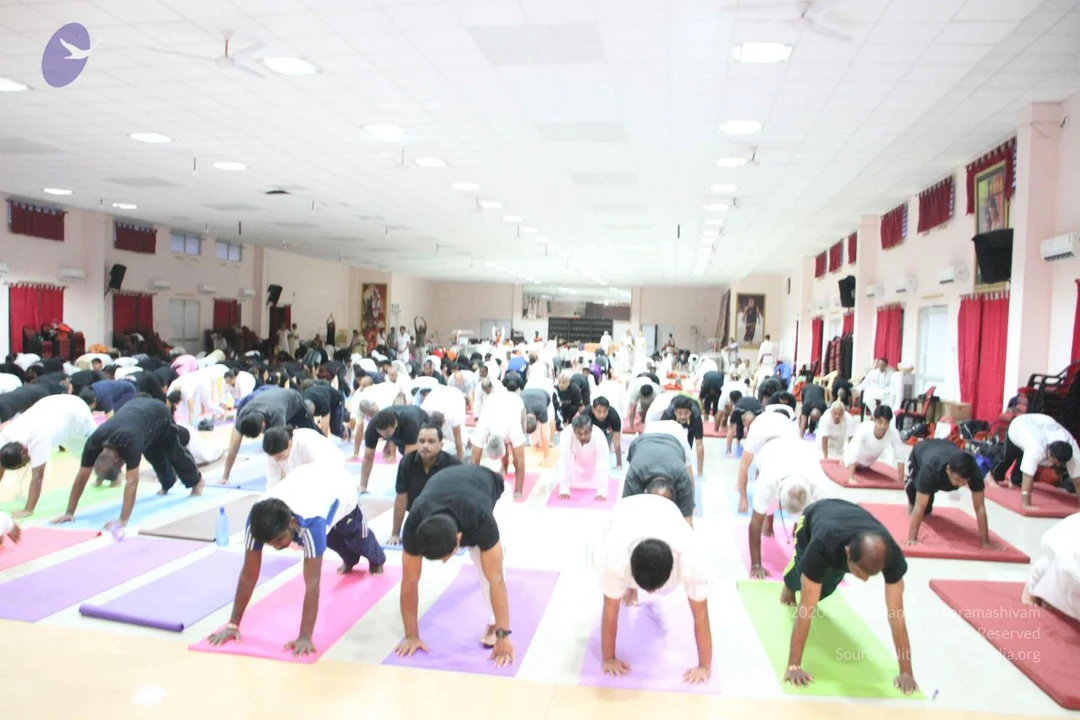
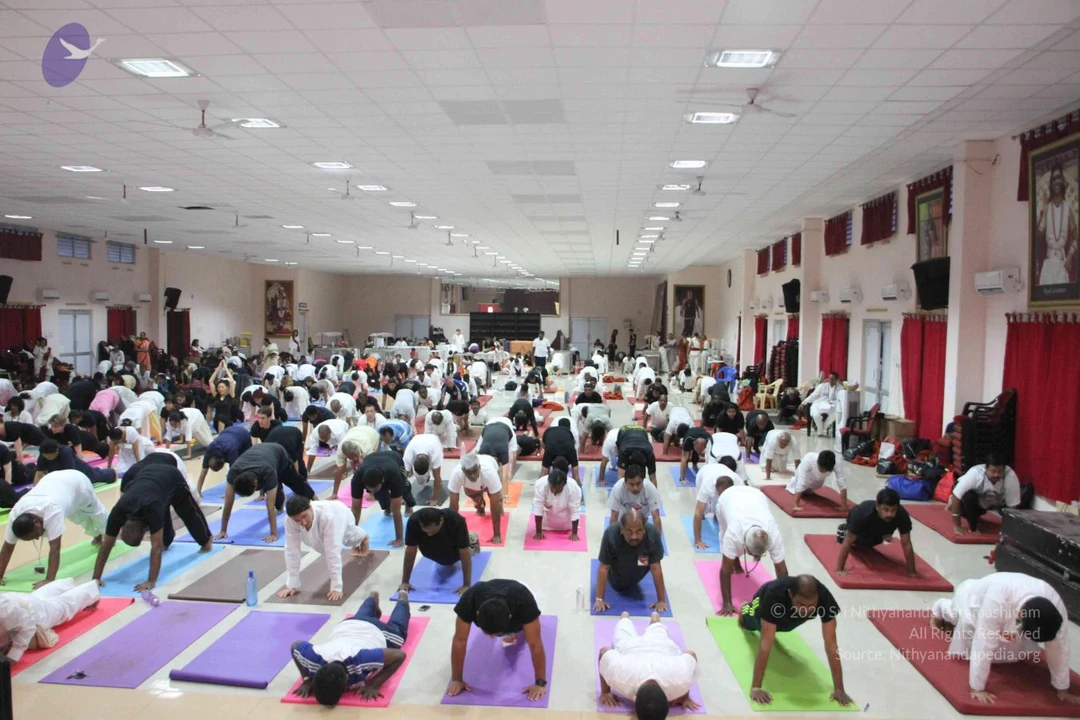
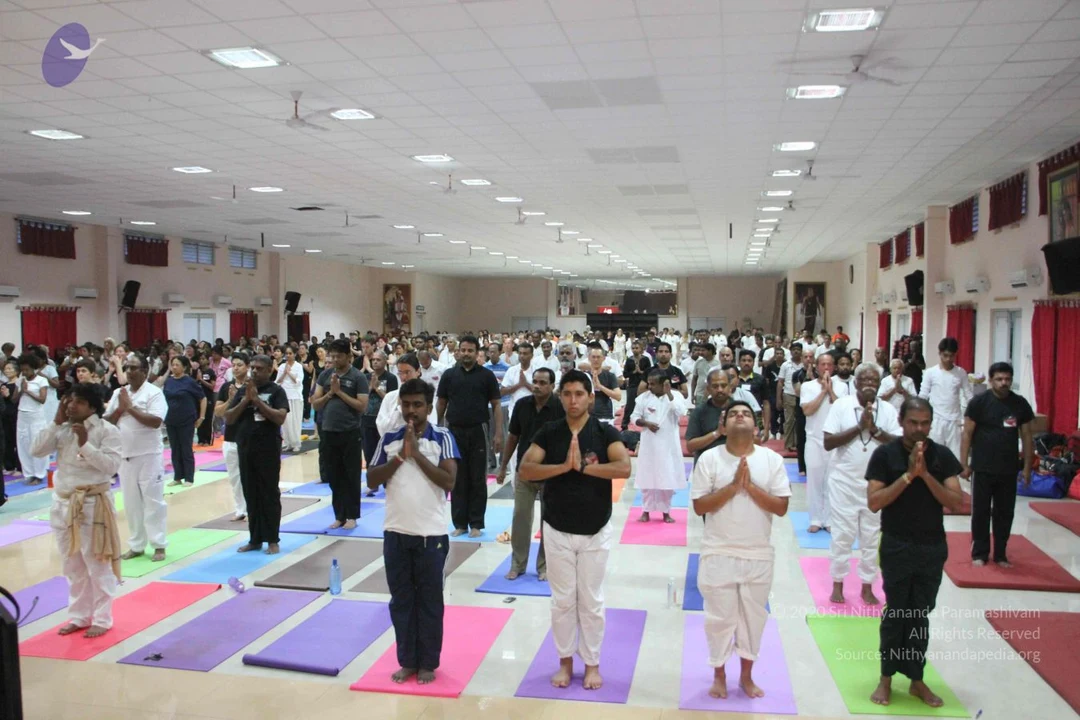
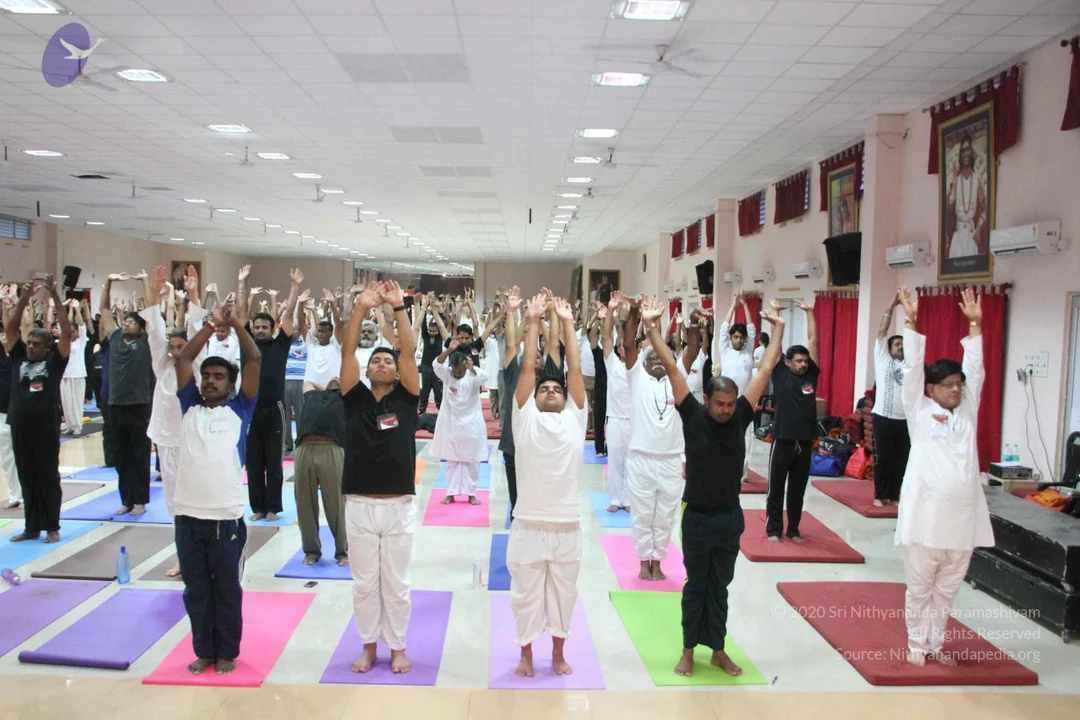
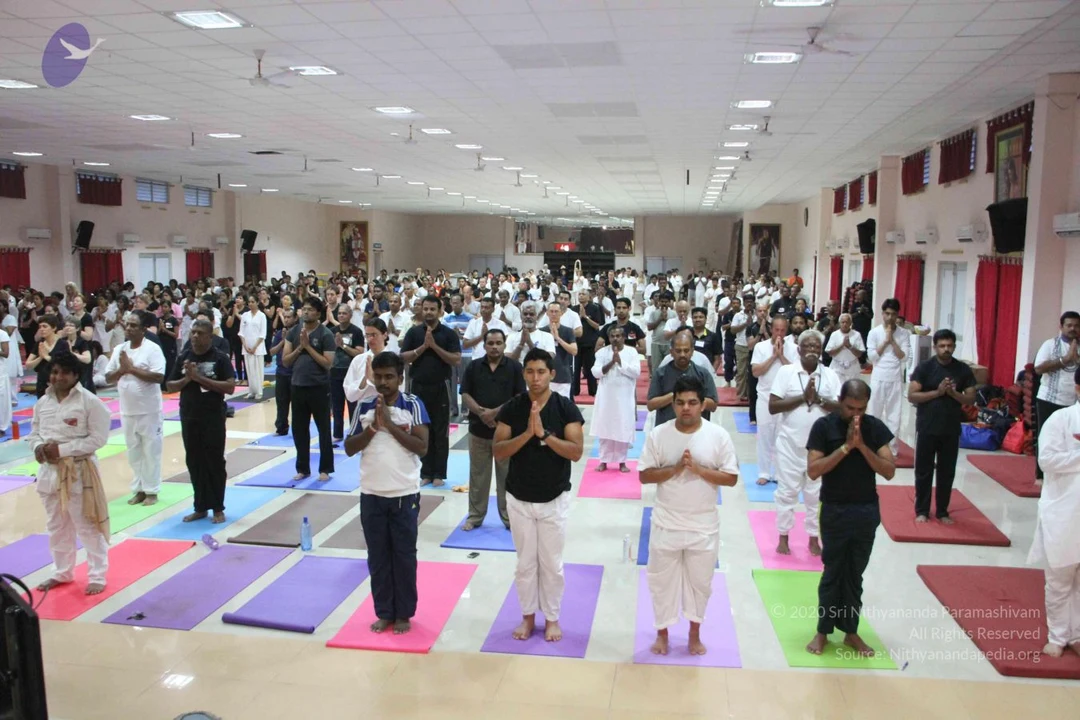
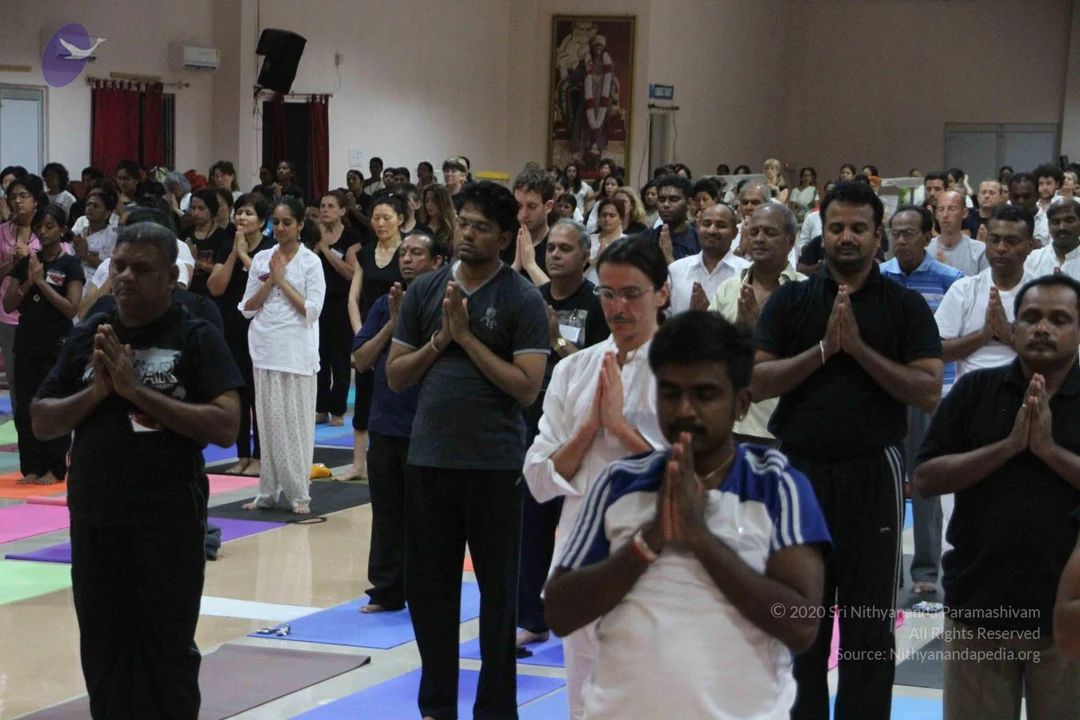
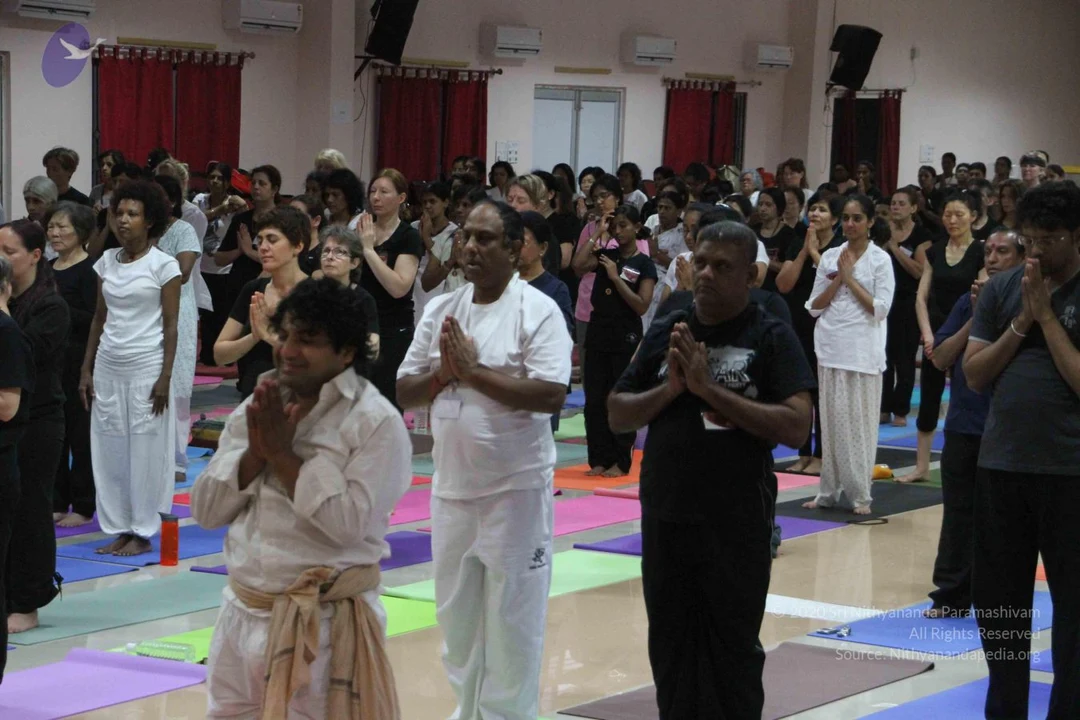
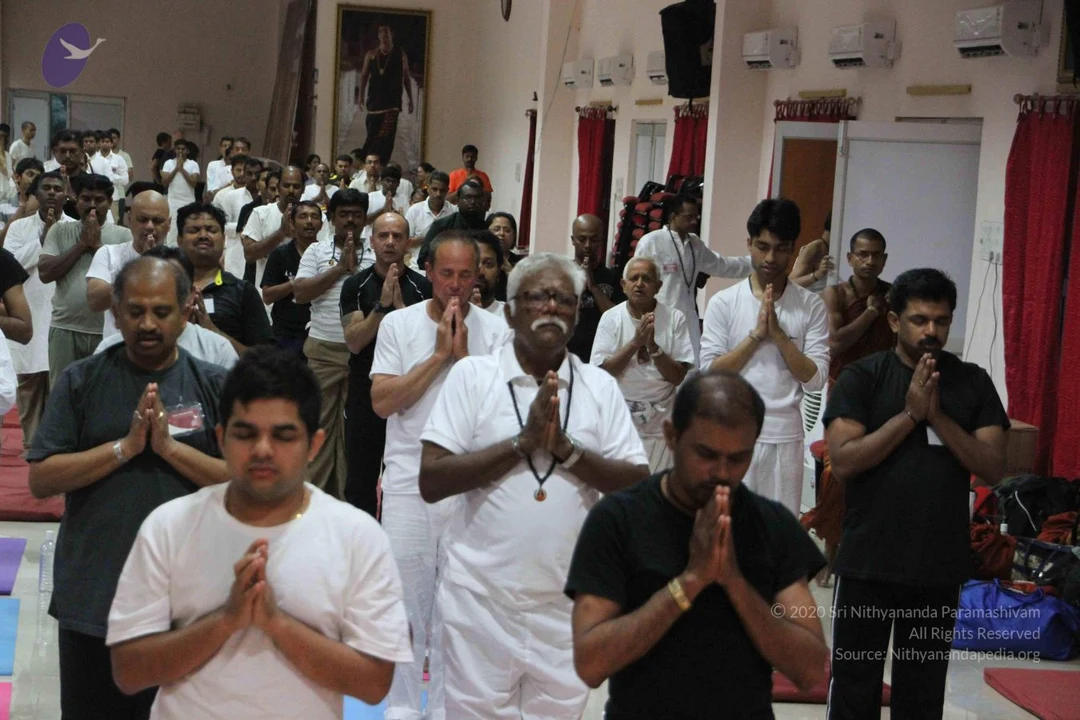
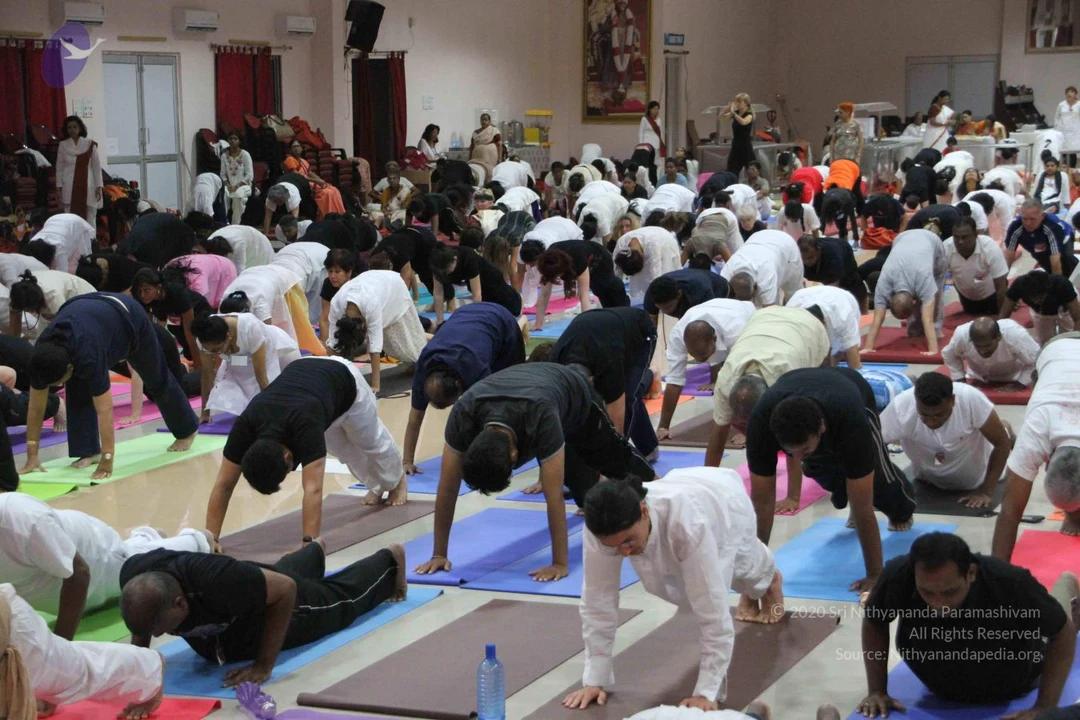
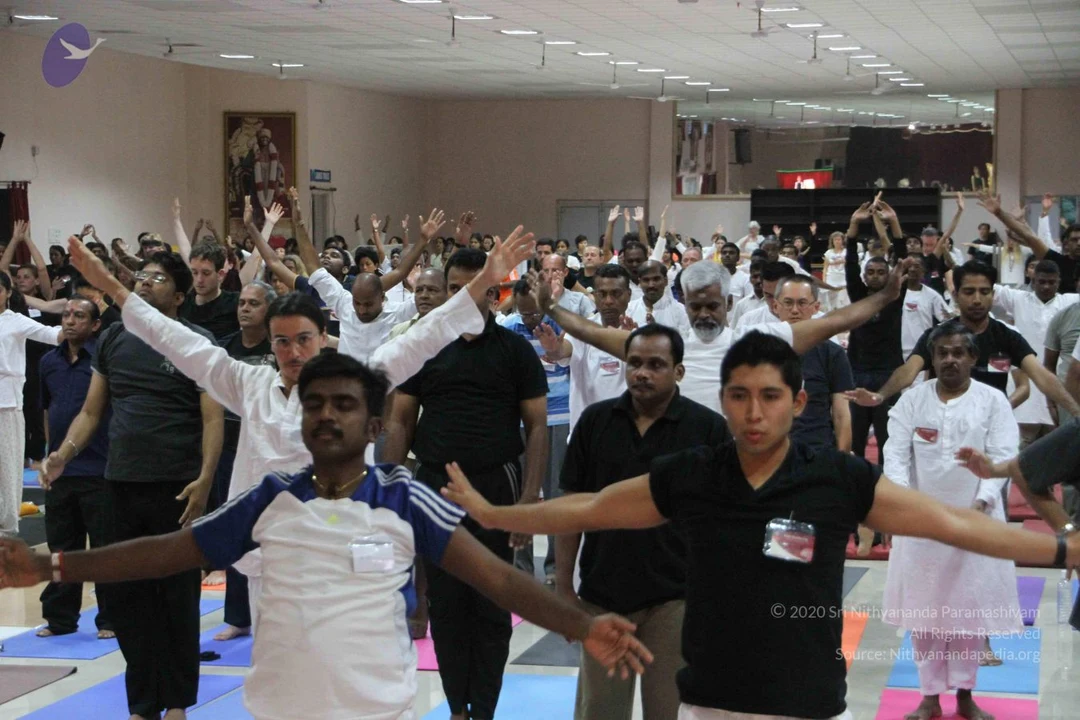
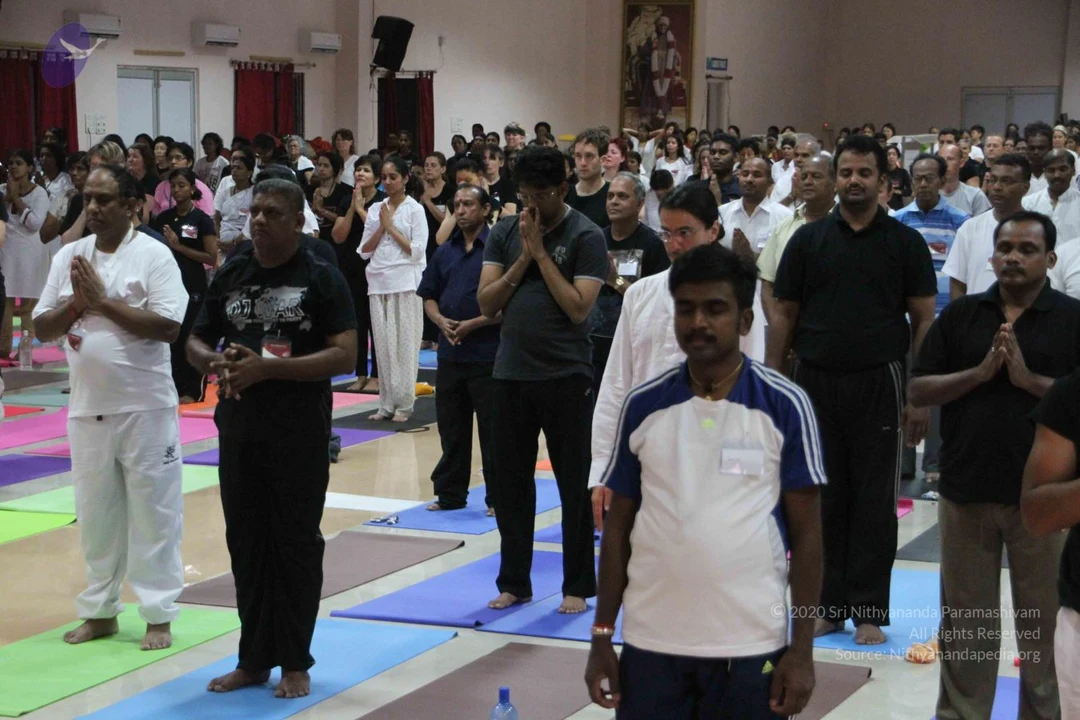
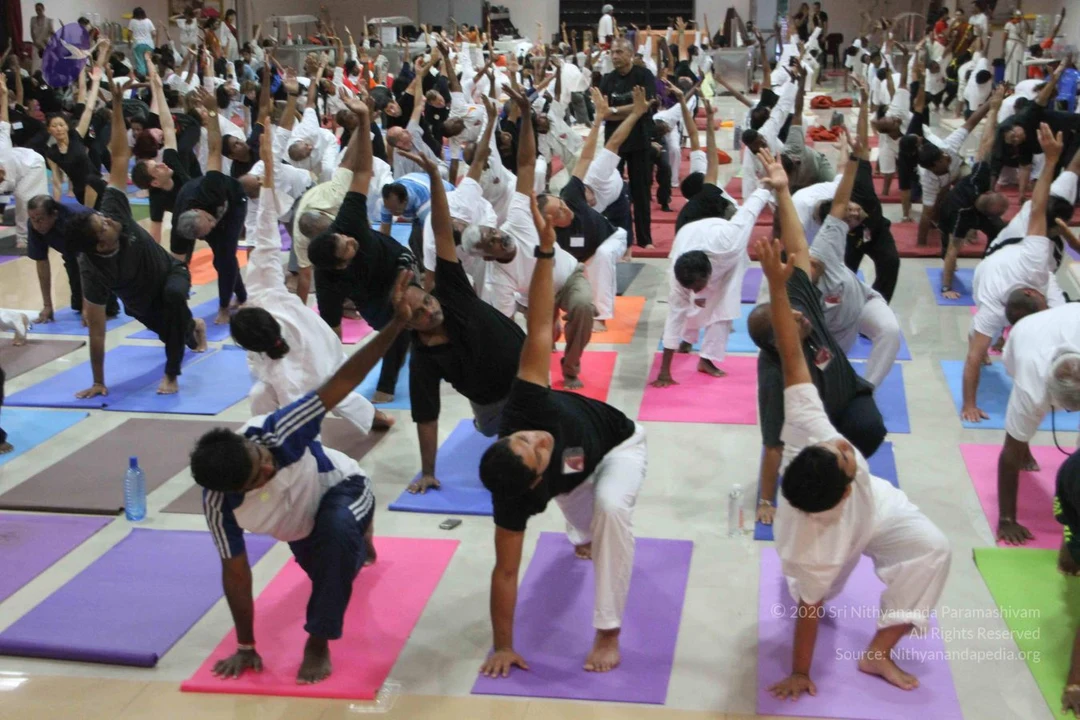
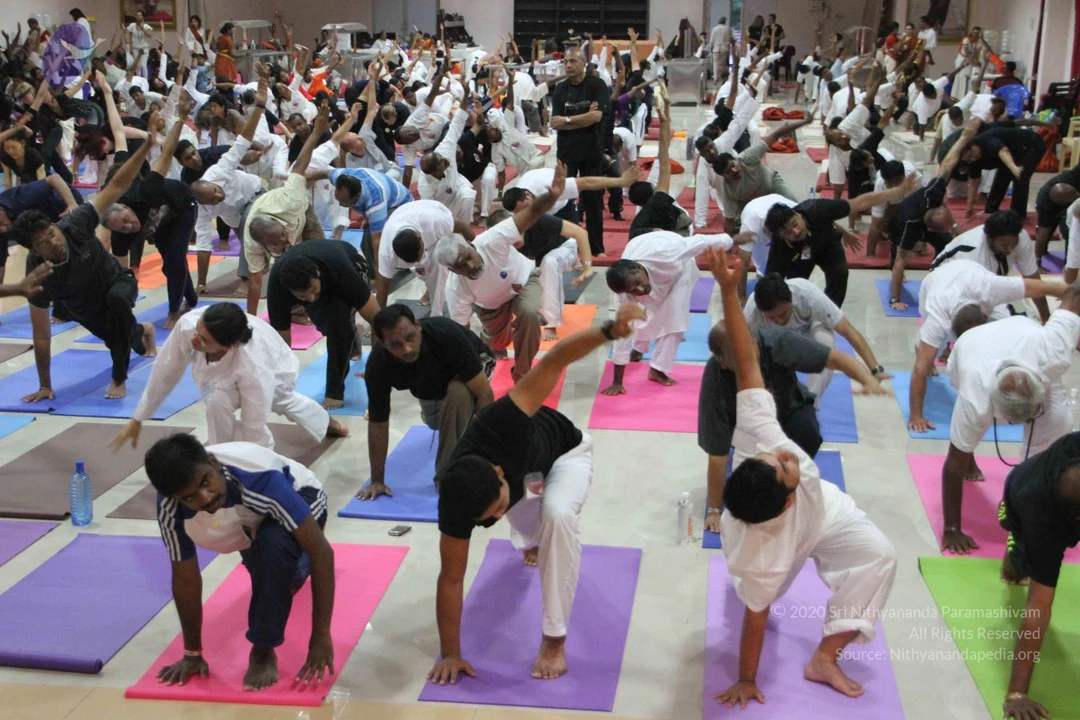
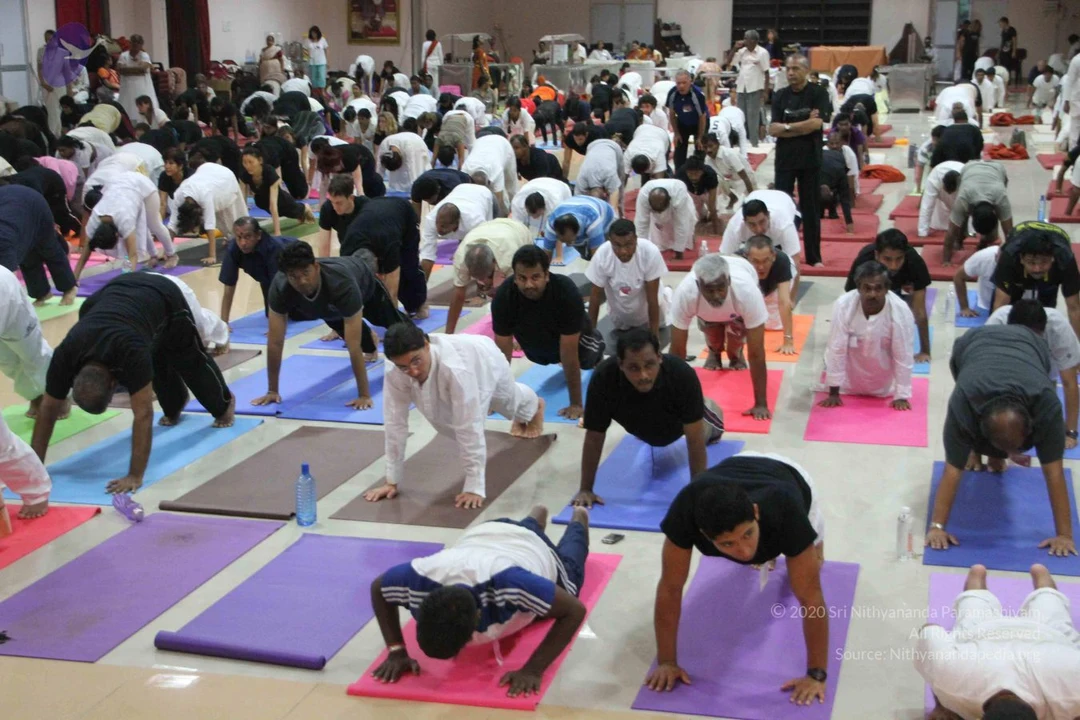
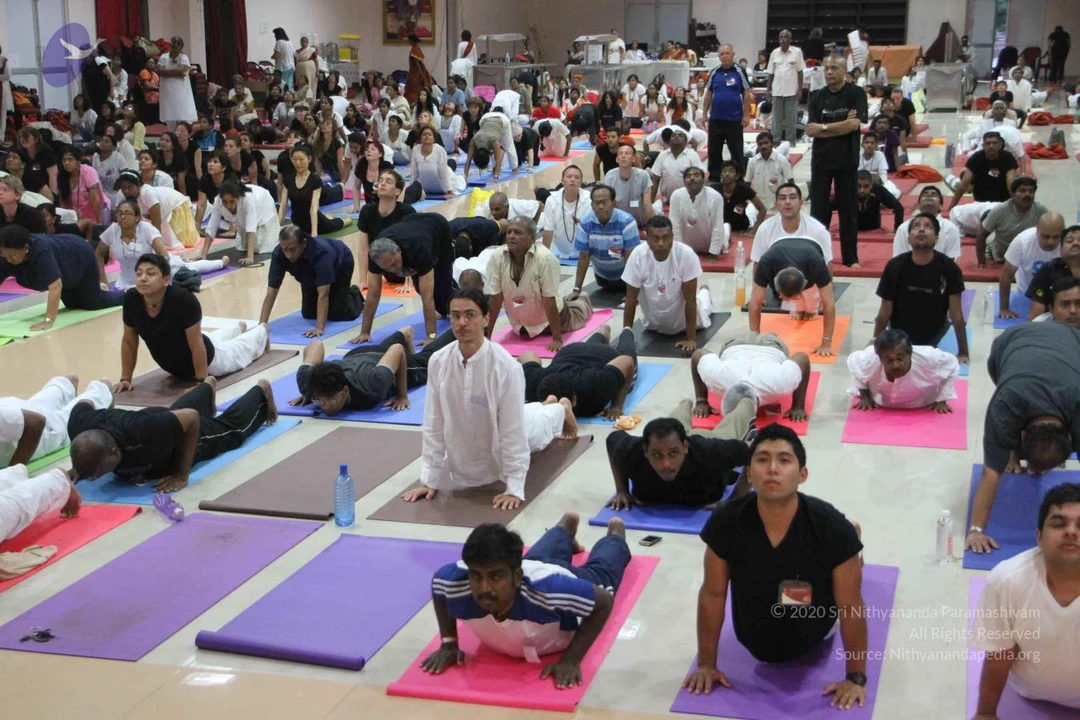
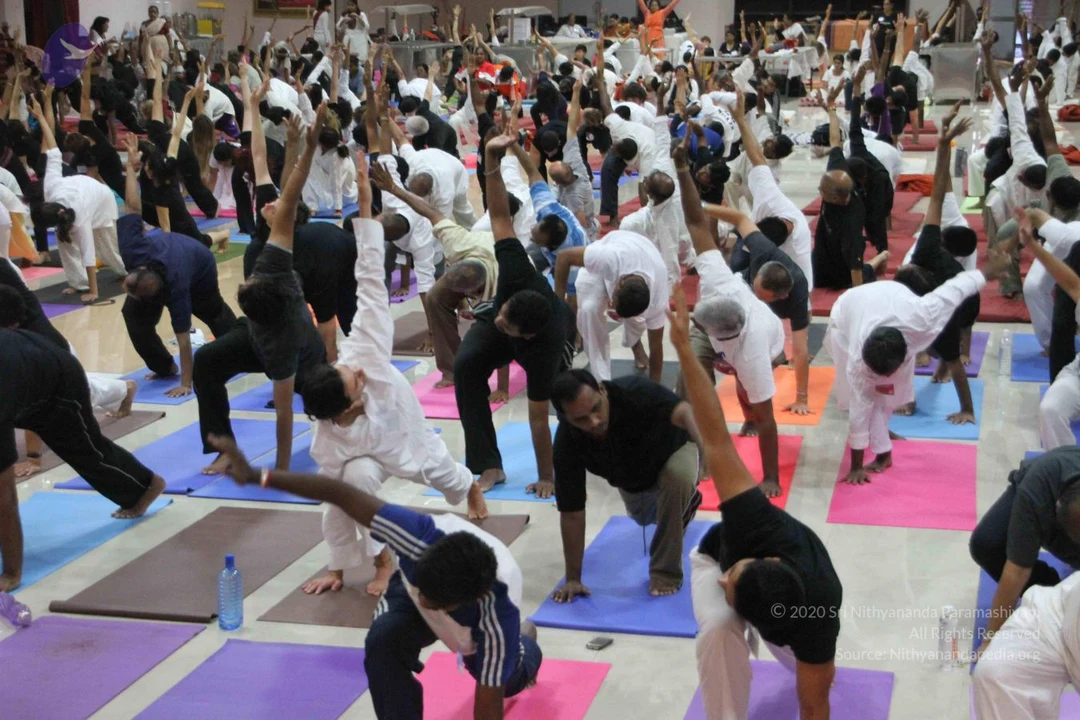
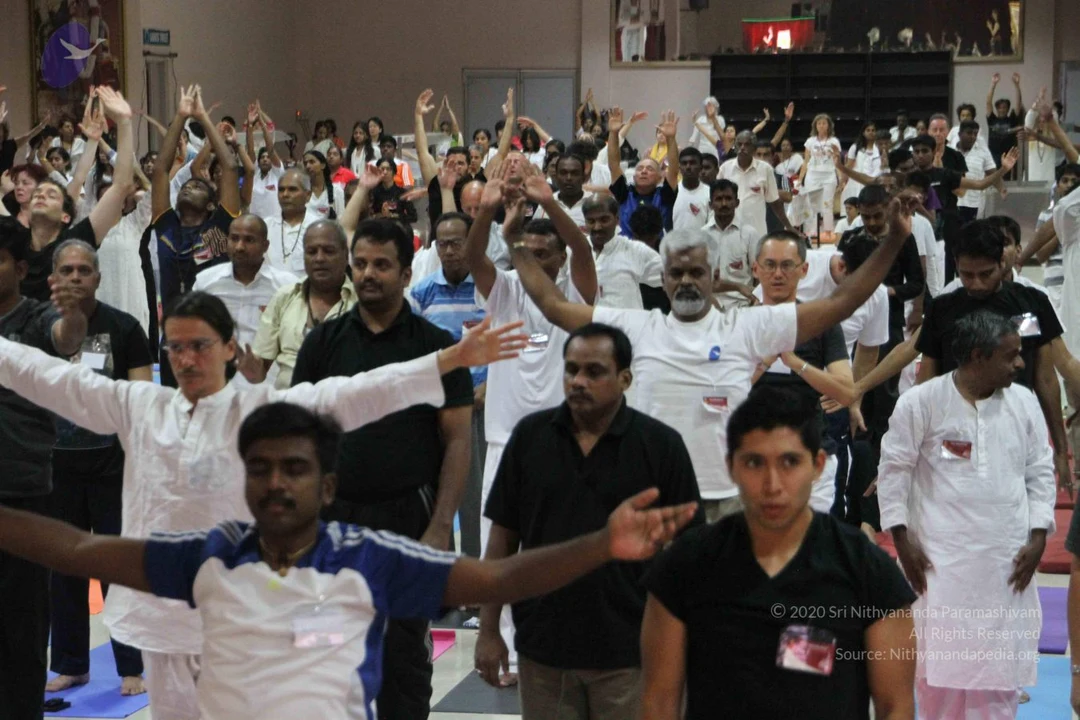
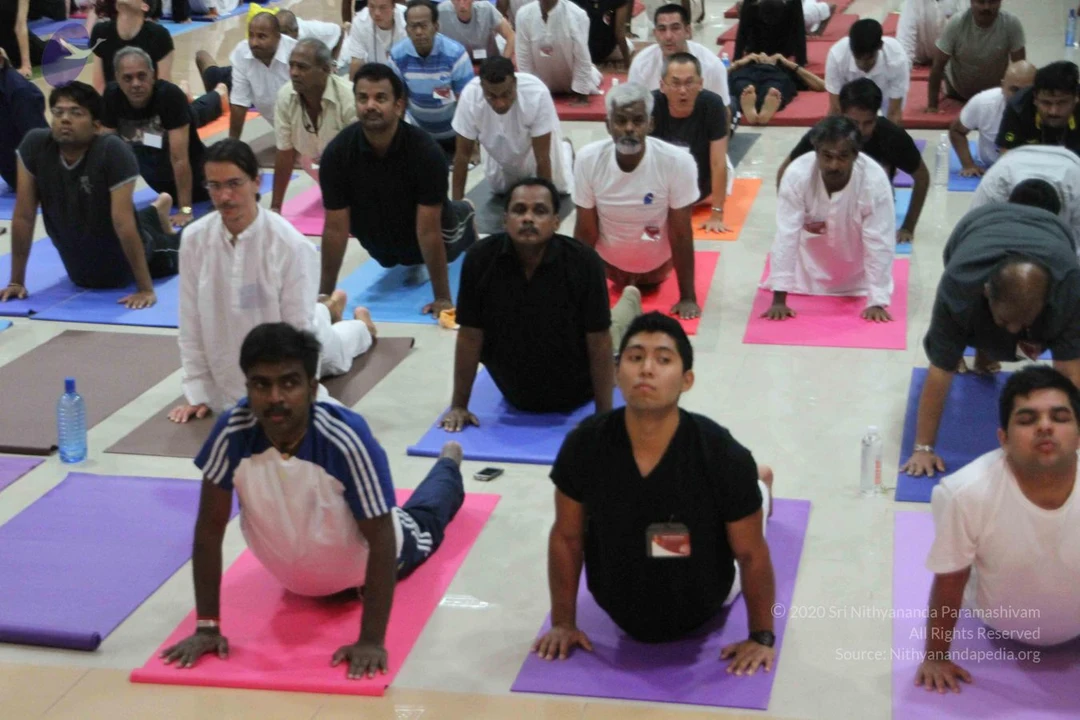
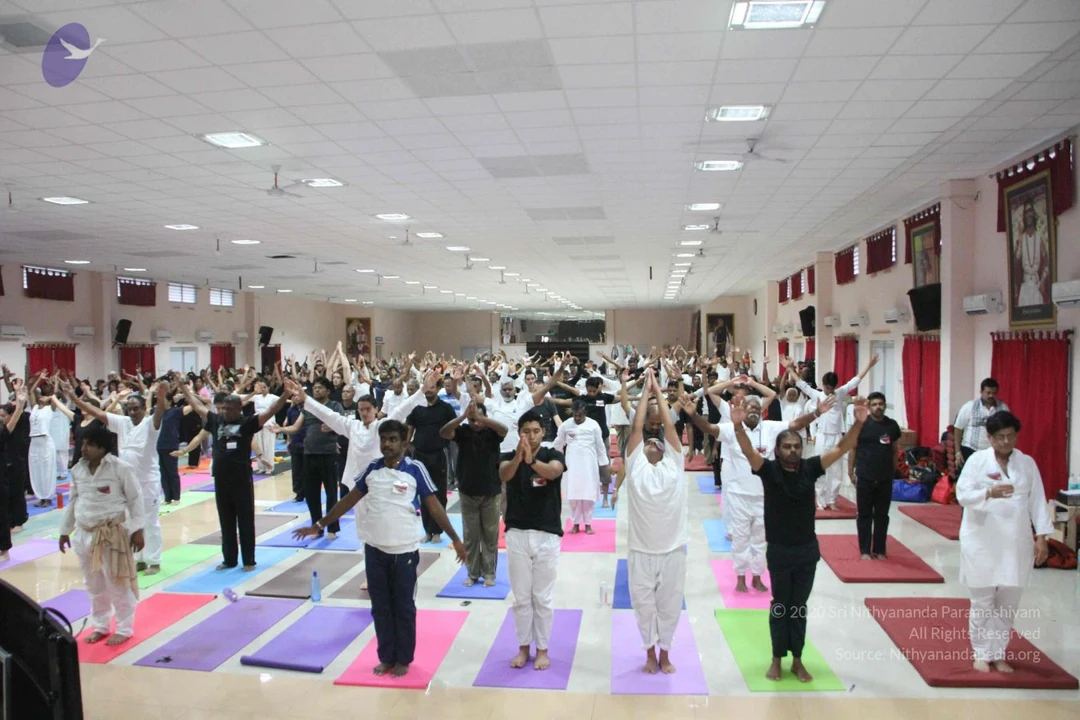
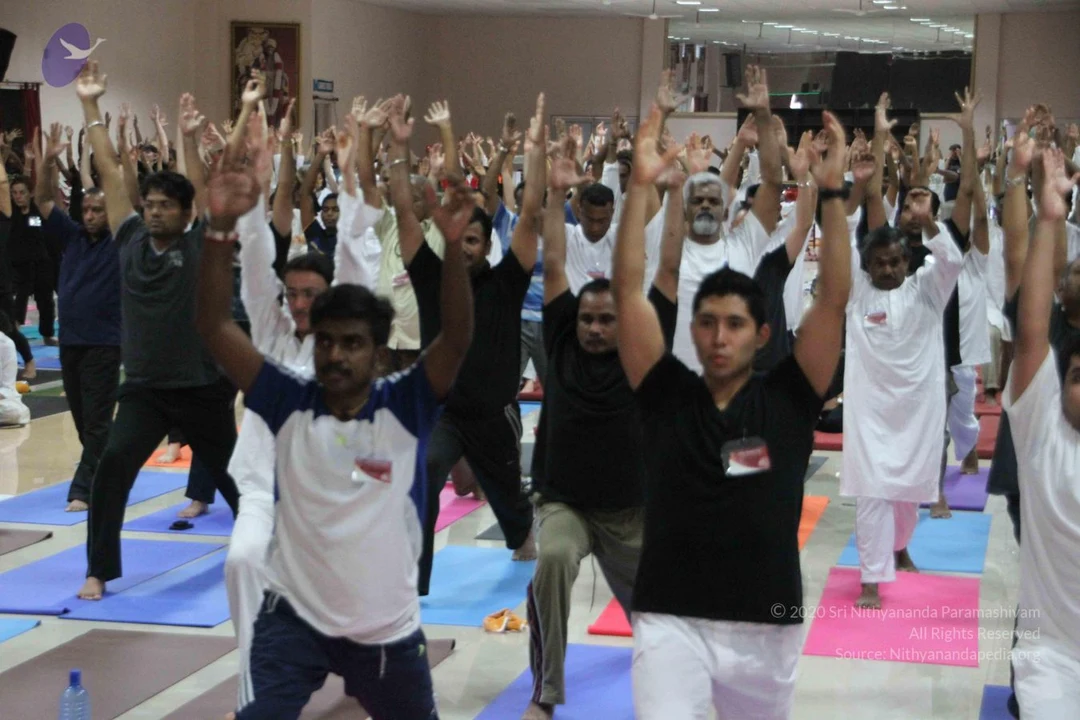
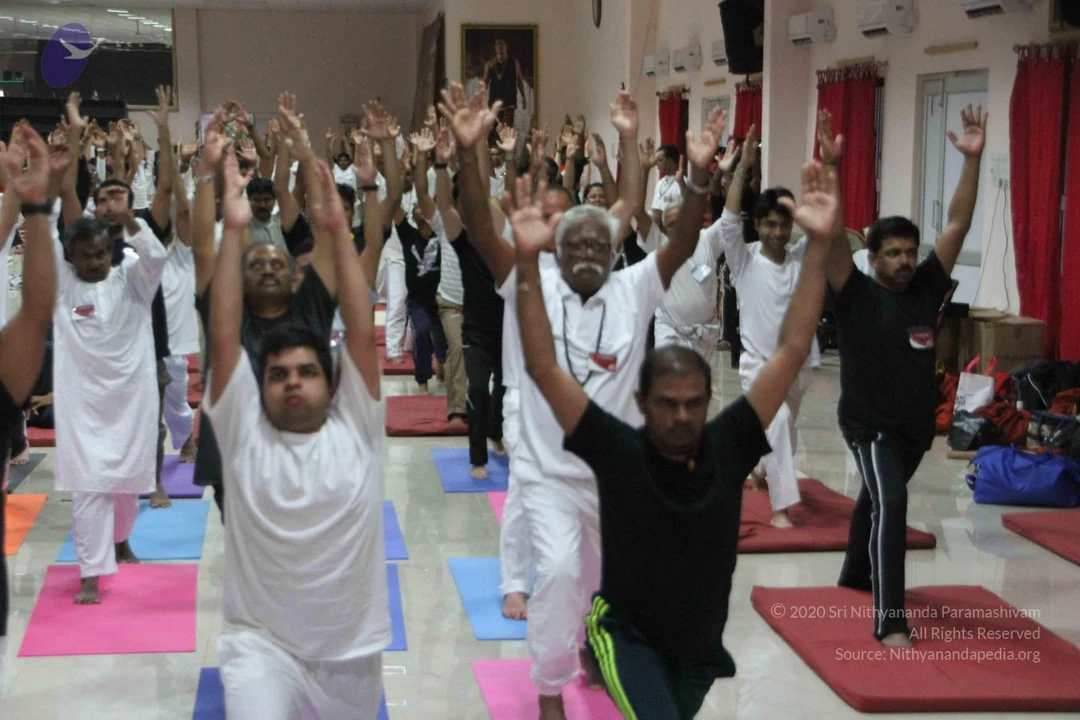
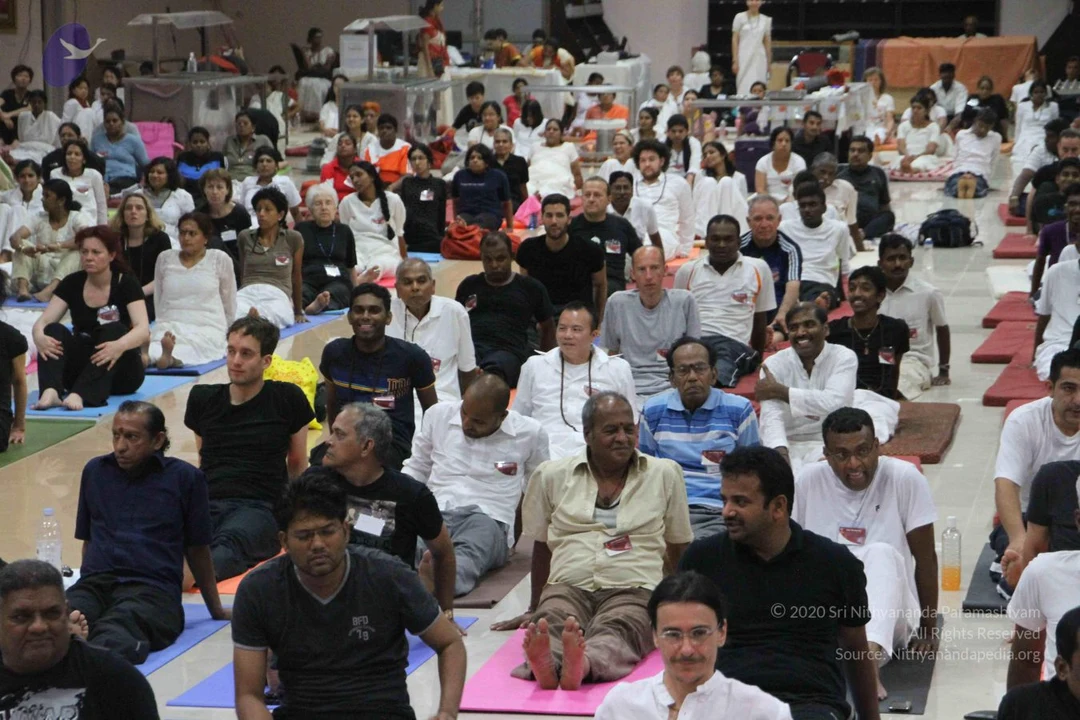
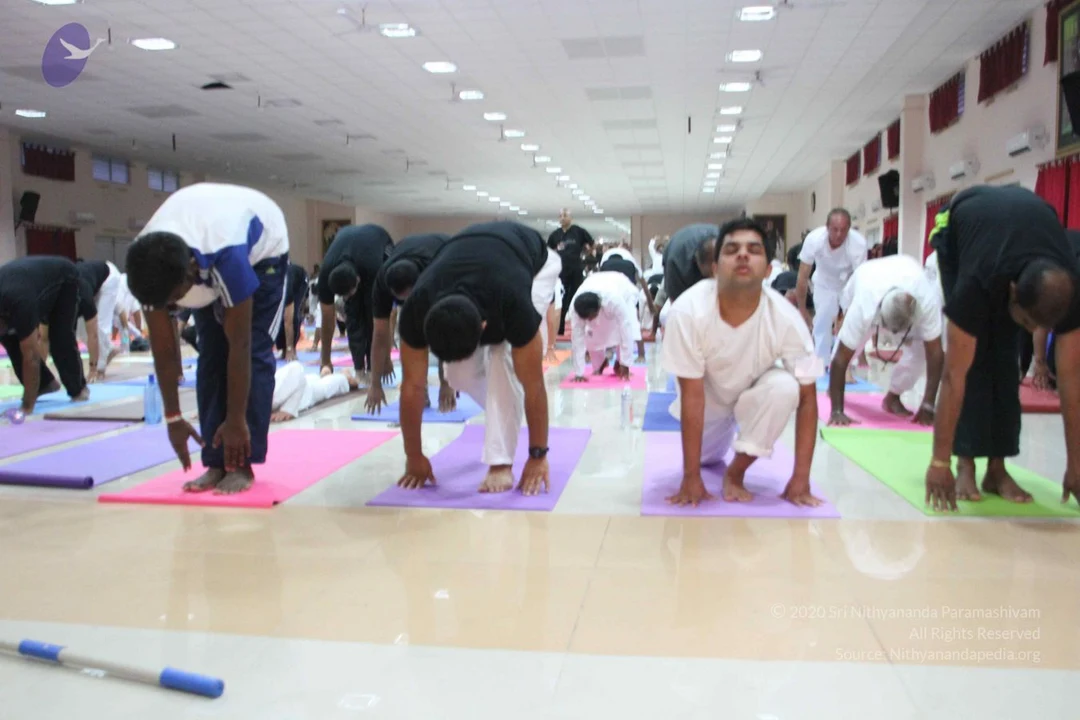
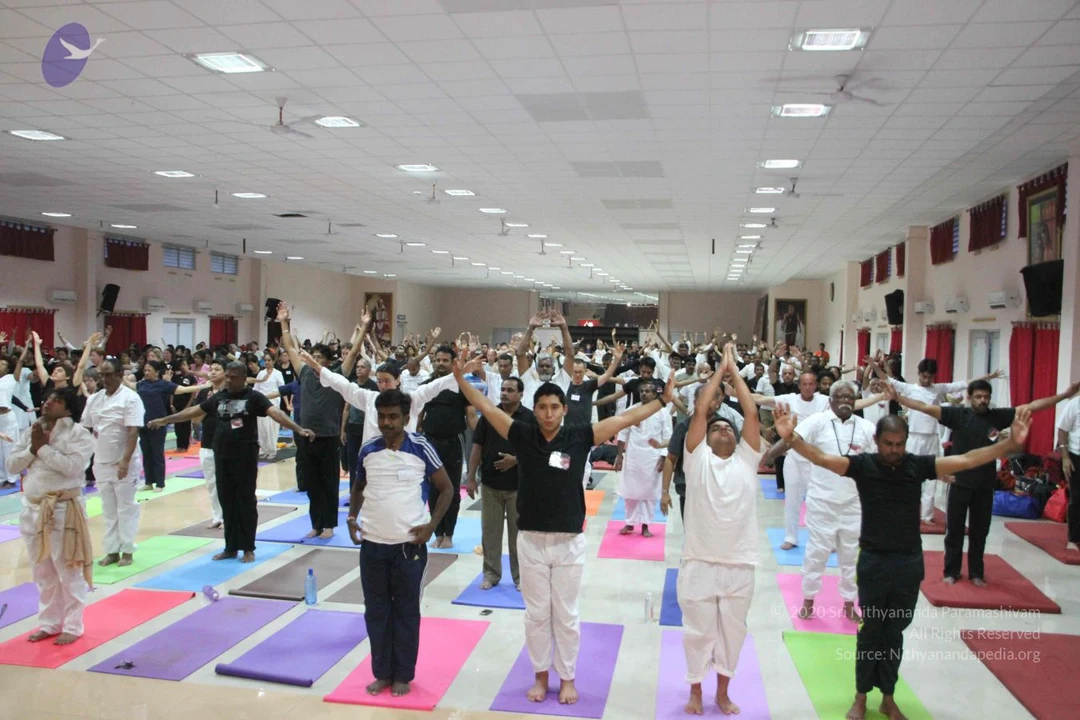
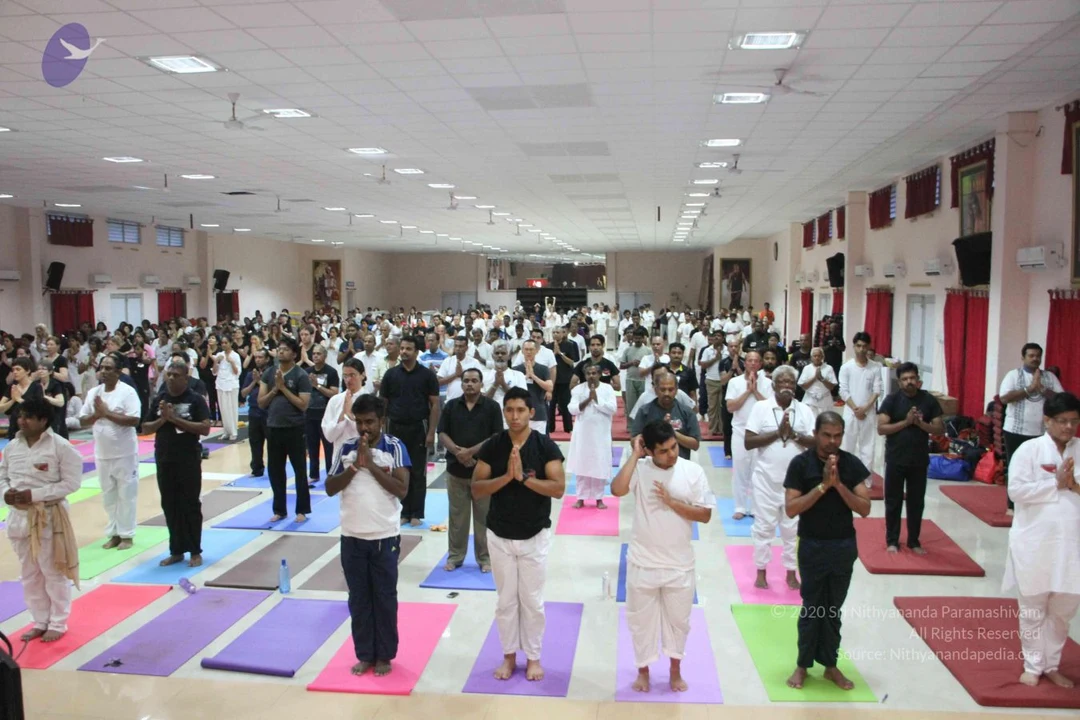
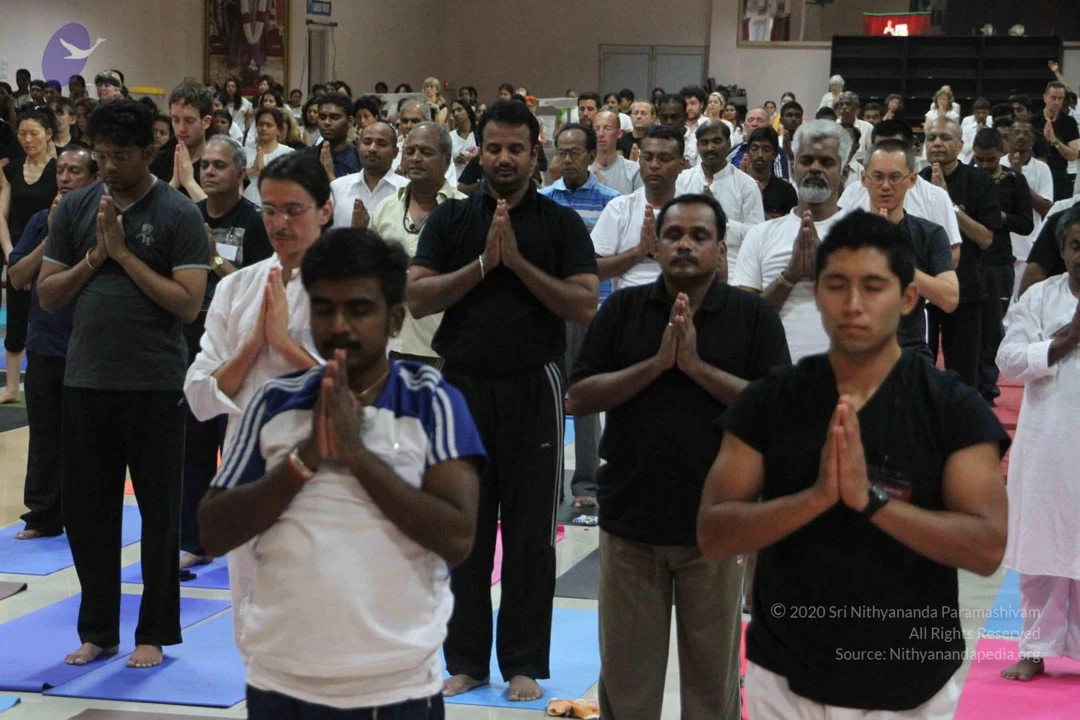
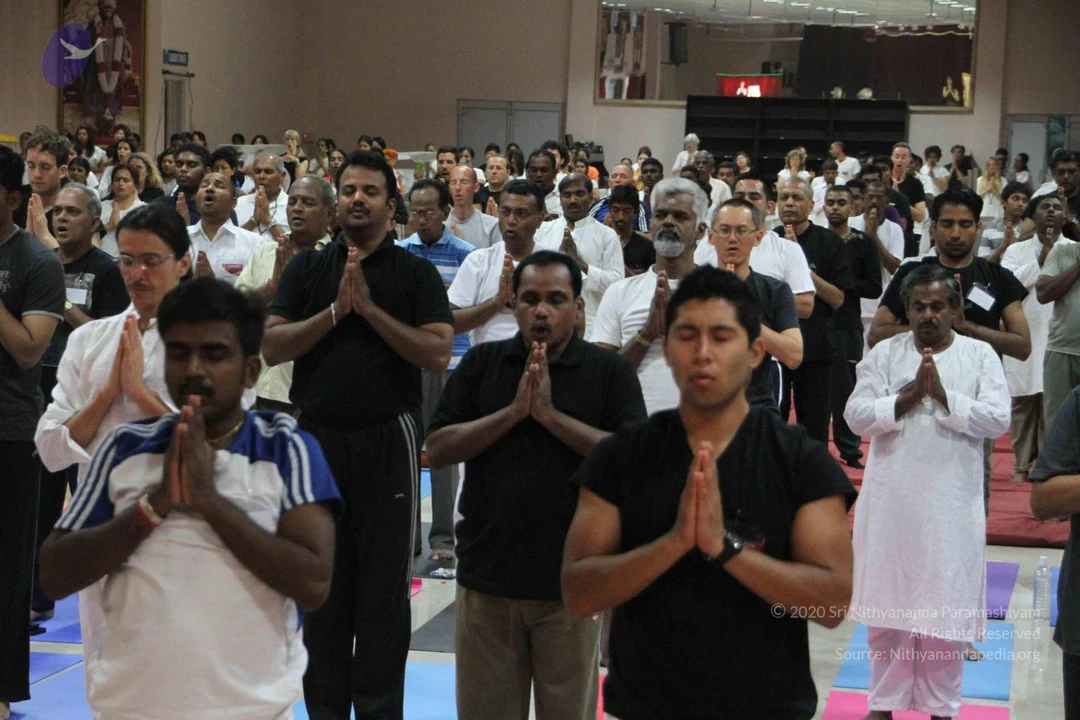
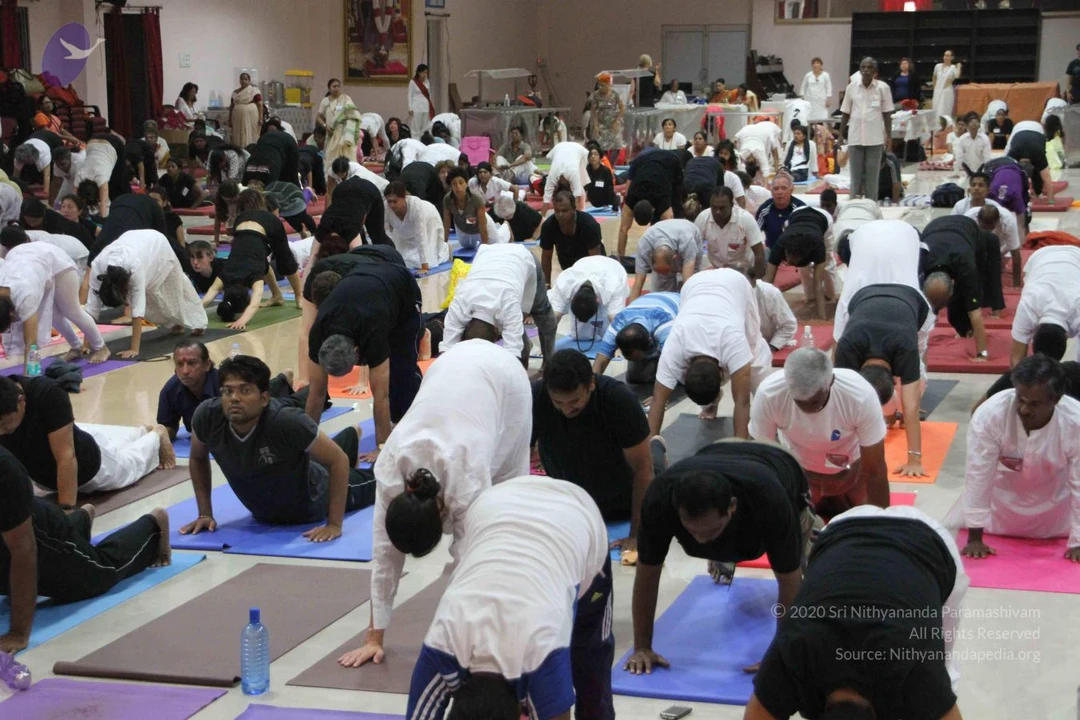
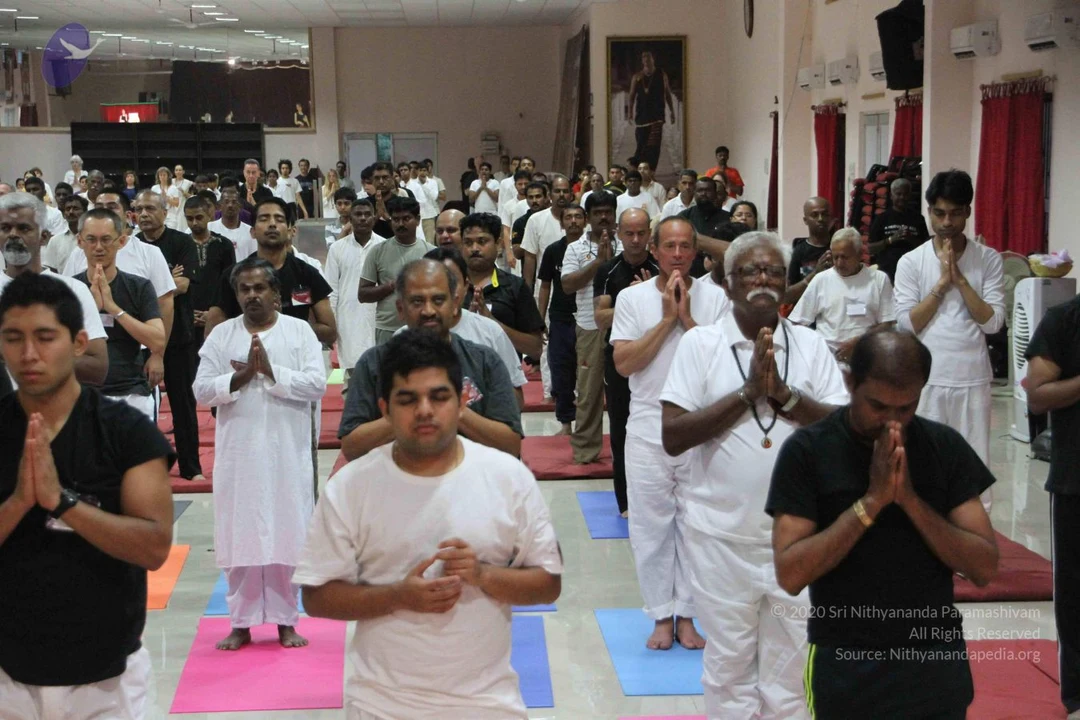
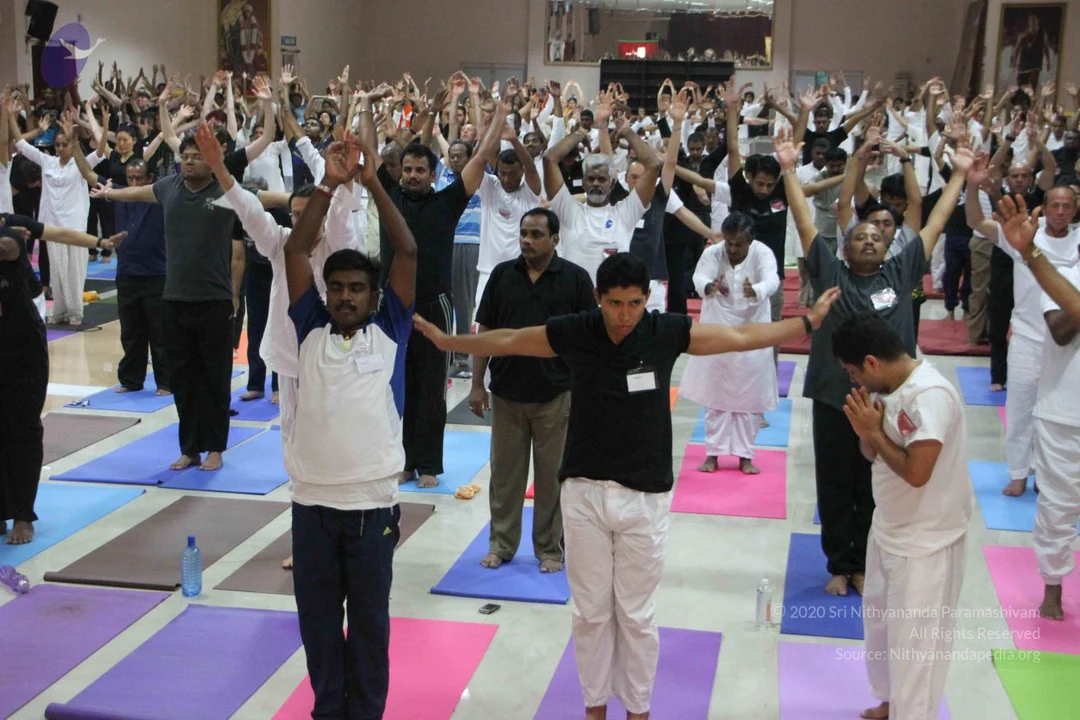
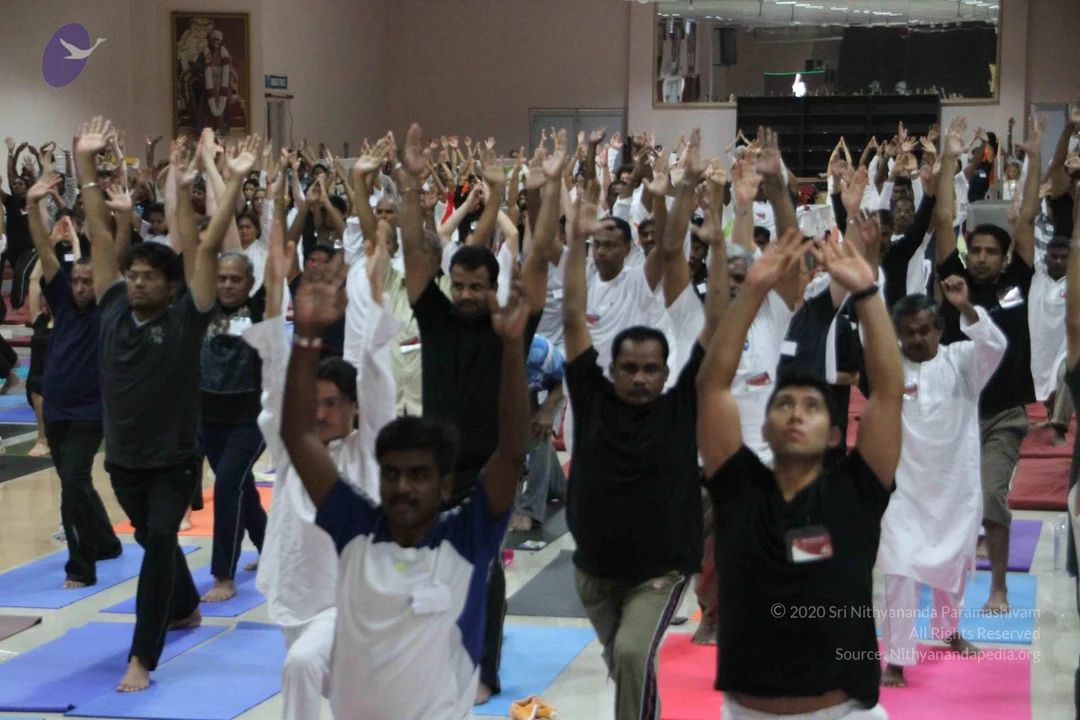
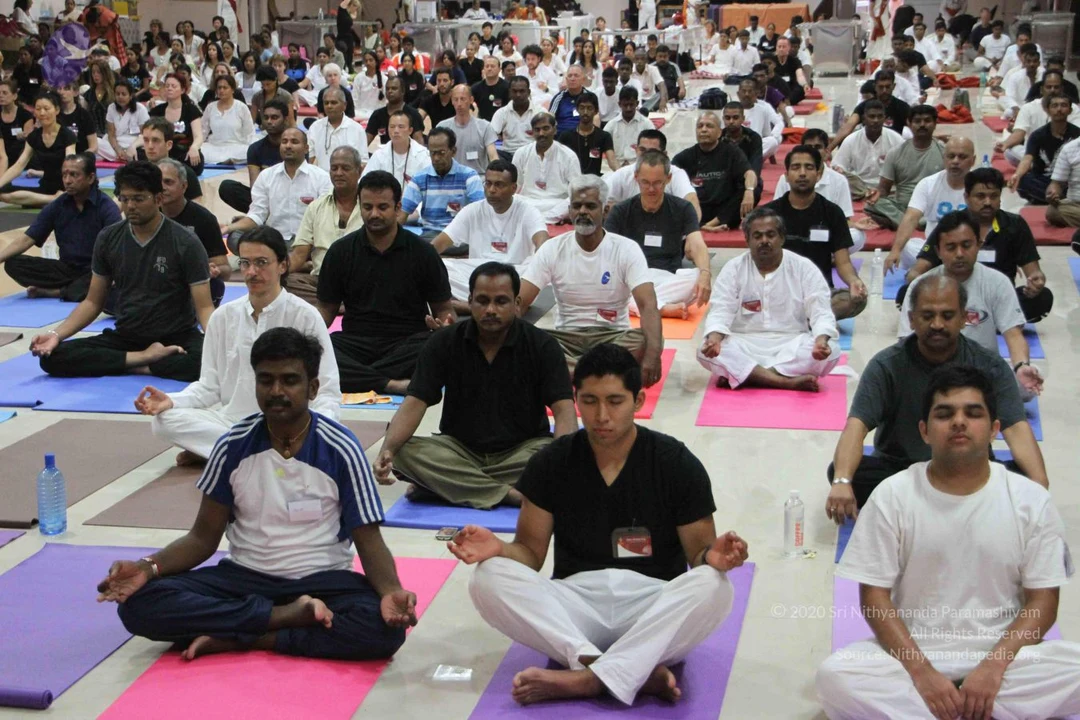
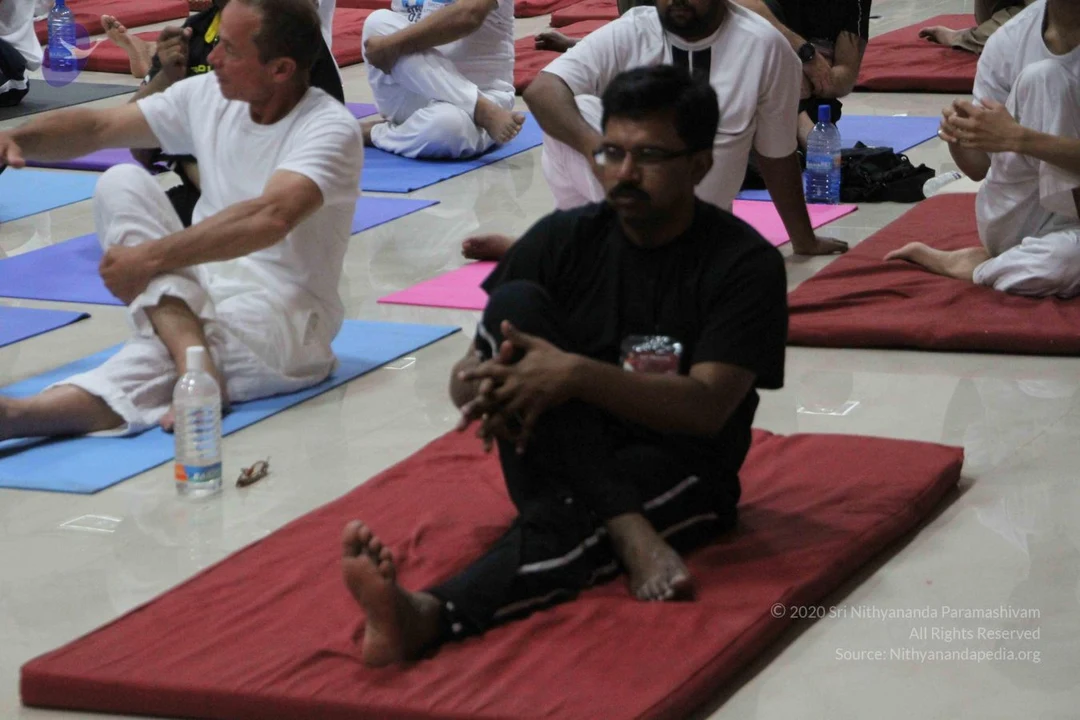
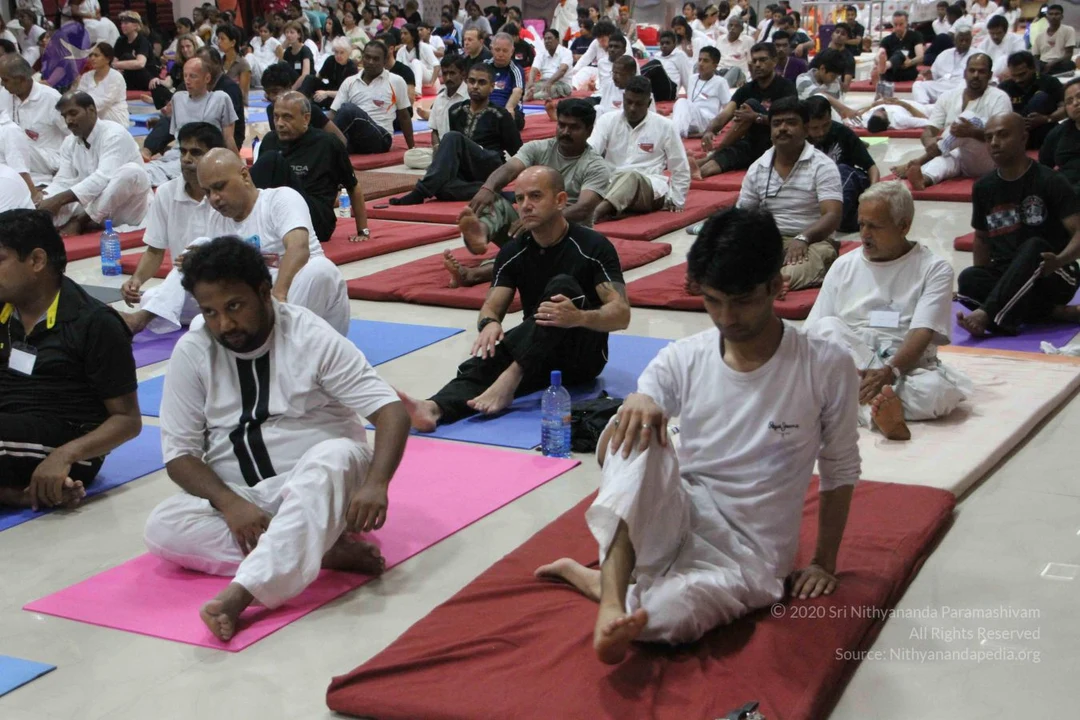
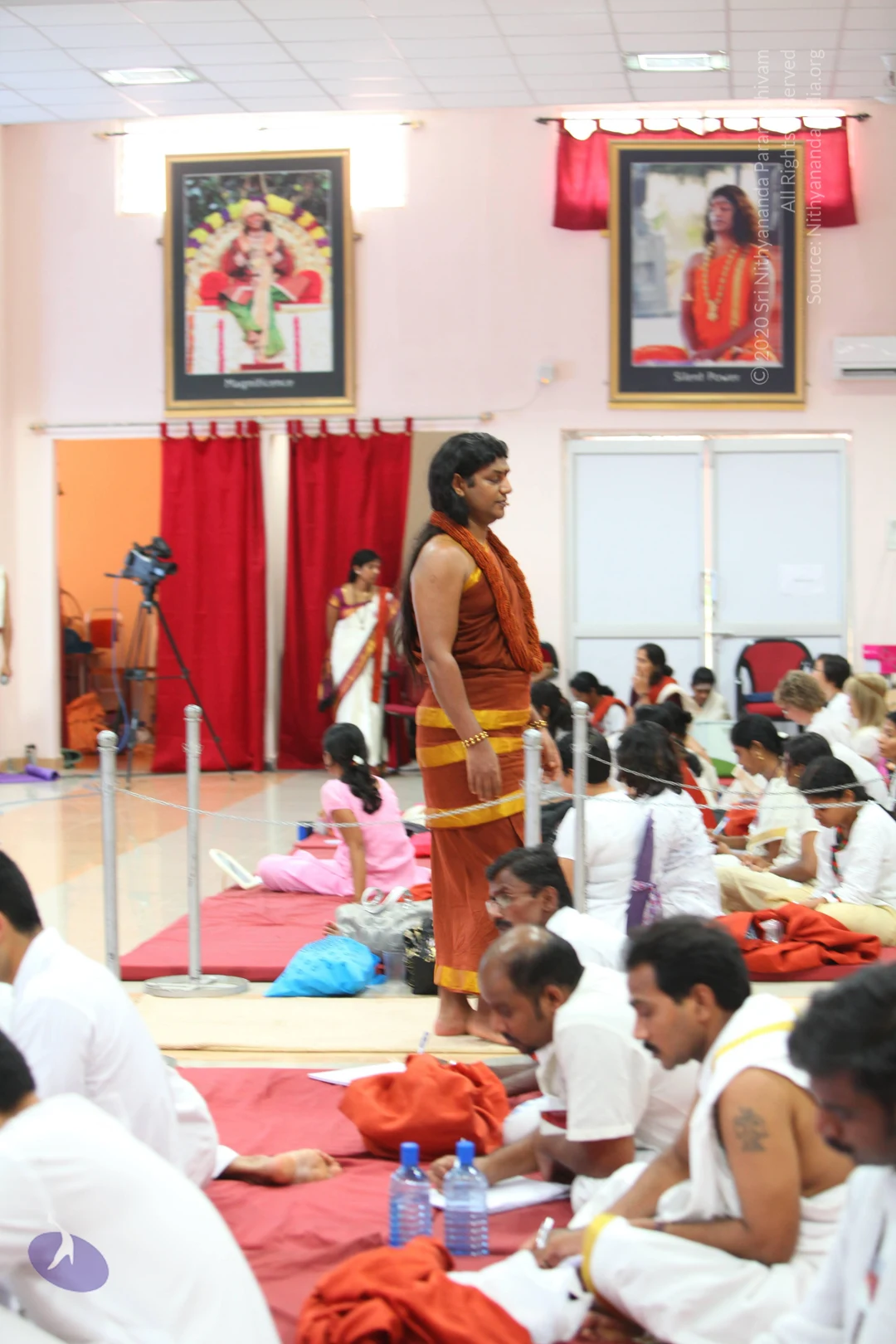
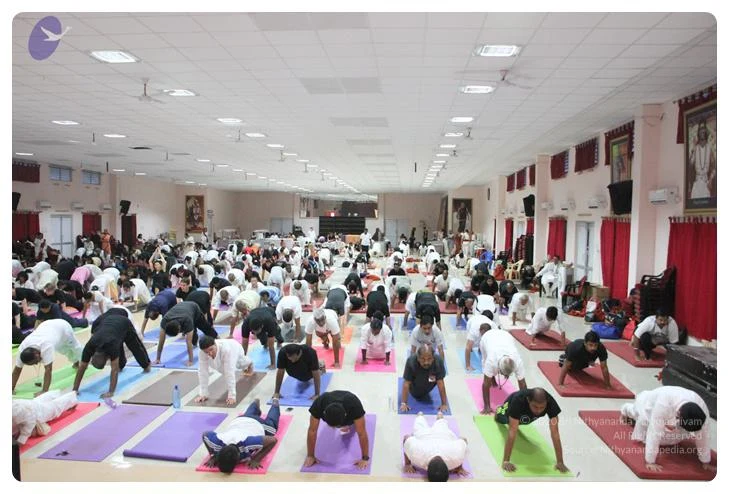
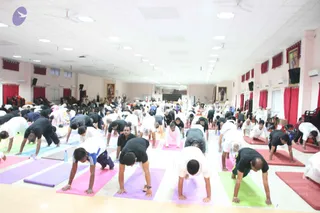
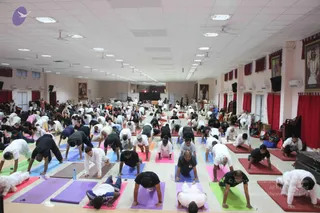
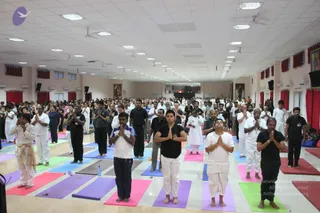
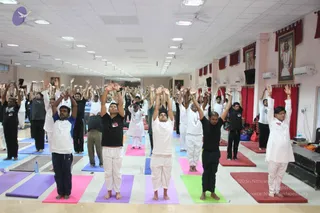
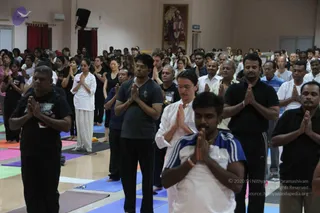
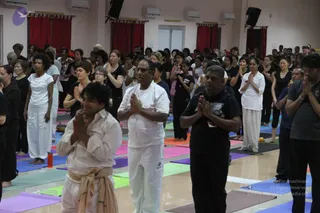
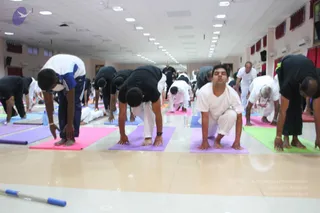
A large hall with white walls, red curtains and framed portraits on the walls shows many people on coloured yoga mats in pink, purple, green and blue, bent forward in a standing forward-bend or downward posture. Most wear white kurtas or white clothing, while others wear black or dark shirts and trousers. A few people in the foreground are clearly visible, with others further back in rows. A water bottle sits on the floor at left. Ceiling fans and recessed lights hang overhead. The scene is a group yoga session.Photograph of a large hall filled with many people doing a yoga or exercise session on coloured mats. Most participants wear white or black tops and are in a forward-bending or downward-dog posture, with hands and knees on the mats. Pink, purple, green, blue and brown mats cover the tiled floor. Red curtains hang along the walls, and framed portraits hang on the walls, including one at the upper right showing a robed figure with long hair, which cannot be confidently identified. Ceiling fans, fluorescent lights and water bottles are visible.A large indoor hall with a tiled floor and white ceiling lights where a big group of people stands in prayer pose with palms pressed together on colourful yoga mats in rows. Most wear white or black kurta-style clothes and some wear white dhotis or pants. A few people in front wear navy and black tracksuit-like outfits. Red curtains line the walls and a framed portrait hangs on the far wall. Ceiling fans and speakers are visible. No individual can be confidently identified as a person from appearance, so no candidate is marked.A large indoor yoga session in a bright hall with pale walls, red curtains and mats in purple, pink, green, blue and red. Thirty to forty men stand on their mats with both arms raised overhead, most in white kurtas and dhotis or black and dark t-shirts, several wearing red name badges. A framed portrait of a bearded figure in white hangs on the right wall beside a wall-mounted air conditioner, and a speaker sits near the front. Visible people are all standing participants; no one is on a throne or leading from the front.A large indoor hall with pale pink walls shows a crowd standing on blue, purple and green yoga mats in namaste pose with eyes closed, facing a front that is not visible. Many people wear black, grey and white clothing; a woman in white kurta and white pants stands near the centre, and a man in a blue-and-white striped shirt stands in front. A framed portrait of a bearded saffron-robed figure hangs on the back wall, and there is a wall-mounted speaker and air conditioner.A large indoor yoga or satsang hall with many people standing on colourful yoga mats in rows, hands pressed together in namaste. In the foreground, a man with curly hair wears a white kurta and a tan sash, and beside him a man in a white shirt and white trousers also holds his palms together. A man in a black t-shirt stands at right, and a young man in a grey shirt and glasses joins the gesture. Behind them, women in white and black clothes stand with hands folded, and wall-mounted air conditioners, red curtains and a speaker are visible in the room.

Padapooja-Templetour

97 photosSource gallery
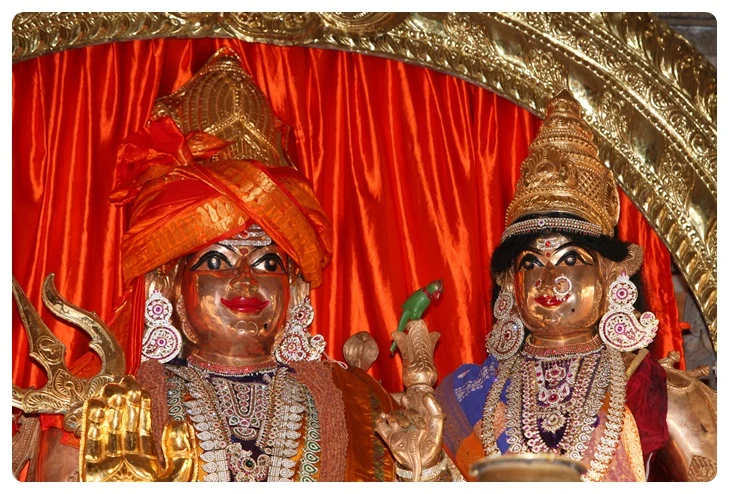
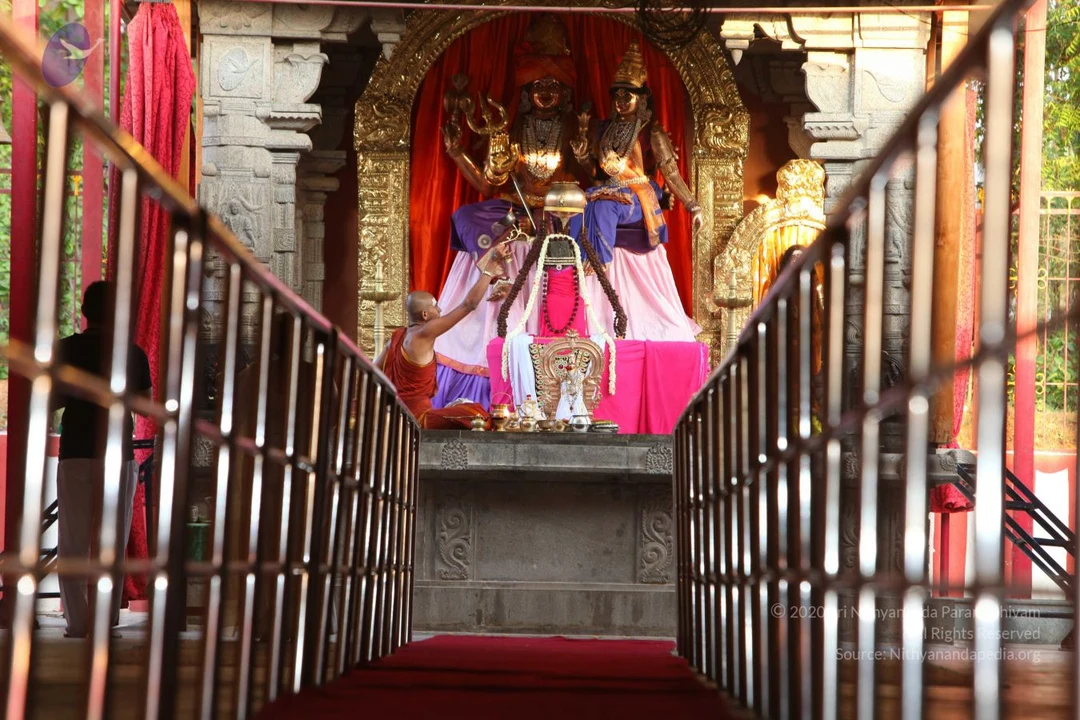
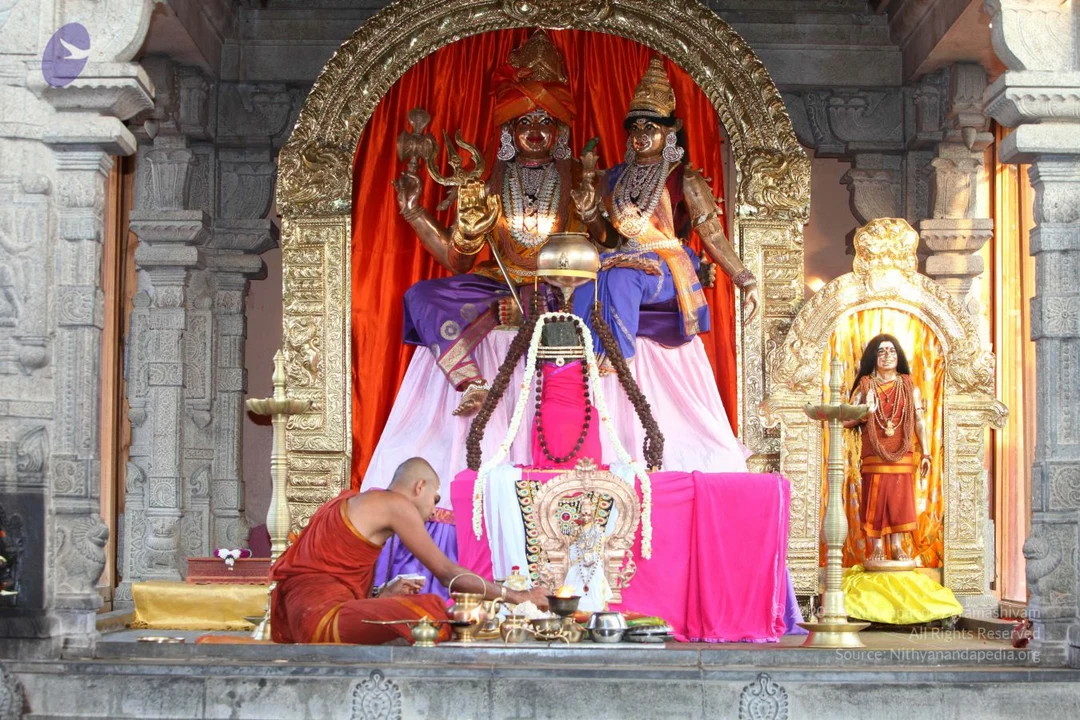
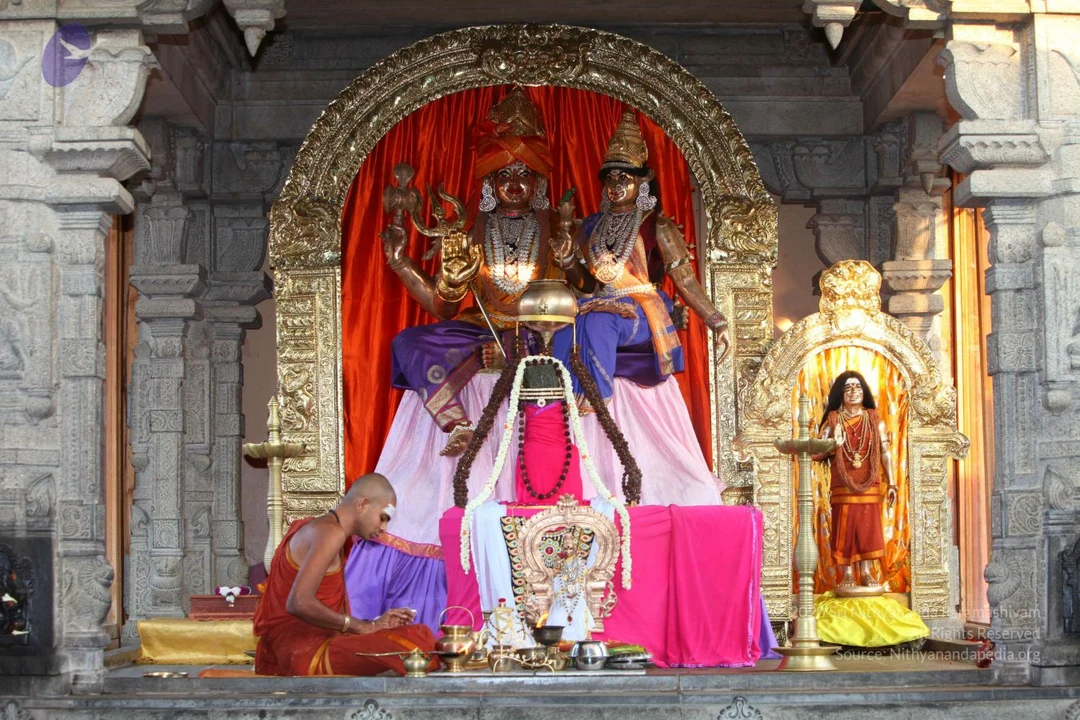
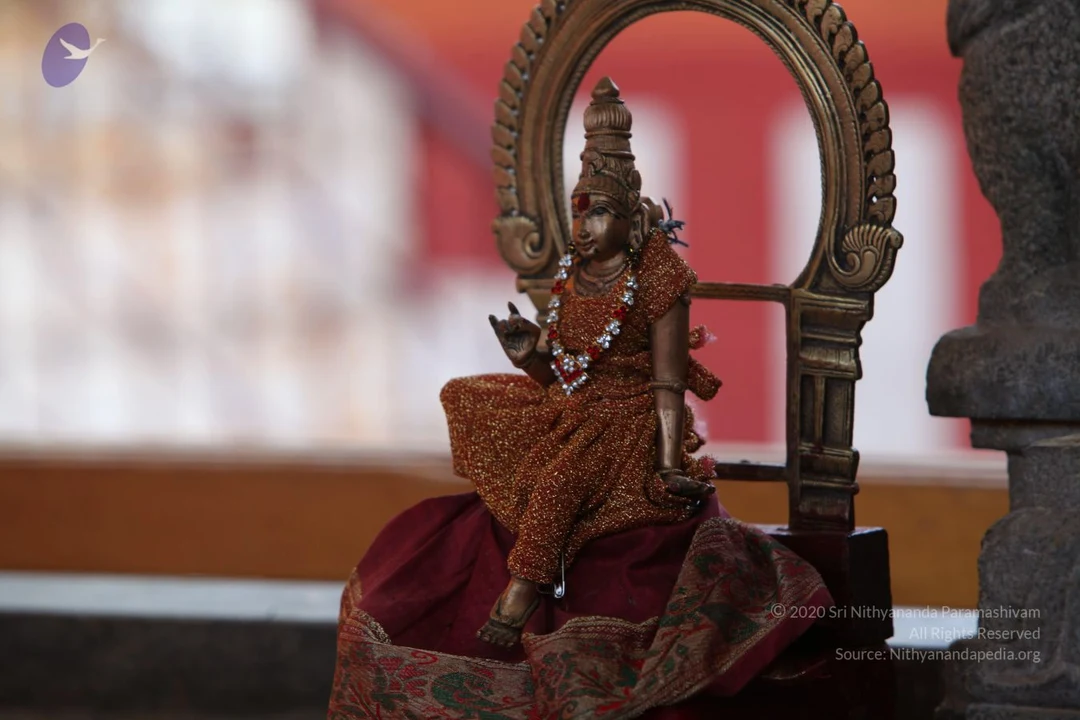
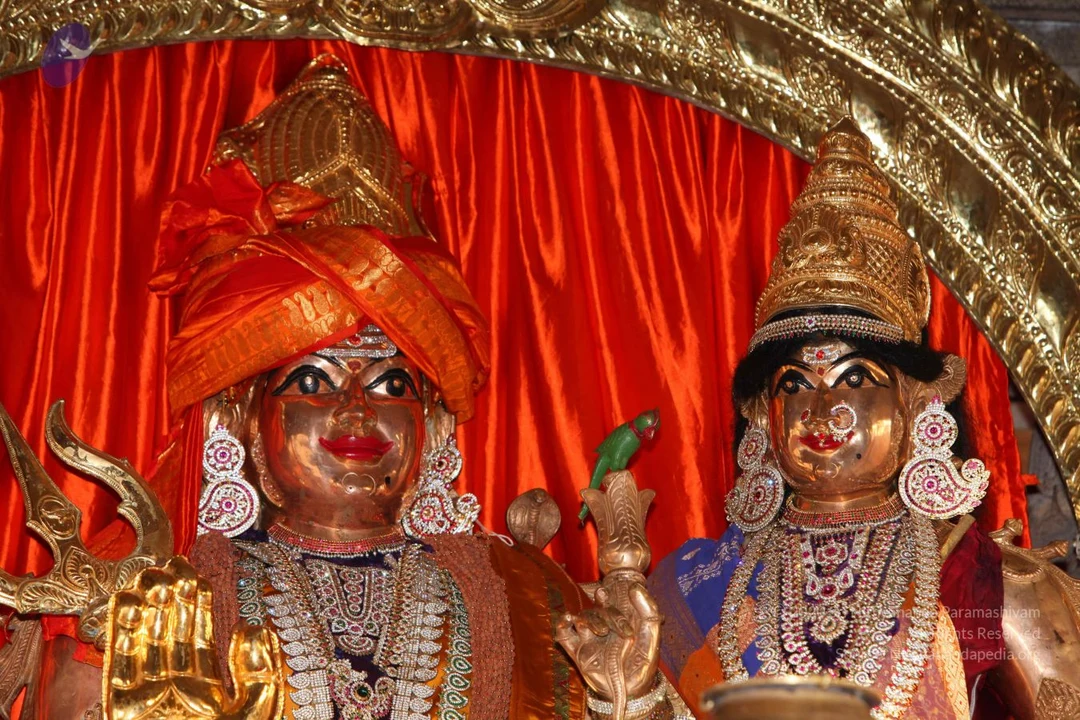
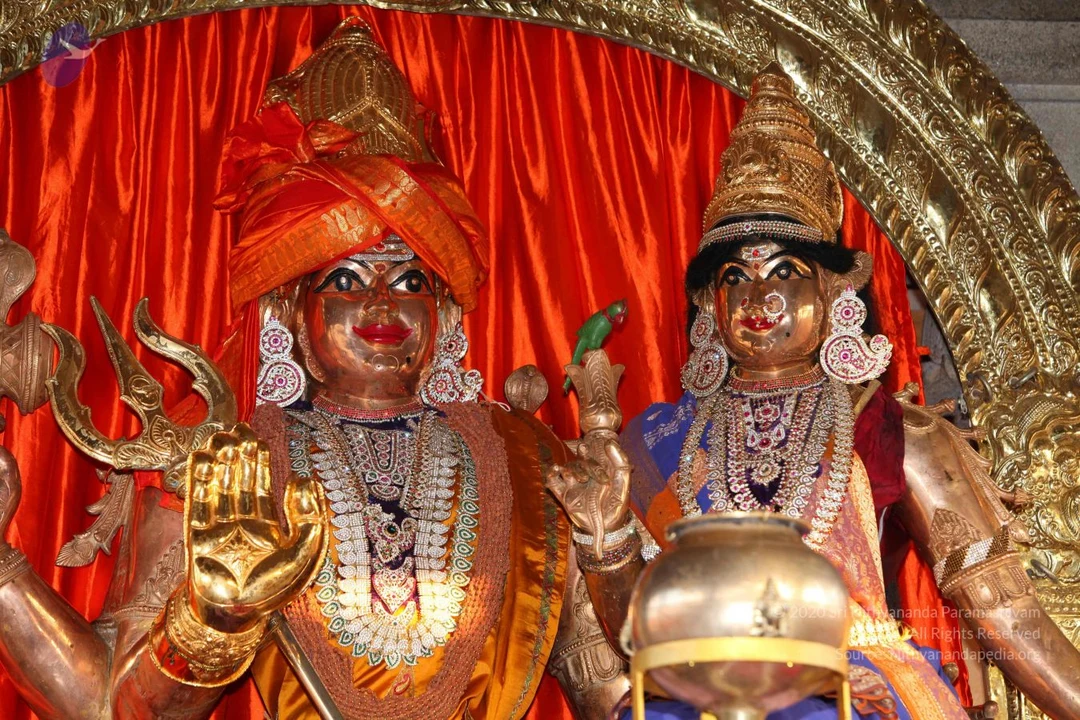
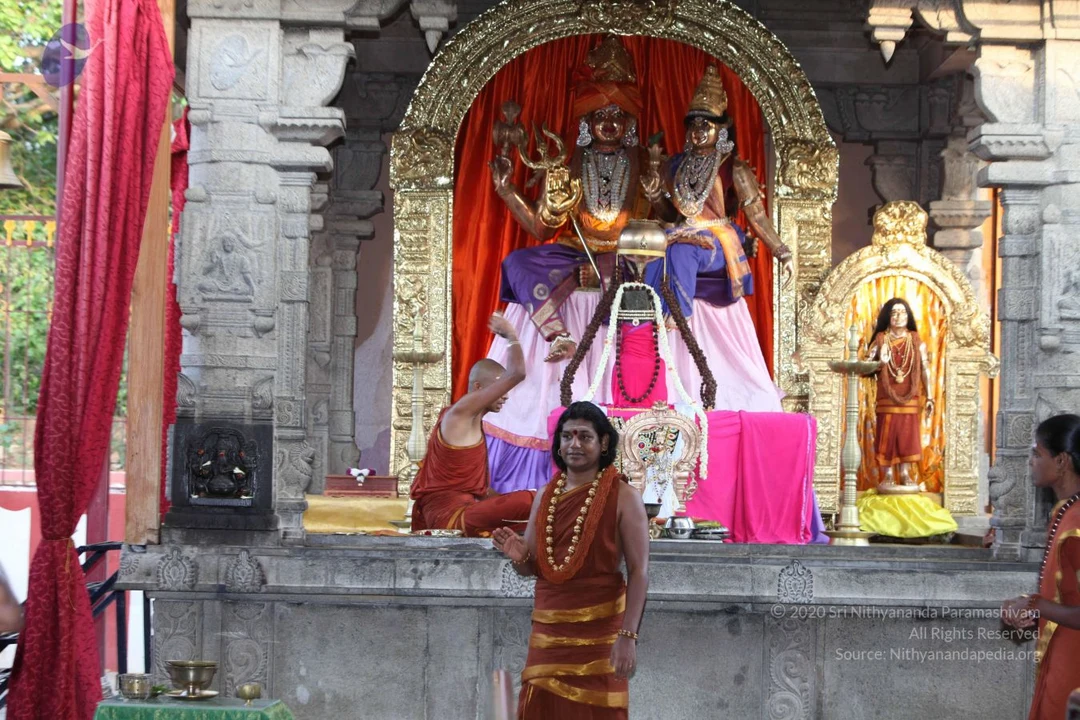
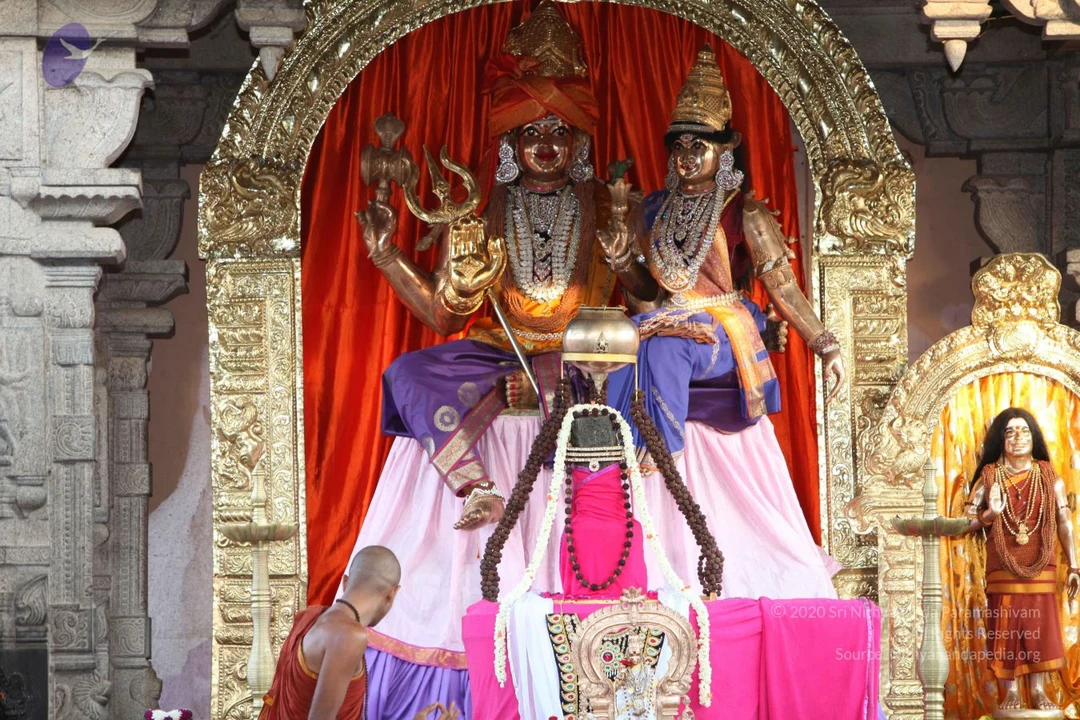
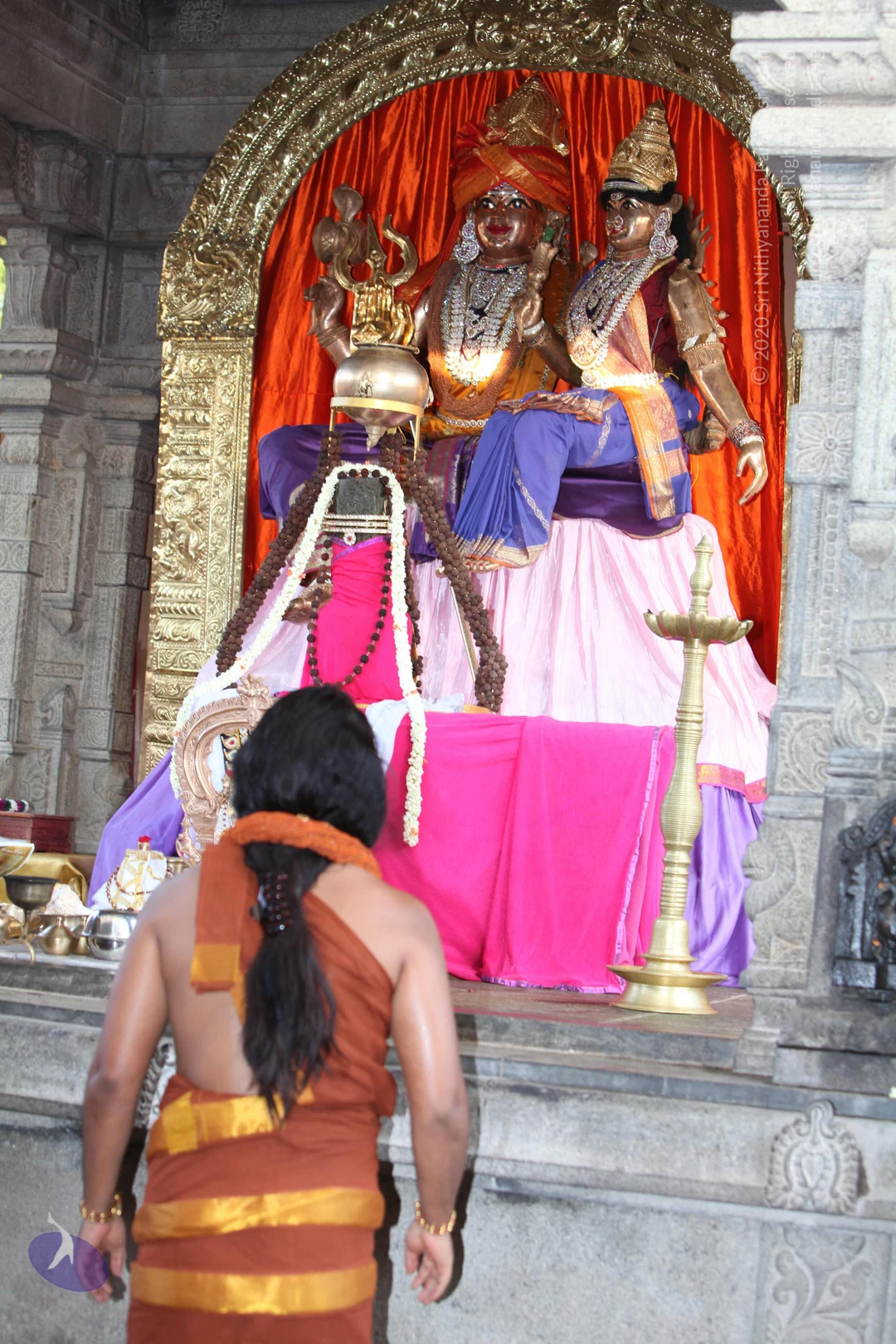
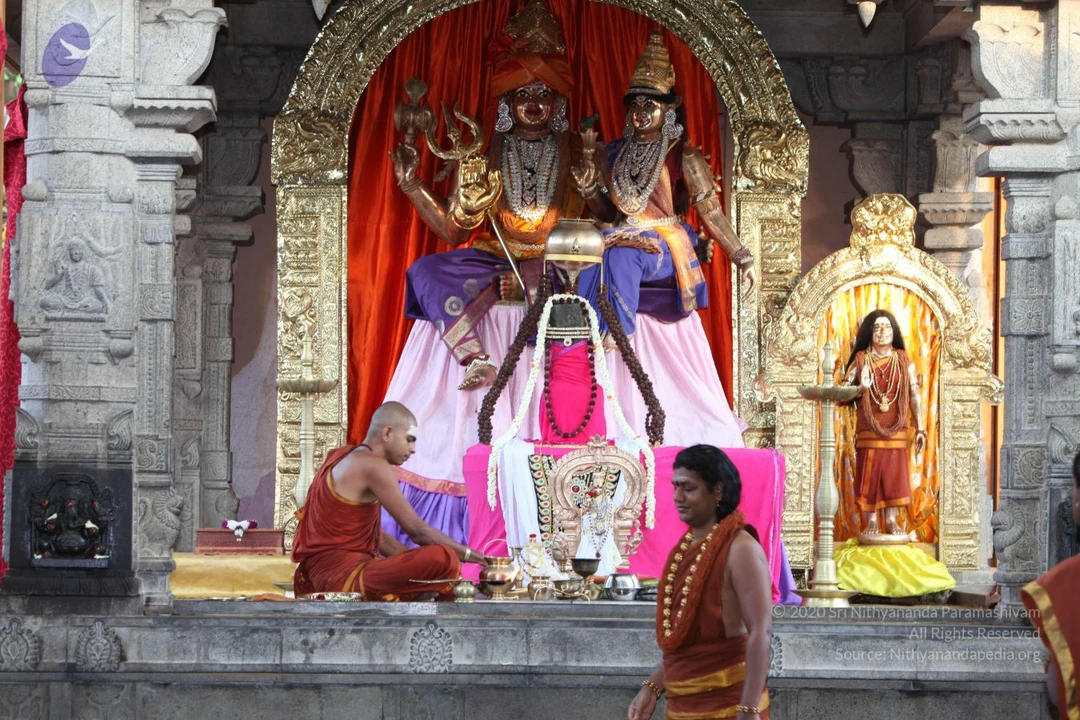
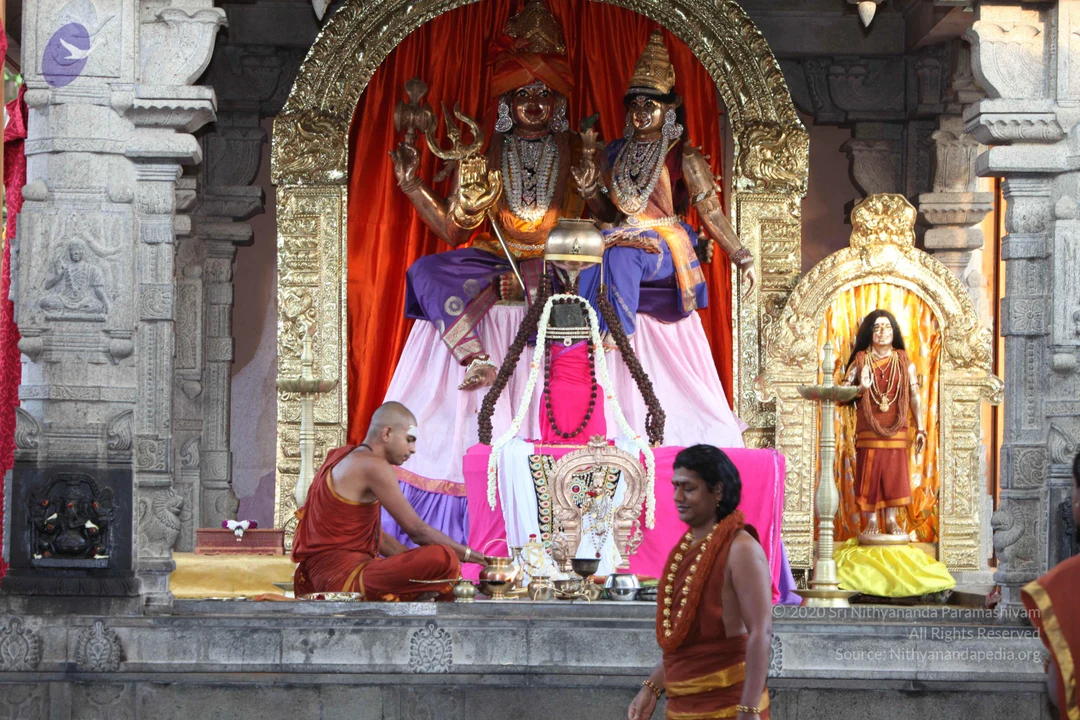
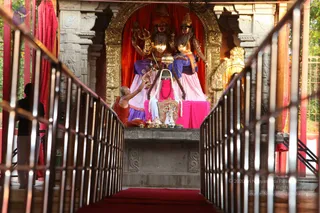
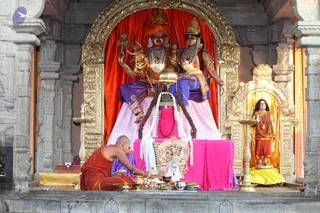
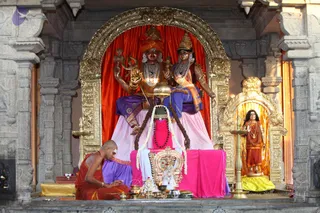
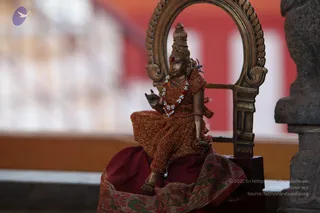
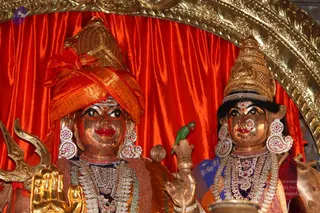
A photograph of a temple shrine with a red carpeted aisle leading toward a golden-framed altar housing two large deity murtis, one painted blue with a gold crown and the other with a golden crown, both draped in pink and purple garments and wearing garlands. In front of the altar, a shaven-headed priest in an orange-saffron cloth sits and raises his right hand, apparently performing puja with a lamp and brass vessels set on a stone platform. Pink and red drapery hangs on the sides, and metal railings line the aisle.A photograph inside a temple shrine with grey stone pillars and an ornate gold-framed arch. Two large golden deity murtis sit on a raised platform draped in pink and purple cloth, the central figure holding a trident and other attributes, with a silver kalasha, garlands and rudraksha-style beads before them. At the lower left a shaven-headed priest in orange robes sits cross-legged, tending brass puja vessels and bowls of offerings. To the right a smaller figure in orange stands in a gold niche beside a tall brass oil lamp.A photograph of a temple shrine with a large gilded arch framing two painted deity murti seated on a raised platform, one with a red turban and crown and the other with a tall crown, both adorned with rudraksha and beaded necklaces and draped in purple and orange cloth. A shaved-headed priest in orange robes kneels at the base of the platform, tending brass vessels and a lamp in front of a pink-draped altar with a flower garland. A smaller gilded niche on the right holds a standing figure in orange clothing with a red garland. Red drapery hangs behind the deities and brass oil lamps stand on both sides.Close-up photo of a ceremonial setup in a temple-style space. In the centre, a white cloth draped over a cylindrical object with gold brocade bands, a red flower on top, and a rudraksha mala with gold beads wrapped around it. On the right, a copper-coloured carved figure with a lion or horse motif and a white-draped deity murti wearing pearl and bead necklaces with a red pendant. Brass bowls and a kalasha-like vessel sit in the foreground, a white flower garland lies below, and purple and magenta cloths hang in the background. No people are visible.A small bronze or metal deity murti seated on an ornate arched golden throne (peetha) with a carved frame. The figure wears a shimmering orange-gold sari, a red and white beaded garland with a pendant, bangles, and a tall crown, with a red tilak on the forehead. Its right hand is raised in a gesture, and a red-and-gold patterned cloth drapes over the seat. A dark stone pillar stands at the right edge and a blurred red and cream background fills the rest of the frame.A photograph of two golden metal deity murtis seated before a rich red-orange satin backdrop framed by an ornate gold arch. The left murti wears an orange and gold turban, a gold trident rests against its side, and its hand gestures in abhaya. The right murti wears a tall golden crown, large jewelled earrings and layered garlands with a nose ring. A small green parrot figure perches near the central offering stand. Both wear multi-stranded jewelled necklaces. This is a depiction of deity murtis, not a living person, and no printed name appears in the scene.

inner-awakening

40 photosSource gallery
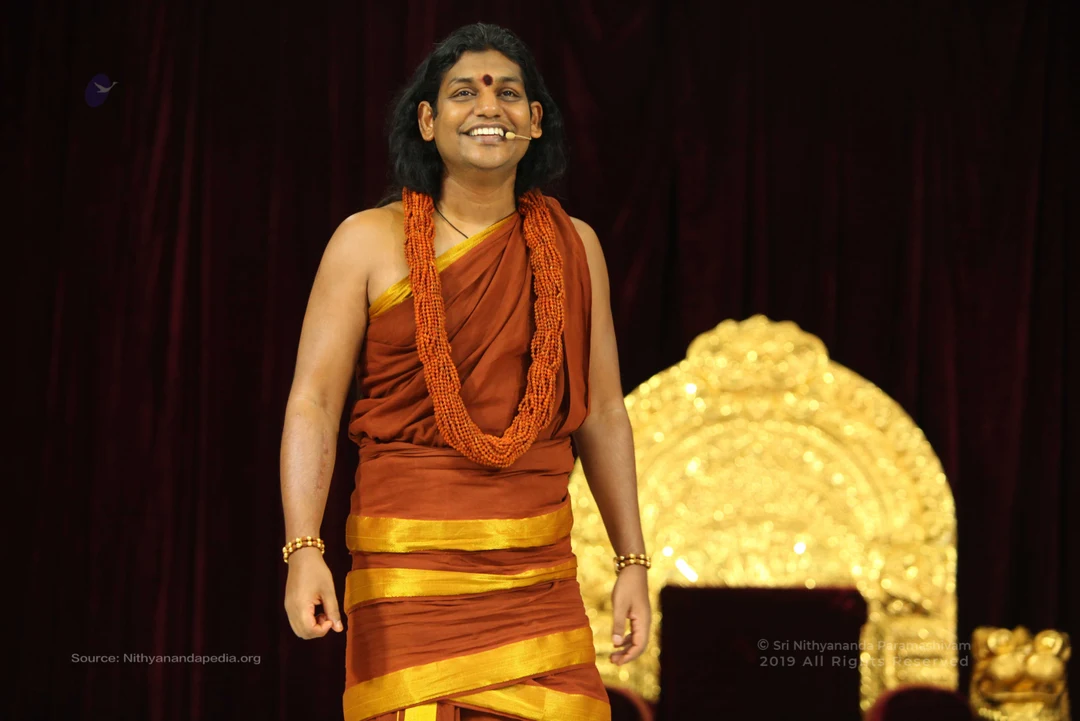
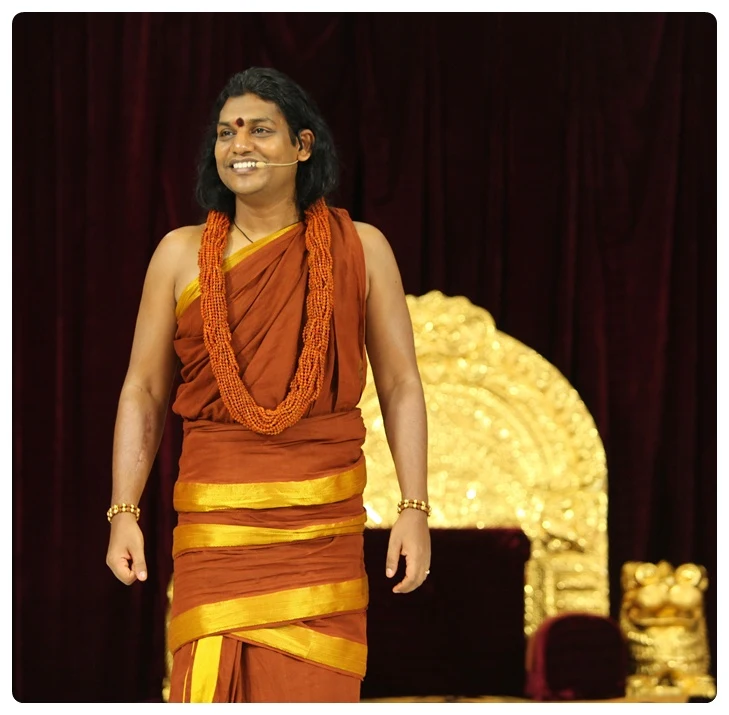
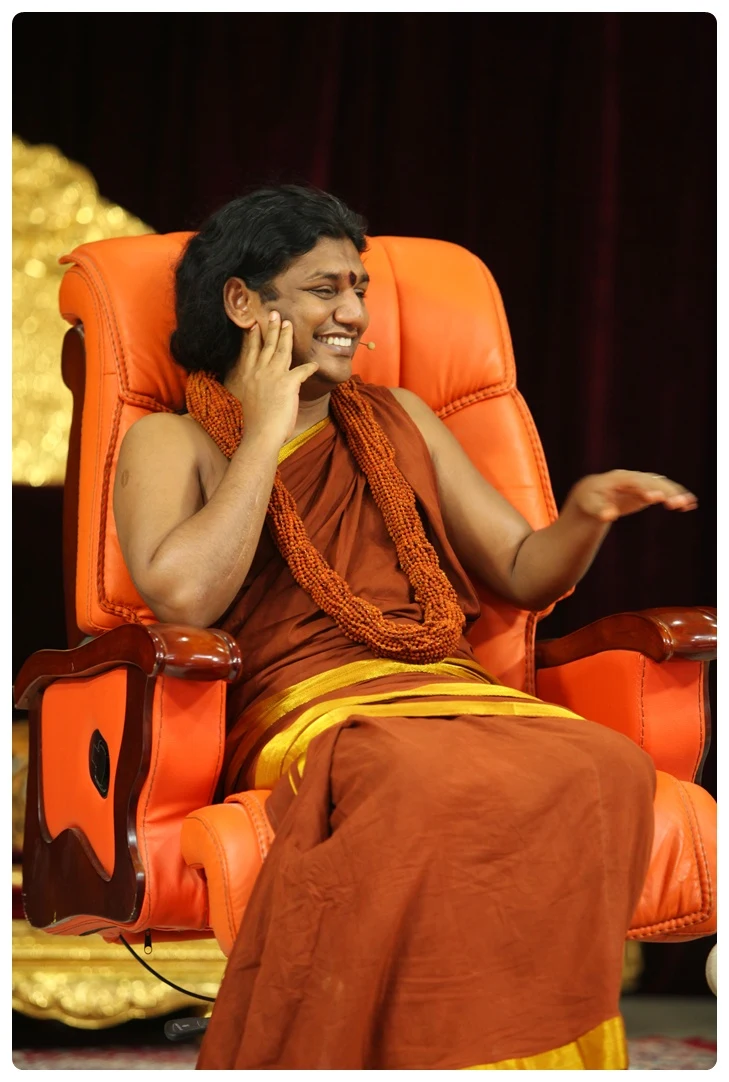
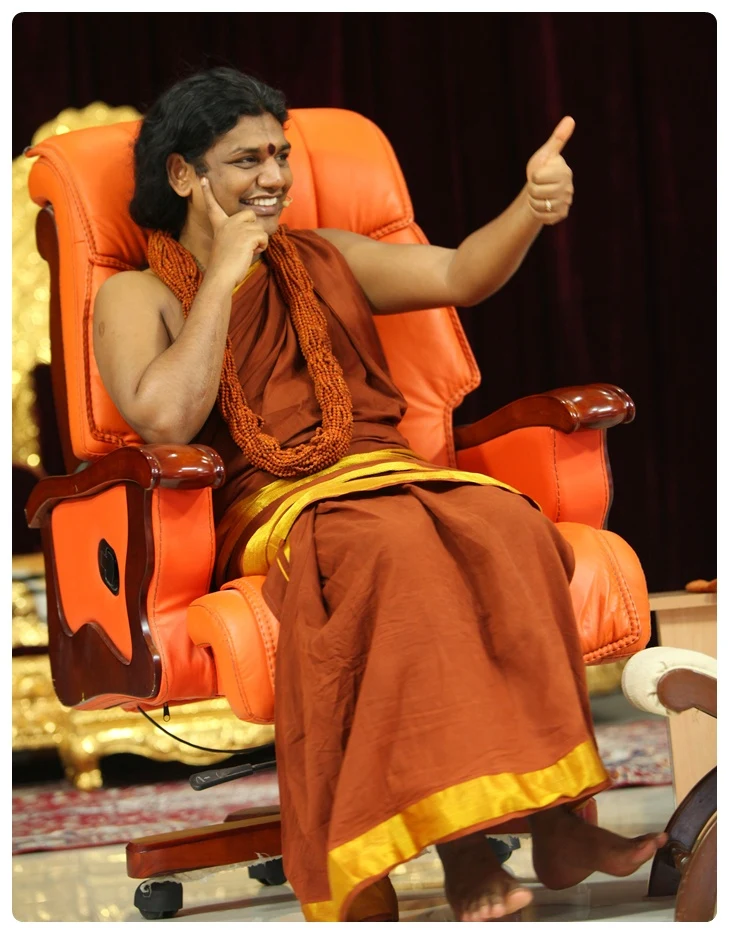
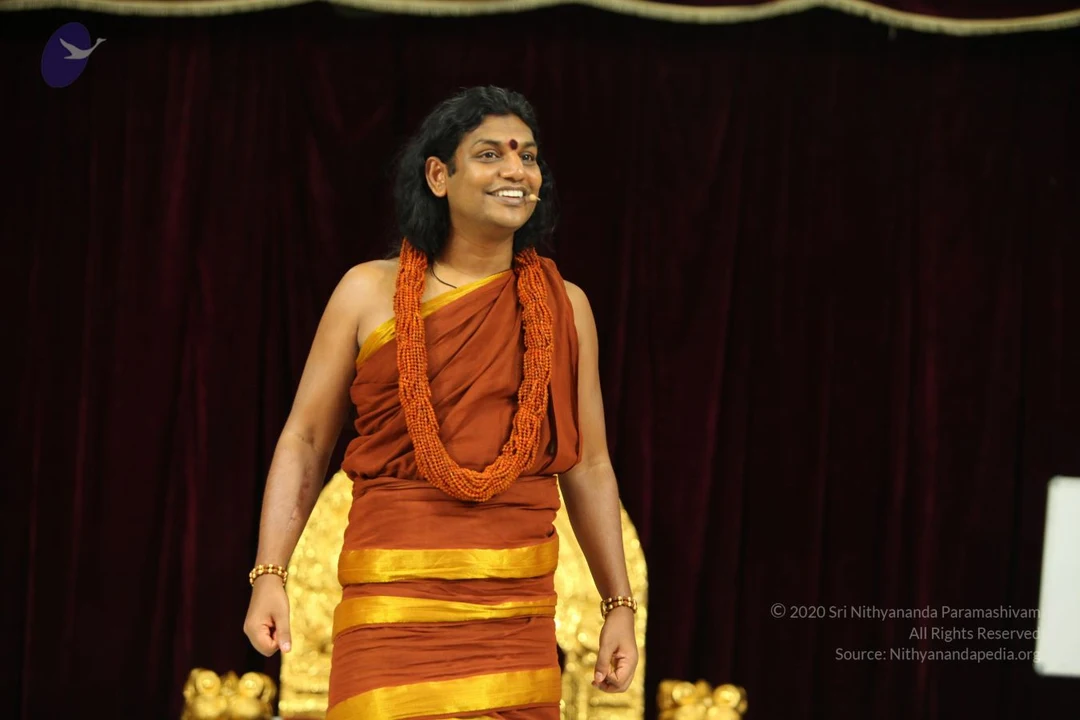
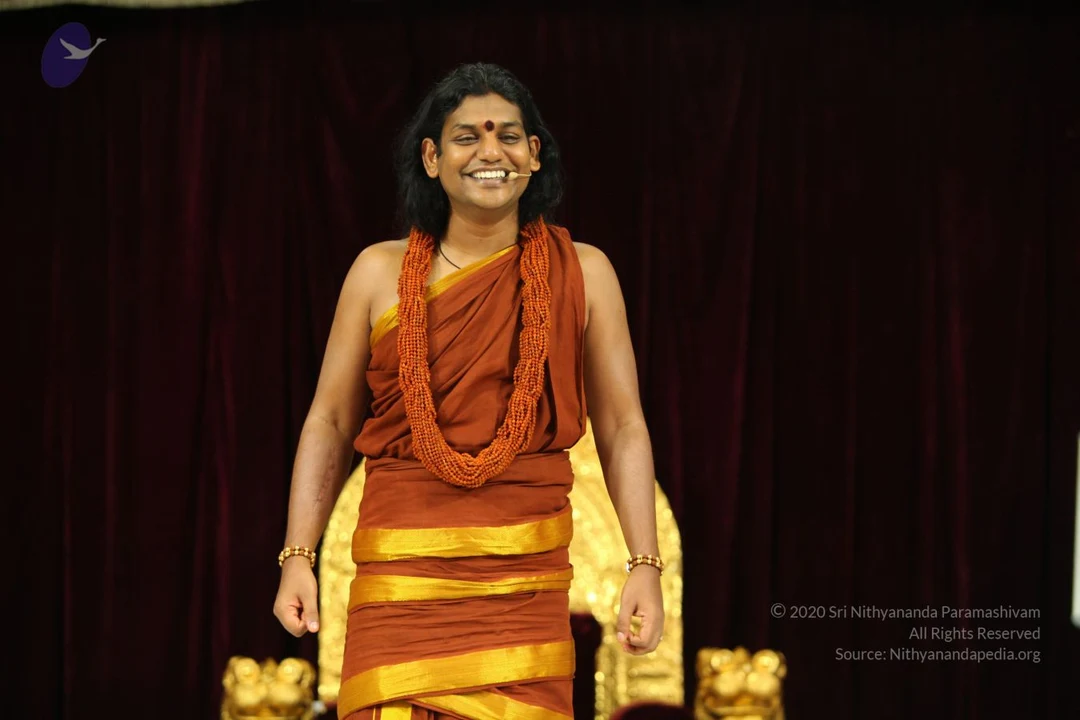
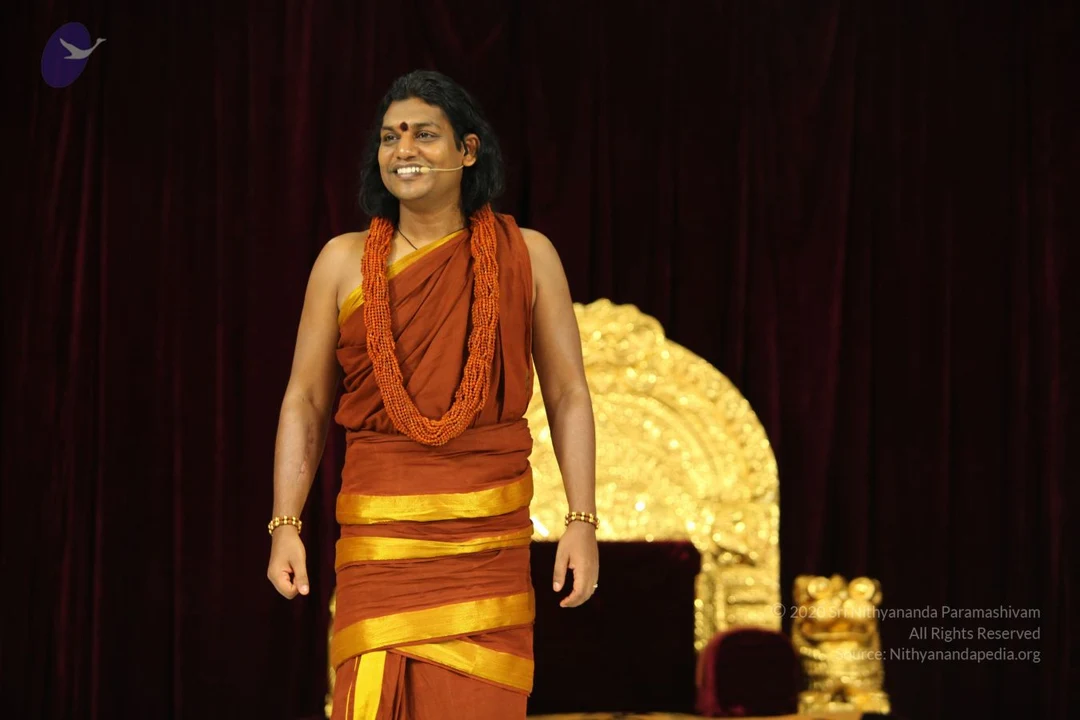
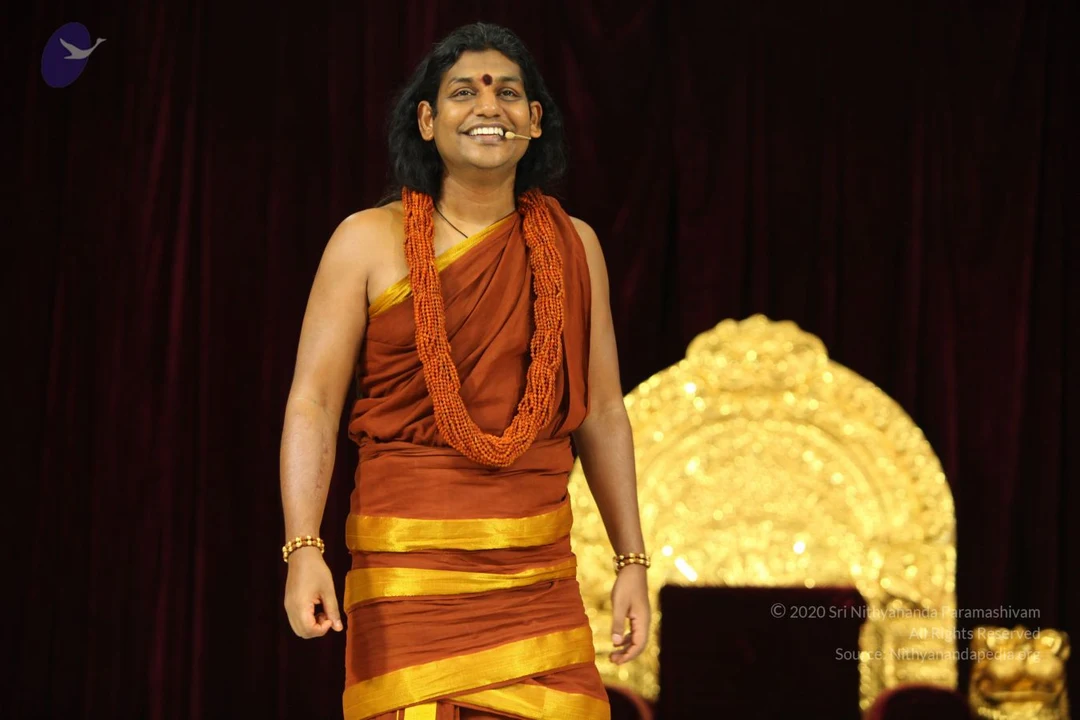
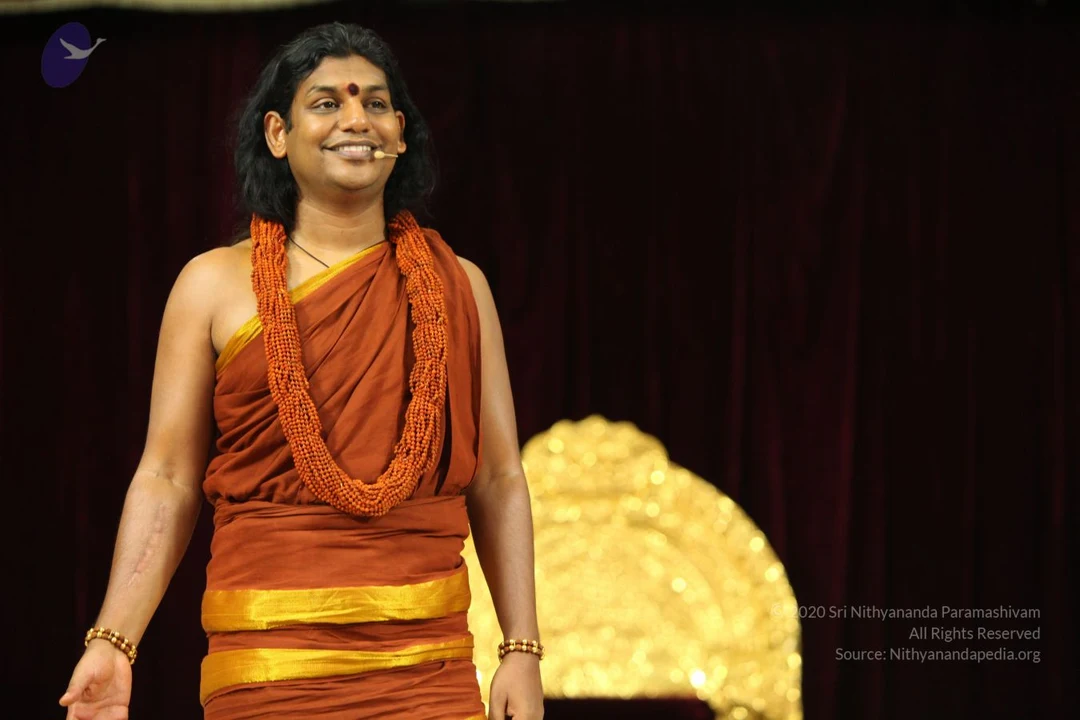
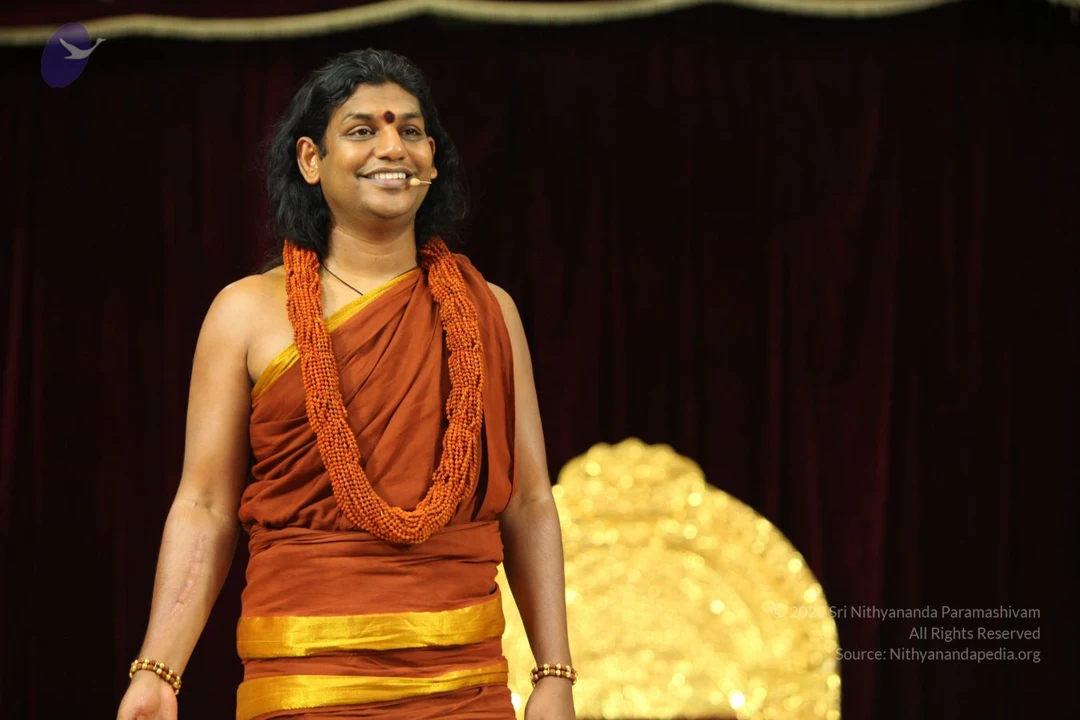
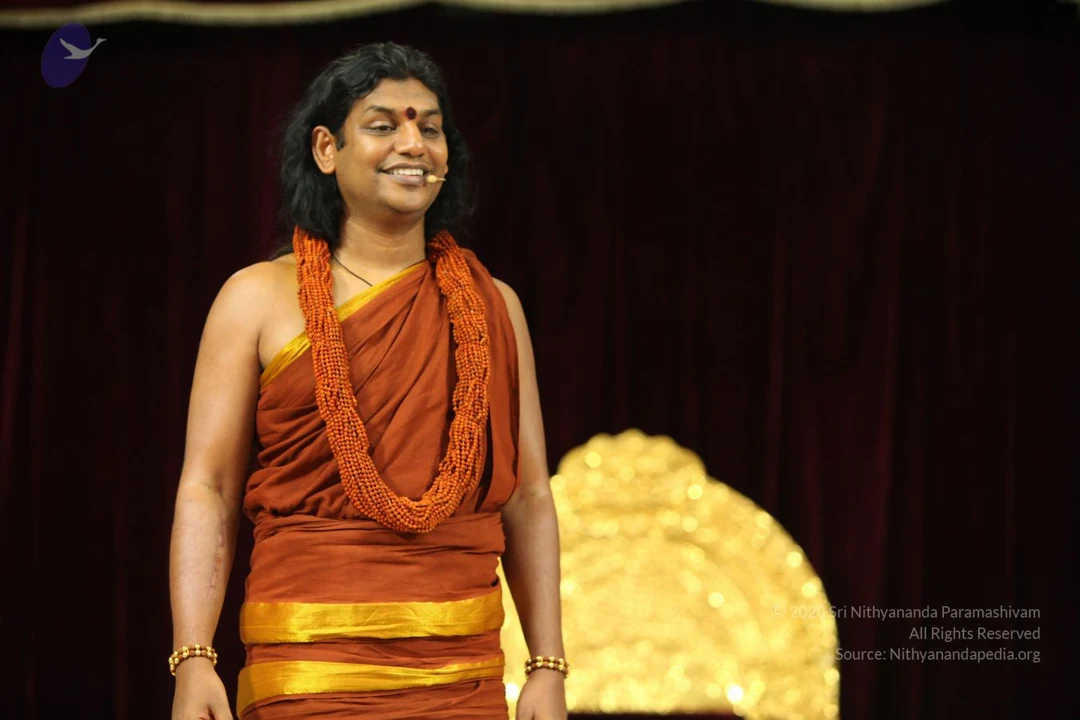
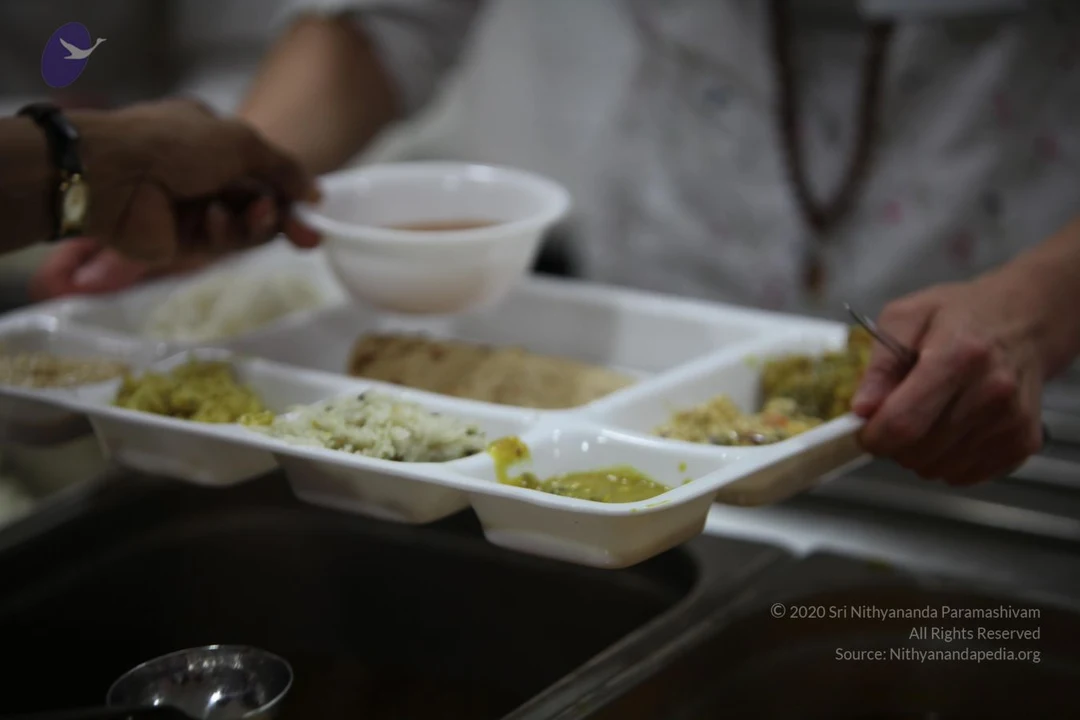
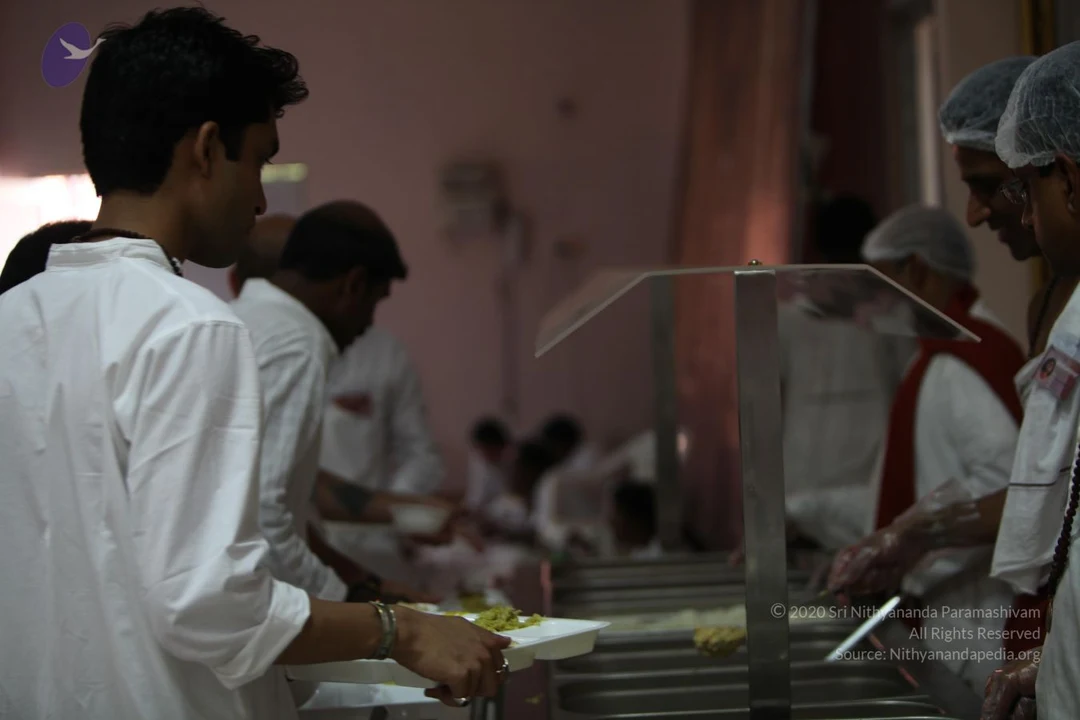
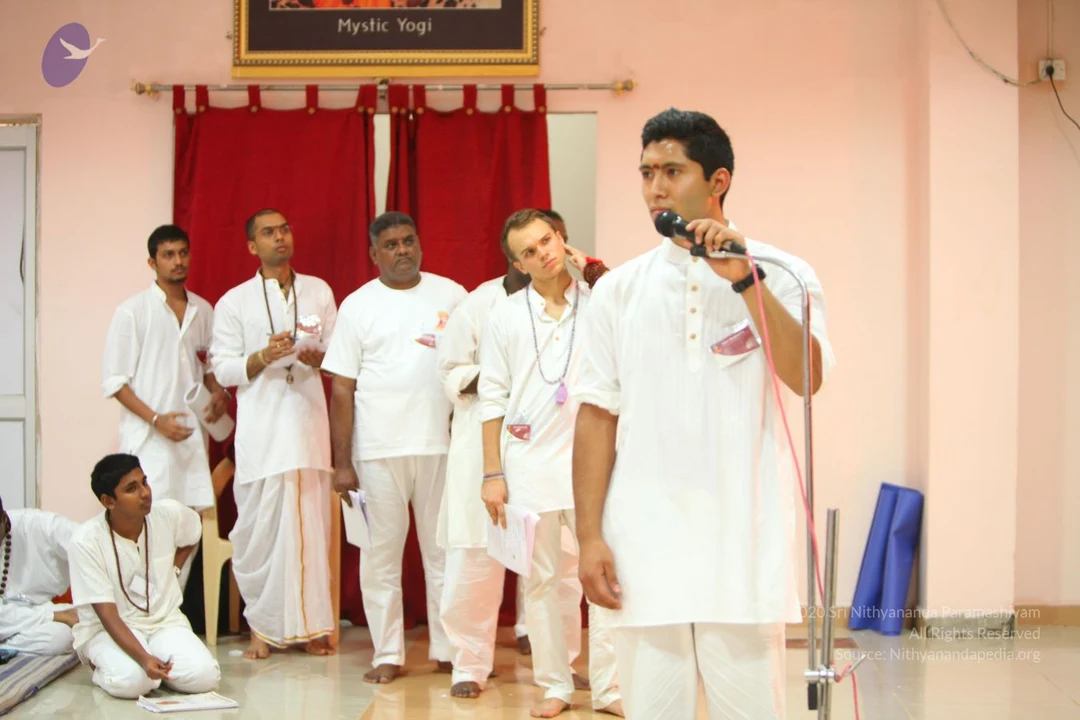
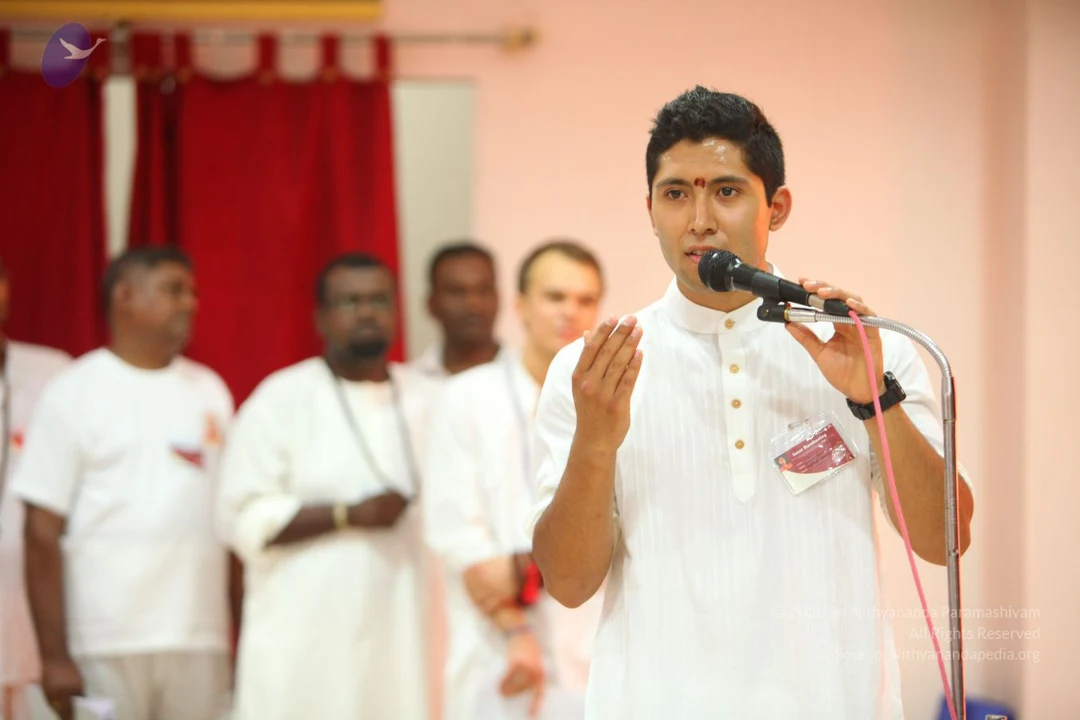
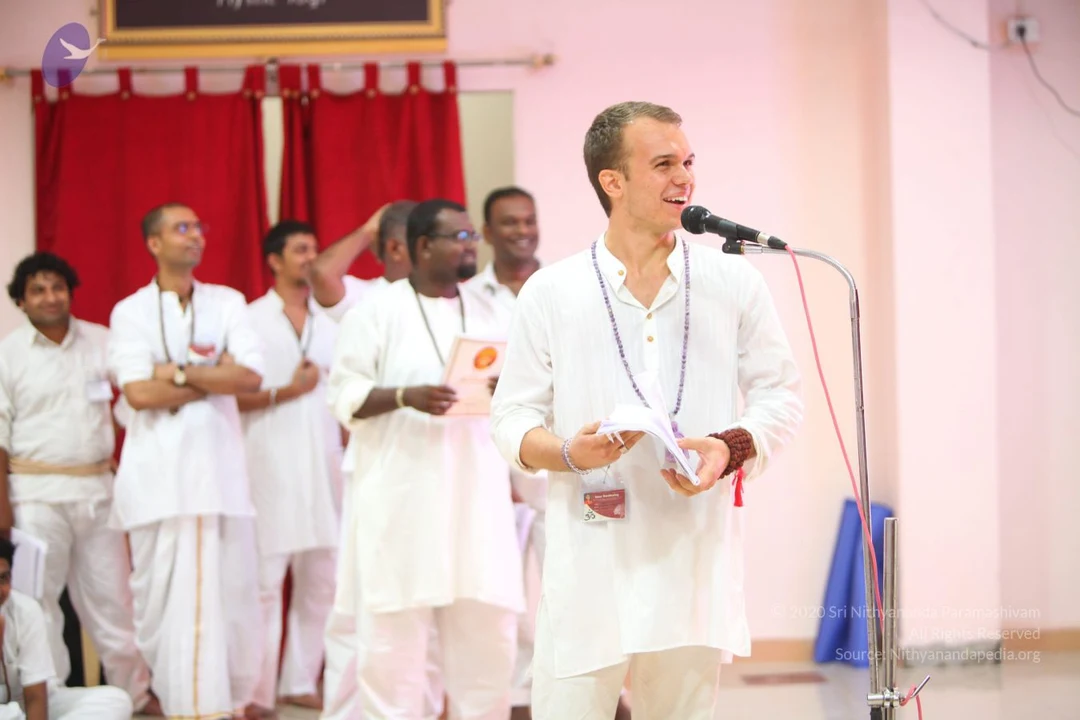
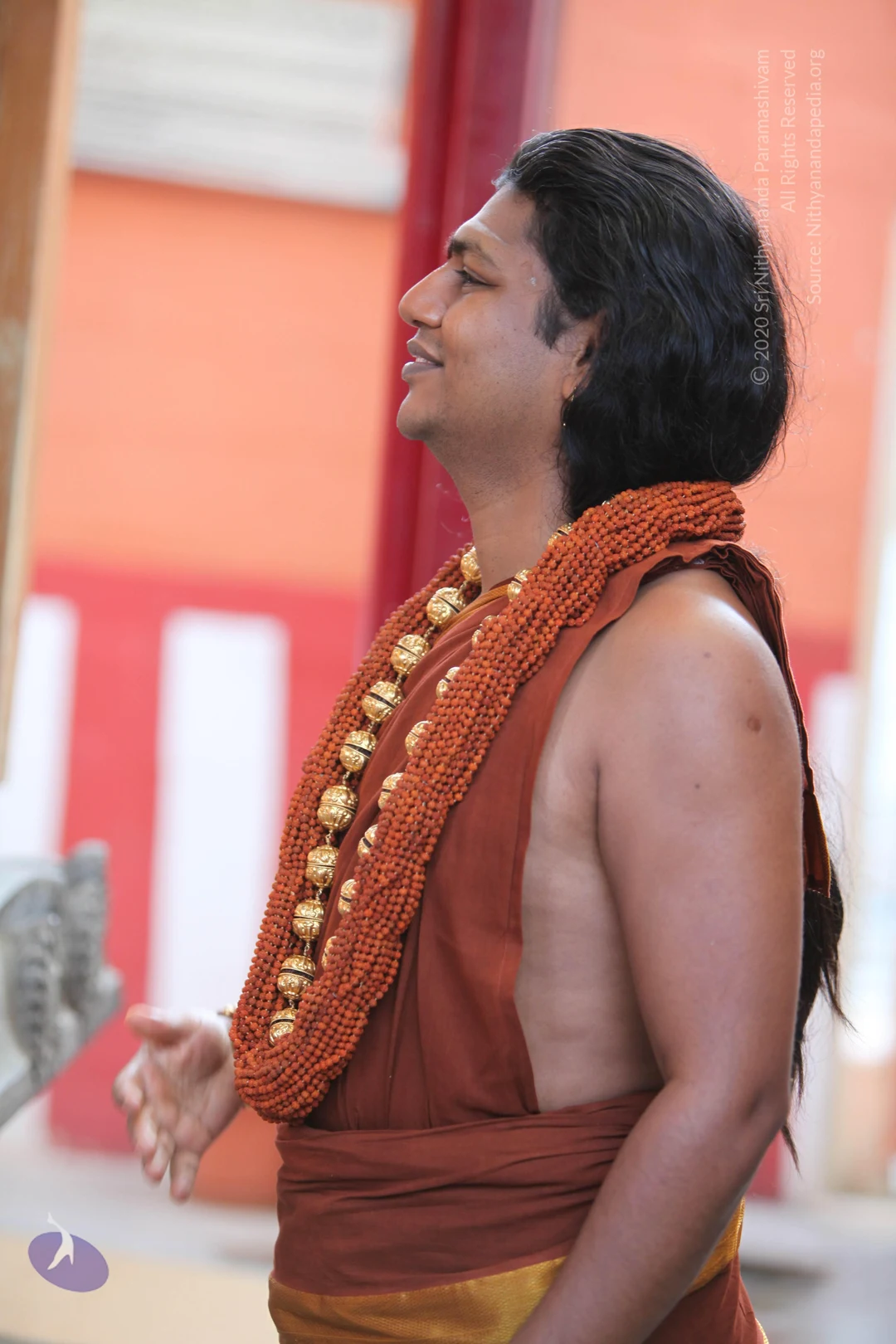
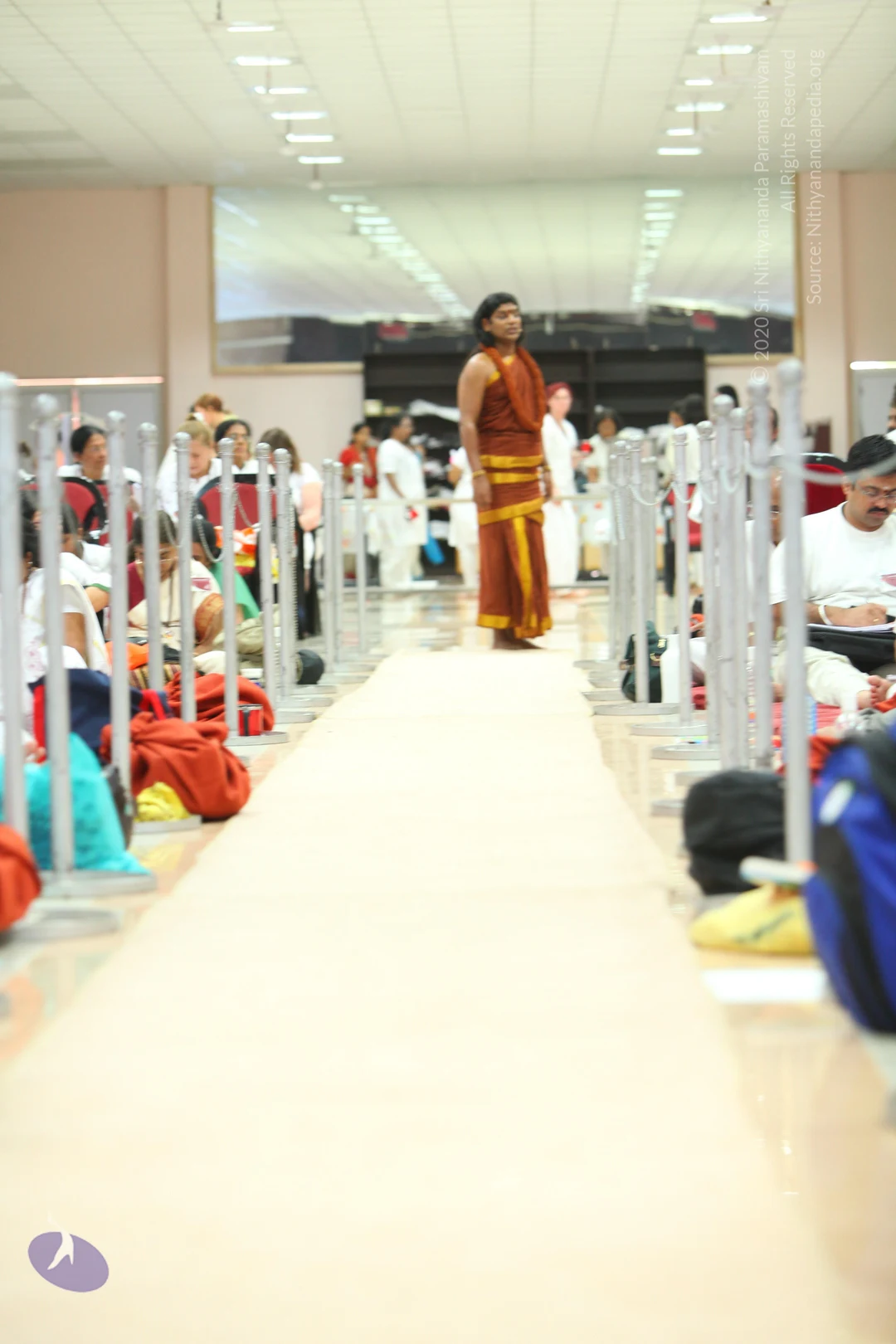
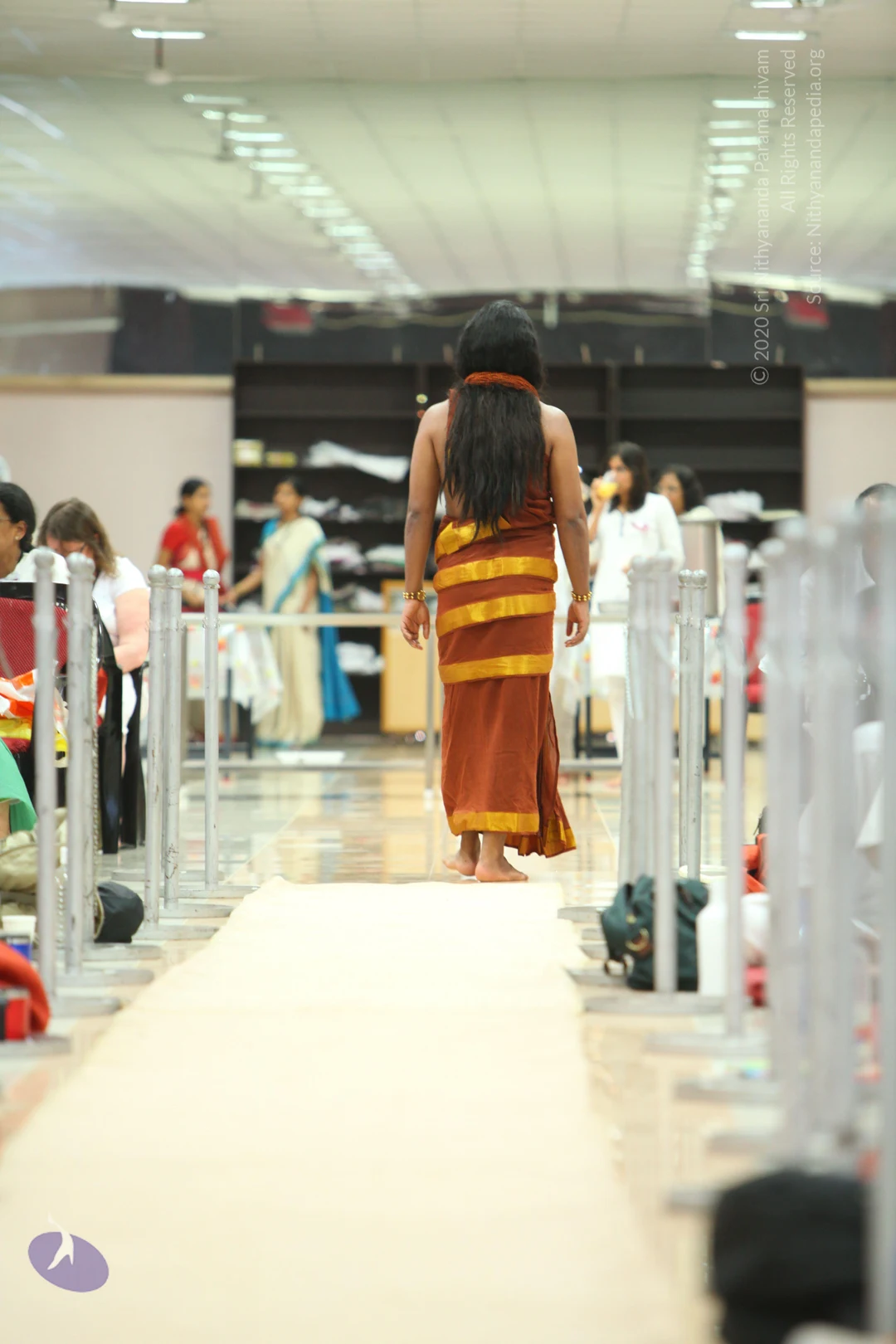
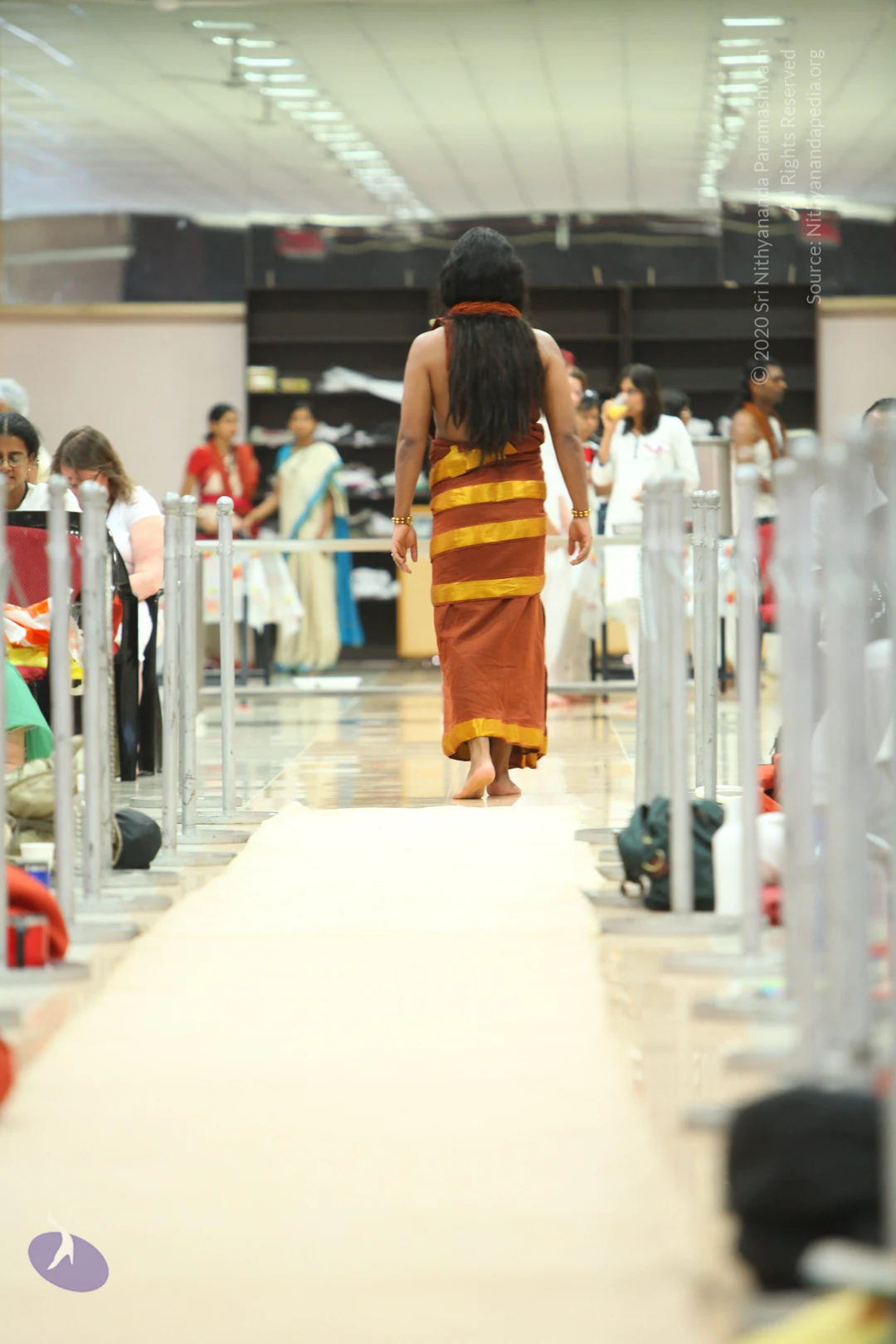
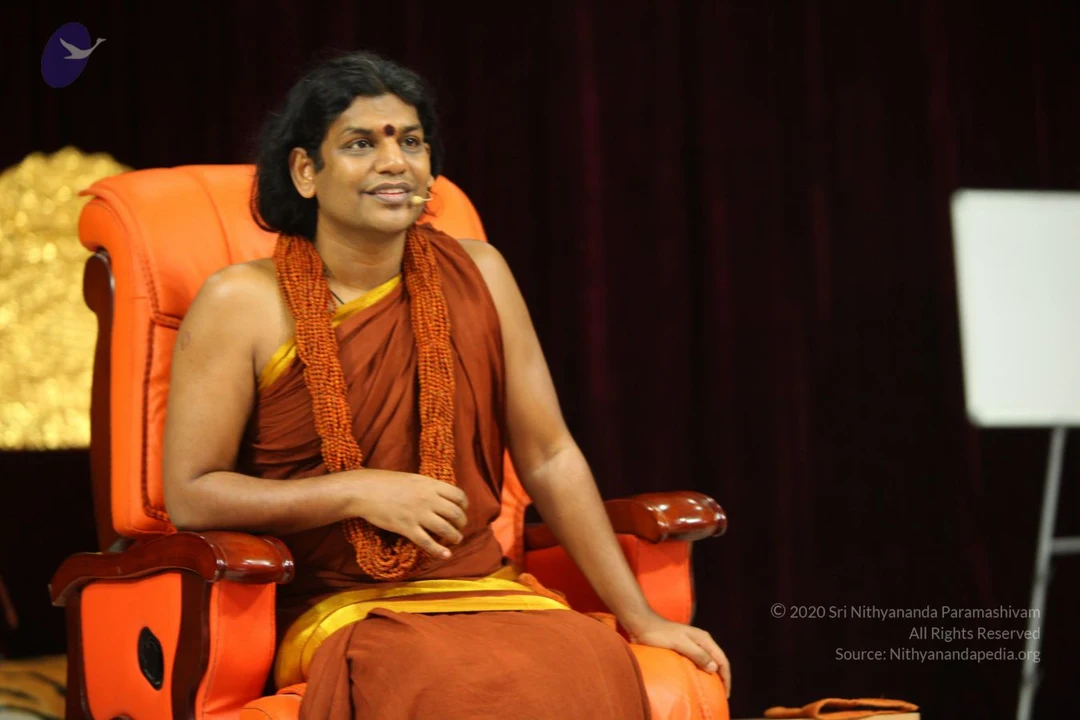
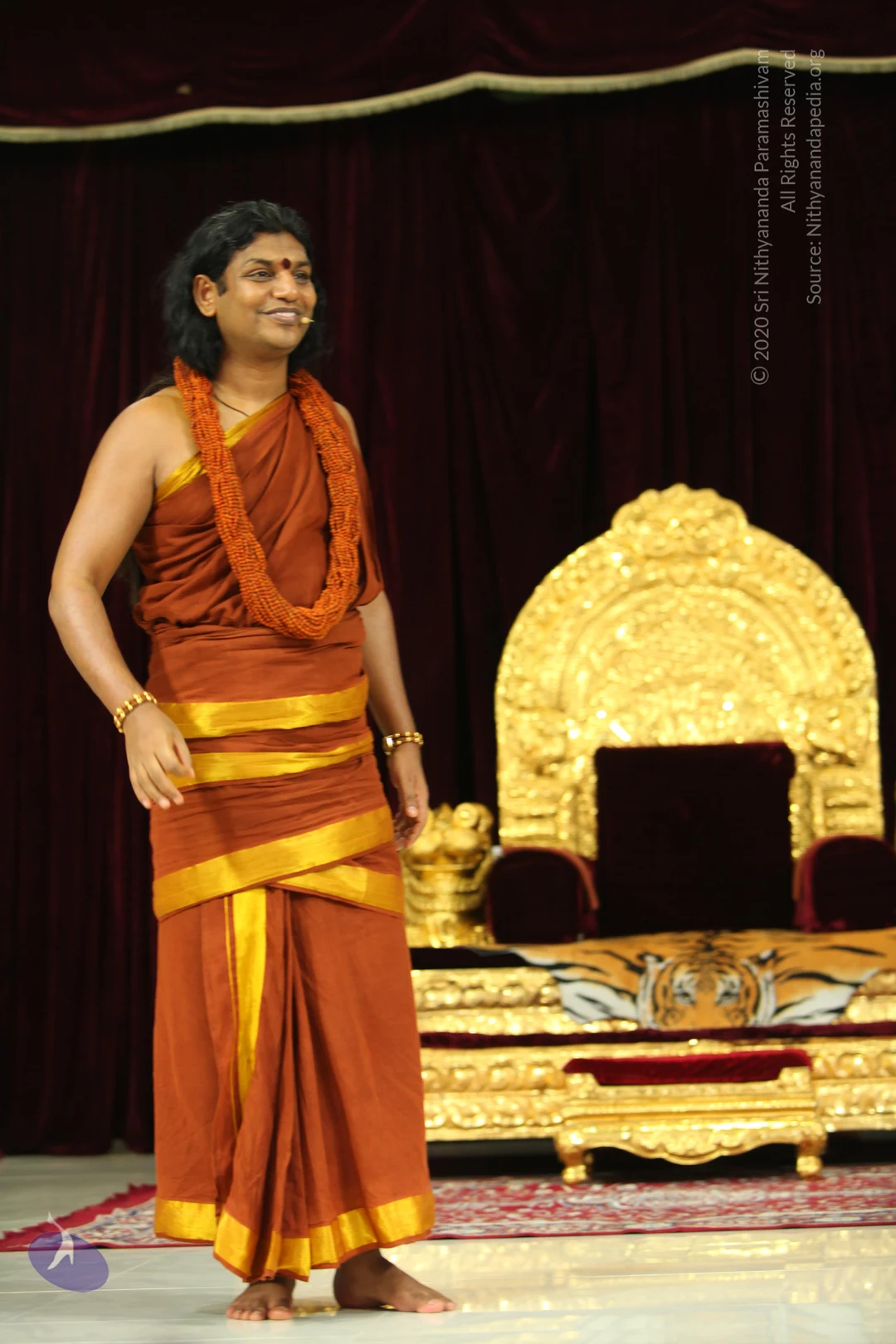
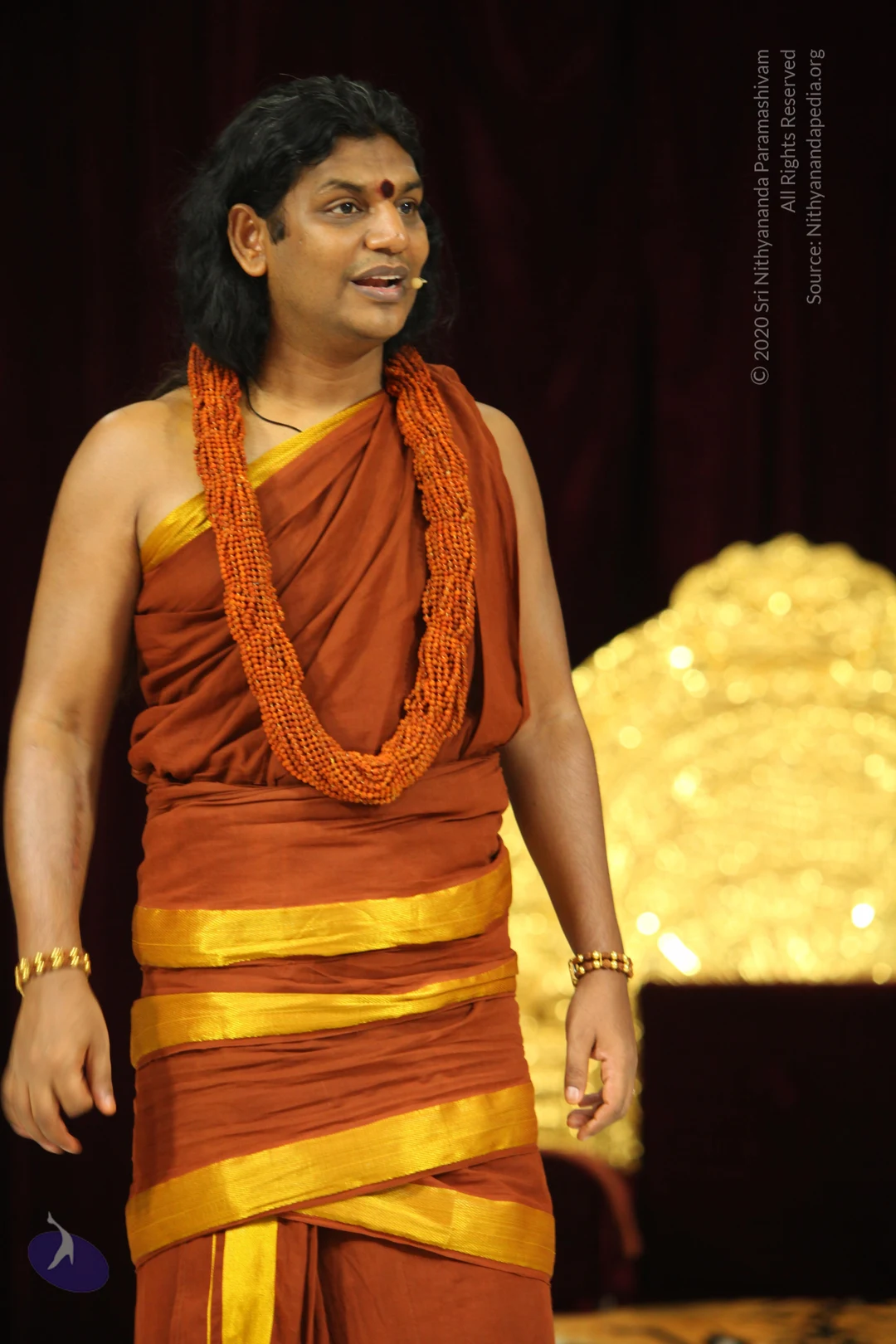
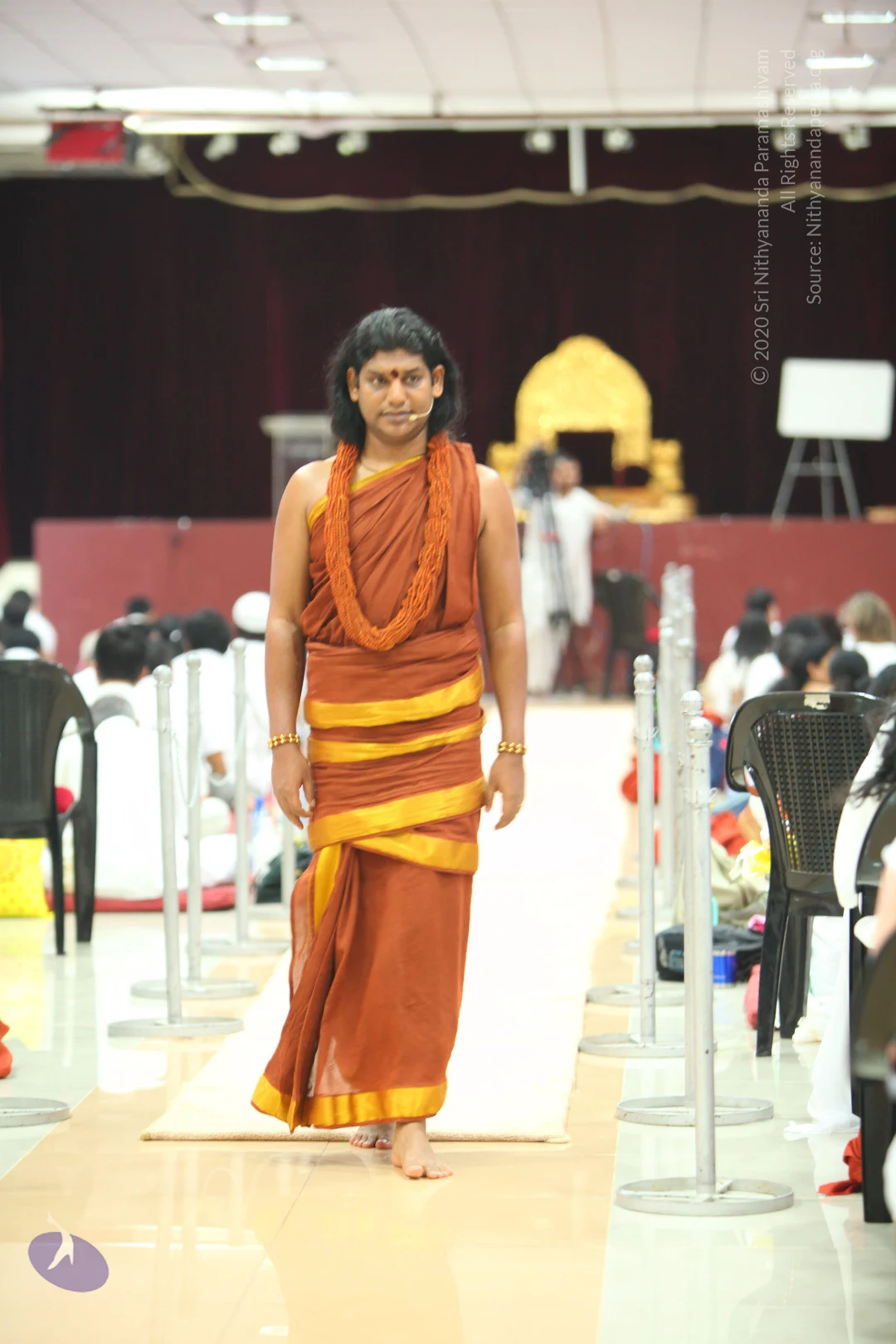
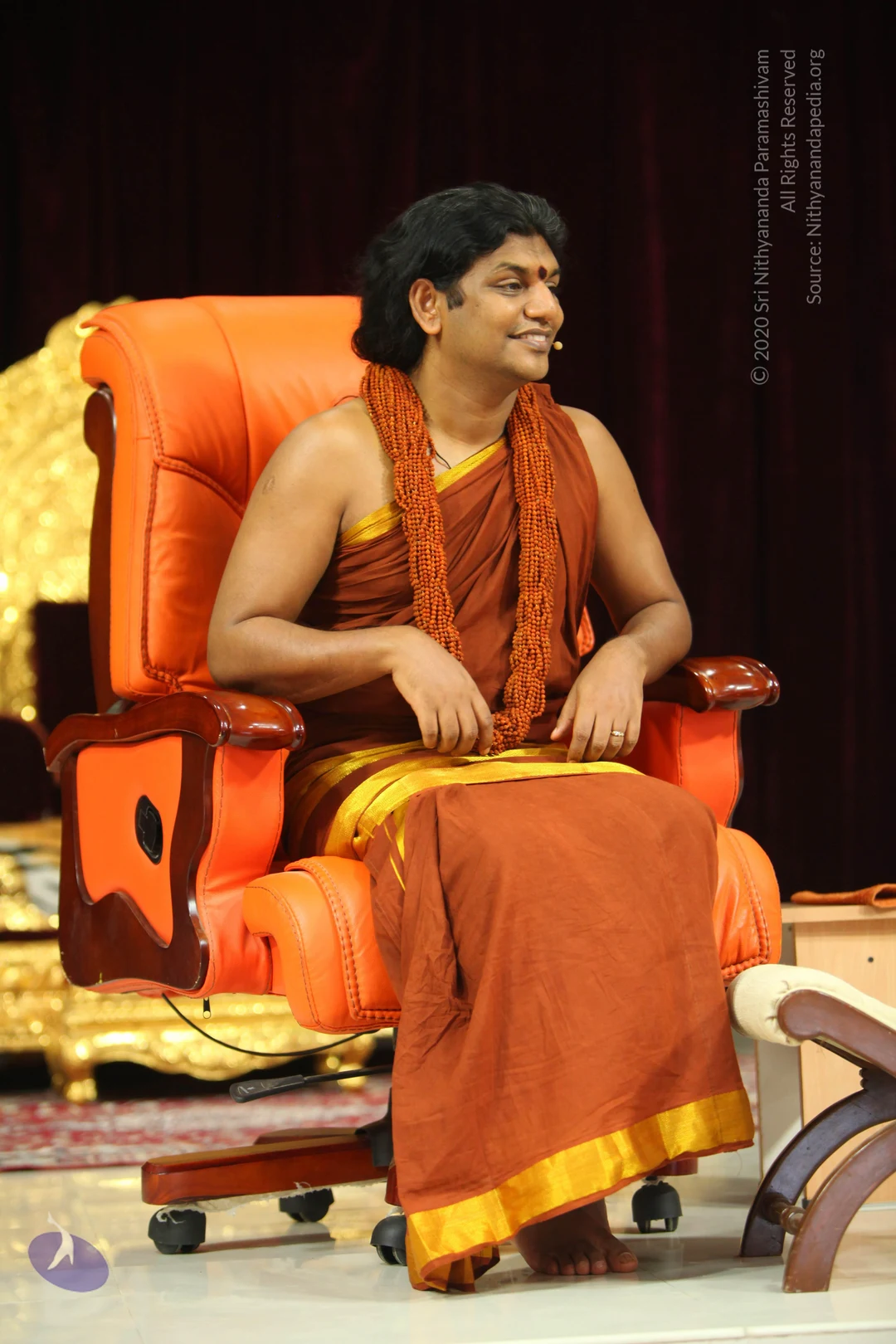
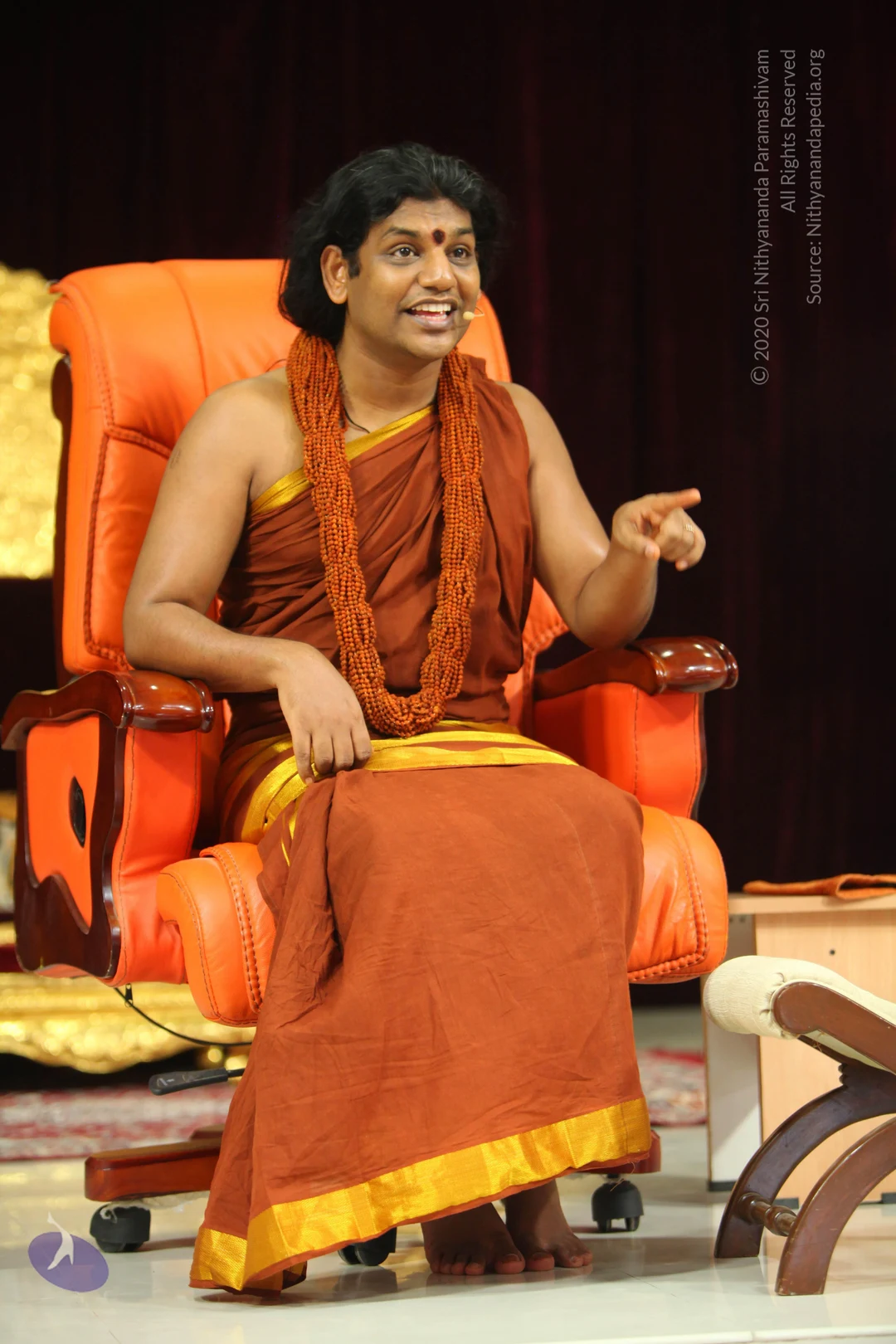
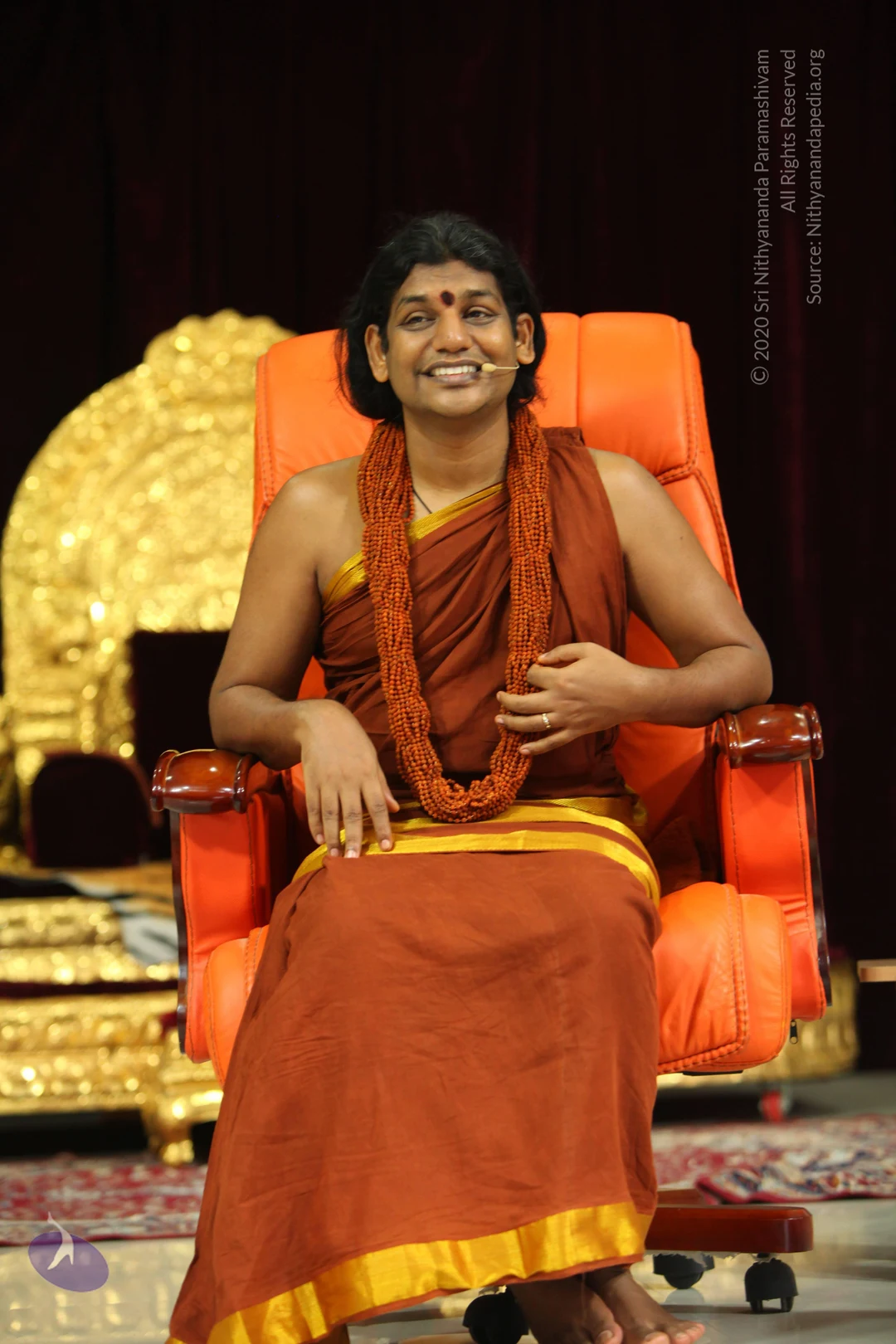
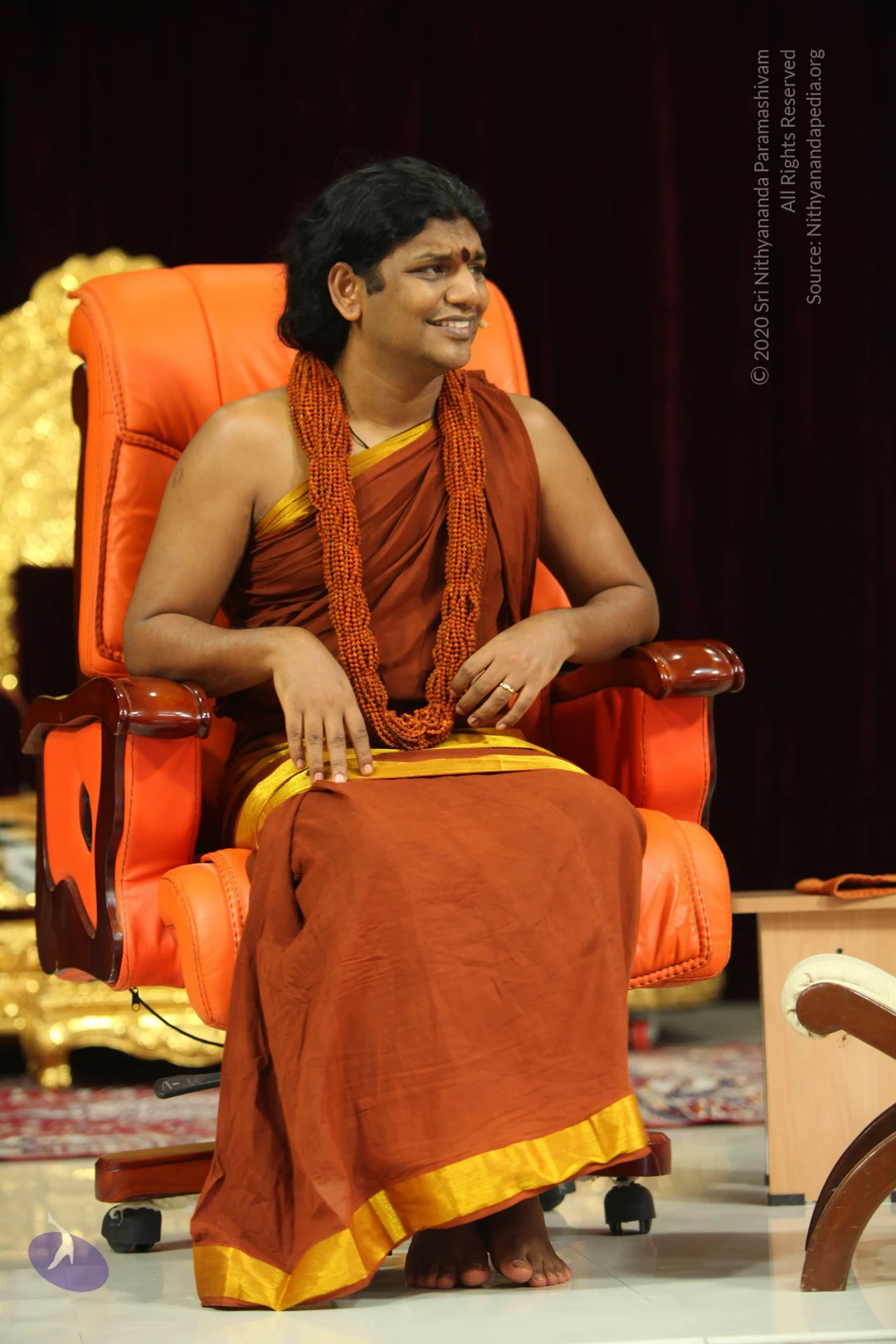
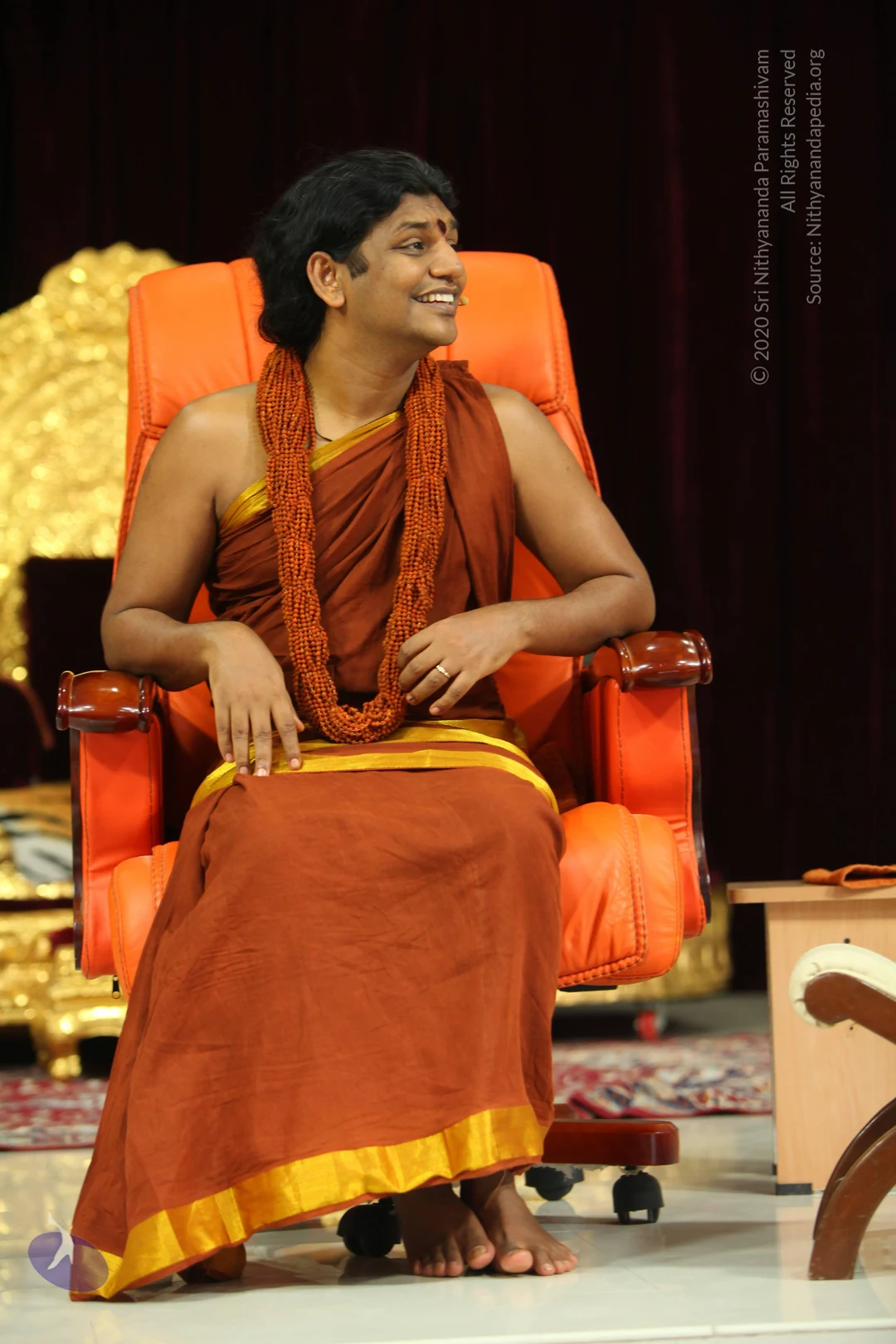
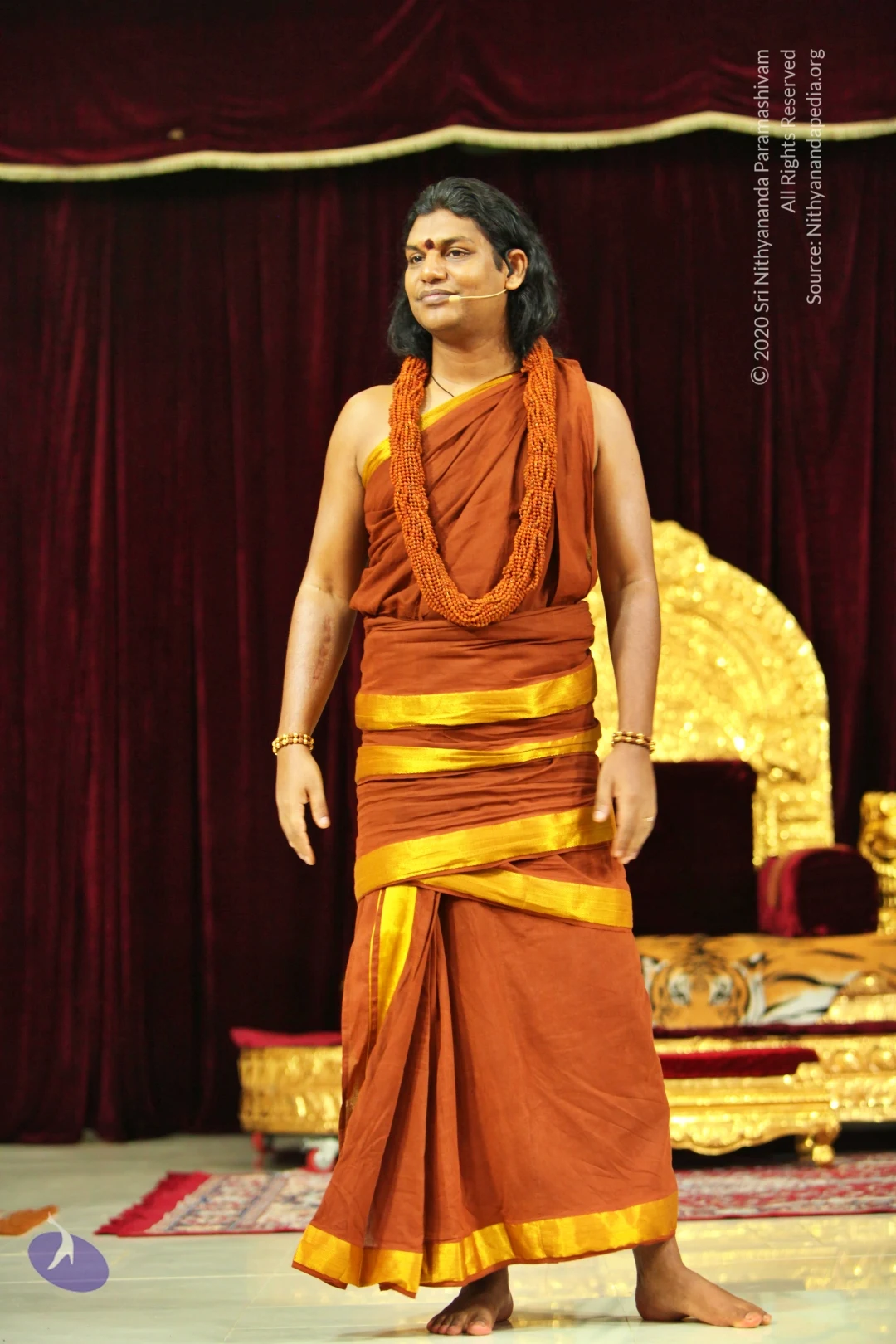
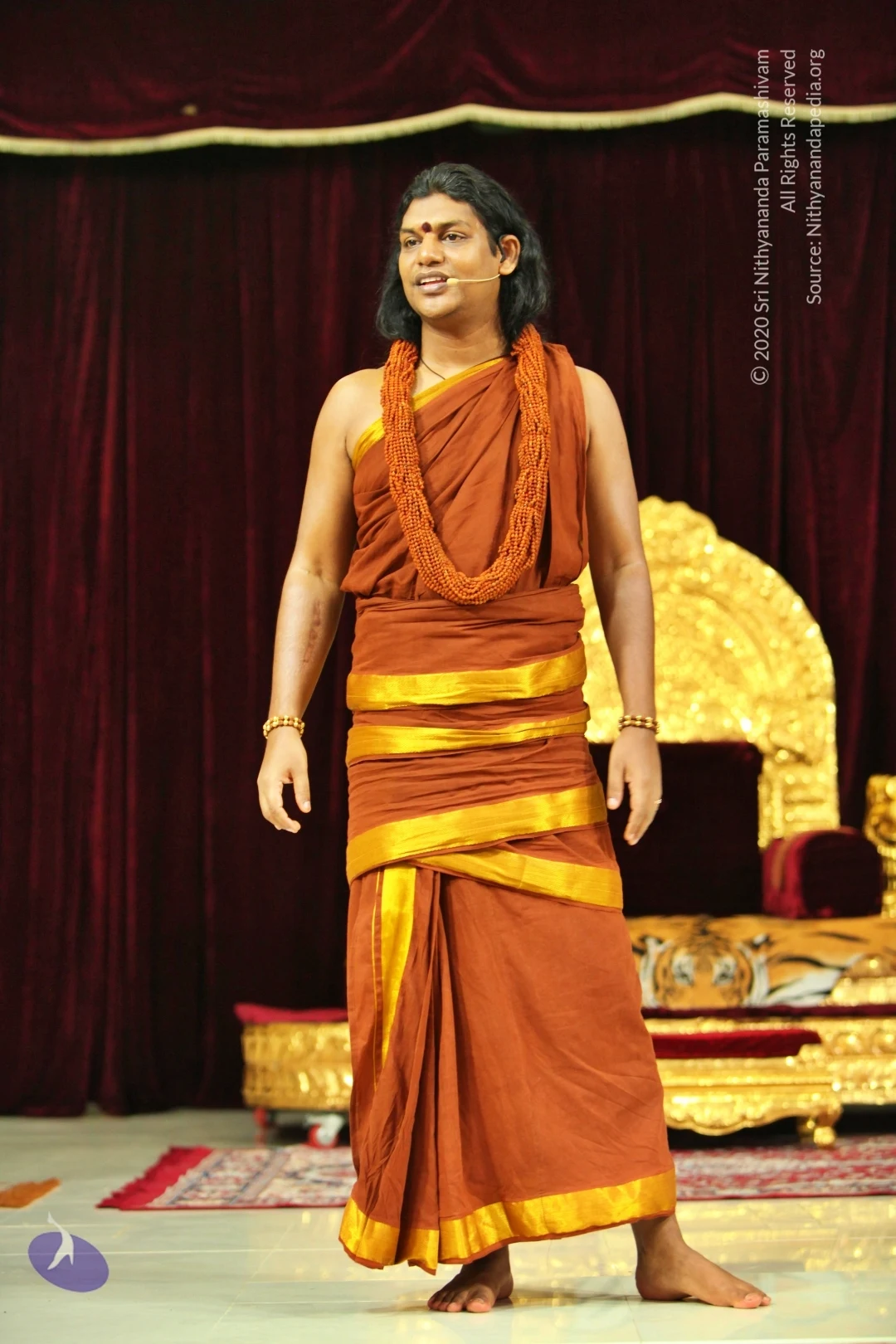
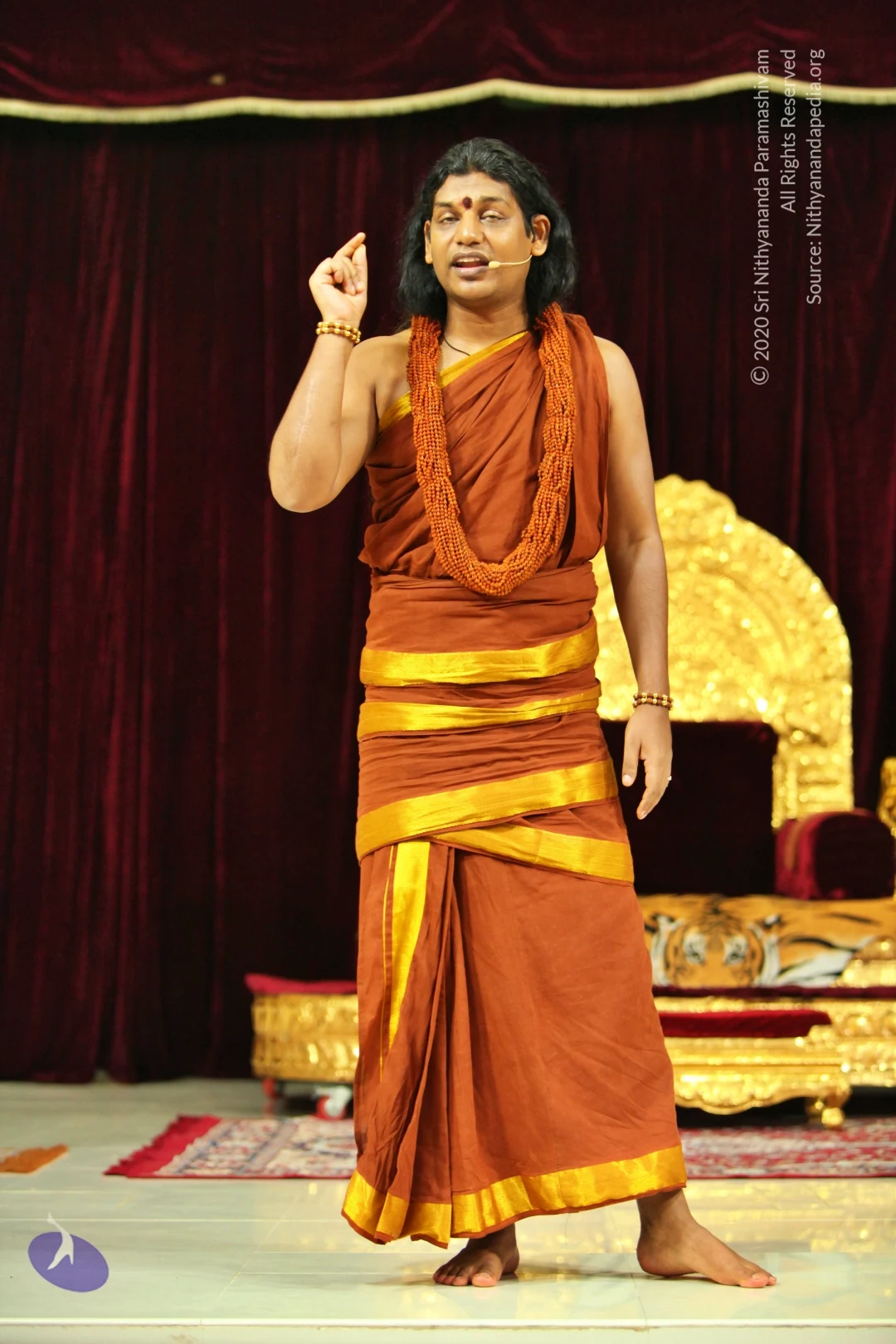
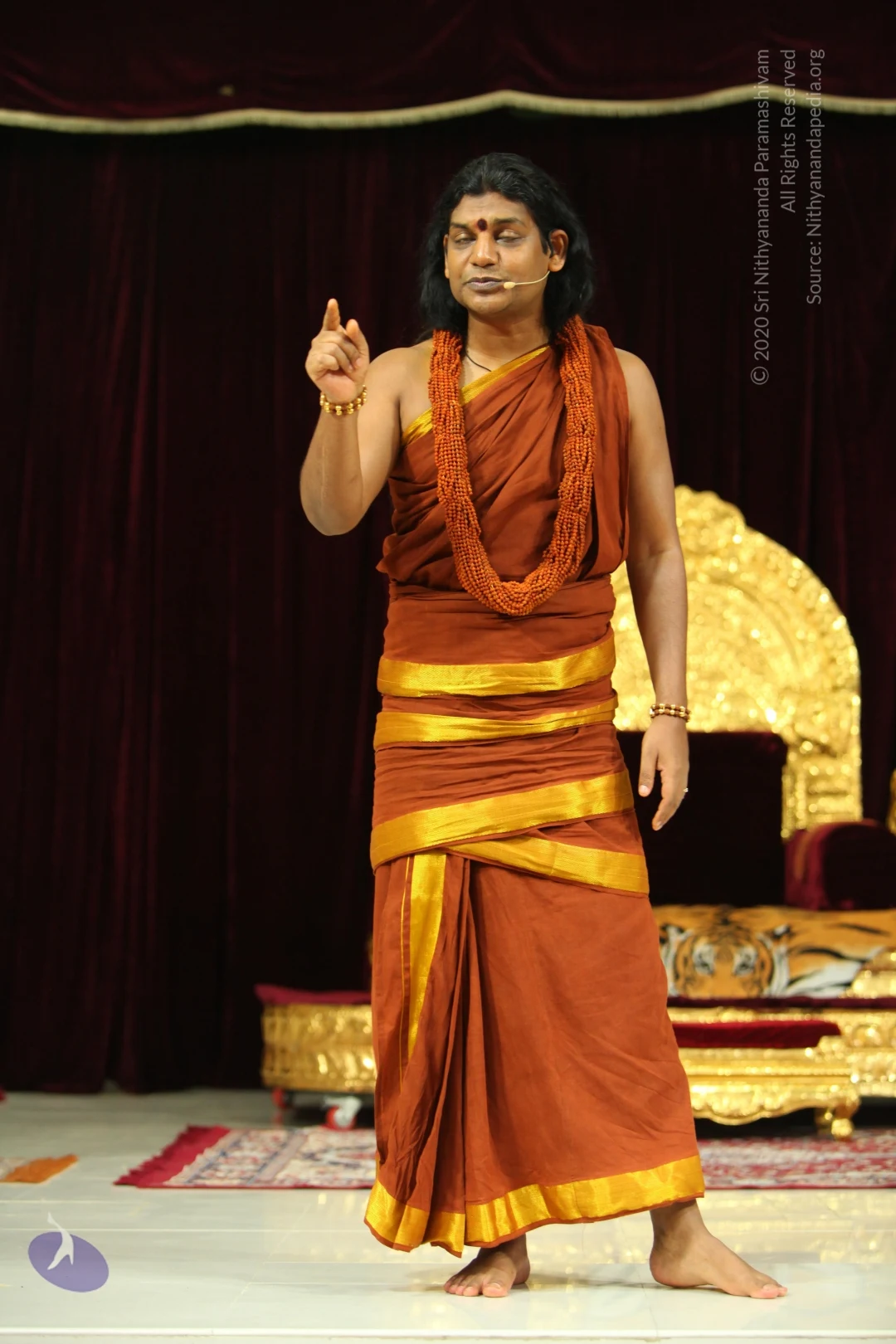
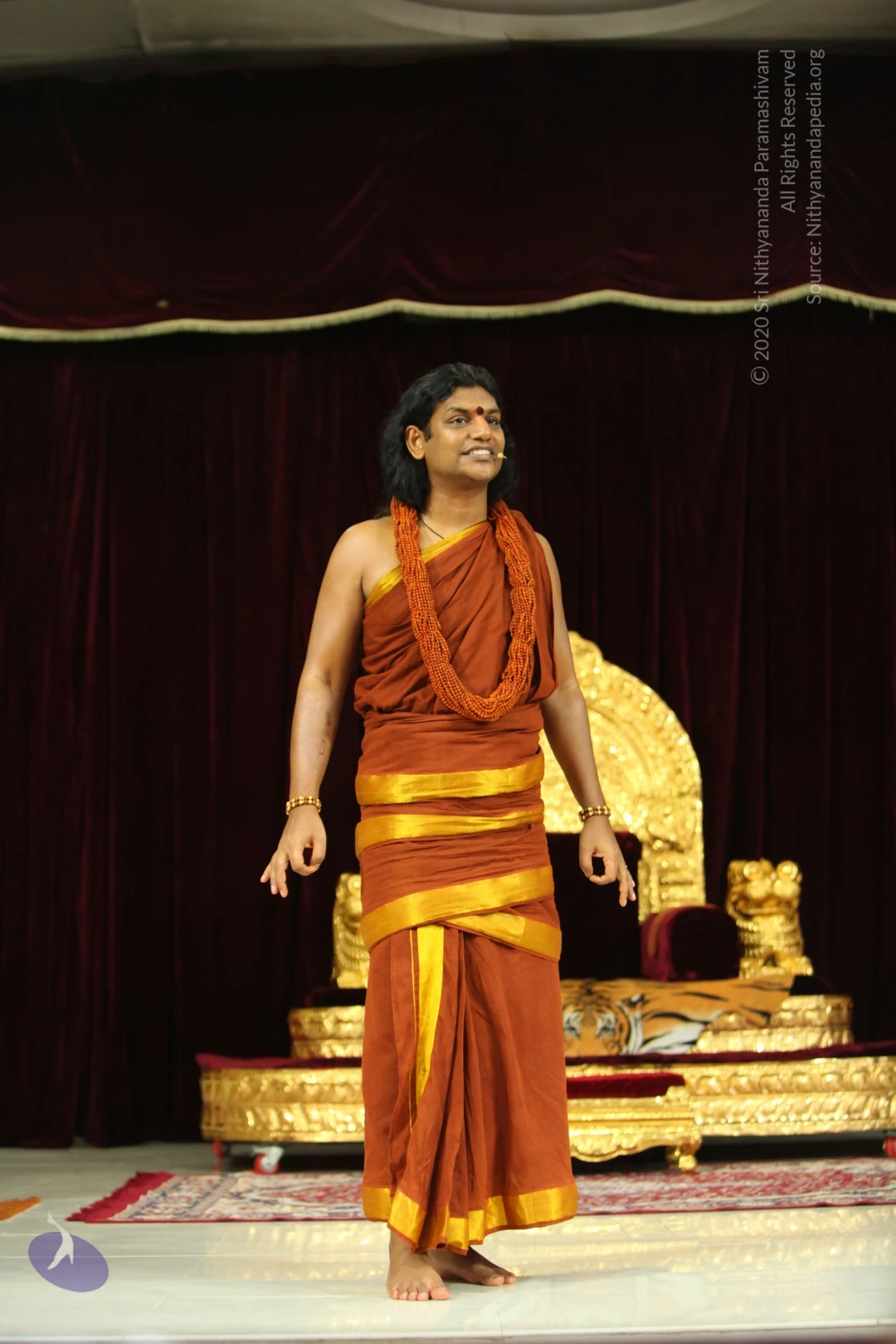
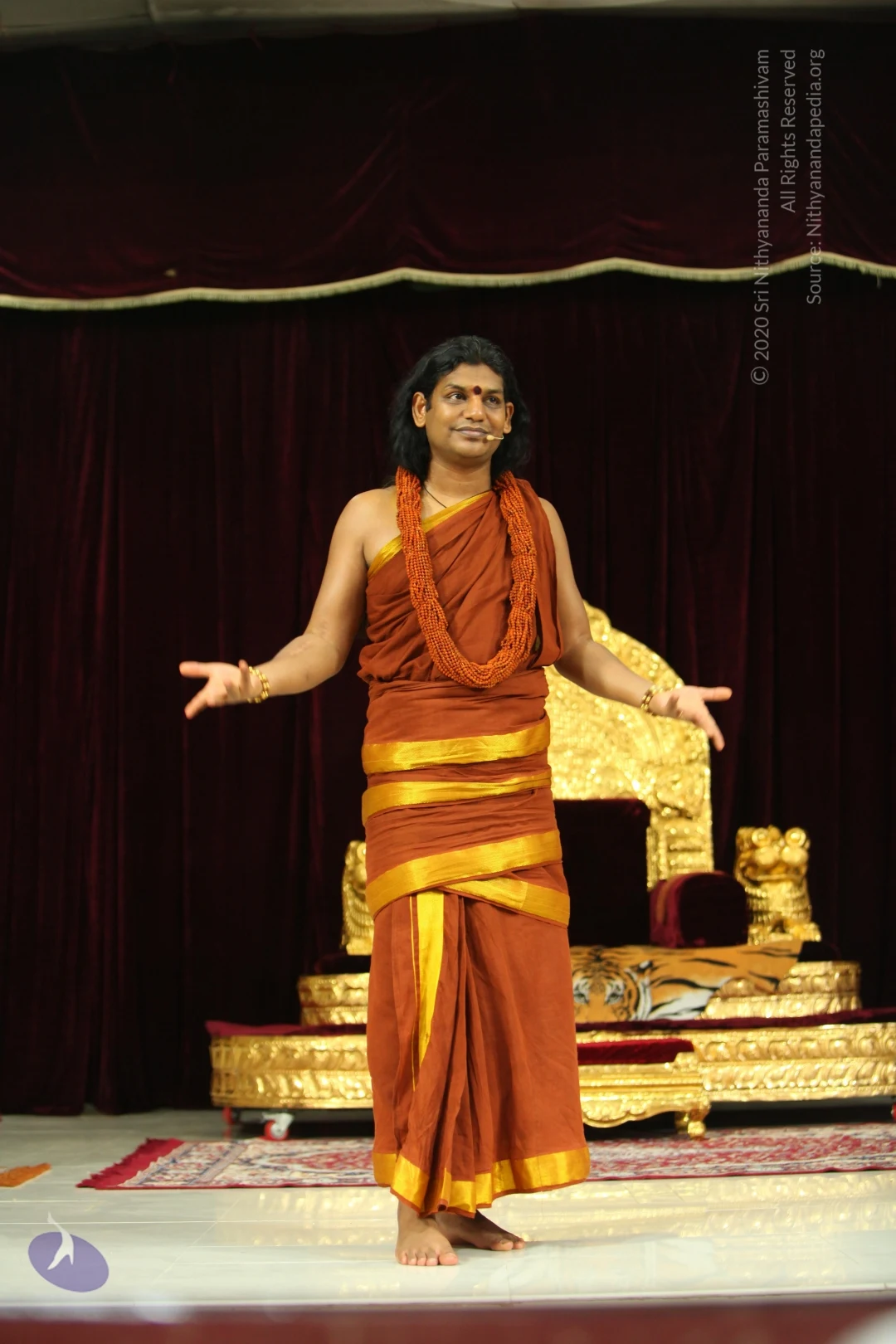
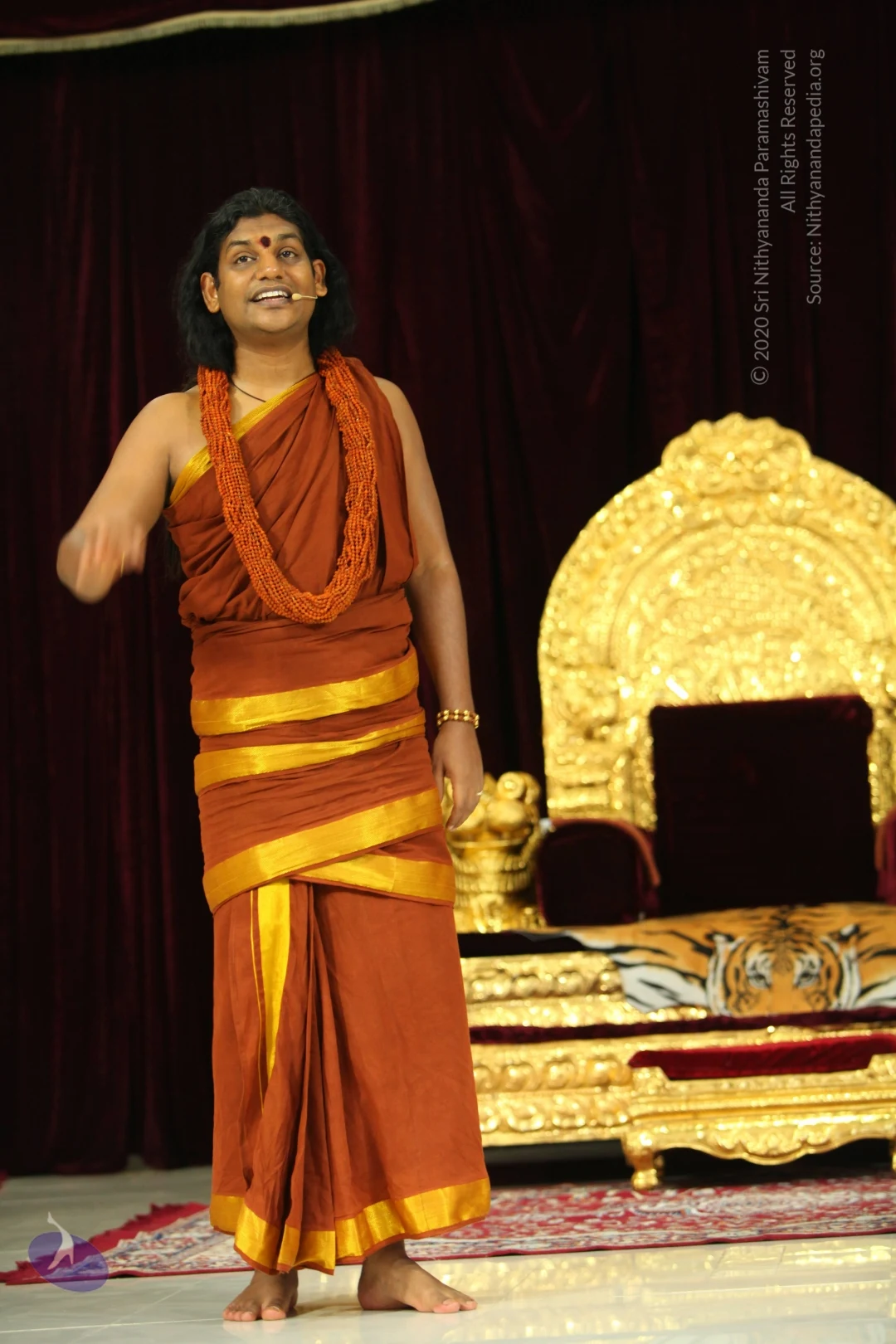
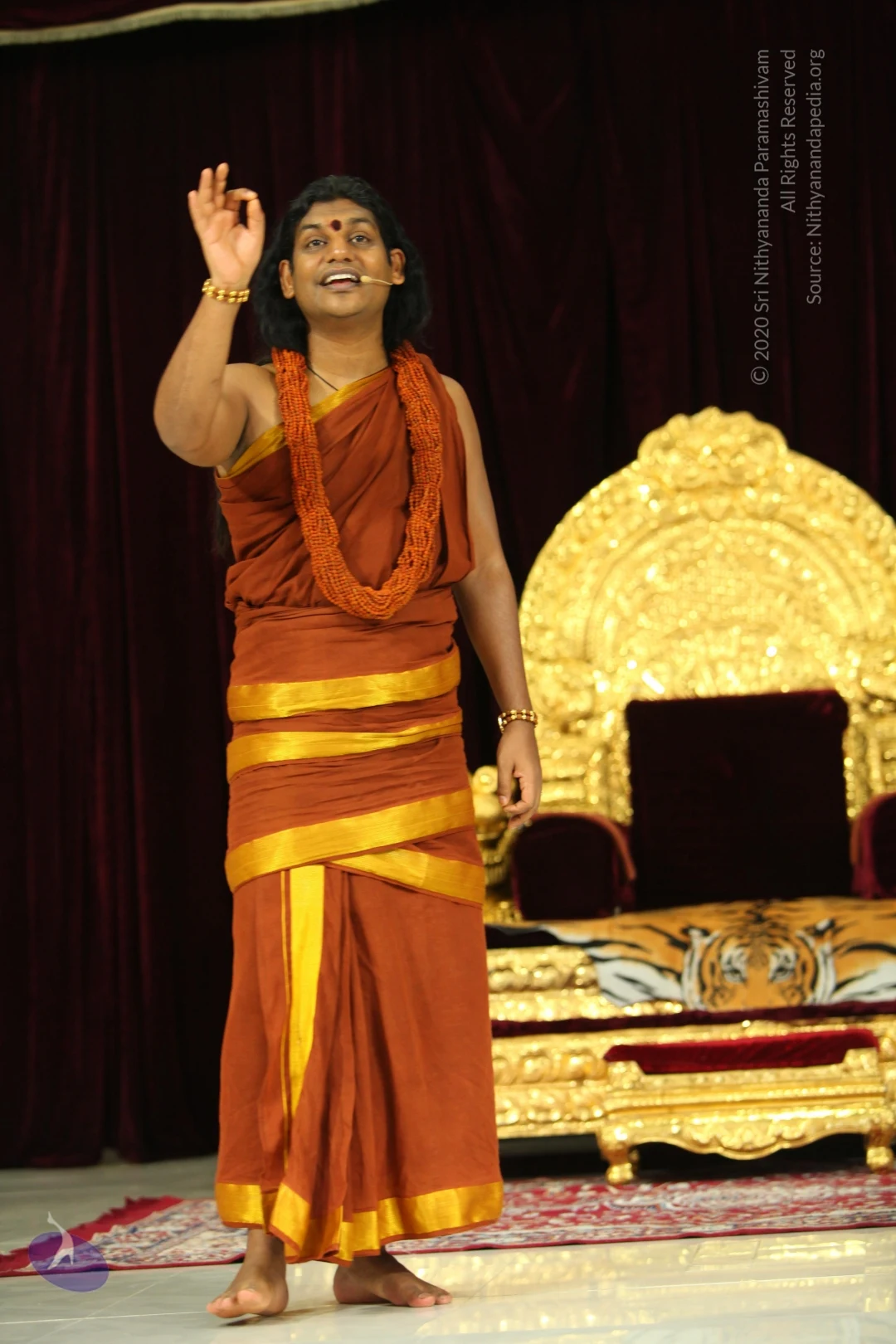
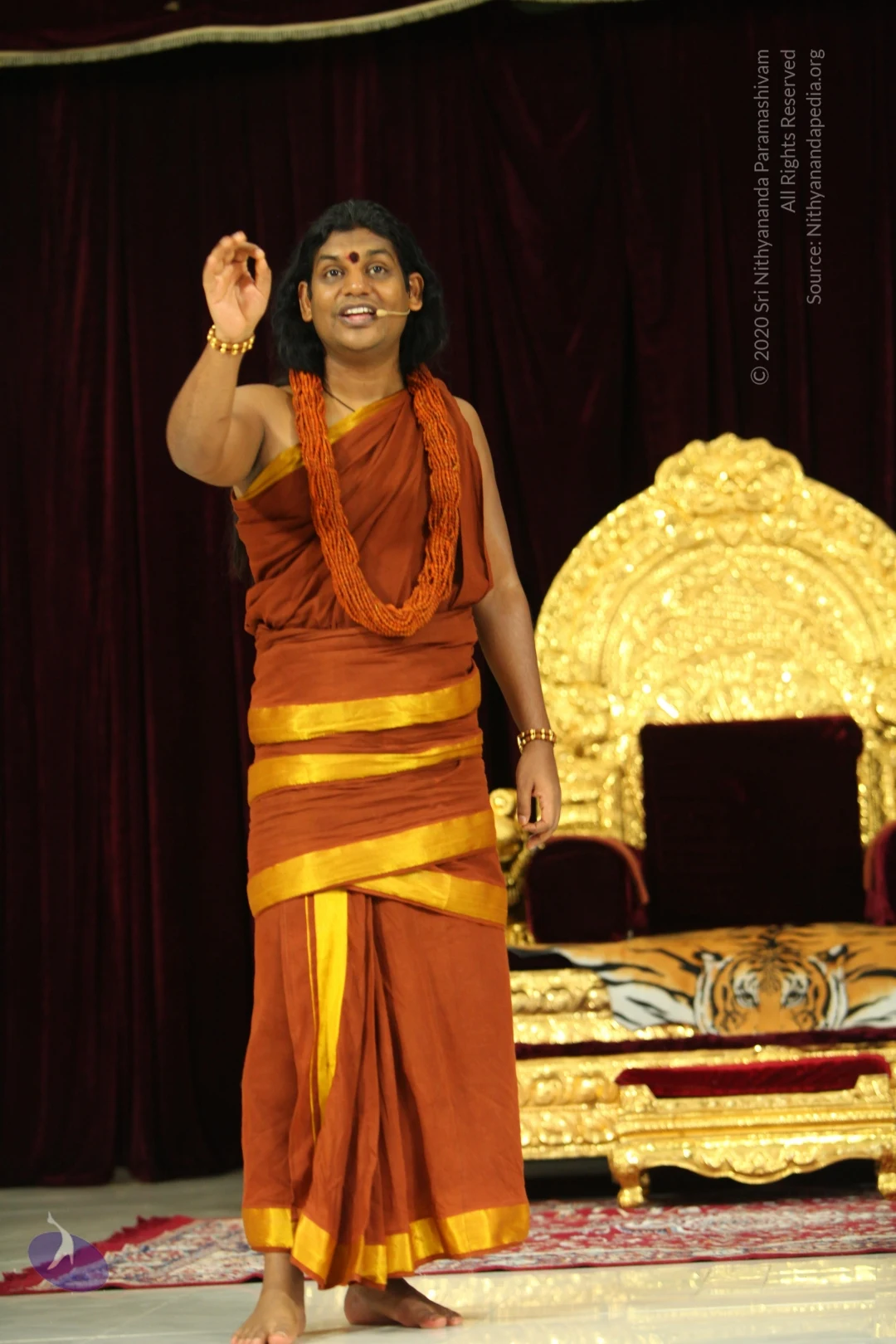
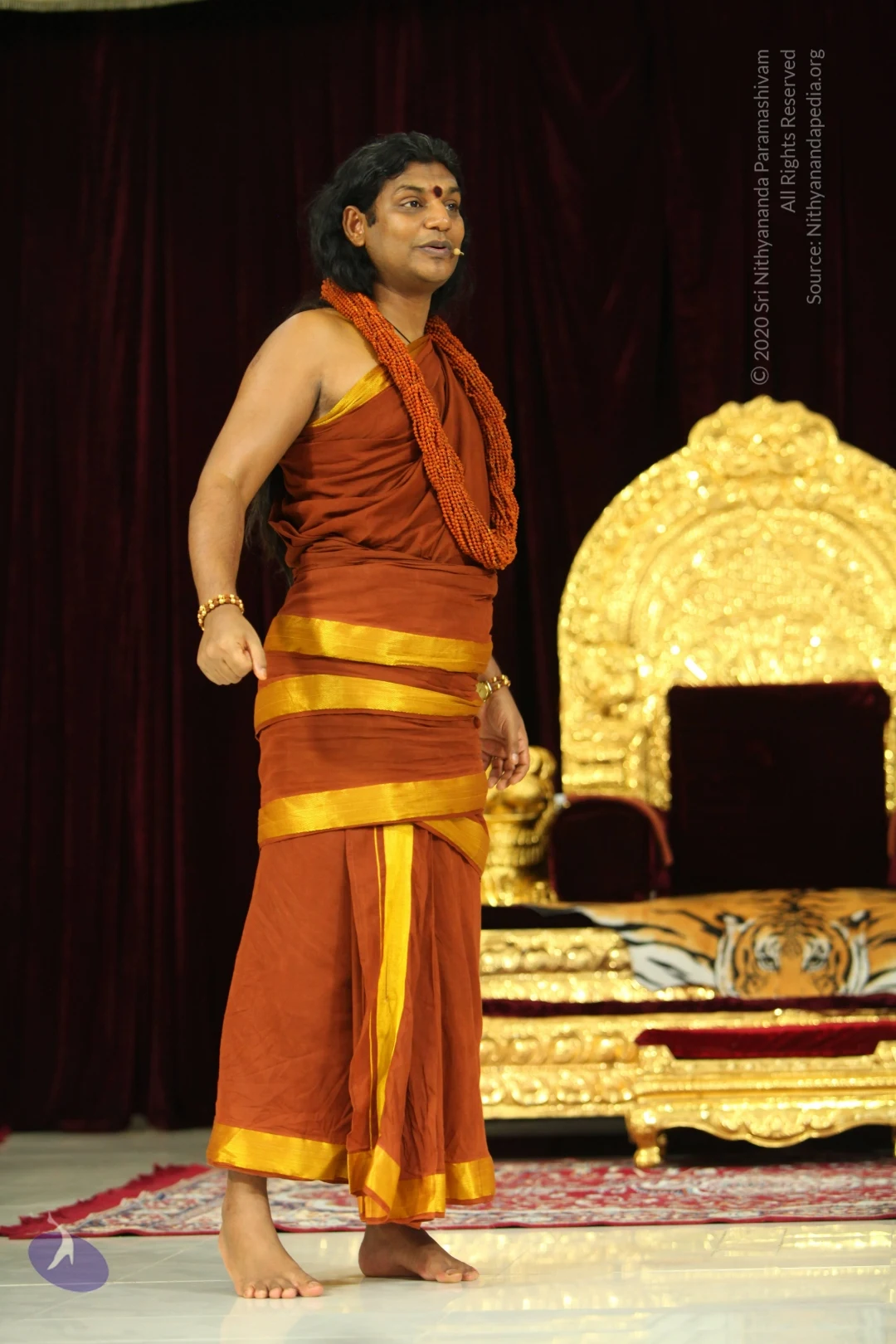
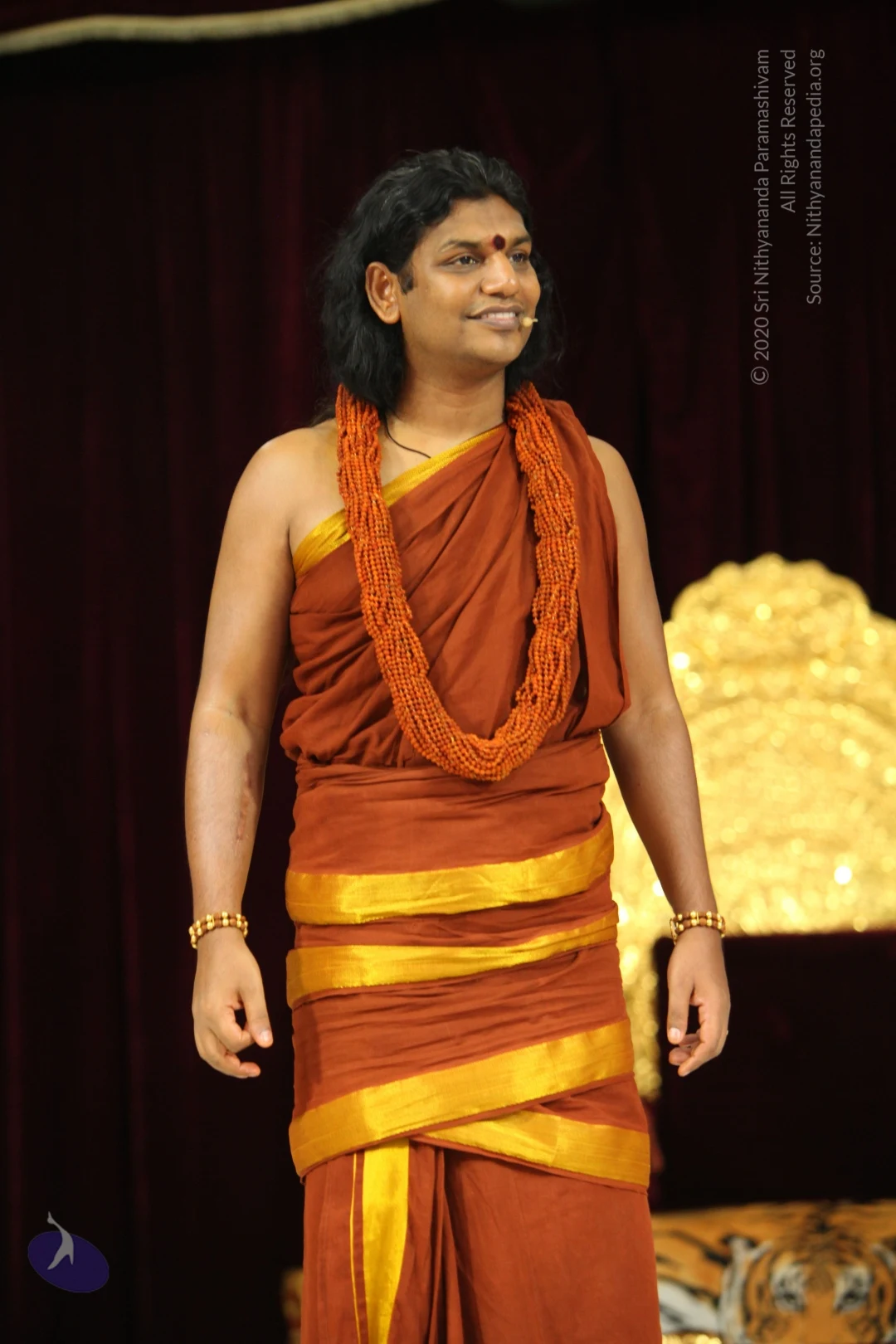
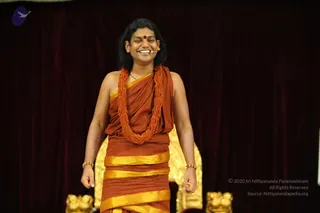
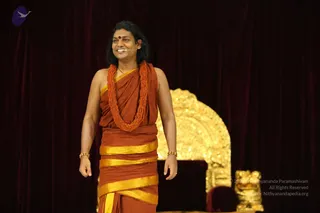
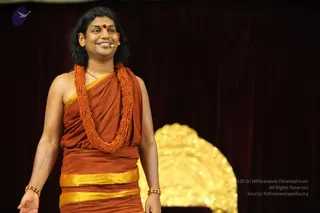
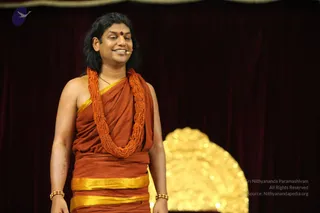
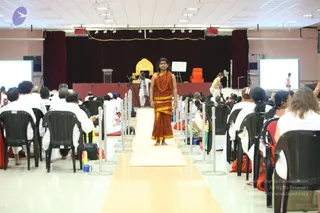
A smiling man stands in front of a dark maroon velvet curtain on a stage, wearing a rust-orange draped garment with gold-striped borders, a long red-orange beaded rudraksha mala around his neck, gold bangles on his wrists, and a small red bindi on his forehead; a small headset microphone is clipped near his mouth. Behind him a gold ornate throne with lion-form armrests is visible.A photograph of a single man standing on a stage in front of a dark maroon velvet curtain. He wears a rust-orange sannyasi-style wrap with broad gold borders, a long coral-red beaded mala around his neck, and gold bangles on both wrists, with a red bindi on his forehead and a small microphone at his cheek. He smiles and looks to one side. Behind him sits an ornate gold throne with a carved arched back and a golden lion-like figure at its base. The man's appearance, with long swept-back hair and orange robes alongside the mala and gold ornaments, matches Swamiji (probable) as a speaker giving a satsang discourse on stage. A print in the corner reads Sri Nithyananda Paramashivam, andA man stands on a stage in front of a dark maroon velvet curtain, smiling and gesturing with his left hand. He wears an orange-rust saffron-style wrap with gold borders, a long orange-red beaded mala around his neck, beaded bracelets on his wrist, and a red bindi on his forehead. A small head microphone is attached near his face. A glowing gold arch stands behind him to the right. The scene looks like a discourse or satsang. Appearance-based label: a person.A smiling man with long dark hair stands on a stage before a deep maroon velvet curtain, wearing a headset microphone. He wears a rust-orange shawl with gold borders wrapped over the torso and a thick orange rudraksha mala around the neck, with a red bindi on the forehead. Gold bangles are on his wrists. Beside him a large glittering gold backdrop panel catches light. Swamiji (probable): a speaker in saffron-orange ascetic dress with rudraksha mala and long hair, presenting a satsang discourse on the stage.A photograph of a large indoor hall with cream walls and a dark maroon curtained stage. A man with long dark hair stands barefoot on a cream carpet runner in the centre aisle, wearing a saffron-orange wrap with a gold-bordered cloth and an orange garland around his neck. Seated devotees in white clothes fill black plastic chairs on both sides of the aisle, and a few wear orange garments. On stage stands an ornate gold throne-like seat, and a camera on a tripod is set up near the front. Two projection screens flank the stage and a podium and whiteboard sit nearby. The man in saffron may be a person, identified by long swept hair, saffron garb and a garland, and is standing in the aisle.A photograph of food being served on a white compartment tray with several sections holding rice, yellow dal, a green vegetable preparation, a pale curry and a small bowl of liquid. Two hands are visible: one holding the bowl at upper left wearing a dark wristwatch and bracelet, and another gripping the tray at right with a serving spoon. A person in a white garment with a rudraksha-style bead necklace stands behind the counter. Stainless steel serving trays and a ladle sit in the foreground.

NITHYA-YOGA

28 photosSource gallery
A large hall with white walls, red curtains and framed portraits on the walls shows many people on coloured yoga mats in pink, purple, green and blue, bent forward in a standing forward-bend or downward posture. Most wear white kurtas or white clothing, while others wear black or dark shirts and trousers. A few people in the foreground are clearly visible, with others further back in rows. A water bottle sits on the floor at left. Ceiling fans and recessed lights hang overhead. The scene is a group yoga session.A photo of a large hall with a glossy tiled floor where many people in yoga practice bend forward with palms flat on coloured mats (pink, purple, green, blue). Most wear white or black clothing, and one man in a navy tracksuit stands at the left edge. In the foreground, a young man in white kurta pants has his eyes closed in a forward-folding asana. Red curtains line the walls and ceiling lights run down the room. Several other participants are visible in the background, and a figure in black stands near the centre.Photograph of a large hall filled with many people doing a yoga or exercise session on coloured mats. Most participants wear white or black tops and are in a forward-bending or downward-dog posture, with hands and knees on the mats. Pink, purple, green, blue and brown mats cover the tiled floor. Red curtains hang along the walls, and framed portraits hang on the walls, including one at the upper right showing a robed figure with long hair, which cannot be confidently identified. Ceiling fans, fluorescent lights and water bottles are visible.A large hall with cream walls, red curtains, and framed pictures, where many people stand on coloured yoga mats in rows with arms raised overhead in a yoga or stretching exercise. Participants wear white kurta-style clothing, black t-shirts, and some white shirts, and several wear light-coloured head coverings. No single figure can be reliably identified as a specific teacher from this view, so the presence of a person is unsure.A large indoor hall with a tiled floor and white ceiling lights where a big group of people stands in prayer pose with palms pressed together on colourful yoga mats in rows. Most wear white or black kurta-style clothes and some wear white dhotis or pants. A few people in front wear navy and black tracksuit-like outfits. Red curtains line the walls and a framed portrait hangs on the far wall. Ceiling fans and speakers are visible. No individual can be confidently identified as a person from appearance, so no candidate is marked.A large indoor yoga session in a bright hall with pale walls, red curtains and mats in purple, pink, green, blue and red. Thirty to forty men stand on their mats with both arms raised overhead, most in white kurtas and dhotis or black and dark t-shirts, several wearing red name badges. A framed portrait of a bearded figure in white hangs on the right wall beside a wall-mounted air conditioner, and a speaker sits near the front. Visible people are all standing participants; no one is on a throne or leading from the front.

TEMPLE

31 photosSource gallery
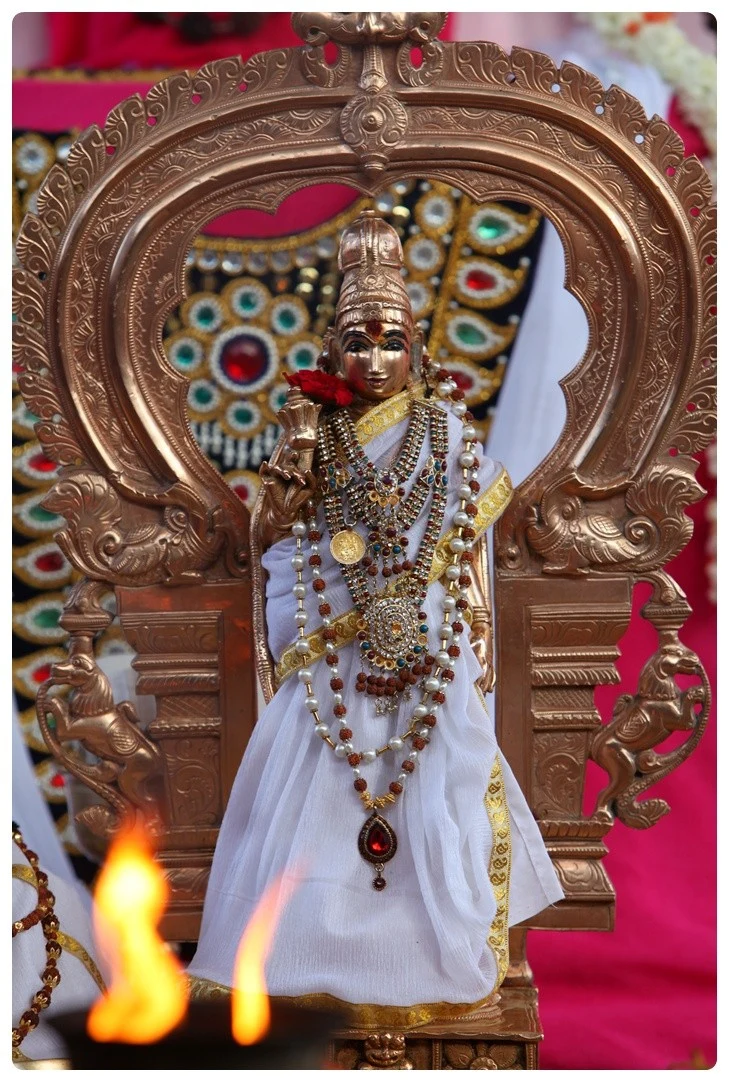
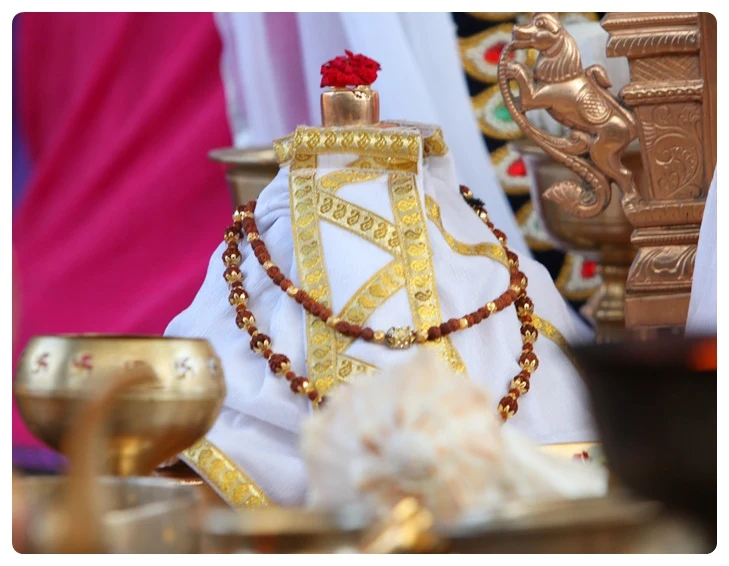
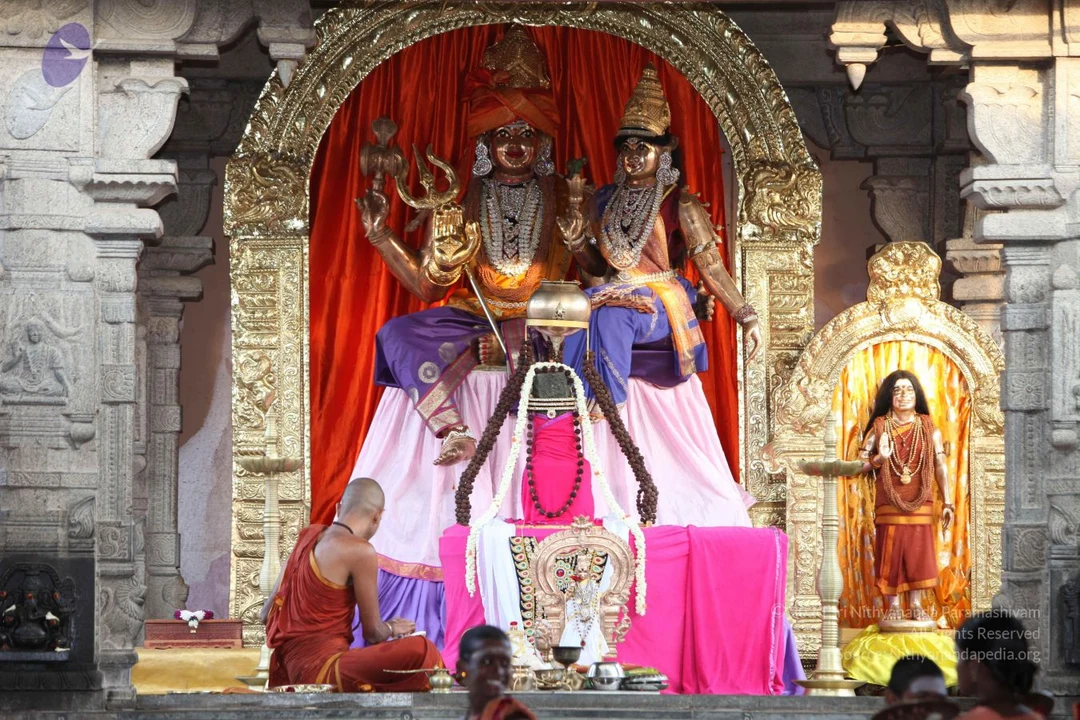
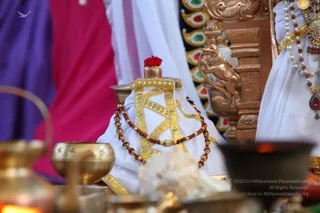
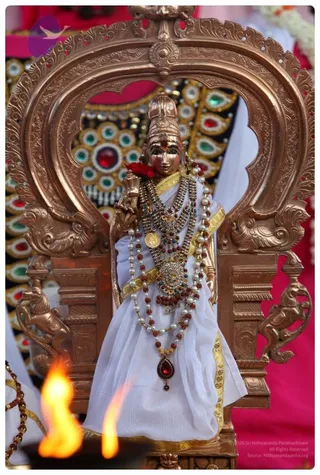
A photograph inside a temple shrine with grey stone pillars and an ornate gold-framed arch. Two large golden deity murtis sit on a raised platform draped in pink and purple cloth, the central figure holding a trident and other attributes, with a silver kalasha, garlands and rudraksha-style beads before them. At the lower left a shaven-headed priest in orange robes sits cross-legged, tending brass puja vessels and bowls of offerings. To the right a smaller figure in orange stands in a gold niche beside a tall brass oil lamp.A photograph of a temple shrine with a large gilded arch framing two painted deity murti seated on a raised platform, one with a red turban and crown and the other with a tall crown, both adorned with rudraksha and beaded necklaces and draped in purple and orange cloth. A shaved-headed priest in orange robes kneels at the base of the platform, tending brass vessels and a lamp in front of a pink-draped altar with a flower garland. A smaller gilded niche on the right holds a standing figure in orange clothing with a red garland. Red drapery hangs behind the deities and brass oil lamps stand on both sides.A photograph of a temple shrine with two large golden-bronze deity statues seated under an ornate gilded arch backed by red drapery. The figure on the left wears an orange turban and carries a trident; the figure on the right wears a golden crown and an orange-and-gold sari-style wrap, both adorned with layered jewelry and rudraksha malas. In front, a pink-draped altar holds a central sacred stone with garlands of white flowers and rudraksha beads, a small golden pot above it, brass lamps and vessels, and a lit oil lamp. A shaven-headed priest in red-orange clothing sits at the left edge with his hands joined in prayer, appearing to perform puja.A copper-coloured metal statue of a deity murti stands in an ornate copper arched throne-shaped frame with lion and scroll carvings. The figure wears a white draped garment bordered in gold zari, layered necklaces of red and green stones, pearls and rudraksha beads, a gold coin pendant, and a large red gem pendant. A red flower is tucked near its raised hand, and a red and gold jeweled backdrop is behind. No living people are visible.A small copper-gold metal murti of a deity stands in an ornate copper arched frame with carved peacock-like and lion-like motifs. The figure wears a white draped cloth with gold borders, layered jewelled necklaces with green, red and white stones, pearl strands, rudraksha beads and a red pendant, and holds a red flower and a staff-like object. Behind it hangs a red and gold embellished backdrop. In the lower left, a flame and a bead-strand edge are visible. No physical people are visible.Close-up photo of a ceremonial setup in a temple-style space. In the centre, a white cloth draped over a cylindrical object with gold brocade bands, a red flower on top, and a rudraksha mala with gold beads wrapped around it. On the right, a copper-coloured carved figure with a lion or horse motif and a white-draped deity murti wearing pearl and bead necklaces with a red pendant. Brass bowls and a kalasha-like vessel sit in the foreground, a white flower garland lies below, and purple and magenta cloths hang in the background. No people are visible.

PADA-POOJA

30 photosSource gallery
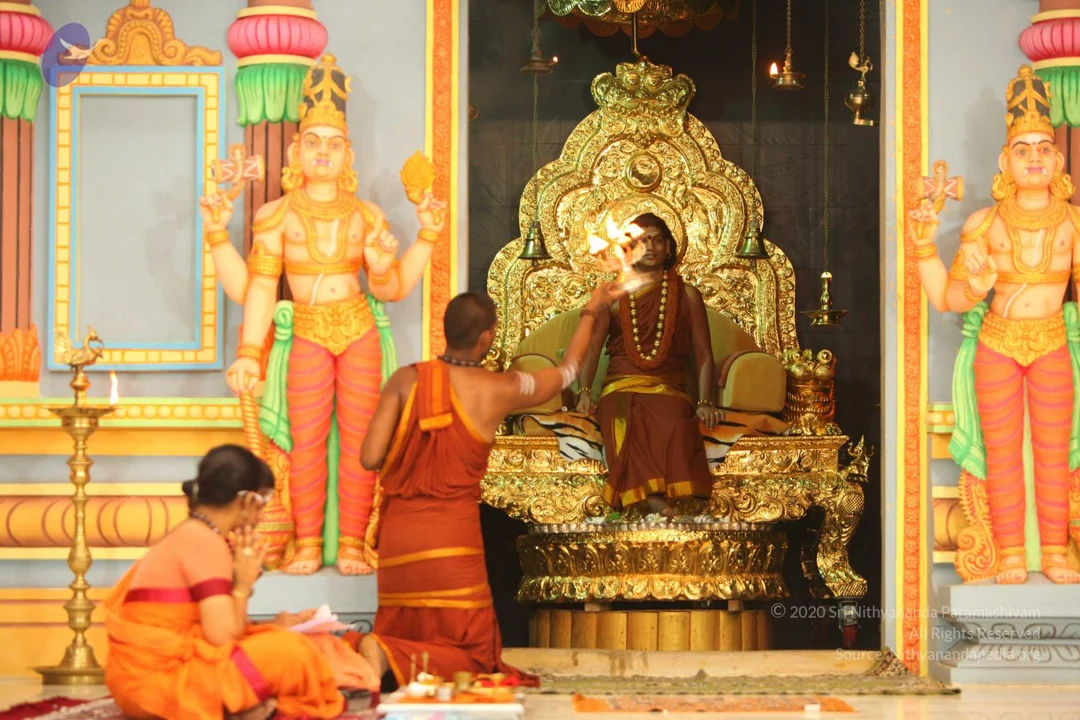
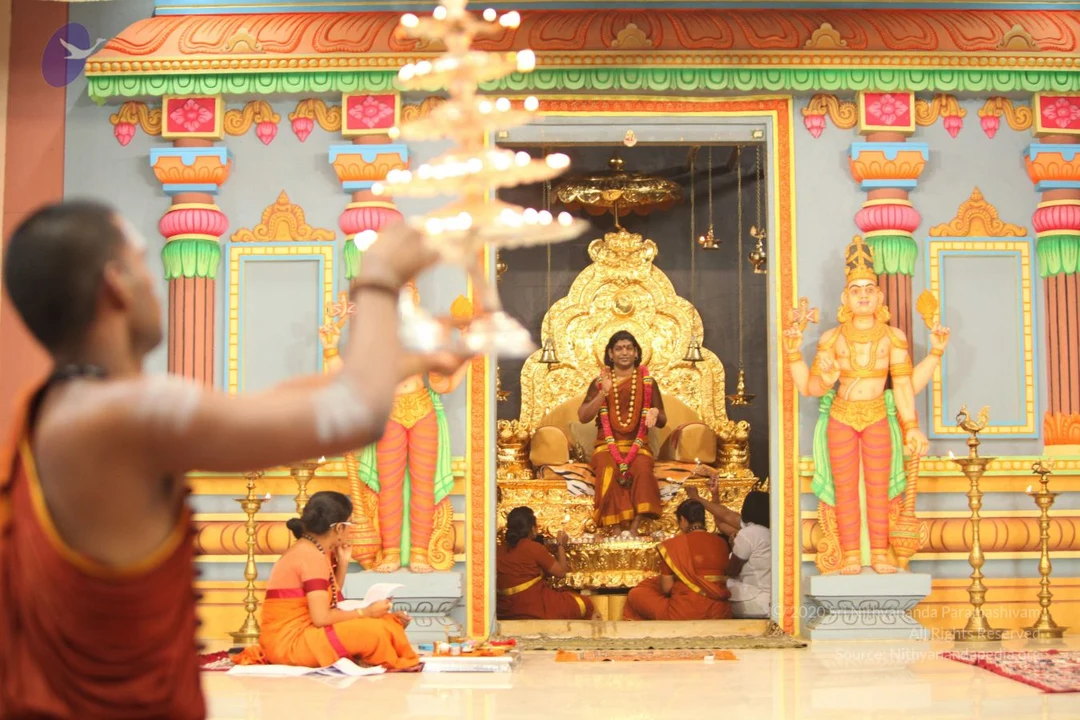
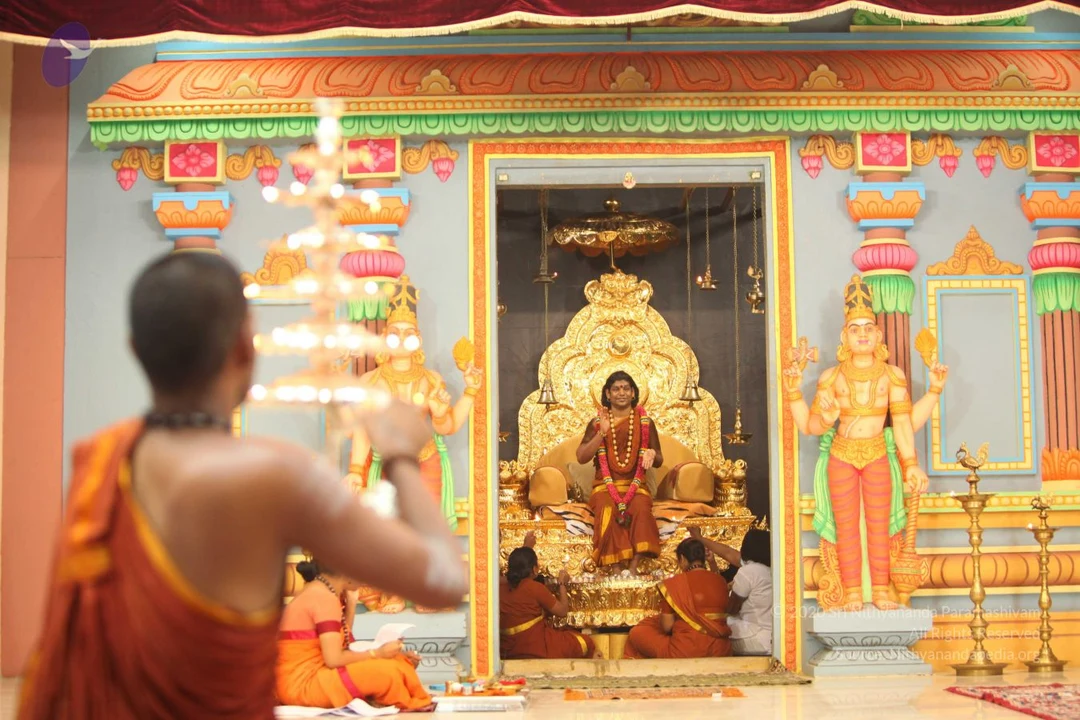
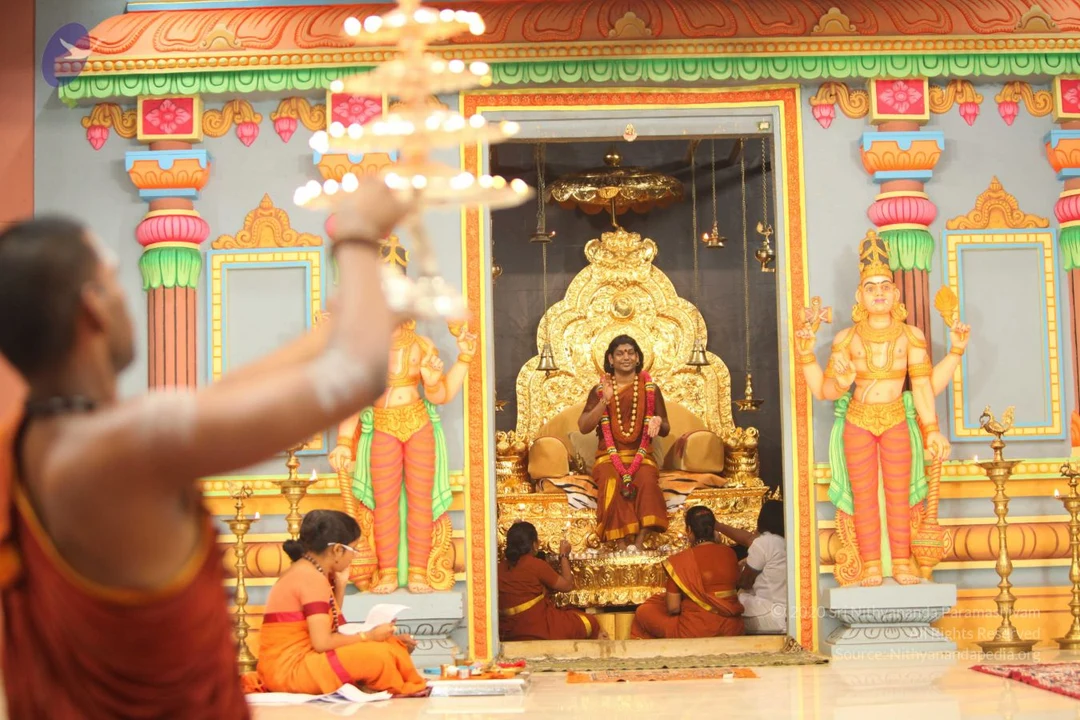
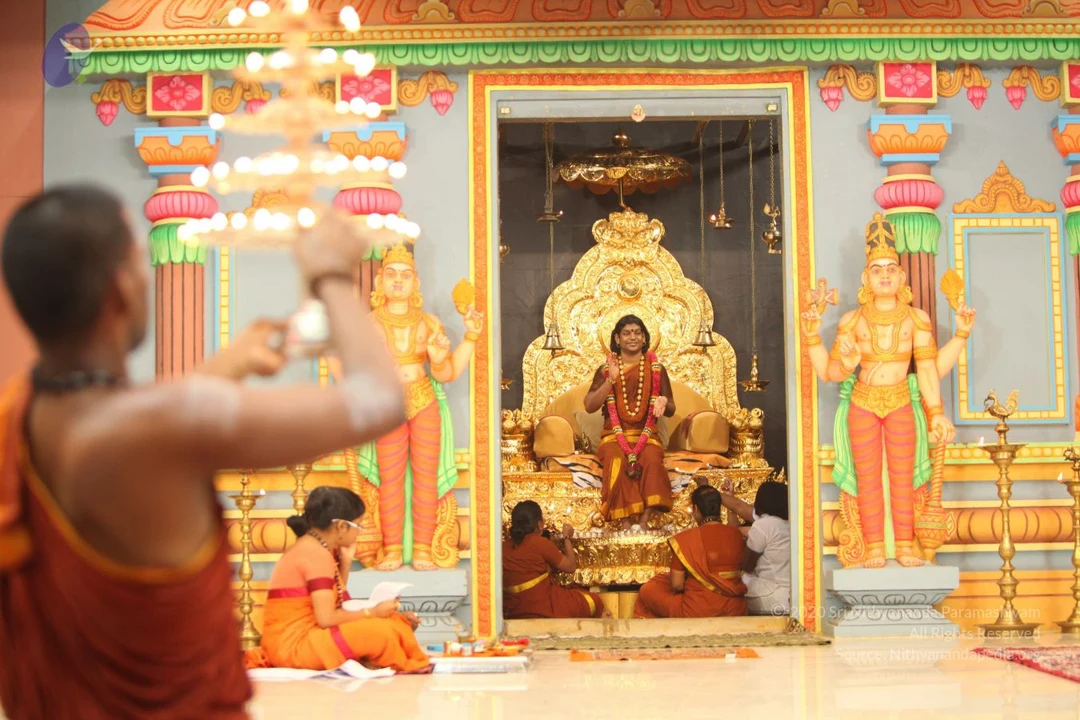
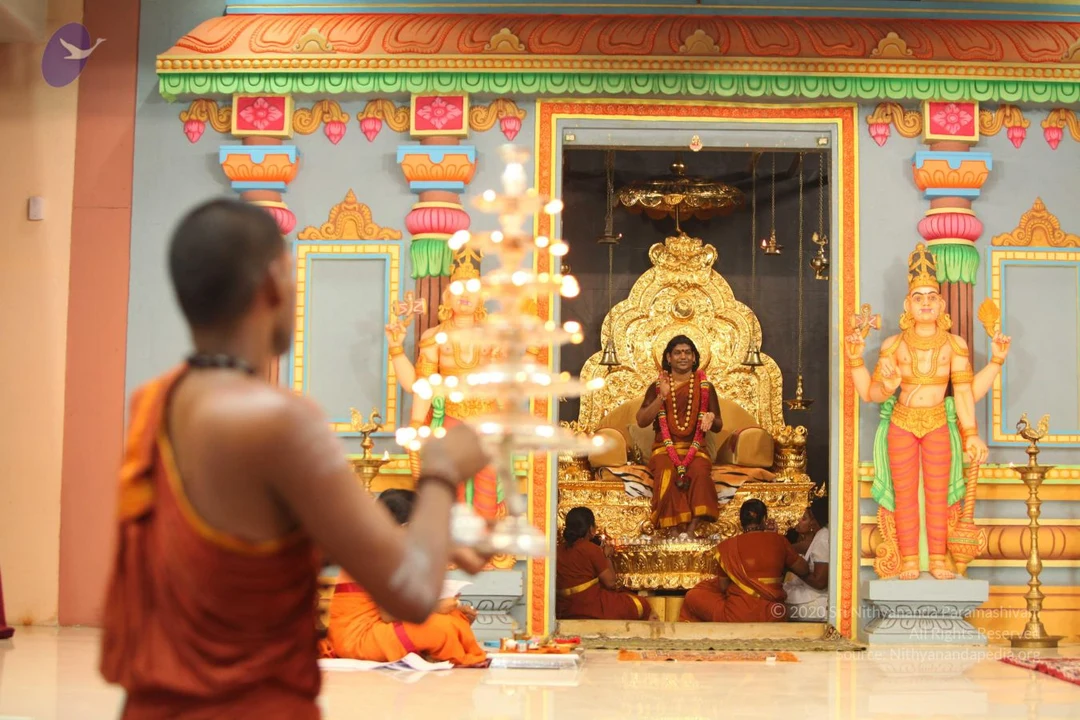
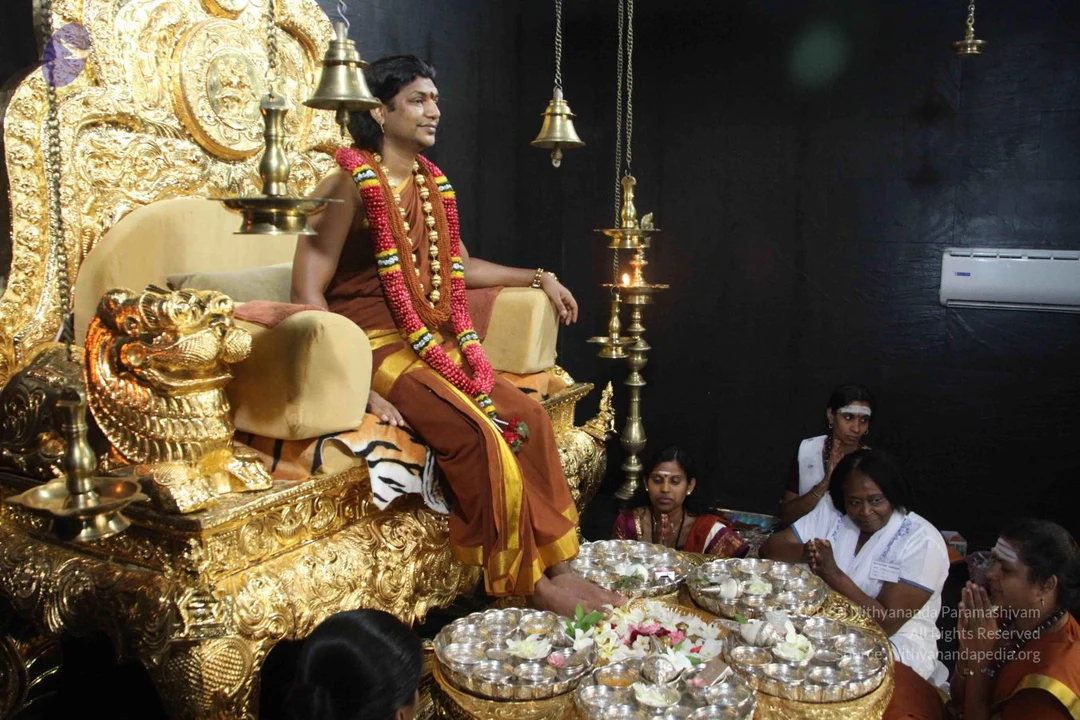
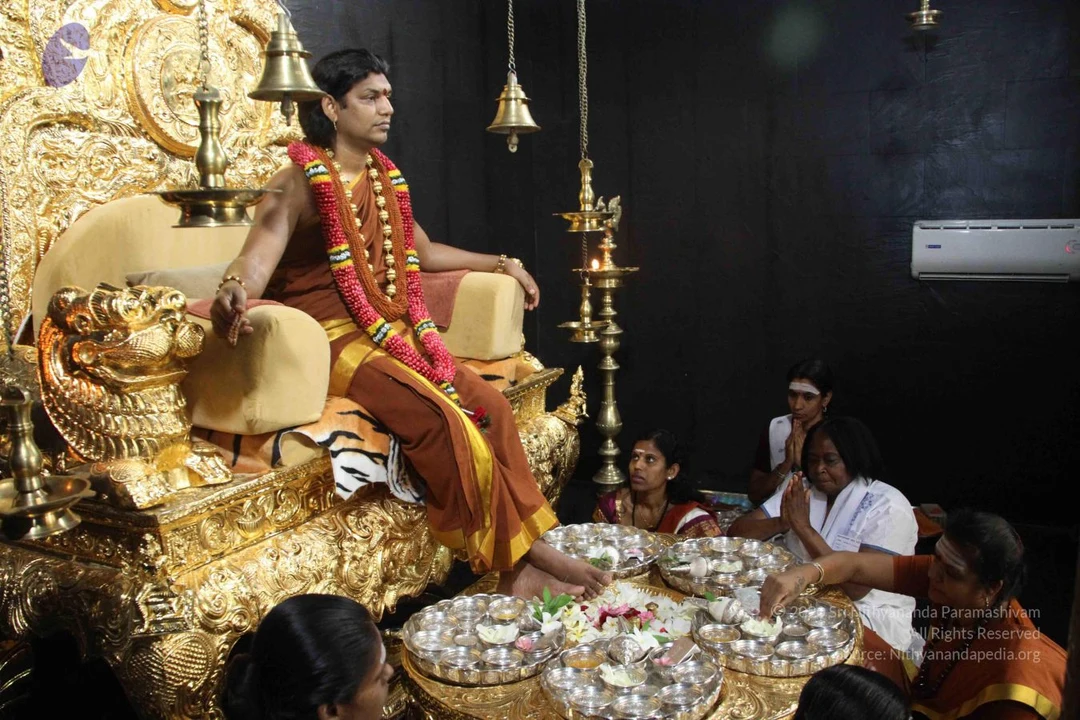
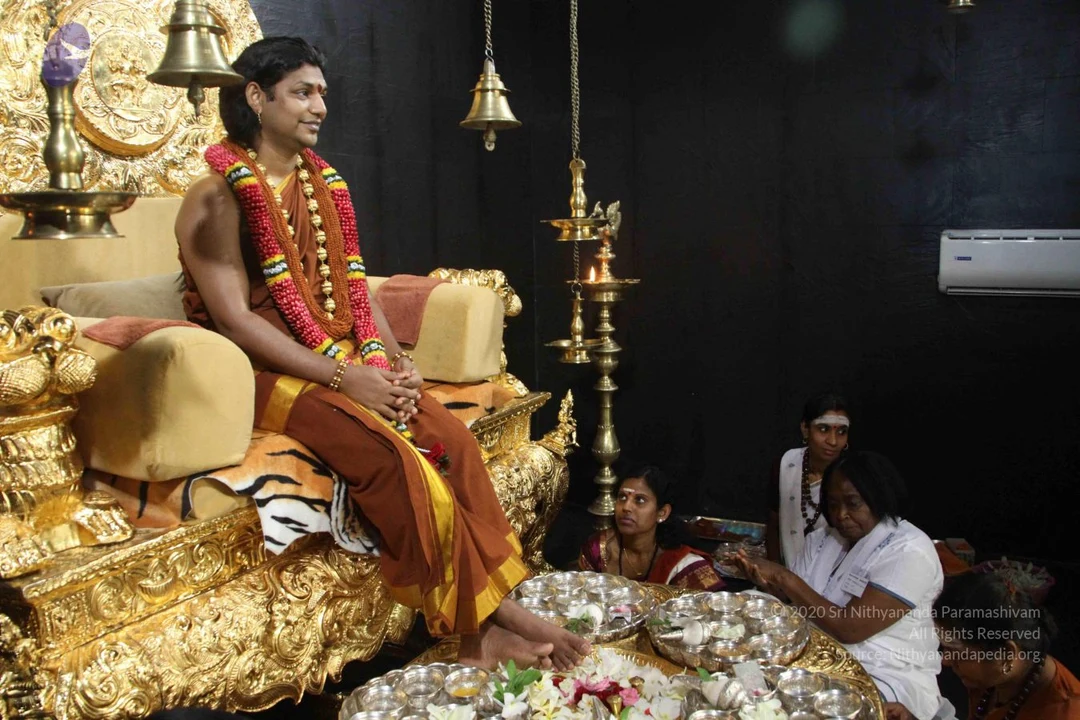
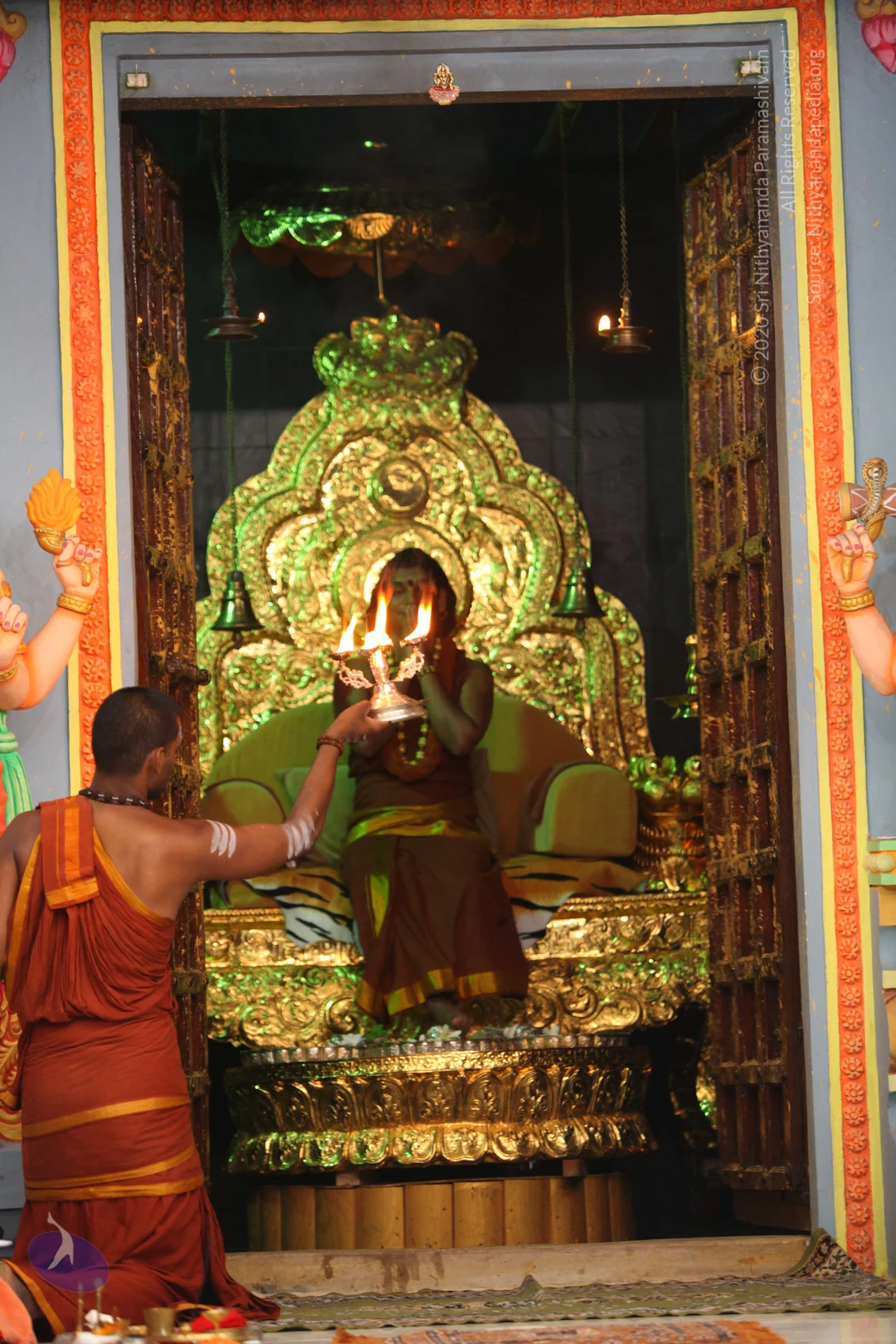
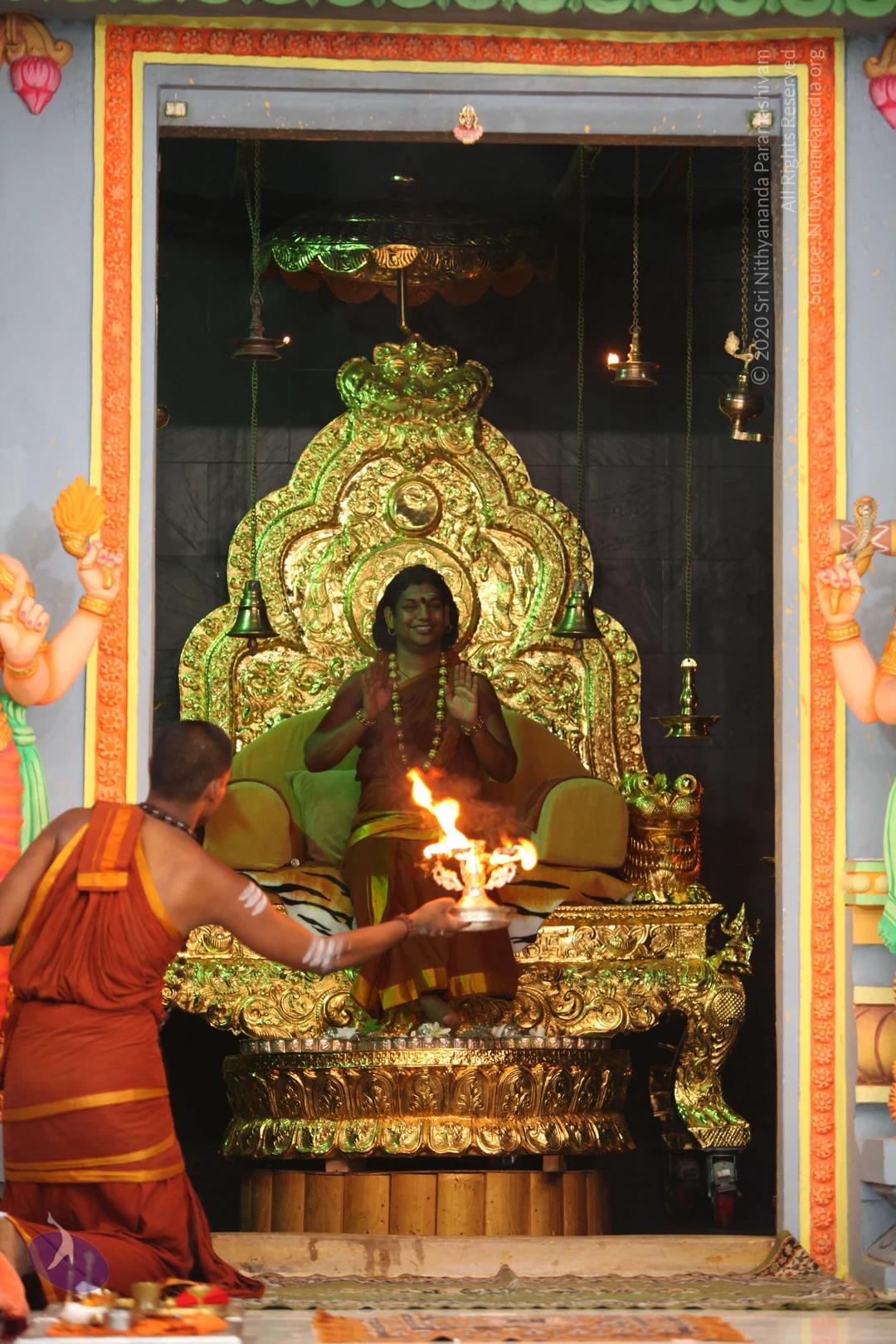
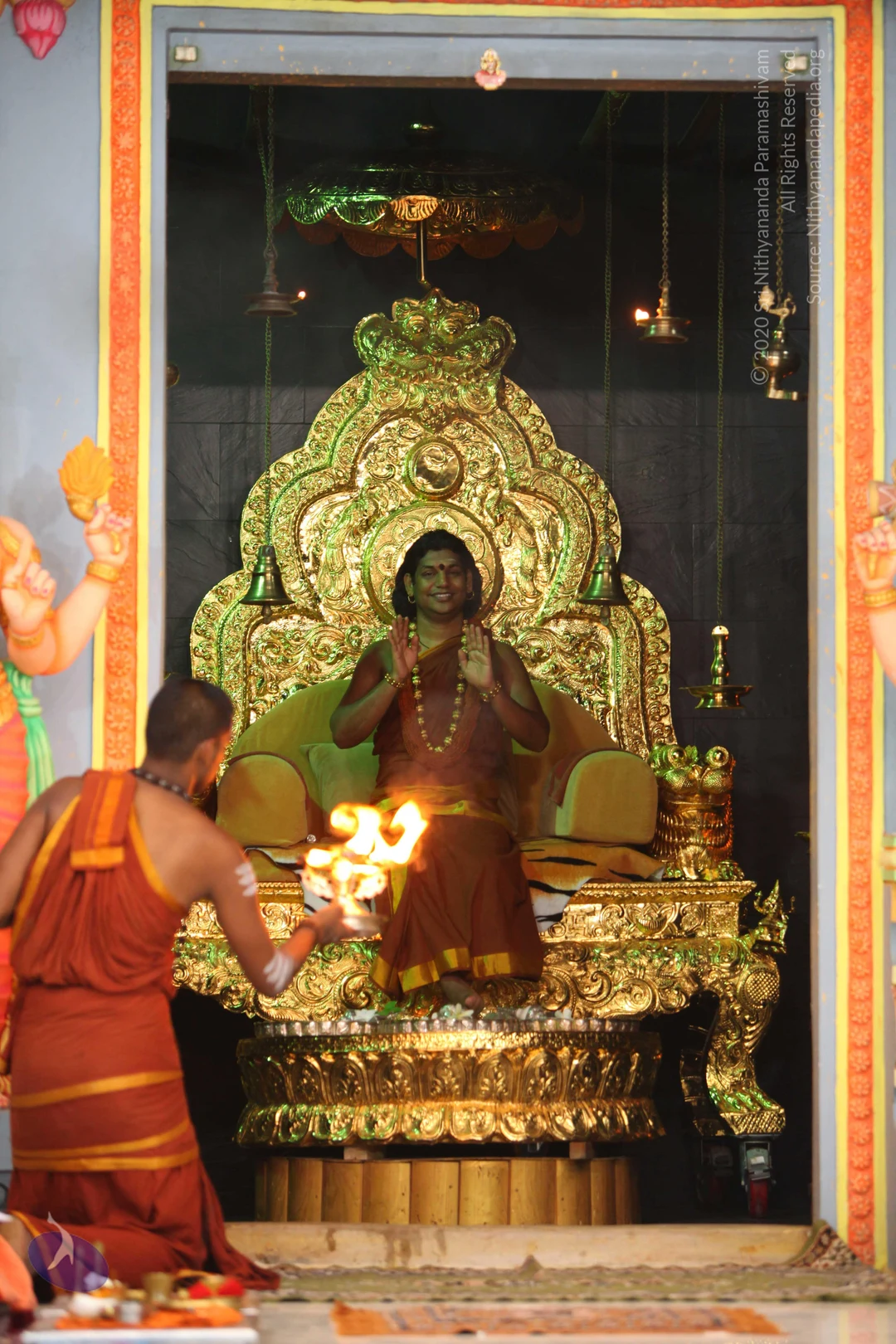
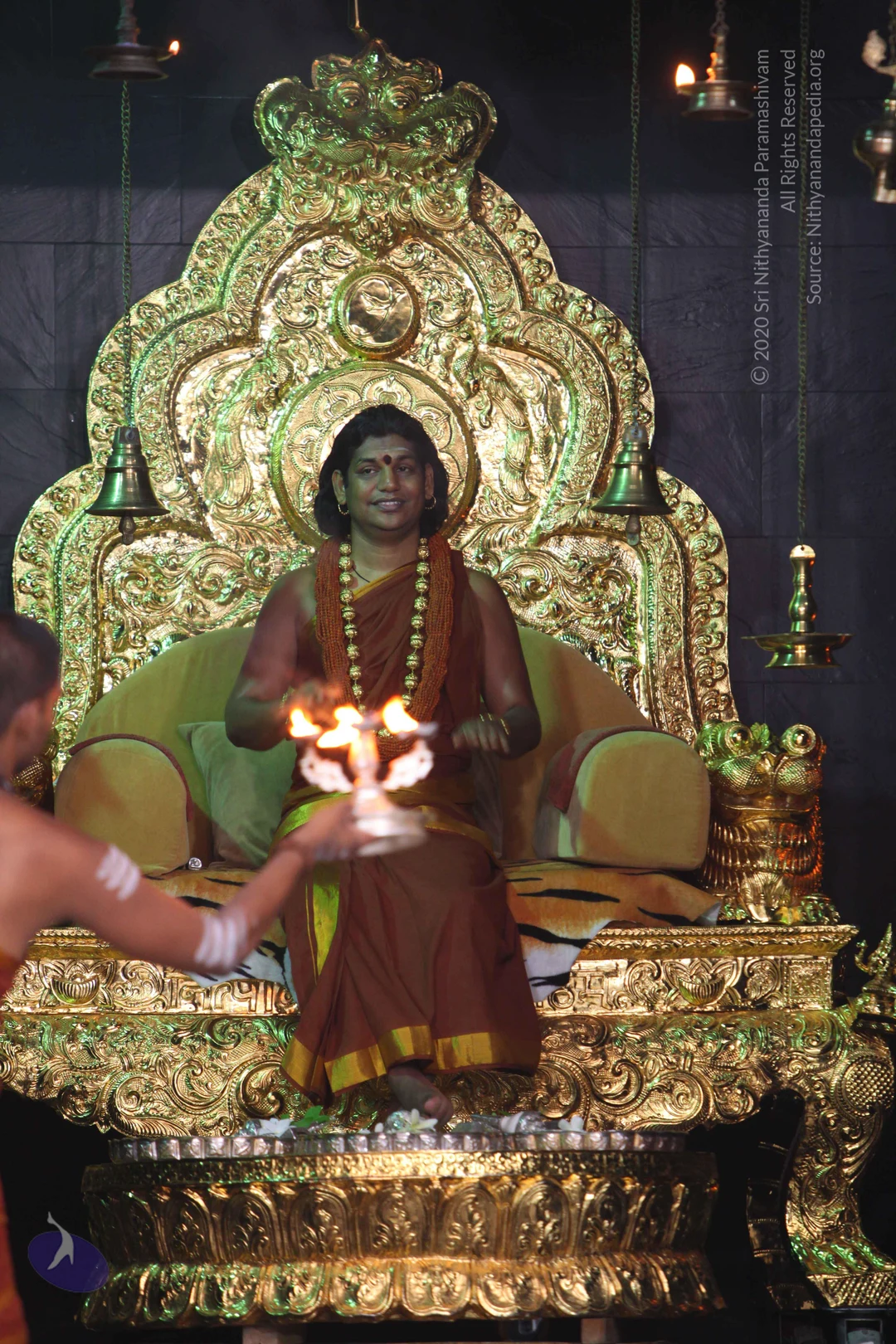
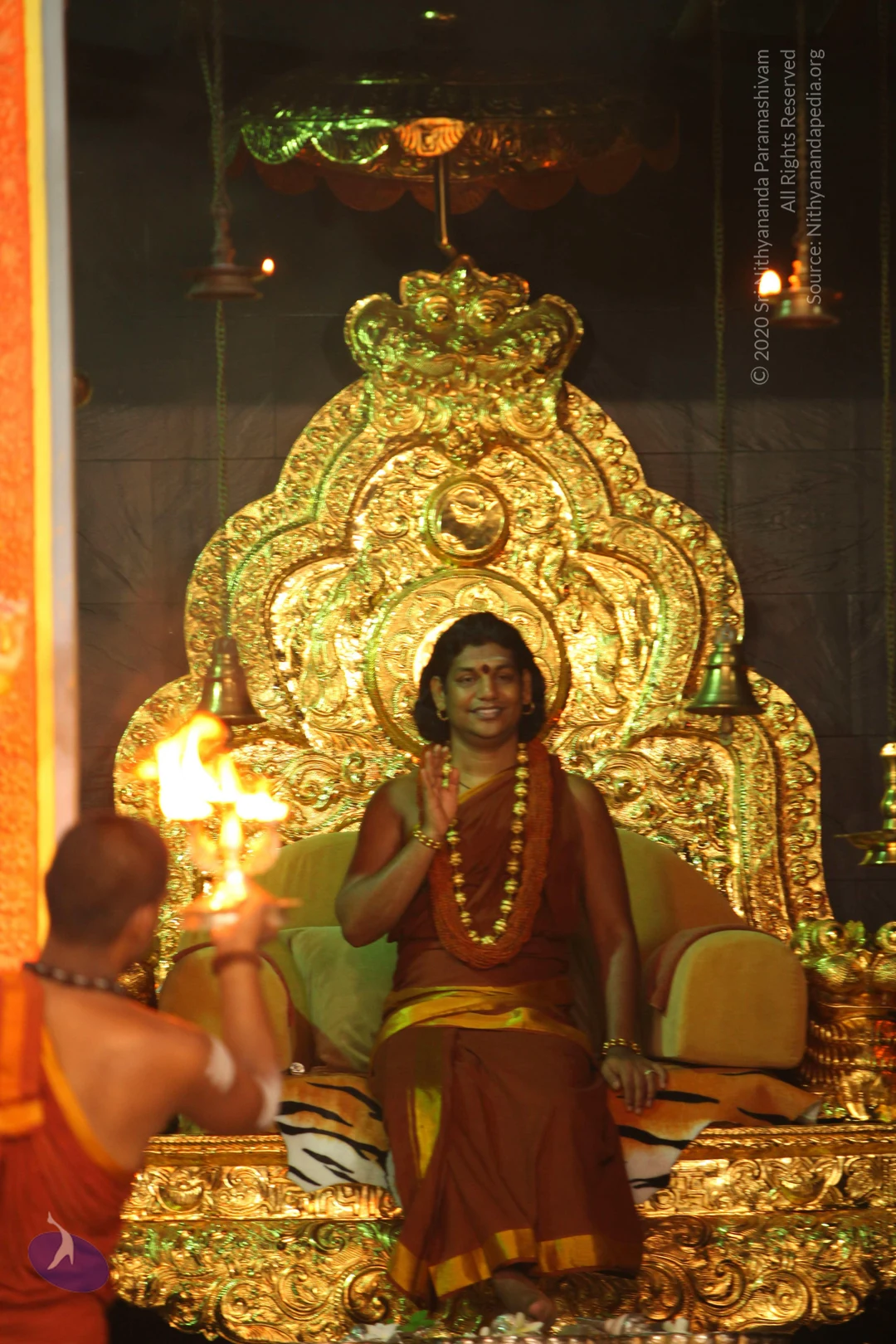
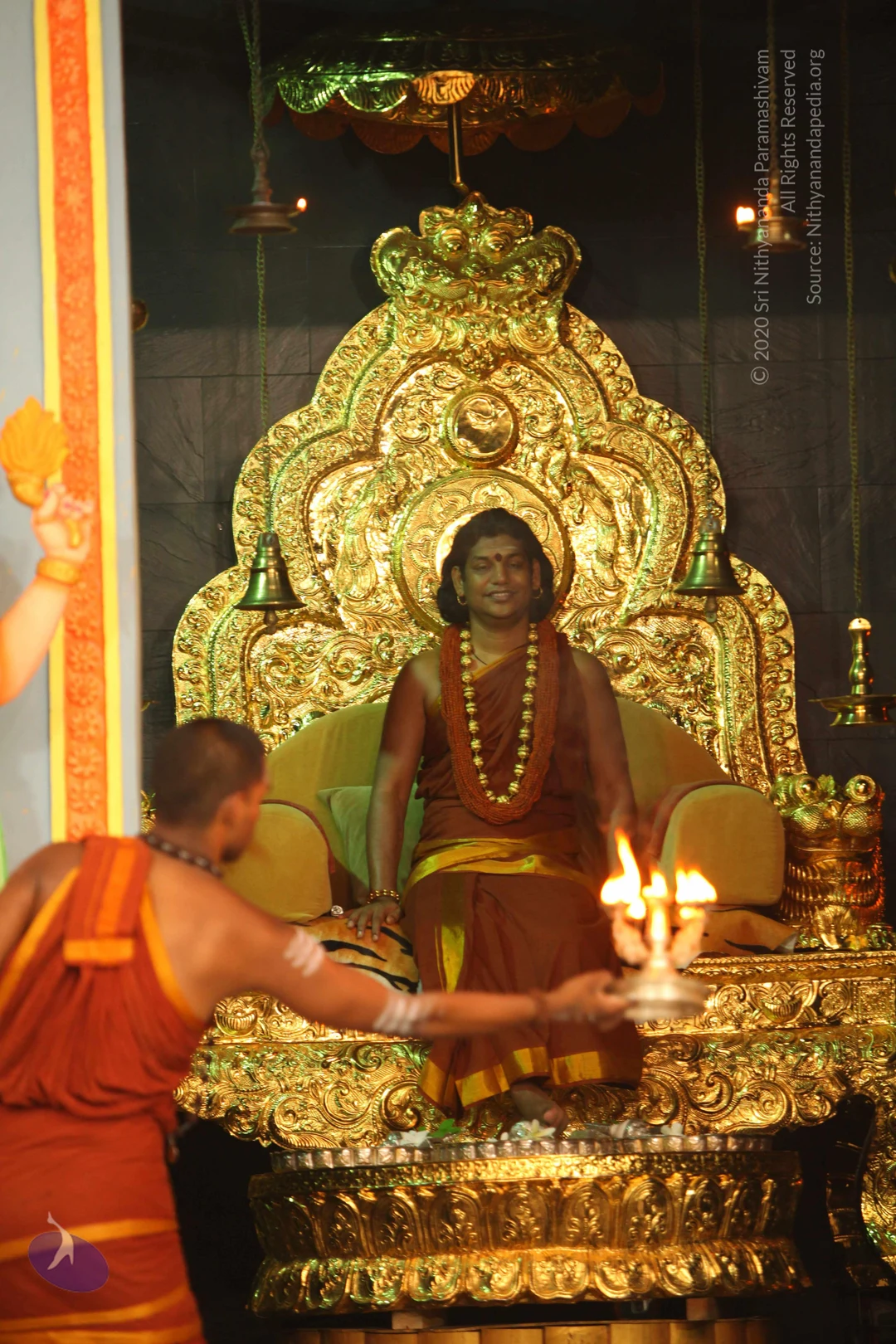
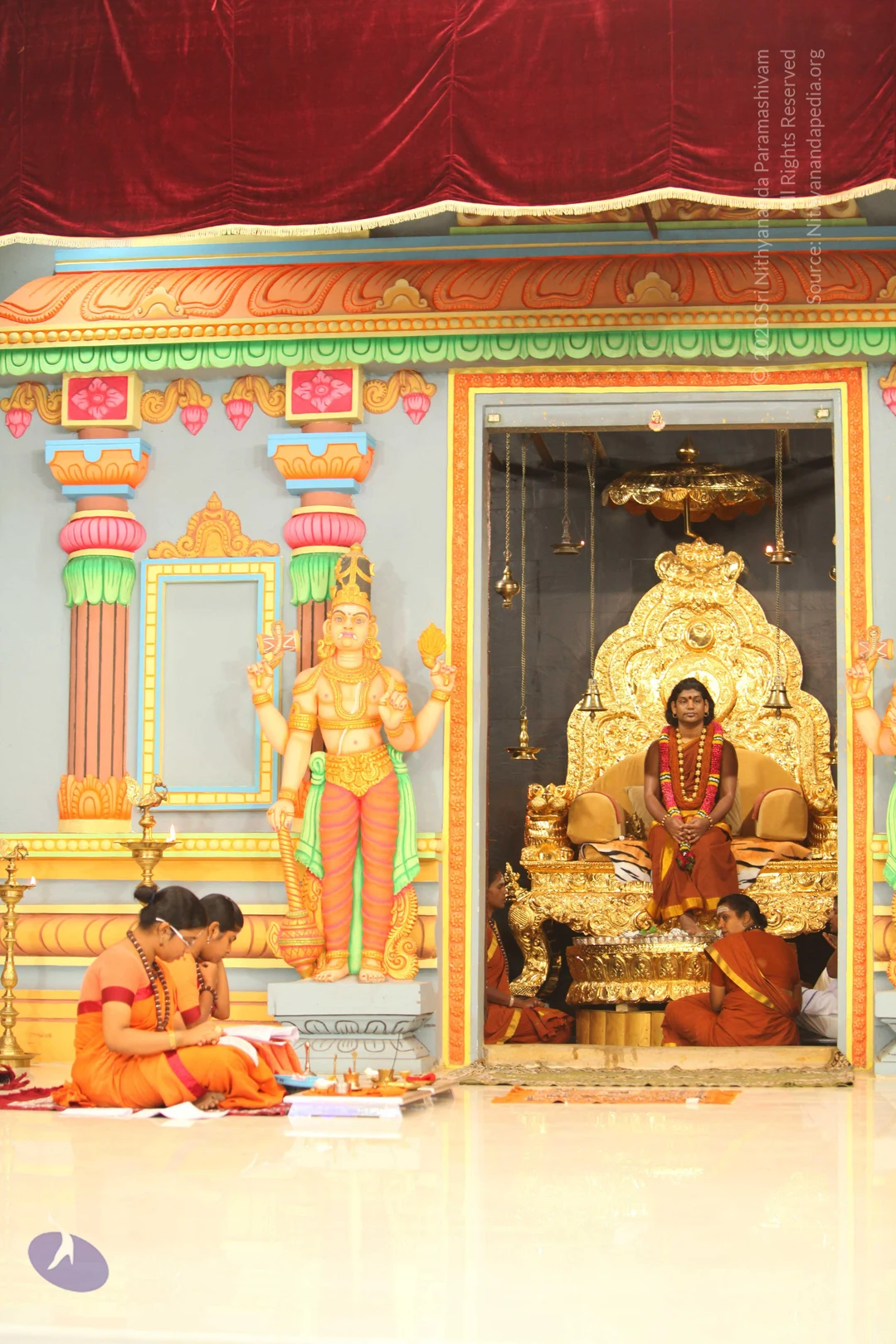
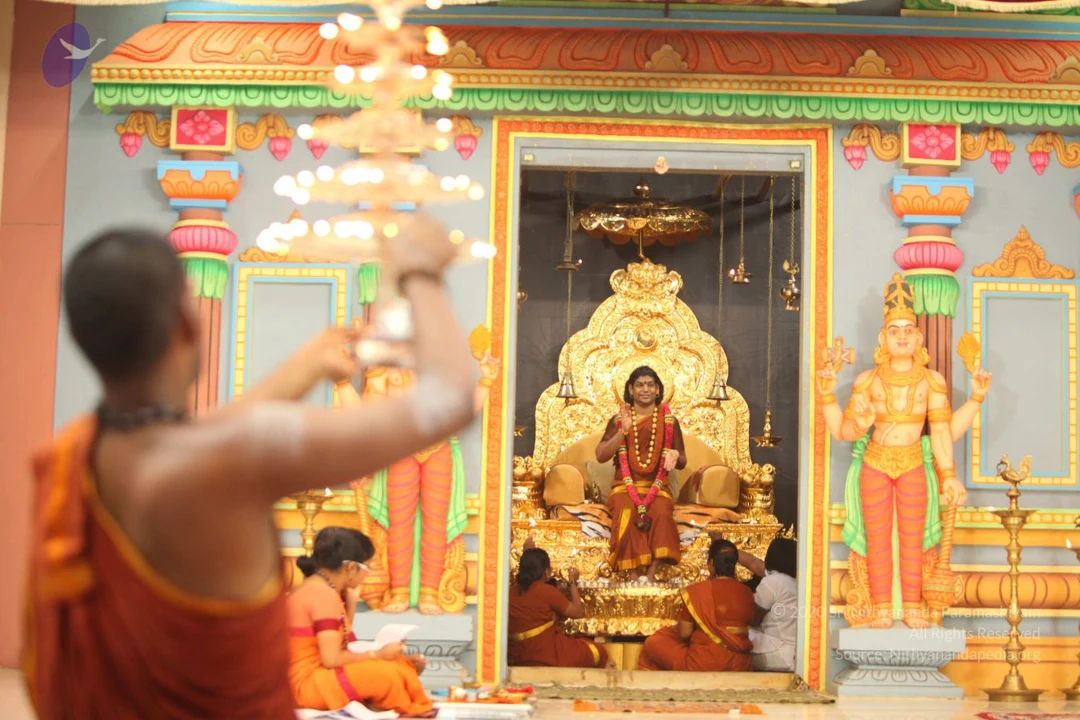
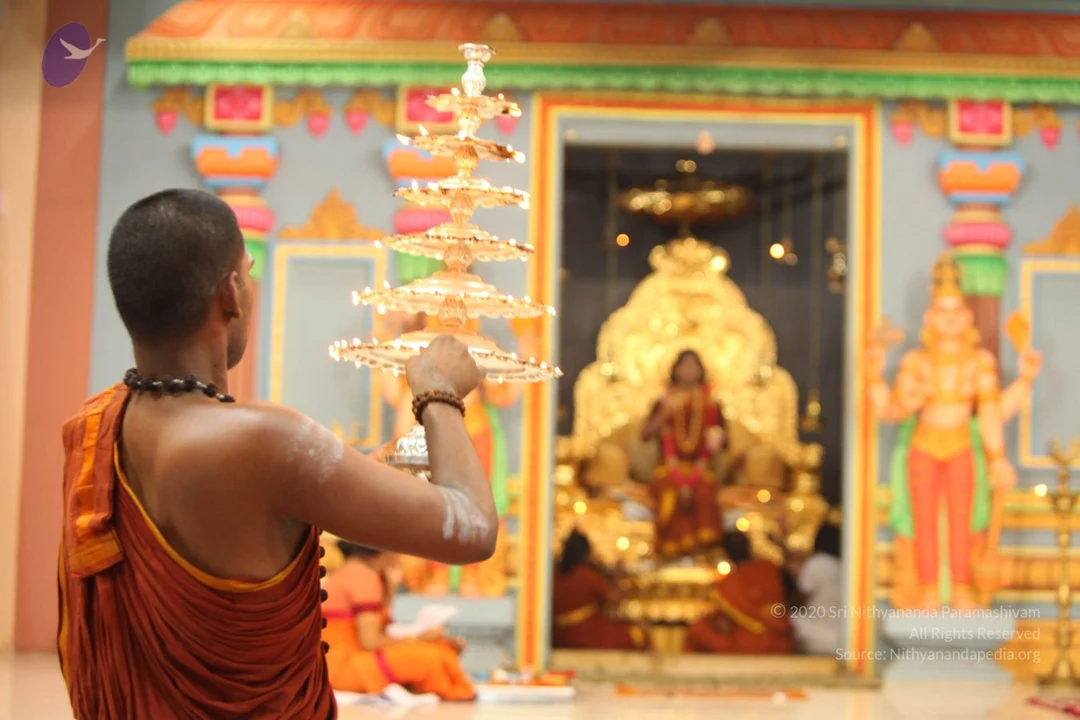
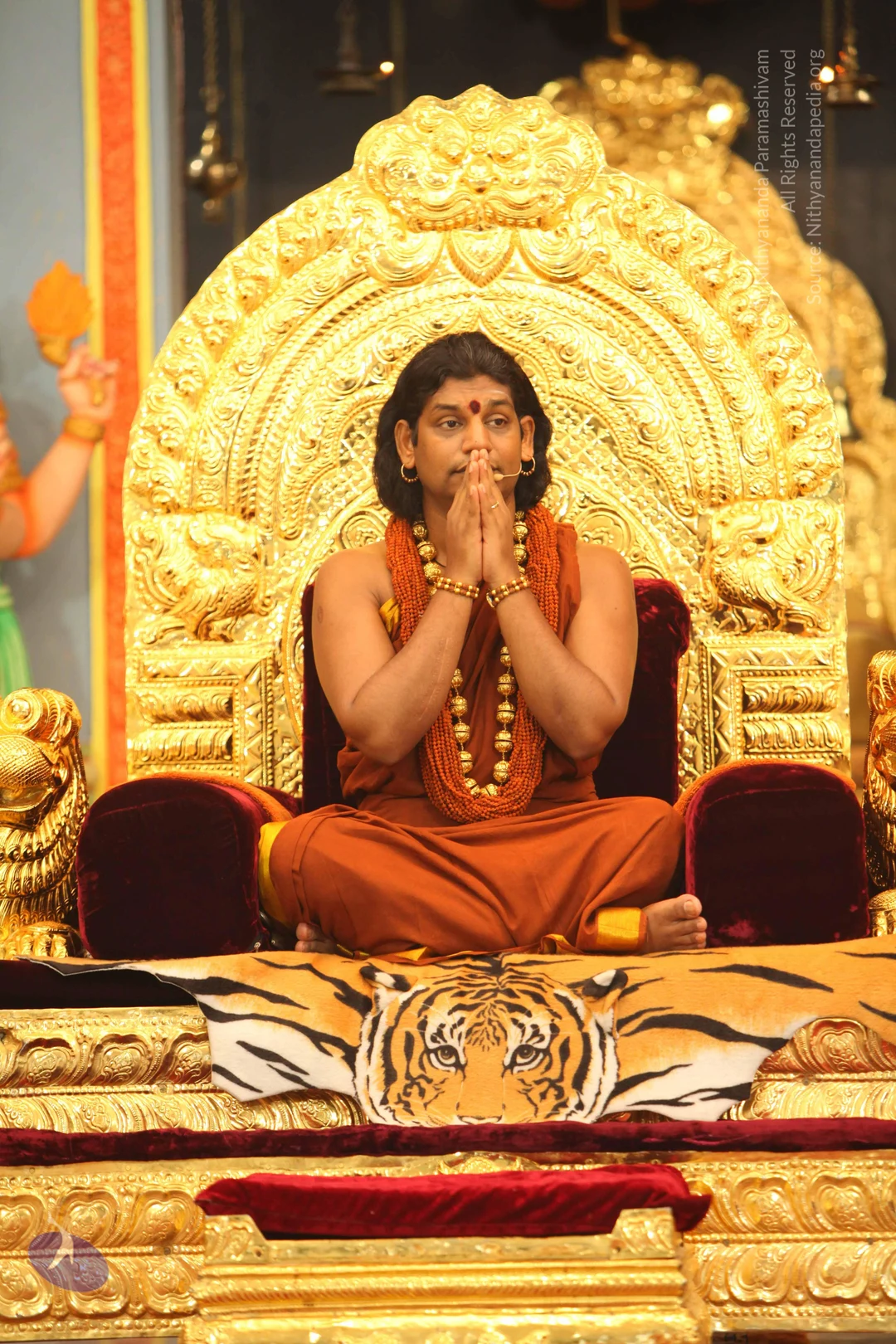
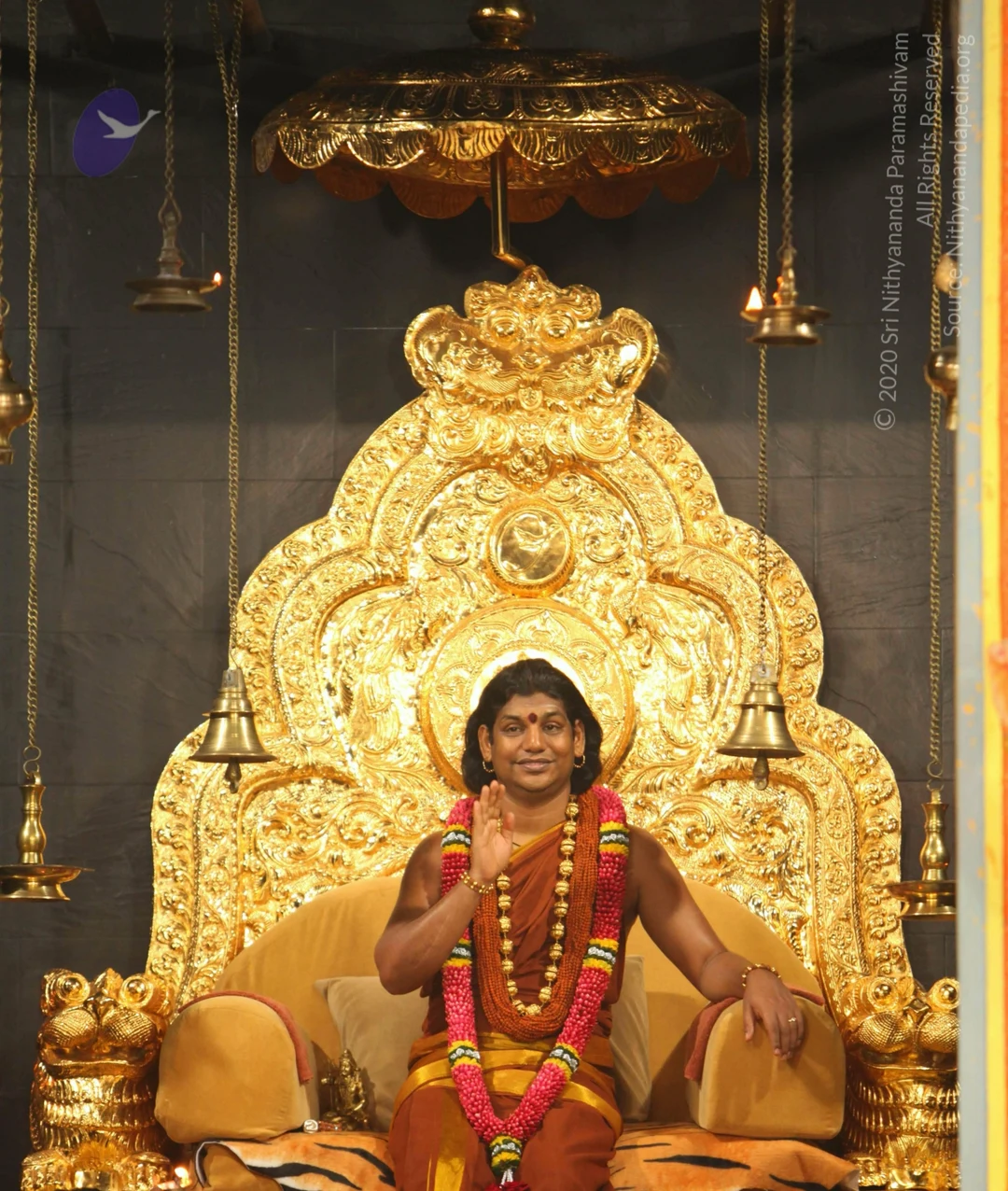
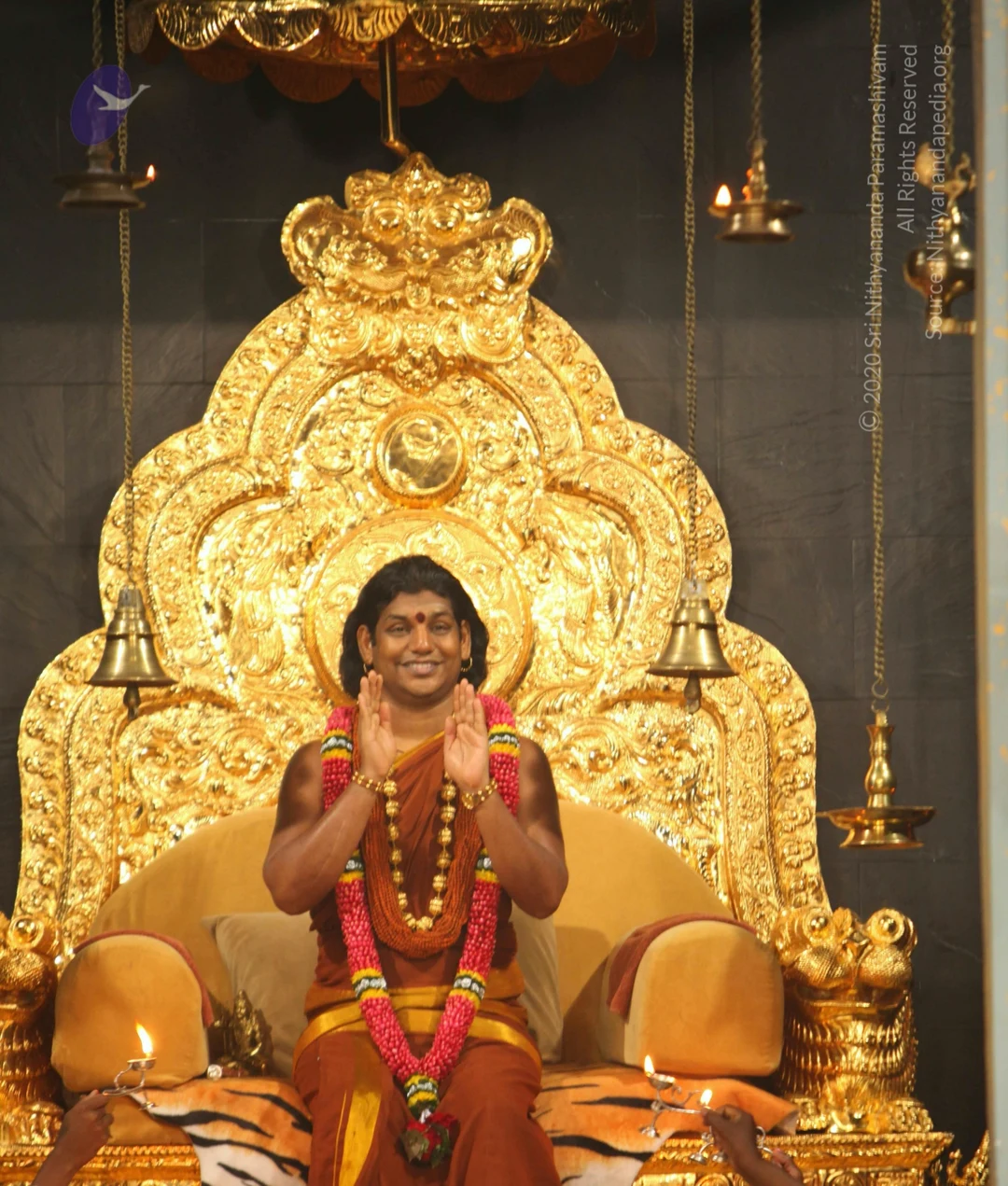
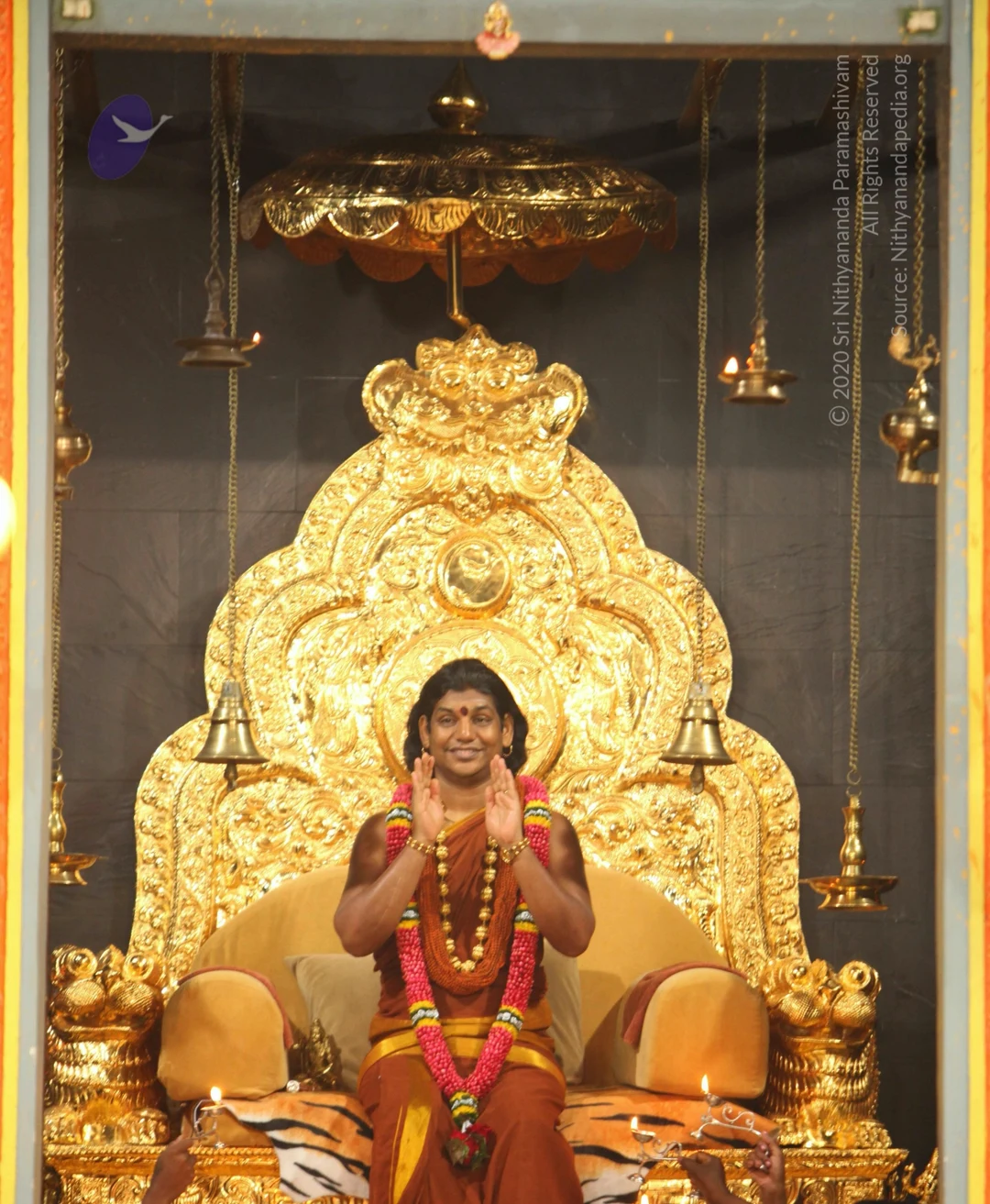
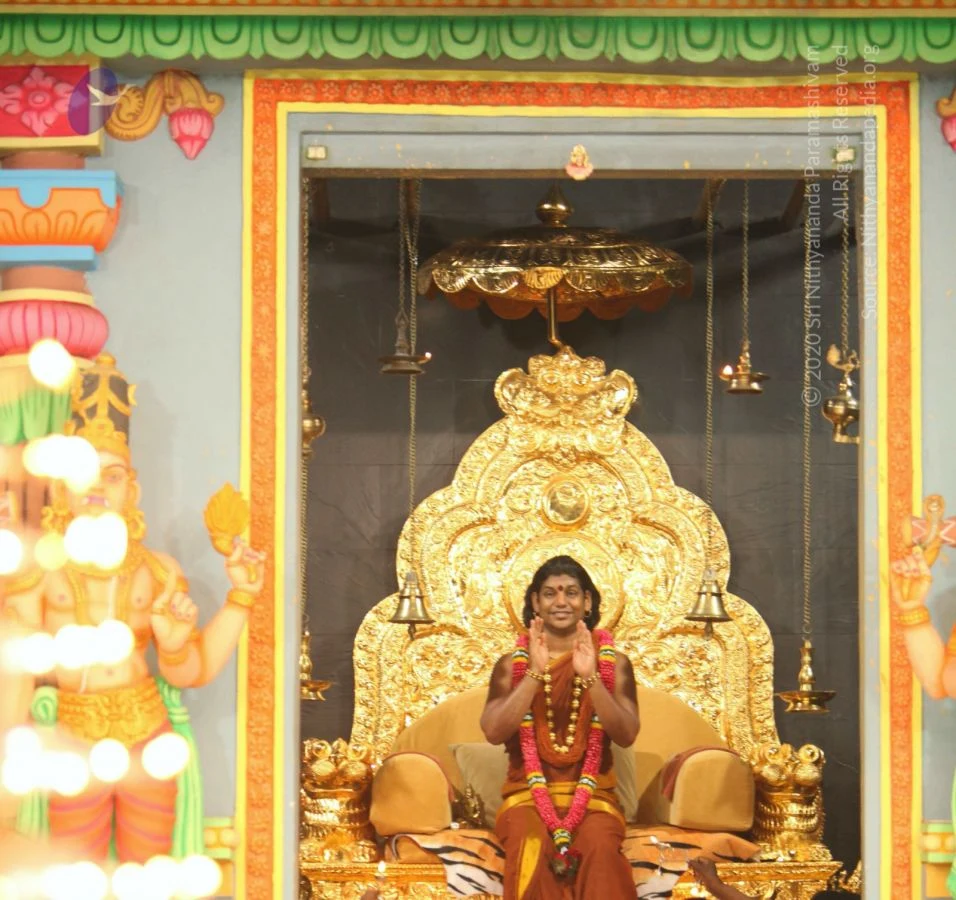
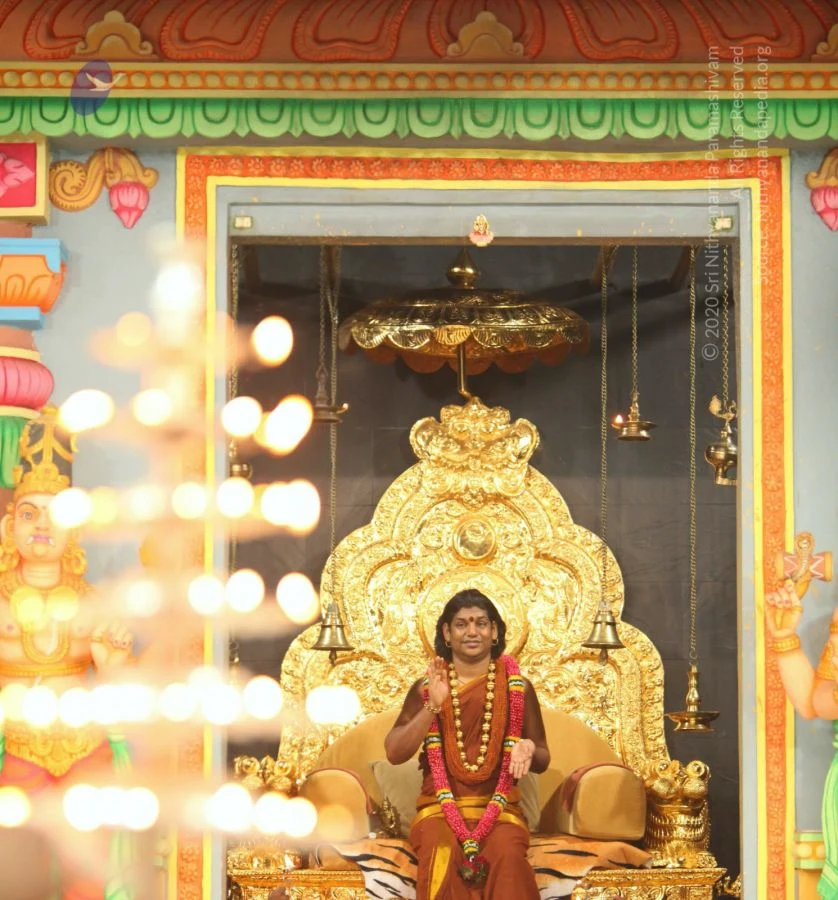
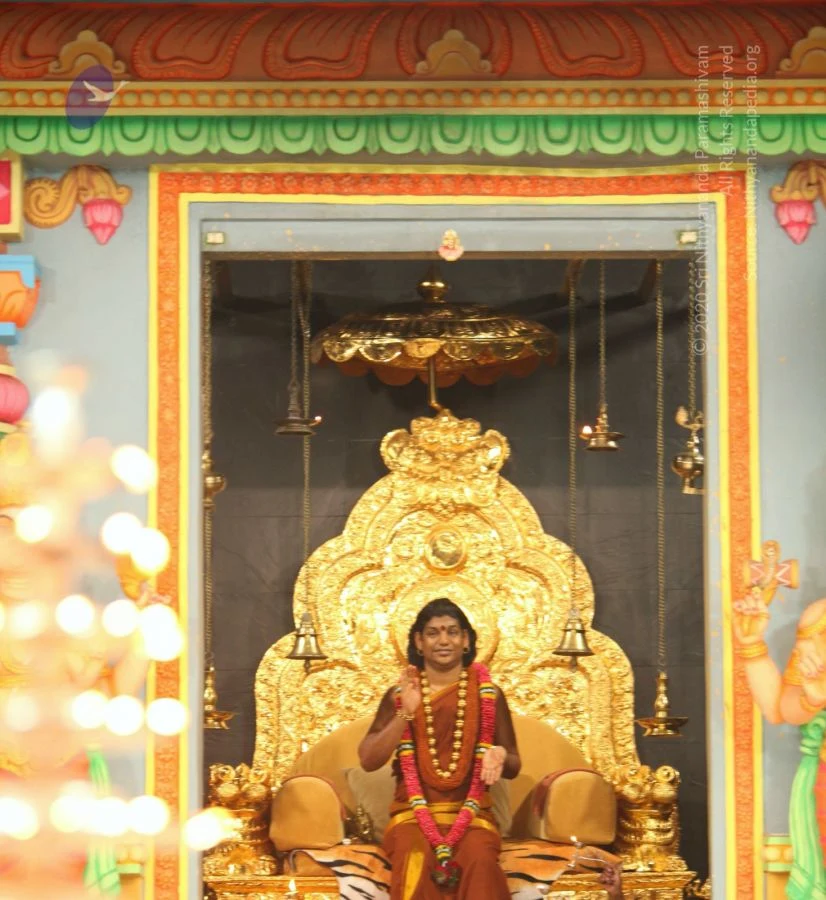
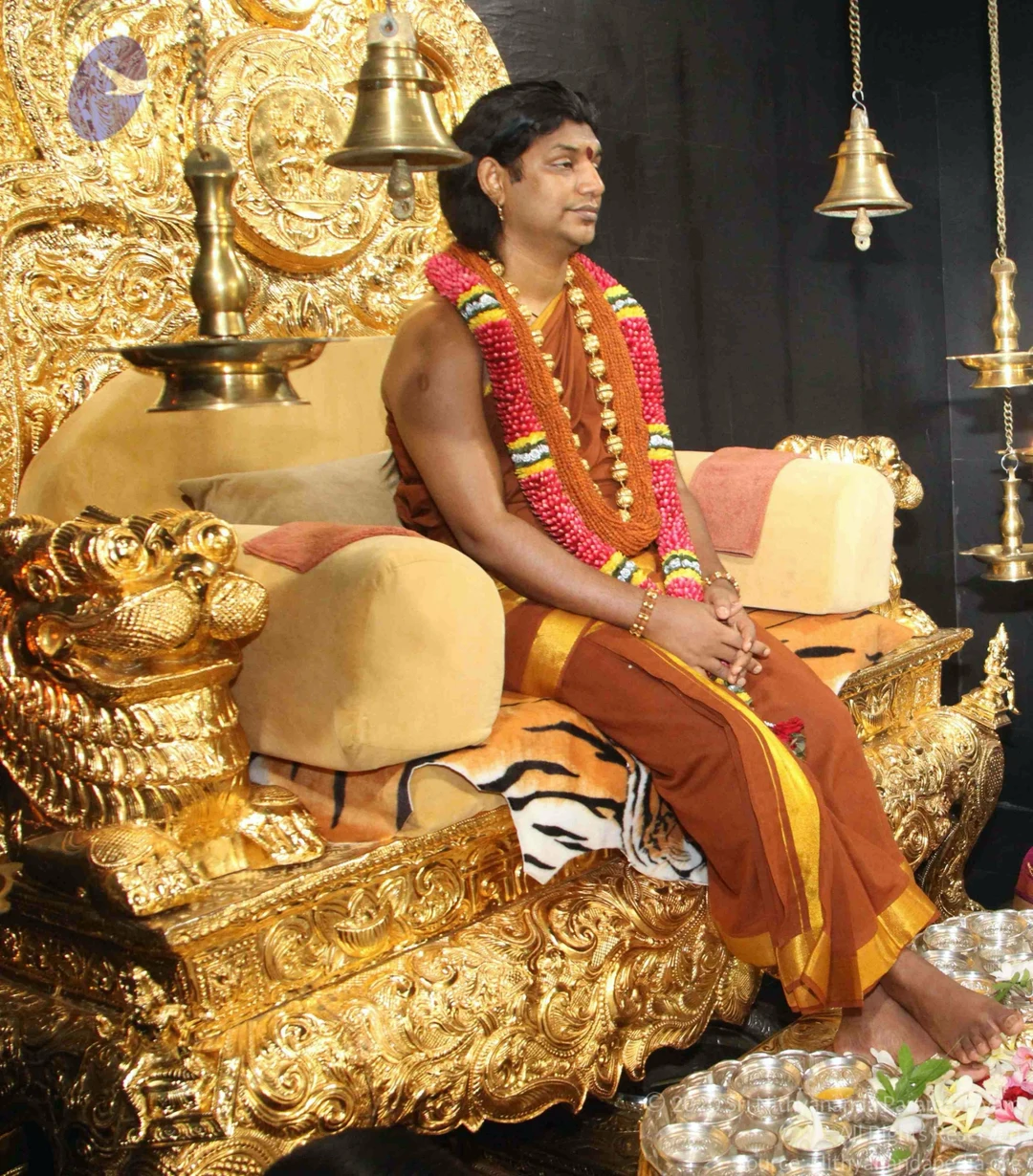
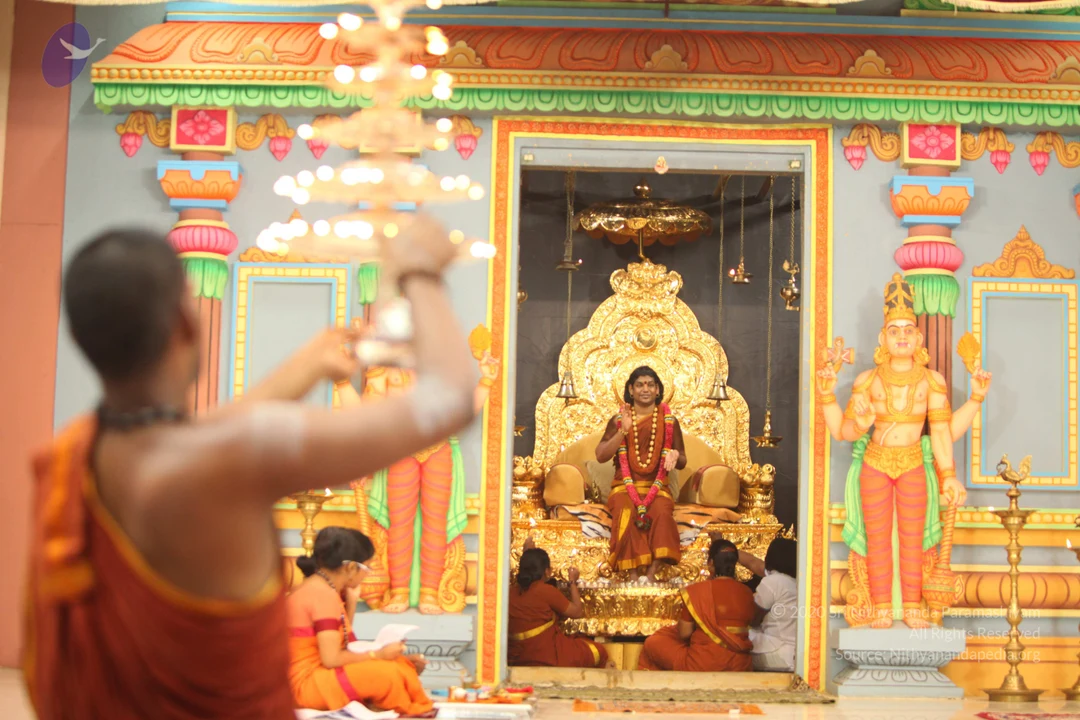
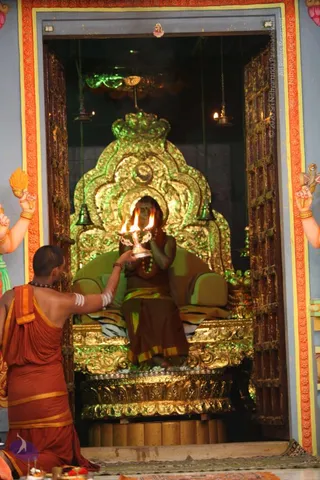
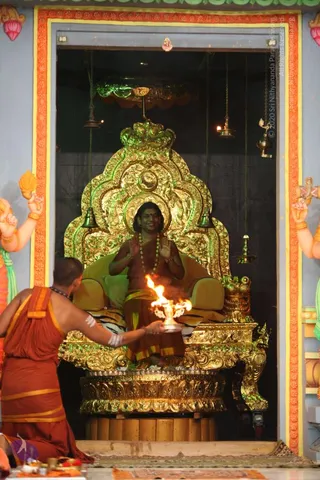
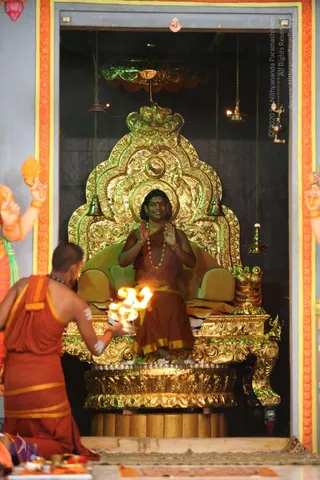
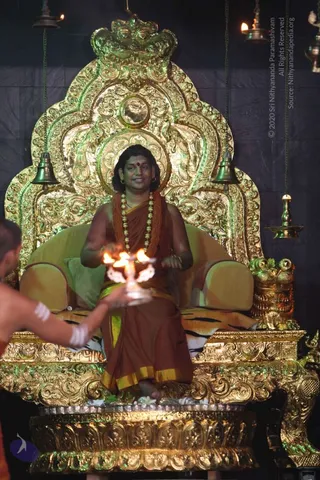
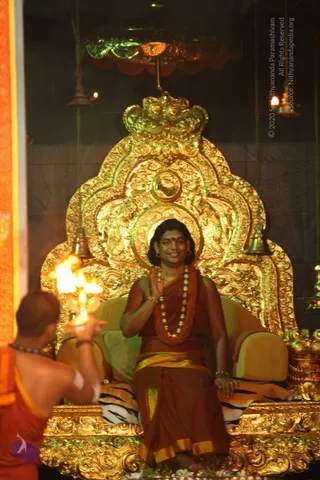
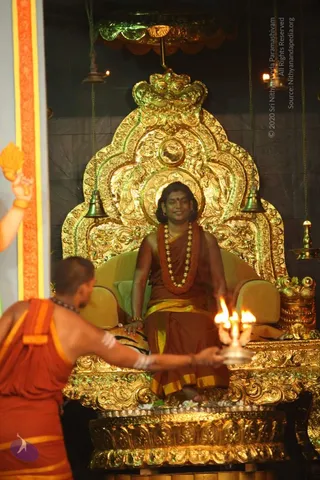
Ritual aarti in a temple doorway. A shaved-headed priest in an orange-saffron dhoti and shawl, with white horizontal markings on his upper arm, holds a silver aarti lamp with three flames toward a seated figure. The seated figure wears saffron-orange robes and a red-orange mala, sitting on an ornate gold-leaf throne draped with a tiger-striped cloth. Two brass hanging oil lamps, bells, and a carved gold canopy surround the throne. Flanking the doorway are painted deity murti figures with raised hands holding a flame and a serpent-topped object. Dark wooden gates frame the scene, with orange and yellow floral borders.A seated figure in an ornate gold throne with a tiger-skin cushion sits in a doorway framed by painted deity figures, with brass oil lamps hanging from chains above. The seated person wears a rust-orange garment, a green-beaded mala, bangles and an orange tilak, and holds palms together in greeting. In the foreground a kneeling priest in orange-saffron robes with white painted arm markings offers a flaming aarti lamp toward the throne. Offerings and a brass plate lie at the bottom of the frame. The seated person's appearance, with long swept-back hair, a rudraksha mala and orange robes, is a probable match for Swamiji (probable) in the throne-room setting, though the appearance is not fully certain.A seated figure in an ornate gold throne with a carved arched back and a gold tiger-form base sits with palms pressed together in greeting, wearing an orange-red robe with gold border, a green beaded mala and gold bangles. A priest in a saffron-orange dhoti and shawl, with white markings on his arms, holds a flaming aarti lamp toward the throne. Hanging oil lamps, bells and a gilded canopy surround the throne, with painted deity figures at the left and right edges of the doorway.A seated man in an ornate gilded throne with a tall, elaborately carved golden backrest and lion-form armrests, draped with a tiger-skin cover. He wears an orange-red sannyasi-style cloth with a yellow-gold border, a long rudraksha mala necklace, earrings and a red tilak, and smiles while a priest in an orange garment extends a lit oil lamp toward him. Brass hanging lamps with flames and bells hang behind the throne against a dark slate wall. Ritual aarti or lamp-offering setting.A seated man in an ornate golden throne with a tall, carved gold backrest and a crown-like finial, draped over a striped tiger-skin cushion. He wears a rust-orange robe with a gold-bordered yellow-gold sash, a long orange rudraksha mala and a gold necklace, and has a red tilak on his forehead; his right hand is raised in blessing. In the foreground a man in an orange robe, seen from behind, holds a lit aarti lamp with a bright flame toward the seated figure. Brass oil lamps hang from the ceiling, and a golden canopy sits overhead.A seated man in a rust-orange robe with a gold-bordered cloth sits on an ornate gold throne with a carved gilded backrest and a tiger-skin seat cover. He wears a long rudraksha mala with gold beads and a red forehead mark. In the foreground, a shaven-headed priest in orange clothes holds a silver oil lamp with a flame toward the seated figure, beside a painted wall panel with a deity figure. Gold bells and hanging brass lamps hang from the dark ceiling. The throne and the seated figure are shown in a ceremonial aarti setting.

NITHYA-SATSANG

76 photosSource gallery
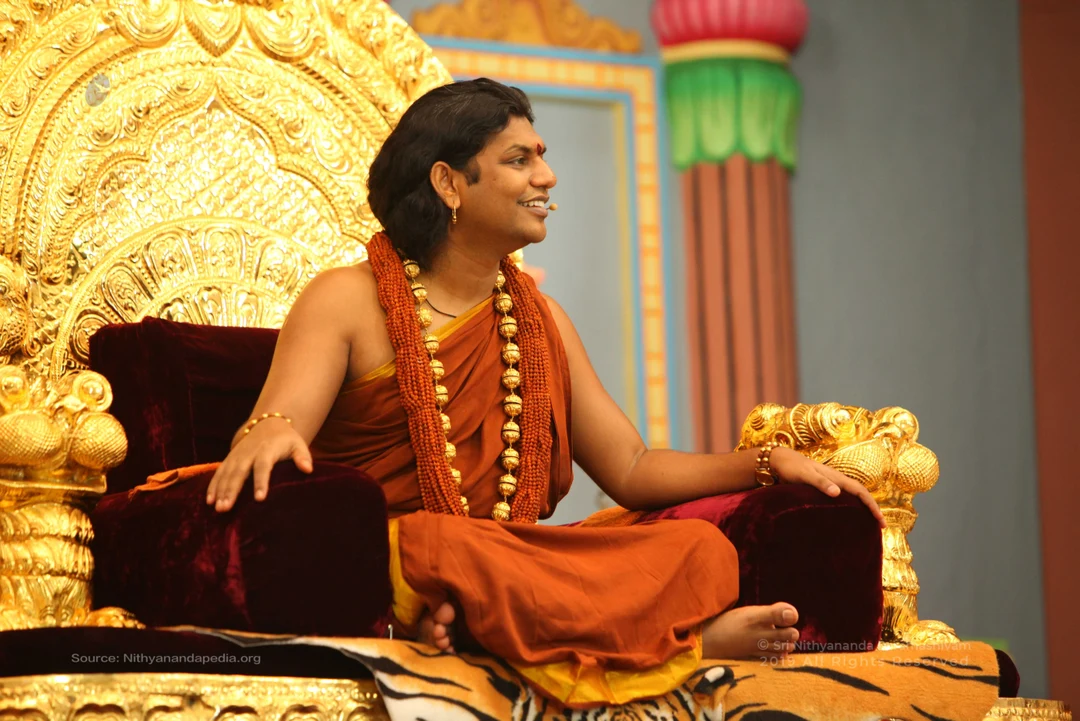
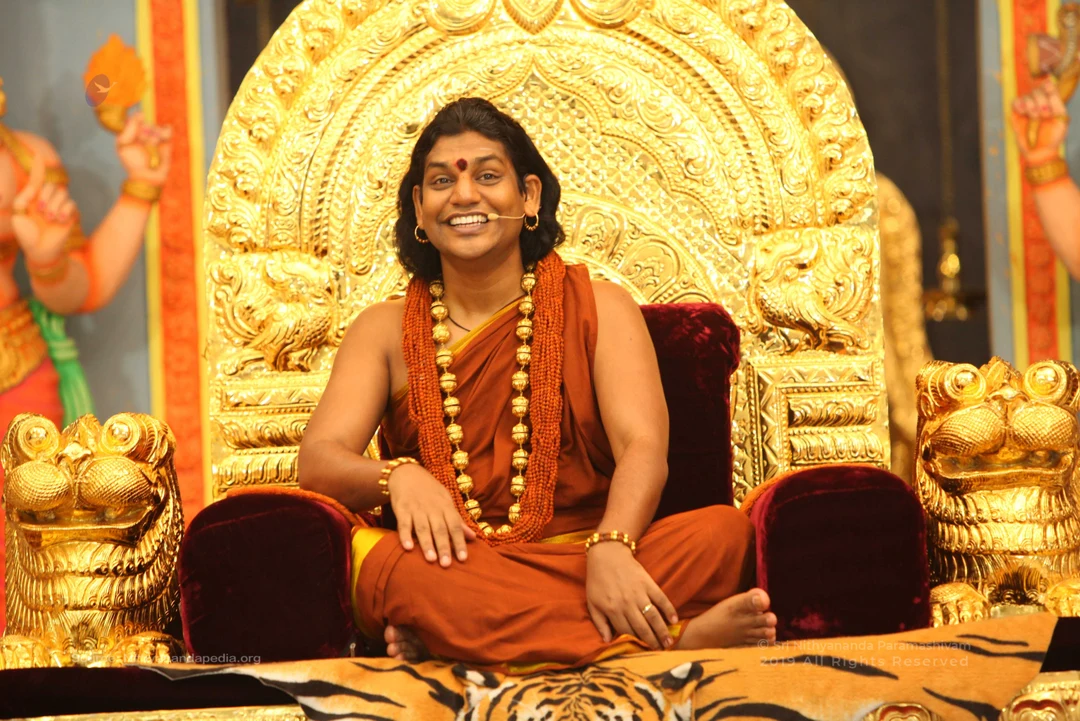
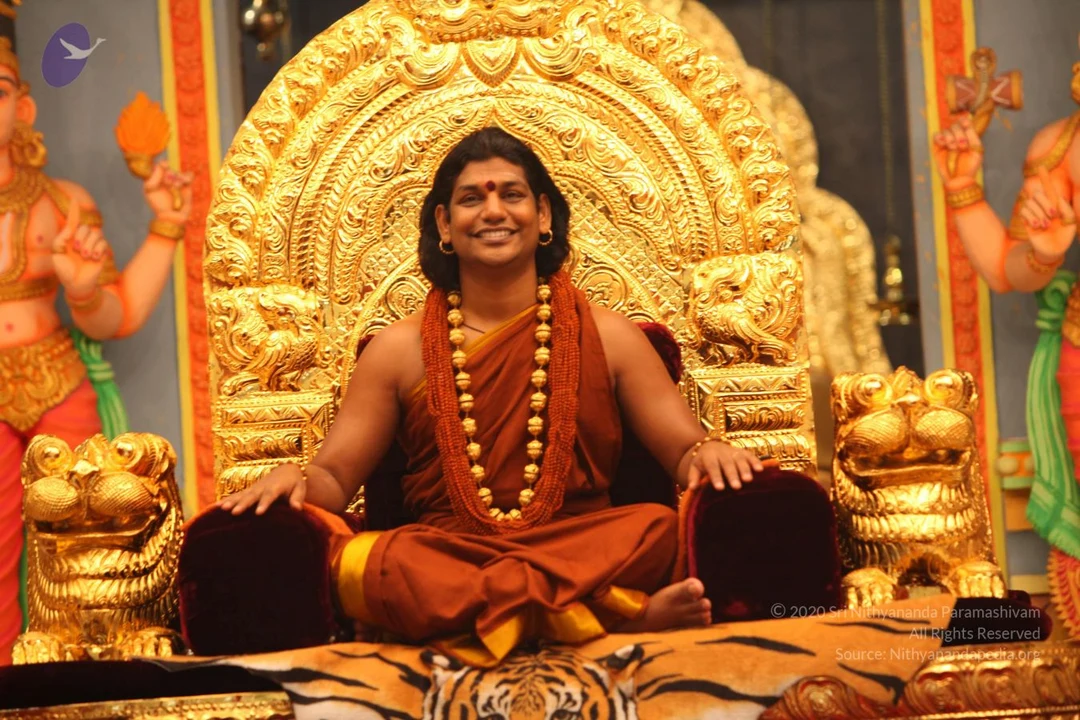
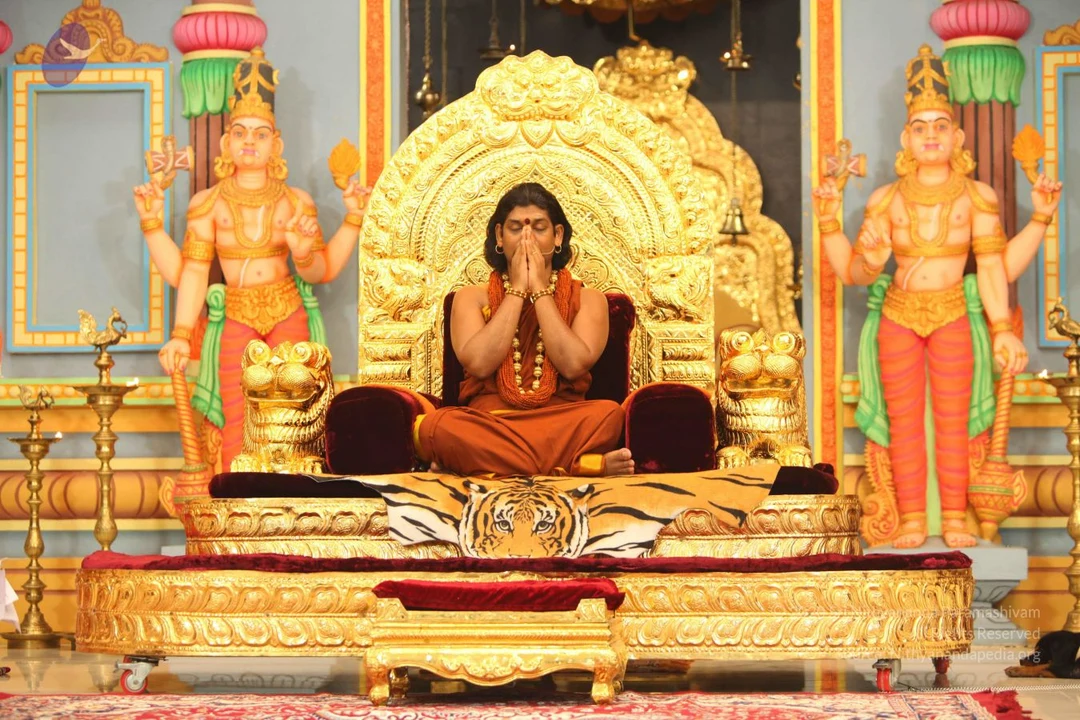
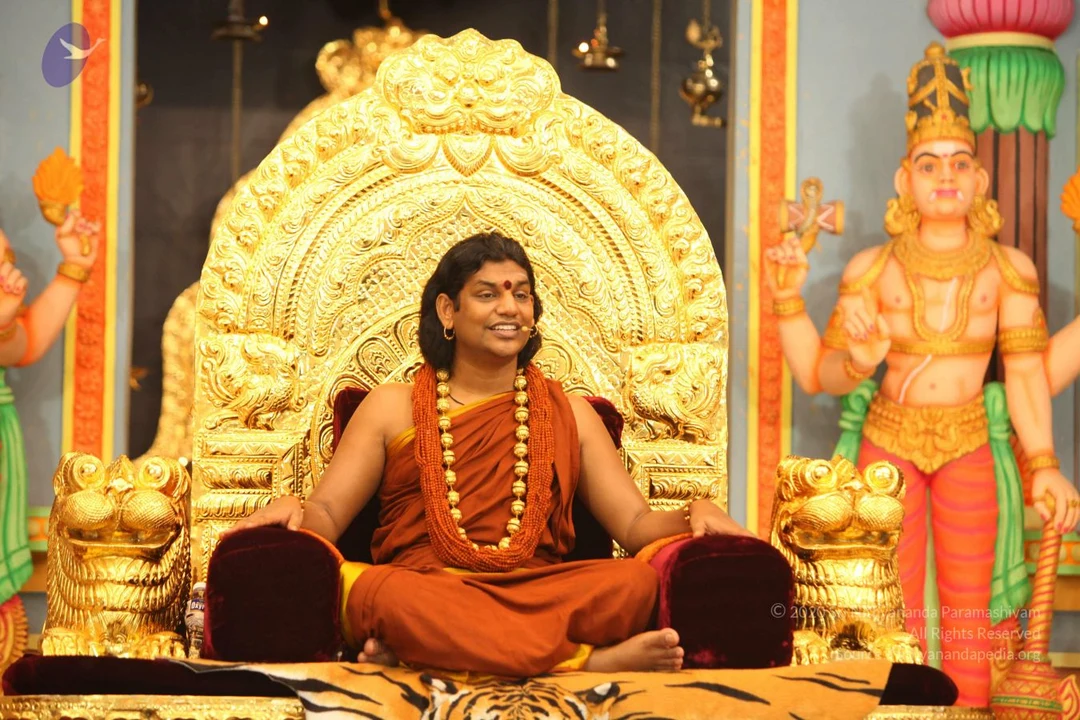
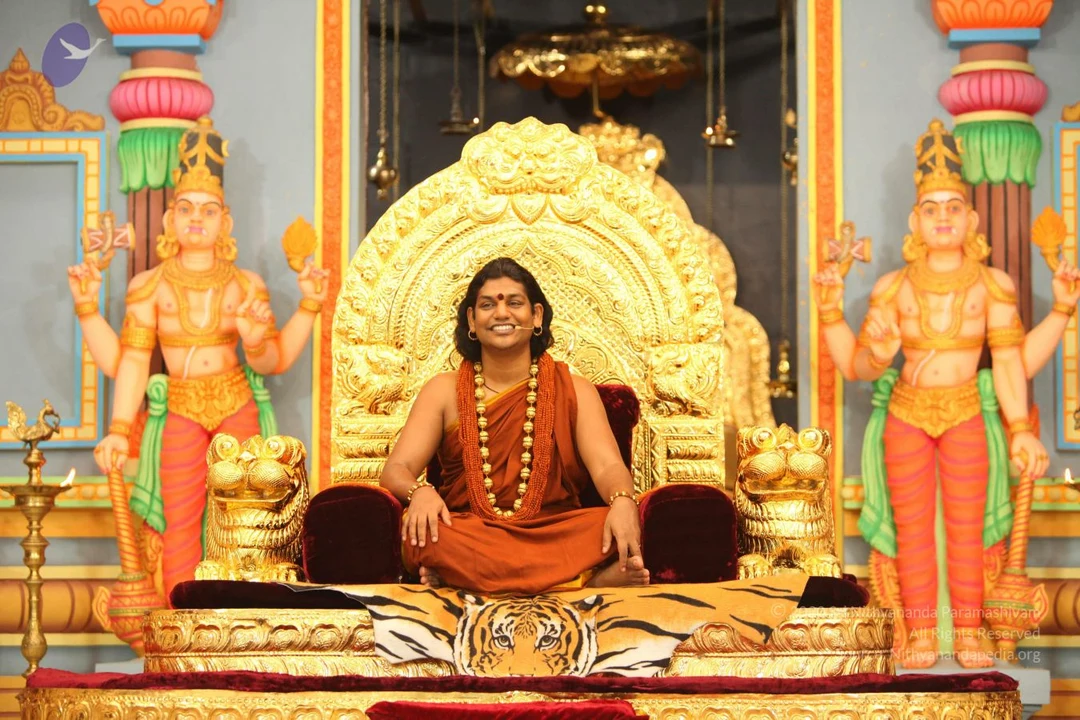
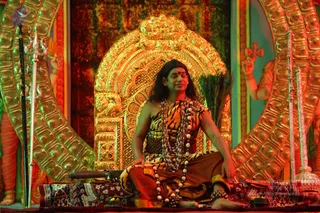
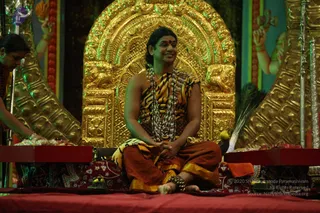
A smiling man with long dark hair and a small red bindi sits cross-legged on an ornate gold throne carved with lion heads, resting his hands on the lion-shaped armrests. He wears an orange-saffron robe with a yellow-gold border and a long rudraksha mala with ceremonial gold beads. A tiger-striped cloth covers the dais beneath him. Gilded deity statues flank the throne, with a raised hand holding a flame on the left and a figure holding a trident-like implement on the right. A watermarked copyright line appears at lower right. Probable Swamiji (probable) seated in a throne setting, wearing saffron clothing and rudraksha beads, with the long hair and ornamented presentation of the cues listed.A seated man in saffron-orange robes sits cross-legged on an ornate gilded throne with lion-head armrests and a gold arched backrest. He wears a long coral-red beaded mala and a heavy gold bead necklace, with gold bangles on his wrists and a red tilak on his forehead. A small microphone is clipped near his face. To the left stands a painted deity murti with multiple arms and gold ornaments. A striped tiger-skin cloth covers the dais, and the setting is a satsang stage.A seated man in saffron-orange robes sits cross-legged on an ornate gold throne with his palms pressed together in prayer and eyes closed. He wears a rudraksha mala and a gold necklace. The throne has lion-head armrests and is draped with a tiger-striped cloth. Two large painted deity statues with multiple arms, gold jewellery and green and orange dhotis stand on either side. Oil lamps and brass lamp stands surround the gold dais, with a red carpet below.A seated man sits on an ornate gold throne with a tiger-skin rug draped over the platform, hands pressed together in anjali mudra. He wears an orange-saffron cloth, a long mala of orange-red rudraksha beads, and gold ceremonial necklaces and bangles, with a red bindi on his forehead. Behind him, a gold-carved arch frames the throne, and a gold-coloured lion sculpture rests on the armrest. In the upper left, a partially visible figure in green and orange holds an orange object, and hanging oil lamps appear at the top. The a person appearance cues include the saffron clothing, rudraksha mala and gold ceremonial necklaces, while the throne and gestures shown are part of the staged setting.A seated man in an orange-saffron dhoti and shawl, bare-shouldered, sits cross-legged on a red velvet throne before an ornate gold arched backdrop with carved lions. He wears multiple strands of orange rudraksha beads with gold bead necklaces and gold bangles, a red bindi on his forehead and gold hoop earrings, with a lapel microphone clipped on. His palms are pressed together in namaste and his eyes are closed. A tiger-striped skin covers the platform beneath him. Swamiji (probable): long swept-back hair, saffron clothing, rudraksha malas and ceremonial gold necklaces, seated in the honoured position.A seated man in saffron-orange robes sits on an ornate gold throne with carved lion-head armrests, draped with a tiger-skin cloth on the dais. He wears a red-orange beaded mala and a long white-and-gold bead necklace, a red bindi, and gold earrings, smiling while holding a microphone. Large painted deity statues flank the throne: the left figure holds a flaming torch, the right holds a trident-like staff, both wearing gold jewellery and pink-and-green dhotis. Swamiji (probable) appears by appearance cues of long swept-back hair, saffron clothing and rudraksha mala; the page names him Paramahamsa Nithyananda.

SARVA-DARSHAN

3 photosSource gallery
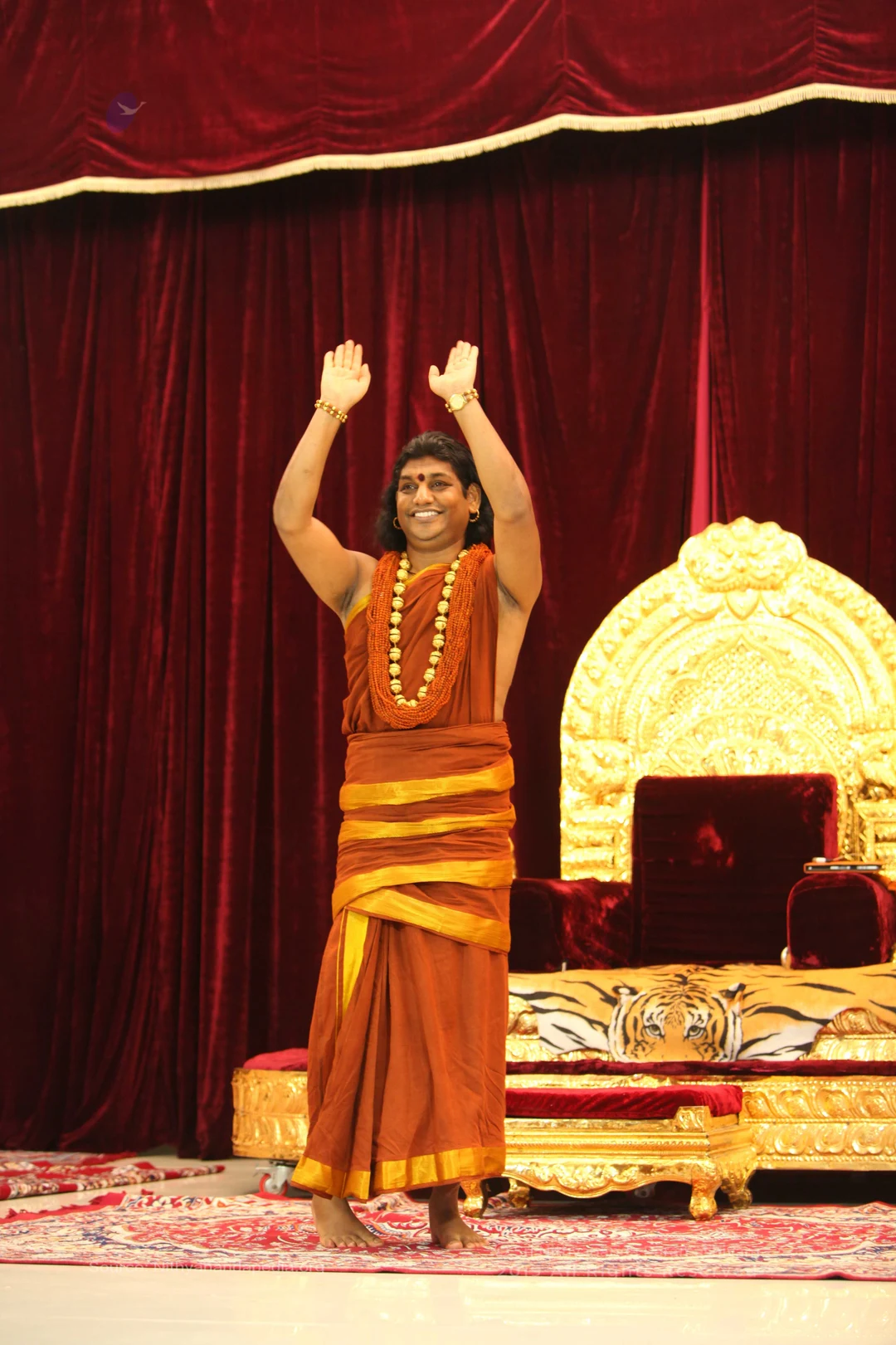
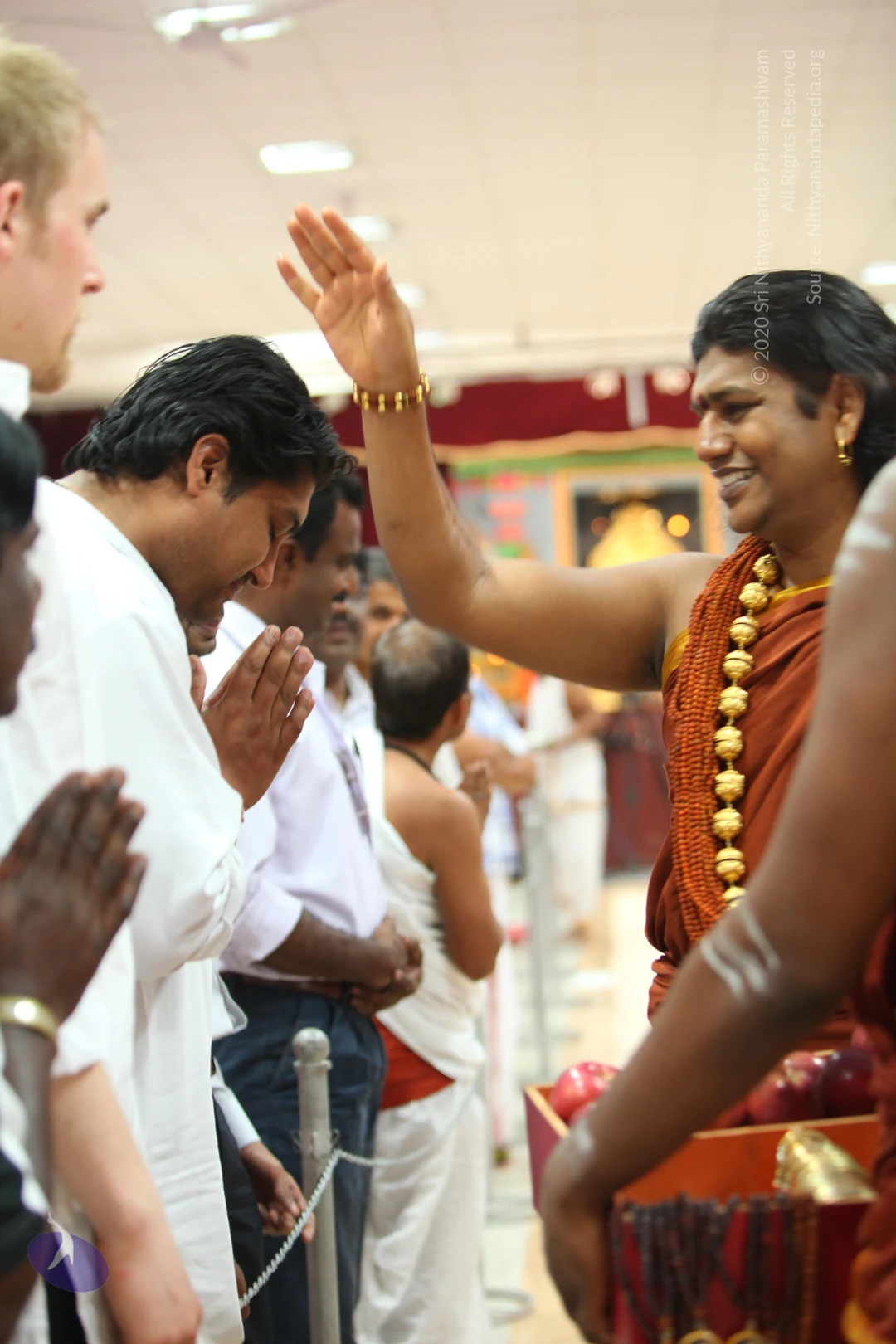
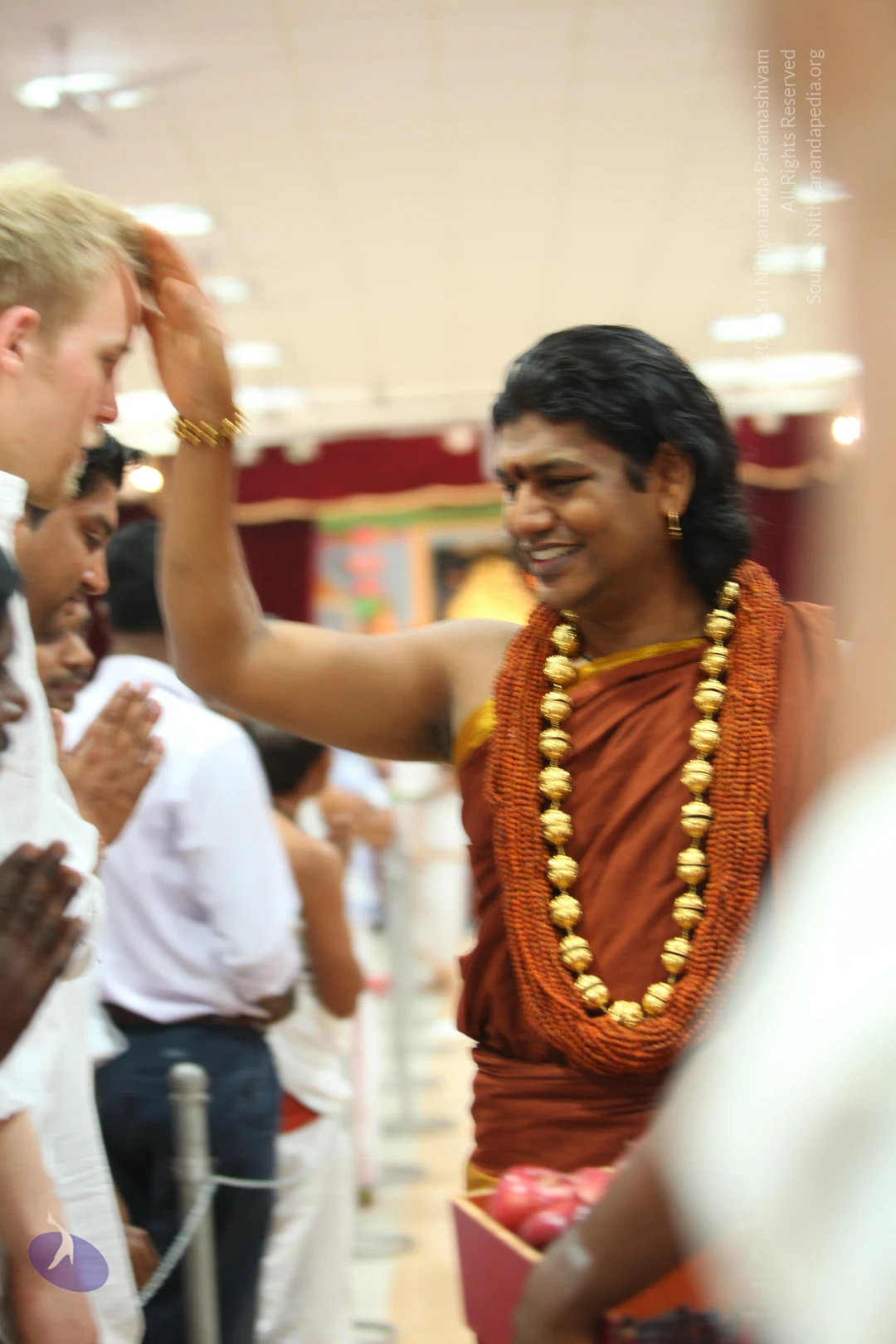
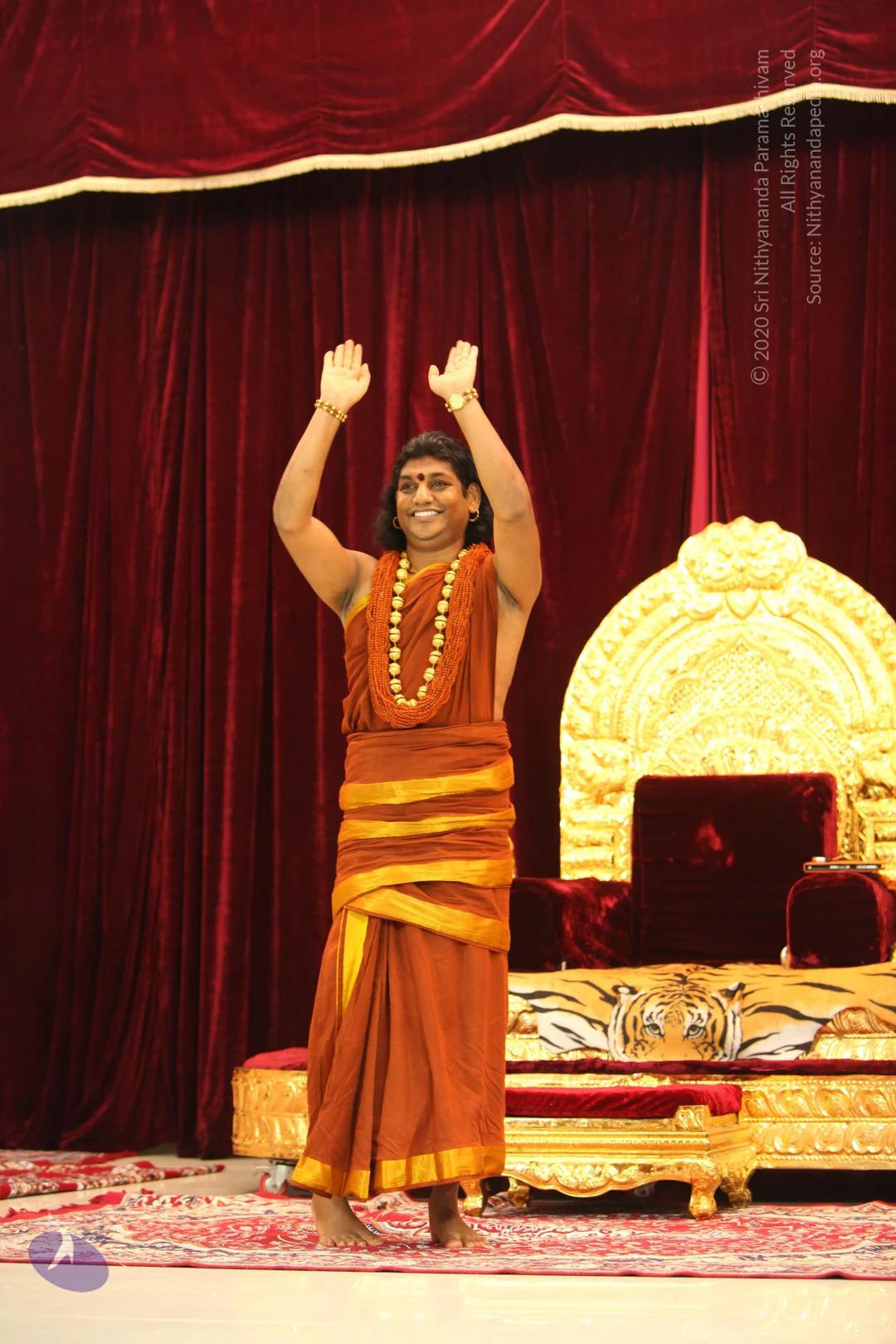
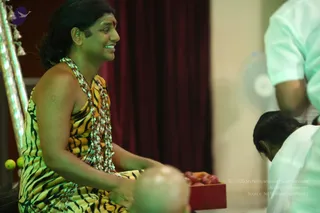
A smiling man in an orange-red saffron robe and multiple strands of rudraksha beads with large gold ball beads stands in a hall, raising his right hand with a bangle to bless the head of a fair-haired young man in white who has his hands joined in namaste. Behind them, people in white clothes stand in a line with hands folded and a red carpeted stage area is visible. a person: the robed man wears distinctive saffron clothing, a rudraksha mala and ceremonial gold necklace, and is performing a blessing. A red fruit-filled tray sits at the lower right.A photograph of a smiling man with long, swept-back dark hair and a red bindi, wearing a saffron-orange shawl over the shoulder, a golden-yellow inner cloth, and a long orange rudraksha mala with large gold bead ceremonial necklace. He stands among a crowd of devotees in a bright hall, with a balding man in white kurta bowing forward in the foreground, a hand resting on his head in blessing. Women in white and devotees with tilak marks watch in the background, with red drapes and a wall visible behind. Swamiji (probable) is shown in the central role, receiving or giving blessing, with appearance cues of long hair, saffron clothing and rudraksha mala.A barefoot man stands on a red patterned rug on a stage, both arms raised with palms open in an expressive gesture. He wears a rust-orange dhoti-style wrap with gold borders, a red-orange rudraksha mala with gold beads, gold bangles and a wristwatch, a red bindi on his forehead and small gold earrings. Behind him hang deep red velvet curtains with gold fringe, and a large gold-carved throne with a tiger-print cushion and a red velvet back sits to the right.

HDH-conducting-inner-awakening-session

60 photosSource gallery
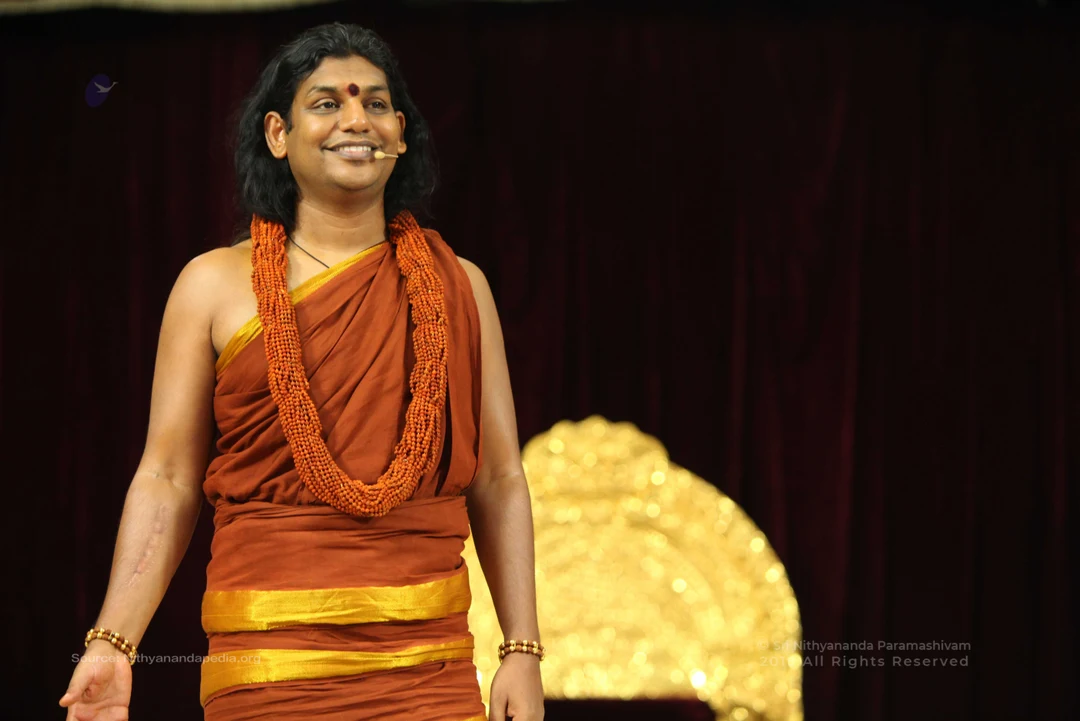
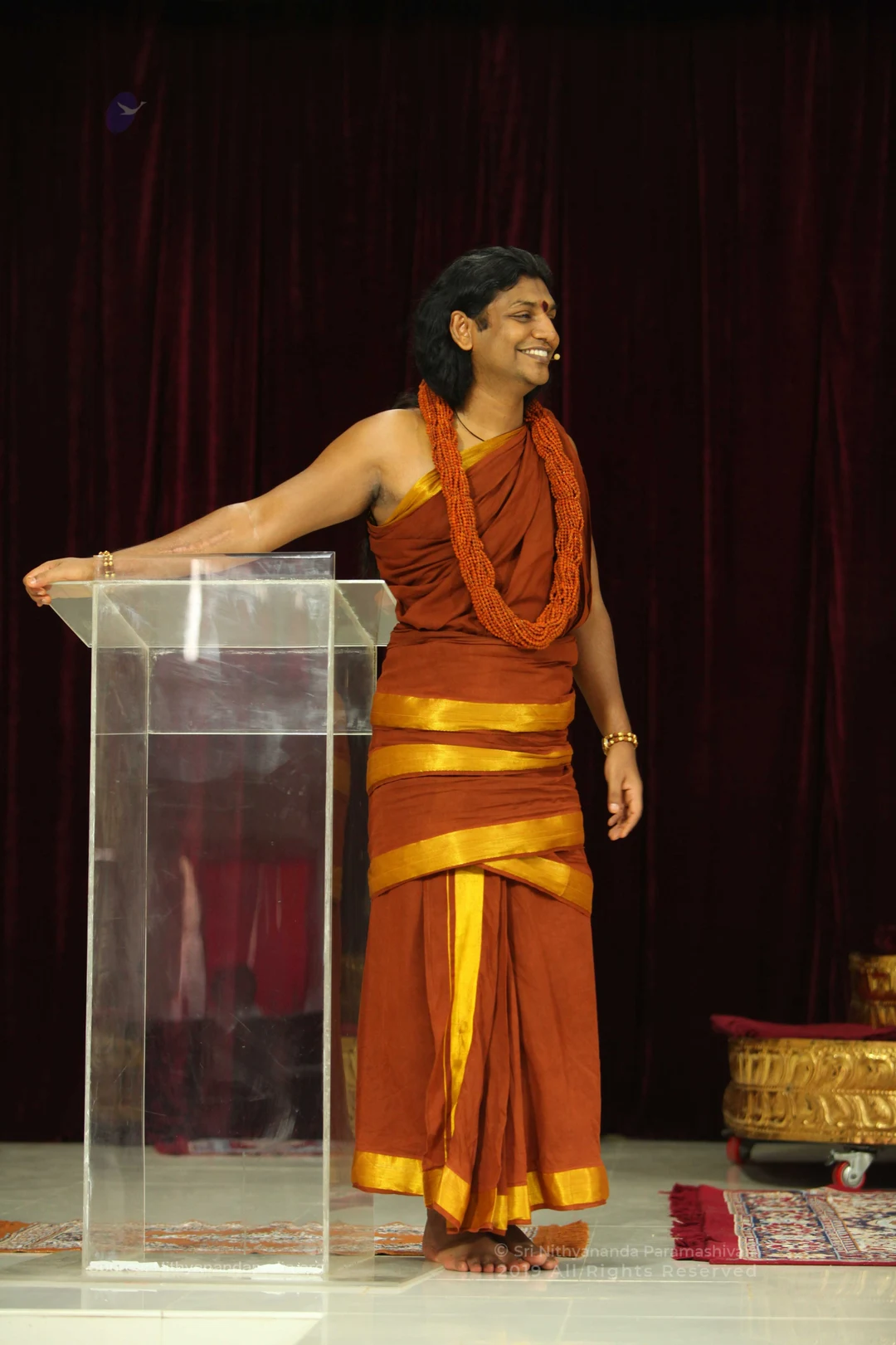
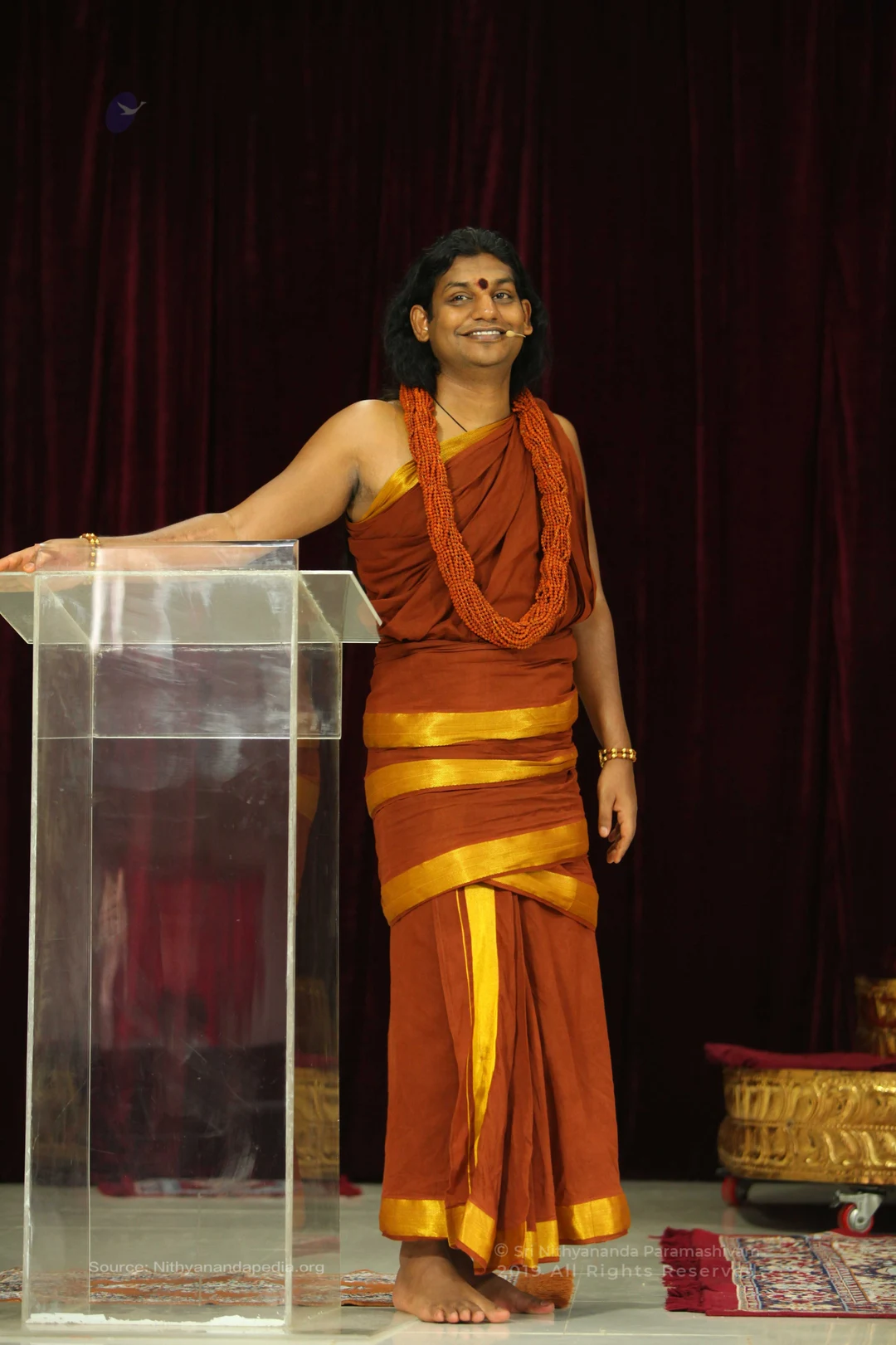
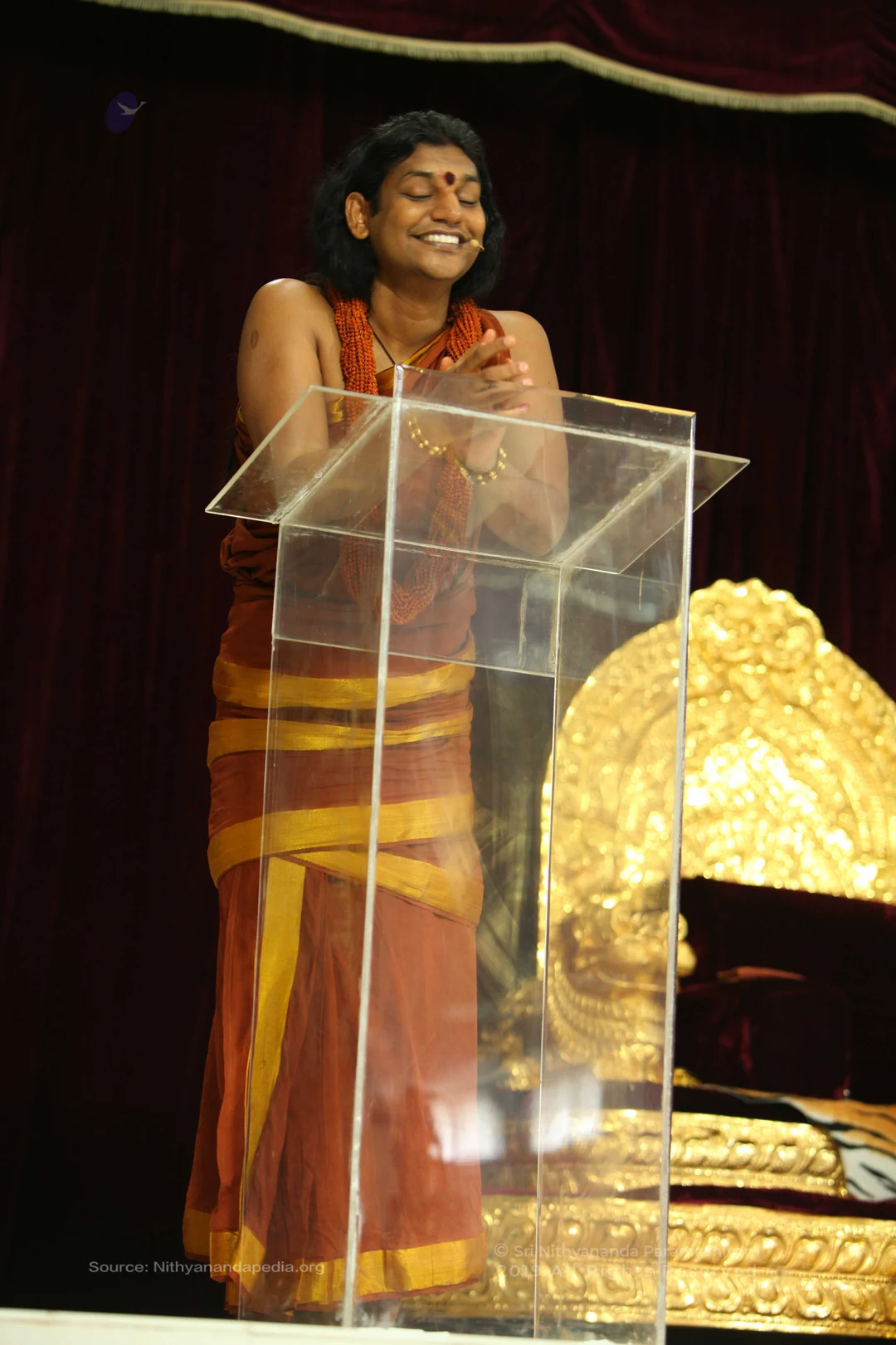
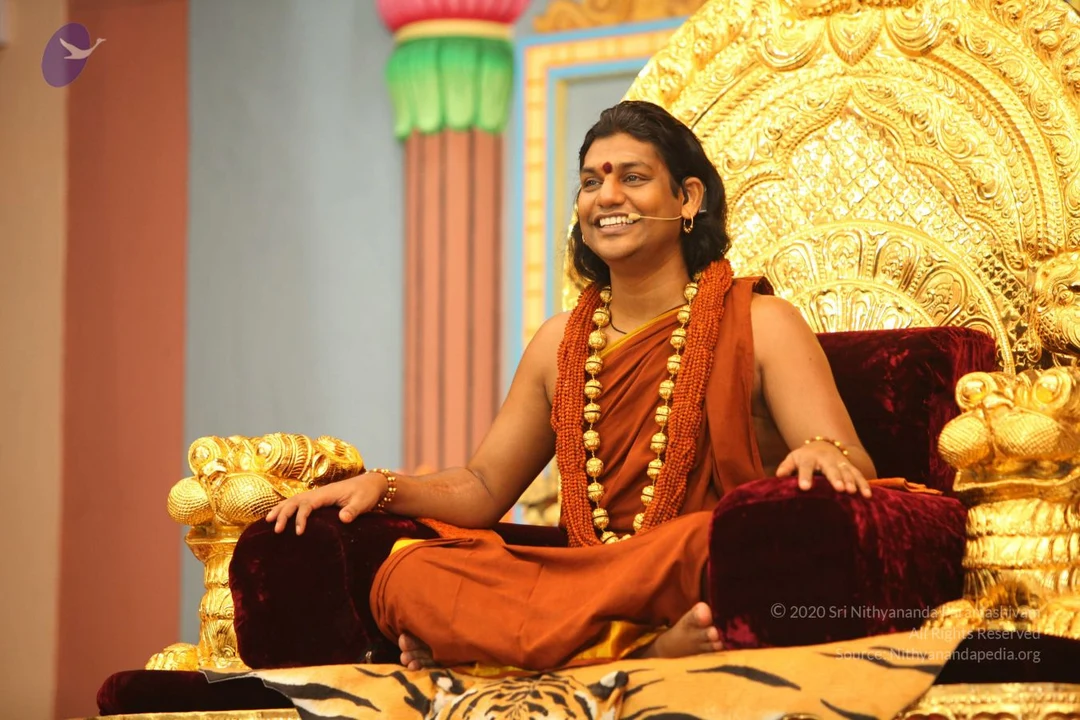
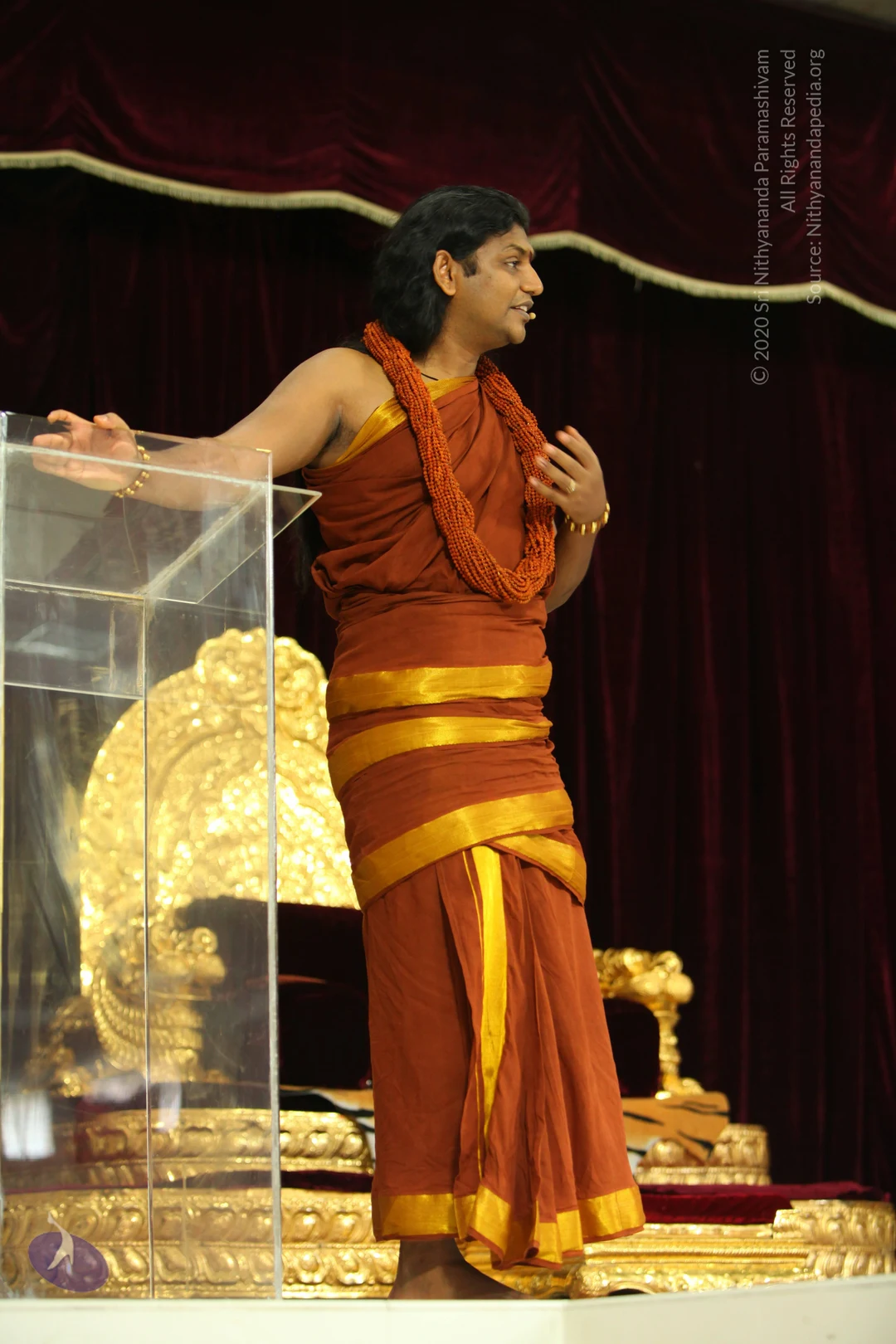
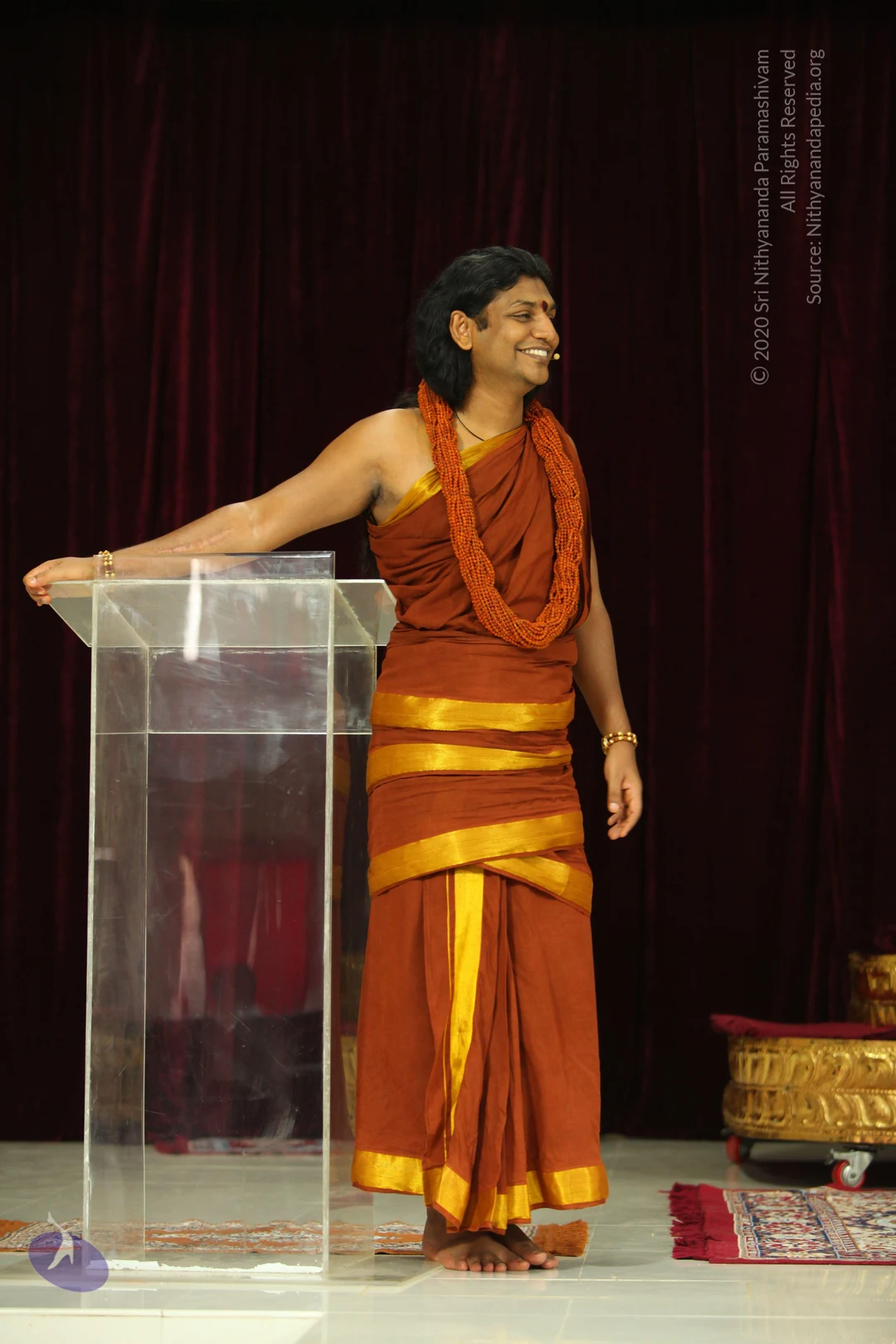
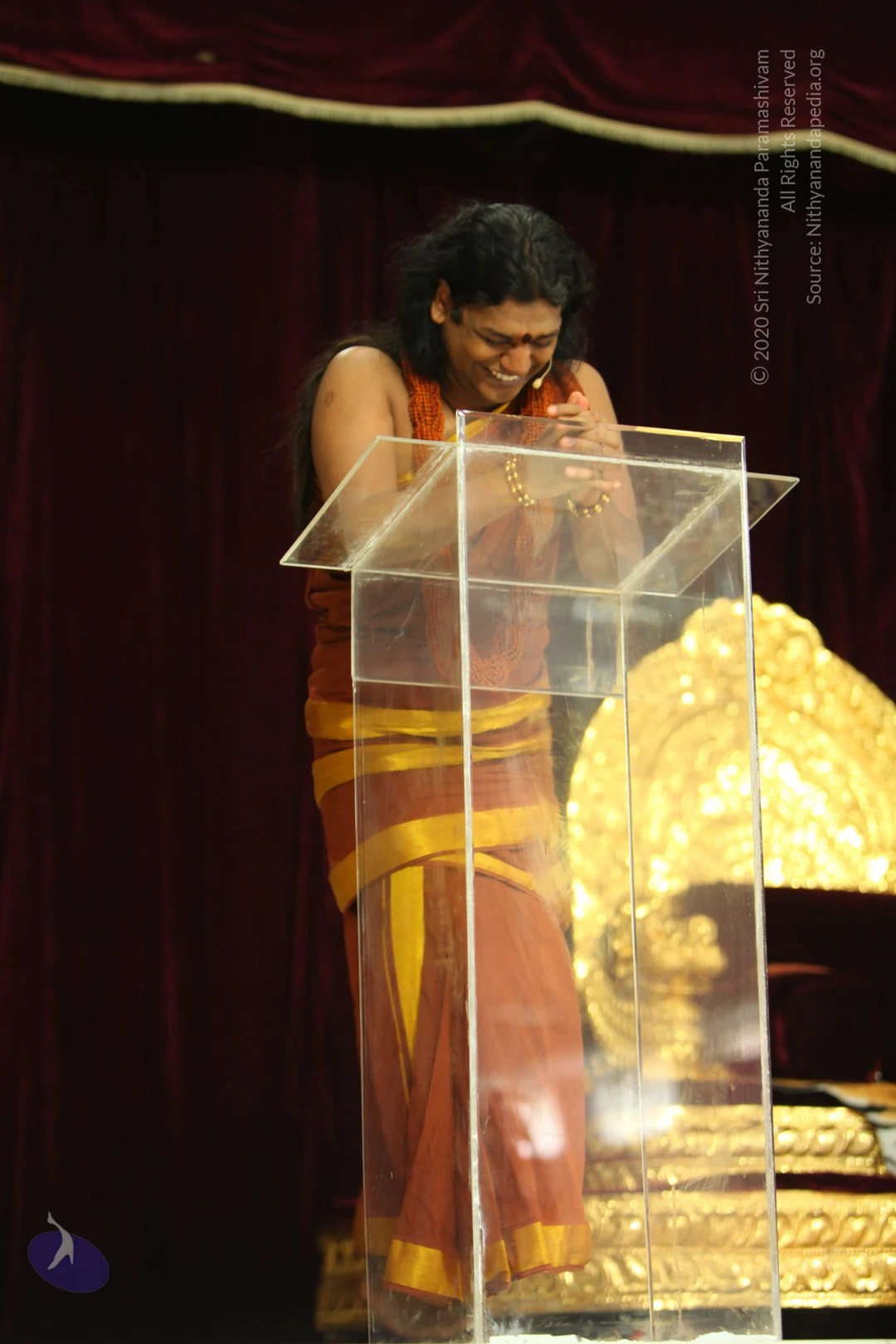
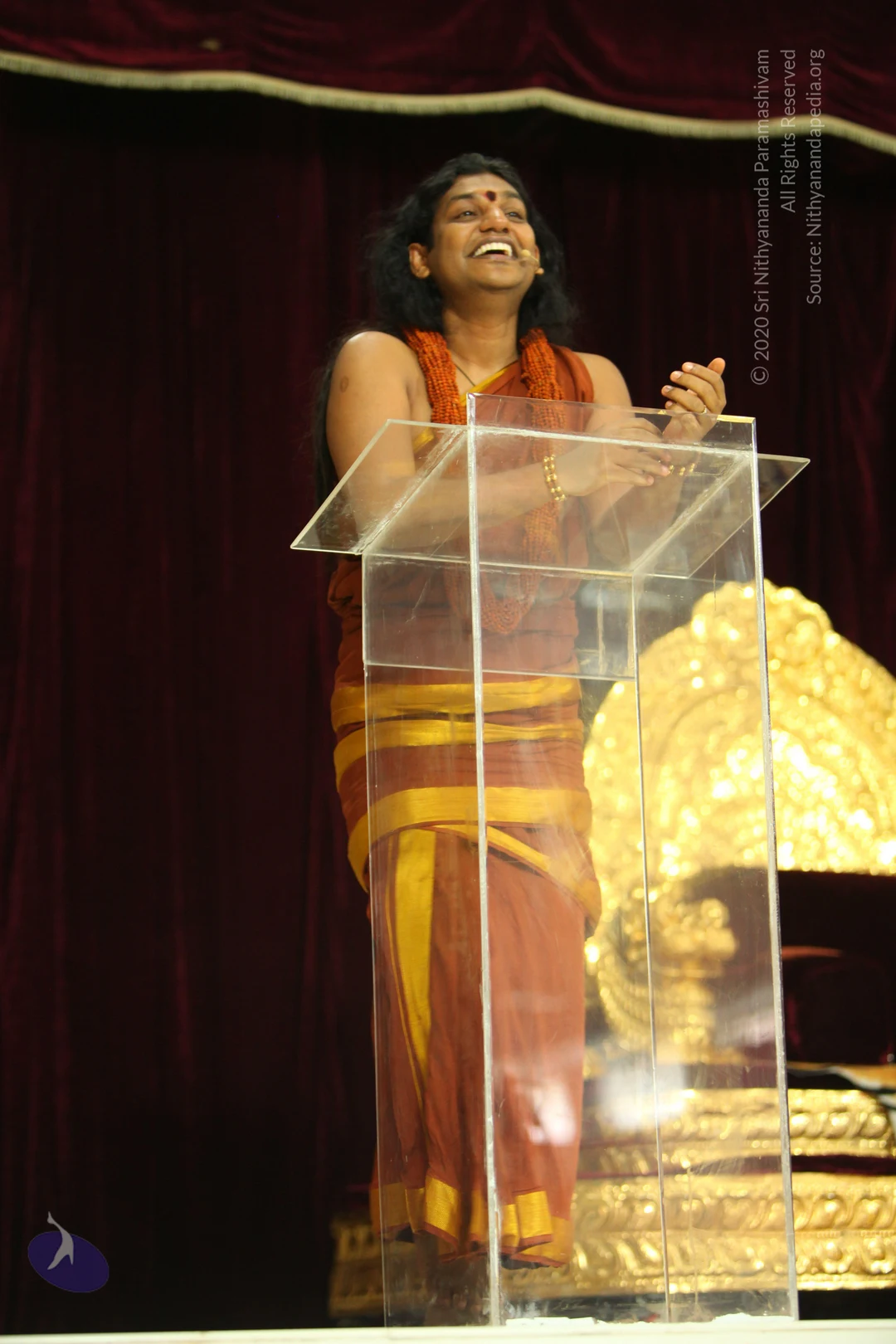
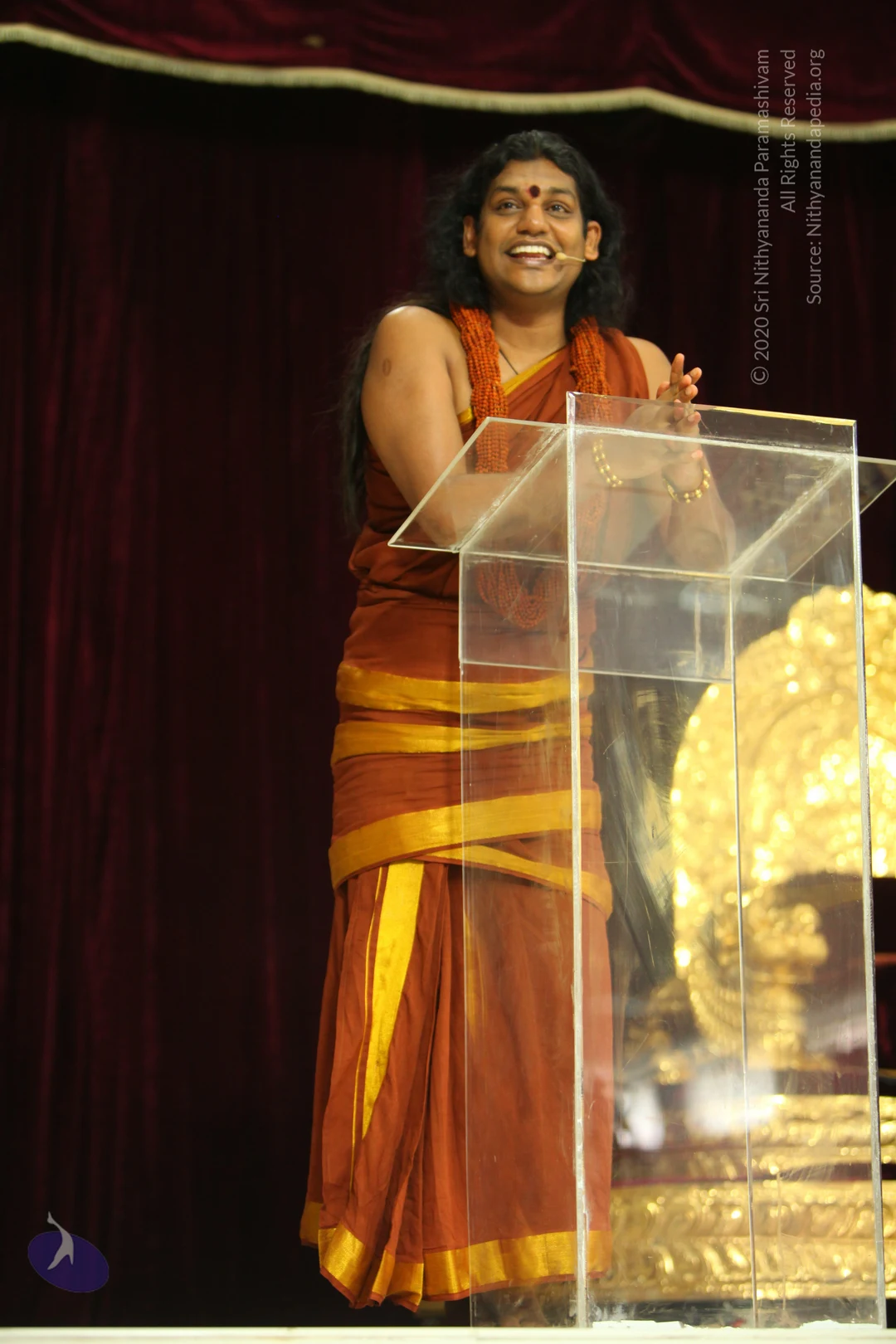
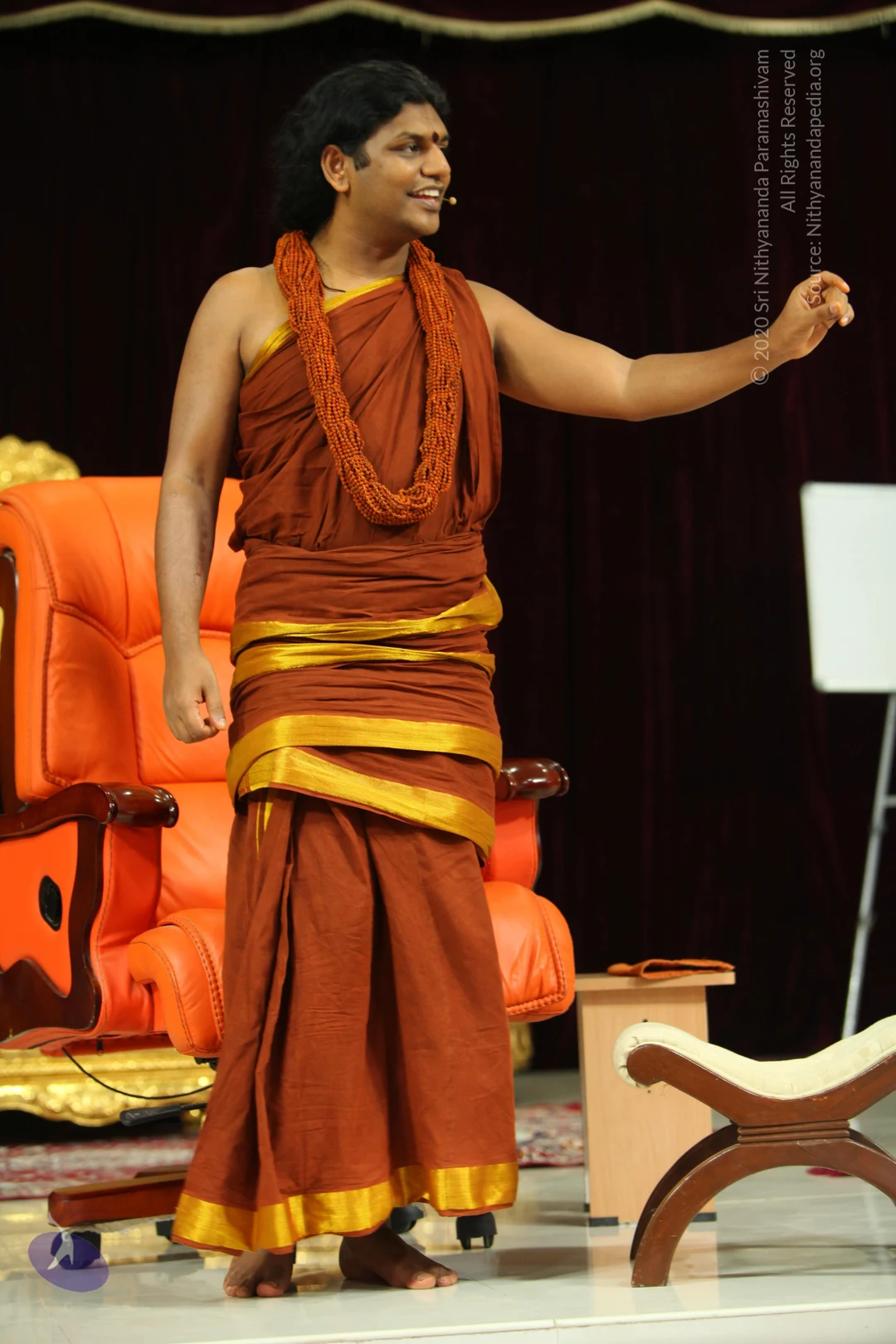
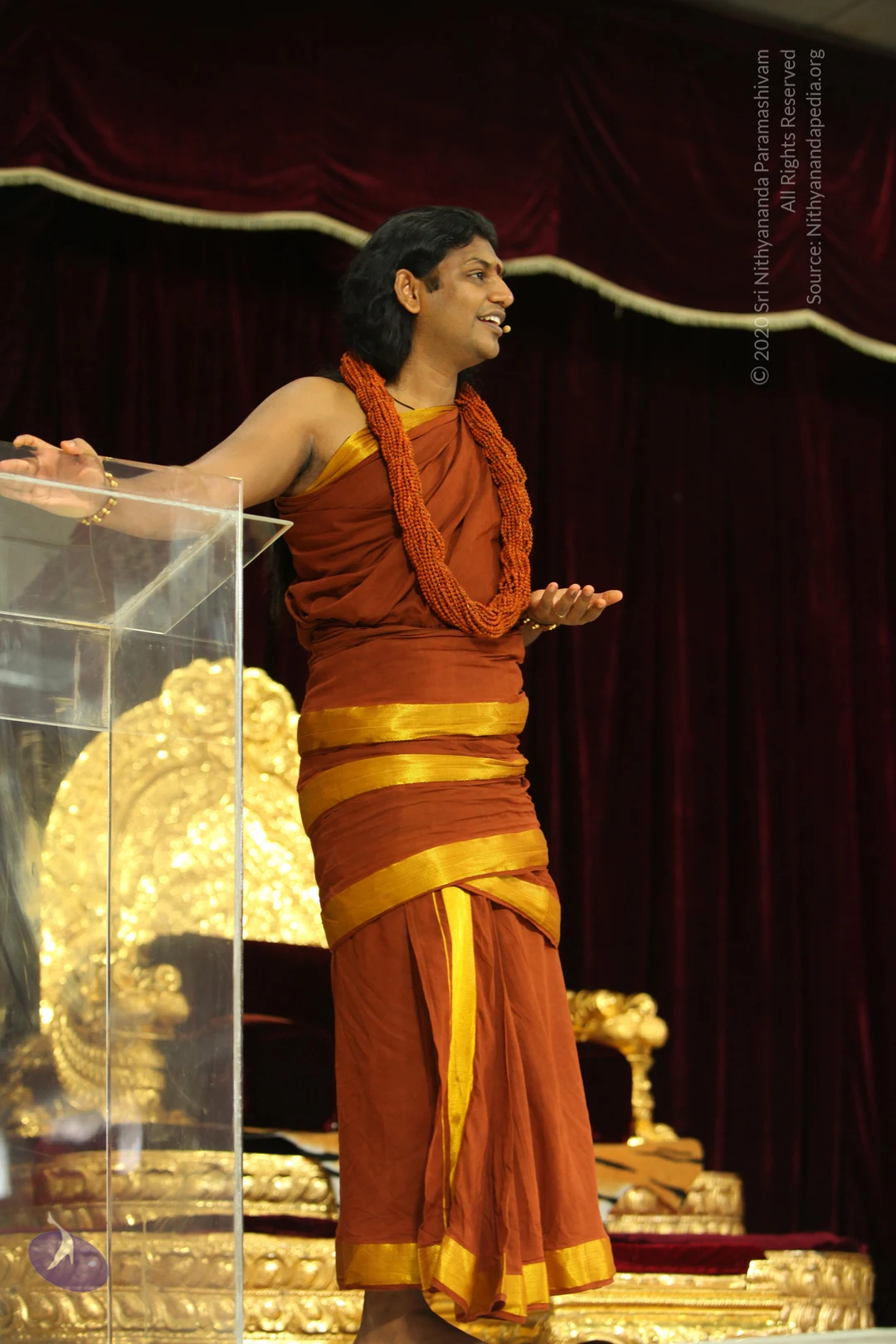
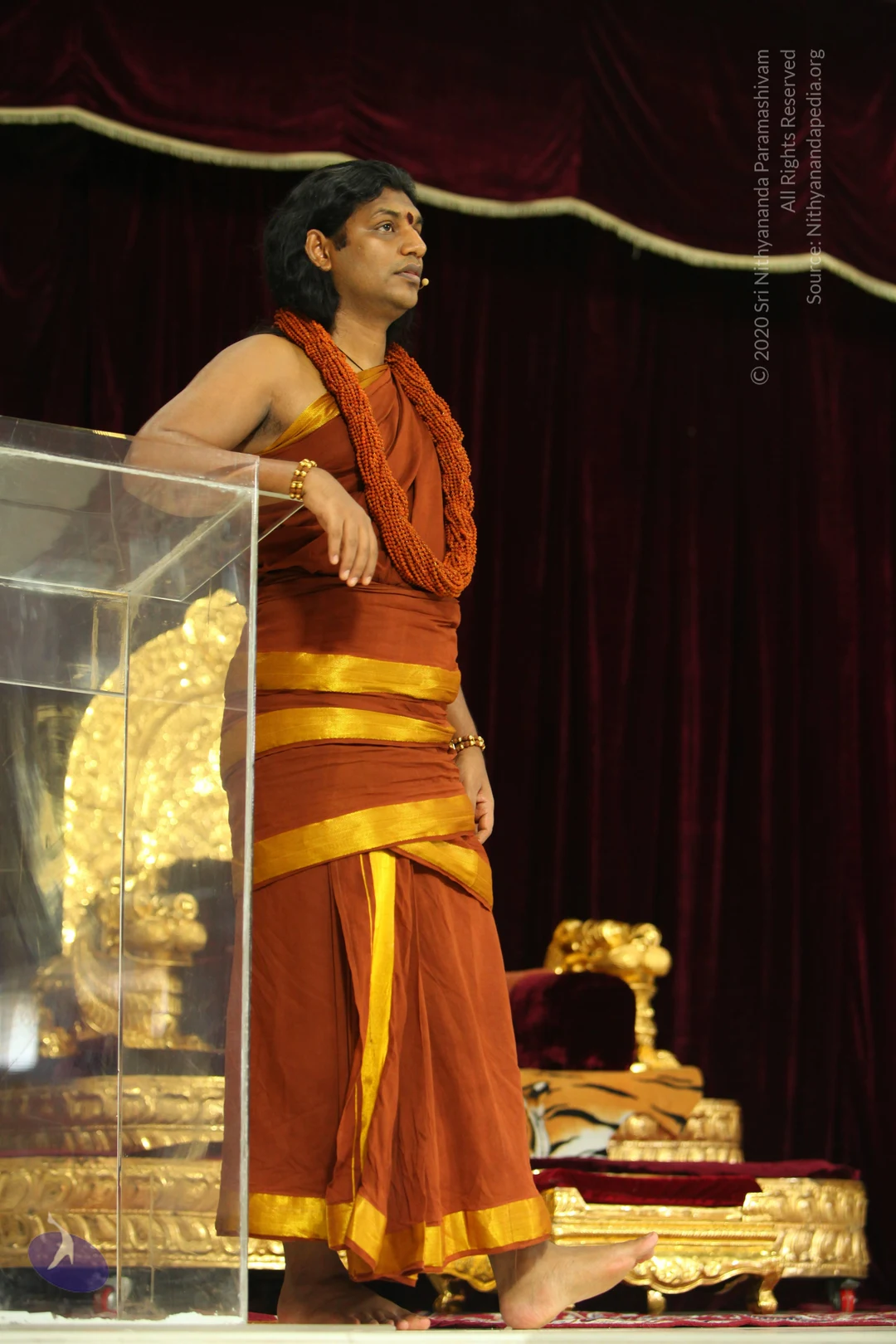
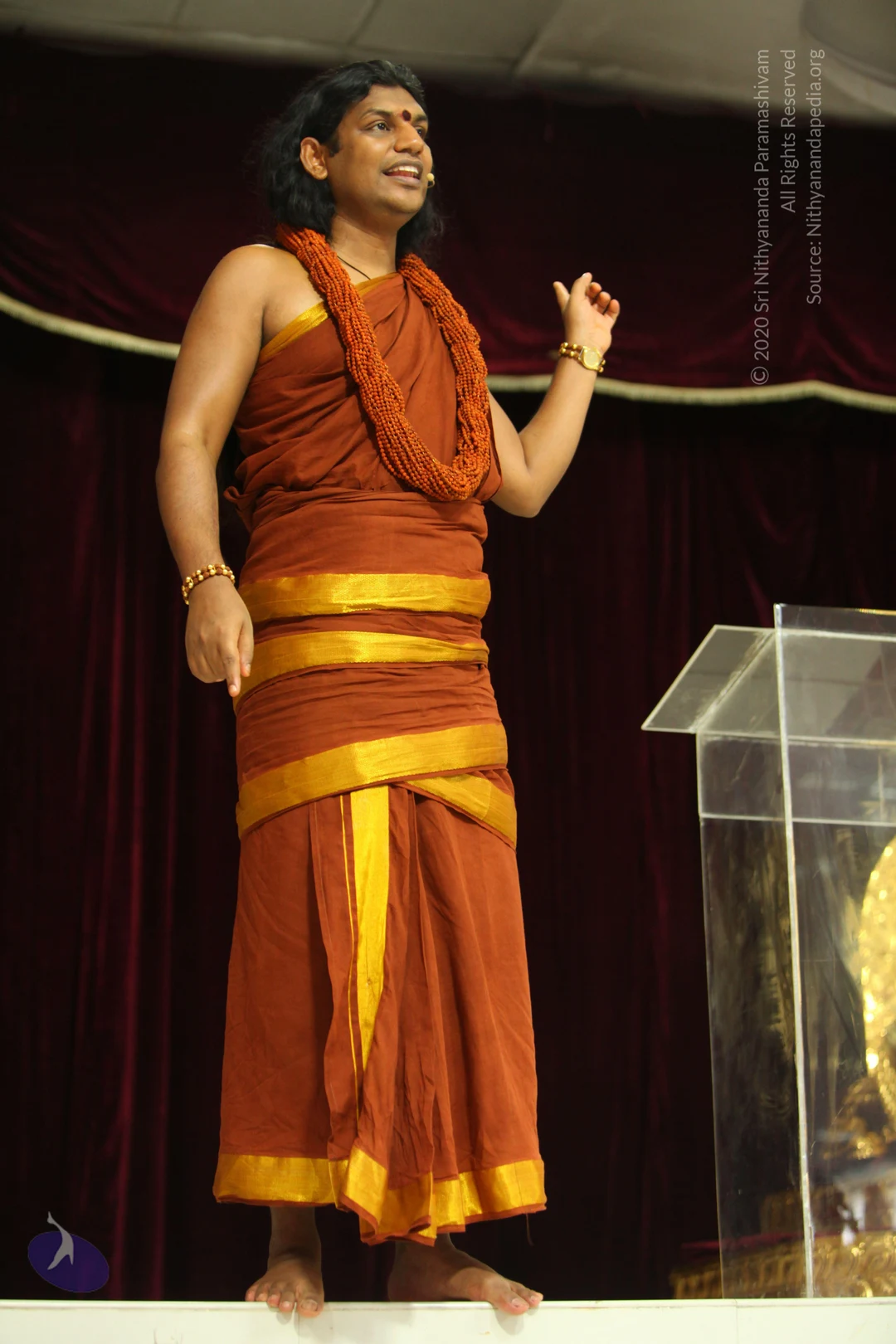
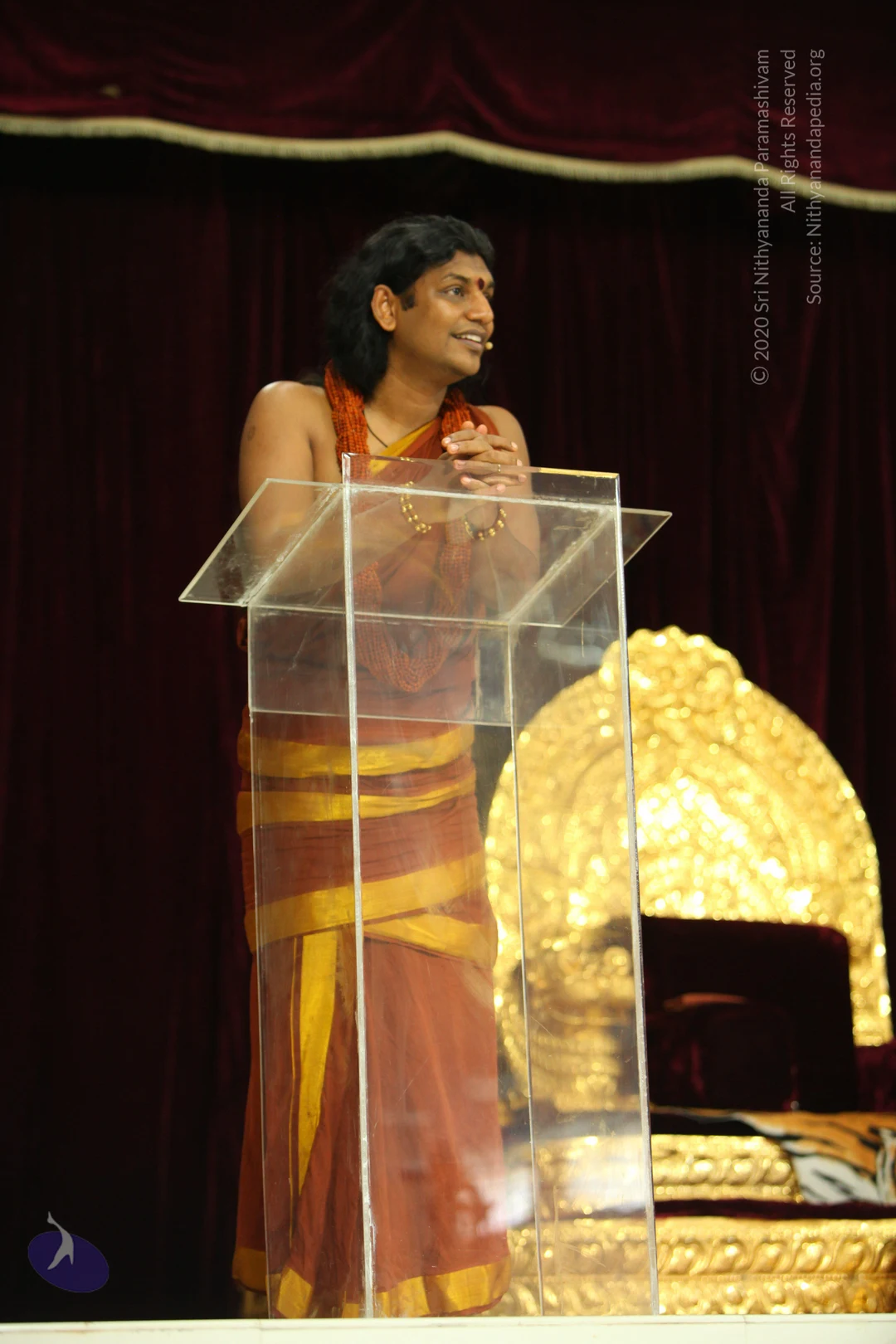
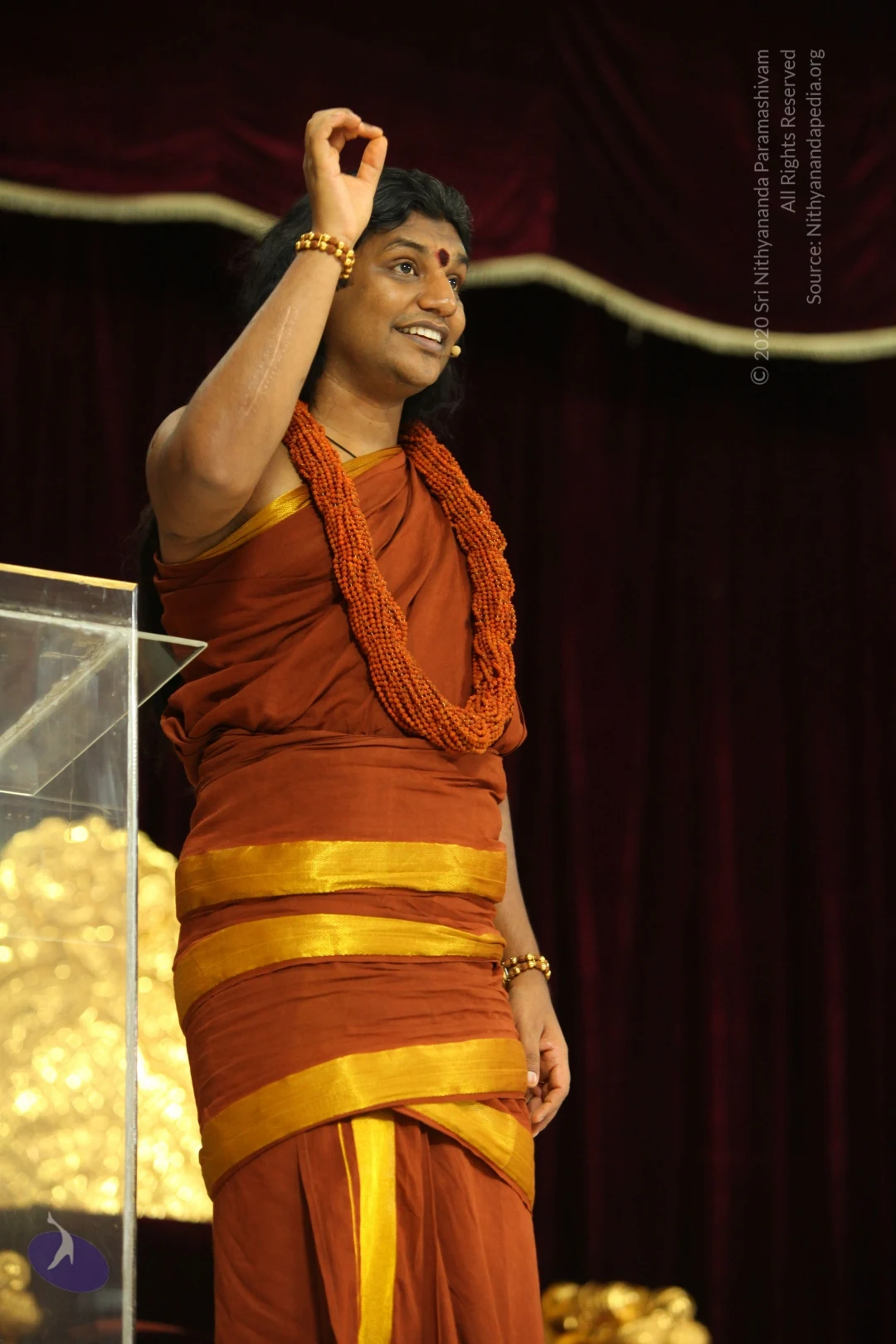
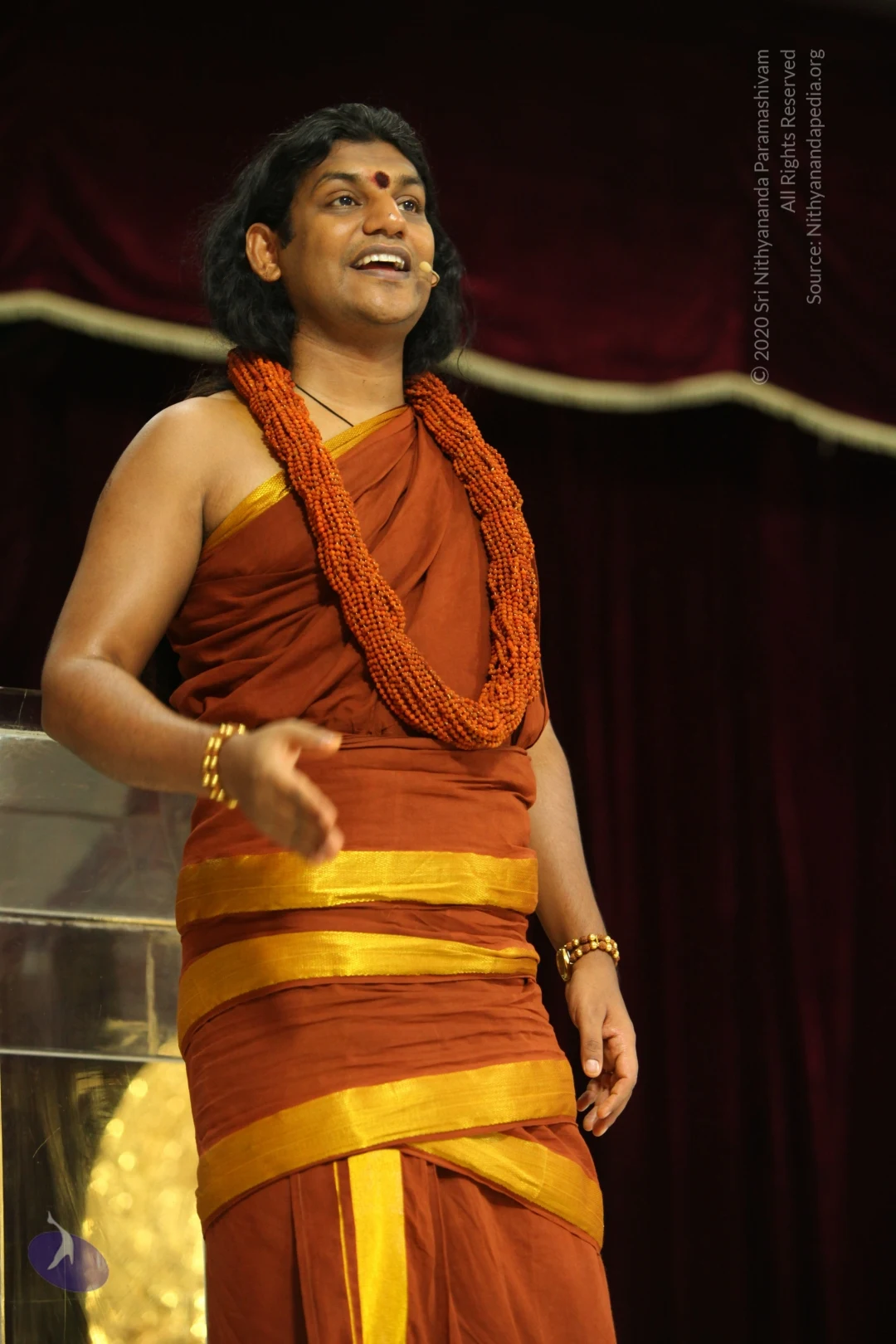
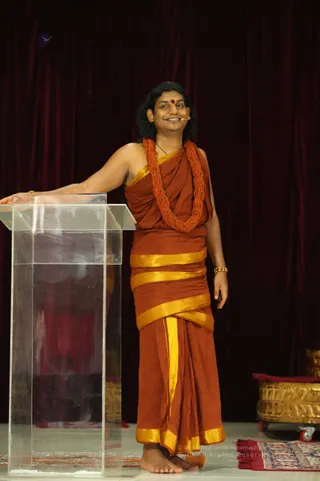
A man with long dark hair stands on a raised gold-decorated stage beside a clear acrylic lectern, speaking with his left arm extended toward it and his right hand raised in gesture. He wears a rust-orange draped robe with broad gold borders, a multi-strand rust-orange rudraksha mala around his neck, and gold bangles on his wrists. Behind him stand an ornate gold throne with carved backrest and a deep maroon velvet curtain.A man with long swept-back dark hair stands barefoot on a white stage beside a clear acrylic lectern, one arm resting on it and smiling. He wears a rust-orange cloth wrapped over one shoulder and around the body, bordered with gold bands, and a long orange rudraksha-style bead mala around his neck. A small red mark sits on his forehead and a beaded bracelet is on his wrist. Behind him hangs a deep maroon velvet curtain, and at the right edge a gold-covered seat with a red cushion and a patterned red rug are visible. Cues including long hair, orange and gold ornate clothing and rudraksha mala are present, so the appearance-based label is Swamiji (probable) for the person on stage.A man with long dark hair and a red bindi stands at a clear acrylic lectern on a stage, raising one hand with fingers curled in a gesture as he speaks. He wears a rust-orange draped garment with broad gold borders and a dense rust-orange rudraksha mala around his neck, plus gold beaded bracelets. Behind him are deep burgundy velvet drapes and a blurred mass of gold-coloured decor. A small lapel microphone is visible near his face. Appearance-based probable Swamiji (long hair, orange robes, rudraksha mala, gold-bordered garment) delivering a discourse.A man stands at a clear acrylic lectern on a stage, raising one hand to his head in a gesture while speaking into a small headset microphone. He wears a rust-orange wrap with broad gold-bordered bands at the waist and a long orange-red rudraksha-style bead mala draped over his shoulders, plus gold beaded bracelets on his wrists and a red bindi on his forehead. Dark swept-back hair falls past his shoulders. Behind him are deep maroon velvet drapes trimmed with gold fringe and a glittering gold backdrop of bokeh lights. The scene resembles a satsang discourse stage.A man stands on a stage speaking with a head microphone, smiling and gesturing with his right hand. He wears a rust-orange draped garment with gold-bordered cloth wrapped at the waist and shoulder, a long orange-red rudraksha-style bead garland, gold bangles, and a red bindi. Behind him is a deep maroon velvet curtain with gold fringe, and a clear glass lectern stands at left. Appearance-based a person presenting a satsang discourse; he is the only person visible.A man with long swept-back dark hair stands on a raised stage beside a clear acrylic lectern, smiling and looking to his right with a headset microphone at his cheek. He wears a rust-orange wrap draped over one shoulder, a gold-bordered rust-orange dhoti with gold-striped waist bands, a dense rust-orange rudraksha mala around his neck, and beaded wrist bands. Behind him are a deep maroon velvet curtain with gold fringe, a gold-plated ornate throne draped with a tiger-skin cloth, and a large gold-embossed decorative backdrop.

INNER-AWAKENING-SESSION

92 photosSource gallery
A man with long dark hair stands on a raised gold-decorated stage beside a clear acrylic lectern, speaking with his left arm extended toward it and his right hand raised in gesture. He wears a rust-orange draped robe with broad gold borders, a multi-strand rust-orange rudraksha mala around his neck, and gold bangles on his wrists. Behind him stand an ornate gold throne with carved backrest and a deep maroon velvet curtain.A man with long dark hair and a small red bindi stands barefoot on a raised stage, leaning one arm on a transparent acrylic lectern. He wears a rust-orange draped robe with gold-bordered sashes around the waist and a thick orange-red rudraksha-style bead garland. A small microphone is at his face. Behind him stand a gold-leafed ornate throne with a tiger-striped cushion and a large gilded decorative backdrop against deep maroon velvet drapes. The scene suggests a satsang discourse. The man appears to be a probable Swamiji, matching the caption's attribution, based on his long hair, orange ornate garments and rudraksha garland.A man with long swept-back dark hair stands barefoot on a white stage beside a clear acrylic lectern, one arm resting on it and smiling. He wears a rust-orange cloth wrapped over one shoulder and around the body, bordered with gold bands, and a long orange rudraksha-style bead mala around his neck. A small red mark sits on his forehead and a beaded bracelet is on his wrist. Behind him hangs a deep maroon velvet curtain, and at the right edge a gold-covered seat with a red cushion and a patterned red rug are visible. Cues including long hair, orange and gold ornate clothing and rudraksha mala are present, so the appearance-based label is Swamiji (probable) for the person on stage.A man stands barefoot on a white stage in front of a dark red velvet curtain, wearing a headset microphone. He wears a rust-orange dhoti and shawl edged with gold borders, a red-orange beaded mala necklace and gold-beaded bracelets, with a red bindi on his forehead and long dark hair swept back. Behind him stands an ornate gold throne with a tiger-patterned cushion and red bolster, and a patterned red rug lies on the floor. The setting appears to be a satsang discourse stage.A photograph of a single man standing barefoot on a white stage with arms spread open, speaking as if giving a talk. He wears a rust-orange draped garment with broad gold borders wrapped at the waist and over one shoulder, a long rust-orange rudraksha mala around his neck, gold bangles, and a red bindi on his forehead, with a small headset microphone at his ear. Behind him stands an ornate gold throne with a tiger-print cushion in front of dark red velvet drapes, and a patterned red carpet lies at his feet. The man has long, swept-back dark hair and wears saffron-orange and gold ornamental clothing with a rudraksha mala, consistent with the cues for Swamiji (probable) as the speaker at this satsang.A man with long dark hair and a red bindi stands at a clear acrylic lectern on a stage, raising one hand with fingers curled in a gesture as he speaks. He wears a rust-orange draped garment with broad gold borders and a dense rust-orange rudraksha mala around his neck, plus gold beaded bracelets. Behind him are deep burgundy velvet drapes and a blurred mass of gold-coloured decor. A small lapel microphone is visible near his face. Appearance-based probable Swamiji (long hair, orange robes, rudraksha mala, gold-bordered garment) delivering a discourse.

AKASHIC READINGS

35 photosSource gallery
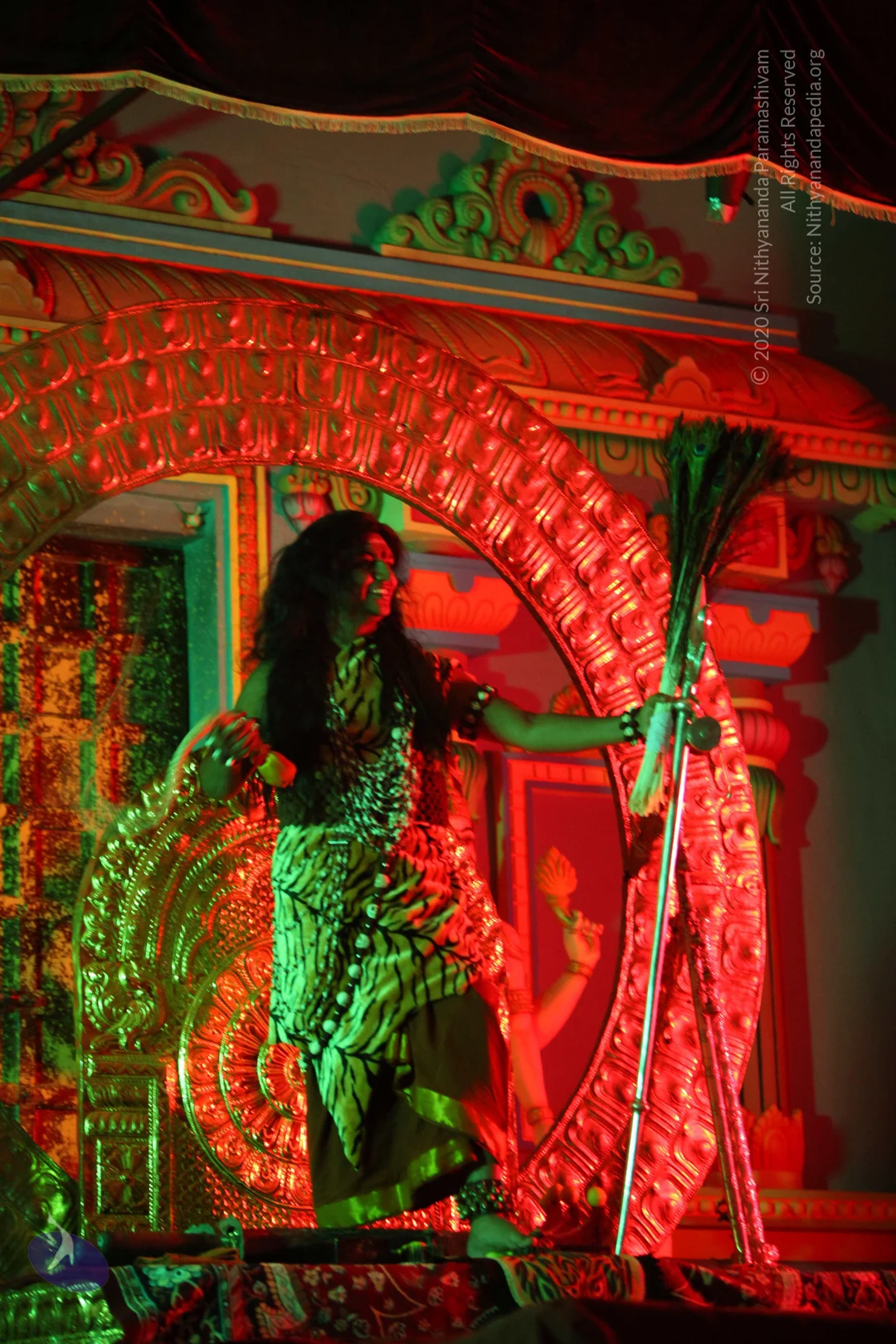
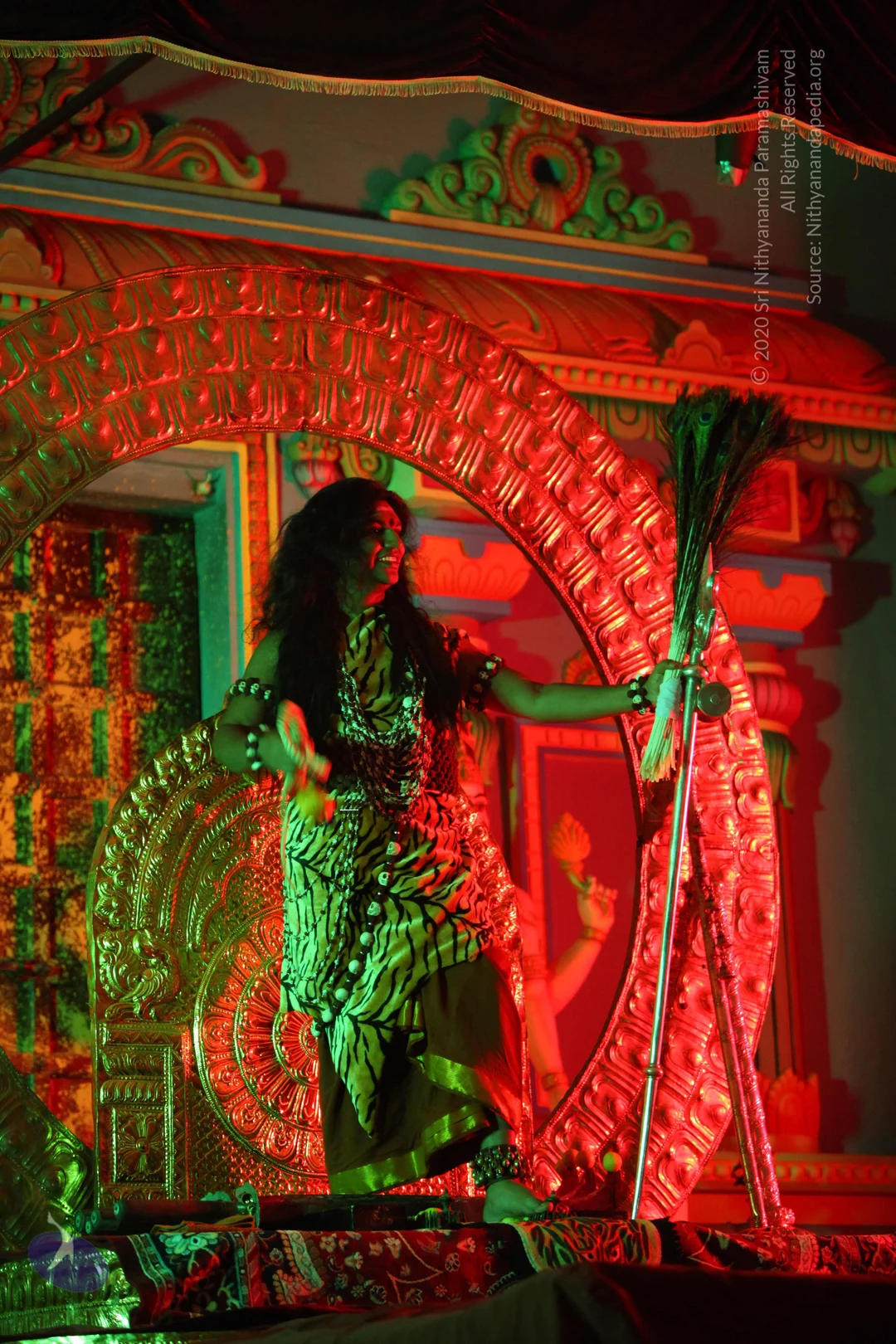
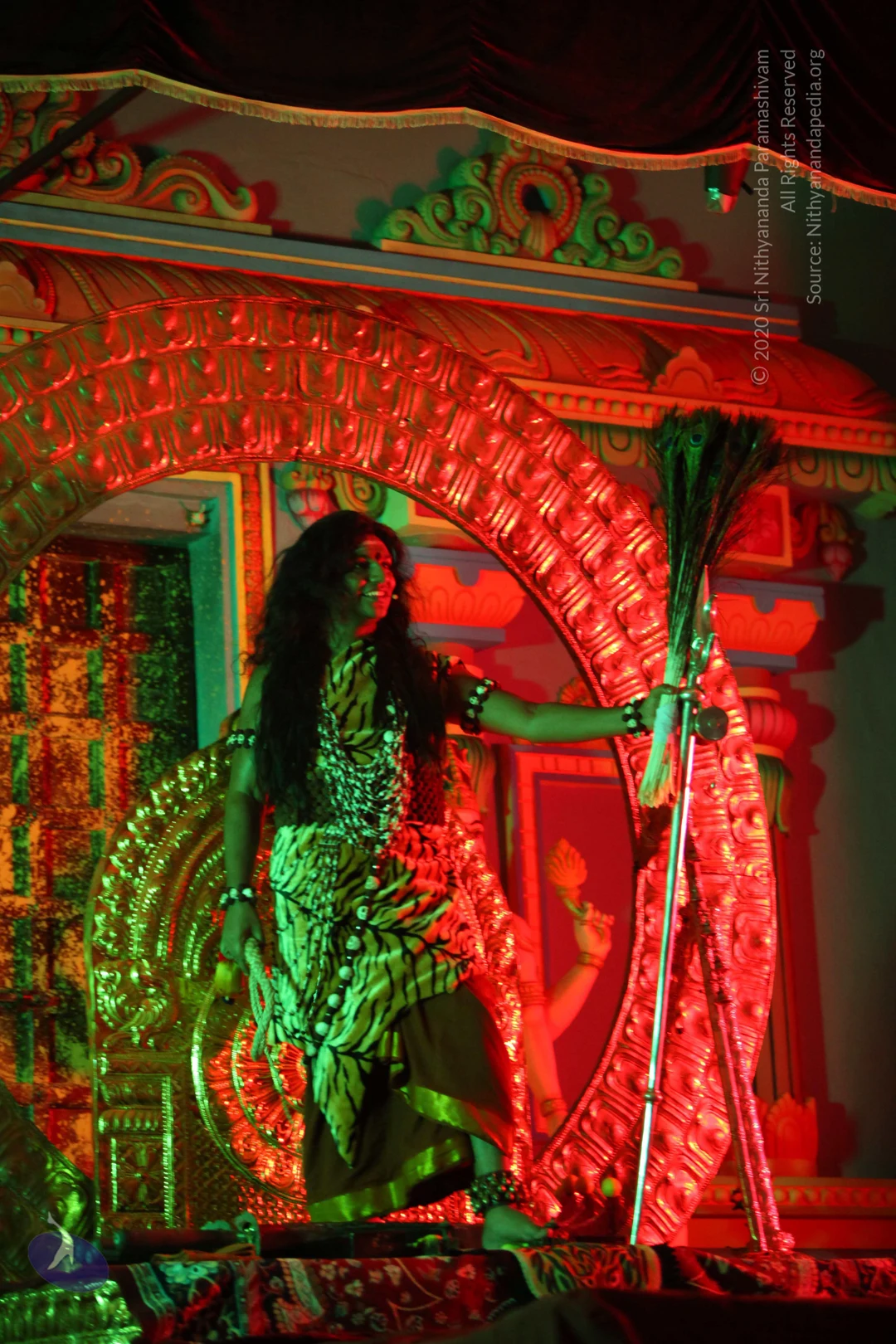
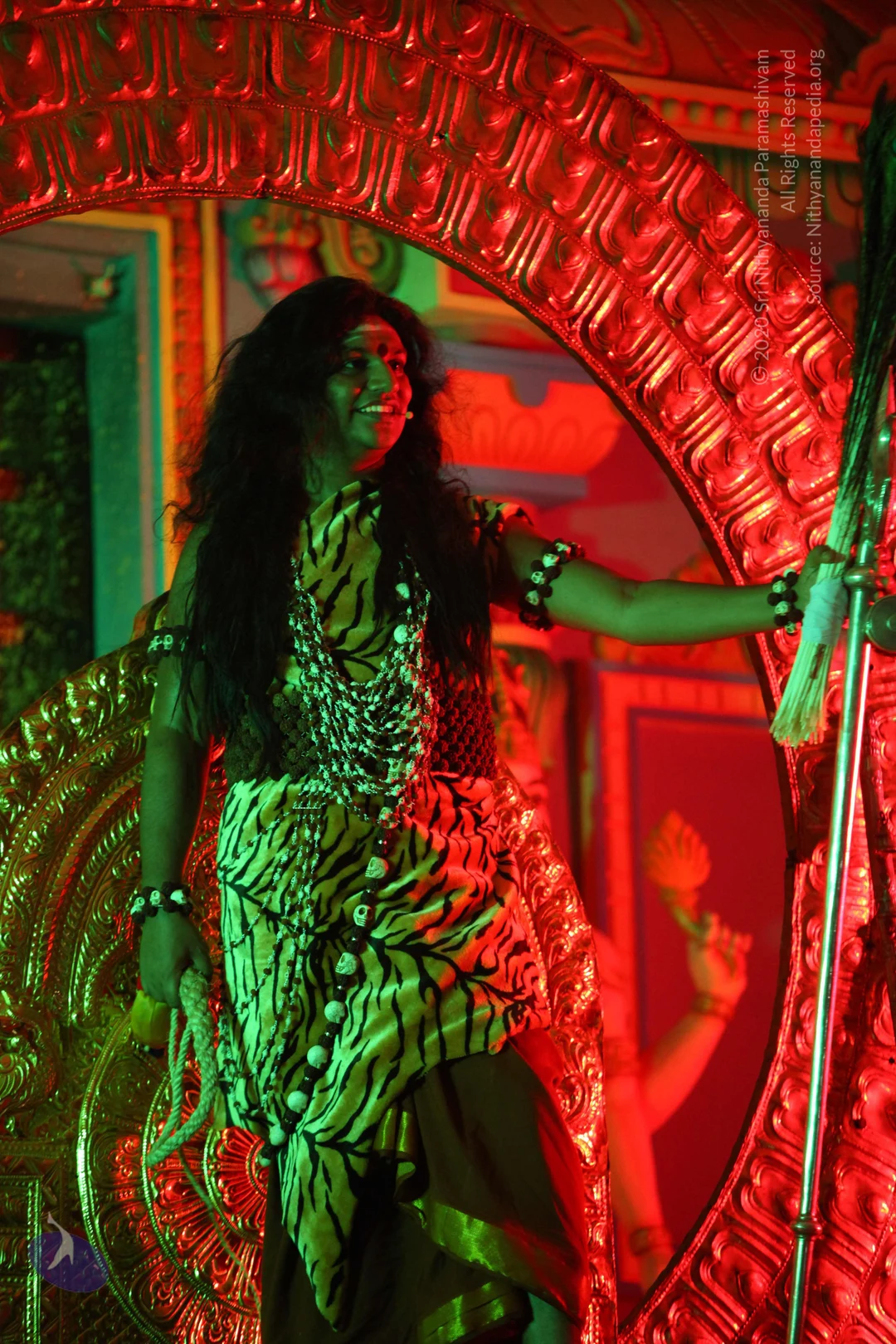
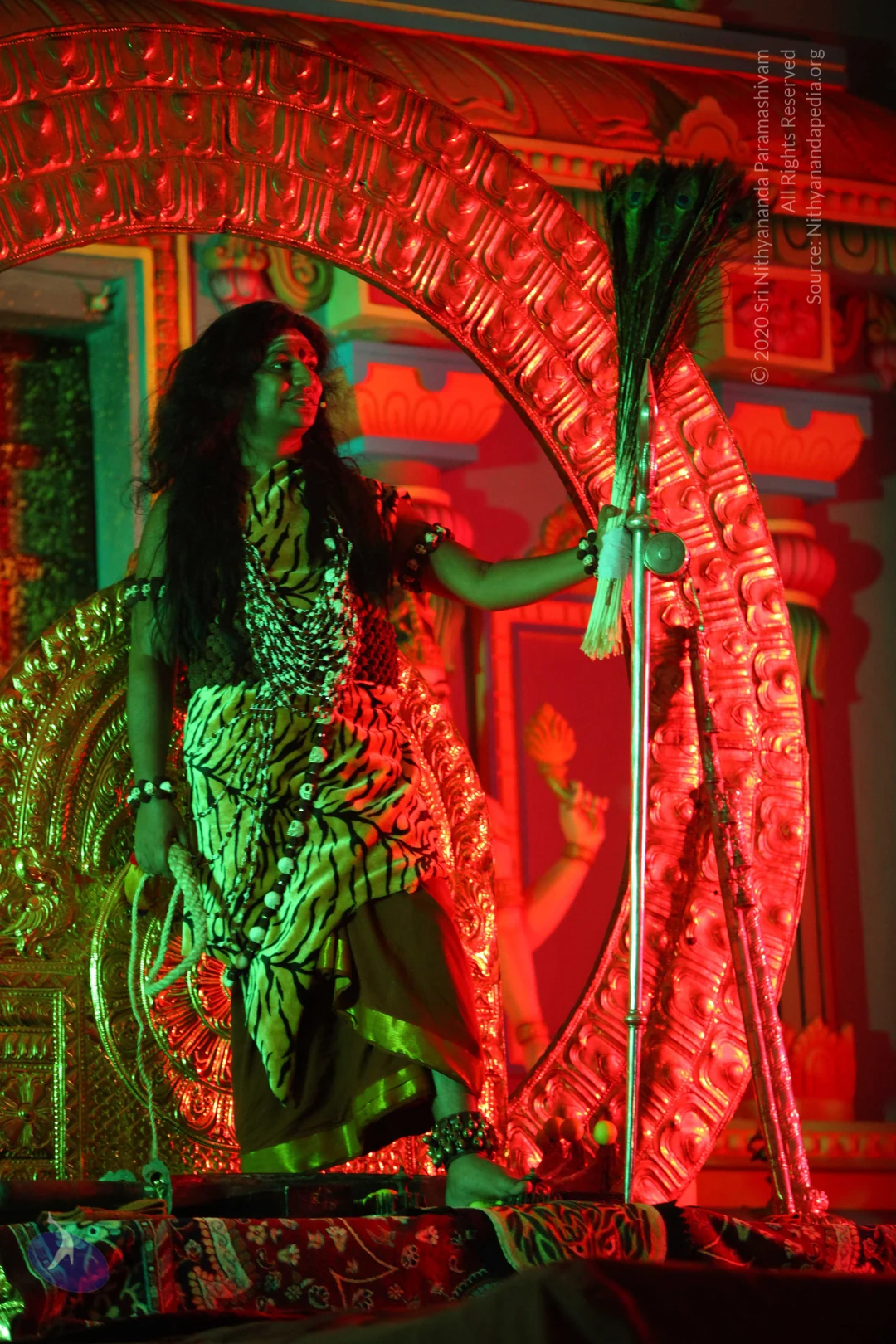
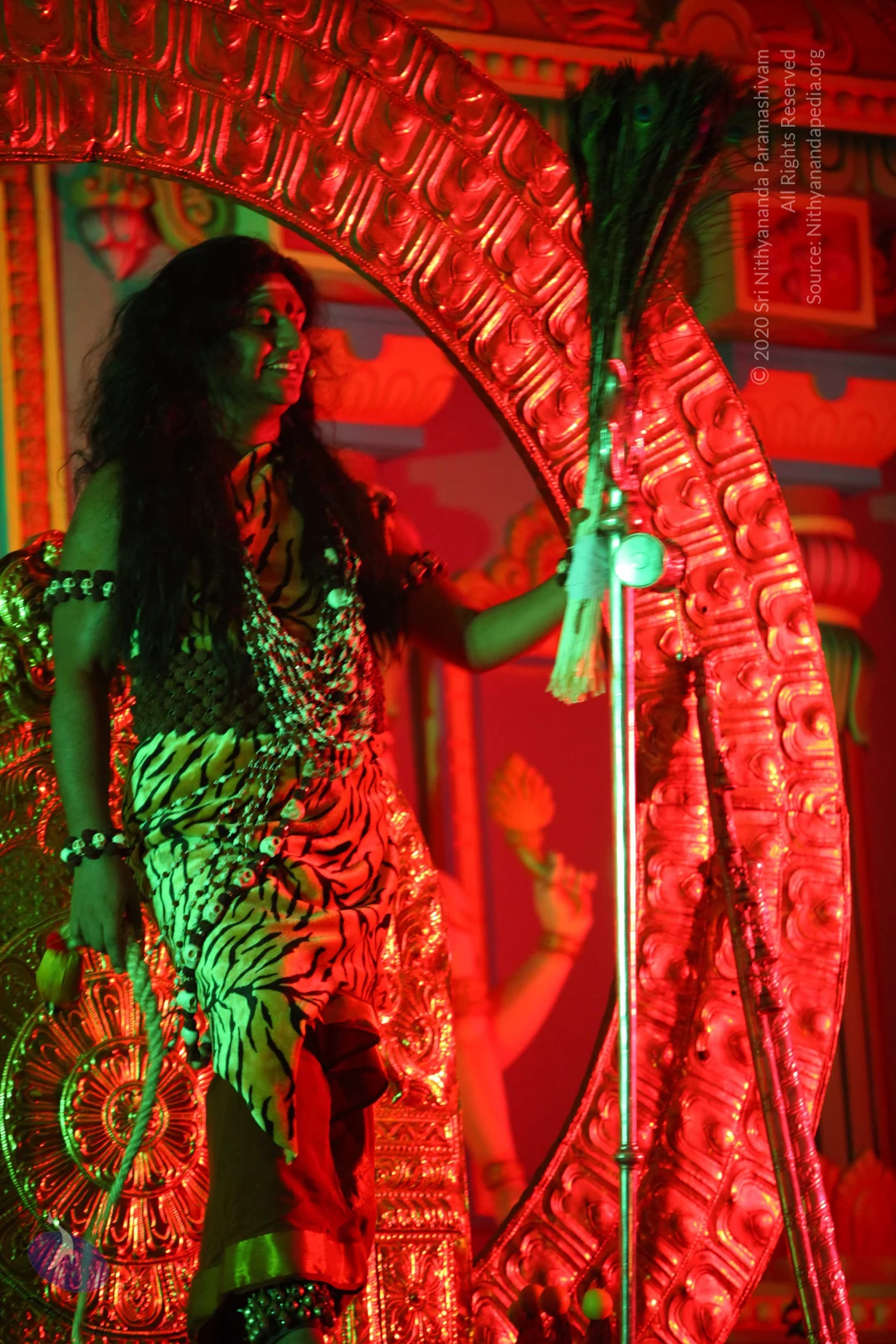
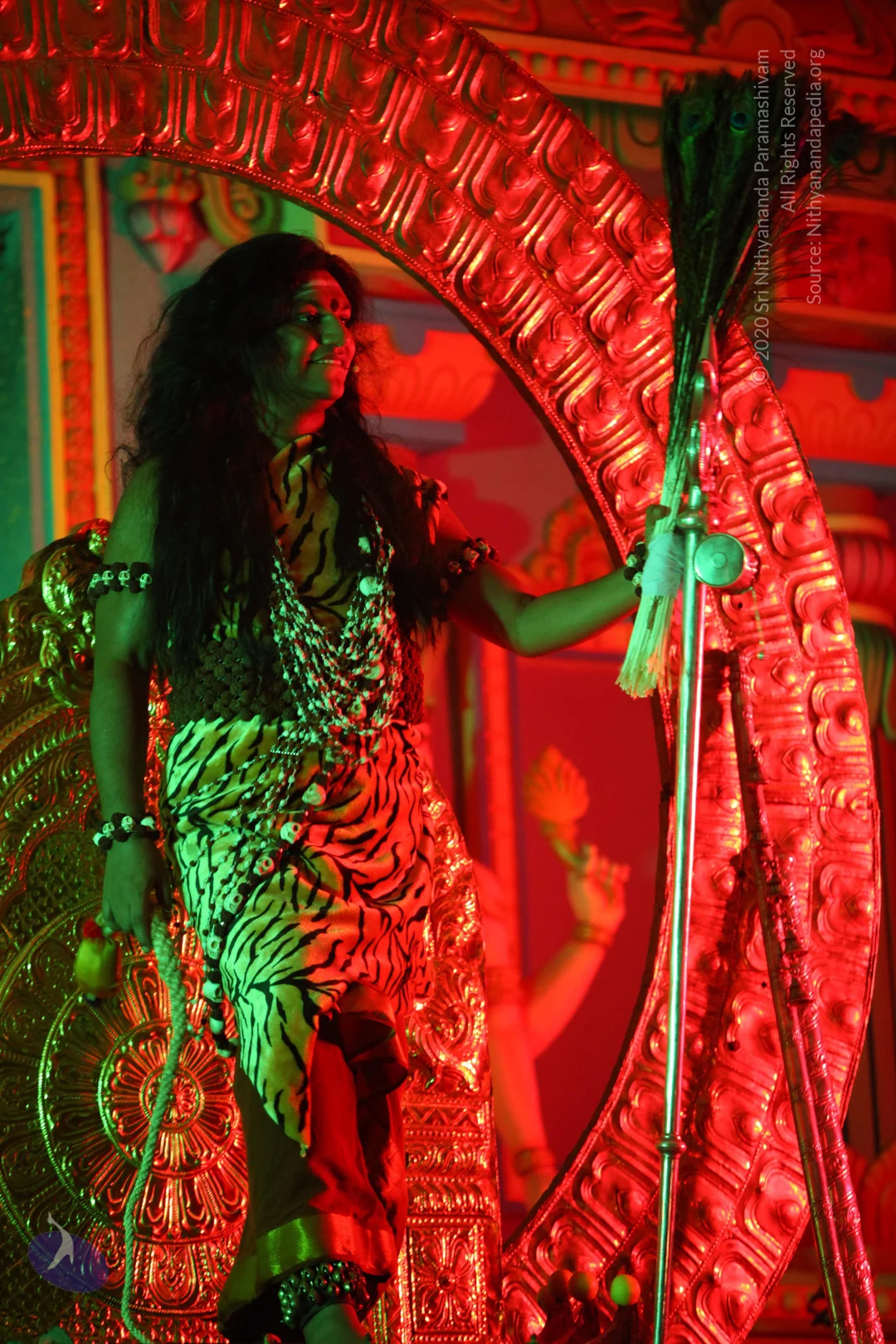
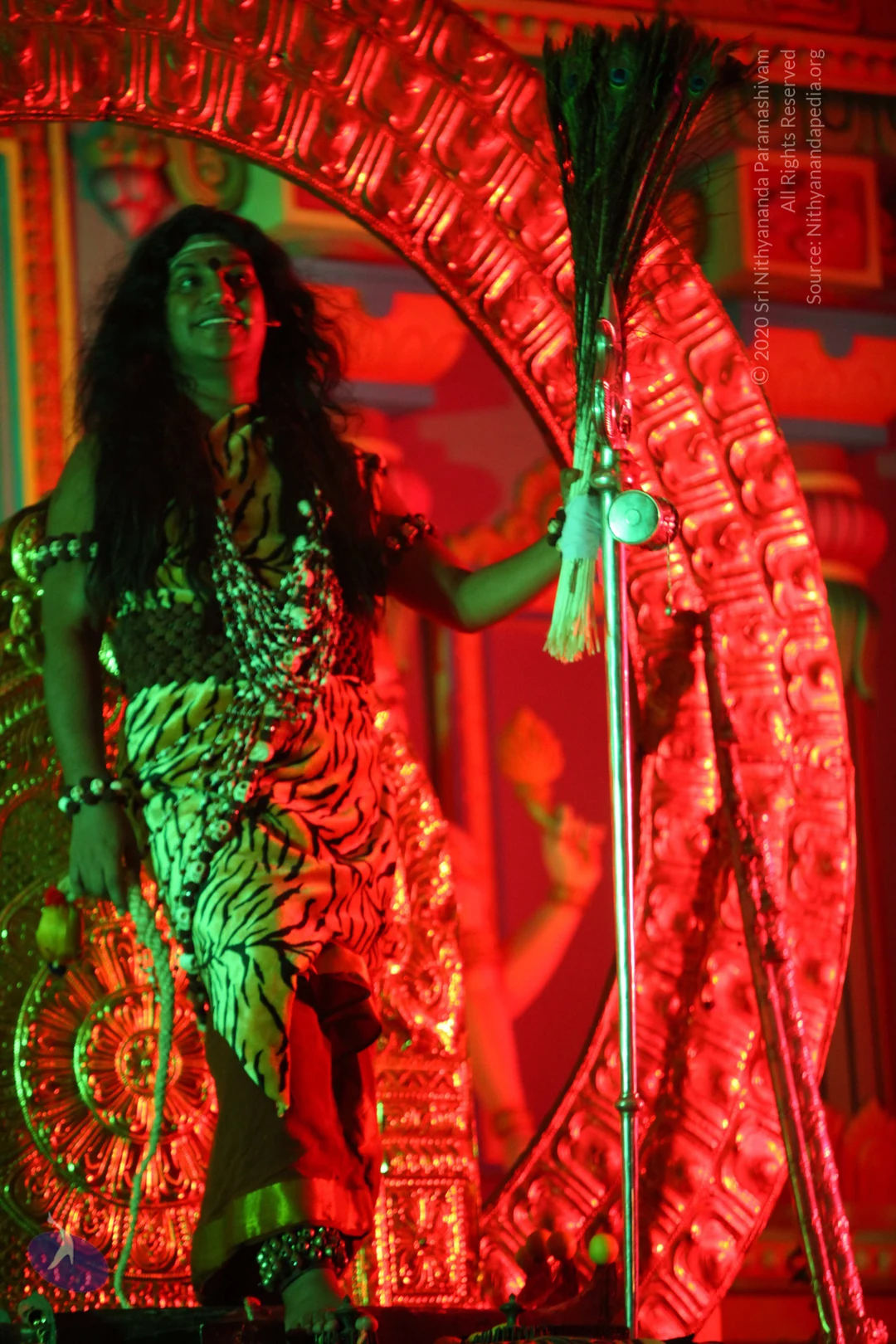
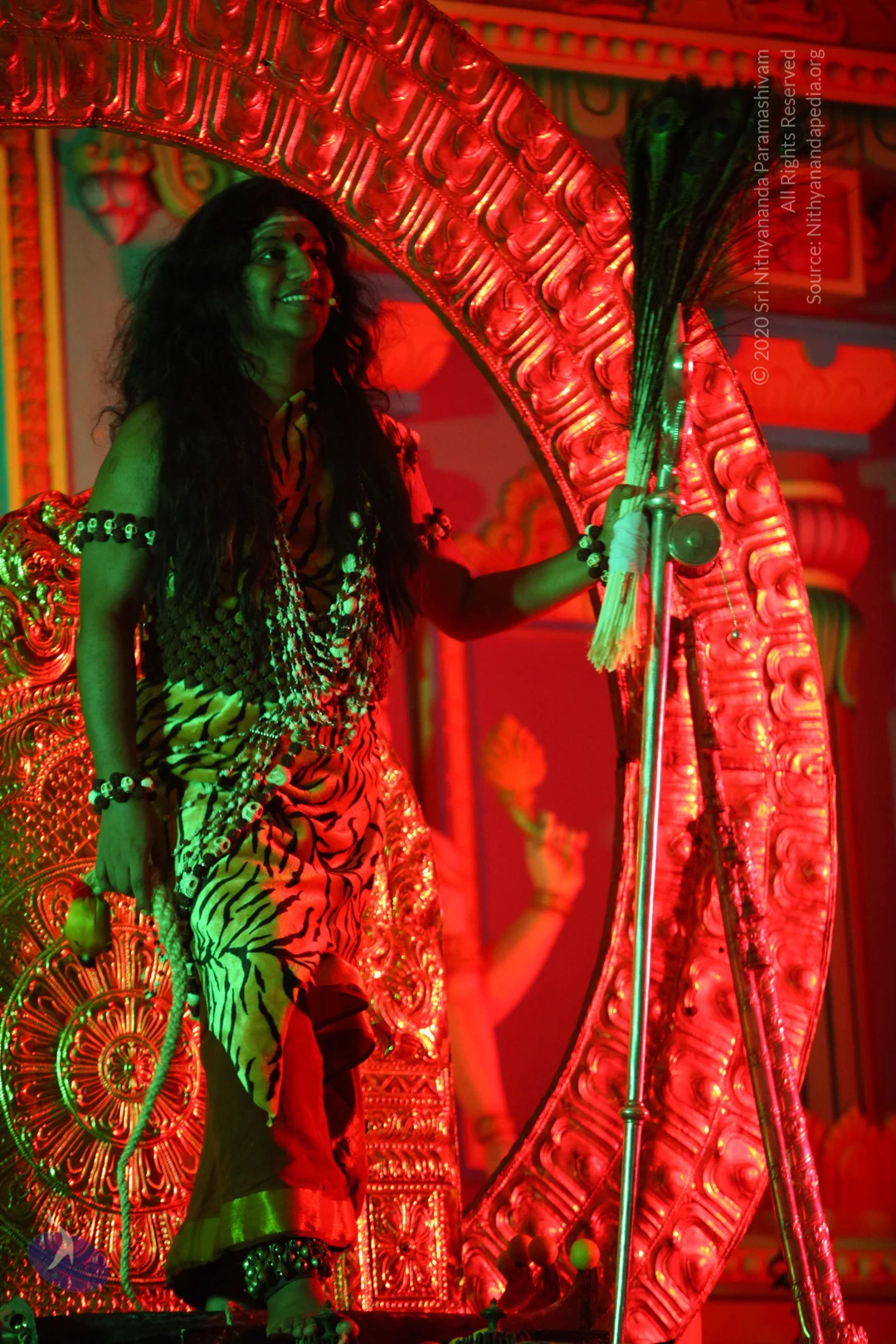
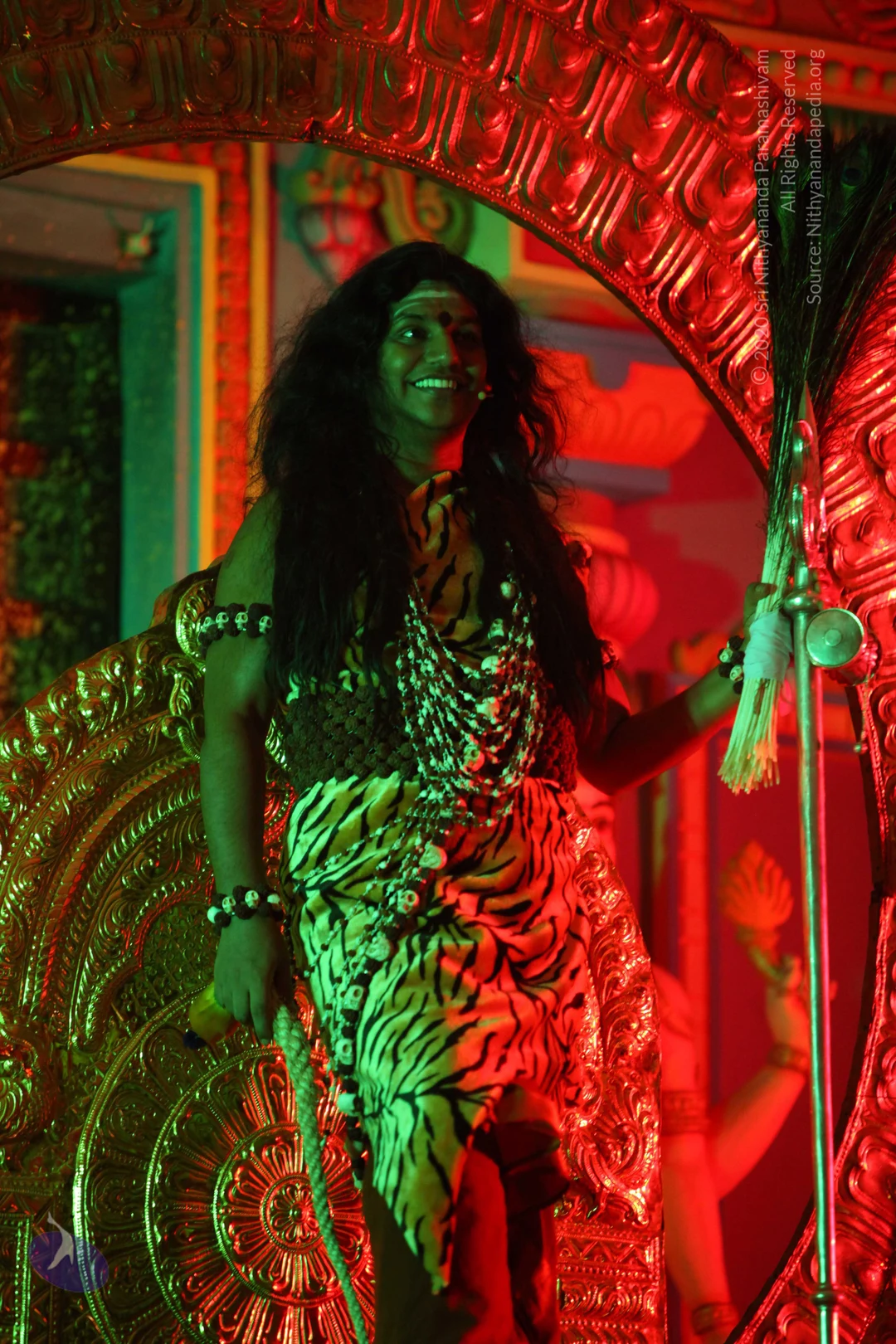
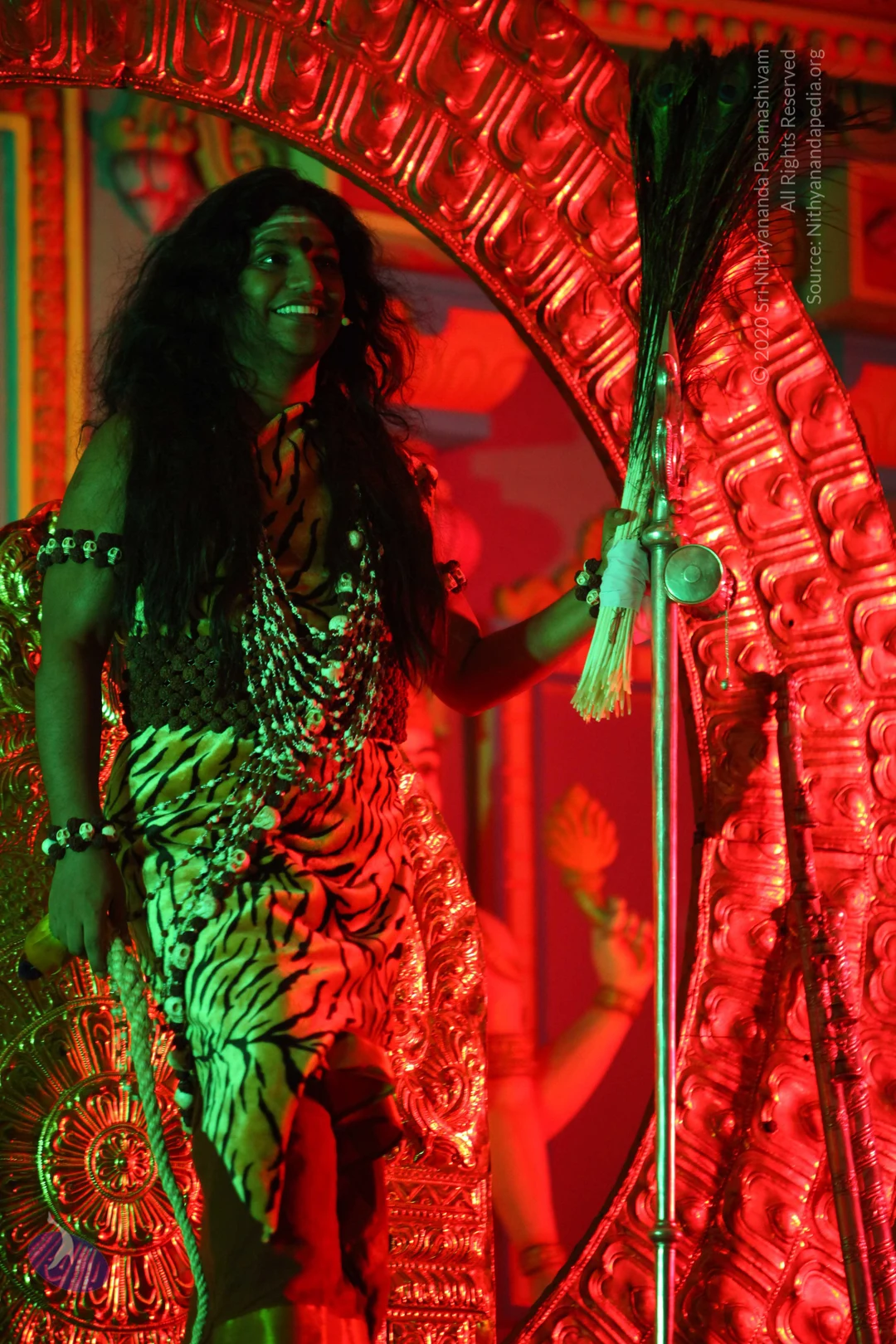
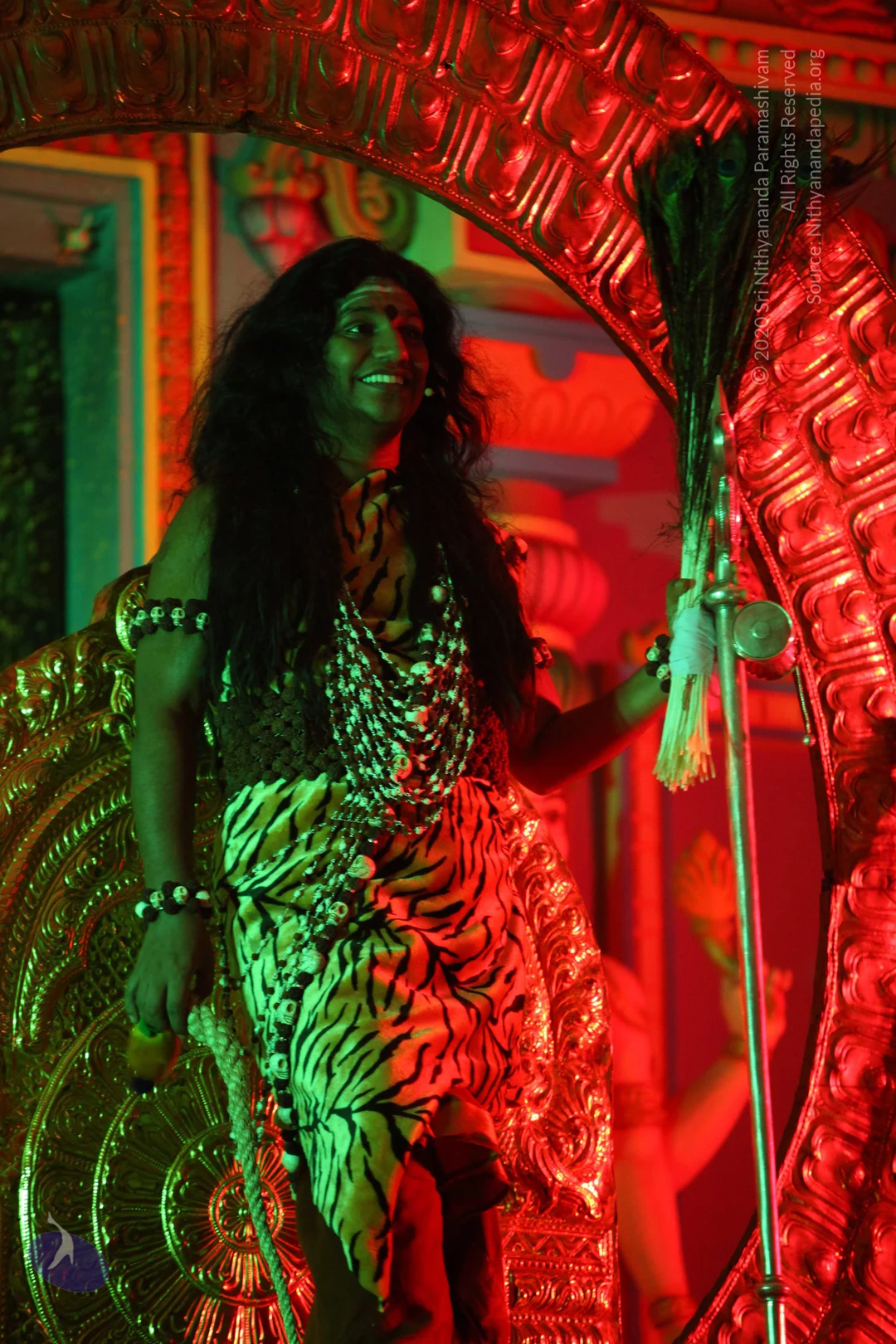
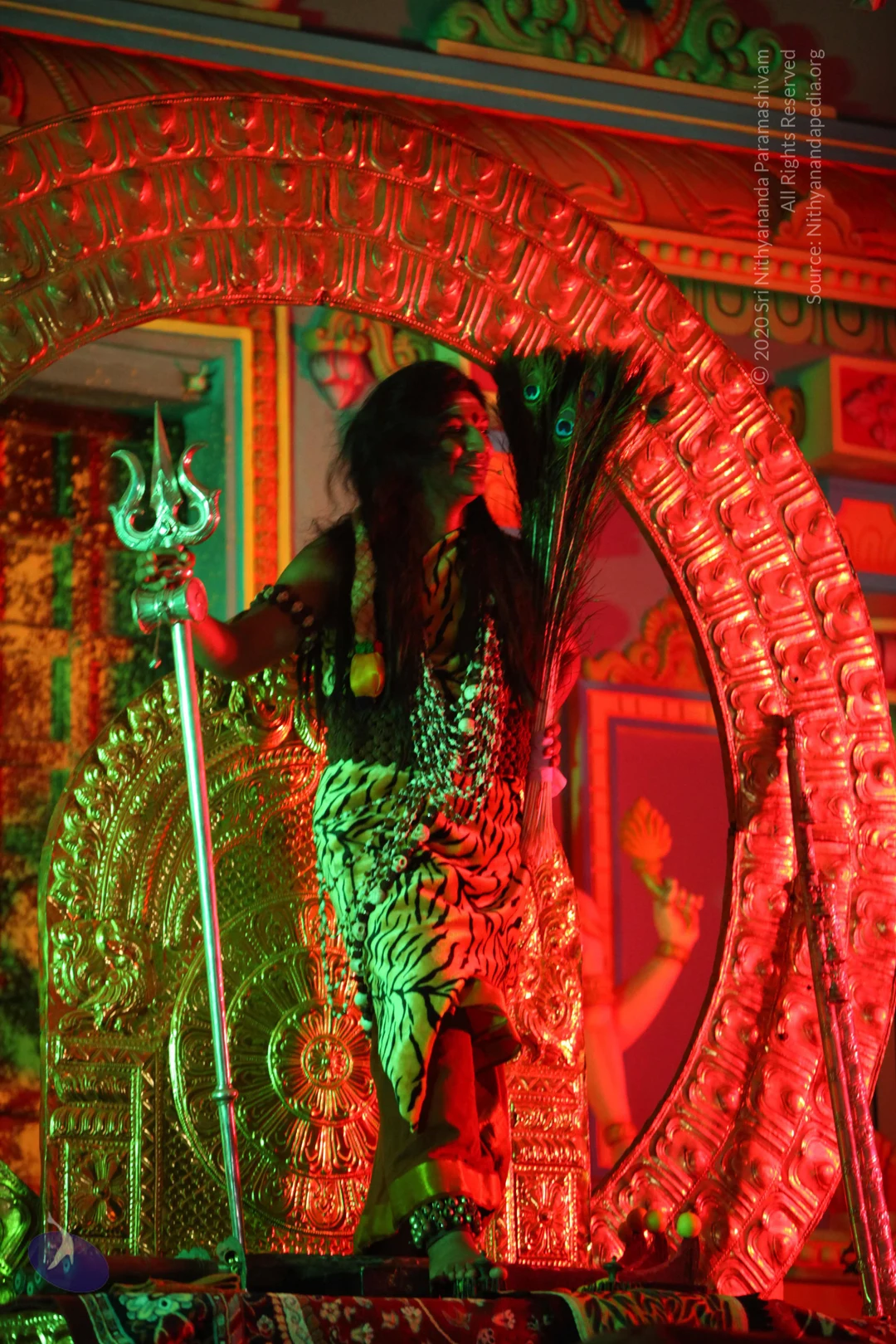
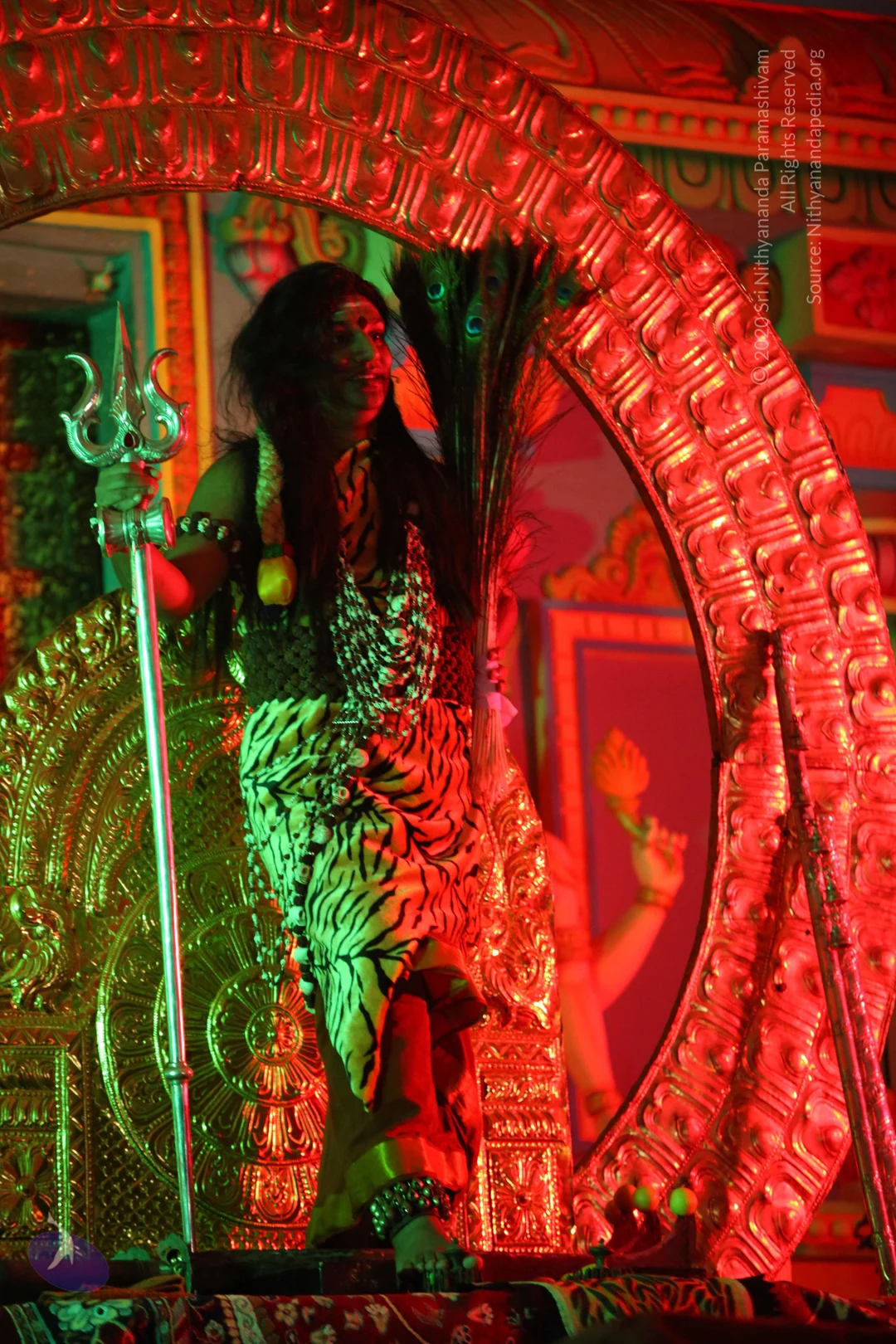
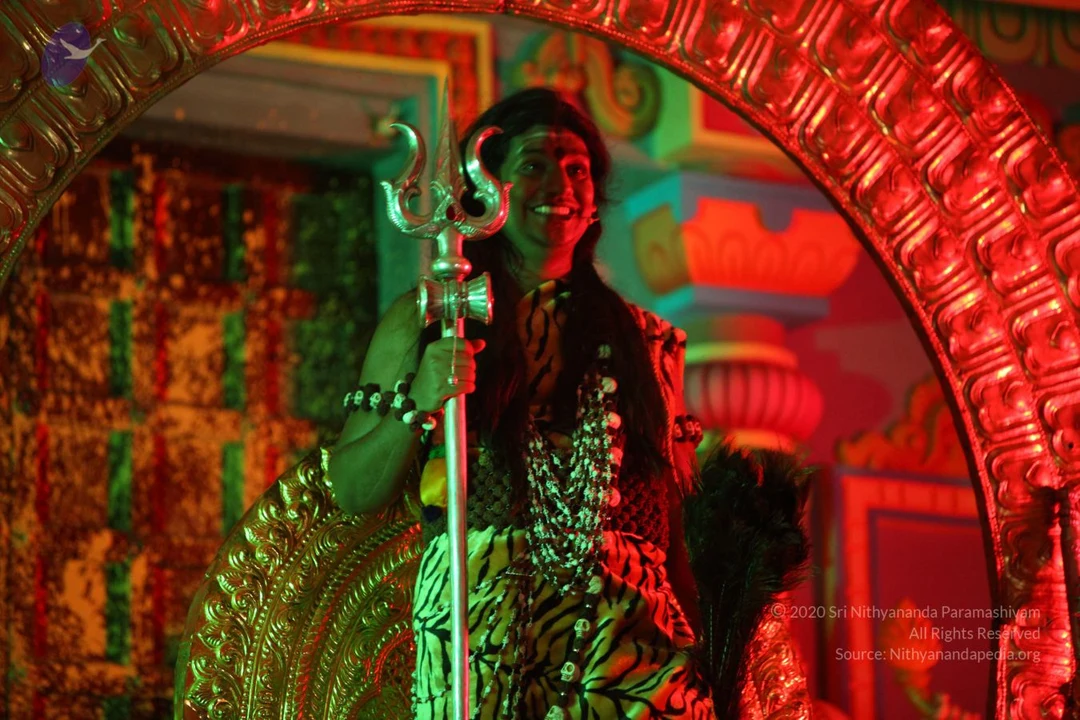
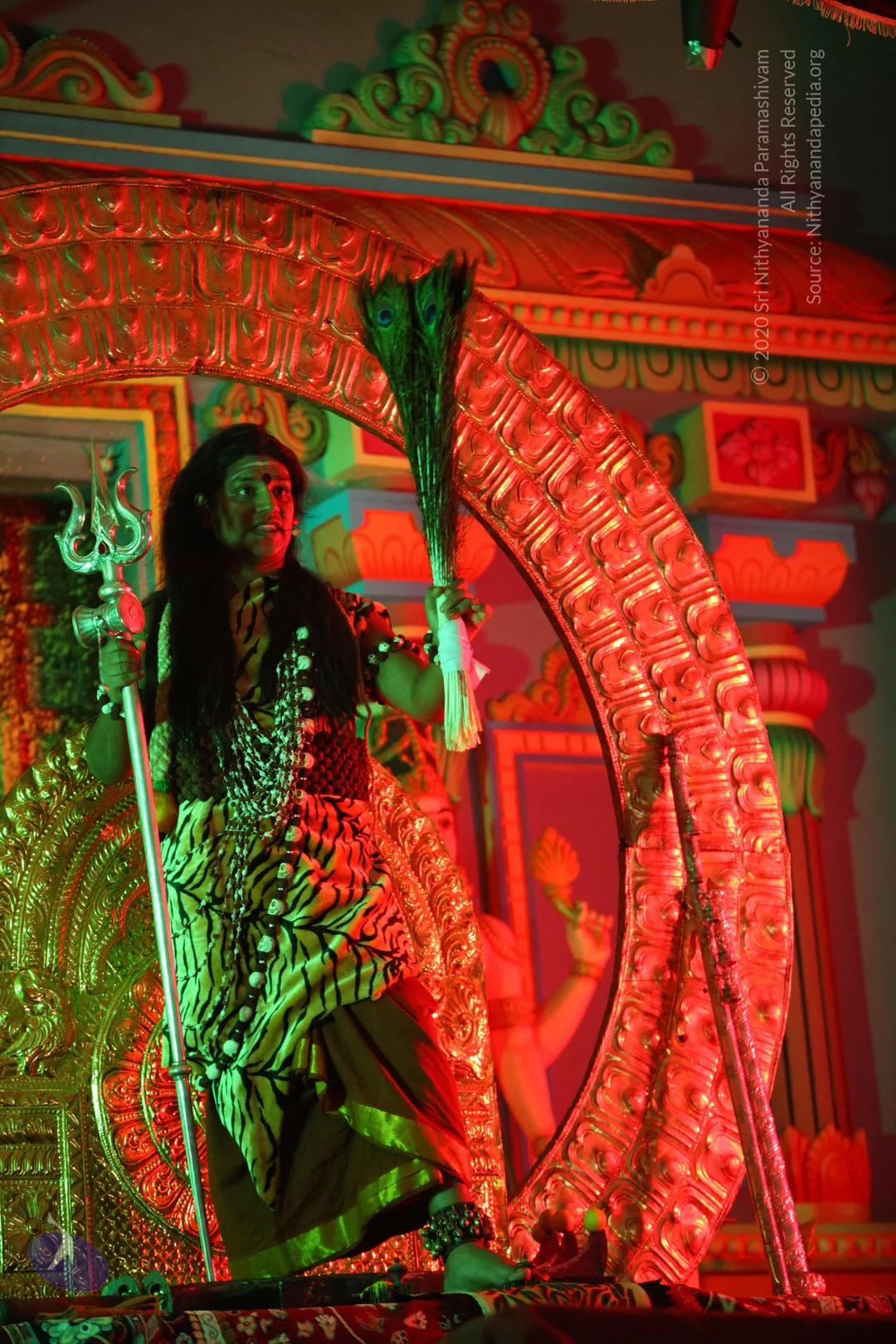
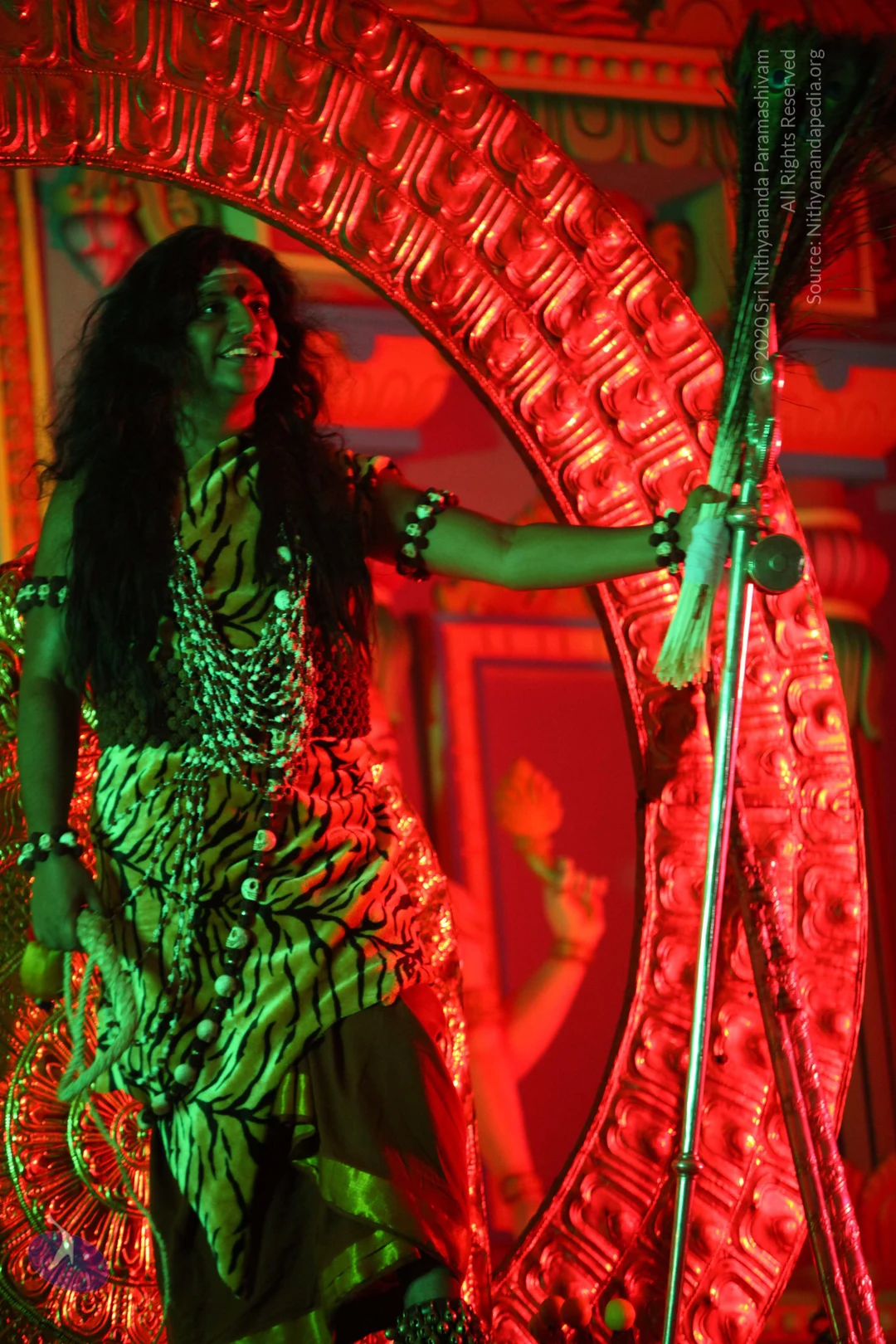
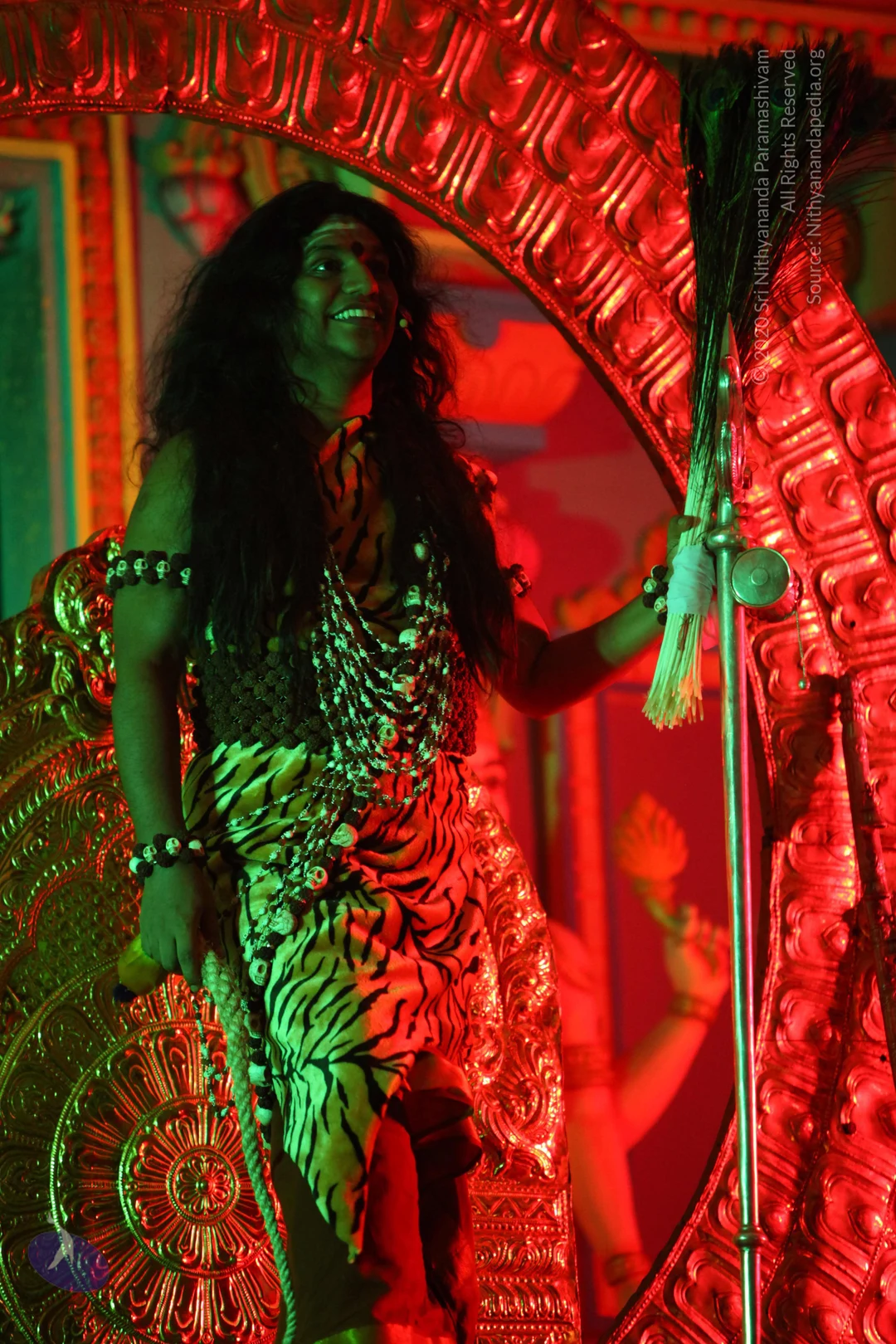
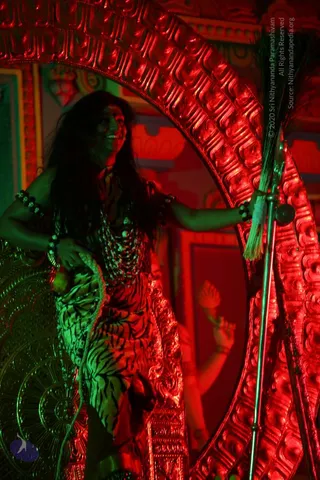
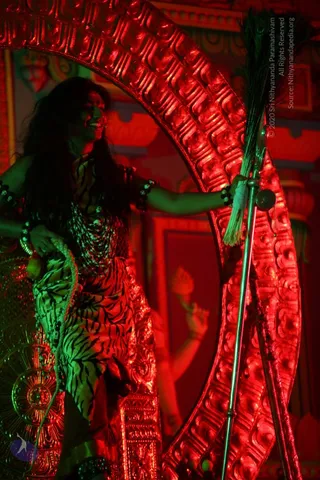
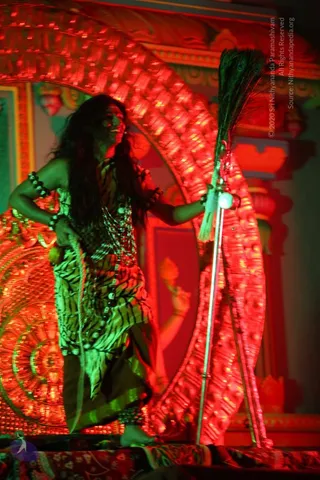
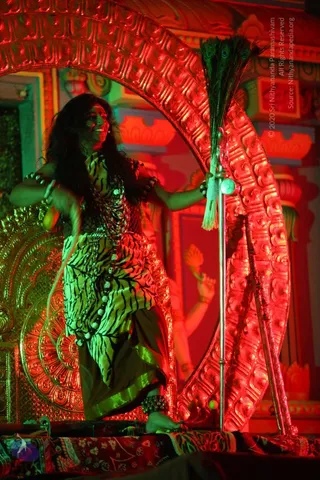
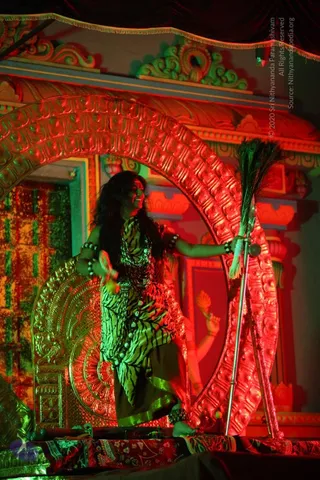
A performer in a tiger-striped green and black costume stands beside an ornate red-and-gold arched frame lit with red and green stage light. She has long dark hair, beaded bracelets and a beaded necklace, and holds a green peacock-feather fan on a metal stand. Behind her is a painted deity figure in a temple-style backdrop.A performer in a green and black tiger-striped costume with long dark hair stands beside an ornate red arch with embossed scrollwork, lit in red and green stage light. She grips a long metal staff topped with a peacock-feather fan and holds a rope of dark beads in her other hand, with beaded bracelets on her wrists. Behind her a red painted panel shows a figure with raised arm. The setting appears to be a staged performance or festival tableau.A performer on a stage lit in red and green, wearing long dark loose hair, a green tiger-striped sleeveless top with beaded necklaces and bracelets, and green draped lower garment. She holds a tall silver rod topped with a bunch of peacock feathers in one hand and rests the other hand on her hip. Behind her an ornately carved red and gold arch and decorated backdrop frame the scene; a second figure's arm is faintly visible in the background.A performer on a stage under red and green lighting, wearing a green and black tiger-striped outfit with layered beaded necklaces, wrist bands and a green sash. She holds a tall silver staff topped with a bunch of peacock feathers in her right hand and stands with one foot raised before an ornate gold-and-red arched backdrop with carved relief panels. Behind her a painted figure with raised arms is partly visible. No a person candidate is present; the figure is a performer.A woman with long dark hair performs on a stage lit in red and green, standing beside a large ornate red-and-gold arch. She wears a green and black tiger-striped top with beaded trim and a dark skirt, and holds a long staff topped with a bunch of peacock feathers. Behind her, a golden ornamented backdrop and a painted deity figure frame the scene.A woman with long dark wavy hair and a red bindi stands on a low platform in a richly decorated stage set with red and gold embossed arches. She wears a green and black tiger-striped garment with beaded necklaces and wrist bands, and grips a tall silver staff topped with a bundle of peacock feathers in her right hand while holding a rope in her left. Red and green stage lighting washes the scene.

AKASHIC-READINGS-BY-KALABHAIRAVA

14 photosSource gallery
A performer in a tiger-striped green and black costume stands beside an ornate red-and-gold arched frame lit with red and green stage light. She has long dark hair, beaded bracelets and a beaded necklace, and holds a green peacock-feather fan on a metal stand. Behind her is a painted deity figure in a temple-style backdrop.A performer on a stage under red and green lighting, wearing a green and black tiger-striped outfit with layered beaded necklaces, wrist bands and a green sash. She holds a tall silver staff topped with a bunch of peacock feathers in her right hand and stands with one foot raised before an ornate gold-and-red arched backdrop with carved relief panels. Behind her a painted figure with raised arms is partly visible. No a person candidate is present; the figure is a performer.A woman with long dark wavy hair and a red bindi stands on a low platform in a richly decorated stage set with red and gold embossed arches. She wears a green and black tiger-striped garment with beaded necklaces and wrist bands, and grips a tall silver staff topped with a bundle of peacock feathers in her right hand while holding a rope in her left. Red and green stage lighting washes the scene.A performer stands on a stage framed by a large red and gold ornate arch with embossed floral patterns. She wears a green and black tiger-striped outfit with beaded trim, has long dark hair, and holds a peacock-feather whisk on a silver-toned staff in her right hand. She wears beaded bracelets on both wrists and bare feet. Red and green stage lighting covers the scene, with a carved golden backdrop and a figure in the background. A carpet with floral patterns lies at the front of the stage.A performer on a stage dressed in a green and black patterned costume with layered beaded necklaces and bangles, holding a long staff topped with a bundle of peacock feathers. She has long dark hair and is posed in a dynamic stance in front of an ornate red and gold arched frame carved with decorative motifs, under red and green stage lighting. Behind her is a painted deity figure with multiple arms. The scene resembles a theatrical or dance performance on a temple-style set.A female performer stands on a red-lit stage in front of an ornate golden arch with carved temple-style decoration. She wears a green and black tiger-striped garment, layered beaded necklaces, beaded bangles and an armband. Her long dark hair falls loose as she smiles and holds a peacock-feather fan on a tall pole in one hand, with her other arm raised. The background shows painted red and green temple architecture and a figure in a deity-like pose. The scene is a staged stage performance.

KAALABHAIRAVA-DARSHAN

78 photosSource gallery
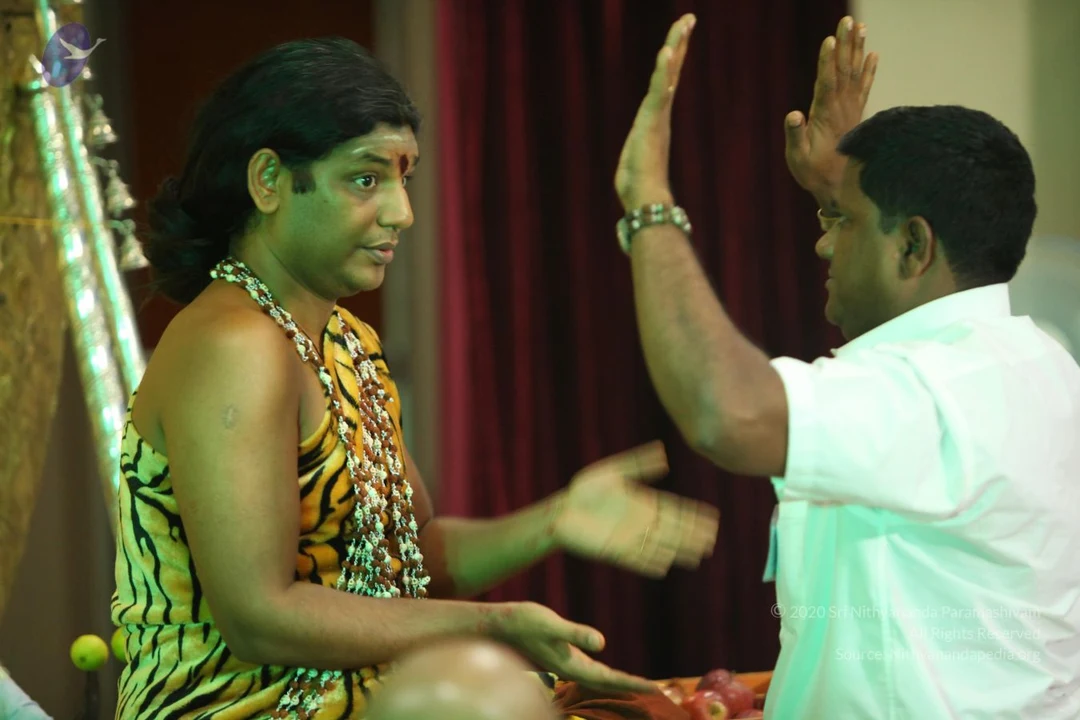
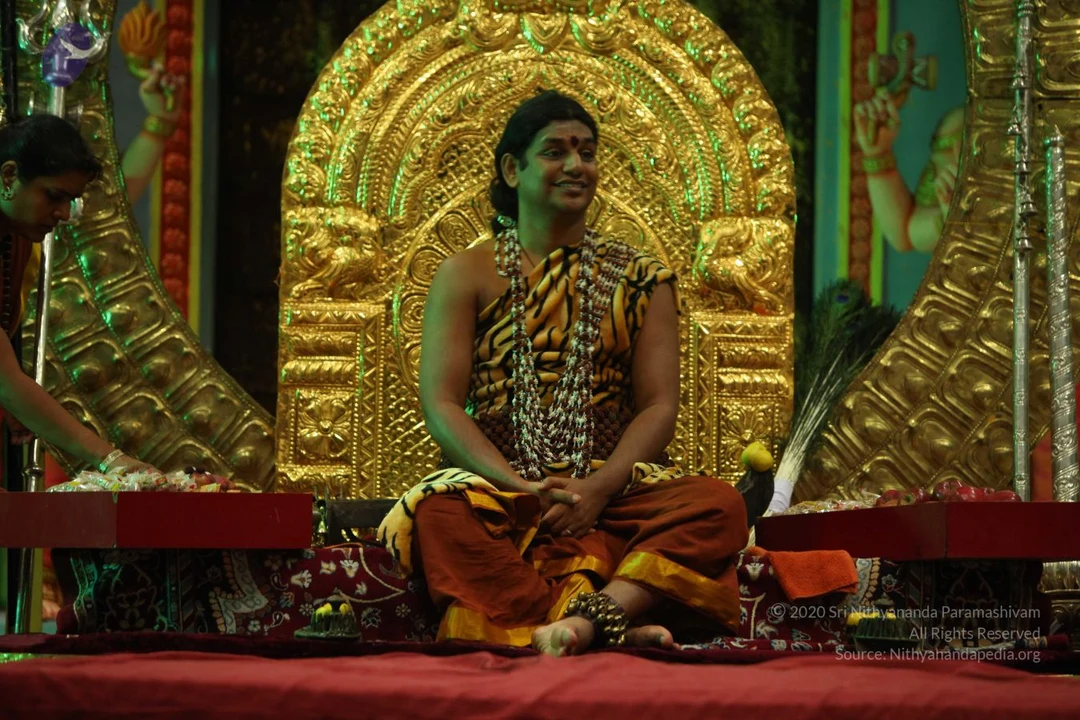
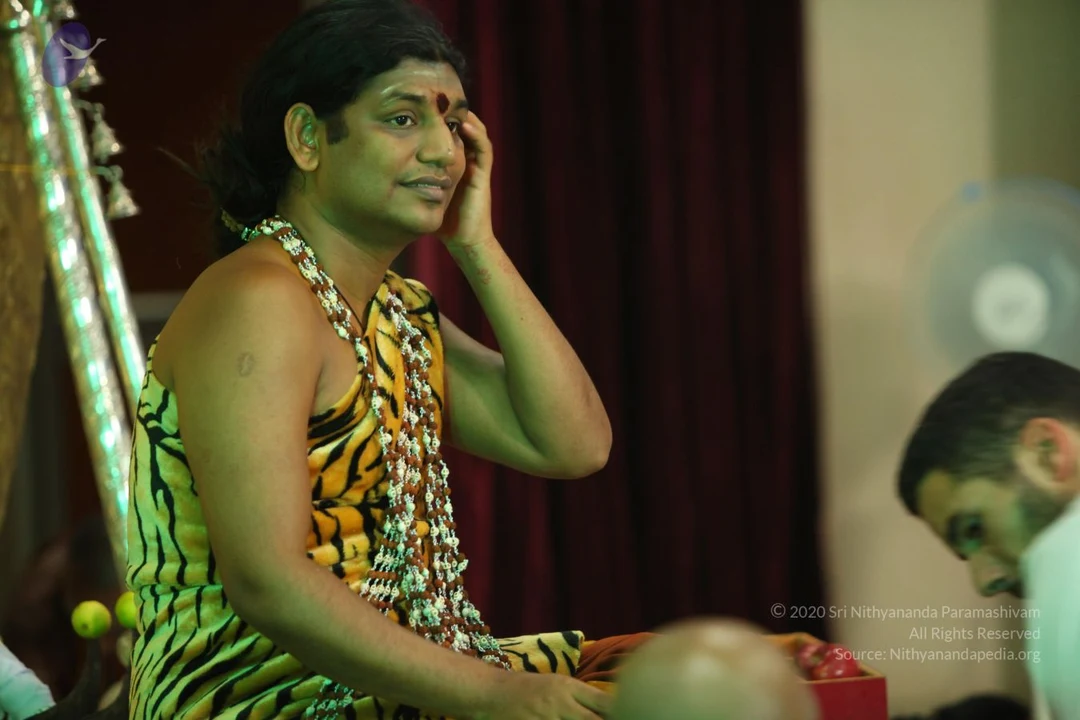
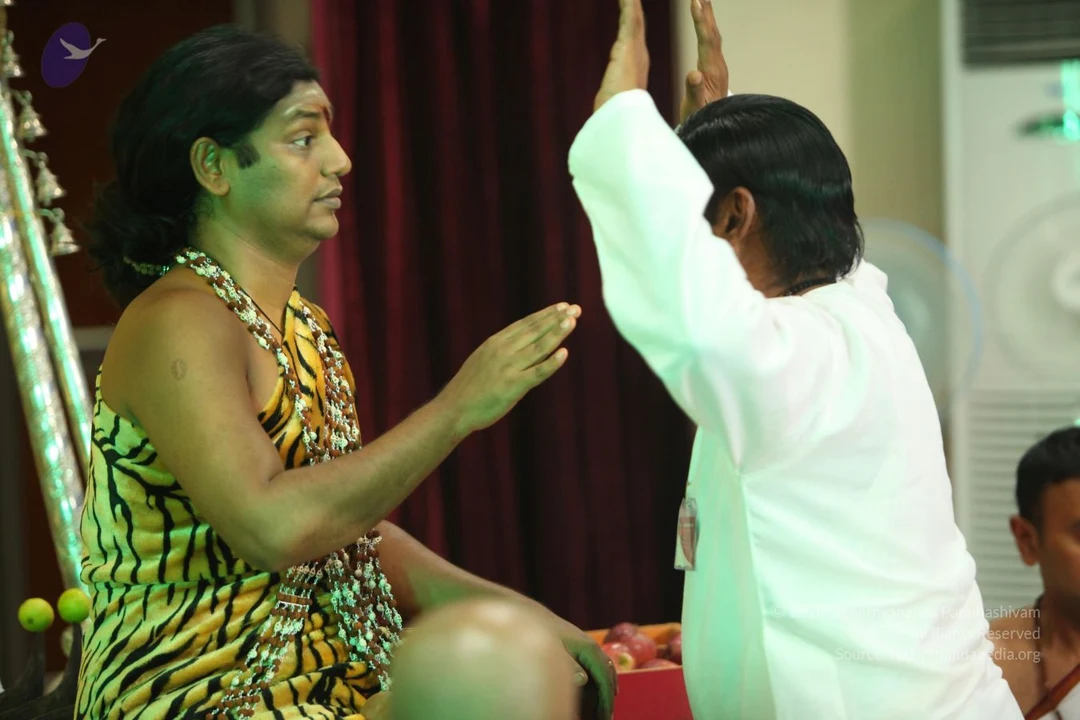
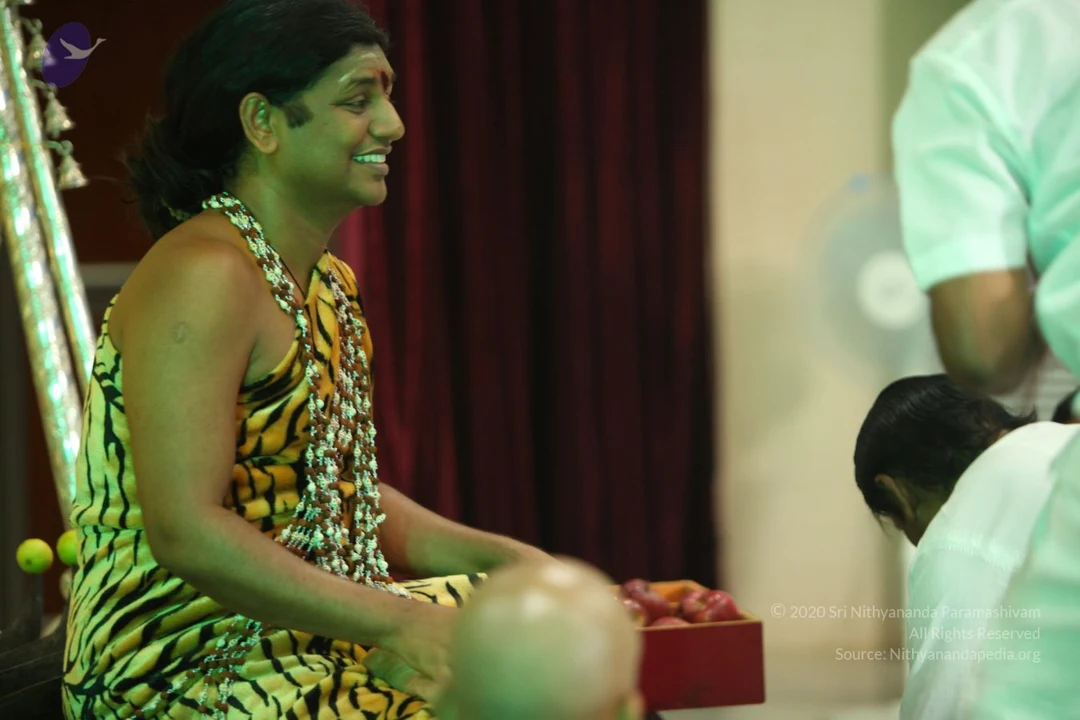
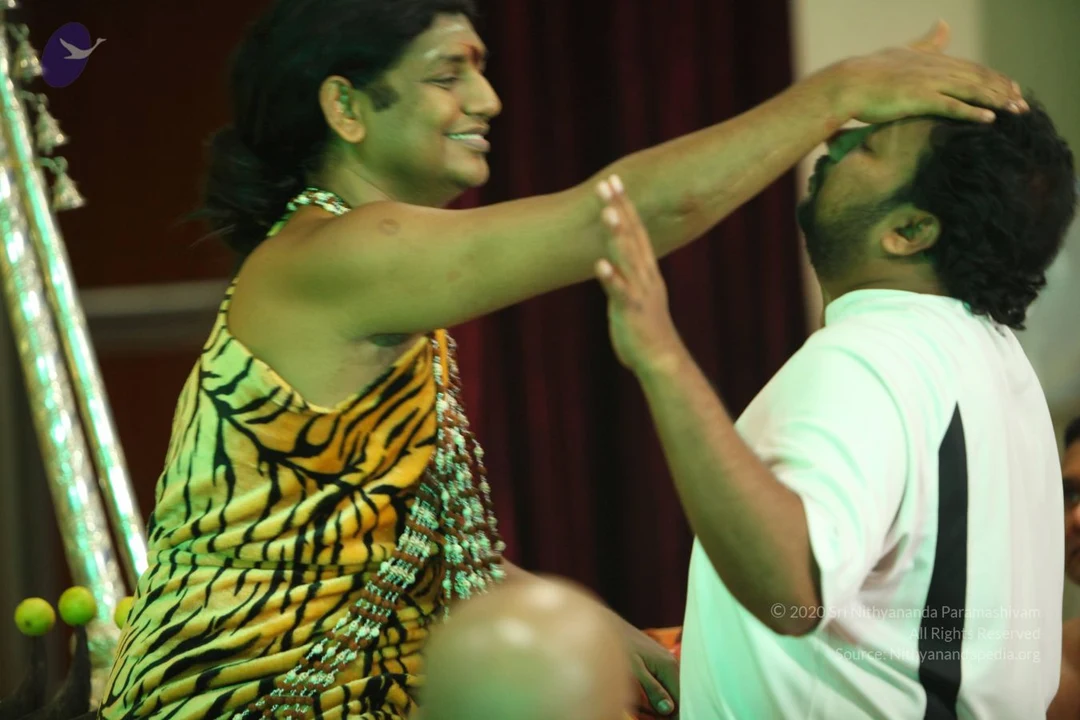
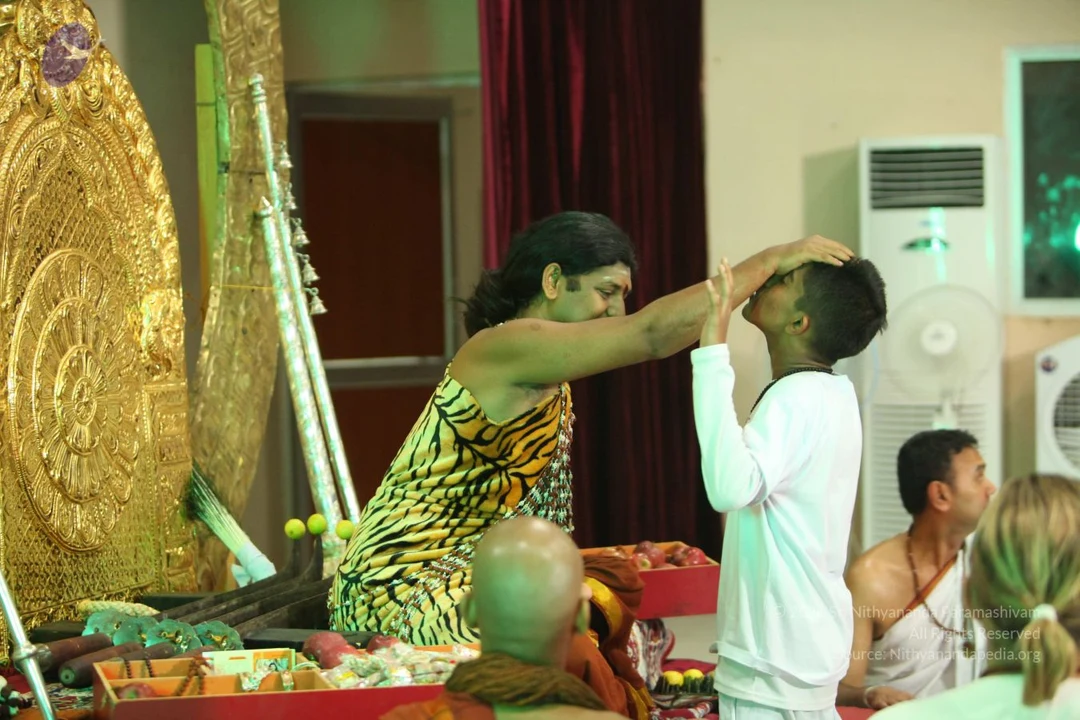
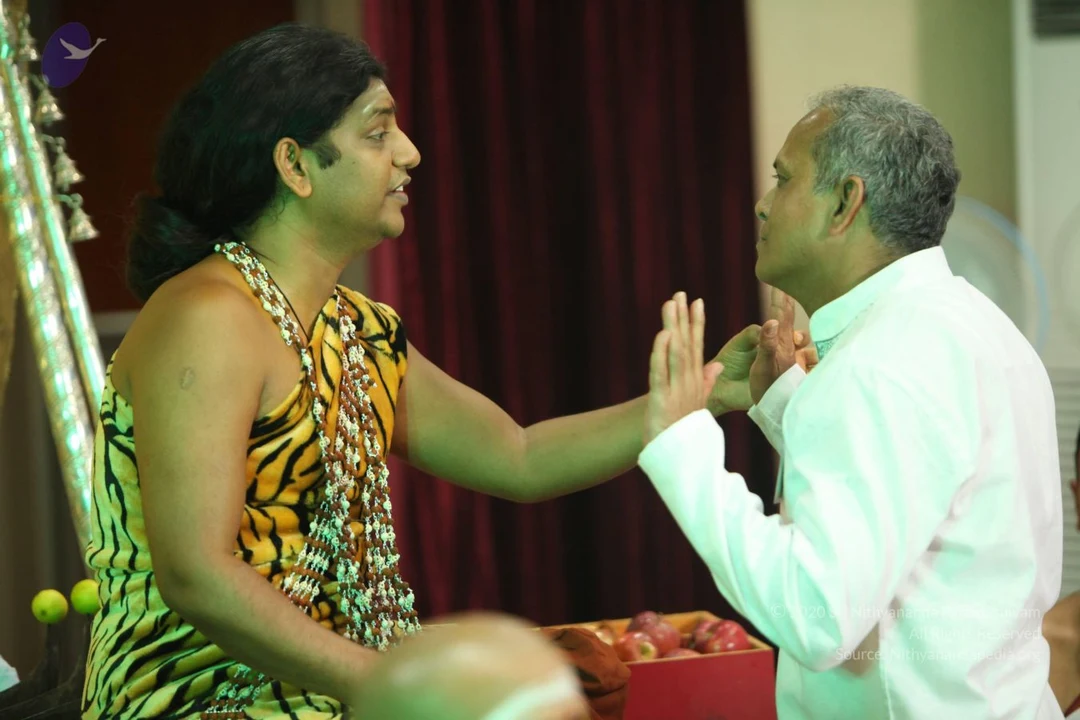
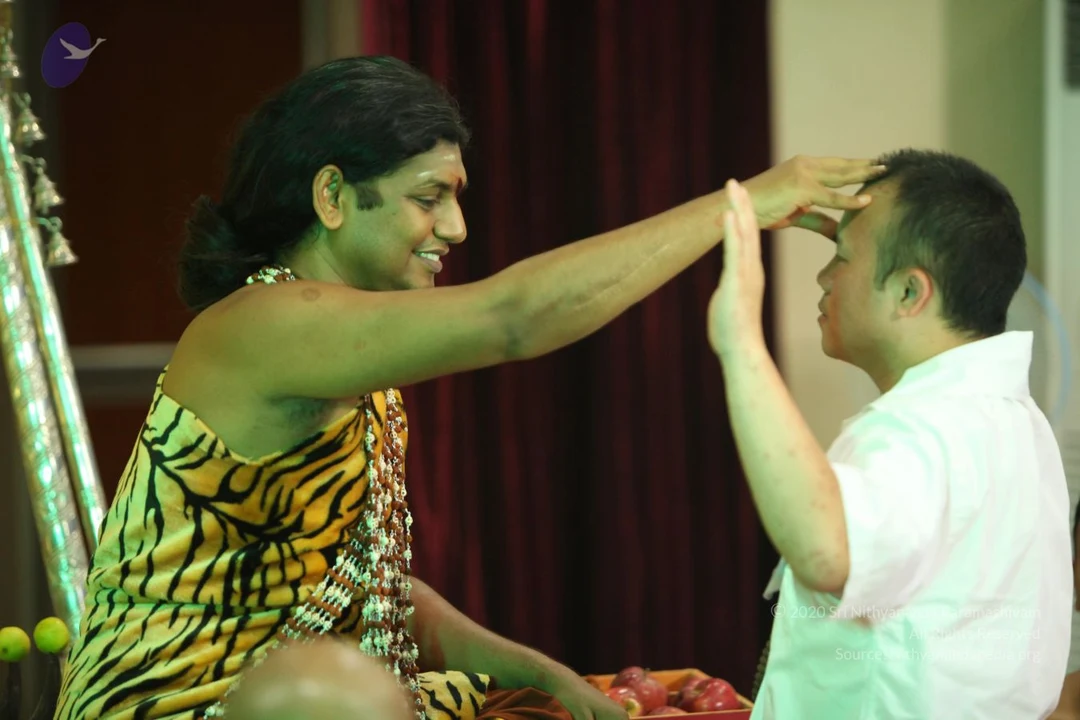
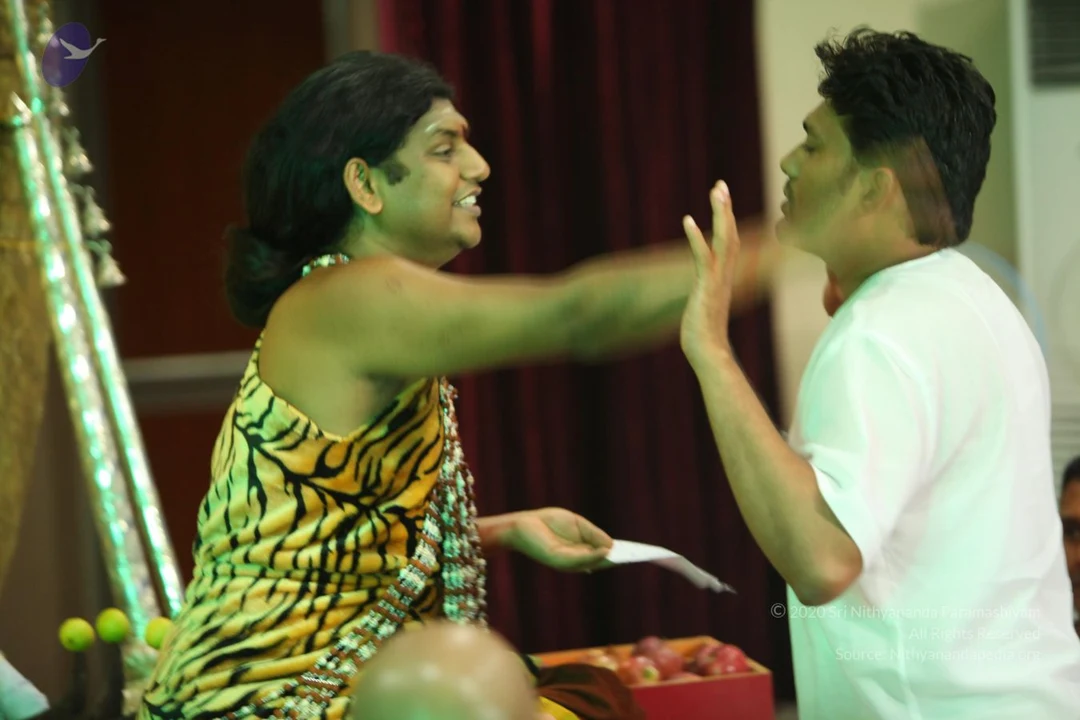
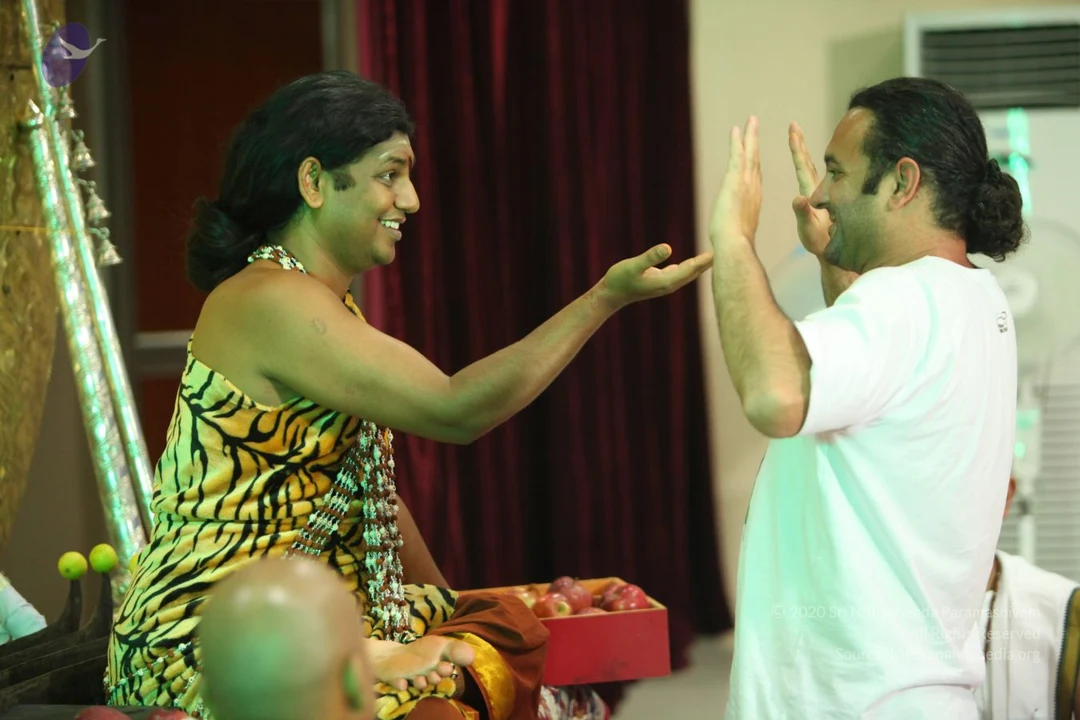
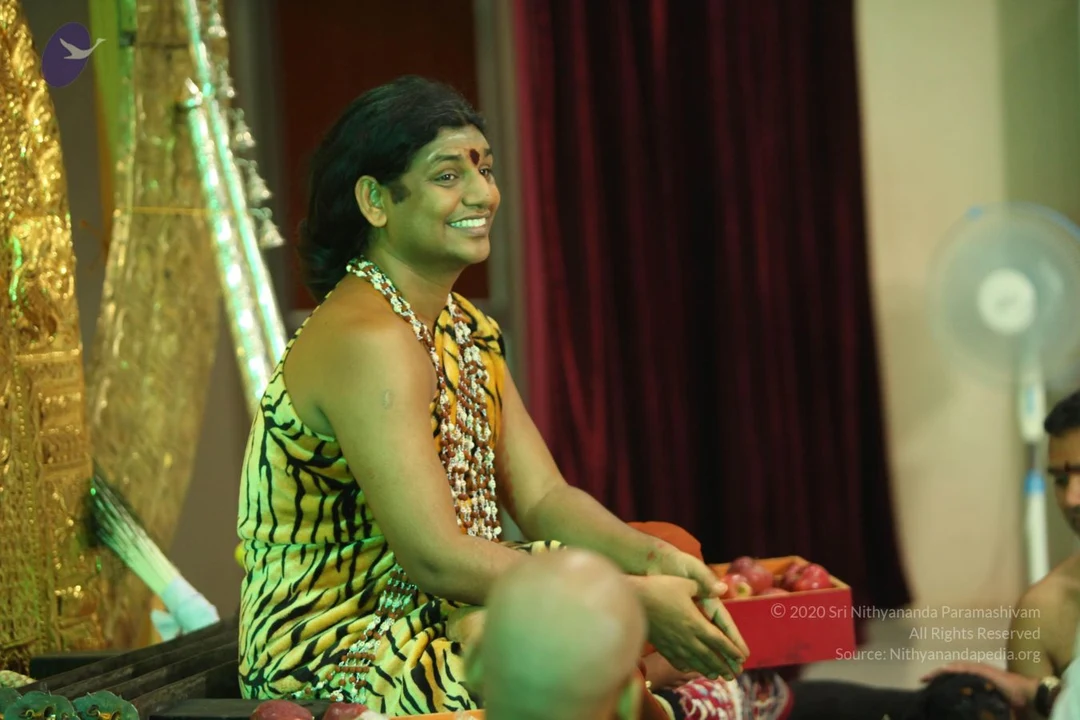
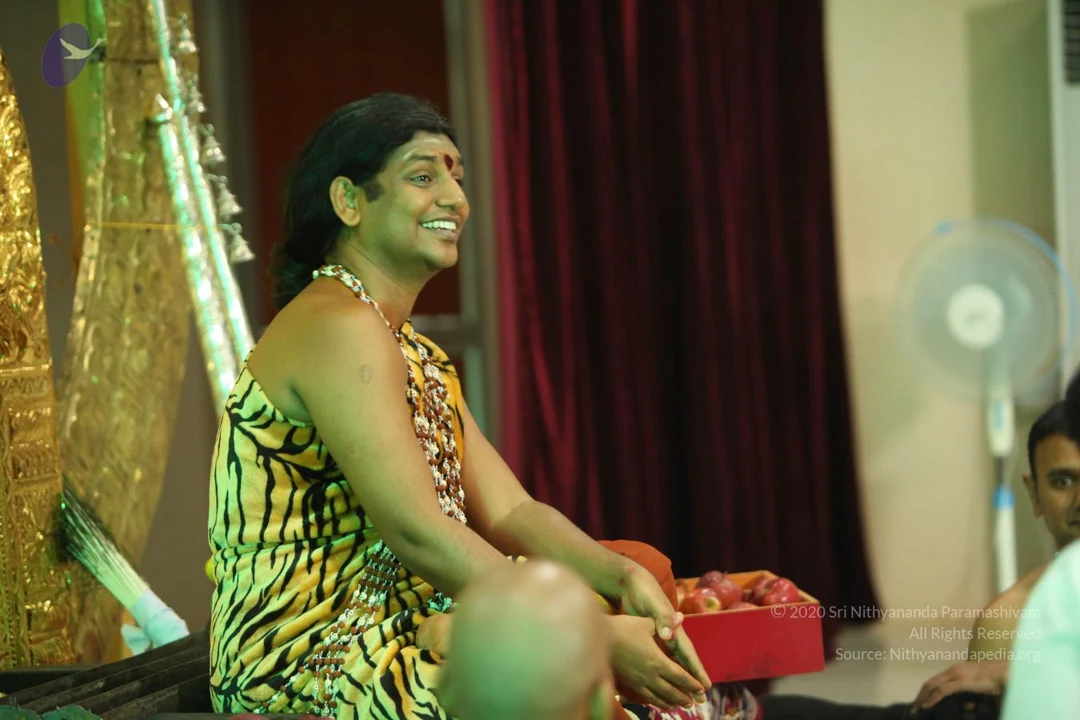
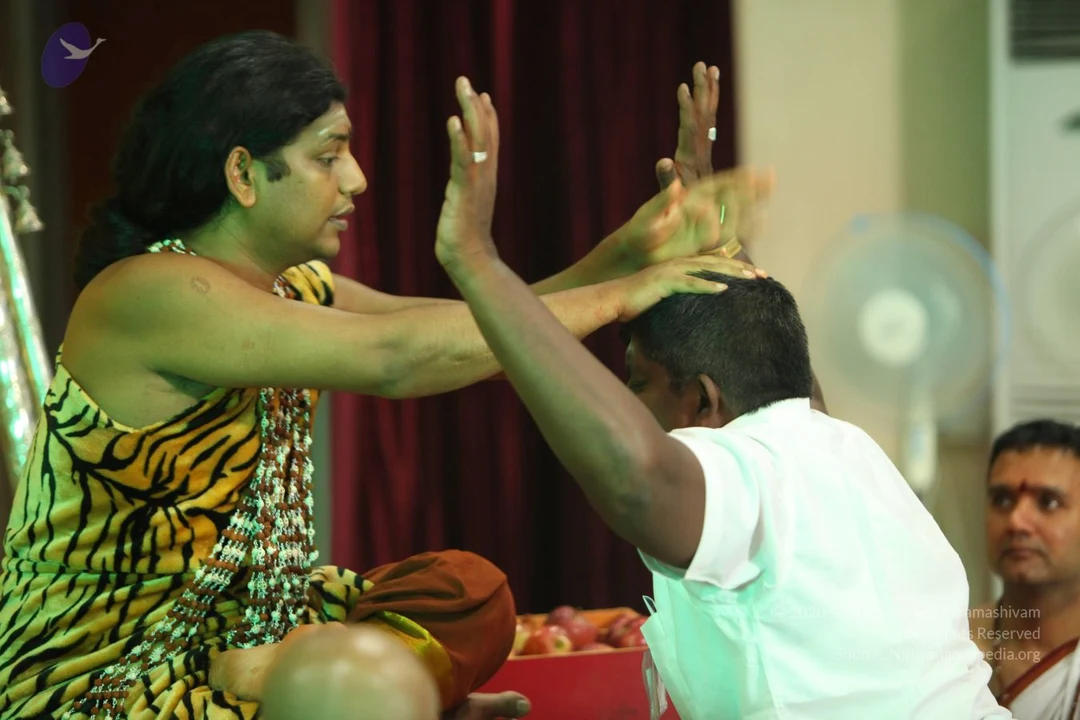
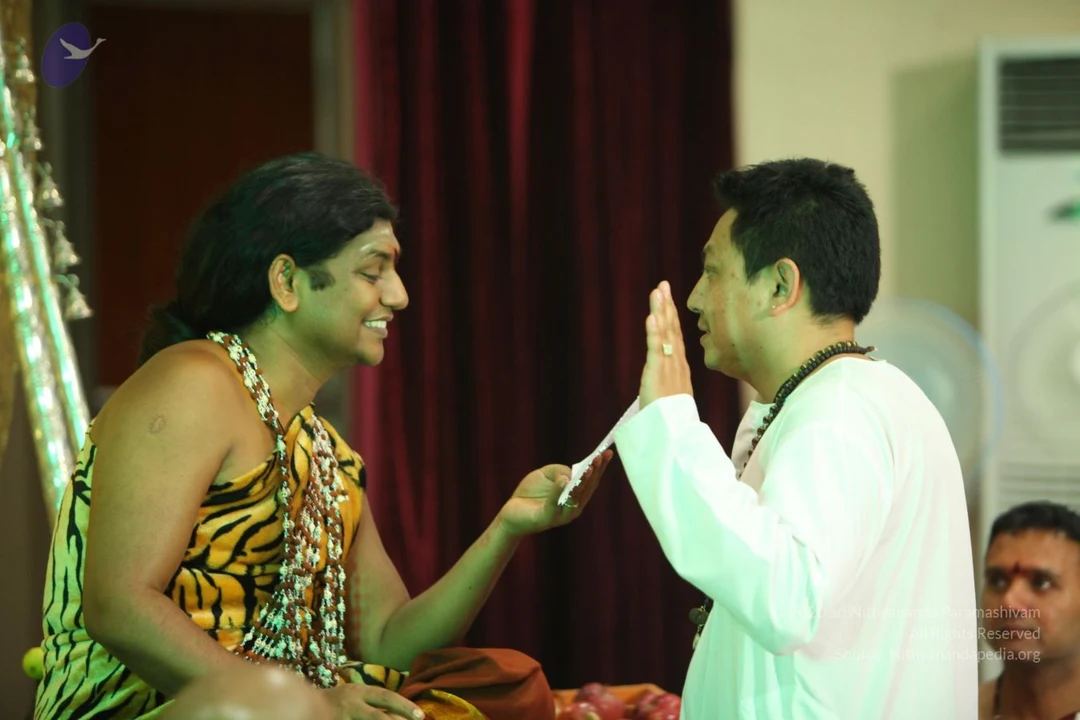
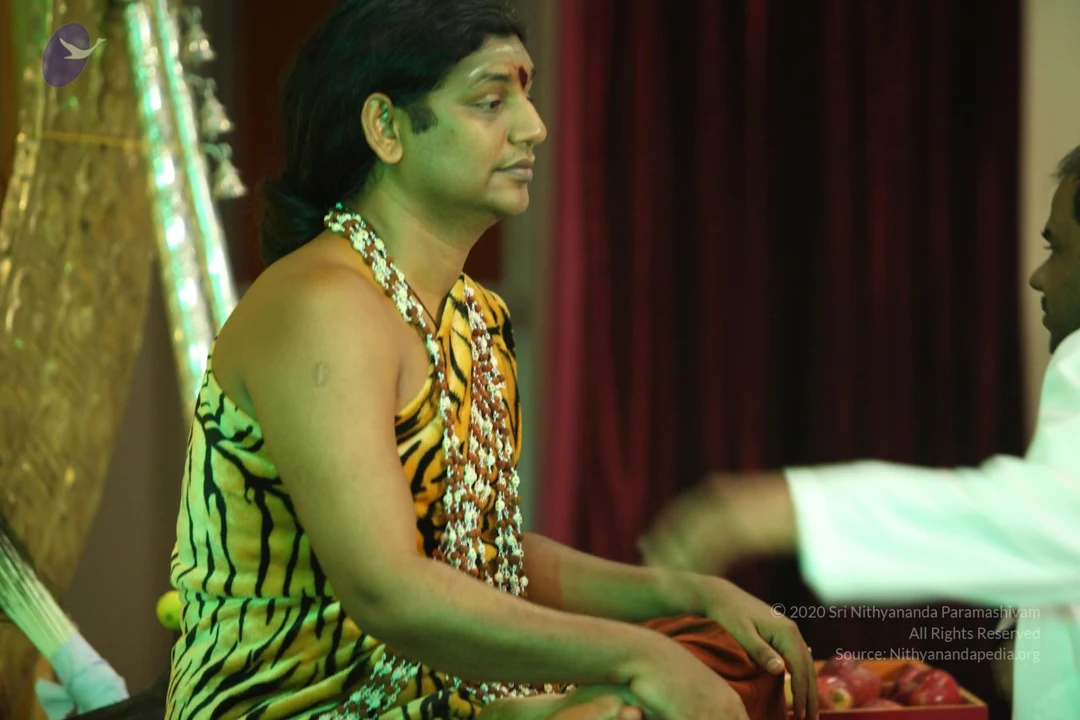
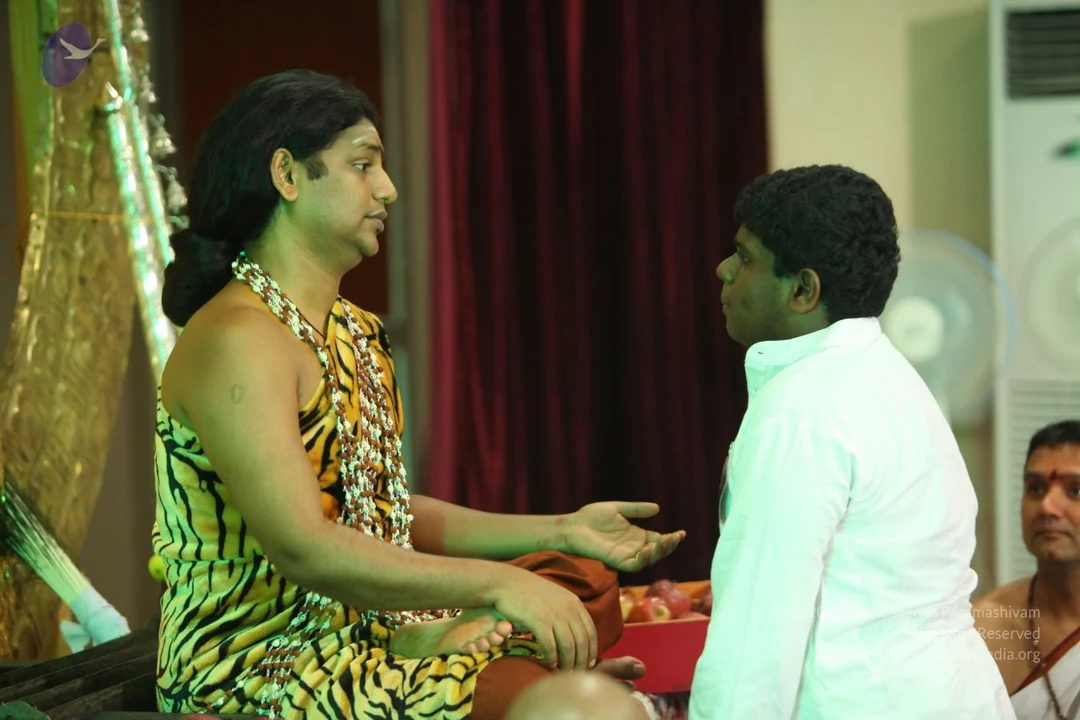
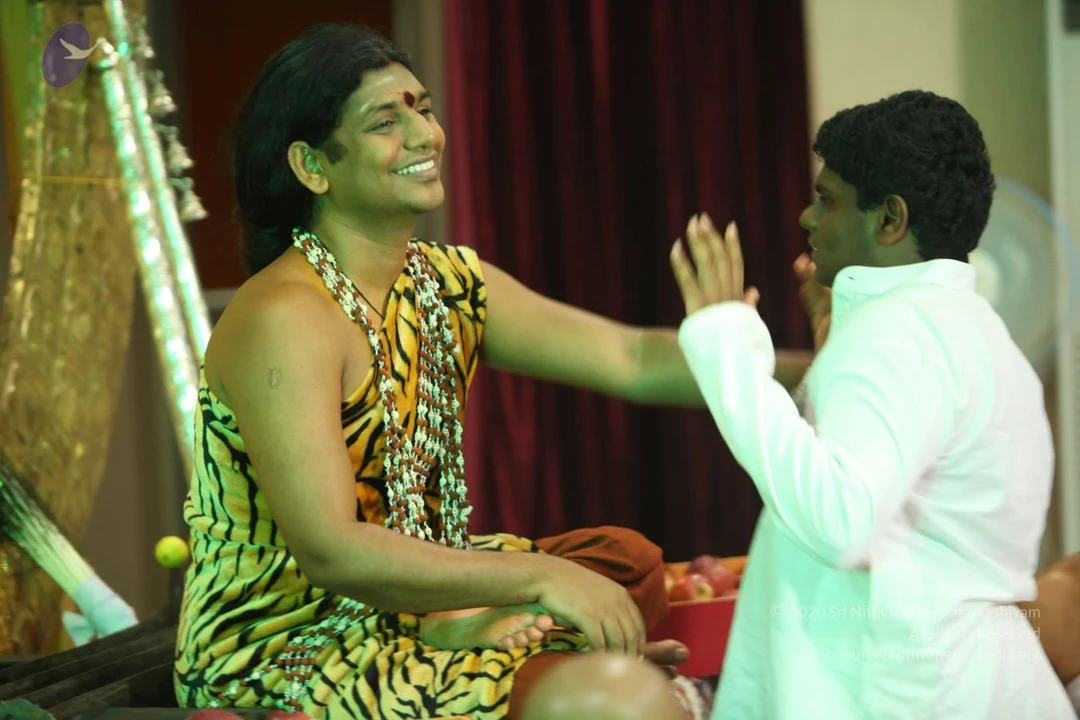
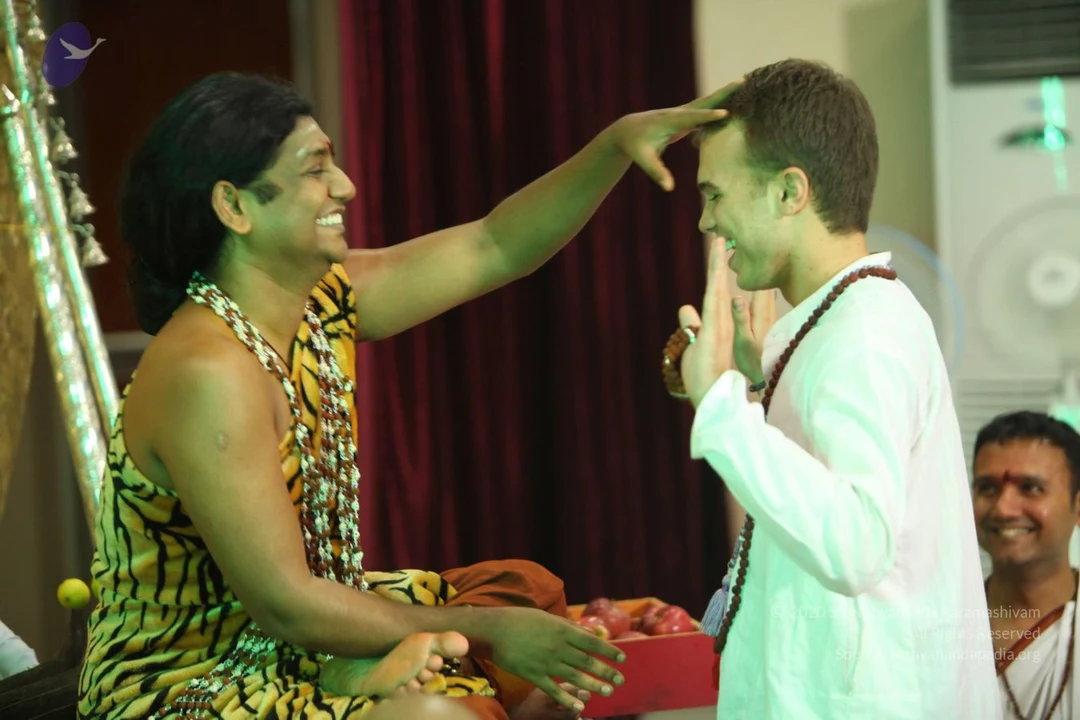
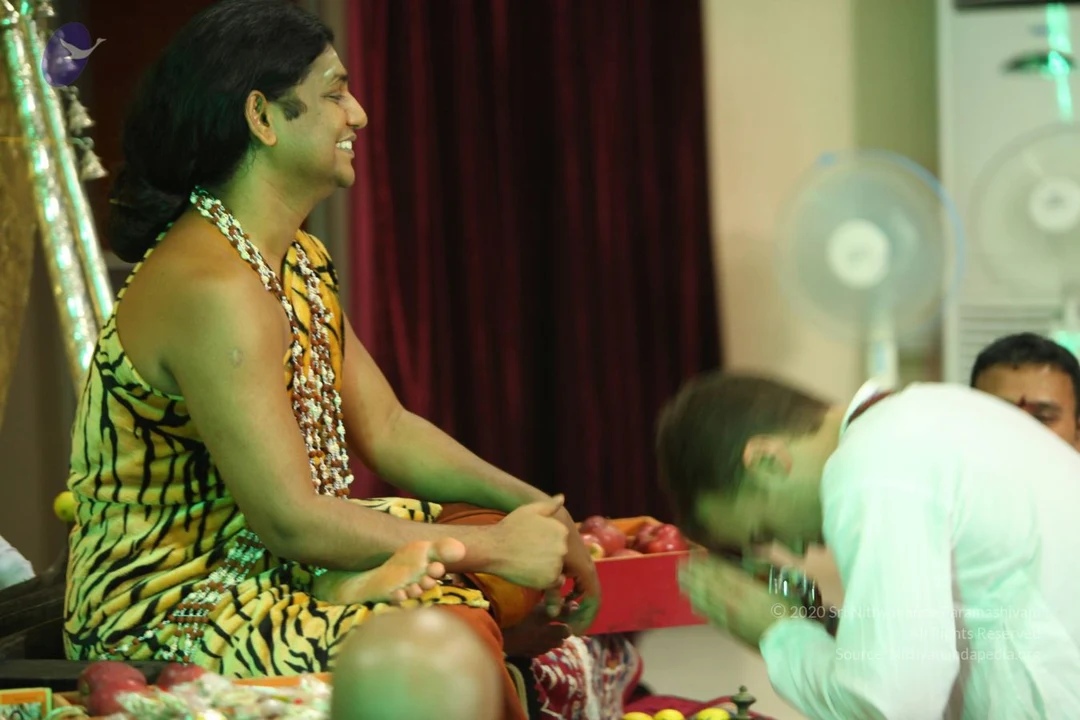
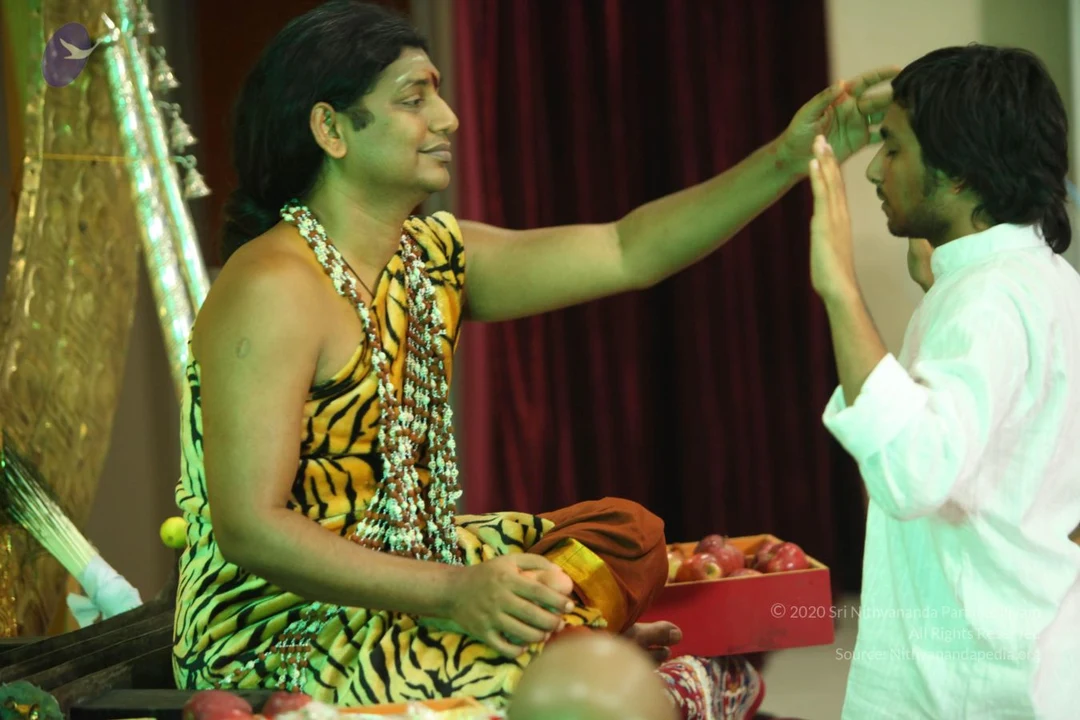
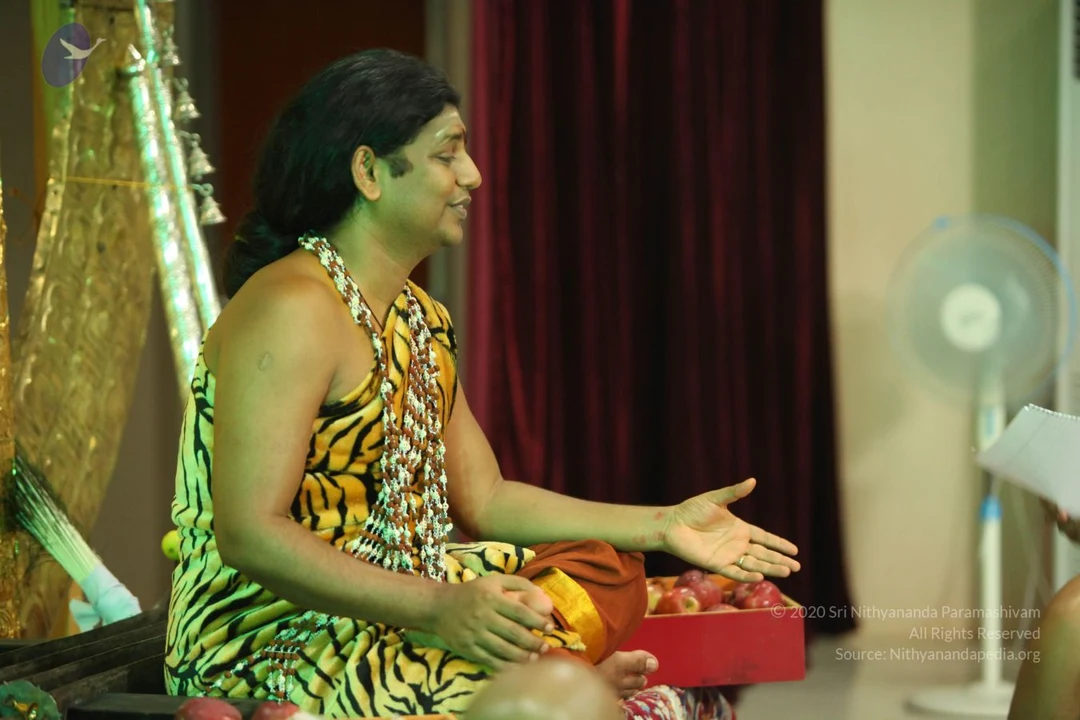
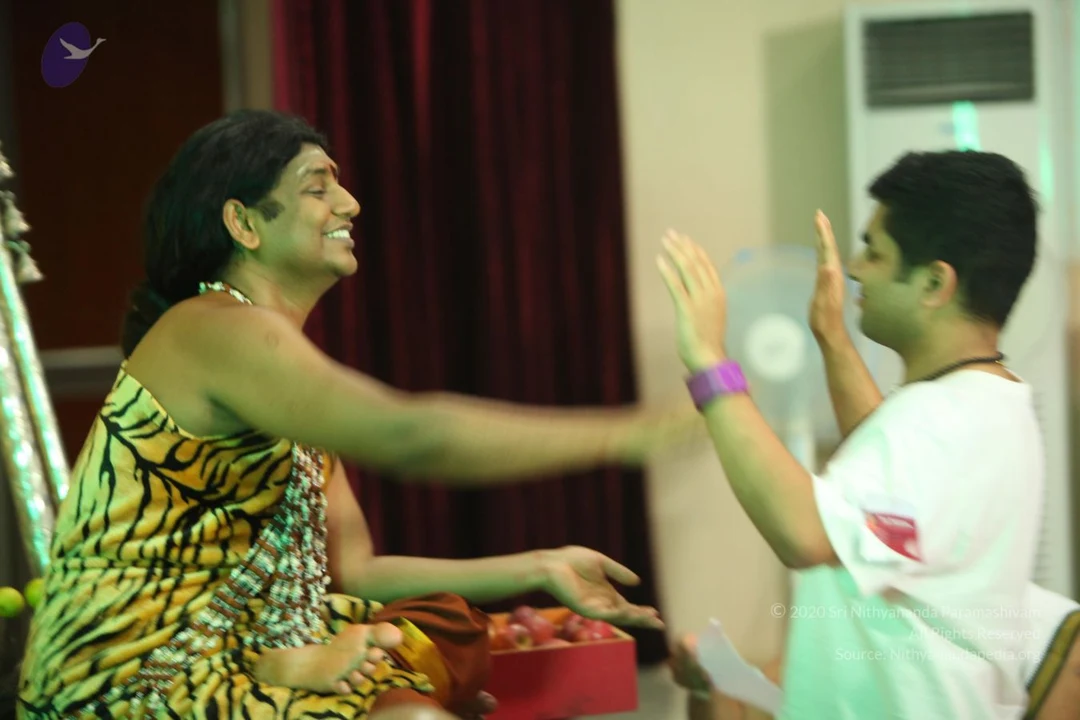
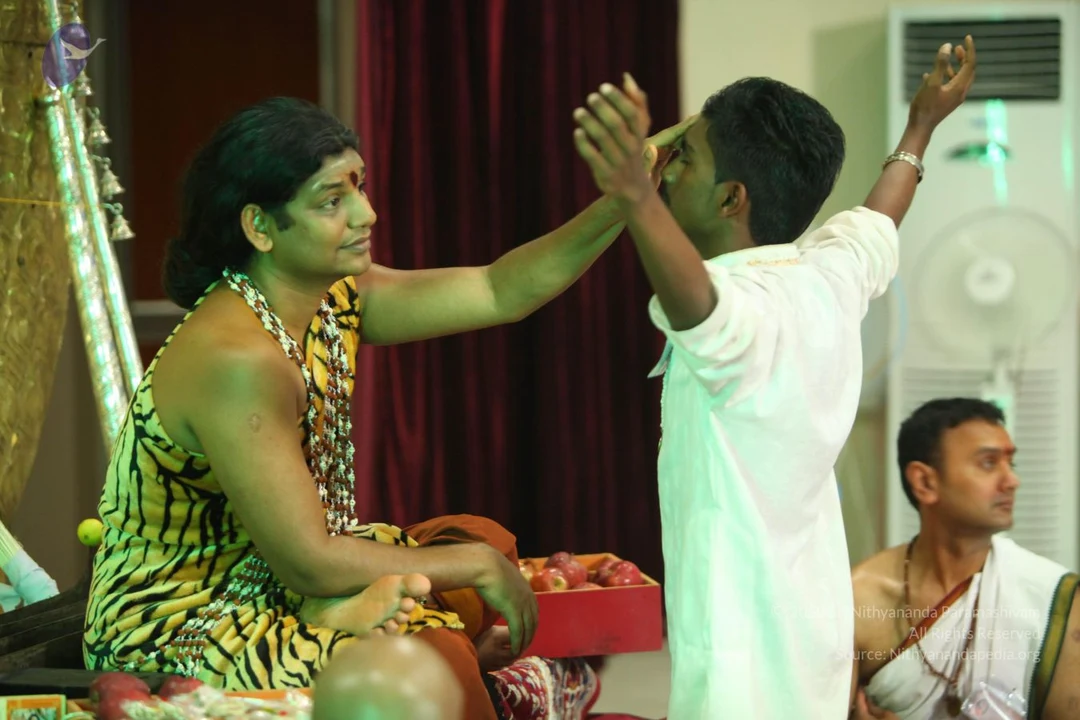
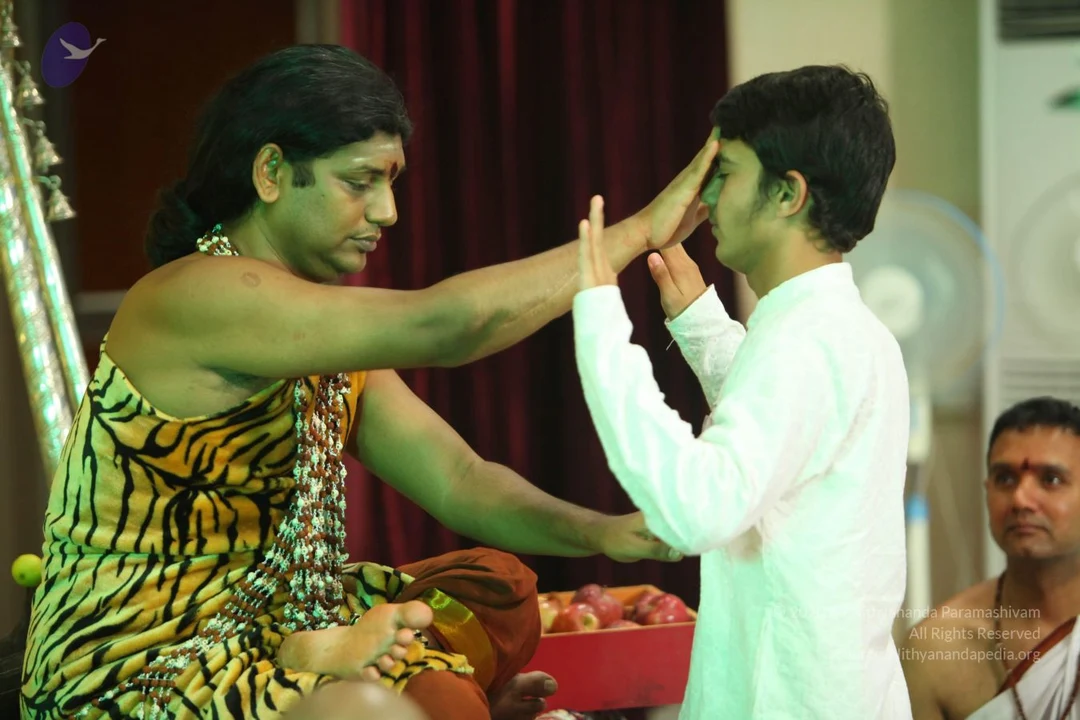
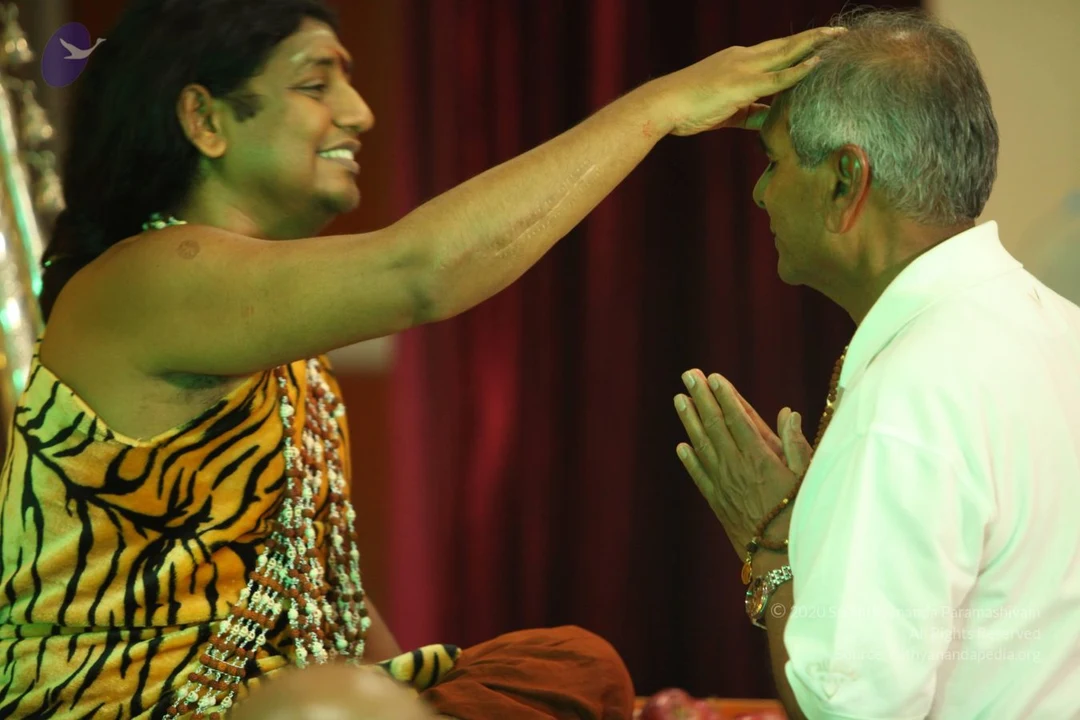
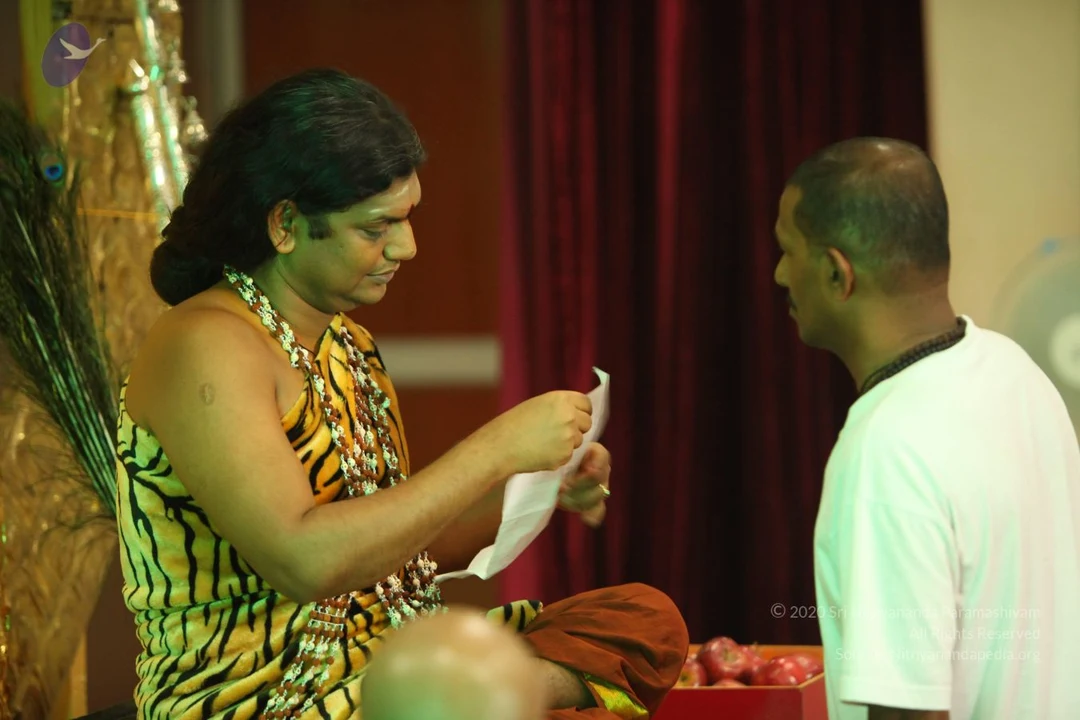
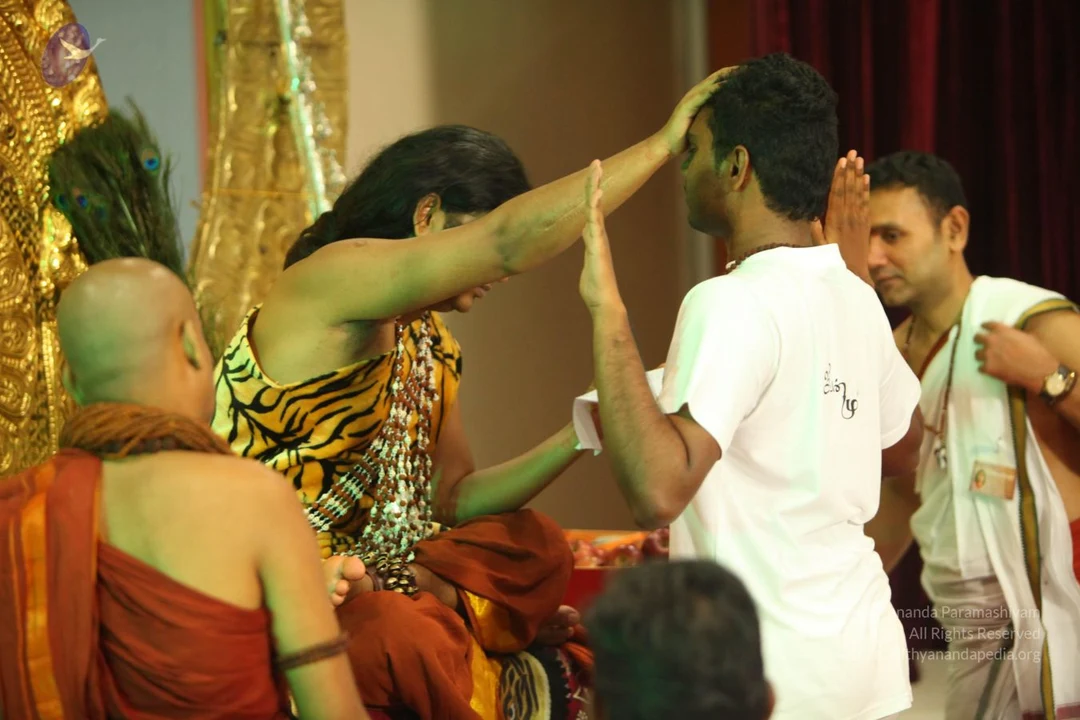
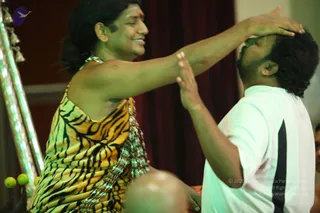
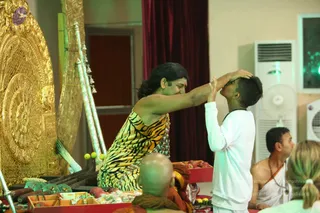
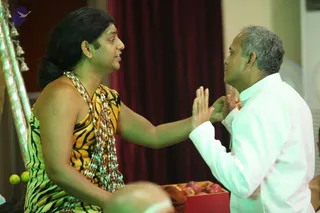
A seated man in a tiger-striped orange and gold garment sits cross-legged on a red and cream patterned rug before an ornate gilded arch throne. He wears layered rudraksha malas and a red bindi, with long dark hair falling past his shoulders, and rests his hands on his knees. Silver trident and ceremonial staffs with peacock-feather fans stand on either side. Golden carved makara-style panels frame the throne, and a red-lit background with painted figures completes the setting.A seated man in orange and black tiger-striped garments sits cross-legged on a red cloth before a large gilded throne-like backdrop with ornate golden carvings and lion figures. He wears a long white and silver bead necklace, a red tilak on his forehead, and gold bangles, with hands clasped in his lap and a gentle smile. To his left, a woman in a yellow garment arranges items on a red-topped table. Flanking the throne are tall silver ceremonial staffs and a peacock feather, with fruit and flower offerings on the low tables. Appearance is consistent with a probable Swamiji (probable) seated in satsang, with long swept-back hair and ornate ceremonial clothing and necklaces as qualifying cues.A photograph of a smiling person seated at left, wearing a yellow and black tiger-striped garment and a long white flower garland with beaded strands around the neck, with a red tilak mark on the forehead and hair pulled back. Their hands rest near a red wooden tray holding red fruits in the lower centre. To the right, a man in a light green shirt stands and another person in white bends forward over the tray. Behind is a deep maroon curtain and a pale wall, with a green fruit visible at left. Appearance suggests a person candidate by the garland, tiger-striped dress and tilak, seated in a satsang setting.Close photo of a person in a yellow and black tiger-striped garment with a silver beaded necklace, smiling and placing one hand on the crown of another man's head while the man, in a white short-sleeved T-shirt with a black stripe, lowers his head with his eyes closed. The figure in the tiger-striped garment appears to be a person giving a blessing, with cues of swept-back dark hair and ornate beaded necklace; the recipient is a devotee receiving a touch of blessing. Maroon curtain and a silver pole are in the background, with green-tinted stage lighting.A photo of a ceremonial scene in a hall with a large gold ornate throne-like backdrop on the left. A person with long dark hair wearing a yellow and black tiger-striped garment with a pearl-like shawl bends forward and places a hand on the head of a young boy in a white shirt with a rudraksha-style necklace, who has his palms joined. Behind them sit a bald priest in orange, a bare-chested man with a sacred thread, and a woman with blonde hair seen from behind. Trays of fruit, sweets, coconuts and small brass items are arranged on red cloths in front, with a green-lit wall and air conditioner in the background. a person is identified by the long swept-back hair and ornate clothing of the figure giving blessing; this is an in-person candidate with uncertain appearance cues.A photograph of a satsang-style exchange. On the left, a long-haired figure with a swept-back ponytail wears a yellow and black tiger-striped wrap and a beaded white and brown rudraksha-style mala, seated and speaking with an open hand gesture. Facing him, a grey-haired man in a white shirt and trousers holds his palms together in a respectful namaste-like gesture. In the foreground at lower right, a red box holds apples, and a partial figure in saffron is visible at the bottom edge. Green and red fruit sit near the left edge beside a metal ceremonial stand with hanging bells. The background has deep red drapes and a white wall with a fan.

Inner Awakening Session
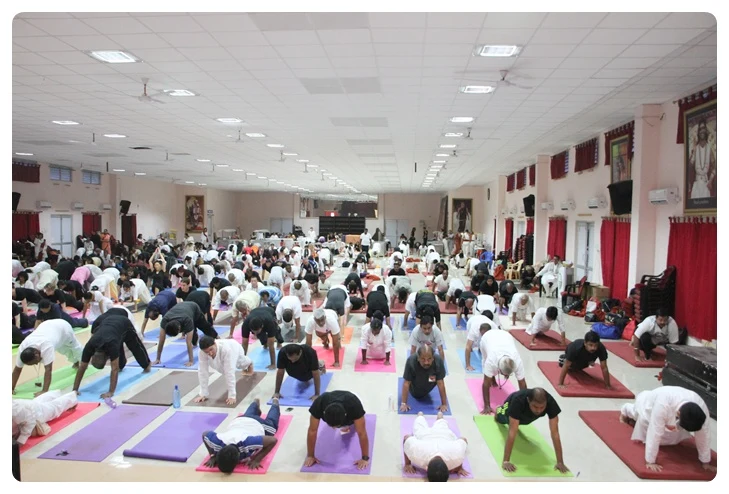
19 photosSource gallery
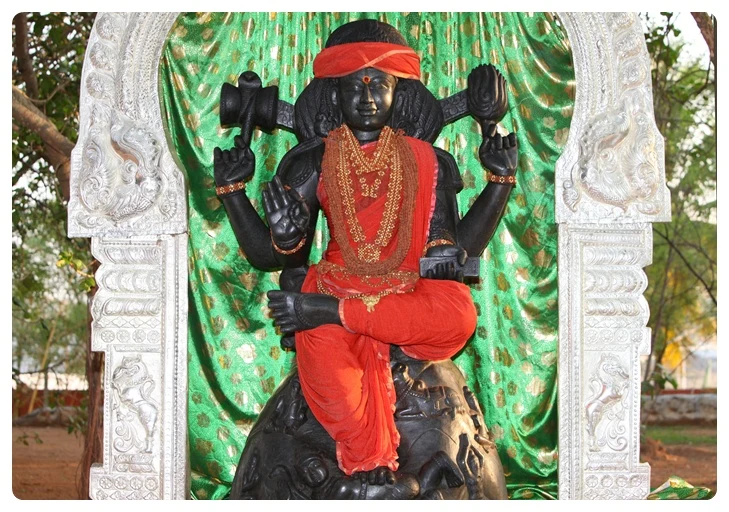
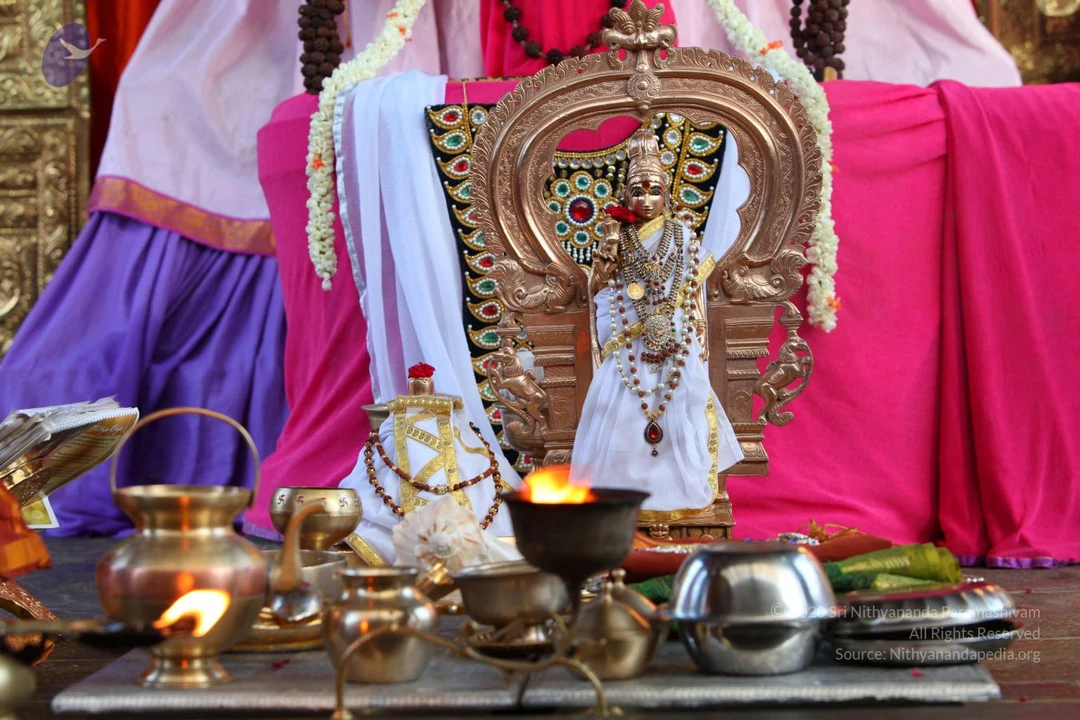
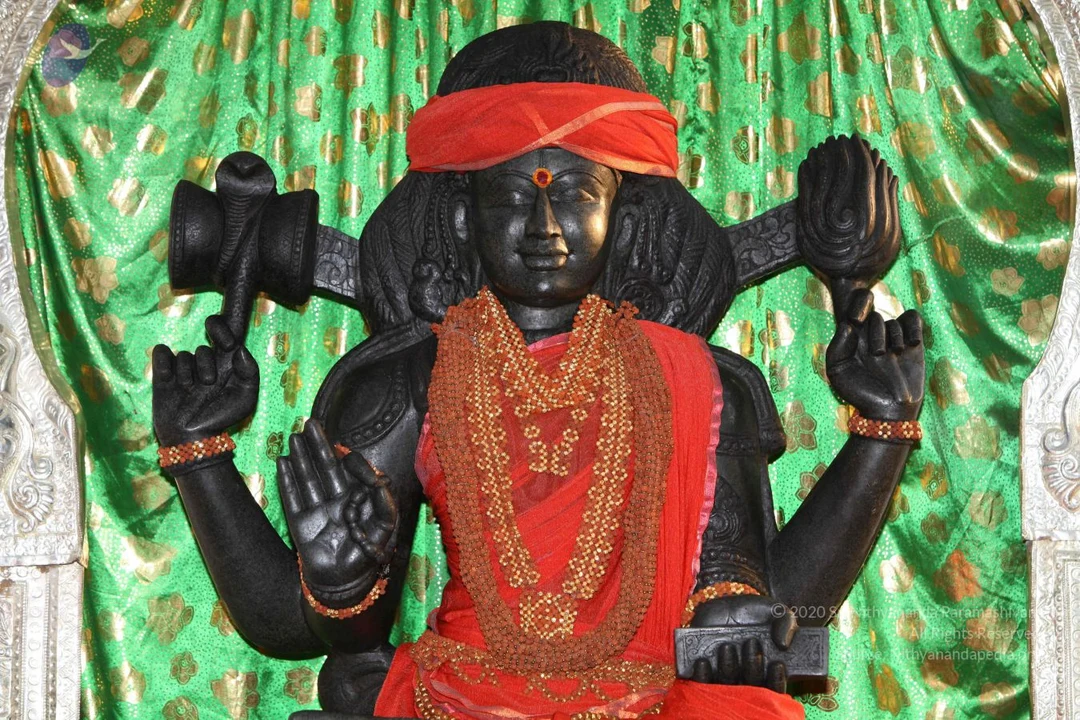
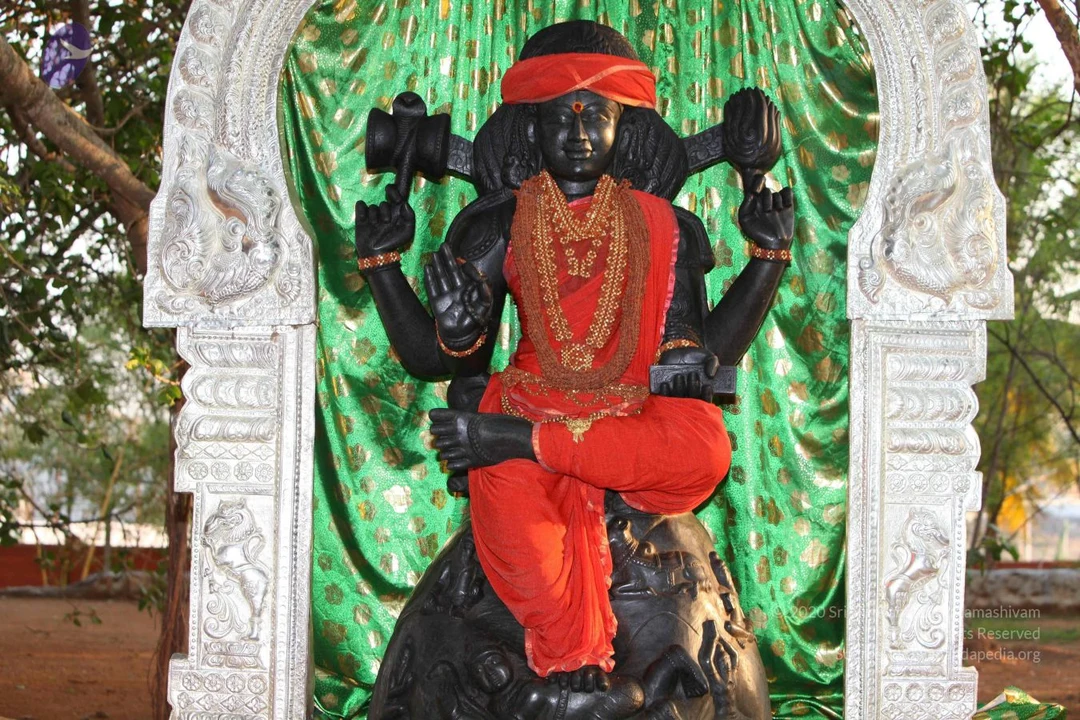
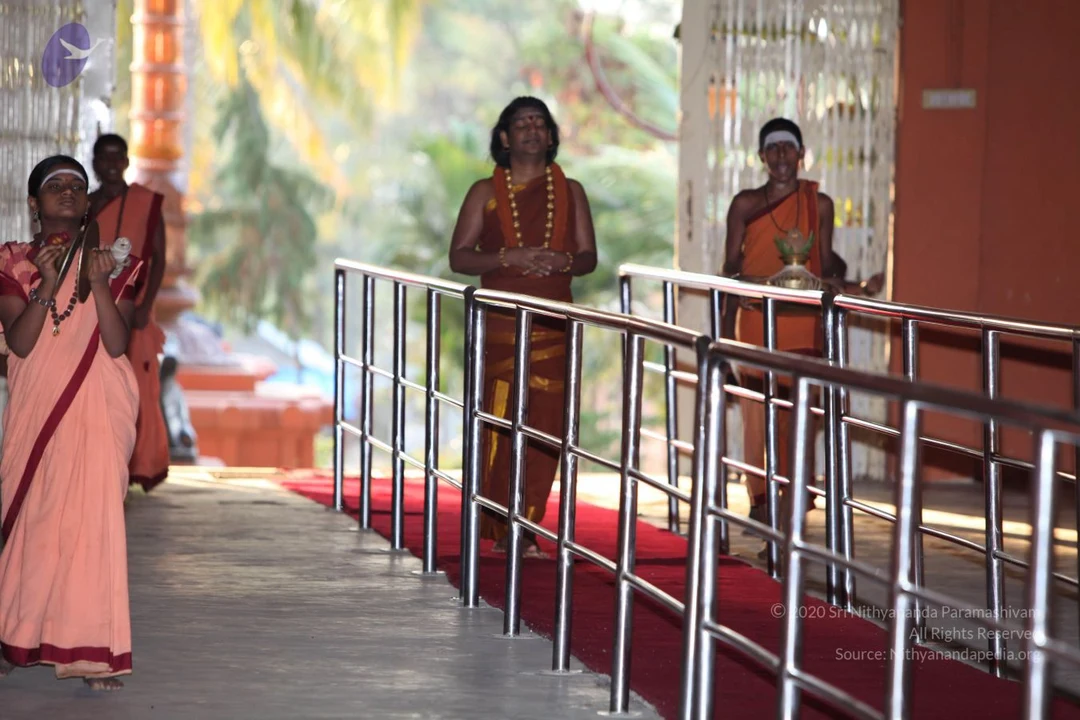
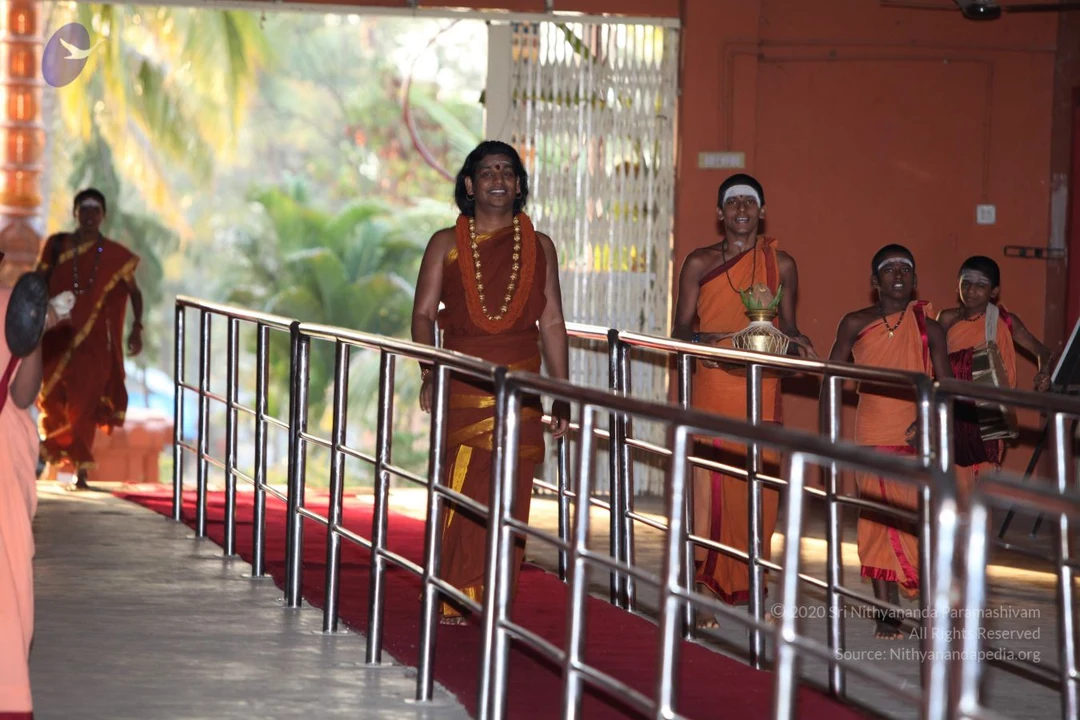
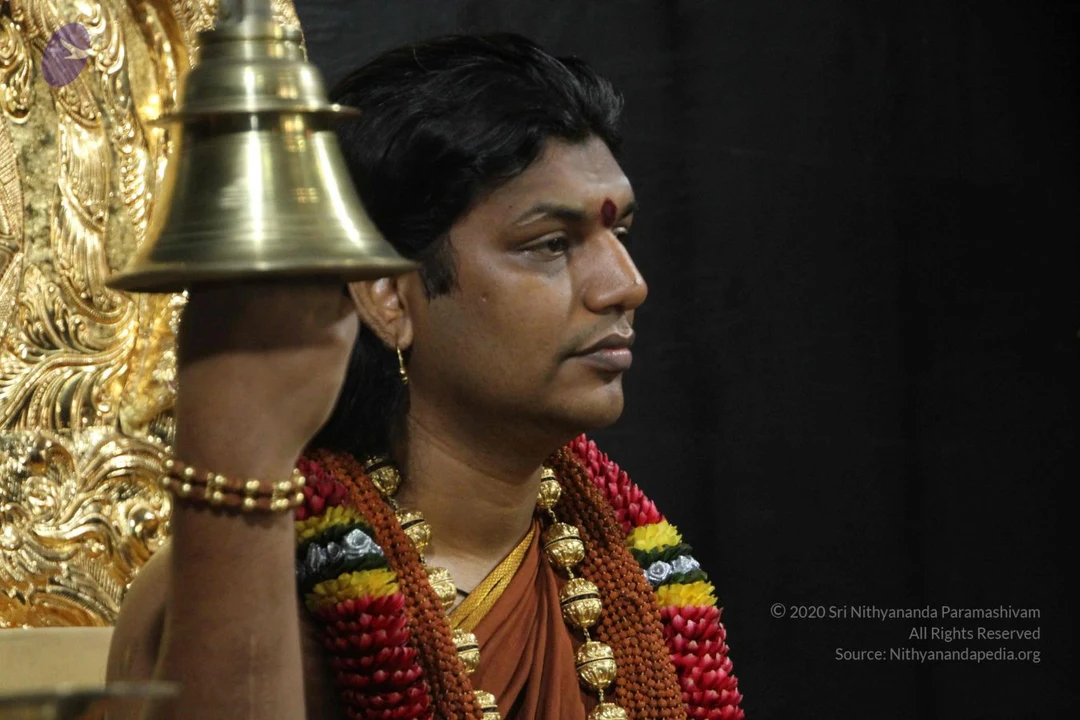
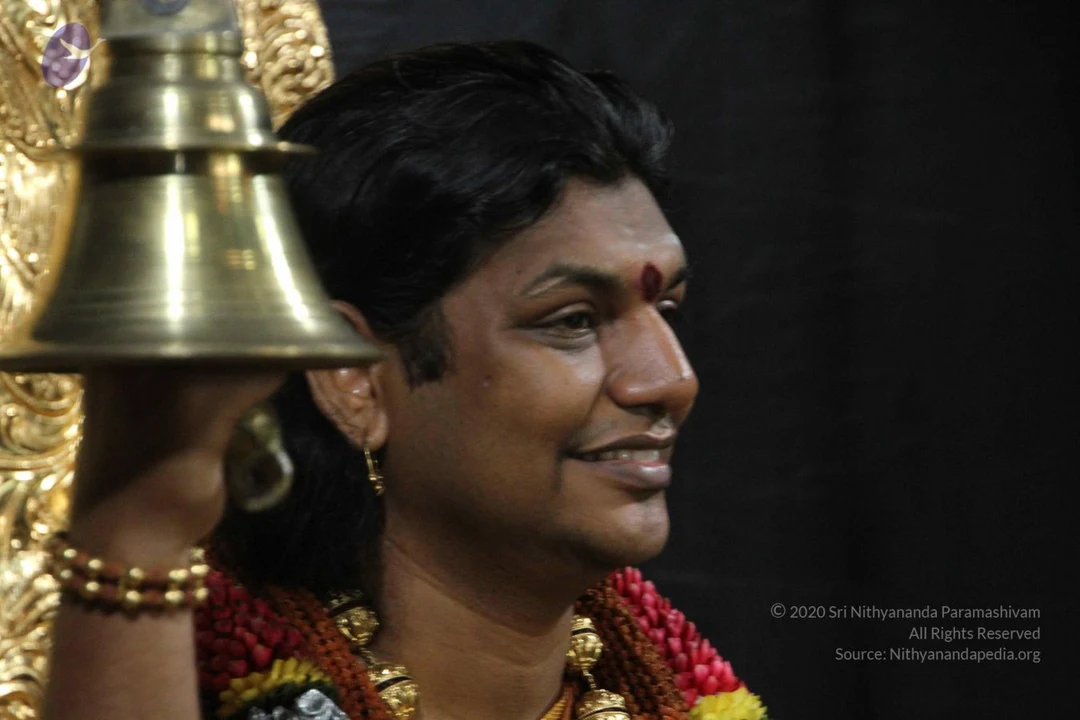
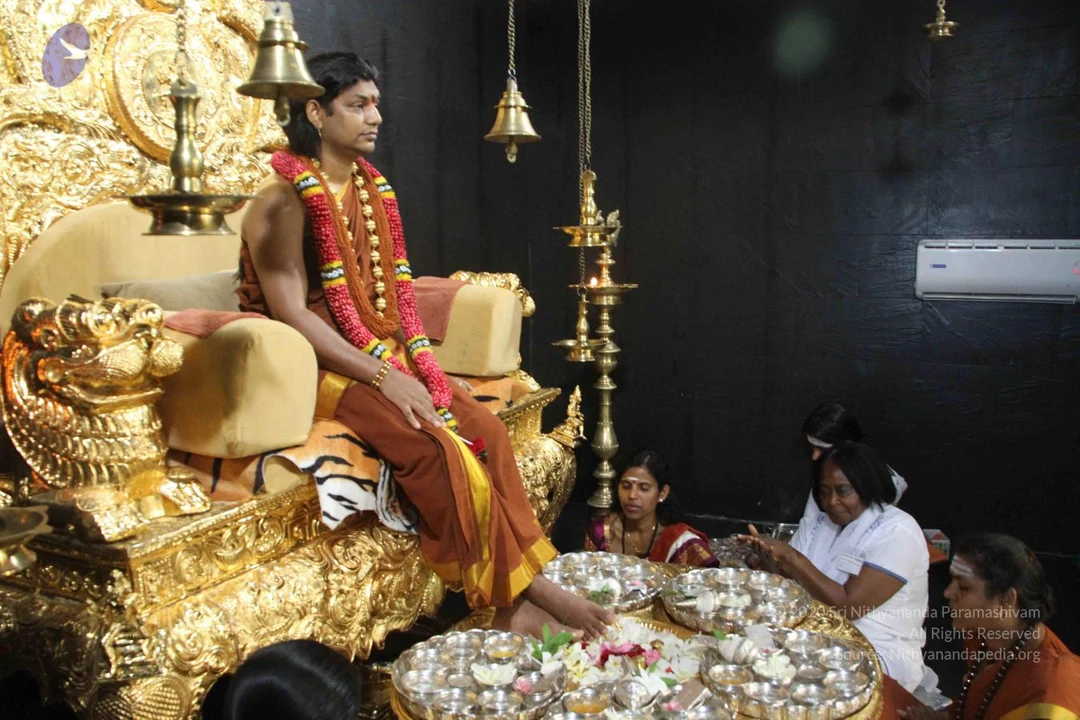
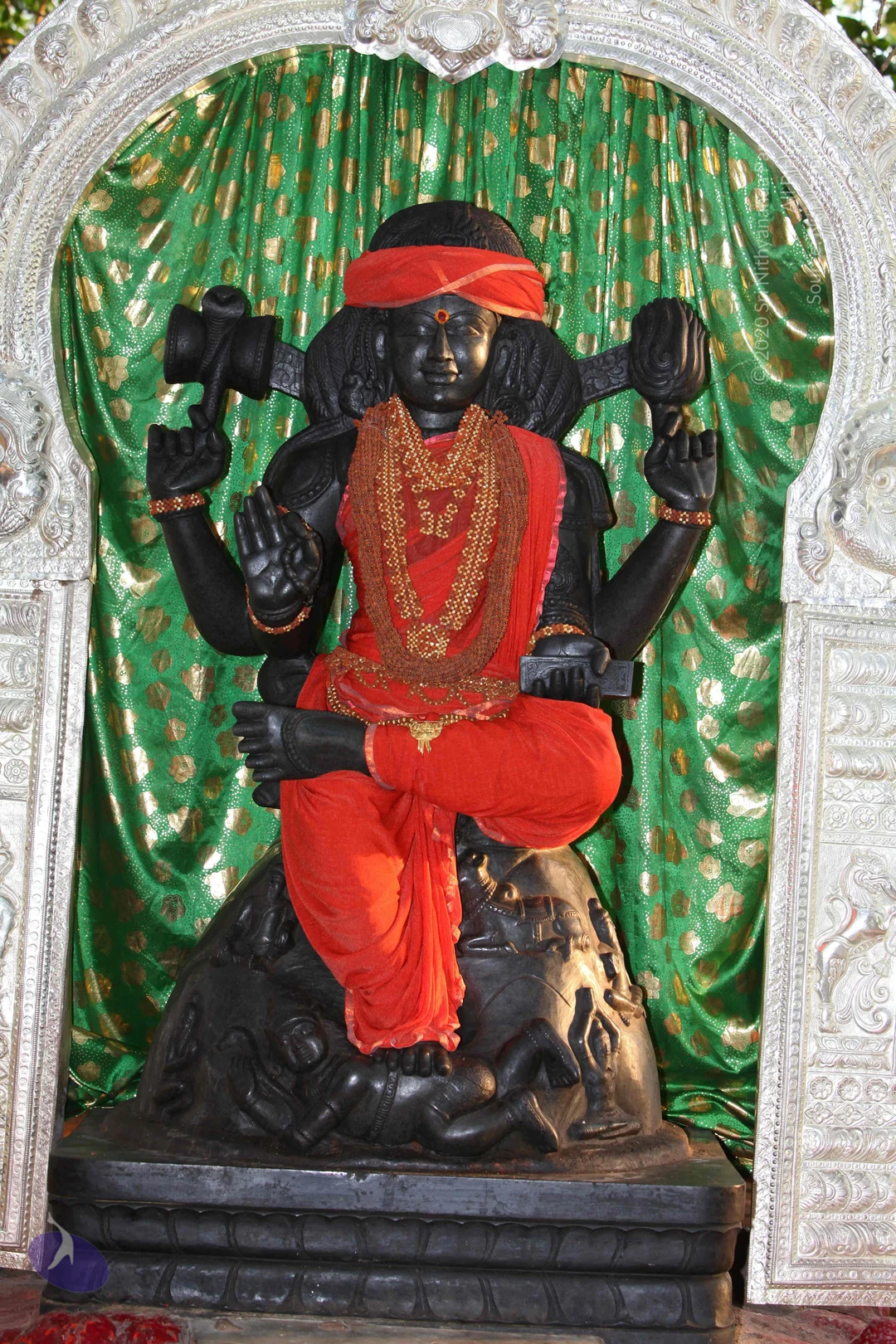
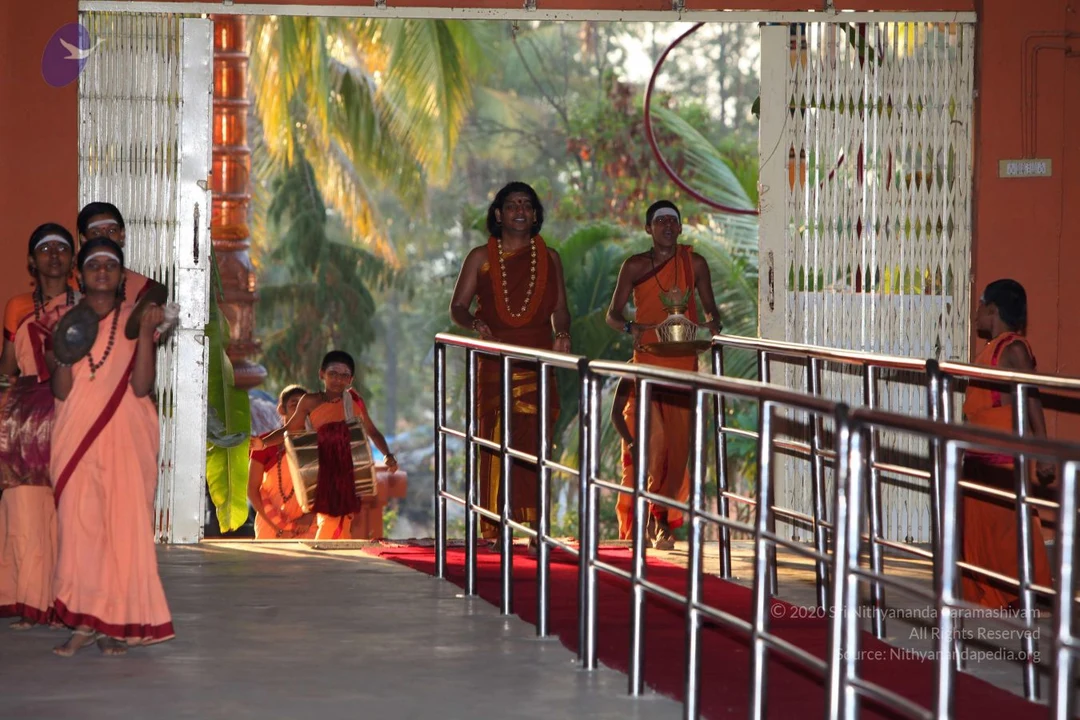
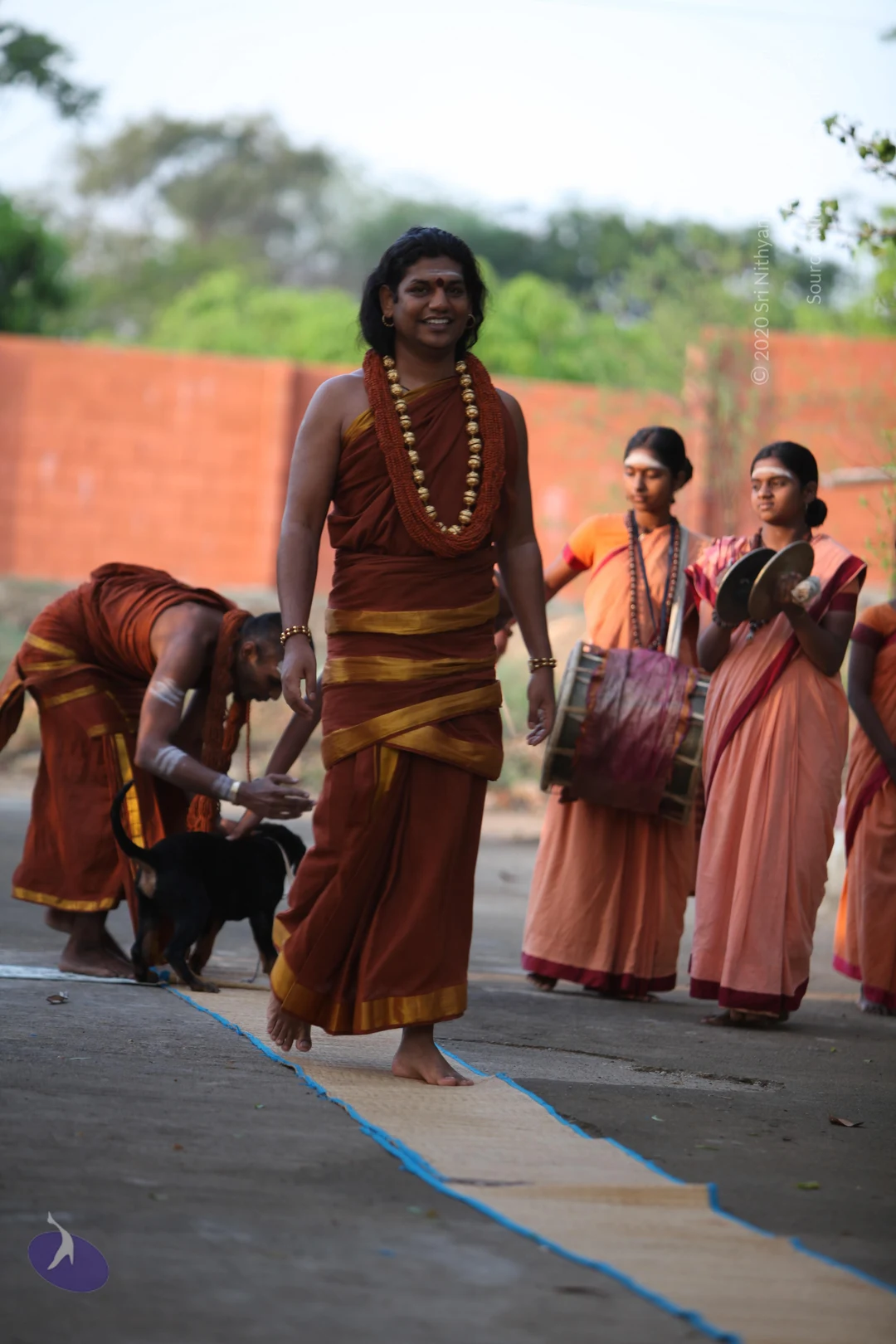
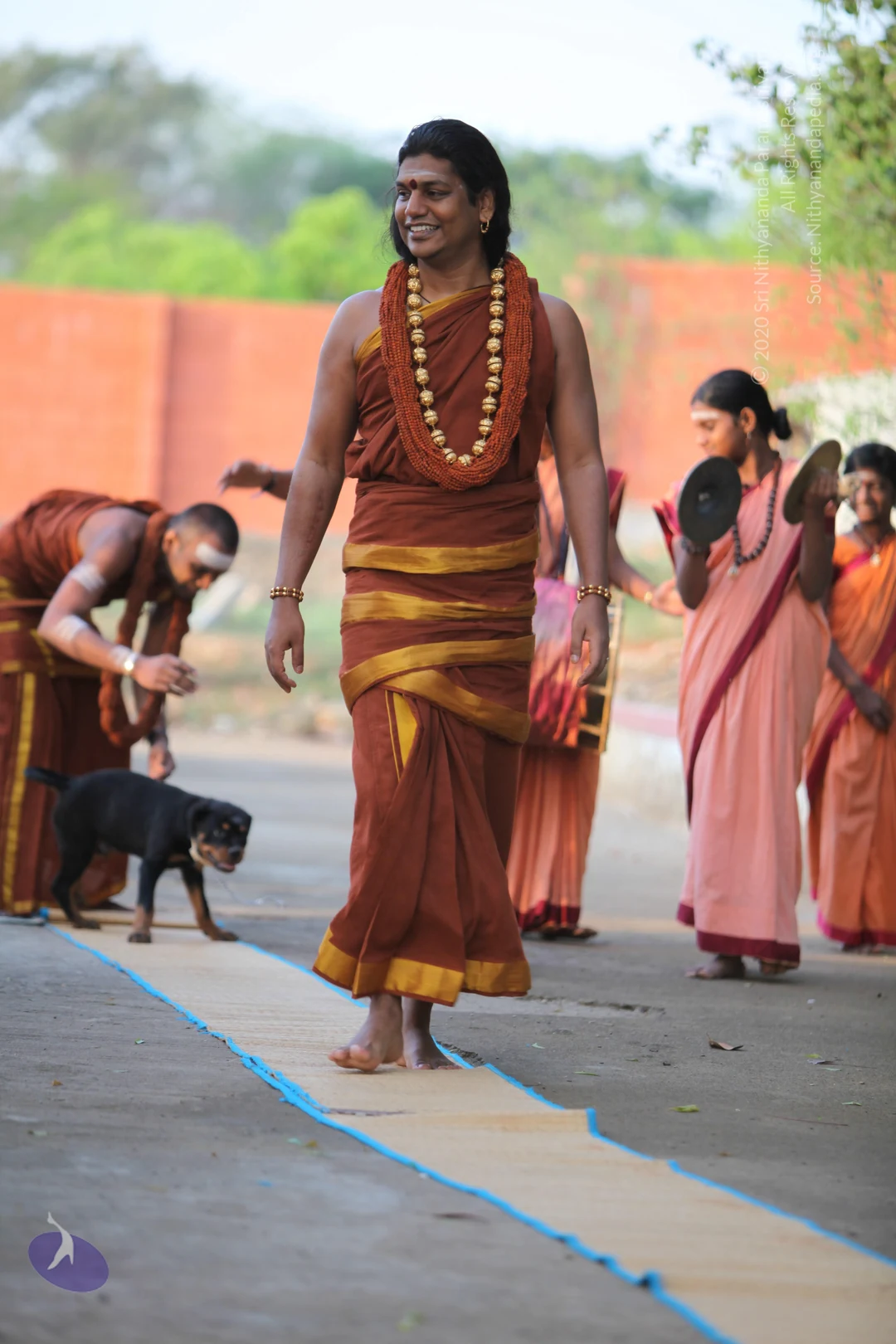
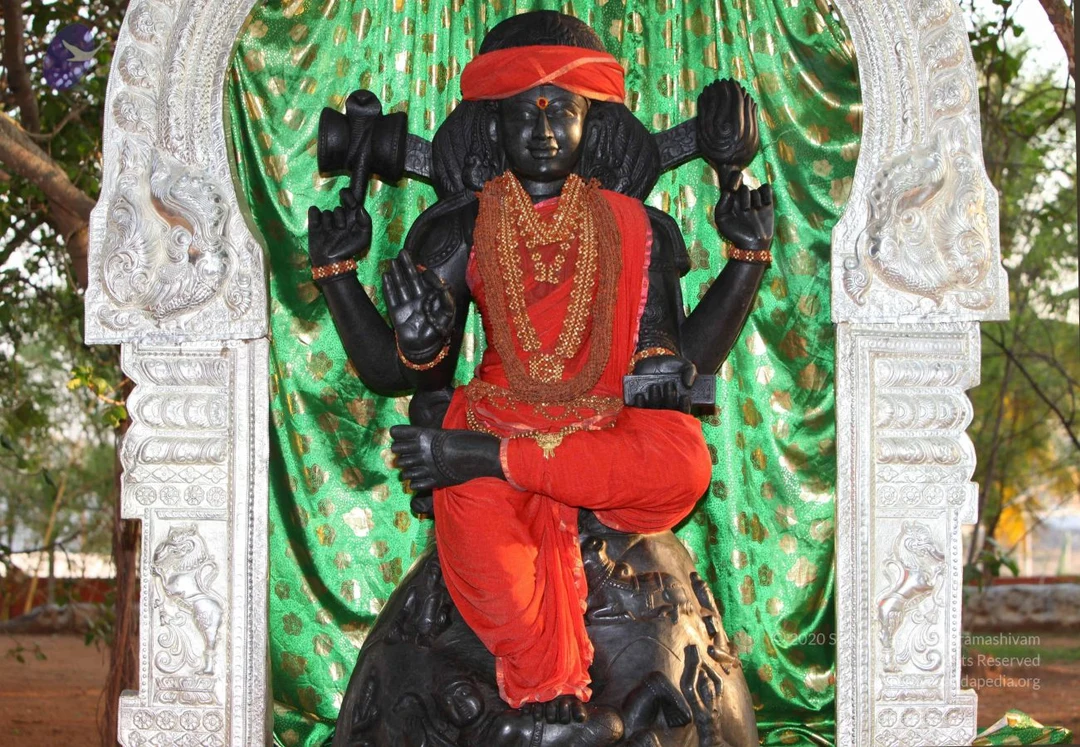
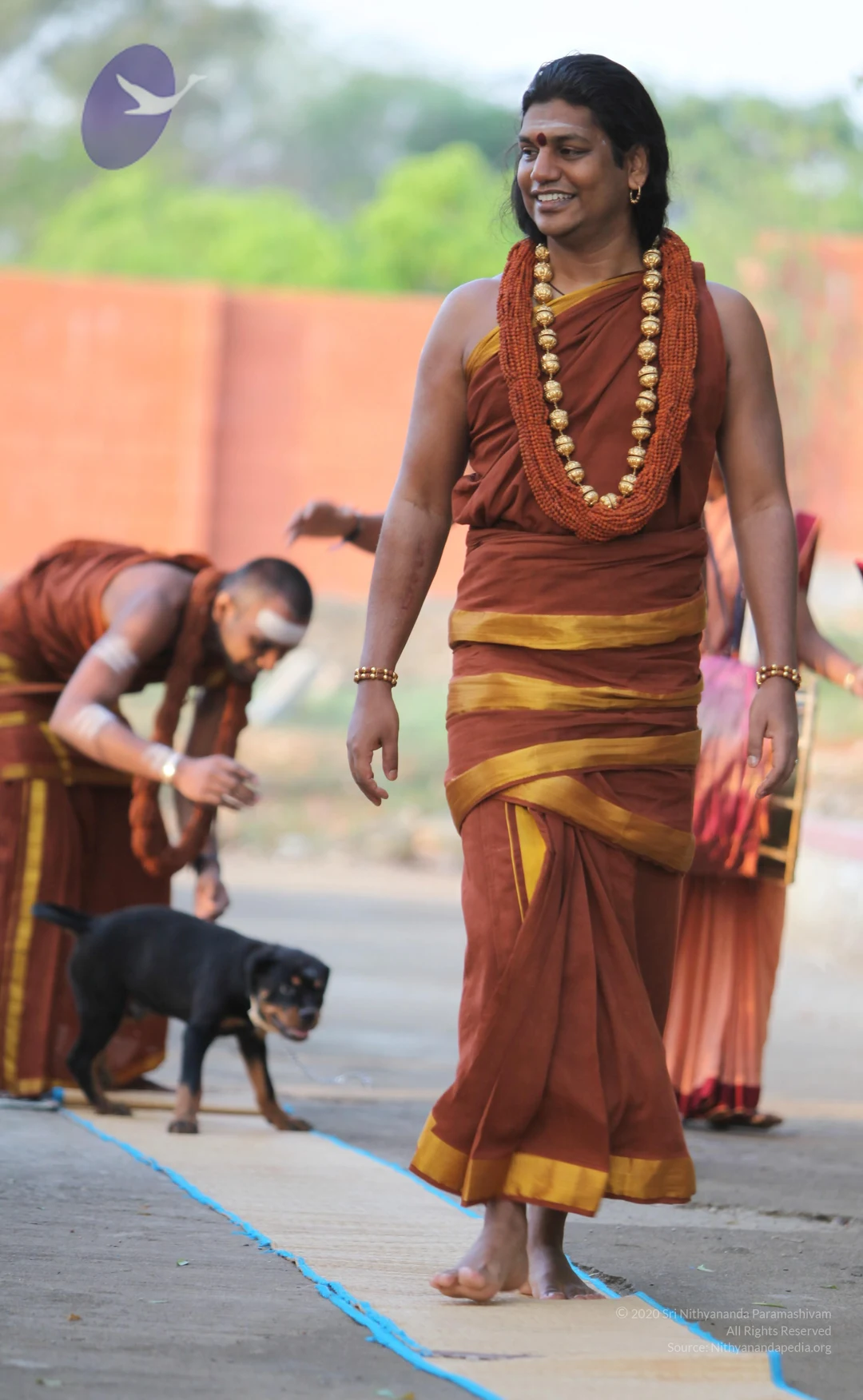
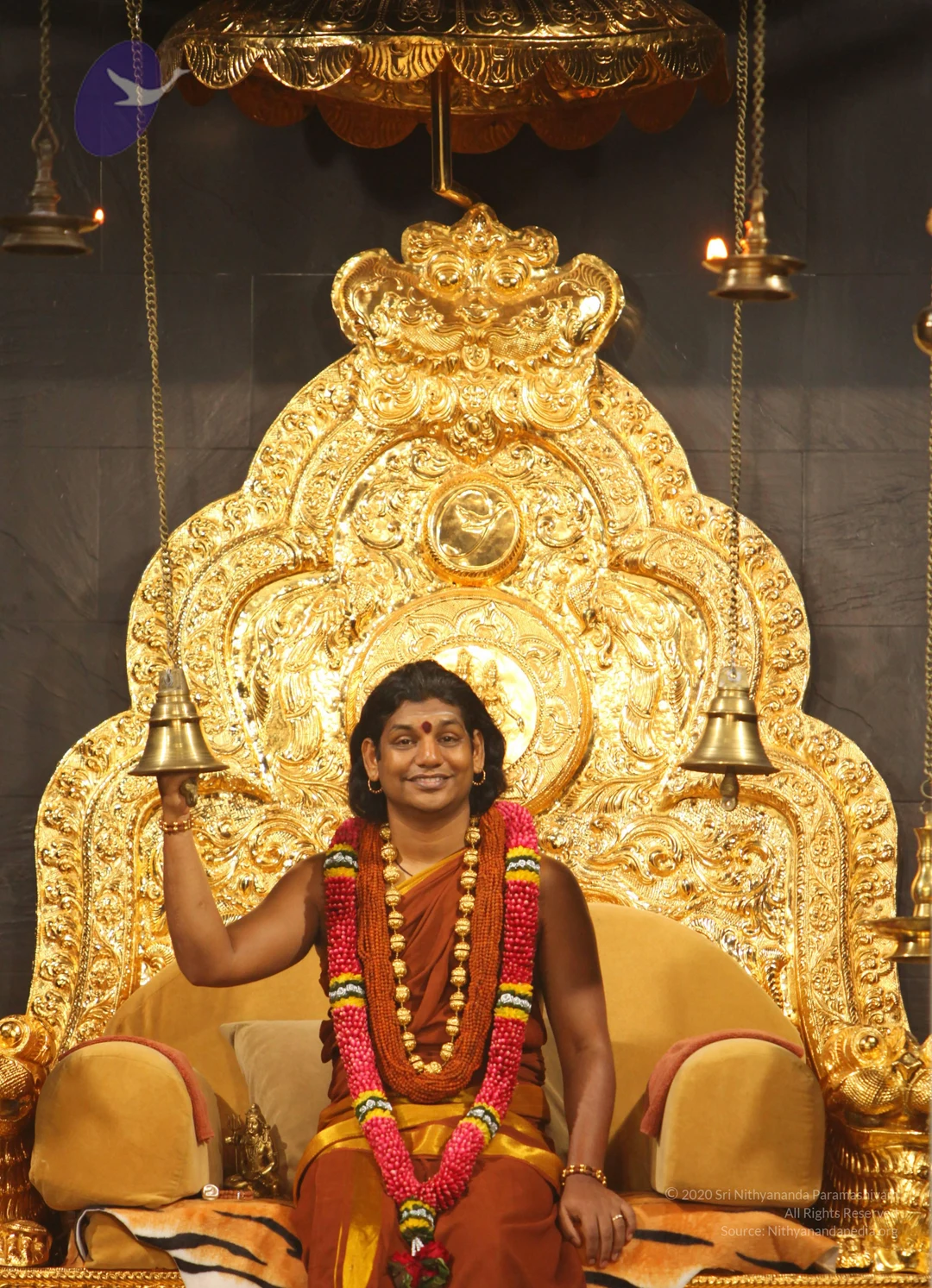
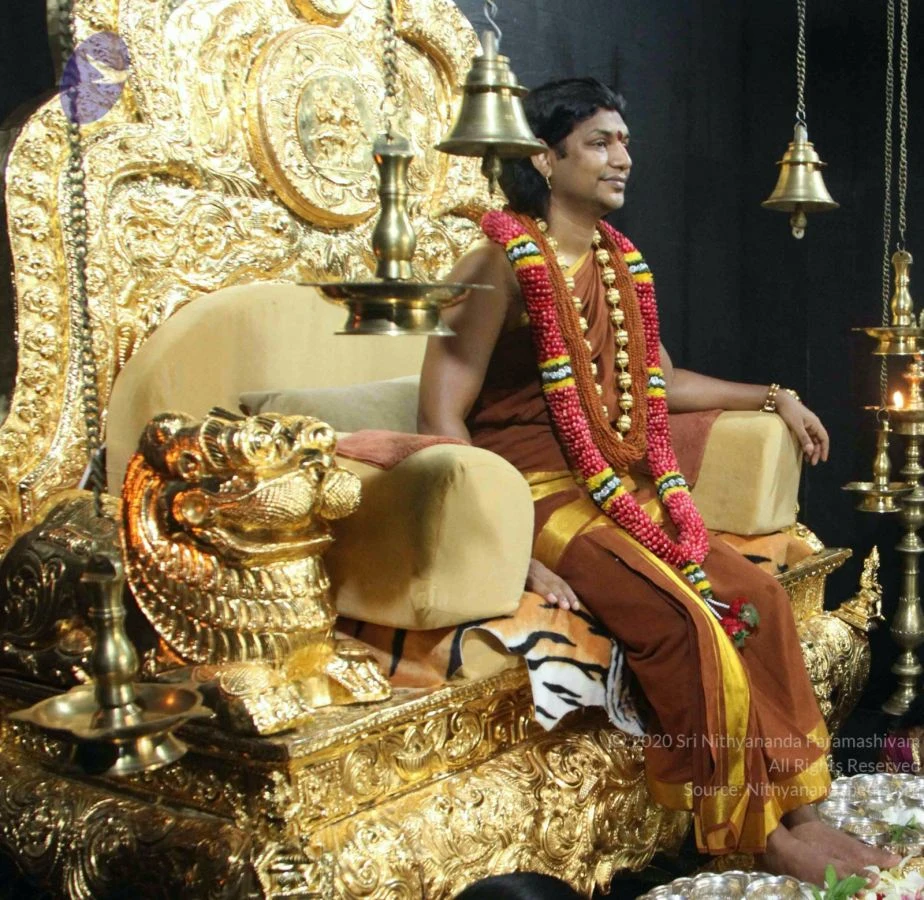
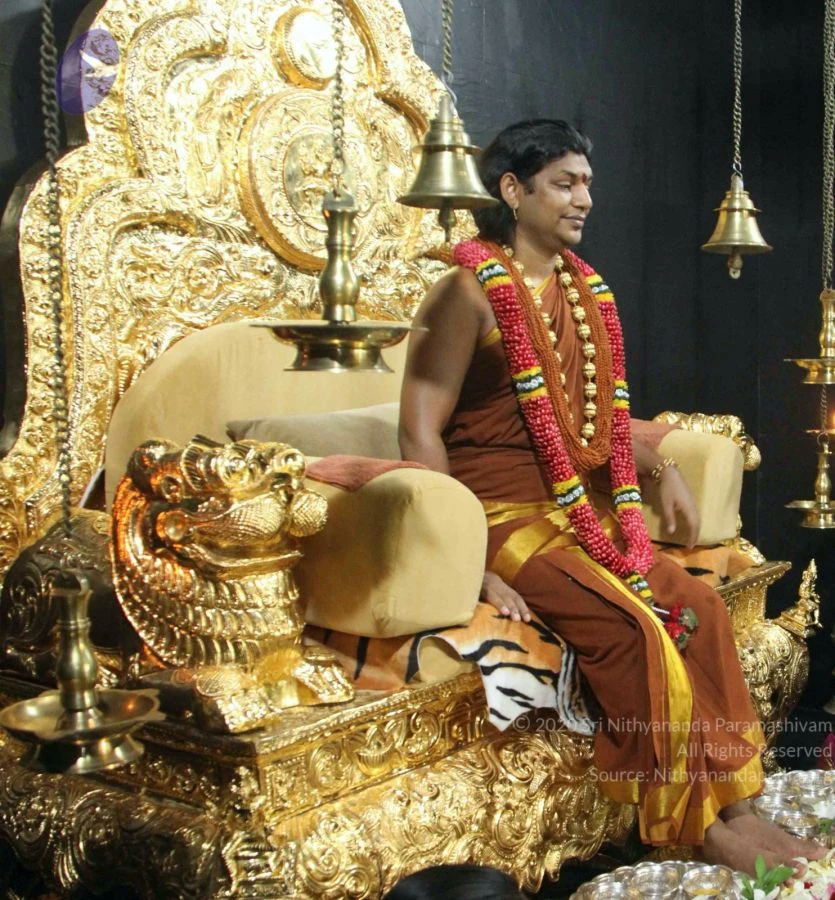
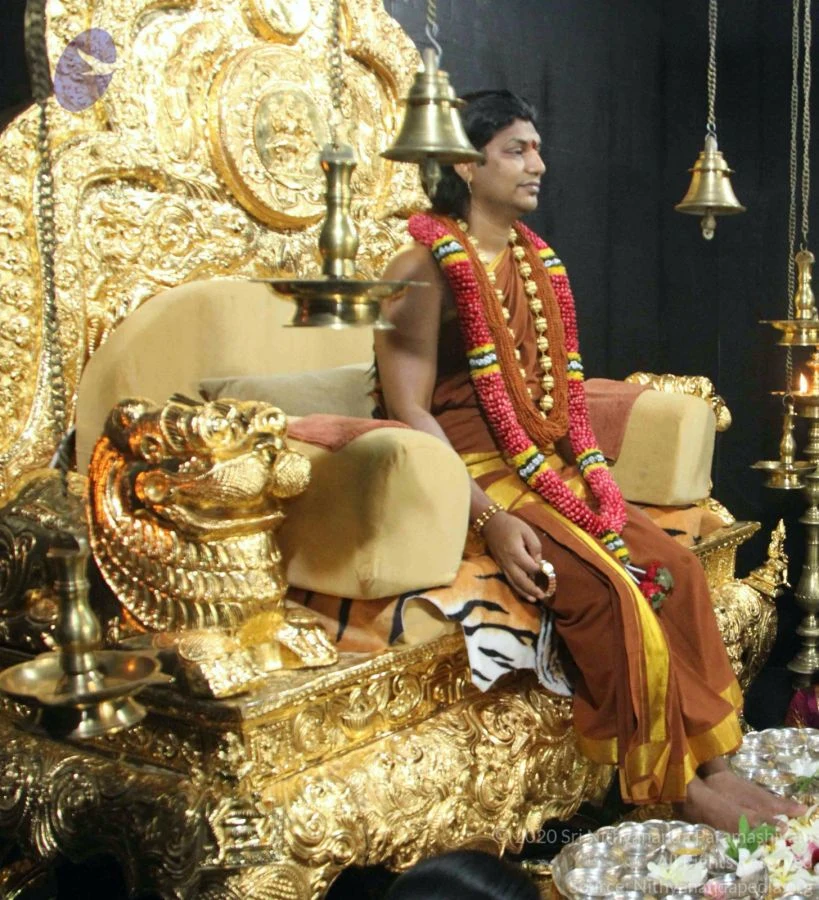
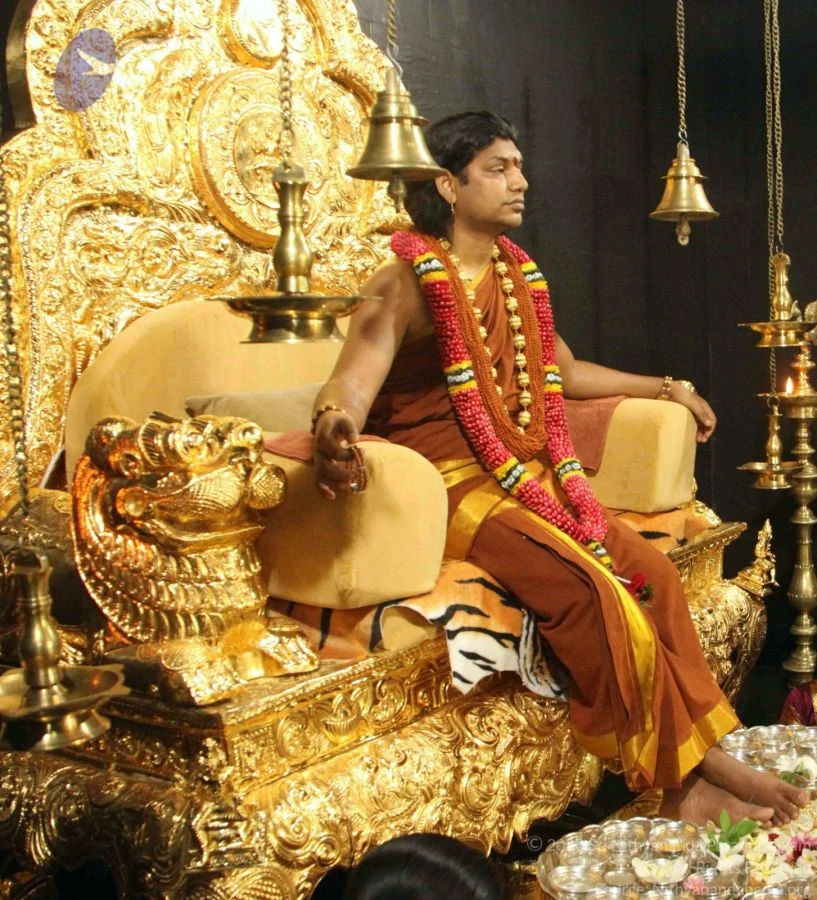
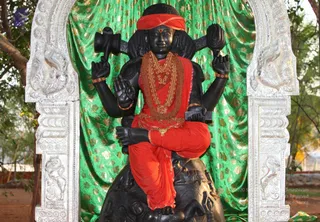
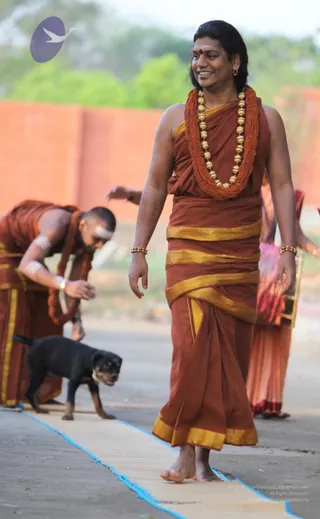
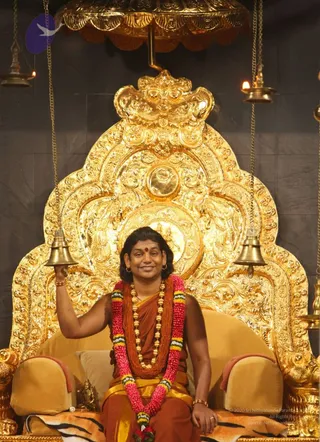
A bronze deity murti, cast in gold-toned metal, sits within an ornate copper-coloured arched throne-like frame with lion and rearing-horse motifs. It wears a white silk sari with gold border, layered jewelled necklaces set with red, green and blue stones, strands of pearls and rudraksha beads, and a red pendant. A red flower is tucked at its shoulder and it holds a small object in one hand. Oil lamp flames burn in the foreground, and a colourful beaded backdrop with red and green gems fills the background.Close-up photo of a ceremonial setup in a temple-style space. In the centre, a white cloth draped over a cylindrical object with gold brocade bands, a red flower on top, and a rudraksha mala with gold beads wrapped around it. On the right, a copper-coloured carved figure with a lion or horse motif and a white-draped deity murti wearing pearl and bead necklaces with a red pendant. Brass bowls and a kalasha-like vessel sit in the foreground, a white flower garland lies below, and purple and magenta cloths hang in the background. No people are visible.A photograph of two golden metal deity murtis seated before a rich red-orange satin backdrop framed by an ornate gold arch. The left murti wears an orange and gold turban, a gold trident rests against its side, and its hand gestures in abhaya. The right murti wears a tall golden crown, large jewelled earrings and layered garlands with a nose ring. A small green parrot figure perches near the central offering stand. Both wear multi-stranded jewelled necklaces. This is a depiction of deity murtis, not a living person, and no printed name appears in the scene.A black stone statue seated cross-legged on a dark rock base, with four arms, a red headband, red wrap and red dhoti, layered gold-toned beaded necklaces, and a small red tilak on the forehead. The statue sits within a silver-toned ornate arch against a green fabric backdrop with gold spots, with trees behind. The figure is a stone murti, not a living person, and holds ritual objects in its hands.A barefoot man with long swept-back dark hair and a red bindi walks along a pale strip laid on a paved path, smiling and looking to his left. He wears a rust-orange dhoti and shawl with broad gold borders and a dense rudraksha mala with gold beads at his neck, plus gold bangles. Behind him, a second man in matching rust-orange robes with white forehead and arm markings bends forward near a black-and-tan puppy, and a figure in pink-and-orange draped cloth stands to the right beside an orange wall and green trees.A seated man in a rust-orange robe and gold waist sash sits on an ornate gold-carved throne with a tiger-striped cloth draped over the seat. He wears a red-and-white flower garland with gold beads and rudraksha-style beads, a red bindi on his forehead, and raises a brass handbell in his right hand. Brass oil lamps with lit flames hang on chains on both sides of the throne, and a gold canopy rises above. A probable Swamiji, the appearance cues include the long swept-back hair, the ornate gold necklace, the rudraksha mala, and the saffron-orange robe, and he is seated on the throne, presiding as a teacher.
Pada-Puja

40 photosSource gallery
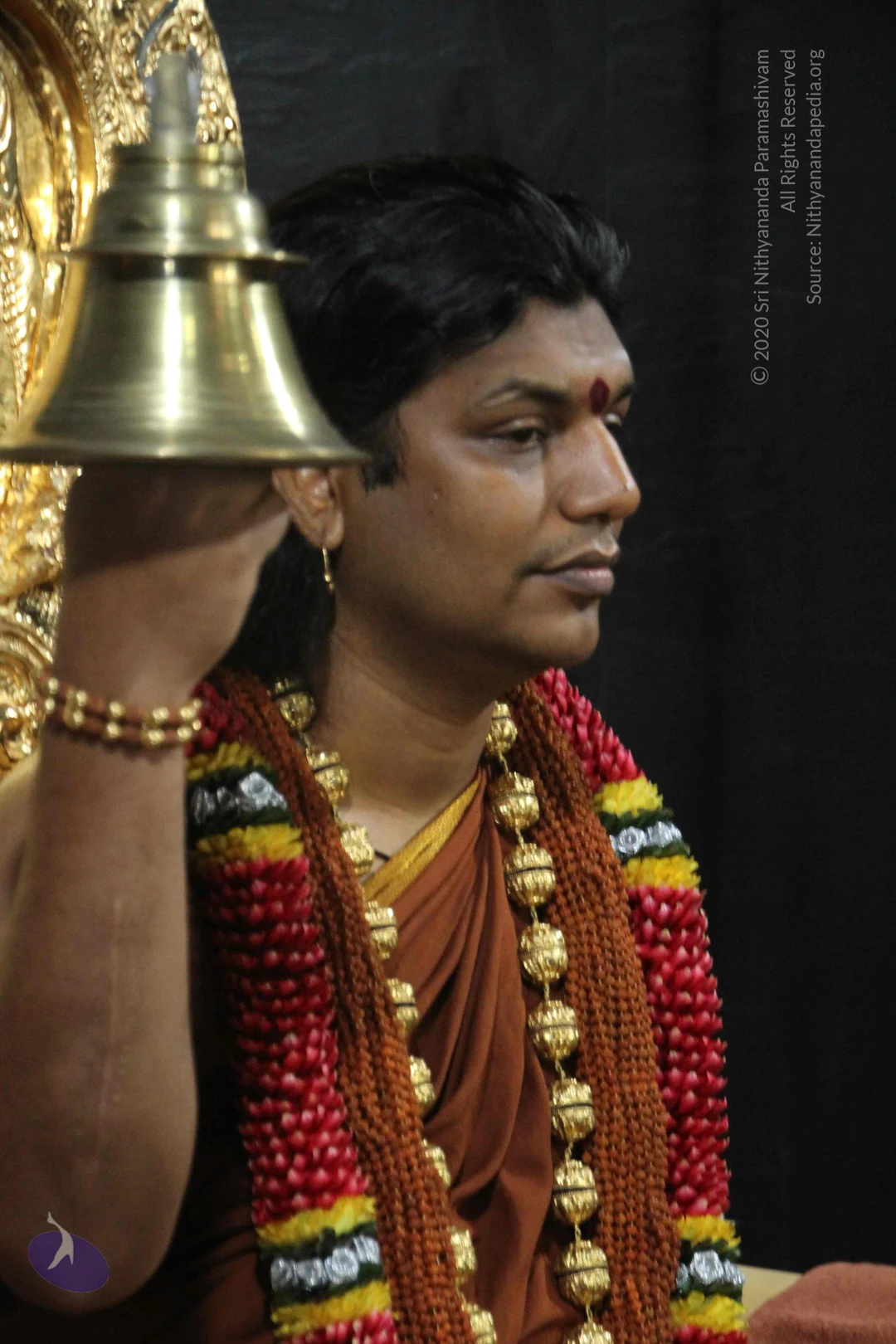
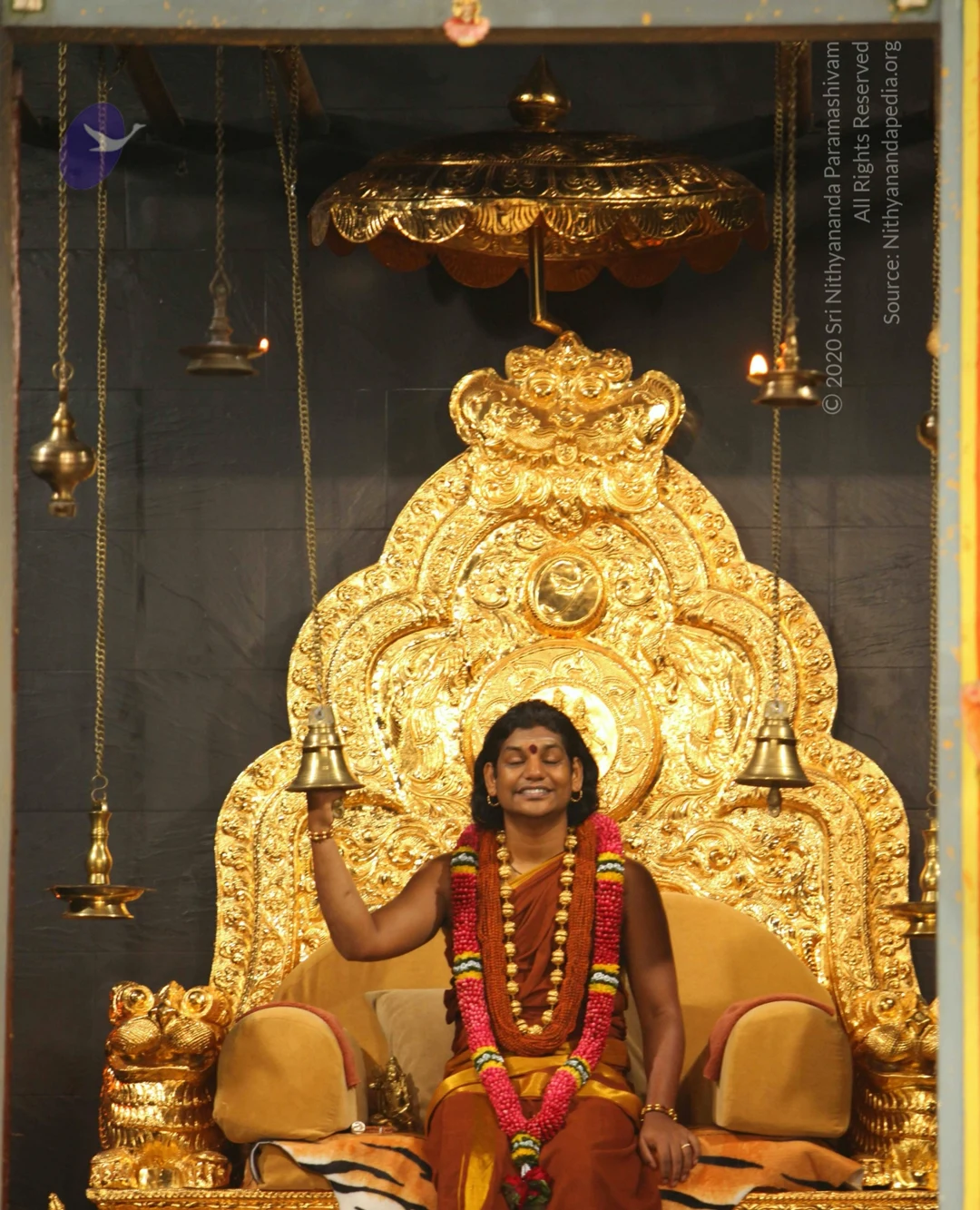
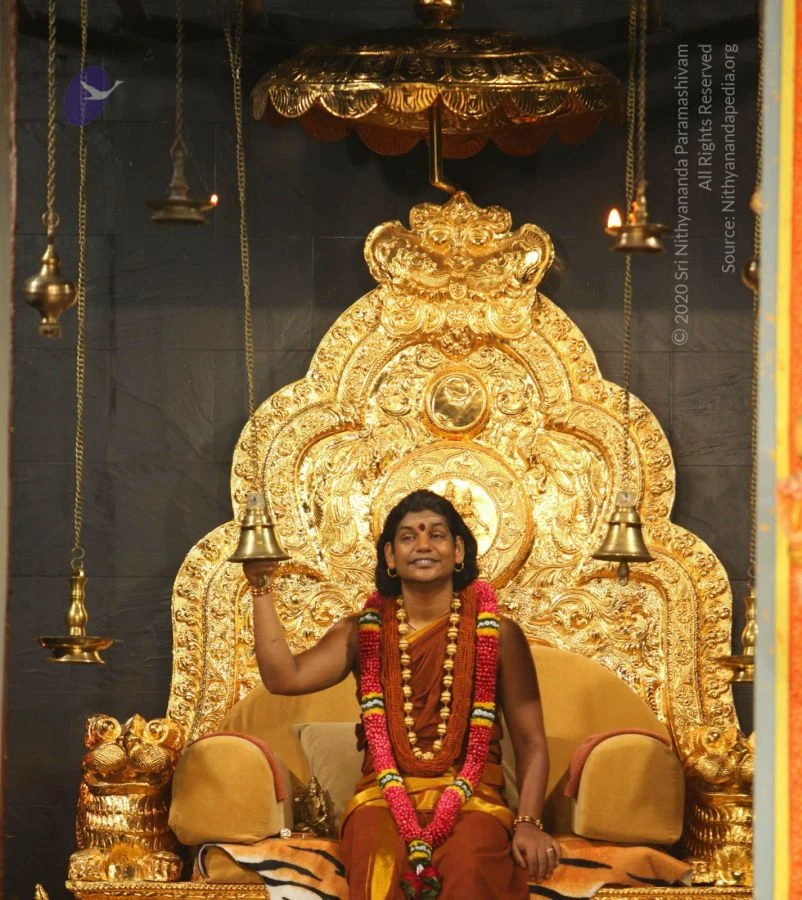
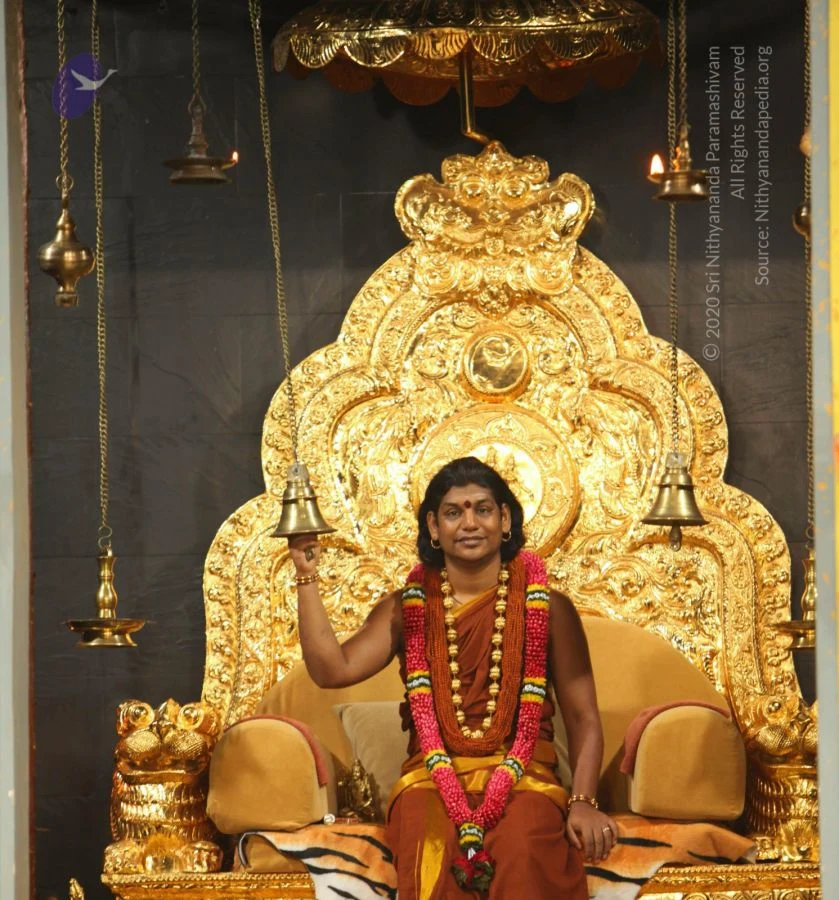
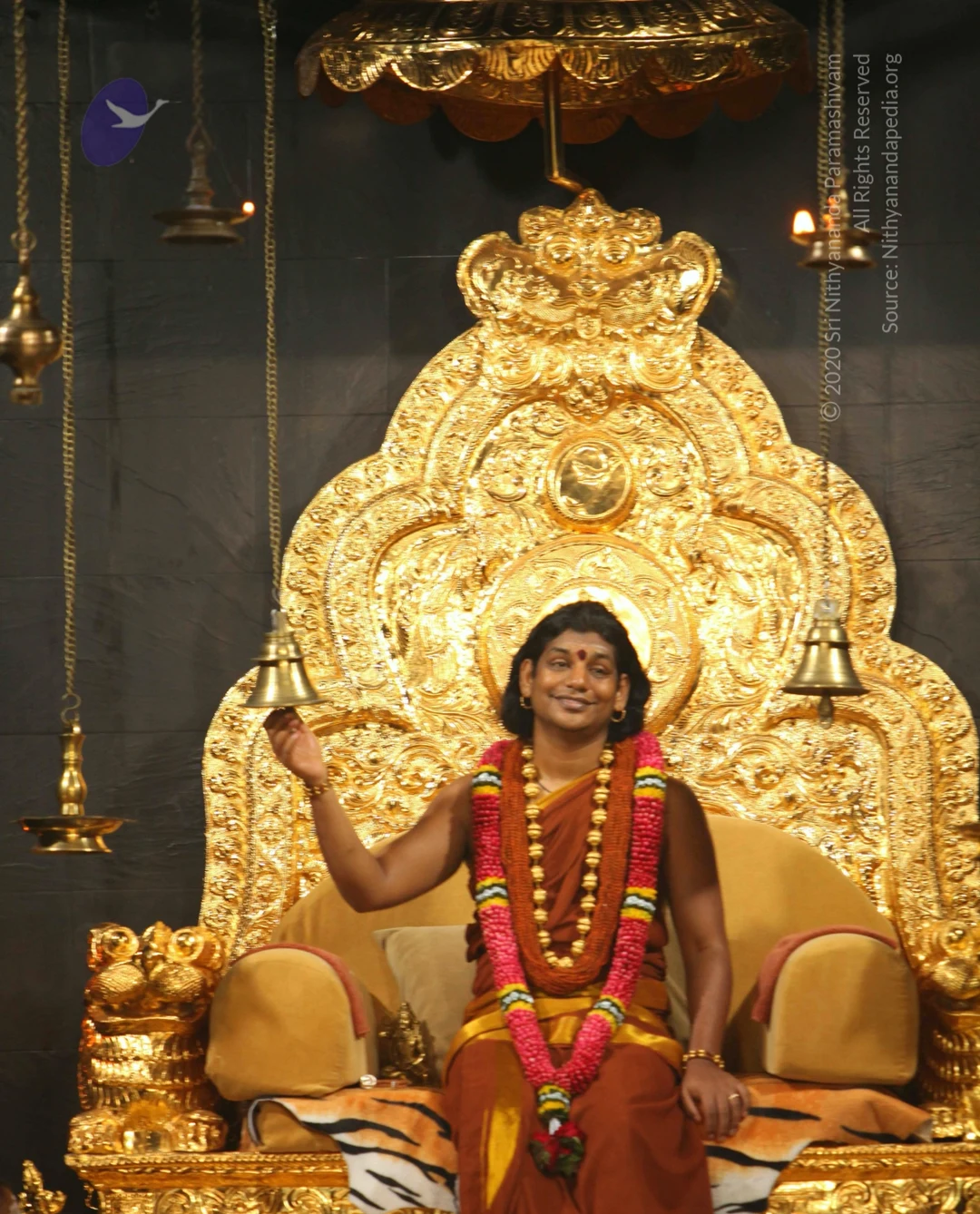
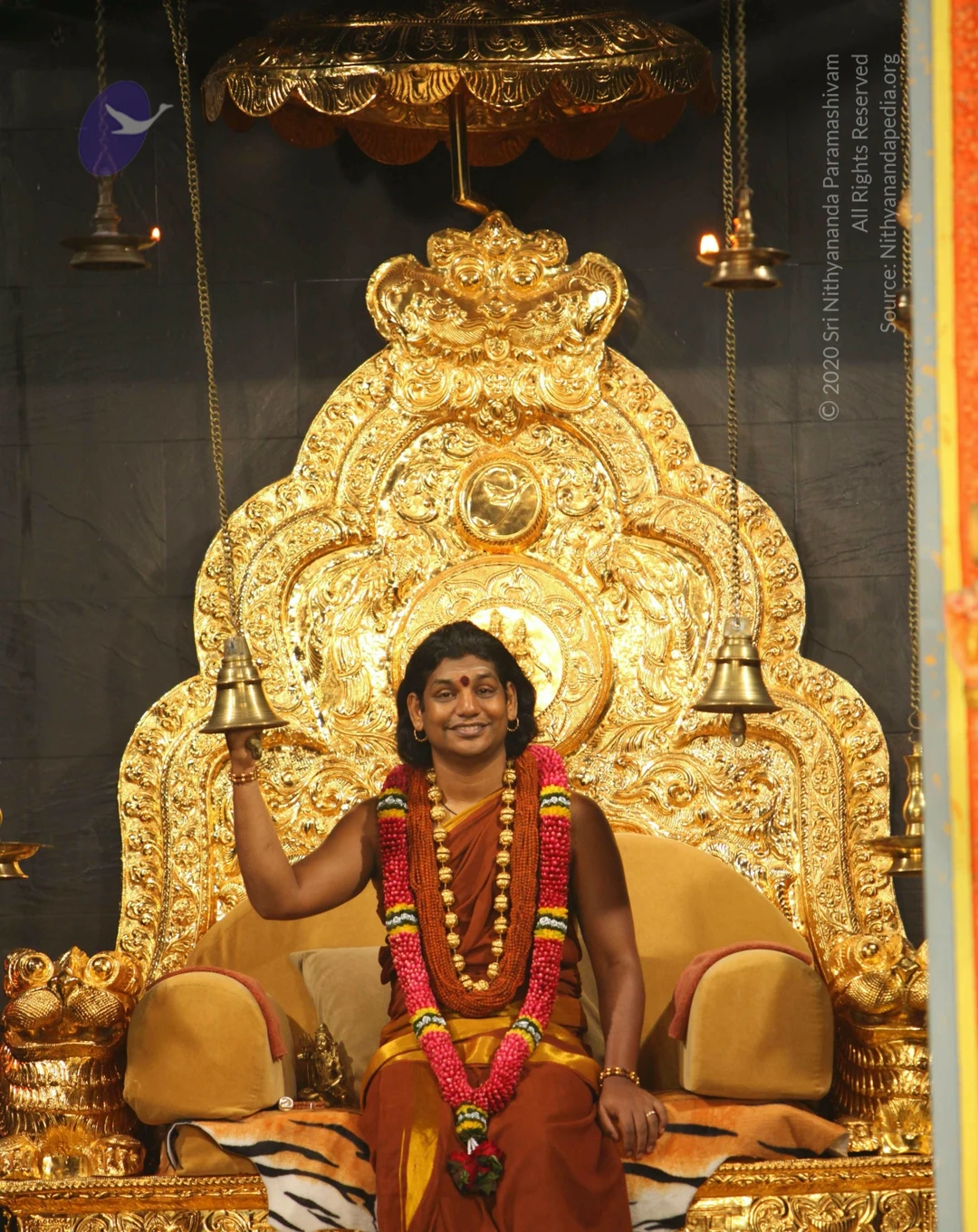
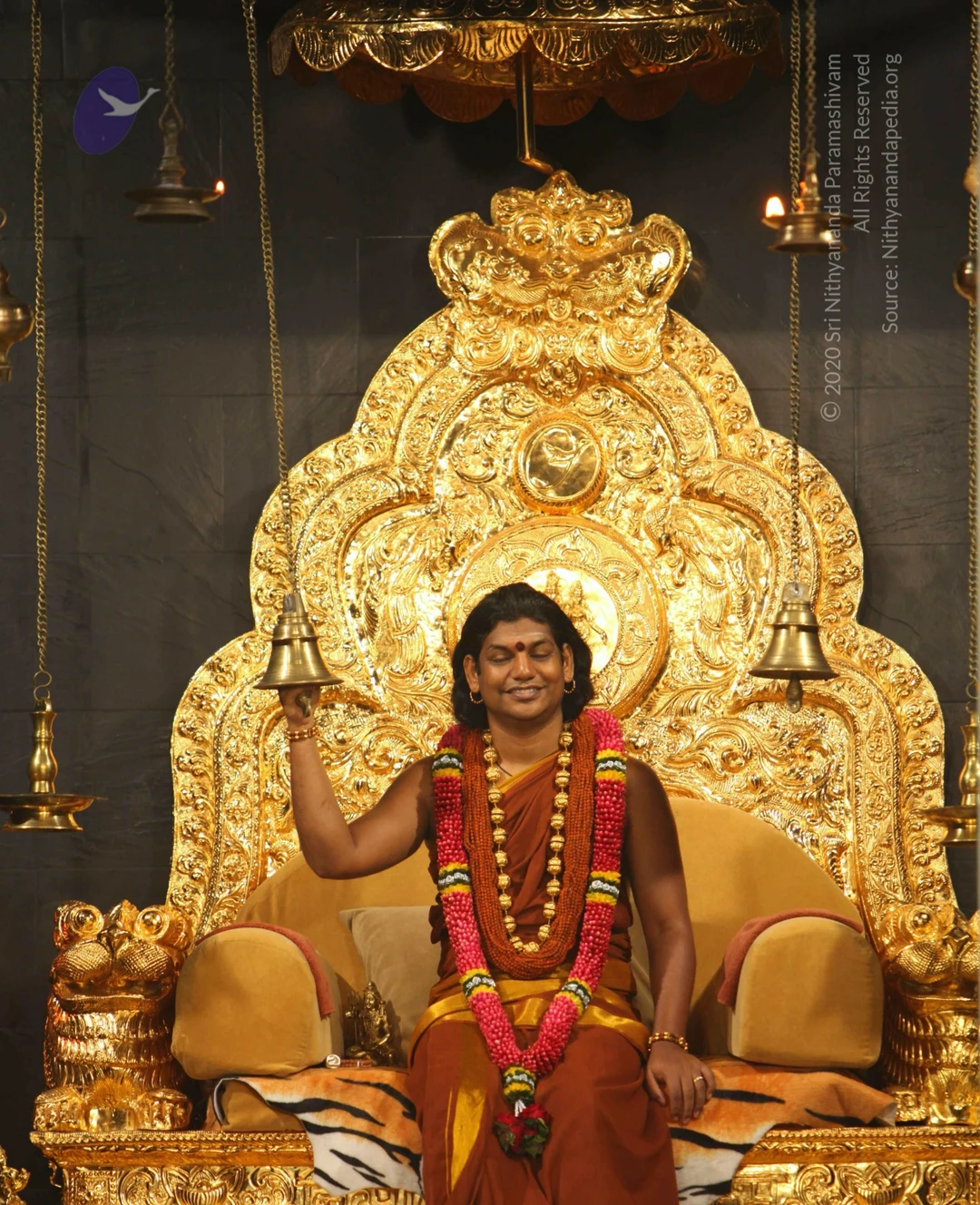
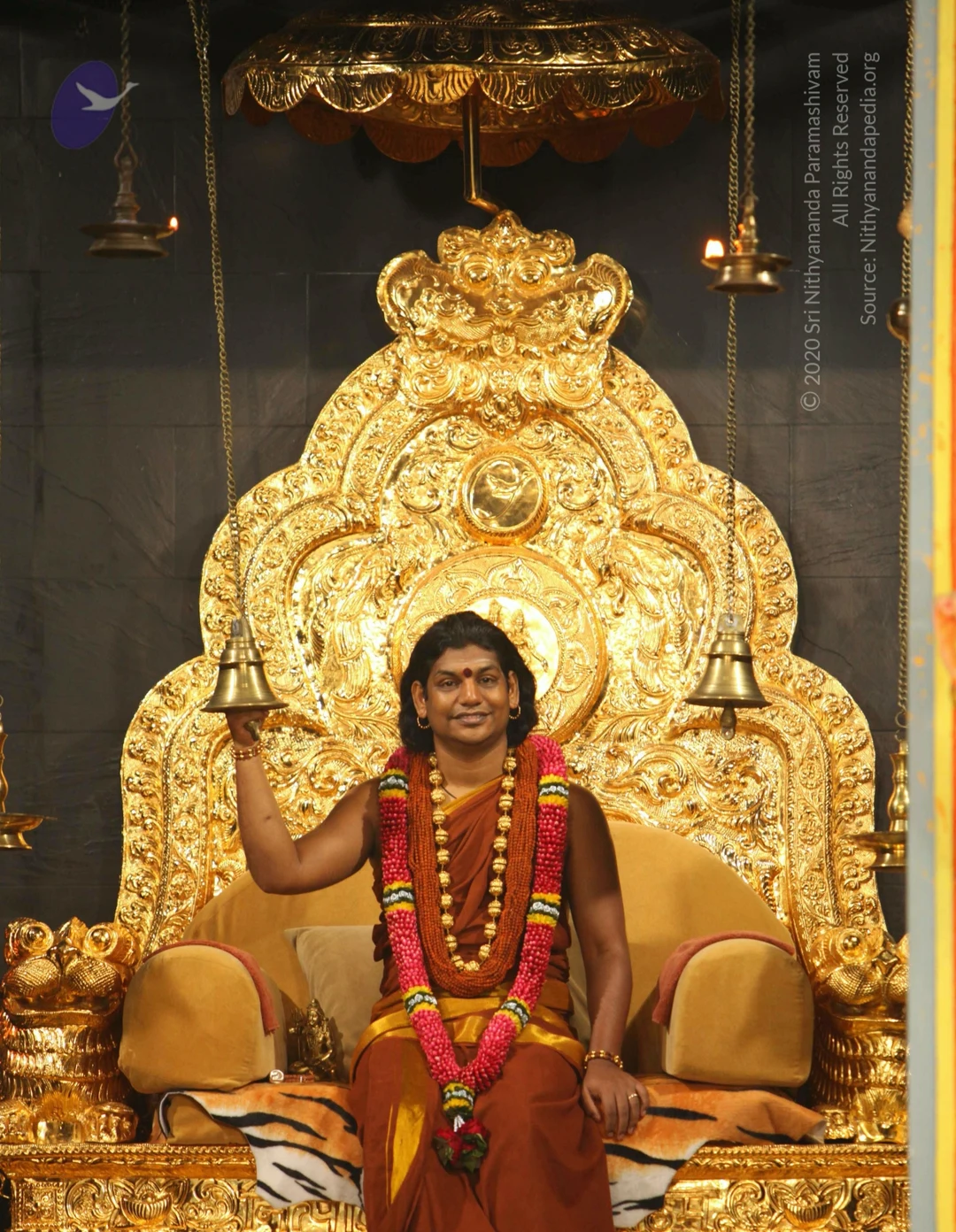
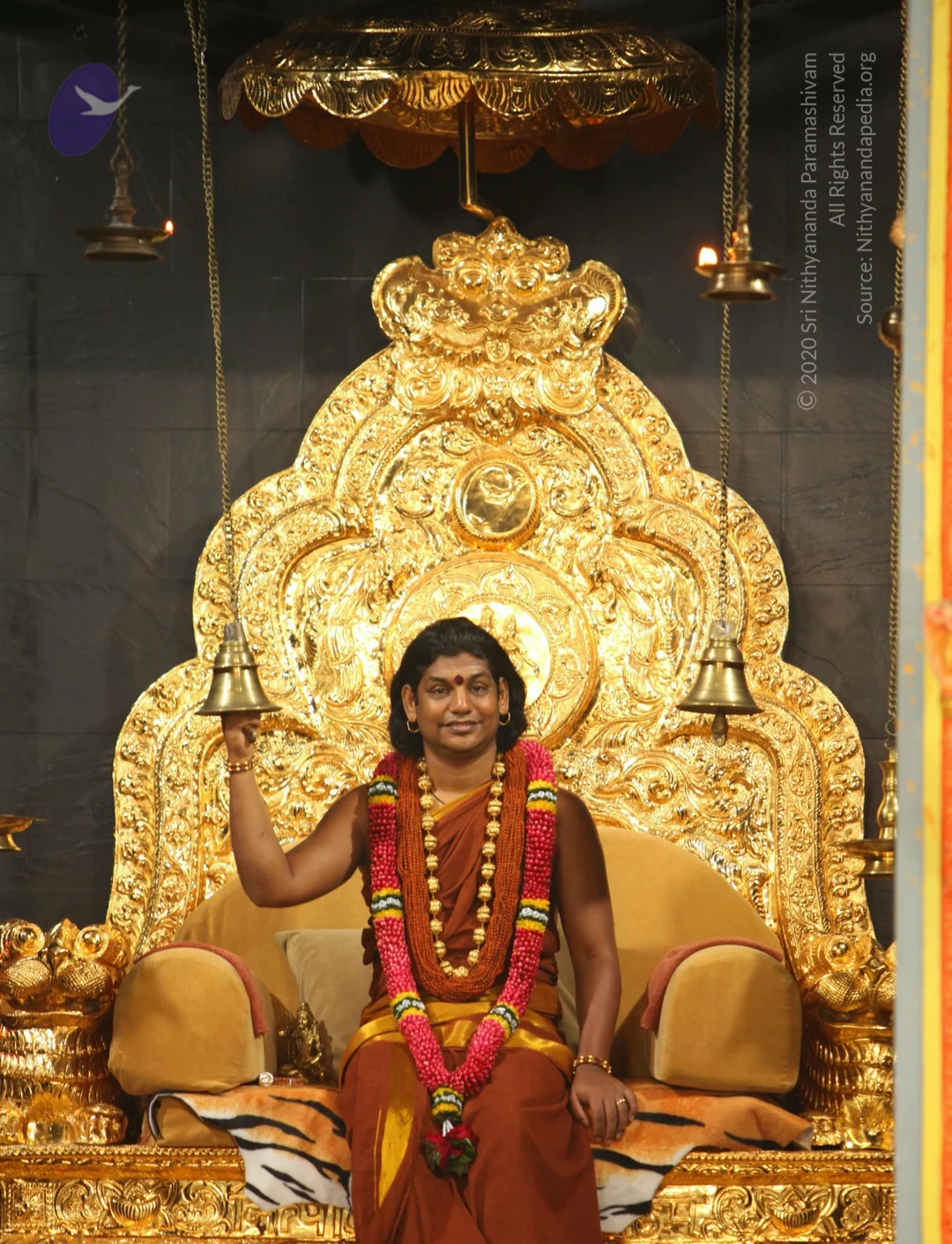
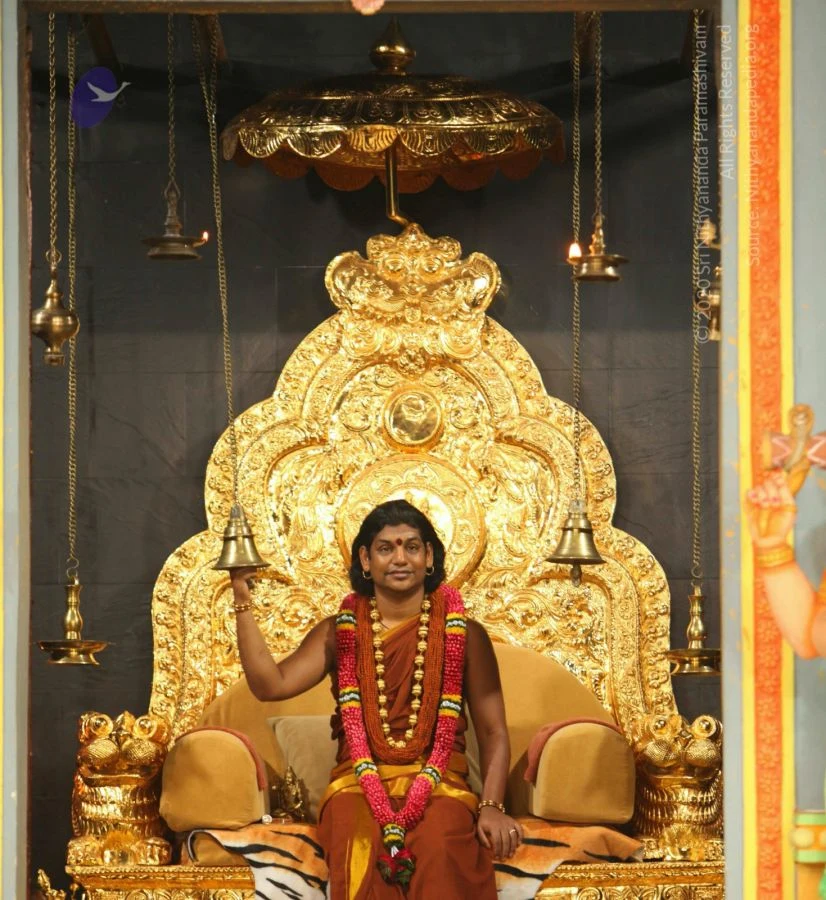
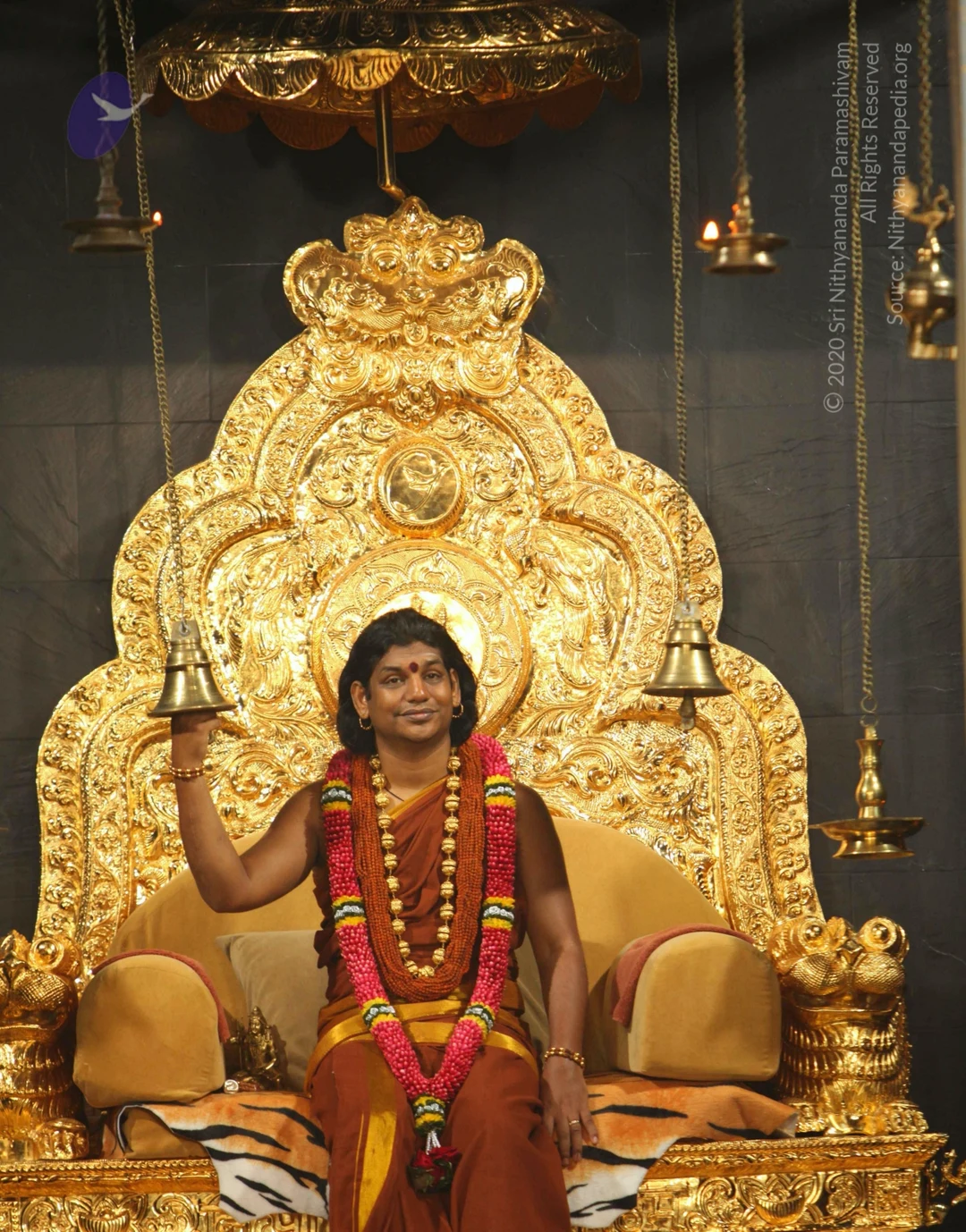
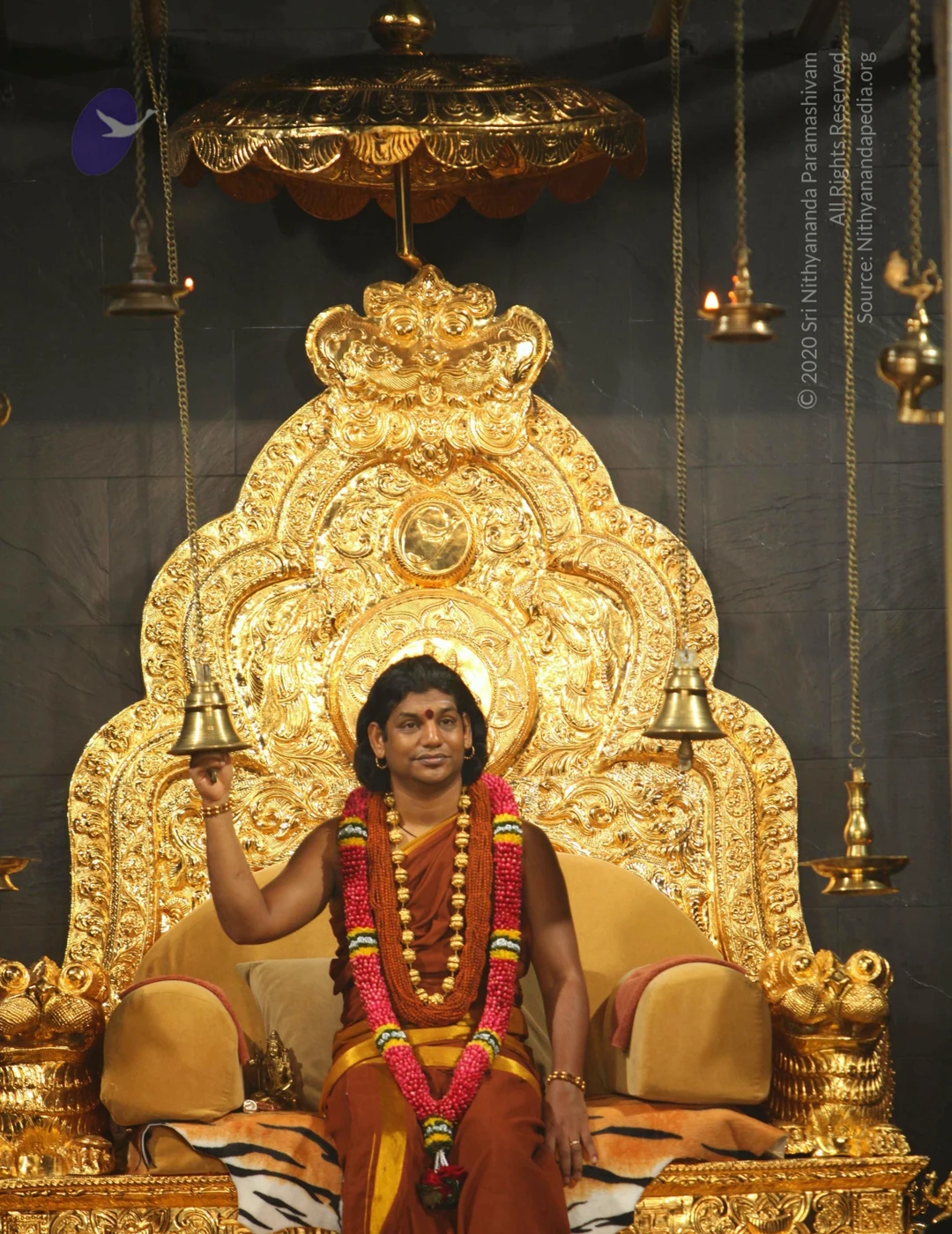
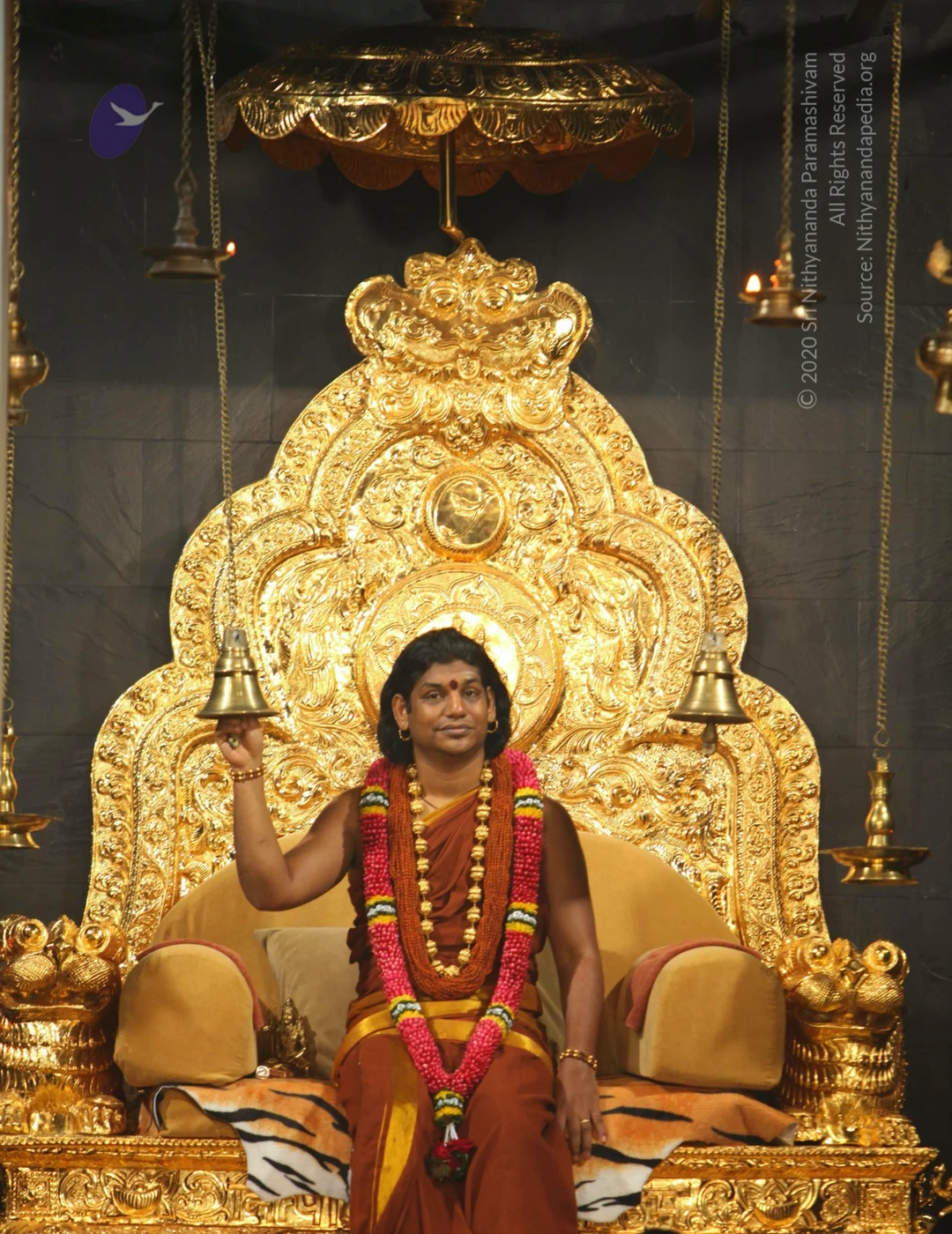
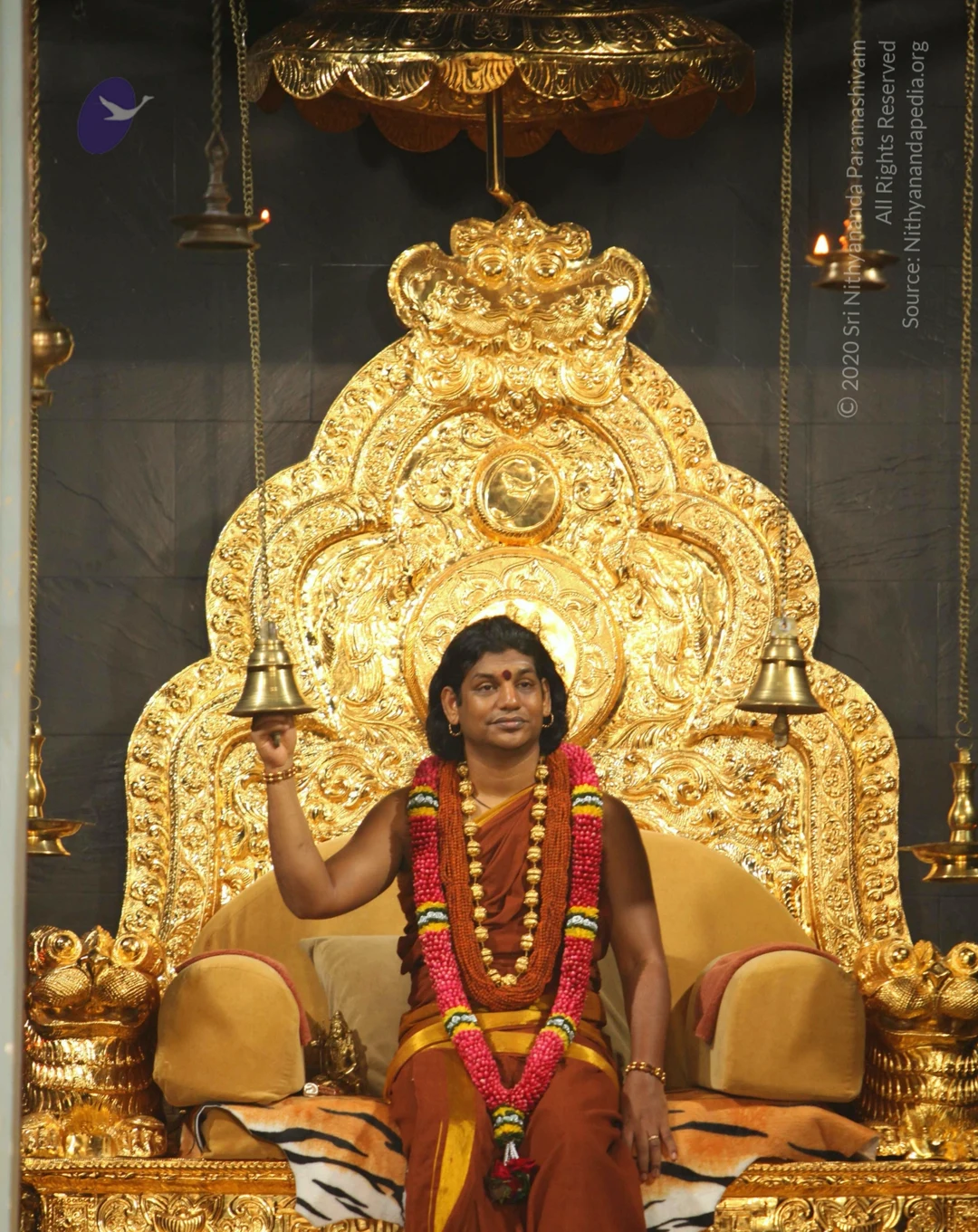
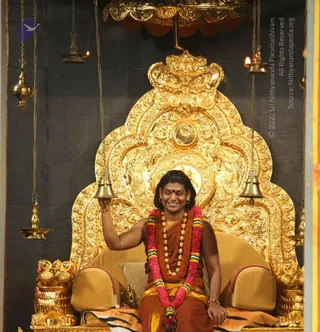
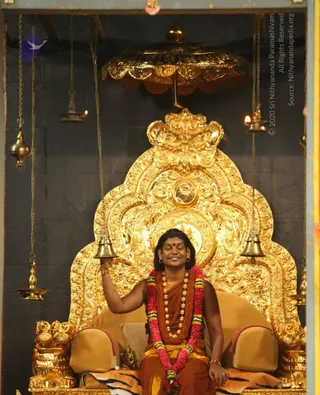
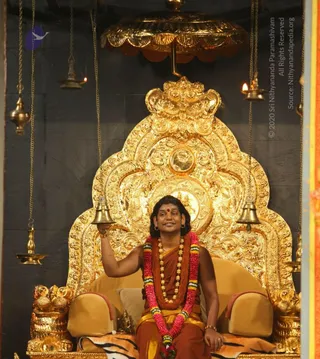
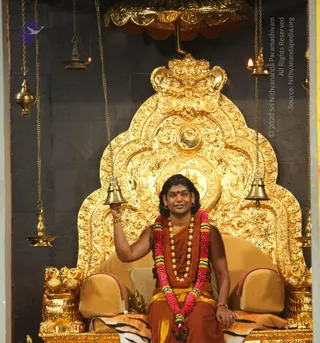
A seated man in saffron-orange robes sits on an ornate gold throne with a large carved gold back and crown-shaped finial, draped with a striped tiger-print cloth. He wears a red-and-yellow flower garland, a rudraksha mala and gold beaded necklaces, and raises a small brass bell in his right hand. Hanging brass oil lamps with lit flames and chains surround the throne against a dark wall.A seated man on an ornate gold throne with a carved gold backrest and a tiger-striped cloth draped over the seat. He wears a saffron-orange garment with a gold border, a rudraksha mala across the chest, a gold bead necklace, and a multicoloured flower garland. He holds a brass handbell raised in one hand and smiles, with a red tilak on his forehead. Brass hanging oil lamps with lit flames hang beside the throne against a dark wall. Swamiji (probable) is depicted through his saffron clothing, rudraksha mala, long swept-back hair and seated throne role.A photograph of a seated figure on an ornate gold throne (peetha) with a gilded back and lion-head armrests, draped with a tiger-striped cloth. The figure has long dark hair, a red bindi, and wears an orange-brown robe with a red-and-multicolour garland and a rudraksha mala. He raises a brass handbell in one hand with eyes closed. Above hangs a gold canopy, and brass oil lamps with lit flames hang on chains against a dark wall.A photograph of a seated figure on an ornate gilded throne with a large golden backrest carved with floral and figural motifs, draped with a tiger-striped cloth. The person wears saffron-orange robes, a rudraksha-style bead necklace, a multicoloured garland of pink, red and green flowers, and a red bindi, and raises a brass bell in the right hand. Hanging brass lamps, one with a lit flame, and a golden canopy frame the throne against a dark wall.A seated man on an ornate gold throne with carved gilded backrest and a tiger-striped cloth beneath, raising a small brass handbell in his right hand. He wears an orange-saffron dhoti and shawl, a multi-strand rudraksha mala and a gold beaded necklace, with a red-and-pink flower garland and a red tilak on his forehead. Hanging brass oil lamps with chains and a lit flame surround the throne, and a golden canopy stands above. Swamiji (probable) is shown from appearance cues: long swept-back hair, saffron clothing, rudraksha and gold ceremonial necklaces. The scene suggests a satsang or darshan setting.A photograph of a seated man in a saffron-orange robe and gold waist sash on an ornate gold-leaf throne with a large gold backrest, with a tiger-striped cloth draped on the seat. He wears a long multicoloured pink, yellow and green garland, a dense red and gold rudraksha-style bead mala, and a red bindi. He holds up a small brass bell in his raised right hand and smiles. Hanging brass oil lamps with lit flames and brass bells hang from chains behind the throne against a dark slate wall, with a gold canopy above. The swamiji appearance cues of long swept-back hair, ornate gold seating, saffron clothing and rudraksha beads match the page's identification, so this is a probable Swamiji (probable) seated in person.