Skip to content
Thursday

5 December 2013

Nithyananda Diary | Bali Inner Awakening Day - 5 | Padukapuja | Satsang | Dial The Avatar | Nirahara Samyama | Sarvadarshan

Dated photos
211
Source pages
1
Media
2
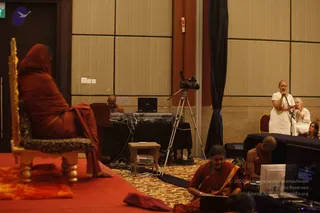
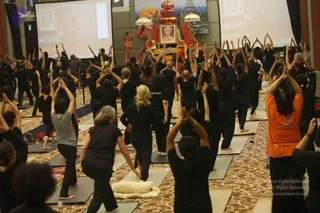
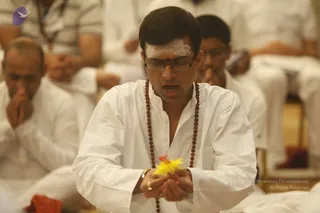
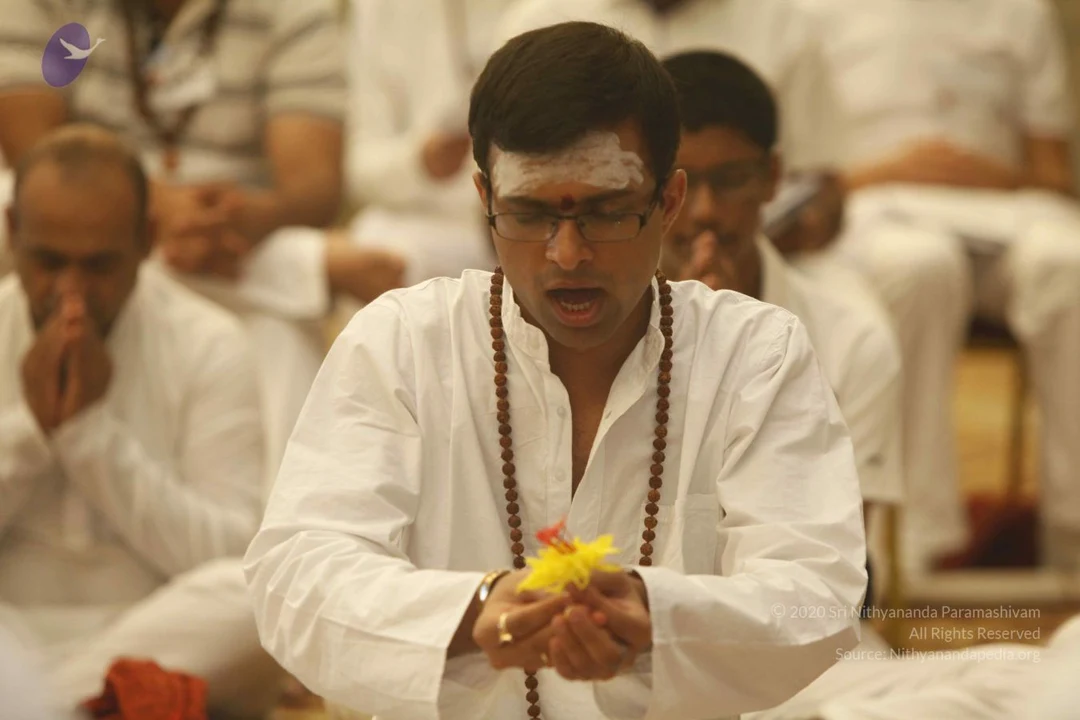
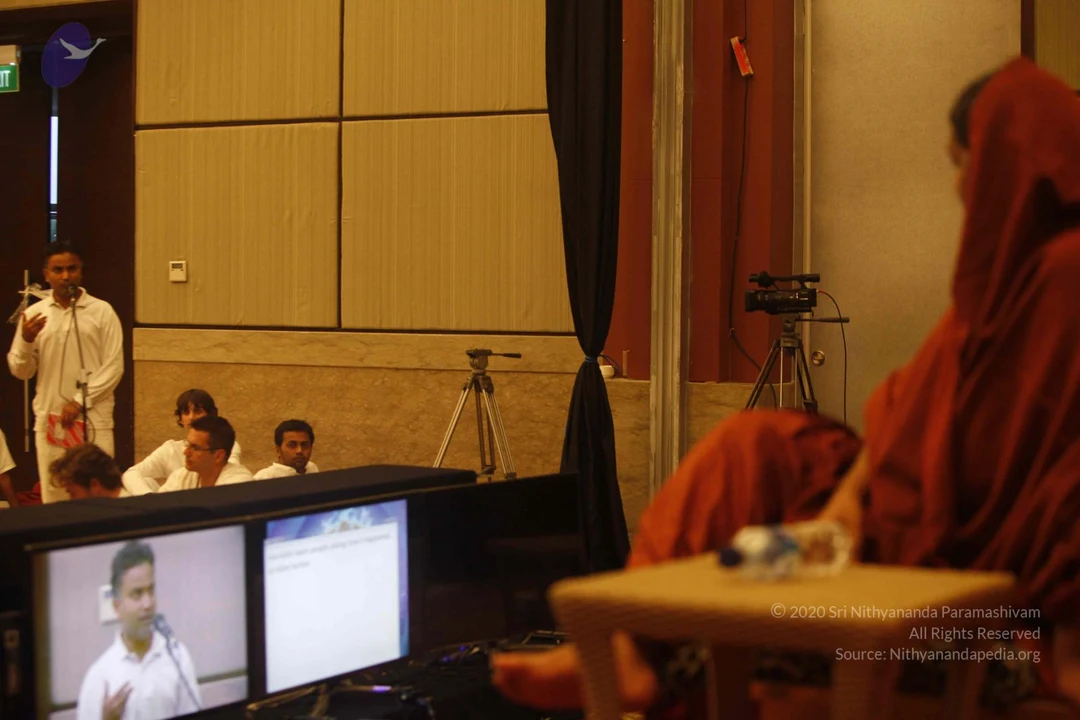
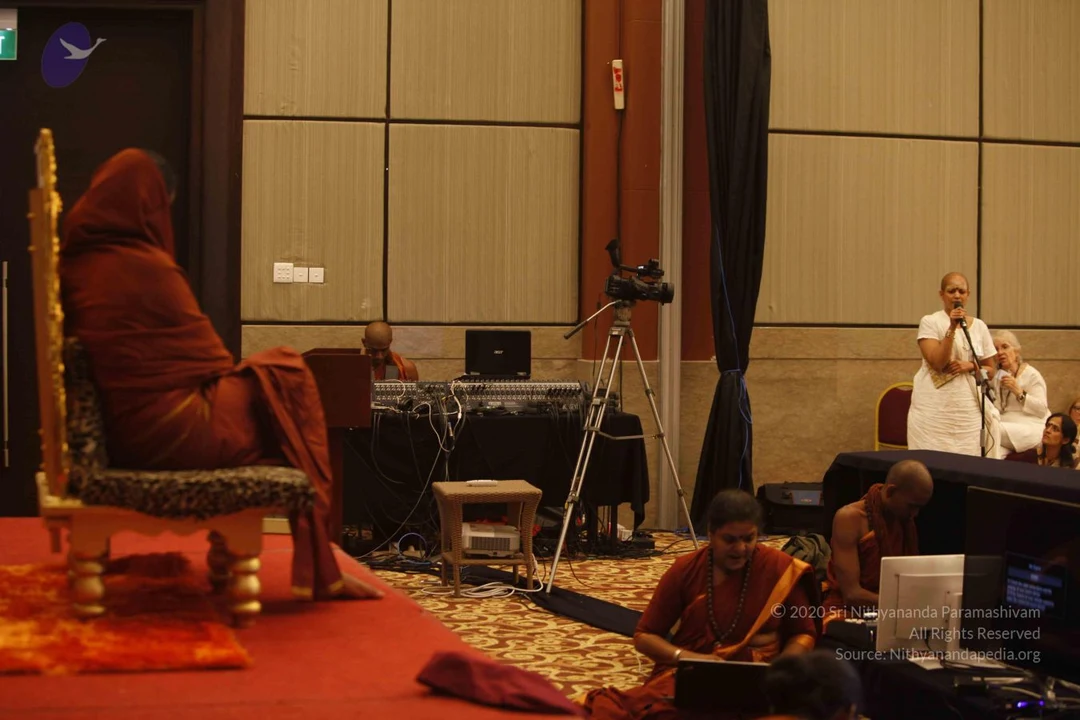
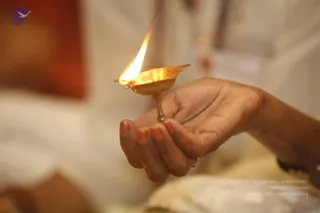
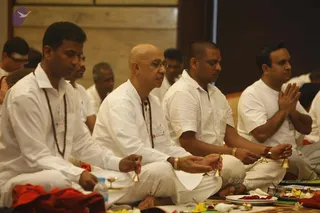
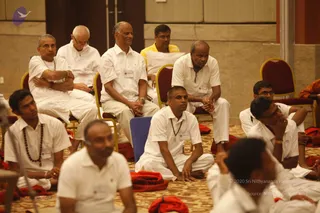
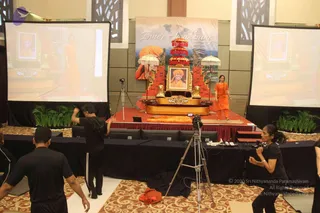
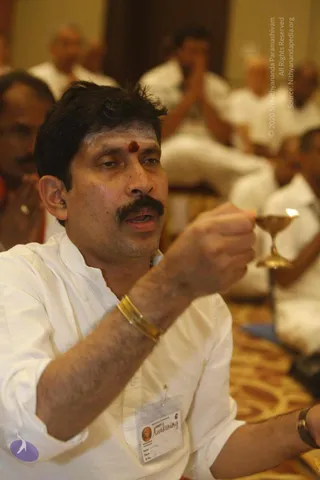
Indoor event hall with a red-carpeted stage. In the left foreground, a seated figure in a rust-orange wrap sits on an ornate gold-trimmed throne with a leopard-print cushion, seen from behind. Nearby, a robed monk in orange works at a sound mixing board with a laptop. A woman in a dark red sari with a beaded mala sits cross-legged at a low laptop in the lower centre. On the right, a shaved-headed woman in white clothes speaks into a microphone, with an older woman in white beside her and seated audience members at the edge of frame. A video camera on a tripod and a small projector sit on a low wicker table.A large hall with a patterned carpet where many people in black clothing stand on yoga mats with arms raised overhead in a group practice. In the foreground a woman in a grey top and a woman with blonde hair in black stand near mats, while a woman in a bright orange top stands at right. At the front, a small golden altar holds a framed portrait of a saffron-robed figure, flanked by red and gold Balinese-style architecture and a painted banner. Projection screens on both sides show more saffron-clad images. A cameraman stands at left near the front. The portrait is a printed depiction on the altar and screens, and no appearance-based candidate is clearly identifiable as a physical presence in the scene.A seated man in an all-white kurta with a rudraksha mala around his neck and white sacred ash on his forehead, wearing glasses, speaks while holding a yellow flower offering in cupped hands. Behind him, several people in white clothing sit with hands folded in prayer or namaskar, with mats and red cloth visible in the lower corners. The setting appears to be a satsang or puja gathering.

December 05 2013

Original wiki page
Contents

Title

Nithyananda Diary | Bali Inner Awakening Day - 5 | Padukapuja | Satsang | Dial The Avatar | Nirahara Samyama | Sarvadarshan

Description:

In today’s morning satsang from Bali, Paramahamsa Nithyananda spoke about Nididhyassana which he defined as radiating or powerfully living the cognative shift that you have experienced. Having the power to live in the state of completion and giving others the courage to live in completion too and thereby enriching them. Enriching is the first side-effect of nididhyassana.

Link to Video:

VideoAudio

Transcript:

Nithyanandeshwara Samaarambhaam Nithyanandeshwari Madhyamaam | Asmath Aachaarya Paryanthaam Vandhey Guru Paramparaam ||

I welcome all of you with my love and respects. I welcome all the devotees, disciples, samajis, satsanghis, sitting with us all over the world through Nithyananda TV, Lotus News Channel, Sadhna TV, Janashree TV, Eshwar TV, and through two-way video-conferencing.

Cities sitting with us in two-way video-conferencing all over the world: Devon-UK, Los Angeles-Arunachalam, Warrington-UK, Ohio-Prayag, Bangalore North, Guadeloupe-Rameshwaram, Nithyananda Nagaramu-Hyderabad, Vancouver-Bhubaneshwar, Seattle-Chidambaram, Bidadi, New York-Varanasi, Bogota-Colombia, San Jose-Madurai, Toronto-Kailasam, Oklahoma-Somanatham, Port Washington-New York, Kathmandu-Nepal, Oman-Sivagangai, Jorpati-Nepal, Kuala Lumpur, two cities in France, Tallahassee-Florida.....................

I welcome all of you with my love and blessings.

Today, in the Inner Awakening, we will be working on “NIDHIDHYASANA” – “Living”. I translate the word “Nidhidhyasana” with my own authority as “RADIATING”. Even though the word literally means “Expressing” or “Living”, I am translating this word as “Radiating”. It is a little more powerful!

What I mean exactly by the word “Nidhidhyasana” – “Radiating”? Please understand, let your every decision every moment, every action every moment, every word every moment be aligned to what you authentically listened and to what you authentically internalized. Removing the gap between your internalized, intranalyzed great truths and your living.

Please understand, sometimes people ask me, ‘Why are you so active, so workaholic, practically twenty hours a day working, Swami?’

Once for all I wanted to answer this question: ‘I CANNOT BE IN ANY OTHER WAY!’

If you authentically listened, if you have done Shravana, listening authentically, Manana, intranalyzing authentically, you will be radiating authentically. Nothing can be done about it! When the Shravana, listening, and Manana, intranalyzing, happens authentically, Nidhidhyasana, radiating will happen authentically.

Intranalyzing and Radiating! Please listen, your life needs to be constantly powerful. You should be living to do what you want. You should be talking to get the result of what you want. You should be talking to move the other person the way you want. You should be talking into the listening of the listener! You should not be talking fighting with the patterns of the listener. You should be talking into the listening of the listener! When will that happen? If you are established into your listening, you will talk into the other person’s listening.

If I have to simply translate the word “radiating” in a very colloquial way, “Nidhidhyasana”, “radiating” means: “Minding your business”! Not wasting your life! Laziness, boredom, diversion do not have a place in your life when you are radiating. “Radiating” means “RADIATING”! It is straightforward! “Radiating” means “RADIATING”! Live your life intensely. Live your life authentically. Live your life with strength. Live your life without confusion.

First thing you need to learn to radiate, for Nidhidhyasana,

The first thing is: Learn to think and speak with the same cognition you arrive at by intranalyzing.

Please understand, I am explaining step-by-step:

First, you authentically listen to the great truths. Whenever you authentically listen, whatever you listen will be converted as great truths by your inner-space. Your inner-space has the capability, it has the power to separate right and wrong.

In Vedic Tradition, we have a beautiful example called Paramahamsa! The bird Hamsa (Swan), if you mix rice and some other items, it will separate the rice and only eat that. If you mix milk and water and keep that, it will suck only the milk and leave the water! The Hamsa, the bird Hamsa has that power. Same way, a man who takes the right things inside and leaves the unnecessary things outside is “Paramahamsa” (Supreme Swan). If you bring authentic listening into you, you will become Paramahamsa! Anything you listen, you know what to internalize and what to reject, what to internalize and what to reject.

Authentic listening brings tremendous clarity. See, it is clarity which is really lacking in the seekers’ life. Especially when somebody is interested to get enlightened, live the life of a Jeevan Muktha, clarity is a very predominantly important quality, a very predominantly important quality! Please listen! Clarity! Shankara has written a separate book on this subject – “Viveka Choodamani”. The whole book is on “Clarity”. Authentic listening leads to clarity.

And intranalyzing, Manana, leads to cognitive shift. If you don’t live that cognitive shift powerfully, you will lose it! Please understand! Powerfully living the cognitive shift is what I call “Radiating”.

I tell you, how to find out whether you are radiating or not? Simply life around you will constantly be getting enriched, that is the signal! If the constant enriching is happening, then you are radiating! Around me, whether you are six or sixty, eight or eighty, you cannot go without getting enriched! “Radiating” means, such powerful body language, such powerful words, such powerful thinking, you go on enriching, constantly winning the game of life!

I tell you, Nidhidhyasana means “having the power to live from the space of Completion and establishing everyone in the space of Completion”.

Now I have decided, I am committing with you guys, in a few years I will have 10,000 kids in the Gurukul! I am building, going all out! Building and enrolling 10,000 kids in the Gurukul! And another 10,000 Krama Brahmacharis! You will see!

There was a competition among 450 schools in Bangalore, I think in Bidadi. Yoga, Speaking, so many competitions. In which ever competition our kids participated, in all of them our kids got the first prize! Because, who will match the intelligence of my kids! After all, the other school kids are human beings. Where will you match the intelligence of these kids! I heard many other kids got frightened seeing the performance of our Gurukul kids! Whether it is Painting, or Yoga, or anything, when our Gurukul kids got onto the stage and performed, Dance, Elocution, Painting, Yoga, Writing, the other kids got frightened! And now these guys (our Gurukul kids) are going to the next level, the State level. Actually, we got first prize, second prize, third prize - all three, wherever our kids went! We just bagged all the prizes and came back! I told our Rishis, ‘Not just State level, send them to the National and International level! You will see, they will only get the first prize! Because, I am bringing them up as a separate breed! Understand, they are not - no one can compete with them! They are not “Next Generation”; they are “New Generation”!’

“Radiating” means, every word you utter will be from the strength of that cognitive shift, the excitement of that cognitive shift.

I had a cognitive shift when my Guru blessed me, ‘You will always be taken care of by the Cosmos!’ I had that cognitive shift. Immediately I decided to live it. I threw everything, whatever I had as security in my life – the house, family, relatives – and started my yatra. I said I will learn to teach; I will learn, teach, and learn to teach. I can say that was my purpose of spiritual pilgrimage: Learning and teaching, and learning to teach. I started my yatra, I started my journey.

Understand, “radiating” means, powerfully living the cognitive shift you experience, powerfully risking to taste the power of the cognitive shift in your reality, and proving the cognitive shift in your reality.

When I left the house, I did not want to disprove that blessing given to me that the Cosmos takes care of me; I wanted to prove that blessing that the Cosmos takes care of me. Many times, when you take the risk, you take the risk to disprove. ‘Come on, let me see, will the Cosmos take care of me? I will leave everything and go. Let me see whether it is going to give me food or not!’ No! Living, deciding to prove it, to make it into reality. When I left the house, I know it is the truth and I have decided I will prove this into reality, to teach the power of spiritual pilgrimage to the world. I tell you, the spiritual yatra, pilgrimage itself is a powerful spiritual practice. Pilgrimage itself is a powerful spiritual practice! Because I did it, I proved the power of the Cosmos protecting!

Now I sincerely recommend and request everyone, especially the youth, at least one year, if you are between 18 to 35, take at least one year to do spiritual pilgrimage in India. Try your best to be without money. May be, if you are feeling insecure, just have your cell-phone for any emergency help. Other than that, taste India in every level! Taste India’s spiritual strength and taste the respect, love, compassion Indian villages still carry, the respect for pilgrims.

I tell you, still the country, its villages, the core people carry that love and compassion, supporting the spiritual pilgrims. I wandered and did yatra. All major roads to the pilgrim centers - in India, all roads lead to some pilgrim center! You will see the mutts, monasteries, anna chathraas – means the free feeding centers for pilgrims. Otherwise, I tell you, every hut, every small, humble house in India is a free feeding center for pilgrims. Don’t go to palaces, I am telling you. Go to every humble home, you will get free food if you are a pilgrim or a sadhu.

If you are between 18 to 35, alright, up to 40 - 18 to 40, don’t miss this opportunity. At least one year. The tradition allows something called “Yatra Kaavi”; means, when you are going for pilgrimage, wearing the orange robe (Kaavi Vastra). When you go to Shabari Mala, you wear, you are allowed to wear; like that, “Yatra Kaavi”. I can give you Yatra Kaavi. Do one year. I tell you, that will teach you Nidhidhyasana! That will really teach you depth in living!

I can define Nidhidhyasana: “Living with such intensity and risking everything for the understanding you have by your intranalyzing”.

When you are radiating, enriching will happen as a side-effect. You don’t even need to bother about it! Enriching is the first side-effect of Nidhidhyasana. Whether you are living or not can be understood by the way the enriching is happening. Enriching!

I am giving you the essence of Nidhidhyasana:

First, intense thinking and authentic speaking, speaking into the listening of the listener, speaking to move the listener as you want. Sometimes we speak just to catharsis – ‘Blah, blah, blah, blah, blah...’ – and we are happy with it! No, really! That is not Nidhidhyasana. Nidhidhyasana means speaking into the listening of the listener, so that he’s moved, by your words, and living the cognitive shift you have. Only when you live, you respect the cognitive shift. Only when you respect the cognitive shift, it becomes part of your life.

The three words of Vedanta for enlightened life – ‘shravana,’ authentic listening, ‘manana,’ intranalyzing, ‘nidhidhyasana,’ authentic living, radiating! When you radiate, you go on win the game of live, every time, everywhere.

So, with this, I bless you all! Let you all radiate with Integrity, Authenticity, Responsibility and Enriching with eternal bliss, Nithyananda! Thank you!

Photos
Photos Of The Day:

Paduka-Puja
Nithya-Satsang

IA-Food

IA-Session-Sharing

IA-Darshan

Photos Of The Day:

Morning-Puja

Photos Of The Day:

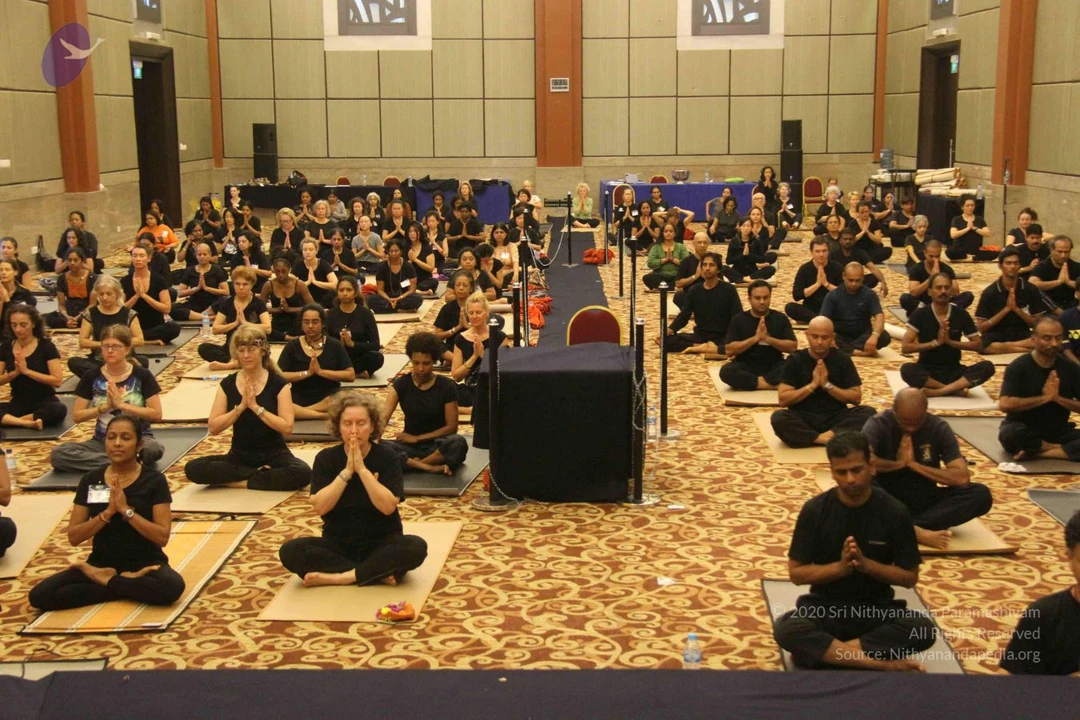
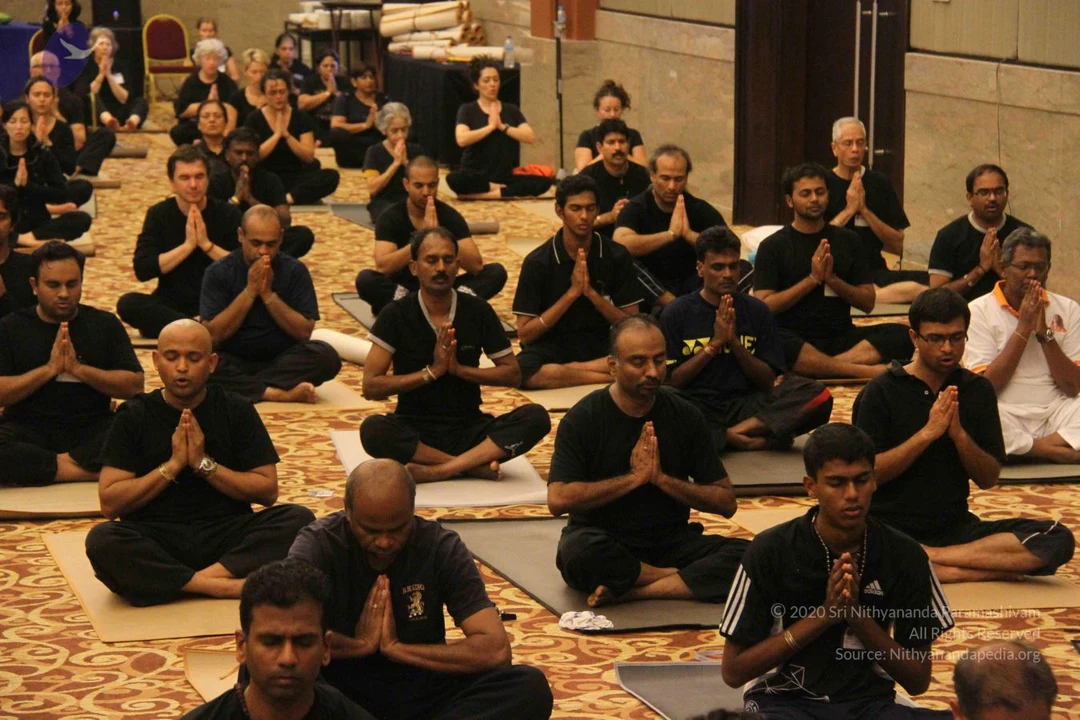
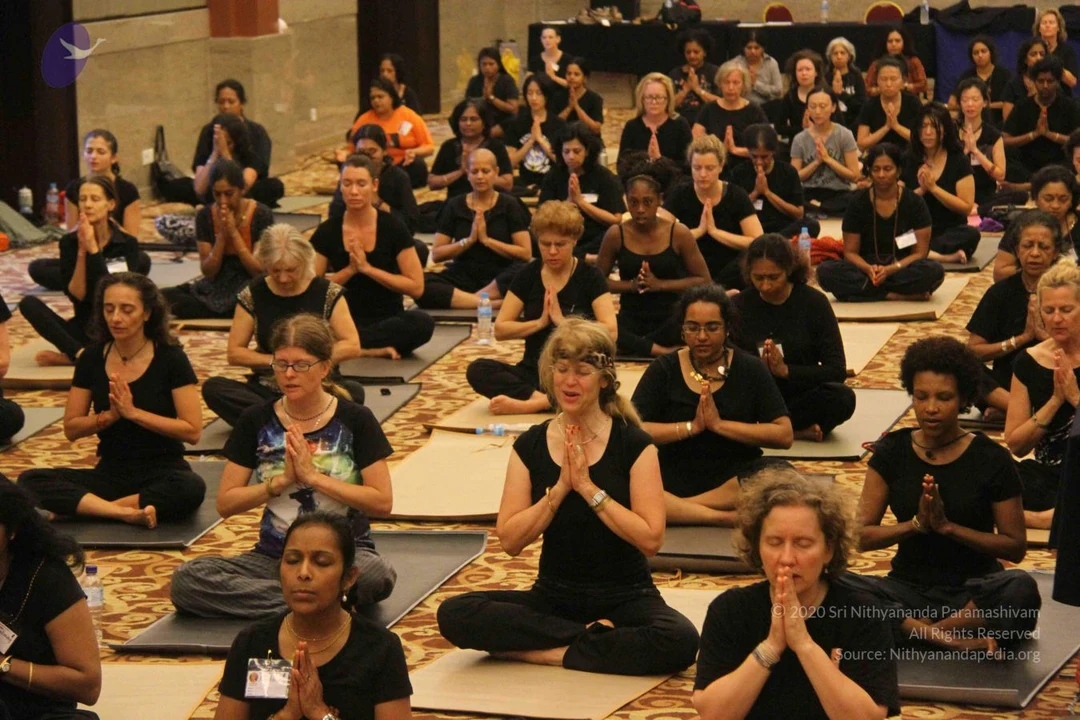
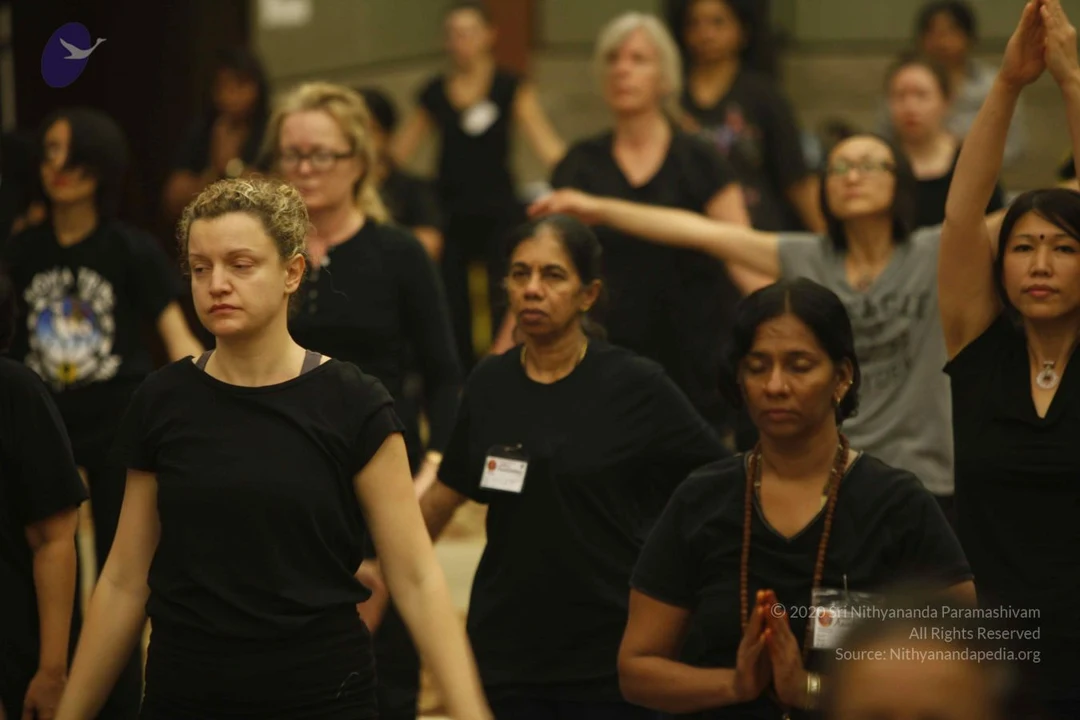
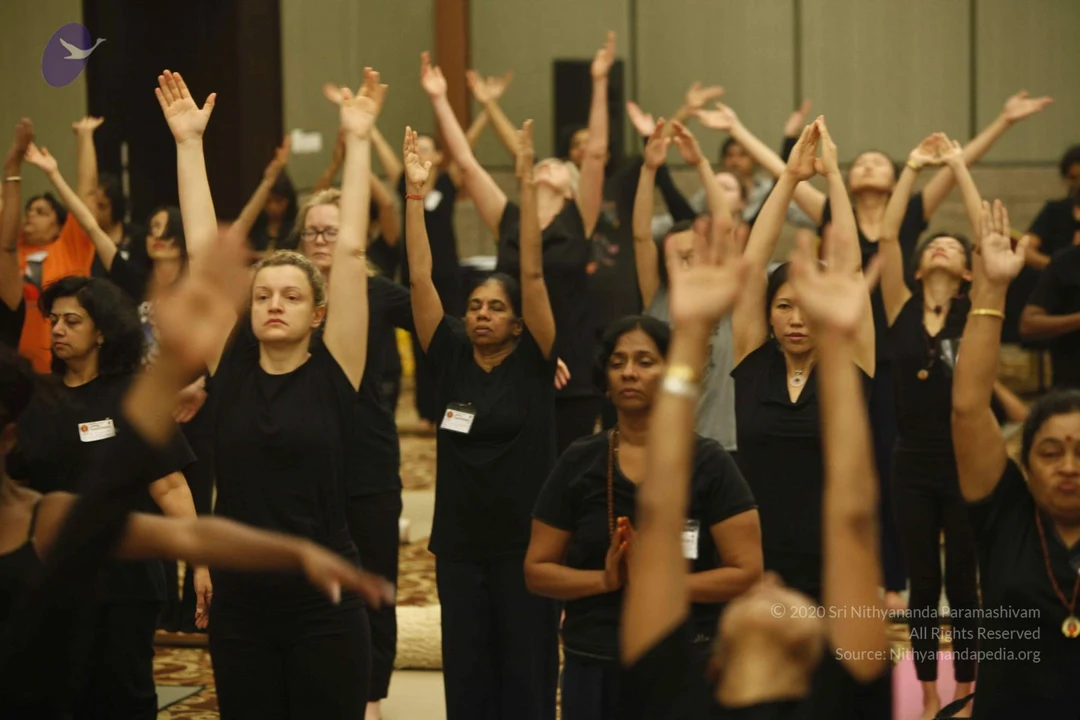
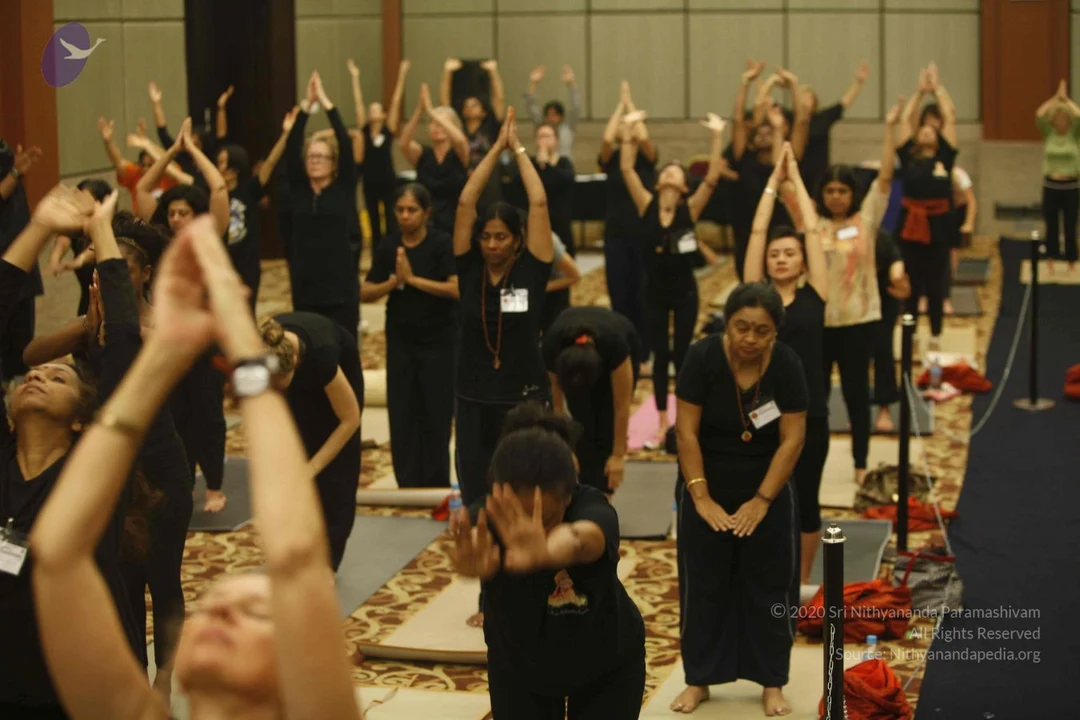
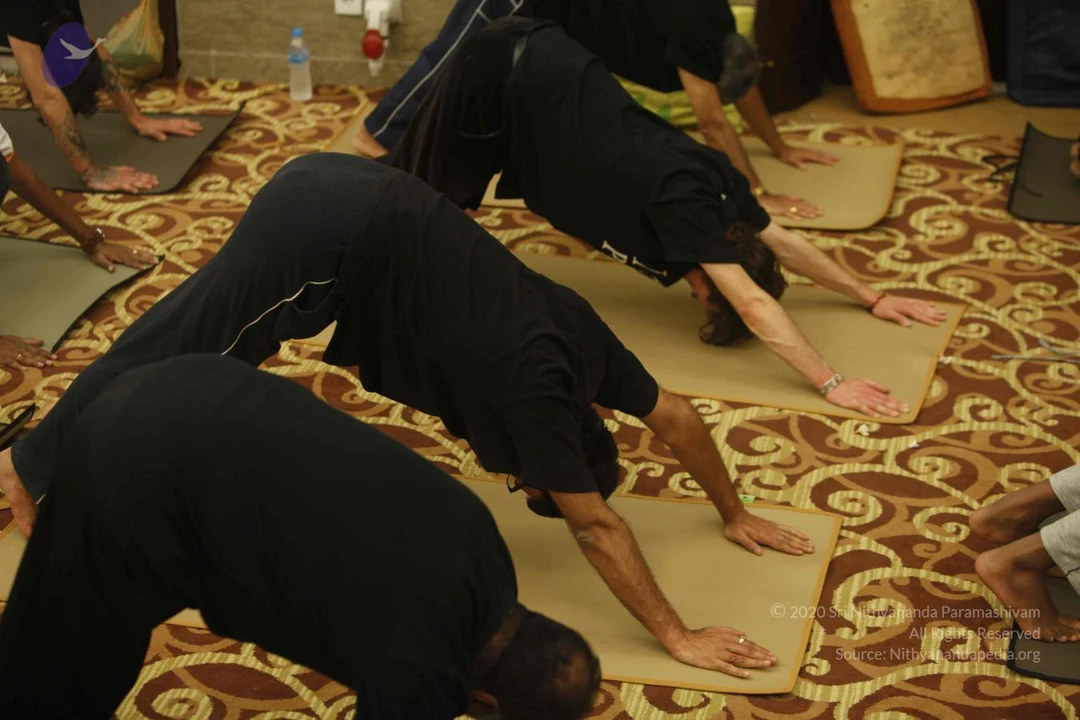
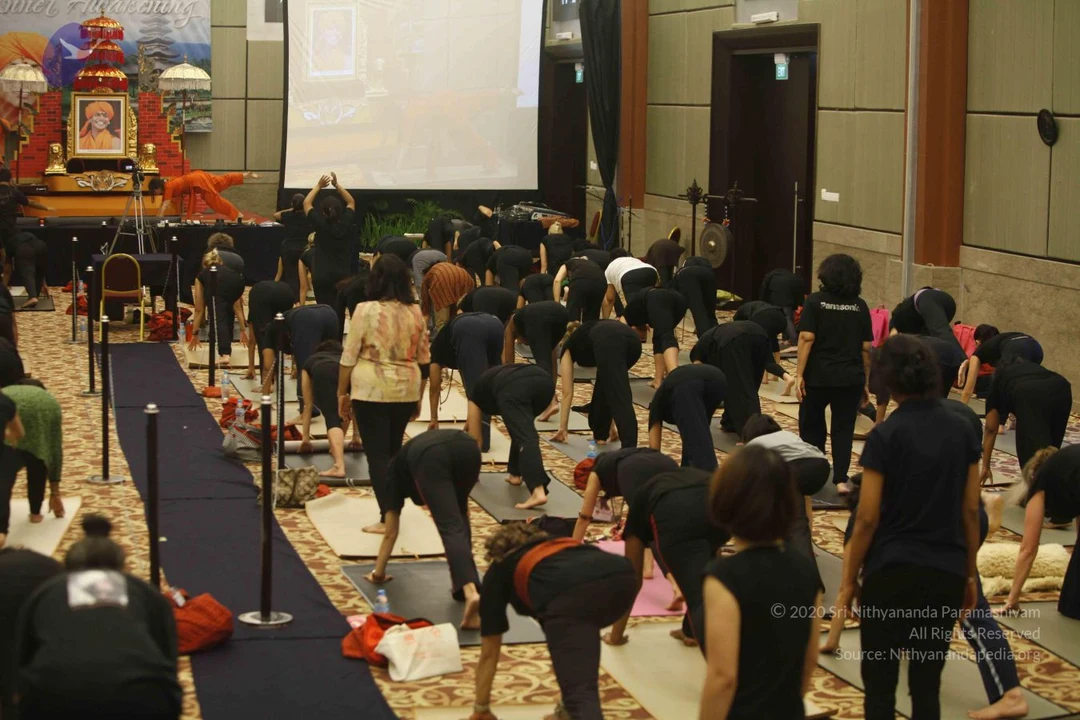
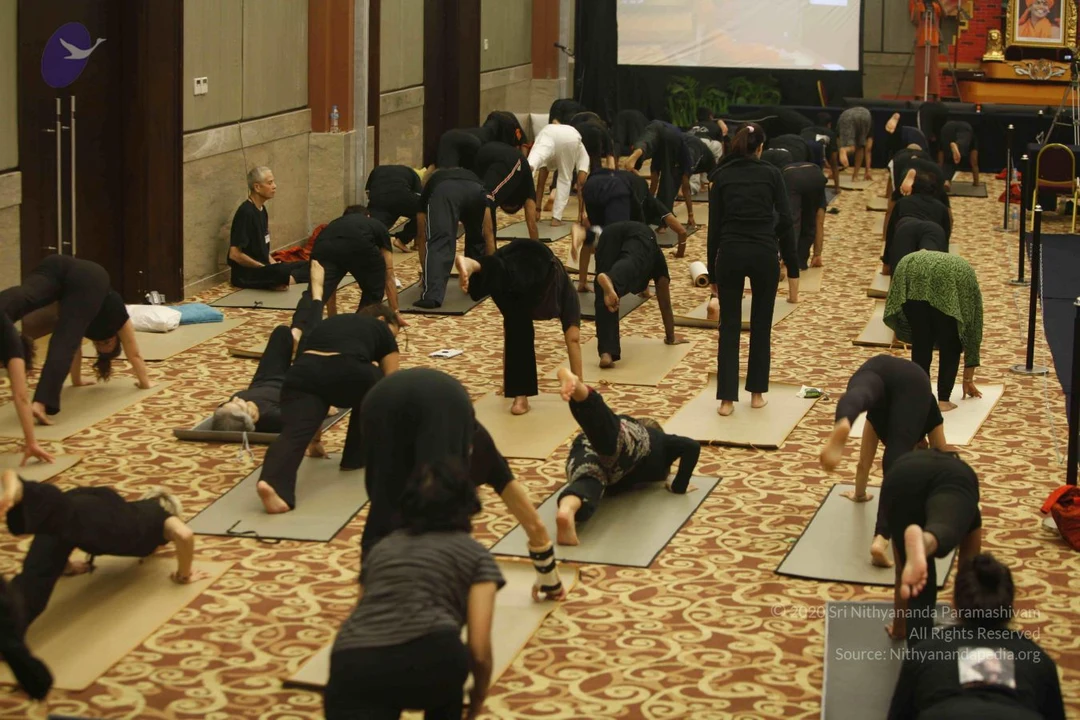
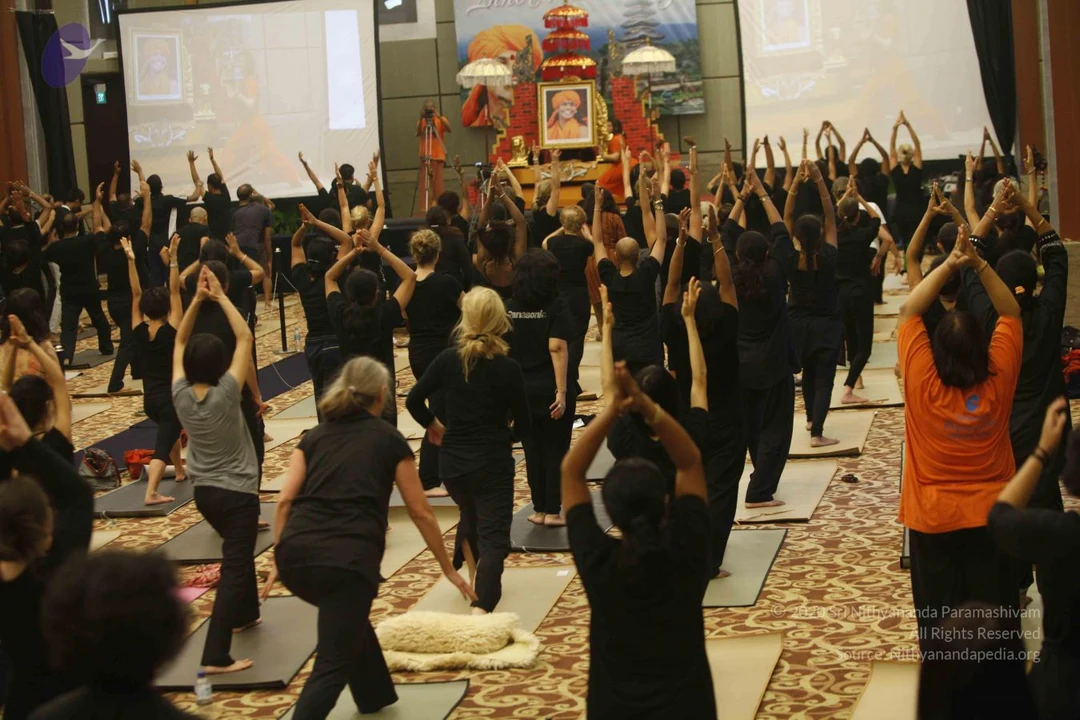
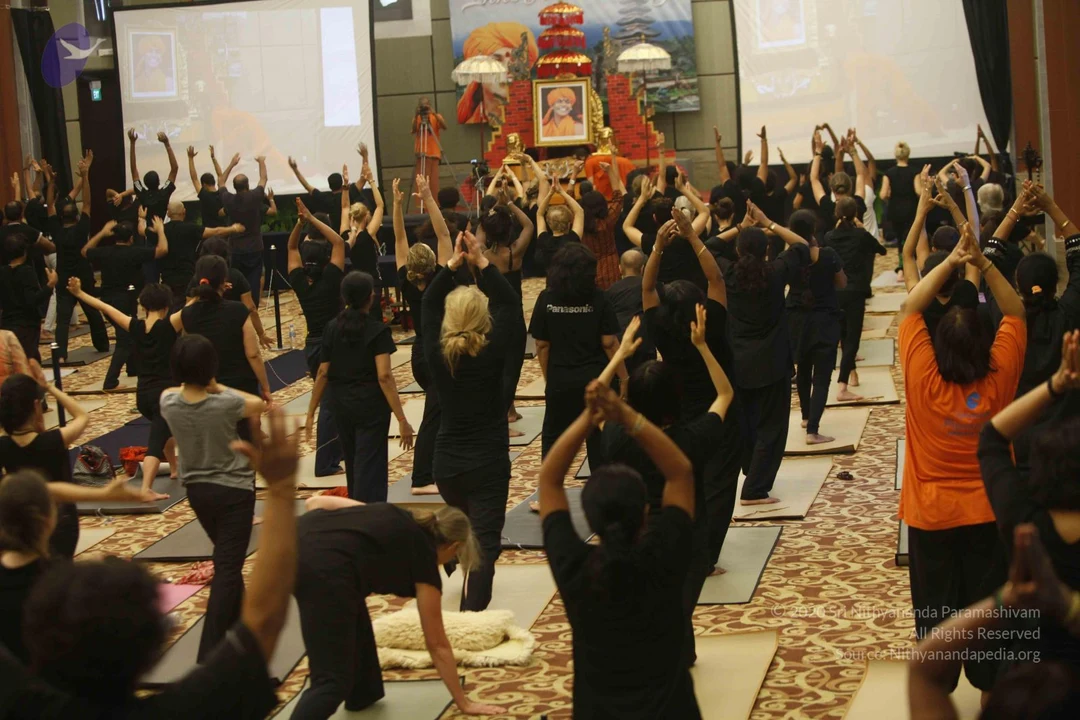
Morning-Yoga

Photos Of The Day:

Morning-Yoga

Photos Of The Day:

Paduka-Puja
NithyaSatsang

IA-Darshan

Photos from this day

View all 211 photos

Photos

2 photosSource gallery
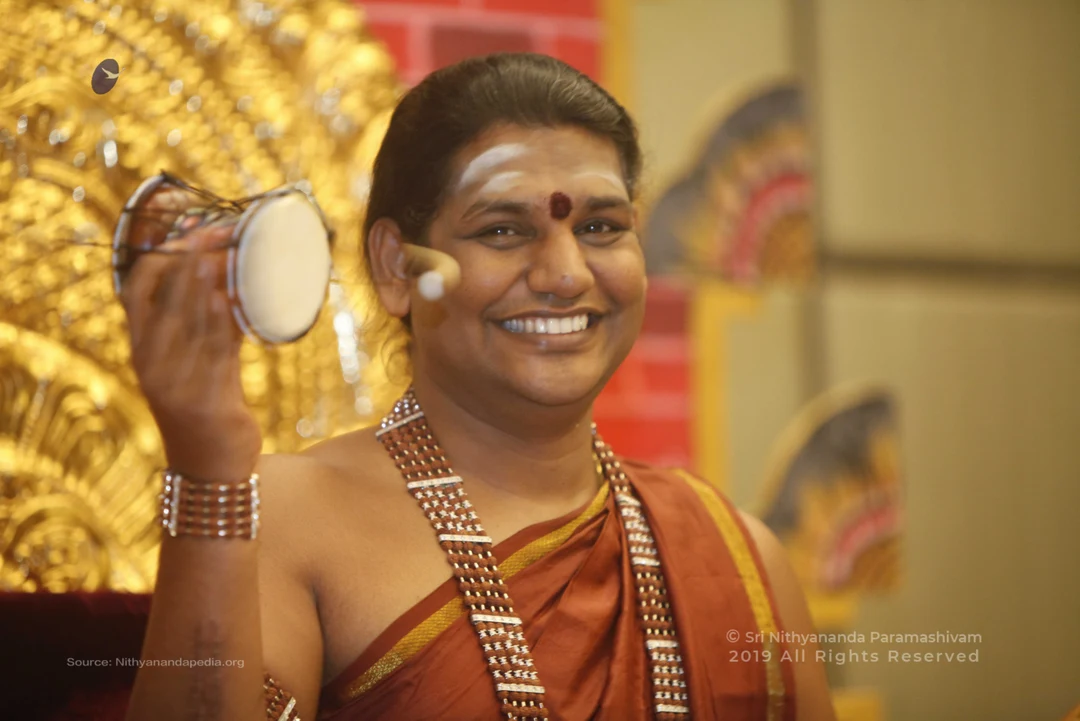
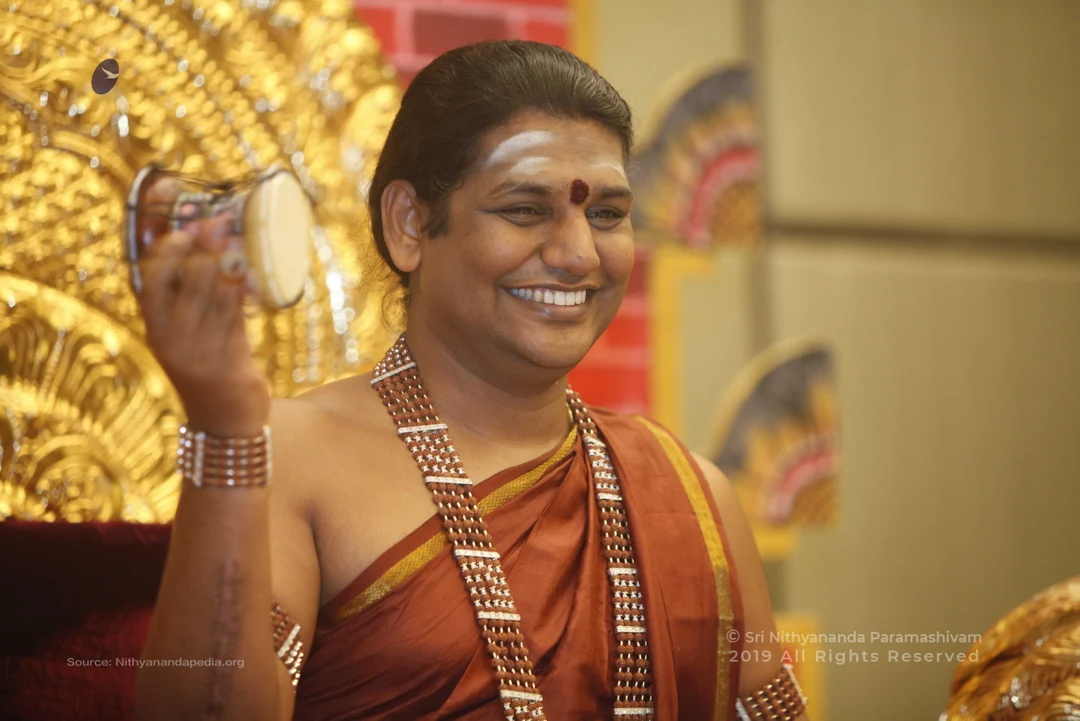
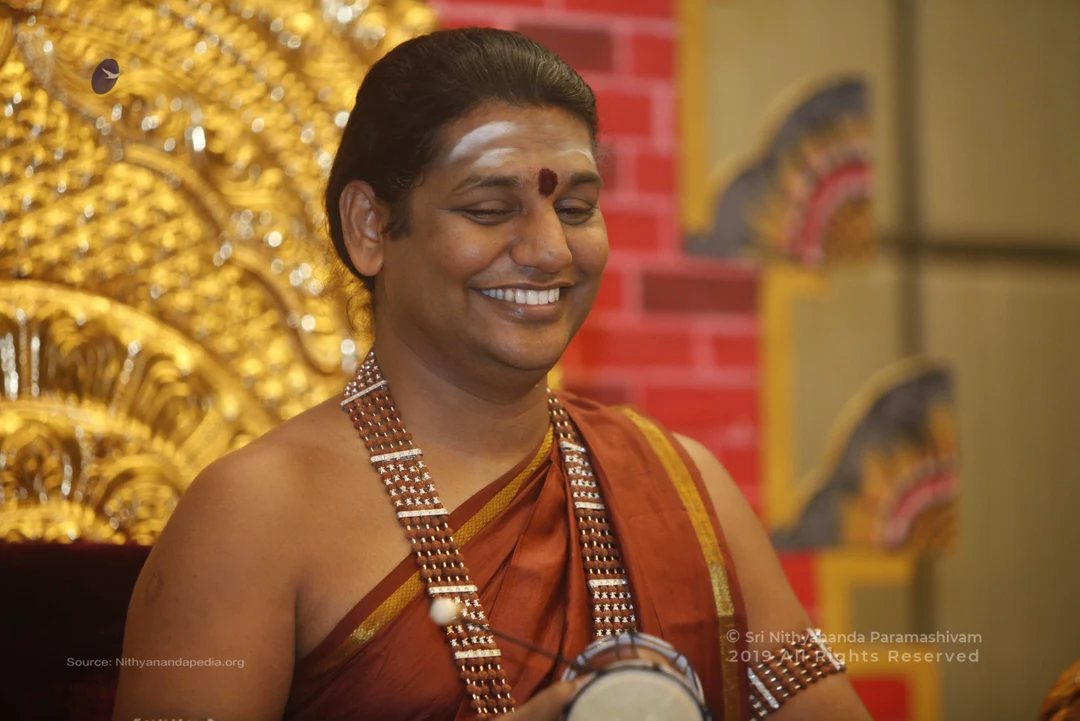
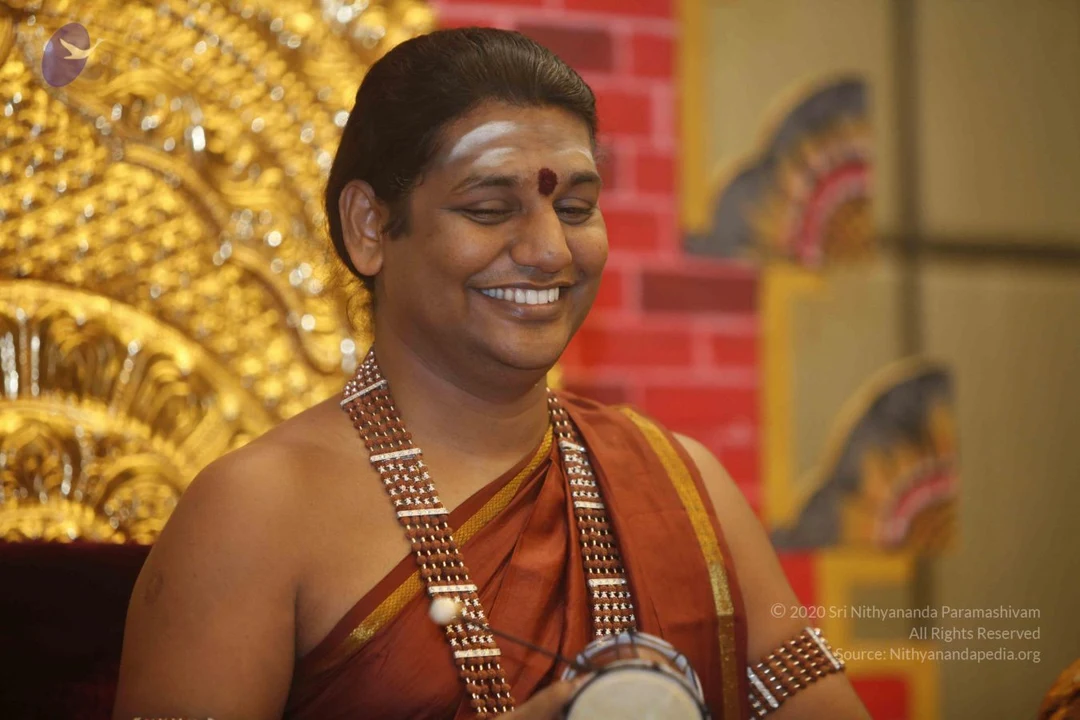
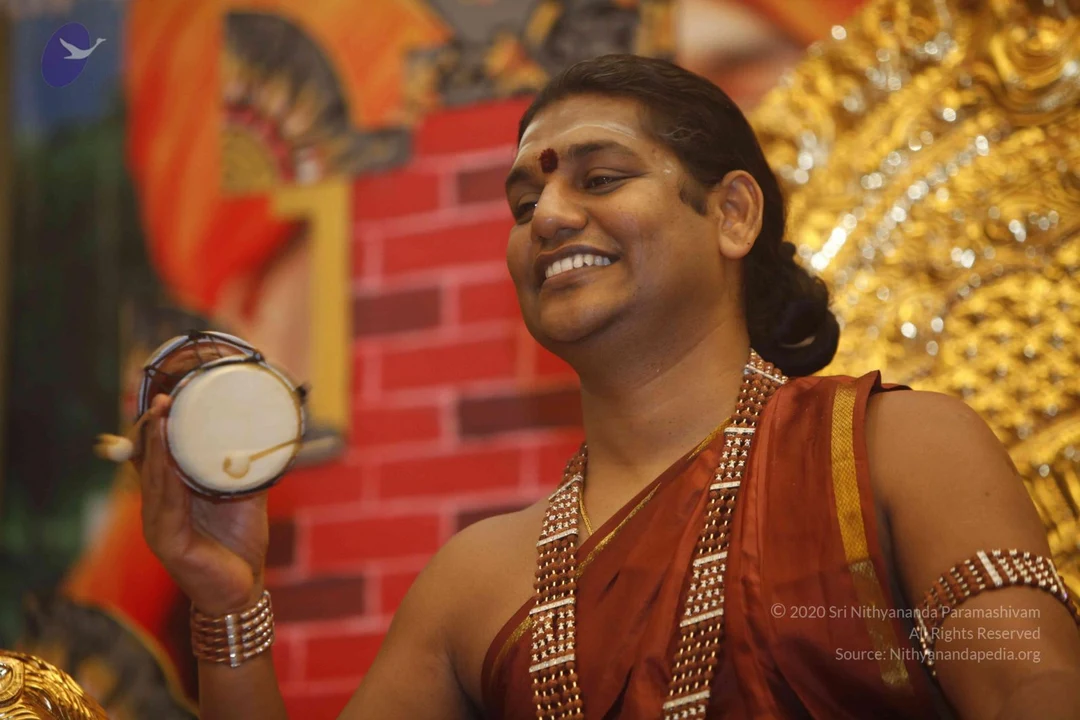
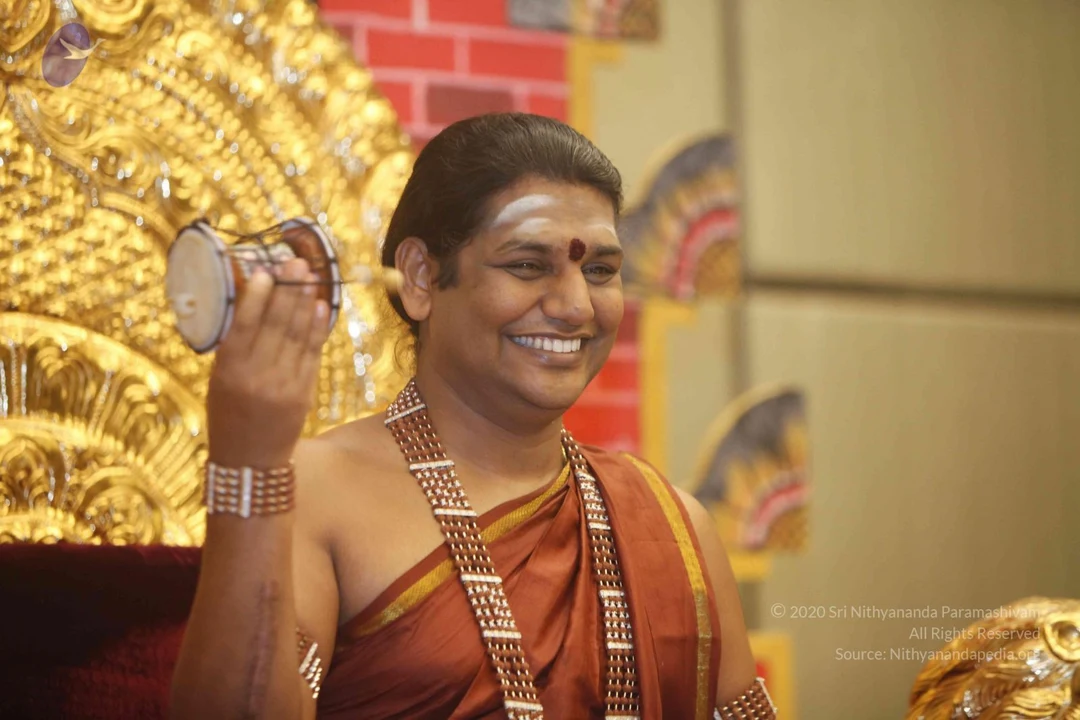
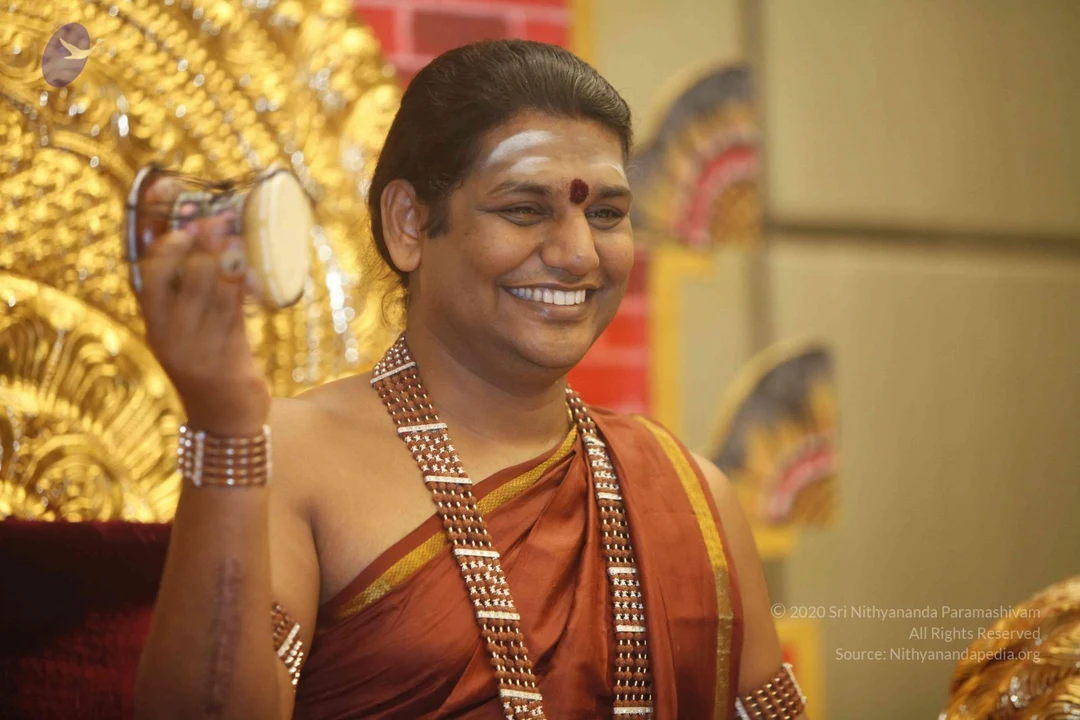
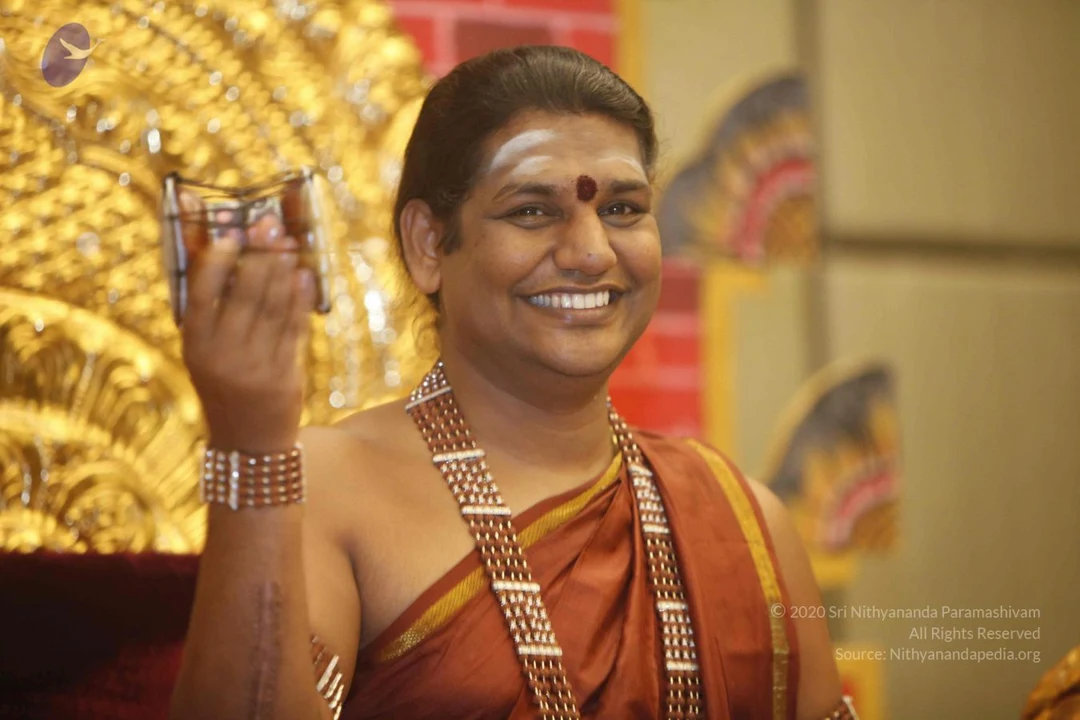
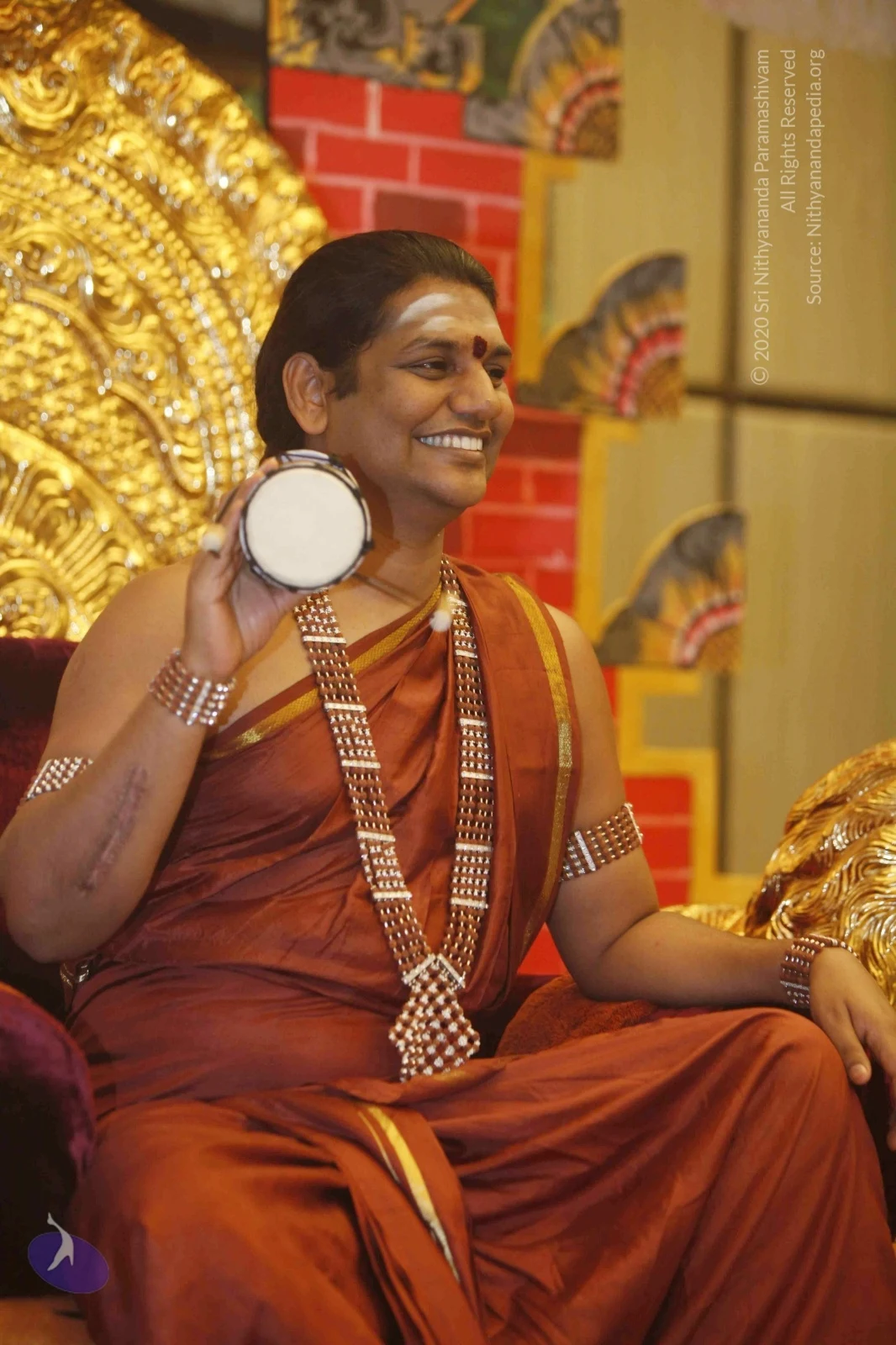
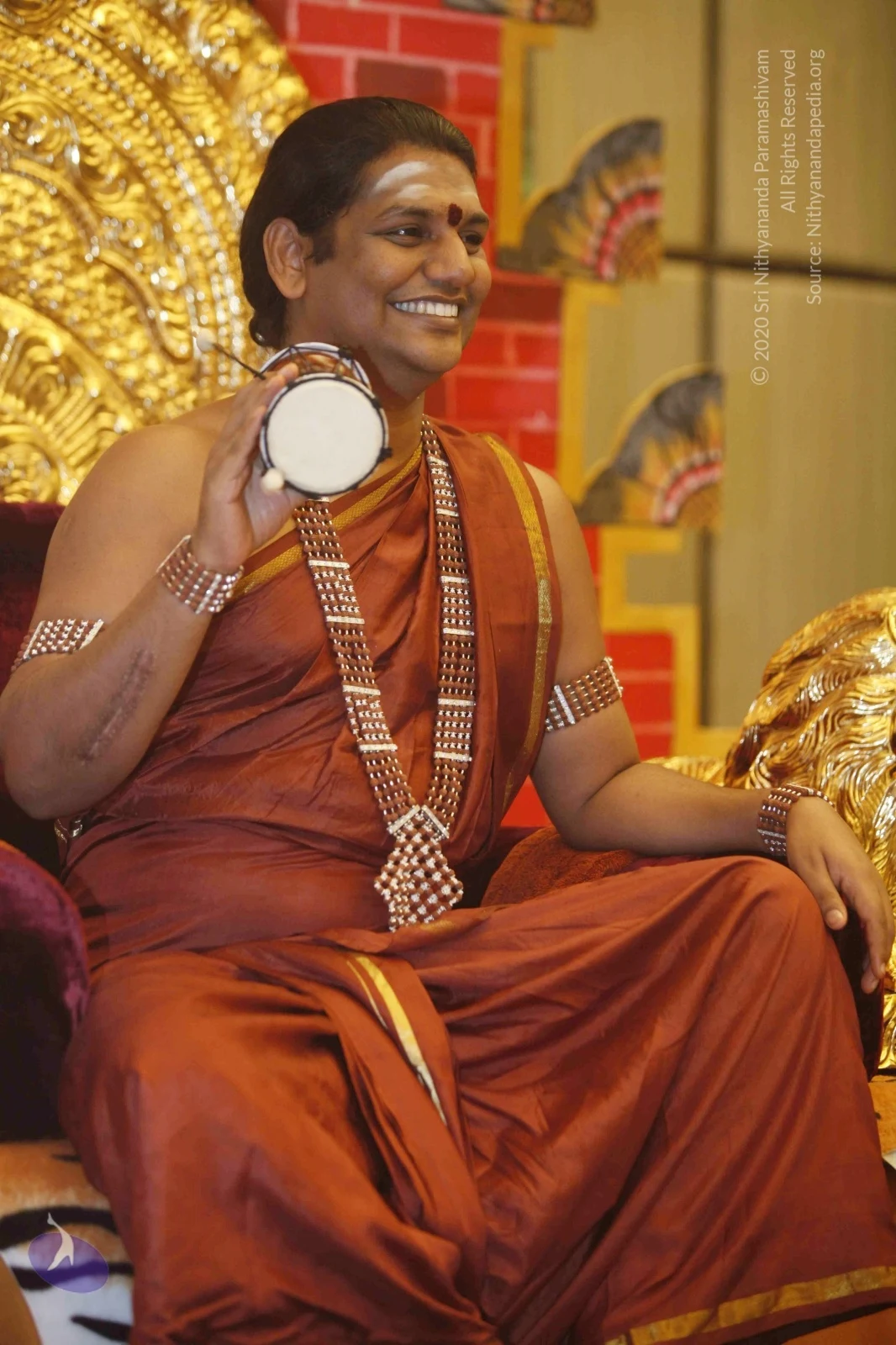
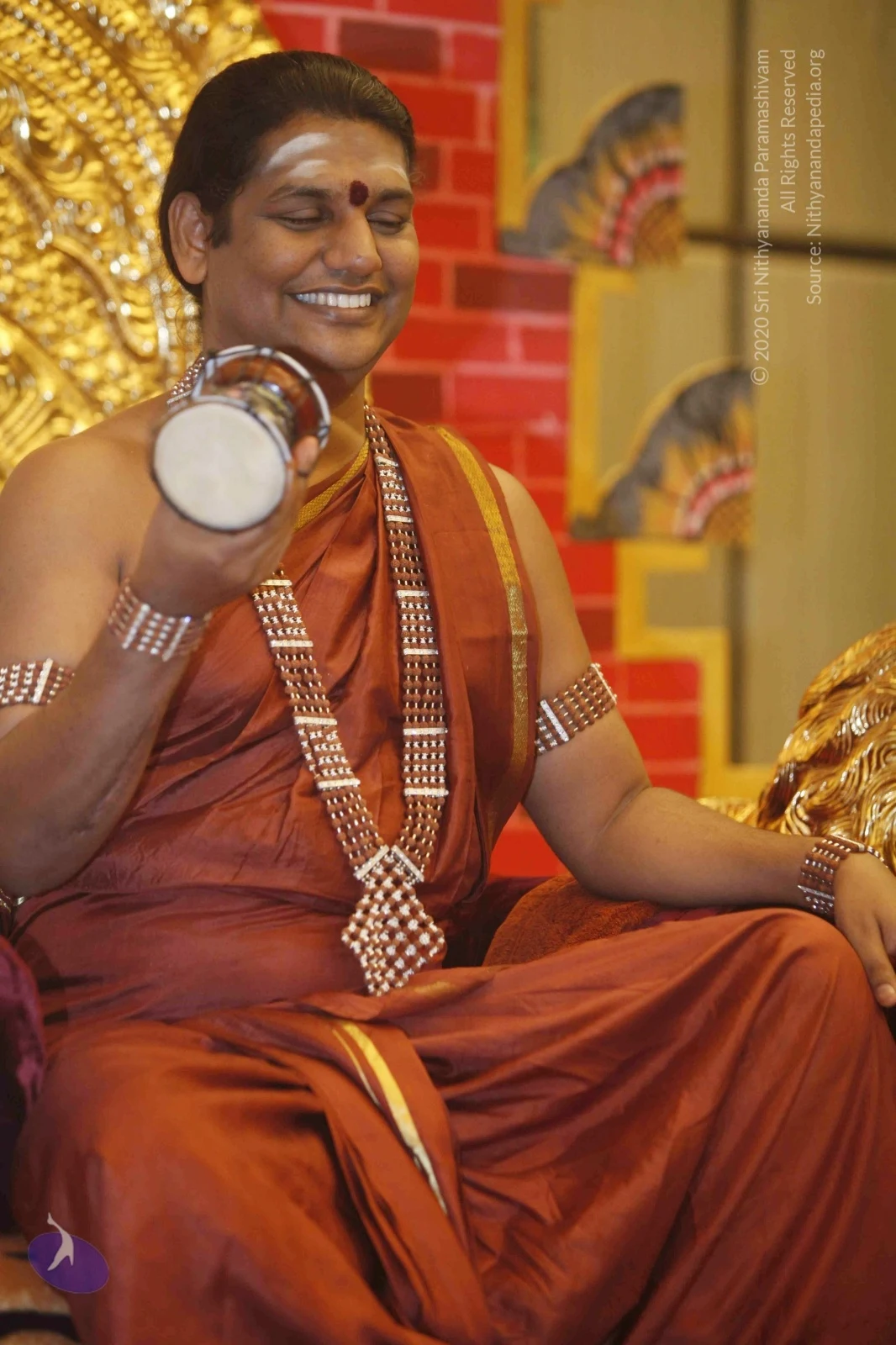
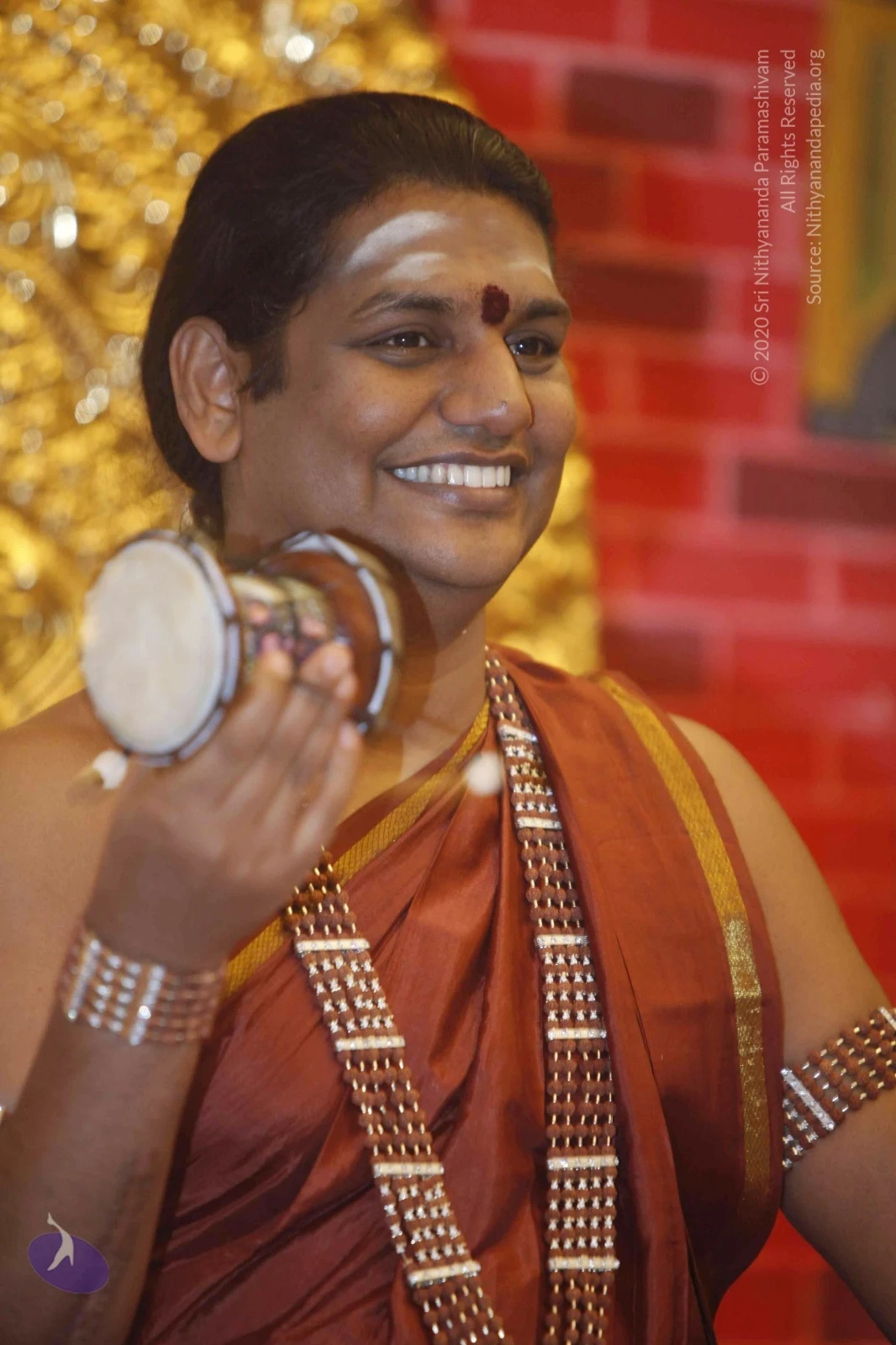
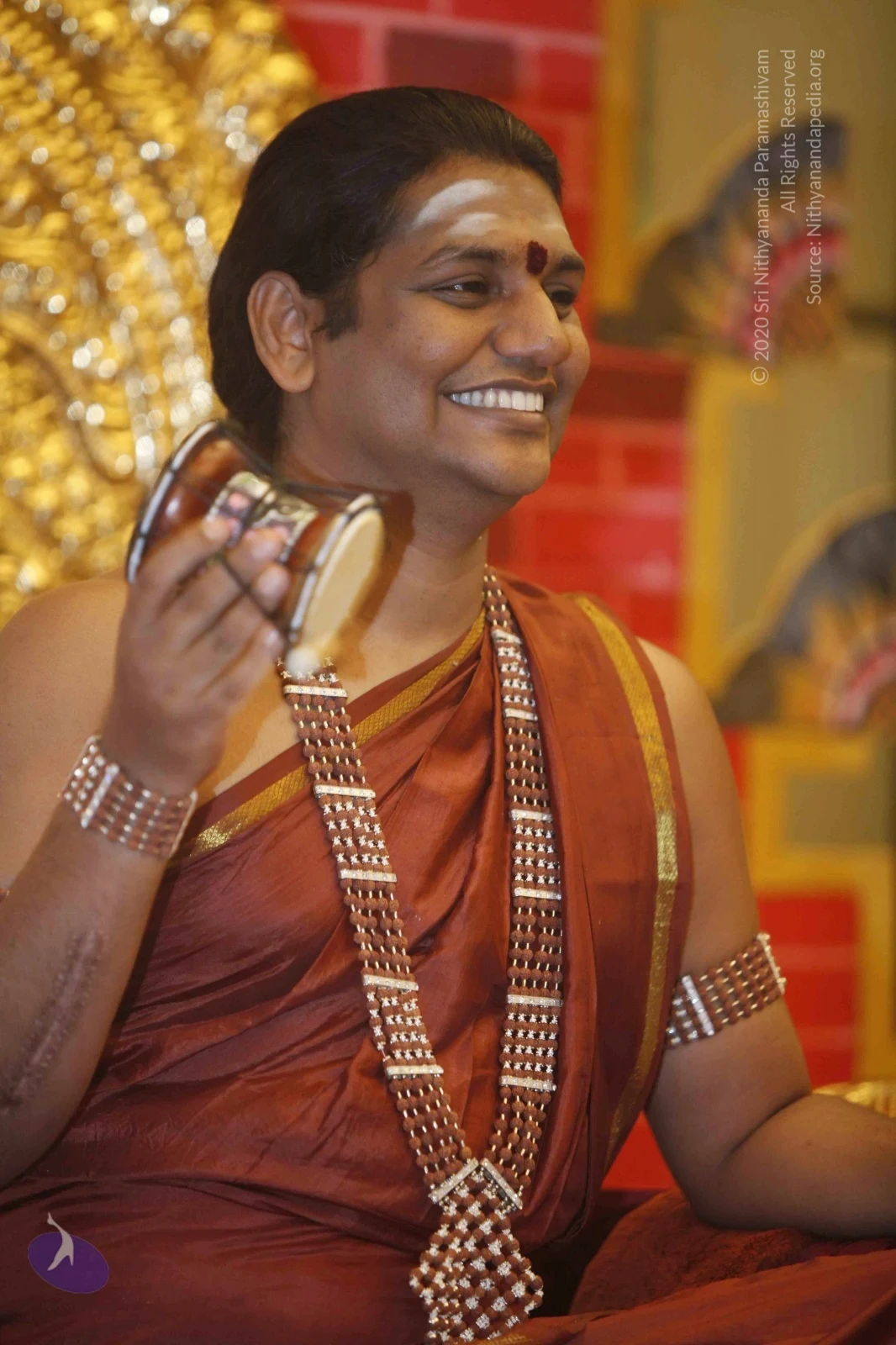
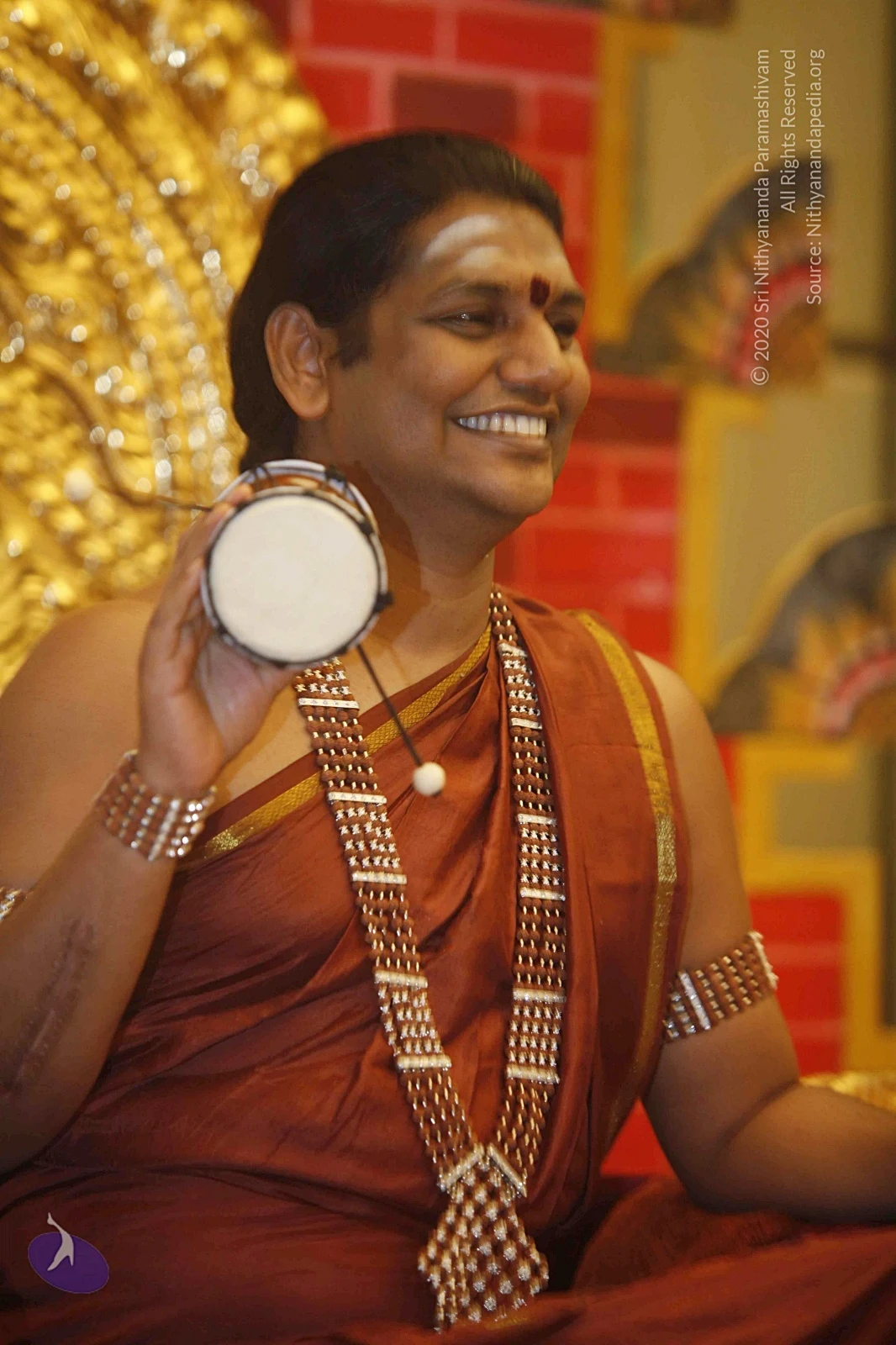
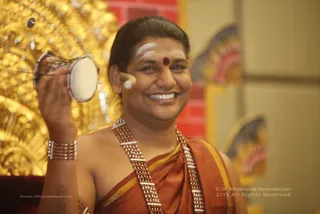
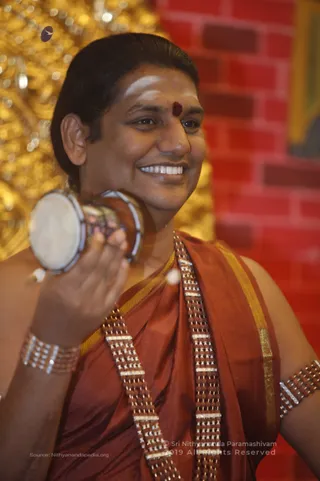
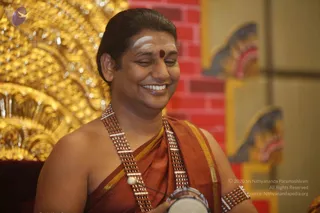
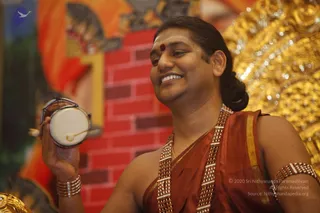
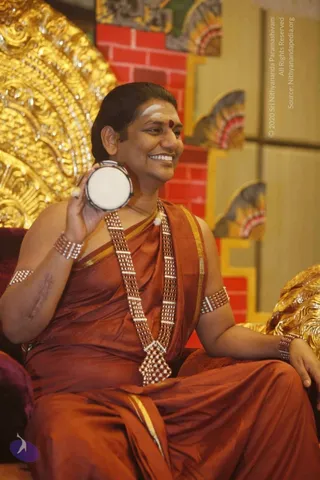
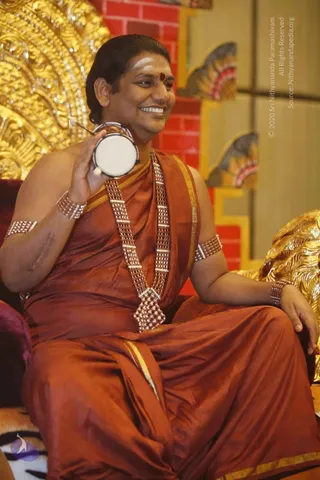
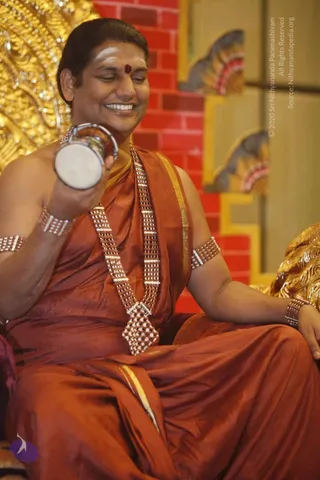
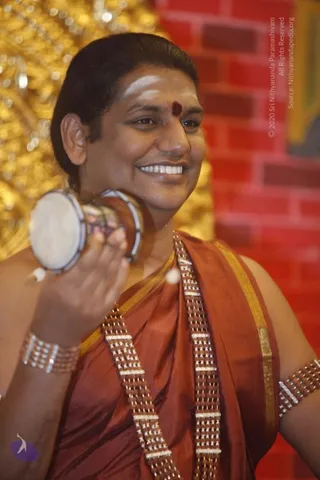
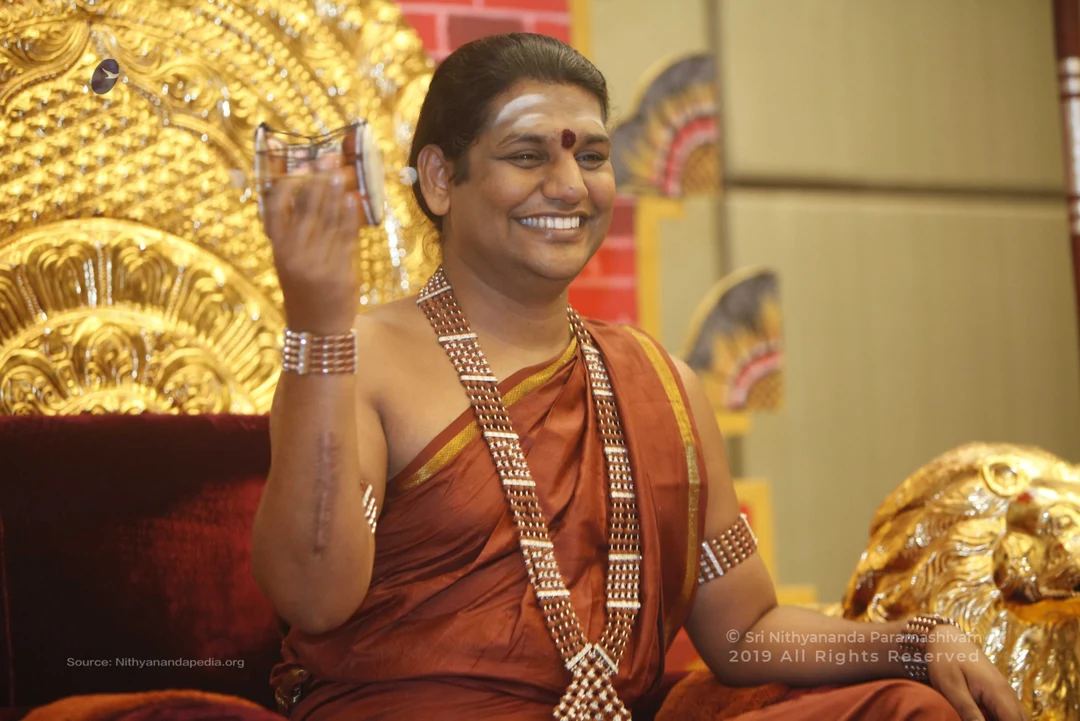
A smiling man sits before an ornate gold backdrop, holding a small round hand drum in his raised right hand. He wears a rust-orange silk wrap with a gold border, layered rudraksha beaded necklaces, a beaded bracelet, white tilak strokes on the forehead and a red bindi. The setting has red brick and cream panels with decorative fans. a person appearance is noted from the orange wrap, layered rudraksha malas and ornate adornments, though this is an appearance-based label only.A smiling man with swept-back dark hair, white vibhuti lines and a red kumkum bindi on his forehead, wears a rust-red silk garment with gold borders and a long rudraksha mala draped across the chest. He wears rudraksha bracelets on his wrists and upper arm and holds a small hand drum (damaru-style) near his shoulder. Behind him are a gold-glittering backdrop and a red brick wall. Swamiji (probable): long swept-back hair, rudraksha malas and ornate ceremonial adornments, shown in person.

Photos

3 photosSource gallery
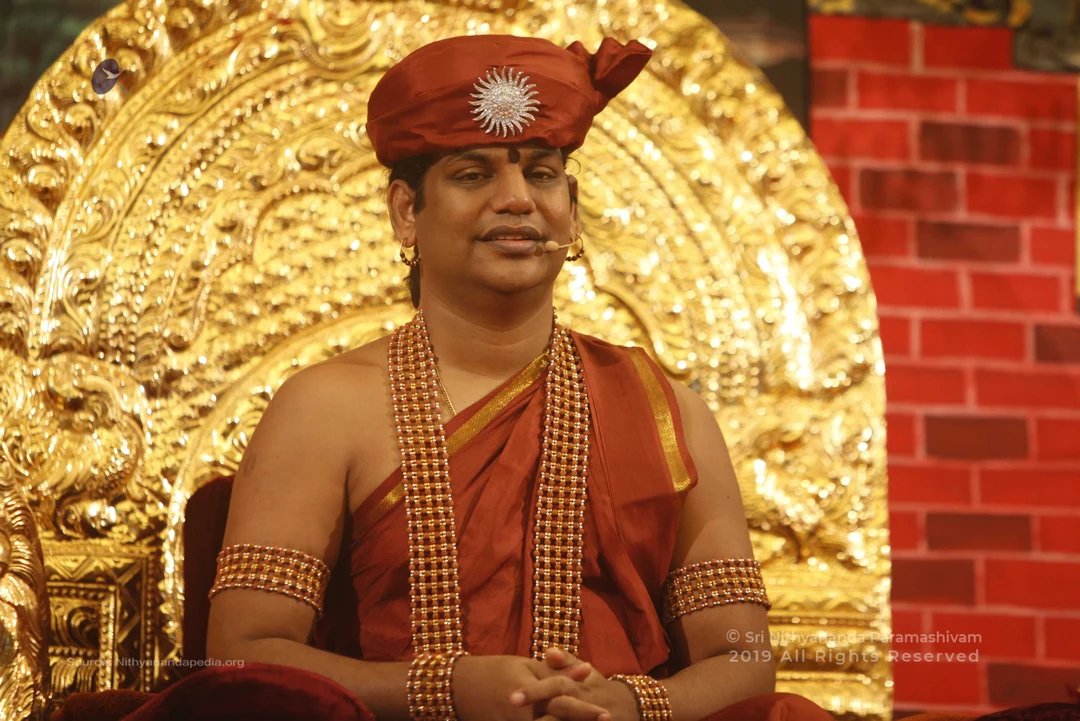
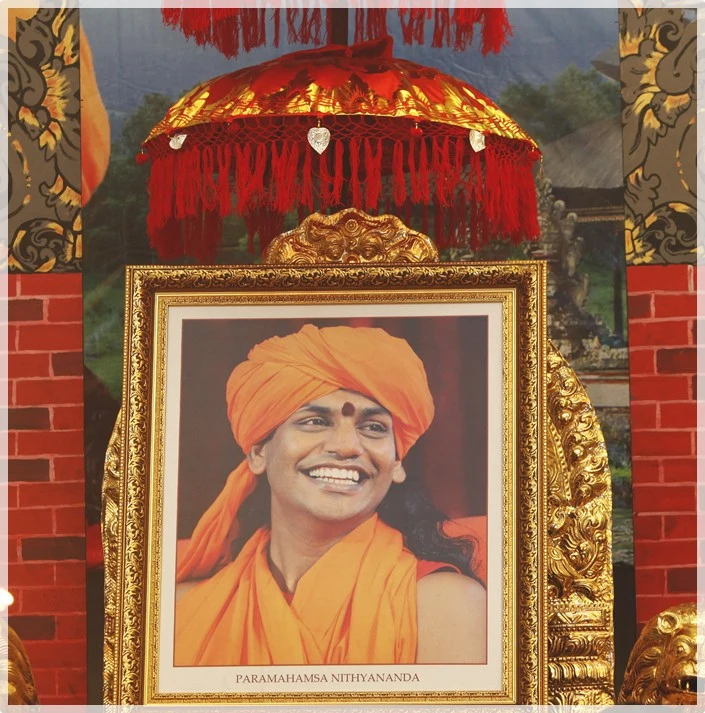
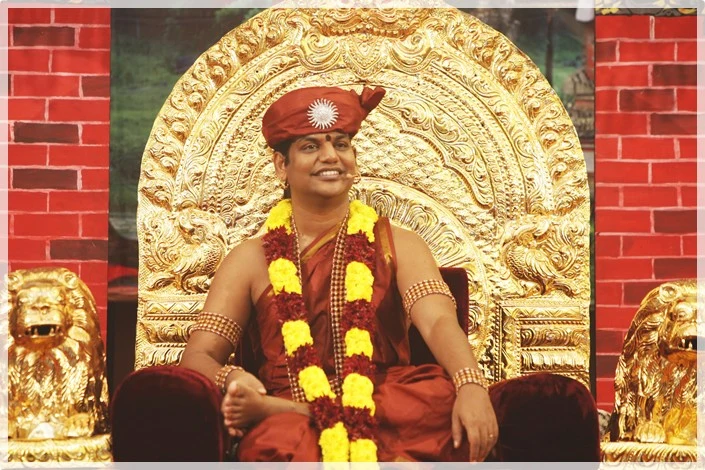
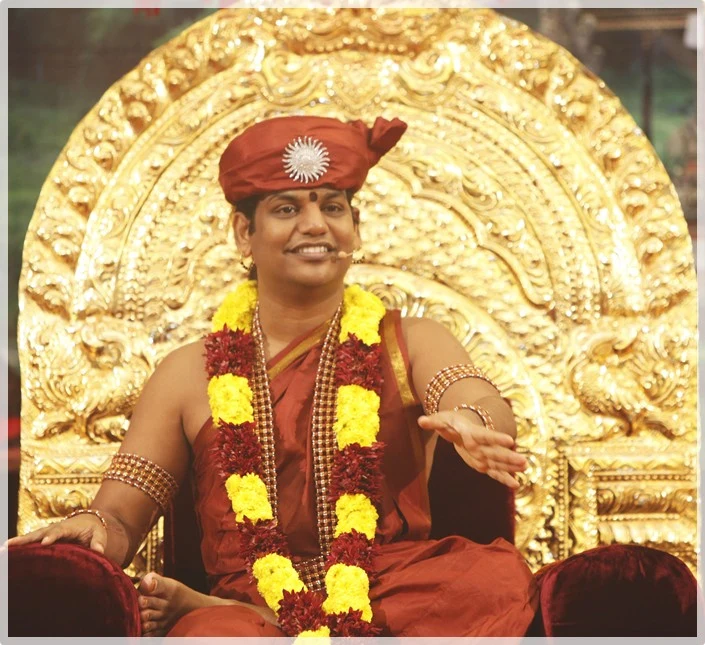
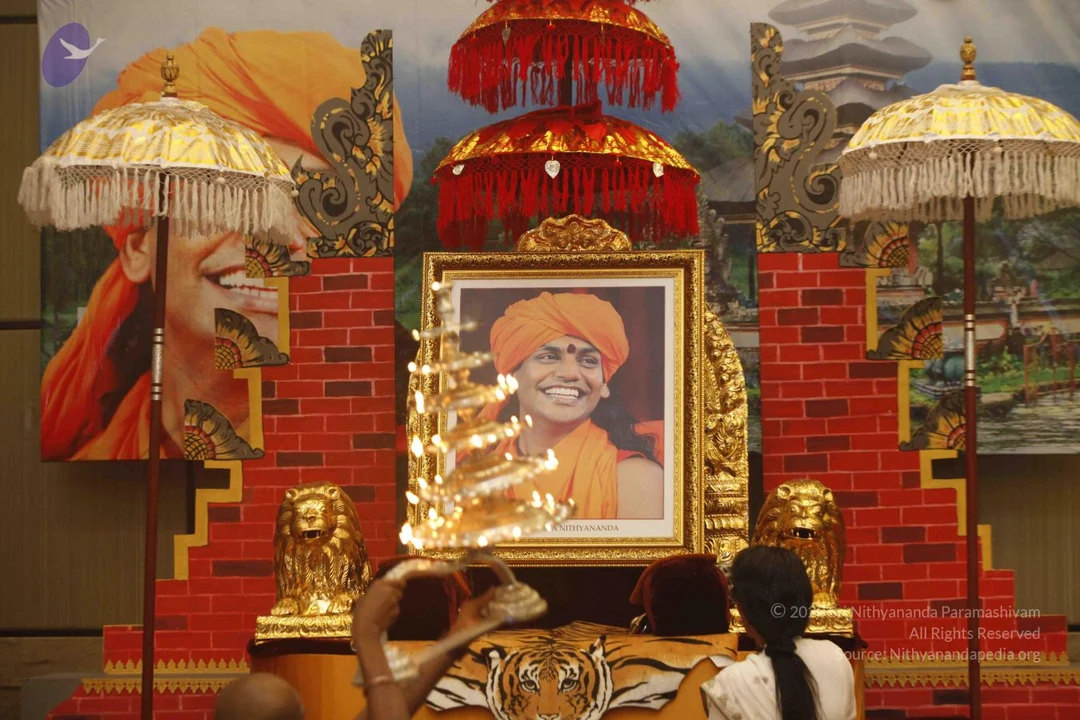
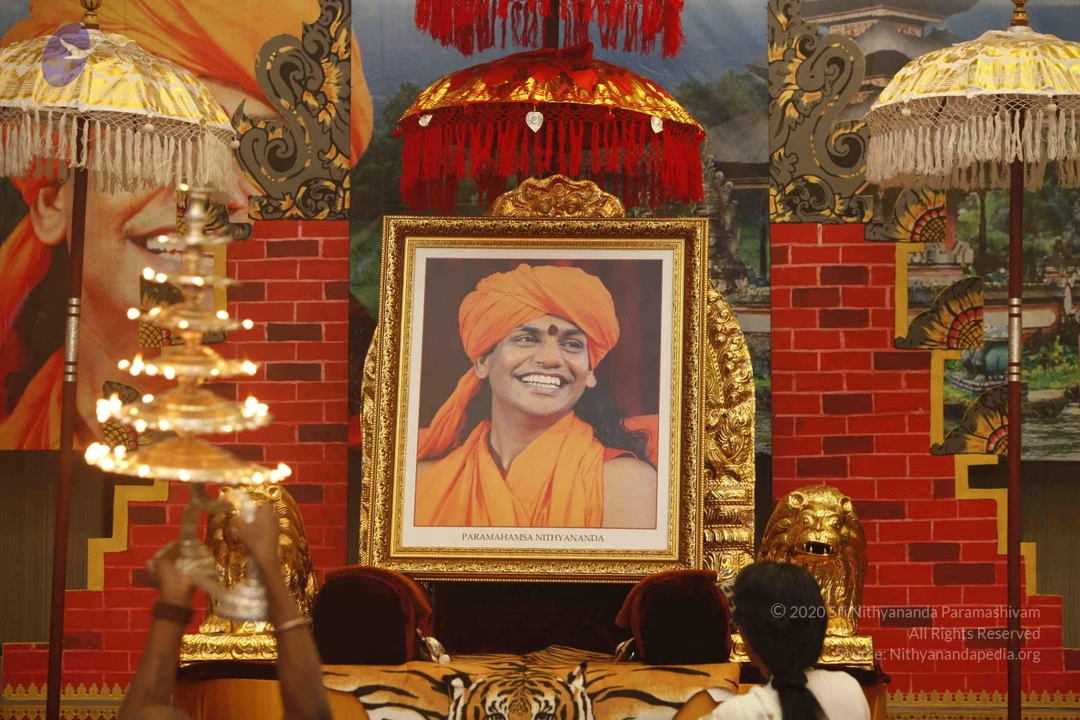
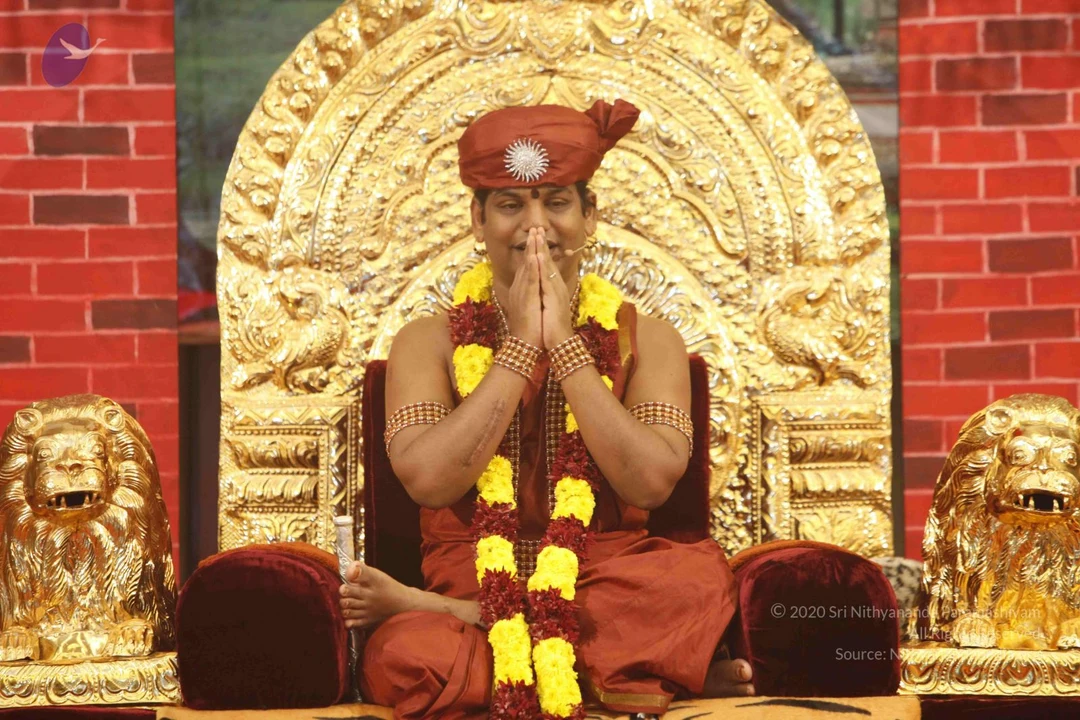
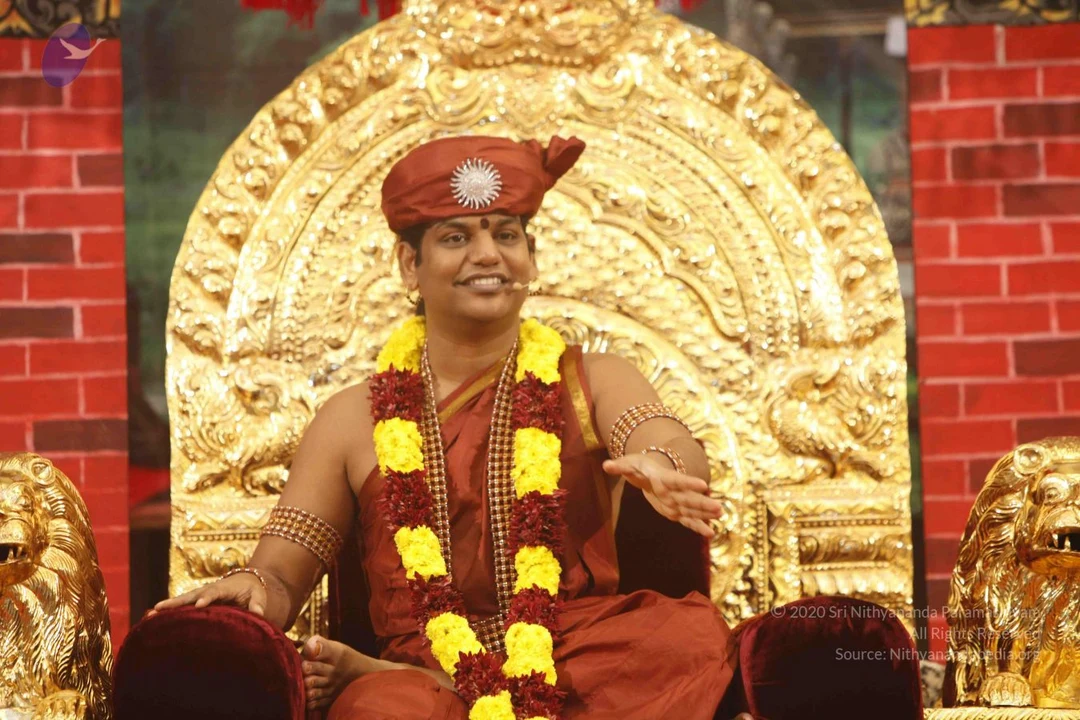
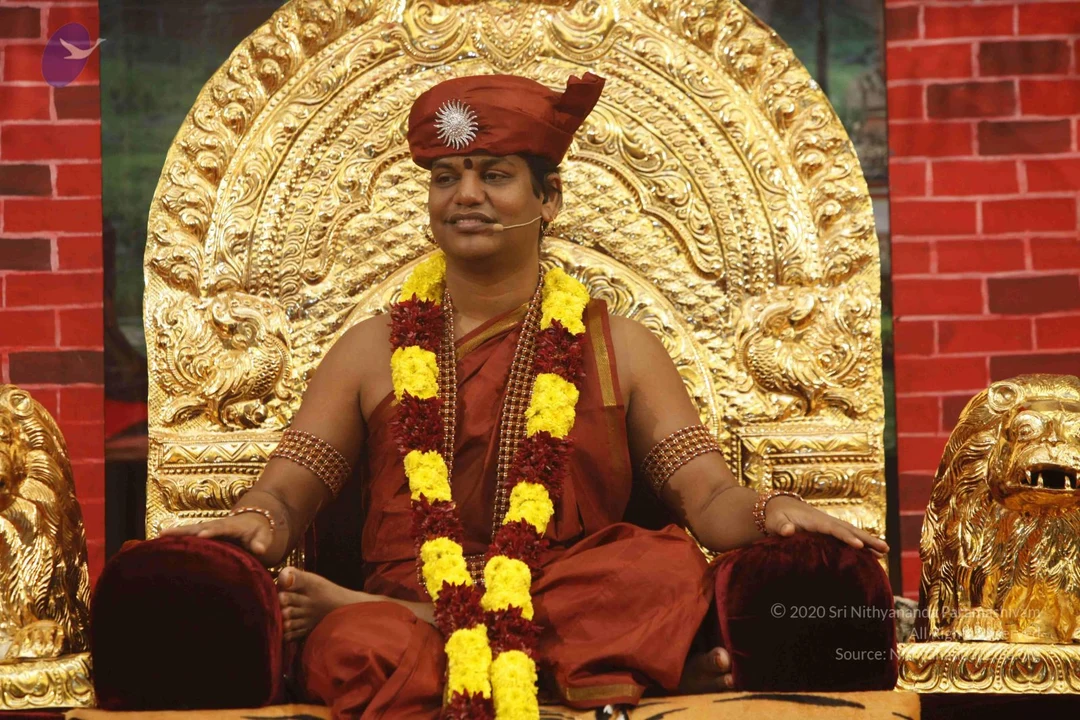
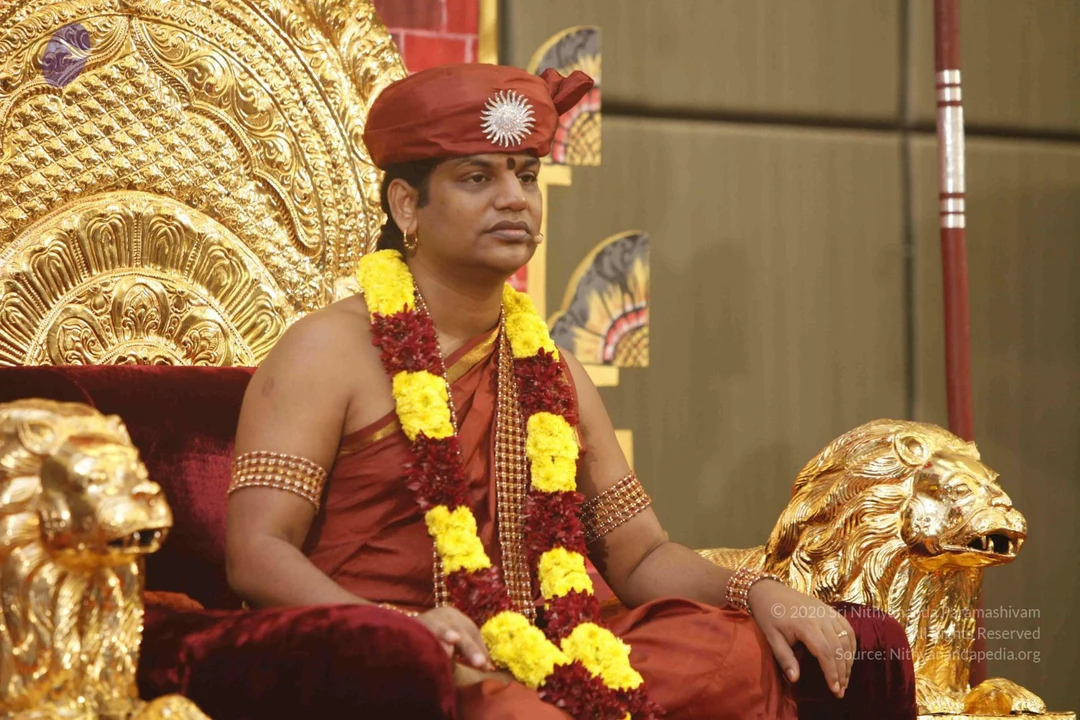
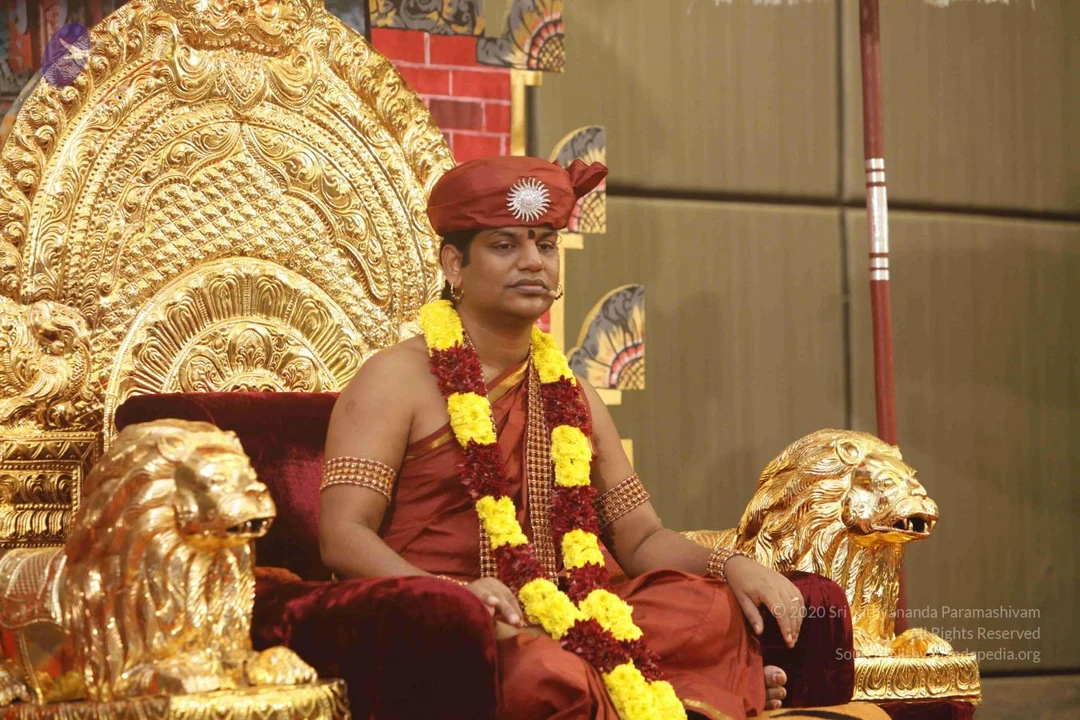
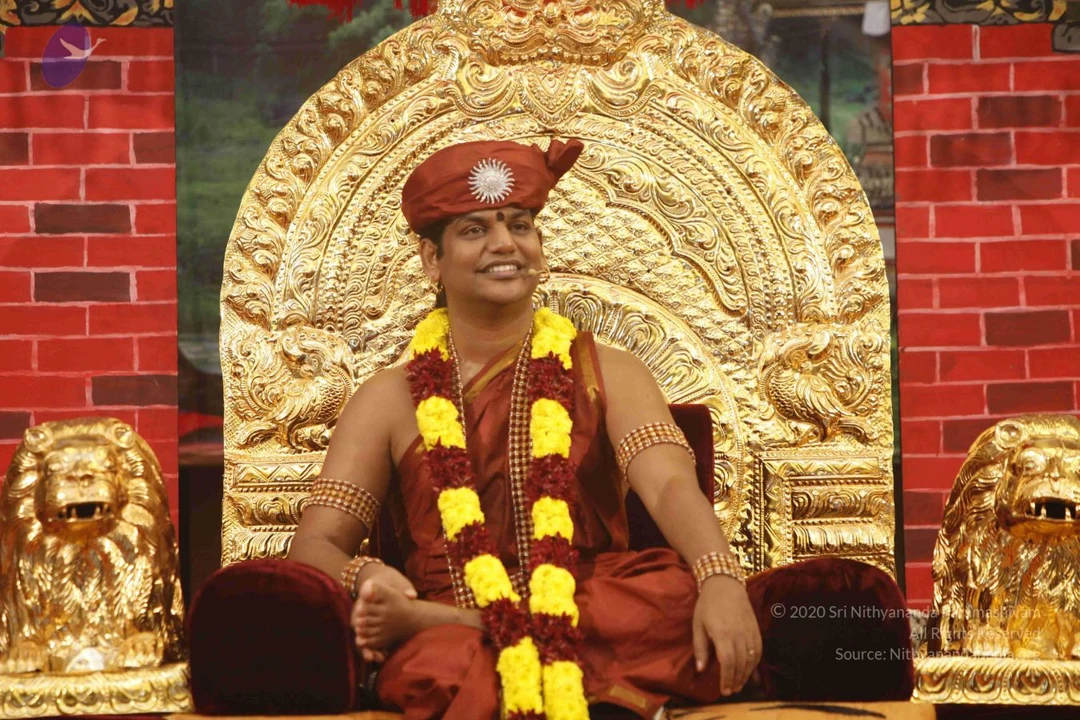
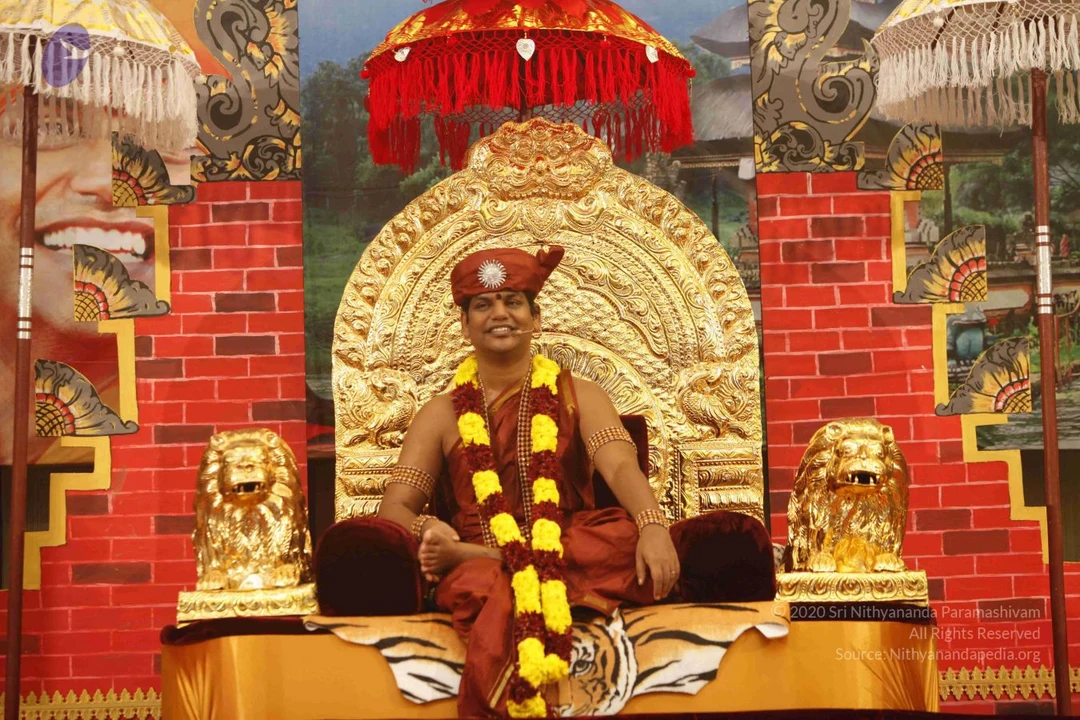
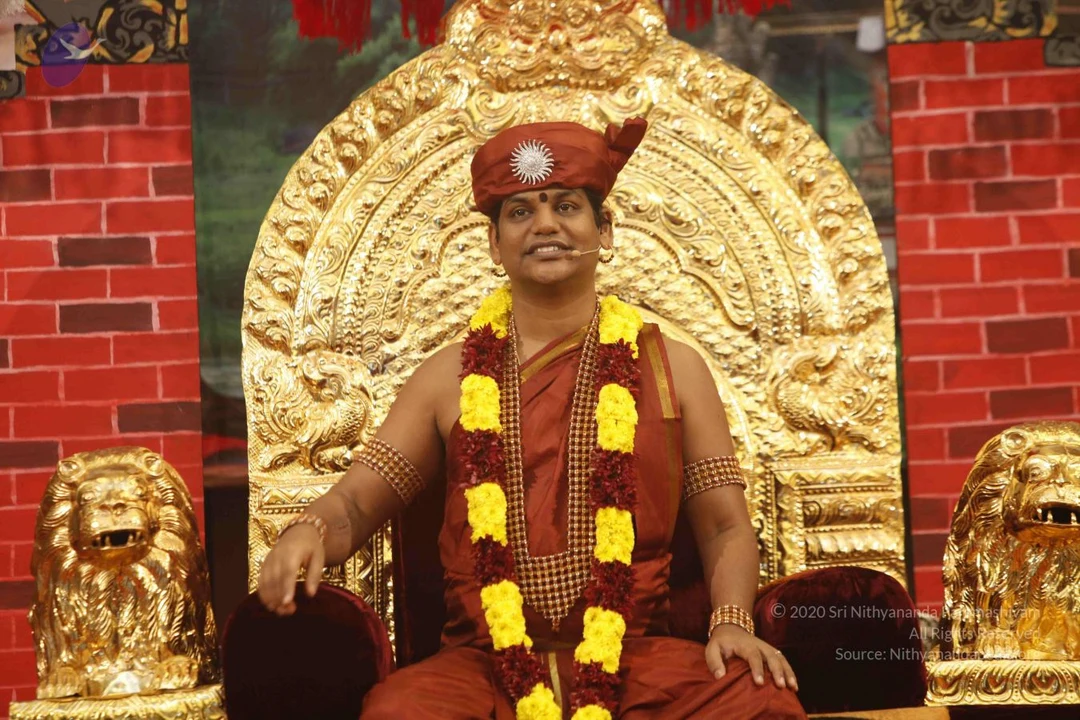
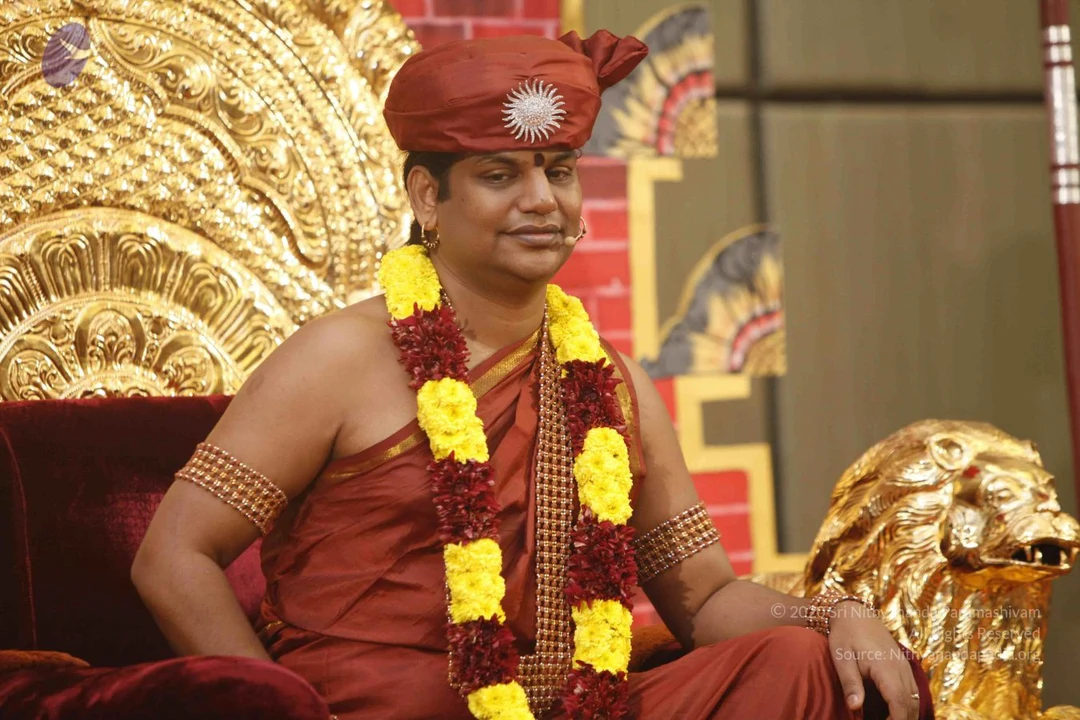
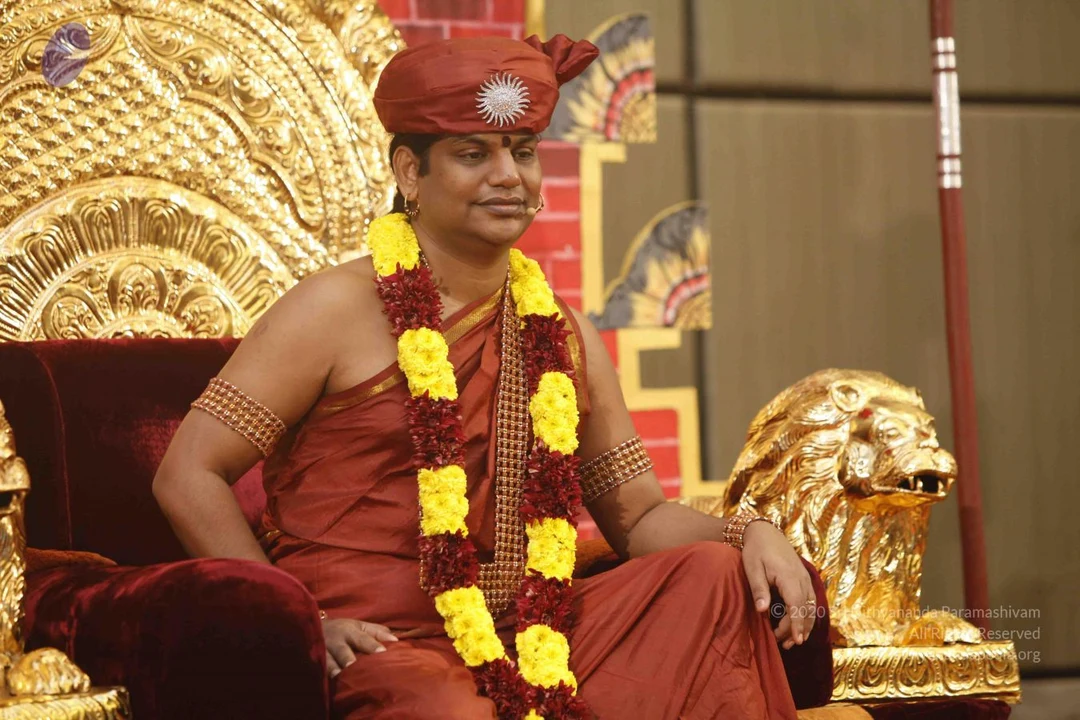
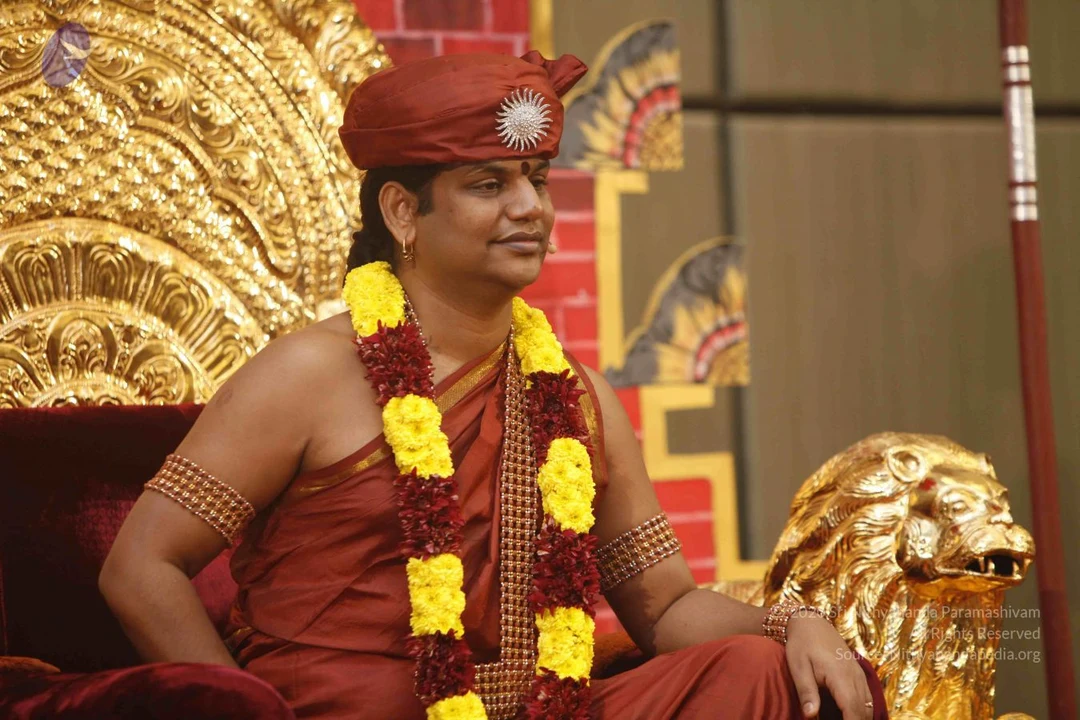
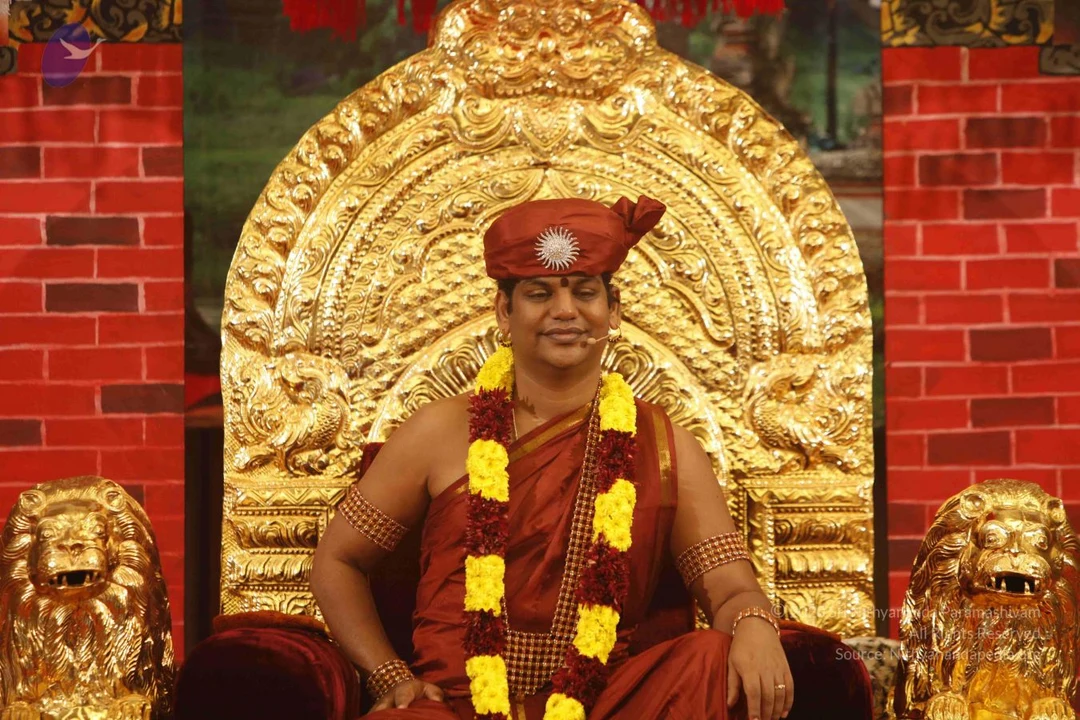
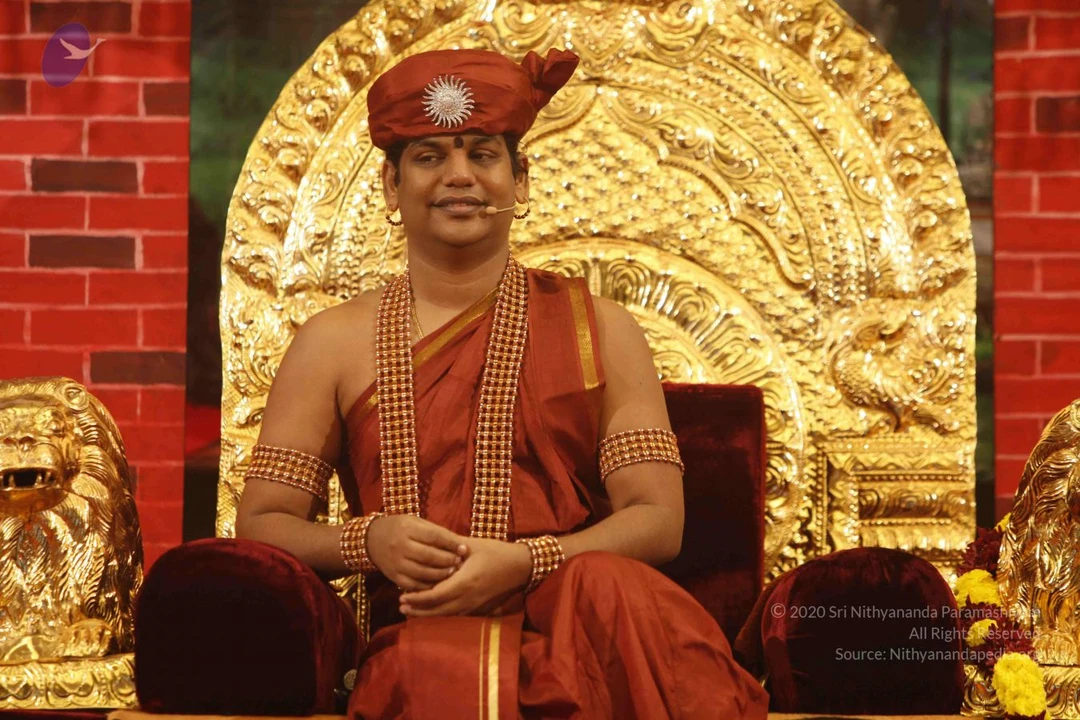
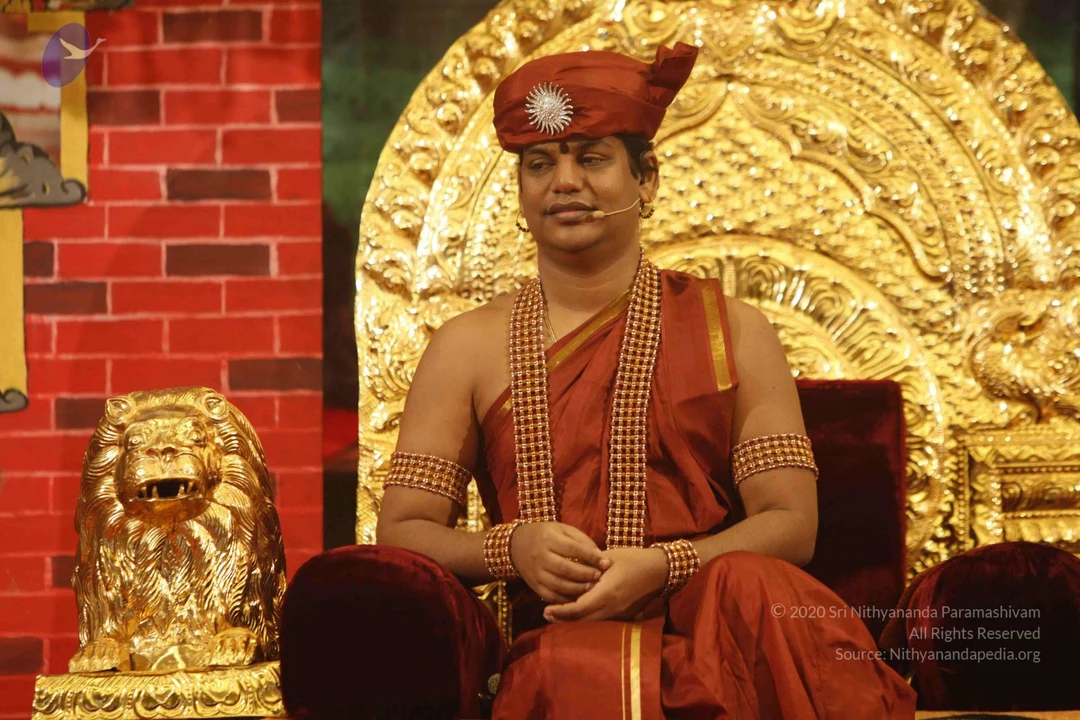
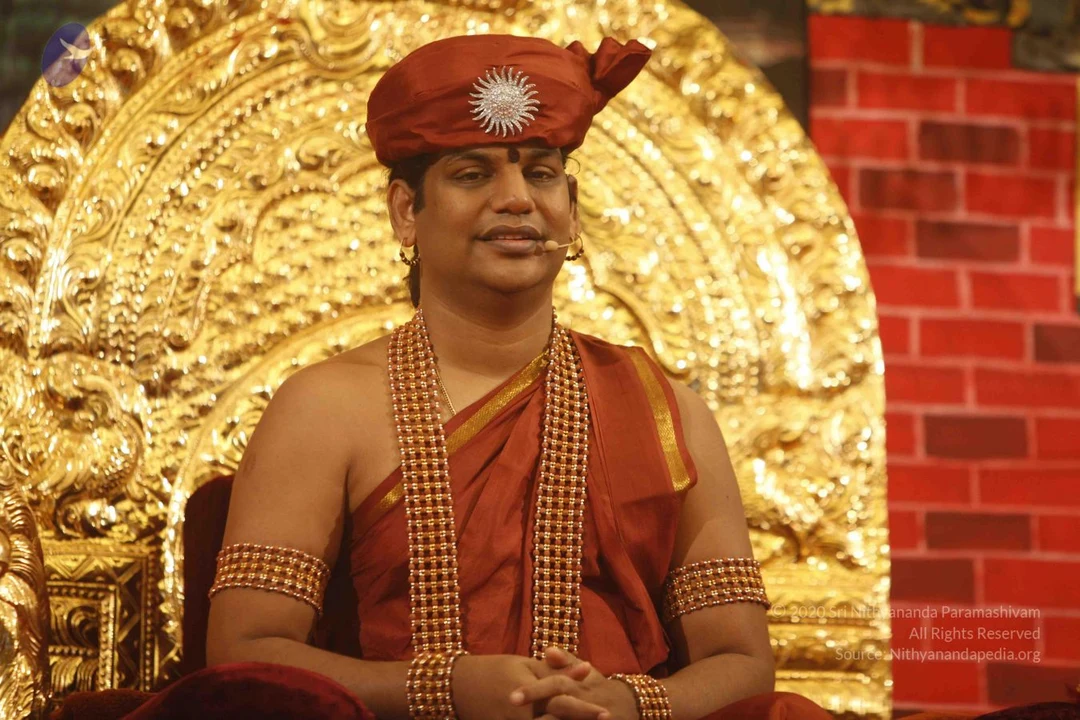
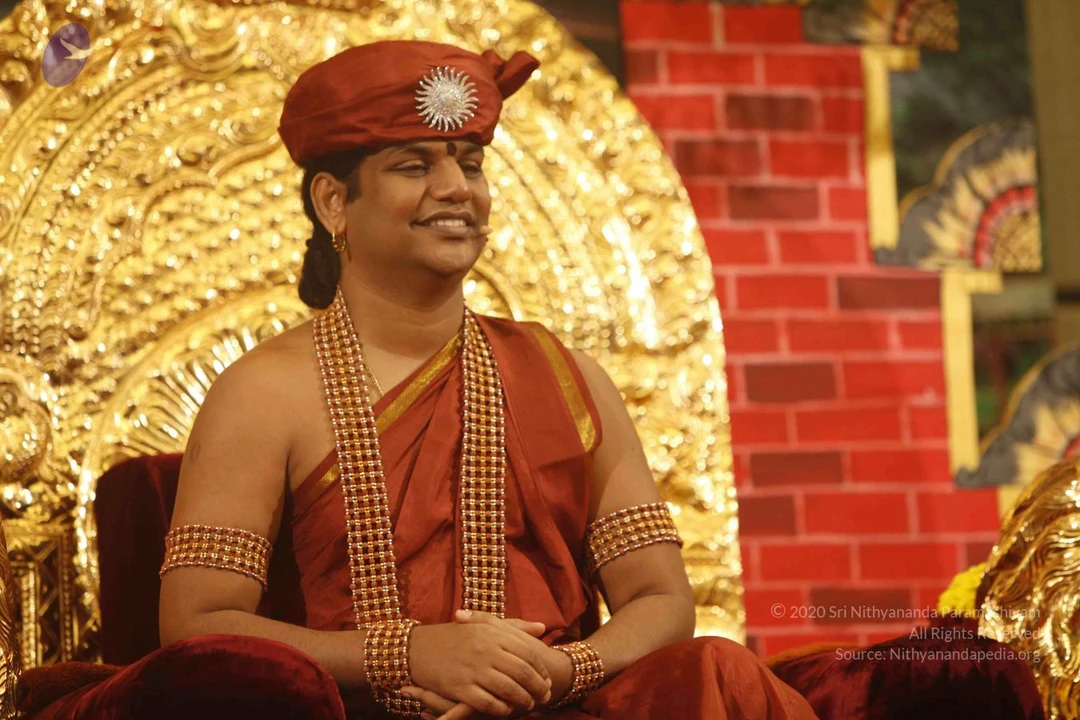
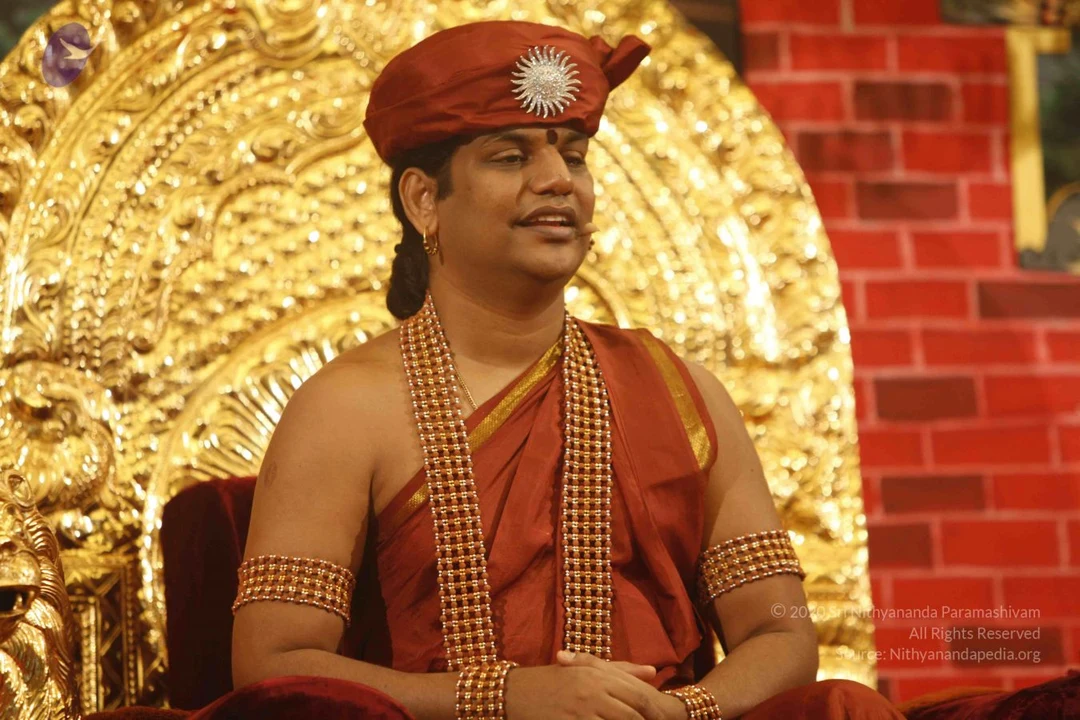
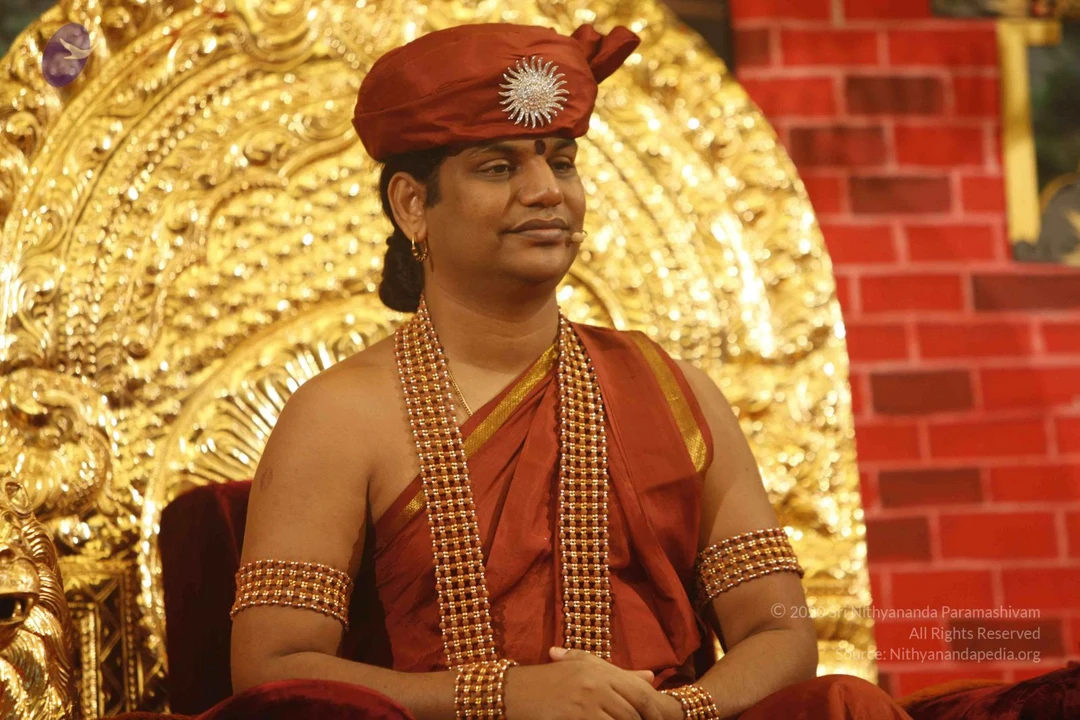
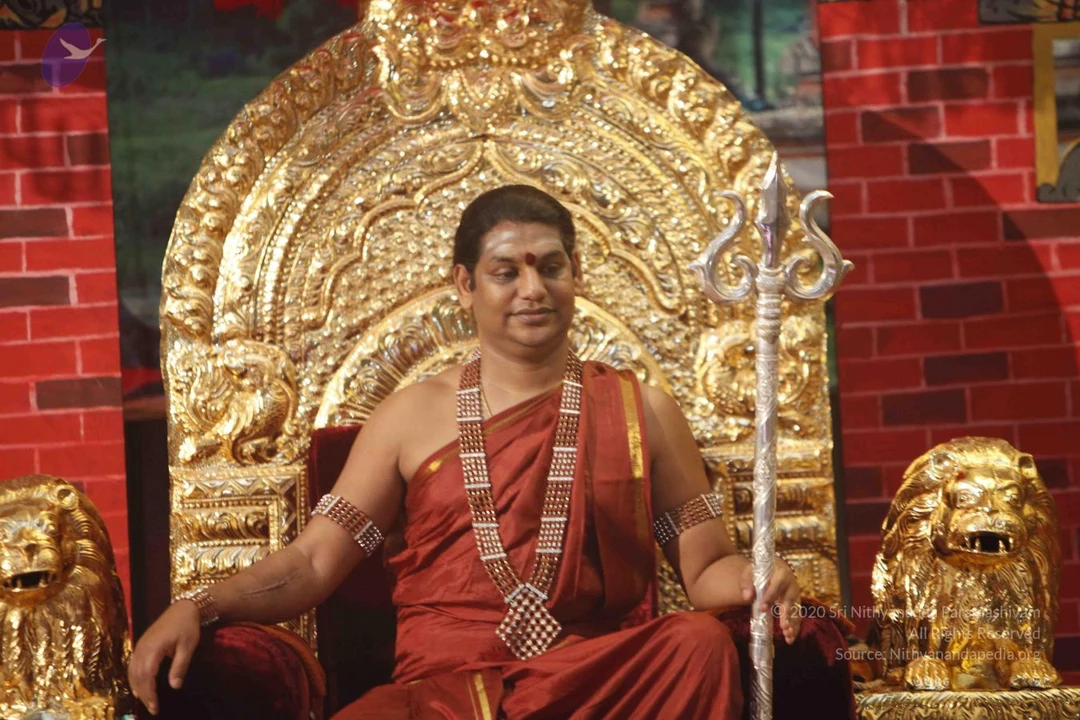
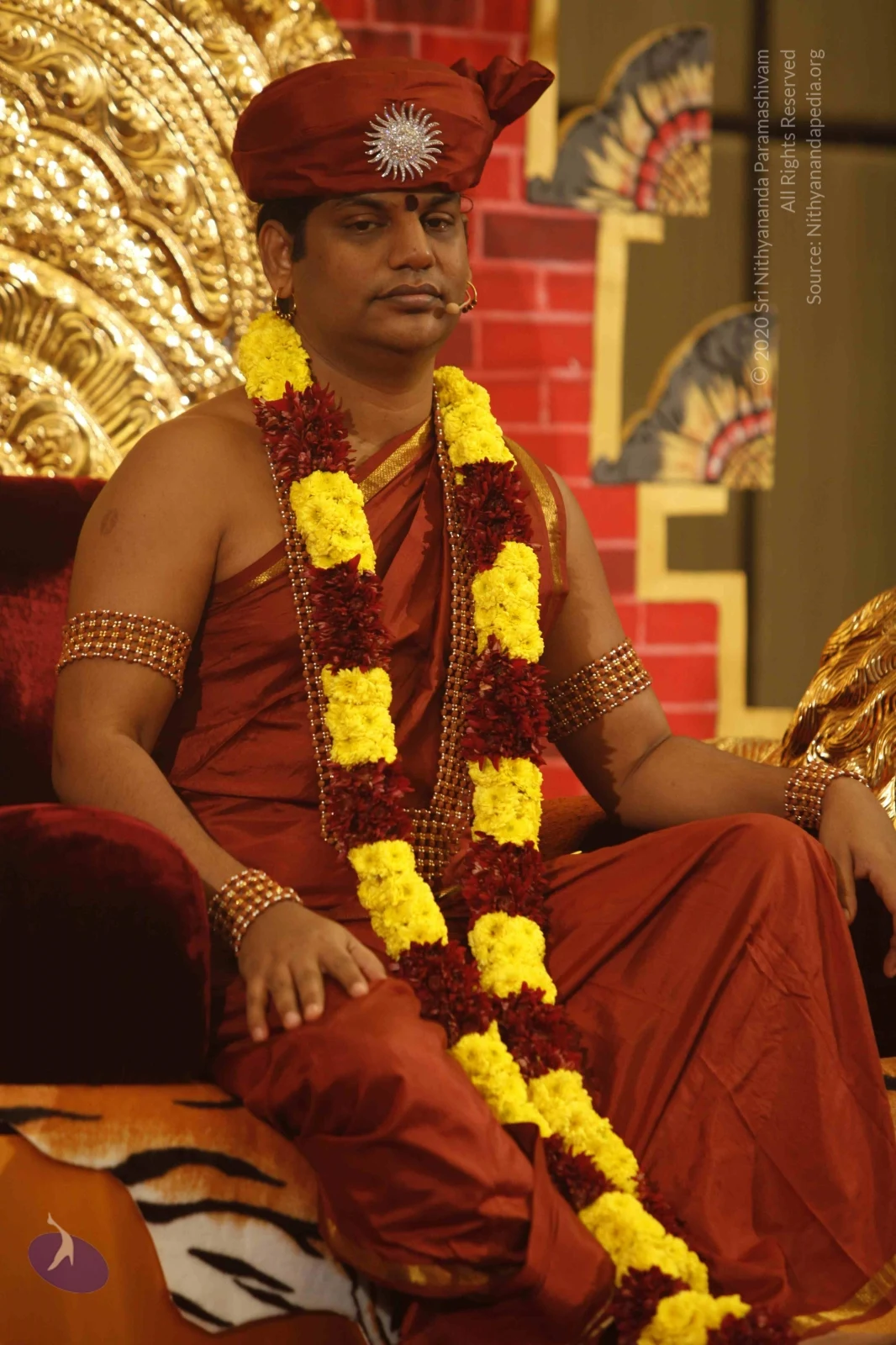
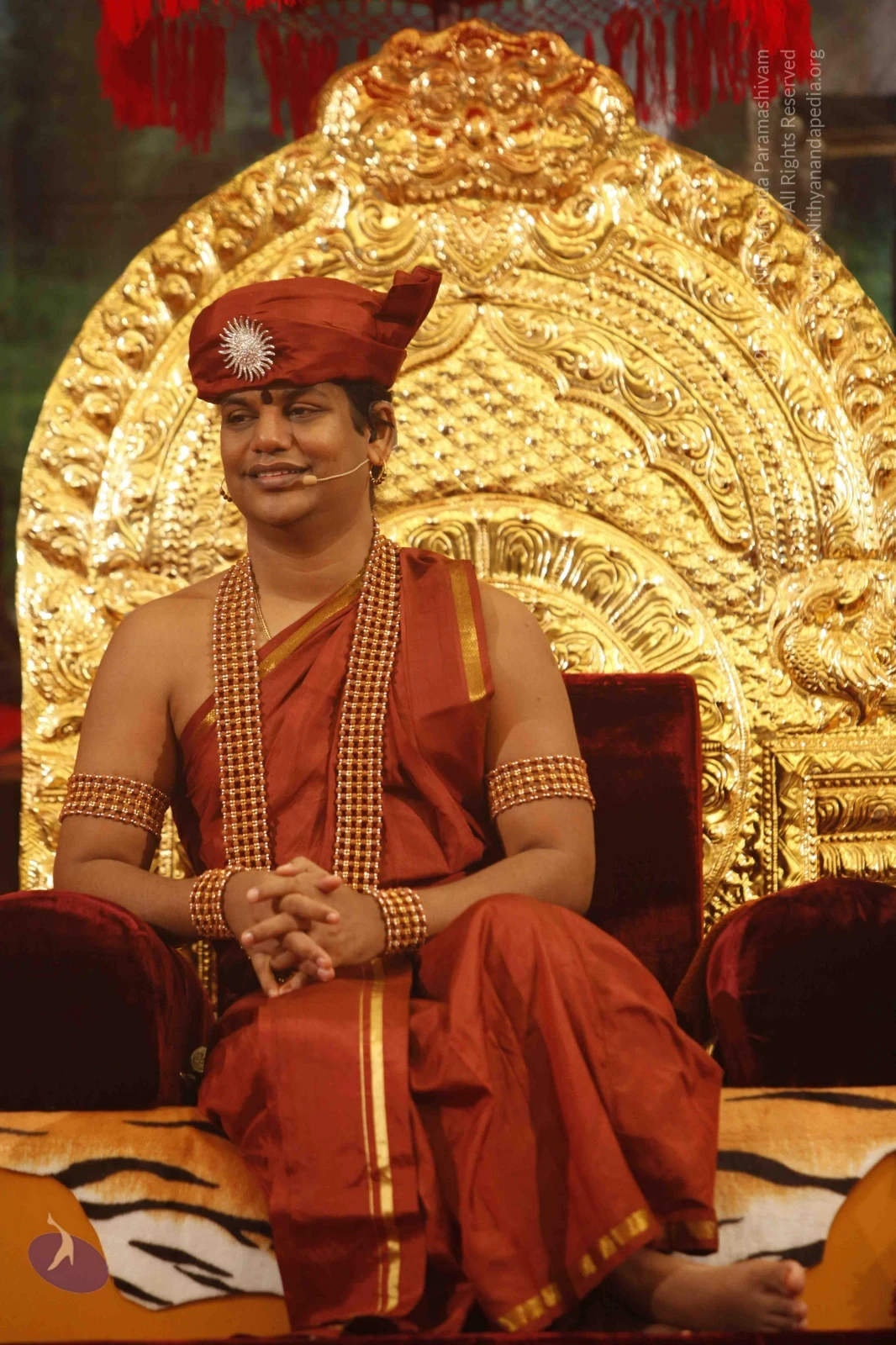
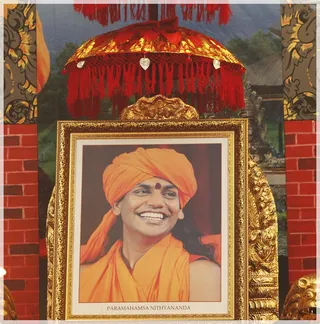
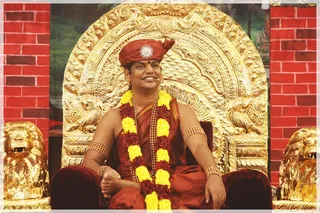
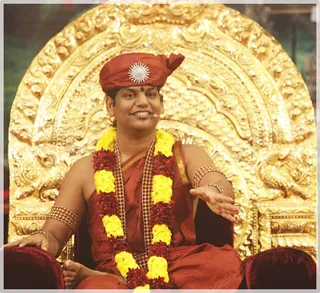
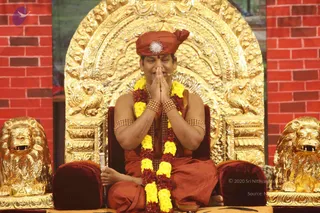
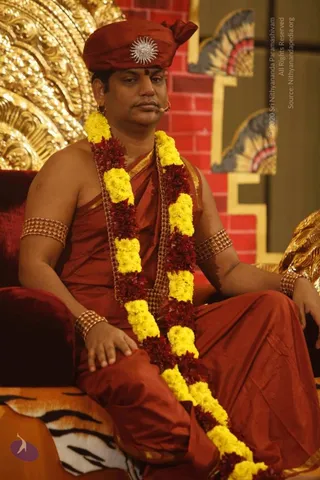
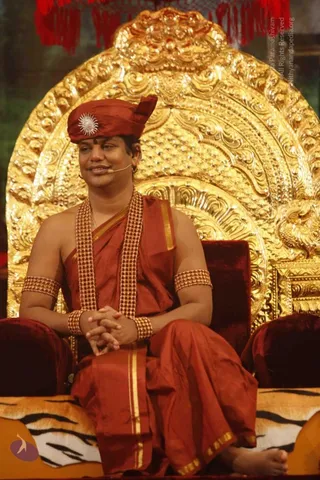
A framed, gold-ornate portrait of a smiling man in saffron-orange headwrap, saffron shawl and a red bindi is displayed on a shrine-like altar beneath a red and gold canopy with tassels and small heart-shaped ornaments. Gold carved panels flank the frame, with red brick walls and a painted backdrop of a temple and trees behind. The caption beneath the portrait reads Paramahamsa Nithyananda, attributed to the printed label. No physical people are visible in the scene.A seated man on an ornate gilded throne with carved floral and scrollwork, flanked by golden lion statues and a red brick backdrop. He wears a red-orange turban with a white emblem, an orange-red robe, a garland of yellow and red flowers, and gold bangles on his arms. Possible a person: long styled hair and gold bangles are visible, and the rest of the appearance is uncertain. A single person is present, smiling and seated with hands resting on the armrest.A smiling man in red-orange saffron robes and a matching red turban with a silver emblem sits on an ornate gold throne with carved relief patterns and red velvet cushions. He wears long garlands of yellow marigolds alternating with red flowers and a beaded necklace, has beaded bangles on his arms, and gestures with one open hand while speaking into a small headset microphone. The setting appears to be a stage or satsang hall. Swamiji (probable): the saffron robes, red turban, garlands and ornate gold throne are the cues for this candidate, shown seated in the role of a speaking teacher giving satsang.

Paduka-Puja

21 photosSource gallery
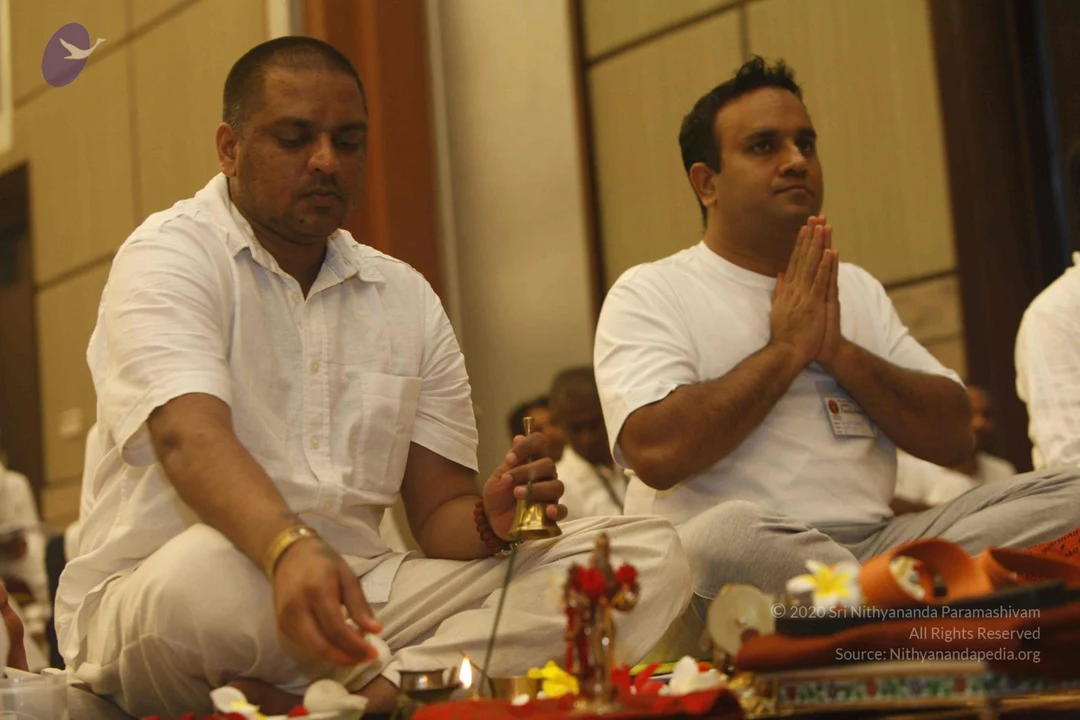
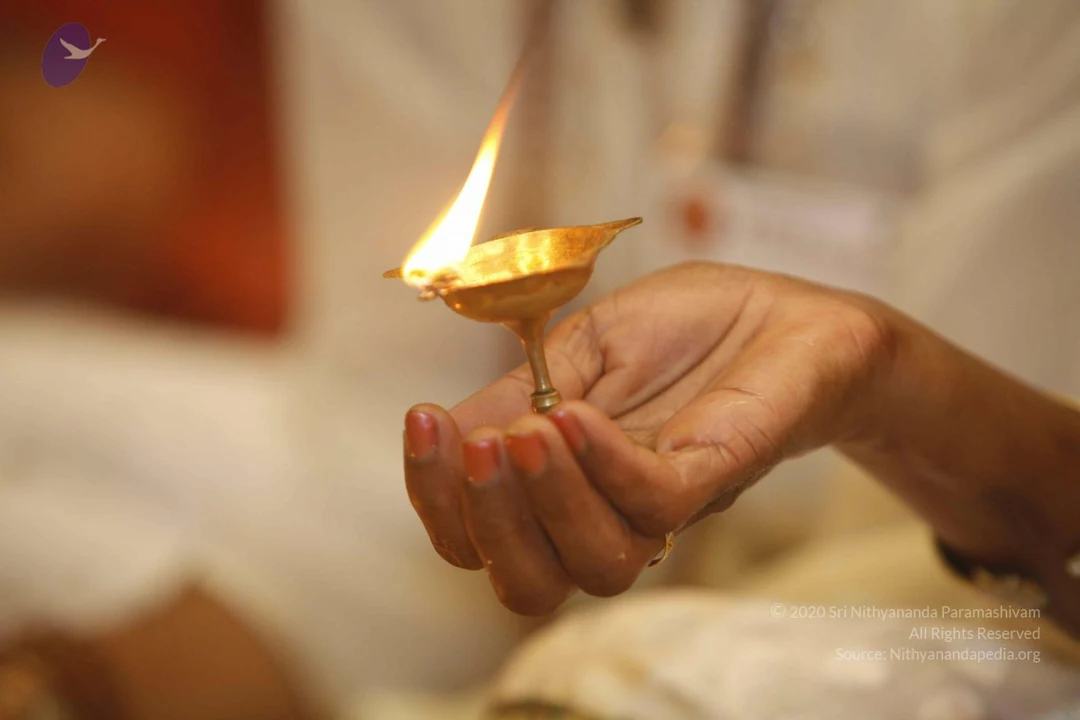
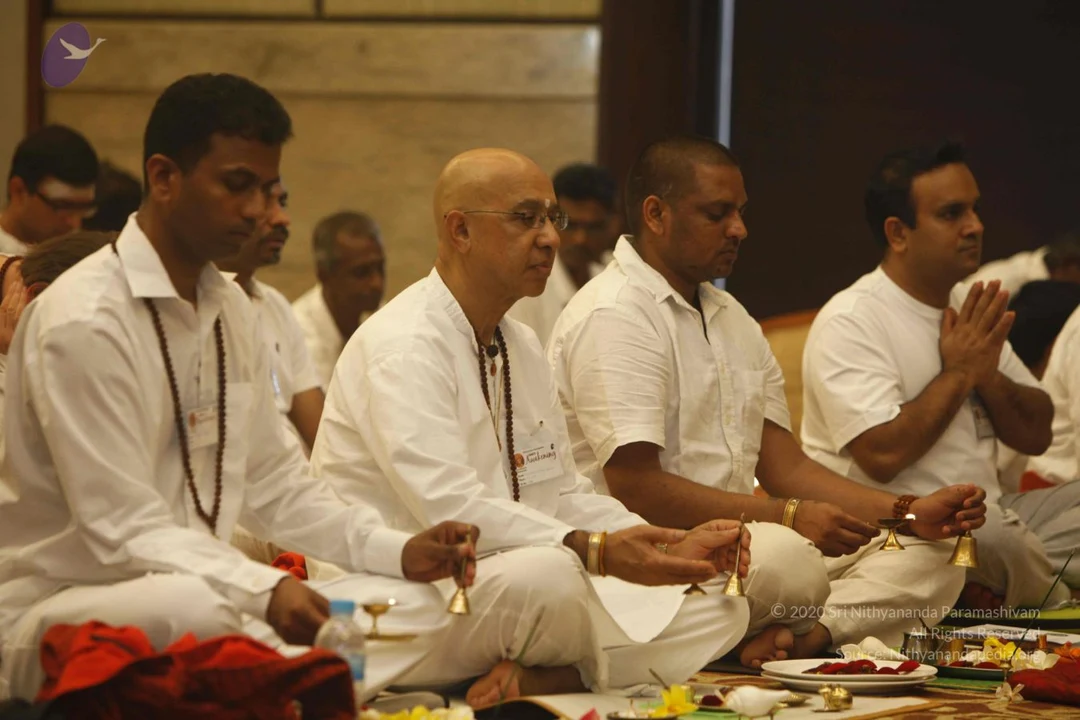
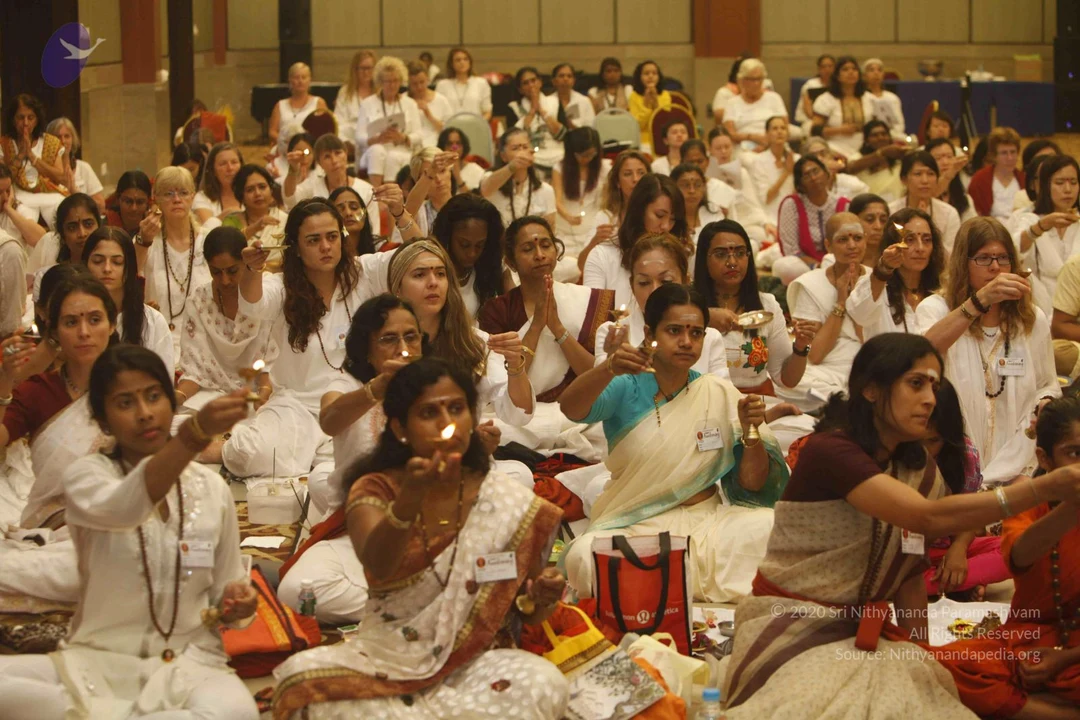
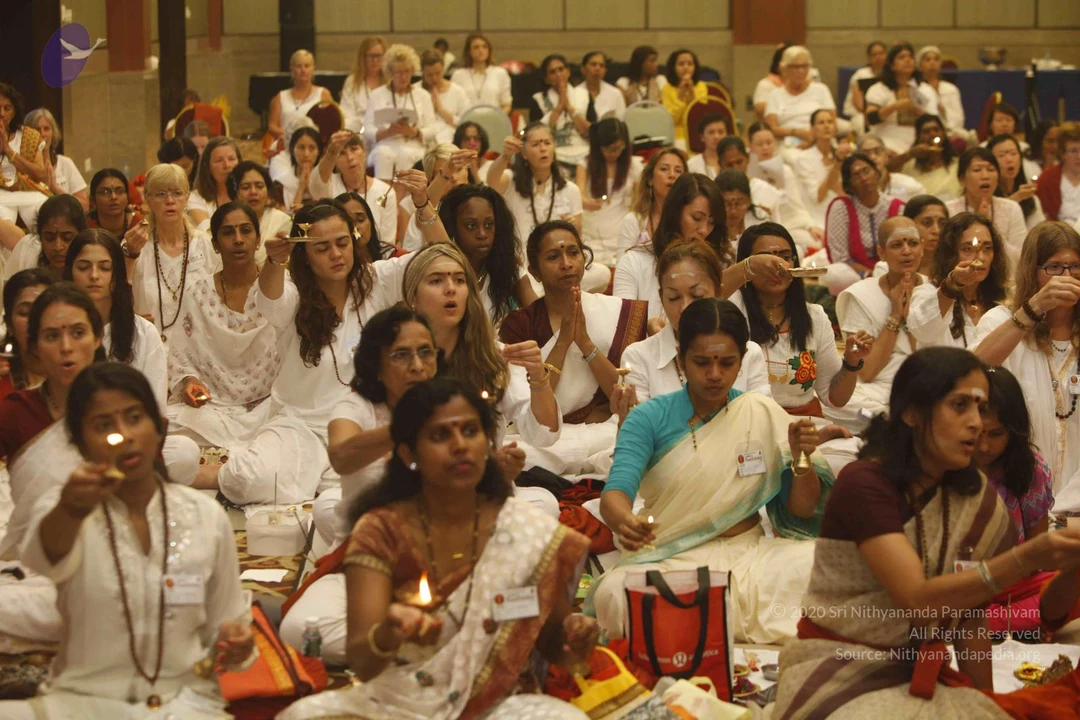
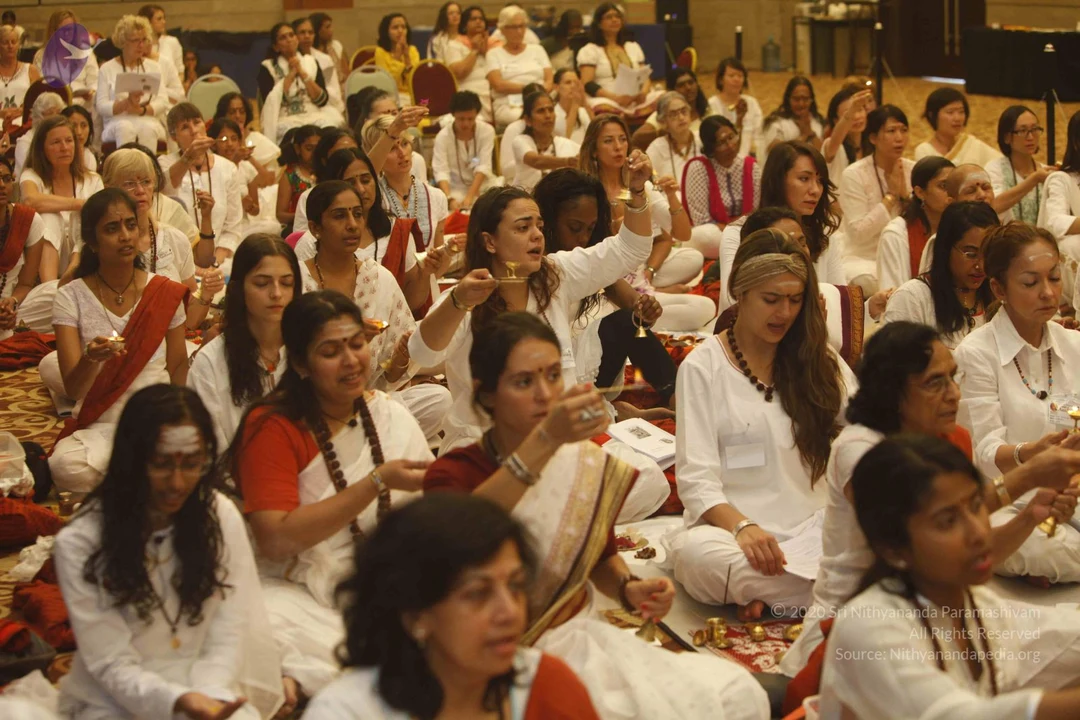
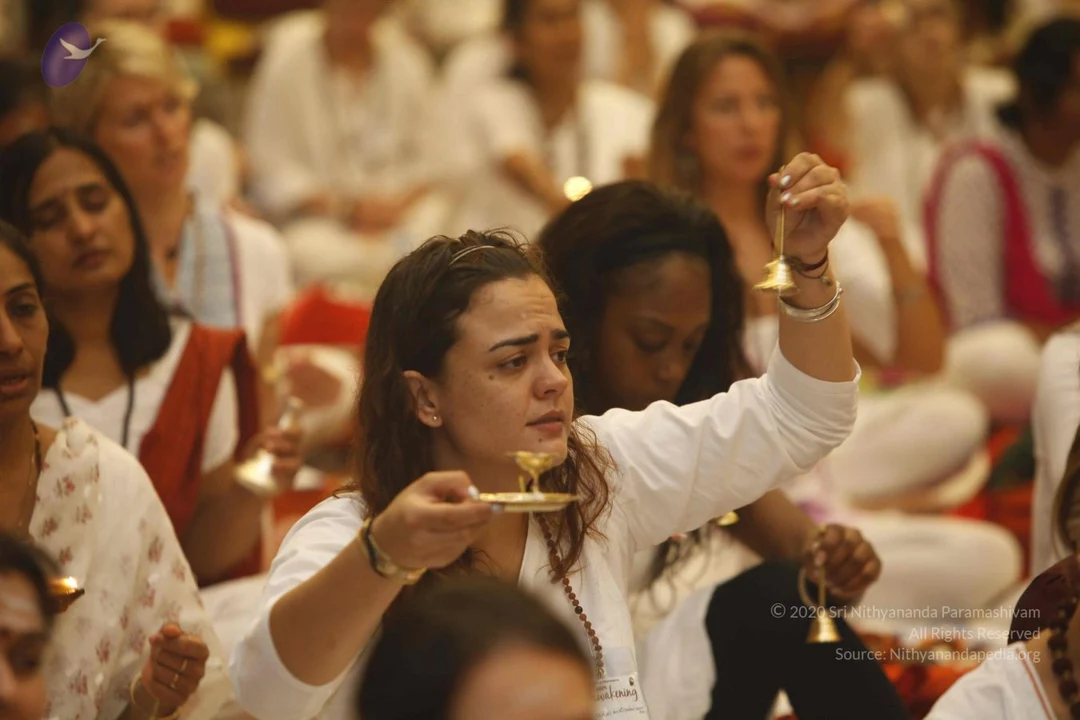
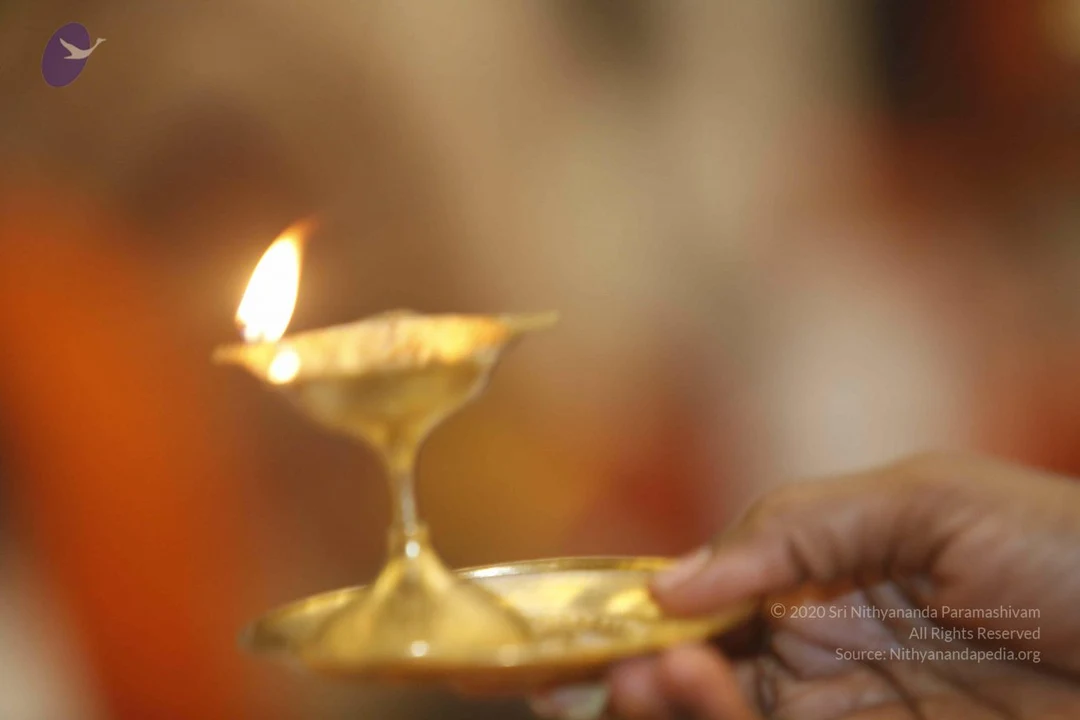
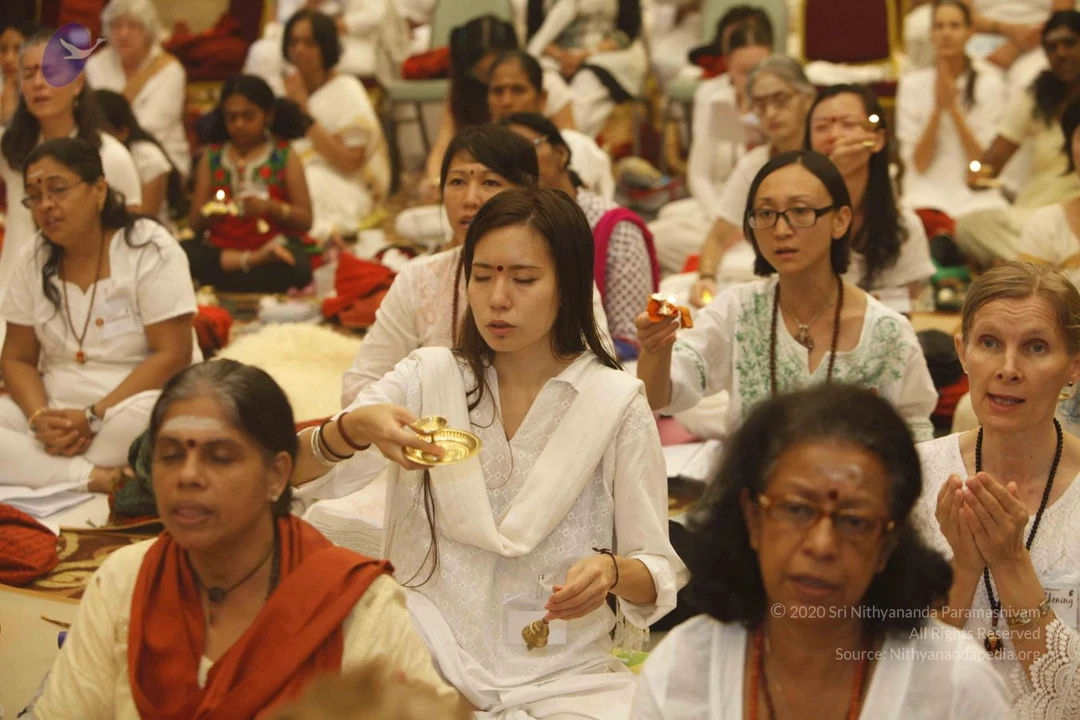
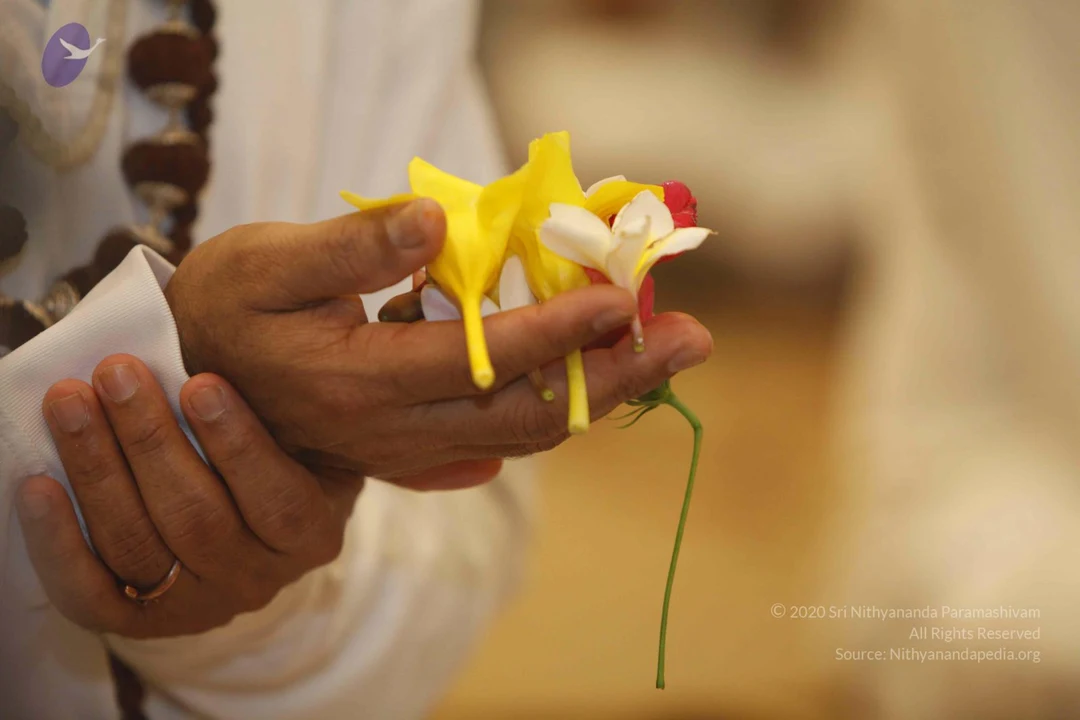
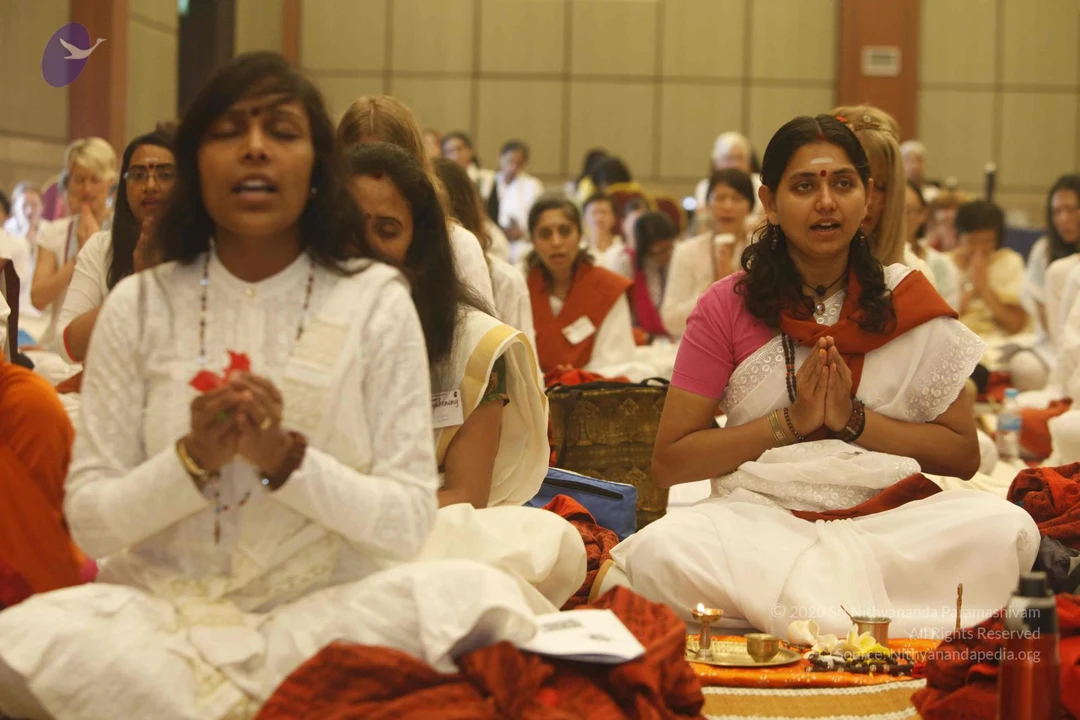
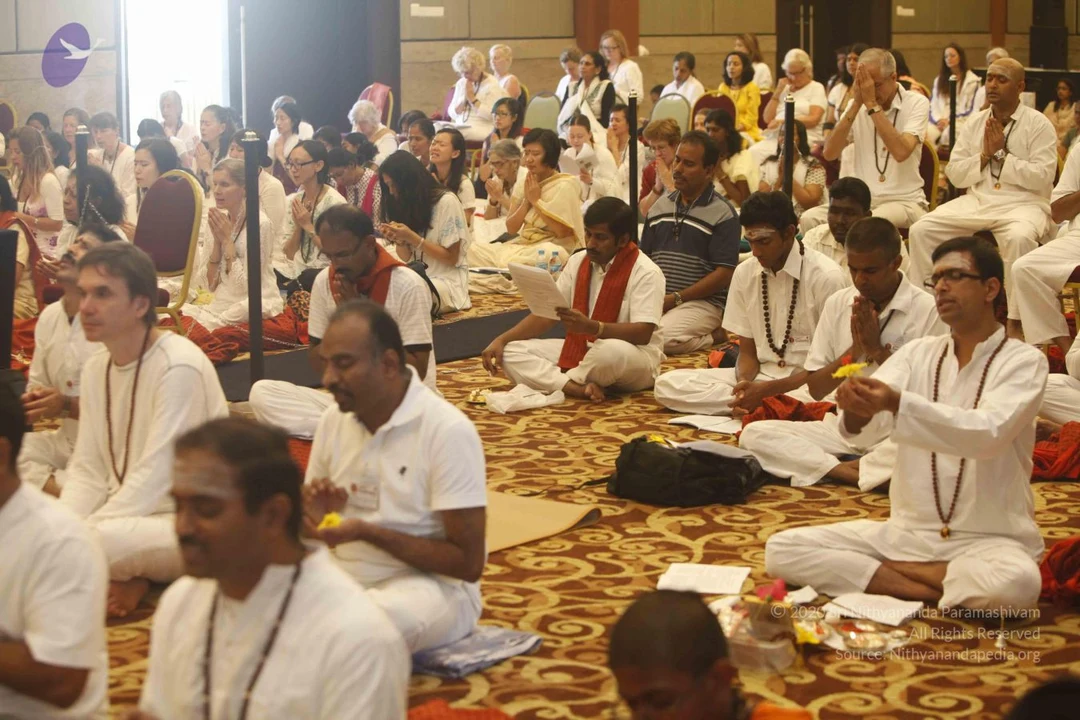
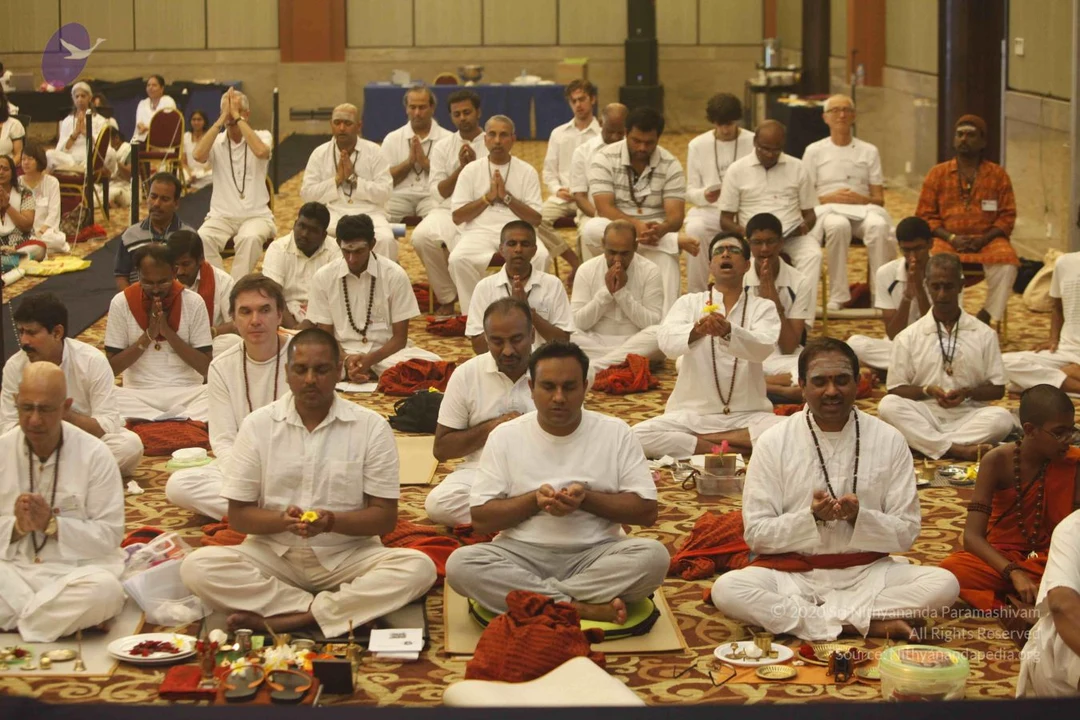
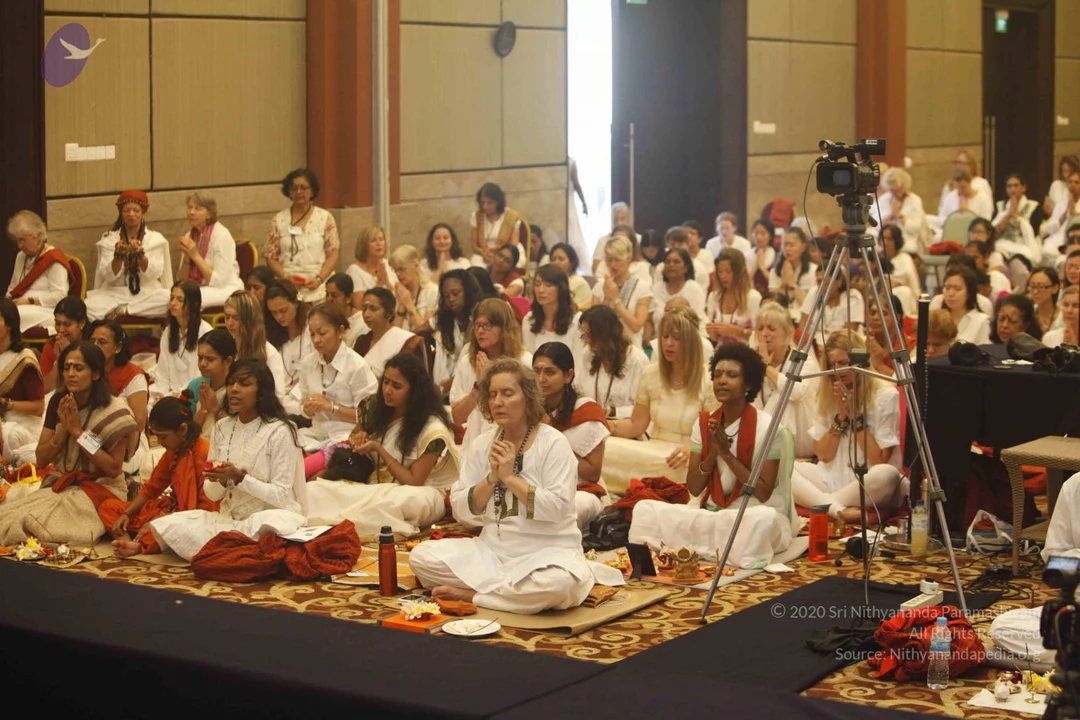
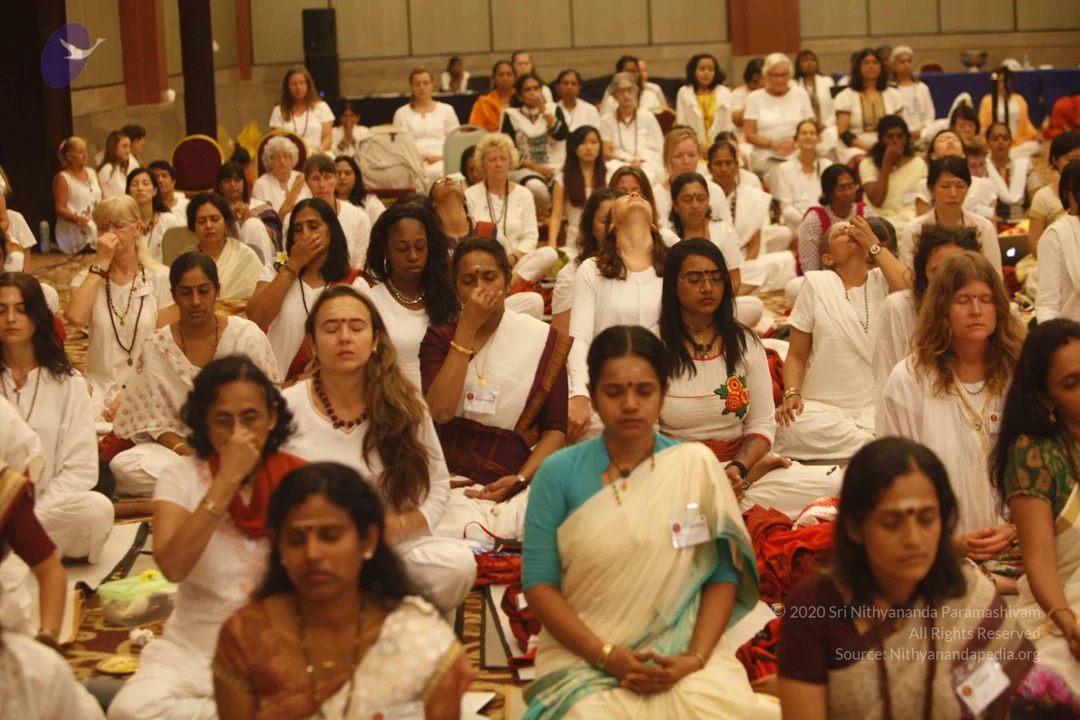
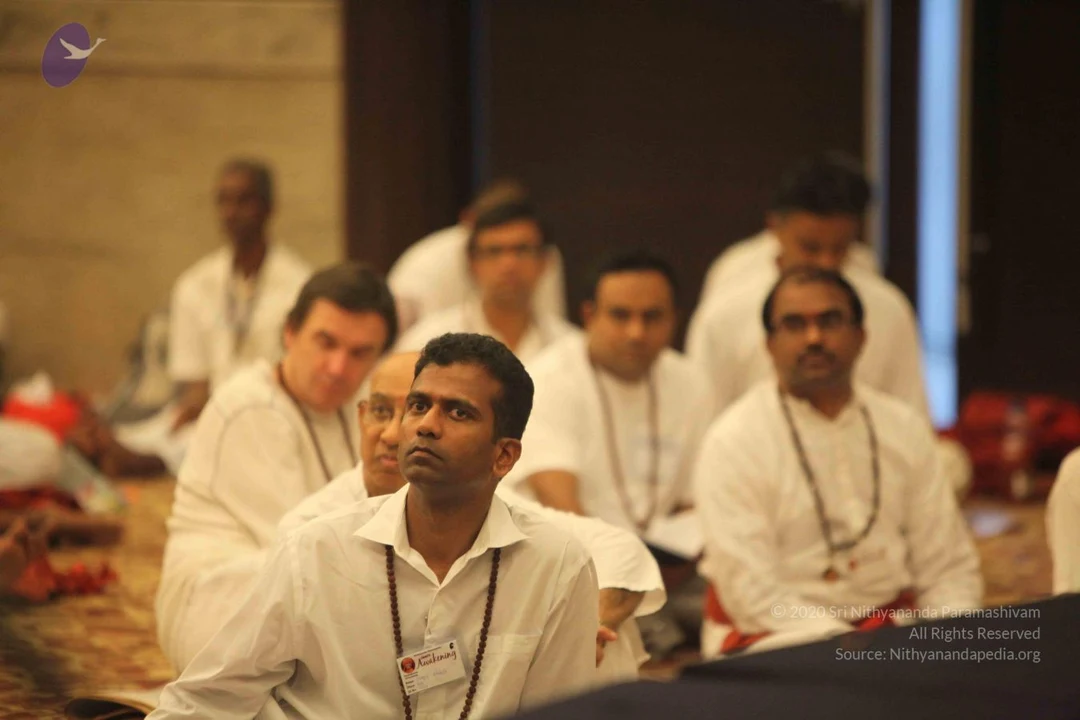
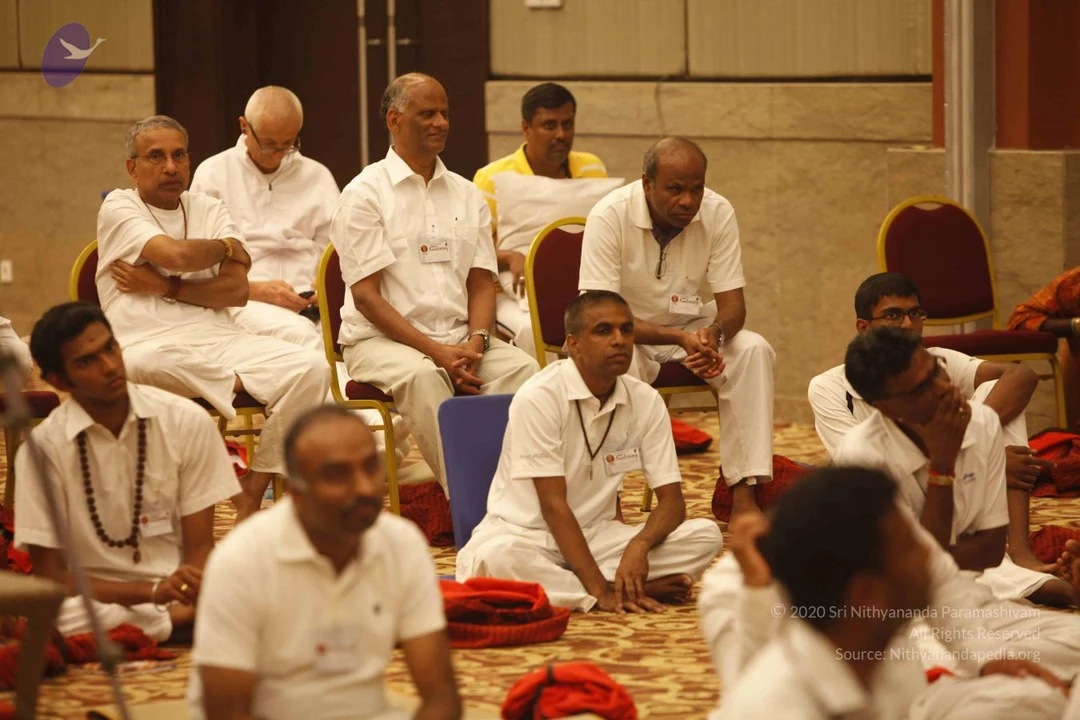
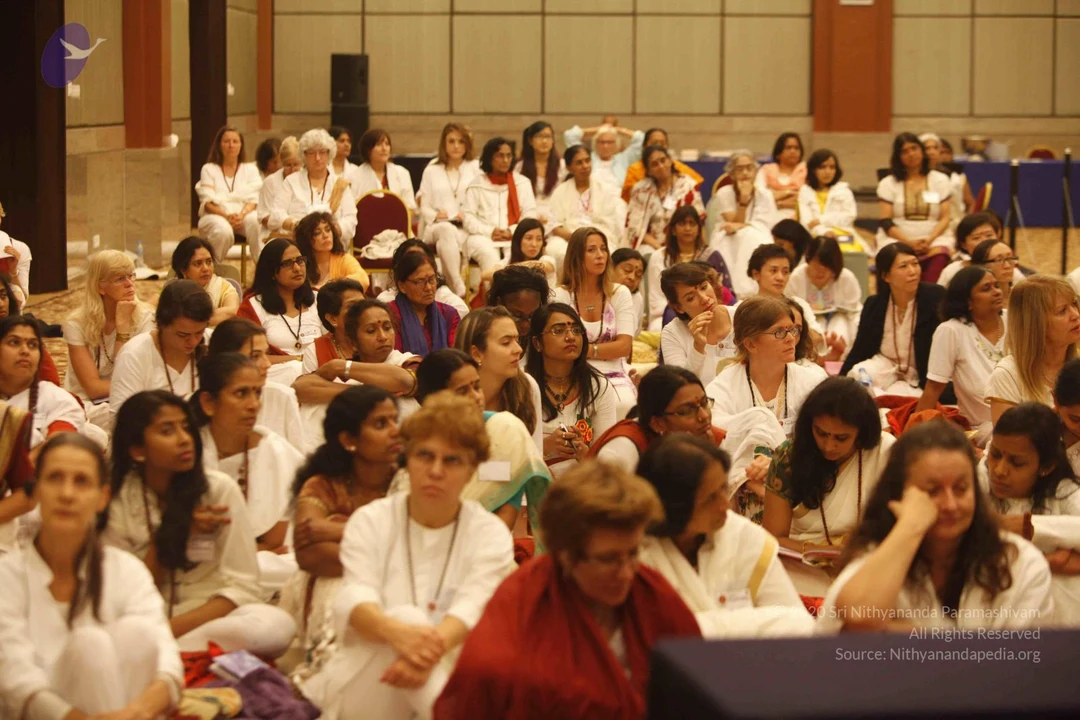
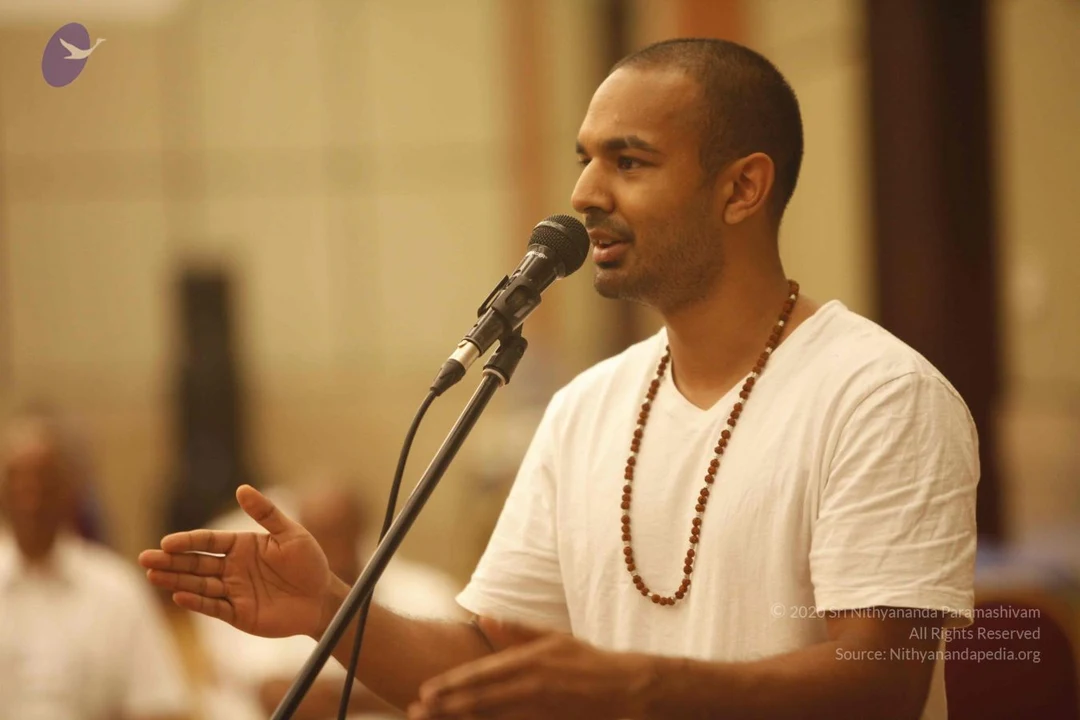
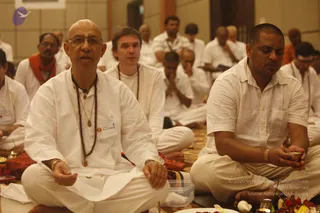
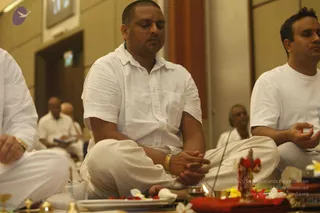
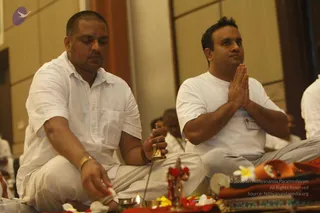
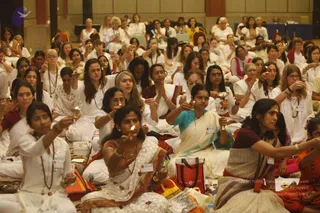
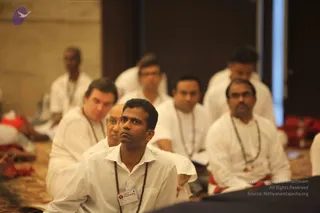
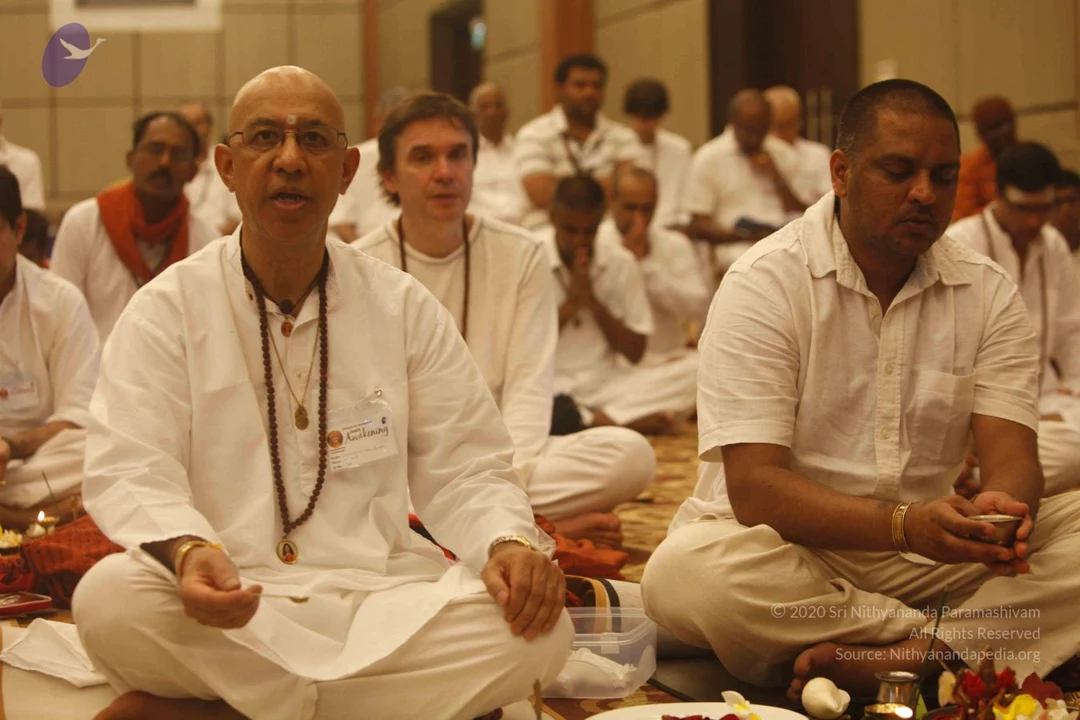
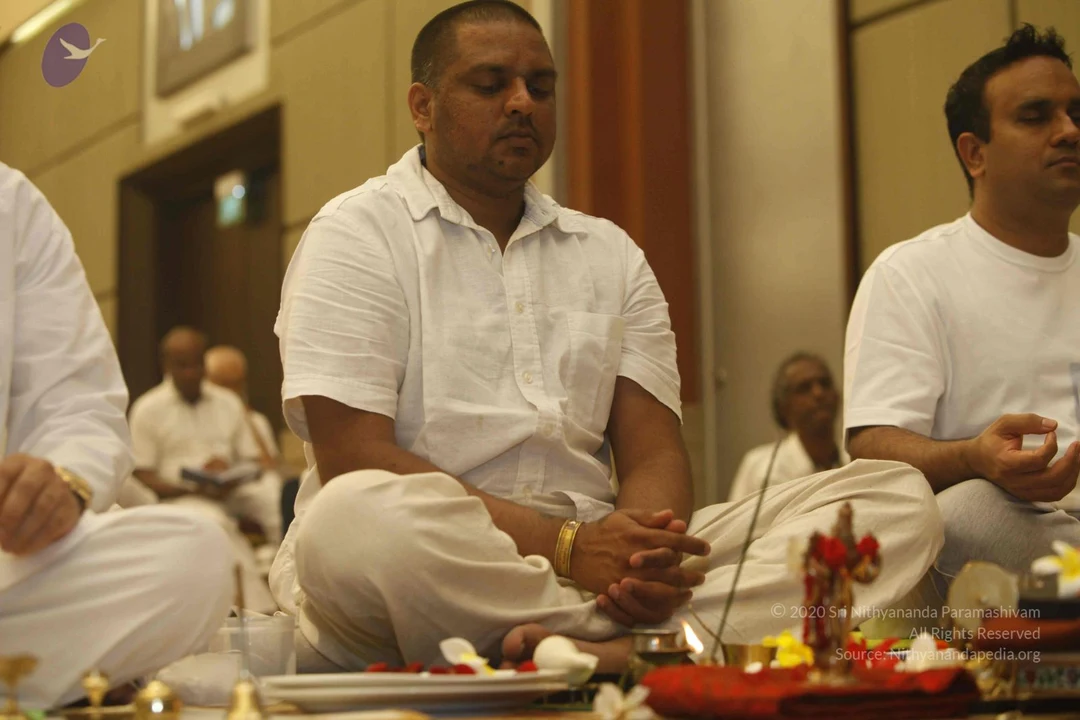
A seated group in a hall with beige walls and carpet, most people dressed in white kurta-style or collared white shirts. In the foreground a bald man in white with a rudraksha mala and a pendant necklace sits cross-legged, speaking with his hands resting on his knees, a name badge on his chest. Beside him a man in a white t-shirt with a pendant speaks, and at right a man in a white shirt holds a small metal bowl with eyes lowered. Behind them many devotees sit in white, some with hands folded. Brass lamps, a plate of flowers and offerings lie at the lower edge. No identity is claimed from appearance.Seated devotees in white clothing meditate with eyes closed during a ritual gathering in a beige-walled hall. The central man wears a white short-sleeved shirt and white dhoti-style trousers, with a gold bangle and hands folded in his lap. To the right, a man in a white t-shirt sits in mudra with eyes closed. Behind them, older men in white sit on the floor. In front lie a plate with white and yellow flowers, brass vessels, a small oil lamp with flame, a red-and-gold deity murti, and red petals. This appears to be a puja or satsang setting.A photograph of a seated devotional ritual indoors. In the foreground, a shaved-headed man in white shirt and white dhoti holds a small brass bell in his right hand and a flower in his left, with a brass lamp burning nearby. Beside him, a man in a white t-shirt with an ID badge sits with palms pressed together in namaste, eyes lifted. Red and yellow flowers, a small brass deity murti, and a red-and-orange cloth lie on the floor in front of them, with several other white-clad people seated behind. Wood-panelled walls form the backdrop.Close-up photograph of a hand holding a small brass oil lamp (diya) with a lit flame, the lamp on a stem with a flared cup. The fingers have reddish-painted nails and a thin ring is visible on one finger. The wearer's white clothing blurs in the background, with a warm orange-red fabric area at upper left.Several men in white ritual clothes sit cross-legged on a floor during a seated puja. Foreground left, a man wears a rudraksha mala and holds a small brass vessel. Centre, a bald man in round glasses and white kurta with a red-brown bead necklace holds a brass bell-like vessel. Right, a man in white holds small brass cups and a bell, and another man has hands joined in anjali. Marigold petals and a plate of red flowers lie on a red cloth in front. The room is panelled with light stone and wood. Appearance is uncertain, so no identity is asserted.A large seated gathering of mostly women in white and cream clothing fills a hall, many holding small lit oil lamps or flames in their hands during a ritual. Some wear saris in red, teal, maroon and orange, and rudraksha-style beaded malas and bangles are visible. In the foreground, several women hold lamps aloft while others sit with hands folded in prayer. A small brass or silver puja vessel with flowers sits at the right. No single figure is clearly identifiable as a person in this crowd, and no presiding figure is clearly visible.

Nithya-Satsang
25 photosSource gallery
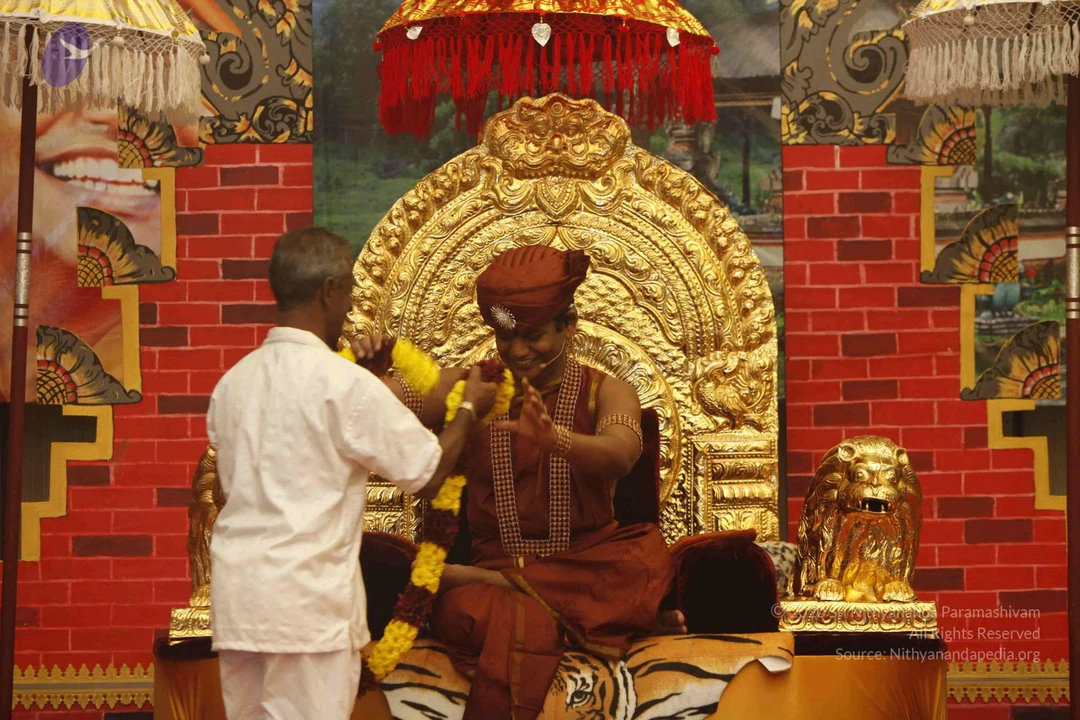
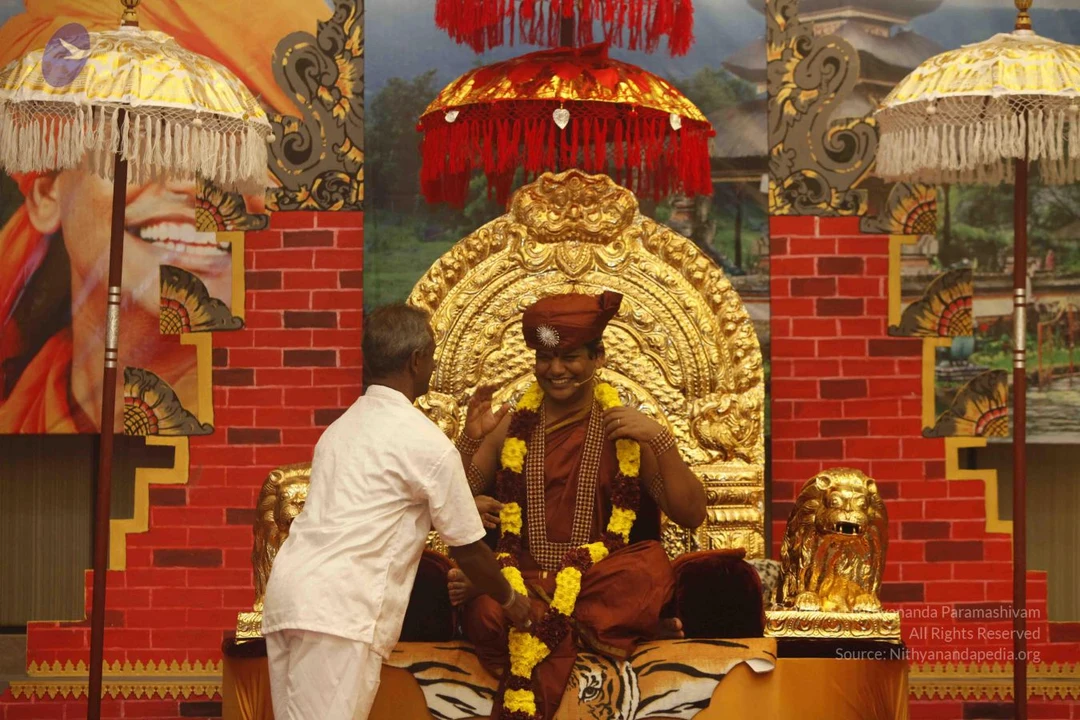
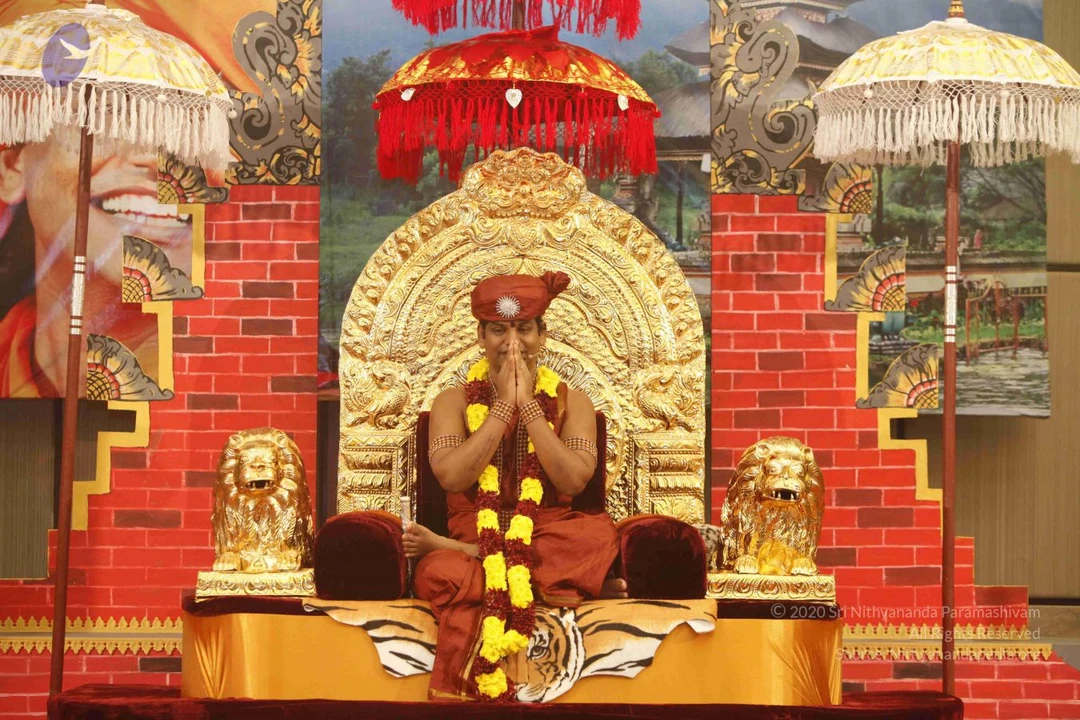
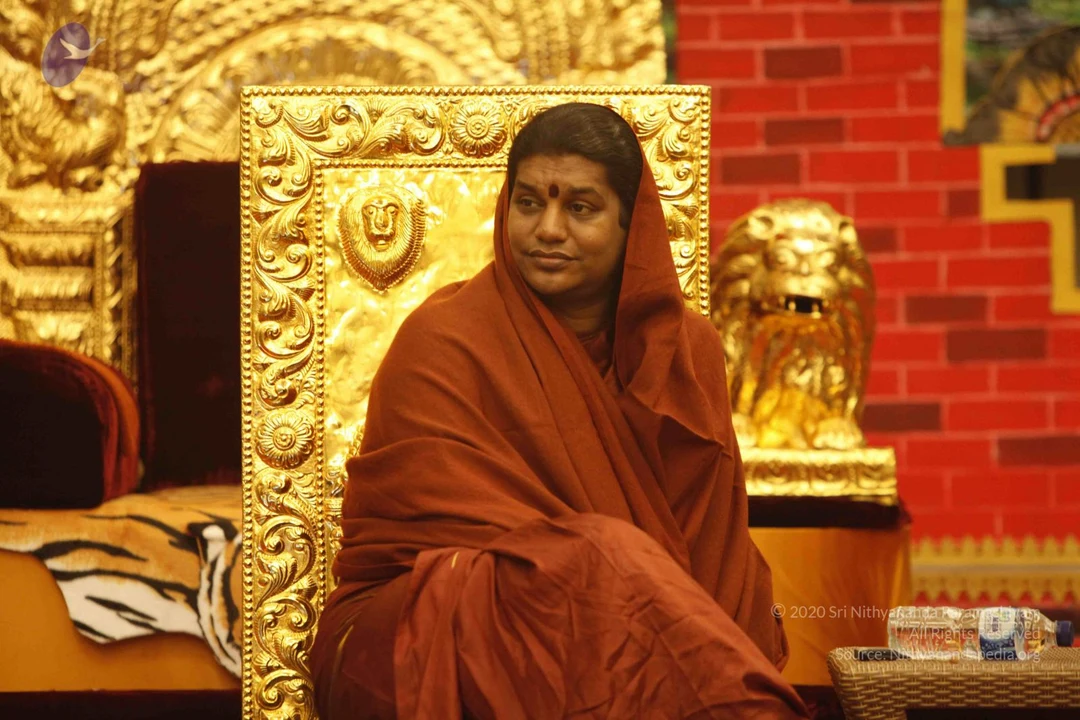
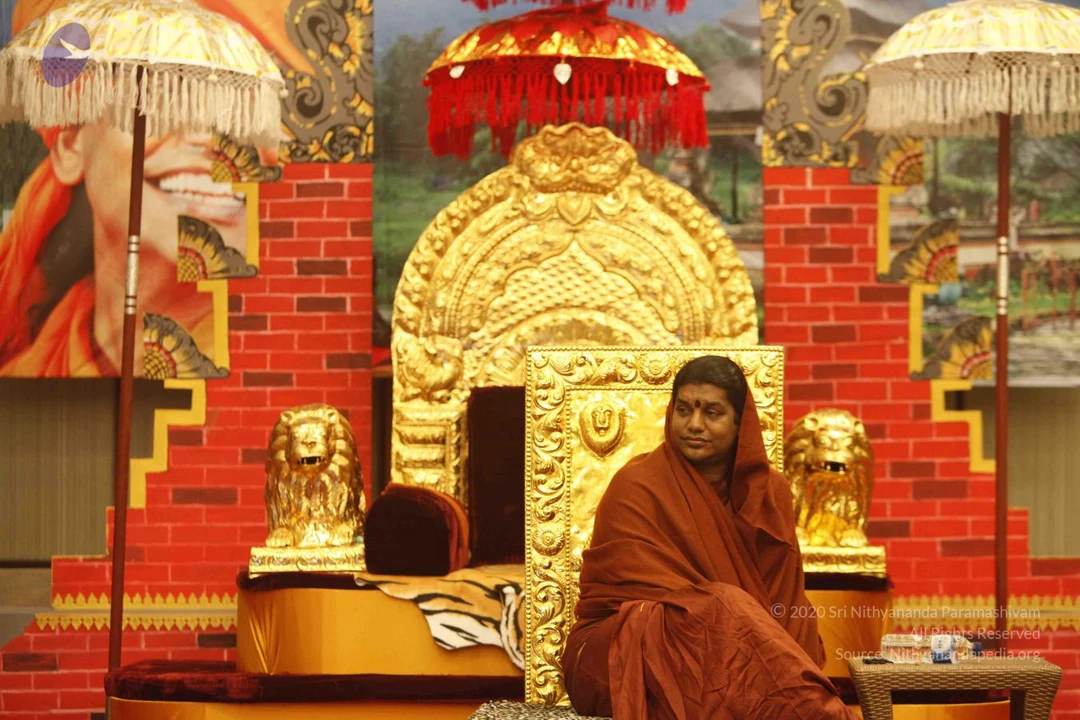
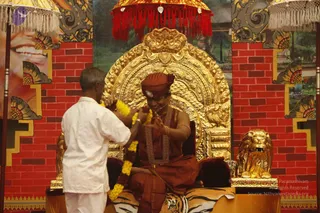
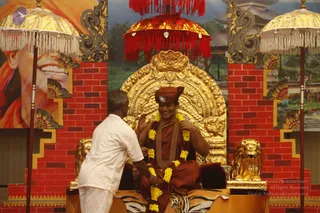
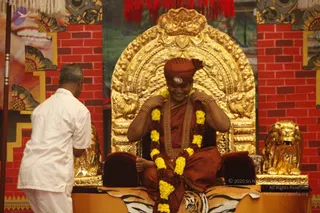
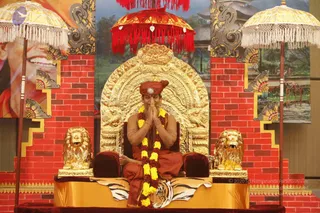
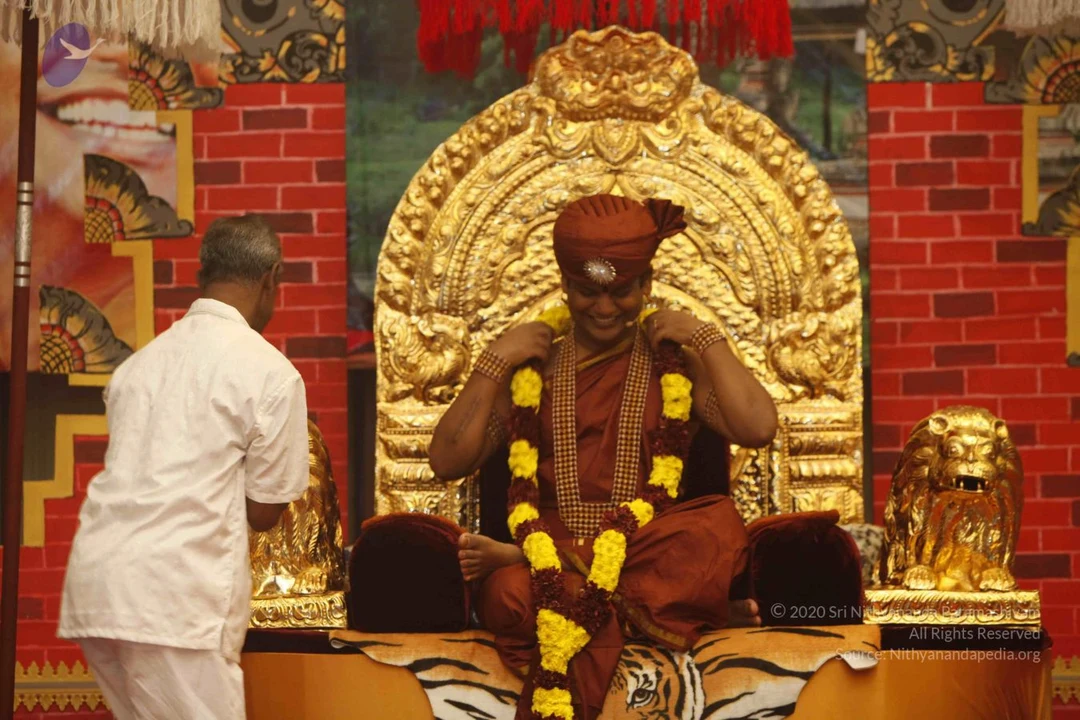
A photograph of a seated figure on an ornate gold throne with carved lion finials and a tiger-skin draped seat, backed by a red brick-patterned wall and Balinese-style gold and red umbrellas. The seated person wears a rust-brown robe, a brown turban with a small ornament, a multi-strand beaded necklace and gold armbands, and holds a folded-hand gesture. A standing man in white shirt and white dhoti places a garland of yellow and red flowers around the seated person's neck. Printed copyright text appears on the right, and a faint purple logo is at the upper left.A seated figure in a rust-red robe and matching turban with a white jewel sits smiling on a large ornate gold throne flanked by golden lion figures and a tiger-skin cushion. A bare-headed man in a white shirt and white dhoti leans forward to drape a garland of yellow and orange marigolds around the seated figure's neck. Behind the throne stand a red brick wall, red fringed canopies, and gold-and-white Balinese parasols; a large backdrop shows a smiling saffron-clad figure at left and a Balinese temple landscape at right. The seated figure is a probable Swamiji by appearance, with a turban, rust robe and ornate gold beaded necklace, shown receiving a garland from a devotee.A seated figure on an ornate gold throne with carved lion-head armrests and a striped tiger-skin cushion receives a garland. The seated person wears a rust-red turban with a jewelled brooch, a rust-red robe, a multi-strand gold beaded necklace and gold bangles, and smiles while holding a marigold garland of yellow and maroon flowers at the neck. A man in a white shirt and white trousers stands at left, bending forward to assist. Behind is a red brick-patterned wall and a painted backdrop with a fan-like decorative motif. Presentation cues are a turban, ornate gold jewellery and a throne, but no distinctive identity cues are sufficient for a probable identification, so the seated figure is described by role only.A seated man in a golden ornate throne with carved gold backrest and two gold lion statues at its sides sits on a tiger-skin-covered platform. He wears a maroon-brown dhoti and shawl, a maroon-and-white turban with a white emblem, bare arms with gold armbands, and a long garland of yellow and red flowers. Two gilt ceremonial umbrellas with fringed white and gold canopies frame him, and above are red tiered umbrellas. The backdrop shows a red brick Balinese-style gate with gold carvings, a painted temple scene and a large portrait of a smiling figure in orange robes on the left. The person is seated and hands rest on the armrests.A seated figure on an ornate golden throne with carved lion heads at each side and a tiger-skin draped over the platform, under two yellow fringed parasols and a red fringed canopy. The figure wears a red-orange turban with a white emblem, an orange-red robe, gold bangles, and a long red and yellow marigold garland, with palms pressed together in namaste. Behind the throne are red brick-patterned panels and a backdrop of a traditional Balinese-style temple and garden. A printed circular copyright line appears at the bottom right of the frame. a person: the figure shows a red turban and orange robe in the setting of a throne reception, so it is a candidate, though the appearance is uncertain.A seated man in saffron-orange robes and a matching turban with a silver emblem sits with palms pressed together in namaste, eyes closed and smiling. He wears a long yellow and red marigold garland, rudraksha-style beaded bracelets on his upper arms and wrists, and a small microphone at his cheek. He sits on an ornate gold throne with carved backrest, flanked by two golden lion sculptures on red-cushioned seats, in front of a red brick-patterned backdrop. a person is identified by the saffron turban, garland and ornate throne setting, though his face cannot be confirmed.

IA-Food

6 photosSource gallery
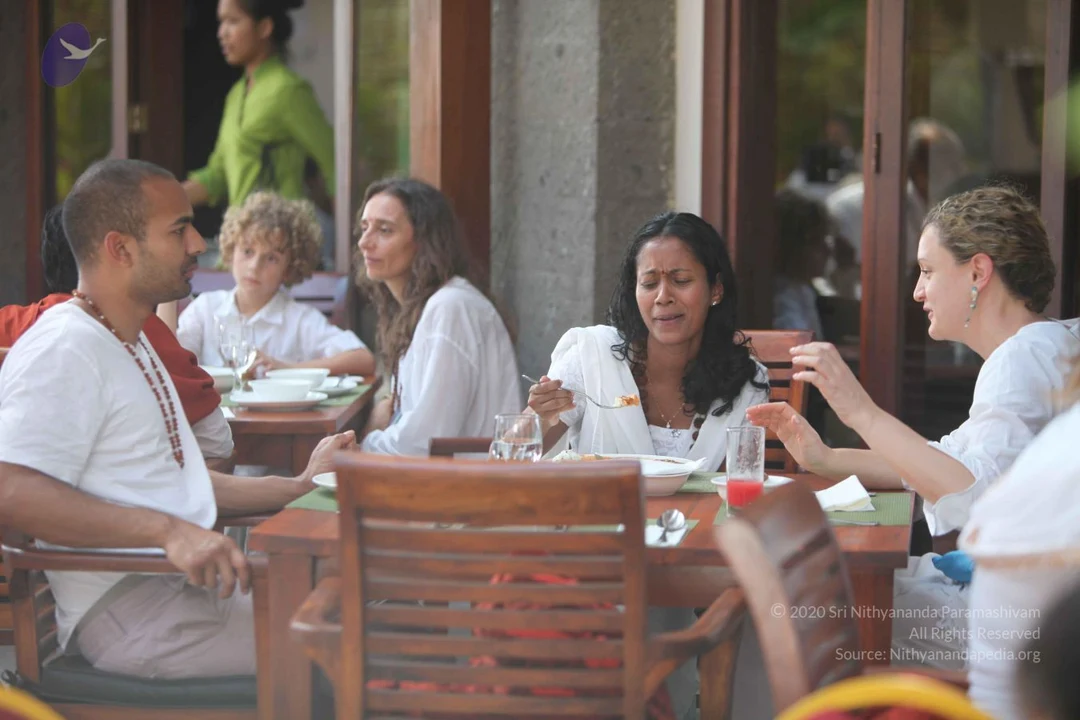
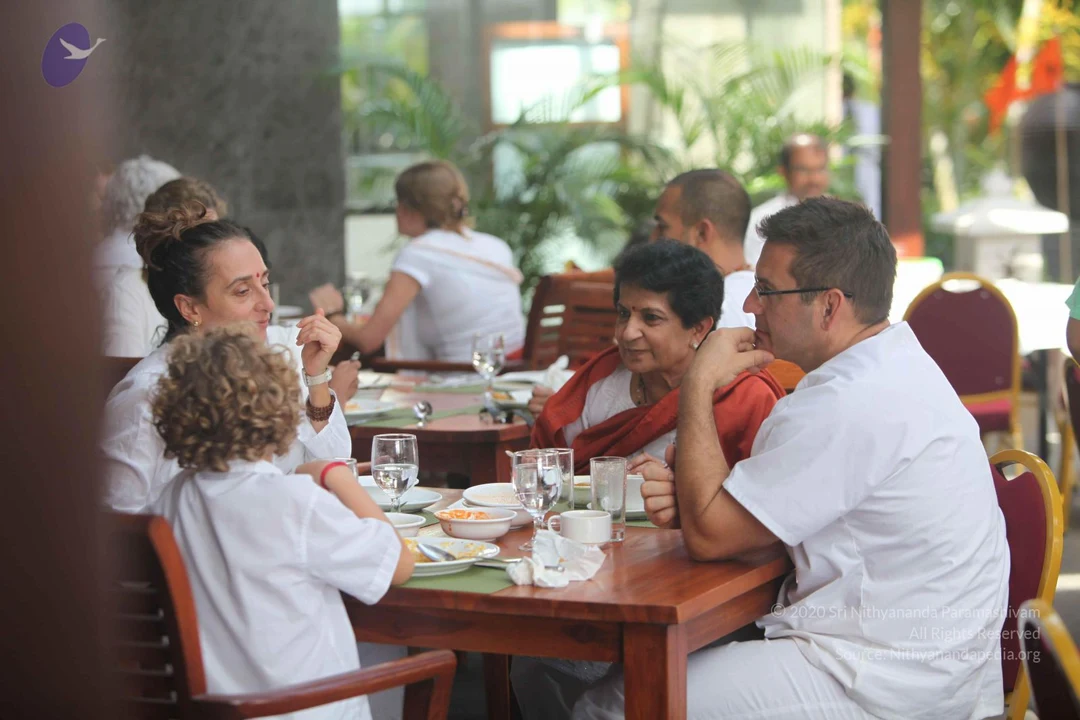
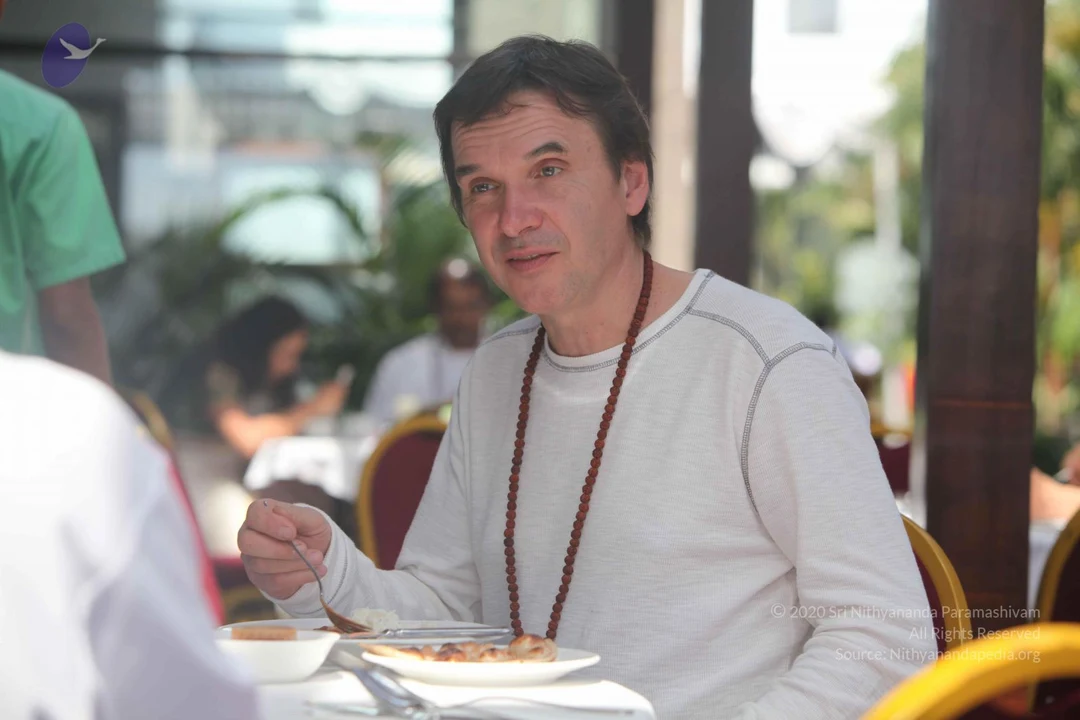
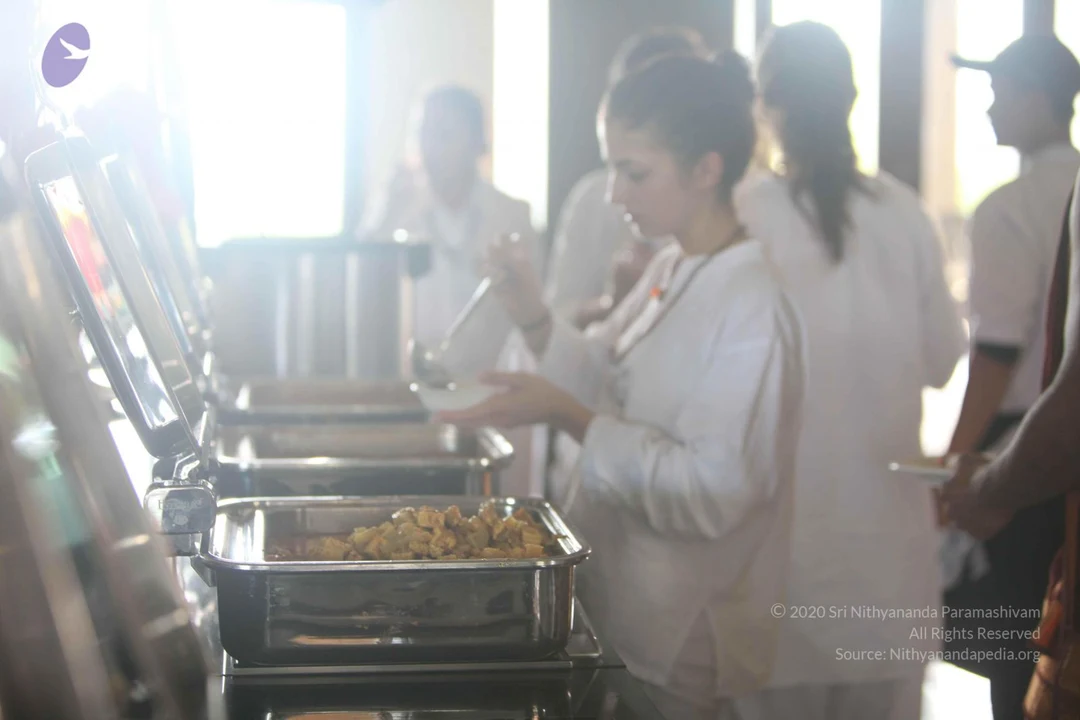
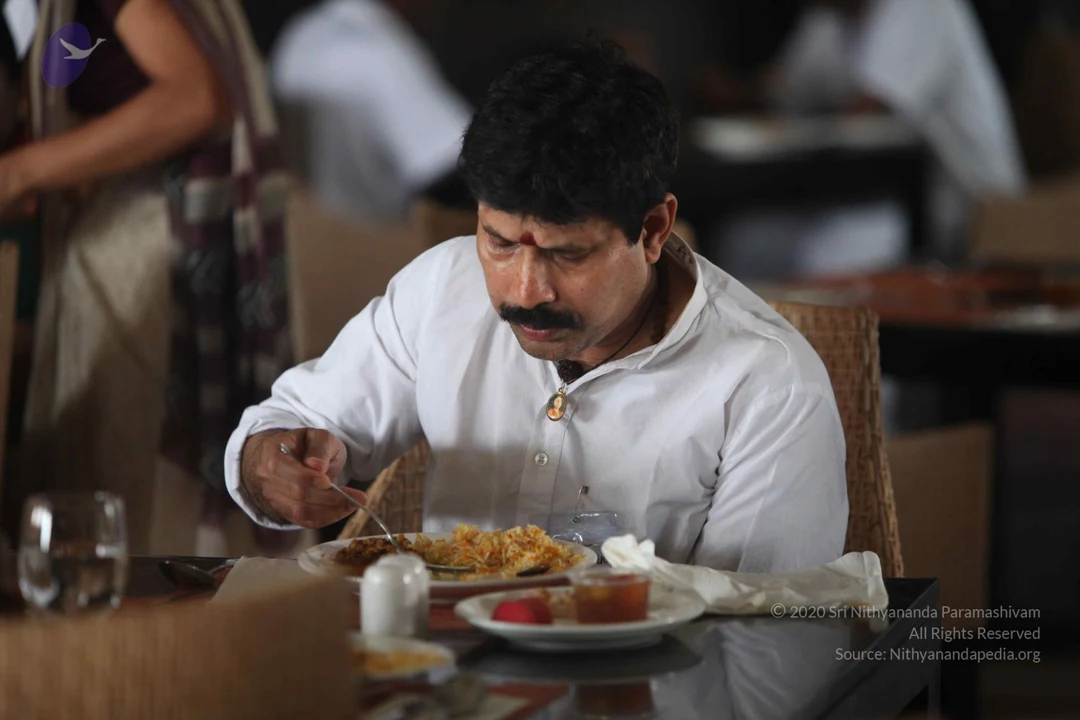
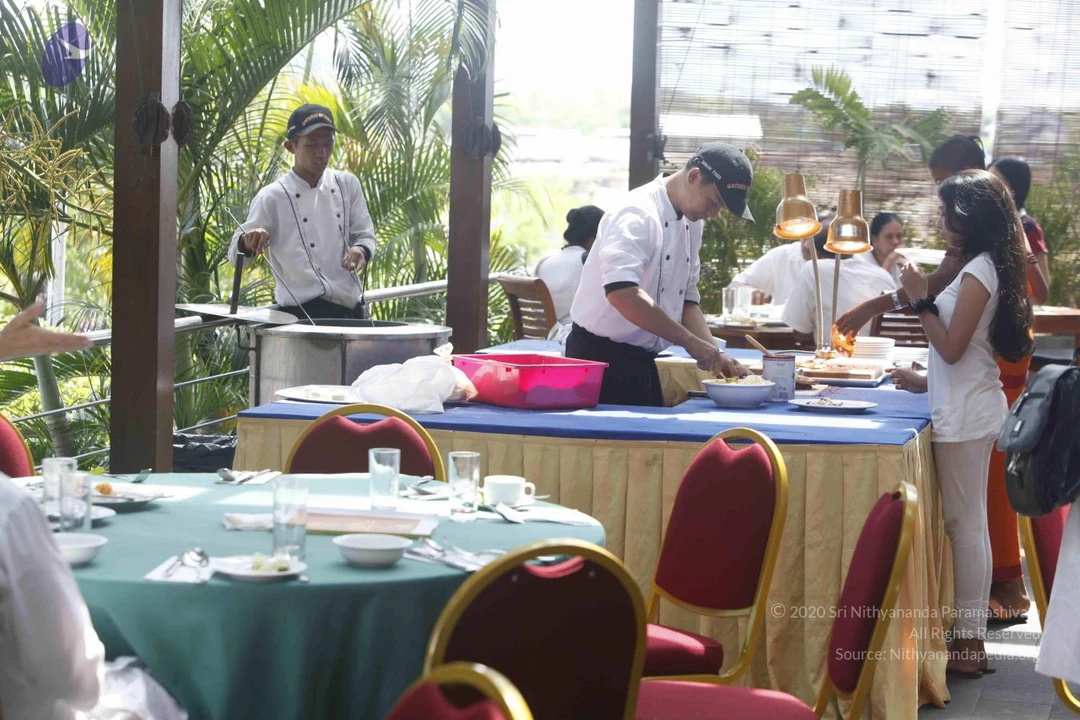
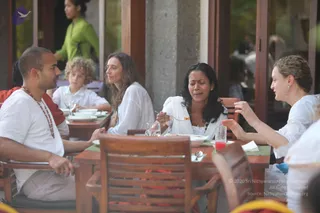
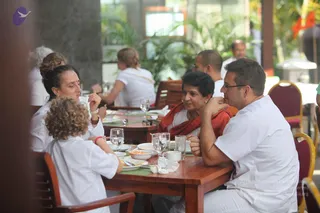
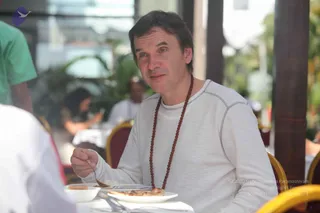
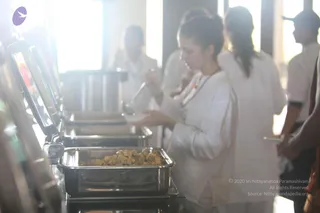
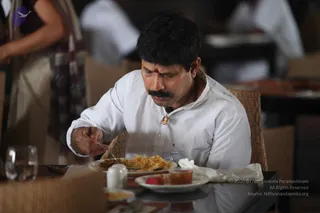
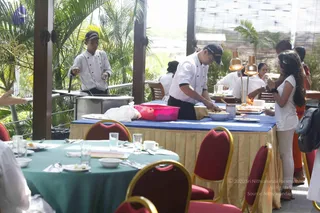
A candid photo of people dining at wooden tables on an open-air terrace with glass doors behind them. A man on the left in a white kurta with a rudraksha-style mala and a bare-headed hairstyle leans toward a table. Beside him a curly-haired child in white sits at a table. A woman in white sits at the centre holding a fork, and a woman in a white top at right gestures while speaking. A staff member in a green outfit walks in the background. Plates, water glasses and a red drink sit on the tables.A candid photograph of devotees seated at wooden dining tables in an airy courtyard restaurant with potted palms and greenery behind them. A woman with dark hair in a bun and a red bindi leans in conversing with a curly-haired child in white. An older woman in a red shawl and white clothes sits beside a bearded man in white, both eating at a table set with plates, water glasses and cups. Other people in white clothing sit at nearby tables, and a flag in saffron and red is visible at upper right.A man with short dark hair and a rudraksha mala sits at an outdoor restaurant table, holding a spoon over a white plate with food. He wears a light grey long-sleeved top. Behind him, blurred diners sit at white-clothed tables under palm trees beside a glass wall. A bowl and a second plate sit on the table in front. No ritual setting or swami-style presentation is visible; the scene is a casual meal.A photograph of a buffet serving line in a bright hall with sunlight streaming through windows. In the foreground a young woman with hair tied back, wearing a white top and a thin red-orange cord around her neck, uses a serving spoon to fill a white bowl from a stainless steel tray of cooked yellow-brown food. Behind her, several people in white clothing queue along the chafing dishes, and a person in a white cap and white shirt stands at right. The scene reads as communal food service, annadan style.A seated man in a white kurta eats rice from a plate with a fork at a restaurant-style table. He has a red tilak mark on his forehead and a pendant on a cord at his chest. A small glass of water, a condiment cup, a red fruit and a folded napkin sit on the table. A woman in a sari stands at the left edge, with other diners blurred in the background. Identity is not established from appearance, so no candidate is named.A photo of an open-air dining area with palm trees and bamboo blinds. Two chefs in white jackets and black caps stand at a buffet counter covered with a blue cloth and gold-trimmed skirt; the chef on the left stirs or ladles from a steel pot, while the chef in the centre plates food using a tong. A young woman in a white top and jeans waits at the counter, and a person in an orange outfit stands nearby. Round tables with green cloths, red-and-gold chairs, cups, glasses and plates are in the foreground, and warm heat lamps hang over the serving line.

IA-Session-Sharing
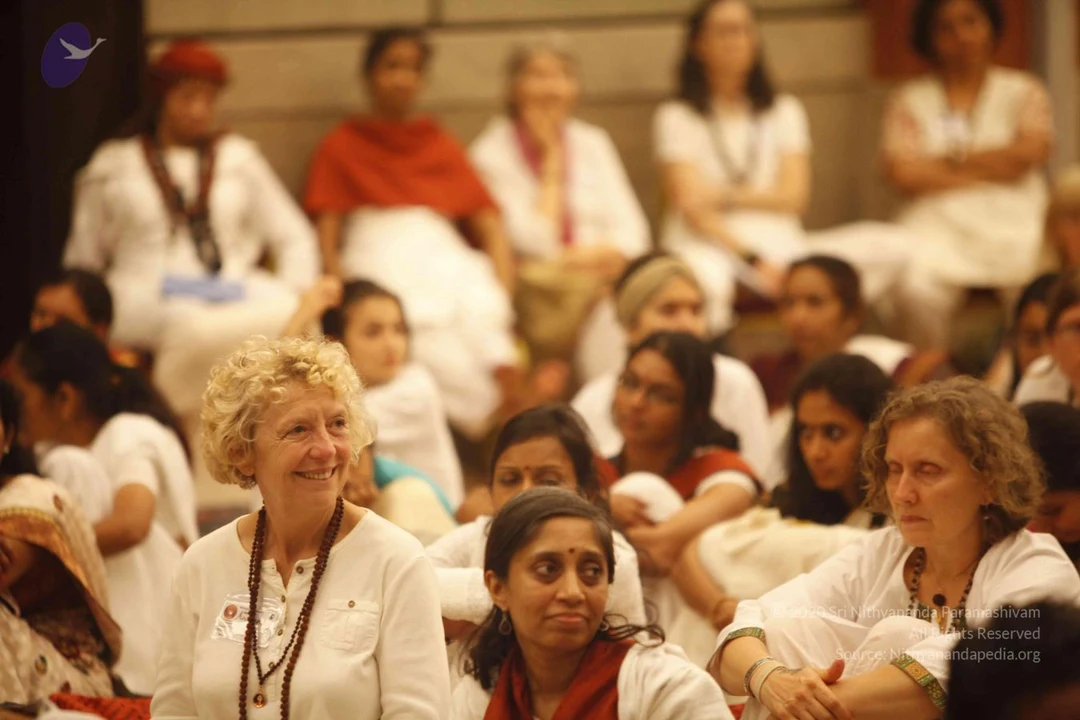
18 photosSource gallery
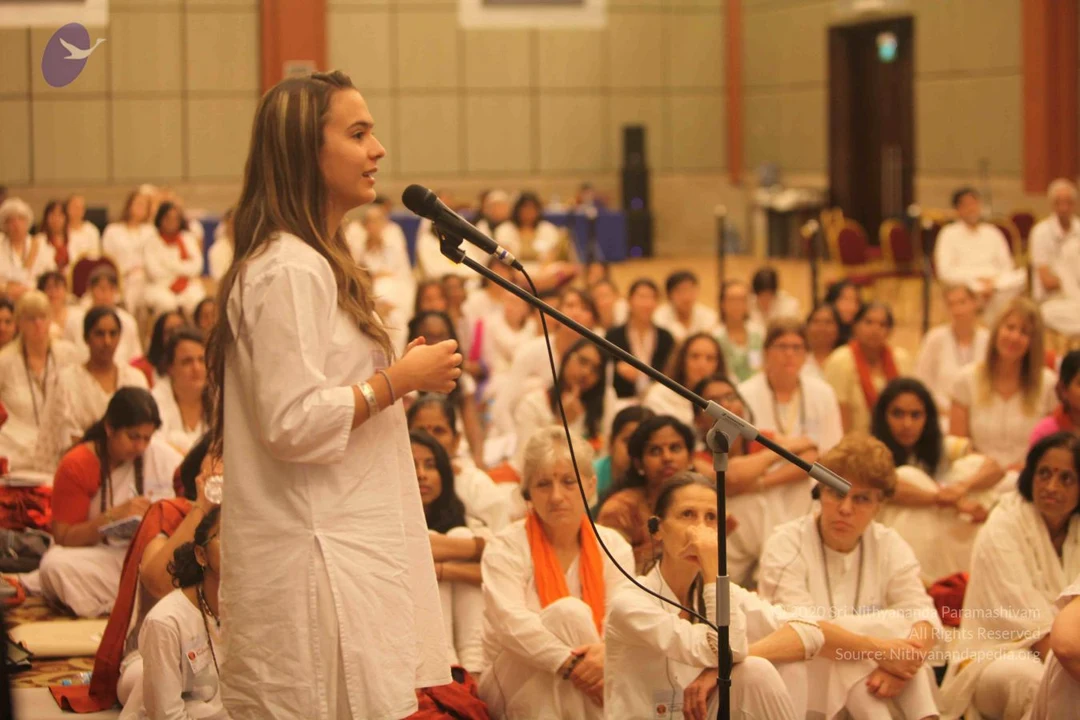
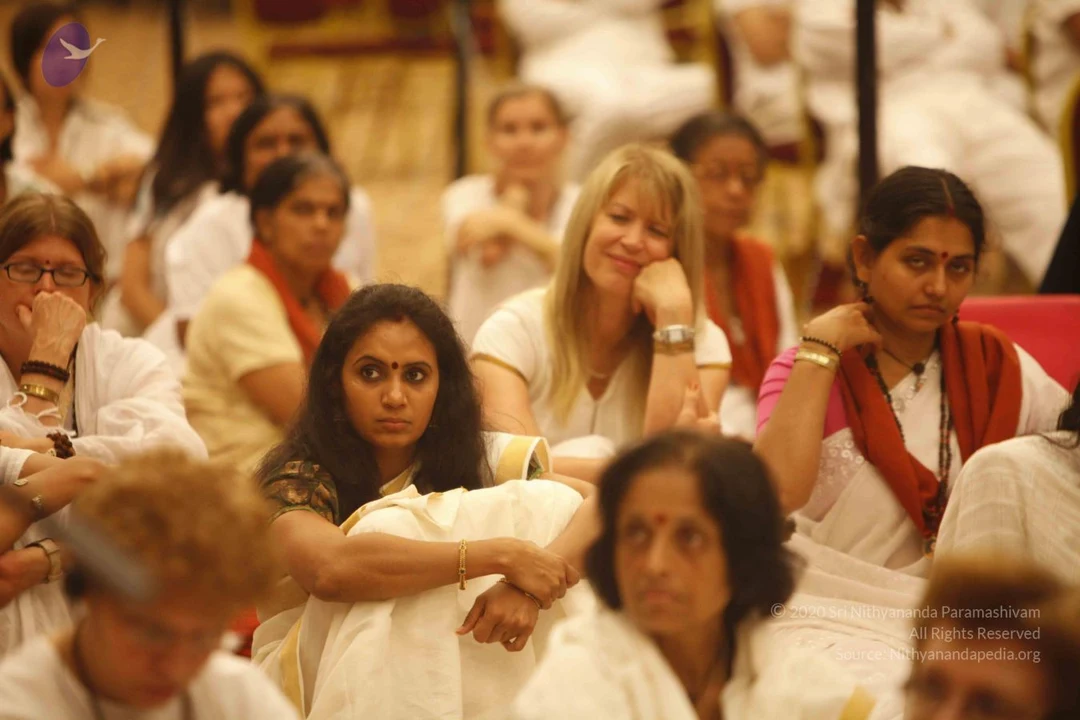
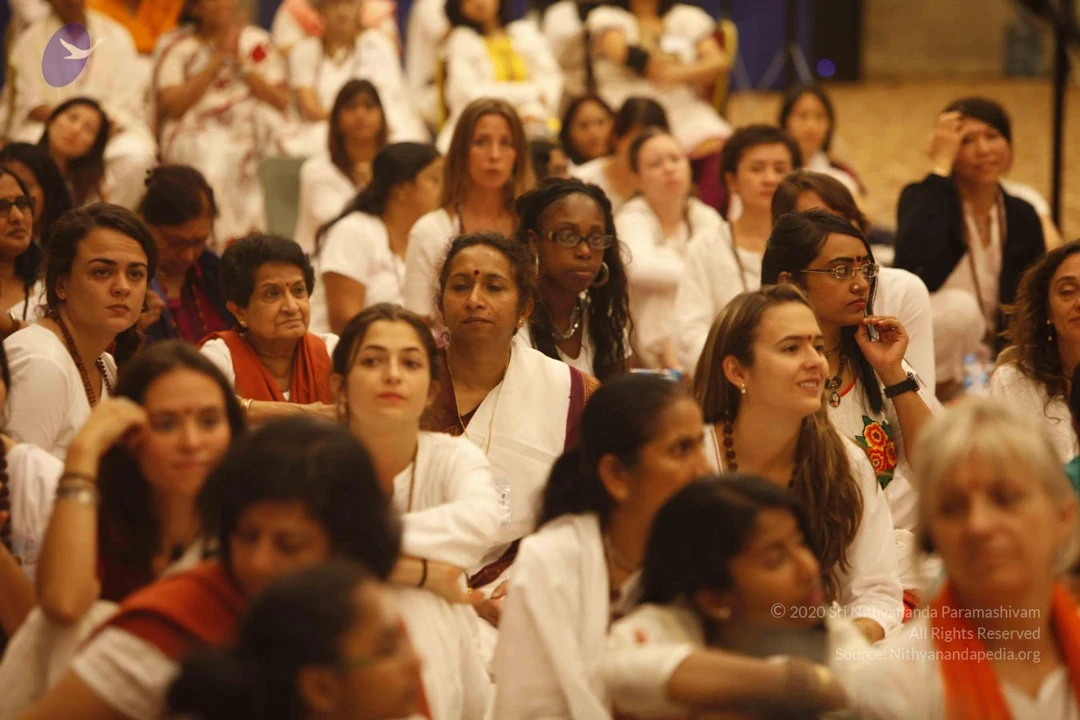
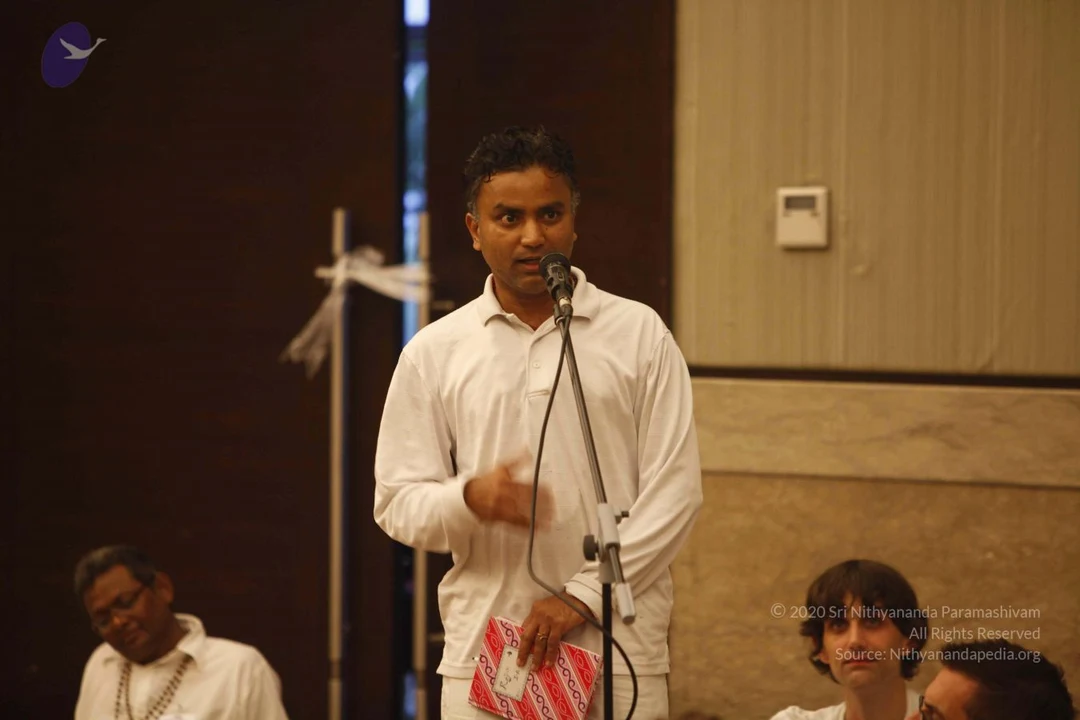
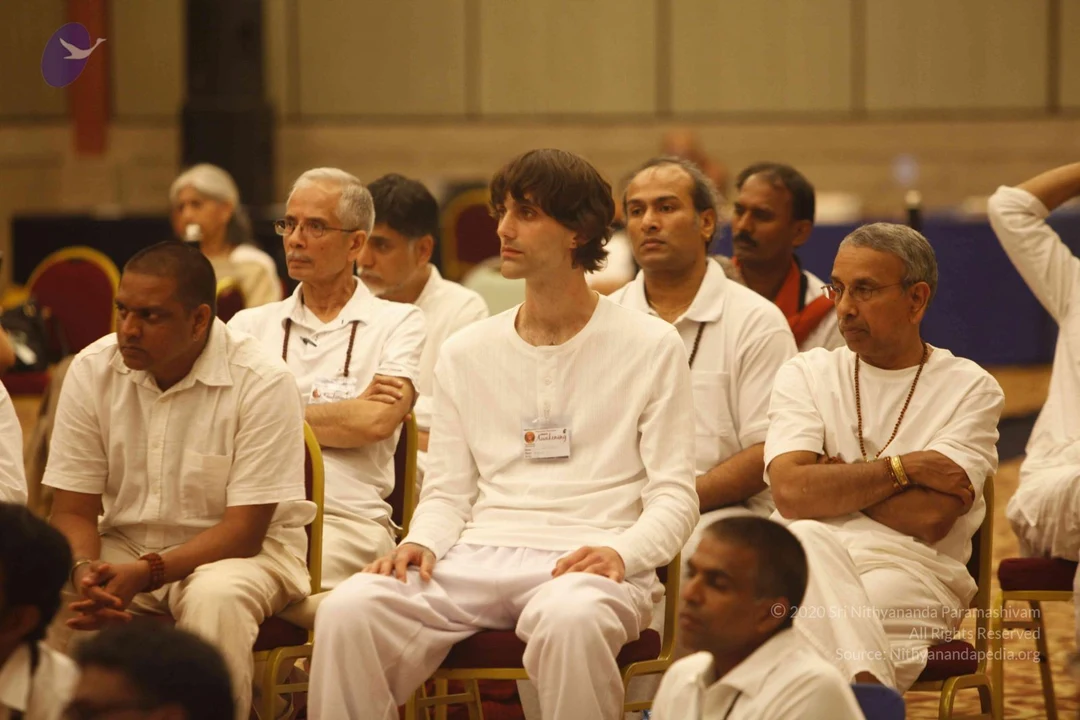
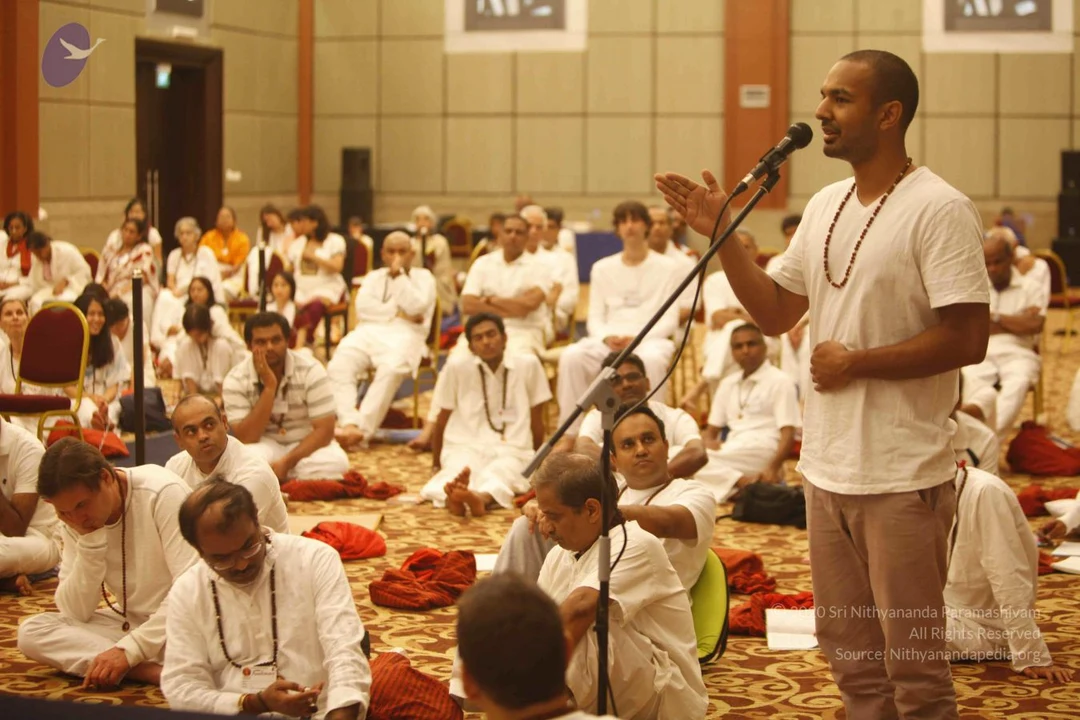
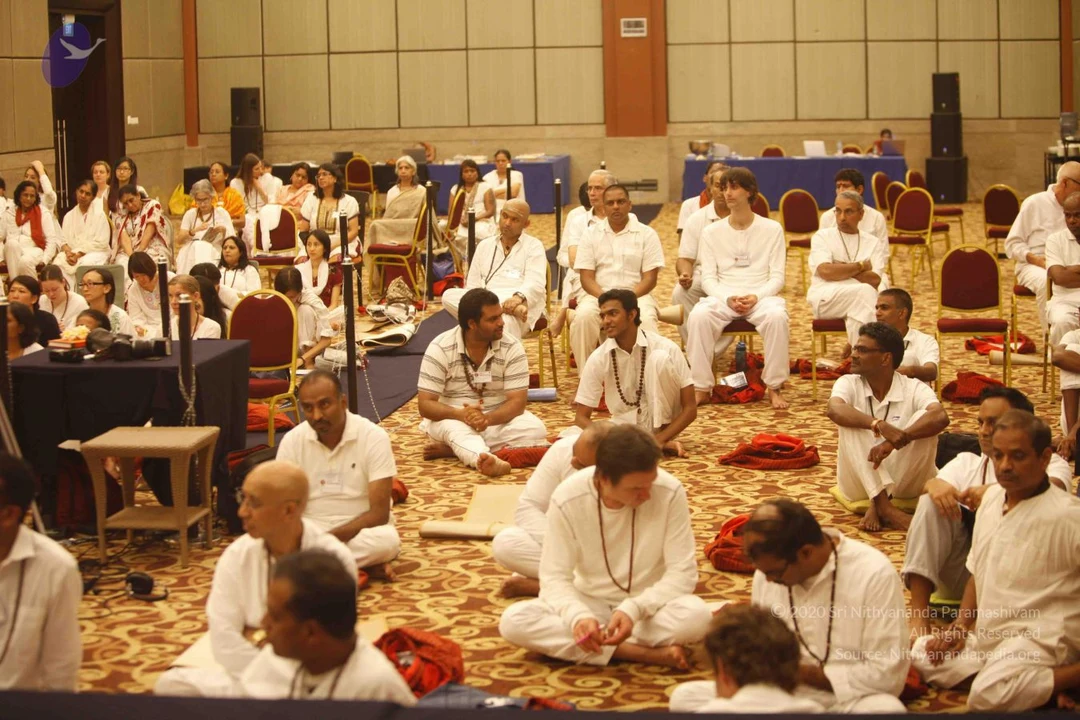
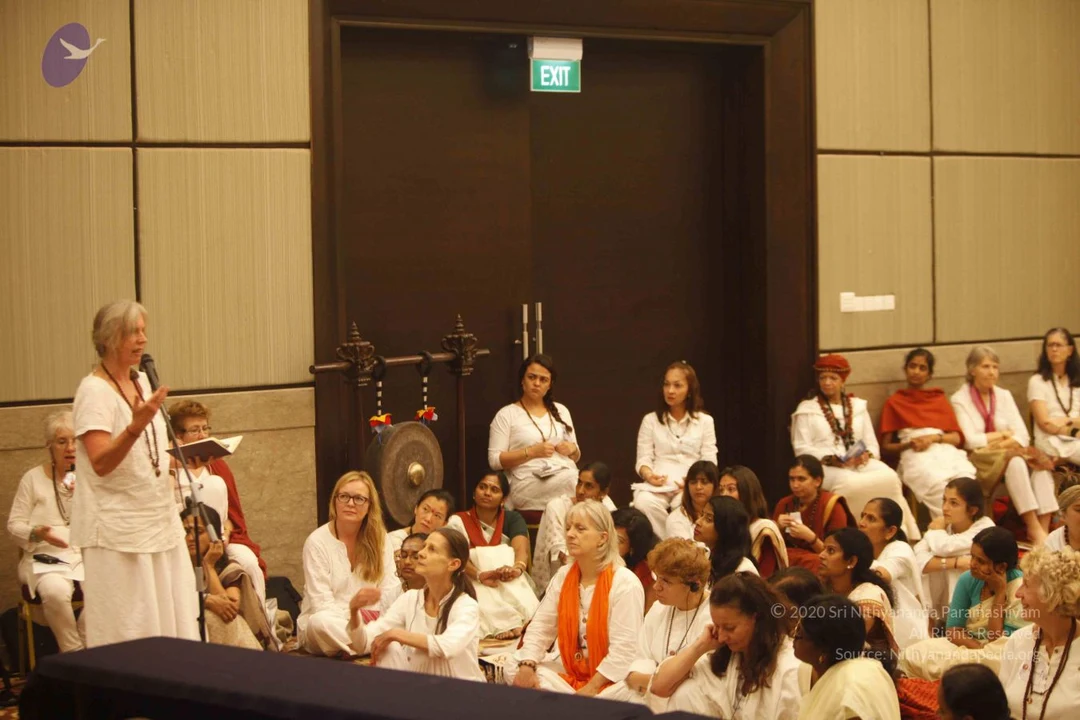
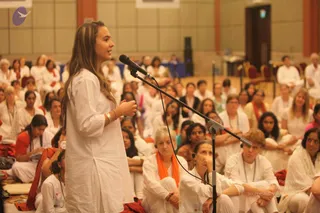
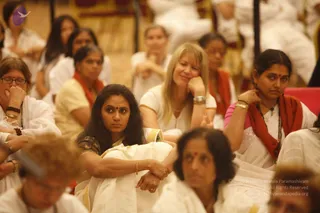
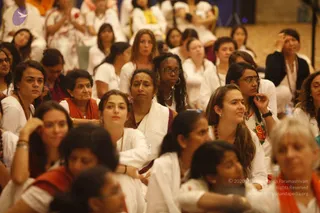
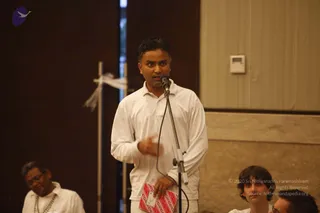
A woman with long light-brown hair stands at a floor microphone speaking to a seated audience in a hall with beige walls and wooden doors. She wears a long white kurta and a silver bangle, and her hands are gesturing mid-speech. Behind her, rows of seated devotees in white clothes, several with orange shawls, listen attentively.Seated devotees in white ritual clothing sit on a patterned carpet during a satsang hall gathering. In the foreground, a man with short dark hair, a dark rudraksha mala and a white shirt with a name badge looks upward. Behind him, several men in white kurtas and white dhotis, some wearing rudraksha malas, sit in rows. A man in glasses at right wears a white garment and mala. No person here shows the distinctive presentation cues needed for an identification, and no one is identified by name.A seated crowd of devotees in white clothing fills a hall at a satsang. In the foreground a woman with long dark hair and a white sari with gold border sits with her arms crossed over her knees, looking forward. Behind her a blonde woman in a white top rests her chin on her hand, and to the right a woman wears an orange shawl with a rudraksha mala and red bindi. Several other women in white and orange shawls sit in rows, some with bangles and wristwatches. The scene is warmly lit with a red cushion visible at the right edge.A large audience of mostly women sits closely packed in a hall during a satsang, dressed in white clothing with some in orange or red shawls and rudraksha or beaded necklaces. Many look attentively toward the front, some with hands folded or resting in laps, and a few holding a phone or touching their face. In the foreground, a young woman with long brown hair in white garments and a rudraksha-style necklace leans forward, while an older woman in an orange shawl sits at the left edge. No a person candidate is visible in this crowd shot; the photograph shows devotees only.A man in a white long-sleeved polo shirt and white trousers stands at a microphone on a stand, speaking with one hand raised, holding a red and white patterned card or envelope. He appears to be addressing an audience. Seated at left, a man wearing glasses and a white shirt with a beaded necklace looks down. At lower right, a seated person with dark hair is partly visible. A white ribbon hangs on a wooden pole in the background, beside dark wood panelling and a light marble wall with a wall-mounted control panel.A photograph of a seated assembly in a carpeted hall with gold-backed chairs and red-and-gold cushions. Many men wear white shirts and white dhotis or trousers, and some wear event name badges on their shirts. A man at left wears a rudraksha mala and sits cross-armed. Another man in the centre sits cross-legged on the floor with a pendant necklace. Men in the foreground sit on the carpet with red shawls beside them, and a man in a yellow shirt sits on a chair at the back. No figure in the frame is clearly identifiable as a person by the visible cues in this image.

IA-Darshan
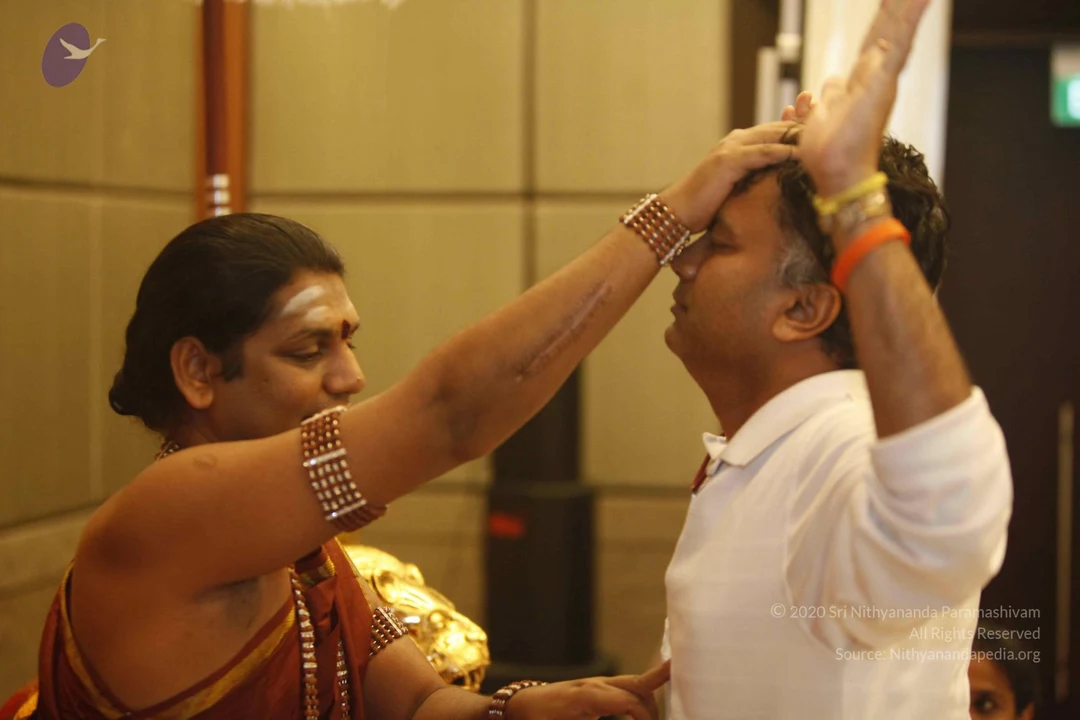
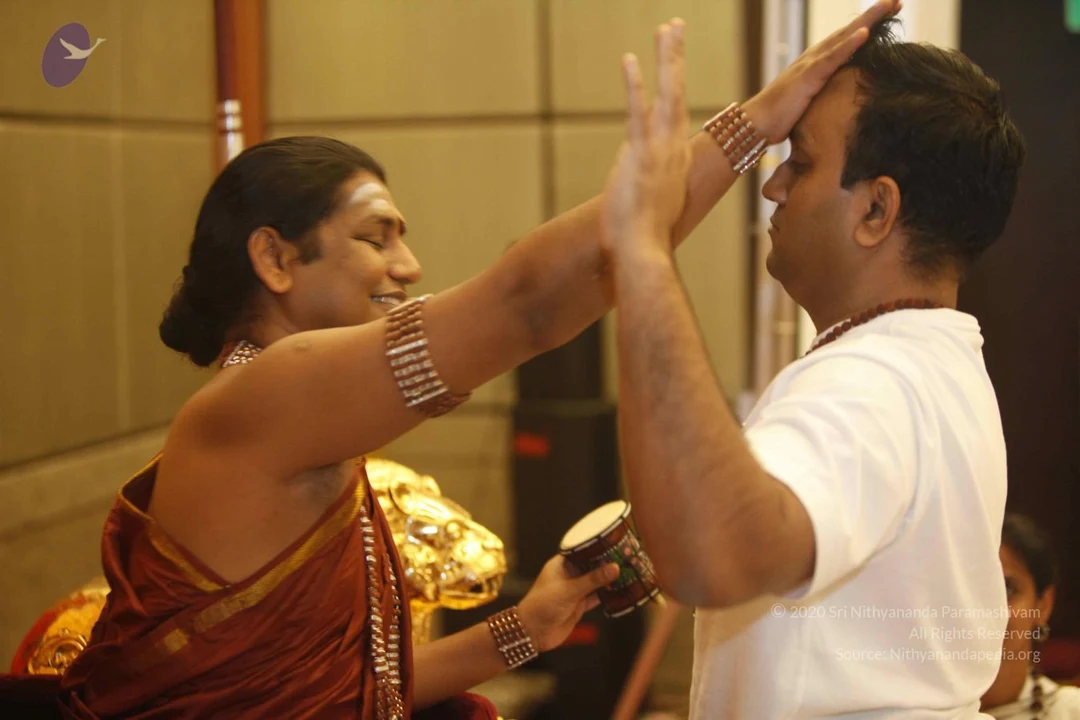
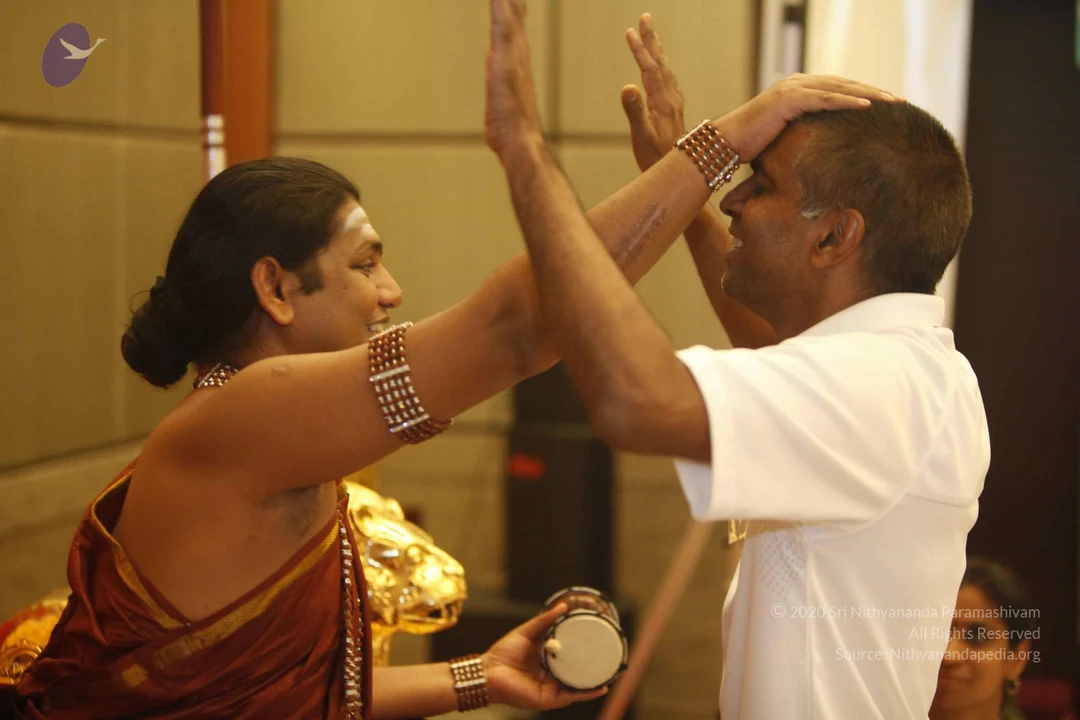
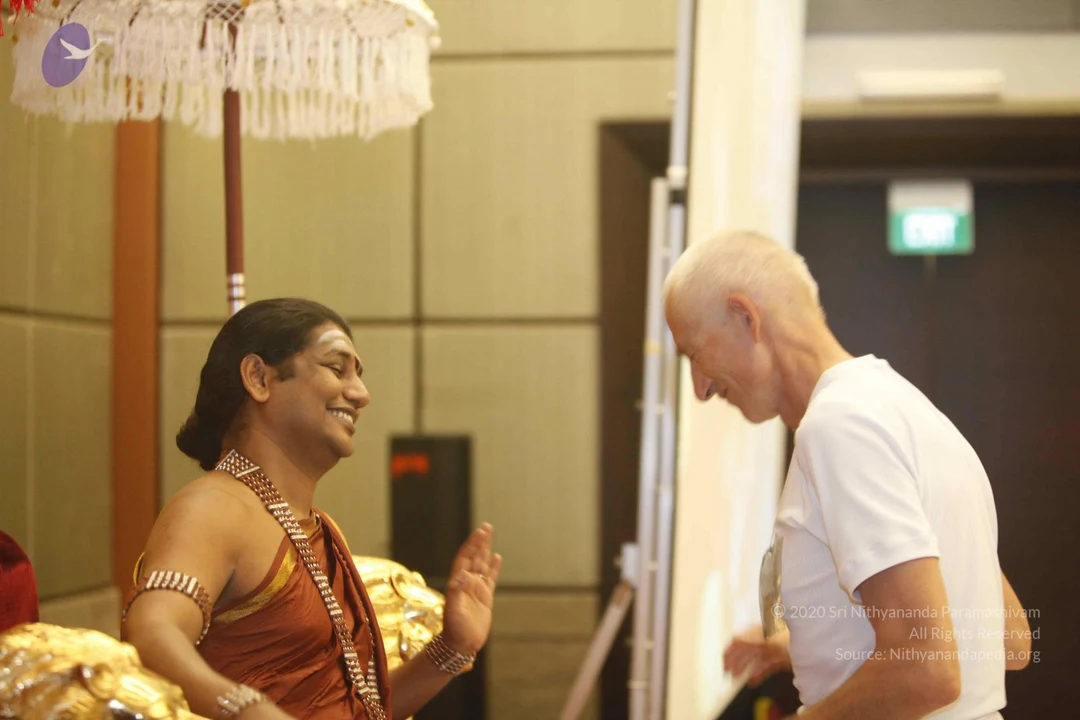
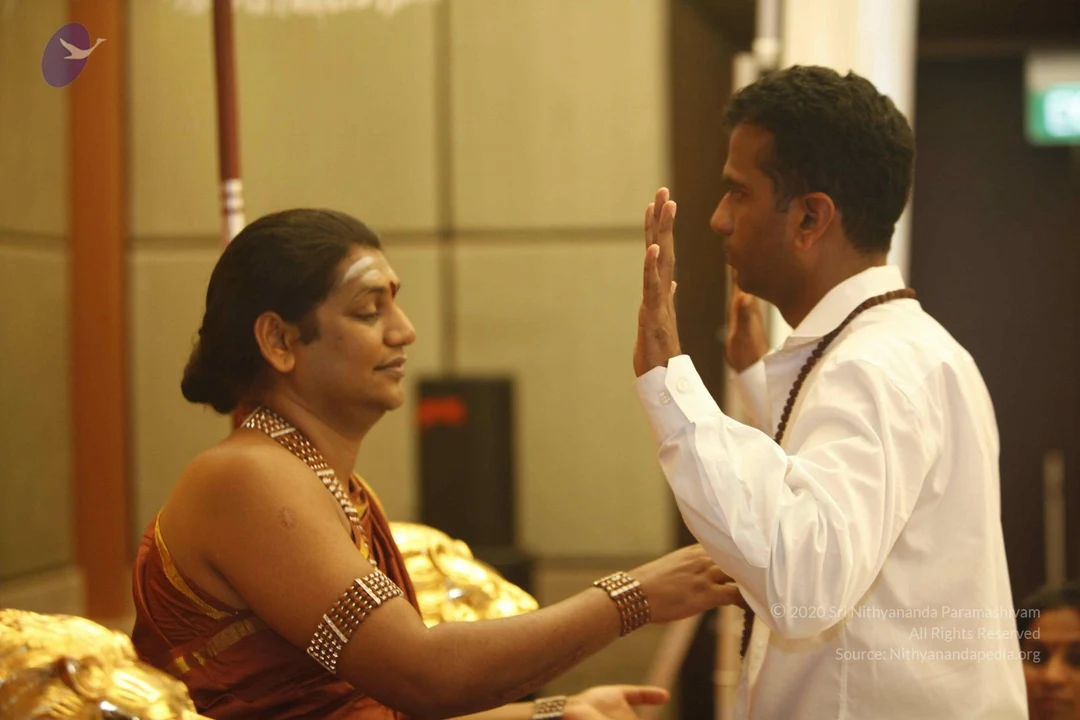
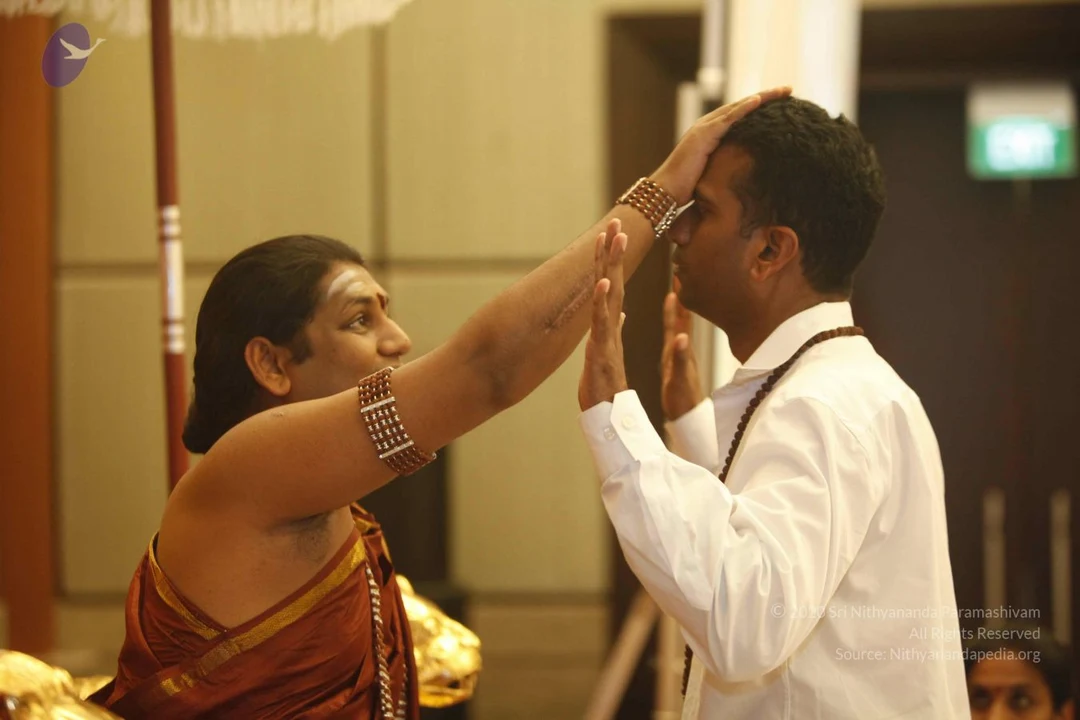
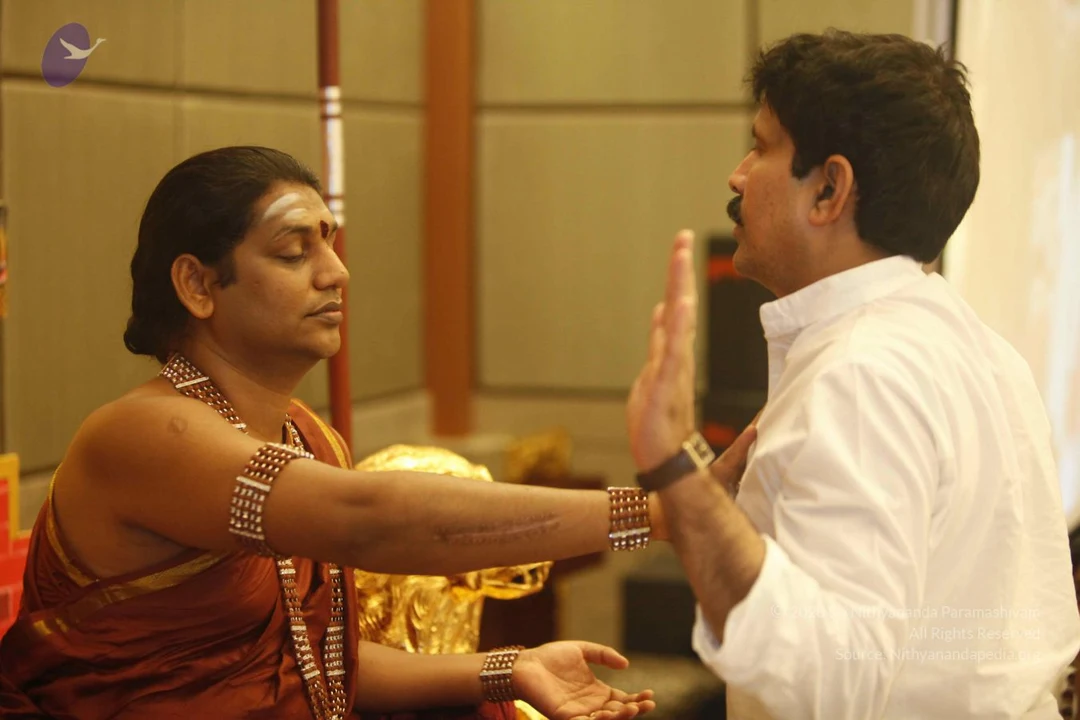
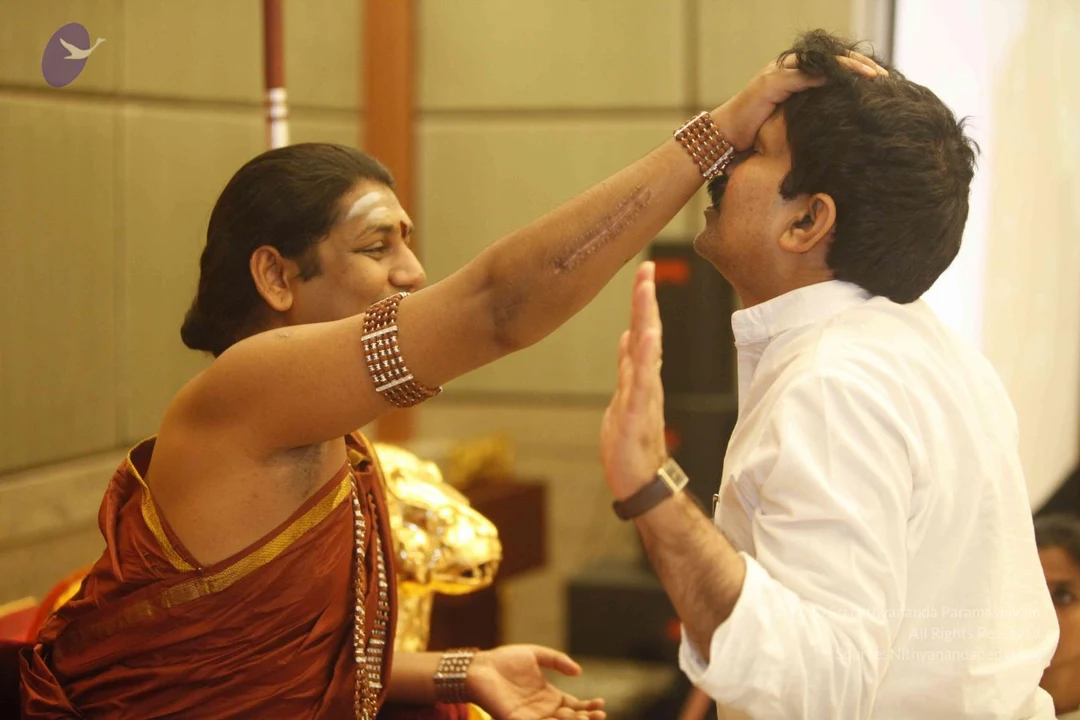
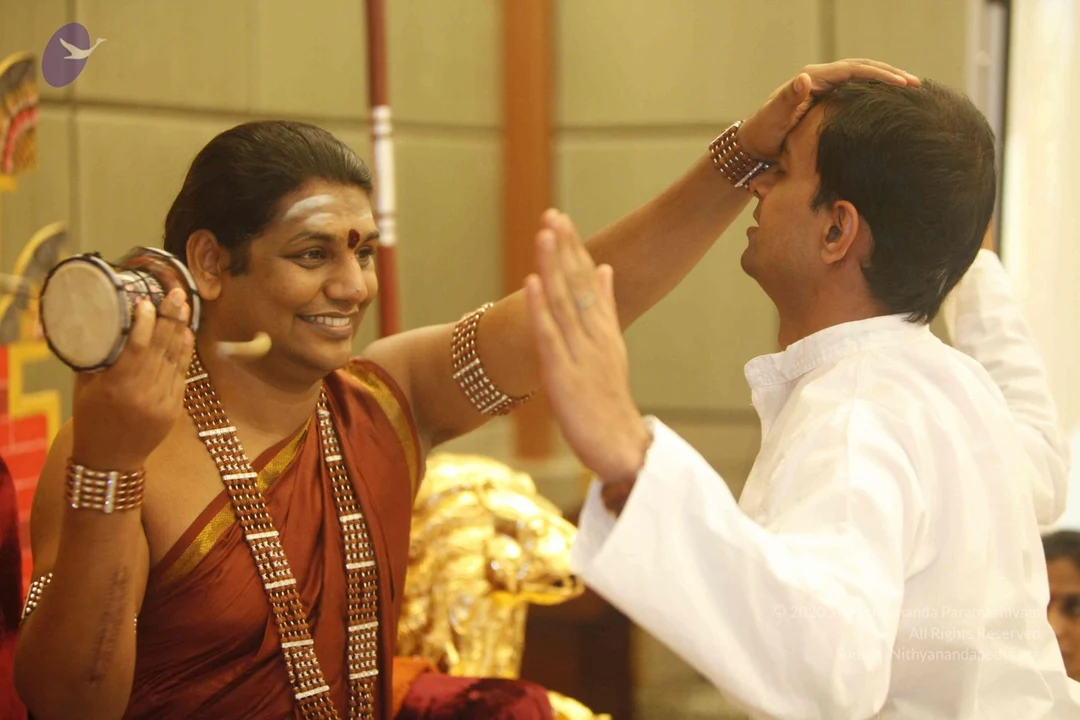
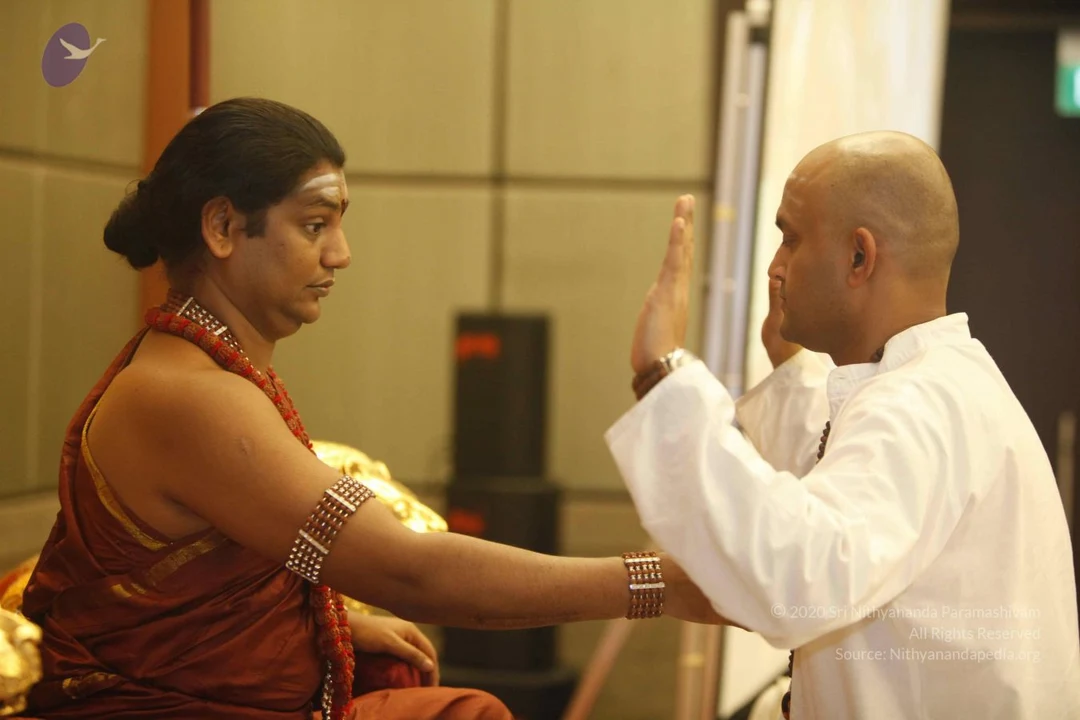
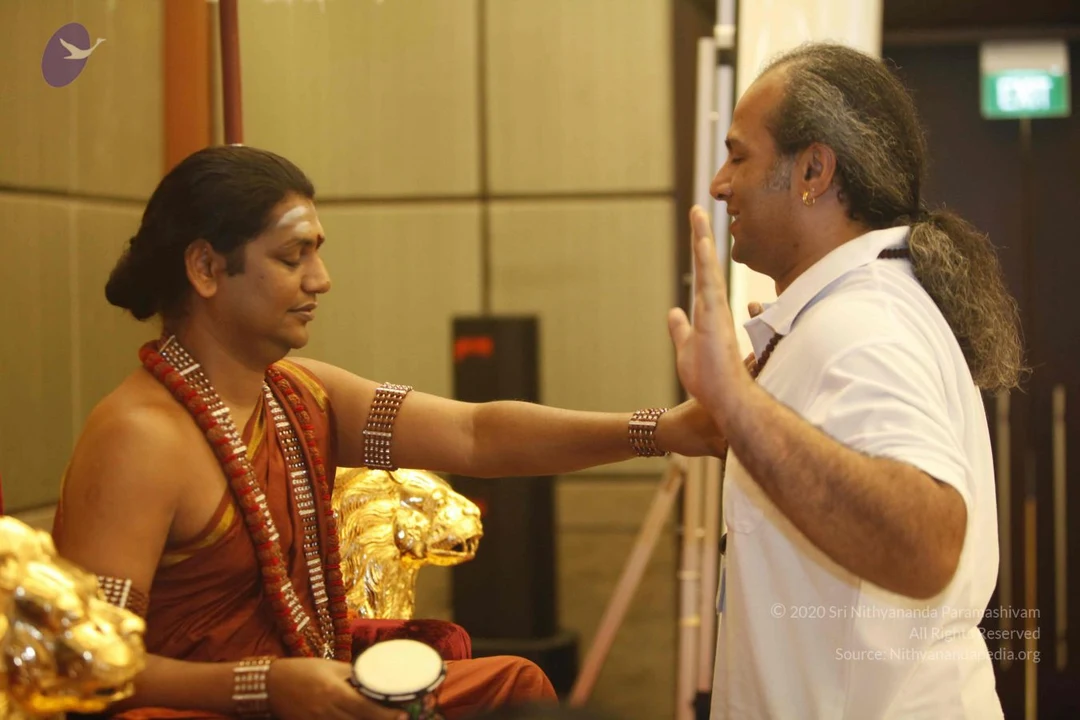
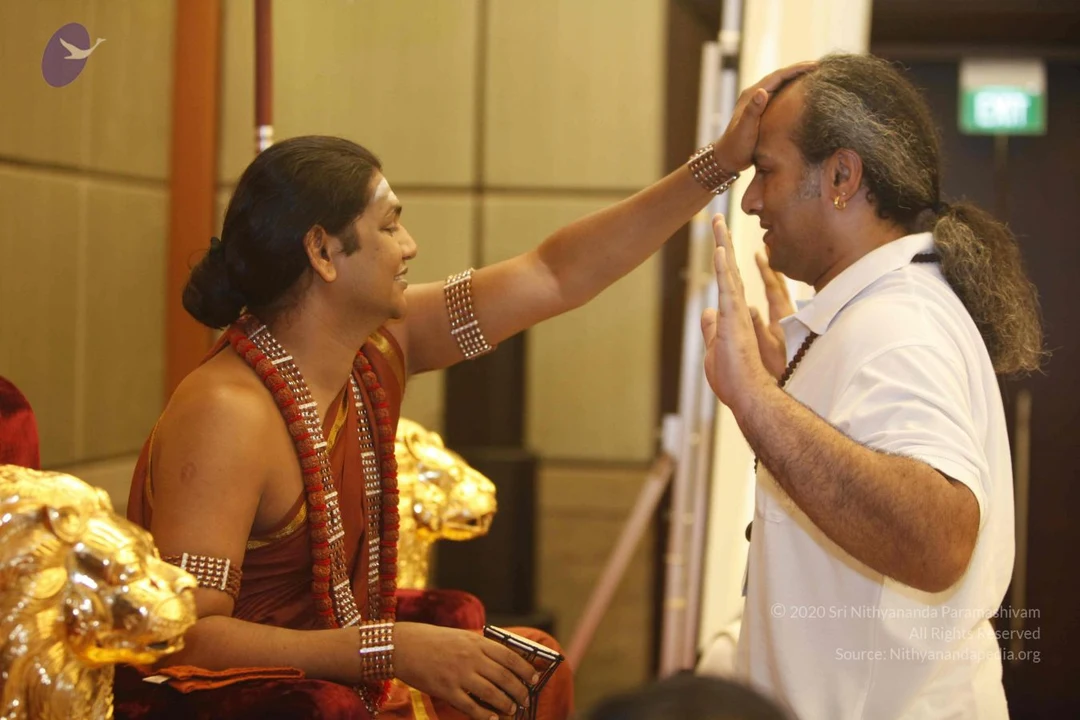
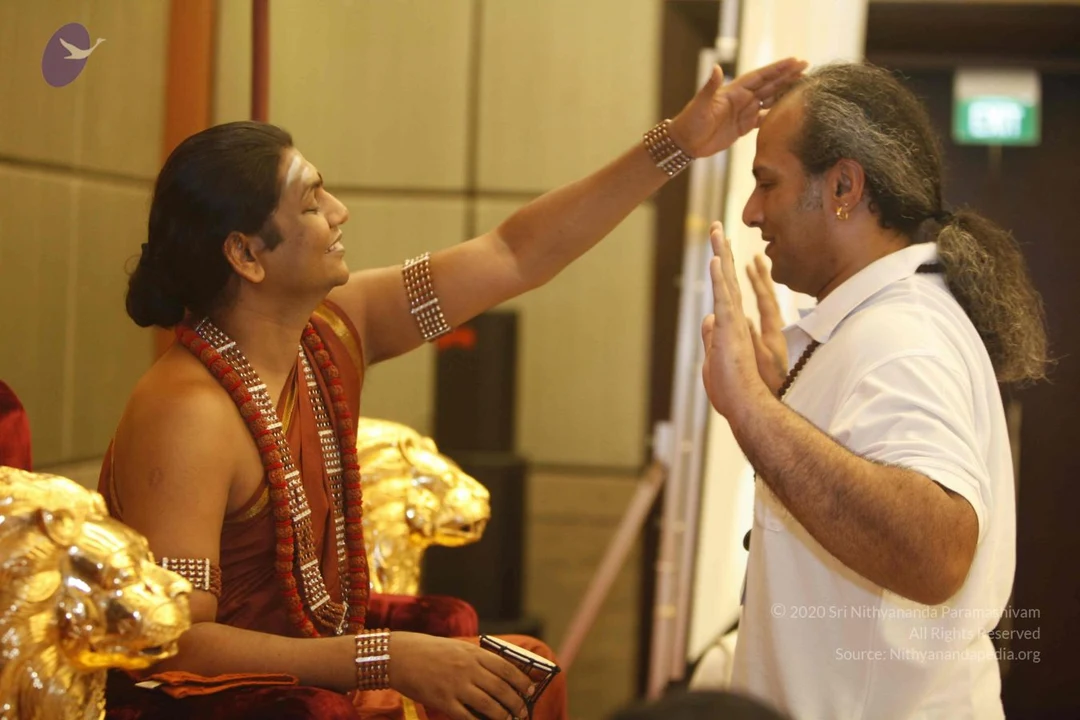
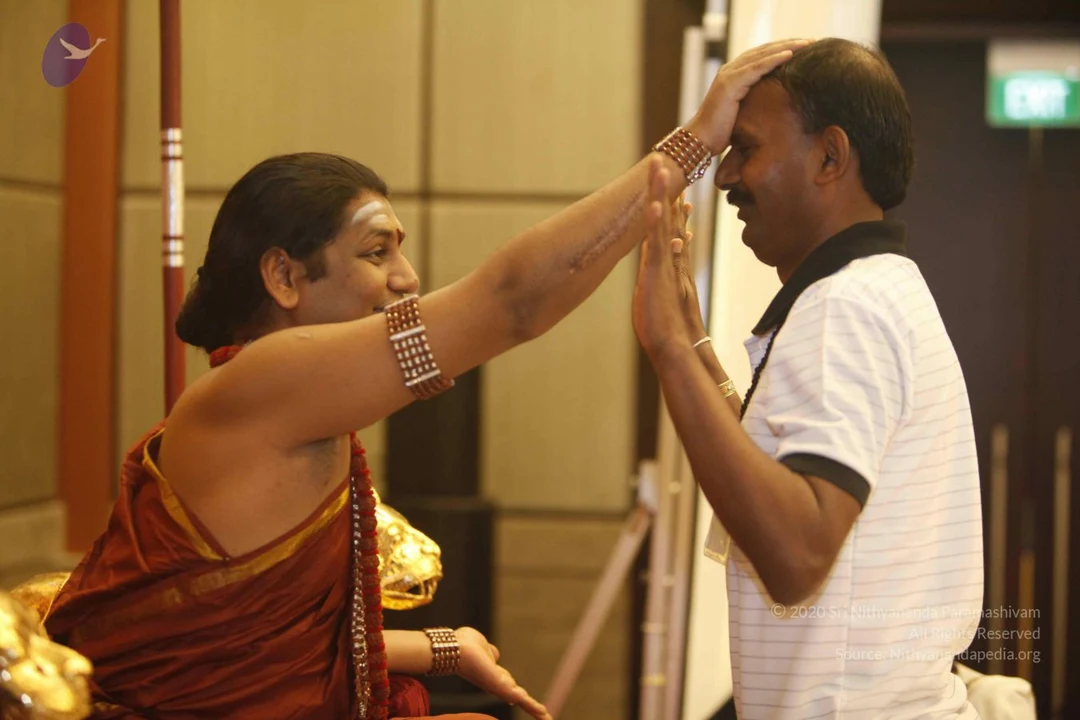
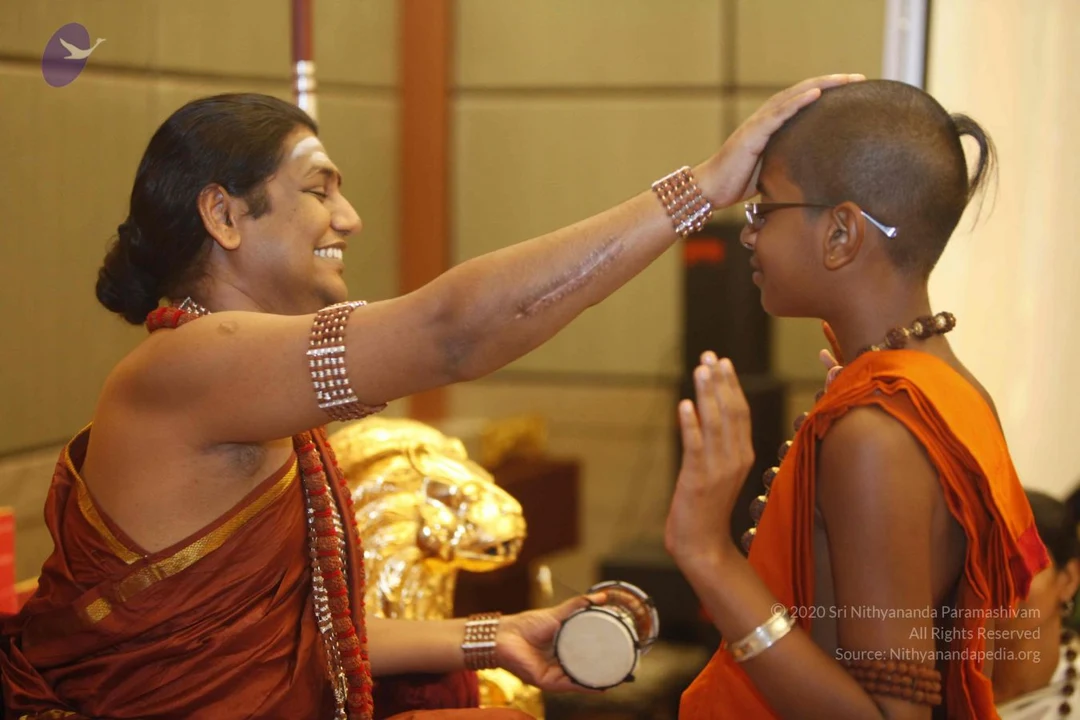
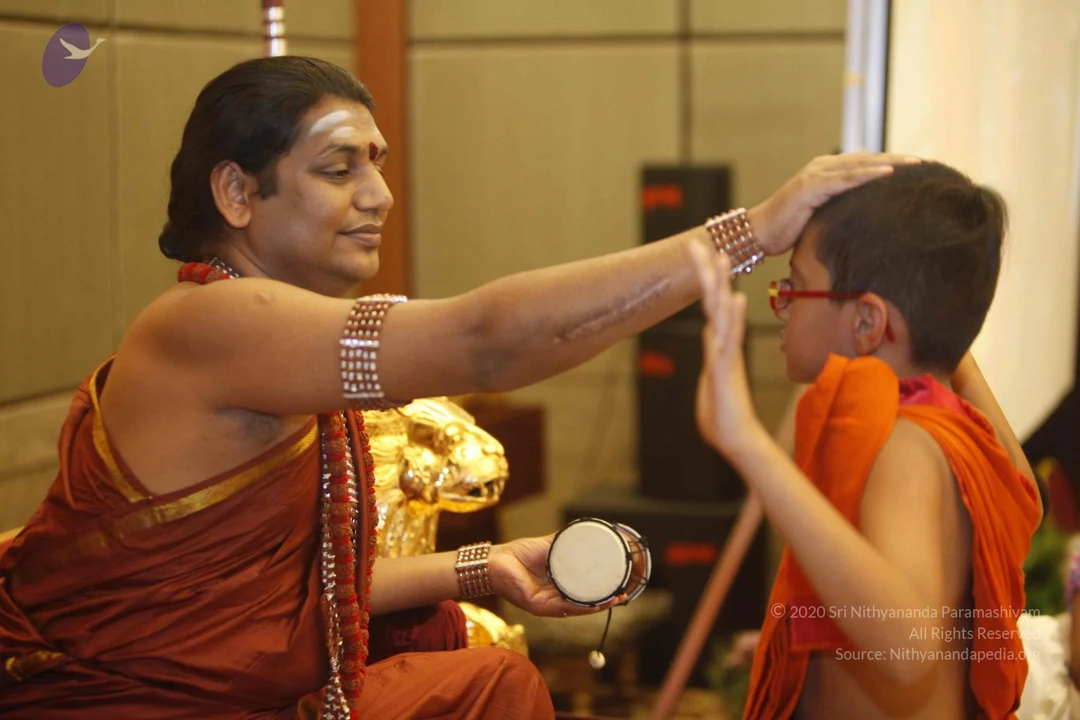
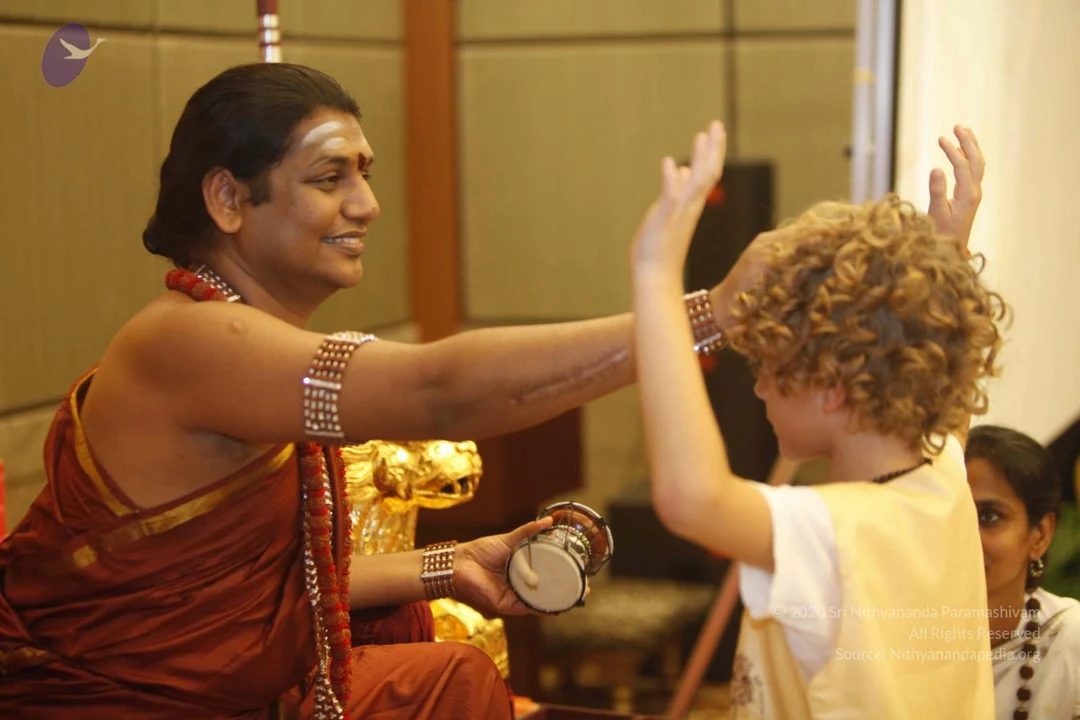
60 photosSource gallery
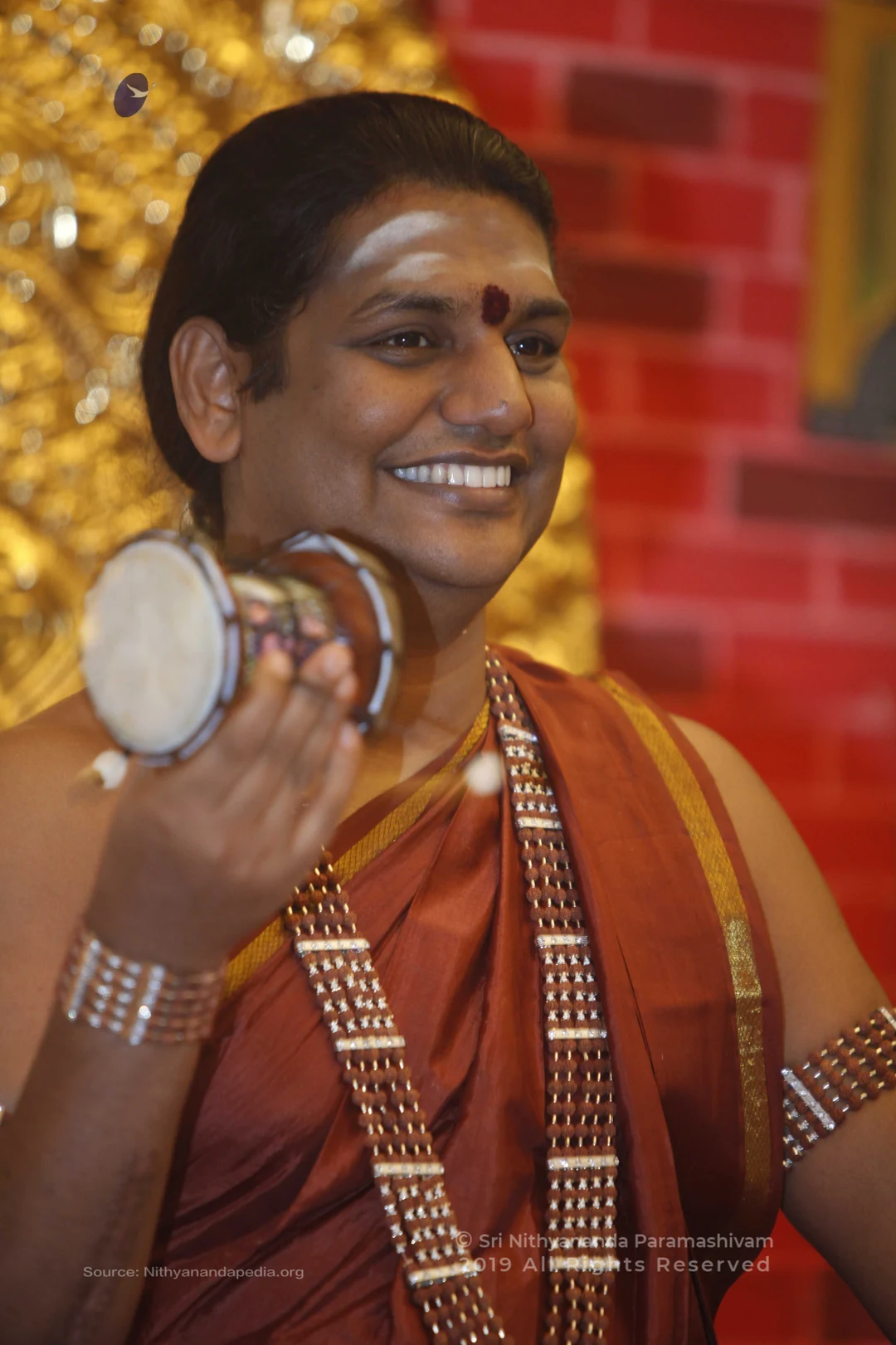
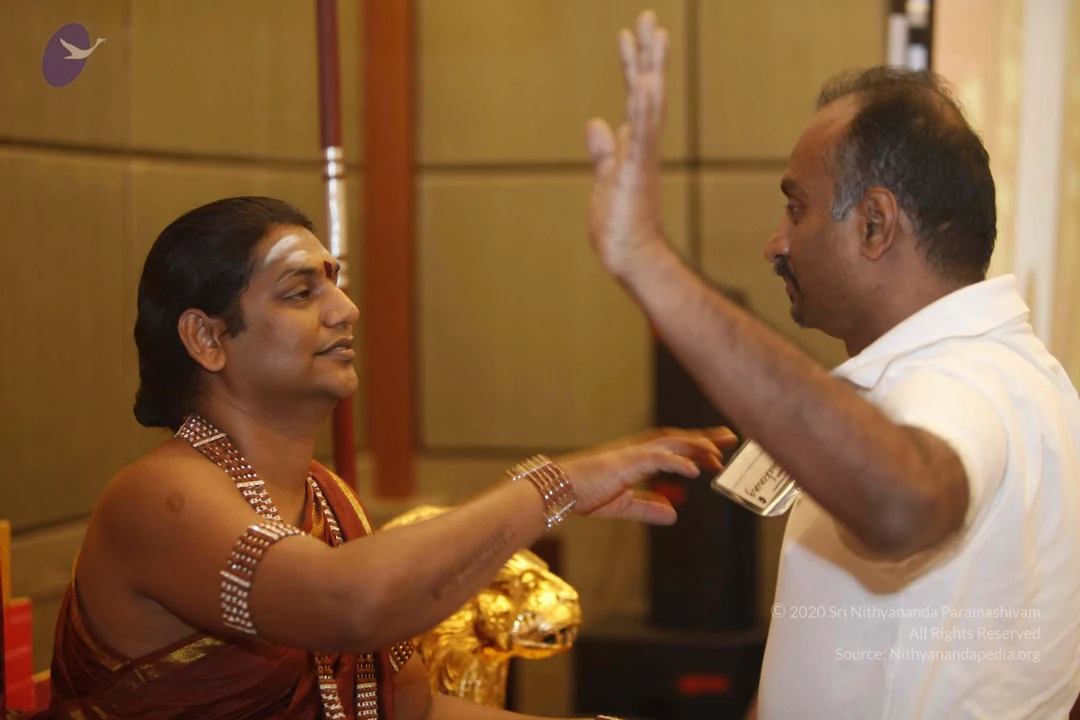
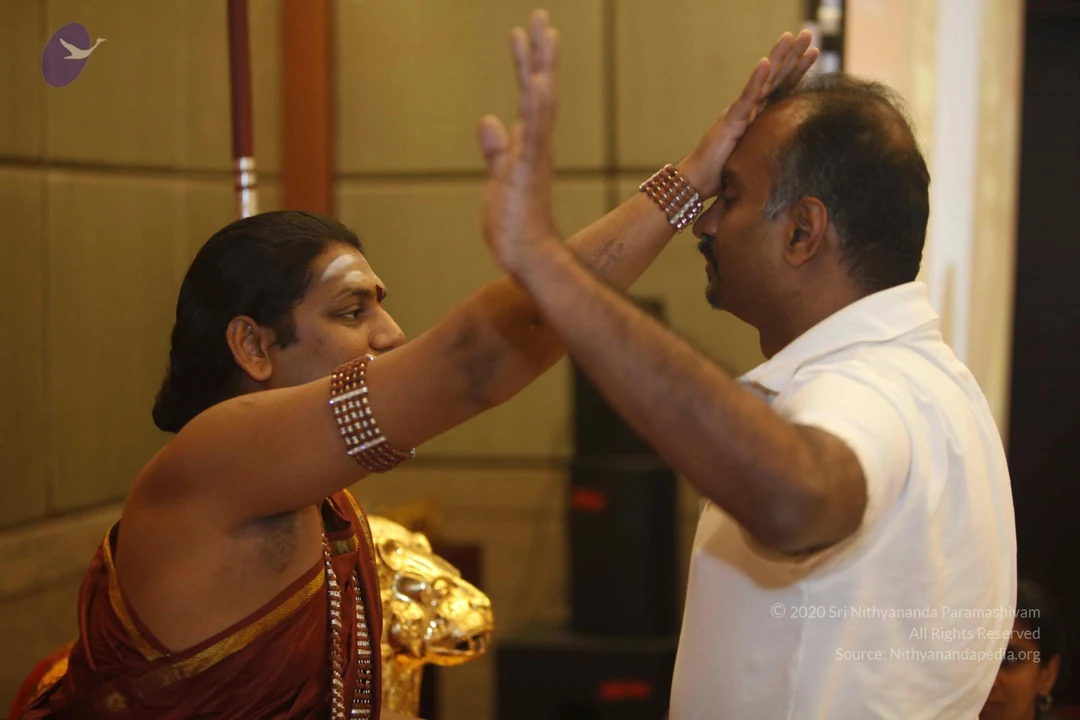
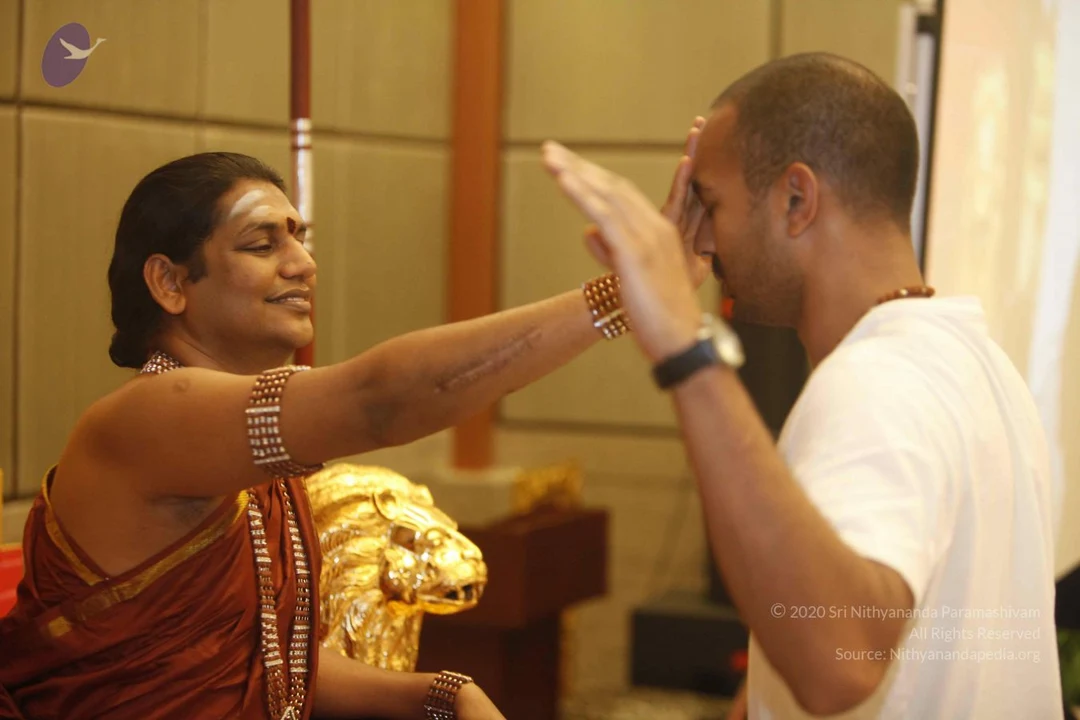
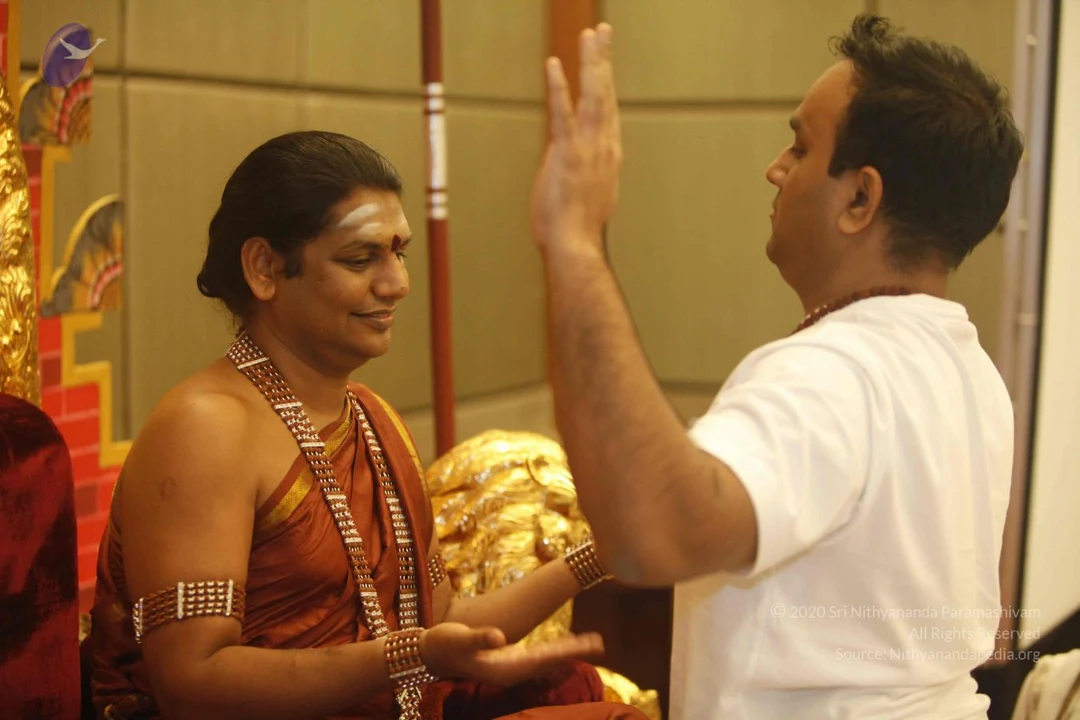
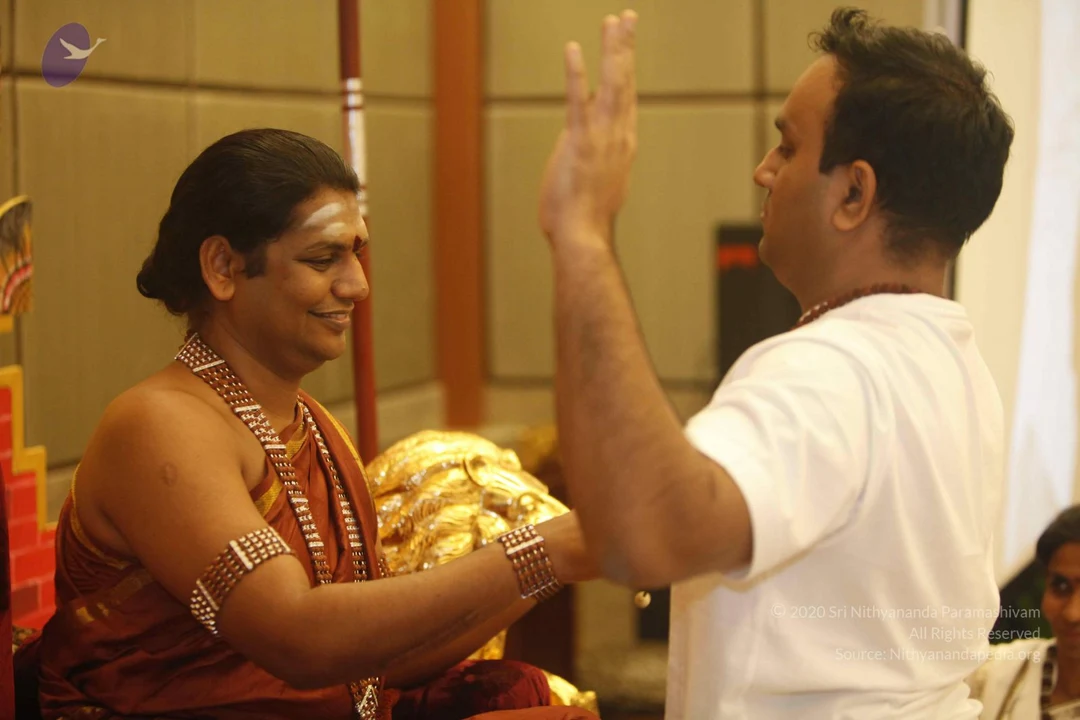
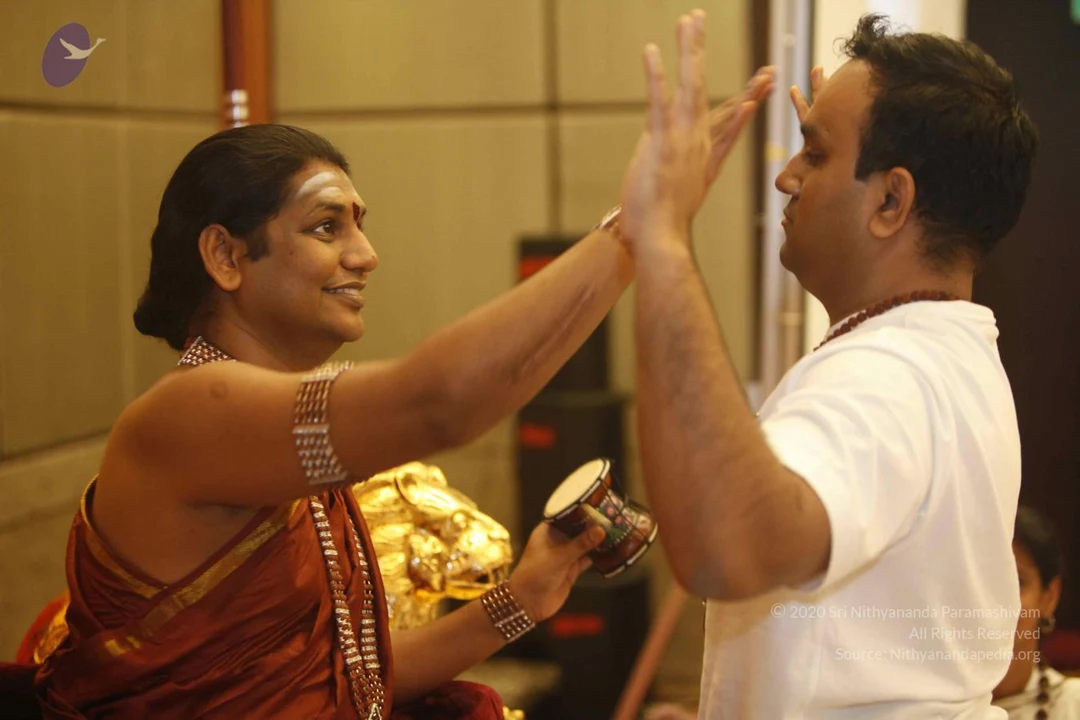
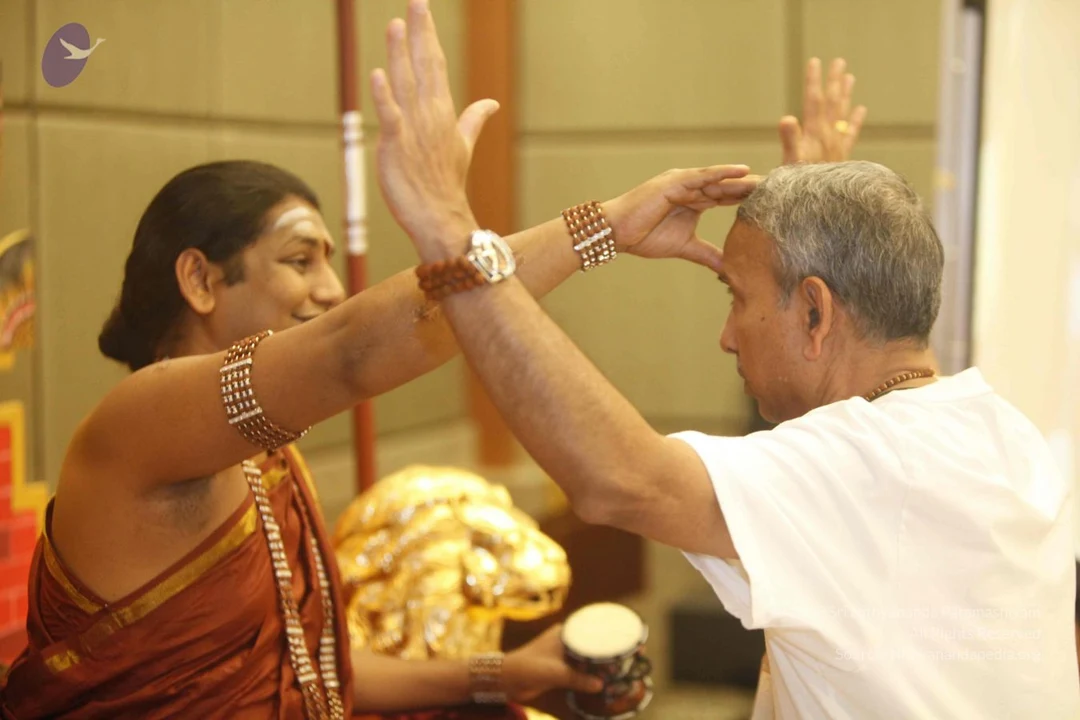
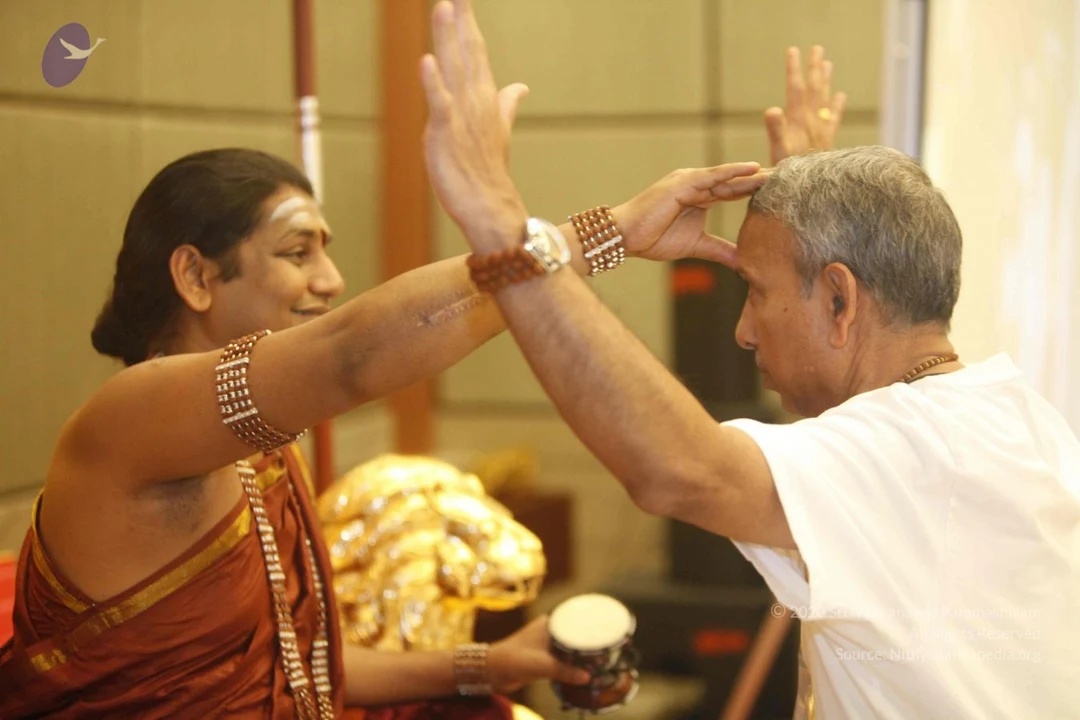
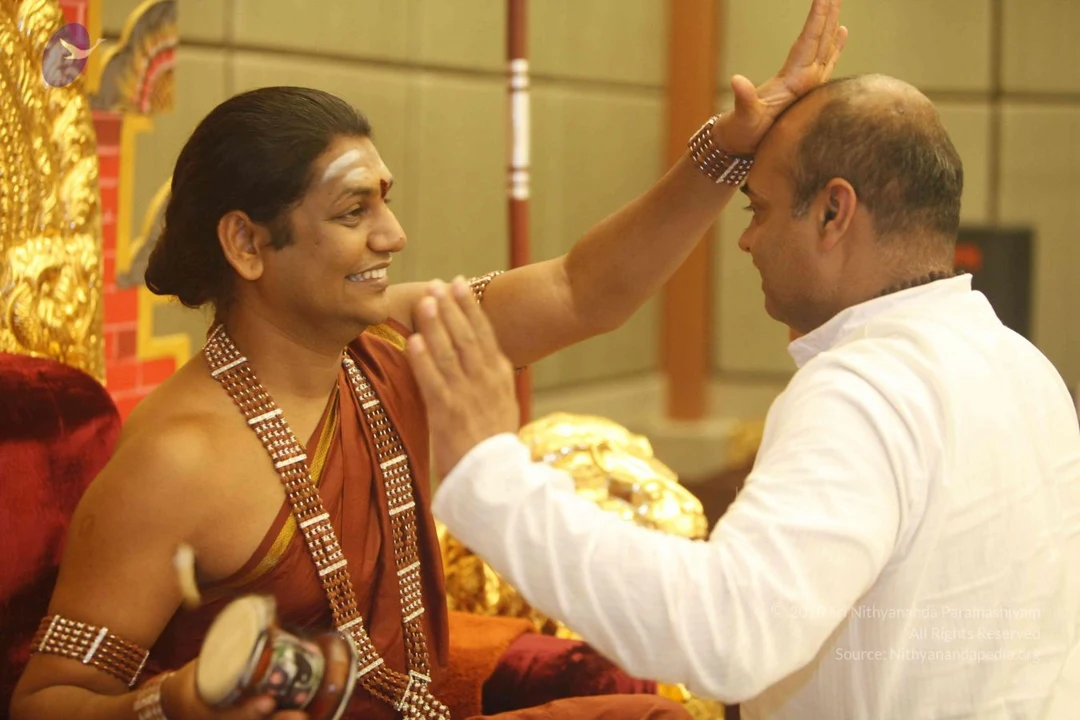
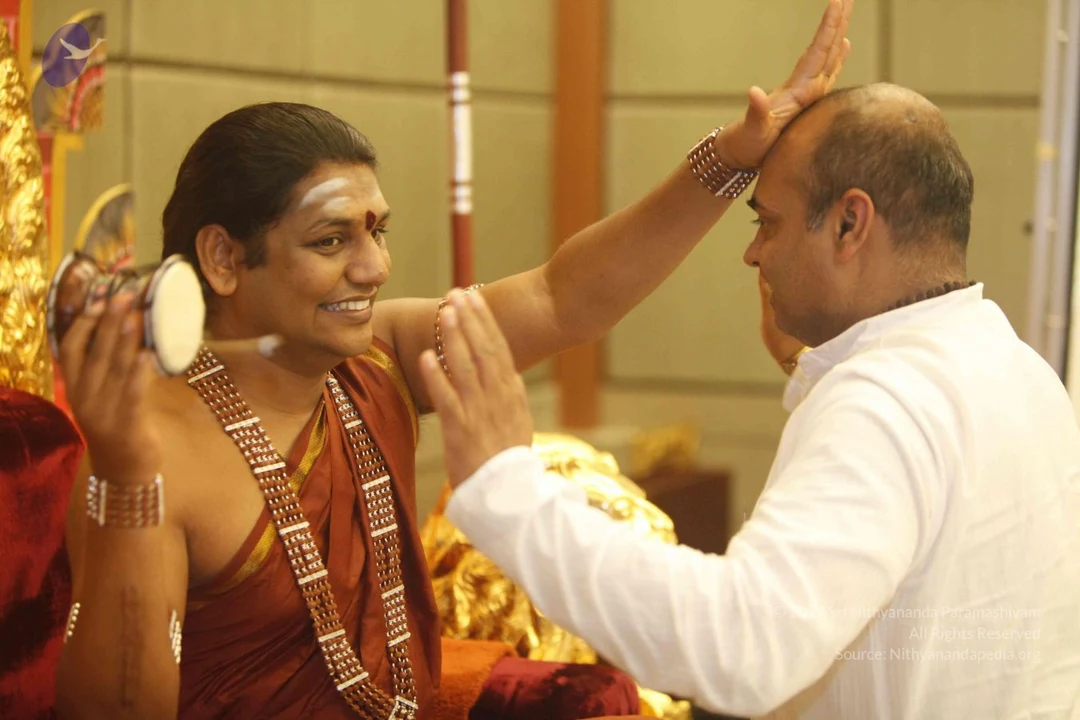
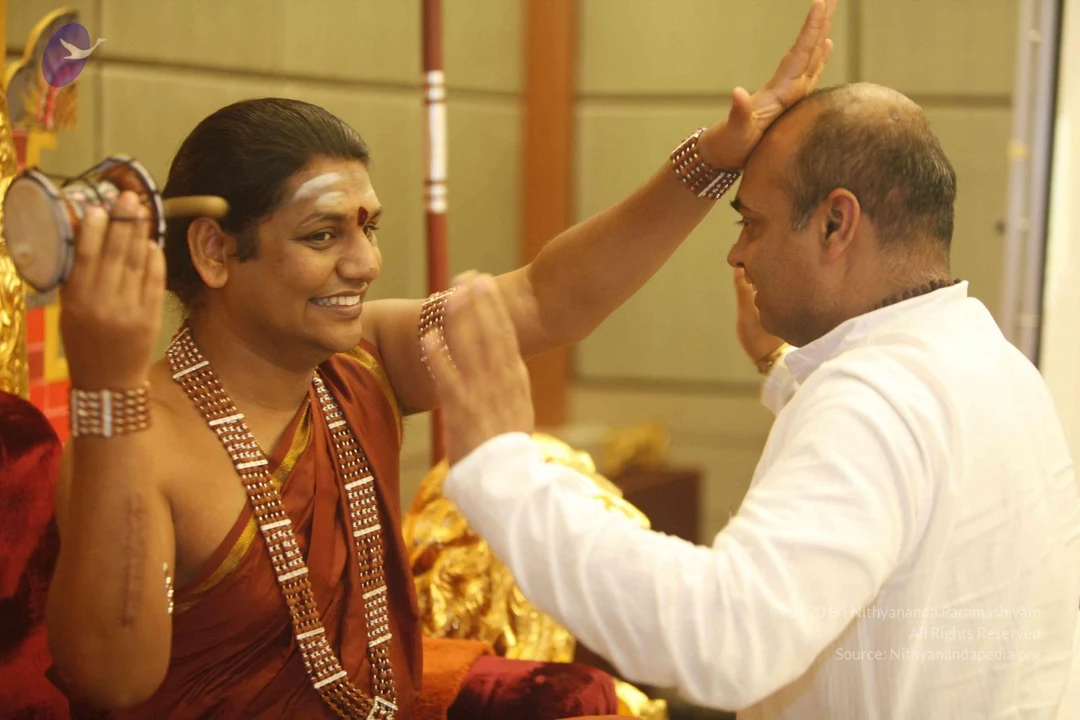
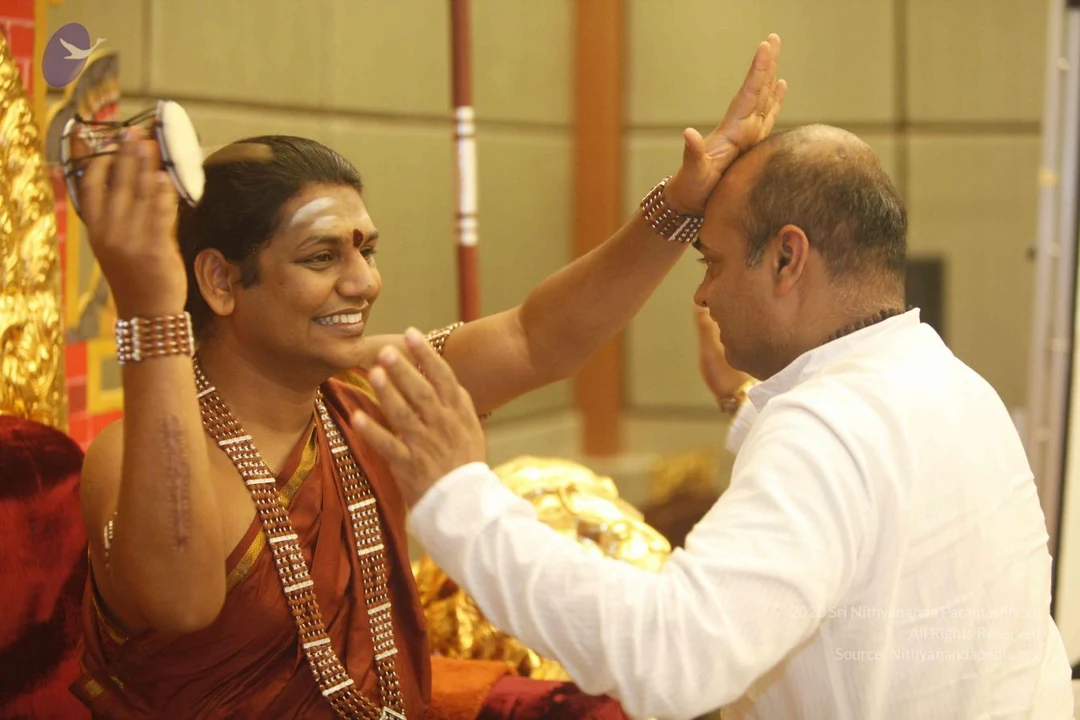
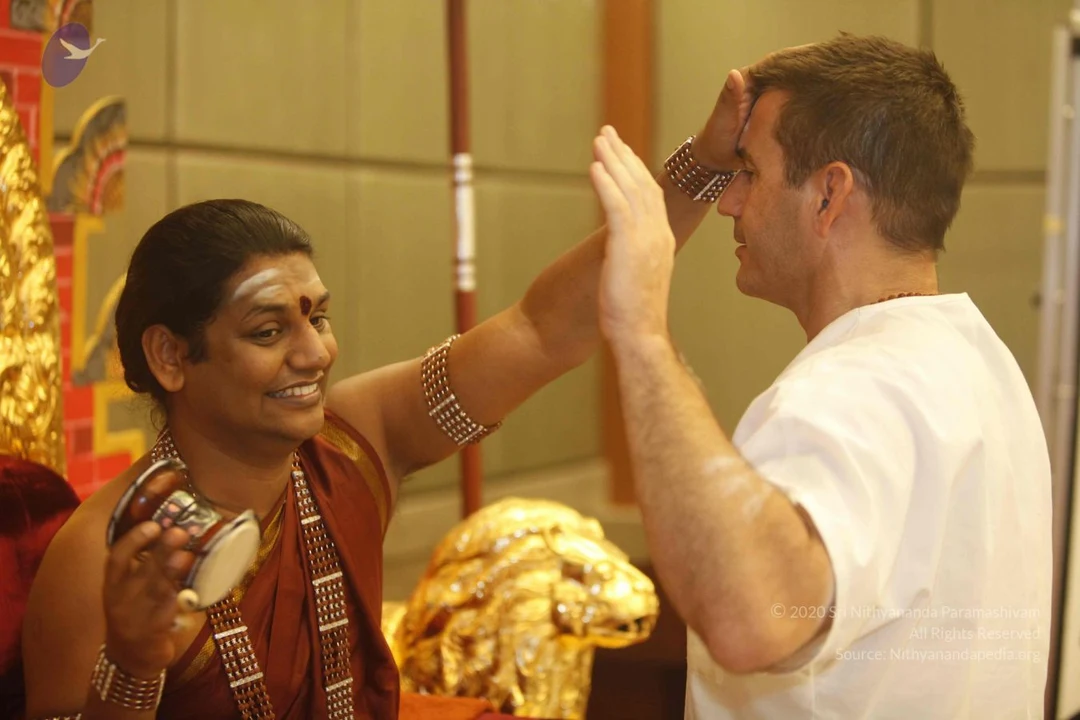
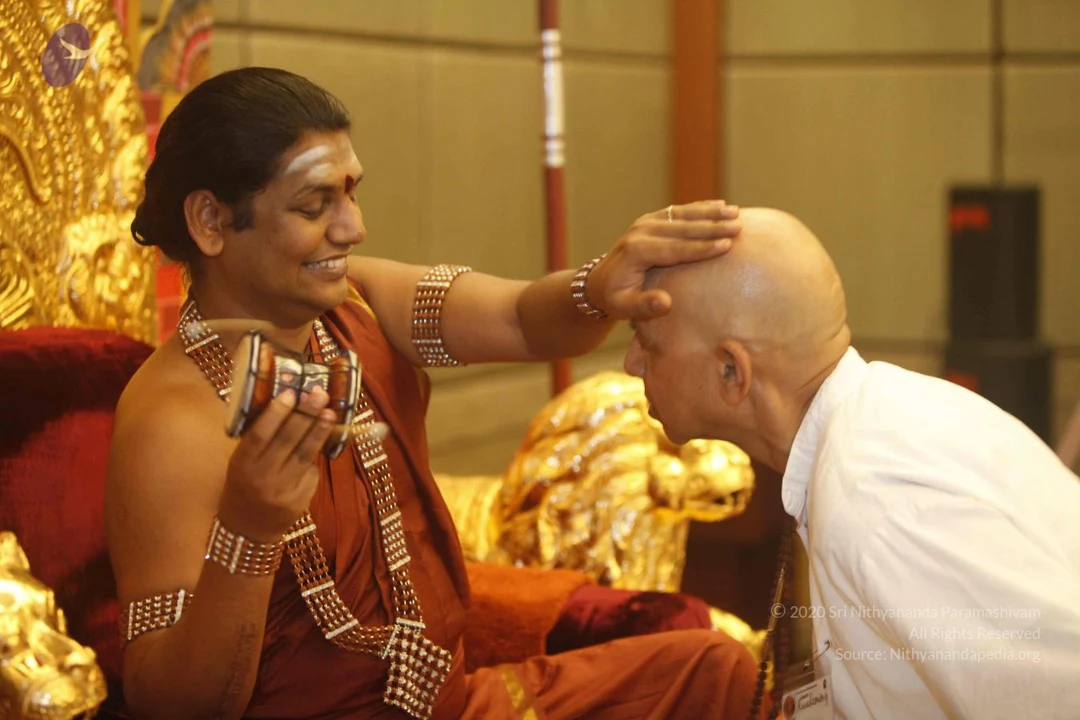
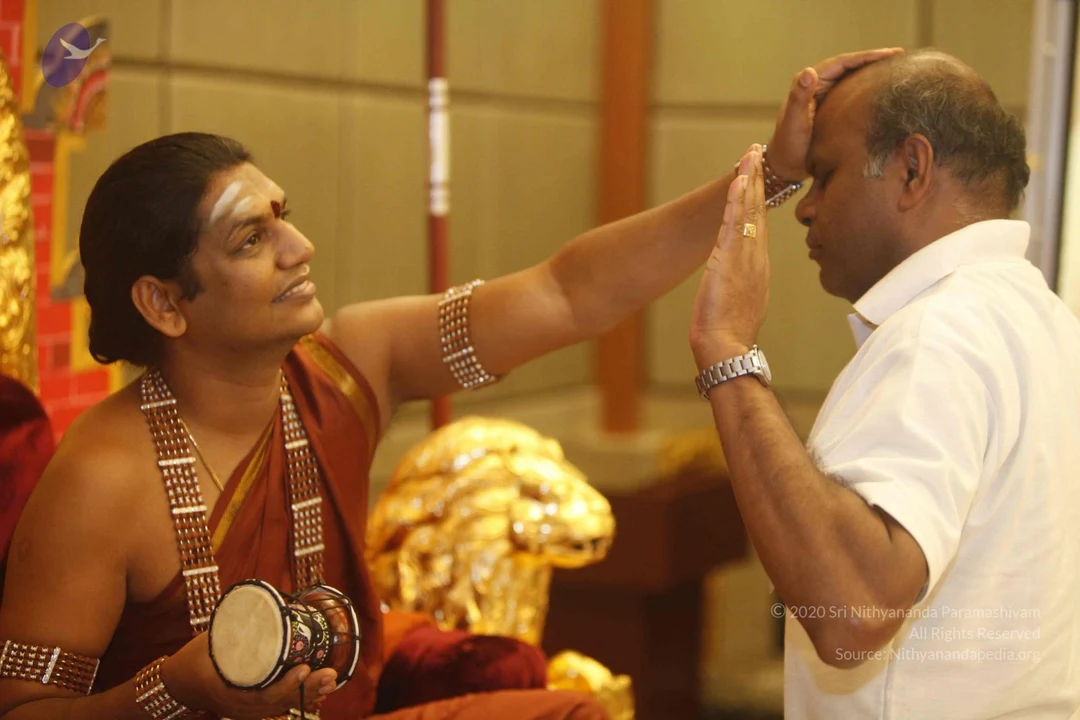
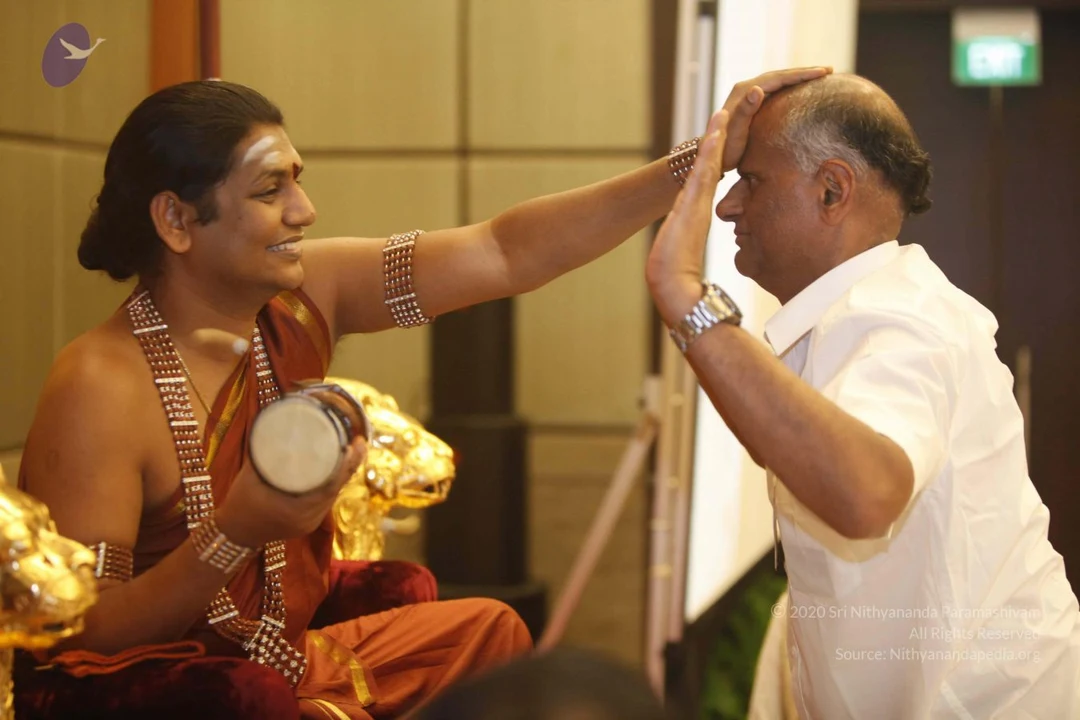
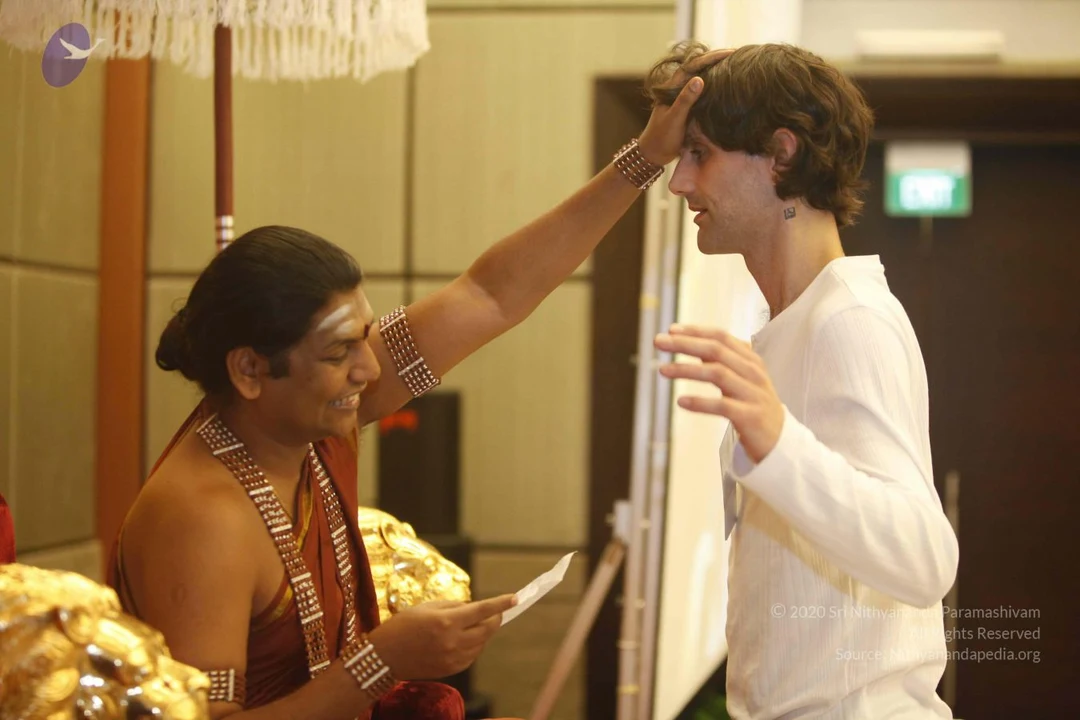
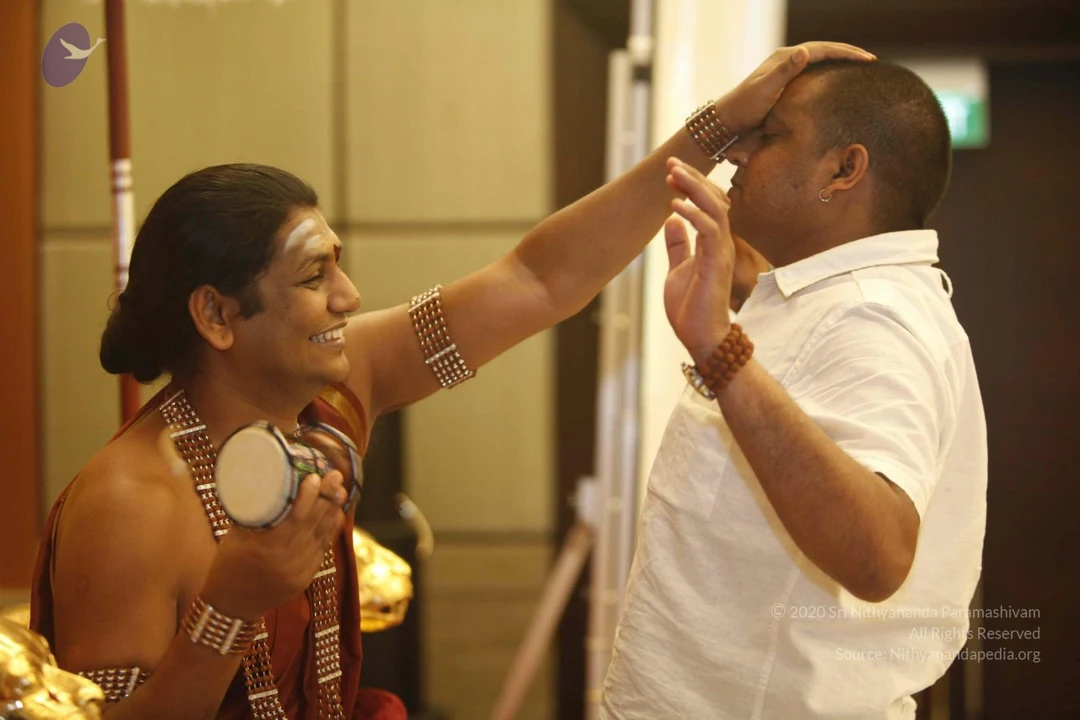
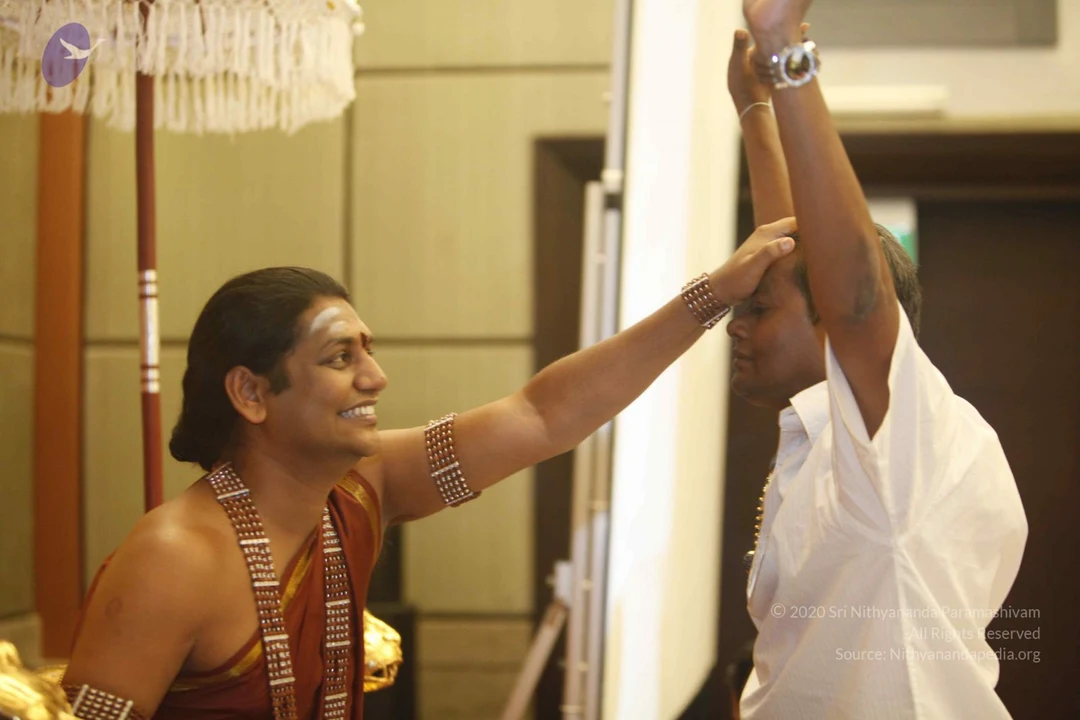
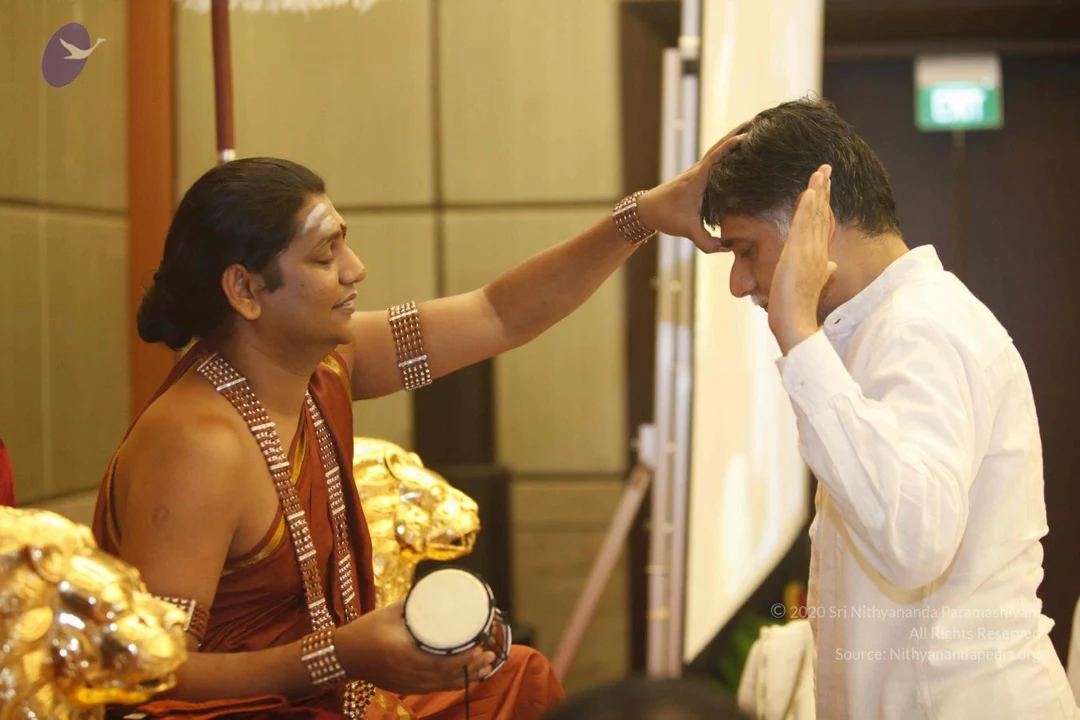
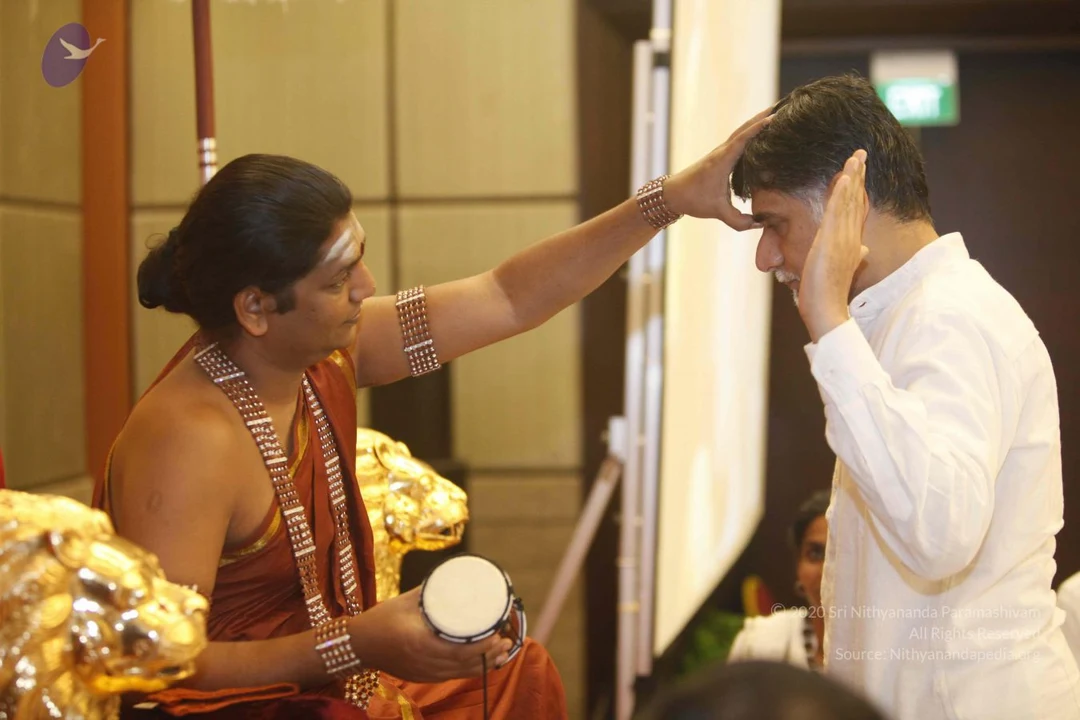
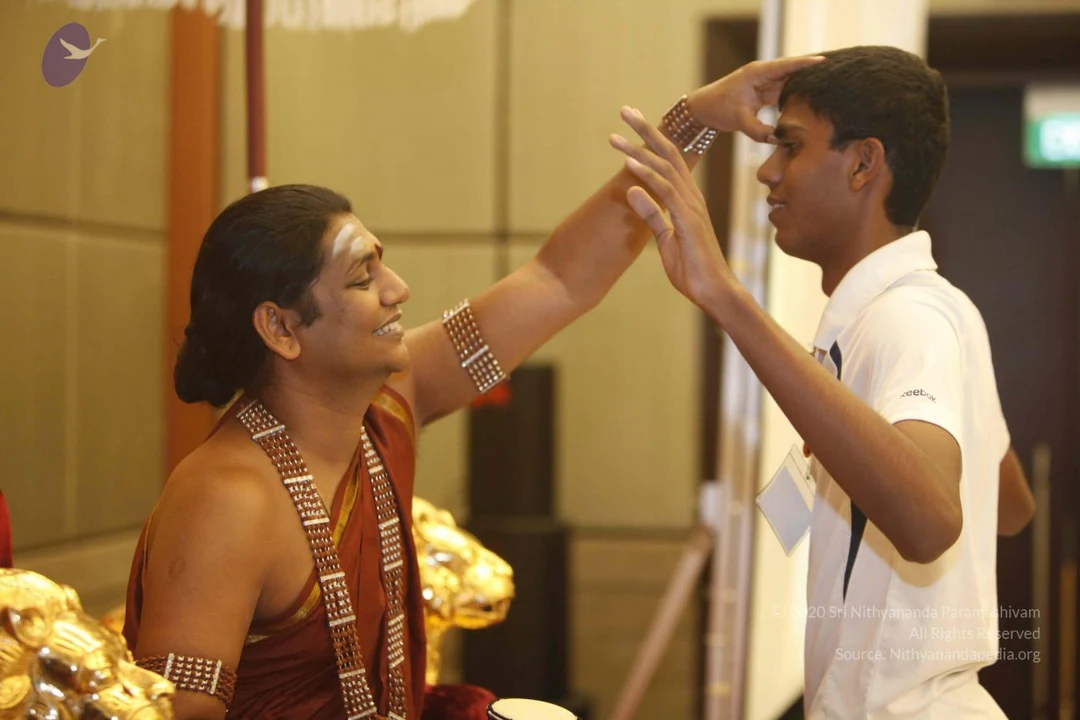
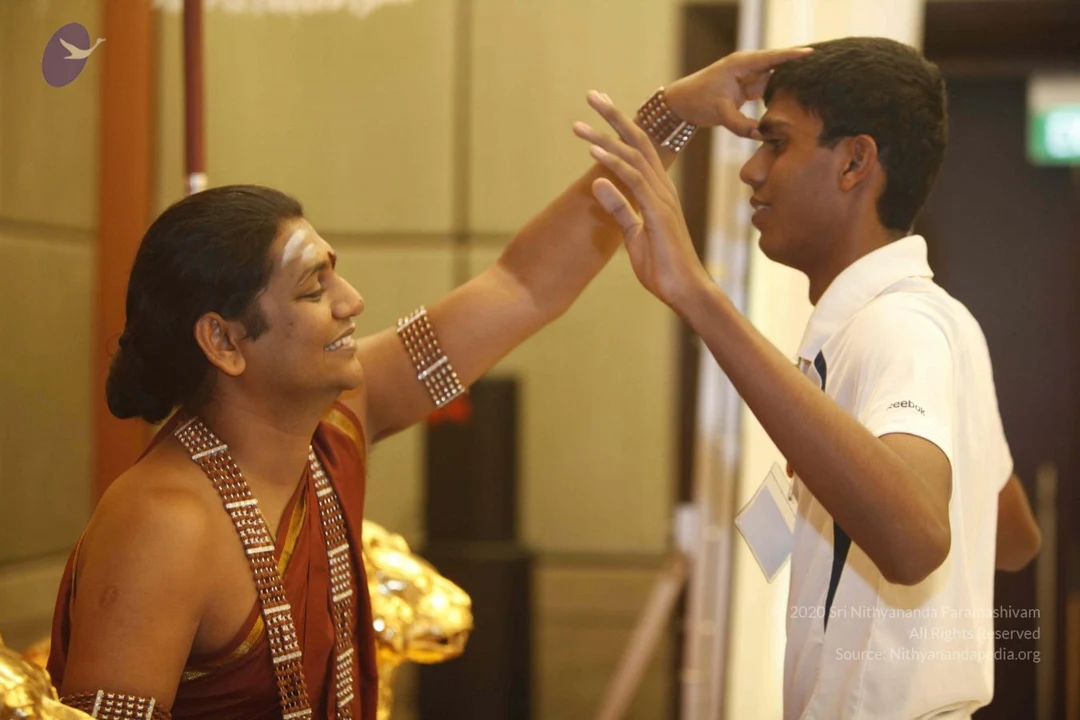
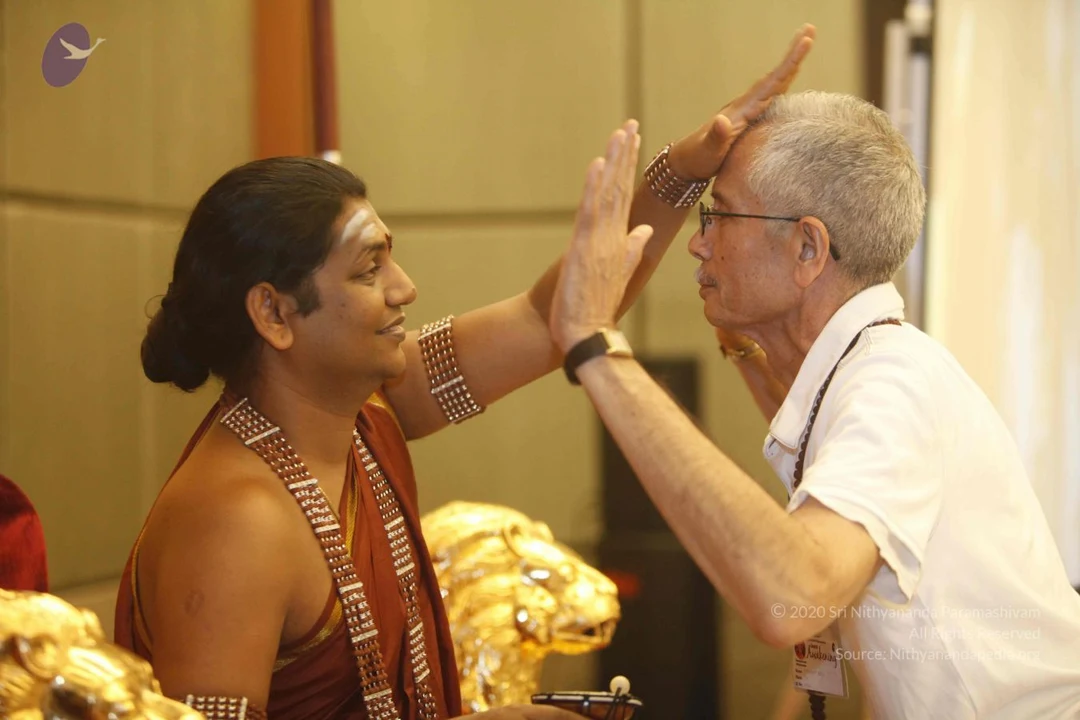
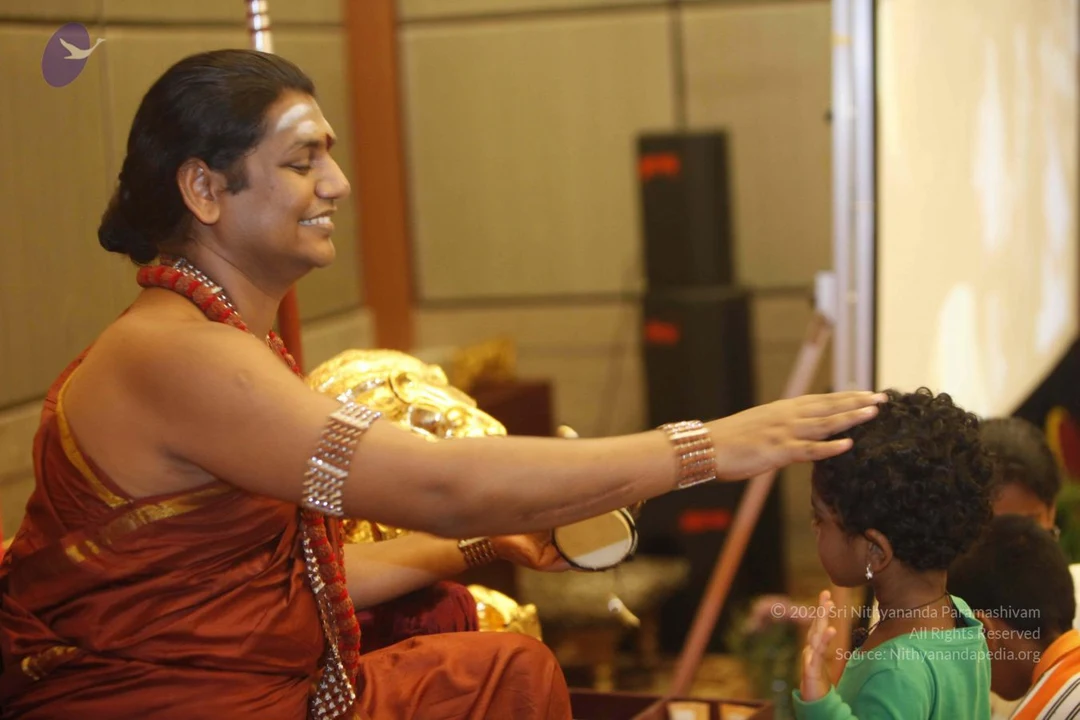
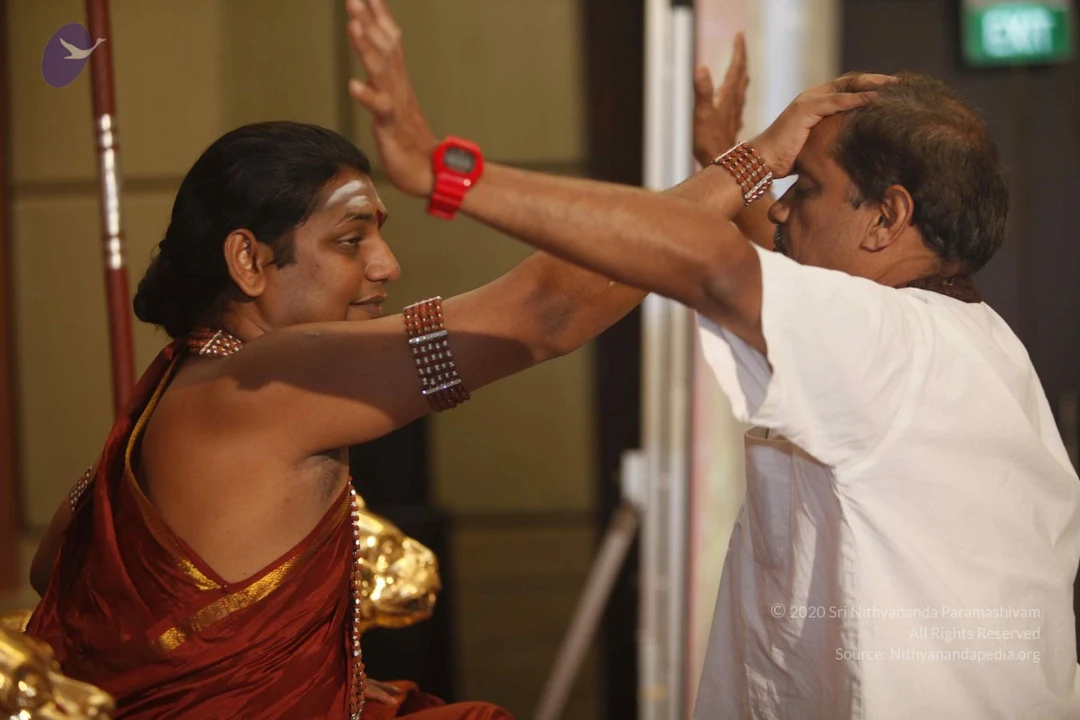
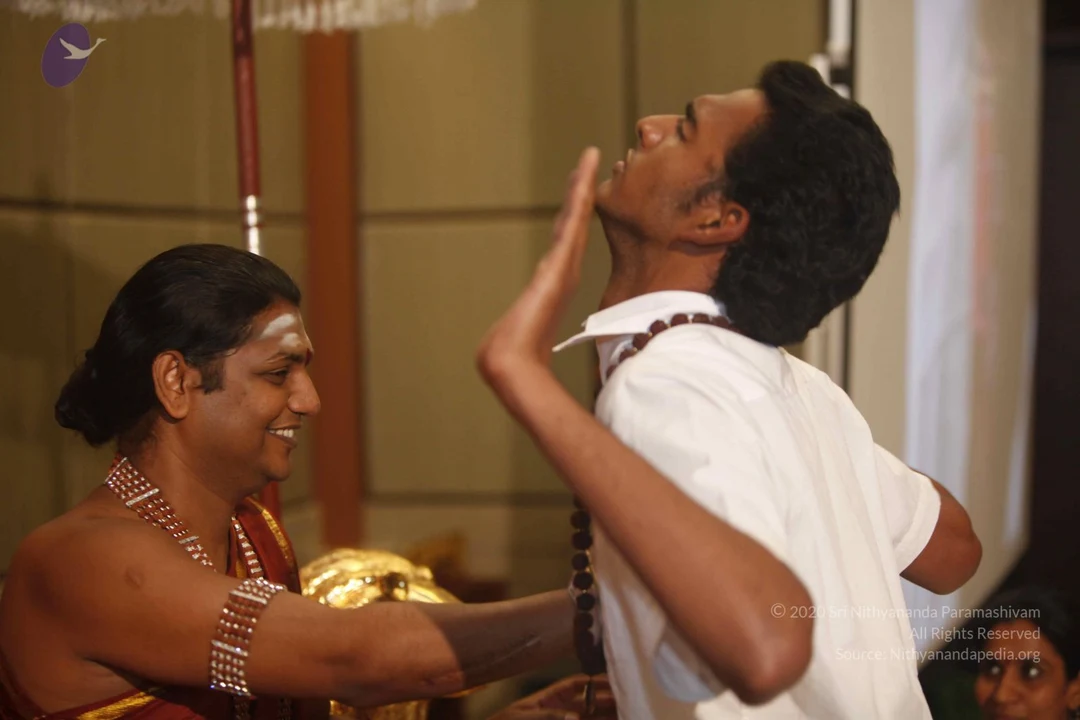
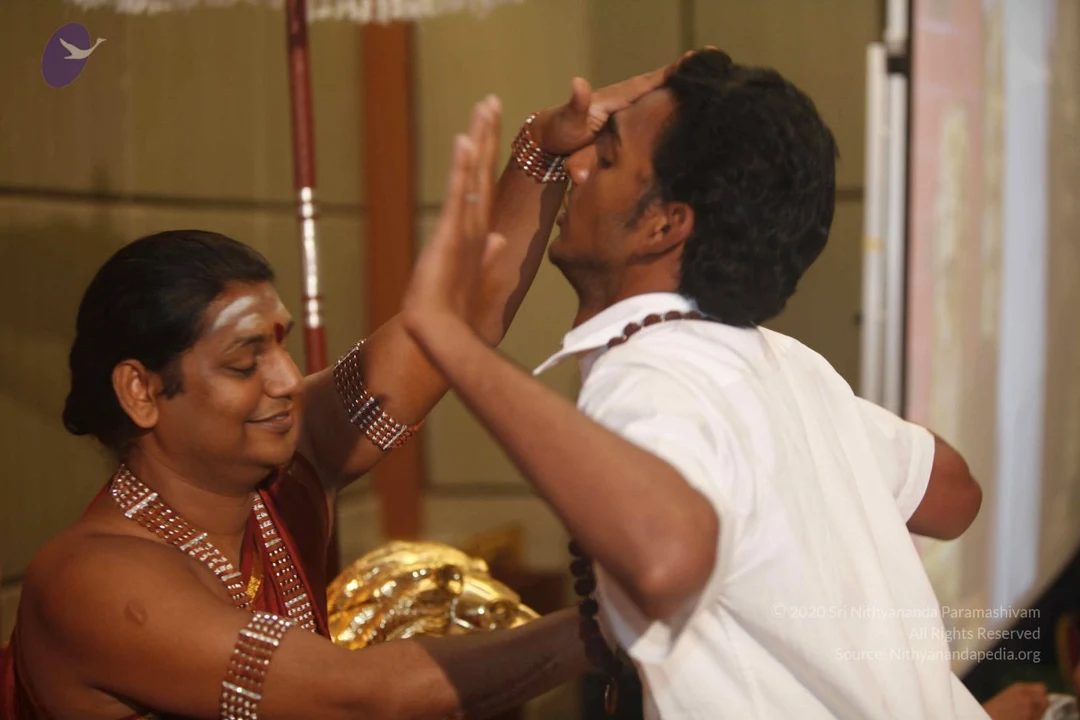
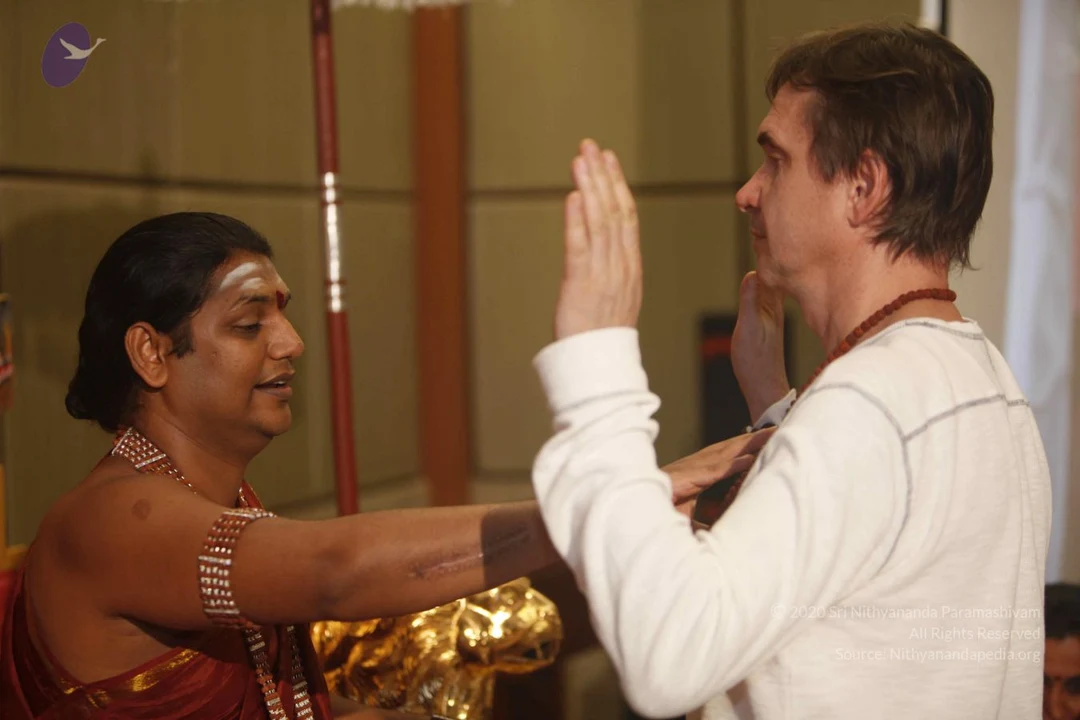
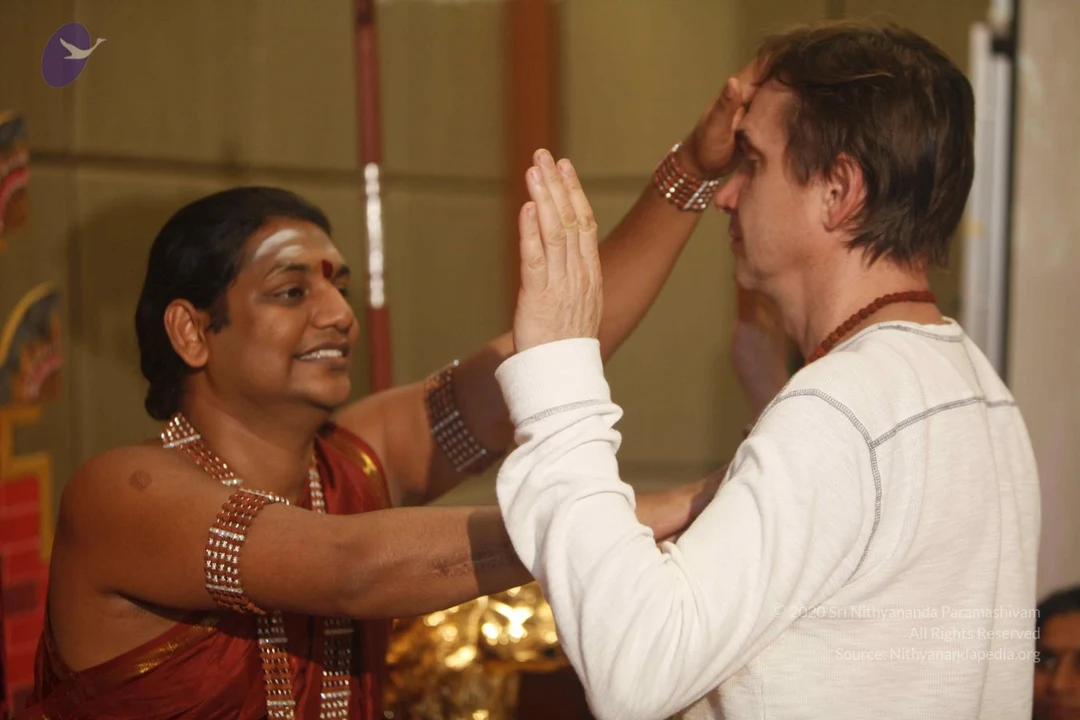
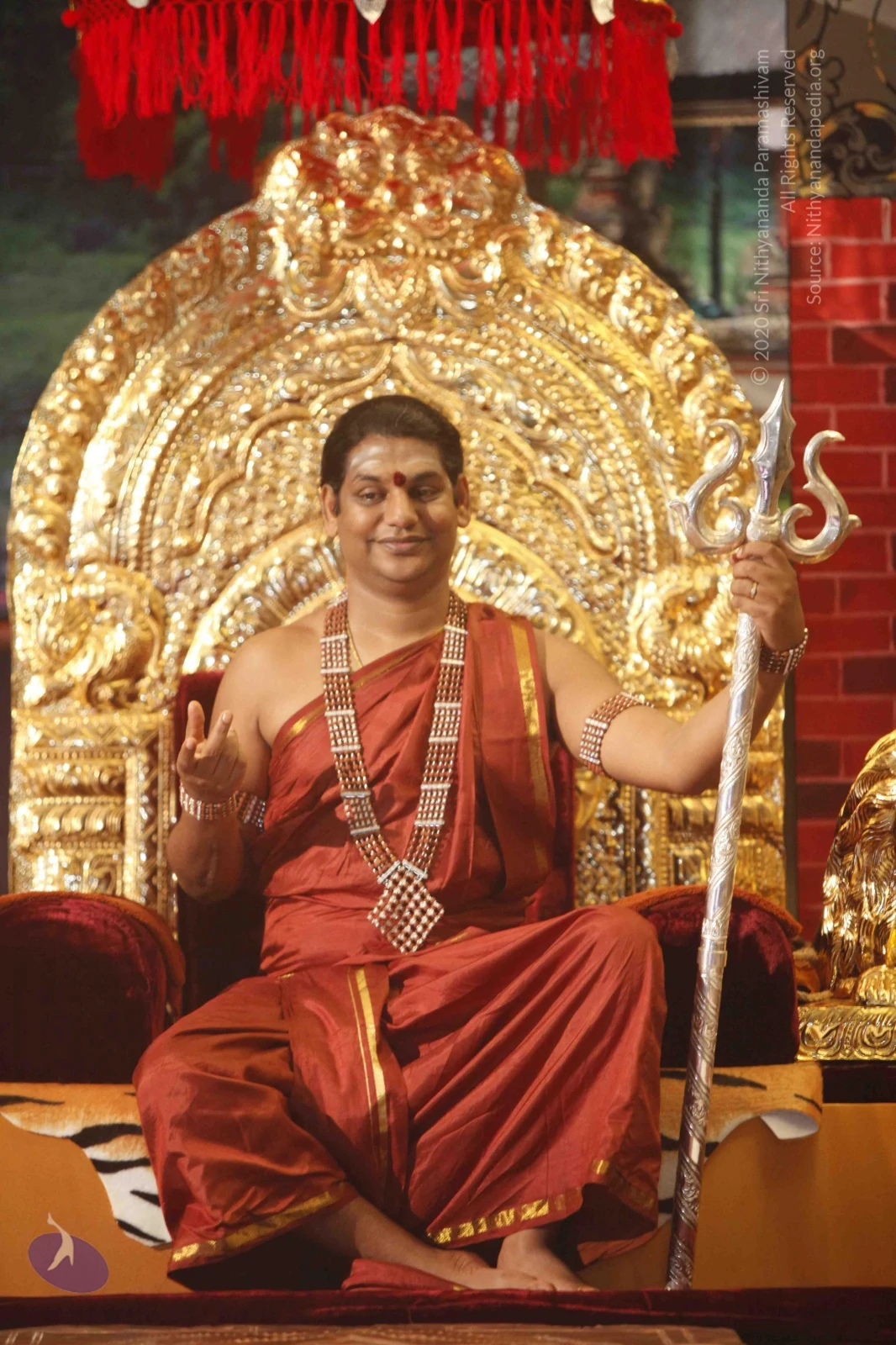
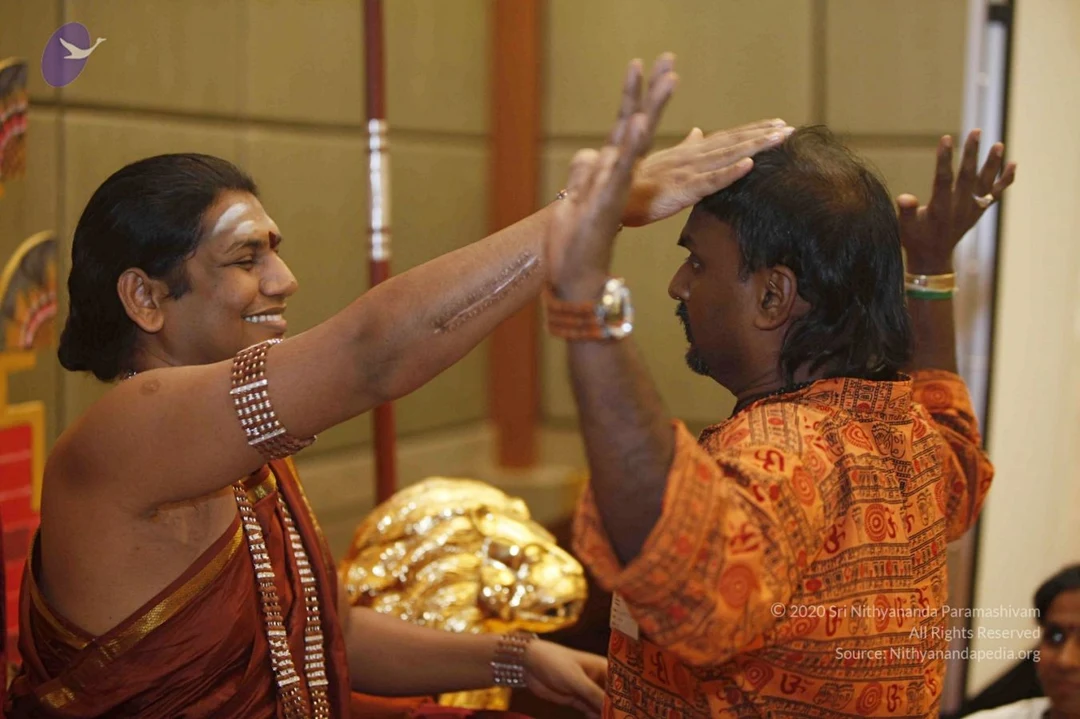
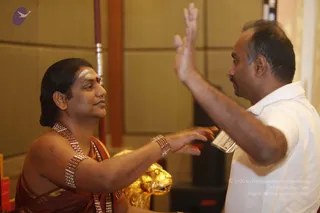
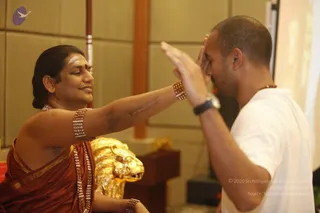
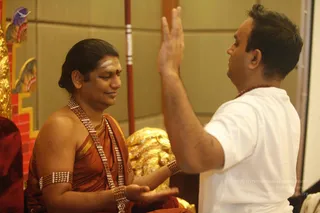
A smiling man with swept-back dark hair sits before an ornate gold throne-back carved with floral and scrollwork patterns. He wears white vertical forehead markings, a red kumkum dot, and a saffron-orange shawl over bare shoulders, with multiple rows of beaded rudraksha-style malas across his chest and upper arm. He holds a small round drum or hand instrument at lower frame. Behind him is a red brick wall with gold-trimmed panels.A smiling man with short hair tied back sits before a golden ornate backdrop and a red brick-patterned painted wall, holding a small hand drum with a white skin and wooden stick in his right hand. He wears a red-orange draped garment with a gold border, a multi-strand beaded necklace, beaded armbands and bangles, and a red bindi on his forehead. The setting suggests a satsang or ritual gathering.A photograph of two men in an indoor hall with beige padded wall panels and a wooden pillar. On the left, a seated man with long swept-back dark hair and a white-and-red tilak on his forehead wears a dark red-brown shawl over his bare shoulders, with multiple beaded rudraksha malas across his chest and upper arm bands. He extends his right hand toward the other man. On the right, a man in a white short-sleeved polo shirt raises his hand palm-forward, with an attendee badge clipped to his shirt. A golden figurine of an animal sits near the seated man. Swamiji (probable) appears as the seated man, with long hair, beaded malas and a shawl as the qualifying cues.A photograph of two men in a hall with beige wall panels. On the left, a bare-chested man with long swept-back dark hair, white and red forehead markings, a maroon wrap with gold trim, and layered silver-beaded bracelets and a long beaded necklace, extends his right arm and hand to touch the forehead of a man on the right. That man, with short dark hair and a moustache, wears a white short-sleeved collared shirt and stands with his palm raised. A golden lion-head sculpture and a dark speaker stand behind them, and a partly visible person appears at the right edge. The gesture suggests a blessing given in a satsang setting. The left figure matches Swamiji (probable) by long swept-back hair, bare chest, maroon wrap, beaded necklace and bracelets.A photograph of a seated man in a rust-orange dhoti-style wrap with gold border, wearing layered beaded silver-toned necklaces, a multi-strand bead bracelet and beaded armlets, with white ash markings and a red bindi on his forehead. He reaches forward to touch the forehead of a bald man in a white t-shirt who wears a wooden rudraksha-style necklace and a wristwatch. A golden lion statue stands behind them against a beige paneled wall, with a wooden column and a small wooden stand nearby. The swami-appearing figure is an appearance-based a person candidate with saffron-orange ceremonial clothing, rudraksha-style beads and ornate necklaces; the page indicates the event, but appearance cues are only moderately distinctive.Photograph of two men in a seated exchange indoors against a beige wall with a gold-leaf decorated ornament and red-and-gold painted panel at left. The man on the left wears an orange-brown wrap over his shoulders, a white sandal-paste mark on his forehead with a red dot, and layered beaded bands on his arms and neck, smiling as he sits. Opposite him, a man in a plain white shirt and a red beaded necklace raises one palm toward him. The left figure's appearance does not clearly establish a person identification, so the role is given as a seated devotee.

Morning-Puja

17 photosSource gallery
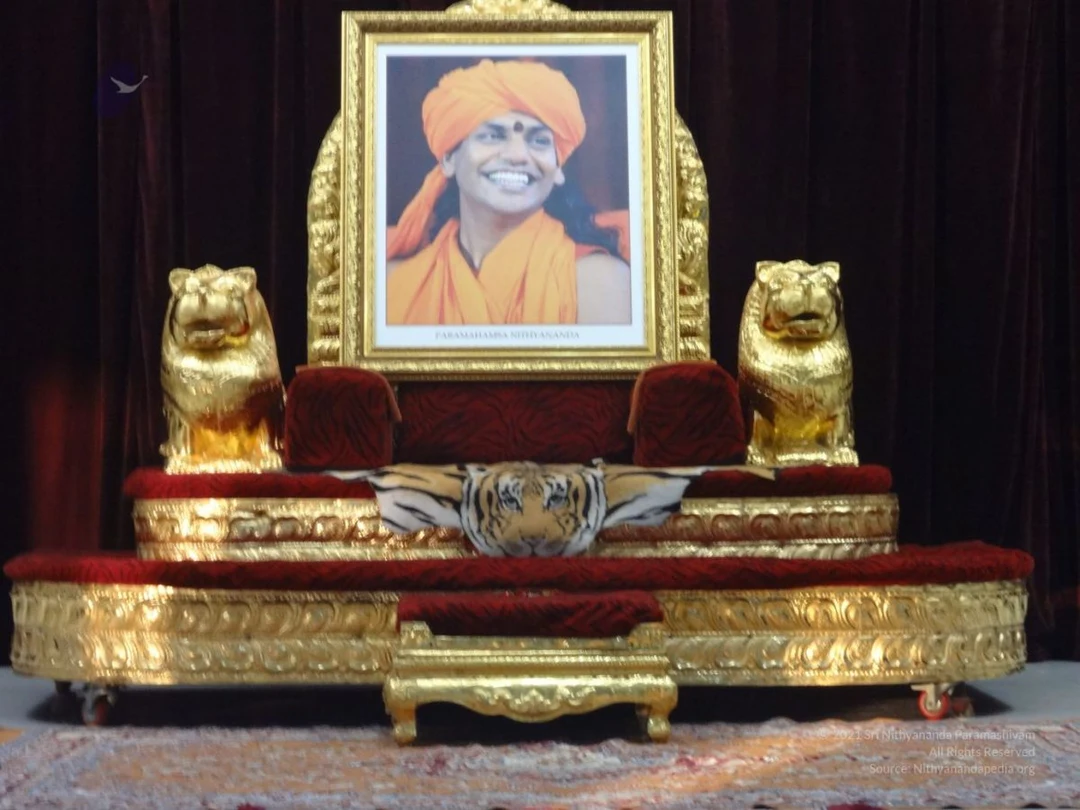
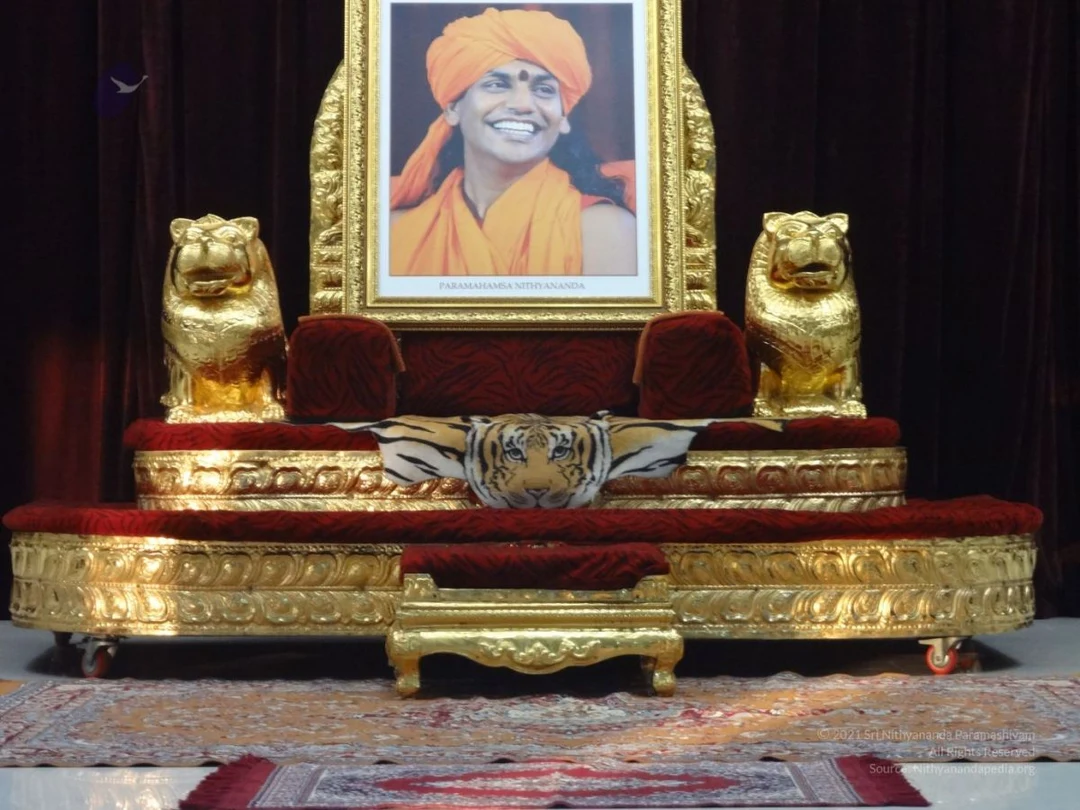
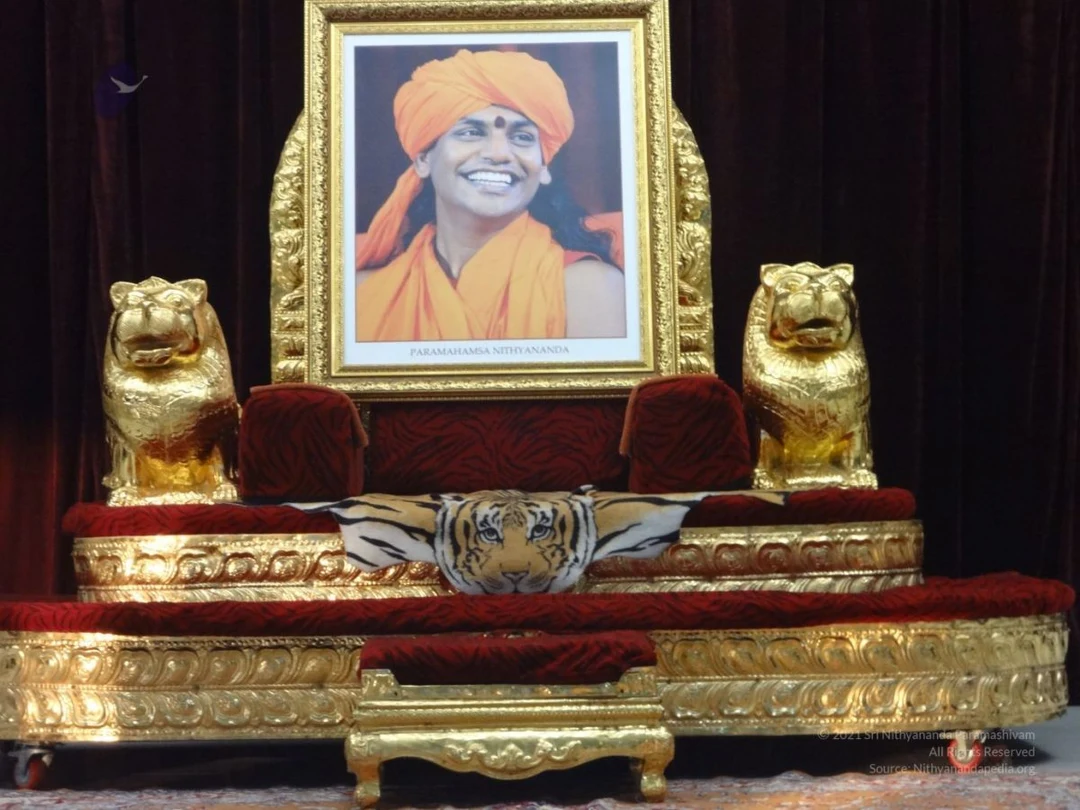
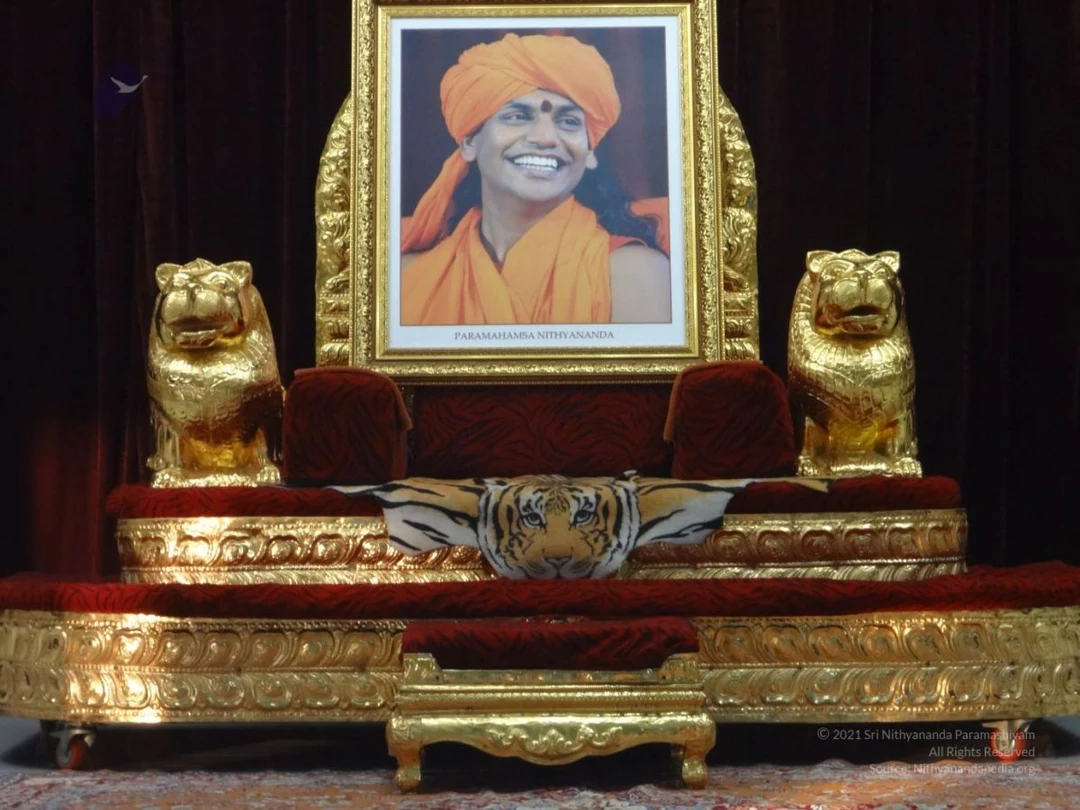
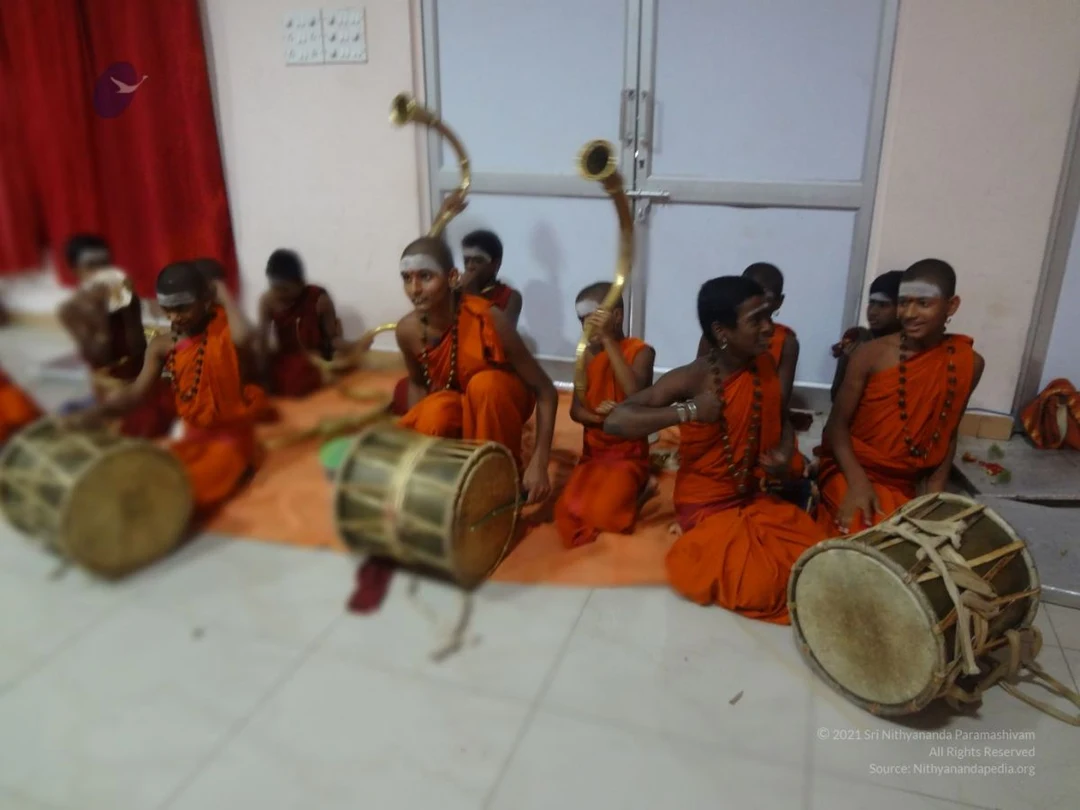
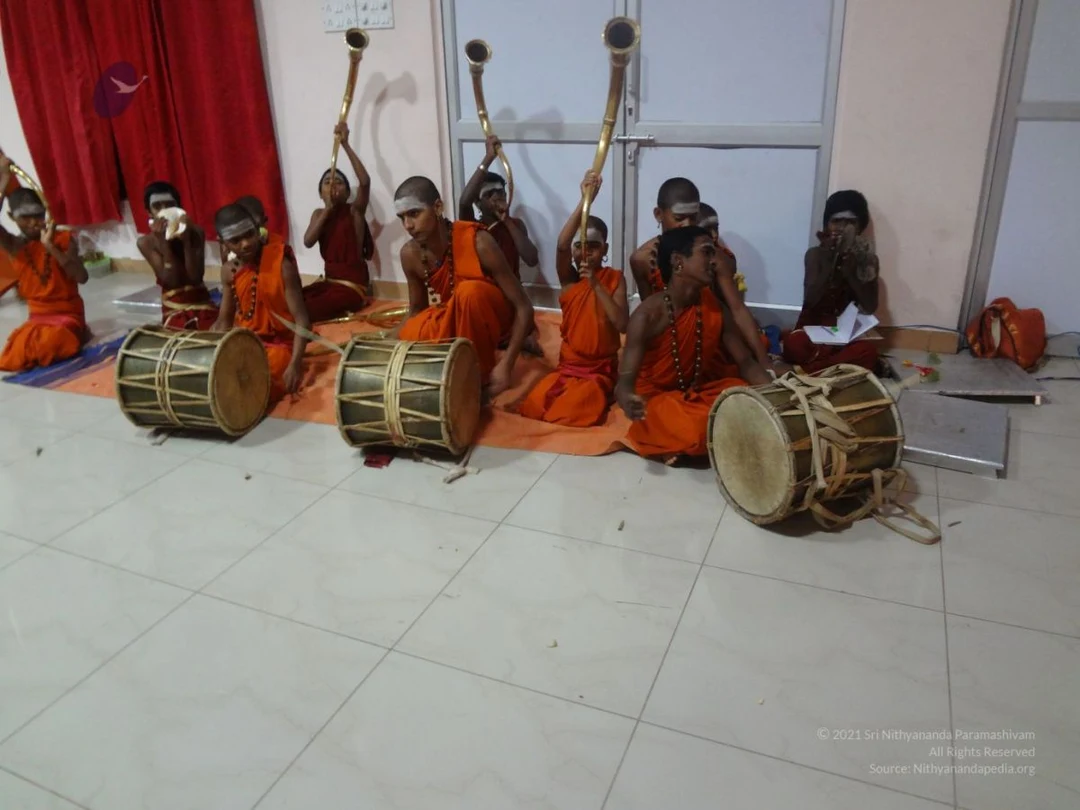
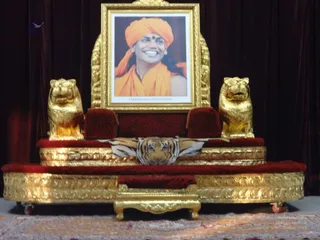
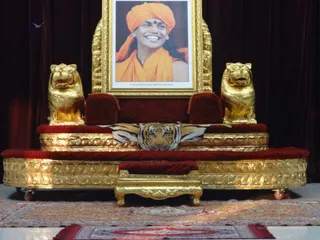
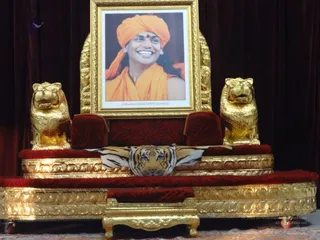
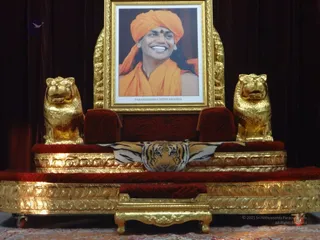
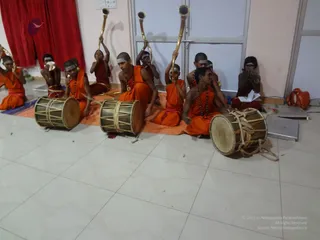
An empty gilded throne (peetha) with red velvet cushions, carved gold lion-head armrests and a tiger-skin cloth draped over the seat, set against dark maroon drapes. Above the throne hangs a large gold-framed portrait of a smiling figure in saffron-orange turban and robes with a red bindi, labelled as a portrait captioned "Paramahamsa Nithyananda". No physical people are visible; the portrait is a depiction, not a person present.An empty ornate golden throne (peetha) with red velvet cushions and a tiger-skin draped across the seat, flanked by two golden tiger sculptures. Above it hangs a large framed portrait of a smiling man in an orange turban and orange robe with a red bindi, labelled PARAMAHAMSA NITHYANANDA. Red and patterned carpets lie on the floor and dark red drapes form the backdrop. No people are present in the scene.An empty ornate golden throne stands on a red-cushioned dais before dark red drapes. Two golden lion sculptures flank the seat, and a tiger-skin rug with its head visible covers the seat. Above the throne hangs a gilded framed portrait of a smiling man with an orange turban, orange shawl and red bindi, labelled as a printed portrait. No physical people are visible in the scene.A gilded ceremonial throne (peetha) stands empty against dark red drapery. A large framed portrait above it, labelled "PARAMAHAMSA NITHYANANDA" in print, shows a smiling man with a bright orange turban, orange shawl and red bindi. Two golden lion statues flank the seat, and a tiger-skin cloth with a tiger head lies across the cushion. No people are visible in the scene.A blurred photo of a group of young men seated on a floor with an orange cloth, playing traditional music. Several wear saffron-orange robes, rudraksha beads and white forehead markings; some play large frame drums and others hold long curved brass horns. A red curtain and white tiled floor are visible behind them, with a grey door and wall in the background.A photograph of a group of young boys in saffron-orange robes performing music indoors on a white tiled floor. Several boys sit on an orange cloth playing long brass horns (trumpets) raised upward, while others play large barrel drums with leather heads and rope lacing. Several have white sacred markings on their foreheads, and some wear rudraksha beads. A red curtain hangs behind them and a glass door is at the right; an orange bag rests on the floor. Counting only visible people, about nine boys are present.

Morning-Yoga

41 photosSource gallery
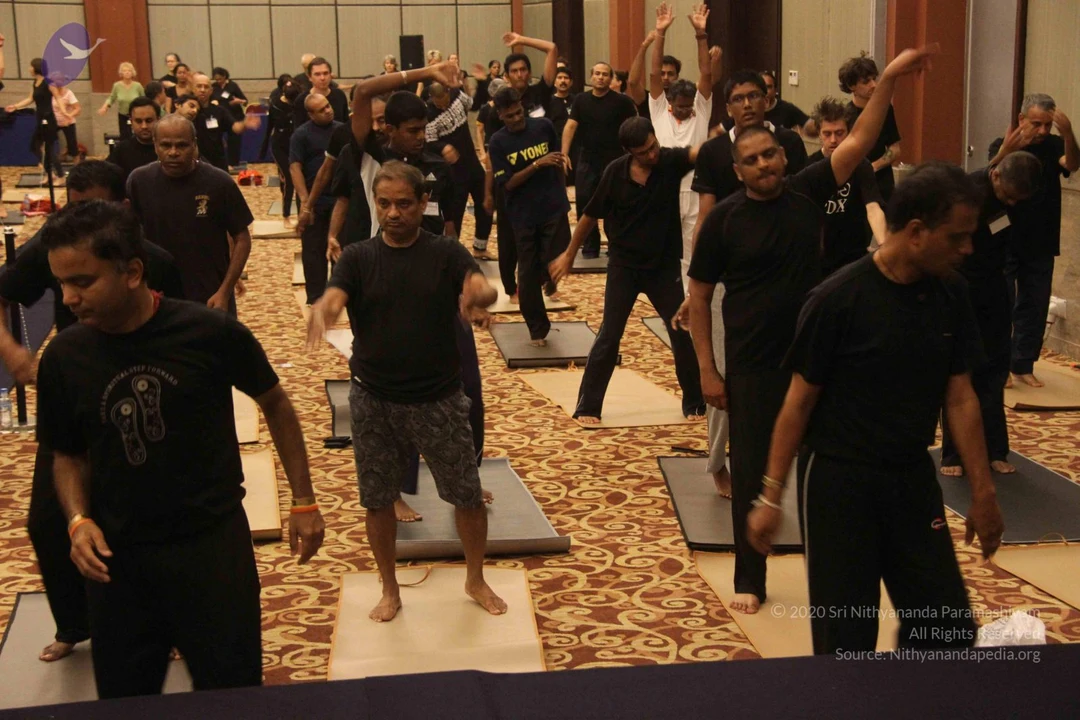
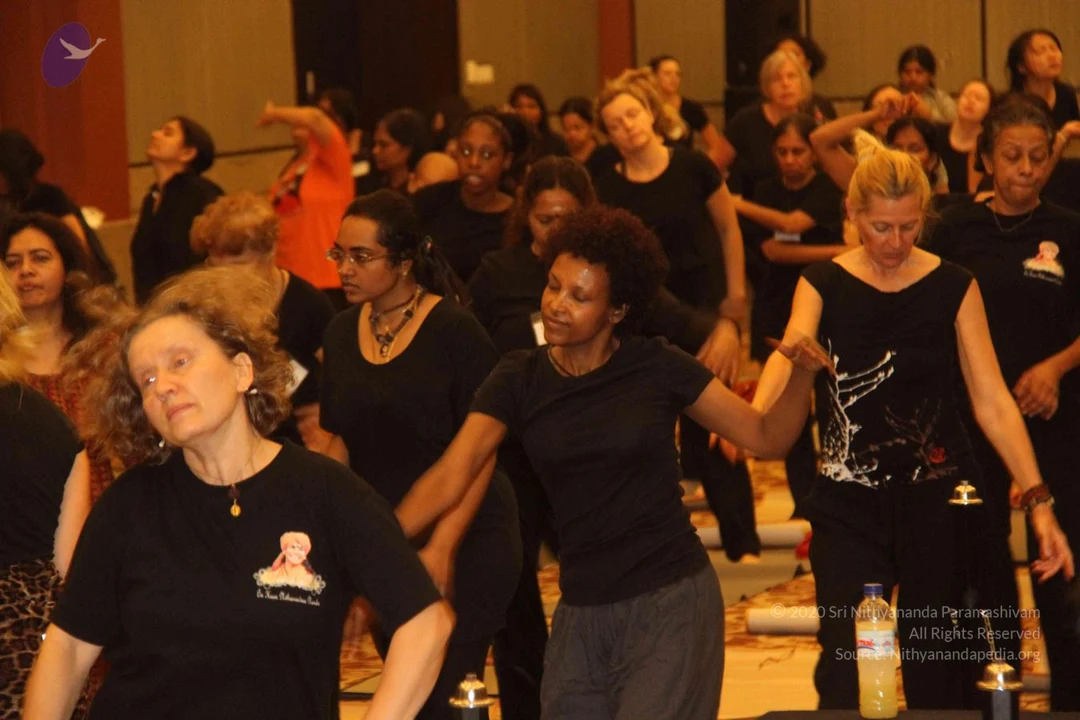
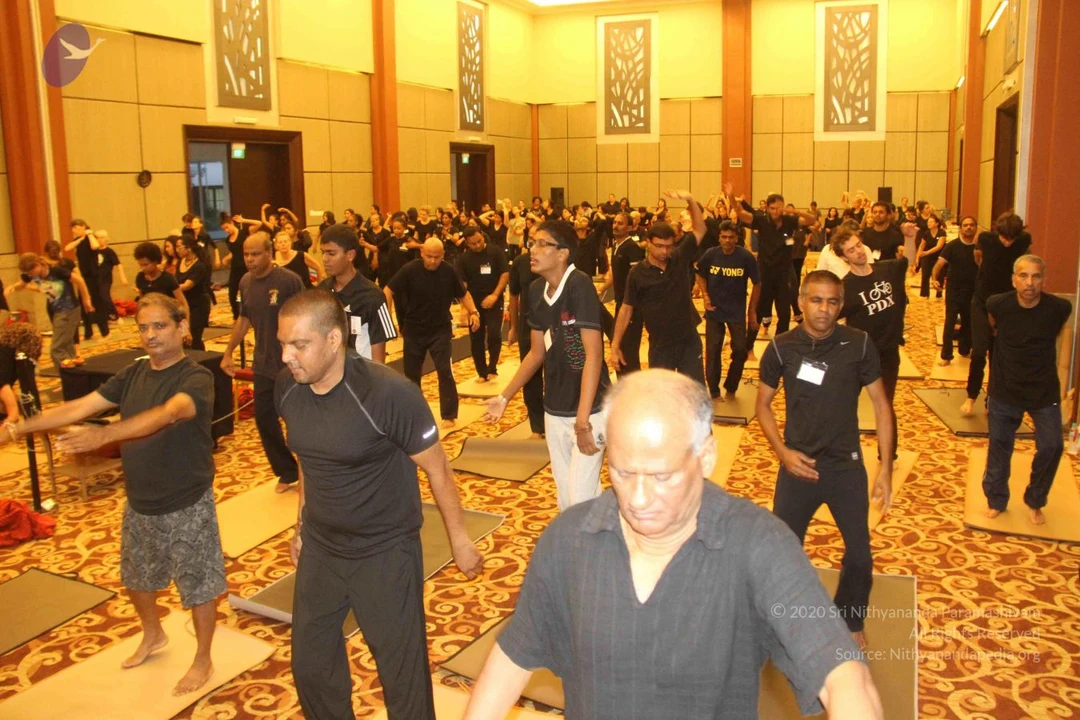
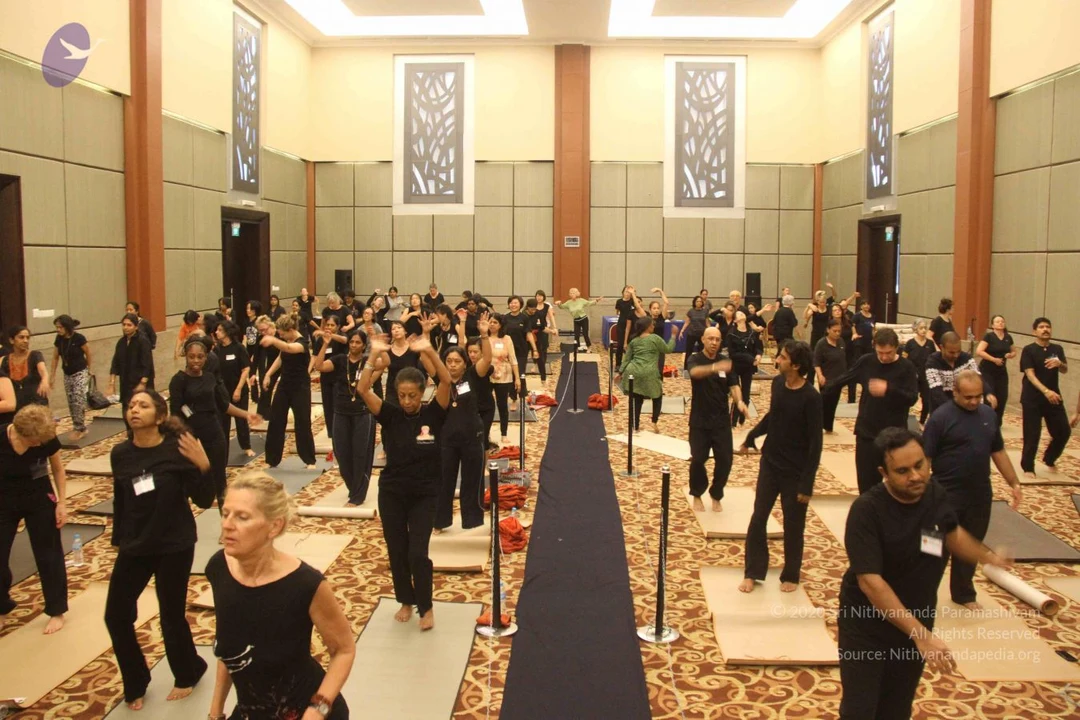
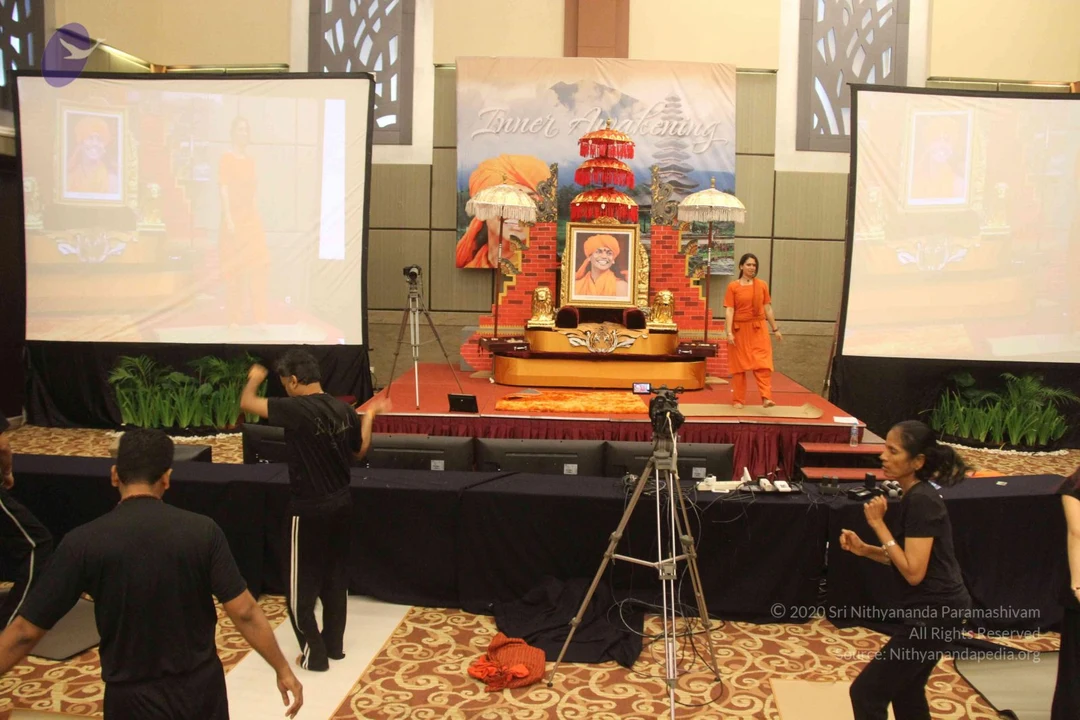
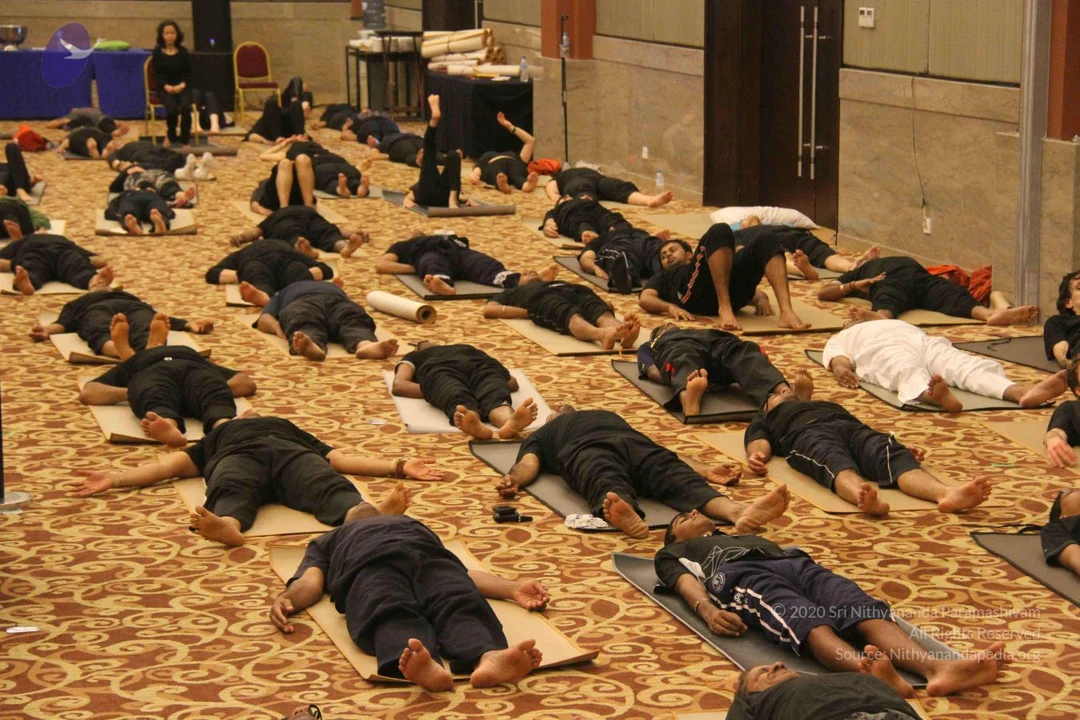
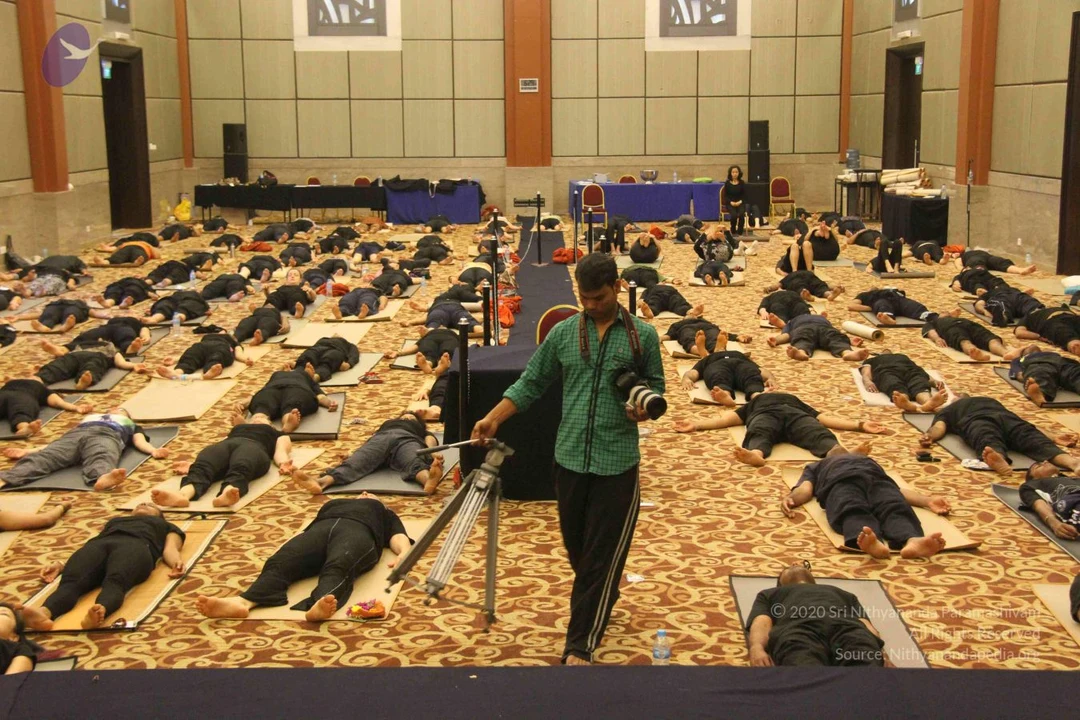
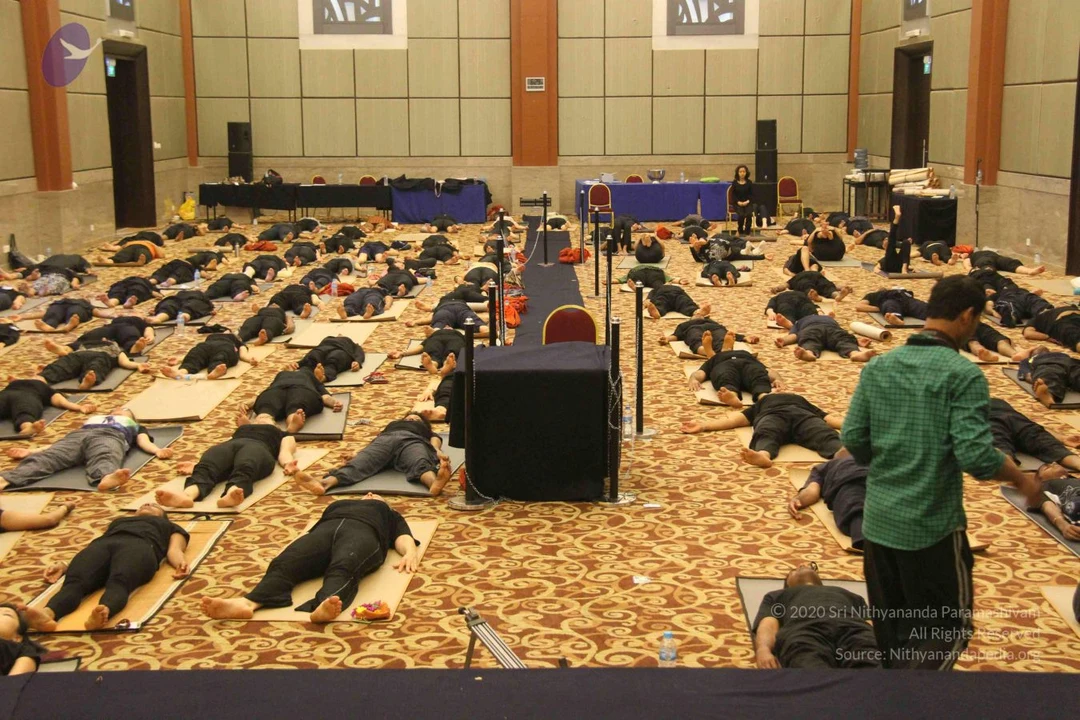
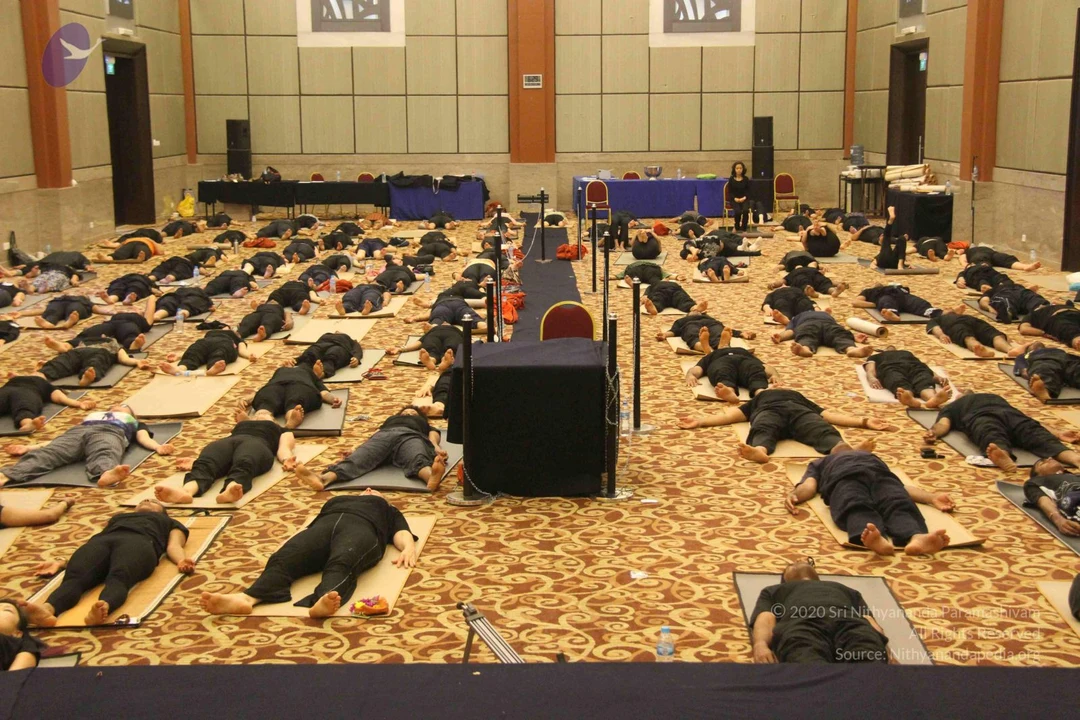
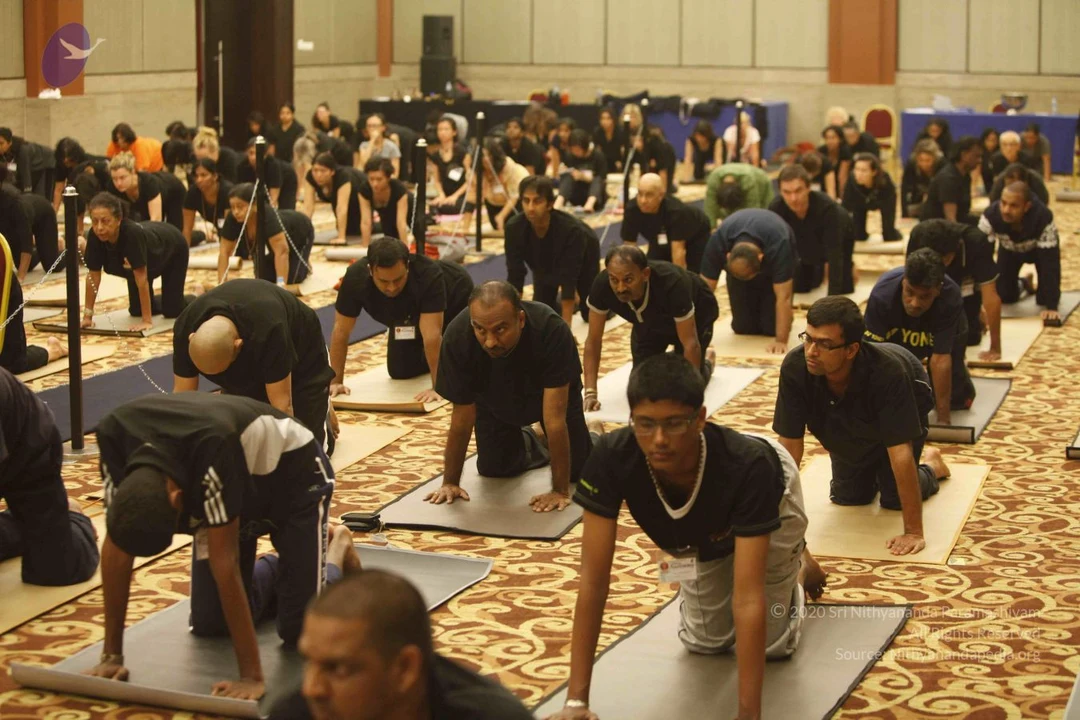
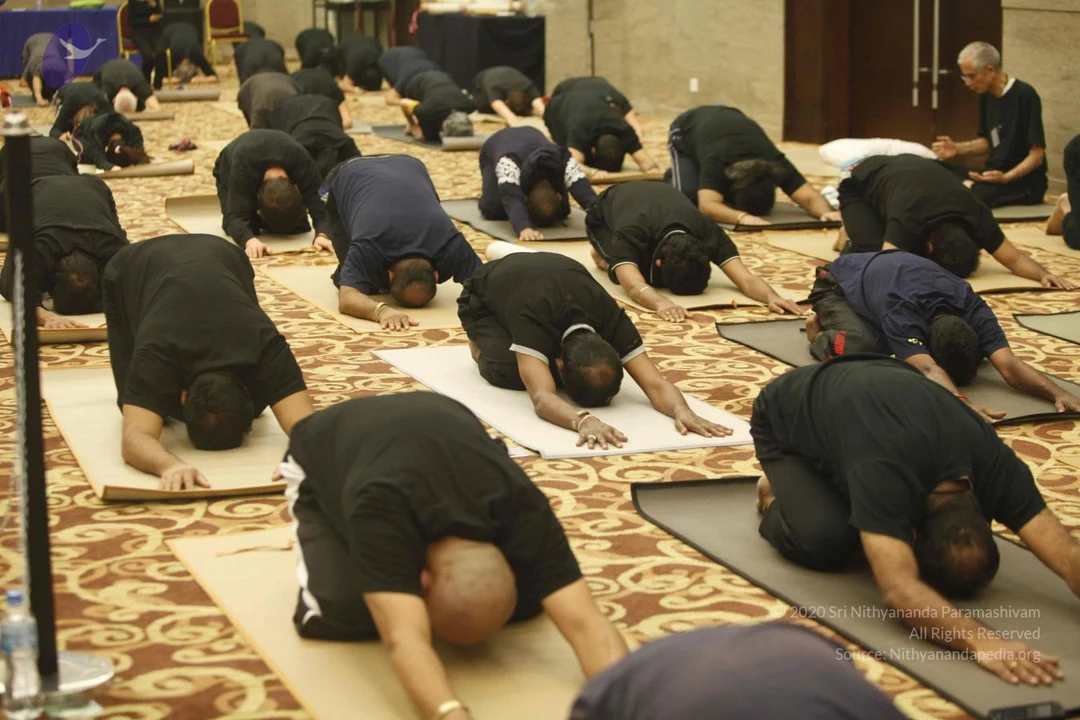
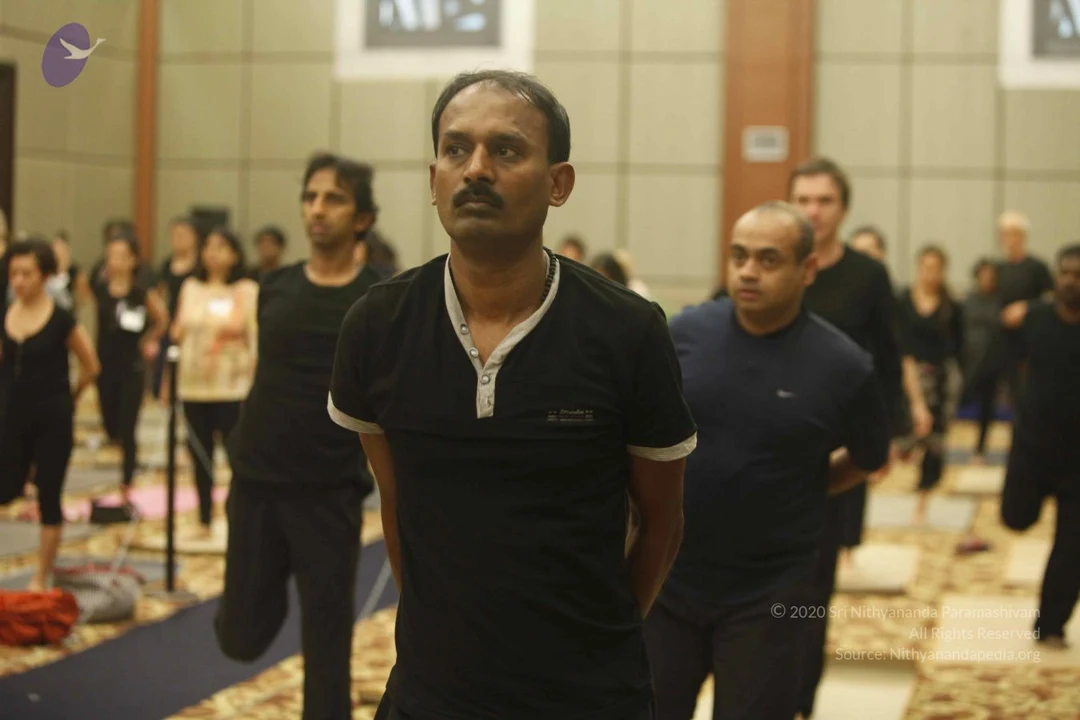
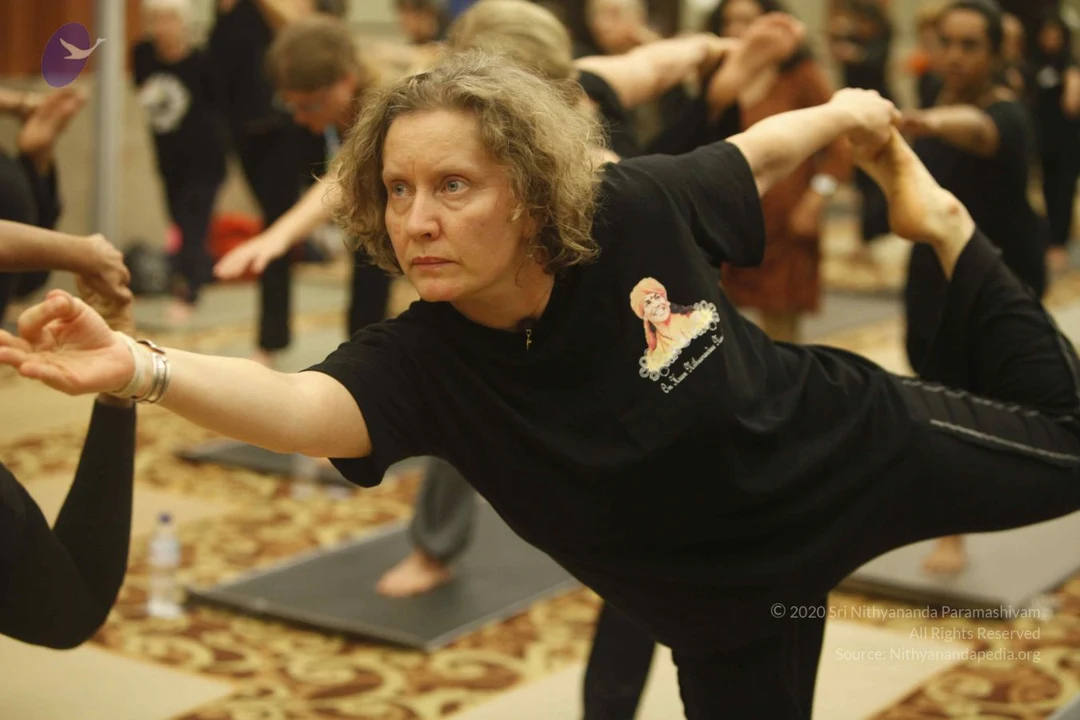
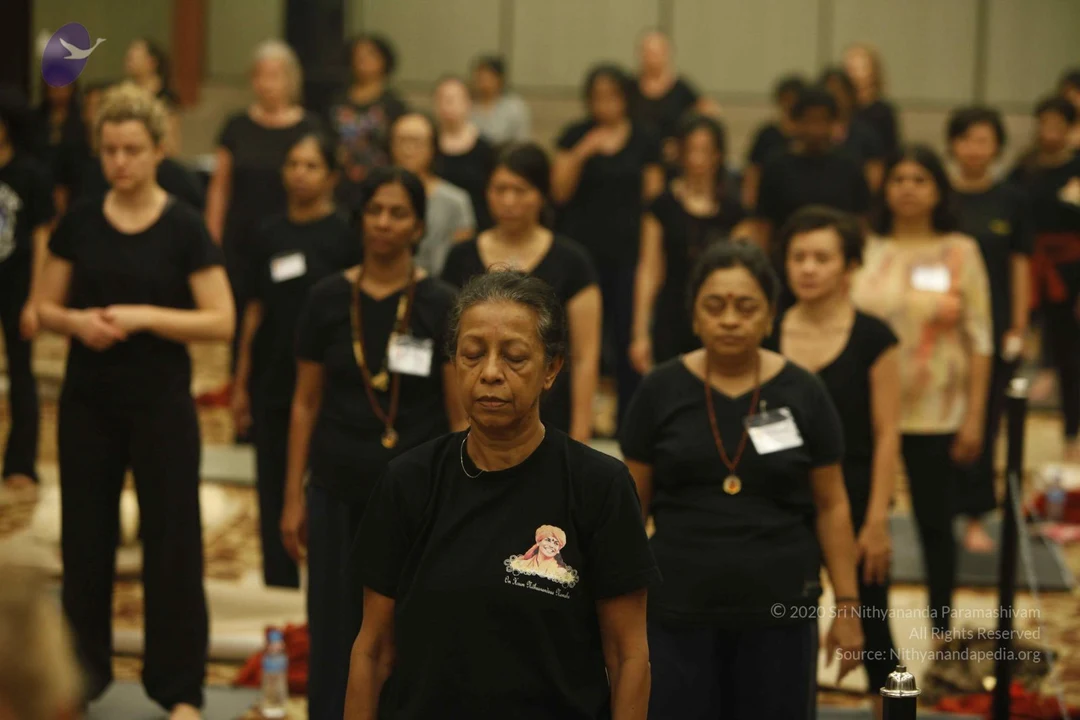
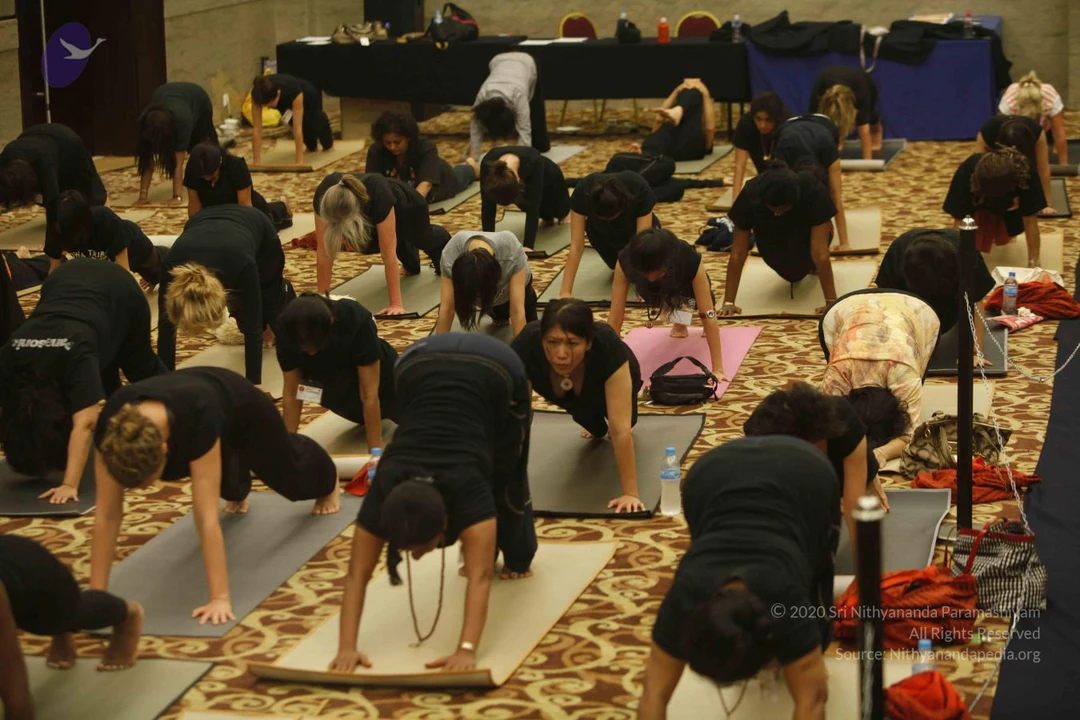
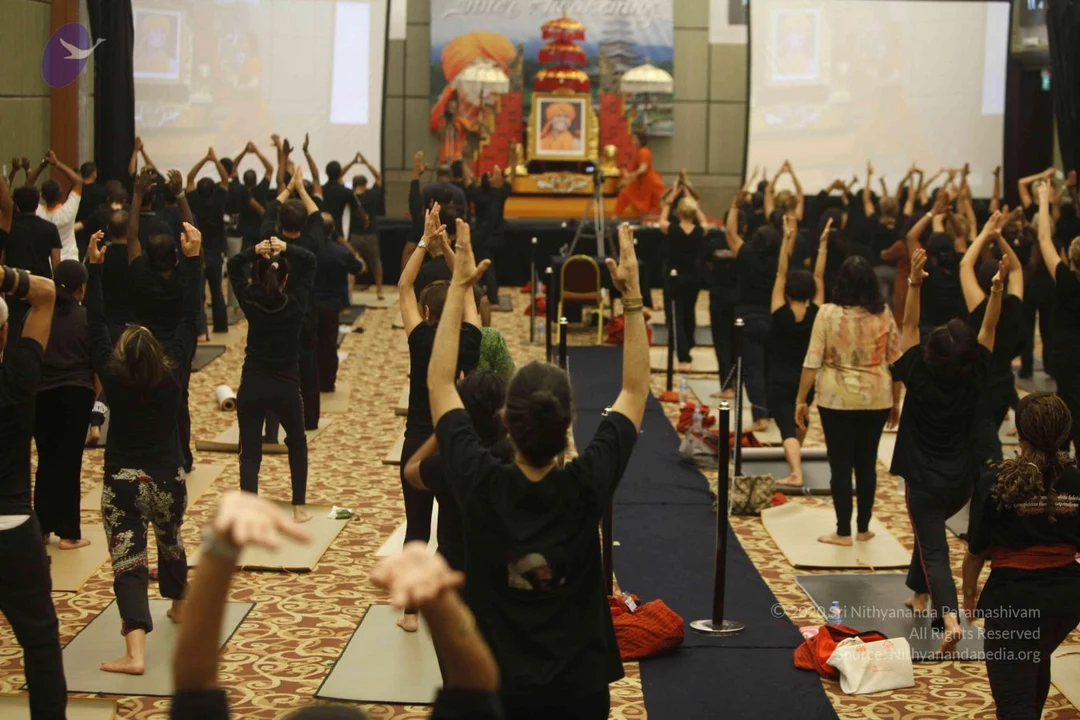
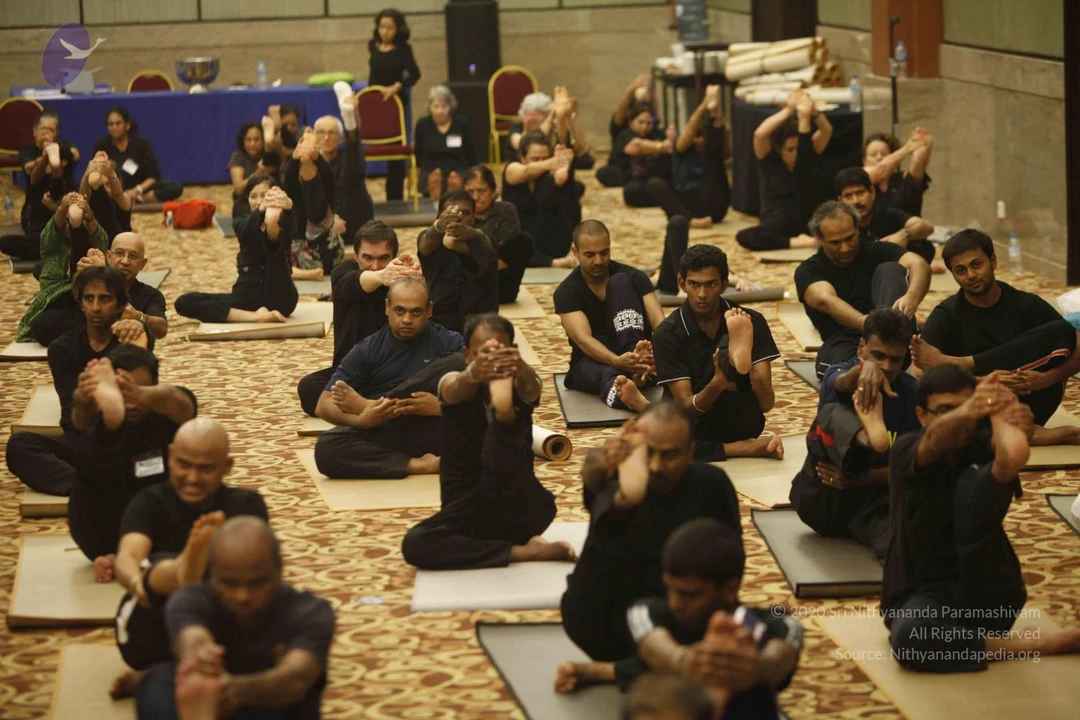
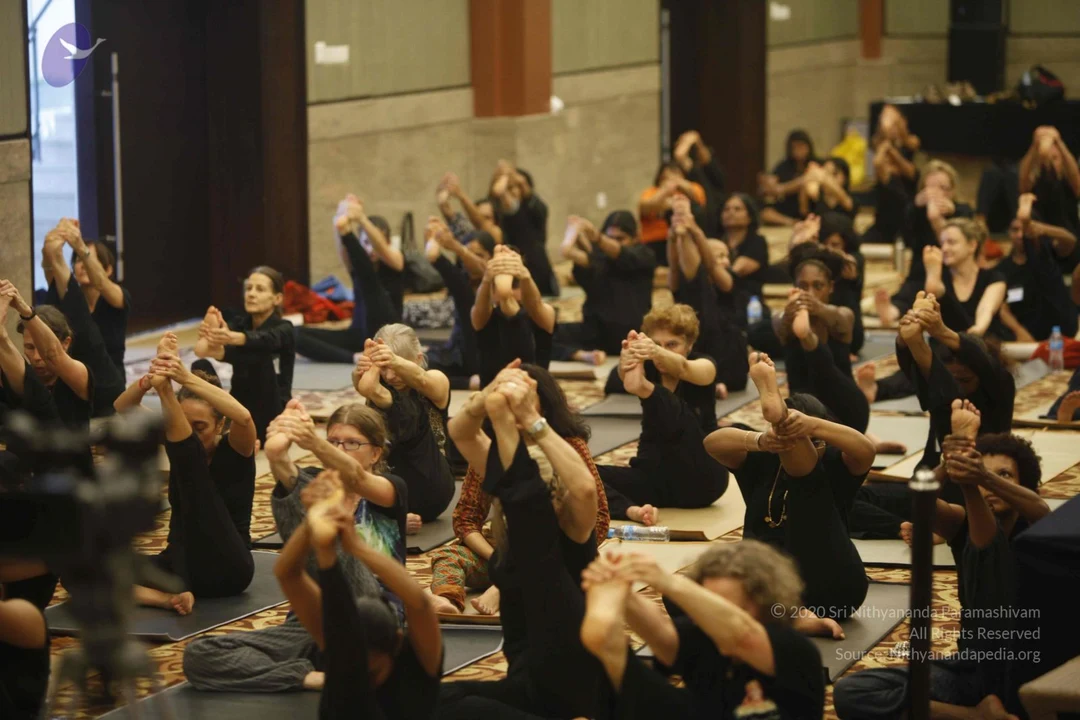
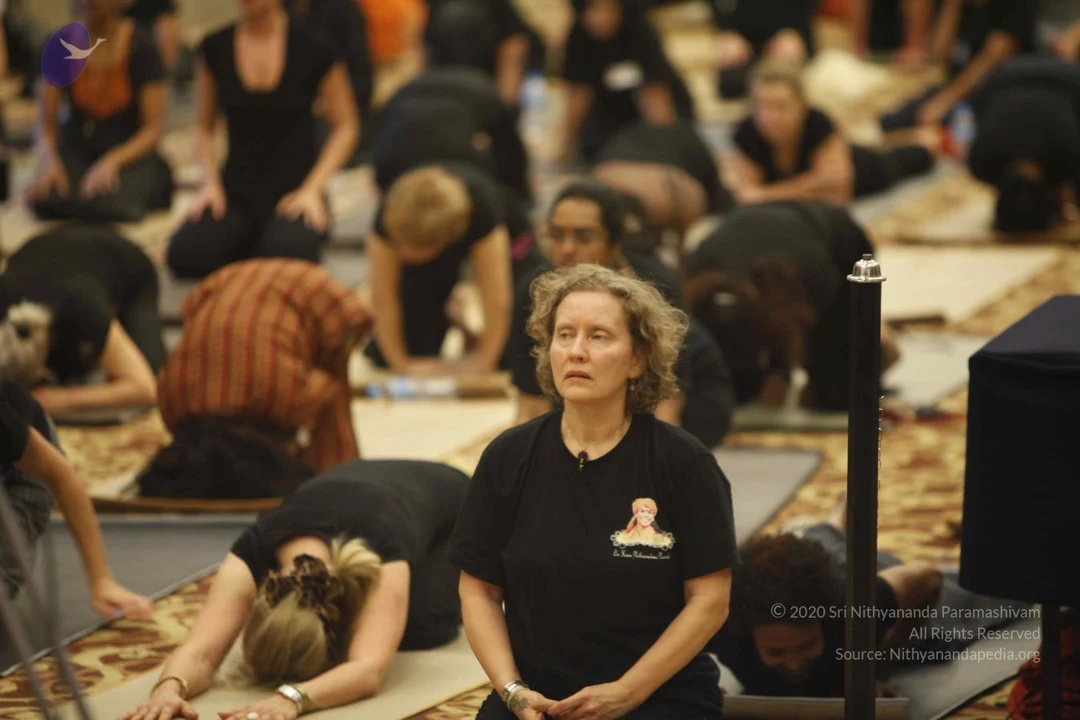
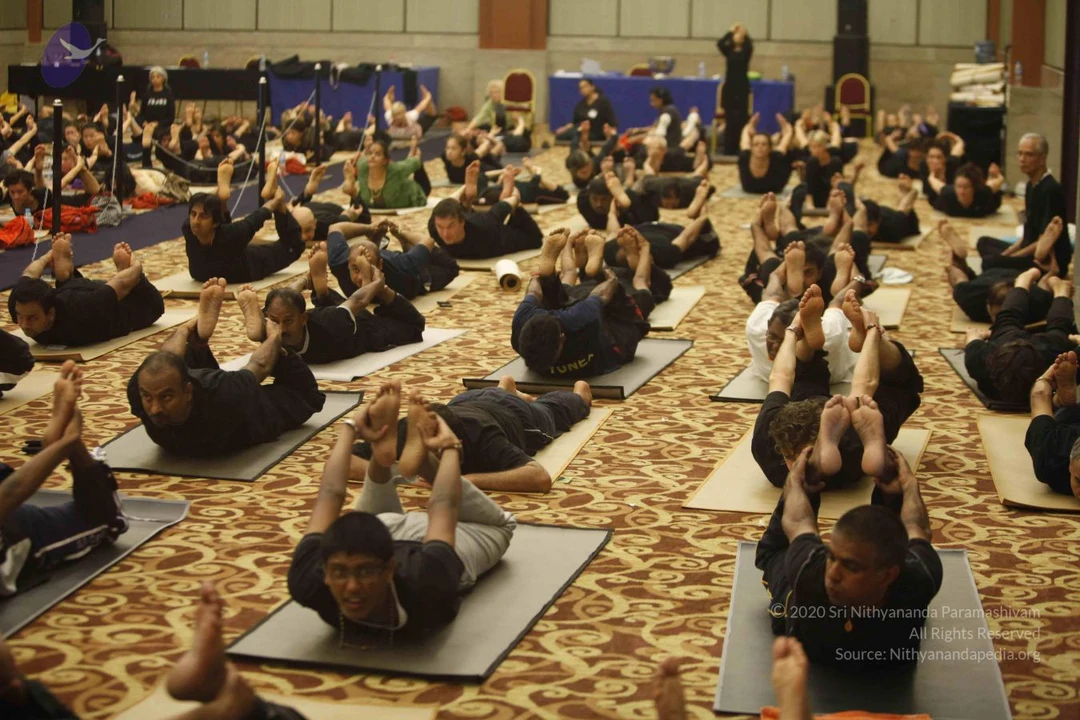
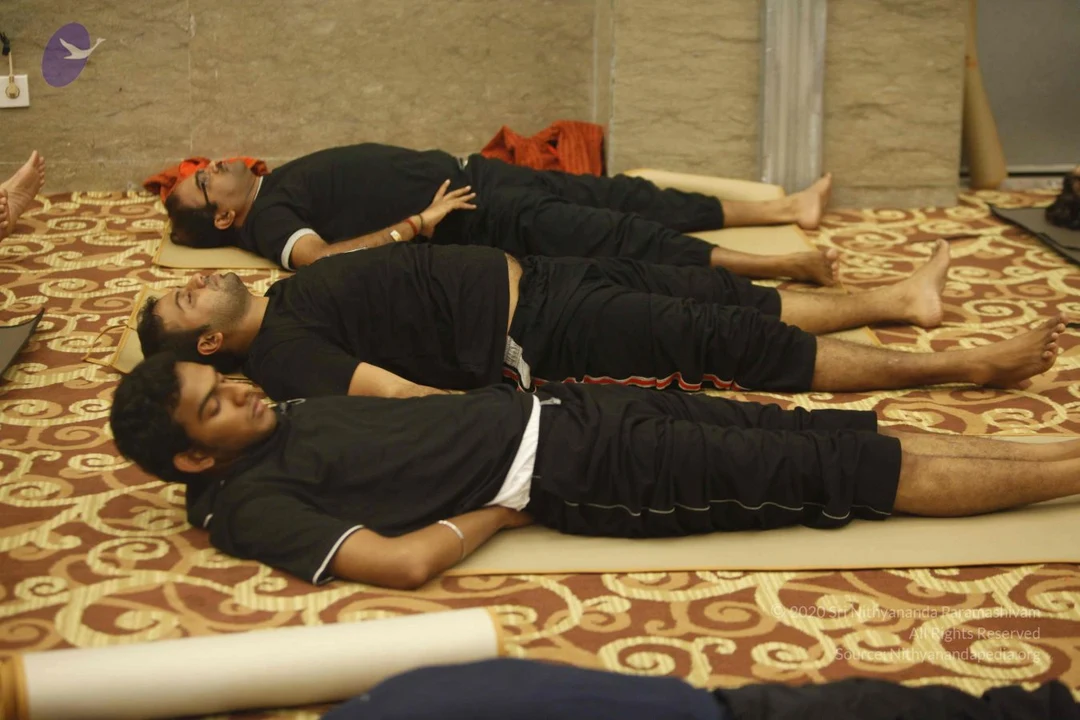
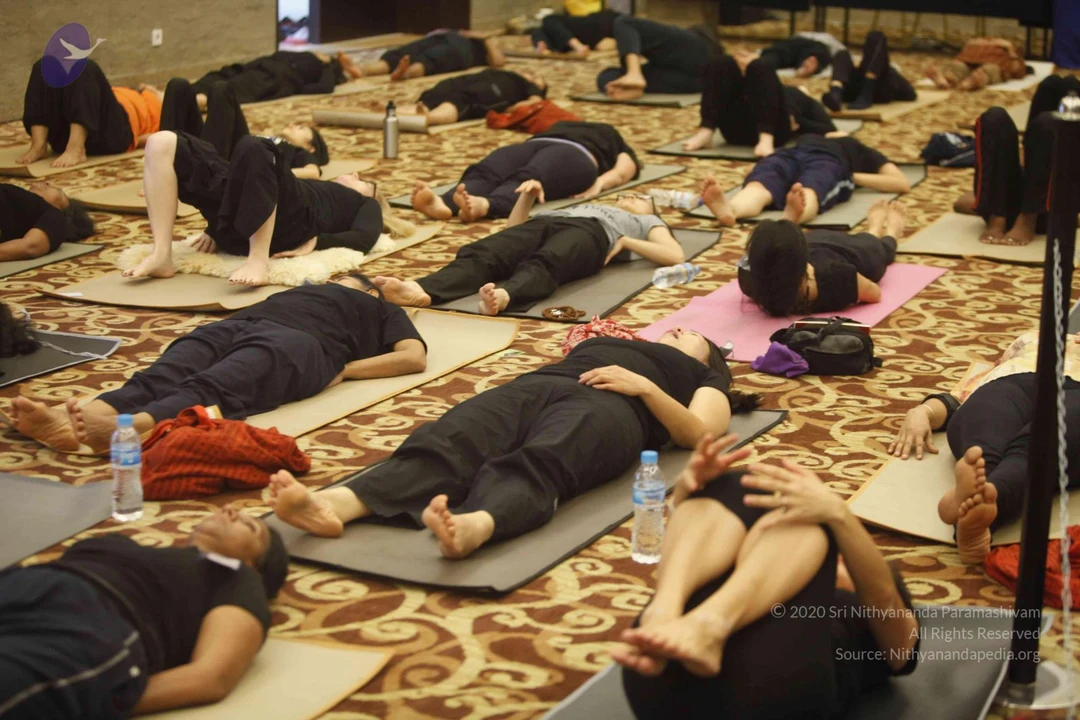
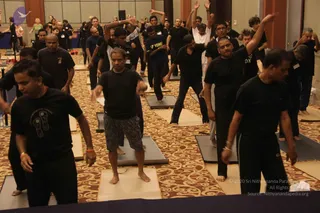
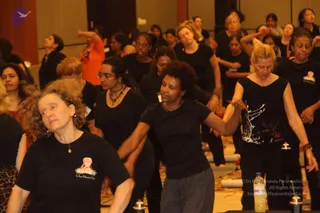
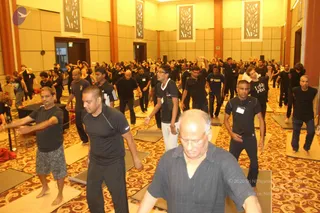
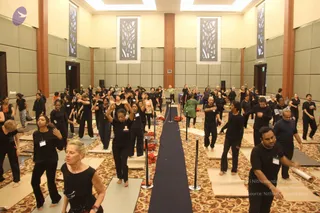
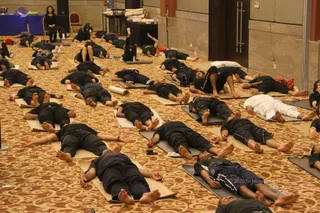
A large indoor hall with a patterned carpet where many people in black athletic clothing practise standing yoga and stretching exercises on individual mats. Several participants raise their arms overhead, while others stand with arms extended at their sides. In the foreground, men in black t-shirts and trousers stand barefoot on beige mats, one wearing a grey patterned shorts and another with an orange wristband. A few participants wear white or navy clothing. The setting resembles a retreat or meditation session with rows of mats across the room.A large group of women in plain black t-shirts and trousers stand in a hall with beige carpet, moving with arms outstretched and eyes closed or lowered, appearing to practise a guided movement or meditation session. In the foreground a woman with light curly hair wears a black tee with a small pink portrait print on the chest, while a woman with dark curly hair in a black top and grey trousers extends her arm. Several small brass oil lamps and a water bottle sit on the floor near the front row. Participants wear name badges on their tops. The scene is an indoor retreat-style gathering with a wall of tall dark curtains behind.A large indoor hall with patterned carpet and cream walls where a group of participants in black athletic clothing stand on yoga mats performing stretching or yoga movements with arms raised and bent. In the foreground a bald older man in a dark button shirt faces forward while others in dark tees and trousers, one wearing a white shirt, surround him. The crowd is dense, with many people visible across the room. No clearly identifiable a person appearance is visible in the foreground participants.A photograph of a large hall with a dark carpet runway down the middle, where many participants in black clothing stand on yoga mats and move with raised arms in a group practice. Most wear black tops and trousers, with some in white or green, and several hold white rolled mats. Tall carved wooden-patterned panels hang on the cream walls, and ceiling lights glow above. A bald man in a black top stands near the centre with a tall figure in the crowd, though no candidate is clearly identifiable from appearance.Indoor event hall set up for an Inner Awakening programme. On a raised red stage stands a gold-trimmed throne flanked by two golden lion figures, with a large framed portrait of a saffron-robed man with a bearded face and turban-like headwear on the throne backdrop. Red and gold pagoda-style umbrellas with tassels frame the stage, and a large banner reads Inner Awakening above a Bali-style temple scene. A woman in an orange outfit stands on the stage to the right. In the foreground, several people in black athletic clothing stand near tripod-mounted cameras and a black draped table. Two large projection screens show the same saffron-robed portrait, and potted plants line the front edges.A photograph of a large hall with many participants lying supine on yoga mats in rows across a patterned gold-and-brown carpet, most dressed in dark navy or black clothing, with a few in white. Several participants have legs raised or arms extended. A woman in dark clothing stands near a blue-draped table at the back left, and a white-clad man lies at right. Mats and cushions are scattered in the foreground.

Morning-Yoga

1 photoSource gallery
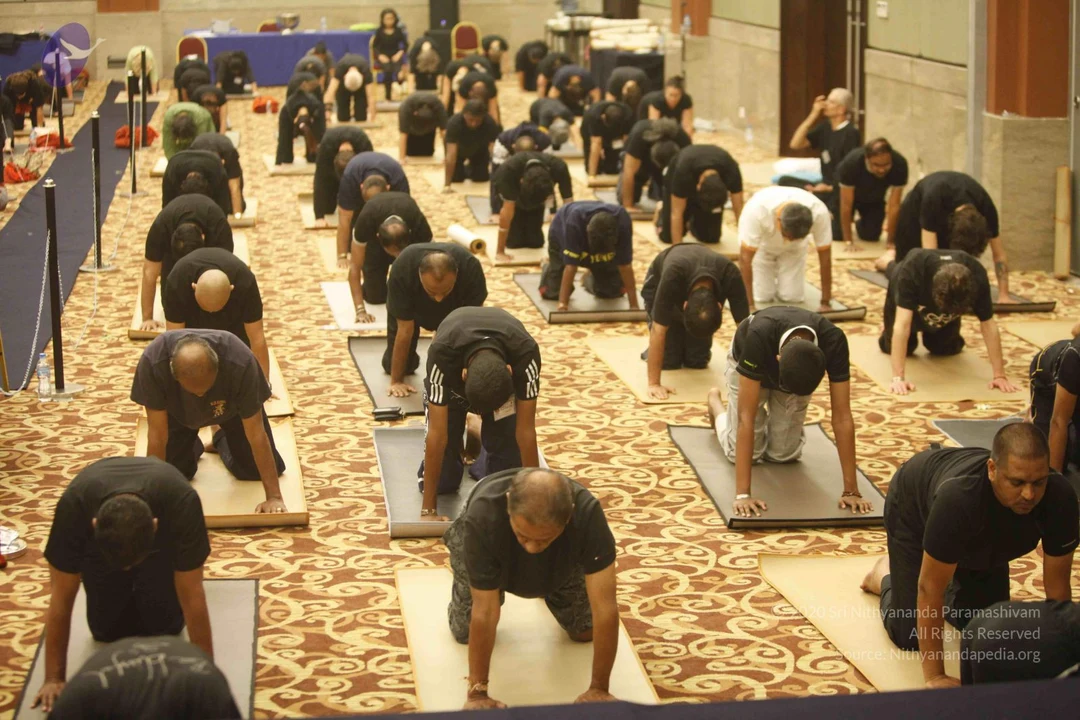
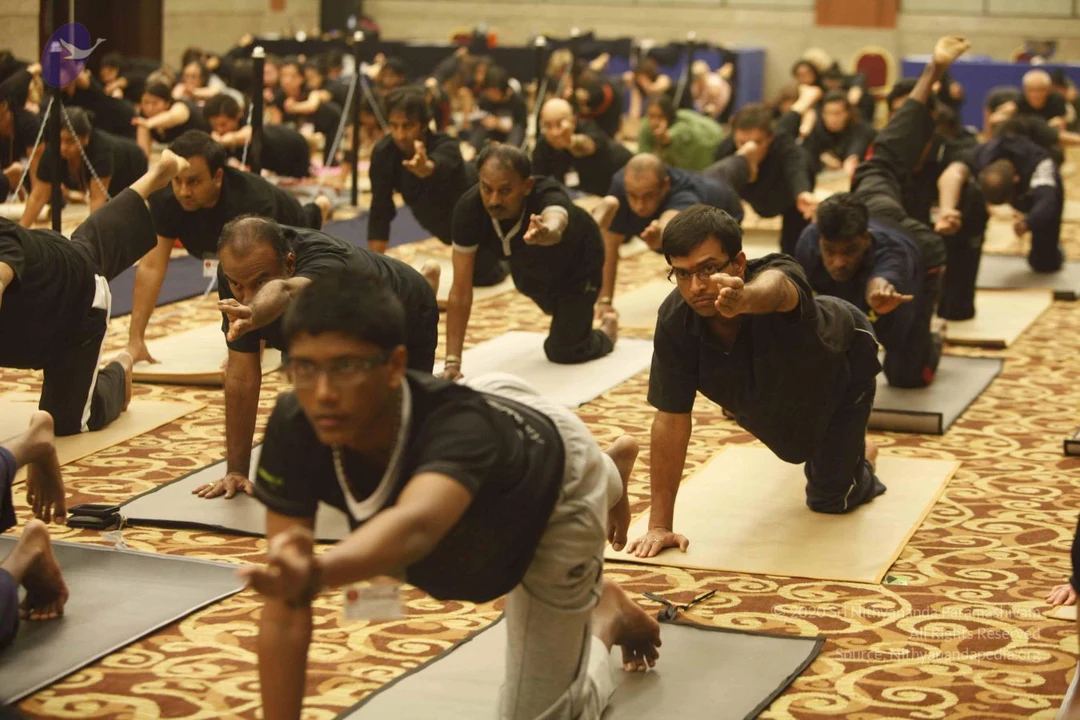
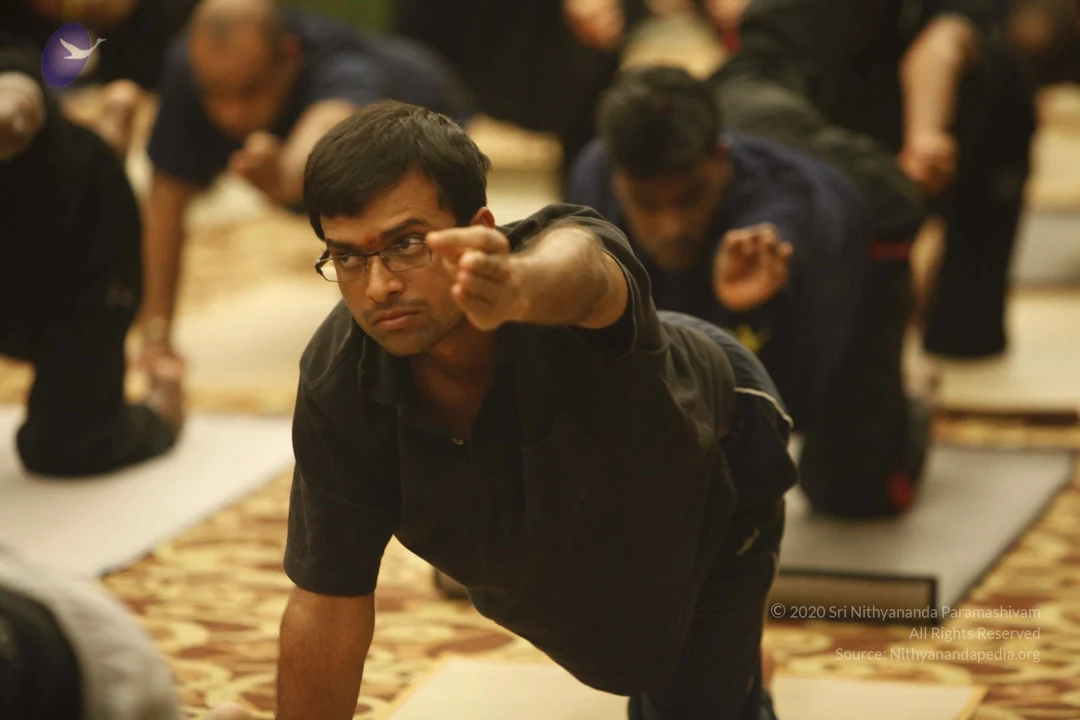
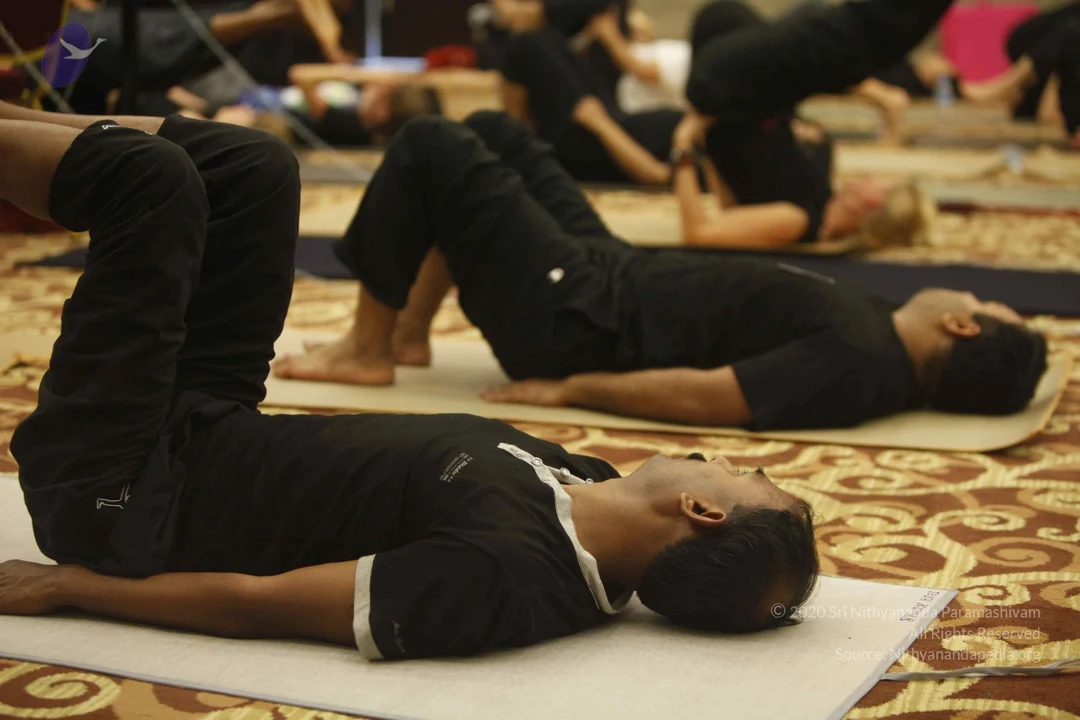
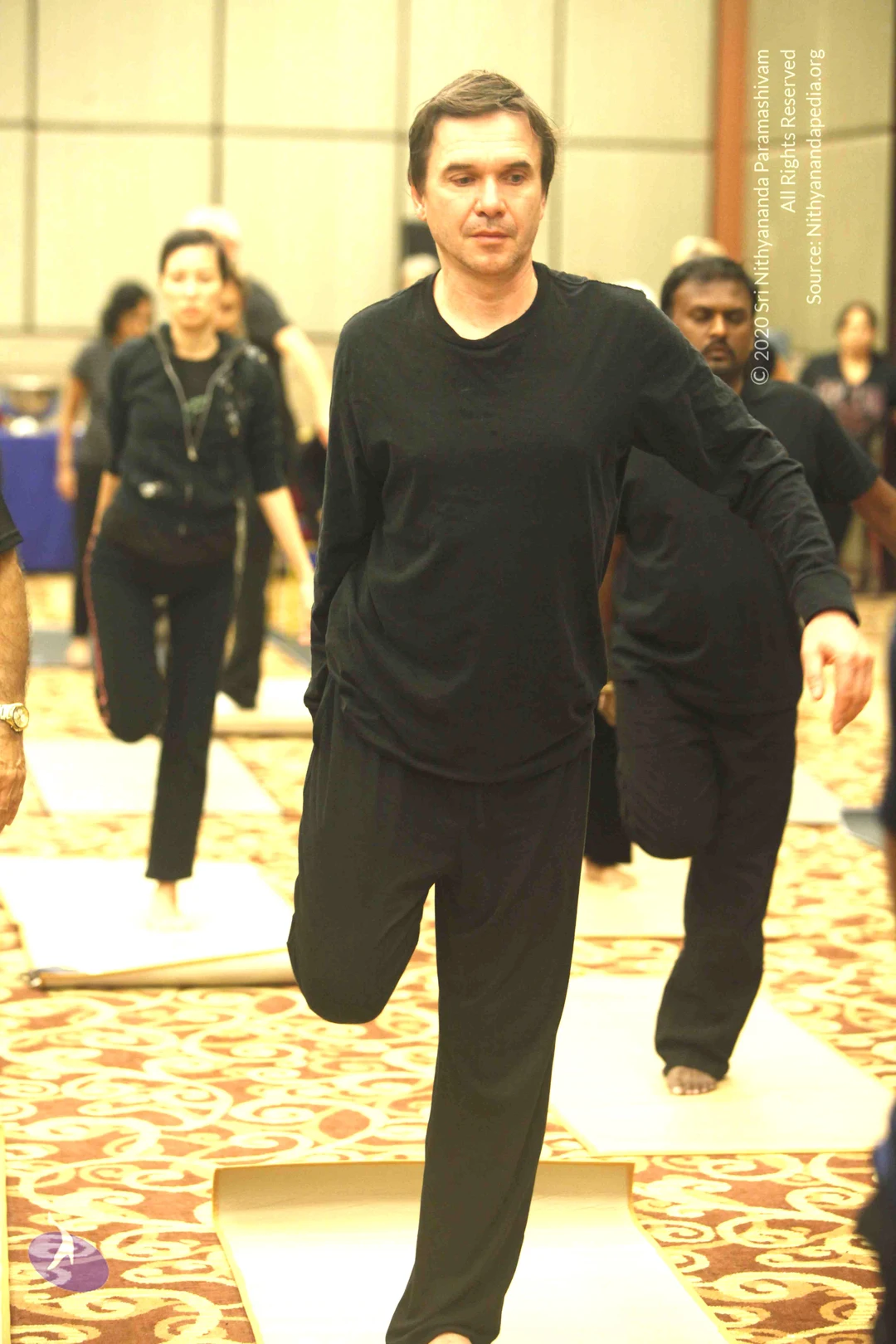
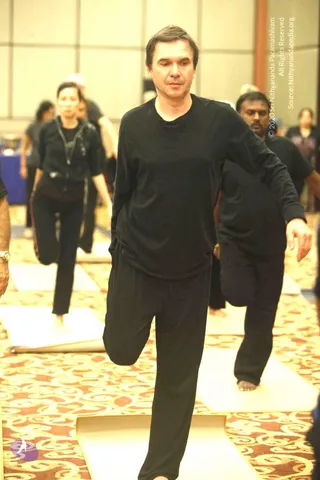
Yoga session in a hotel ballroom with patterned beige and red carpet. A man in the foreground wears a black long-sleeved top and black trousers, standing on one leg with the other knee raised, arms extended to the side. Behind him, other participants in black clothing perform the same balance pose on white mats. Pale walls and a blue-draped table are visible in the background.

Paduka-Puja

3 photosSource gallery
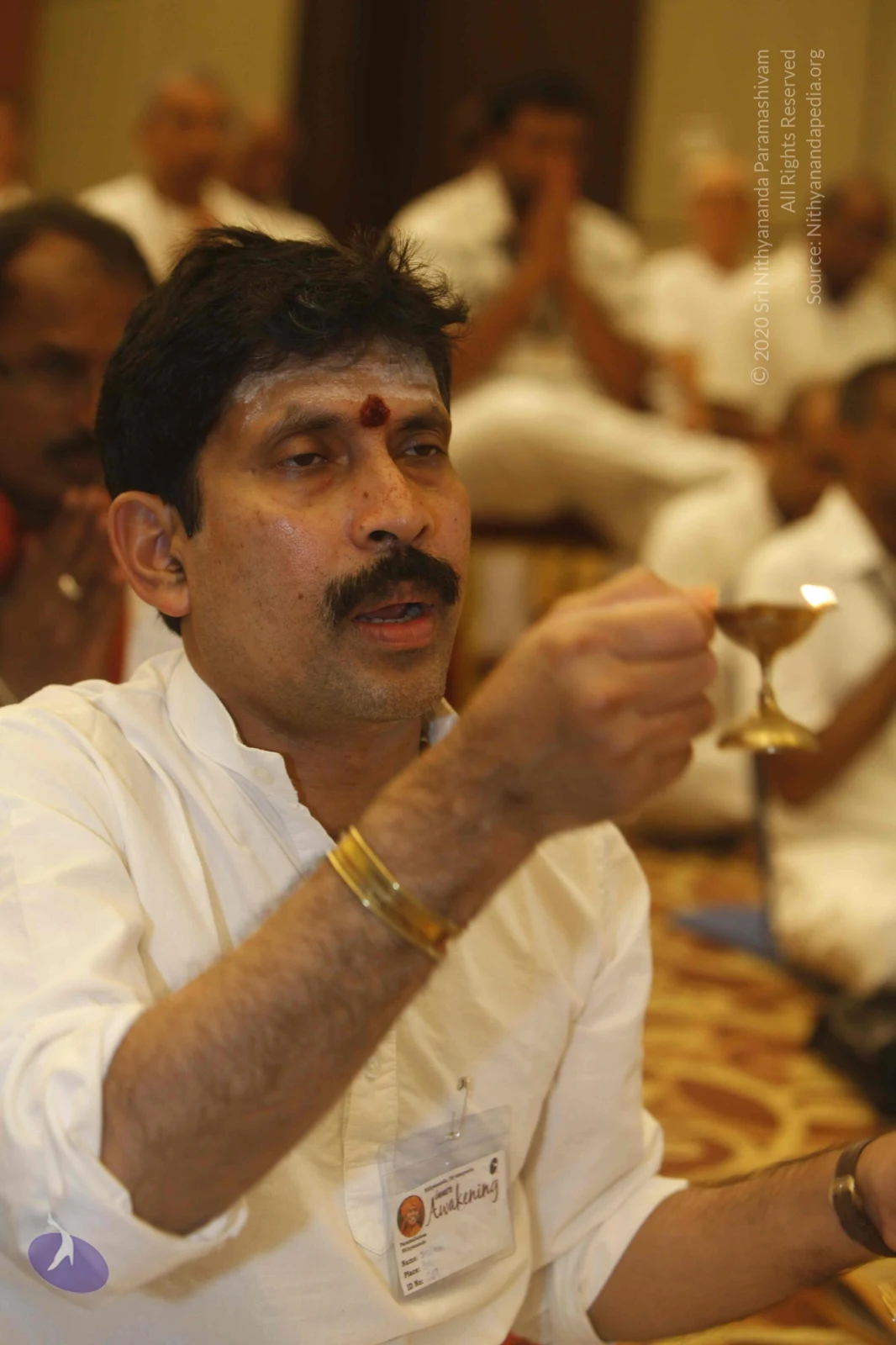
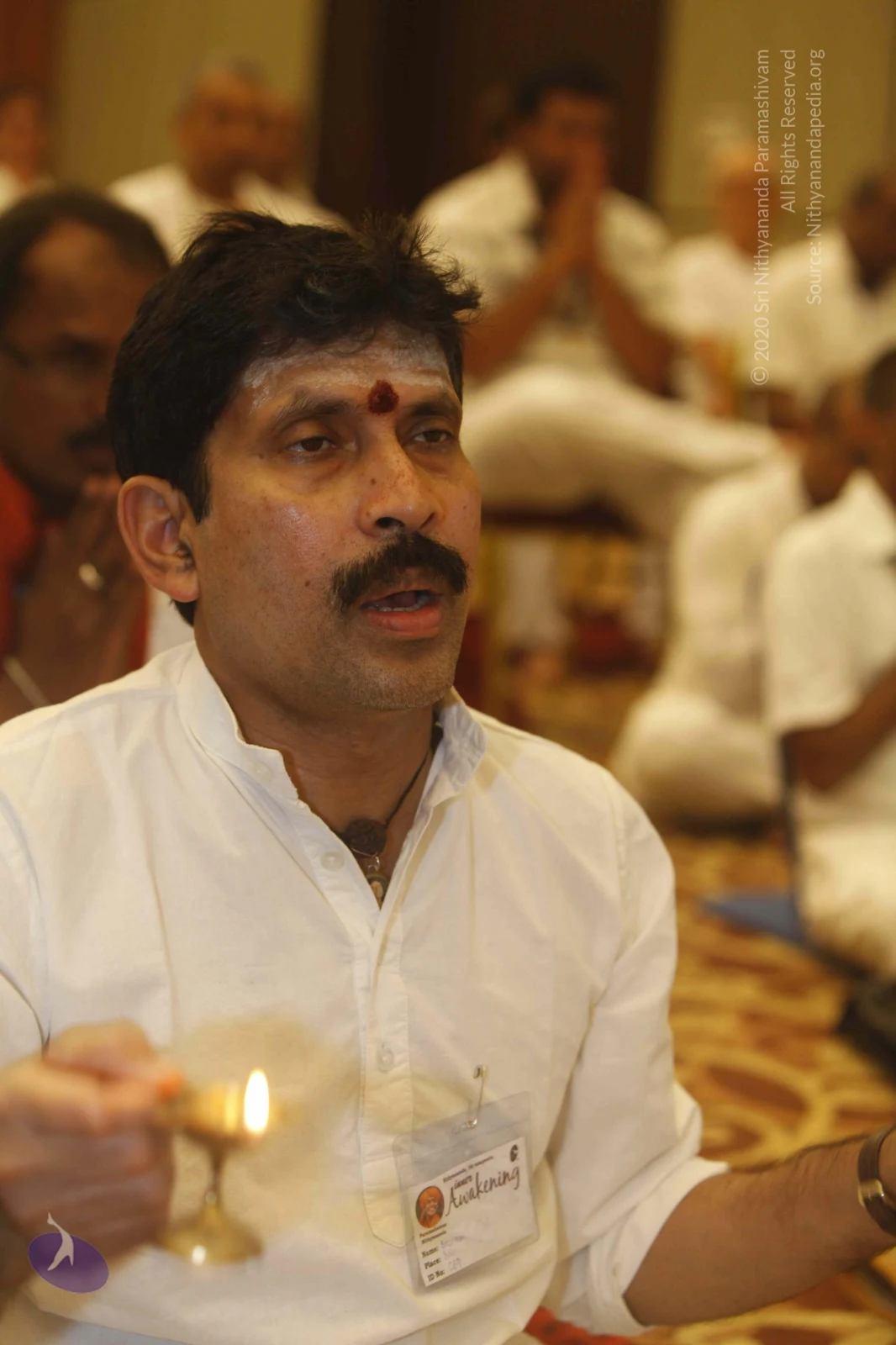
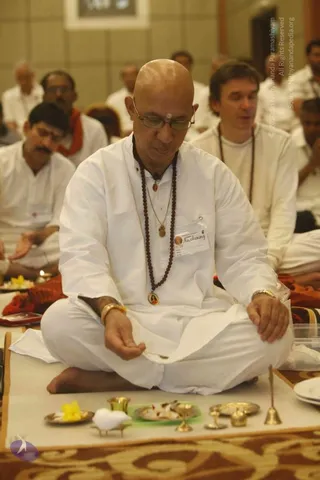
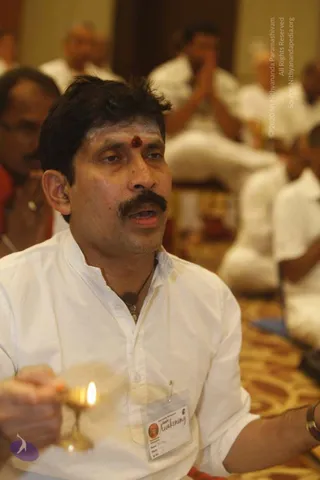
A seated man in white ritual clothes performs a puja on a white cloth at the front of a hall. He wears a dark rudraksha mala, a gold chain with a small pendant, a gold bangle and a wristwatch, along with glasses and a lapel badge. In front of him are brass plates with flowers, offerings, a brass bell and small brass cups. Behind him, several rows of devotees in white clothes sit on the floor and chairs, some with their eyes closed. A man in a white shirt with a rudraksha mala sits beside them. The setting is a carpeted indoor satsang hall.A man in a white kurta sits in the foreground holding a small brass oil lamp with a lit flame in his right hand while speaking. He has short dark hair, a red kumkum mark on his forehead, a moustache and gold bangles on his wrist. A name badge with the word Awakening hangs from his shirt. Behind him, several seated people in white clothing have their hands pressed together in prayer in a hotel-style hall with patterned gold carpet. The scene suggests a satsang or lamp-lighting gathering.A man in a white kurta-style shirt sits in the foreground, speaking, with a red kumkum mark on his forehead and a dark cord with a pendant at his neck. He holds a small brass oil lamp with a lit flame in one hand. A name badge on his chest reads "Awakening" with a small photo and ID number. Behind him, several people in white clothes sit on the floor of a hall with a patterned carpet; one in the background has hands pressed together in prayer. The scene suggests a satsang gathering. No one is identified by name in the image.

NithyaSatsang

4 photosSource gallery
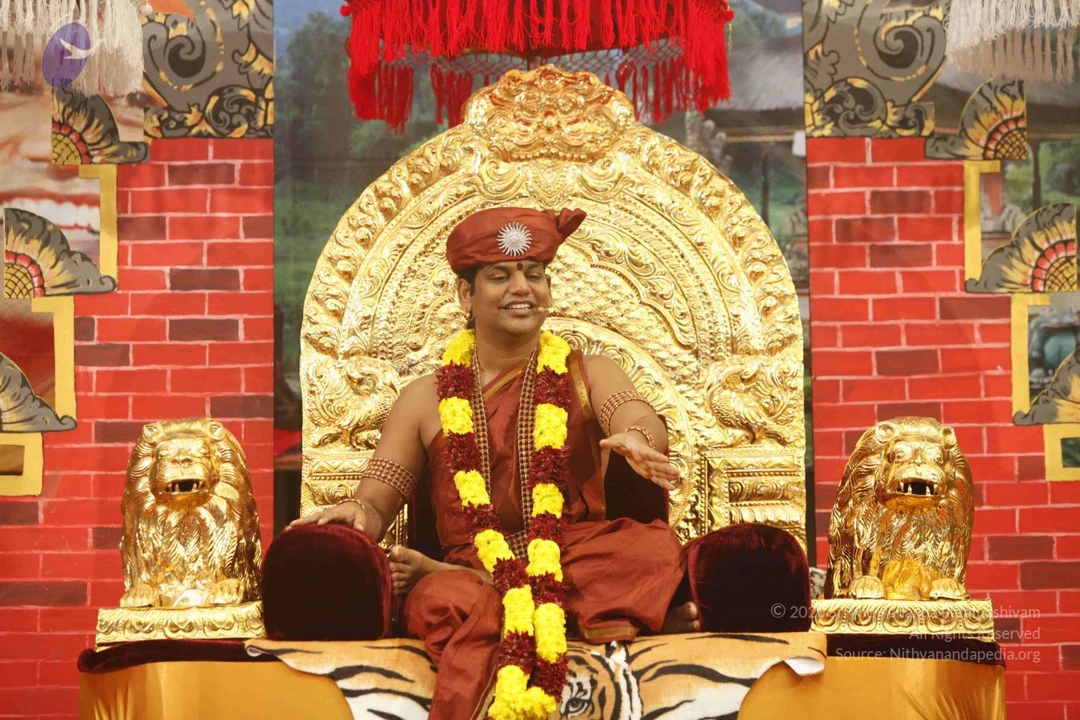
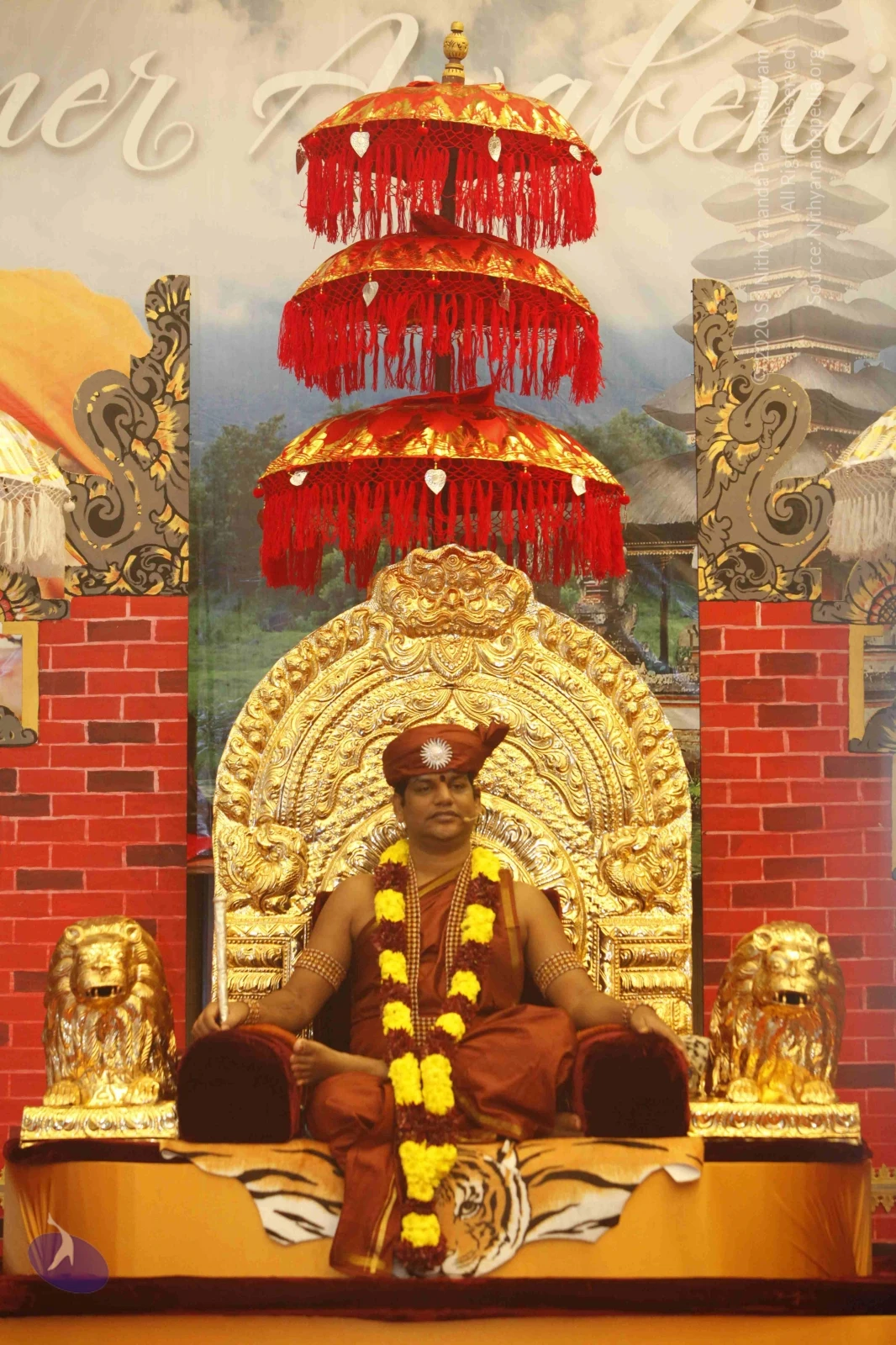
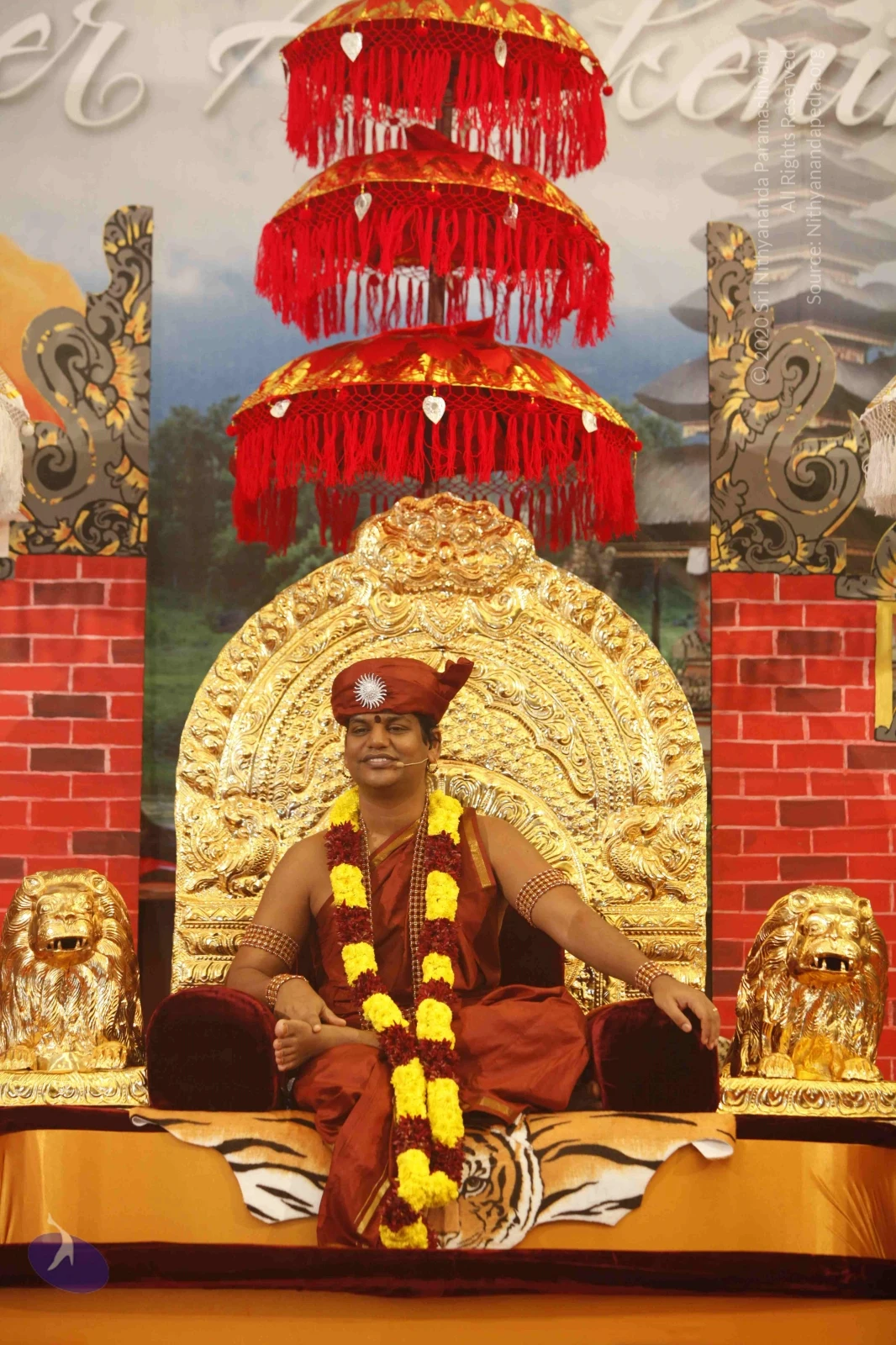
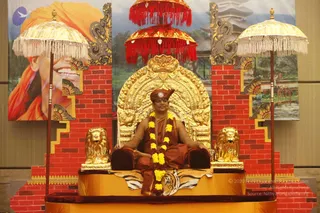
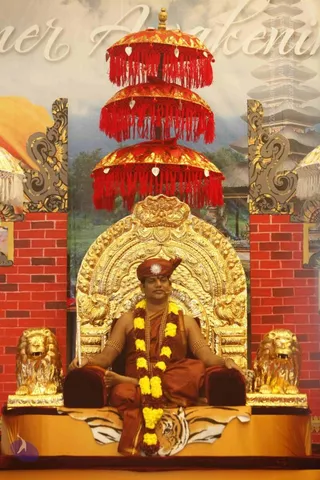
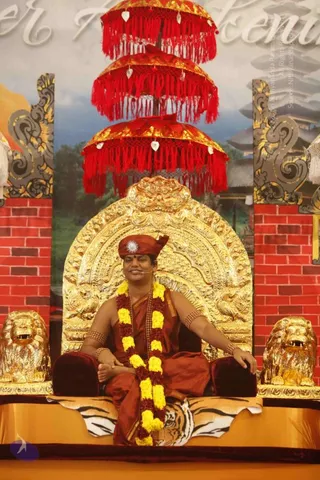
A seated man in rust-orange robes sits on an ornate gold throne with a carved arched back, wearing a matching orange turban with a white emblem and a long yellow-and-maroon marigold garland. Gold-painted lion sculptures flank the throne and a tiger-striped cloth covers the platform. Three tiers of red fringed Balinese-style umbrellas hang above him, with a painted backdrop of a pagoda-style temple and green landscape behind and red brick panels at the sides. Stage-style banner lettering is partly visible at the top. The man is the sole person in the frame.A man in a rust-red turban with a silver sun emblem and matching red-brown robes sits cross-legged on an ornate gilded throne with a tiger-striped cloth draped over the platform. He wears a yellow and red marigold garland and beaded bracelets, and a small headset microphone is visible near his face. Two gold lion statues flank the throne, and three tiered red fringed Balinese-style umbrellas hang above, with a painted backdrop of pagodas and a red brick wall behind. Gold lettering partly visible at the top reads a fragment of a banner. The setting appears to be a stage-style satsang.A seated man on an ornate golden throne with a tiger-striped cushion, wearing a deep red turban with a silver starburst brooch and a red-orange draped garment with gold border. He wears layered yellow and red marigold garlands, jeweled armbands and bracelets, a small red bindi, and a small ear microphone, and rests one hand on his knee. A red brick backdrop and a decorative fan-shaped panel are behind him.A seated man in a red turban with a silver starburst brooch, a red shawl over bare shoulders, and red dhoti with gold borders sits on a red-velvet throne with tiger-striped cushions. He wears a long beaded ceremonial necklace, beaded armbands and bangles, and a small headset microphone. Behind him stands an ornate gold repoussé throne back with a red fringed canopy above. Appearance-based a person cues include the red turban, ornate beaded ornaments and throne setting, so this is a person seated in person as the speaker.

IA-Darshan
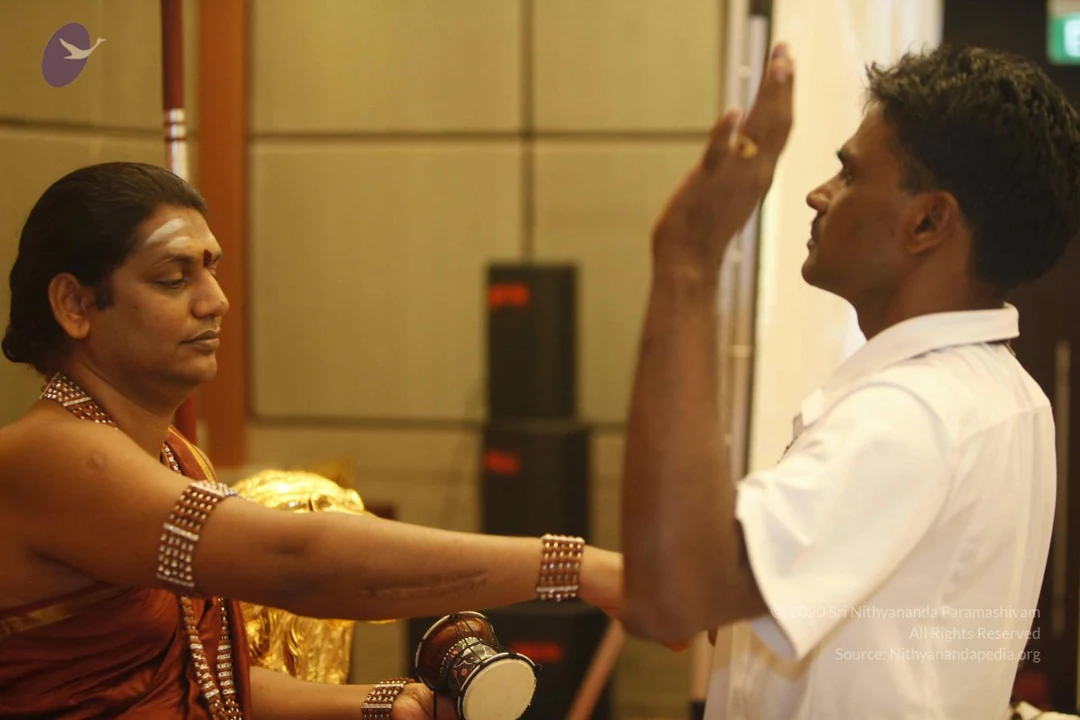
10 photosSource gallery
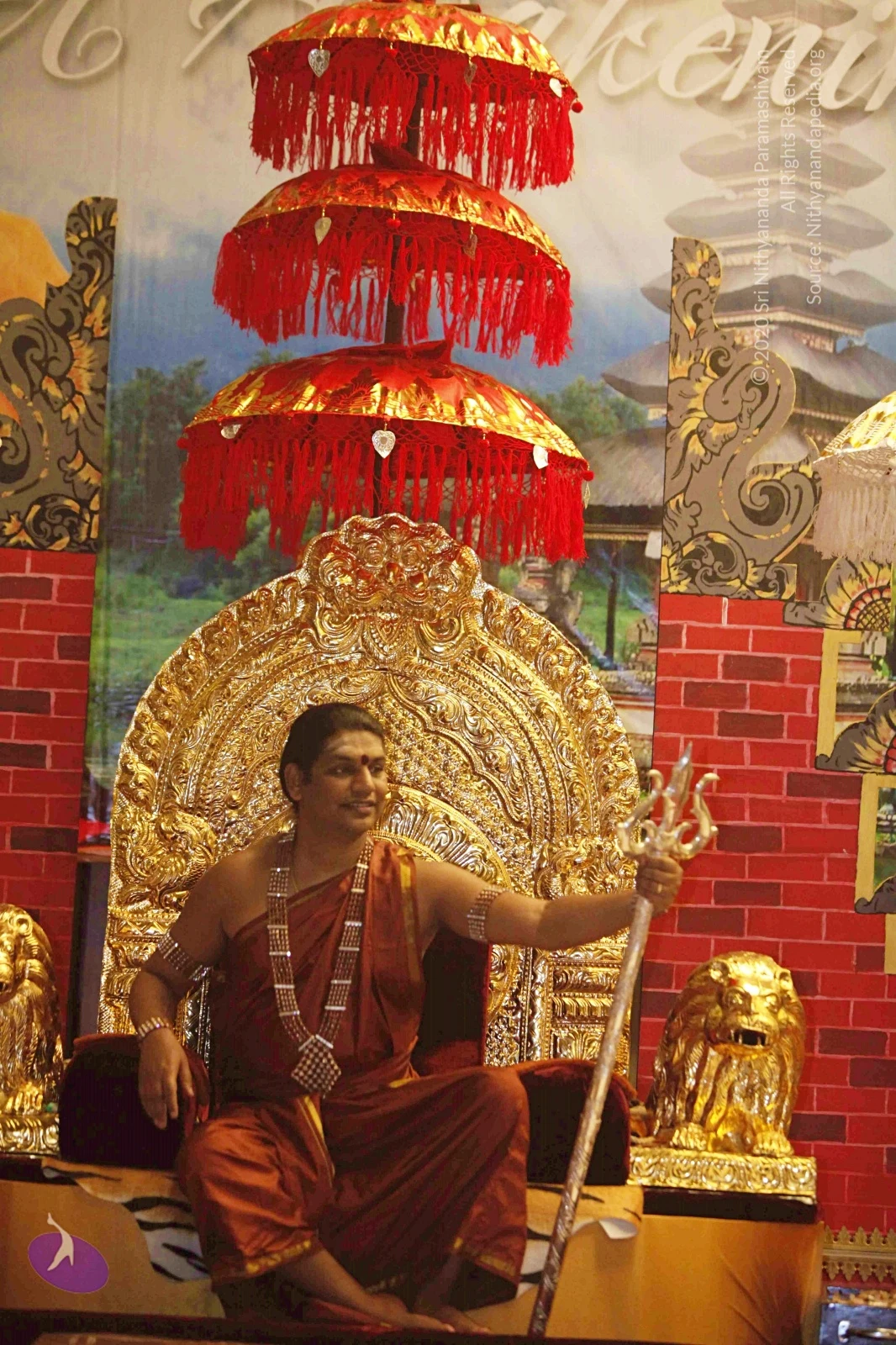
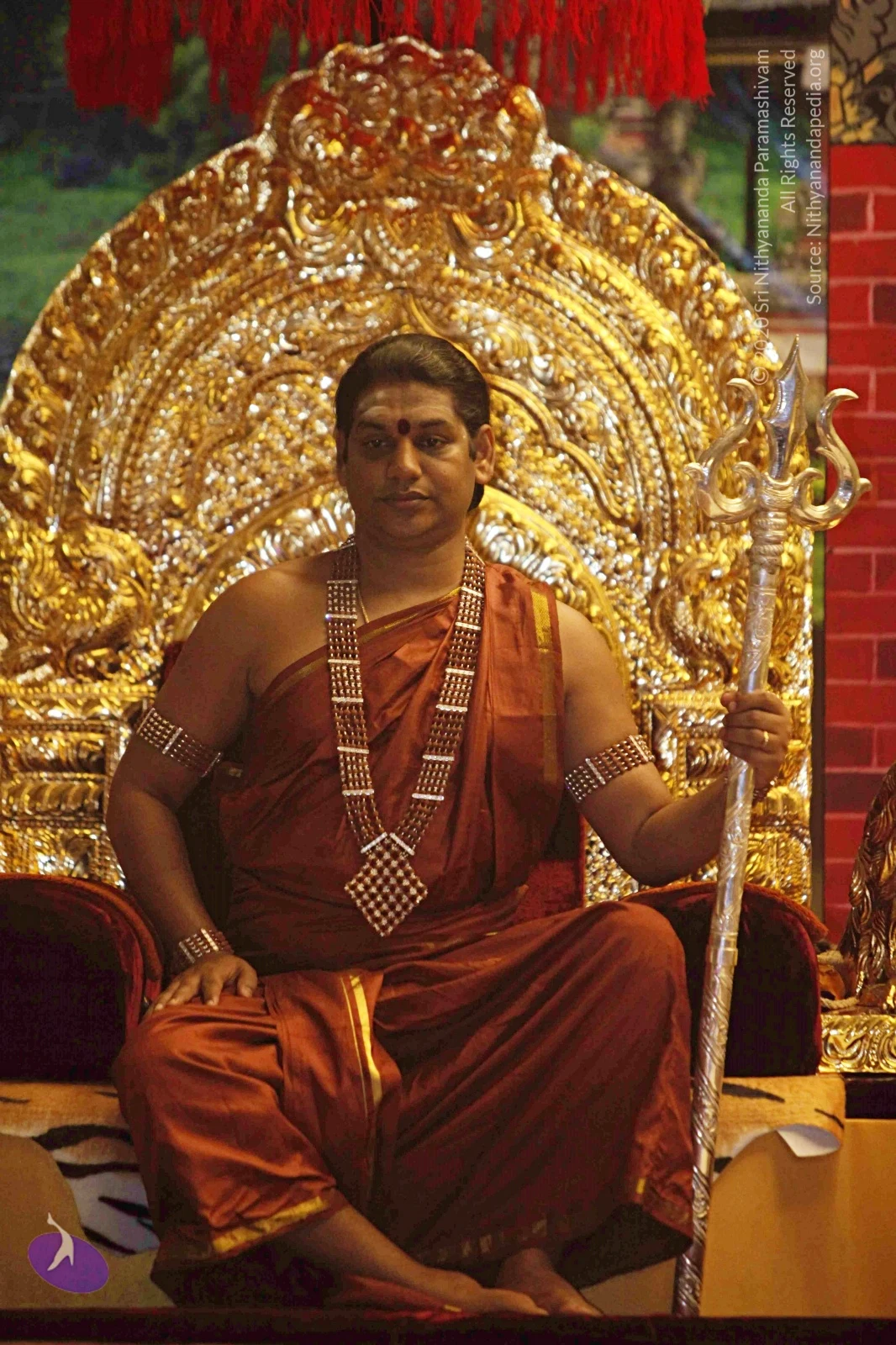
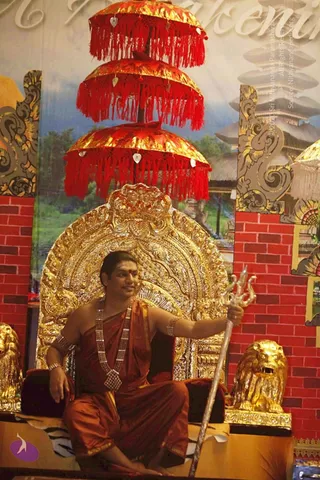
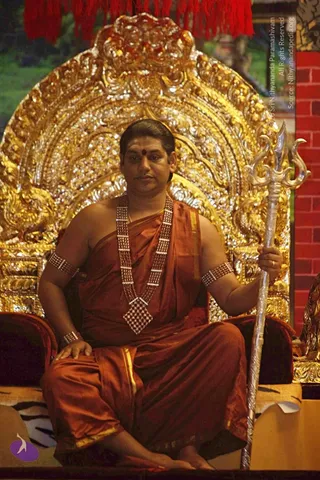
A smiling man sits on an ornate gold-carved throne against a red-brick and cream painted backdrop. He wears a rust-orange silk wrap with a gold border, a beaded silver-toned mala around the neck, beaded armlets and bracelets, and a white vertical forehead mark with a red dot. He holds a small white hand drum in his raised right hand and looks to the side. The setting suggests a satsang gathering. Swamiji (probable): long swept-back hair, orange clothing, ornate beaded jewellery and a seated throne-like presentation are visible cues.A smiling man seated on an ornate gold throne holds a small white hand drum with a stick in his right hand. He wears a rust-orange silk robe with gold border, a beaded rudraksha-style multi-strand necklace, beaded armbands and bracelets, a red bindi and white forehead markings, with hair tied back. A red brick-patterned wall and gold carved panels form the backdrop.A smiling man seated on an ornate gold throne holds a small white-and-silver cup or vessel in his raised right hand. He wears a rust-orange silk shawl and dhoti with a gold border, a multi-strand rudraksha-style bead necklace with a diamond-shaped pendant, beaded armlets and a beaded bracelet. He has white tripundra marks and a red bindi on his forehead. Behind him are gold carved panels and a red brick wall with painted golden motifs. Appearance-based cues are consistent with the a person, seated in satsang-like setting.Photograph of a smiling man with long dark hair swept back, wearing a rust-orange draped garment with a gold border and a multi-strand rudraksha-style mala with silver accents at the neck, plus matching beaded bracelets on the wrist and upper arm. He has white vertical tilaka marks and a red bindi on his forehead, and he holds a small two-headed drum (damaru) raised near his shoulder. Behind him are a golden ornamental backdrop on the left and a red brick-patterned wall on the right. One person is visible.A seated man in rust-orange sannyasi robes sits on an ornate gold throne with a large golden arched backrest. He wears a beaded silver-toned necklace and silver armbands, holds a silver trident in his raised right hand, and has a red tilak on his forehead. Two golden lion statues flank the throne. Behind him hang three tiers of red fringed umbrellas with gold trim and heart-shaped charms, in front of a painted backdrop of a temple and green landscape, with red brick-style panels at the sides.A seated man in an orange-red silk shawl and matching dhoti sits on an ornate gold-and-silver throne with carved floral backrest and red fringe above. He wears a long jewelled crystal necklace, crystal armlets and bangles, and a red bindi on his forehead. He holds a polished silver trident in his right hand, its tines and handle catching the light. A tiger-striped cloth covers the seat. Behind him is a red brick wall and a painted landscape backdrop.