Skip to content
Wednesday

4 December 2013

Nithyananda Diary | Bali Inner Awakening Day - 4 | Paduka Puja | Satsang | Dial The Avatar | Nirahara Samyama | Sarvadarshan

Dated photos
232
Source pages
1
Media
2
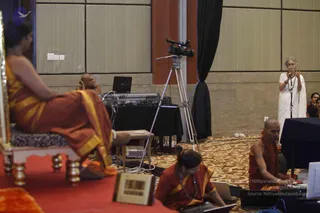
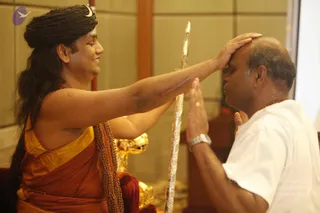
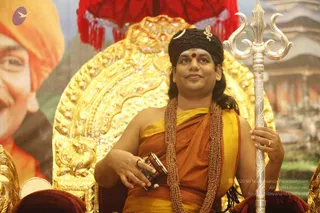
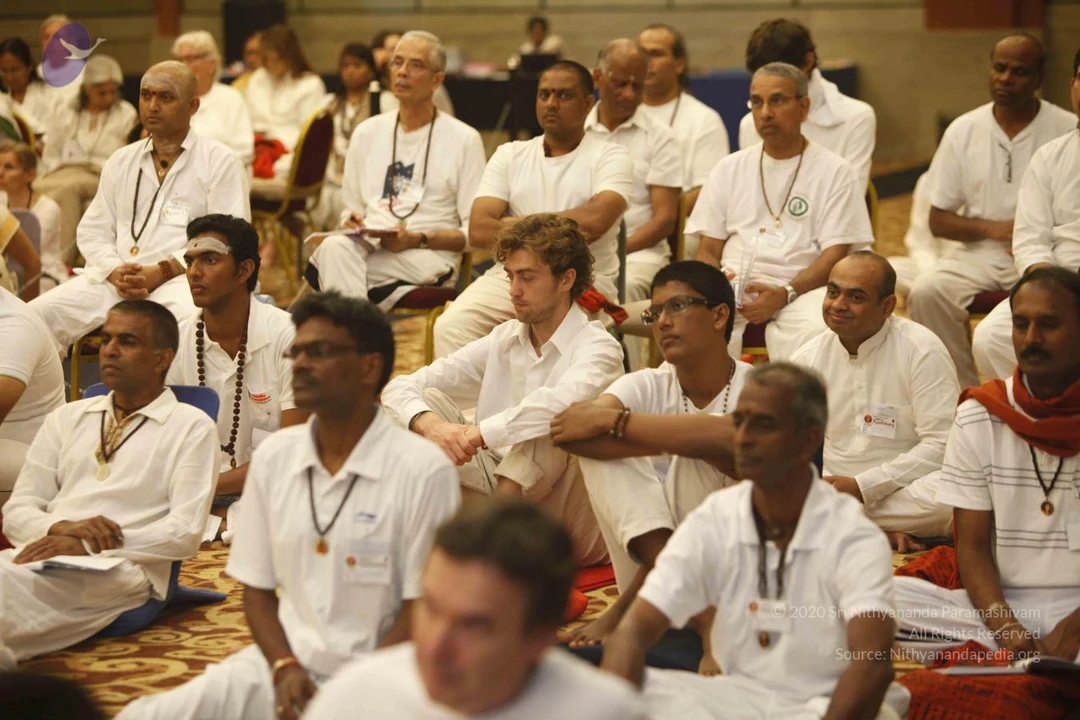
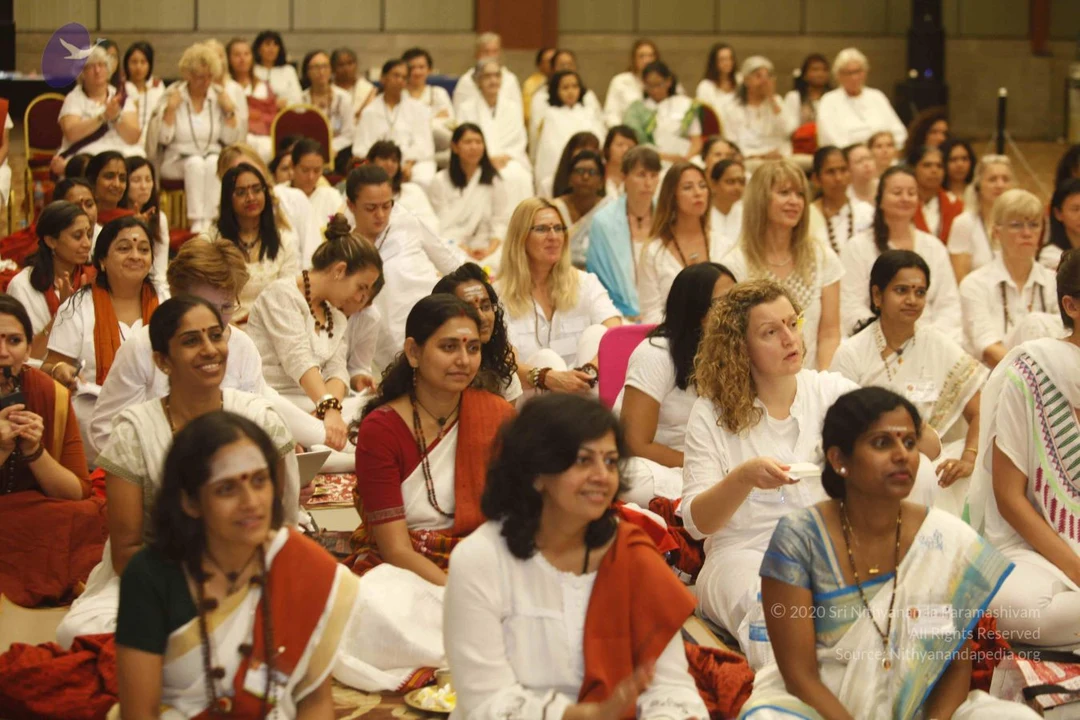
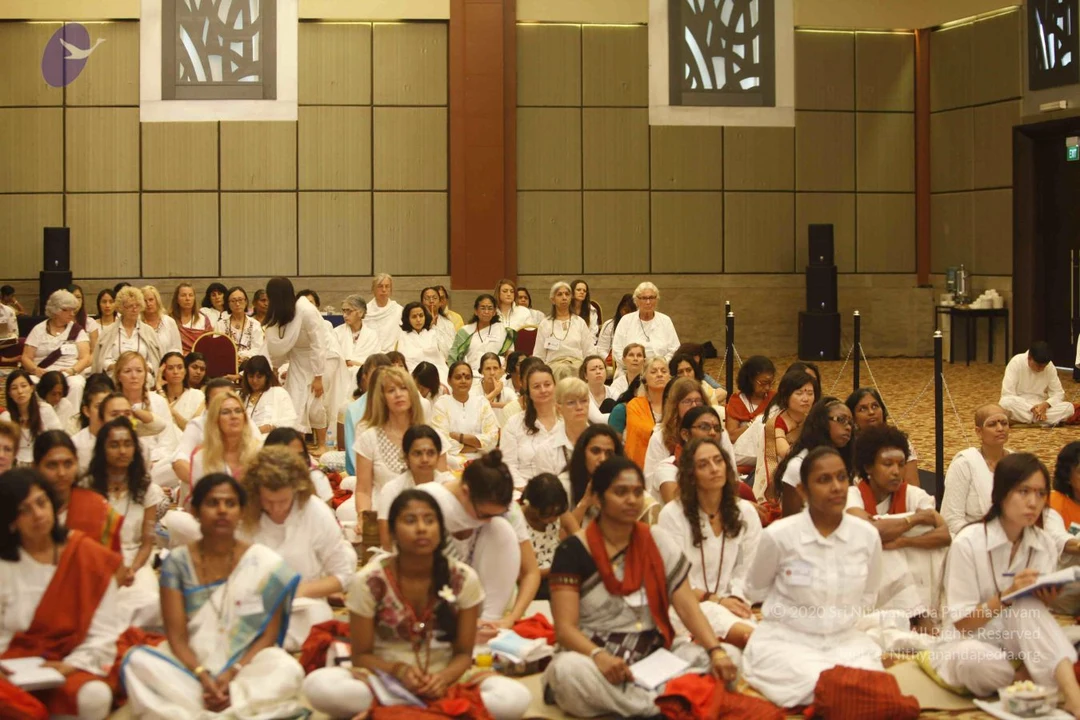
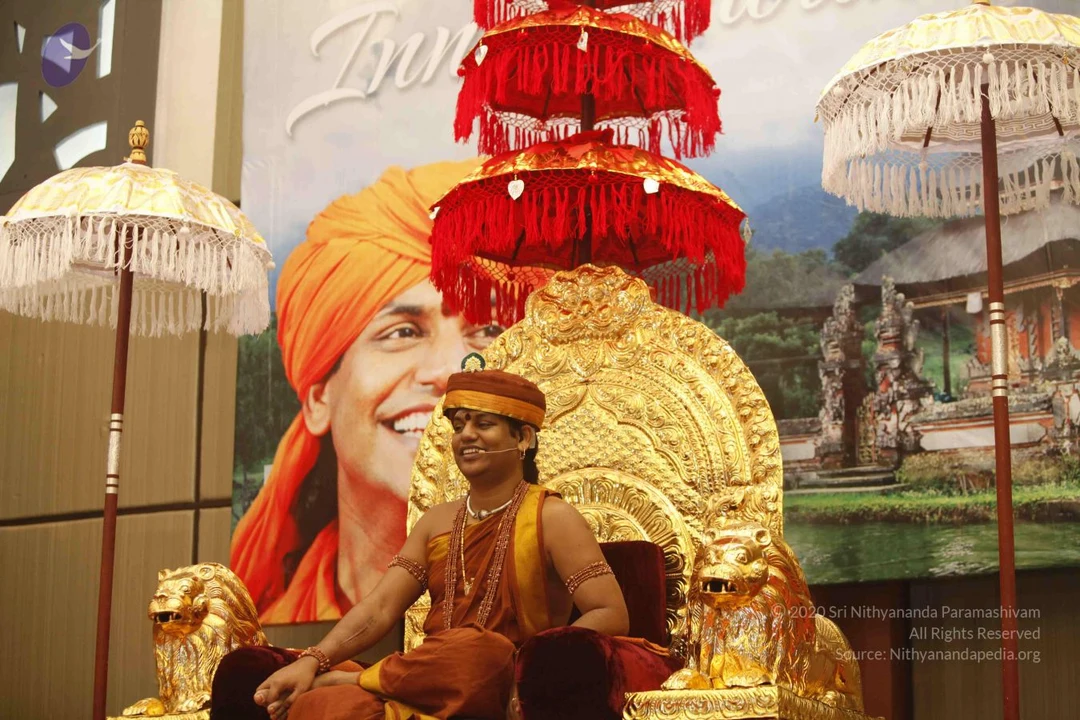
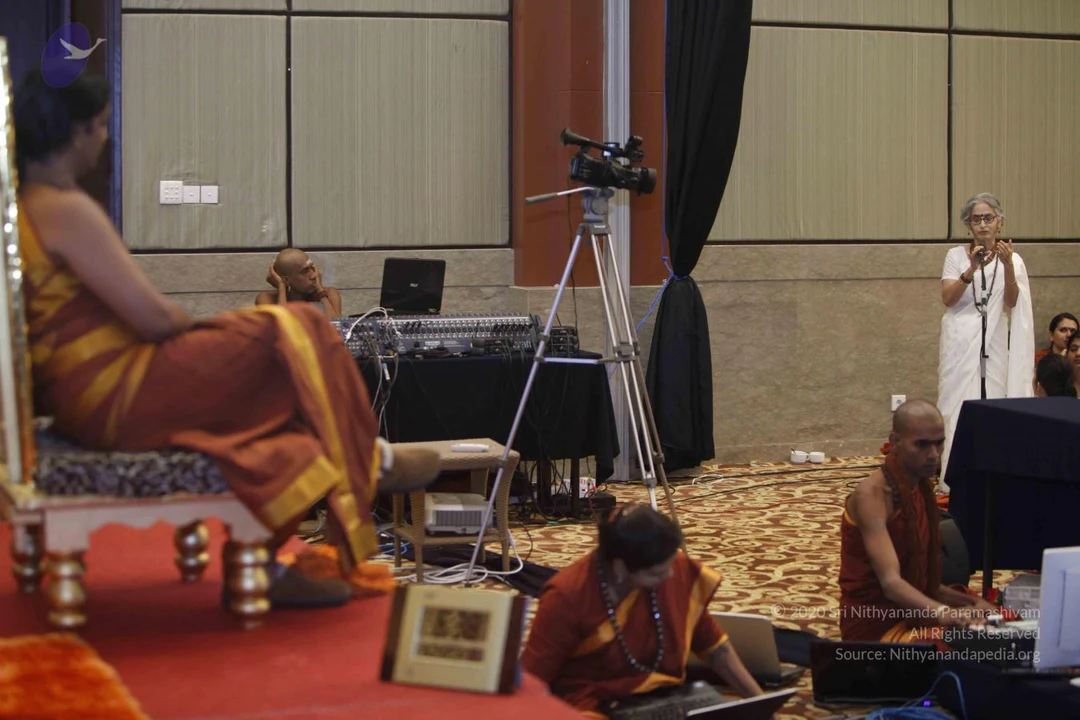
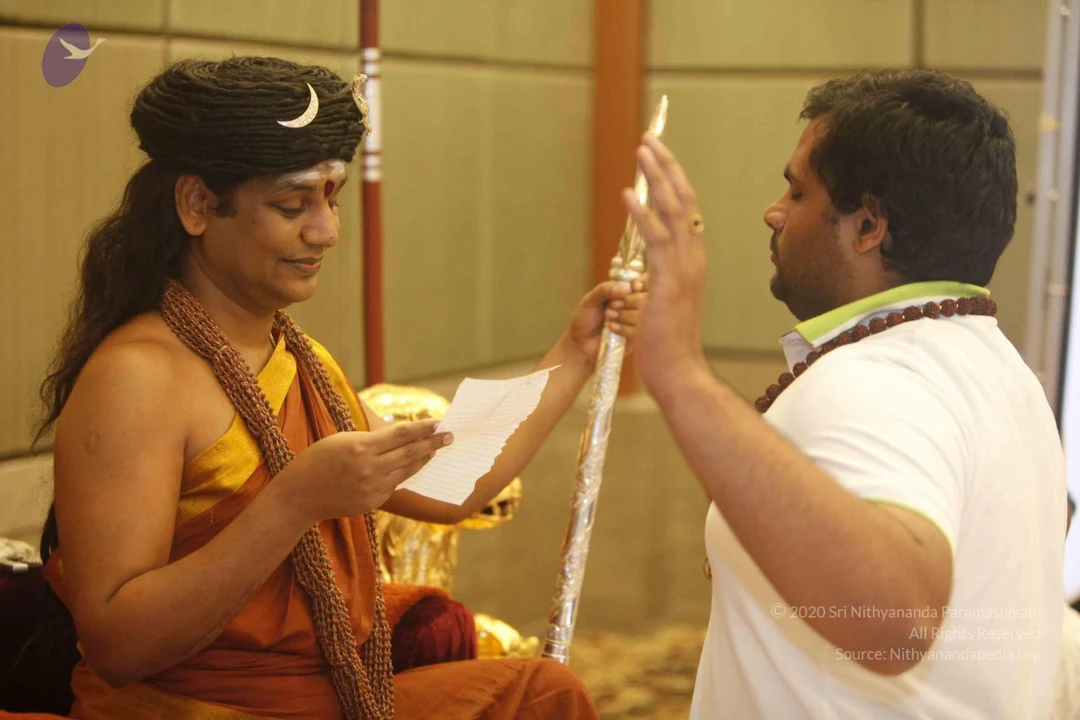
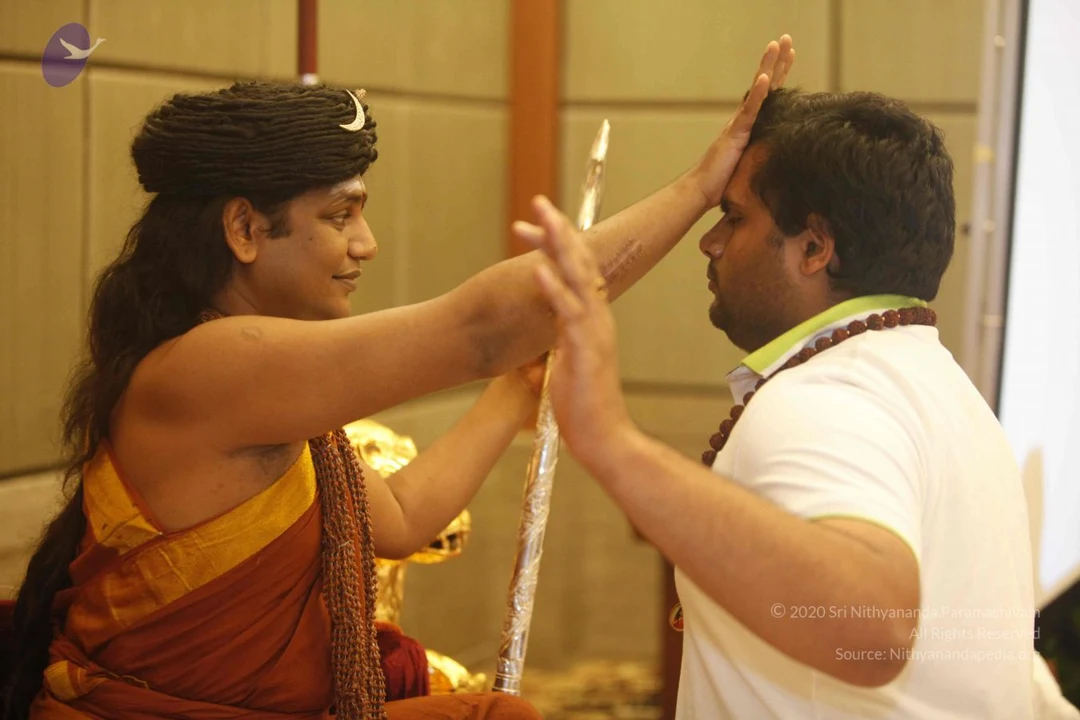
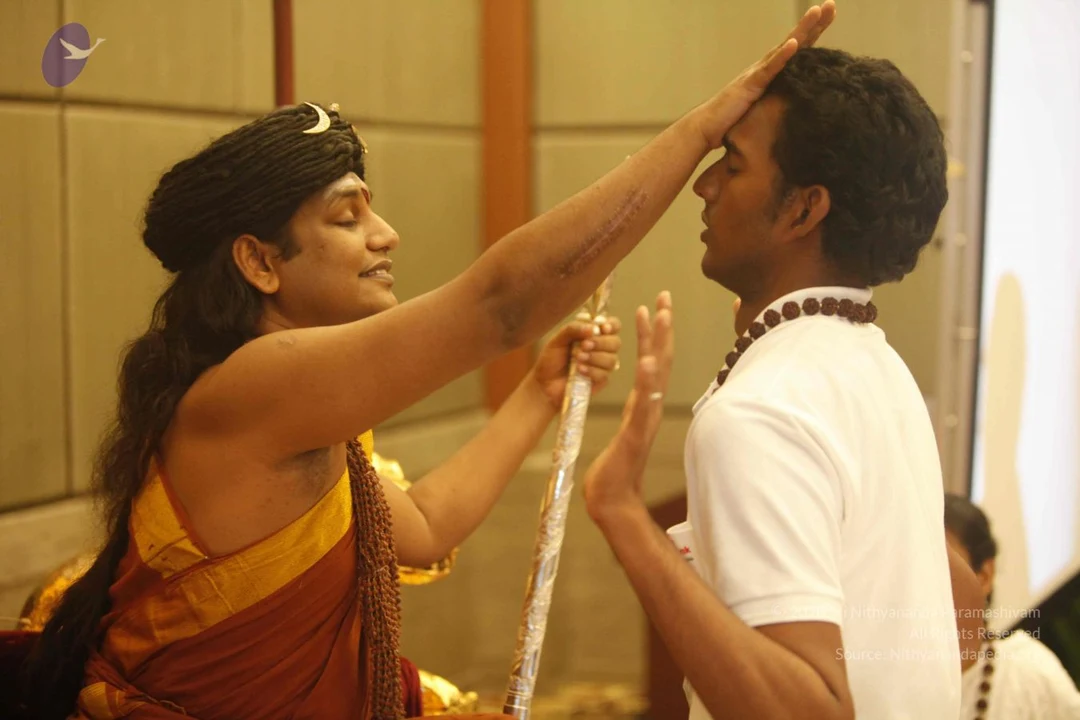
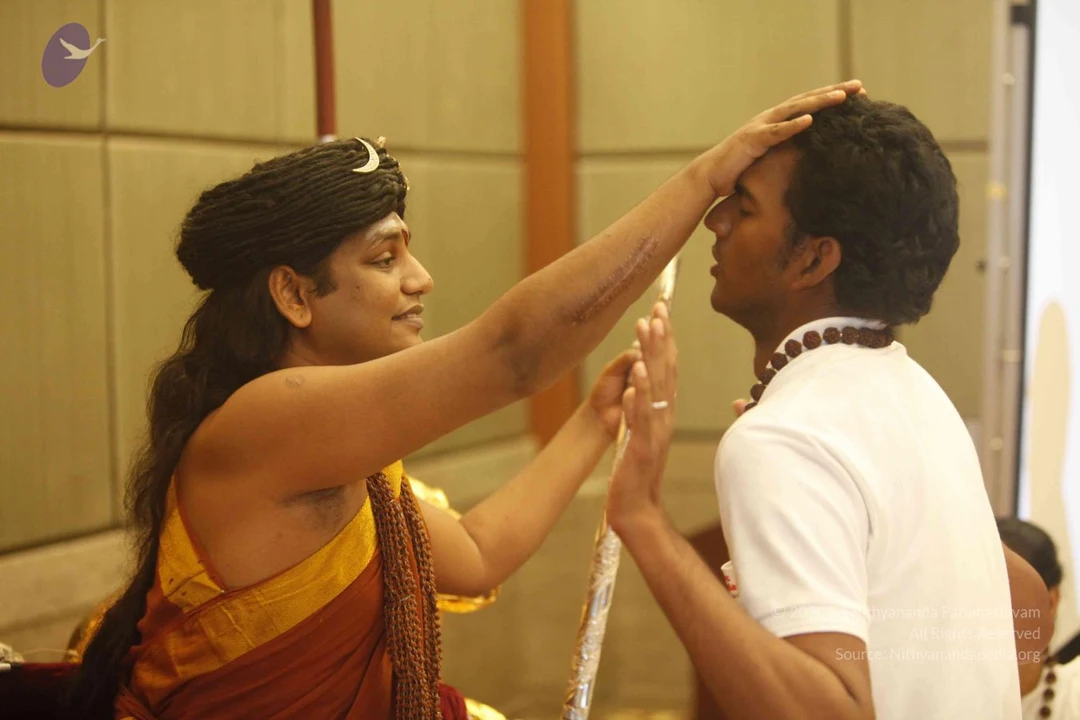
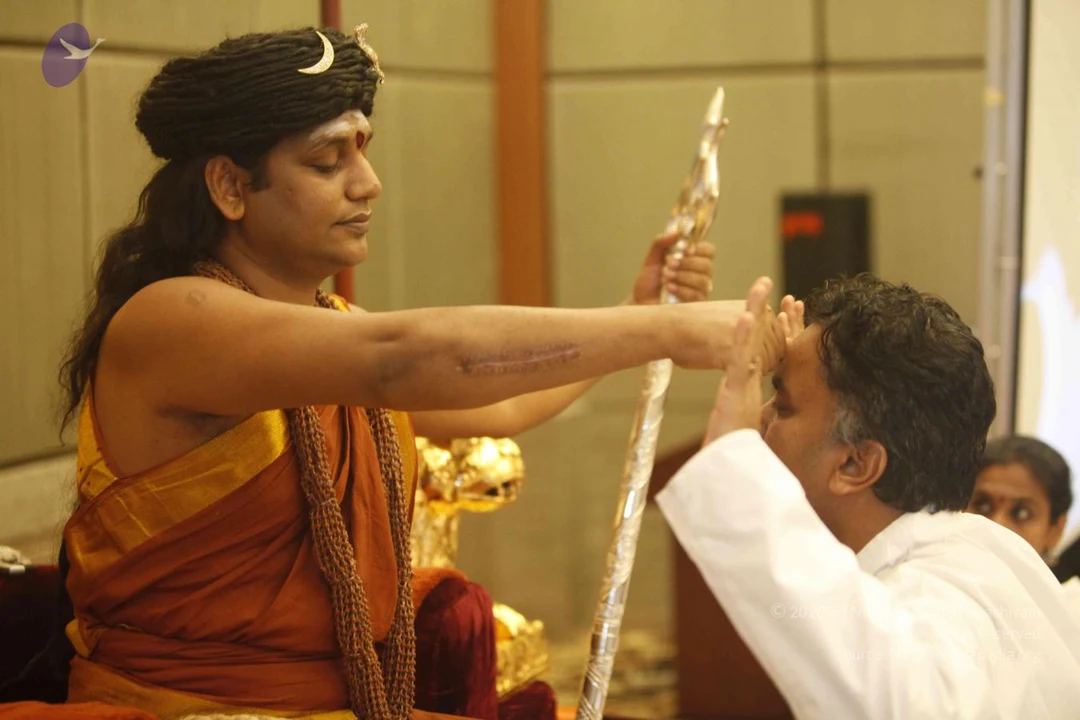
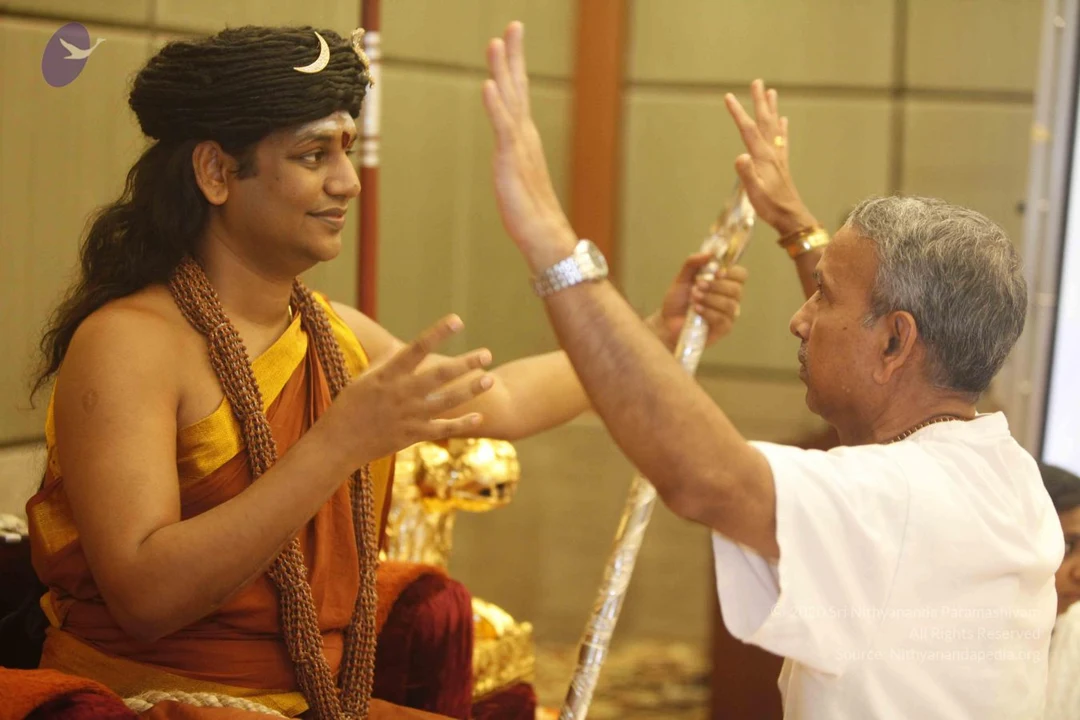
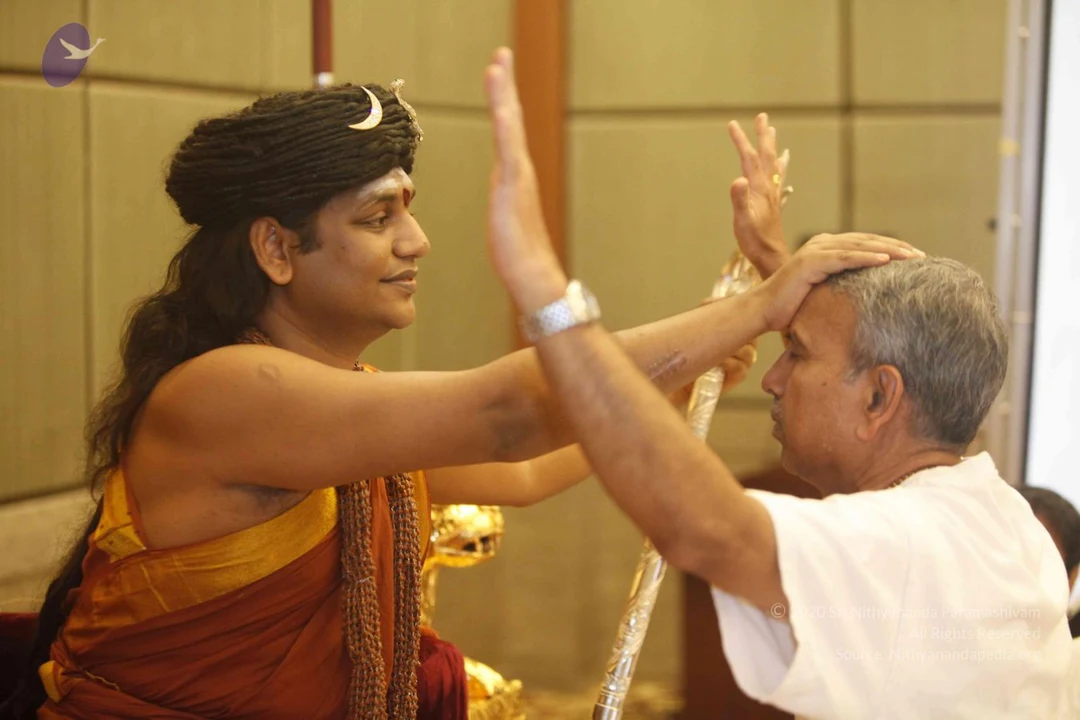
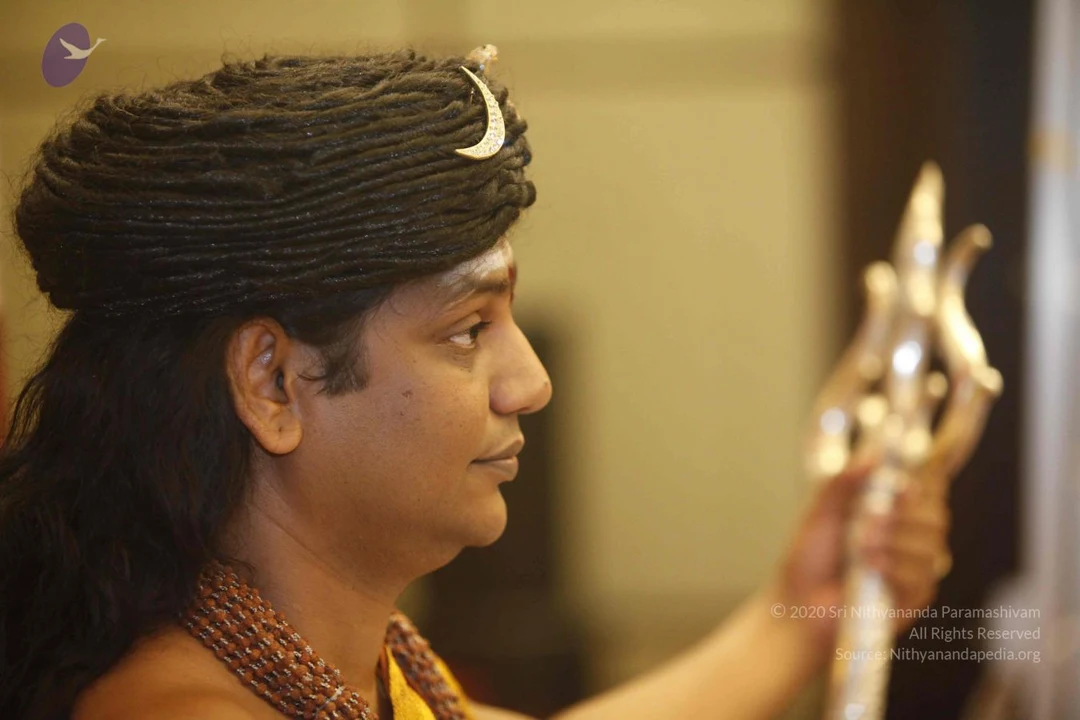
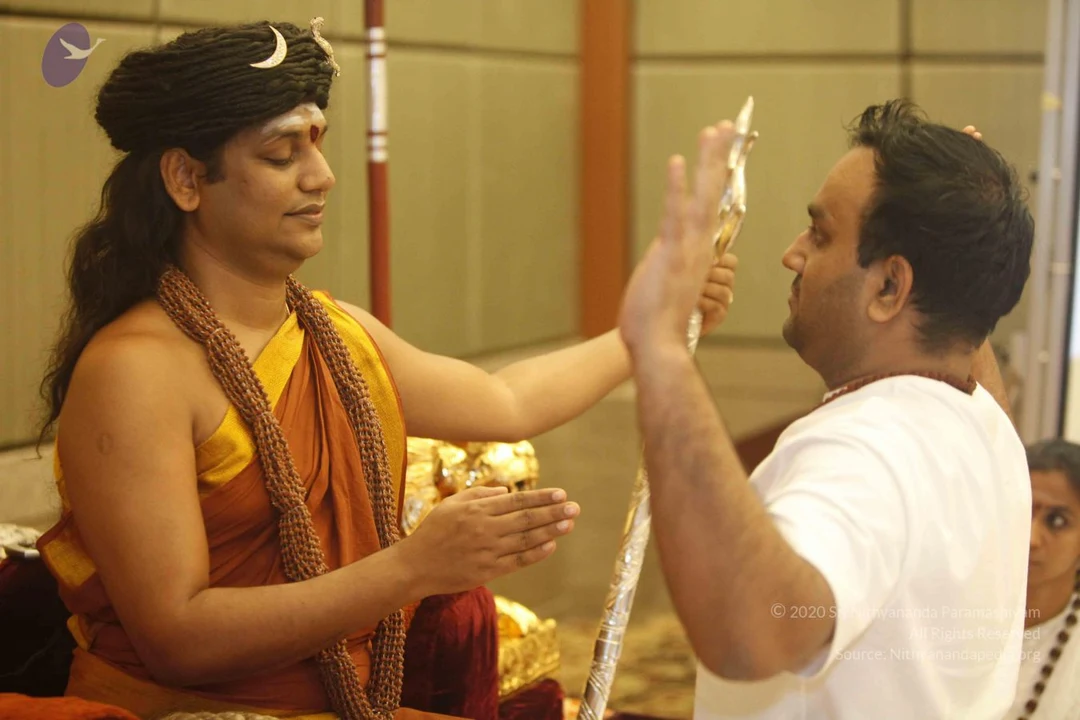
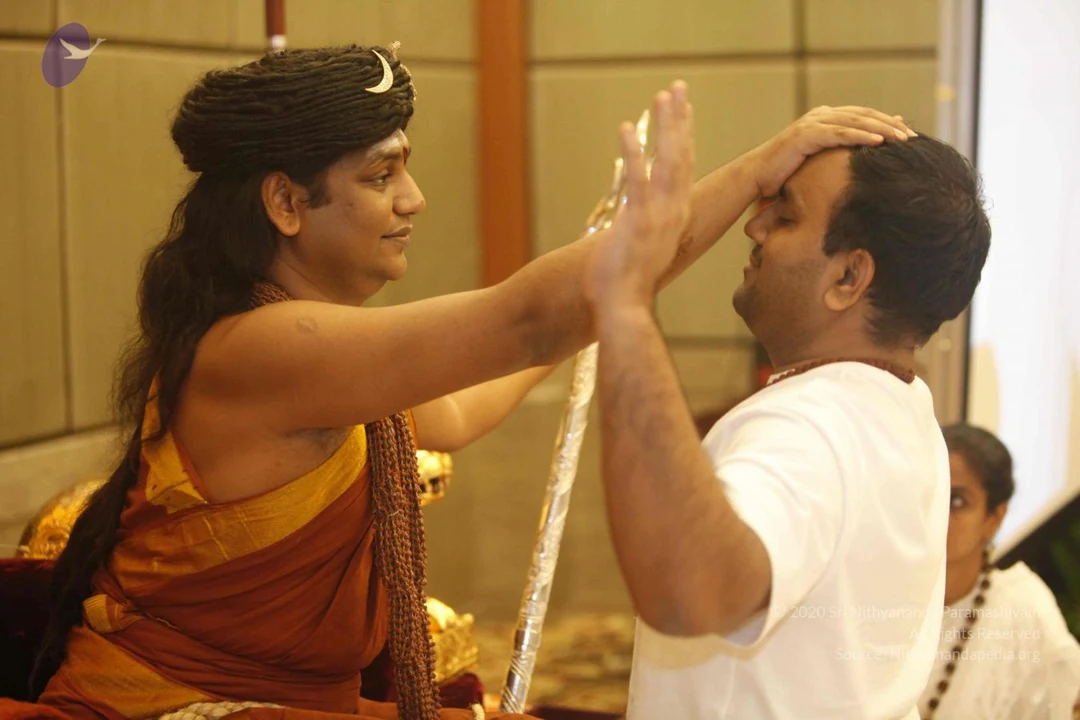
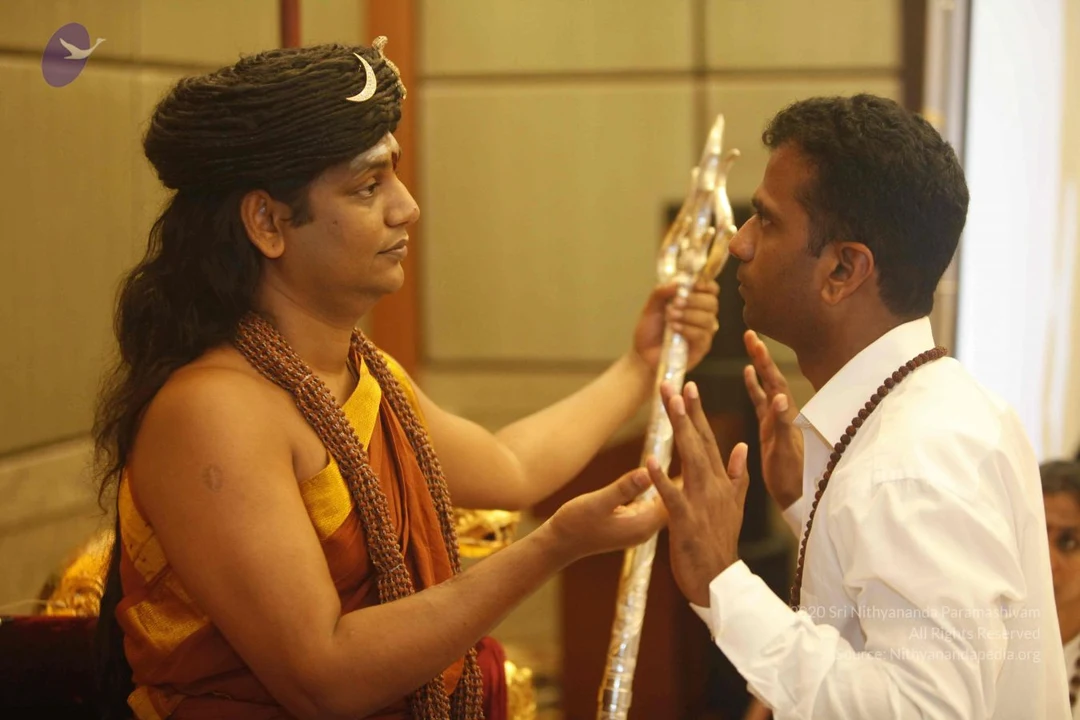
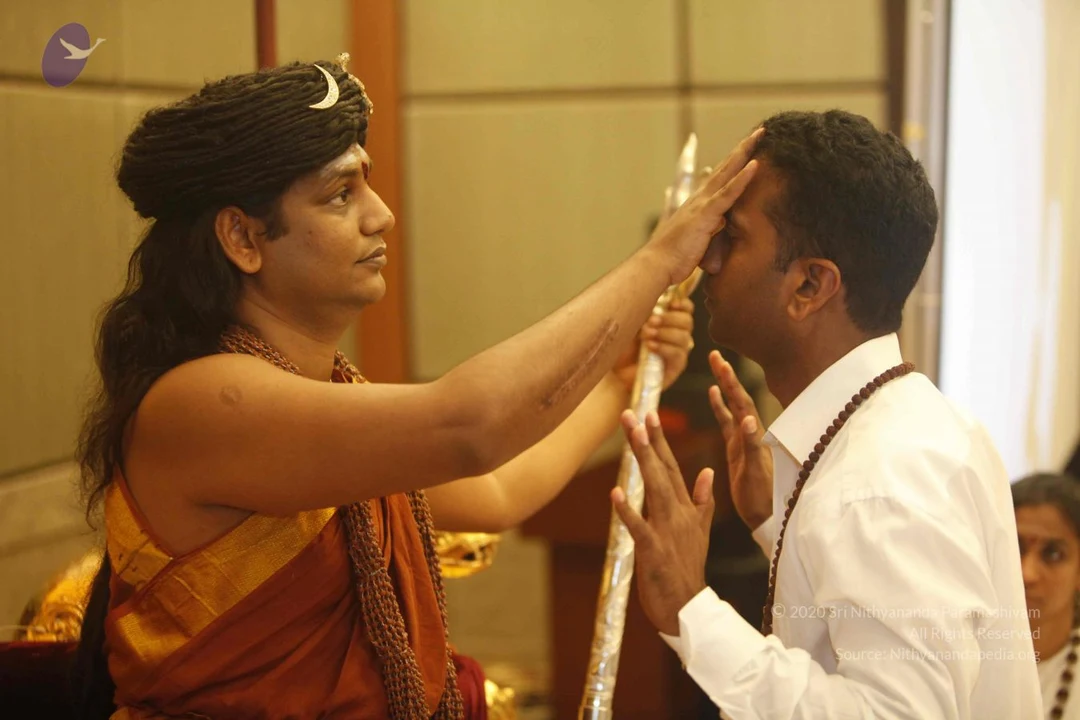
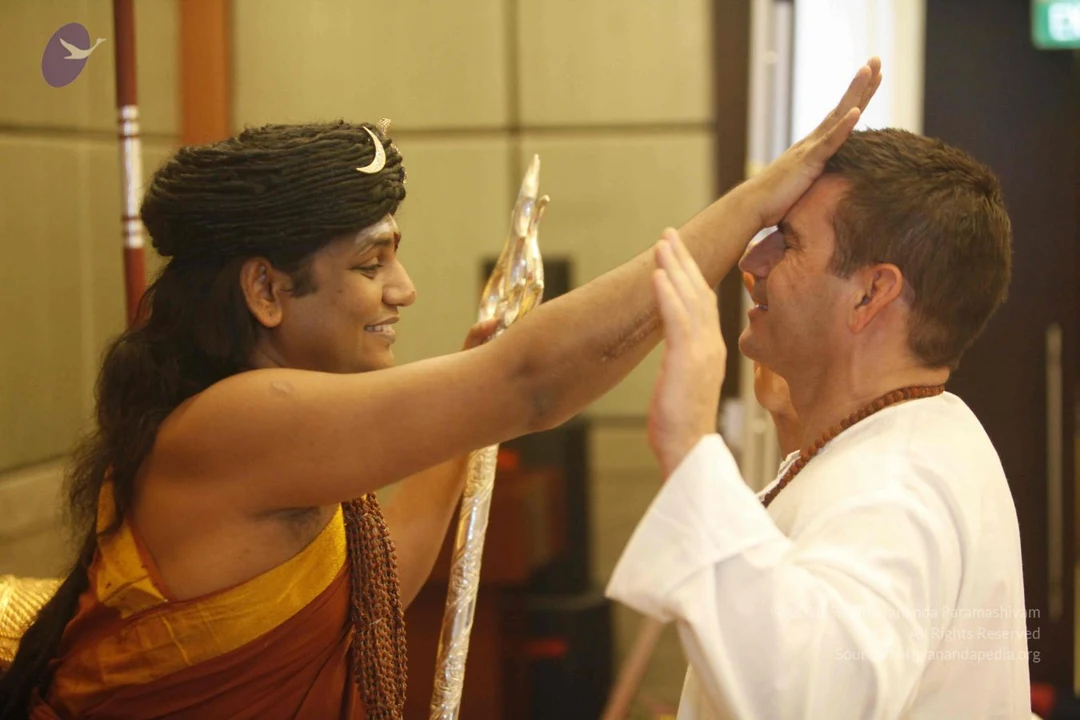
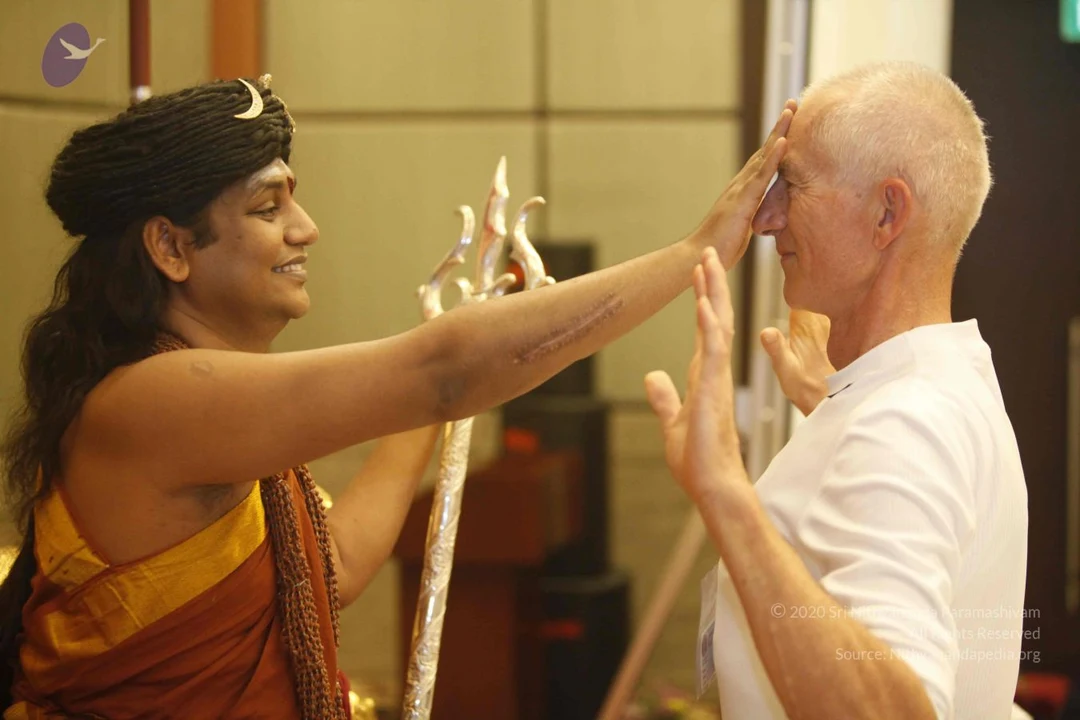
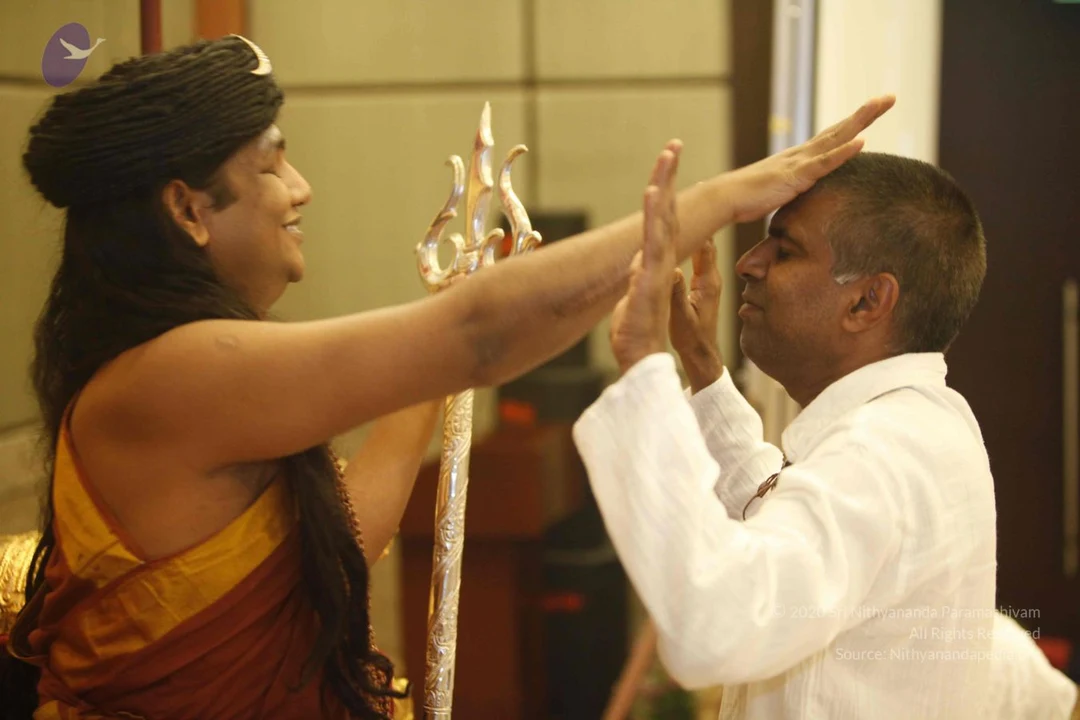
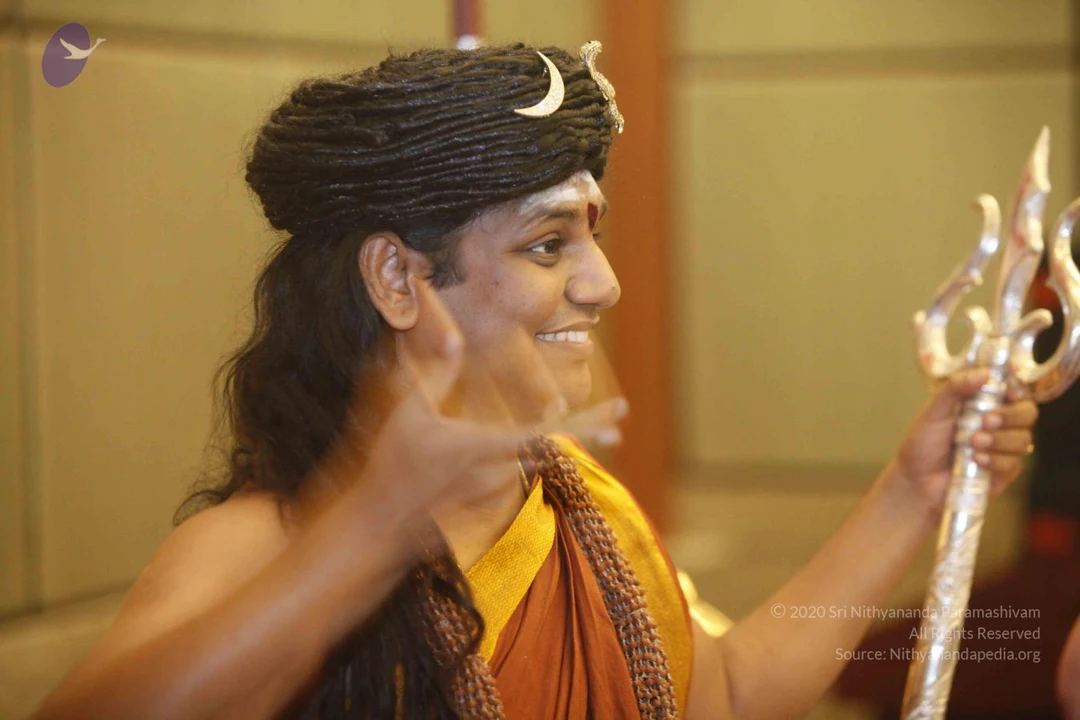
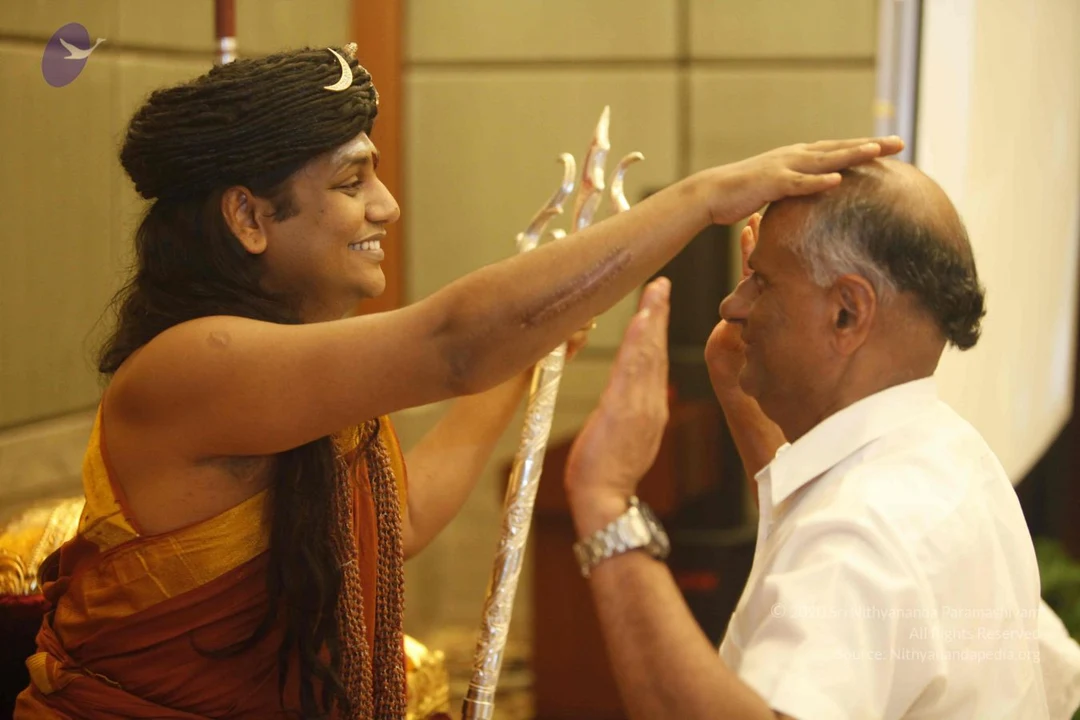
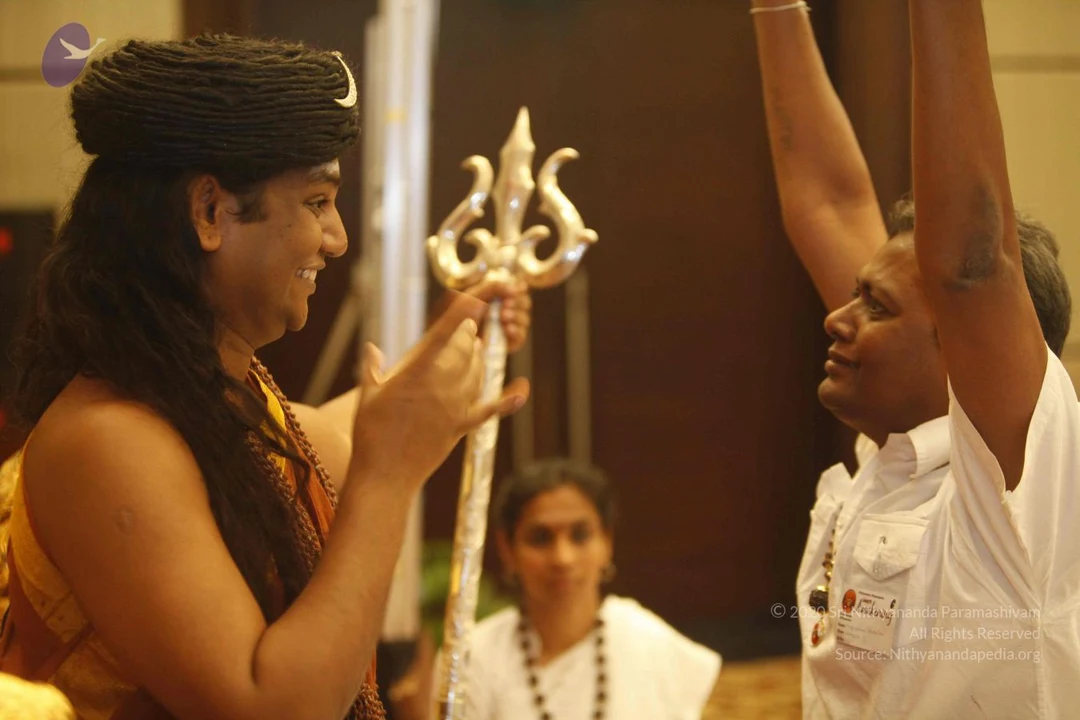
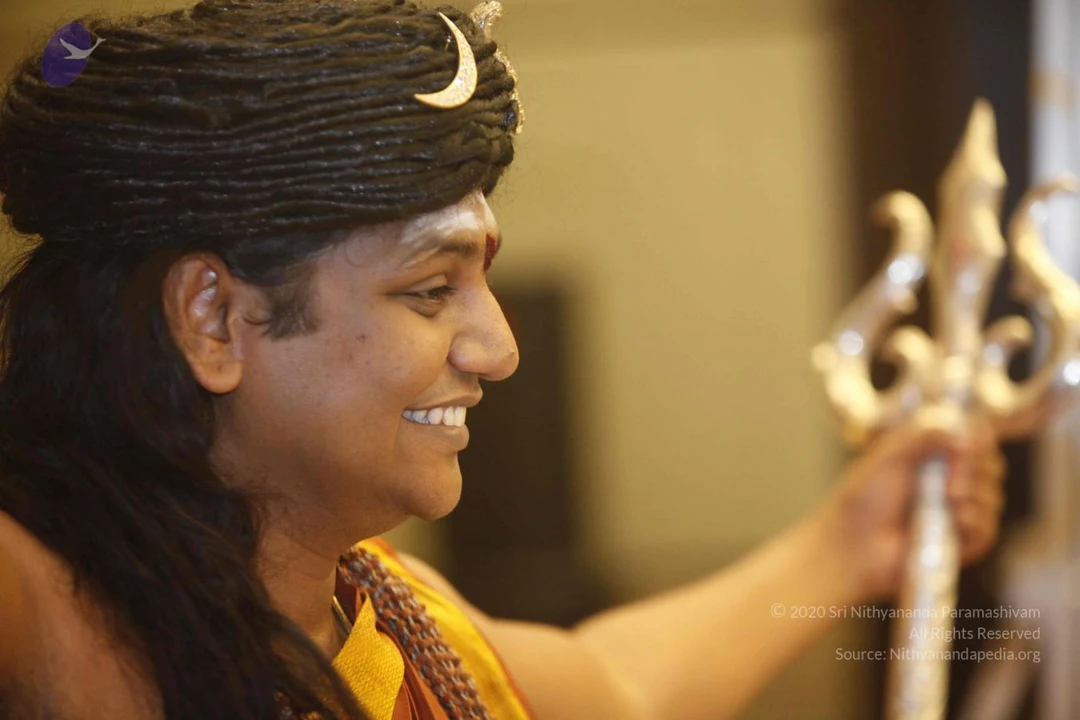
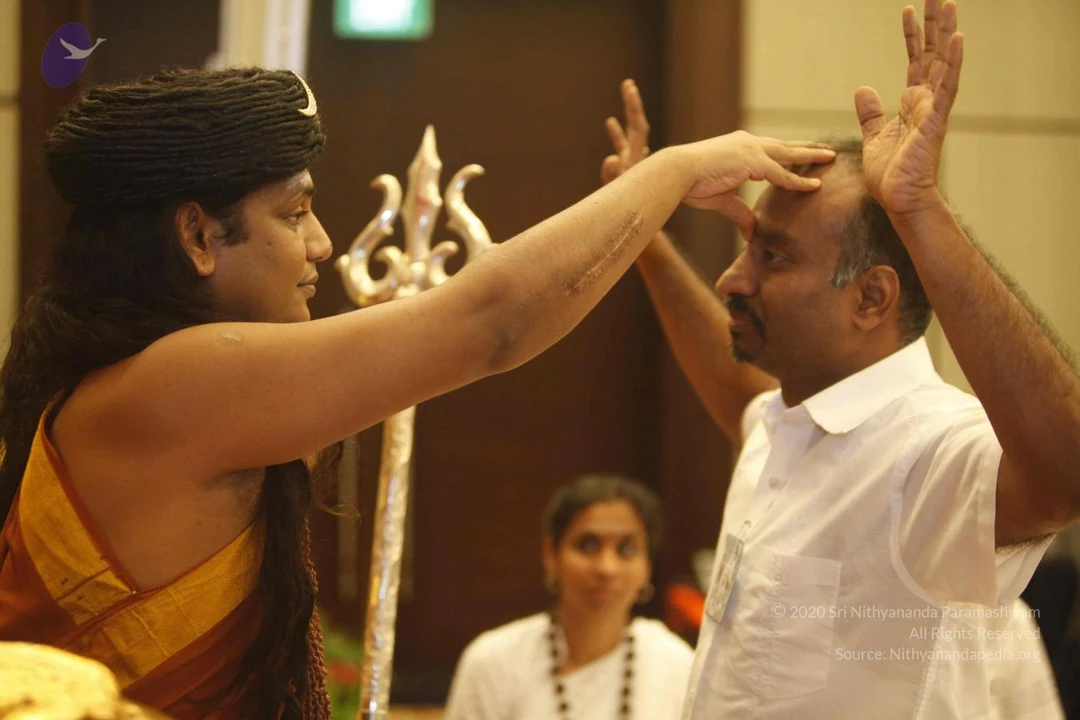
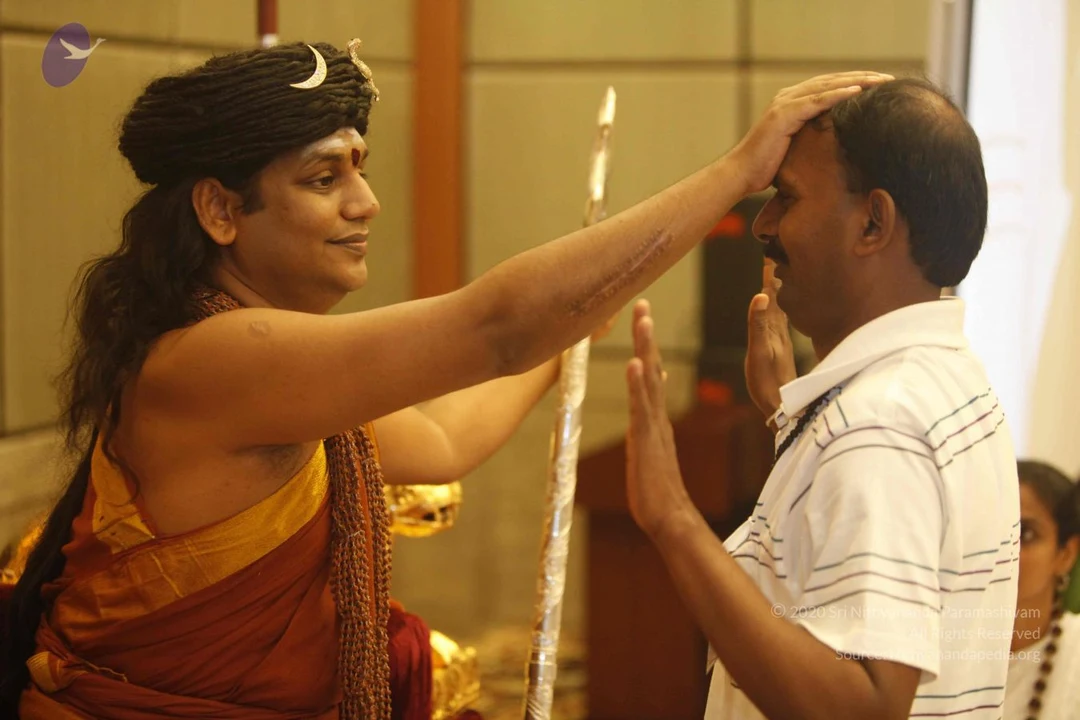
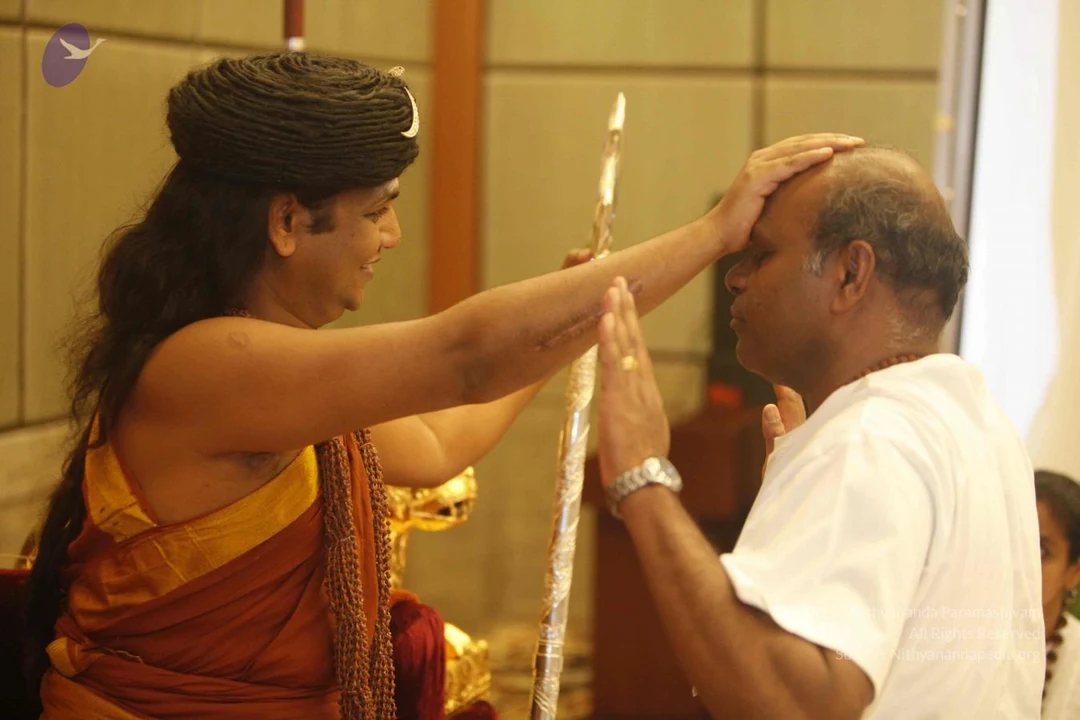
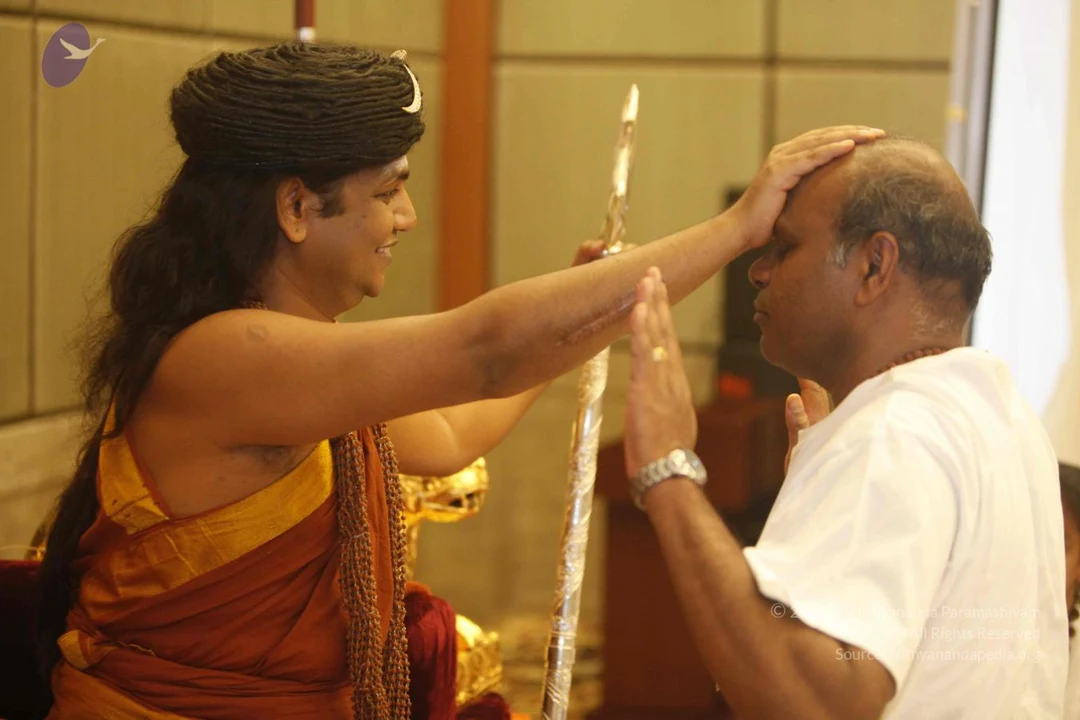
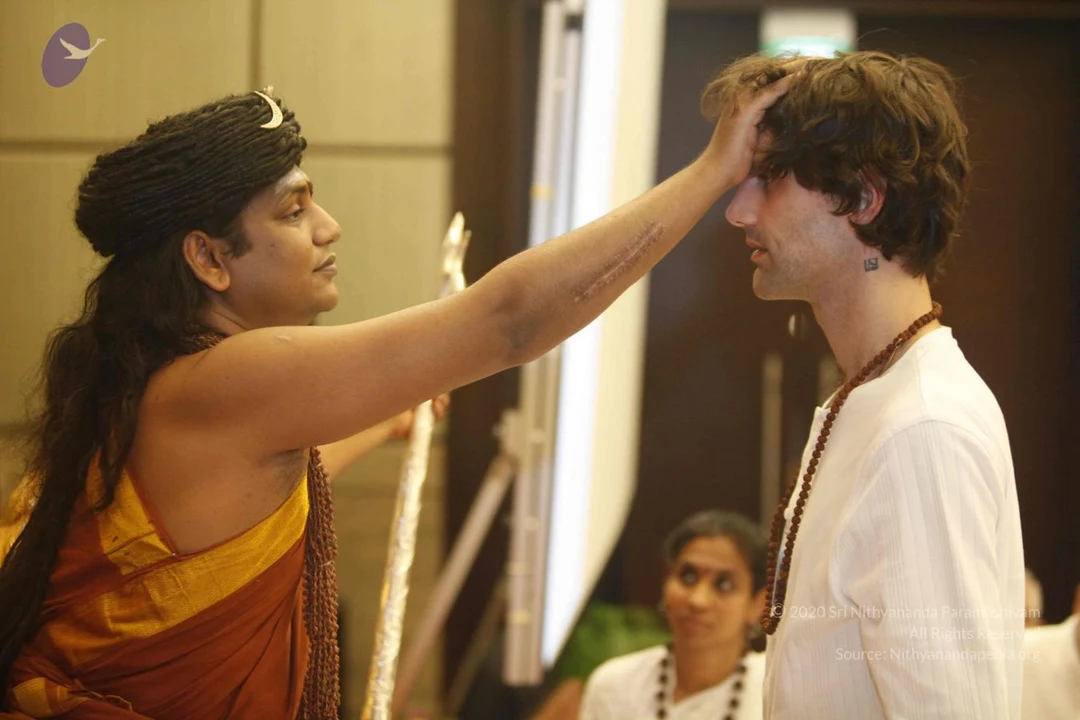
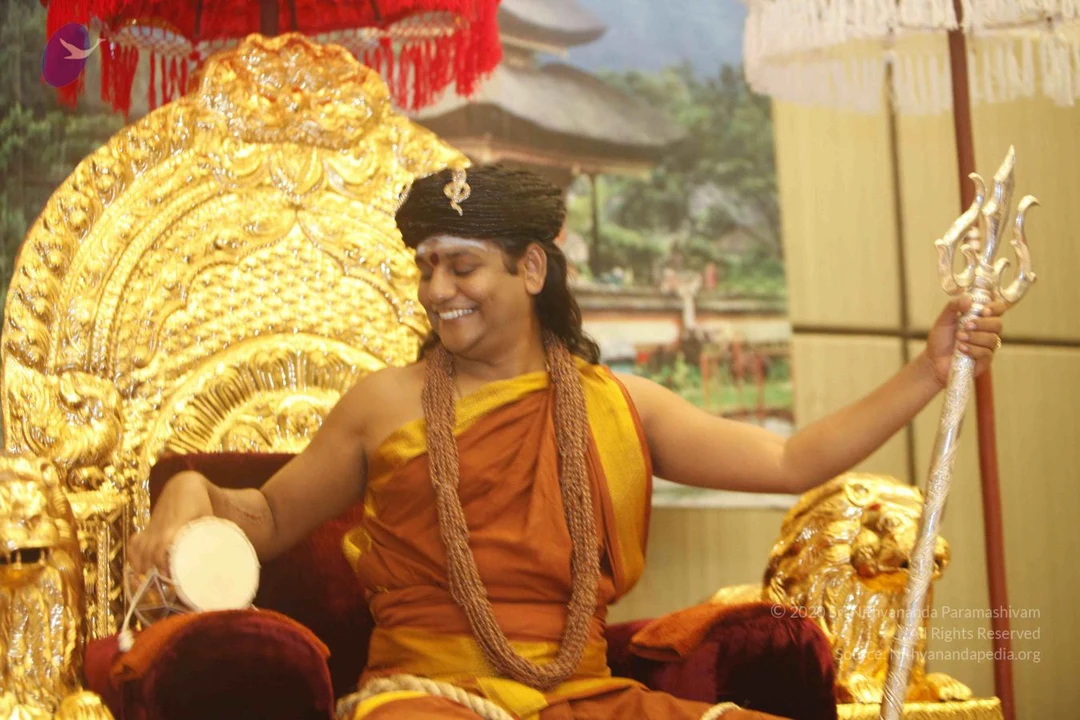
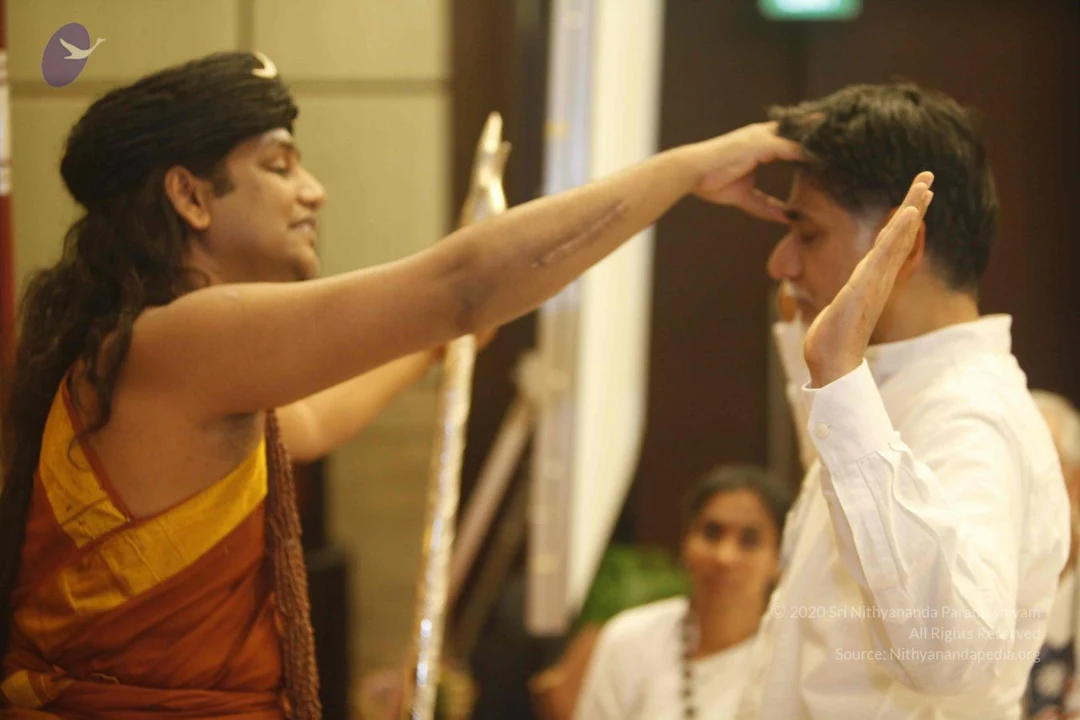
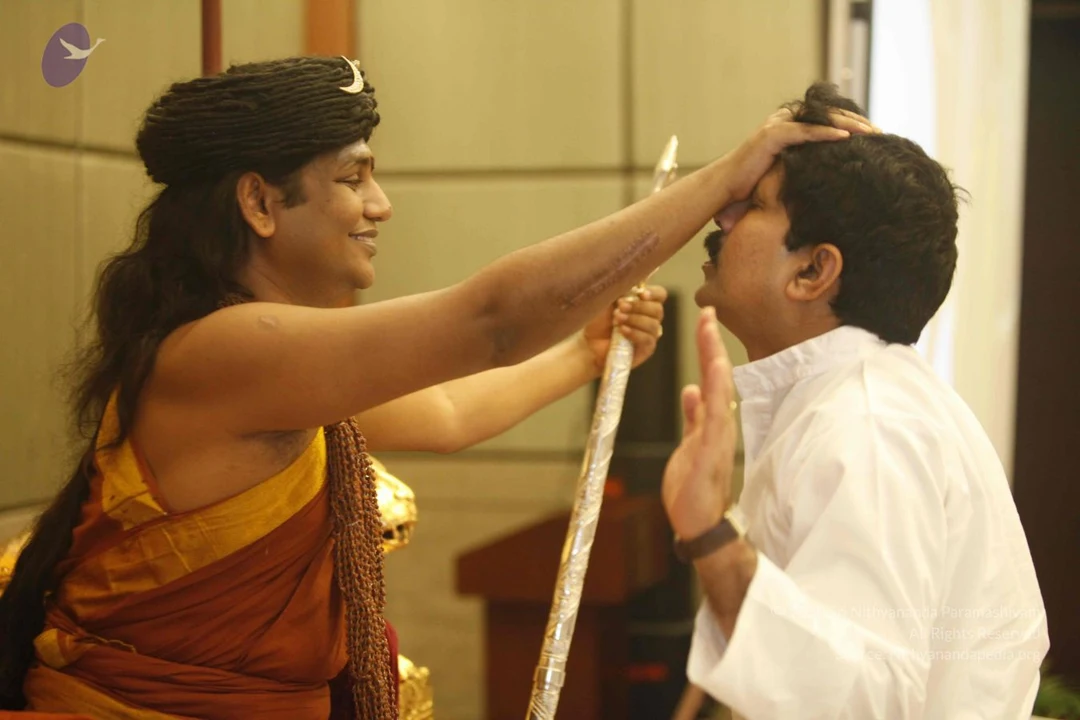
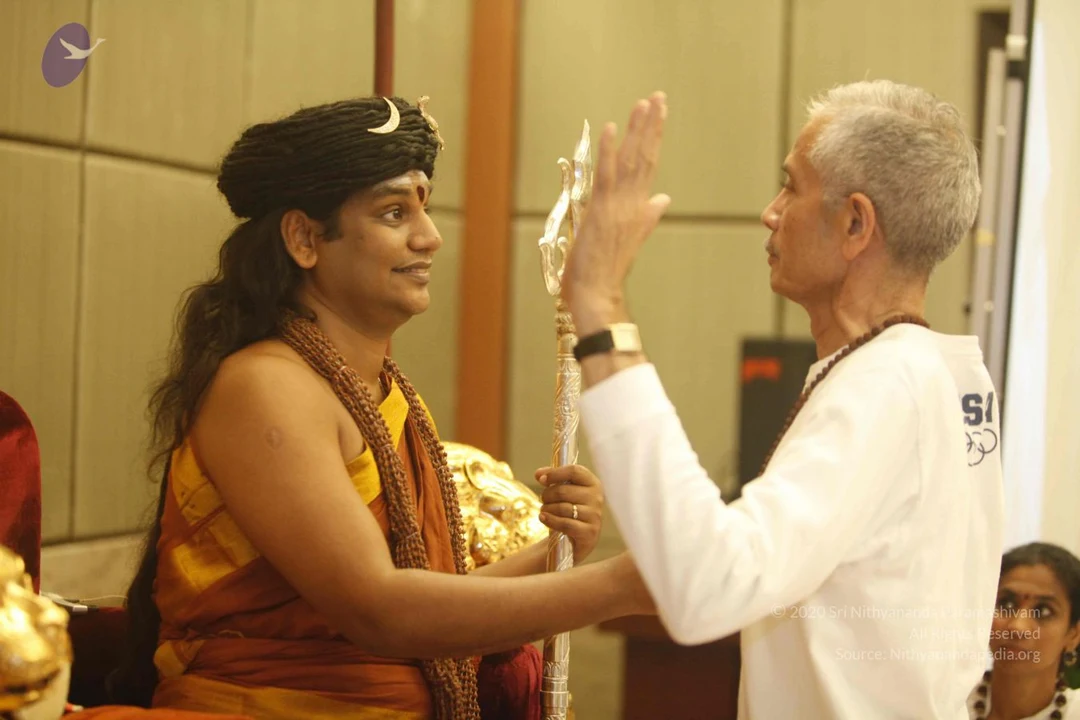
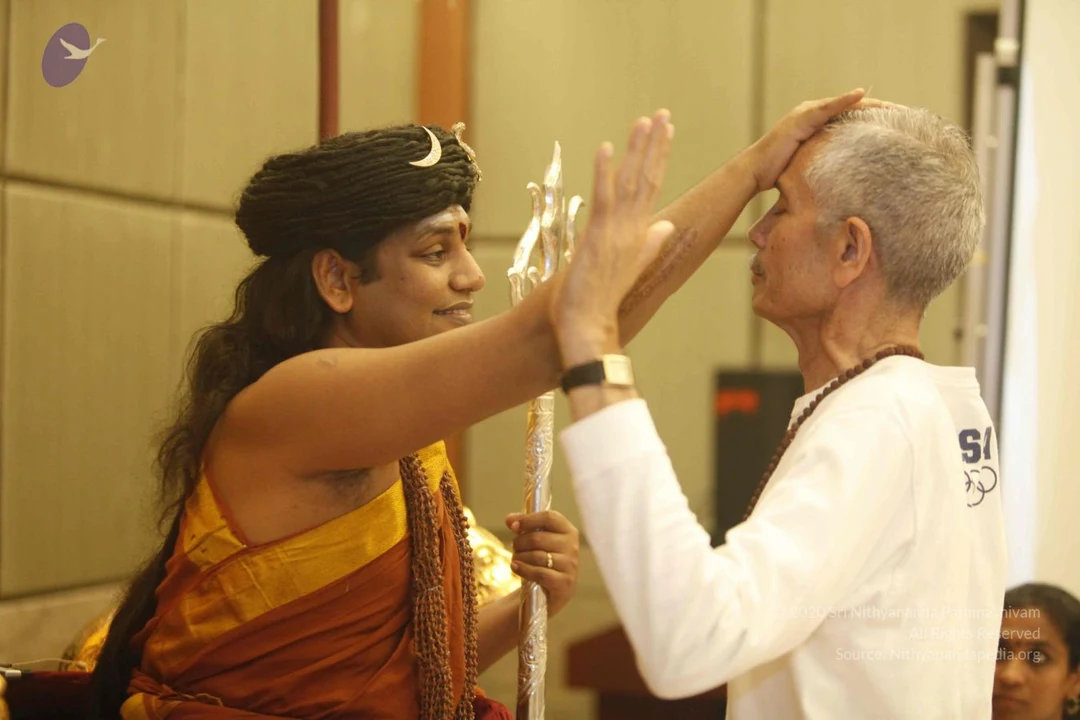
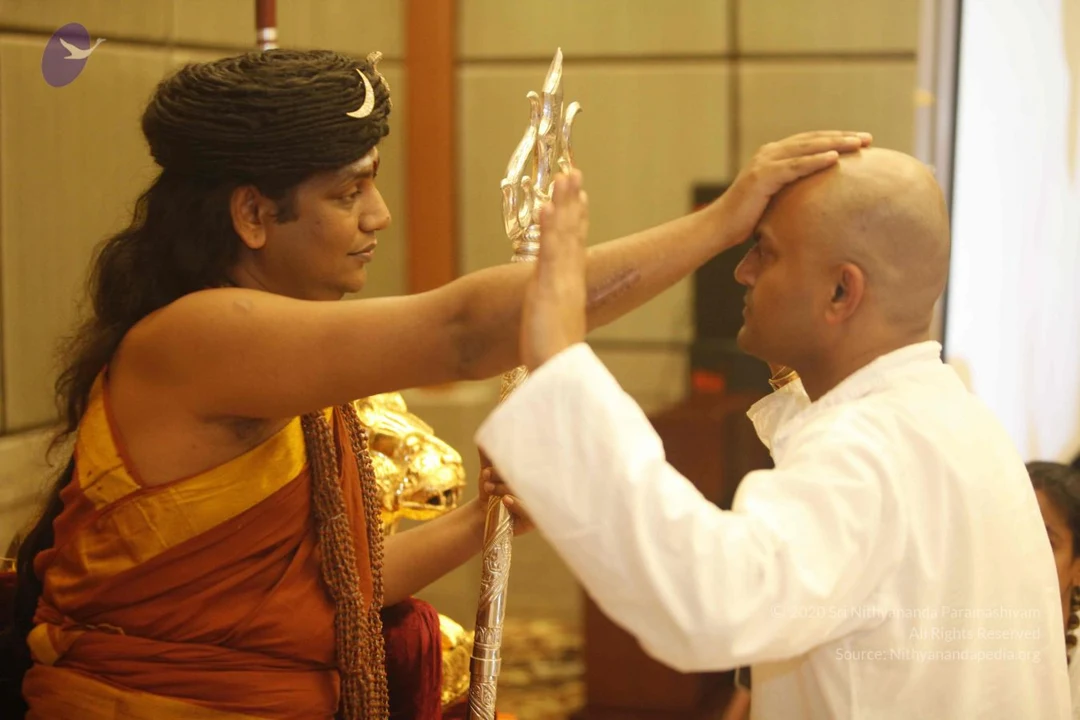
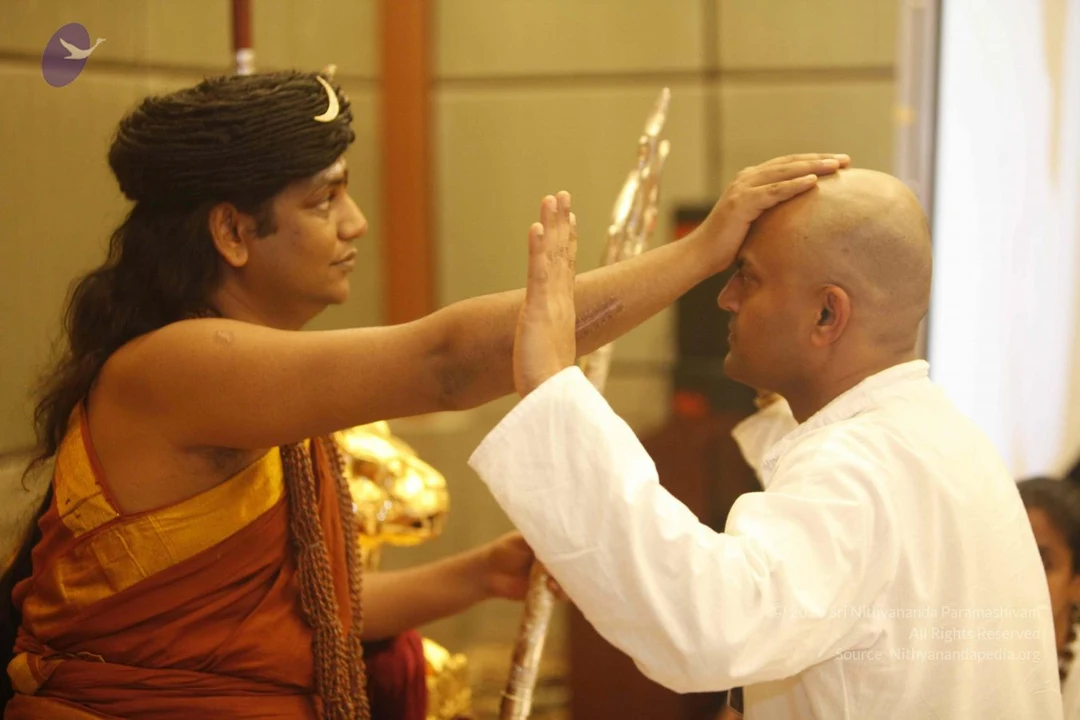
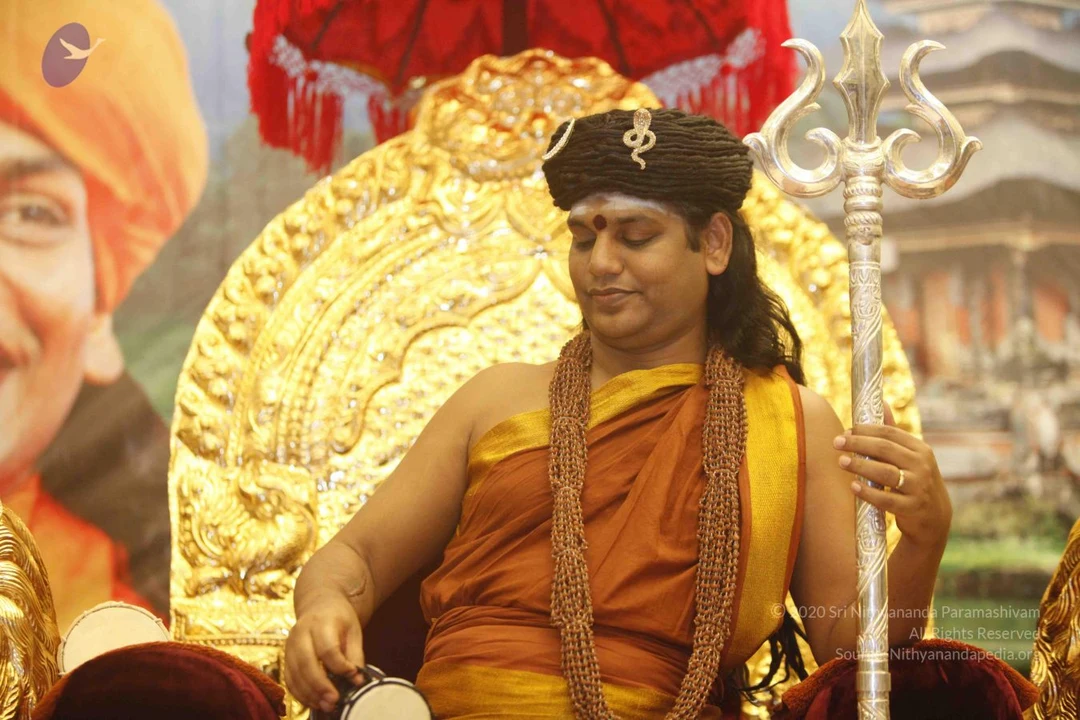
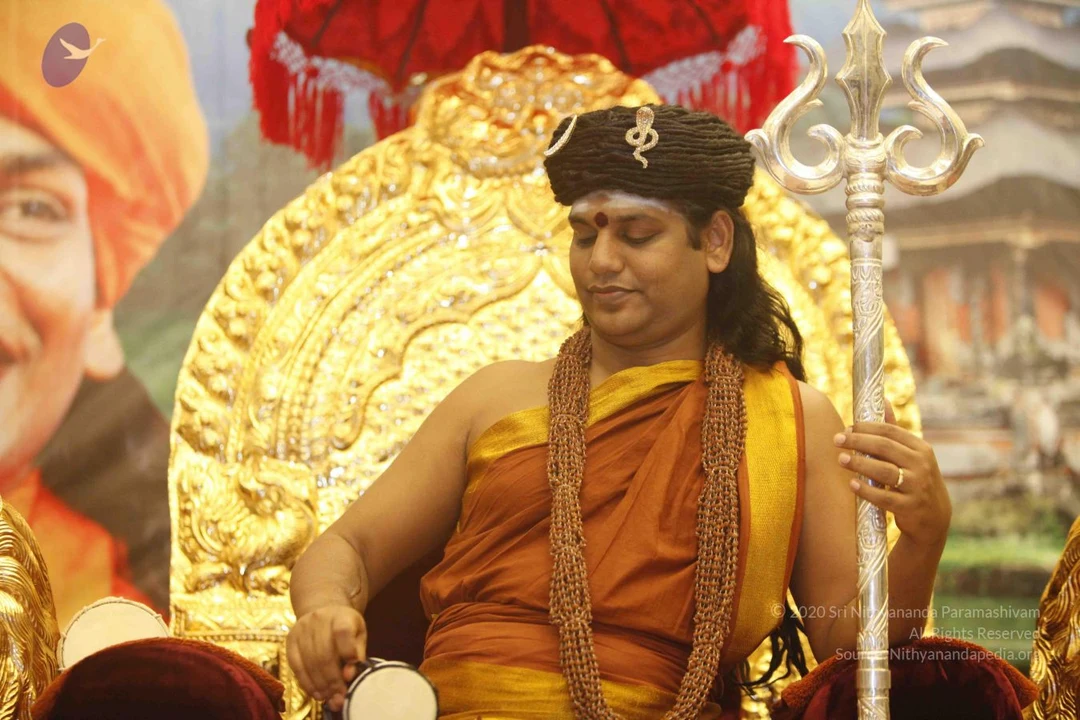
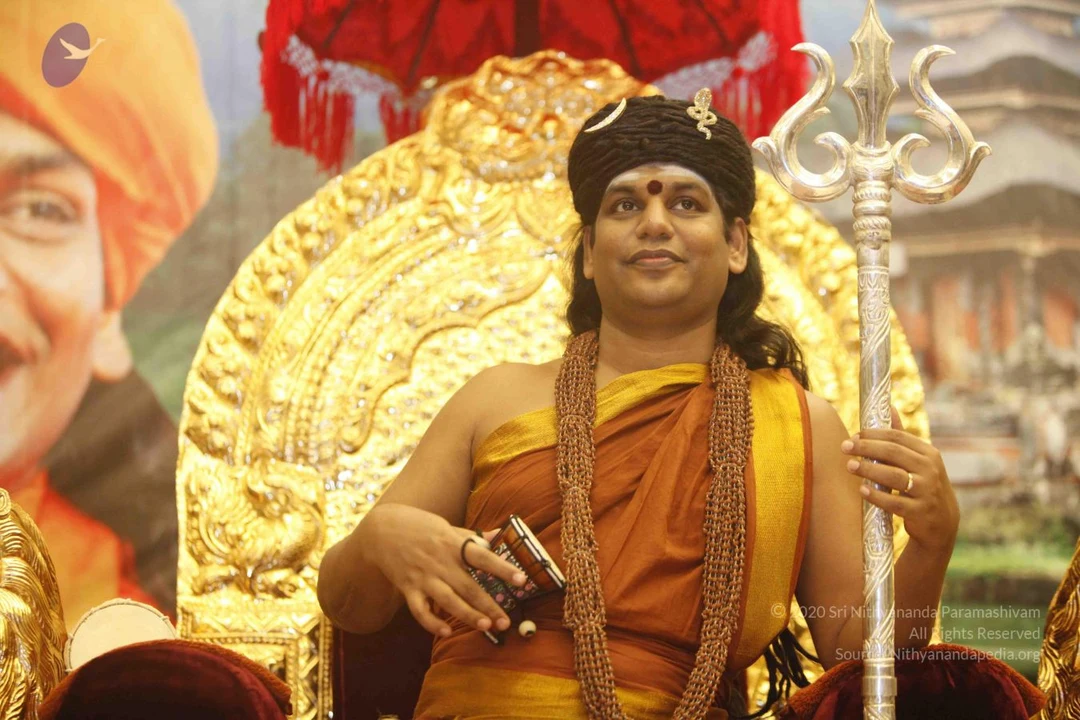
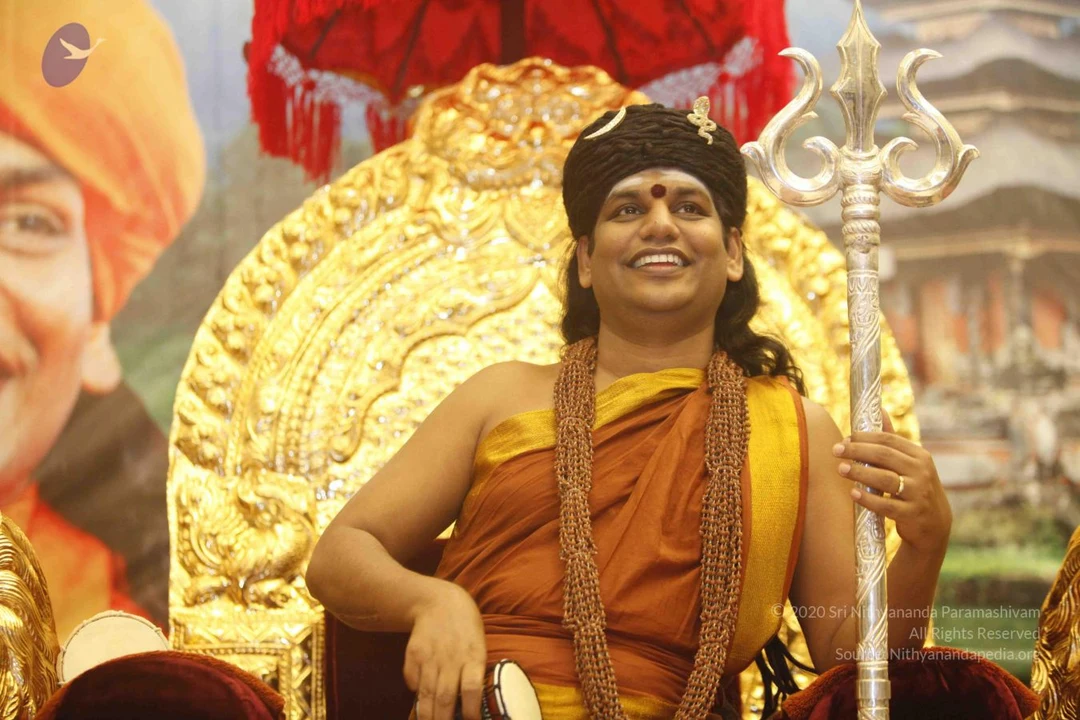
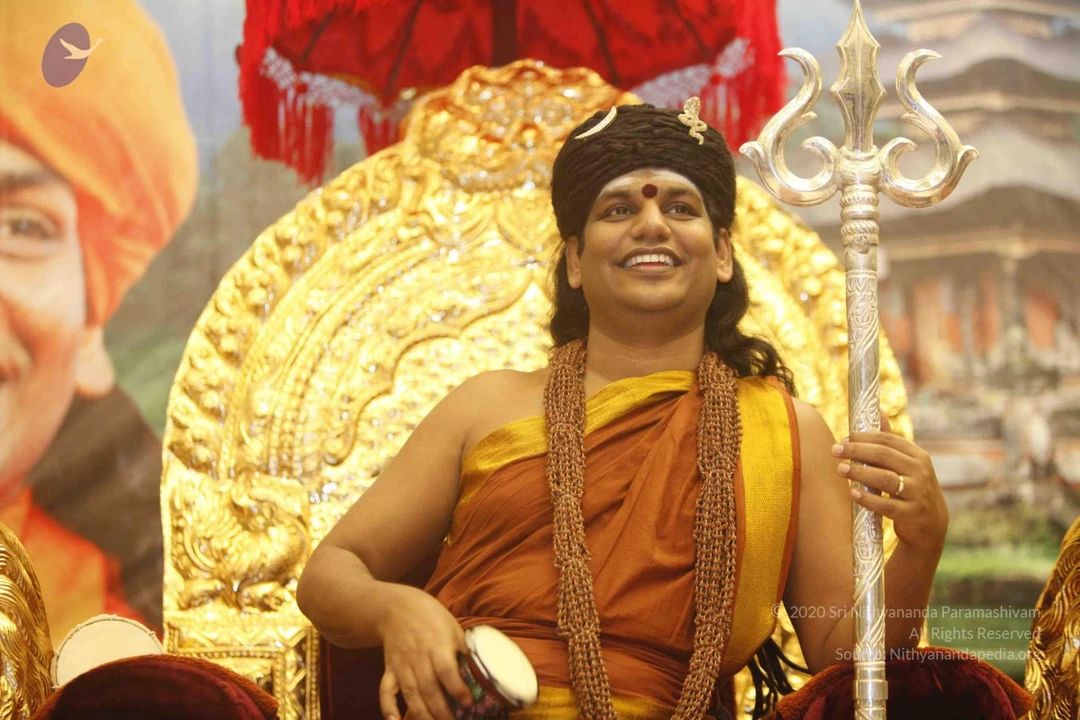
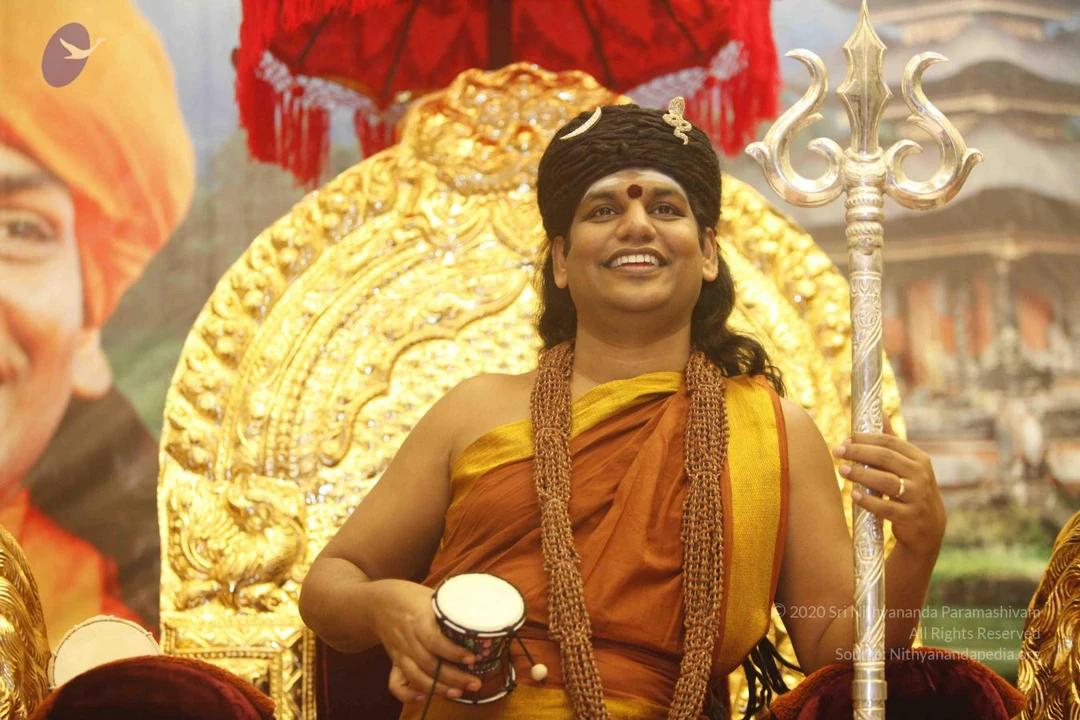
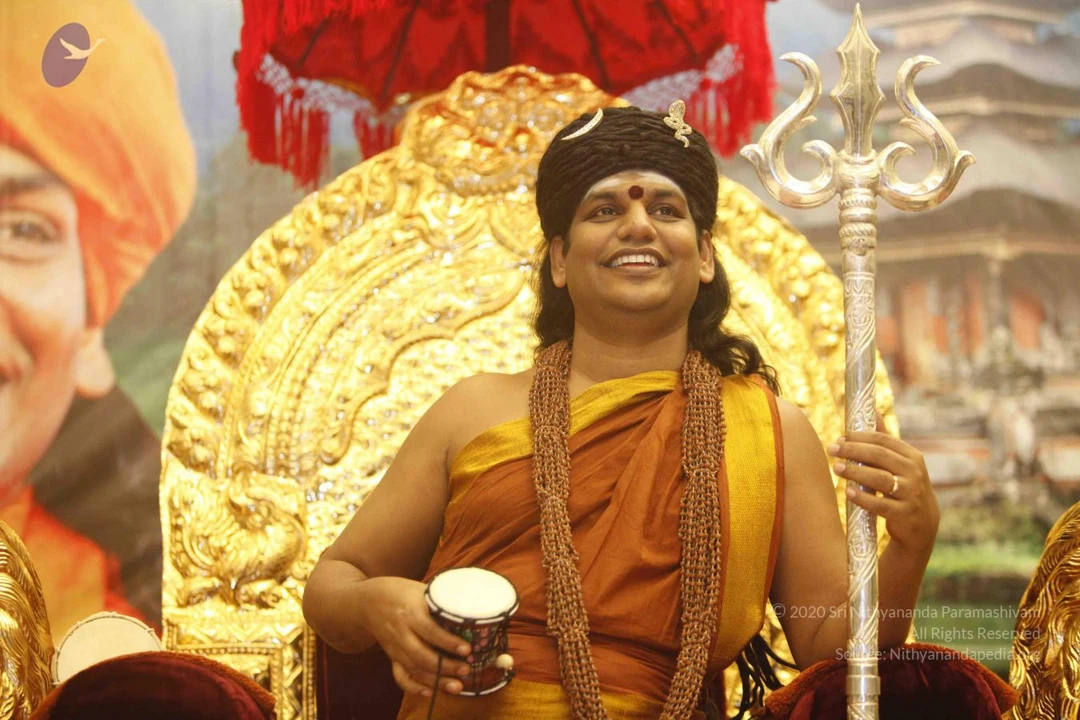
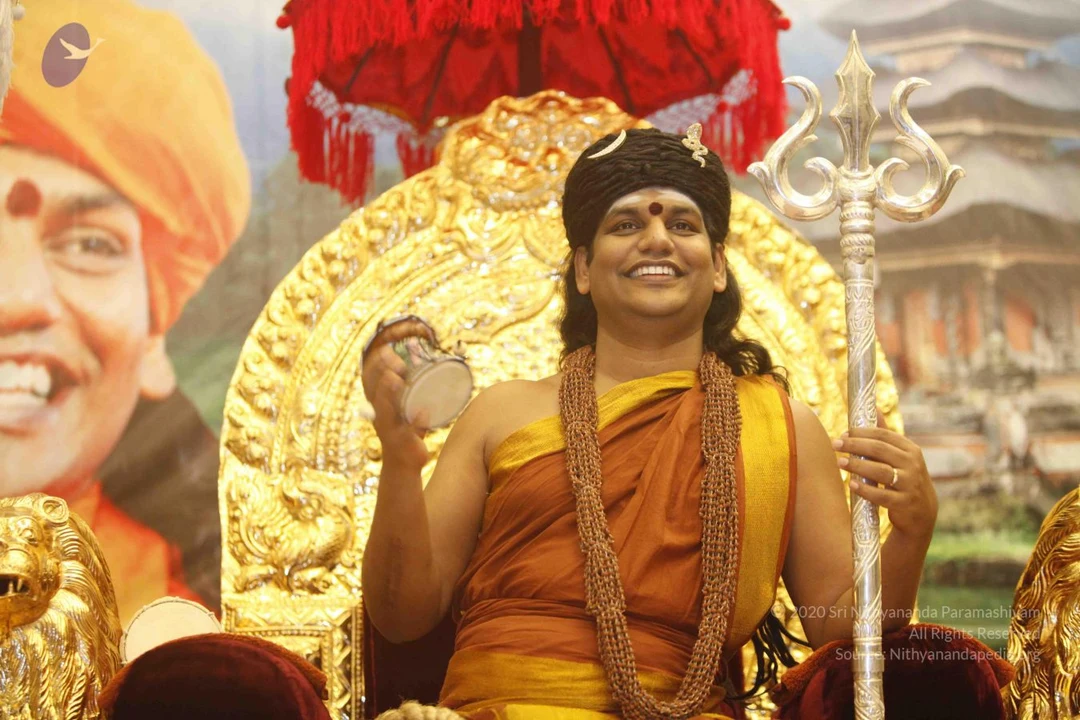
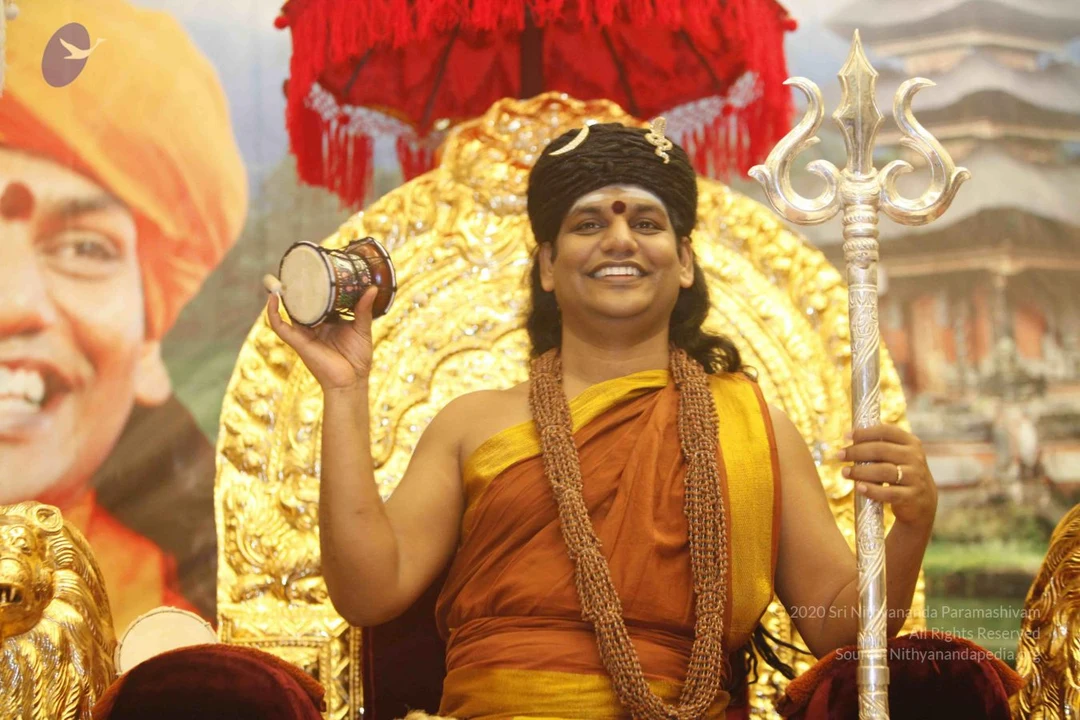
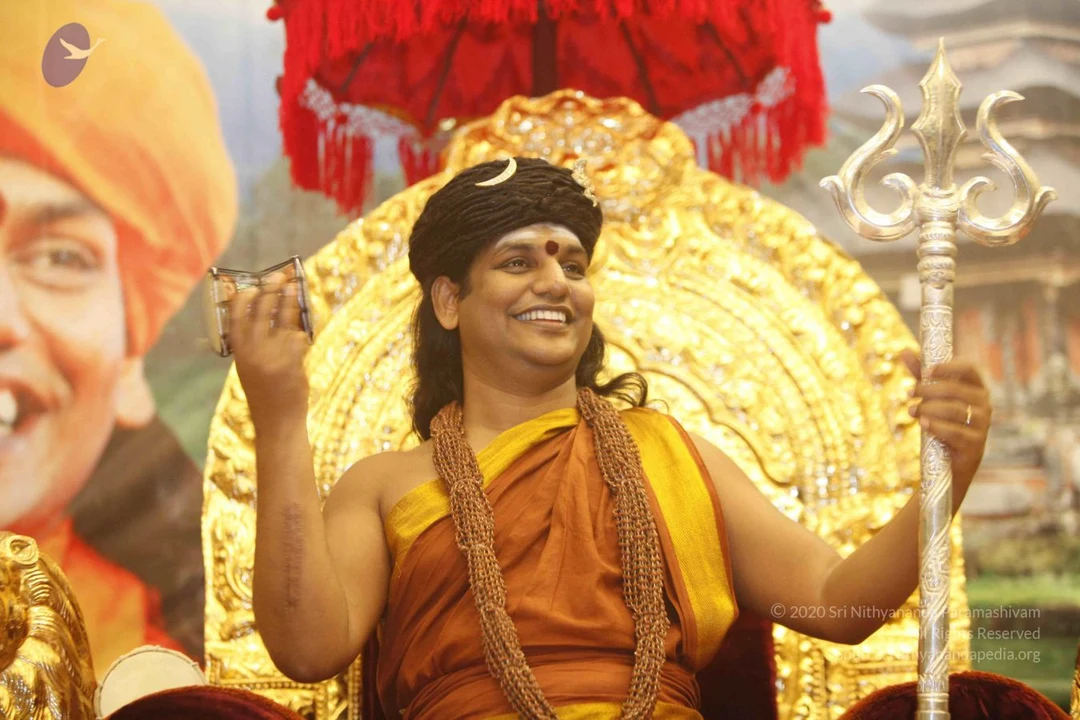
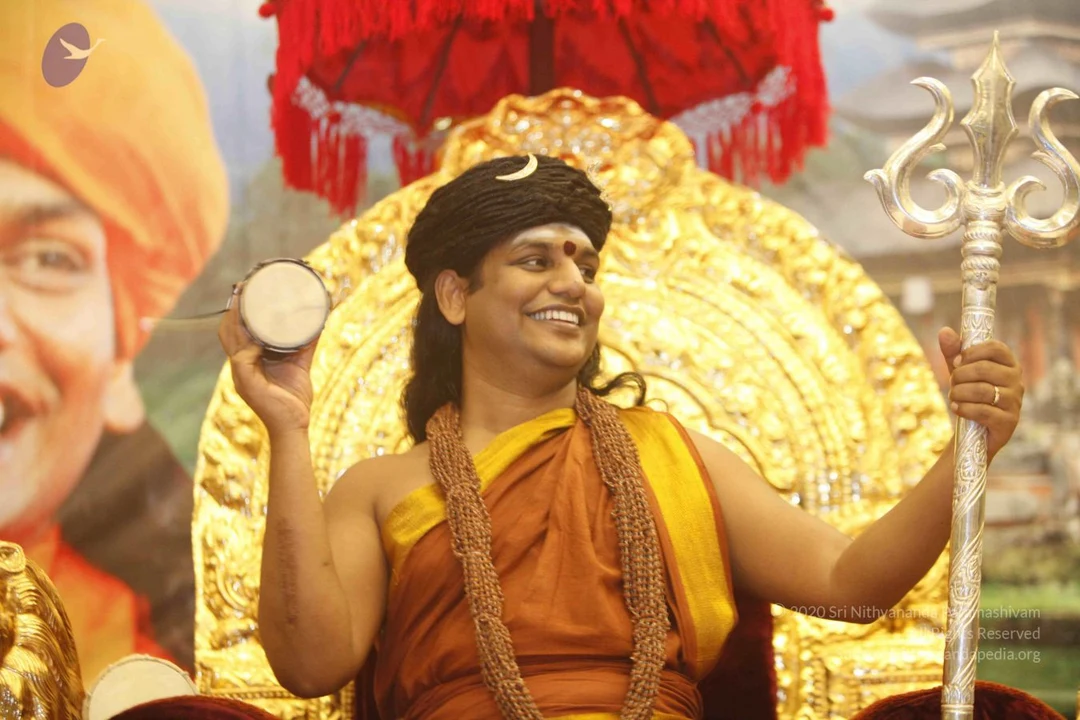
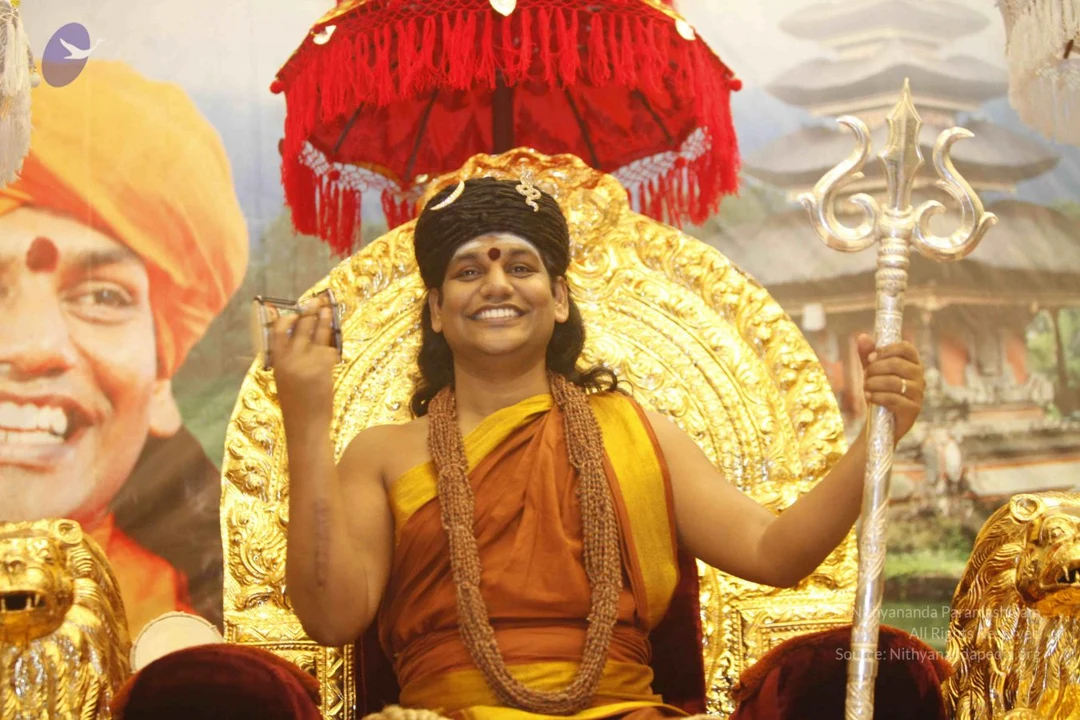
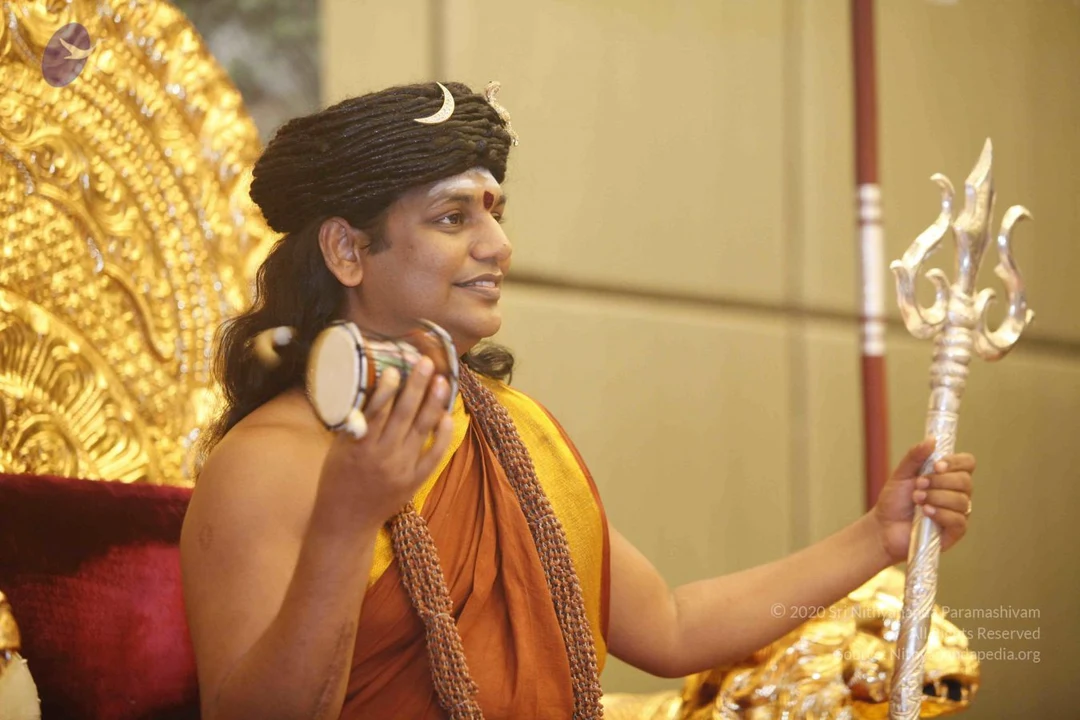
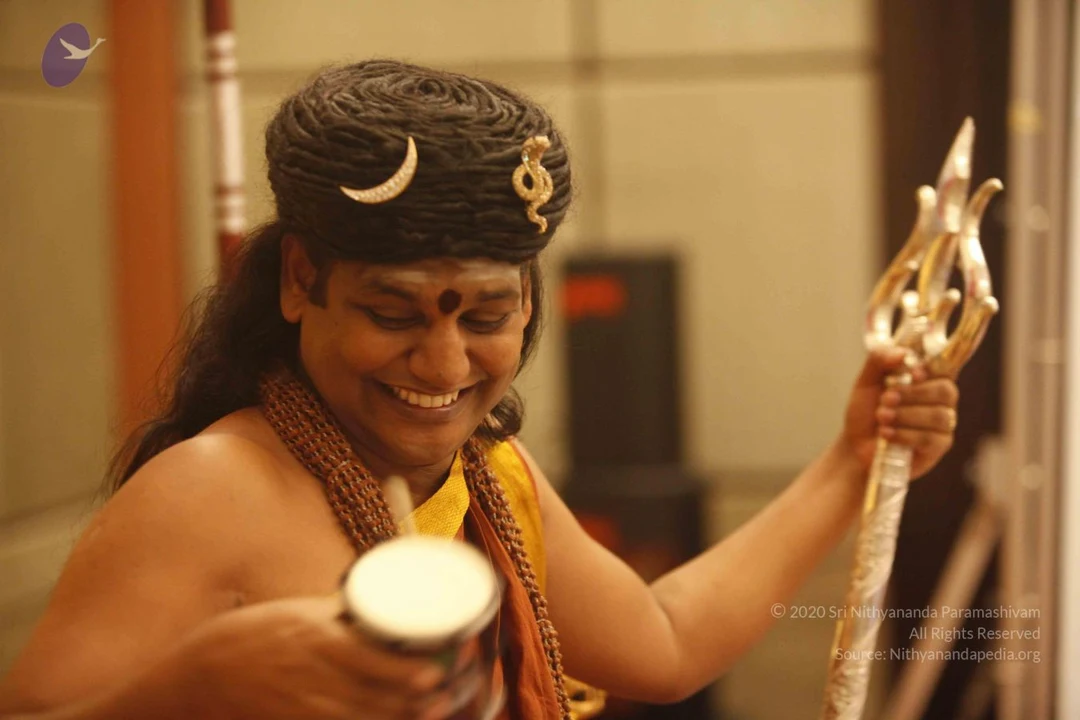
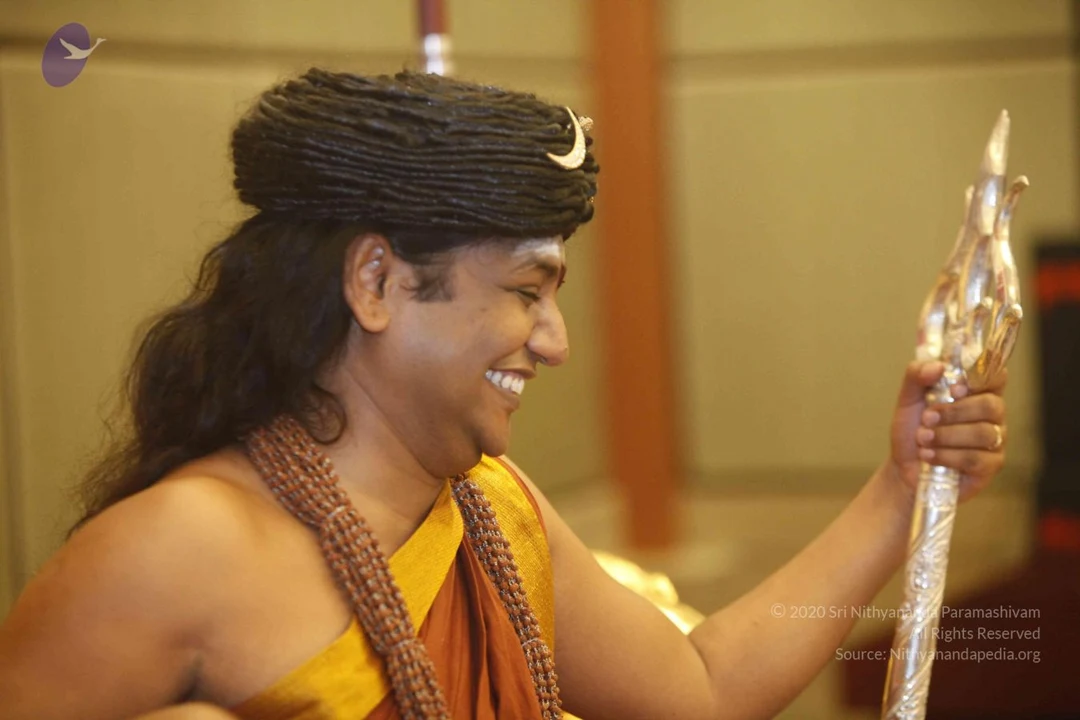
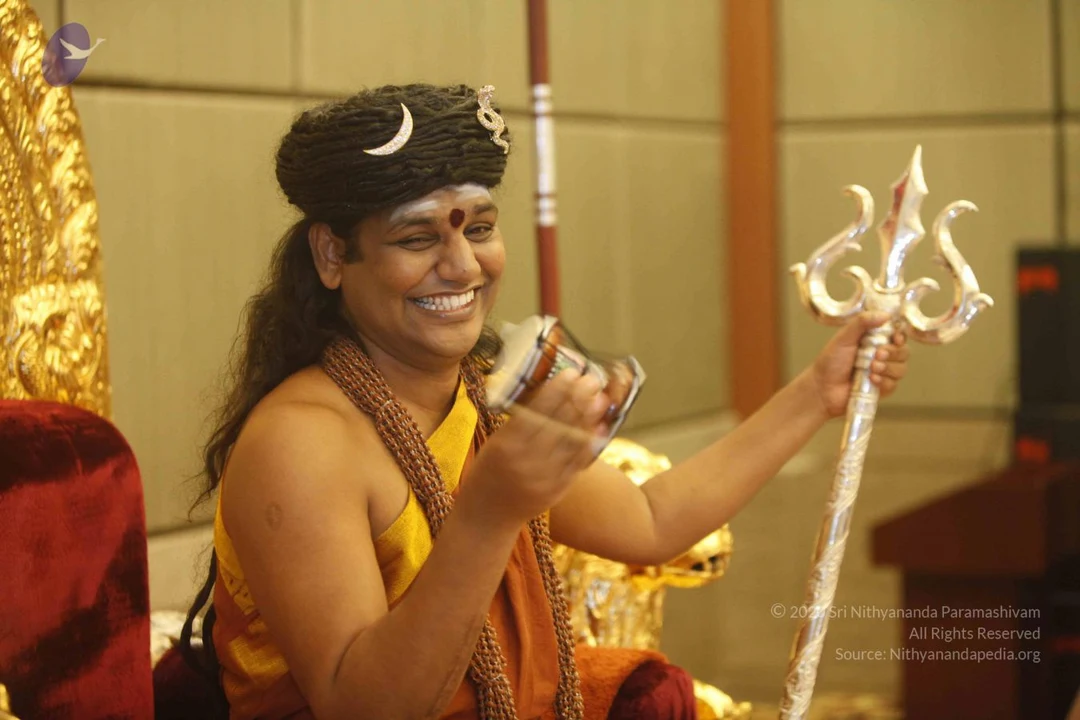
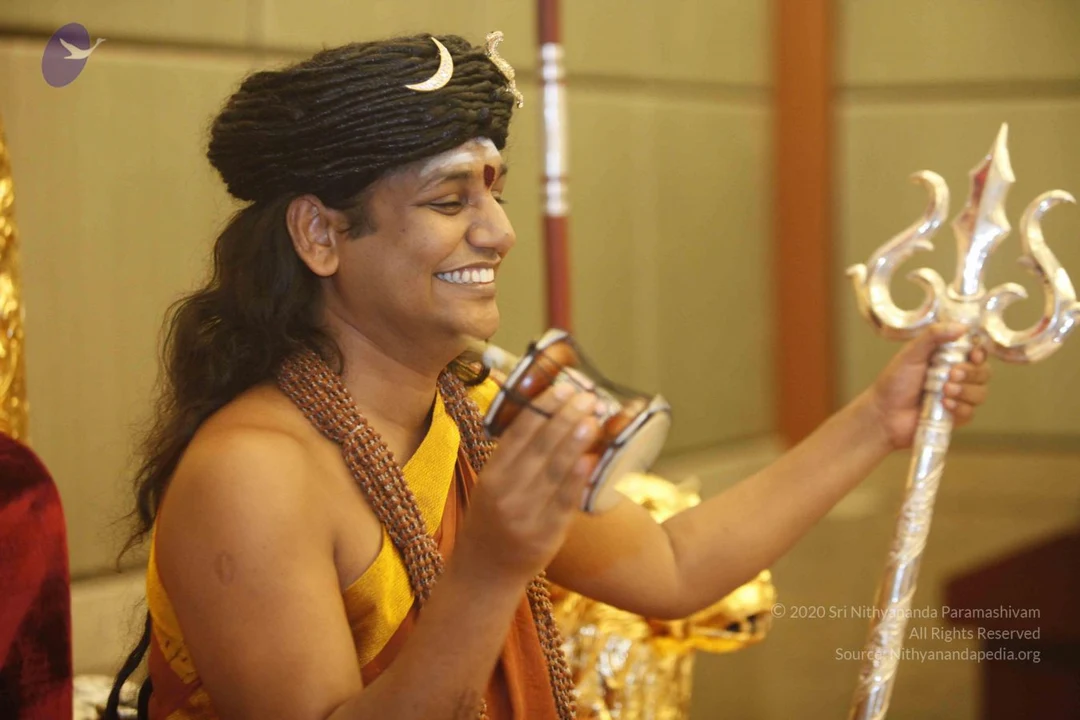
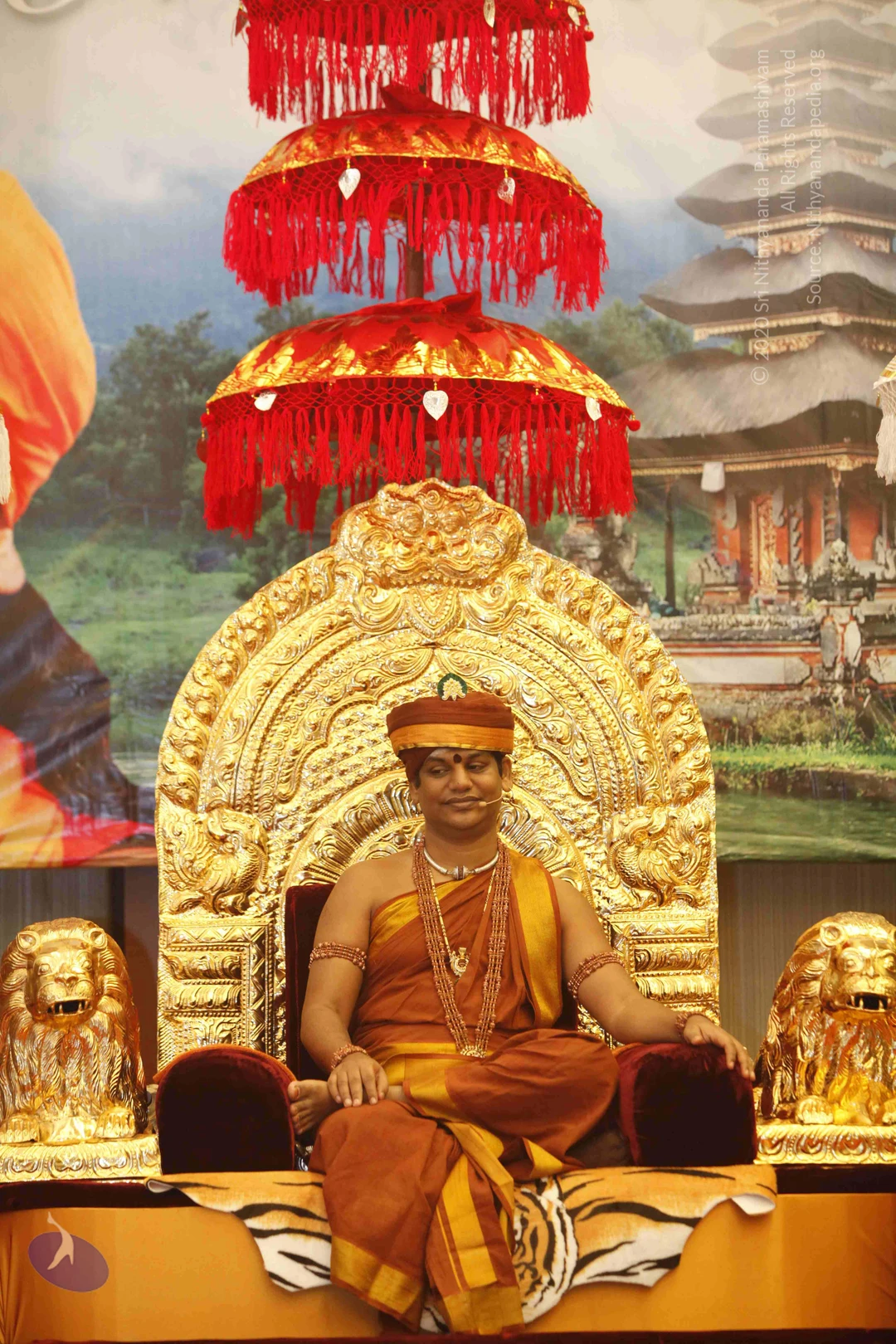
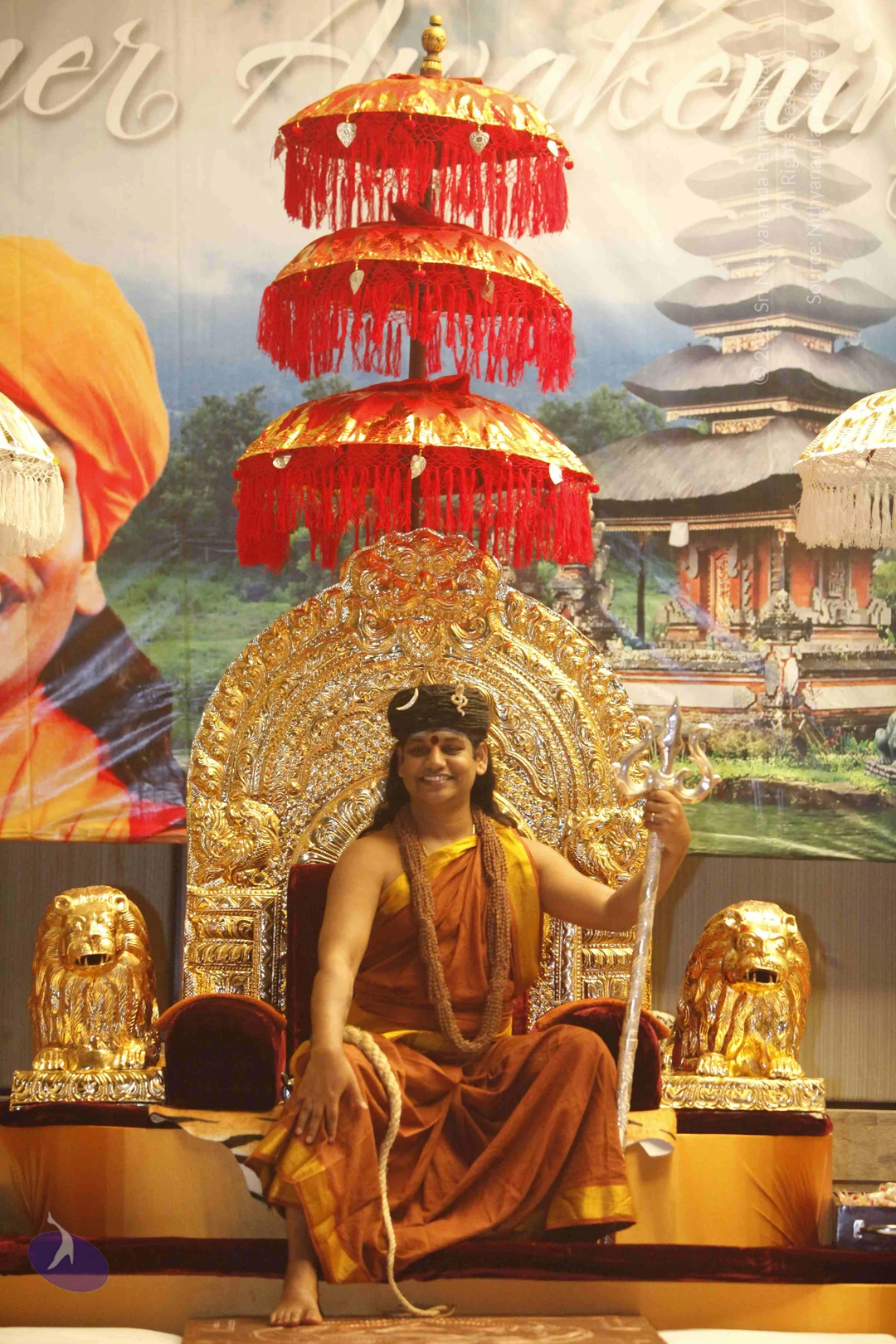
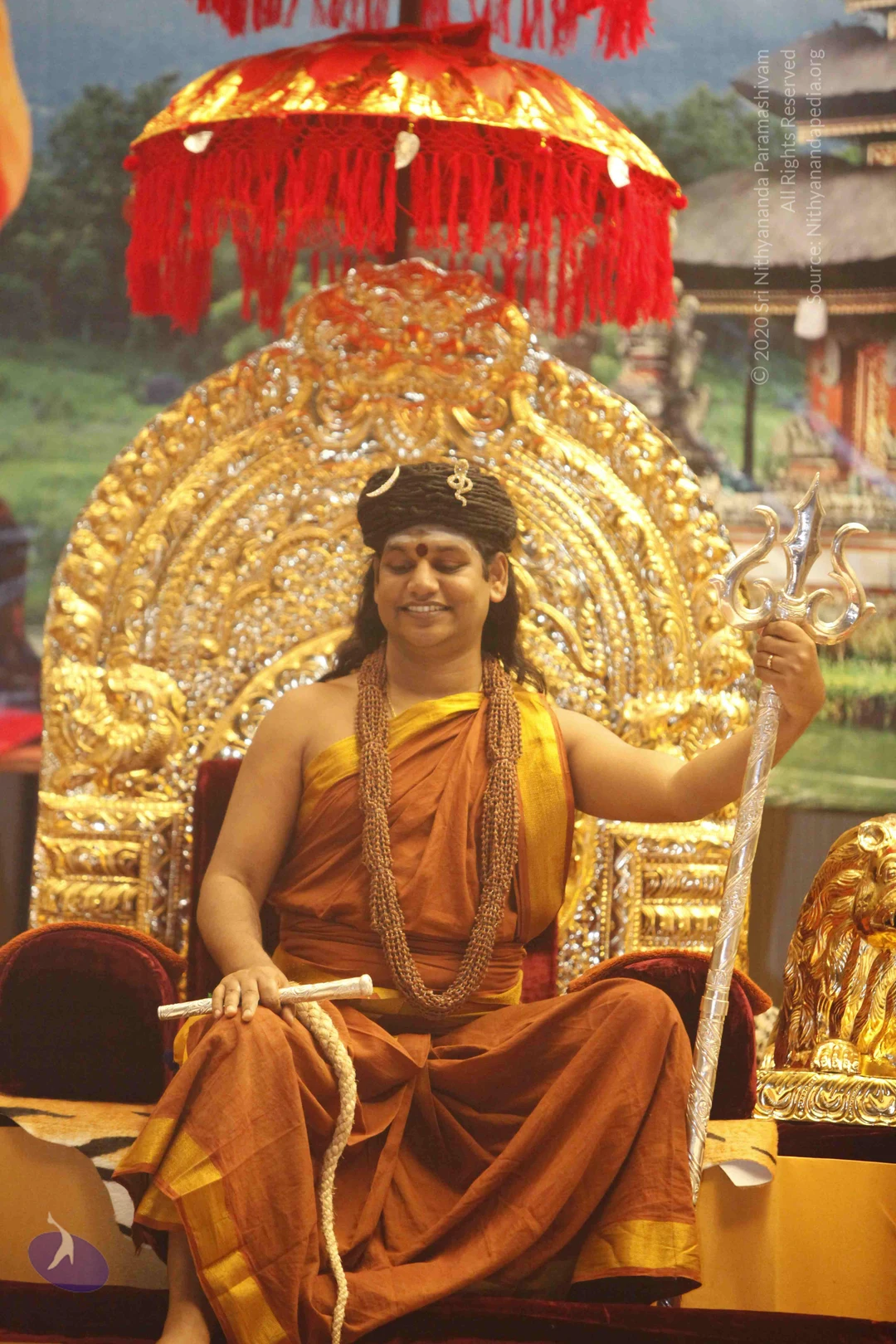
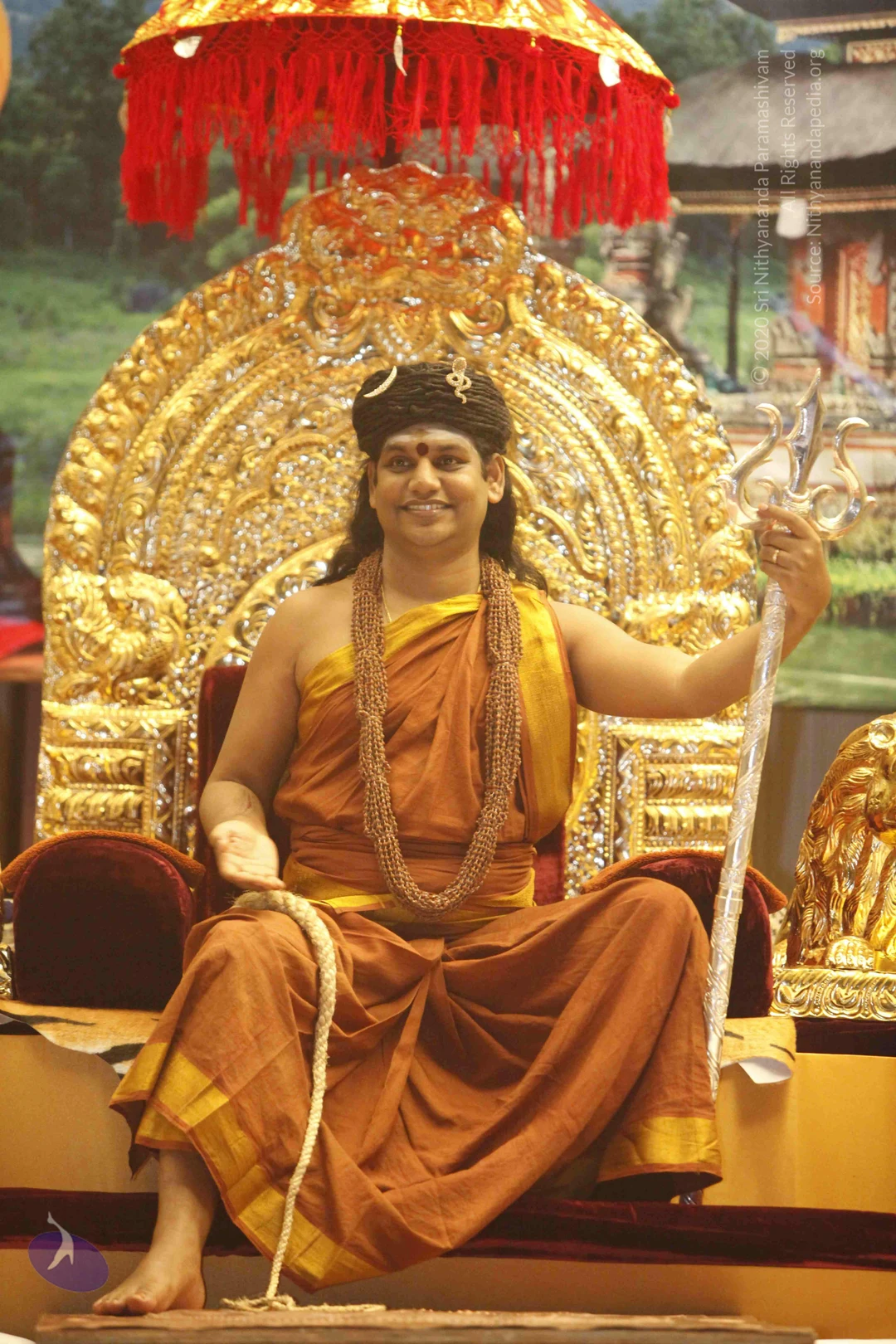
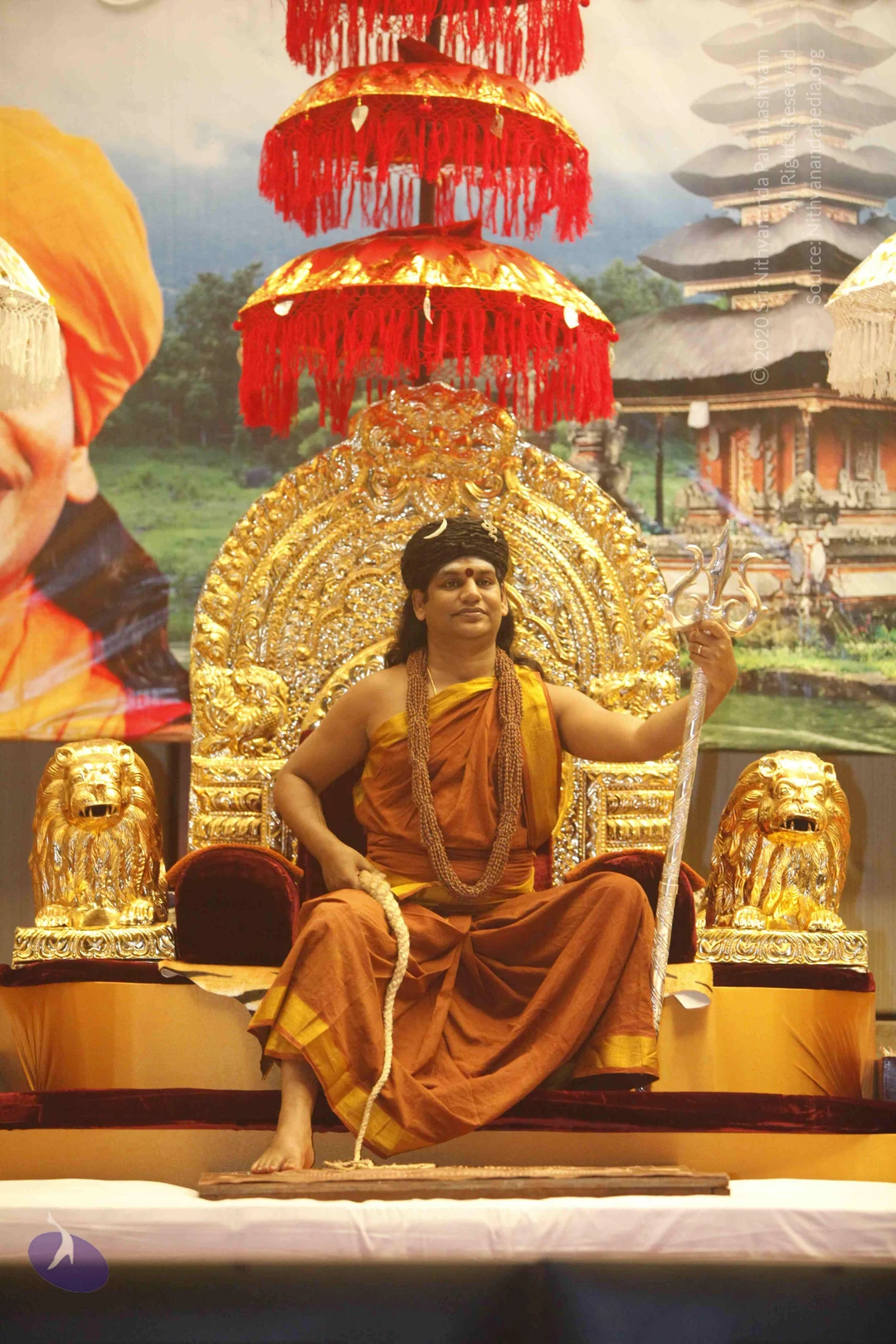
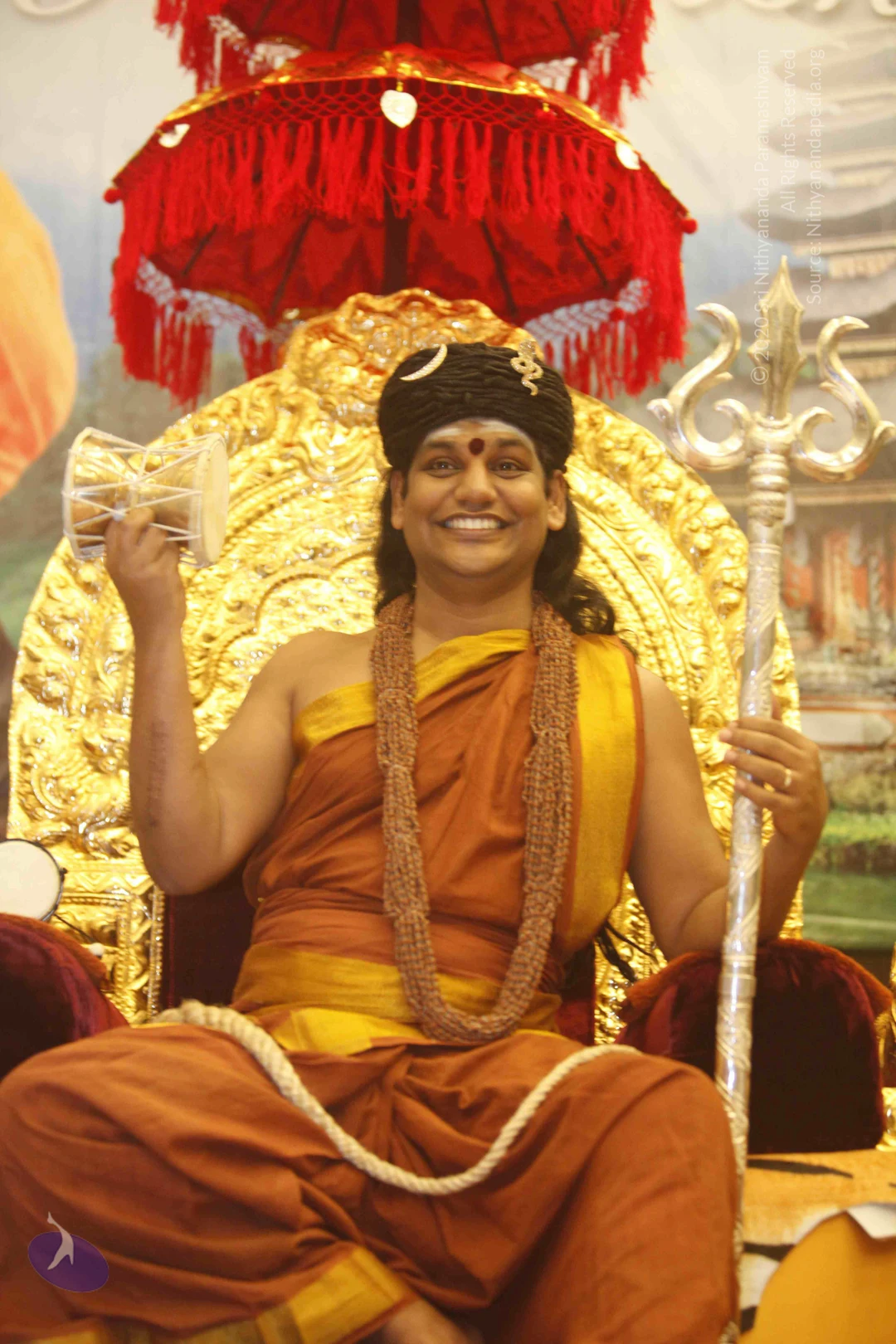
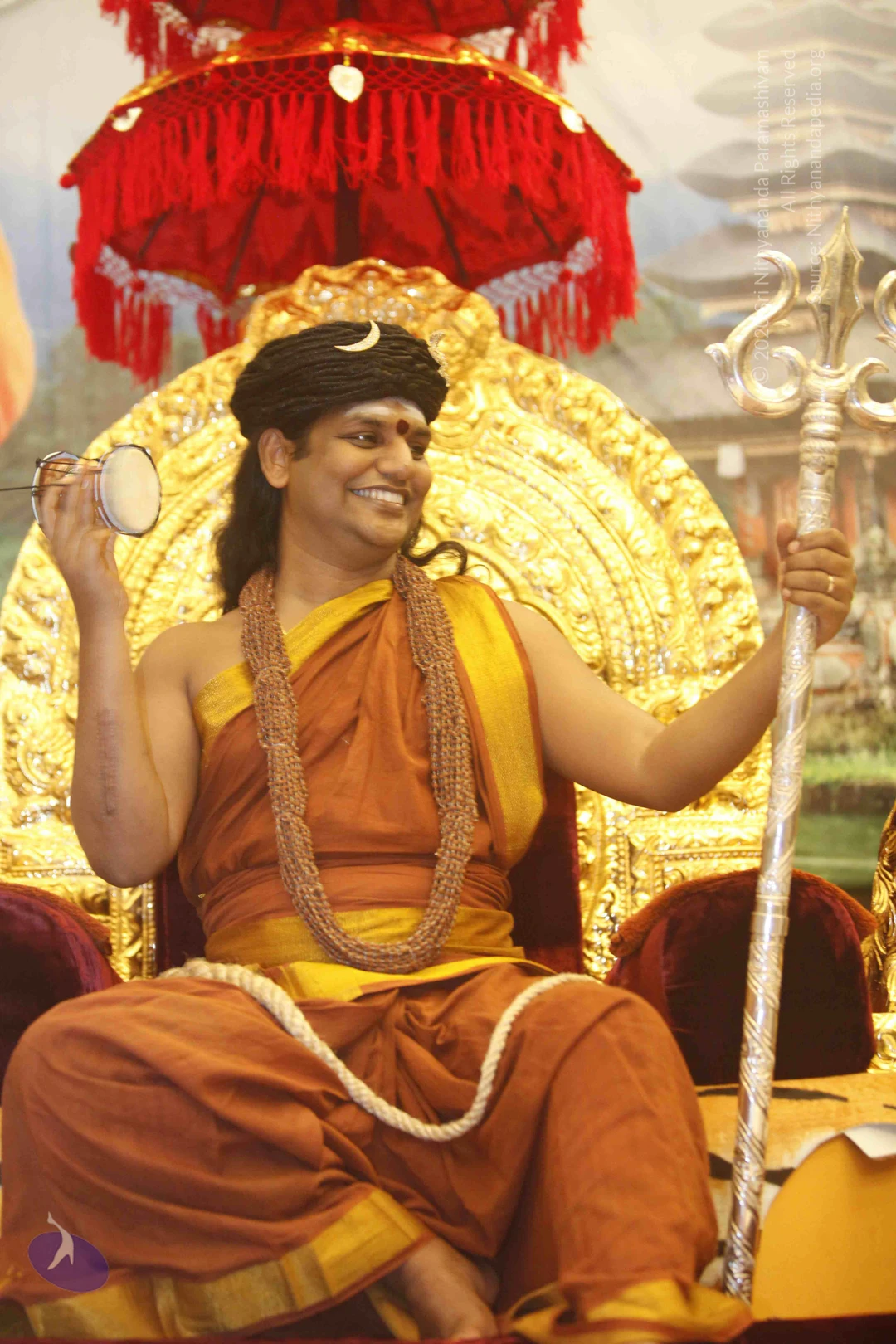
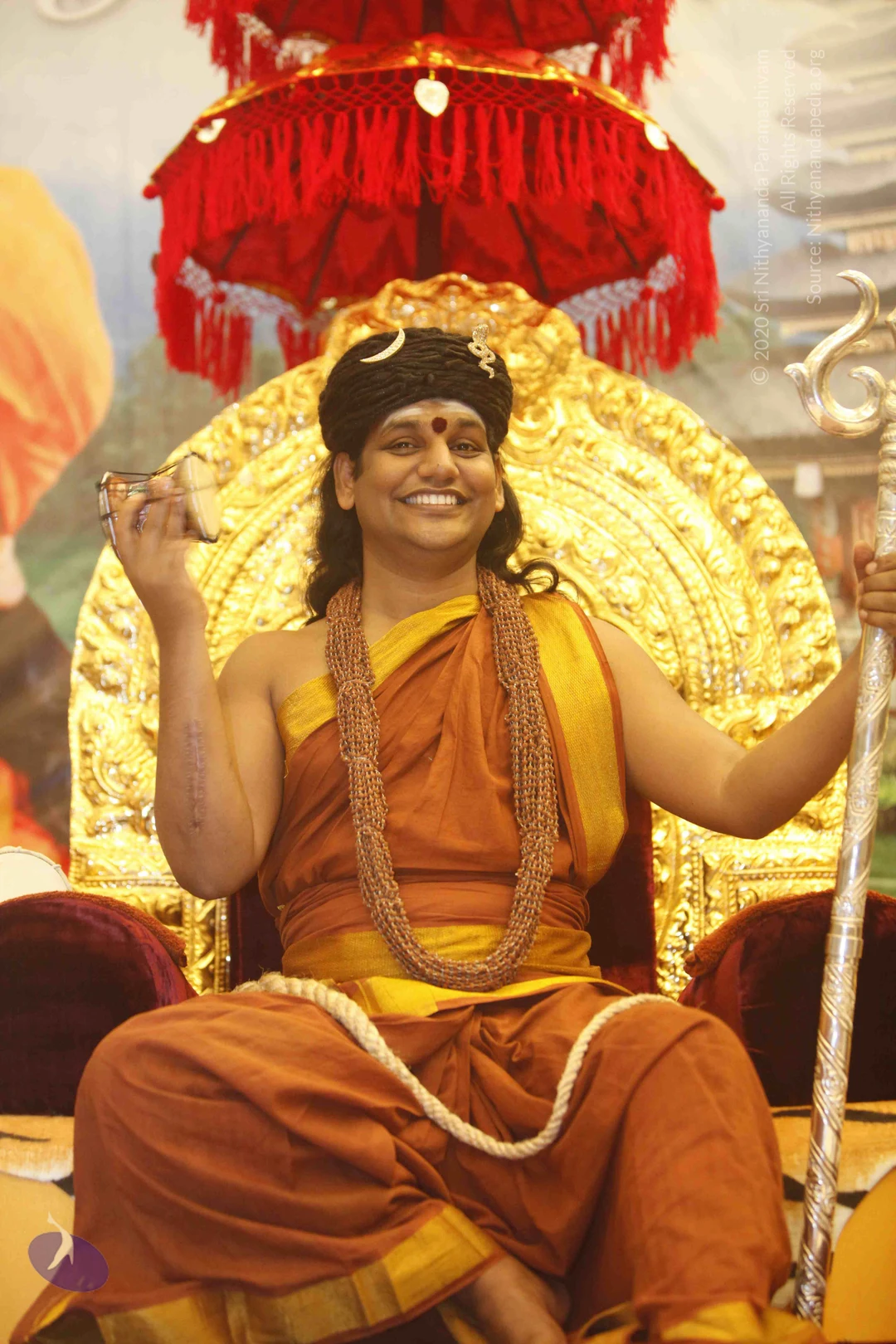
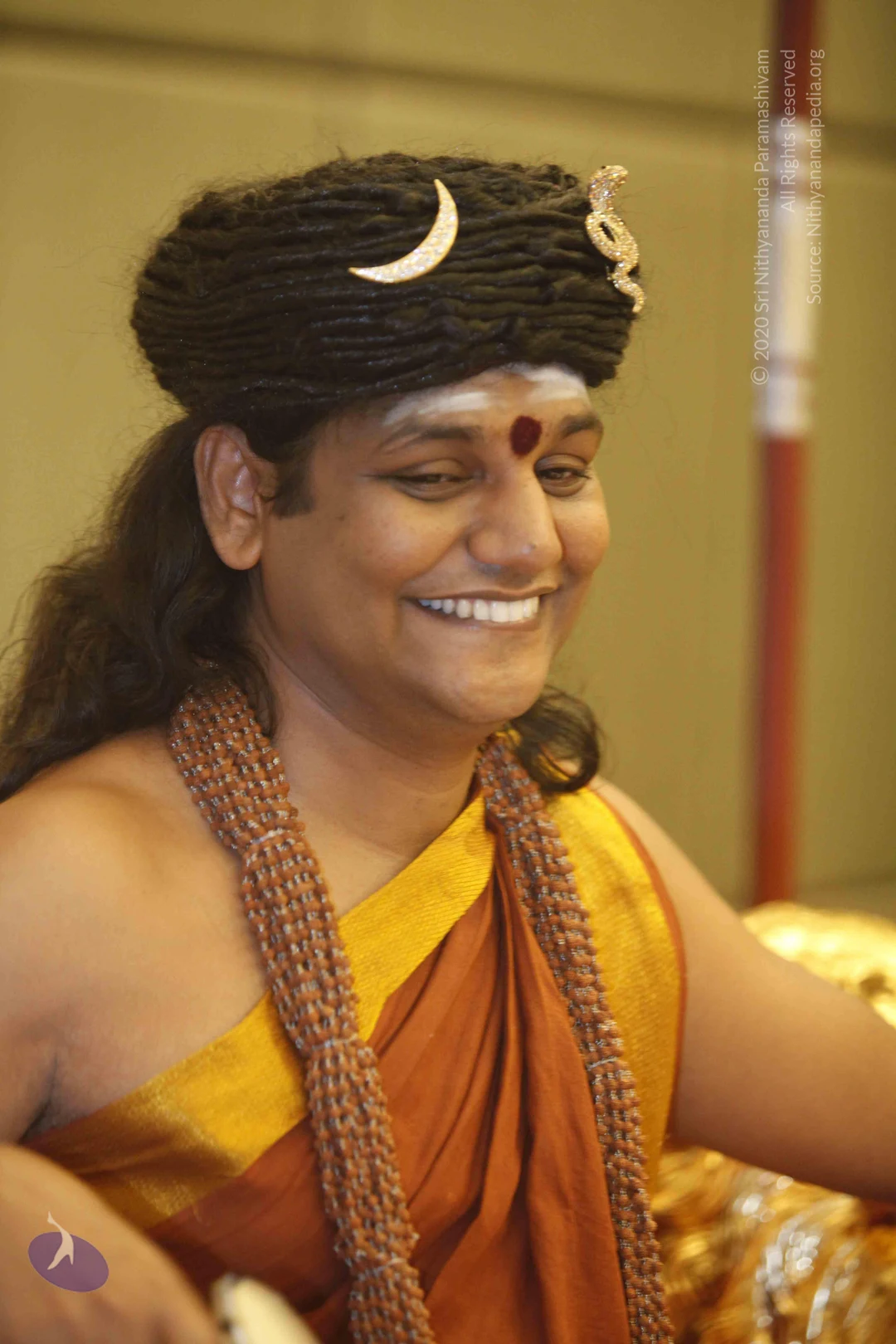
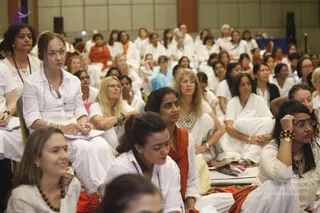
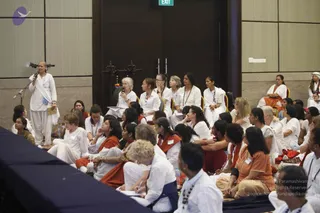
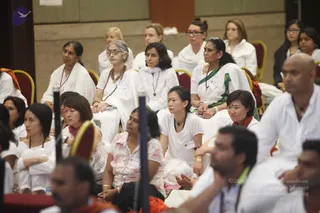
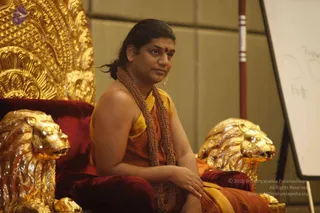
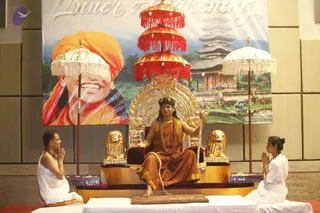
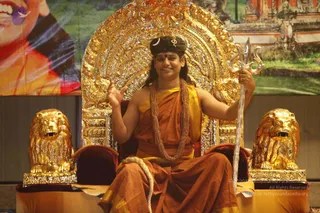
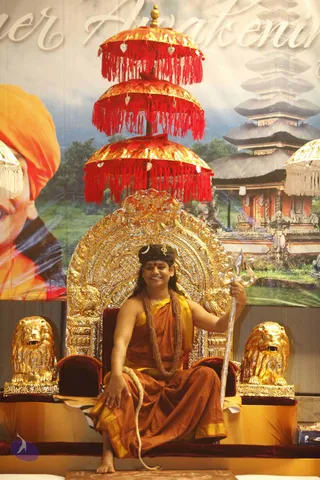
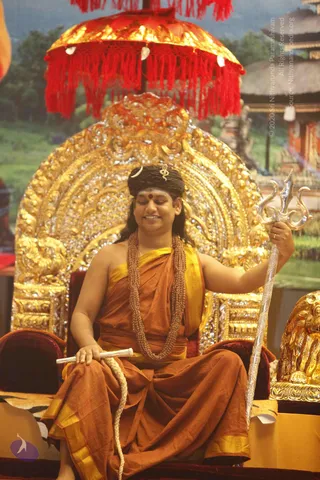
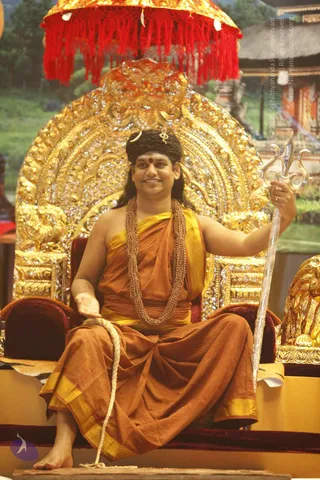
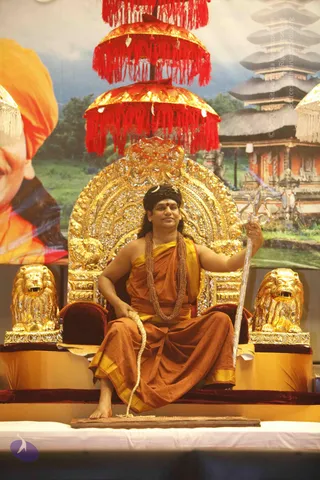
A satsang hall with a carpeted floor and a red-draped raised seat on the left. A seated figure in an orange-and-gold sari sits on an ornate wooden chair with turned legs, legs crossed, facing right. A camera on a tripod and a sound mixing desk with laptops sit near the centre. A bald man in orange robes sits cross-legged on the floor at lower right with a laptop. A woman in an orange sari with a rudraksha mala sits in the foreground at a laptop. In the background a grey-haired woman in white stands at a microphone holding a mic, and another bald man sits near the audio equipment. Black drapes hang beside a beige wall.A photograph of a seated figure with long dark hair, a crescent ornament at the crown, and a rudraksha-style chain, wearing an orange-and-gold shawl, placing his right hand on the head of a bald man in a white shirt with a red-beaded necklace. The man's palms are pressed together in namaskar with his eyes closed. A silver staff stands beside them and a golden deity murti is visible behind. The figure in orange is a probable Swamiji by appearance, with long hair, saffron clothing and a rudraksha mala; the man in white is a devotee receiving blessing. Plain wall panels form the backdrop.A man seated on an ornate gold throne with carved floral and scroll details, wearing a dark brown turban-like head wrap with a small silver ornament, a red bindi and tripundra-style marks, and an orange-and-gold wrap over his shoulders. He wears a long chain of dark rudraksha-style beads and holds a silver trident in his right hand and a small beaded object in his left. A large painted portrait of a smiling man in an orange turban and a red canopy stand behind him, with a temple-like structure at the right edge.

December 04 2013

Original wiki page
Contents

Title

Nithyananda Diary | Bali Inner Awakening Day - 4 | Paduka Puja | Satsang | Dial The Avatar | Nirahara Samyama | Sarvadarshan

Description:

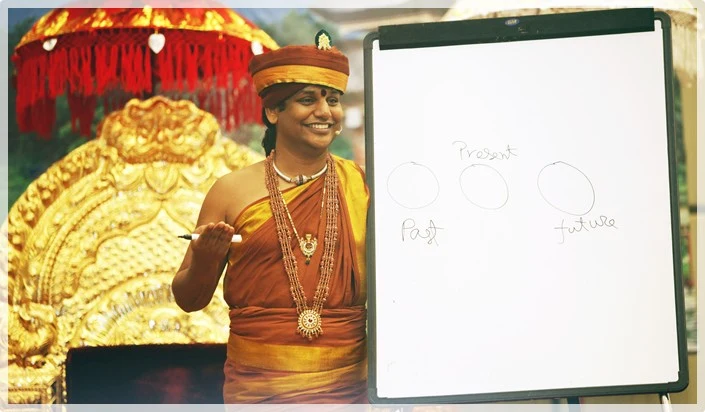
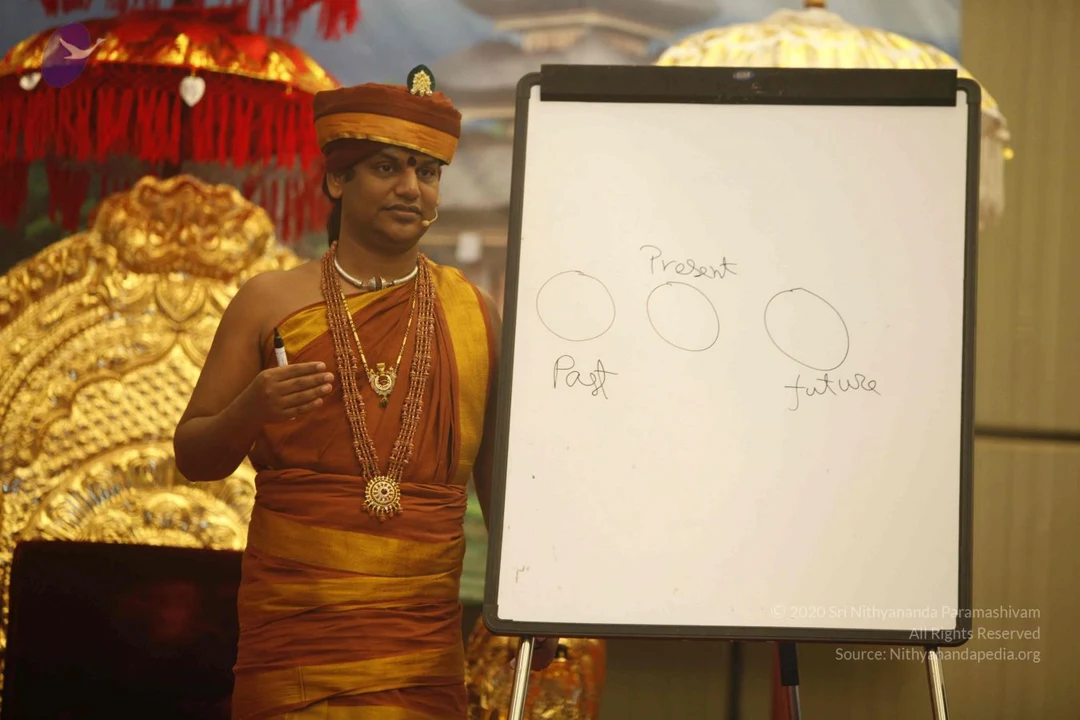
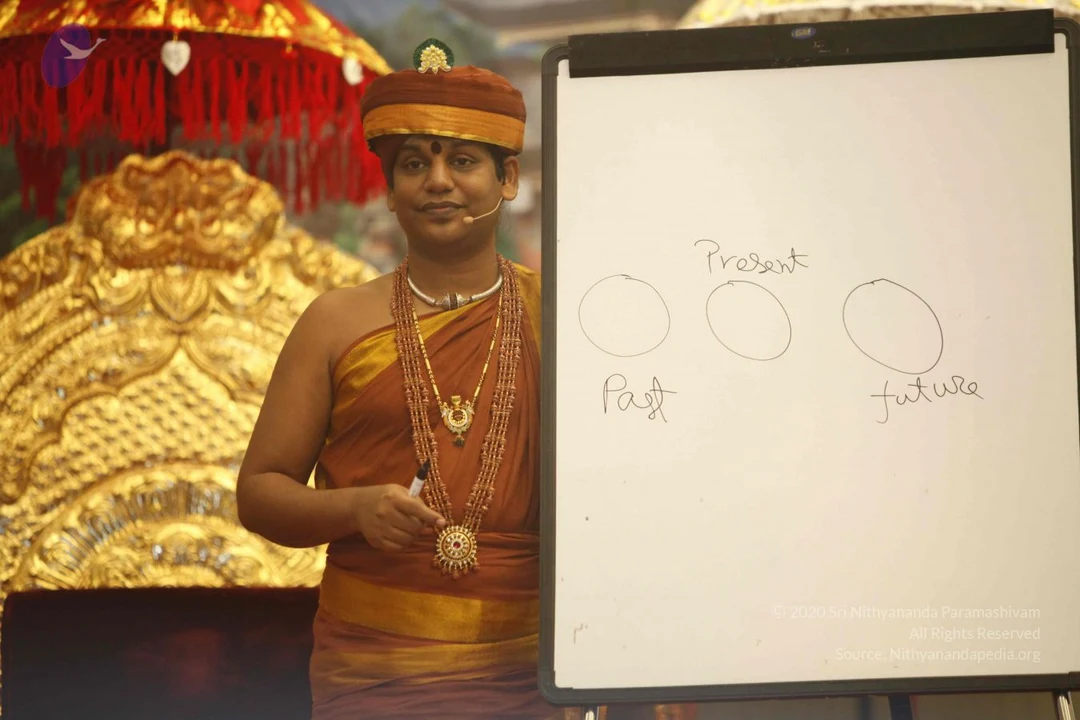
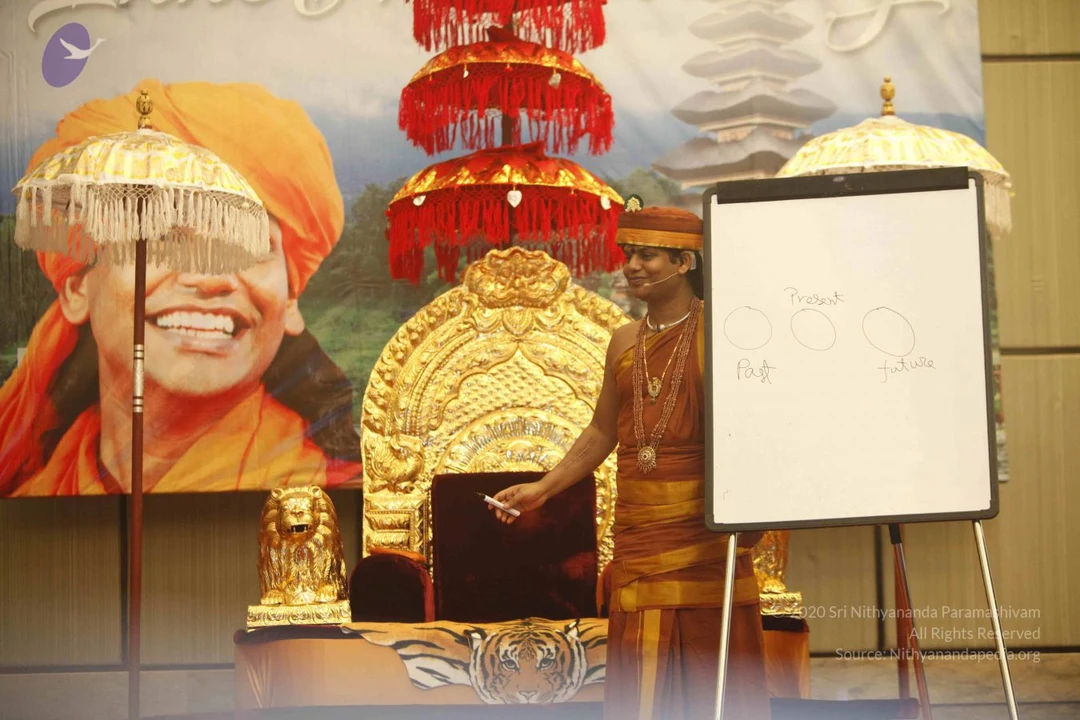
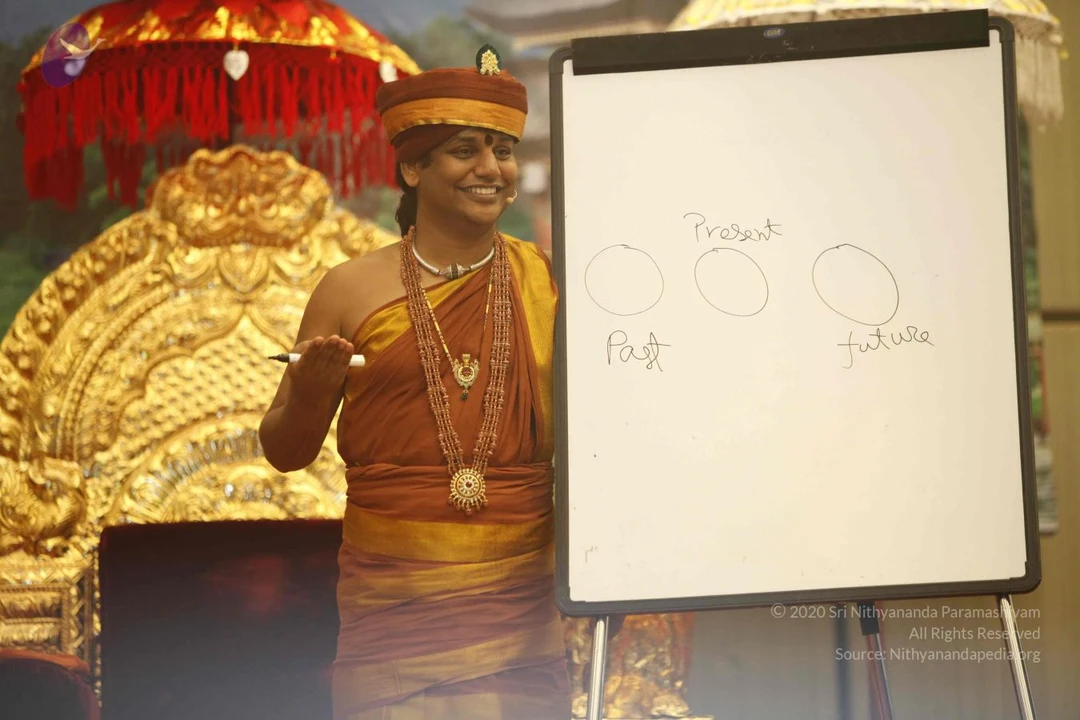
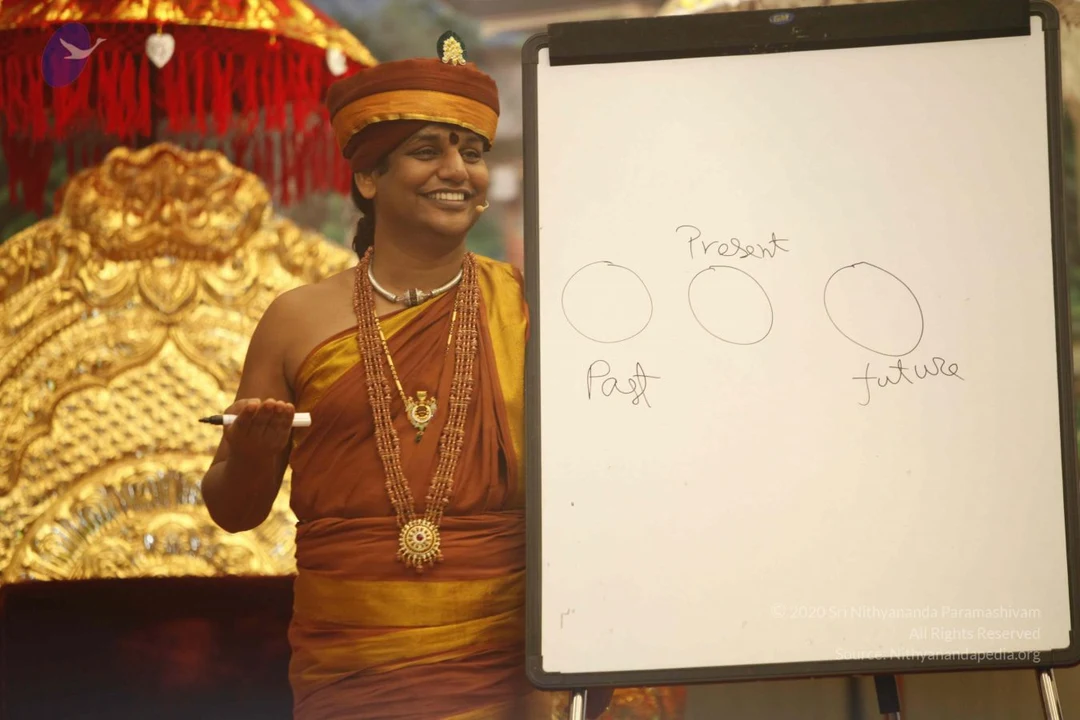
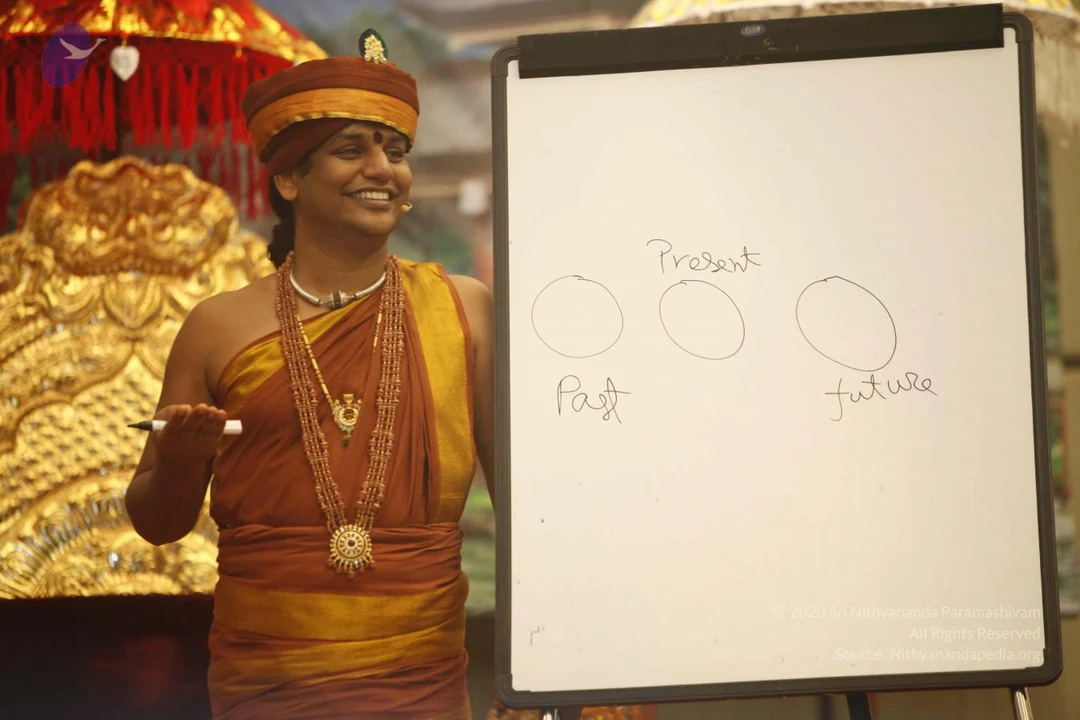
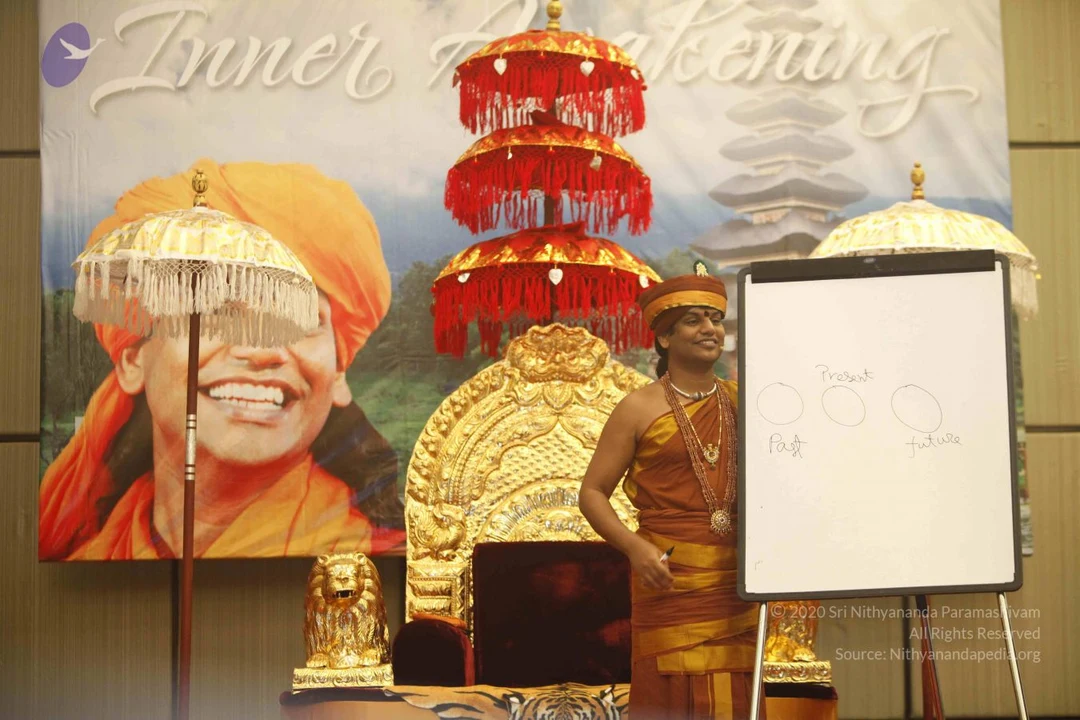
In today’s morning satsang from Bali Paramahamsa Nithyananda spoke to us about manana. He explained how in this era analysis is only for rejecting and discarding. Manana is intranalyzing.Intranalyzing is analyzing to internalize with pure truth seeking. He surprised us with the truth that the present is not filled with the past as we think it is filled with the future.He told us to search n the future for the past to complete all the incompletions.

Link to Video:

VideoAudio

Transcript:

Nithyanandeshwara Samaarambhaam Nithyanandeshwari Madhyamaam | Asmath Aachaarya Paryanthaam Vandhey Guru Paramparaam ||

I welcome all the devotees, disciples, samajis, satsanghis sitting with us through Nithyananda TV, Sadhna TV, Lotus News Channel, Eshwar TV, Janashree TV, and through two-way video-conferencing, all over the world.

The first Sutra on Knowledge in Vedic Tradition, the Brahmasutras, the first Sutra starts with "Athatho Brahma Jignasa", Let us inquire into the Truth, Let us inquire into Existence.

With this spirit of seeking the Truth, analyzing the Truth is Intranalyzing. Understand these few sacred secrets; then you will be able to understand what is Manana in a complete way. See, one of the biggest problems we have to live our present life is incompletions of the past. But, unfortunately, you don't understand the way the Past enters into your Present. Unless you understand the way it enters, you cannot get it out. Always you think your Present is filled with your Past, which is not true. Please listen! If you are listening, this should be a shocker for you! Your Present is not filled with your Past; it is always filled with your Future! Understand, the day before coming to Bali, November 28th or 29th or 30th, how you were feeling? Not only physically, even psychologically. You were there in the same old house with the same , same family, same job. You were there with them only. But how come you are all flying? Because, the Future was already filling the Present!

Same way, imagine the 22nd of December how you will be? 21st of December you will be here with me; but you will be already like Nooo...; because, the Future is filling. So, please understand, your Future only is filling the Present, but your Future is filled with your Past! Understand, if you are thinking your Present is filled with your Past, you will never be able to solve the problem, because the Kaala Chakra.....you have to understand the secret of Kaala Chakra. Kaala is painted in Hindu Tradition as a snake swallowing its own tail. Snake swallowing its own tail, that is the way Kaala is painted. The snake's head is Past, tail is Future. Be very clear, nothing about the Present is mentioned.

In the visualization and presentation, only the Past and Future is mentioned; because, the description says, the Present can never be visualized and painted; by the time you paint, it has moved! By the time you click the picture, it is no more present! Past swallowing the Future is Time. You need to know where are you really living and what is the real obstacle. In any field we have geniuses. You can't cross Sushrutha in the Medical field, you can't cross Panini in Linguistic excellence, you can't cross Patanjali in Yoga. You can carve your own face for the Patanjali statue, that is okay! But you can't cross Patanjali! You can not! And you don't need to kids ! For the sake of kids we will be together This is Indian divorce!

Indian divorce means, they will never separate legally, they will be together, even they will be living in the same house, sometimes even in the same room, but they won't be talking to each other! Any of you have seen or lived Indian divorce for some time in your life? (Somebody raises their hand). Yes, it is common, very common in India. Same way, your Past controls your Present, but not directly, but through the Future.

First, liberate your Future from all the Past sitting on it, all the over-dosage of dos and don'ts from your Past. Please understand, the dos and don'ts of your Past should not be harassing your Future. Complete with all of that. Then the Past which is complete can fill your Present. No problem. Future which does not have the baggage of the Past can possess your Present, can live through your Present. We don't have problem with that. What is the actual problem? The actual problem is not the Future.

The actual problem is Past disguised in the name of Future, Past wearing the cloth of the Future! Complete with everything sitting in your Past. Then welcome your Future. Complete everything sitting in the Future. All the decisions you made for the Future from the Past, complete with them. Then you are ready. The Future is beautiful to live! The Future is overflowing to live! The Future is a great Future! Understand, it is a possibility. The Future is God's statement to you: Still I trust you and I give you the possibilities! Future is great, but don't allow the Devil occupying the Future, the Past occupying the Future. No! The essence of today's satsang:

Know very clearly where you did the filing error. The Past is sitting in the Future, and the Future is dominating your Present. If you know this circle, only then you will know why you need to complete. Complete with all your Past sitting on your Future, so you will have a beautiful Present. With this, I will move to the next segment of the morning satsang Dial-the-Avatar.

Photos
Tags:

Paramahamsa Nithyananda, manana, analysis, intranalyzing,truthseeking, present,past,future, complete, incompletions

Photos Of The Day:

paduka-puja
temple
Photos Of The Day:

IA-YOGA-SESSION

PADUKA-PUJA

NITHYA-SATSANG

IA-SESSION

DARSHAN

1-NITHYA-SATSANG

2-IA-DARSHAN

Photos from this day

View all 232 photos

Photos

1 photoSource gallery
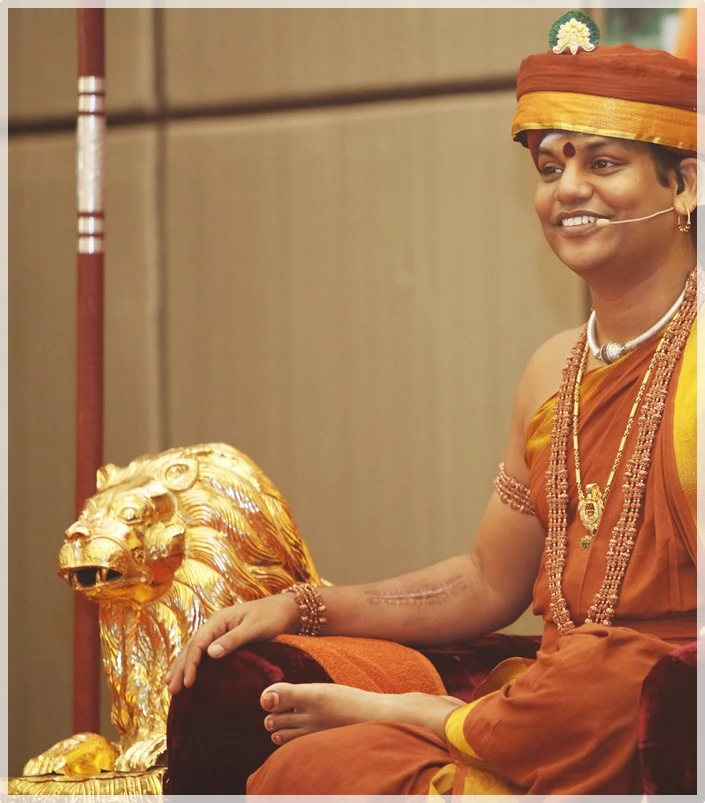
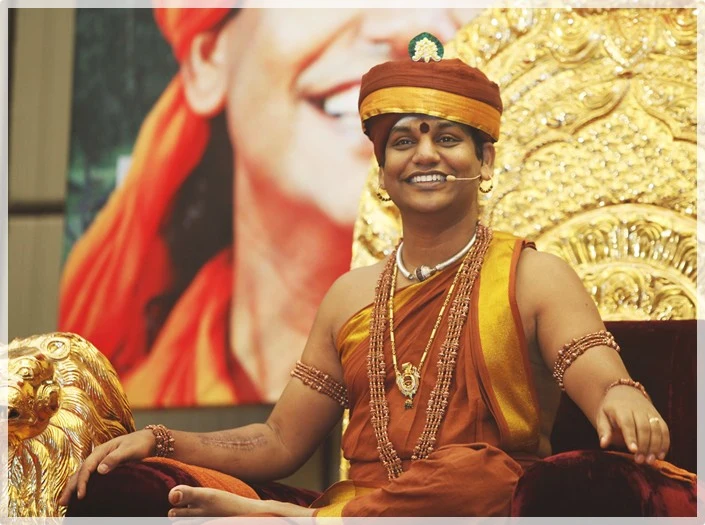
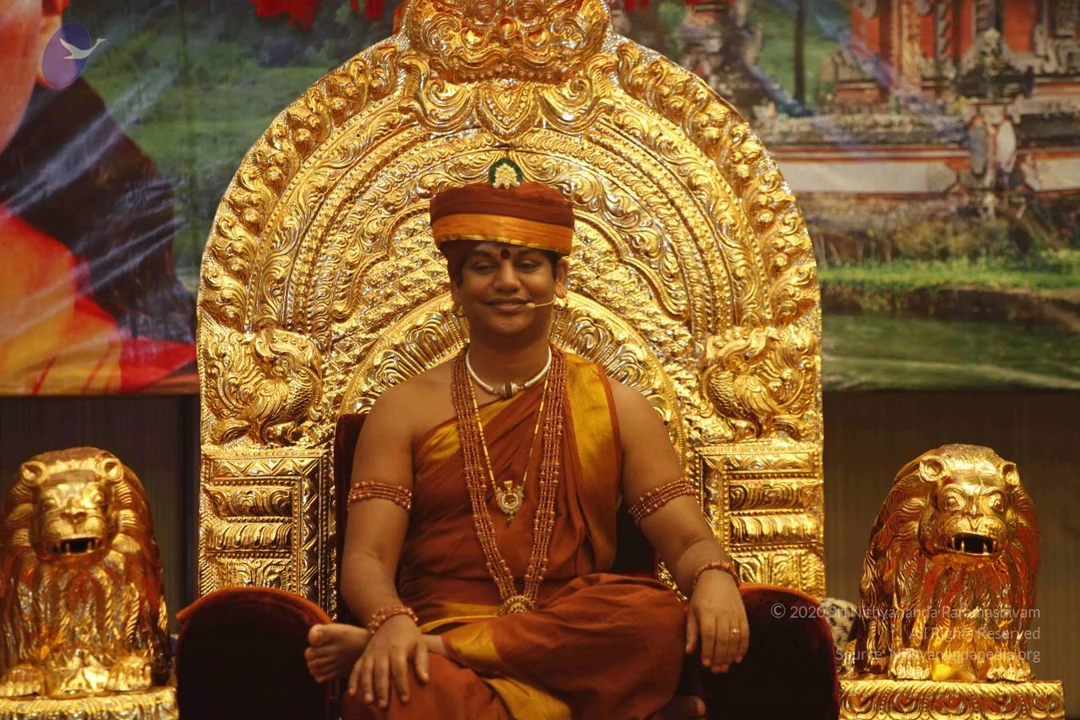
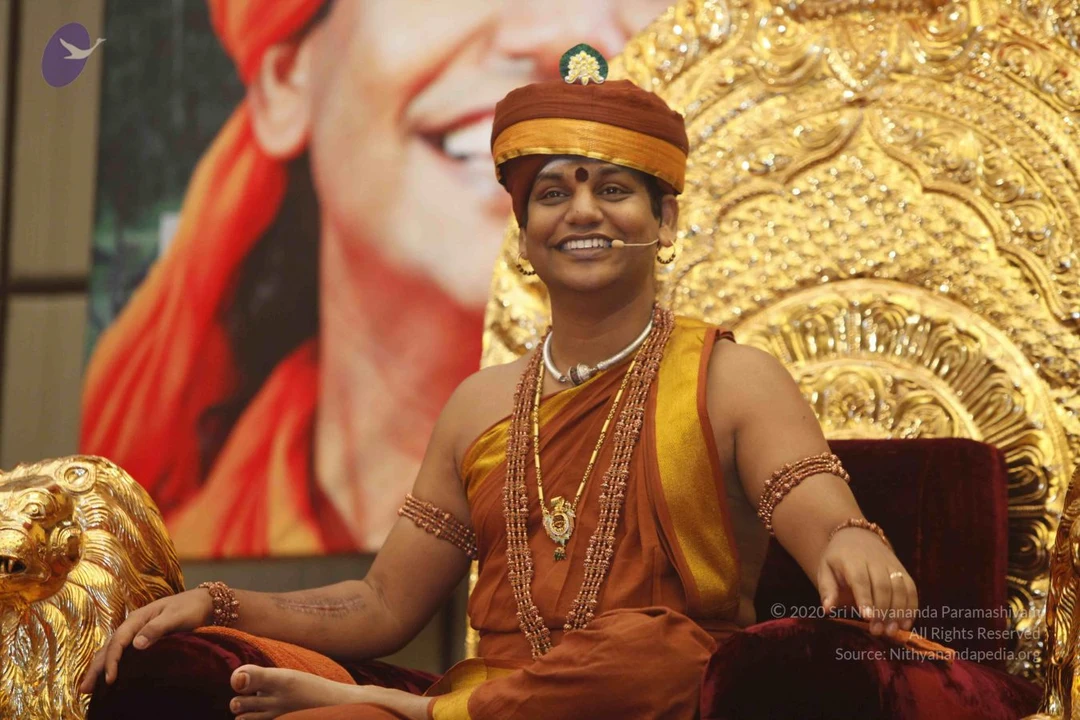
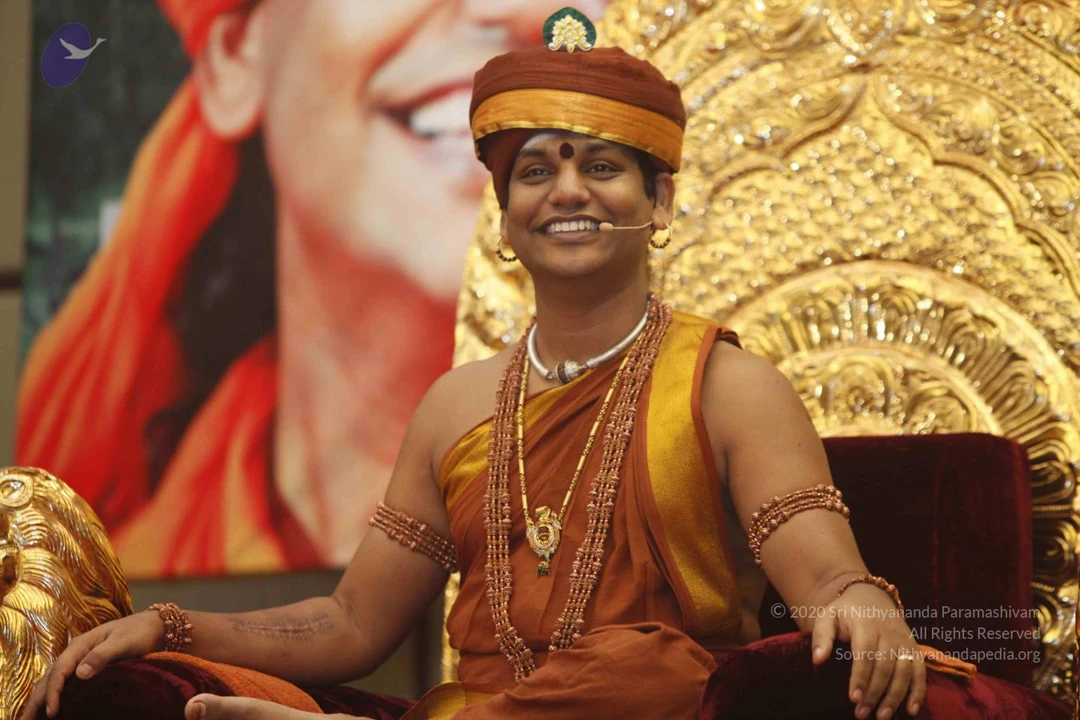
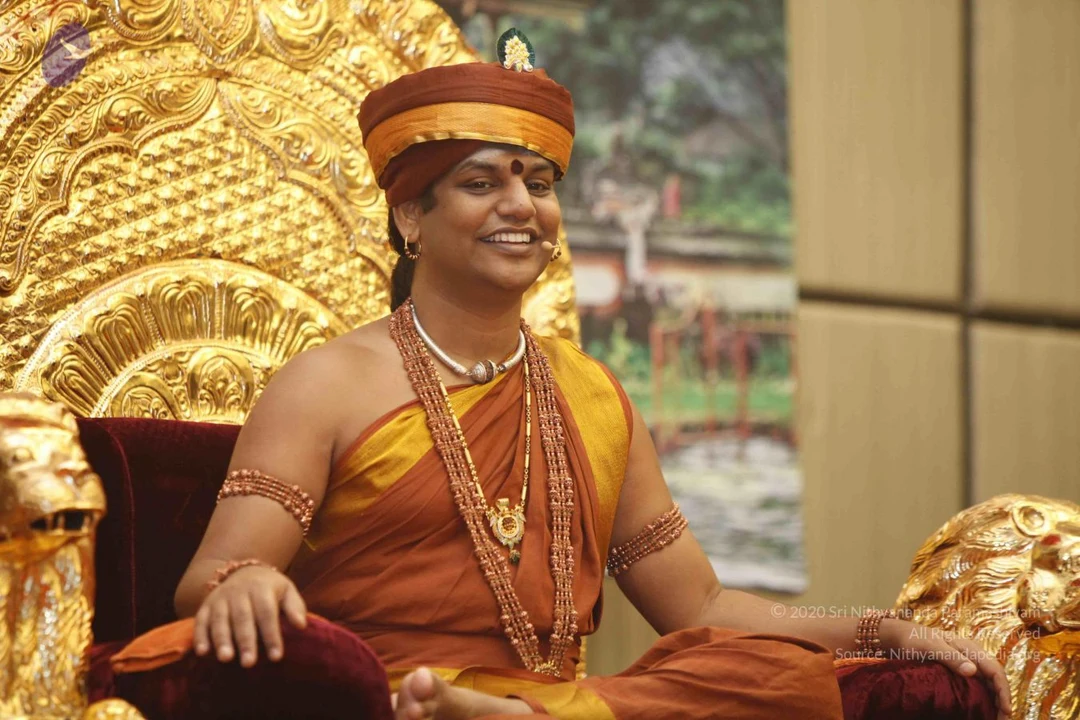
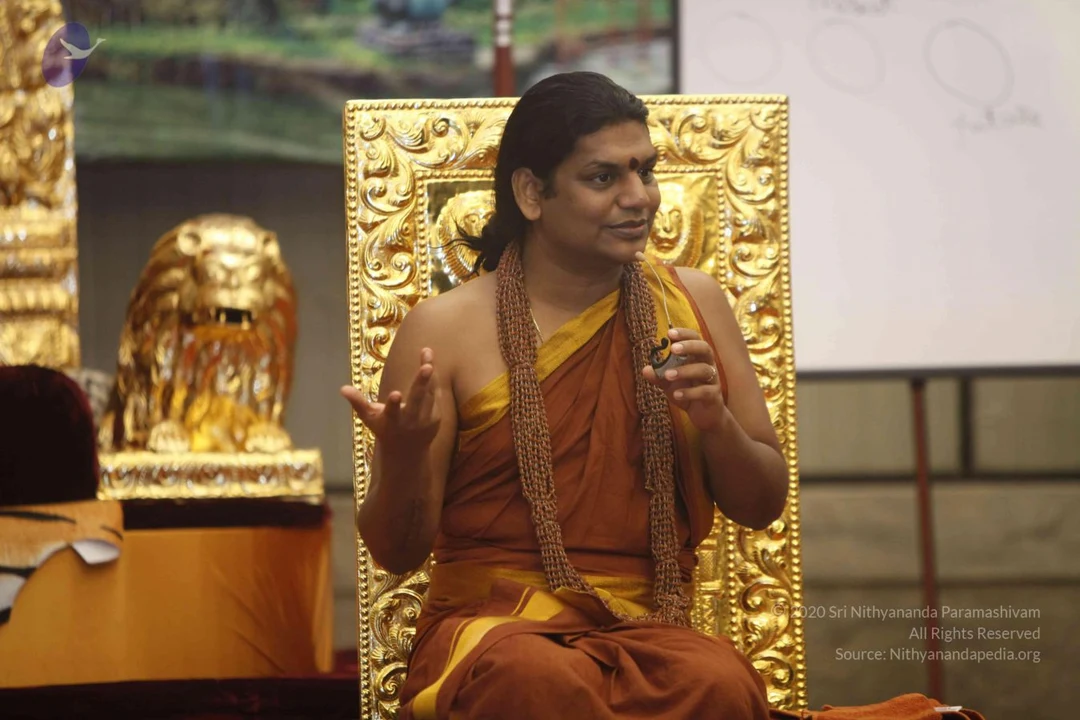
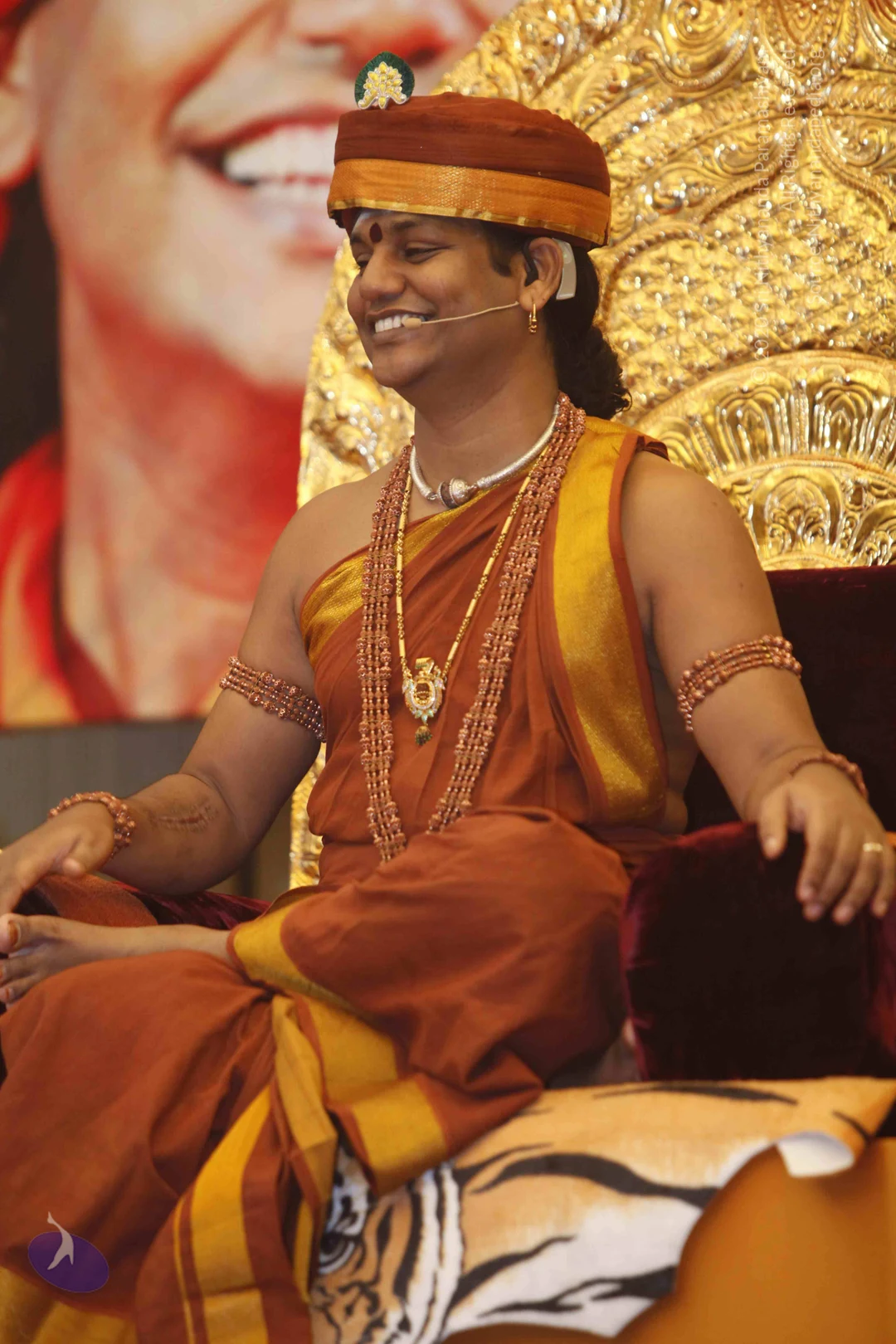
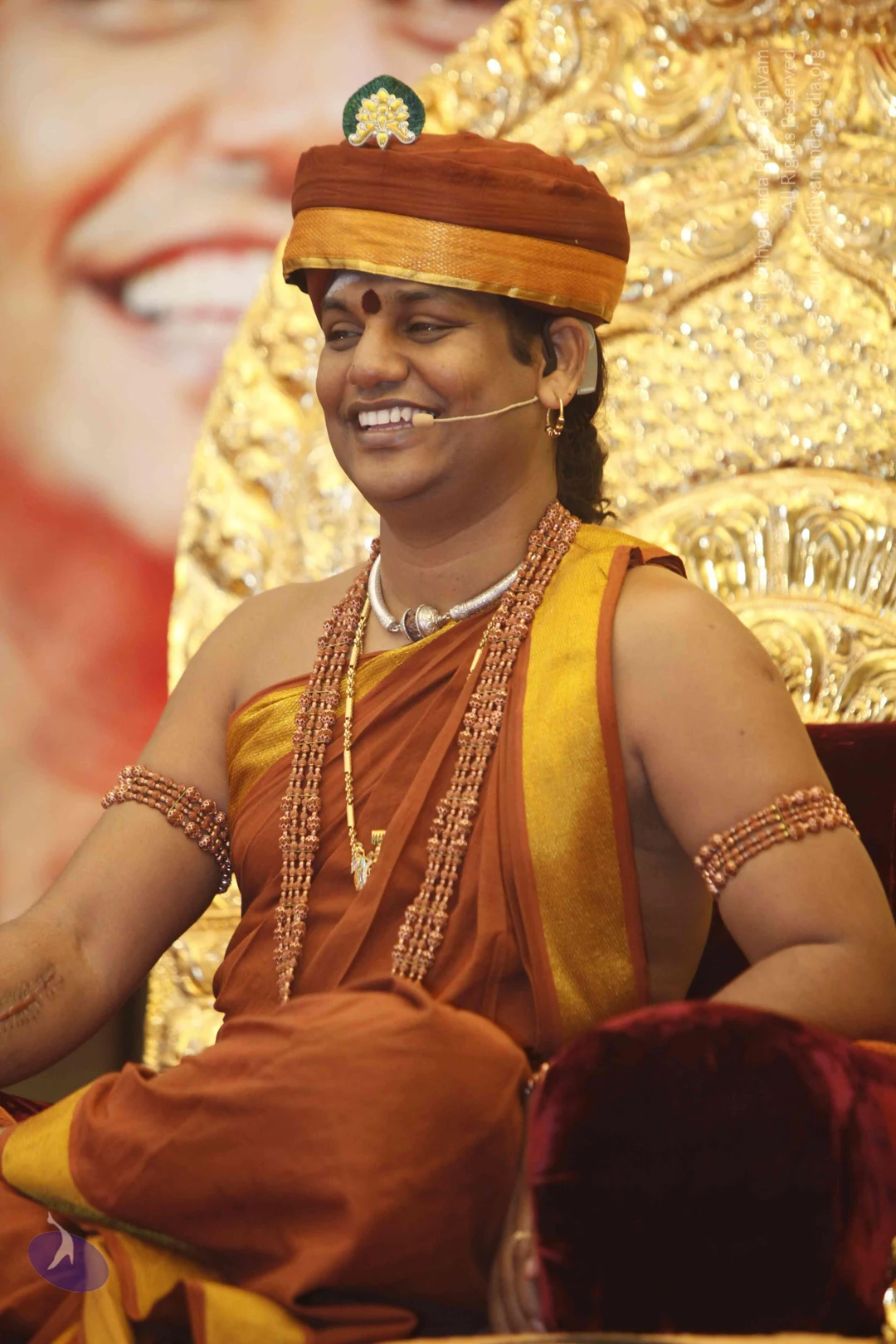
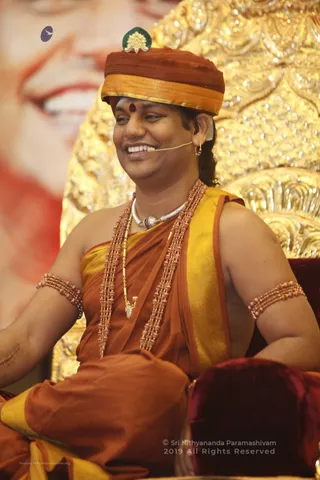
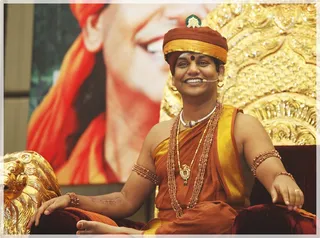
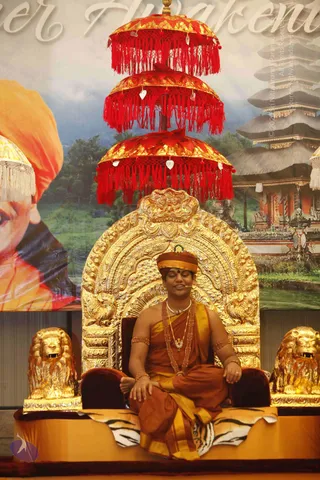
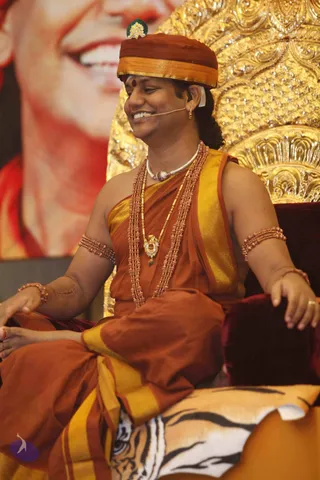
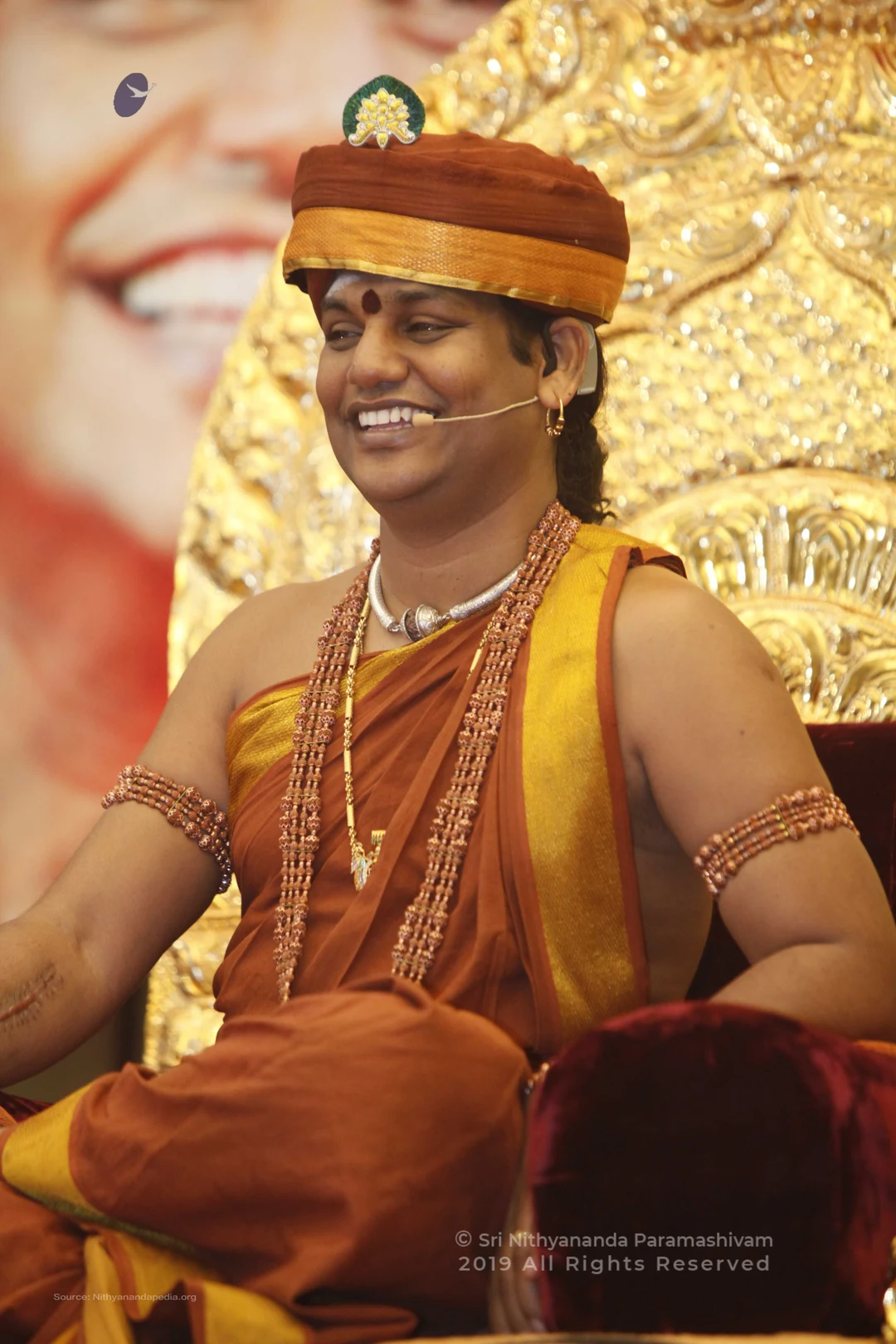
A smiling man seated on an ornate golden throne-like chair, wearing a rust-orange turban with a gold-bordered band and a green jewelled ornament at the front, a red dot on his forehead, and a small headset microphone. He wears an orange garment with gold-bordered yellow edging, multiple strands of rudraksha mala beads, a silver necklace, gold chain and drop pendant, and beaded armlets. A blurred portrait of a smiling face appears in the background at left.

Photos

10 photosSource gallery
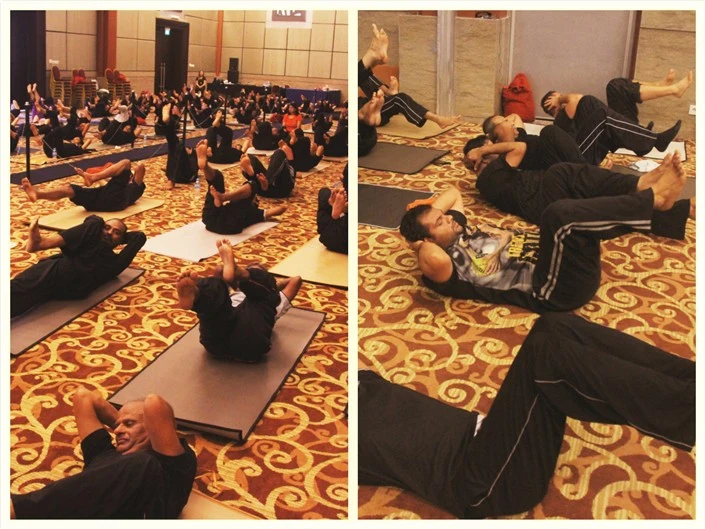
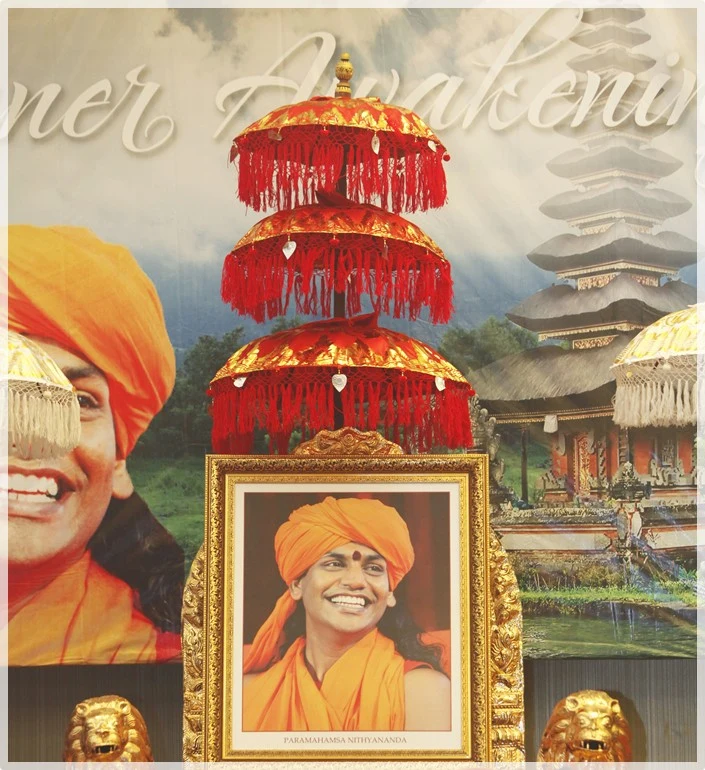
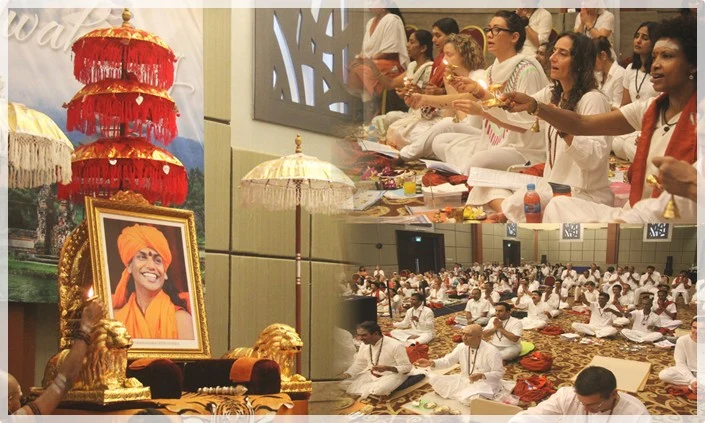
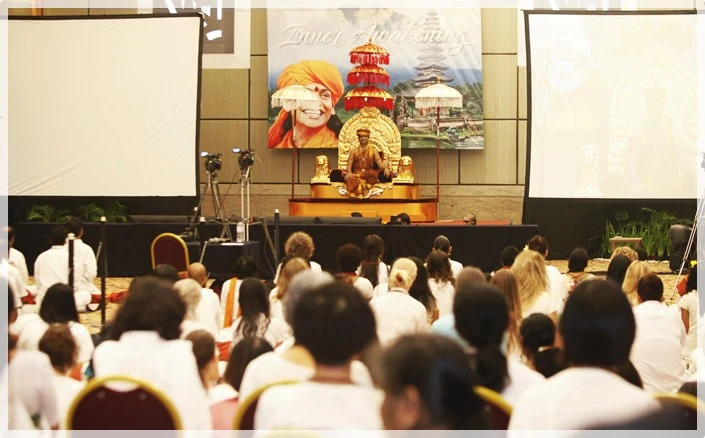
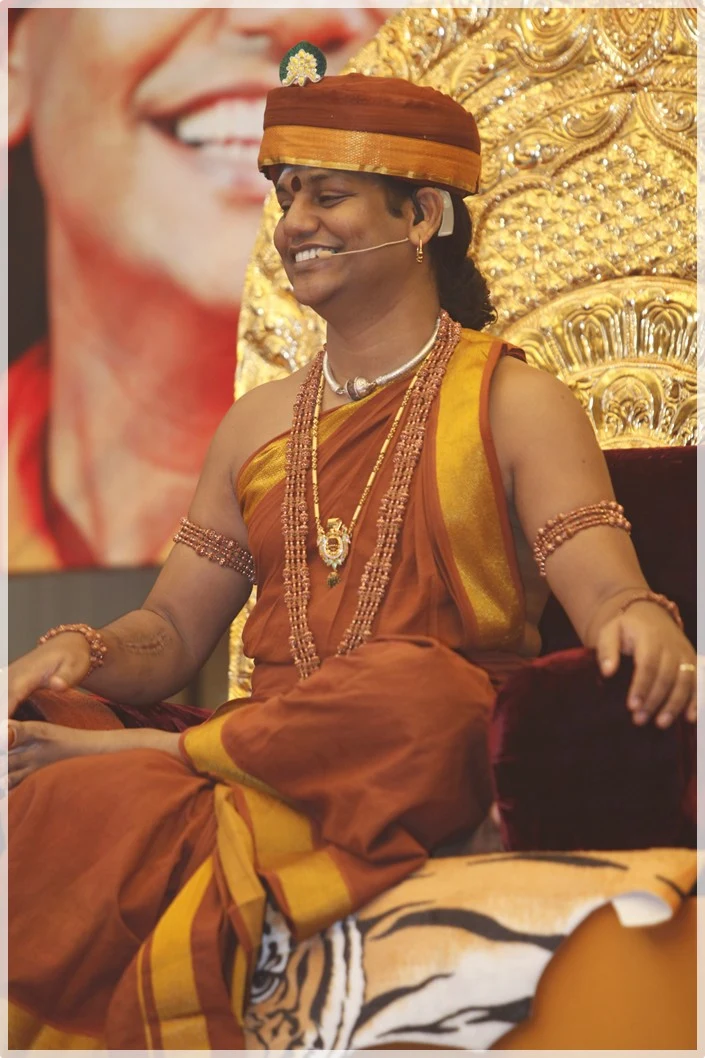
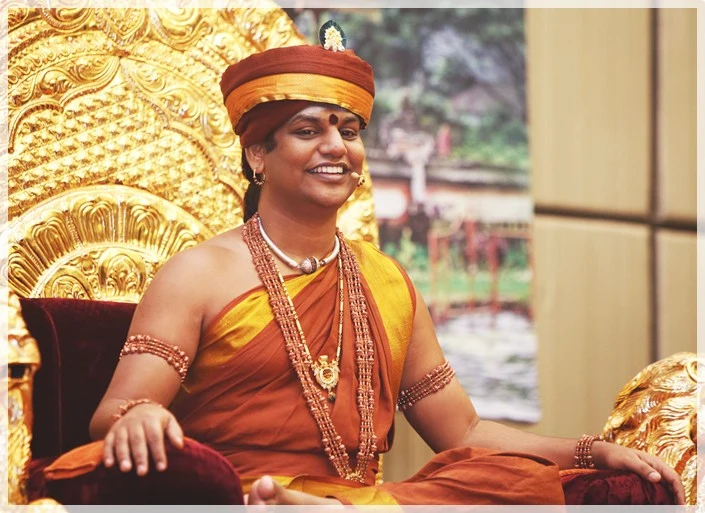
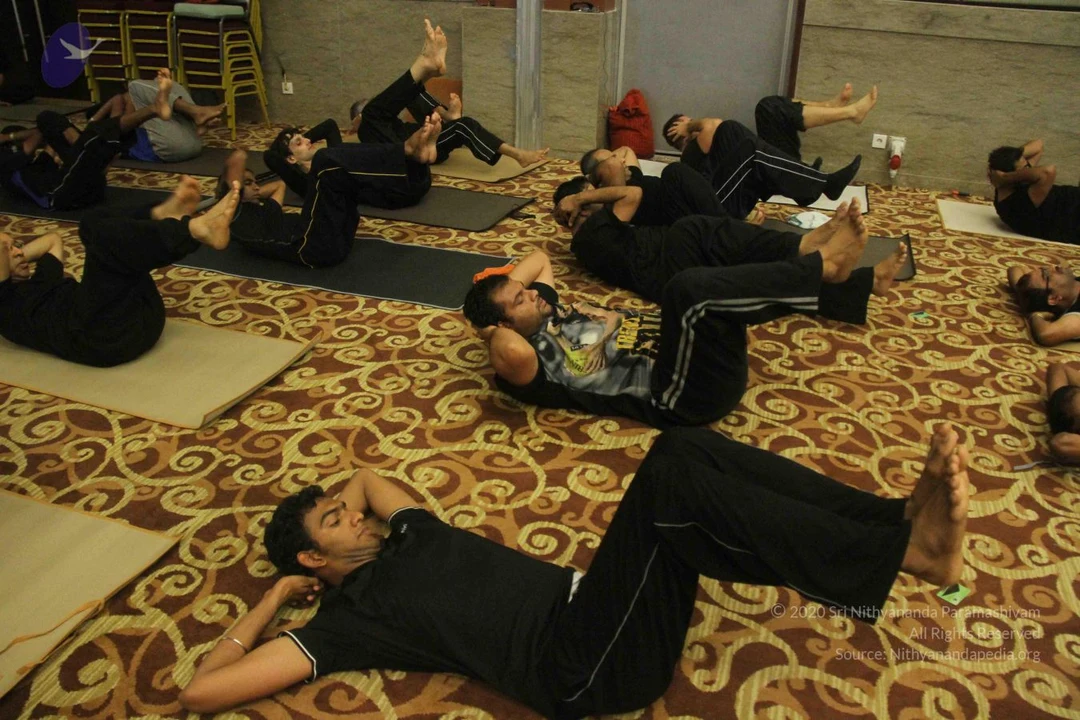
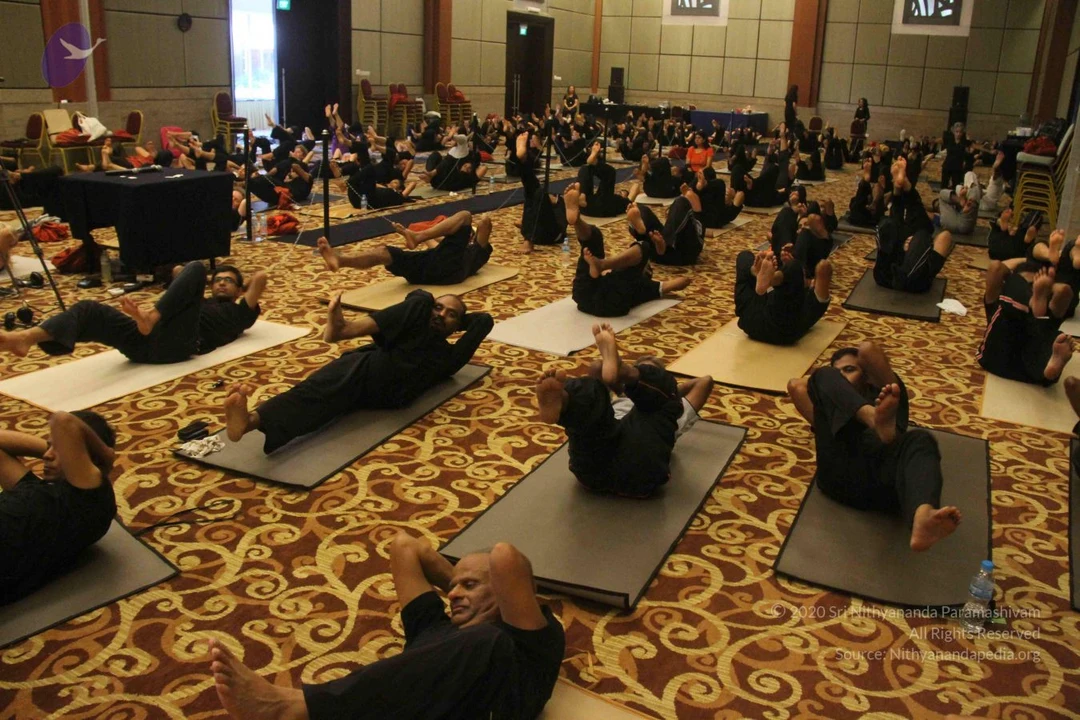
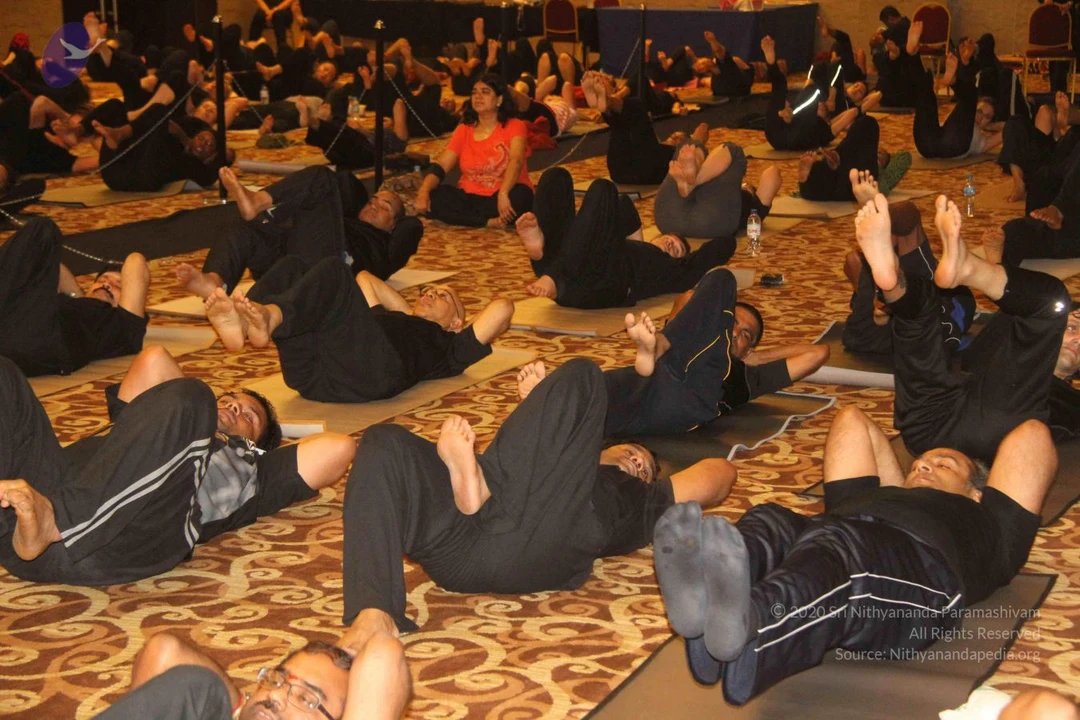
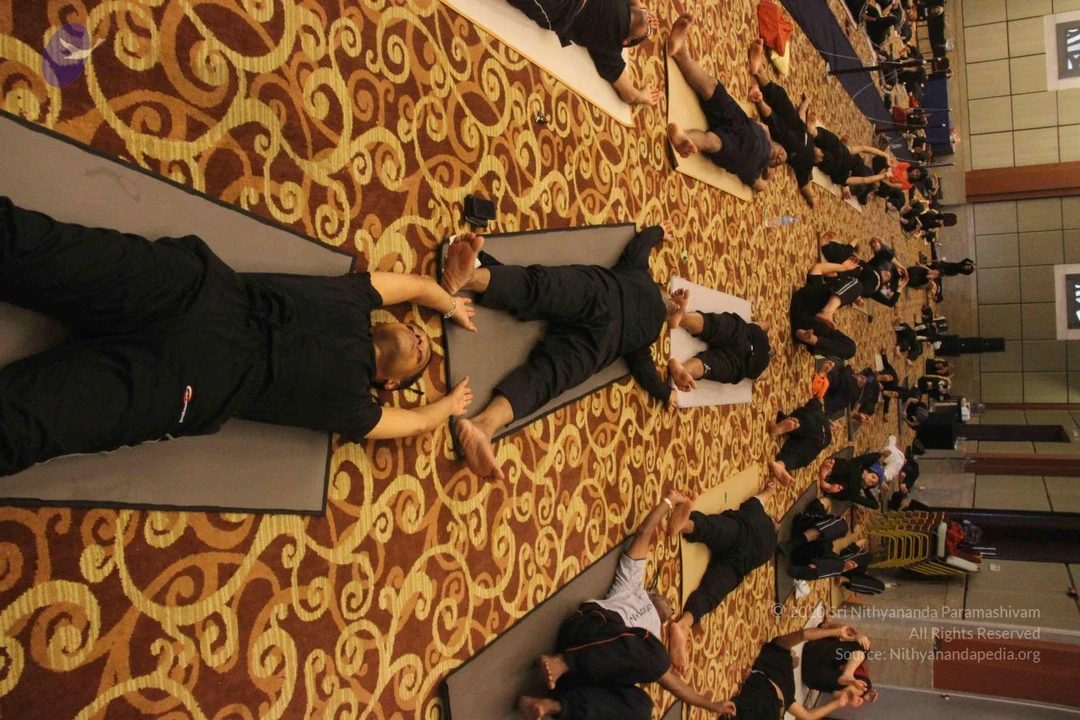
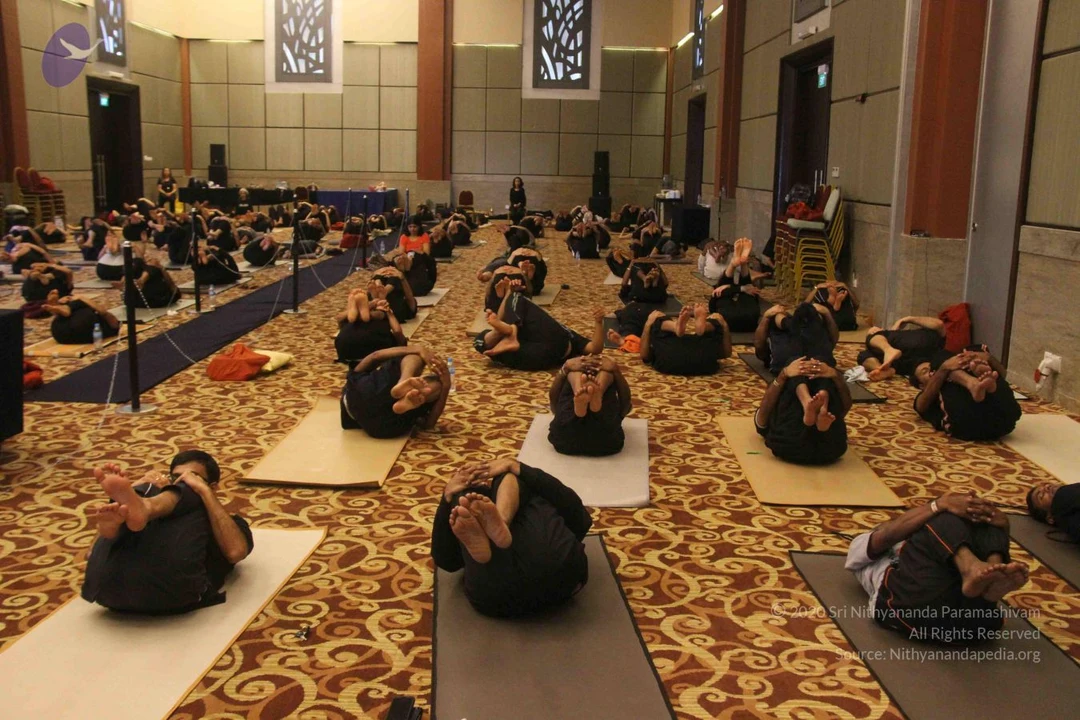
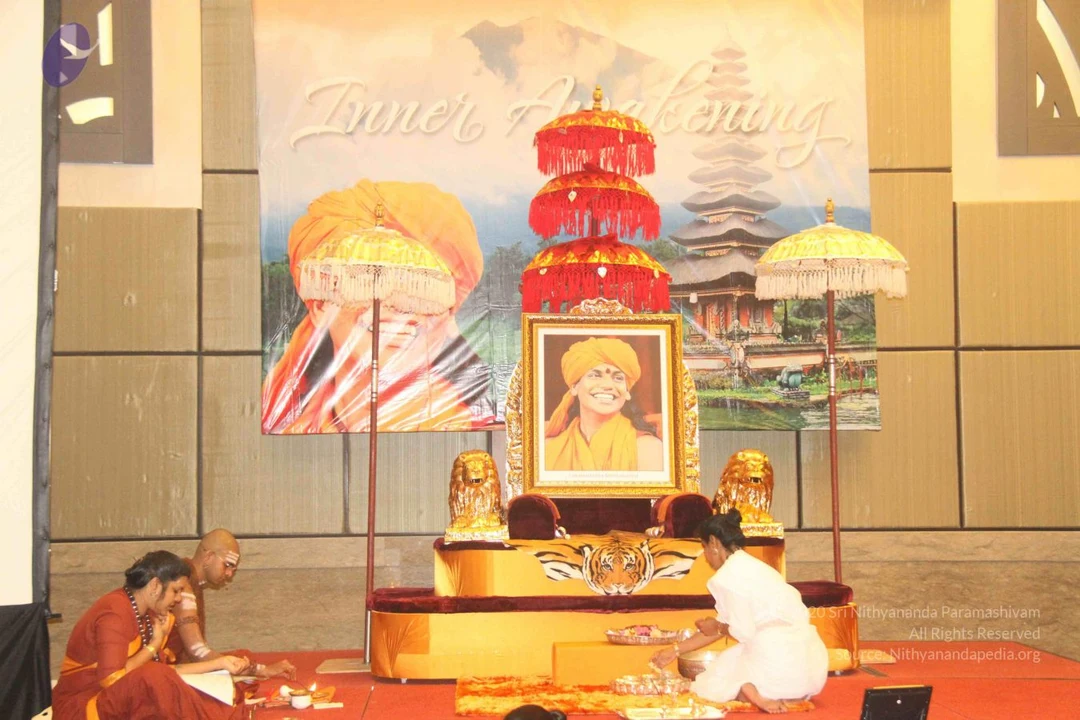
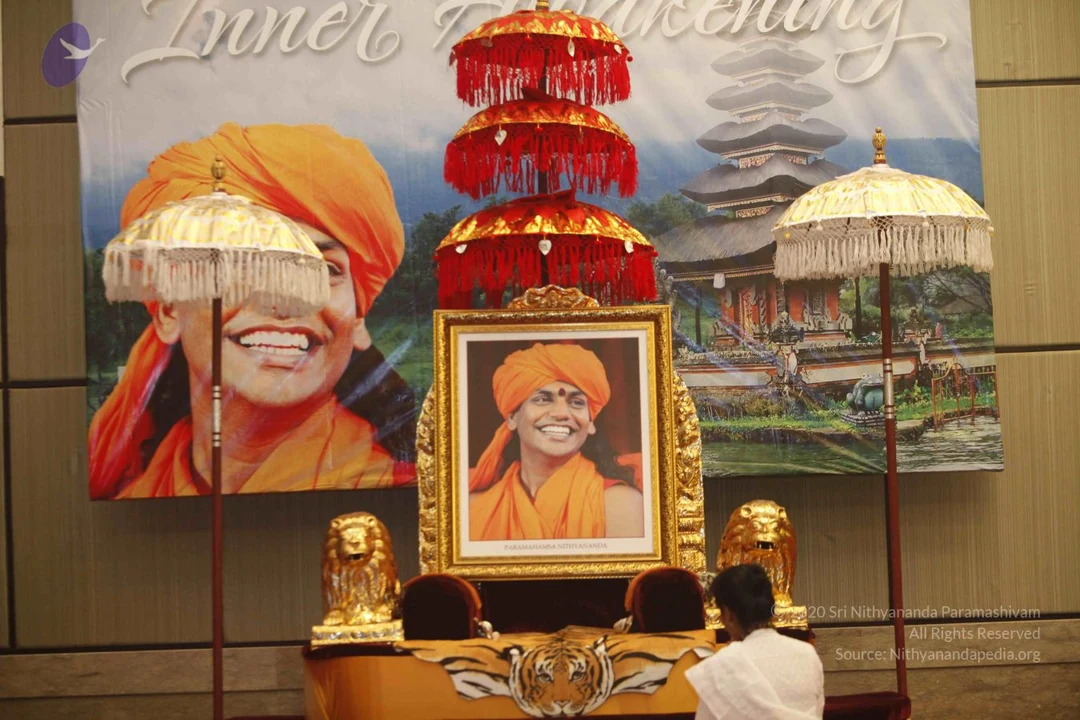
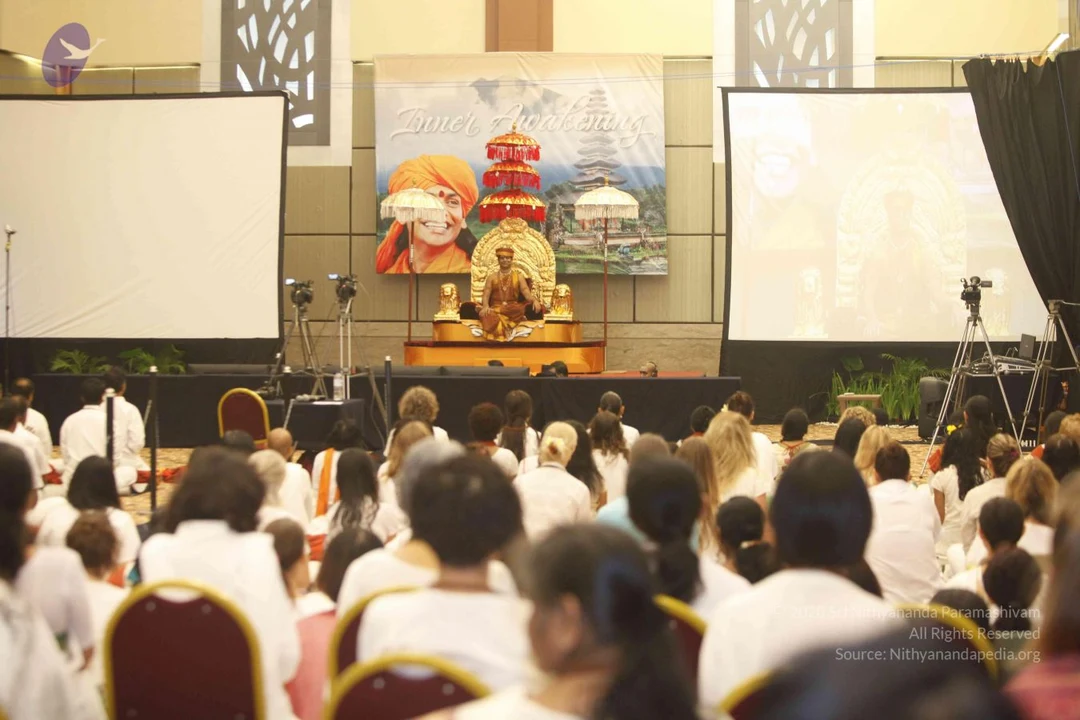
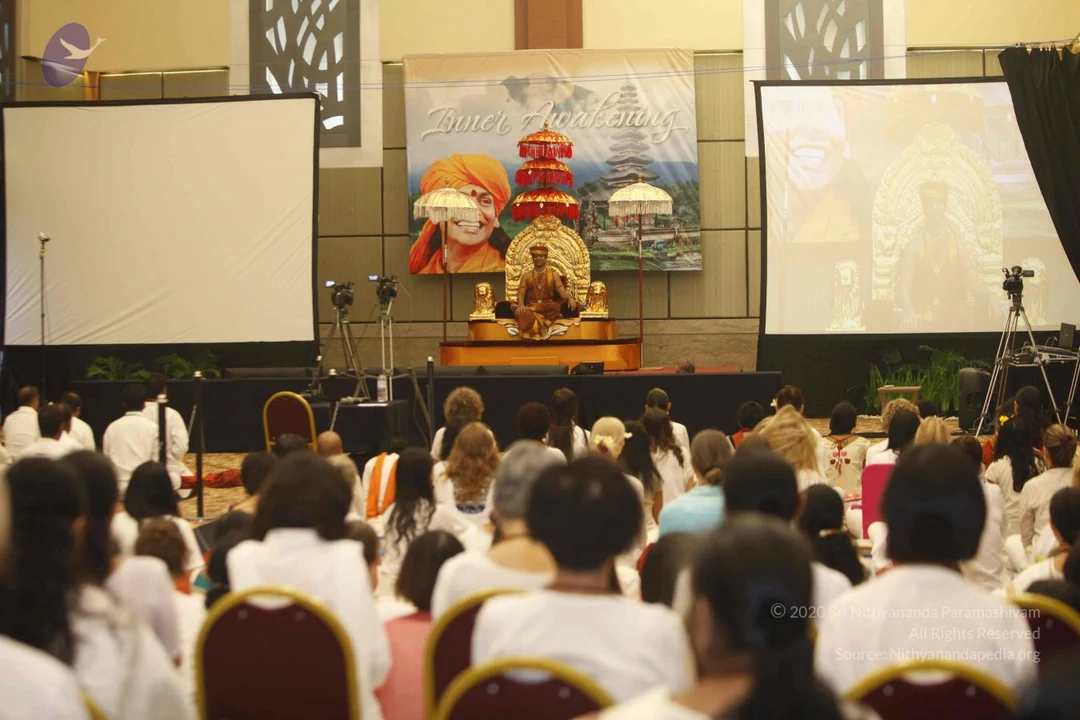
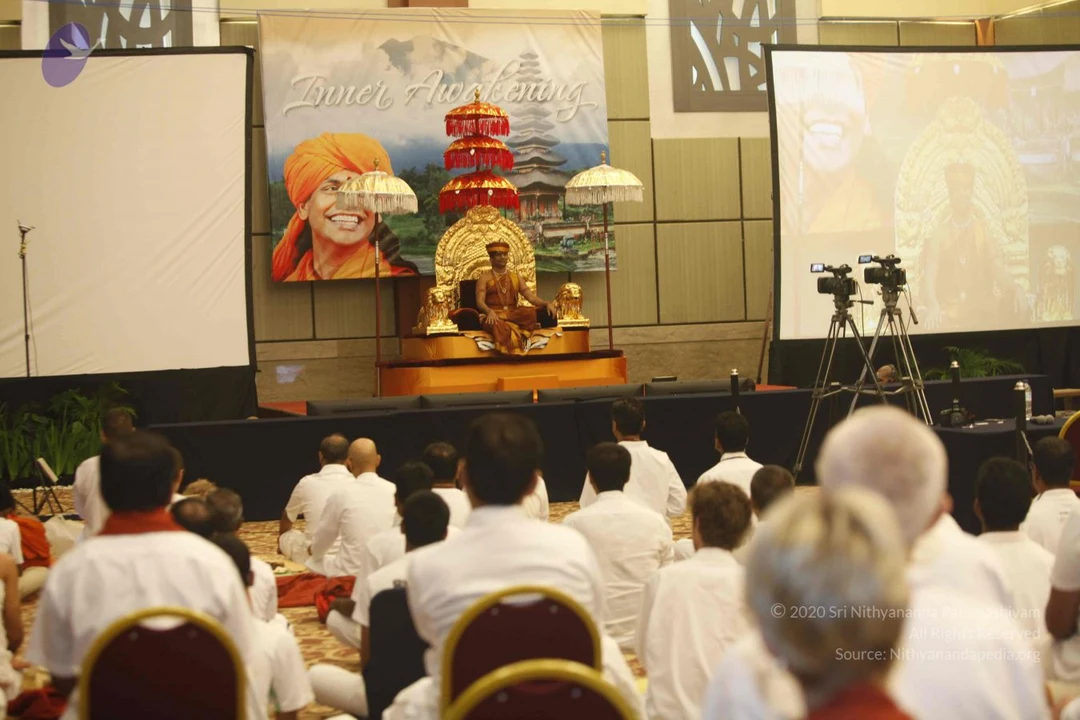
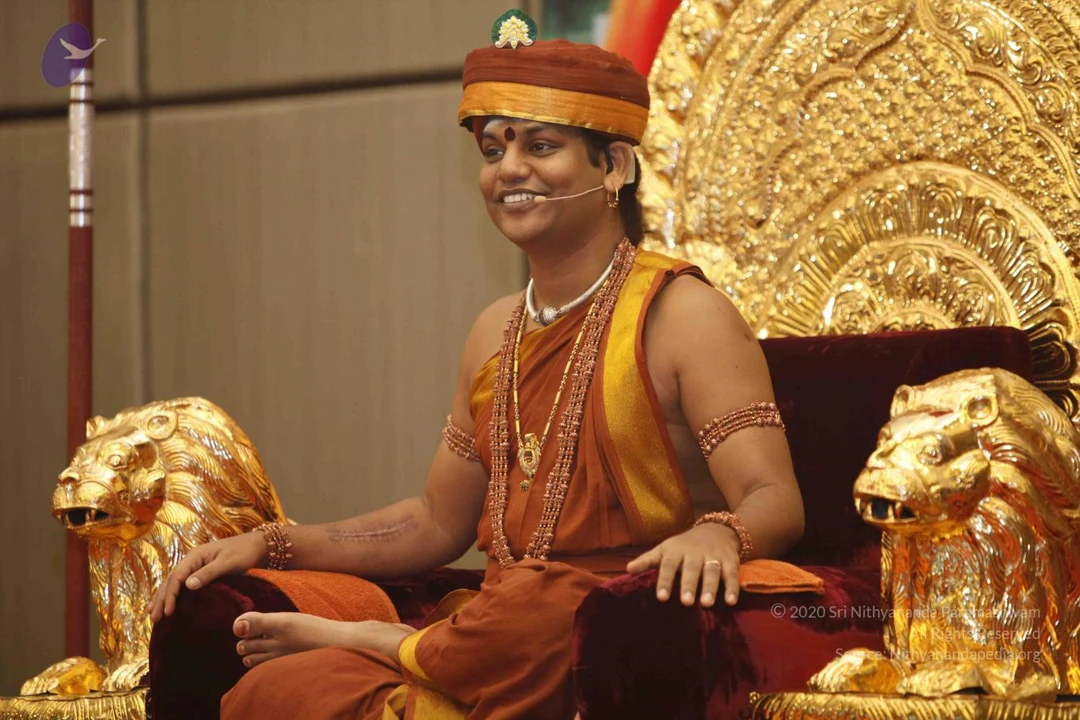
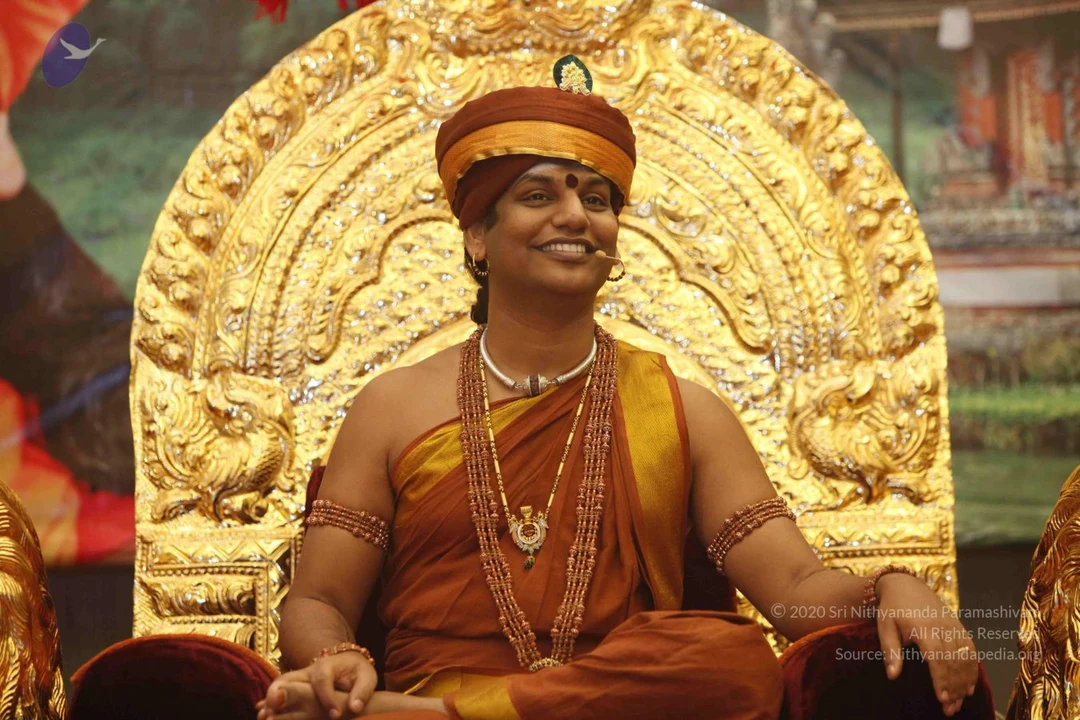
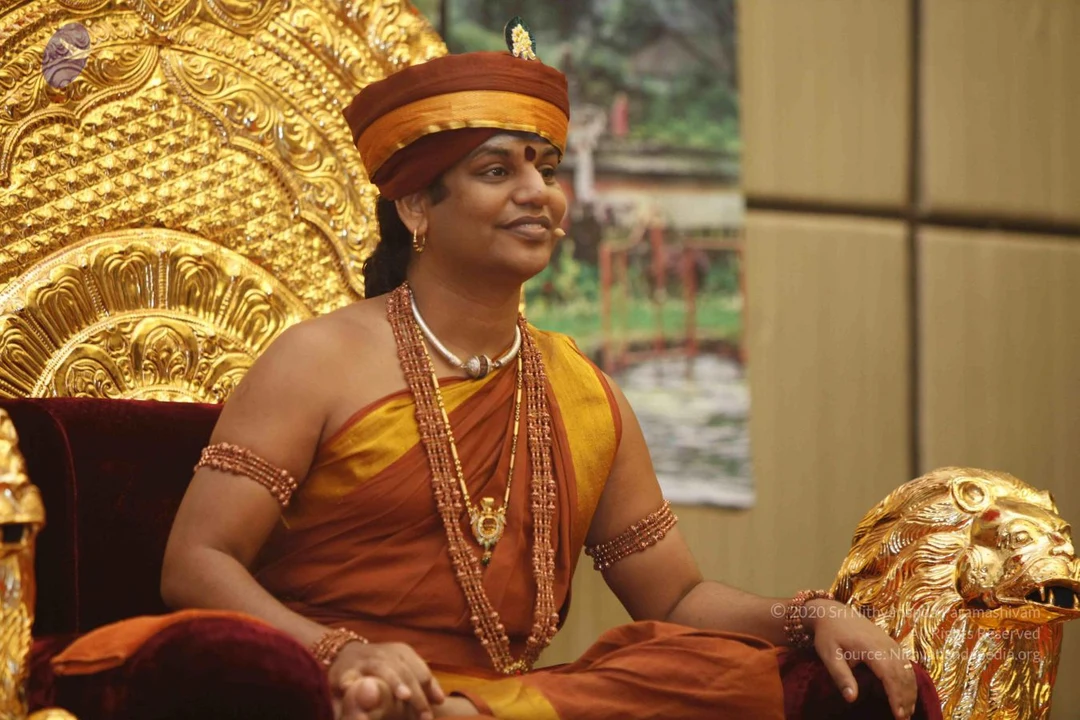
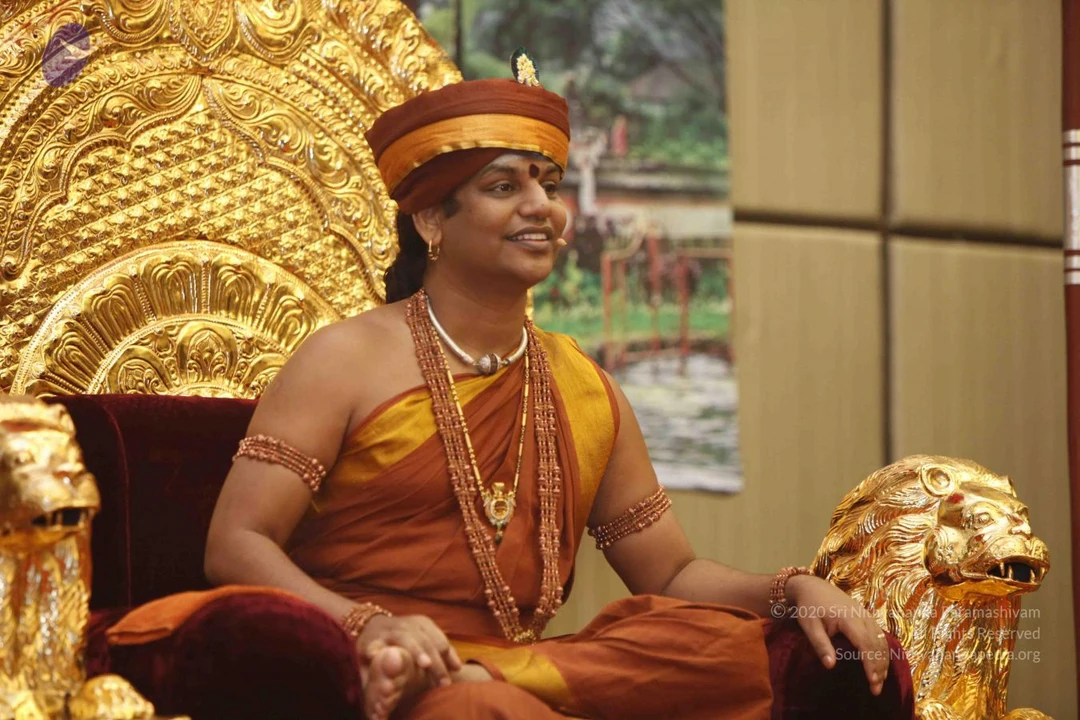
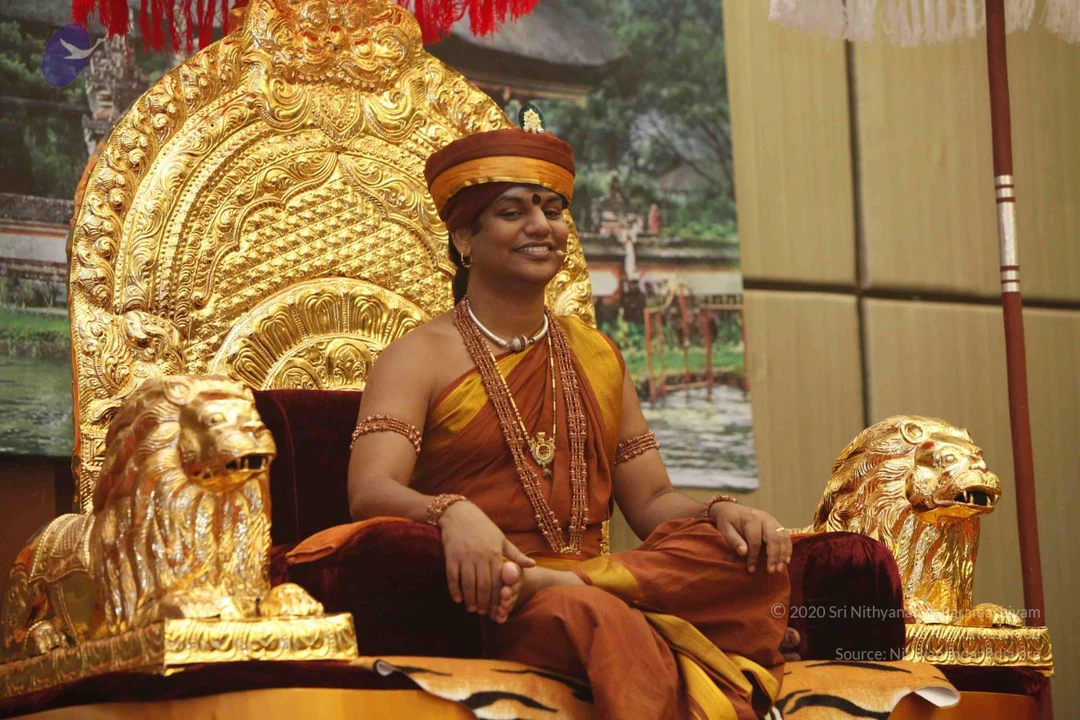
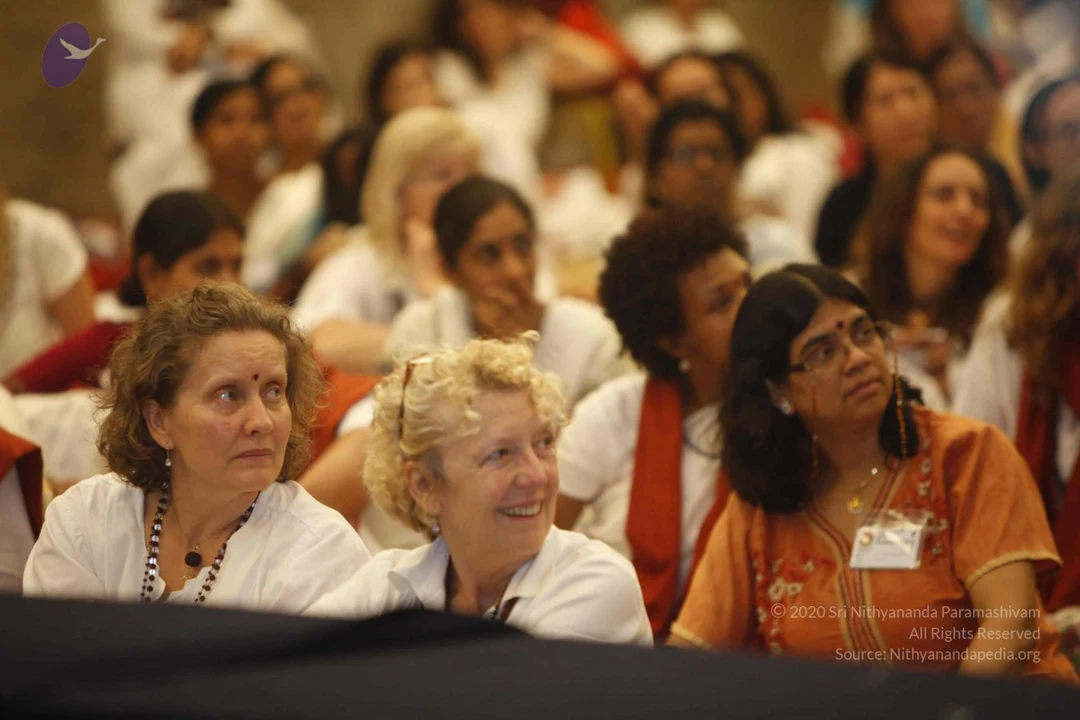
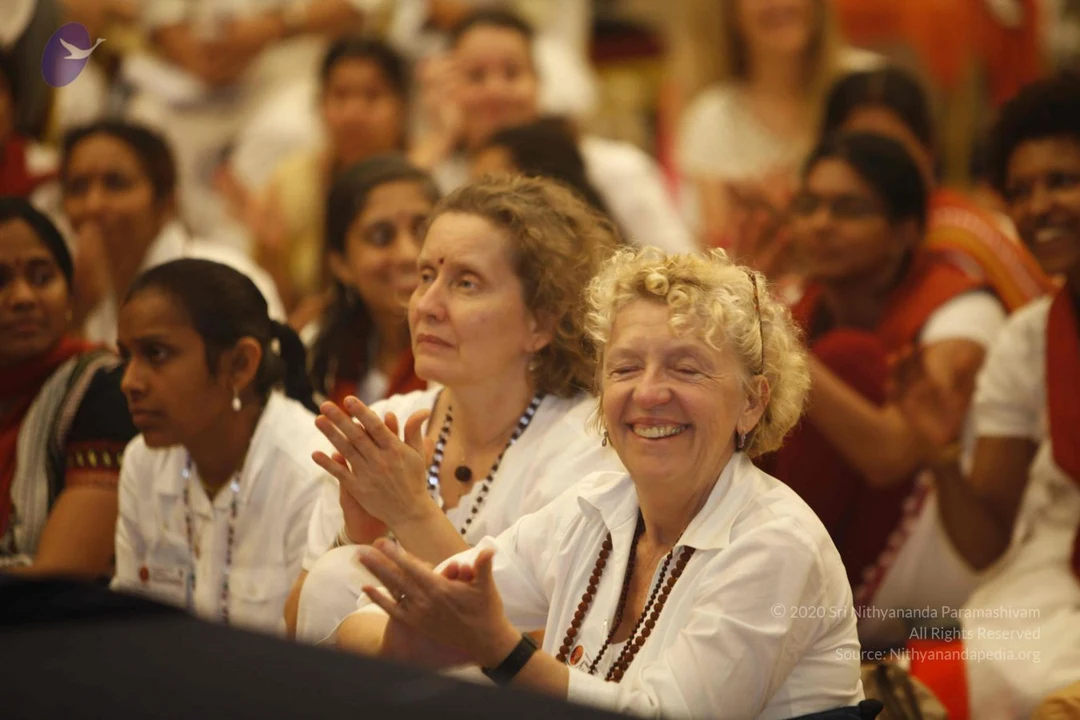
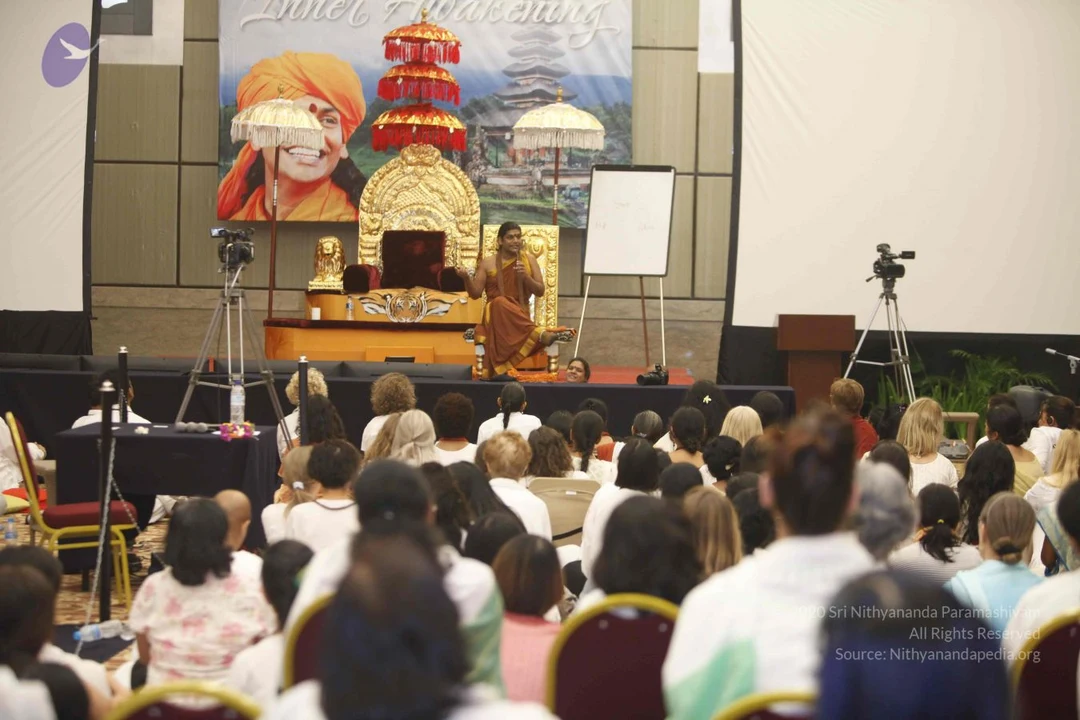
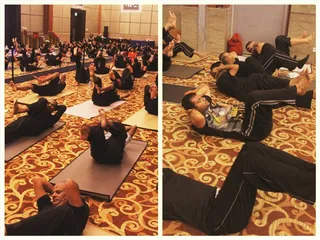
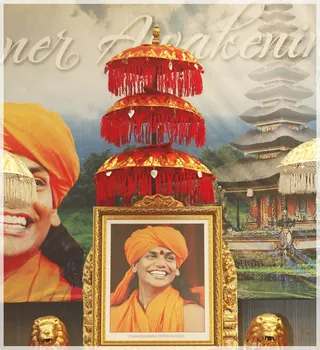
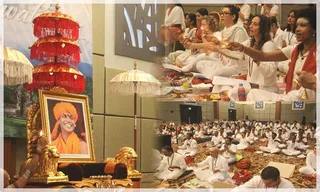
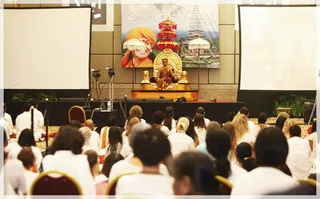
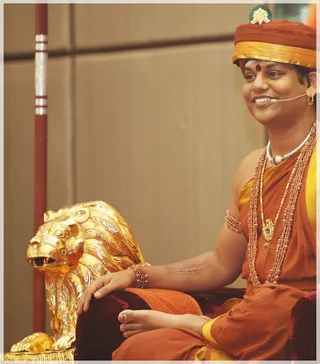
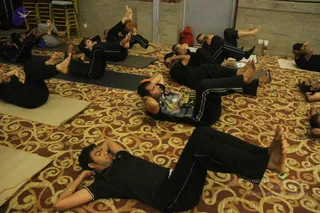
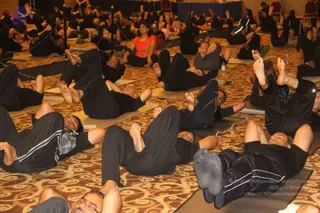
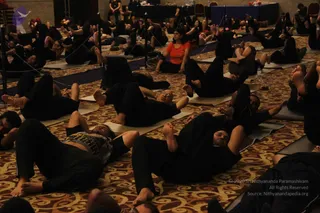
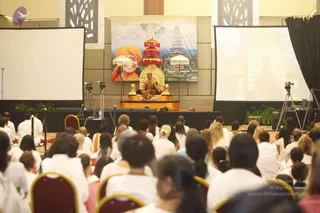
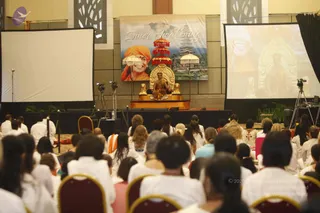
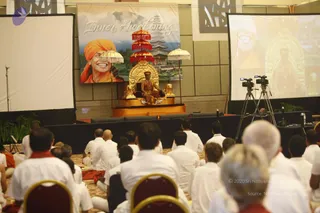
A two-panel collage of photographs from a yoga session held in a large hall with patterned gold-and-brown carpet. In the left panel, thirty or so people in black tops and black track pants lie on yoga mats, legs raised upward in a core exercise, with more participants visible in the background. In the right panel, several people in black clothing lie on mats performing sit-up or leg-raise postures, one man in a grey graphic t-shirt prominent in the foreground with his hands behind his head.A stage backdrop for an event titled Inner Awakening, showing a large printed photograph of a smiling man in an orange turban and orange robe, with a red bindi. A golden framed portrait labelled "Paramahamsa Nithyananda" sits centrally before a tiered red and gold Balinese-style umbrella offering with red tassels and small white hearts. Golden lion heads flank the base, and a Balinese temple with pagoda-style roofs appears on the right. No physical people are visible; the smiling man appears only as printed imagery.A collage of three panels from a Bali event. The left panel shows a framed portrait of a man with a saffron-orange turban and ornate gold frame, flanked by tiered red-tasselled umbrellas, a gold lion statue and a small lit oil lamp, with a green-tinted backdrop of trees and hills. The upper right panel shows women in white clothes with red shawls, holding small brass vessels and offering items, seated before a lacquered table with fruit and flowers. The lower right panel shows a large hall filled with rows of devotees in white clothes seated on a patterned carpet, with men in front in white garments and rudraksha-style beads, and red offerings before them. The portrait is a printed depiction and the pictured people belong to the collage panels, so the count reflects only physical people visible in the scene.Wide view of a large hall during a Bali Inner Awakening event, with rows of seated devotees in white clothing facing a raised golden platform. On the platform sits a gilded seated deity murti flanked by golden lion-like figures, with red and gold ceremonial parasols above. A large banner behind shows a smiling man in an orange turban beside a temple illustration, with the words Inner Awakening. Two projection screens flank the stage, and cameras on tripods stand at the left. Many people are visible in the foreground and midground, most in white and some in pale tops and dresses.A smiling person seated on a dark red cushioned throne beside a gilded lion sculpture, wearing a saffron-orange turban with a green and white floral ornament, orange and gold garments, a rudraksha-style mala and long beaded necklaces, with a small red bindi and a headset microphone. The person has long swept-back hair and the figure is adorned with gold jewellery and bangles. The background is a plain beige wall with a red and white striped pole. a person seated in a satsang setting.A smiling person seated on an ornate gold throne with a carved lion armrest, wearing a saffron-orange turban with a green and white flower ornament, an orange and gold shawl, multiple rudraksha malas and a ceremonial gold pendant, bangles on the arms, and a headset microphone. A large printed portrait behind shows a figure in orange robes with a red background. The scene suggests a satsang stage setting.
paduka-puja

17 photosSource gallery
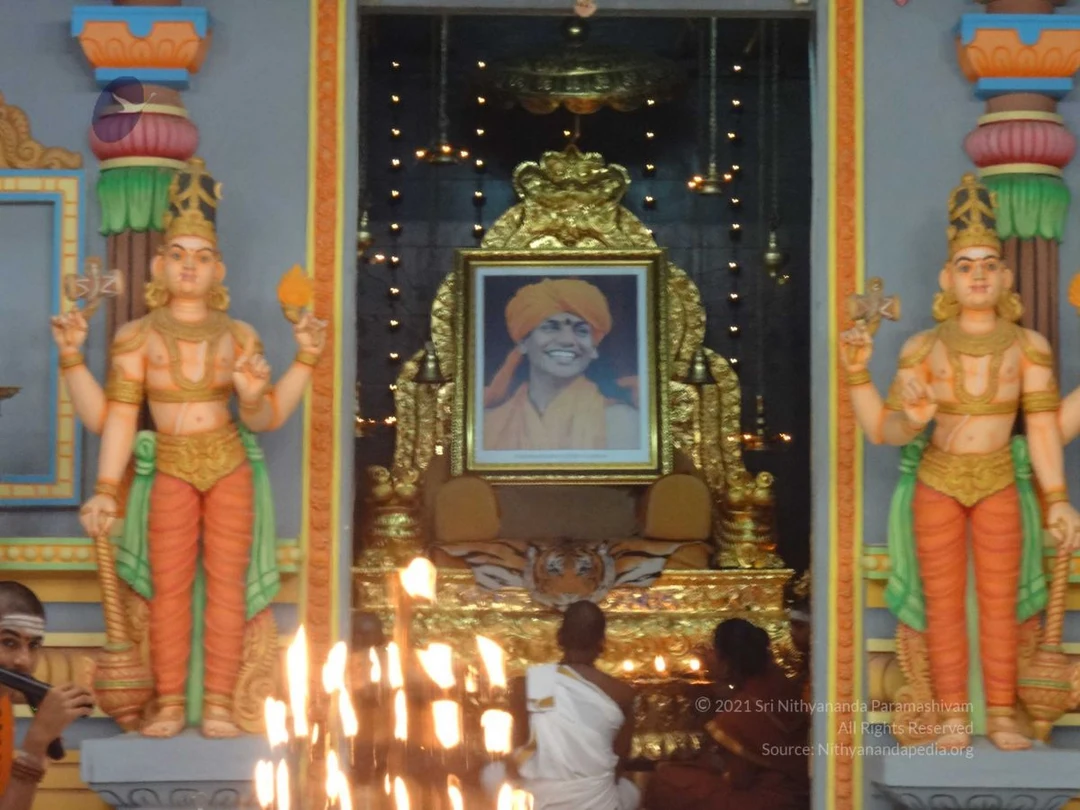
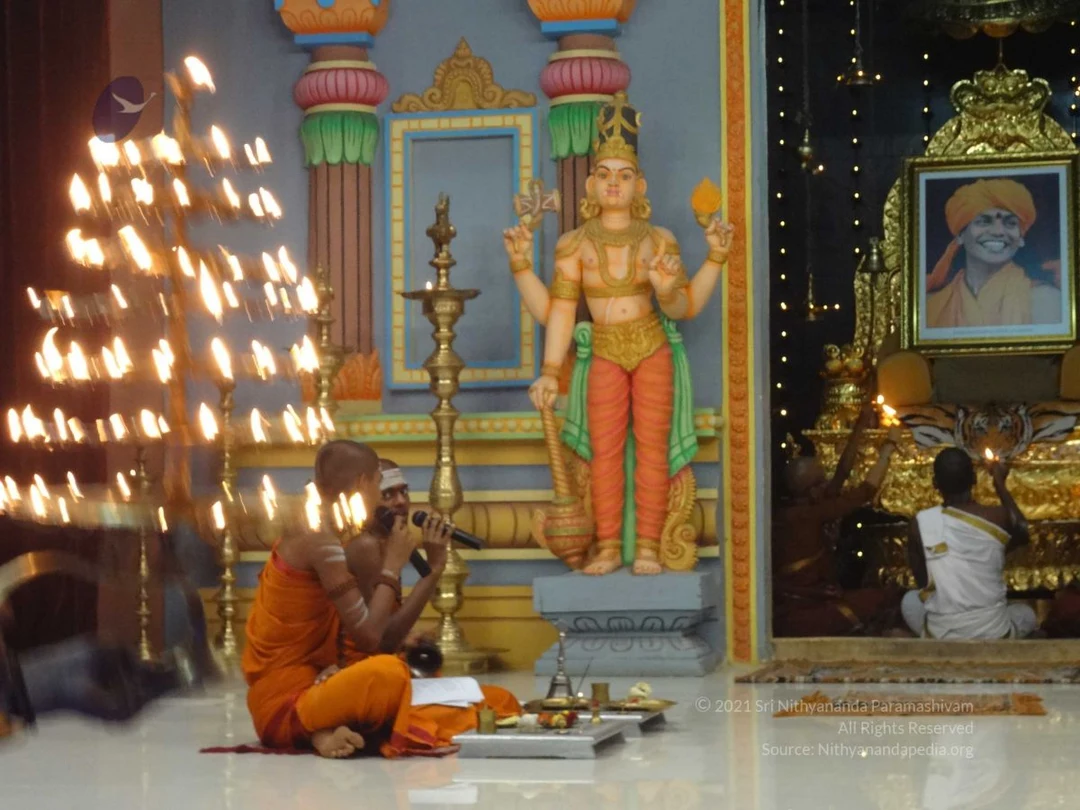
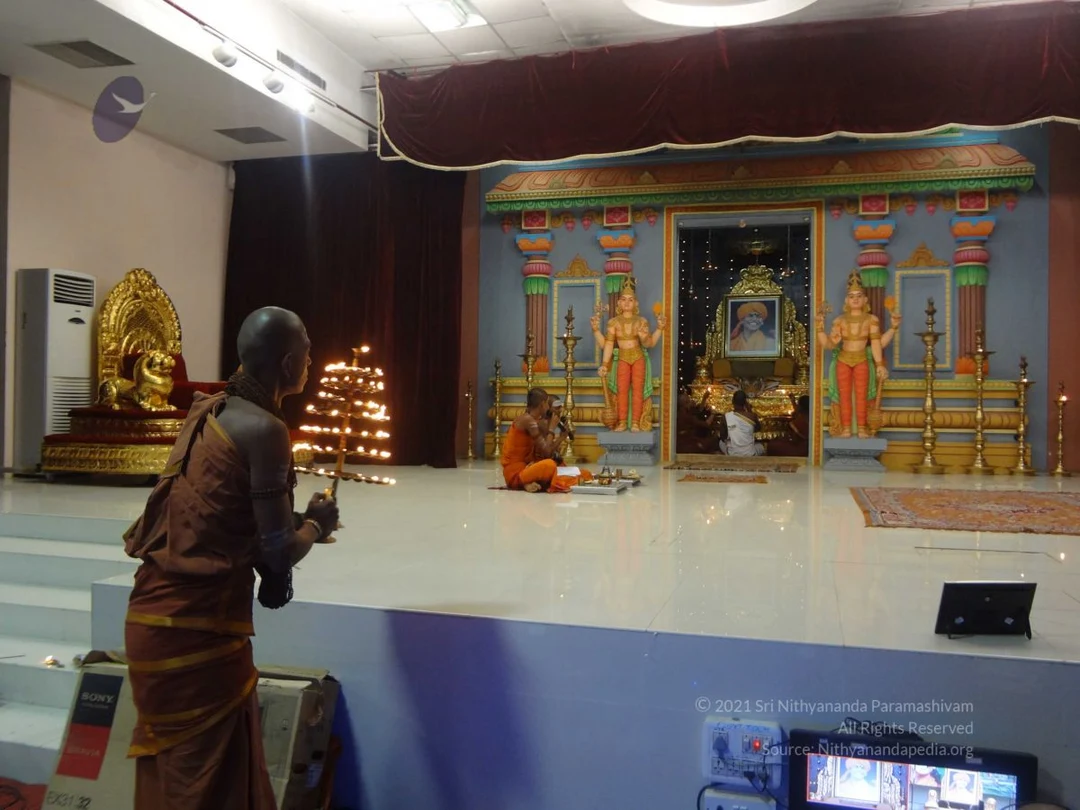
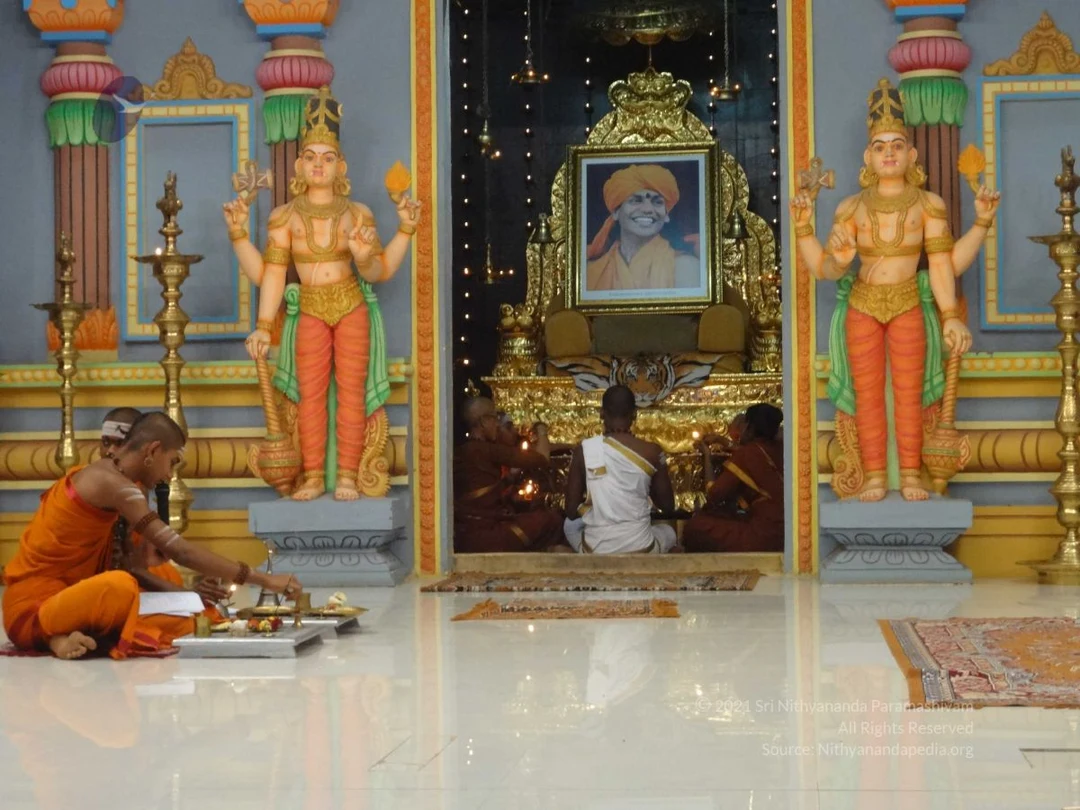
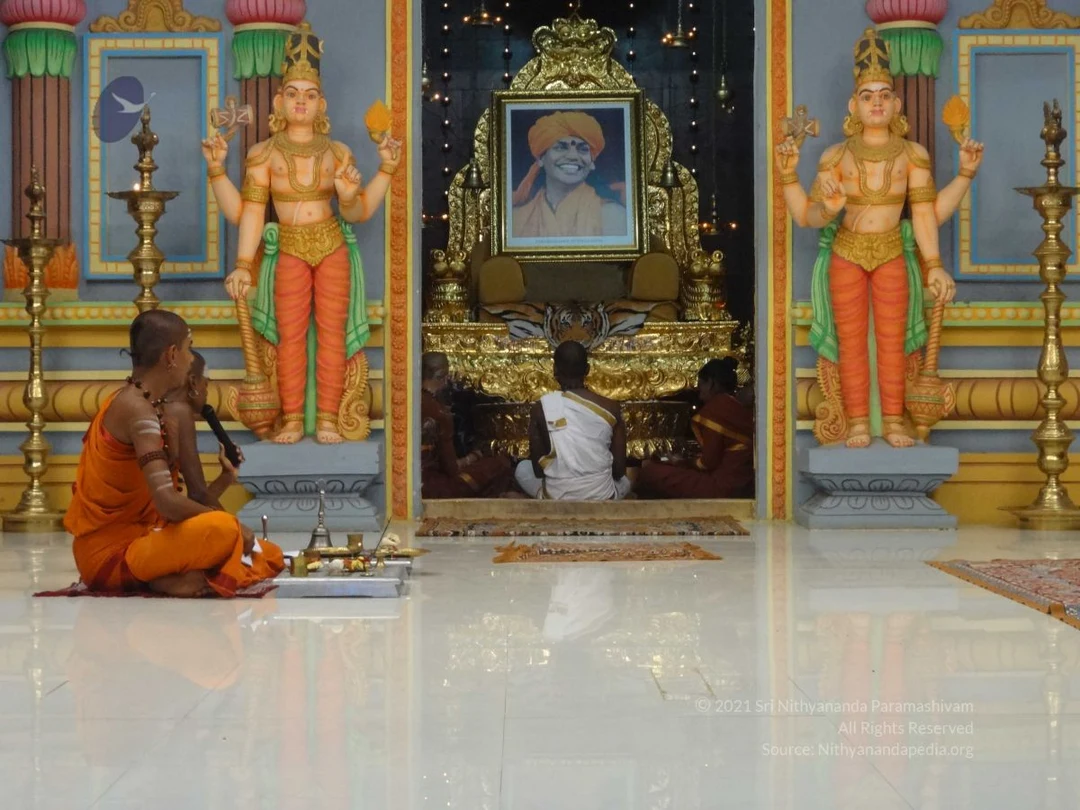
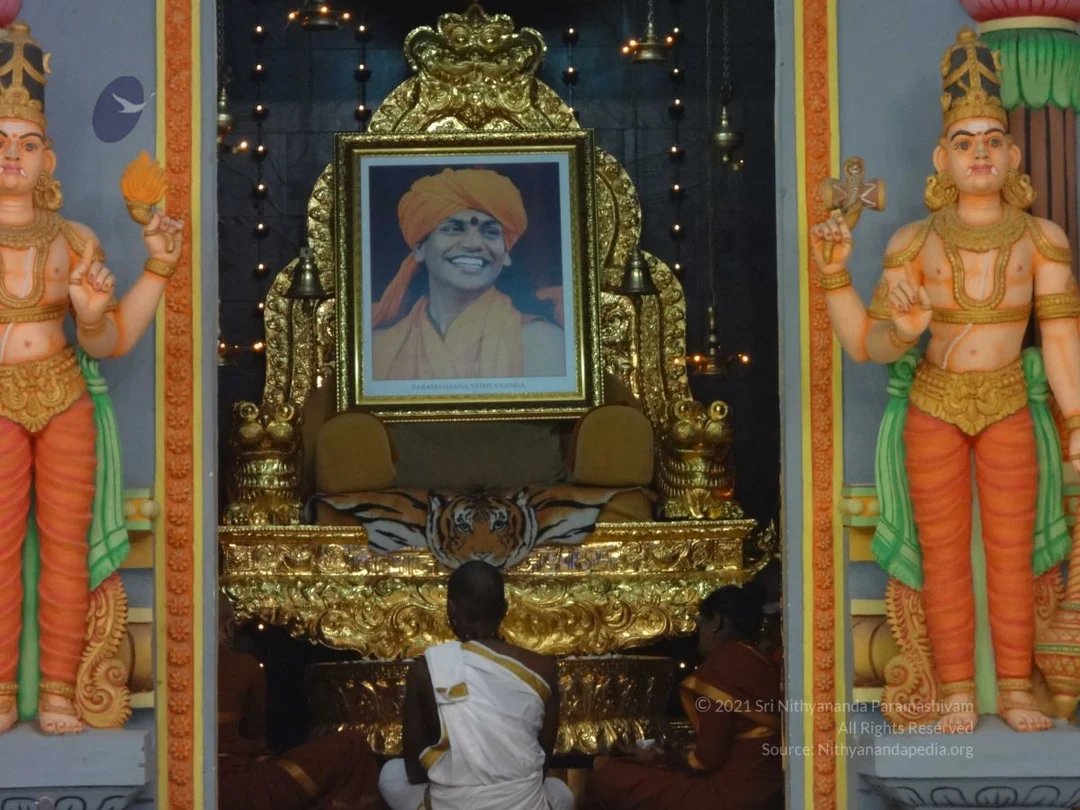
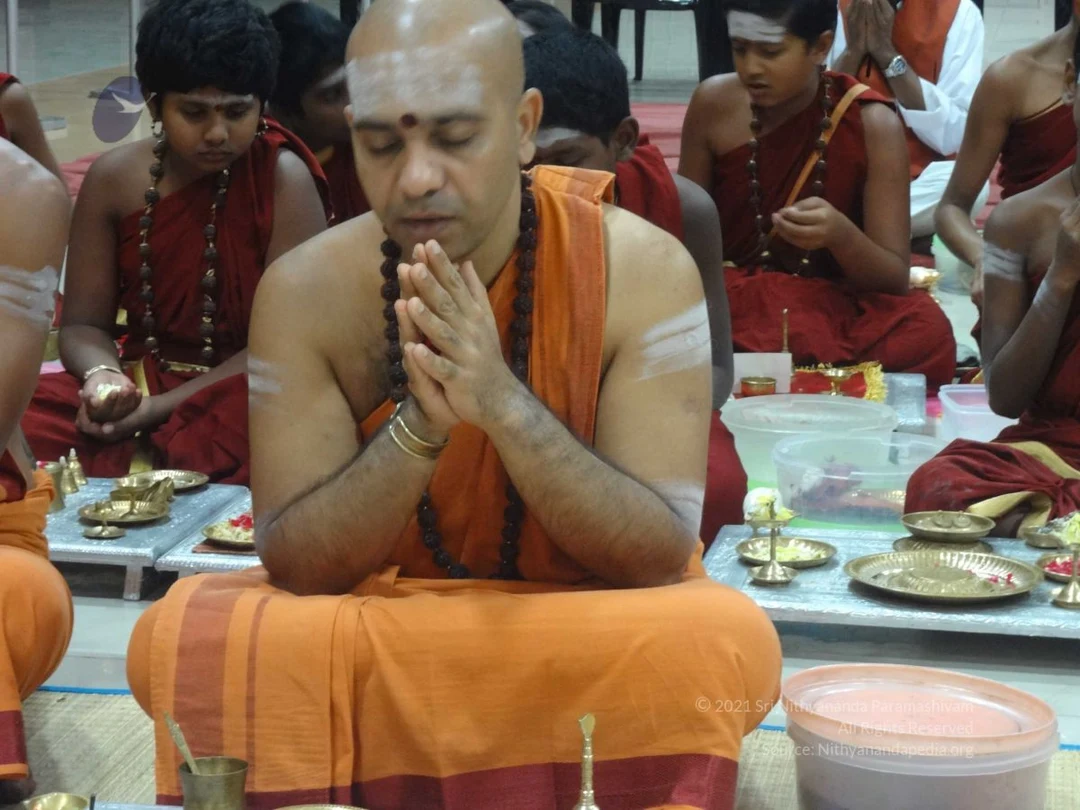
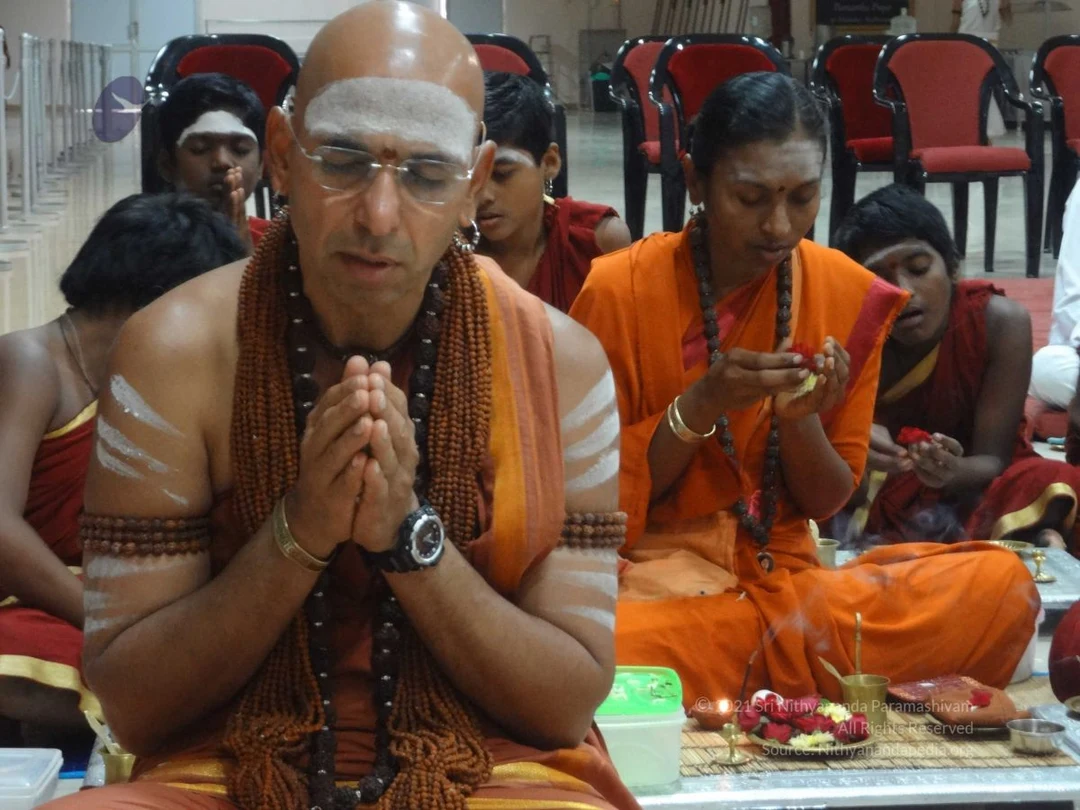
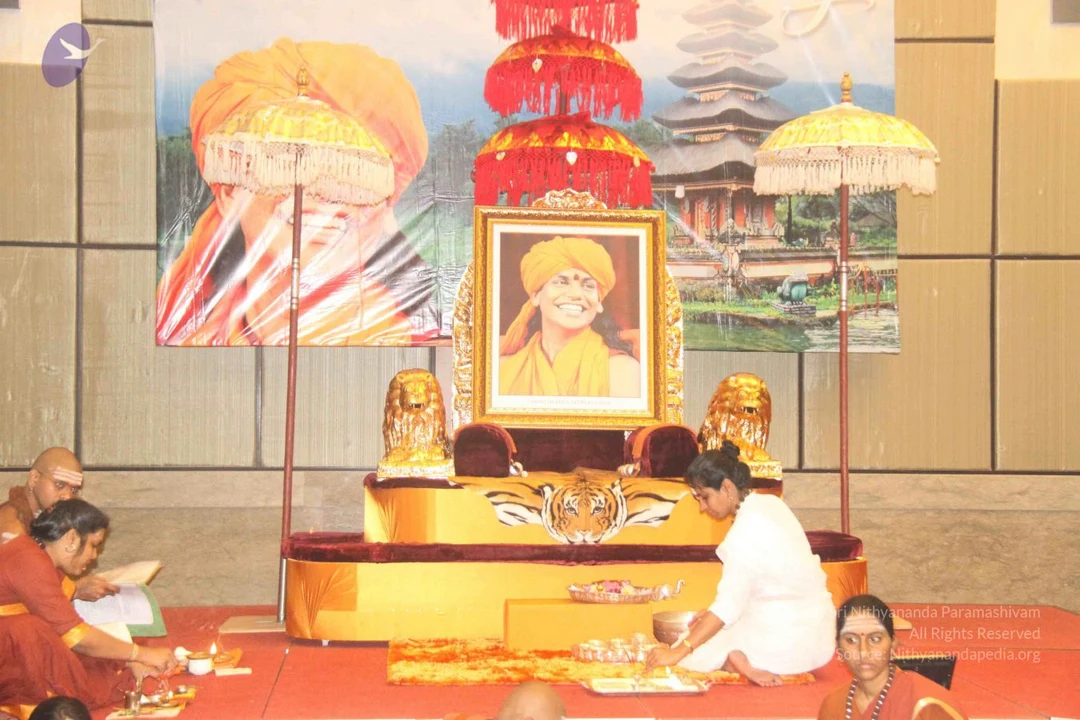
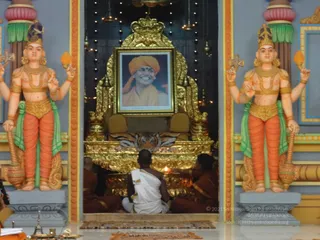
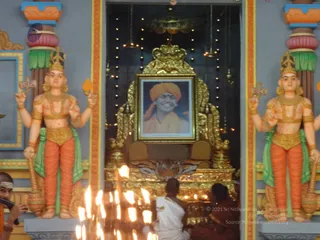
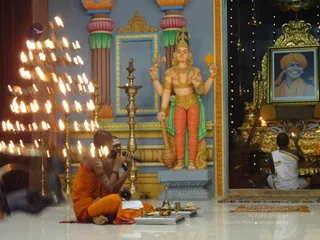
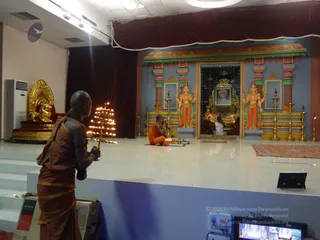
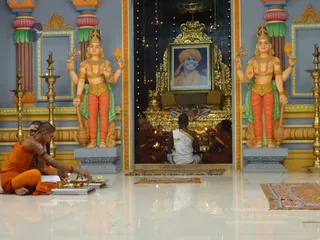
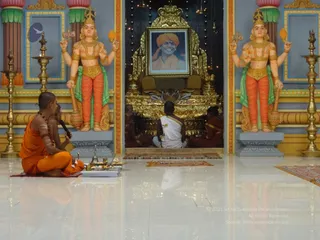
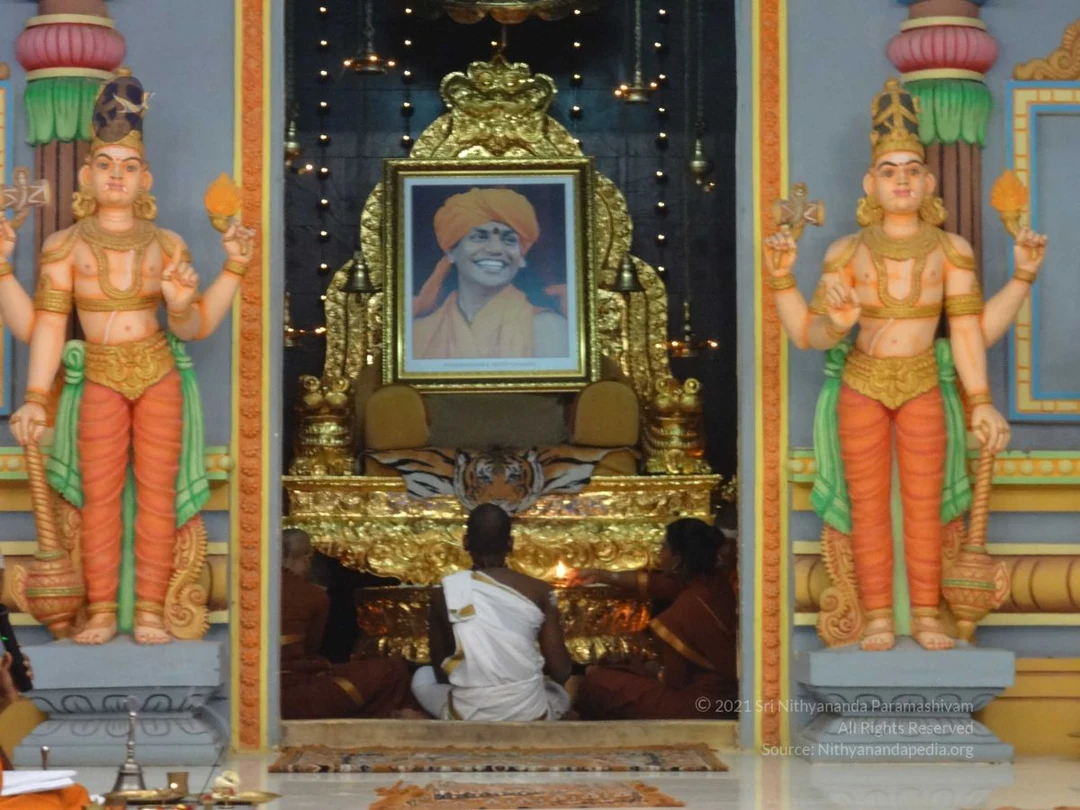
A temple sanctum viewed from the front, with a golden throne (peetha) draped with a tiger-skin cloth at its centre. Framed on the throne is a portrait of a smiling man with an orange turban and saffron wrap; the framed portrait is a depiction, not a physical person. Two tall painted guardian figures with four arms, crowns and orange-green garments flank the doorway. In the foreground a bare-chested priest in white dhoti sits facing the throne, with two seated people in orange robes beside him near a small flame and brass oil lamps. Decorated pillars and hanging bells frame the scene, and the sanctum is lit with oil lamps during a puja.Photograph inside a temple shrine. A large framed portrait of a smiling man with a saffron-orange turban and saffron wrap sits on a gilded throne decorated with a tiger-face motif, set within a niche strung with small hanging lamps. Two painted guardian statues flank the shrine, each with four arms, orange dhoti and green sash, gold ornaments and crowns. In the foreground a row of lit oil lamps blazes, and a man in a white dhoti with a bare upper body kneels before the throne, while a woman in an orange sari sits beside him, apparently performing puja. The portrait is a depiction, not a person physically present.Photo of a temple shrine hall with a row of lit oil lamps on the left. A man in saffron-orange robes sits cross-legged on the white floor, holding a microphone to his mouth, with a second orange-clad person beside him and a small tray of offerings in front. Behind them stands a painted, multi-armed deity murti in orange and green dress holding a trident-like staff and a kalasha-like object, with a gold crown. On the right, a framed portrait labelled "Paramahamsa Nithyananda" shows a smiling man in an orange turban above a gold-ornamented seat draped with a tiger-print cloth. A figure in white dhoti sits at the right holding a lamp, with a brass oil lamp stand in the centre.Photograph of a stage in a temple-style hall during a puja. A standing priest in a brown robe and gold-trimmed dhoti holds a tall multi-tiered oil lamp with many lit flames. In the centre, a seated priest in an orange robe performs rites before a small offering setup. Behind them, a golden doorway opens to a shrine with a framed portrait and a deity murti. Flanking the doorway are painted deity figures with multiple arms holding objects, and a gold throne with a lion-form base stands at the left. Brass lamps line the platform and a red valance hangs above.A temple shrine interior with two tall painted dvarapala guardian statues, each with four arms, orange dhoti and green sash, flanking a gold-framed portrait on a golden throne draped with a tiger-skin cloth. The portrait shows a smiling man in an orange turban and saffron robe. In the foreground a man in orange robes with a shaved head sits on the white marble floor at left, tending a brass plate of offerings and oil lamps. Before the shrine, several saffron-robed monks sit in a row, and a seated man in a white dhoti and white shawl sits centrally, facing the throne with lit lamps in front. Brass oil lamps stand along the walls and red-and-cream carpets lie on the floor, indicating a puja or padapuja ritual.Photo inside a temple hall with polished white floor and two colourful dvarapala-style guardian statues in orange and green dhoti and gold ornaments, holding staffs and lotus-like objects. In the centre a golden throne-like peetha with a framed portrait on top of a man in orange turban and smiling, and a tiger-form carving at its base. A seated man in orange robes with a rudraksha mala and a microphone sits on the left in front of brass oil lamps and a puja tray. A figure in white dhoti sits before the shrine, and several seated devotees in maroon robes sit in the doorway.
temple
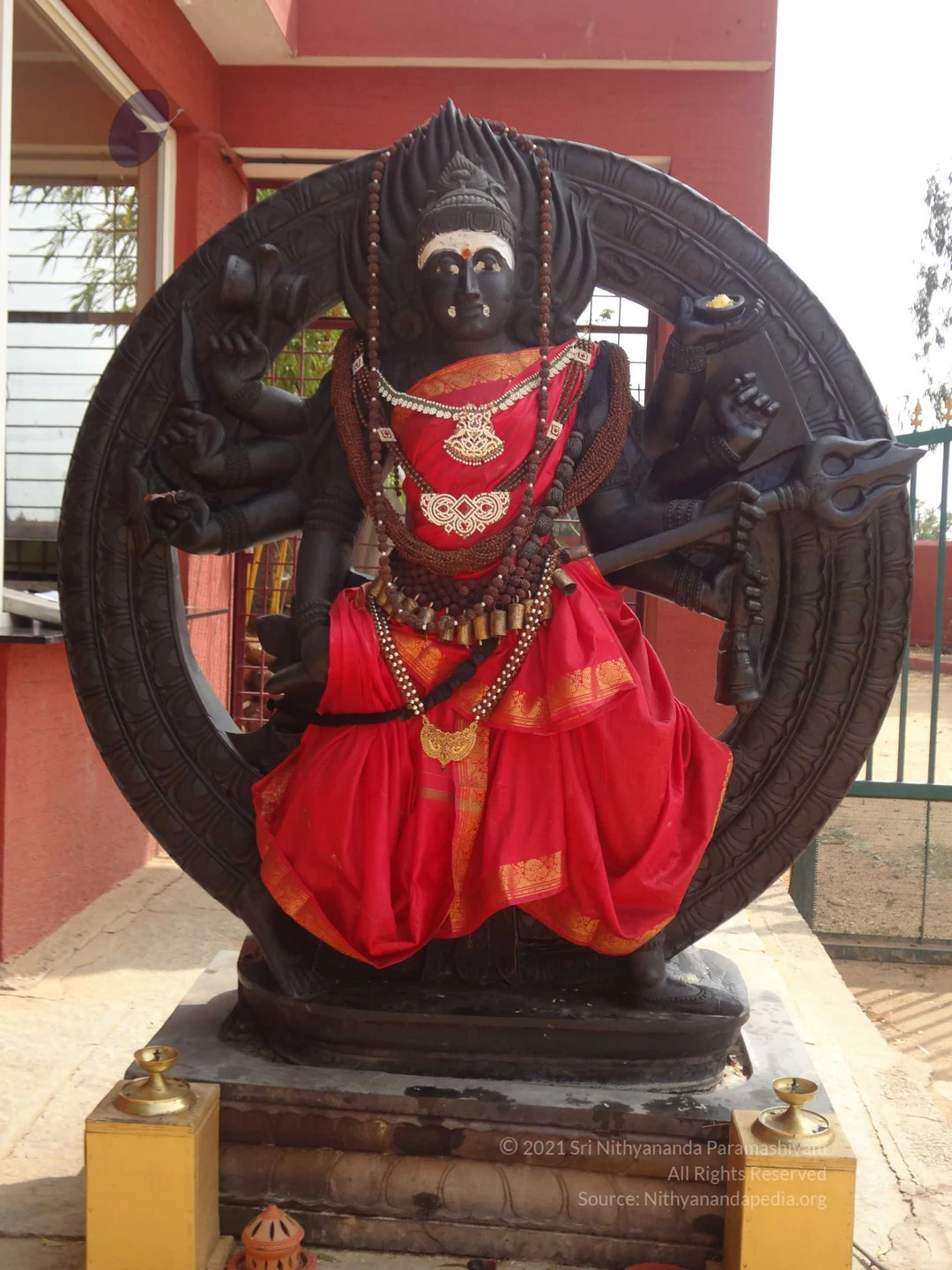
23 photosSource gallery
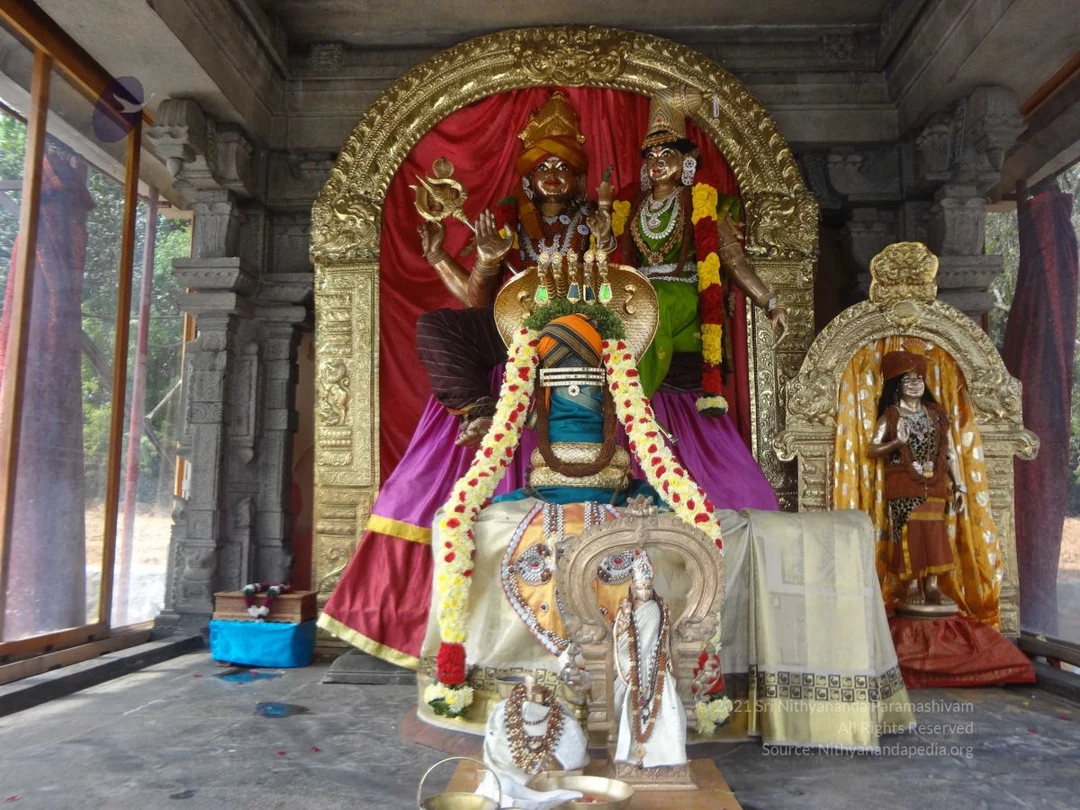
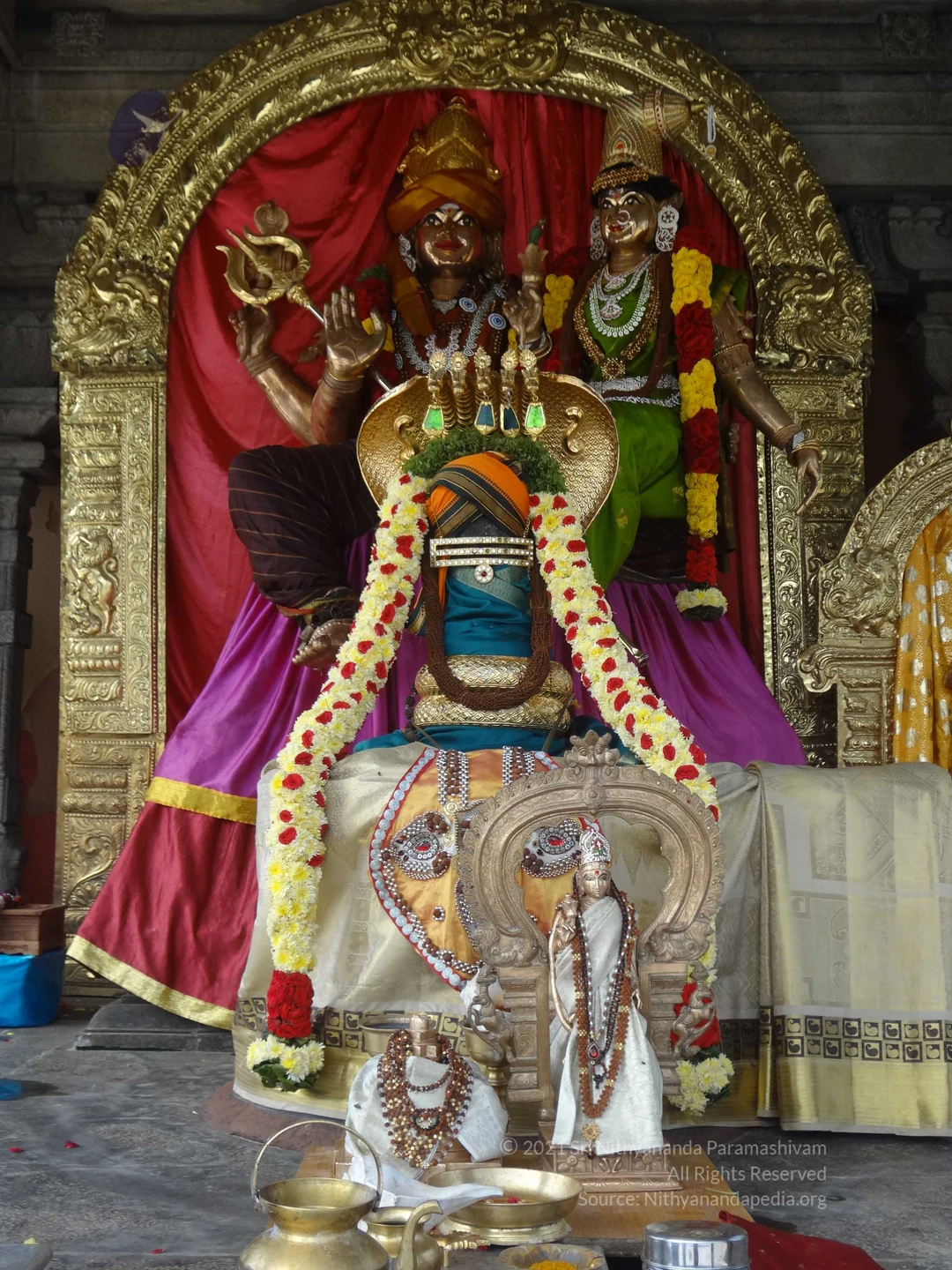
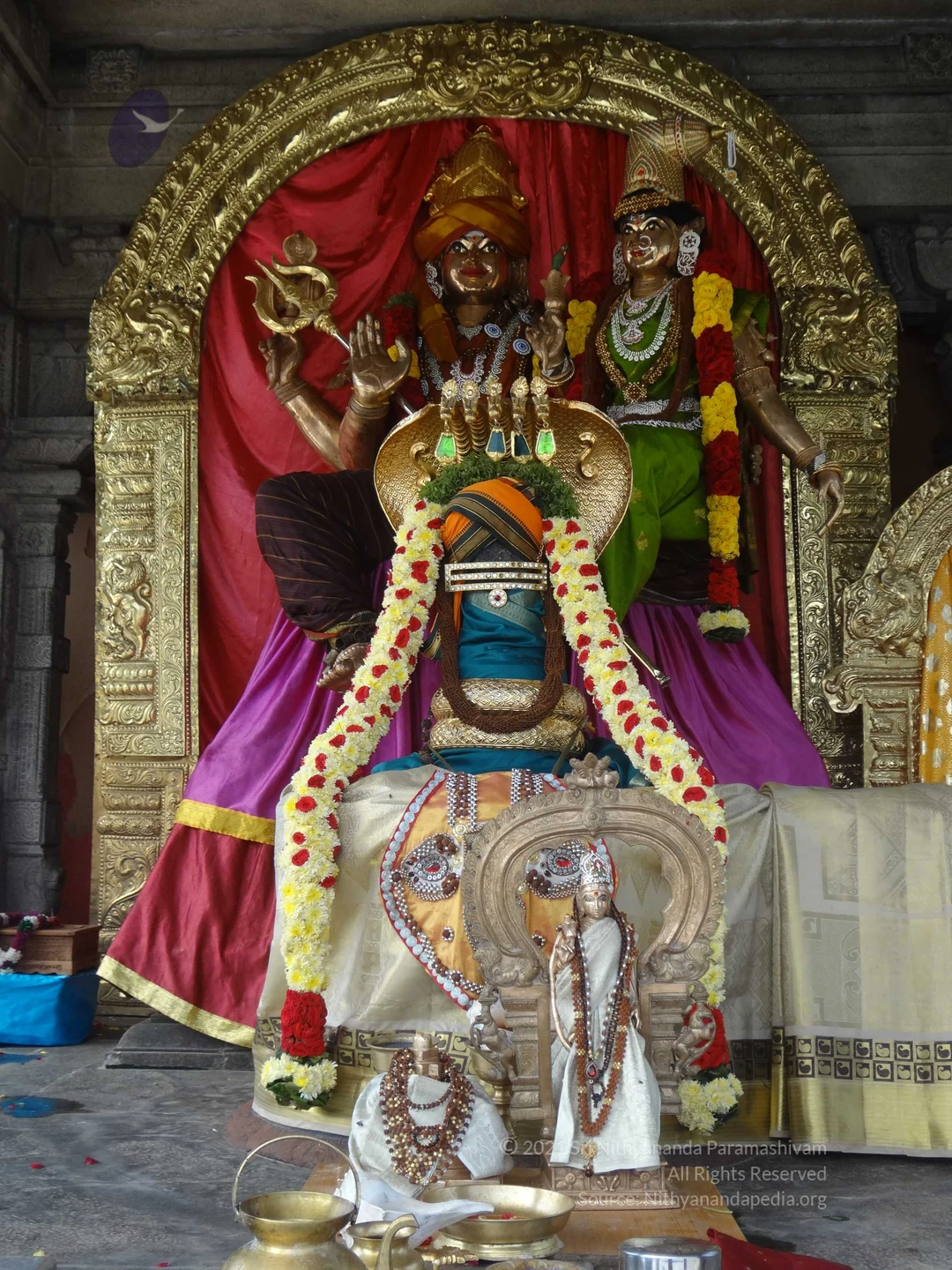
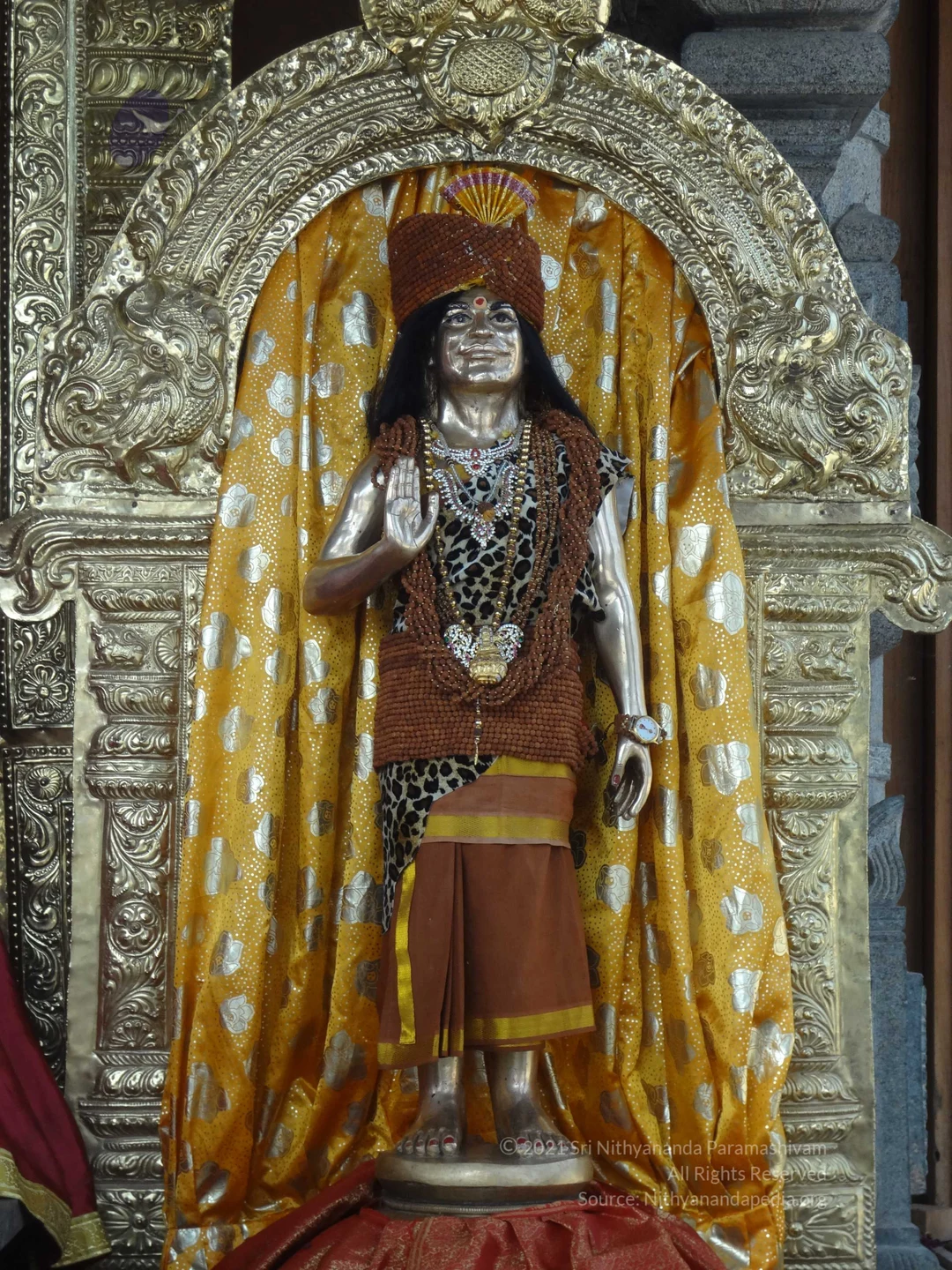
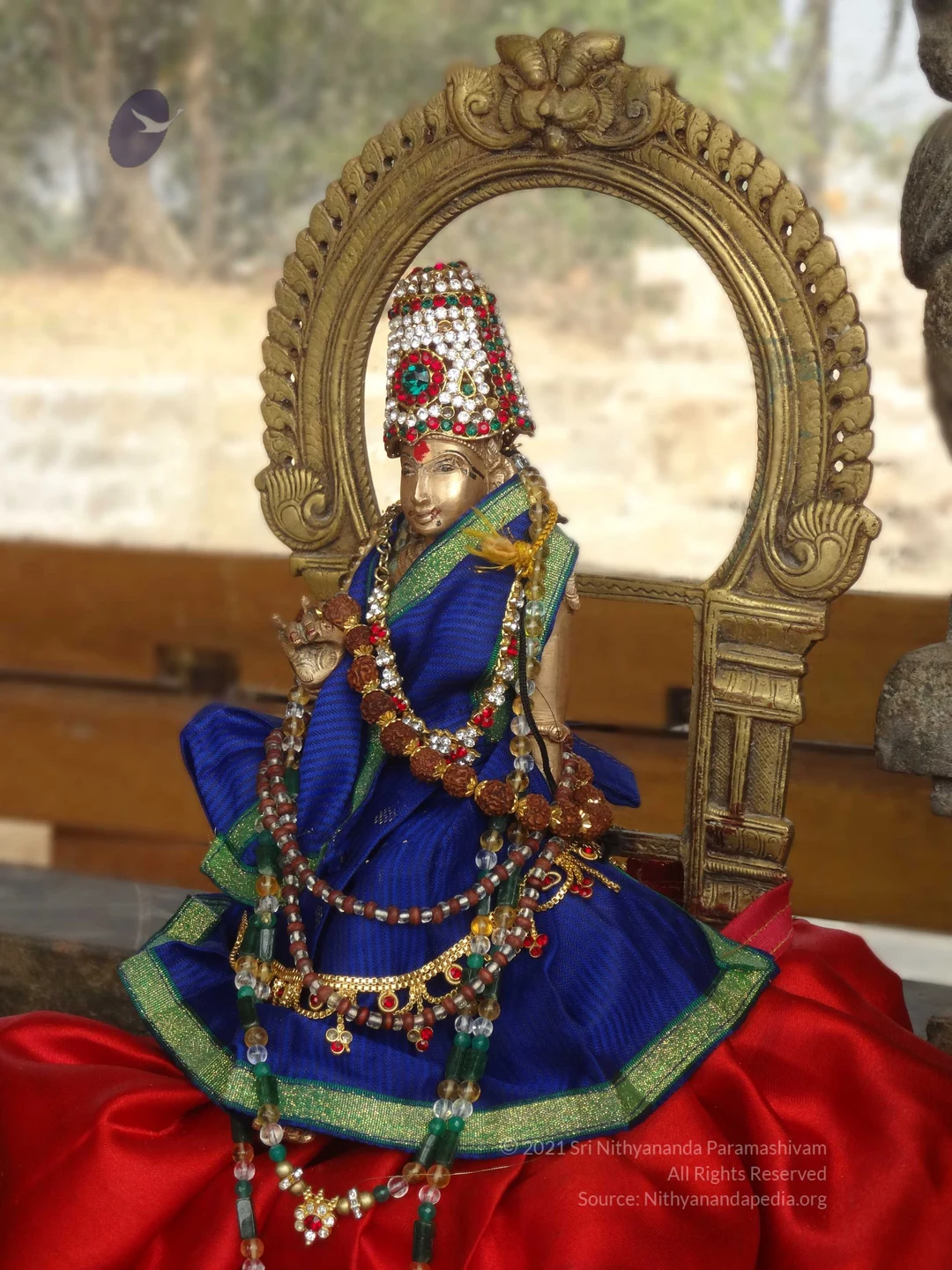
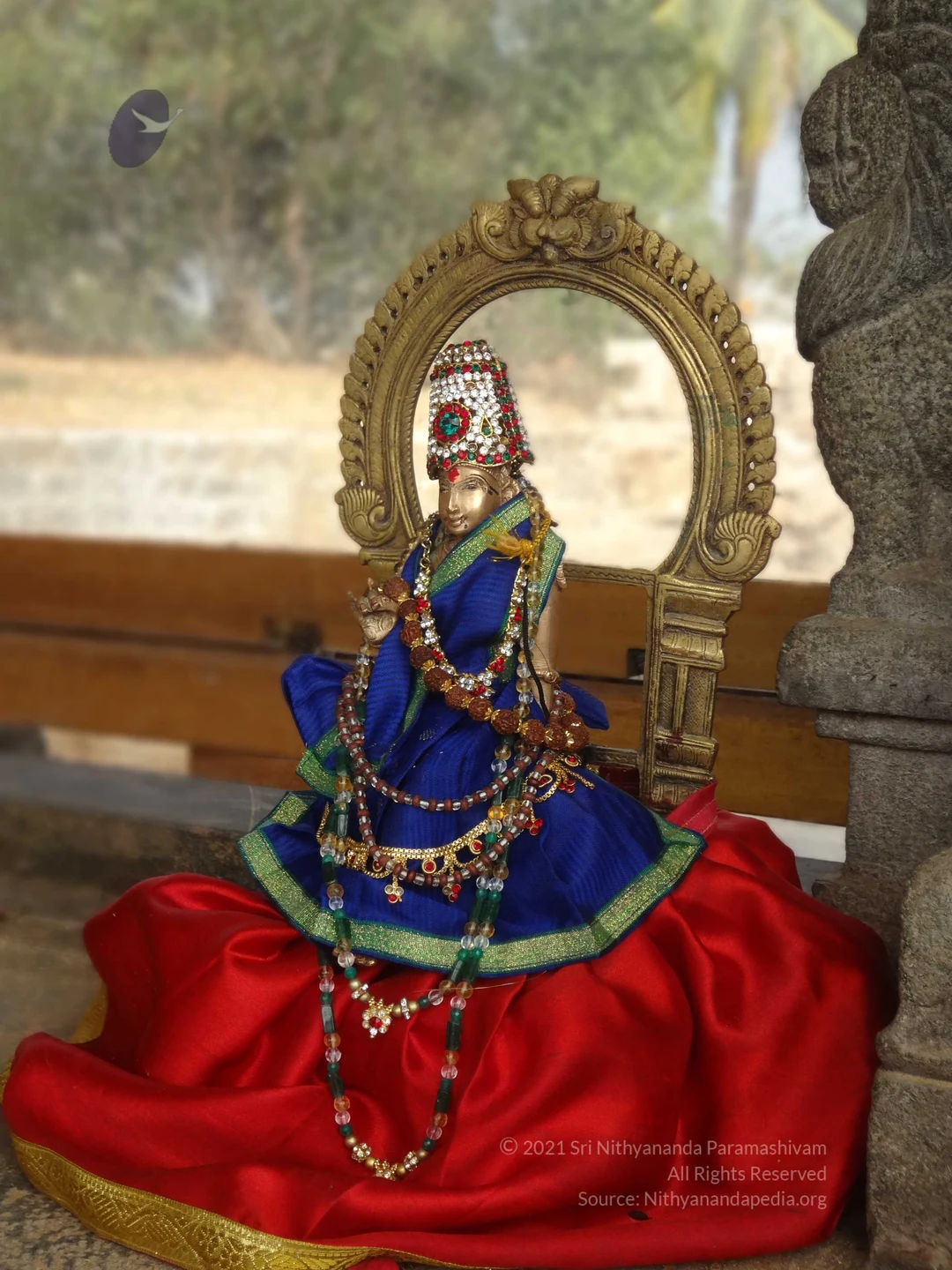
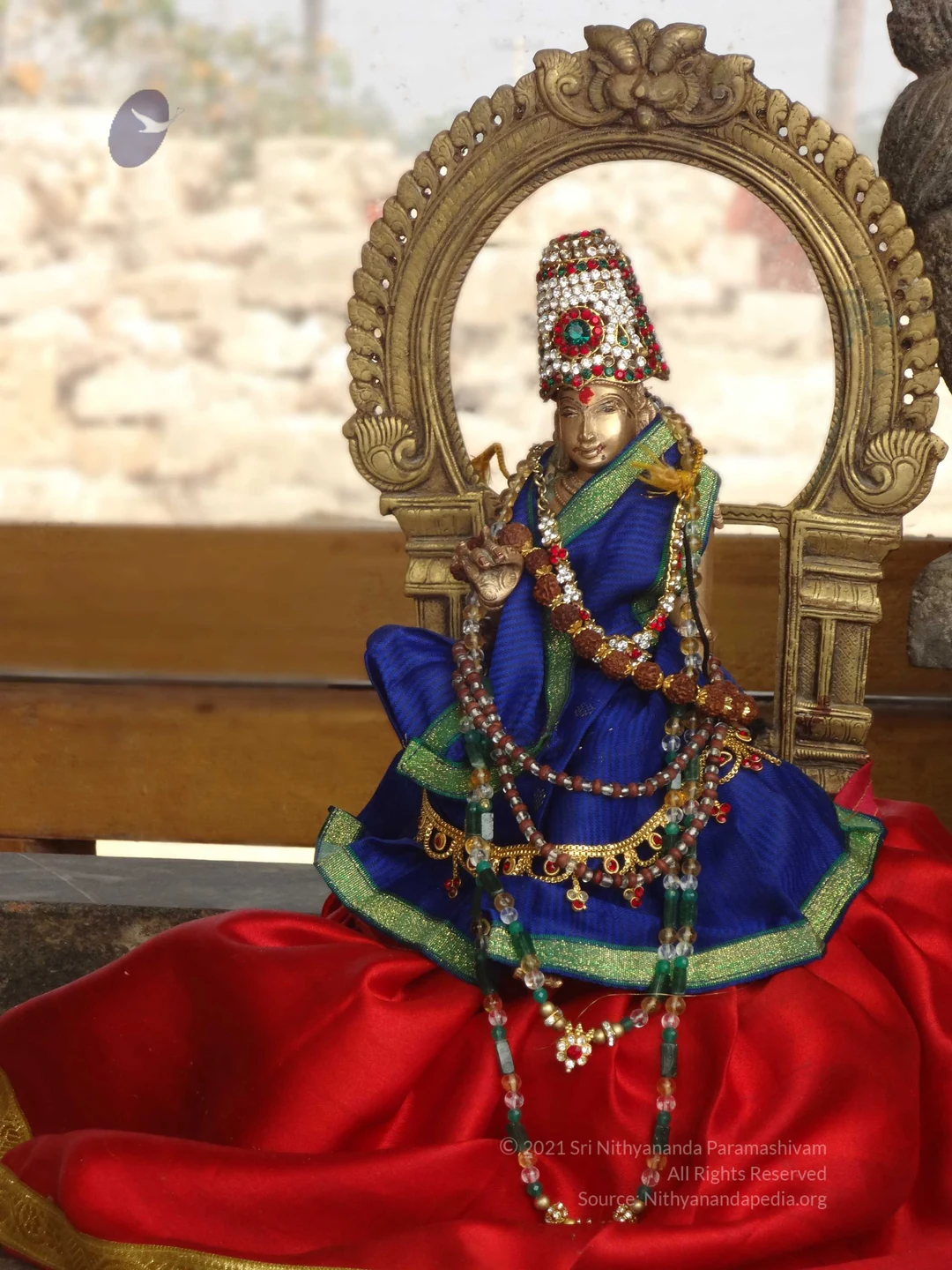
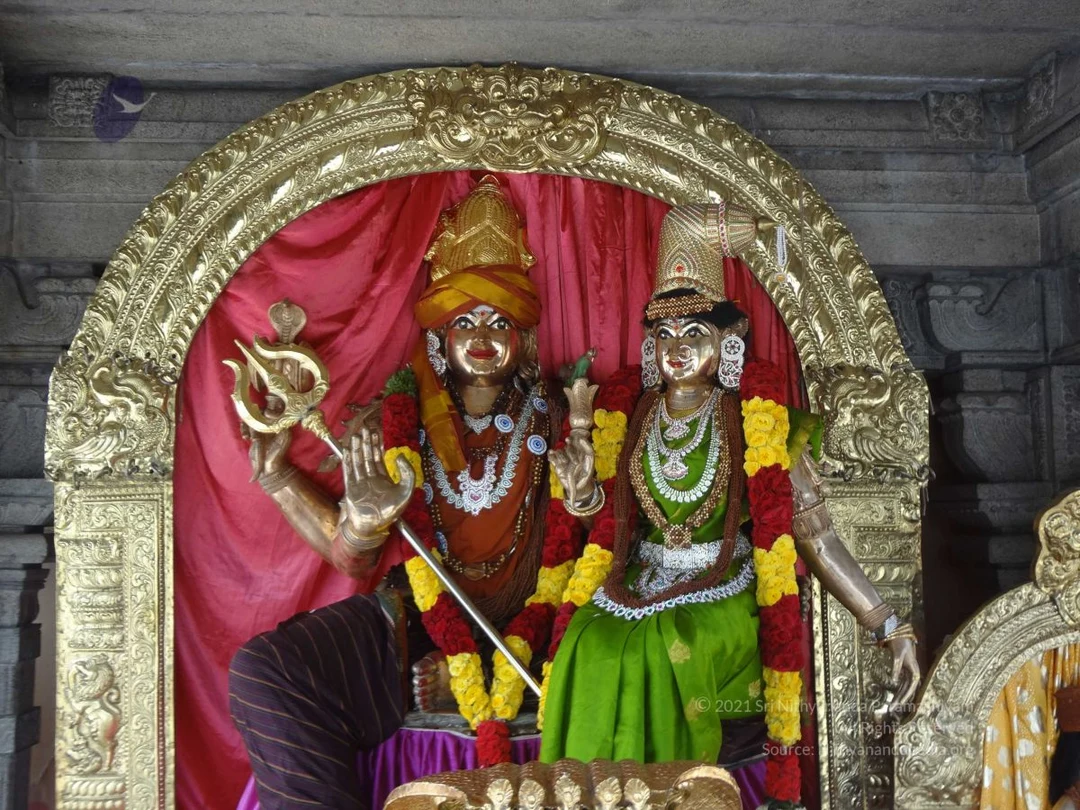
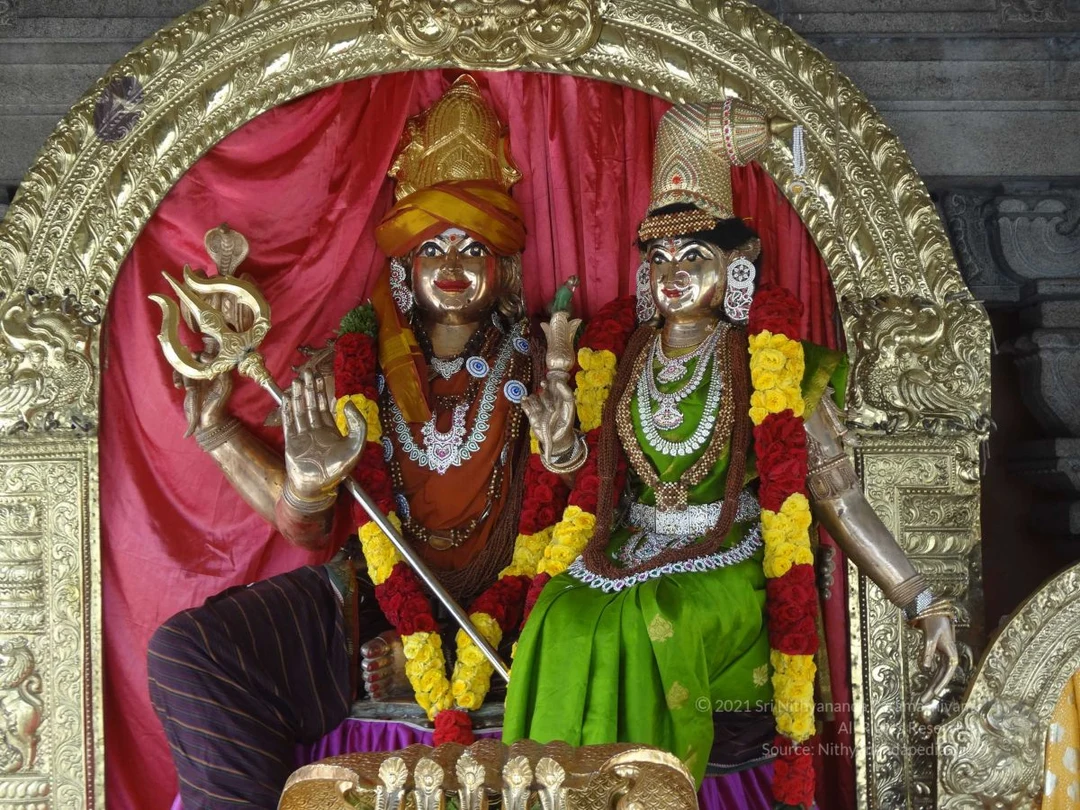
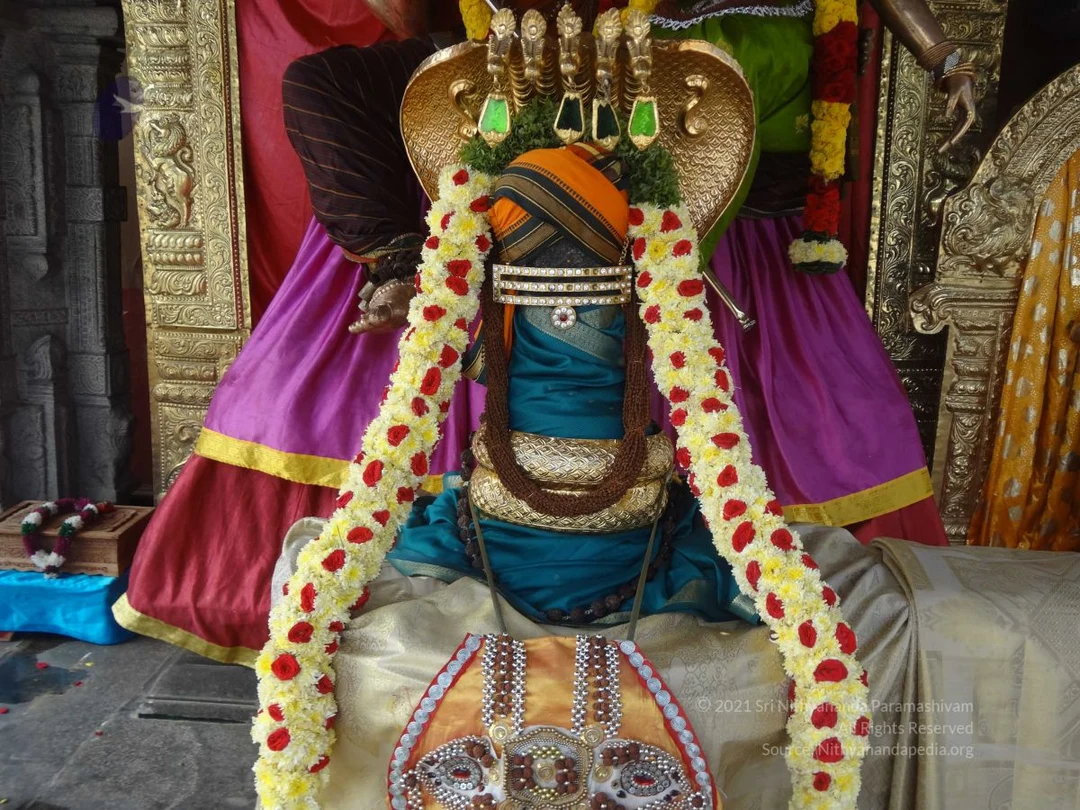
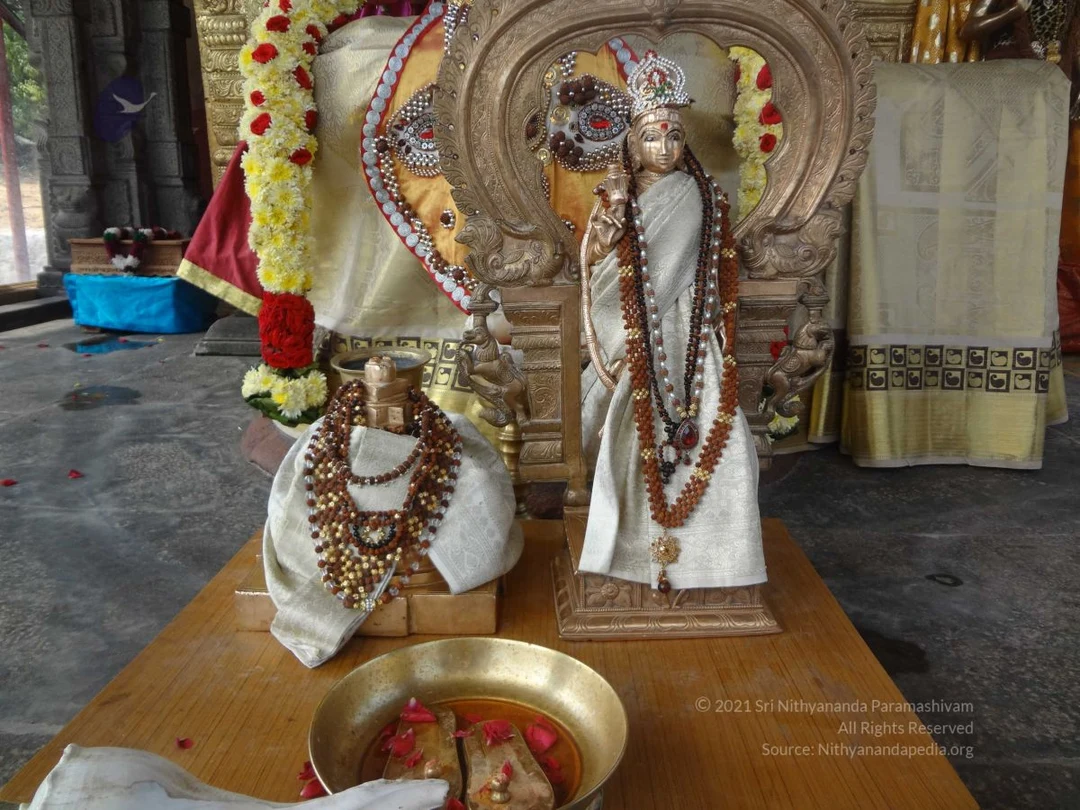
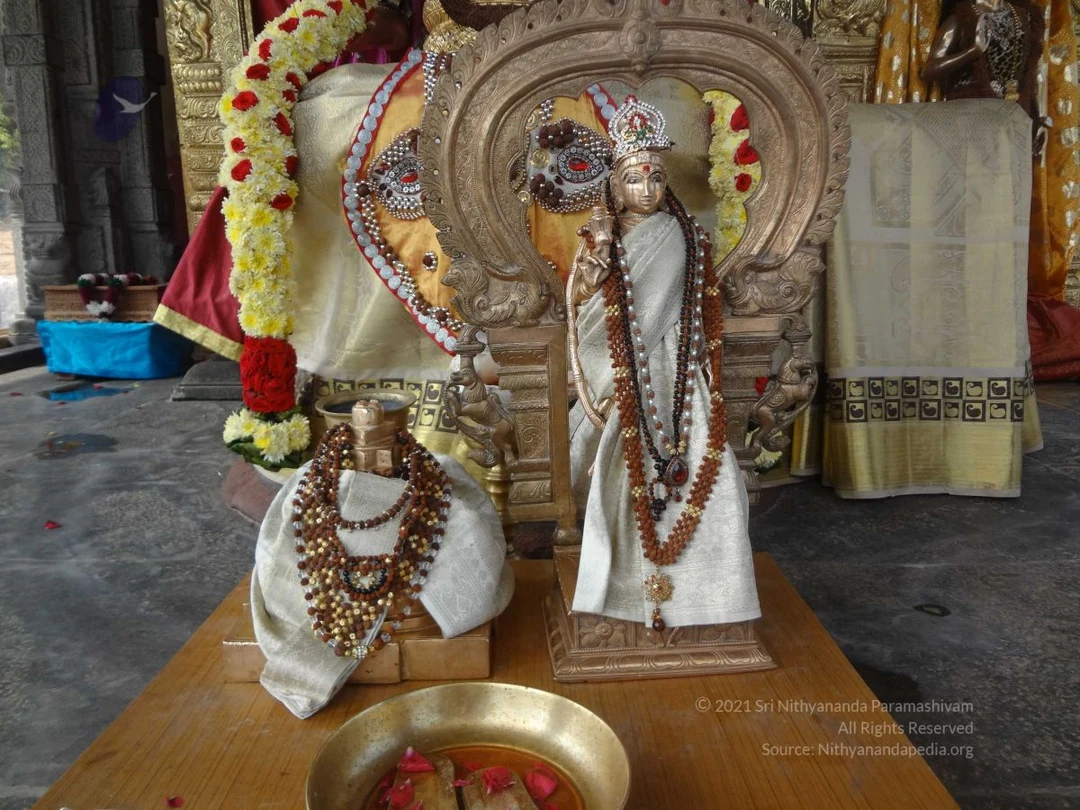
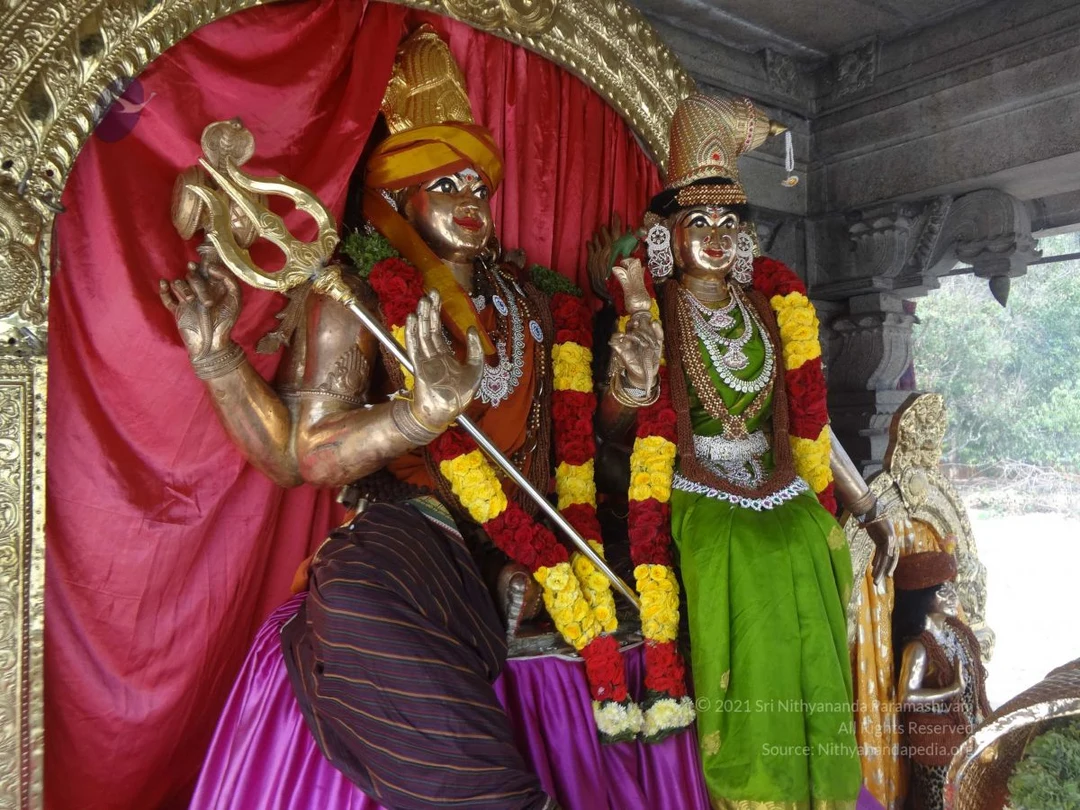
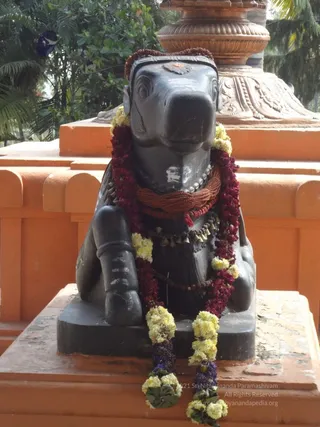
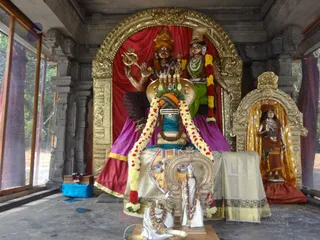
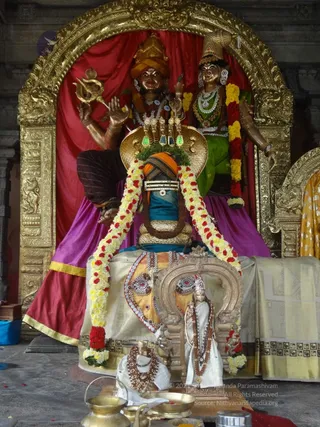
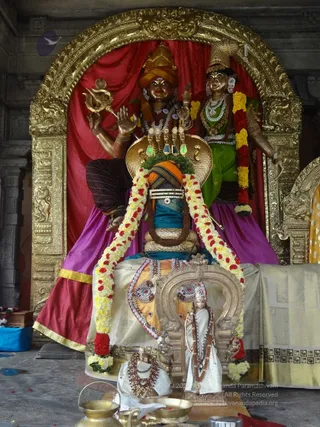
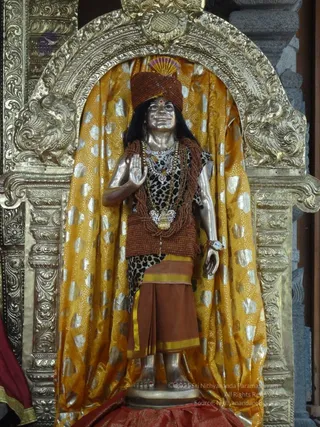
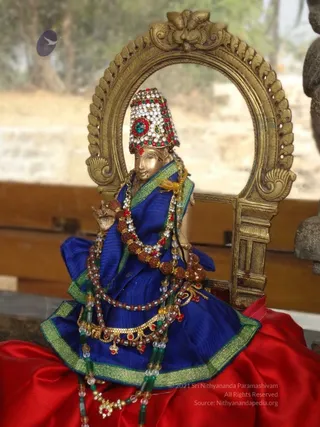
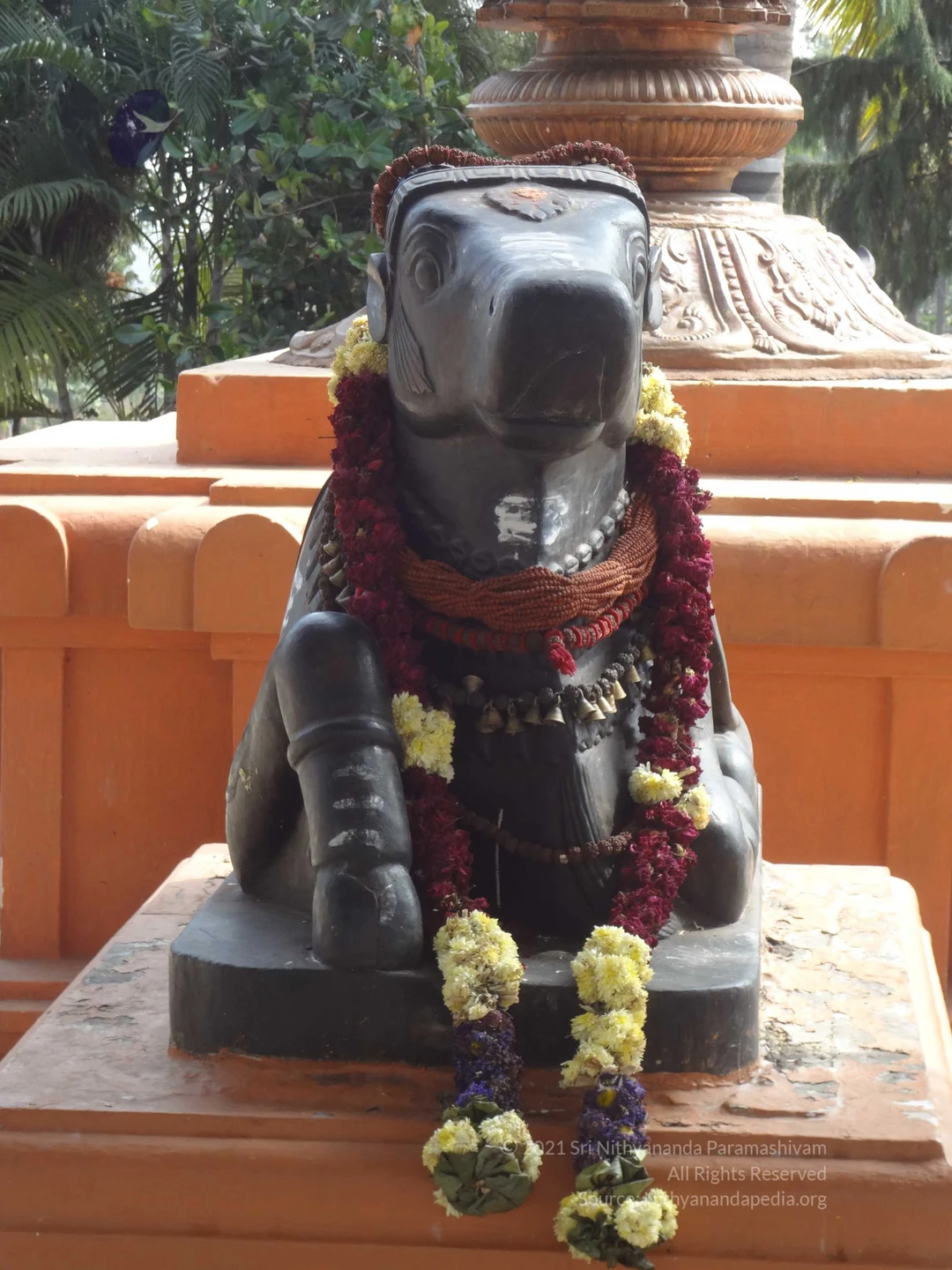
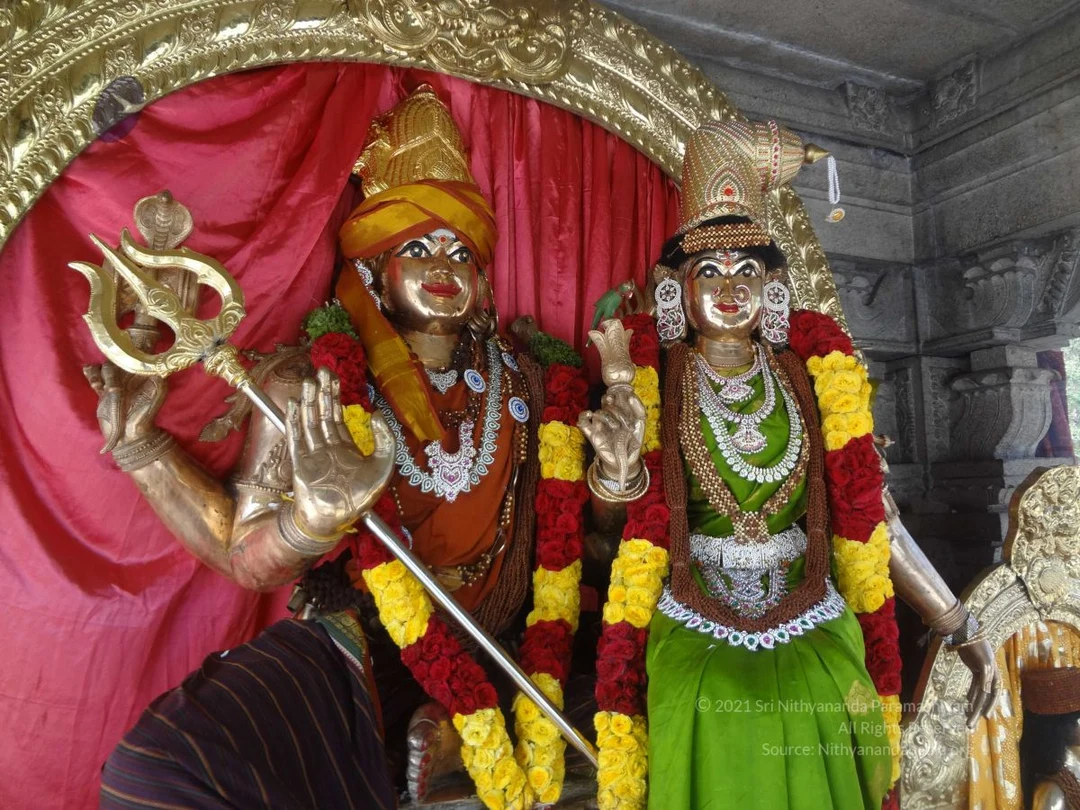
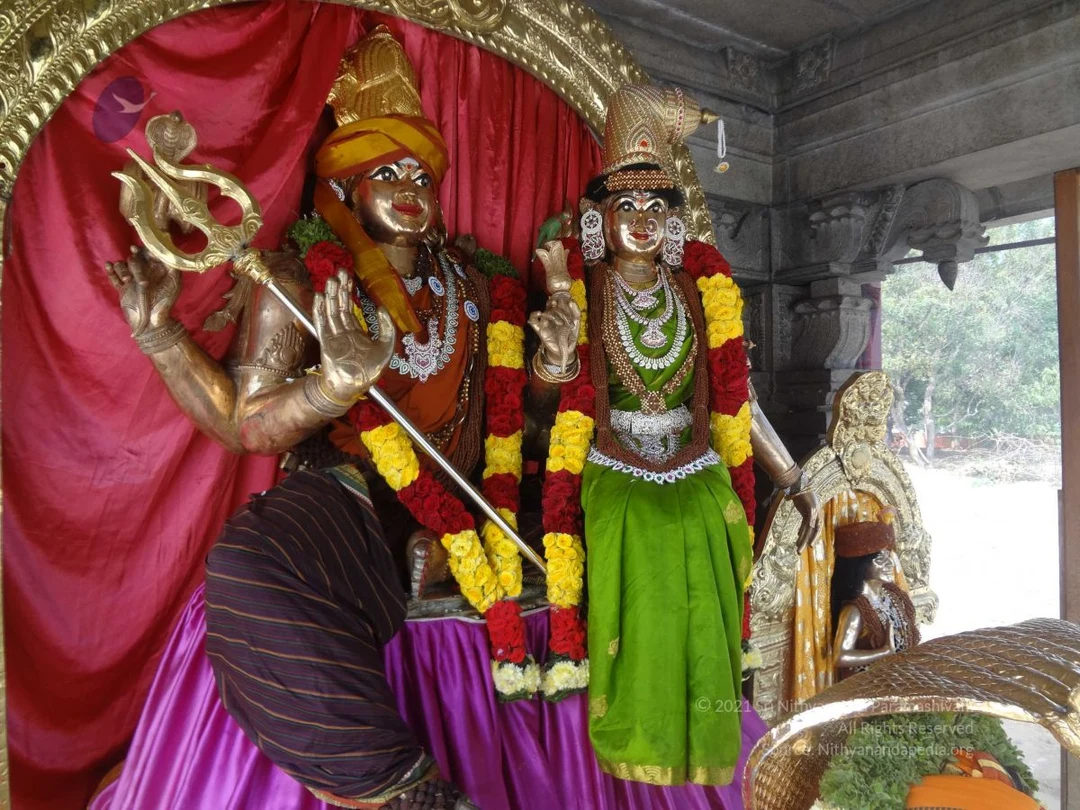
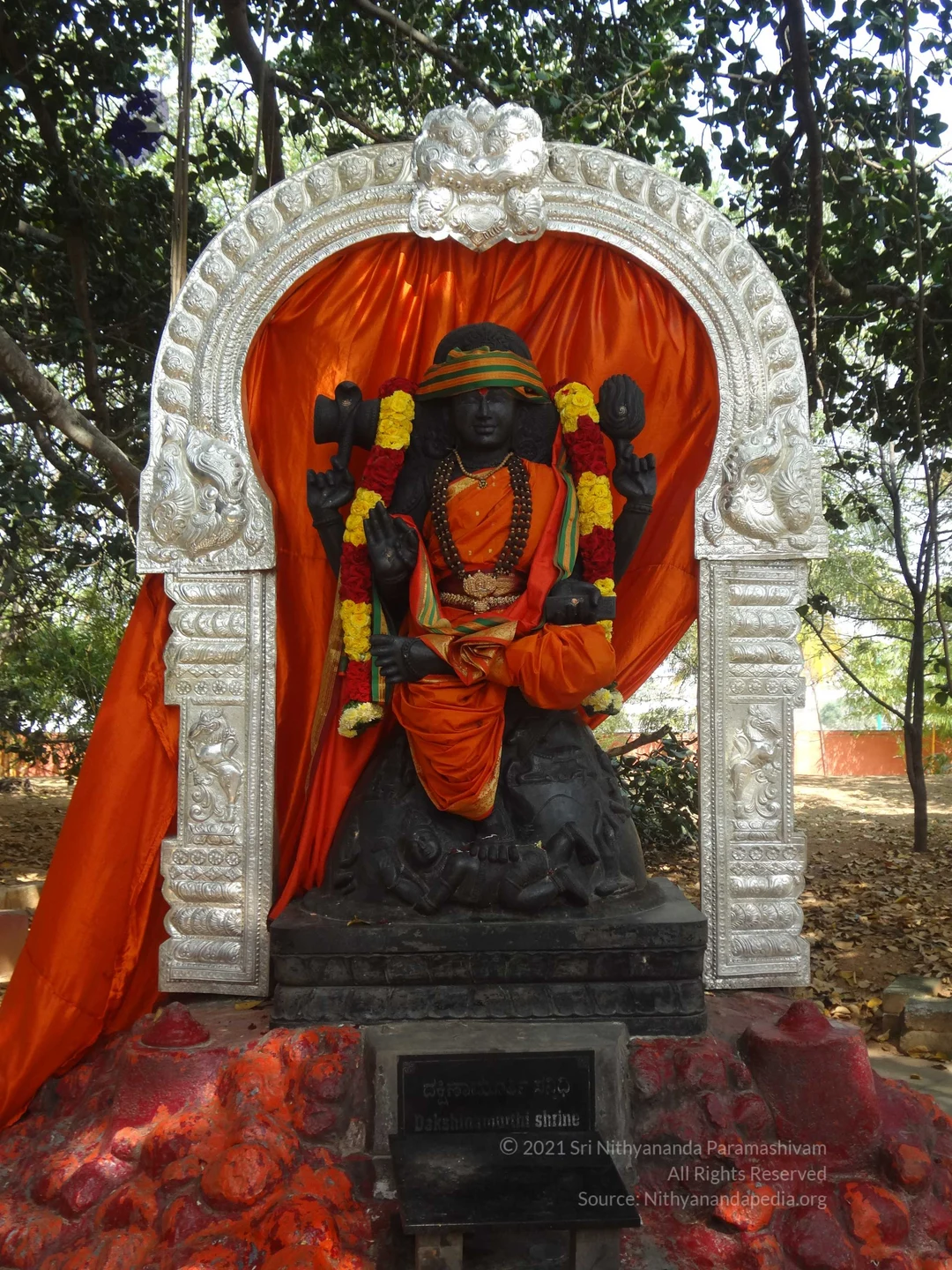
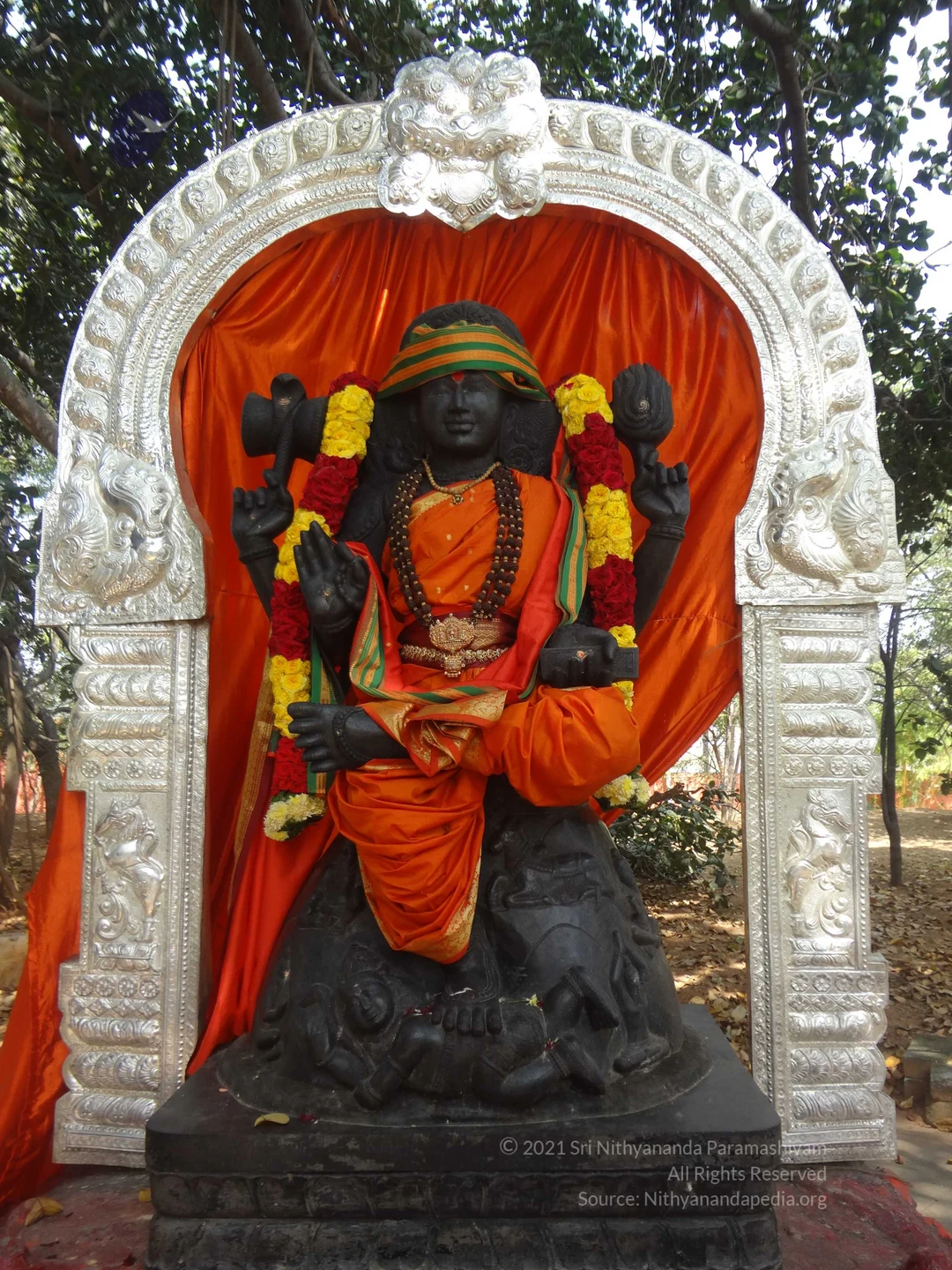
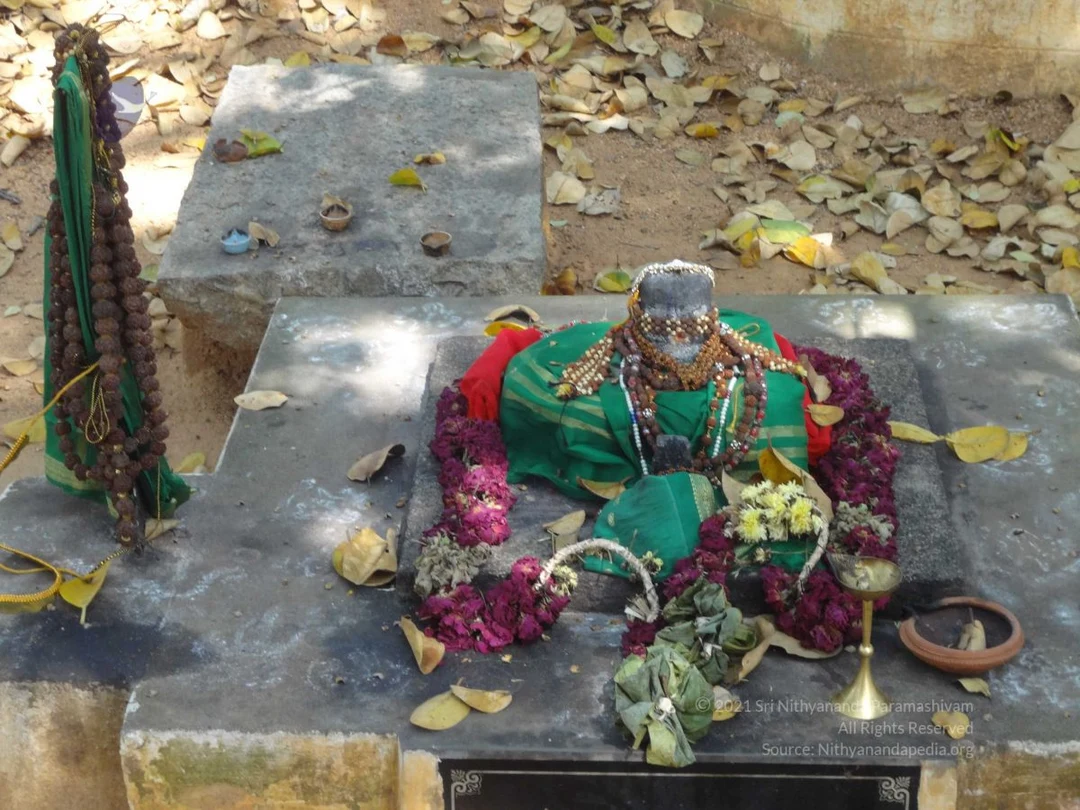
A photograph of a black stone Nandi bull statue seated on an orange-painted pedestal outdoors. The bull wears red and yellow flower garlands, a multi-strand rudraksha mala with brass bells, and a red-brown beaded cord around its neck, with a small marking on its forehead. Behind it stands an ornate orange and terracotta pillar base with green foliage and palm fronds. No people are visible.A temple shrine photographed from the front. Two large gilded deity murtis stand together, one with a trident and a tall crown with a turban-like headdress, both with garlands of yellow and red flowers and ornate necklaces. Between them sits a dark-blue murti of a seated figure wearing a saffron-orange headcloth and a flower garland, placed on a golden throne. A smaller standing figure in saffron-and-brown drapery stands in a niche on the right. Offering plates and a brass vessel sit in the foreground, with a white-clad figure with a rudraksha-style necklace at lower centre, possibly a priest or devotee. Red cloth backdrops and a gilded arch frame the shrine. No statue or person here is presented as a clearly identified living individual.A photograph of a temple shrine with a large gold arched frame and red and purple drapes behind a central figure. In the center, a seated figure wearing an orange and dark striped turban with a green crown-like ornament and a teal garment is adorned with long garlands of red and yellow flowers, and rests in a gilded throne-like seat with a cobra hood above. Behind him stand two larger golden deity statues: the left holds a trident and a raised hand, the right wears a green sari and a tall crown and holds a flower garland. In front, a small figure in white robes and a long rudraksha bead necklace sits on a stone base beside brass pots and offering bowls, with scattered petals on the floor. The scene is a statue and image display, not a live gathering.A temple shrine photo dominated by a large deity murti in gold-framed arch, with two standing deity figures behind a red and magenta drapery: the left figure holds a trident and has an orange and gold crown, the right wears a green sari and layered gold necklaces. In front, a seated figure with a blue-green cloth, orange turban and gold headband is garlanded with red and yellow flower strings, with a golden hooded serpent canopy overhead. Two small white-clad priest-like figures wearing rudraksha malas flank a golden shrine bowl, with brass kalasha pots in the foreground. The statues are not physical people; no living persons are visible.A silver-toned statue of a standing male figure stands in a gilded ornate niche draped with orange silk printed with silver florals. The figure wears a rust-coloured turban with a fan-shaped ornament, a red tilak on the forehead, long dark hair, a leopard-print garment, a rust-brown shawl of beaded rudraksha-style strands, layered necklaces with a gold pendant, and a rust dhoti with gold borders. The right hand is raised in abhaya-style blessing while the left hangs at the side, and a wristwatch is visible. No living people are present.A photograph of a small gilt metal deity murti seated in front of an ornate gold arched backdrop with a carved top. The figure wears a tall jewelled crown set with white, red and green stones, a blue sari with a green-gold border, multiple rudraksha and bead malas, and a gold waist ornament. The murti sits on a bright red silk cloth, with an outdoor blurred background of trees and a stone pillar at the edge. No physical people are visible.
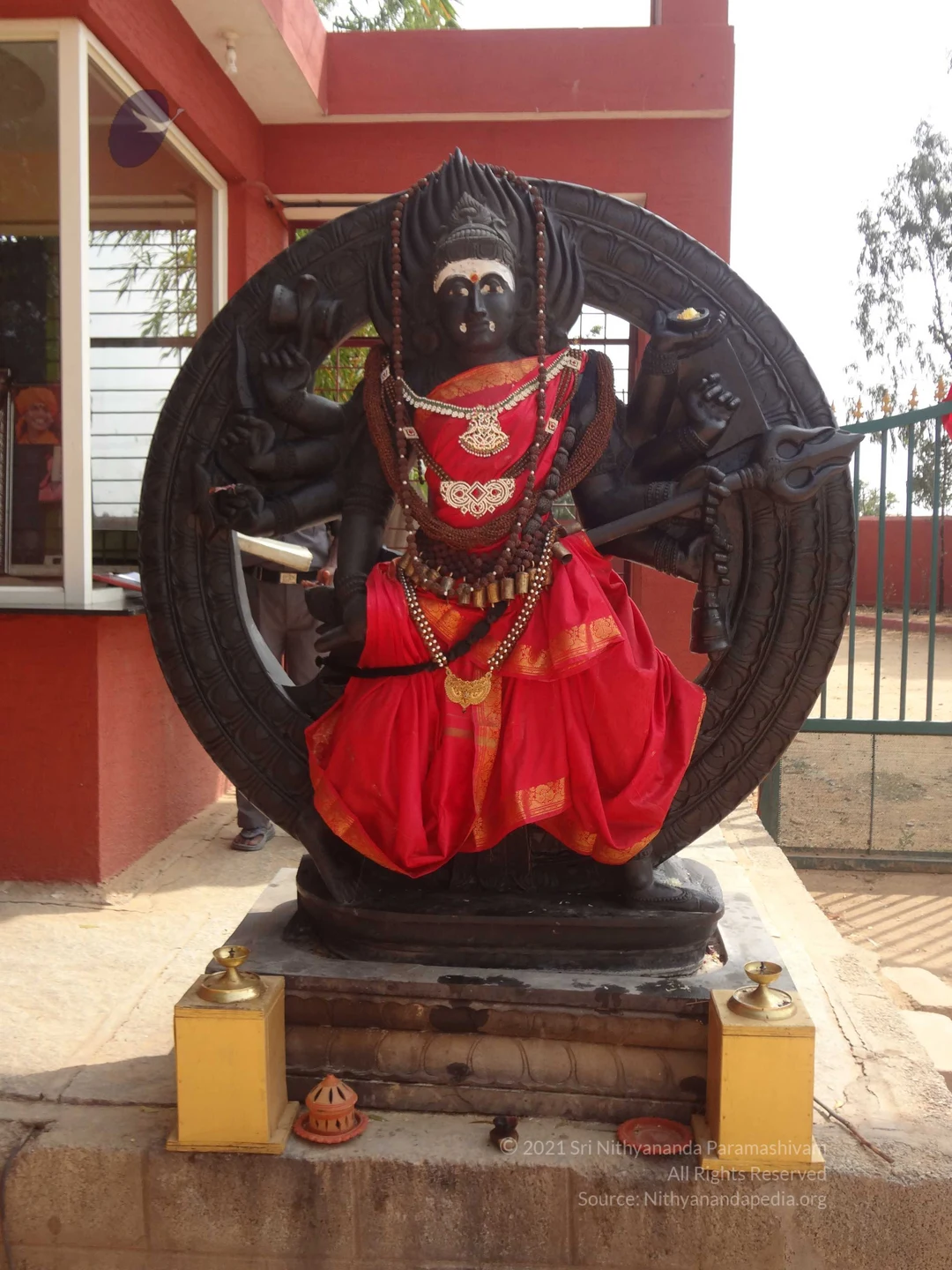
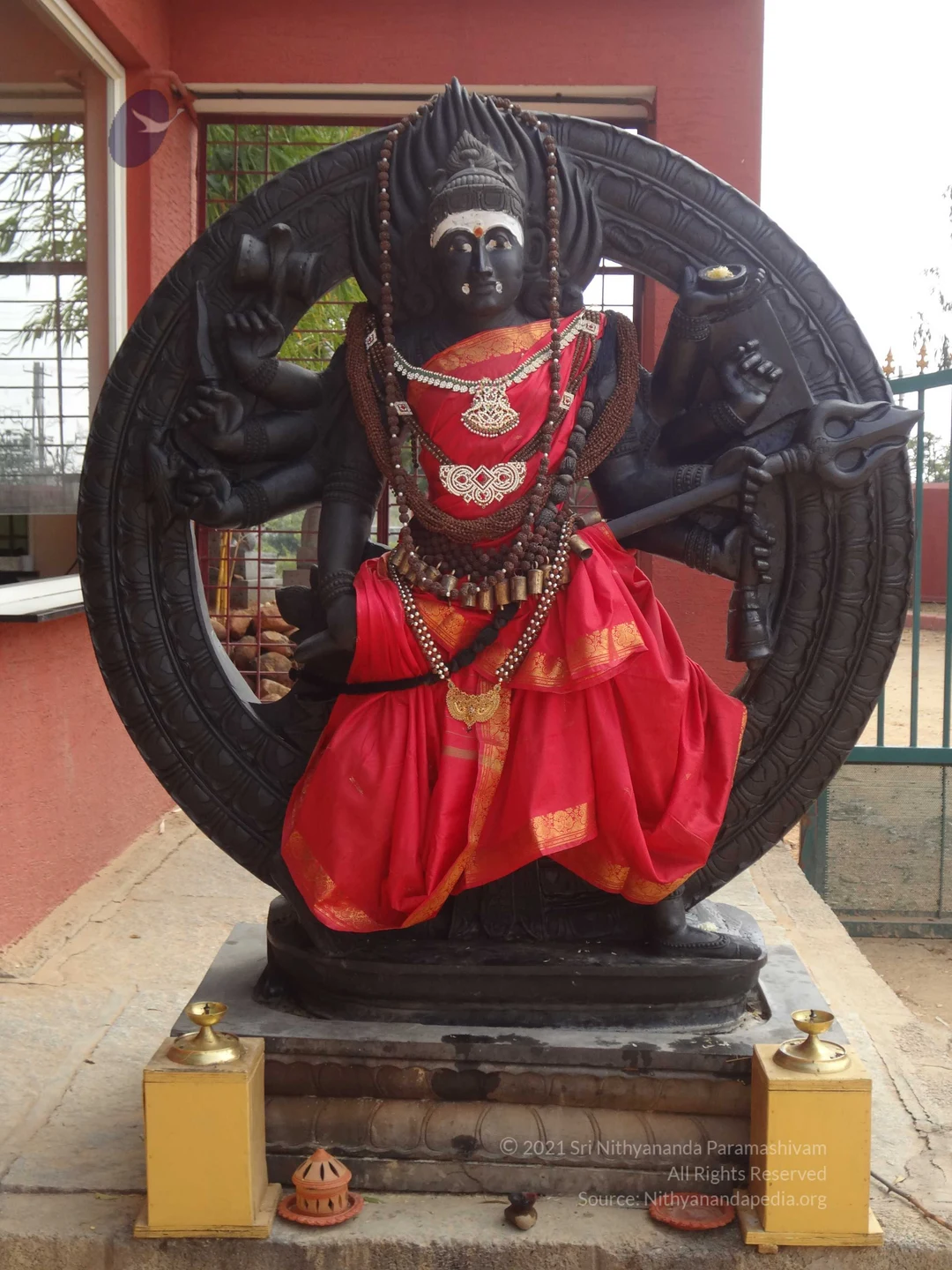
IA-YOGA-SESSION

9 photosSource gallery
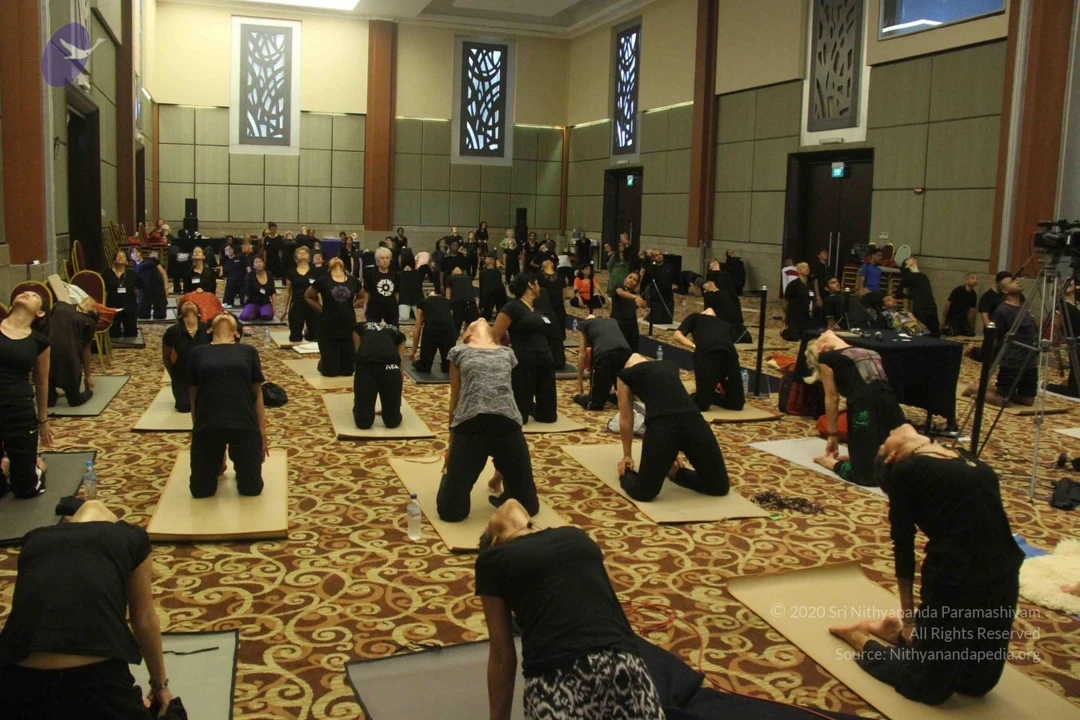
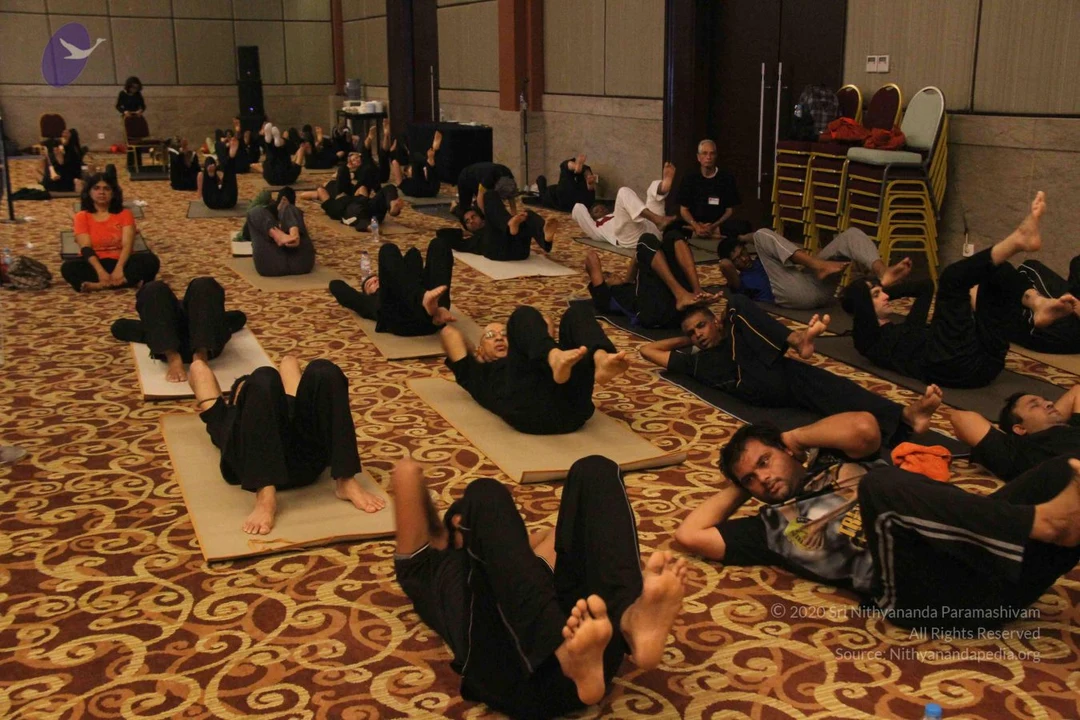
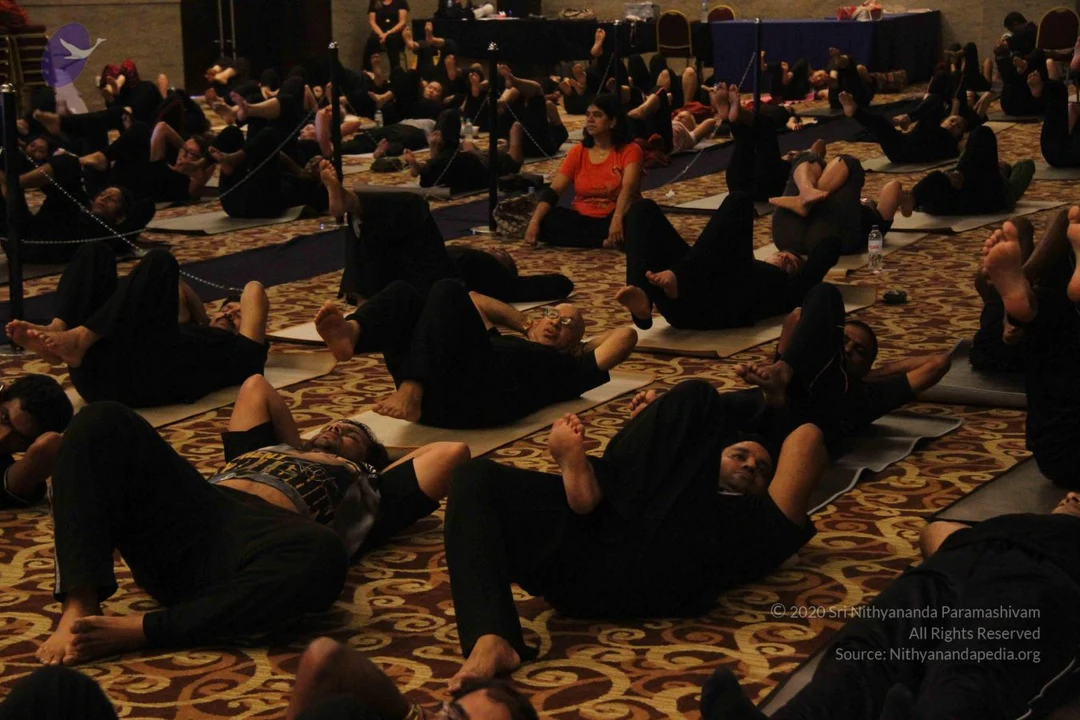
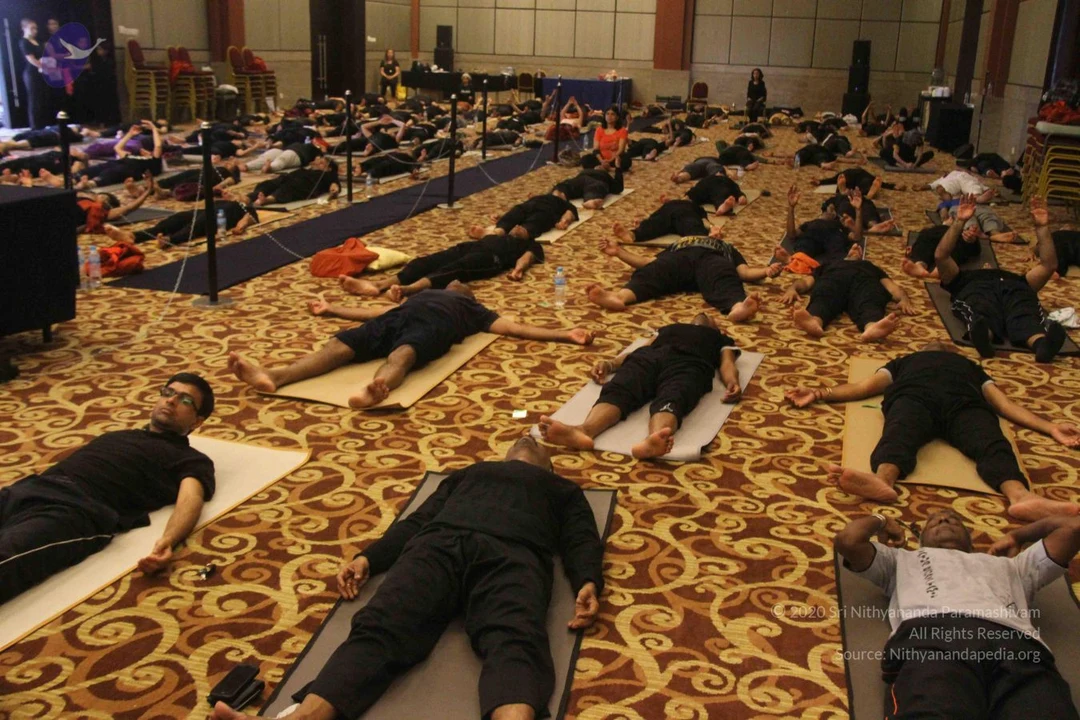
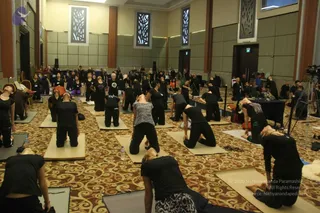
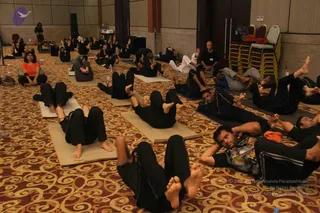
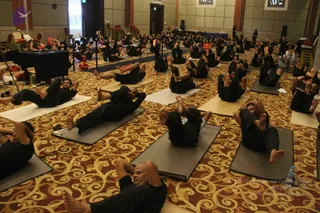
A large hall with patterned brown and gold carpet shows dozens of people in black clothing performing kneeling backbends on tan yoga mats. Many face forward with heads tilted back, while others bend forward in the foreground. Tall decorative wall panels, wall sconces and a video camera on a tripod are visible at the right, and water bottles sit on the floor. The participants appear to be in a group yoga or meditation session.A photograph of a group of people lying on their backs on yoga mats across a patterned brown and gold carpet in an indoor hall, performing a supine exercise with legs raised and hands behind their heads. Most wear black athletic tops and black track pants. In the foreground a man in a black polo shirt rests with his legs extended, and a man in a grey graphic t-shirt lies beside him. Stacked yellow chairs and a red bag sit along the back wall.A photograph of a yoga session in a carpeted hotel-style banquet hall. Many participants in black clothing lie on beige and grey mats in rows, with legs raised in a supine yoga posture. Some wear grey or black tops and track pants; a woman in an orange top sits cross-legged at the left. Stacked gold-framed chairs stand against the back wall, and a man in a dark shirt sits near them. The room has beige walls and dark wooden doors. No readable text is visible on the scene itself.A large hall with a patterned gold-and-brown carpet is filled with many people in black clothing lying on grey and beige yoga mats, performing supine leg-raise and back-stretch postures with their feet lifted in the air. Some participants rest their hands behind their heads. Tall black stands and a draped table with a black cloth stand at the far left, with red cushions and chairs along the walls. Bottles of water sit on the floor near the mats. No clearly identifiable a person figure is evident in the frame.A large group of participants lie on yoga mats on a patterned carpeted hall floor, performing reclining exercises with legs raised and feet in the air. Most wear black or dark athletic clothing. One woman in the centre wears a bright orange-red top. Water bottles sit on the floor near the mats, and a few people wear glasses. Behind them, a partition and draped navy cloth are visible. No identifiable a person figure is clearly present in this frame.A photograph of a large group of people lying on yoga mats on a patterned carpet in a hall, performing a supine yoga or breathing exercise with legs raised and feet pointing up. Most participants wear black clothing. A woman in an orange top sits upright at the centre-right, watching. Black stanchion posts with rope barriers divide the mats, and tables with blue cloth stand at the back. Water bottles sit near some mats.

PADUKA-PUJA

14 photosSource gallery
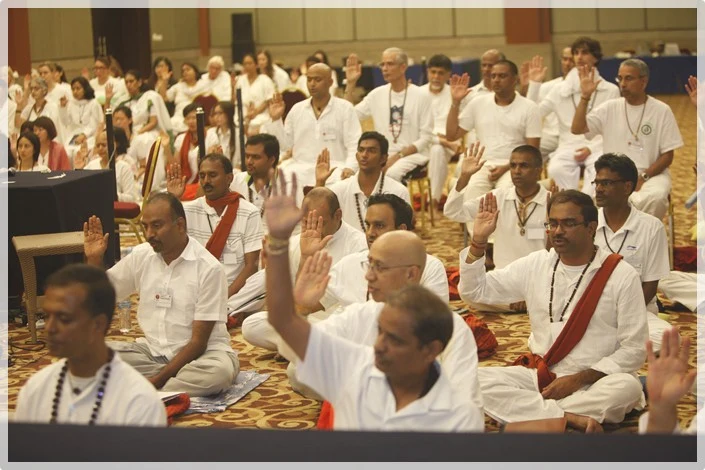
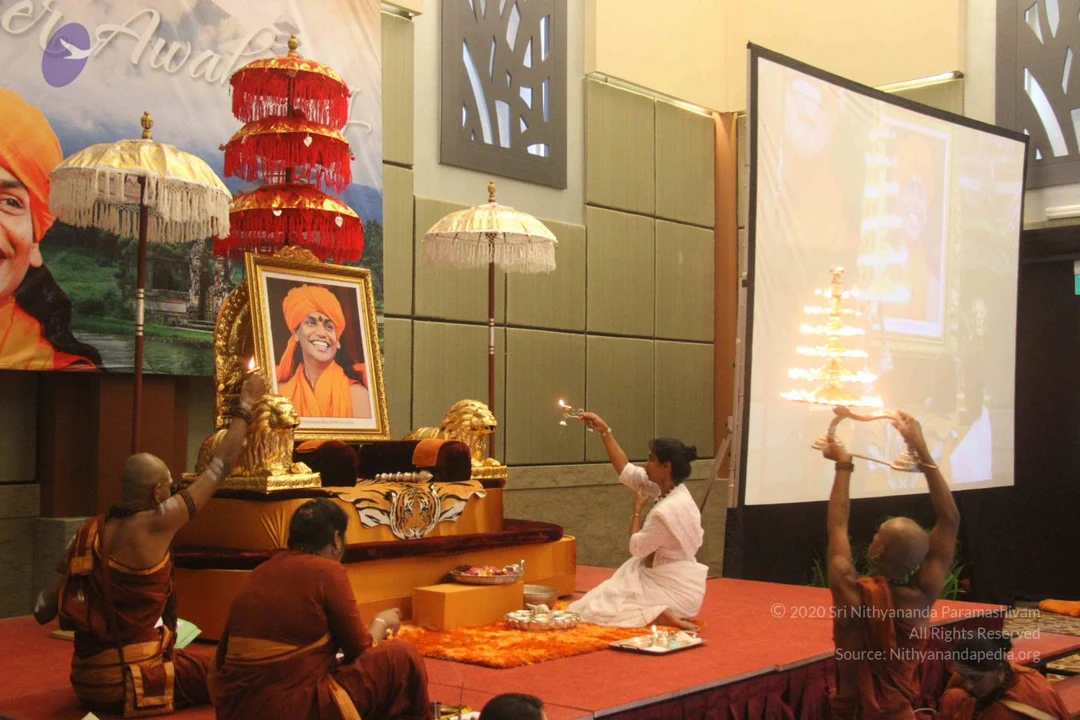
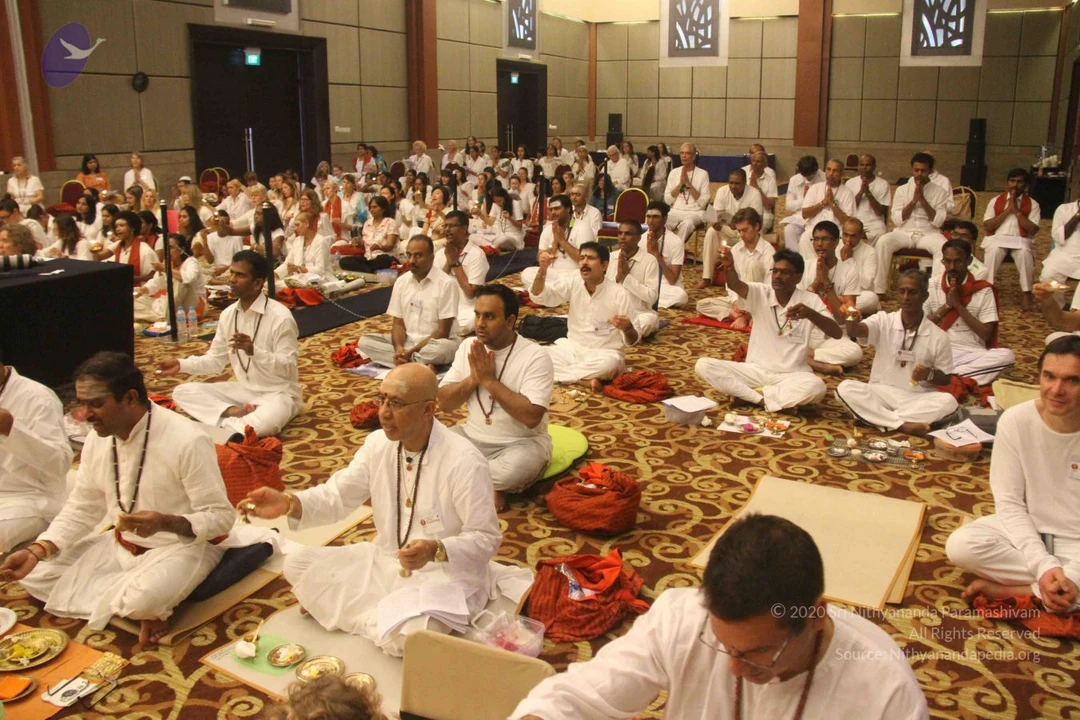
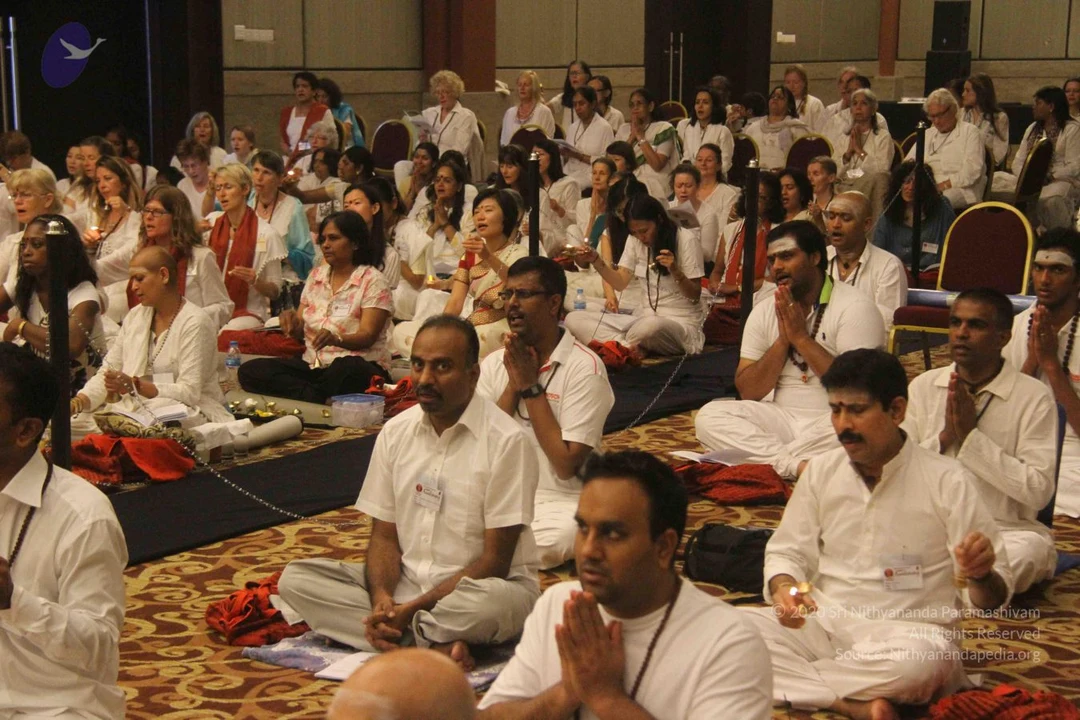
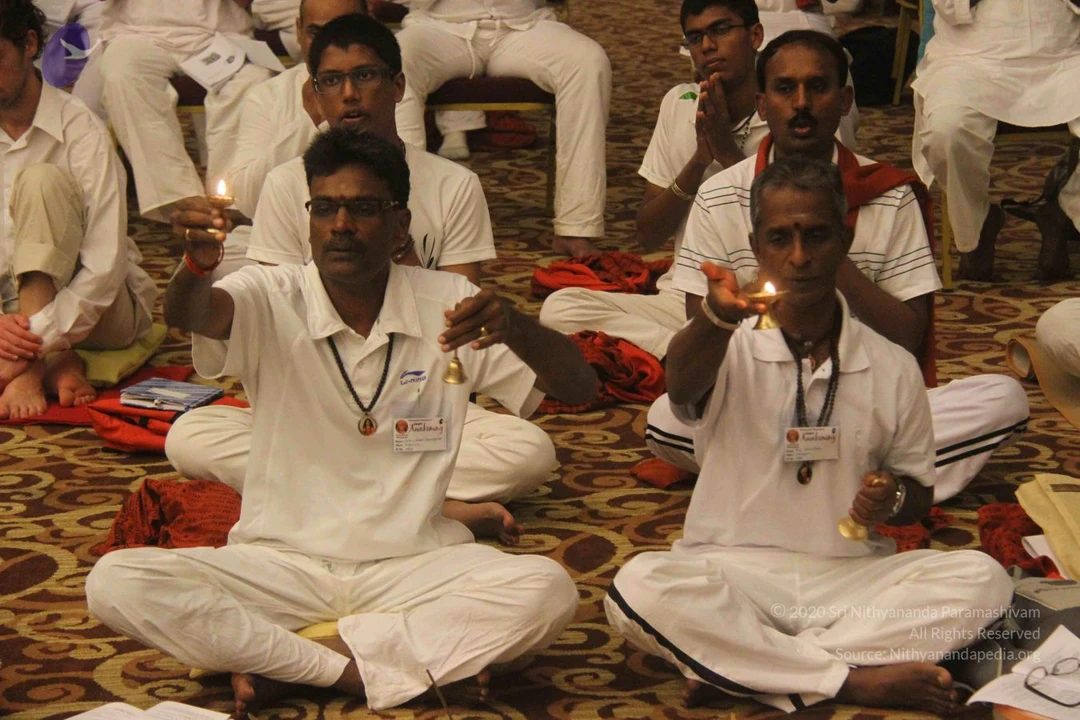
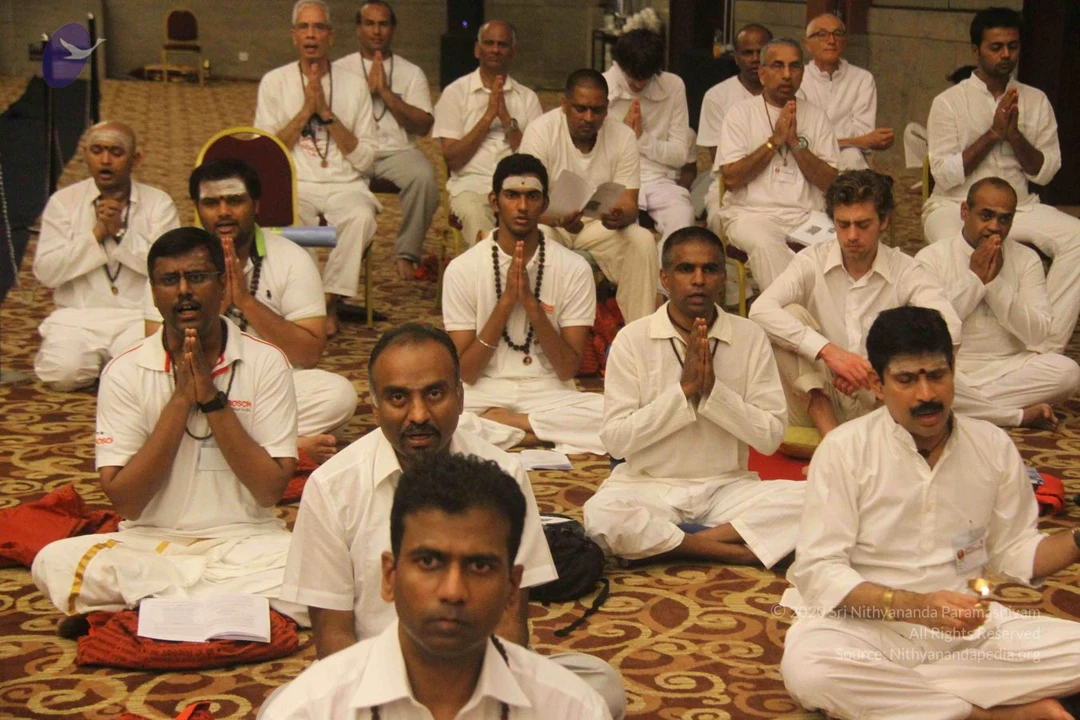
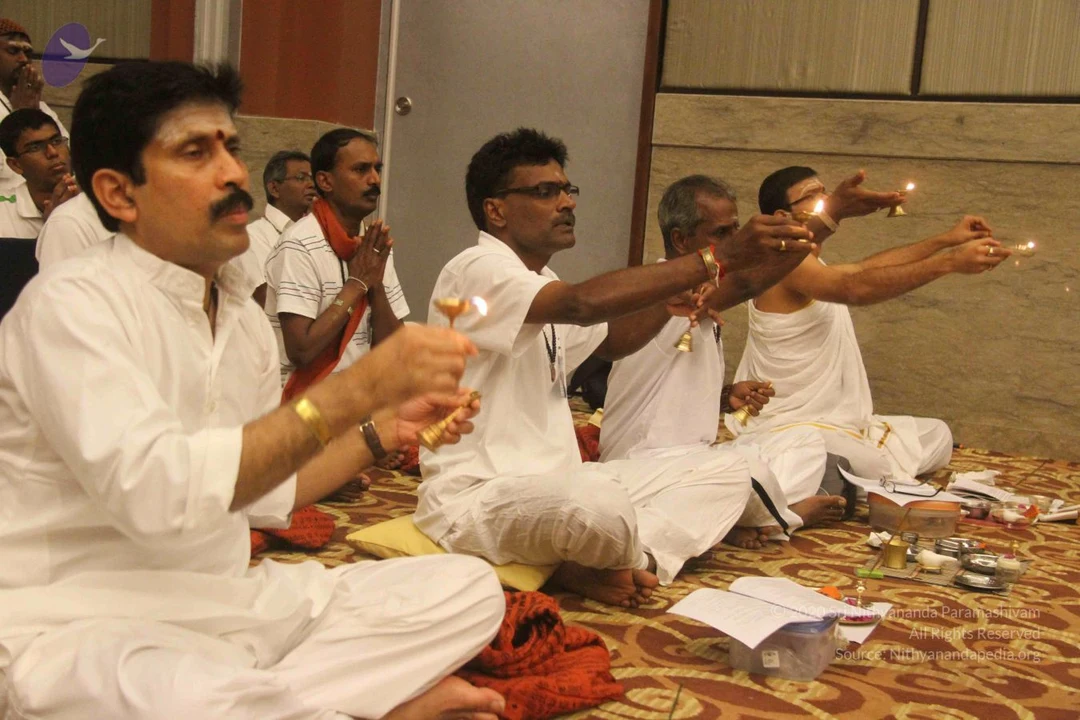
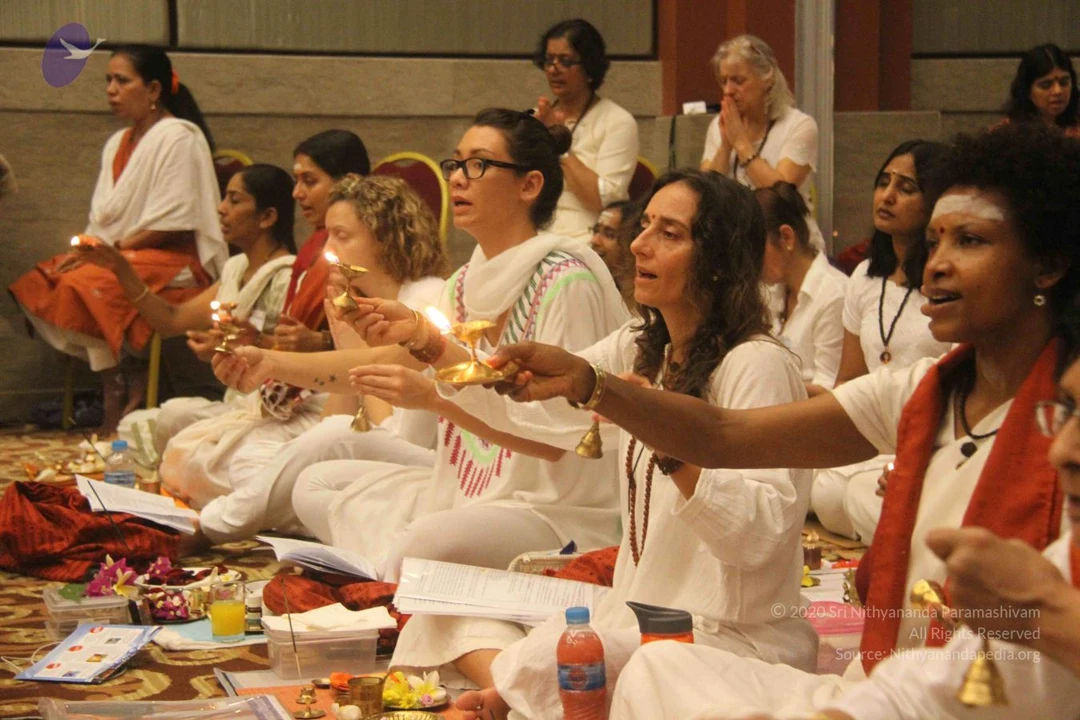
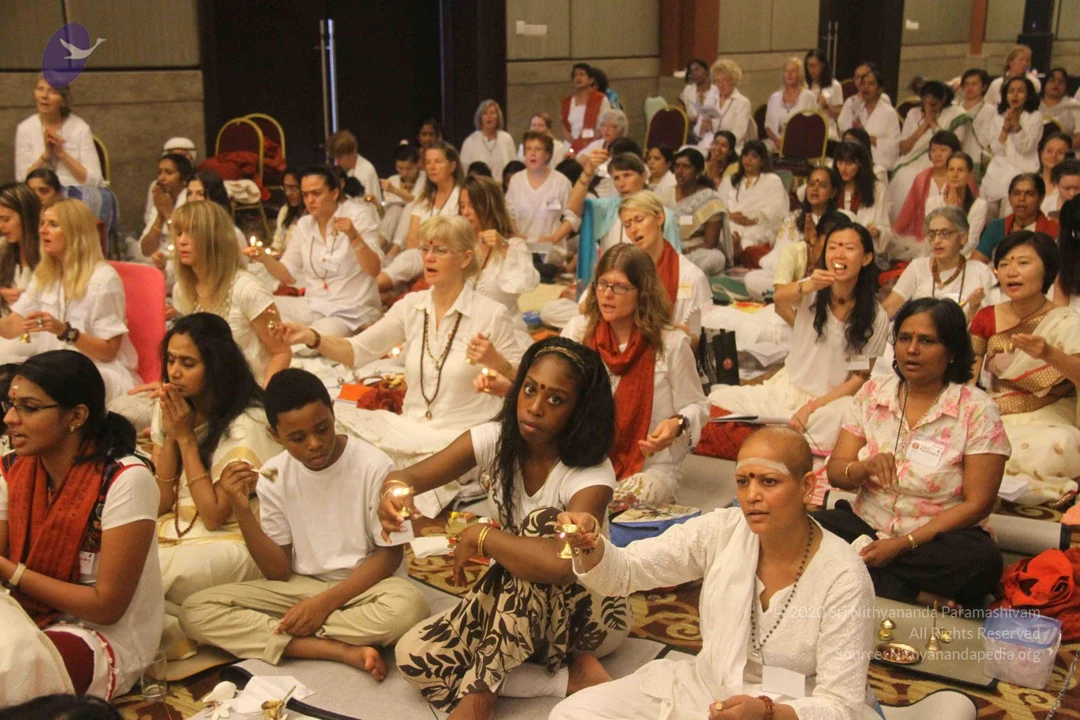
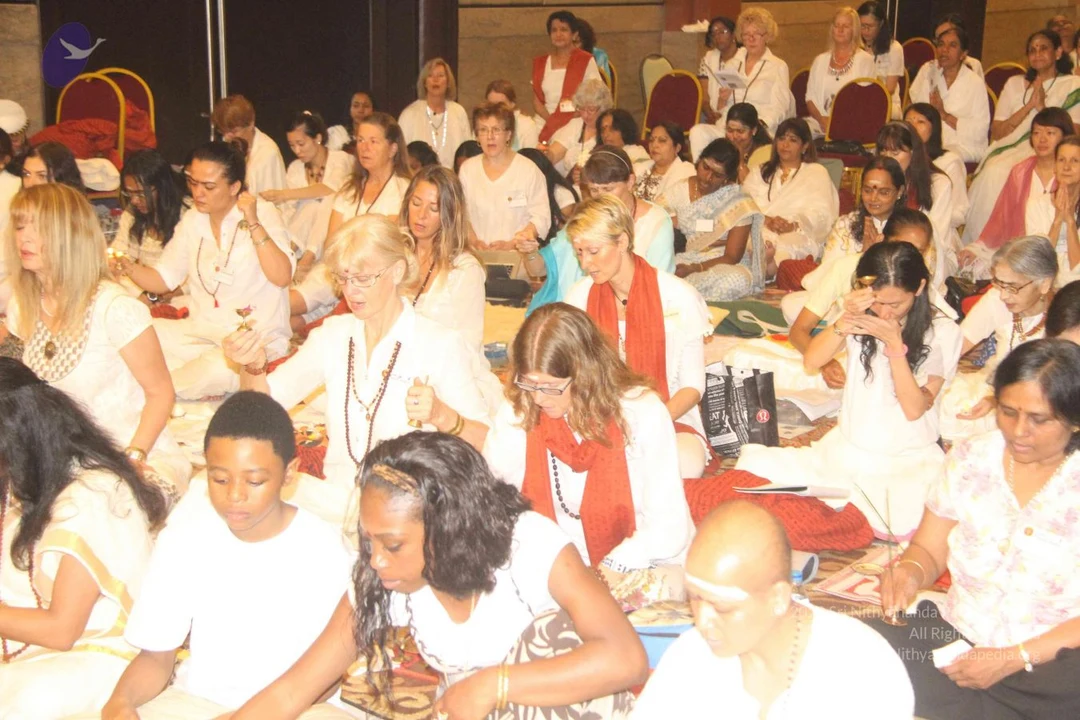
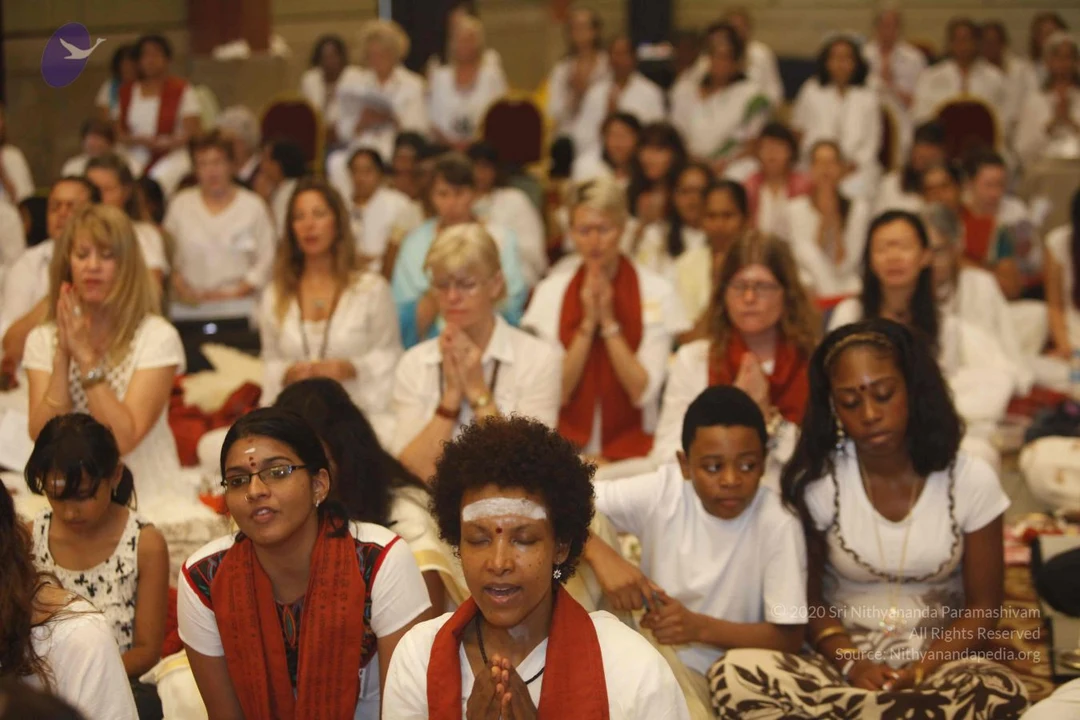
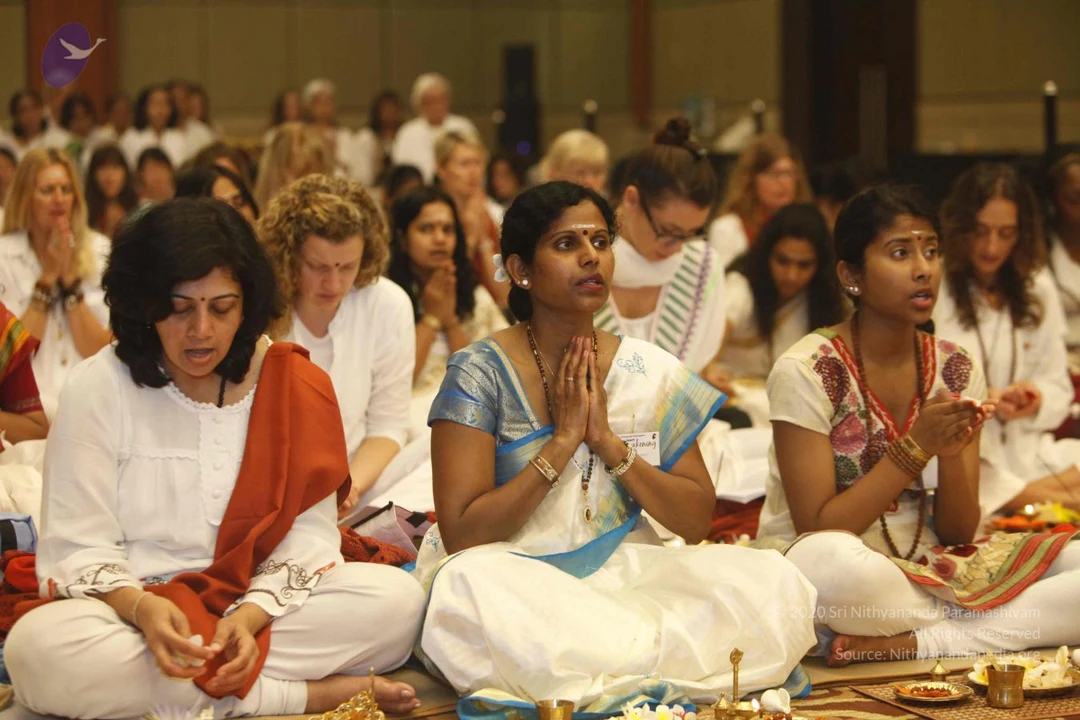
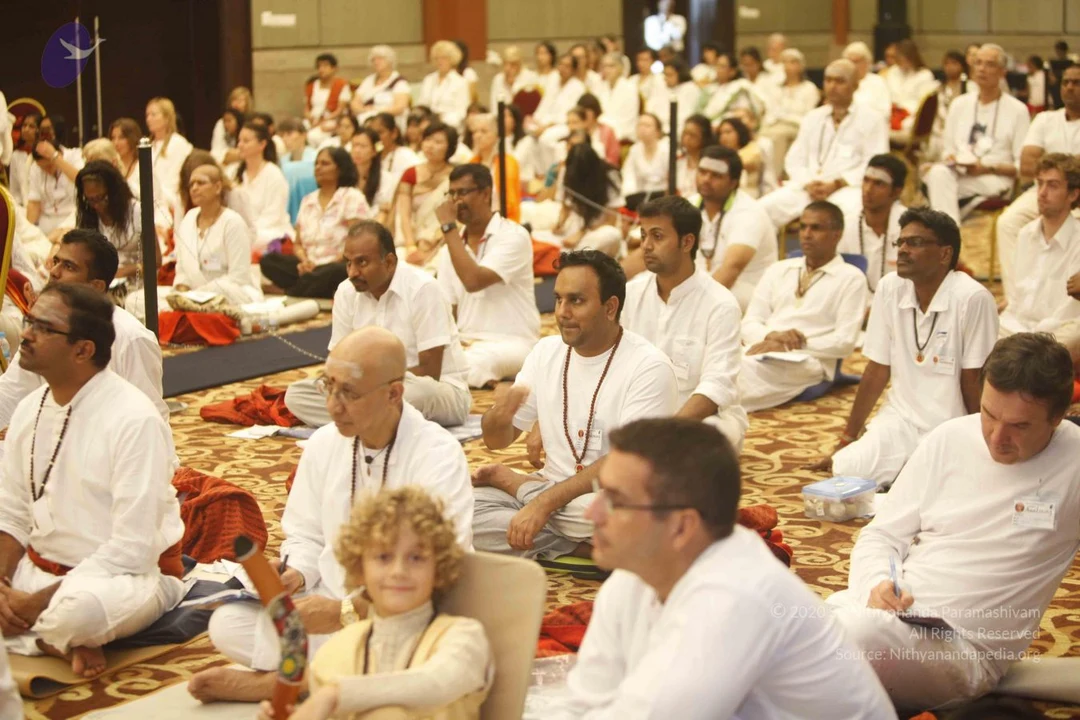
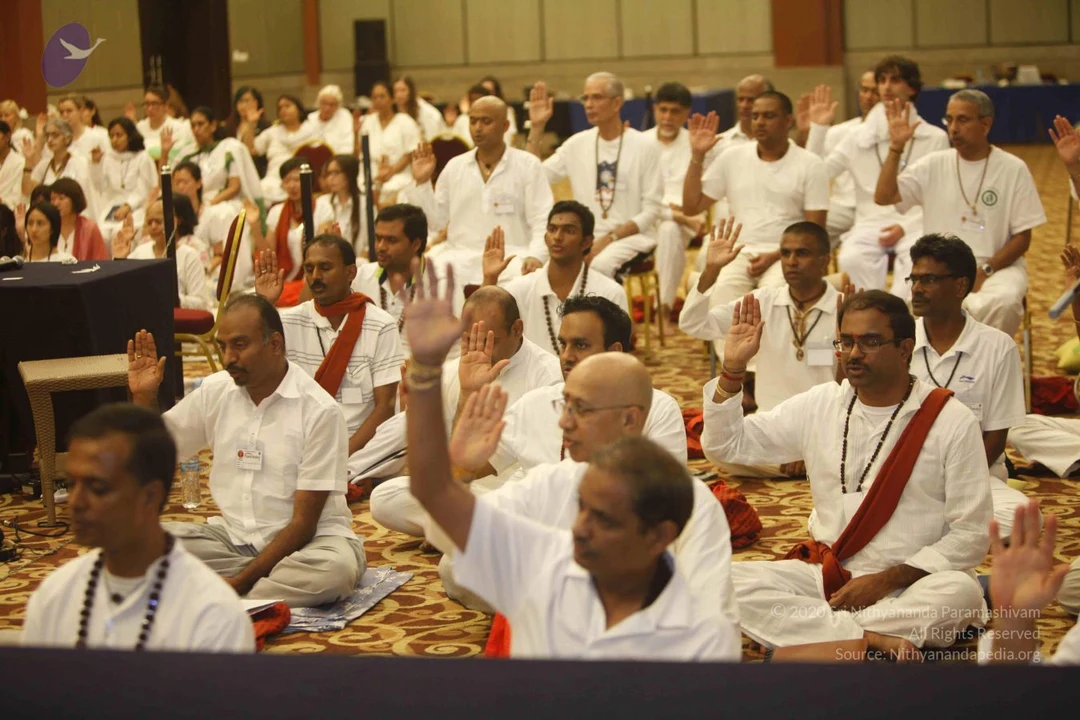
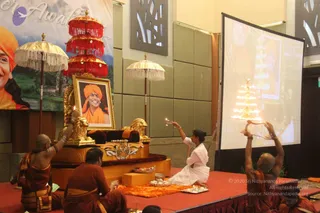
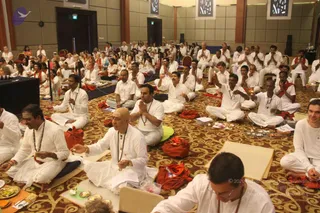
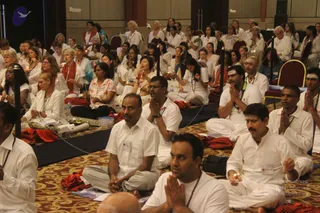
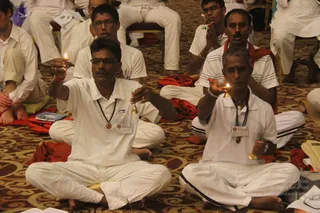
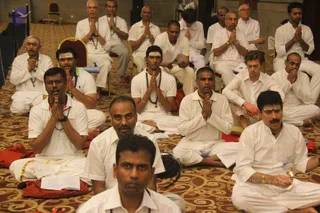
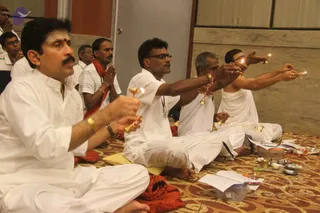
A ceremonial puja on a raised red stage in an indoor hall. A framed portrait of a smiling man with an orange turban and orange robe sits on a gold throne draped with a tiger-skin cloth, flanked by gold lion figures and gold parasols, under a tiered red-fringed canopy. A woman in white sits cross-legged at centre, holding a lit oil lamp aloft. Three shaved-headed men in saffron-brown robes sit around the stage, one raising a lit multi-tiered gold aarti lamp. A large screen to the right shows a glowing gold lamp and a portrait. A banner behind shows a smiling figure in orange with mountains.Large photograph of a seated congregation in a carpeted hall with brown patterned carpet, wooden doors and decorative wall panels. Many devotees in white clothes with orange-red shawls and rudraksha malas sit in rows, several with hands joined in prayer. In the foreground a bald man in white with a mala sits beside brass plates holding offerings and small items, while another man in white with glasses holds a mala. Orange cloth bags and cushions lie on the floor. The scene suggests a satsang or puja gathering with many participants.A large indoor satsang hall with patterned carpet where many devotees sit on the floor in rows, most dressed in white ritual clothing with white lanyard badges. Several men with hands pressed together in anjali mudra sit in front, one wearing white with a rudraksha mala and another with white tilak marks on the forehead. Women in white and a few in pink or red shawls sit among them, some holding small lamps or papers. Red cloth lies on the floor near black poles with chains. Behind, a crowd of seated and standing attendees fills the room, and a blue bird logo appears at the top left. No person here wears a saffron robe or crown.A seated group of devotees in white clothing at a satsang hall with a patterned carpet. In the foreground, a man in a white shirt and white trousers with a dark rudraksha mala and an ID badge holds a small oil lamp in his right hand while gesturing with his left. Beside him, a man in white with a rudraksha mala and badge holds a lit oil lamp in both hands. Behind them, others sit cross-legged, one with palms pressed together in namaste and others with red shawls on the floor. The setting suggests a group puja with oil lamps.A photograph of a seated group of devotees in white ritual clothes at an indoor satsang hall with patterned carpet. Most sit cross-legged with palms pressed together in anjali mudra, eyes closed or lowered, several holding small booklets. A man in the front row wears a white shirt with a red-and-gold patterned dhoti and a folded cloth; another wears a rudraksha mala and white shirt; one seated at right holds a small oil lamp. Some wear vibhuti or tilak on their foreheads. No a person candidate is clearly visible, and no deity or throne is shown.Several seated men in white ritual clothes perform an aarti-style lamp offering on a patterned carpet in an indoor hall. Foreground, a man with a red tilak on his forehead and a gold bracelet holds a lit oil lamp toward the viewer. Beside him, a bespectacled man in a white shirt extends a lamp with both arms, and to the right another man in white dhoti offers a lit lamp outstretched. Behind them, a man in an orange-and-white shawl folds his hands in prayer, and others sit in the background. Brass lamps, a tray with small items, and open papers lie on the carpet, with an orange cloth at lower left. No clearly identifiable a person appearance is present.

NITHYA-SATSANG
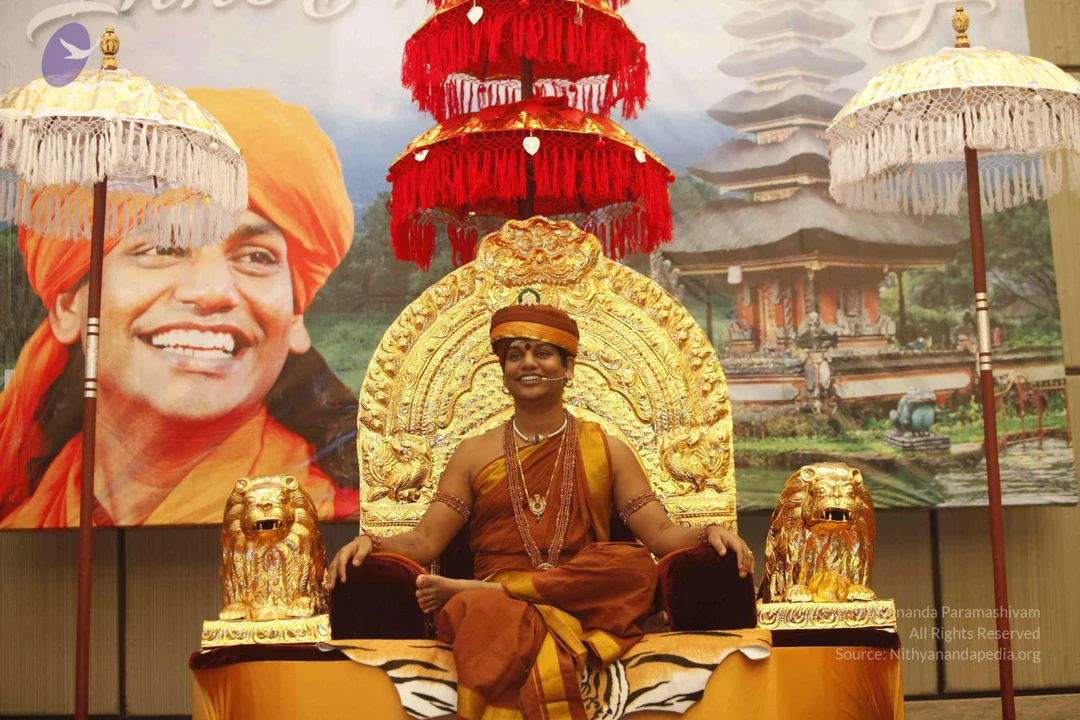
29 photosSource gallery
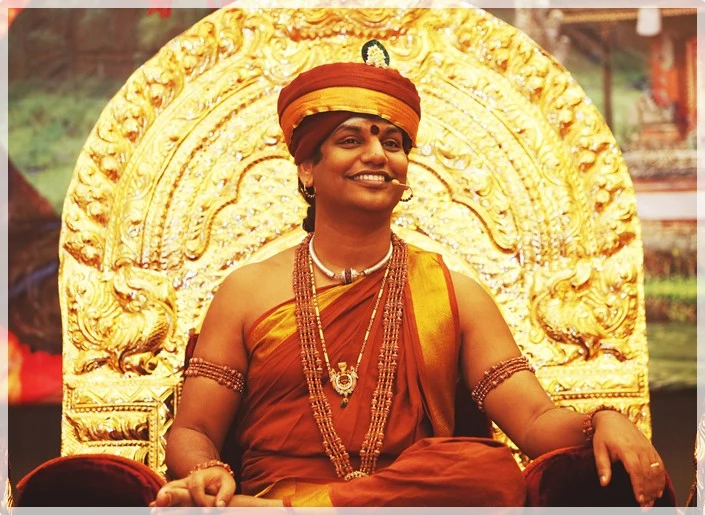
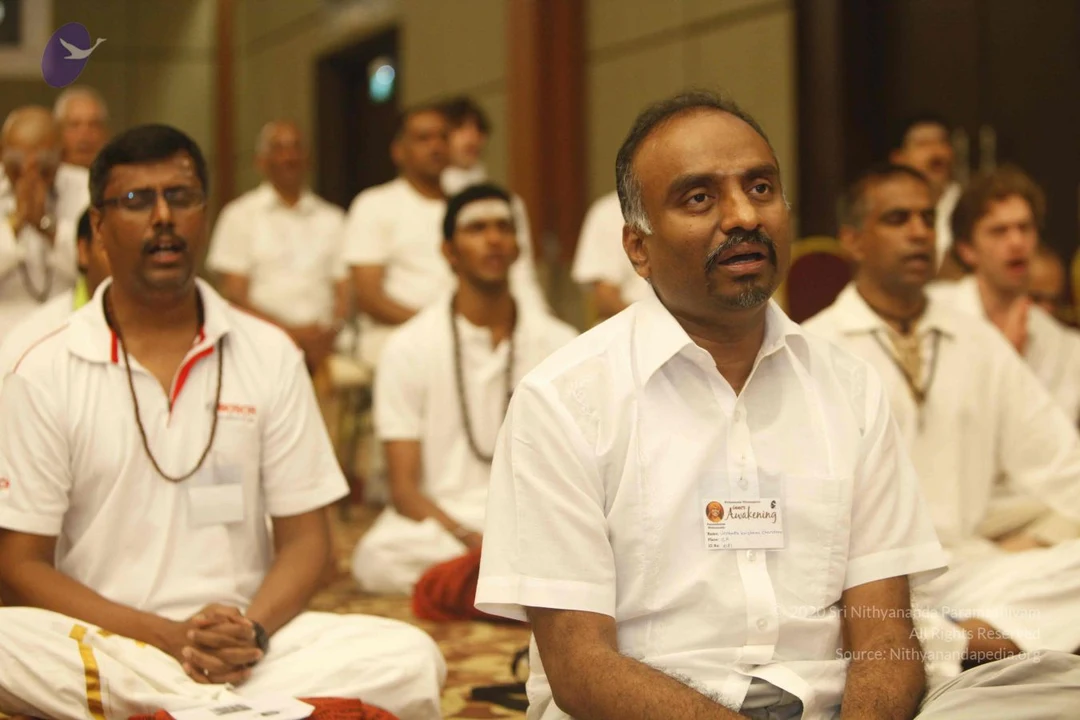
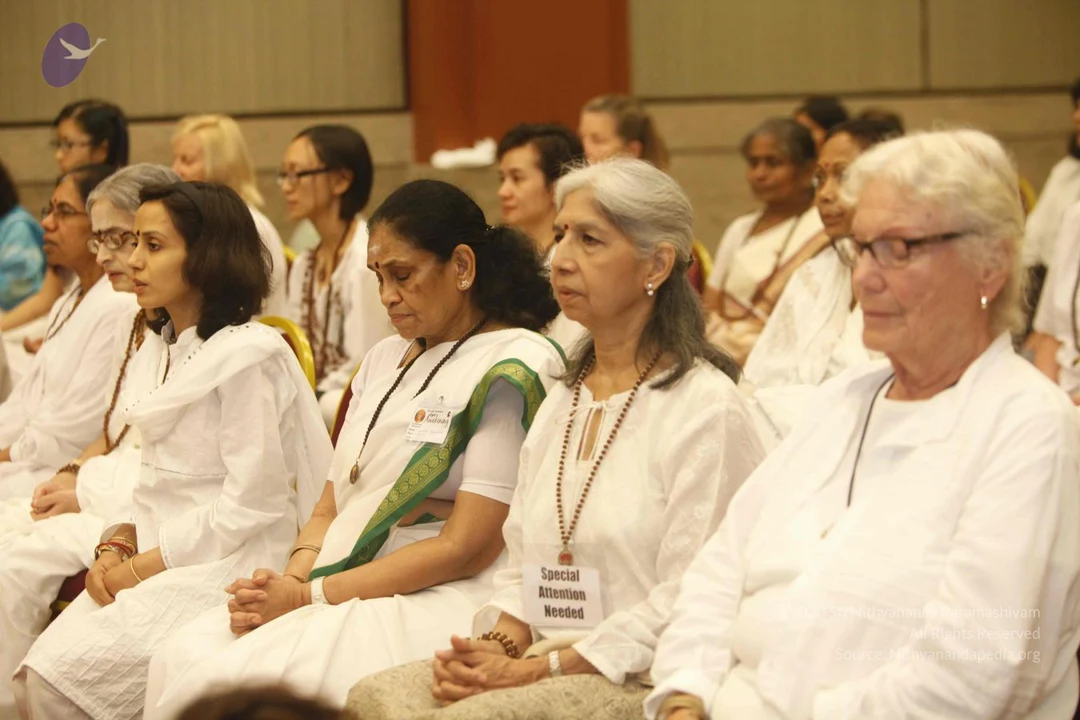
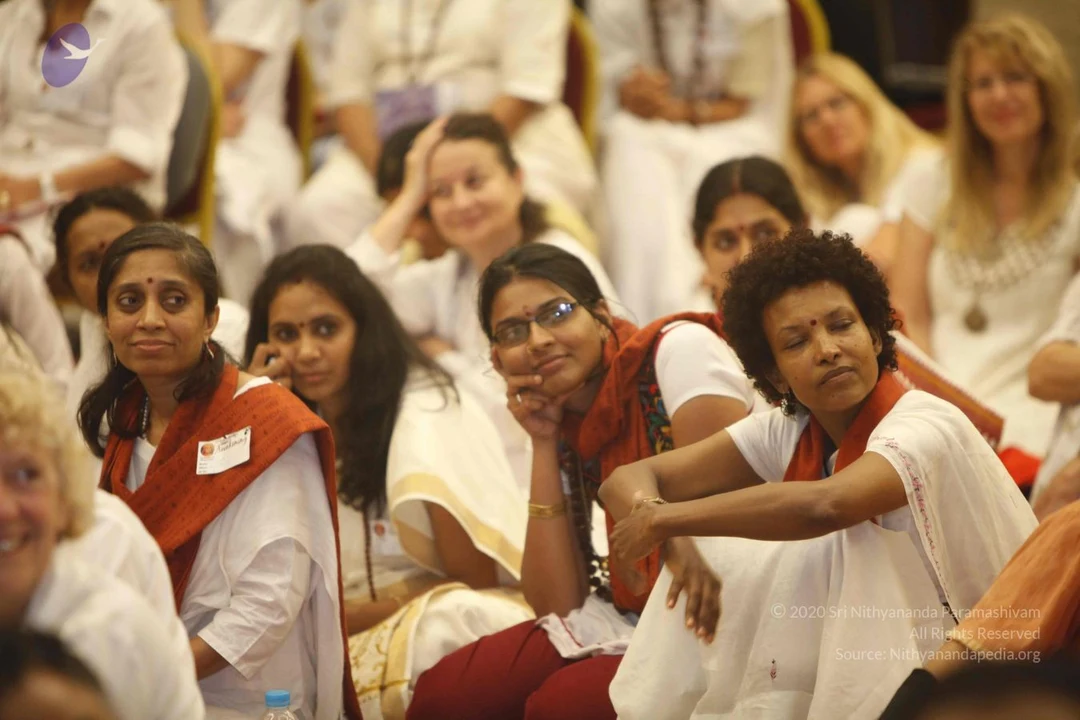
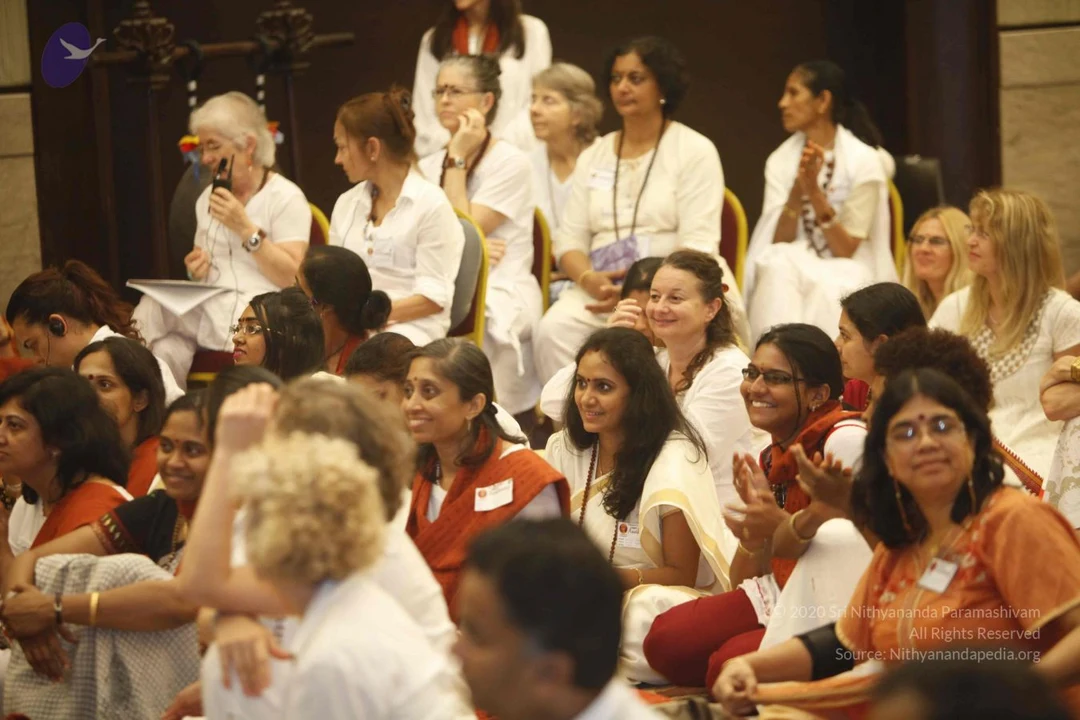
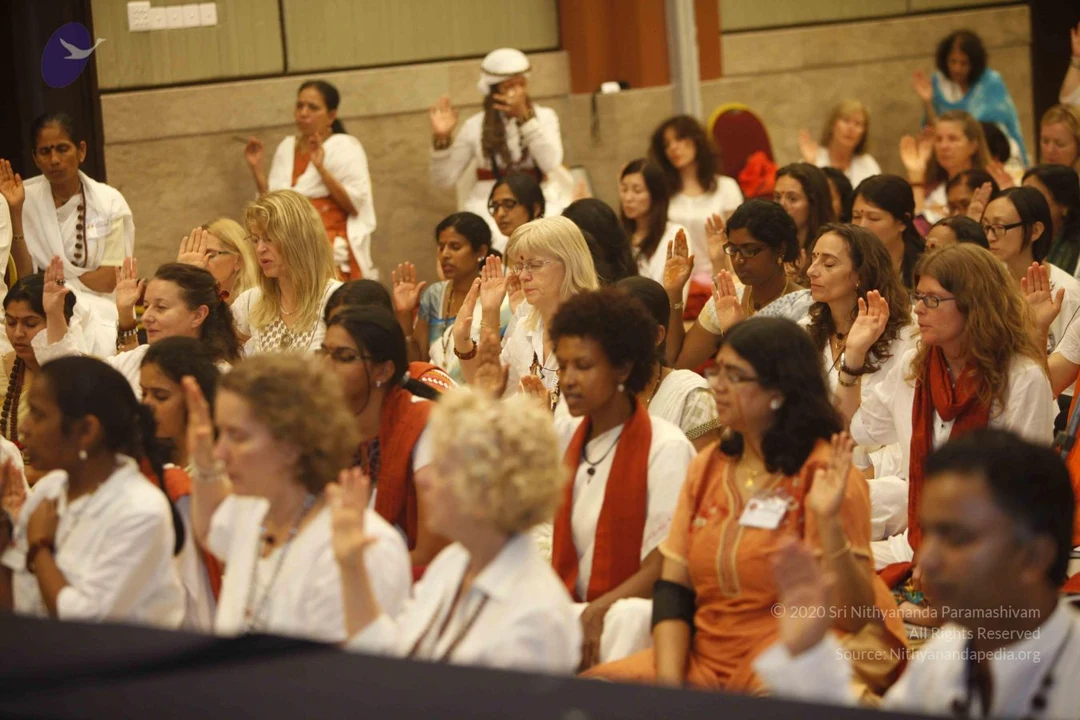
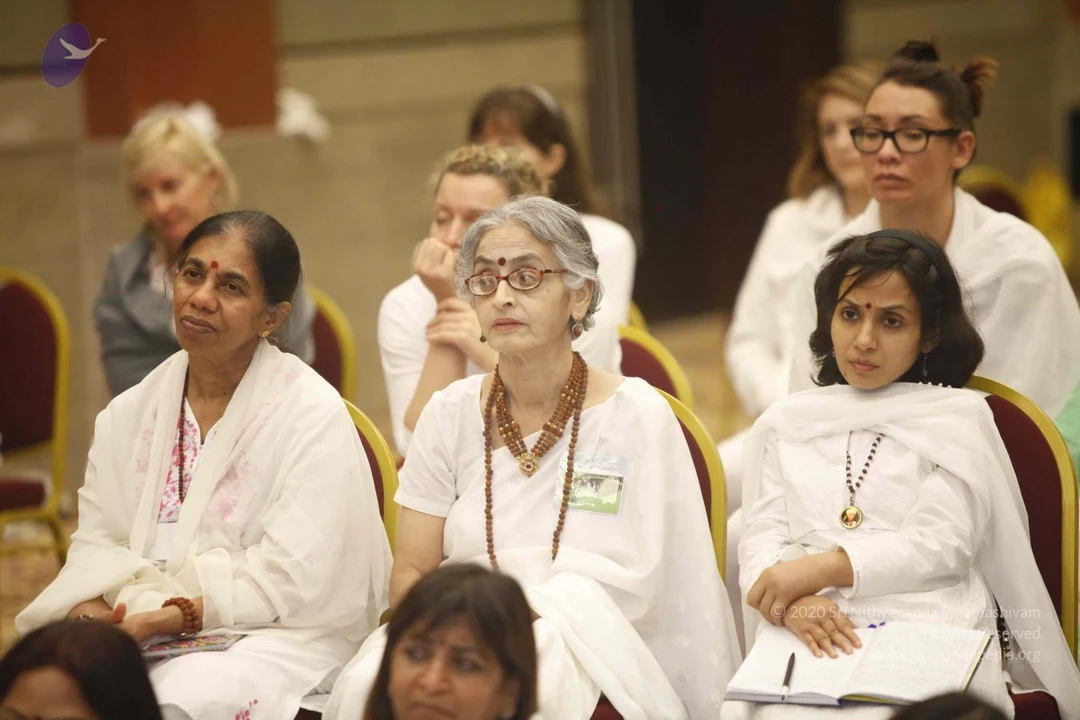
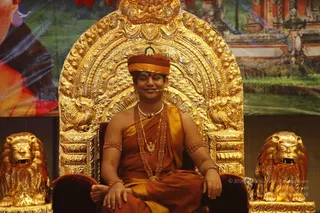
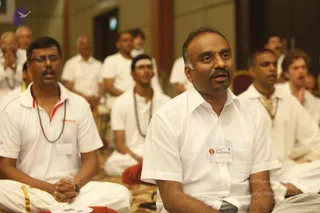
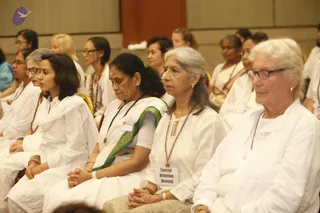
A seated man in saffron-orange robes sits on an ornate gold throne carved with scrolls and flanked by two gold lion sculptures. He wears a maroon and gold headwrap with a small green ornament, a red bindi, multiple red rudraksha malas, a white beaded necklace and a gold pendant, plus red bracelets on his arms. A small headset microphone is attached near his face. Behind him is a large backdrop showing a temple complex with a red gopuram and green grounds, and a partial portrait on the left.Photograph of a seated satsang audience in a hotel ballroom, all wearing white. In the foreground, a man in a white short-sleeved shirt with a rudraksha mala and a name badge reading 'Inner Awakening' sits upright with his mouth slightly open as if chanting. Beside him, a man in a red-and-white polo wears a rudraksha mala and sits with hands clasped. Behind them, devotees in white, one with a white headband, sit cross-legged on a patterned carpet, with dark wooden doors and pale walls in the background.A photograph of a large hall during a seated satsang. On a raised golden throne-like seat at the front, a figure in orange-brown robes sits cross-legged, flanked by golden lion-form pedestals and red-and-gold ceremonial umbrellas. Behind him hangs a banner reading "Inner Awakening" with a smiling portrait of a figure in an orange turban and a Balinese temple scene. Two large screens flank the stage. Rows of attendees in white clothes sit on the floor and chairs, many facing away from the camera, with video cameras on tripods at the sides.Photograph of a large hall where a seated teacher in orange-and-saffron robes sits on an ornate golden throne with a red tiered canopy and gold parasols, flanked by golden lion figures, on a dark stage. Rows of seated audience members in white clothing face the stage, many with their backs to the camera. A large banner behind the throne shows a smiling figure in an orange turban and a temple-like backdrop with the words Inner Awakening. Projection screens on both sides show a golden deity-like figure and a temple gateway. Cameras on tripods are set up near the stage.A satsang hall with a large banner reading "Inner Awakening" showing a smiling man in an orange turban against a mountain and temple backdrop. Below it, a seated figure in orange robes sits on an ornate gold throne with lion-shaped armrests, flanked by two gold-fringed parasols and a red and gold tiered canopy. Rows of devotees in white clothes sit cross-legged on carpet facing the stage, with a few in red shawls. Two video cameras on tripods film the stage, and large screens on both sides show close-ups of the seated figure. The seated figure's face is not clearly visible; this is a stage-and-audience scene with about 30 visible people.A photograph of a seated audience of women dressed in white at an indoor satsang hall with beige panelled walls and an orange wall panel. In the foreground, a grey-haired woman in a white kurta wears a red-brown rudraksha-style mala and a badge reading "Special Attention Needed". Beside her, a woman in a white and green-bordered sari with a red-and-orange badge sits with eyes closed and hands folded. A younger woman with shoulder-length dark hair in white clothes sits at left, and an older woman at far right in white wears glasses and a white top. Behind them, more devotees sit in rows, many with eyes closed or heads bowed in meditation.

IA-SESSION

18 photosSource gallery
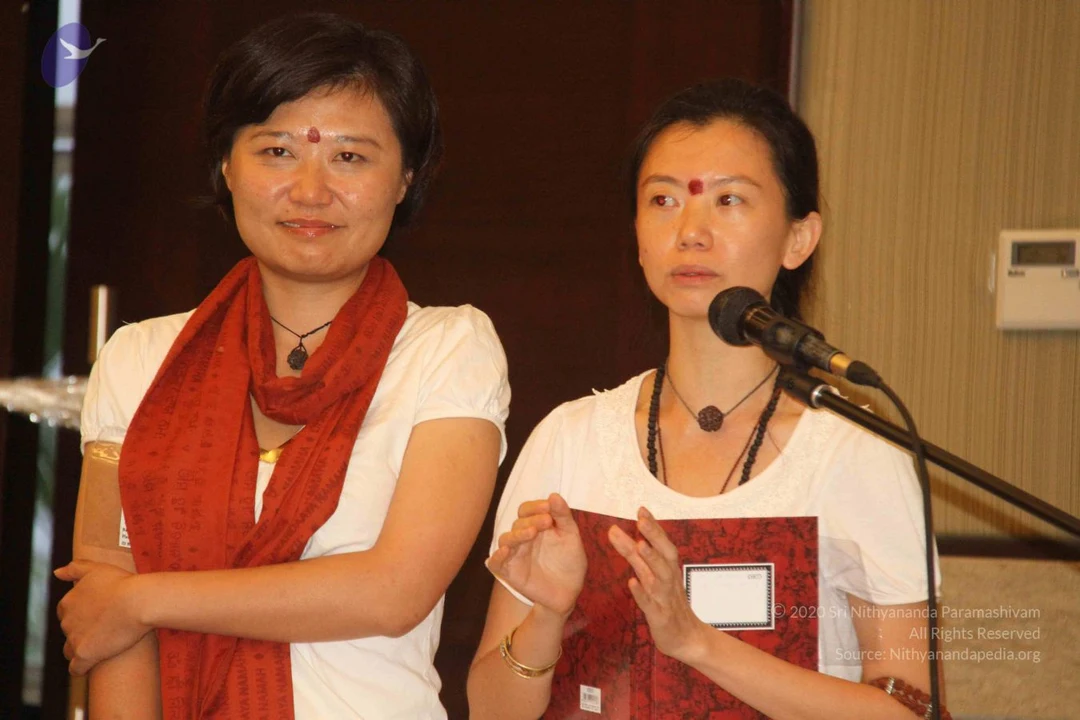
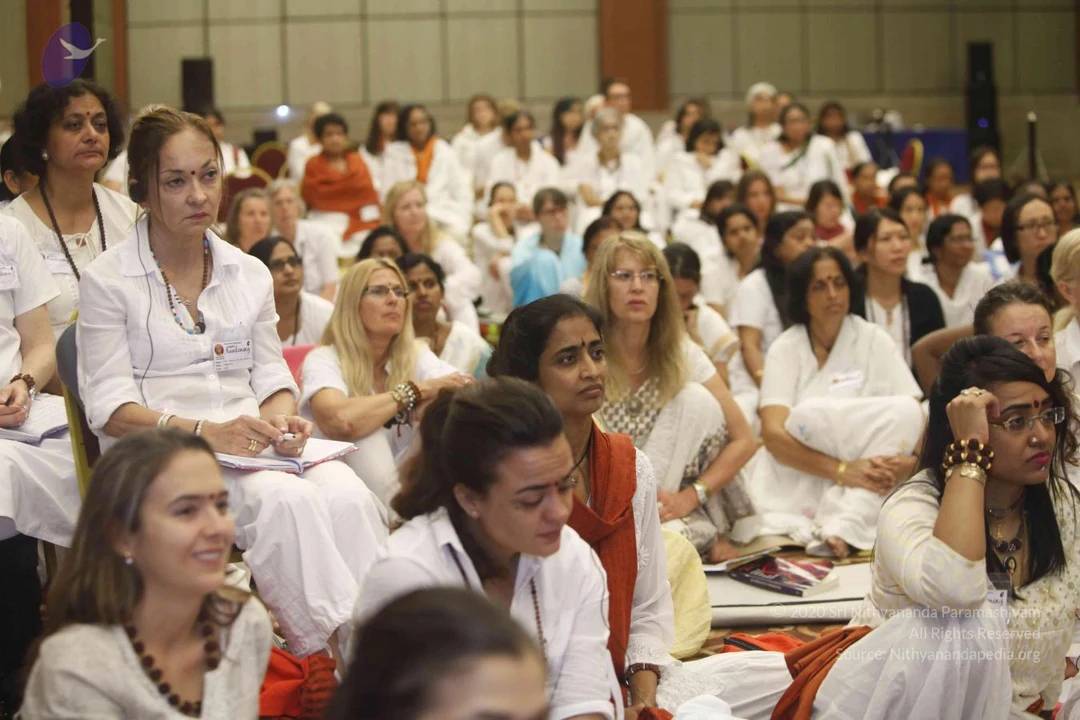
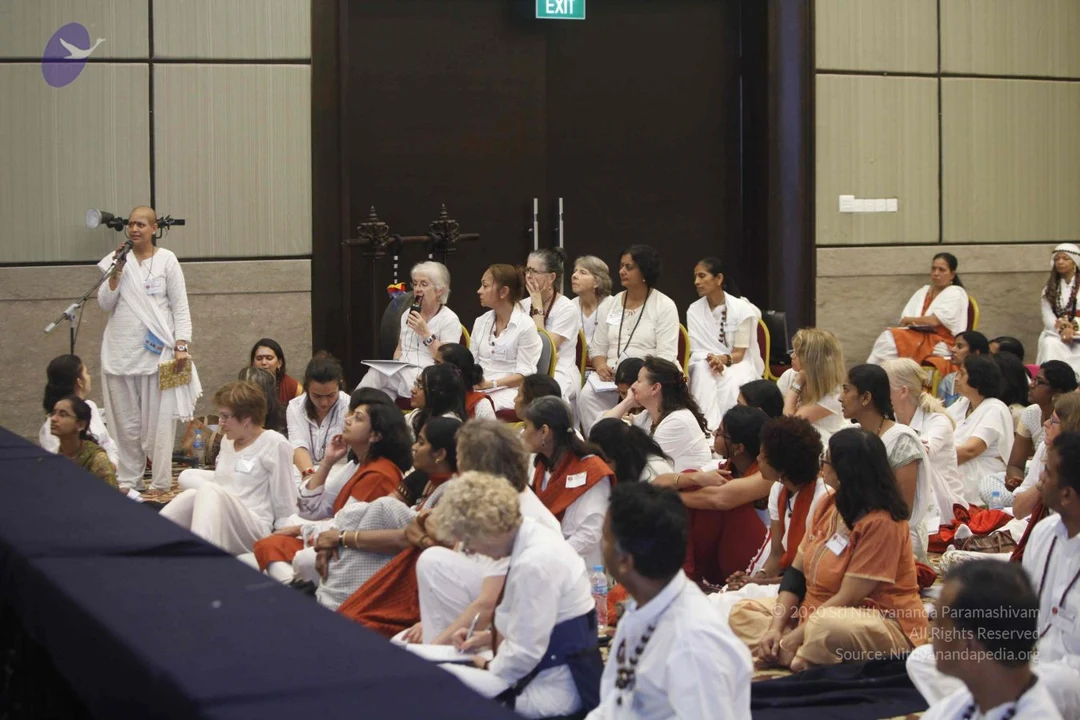
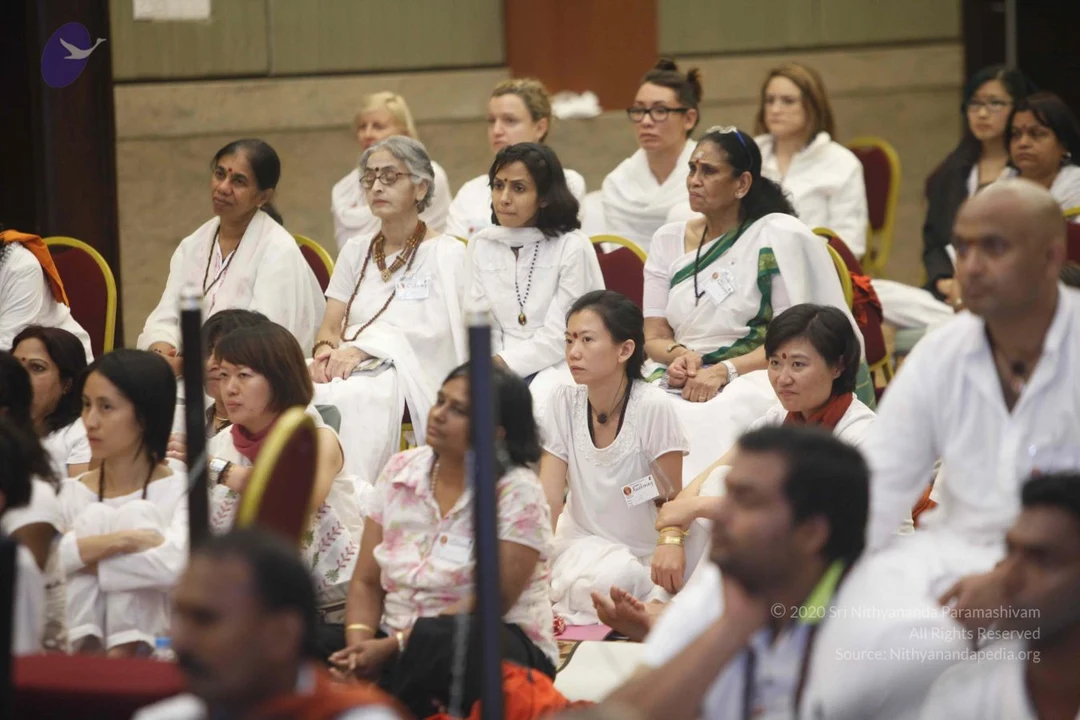
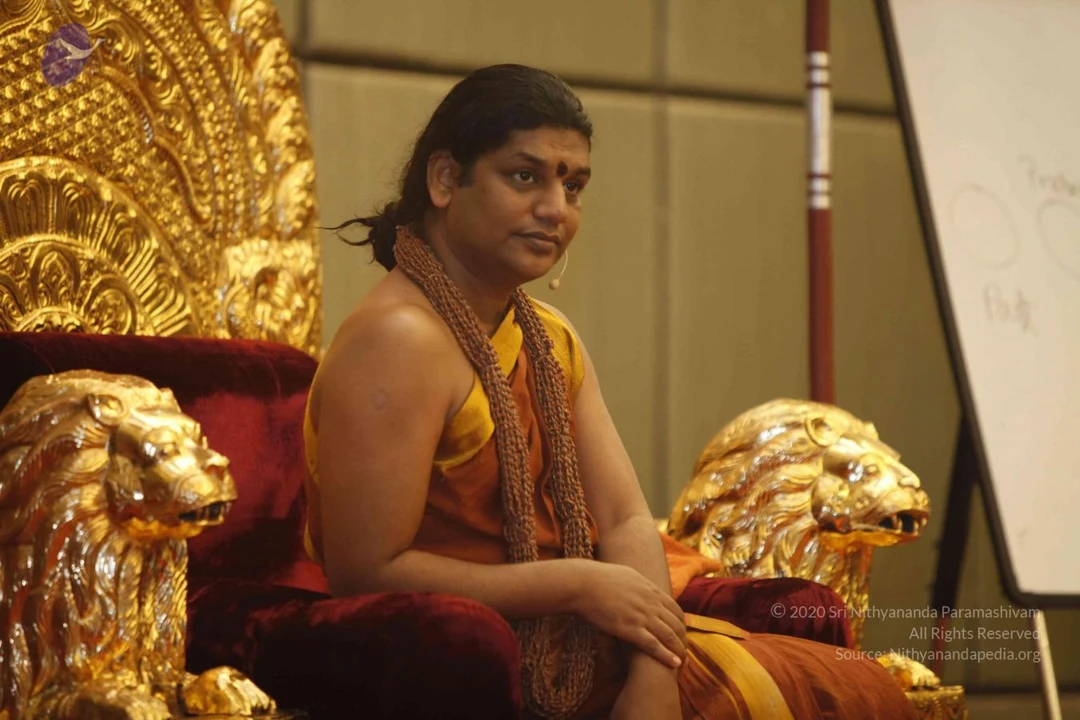
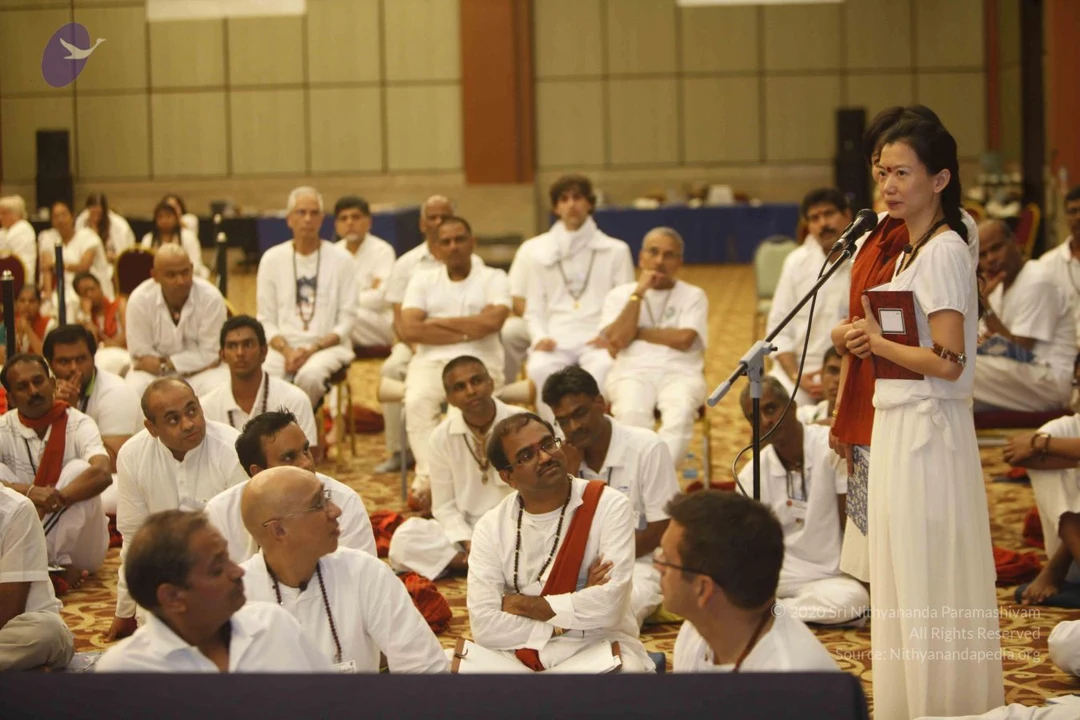
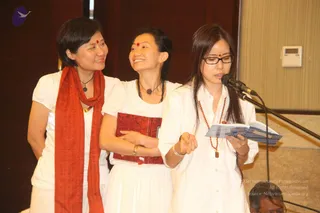
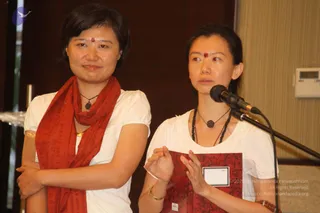
Three women in white clothing stand together at a microphone in an indoor hall with dark wood panels and a beige wall. The woman on the left wears a red patterned shawl over white, a dark pendant necklace and a red bindi. The woman in the centre wears a white top, a dark beaded necklace, a red bindi and holds a red book with a dark cover. The woman on the right, wearing glasses, a white shirt and a long rudraksha-style mala, reads from a blue printed booklet at the microphone. A partially visible seated person appears at the lower right corner. No appearance-based candidate for a person is clearly visible.Two women stand side by side at a microphone indoors against a dark wooden panel and a beige wall with a small wall-mounted control unit. The woman on the left wears a white short-sleeved top and a red scarf printed with script, with a red bindi and a dark pendant necklace, and her arms are folded. The woman on the right wears a white top with a dark bead mala and pendant, a red bindi, and holds a red folder while clapping her hands. A microphone on a stand is in front of her. Photo credit overlay reads Sri Nithyananda Paramashivam, SourceA photograph of a large seated audience at a satsang hall, mostly women dressed in white kurtas and salwars with some in orange or saffron shawls. In the foreground, a woman with auburn hair and a white shirt holds a pen over a notebook, wearing beaded mala necklaces. Beside her, a woman in a white shirt with a wristful of bangles sits on a cushion, and a dark-haired woman in an orange shawl looks forward. Rows of attendees fill the background under pale walls, with a blue stage area and speaker visible at the back. No speaker is clearly visible in frame.A photograph of a seated satsang audience in a hall with dark wooden doors and a lit green EXIT sign. A shaved-headed woman in white clothes and a white shawl stands at left holding a microphone, facing the seated crowd. Many seated women and men wear white, some in orange or saffron wraps, with lanyards and rudraksha-style beads. Several listeners sit on the floor on dark blue cloth, and a person at right has a white head covering. A dark stage cloth runs along the lower left. The scene is a group discourse setting with people in white and orange clothing.A photograph of a seated audience at a hall-style satsang event, with many women and men in white clothing sitting on red-cushioned chairs. Several women wear white kurtas or tunics with beaded necklaces and rudraksha-style malas, and one older woman wears an orange-and-gold beaded necklace. A woman in the centre wears a white top with a name badge, and others wear pastel floral or green-trimmed white saris. Foreground figures include a man in an orange-and-grey shirt and a bald man in white at right. The front row is partly blocked by microphone stands. No speaker is visible in frame.A photograph of a seated person on an ornate golden throne with red velvet cushions and golden lion-head armrests. The person has long dark hair tied back, a red bindi on the forehead, and wears an orange and gold garment with a brown beaded rudraksha-style mala draped over the shoulders, with a bare upper body visible. A whiteboard with handwritten marks stands at the right and a red-and-white striped pole is behind. The indoor hall has beige walls.

DARSHAN

89 photosSource gallery
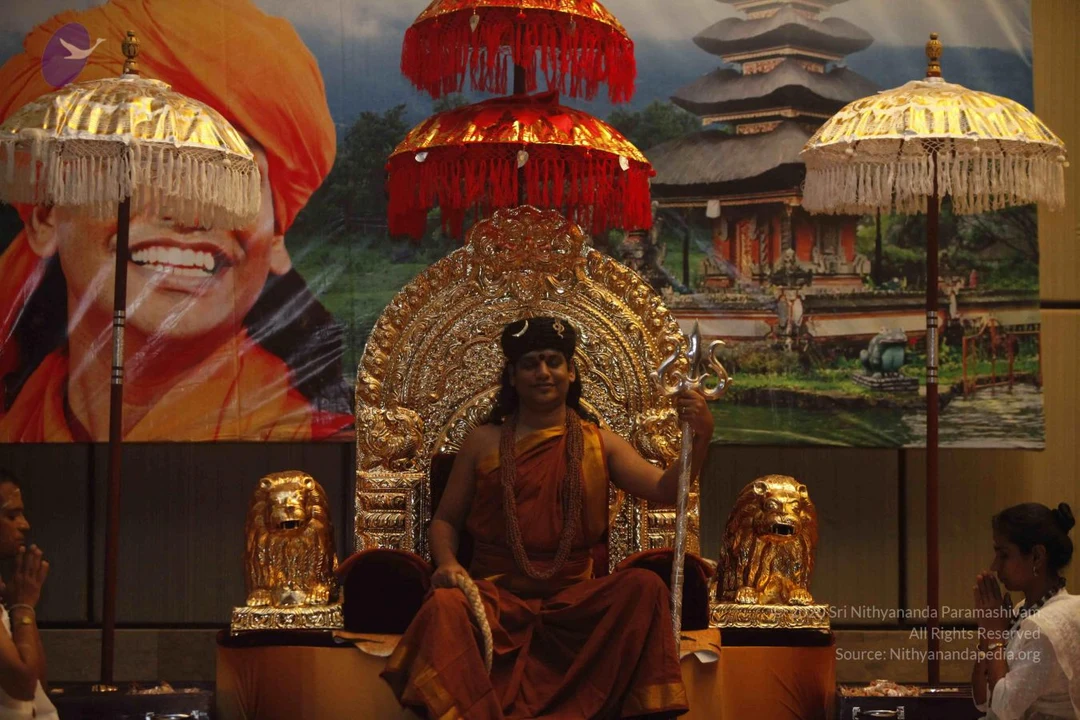
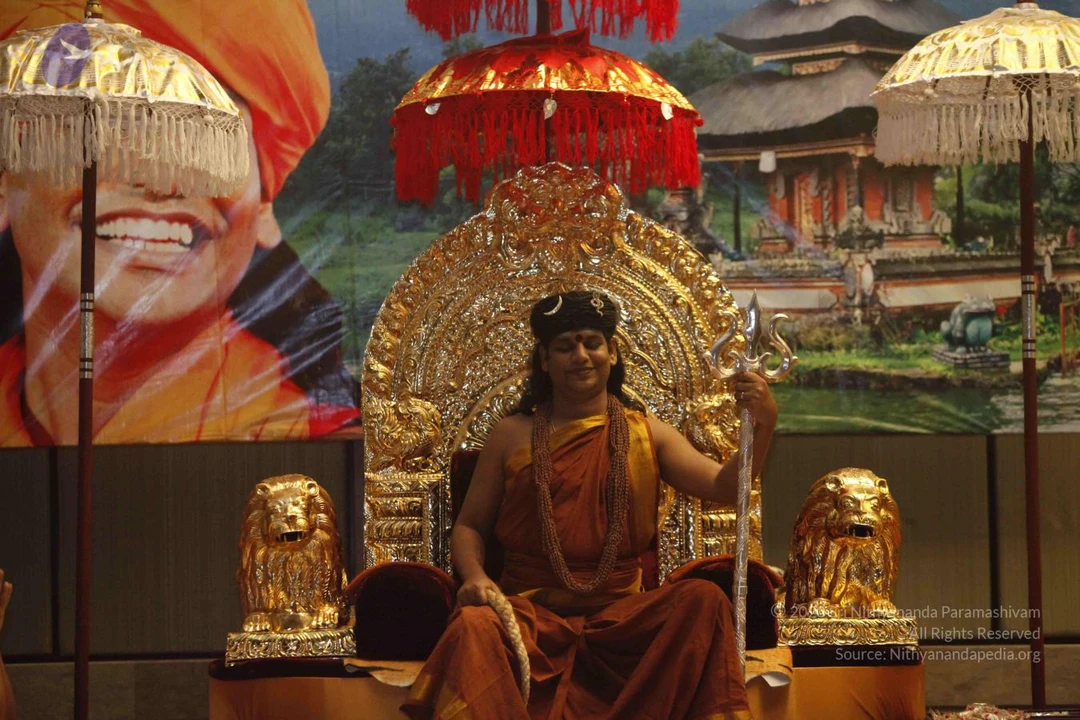
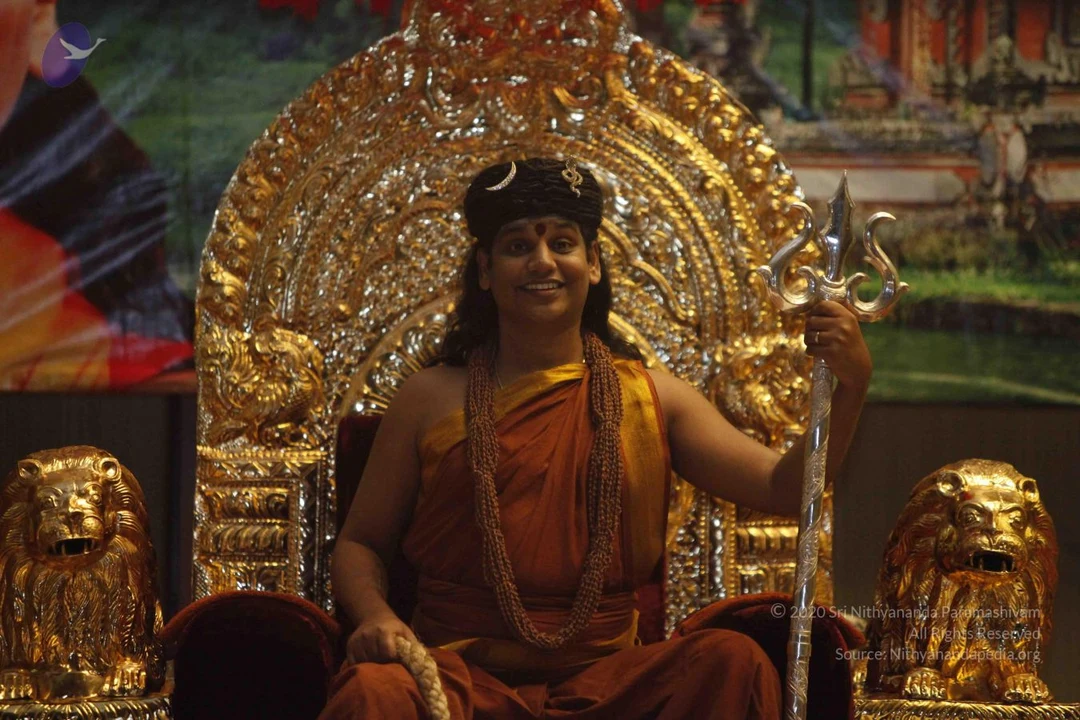
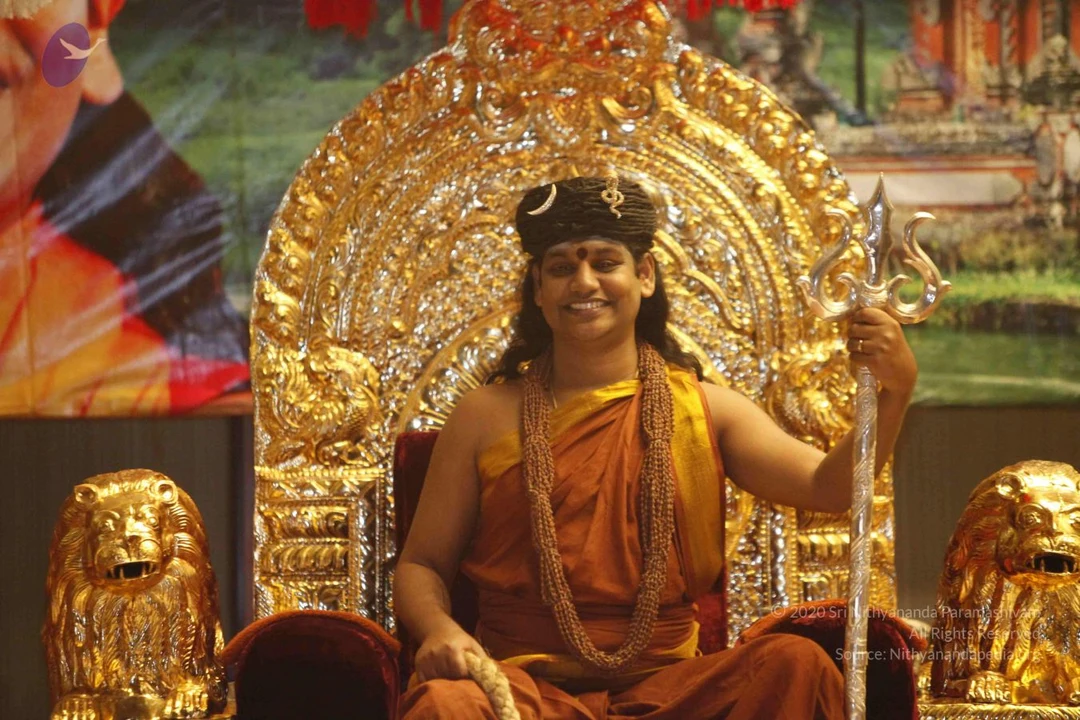
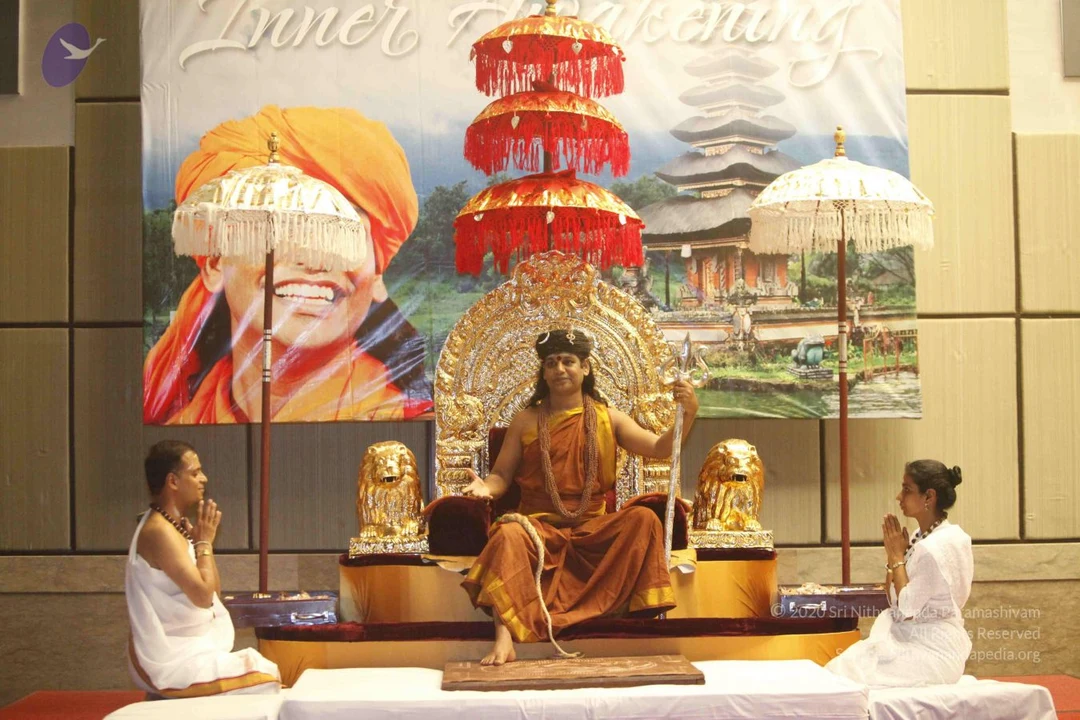
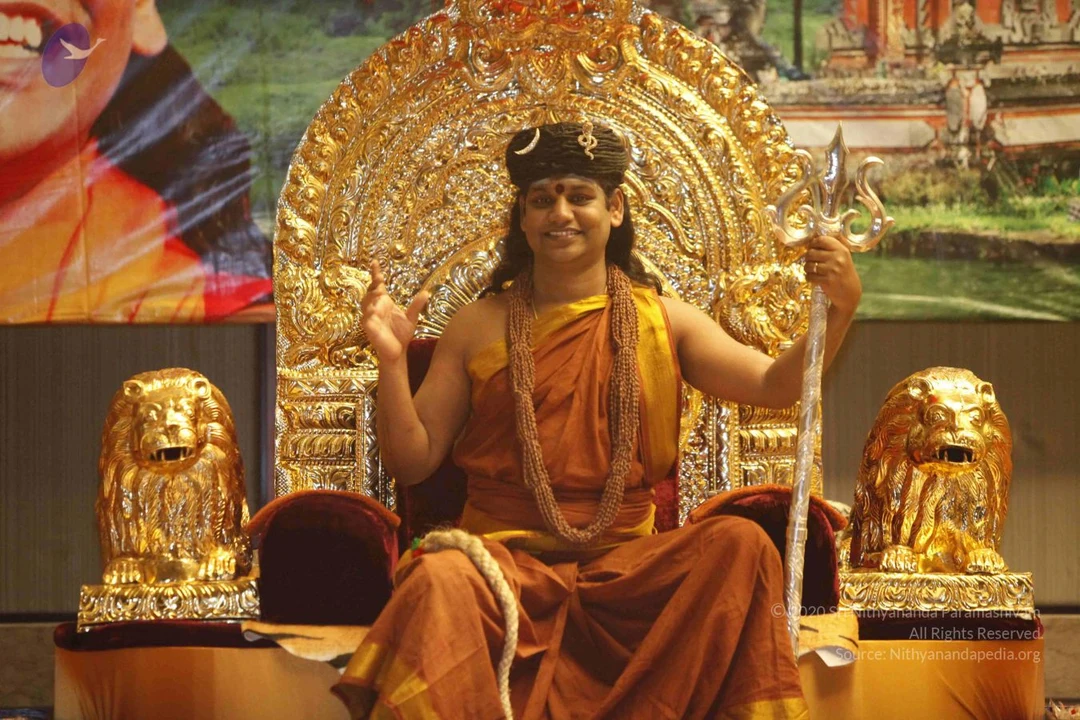
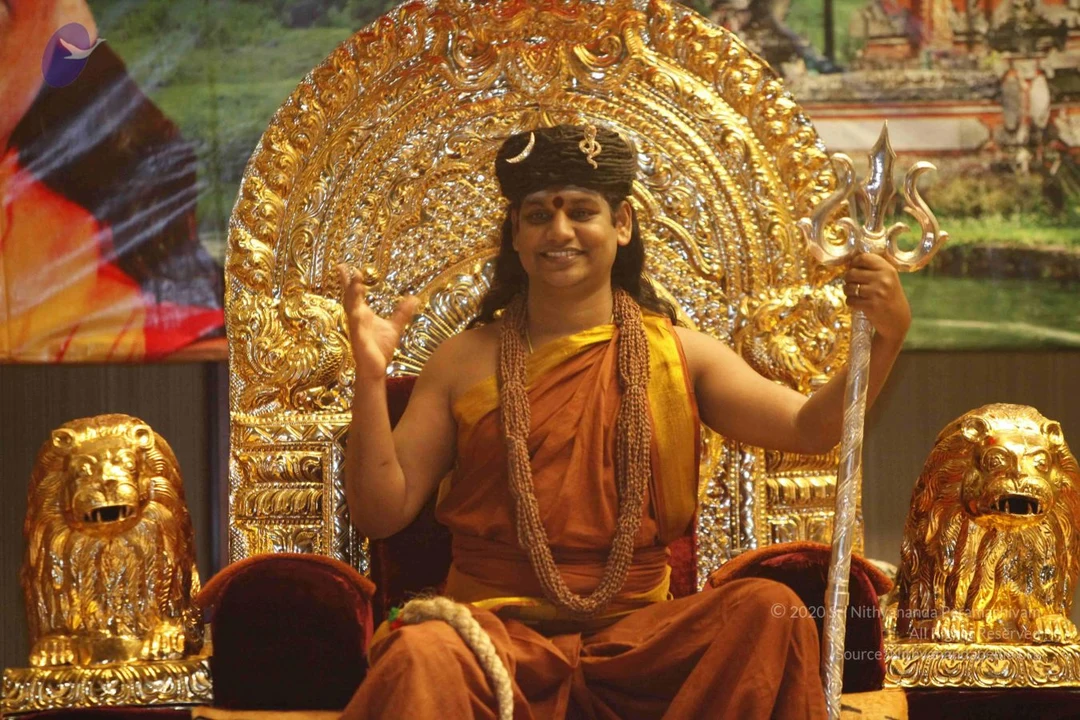
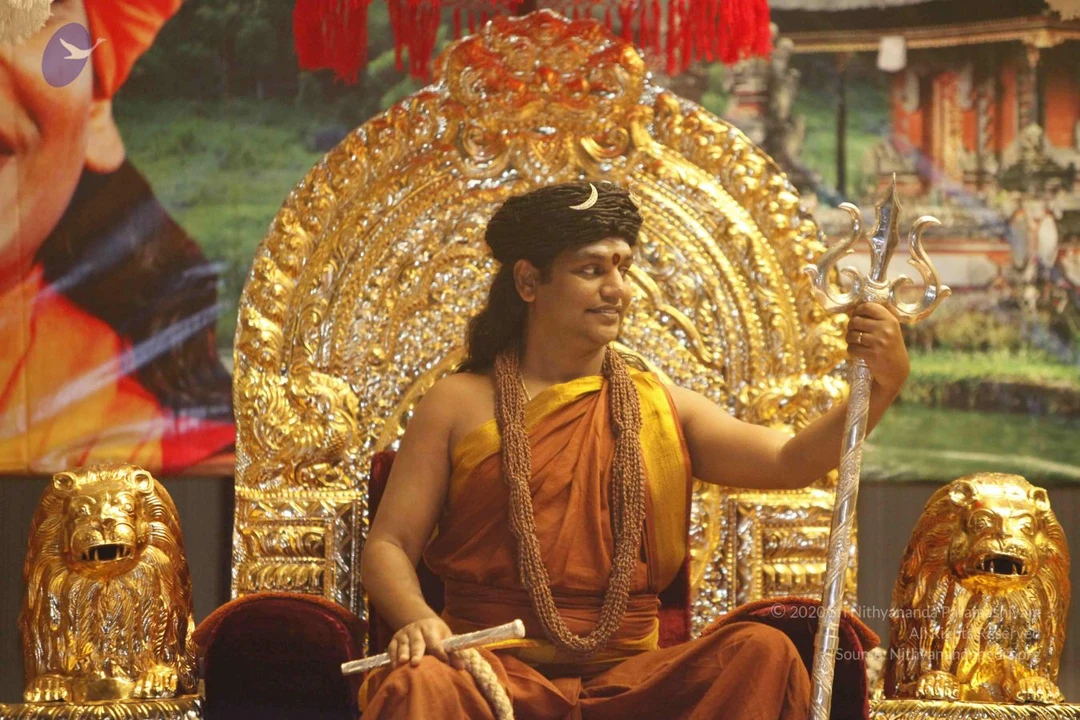
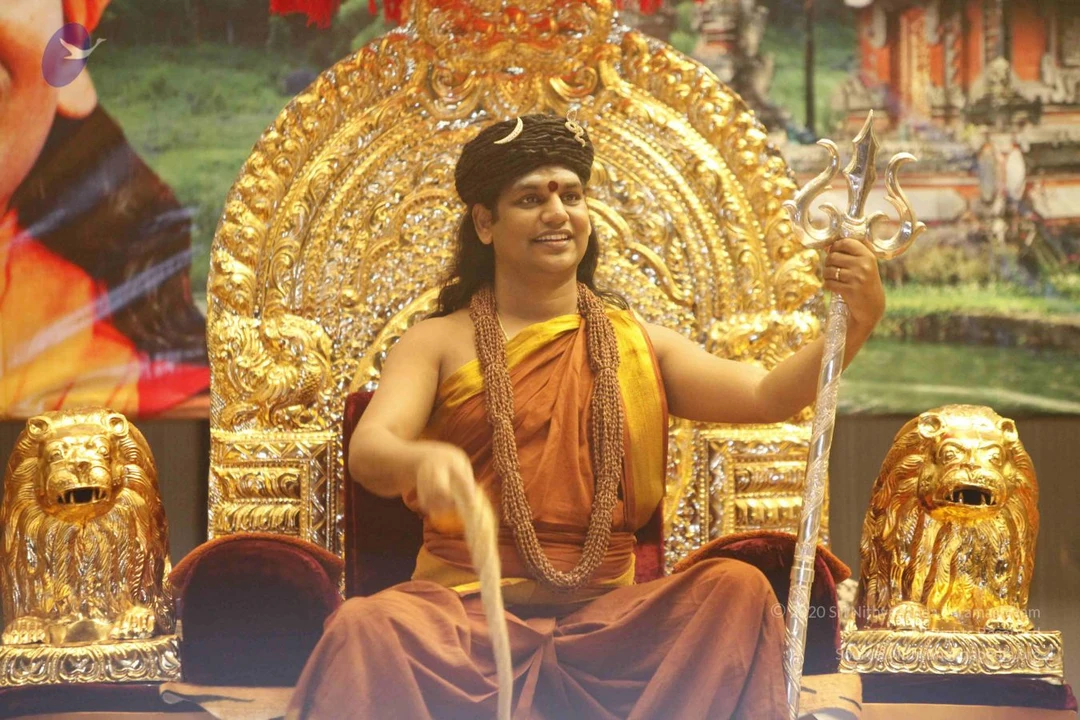
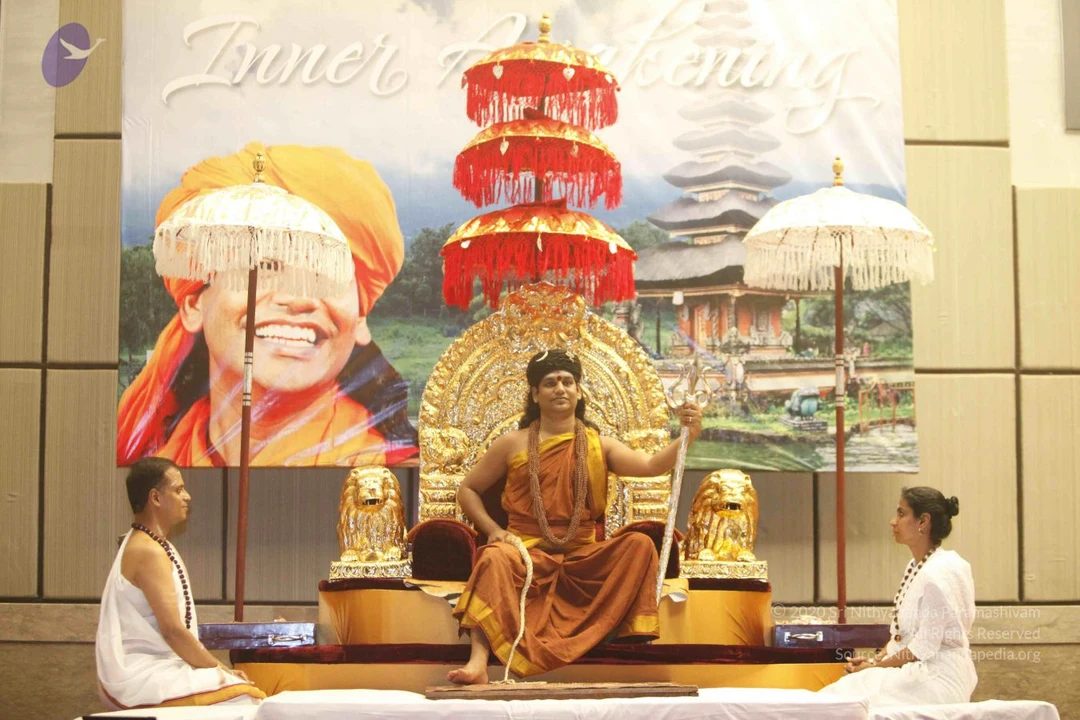
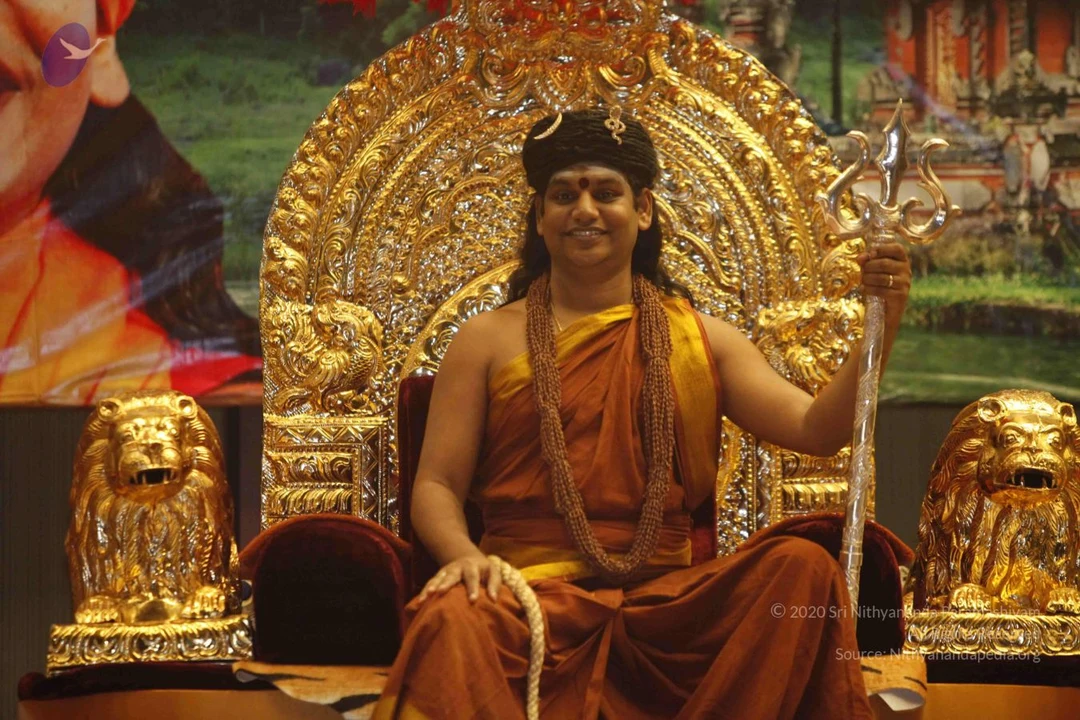
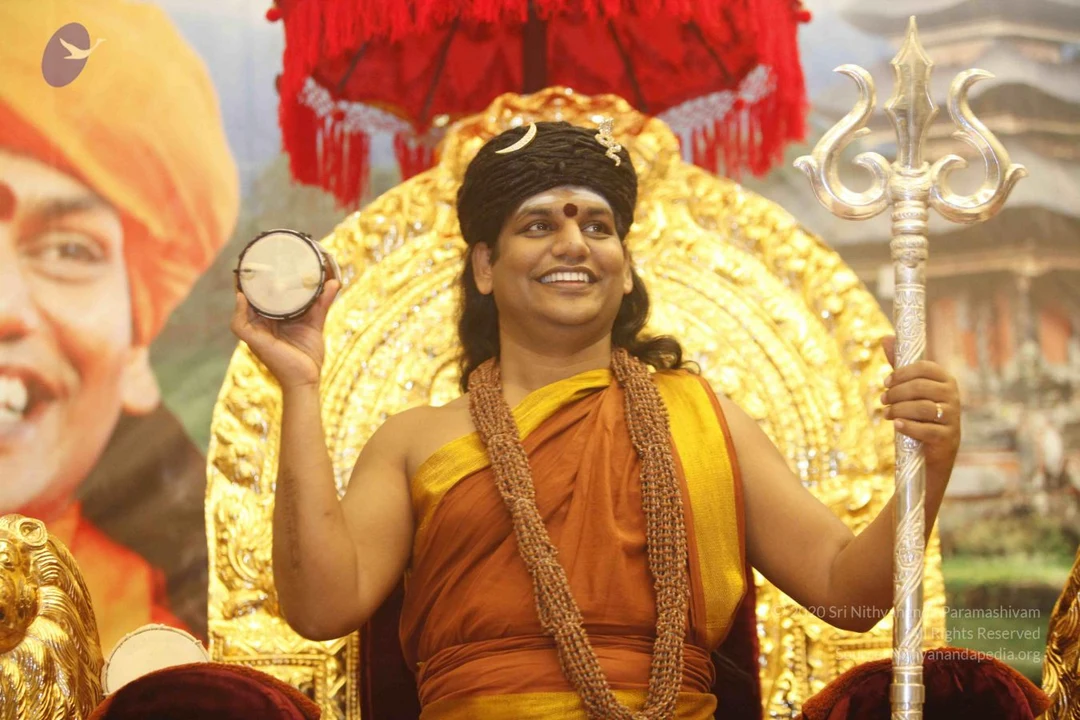
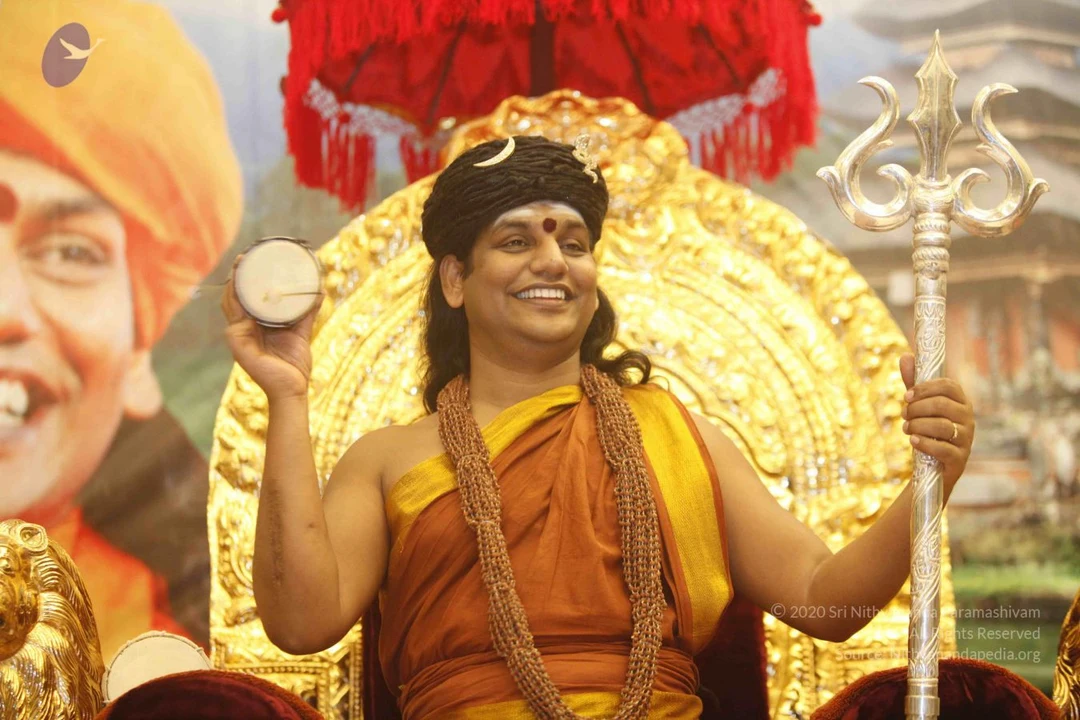
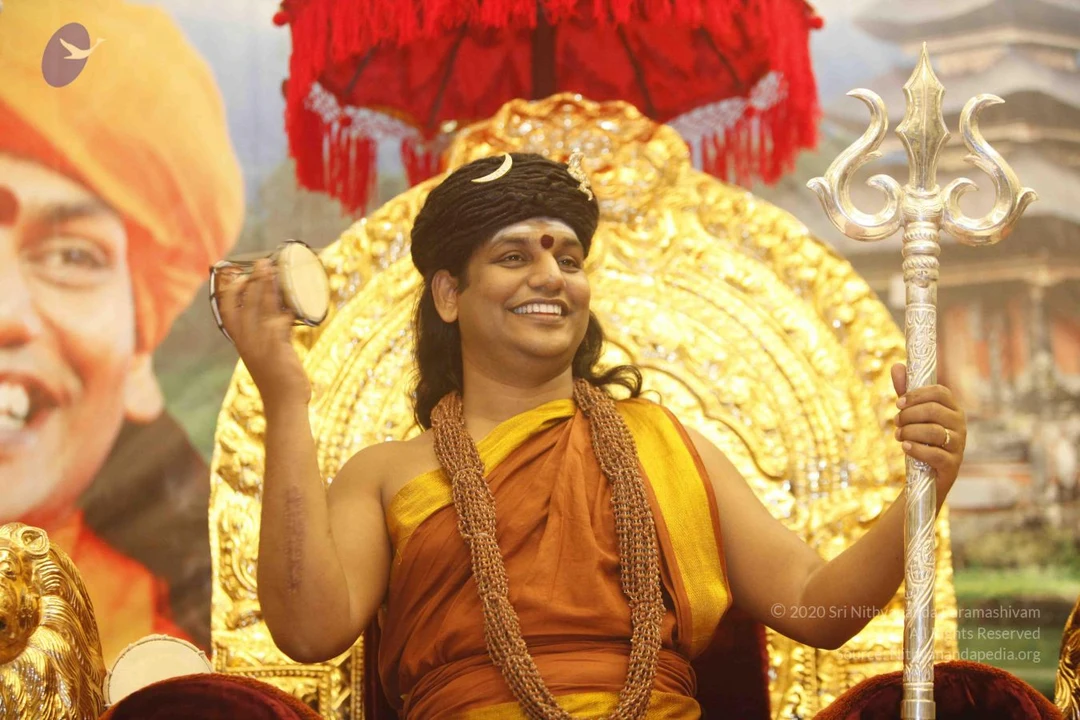
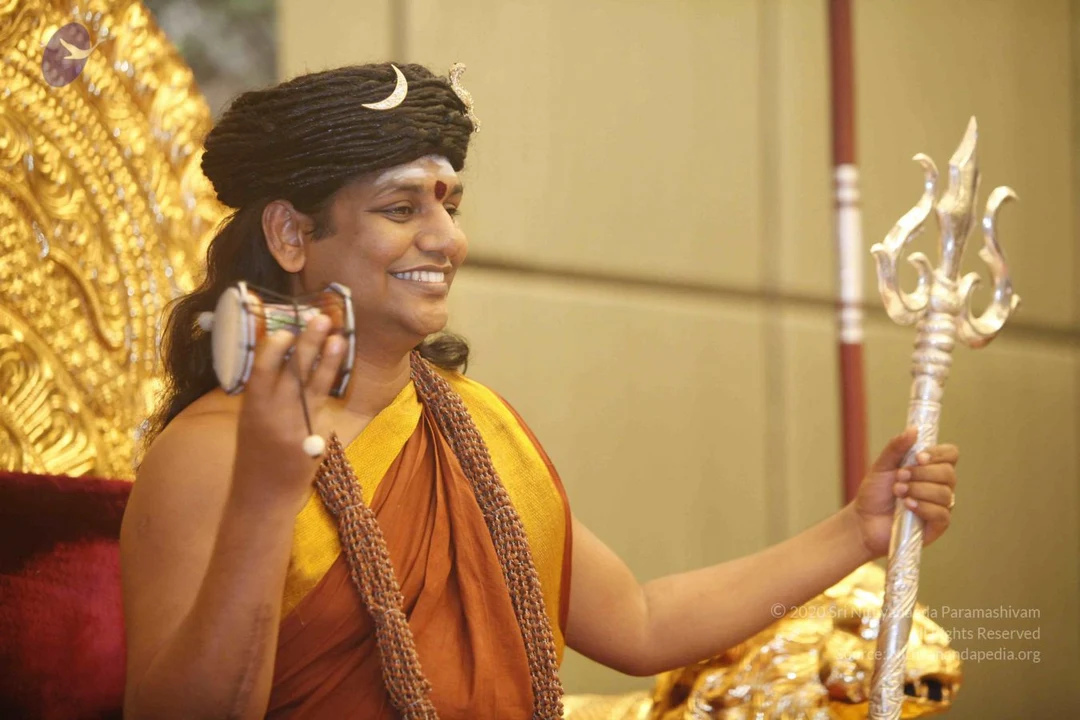
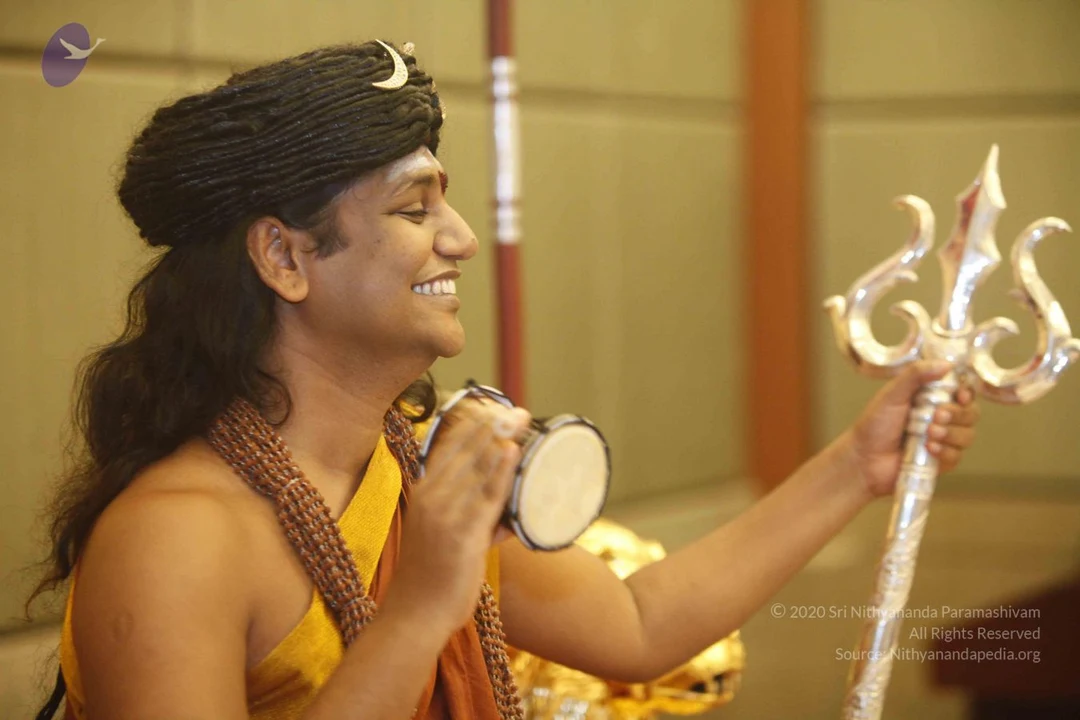
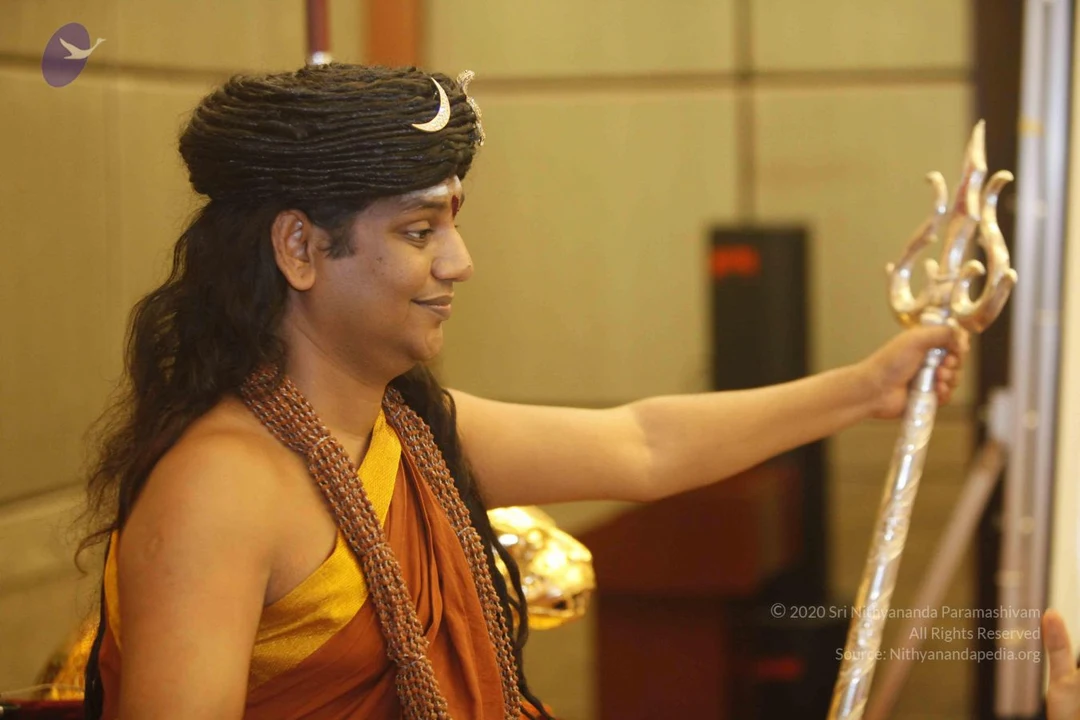
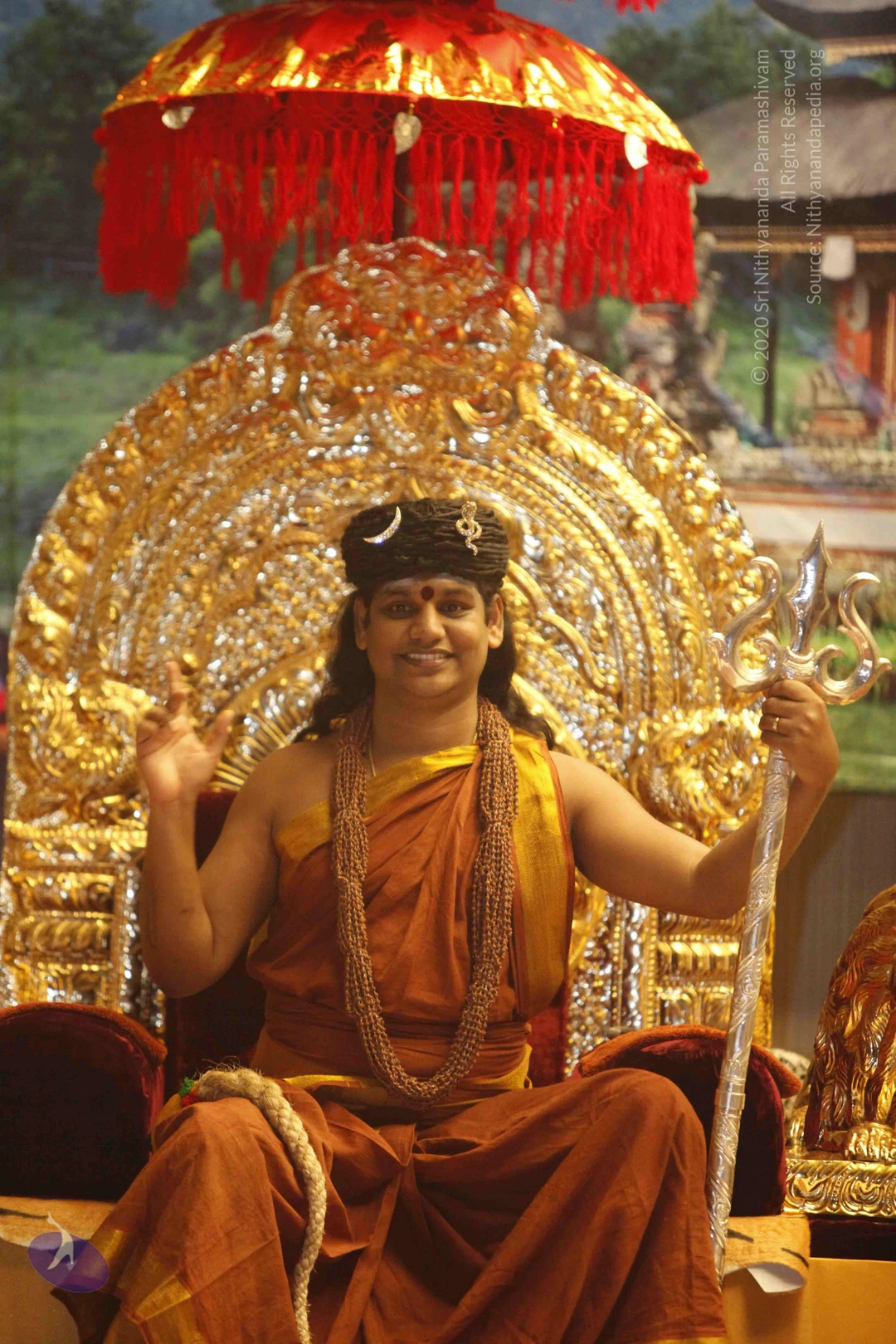
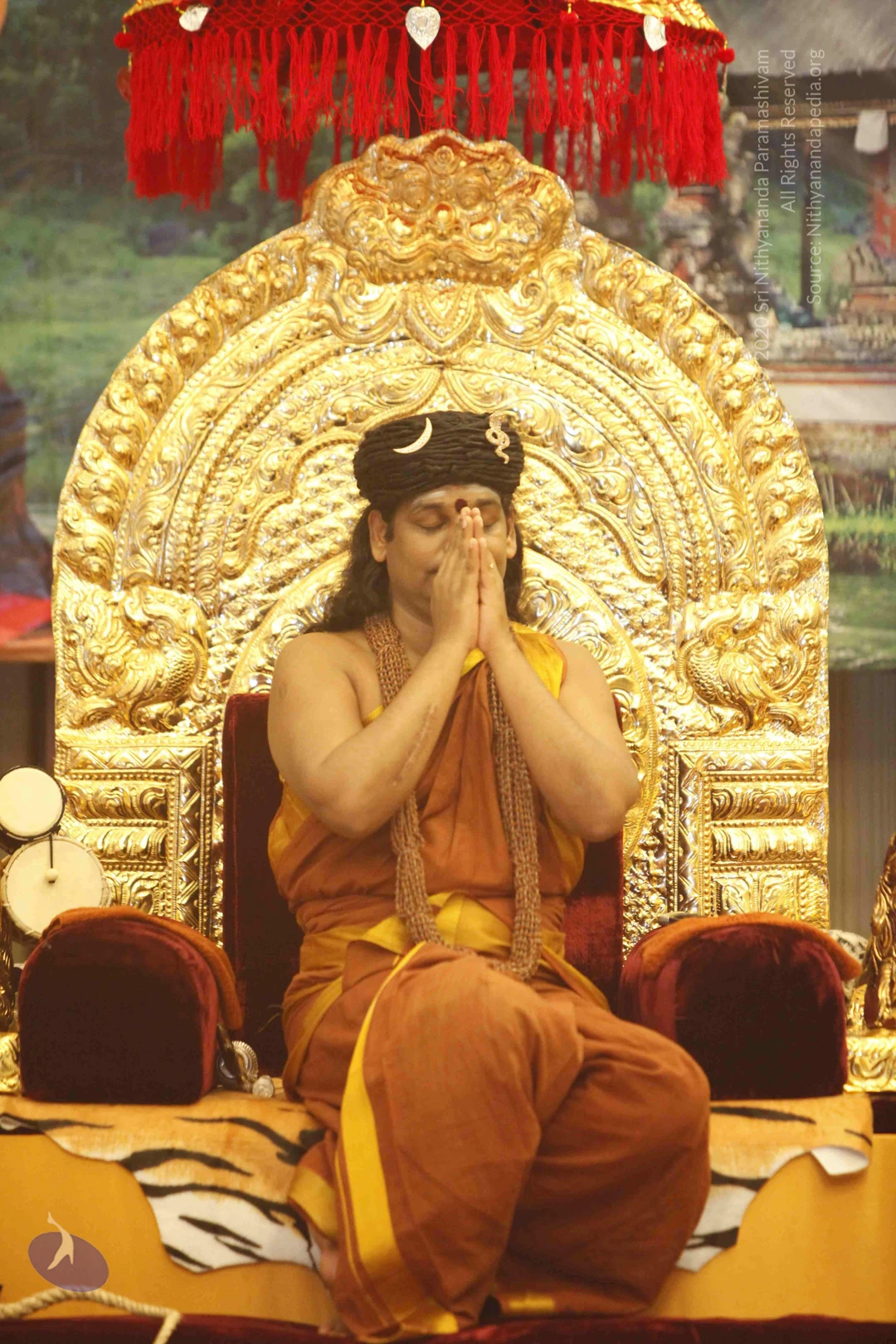
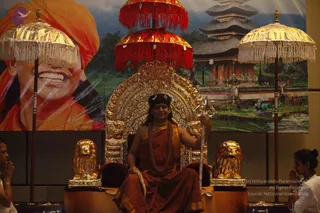
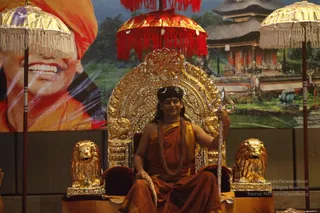
A figure in red-brown robes and a dark cap sits on an ornate gold throne flanked by two gold lion sculptures, holding a silver trident in one hand and a rudraksha mala draped across the robes. Two people with palms pressed together in anjali mudra kneel at the lower left and right of the throne. Golden Bali-style ceremonial umbrellas with red fringe stand on either side and above, and a backdrop shows a large orange-robed portrait of a smiling man in a saffron turban beside a Balinese temple with a multi-tiered roof. The scene appears to be a satsang setting. a person: the seated figure wears a rudraksha mala and holds a trident, with a saffron-toned robe, though identity is inferred from appearance only.A seated figure in saffron-orange robes sits on an ornate gilded throne with a tall arched back, flanked by two golden lion statues. He wears a dark head covering with a crescent ornament, a rudraksha mala necklace, and holds a silver trident in one hand and a rope-like prop in the other. Two gold-and-white fringed parasols stand on either side, with a red fringed parasol above. Behind him a large backdrop shows a smiling man in orange, and a traditional pagoda-style temple among green trees. The setting appears to be an indoor event hall.A man seated on an ornate silver-and-gold throne flanked by two gilded lion statues, holding a silver trident in his right hand and a rope in his left. He wears a black head covering with a crescent moon and a small ornament, a red-orange cloth draped over his body, a multi-strand rudraksha mala, and a red tilak on his forehead. A large painted backdrop of a temple and green landscape appears behind the throne. Swamiji (probable): the seated figure has long hair and a head covering, with saffron clothing, rudraksha mala and trident cues consistent with the page's account of a Bali satsang.A man seated on an ornate gold throne with carved lion figures at each side, smiling and holding a silver trident in his right hand. He wears an orange-saffron robe with a yellow shawl, a long rudraksha mala around his neck, a dark crown-like headpiece with a crescent ornament, and a red kumkum mark on his forehead. A large golden backrest with floral carvings frames him, with a colourful backdrop image behind. Swamiji (probable) with the trident, crown and rudraksha mala as cues; seated on a throne as the central figure of the scene.A seated figure in an ornate gold and silver throne flanked by two golden lion sculptures sits at the centre of a stage. He wears an orange-brown robe with a gold border, a rudraksha mala, a dark crown-like headpiece and holds a trident-like staff with a cord. Two devotees kneel at either side with palms joined: a man in white ritual cloth with a rudraksha mala on the left, and a woman in white clothing on the right. Gold and red tiered parasols stand behind the throne, and a large banner shows a smiling figure in orange headwrap beside a Balinese temple and rice fields. Red carpet and white draped tables sit in front.A man seated on an ornate gilded throne flanked by two golden lion figures, wearing an orange-saffron robe with a yellow-gold border and a long rudraksha mala with a ceremonial necklace. He wears a dark cap with a crescent ornament and holds a silver trident in one hand while the other is raised in a gesture. Behind him is a large backdrop with a photo of a temple and a red-toned portrait edge. Appearance-based label: a person, seated in a satsang-style setting.

1-NITHYA-SATSANG
7 photosSource gallery
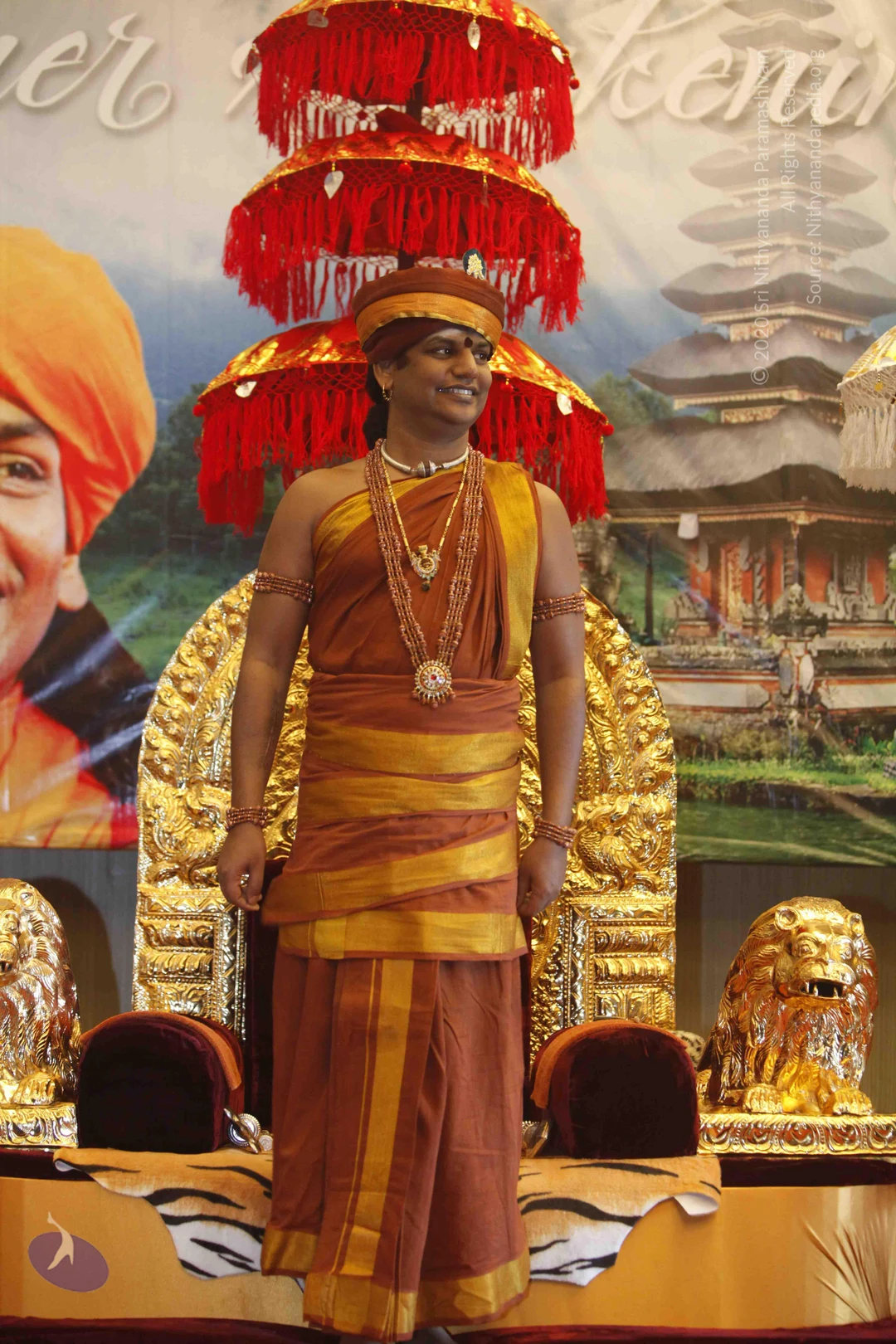
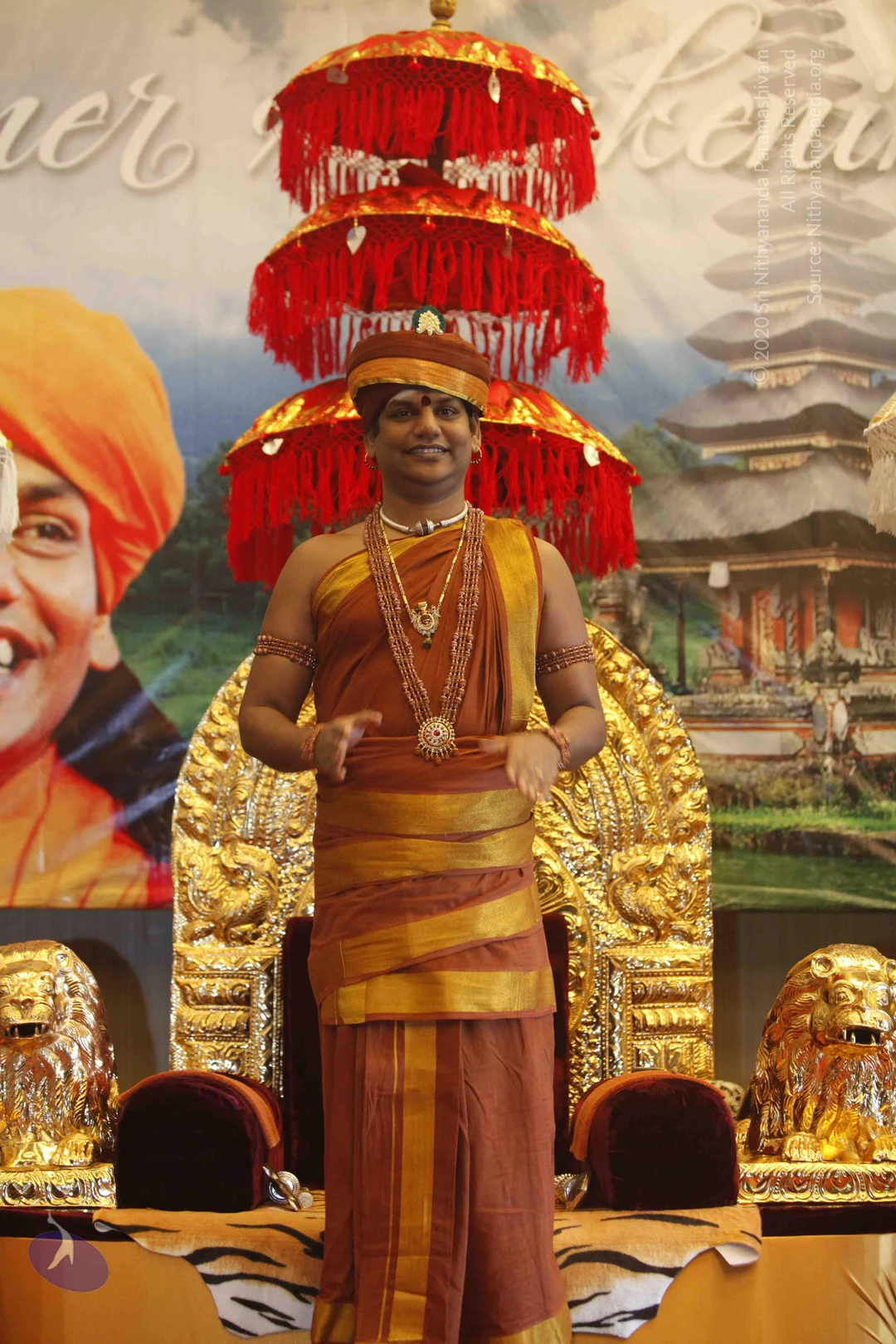
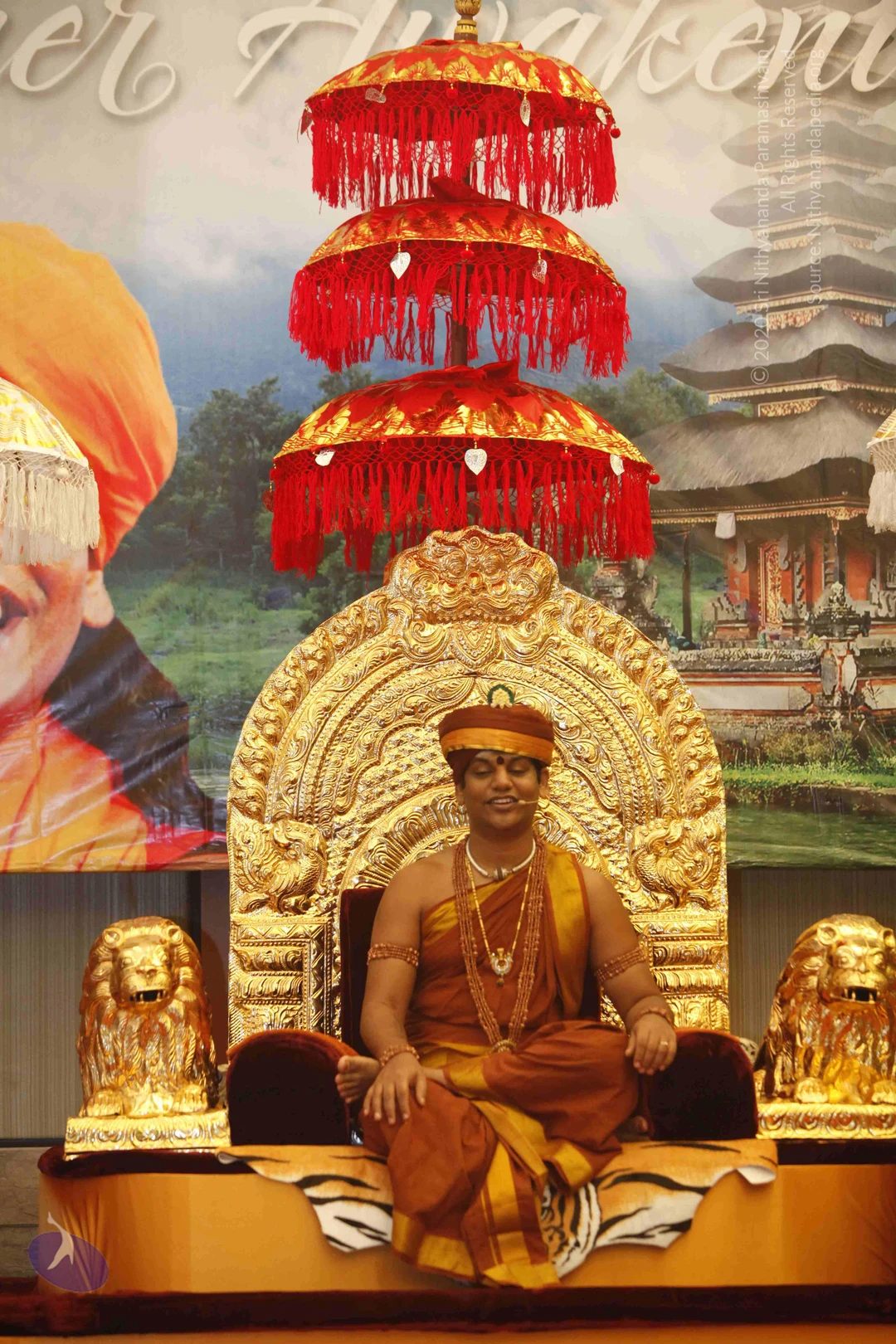
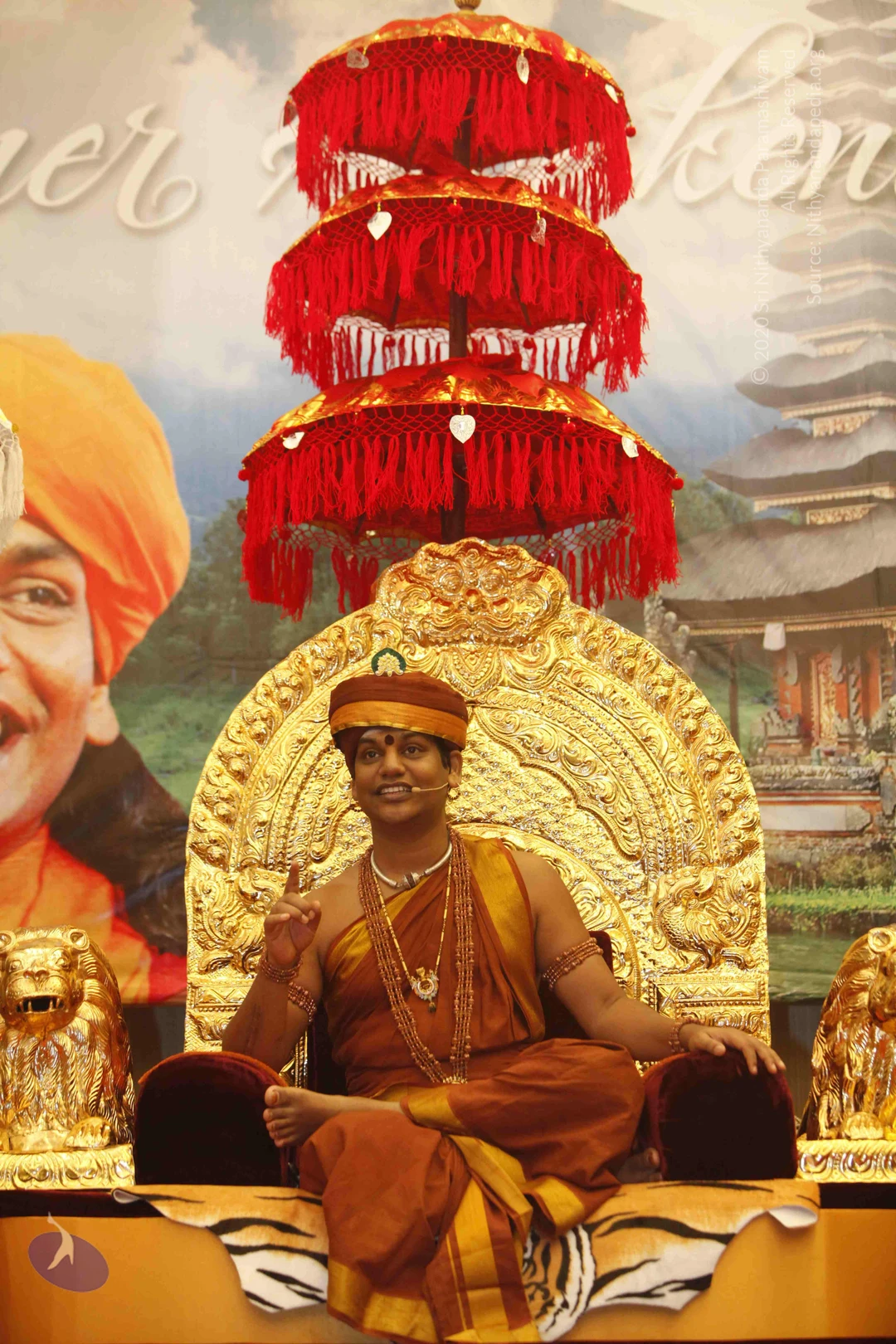
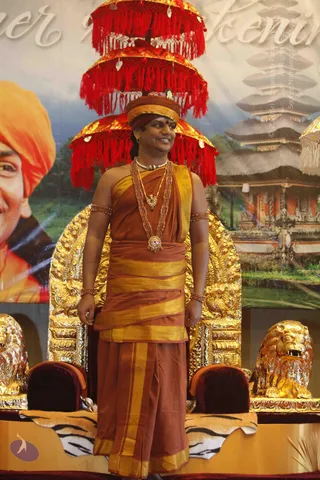
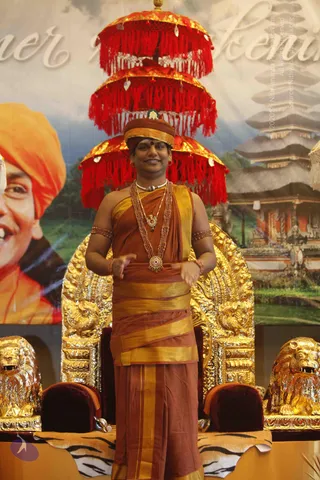
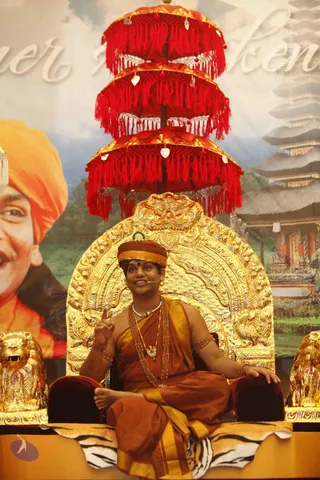
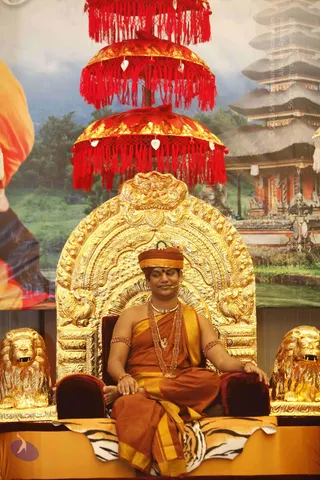
A standing figure in a rust-brown and gold-bordered sari-style wrap and matching cap with a gold band stands on a raised stage with a tiger-skin rug. Behind is a gold-carved throne flanked by two gold lion sculptures and a large red tiered canopy with tassels, plus a backdrop of a multi-roofed temple. The figure wears layered red-beaded malas, a gold pendant and a white-and-brown rudraksha-style necklace, with beaded armlets and wrist bands. A banner partially visible to the left shows an orange-turbaned man, a printed portrait.A standing figure in a rust-brown and gold-bordered draped robe and matching turban-style headwear, adorned with multi-strand red-beaded malas, a pendant necklace, bangles and armlets, smiles at the camera on a stage. Behind is a tiered red-fringed Balinese-style umbrella and an ornate gold throne with carved lion figures flanking it. A backdrop shows a large orange-turbaned portrait labelled "Inner Awakening" beside Balinese temple imagery. The figure is not recognised as a candidate here, so the role is an event speaker or stage presenter.A seated figure in a brown-orange turban and orange-brown robes with gold trim sits cross-legged on an ornate gold throne with carved lion heads and a tiger-striped cloth draped over the dais. Multiple gold and beaded necklaces, a white and gold garland, and gold armbands adorn the figure, who has a red dot on the forehead and a small microphone near the face. Three tiers of red tasselled canopy hang above the throne. Behind, a large backdrop shows a Balinese temple and rice terraces, with a partial orange-robed portrait at the left edge. Partial text reads 'er Awaken' across the top.A seated man in saffron-orange draped cloth with gold borders and a rust-coloured turban-style head cover with a small green ornament sits on a gold-carved throne with a tiger-striped cushion. He wears layered rudraksha malas, a gold chain with a pendant, a silver neck piece, rudraksha armlets and a small red bindi, and a headset microphone is visible at his ear. He smiles and gestures with his hand while speaking. A large portrait of a smiling woman in red forms the backdrop. Swamiji (probable): the saffron and ornate clothing, rudraksha malas, turban-style head cover and gold throne are strong cues for the probable Swamiji candidate on stage.A seated man in a saffron-orange robe and matching orange head covering sits cross-legged on an ornate gold throne with carved floral and lion motifs, gesturing upward with one raised index finger while speaking, wearing a headset microphone. He wears a multi-strand beaded necklace, a pendant, and bangles on his wrists. Behind him hangs a tiered red tasselled Balinese-style umbrella canopy. Two gold lion statues flank the throne, which rests on a tiger-striped cloth. A large backdrop shows a painted portrait of a smiling man in an orange turban and a Balinese temple with a pagoda-style roof. Printed backdrop text is partly visible.A seated man in orange and saffron robes sits on an ornate gilded throne with lion figures at its base and a tiger-striped cloth over the platform. He wears a maroon head wrap, multiple strands of beaded necklaces, a rudraksha-style mala, gold bangles and arm bands, with a small red bindi on his forehead and a headset microphone. Behind him are tiered red fringed parasols and a painted backdrop of a Balinese-style pagoda temple with thatched roofs and green landscape. Visual cues include saffron robes and a rudraksha mala with a ceremonial throne, consistent with the page, so this is a person depiction in person seated during a satsang setting.

2-IA-DARSHAN
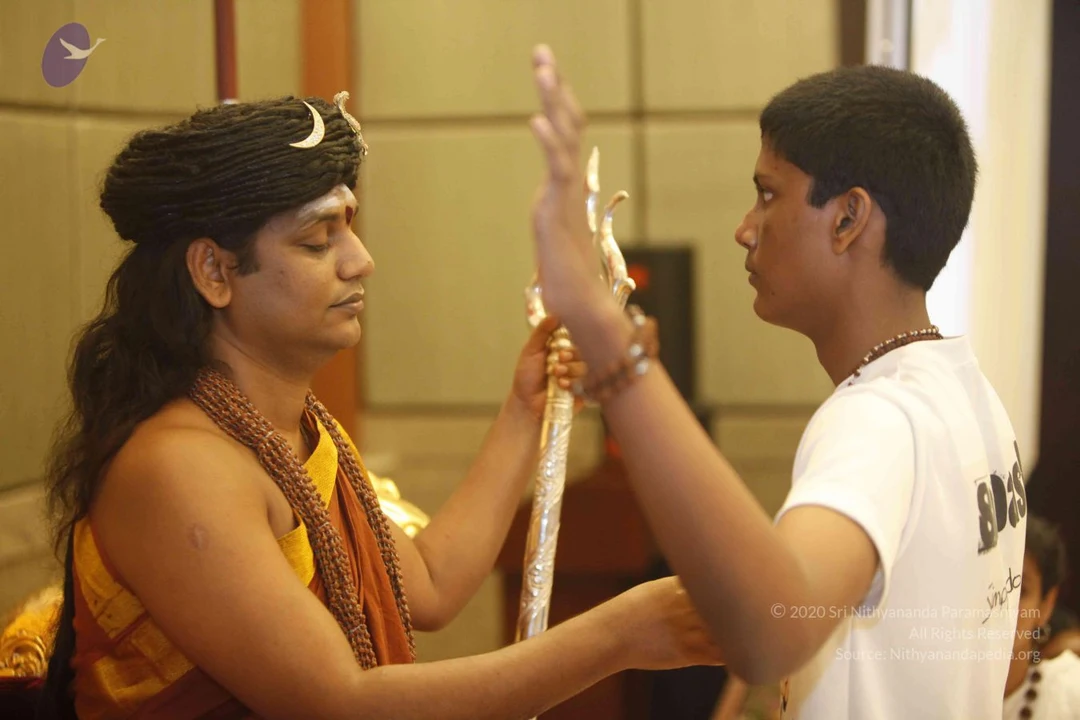
15 photosSource gallery
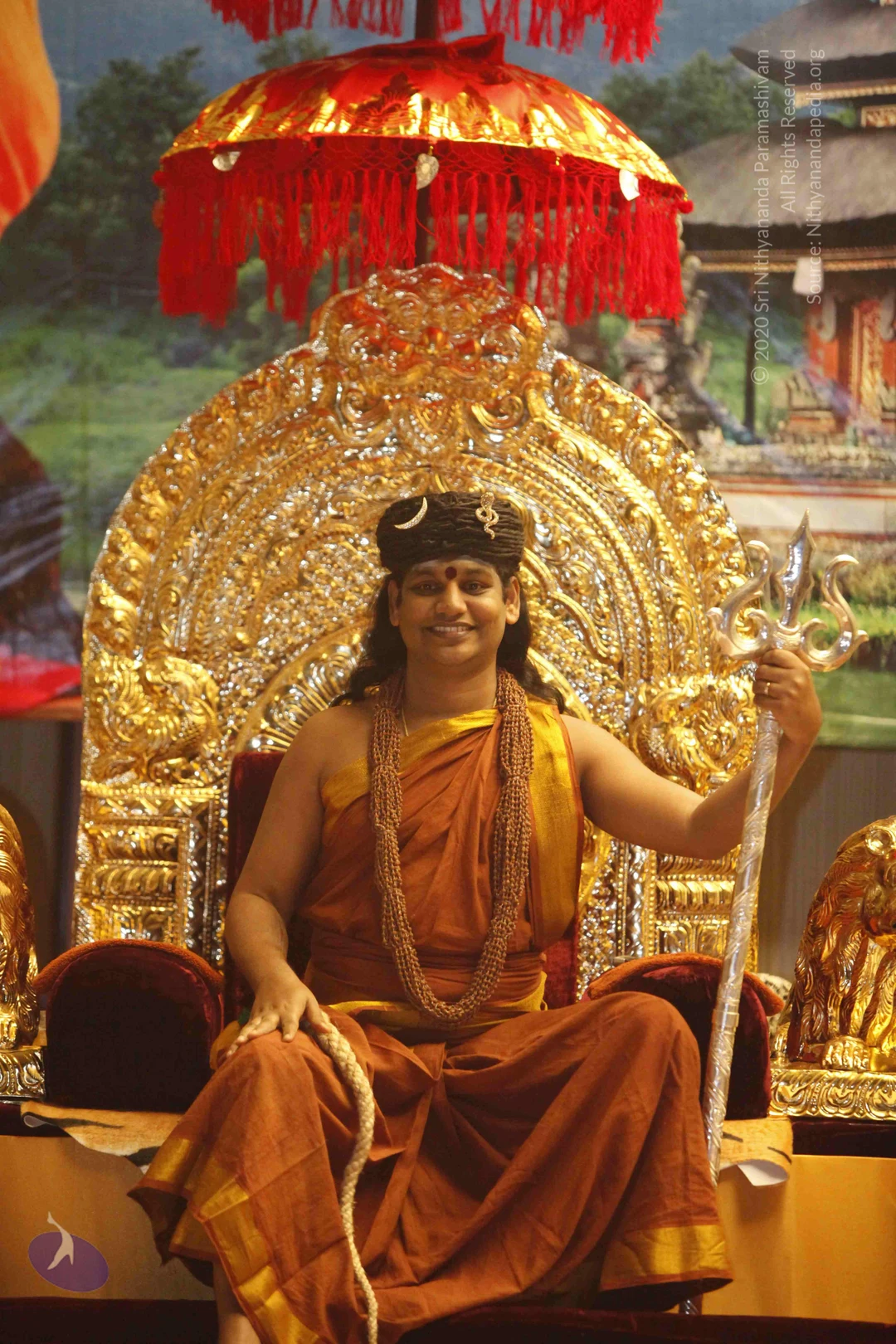
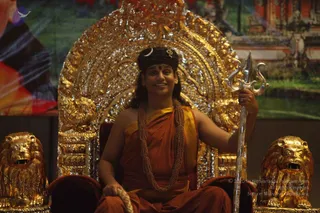
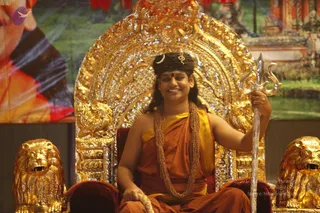
A seated man in saffron-orange robes with gold borders sits on an ornate, highly polished golden throne with a red fringed canopy overhead. He wears a dark wrapped headdress with a crescent moon and small ornament, a red bindi, and a long brown rudraksha mala across his chest. He holds a silver trident in his right hand and raises his left hand in a blessing gesture, smiling. A carved golden lion figure appears at the right edge, and a painted temple backdrop is behind him. Swamiji (probable): the saffron robes, long hair, crown-like headdress, rudraksha mala and ceremonial trident are the qualifying cues for the central figure.A seated man in saffron-orange robes with gold border sits on an ornate gold-and-silver throne beneath a red fringed canopy. He wears a dark cap with a crescent ornament, a red bindi, and multiple rudraksha-style beaded garlands, and holds a silver trident in his right hand. Golden lion figures flank the throne, and a painted backdrop of a temple and green landscape stands behind. a person based on the visible saffron clothing, beaded malas and ceremonial throne cues.A seated man in saffron-orange robes with a golden-yellow border sits on an ornate gilded throne with lion figures at each side, under a tiered red and gold Balinese umbrella with fringed tassels. He wears a dark cap with a crescent ornament, a red bindi, and a long rudraksha mala around his neck, holding a silver trident in his right hand. Behind him a backdrop shows a Balinese temple and a mountain landscape, with a partial banner reading 'Inner Awakening'. One person is physically present.A seated man in saffron-orange robes with gold borders sits on an ornate gold-and-silver throne beneath a red fringed canopy. He wears a dark turban-like headwrap with a crescent ornament, a rudraksha-style mala of beads around his neck, and a red tilak on his forehead. He holds a silver trident in his right hand and a white rope-wrapped staff across his lap. A golden lion sculpture sits beside the throne, and a painted backdrop shows a temple and rice fields. Swamiji (probable) with long hair, saffron clothing, rudraksha mala and trident, seated in the honoured position of the throne.A man seated on an ornate gilded throne with a large gold-and-silver backrest and a red fringed canopy above. He wears an orange-brown dhoti-style garment with gold borders, a rudraksha mala draped across the chest, a dark turban-like headwrap with a silver crescent and ornament, and a red bindi. He holds a silver trident in his raised right hand while the left hand rests open on his knee. Beside the throne sits a golden lion sculpture, and a painted backdrop of green hills and a temple shows behind. Probable Swamiji seated in a dignified pose on the peetha, wearing saffron-orange clothing, a rudraksha mala and a crown-like headwrap, with the trident as a ceremonial object.A seated man in an orange-saffron dhoti and shawl with gold border sits barefoot on an ornate gold-and-silver throne with a golden arched backrest. He wears a long rudraksha mala around his neck and a red bindi, and holds a silver trident in his right hand and a rope in his left. Two gold lion statues flank the throne. Above is a tiered red fringed canopy, and the backdrop shows a painted temple and a large portrait of a turbaned figure in orange. Appearance-based label: a person, seated on the throne with a trident, long rudraksha mala and saffron clothing.