Skip to content
Thursday

4 December 2014

Dated photos
87
Source pages
1
Media
2
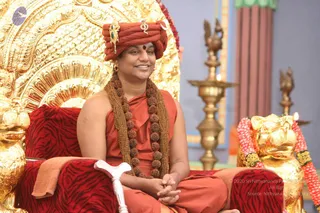
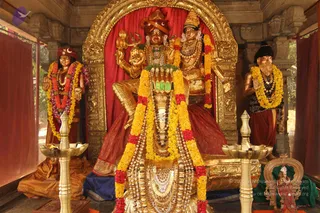
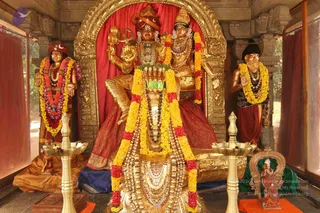
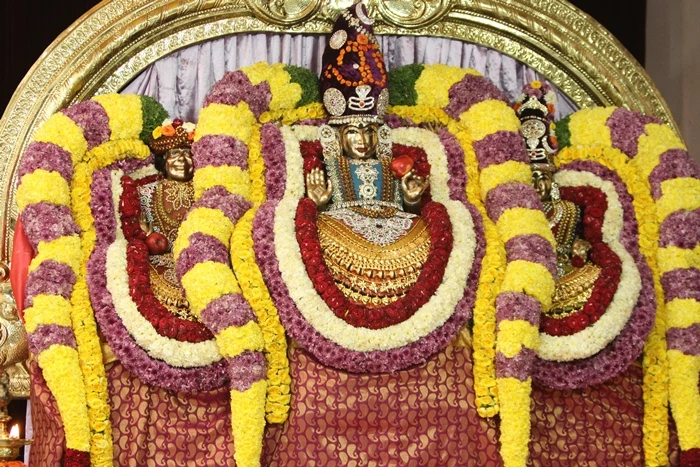
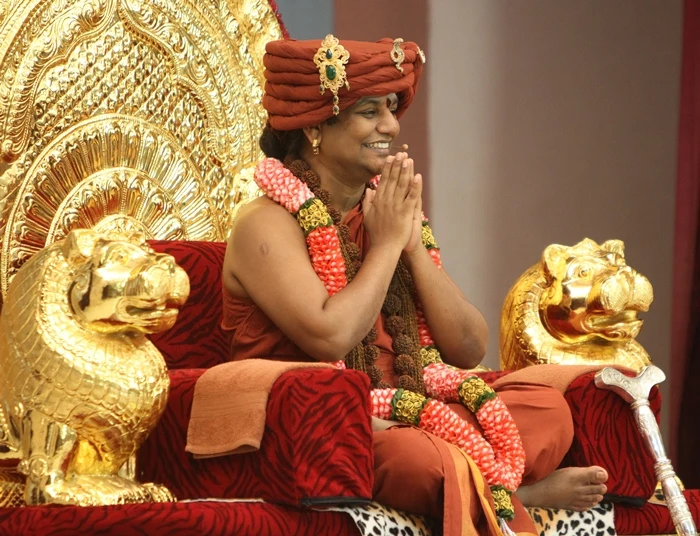
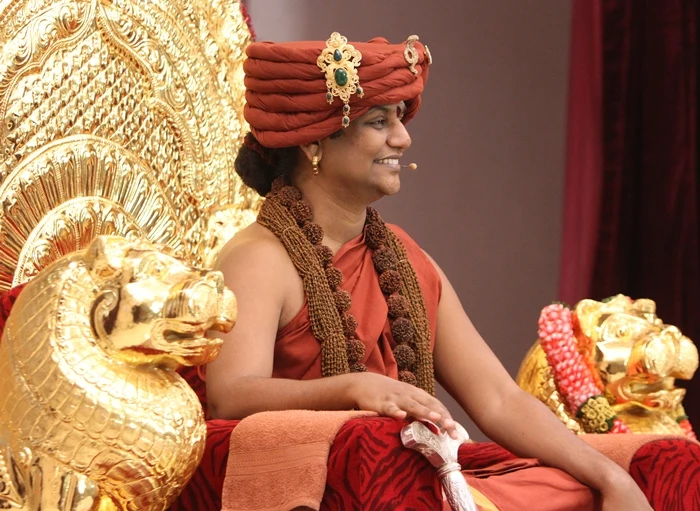
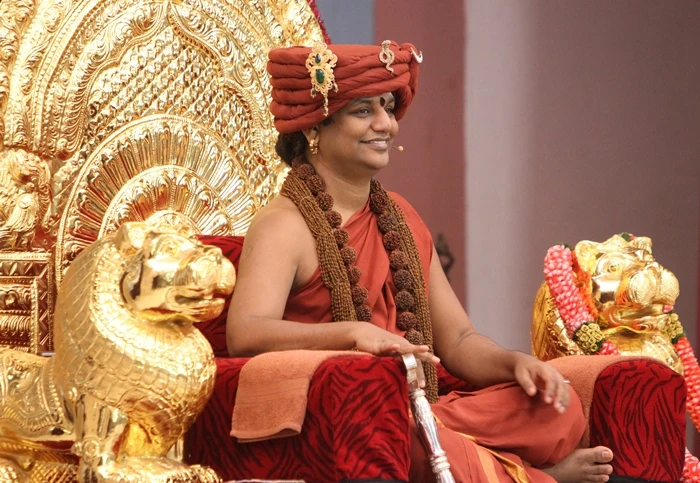
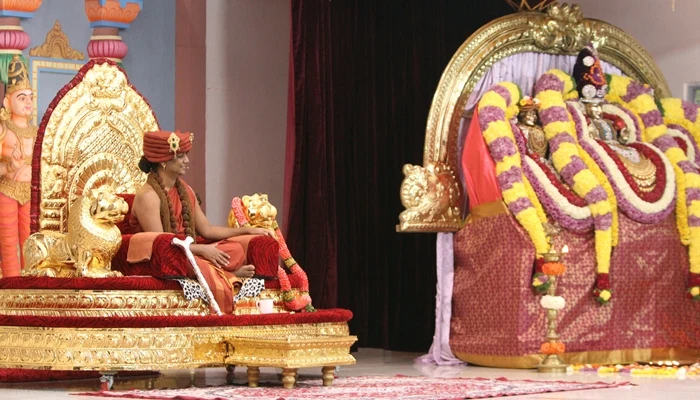
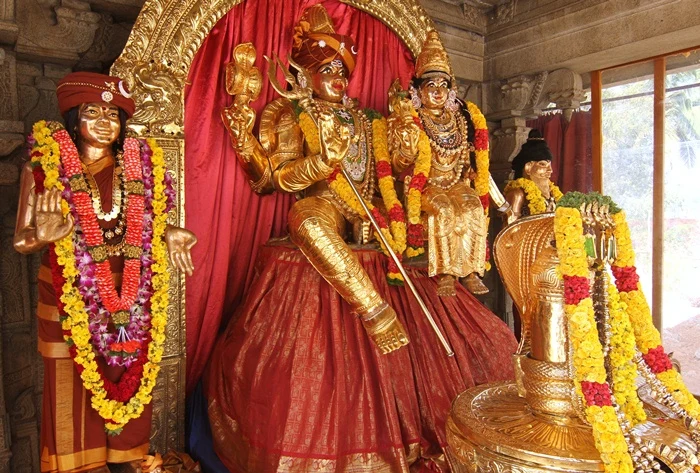
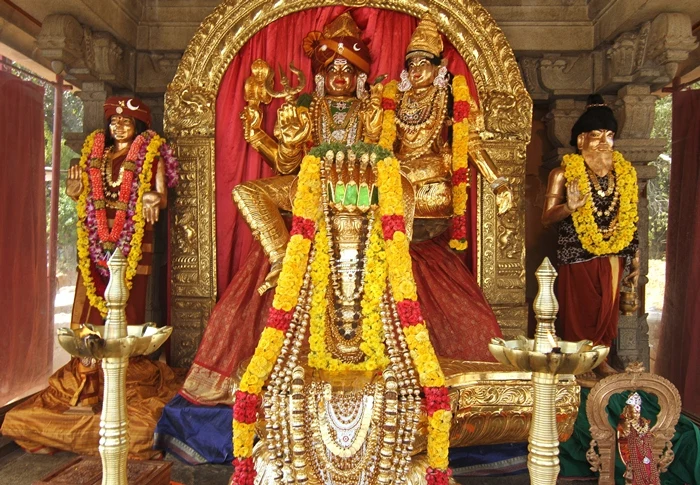
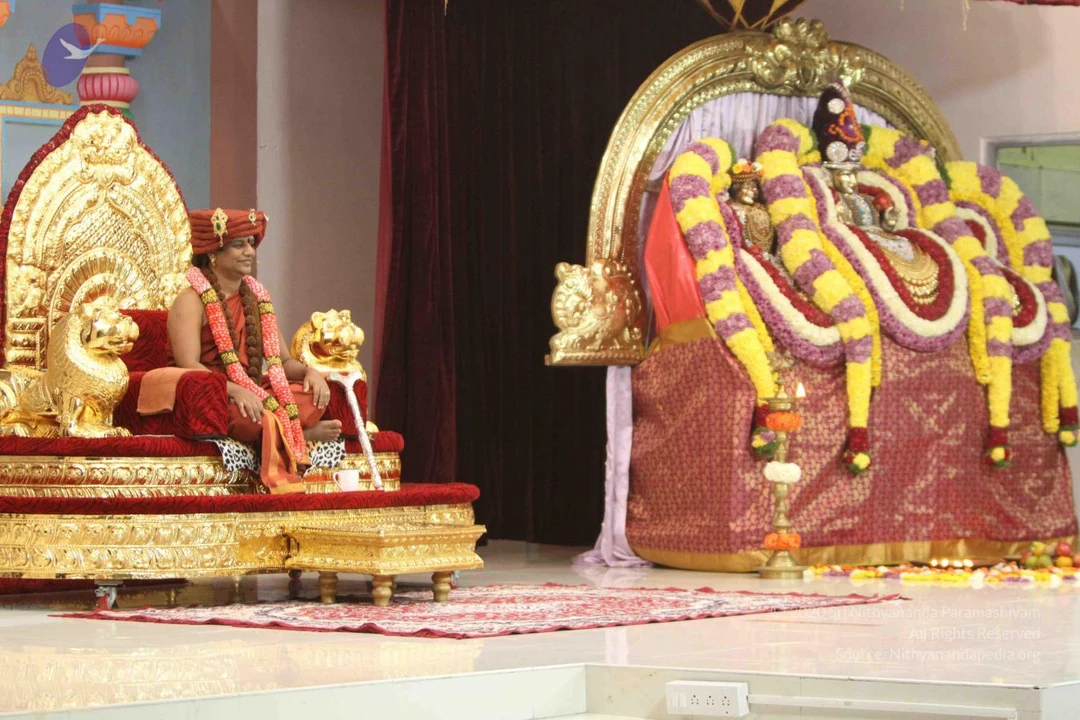
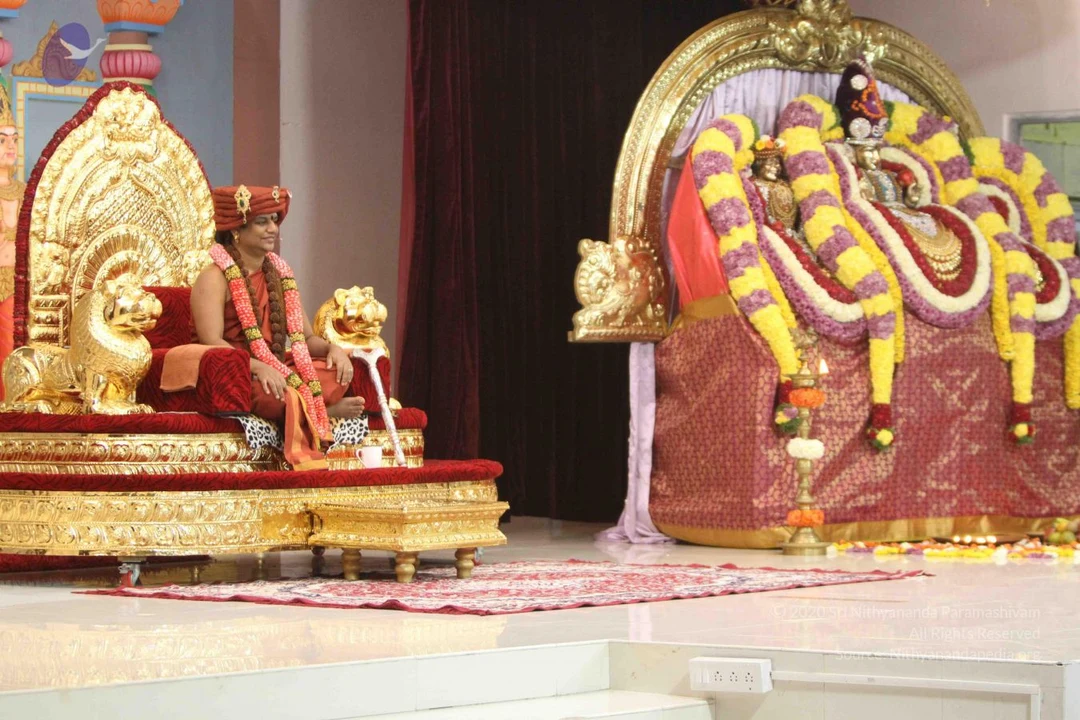
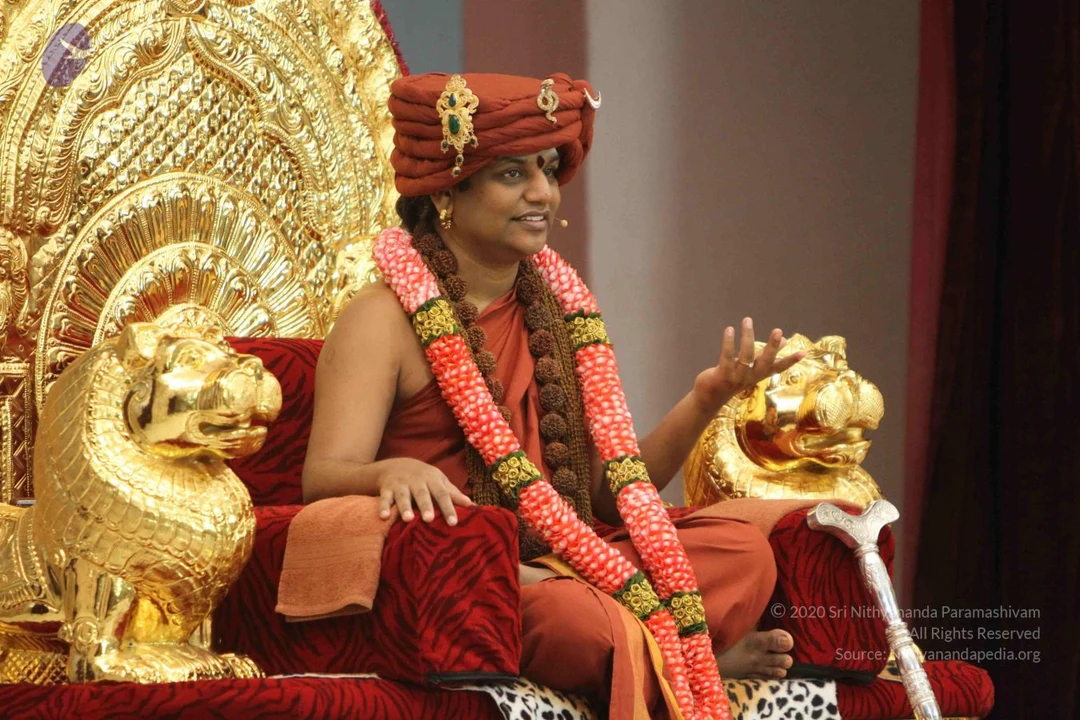
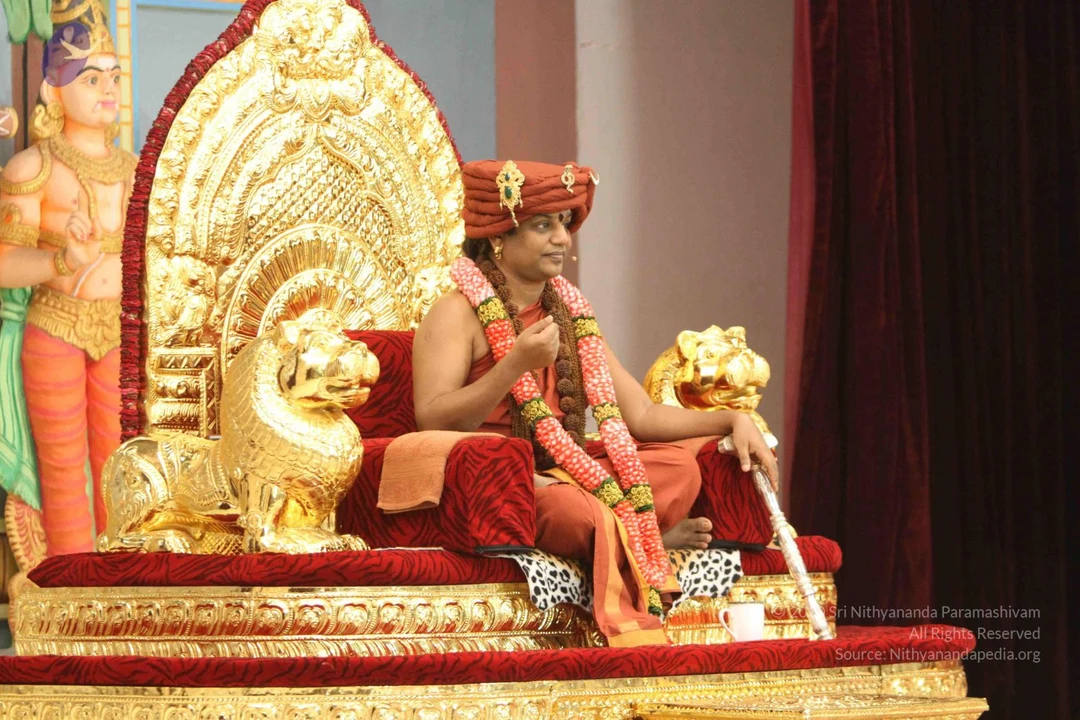
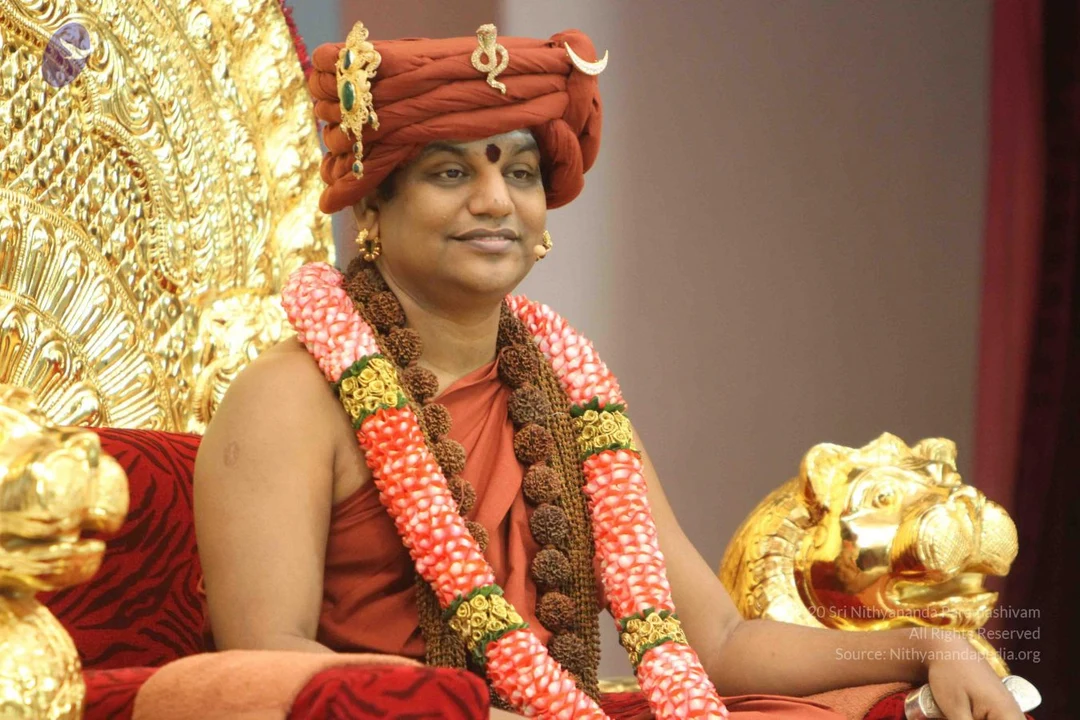
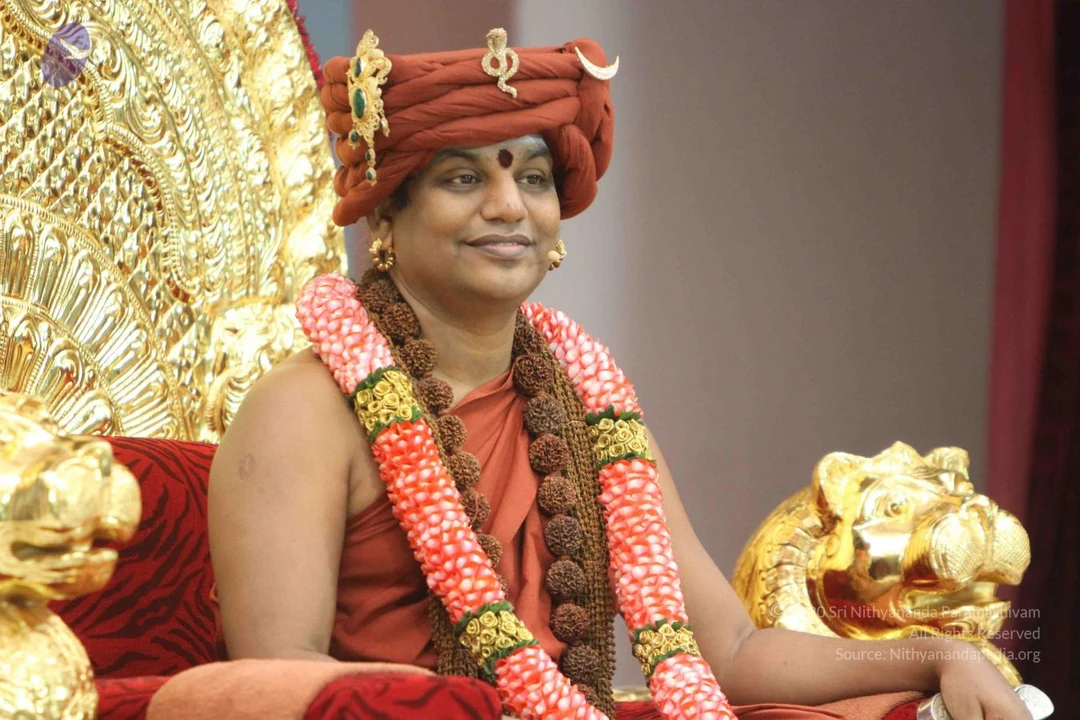
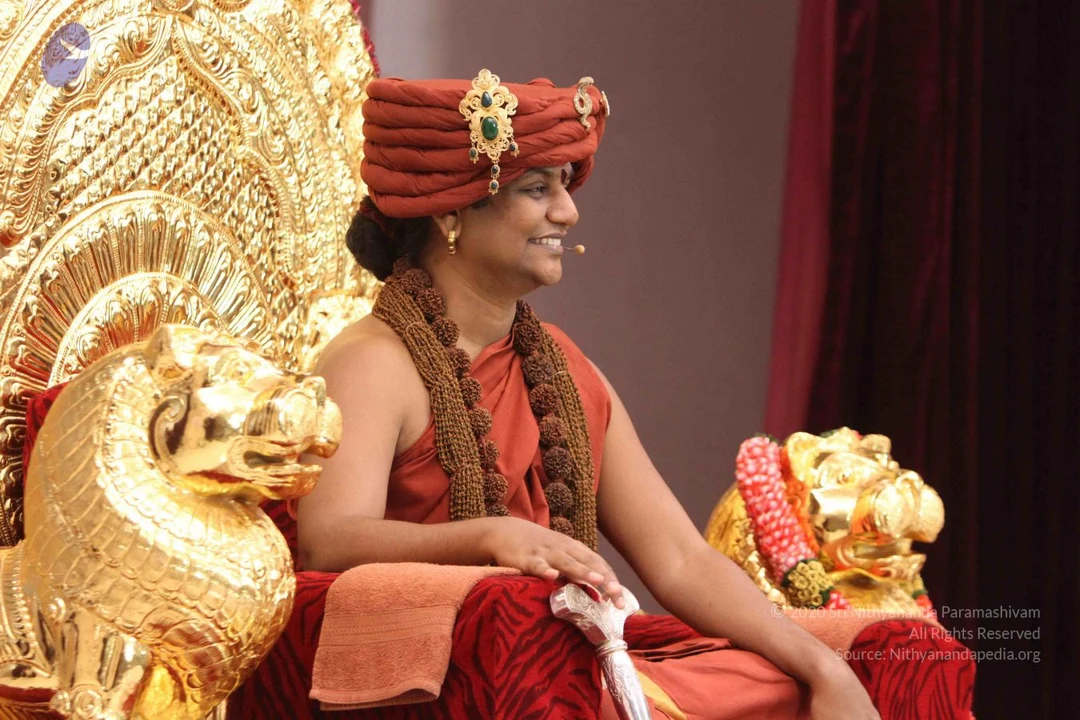
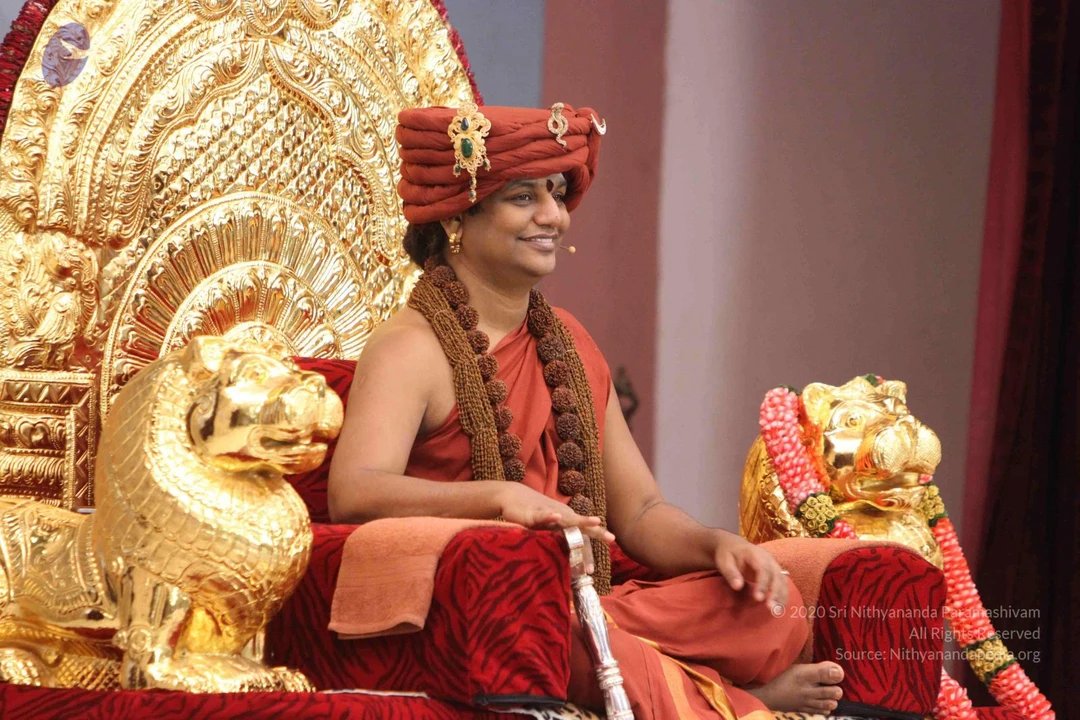
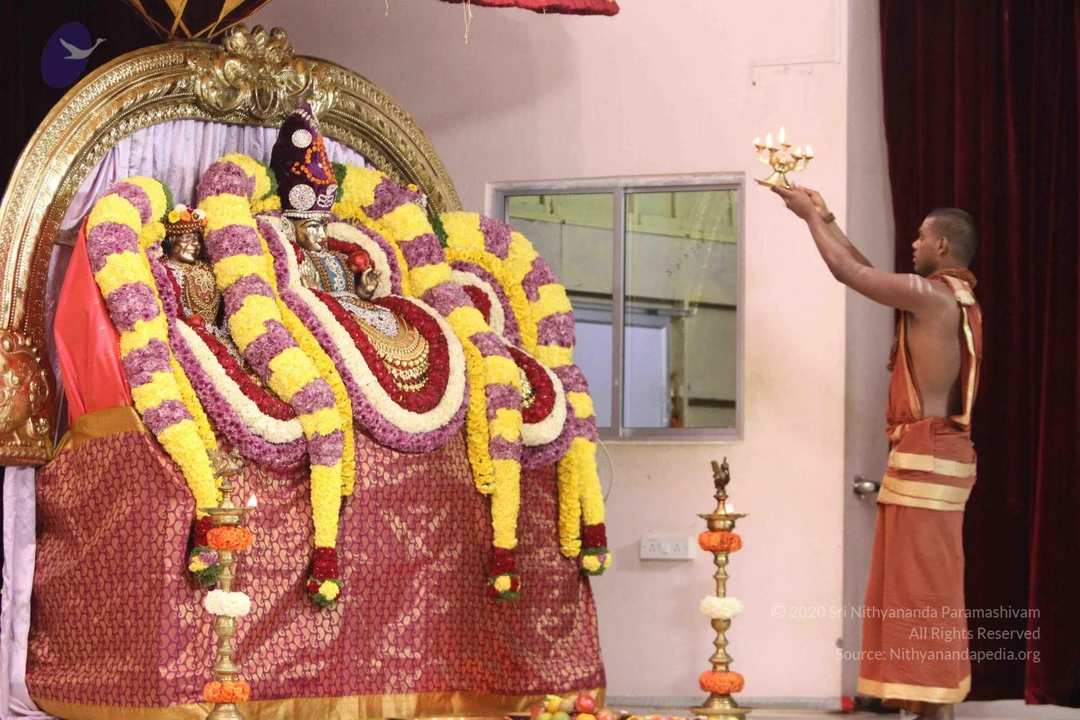
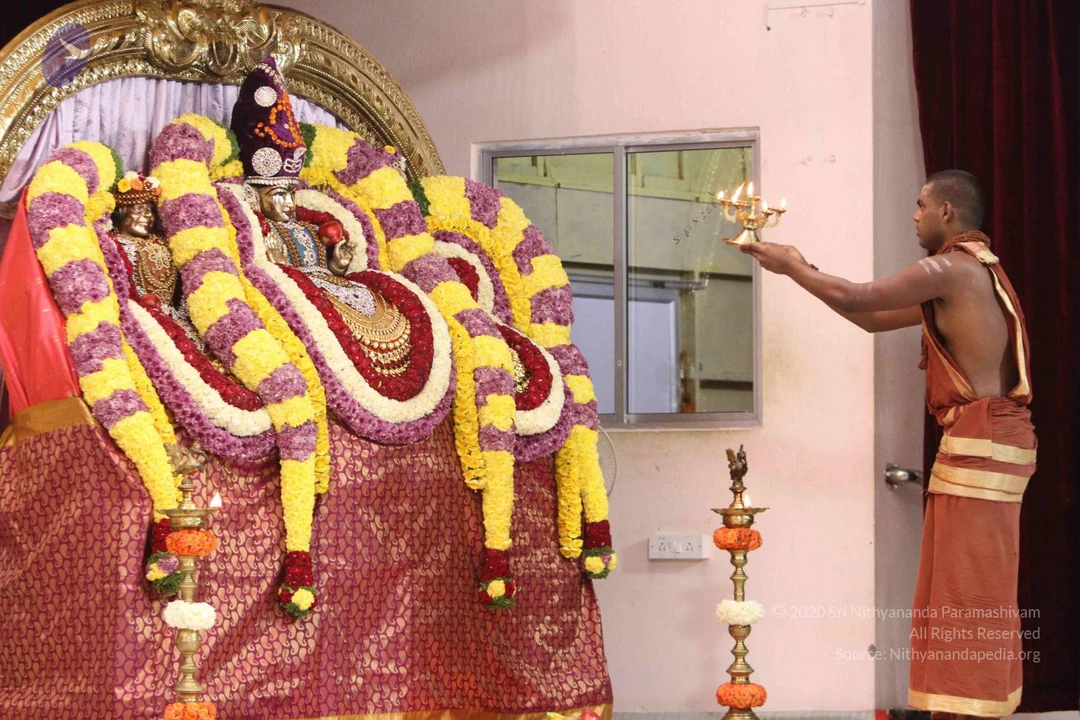
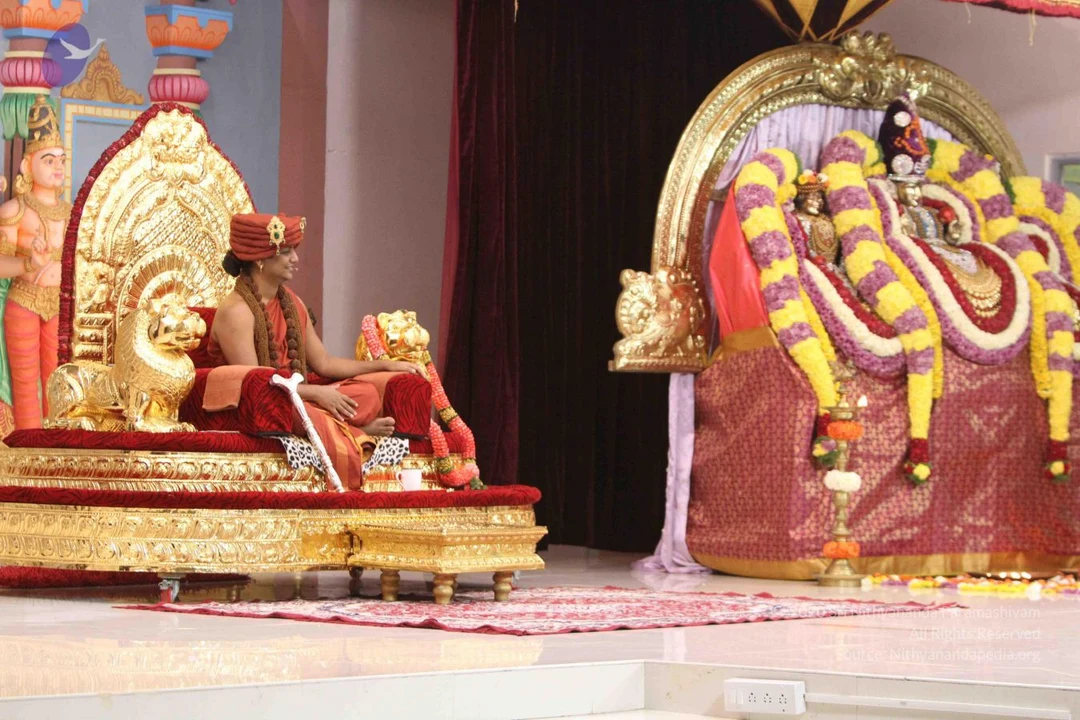
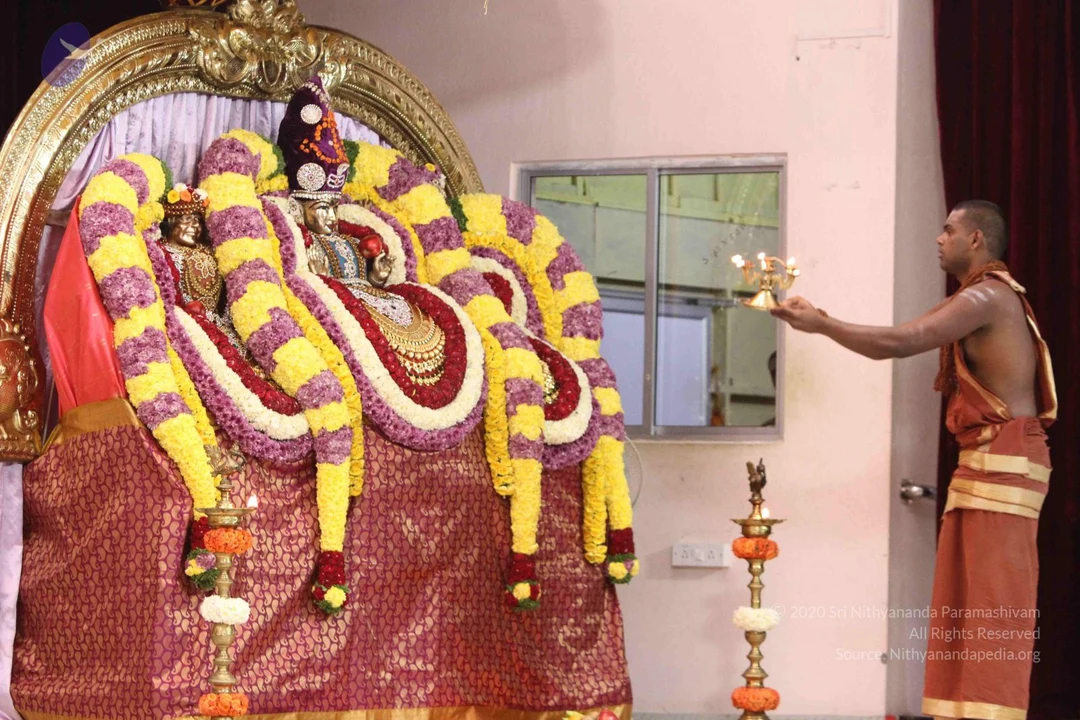
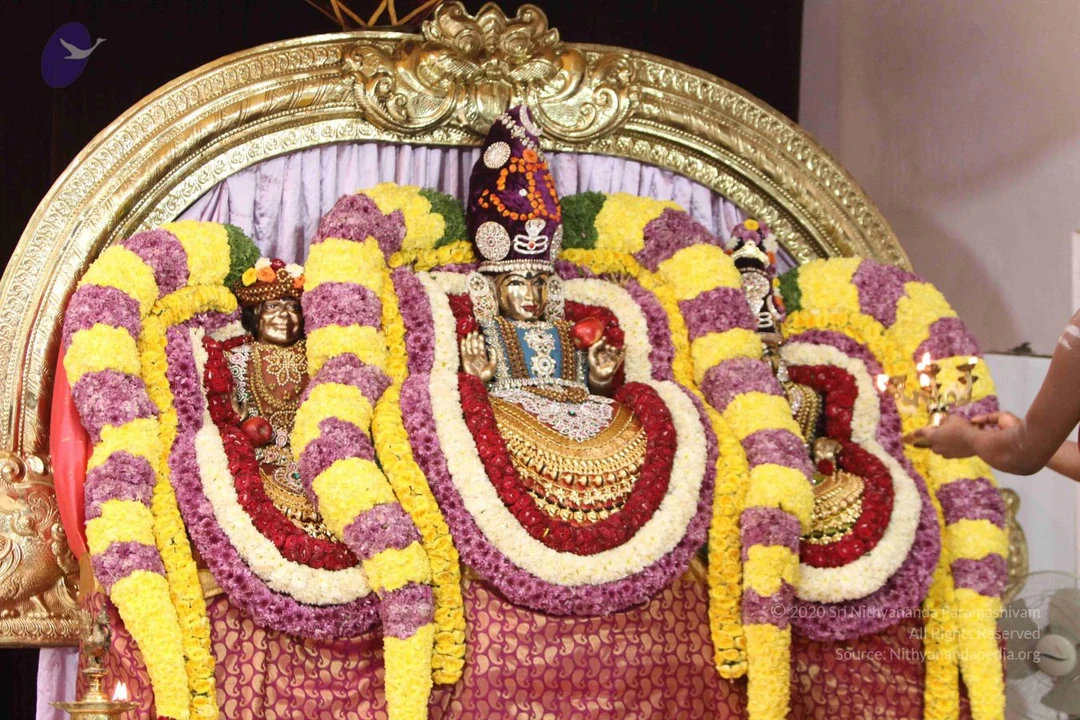
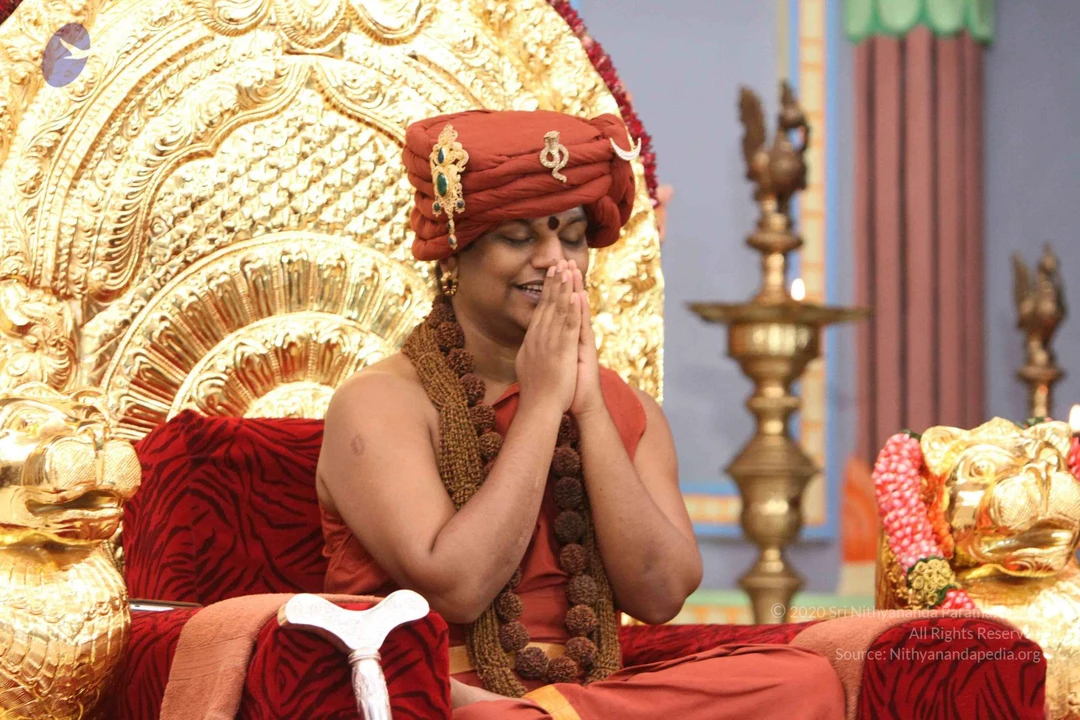
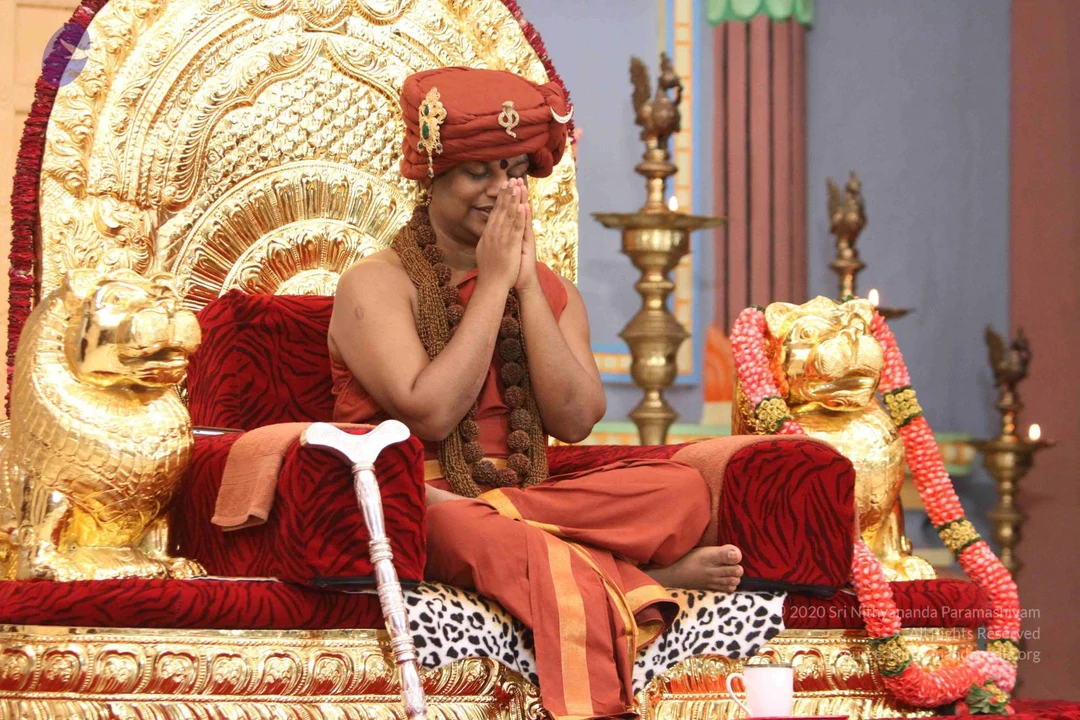
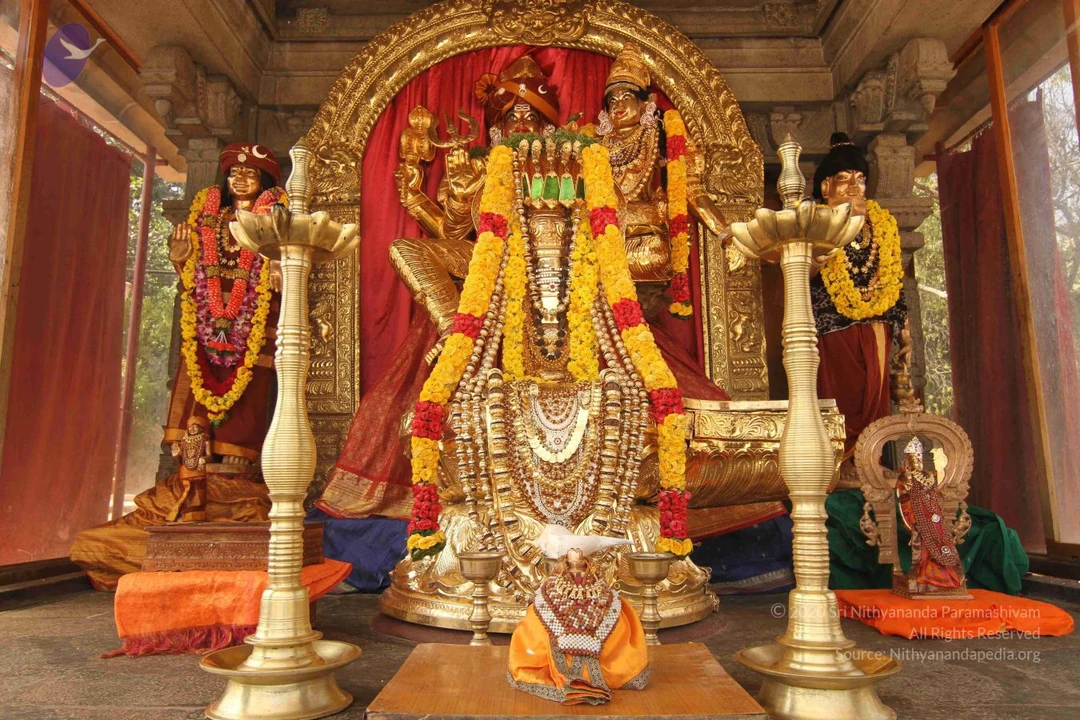
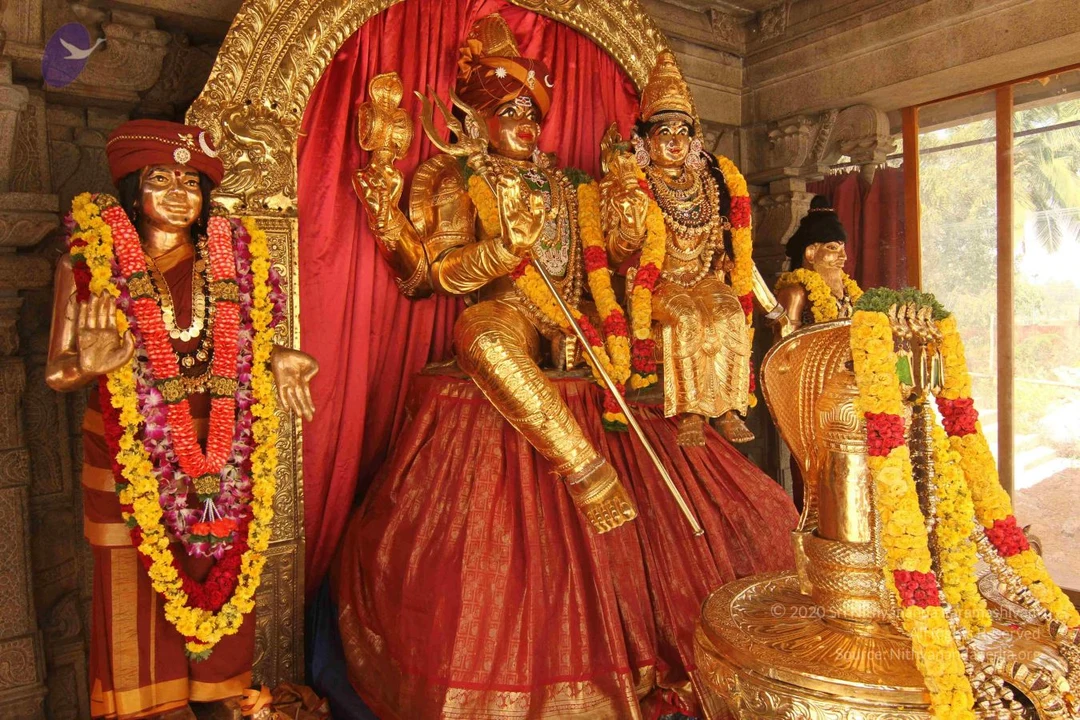
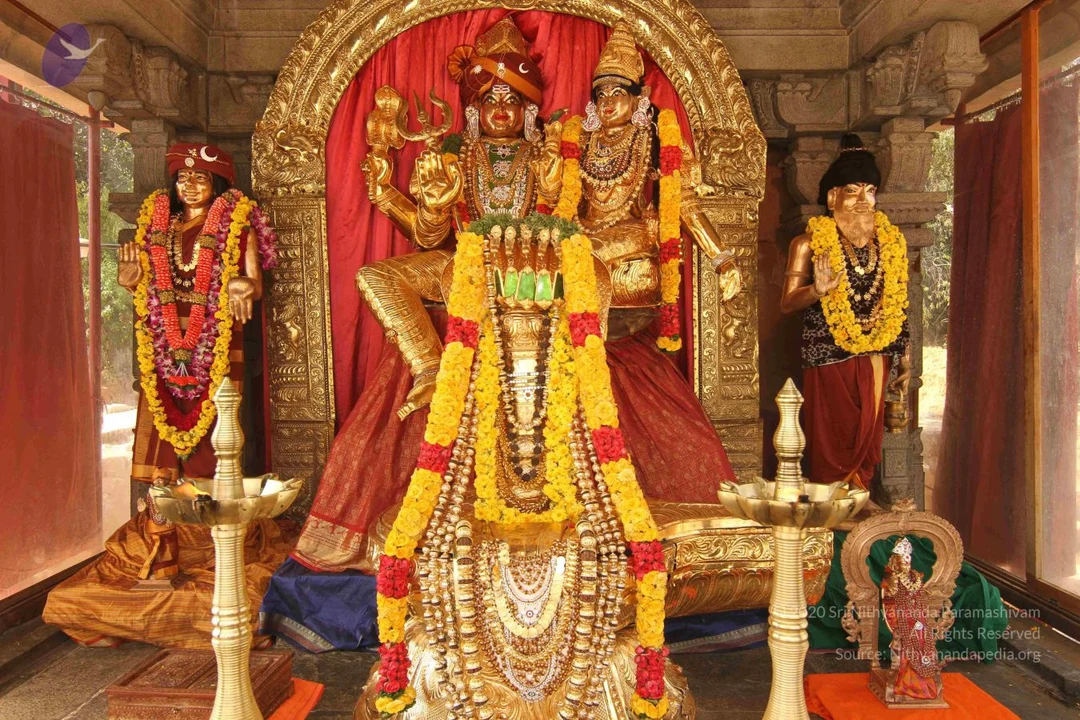
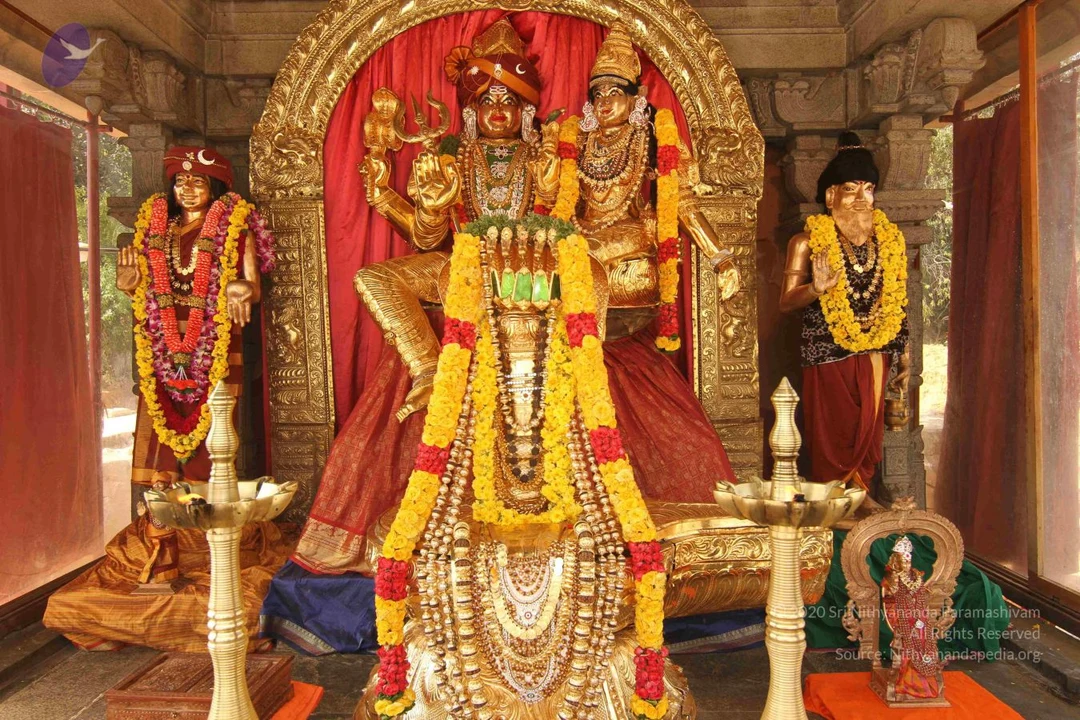
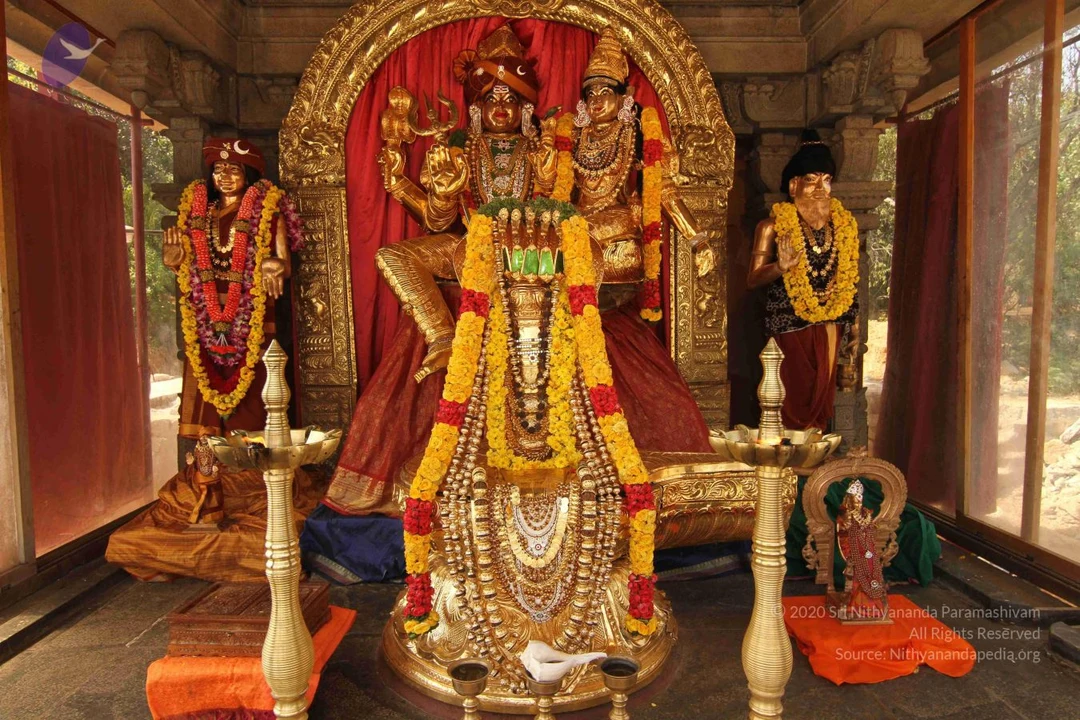
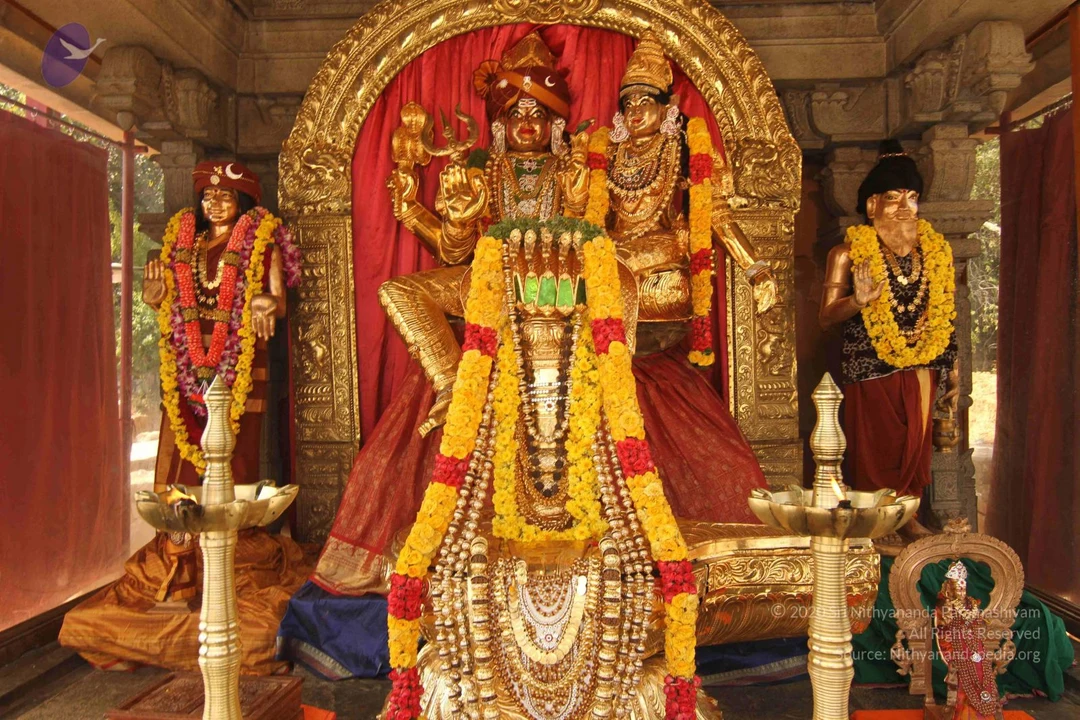
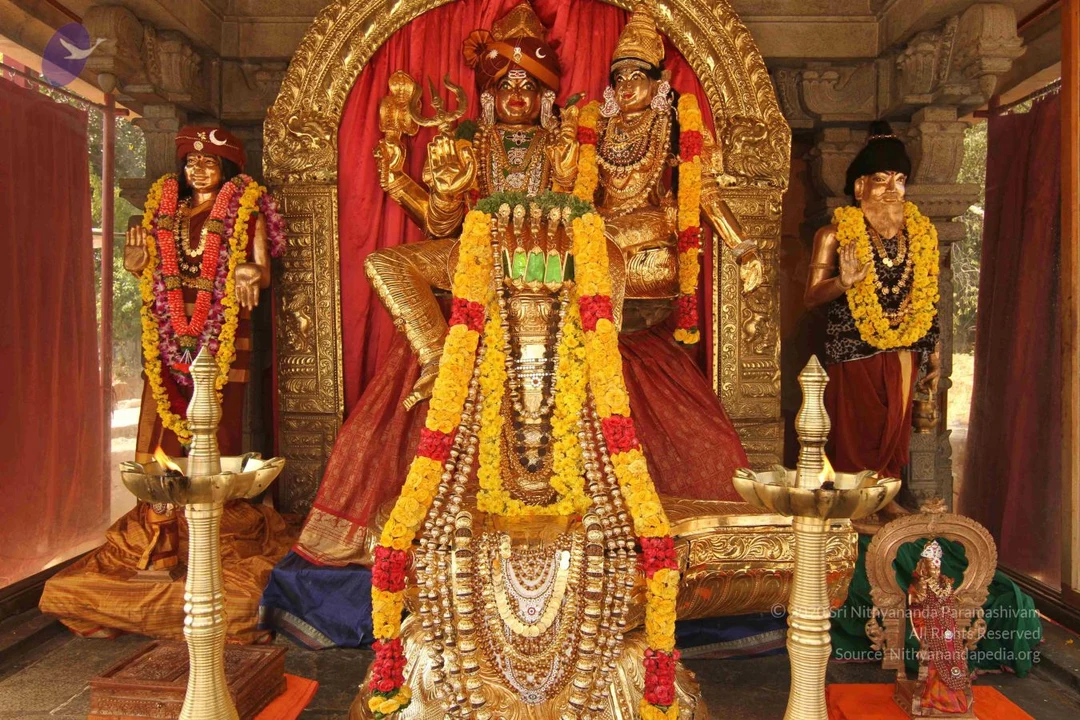
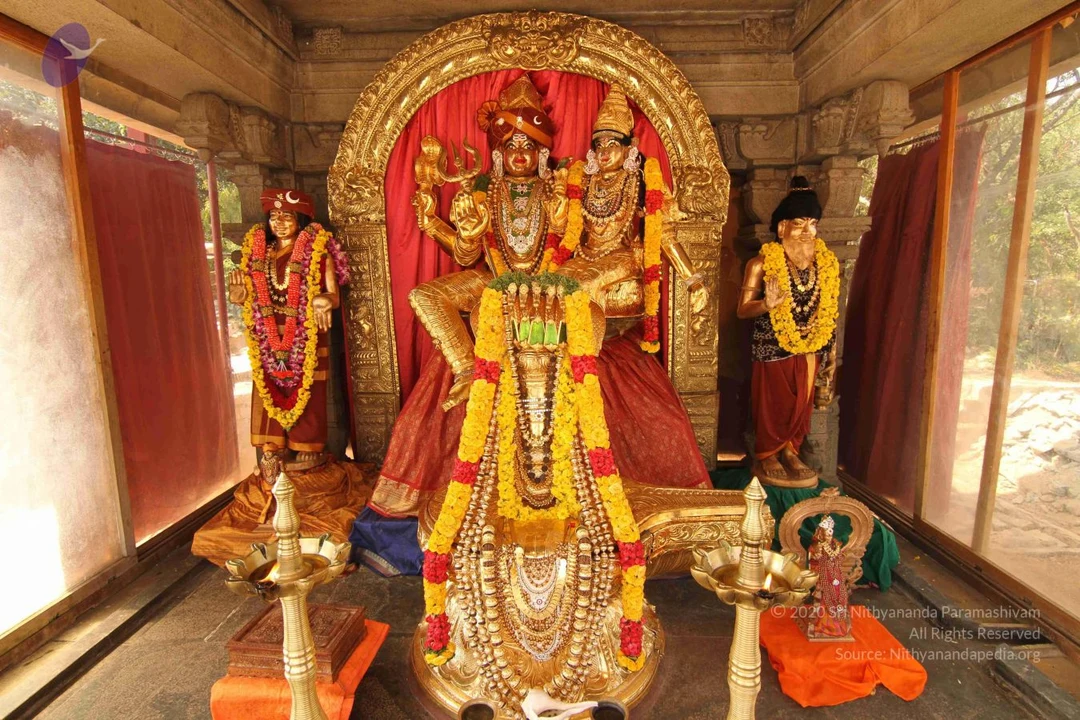
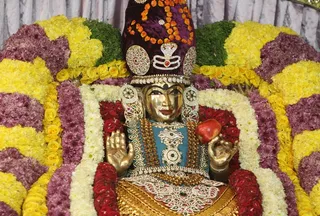
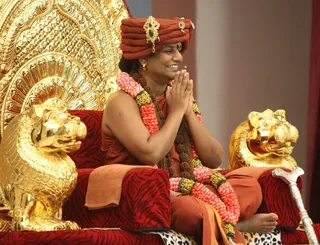
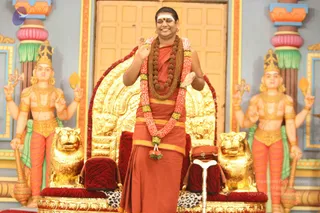
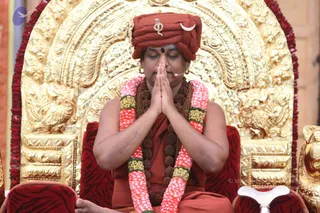
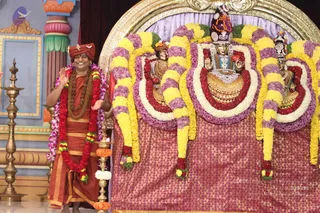
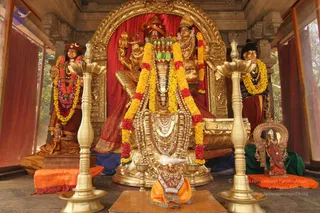
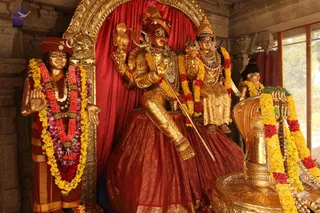
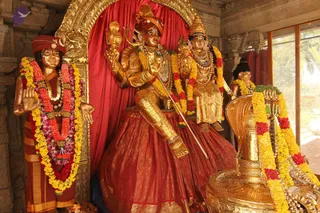
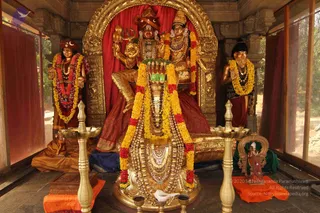
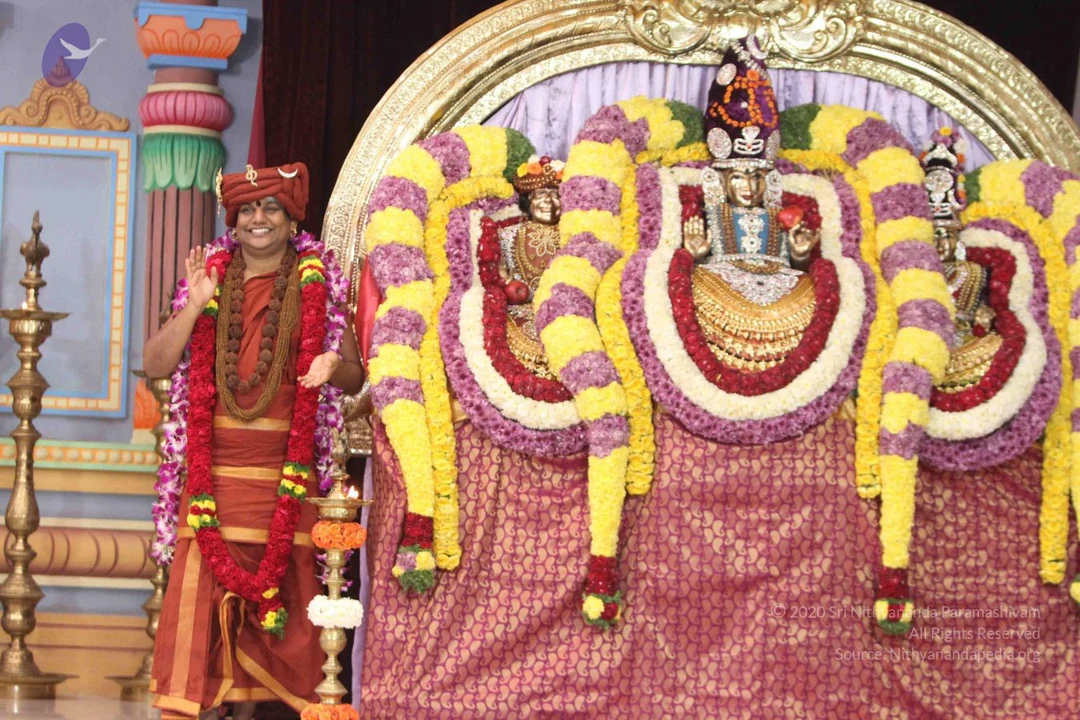
A photograph of a man seated on an ornate gold throne with red tiger-striped upholstery and gold lion armrests. He wears a saffron-orange turban with a jewelled ornament and a red bindi, a saffron-orange wrap, and a long mala of rudraksha beads with a gold clasp, and he sits with hands clasped in his lap and a gentle smile. Behind him stand brass oil lamps and a flower garland of red and white blooms draped over the lion armrest. A pale wooden staff rests against the chair.A golden shrine interior in a temple with a gilded arched frame and red curtains. At centre, a golden deity murti of a seated four-armed figure with a trident and a red-and-gold turban and crescent ornament, seated beside a consort with a jewelled crown, both draped in garlands of yellow and red flowers. In front, a tall ornate kalasha-like object is garlanded with yellow and red marigolds and layered with pearl and bead necklaces. Flanking the shrine are two painted statues of devotee figures with folded hands, one in a red turban and garland, the other in a black cap and yellow garland. Brass oil lamps stand on either side of the central image and a small framed picture sits at the lower right.A shrine of gilded deity murti with a red curtain backdrop, a shivalinga-style pillar in front wrapped in yellow and red marigold garlands, and gold and rudraksha-like necklaces draped over the base. The central figure is a multi-armed deity with a trident in one hand and a crown-like headdress, seated with a consort figure beside it. Two standing attendant statues flank the shrine, one in red and gold with a red-and-white garland, the other in dark robes with a yellow garland and a black cap. Brass oil lamps stand on either side, and a small framed deity image sits at lower right. No physical people are present.

December 04 2014

Original wiki page
Contents

Title

Base Your Life On Subjective Truth

Description:

In today’s ( 04th December, 2014 ) morning Satsang, Paramahamsa Nithyananda shares secrets from the Vedas on how our subjective truth, Shivoham, can be awakened with the help of yantras, mantras and Kundalini awakening. He also gives us important information for building the foundation of our lives on consciousness, not fear or greed. “Enlightenment” is building our life on the right foundation, Subjective Truth – Shivoham!

VideoAudio

Transcript:

Nithyanandeshwara Samaarambhaam

Nithyanandeshwari Madhyamaam |

Asmath Aachaarya Paryanthaam

Vandhey Guru Paramparaam ||

I welcome all the devotees, disciples, samajis, satsanghis, Shrimahants, Mahants, Thanedars, Kotharis, sitting with us through Nithyananda TV, Sadhna TV, two-way video-conferencing having Nayana Deeksha......and Janashree TV from today onwards......having Nayana Deeksha.

Cities sitting with us in two-way video-conferencing having Nayana Deeksha: Colombo-Sri Lanka, Singapore-Singapuram, Warrington-UK, Los Angeles-Hollywood, Jorpati-Nepal, Kuala Lumpur-Palani, Pattaya-Thailand, San Jose-Madurai, Hong Kong-Sirkazhi, Ohio, Tiruvannamalai, St. Louis-Tirumala, Pondicherry, Hyderabad, New Zealand, Toronto, Houston, Auckland-California, Los Angeles, Surrey-Canada, Hyderabad-Gupta Kashi, Seattle-Chidambaram....and some more cities........

I welcome all of you with my love and respects.

I will expand on how the Subjective Truths are strengthened by objects. Please listen.

Every object creates some subject in you. When you see, even the photograph of food well-organized – Idli, Chutney, Sambar, Gongura Oorga.....if you are a non-vegetarian person, all those non-vegetarian items, the moment you see the photograph, something is triggered in you. It’s one small example I am giving. I can give hundreds of examples. Whether it is food, or lust, anything, or sacredness..... Even sacredness! If you are habituated to praying to a god, the moment you see his deity, something is created in you, awakened in you. So, each object creates certain subject in you. And, if there is an object which has awakened Subjective Truth in me, I can use that same object to awaken that same Subjective Truth in you.

Master is a person in whom the Subjective Truth has become reality.....Shivoham, the highest Subjective Truth, becomes reality. And, whatever objects made that experience as reality in him, he can use that and make even your Subjective Reality awakened. He can give you also the same experience of Shivoham. Listen. Whatever experience he achieved, he can awaken that same in you.

Understand, the Subjective Truth – Shivoham – can be awakened by the external help like Yantras, Mantras, and Kundalini initiation. I am introducing this science to the world. It was available in the Vedic Tradition; but, to this planet, I am introducing now. It is not that all the Vedas were revealed to....all the Vedas are revealed already to human-beings. This science of using sound, the science of using simple lines to awaken yourself and awaken others is such powerful science.

See, Subjective Truth is the base on which your life should be built. Subjective Truth is the foundation on which your life should be built. If you do not build a conscious Subjective Truth like Shivoham, the ultimate truth, unfortunately you will be building your foundation, your life, on your low Inner Image, incompletions, your fear and your greed. On your fear and on your greed you may start building your life. First, choose conscious Inner Image - Shivoham. First, choose conscious Inner Image - Shivoham.

Please understand, ‘enlightenment’ is building your life on the right foundation, Subjective Truth. It is on the right foundation, Subjective Truth.

Cherish Shivoham again and again. Strengthen the truth, Shivoham, again and again. Live the truth, Shivoham, again and again. Meditate on this great truth again and again. This truth, Shivoham, once it gets rooted in you, does not allow your Inner Image, Mamakaara, to weaken you. It does not allow your Inner Image, Mamakaara, to weaken you, understand?

I am just trying to get the right words, how this whole truth can be explained to all of you in simple terms, in simple words, how the whole truth can be awakened in simple terms, in simple way.

Understand, subtle grooves of your brain, when it starts understanding the happenings inside you, it can understand any Mathematics, any Science, any Chemistry, any Geography, any History. See, how you remember your past, the same way only History is written; that is the formula of History. How you remember certain facts exaggerated, certain facts neglected. Same way, Mathematics, what all the basic understandings you have, to add, subtract, multiply, divide. If you can grasp the happenings inside you with the subtle sensitivity, you can grasp any happening outside. As I said, whether it is Geography, or Mathematics, or History, or Science, or Chemistry, Biology, everything in the outer world you can understand if you can grasp the Subjective Truth. That is why I am saying, the Subjective Truth, you need to let it sink in you, get soaked in you. Let it be soaked in you. Let it sink in you. Just like how food, sex, all these becomes a bio-memory of an ordinary man, this Shivoham, experience of enlightenment, should become bio-memory, understand?

I can see very clearly what is happening inside me. The whole body and mind is ready for Cambodia. That is why I am just searching for words. We need to find more and more words, the right words. Only now I know why Mahadeva started teaching in silence; because, in silence, all your subtle brain grooves are available to me, I can just alter those brain grooves just through some vibration and give you the experience, Shivoham, without using too many words. Just sending the vibration, Shivoham, I can alter the subtle grooves of your brain. That can change and complete all your incompletions and awaken the ultimate truth, Shivoham, in you.

The essence of today’s satsangh:

I don’t need to talk actually to do the work I need to do on you to give you the Shivoham experience. Without words, just by sending the powerful vibrations, Shivoham, your brain grooves can be awakened, and you can experience Shivoham.

With this, today, ninth day of the Nithyanandeshwara Brahmotsava, Mahadeva is gracing; tomorrow, Mahadeepa. So, let’s receive his blessings.

I bless you all. Let’s all radiate with Integrity, Authenticity, Responsibility, Enriching, and Causing eternal bliss, Nithyananda. Thank you.

Photos From The Day:
Photos Of The Day:

SATSANG

DARSHAN
BIDADI-TEMPLE

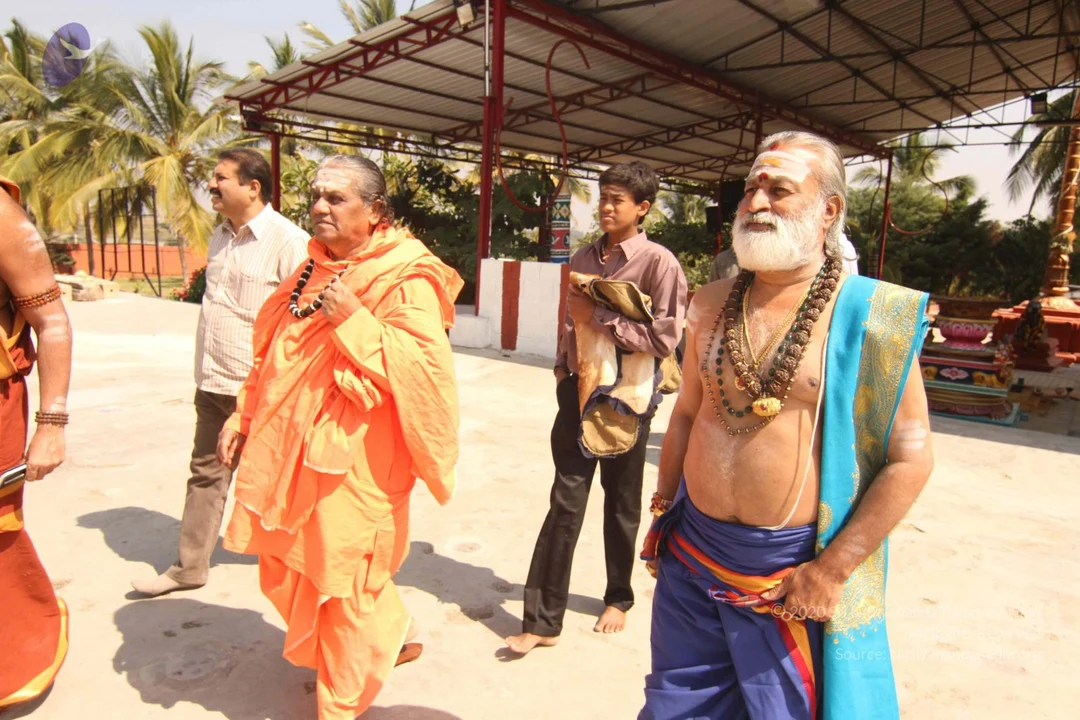
KULATHAMUTT-SWAMIJI-VISITING-ADHEENAM

Photos from this day

View all 87 photos

Photos From The Day:

14 photosSource gallery
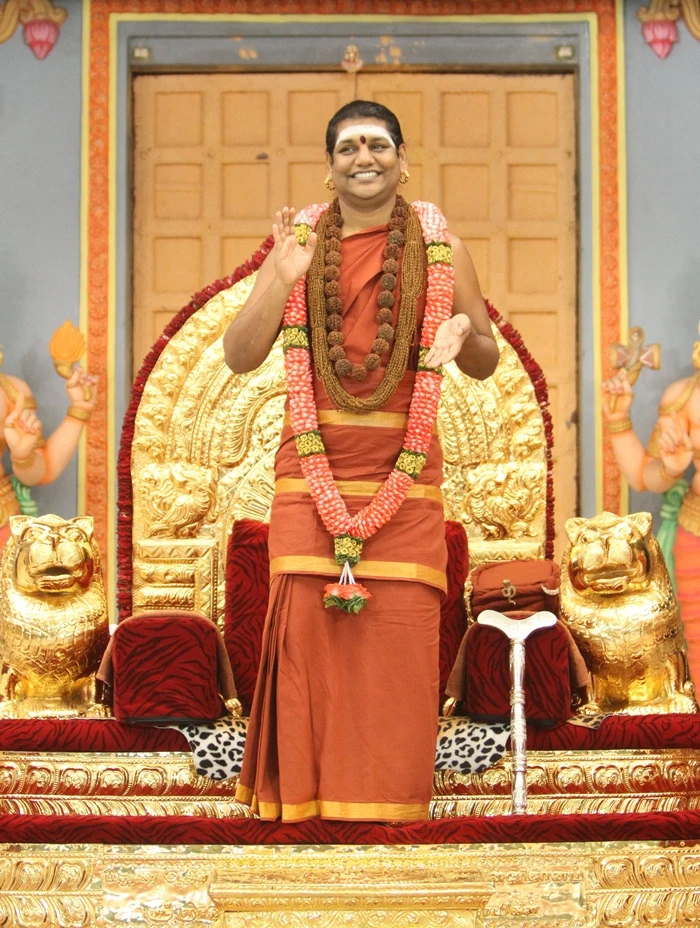
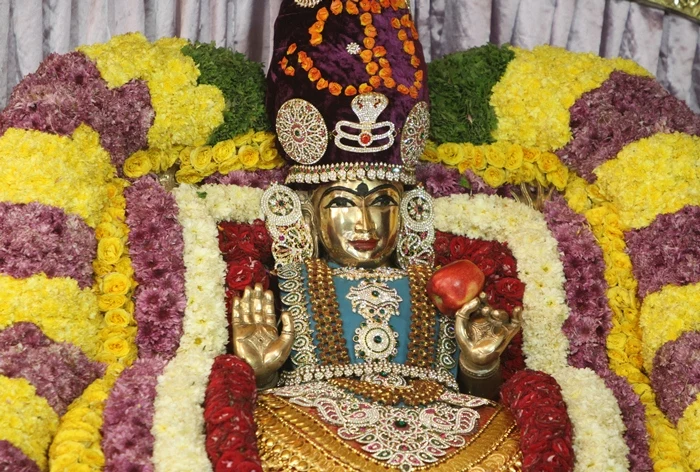
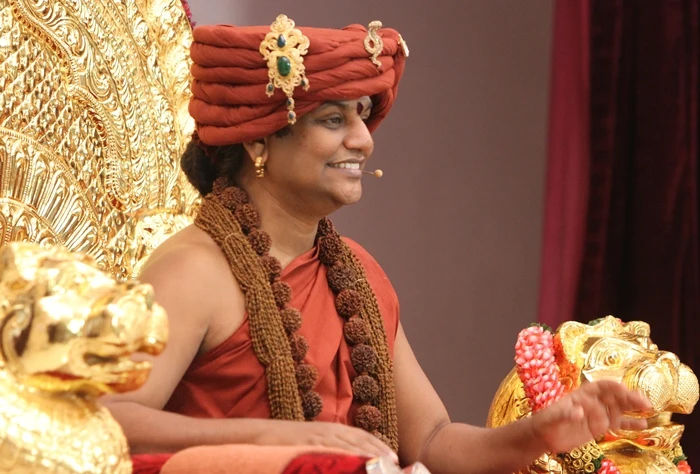
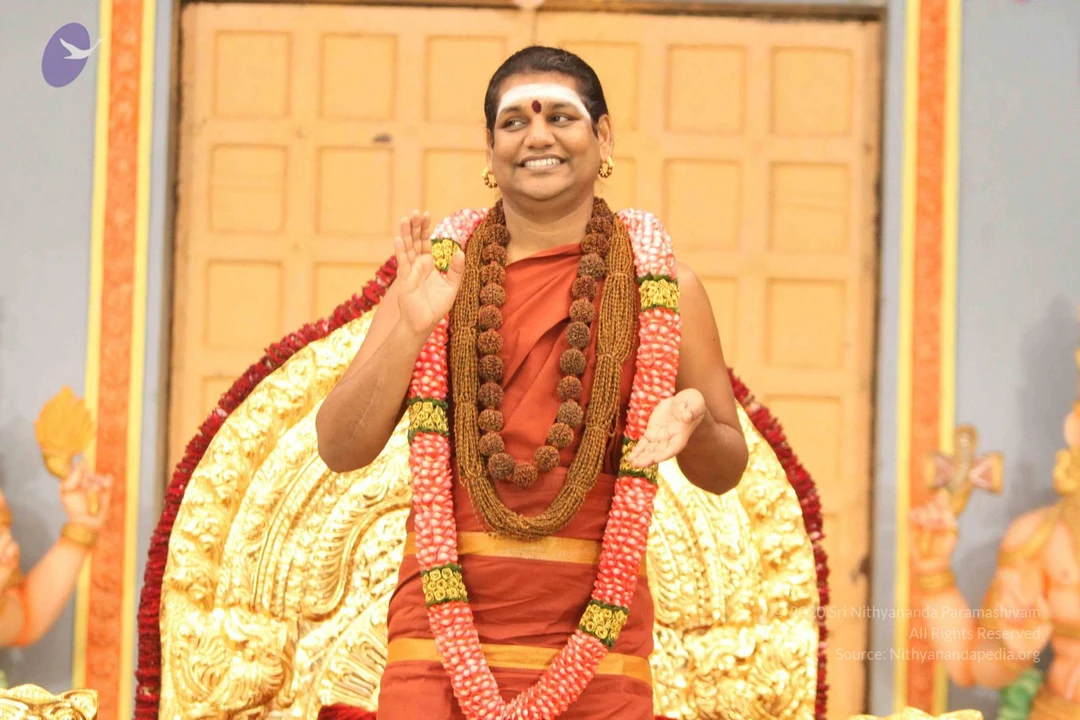
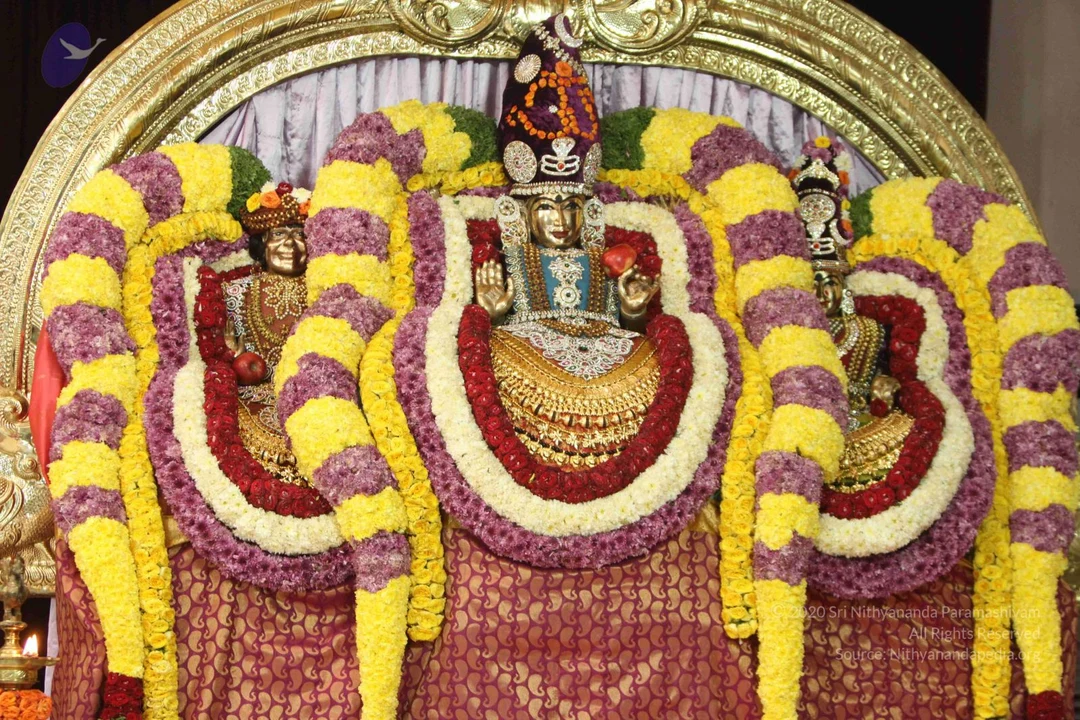
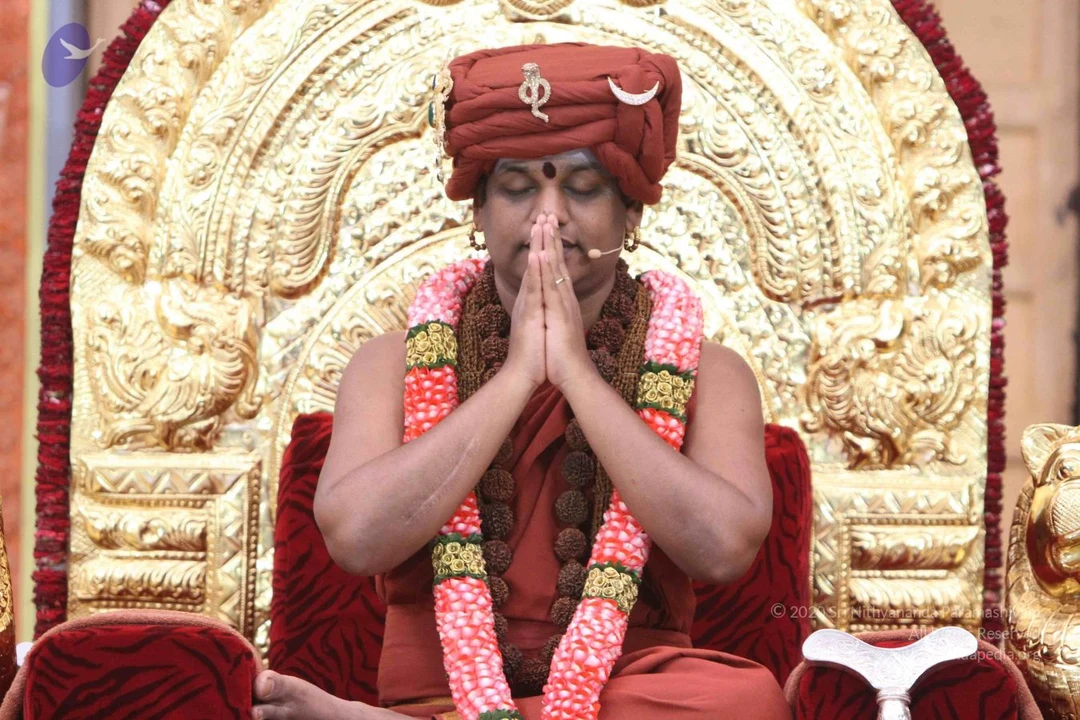
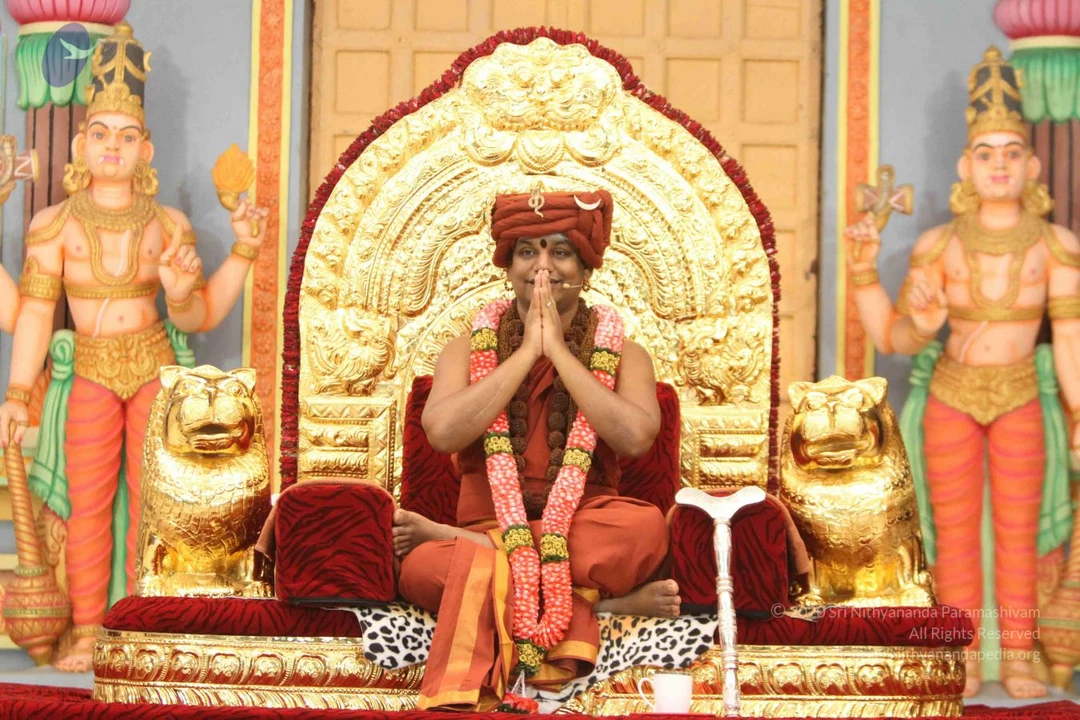
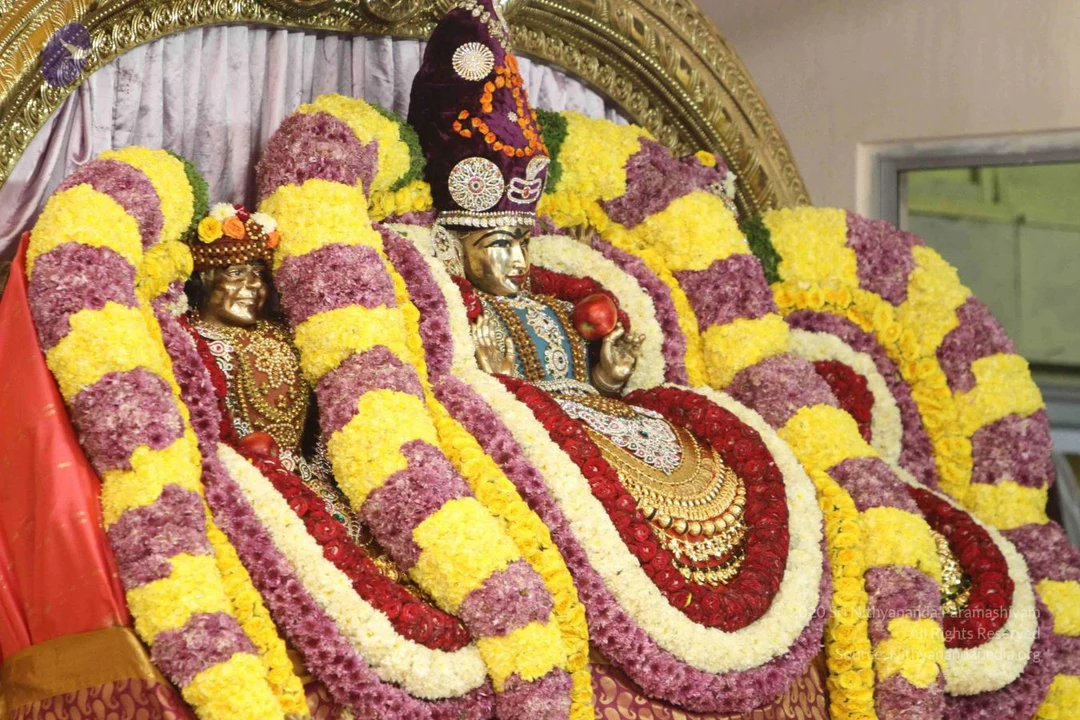
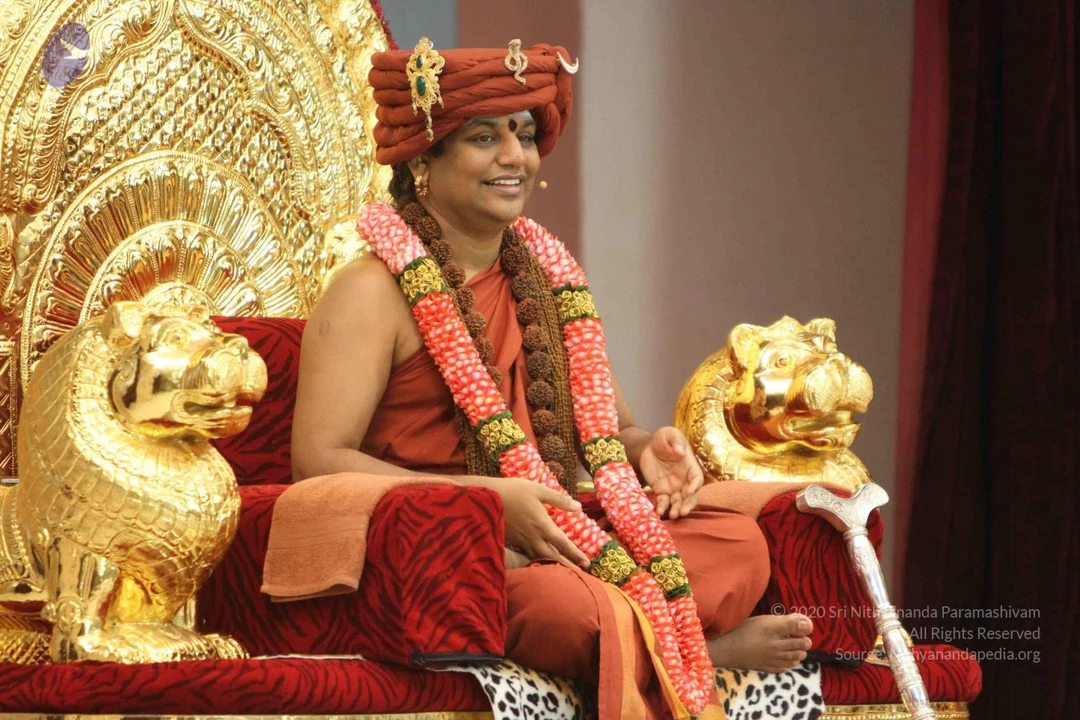
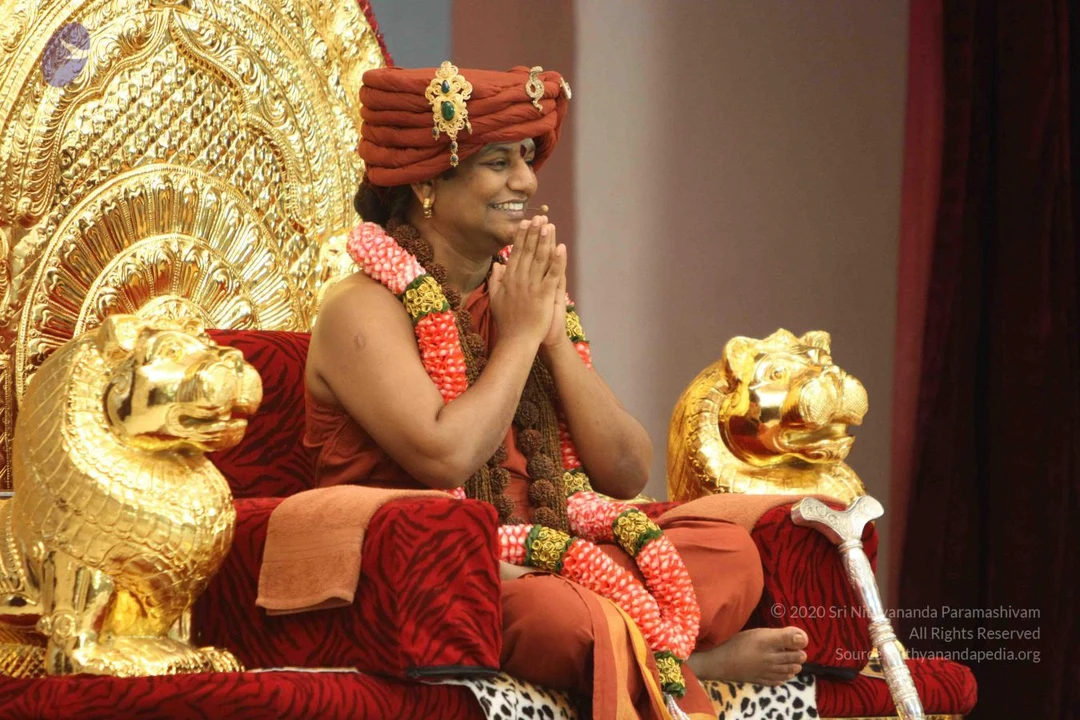
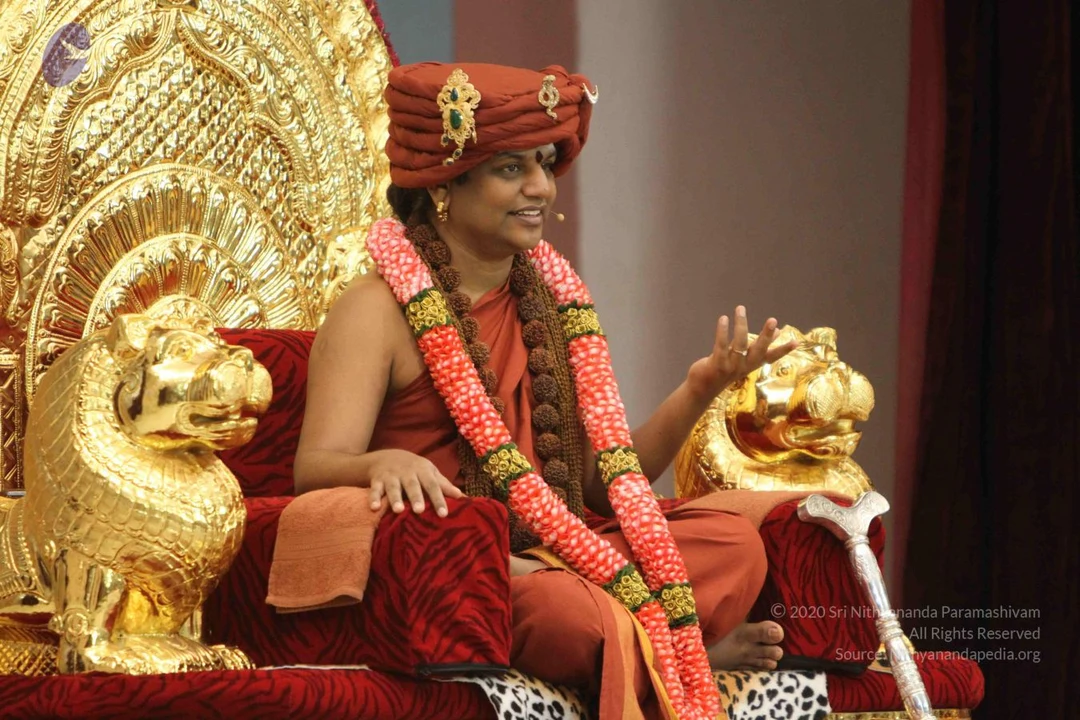
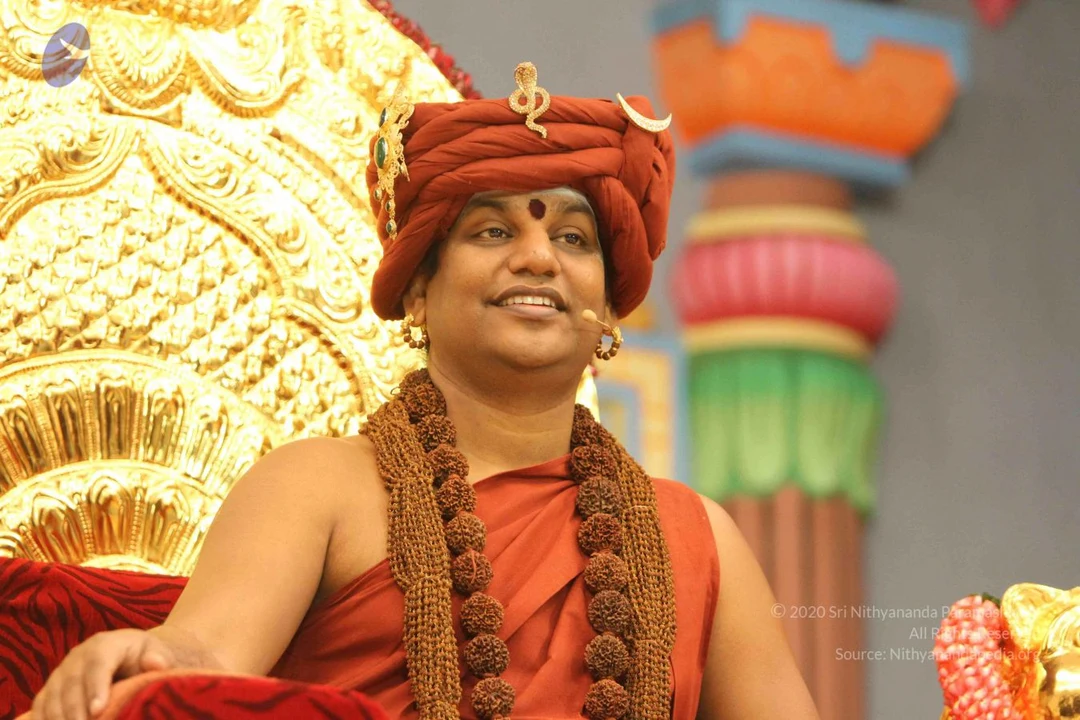
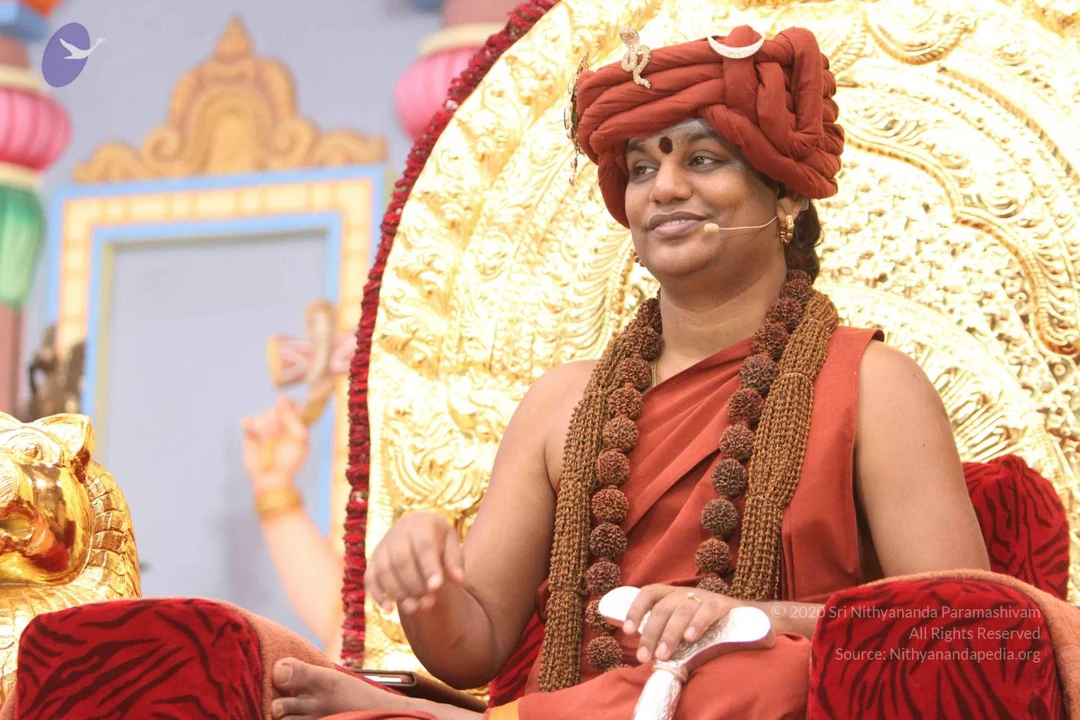
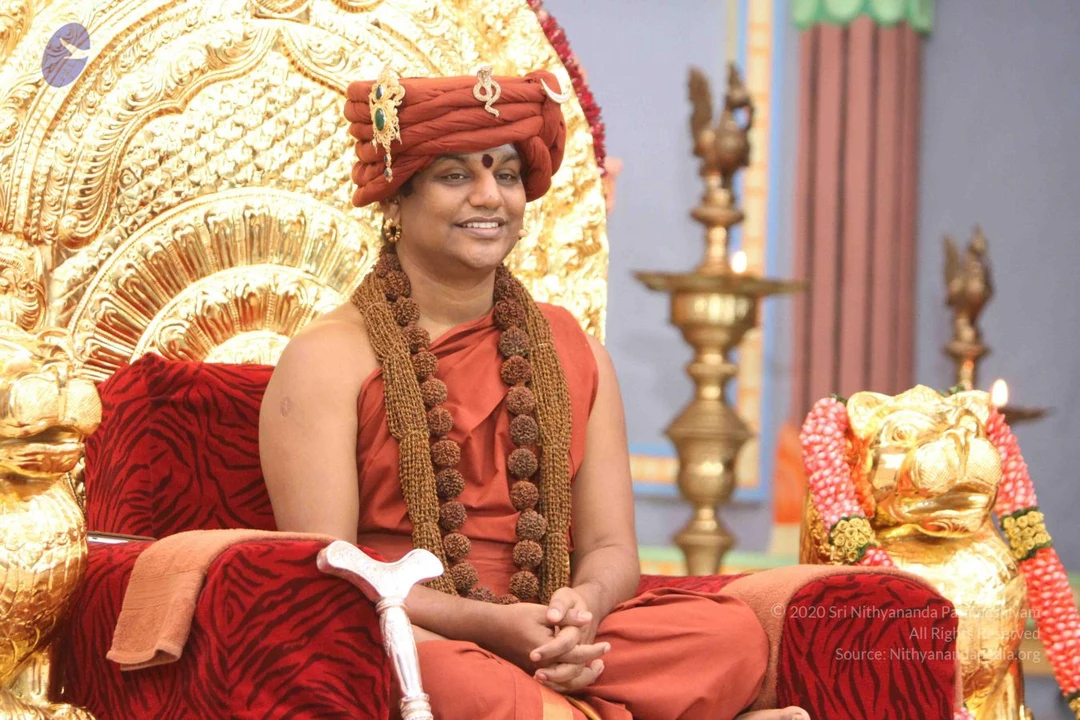
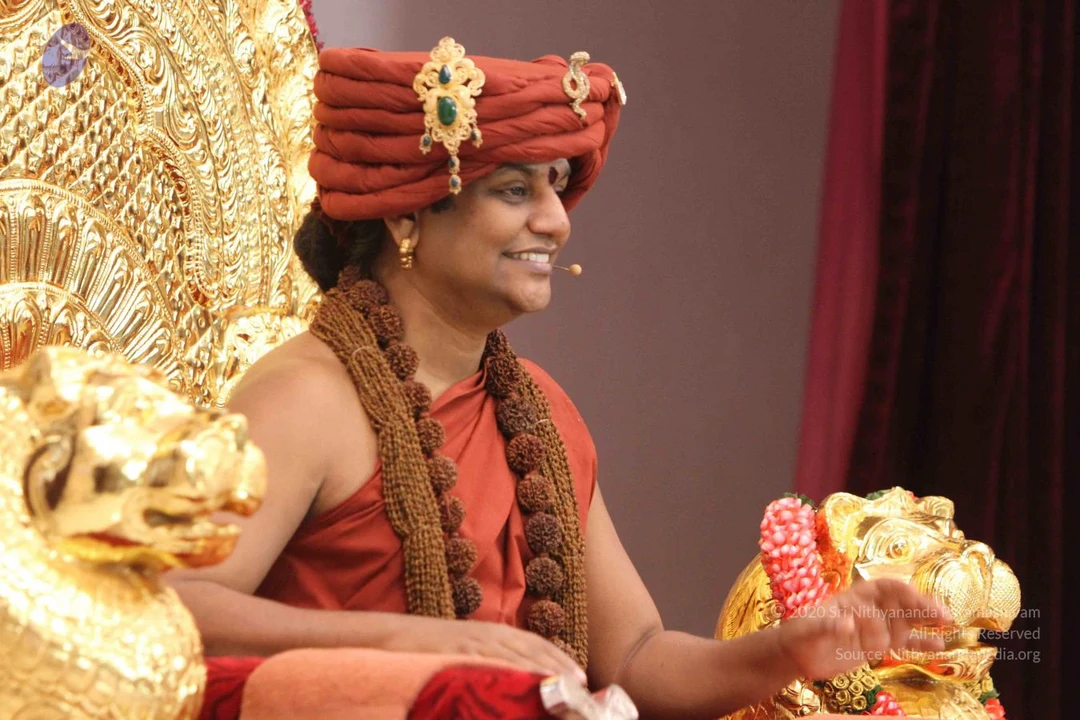
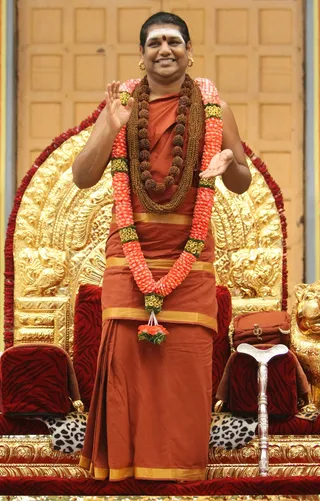
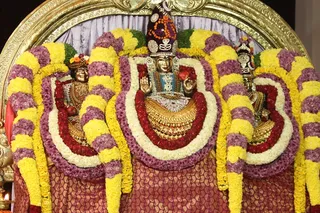
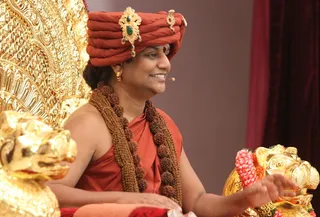
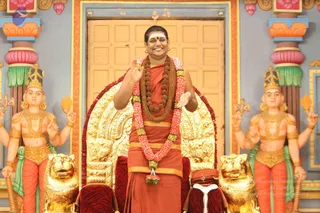
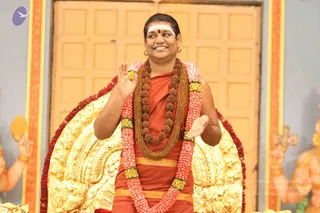
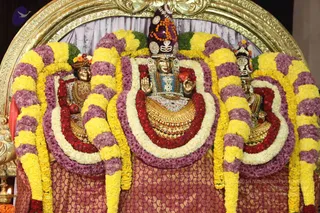
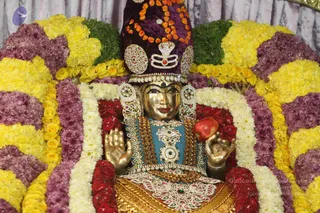
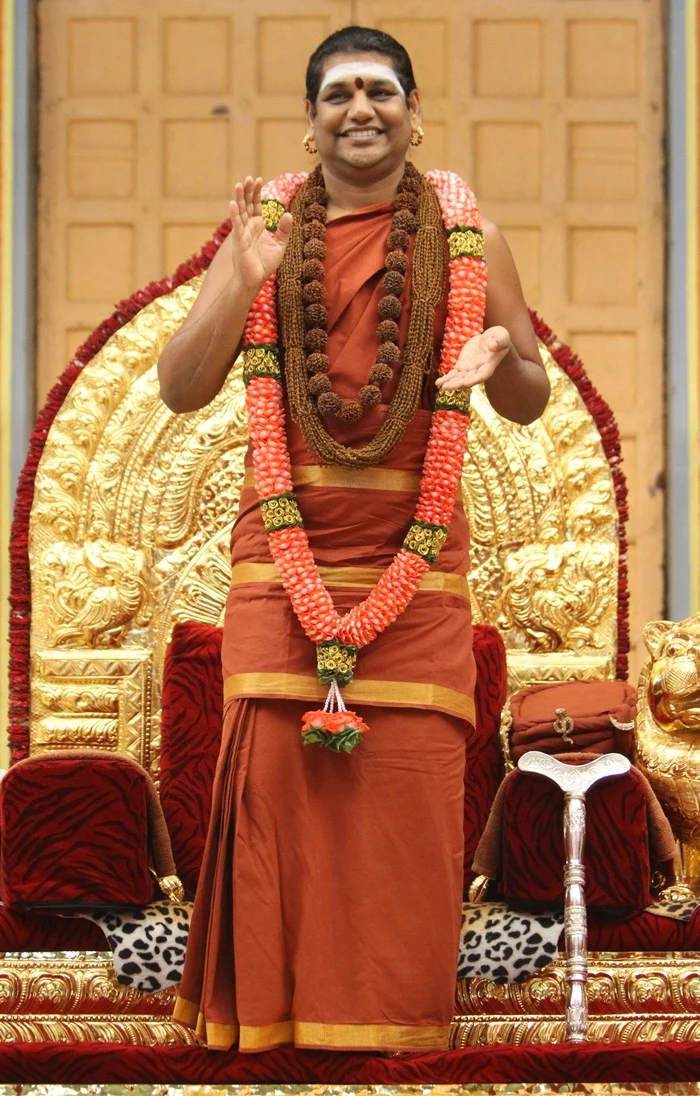
A smiling man stands on an ornate golden throne with red velvet cushions and a carved lion armrest, raising both hands in an open gesture as if speaking to an audience. He wears an orange-saffron dress with a golden border, a long rudraksha mala with multiple strands, and a thick garland of red and white flowers with green-gold ribbon accents. A white and red tilak marks his forehead, and small gold earrings are visible. Behind him stands a wooden panelled door, and a silver staff rests against the throne. He is shown as a satsang speaker seated in a formal ceremonial setting.A smiling person in rust-orange robes stands on a golden throne flanked by two golden lion figures and red velvet cushions. They wear a red-and-white flower garland with green accents, a brown rudraksha mala across the chest, and a white tilak on the forehead. Both hands are raised in blessing. A silver walking cane rests beside the throne. Behind is a wooden door, and golden deity figures with raised hands stand at the edges. a person: the orange robes, rudraksha mala and ornate throne fit the page's a person reference, though the cues are moderate, so this identification is uncertain. Single person, satsang setting.Photograph of three metal deity murtis seated side by side on a draped throne against an ornate gold arched backdrop. The central murti wears a tall decorated crown, a gold necklace with blue and white stone ornaments, and raises both hands in blessing. Smaller flanking murtis wear crowns and gold ornaments. Each figure is framed by thick garlands of yellow, purple and red flowers, and lamps glow at the lower left. No people are visible.A gilded metal deity murti is decorated with layered garlands of yellow and white marigolds, purple flowers, and red roses that frame the figure in a dense floral arch. The murti wears a tall purple velvet crown trimmed with marigolds and gold-toned ornaments, large jewelled earrings, a jewelled chest piece and necklaces of gold beads. Its raised right hand shows an abhaya gesture while the left hand holds a red apple-like fruit. The image is a photograph of a decorated murti; no living people are visible.A seated man in a red-orange turban with a gold-and-green jeweled ornament sits on a red throne with gold carved lion-head armrests and a golden back panel. He wears an orange-saffron cloth over the shoulder, a multi-strand rudraksha mala, and a garland of pink and white flowers with green accents. His palms are pressed together in namaste and he smiles. A ceremonial silver-topped staff rests at the right edge. Single person, indoors, appears to be a formal satsang setting.A smiling man seated on an ornate gold throne with carved lion-head armrests, wearing a red-orange turban with gold and green jewelled ornaments, an orange-red shawl over bare shoulders, and multiple long rudraksha mala necklaces. He holds a gold-and-red ornament at one hand while a small microphone is attached near his face. A deep red curtain stands behind him. Swamiji (probable) appears to be speaking to an audience, based on the turban, saffron clothing and rudraksha malas.

SATSANG

30 photosSource gallery
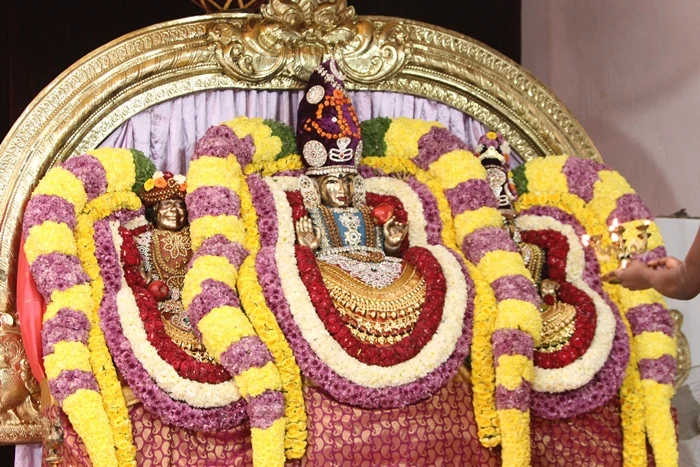
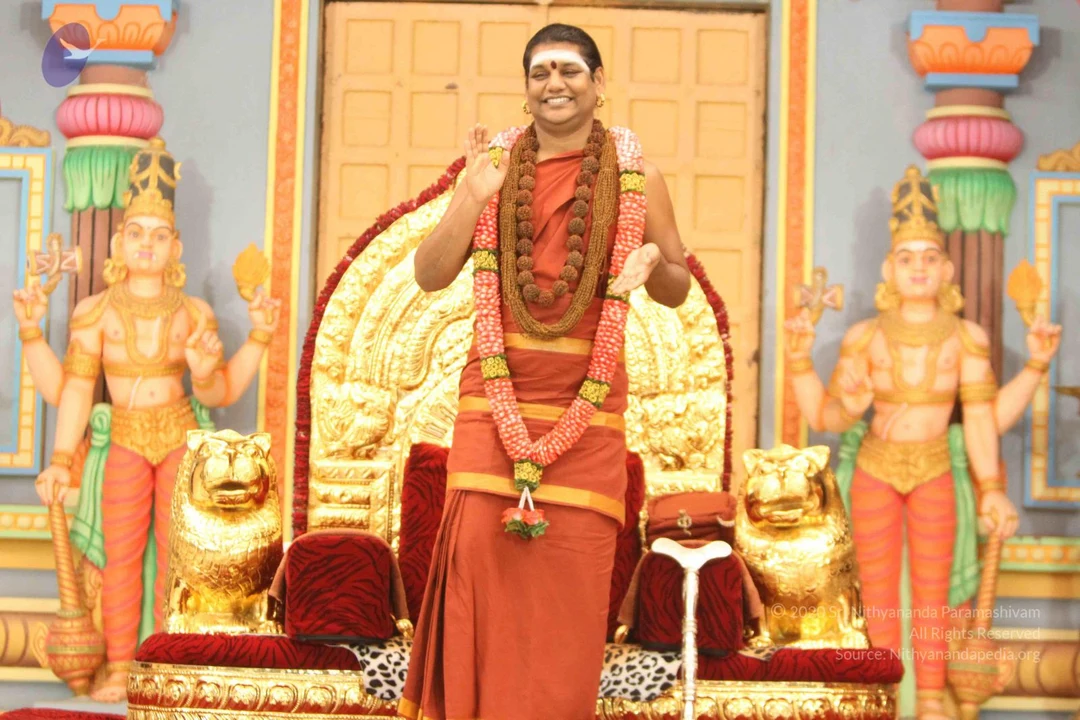
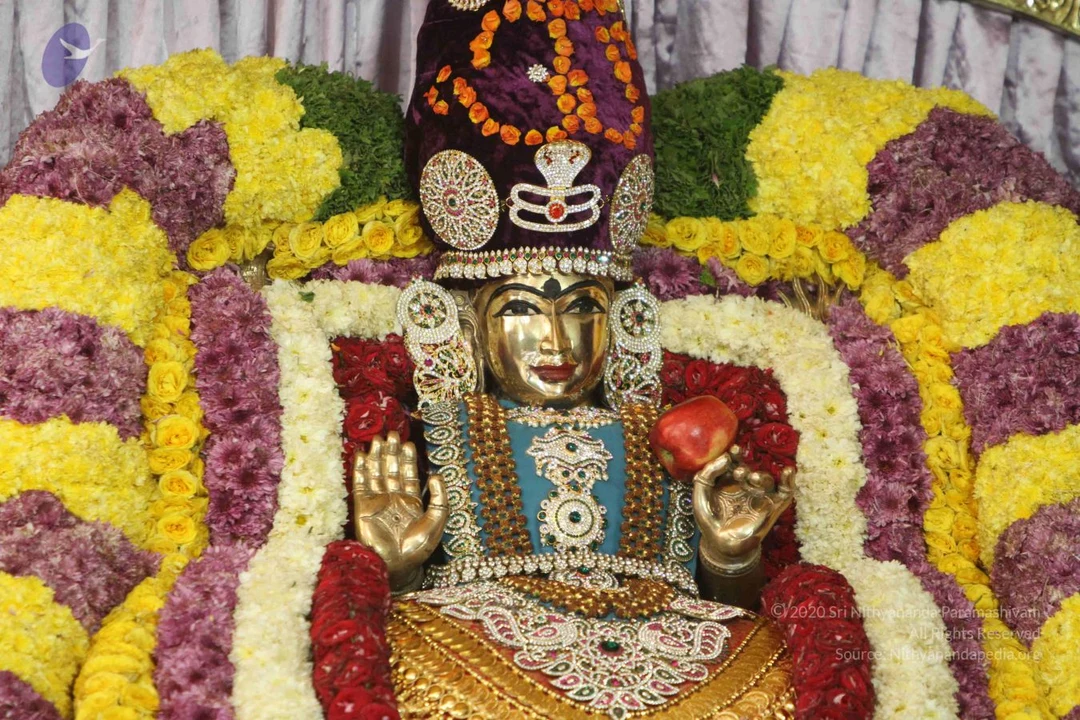
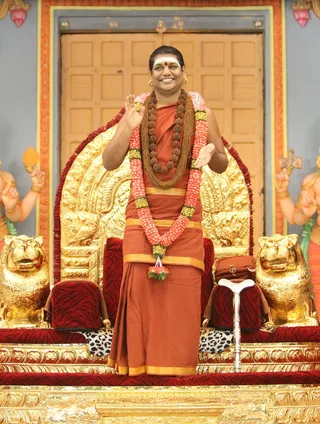
A smiling person in a saffron-orange robe and matching dhoti sits on an ornate gold-and-red throne, raising both hands in greeting. A large rudraksha mala and a red-and-white flower garland hang across the chest, with a vibhuti mark on the forehead. Flanking the throne are gold lion figures and two painted statues of multi-armed deities with crowns and gold jewelry. A wooden door and pink-green pillars form the backdrop. Swamiji (probable): the seated figure wears long swept-back hair, a saffron robe, rudraksha mala and garland on a throne, matching the page's presence claim.A smiling person in a saffron-orange robe stands before a gold throne-like backrest edged with red and white flower garlands. The figure wears a long rudraksha mala with a second garland of pink and white flowers, a white vibhuti line and red bindi on the forehead, and small gold earrings. One hand is raised in a blessing gesture while the other hand is open at the side. Golden deity statues flank the throne, and a wooden paneled door stands behind. Swamiji (probable): the figure's long swept-back hair, saffron robe, rudraksha mala and ceremonial garlands match the appearance cues for the page's subject, shown in an in_person setting.A man in an orange-red robe stands before a golden throne with two gold lion heads and red cushions, smiling and raising both hands in a blessing gesture. He wears a long red-and-white flower garland with yellow beads, a dark rudraksha mala, a gold waist cord, and a tilak on his forehead. Two painted deity statues flank the throne, each with multiple arms, gold jewellery and red-and-yellow dhotis. Behind is a wooden door and pillars with colourful pink and green capitals. The candidate matches a person by long swept hair, rudraksha mala and saffron robe, but the face is not used for identification; the throne and garlands are setting cues only.Three gilded deity murtis of a goddess group are displayed on a decorated altar beneath an ornate gold arch. The central figure wears a tall purple and orange flower-decorated crown with silver ornaments and a blue-and-white embroidered garment, holding a red fruit in one hand. Flanking figures wear smaller crowns, red and white garlands, and gold jewellery. Thick garlands of yellow marigolds and purple flowers drape the figures, and a brass oil lamp burns at the lower left against a maroon patterned cloth.A golden deity murti is adorned with a dense arrangement of flower garlands in yellow, purple, white and red, framing it on both sides. The figure wears a tall plum-velvet crown with a gold-rimmed circular ornament, a red-stoned Shiva-lingam-like motif at the front, and large jewelled earrings. A blue bodice is layered with gold chains and jewelled necklaces. The right hand holds a red apple at chest height while the left hand is raised in an open palm gesture. The statue sits in front of a pale lilac drape. No physical people are visible.A seated figure in a rust-orange turban with a gold trident and crescent emblem performs anjali mudra with palms pressed together and eyes closed. He wears a rudraksha mala, a white and pink flower garland with yellow accents, a red-orange robe and gold earrings, and sits on an ornate gold throne with red tiger-striped cushions. A small lapel microphone is clipped to his collar. Swamiji (probable) is shown as the seated speaker, identified by the flagged page and matching cues of ornate turban, rudraksha mala and saffron clothing; the appearance is consistent but not fully certain.

DARSHAN
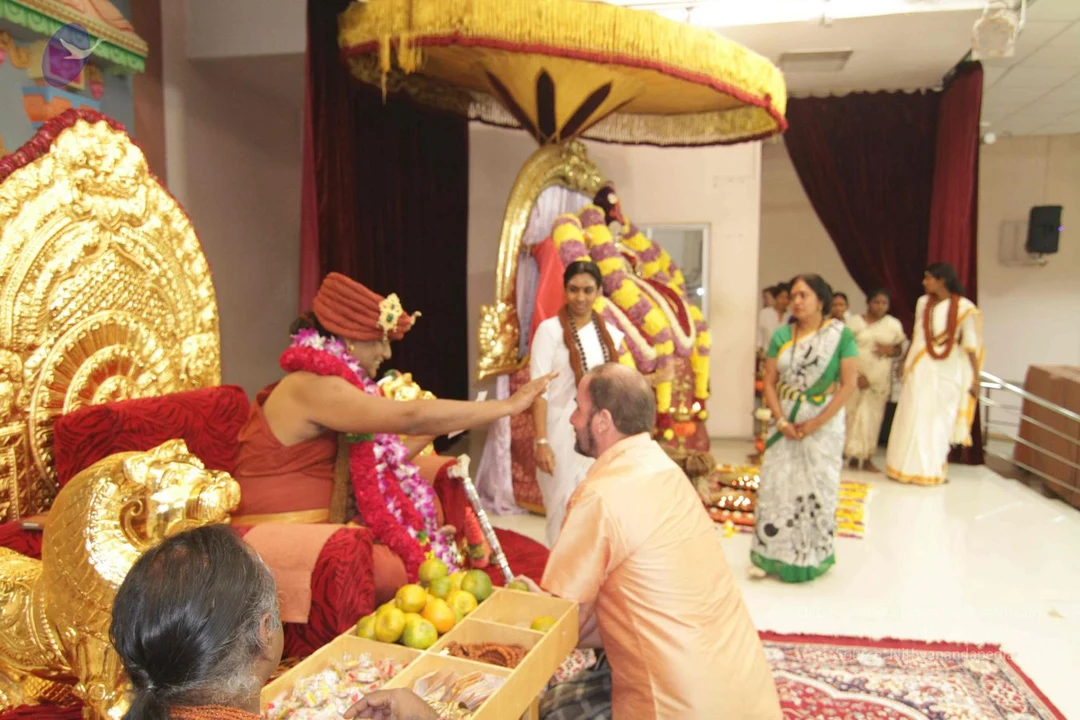
8 photosSource gallery
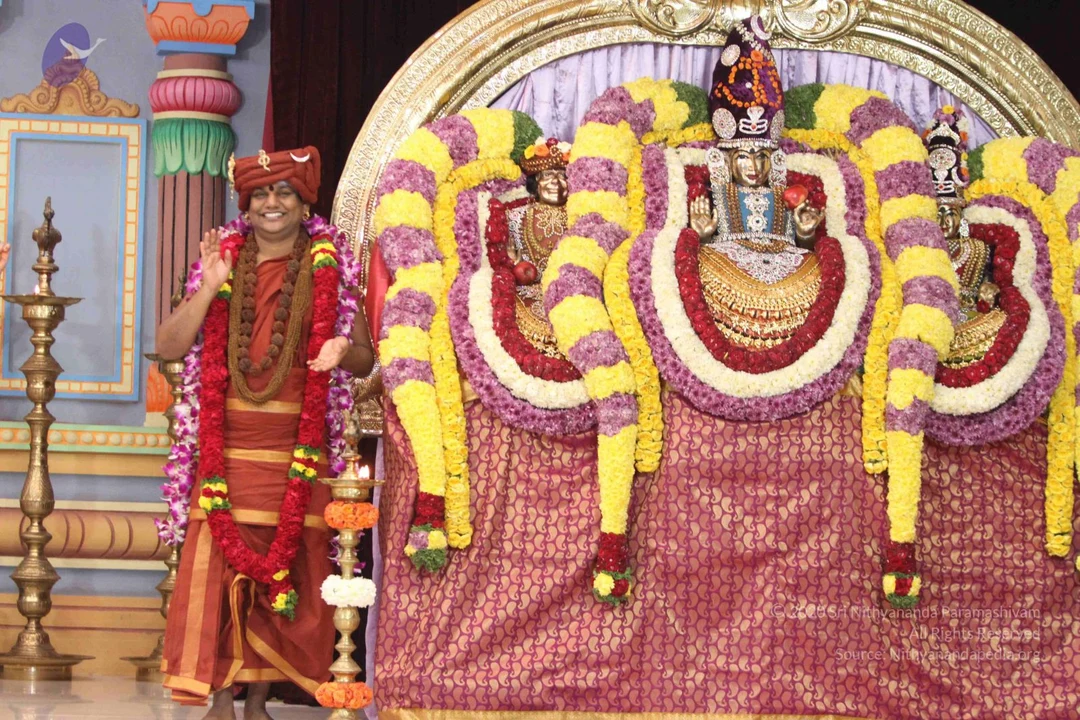
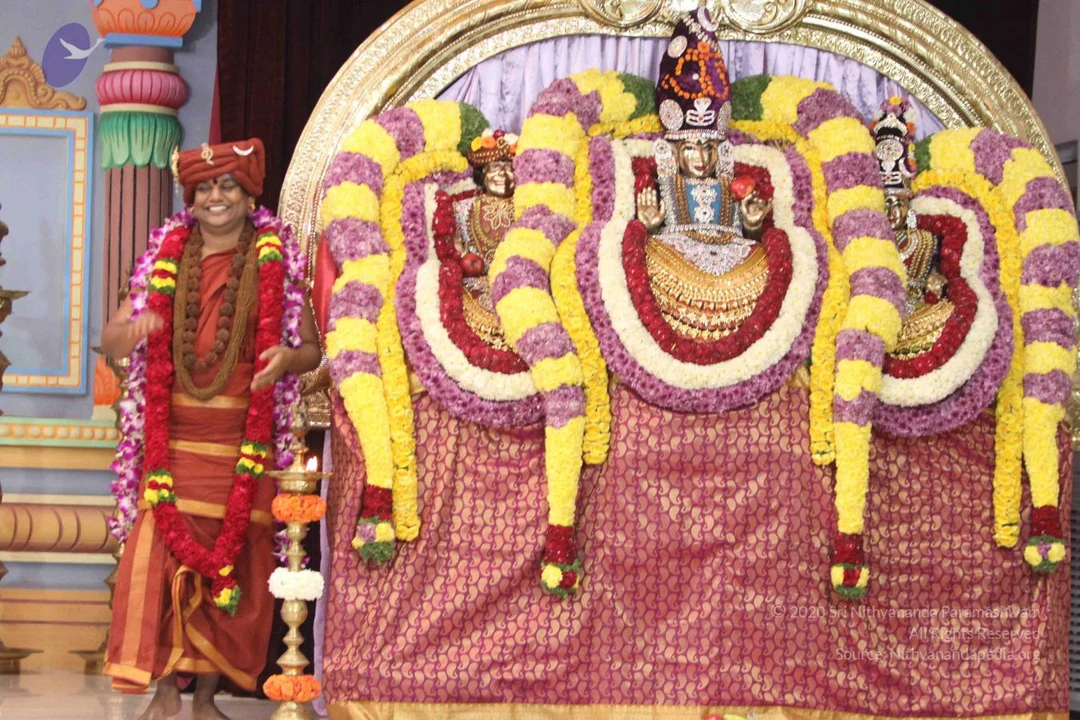
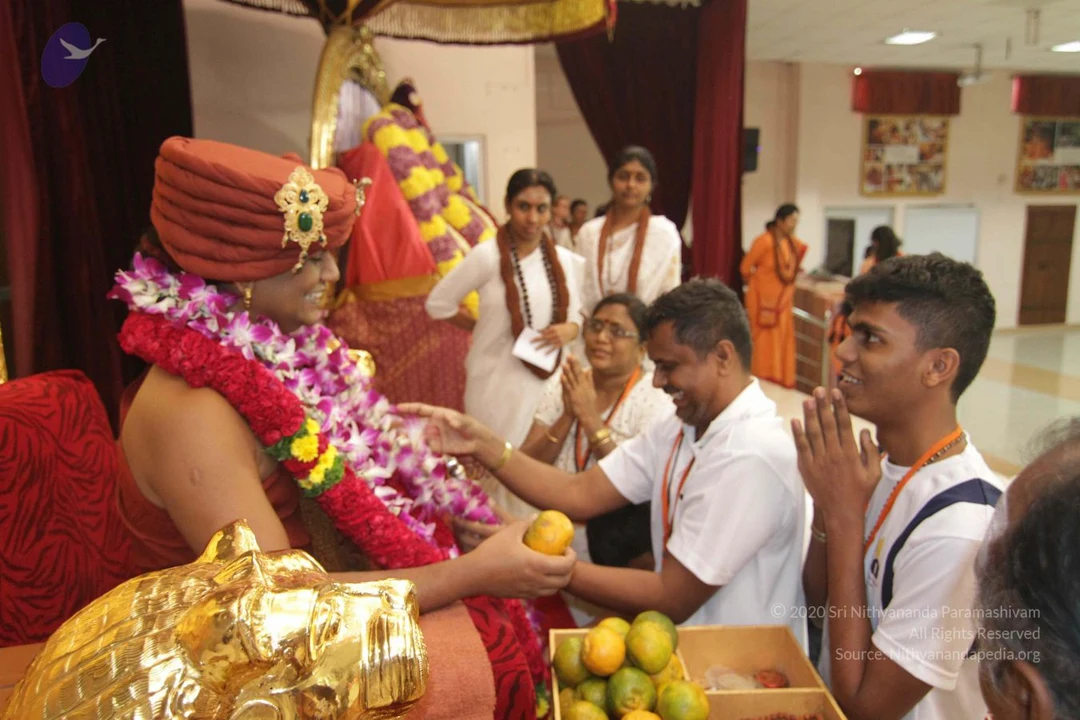
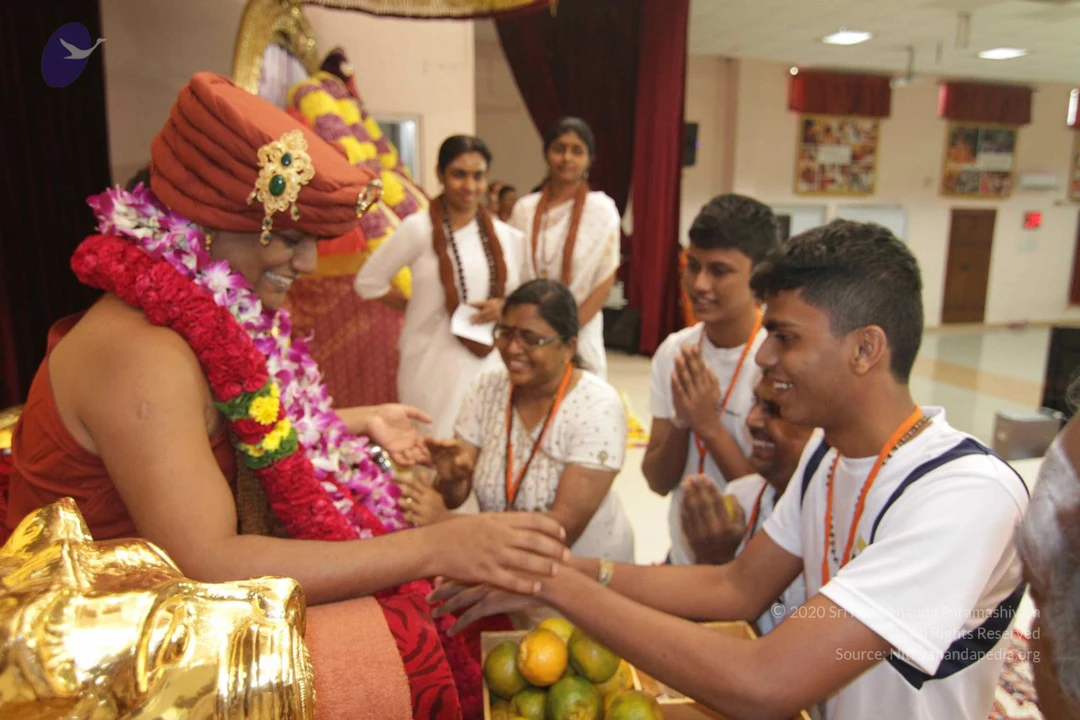
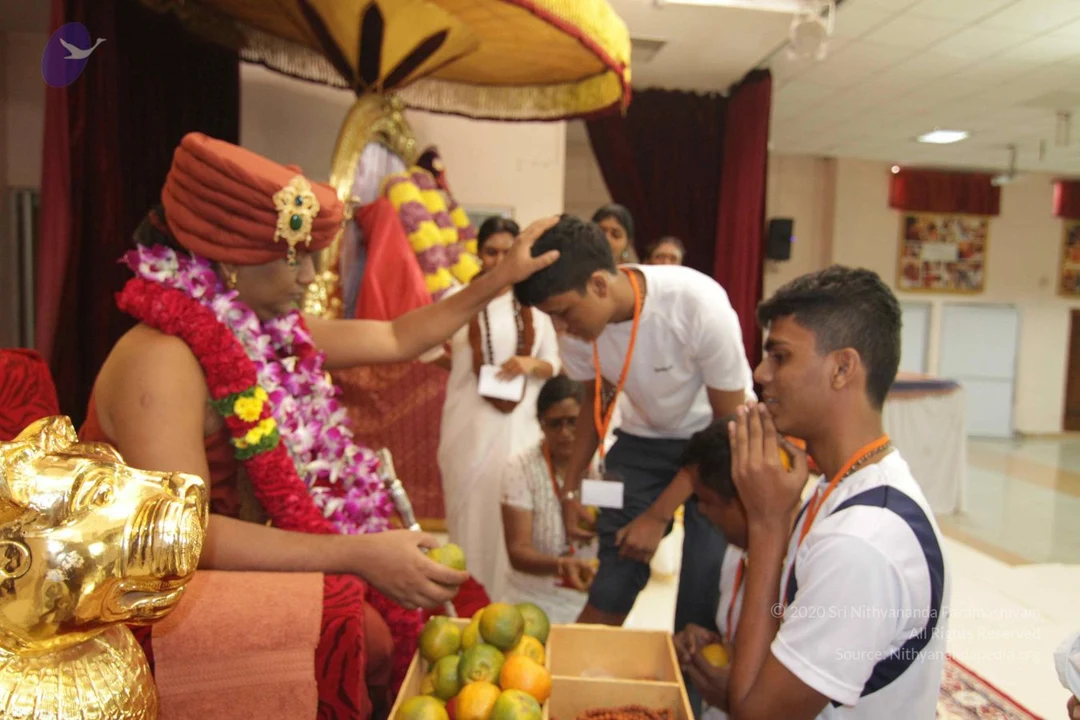
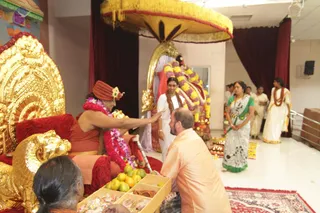
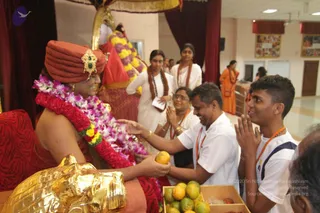
A photo in a bright hall where a seated figure on an ornate gold-and-red throne with a gold canopy is being approached by devotees. The seated figure wears an orange-red robe, a red-and-gold turban, and a long pink-and-white flower garland, and extends a hand over a kneeling man in a peach-coloured shirt. Another devotee in a white robe with a red beaded necklace stands nearby, and a woman in a white-and-green sari stands with hands folded. Behind them, a large flower-garlanded deity murti on a gold throne stands beside a red curtain. A tray of oranges, sweets and fruit sits on the floor in front, and other people in white stand in the background.A photograph of a man in orange and saffron robes with a rust-orange turban and a rudraksha mala draped over his shoulders, standing at left and waving with one hand raised. He wears a long red-and-red-and-white garland. Beside him, three large ornate deity murti are dressed in yellow, purple and magenta garlands, with gold crowns and jewelled adornments, set before a rose-patterned draped backdrop and a golden arched frame. Brass oil lamps stand in the foreground, and a flower-decorated offering tray sits near the figure. Swamiji (probable) appears as the orange-clad man with turban, rudraksha mala and garland, in a satsang setting.A blurred photograph of a smiling person in an orange-red turban and orange-red dhoti-style garment, wearing layered red, orange and white flower garlands and a beaded necklace, raising one hand in greeting beside an ornate golden shrine. Behind the figure, a large golden arch frames a shrine draped in purple silk and heavily garlanded with yellow, purple, white and red flower strings, with small deity murti and gold ornaments visible at the centre. A brass lamp stand stands at the left edge against a blue and green painted pillar and wall.A man in an orange-red dhoti and matching saffron upper cloth stands at the left edge of a stage, smiling and raising one hand in greeting. He wears a red and orange turban, a long beaded rudraksha mala, and a garland of pink, purple and red flowers. Beside him stand brass oil lamps. Behind him is a large deity display: a golden arched frame draped with garlands of yellow, purple, white and red flowers, with ornate figures in gold jewellery and crowns at the centre and flanking sides, set on a rose-coloured cloth. The backdrop is painted with pillars and blue-and-gold panels.A photograph of a standing man in an orange-red dhoti and shawl, wearing a red and orange turban, rudraksha mala and layered garlands of red, pink and white flowers. He smiles and gestures with raised hands beside a brass oil lamp. Behind him stands an ornate golden arched shrine framed by yellow, purple and white flower garlands around a central deity murti adorned with gold ornaments and a crown, flanked by two smaller murtis, with a maroon and gold cloth backdrop.A seated figure in an orange turban with a gold-and-green ornament and a long red and purple flower garland receives an orange from a man in a white shirt who extends his hand from the right. A woman in white and a man with an orange scarf stand behind, and a young man in white with an orange lanyard presses his palms together in greeting. A gold lion-headed armrest and a wooden tray of oranges sit in the foreground. Behind them, devotees in white and orange clothing stand near a red-draped golden throne with a flower-decorated canopy, in a hall with framed photographs on the wall. The seated figure is in a red-and-orange robe with red throne upholstery, and the setting suggests a satsang gathering.

BIDADI-TEMPLE

15 photosSource gallery
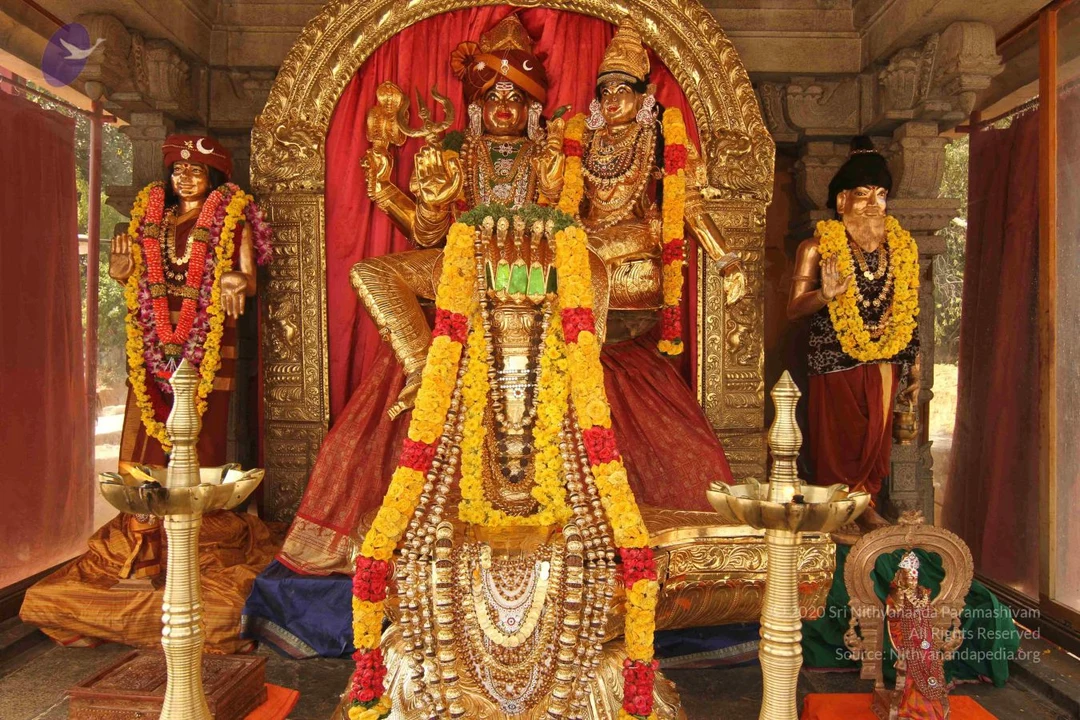
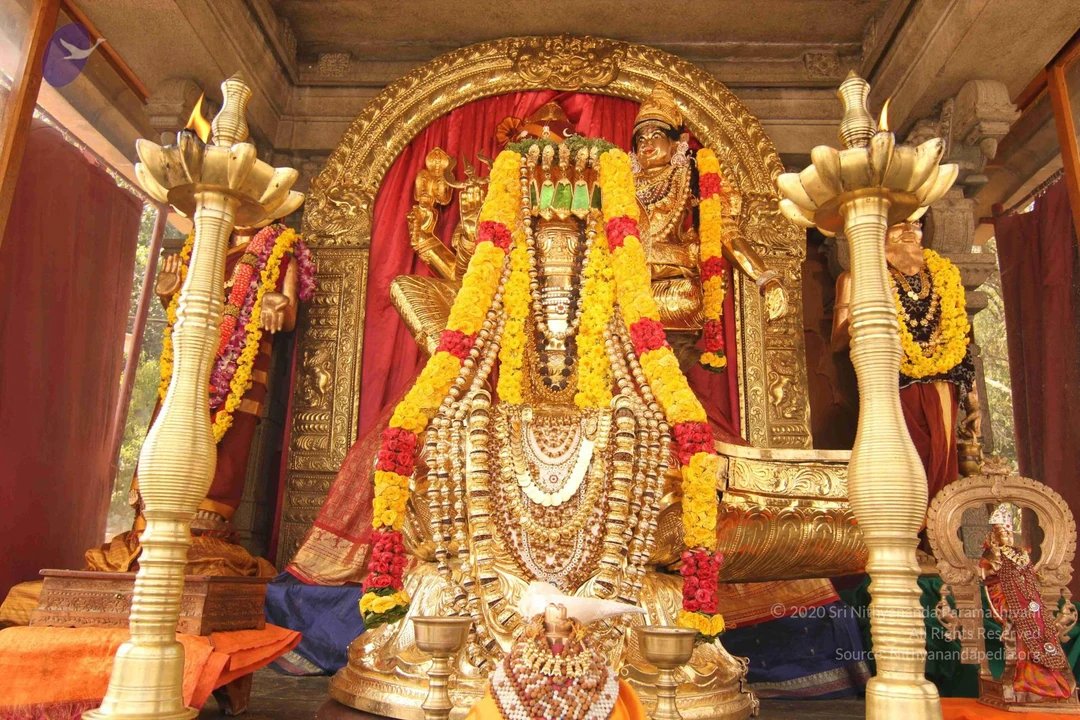
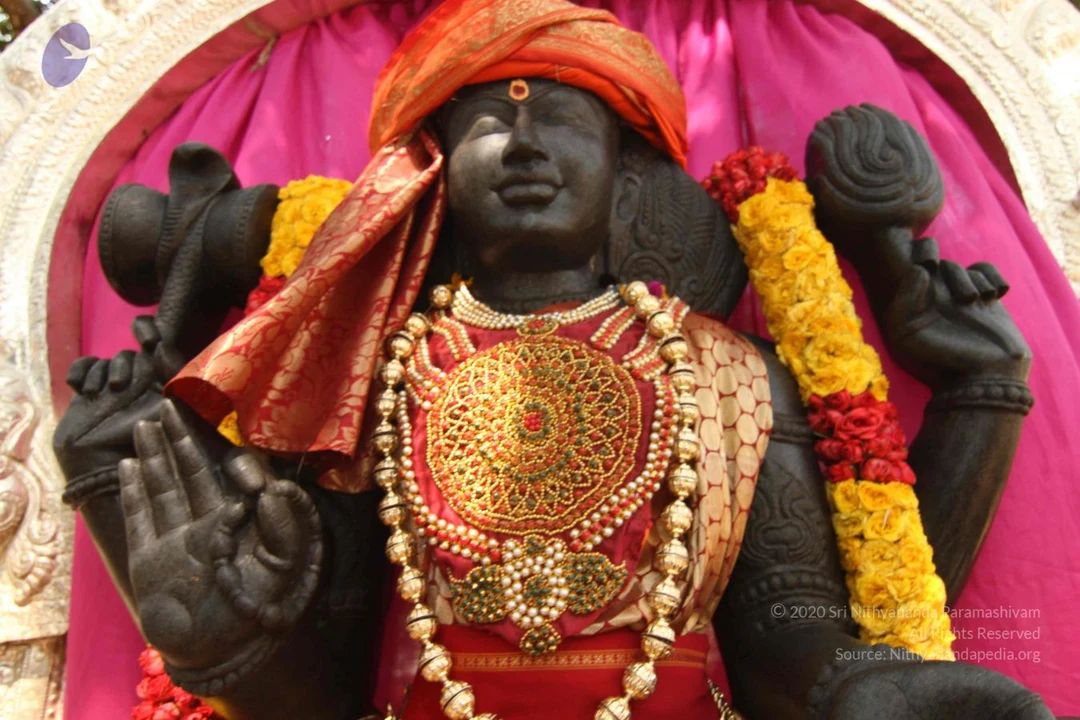
Photograph of a temple shrine with a gold-framed arched niche and red curtain behind a central golden murti seated on a throne, adorned with yellow and orange marigold garlands, red flower strands, and layered beaded necklaces. Two large brass oil lamps stand on either side, and a small offering with a white cloth and a seated figure in orange sits on a wooden platform in front. Smaller standing figures in red and gold clothing flank the shrine, one wearing a red turban and another a black head covering, each with flower garlands. A with a source credit. No people are visible in the physical sceneGilded statues in a temple shrine: a central deity murti with four arms, holding a trident and other implements, seated before a red draped curtain, flanked by a seated consort figure with gold jewellery and a crown-like headdress. To the left stands a gilded sage-like figure in a red turban and orange-brown dhoti, adorned with layered garlands of orange, yellow and purple flowers and beads. Right side shows a gold kalasha-style pedestal and a gilded serpent-shaped form with yellow and red floral garlands. These are statues, not living people.A golden shrine interior with statues rather than living people. In the centre, a gilded deity murti seated on a red-draped throne holds a trident and a staff, wearing a crown and a golden armour-like garment, with a seated goddess figure beside him. Garlands of yellow marigold and red flowers hang on the figures. To the left stands a gilded statue of a sannyasi in an orange-red turban and robe with a rudraksha-style necklace and a garland of purple and orange flowers. A golden kalasha-like pedestal and a garland-draped Shivalinga-style base sit at right beside a window with greenery.A shrine of gilded deity murti with a red curtain backdrop, a shivalinga-style pillar in front wrapped in yellow and red marigold garlands, and gold and rudraksha-like necklaces draped over the base. The central figure is a multi-armed deity with a trident in one hand and a crown-like headdress, seated with a consort figure beside it. Two standing attendant statues flank the shrine, one in red and gold with a red-and-white garland, the other in dark robes with a yellow garland and a black cap. Brass oil lamps stand on either side, and a small framed deity image sits at lower right. No physical people are present.A photograph of a shrine interior showing a large golden deity murti seated on a throne with a red curtain behind it, holding a trident and other attributes in its raised hands and wearing a crescent moon on its head. The central figure is heavily draped with marigold and red flower garlands, gold and bead necklaces, and a flower-crowned kalasha-like adornment at its chest. Flanking it are two smaller painted statues of attendant figures in gold and orange clothing, one with a red-and-gold headdress and one with a black cap, each wearing flower garlands. Brass oil lamps stand on either side of the central deity, and orange cloth covers the floor in front. A small ornate niche with a figurine is visible at the lower right. No physical people are present.A golden shrine interior in a temple with a gilded arched frame and red curtains. At centre, a golden deity murti of a seated four-armed figure with a trident and a red-and-gold turban and crescent ornament, seated beside a consort with a jewelled crown, both draped in garlands of yellow and red flowers. In front, a tall ornate kalasha-like object is garlanded with yellow and red marigolds and layered with pearl and bead necklaces. Flanking the shrine are two painted statues of devotee figures with folded hands, one in a red turban and garland, the other in a black cap and yellow garland. Brass oil lamps stand on either side of the central image and a small framed picture sits at the lower right.

KULATHAMUTT-SWAMIJI-VISITING-ADHEENAM
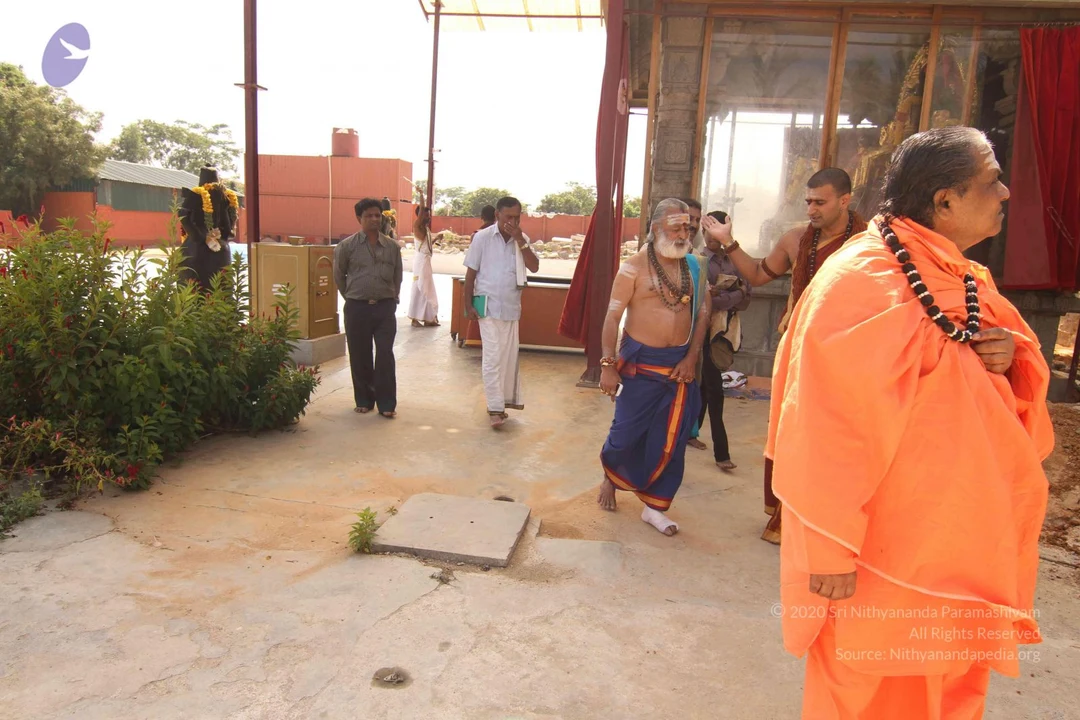
20 photosSource gallery
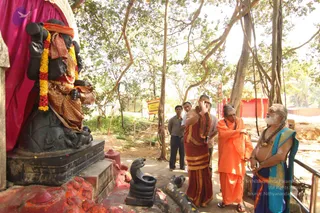
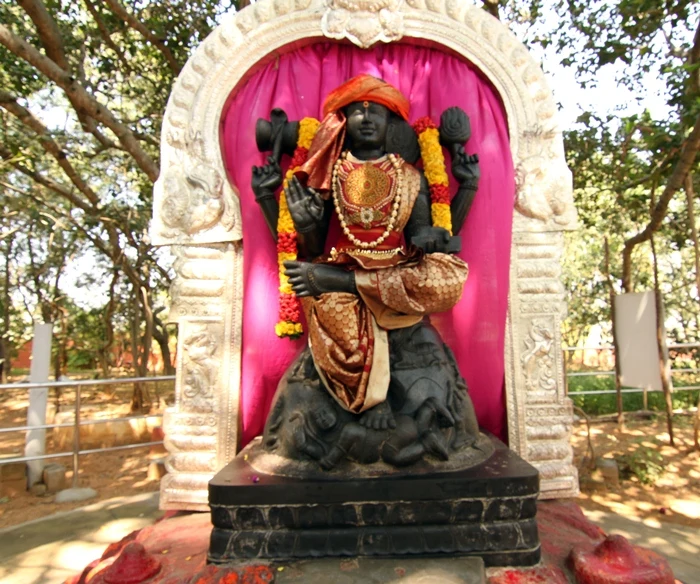
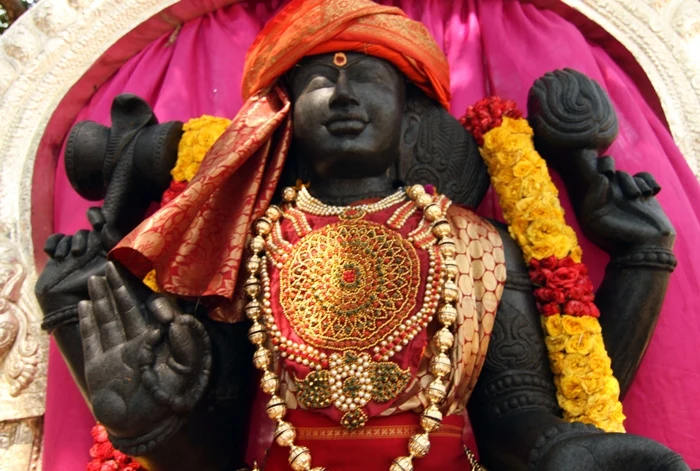
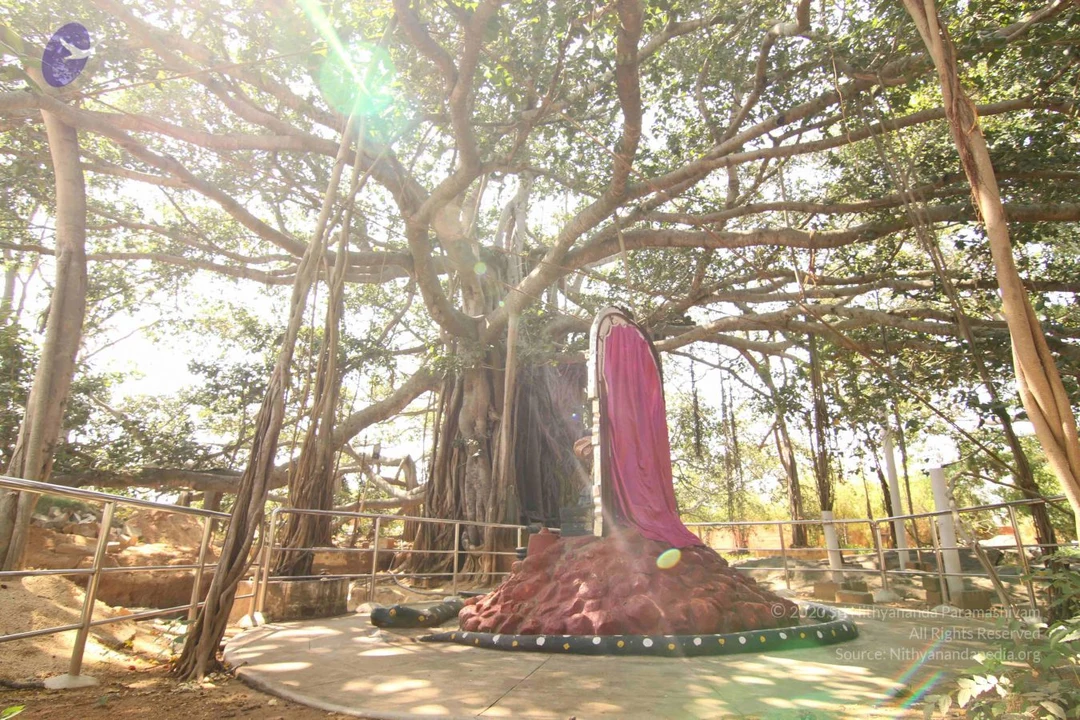
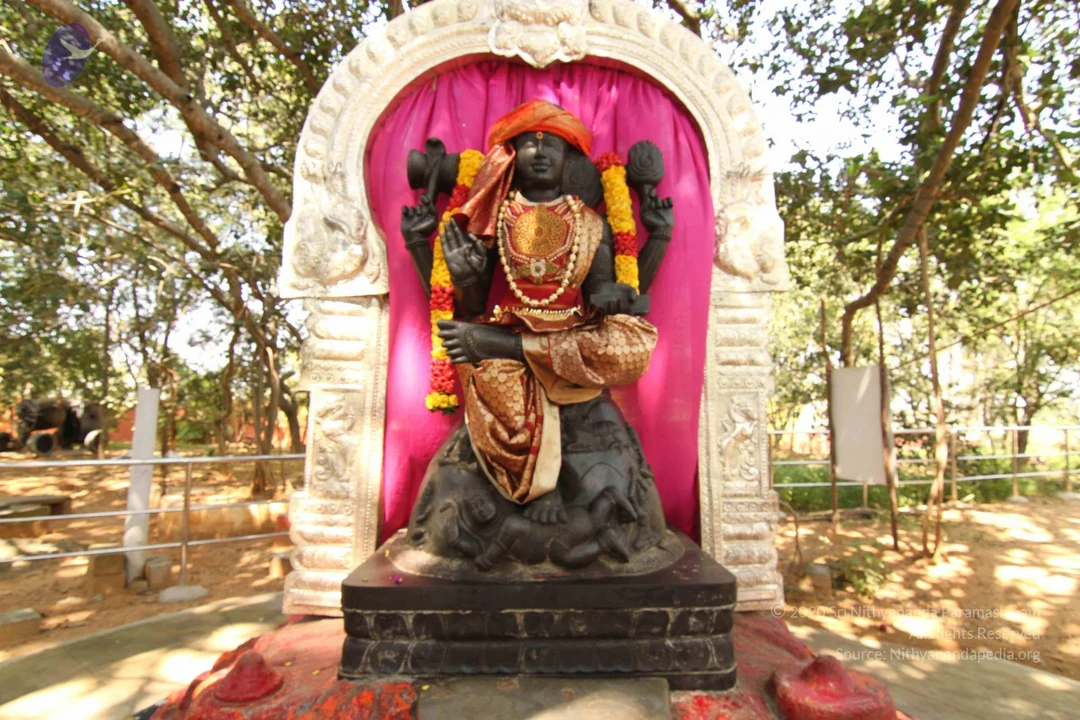
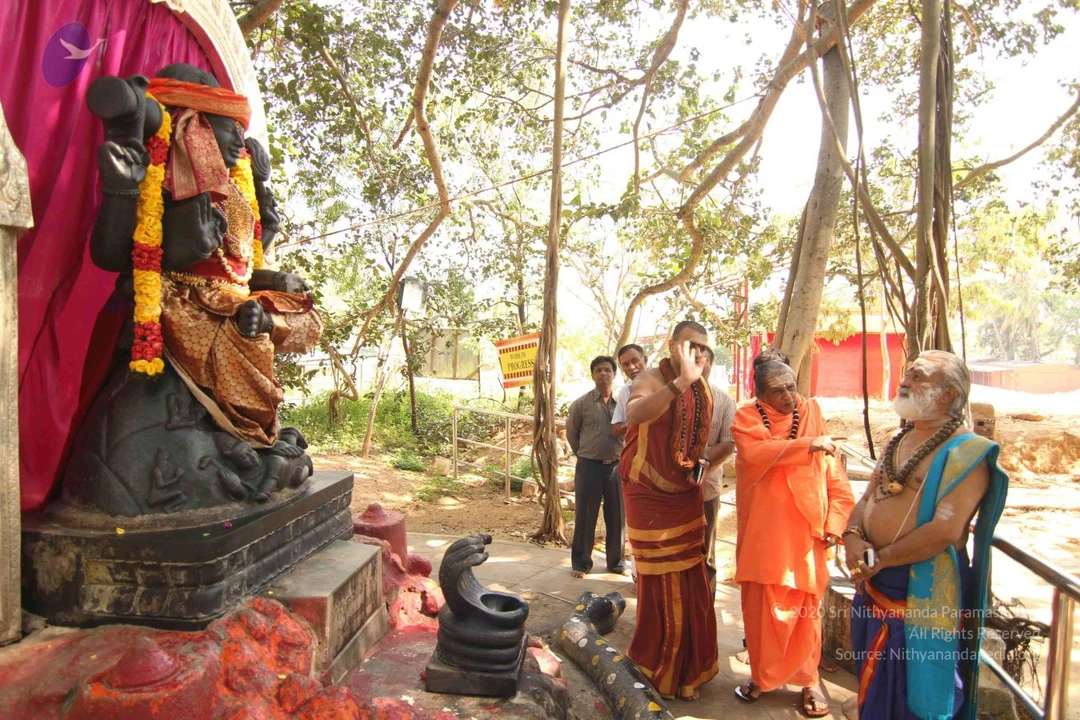
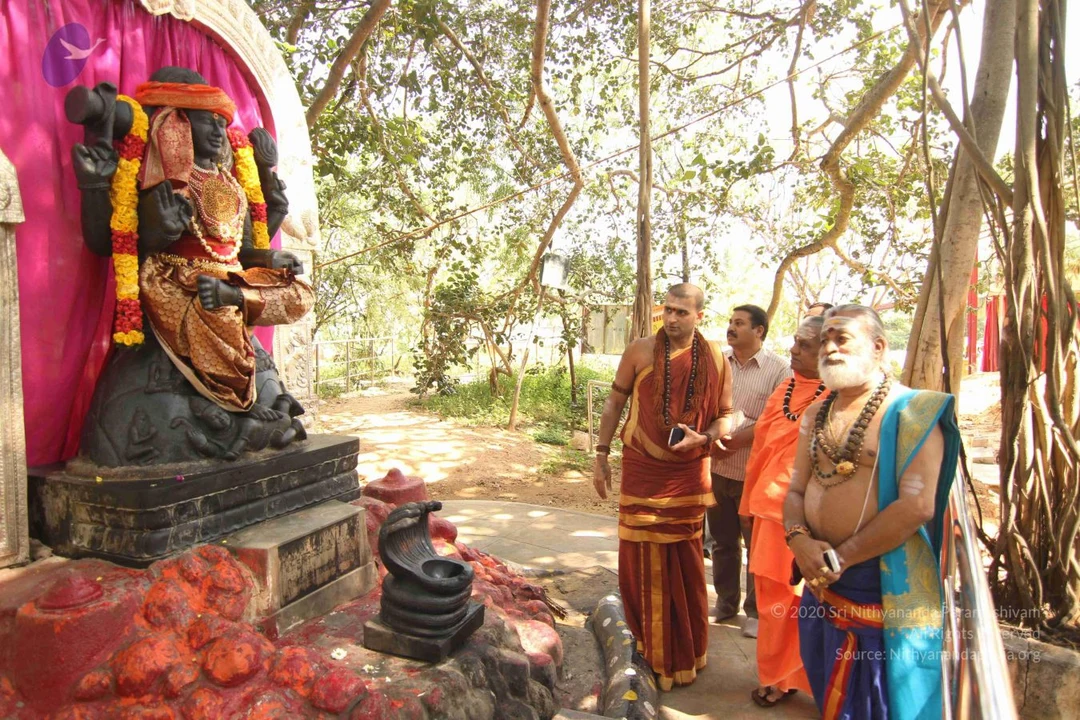
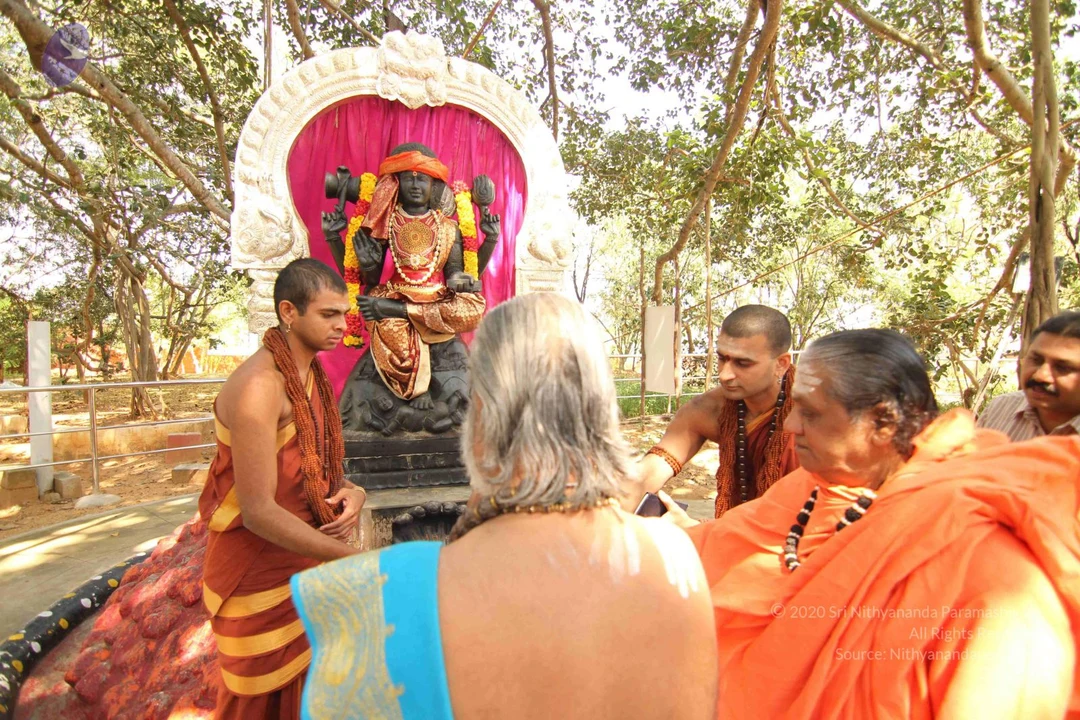
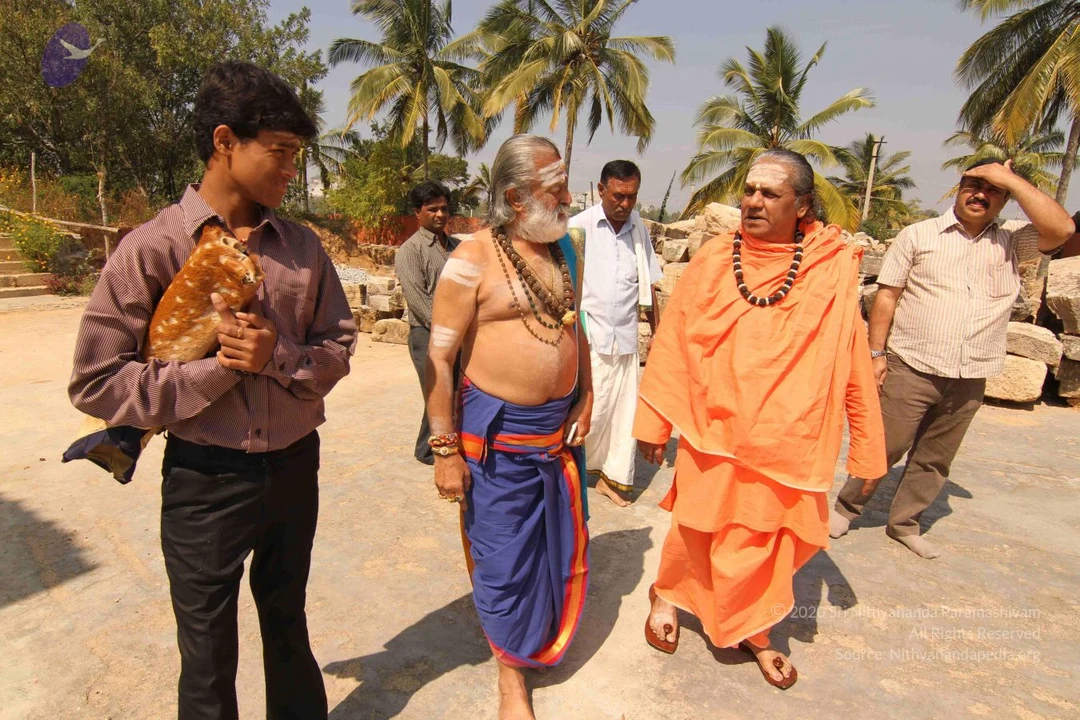
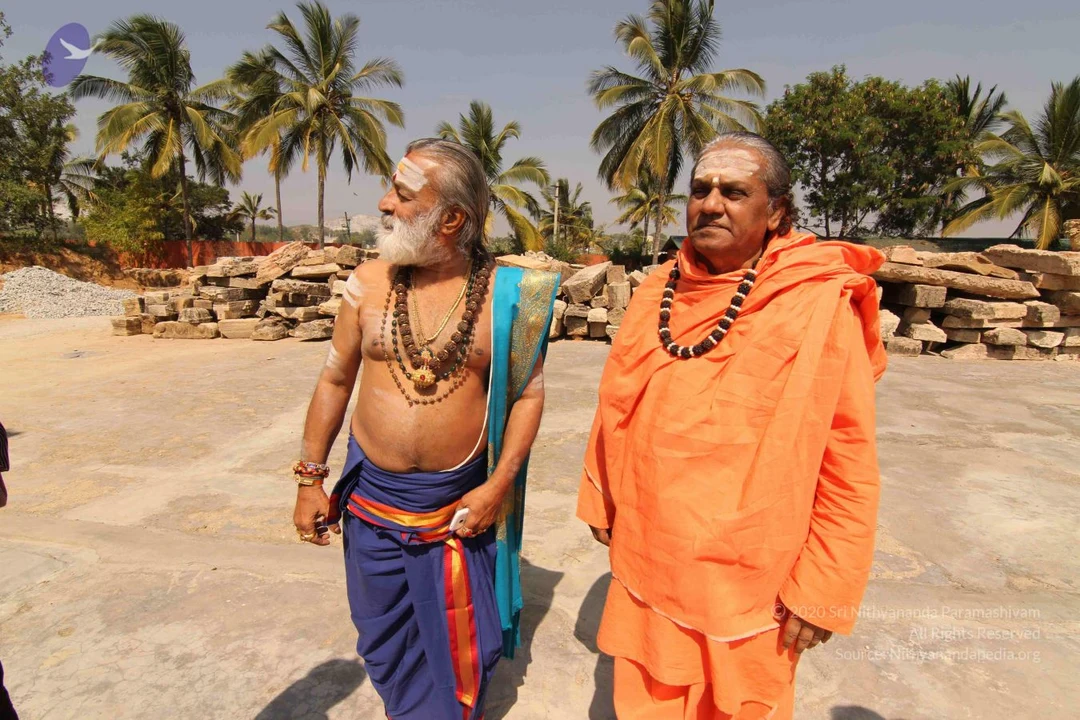
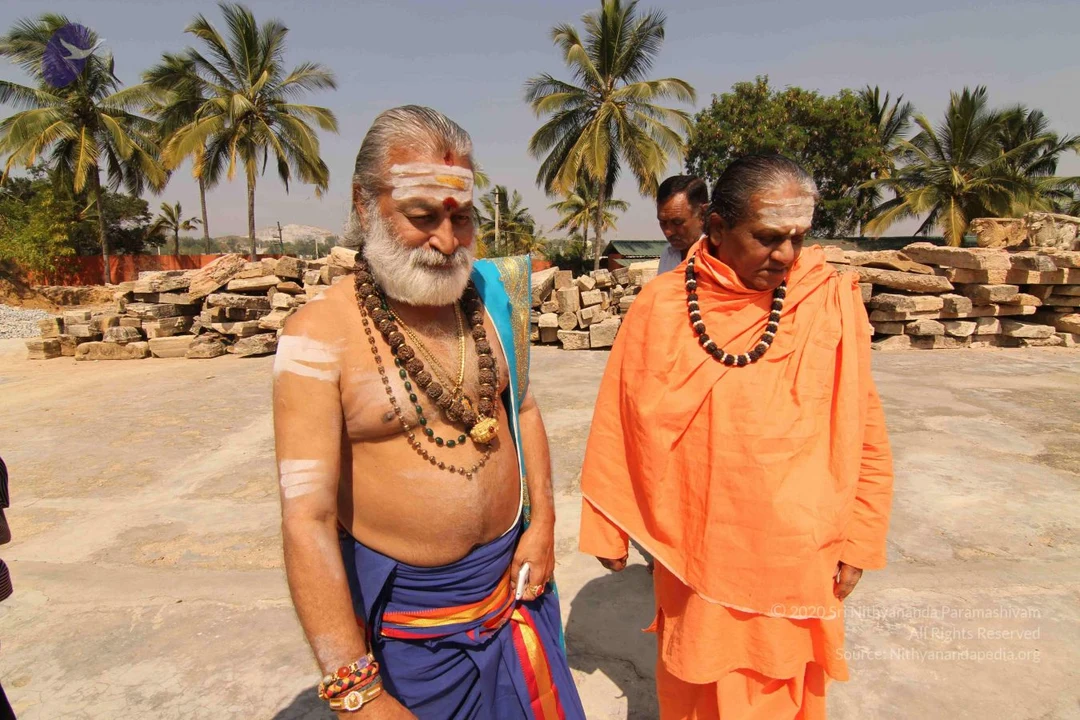
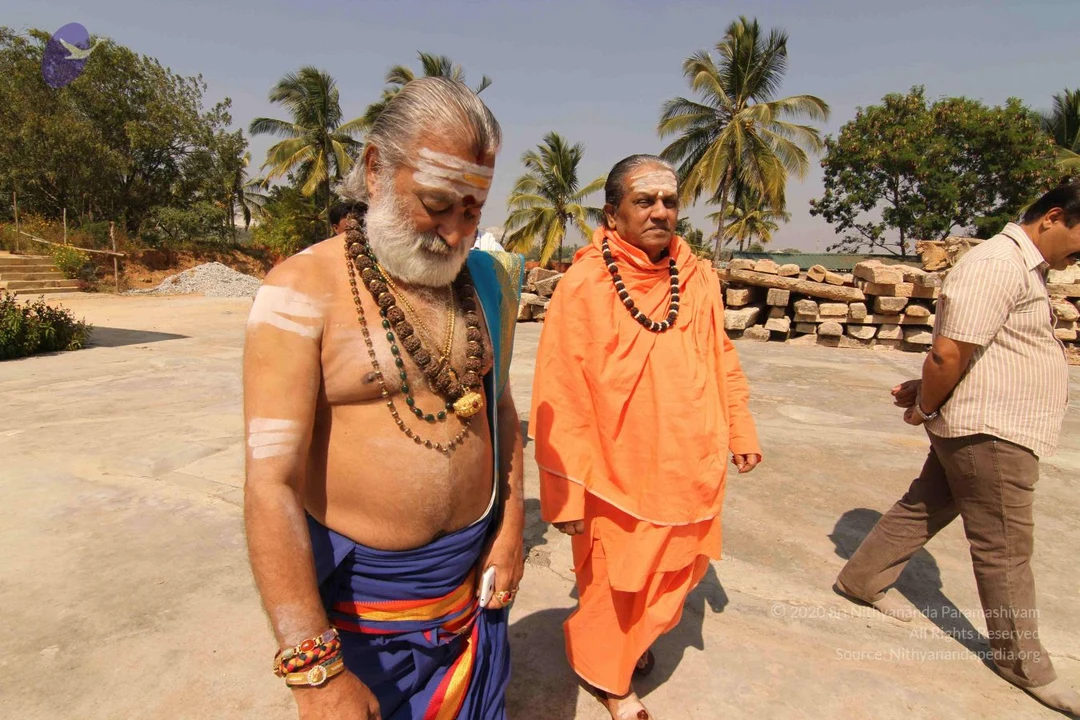
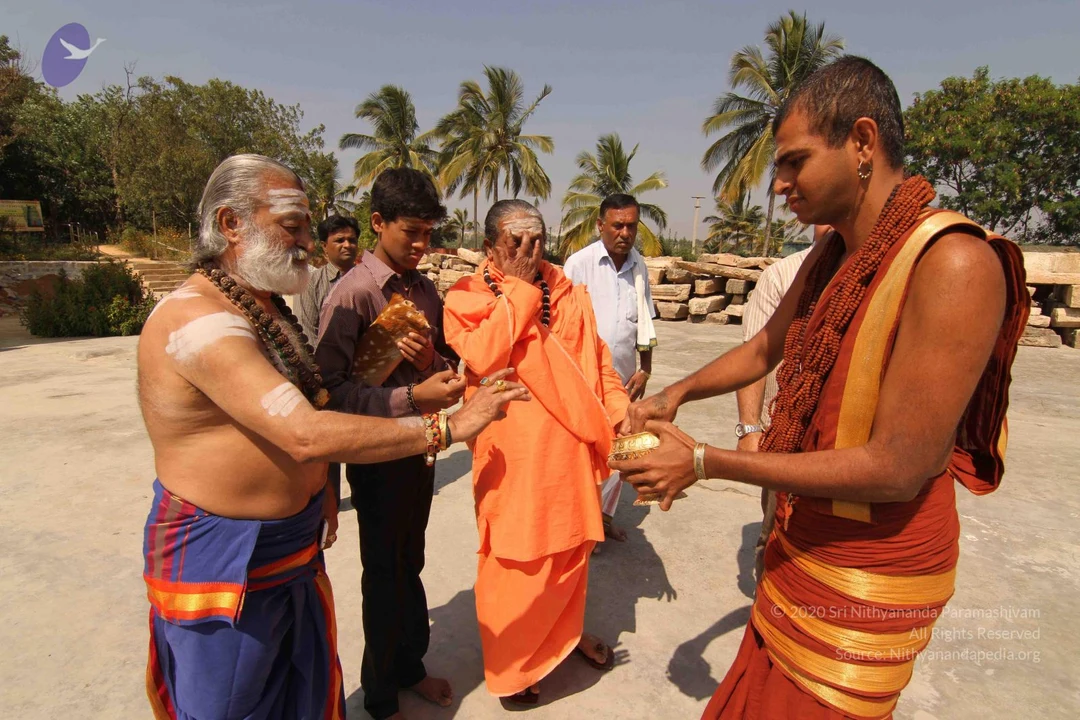
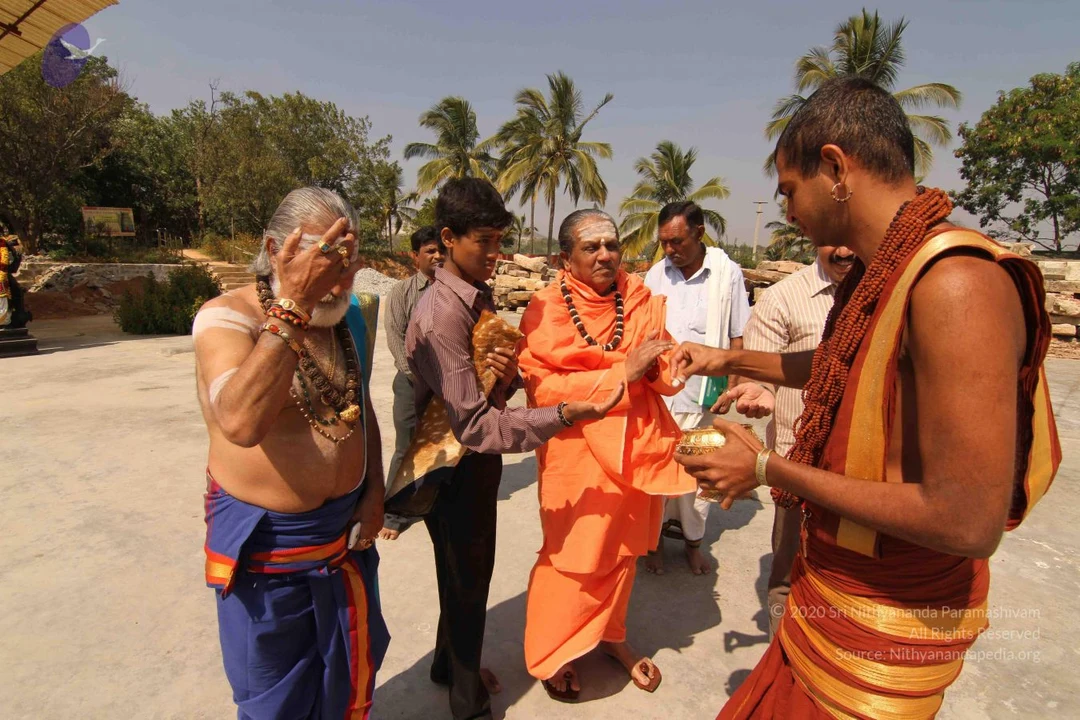
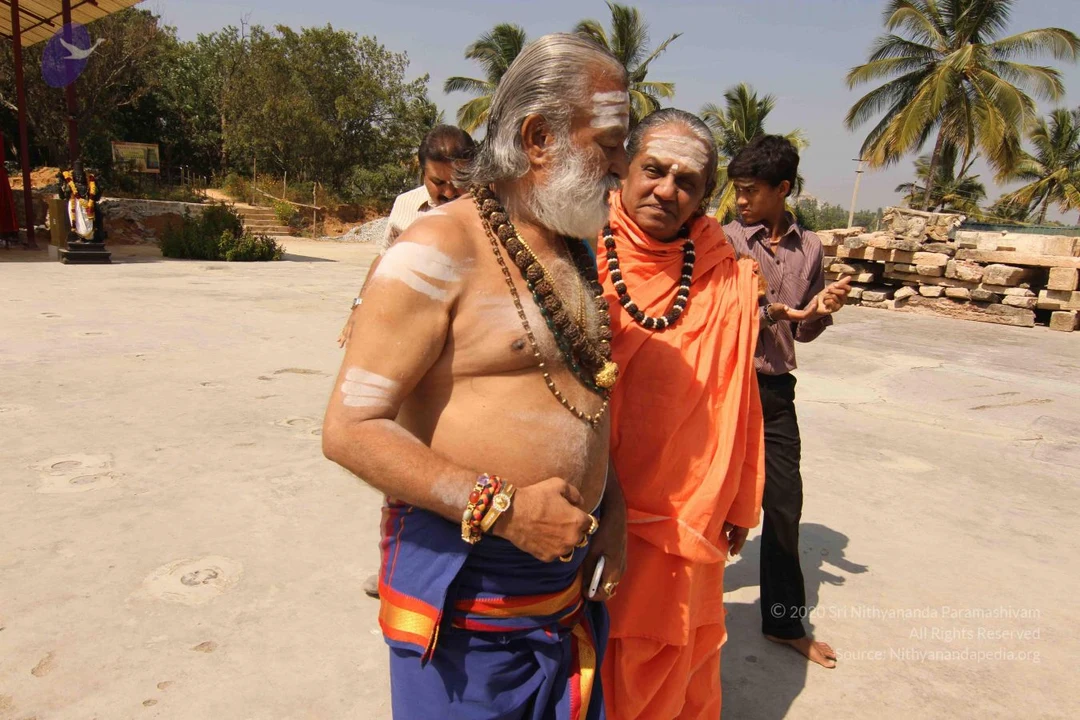
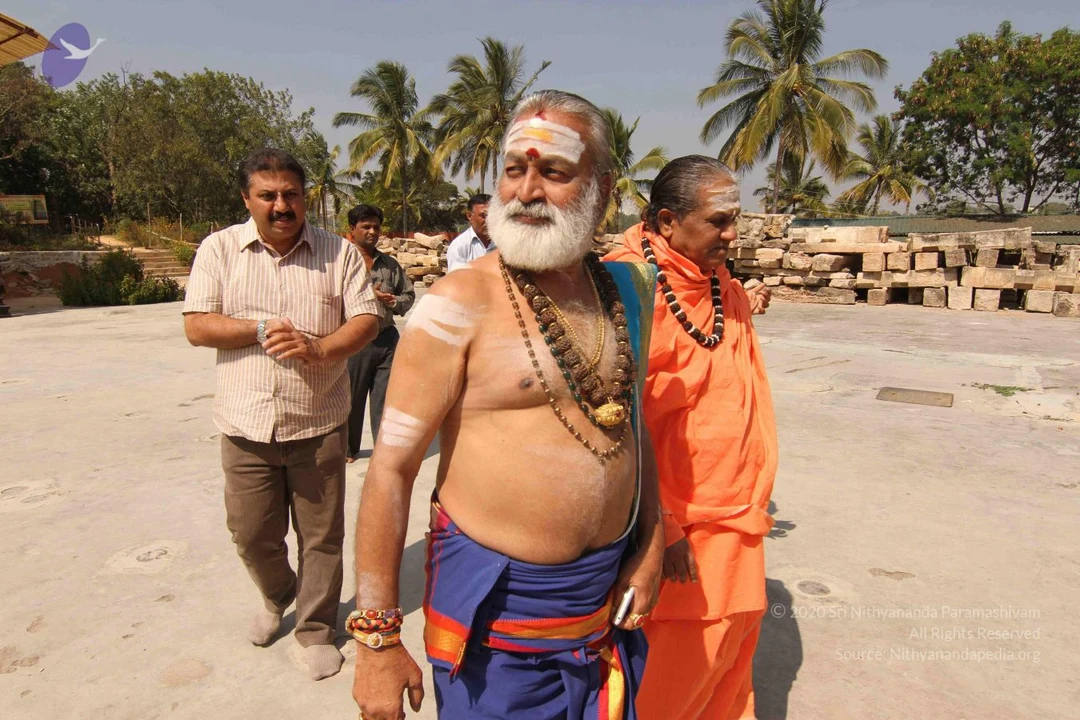
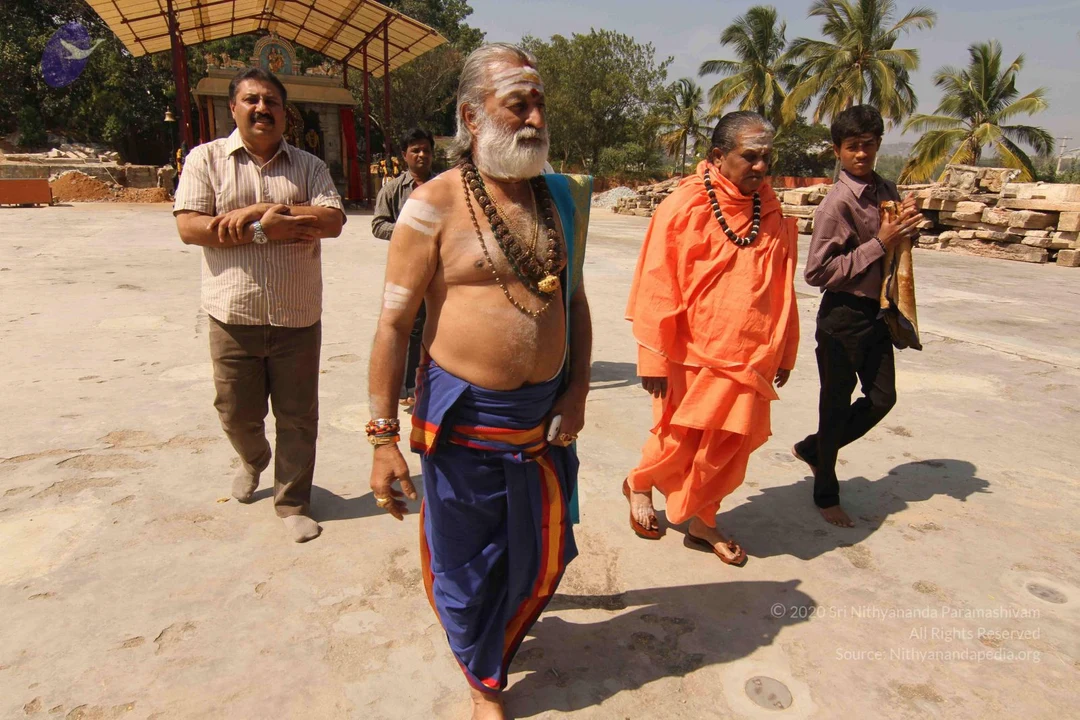
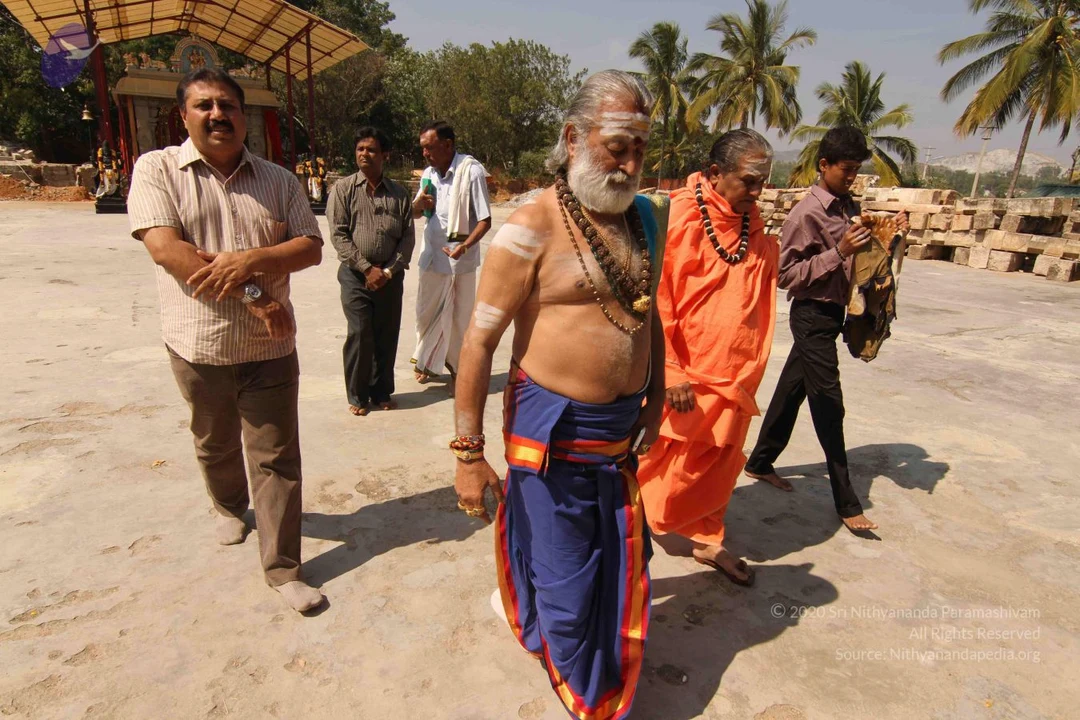
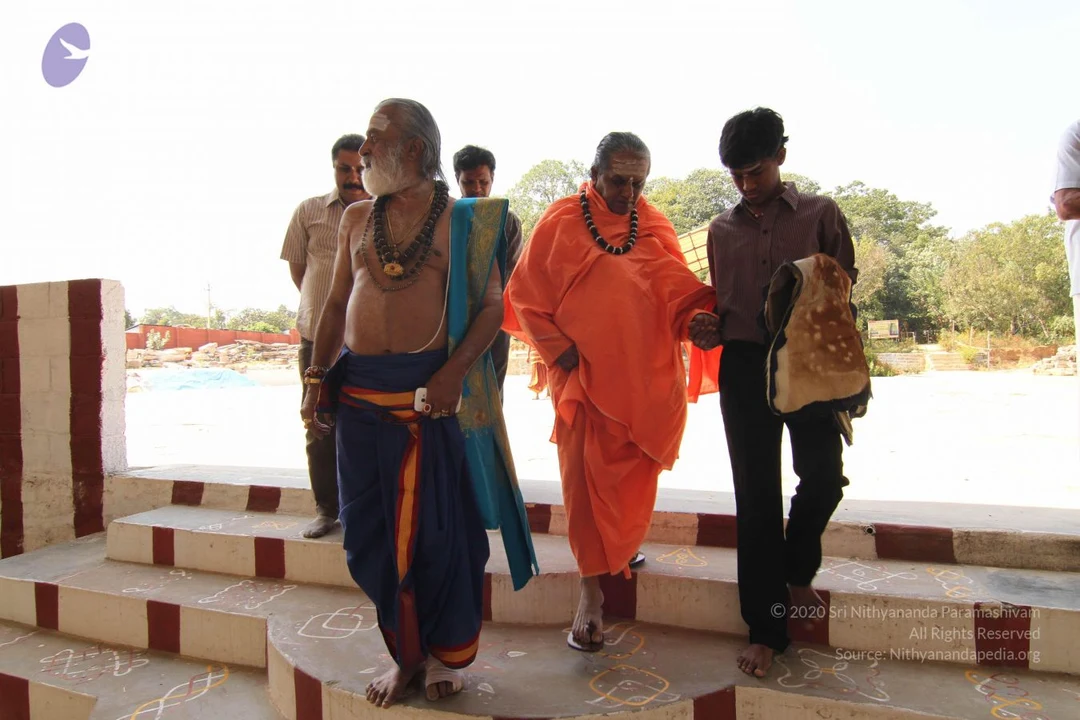
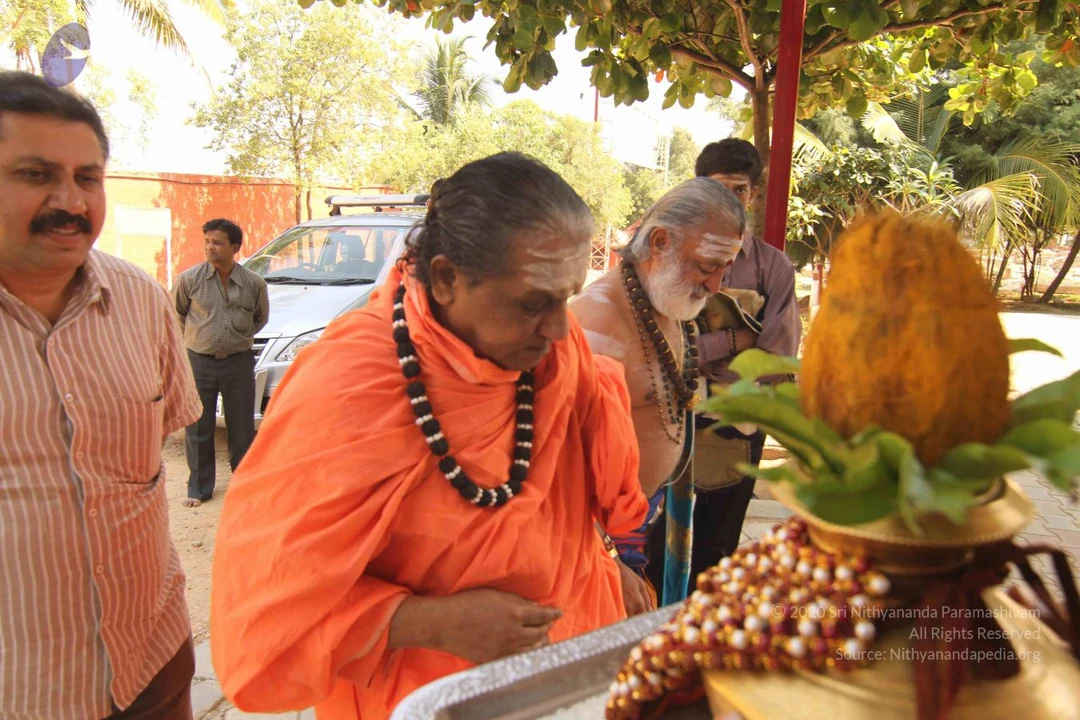
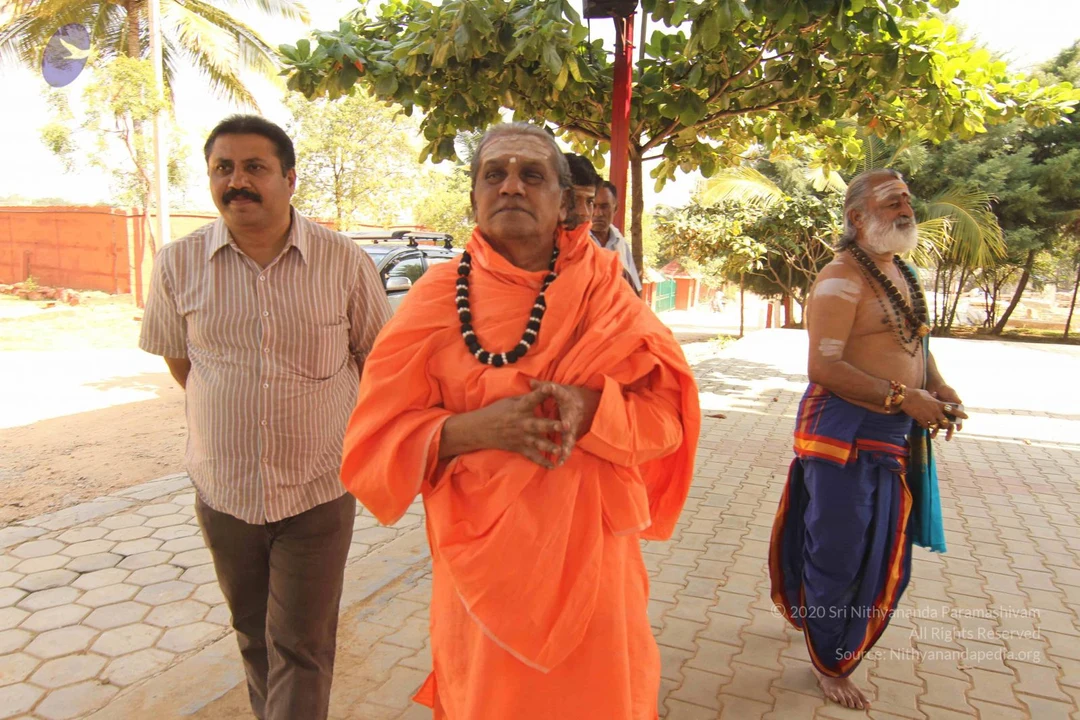
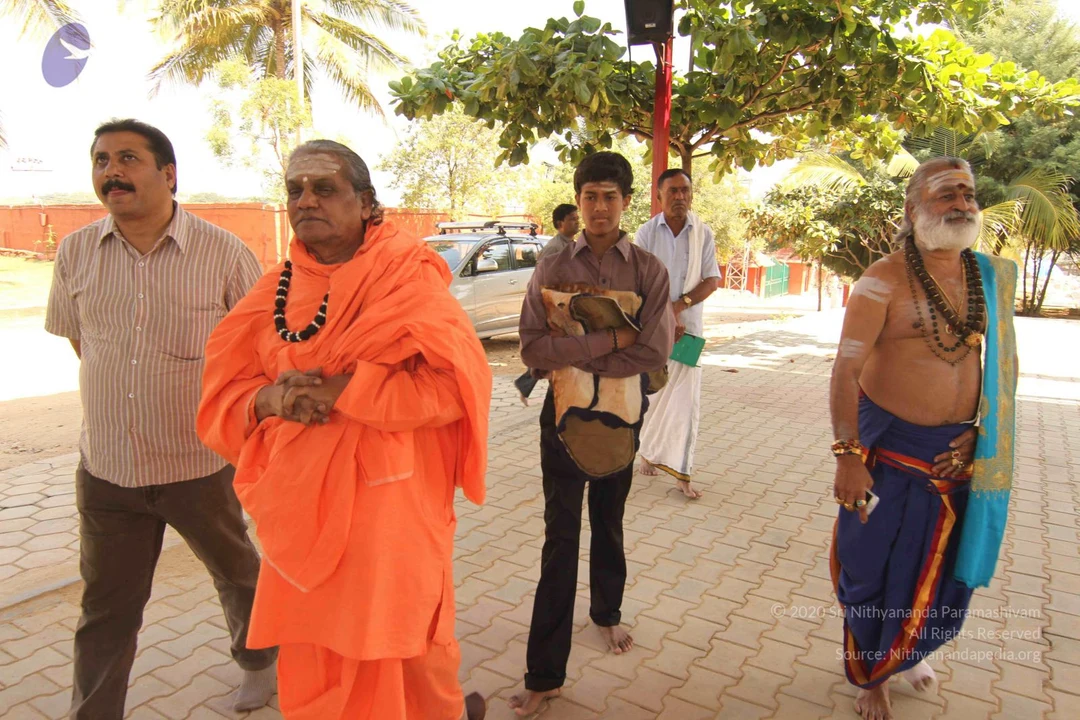
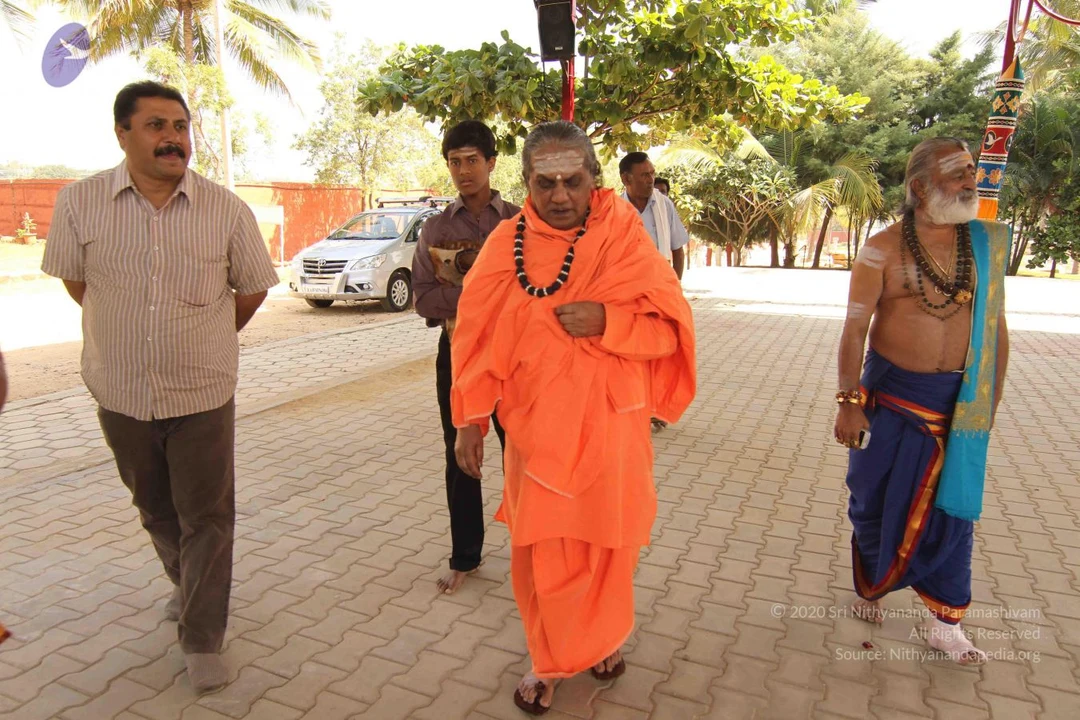
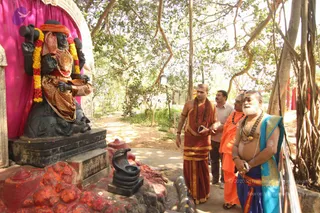
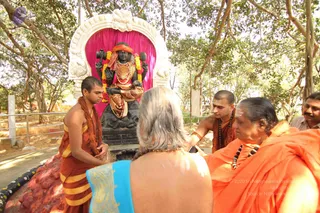
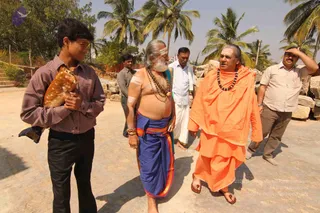
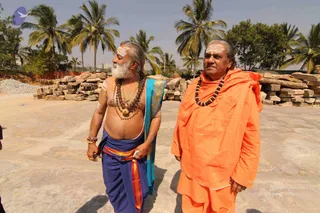
Outdoor temple courtyard with a concrete floor, red-painted walls and green shrubs with red flowers at left. A bare-chested older priest with a white beard and tripundra marks wears a blue dhoti with orange border and carries a rudraksha mala, walking barefoot beside a younger man in saffron. At right, a man in a saffron robe and a long dark rudraksha mala stands with his hand near his chest, facing left; his long dark hair is swept back, but his face is not clearly visible, so no identity is asserted. Behind them, a shrine structure with red curtains and a gold-decorated deity murti is visible. Other men in shirts and trousers and a man in white dhoti stand nearby. A small blue logo appears at top left.Outdoor photo at a shrine beneath large banyan-type trees. On the left, a black stone deity murti with a red-and-gold headcloth and yellow-orange marigold garland stands within a pink draped niche. Before it sits a black stone snake-hood and a small pillar on the red-stained ground. Five people stand on the paved area: a man in a dark shirt at left, a man in a rust-brown dhoti and sacred thread with a rudraksha mala, a man in a saffron robe with a beaded mala pointing toward the shrine, and at right a bald-headed, white-bearded elder in a saffron top, blue-and-yellow cloth and a rudraksha mala. A red-and-white sign and red structures stand in the background.A photograph taken outdoors beneath large banyan-type trees at a shrine. On the left, a black stone deity murti with multiple arms, wearing a gold-bordered cloth, a red headdress and a garland of yellow and red flowers, stands before a pink cloth backdrop. In front, a black stone cobra-hooded sculpture sits on a pedestal beside red-smeared stones. Four men stand on a stone path: a bare-chested man in a rust-brown dhoti with a rudraksha mala and a cloth over one shoulder, a man in a striped shirt, an older man in orange robes with a mala, and a white-bearded man in a blue-and-teal shawl and rudraksha necklaces holding a mobile phone. The bare-chested man has a cue that suggests the page's subject, but the appearance is not distinctive enough to confirm identity.Outdoor photo of a dark stone deity murti under a white arched niche with a pink backdrop, garlanded with marigold and red flower garlands, with an orange cloth draped over its head and a ceremonial necklace. Four men and women stand around it in ritual attention: a young shaven-headed man in orange and rust robes with rudraksha on the left, another shaven-headed young man in orange with a rudraksha mala on the right, and an older woman in an orange shawl with rudraksha beads, while a grey-haired figure in a blue blouse stands with back to camera, a sandalwood-marked forehead and a white clothed back visible. Banyan trees and bare outdoor surroundings frame the scene. The identity of any person in this scene is not established by appearance.Outdoors on a paved courtyard beside stacked stone blocks and tall palm trees, a bare-chested elderly man with long grey hair and a white beard, wearing a blue and orange striped dhoti, walks beside a man in an orange-saffron robe with a dark rudraksha mala and sandals. Behind them a man in a white dhoti and shirt, and two men in trousers and shirts, look on. A teenage boy in a brown striped shirt and dark trousers holds a spotted orange-and-brown kitten. The saffron-robed man, a person candidate by appearance, is shown in conversation during a walk. Sunlight and a clear sky set the scene.Outdoor photo on a paved courtyard beside stacked cut stone blocks and palm trees. Two men stand side by side. The man on the left is bare-chested with a long grey beard and swept-back grey hair, wearing a blue dhoti with a red and yellow border, a teal shawl, a rudraksha mala, a gold pendant necklace and beaded wrist bands, with white and red tilak on his forehead. The man on the right wears an orange robe and orange shawl with a dark rudraksha mala, and has a white forehead marking and short grey hair. Both look off to the left.