Skip to content
Friday

6 December 2013

Nithyananda Diary | Padukapuja | Satsang | Dial The Avatar | Nirahara Samyama | Sarvadarshan

Dated photos
331
Source pages
1
Media
2
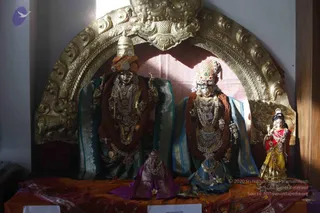
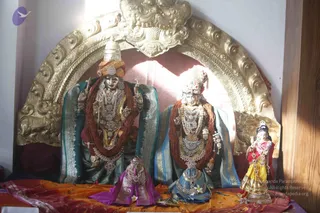
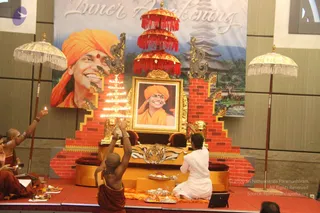
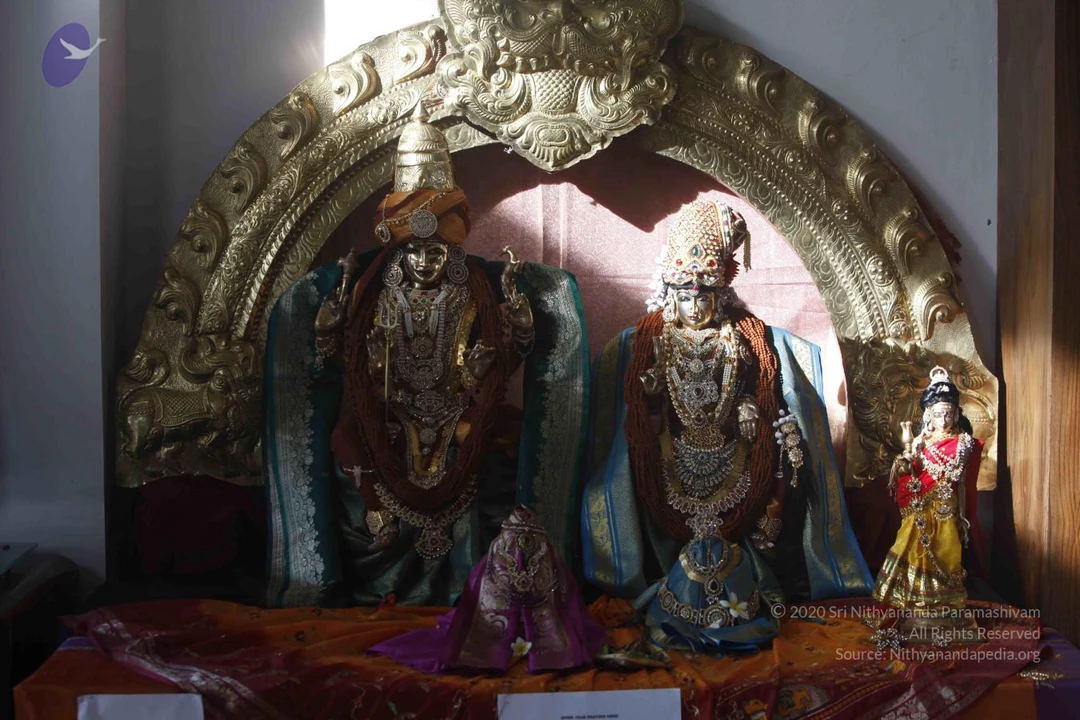
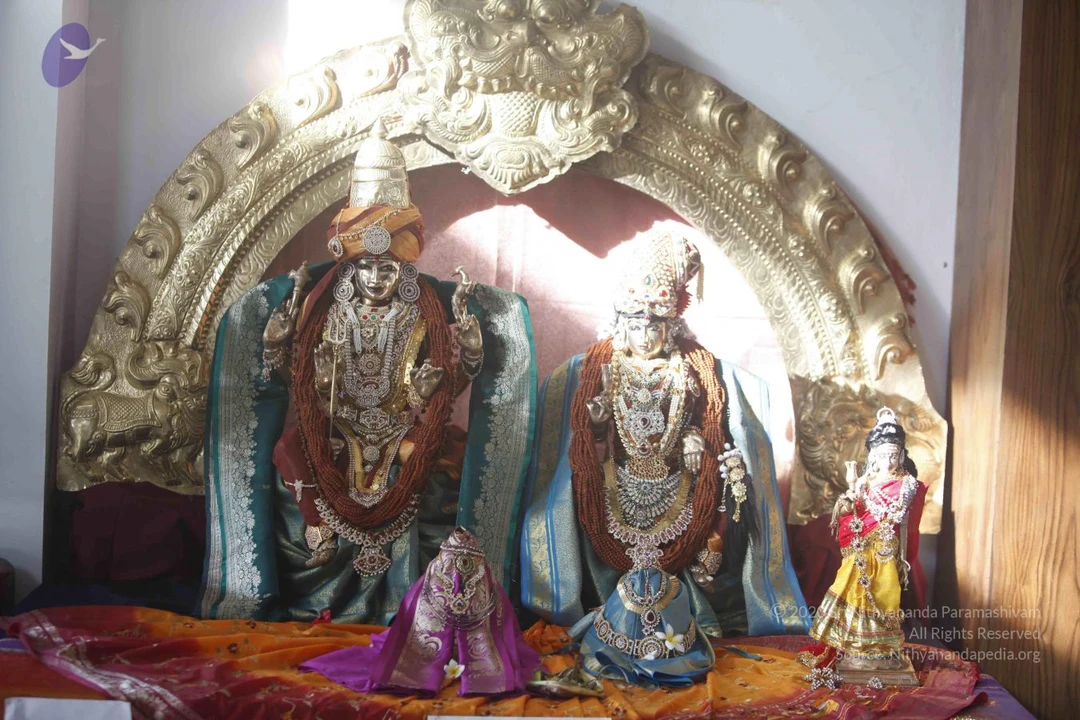
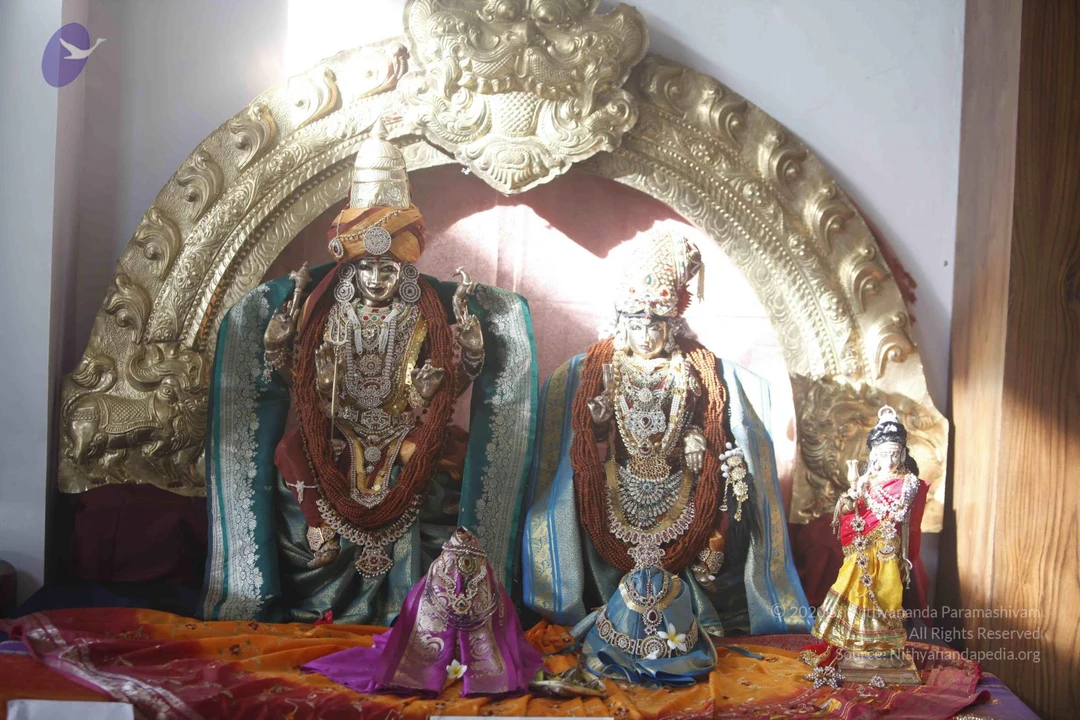
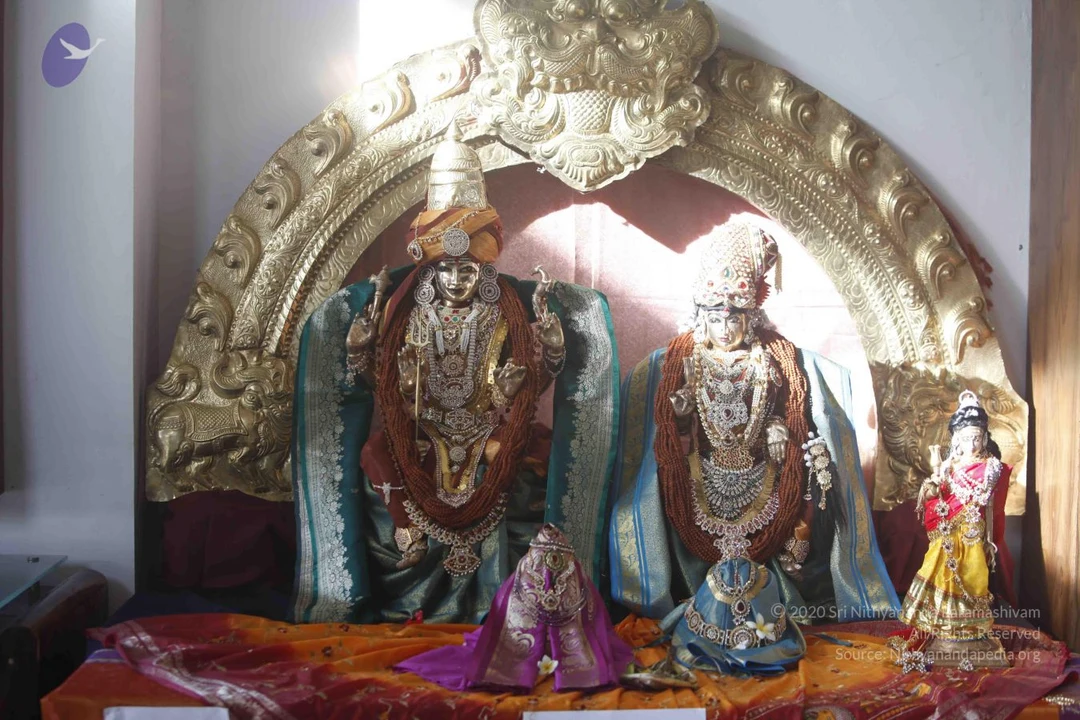
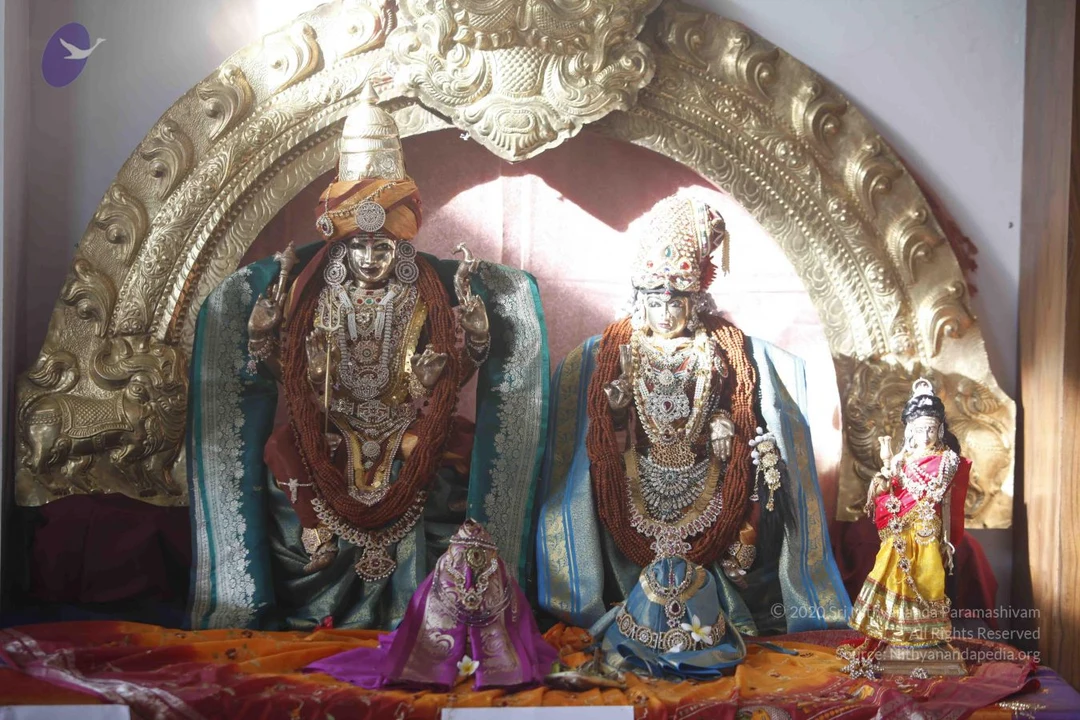
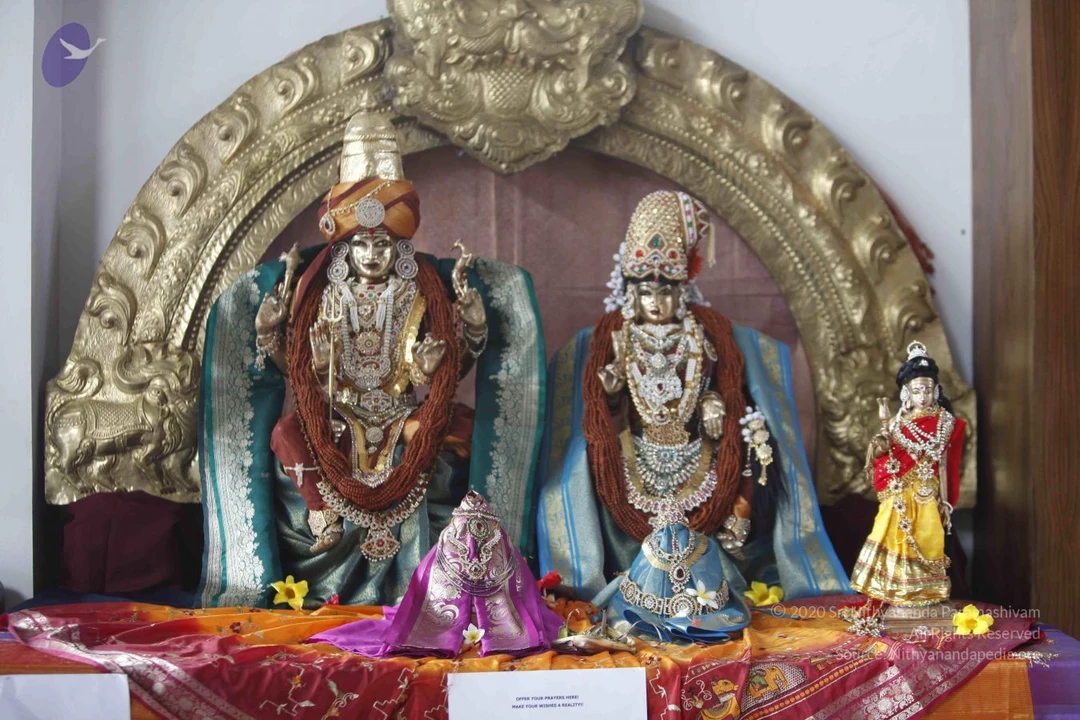
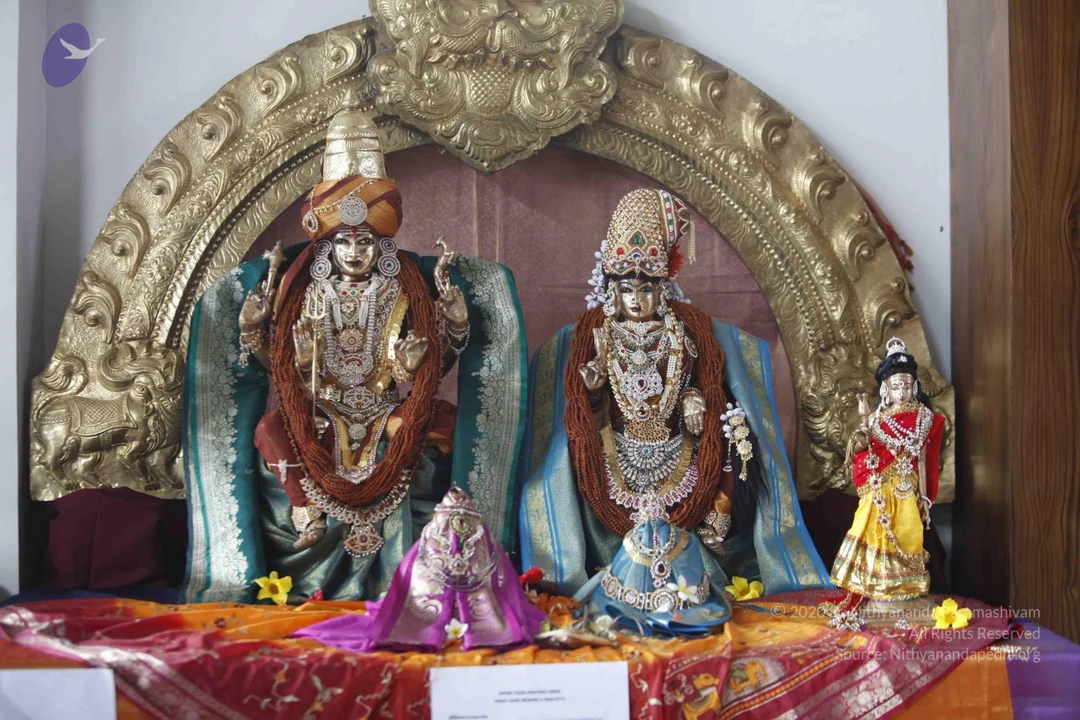
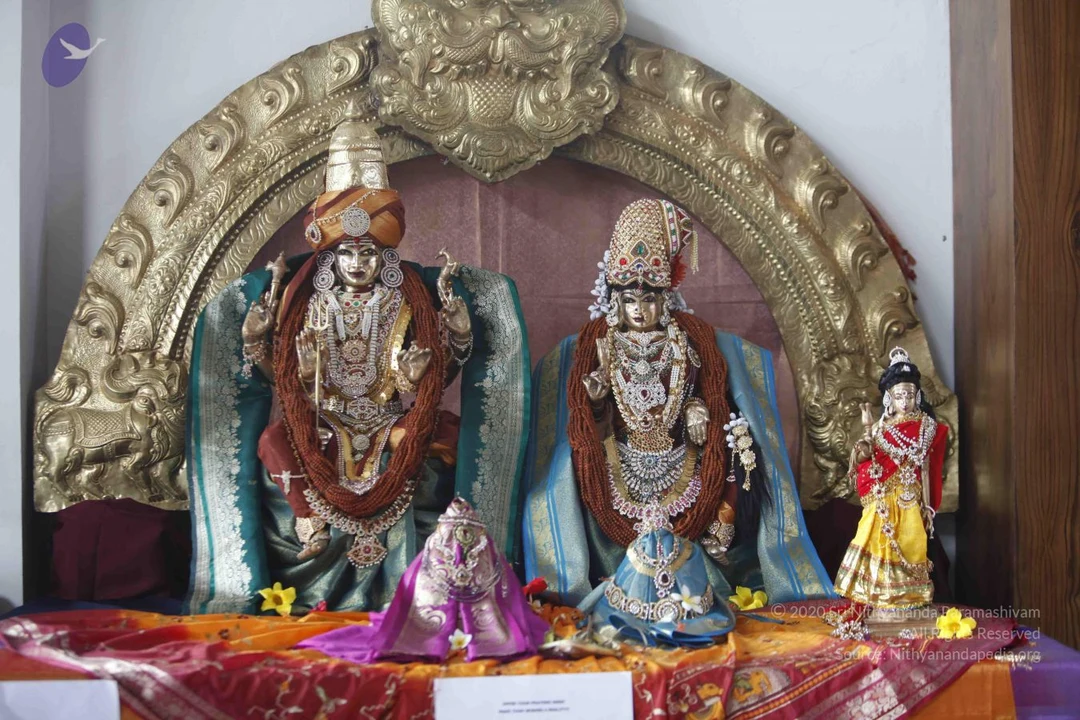
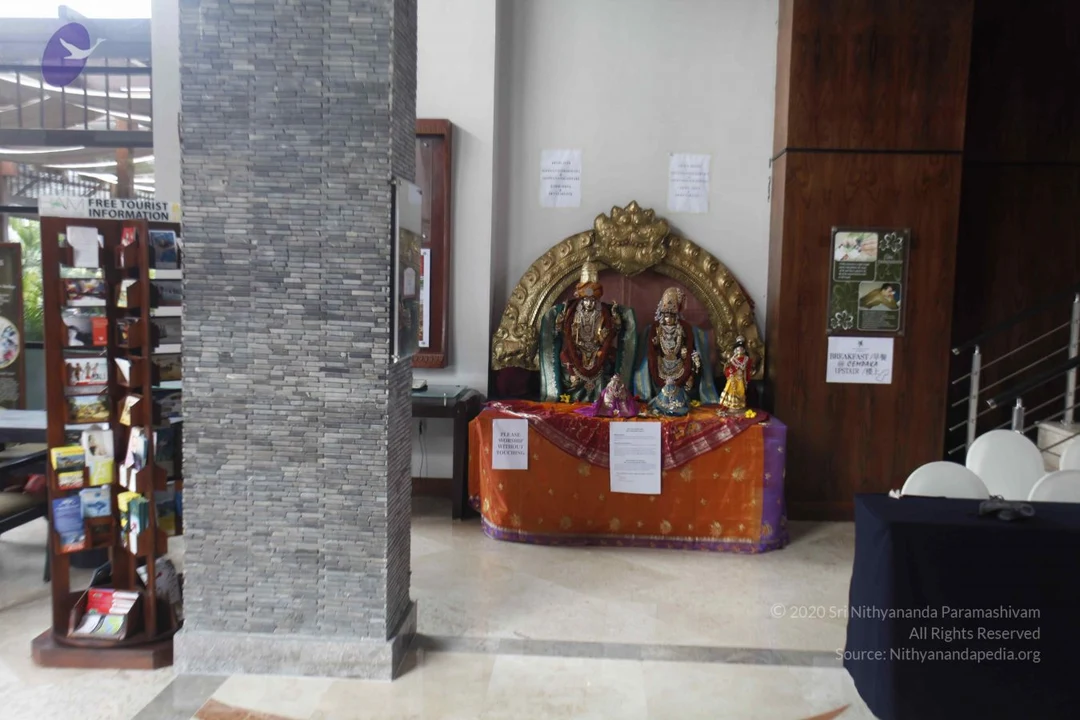
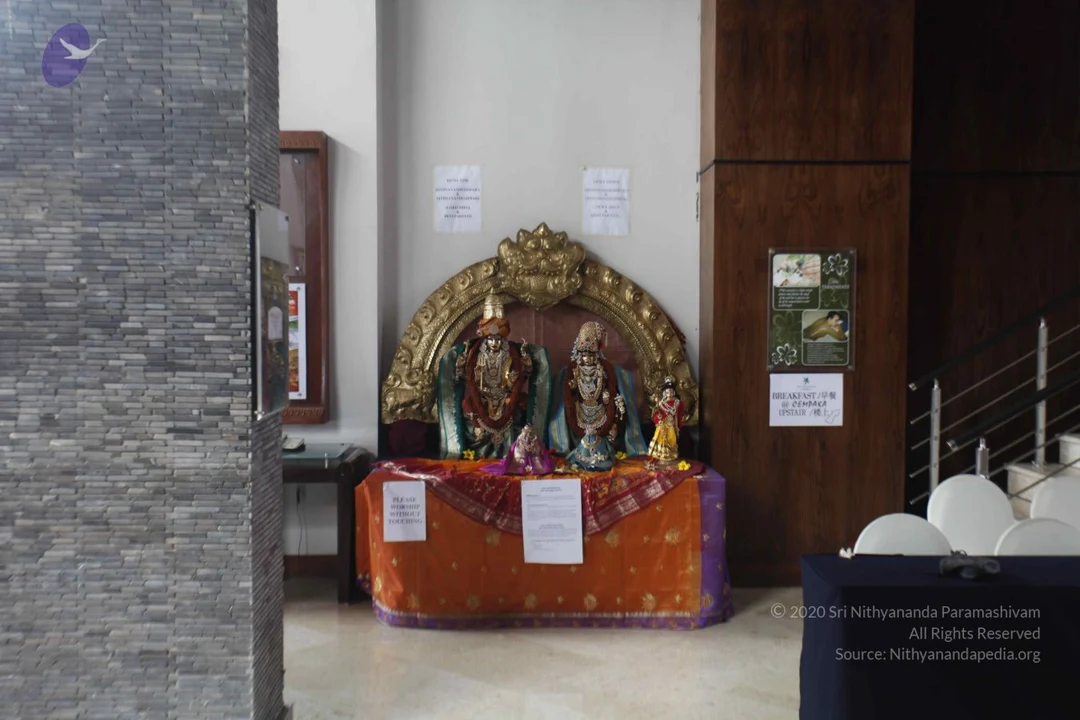
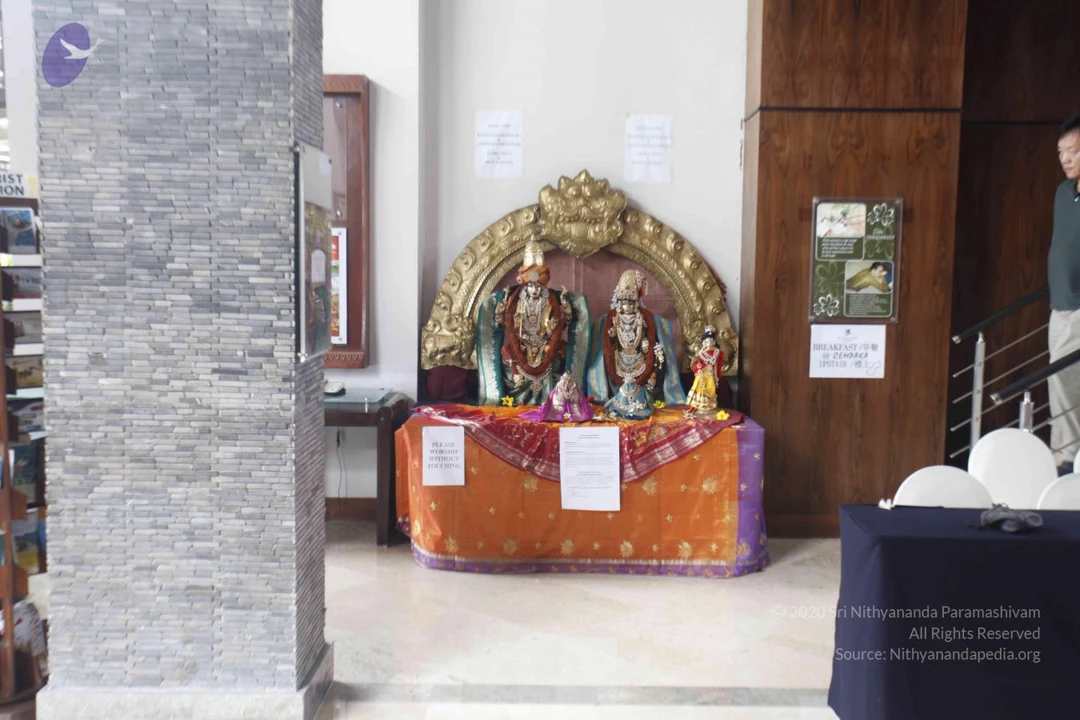
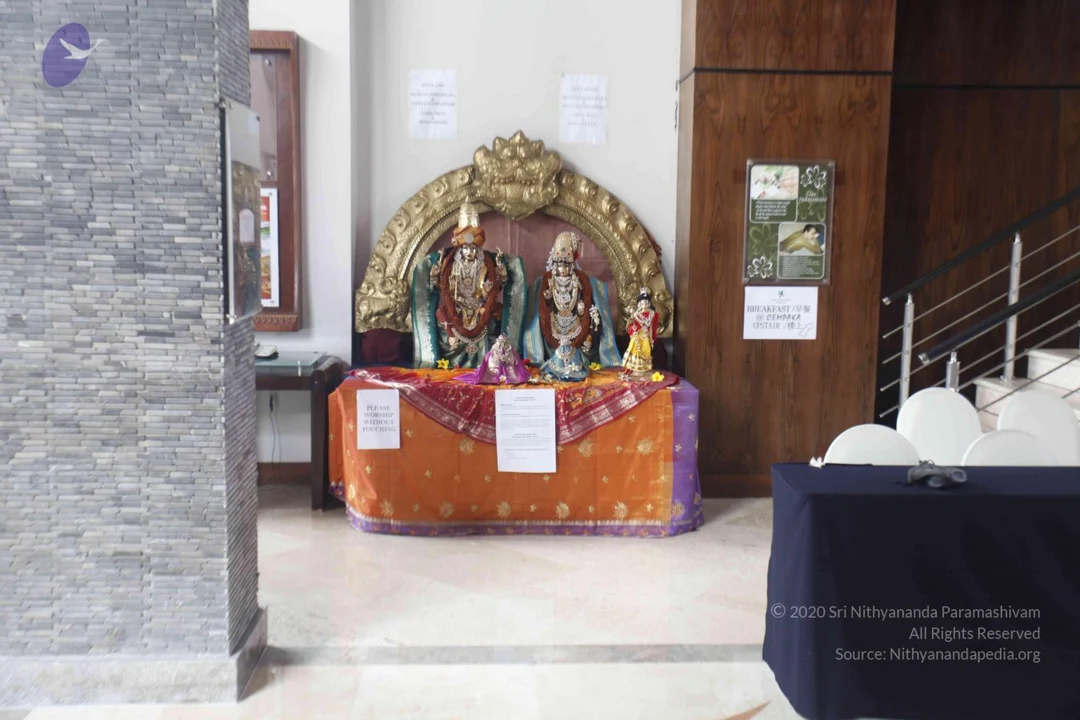
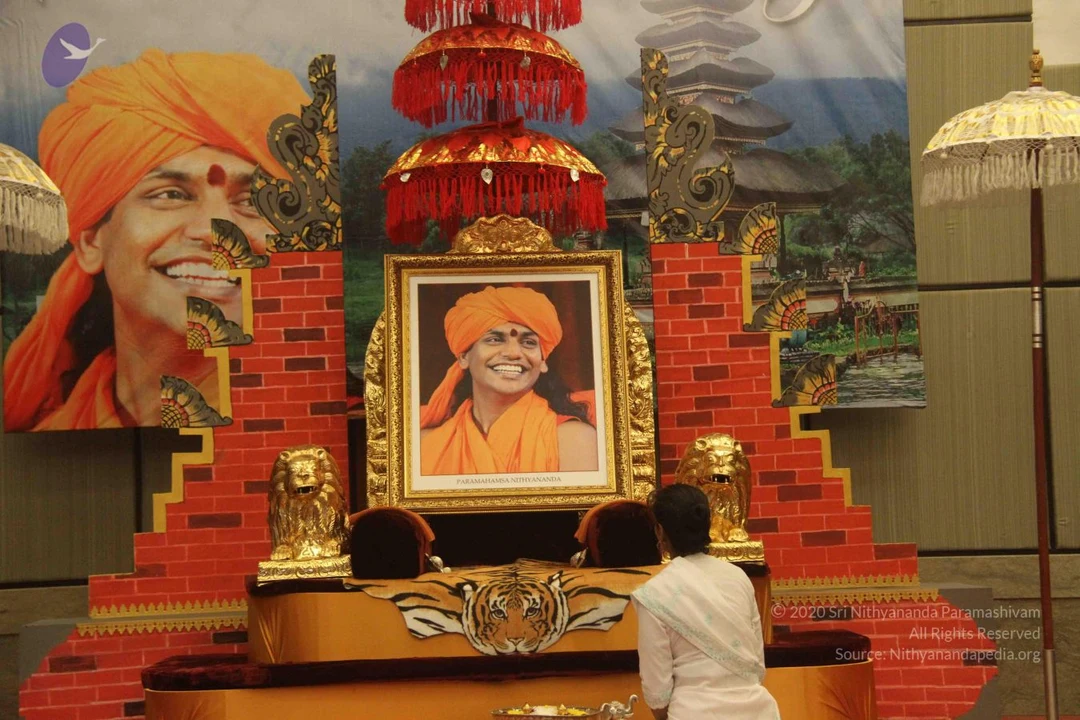
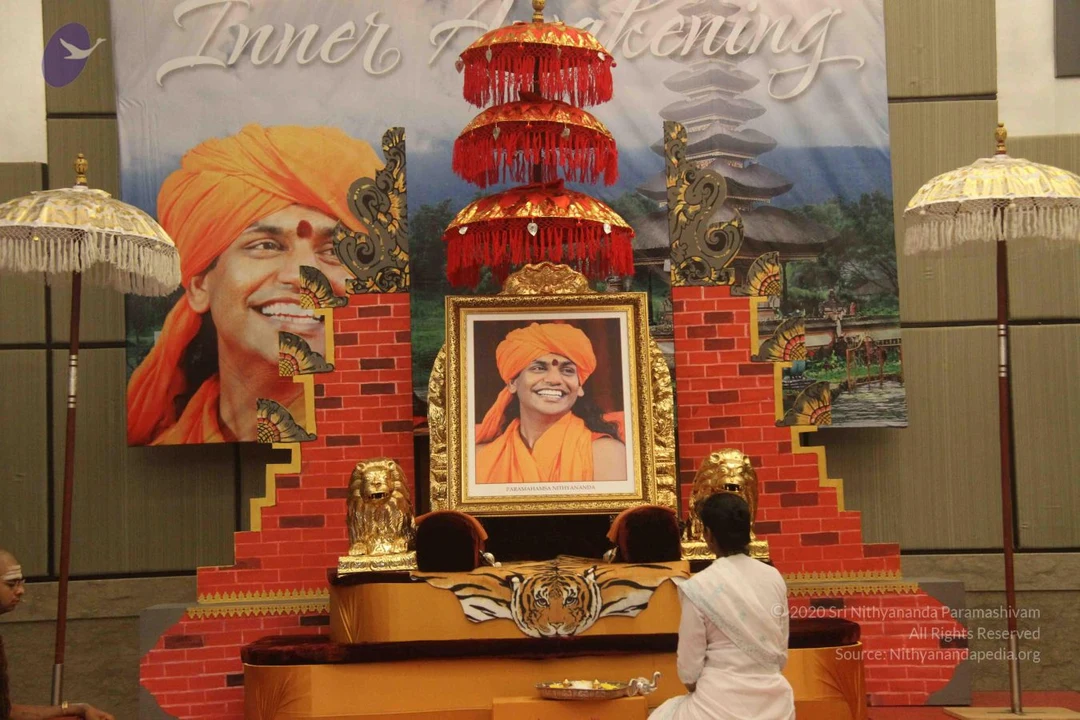
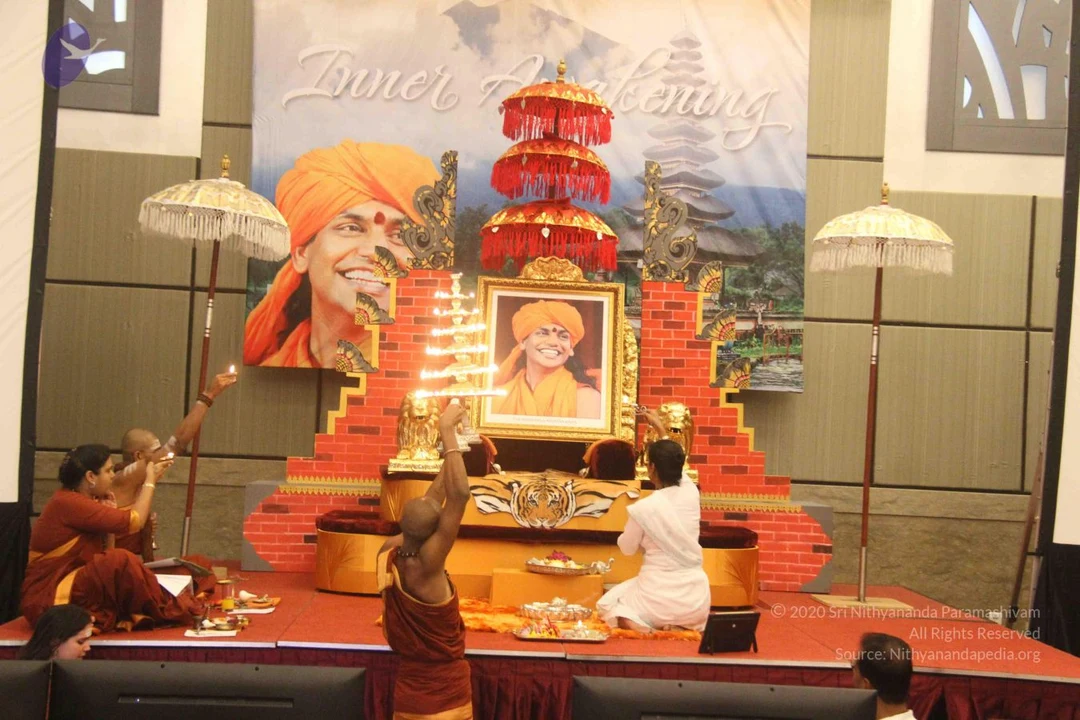
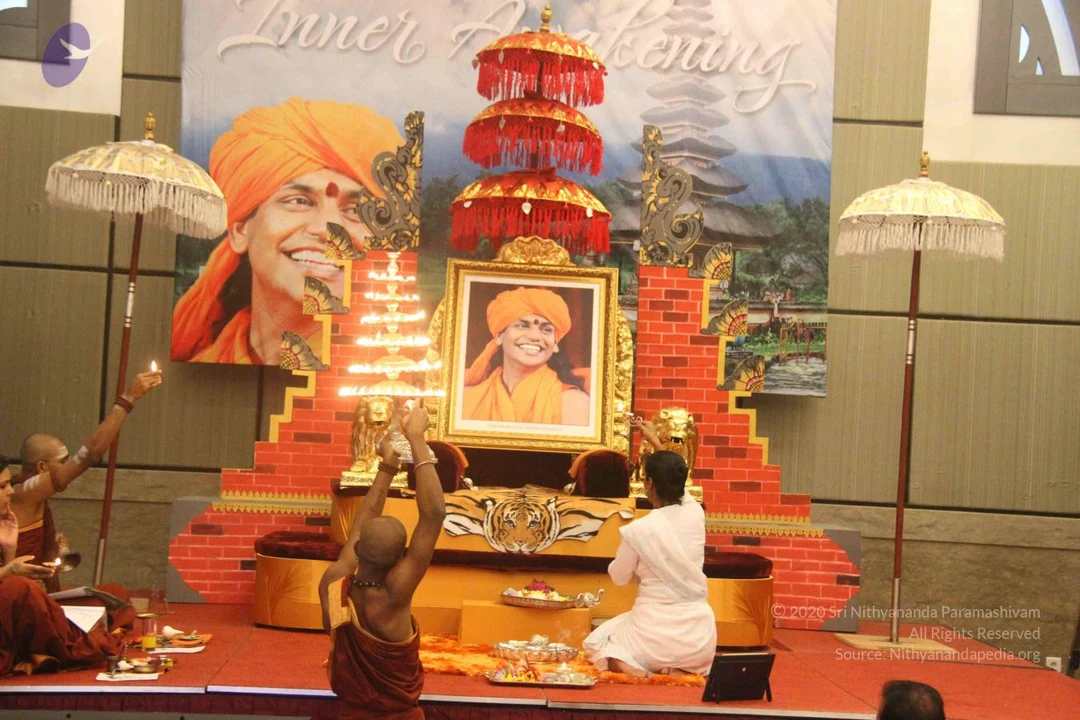
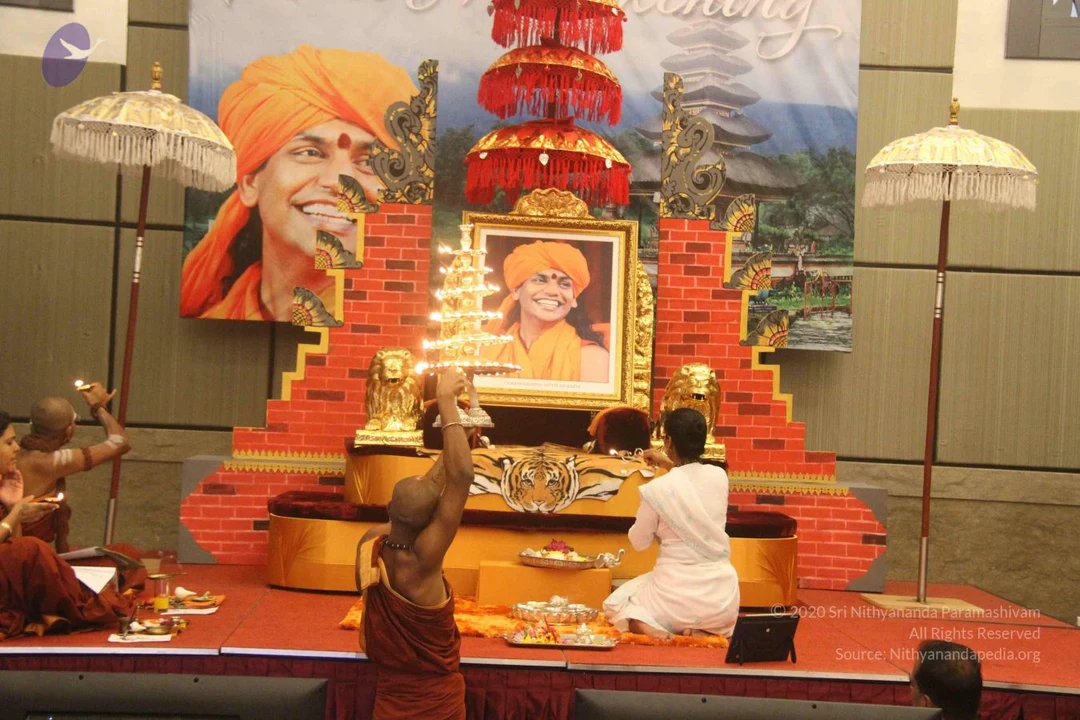
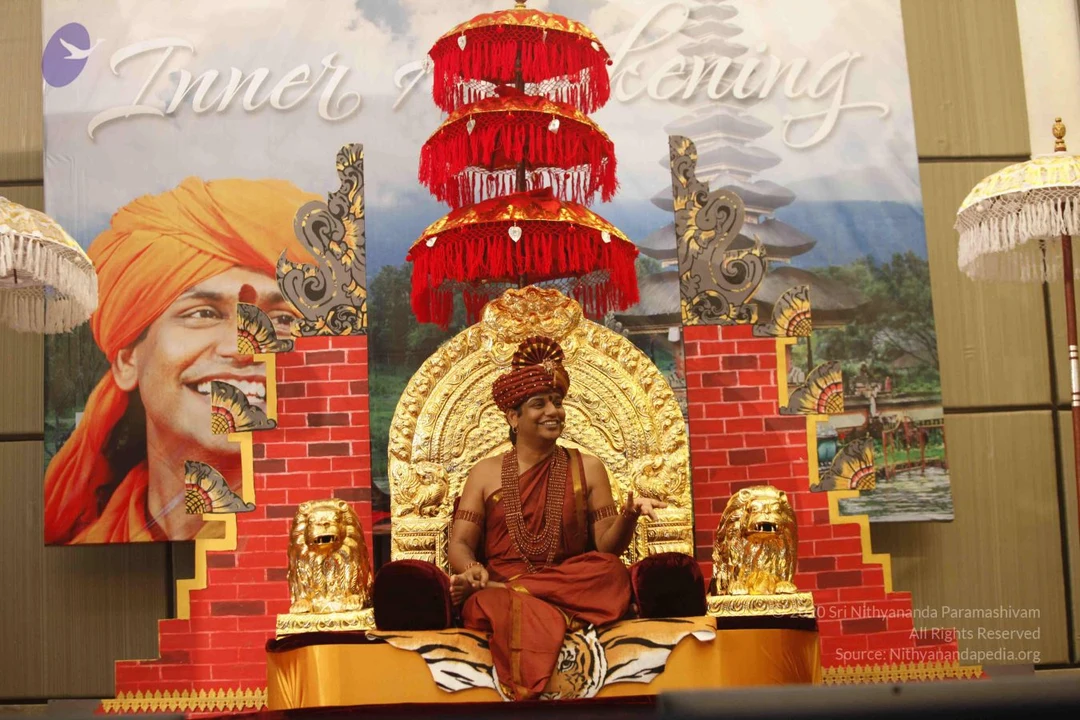
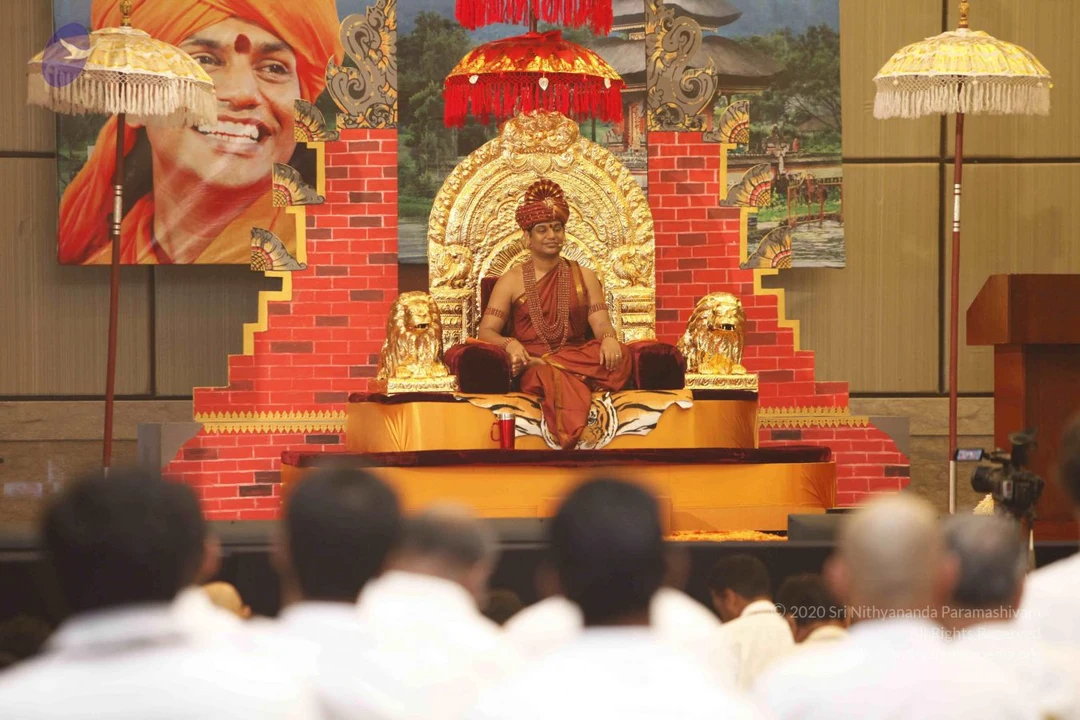
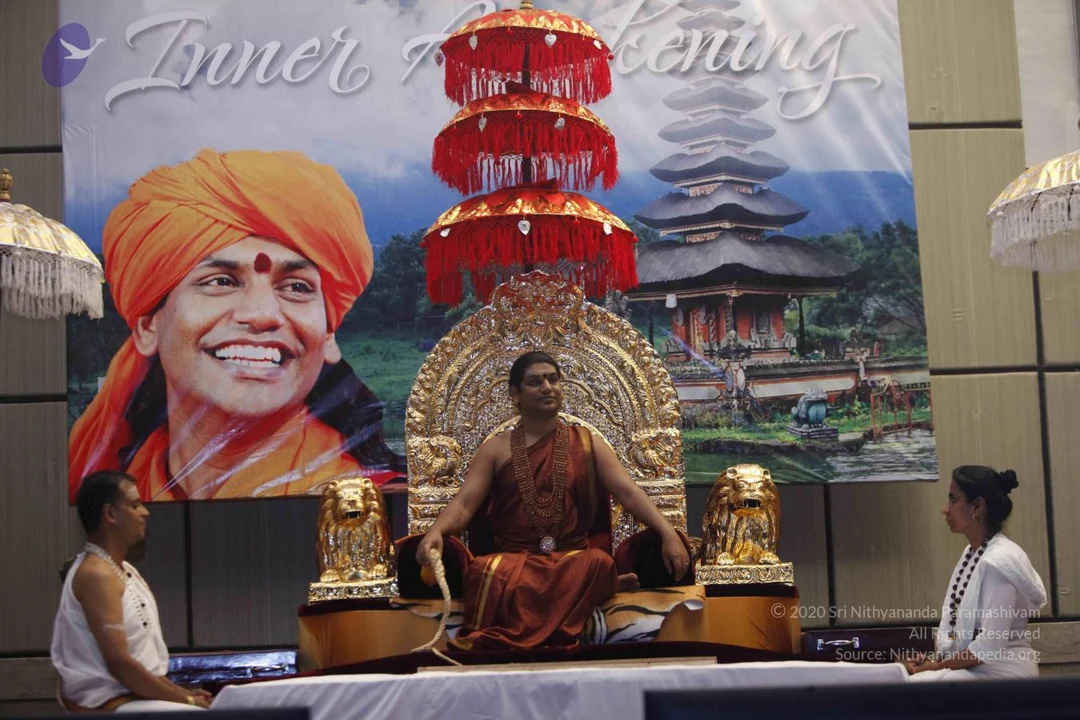
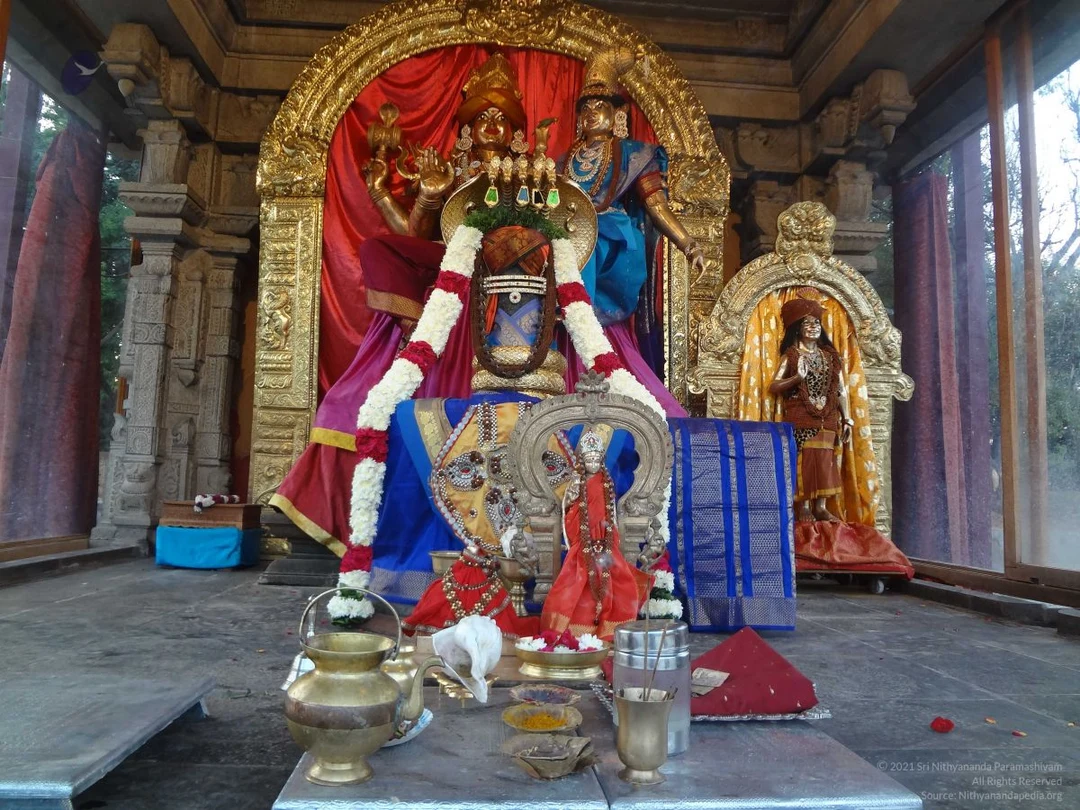
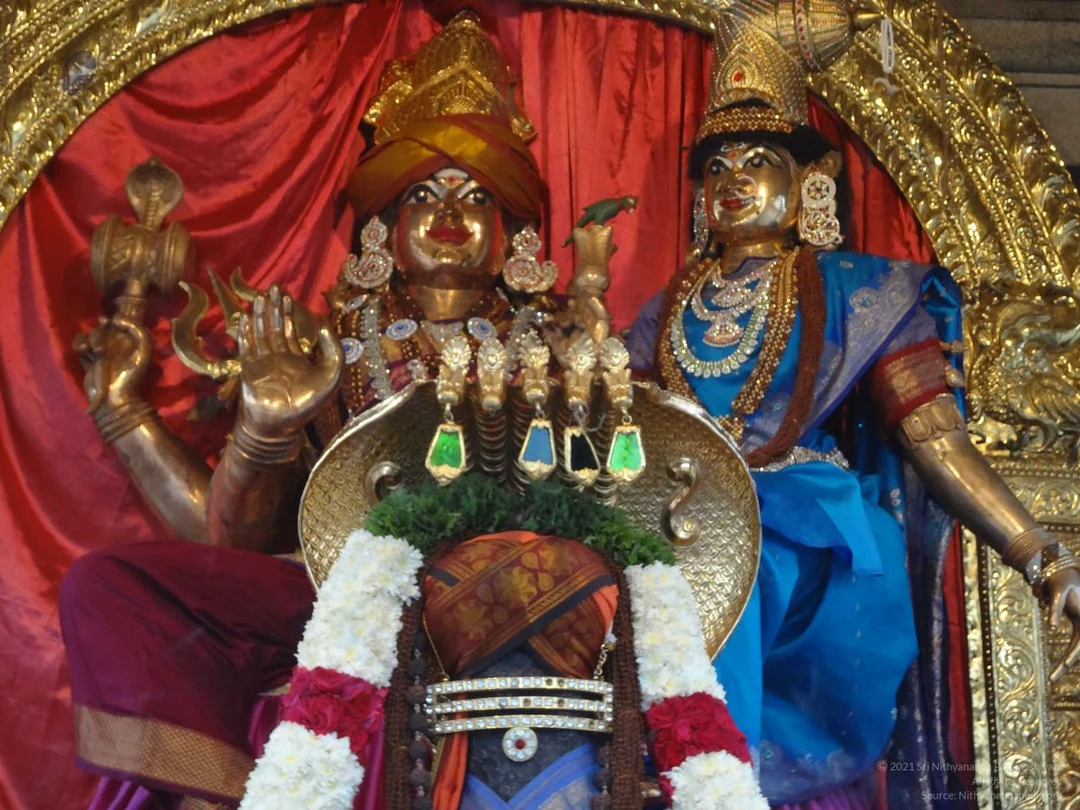
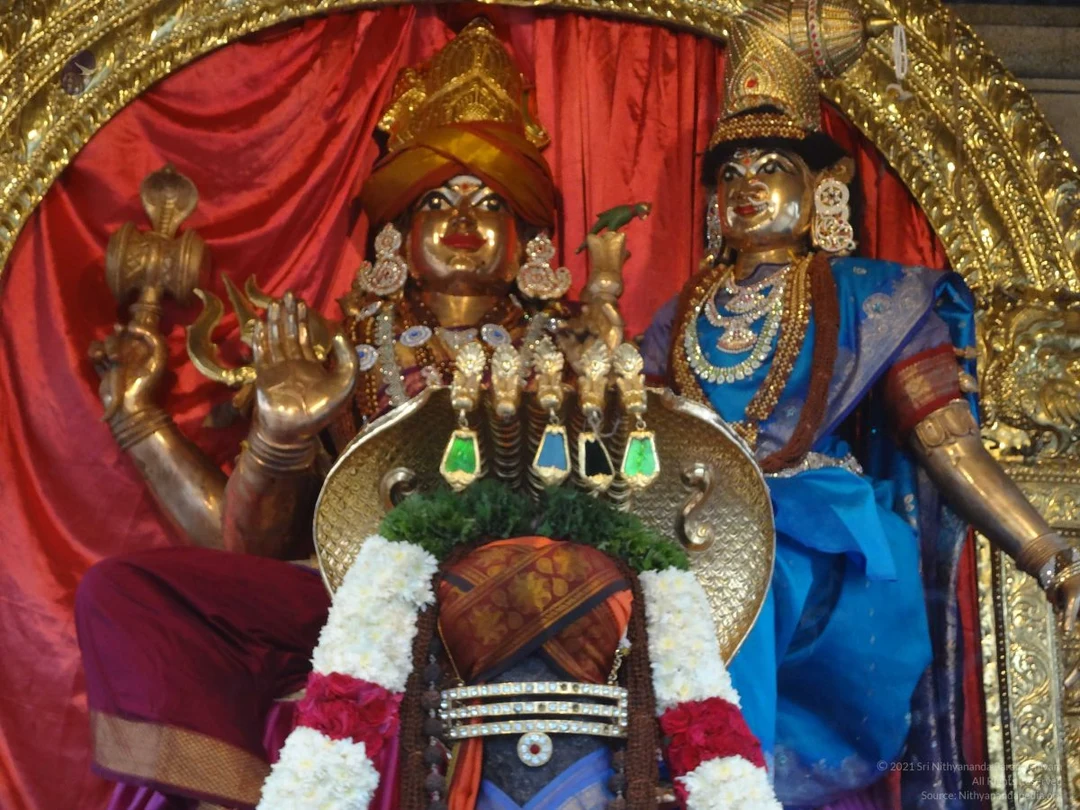
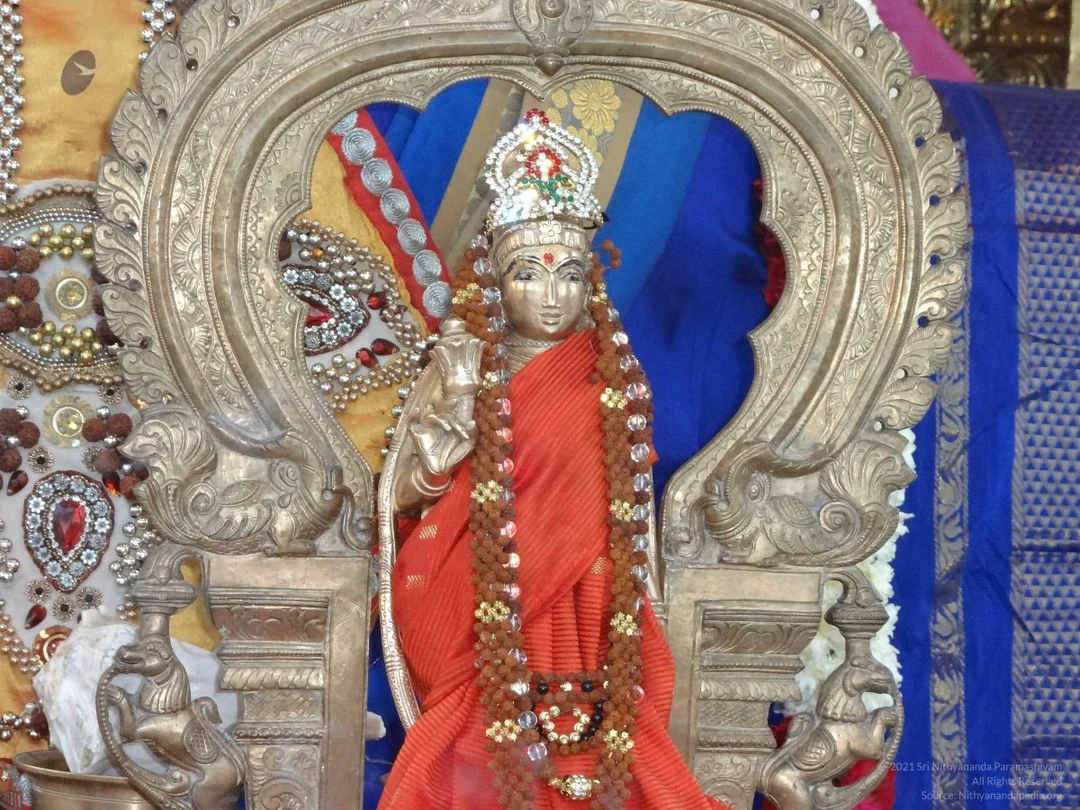
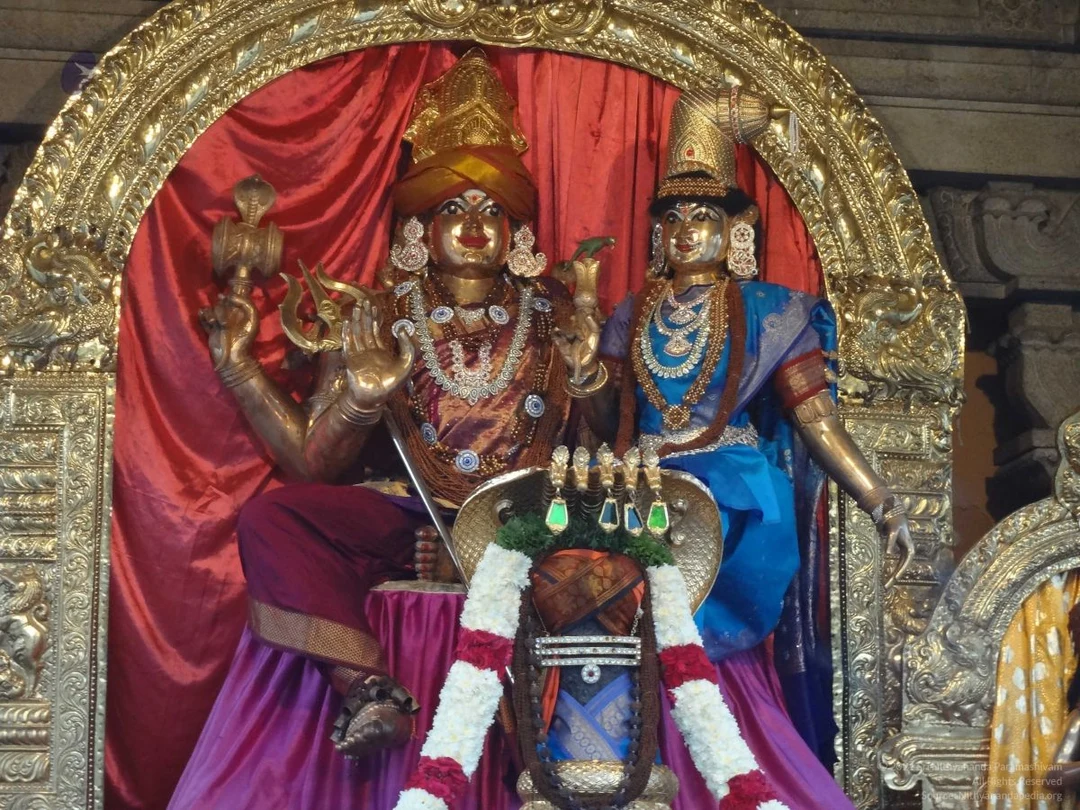
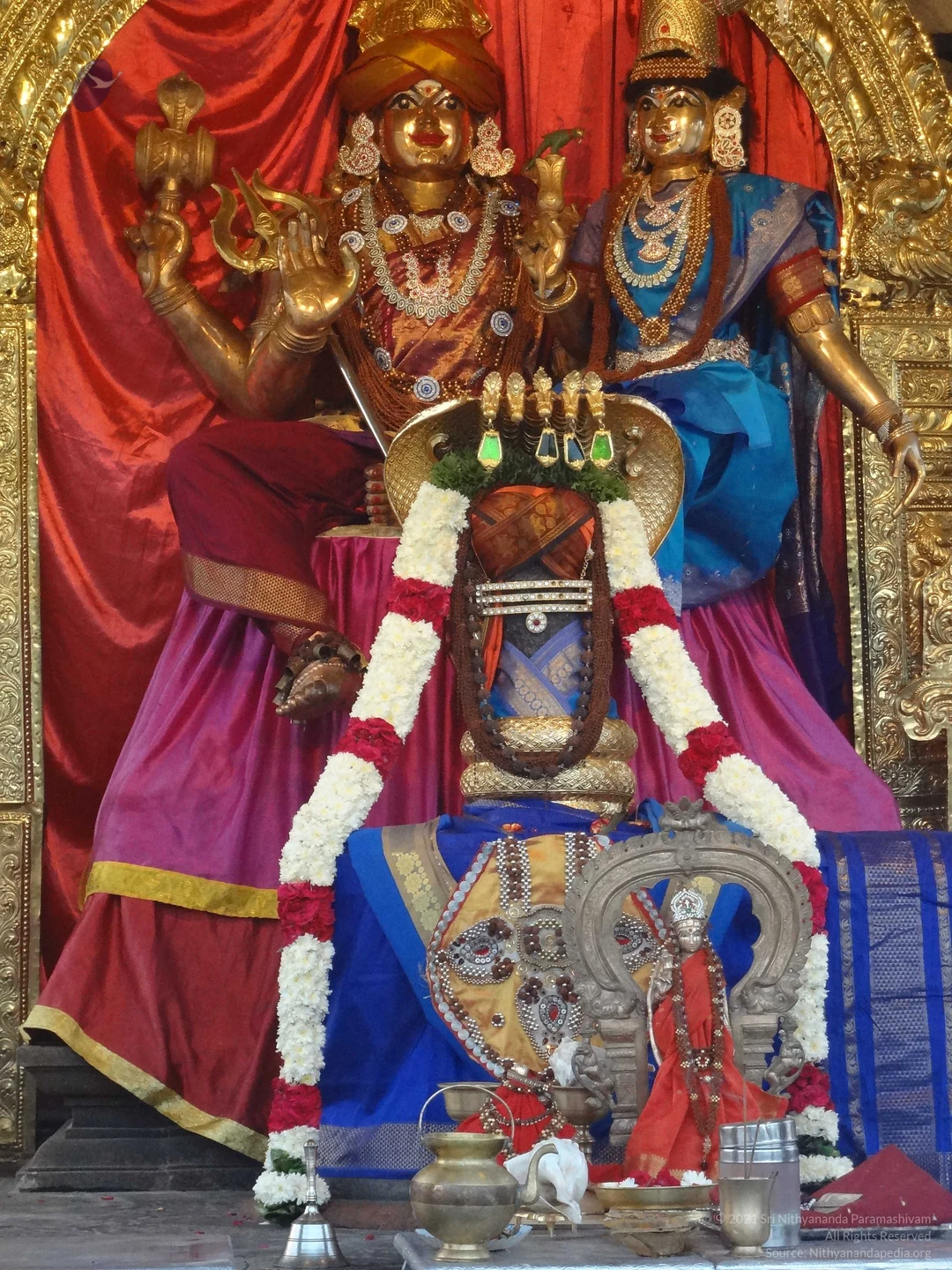
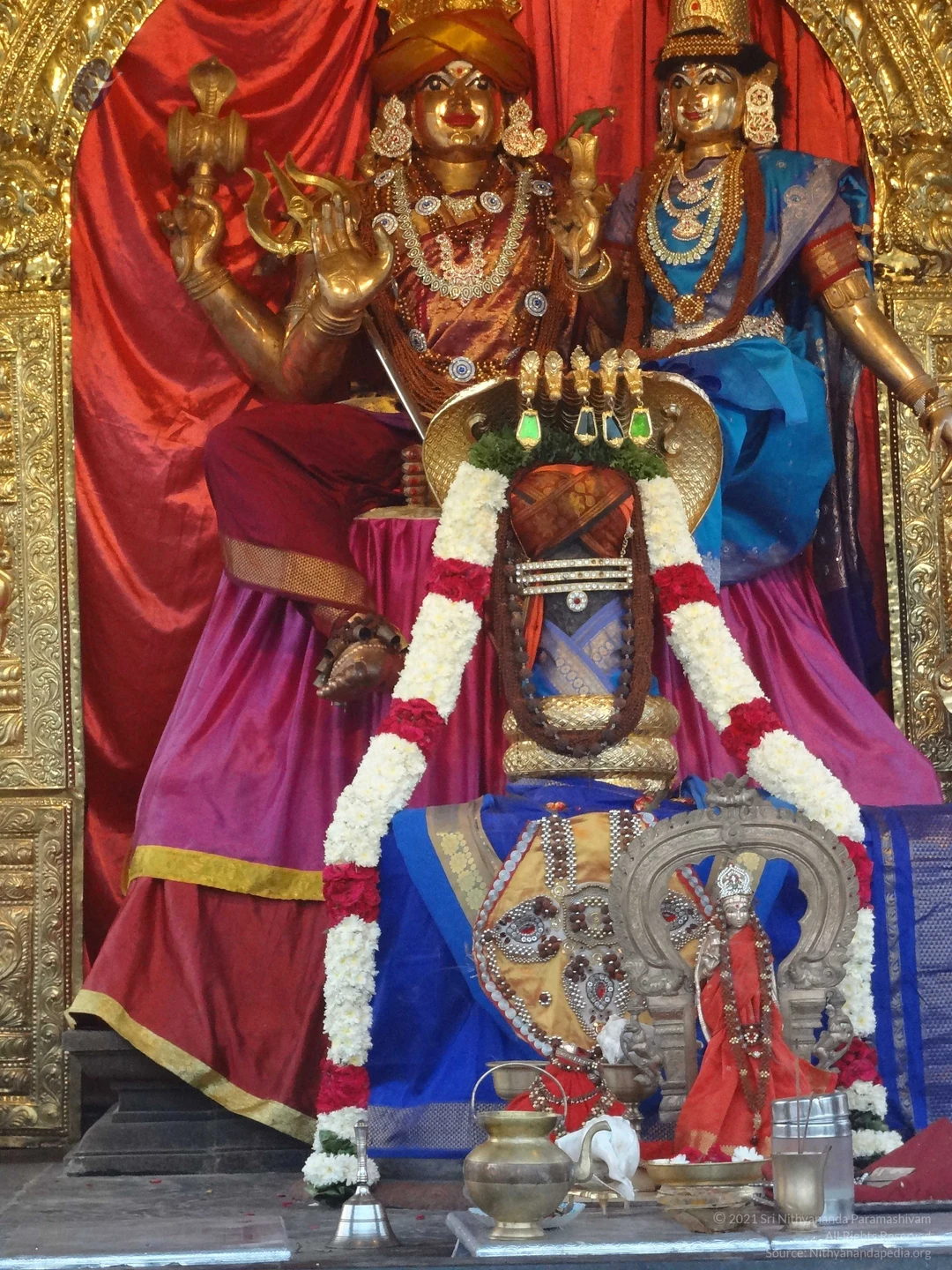
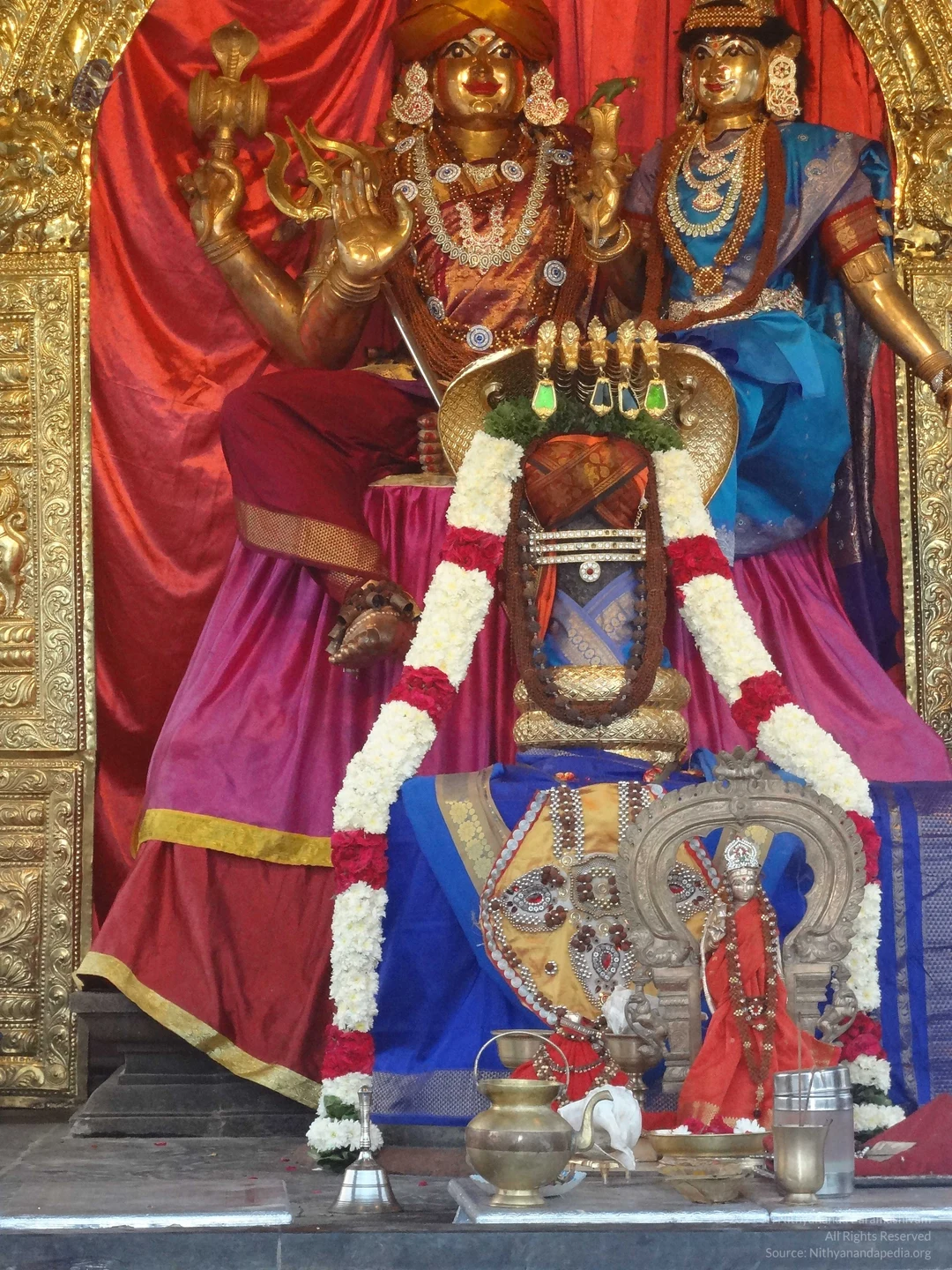
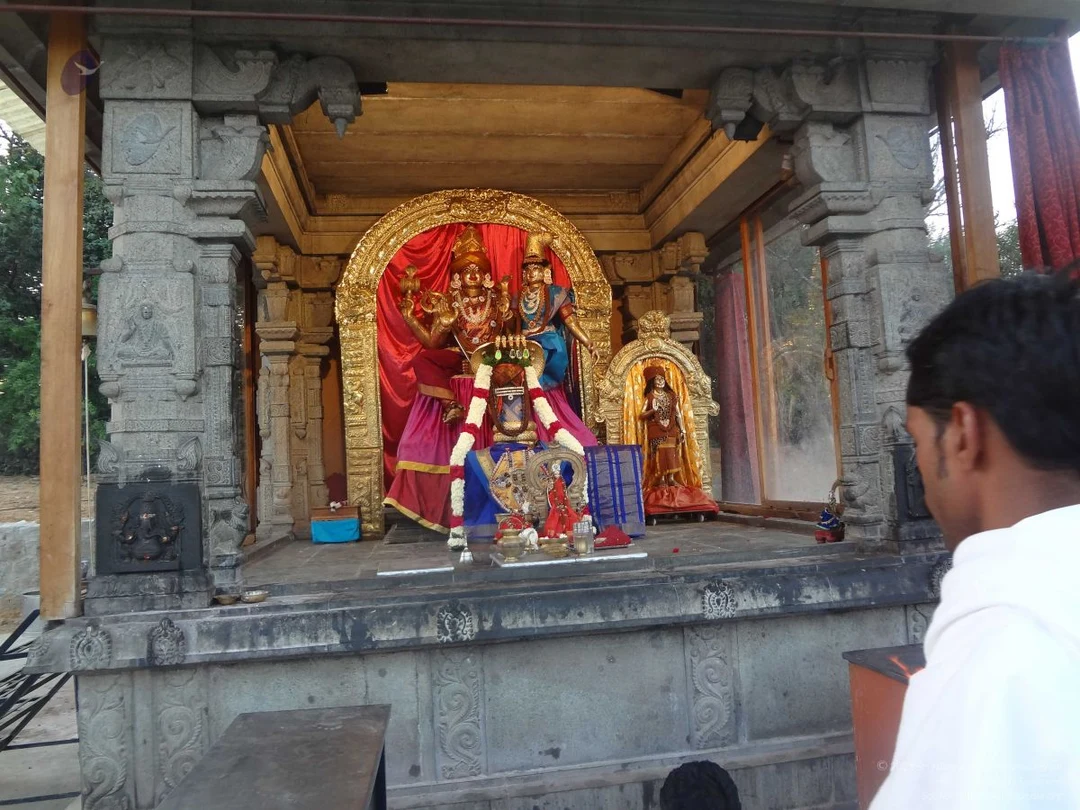
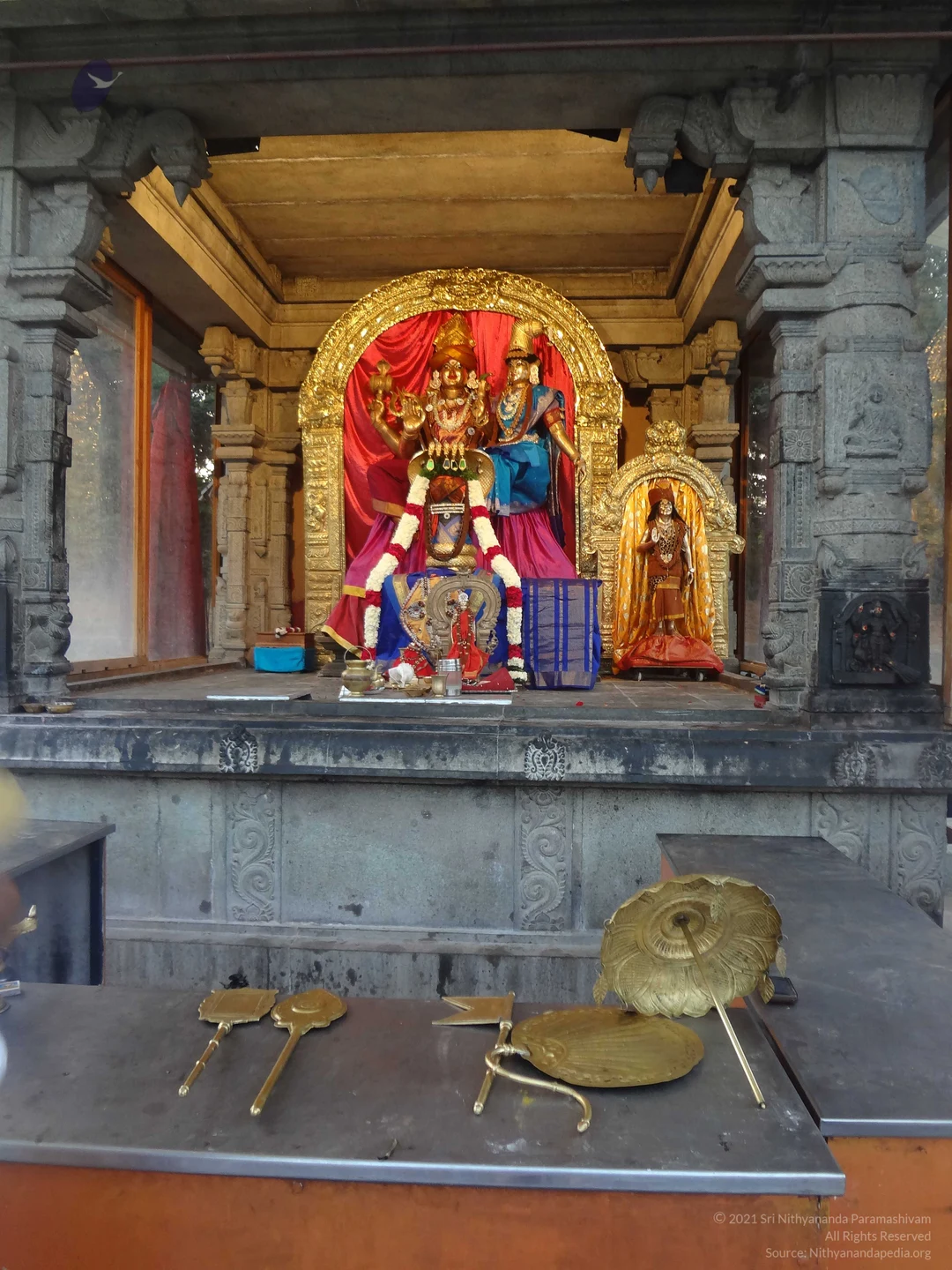
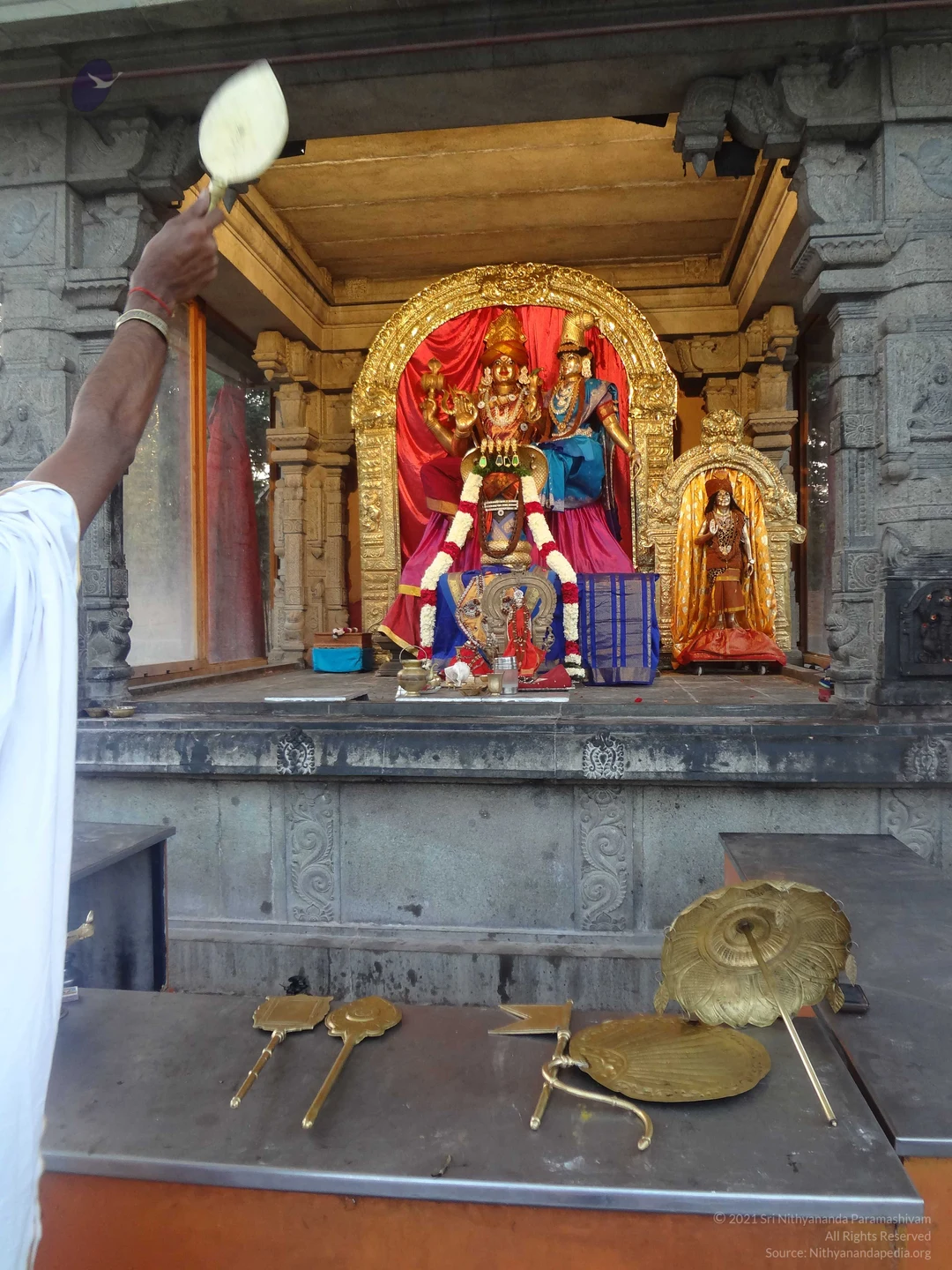
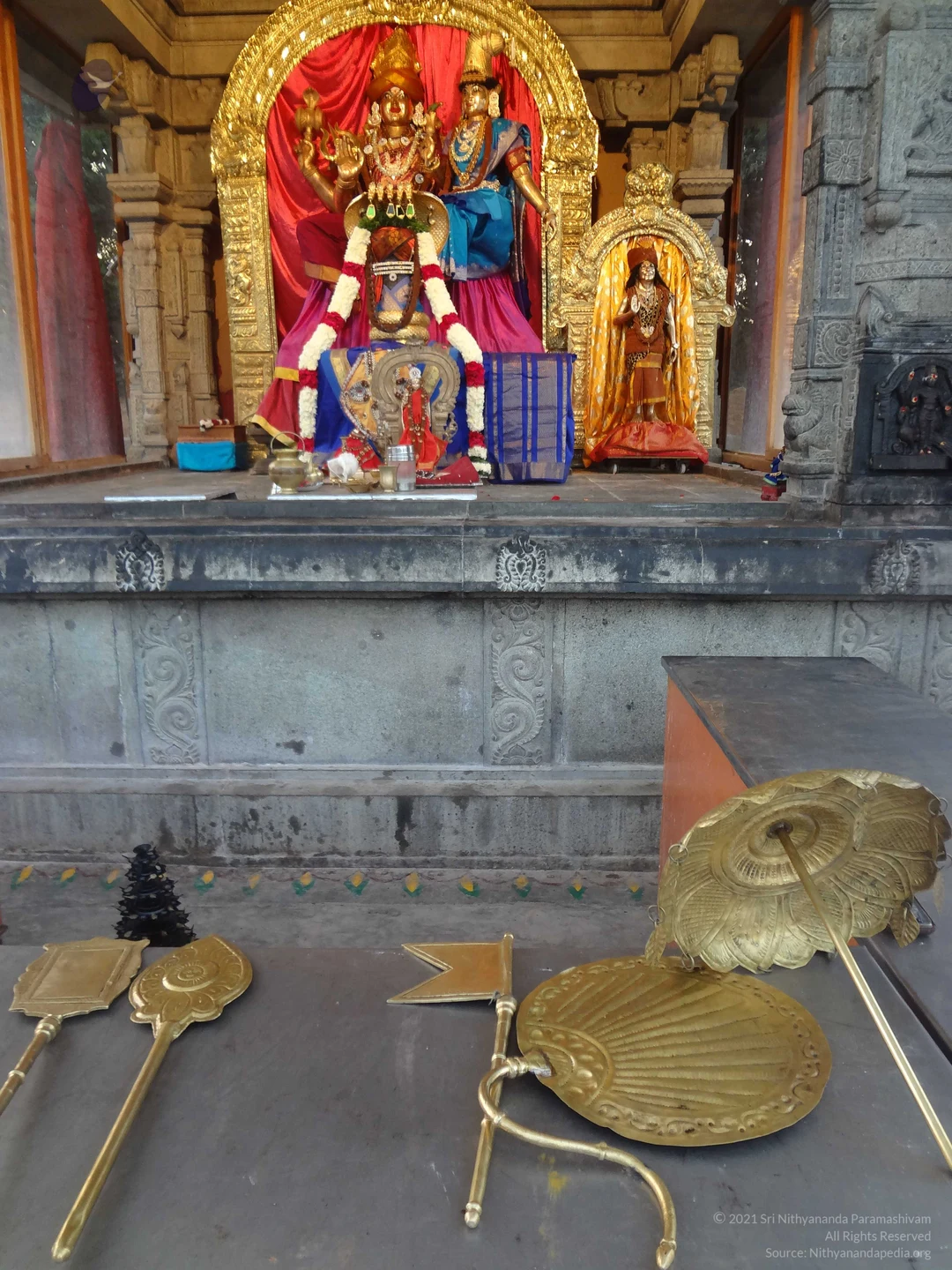
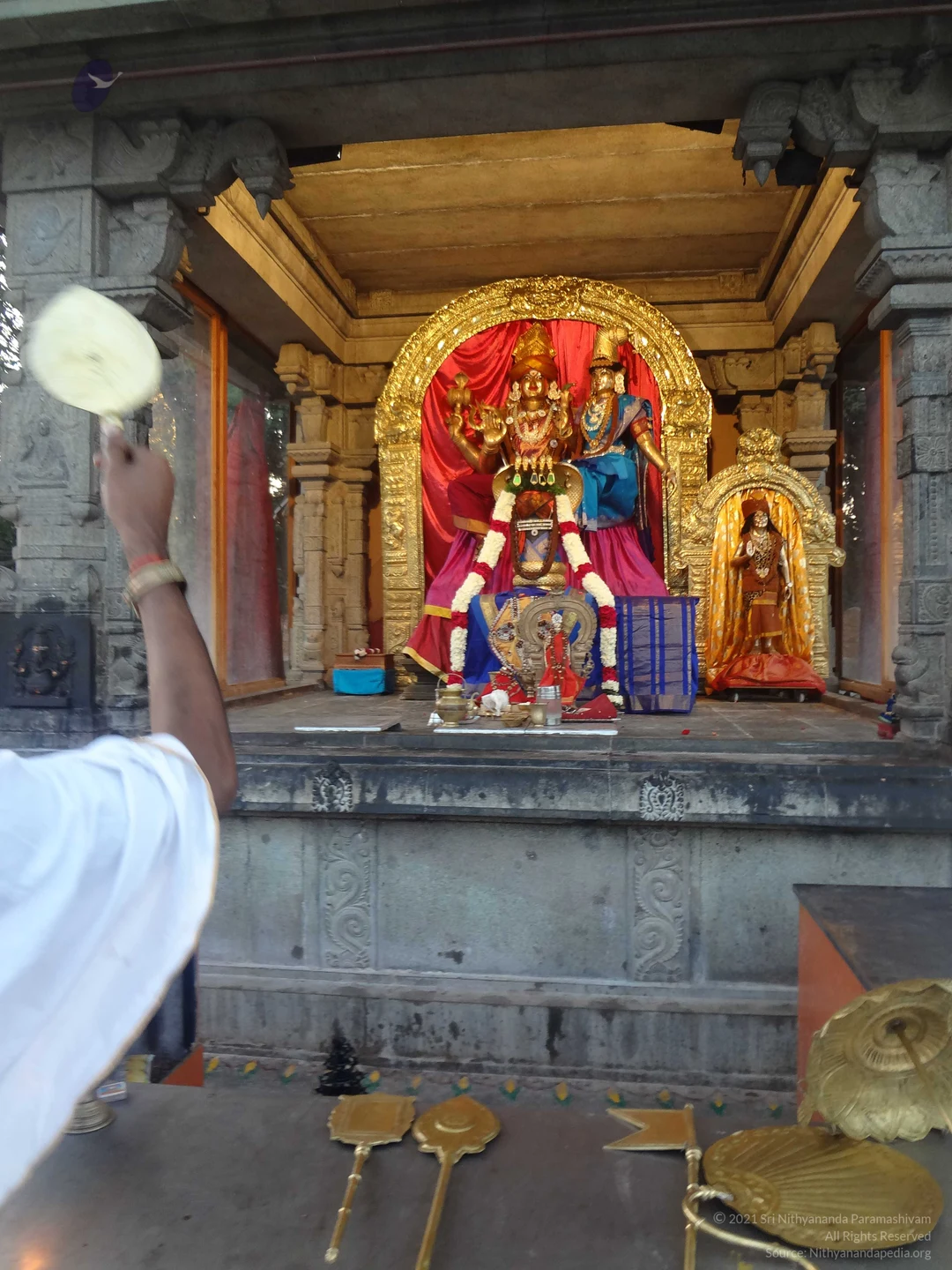
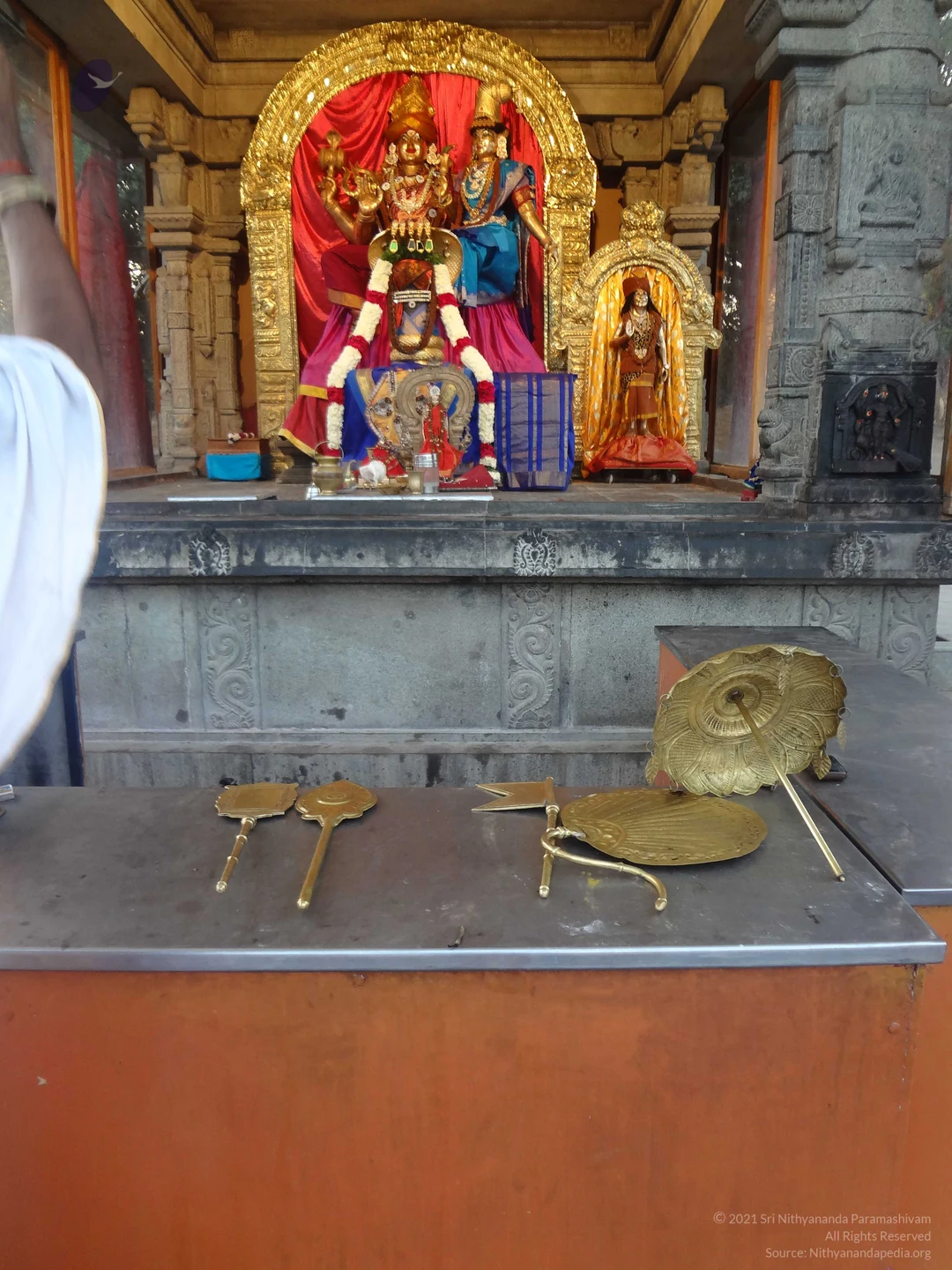
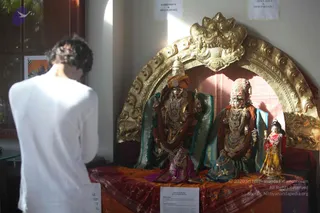
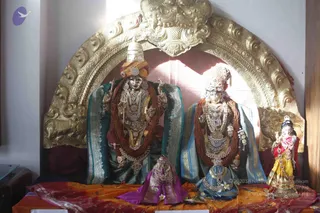
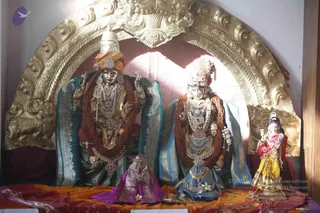
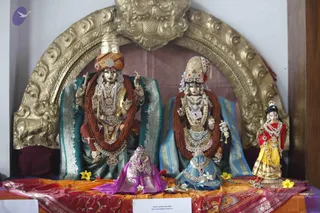
Photograph of an ornate niche with a gilded arched frame containing two ornately dressed deity murtis, standing on a raised altar draped with orange cloth. The left murti wears a tall golden crown, a teal and silver-bordered sari-like garment, and layered gold necklaces and rudraksha-style red beads. The right murti wears a jeweled crown, a blue embroidered garment, and heavy gold and red-bead necklaces. A smaller female murti in a red and yellow sari with gold jewelry stands at the right edge. A purple cloth bundle with flower petals sits at the front of the altar, with a small placard below. Sunlight falls across the scene from the upper left. No people are visible.Photograph of a decorated deity murti set in a gilded arched niche. Two standing metal deity figures dominate: the left one wears a tall gold crown with an orange turban, teal and silver-bordered shawl, layered rudraksha malas and ornate silver jewellery, with raised hands; the right one wears a jewelled headdress, blue shawl with gold border, red rudraksha malas and heavy silver necklaces. A smaller figure in yellow and red garments with jewellery stands at the right, and a purple cloth-wrapped offering sits in front on an orange and purple draped cloth with flowers. No living people are visible.A stage set for a ritual honouring a framed portrait of a smiling figure in orange-saffron turban and robes, labelled by the backdrop banner 'Inner Awakening'. The central gilded frame sits under a tiered red-and-gold parasol canopy, flanked by golden lion figures and a tiger-skin draped platform. A tall multi-tier brass oil lamp burns to the left, with decorated red-brick Balinese-style pillars and white parasols framing the set. In the foreground, a bald man in ochre robes raises a lit lamp and offerings toward the portrait, while a woman in white sits before brass plates of flowers and fruit. Another robed man on the left holds a lit lamp; a bowl, plates and a cloth of orange petals lie on the stage. The portrait on the backdrop is a depiction.

December 06 2013

Original wiki page
Contents

Title

Nithyananda Diary | Padukapuja | Satsang | Dial The Avatar | Nirahara Samyama | Sarvadarshan

Description:

In today’s morning satsang from Bali, Paramahamsa Nithyananda gave us a deeper understanding of completion.. He advised us to never postpone completion. Only completion is useful in your life, whereas everything you accumulate while in the body is useless. He revealed that small penny incompletions can be solved by authentic listening, intranalyzing or radiating all the other larger incompletions we should complete.

Link to Video:

VideoAudio

Transcript:

Nithyanandeshwara Samaarambhaam Nithyanandeshwari Madhyamaam || Asmath Aachaarya Paryanthaam Vandhey Guru Paramparaam ||

I welcome all the devotees, disciples, samajis, satsanghis sitting with us through Nithyananda TV, Lotus TV, Janashree TV, Sadhna TV, Eshwar TV, and through two-way video-conferencing all over the world.

Cities sitting with us in two-way video-conferencing: Bogota-Colombia, Santa Fe-New Mexico, New York-Varanasi, New Zealand-Adi Arunachalam, Devon-UK, Bangalore-Malleshwaram, Ohio-Prayag, Guadeloupe-Rameshwaram, Los Angeles-Arunachalam, Sharjah, Nithyananda Nagaramu-Hyderabad, Singapore-Singapuram, Toronto-Kailasam, Nithyananda Nagara-Bidadi, San Jose-Madurai, Seattle-Chidambaram, Paris-Home Temple, San Diego-La Jolla, Ohio-Prayag, Dubai-Vaidyanatham, Kathmandu-Nepal, Sannyas yatra coming from Rajapalayam.

I welcome all of you with my love and blessings.

Today, all over the world, devotees start the Jeevan Mukthi Vratha, twenty-one days, which ends on December 26th on the eve of Jayanthi. So, all the devotees can start the Jeevan Mukthi Vratha today.

And I also express my heartfelt condolences on Nelson Mandela’s passing away. All his family and friends and the country people, to all of them, I express my heartfelt condolences. And I also pray that let his soul rest in peace.

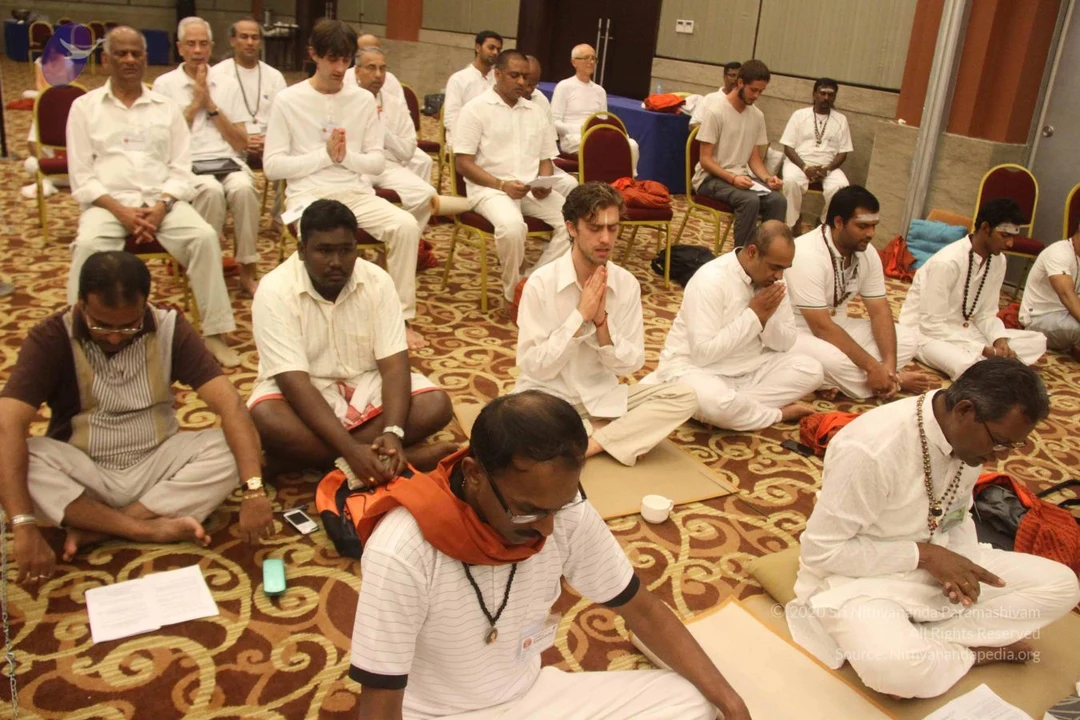
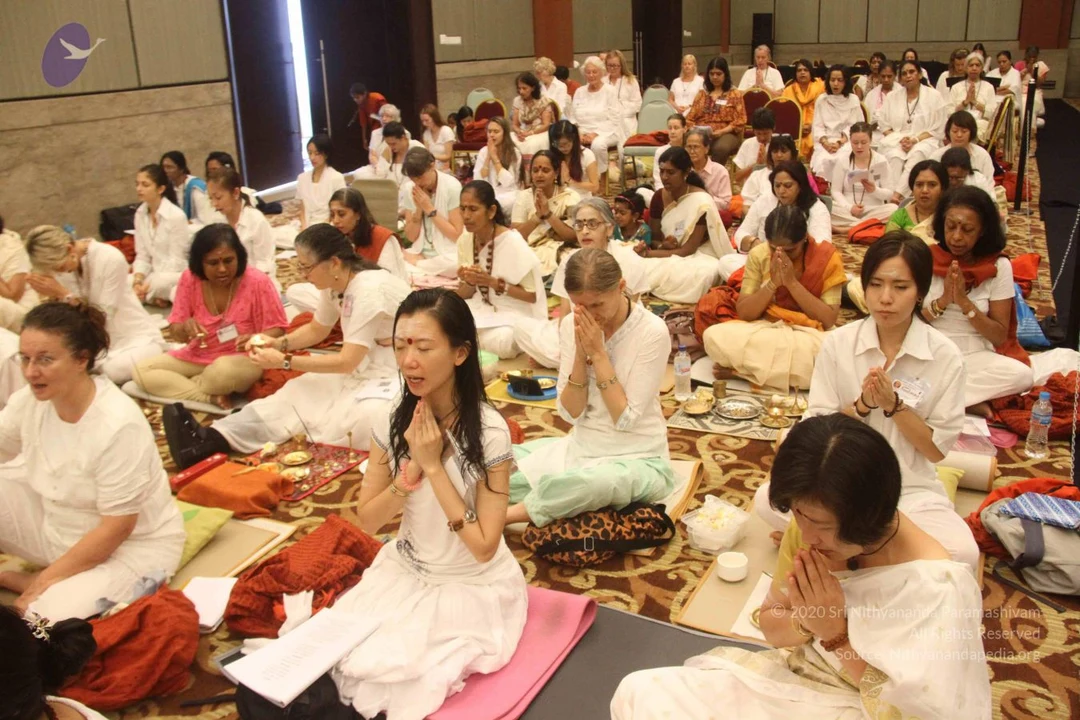
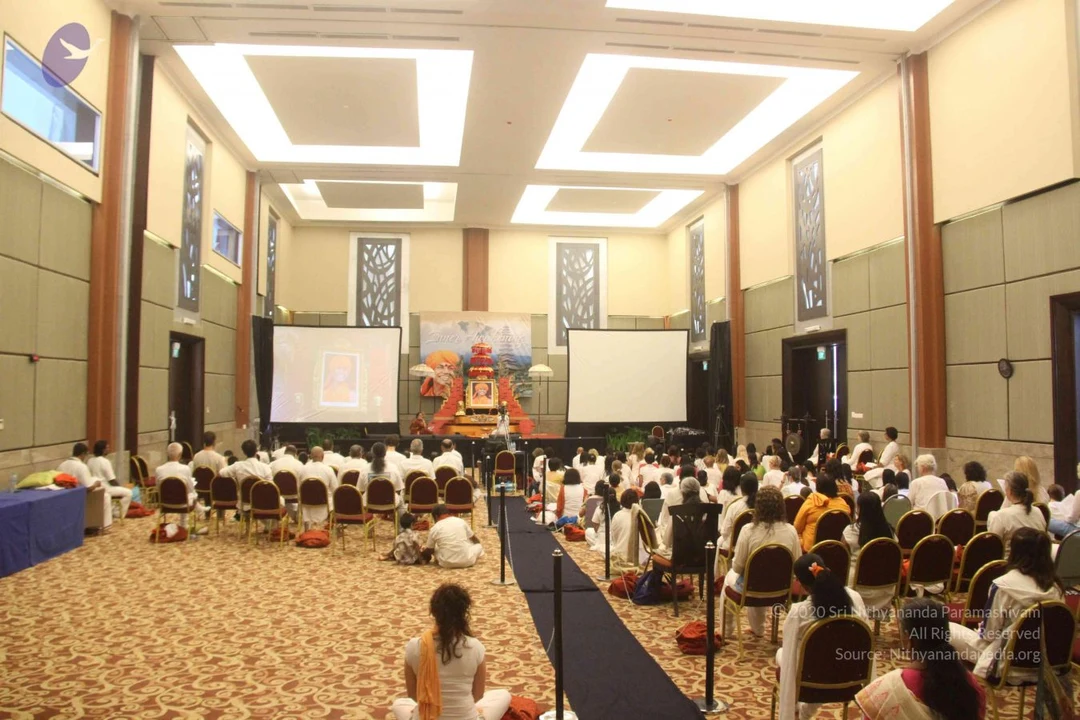
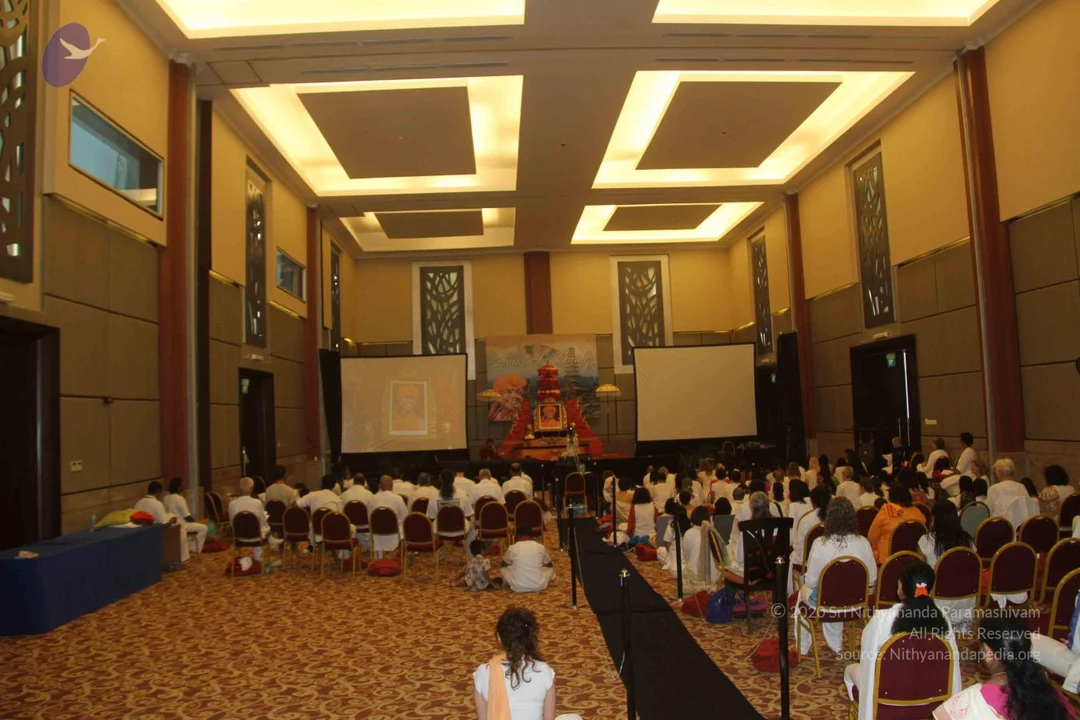
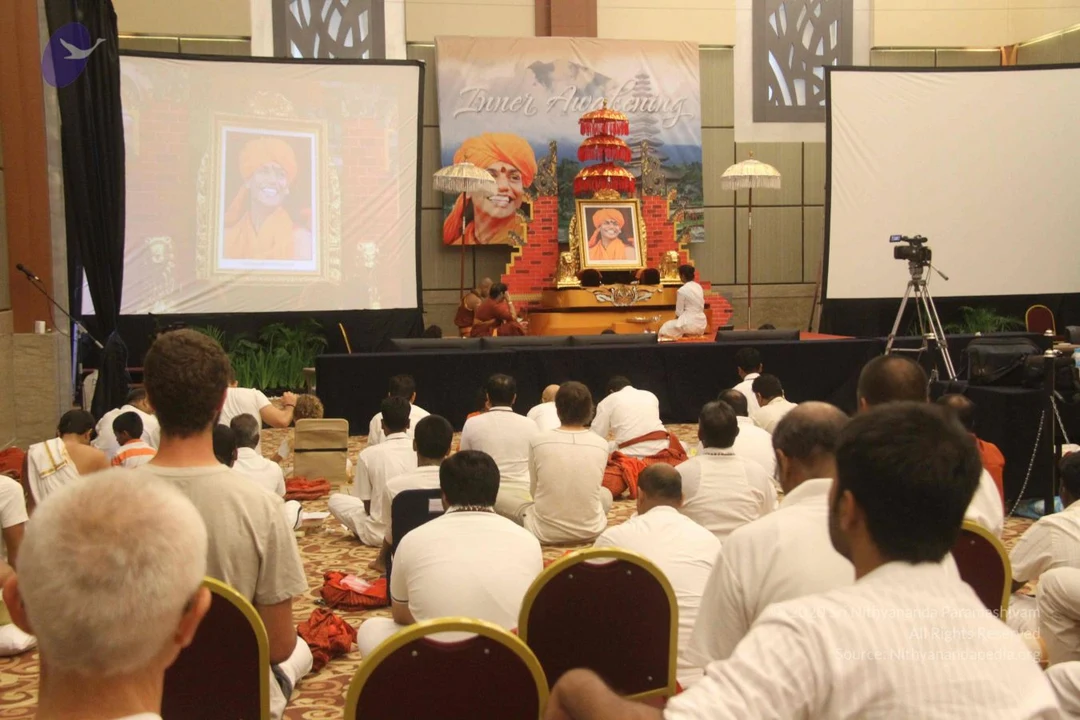
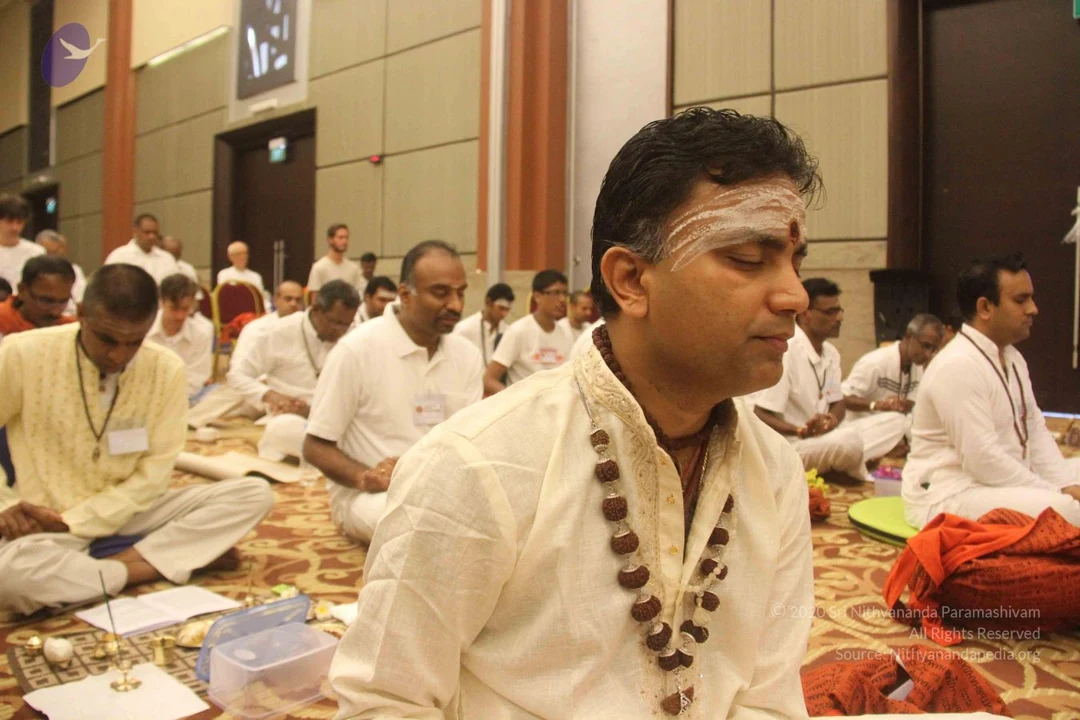
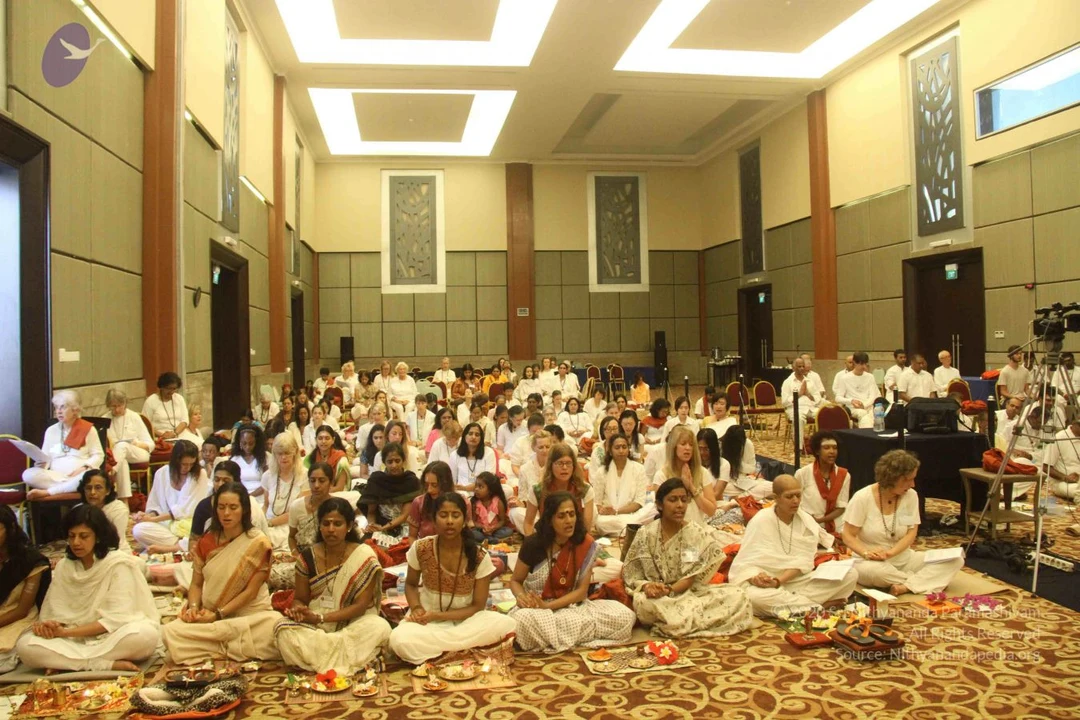
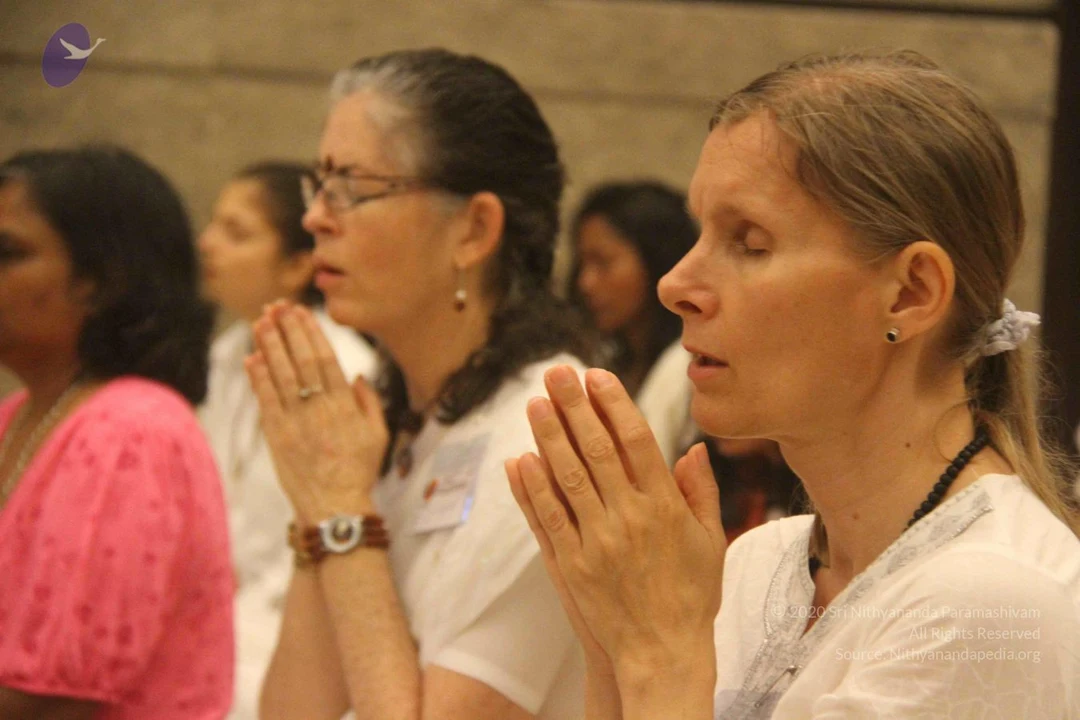
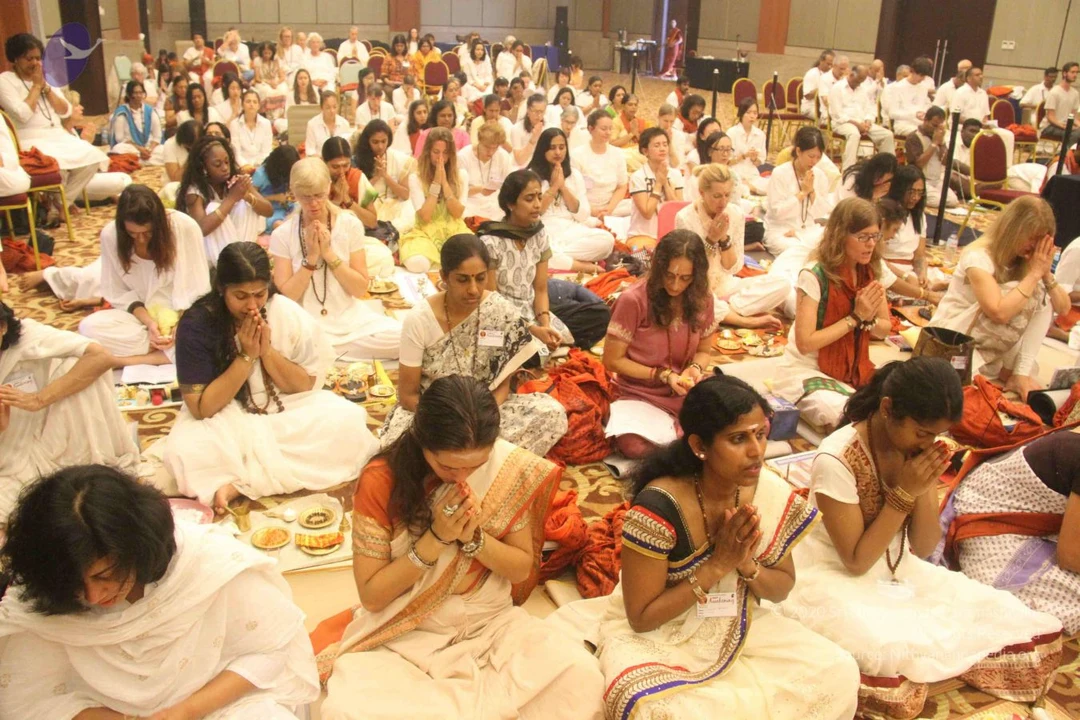
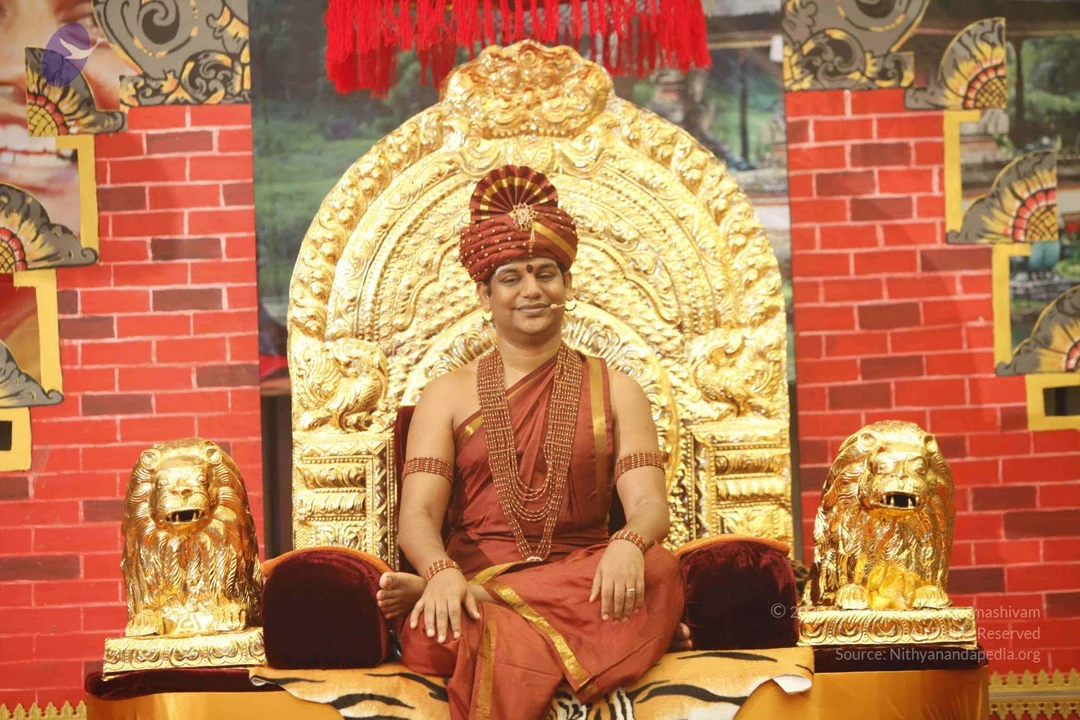
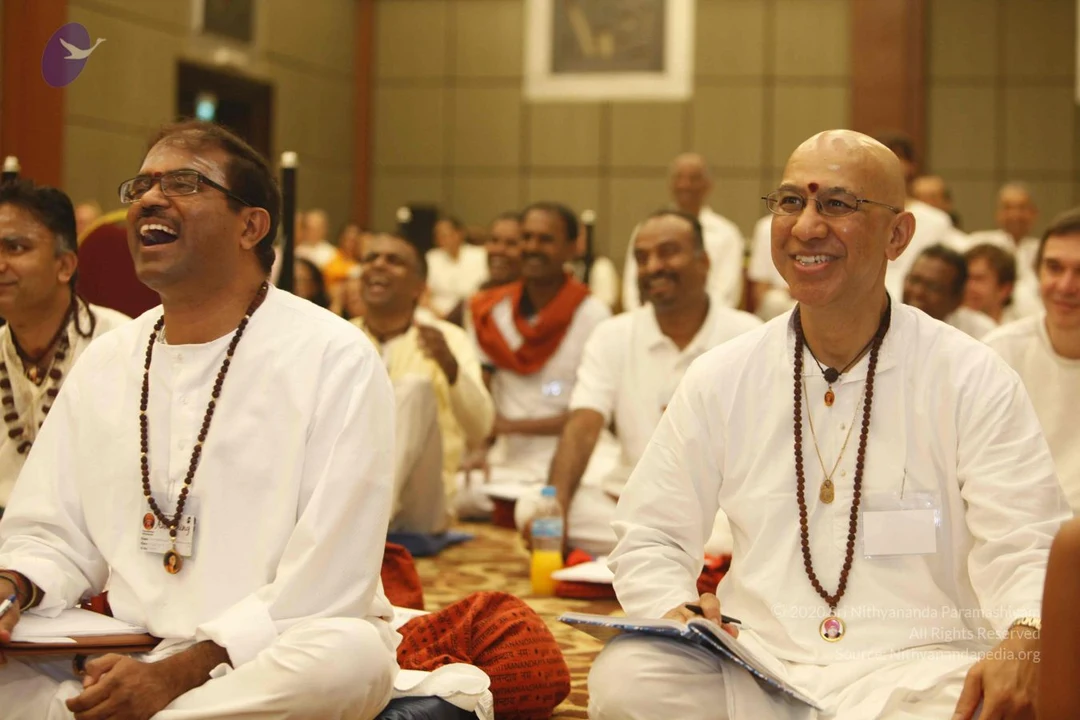
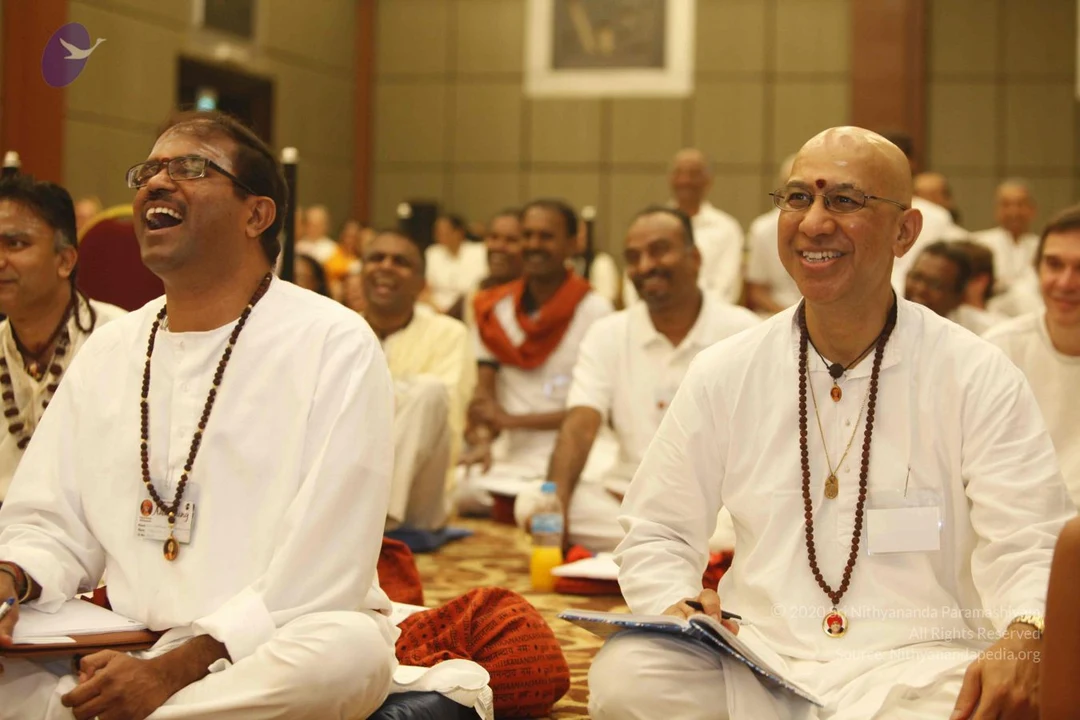
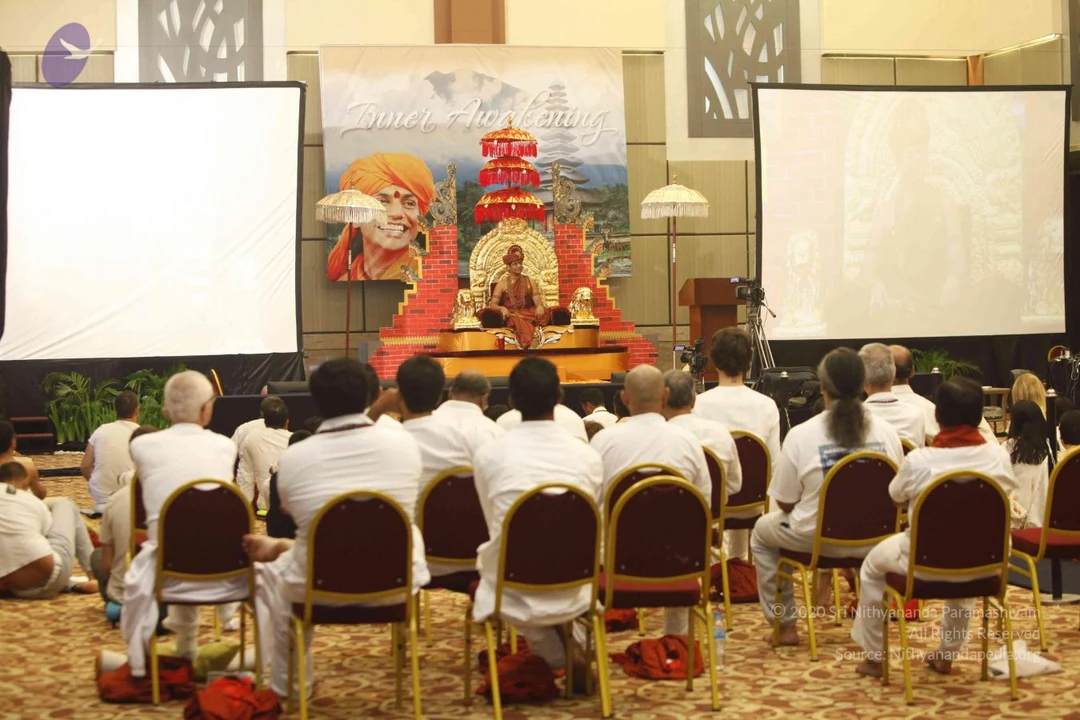
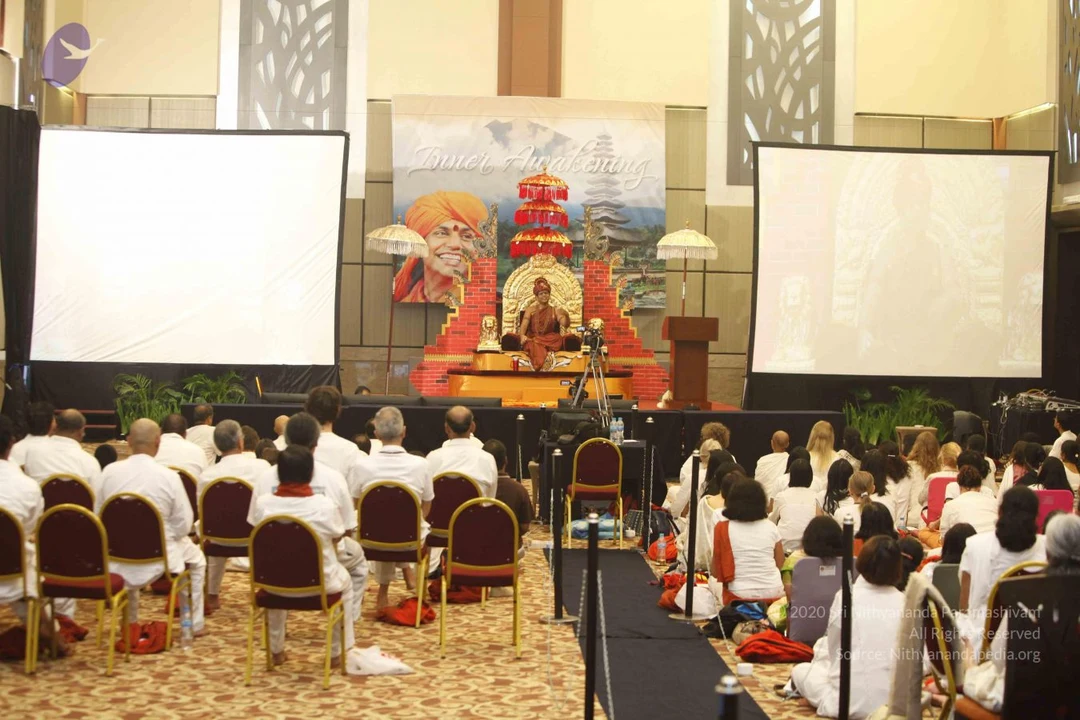
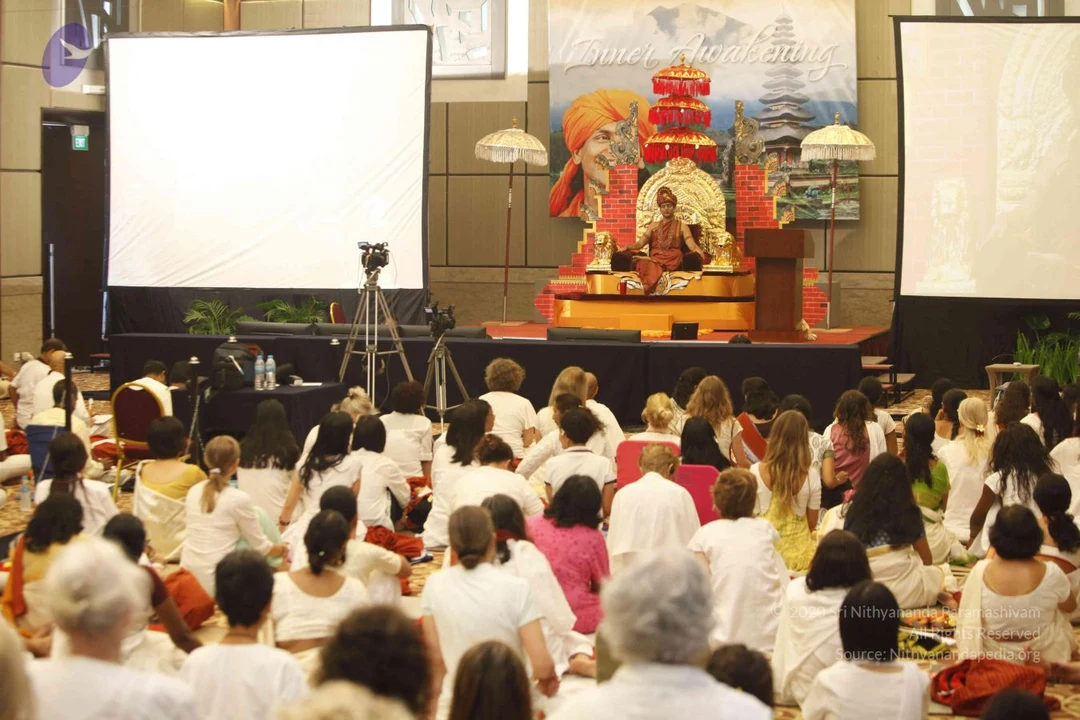
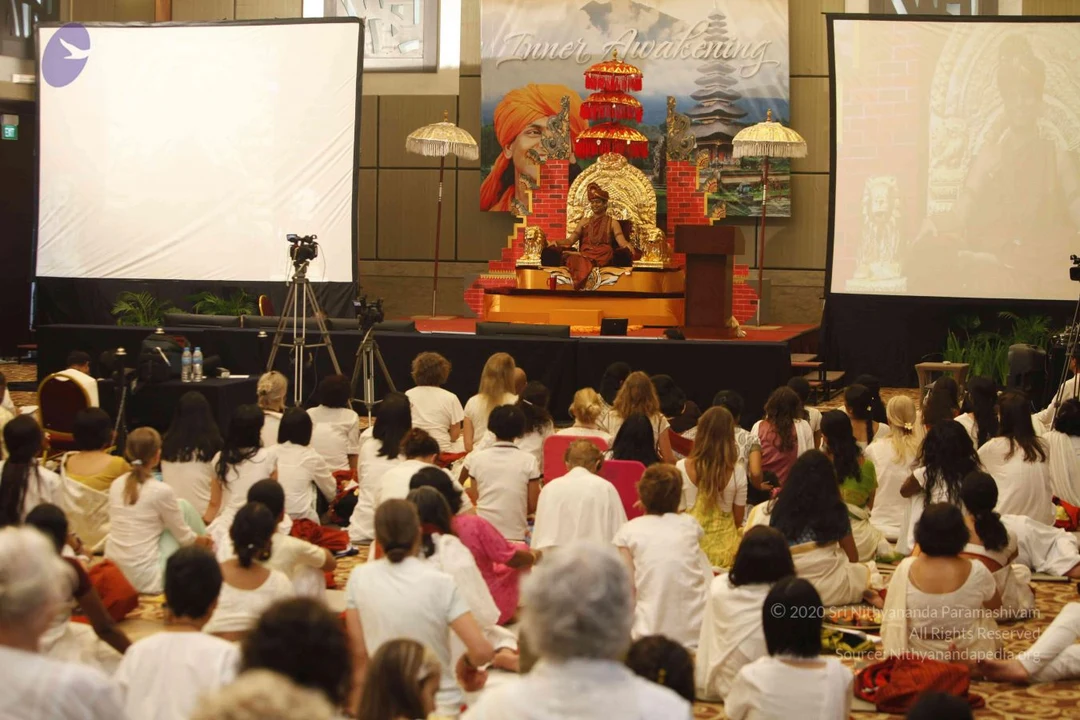
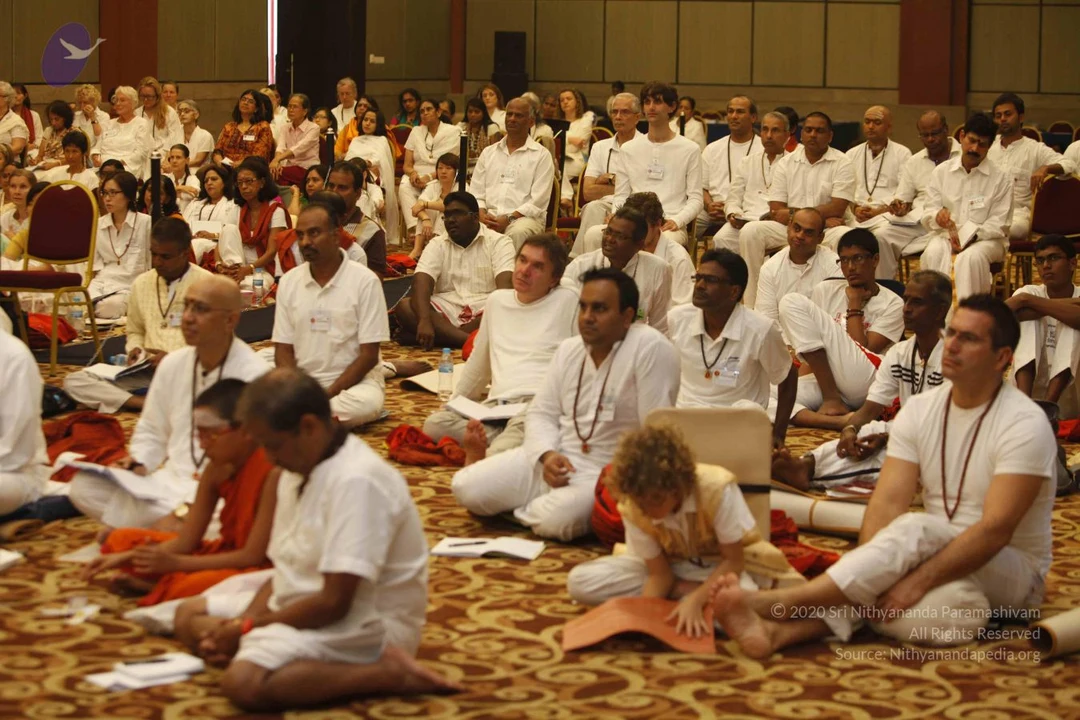
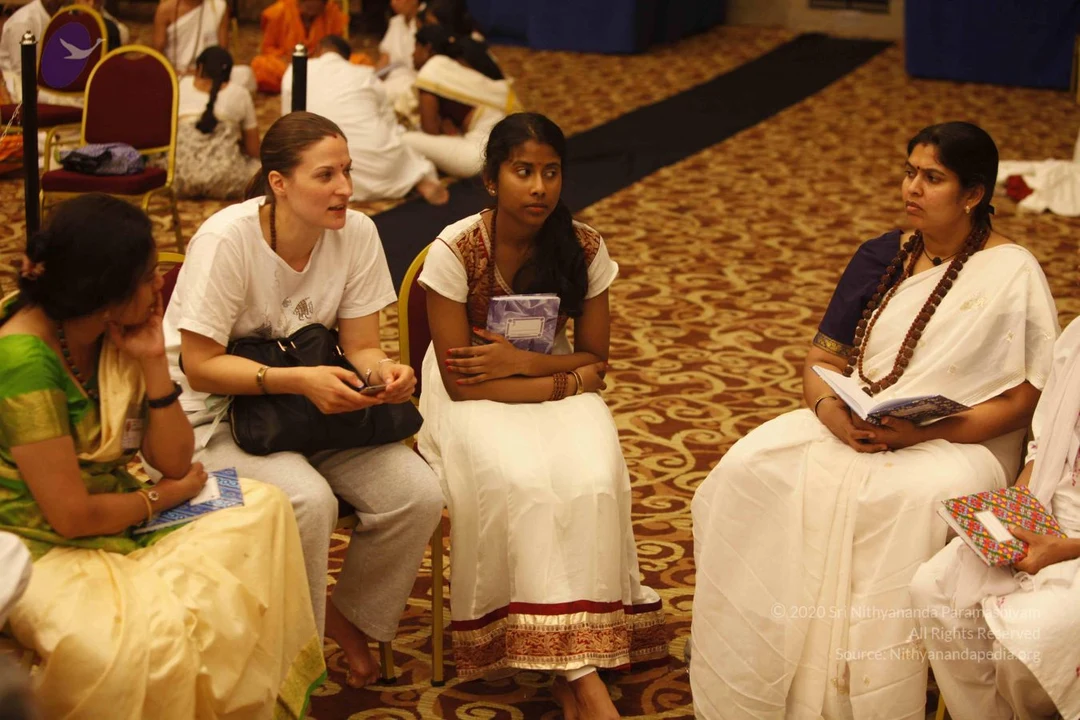
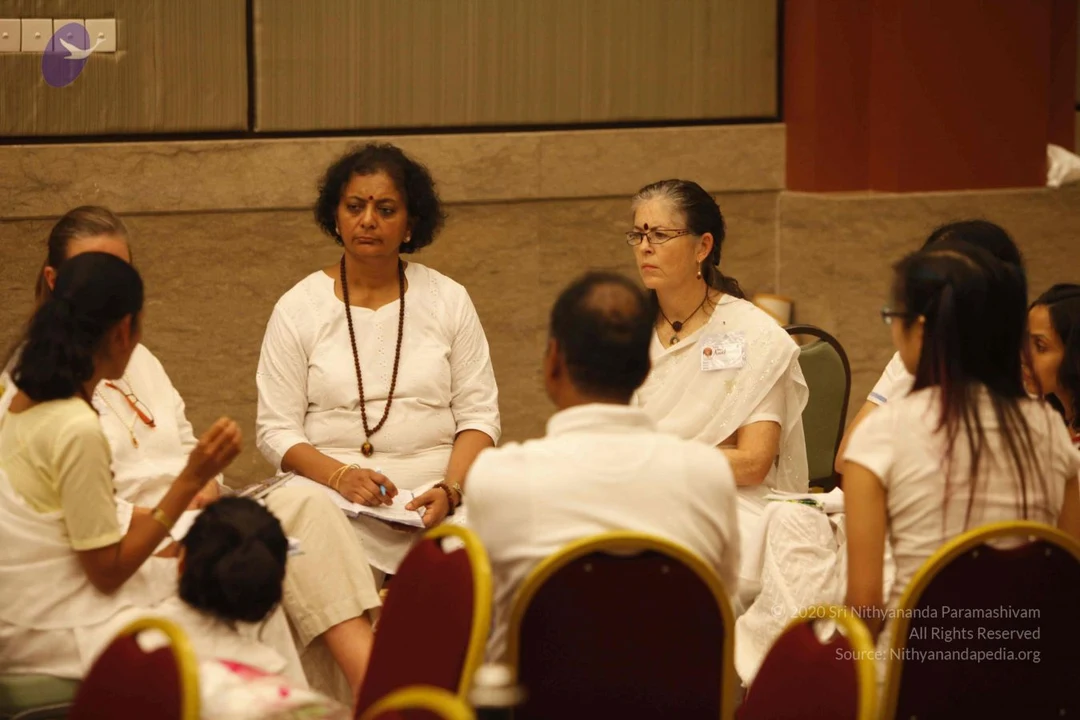
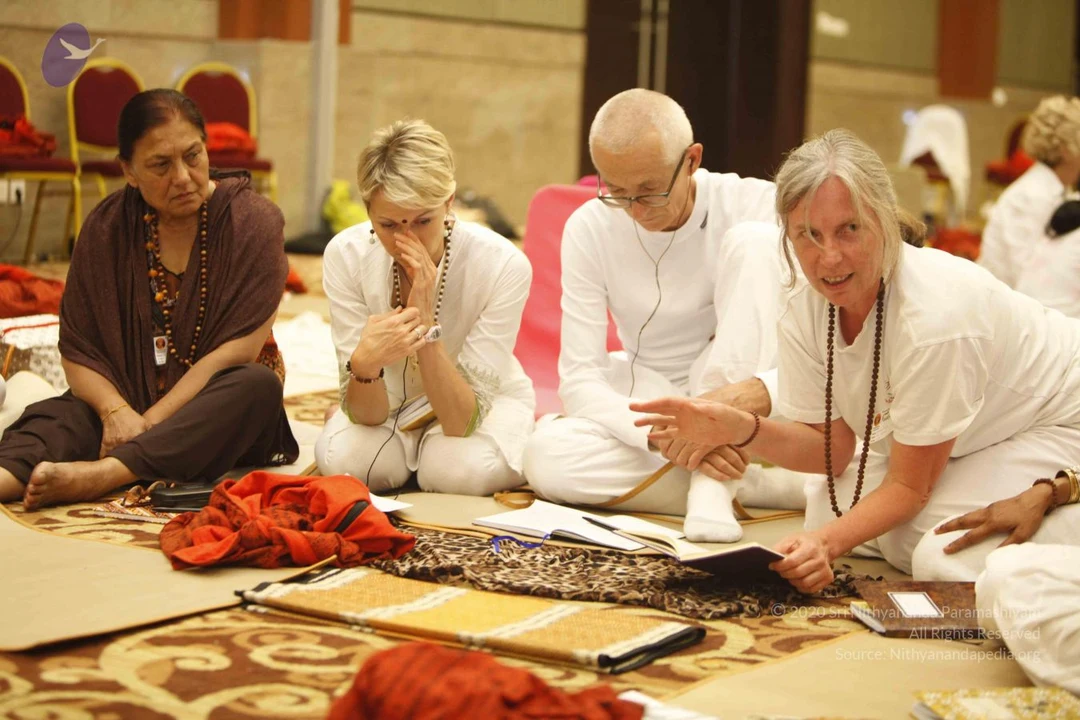
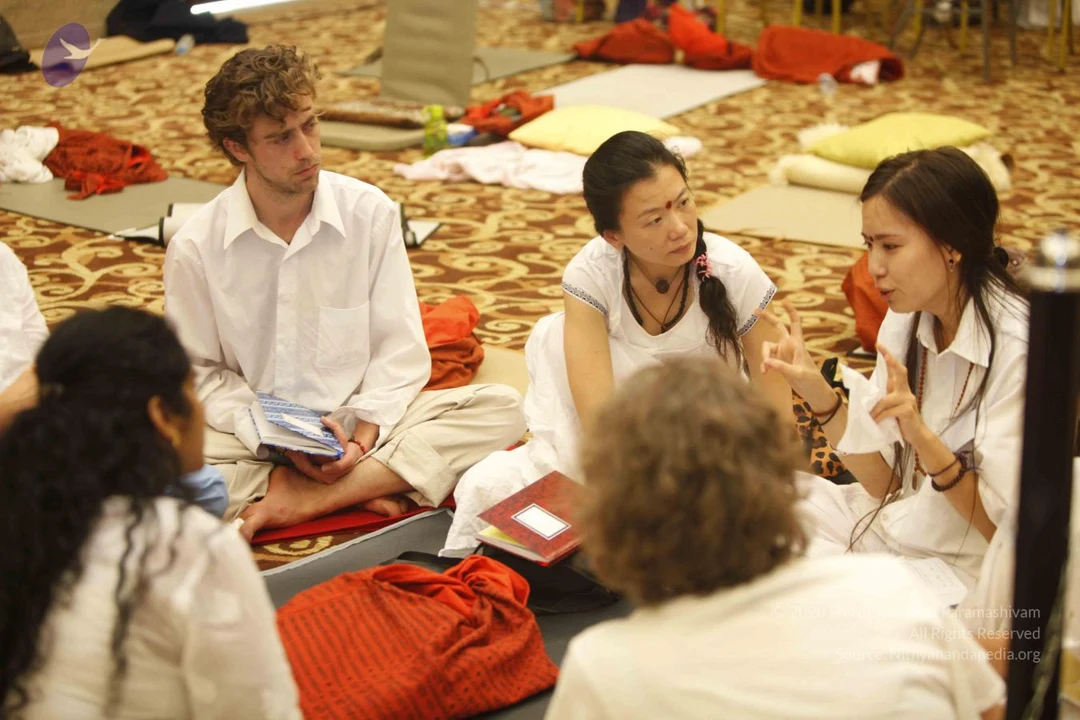
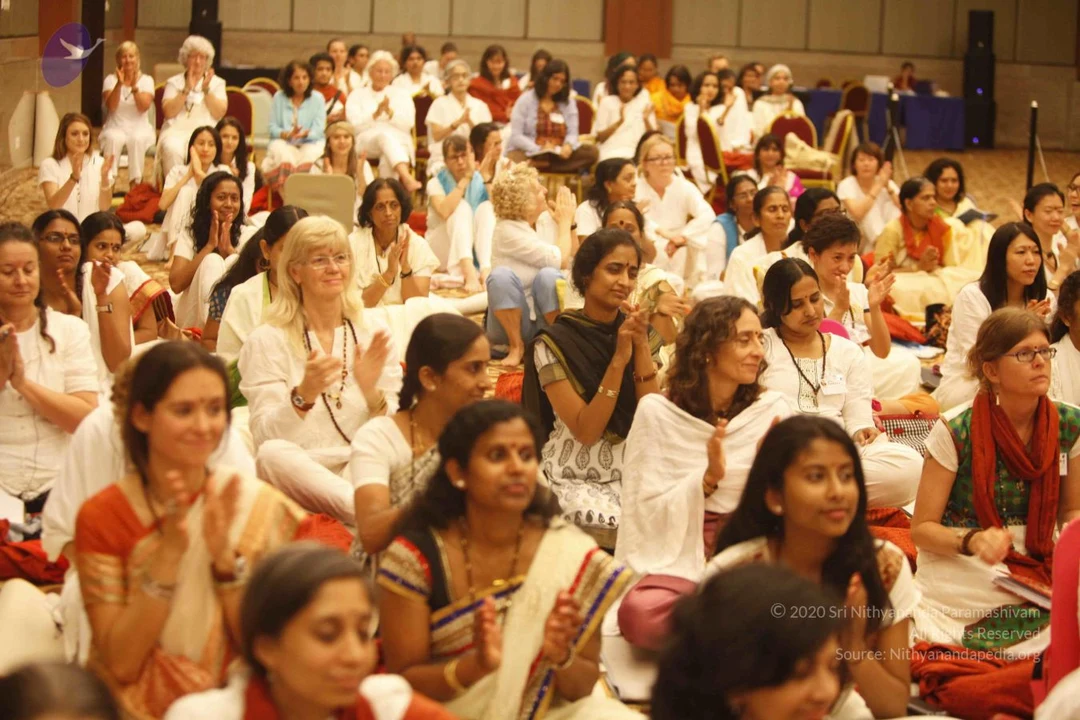
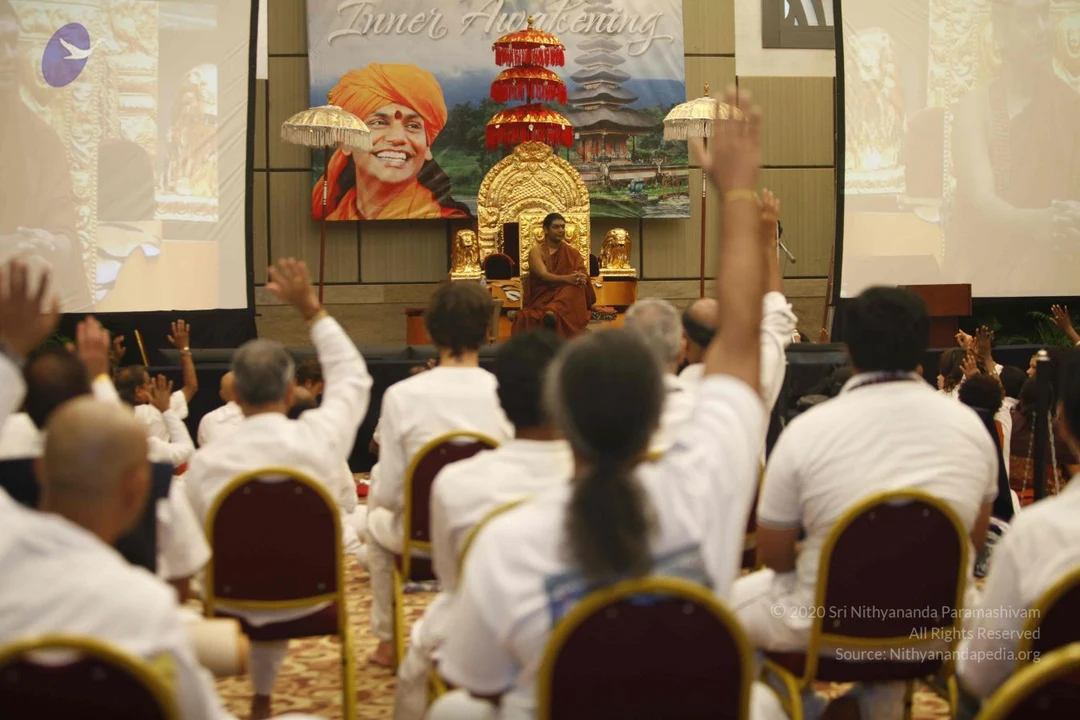
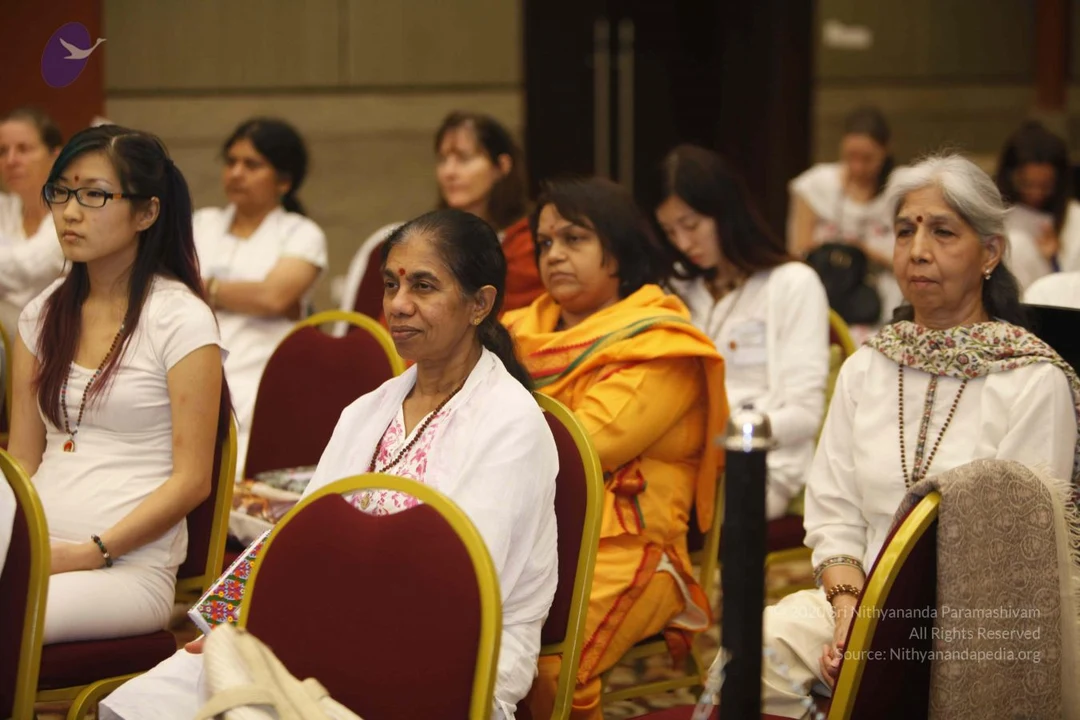
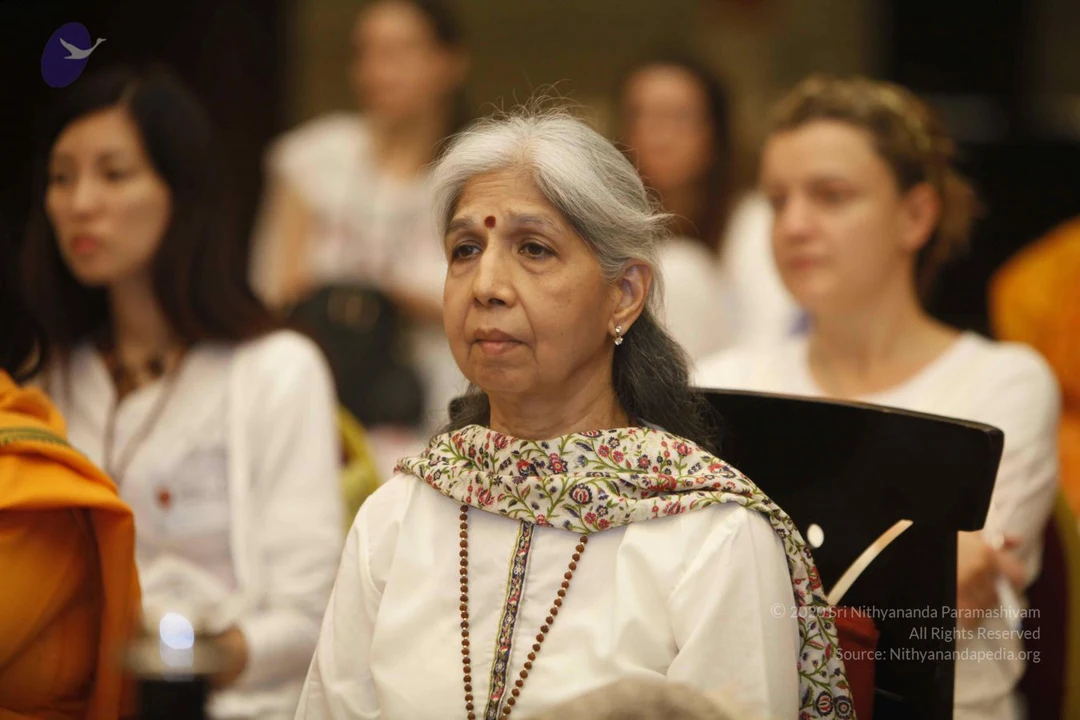
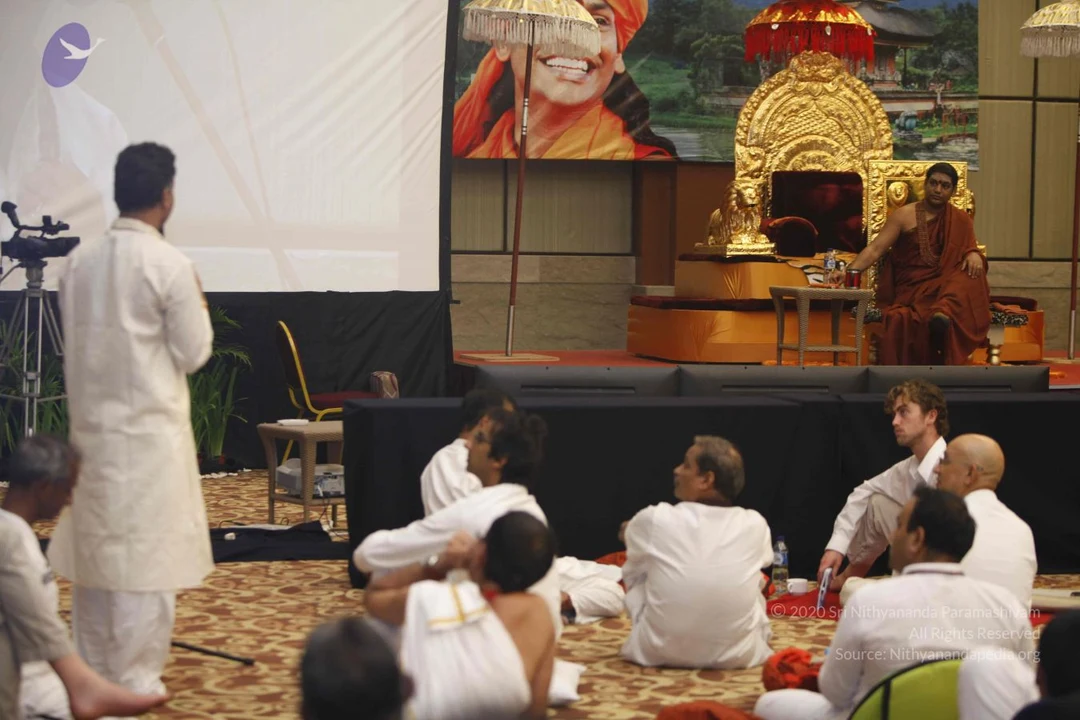
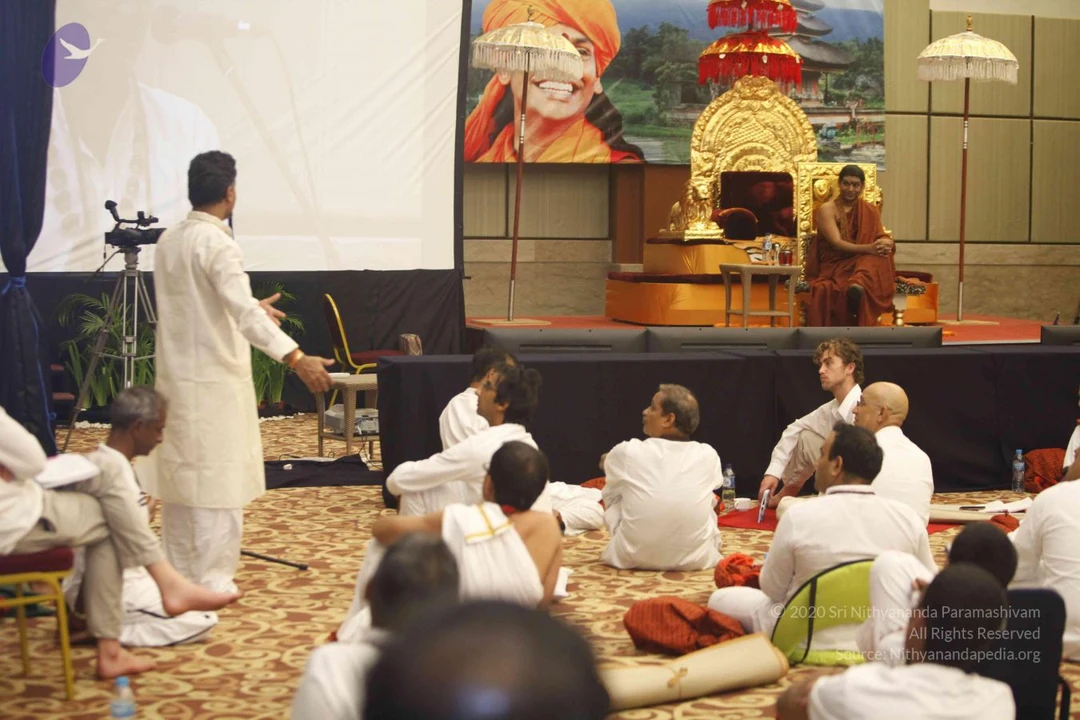
Today, Inner Awakening sixth day! Actually, it feels like a long time, because so much is happening! Today, we will work on “COMPLETION”. Because, we are having very intense sessions every day. Yesterday, almost four hours we had just one session! Just my session - almost four hours! Not only I did not move, the whole group did not move and did not even remember it is four hours! See, four hours you guys sitting and listening to me has happened many times; but four hours with the same sincerity sitting and listening to others is happening for the first time! Because, even if you felt a little bored, immediately coffee, rest-room, snacks - you would have run here and there, or moved from here to there, there to here! But, nothing, no restlessness and no sleeping!

Today we will work on “COMPLETION”.

First, we worked on Listening, Authentic Listening; then Manana, Intranalyzing; then Nidhidhyasana, Radiating, Living; and now Completion, Poornathva. Actually, only when you do all these three, you will understand your real incompletions. Only when you authentically listen, actually when you authentically listen, all these “penny” incompletions will dissolve by itself. When you authentically intranalyze, every petty incompletions you have, penny level..... But most of our incompletions are not worthy of more than two or three pennies. It started only with two pennies, three pennies. Nothing is worth more than five pennies maximum. If you want to sell all your incompletions, maximum I can give five pennies, not more than that; because, nothing is worthy of more than five pennies. Most of it will melt down with authentic listening and intranalyzing and radiating. Even after all these three, if something does not melt down, some incompletions do not melt down, only those incompletions need your attention, only with those incompletions you need to work and complete.

Don’t do child play even with incompletions. Don’t be too foolish, playing with small, small incompletions – ‘No no, no, I put red colour Bindi here, black colour Bindi here, it became incompletion in me’! No, as I said, all penny incompletions. After these three – listening, intranalyzing, radiating – if you still have some incompletions, you need to attend to them. Only those incompletions are even worthy of your Completion; otherwise don’t sit in front of the mirror and waste your time attending to all penny incompletions, petty incompletions. Don’t waste “mirror hours”. When you sit in front of the mirror, you should be mirroring the neuron activities of Swamiji’s brain. Don’t waste the time, mirror hours.

Sometimes people ask me, ‘How do I know, Swamiji, whether I have incompletions or not?’

If your mouth is smelling, will you not know? You will know! Same way, if your mind is smelling, you will know!

When you have something inside, you know it.....you will know it! If you have a mouth smell, even if you don’t know, the way others near you react, you will know! Same way if you have incompletions inside, even if you don’t know, the others - way they react near you, you will know! That’s all!

I tell you, the greatest thing you should acquire in this life, in the human body is Completion. For example, you work whole life - thirty-five years, and make money in dollars. Suddenly you move to India where you need rupees, and your dollars cannot be converted into rupees. What will happen? The whole thing is waste! Same way the vice versa. You work whole thirty-forty years of your life in India, make rupees, and suddenly you go to some other country, Europe, and you cannot convert all this money into Euros, what will happen to you? Waste! You are not accumulating, acquiring what is going to be useful for you forever. Same way, listen, anything you accumulate while you are in the body will be useless. In the exchange, after you leave the body you are going to go to some other place where space, the exchange rate - the exchange is not possible, exchange rate is zero! Only Completion can be exchanged. That is the only thing which will come with you.

The power you feel with Completion! Completion! I tell you, when you bring Completion into the body, your every organ celebrates you, your stomach co-operates with you, your heart co-operates with you, your lungs co-operate with you, your brain co-operates with you, every organ blesses you, feels joyful, creates joy.

Incompletion is the hangover and residue of the past - memory, incidents, situations residing inside you in the present moment and restricting your cognition and your life. I tell you, sometimes your incompletions do irreparable damage to you. Don’t think, ‘I will complete after one year, after two years...’ No! Take it seriously! Because, your incompletions don’t keep quiet, like terrorists don’t keep quiet. You cannot say, ‘After two years I will fight with terrorists.’ Till then they will not let you live; they will finish you off! Terrorists do not let you live! Incompletions - incompletions do not keep quiet. They go on destroying everything related to your life’s purpose, everything you need to fulfill why you are on the body, why you are embodied, everything you need they will destroy.

Listen! Don’t postpone completing with your incompletions, because they destroy whatever you have. They destroy your very purpose of existence! Incompletions - actually incompletions literally act like your enemies sitting inside you. They have a very sadistic pleasure. Even if your need is too small, just with one small flower you will be joyful, they will not let you have even that small flower. They won’t let you have even that small flower. Incompletions have very sadistic pleasure. They will exactly go and make only that flower wither away! Just you should not get that flower, that’s all! You can see in your life, very ordinary things which every Tom, Dick and Harry gets in life, when you want it, you will be suffering, you will be struggling to get. You will not be getting it and all the fools in the street will be having it and wasting it! Not only having it, but wasting it! When you want, when you are struggling for it, you won’t get a bit of it. How many of you have this kind of experience in your life? (People raise their hands). I tell you, what stops you is exactly your incompletions, because your incompletions make sure even if it is too small, you don’t get what you want. Even if it is too small!

Just you want to pierce your ears – you will see that person will not be there, the machine will break – just before one fellow would have come and pierced his ears and the machine has broken, or that fellow had allergy. This fellow who pierces says ‘No no no no no, I’m afraid, suddenly I’m feeling fear. I’ll change the drill bit and call you day-after-tomorrow. And day-after-tomorrow when you call him back again, ‘No no no, I’m on vacation for next ten days’’! Small thing!

For example, just one specific dress you wanted, a white colour dress. You will get all other colours in the shop, but white if you ask, they will say, ‘No, If you order, you will get it.’ How much time you will take? ‘Two months!’ After two months, the textile industry is closed! And then, after two months, ‘I will try to order from some other shop’, and, after one year, the shop guys says, ‘No, my business is not doing well. I am going to close the shop’!

Incompletions are very sadistic, please understand.

I have seen people playing very wrong games with incompletions. For example, you really love somebody, you want to get closer to that person, but your heart is not understood by that person. So you start fighting for him to understand you. Is your fighting going to make him closer to you? No! But incompletion will exactly teach you this only – ‘Fight! Why other fellows are getting your attention? Why not me?’

I have a few great disciples trying to do this, and end up in more mess. They end up in more mess, they end up in more incompletions! They try to tell, ‘Why I never get your attention? Everyone who does not work, they all get!’ Come on! What do you mean by saying? You think by these demands you are going to get my attention? But that is exactly the advice given by your incompletion! Who is your Guru now? Incompletion! Your Consulting Agent, who is your Life Consultant? Incompletion! Royal Incompletion Life Consultant! He is sitting with a big, beautiful, decorated Corporate Office! Royal Incomplete Life Consultant! When you go and consult with him, he just bends his head and opens the door. The moment you get inside, you just fall into “Kumbhipaakam”, the hell! Kumbhipaakam is one of the hells described in Garuda Purana. Outside it will look like a pukka beautiful corporate company - Royal Incompletion Life Consulting Private Limited, International headquarters! The reception, lobby, everything will be great till the consultancy room. After you finish your consultancy, when you push the exit door, only then you will realize it is not a door, it is the window from the nineteenth floor and you will straight fall and land into a place called “Kumbhipaakam”!

Do not listen to the advice of incompletions. Do not make strategy plans based on the prescriptions of incompletions. Whether you make your financial decisions, relationship decisions, life decisions, body-related decisions, mind-related decisions, enlightenment-related decisions, don’t do from the advice of incompletions.

I have a few great disciples who think they love me and they listen to me. But their problem is, when they think I am not attending to them enough, or when they think I am attending to unworthy disciples more, then they think abusing me is the best way to get my attention! Useless fellows! That is only going to put them into Kumbhipaakam, Andhakupam, Krimibhojanam, all different kinds of hells described in Garuda Purana.

Don’t postpone completing with your incompletions. Don’t think your incompletions are that innocent as you think. They will destroy your whole thinking faculty! Please understand, your thinking faculty will be destroyed, which is too serious and irreparable. That is why I am saying, don’t think, ‘No, no, next few days only I will listen to incompletions. Later on I will become complete.’ No! In the next few days they will destroy your thinking faculty! Especially to few of my disciples who live in incompletion, this is the message for them! I don’t want to name! You know! I am talking to you! Complete now, or your body and mind will perish! Even if you postpone for a few days, your very thinking faculty will be destroyed, eaten away by this incompletion. Your whole body and mind will be destroyed, because the power of incompletion is too much. It is like your own army is used to attack your own country! That is exactly what incompletion does. It uses your own power to attack you.

These disciples, they think that if their life fails, it will be failing my mission. No! My Mission will not fail! It will happen just because of my power! But because of your incompletion, only your life will fail!

I tell you, all incompletions boil down to just two.....two patterns – Violence, Violence and Fear - both are one and the same. When Fear comes, Violence comes. When Violence comes, Fear comes. That’s all! Violence! That is root pattern. And parasite pattern - Lust. Everything boils down to just these two. From the parasite pattern of Lust only, self-denial, self-doubt, everything starts happening. Please understand, the self-denial and self-doubt can be taken up to the level of your bio-memory when you do not have Completion with your lust pattern. Incompletions with your lust pattern means you will be fighting in the wrong direction. You want to fly; you will try pull your shoe laces and fly! Is it possible? If you want to fly, you should get into the aircraft. Not just by pulling your shoe laces you cannot fly! That is the incompletion of your parasite patterns. All your incompletions with Lust is nothing but trying to fly by pulling your shoe laces. Non-understanding of this parasite patterns, non-understanding of this parasite patterns! Please understand, frustration, everything, self-denial, self-doubt, everything is the incompletions of parasite patterns. Any pattern you can create before the age of seven is “root pattern”. Any pattern which gets created after the age of seven is “parasite pattern”. First you will have to work on completing the parasite patterns. Then we will complete with all the root patterns. Before Completion, you should do these three – Authentic Listening, Intranalyzing, Radiating. After these three whatever is not destroyed, still whatever remains is incompletions. Only they are called as “incompletion”. You not brushing your teeth in the morning and all cannot be called as incompletion.

Sometimes, these comedians they try to pose that they are also villains. Same way, many of your incompletions are too small; they cannot be considered as incompletions. Don’t allow them in Police Station.

The essence of today’s satsang:

Do not postpone Completion. Do not think you can live with incompletion for some more time. Don’t think your incompletions can be postponed without completing. No!

With this, I bless you all! Let you all radiate with Integrity, Authenticity, Responsibility and Enriching, with eternal bliss, Nithyananda! Thank you!

Tags:

Paramahamsa Nithyananda, completion, incompletion, authentic listening, intranalyzing,radiating

Photos Of The Day:

Deities
GeneralShots
PadukaPuja
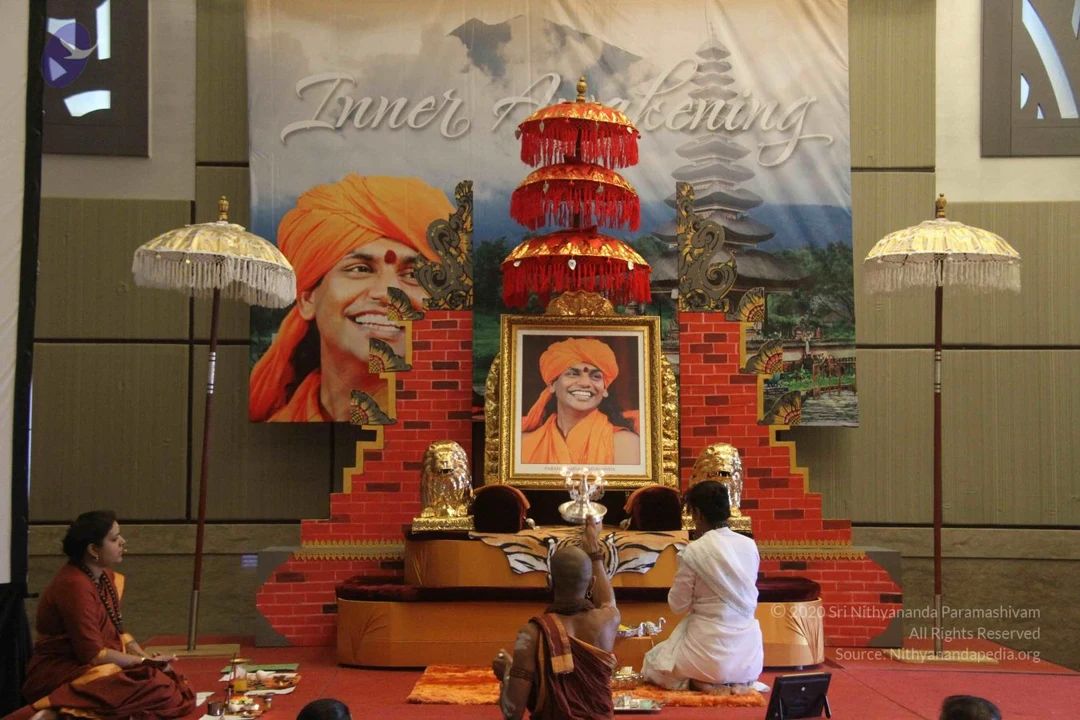
NithyaSatsang

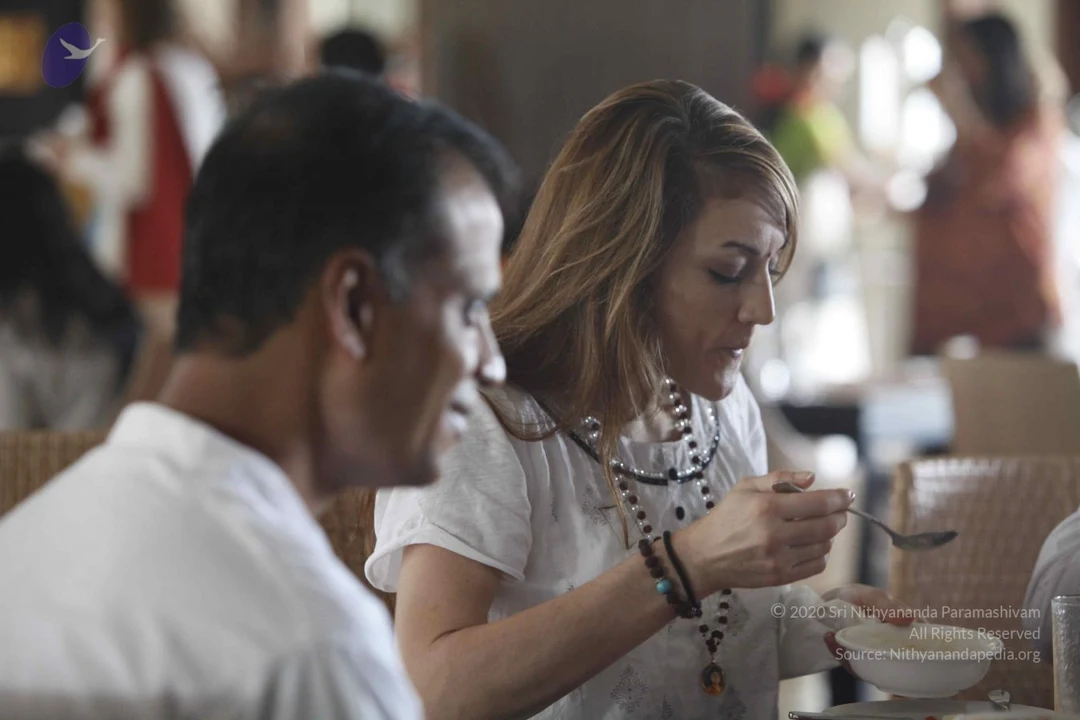
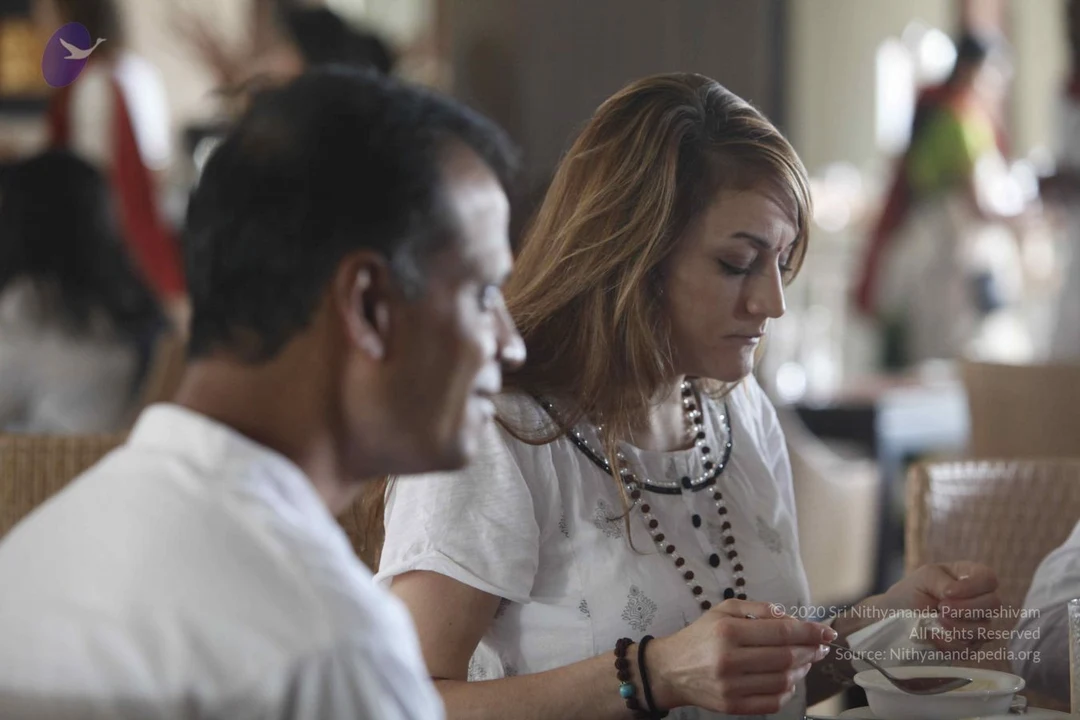
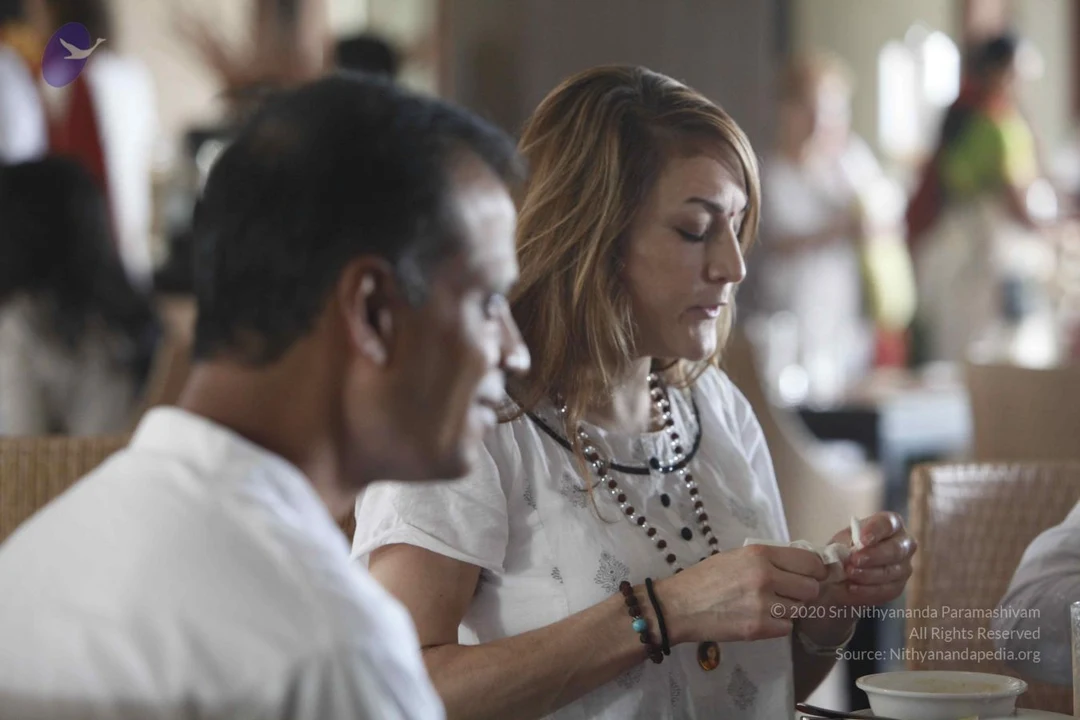
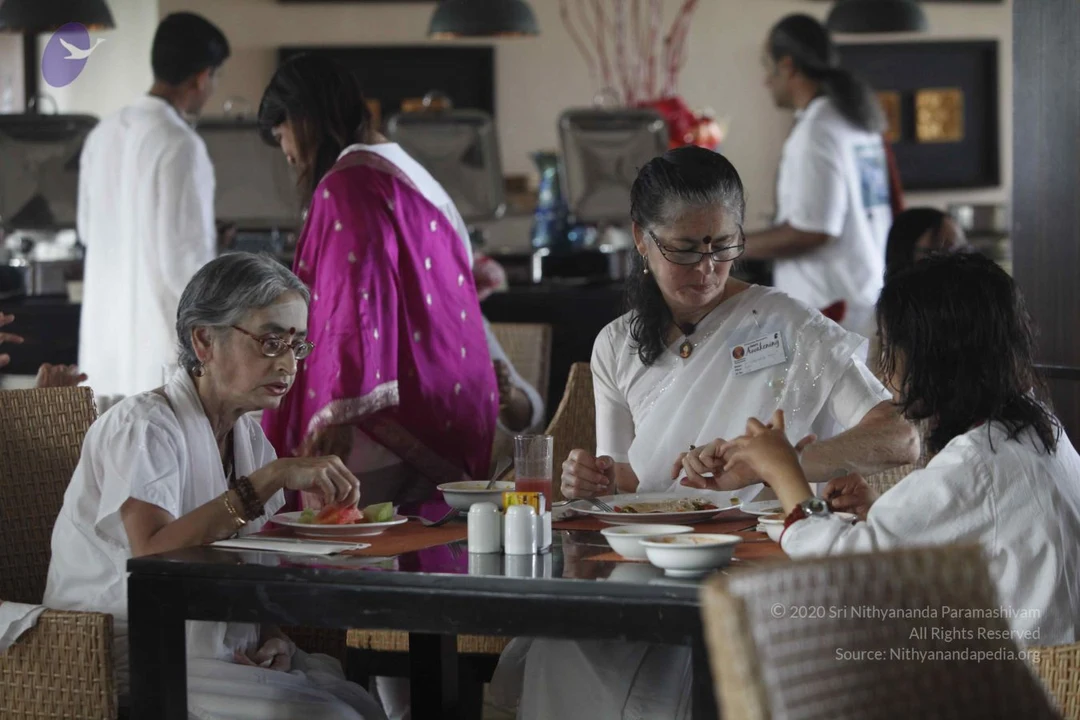
IA_food

IA_Sessions

IA_Darshan

Photos Of The Day:

Bidadi-Temple

Bidadi-Paduka-Puja

01-Bidadi-Temple

20131206_Photo_1000_20131206_DSC04994-3801

02-Bidadi-Paduka-Puja

Photos from this day

View all 331 photos

Deities

13 photosSource gallery
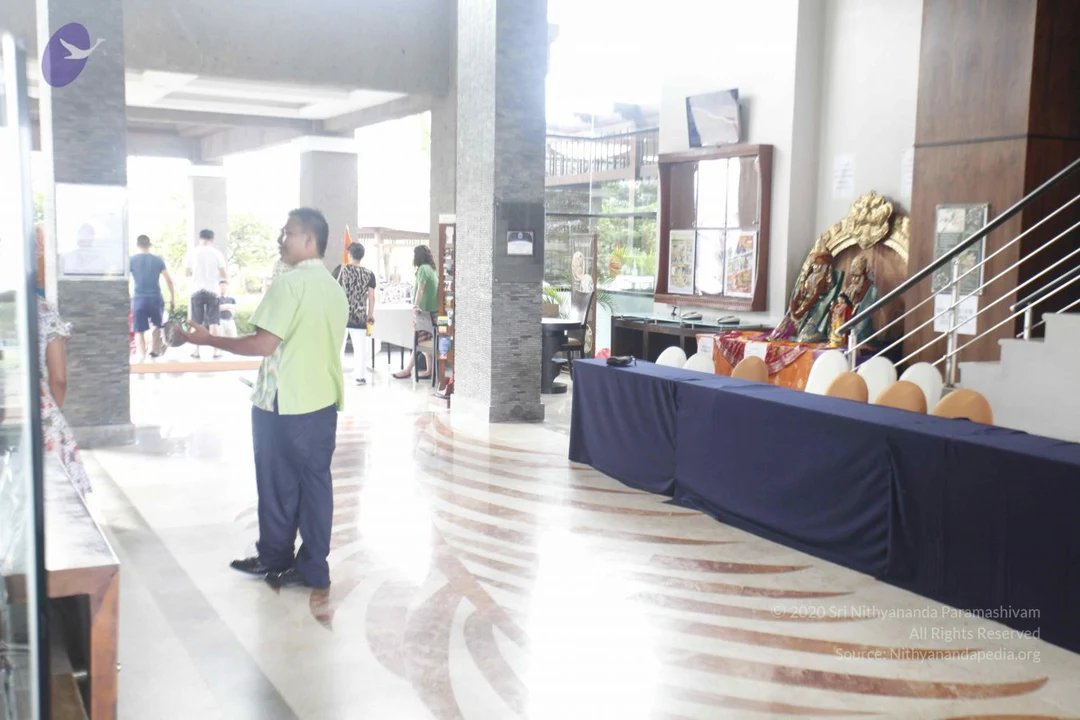
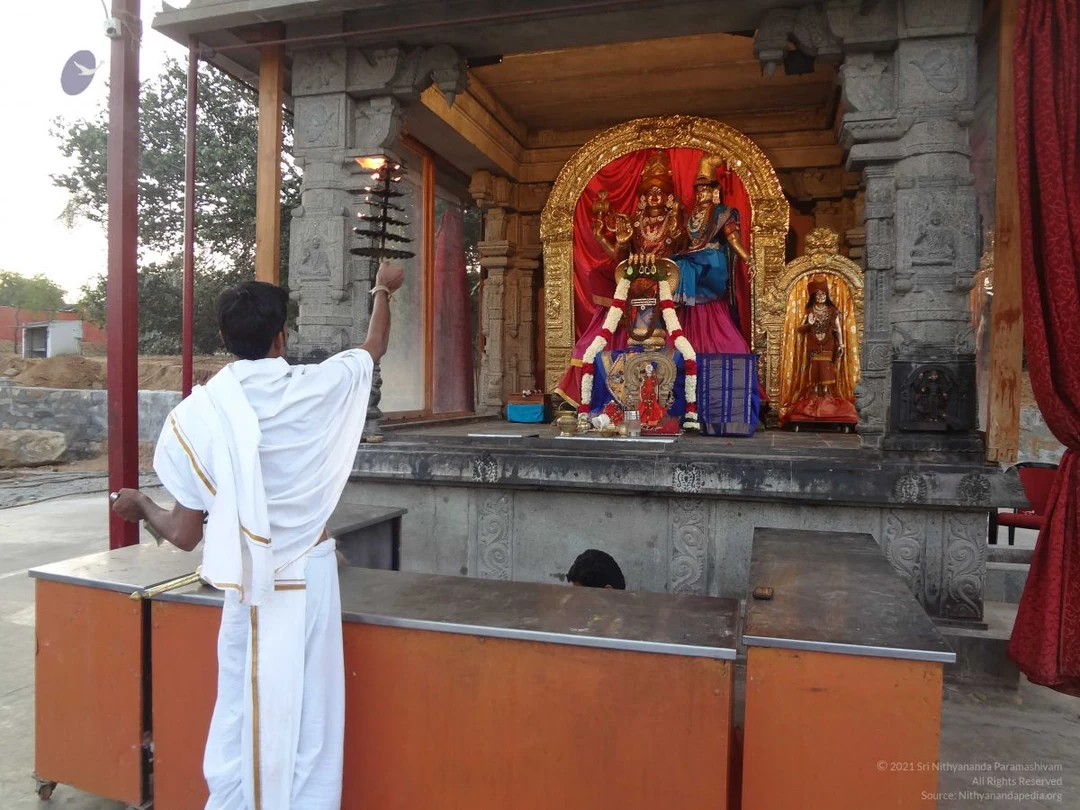
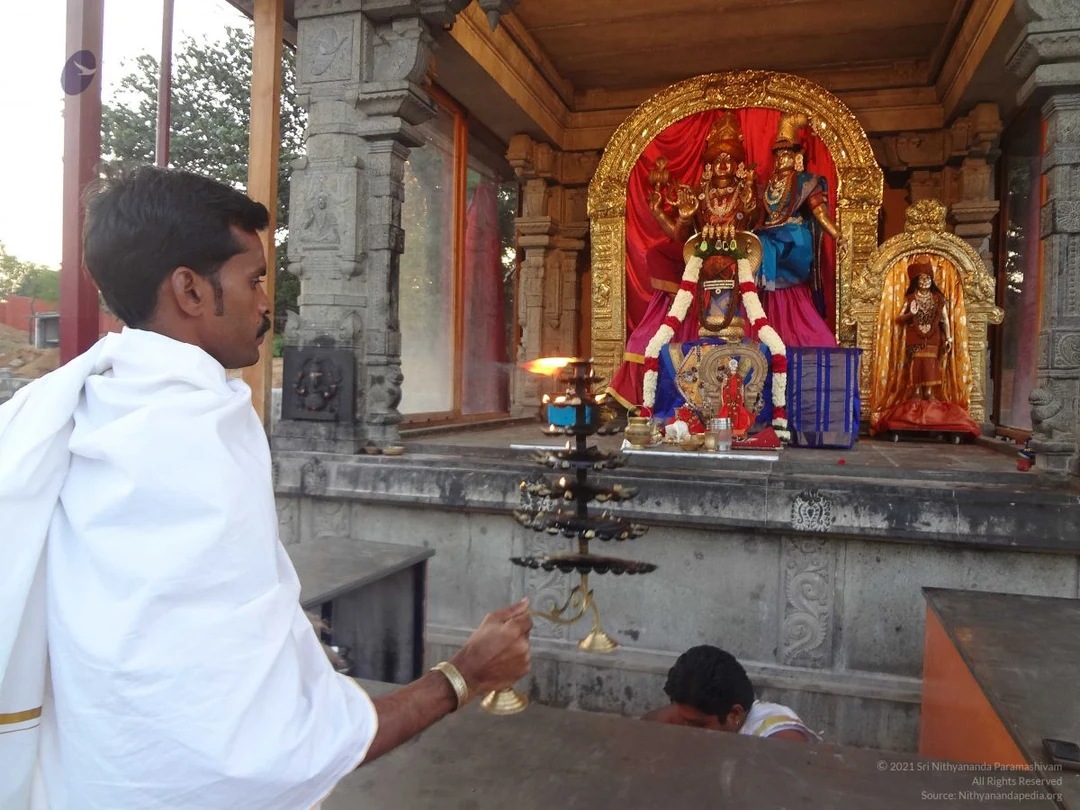
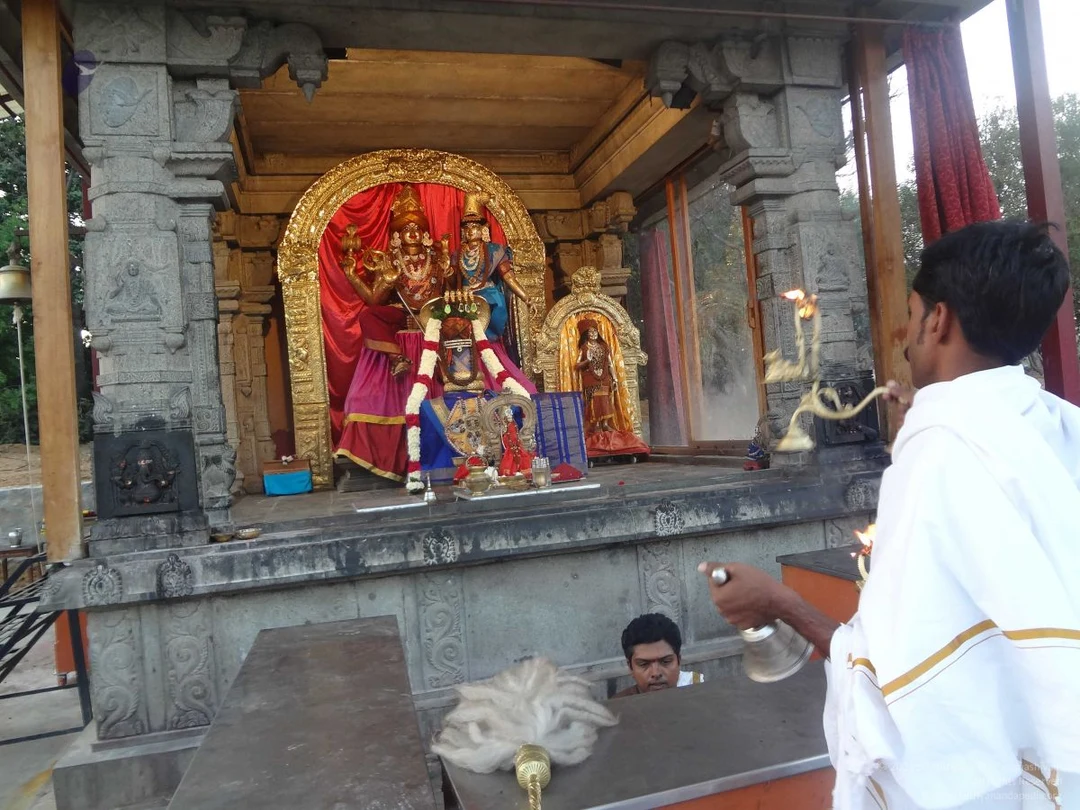
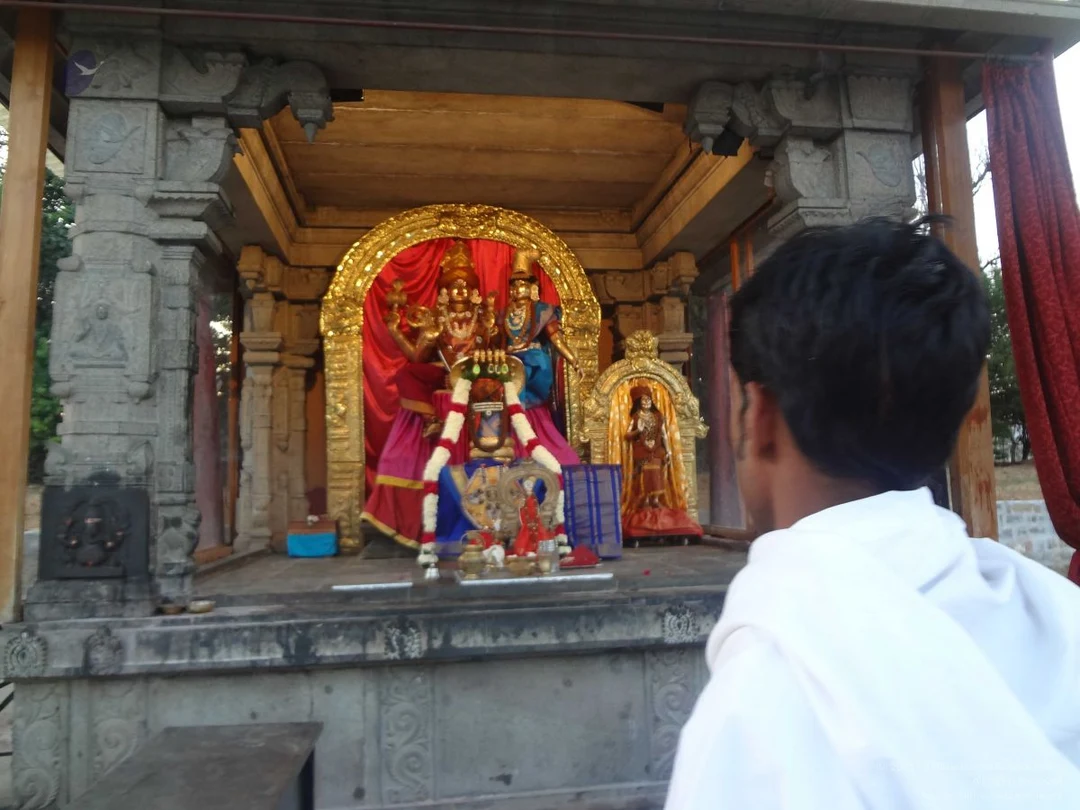
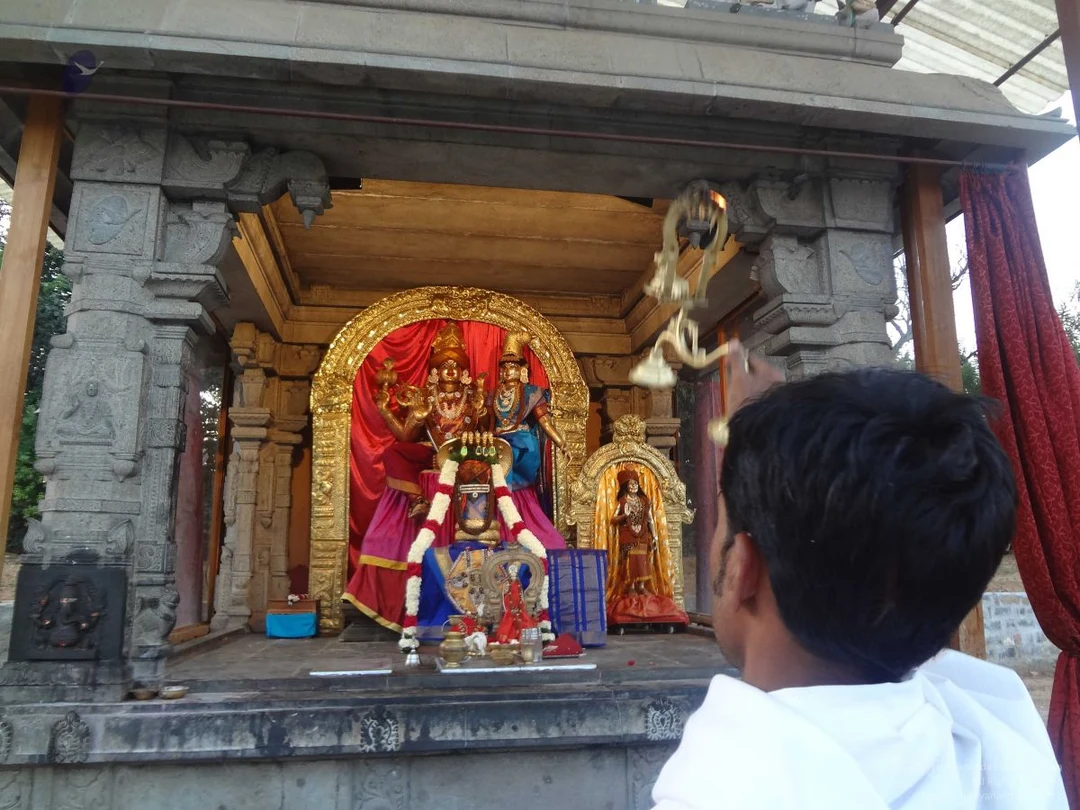
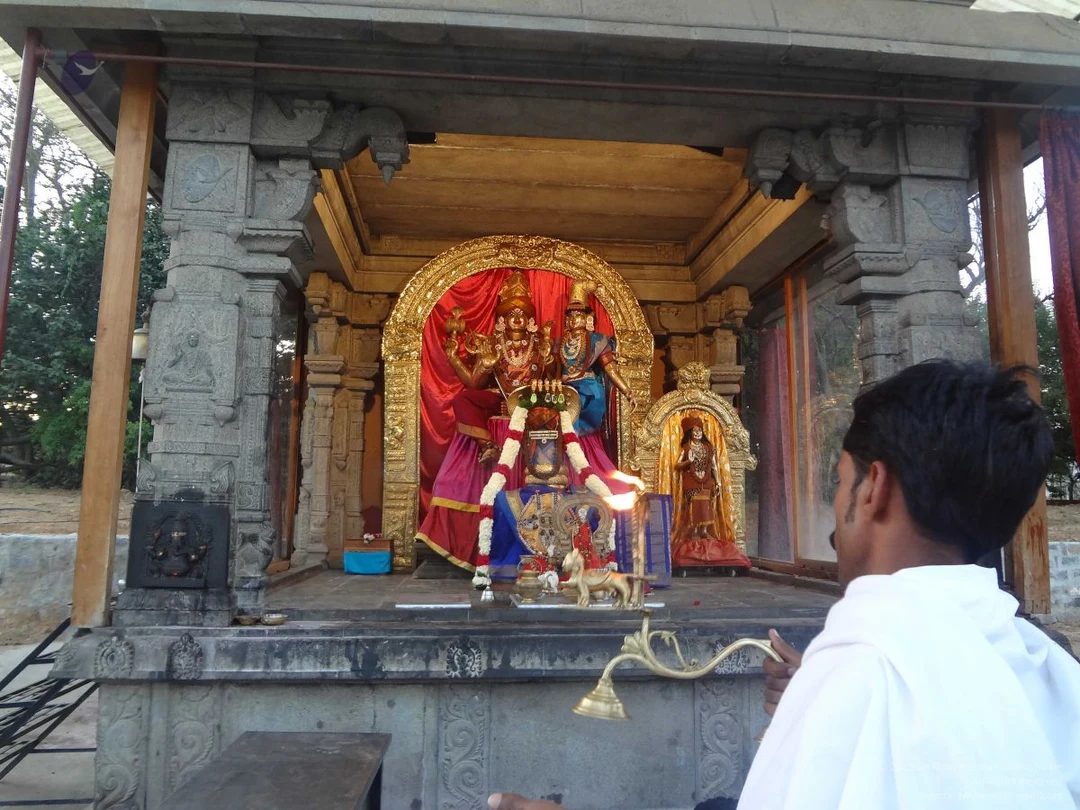
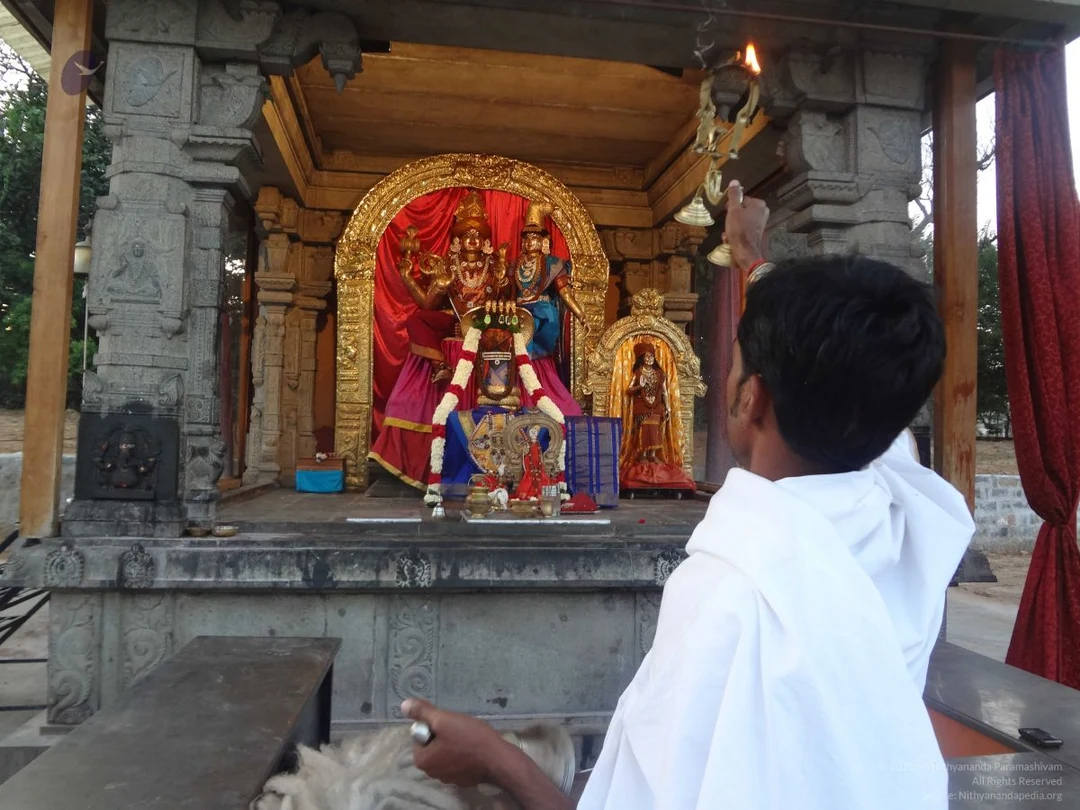
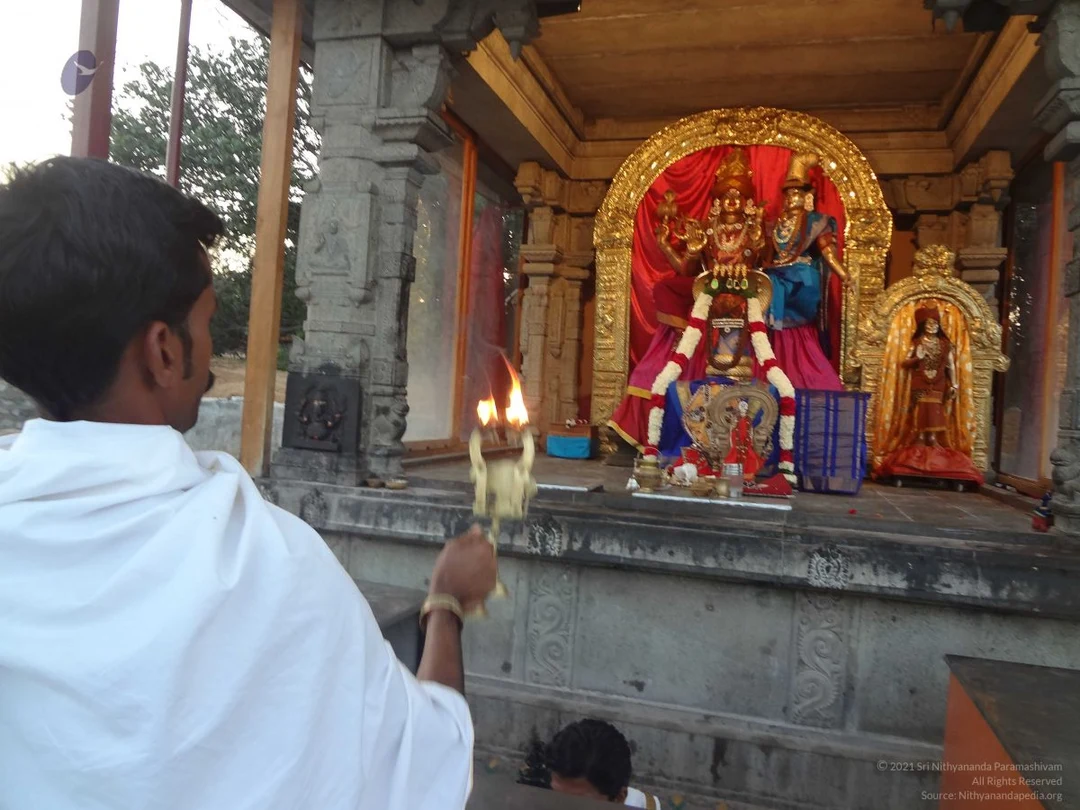
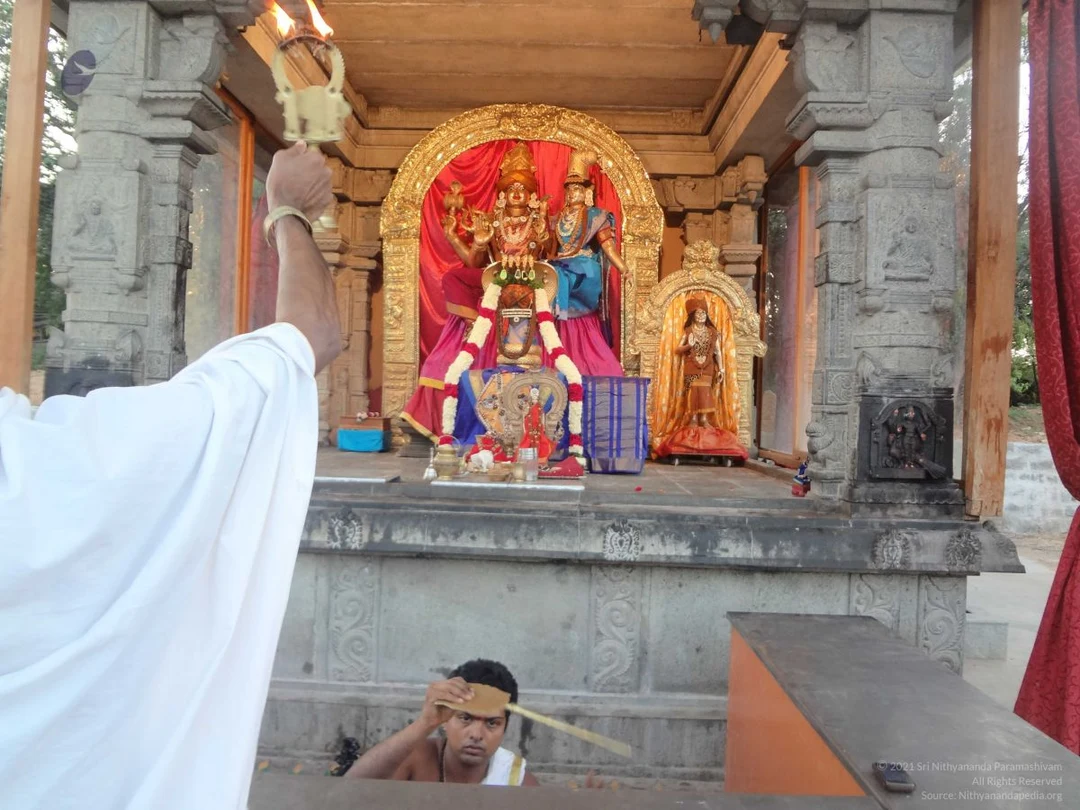
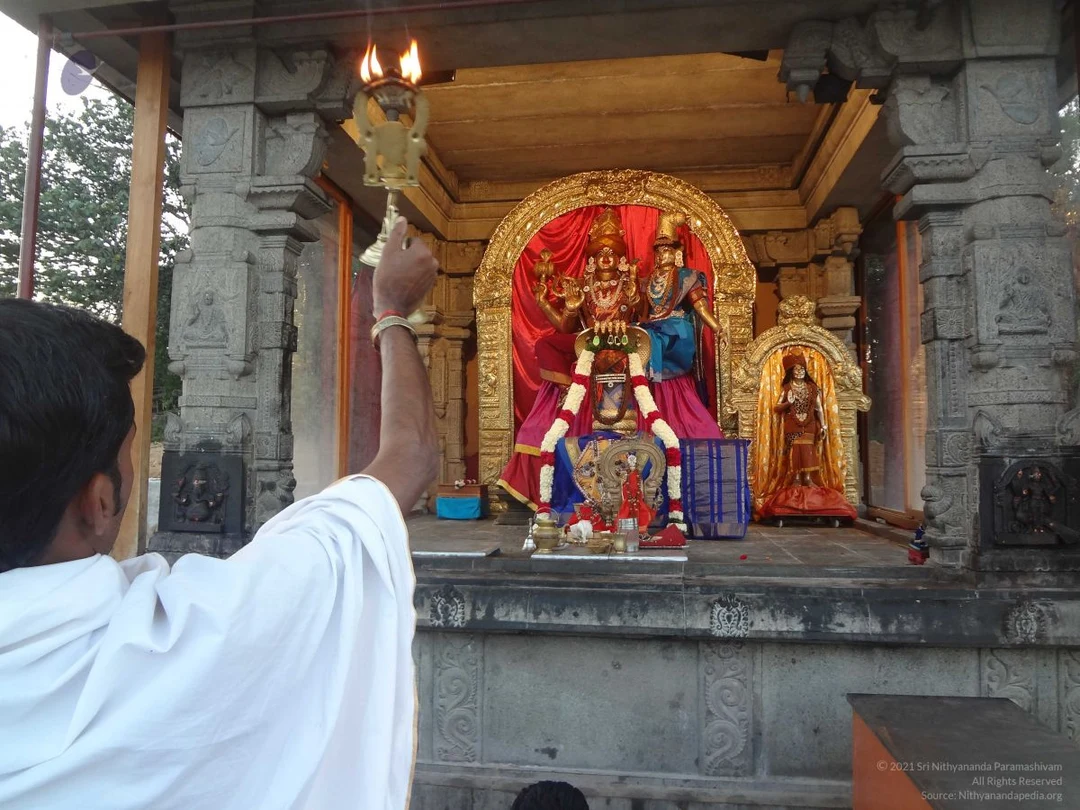
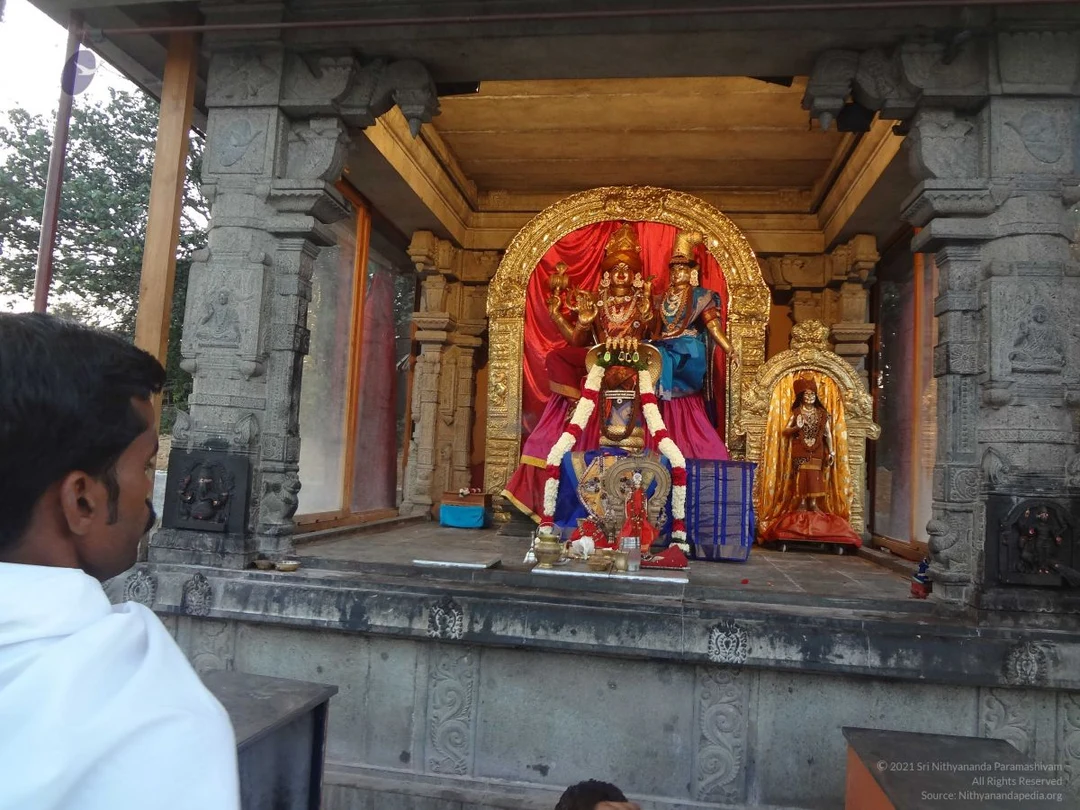
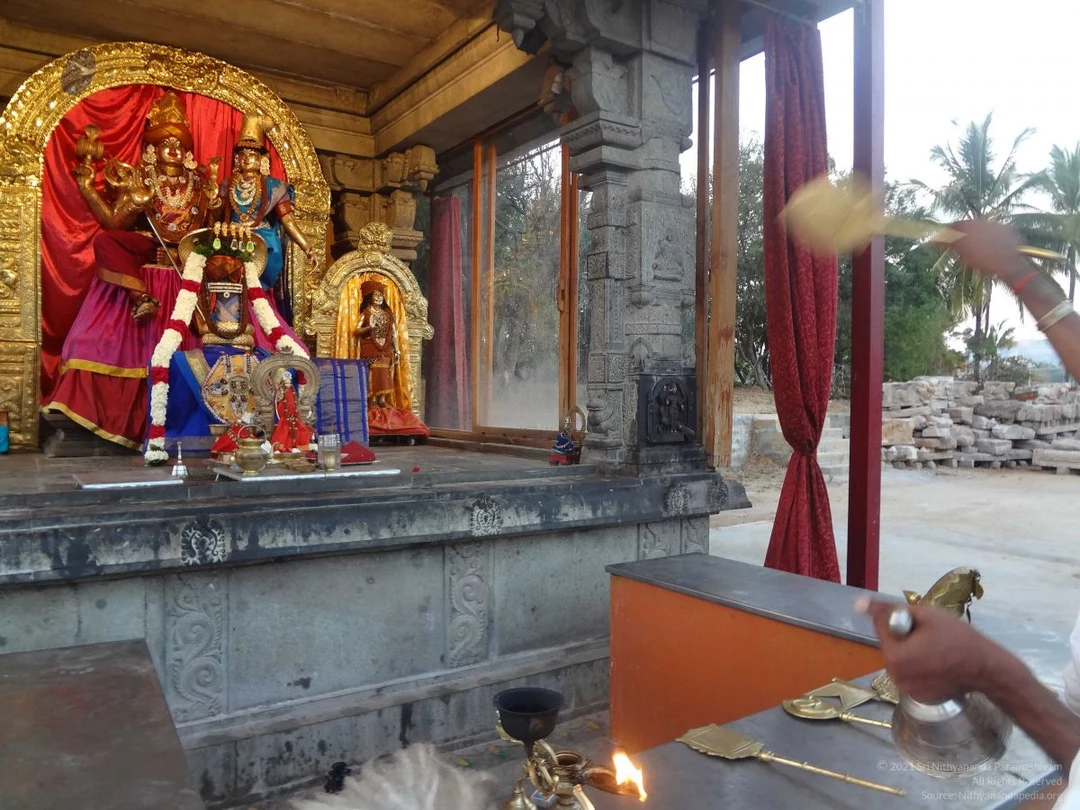
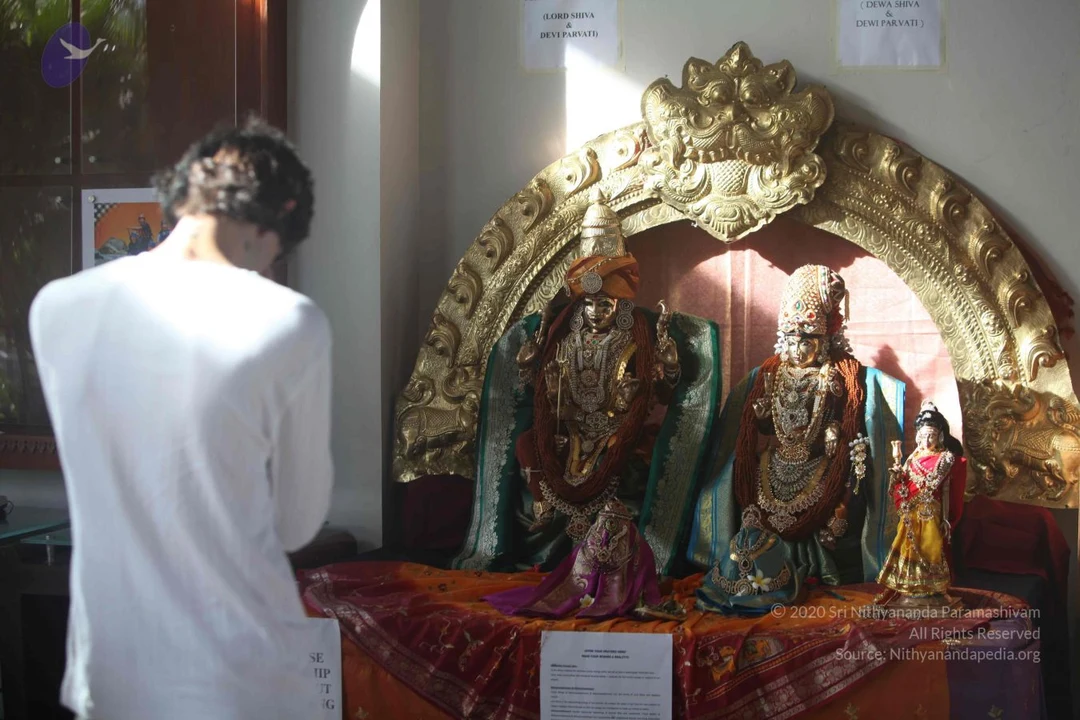
A person in a white long-sleeved shirt stands with head bowed in front of a shrine, viewed from behind. Inside a gilded arched frame sit two ornately dressed deity murti: the left one wears a tall gold crown, orange turban-like headdress, green and gold shawl, and a long rudraksha-style necklace; the right wears a jeweled crown, layered silver necklaces, and a teal sari-like drape. A smaller figure in a yellow and red garment stands at right. Offerings and a kalasha-like cloth sit on an orange embroidered cloth. Printed paper labels above read Lord Shiva & Devi Parvati, and a small sign in front reads Shiva and Parvati worship notice.Photograph of an ornate niche with a gilded arched frame containing two ornately dressed deity murtis, standing on a raised altar draped with orange cloth. The left murti wears a tall golden crown, a teal and silver-bordered sari-like garment, and layered gold necklaces and rudraksha-style red beads. The right murti wears a jeweled crown, a blue embroidered garment, and heavy gold and red-bead necklaces. A smaller female murti in a red and yellow sari with gold jewelry stands at the right edge. A purple cloth bundle with flower petals sits at the front of the altar, with a small placard below. Sunlight falls across the scene from the upper left. No people are visible.Photograph of a decorated deity murti set in a gilded arched niche. Two standing metal deity figures dominate: the left one wears a tall gold crown with an orange turban, teal and silver-bordered shawl, layered rudraksha malas and ornate silver jewellery, with raised hands; the right one wears a jewelled headdress, blue shawl with gold border, red rudraksha malas and heavy silver necklaces. A smaller figure in yellow and red garments with jewellery stands at the right, and a purple cloth-wrapped offering sits in front on an orange and purple draped cloth with flowers. No living people are visible.A photograph of a shrine set within an ornate gilded arch, holding deity murtis dressed in silk saris and heavy silver jewellery with red coral beaded garlands. The left figure wears a tall crown and orange turban and holds raised hands, while the right figure wears a tall jewelled crown and blue-green silk; a smaller figure in a yellow and red dress stands at the far right. Offerings of flowers and a purple cloth lie on an orange embroidered altar cloth in front. No physical people are present.Two ornate metal deity murtis sit side by side in a gilded arched niche. The figure on the left wears a tall golden crown, orange turban-like headdress, teal and green silk drape, rudraksha mala, and layered silver jewellery, holding a trident. The figure on the right wears a jewelled crown, blue silk drape, red-brown rudraksha beads and heavy silver necklaces. A smaller figure in yellow and red silk stands at the right edge, and a purple cloth and white flowers rest on the orange-draped altar in front. No physical people are visible.A photograph of a shrine with three deity murtis set against an ornate gold arched frame. Two seated figures sit at the centre: the left murti wears a tall gold and orange crown, a rudraksha mala and layered jewellery, with teal and silver draping; the right murti wears a jewelled golden crown, a rudraksha mala, white and gold jewellery and a pale blue sari. A smaller standing figure on the right wears a red and yellow sari with a red blouse and gold necklaces. A pink and gold cloth covers an object in the foreground, with yellow flowers scattered over a colourful orange and red cloth.

GeneralShots

8 photosSource gallery
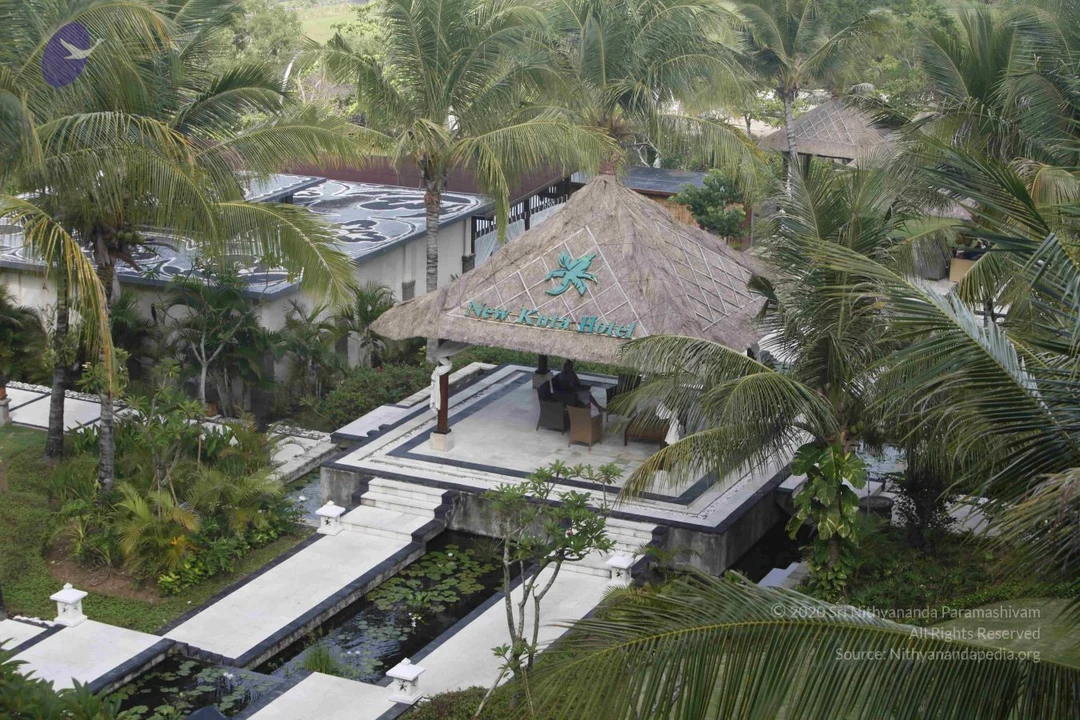
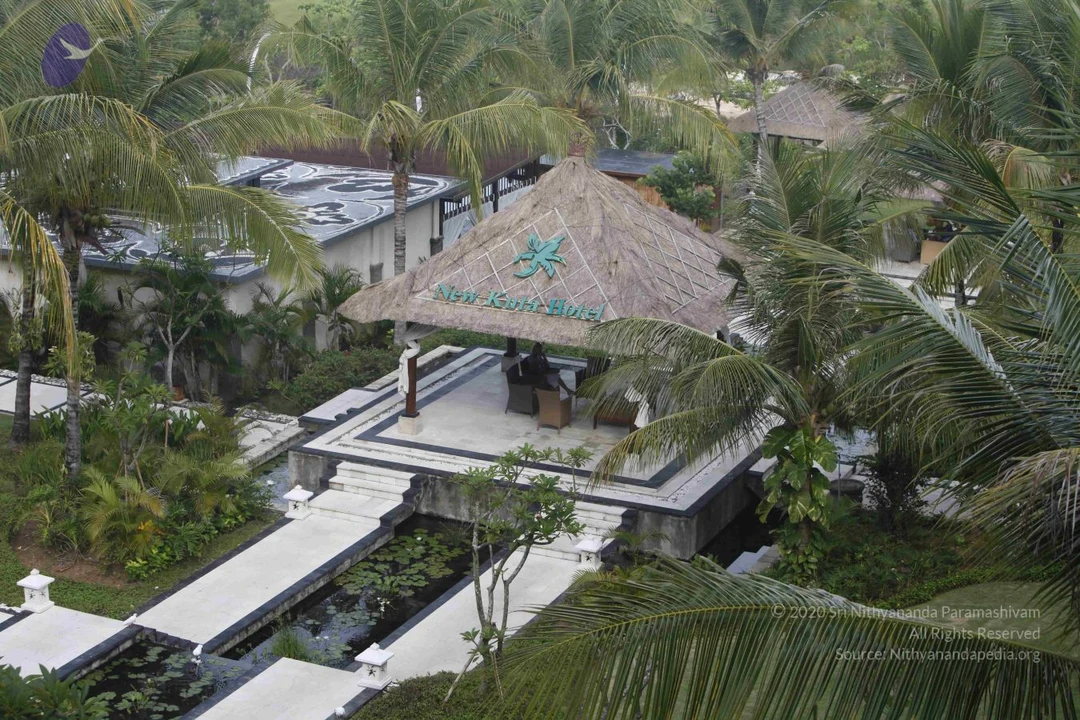
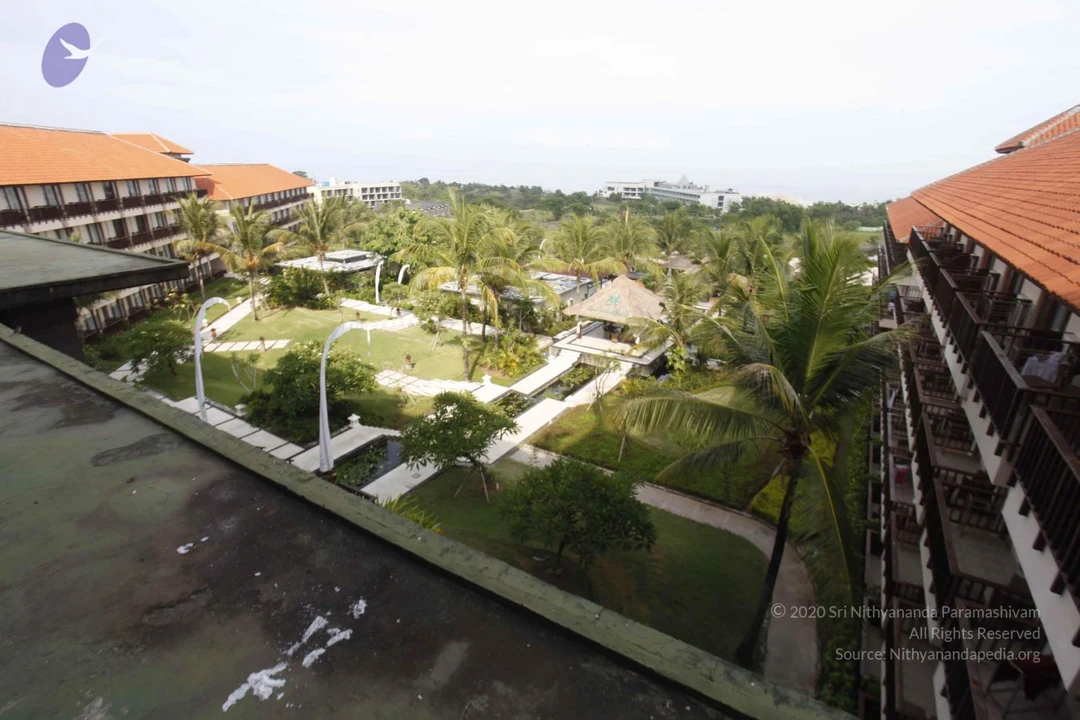
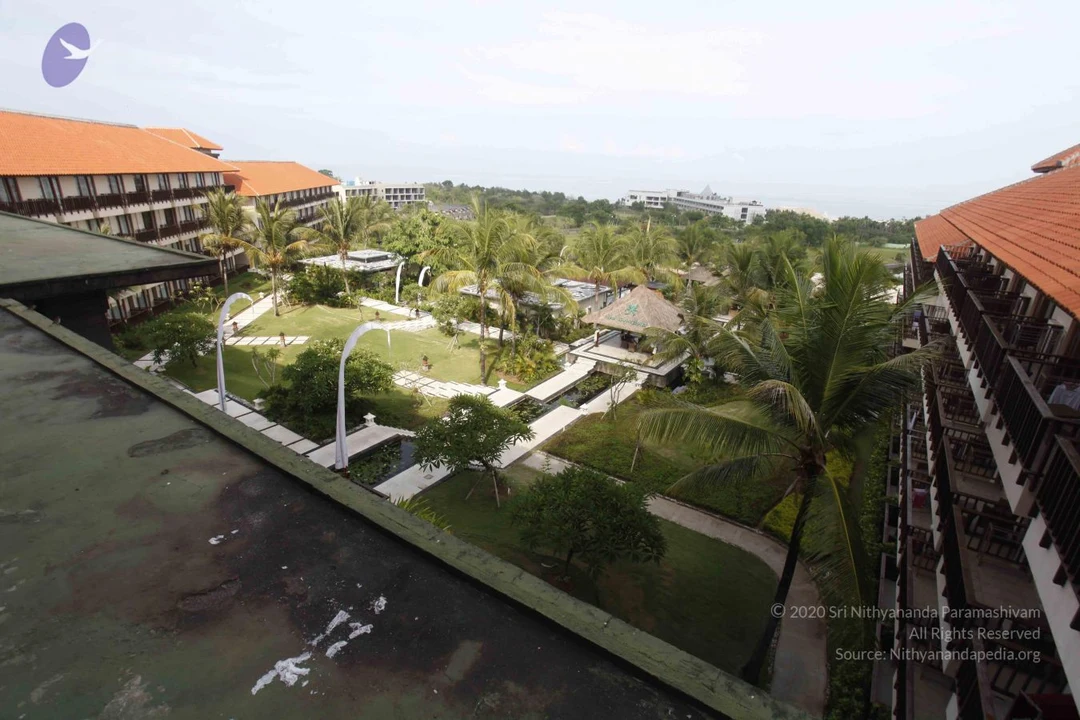
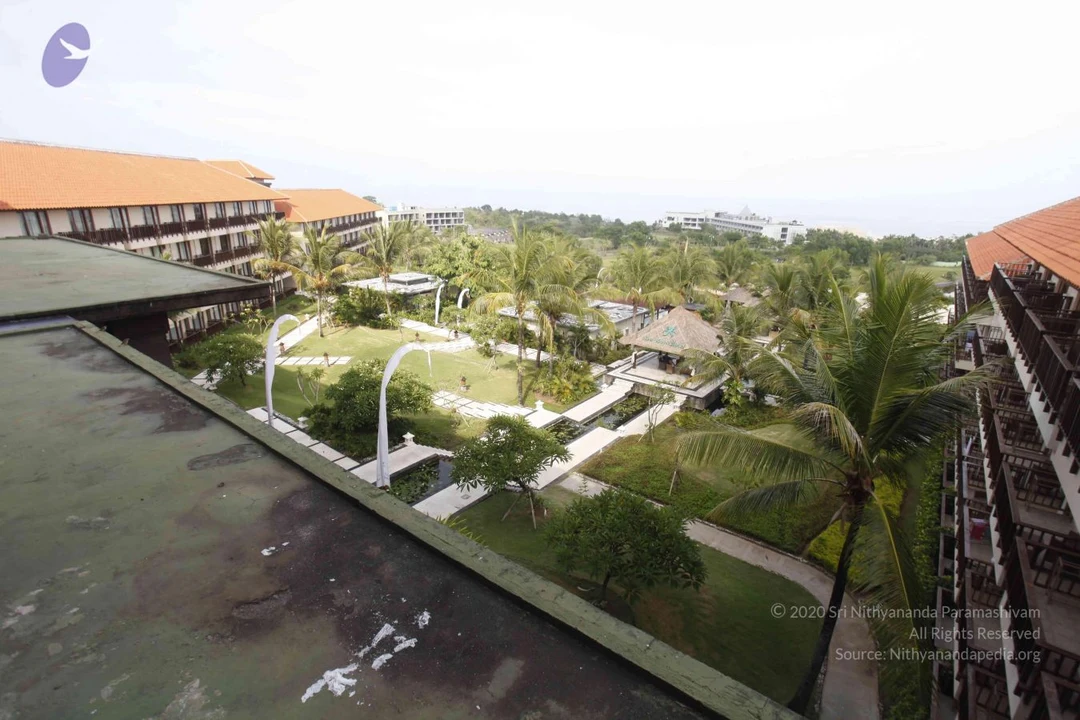
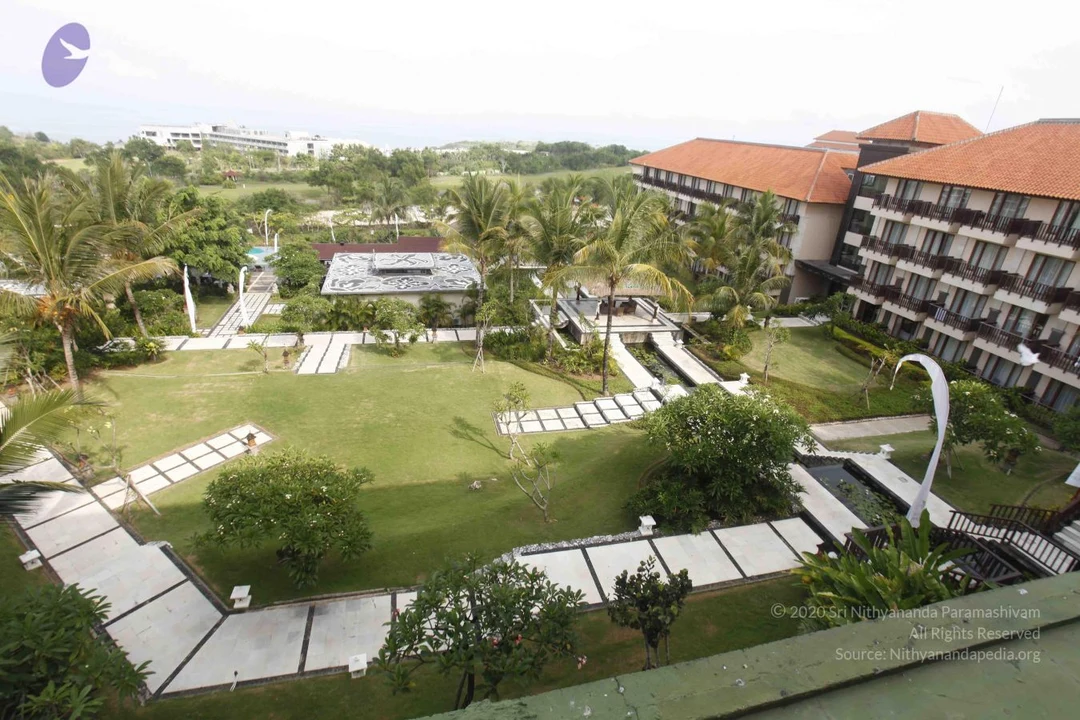
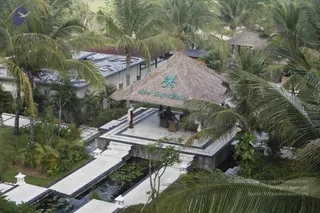
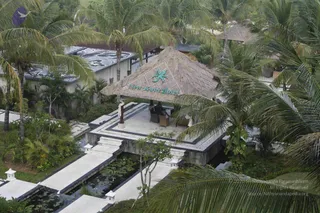
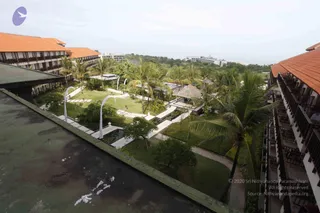
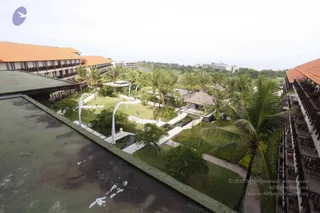
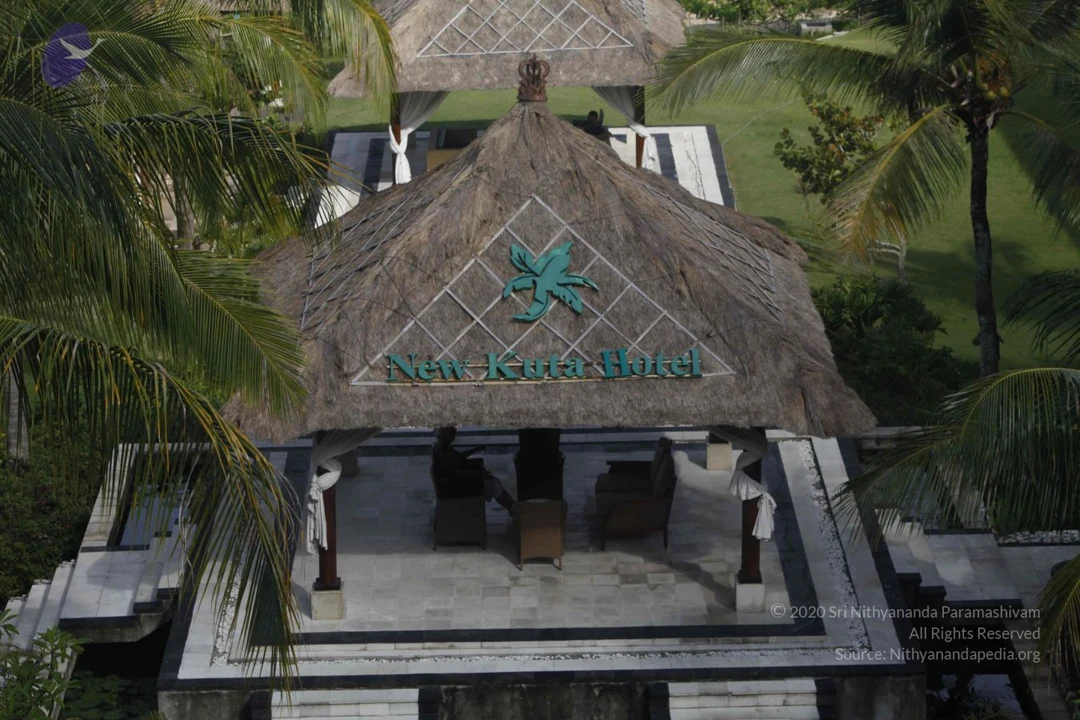
Aerial view of a thatched-roof open pavilion with a grey stone-tiled floor and low dark wooden chairs, marked with a teal leaf emblem and the sign "New Kuta Hotel" on its roof. Palm trees and green lawn surround the structure; no people are visible.Aerial view of a tropical resort courtyard framed by tall palm trees. A thatched-roof open pavilion with a sign reading New Kuta Hotel sits on a raised stone platform with black-and-white trim. Inside the pavilion, a couple of wicker chairs and a table are visible, with a small figure seated in one chair. Stone walkways and a narrow water channel with lily pads run toward the pavilion, flanked by potted plants and frangipani. A tiled roof with a decorative pattern extends behind on the left.Aerial photo of a tropical resort garden in Bali. A thatched-roof pavilion with a sign reading "New Kuta Hotel" and a green star logo stands on a raised stone platform with steps, flanked by a narrow reflecting pool with lily pads. Two people sit in wicker chairs under the pavilion, mostly obscured by foliage. Tall palm trees, tropical plants, and a white building with dark patterned tiles surround the scene.Aerial view looking down on a tropical resort compound with orange-tiled roofs on multi-storey white hotel blocks flanking both sides. A central lawn with paved paths, palm trees, a thatched-roof pavilion and white arched gateways runs through the middle, with more palms and greenery beyond. No people are visible in the scene.Aerial view looking down over a resort garden from an upper floor. Terracotta-roofed multi-storey buildings with balconies flank a landscaped lawn with stone pathways, palm trees, frangipani-style trees, a thatched-roof pavilion and white ceremonial bunting poles arching over the grass. A grey concrete rooftop edge runs along the left foreground, and a distant shoreline with more hotel buildings appears under a pale sky. No people are visible.Elevated aerial view of a tropical resort compound with terracotta-roofed multi-storey buildings on either side. Central lawn with stone pathways, tall palm trees, frangipani-style trees and a thatched-roof pavilion. White ceremonial poles with curved tops line the grounds. Ocean and a distant building appear at the horizon. A large flat rooftop with greenish stains occupies the lower left. No people are visible in the scene.

PadukaPuja
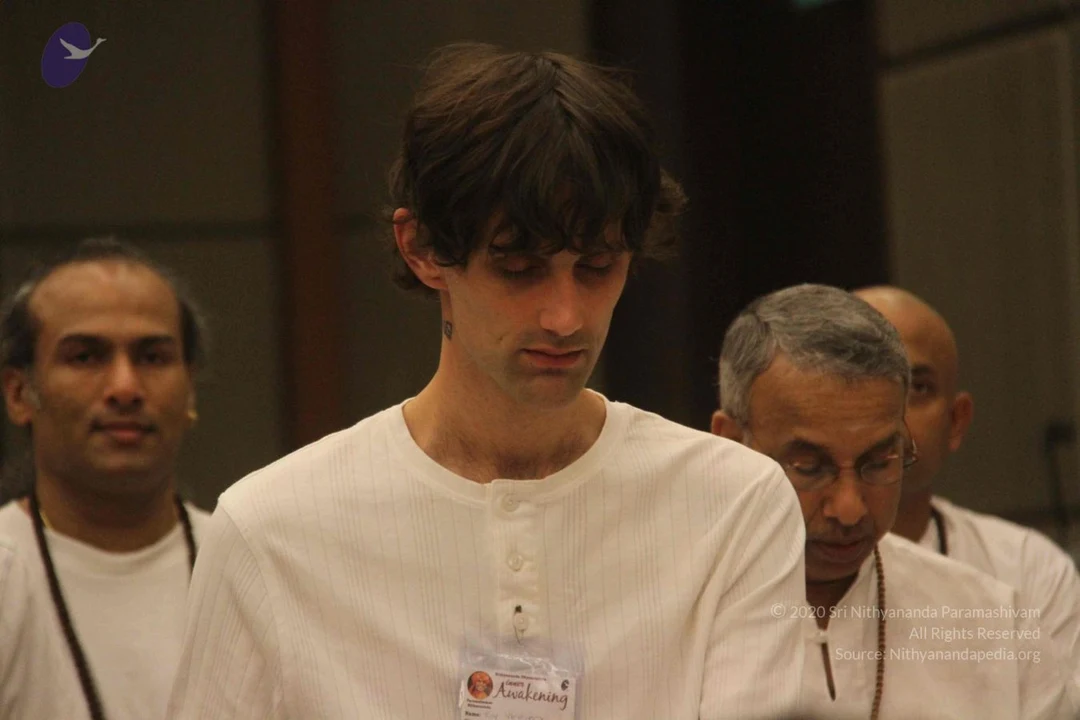
54 photosSource gallery
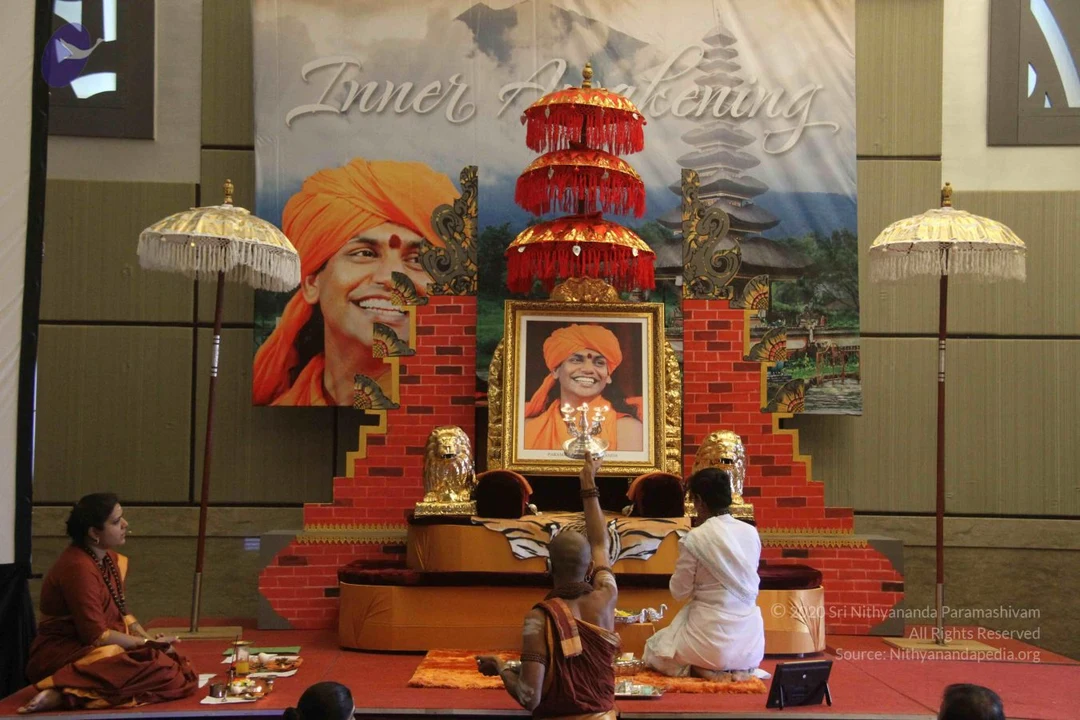
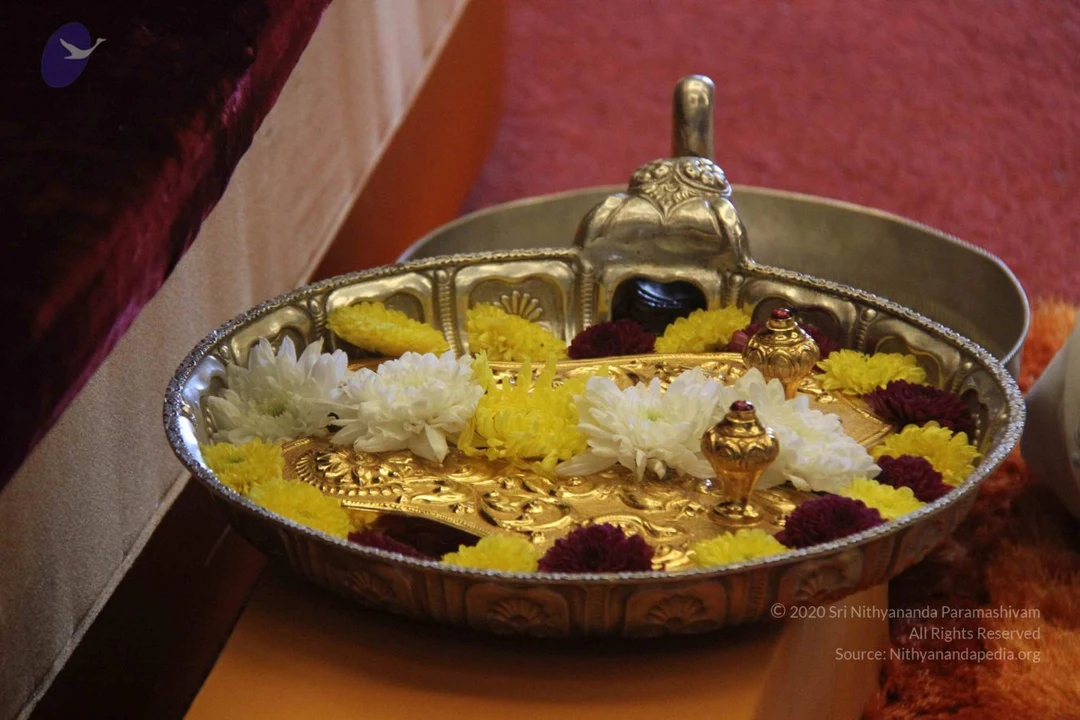
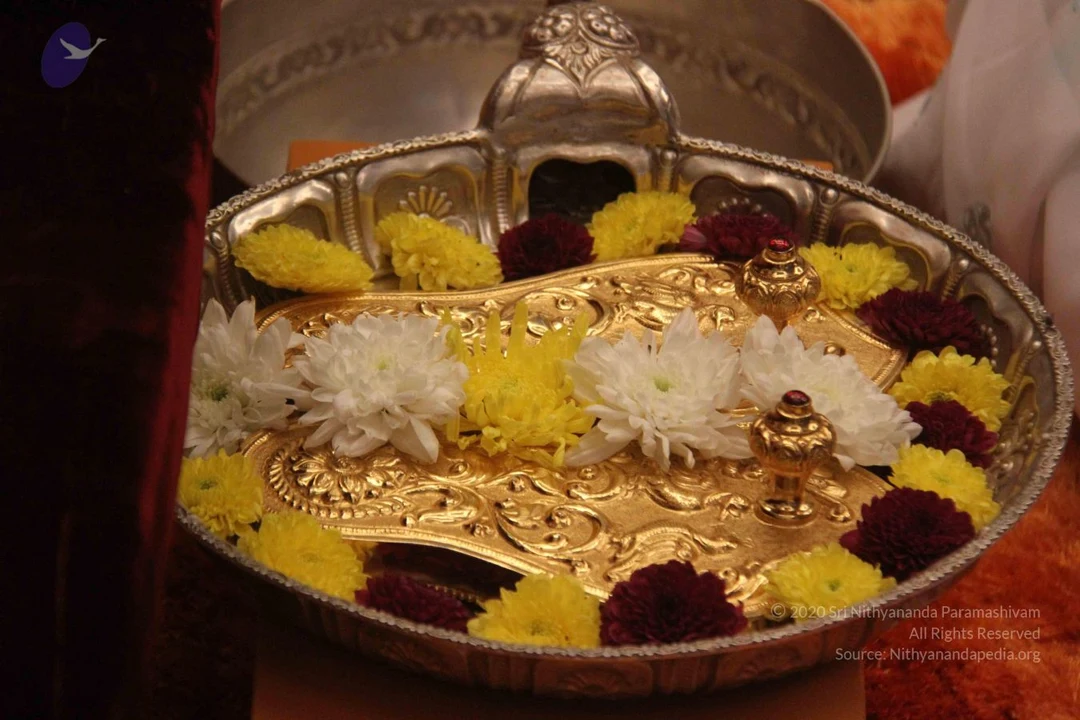
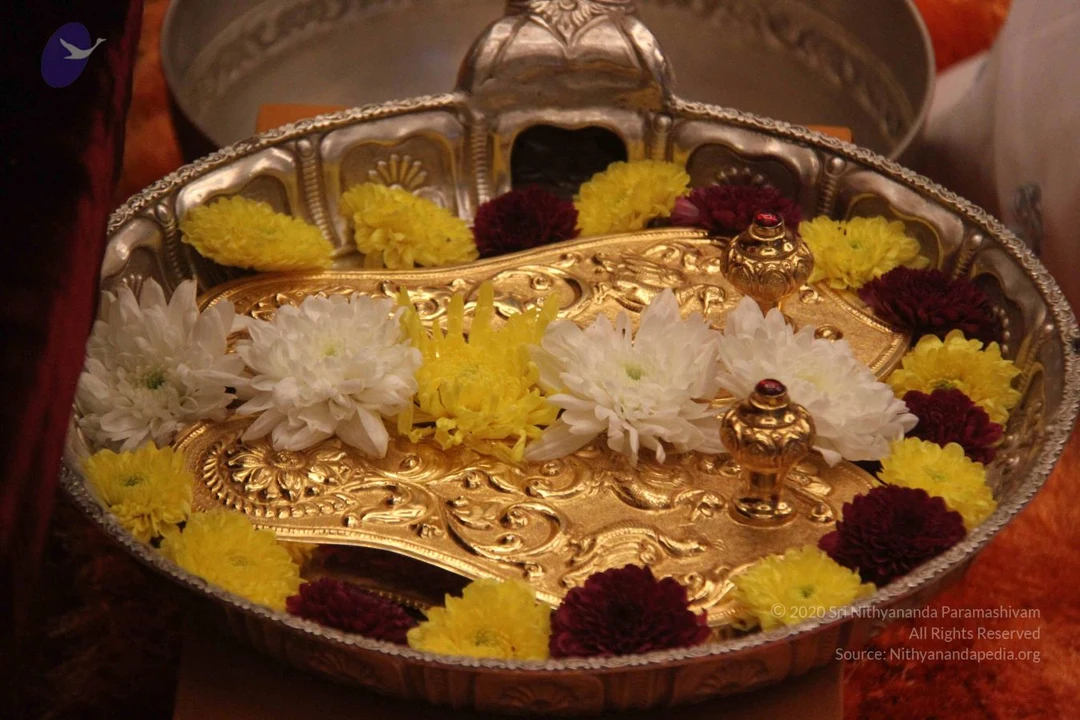
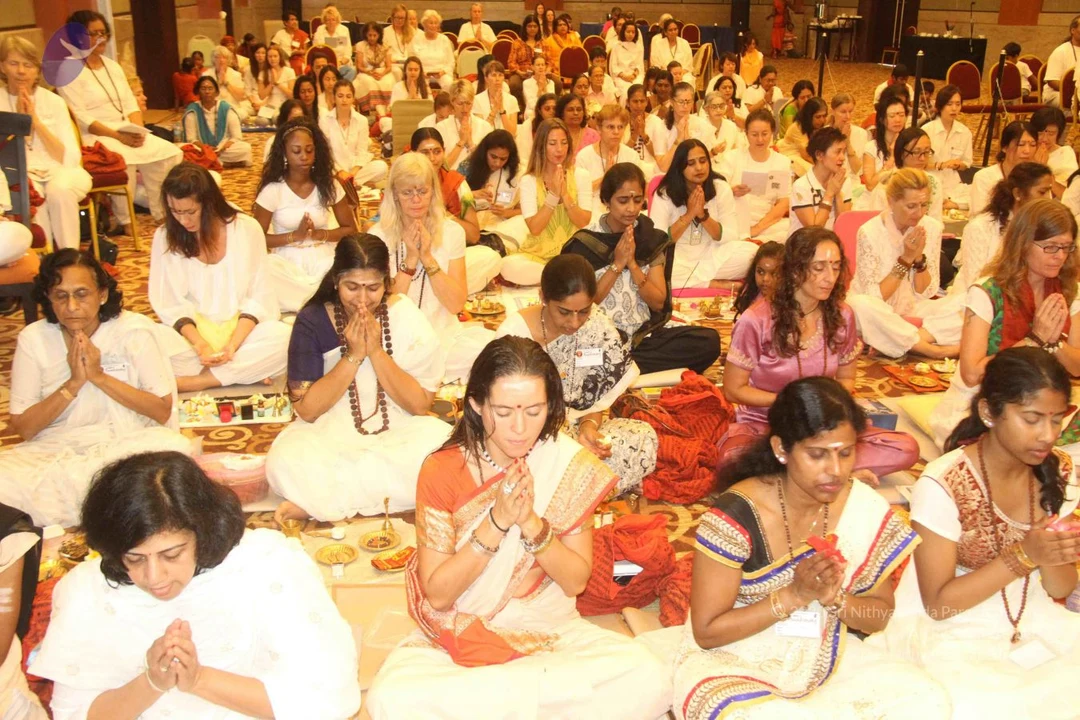
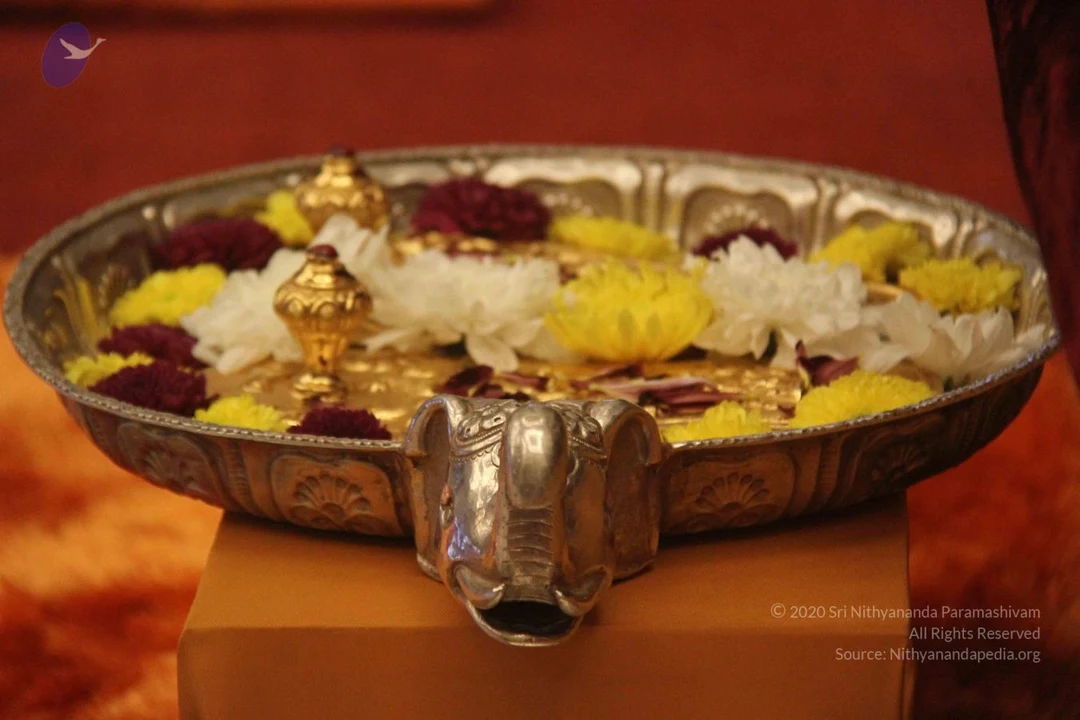
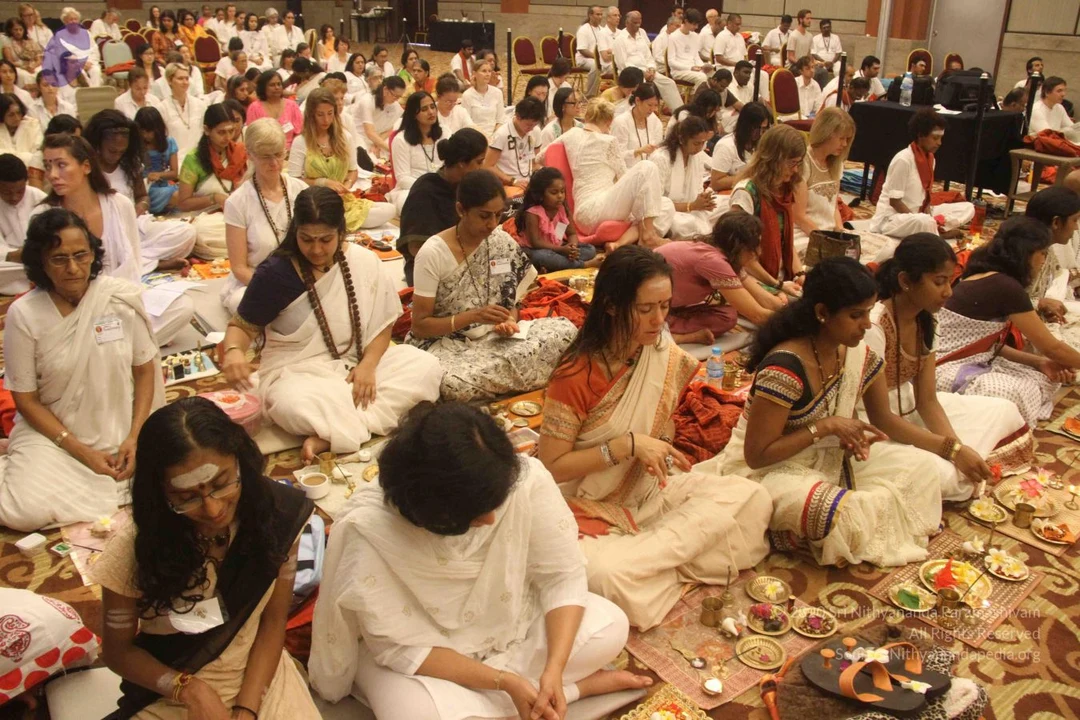
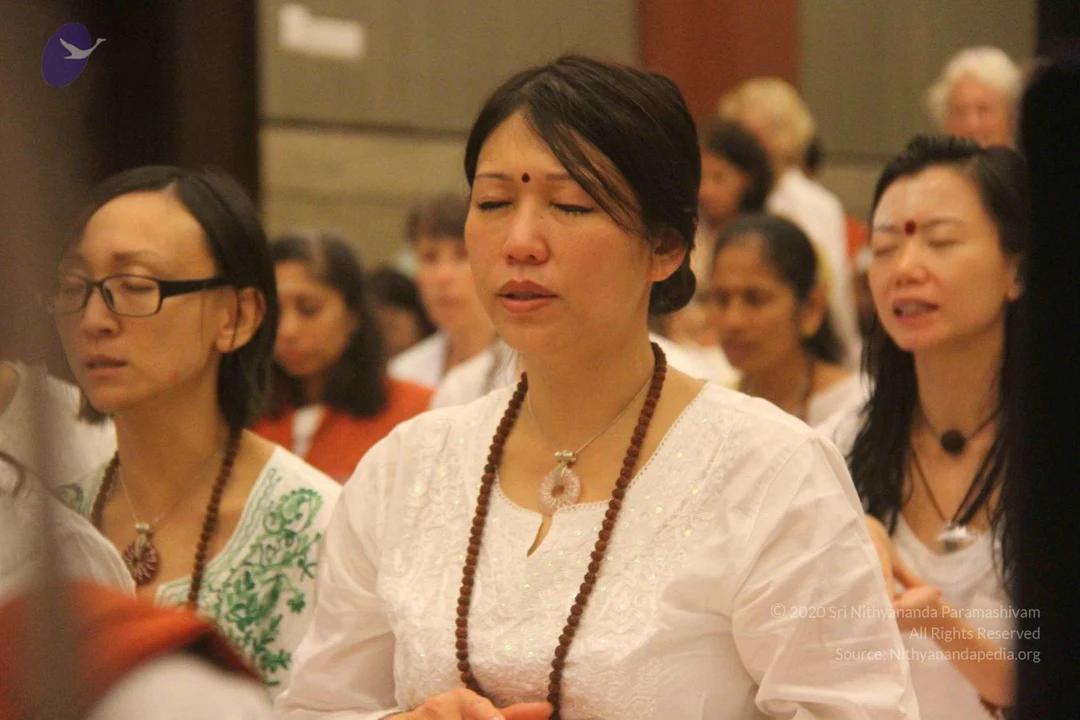
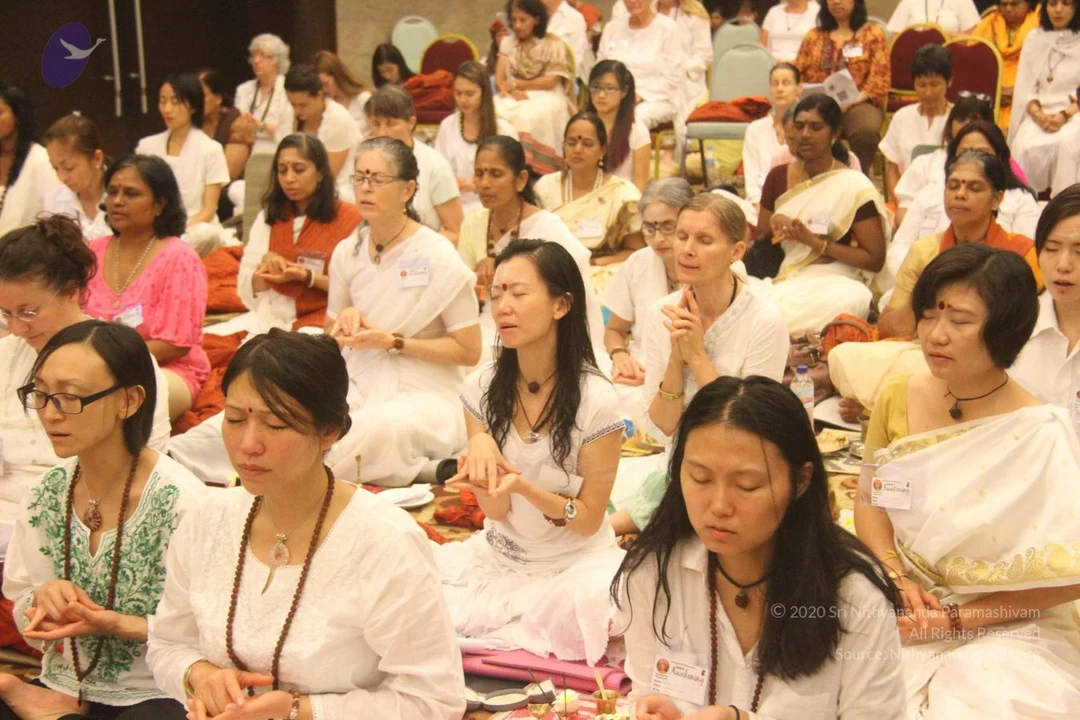
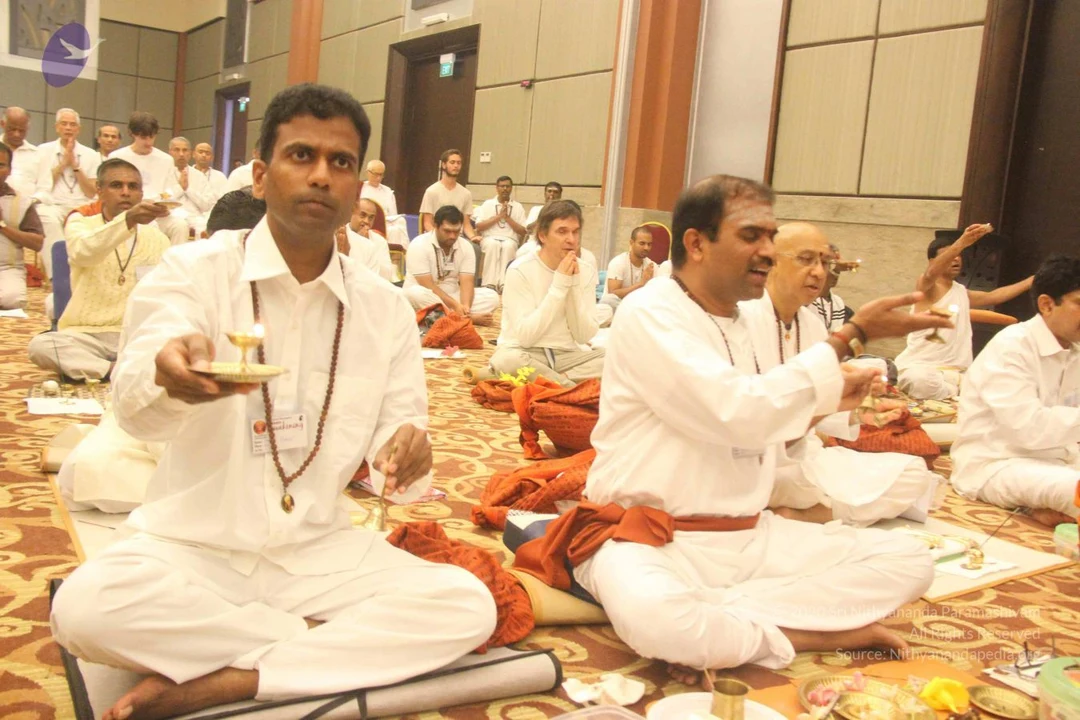
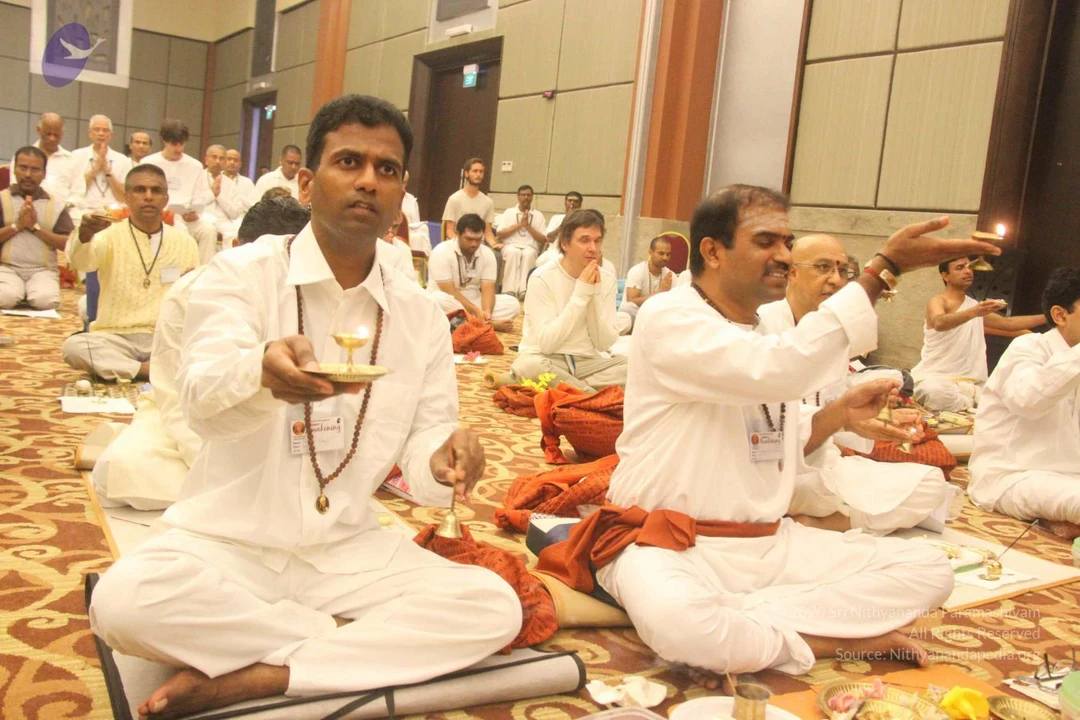
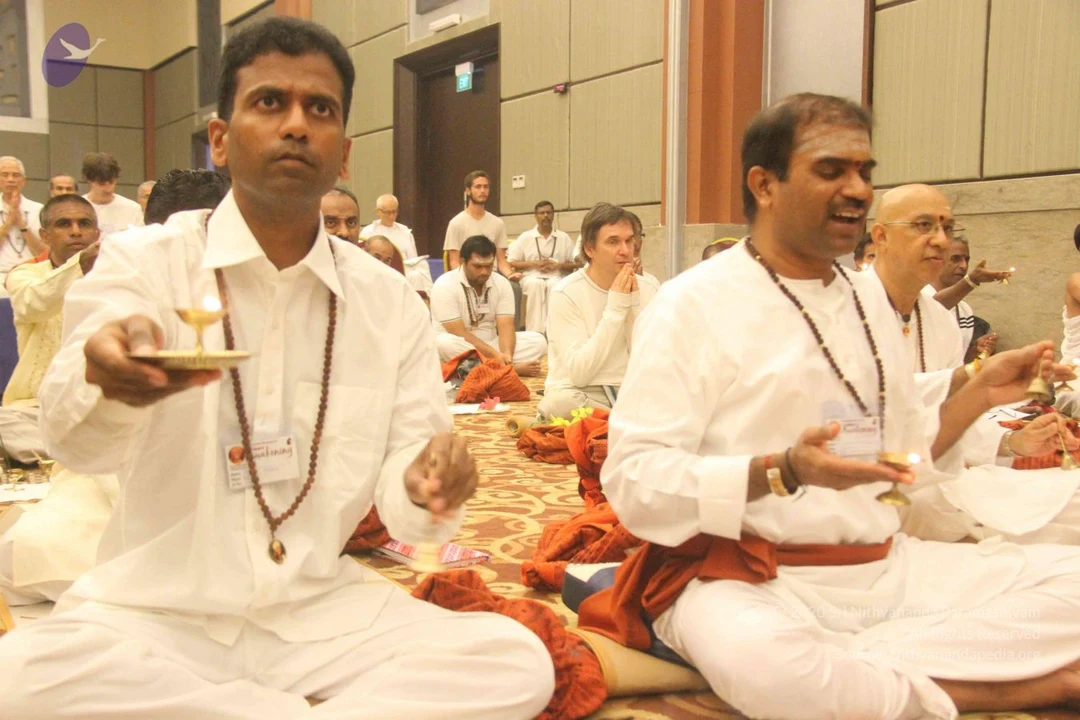
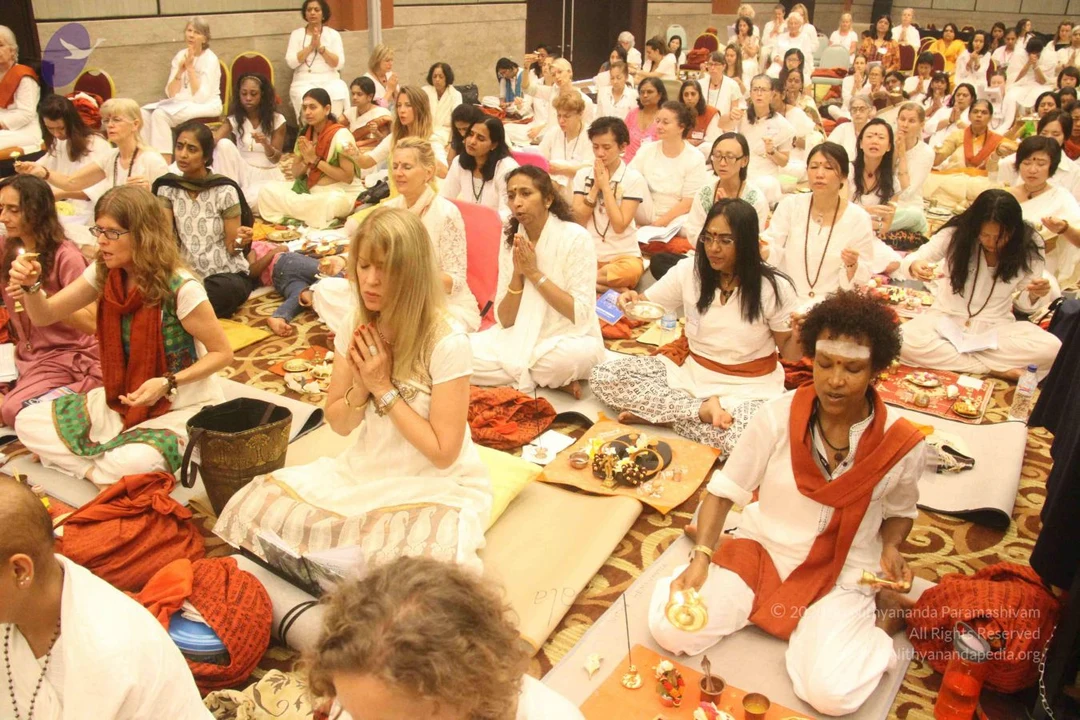
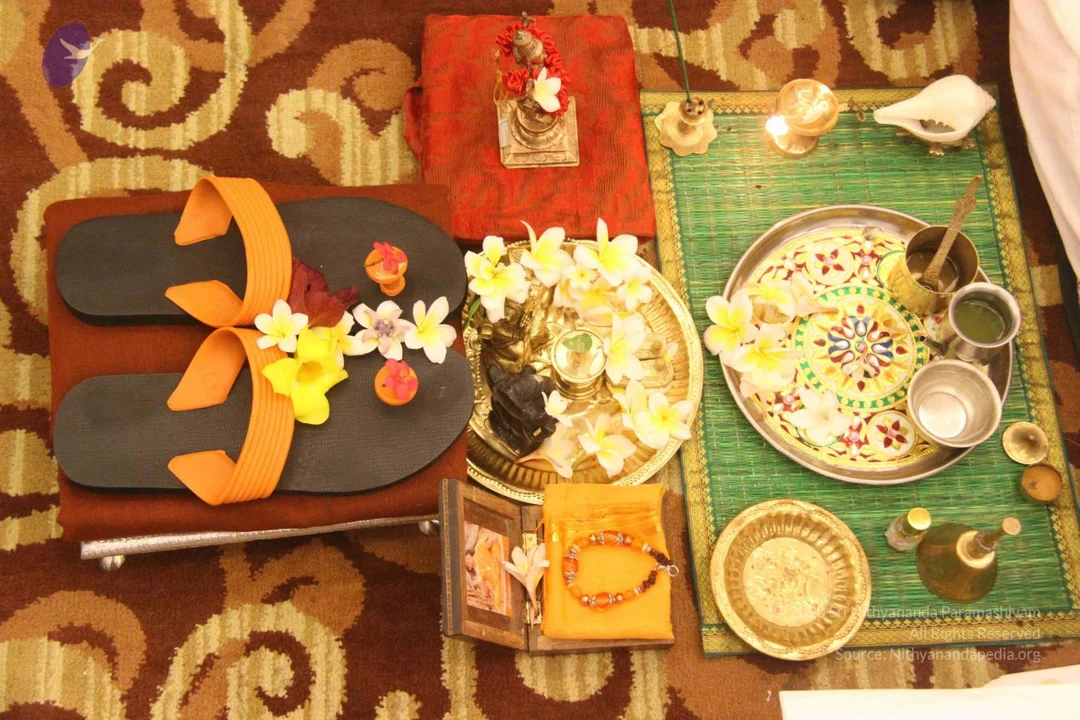
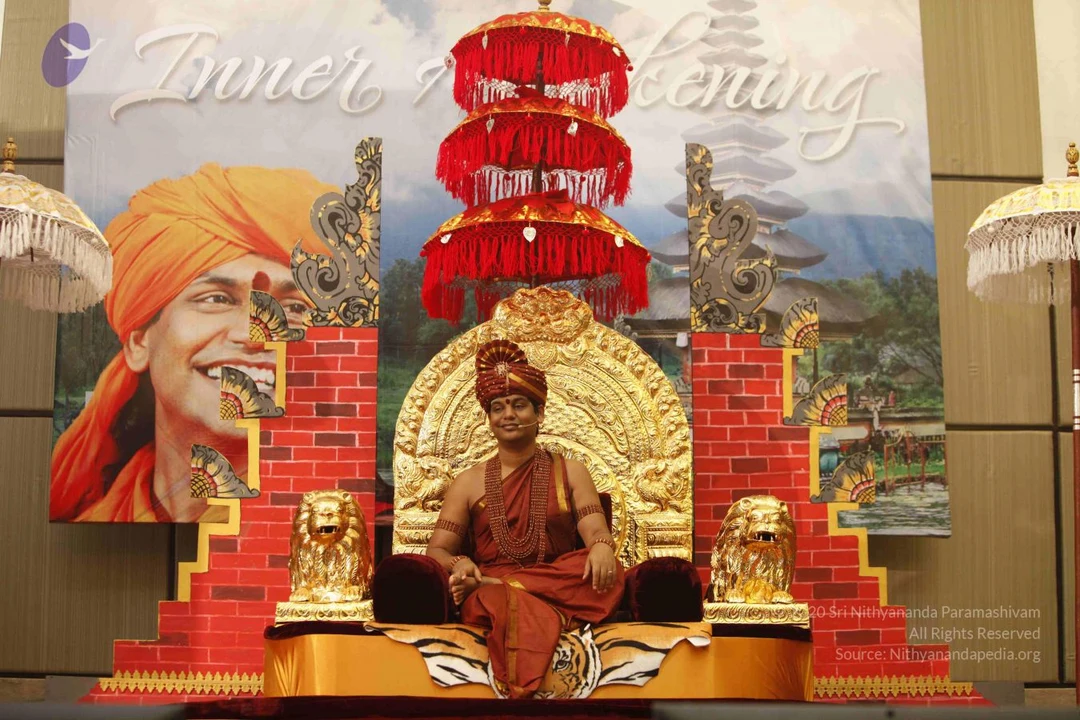
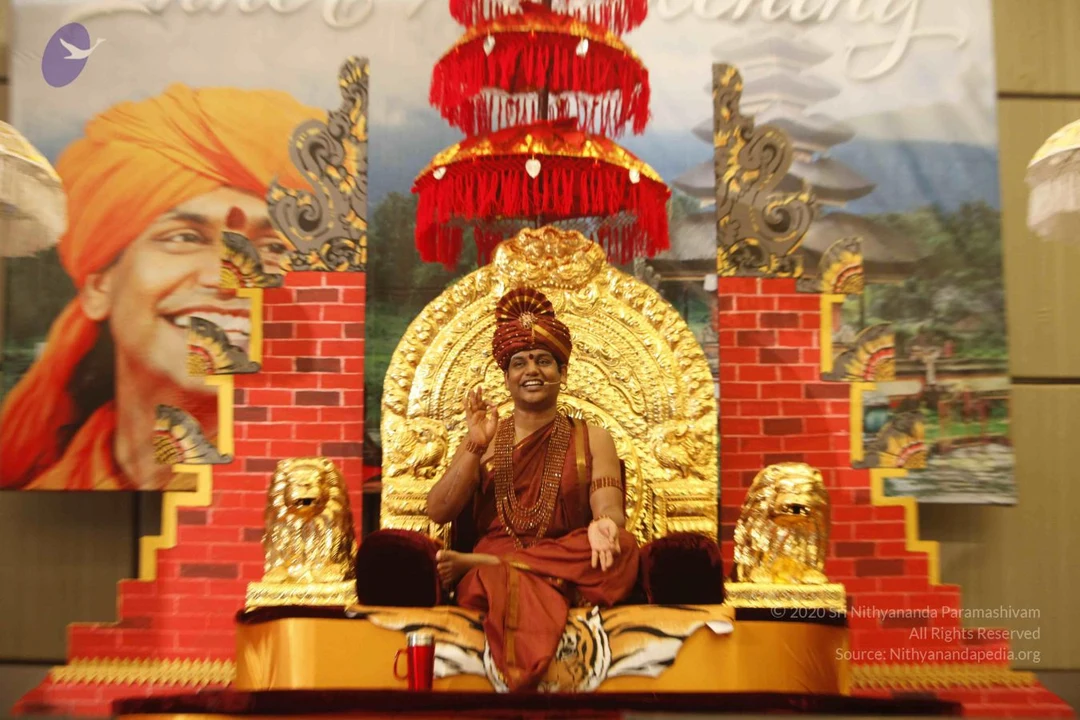
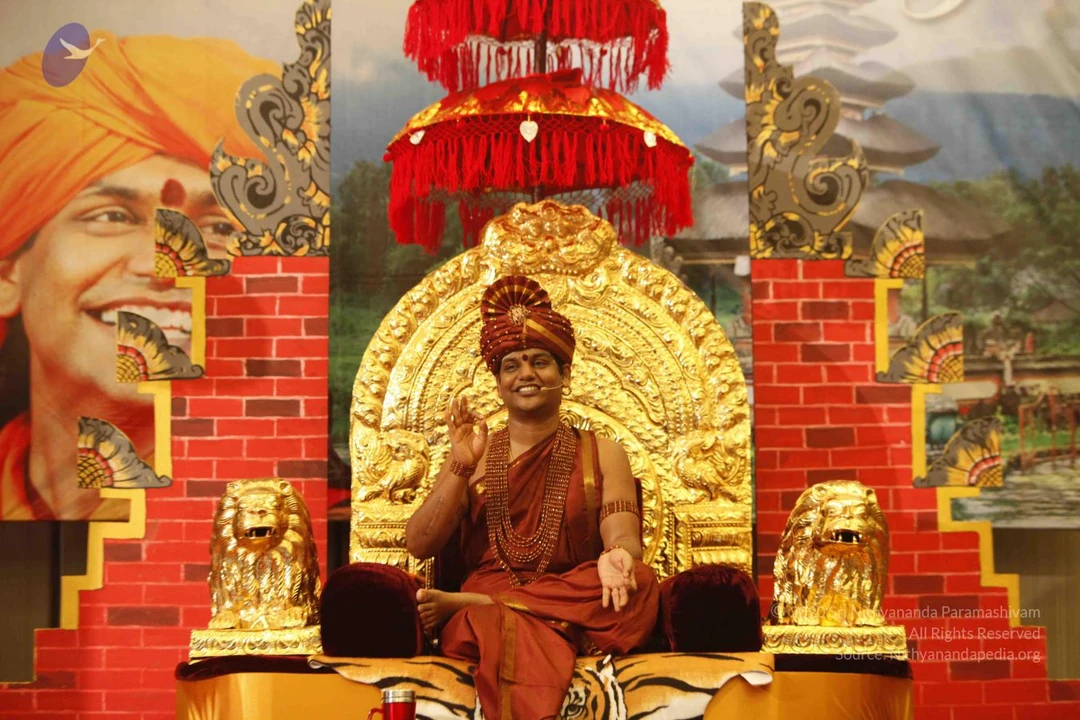
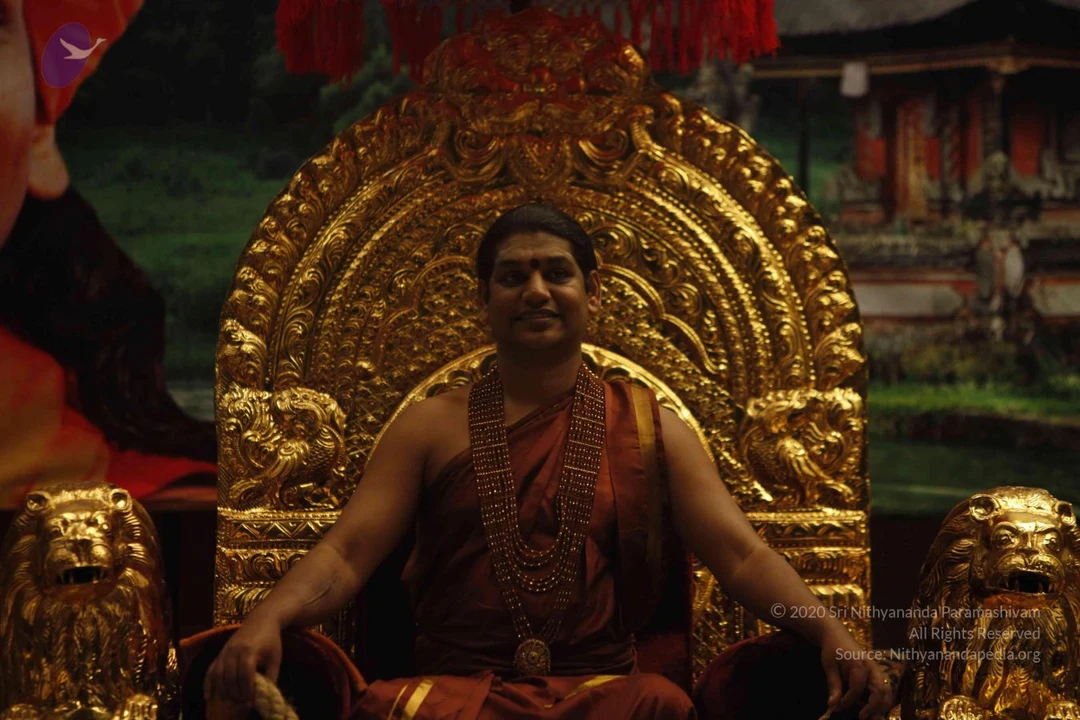
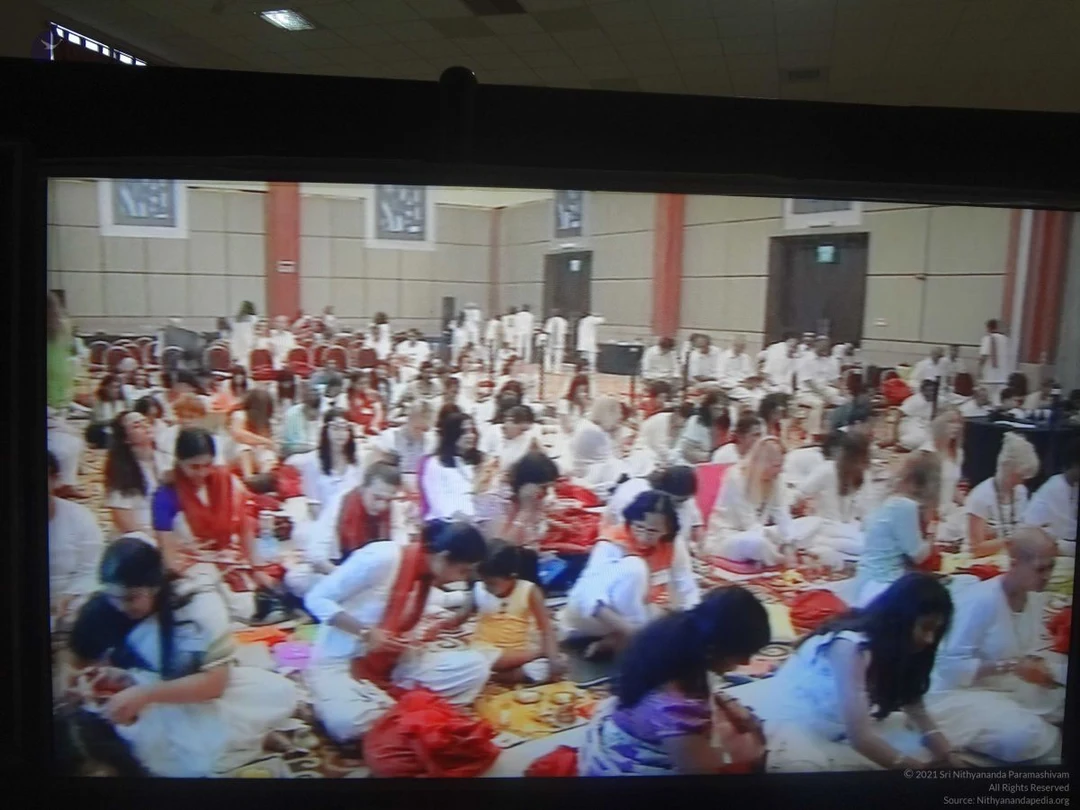
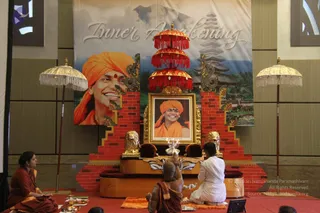
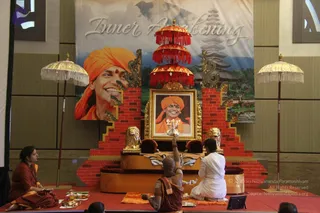
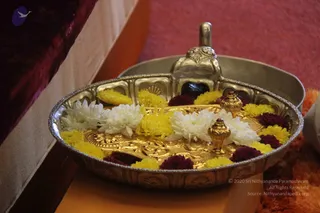
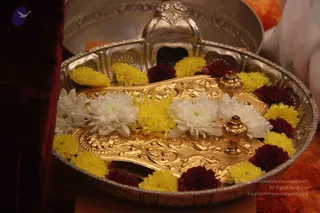
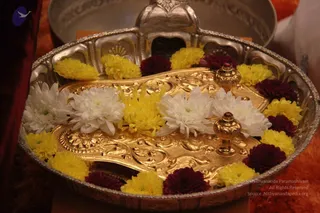
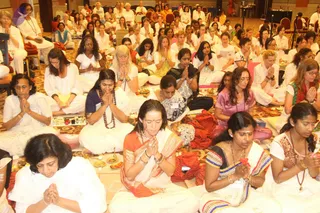
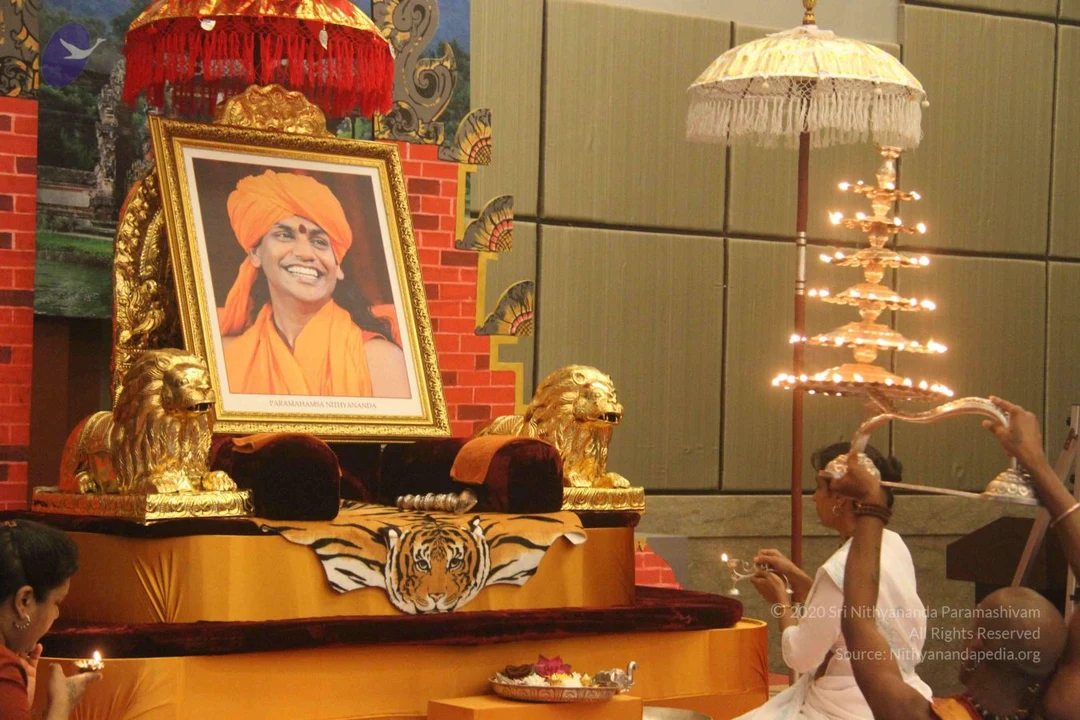
A photograph of a puja set up in front of a stage backdrop reading "Inner Awakening", showing a large banner portrait of a smiling man in an orange turban with a red bindi, a temple-like background, and a red-and-gold tiered canopy. A framed portrait of the same orange-turbaned man sits on a gold throne with golden lion figures and a tiger-skin cloth. A standing priest in an orange-brown robe waves a silver lamp before the throne. A woman in an orange-brown outfit sits cross-legged at the left, and a person in white sits at the right of the throne. Two gold-and-white parasols stand at the sides, and a few heads of devotees are visible at the bottom edge.A photograph of a padukapuja-style ceremony on a red-carpeted stage before a large banner reading "Inner Awakening" showing a smiling man in orange turban and a red bindi and a Balinese temple scene. At centre stands a golden-framed portrait of the same orange-turbaned figure on a gold throne flanked by gold lion figures and draped with a tiger-striped cloth, under a tiered red-and-gold umbrella canopy. Two white parasols stand at the sides. A bald man in an orange-brown dhoti-style garment raises a silver lamp toward the portrait while a woman in white sits beside the throne. A woman in an orange-brown sari sits at left with a brass plate of offerings, and a few heads are visible at the bottom edge. The portrait and banner depict a figure and are not counted as people.A close photograph of a ceremonial brass-and-gold puja plate on a wooden surface beside a red fabric background. The plate is decorated with white chrysanthemums, yellow marigolds and deep maroon flowers arranged around a gold-toned ornamental tray. Two small gold ornamental finials or lamps stand among the blossoms, and behind the plate sits a larger silver-toned vessel with a tall ornate spout. No people are visible in the frame.Close-up photo of an ornate silver and gold ritual tray filled with white, yellow and maroon chrysanthemum flowers. A gold-coloured peetha-style plate with engraved scrollwork holds two small gold kalasha-shaped finials with red gem tops. Behind the tray is a large silver vessel, and orange fabric appears at the right edge. No people are visible.A close photograph of an ornate silver tray decorated with a gold-toned inner plate and engraved scrollwork. Around its rim are white, yellow and deep maroon chrysanthemum blossoms, and two small gold ritual vessels with red gemstone tops sit on the plate among the flowers. The background shows an orange cloth and part of a silver vessel. No people are visible.A large seated gathering of devotees with hands pressed in anjali mudra during a satsang or puja in a hotel ballroom with patterned carpet. Most participants wear white ritual clothing; some women wear saris in orange, pink, blue and purple. Several sit before small brass plates and oil lamps with flowers and offerings. One woman in the foreground wears an orange-and-white sari with forehead markings, and another wears a rudraksha mala. Chairs and a stage area with microphones are visible at the back.

NithyaSatsang

58 photosSource gallery
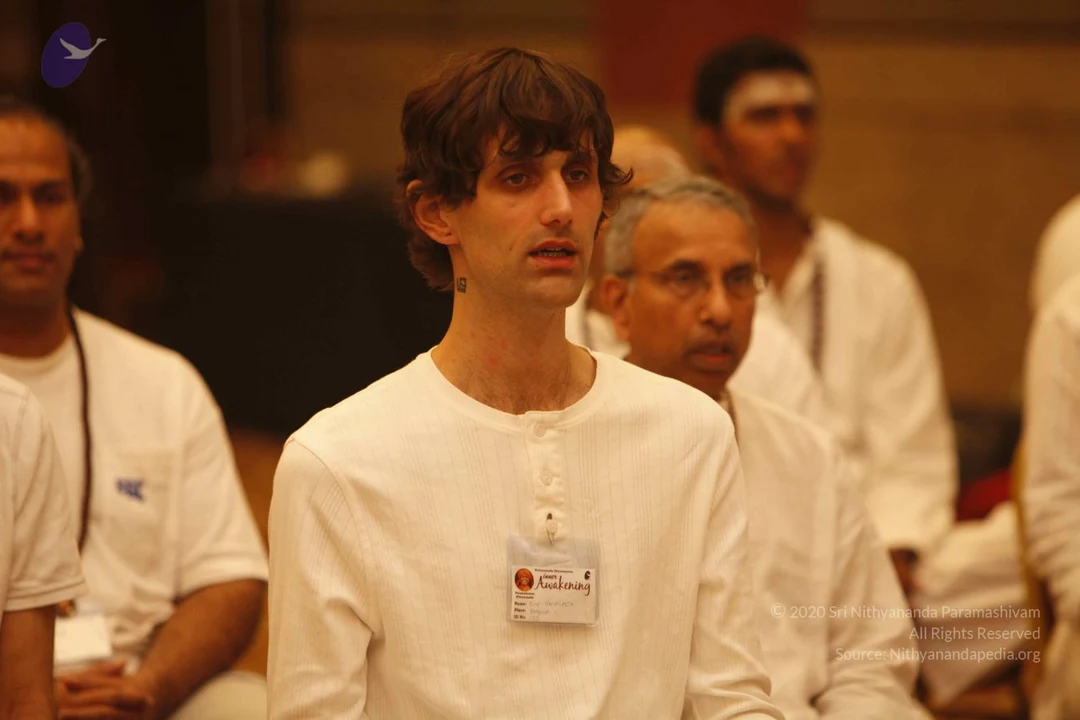
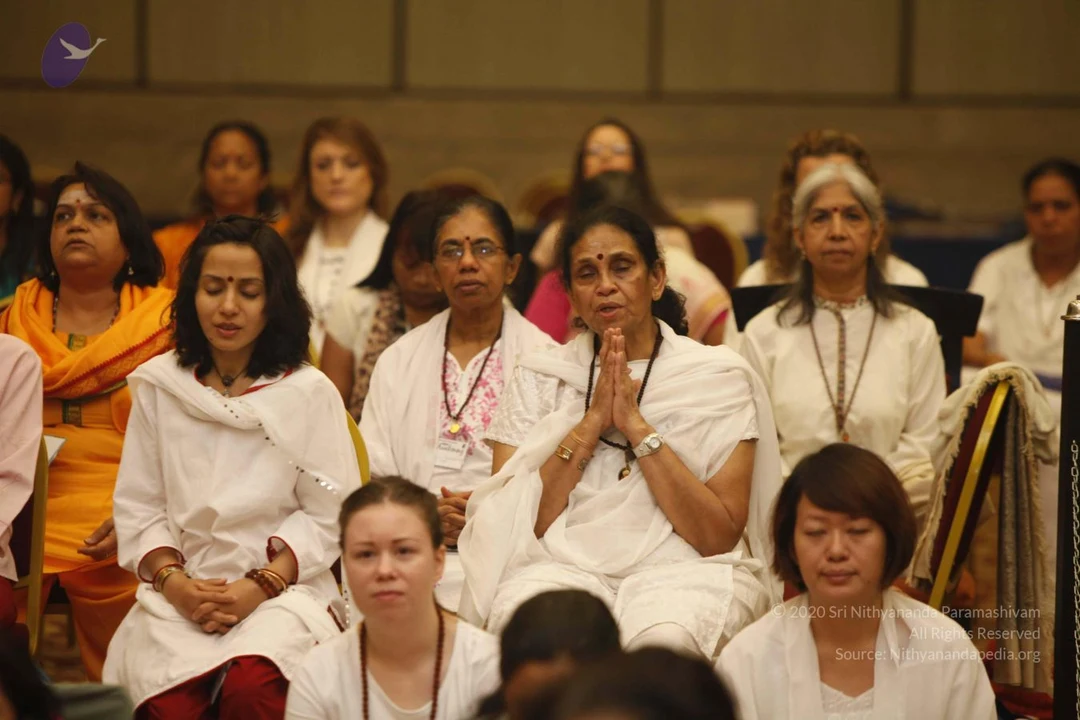
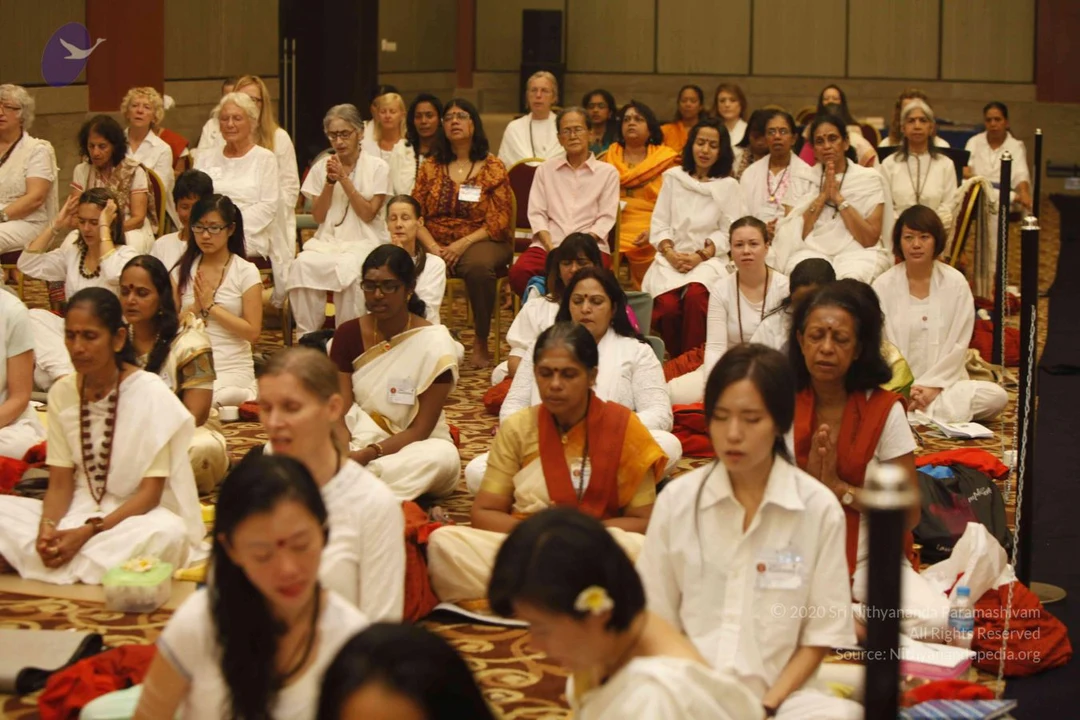
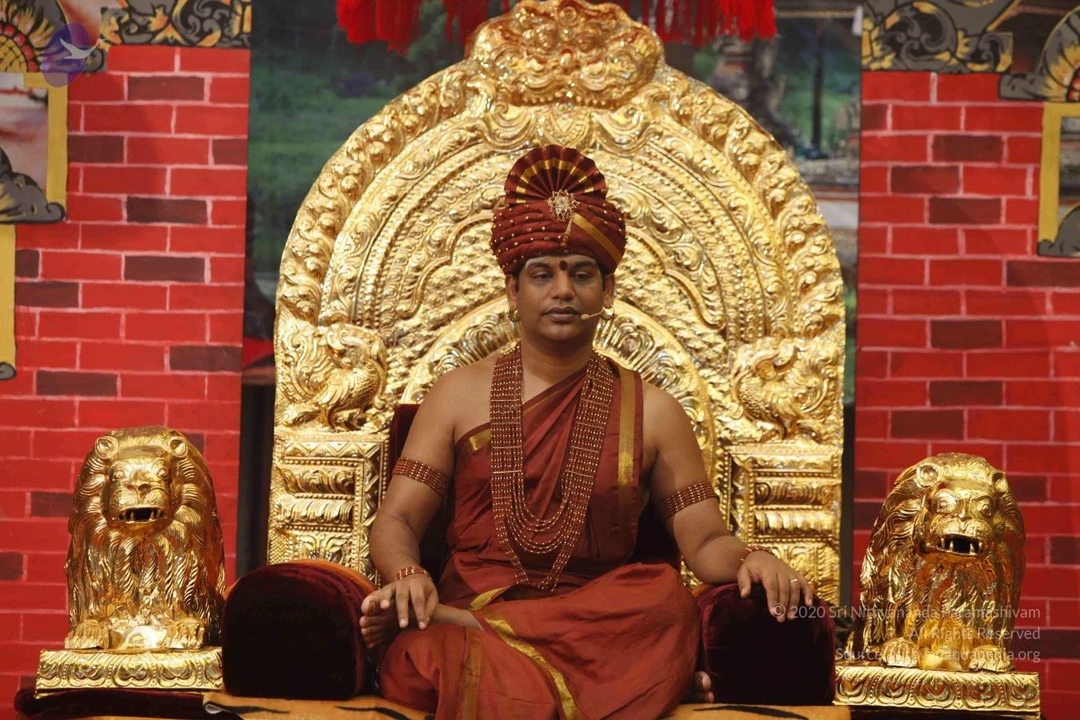
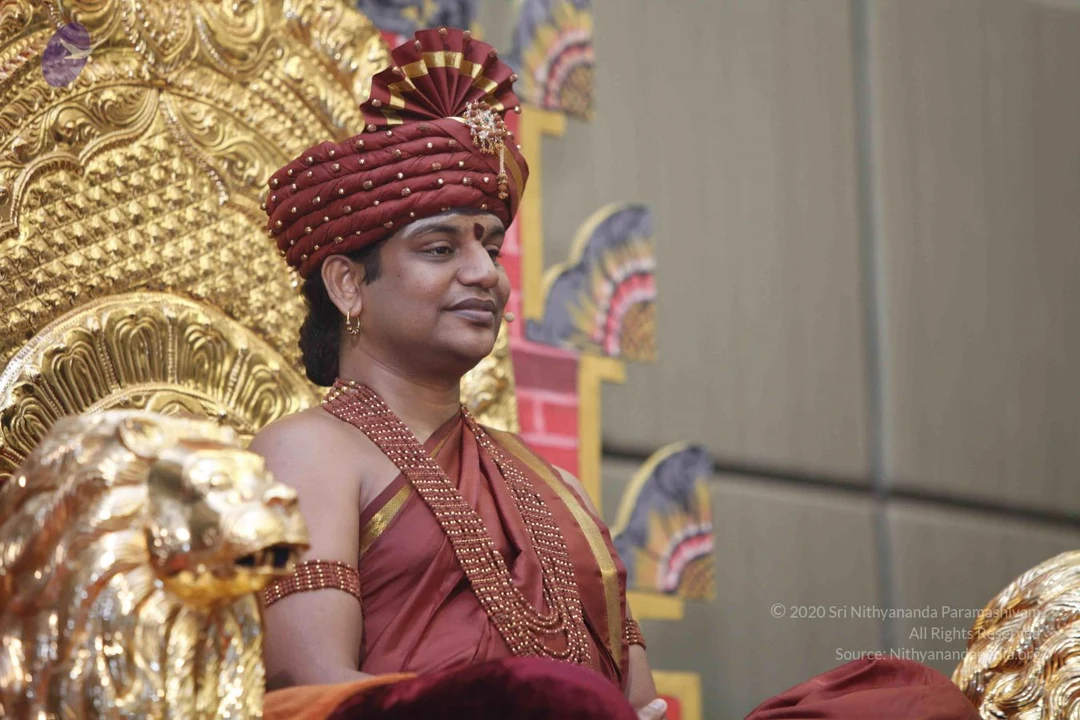
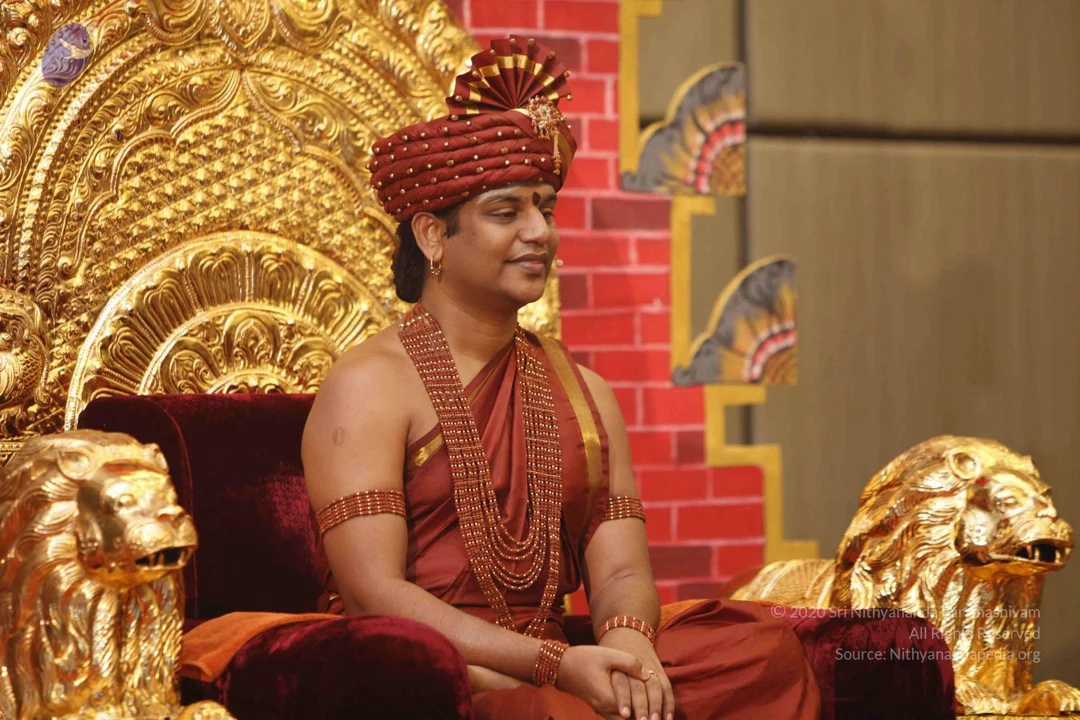
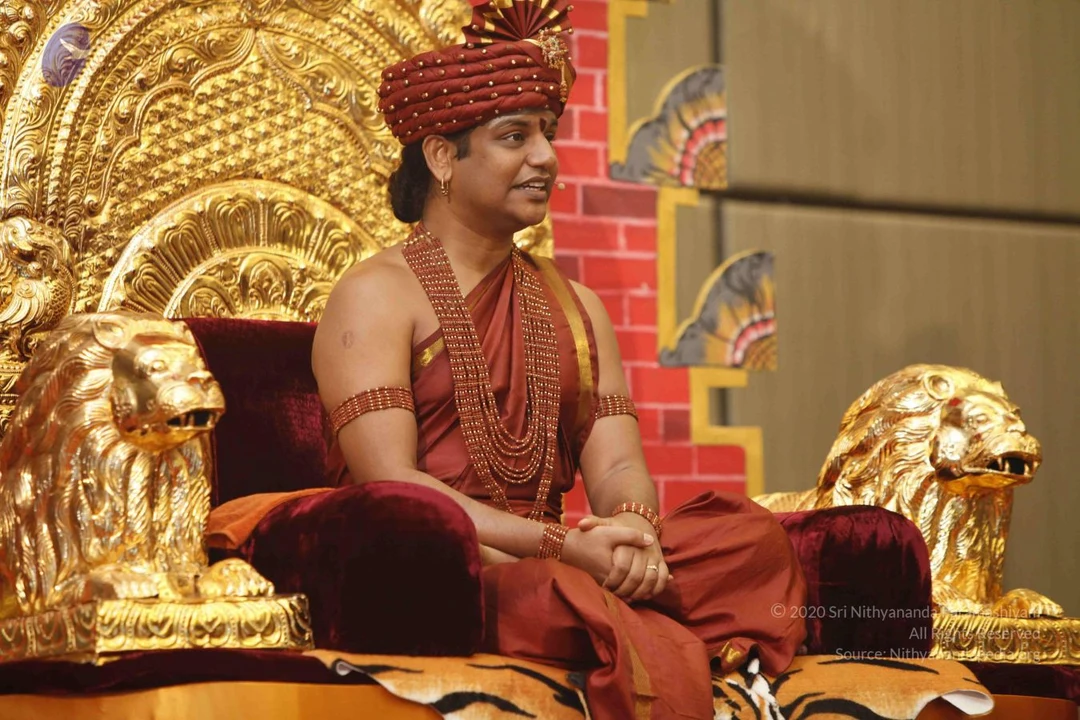
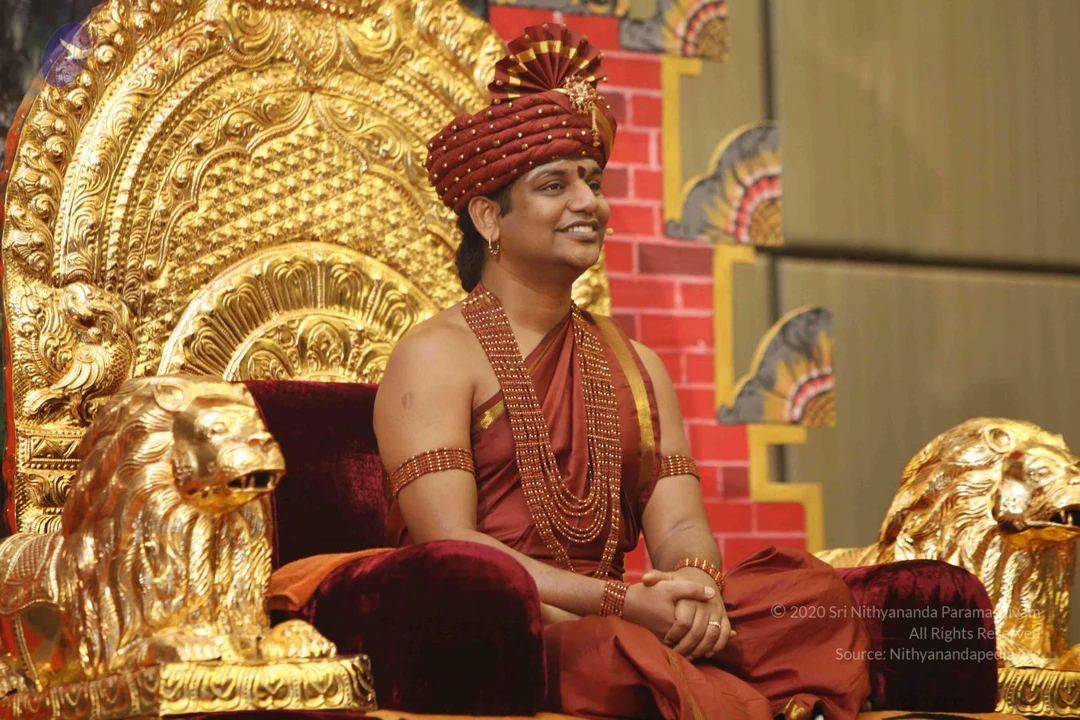
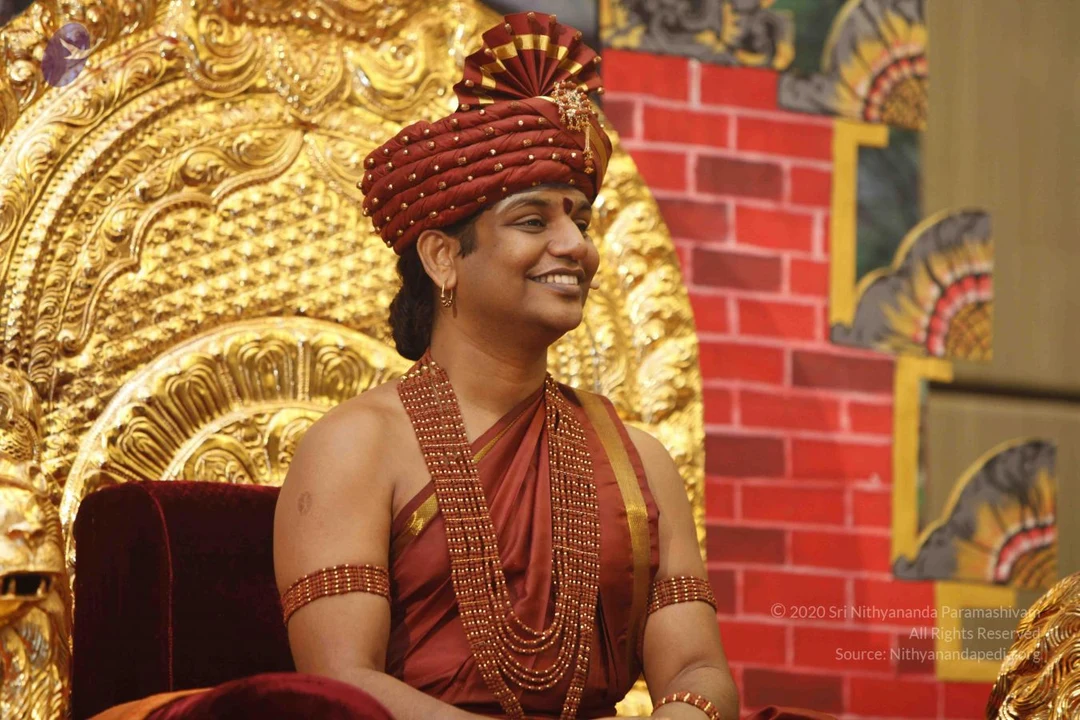
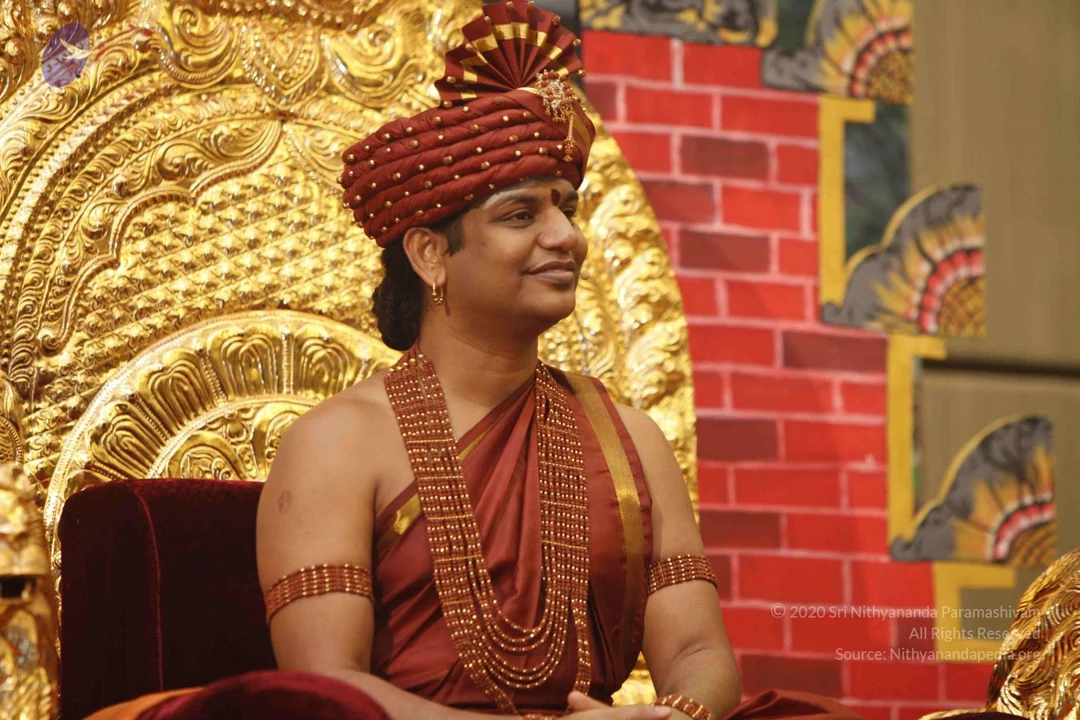
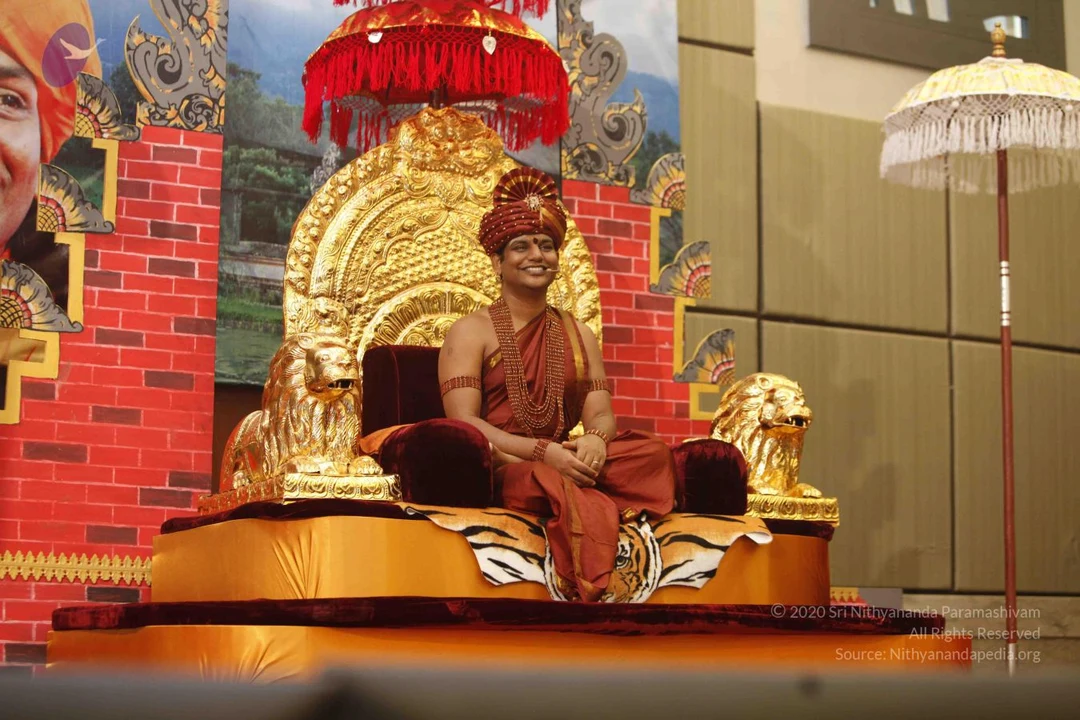
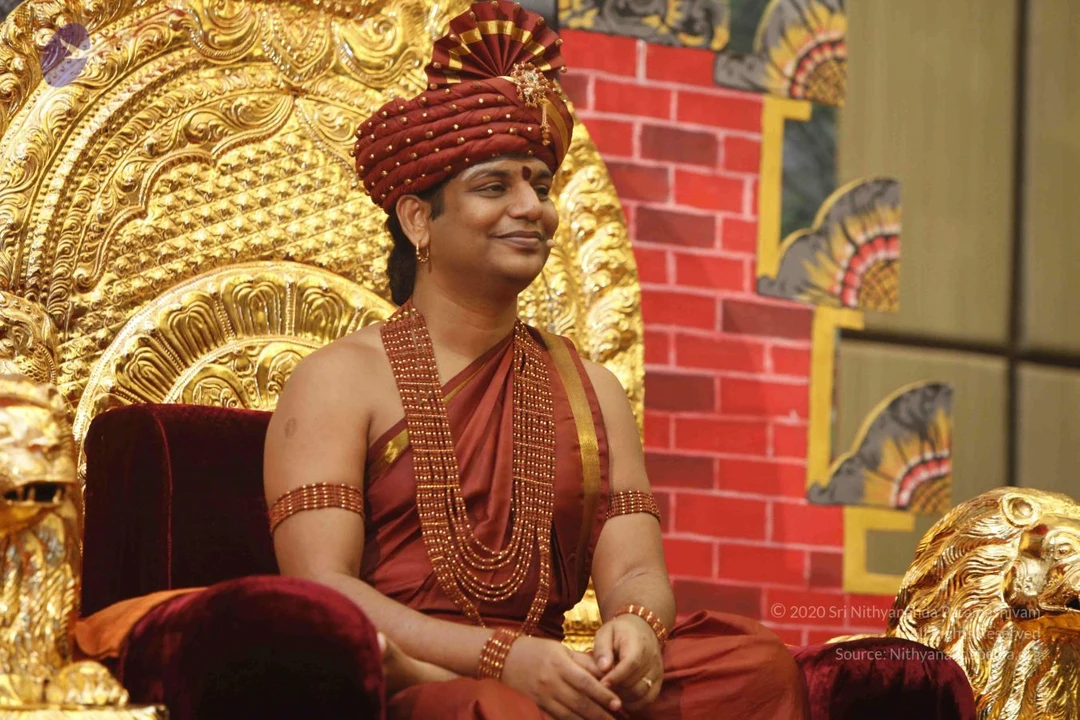
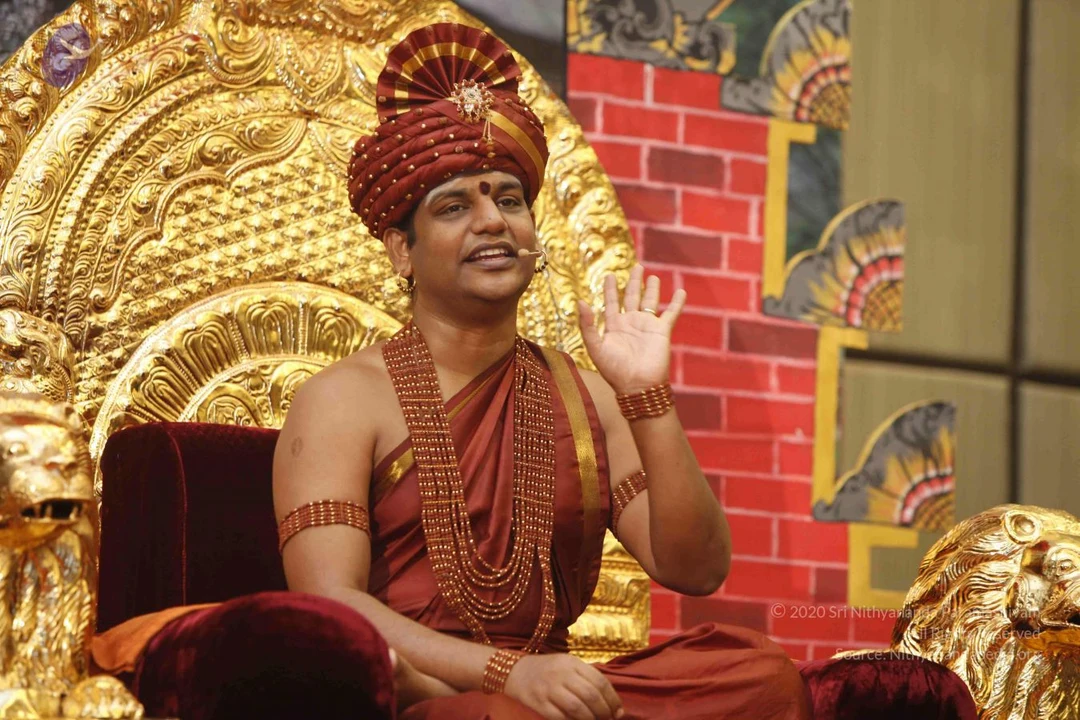
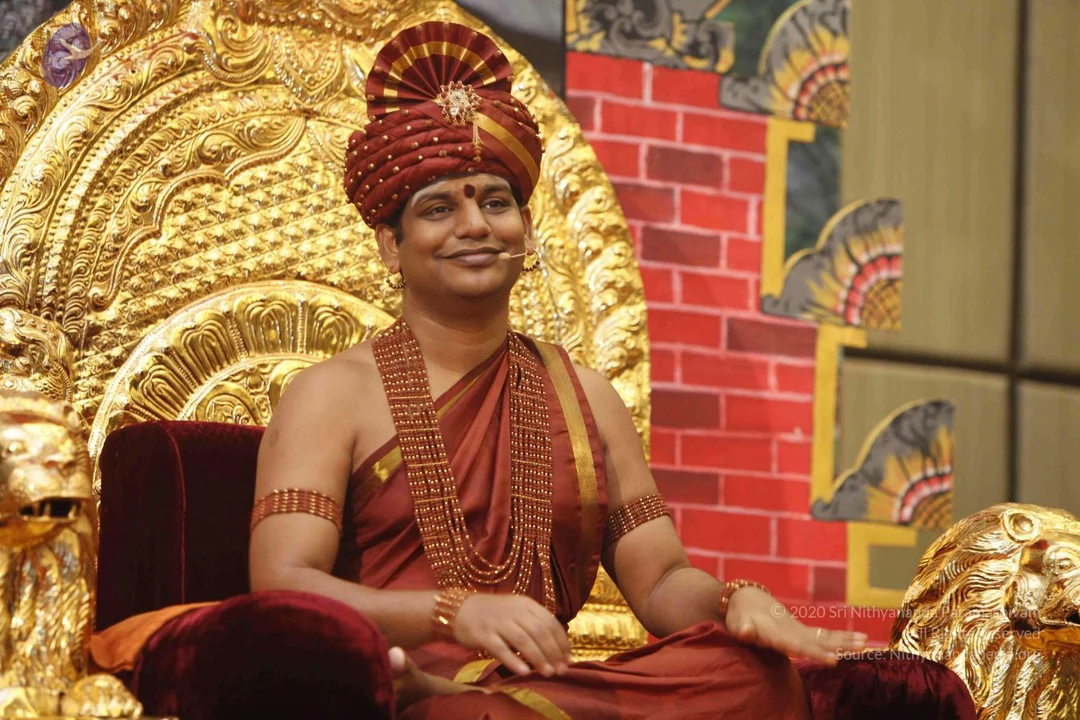
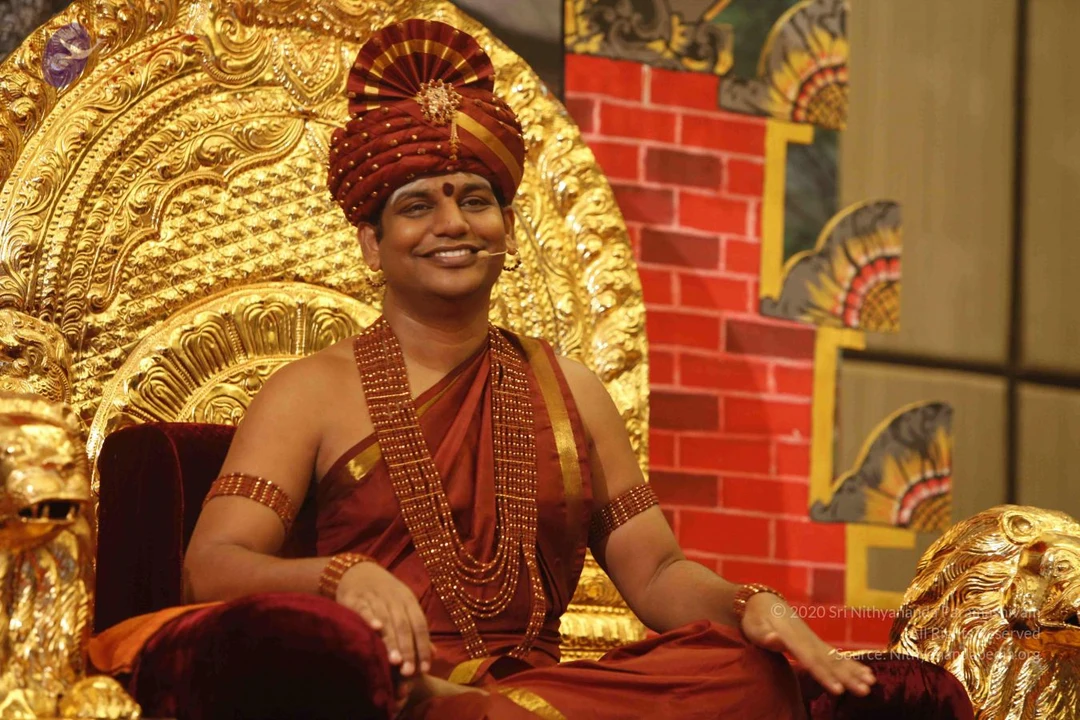
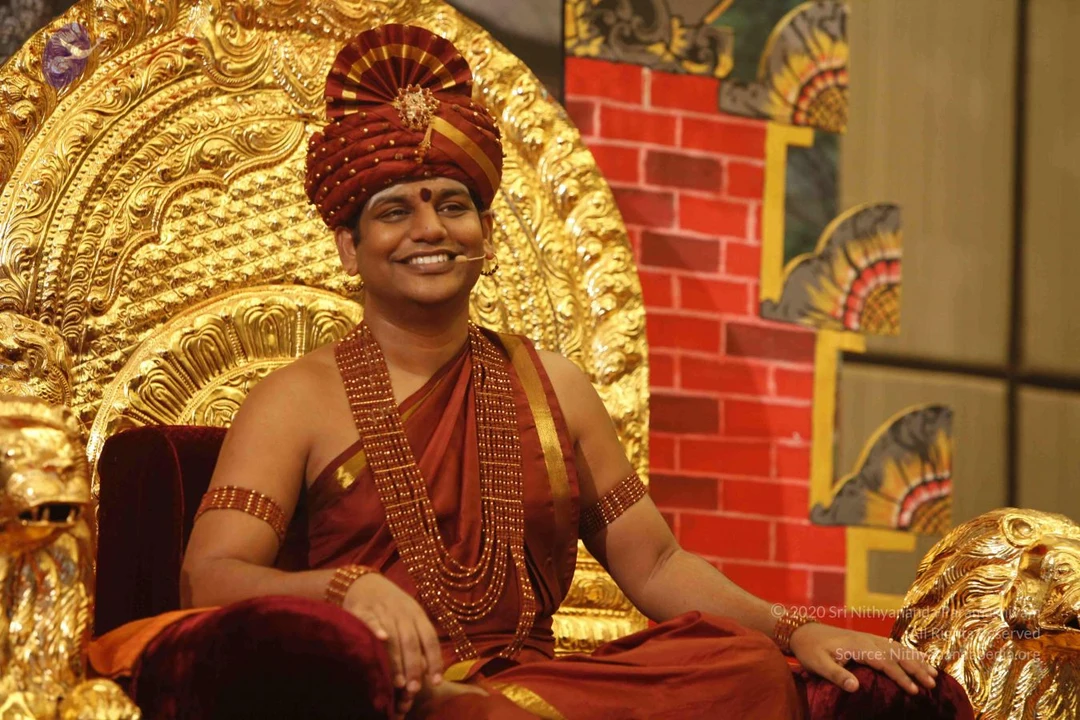
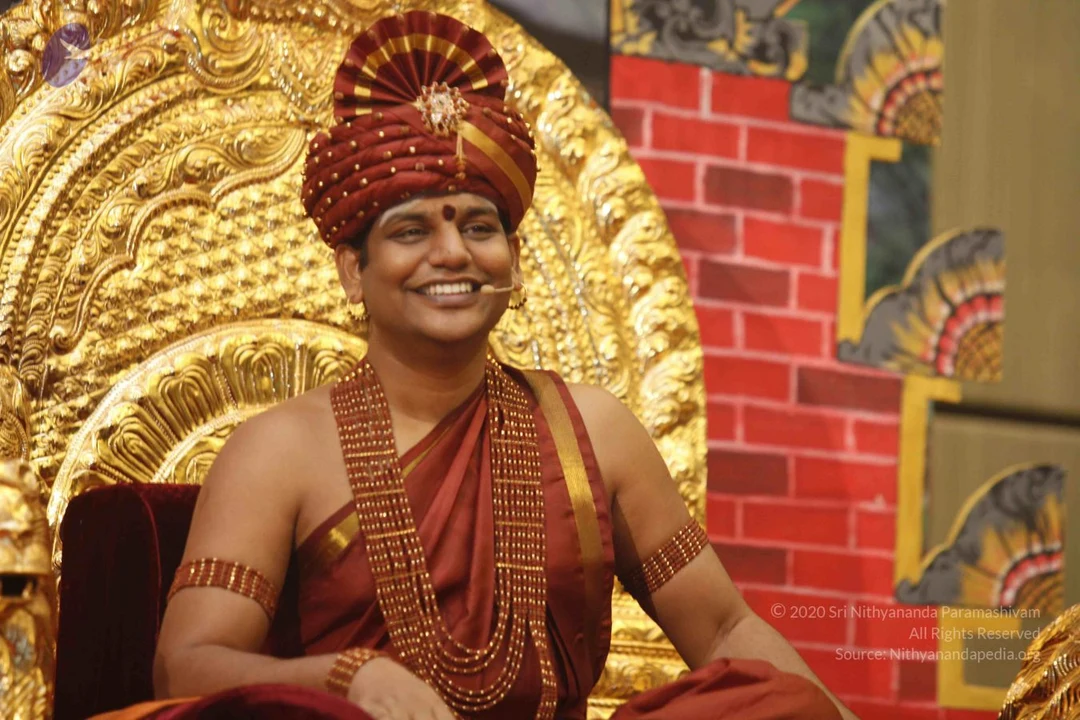
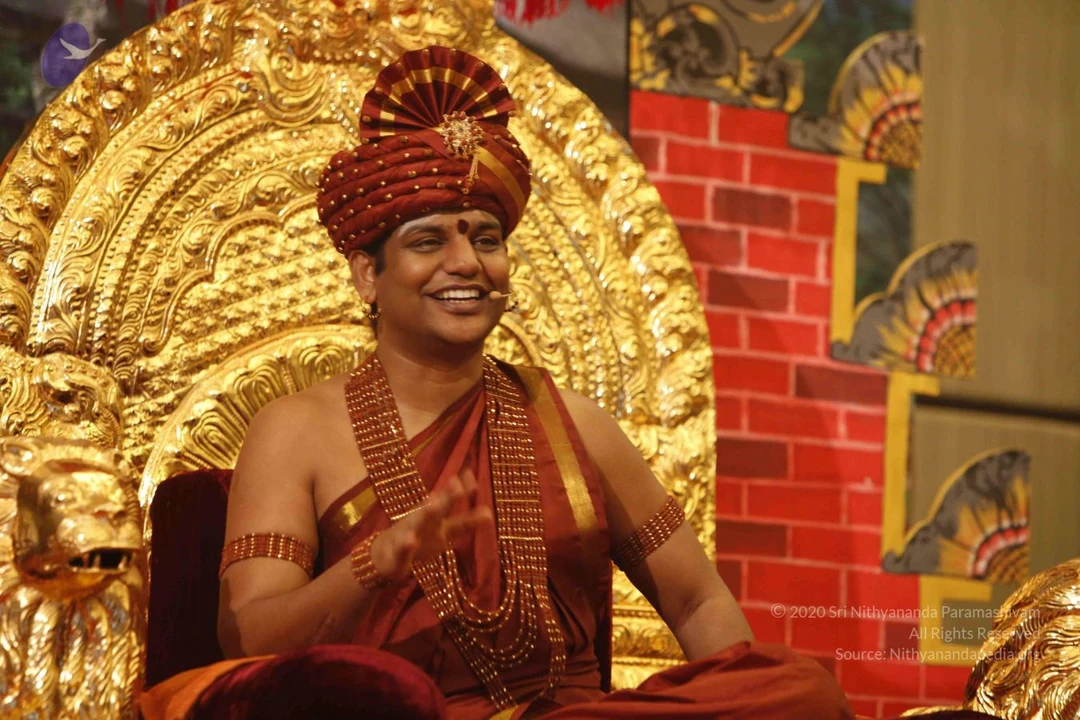
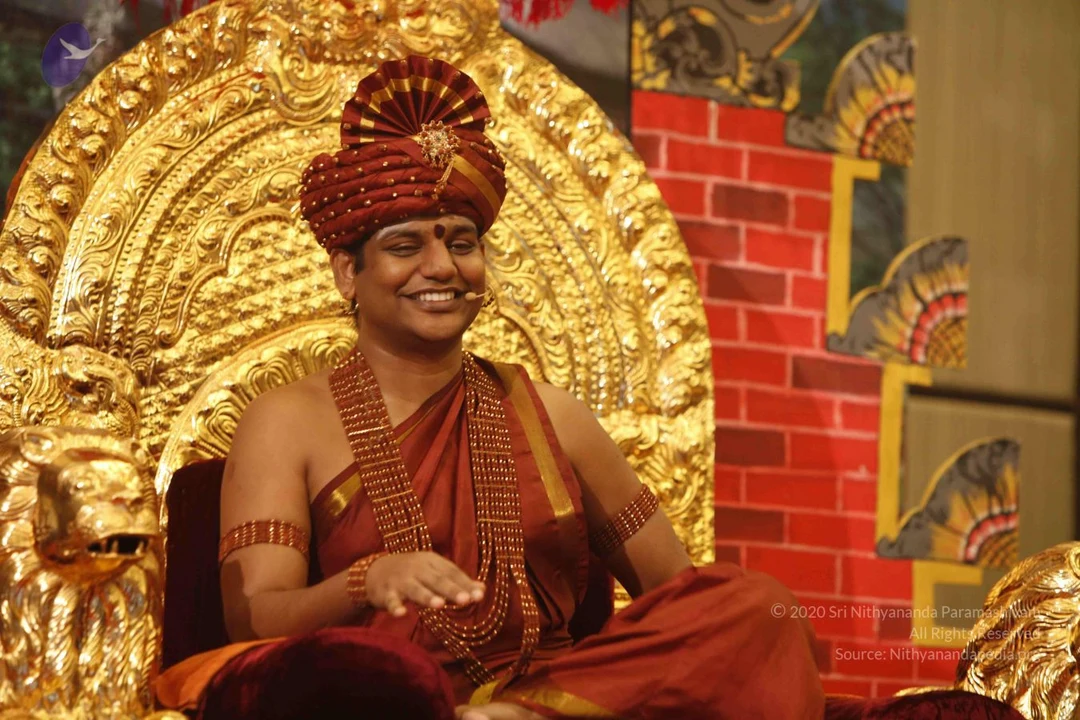
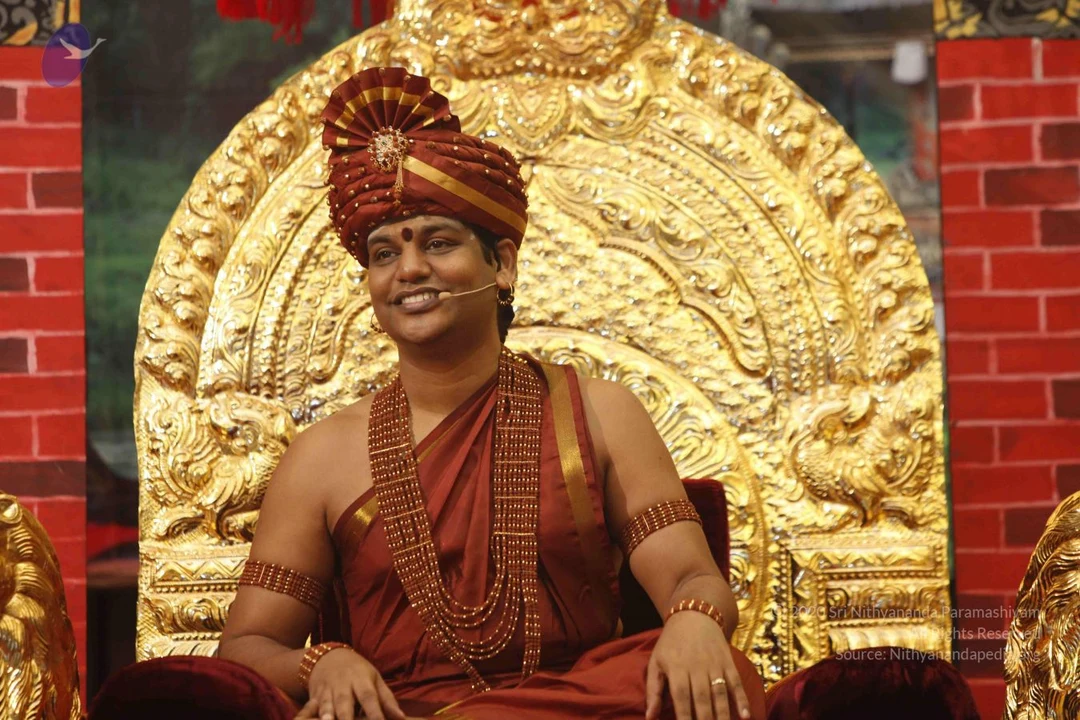
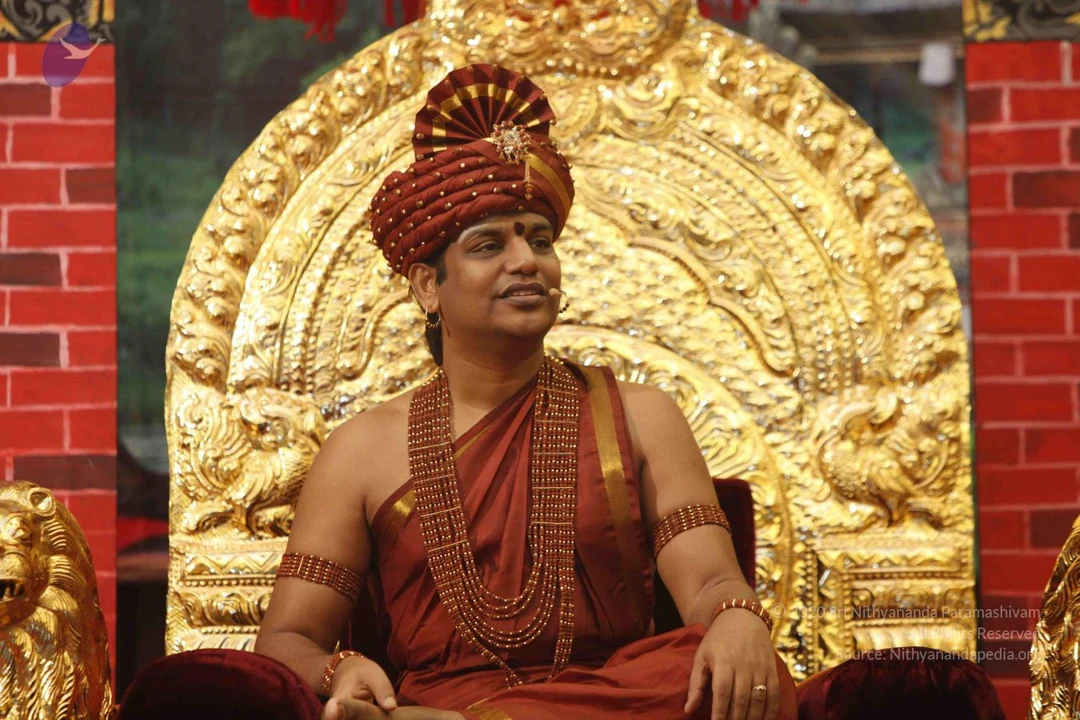
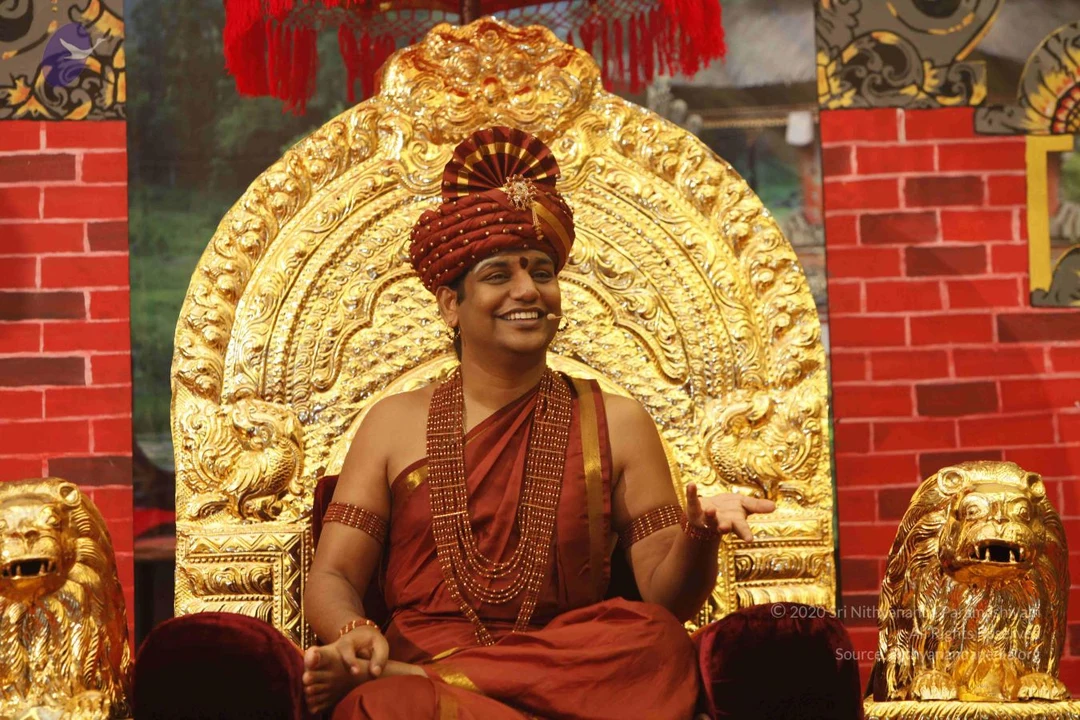
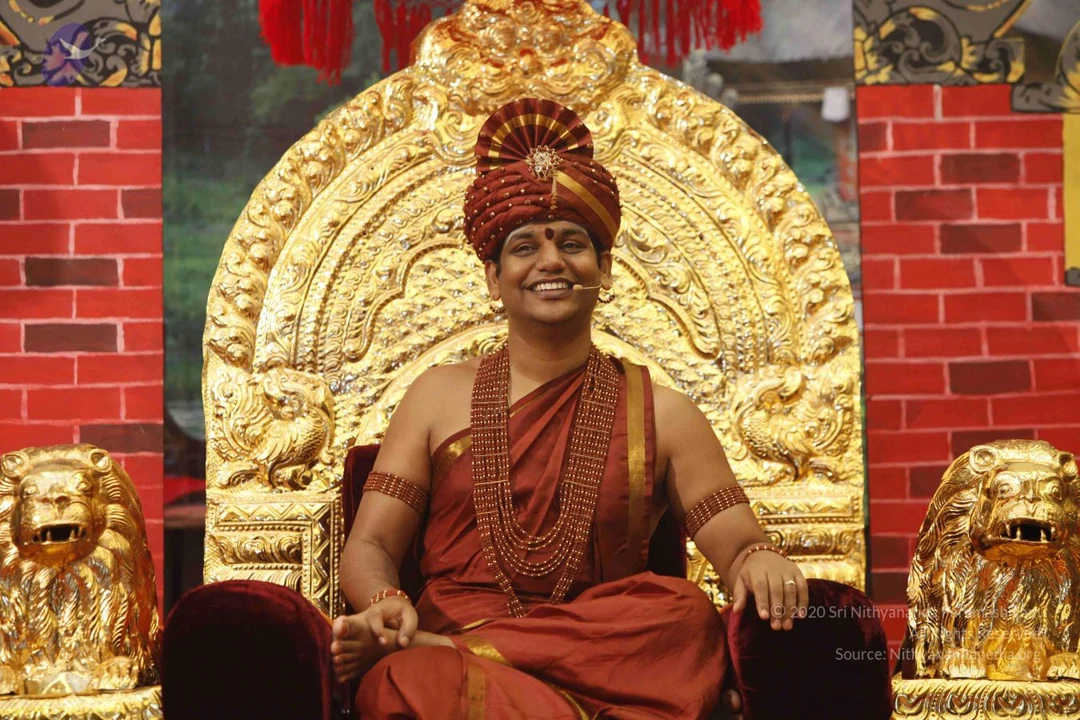
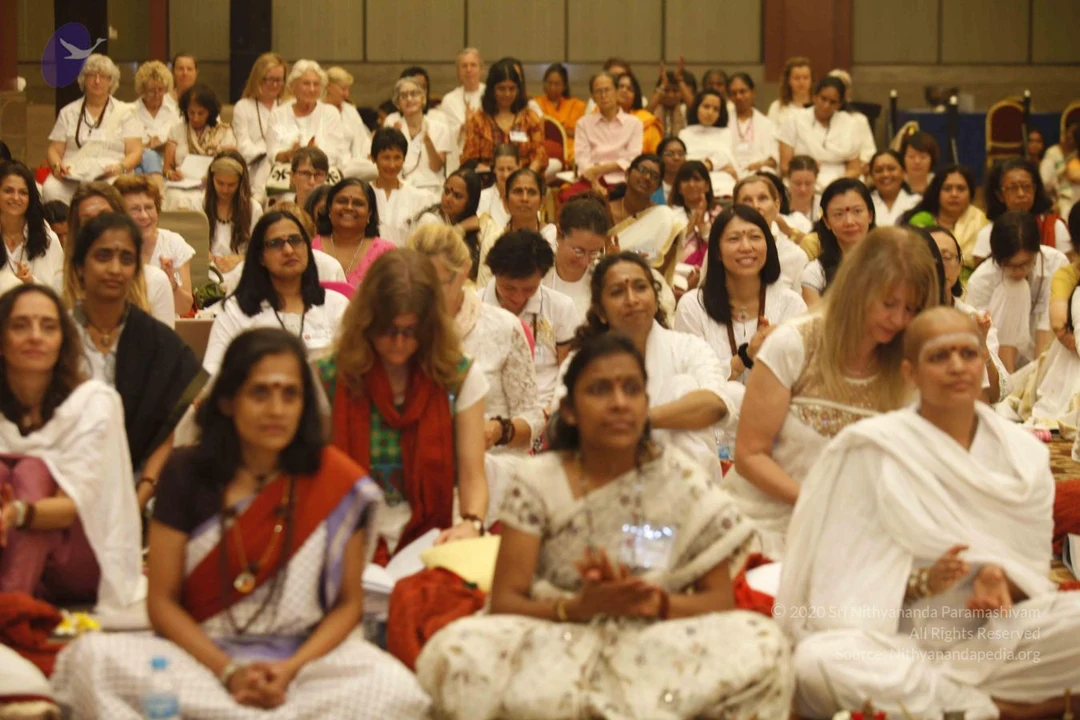
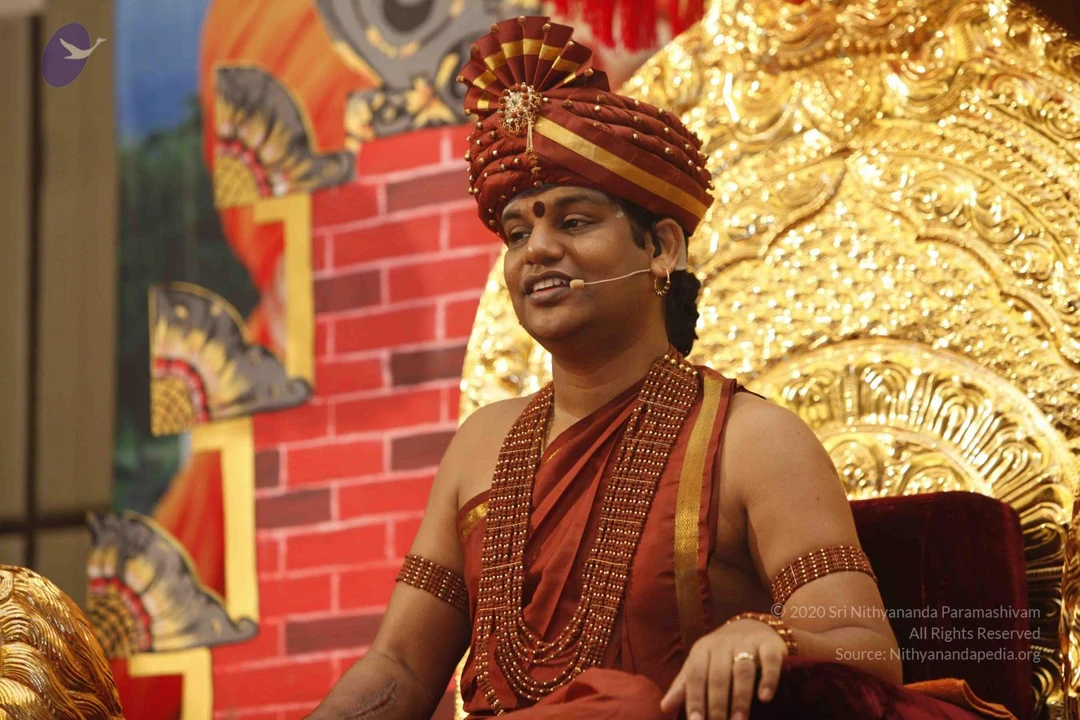
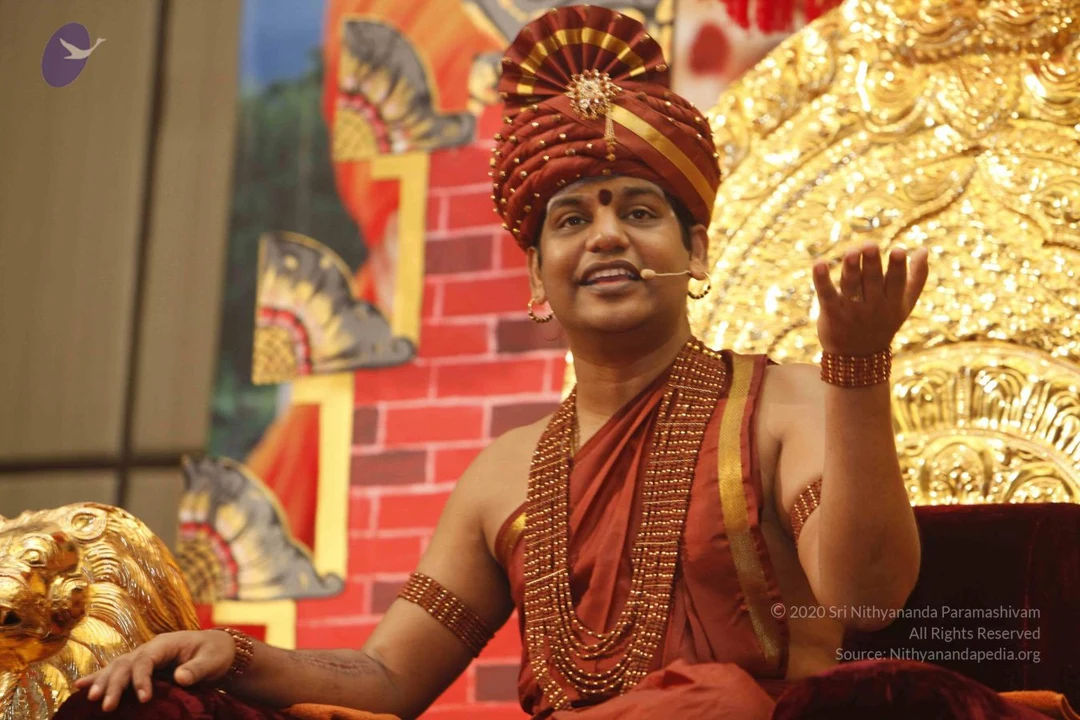
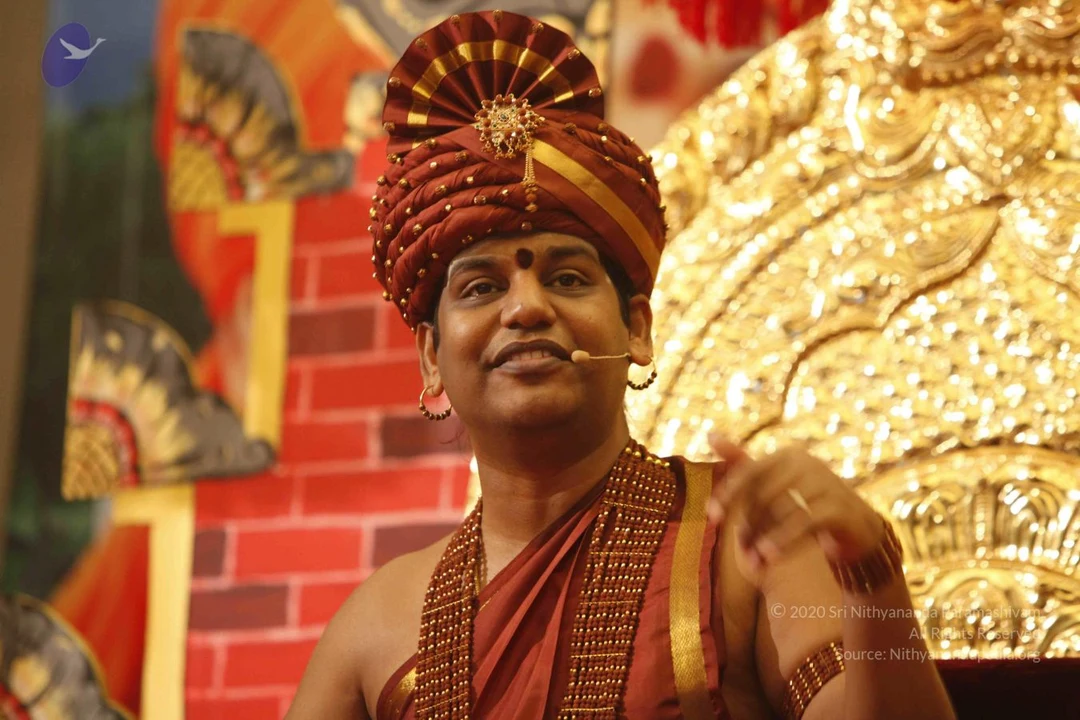
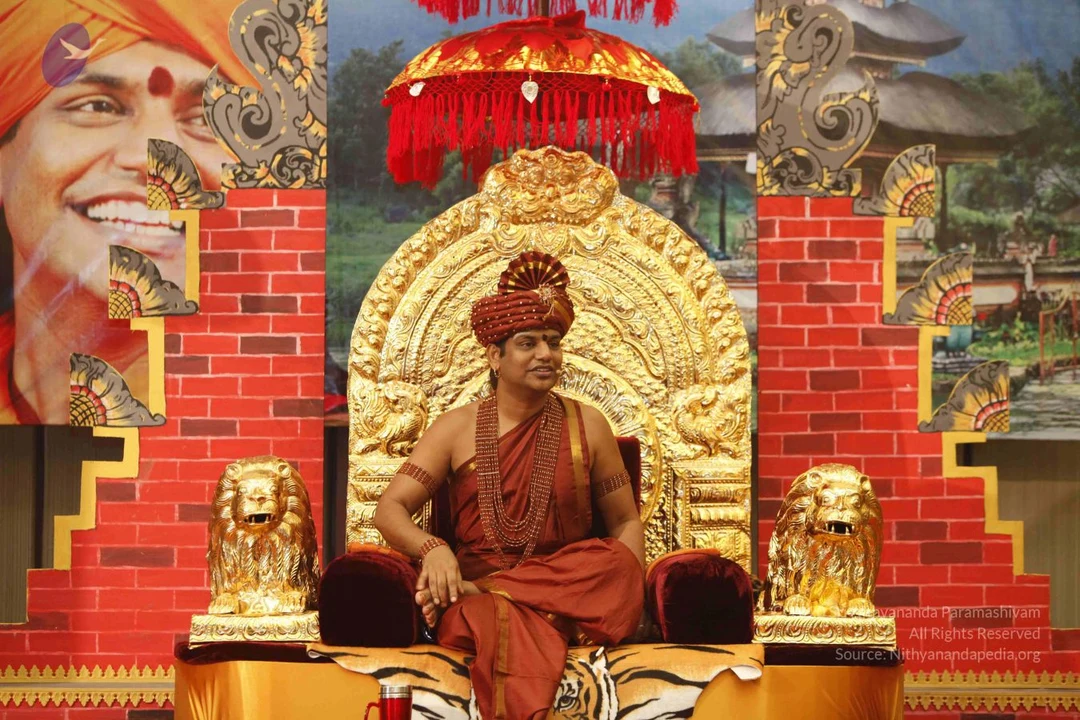
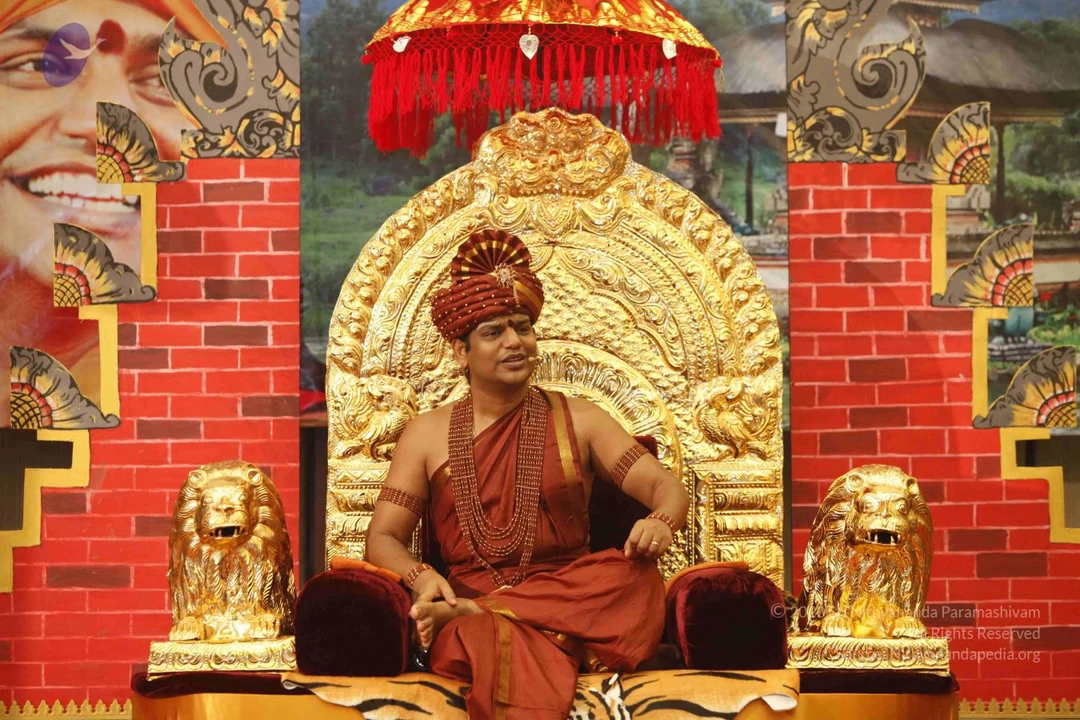
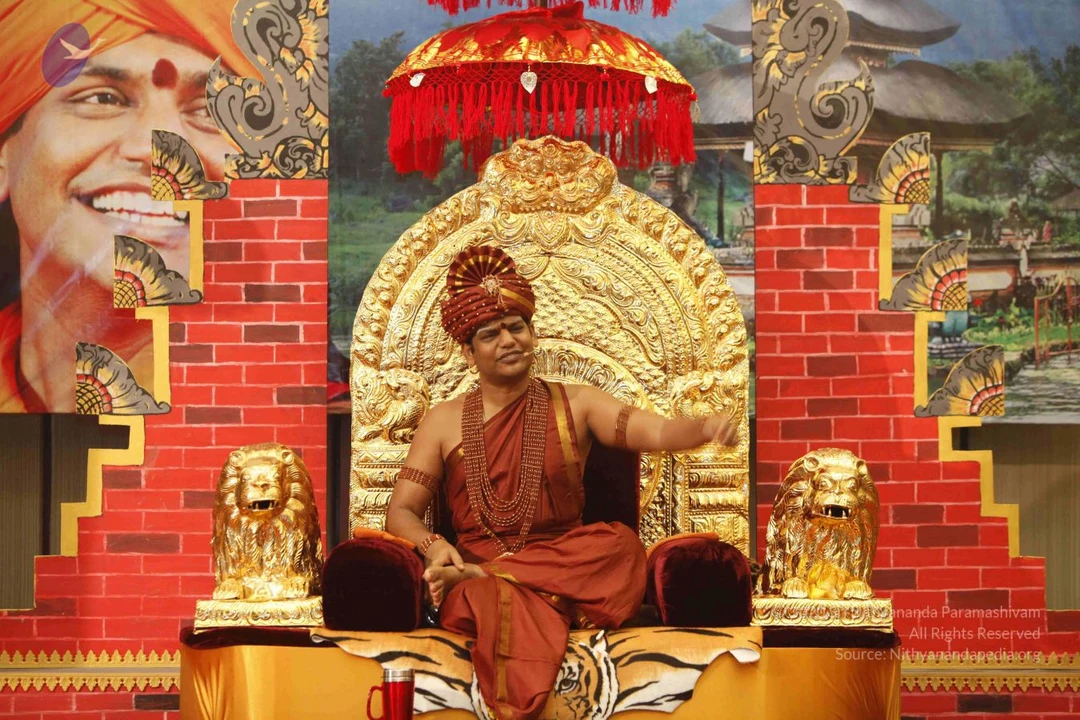
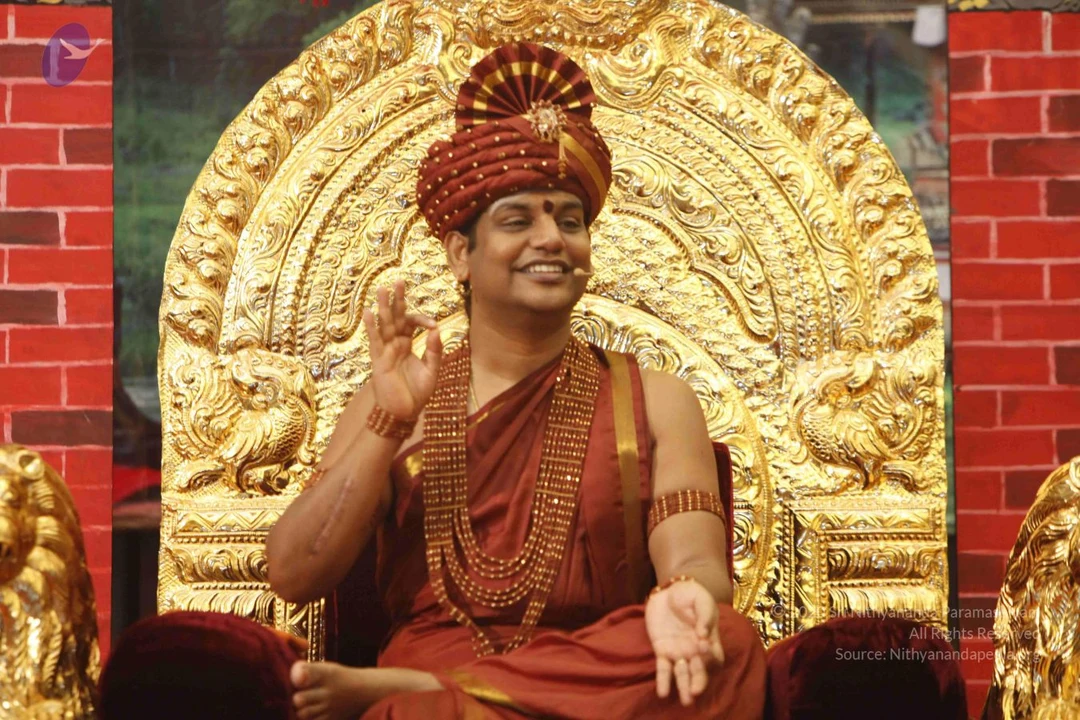
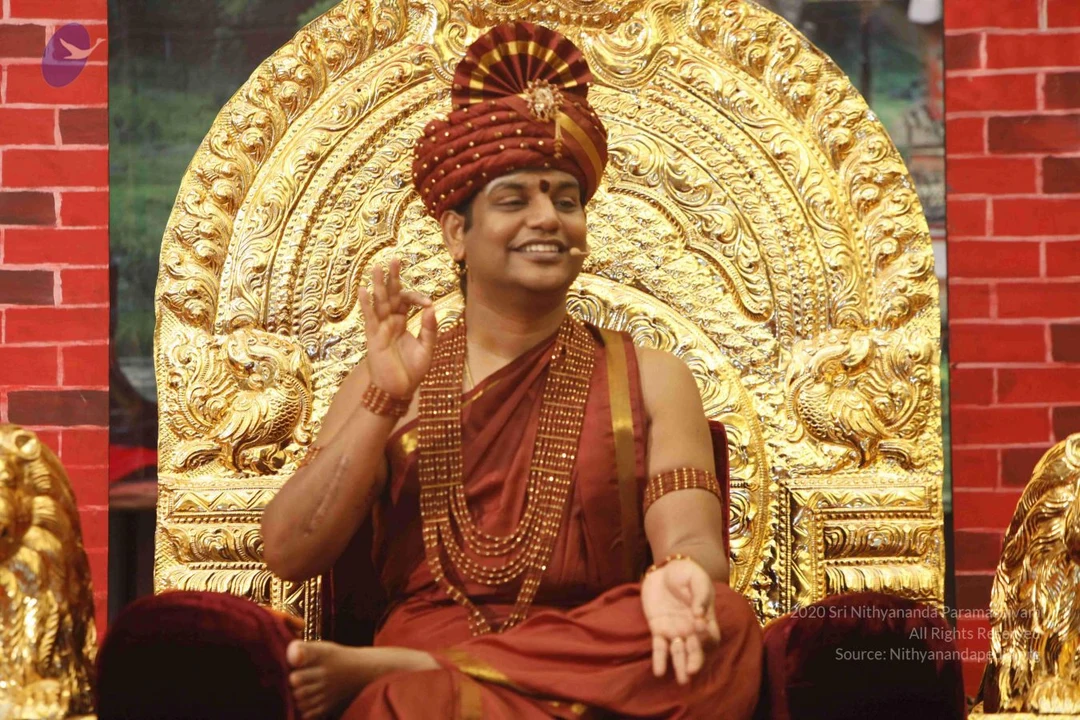
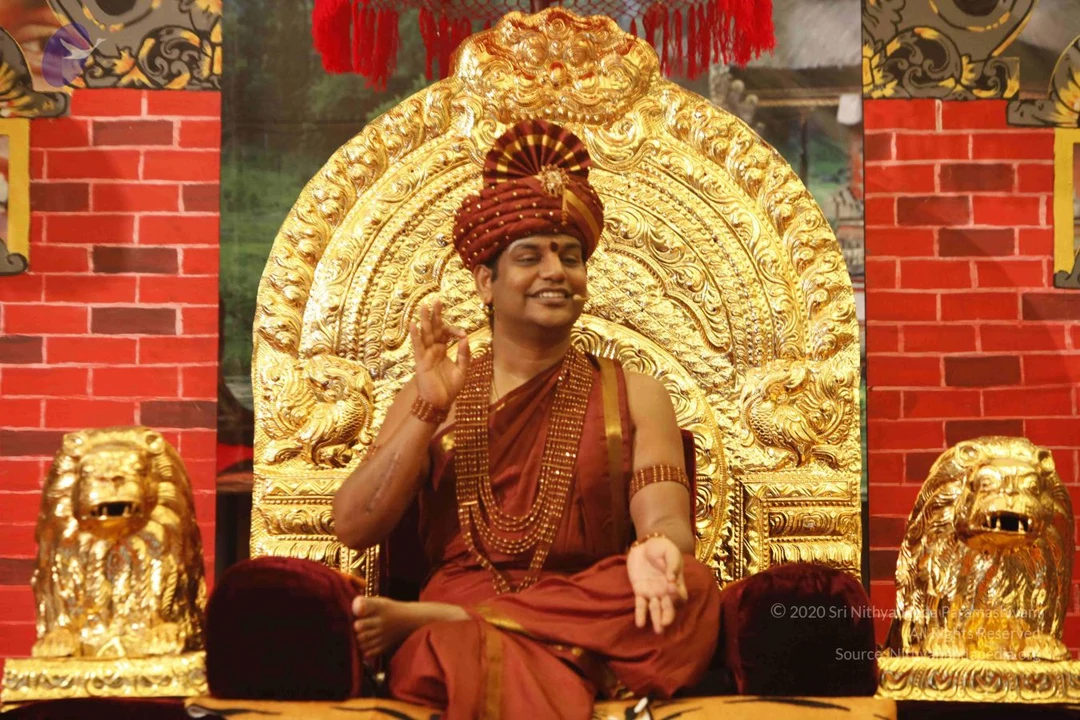
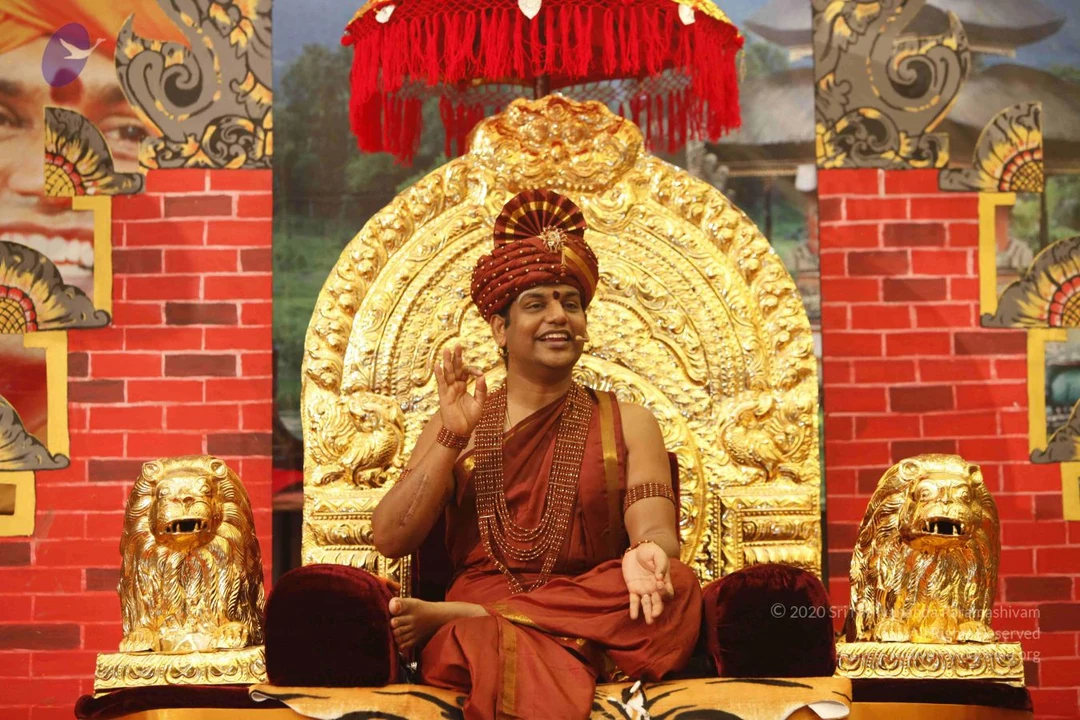
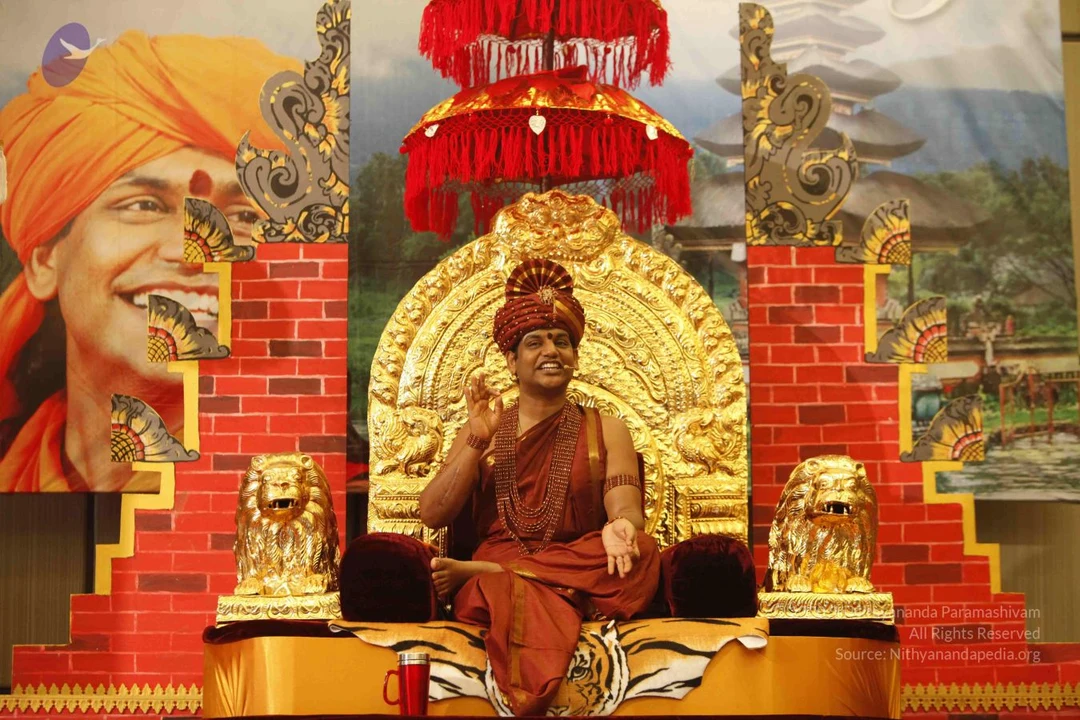
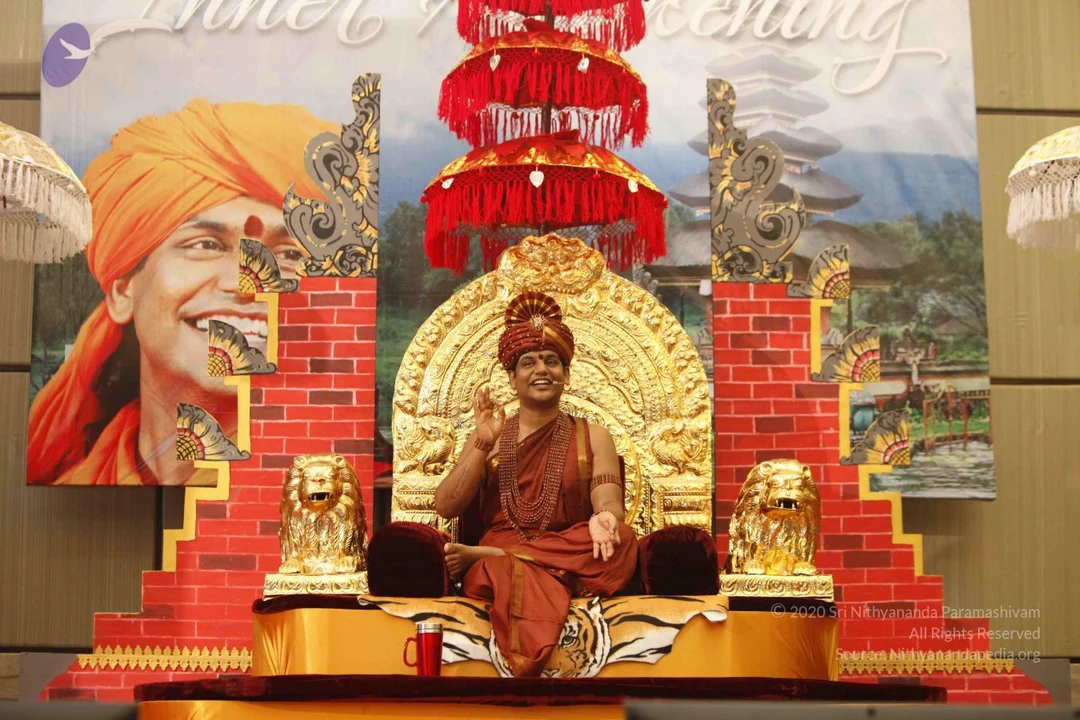
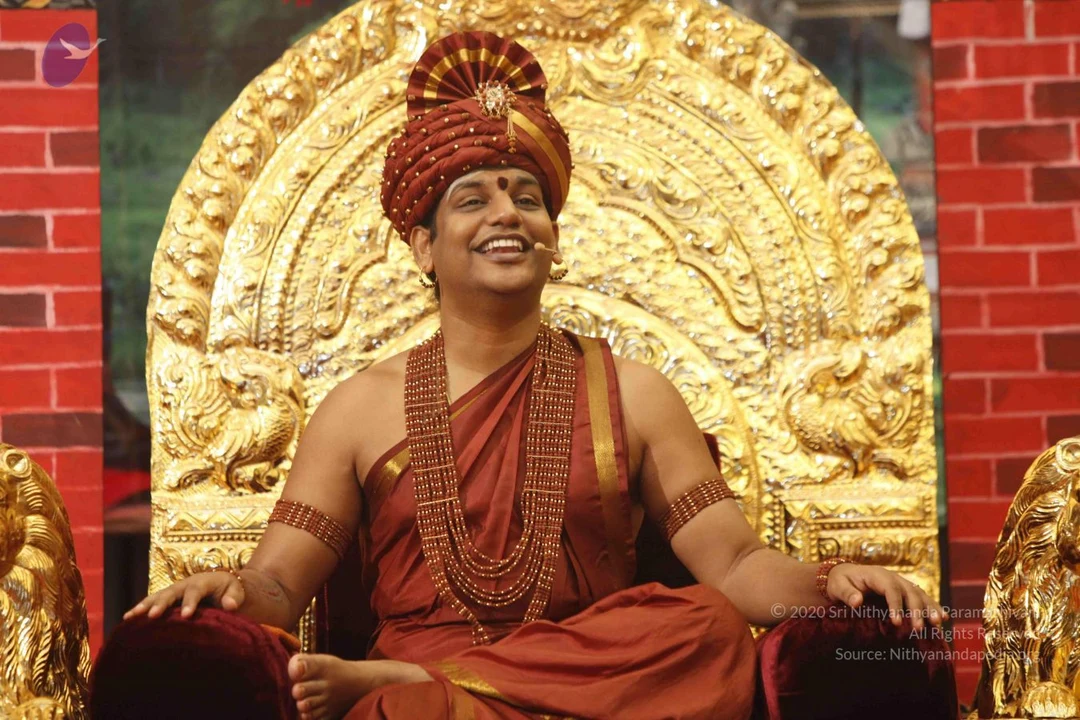
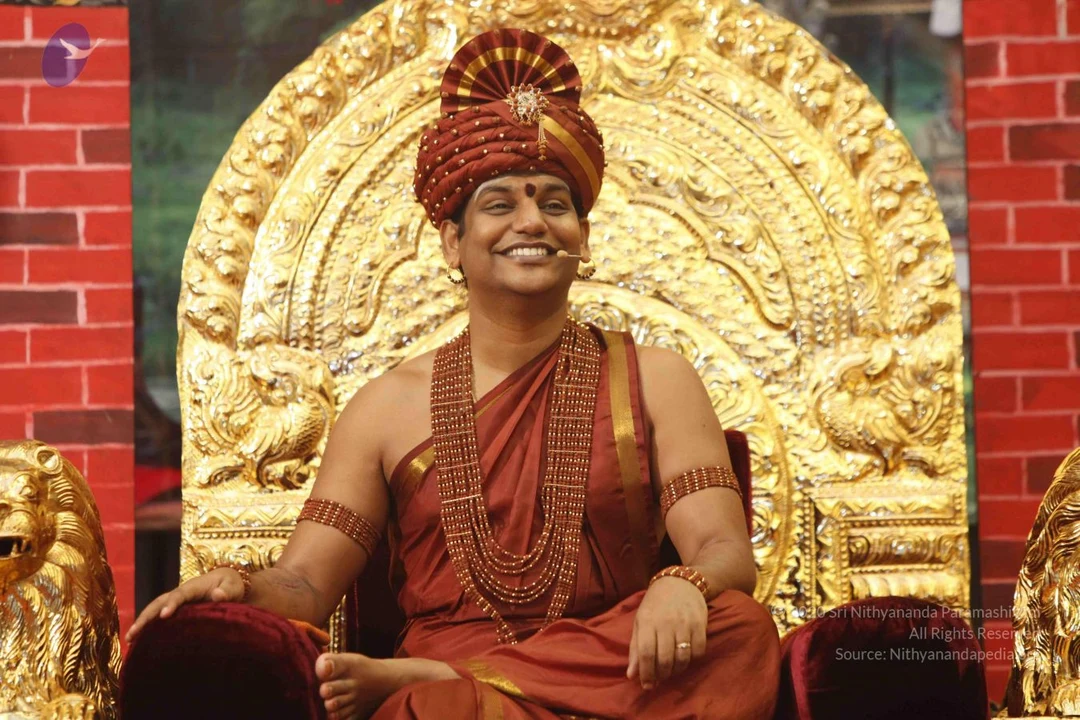
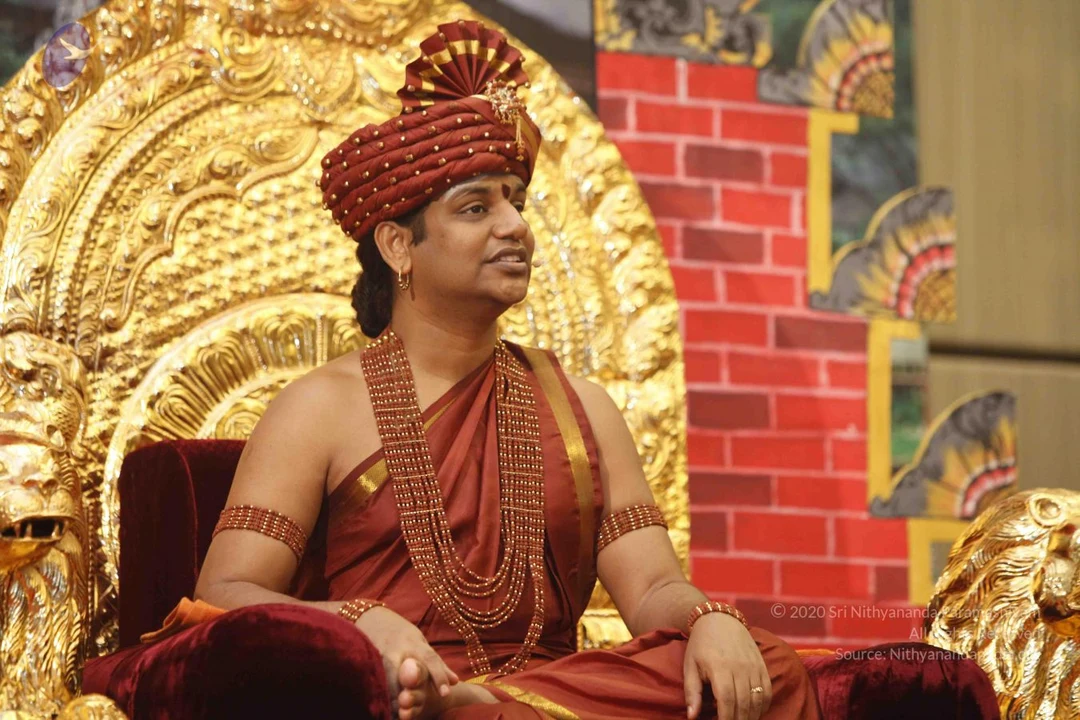
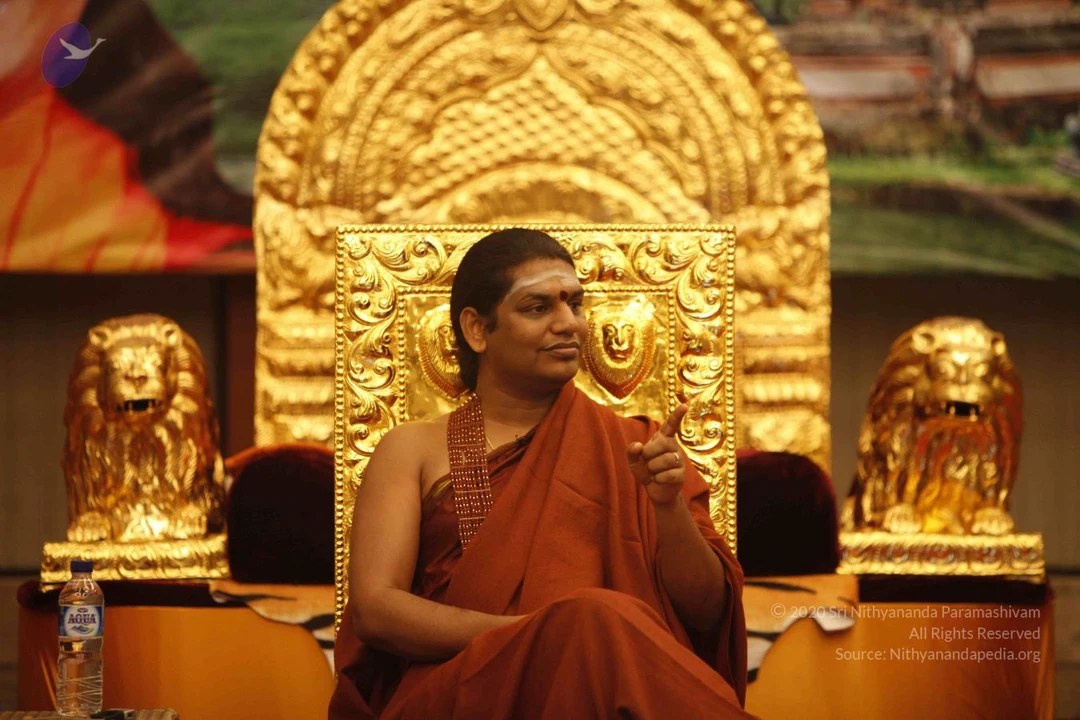
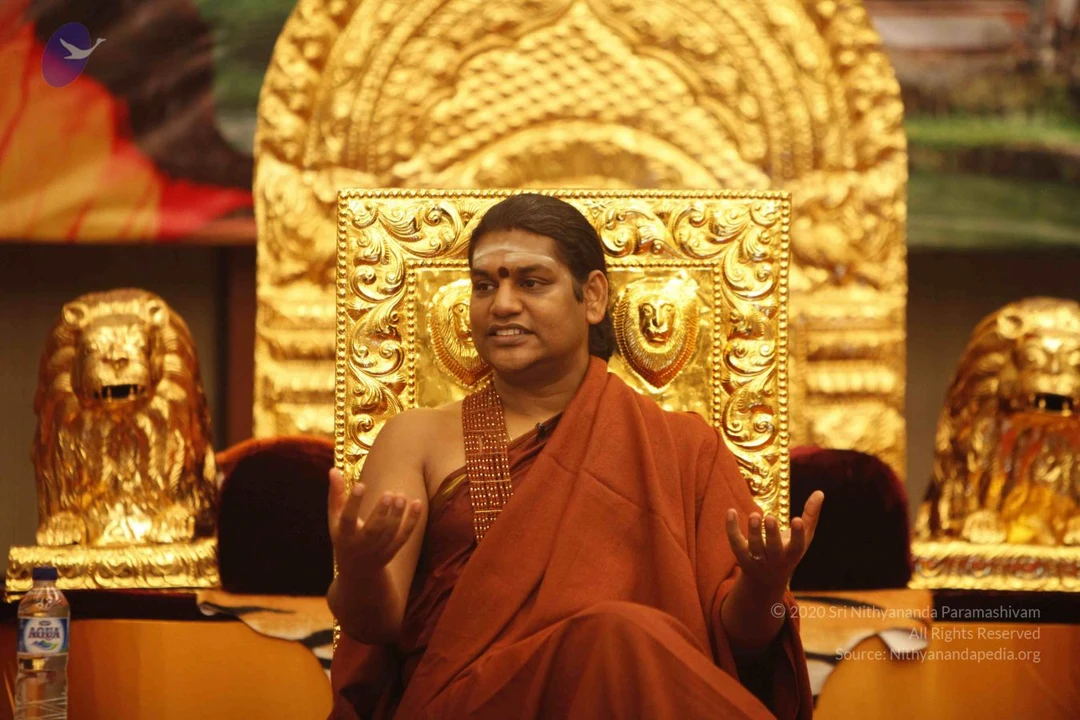
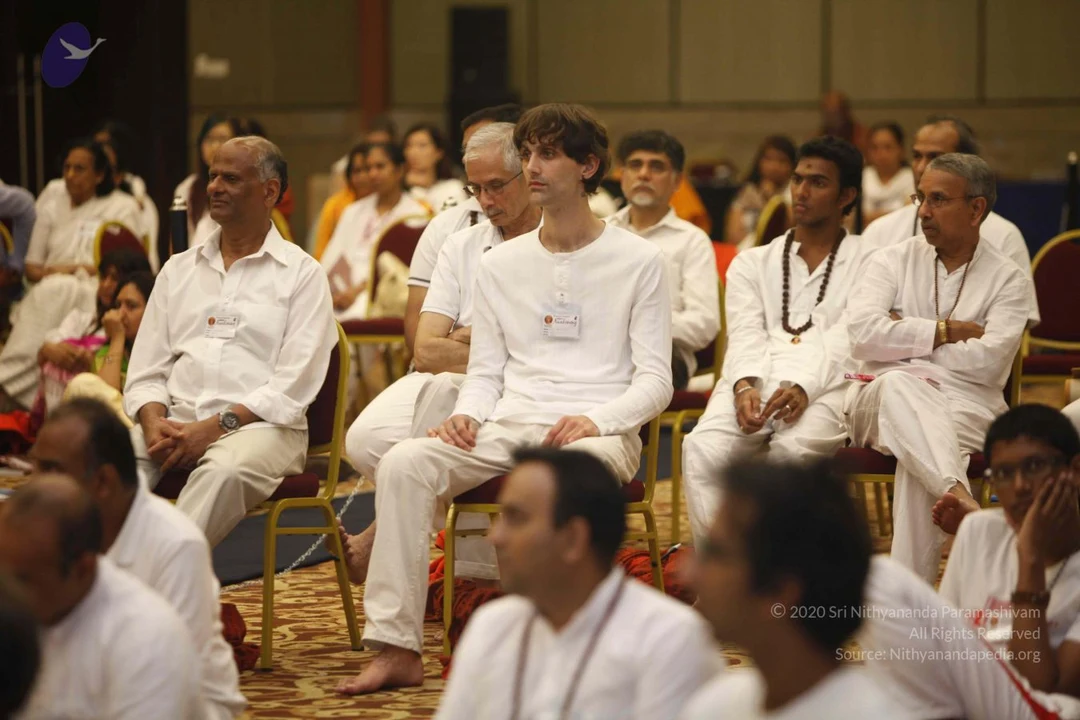
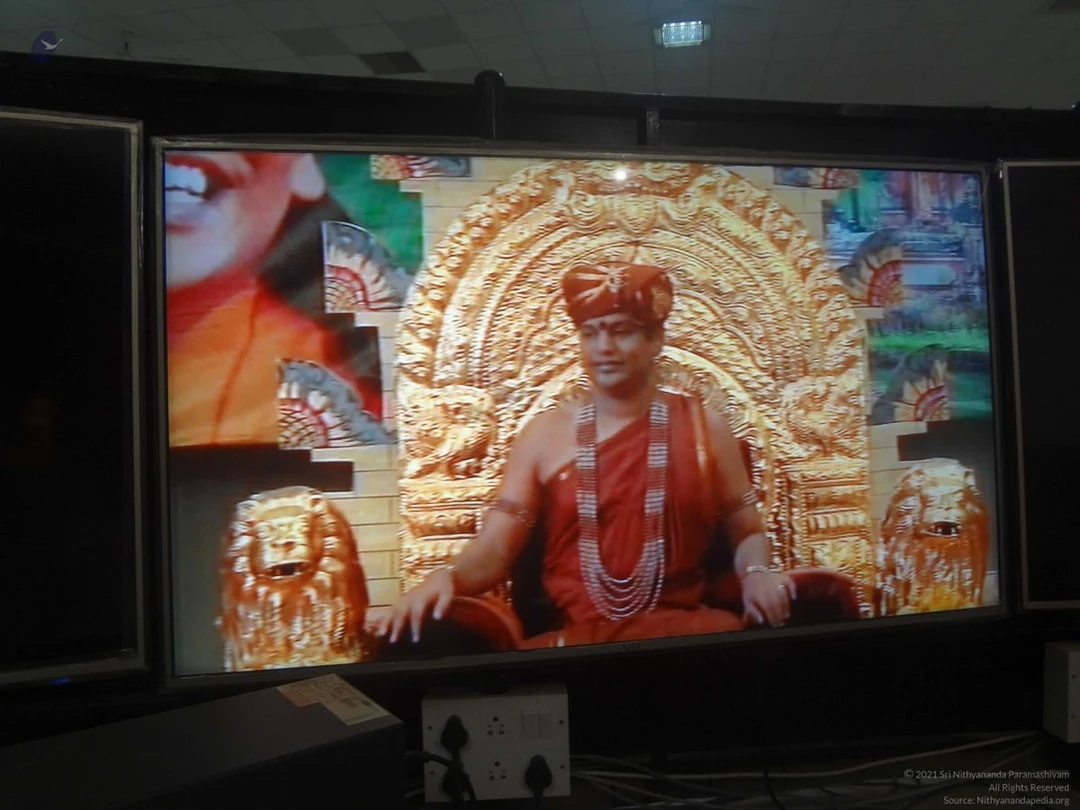
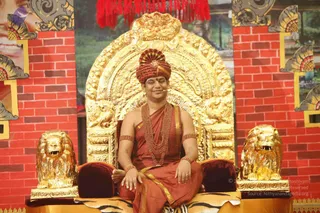
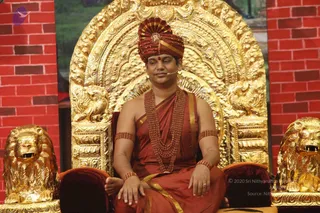
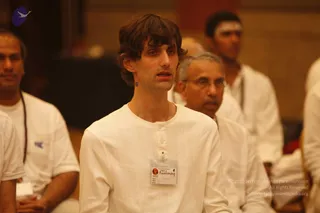
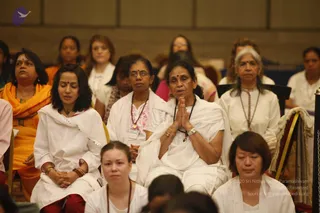
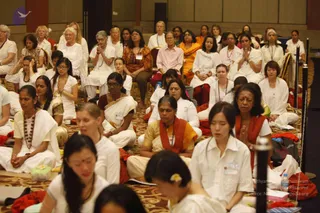
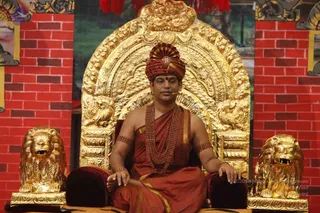
A seated man in a maroon-red turban and red-brown draped robe sits cross-legged on a tiger-striped cushion before an ornate gold throne with carved arch and lion-head armrests. He wears a multi-strand rudraksha mala, gold armbands and a small bindi, and his hands rest on his knees. Two large gold lion statues flank the throne against a red brick-patterned backdrop with decorative gold panels and a red tassel above. a person (in_person); the presentation shows a red turban, rudraksha mala and ornate ceremonial setting, but the face-free appearance cues are moderate. Single person visible.A seated man in a red-maroon turban with a gold brooch and a small red bindi sits on an ornate gold throne carved with scrollwork and lion heads, flanked by two gold lion statues. He wears a maroon-red dhoti-style wrap, a multi-strand rudraksha-style mala necklace, red beaded armlets and bracelets, and a headset microphone. The backdrop is a red brick-patterned wall. The figure's appearance is consistent with the candidate, but identity is uncertain.Indoor satsang hall where a young man with shoulder-length wavy brown hair sits in a white collarless button-front kurta, wearing a white badge lanyard reading Nithyananda Dhyanapeetam Awakening. Seated around him in white clothes are several other devotees, including an older man with glasses and a man with white tilak marks on his forehead. Warm wooden-toned background and soft lighting.A seated audience at a satsang gathering, mostly women dressed in white kurtas and shawls with rudraksha malas. In the foreground, a woman in white with her palms pressed together in namaste sits beside a woman in a white shawl with eyes closed, and a woman in an orange and yellow sari wrap sits at left. Behind them rows of attendees in white and orange look forward toward an unseen speaker. The hall is warmly lit with beige walls.A large indoor satsang hall with dense rows of seated devotees, mostly women, in white clothing and some in orange, saffron and red shawls. Many sit cross-legged on a patterned carpet with hands joined in anjali or eyes closed in meditation. Several wear name badges and garlands, and some hold small books. In the foreground, a woman in white with a rudraksha mala and a woman in an orange-gold sari sit with eyes closed. Beige walls, a dark pillar and a stanchion rope line the aisle. No a person candidate is visible in this crowd shot.A seated man in a maroon and red-orange robe with a gold-trimmed shawl sits on an ornate gold throne carved with scrollwork and flanked by two golden lion statues. He wears a red and gold turban with a central brooch, a multi-strand rudraksha mala, beaded armbands and a small bindi, and a headset microphone. The backdrop is red brick painted on panels with gold ornamental borders and a green landscape behind the throne. The man's hands rest on the armrests as he speaks to an audience.

IA_food

18 photosSource gallery
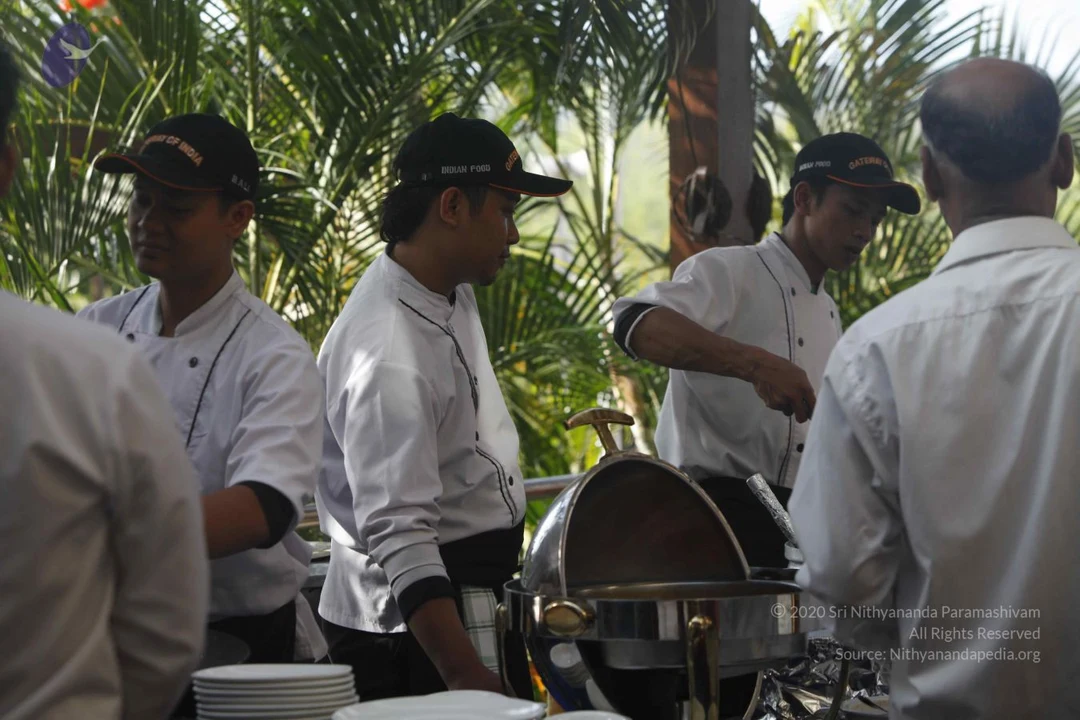
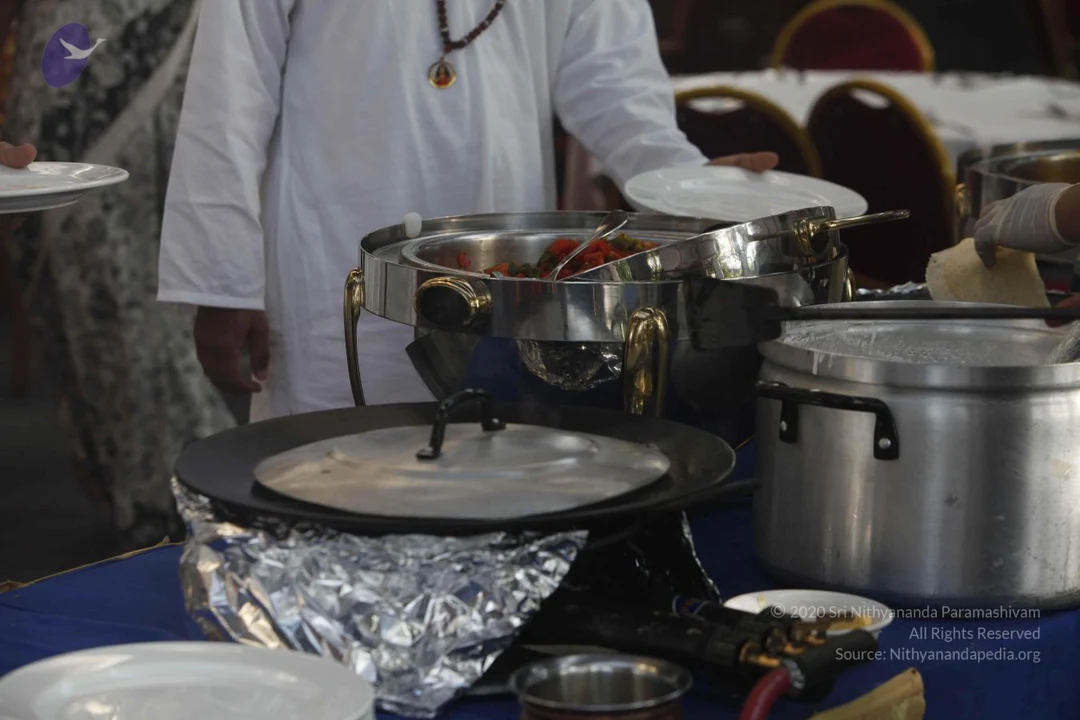
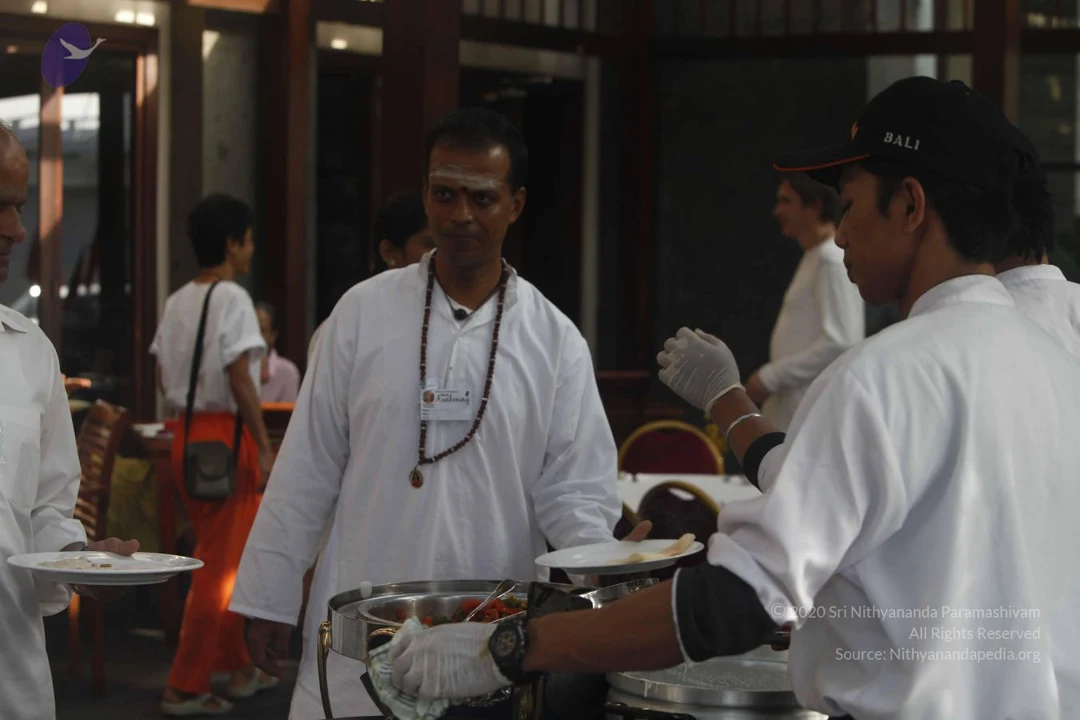
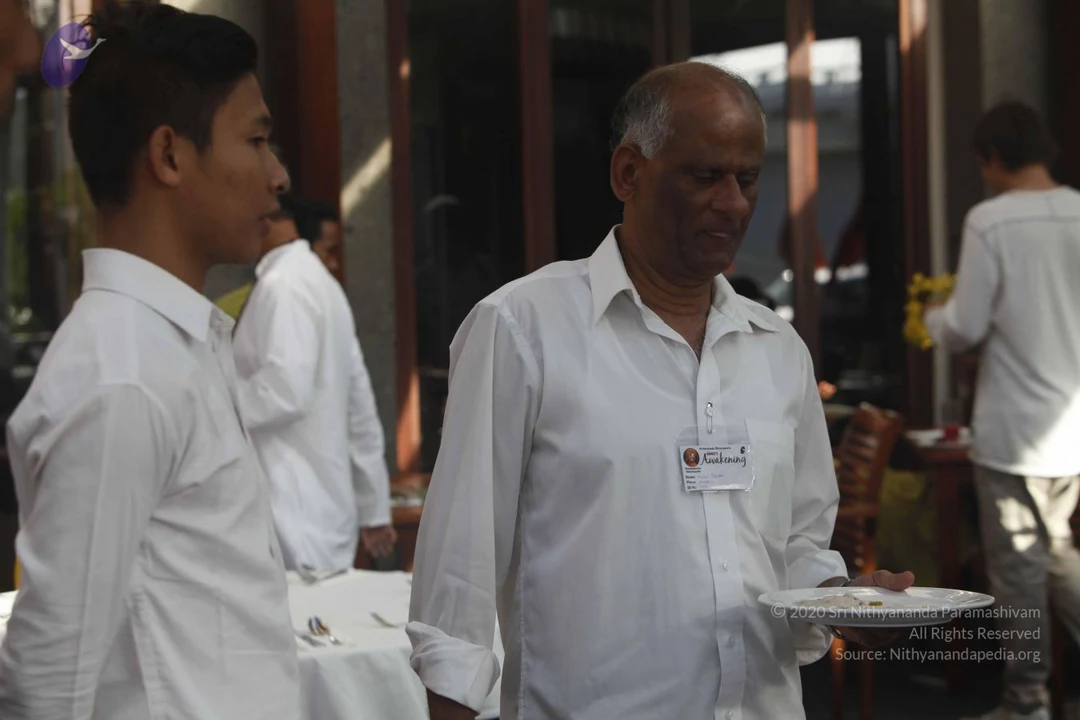
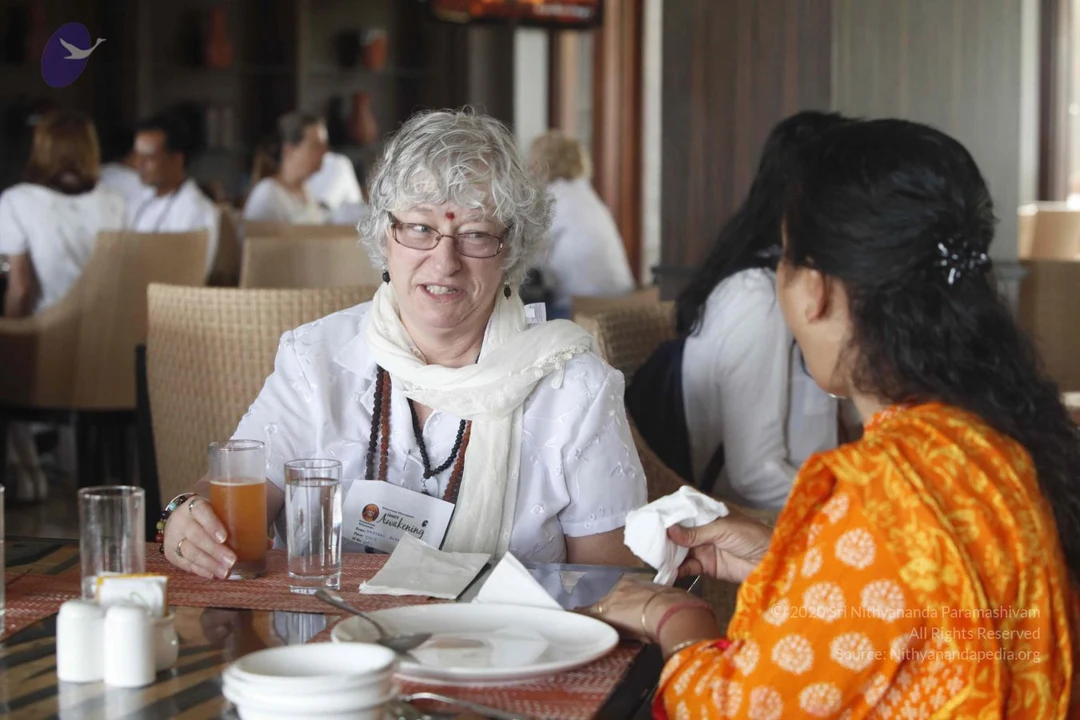
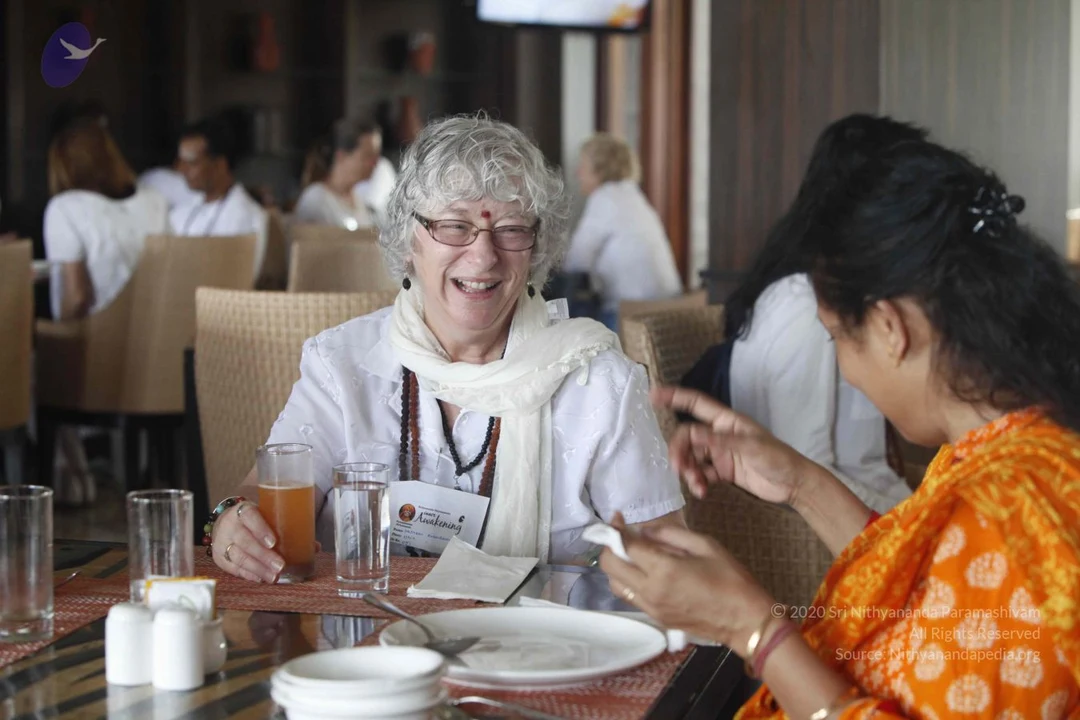
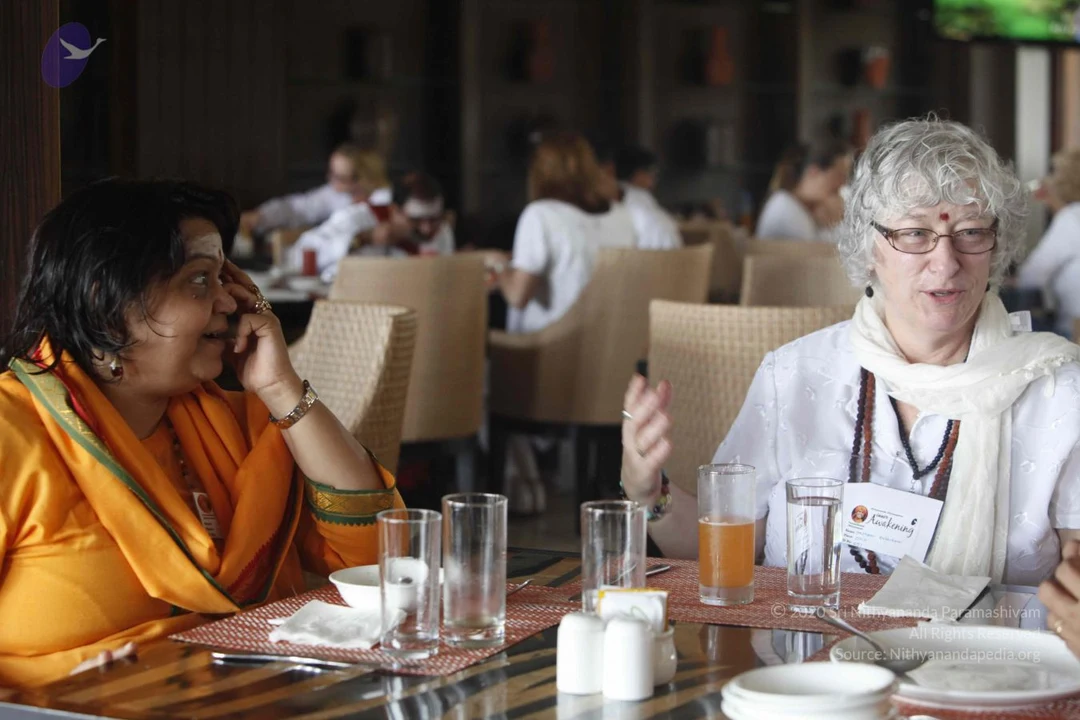
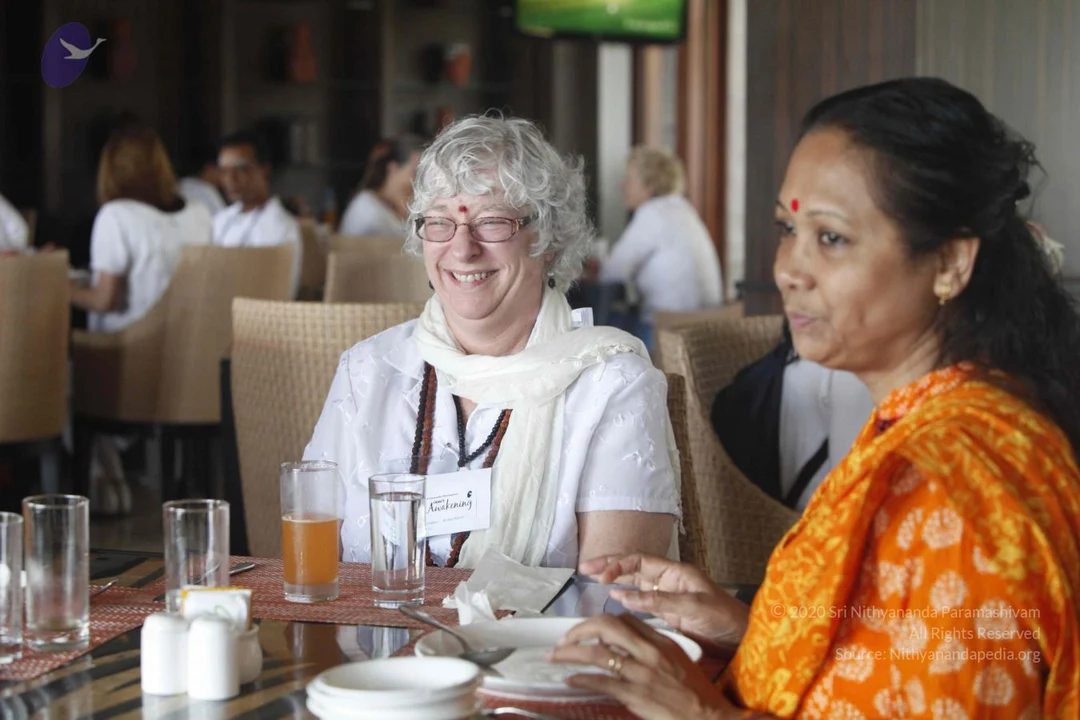
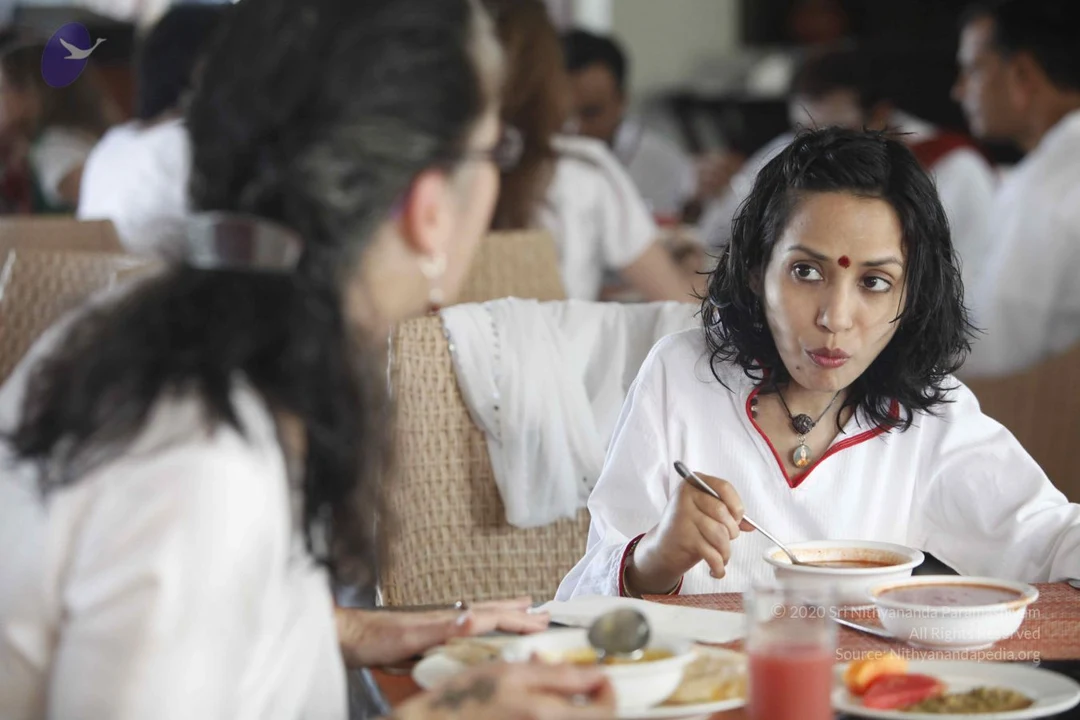
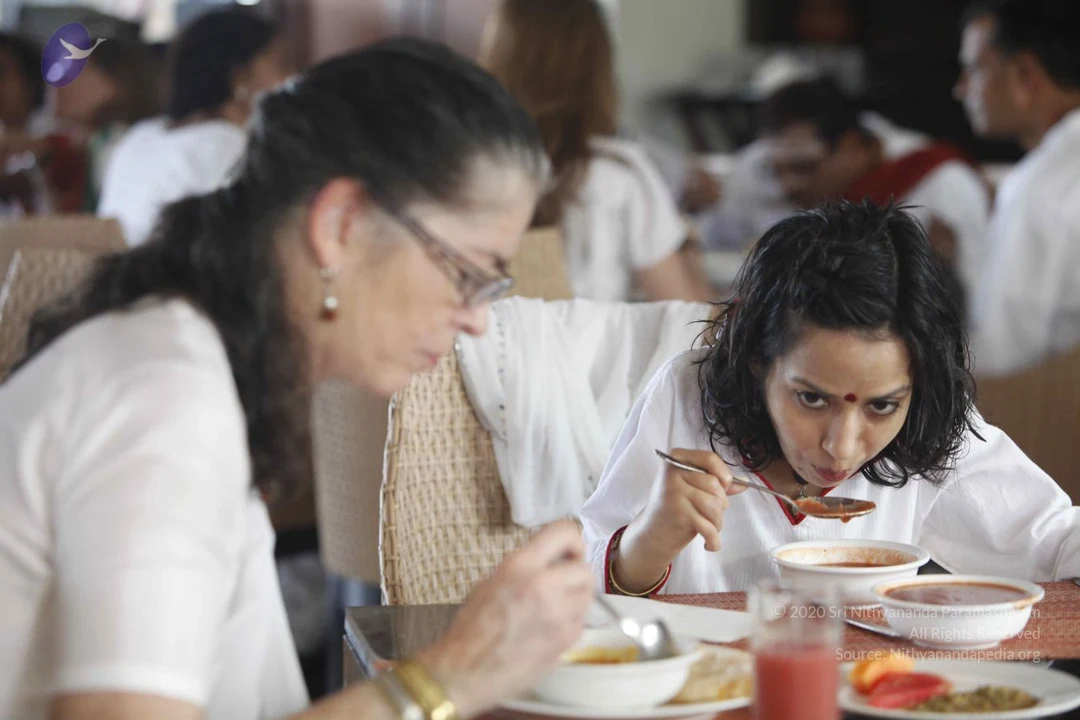
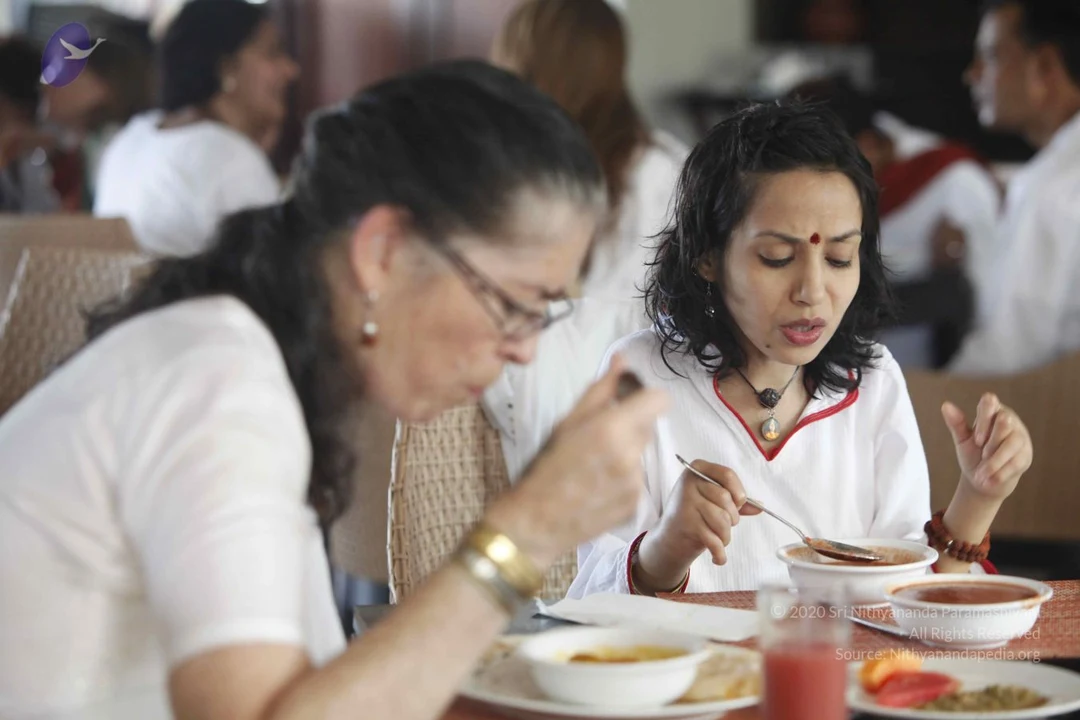
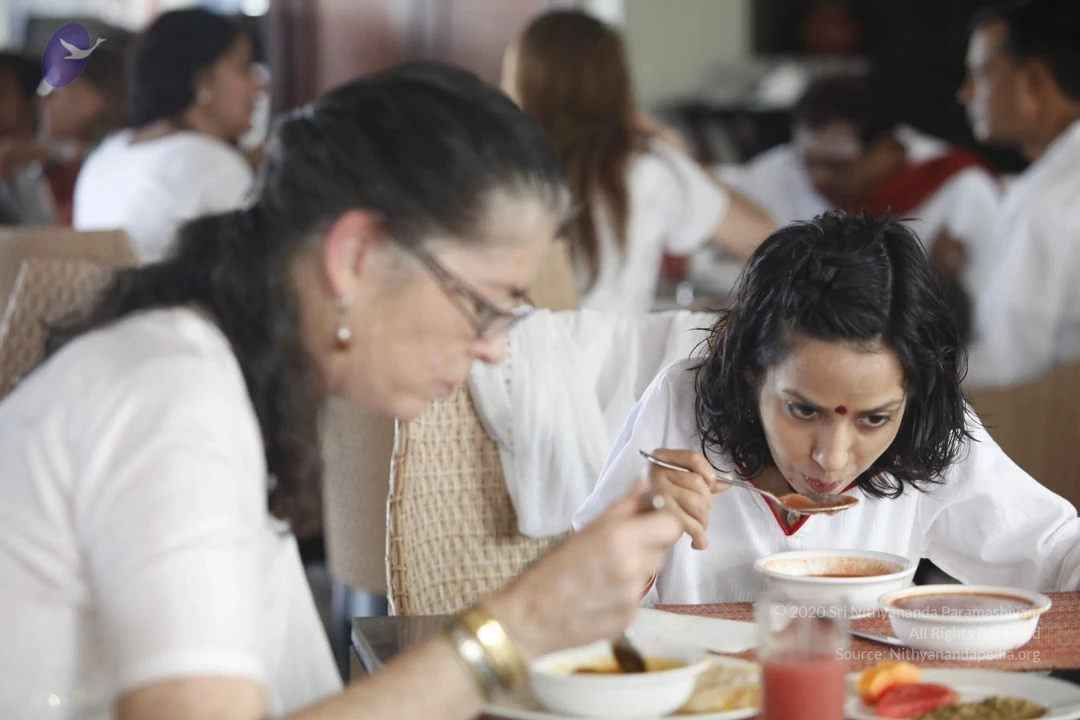
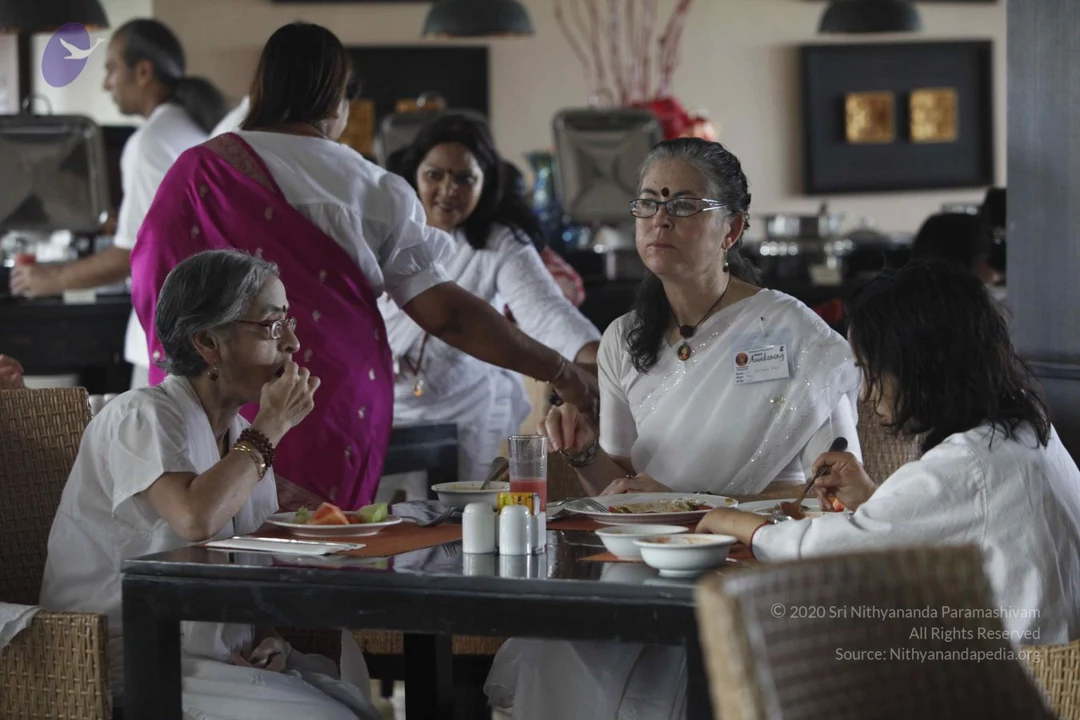
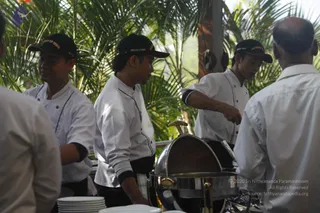
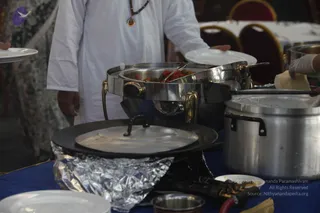
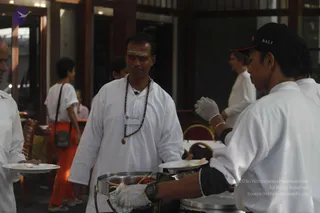
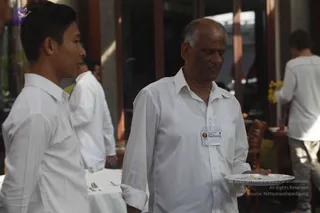
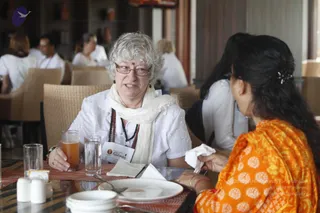
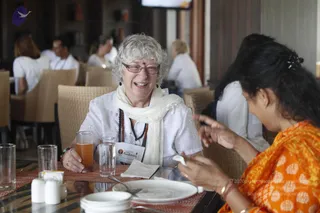
Outdoor buffet service with palm trees behind. Four men in white chef jackets and black caps with orange brim stand at a serving station. Two wear caps reading Indian Food Catering or similar. One man in the center prepares food at a silver chafing dish with a brass lid handle, another reaches toward the dish, and a bald man in a white shirt stands in the right foreground facing the line. White plates are stacked on the left. No ritual, a person candidate or deity imagery is visible.A buffet serving station on a blue tablecloth with steel chafing dishes and a large aluminium pot holding food. A silver chafing dish contains cooked vegetables with a ladle, and a flat round griddle with a lid sits over a gas burner wrapped in foil. A person in white clothing and a rudraksha mala with a pendant stands behind the table, reaching toward the food. Empty white plates are stacked along the edges and a gloved hand holds a flatbread. Chairs with burgundy cushions and white tablecloths are visible in the background.A photograph of a communal meal service at an indoor venue with dark wooden panelling. In the centre, a man in a white kurta wears a white-painted forehead mark and a long rudraksha mala with a large bead pendant, and a name badge on his chest. To the right, a server in a black cap printed BALI and white clothing wears white gloves and serves food from a stainless steel chafing dish. On the left, another man in white holds a white plate. Behind them, a woman in white and a person in white and orange stand among tables and chairs. Visible text reads 'Bali' on the cap.A photograph of an outdoor dining area with white-clothed tables. In the foreground, an older man with short grey hair, wearing a white collared shirt rolled at the sleeves and a white event badge reading Awakening, looks down while carrying a white plate. Beside him, a younger man in a white shirt stands in profile. Other people in white shirts move in the background among tables set with white cloths and cutlery, and a yellow flower arrangement appears at the right edge.A restaurant dining scene where a smiling woman with short curly white hair, round glasses and a red bindi sits at a wooden table in a white embroidered blouse with a cream scarf and a beaded mala necklace. She holds a glass of orange juice, and a name badge hangs from her neck. Across from her, a woman with long dark hair and an orange patterned sari holds a white napkin. Plates, glasses and a salt and pepper set sit on the table, and white-clad diners are visible in the background.A dining room in a restaurant with rattan chairs and tables set with glasses, plates and condiment shakers. A smiling older woman with curly grey hair and glasses, wearing a white shirt, white scarf, red bindi and beaded necklace, sits holding a glass of orange juice and a card lanyard reading Sri Nithyananda Paramashivam. Opposite her, a woman in an orange patterned saree and gold bangles gestures while talking. Several people in white clothes sit at tables in the background.

IA_Sessions

35 photosSource gallery
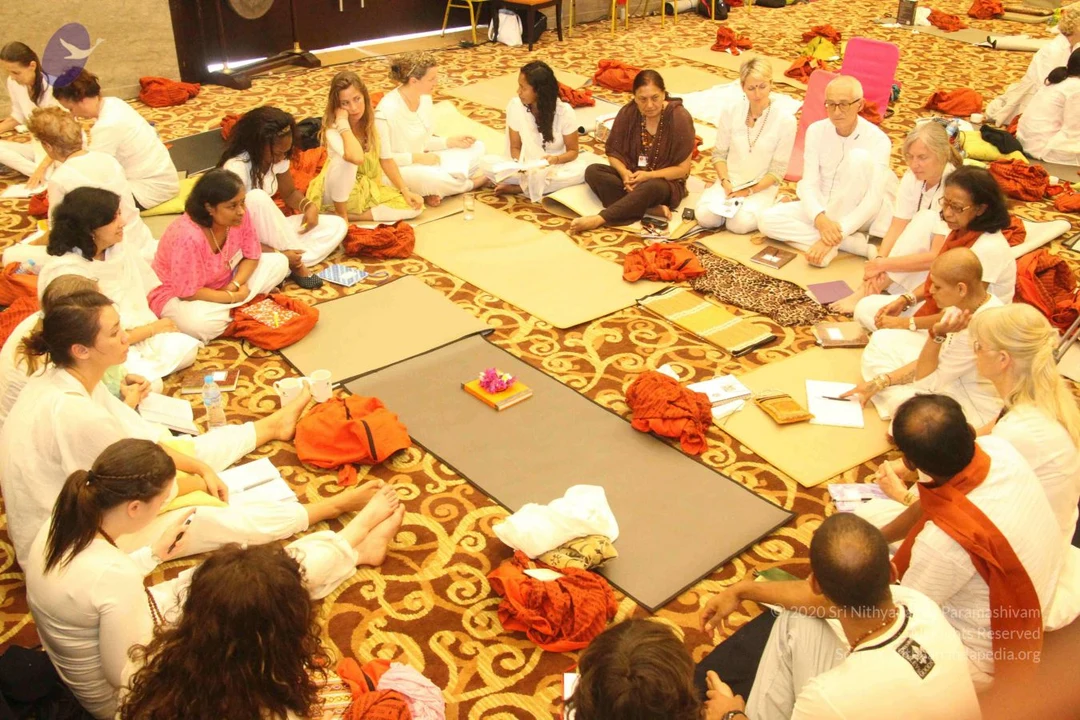
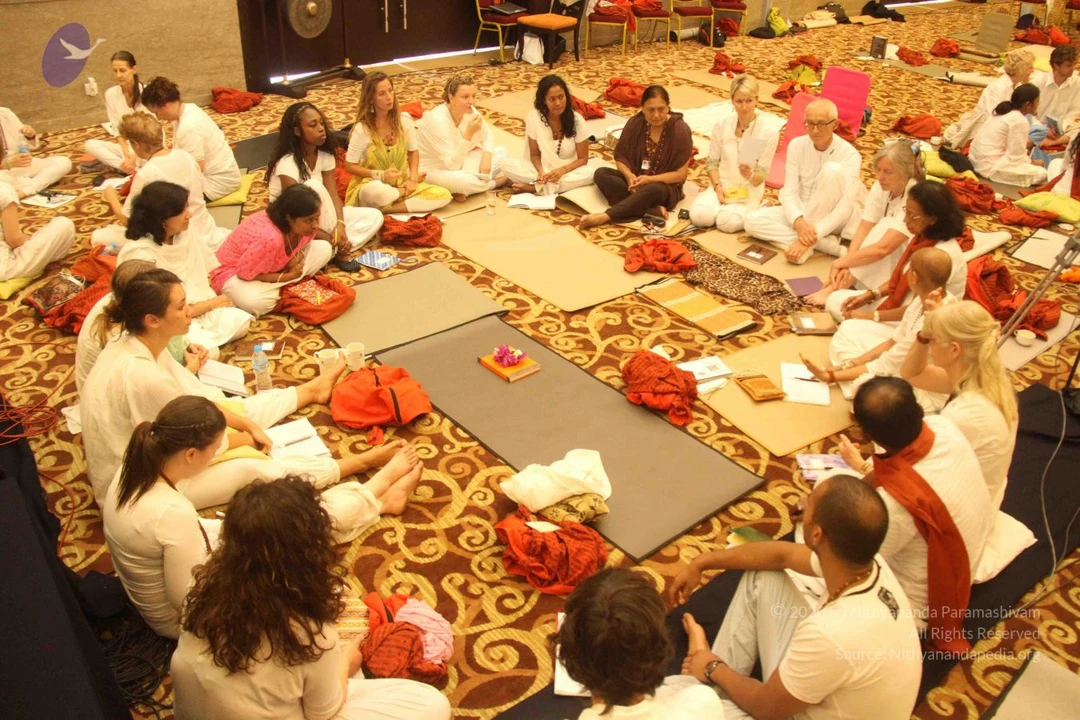
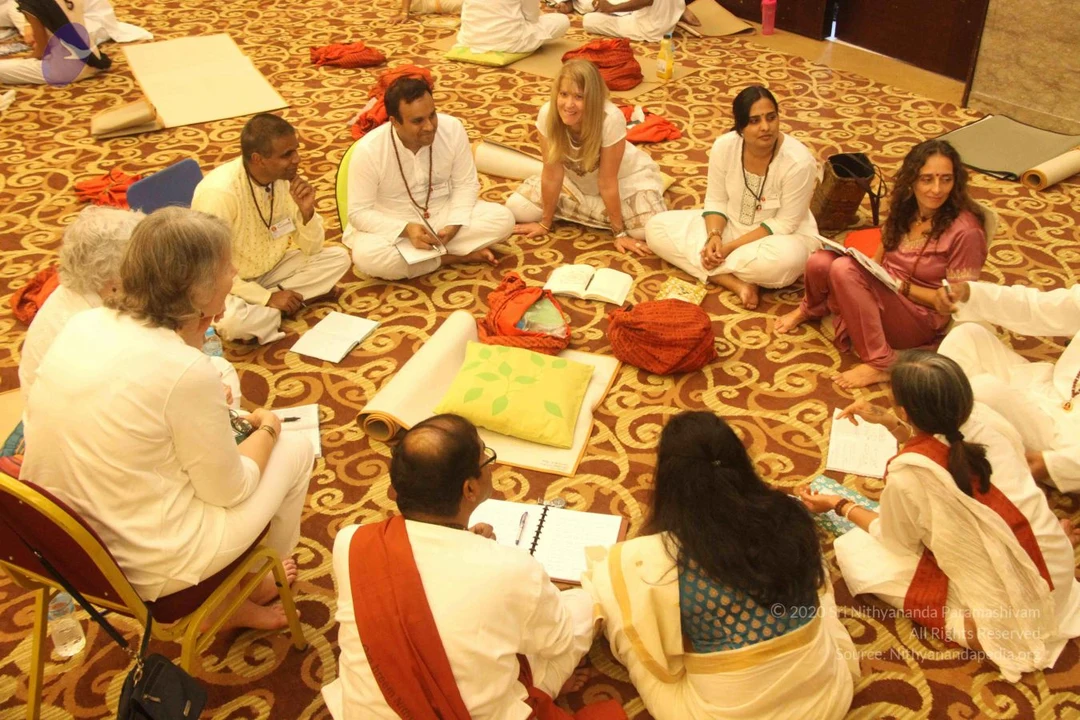
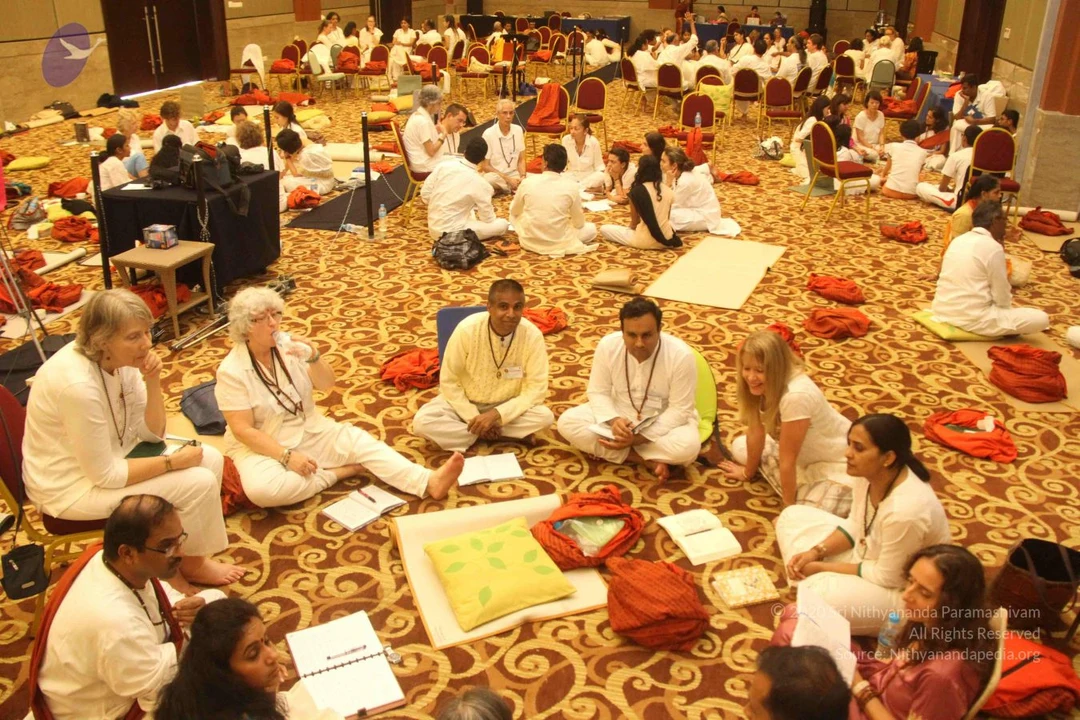
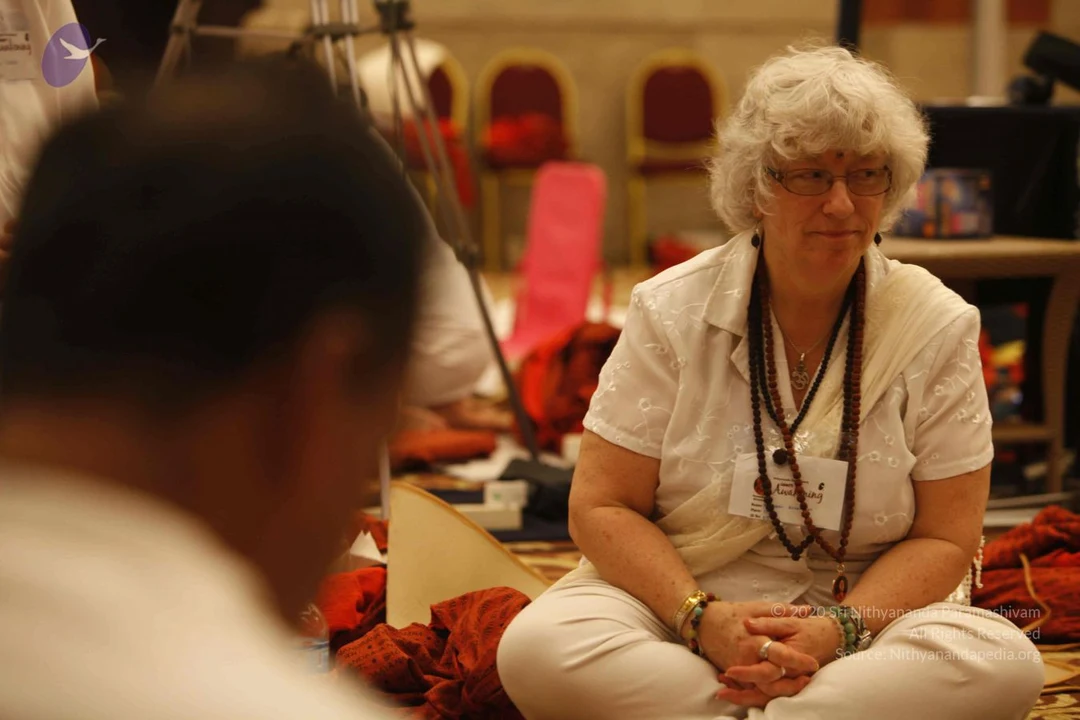
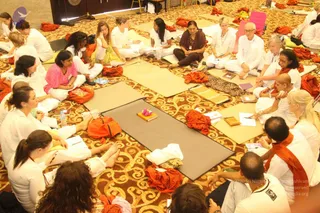
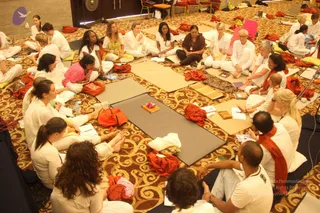
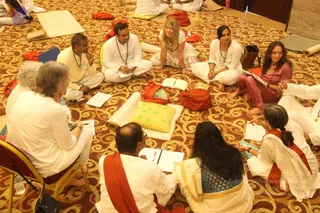
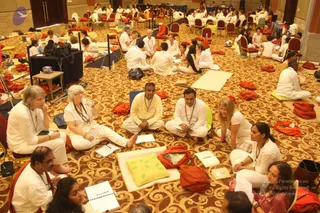
A seated group circle on a patterned brown and gold carpet during a satsang-style gathering. Many participants wear white clothes and orange-red shawls or stoles, and sit on yellow and beige floor mats with notebooks, water bottles and small offerings. Near the centre, a woman in a dark maroon top with a lanyard sits cross-legged, and a bald man in white on the right wears an orange shawl. Orange cloths are scattered among the mats. No individual is clearly identifiable as a person.A photograph of a seated satsang circle on a patterned gold-and-brown carpet in a hall. Roughly two dozen devotees sit cross-legged or on mats in white ritual clothing, many with orange-red shawls and cloth bags placed beside them. Several hold notebooks, pens and phones. A small purple flower arrangement rests on a book at the centre of the circle. Among the participants, a bald man in white and another in a red shawl are visible; no one is clearly identifiable as a person, so no in-person candidate is asserted.A seated group of about a dozen devotees sits in a circle on a patterned gold-and-brown carpet in a hall. Most wear white clothes; a man in the center-left wears a white kurta and holds a notepad, and a woman in a pink salwar-kameez sits at right with a notebook. An older man in a yellow kurta sits at left, and a man in an orange shawl with a notebook sits in the foreground. No a person candidate is visibly present.A photograph of a large hall with a patterned carpet where many participants sit on the floor and in chairs in a satsang-style group. Most wear white clothing, with orange-red shawls and cushions scattered around. In the foreground, a seated man in a yellow kurta and white-clad participants sit in a circle around a cushion; a woman with white hair and a woman in white listen closely while notebooks lie open nearby. A bearded man in a white shirt holds a notebook. No clear a person candidate is identifiable by appearance, so the identity remains uncertain. Approximately thirty to forty people are visible.A seated woman with short curly white hair and glasses sits cross-legged on a patterned carpet, hands clasped in her lap, listening attentively. She wears a white embroidered blouse with a cream shawl, white trousers, a long rudraksha mala with dark beads, and a name badge on her chest. Blurred in the foreground, a person with dark hair sits facing away. Behind them are red cushions, red cloth, folding stands and gold-backed chairs in a hall.Close photograph of a silver-haired woman with glasses seated indoors at a conference-style event. She wears a white embroidered short-sleeved blouse with a cream shawl draped over one shoulder, and layered rudraksha and dark beaded malas around her neck, plus a small pendant. A white name badge with red and blue printing hangs from her clothing. Blurred red chairs, a wooden side table and dark draped equipment fill the background.

IA_Darshan

39 photosSource gallery
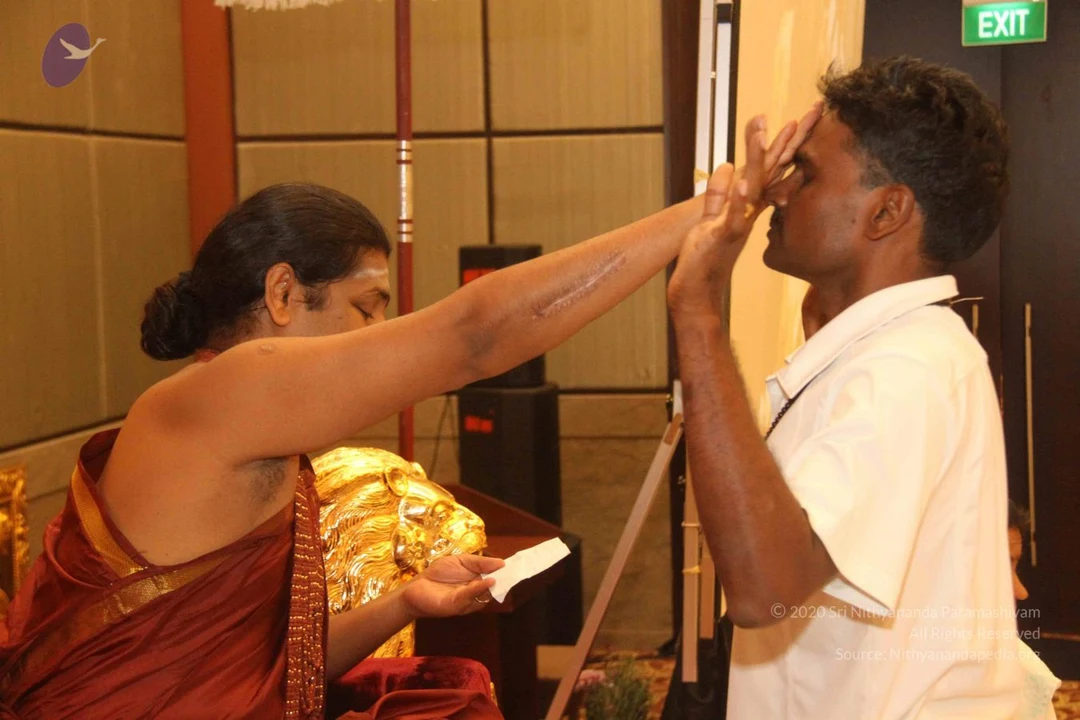
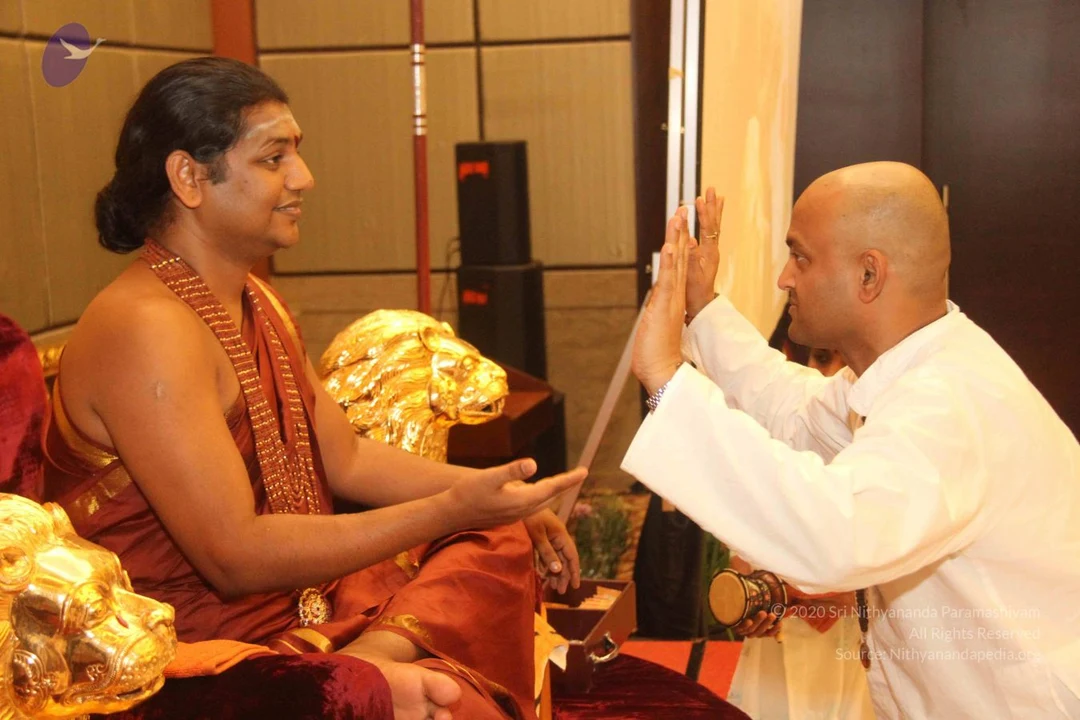
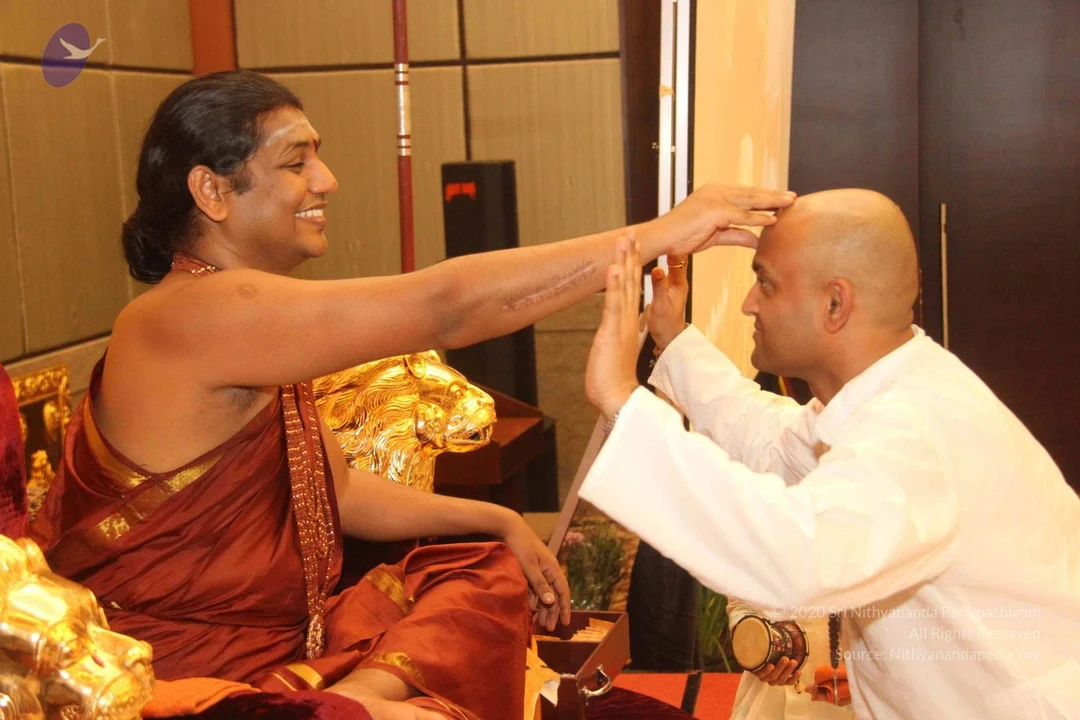
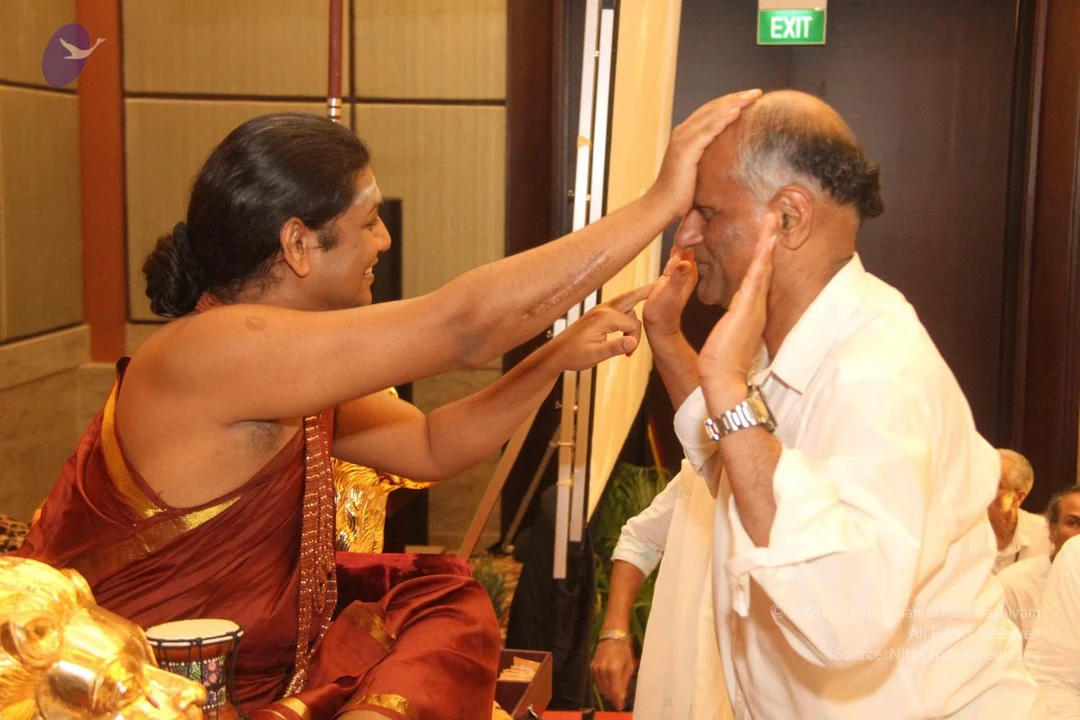
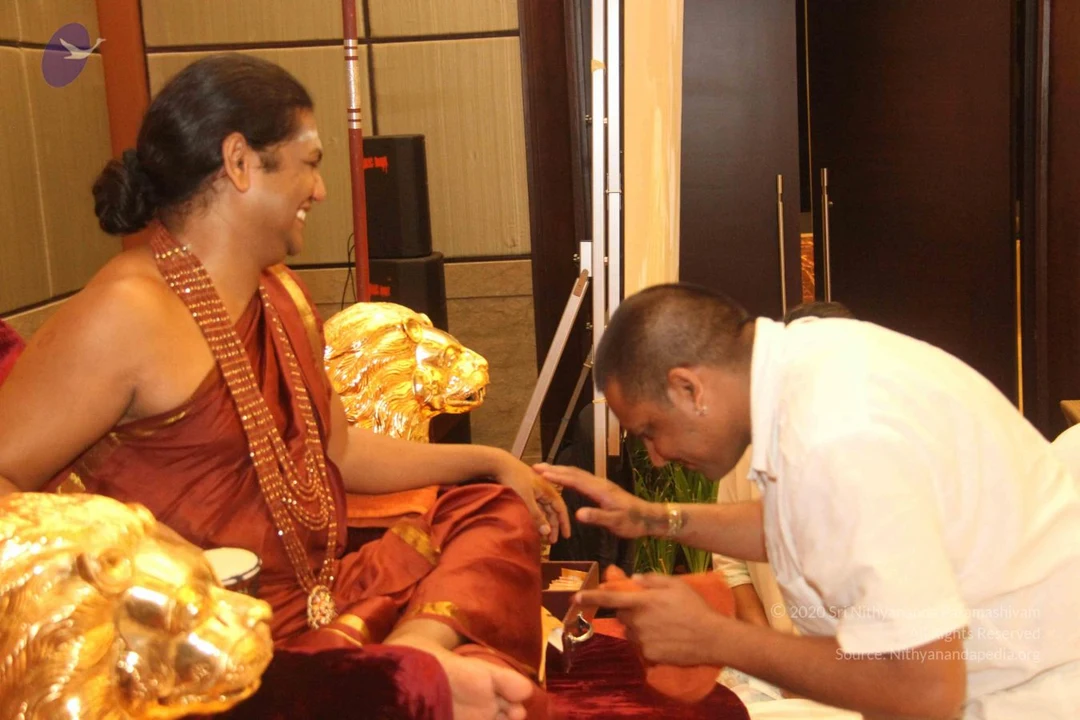
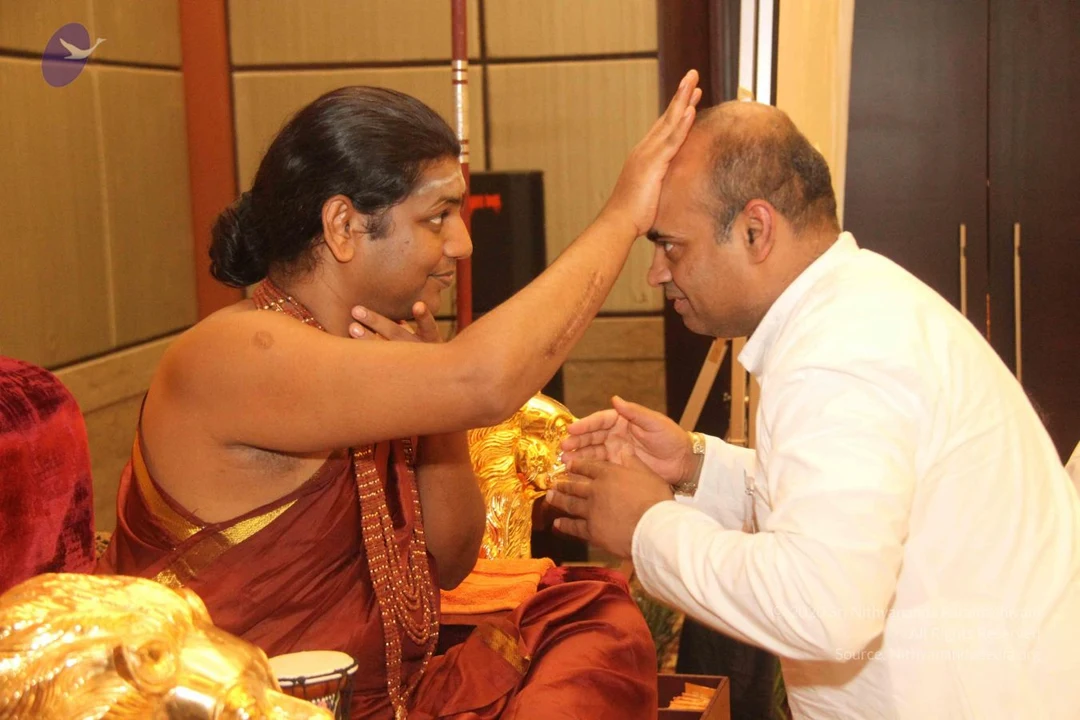
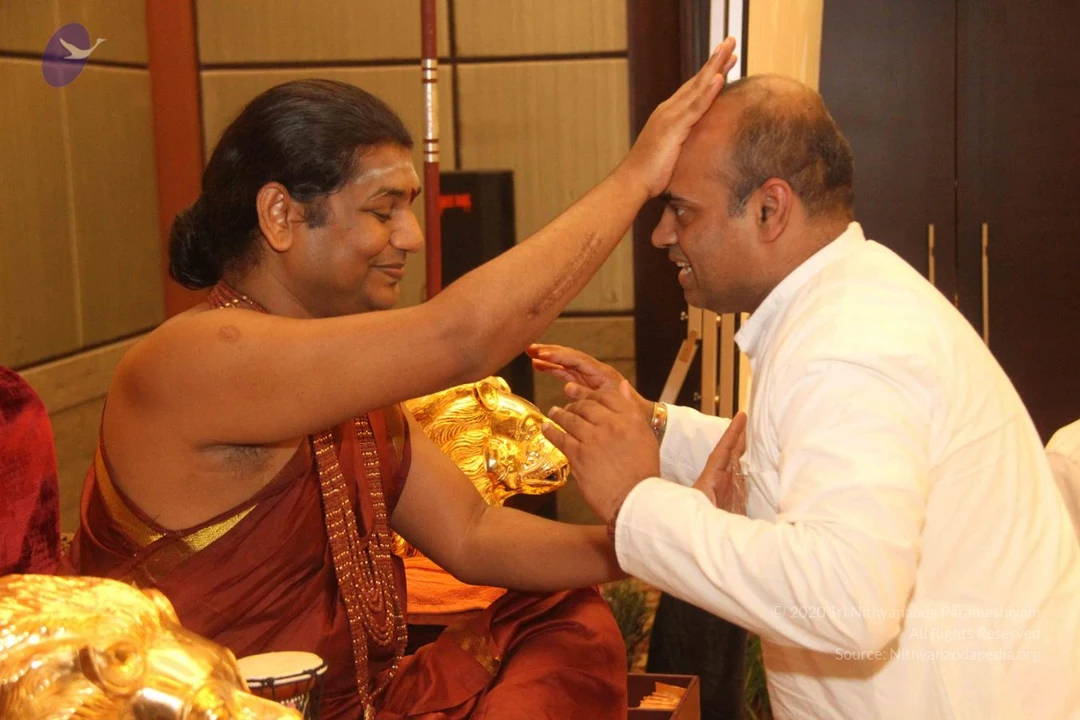
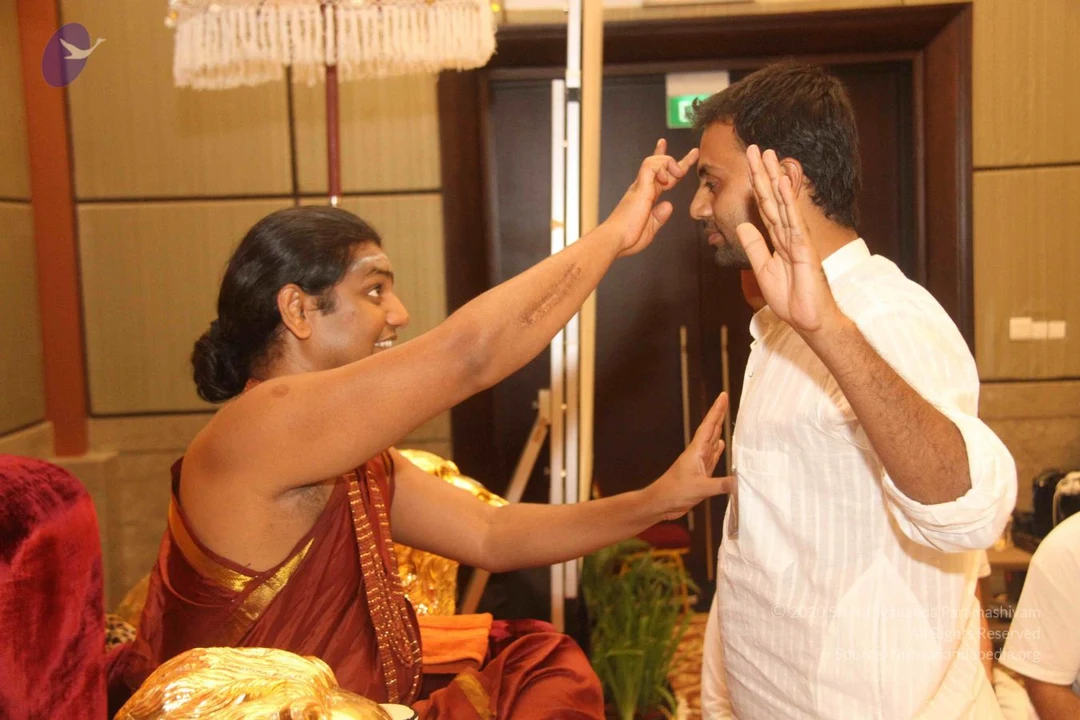
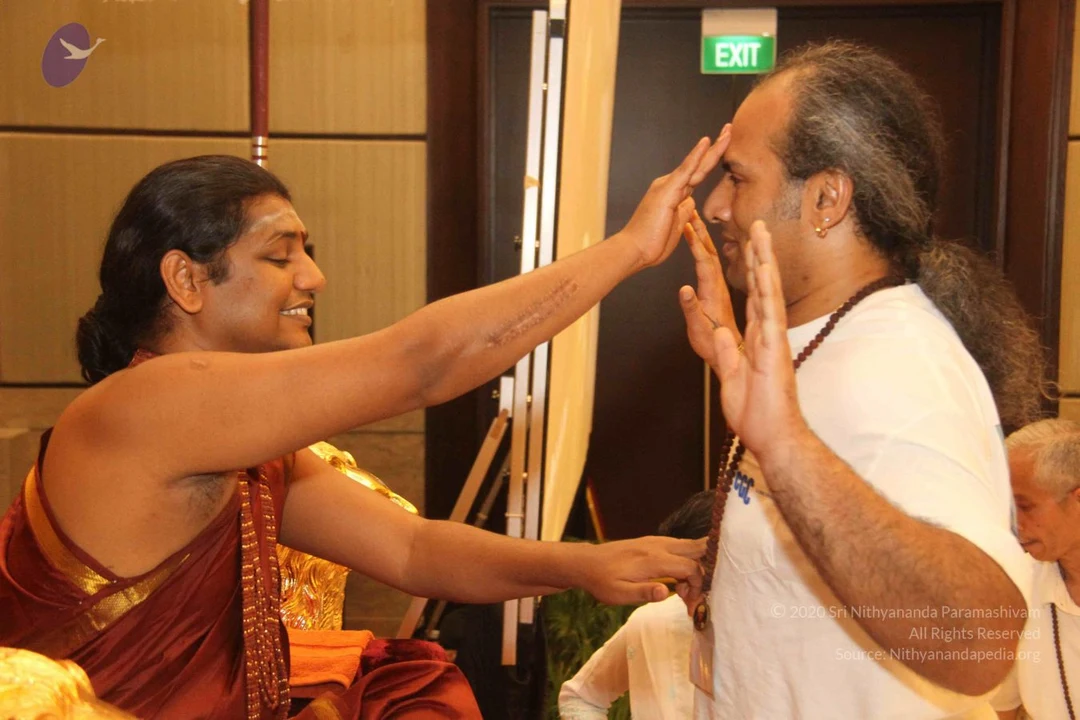
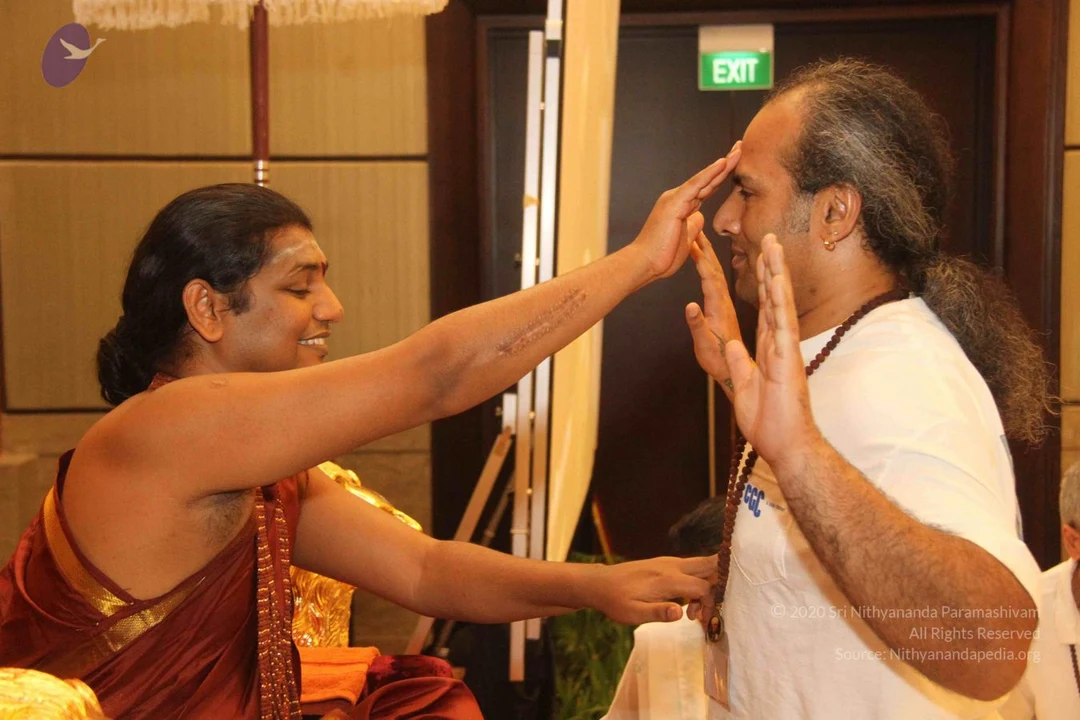
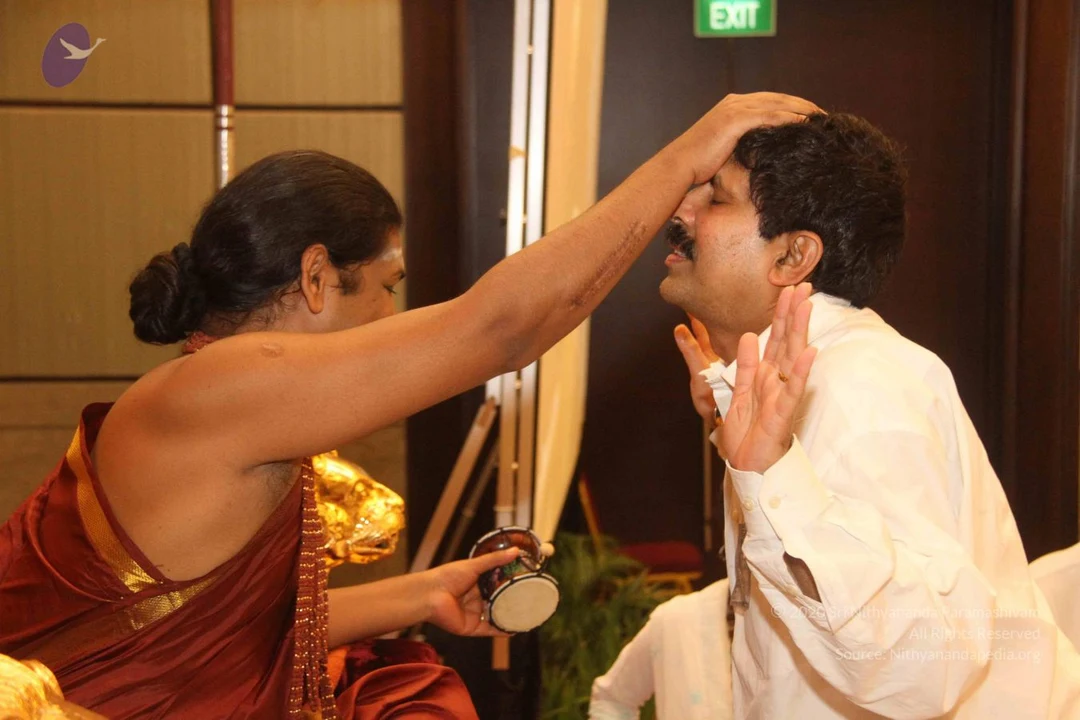
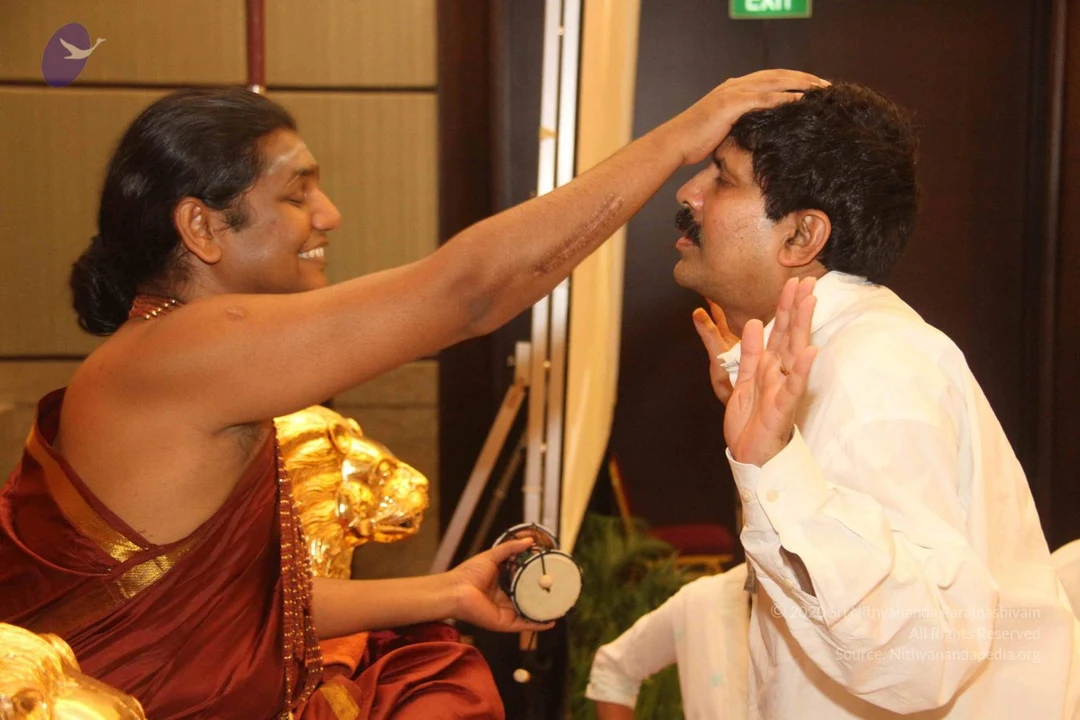
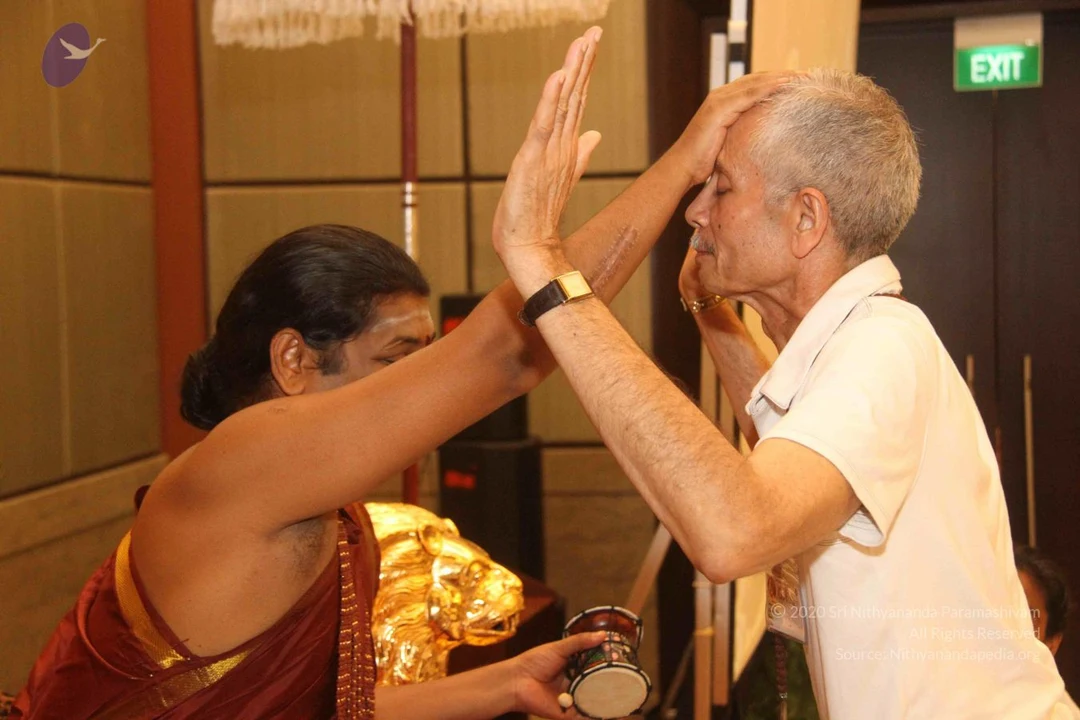
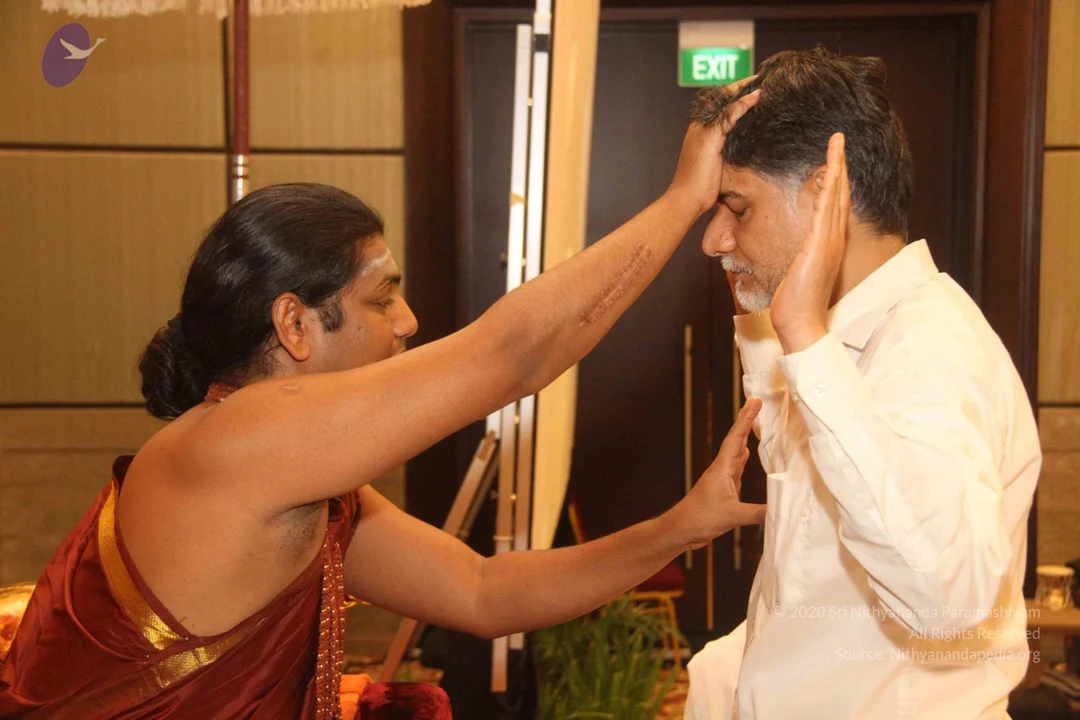
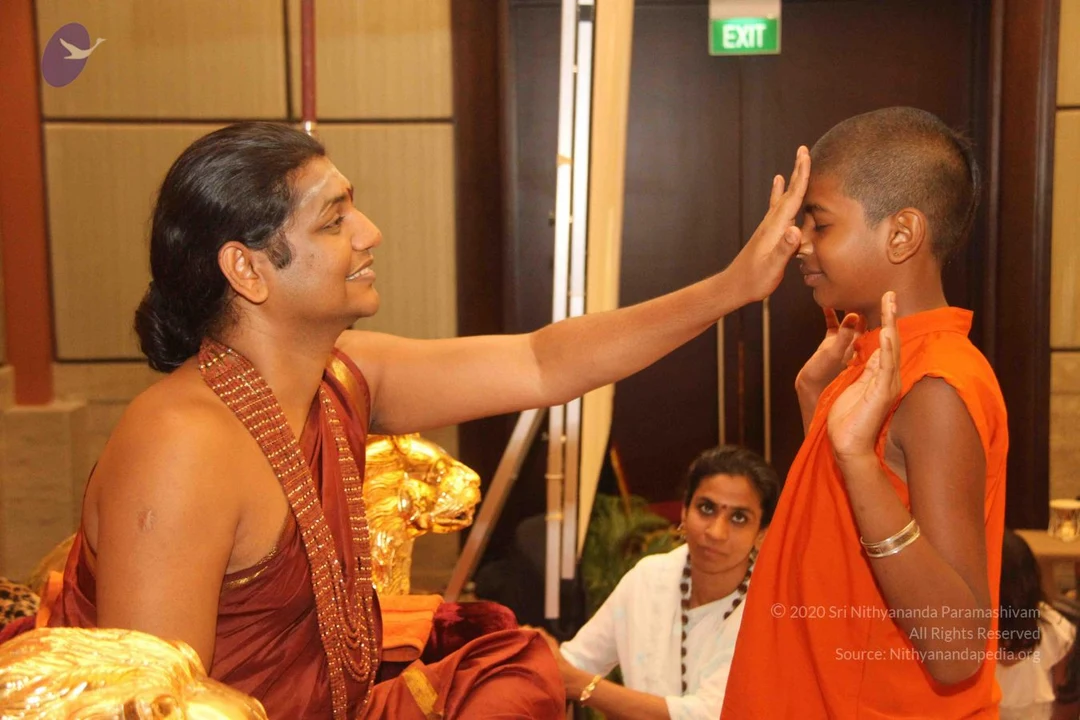
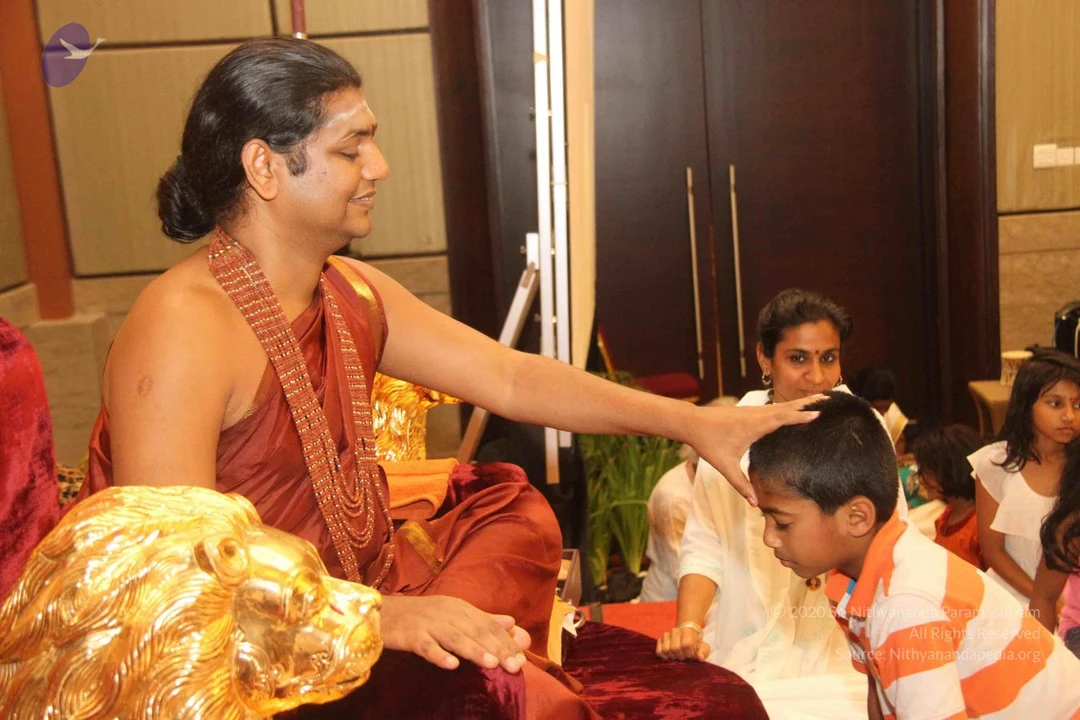
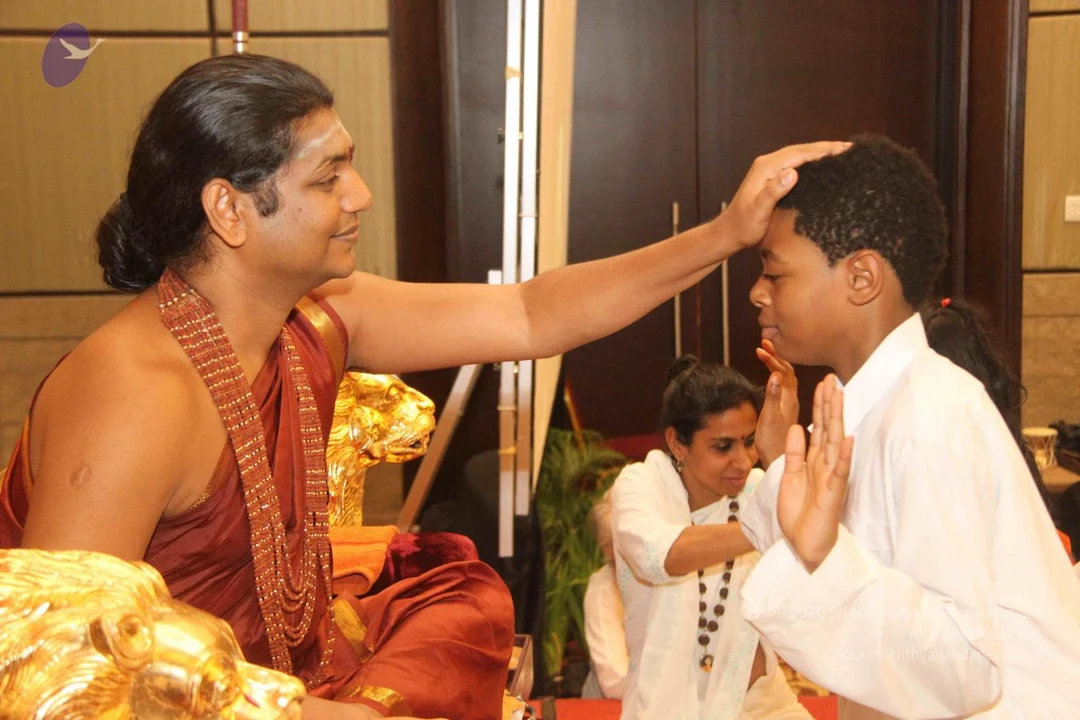
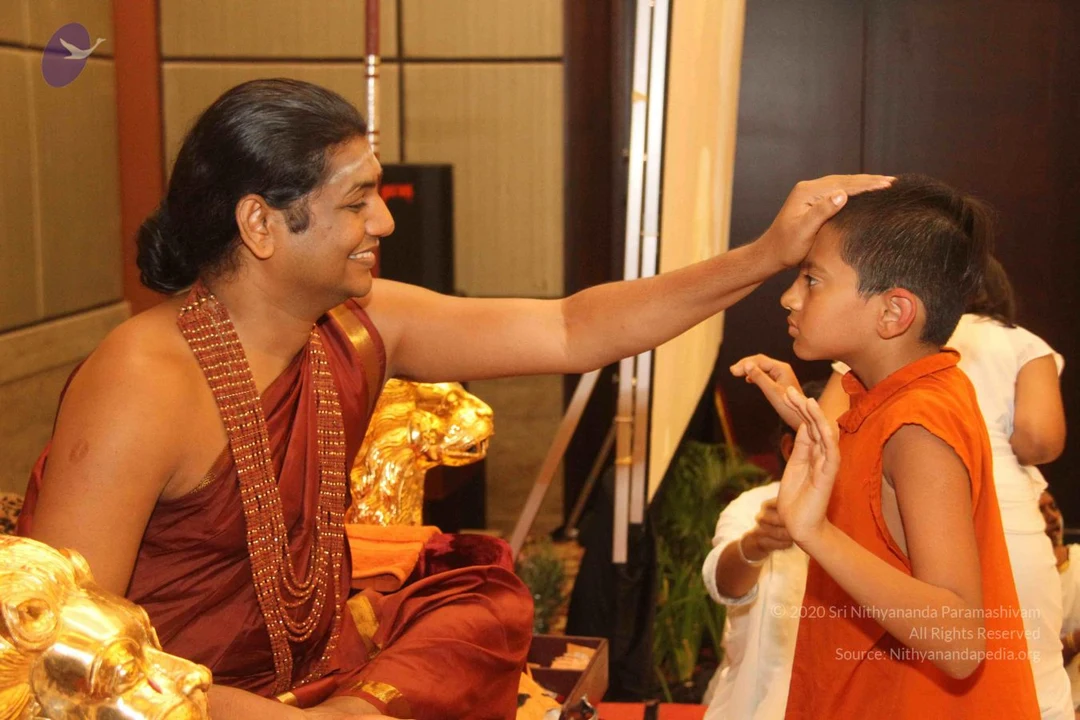
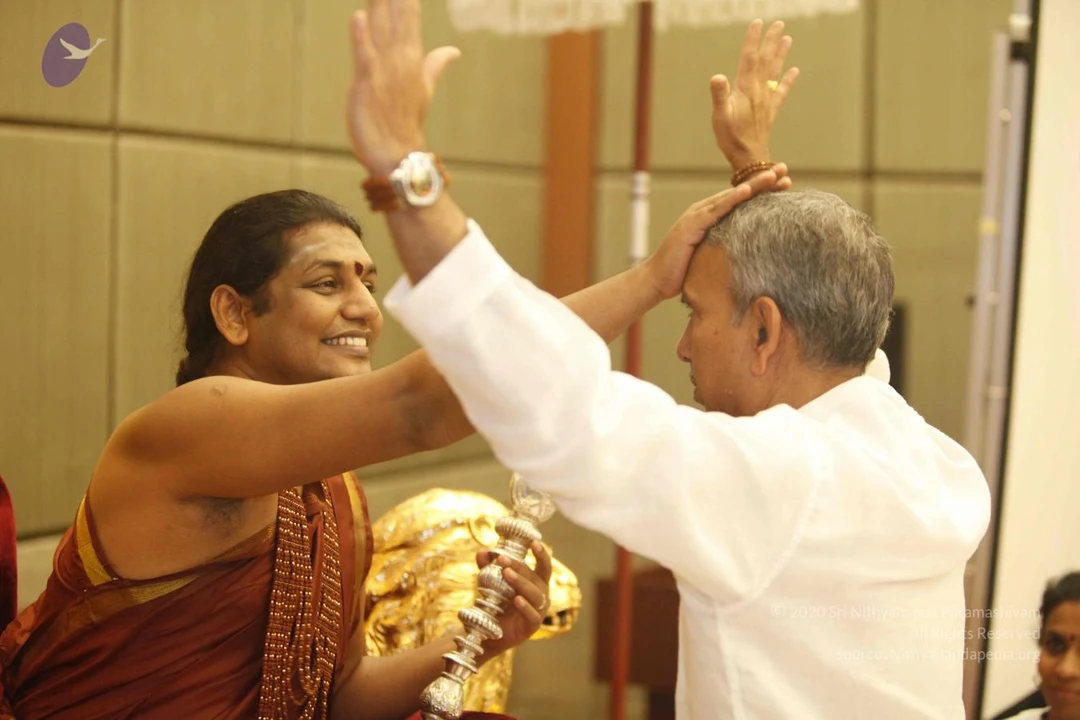
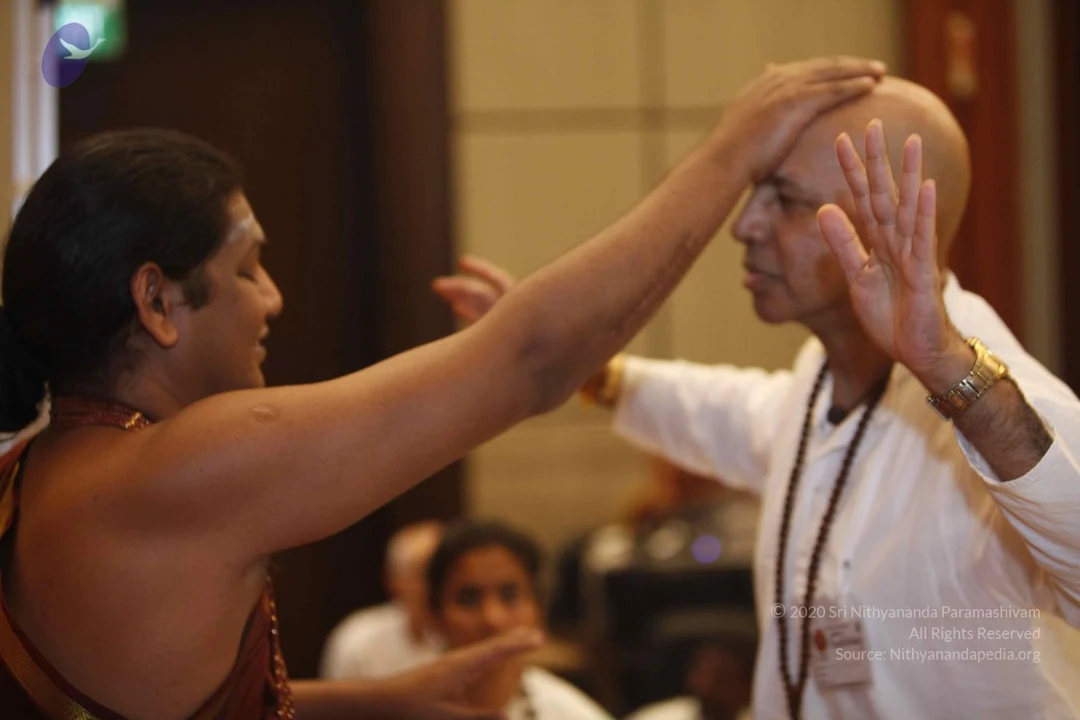
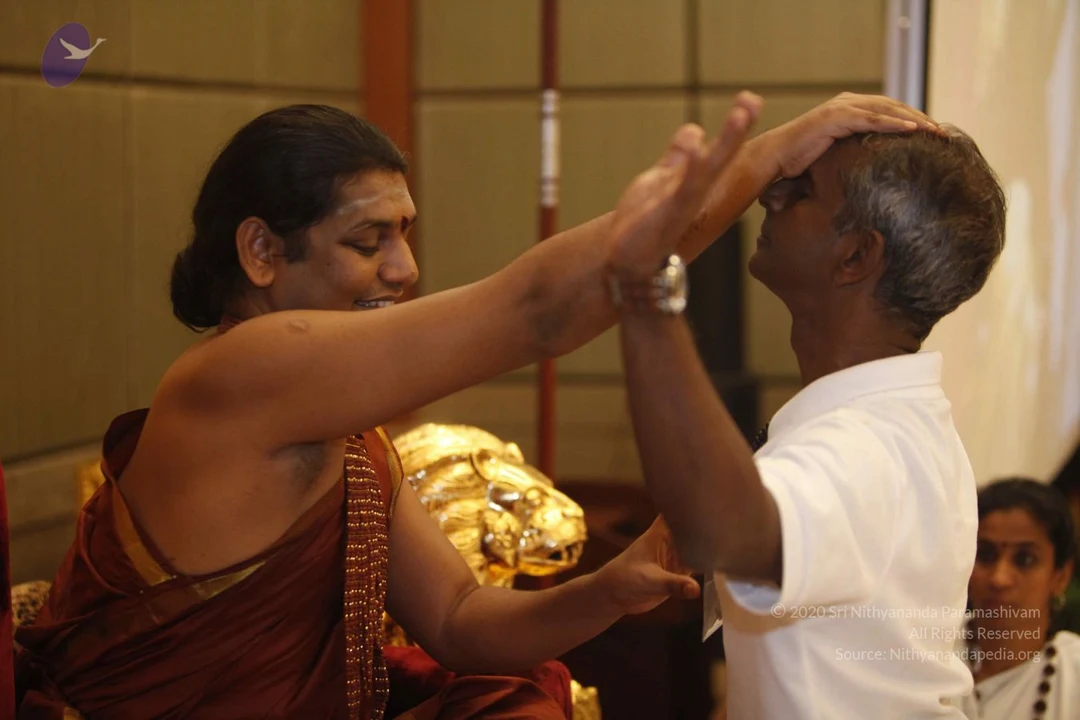
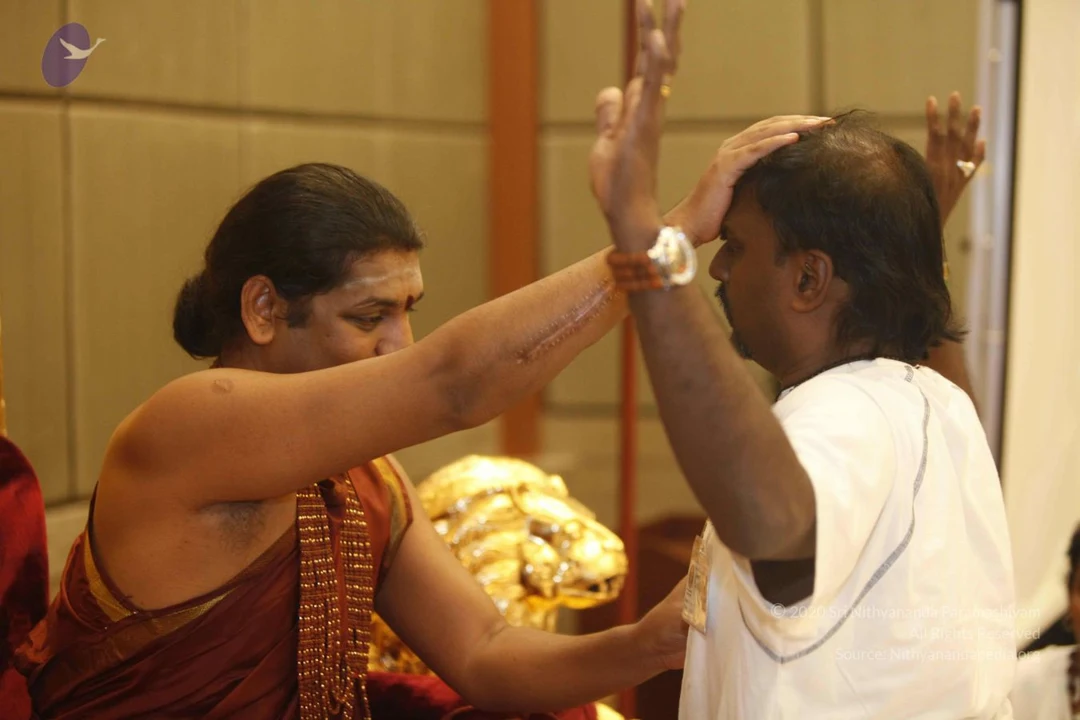
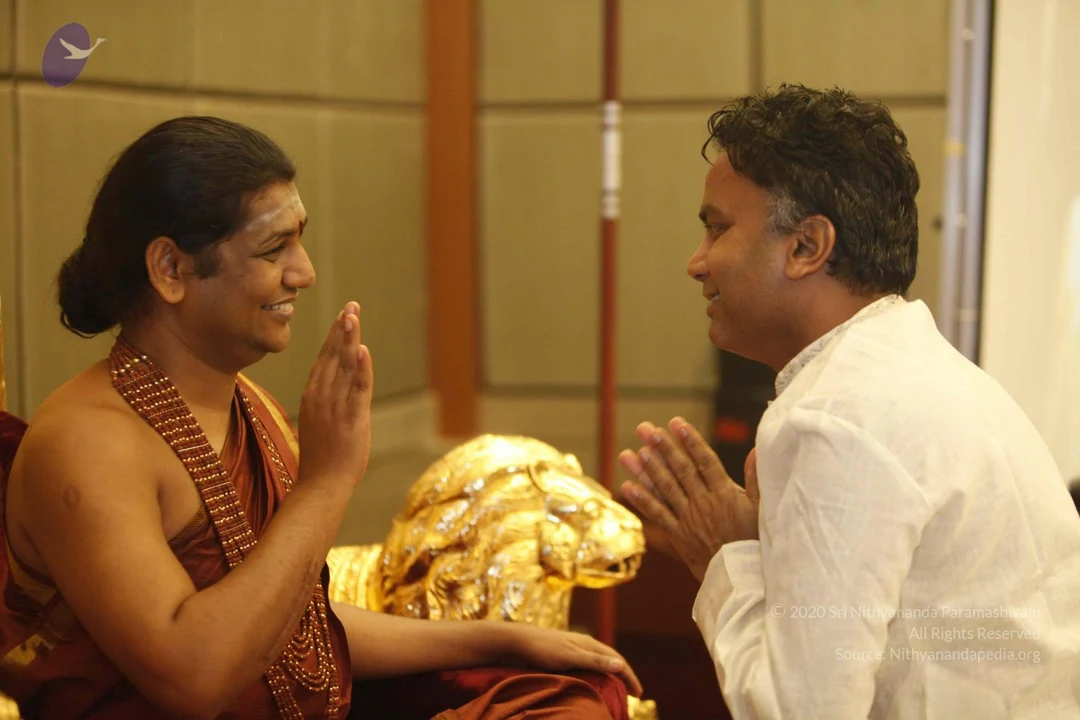
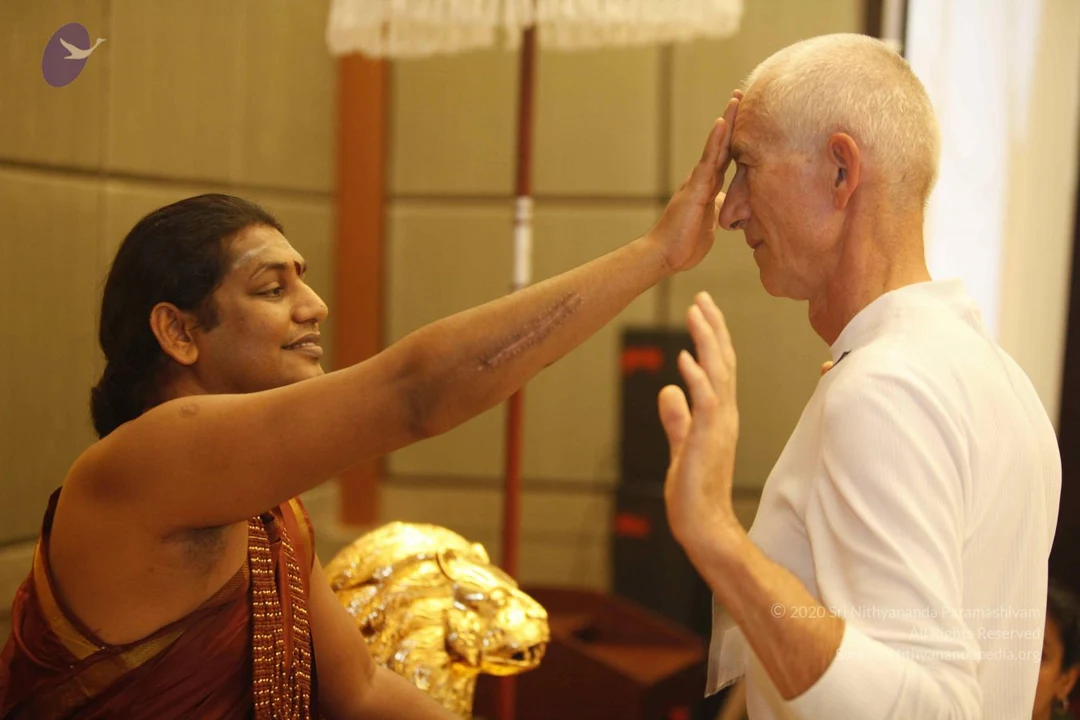
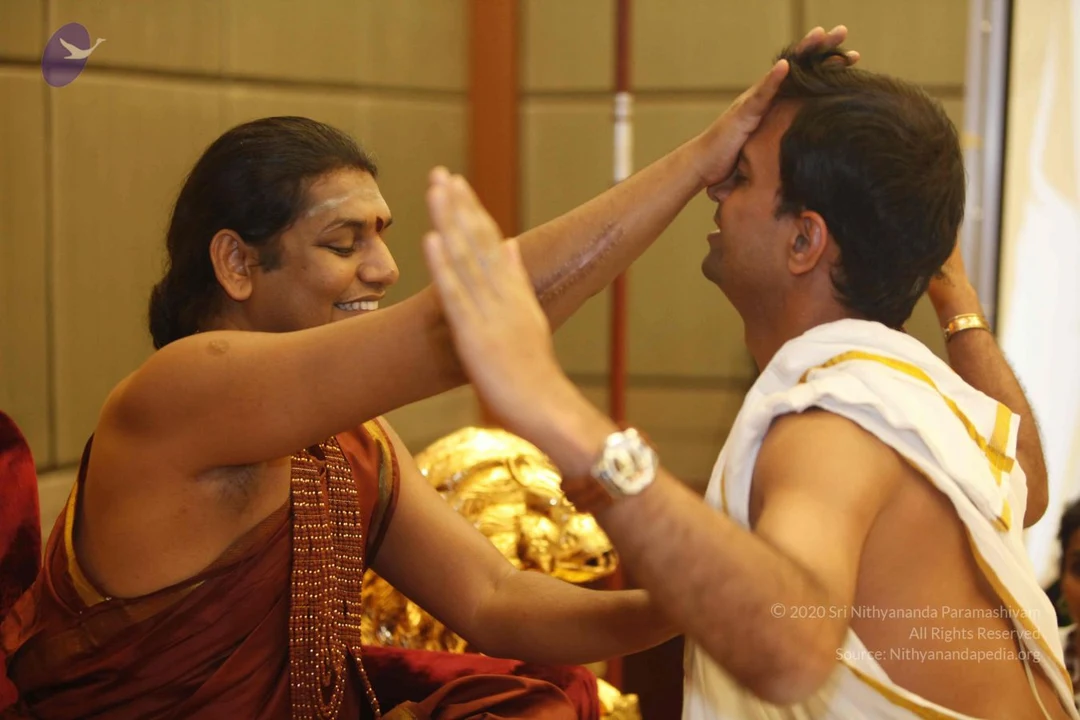
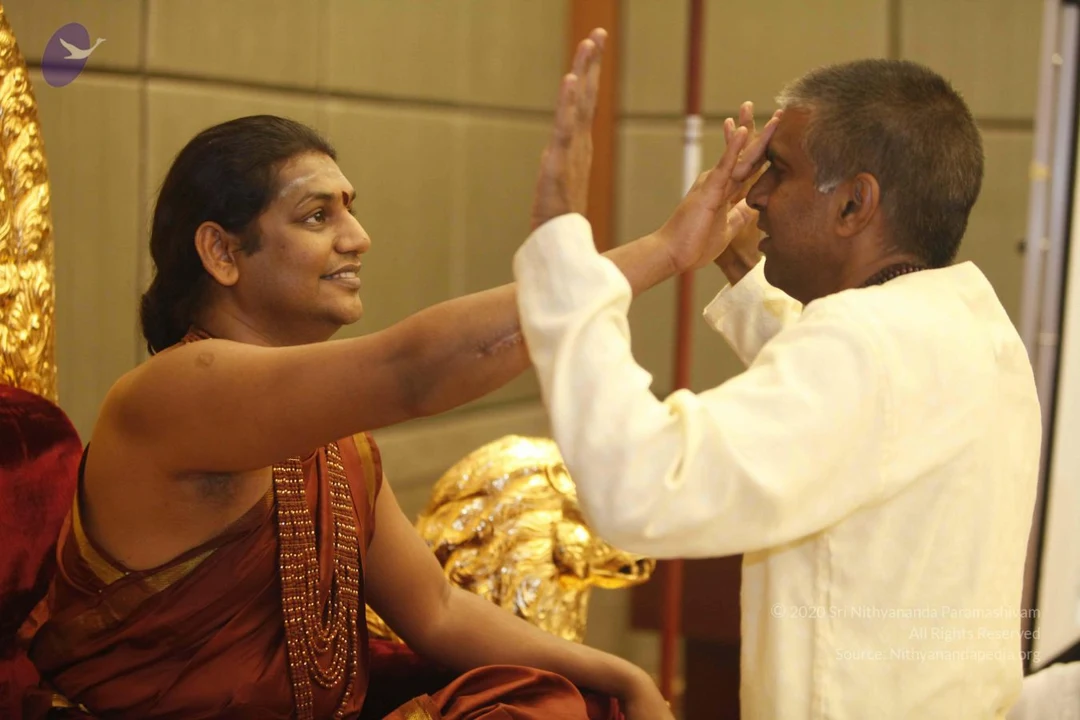
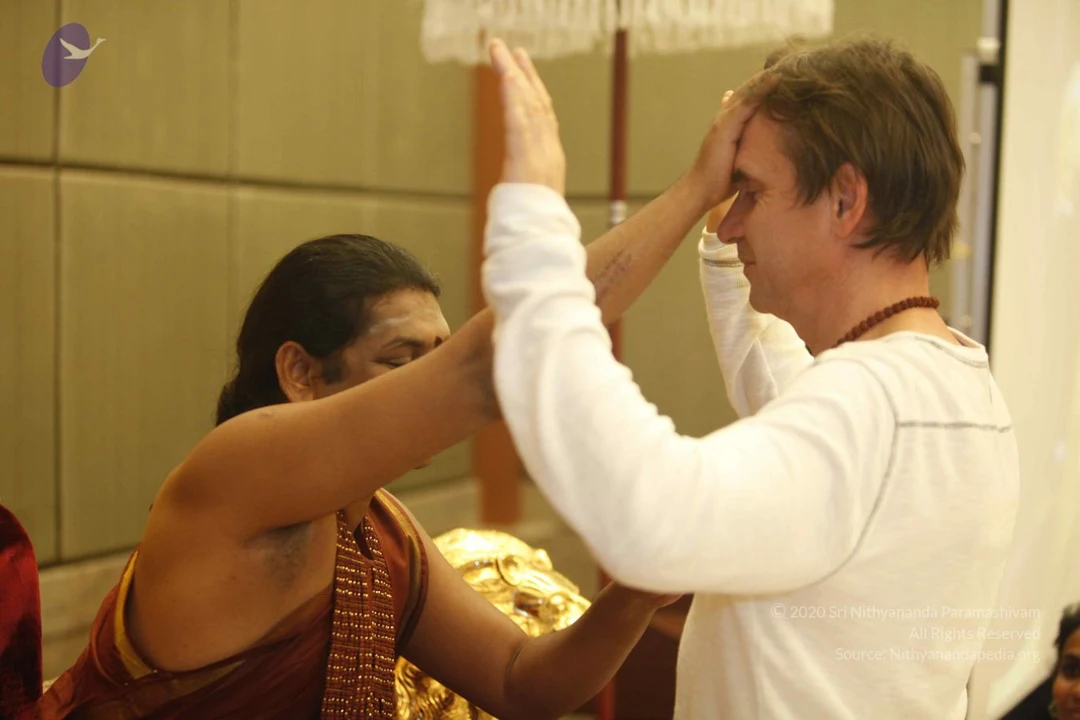
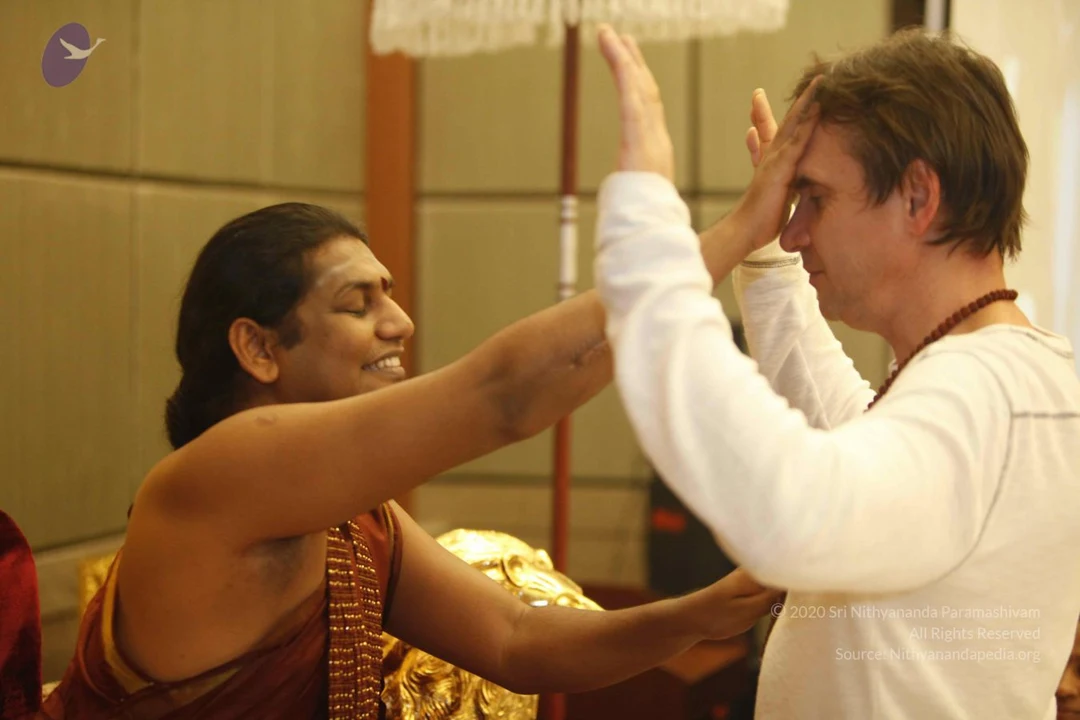
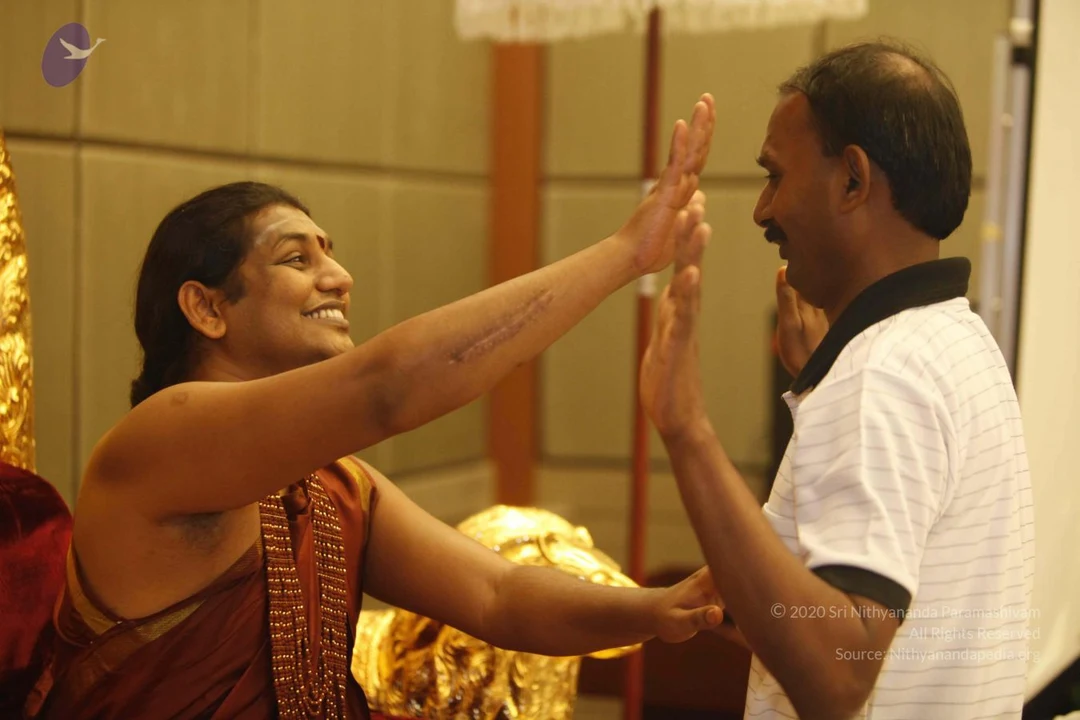
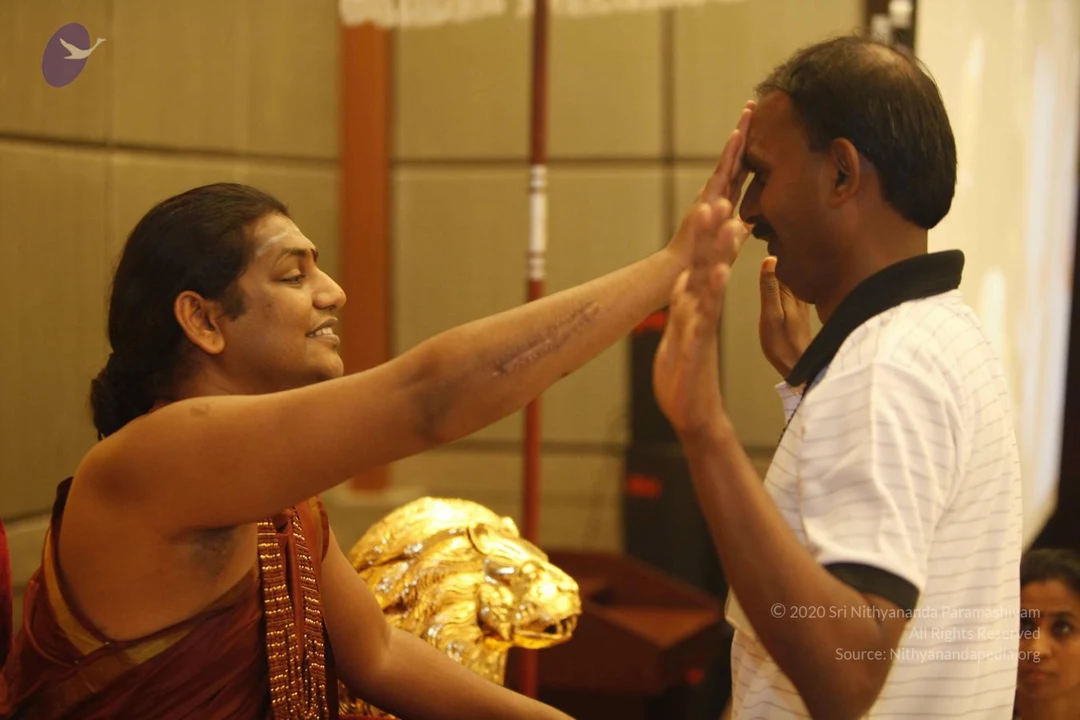
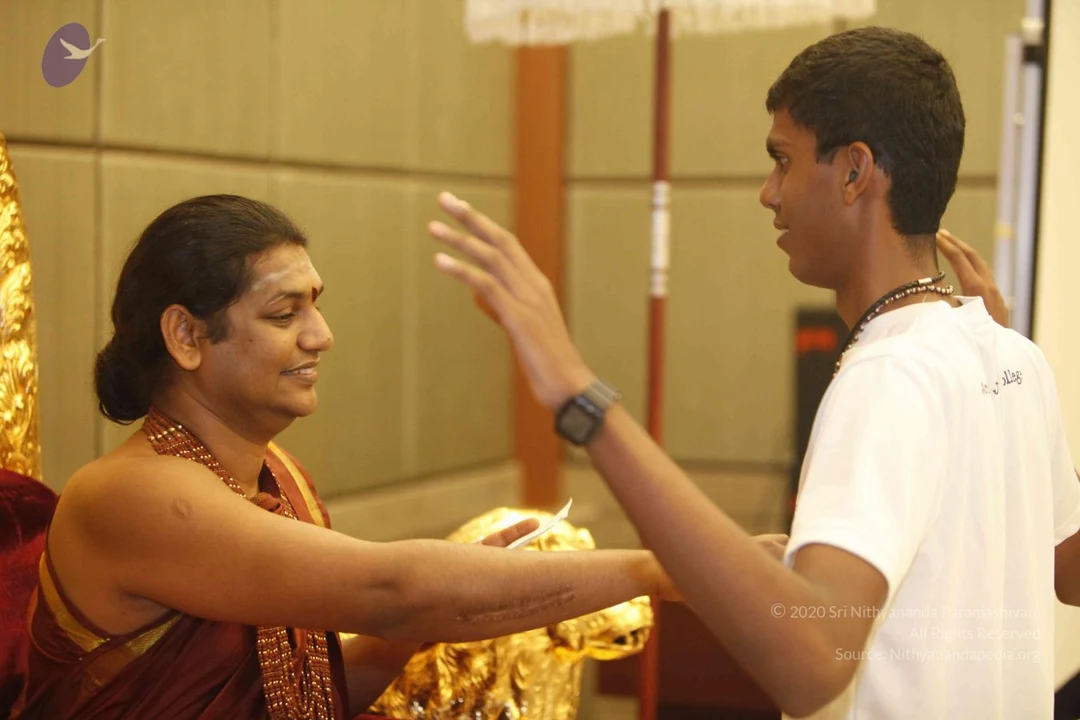
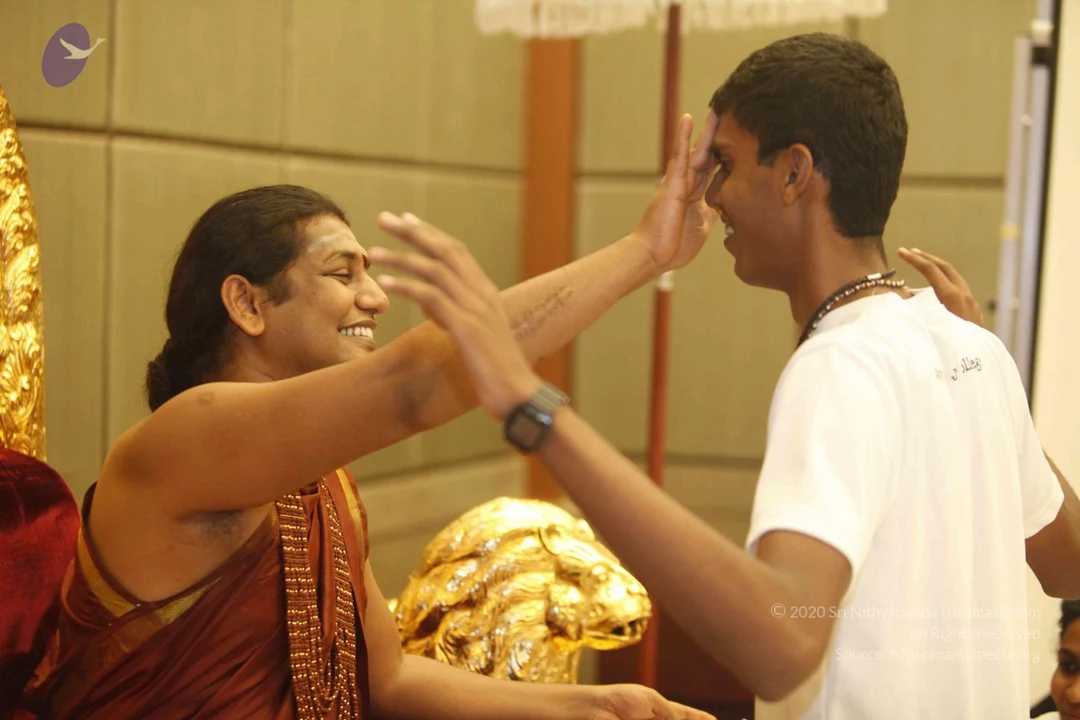
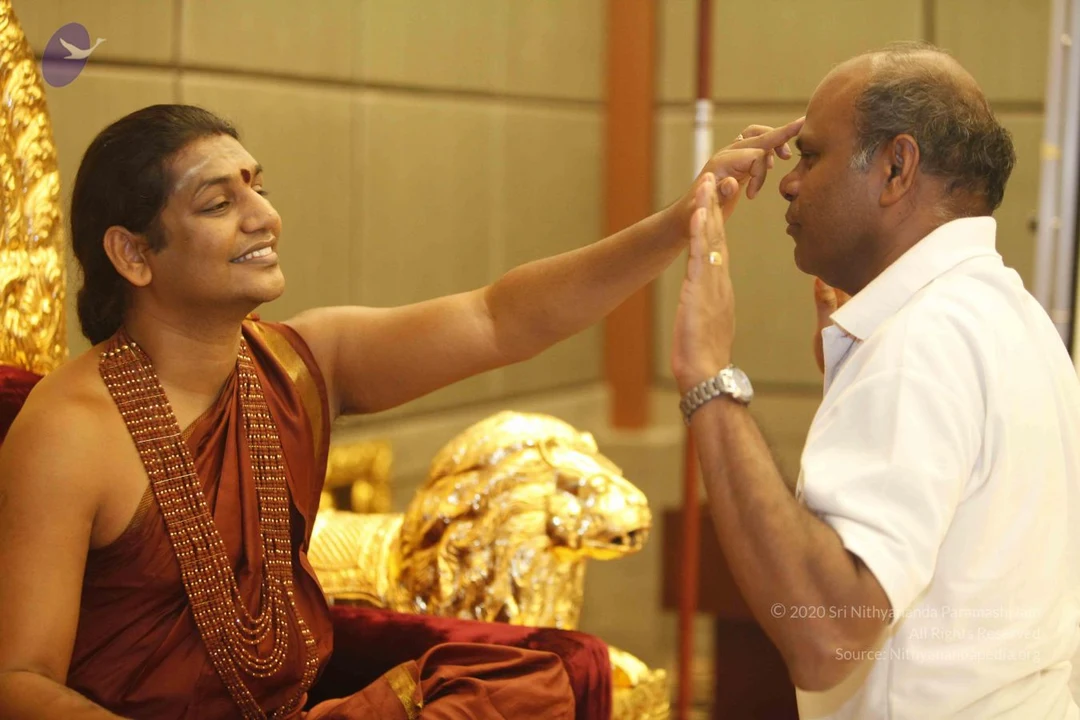
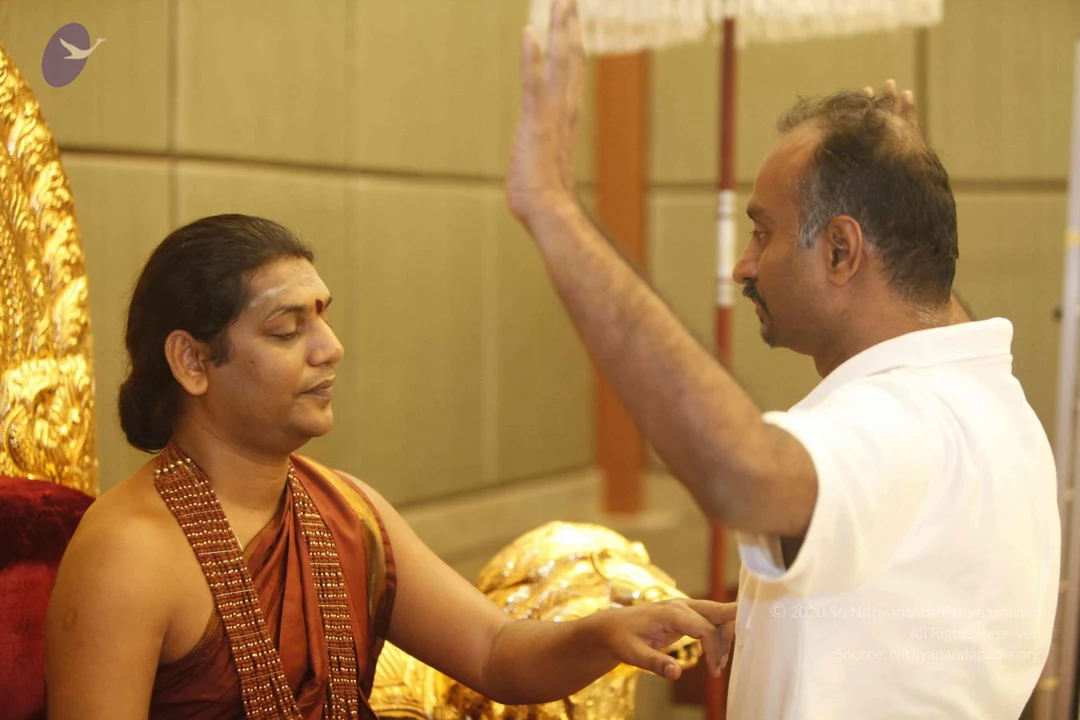
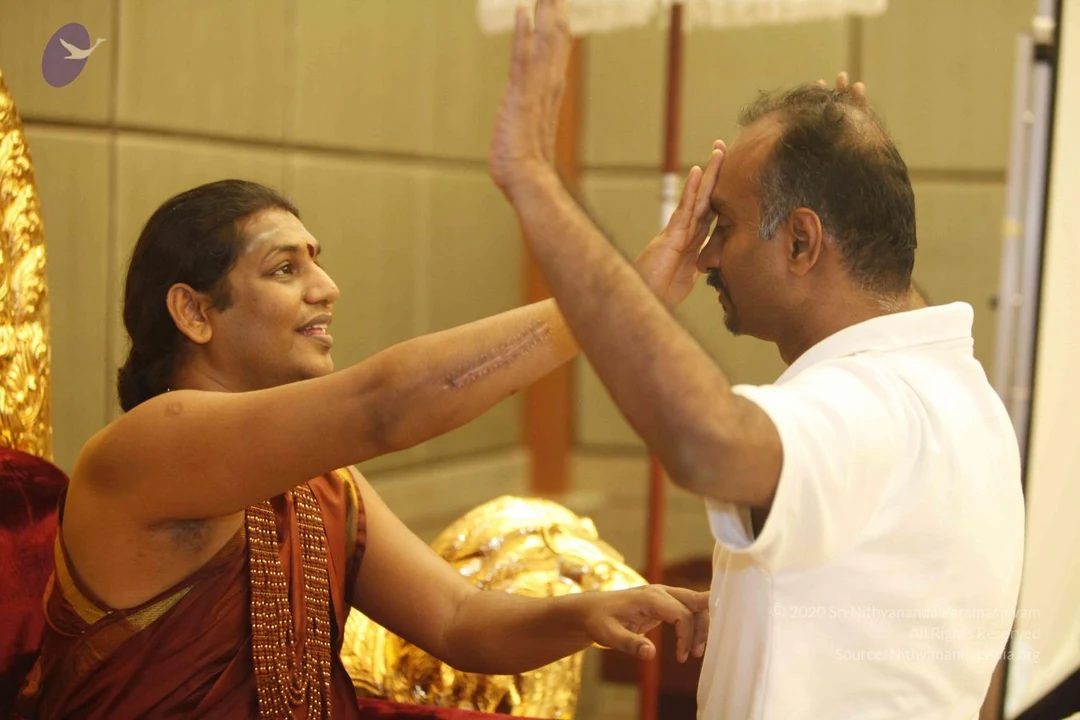
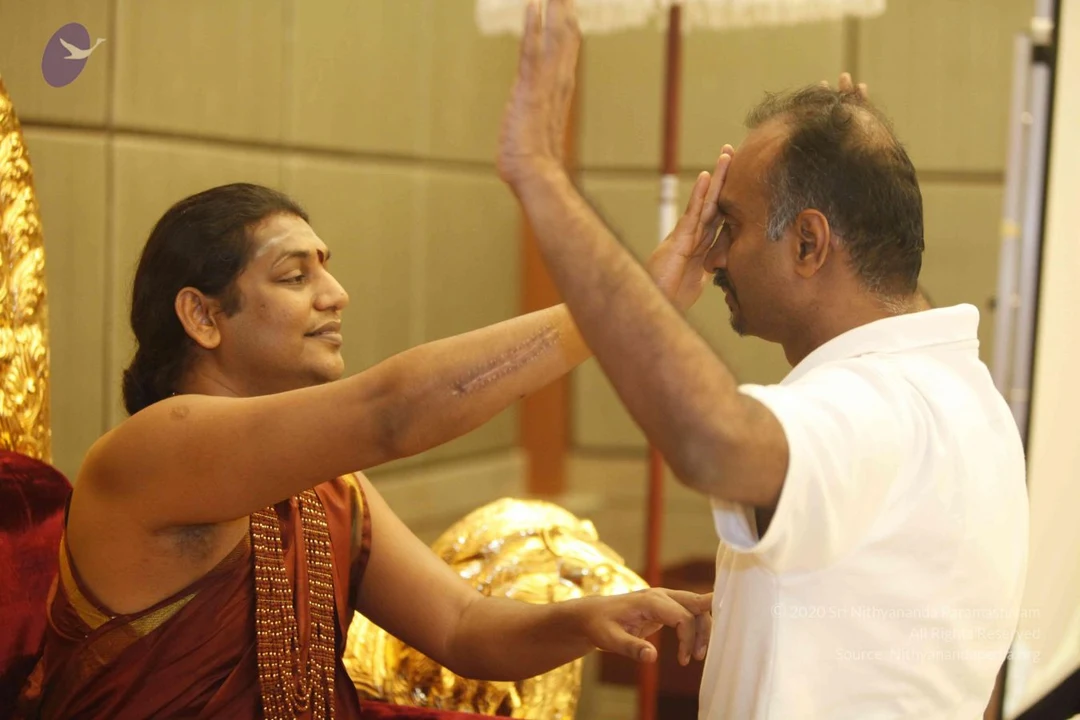
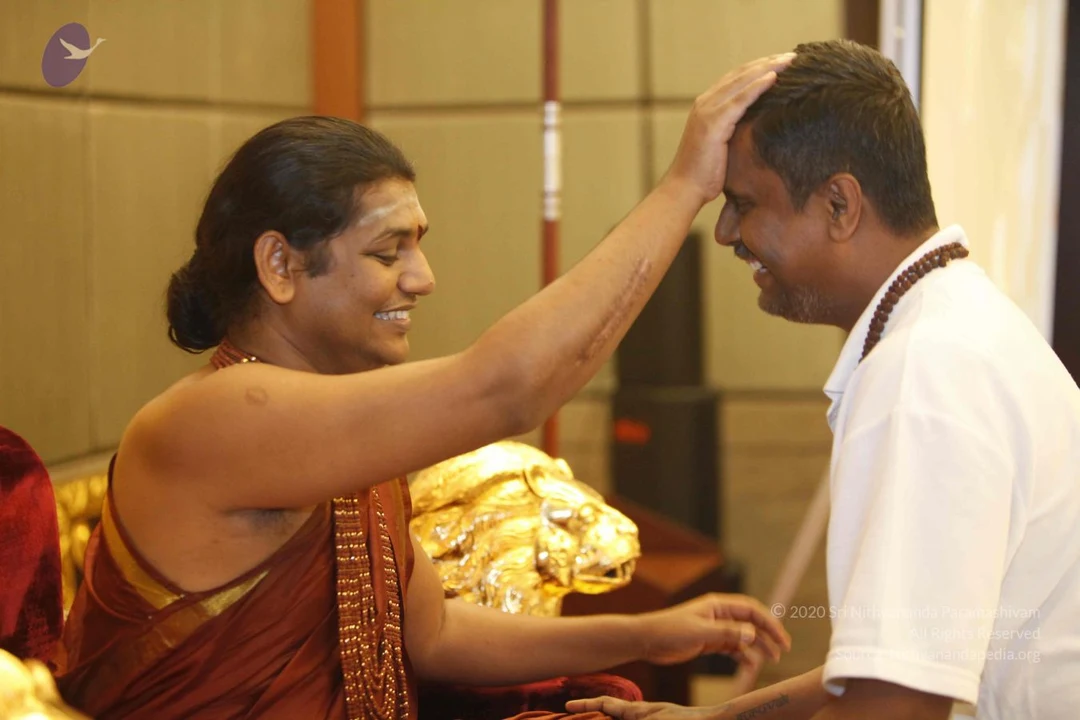
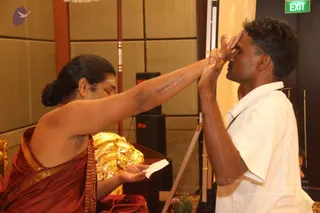
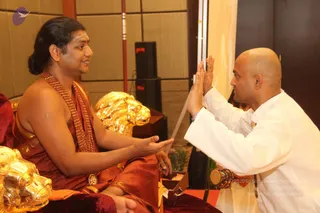
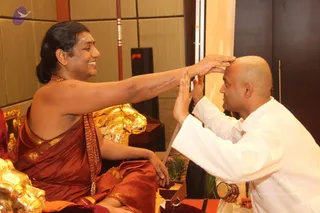
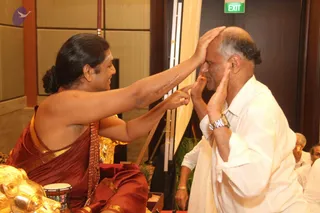
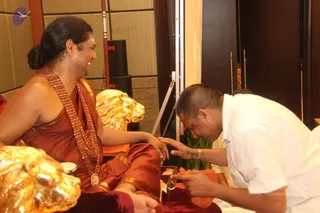
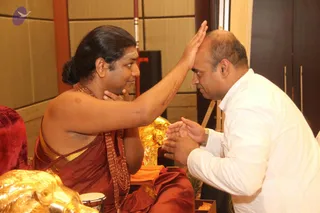
A photograph of an indoor ritual setting with wood-panelled and beige walls and a green EXIT sign. A seated figure in a maroon-red garment with gold border and a dark topknot reaches an arm toward a man in a white short-sleeved shirt who stands with his eyes closed and hands raised to his forehead. The seated figure holds a folded white cloth in the other hand, and a large golden lion-shaped ornament sits on a red cushioned table beside them. The scene appears to show a blessing or anointing exchange among devotees.A seated man in saffron-red robes and a long rudraksha mala with a gold-toned ornamental necklace sits on a red velvet seat beside golden lion-head armrests, with a white tilak on his forehead and hair tied back. Facing him, a bald man in white clothes kneels with palms pressed together in an anjali gesture, holding a small hand drum or bell at his side. A gold lion-head sculpture and a rudraksha-style chain are visible near the seat, with a dark speaker and a wall panel behind them. Swamiji (probable): the seated figure has long swept-back hair, saffron robes and a rudraksha mala, the appearance-based cues for Swamiji.A photograph of an indoor ritual exchange. On the left, a man with long dark hair swept into a bun, wearing a rust-red silk cloth with gold border, a rudraksha-style beaded necklace and a sacred mark on his forehead, sits smiling and extends his right arm to press his palm onto the forehead of a bald man kneeling on the right. The kneeling man wears a long white garment and raises his hands in a folded, receiving gesture. A golden lion sculpture sits behind the seated figure, with a wooden box and a small drum visible in the lower right. Wood-panelled walls and a dark cabinet form the background. Probable Swamiji (probable): the seated figure has long swept-back hair, ochre-red silk clothing and a beaded necklace, and is the one giving the blessing while the kneeling devotee receives it.A seated figure in a maroon-and-gold robe with long dark hair in a low bun places a hand on the forehead of a bald, older man in a white shirt and white trousers, wearing a silver wristwatch. The seated figure's other arm is extended with a finger pointing toward the man's face, and the man holds his hands near his own face. Behind them stand a few other people in white clothing, a green EXIT sign hangs on the wall, and a gold lion-shaped object and a small hand drum sit in the foreground. The seated figure has bare upper shoulders and a gold-bordered cloth.A photograph of a padapuja-style moment. A smiling man with long dark hair in a bun, wearing a rust-red dhoti-style garment, layered beaded rudraksha-type necklaces and a pendant, sits on a red cushioned seat beside gold lion-head armrests. He extends a hand toward a man in a white shirt who bends forward, hands raised in reverence, beside a small tray holding offerings. Potted green plants and dark wood panelling form the background. The description of the seated man as Swamiji (probable) rests on his rudraksha malas, saffron-toned clothing and long hair.Photograph of an indoor ritual exchange. A seated figure in maroon-red robes and a gold-threaded wrap, with a rudraksha mala and a long-haired topknot, extends one hand to press the forehead of a bald man in a white shirt who kneels in front of him with palms joined. A golden lion-form sculpture and a golden figure sit beside them, with a red velvet seat at left and wood-panelled walls behind. Swamiji (probable): the seated figure shows long hair in a knot, a rudraksha mala and ceremonial maroon robes, consistent with the page's attribution.

Bidadi-Temple

69 photosSource gallery
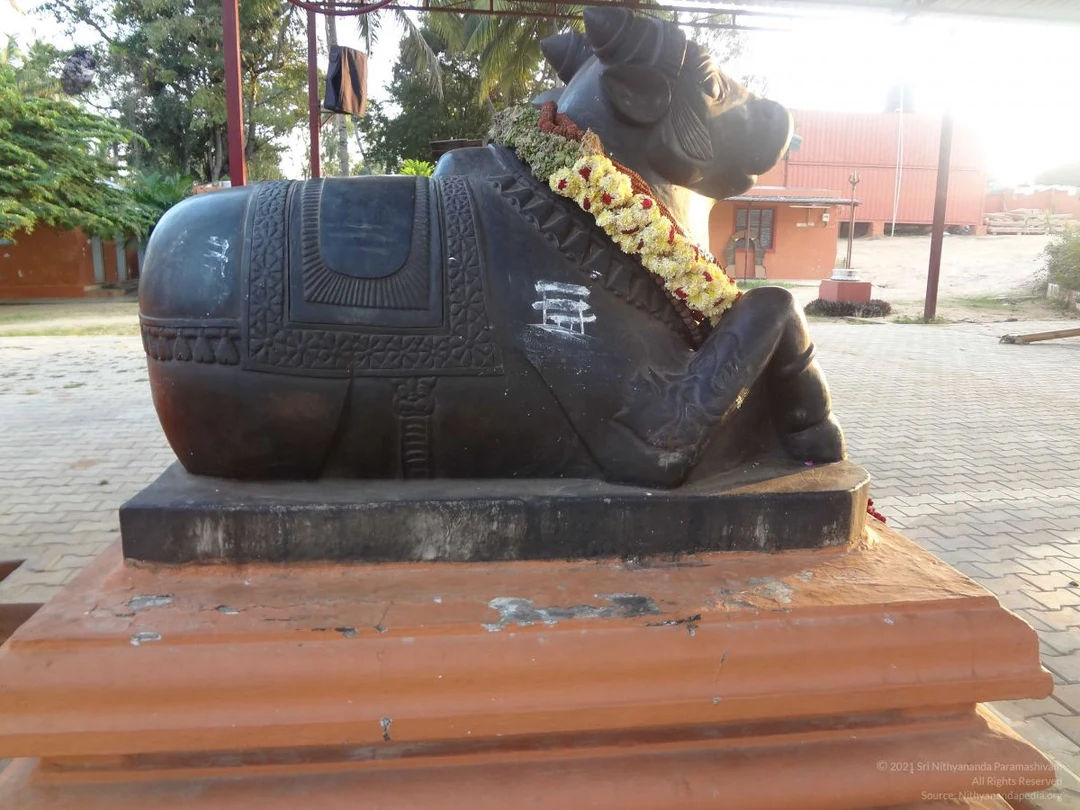
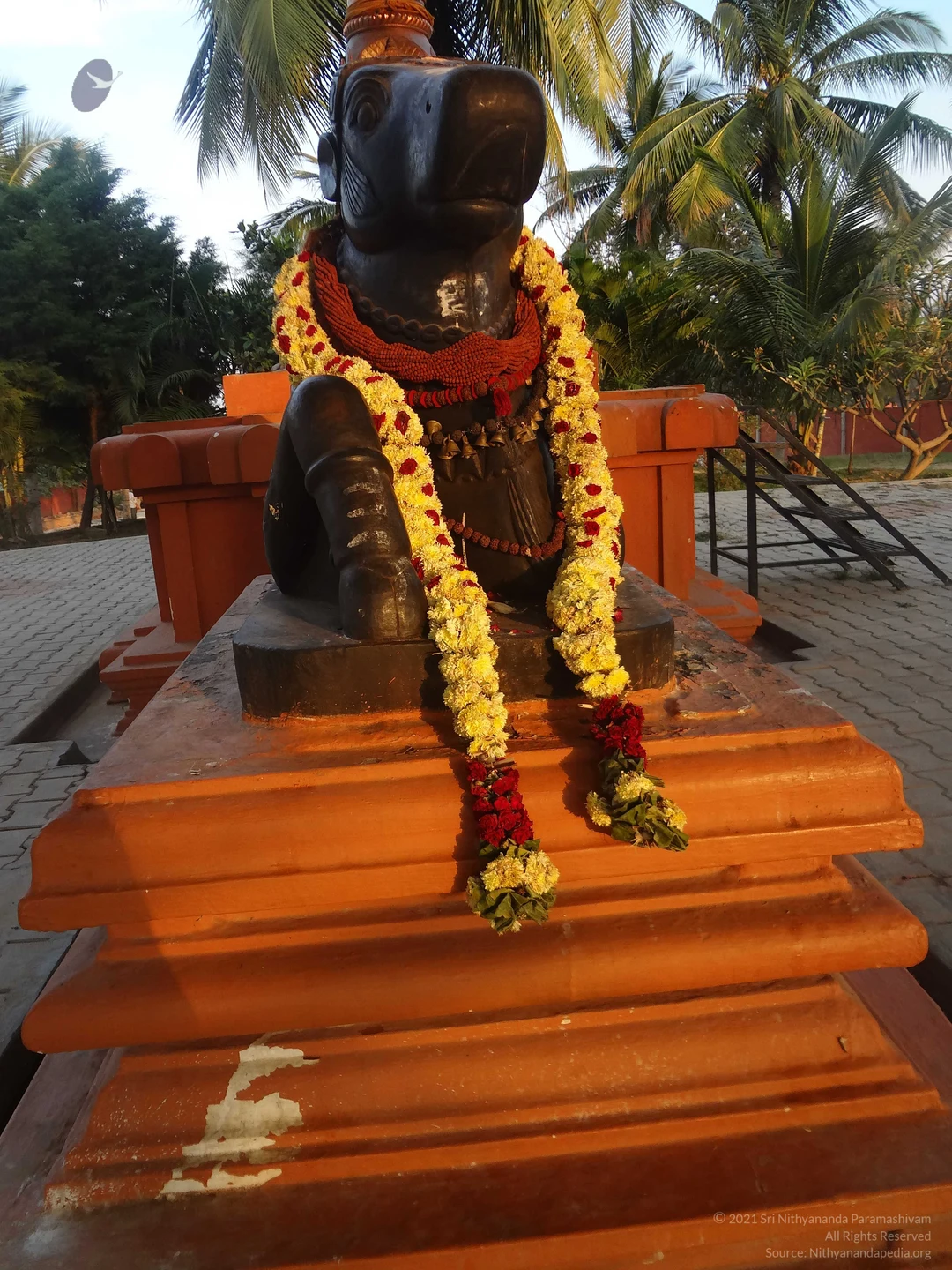
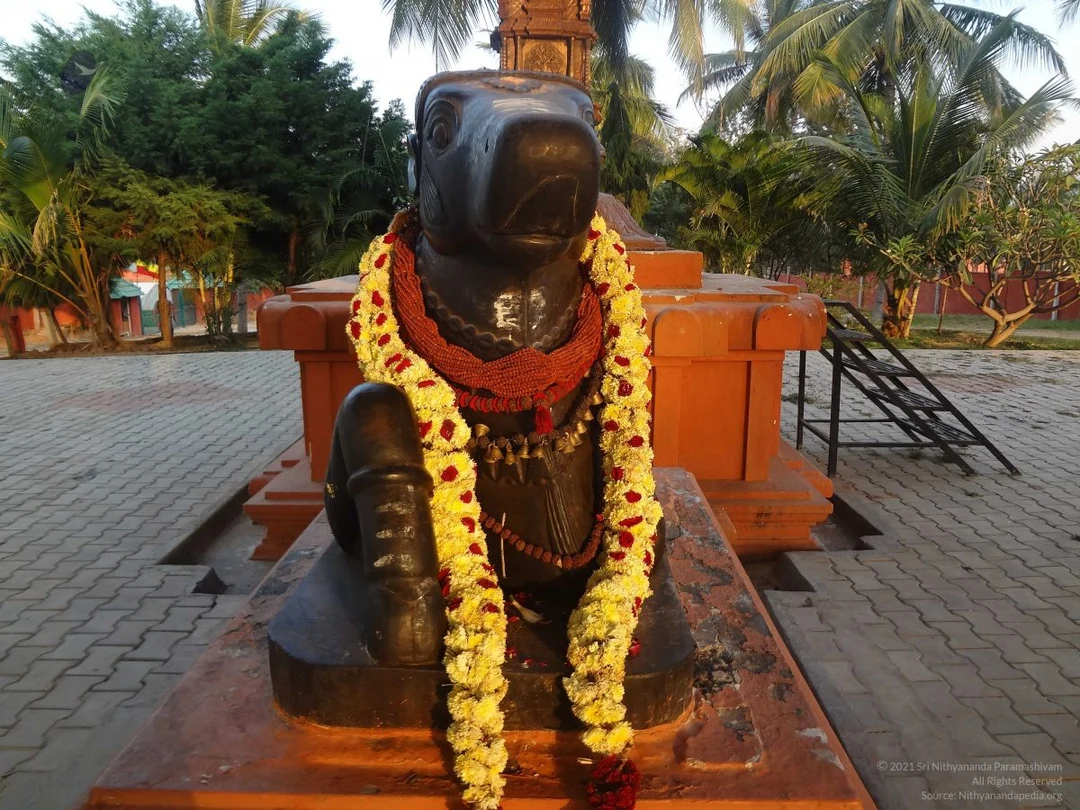
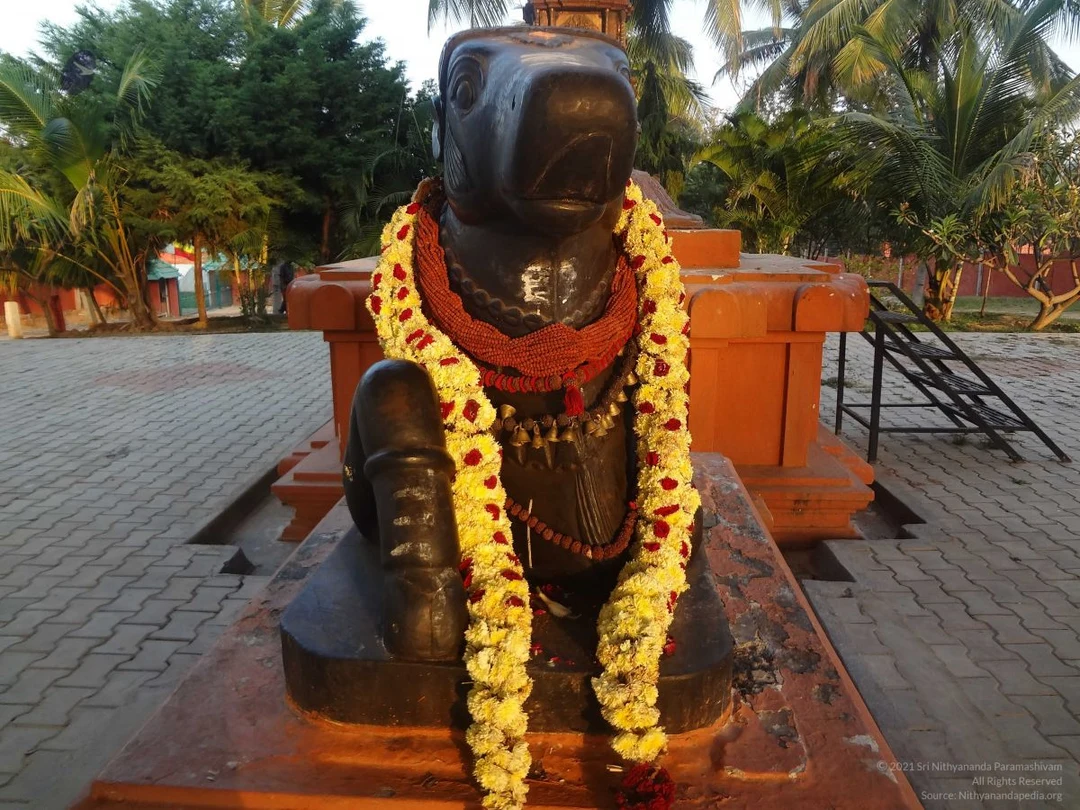
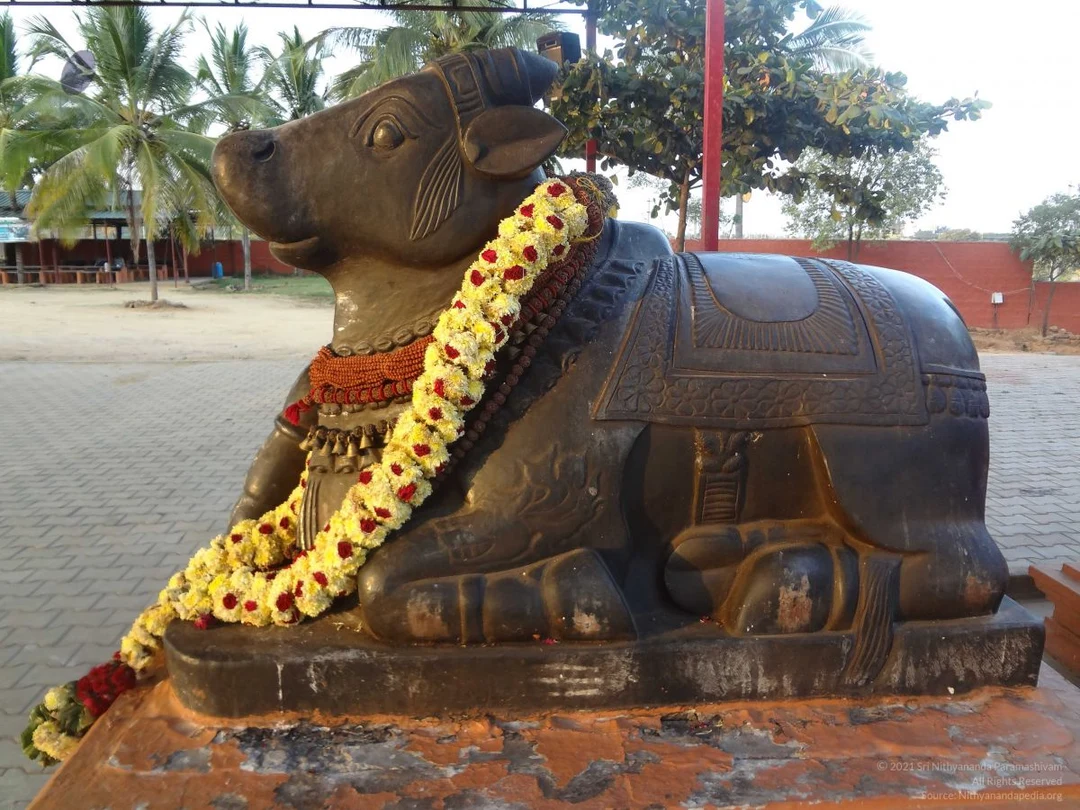
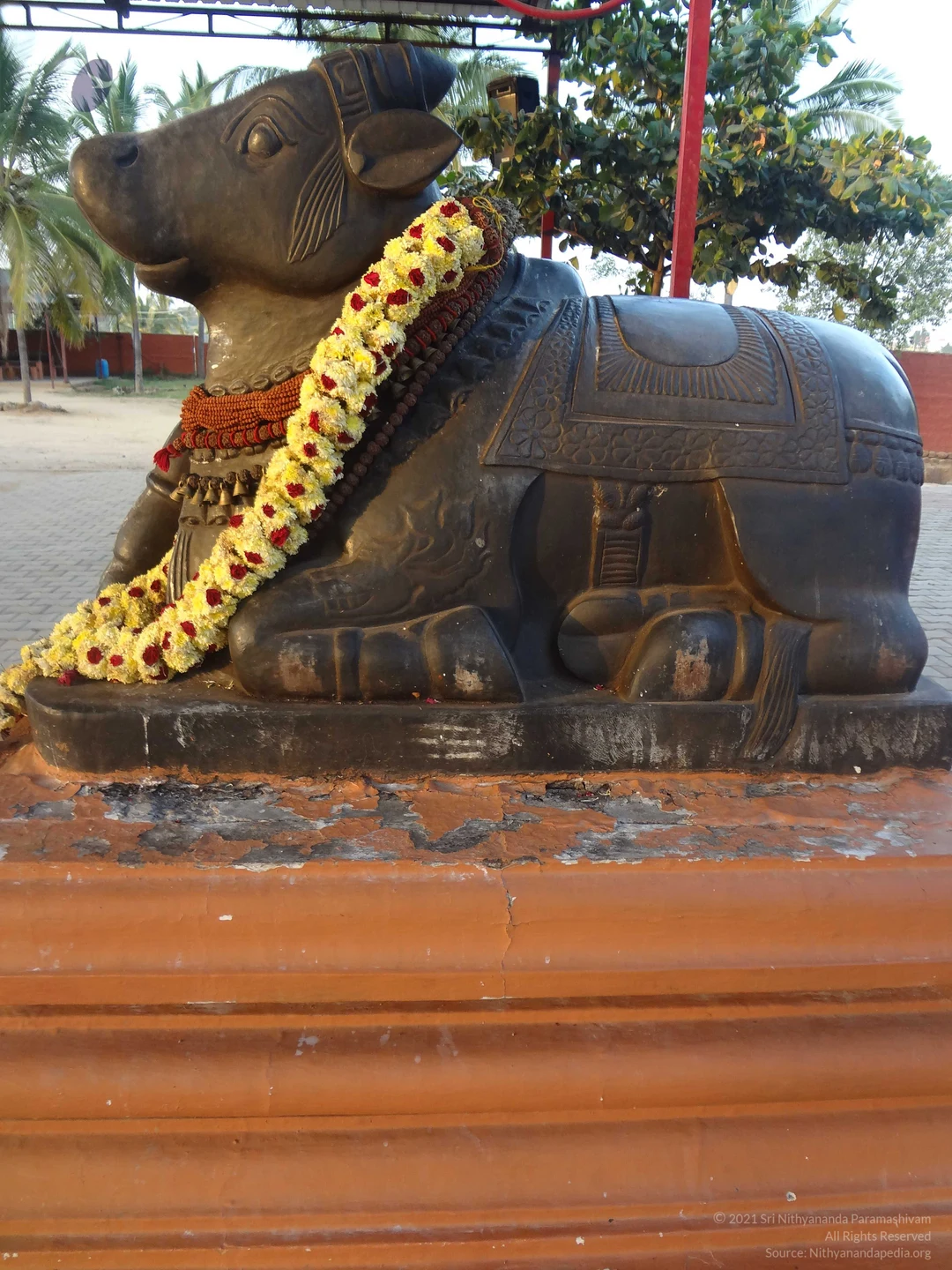
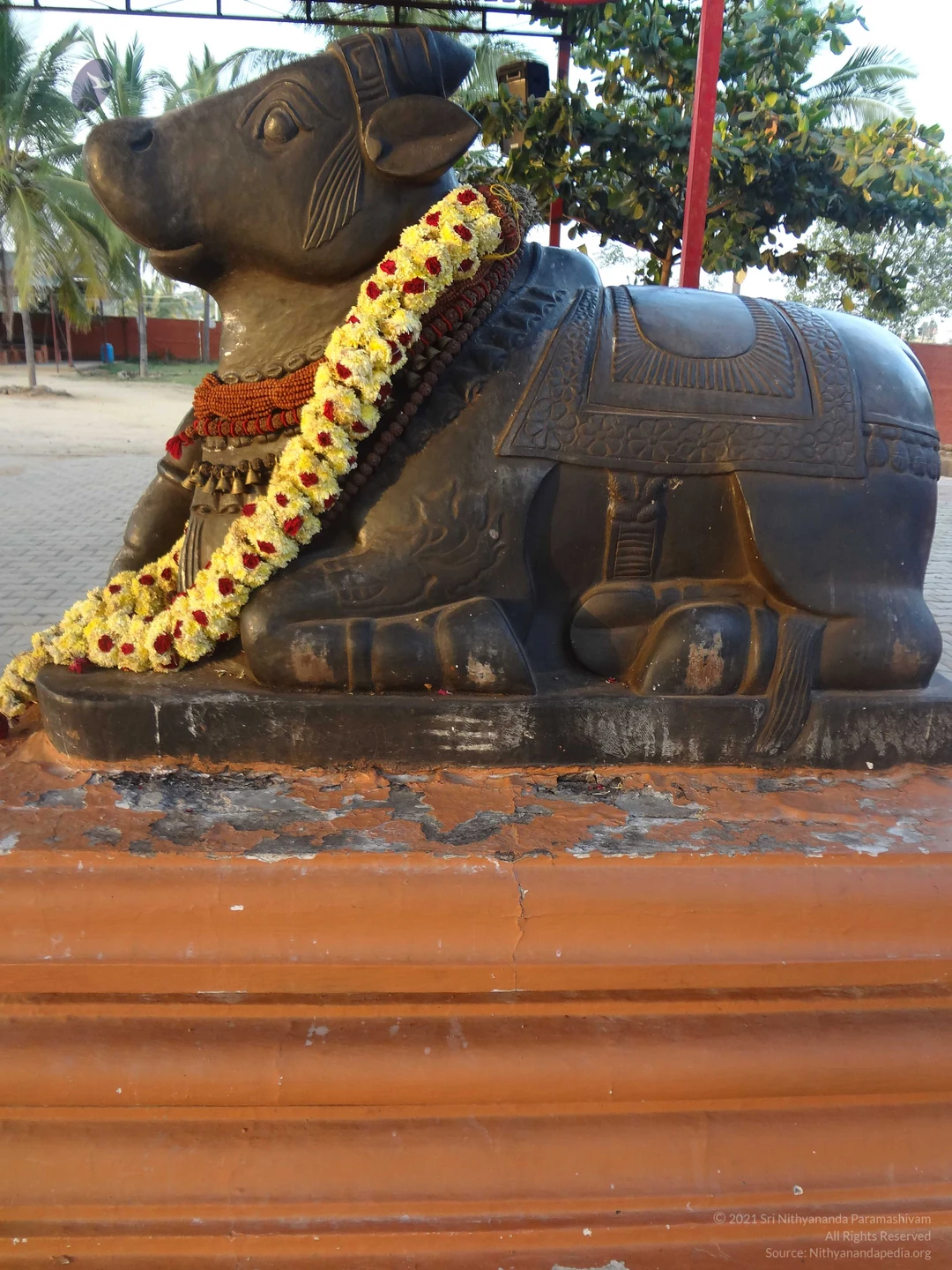
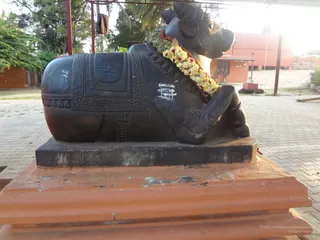
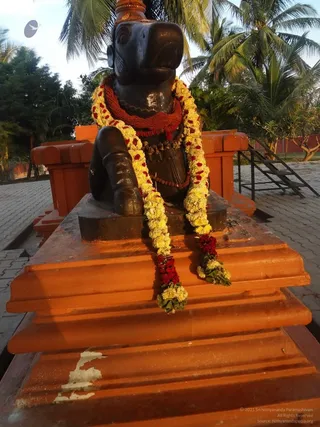
A photograph of a large dark stone Nandi statue, the bull of Shiva, seated on a stepped terracotta-coloured plinth under an open shelter. The Nandi wears a garland of white and yellow flowers with a red thread around its neck, and has a carved saddle-cloth with geometric patterns and a small white tilak mark on its flank. Behind it are orange-painted buildings, palm trees and a paved courtyard in warm low sunlight. No people are visible.A photograph of a large dark stone Nandi bull statue lying on a raised black plinth atop an orange base, outdoors under a corrugated shelter. The bull wears a garland of white and yellow flowers with red blooms around its neck, and its body carries carved geometric saddle patterns. White vertical tilak-like marks appear on its flank. Behind it are orange-walled buildings, palm trees and a paved courtyard in warm late-day light. No people are visible.A dark stone or metal statue of a seated figure with a large, stylised head and beaked face rests on an orange-painted tiered plinth outdoors. It wears a red coral-bead necklace, a string of small bells across the chest, and two garlands of yellow and red flowers draped over its shoulders and hanging down the plinth. Palm trees and a tiled courtyard surround it, with a metal staircase visible at the right edge. The statue is a murti shown as a devotional image, not a person.A dark stone Nandi bull statue sits on an orange-painted pedestal outdoors, draped with garlands of yellow and red flowers hanging down both sides. A red-brown rudraksha-style bead necklace and a bell-decorated sash are visible on its chest. Coconut palms and trees surround the courtyard, with a metal staircase at right and a paved floor beneath.A photograph of a black stone Nandi bull statue seated on an orange-red pedestal in an open paved courtyard. The Nandi wears a garland of yellow and red flowers draped over its neck and shoulders, a red beaded necklace, and a bell-hung ornamental chain. Behind it stand an orange temple structure, palm trees and flowering trees in the evening light. A metal staircase rests to the right. No people are visible.A dark stone Nandi bull statue sits on a raised red-orange pedestal in an open paved courtyard, with palm trees behind. The Nandi wears a long garland of yellow marigolds with red flowers draped over its neck and body, a red-beaded necklace and brass bell ornaments hanging from its chest, and a thread tassel. Scattered petals and offerings lie on the base, and an orange temple structure and metal railing stand at the right. No people are visible.

Bidadi-Paduka-Puja
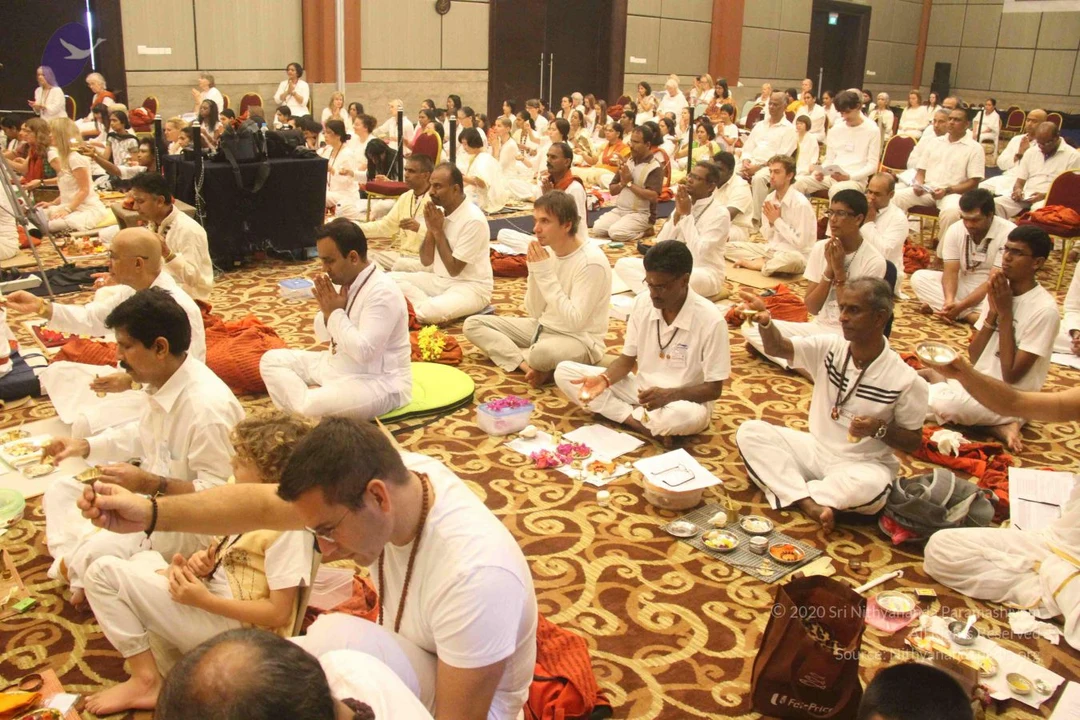
27 photosSource gallery
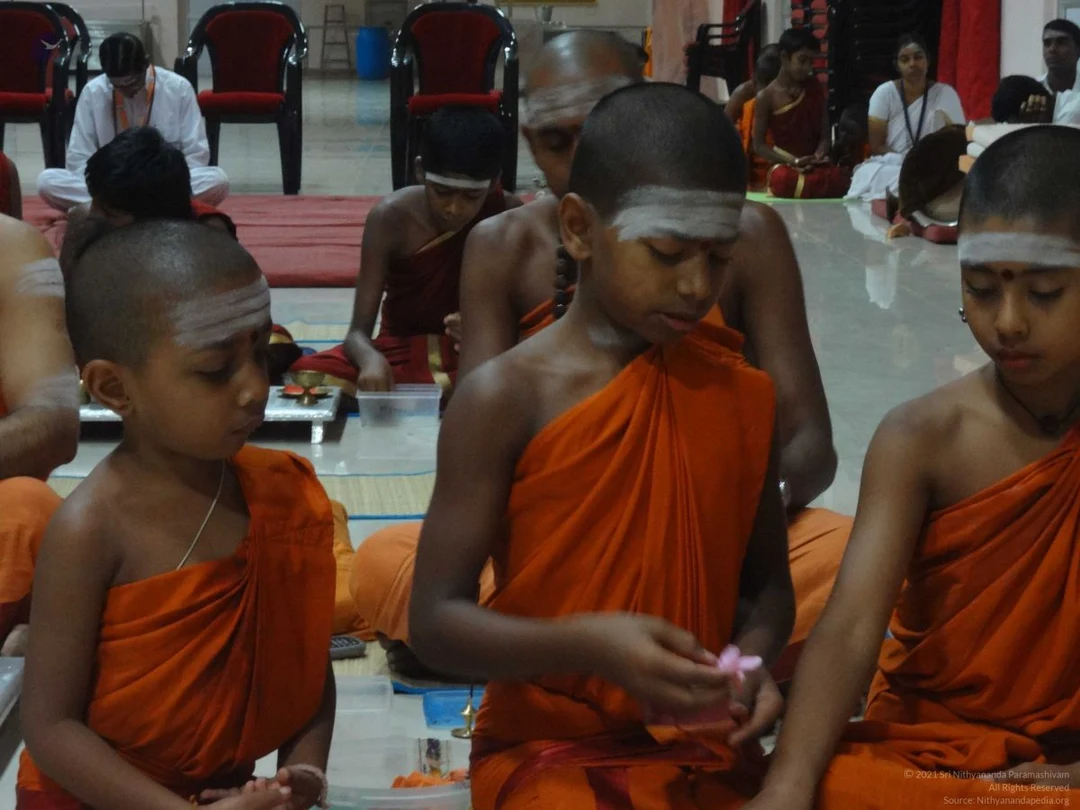
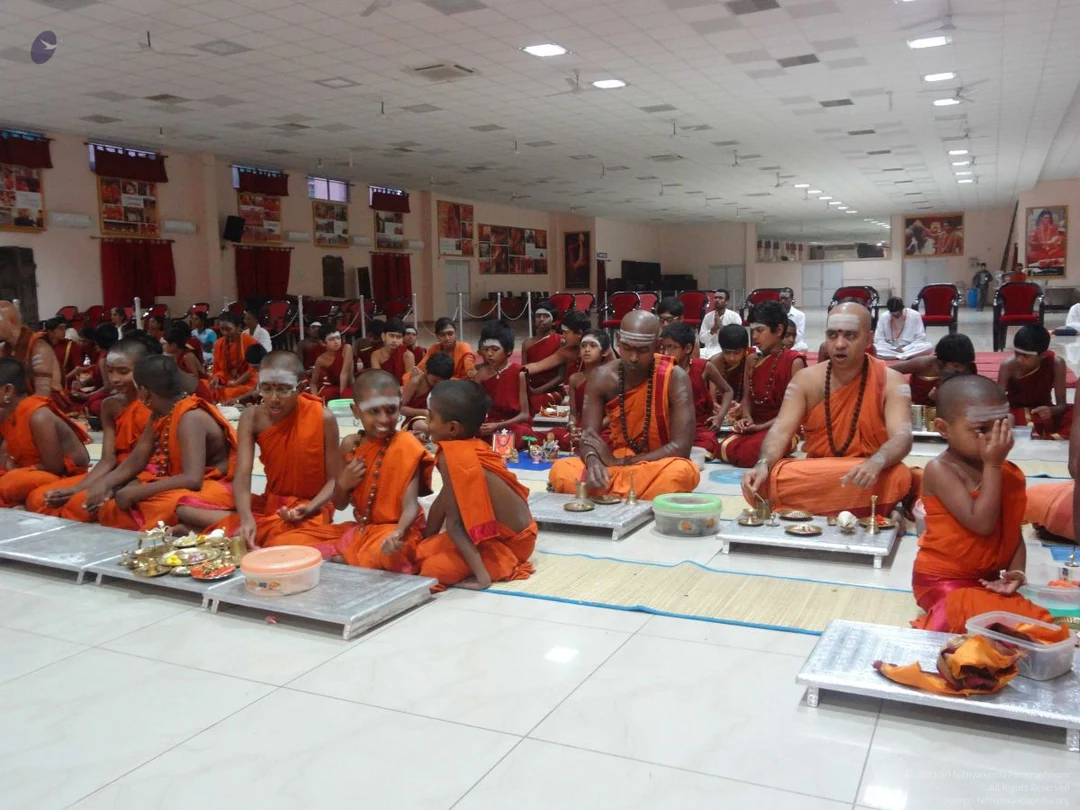
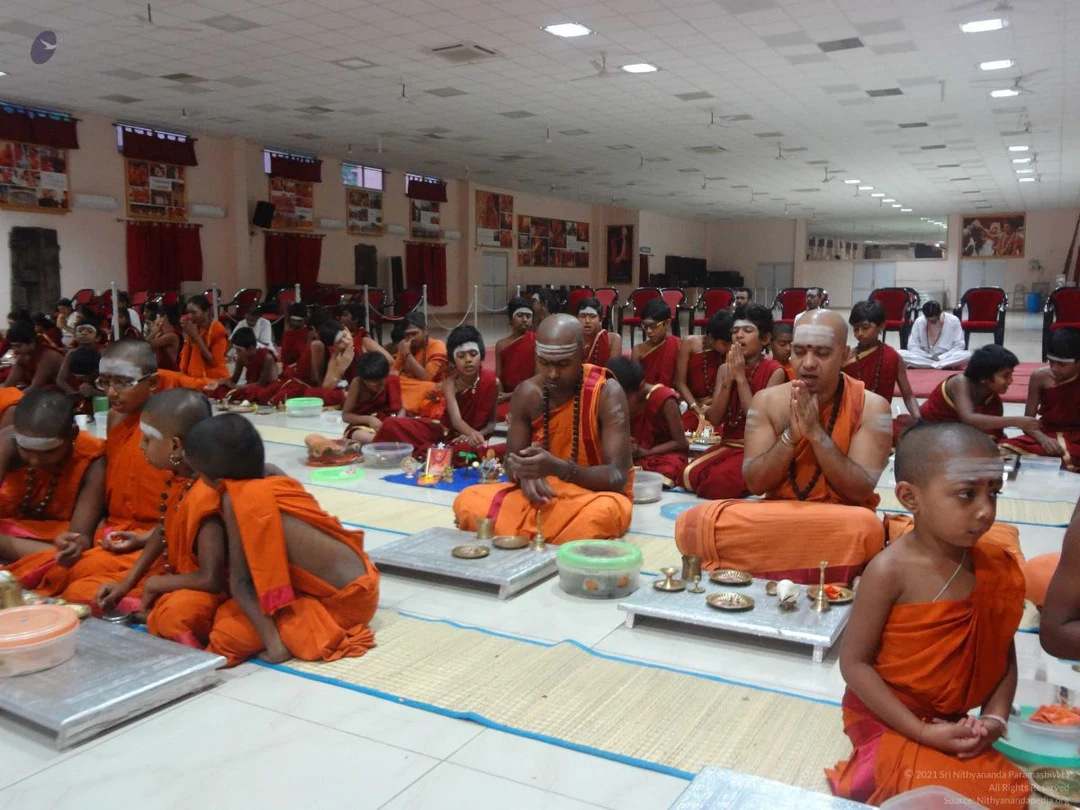
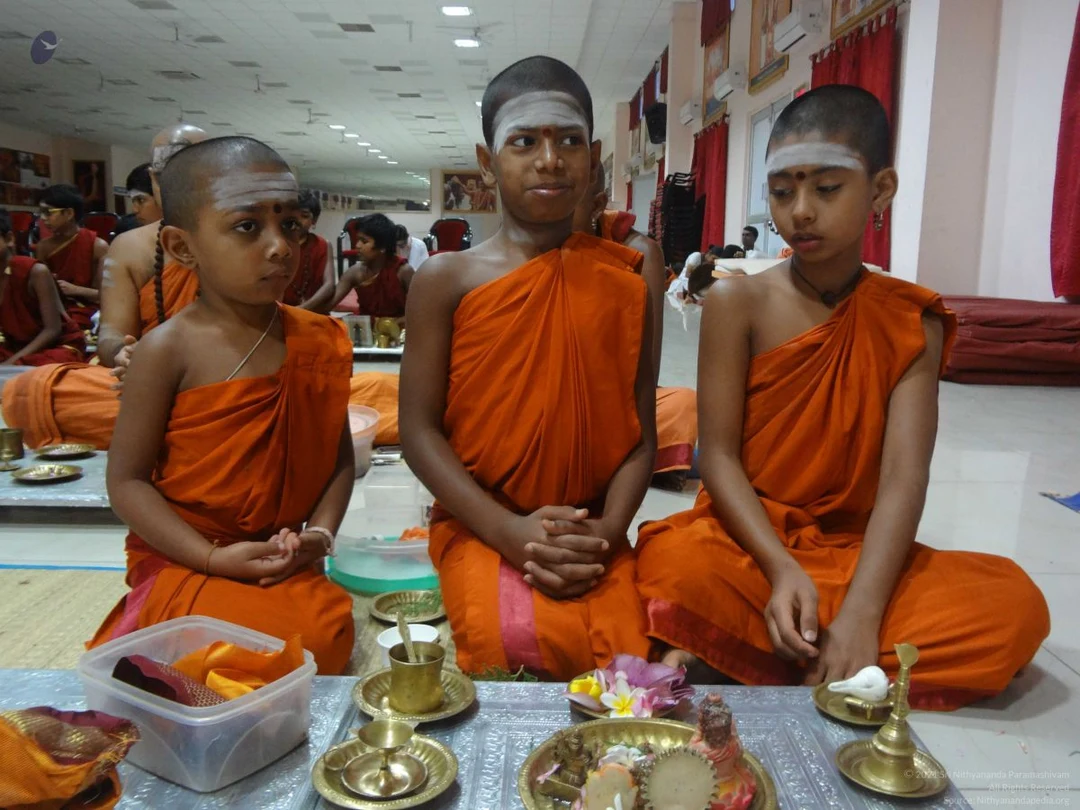
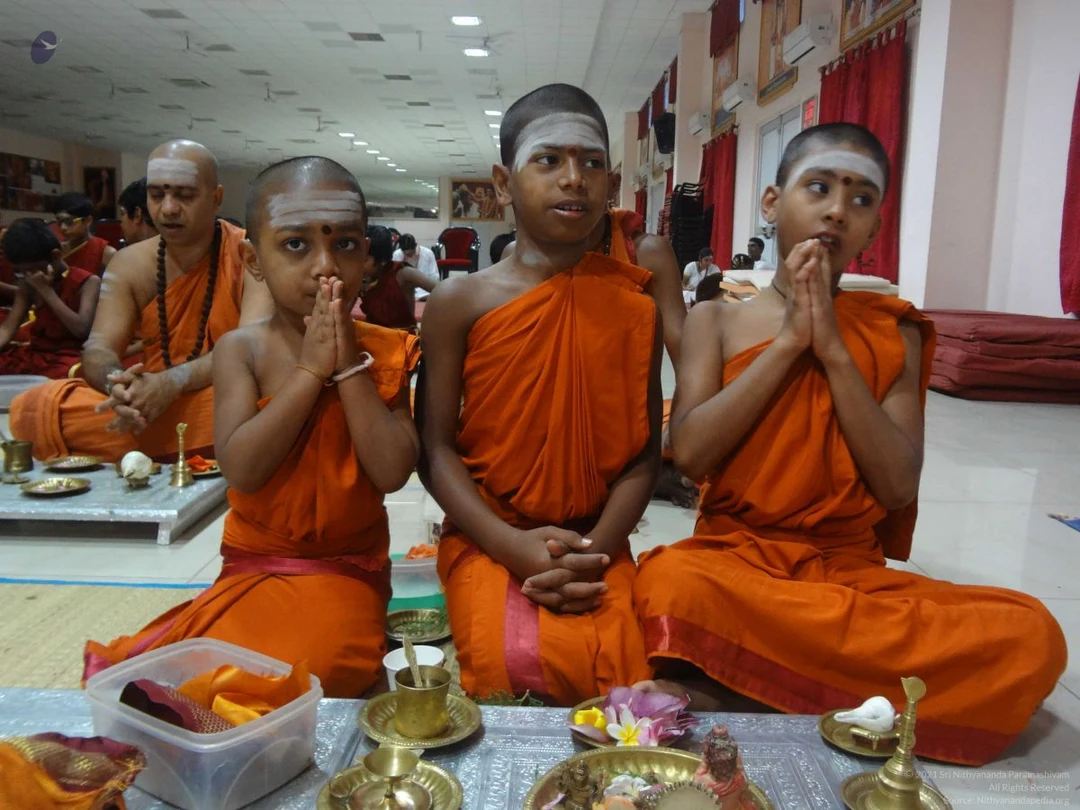
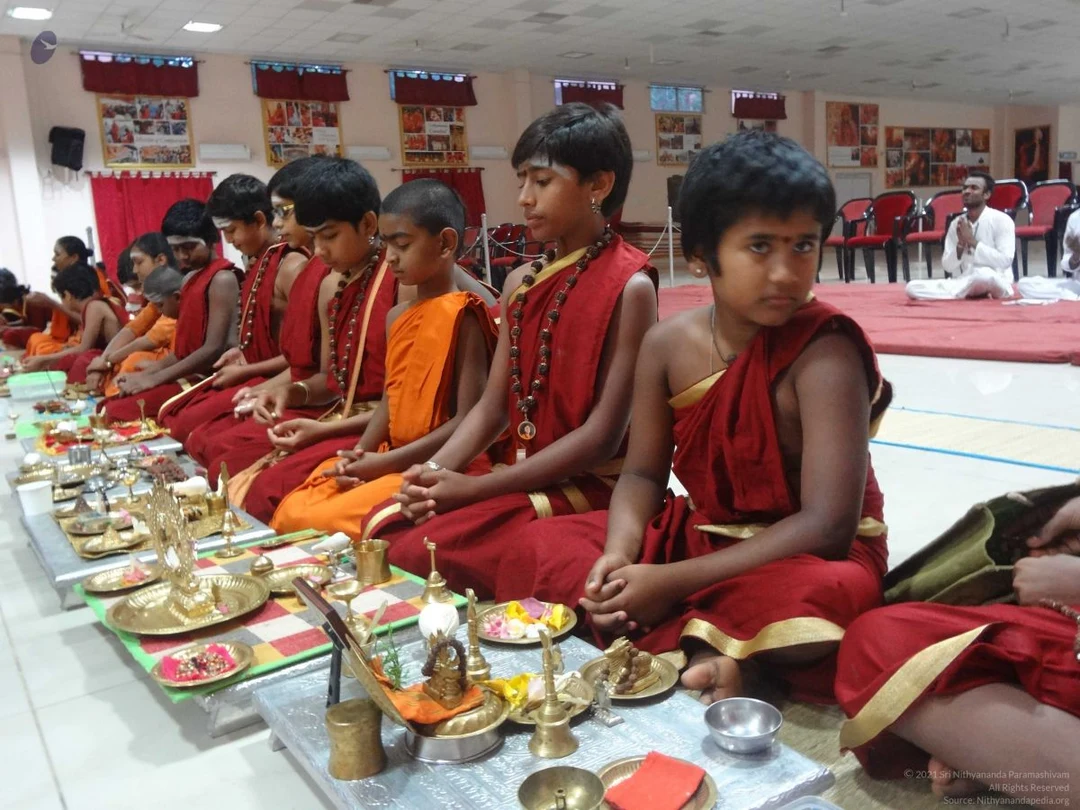
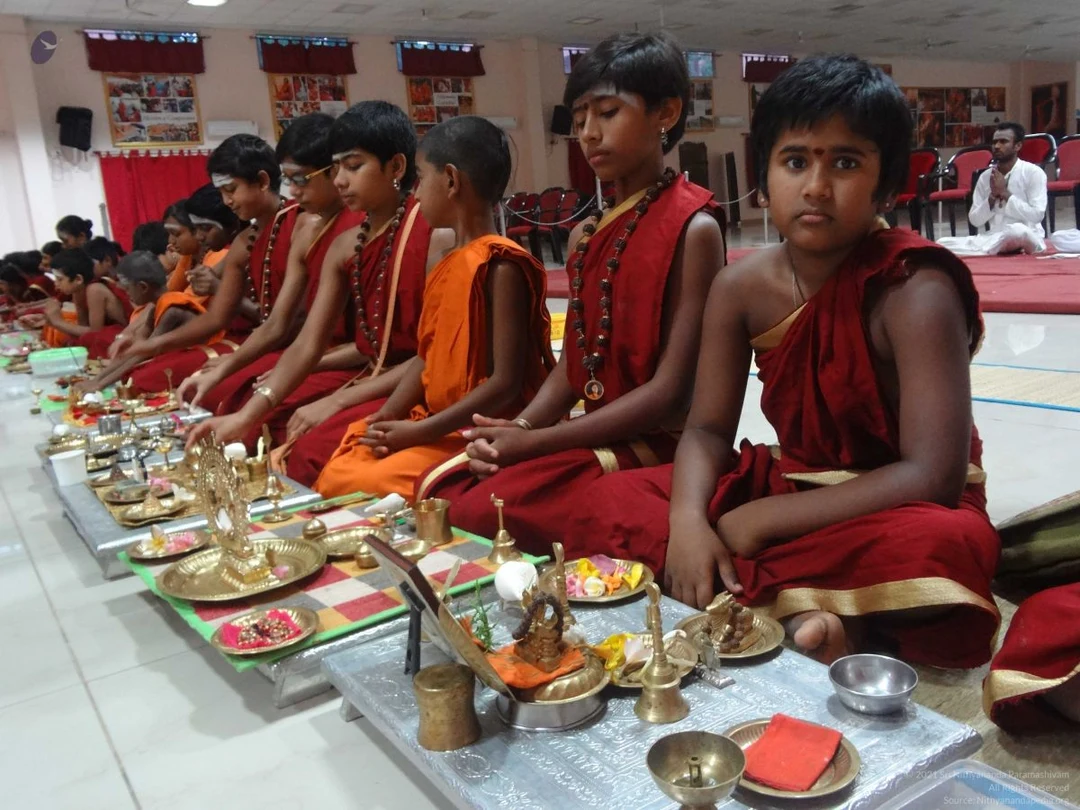
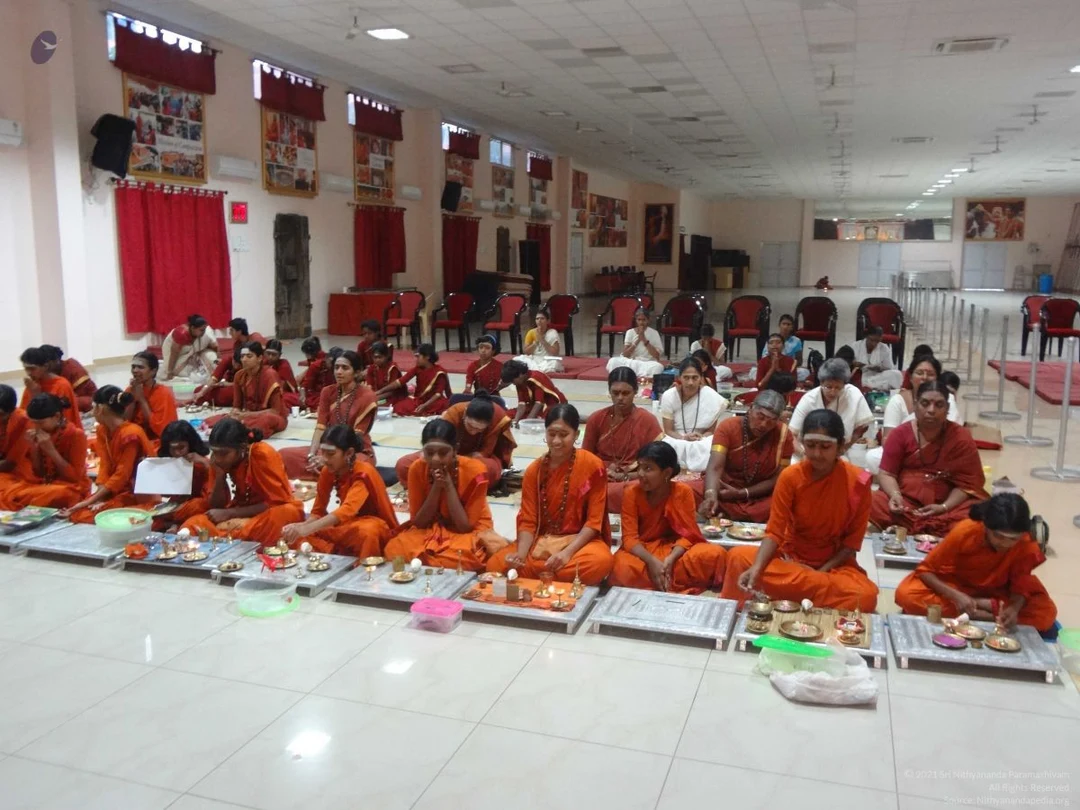
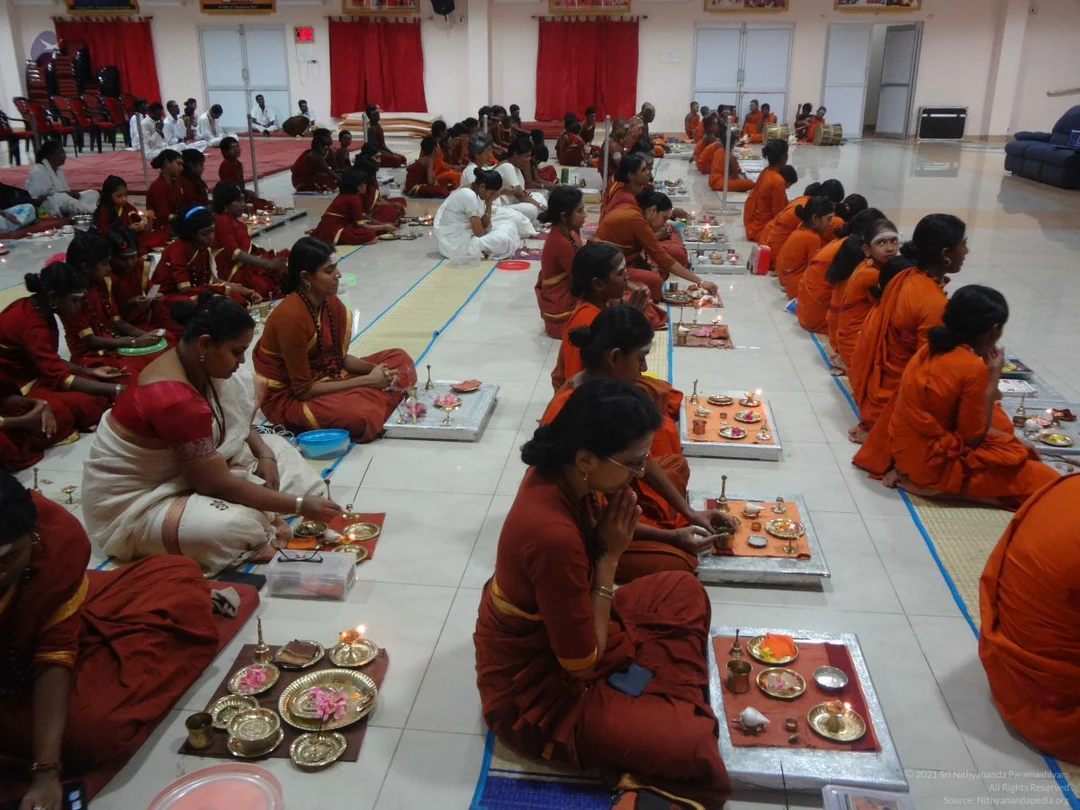
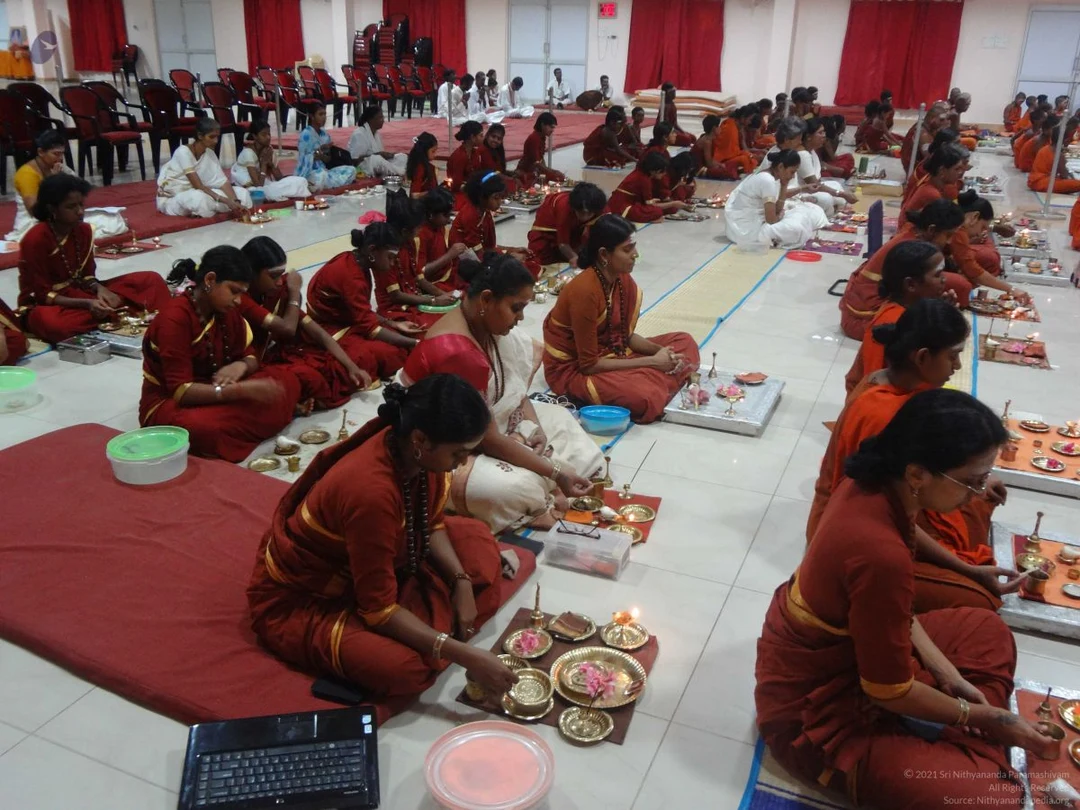
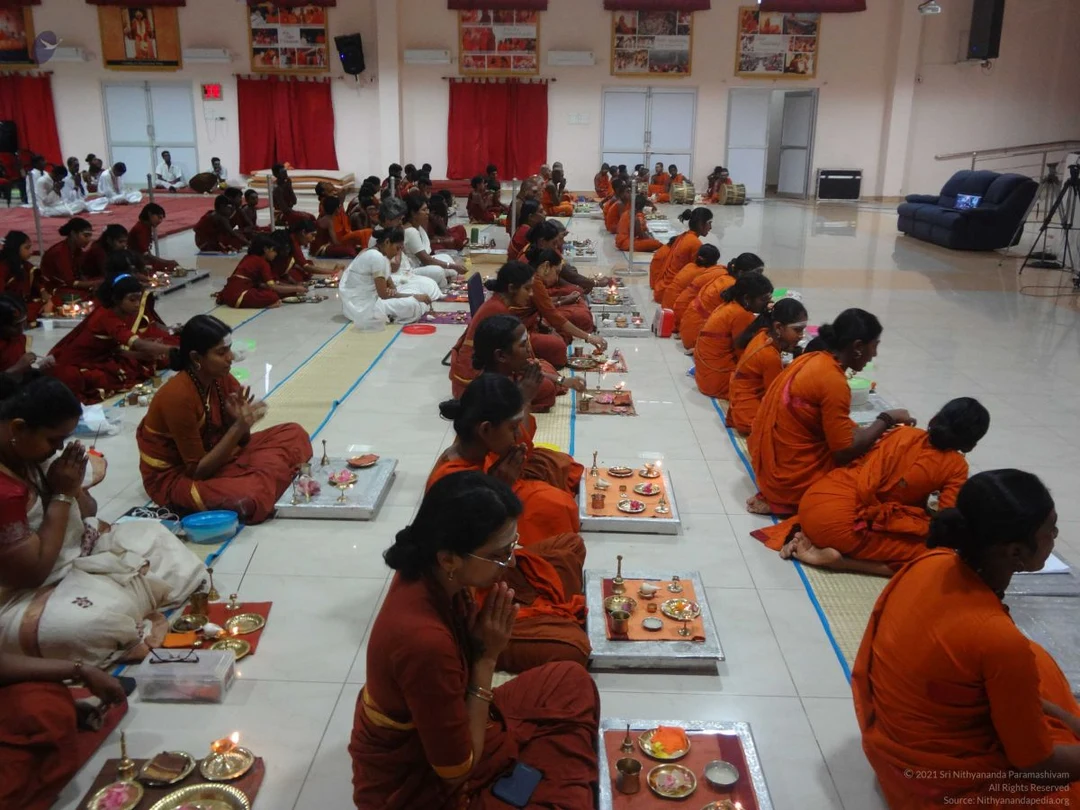
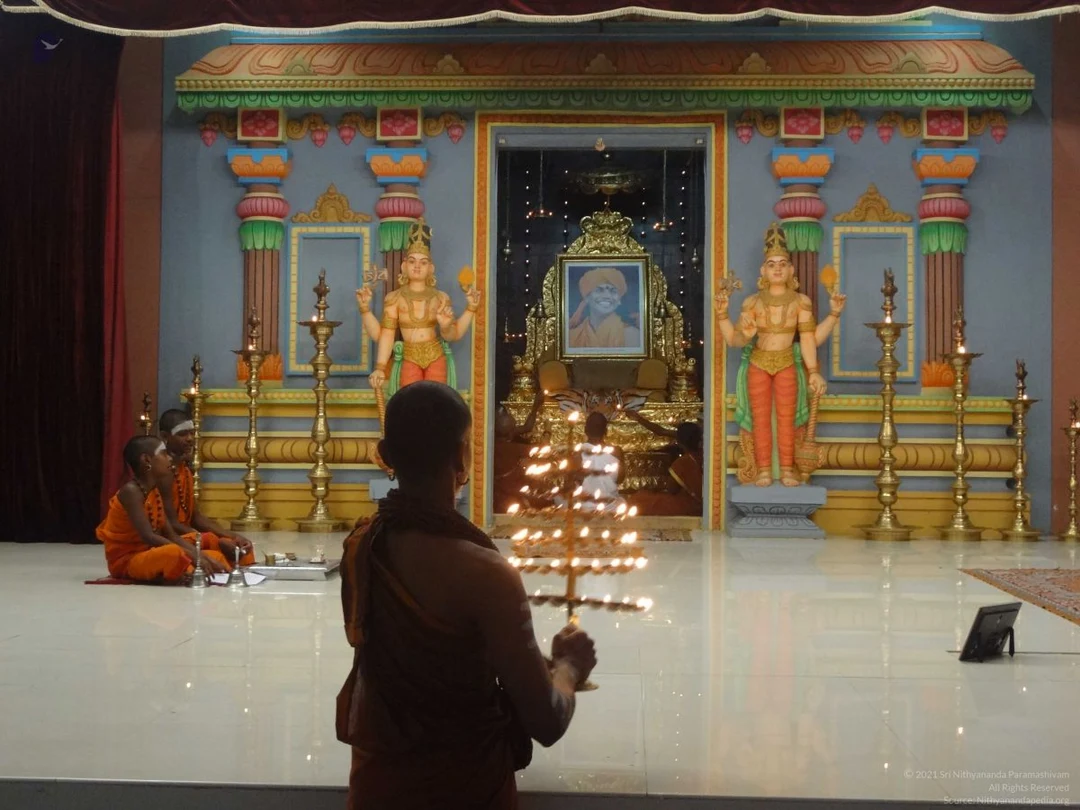
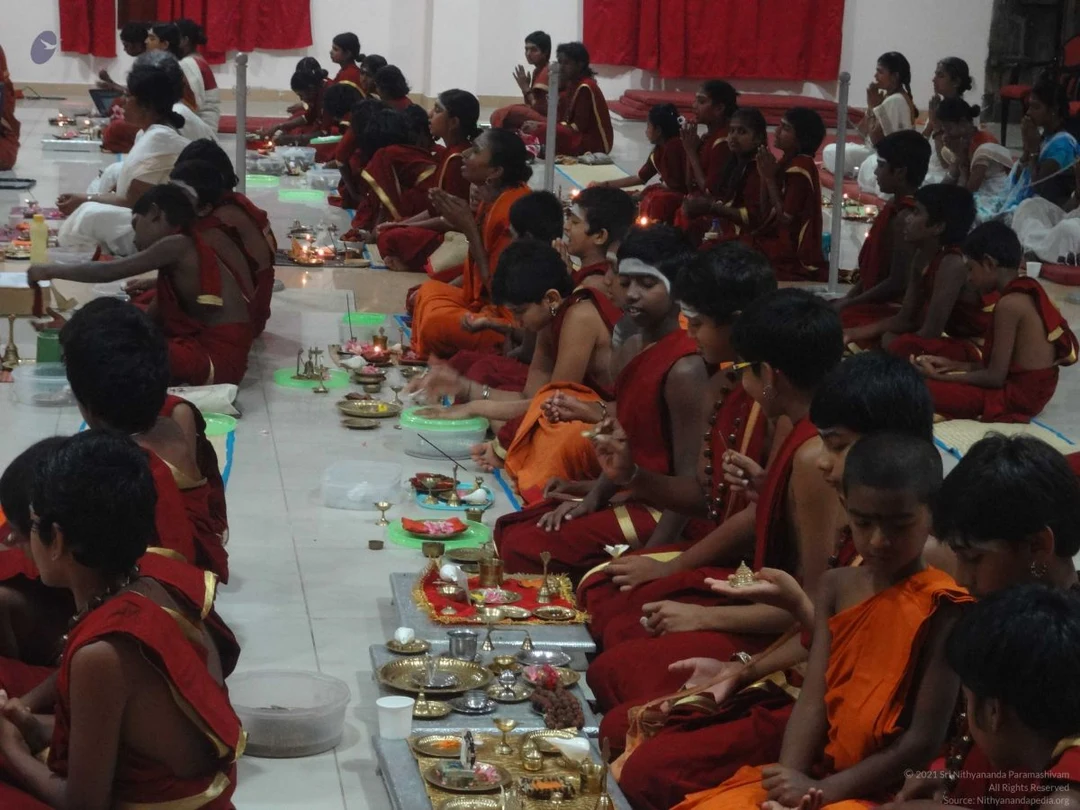
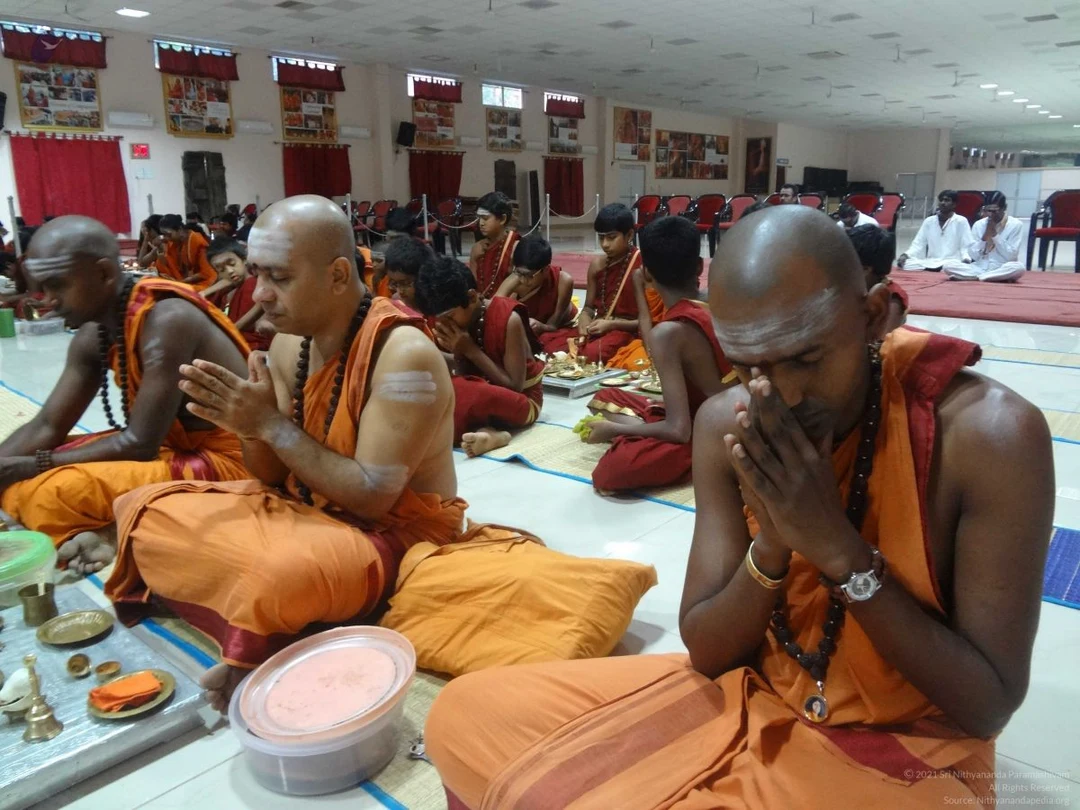
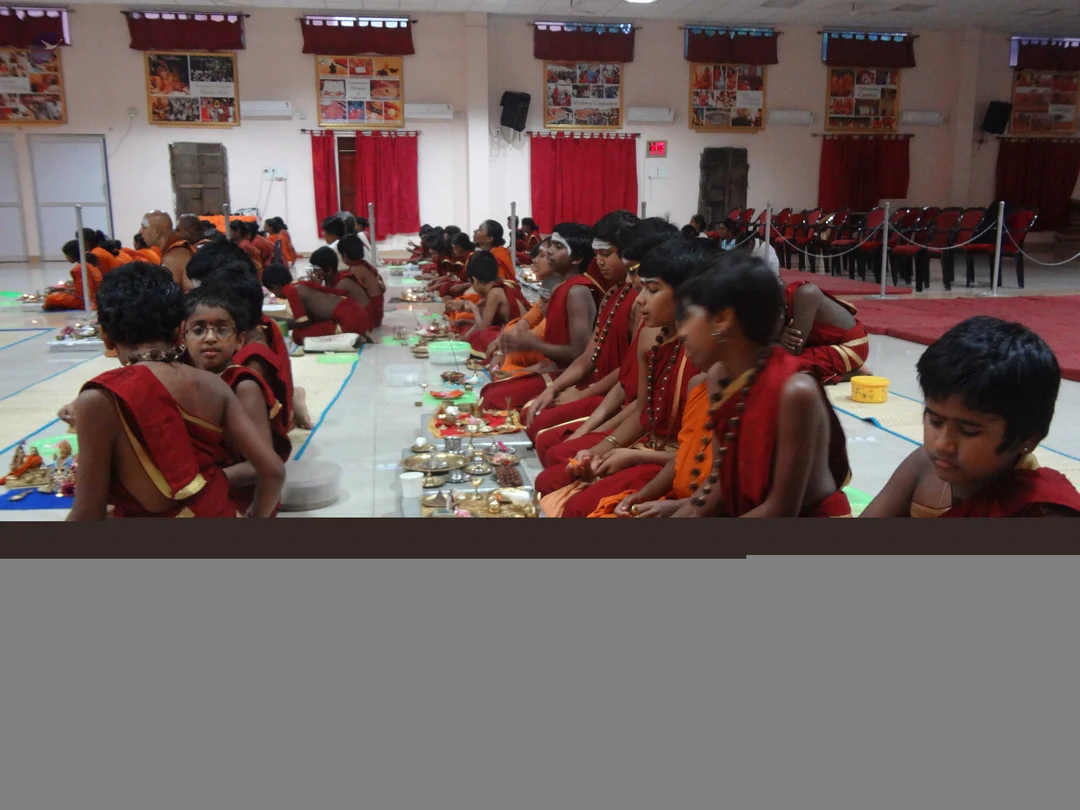
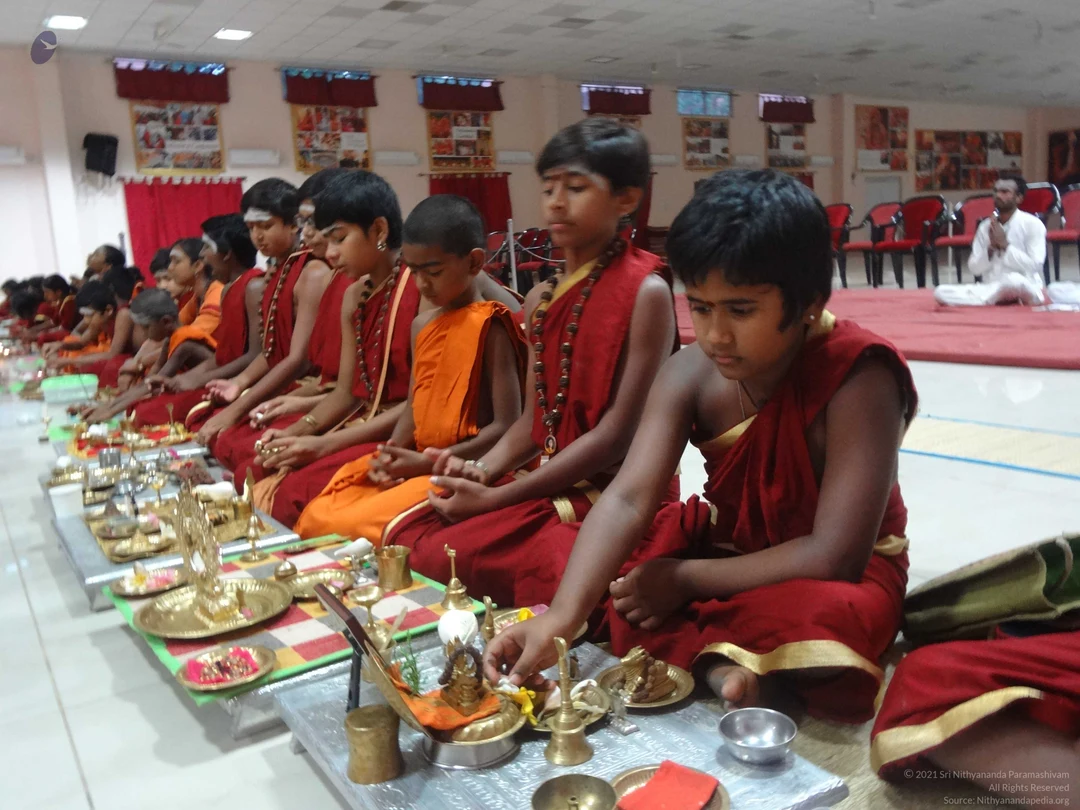
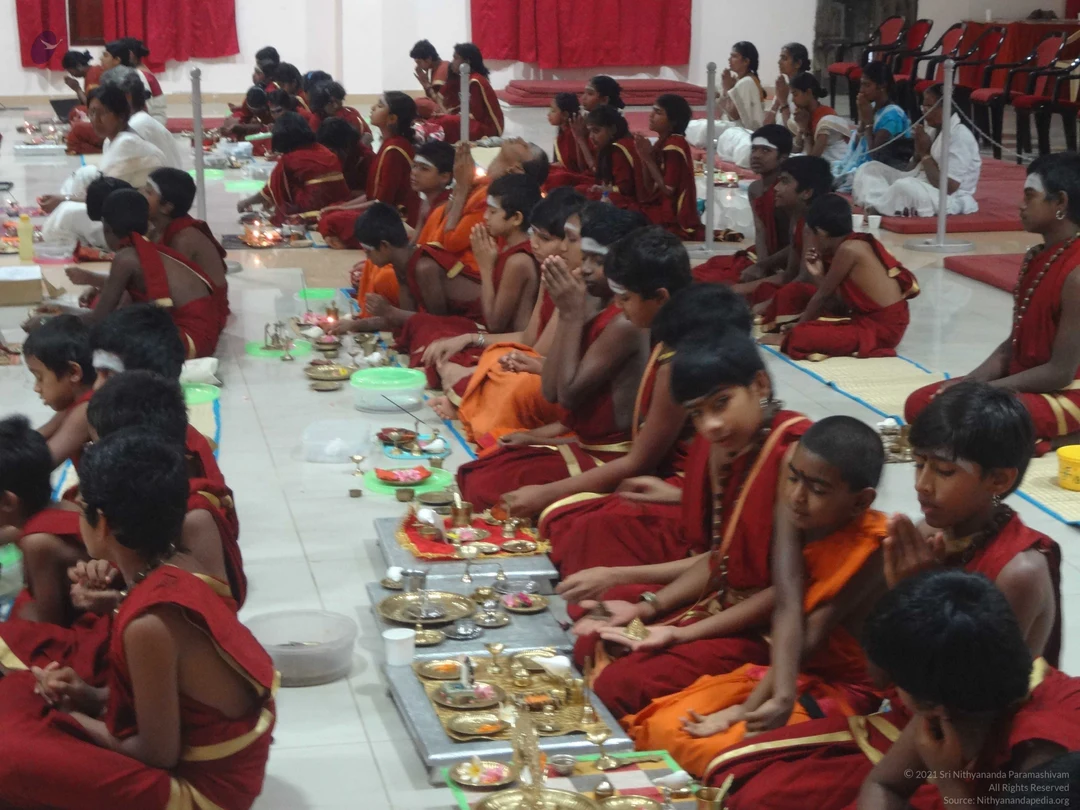
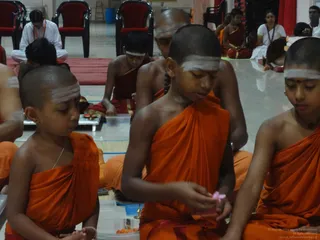
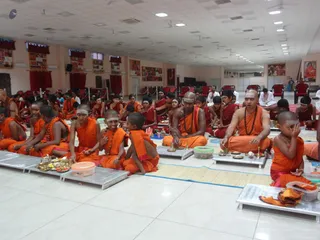
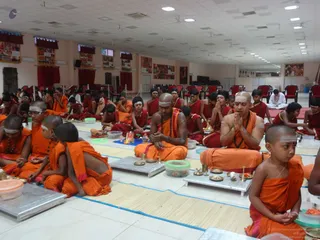
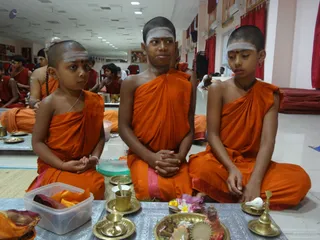
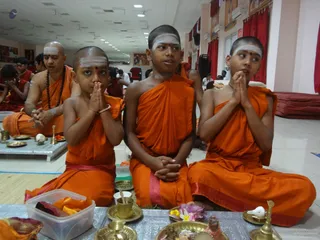
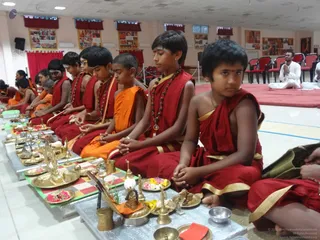
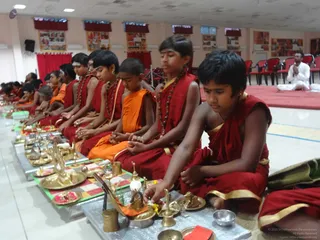
A photograph of a group of young shaven-headed boys in saffron-orange robes seated on the floor of a hall for a puja. White vibhuti lines mark their foreheads. The boy in the centre holds a pink flower petal in his hands and looks down at it, while beside him others sit with their eyes lowered. Behind them, adults in white clothes sit on the floor and a man in white sits near red chairs. Brass trays, small plates of offerings and a brass lamp rest on the mat in front of the children.A large hall with cream walls, red curtains and framed photographs, where many young boys and adult monks in saffron-orange robes sit cross-legged on mats in rows. Many have white and ochre forehead markings and rudraksha malas. Silver-coloured low wooden stands in front of them hold brass plates, small bowls, lamps, coconut and flowers. A few seated adults in white clothing and red chairs stand further back near the walls. Two of the seated adults in front wear saffron robes, beads and forehead markings.Photograph of a large hall with red curtains and framed banners on the walls, where many saffron-robed sannyasis and young boys sit cross-legged on mats. Several sit before silver plates holding brass lamps, bells, small containers and offerings, as in a puja. Adults with shaved heads and white tilaka on the forehead sit with hands in anjali mudra, and one senior figure in saffron wears a rudraksha mala. Children in orange dhotis with shaved heads and white tilaka sit nearby, some with folded hands. Plastic chairs in red are arranged at the back. This is a group puja or satsang scene.Three young boys in saffron-orange robes sit cross-legged on the floor of a hall, foreheads marked with white and red tilak. The boy in the centre has his hands folded; the boys on either side look toward the left. In front of them is a silver-toned tray holding brass lamps, a small brass cup, a brass bowl, and a pile of white and pink flowers, with a small deity murti and a kumkum-marked offering. Behind them, more saffron-robed children sit on the floor near red curtains and framed pictures, and a plastic container sits at the lower left.Three young boys with shaved heads and white tilak marks on their foreheads sit cross-legged on the floor in a hall, palms pressed together in prayer. They wear saffron orange robes; a fourth figure at left in orange with a rudraksha mala and white markings sits behind them in a similar pose. On the silver puja tray in front are brass bowls and dishes, a conch shell, flowers and a small deity murti, with a brass kalasha-style vessel nearby. Red curtains, framed pictures and ceiling fans line the room behind them.A row of young boys sits cross-legged on the floor in a hall during a puja, wearing red and orange saffron-toned robes with gold borders and rudraksha malas. Brass puja vessels, plates, bells and small lamps sit on low silver-covered tables in front of them, with flowers and red cloths visible. The boy in the foreground holds his hands together, while others sit with eyes closed or hands folded. Behind them, a man in white sits on a red carpeted platform with his hands joined in namaste, and red chairs line the right side of the room. Framed posters decorate the walls above red curtains.
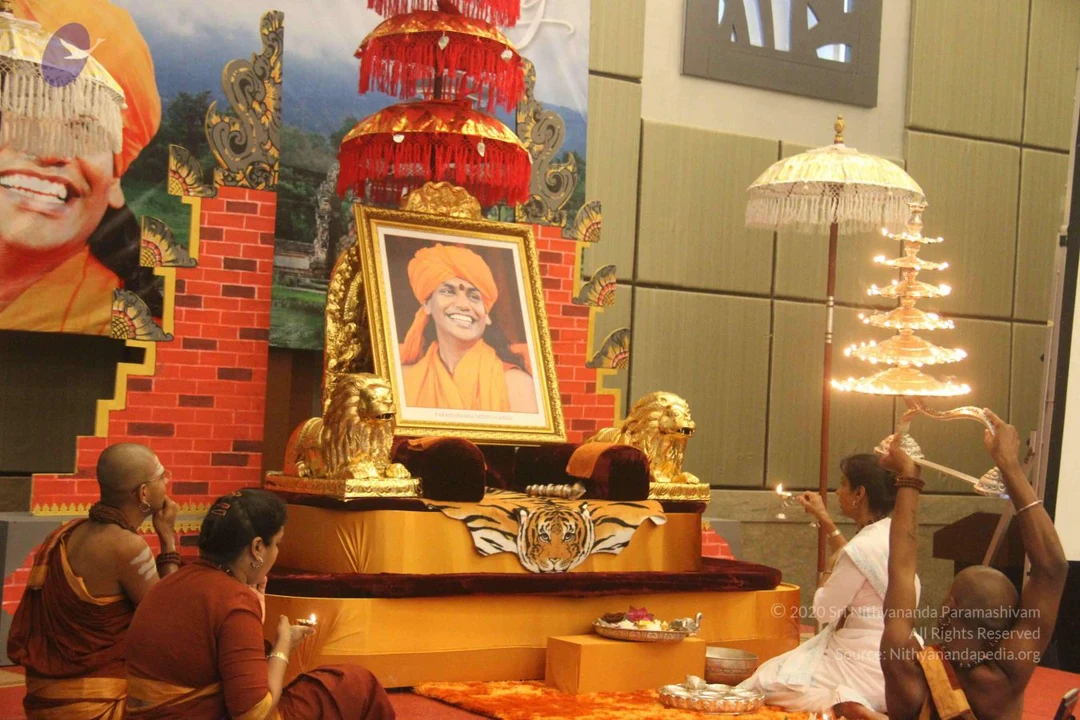
02-Bidadi-Paduka-Puja

8 photosSource gallery
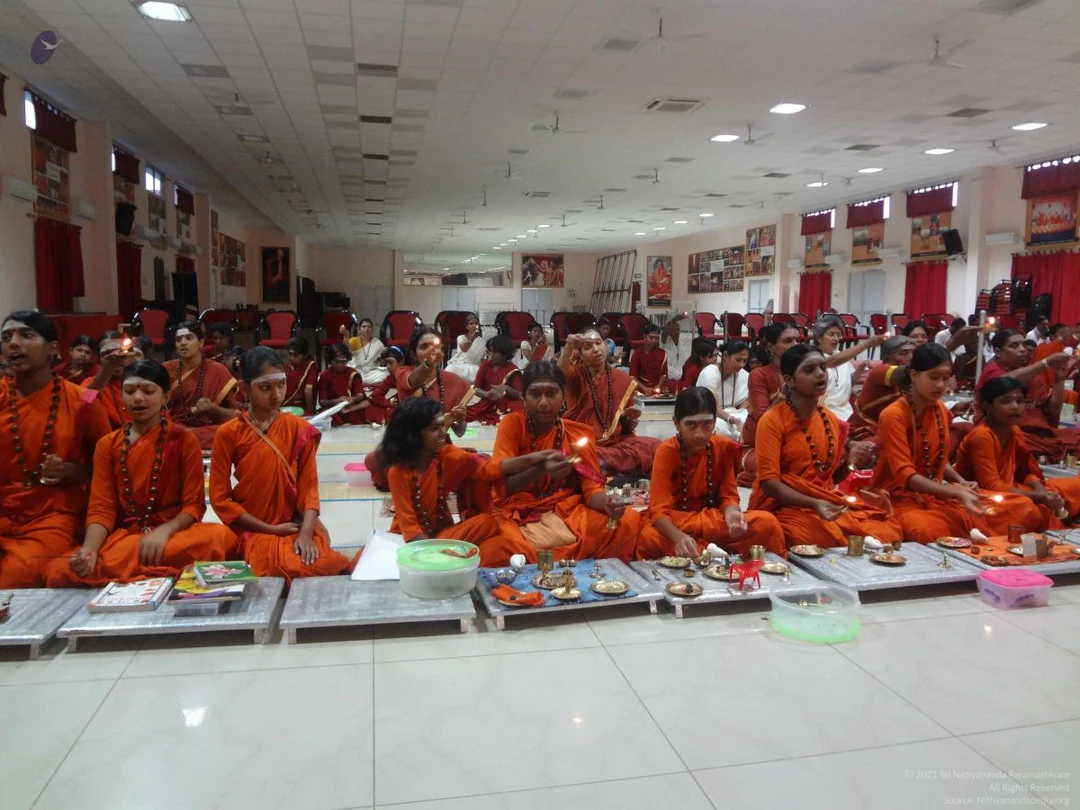
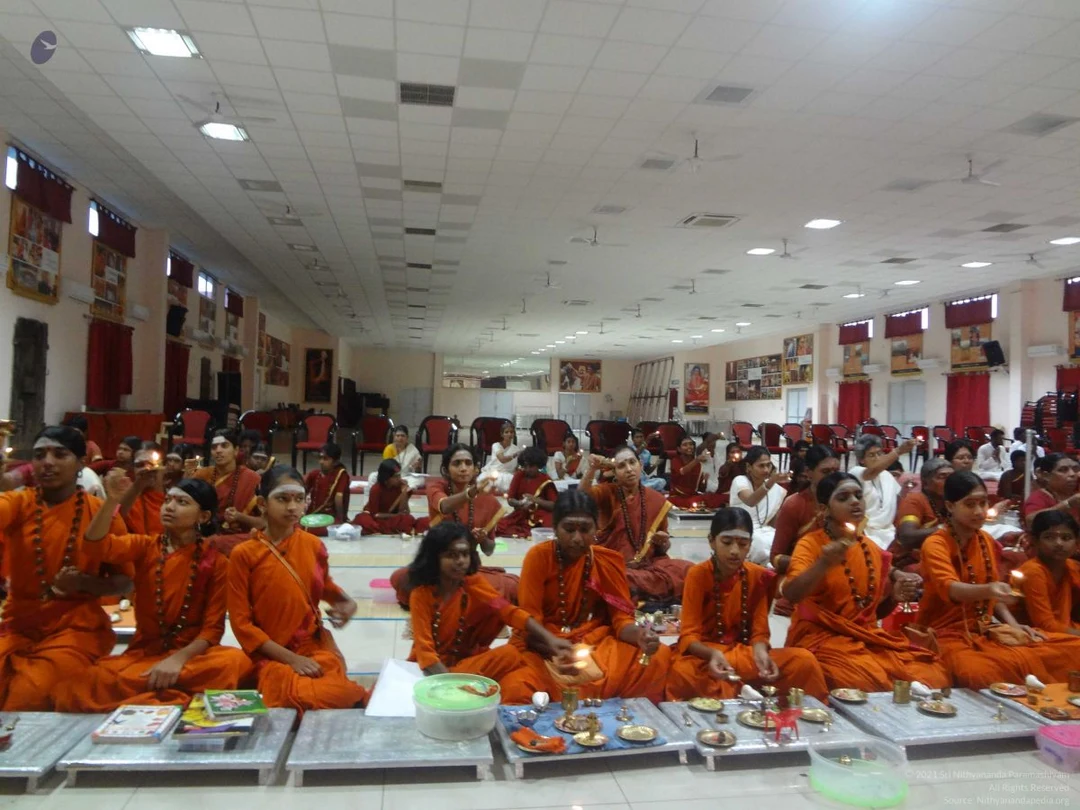
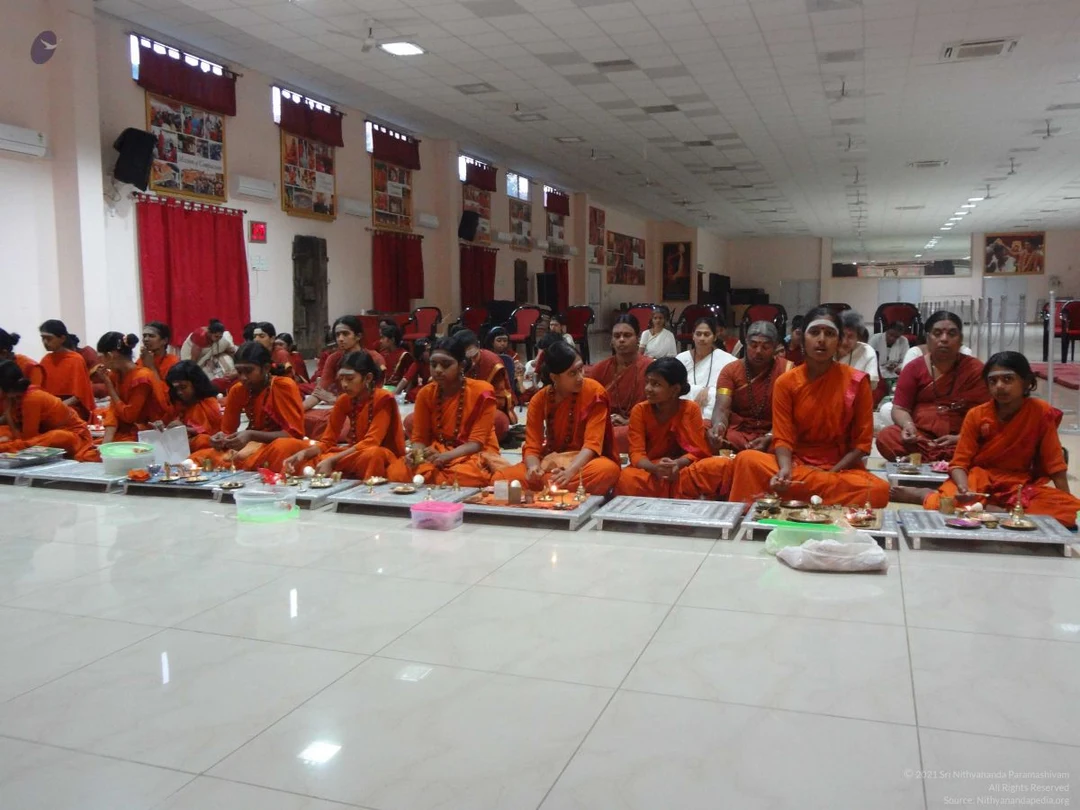
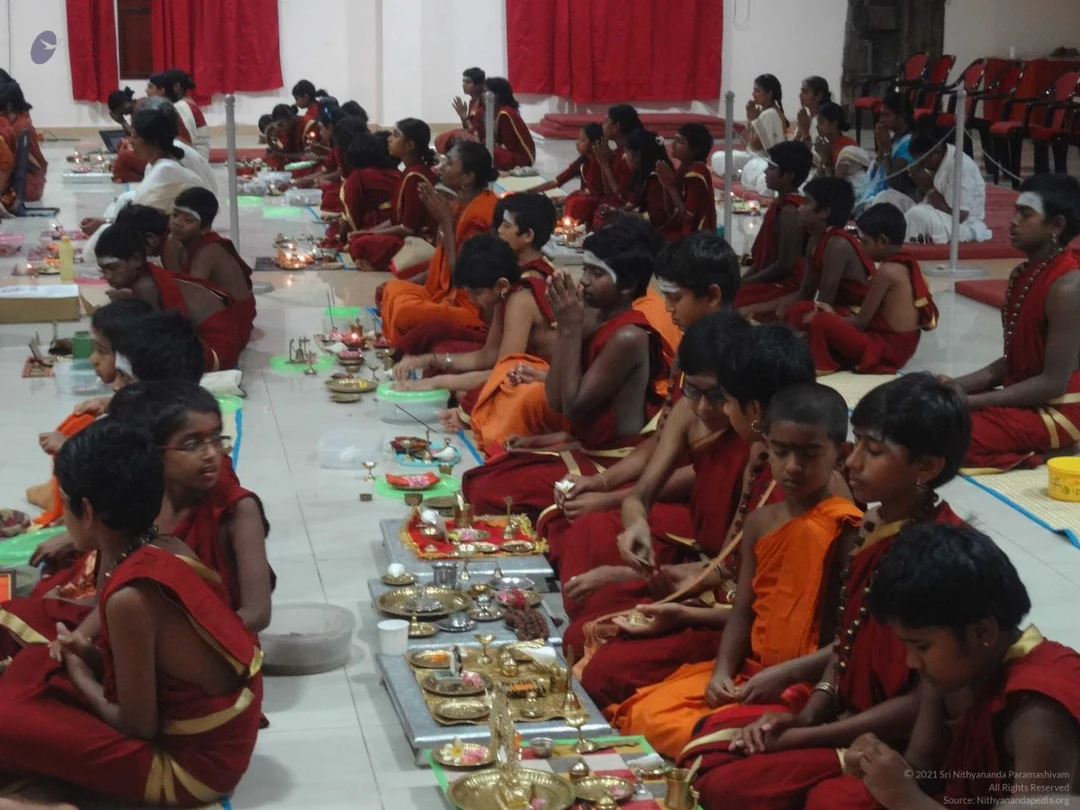
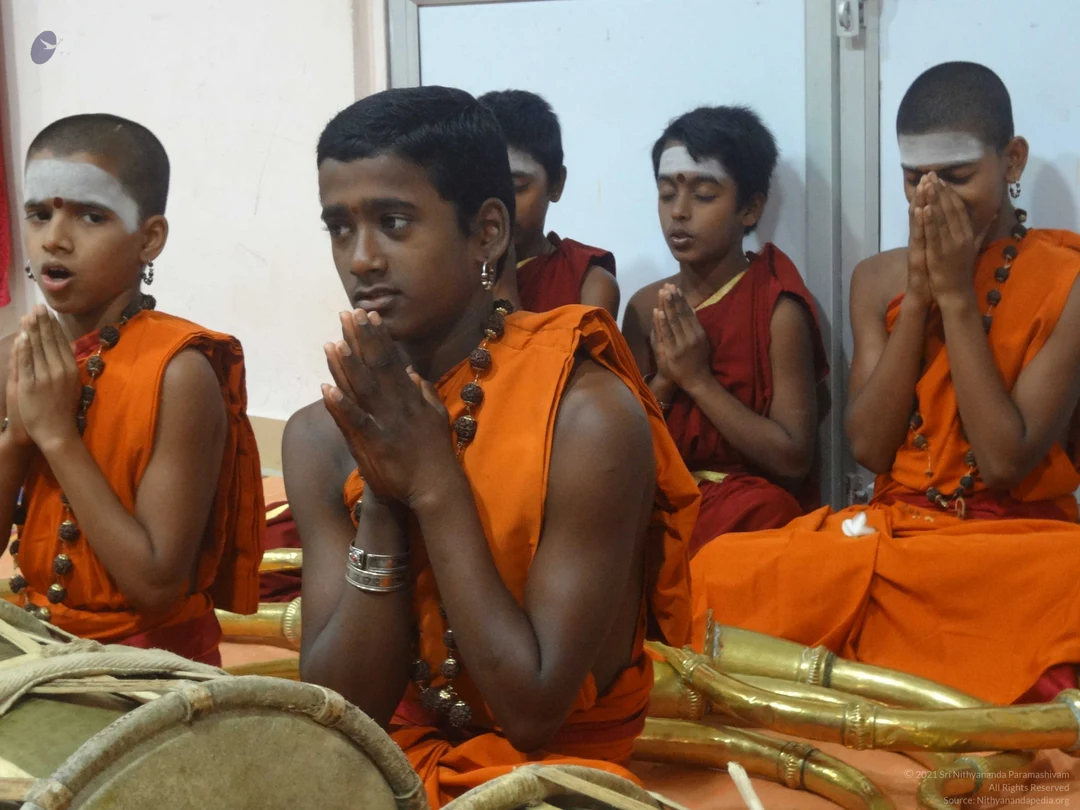
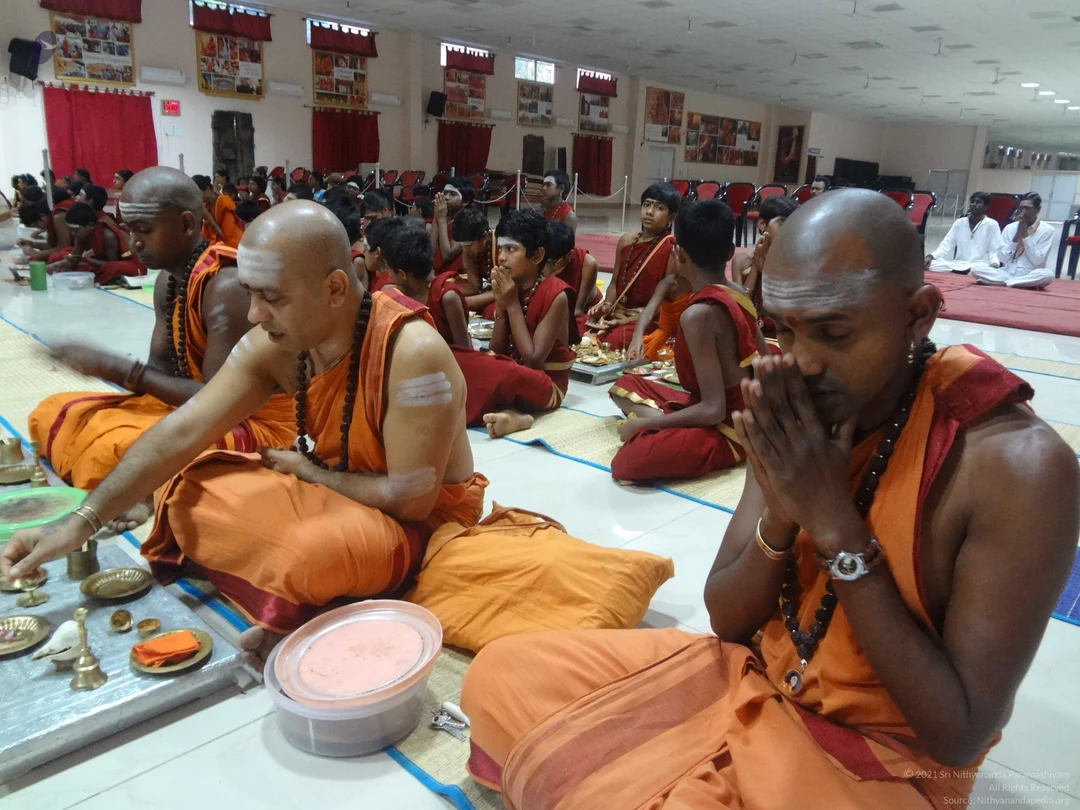
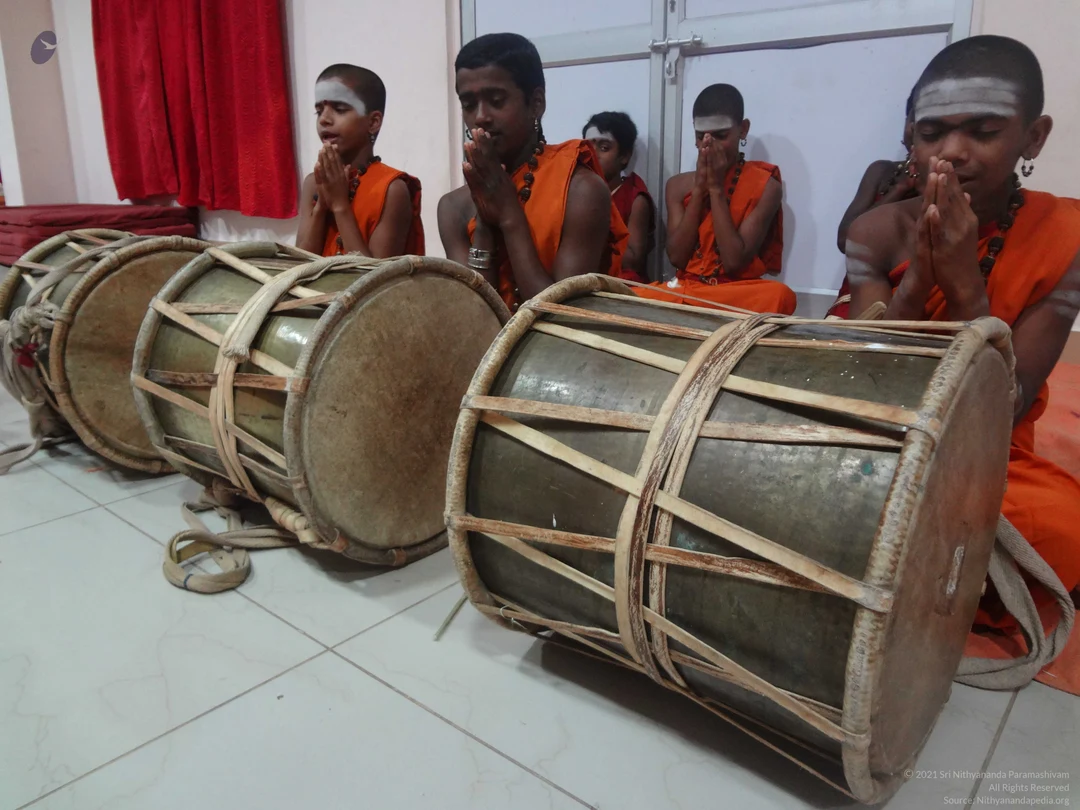
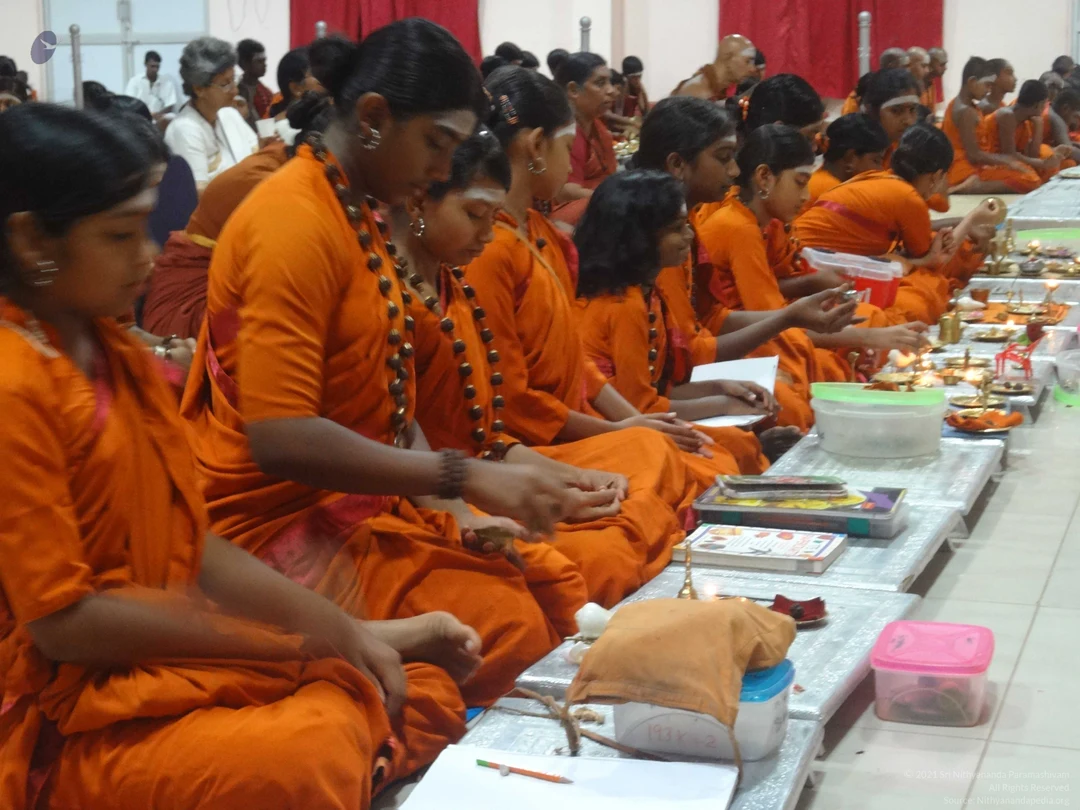
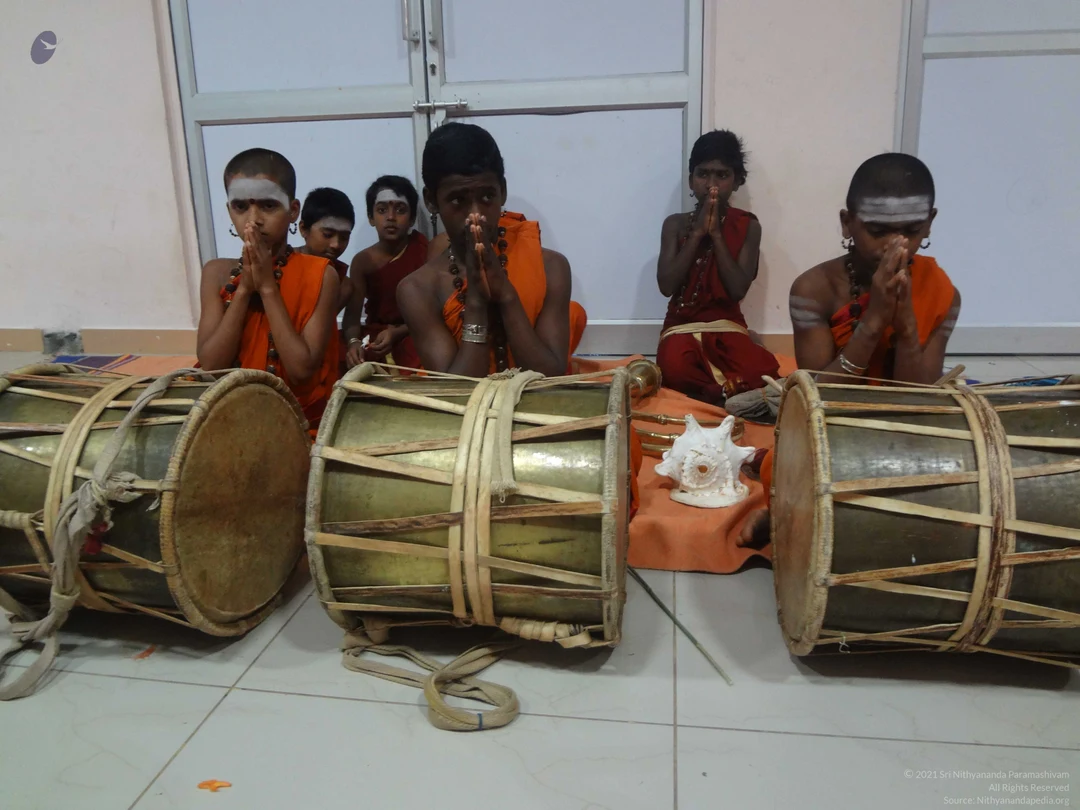
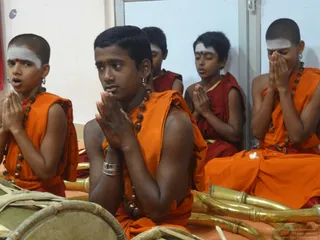
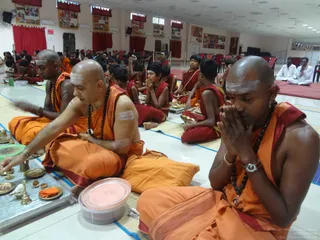
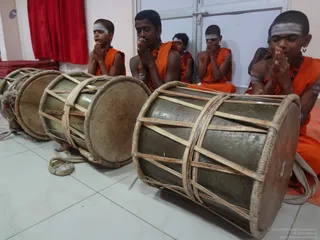
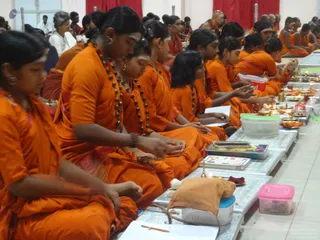
A large hall with cream walls, red curtains and framed photo panels on the walls shows many young boys seated in rows on the floor, dressed in red and maroon robes with orange cloth draped over shoulders, some wearing beaded necklaces and white forehead bands. Brass plates with flowers, small bowls and ritual items are set before them on mats. Chairs are arranged in the background and a red carpet rests near the stage area.Five young boys in orange and maroon sannyasa-style robes sit in a row in folded-hand anjali pose, with white vibhuti bands across their foreheads and rudraksha malas around their necks. Several have their eyes closed and seem to be chanting. Gold-coloured ceremonial horns and a drum with a rope-laced skin lie in the foreground.A photograph of a ritual hall where several shaved-headed men in saffron-orange robes and rudraksha malas sit cross-legged on mats. The man in the foreground, right, has his palms pressed together in prayer, and the man to the left arranges brass puja items on a tray, including bells, small lamps and a dish of pink paste. Behind them, a row of boys in red and orange robes sit with their hands folded, and in the far background two men in white sit on a red mat. Red curtains and framed photographs line the walls.A photograph of a long row of young boys seated cross-legged on the floor during a ritual, most wearing red and saffron-orange cloth with gold borders and rudraksha malas. In the foreground a boy in red with a gold-bordered wrap arranges brass puja vessels, a bowl and flowers on a silver tray. Rows of brass puja trays, lamps, bells and small containers stretch along the left. In the background a man in white sits with hands folded near a red carpeted dais, with red chairs and wall displays behind. The room has a white ceiling and red curtains.Photograph of several young boys in orange robes seated on a white tiled floor, praying with hands joined in namaskar, eyes closed. Their foreheads bear white vibhuti lines and they wear rudraksha malas. In front of them are large, weathered wooden drums with stretched hide heads and rope lacing. A red curtain hangs on the left and white double doors are behind them. The scene suggests a devotional or ashram music moment.A photograph of a long row of young women seated on the floor in saffron-orange robes, many wearing rudraksha mala necklaces and white tilak marks on their foreheads. They sit behind low silver-covered tables set with brass puja plates, small oil lamps, a lit flame and offering items, and several are performing hand gestures or touching the plates. Behind them, more people in orange and white clothing are seated in a hall with red curtains. A pink plastic container and a small cloth bag sit on the tables in the foreground. The scene suggests a ritual puja or ceremony in progress.

December 06 2013

2 photosView all
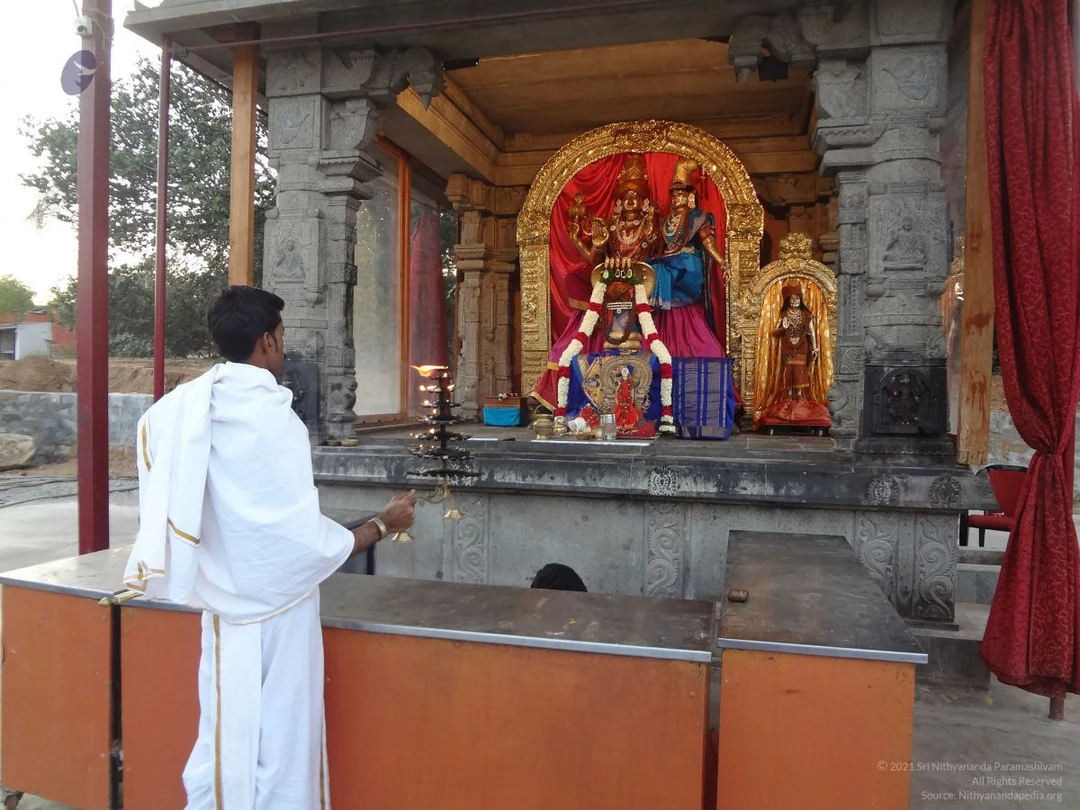
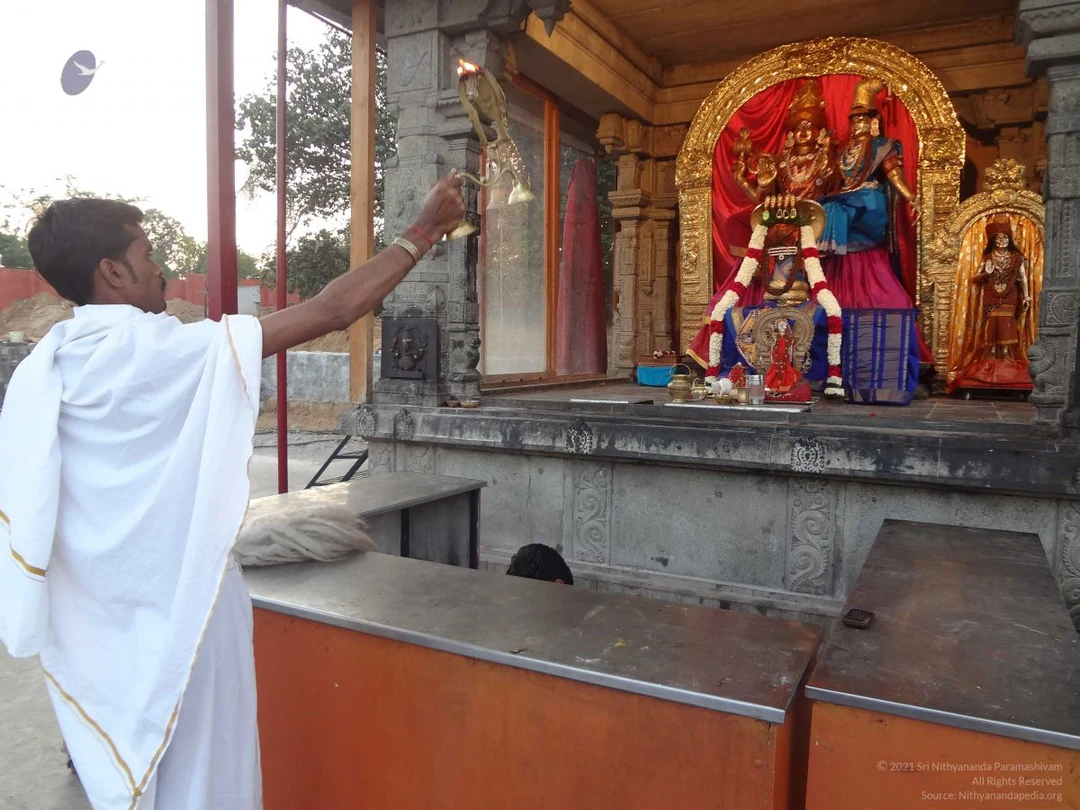
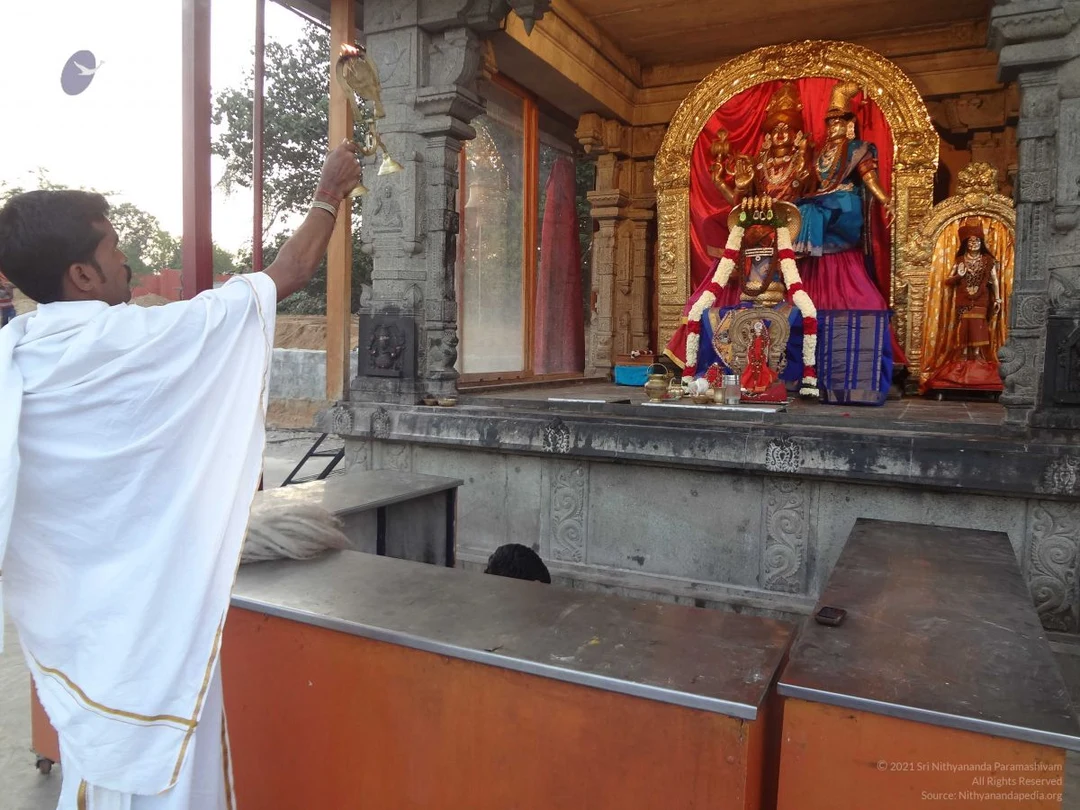
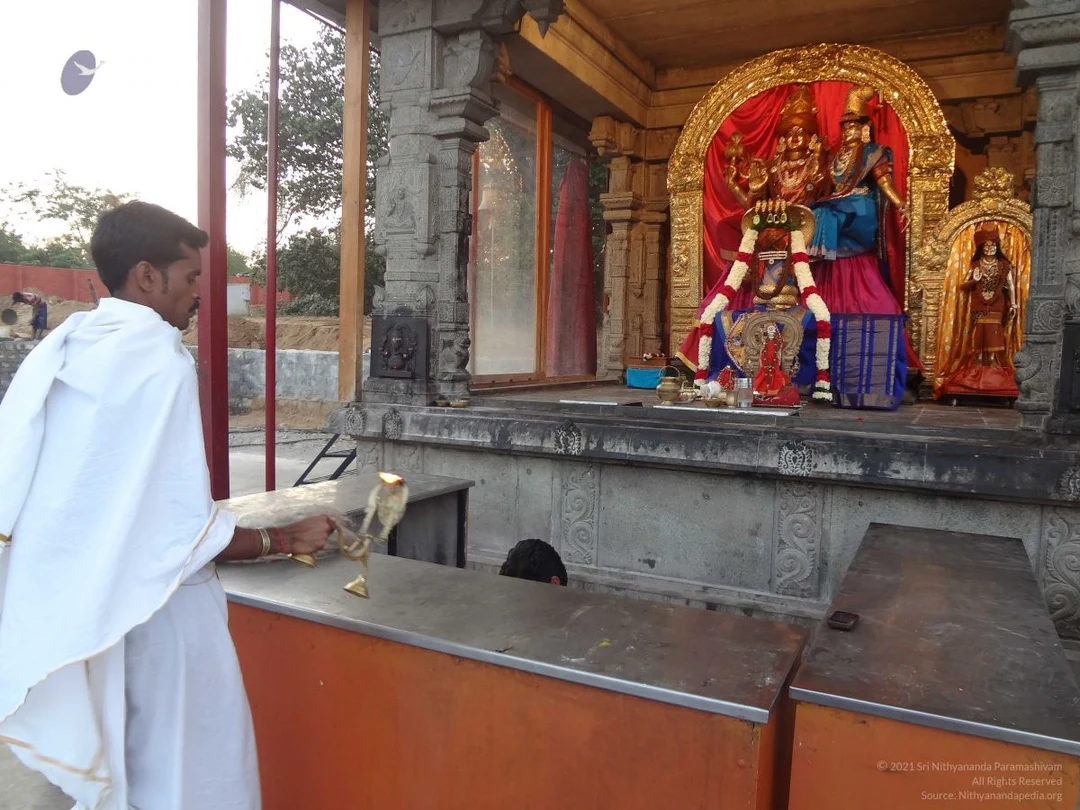
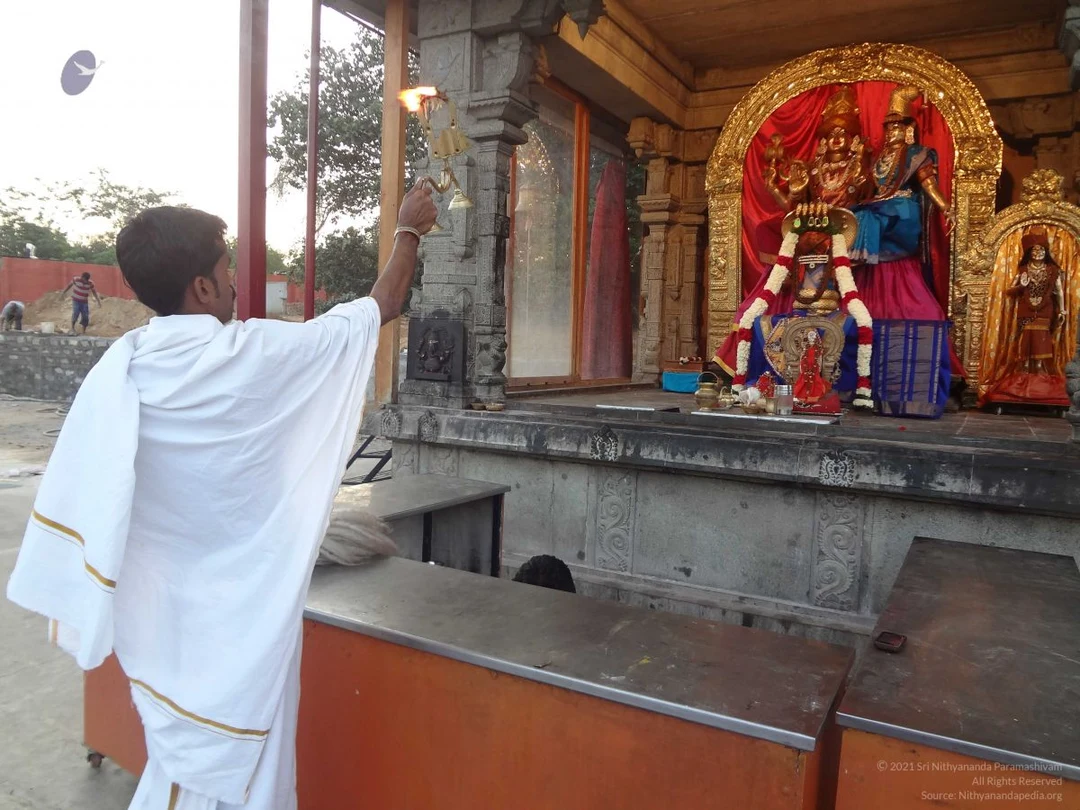
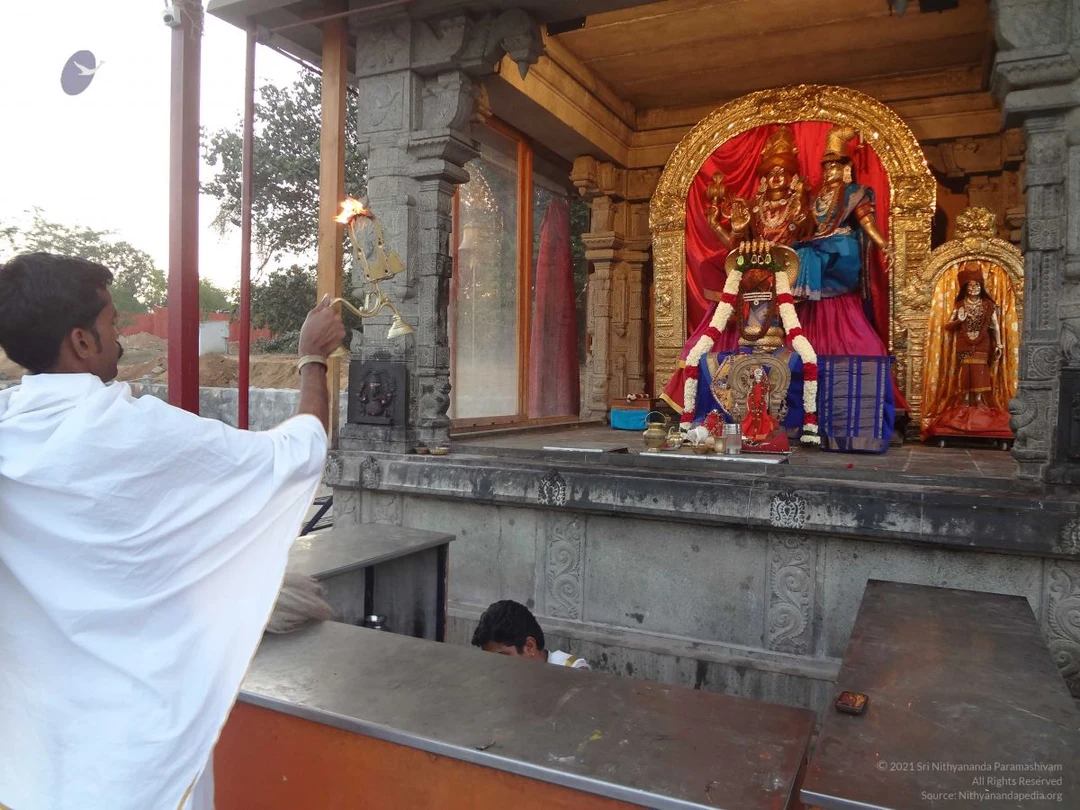
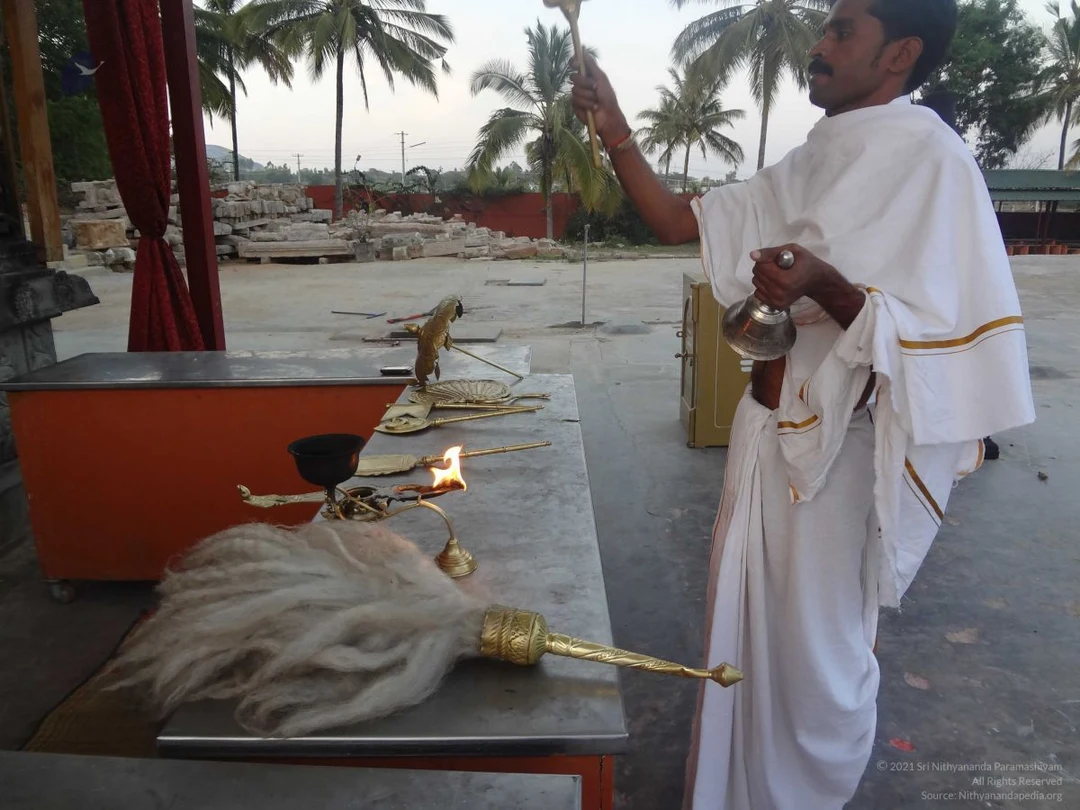
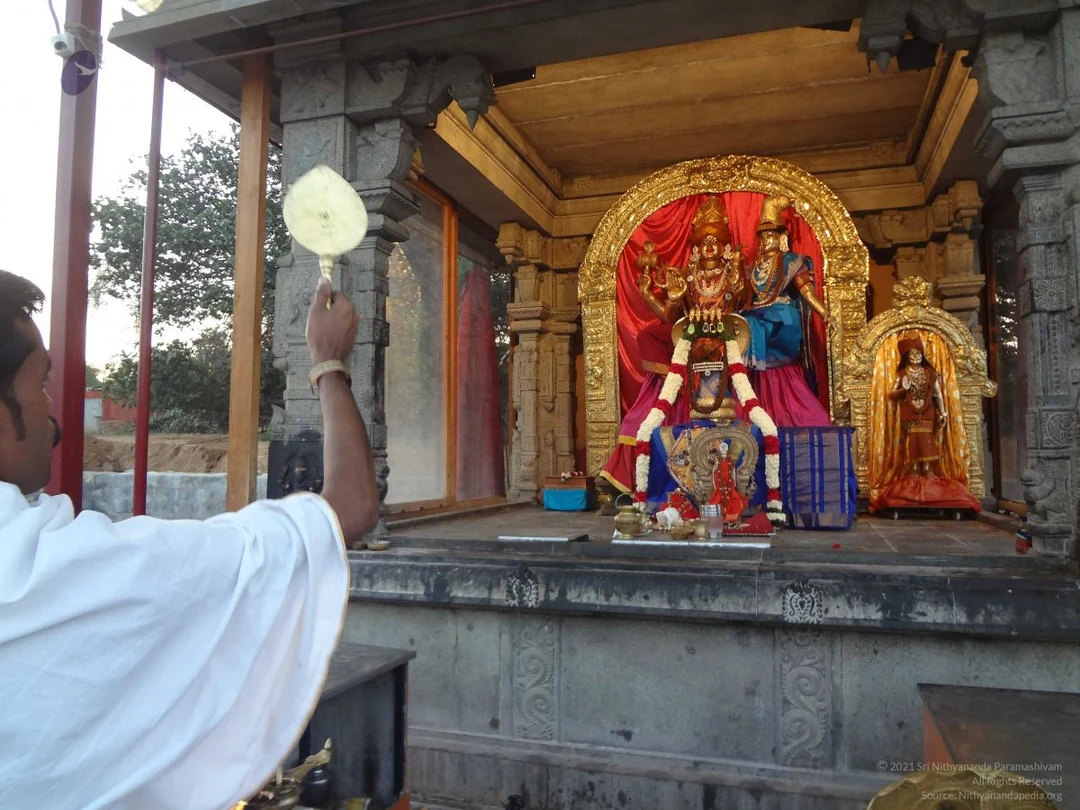
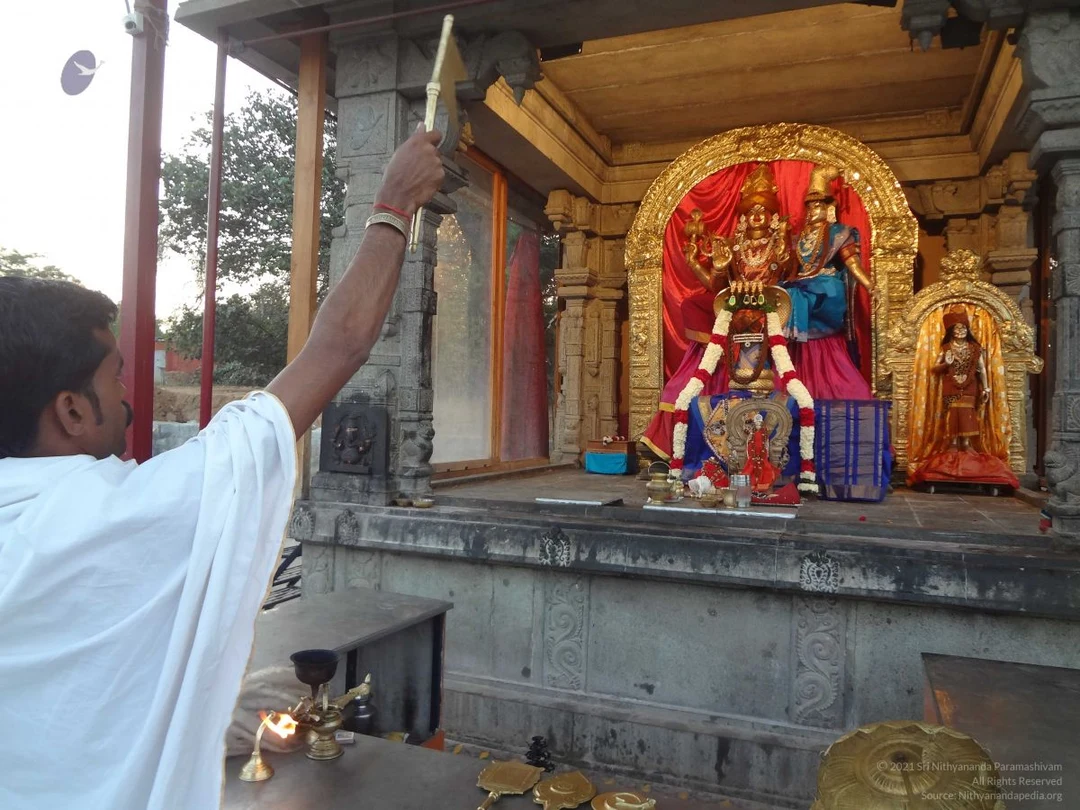
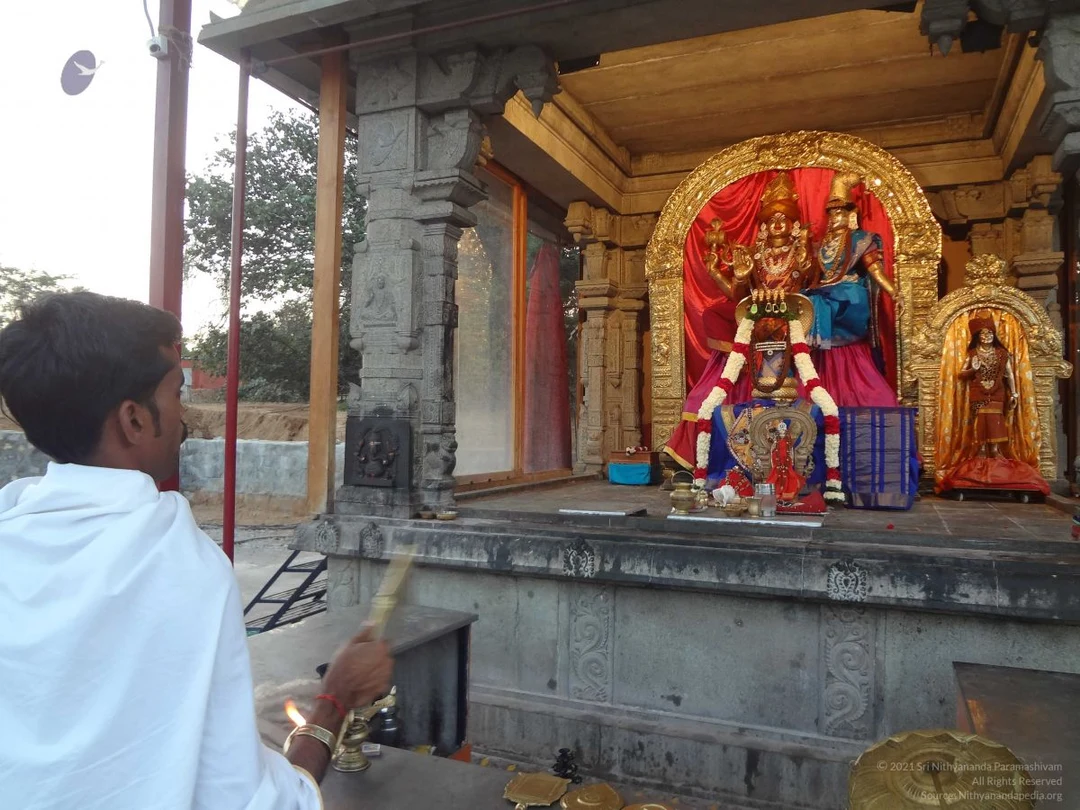
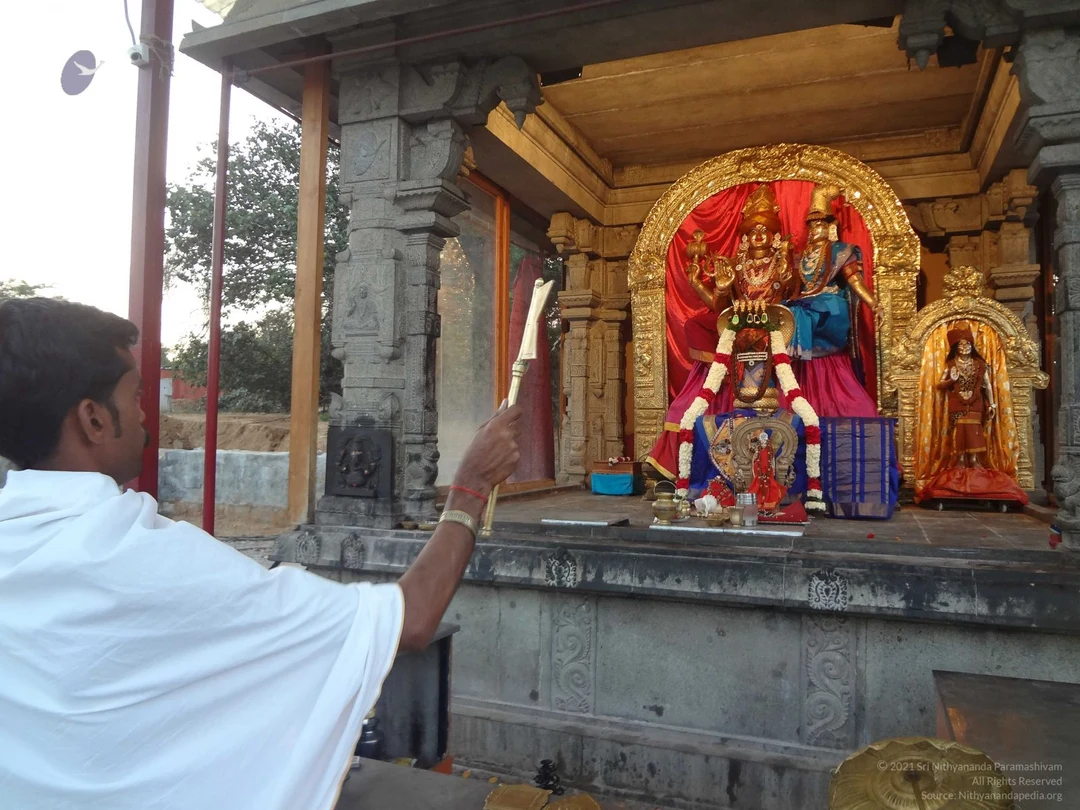
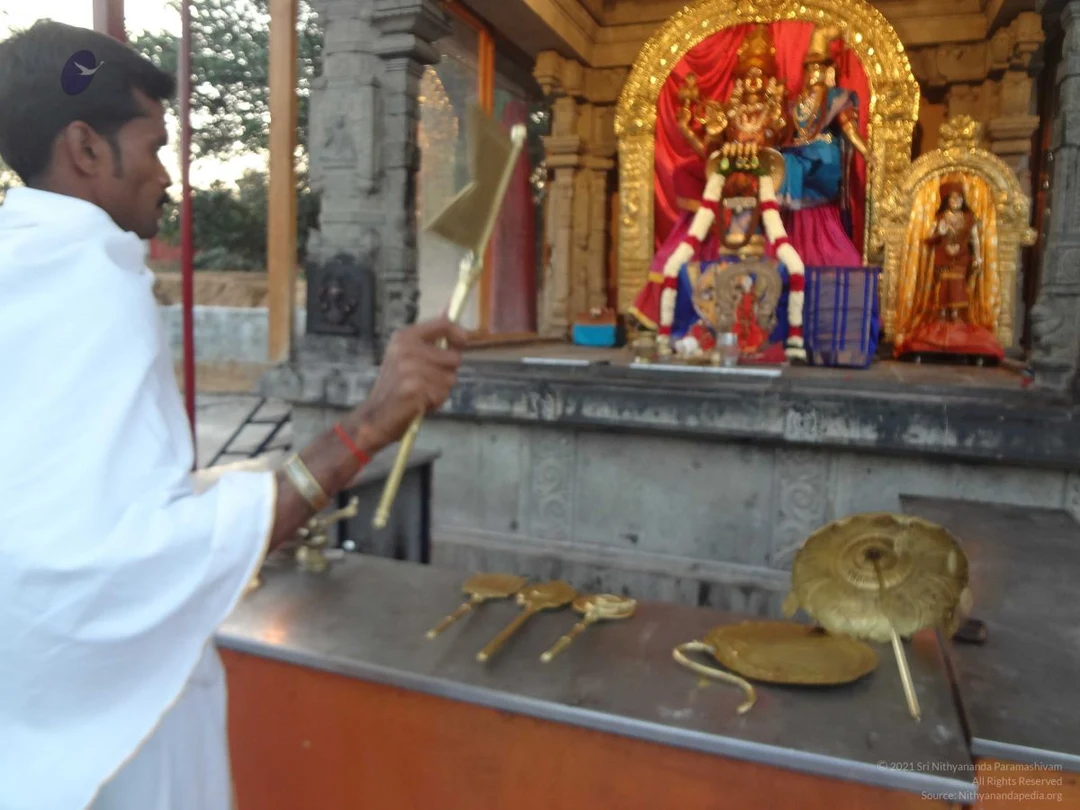
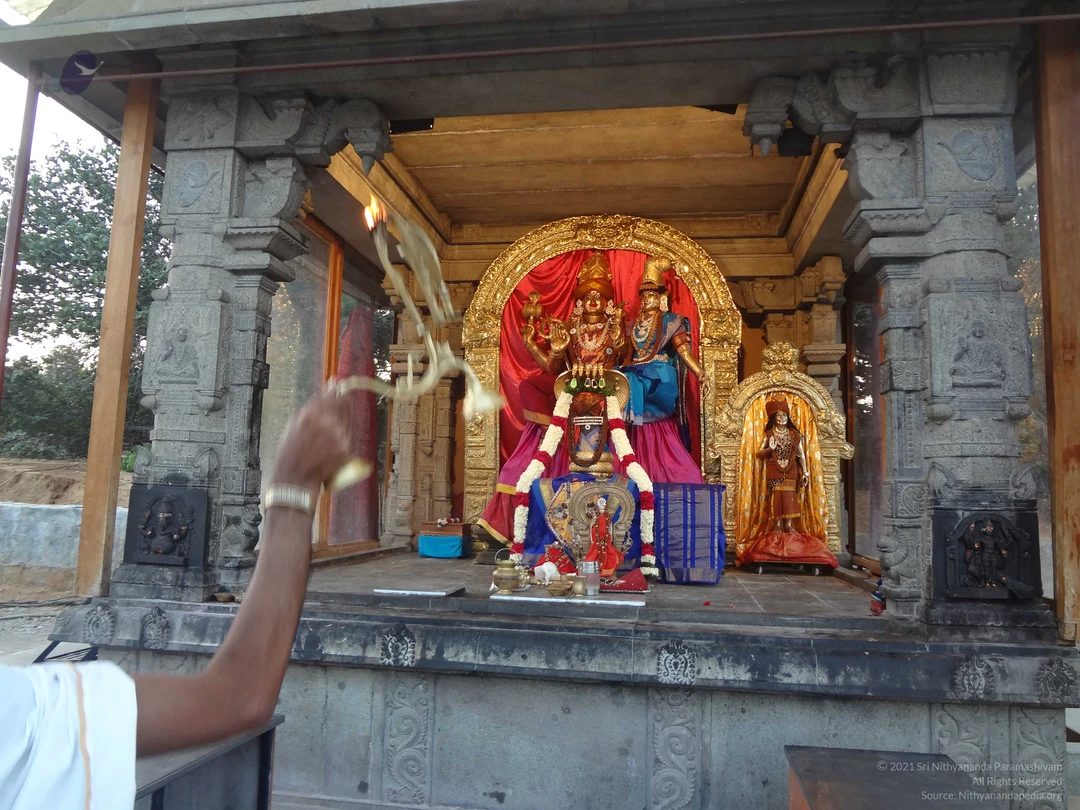
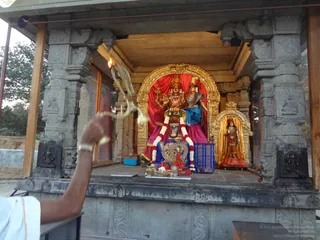
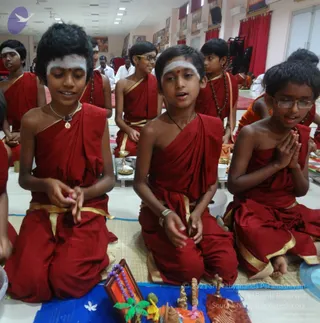
A photograph of a stone temple shrine with carved grey granite pillars and a gilded arched frame around the central deities. Two figures sit on a raised throne: a red-faced deity with a crown and garlands, beside a consort in blue and pink, with a small bronze-toned figure in front. A red curtain hangs behind them, and a smaller shrine with an orange-robed statue stands to the right. In the foreground a priest in a white dhoti and gold bracelet waves a flame-lit aarti lamp toward the deities, with brass puja vessels on the altar. The shrine is open to the air under a wooden roof, with trees visible behind.A photograph of young boys seated cross-legged on mats in a bright hall with red curtains, many wearing red-maroon robes with gold borders and white tripundra marks across their foreheads. In the foreground a boy at centre wears a red bindi and holds his hands near his lap; at right a boy in glasses presses his palms together in prayer. Small ritual items sit on a blue cloth in front of them, including a brass bowl, a small wooden box, a brass oil lamp and a decorative plant figure. Behind them other seated devotees in white and orange clothing are visible, and framed pictures hang on the wall. The scene suggests a puja or satsang setting.