Skip to content
Saturday

7 December 2013

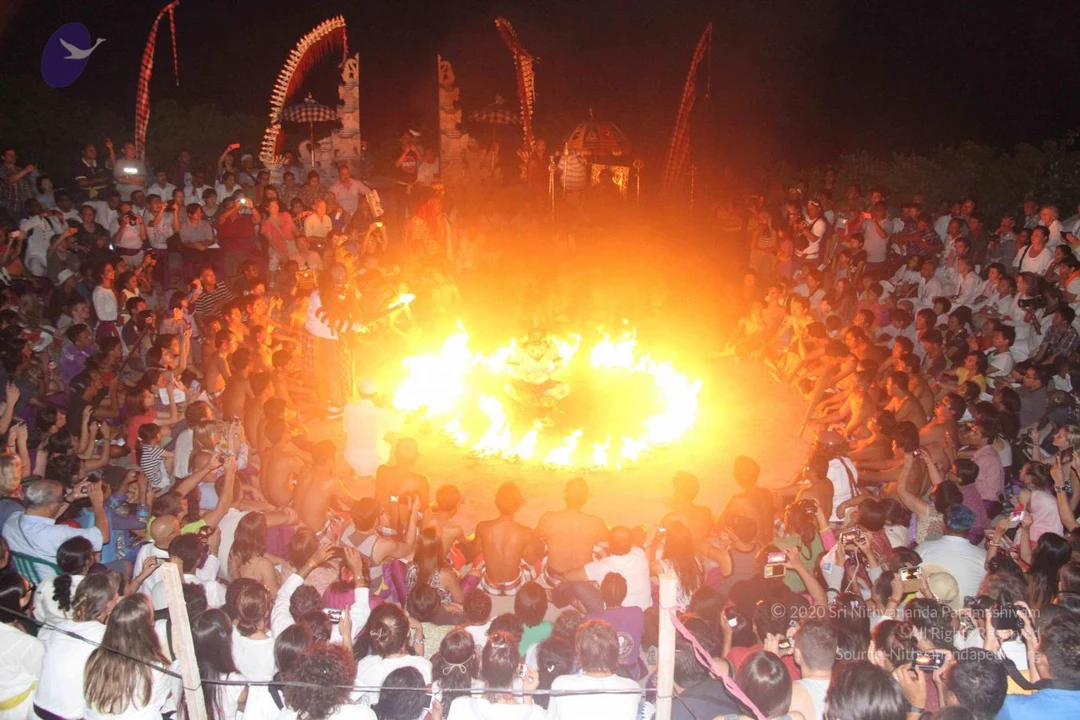
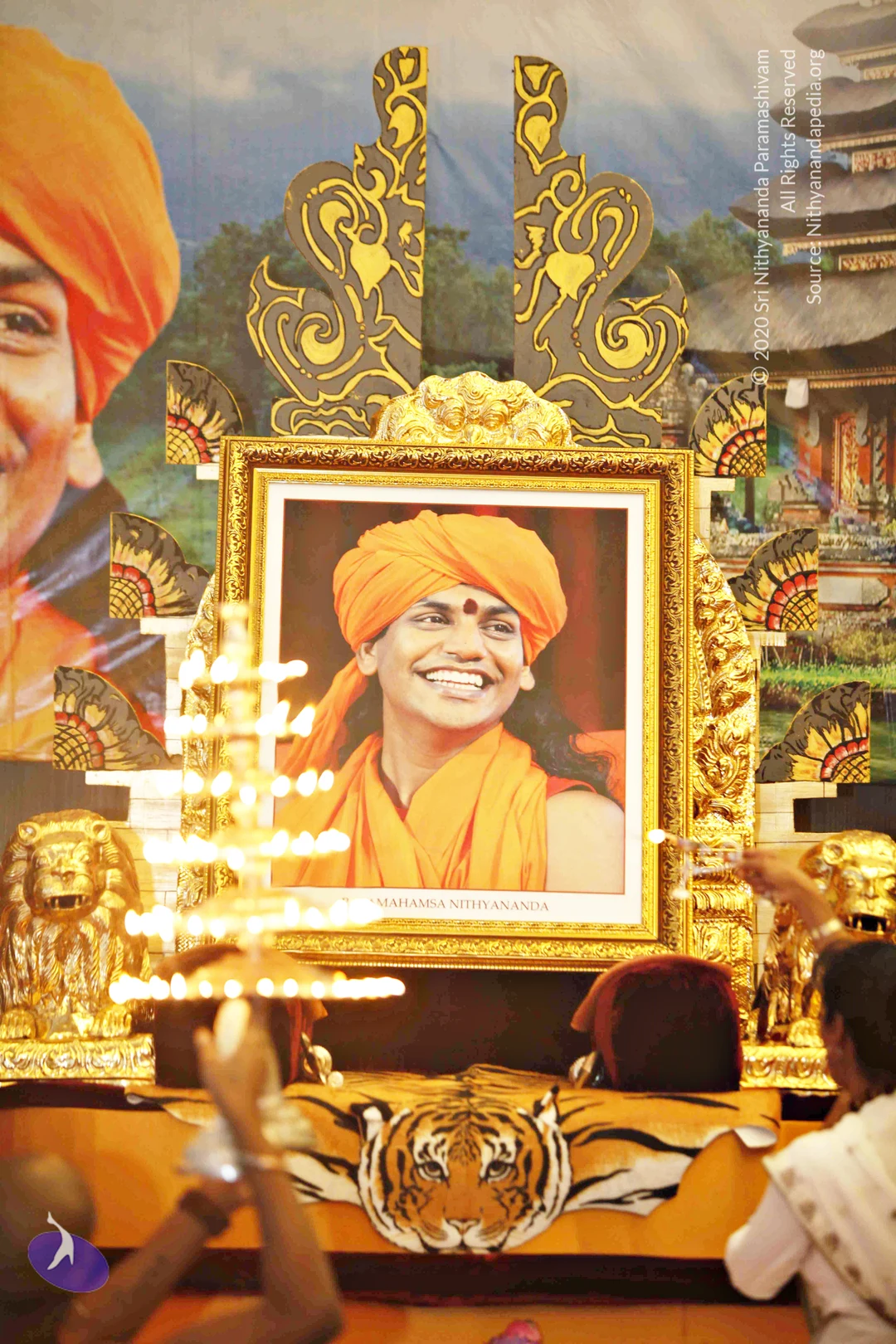
Nithyananda Diary | Bali Inner Awakening Day - 7 | Padukapuja | Satsang on Completion | Dial The Avatar | Nirahara Samyama | Sarvadarshan

Dated photos
388
Source pages
1
Media
2
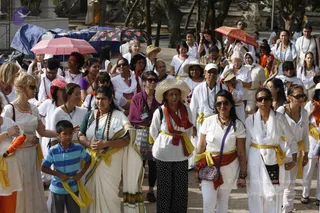
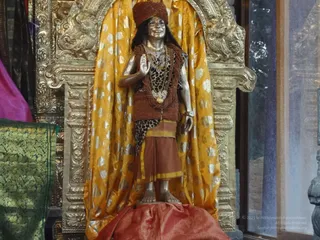
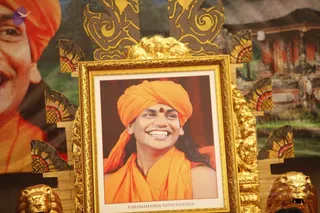
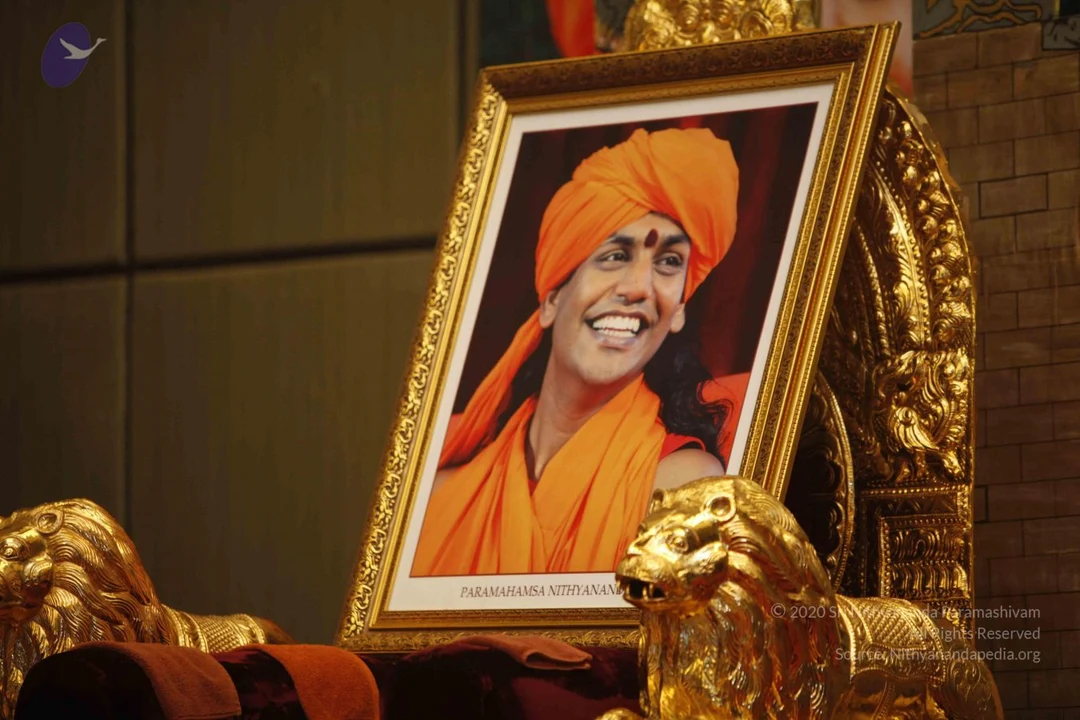
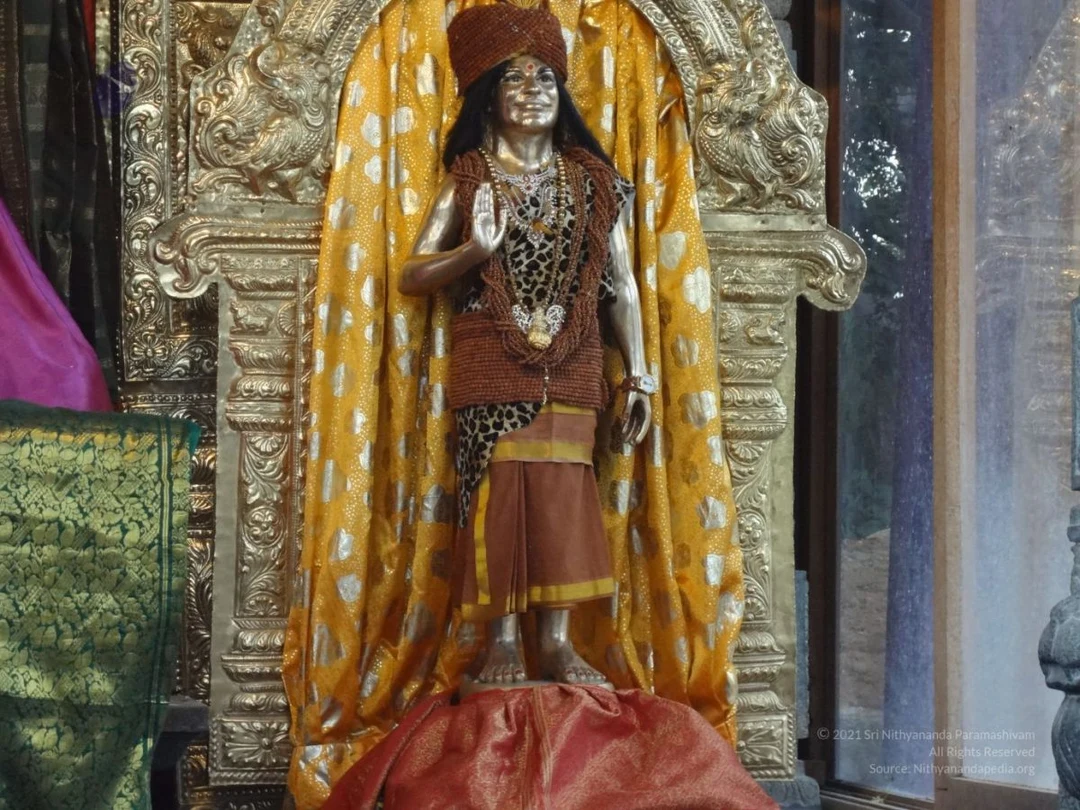
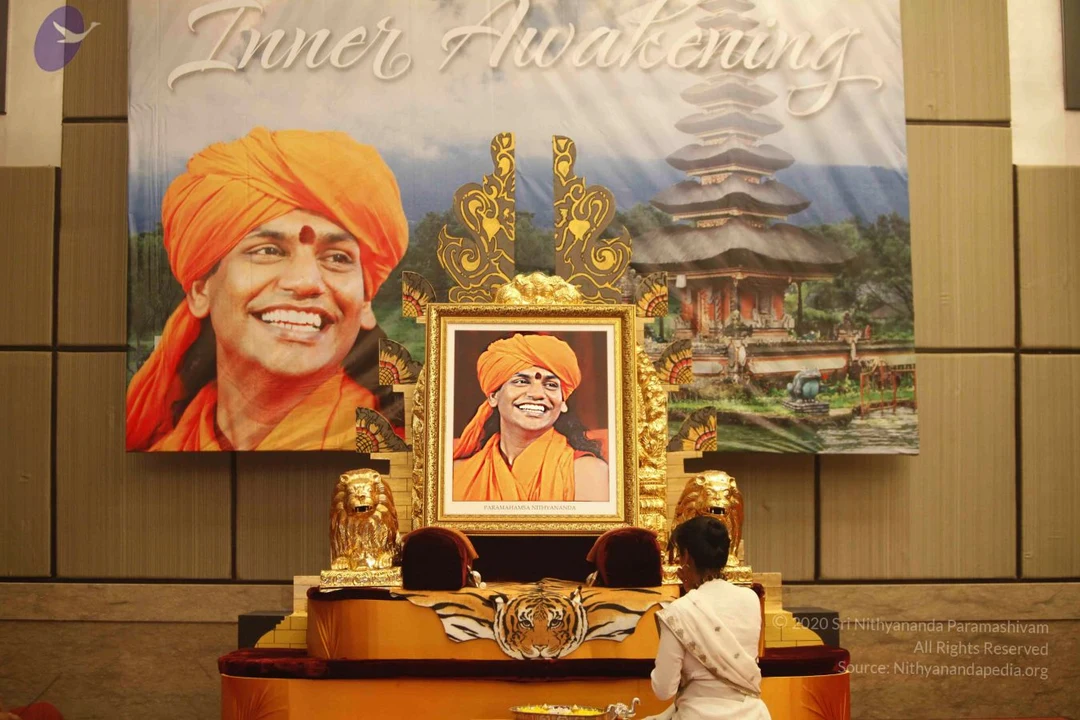
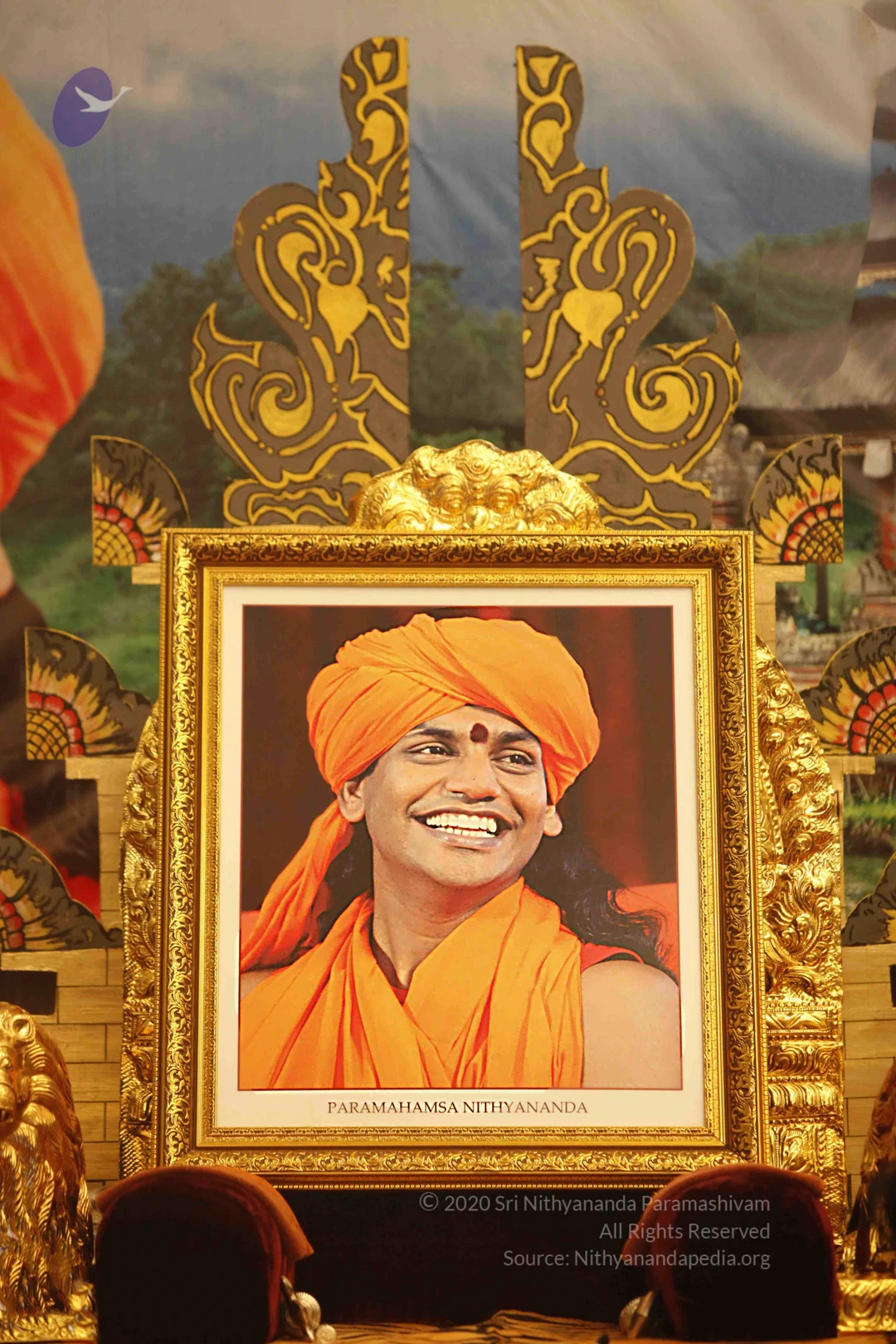
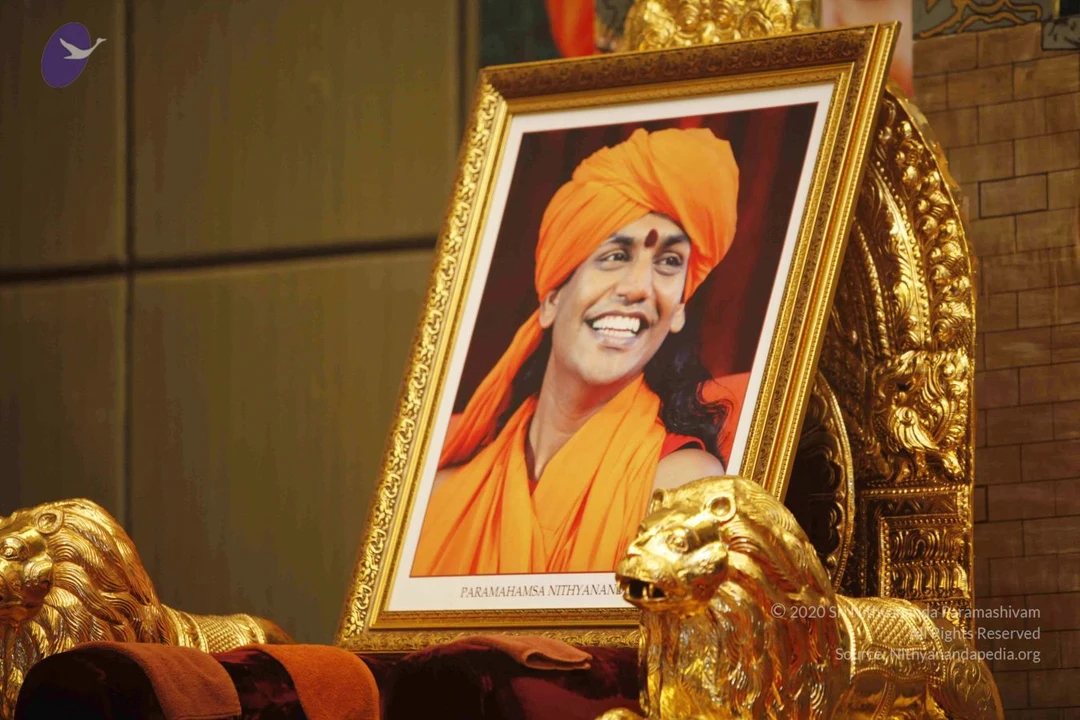
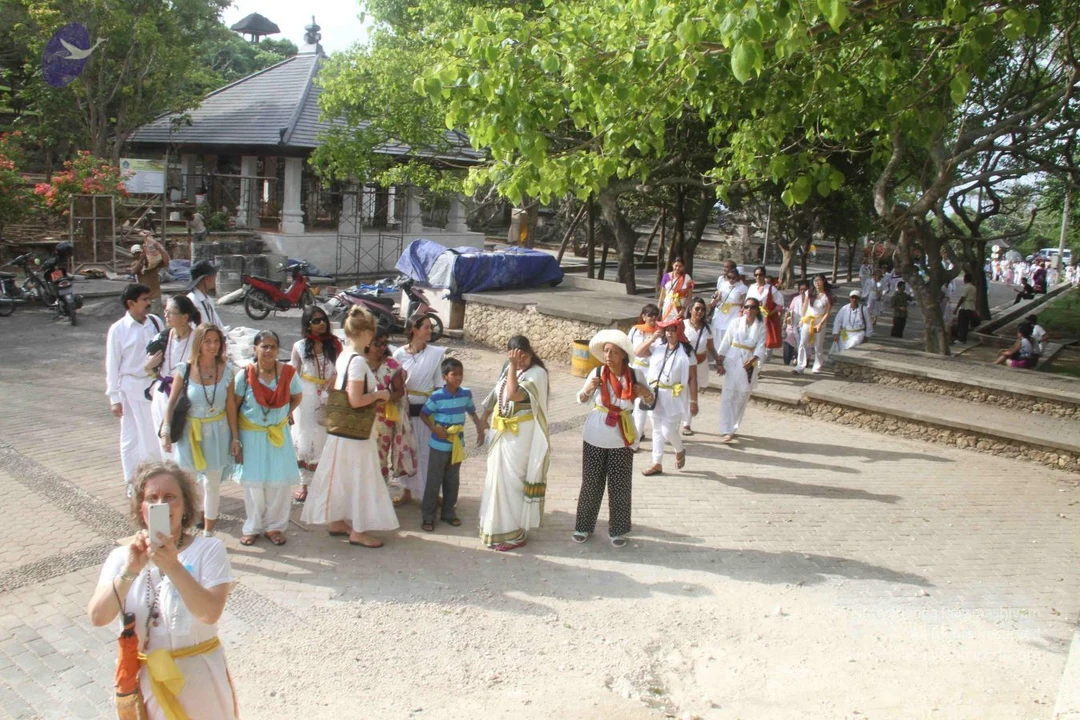
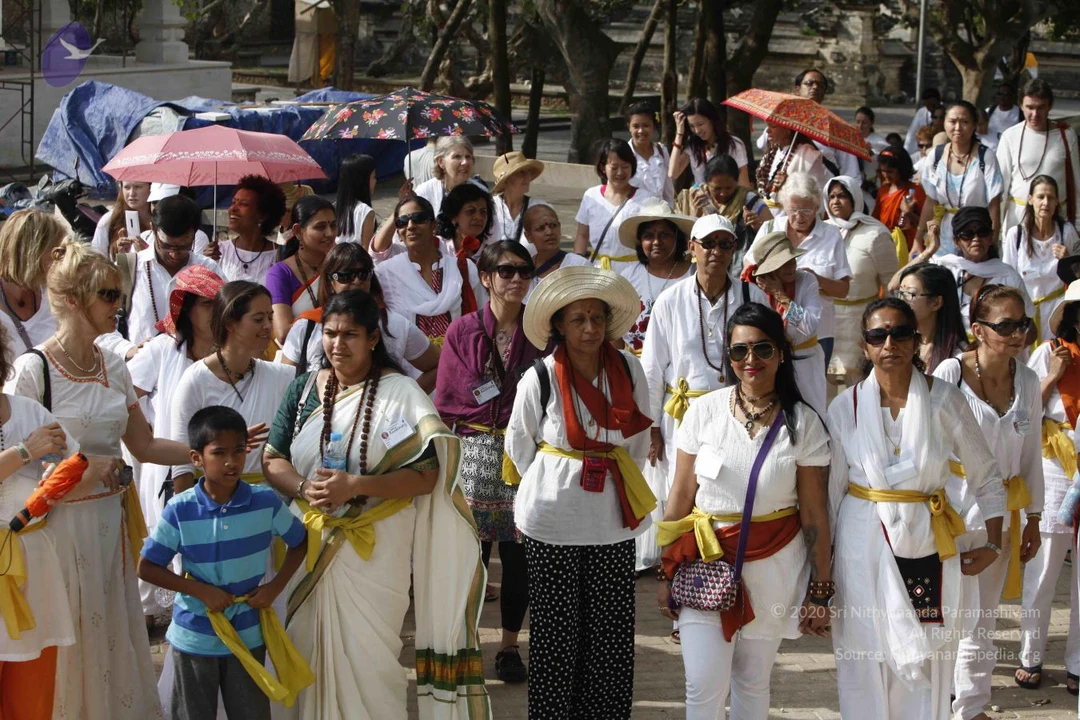
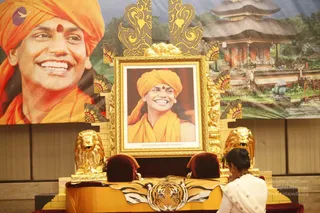
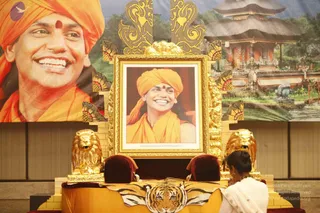
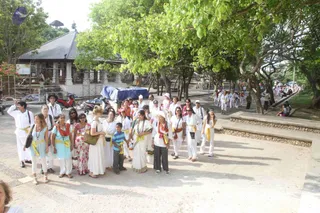
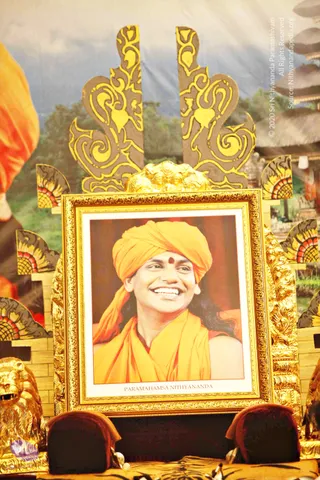
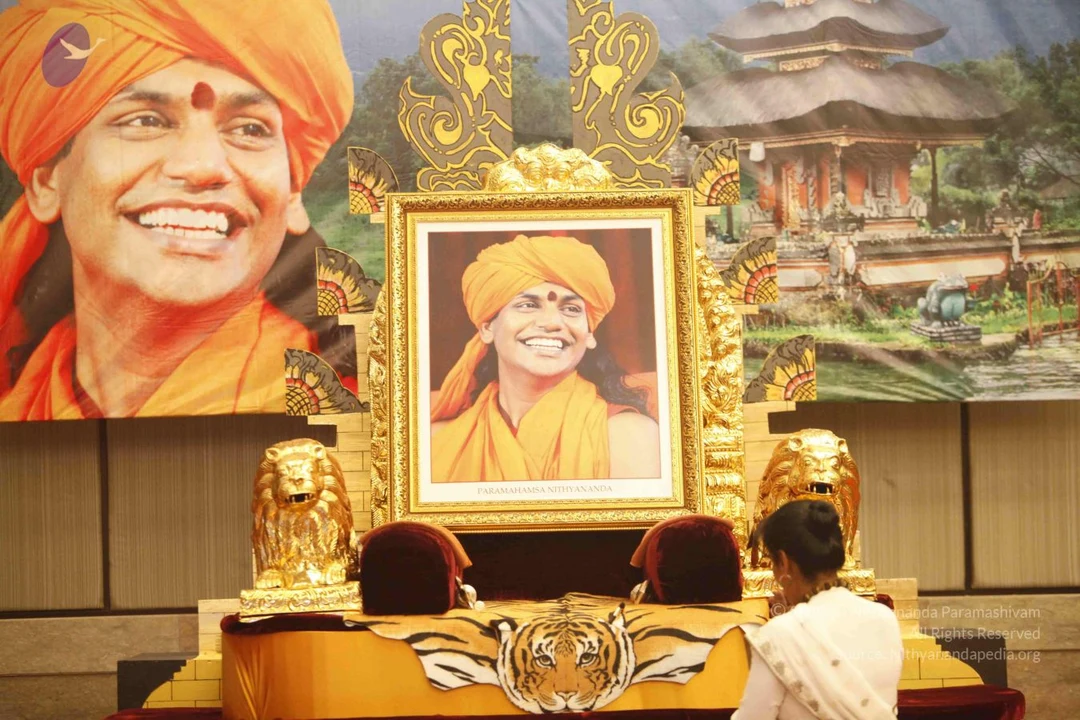
A large crowd of devotees walks outdoors along a paved path beneath trees, some holding umbrellas in pink, red, and floral patterns for shade. Most wear white clothing with yellow sashes or waist ties, and several women wear white saris with yellow borders. Many have sunglasses, sun hats, and white caps, and some carry small bags or wear beaded necklaces and rudraksha-style malas. Ancient stone structures and a blue tarpaulin appear in the background. A young boy in a blue-and-white striped polo shirt with a yellow sash stands at left.A silver-toned statue stands in a gilded, ornately carved niche draped with a yellow fabric patterned with silver motifs. The figure wears a rust-red turban with a red tilak on the forehead, long dark hair, a red-brown beaded rudraksha-style mala and a large ceremonial necklace, a leopard-print garment over the torso, a brown-and-gold dhoti, and a bangle on one wrist. The right hand is raised in abhaya mudra. A red silk cloth lies at the base, and a green brocade textile and a pink fabric appear at the left edge. This is a depiction in the form of a statue, with no living people visible.A framed portrait labelled "PARAMAHAMSA NITHYANANDA" stands centred on a golden ornate throne-like stand flanked by golden lion heads at the bottom. The portrait shows a smiling man wearing an orange-saffron turban, orange robes draped over the shoulders, and a red bindi on the forehead; he has long dark hair visible beside the face. Behind the frame, a large orange-robed figure in a matching turban is shown on a backdrop, and a backdrop photo of a temple complex with a red-roofed building and green landscape appears at the upper right. Gold scroll carvings and fan-shaped gold and red decorations surround the stand. No physical people are present in the scene; the figures shown are printed portraits.

December 07 2013

Original wiki page
Contents

Title

Nithyananda Diary | Bali Inner Awakening Day - 7 | Padukapuja | Satsang on Completion | Dial The Avatar | Nirahara Samyama | Sarvadarshan

Description:

In today’s morning satsang from Bali Paramahamsa Nithyananda introduced us to deeper levels of completion in the form of completion with life. He assured us that completion is the currency that will work anywhere and everywhere and is our best asset. He advised us to make sure that every action we do is enriching and don’t do anything that is not enriching and don’t miss doing something that is enriching.

Link to Video:

VideoAudio

Transcript:

Nithyanandeshwara Samaarambhaam Nithyanandeshwara Madhyamaam | Asmath Aachaarya Paryanthaam Vandhey Guru Paramparaam ||

I welcome you all with my love and blessings. I welcome all the devotees, disciples, samajis, satsanghis sitting with us through two-way video-conferencing and Nithyananda TV, Sadhna TV, Lotus News Channel, Janashree TV, Eshwar TV, all over the world.

Cities sitting with us in two-way video-conferencing all over the world: Santa Fe-New Mexico, Bogota-Colombia, Bidadi, Vancouver-Bhubaneshwar, Los Angeles-Arunachalam, New York-Varanasi, Dubai-Vaidyanatham, Philadelphia, Dakota Dunes, Bangalore-Malleshwaram, Port Washington-New York, Riverside-California, Wellington-New Zealand, Nithyananda Nagaram-Bidadi, Winnipeg-Manitoba, San Diego-La Jolla, Warrington-UK, St. Louis-Tirumala, Singapore-Singapuram, Ohio-Prayag, Seattle-Chidambaram, Hyderabad-Gupta Kashi, Guadeloupe-Rameshwaram, Toronto-Kailasam, San Jose-Madurai, Redmont-Washington, Kathmandu-Nepal, Oman-Sivagangai...........

I welcome all of you with my love and blessings.

My blessings for the Padayatris, starting from Chennai, today as Padayatra to Bidadi. The Sannyas Yatra from Tiruvanmiyur-Chennai is starting today. My blessings.

And Malaysia, blessings for the Little Avatars Camp! That is a Bala Vidyalaya syllabus camp happening in Malaysia. Blessings for that camp!

Today 7th day! Today whole day we will work on how the Completion can be taken to the deeper level, COMPLETION WITH LIFE.

I wanted all of you to understand these different dimensions of Completion. Completion is like a key, ‘master-key’, to open all the best things of your life to you. How to apply the key in different doors you need to learn.

First, not only Completion can be used to complete with all your past incompletions, Completion can be used even to complete with all the sufferings you are attracting from others. Please listen, when you are angry, agitated, everyone who comes around you, you will force them to be angry, agitated towards you – mirroring neuron activity. Whatever you are, you will force everyone around you to react and respond in the same way towards you. Completion can be used as a key to complete not only with your past incompletions, but even the past incompletions you created in others. And Completion can be used to complete all the incompletions you have with life. See, if you think, ‘Life always brings bad things to me. Anything I try, in the last moment it will fail’ - these are all also again mirroring of your neuron activities into life. Completion process can be used even to complete with life. That is what I did, I did handling this over-heat.

In Ayurvedic Tradition, there is no testing on animals. Every physician has to test on himself. No, there is a rule! there is a rule clearly that he has to test on himself, and, he has to test on his inheritor. Who inherits his “sthaana” (position), who is going to be the next vaidya (physician), means literally his son; legally may not be his son, but literally his son. Sometimes, some of the Ayurvedic vaidyas are Sannyasis; so his disciple, the first who is going to sit on his seat, on him he has to test; means, he has to be so careful in preparing. No animal testing is allowed. And the masters of Ayurveda, they also give the protection: ‘Never your health will be destroyed by any of this testing!’ They have given the ultimate protection! I may have a little cough and cold... and in a way, I feel, this is nothing but cleansing, a very powerful cleansing, because, inside I am not feeling at all that something is wrong; I only feel it’s cleansing. That’s why, yesterday I was telling that, even though regularly you should not take this dosage, once in a year you should take one week off and take this dosage and allow the cleansing (laughs). It’s literally like you see in animation how they show the Vishwaroopa through all the mouths, the, heat coming, it feels like that, but I tell you it is a powerful cleansing.

And, I wanted to tell you this only - I completed with the body, the need to all the time be in a very balanced state. See, each body gets addicted to something. A person who always likes eating, he gets addicted to the hunger mood; all the time his body will enjoy the hunger and it’ll retain the memory of the hunger. A person who enjoys sex, all the time his body will retain the mood of the lust. Lust is also a kind of hunger only. Same way, the person who enjoys violence, shouting, screaming, throwing his weight around... he retains a certain heat and agitation in the body; he settles with that pattern. Each body gets comfortable with certain patterns. An enlightened body gets comfortable with a balanced pattern; it’s called the Vaatha, Pittha, Kapha, all the three in a balanced way. It’s a very sweet space to be in, and a very joyful space to be in. You will feel almost like you don’t have a body. All the time you will feel you are floating. You won’t feel you are on the ground. Whether you are walking, or talking, or dancing, or jumping, or living... whatever you are doing, you will not feel at all you are sitting, you are on the ground. If you observe me deeply, you will see that - me carrying that space. Especially if you live around me, you will see all the time I am floating. It’s a very beautiful space, but body gets addicted to it. Body gets addicted to it, even a little heat this way or that way, it gets ‘Arrgh, I don’t like this, I don’t like this... I wanted my balanced state back.’ It’s very good, to have that balanced state; but whatever is said and done, you should not be addicted to something.

So just yesterday I started completing with my subtle liking of being all the time in the balanced Vaatha, Pittha, Kapha. And I am seeing; today the whole cleaning is happening. See, sometimes if you want to be in that balance even cleaning doesn’t happen. For cleaning you have to be imbalanced; only then things will come out. Once I completed now I am seeing the cleaning is happening, the system is getting back to health.

You can complete even with your body. You can complete with your patterns. You can complete with your life. You can complete with everything! You can complete with your poverty pattern. You can complete with your ill-health pattern. You can complete with your addiction patterns. Completion is the powerful key you can use to transform your life as you want. I tell you, Completion is the best exchange currency you can carry anywhere you want. When you are in the body or after you leave the body, whether you go to Kumbhipakam or Indralokam, Completion is the only currency will work. Completion is the currency which will work anywhere in the Cosmos, Kumbhipakam or Indralokam. Indralokam is the highest heaven. Kumbhipakam is the lowest hell. Lowest hell to the highest heaven, Completion will work as the best currency, best asset. Completion is the best asset you can accumulate.

People tell you, many times you would have heard, ‘Accumulate lot of punya (merits); it will be useful in the heaven. Only that will come to you, come with you, along with you in the heaven.’ What is “punya”!? Completion is the real punya. The space of Completion is the real punya. So today, we will be working on completing with life, in the Inner Awakening.

Understand, if you are living in the poverty or inadequate wealth, I tell you, you need Completion, with your wealth pattern. You can complete with the wealth pattern, the poverty pattern you are carrying, and surely you can expand, and make yourself rich. Because wealth is nothing but the mental set-up you carry. With the right mental set-up, simply you will attract wealth. What is wealth? How much you are useful to society - that much society pays you. That’s all! And once you understand Completion, your every action will be enriching, I tell you. Your every action should be enriching. And if some action if you are not able to align it to enriching, you should not be doing it. First sit, and align your whole day, with the truth of Enriching. How you are going to office is enriching, align. Yes! When you go to office naturally you are, enriching the person who receives the product which your office delivers! Even if you are doing the job of a police, by putting all the criminals into the prison you are enriching the society, you are giving a very safe and protected ambiance to the society, human-beings! So, every job you do, every job you do, is enriching.

First sit, and align everything you do is towards enriching. If you are not able to align something, to enriching, decide you will not do that anymore. Seva should not be part of your life; it should be your LIFE! Enriching should not be part of your life; it should be your LIFE! So understand, every action, from the moment you wake up till you fall asleep, align everything to enriching. If you look into your heart and ask your heart, without self-doubt you should be able to tell, ‘All my actions are enriching.’ Align it to that extent! See, your office may pay you the money, to take care of your expense; that is different; but what actions you are doing should be only aligned to enriching. Taking salary from your office does not mean your office job is not enriching. No! That is just to run your life. Even if you take the salary, it can be enriching. Anything which is enriching, only that should be done.

There are few professions, I can say, can never be enriching. One, selling alcohol, tobacco, other stuff which addicts people, and killing people, killing animals even for food, selling drugs, all these can never be enriching. So, never ever enter in these professions. Other than these, almost all of our mainstream jobs can be enriching. Do it with the spirit of enriching; you will not find the tiredness and fatigue of work. You will not rush to home Friday evening. You will not be waiting for Friday afternoon. Bring the clarity, cognition of enriching!

Sometimes I enjoy being myself, especially some of the qualities. I don’t even have the idea of “vacation”. The idea of vacation never made sense to me. See all of you learn about this “vacation”... “holiday”, from the schools. Fortunately I never went to school! So, even though I studied in a school legally, that is the beauty! I have studied up to diploma, legally, but once in a while I will go and I’ll bless the school, when I don’t have any other engagement! HAHAHAHA....! Never the idea of vacation, holiday got into my system. I tell you, because of that only I am able to work twenty-four hours, throughout the year, without even having the idea of vacation. Next year my calendar is already full! Till next year December end, my calendar is full! Twelve Inner Awakenings next year. Next year my calendar is full! Already it is released to public. Twelve Inner Awakenings. I was only telling these guys, ‘Twelve Inner Awakenings is... it means every month one week is getting wasted. Twelve months, twelve weeks... in that twelve weeks, four more Inner Awakenings can be done.’ Sorry, three more, three or four more...twelve weeks mean, four more can be done - But the Enriching Temple team has decided, ‘No, no, no, twelve is the maximum we can handle....’ I said ‘Alright.’

No this idea of vacation, is incompletion! That is one of the biggest incompletions you carry. If you carry the idea of vacation, you will feel your whole life is as if exploited by somebody. The feeling you are exploited will come if you carry the idea of vacation. It is inter-connected; the feeling exploited and the idea of vacation - both are inter-connected. That day I forgot to calculate. Today I calculated. Now I found out twelve weeks are there. I am not going to keep quiet, you will see now! Suddenly, two-day program, four-day program, one-week program and all will come up now! Weekend programs!

Don’t do anything if you are not convinced it is enriching. Let your whole life be aligned to enriching. And same way, don’t miss doing anything if you are convinced it is enriching. The first part is very easy – “Don’t do anything if it is not enriching” - that anyone can do; all the time lock yourself in the room! “Don’t miss doing it when you know it is enriching” – that is where the real enriching comes! Twenty-four hours, do only enriching.

Take the oath in front of Kalabhairva, ‘Mahadeva, let only enriching happen through me. Anything other than enriching, you please see to it that I will not do.’ No it’s like automatic speedometer - If you do anything other than enriching it is going to be incompletion and karma. Why do you want to fall into the “Andhakupam”? It is one of the hells described in Garuda Purana. Why do you want to fall into the different hells? No...Decide, and pray to Mahadeva - Mahadeva, see how there are speedometers in the vehicles, if you fix that speedometer it will not go more than that speed. In India we have that. 80 km, 70 km, 90 km, they will fix the speedometer, and the vehicle will not cross that speed. Because we have, in India we have the “driver” (chauffeur) pattern. The owner himself will not be driving, the driver will not care about the vehicle. Same way, fix a speedometer for yourself - ’Completion Meter‘. Pray to Mahadeva... Kalabhairava, ‘Let me do only things related to enriching. And if something is not enriching, let me fall into tiredness. Let my whole life be active, alive, filled with enriching.’

It is because Hindus forgot enriching, all the sufferings Hindus are going through has come up on them. You guys forgot to enrich the Sannyas Tradition which is the main backbone of enriching you back with the Knowledge. Every village should have a sannayasi. India has six-and-a-half lakh villages. Every village should have educating sannyasis, sannyasis who educates people, into the Science of Completion, sannyasi who lives the Science of Completion, who teaches the Science of Completion. Who lives the Science of Jeevan Mukthi, who teaches the Science of Jeevan Mukthi. Because we forgot to enrich the world, all the sufferings are landing upon us. Any disorganized group in the world has to suffer. Hindus are the worst example of this statement. Most disorganized; that is why, most suffering. Even the disciple doesn’t listen to Guru. That is why Hinduism has become so disorganized, unorganized, and, destroyed itself. Even if you have so much knowledge, if you have not applied it in your life, please be very clear, knowledge can’t save you. Knowledge should be applied in the life. The Science of Completion should be practiced in the life! Unless the science is practiced, unless the Completion is lived, unless the enriching is done, life has no meaning.

So understand, complete with everything inadequate, incomplete in your life. Bring complete Completion. And do only enriching activities, do enriching activities all the time. Not only you will do enriching activities ONLY, you will be doing enriching activities ALL THE TIME. So understand, do enriching ALL THE TIME!

I bless you all! Let you all radiate with Integrity, Authenticity, Responsibility and Enriching, with eternal bliss, Nithyananda! Thank you!

Photos
Tags:

Paramahamsa Nithyananda, completion life, currency, asset, action, enriching

Photos Of The Day:

KIDS-EATING-PHOTOS
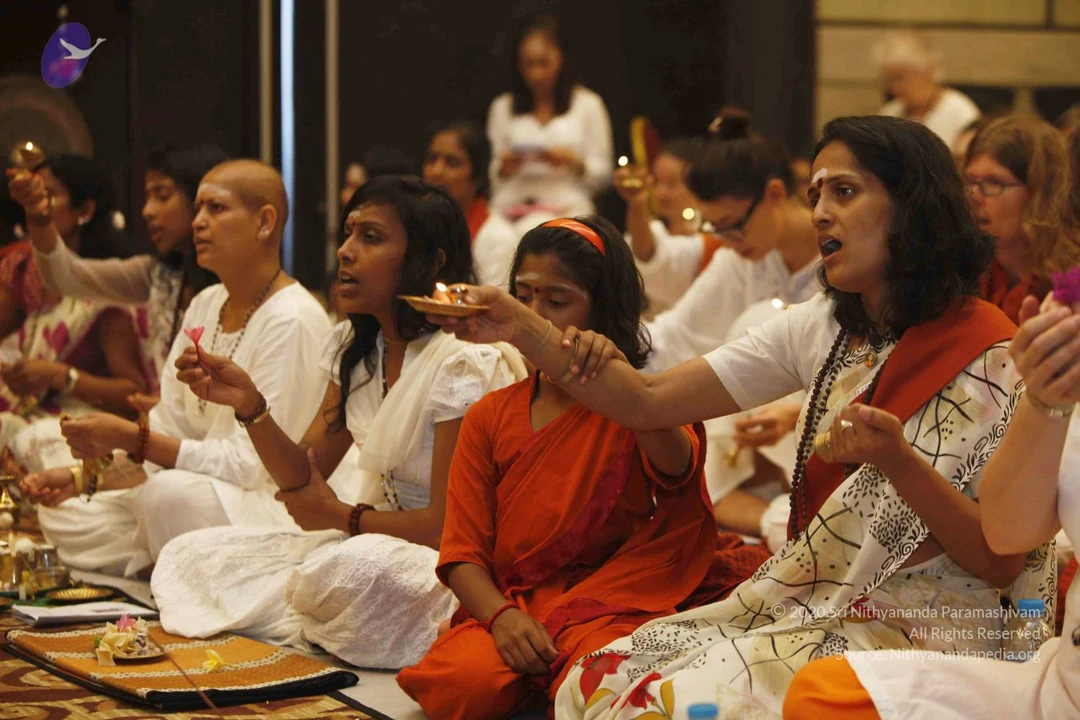
PAADUKA-PUJA-PHOTOS
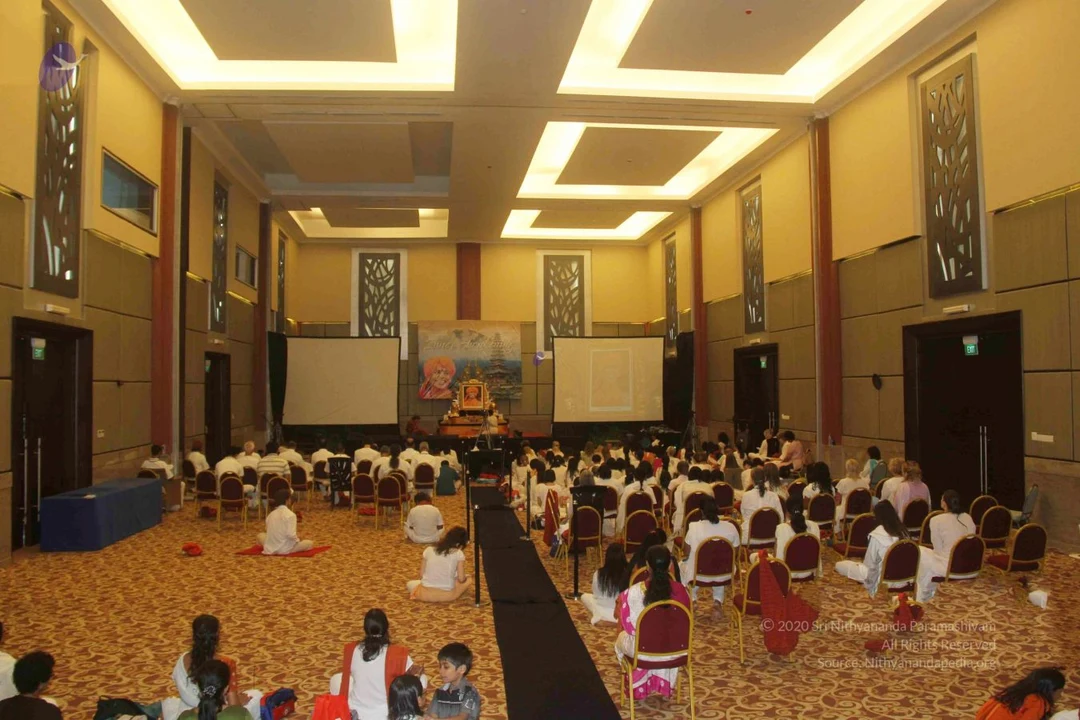
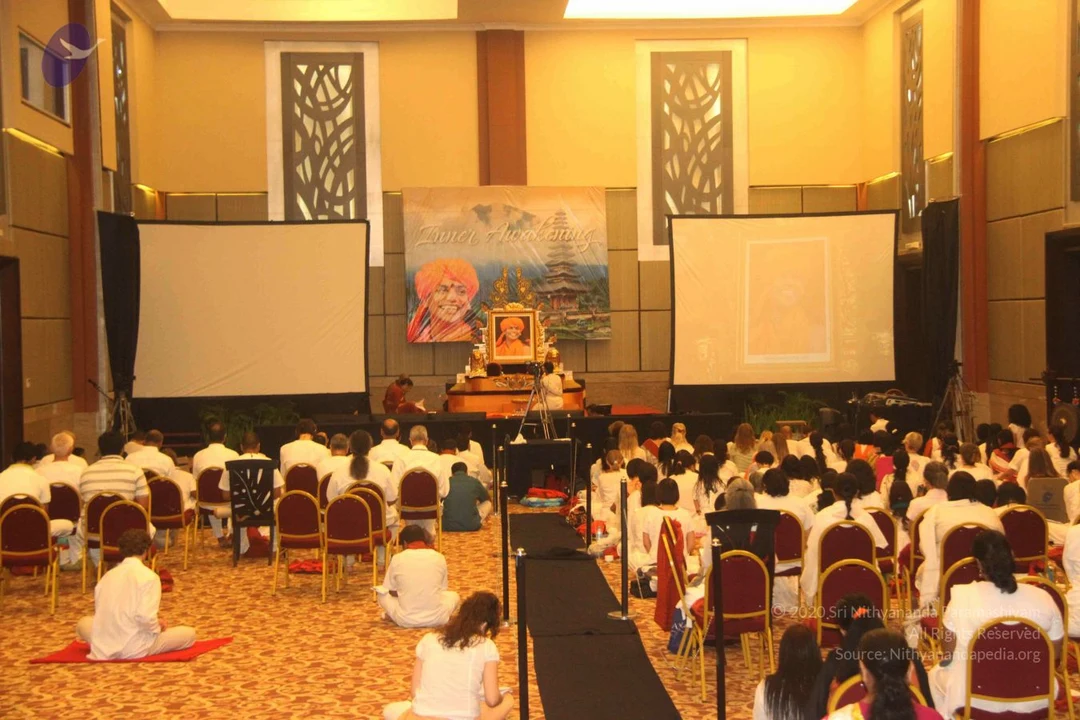
SATSANG-PHOTOS

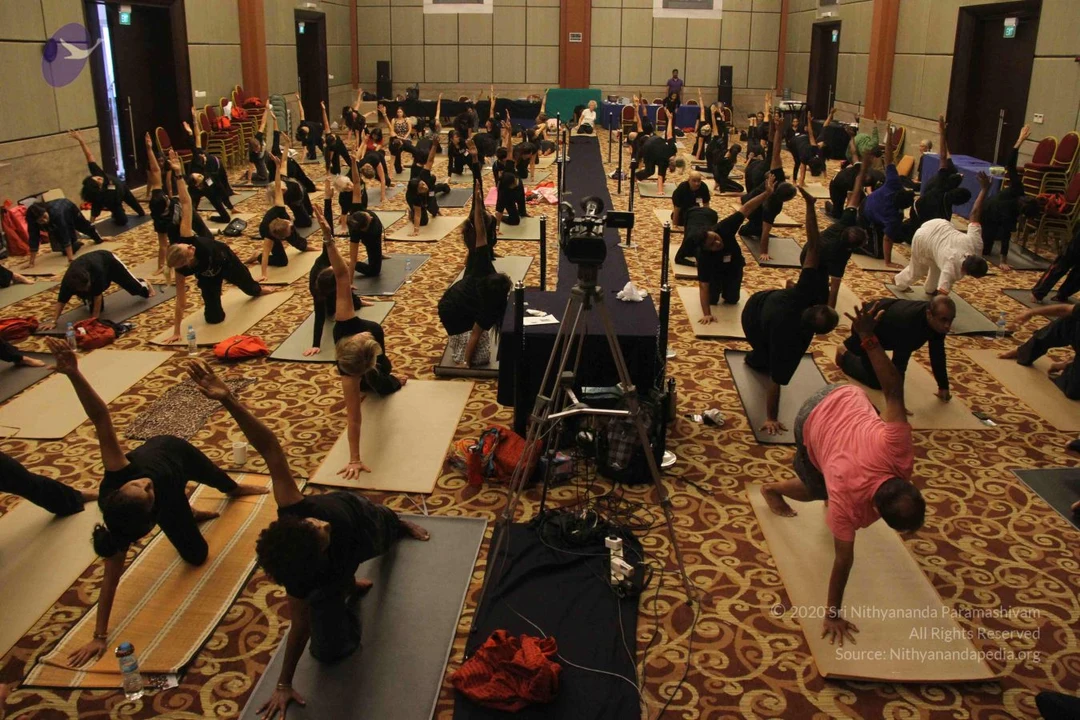
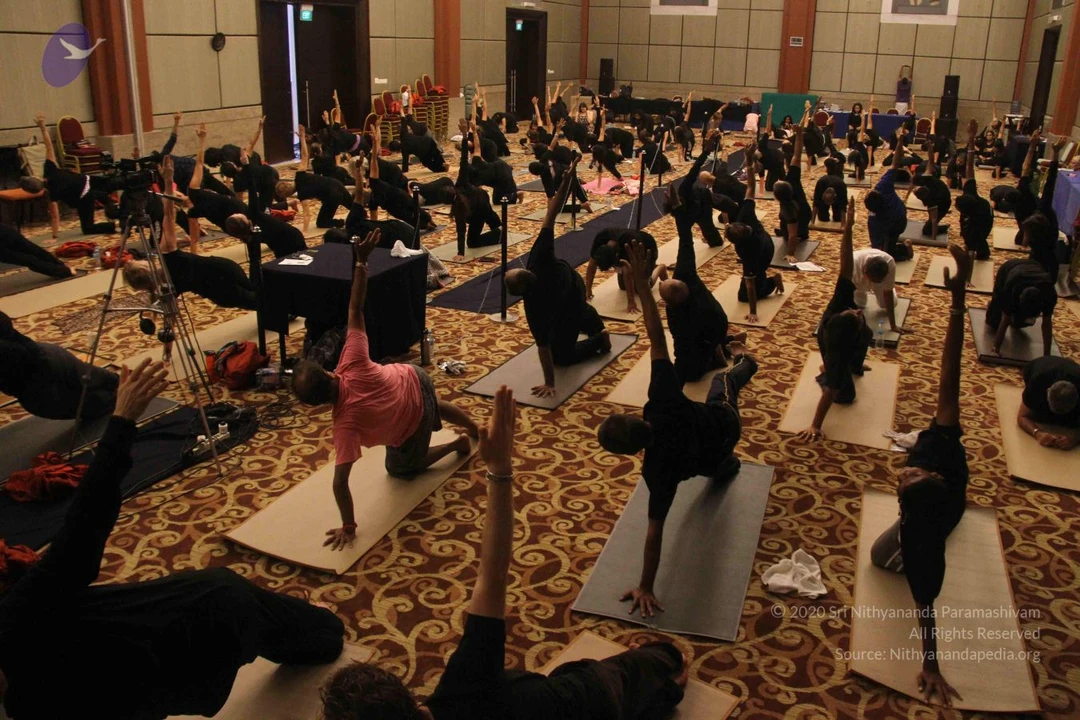
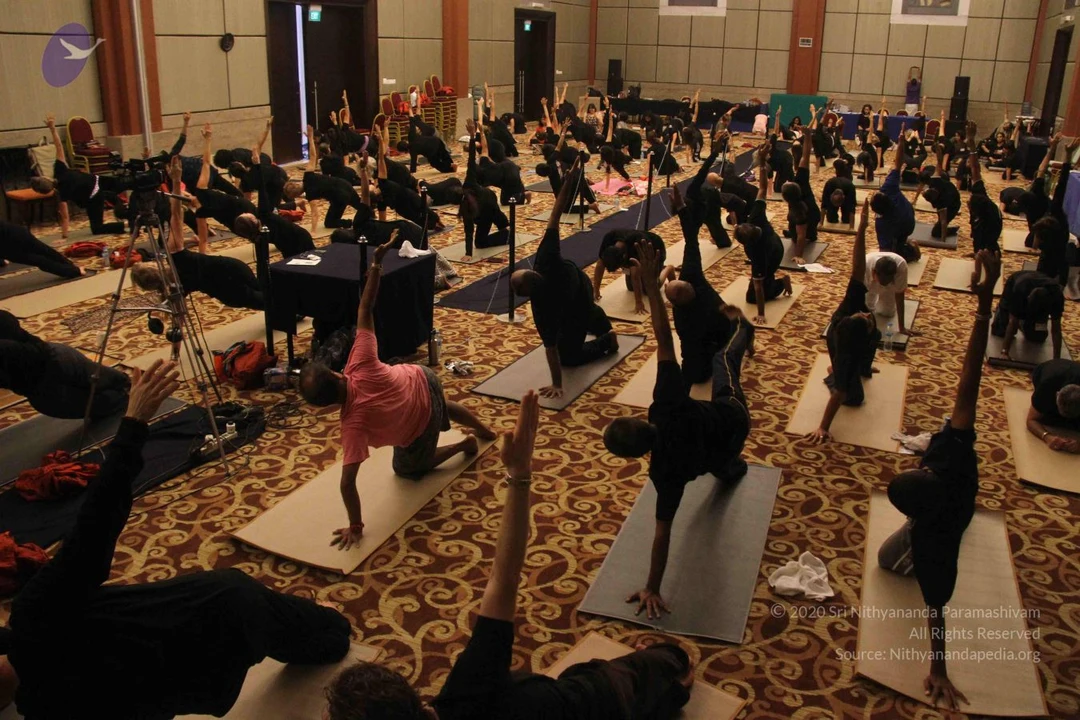
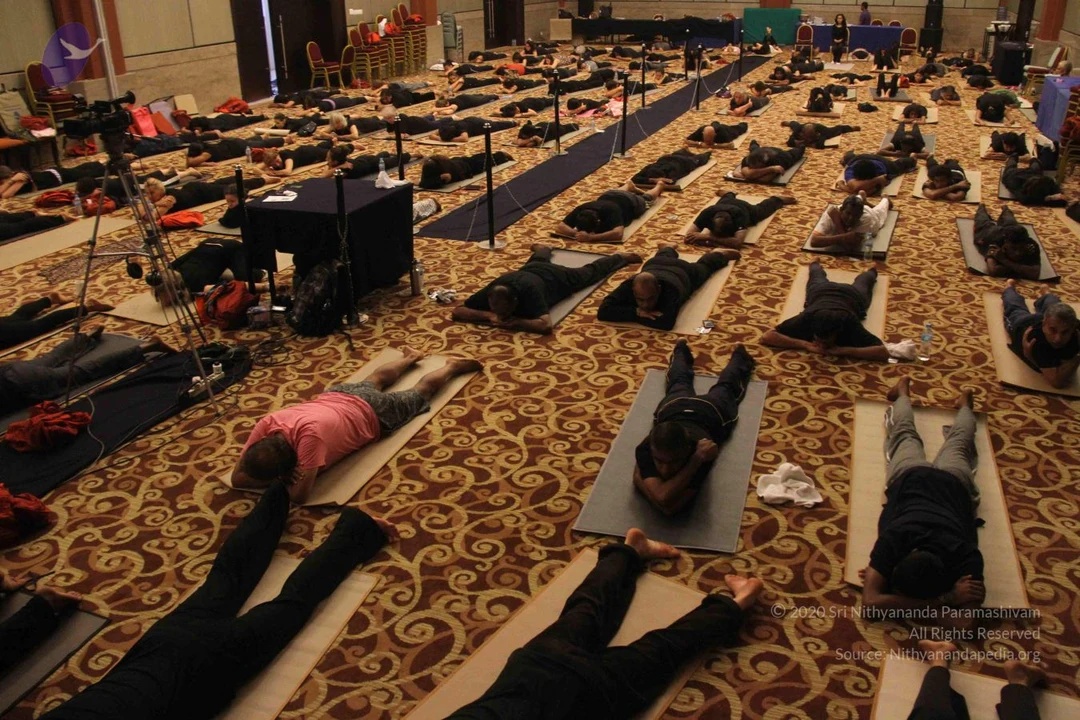
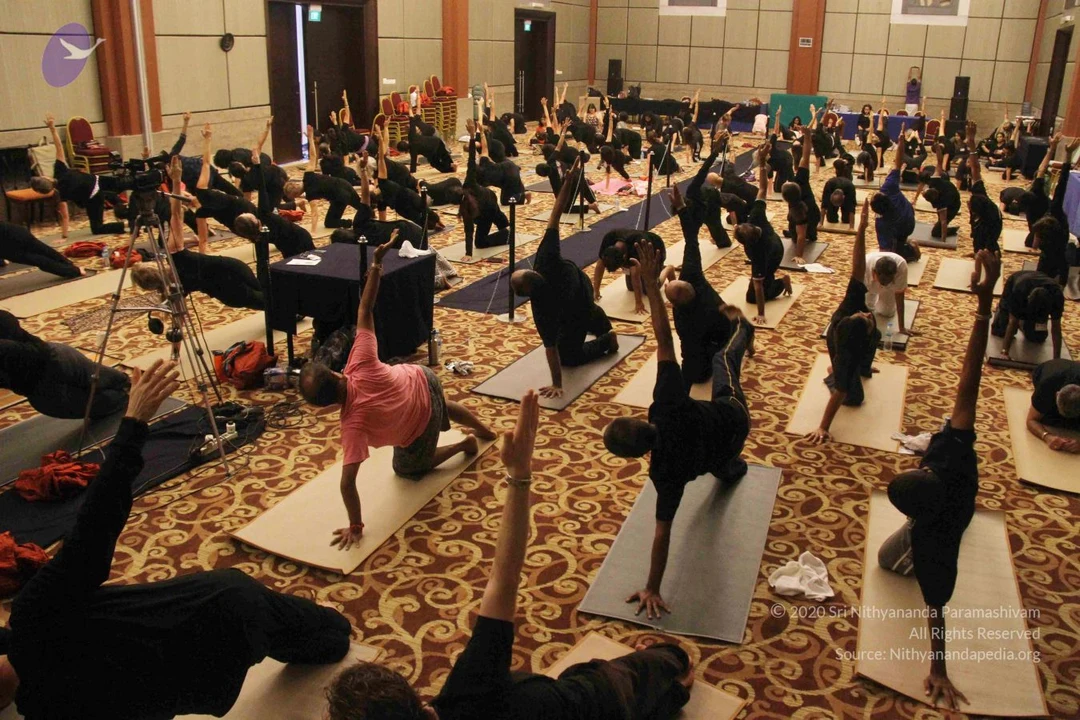
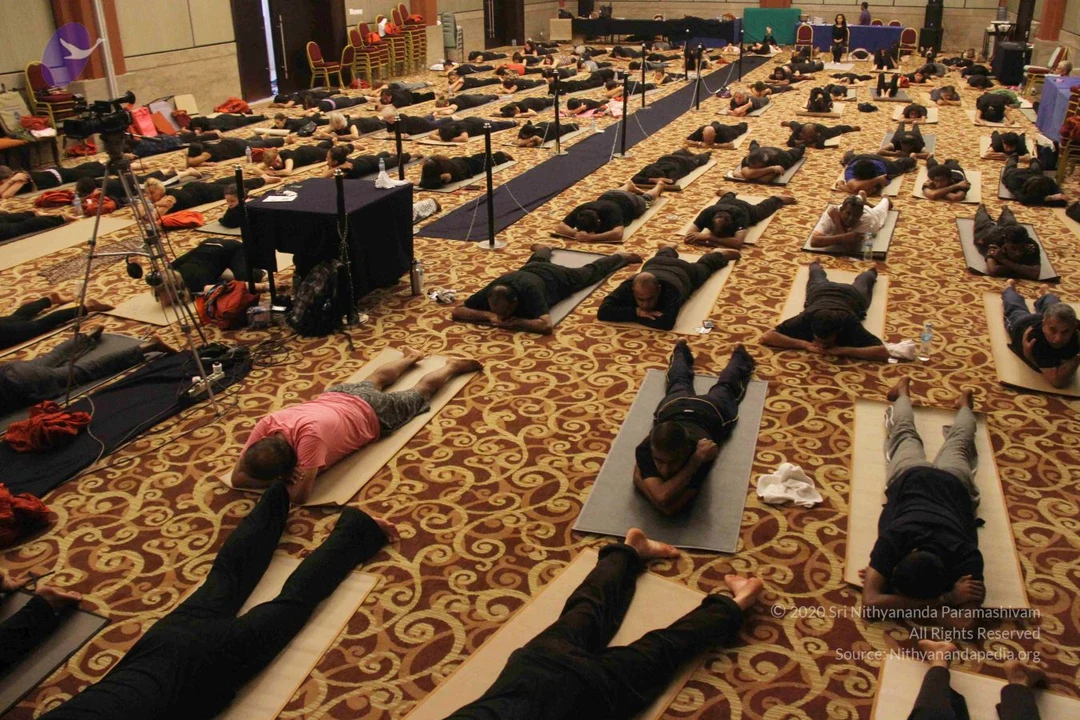
YOGA-PHOTOS

Photos Of The Day:

Puja

Temple

Photos Of The Day:

Temple

Photos Of The Day:

IA-Yoga

Paduka-Puja

Nithya-Satsang

IA-Darshan

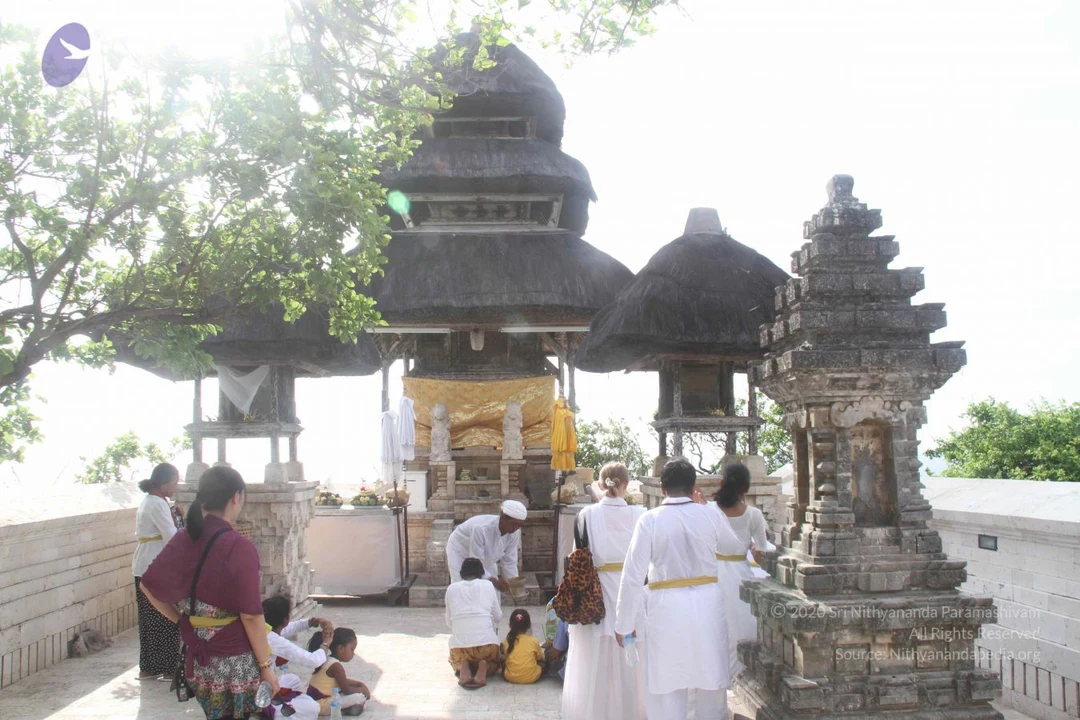
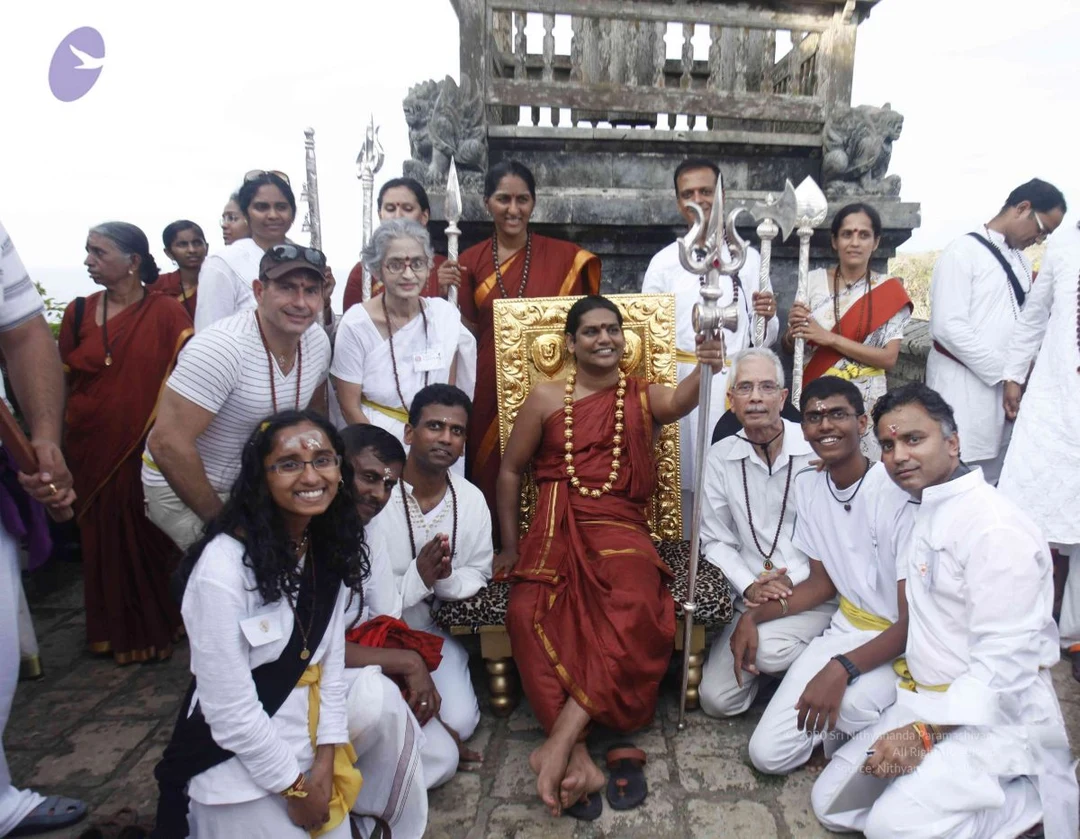
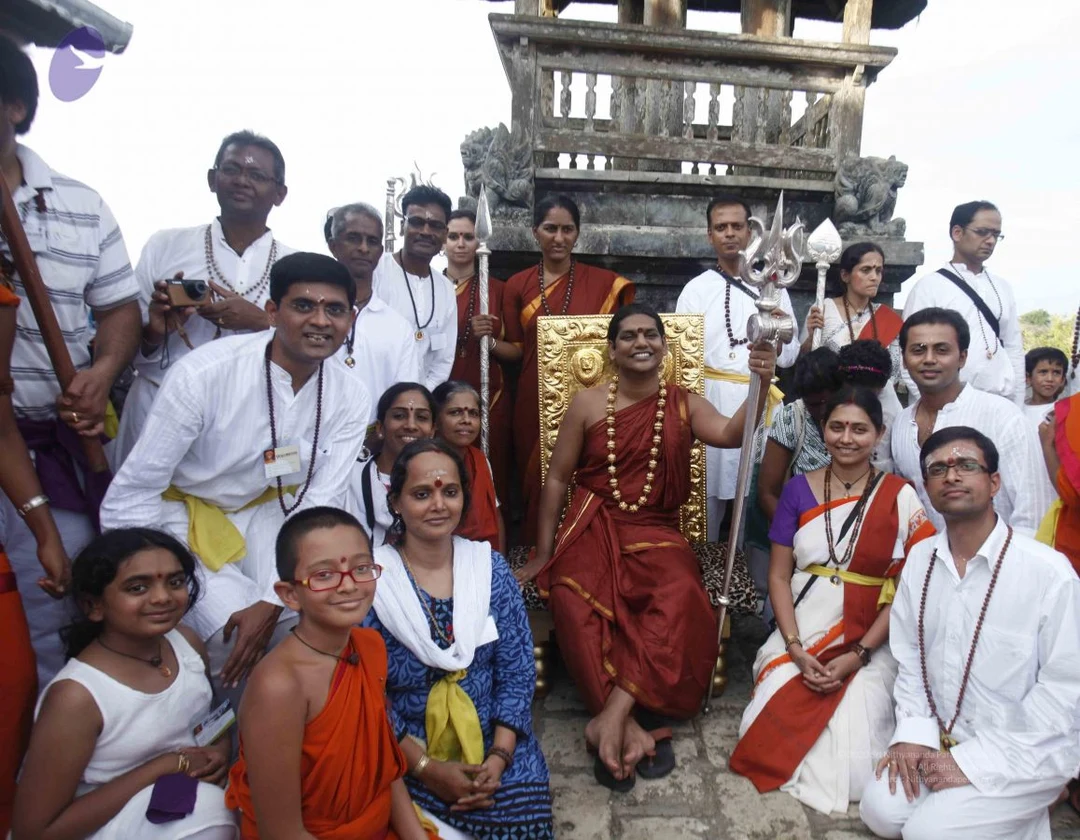
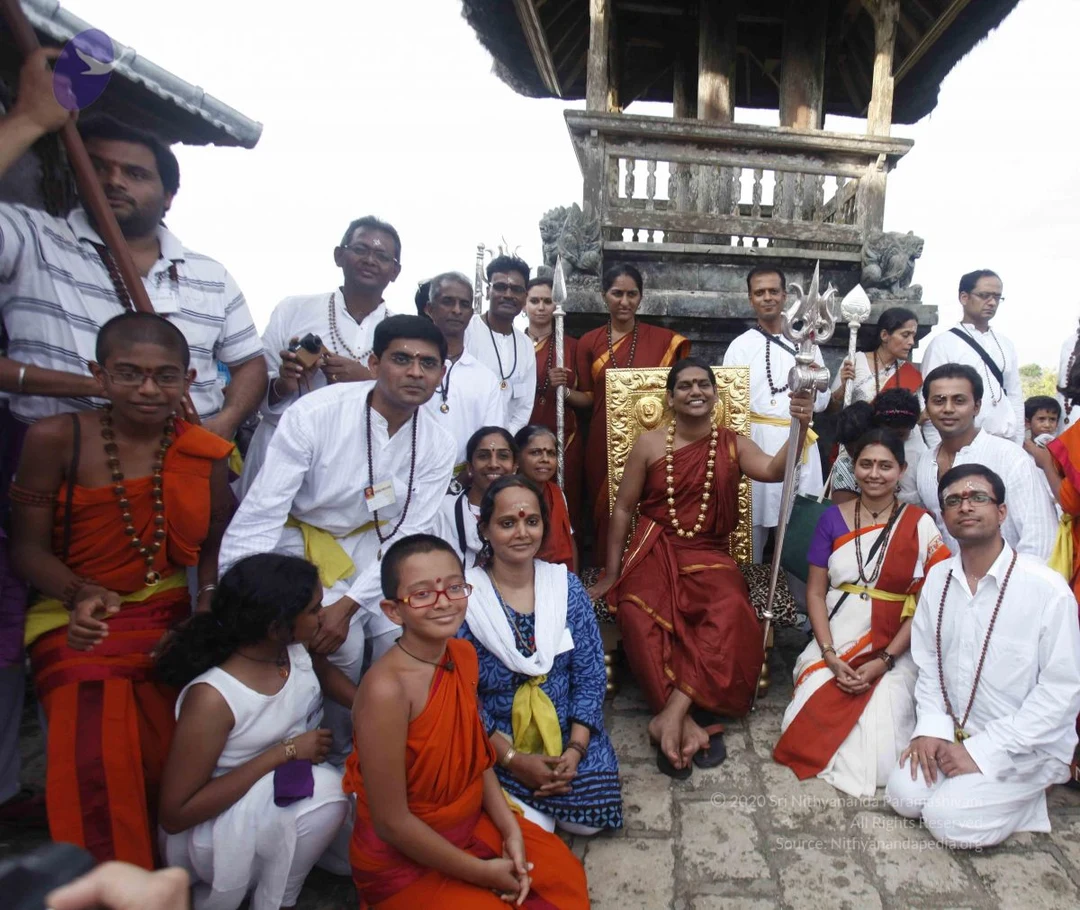
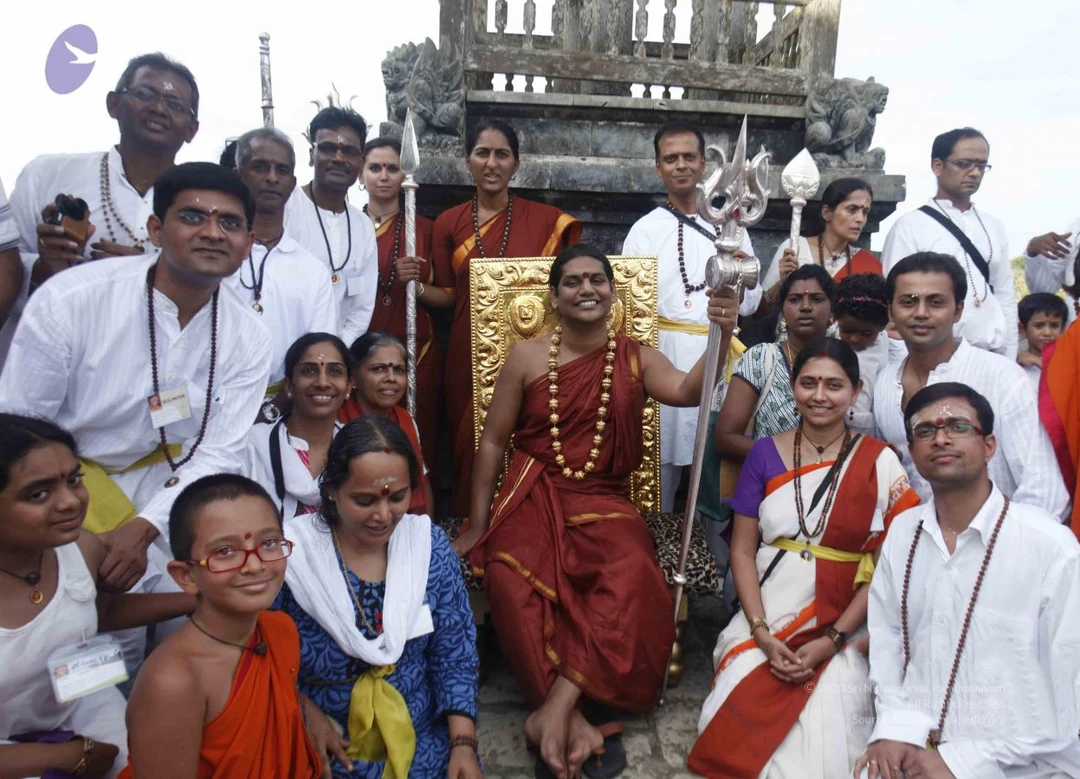
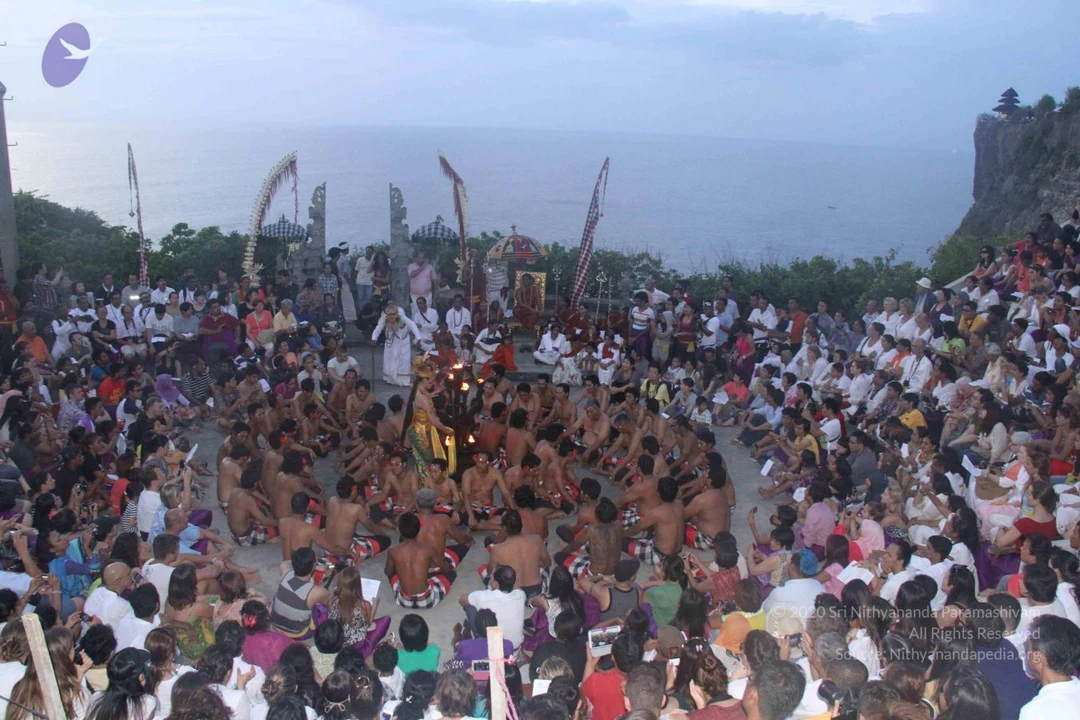
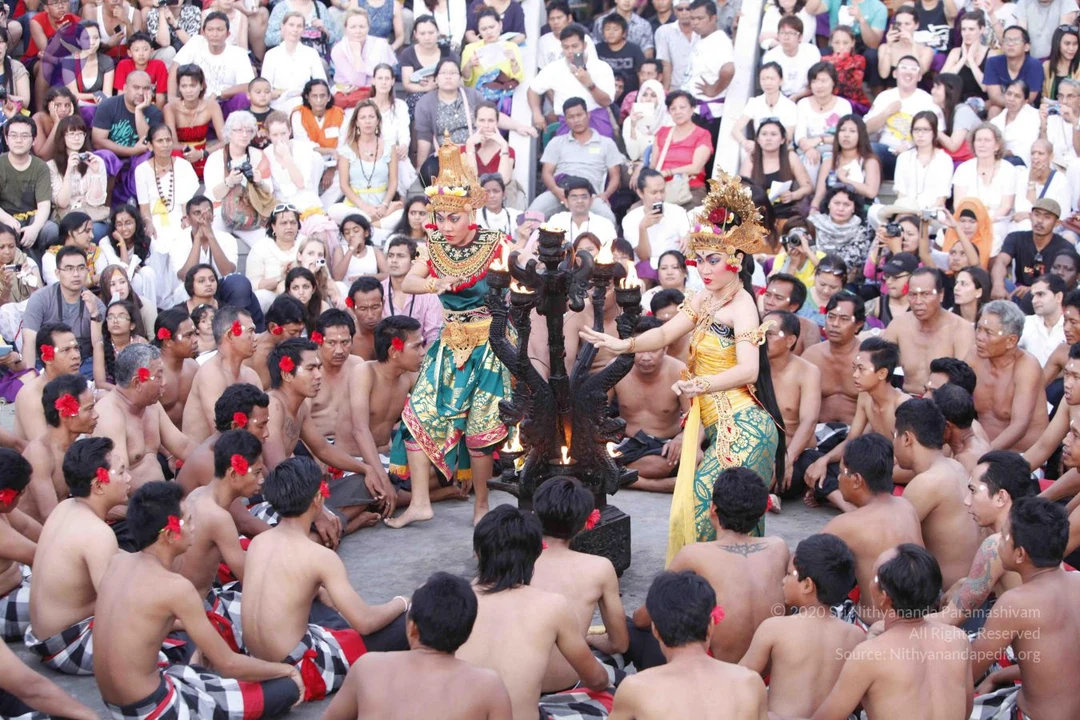
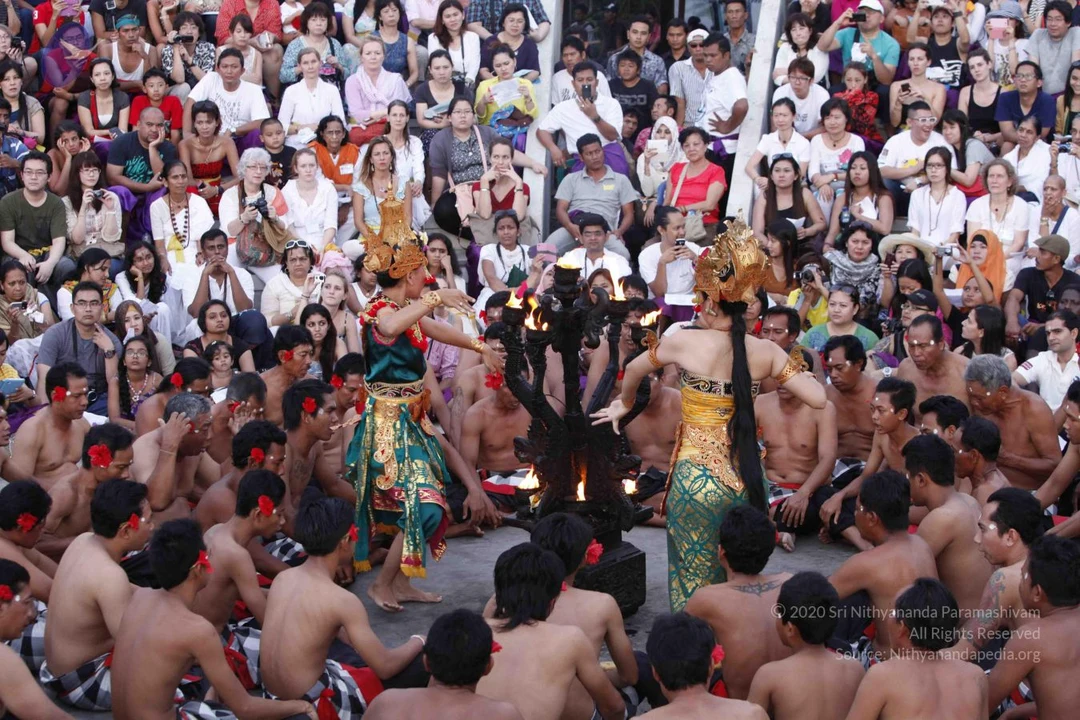
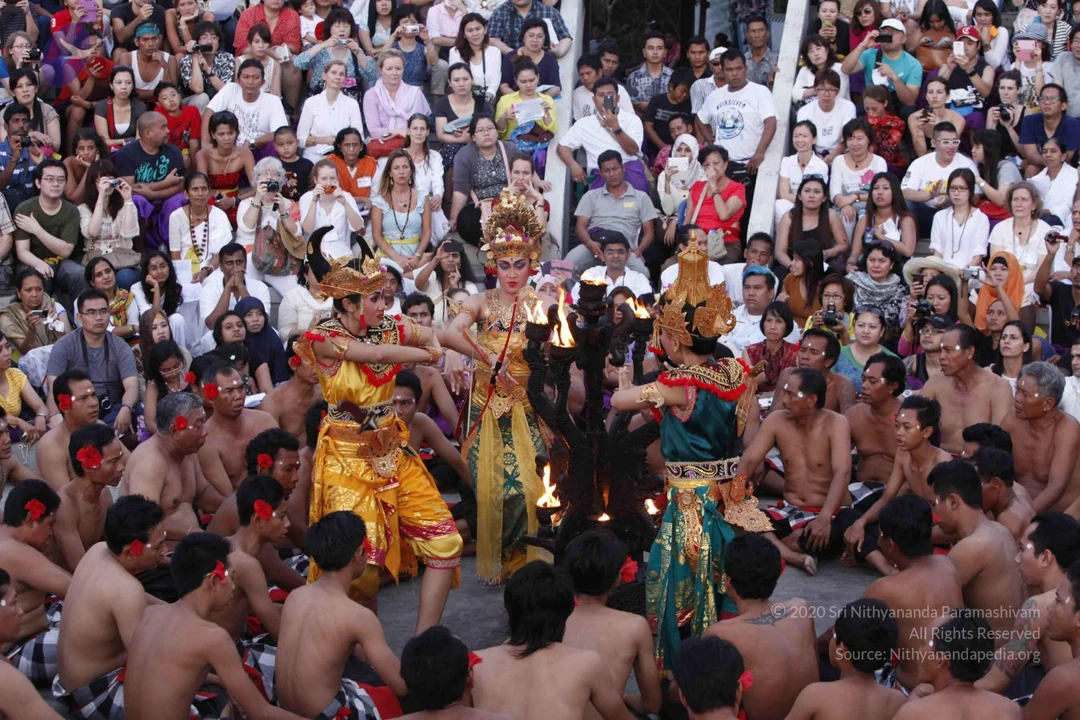
Uluwatu-Temple-Visit

01-SATSANG

Photos from this day

View all 388 photos

Photos

1 photoSource gallery
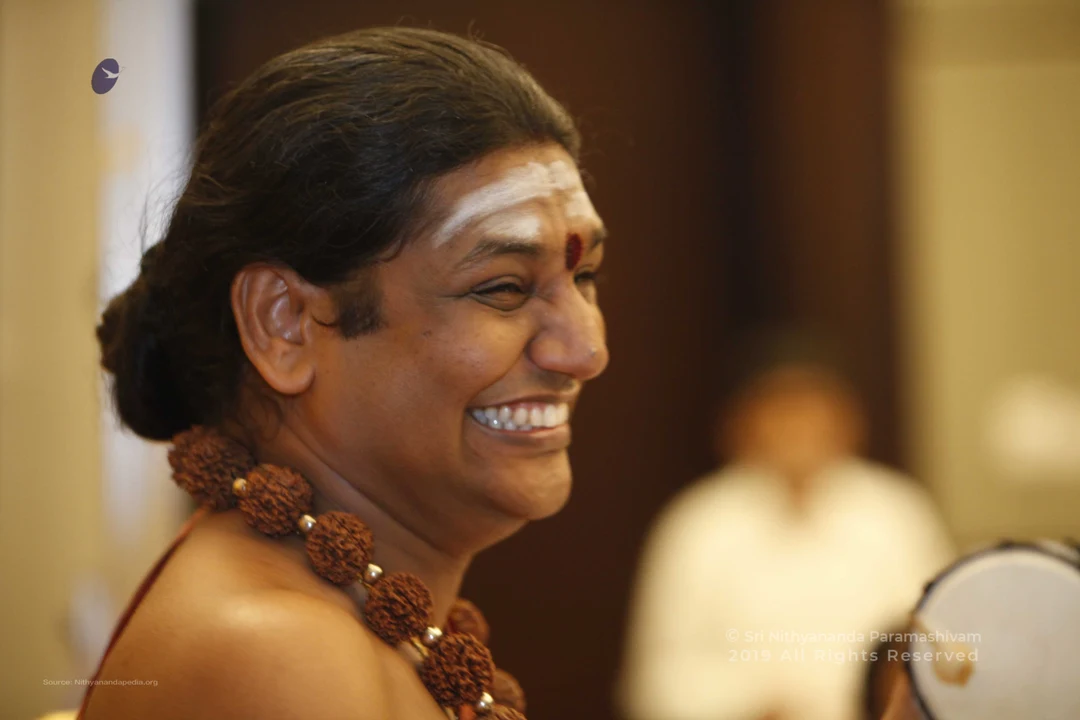
Close side-profile photograph of a smiling person with hair pulled back in a low bun, white vertical tilak stripes and a red bindi on the forehead, wearing a multi-strand brown rudraksha mala with silver spacer beads and a bare shoulder. A blurred figure in white clothing sits in the background, and a drum rim is visible at the lower right. The appearance-based label is a person, based on the rudraksha mala and tilak cues.

Photos

7 photosSource gallery
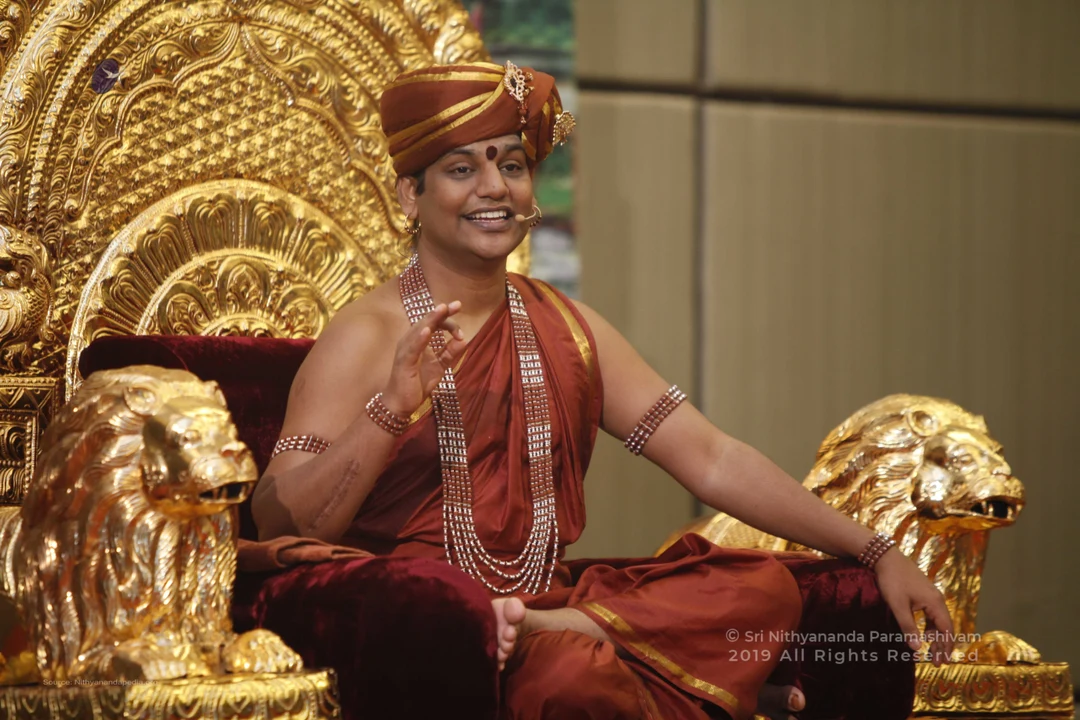
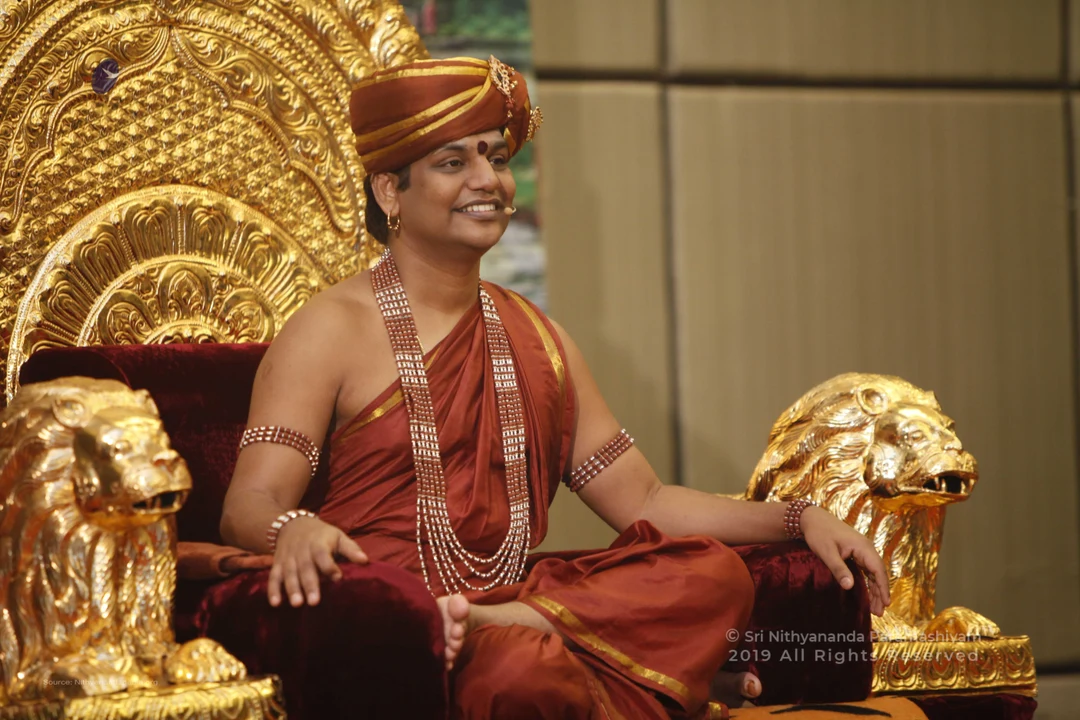
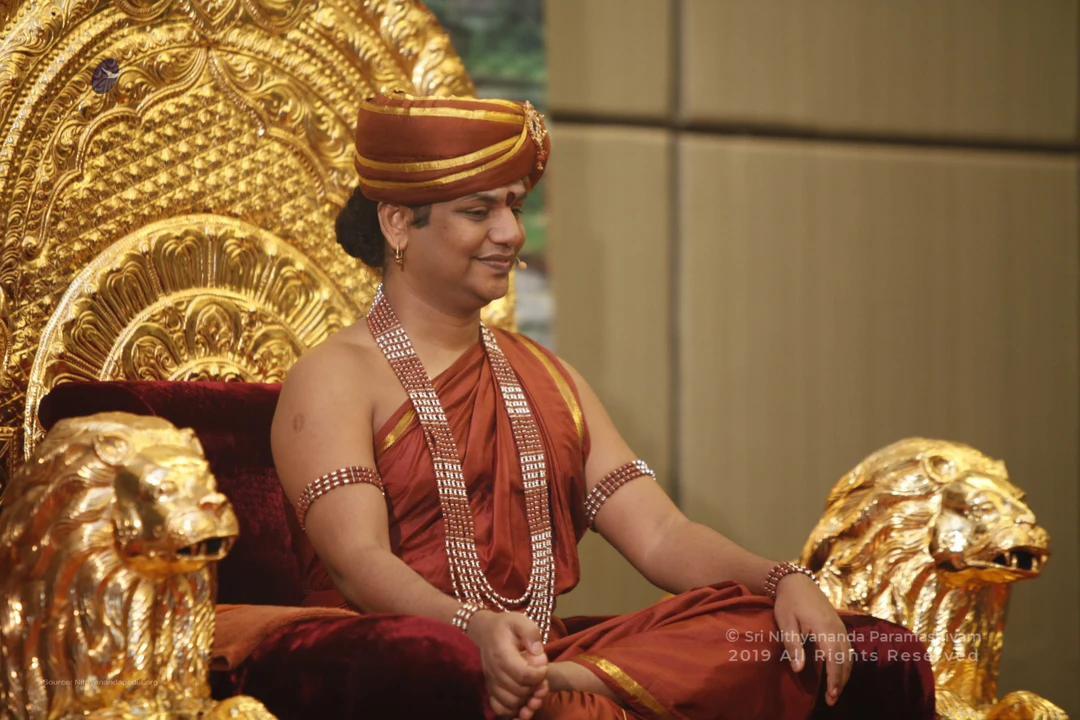
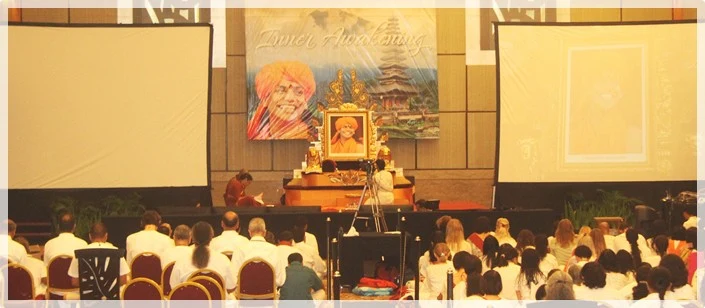
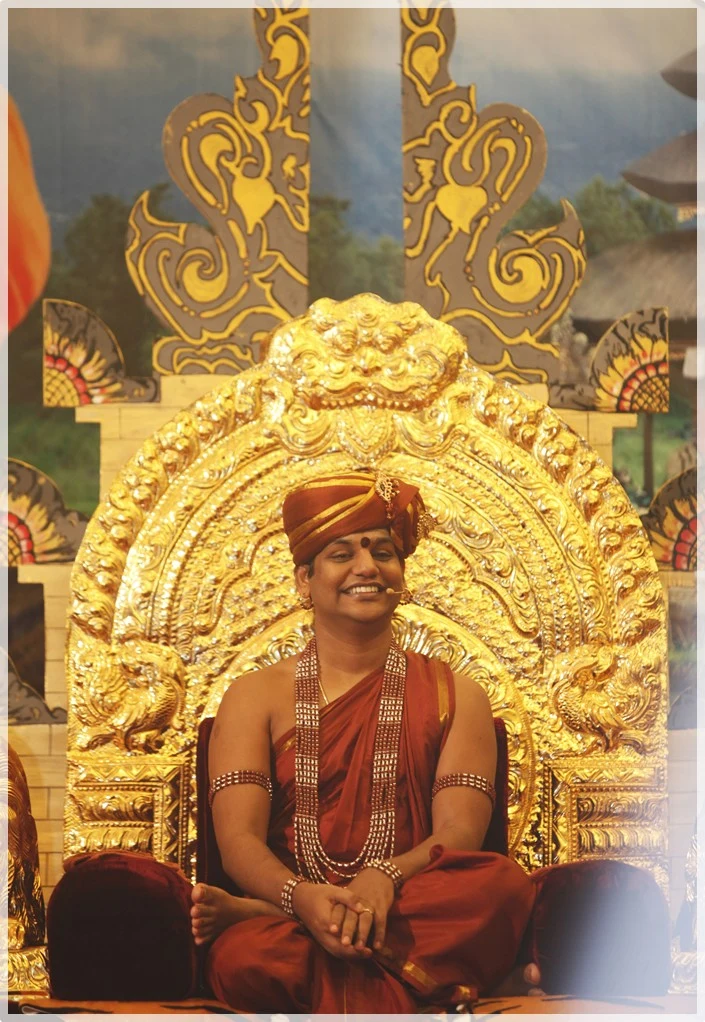
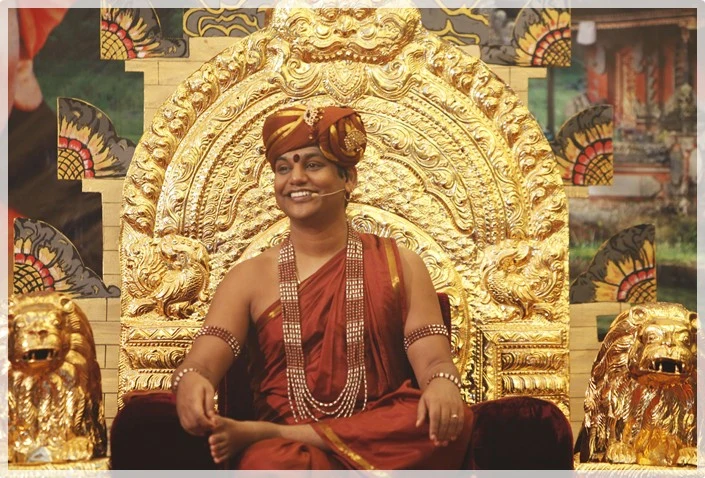
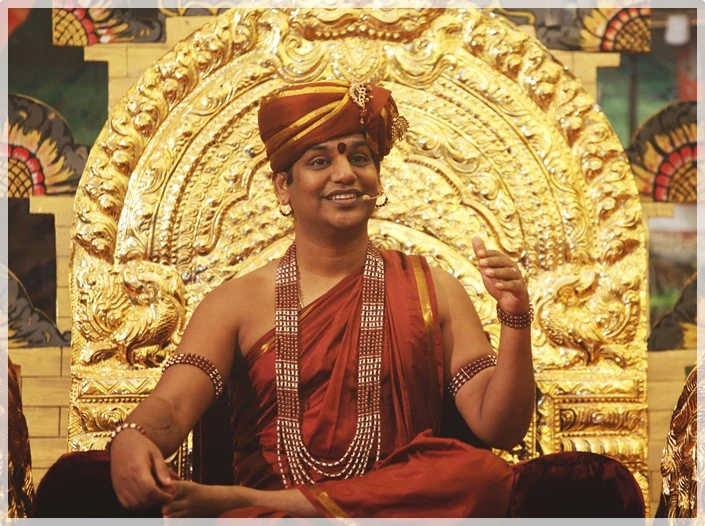
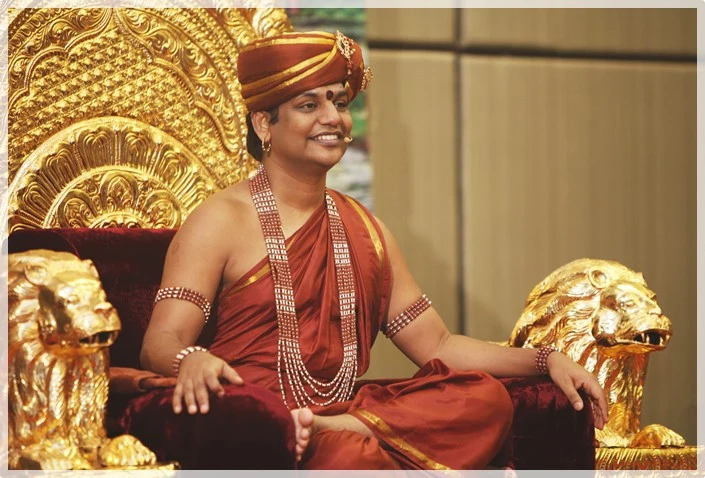
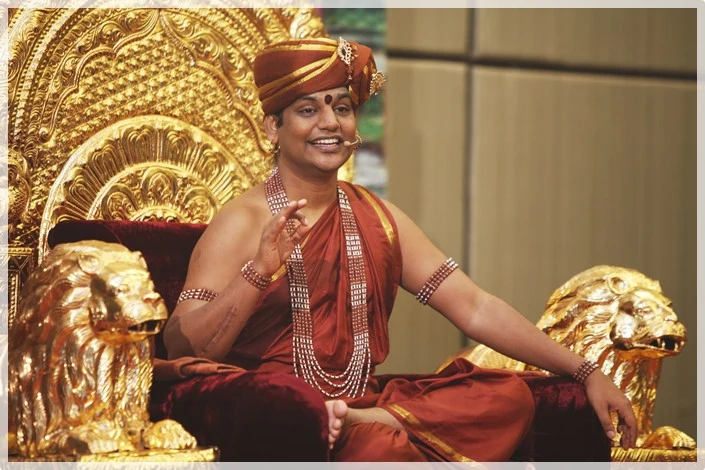
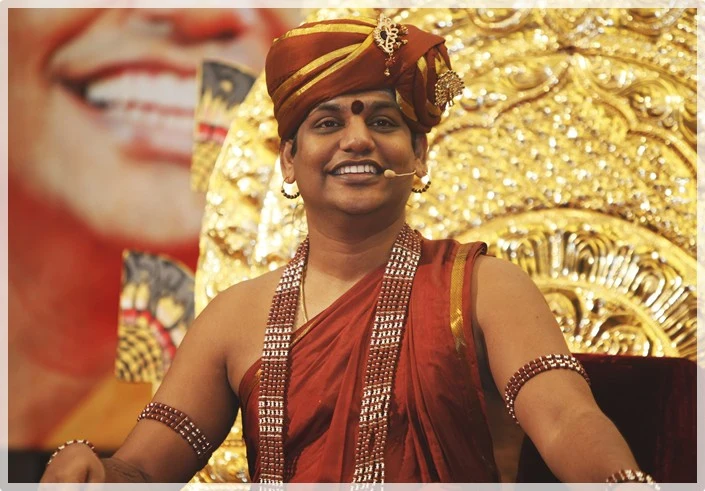
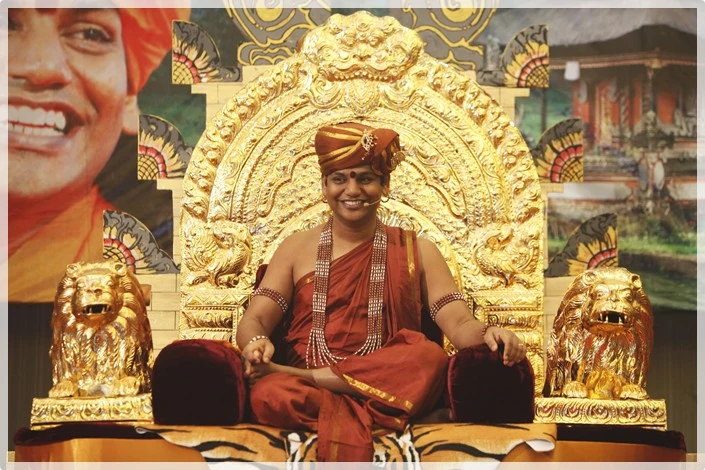
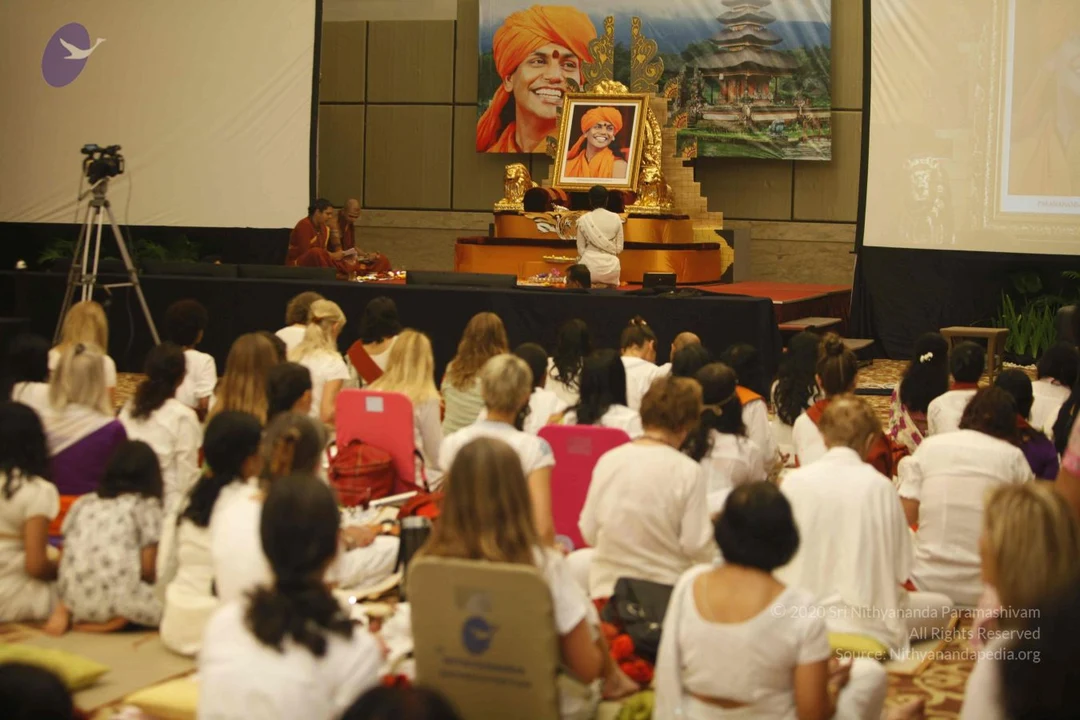
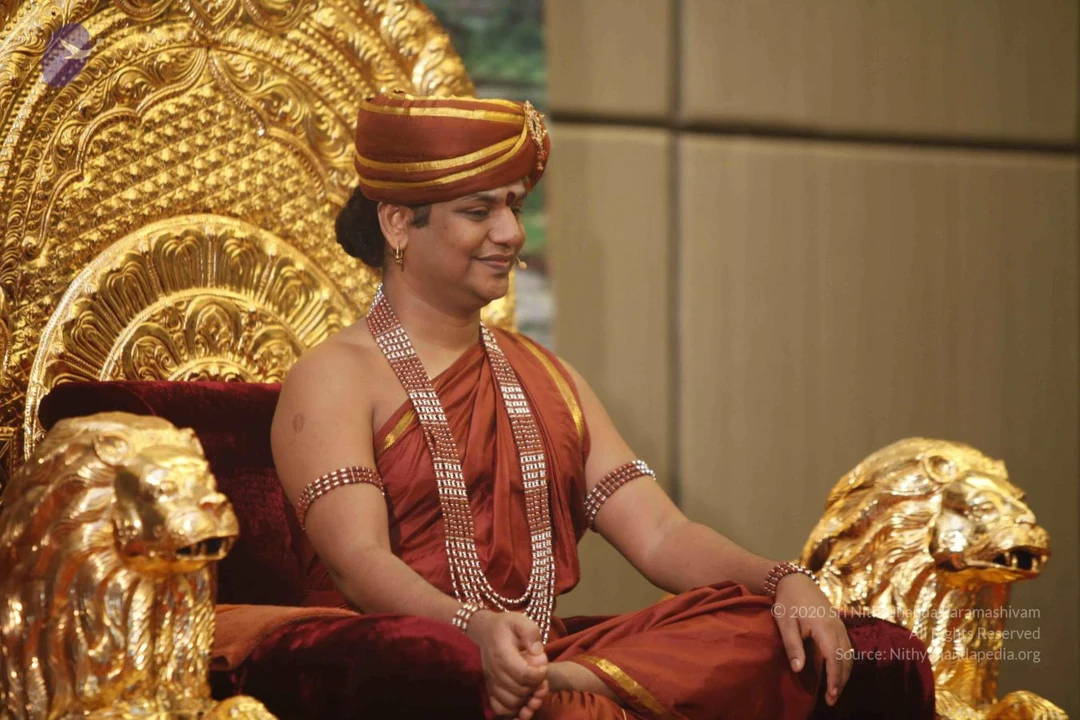
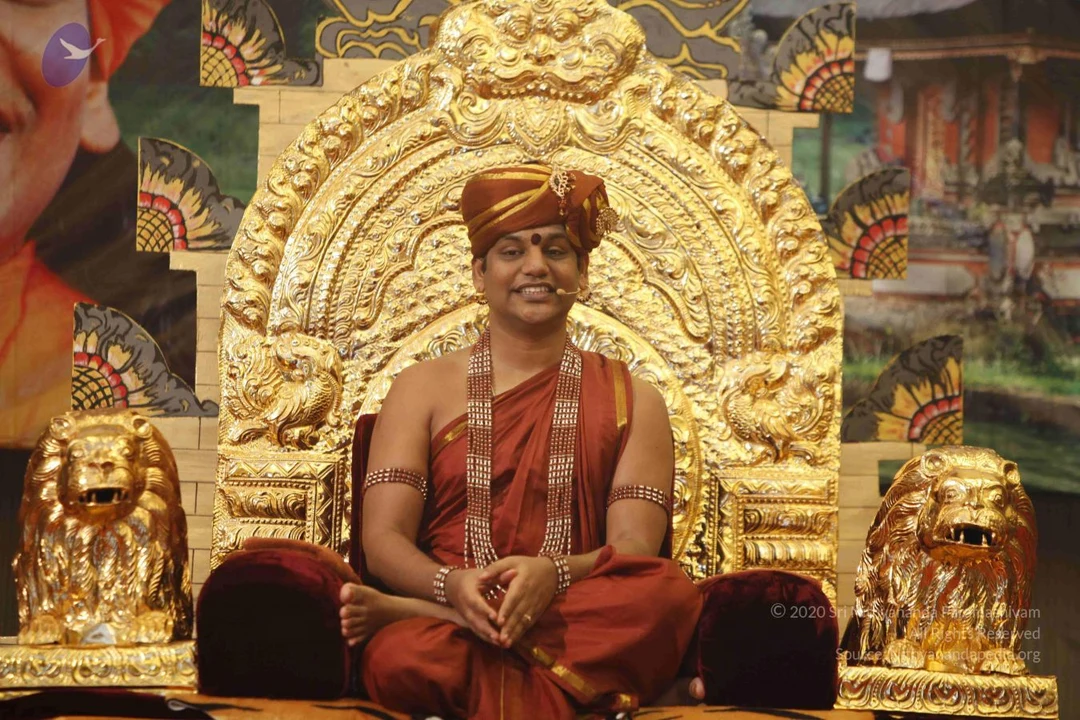
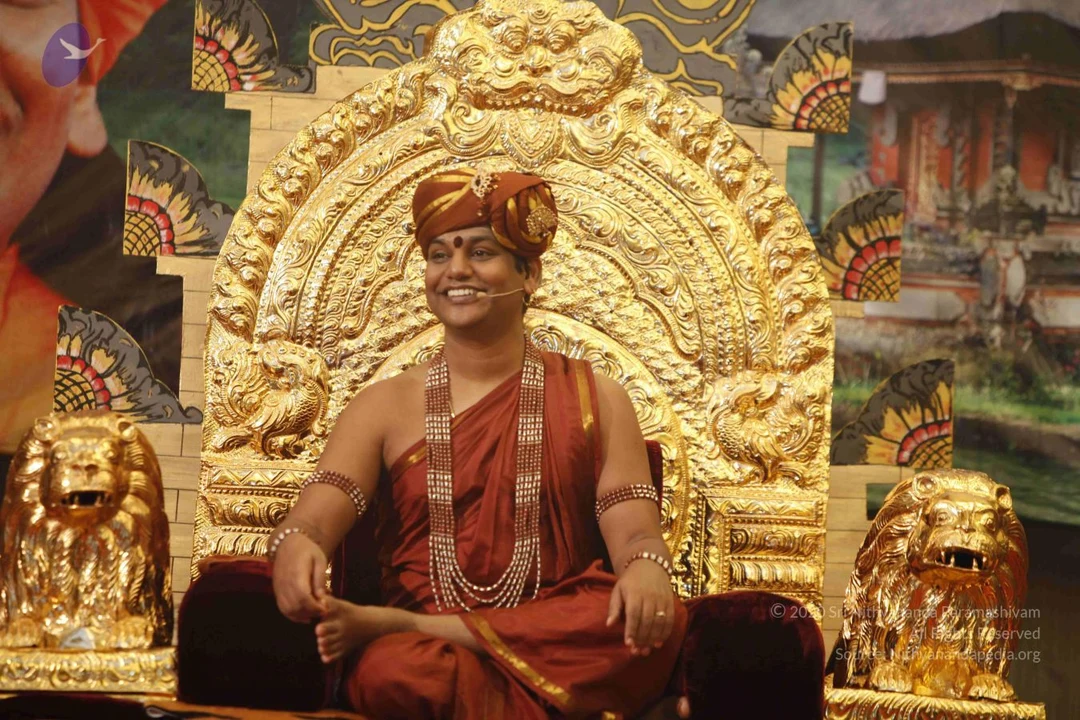
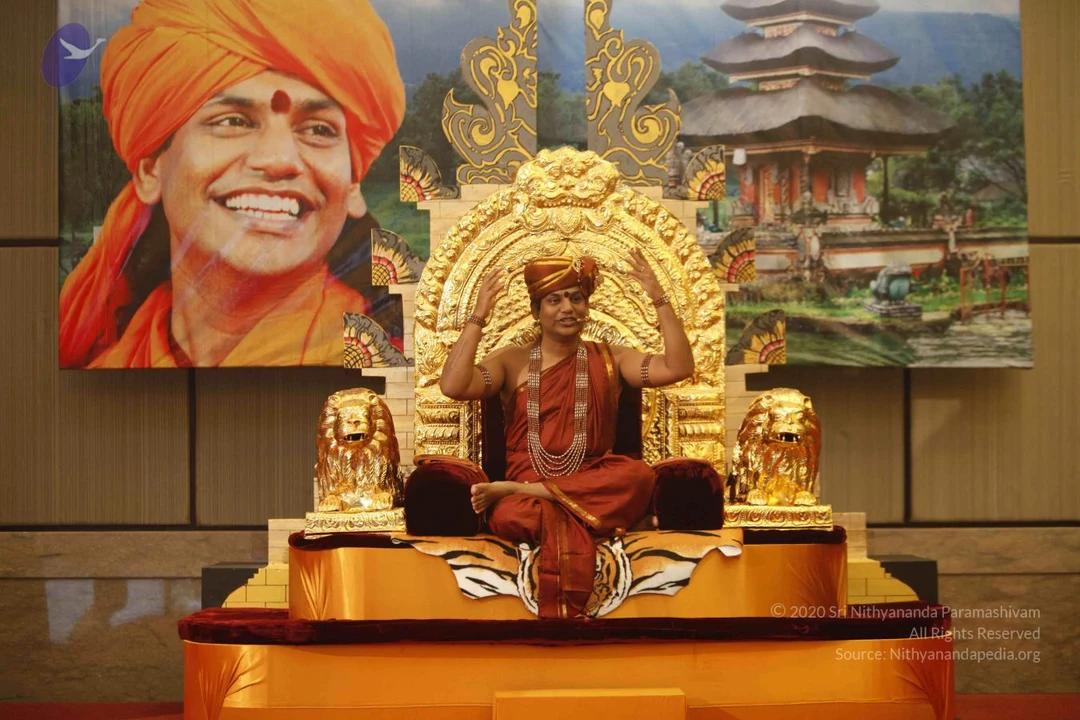
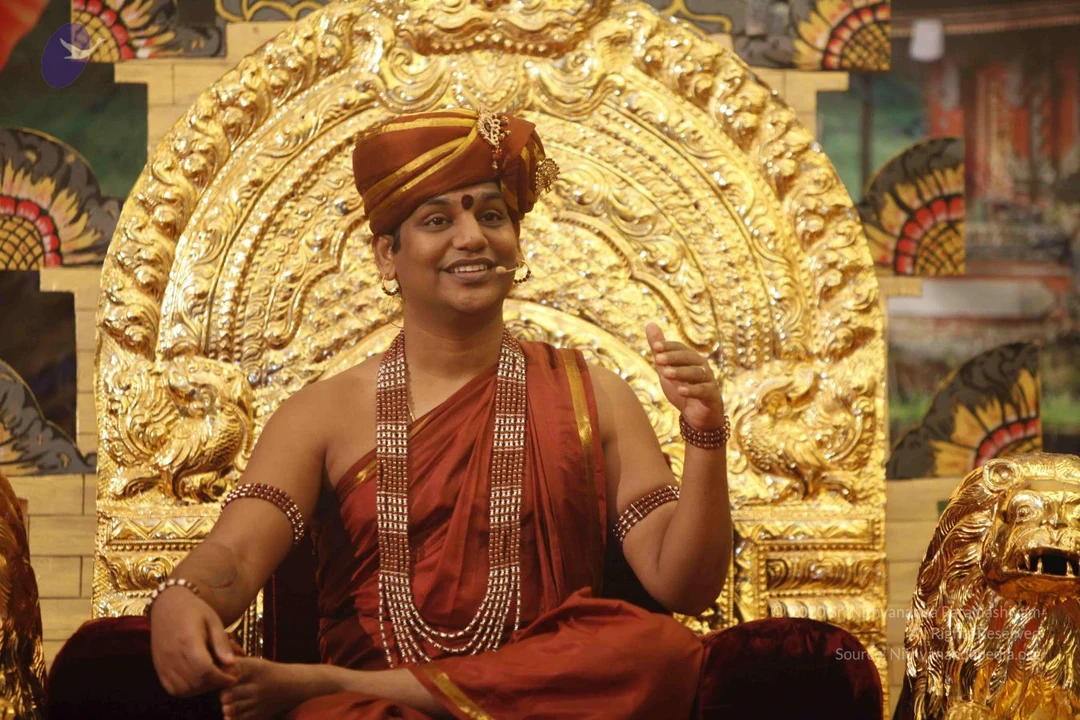
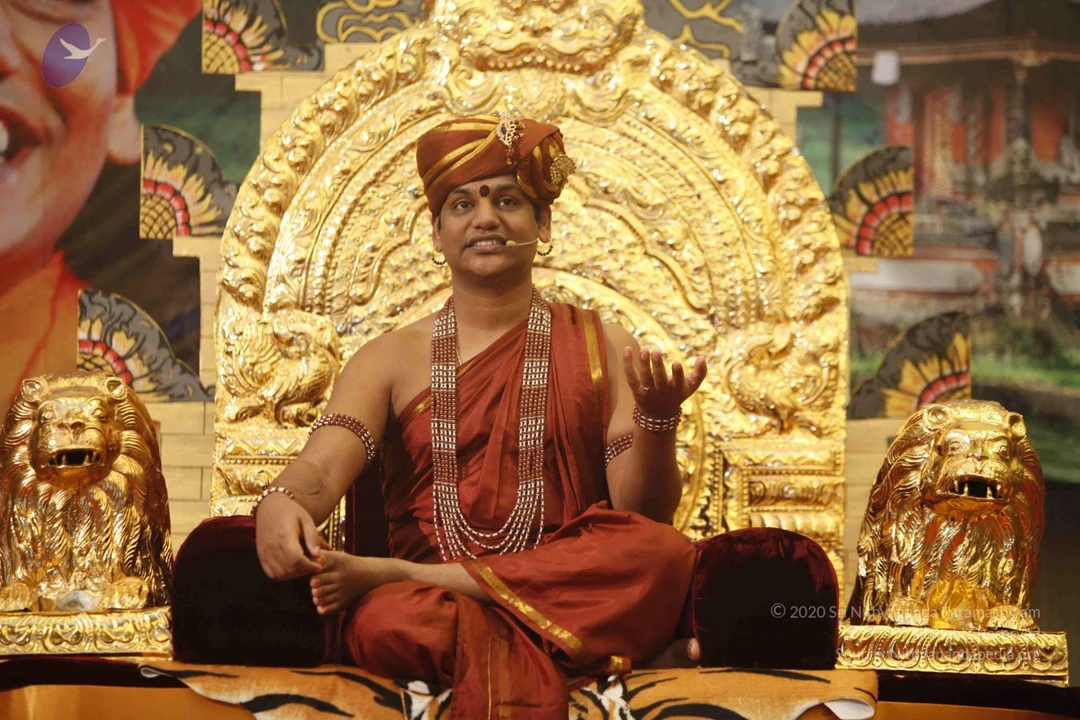
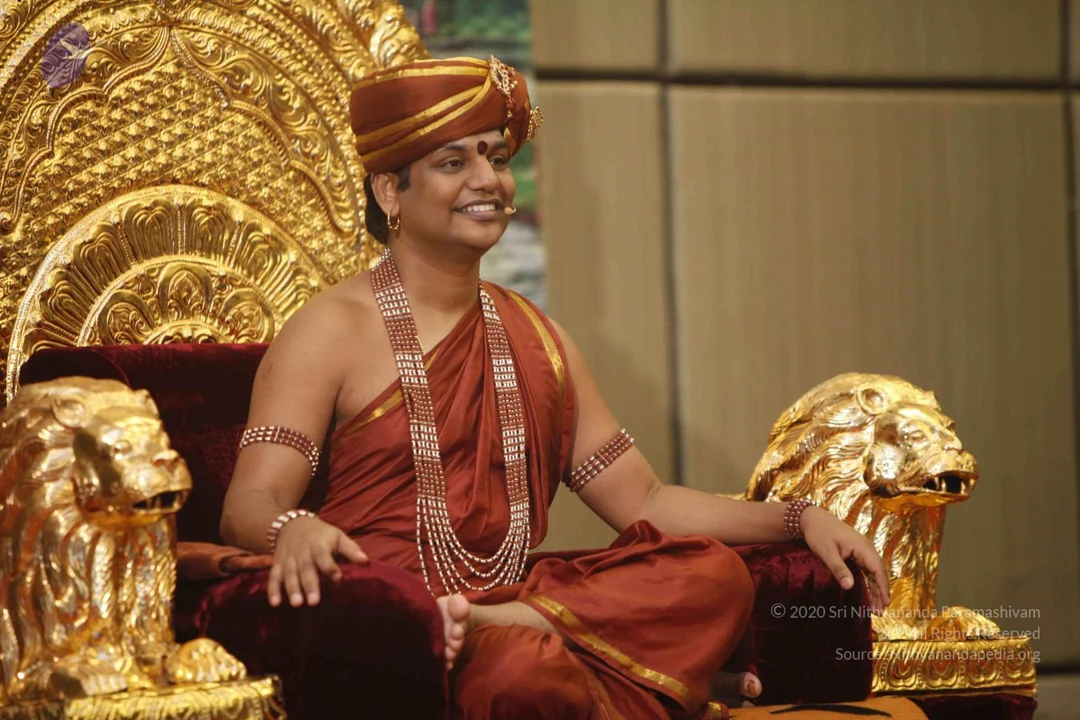
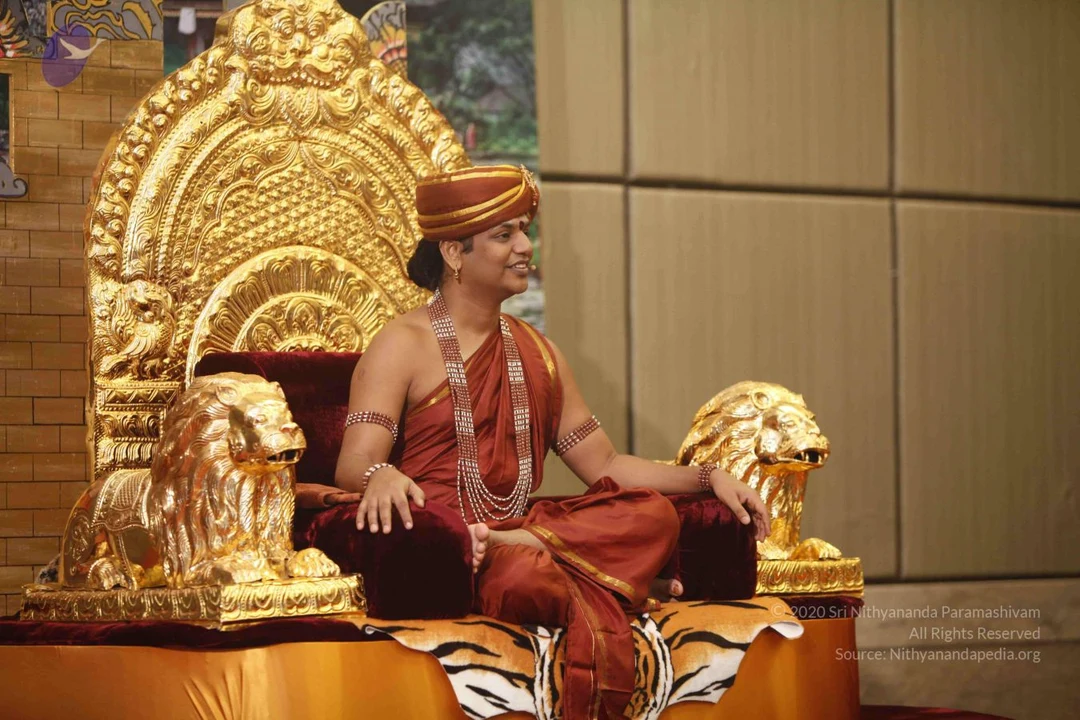
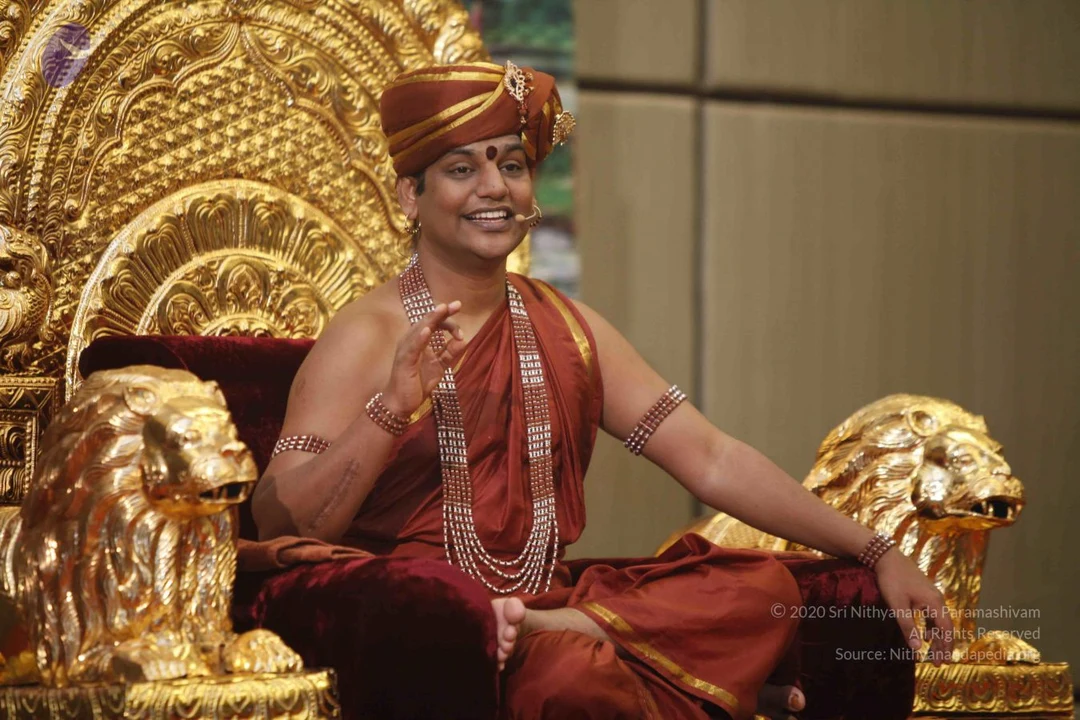
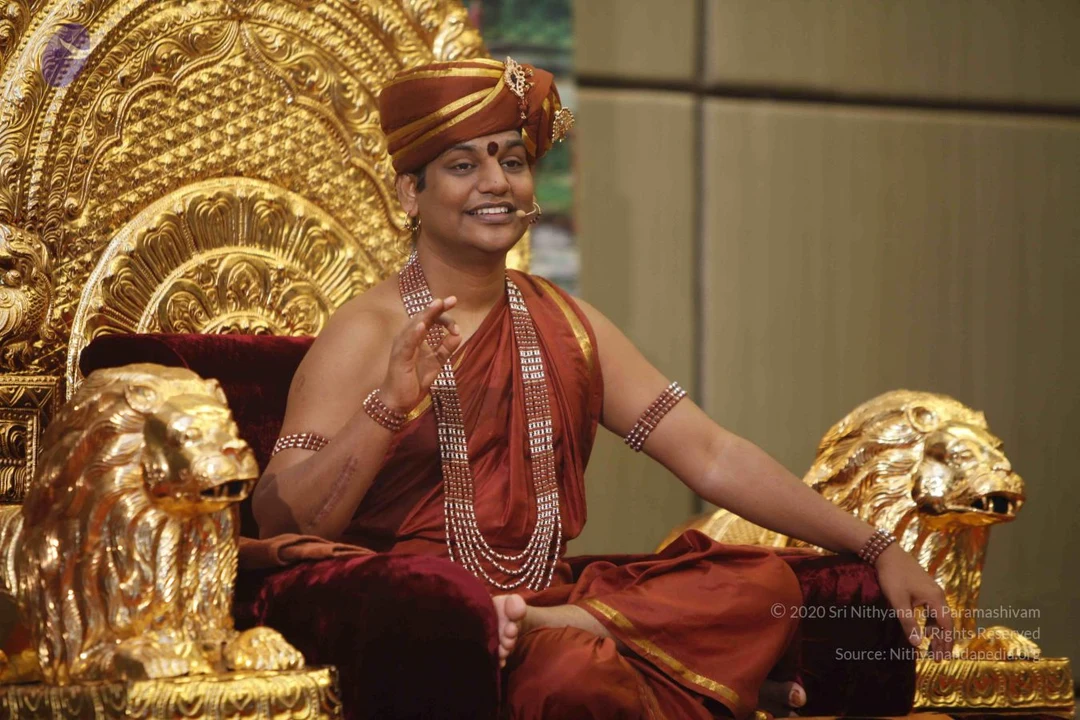
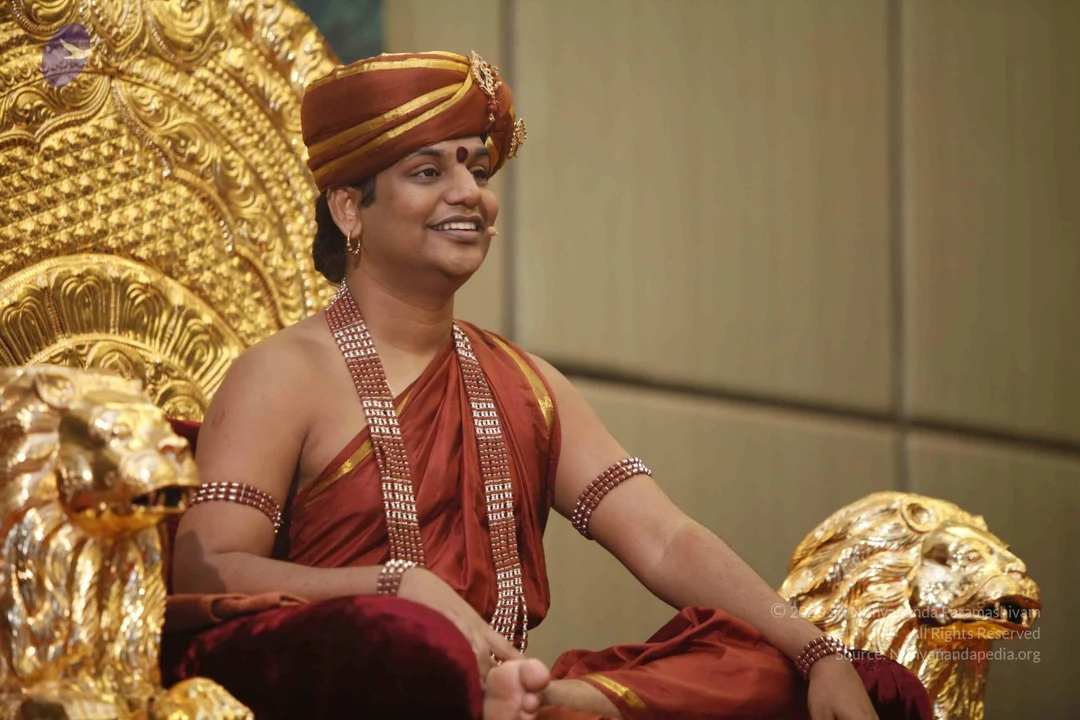
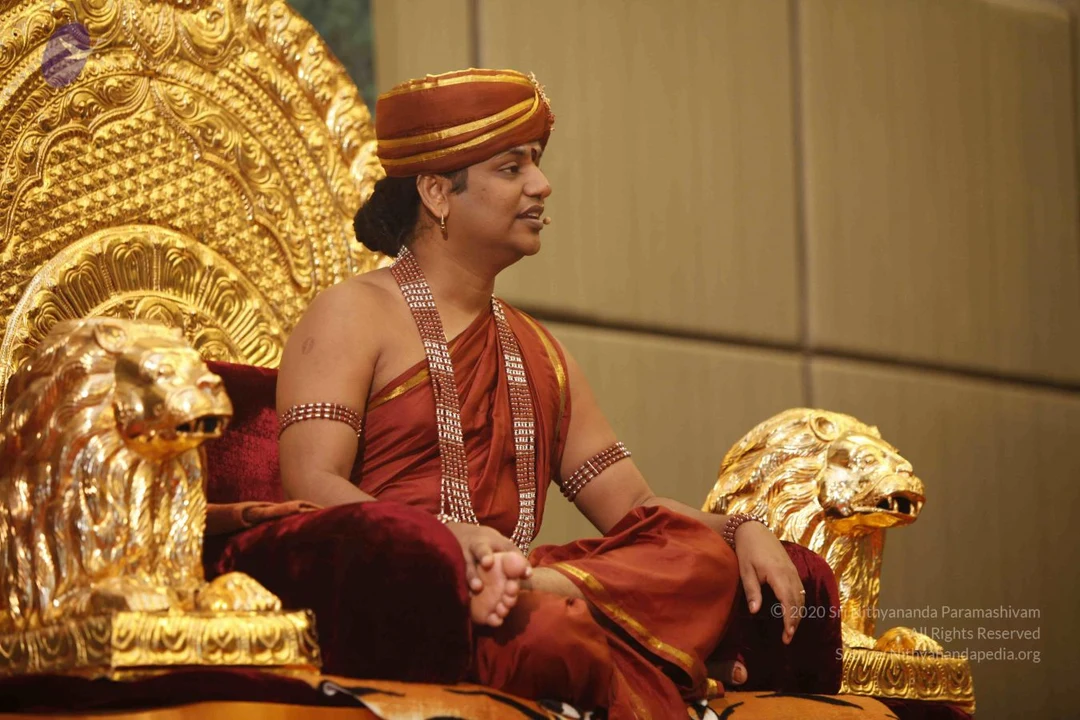
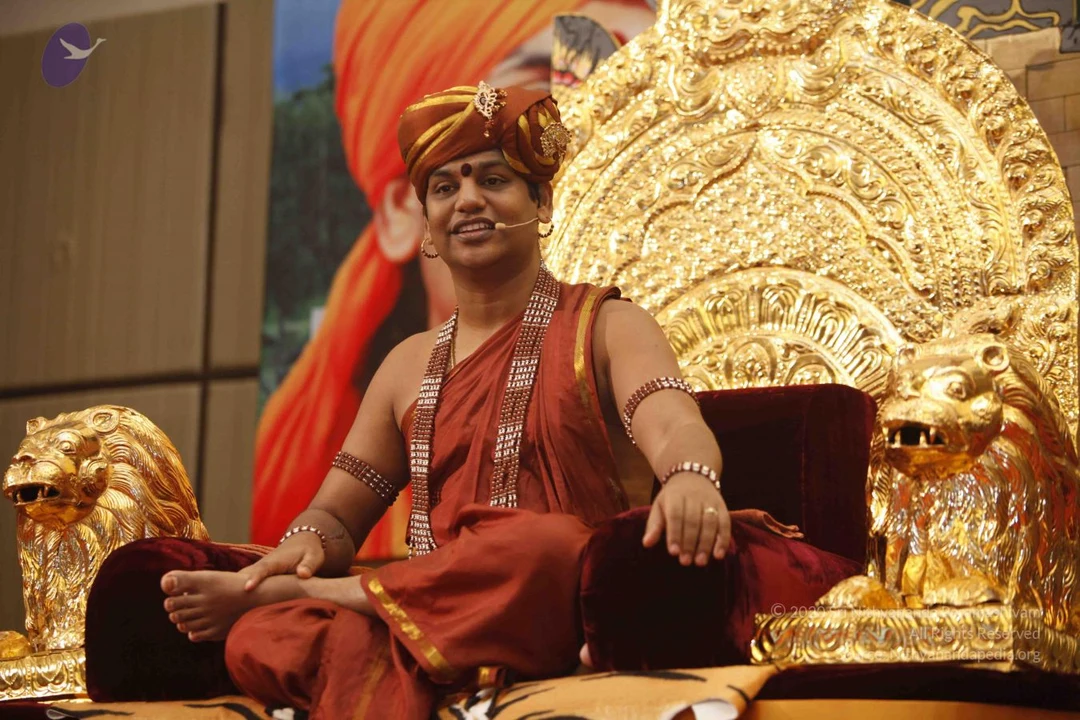
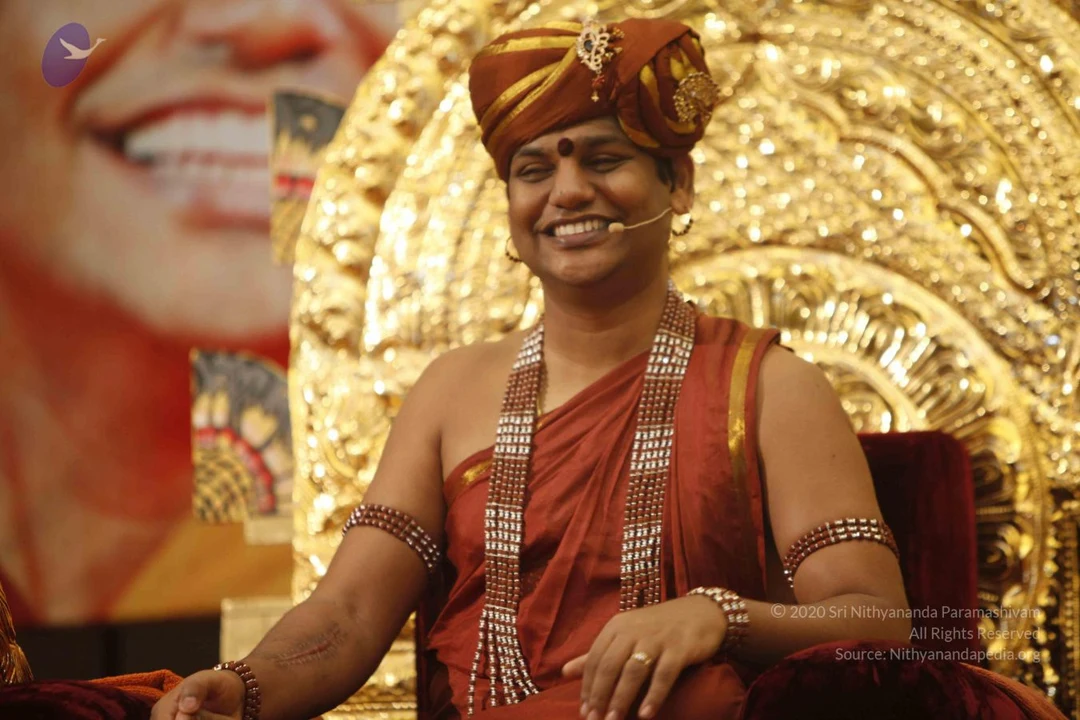
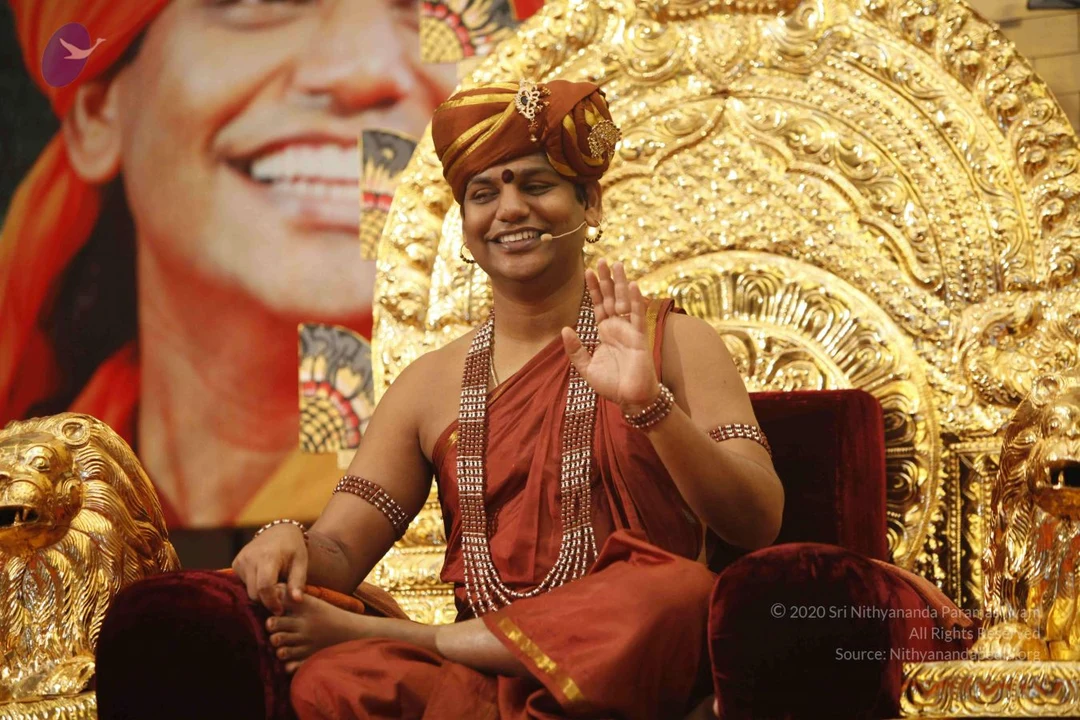
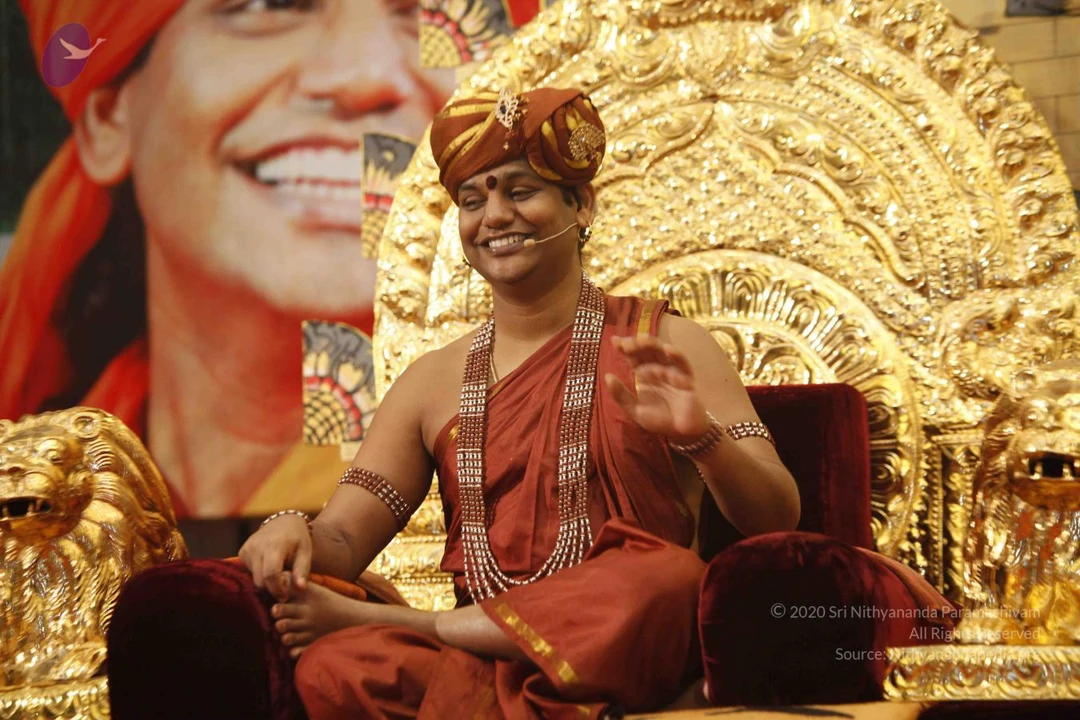
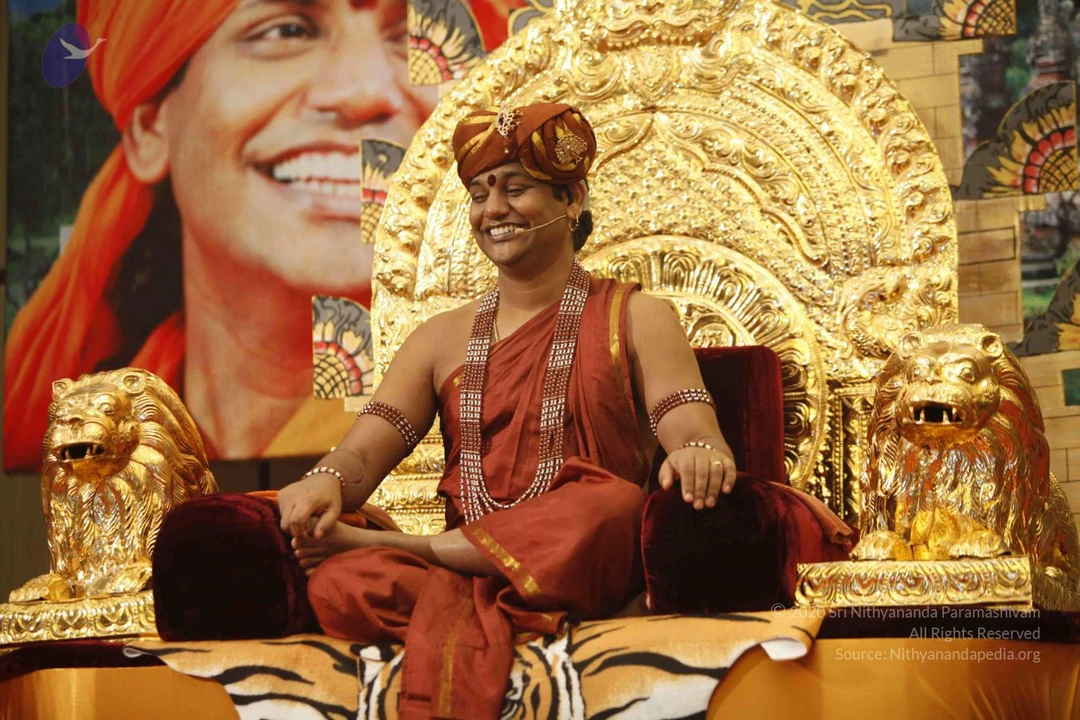
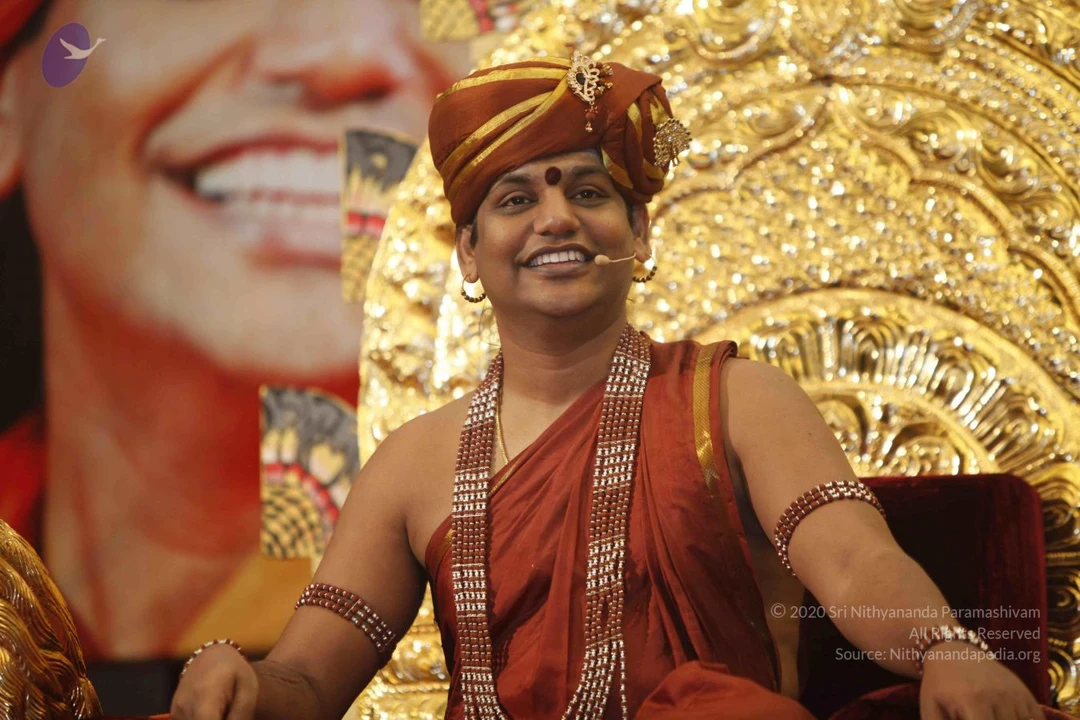
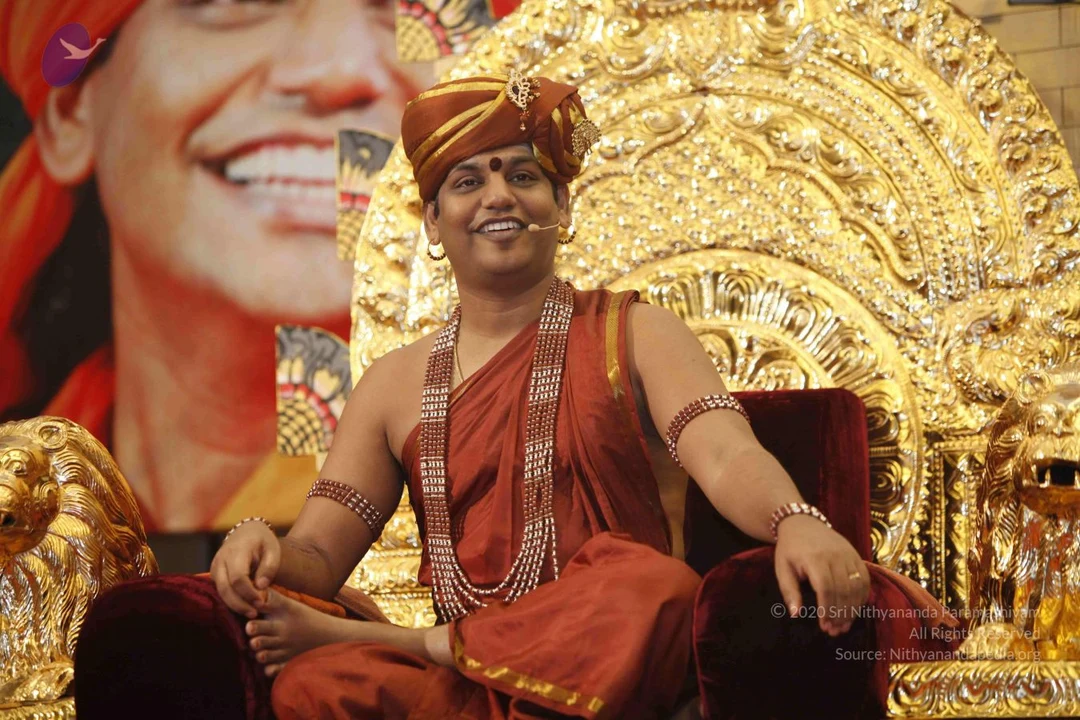
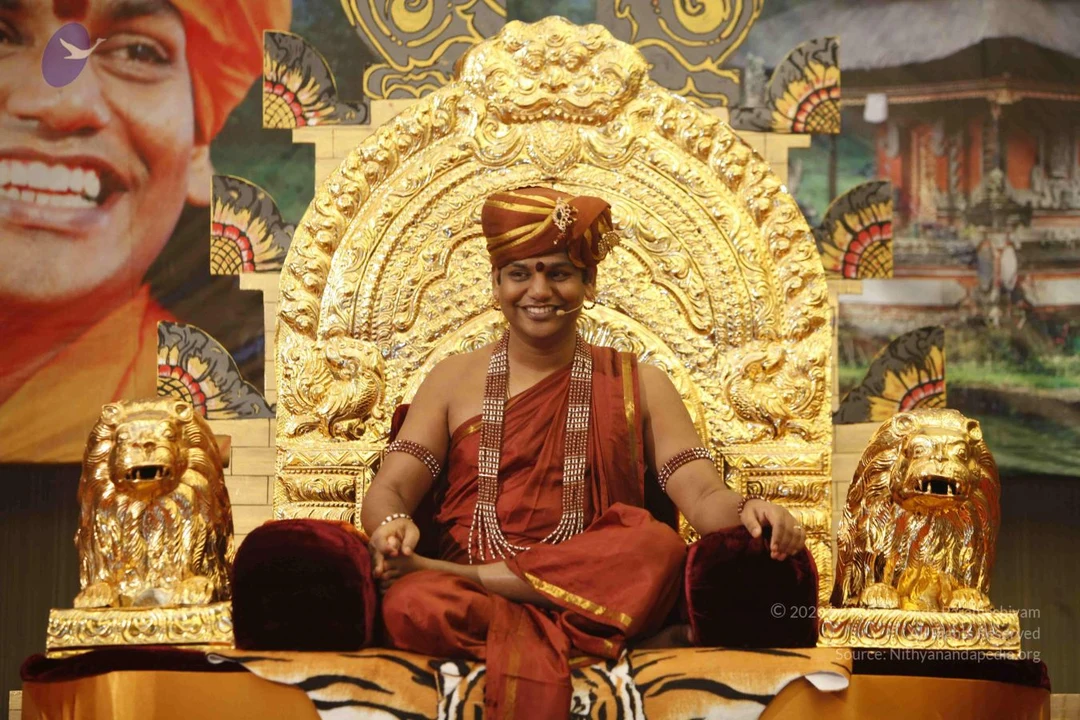
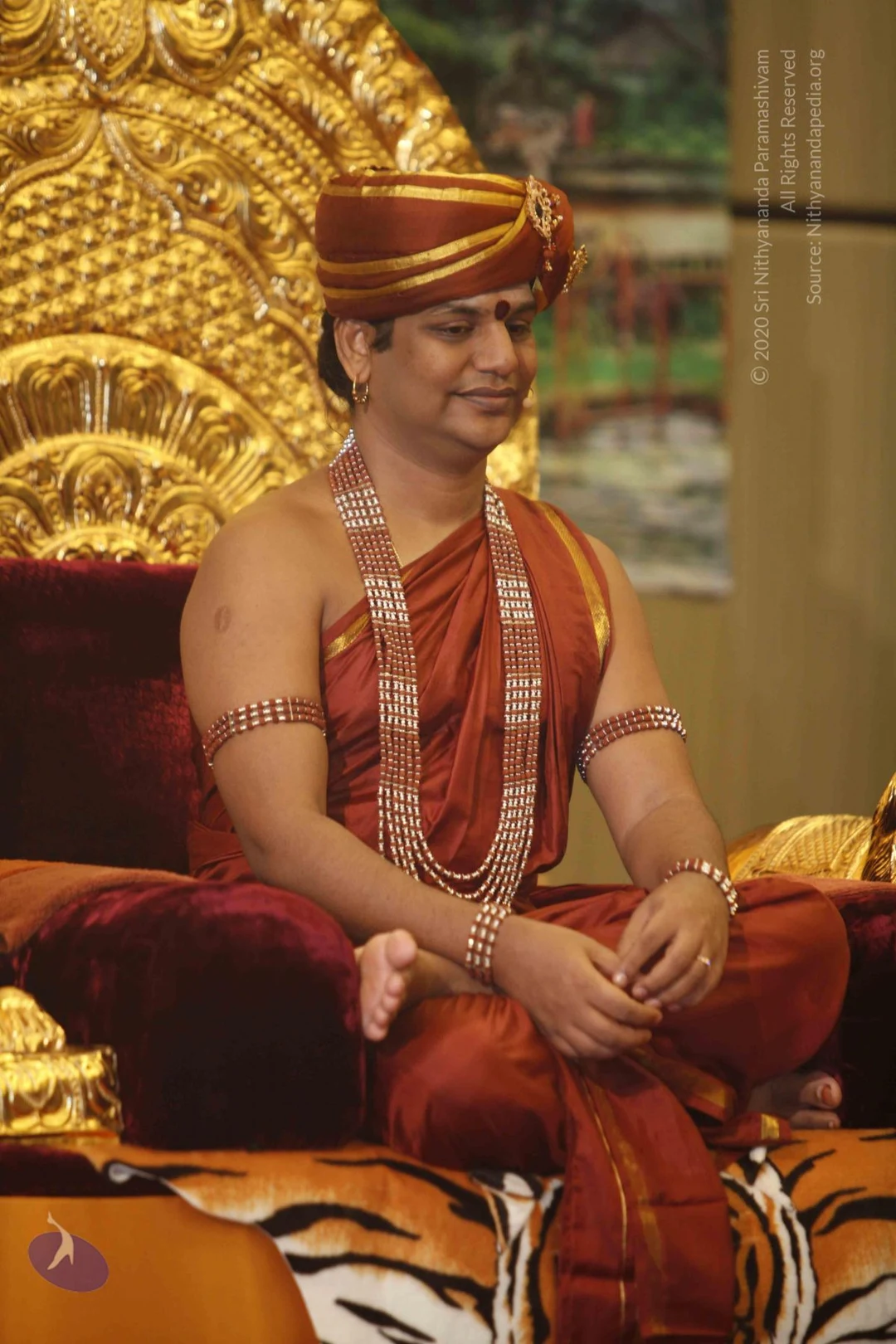
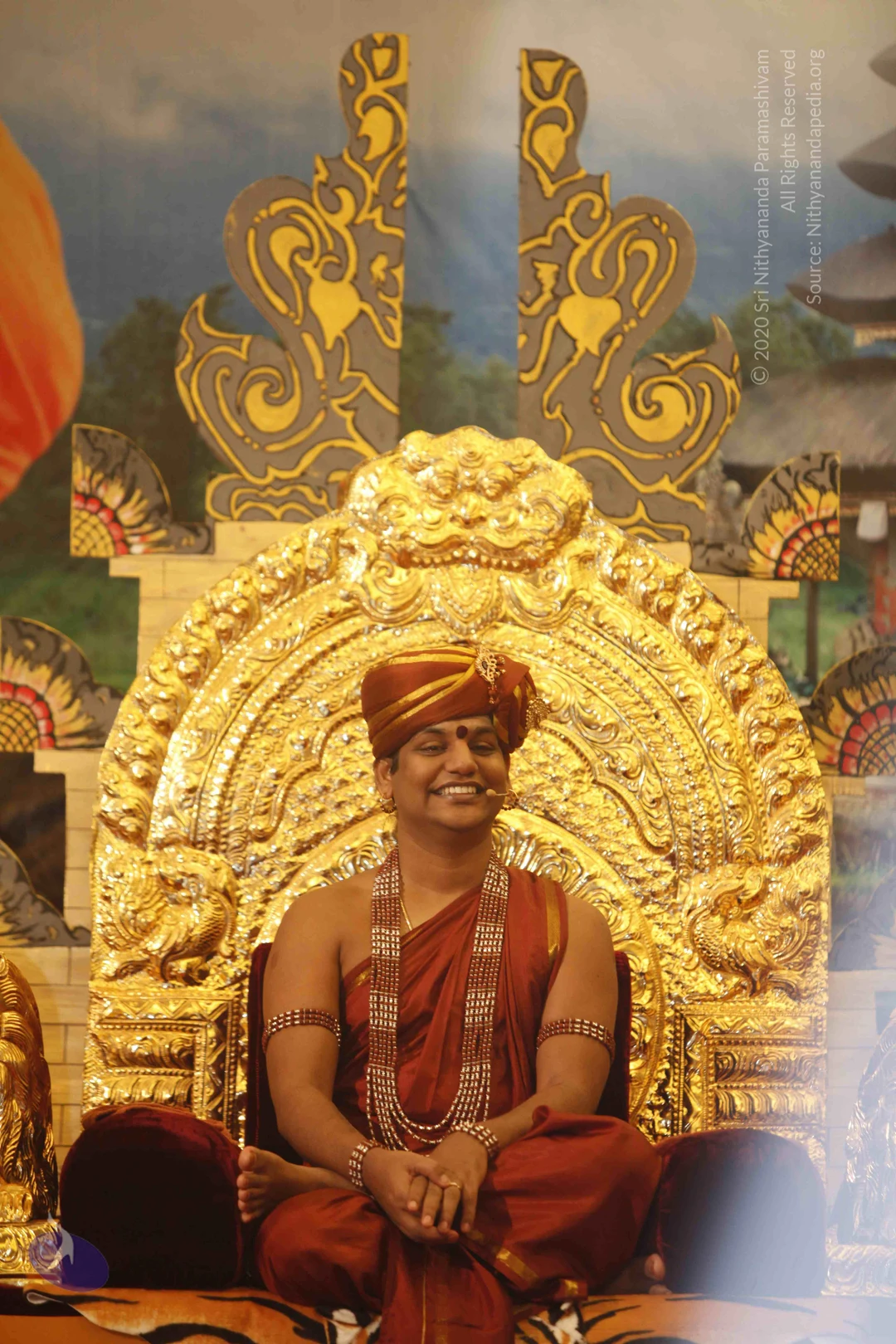
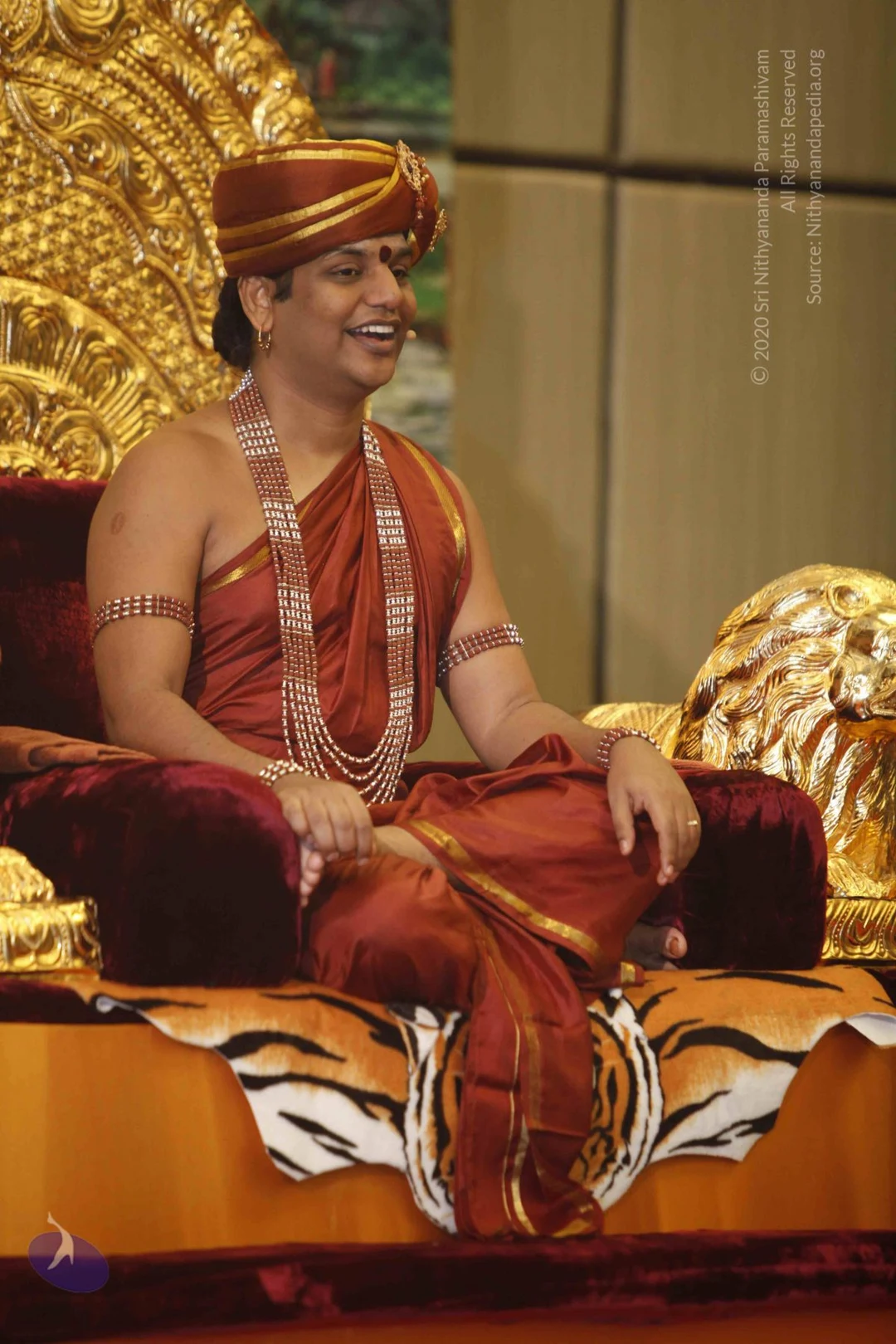
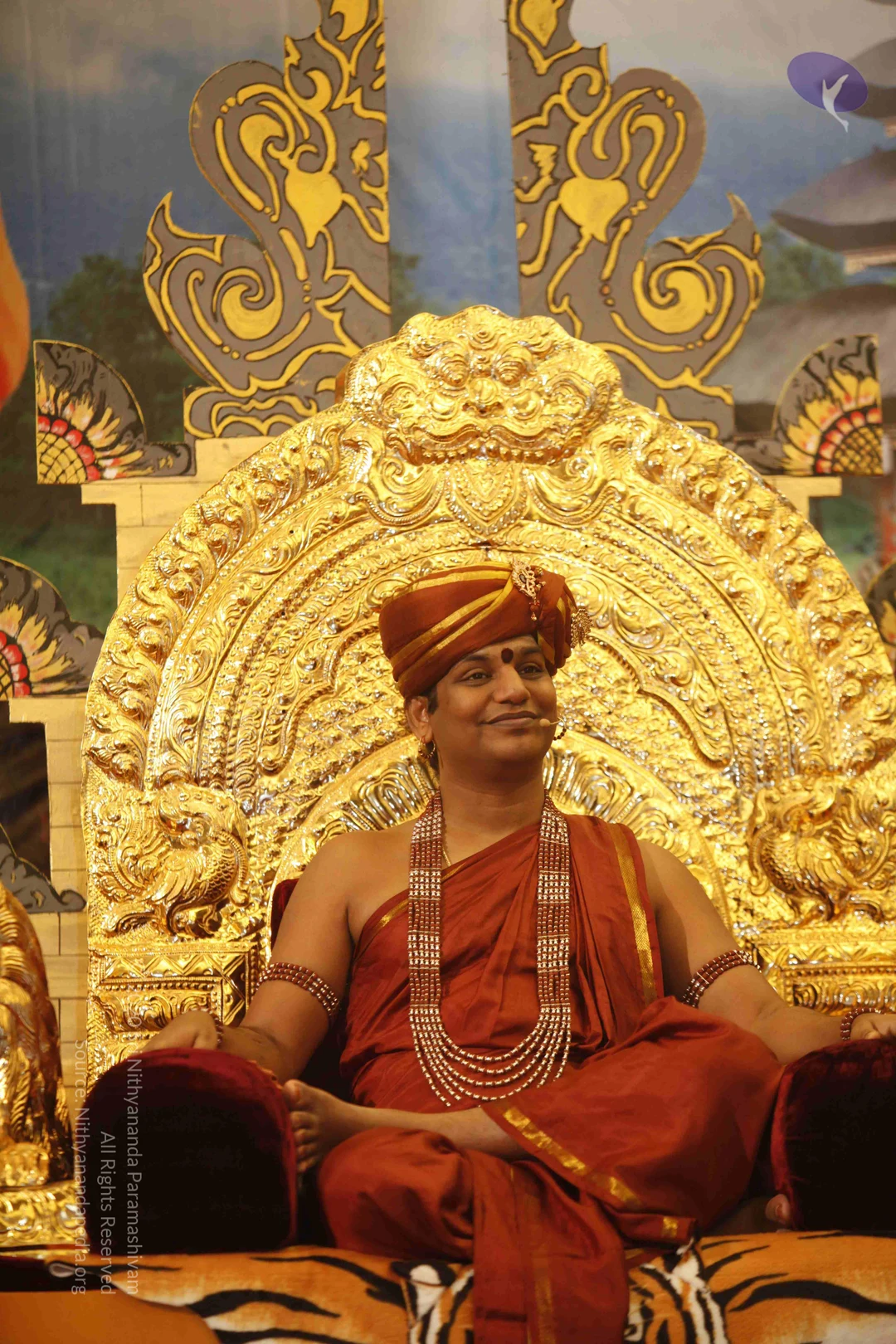
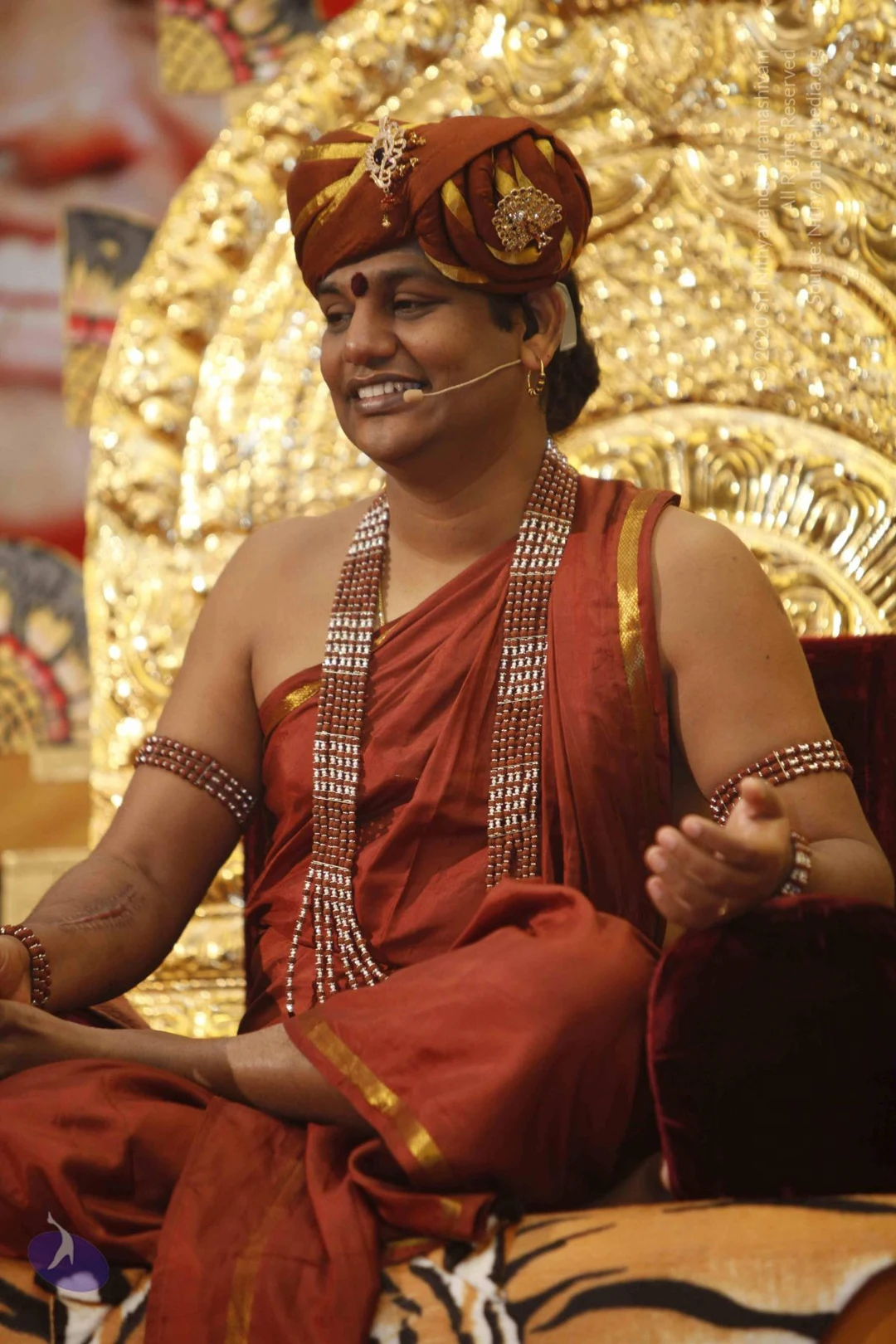
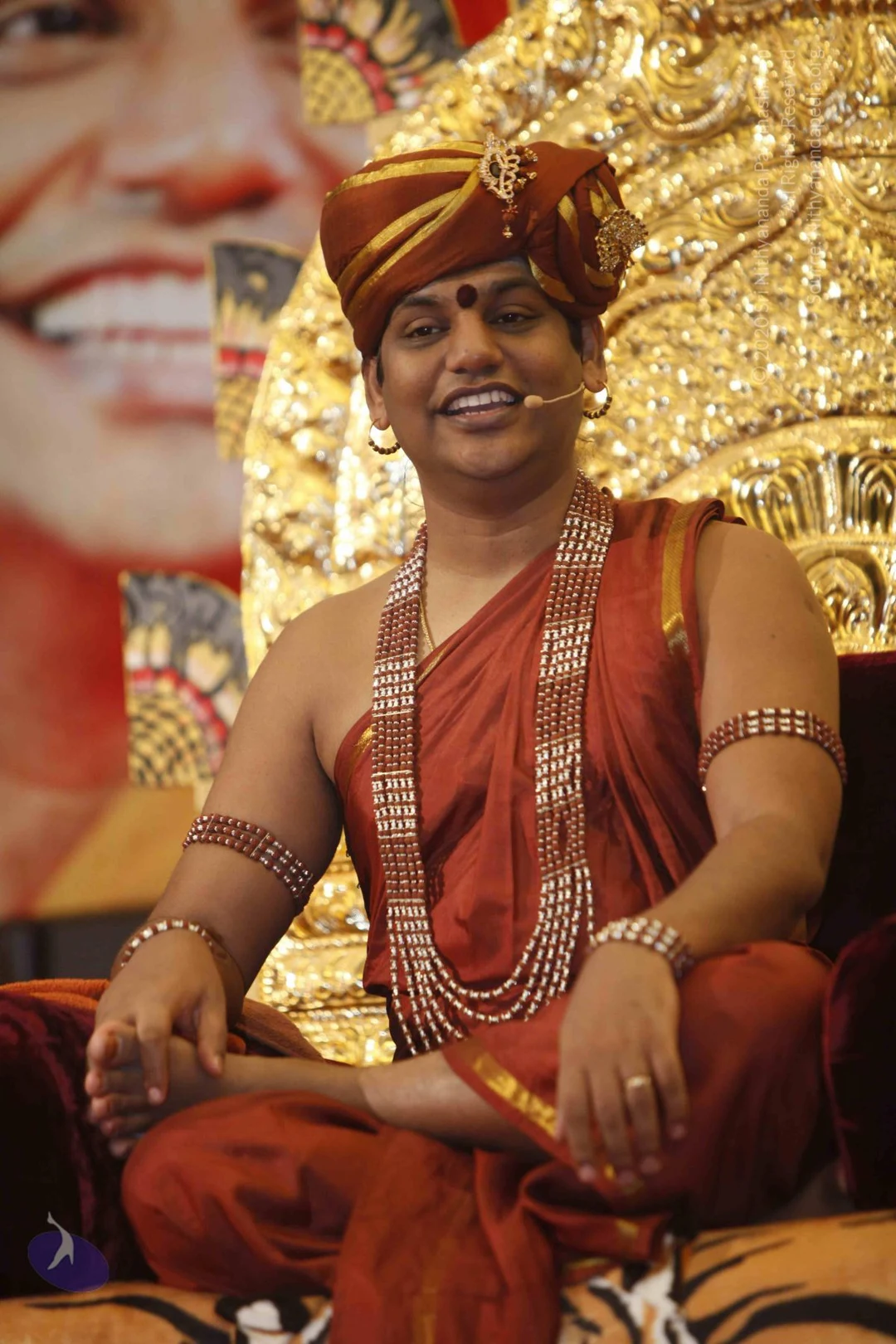
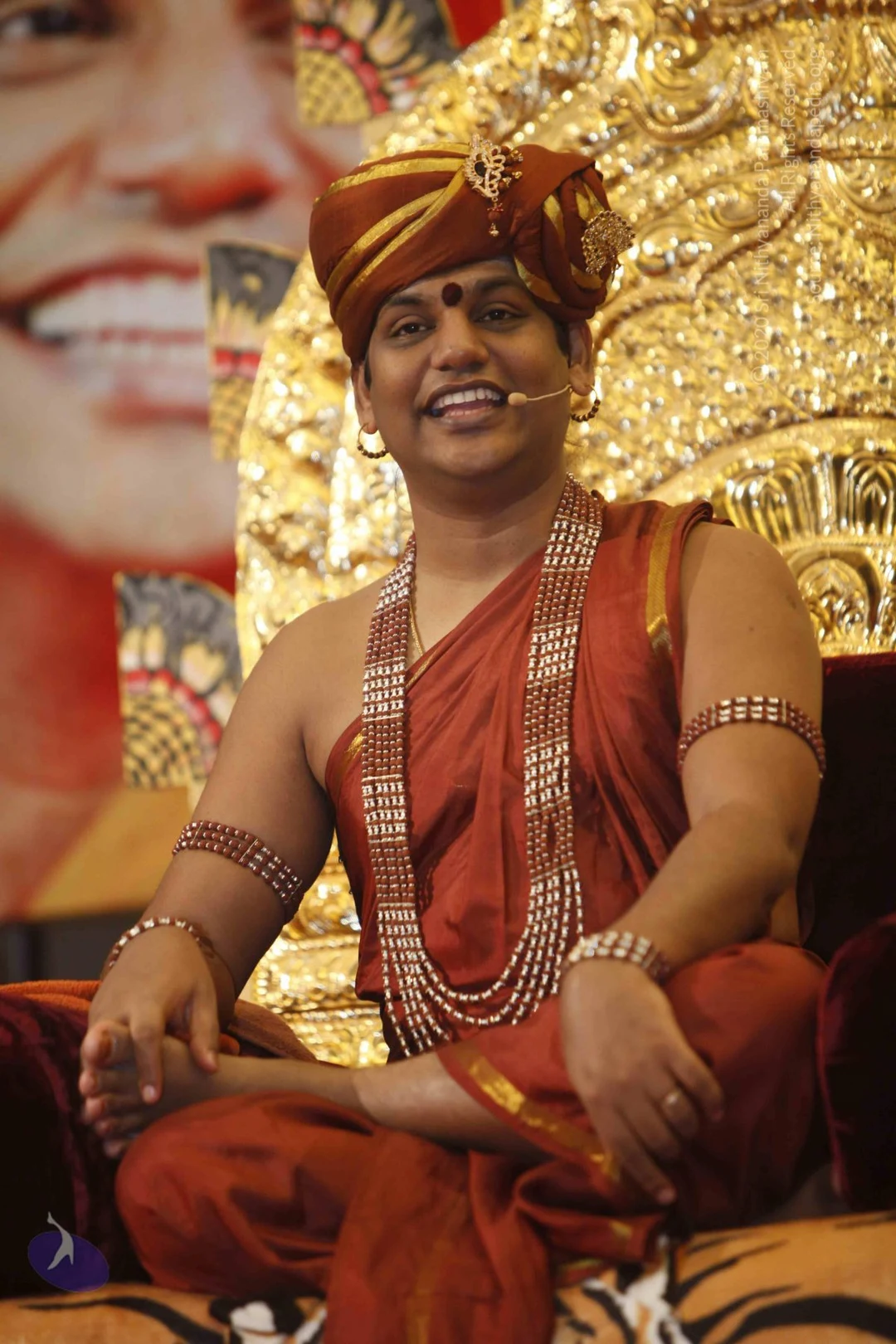
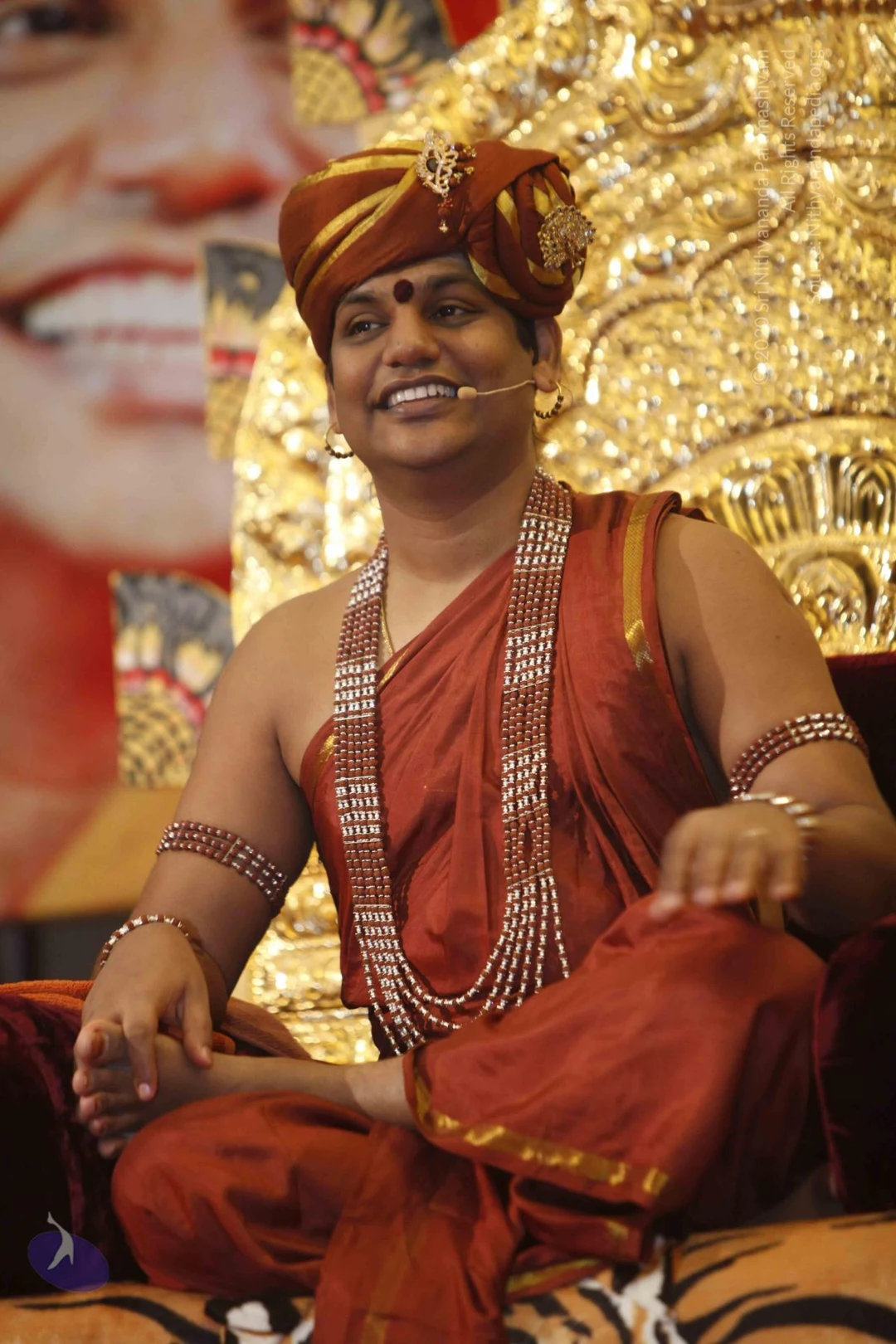
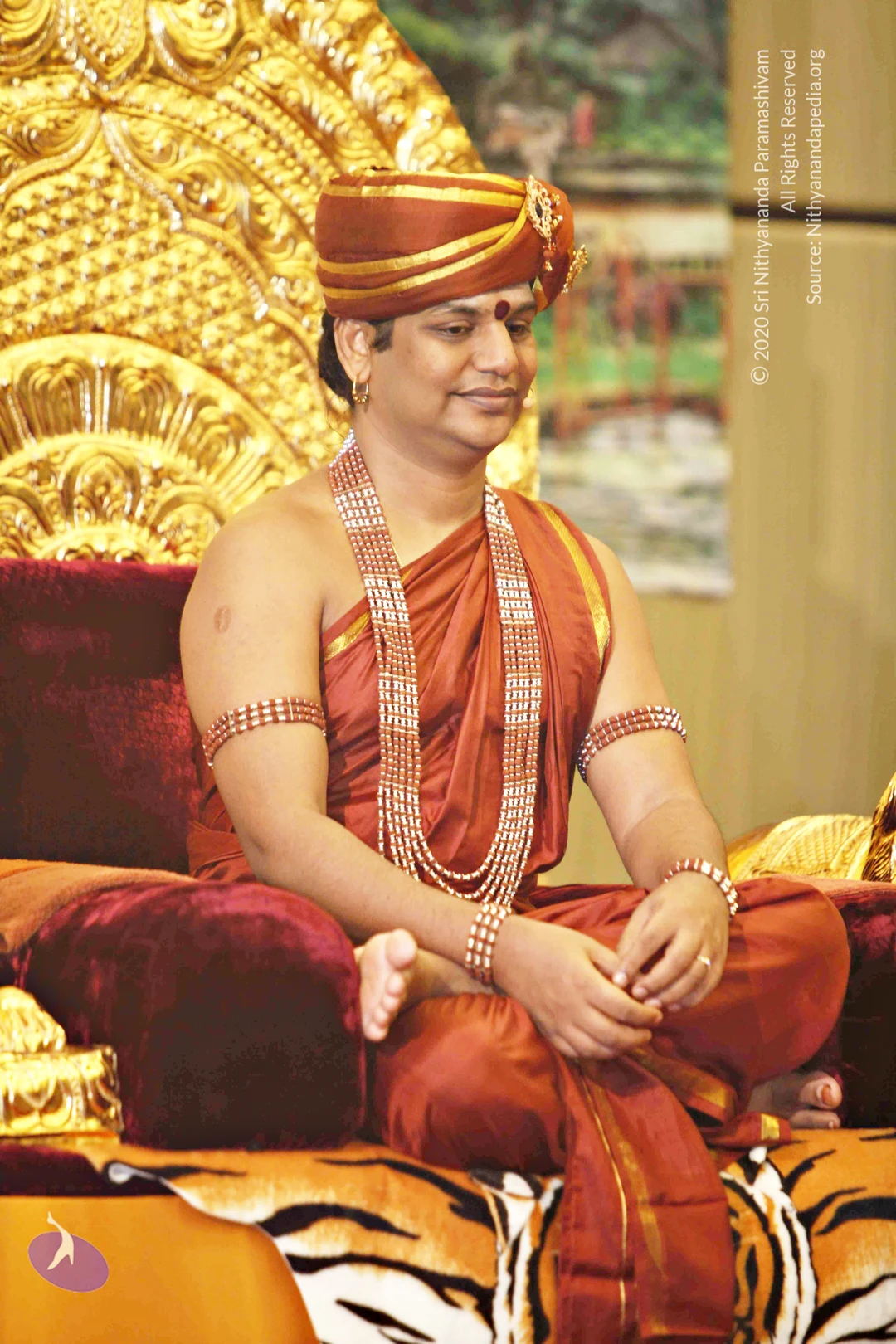
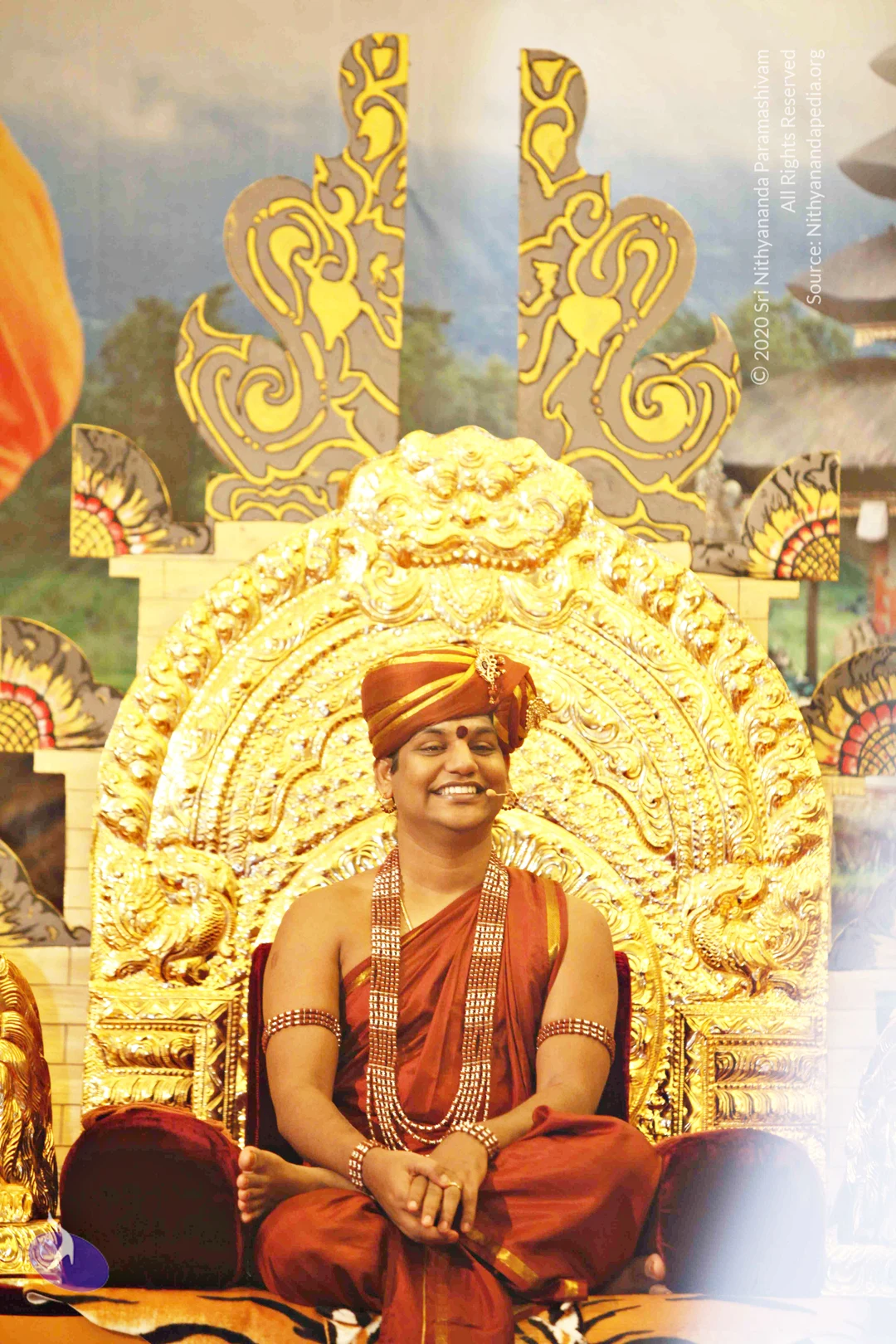
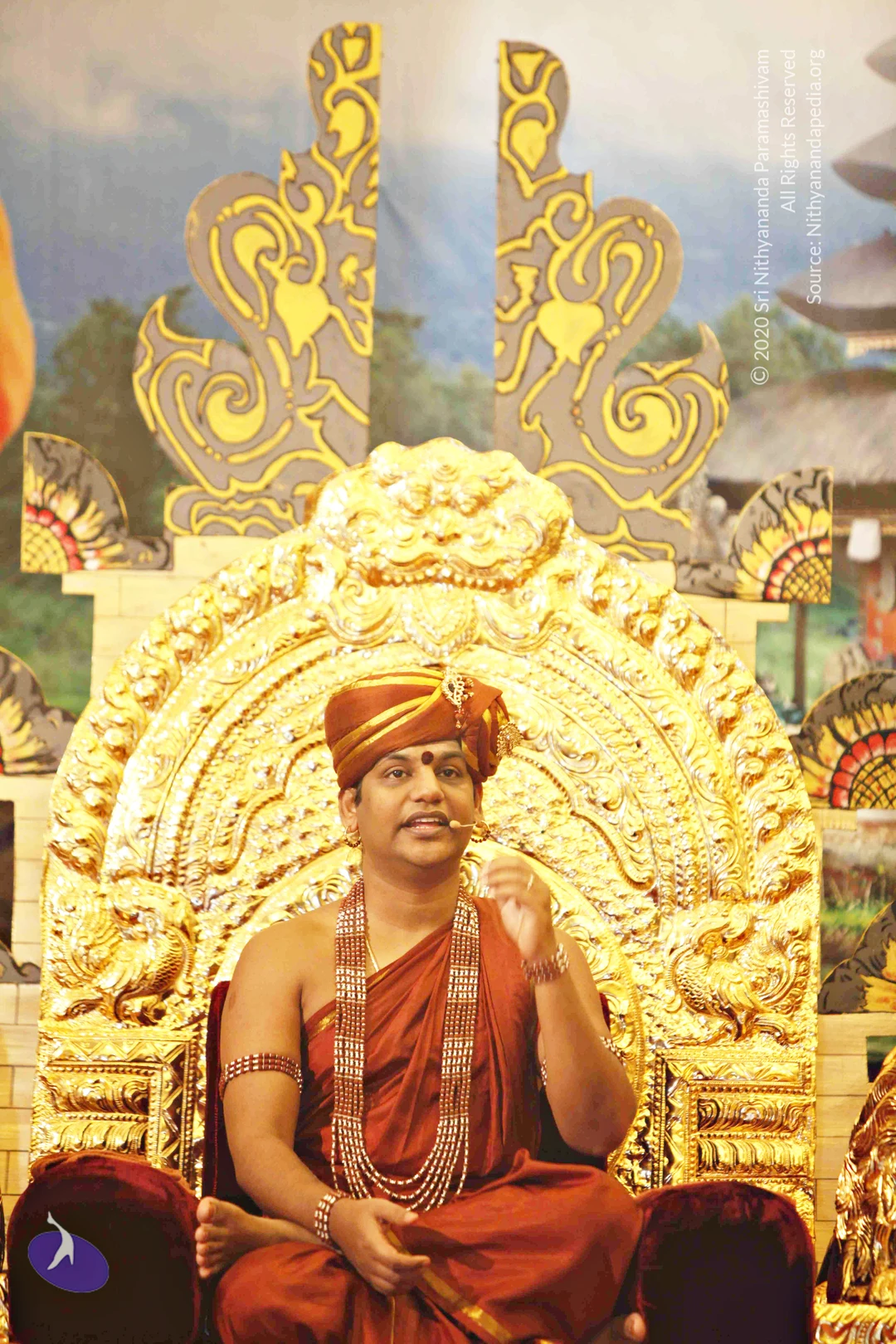
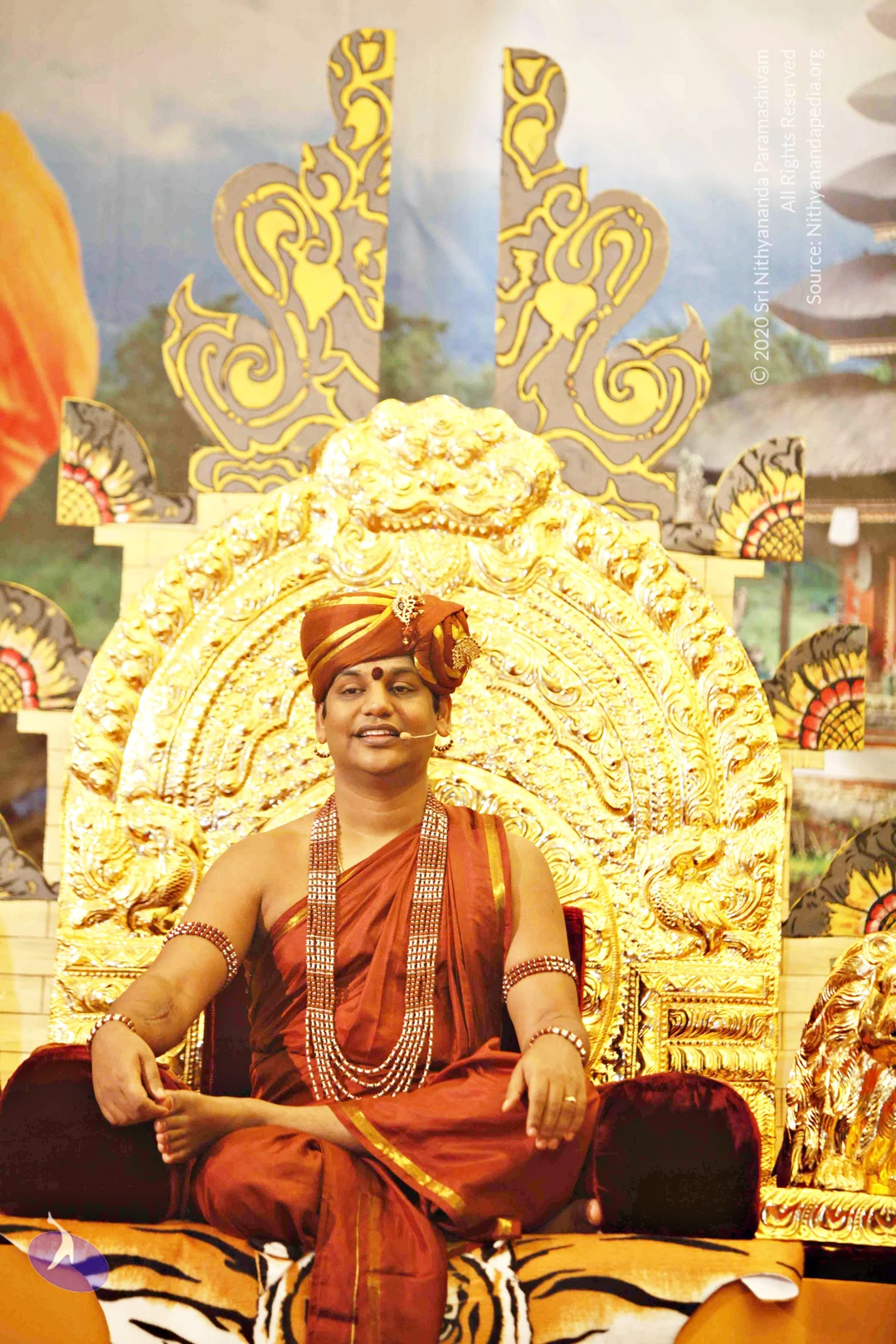
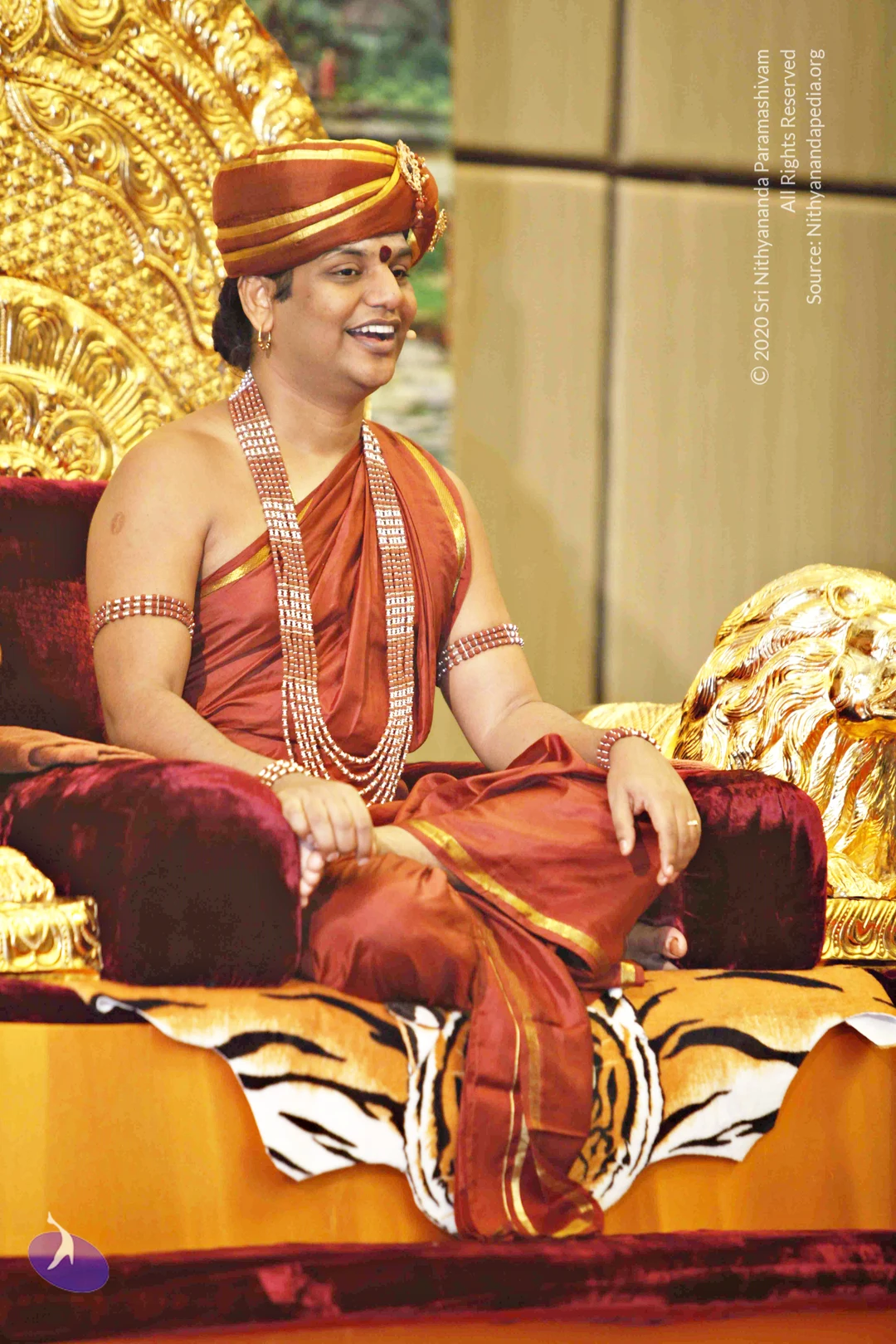
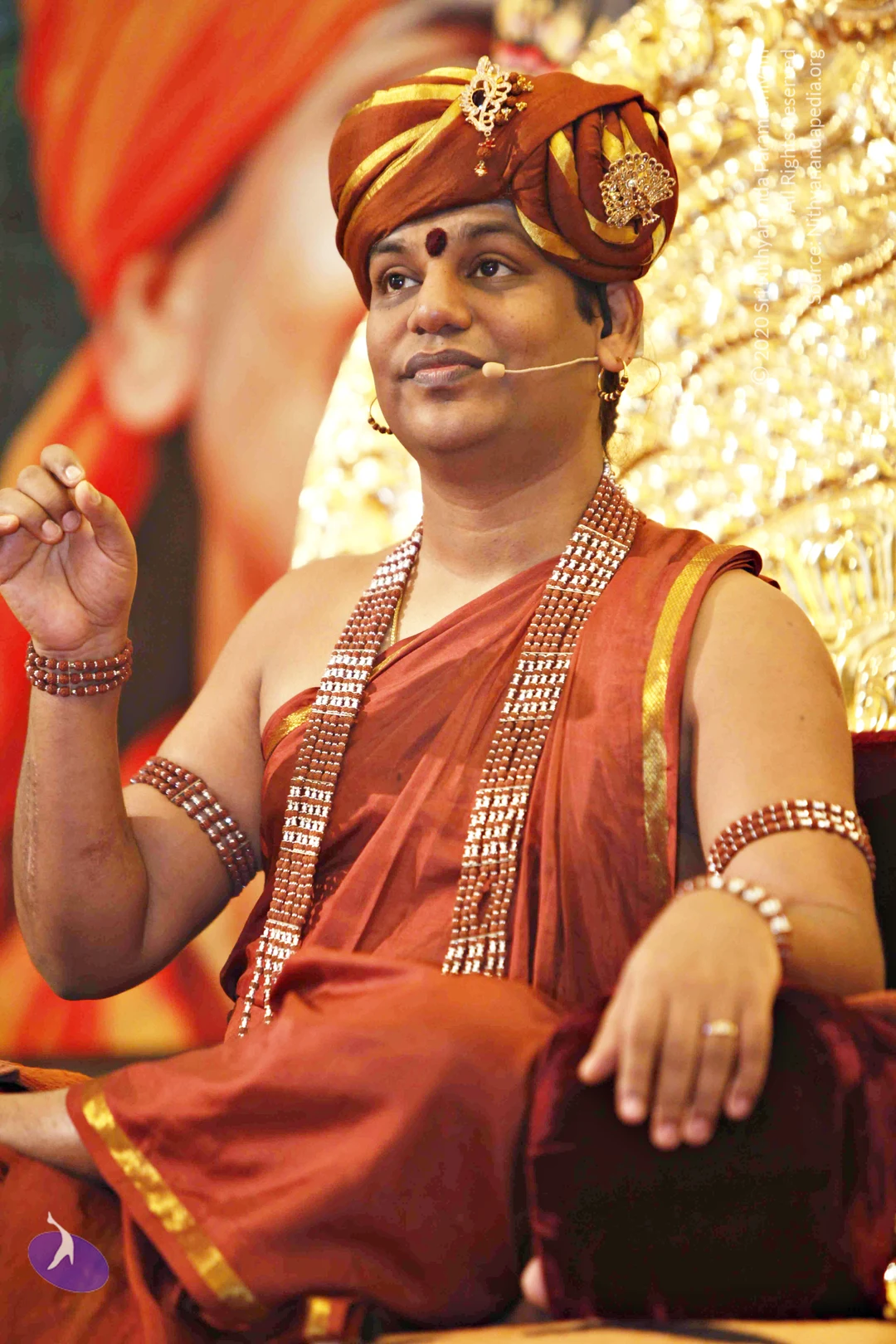
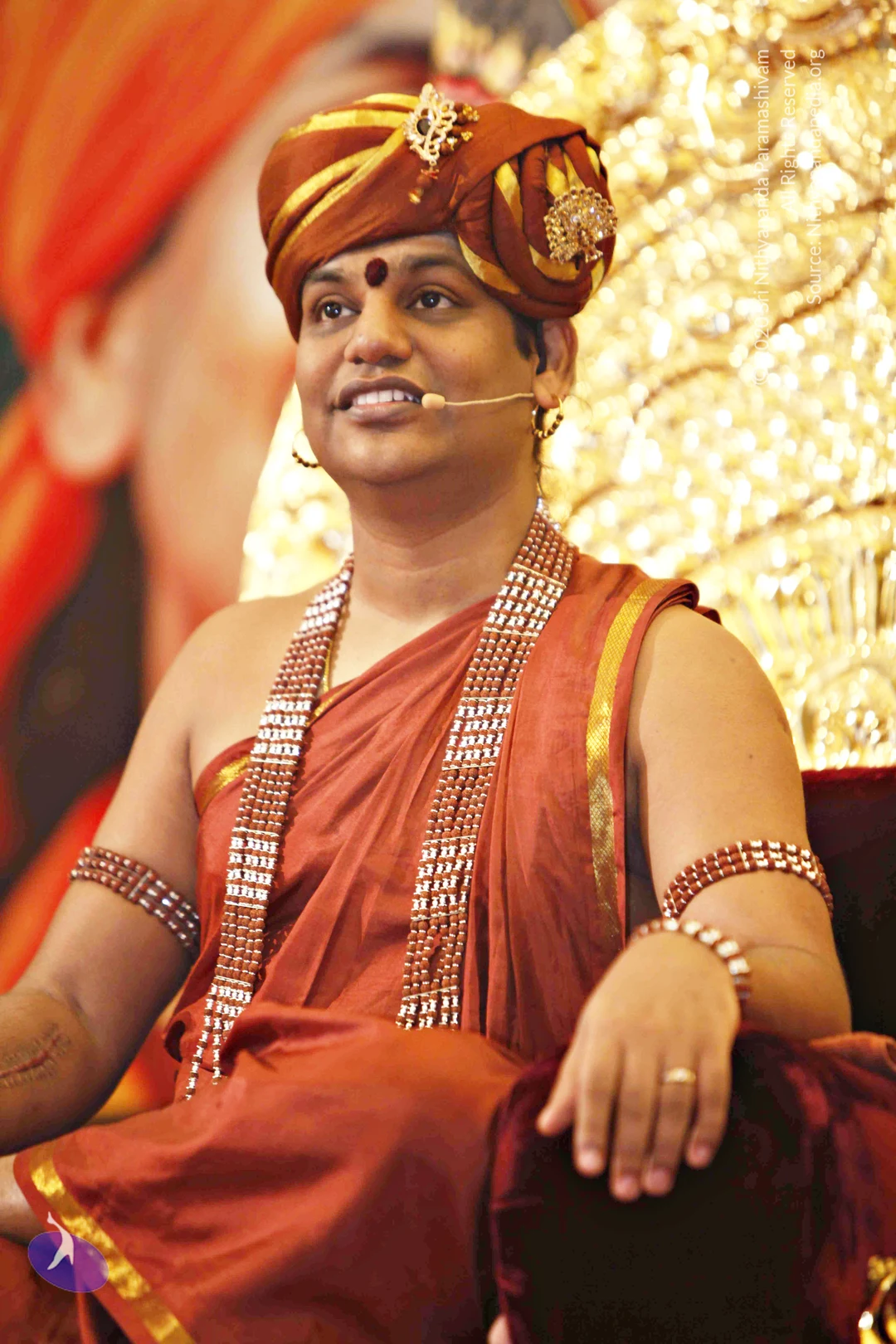
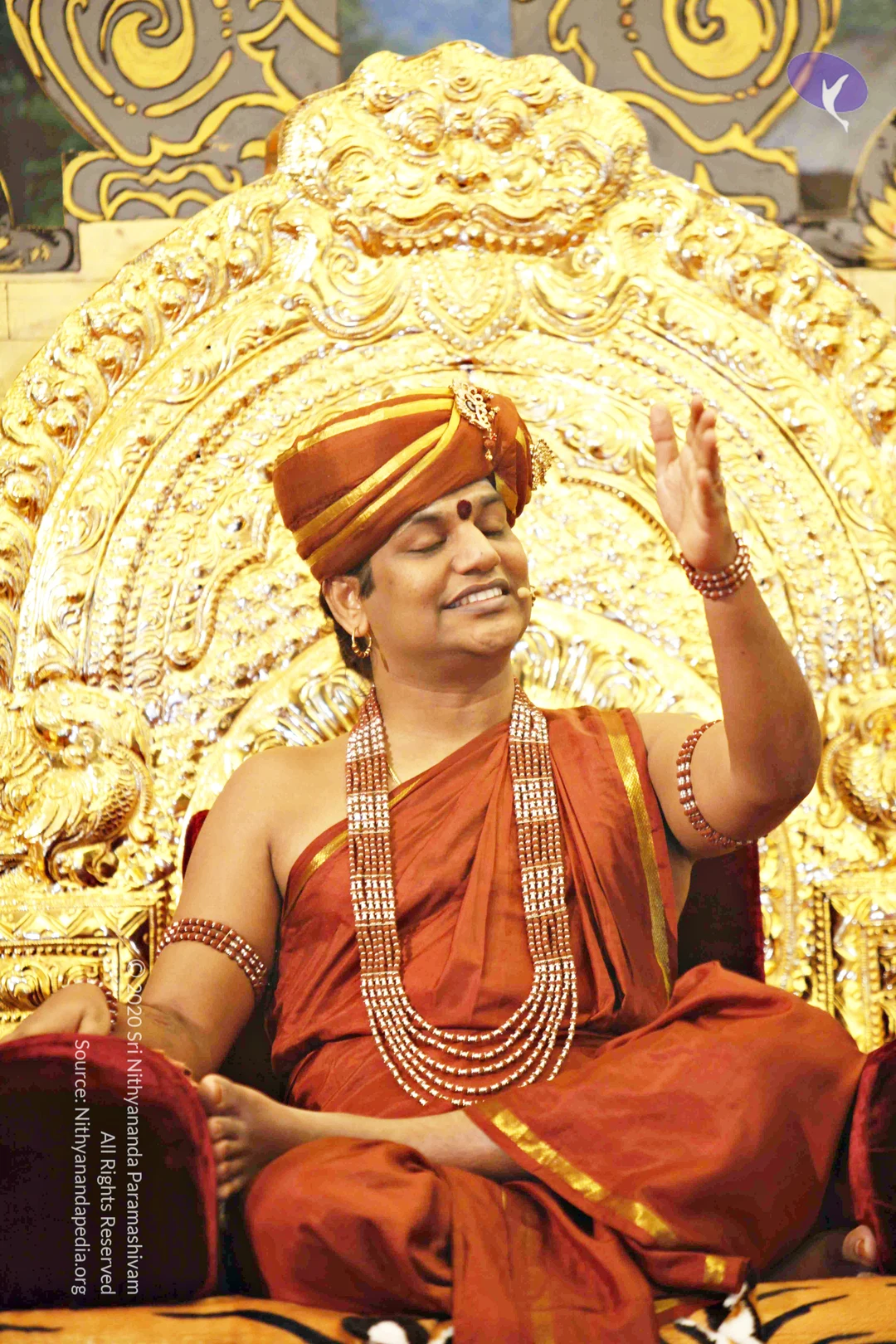
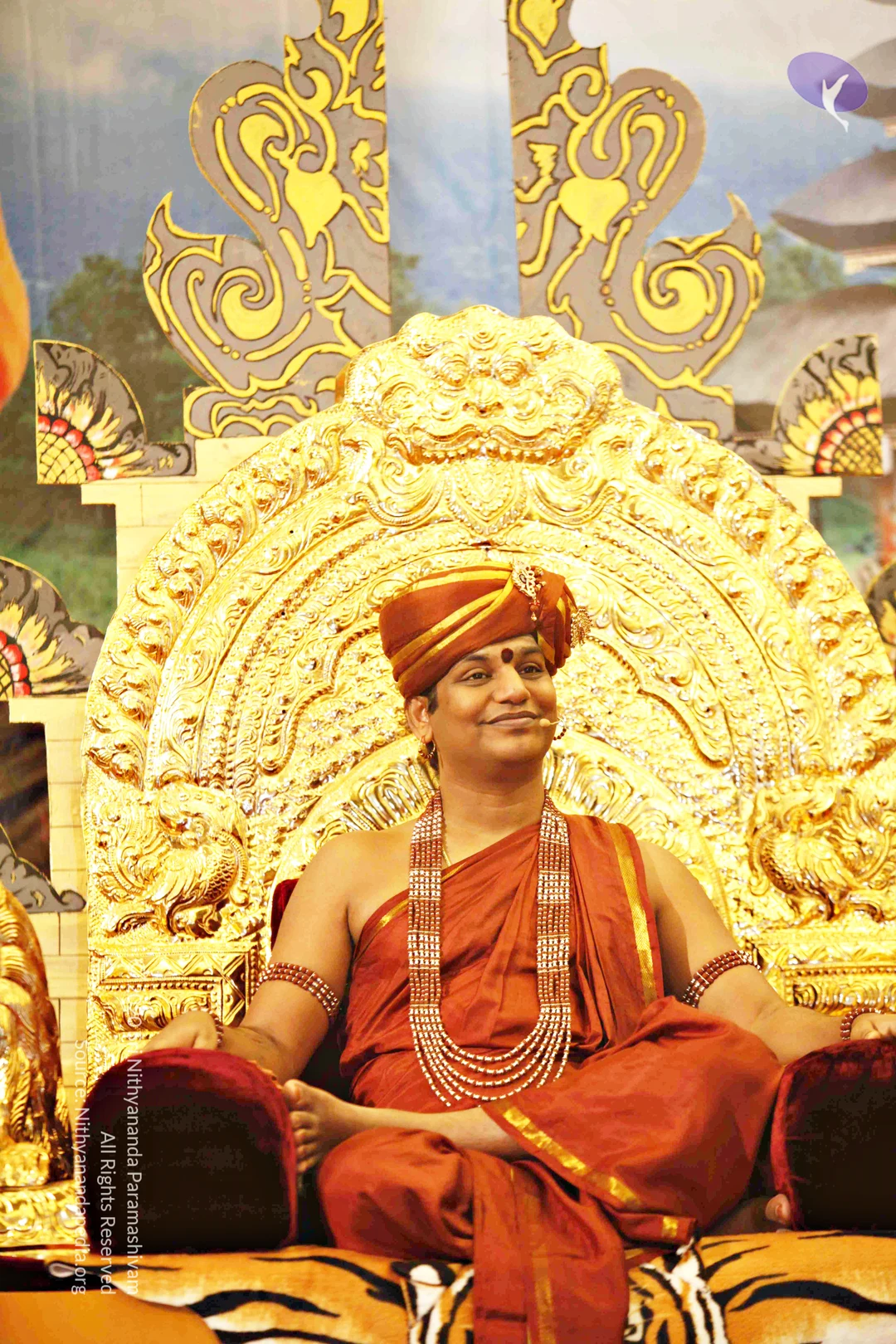
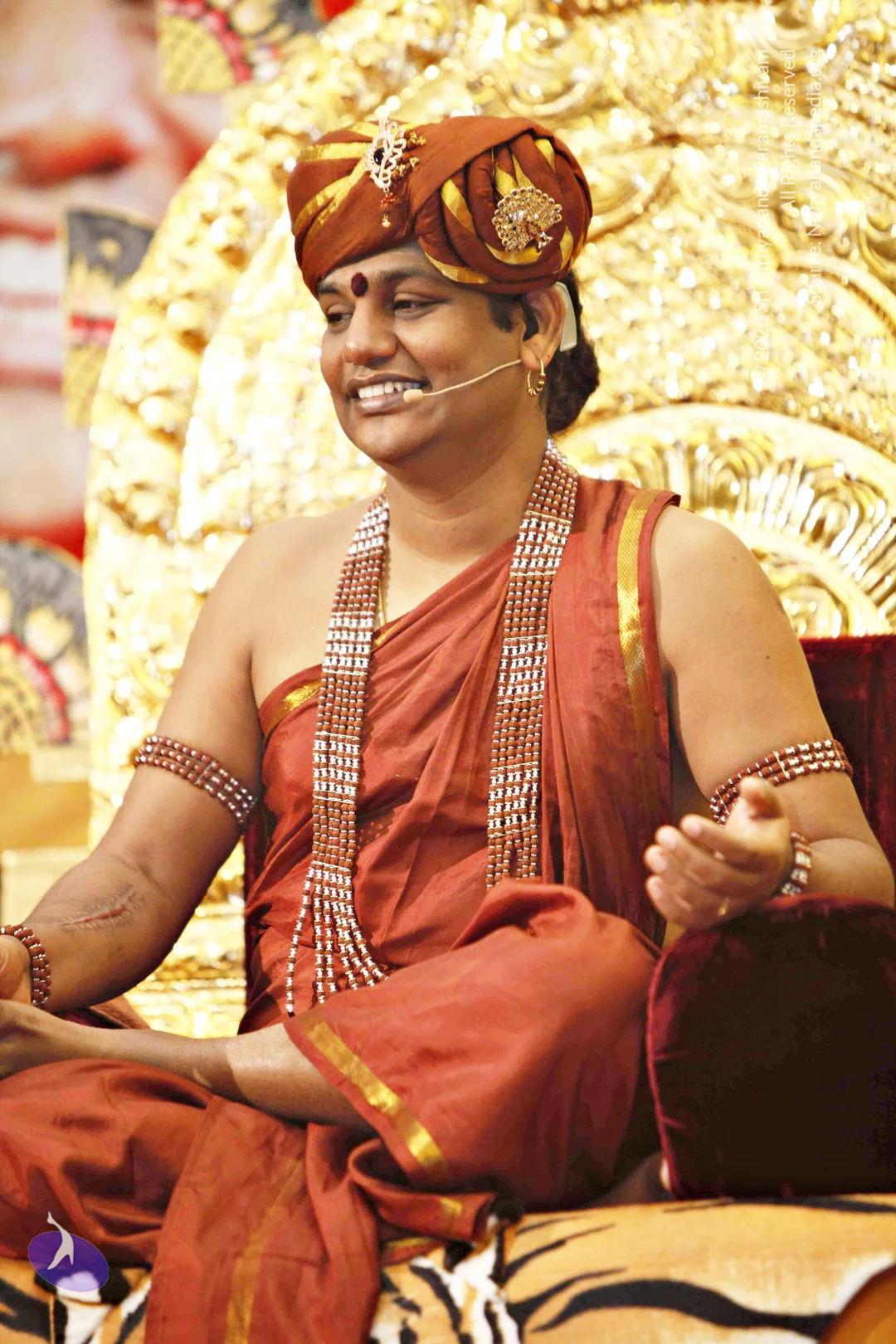
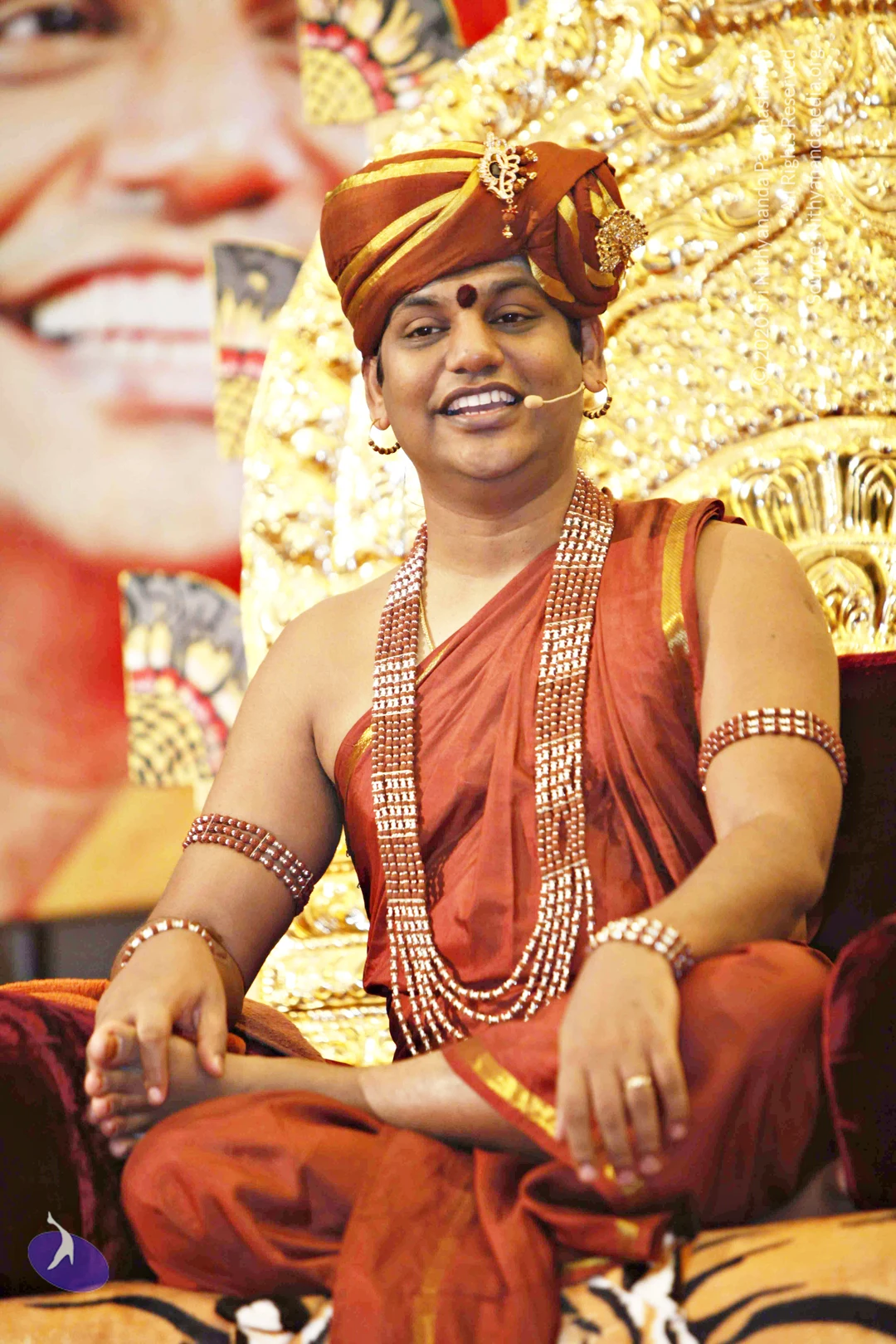
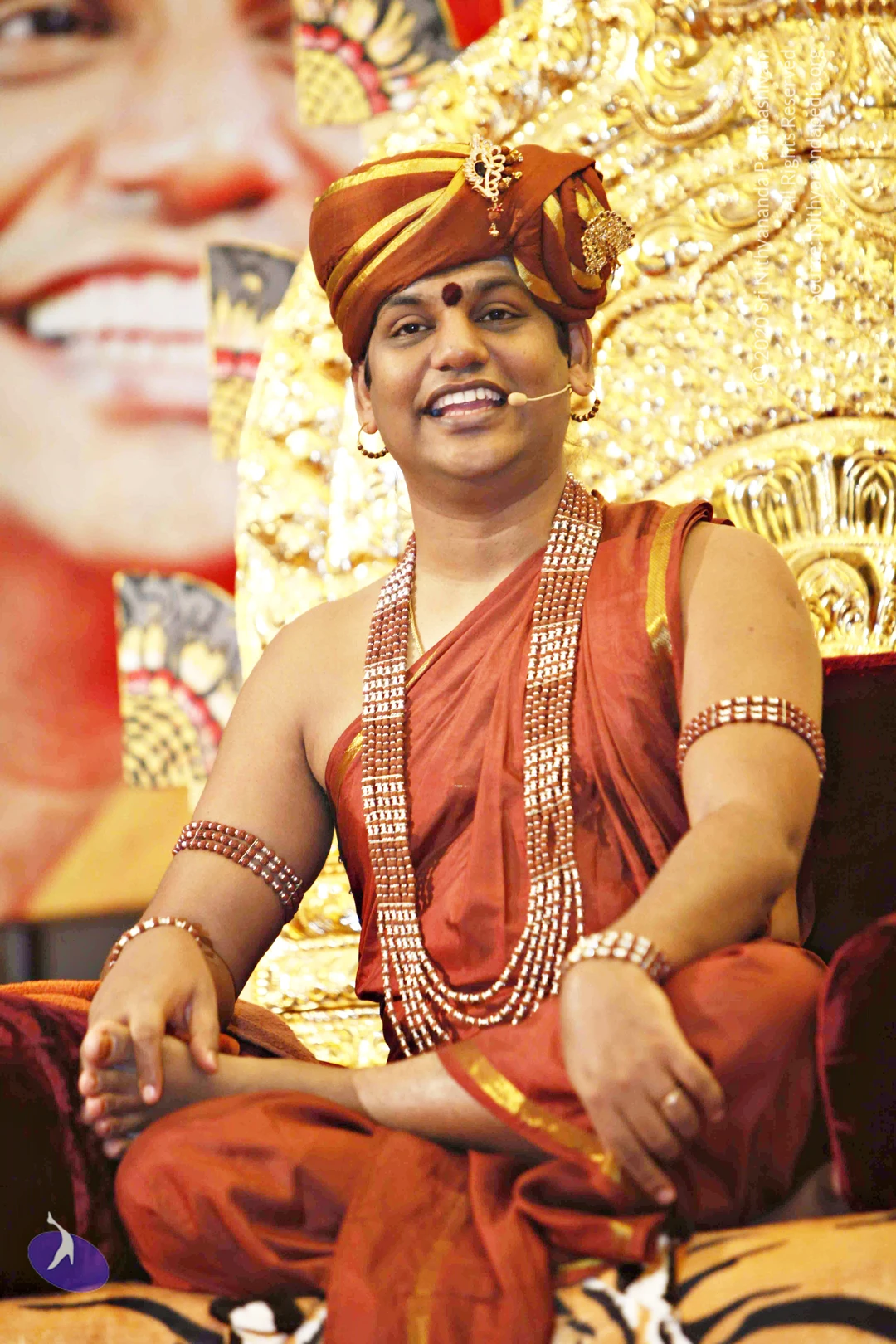
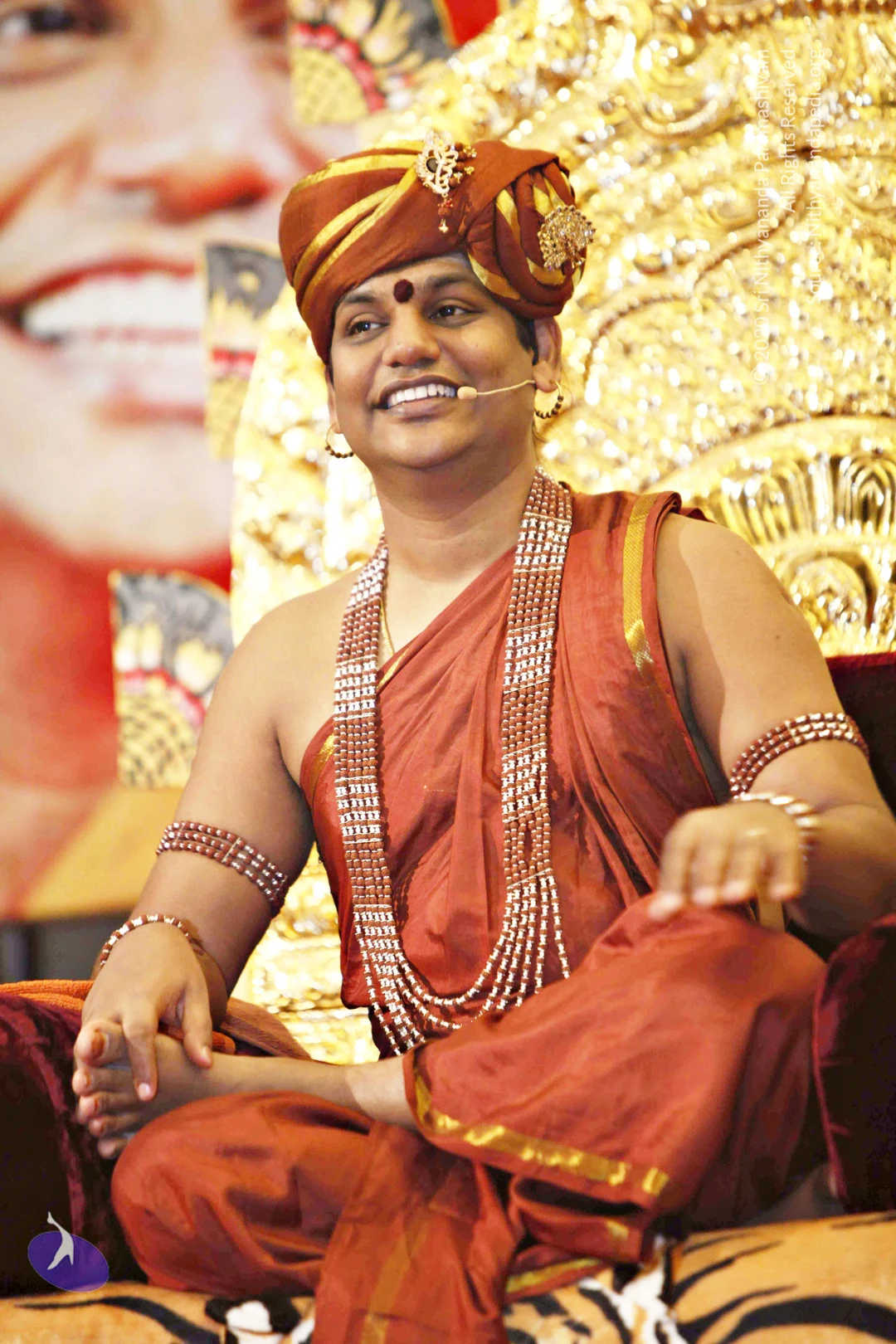
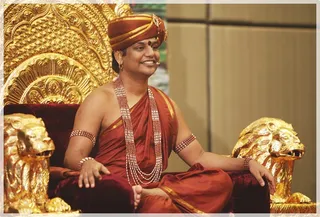
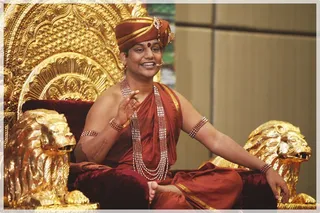
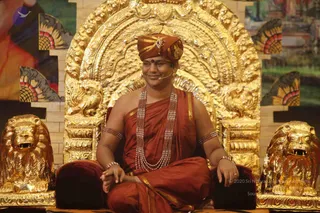
Wide photograph of a hall-based satsang event with a large audience seated in rows of chairs, many in white clothing, facing a raised stage. A backdrop banner reads "Inner Awakening" and shows a portrait of a saffron-turbaned figure beside a temple image. On the stage, a central framed portrait of a saffron-robed figure with long hair stands on a gold-trimmed ornate altar with lamps and flowers. A seated person in orange-red clothing sits at the altar. Two large projection screens flank the stage. Roughly fifty people are visible in the audience and on stage.A seated man on an ornate gilded throne with a large carved golden arch behind him, set against a painted backdrop of a tropical landscape with thatched roofs and carved gold-and-grey panels. He wears a deep red-orange turban with a gold ornament, a matching red-orange shawl draped over bare shoulders, a long multi-strand white rudraksha-style mala with ceremonial gold necklace, and beaded bands on his upper arms and wrists. He sits cross-legged with hands clasped, smiling, with a small headset microphone near his face. Appearance-based probable Swamiji (probable) with turban, red-orange shawl, beaded mala and bare-shouldered ceremonial dress; the page indicates his presence at this event. One person visible.A smiling man seated on an ornate gilded throne with carved floral and lion-like motifs, flanked by two golden lion statues. He wears a red-orange turban with a gold ornament, an orange-red shawl over bare shoulders, multiple strands of pearl-like beads around his neck, and beaded bracelets on both arms. A small head microphone is visible near his face. Behind the throne is a painted backdrop with yellow and red fan-shaped motifs and a temple-style scene. Swamiji (probable): the seated man has a turban, saffron-red robes, ornate beaded necklaces and a throne presentation consistent with the page's Swamiji claim, though appearance alone is limited to these cues.A man seated cross-legged on a plush red cushion before an ornate golden throne carved with floral and scroll motifs, with painted panels behind. He wears a red-orange turban with a gold ornament, a red-orange dhoti-style wrap draped over bare shoulders, a bindi, multi-strand white beaded necklaces, beaded armlets and bangles, and a small headset microphone. His right hand is raised in a speaking gesture while he smiles. The scene resembles a satsang setting. Swamiji (probable): the figure has a red-orange turban, a red-orange wrap, multi-strand beaded necklaces and a golden throne backdrop, consistent with a satsang discourse.A smiling man in a saffron-red turban and red-orange draped robe sits on an ornate gold throne with carved lion-head armrests and a deep red velvet seat. He wears multiple strands of beaded rudraksha-style necklaces, a gold earring, bangles on his upper arms and wrists, and a red bindi. His legs are folded and his bare feet rest on the seat, while his hands rest on the lion armrests. The background is plain beige paneling. Appearance cues include a turban, saffron-red robes and ceremonial beaded necklaces; this is a probable Swamiji on a throne in a studio-style setting.A photograph of a man seated cross-legged on an ornate golden throne flanked by golden lion sculptures, speaking to an audience. He wears a rust-orange turban with a gold brooch, a red-orange robe draped over his shoulder, layered rudraksha-style beaded necklaces, beaded bangles on his wrists and armbands, and a bindi. His right hand is raised in a gesture while his left arm rests on the throne's red velvet cushion. The throne has elaborate gold carved backing and a sunburst-style design. Behind him are beige wall panels.

KIDS-EATING-PHOTOS

2 photosSource gallery
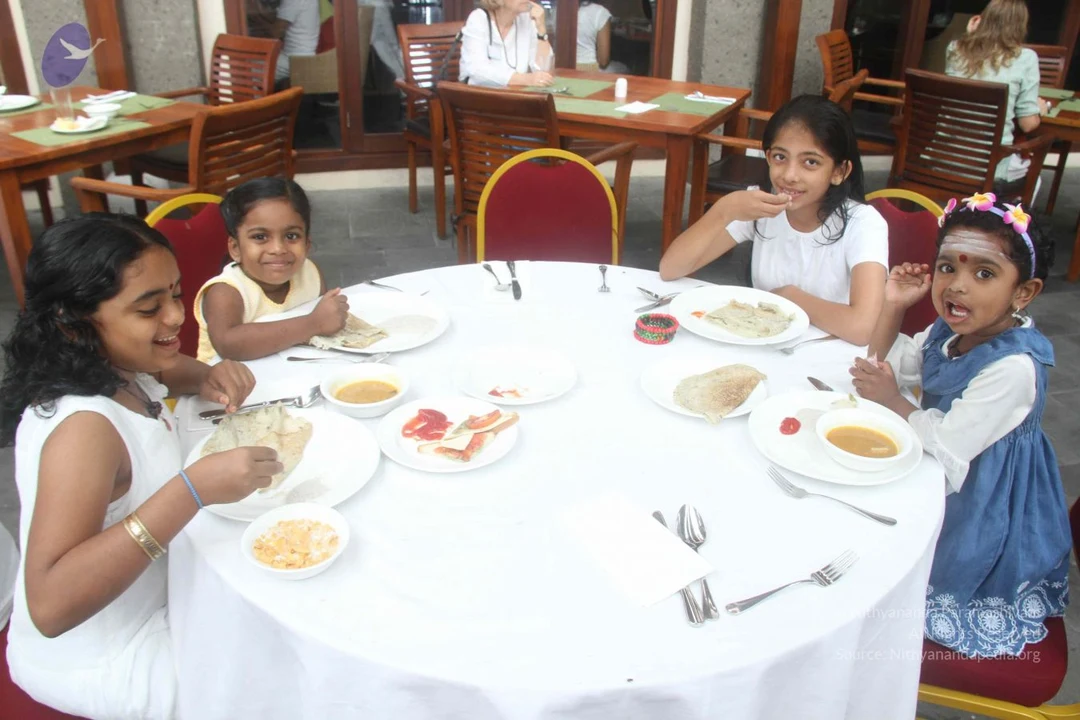
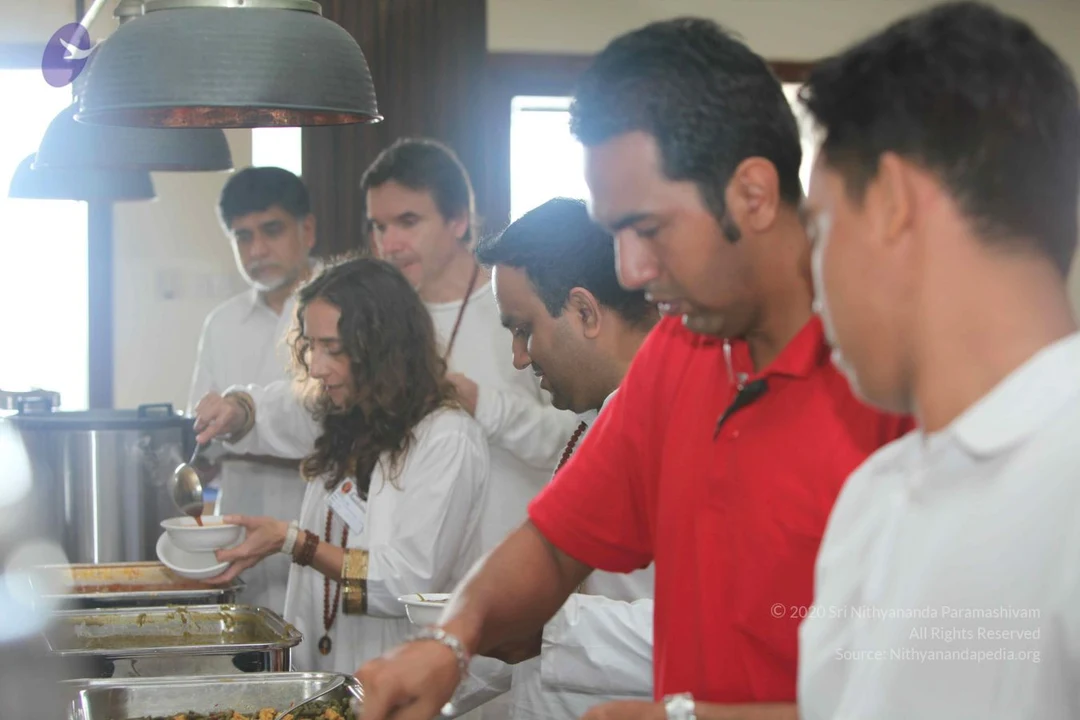
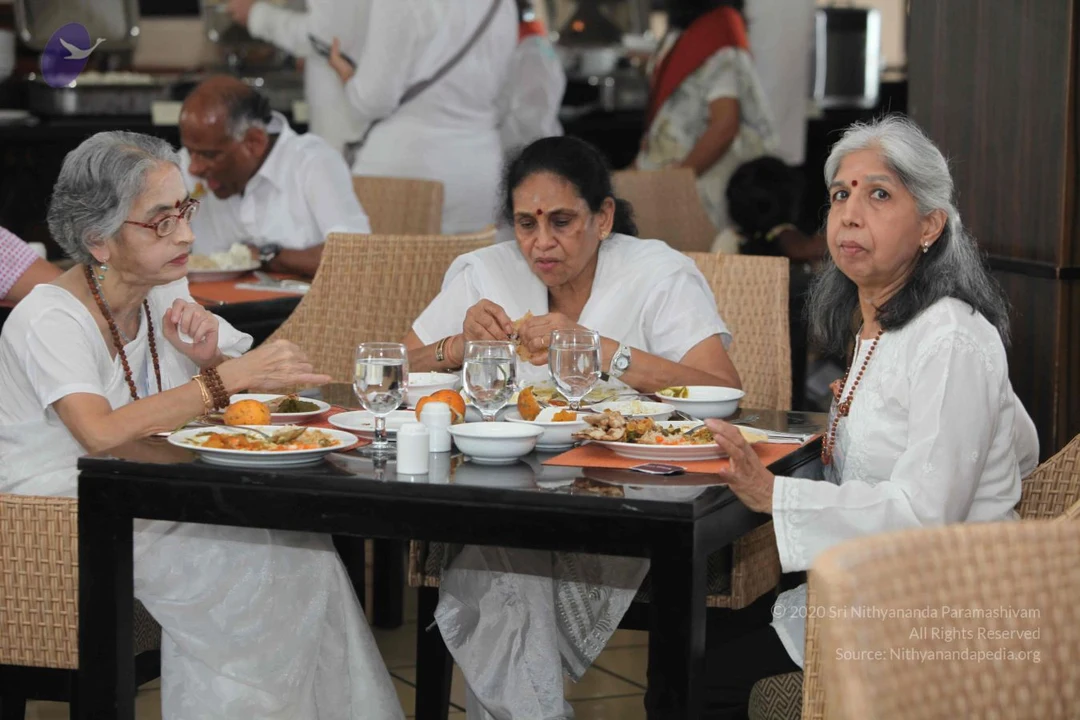
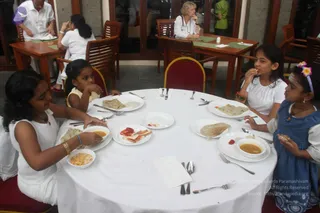
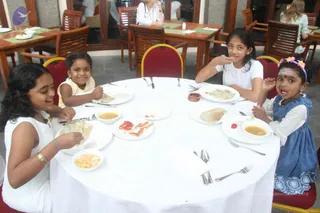
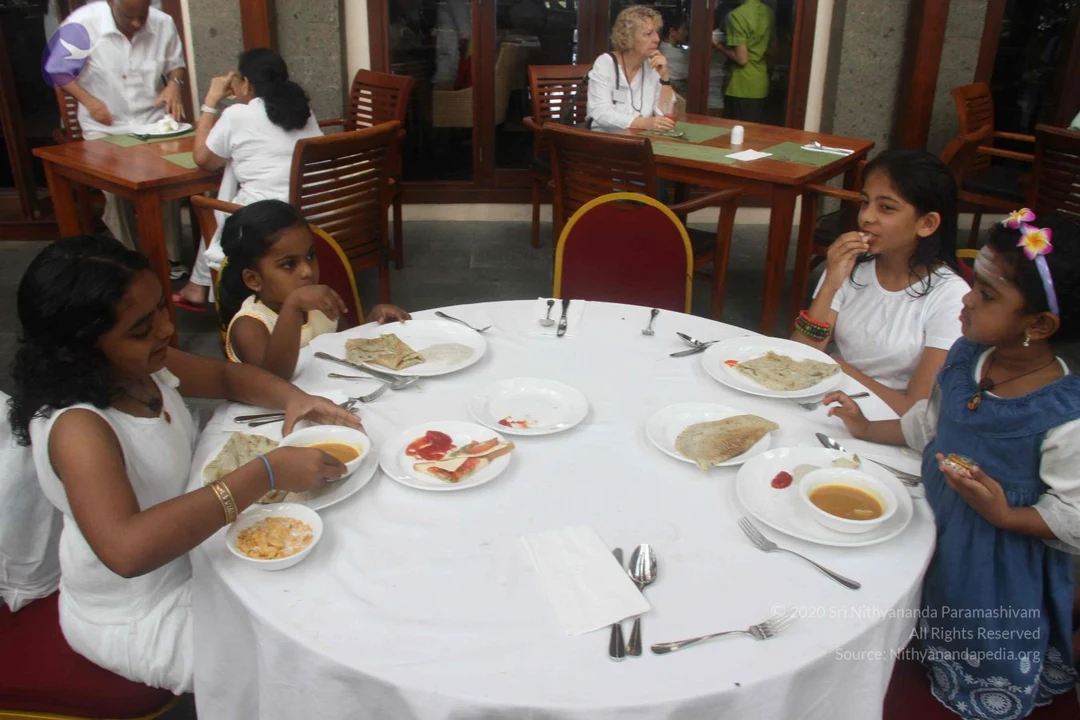
A dining room with children eating breakfast at a round table draped in white linen. Four girls sit around the table: one in a white sleeveless top with gold bangles on the left, a younger girl in a yellow top beside her, a girl in a white top at right with a bindi and red bangles, and a girl in a blue denim-style dress with a flower in her hair at far right. Plates hold dosa-style flatbreads, sauce bowls, and toast with jam, with cutlery and napkins on the table. Behind them, a woman in white sits at another table, and a few more people in white and green move through the room near wooden chairs and windows.Four girls sit around a round table draped in a white cloth in a restaurant-style dining room with wooden chairs and red-and-yellow upholstered chairs. Plates hold dosa and flatbread, with bowls of sambar or dal, chutney and tomato sauce. The girl at left wears a white sleeveless top and gold bangle, the younger girl at left wears a yellow top, the girl at upper right wears a white top, and the girl at right wears a blue denim dress with a white top, a white tilak on her forehead and pink flowers in her hair. Other diners are blurred in the background.

PAADUKA-PUJA-PHOTOS
27 photosSource gallery
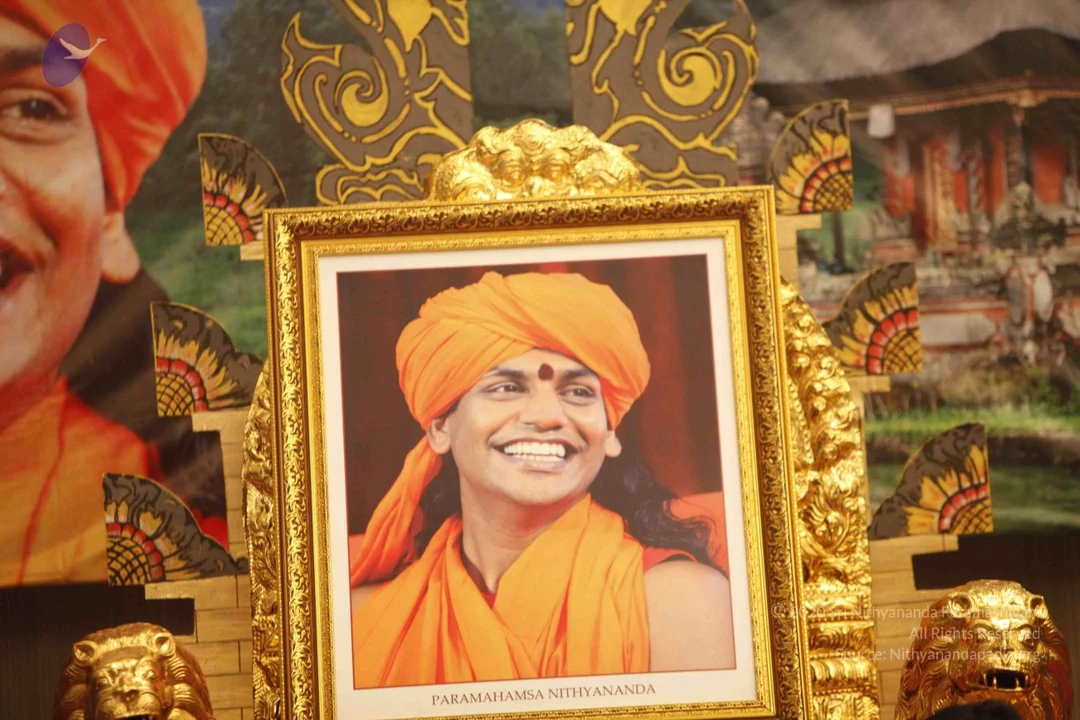
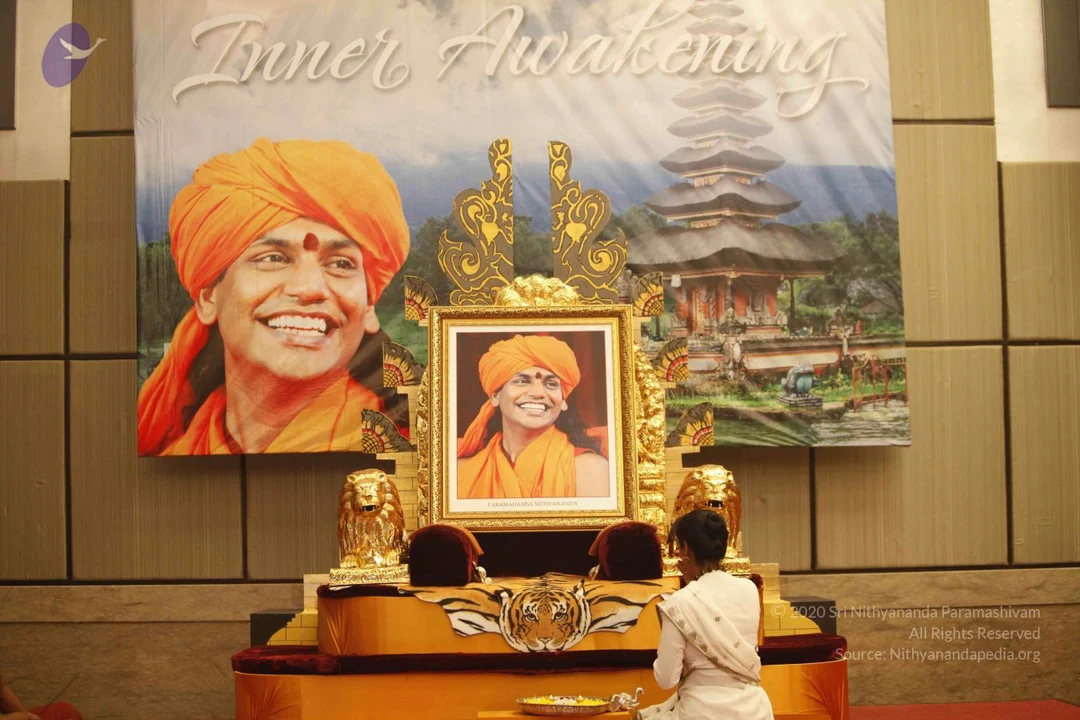
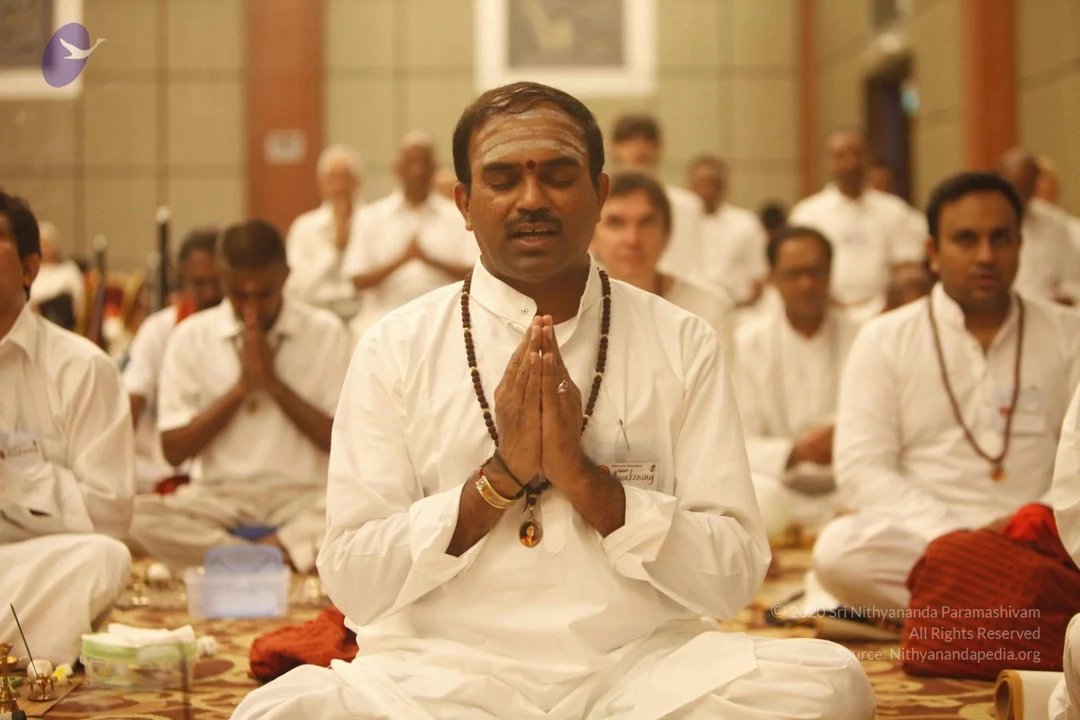
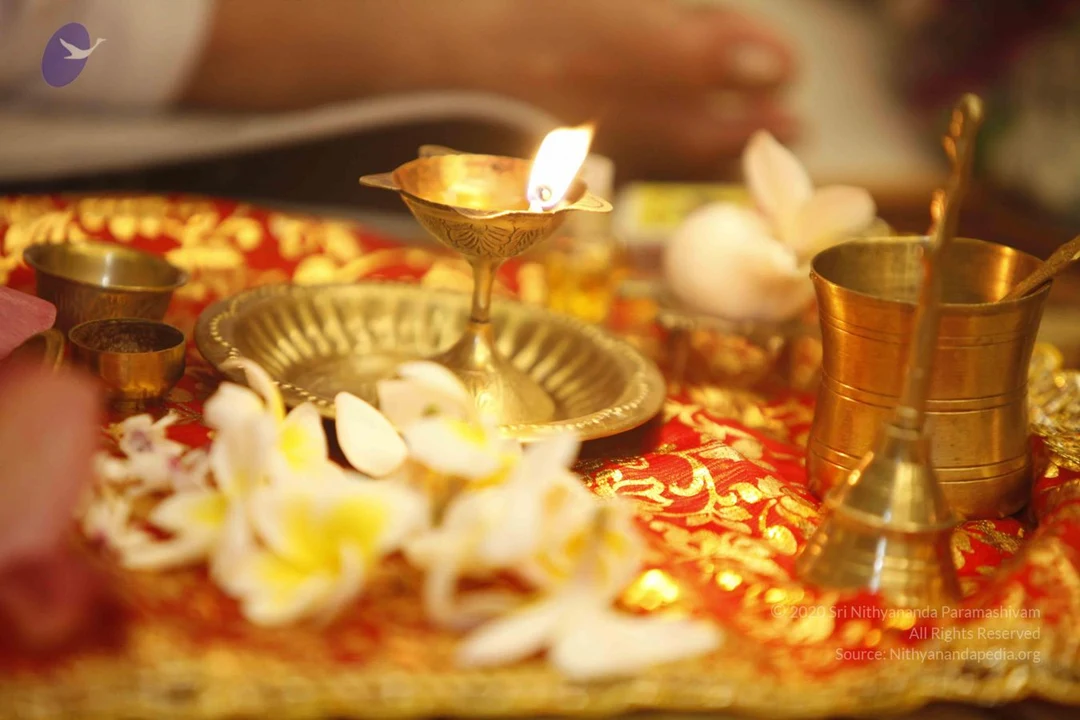
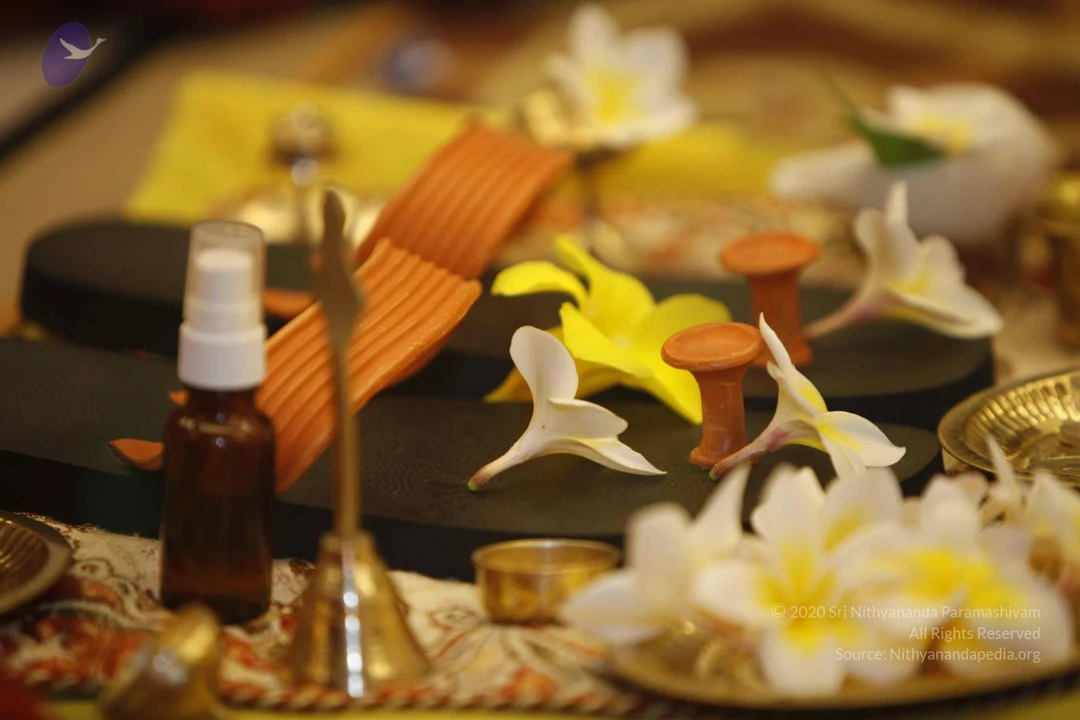
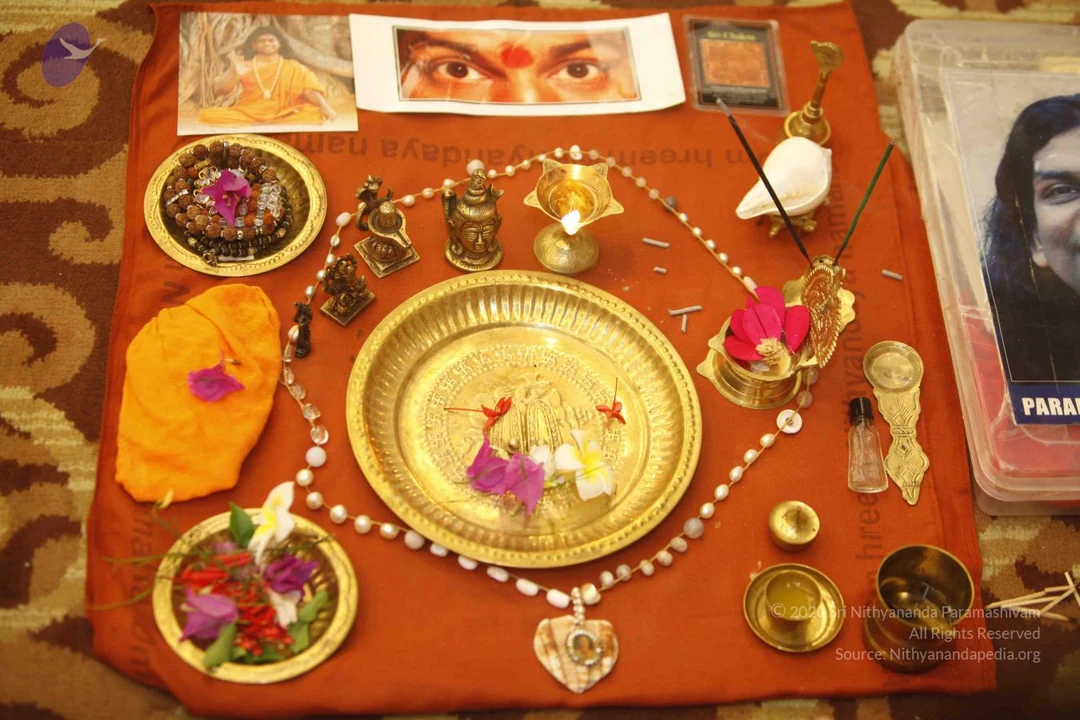
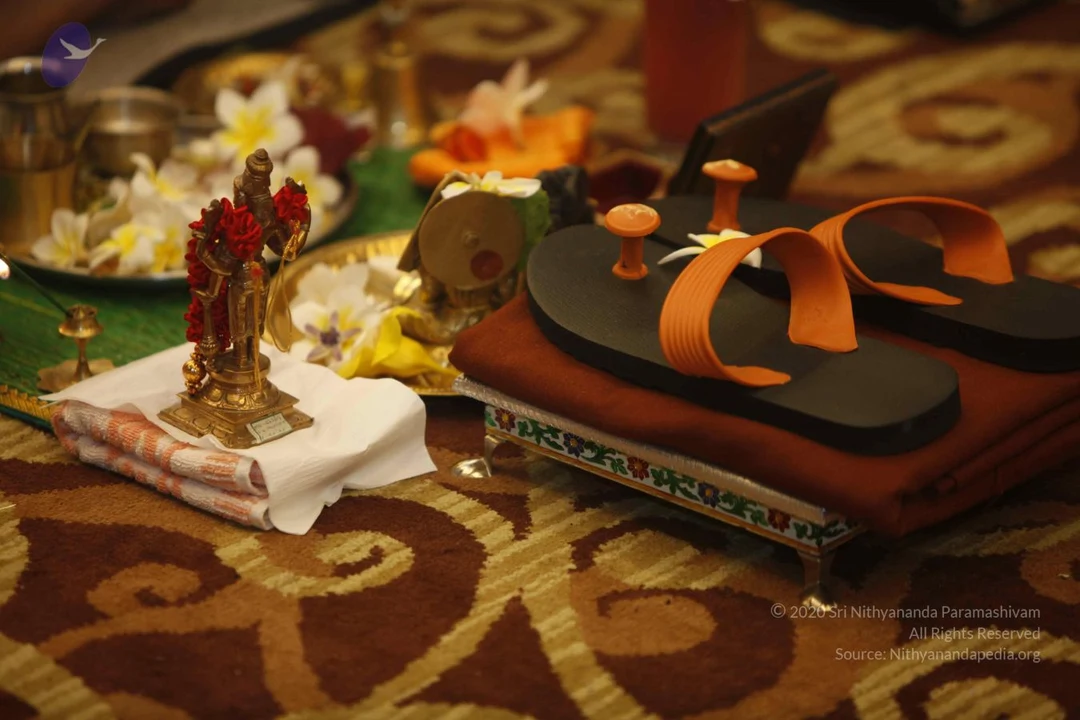
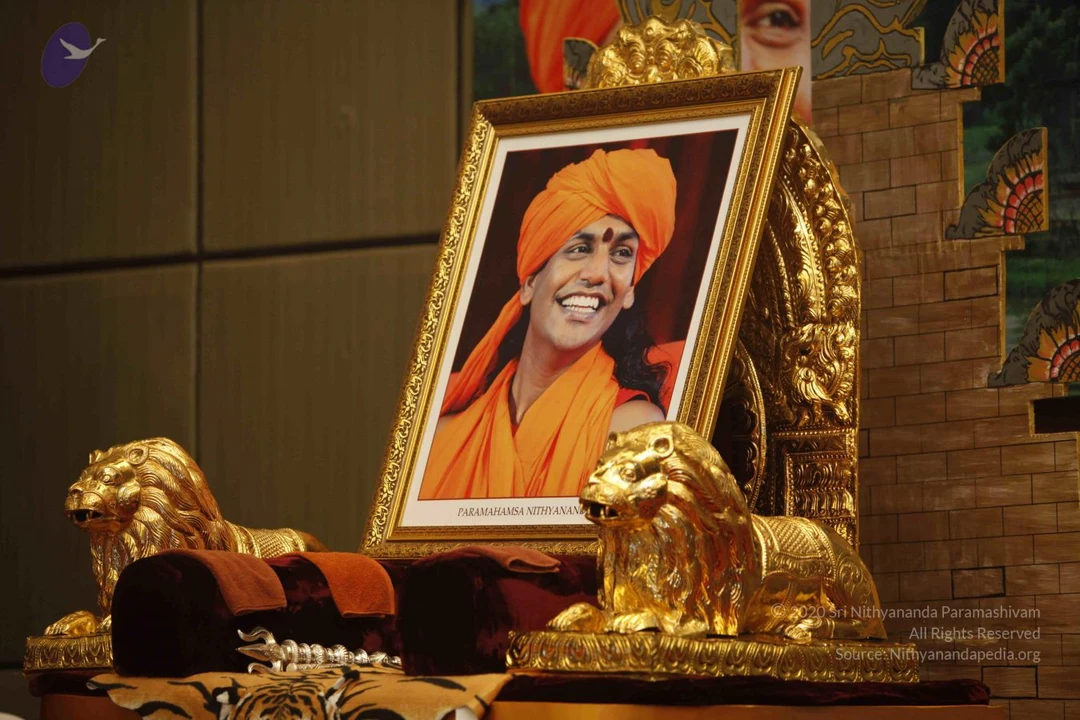
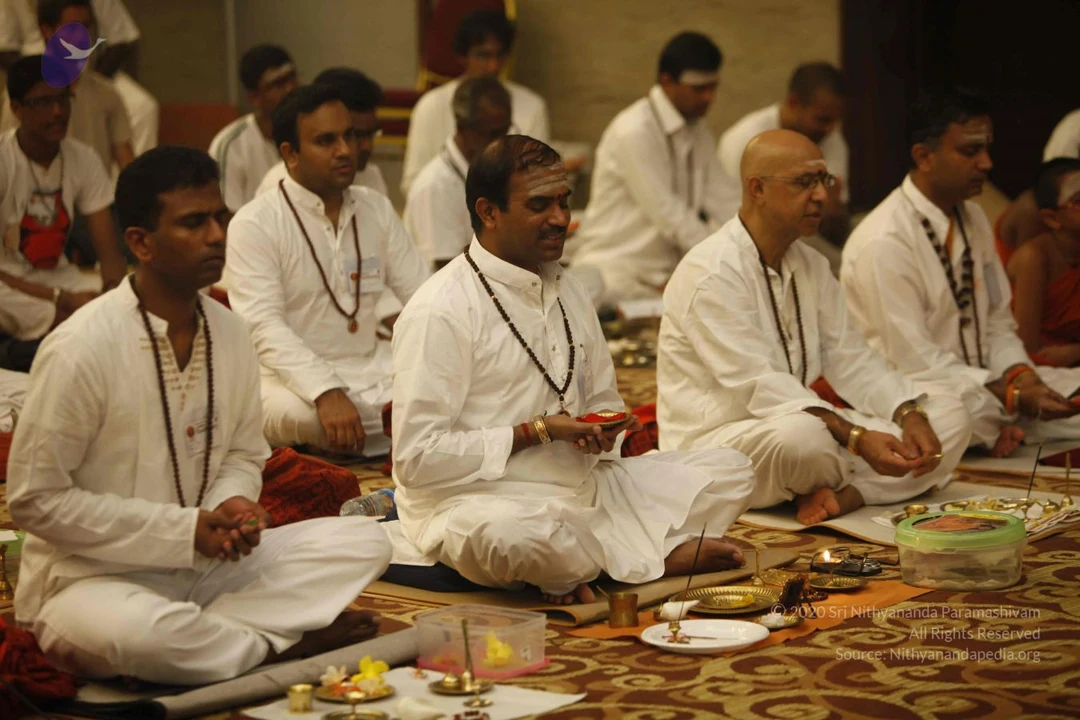
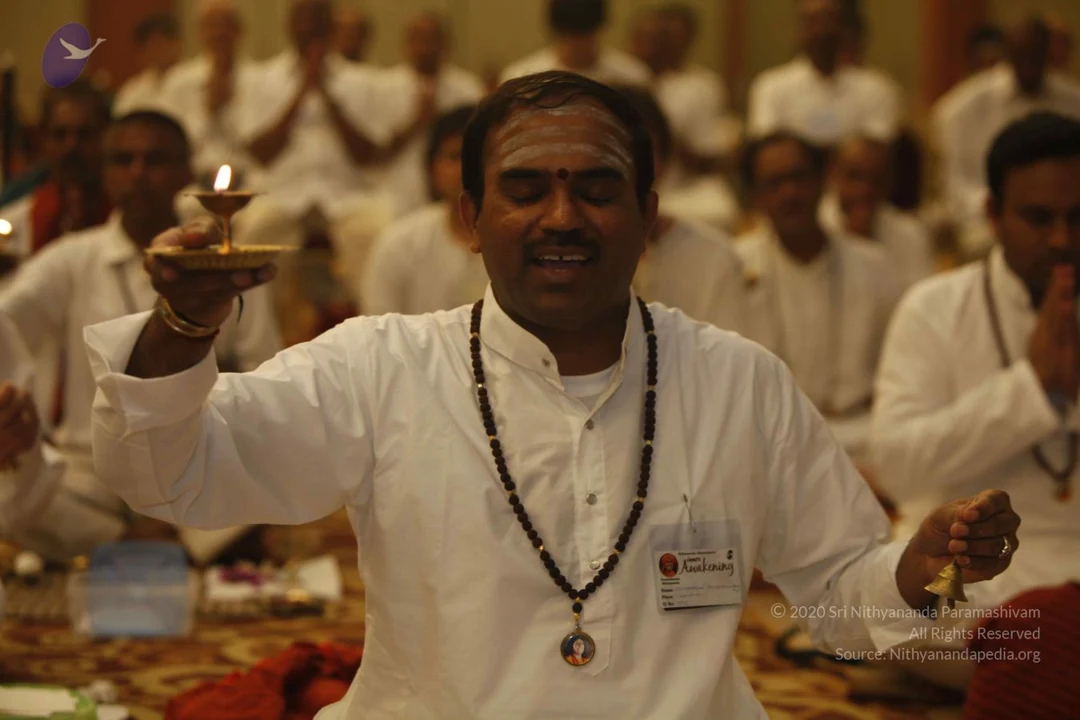
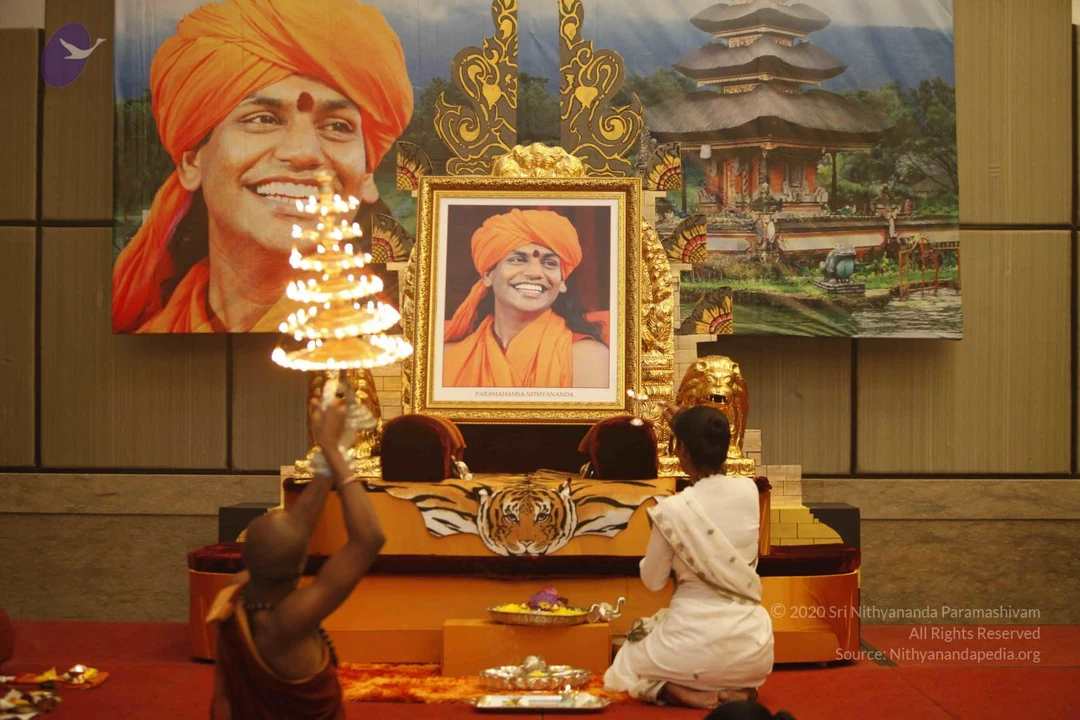
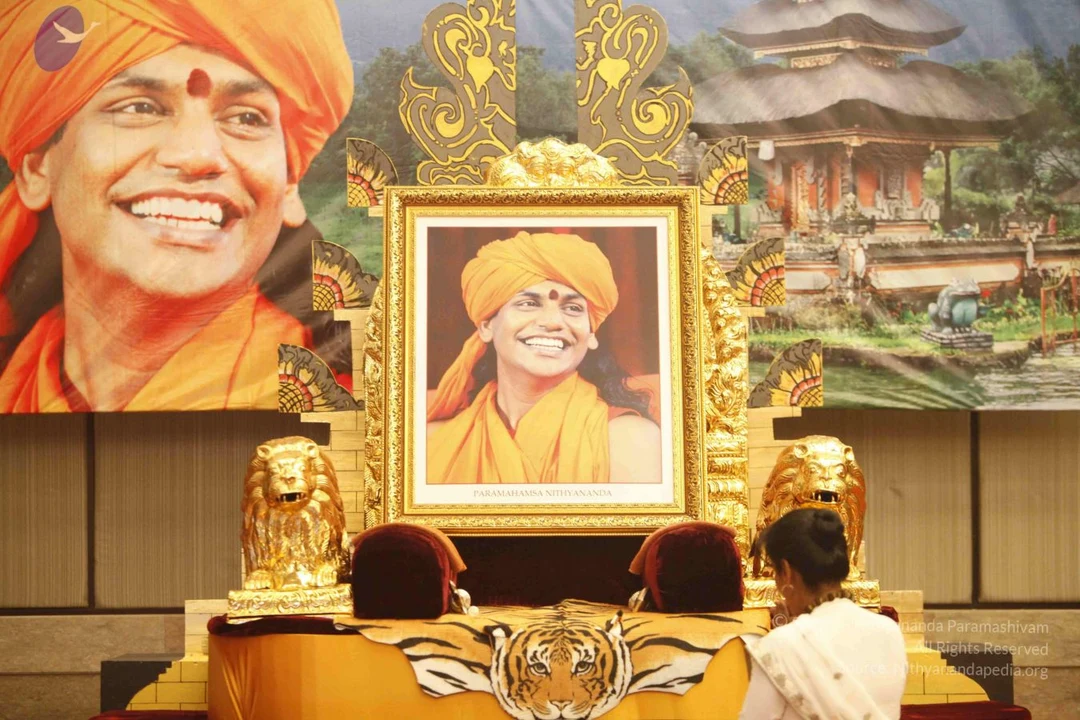
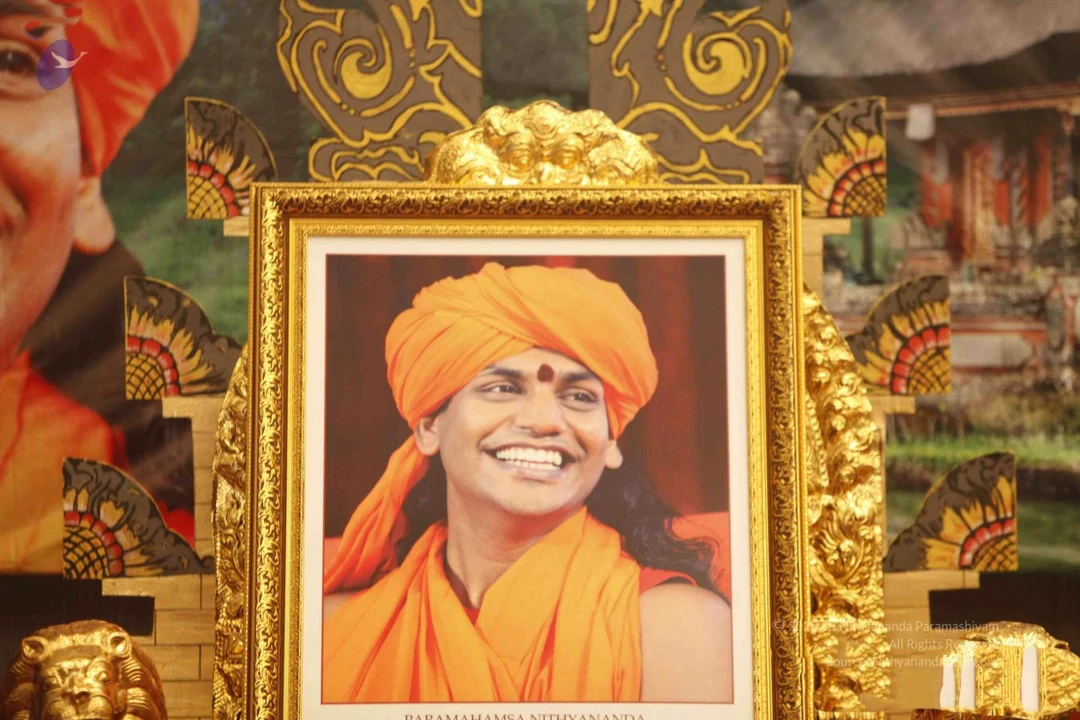
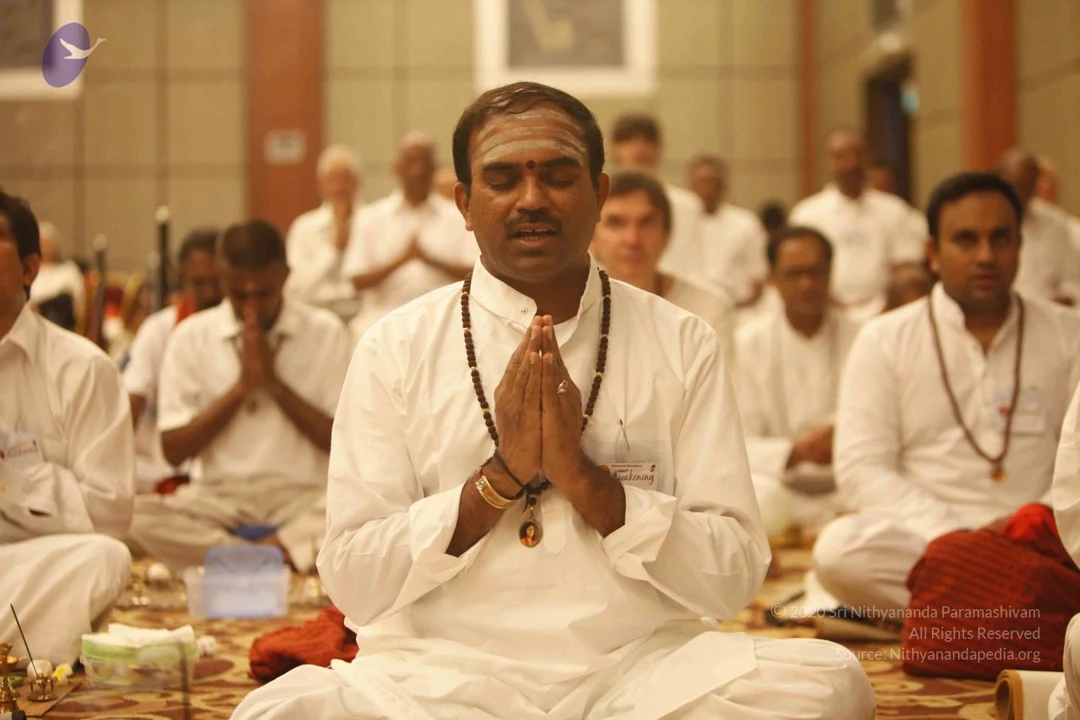
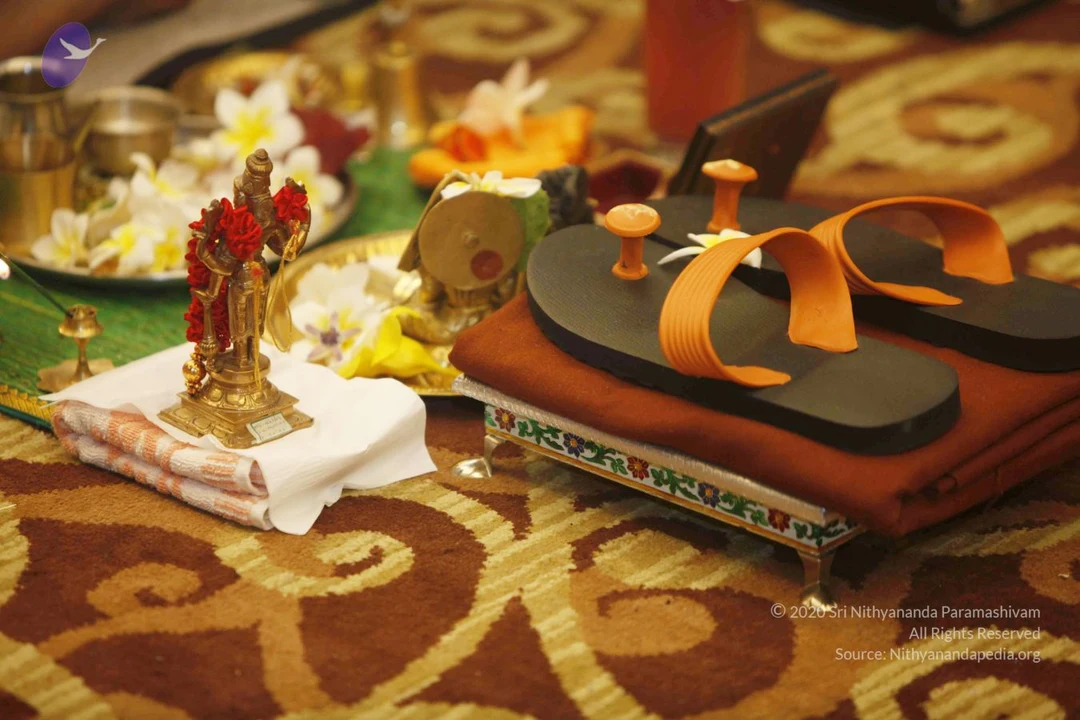
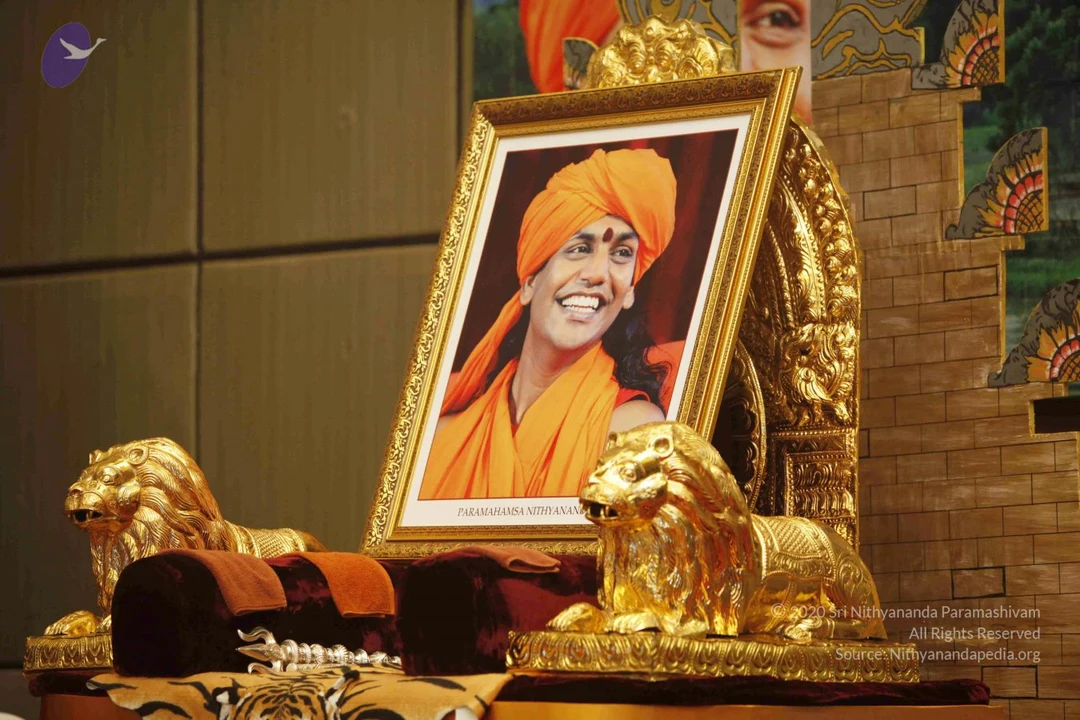
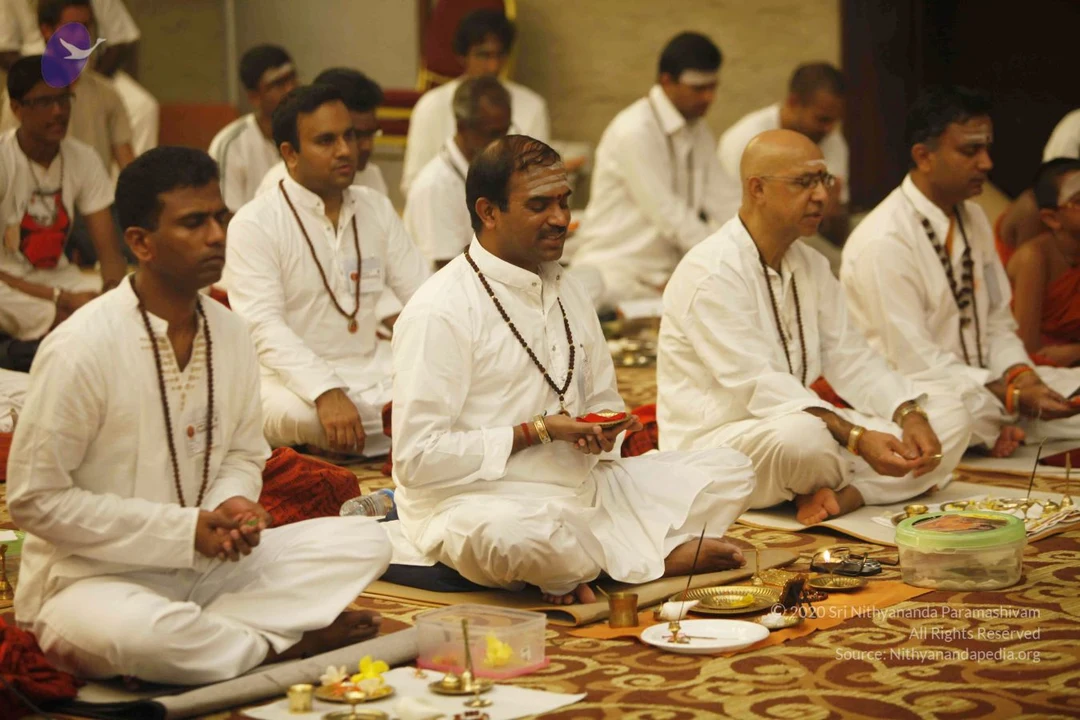
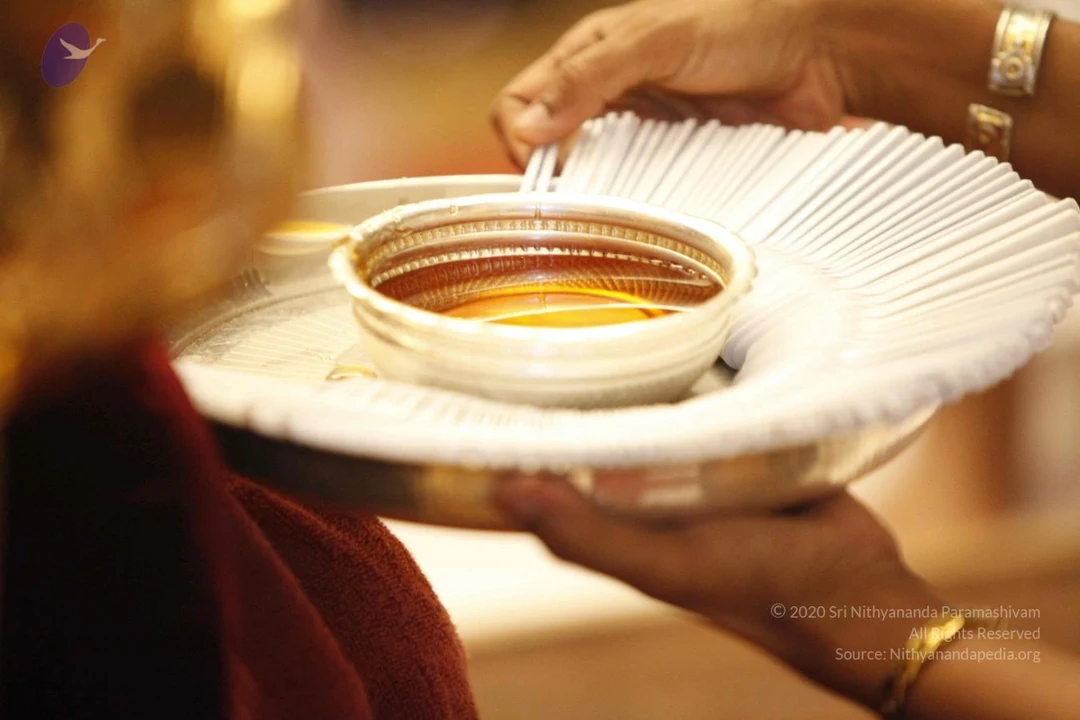
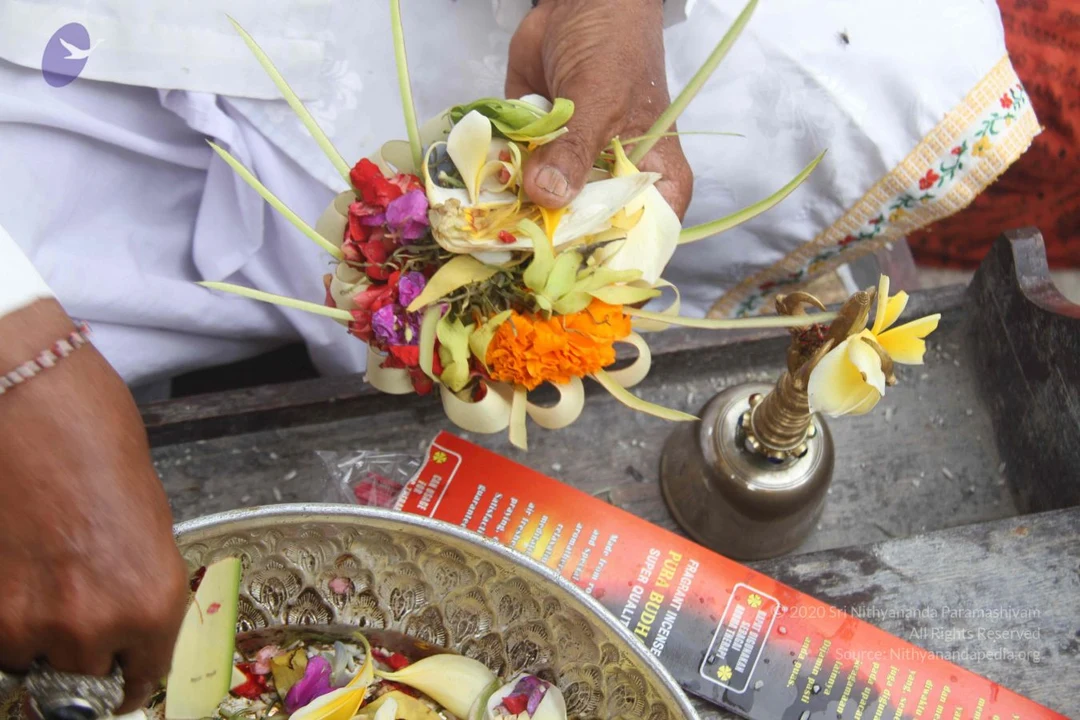
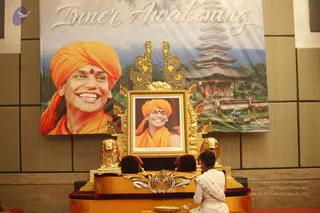
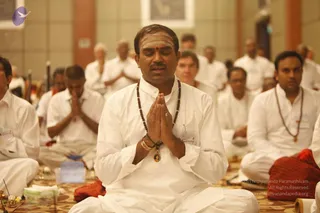
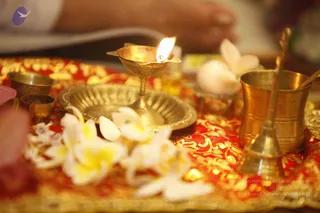
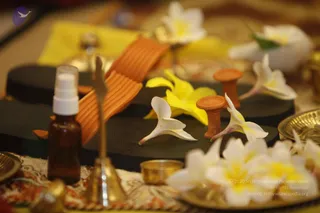
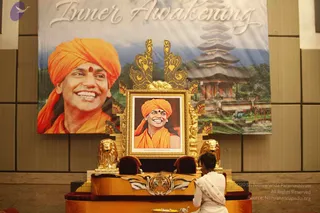
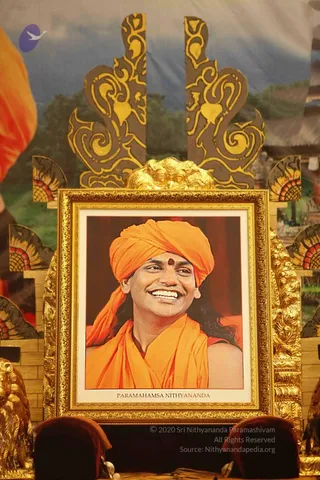
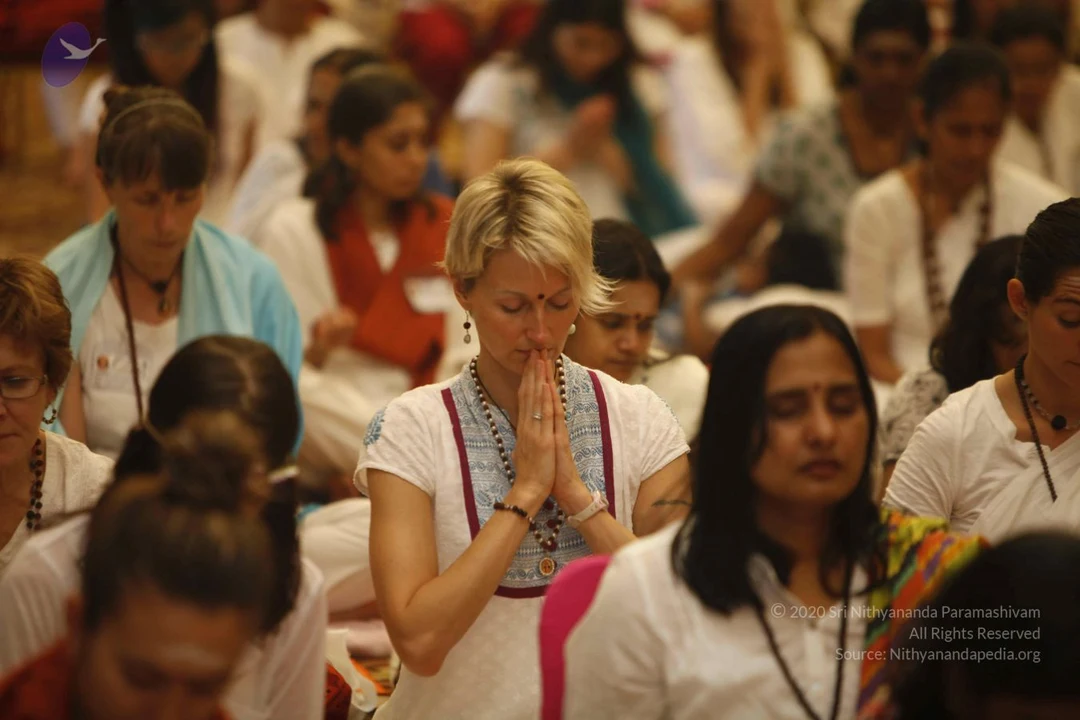
A photograph of a golden-framed portrait labelled "PARAMAHAMSA NITHYANANDA" placed on an ornate golden throne-like altar. The portrait shows a smiling man in an orange turban with a red bindi and orange garment. Golden lion figures flank the altar, and a tiger-striped cloth covers the front. Two maroon cushions sit on the altar. In the foreground at right, a woman in a white sari with her hair in a bun bows or kneels before the altar. A large banner behind shows a smiling face in orange and a pagoda-style temple with a pond. a person depiction on screen; the person kneeling before the altar is a devotee.A framed portrait labelled "PARAMAHAMSA NITHYANANDA" stands centred on a golden ornate throne-like stand flanked by golden lion heads at the bottom. The portrait shows a smiling man wearing an orange-saffron turban, orange robes draped over the shoulders, and a red bindi on the forehead; he has long dark hair visible beside the face. Behind the frame, a large orange-robed figure in a matching turban is shown on a backdrop, and a backdrop photo of a temple complex with a red-roofed building and green landscape appears at the upper right. Gold scroll carvings and fan-shaped gold and red decorations surround the stand. No physical people are present in the scene; the figures shown are printed portraits.A photograph of a hall set up for an Inner Awakening event. A large banner reading "Inner Awakening" shows a smiling man in orange turban and orange robes beside a multi-tiered Balinese temple and lake scene. In front, a gold-framed portrait labelled "Paramahamsa Nithyananda" in orange turban and robes sits on an ornate gold peetha/throne with gold lion figures, a tiger-skin cloth draped over the altar, and a plate with offerings. A person in white clothing kneels at the altar in worship, with their back to the camera, performing padapuja-style devotion before the portrait.A seated devotee in white ritual clothing presses his palms together in anjali mudra with eyes closed during a group gathering in a carpeted hall. He wears a rudraksha mala, a red bindi-like mark and a sacred vibhuti-style forehead marking, with a red thread on his wrist. Around him, many men in white dhotis and kurtas sit in prayer, some with hands folded.Close-up photo of a puja setup on a red fabric with gold brocade. A lit brass oil lamp with a flame stands on a brass tray, surrounded by white and yellow frangipani flowers. A brass cup holds a spoon and a brass bell stands to the right, with small brass bowls at the left. Hands are blurred at the top edge. No people are clearly visible as the focus is on the ritual objects.Close-up photograph of a ritual table arrangement with black sandals placed on a patterned cloth. Orange ribbed sandal-like objects, a brown glass spray bottle with white pump, a brass bell with a tall handle, and small brass bowls surround white and yellow frangipani flowers. Scattered fresh flowers rest on a brass tray in the foreground. No people are visible.

SATSANG-PHOTOS
28 photosSource gallery
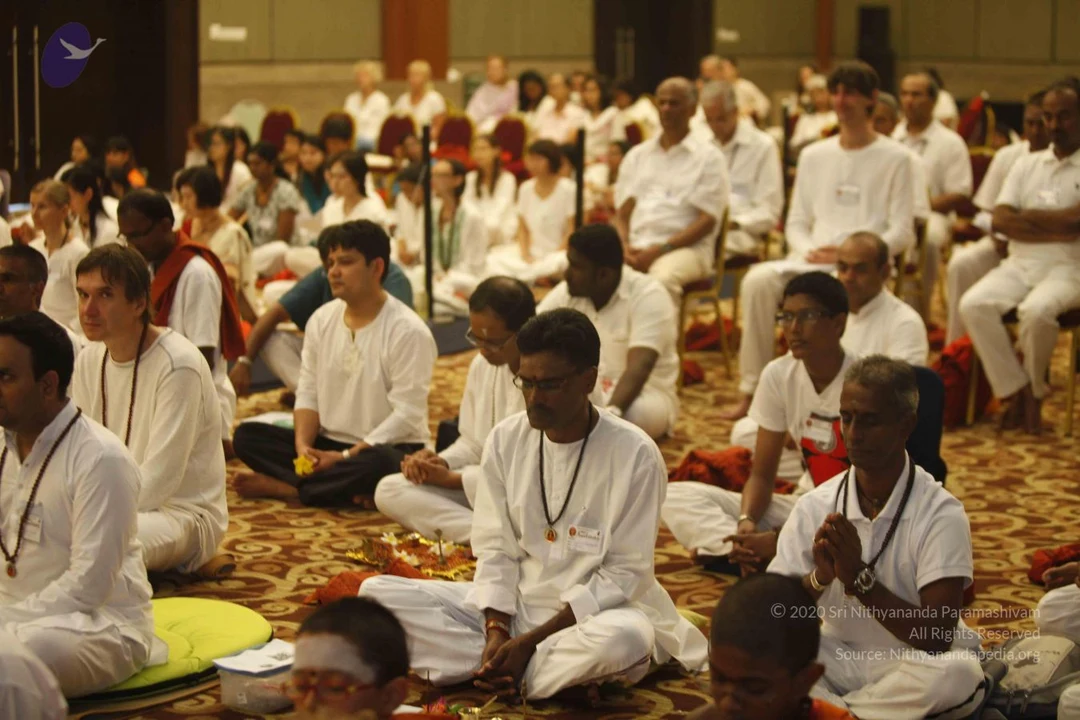
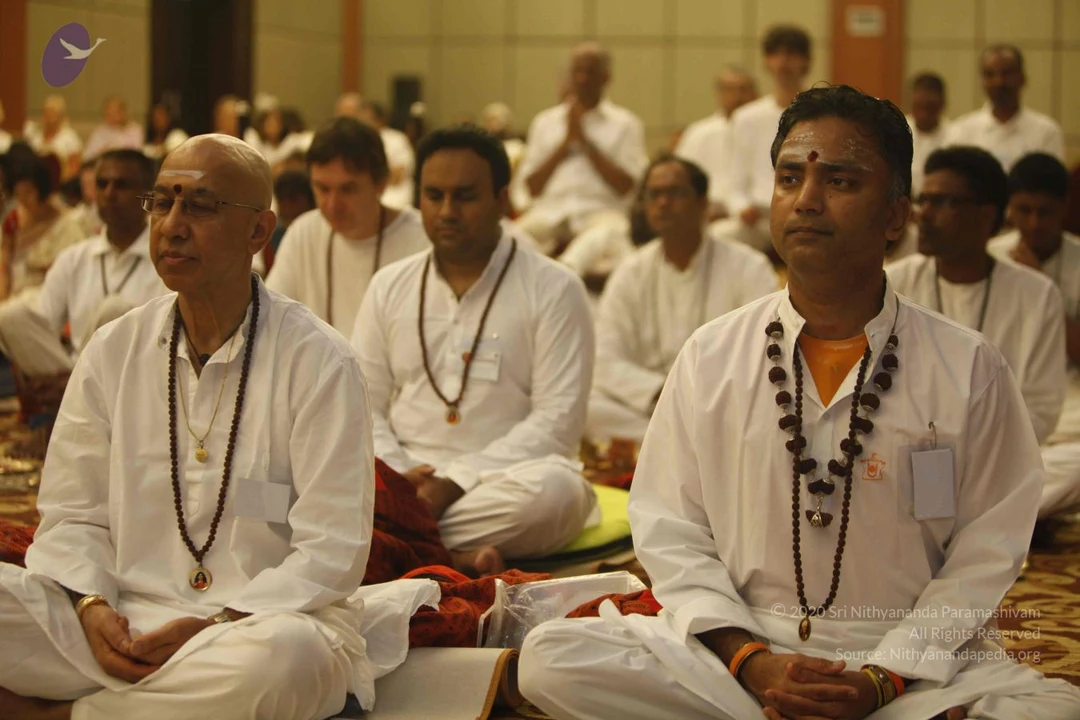
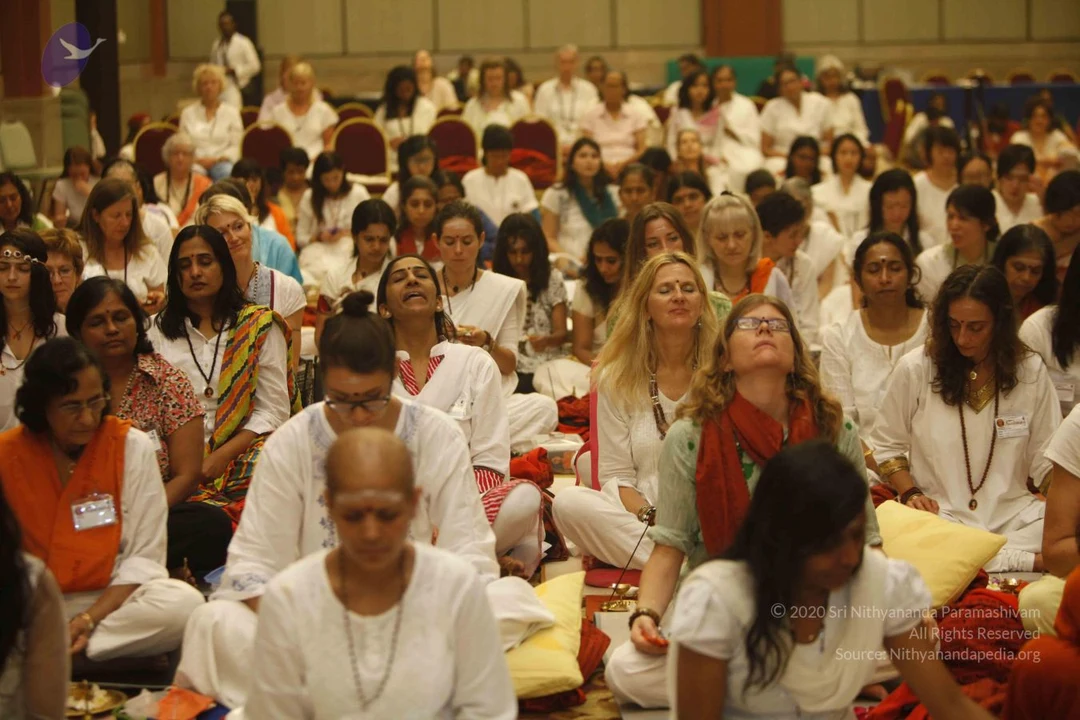
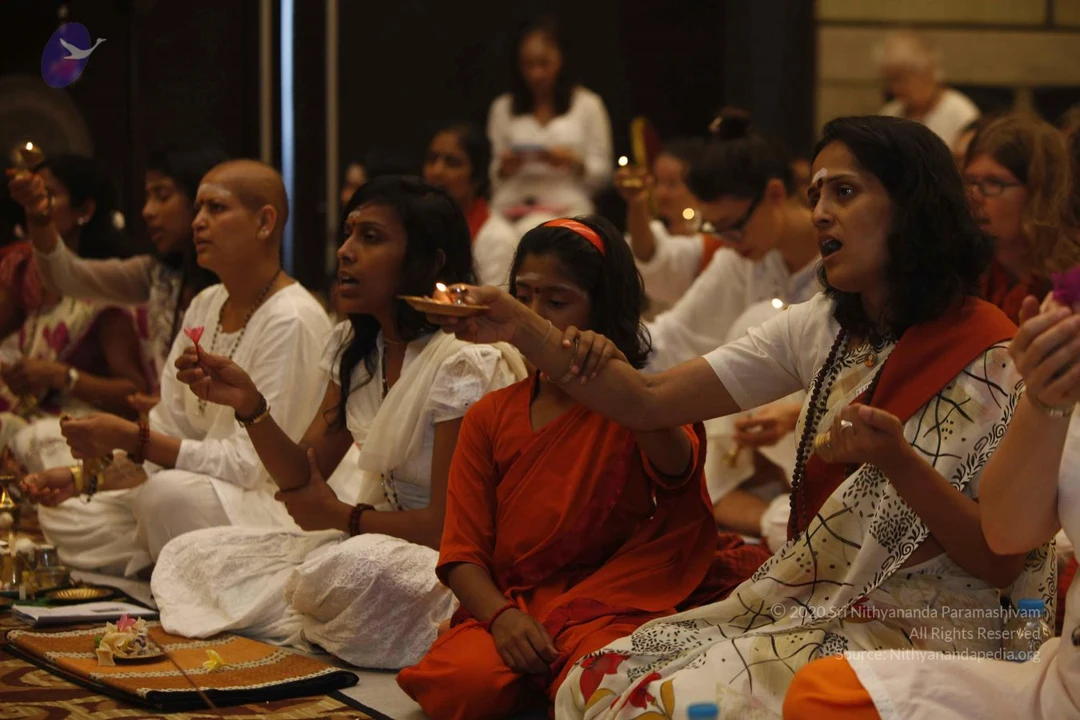
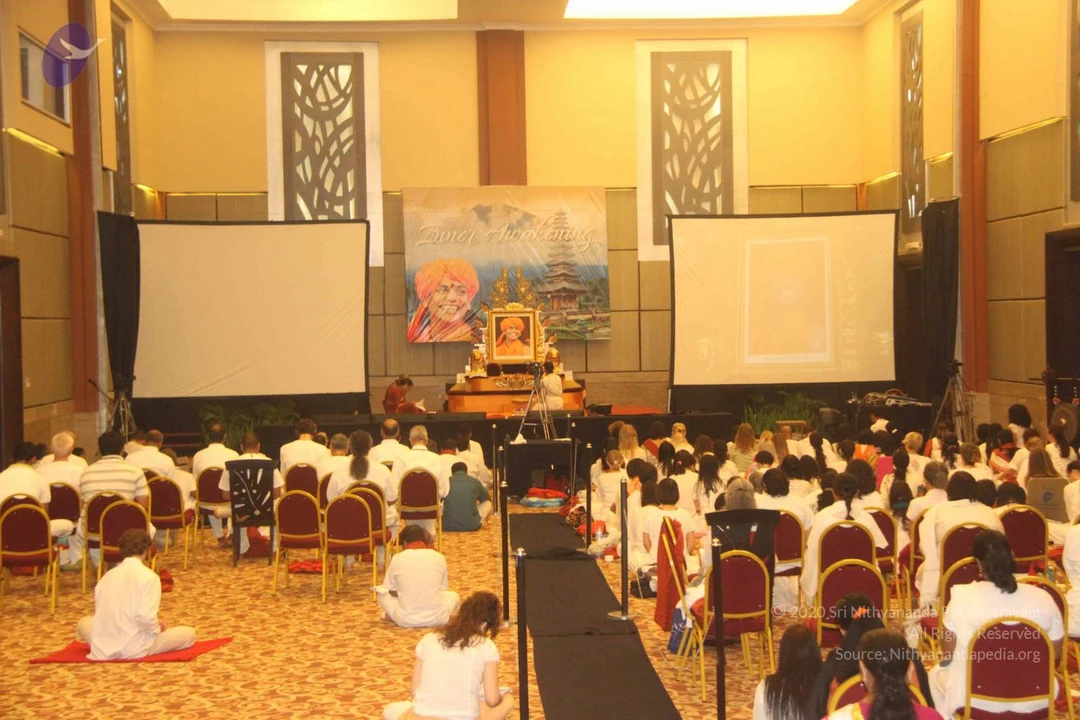
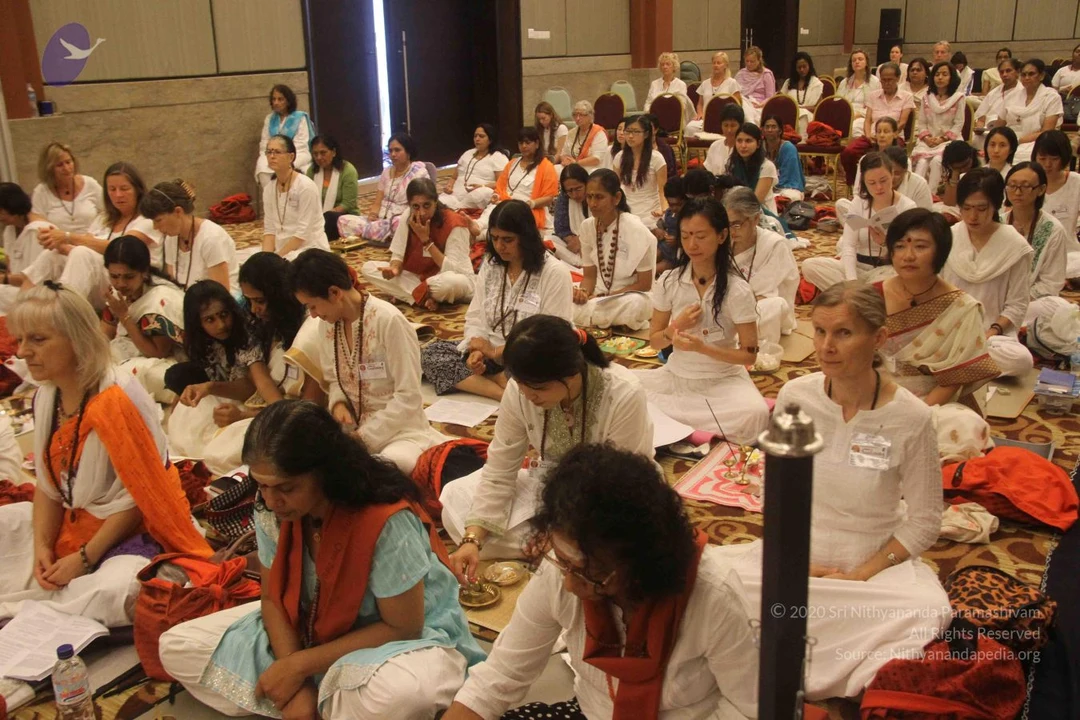
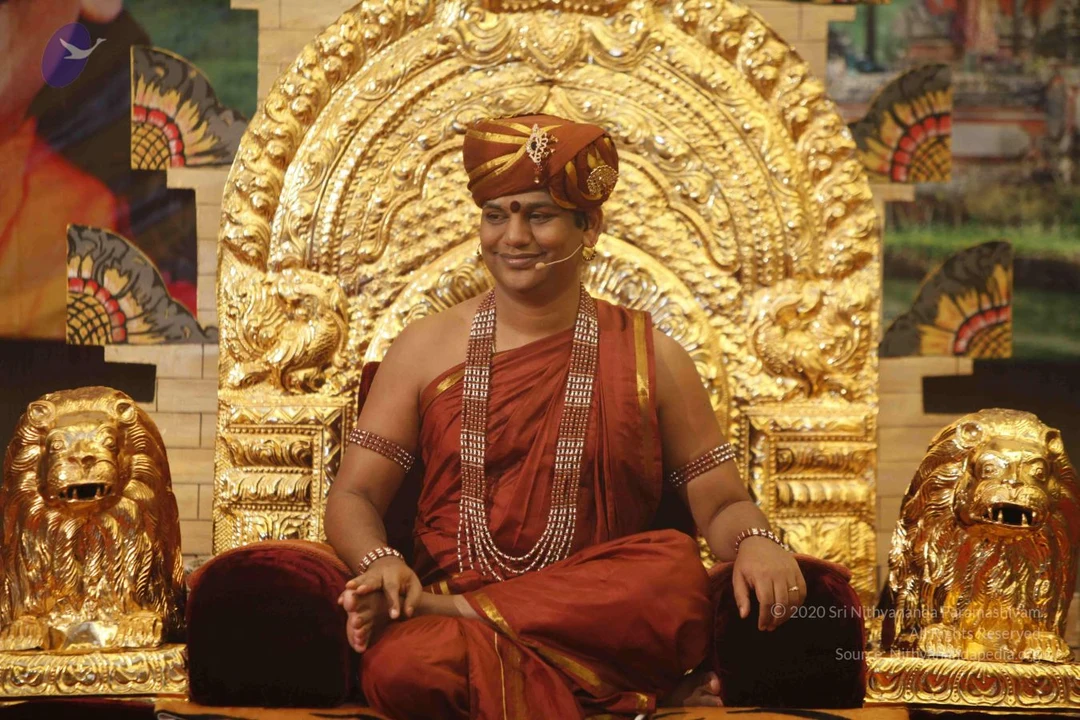
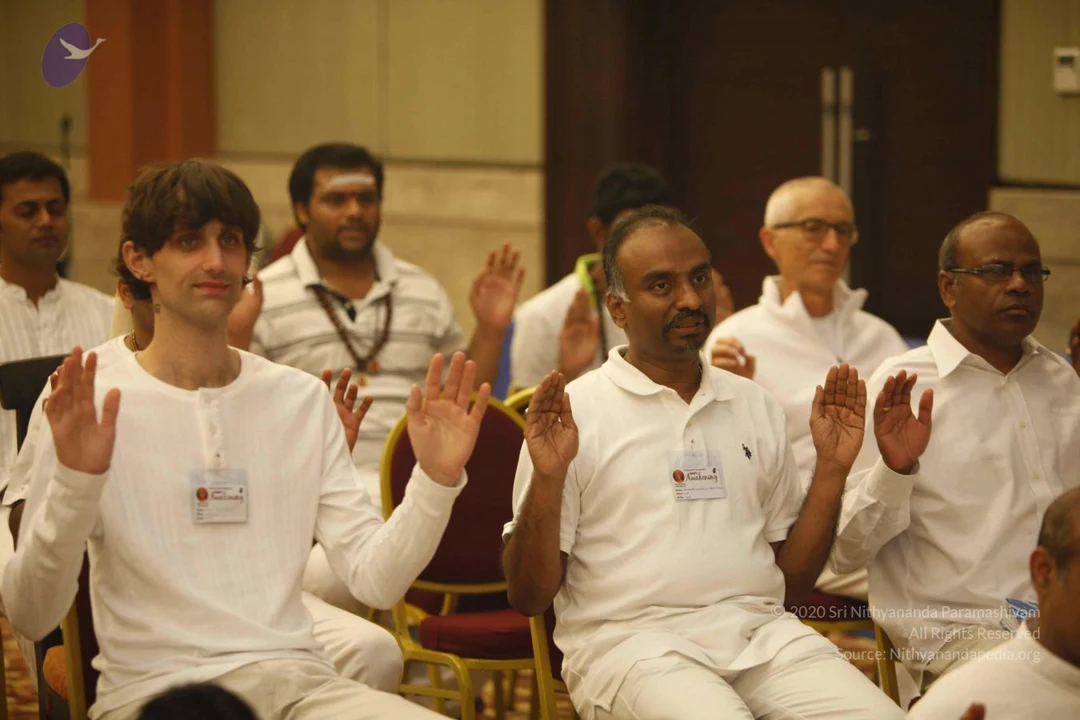
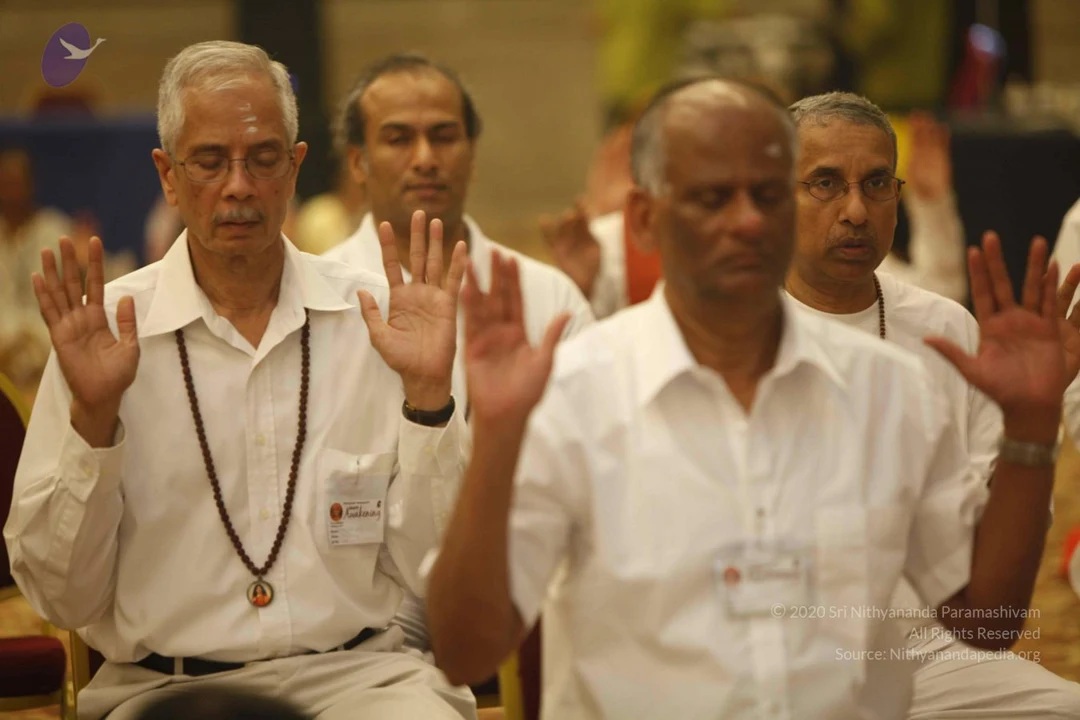
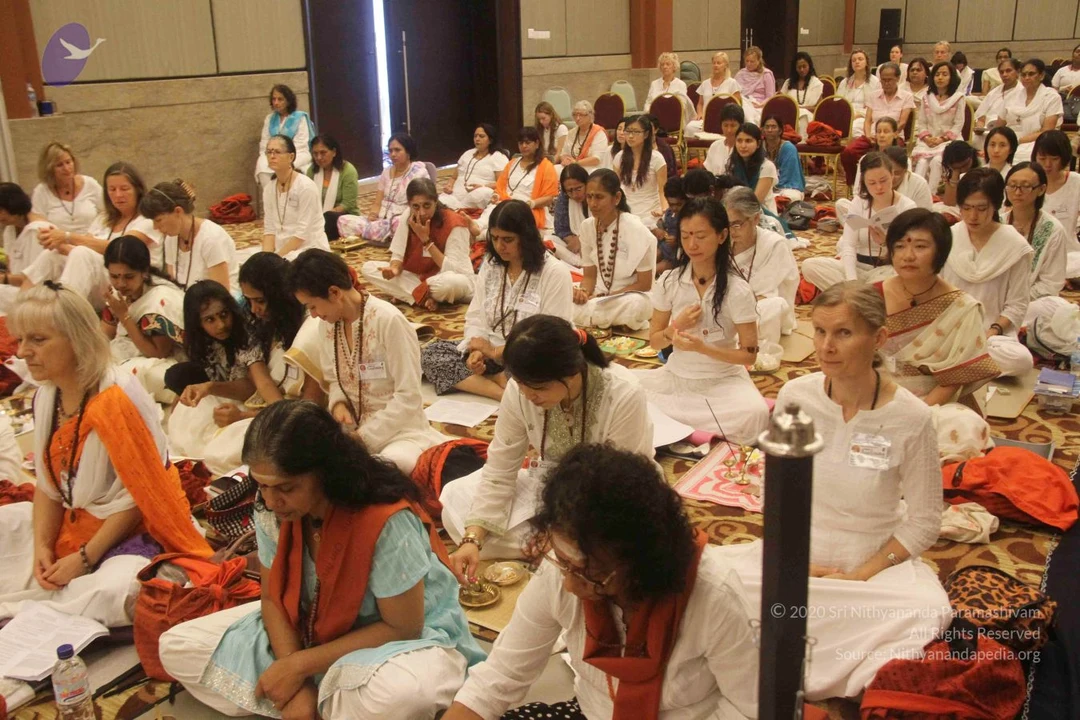
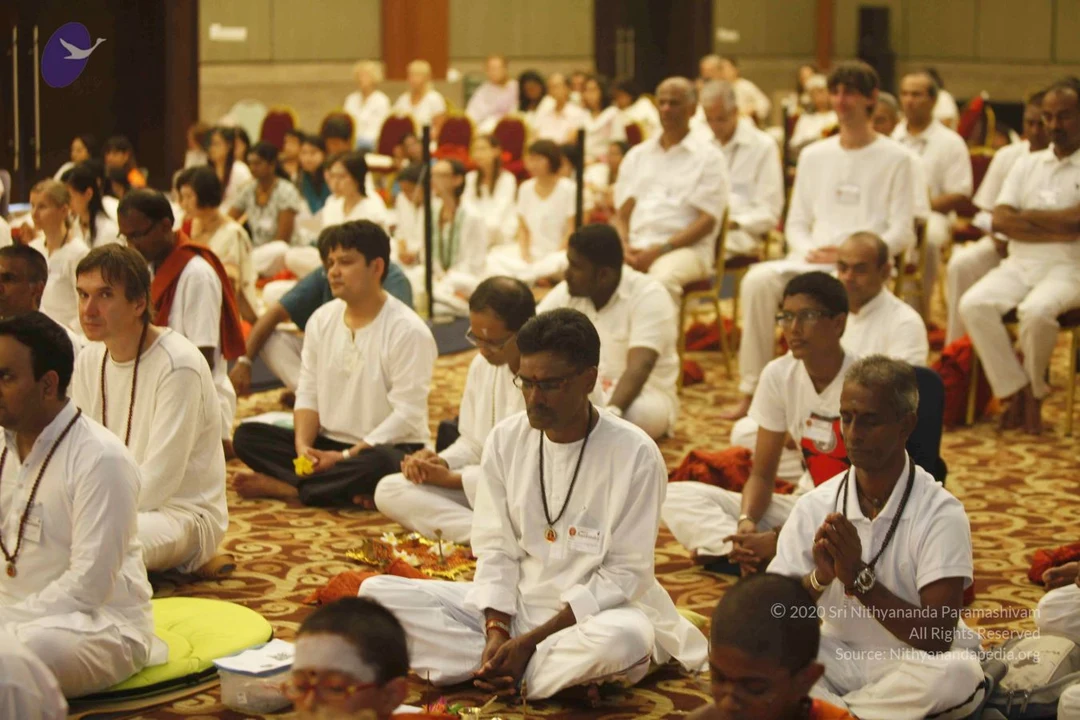
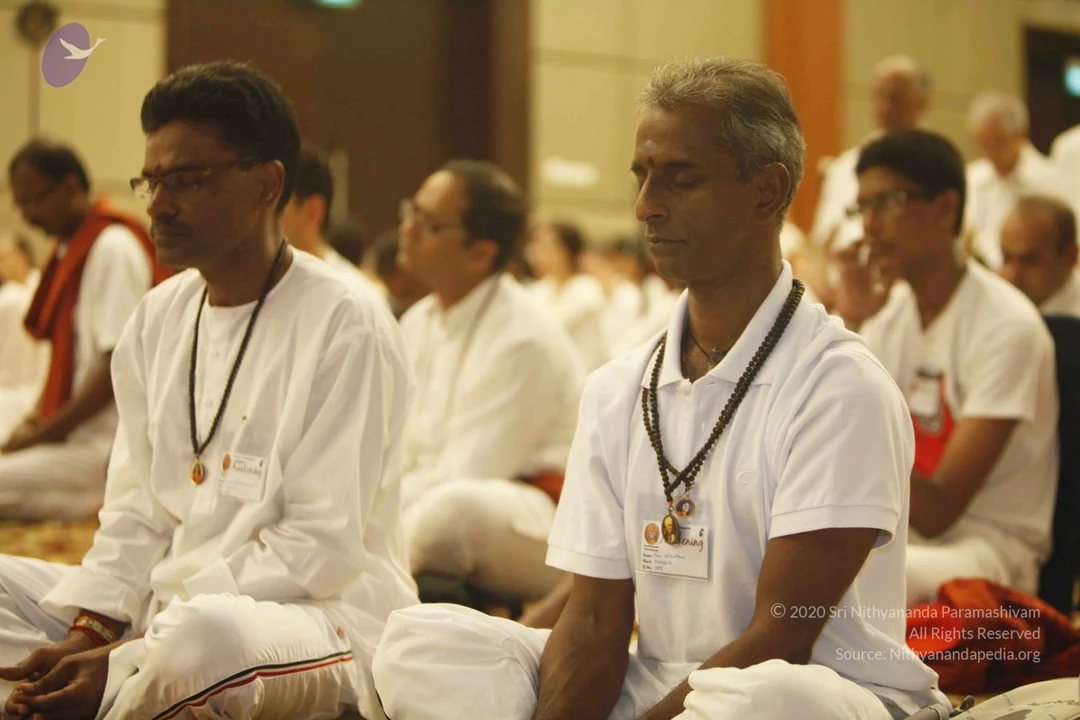
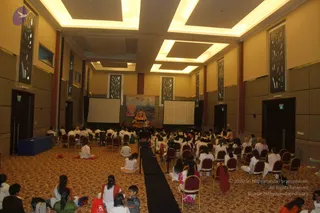
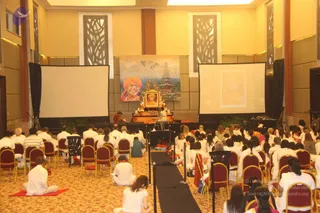
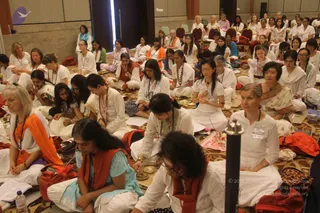
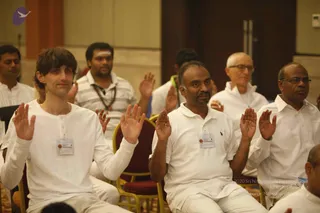
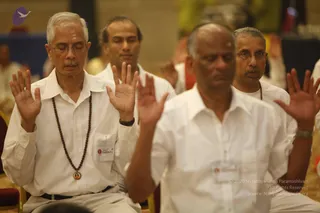
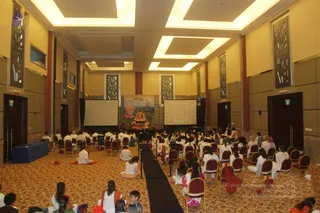
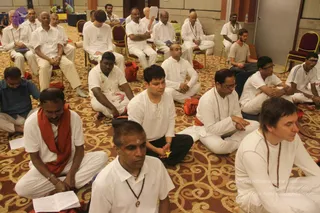
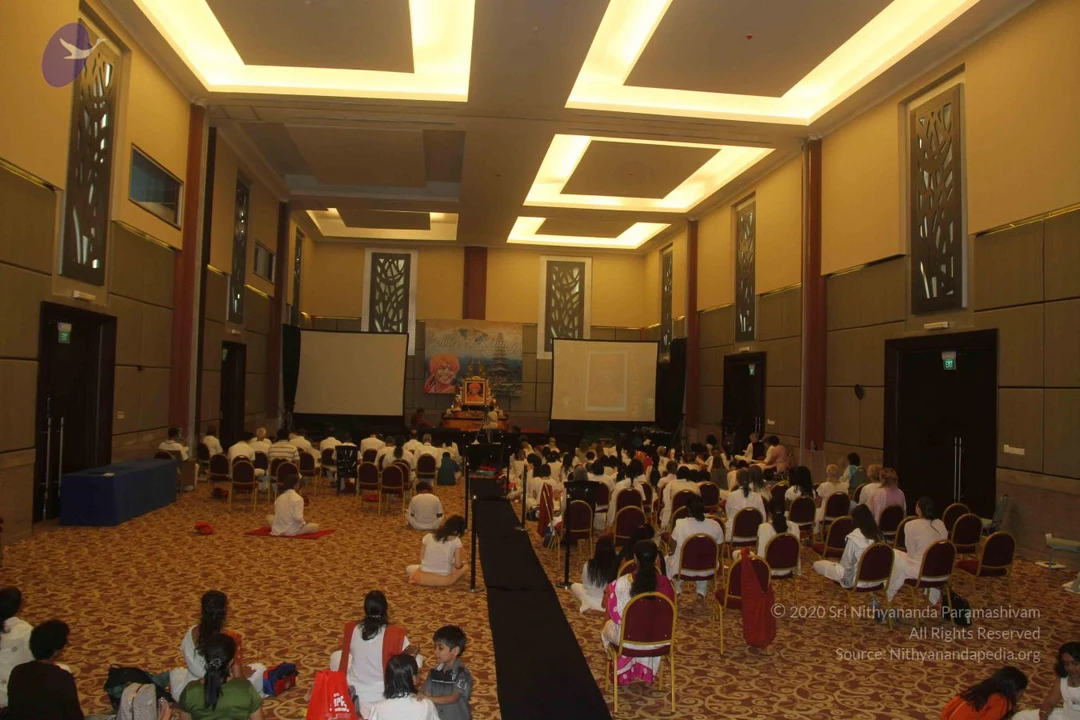
A large, warmly lit hall with cream walls, decorative wooden lattice panels and recessed ceiling lights, filled with rows of seated devotees on red-cushioned gold chairs and sitting cross-legged on the patterned carpet. Many attendees wear white, and a few wear pink, green and orange. At the far end, a central stage holds a small altar with a deity murti, flanked by two projection screens, and a large framed portrait on the back wall shows a bearded figure in an orange turban and saffron robes beside a temple scene. A black runner carpet runs down the central aisle. Whether the framed figure is a person cannot be confirmed from appearance, so the portrait is treated as a depiction.A wide photograph of a large hall with yellow walls where many people in white clothes sit on chairs and floor mats facing a stage. On the stage, a small figure in red sits at a low altar with a framed portrait and a golden canopy. Behind it hangs a large banner showing a smiling figure in a bright orange turban beside a pagoda-style temple and the words 'Lover Awakening'. Two large blank projection screens flank the stage. The audience is seated in rows, many wearing white, with some on red mats.A large hall with a patterned carpet is filled with seated women, mostly dressed in white with orange or red shawls, for a group sitting that resembles satsang or puja. In the foreground, a woman in a light blue tunic and an orange-red shawl sits cross-legged beside a woman in white with a brass plate, and a woman in white with gold-rimmed glasses holds a brass bowl. Brass dishes and incense sticks stand on small mats in front of the group, and a tall metal pole rises at right. Rows of attendees continue toward a wall with a large doorway. No a person candidate is clearly visible.A photograph of a seated figure on an ornate golden throne flanked by two golden lion sculptures. The person wears a rust-red and orange turban with a jewelled brooch, a red-orange shawl draped over the shoulder and bare chest, a long multi-strand white beaded necklace, and beaded bangles on the upper arms and wrists. A small microphone is clipped near the face. The person sits cross-legged with hands folded, smiling, on a dark red cushion; the throne is backed by a gilded arch with carved lion and floral motifs and a stepped wooden panel behind.A photograph of a seated audience at an indoor hall with beige walls, dark wood doors and red-cushioned gold-framed chairs. Several devotees in white clothing raise their open palms toward the front. In the foreground, a young man with shoulder-length brown hair wears a white kurta-style shirt and a white name badge. Beside him, a man in a white polo shirt with a white badge raises both hands, and an older man with glasses in a white kurta also lifts his hands. A man in a striped shirt with a tilak and rudraksha mala appears behind them. No a person candidate is clearly identifiable among those visible.Four men in white shirts sit closely together in a hall, eyes closed, palms raised outward in a devotional gesture. The man on the left wears glasses, a rudraksha mala with a pendant, and an ID badge; the man at front has a shaved head and a badge on his shirt; the man on the right wears glasses and a mala. Behind them, more seated devotees in white are visible, and a blurred figure in red and orange stands in the background. No one in the frame is clearly a person by appearance, so no candidate is identified.

YOGA-PHOTOS
11 photosSource gallery
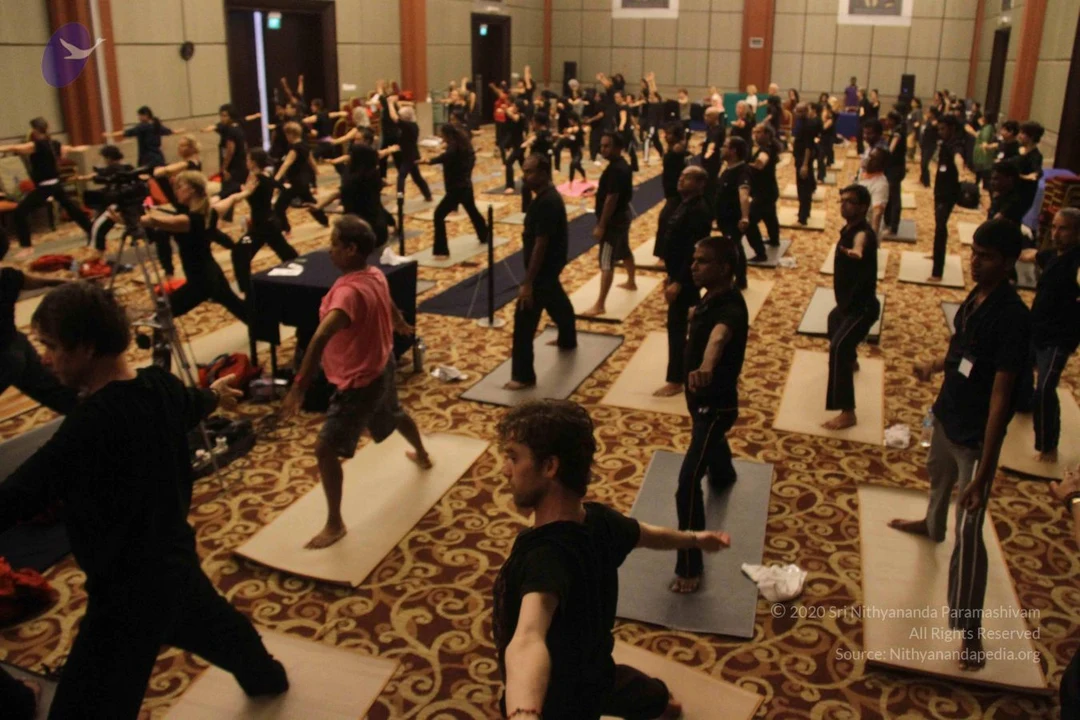
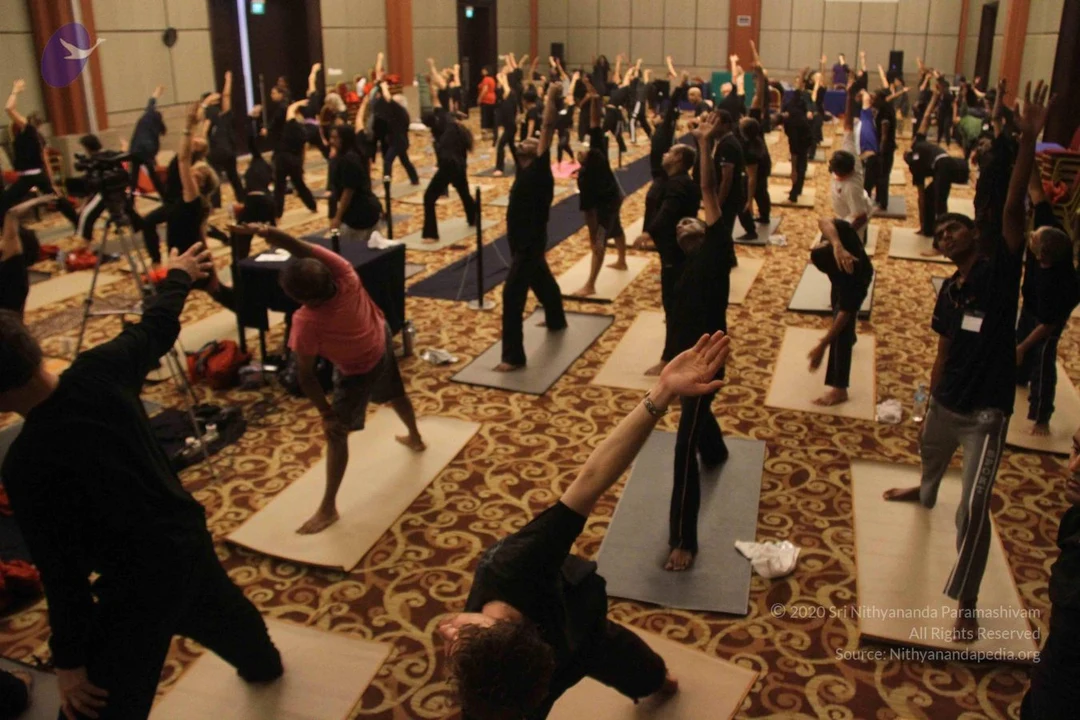
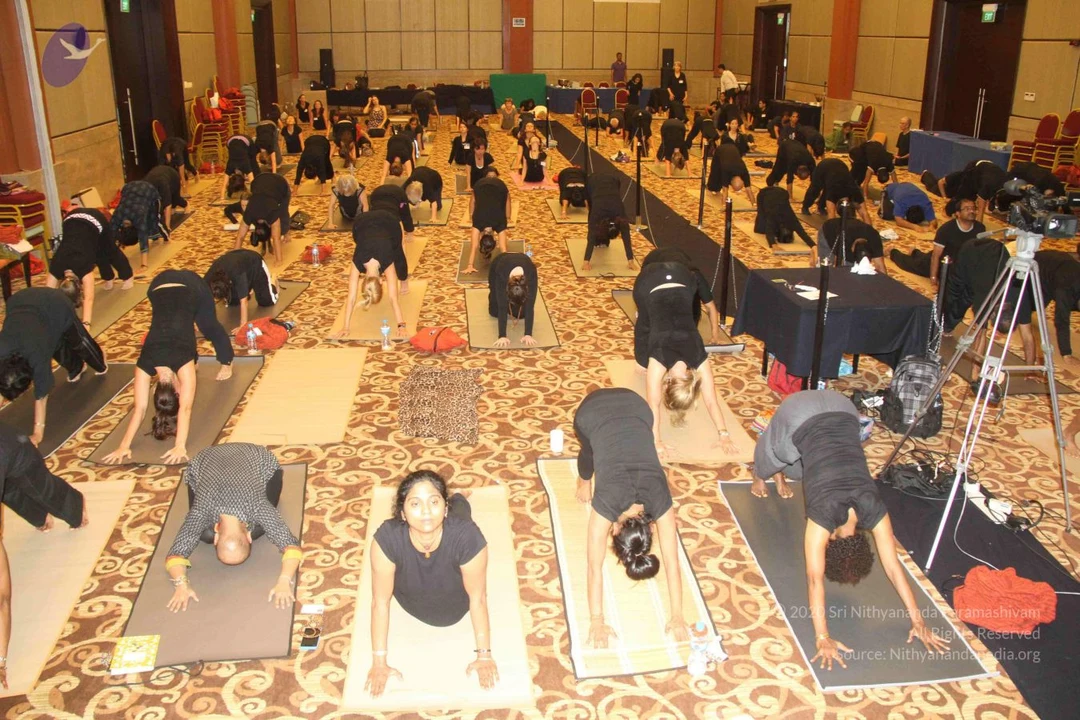
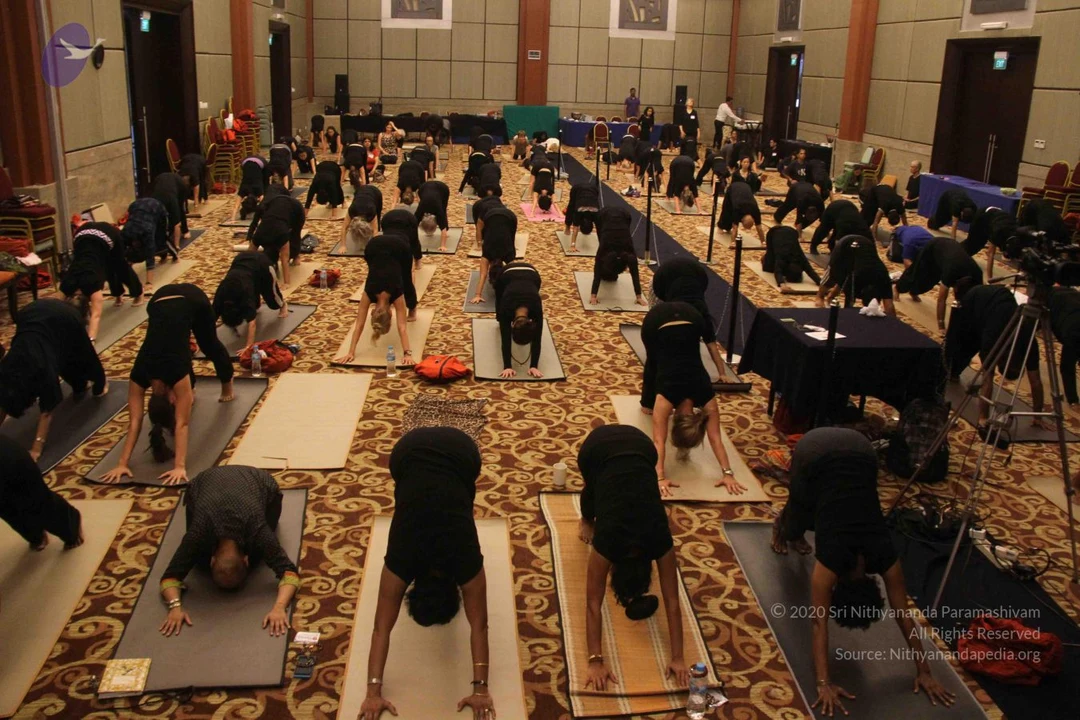
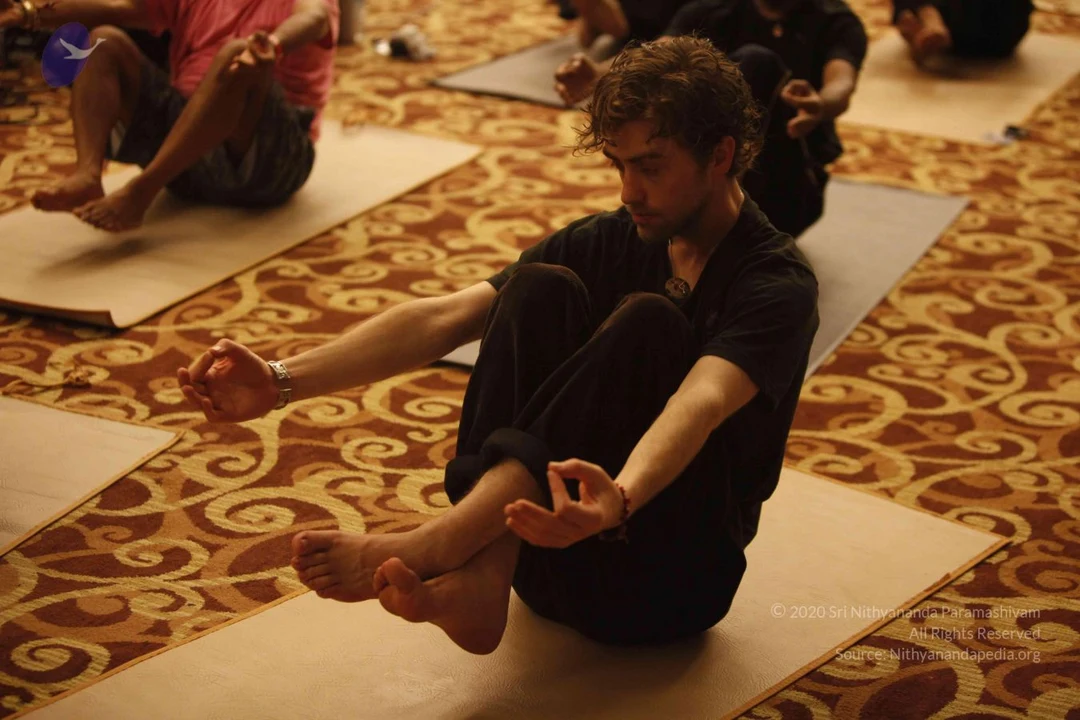
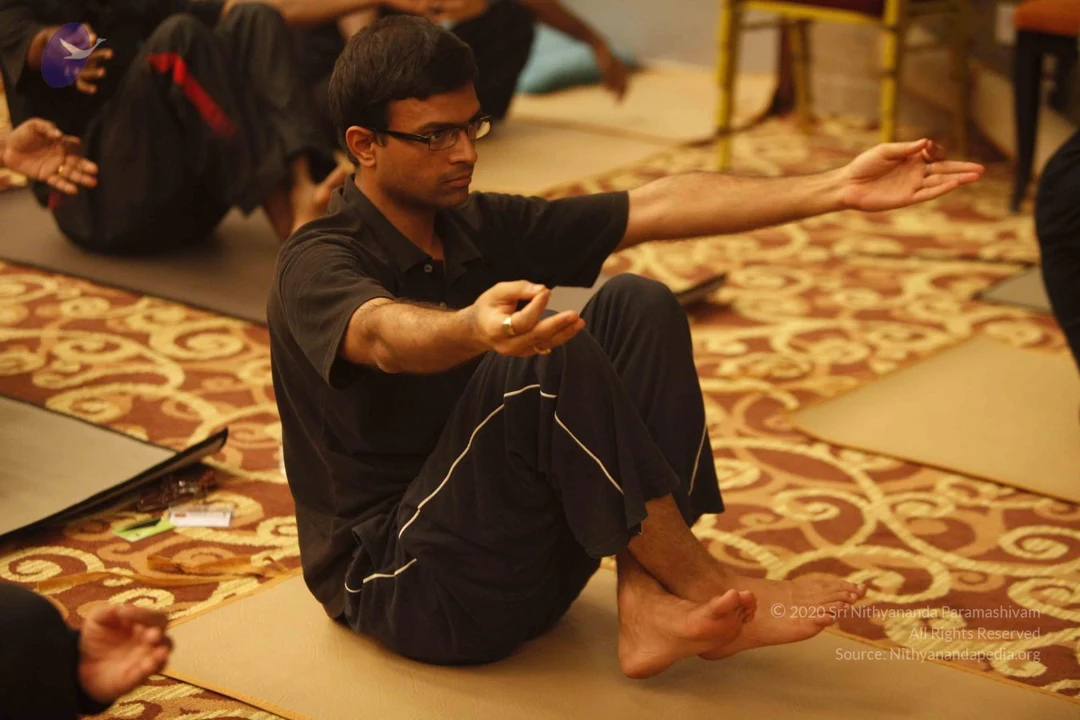
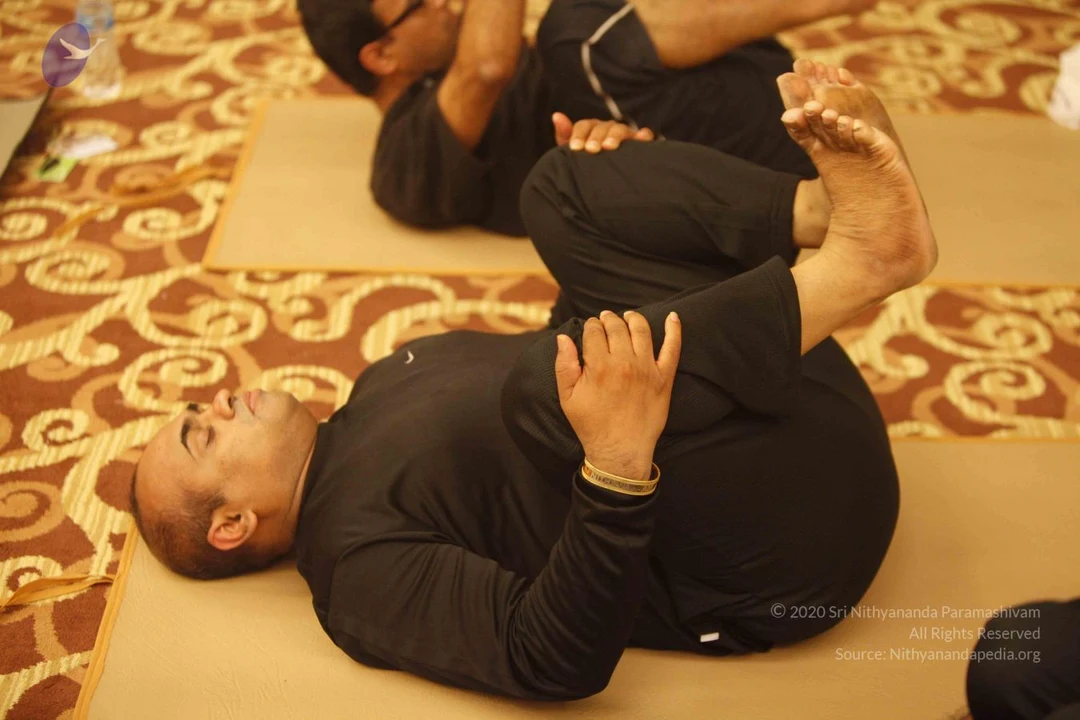
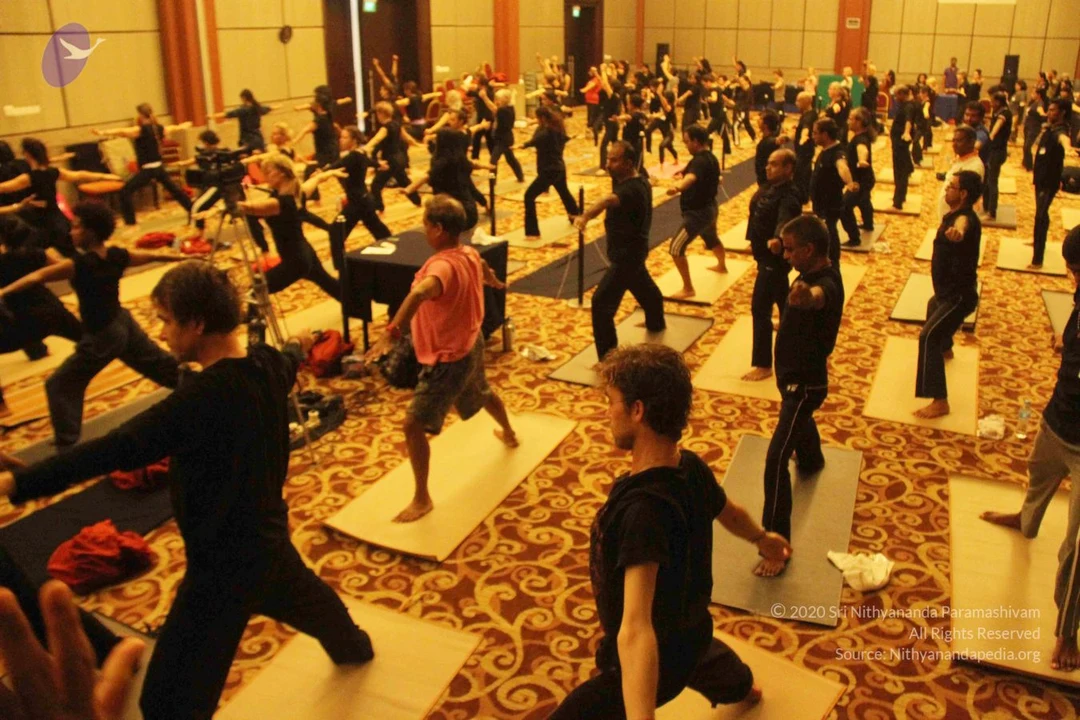
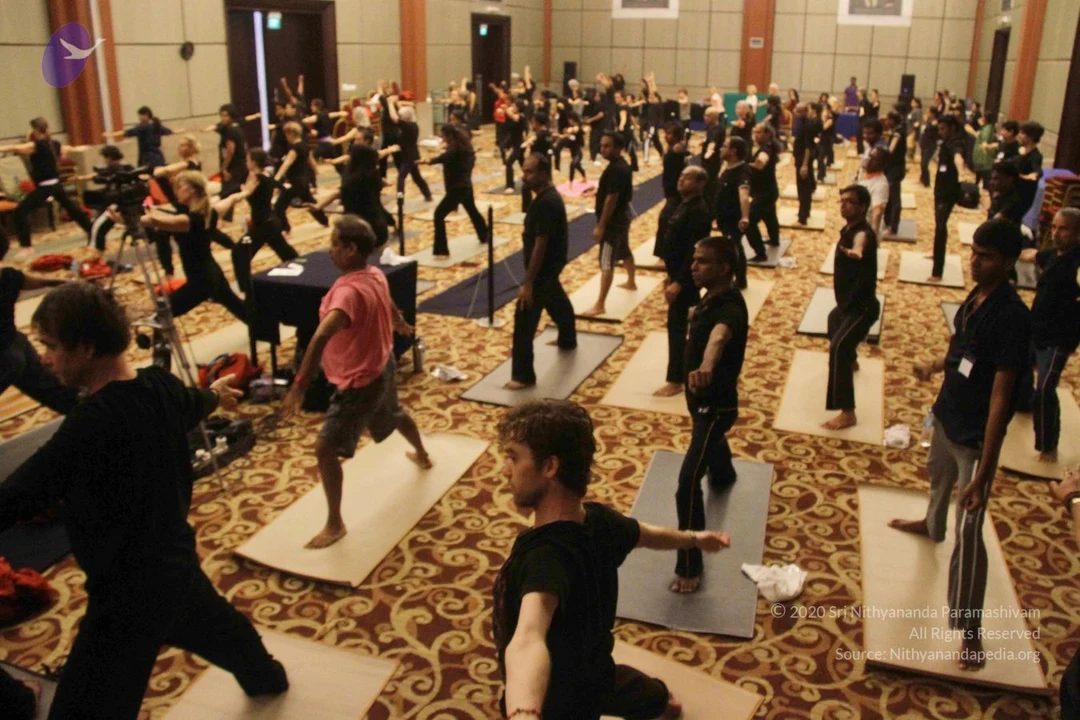
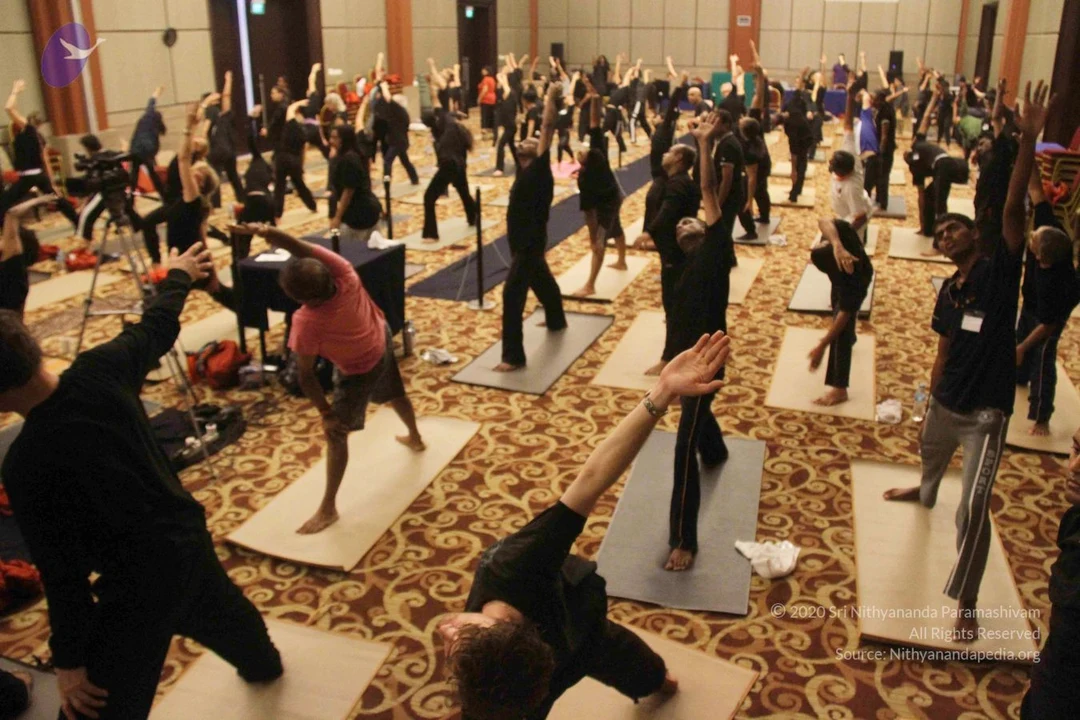
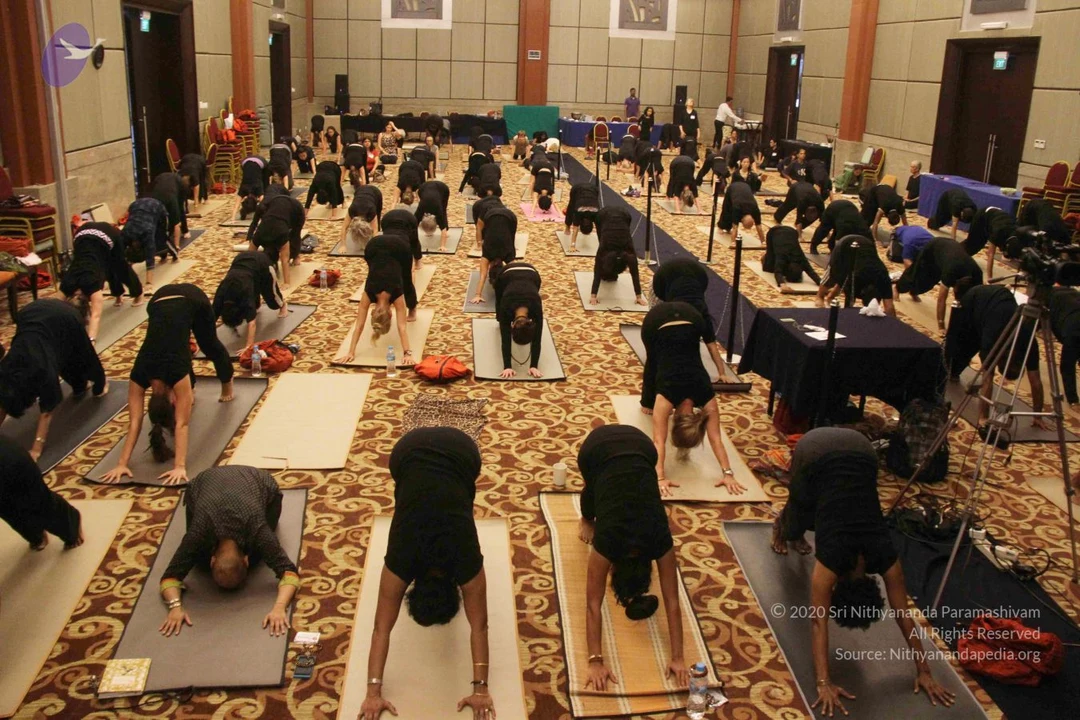
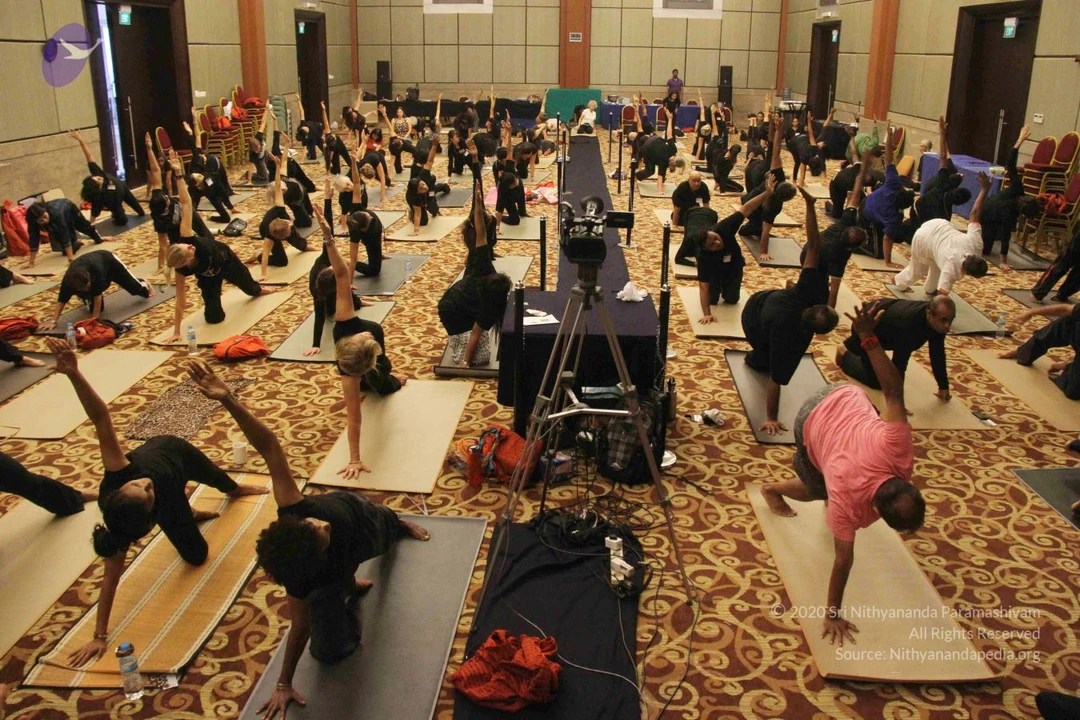
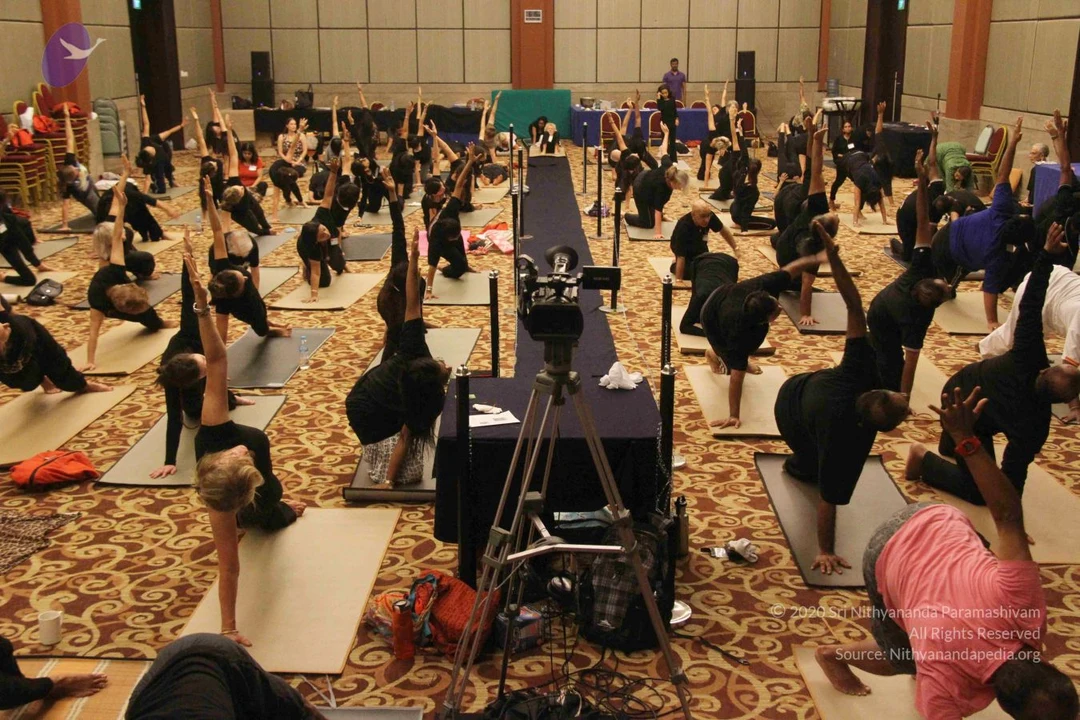
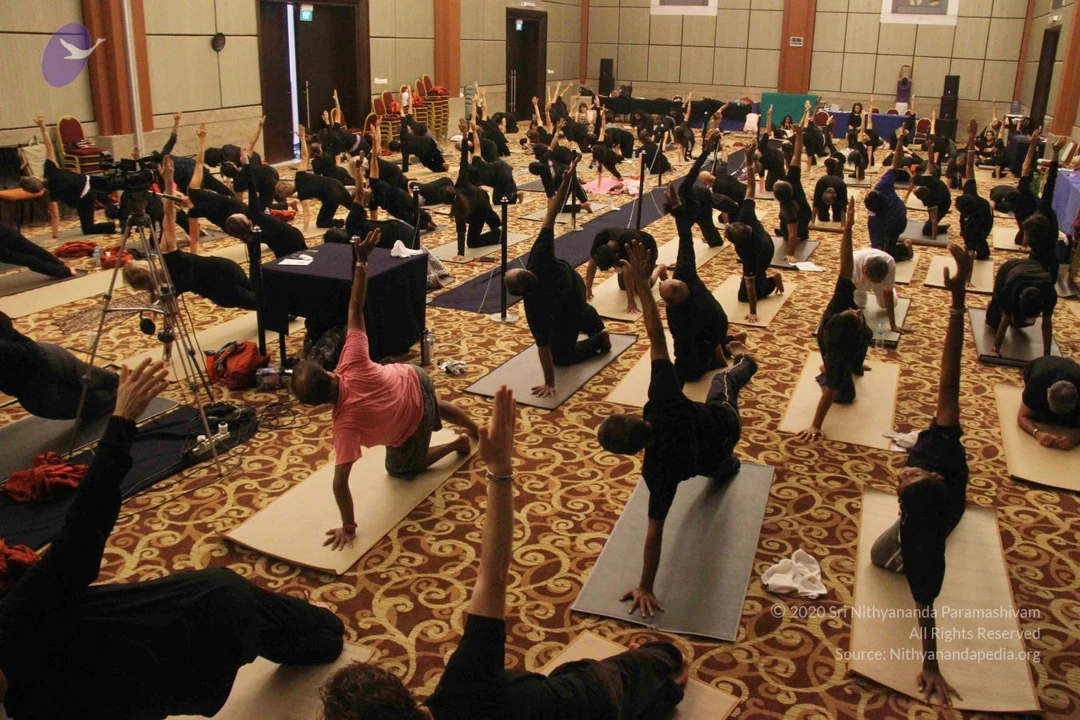
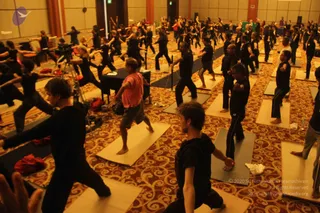
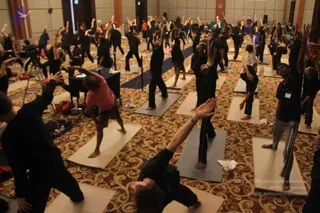
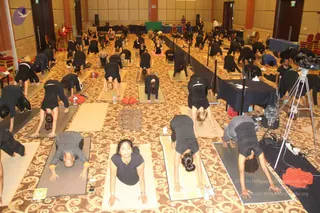
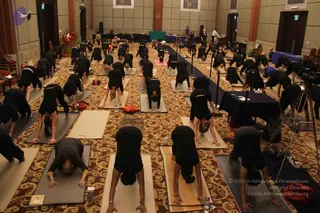
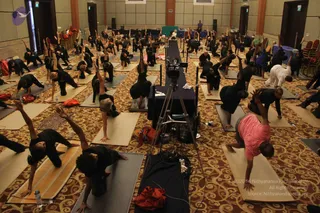
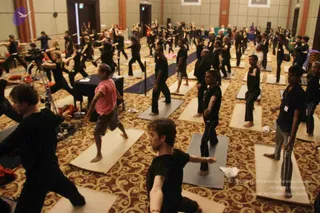
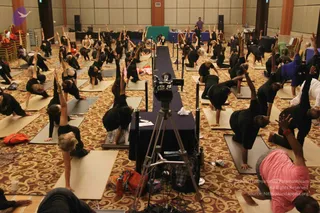
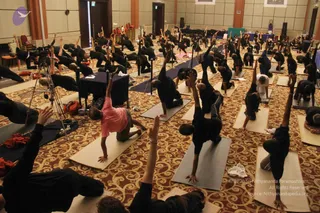
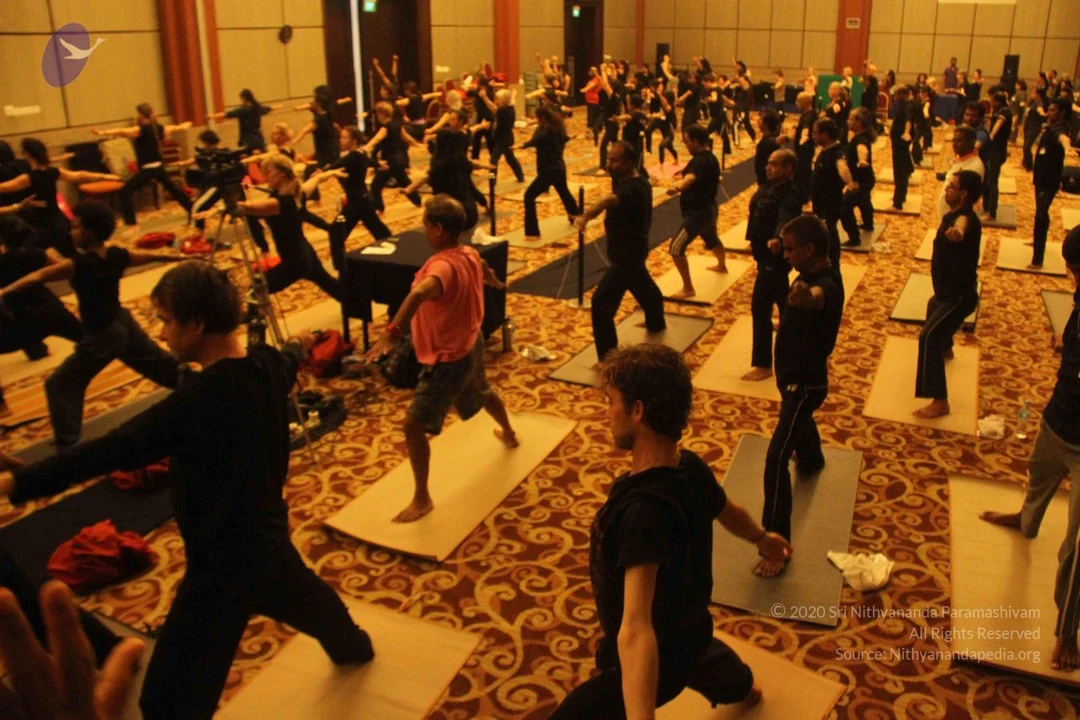
A photograph of a large hall with a patterned gold and brown carpet where many participants in black clothing perform synchronized standing yoga poses on rectangular mats. Lunges, arm extensions and balance postures are visible. A few participants wear pink, red and grey clothing. A camera on a tripod stands at left, and a red bag lies on the floor.A large hall with a patterned carpet where many people in dark clothing perform standing yoga poses on mats, arms raised overhead or stretched sideways. Some mats are light wood-coloured, others grey. A man in a pink shirt and shorts bends forward near the front-left. A camera on a tripod is visible at left, and bags and water bottles sit on the floor. Several participants wear name badges. The crowd fills most of the frame, with the exact count hard to determine.A large hall with patterned beige-and-brown carpet fills with many people in black clothing performing a forward-bend yoga practice on yoga mats, most with hands planted on the mats and heads lowered. A seated figure in the lower left wears a grey-and-black patterned top and a bald head, bent forward with arms extended. Foreground participants wear black t-shirts and a woman with dark hair is in a low plank position. Dark curtains, black-draped tables, a video camera on a tripod at right, and red bags are visible. Several people in the back row stand near the far wall. No identifiable a person figure is clearly visible in appearance.A photograph of a large hotel ballroom with a patterned brown carpet where many people in black clothing are performing a forward-bending yoga posture on mats, with hands planted on the floor and heads lowered. Several dozen participants are visible, most in black tops and black trousers, some on grey, beige and pink mats. Water bottles, a small camera on a tripod and rows of stacked red chairs line the room, with tables draped in blue and black cloths at the back. Mention of a bald man in a dark shirt and bracelets at the front left.A large hall with patterned carpet filled with rows of participants on yoga mats performing a standing back-bend or side-stretch with arms raised overhead. Most wear black clothing; one man in the right foreground wears a pink t-shirt and grey shorts. A video camera on a tripod stands in the centre aisle beside a draped table, with cables and red bags on the floor. At the far end, a figure stands near a stage with blue-draped tables. Many participants are seen from behind, and the mats are arranged in neat lines. The scene reads as a group yoga session led from the front.A large hall with patterned gold-and-brown carpet holds a crowd of participants in an assembled yoga session, many in dark clothing on yoga mats, arms raised overhead while bending or balancing in forward-bend and lunge-style postures. Some wear pink or white tops. Camera tripods and a video camera stand at the left edge, and a draped dark table and a blue-cloth table sit toward the back of the room near folding chairs and wall-mounted pictures. No specific figure can be picked out as a presenter from the visible evidence, and the people are shown from behind or in profile, so no one is confidently identifiable as a person.

Puja

9 photosSource gallery
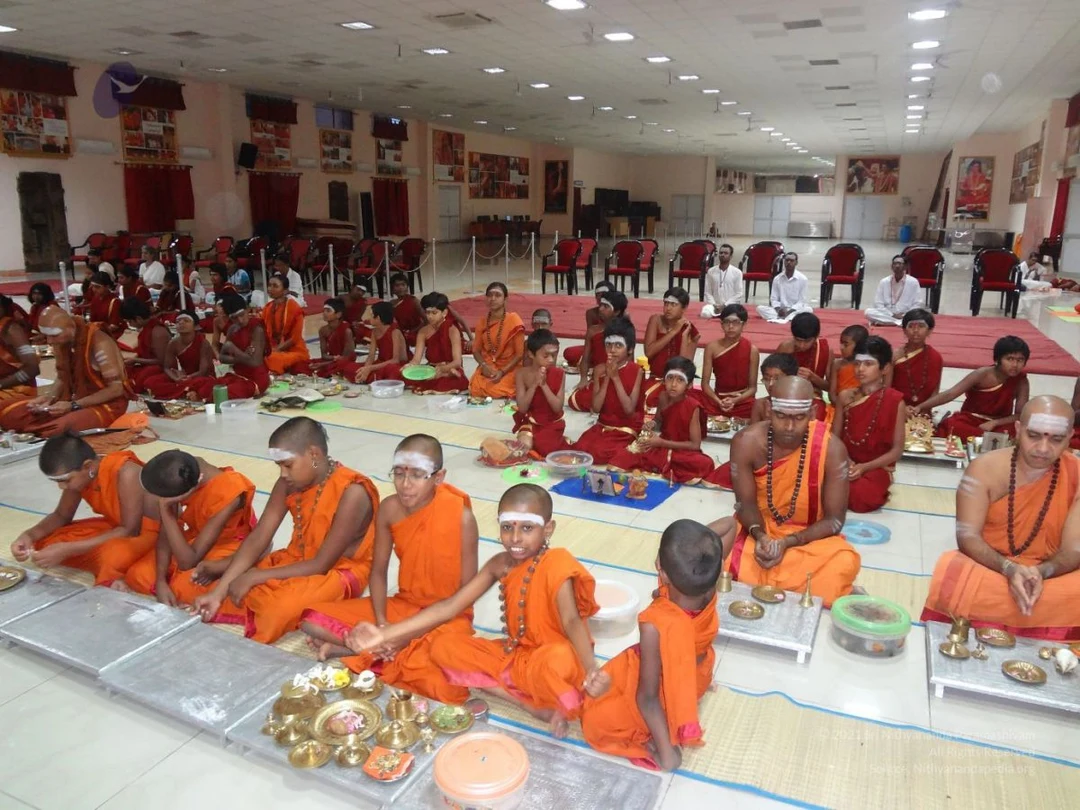
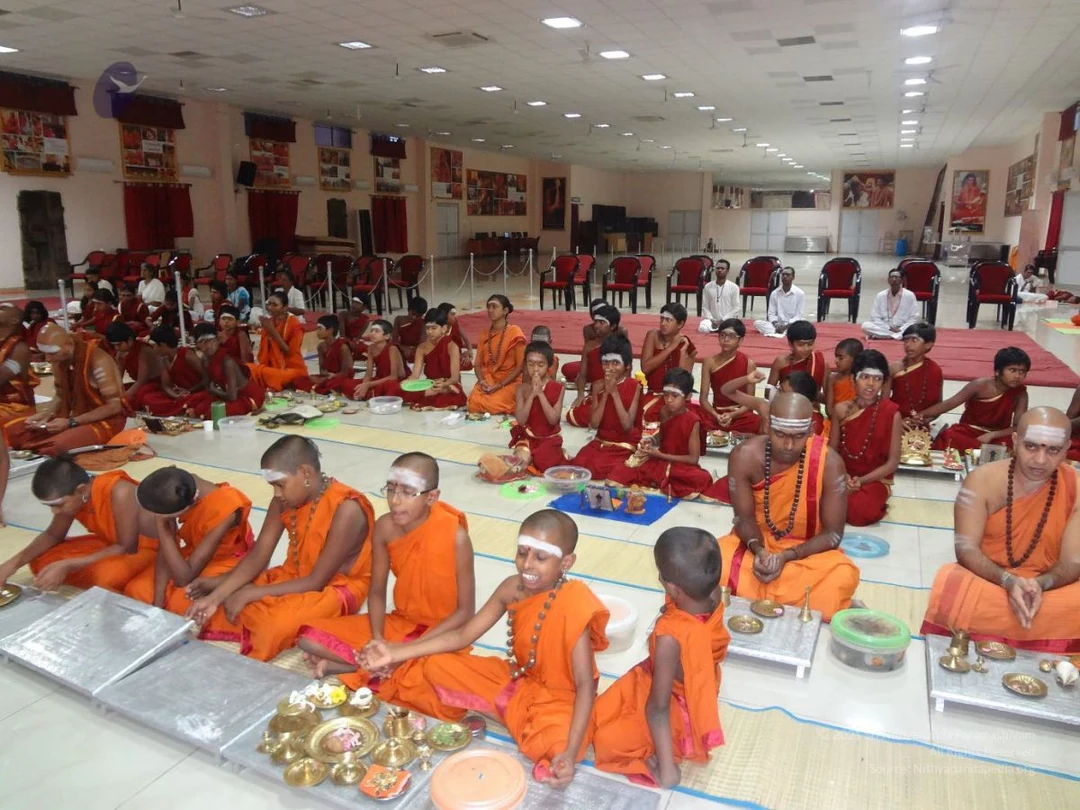
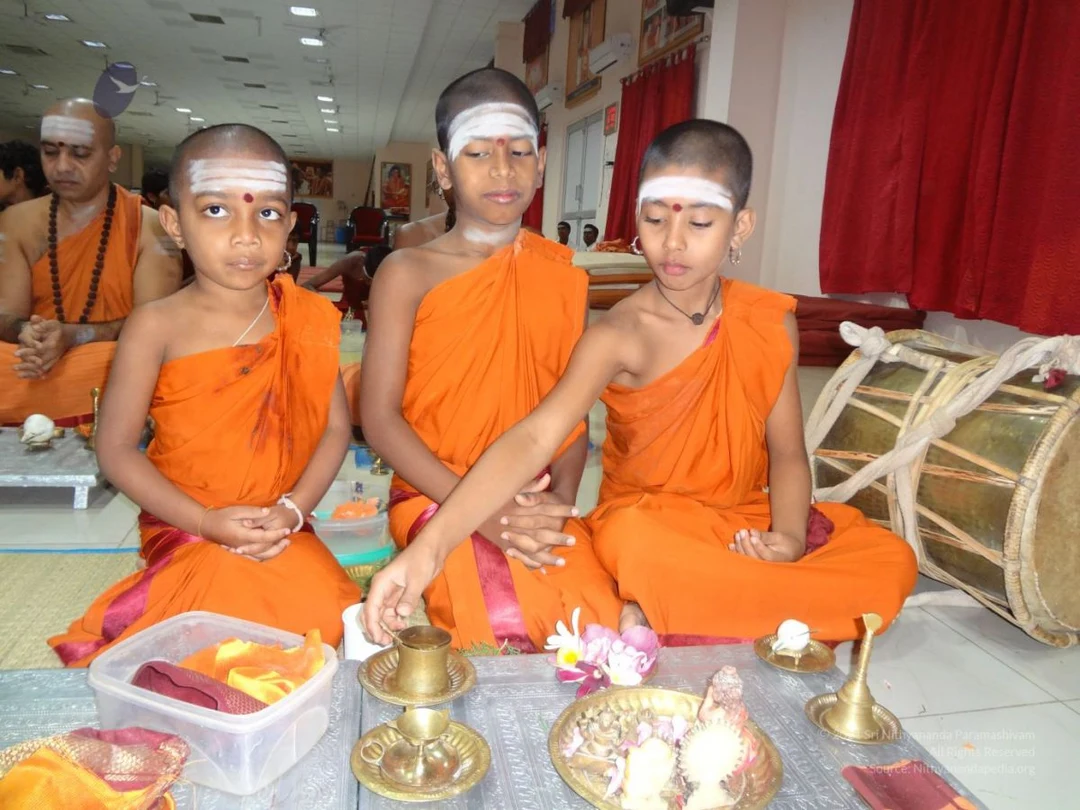
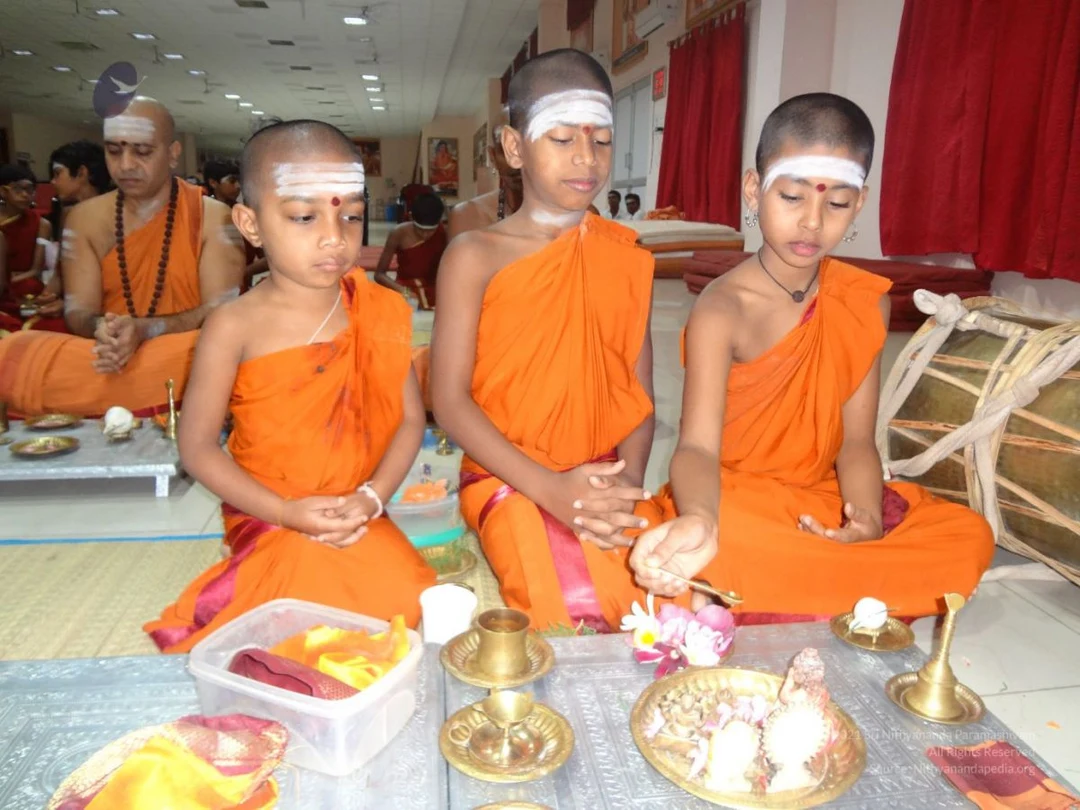
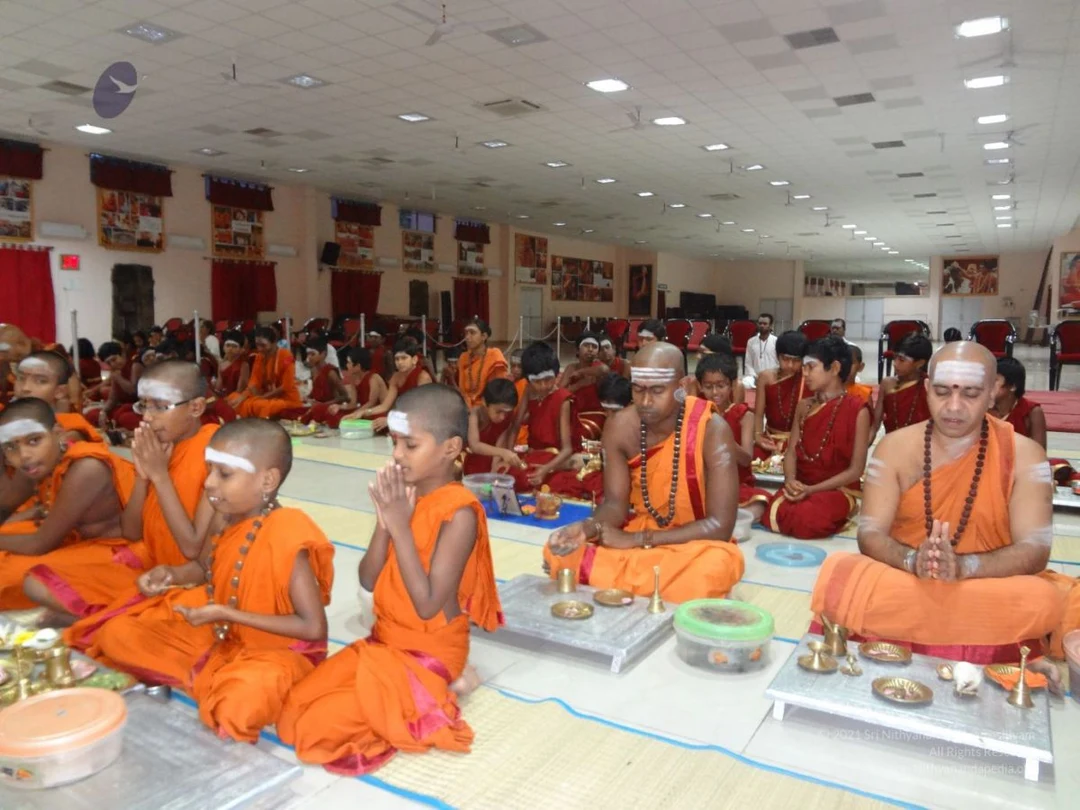
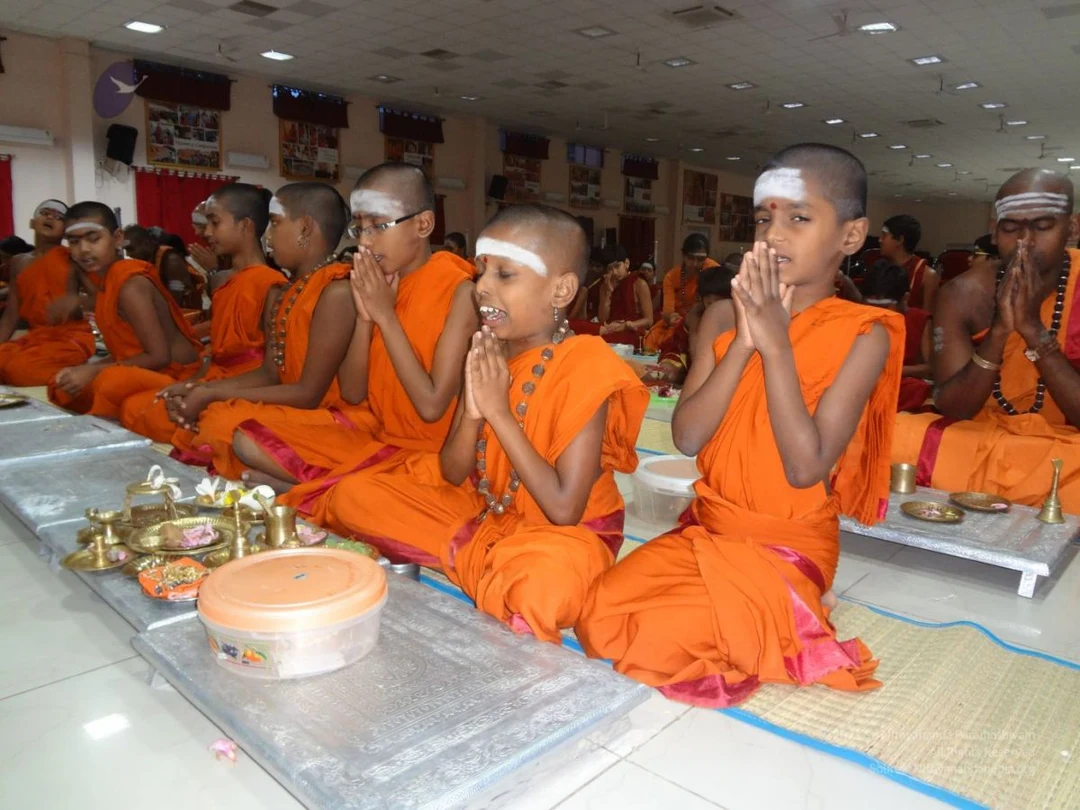
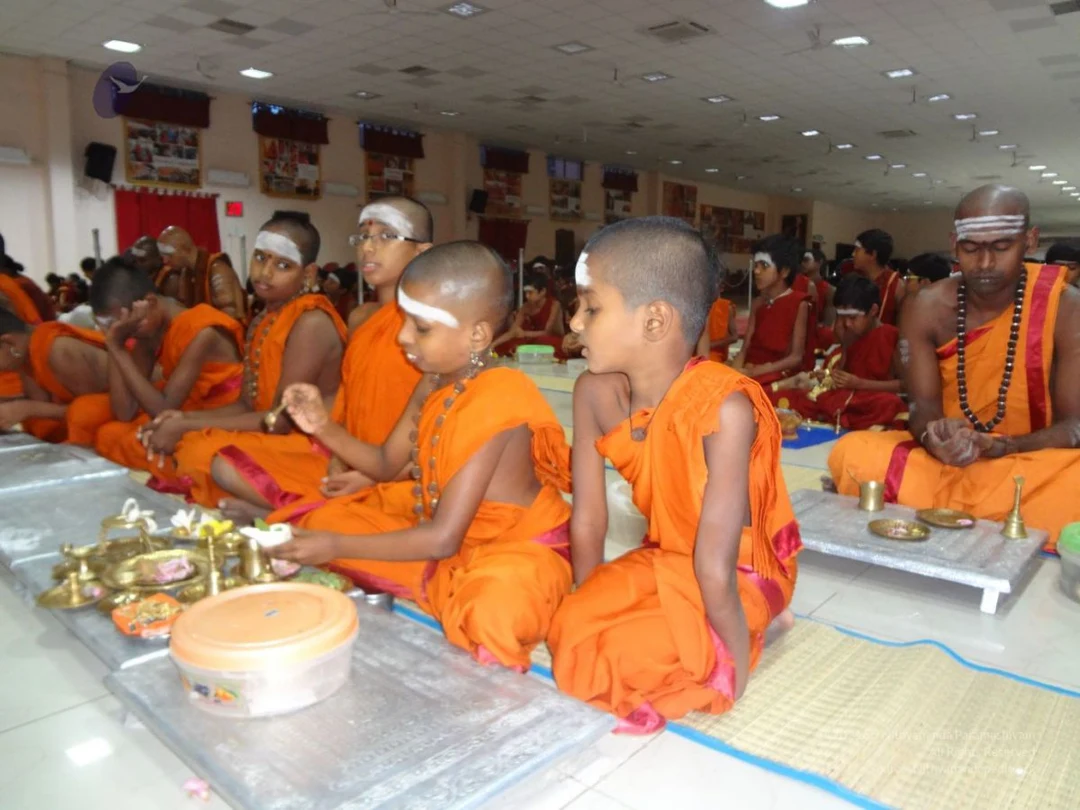
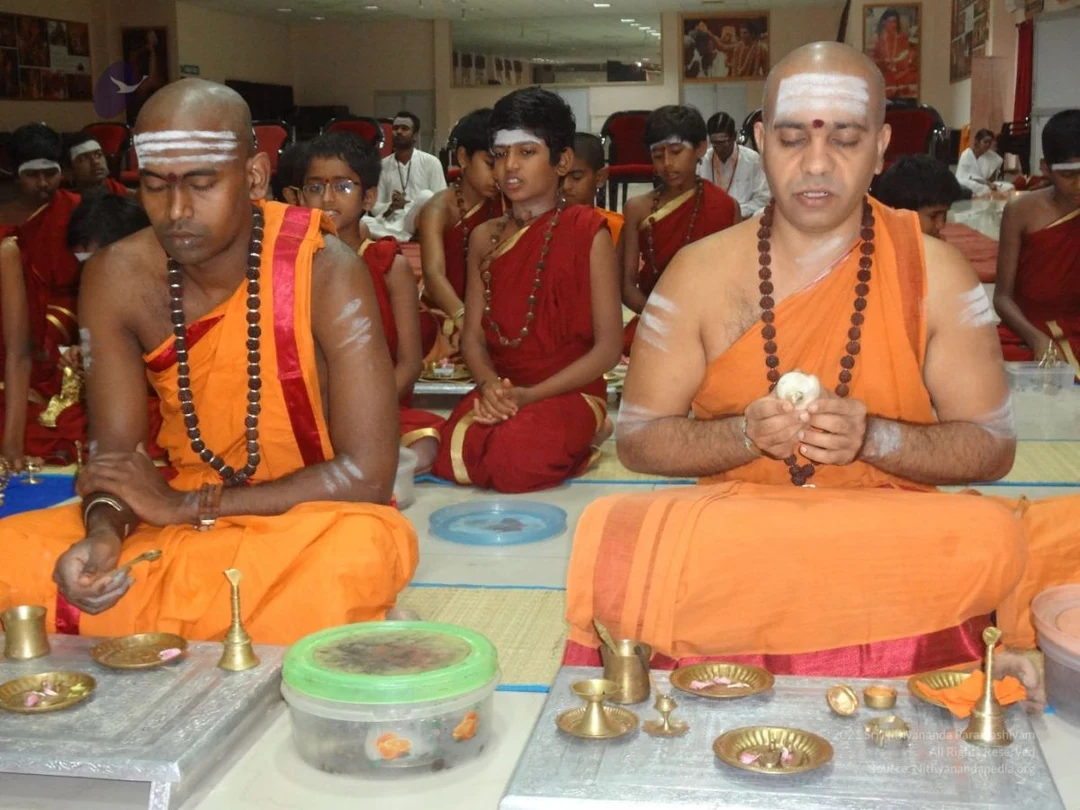
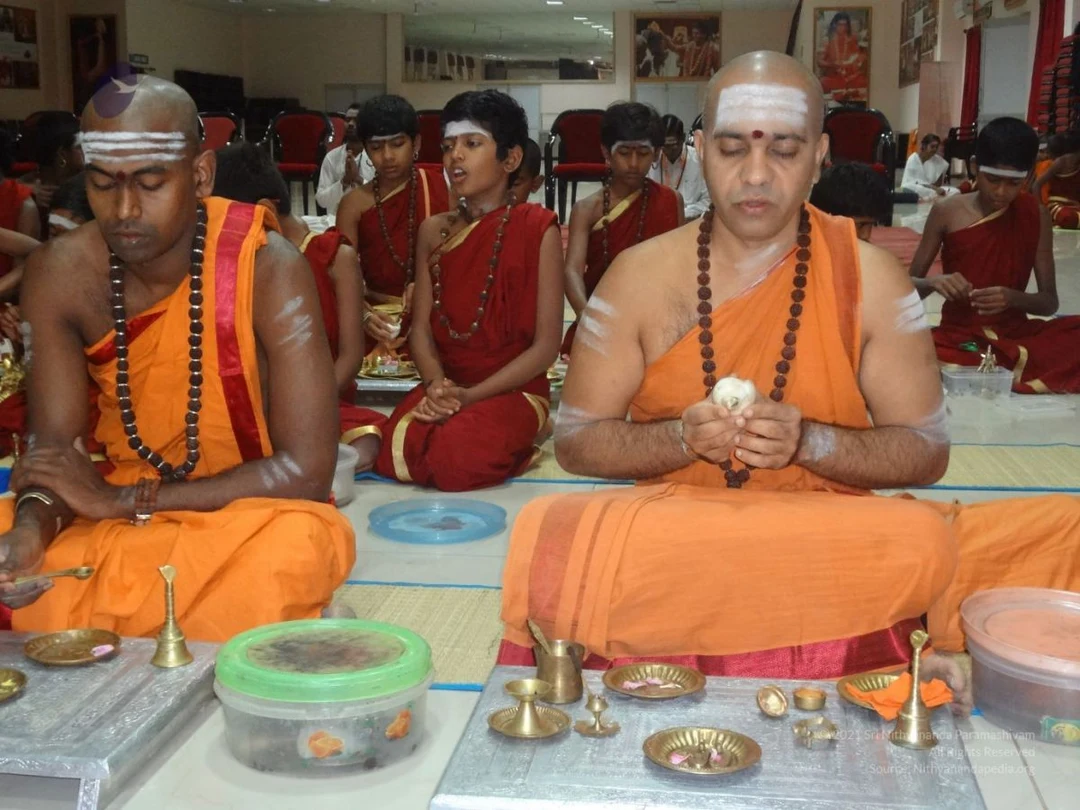
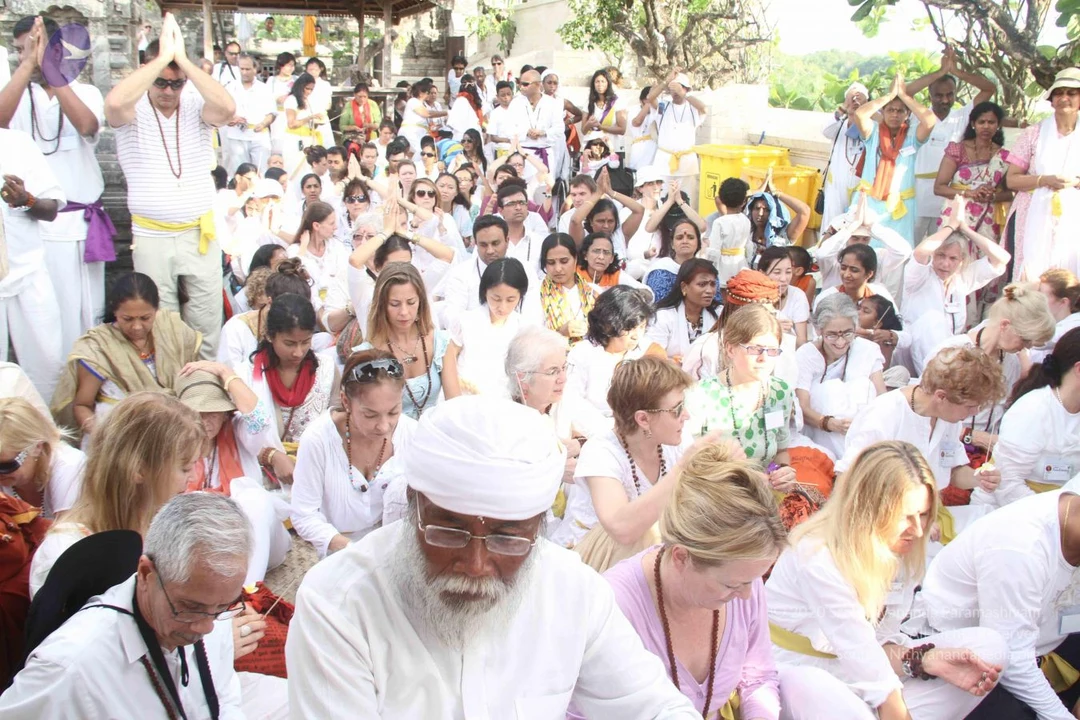
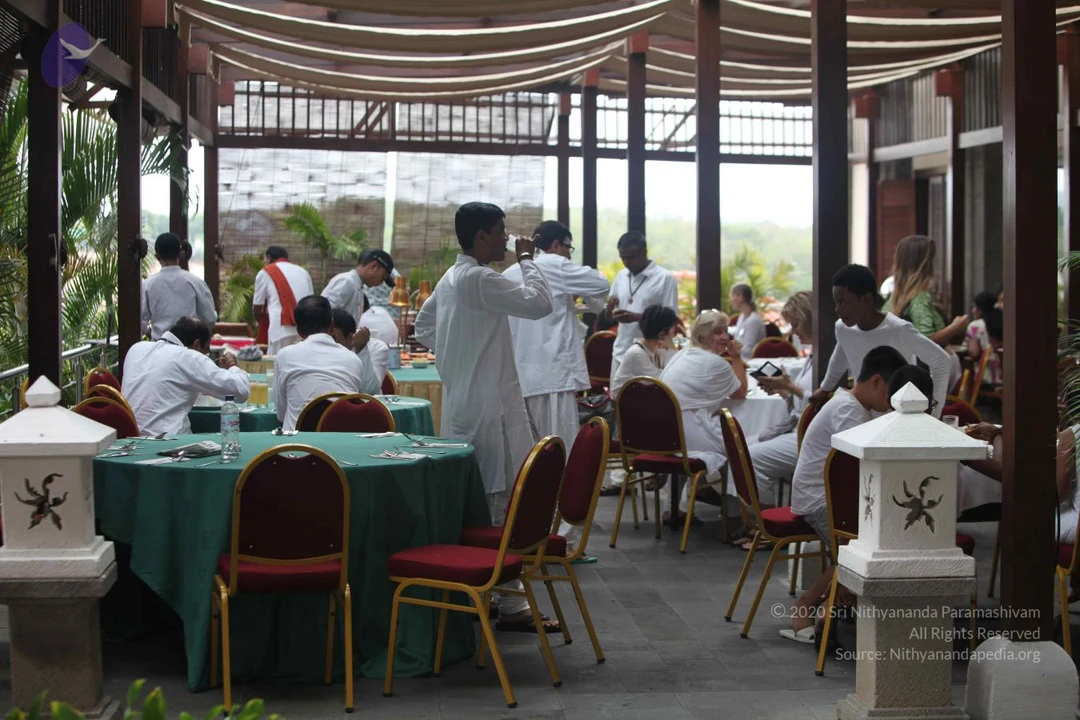
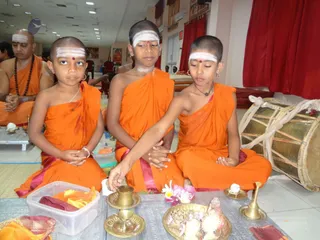
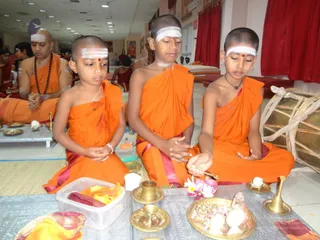
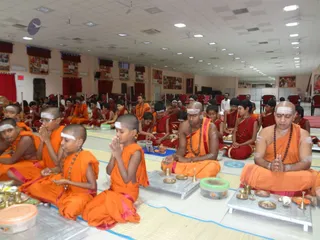
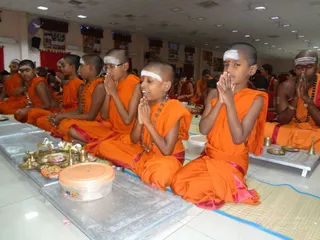
A large hall where many young boys and some adult men in saffron-orange robes sit cross-legged on mats for a puja ritual. Many boys wear red and orange robes, and several have white ash or tilak painted on their foreheads and arms. Brass ritual vessels, small bells, plates of offerings and a kalasha-like pot sit on silver trays in front of them. A man on the right in orange with a rudraksha mala and white ash across his head sits with hands folded. Two men in white sit on chairs at the far back, with a red carpet and rows of red chairs in the background, and framed pictures decorate the walls.A large hall with cream walls and a tiled floor shows a group of young monks in saffron-orange robes seated on mats in rows, many with white sacred ash marks on their foreheads and bodies. Several boys wear rudraksha malas and hold or sit beside brass puja plates, bowls and small lamps placed on silver trays. Older monks in orange robes sit among them, one with a shaved head and rudraksha beads. Behind them, rows of red chairs line the room, with a few people in white seated near a red-carpeted platform and framed portraits on the walls.Three young boys shaved-headed with white vertical tilak marks on their foreheads sit cross-legged on a floor in saffron-orange robes. The boy on the right, wearing a red-bordered orange cloth, extends his hand toward brass puja vessels, including a small brass oil lamp and a brass kalasha-style vessel on a silver-toned tray with flowers and offerings. A large dhol-style drum with tied rope stands at right, and red curtains hang in the background. Behind them, a man in saffron robes with a rudraksha mala and white forehead marking sits with hands joined, and a few other people are seated in the room.Three young boys with shaved heads and white forehead markings sit cross-legged, dressed in saffron-orange robes with red edging, during a puja. Each wears a saffron robe; the boy on the right holds a small ritual implement over brass pooja items. Brass lamps, a brass bell, a silver plate with flowers and a conch-like shell, and a plastic container with orange cloth lie on a low table in front of them. In the background, an older man in an orange robe with a rudraksha mala sits with hands pressed together, and other seated devotees in red and orange clothing are visible, with a large drum at right and red curtains behind.Indoor photo of a large hall with rows of seated young disciples in saffron and orange robes, many with white forehead markings, sitting on mats with brass bells, bowls and small metal plates in front of them. In the foreground a bald man in orange robes with rudraksha malas and white markings on his forehead, arms and chest sits with hands folded in prayer, while a child beside him presses palms together. Red curtains, framed wall pictures and ceiling fans surround the room, and a standing attendant in white appears near the back.Shaved-headed young monks in saffron-orange robes with pink borders sit cross-legged on a mat in a hall, hands pressed together in namaskar and eyes closed while chanting. Several have white tilak marks on their foreheads and wooden or rudraksha malas around their necks. In front of them are silver trays with brass lamps, flowers, bowls of offerings and small brass pieces. Other devotees in orange robes sit further back in the room, and wall posters and red curtains are visible. a person is not clearly identifiable among these figures, so no candidate is named.

Temple
59 photosSource gallery
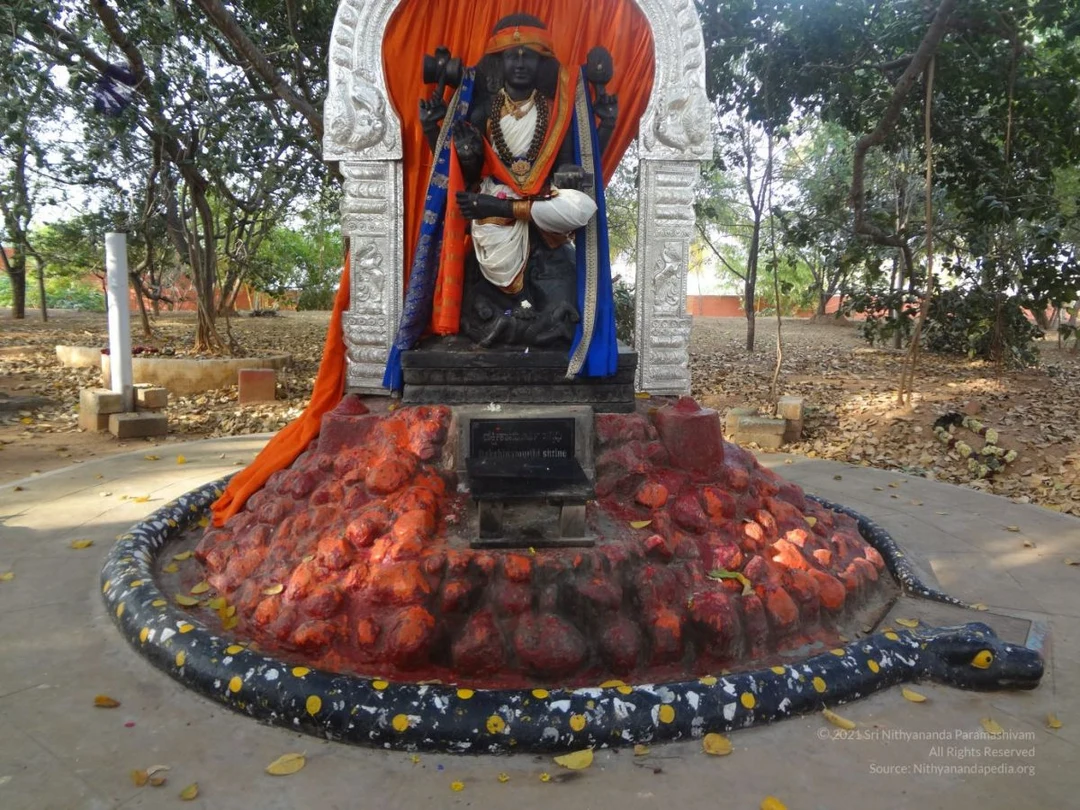
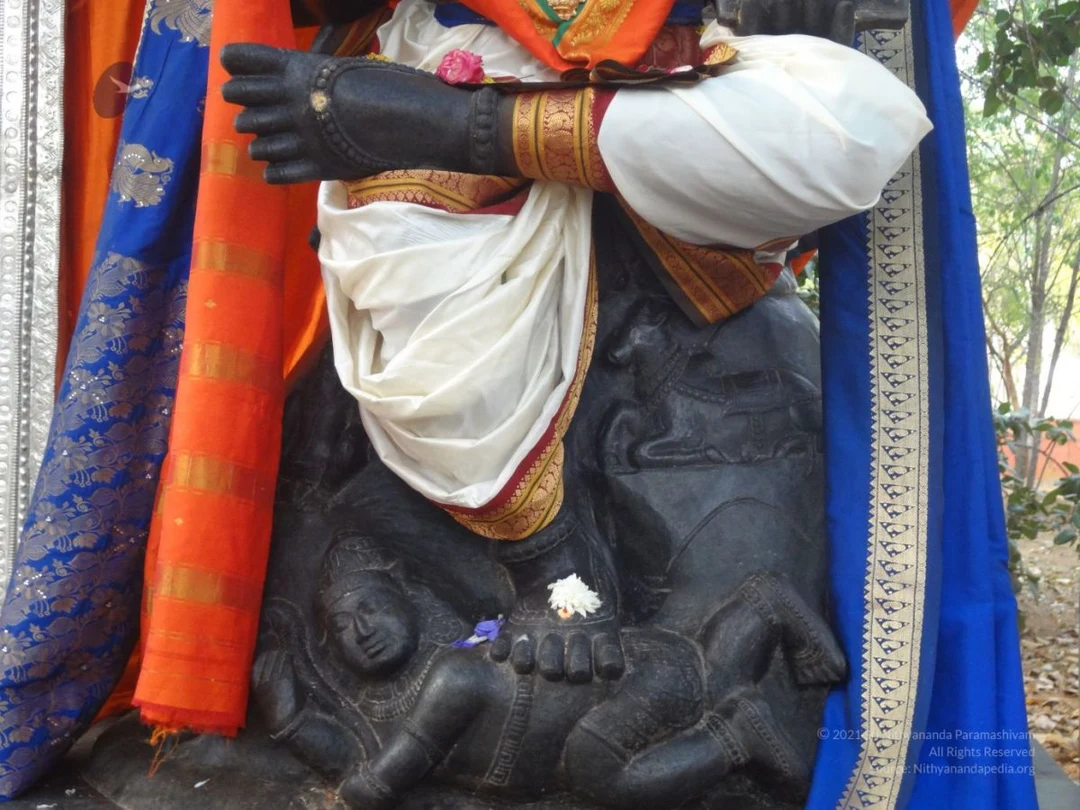
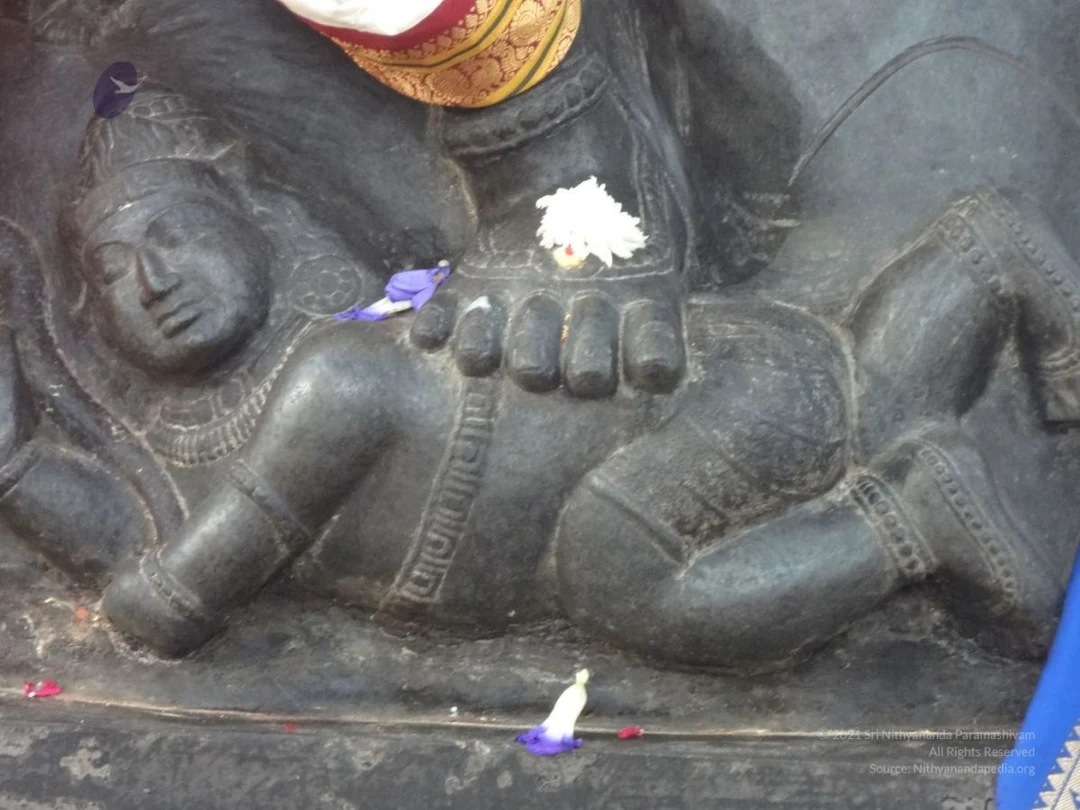
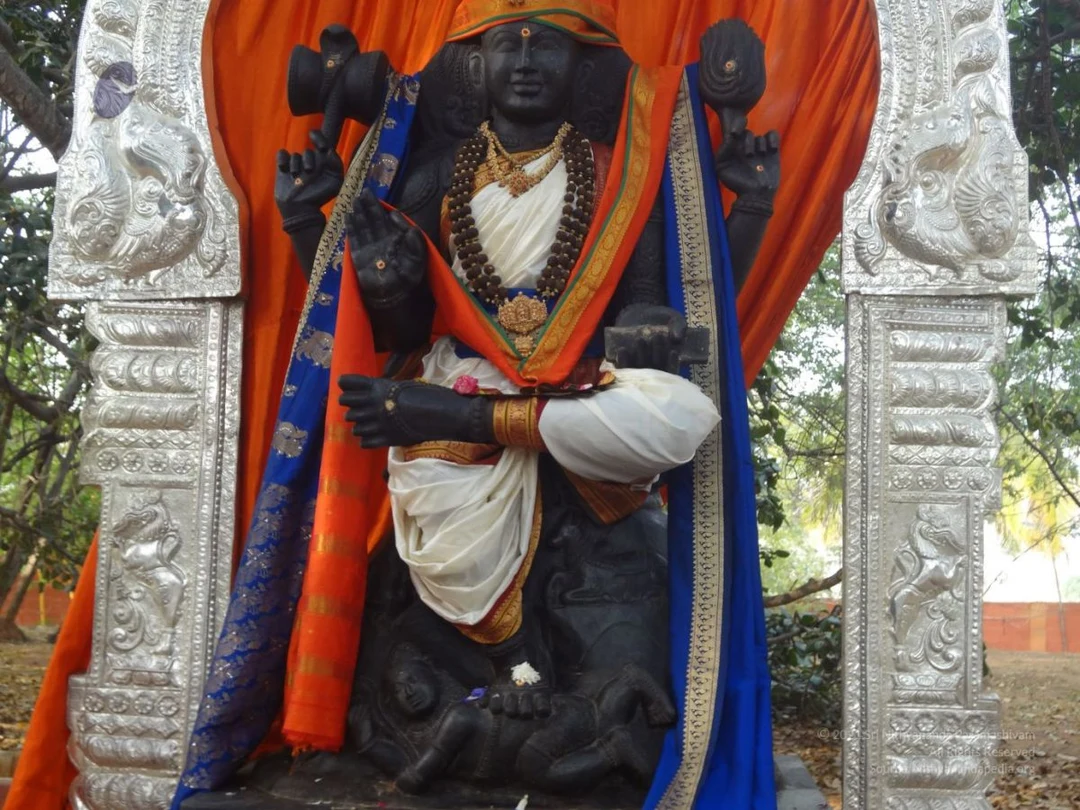
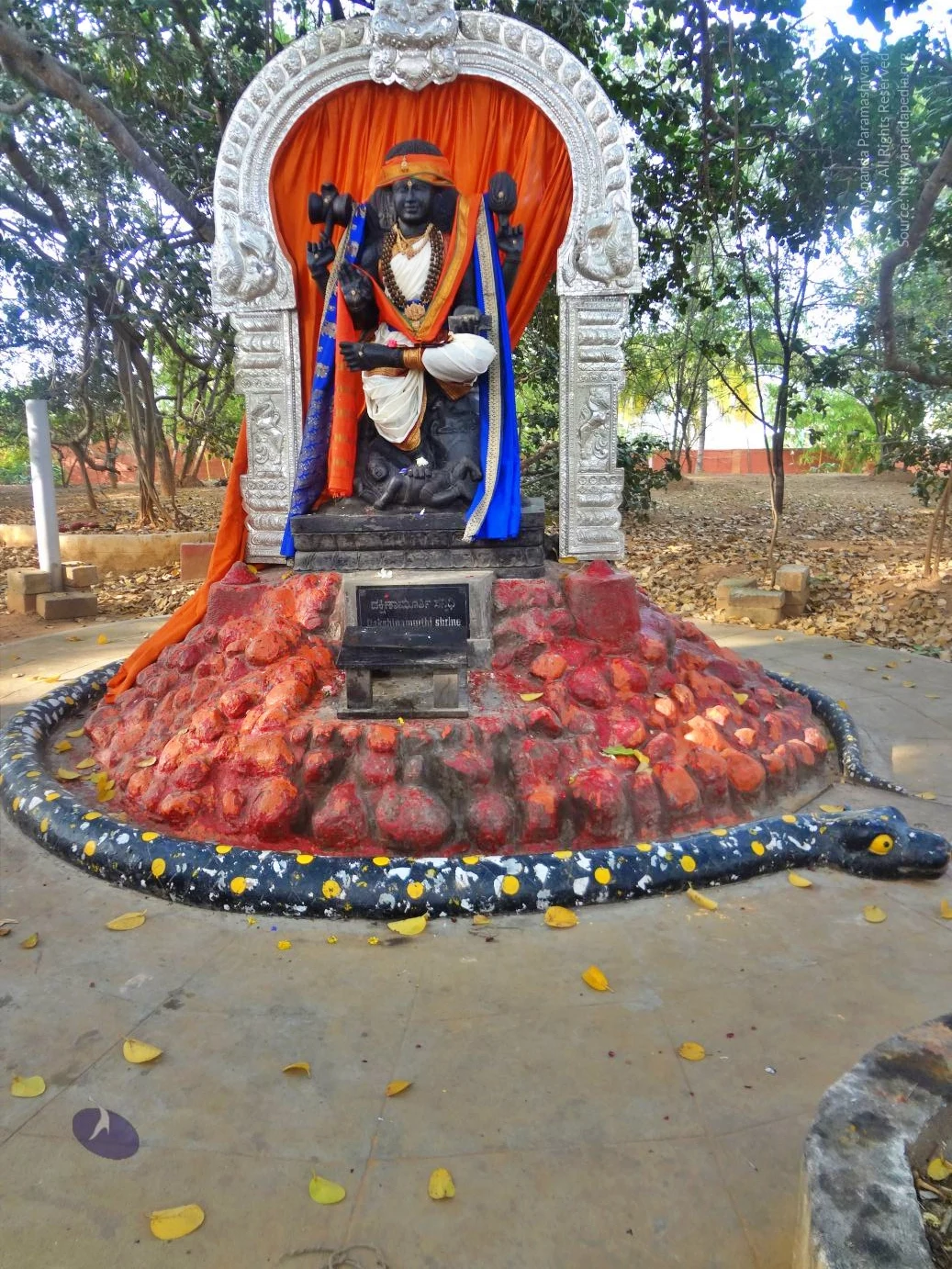
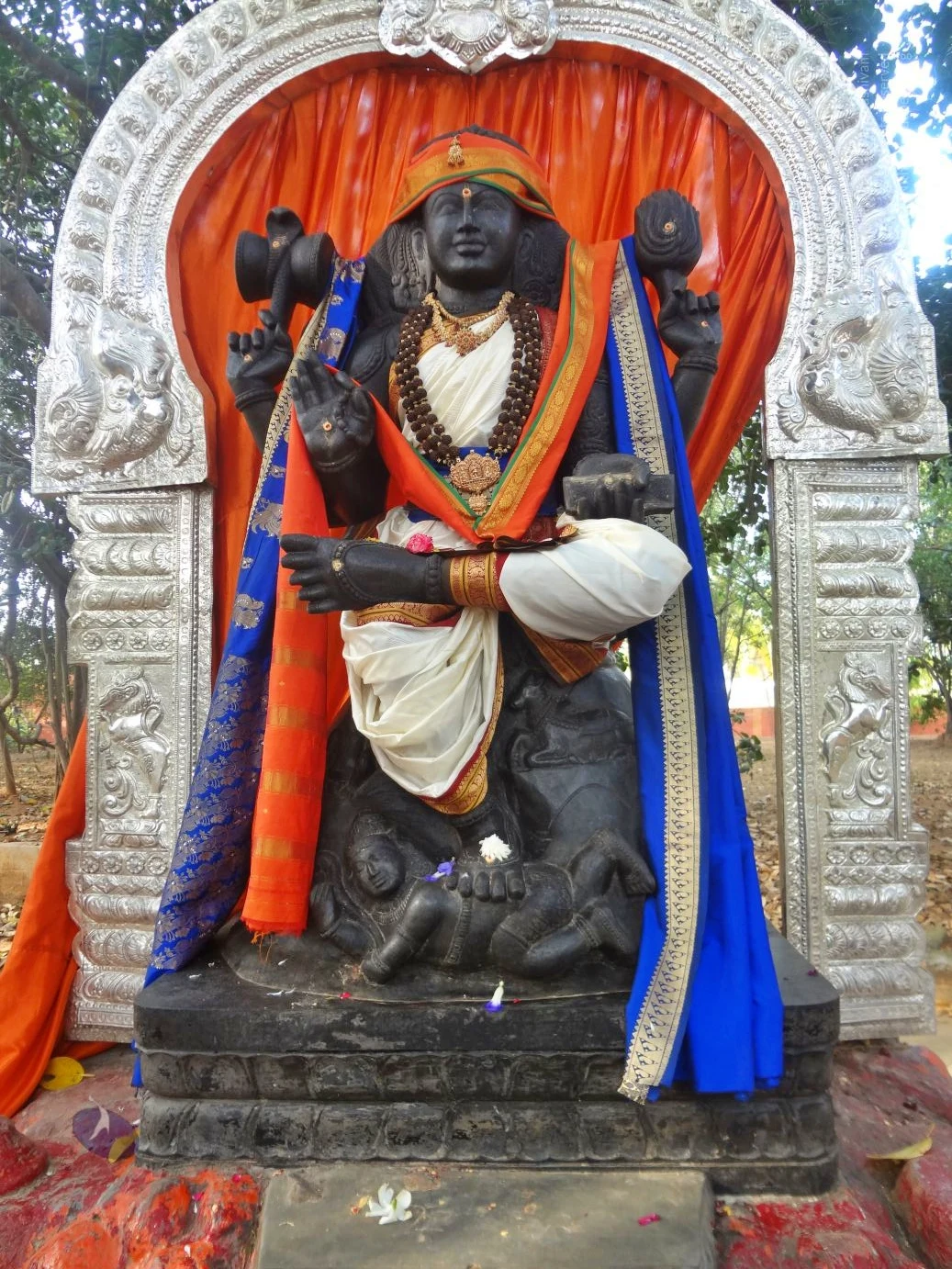
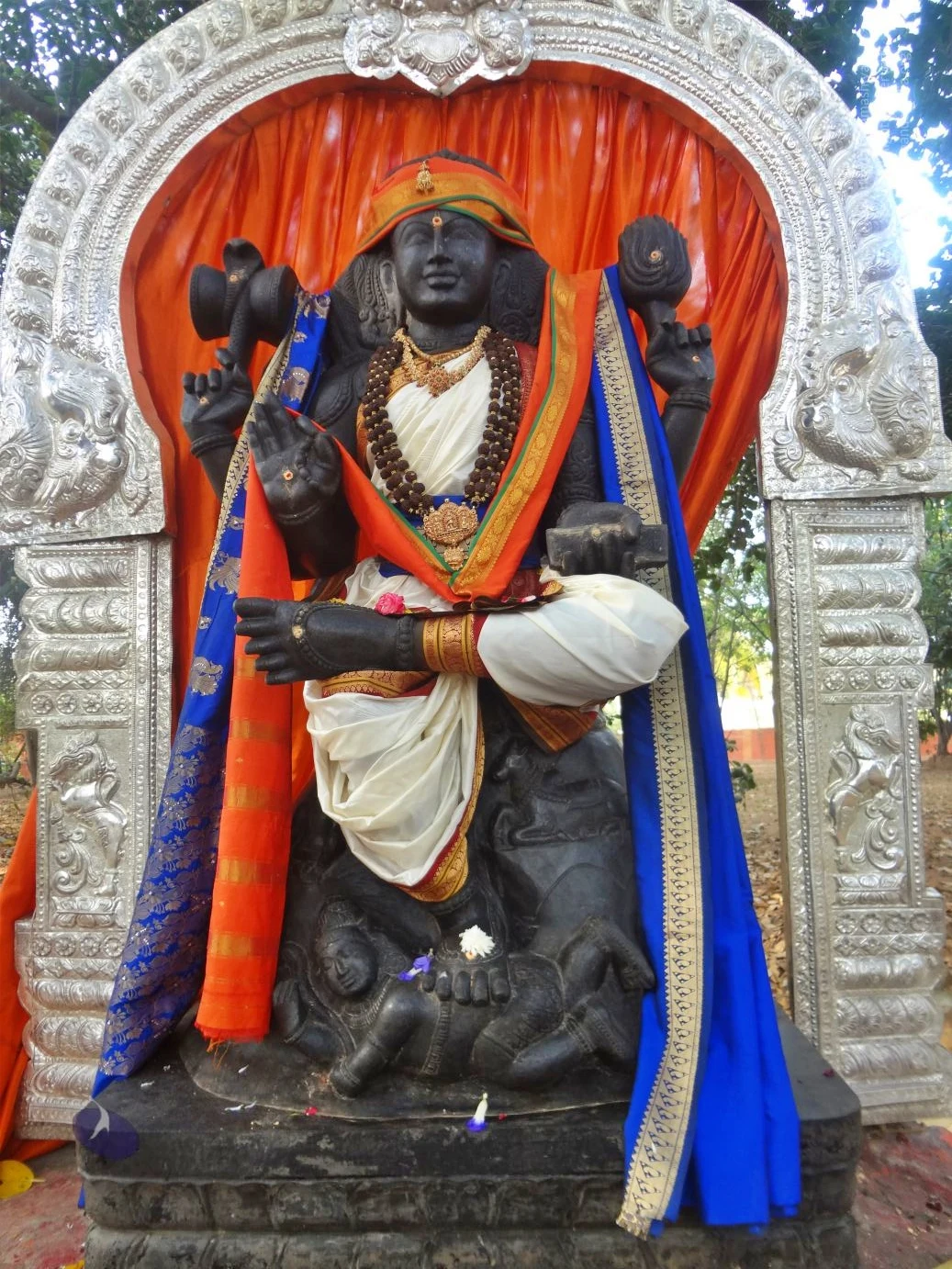
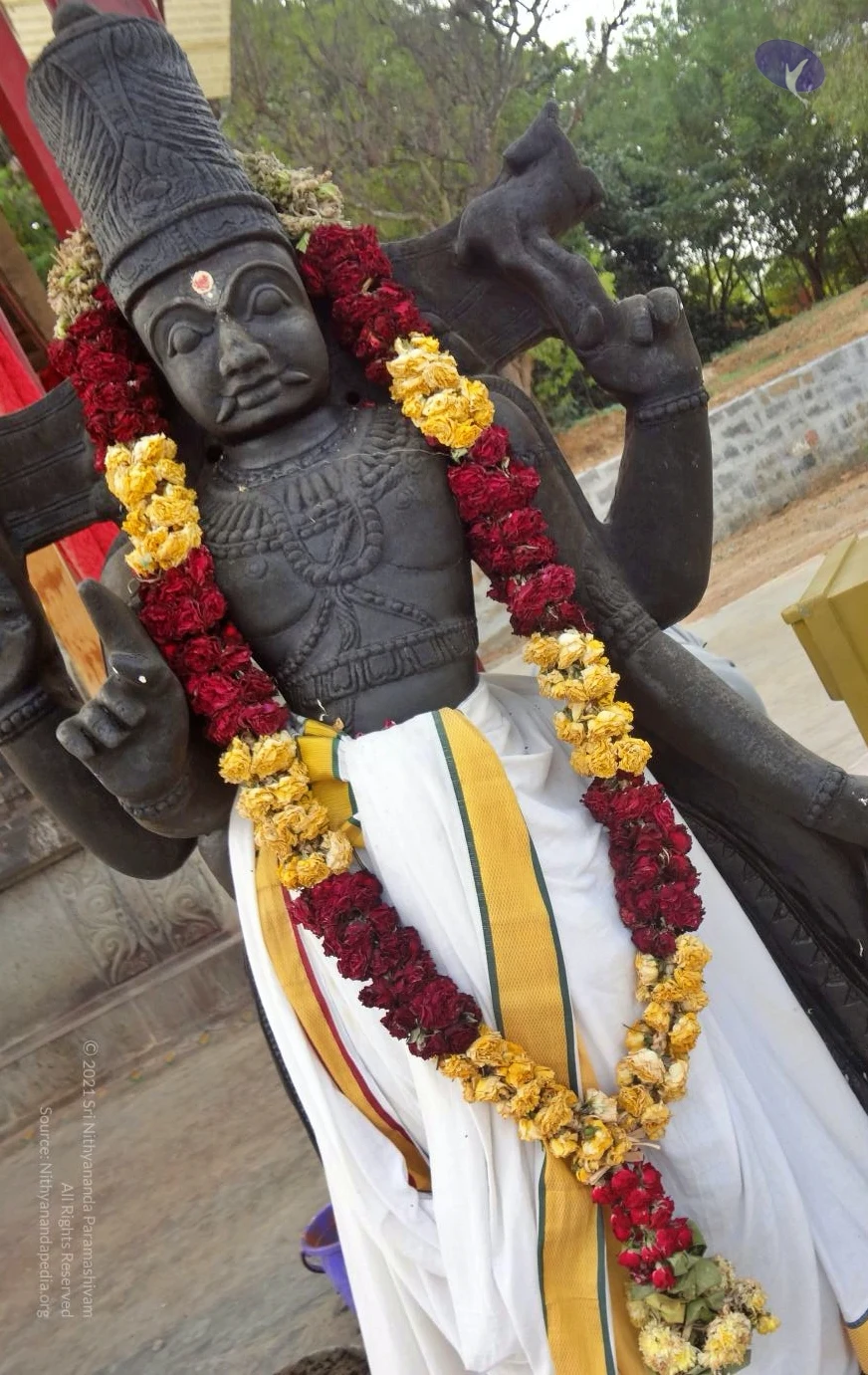
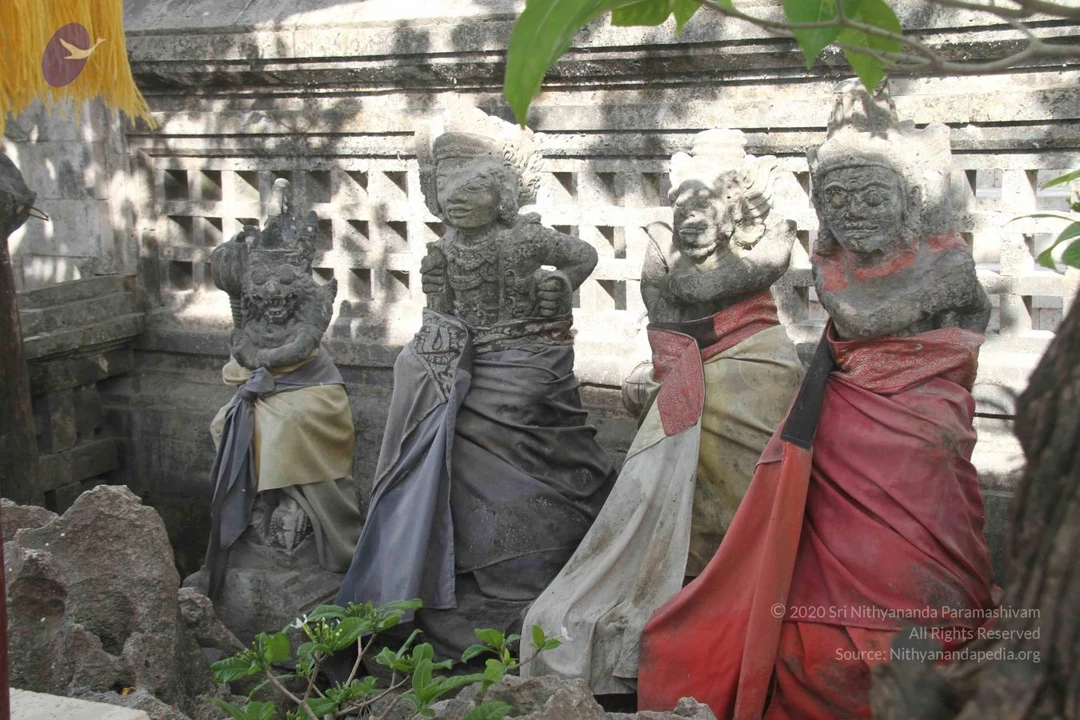
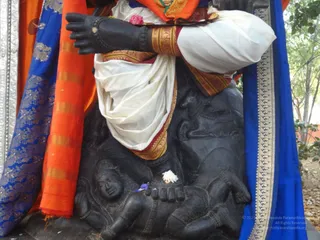
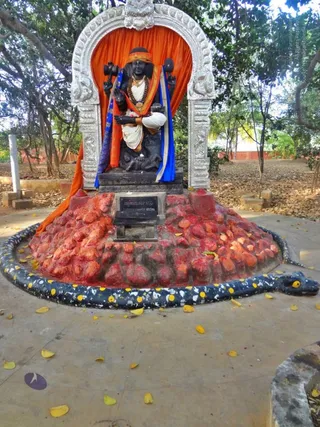
A photograph of potted plants on a tiled veranda beside a gravel courtyard. In the centre a terracotta pot holds a young broad-leaved plant with large glossy green leaves that have yellow speckling. To the right a second pot holds a leafy green plant, and a smaller black pot sits at the far right edge. On the left, a black pot holds a small fern-like seedling near thin bare branches. A reddish-brown vertical post stands between the plants and the courtyard. No people are visible.Outdoor photo of a painted concrete serpent coiled around a red and orange stone-textured mound. The snake has a black body with yellow spots and a yellow-eyed head resting near a square metal manhole cover, with a blue cord tied on it. Dry yellow leaves scatter the paved ground, and a small black stone bench and memorial plaques sit behind the mound. No people are visible.A close-up photograph of a painted black serpent statue lying on a concrete floor. The snake has yellow spots, white streaks, yellow eyes and a yellow-marked snout, and its head rests near a metal manhole cover with a diamond pattern. Dry yellow leaves are scattered across the concrete, a blue thread lies on the manhole cover, and a brick wall with orange-red and peeling blue paint runs behind it. No people are visible.Outdoor shrine in a tree-filled garden of dry leaves: a black stone murti seated on a throne-like pedestal inside a silver arched frame, draped with an orange cloth and blue-and-gold cloth. The figure wears a white dhoti-like cloth, rudraksha-style beaded necklaces, bangles and an orange-and-gold headband, with raised hands holding ritual objects. Below, a mound of stones is smeared with red and orange pigment, encircled by a black and white snake-shaped border with yellow dots. A small black plaque with text sits at the base. No people are visible.Outdoor photograph of a dark stone statue seated on a black pedestal beneath a silver-framed arch draped with orange and blue cloth. The figure wears a white dhoti, a gold necklace and a rudraksha mala, with a red headband and raised hands. Its base is heaped with red-smeared stones and a black-and-white snake-shaped border, with yellow petals scattered on the pavement. A small black plaque sits at the front. Trees and dry leaves surround the shrine, with an orange-brown wall visible behind.Close view of a black stone deity murti. The upper body is wrapped in white cloth with a gold-bordered red and gold sash, and a pink flower is tucked at the shoulder. Orange and blue draped cloths with gold borders frame the statue on both sides. Beneath, a small carved dwarf-like figure is trampled under the feet, with a white flower and a purple petal placed on the stone. Green trees appear at the right edge. No people are visible.

Temple
53 photosSource gallery
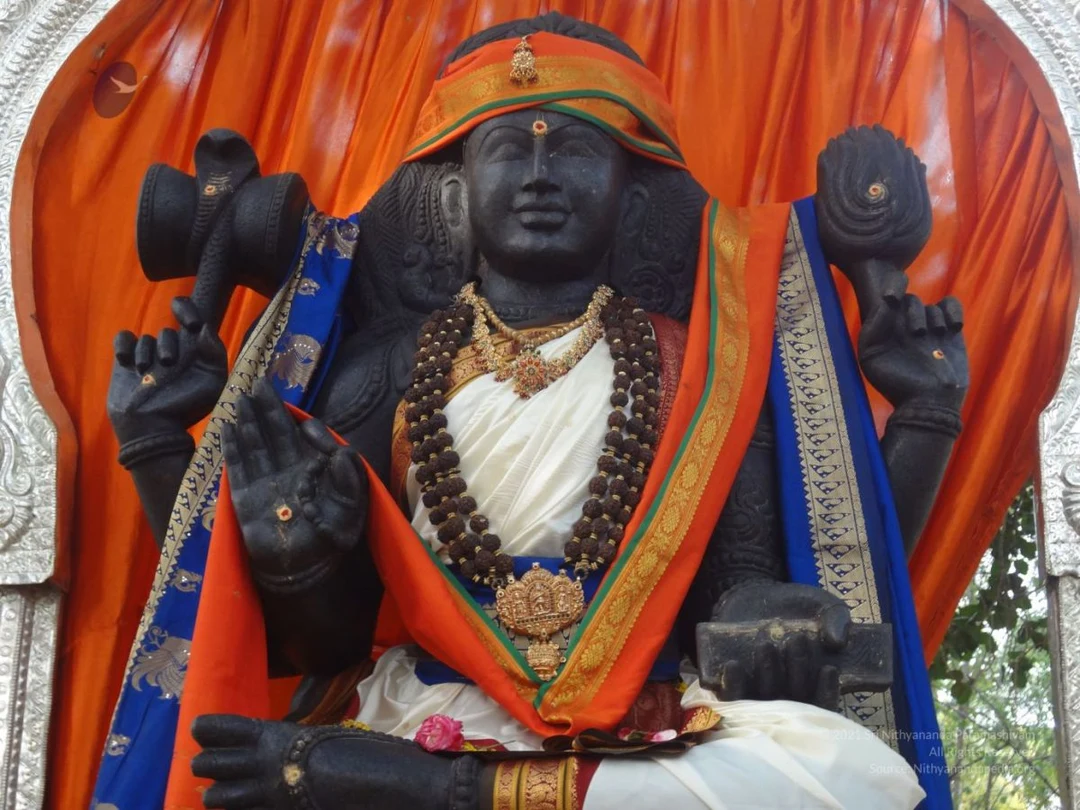
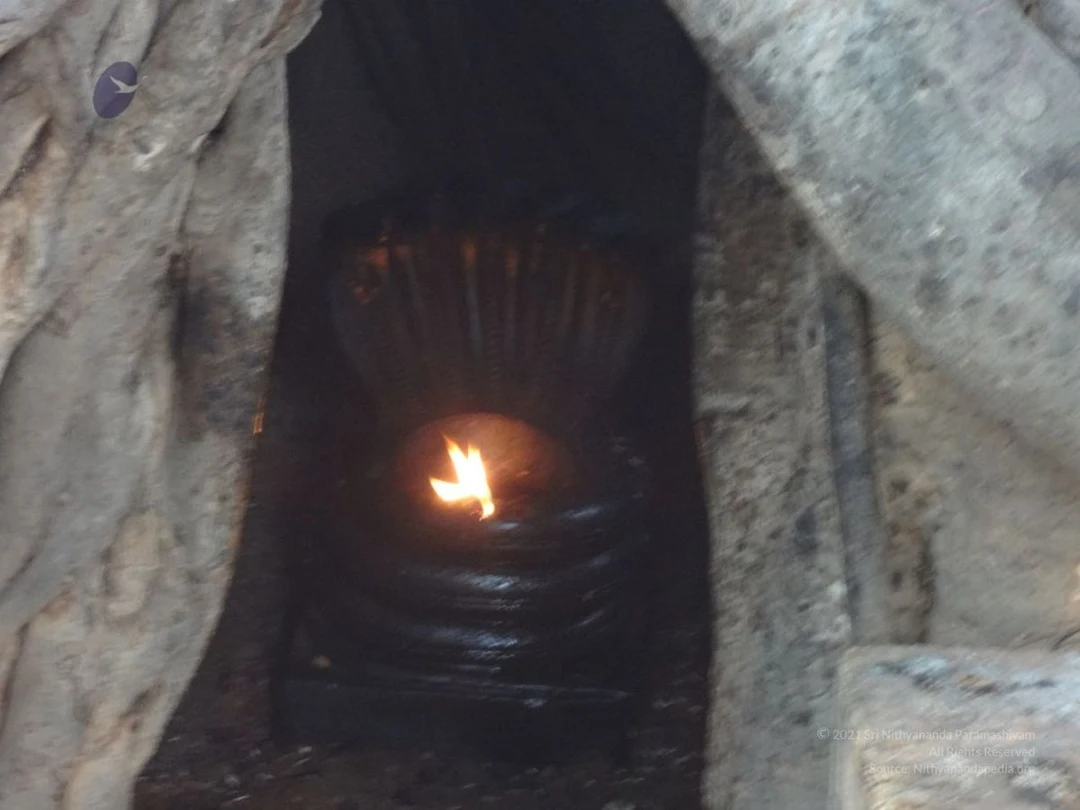
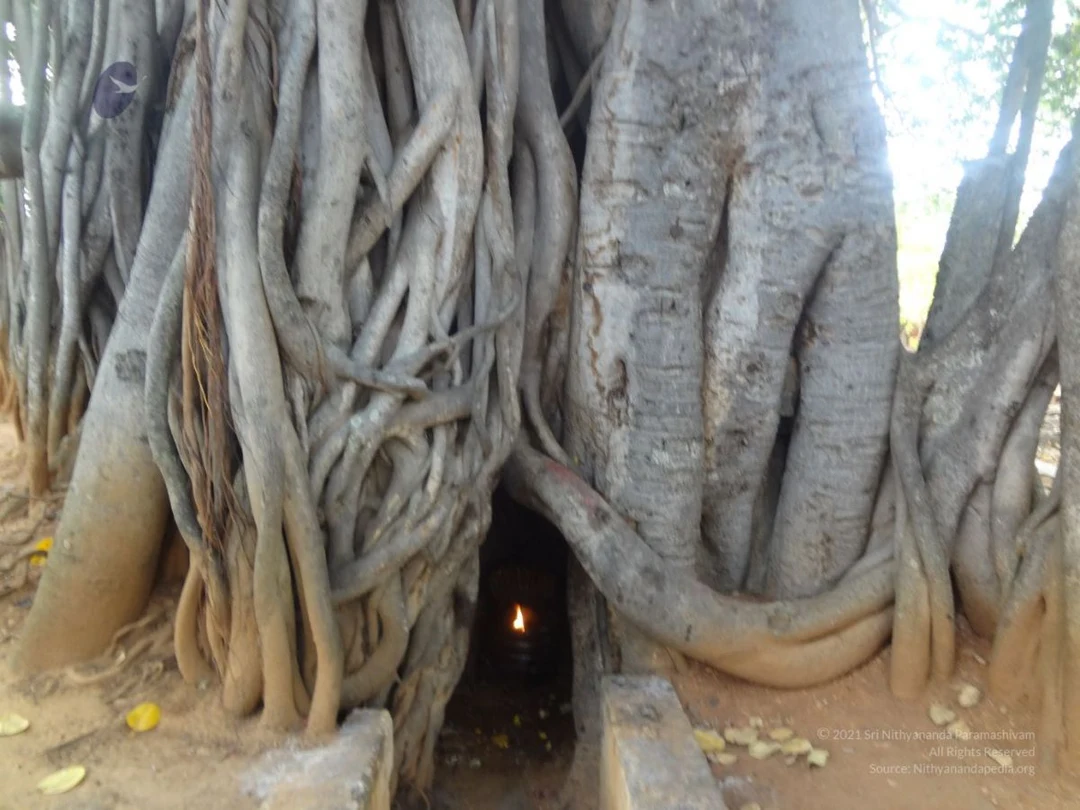
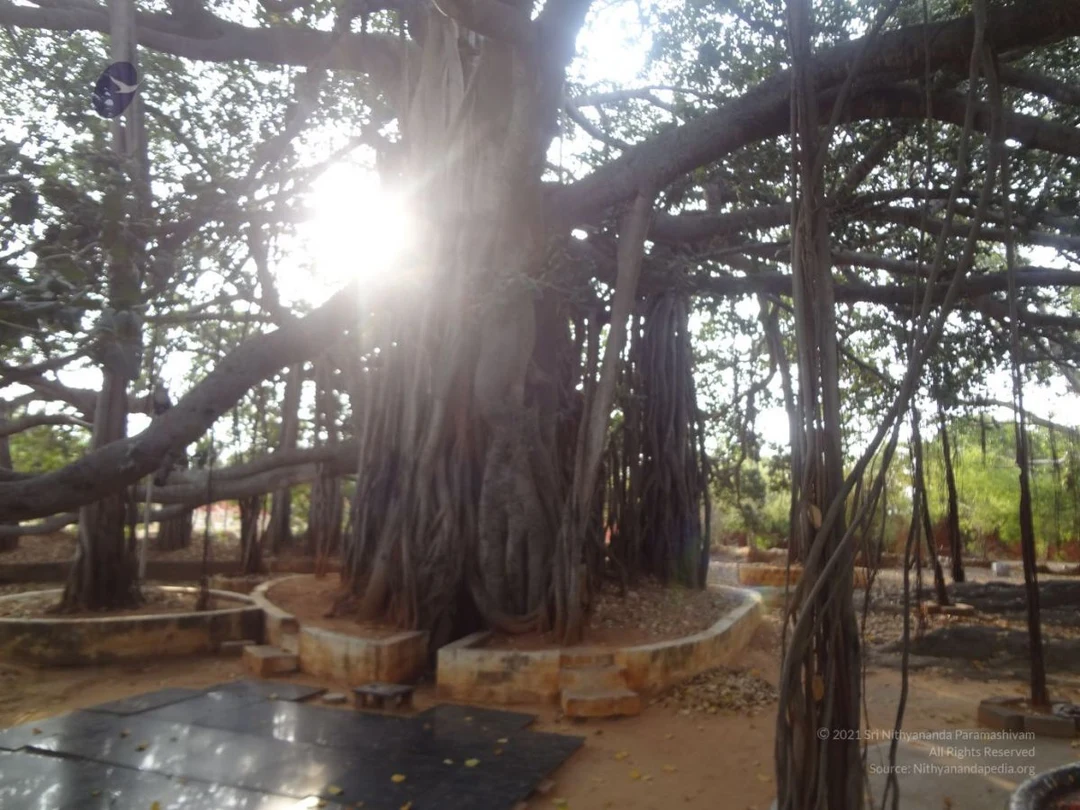
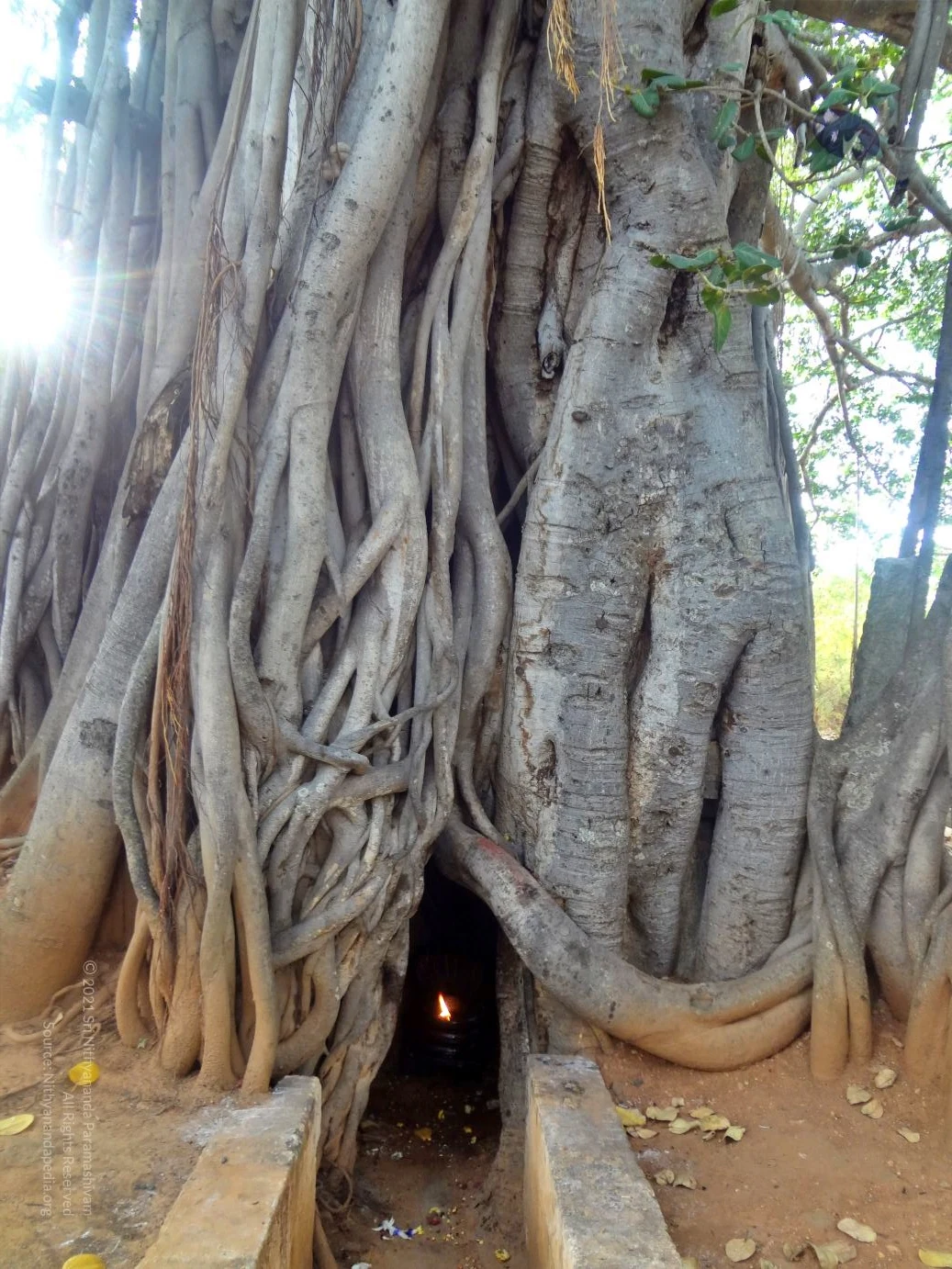
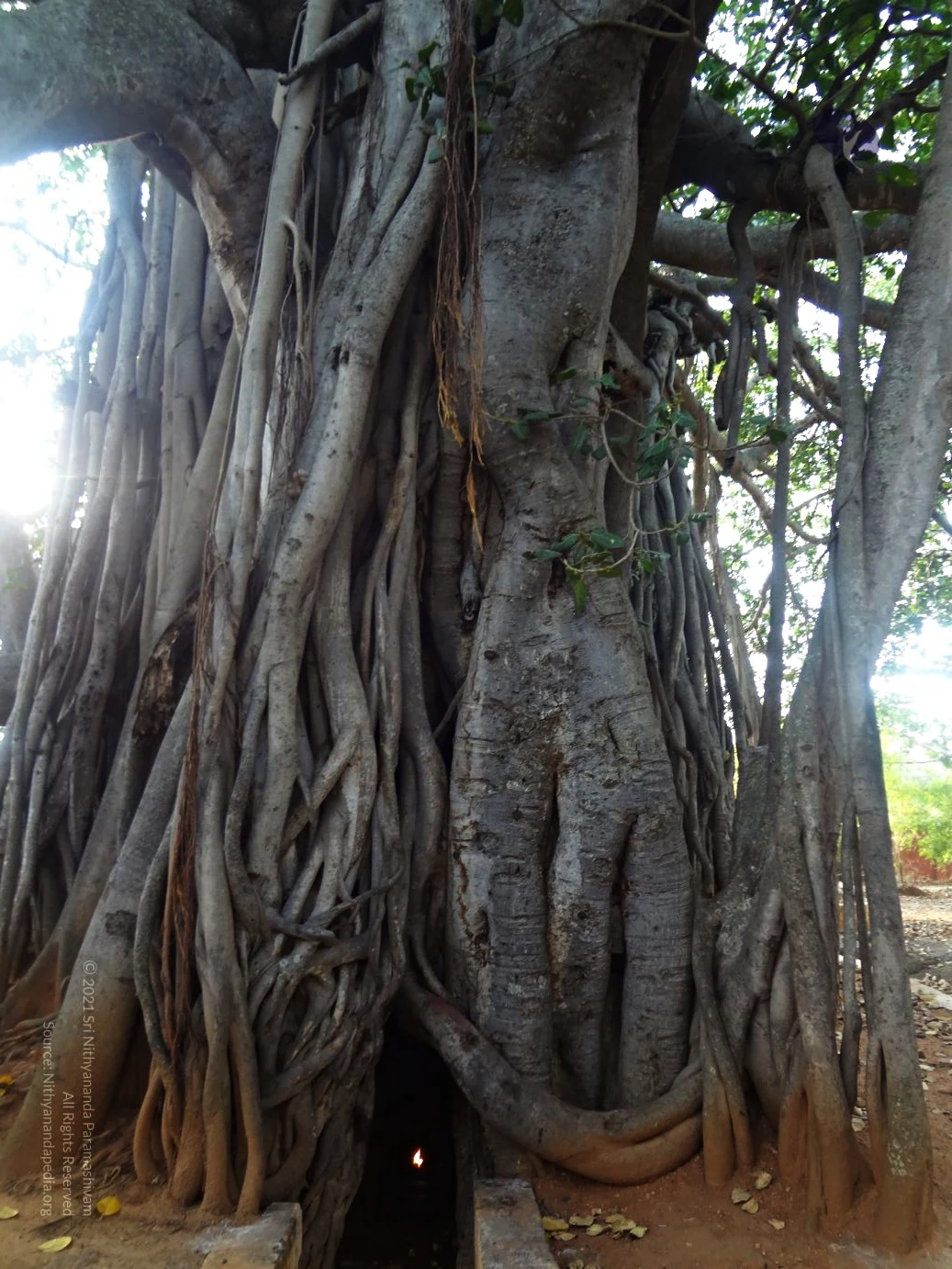
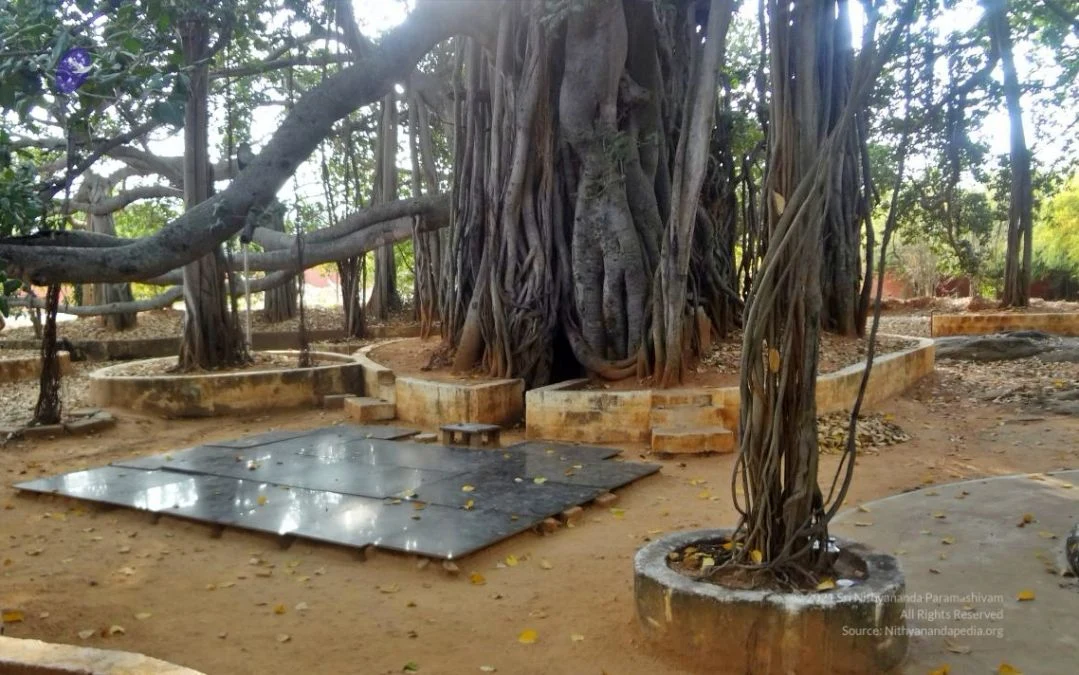
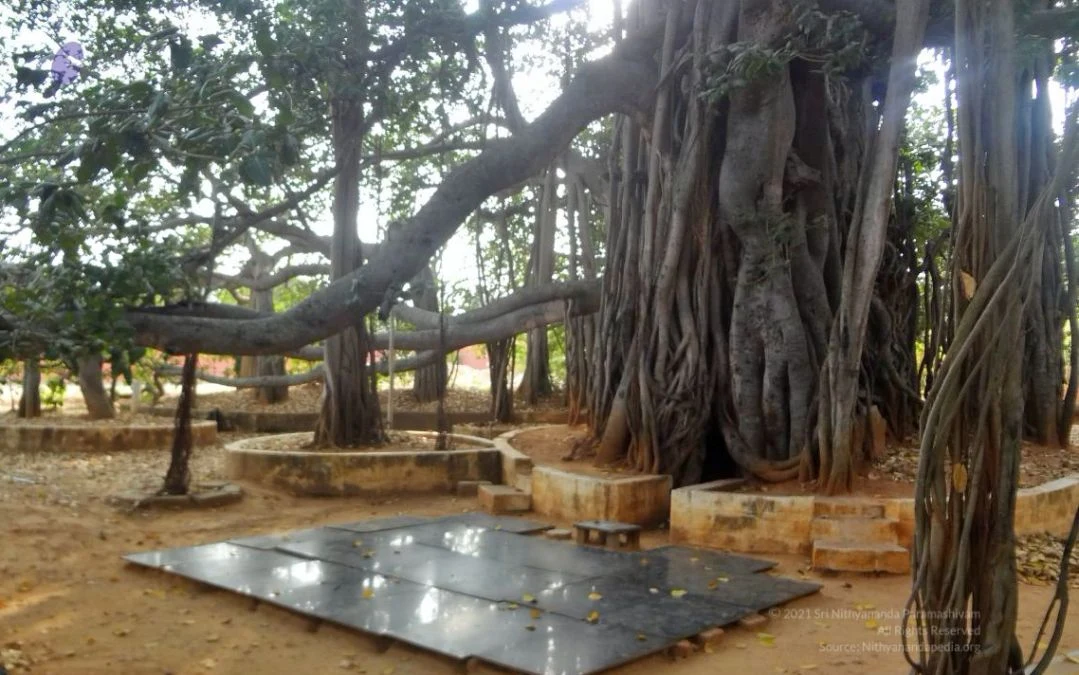
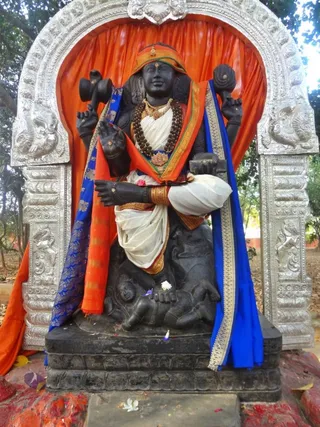
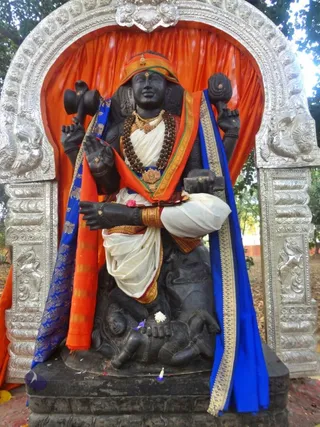
A black stone murti of Dakshinamurthi, seated on a pedestal within a silver-toned arched shrine, draped in orange cloth and a blue sash. The deity holds a drum and other implements, wears a white dhoti and a rudraksha-style necklace, and is backed by trees. The base is heaped with red-painted stones and surrounded by a dark, yellow-dotted serpent-shaped border. Fallen yellow leaves lie on the paved ground. A black plaque beneath the murti reads the shrine name in Kannada and English. No people are visible.A dark stone statue of a seated deity murti stands within a silver-toned ornate arch framed by an orange drape, set outdoors among trees. The figure wears a white dhoti, an orange and gold-bordered shawl, a multi-strand rudraksha mala and a heavy gold pendant necklace, with an orange and gold headcloth. Two raised hands hold ritual objects while another hand rests across the lap. A blue and silver-bordered cloth hangs at the sides. Beneath the seated figure a small carved attendant lies on the pedestal, and white flowers and petals are scattered on the base. No living people are visible.A dark stone statue of a four-armed deity seated in a silver-framed arched niche draped with orange and blue cloth. The murti wears a white dhoti, a gold-bordered orange shawl, a gold necklace, and a long rudraksha mala, with a gold-banded orange headcloth. It holds a conch-like object and a club, with one hand in abhaya gesture and the other resting near a lotus-like bud. A small white flower and a pink flower lie at its base, and the setting is an outdoor garden with trees behind. No people are visible.A photograph of a dark, polished stone Shiva lingam set within a sanctum niche, lit by a single flickering oil lamp flame at its base. Behind it, a dark fabric backdrop and grey cloth draping frame the niche. Scattered petals and flower bits lie on the floor in front. No people are visible; the image shows only the lingam, the lamp and the sanctum setting.A large old banyan tree with thick, grey, tangled aerial roots wrapping a trunk and forming an arched opening at its base. Inside the dark hollow beneath the roots, a single small oil lamp flame glows, and a few yellow flower petals lie on the red earth in front of a low stone threshold. Sunlight flares at the upper left edge while green leaves hang from branches above. No people are visible in the scene.A photograph looking up into a large, mature banyan tree with thick, spreading grey-brown limbs and many aerial prop roots hanging and descending from the branches. Dense green leaves fill the canopy against a pale overcast sky. No people, statues or ritual objects are visible; the scene is a natural tree landscape.

IA-Yoga

4 photosSource gallery
A large hall with patterned carpet where many people in black clothing stand on cream and grey yoga mats performing a coordinated standing yoga or martial-style posture with arms extended and one leg bent forward. Participants wear black t-shirts and black pants; one man in the foreground wears a pink shirt and grey shorts. A video camera on a tripod sits at the left edge beside a dark table with red items. Walls are pale with wooden doors and a small logo in the upper left. No individual is identifiable as a person from appearance cues in this image, so the figures are simply participants.A large hall with patterned beige-and-brown carpet fills with many people in black clothing performing a forward-bend yoga practice on yoga mats, most with hands planted on the mats and heads lowered. A seated figure in the lower left wears a grey-and-black patterned top and a bald head, bent forward with arms extended. Foreground participants wear black t-shirts and a woman with dark hair is in a low plank position. Dark curtains, black-draped tables, a video camera on a tripod at right, and red bags are visible. Several people in the back row stand near the far wall. No identifiable a person figure is clearly visible in appearance.A large indoor hall with patterned gold-and-brown carpet where many people in black clothing perform yoga on mats, mostly in backbends and wide-legged poses with arms raised. A camera on a tripod stands in the foreground, aimed down a central aisle of dark cloth lined with black posts and ropes. A man in a bright pink shirt in the lower right raises his arms beside the mats, and a figure in a purple top stands near a table at the back. Chairs, a green-draped table and speakers line the walls.A large hall with patterned carpet where many participants in dark clothing perform yoga poses on mats, most in a wheel or arm-raised backbend position with one arm extended upward. Several people wear black and some wear pink or white. A tripod-mounted video camera stands at left, and a small stage with a blue-draped table and a green banner is visible at the back. The scene shows a group yoga session in a conference-style room.

Paduka-Puja

22 photosSource gallery
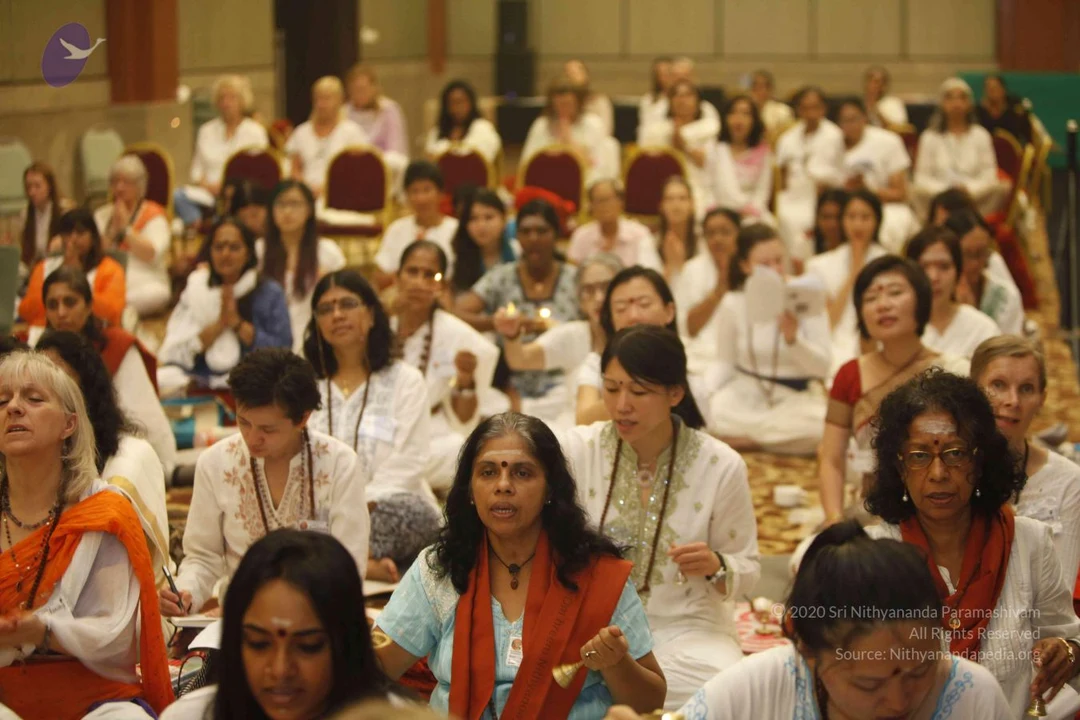
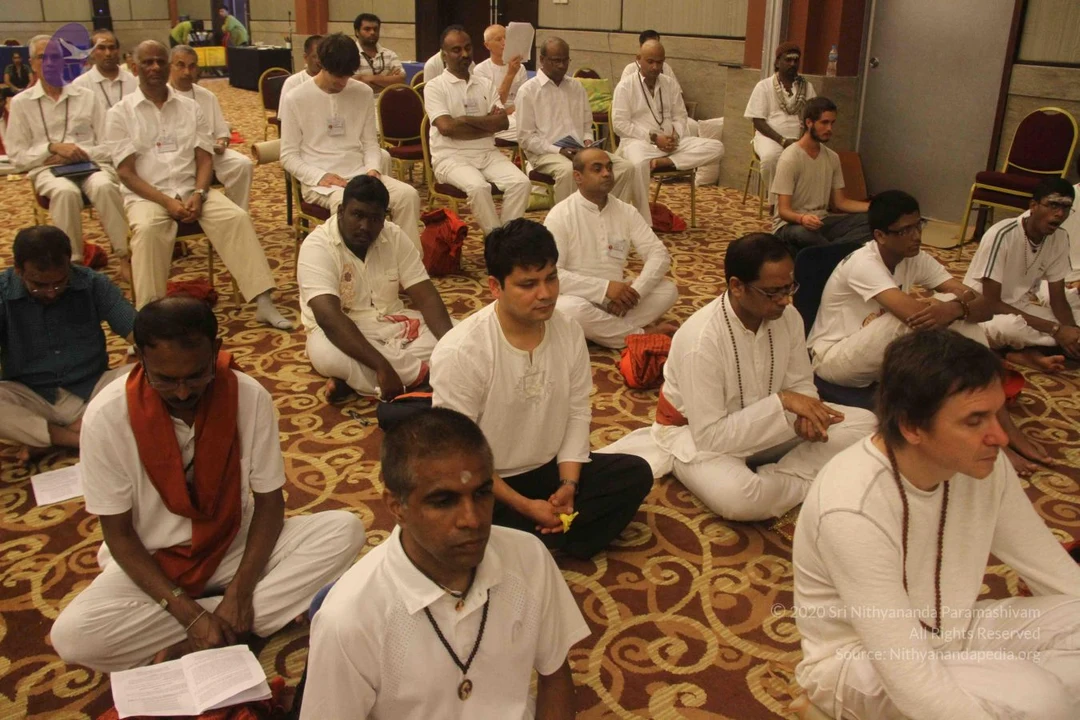
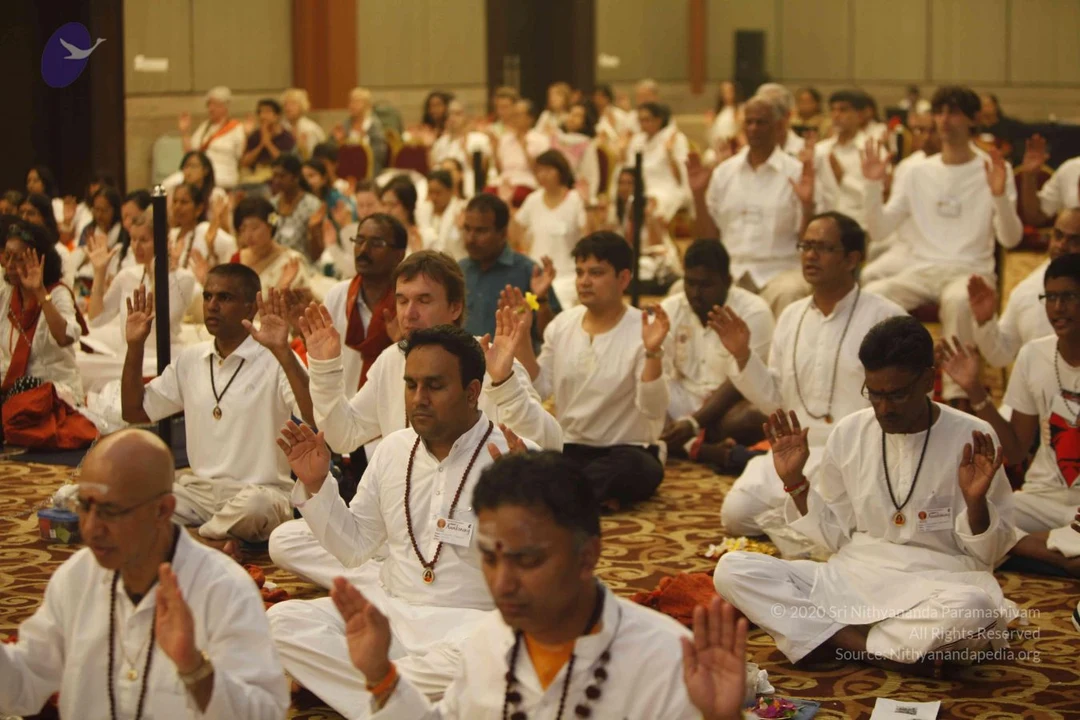
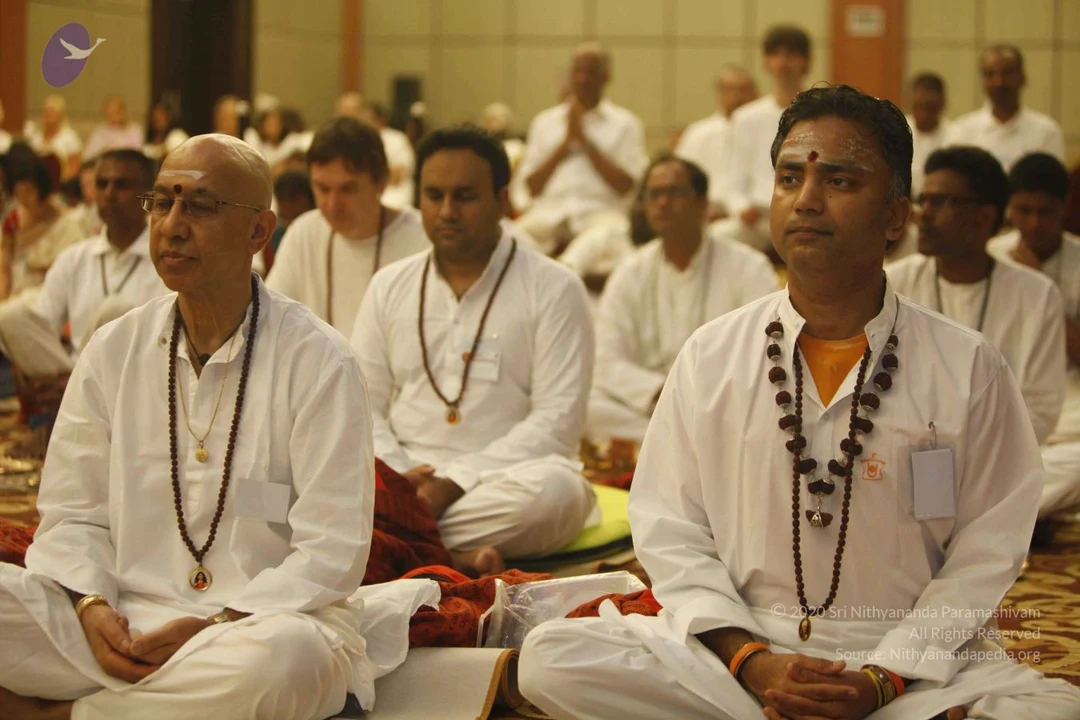
A large hall with a patterned carpet and warm ceiling lights hosts a seated satsang. Rows of devotees in white and pastel clothing sit on the floor and on red-cushioned chairs, facing a stage. A framed portrait with a saffron-clad figure and a colourful temple painting hang behind the dais, flanked by two projection screens. A figure in white sits at the centre of the stage near a small shrine. Children in the foreground wear orange and red, and a woman in a pink sari sits at right.A photograph of a seated group of devotees in a carpeted hall with a gold and maroon swirl pattern, many in white kurta-style clothing and white dhotis. Several sit cross-legged with eyes closed in meditation or satsang, some holding small booklets or papers. One man in the foreground wears an orange-red shawl over white and rudraksha beads; another wears a rudraksha mala and a shirt with a sacred pendant. Chairs with maroon upholstery line the back of the room, with a person standing at the far right edge. No identifiable a person is visible in appearance-based terms, so no candidate is claimed.A woman in white with her hair pulled back kneels or bows at a gilded altar with a golden throne-like seat flanked by two golden lion sculptures. On the throne cushion sits a tiger-skin rug. A large framed portrait labelled "Paramahamsa Nithyananda" shows a smiling man in an orange turban with a red bindi and orange robe. Behind the altar, a large banner shows a smiling figure in orange with a turban and a traditional temple pavilion with pagoda-style roofs and water. Two red velvet seats are visible at the altar's front. No a person is physically present in the scene; the only depictions are the framed portrait and the banner.A framed portrait of a smiling man in an orange turban and orange shawl, with a red bindi, displayed on an ornate gilded throne-like frame with carved gold and dark wood panels and a golden lion-head ornament at the base. A large orange-robed figure is partly visible at the left edge, and a painted backdrop of a traditional temple scene appears at the right. The printed caption at the bottom of the portrait reads PARAMAHAMSA NITHYANANDA, attributed to the portrait's label. The framed image is a depiction, not a physical person, and no other physical people are visible.A woman in a white sari kneels with folded hands before a golden ornate altar set against a large banner reading "Inner Awakening". The altar holds a framed portrait labelled "PARAMAHAMSA NITHYANANDA" showing a smiling man with a saffron turban and red bindi, flanked by golden lion statues and a tiger-striped cloth. Two dark red cushions sit on the platform. The banner also shows a smiling man in an orange turban and a multi-tiered temple with a pond. Her position suggests devotional padapuja or darshan.A framed portrait of a smiling man in an orange turban and orange shawl with a red bindi, displayed on an ornate gilded throne-like backdrop with carved gold and brown panels, golden lion figures at the lower edges, and a painted landscape behind. The portrait's caption reads PARAMAHAMSA NITHYANANDA. The portrait is a printed image, not a physical person in the room.
Nithya-Satsang

31 photosSource gallery
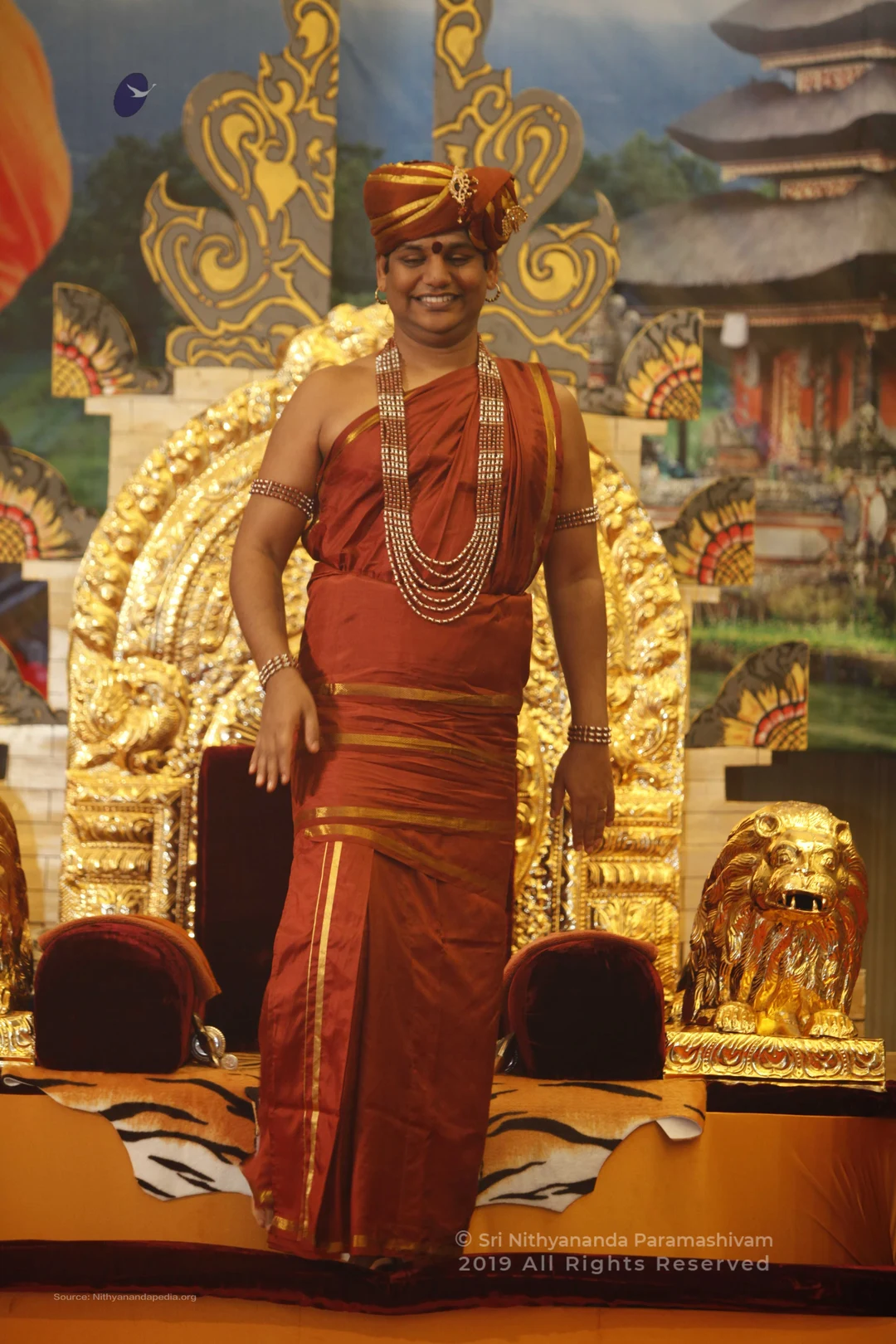
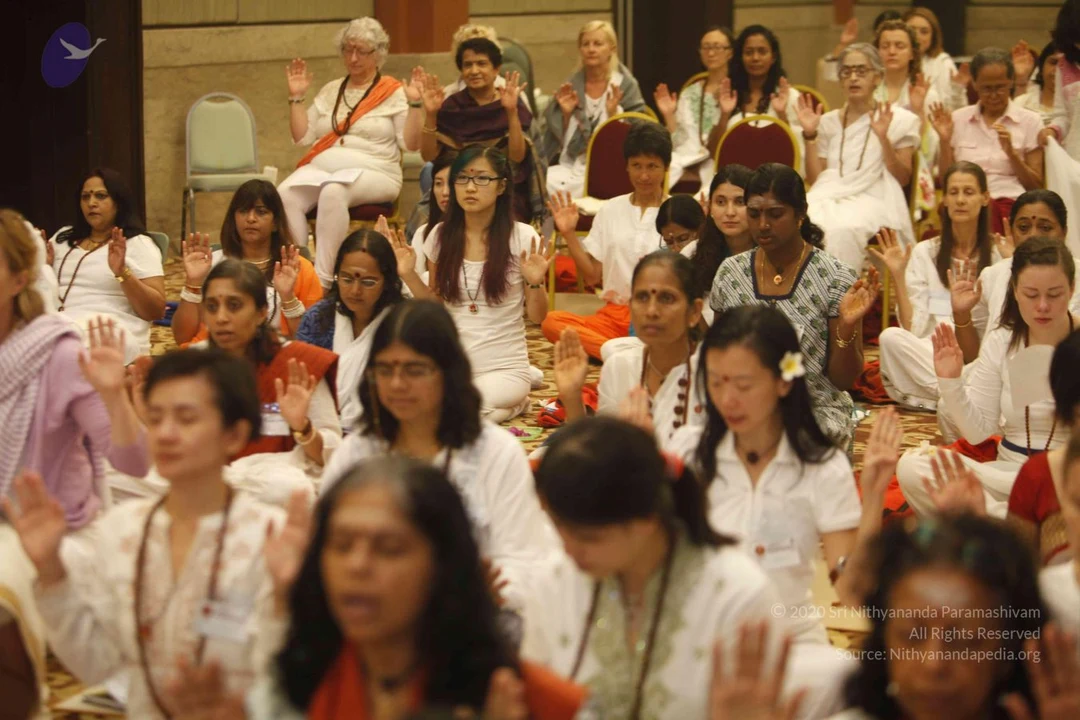
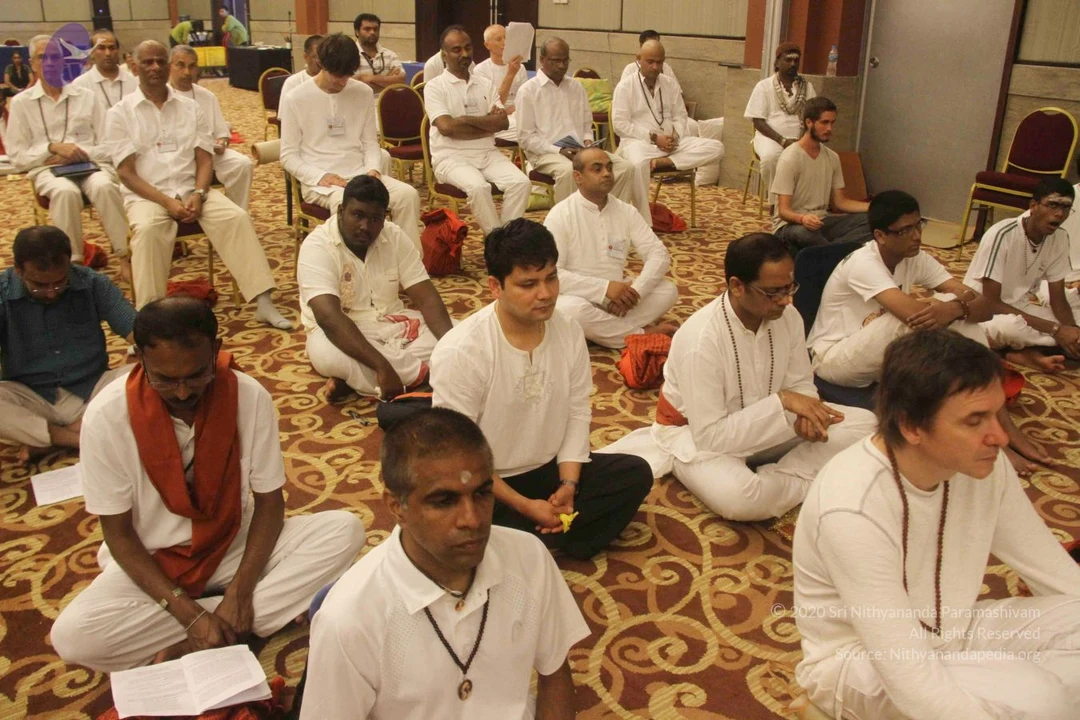
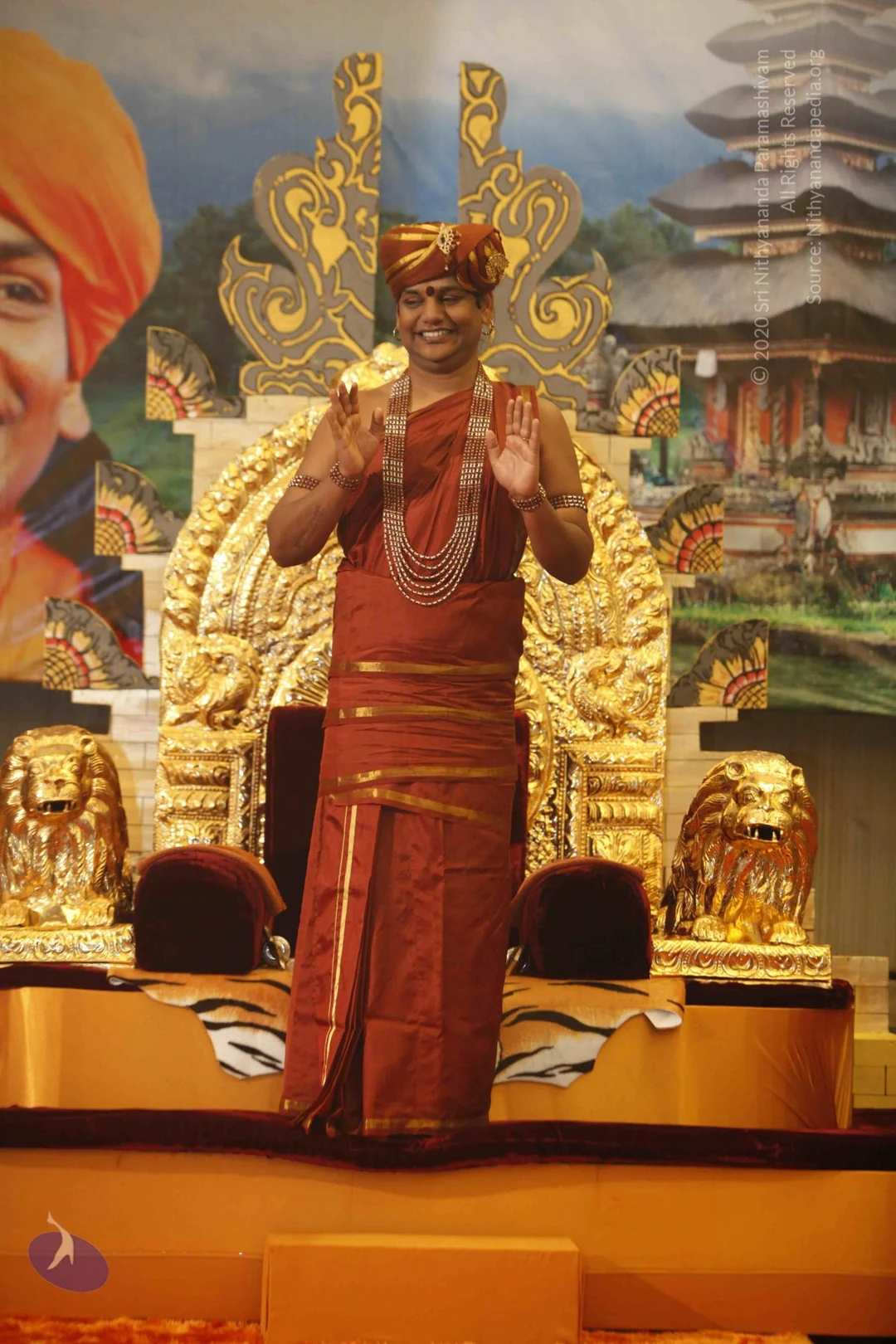
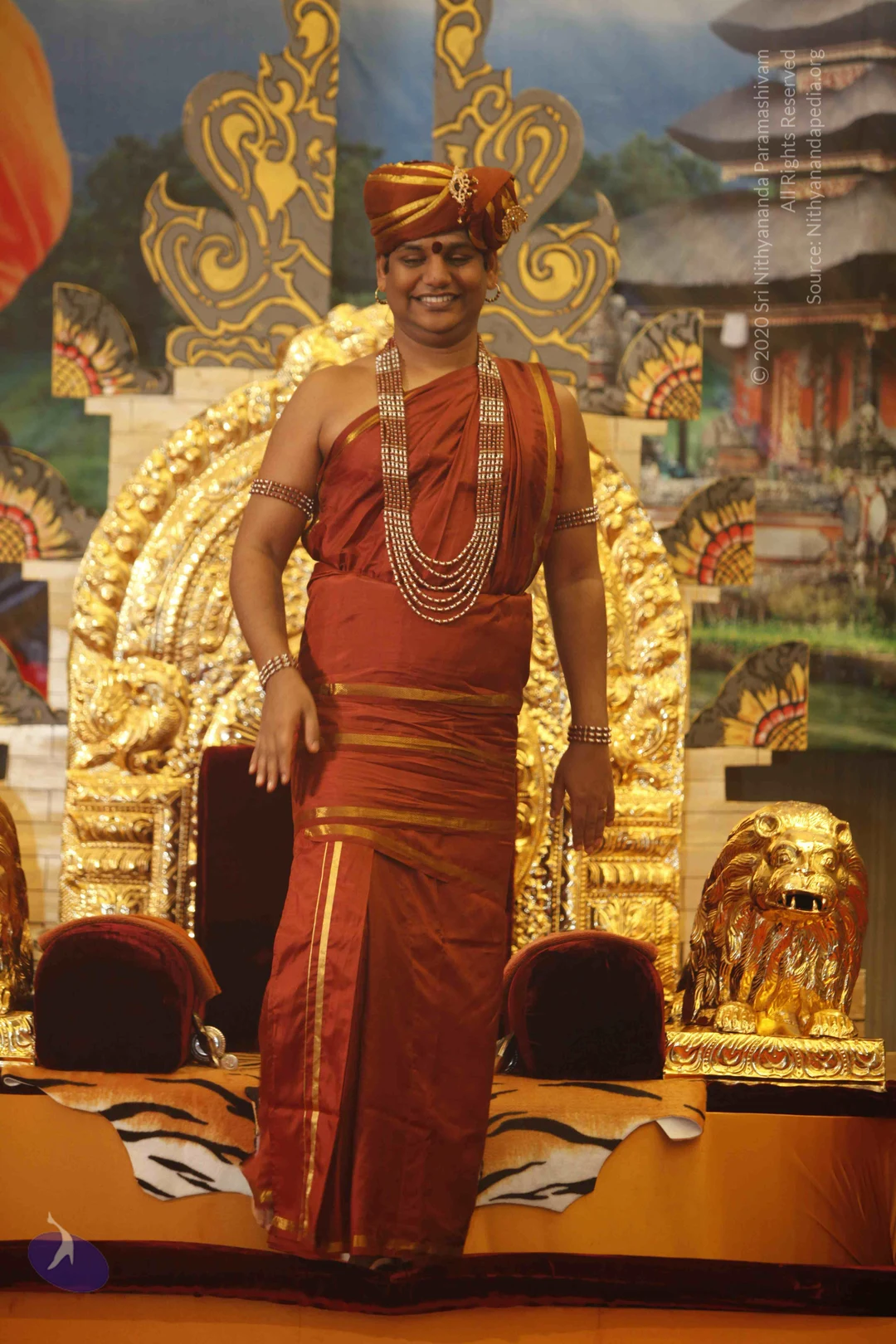
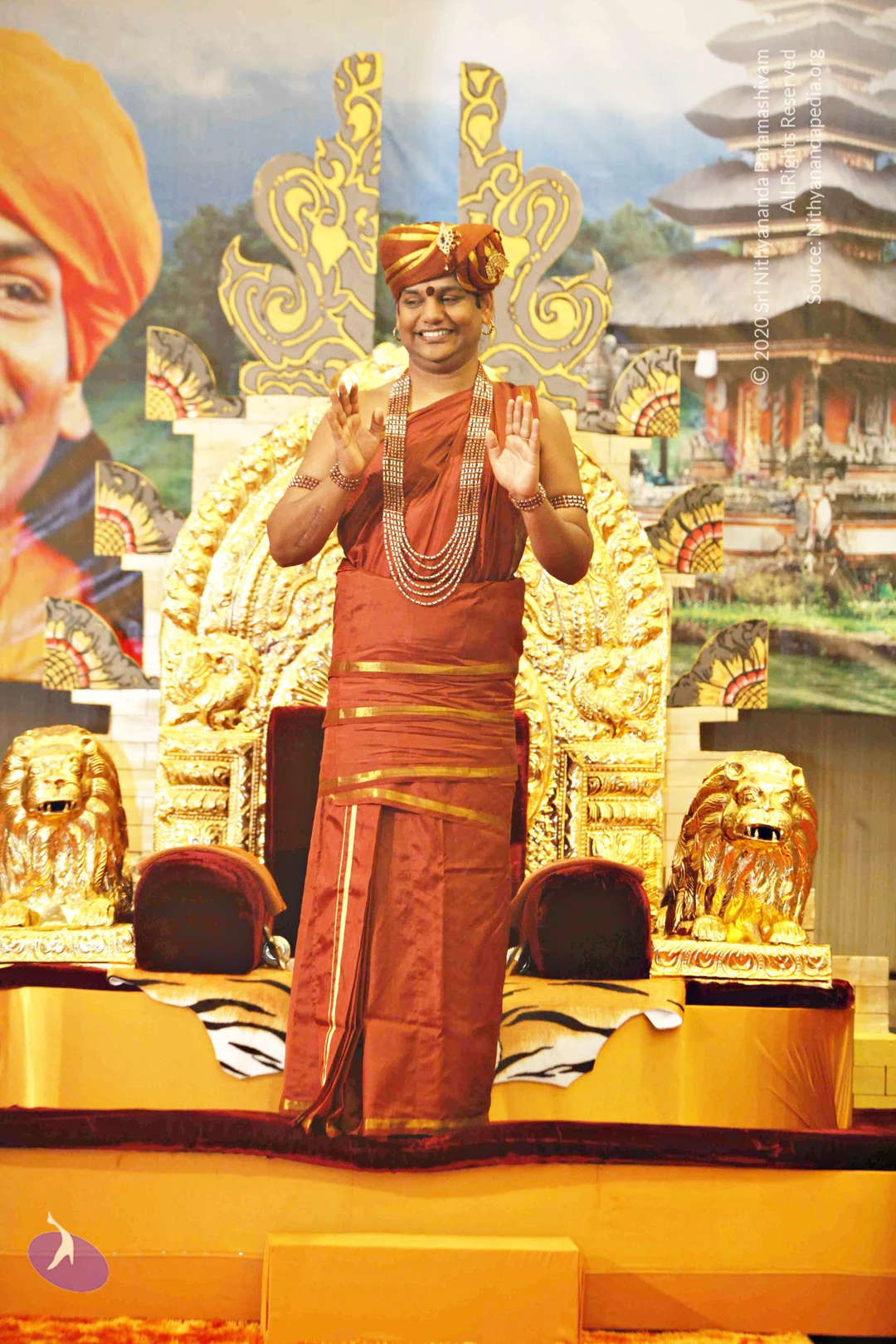
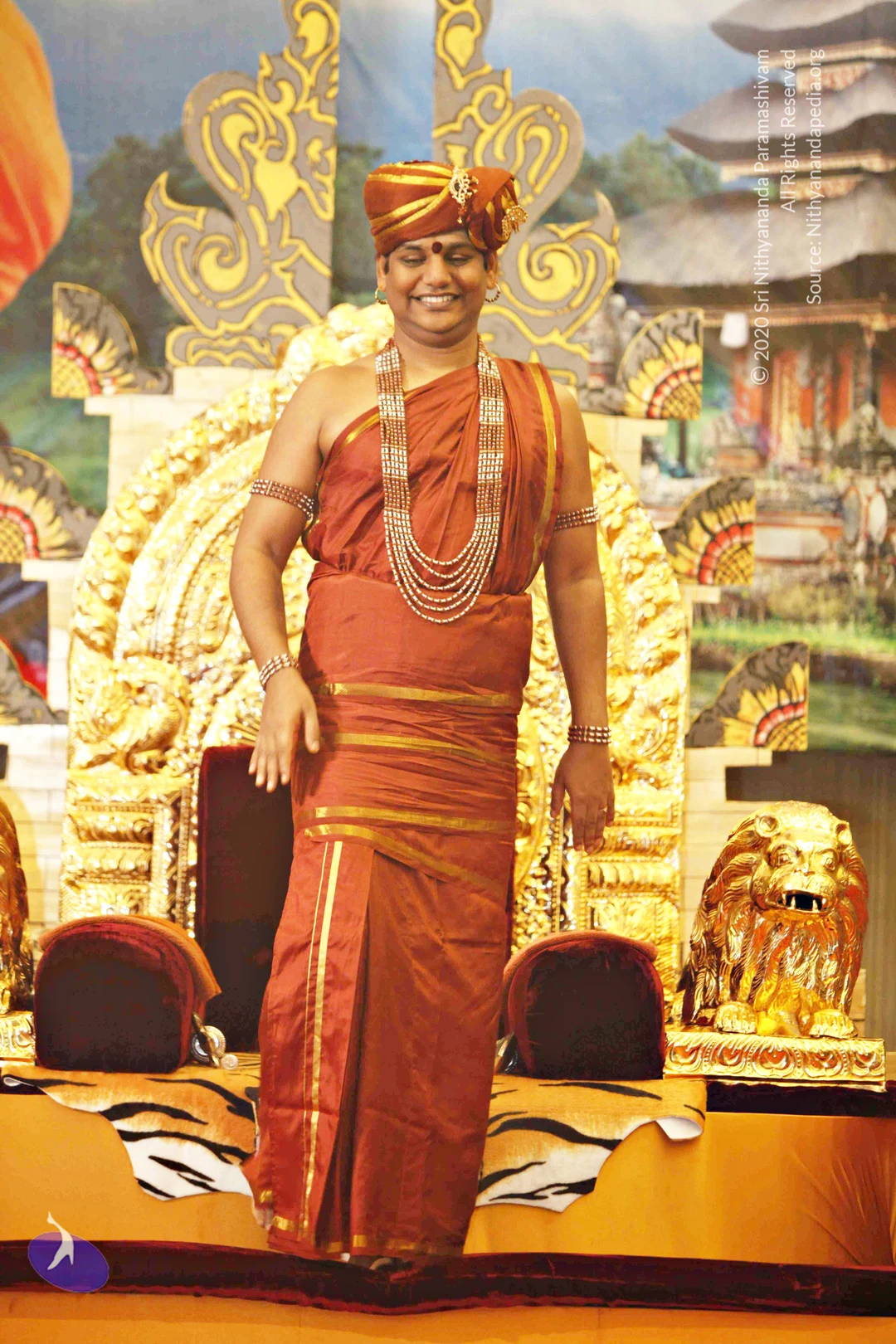
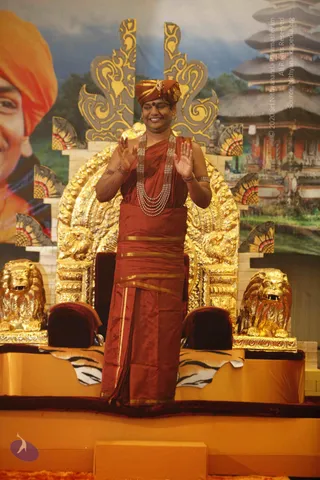
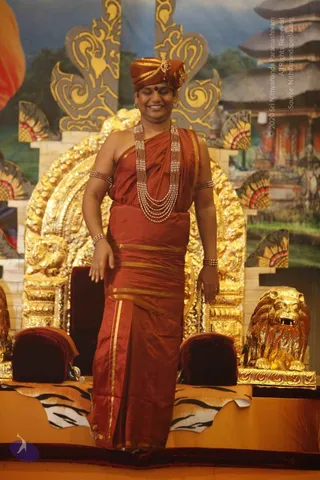
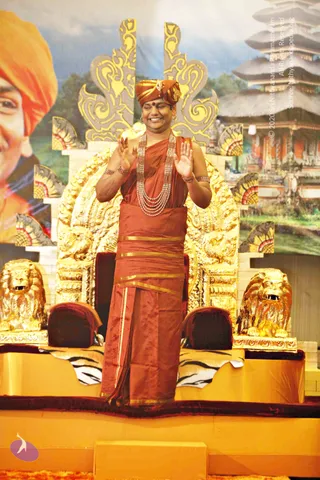
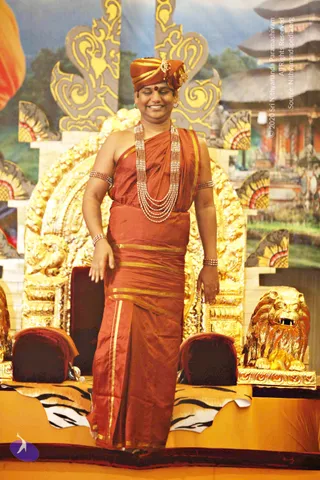
A photograph of a smiling person standing on a raised golden platform before an ornate gilded throne flanked by two golden lion sculptures. The standing person wears a rust-red turban with a gold ornament, a rust-red shawl and dhoti with gold borders, a multi-strand silver bead necklace and silver bangles, and raises both palms in greeting. The platform is draped with tiger-striped fabric. Behind them a backdrop shows a painted portrait of a smiling figure in an orange turban on the left and a Balinese-style pagoda temple on the right.A smiling man stands on a raised orange stage in front of an ornate gold throne with carved lion heads and a tiger-skin rug, backed by a painted Balinese temple scene. He wears a rust-red turban with a jewelled ornament, a rust-red draped garment with gold border stripes, a multi-strand white beaded necklace, beaded armlets and wristbands, and a red bindi. Gold lion statues flank the throne.A photograph of a seated figure on an ornate golden throne flanked by two golden lion sculptures. The person wears a rust-red and orange turban with a jewelled brooch, a red-orange shawl draped over the shoulder and bare chest, a long multi-strand white beaded necklace, and beaded bangles on the upper arms and wrists. A small microphone is clipped near the face. The person sits cross-legged with hands folded, smiling, on a dark red cushion; the throne is backed by a gilded arch with carved lion and floral motifs and a stepped wooden panel behind.A photograph of a seated audience at an indoor hall with beige walls, dark wood doors and red-cushioned gold-framed chairs. Several devotees in white clothing raise their open palms toward the front. In the foreground, a young man with shoulder-length brown hair wears a white kurta-style shirt and a white name badge. Beside him, a man in a white polo shirt with a white badge raises both hands, and an older man with glasses in a white kurta also lifts his hands. A man in a striped shirt with a tilak and rudraksha mala appears behind them. No a person candidate is clearly identifiable among those visible.Four men in white shirts sit closely together in a hall, eyes closed, palms raised outward in a devotional gesture. The man on the left wears glasses, a rudraksha mala with a pendant, and an ID badge; the man at front has a shaved head and a badge on his shirt; the man on the right wears glasses and a mala. Behind them, more seated devotees in white are visible, and a blurred figure in red and orange stands in the background. No one in the frame is clearly a person by appearance, so no candidate is identified.A photograph of a seated group of devotees in a hall, most with palms raised in front of them as in a blessing or meditative gesture. Many wear white ritual clothing, some with orange or red shawls and rudraksha-style beaded necklaces. Several women wear glasses, one wears a white flower in her hair, and an older woman in the back wears an orange shawl. The seating is on carpet, with chairs visible behind.
IA-Darshan
20 photosSource gallery
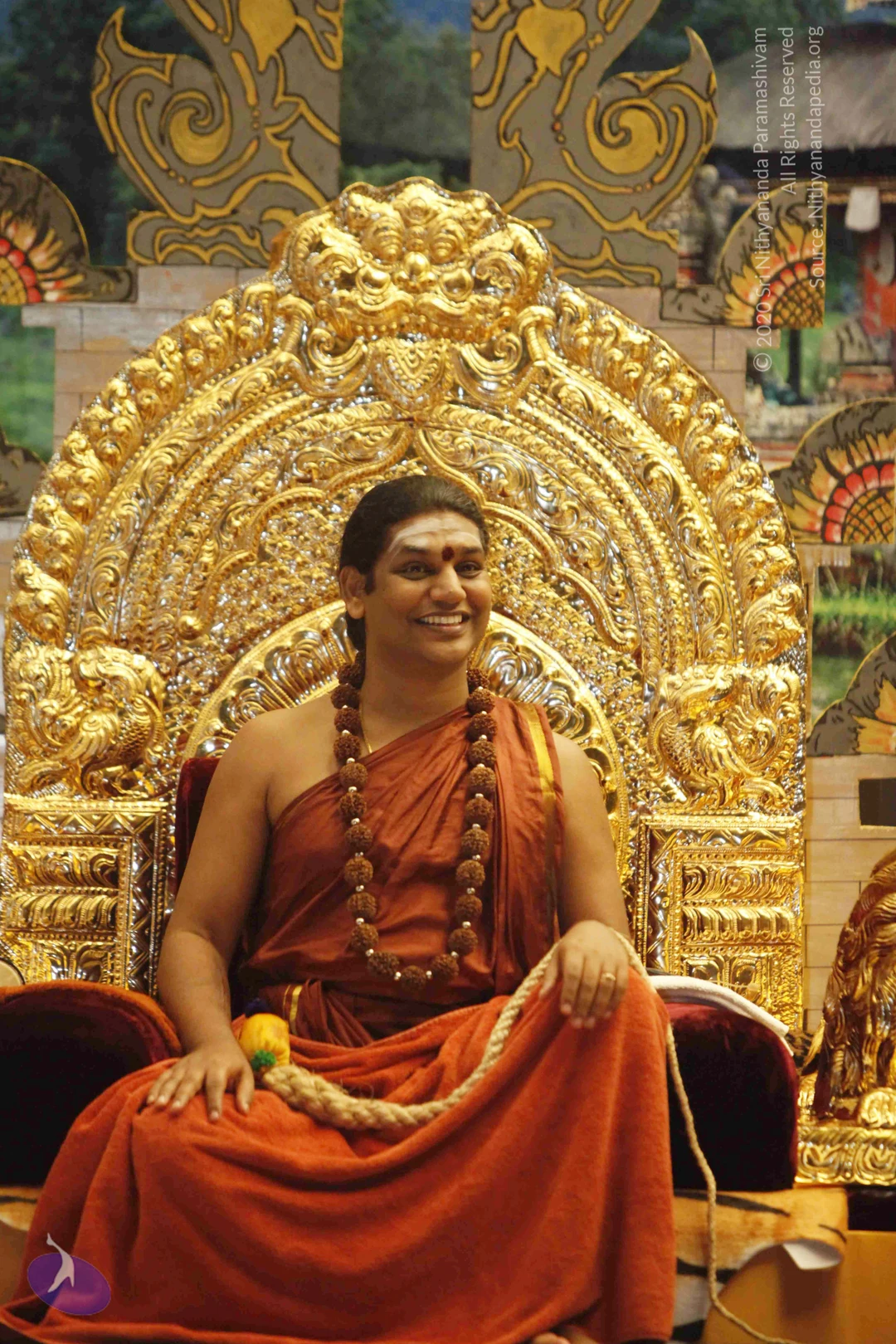
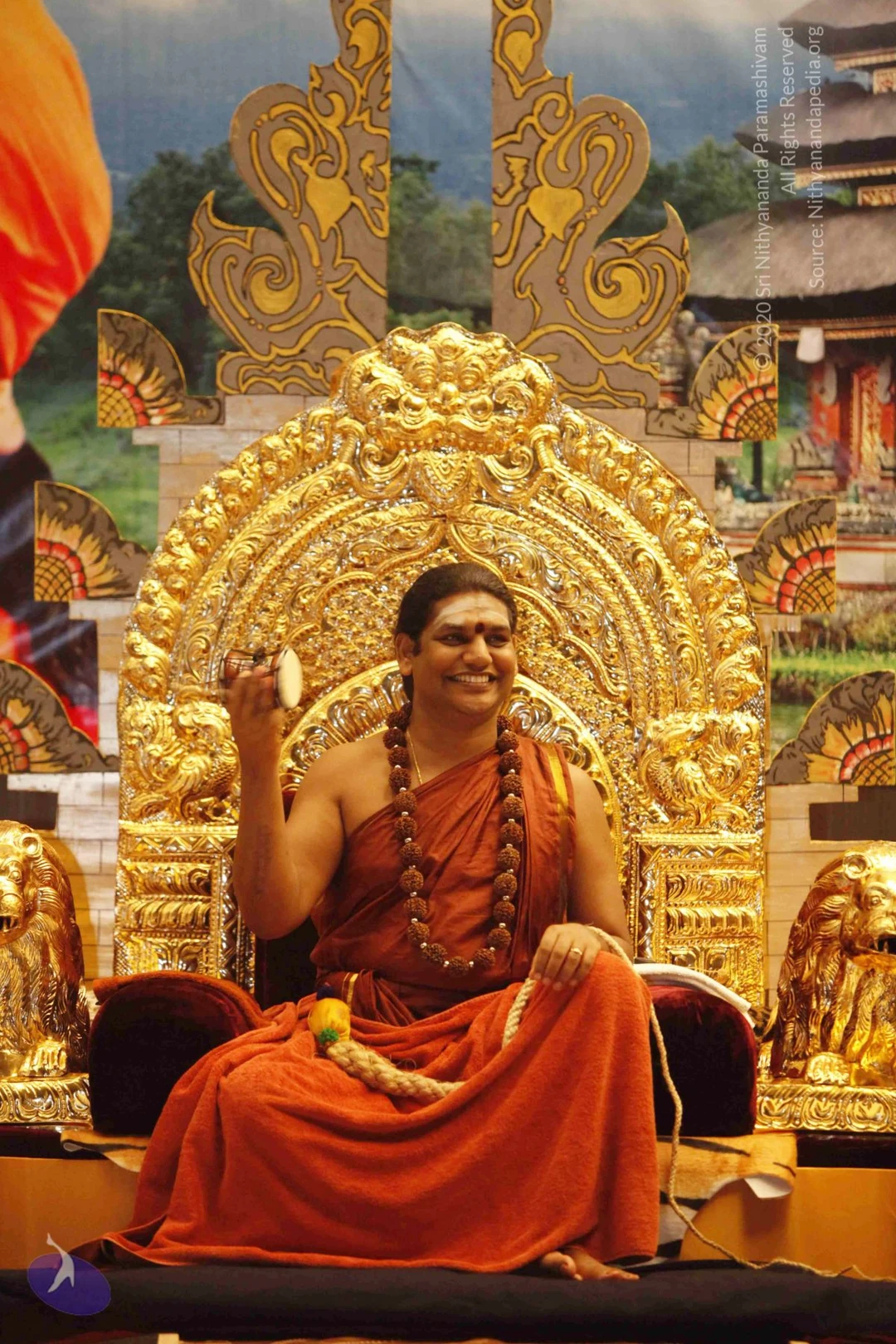
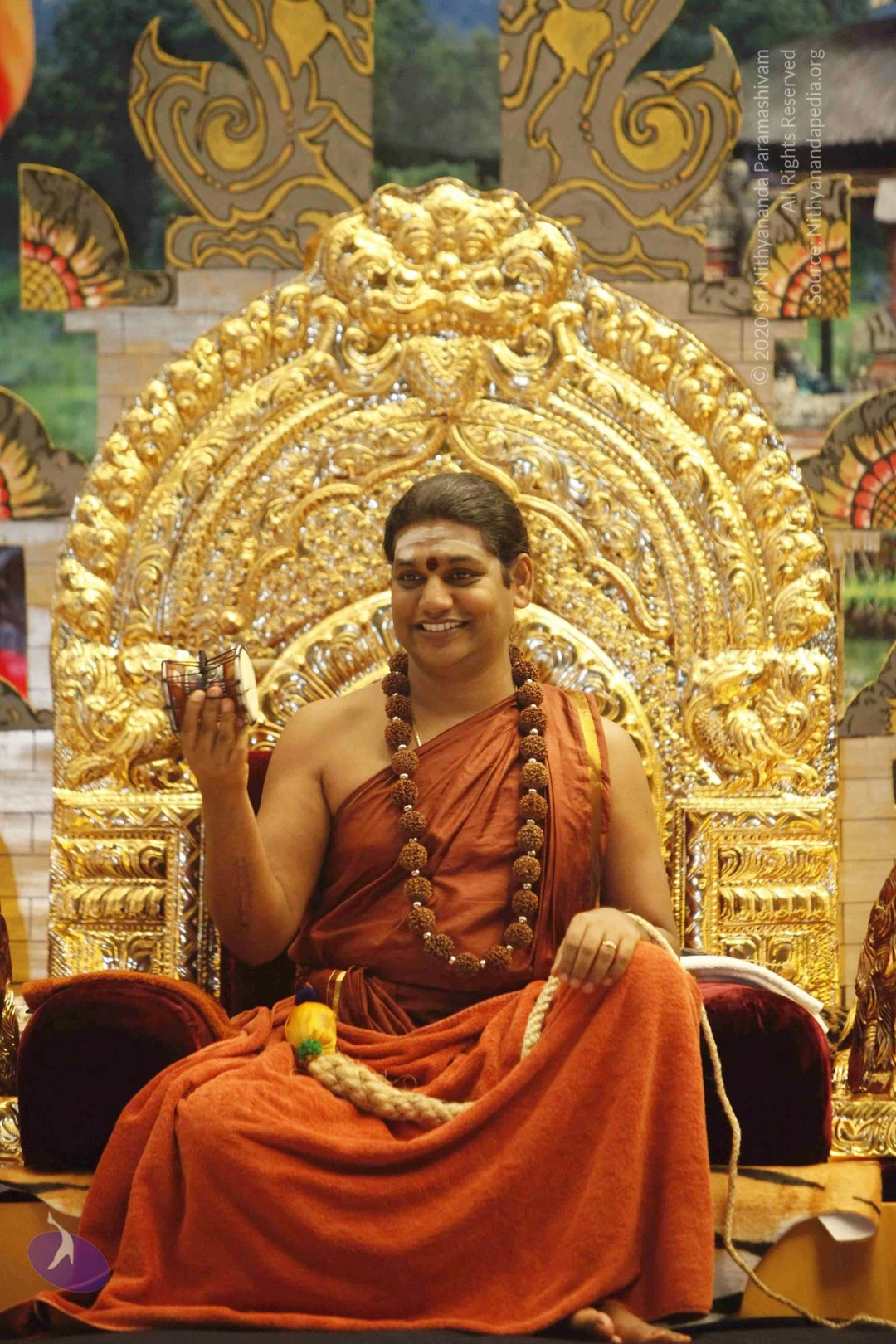
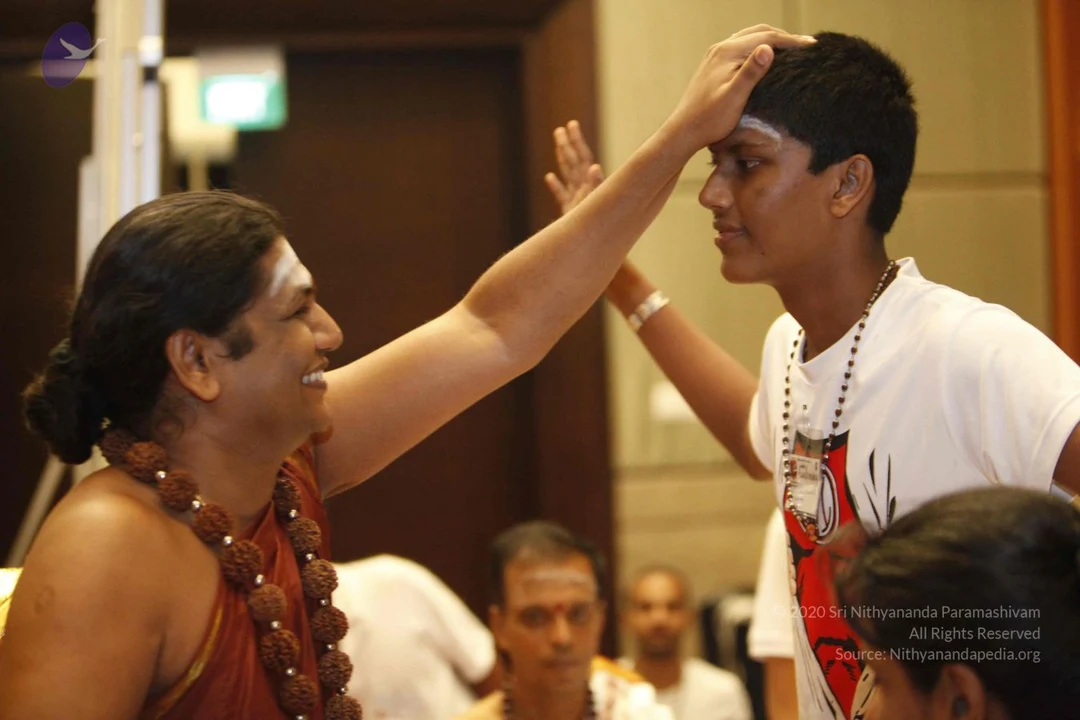
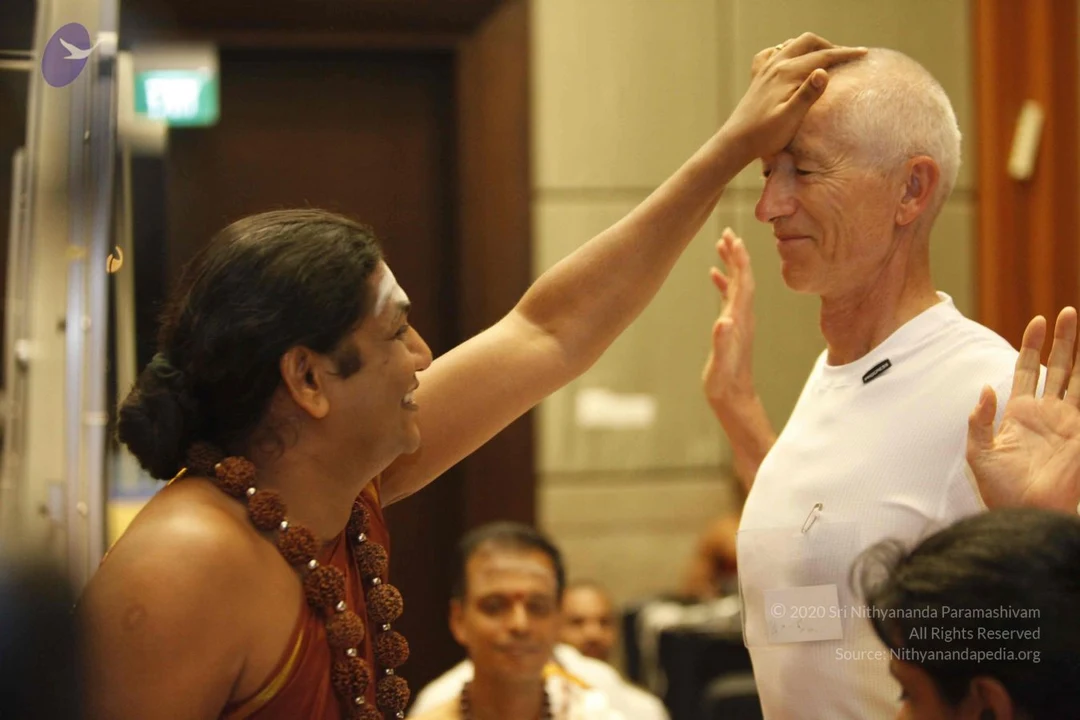
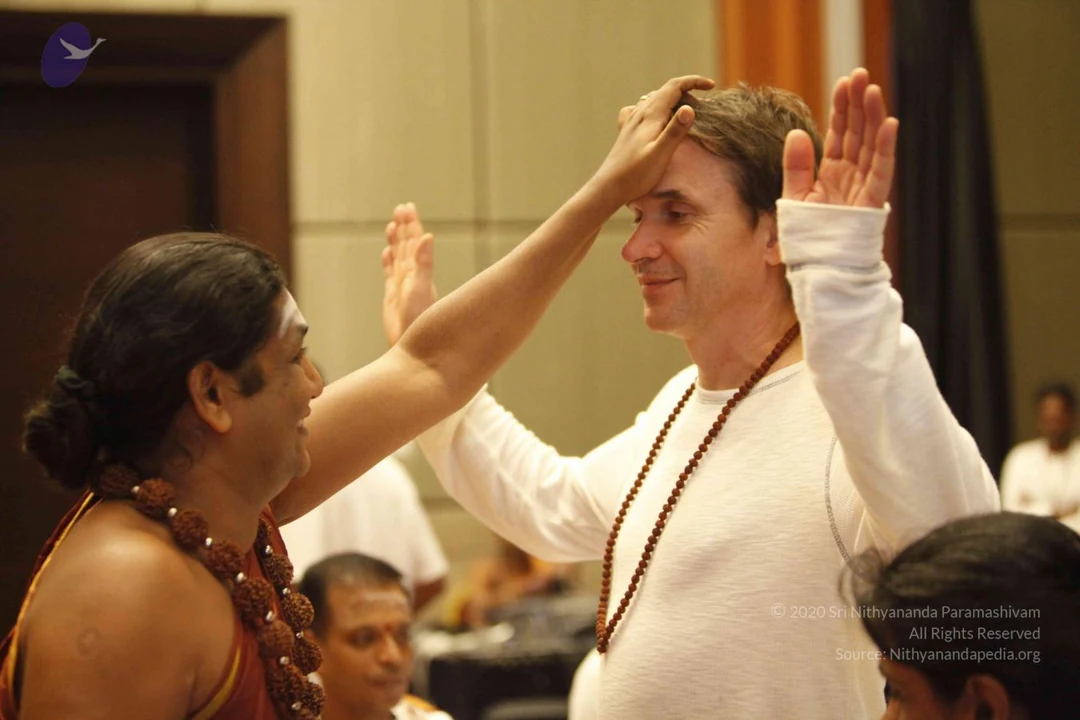
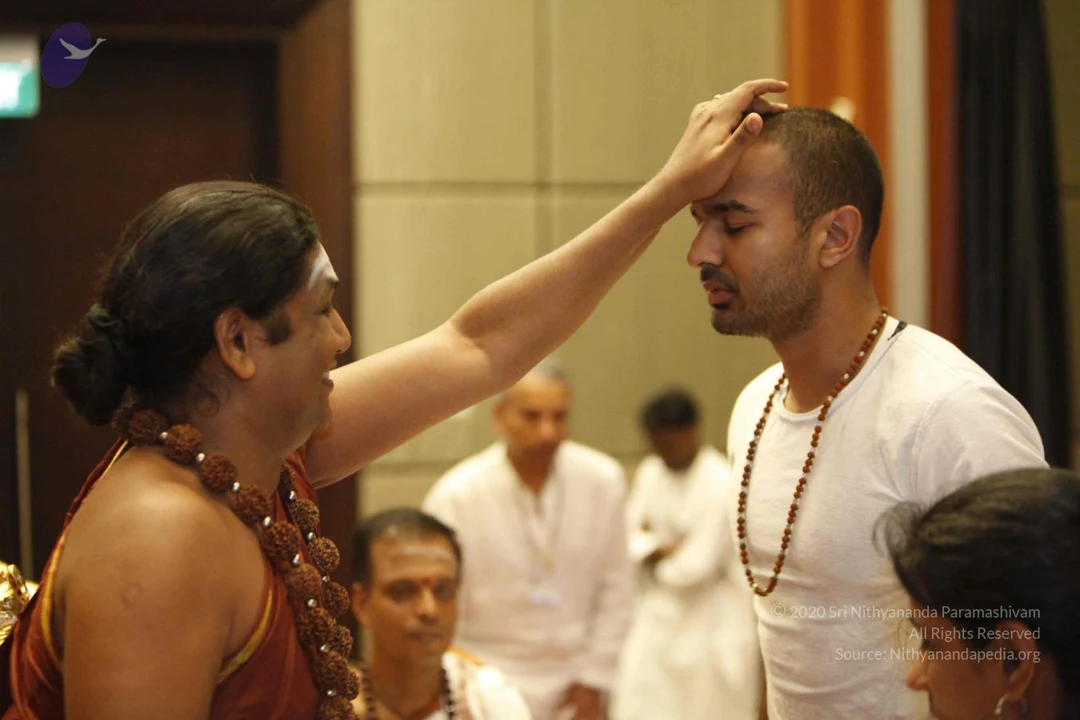
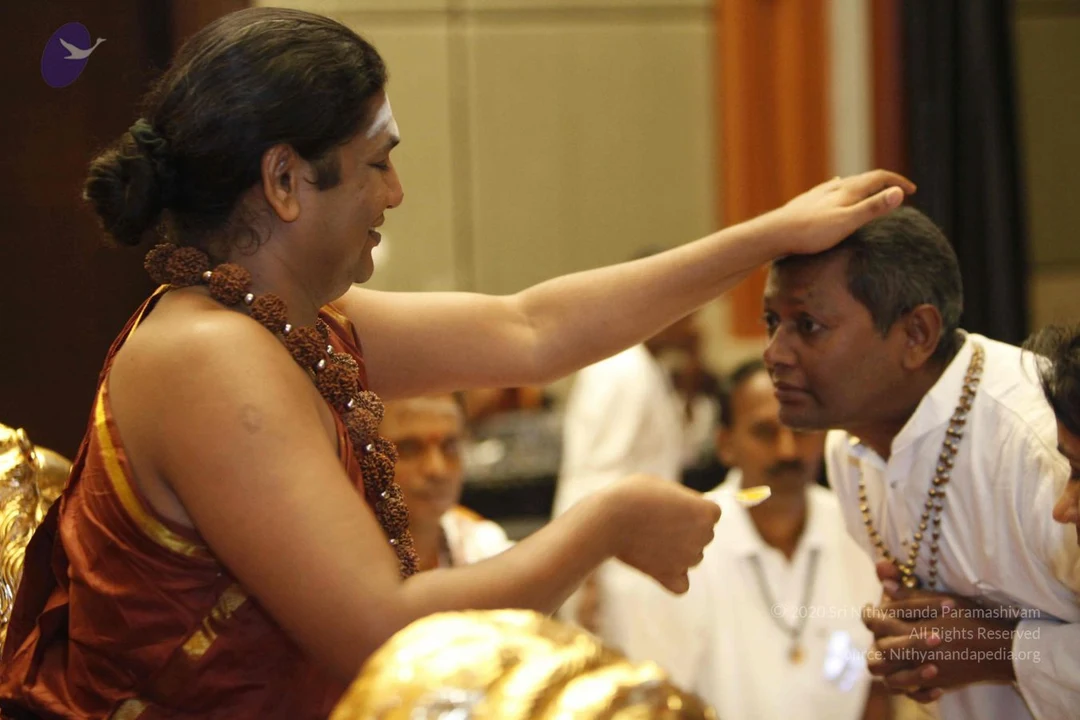
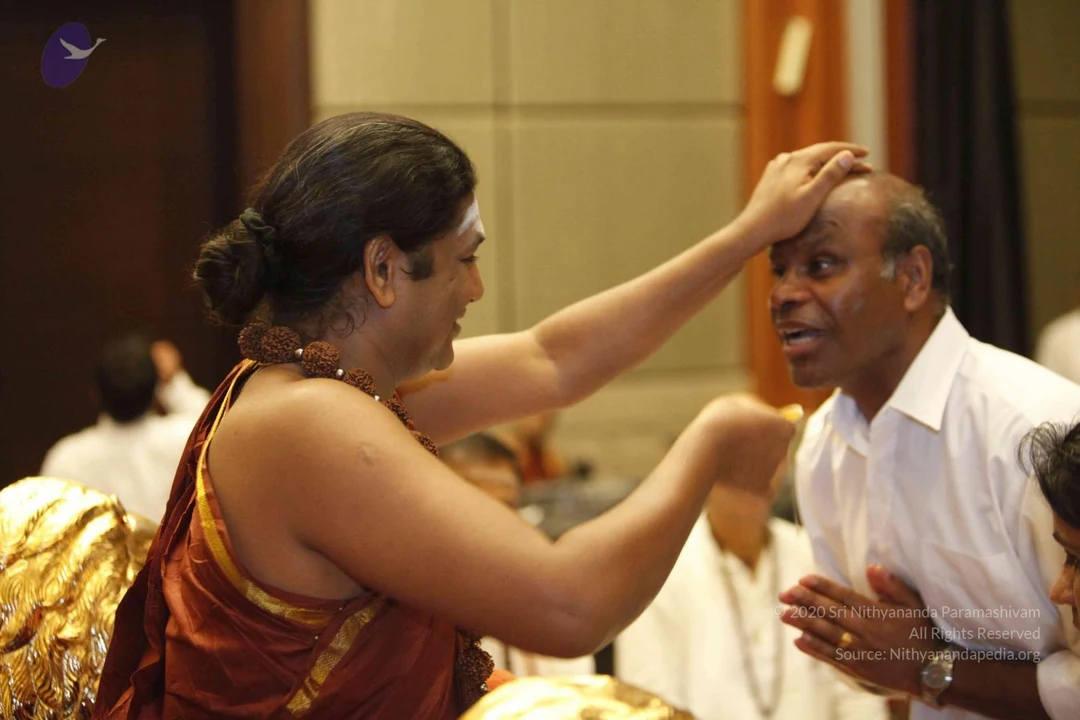
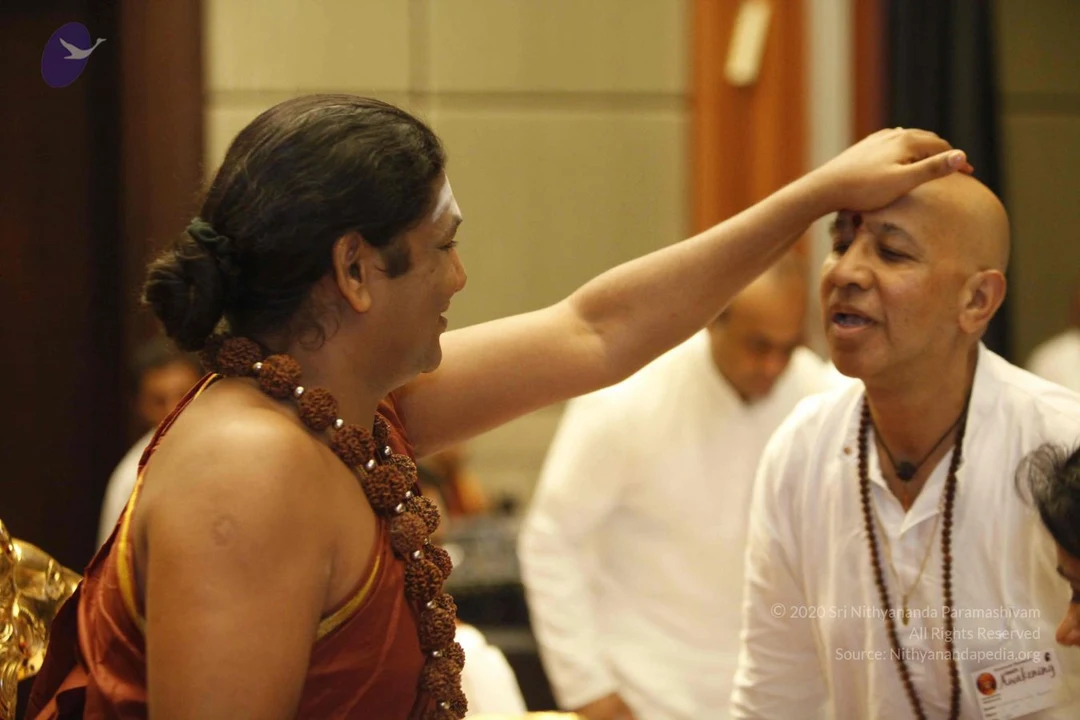
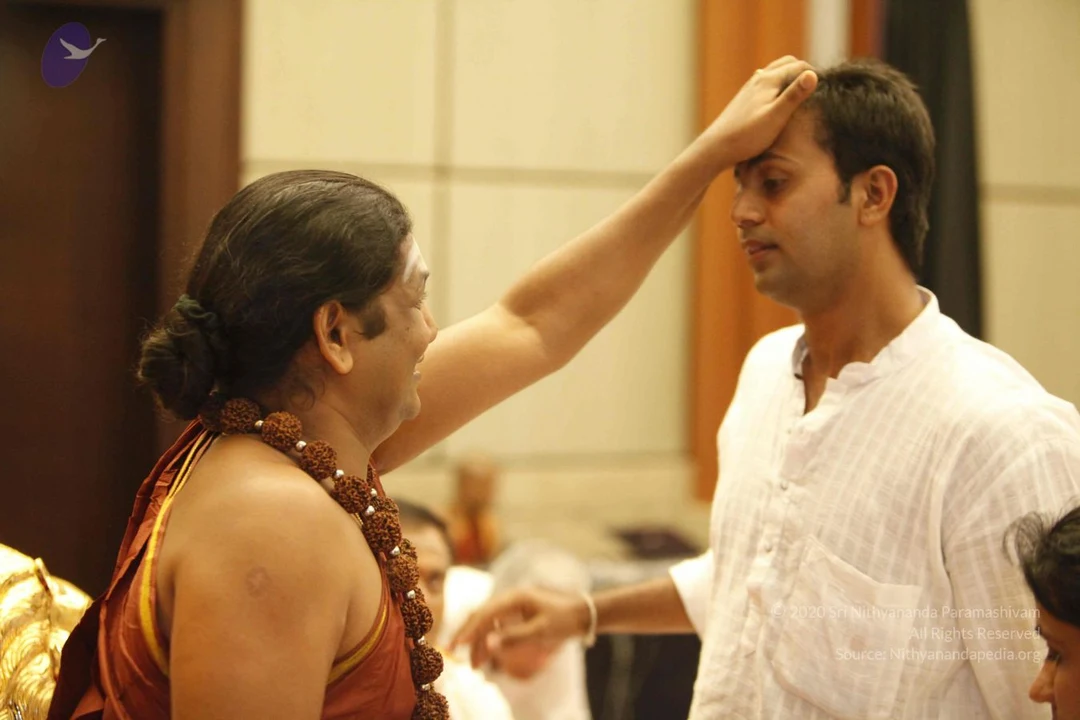
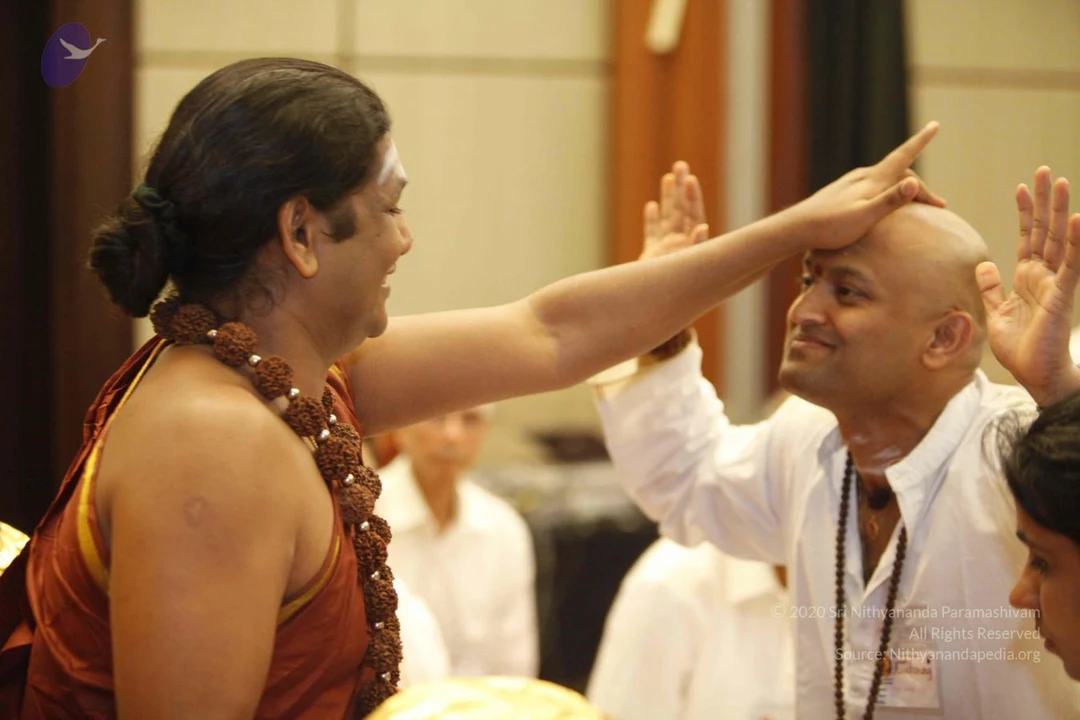
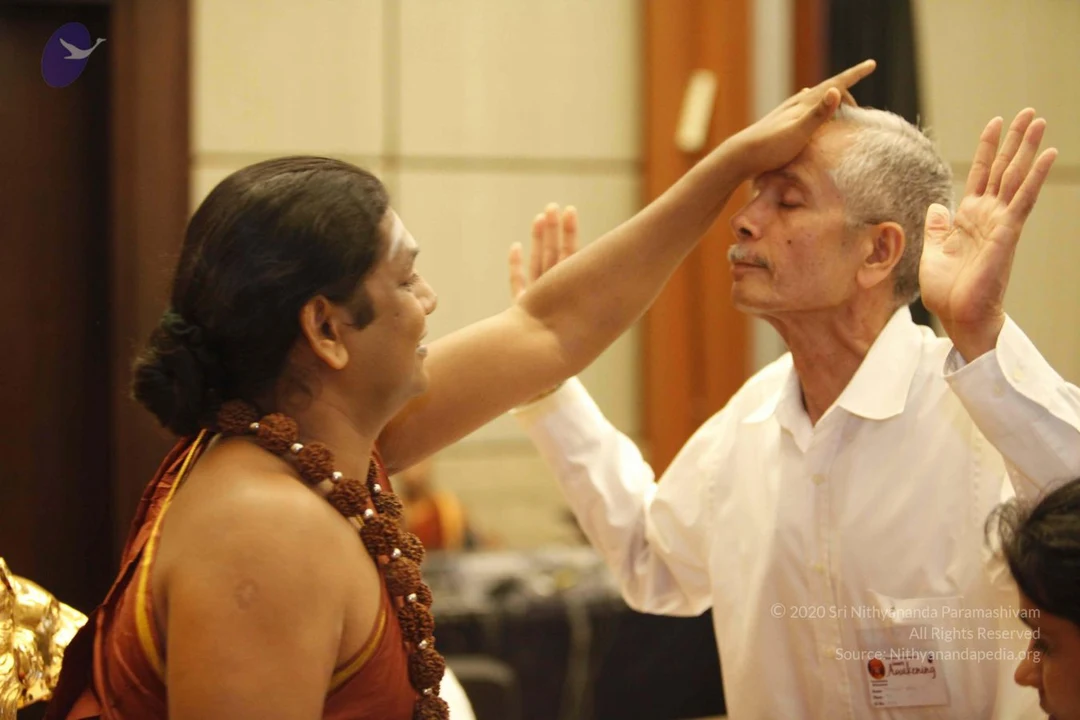
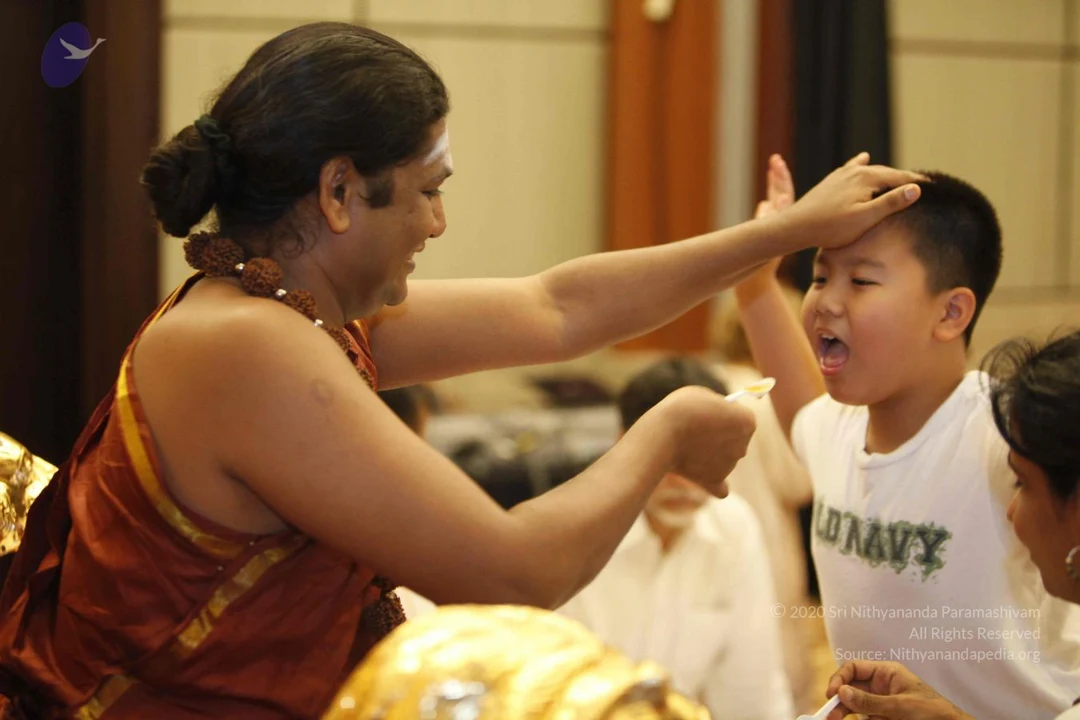
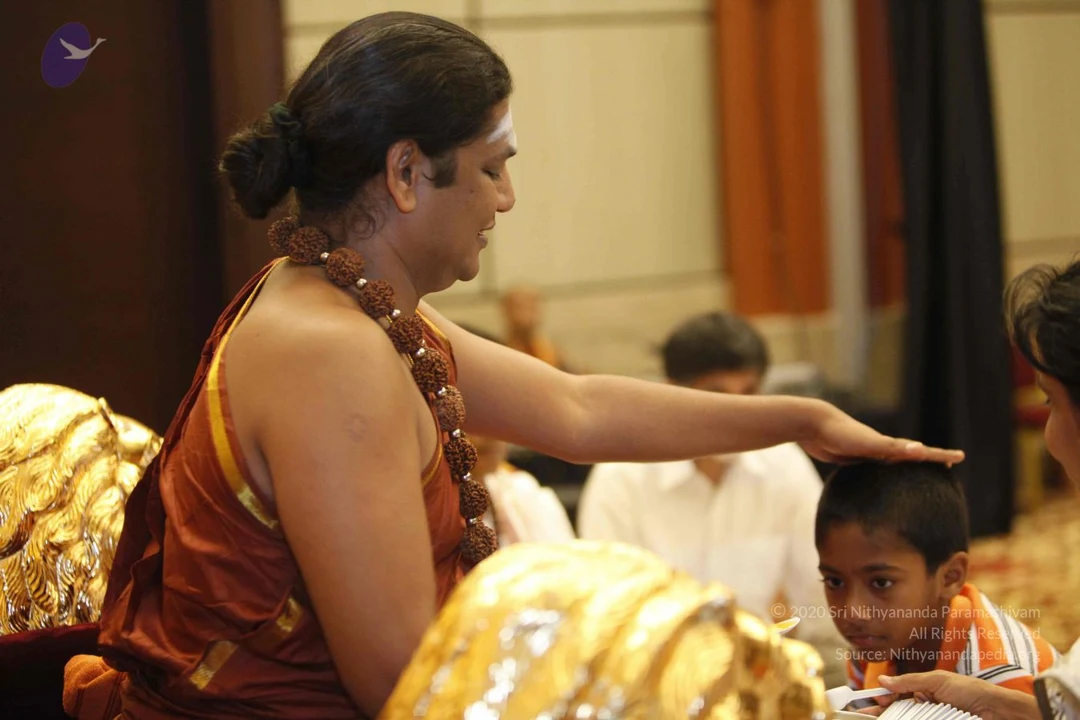
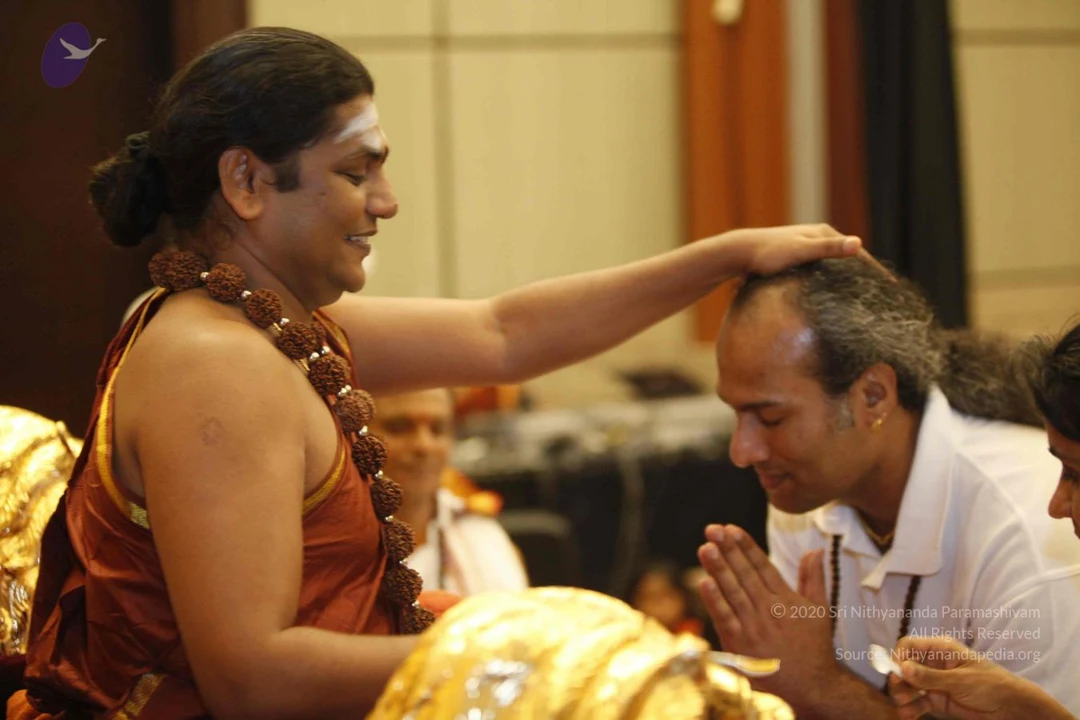
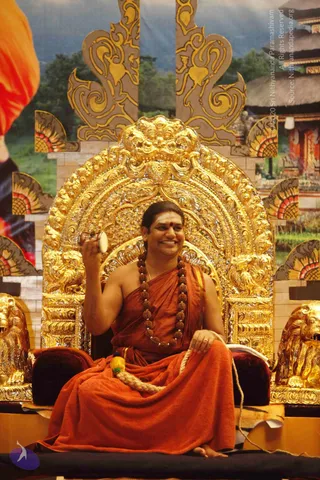
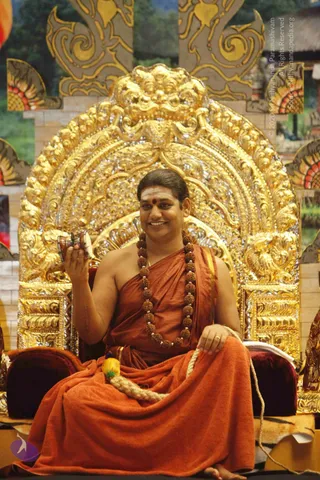
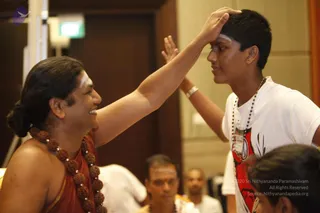
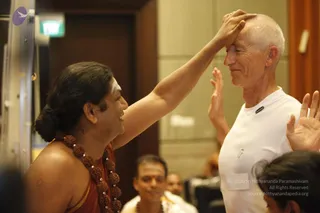
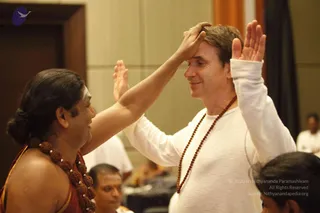
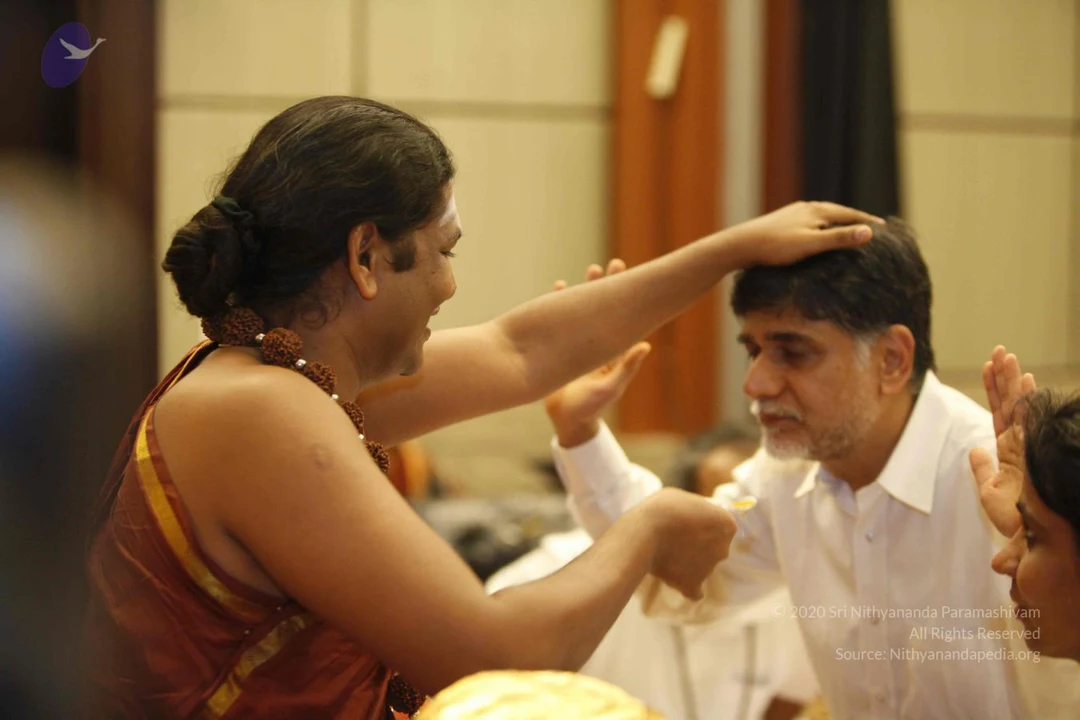
A smiling man with long dark hair and a red bindi and white forehead markings sits on an ornate gold throne with carved arch and lion-like figures. He wears a rust-orange robe draped over one shoulder and a long rudraksha mala. He rests his hands on the robe, holding a rope with a small orange tassel. Behind the throne are painted panels with gold scrollwork and a green landscape. Swamiji (probable): long swept-back hair, saffron-orange robes and rudraksha mala, seated on a throne.A seated man in a gilded throne with ornate golden arches and carved lion figures flanking him, against a painted backdrop of a temple and green hills. He wears a rust-orange draped garment, a long mala of rudraksha beads, and a vertical tilak with a red bindi on his forehead, and holds a small handheld drum or bell in one raised hand. A rope tassel lies across his lap. The scene reads as a satsang setting. One person is physically present.A smiling man with short dark hair, a red bindi and a white tilak sits on an ornate gold throne with carved scrollwork and a floral crest, wearing a rust-orange saffron wrap over his shoulders and a long rudraksha mala with large beads and silver spacers. He holds a small brass kalasha-like cup or vessel in his raised right hand while his left hand rests on a thick braided rope with a yellow tassel across his lap. Behind him are painted panels of greenery and carved golden wooden side pieces.Close-up photograph of a bare-chested man with long dark hair tied back, wearing a rudraksha mala of large beads and an orange-red cloth draped over one shoulder, pressing his right palm to the forehead of a young boy in a white t-shirt with a red graphic and a visible name badge on a lanyard. The boy has white vibhuti marks on his forehead and a beaded necklace, and seems to be receiving a blessing. Blurred figures in the foreground include a man with a sandalwood and vibhuti mark and a bare-shouldered person in white. The setting is an indoor hall with dark wooden doors and a green exit sign.A photograph of an indoor hall with beige walls and a brown door. A man with long dark hair tied back, wearing a rudraksha mala of large beads and a reddish-orange garment, reaches one arm up to place his palm on the forehead of a short-haired, older Western man in a white sleeveless top with a name badge. Two other hands are raised near the recipient, and a few seated people in white and blurred figures are in the background. The page indicates Swamiji is present, and the figure with long hair, rudraksha mala and saffron-orange garment is a probable Swamiji candidate, so this is an in-person appearance candidate given the cues.A photograph of an indoor ceremony in a hall with beige walls and wooden paneling. A person with long dark hair pulled back and a white vertical forehead mark, wearing a rust-orange cloth wrap and multiple large rudraksha mala necklaces, places one hand on the forehead of a smiling man with short brown hair. The man wears a white long-sleeved top and a brown rudraksha mala and raises his other palm. Other seated people in white clothing are partly visible at the edges, and a person in the lower right corner is partially visible. Appearance-based label: a person is the person in orange with rudraksha malas, shown in person, giving blessing.

Uluwatu-Temple-Visit
127 photosSource gallery
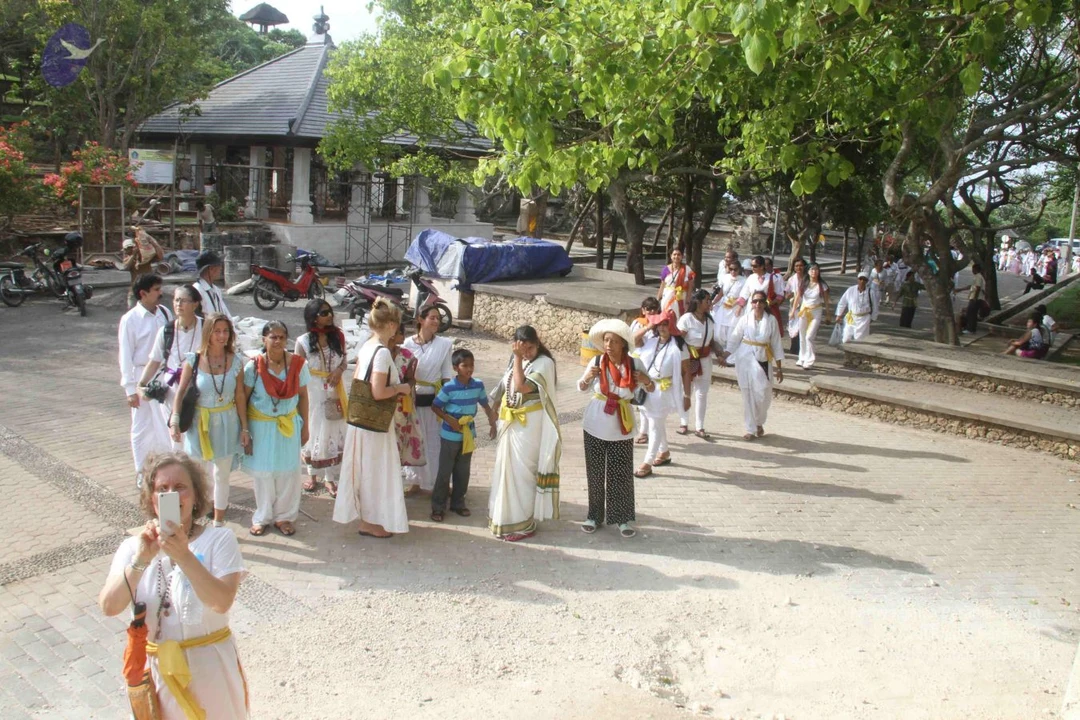
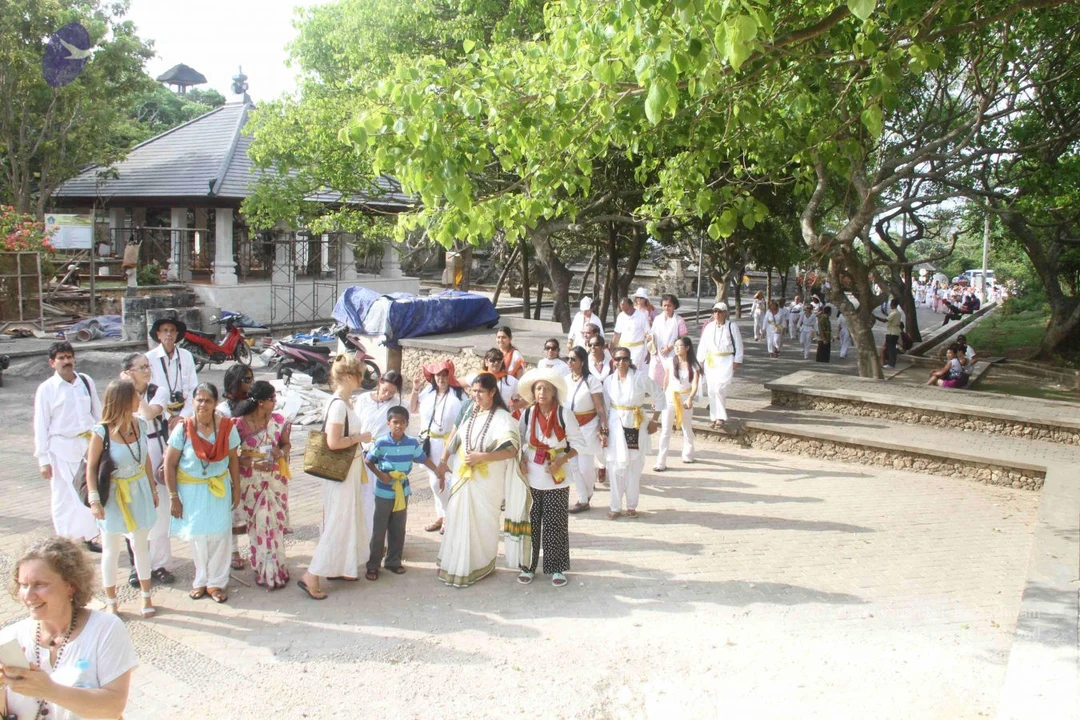
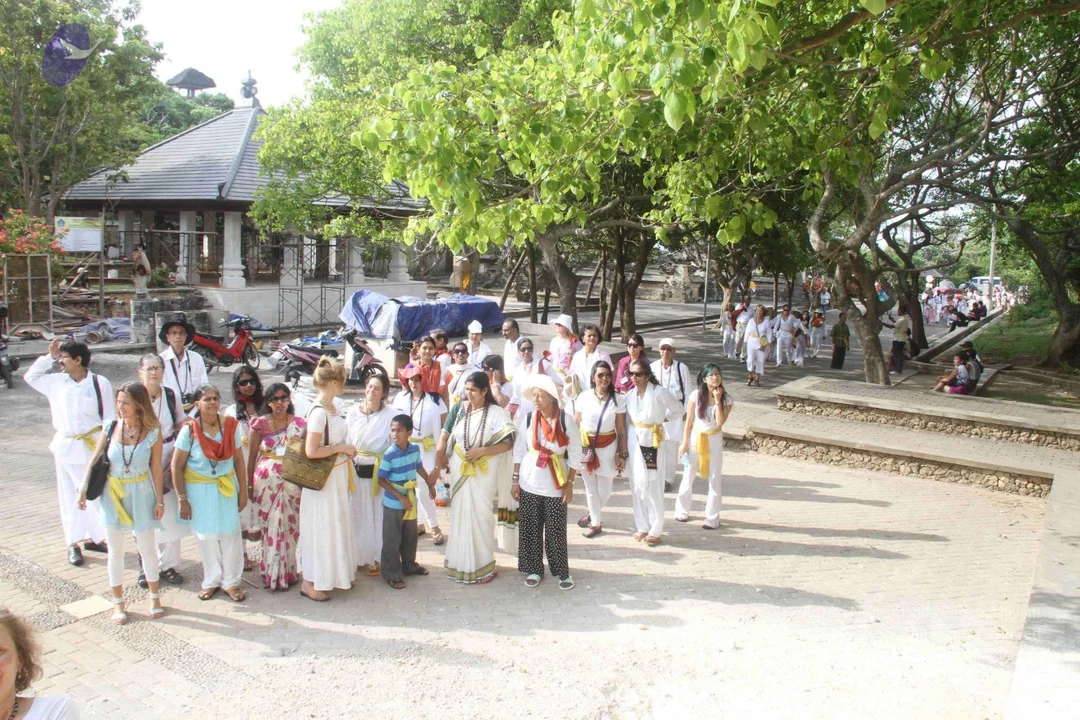
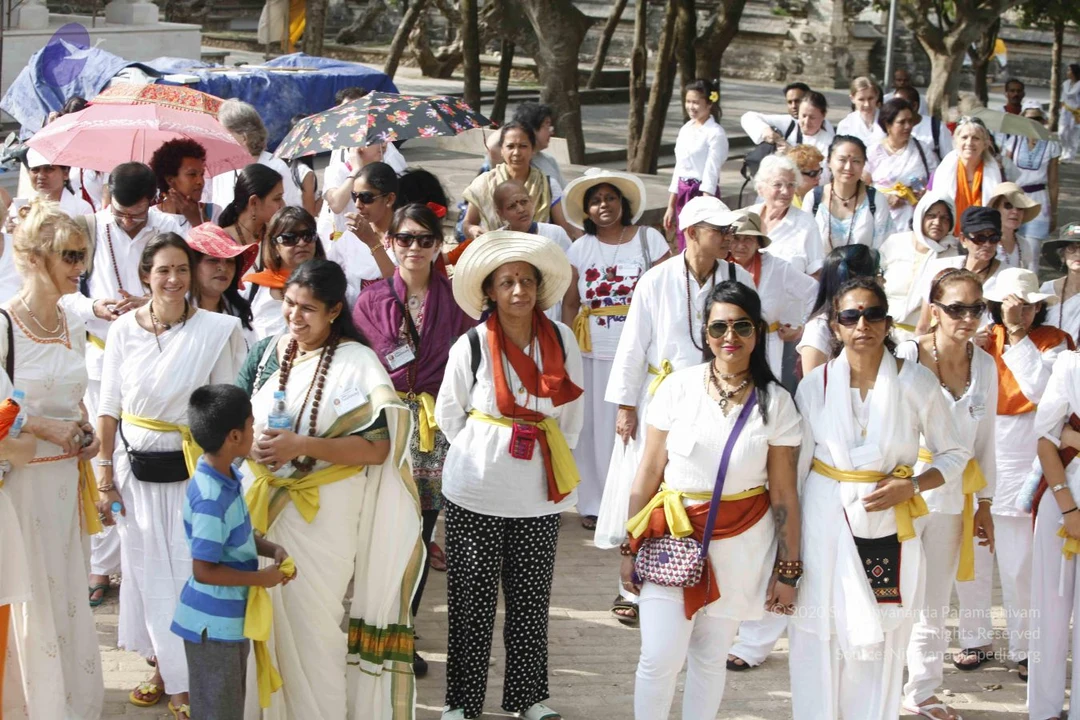
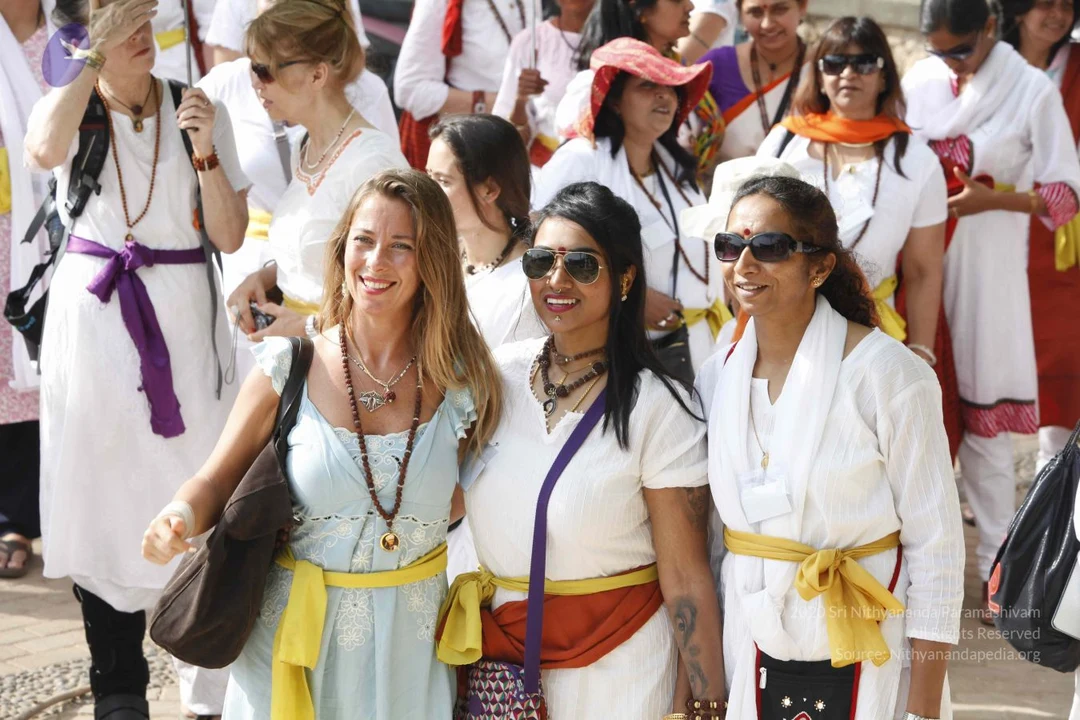
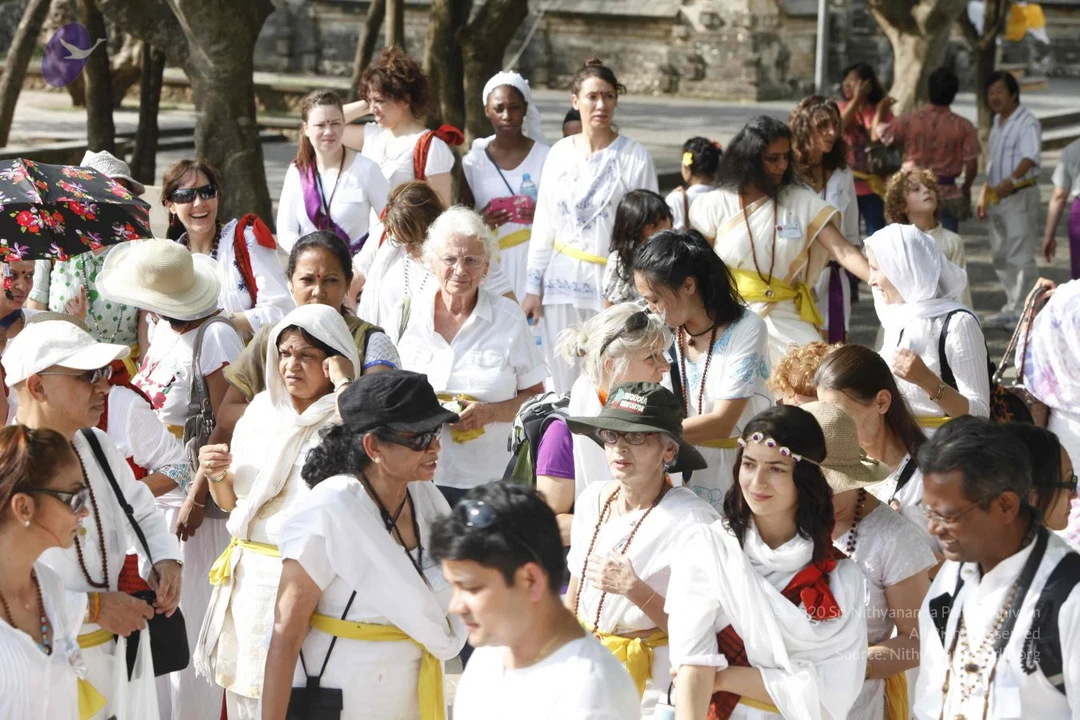
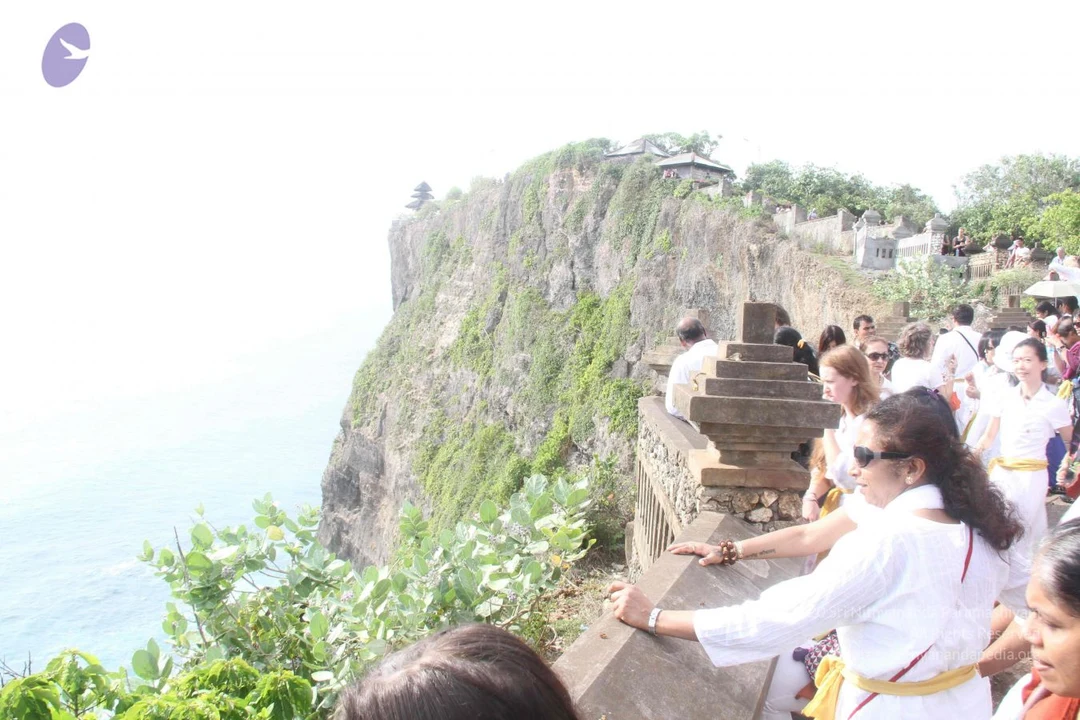
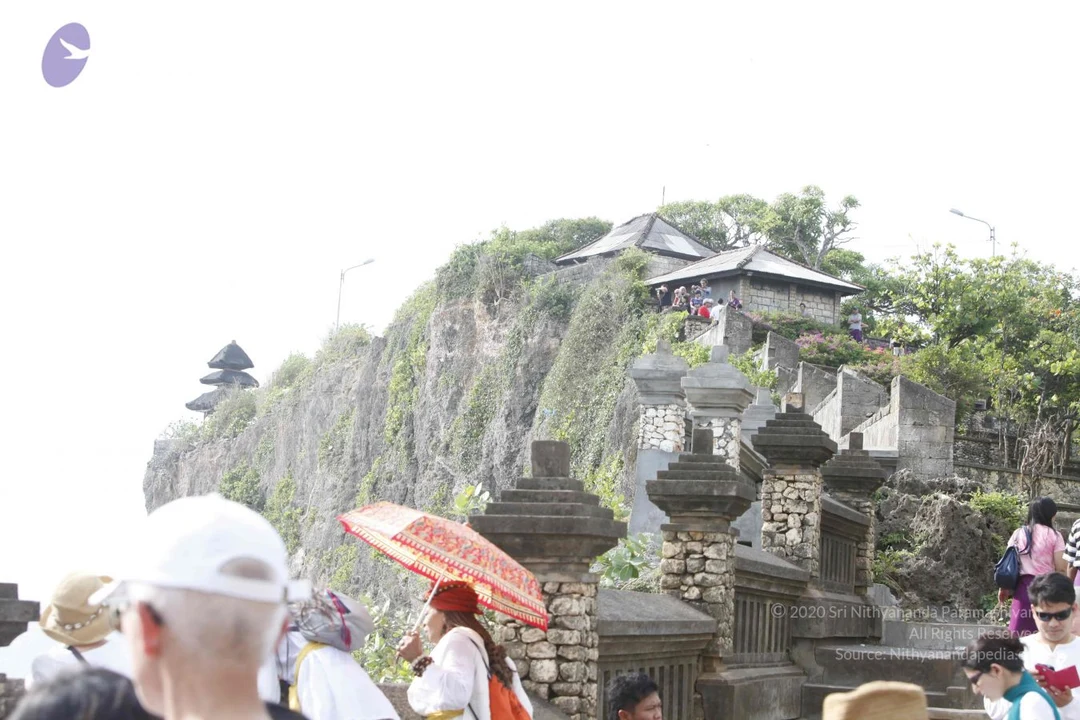
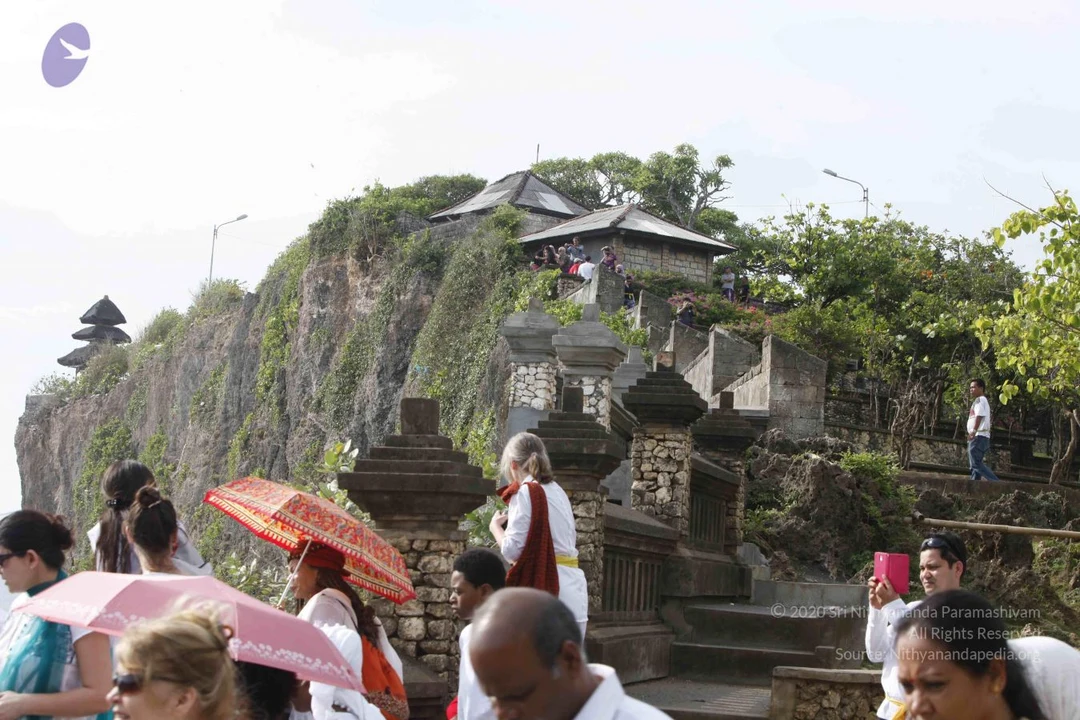
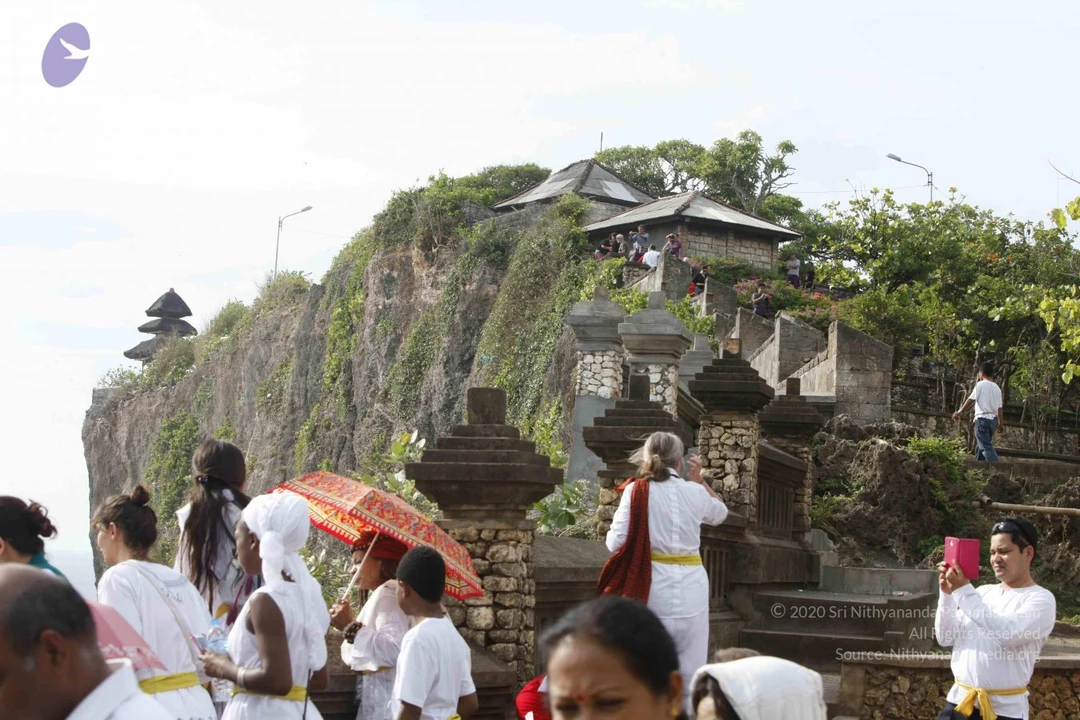
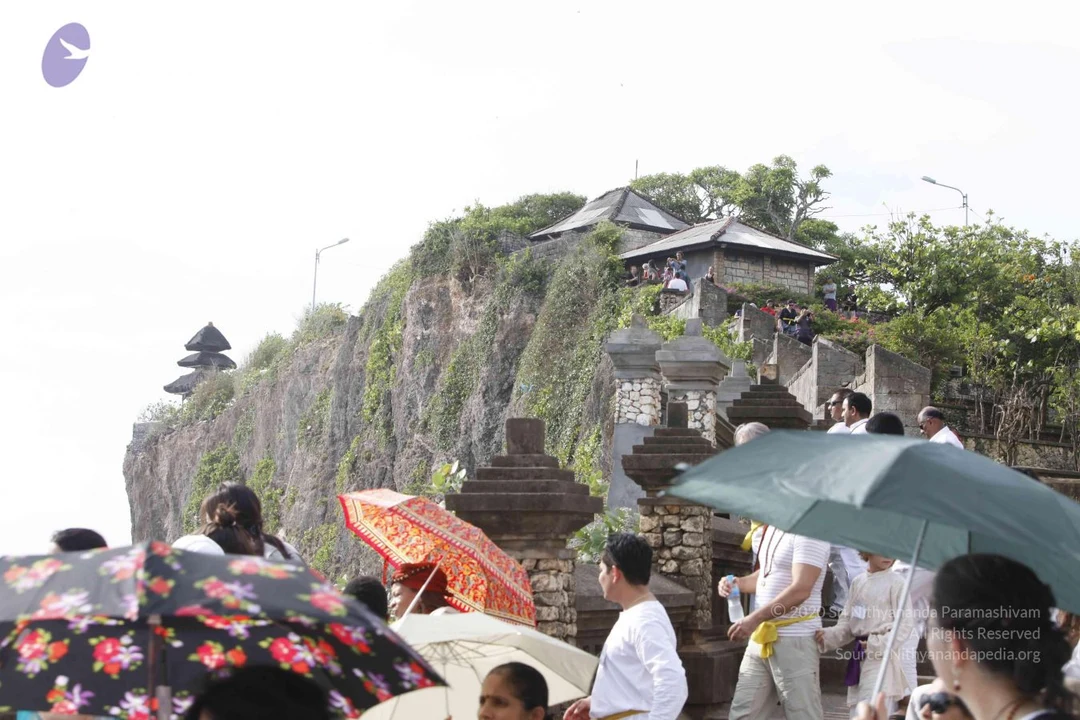
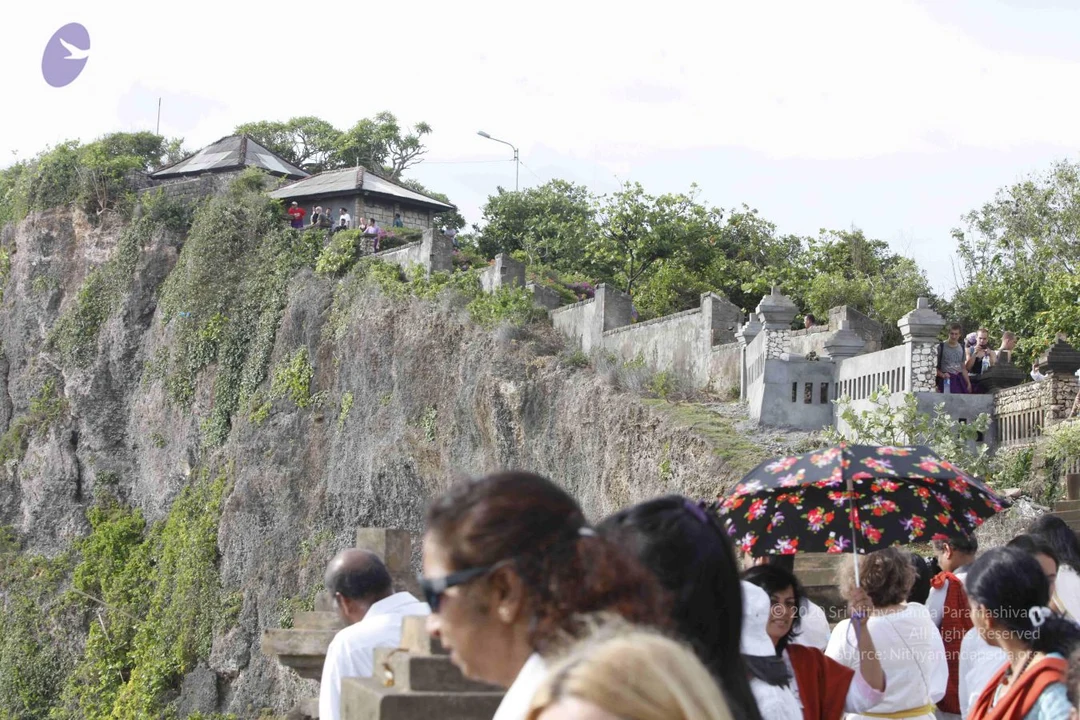
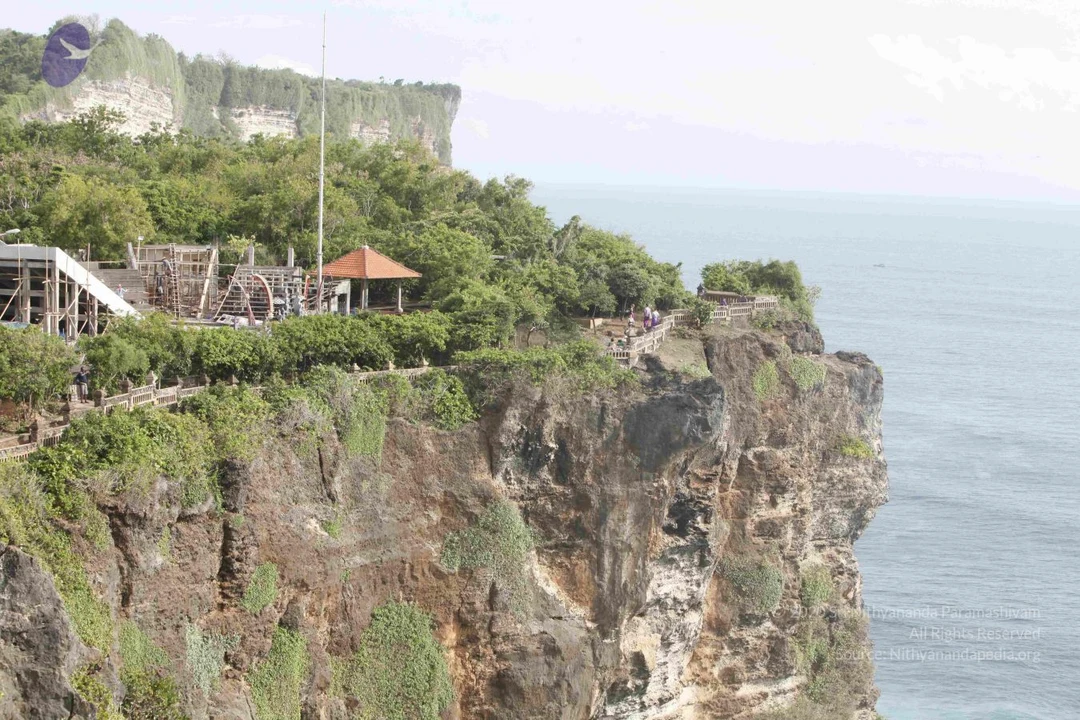
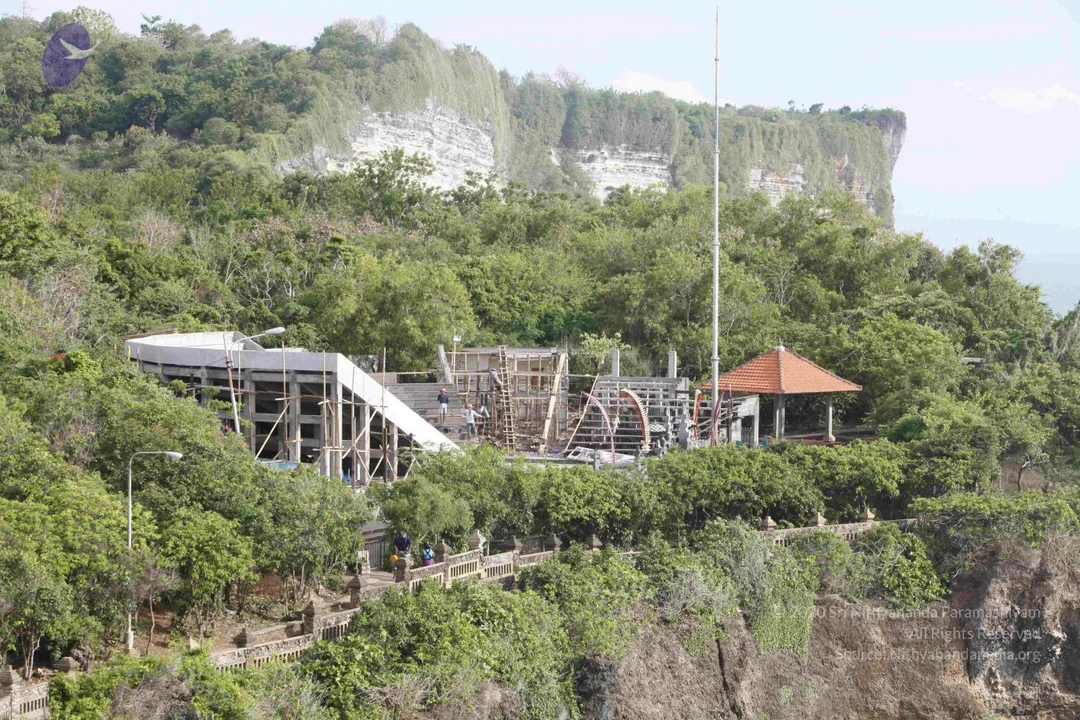
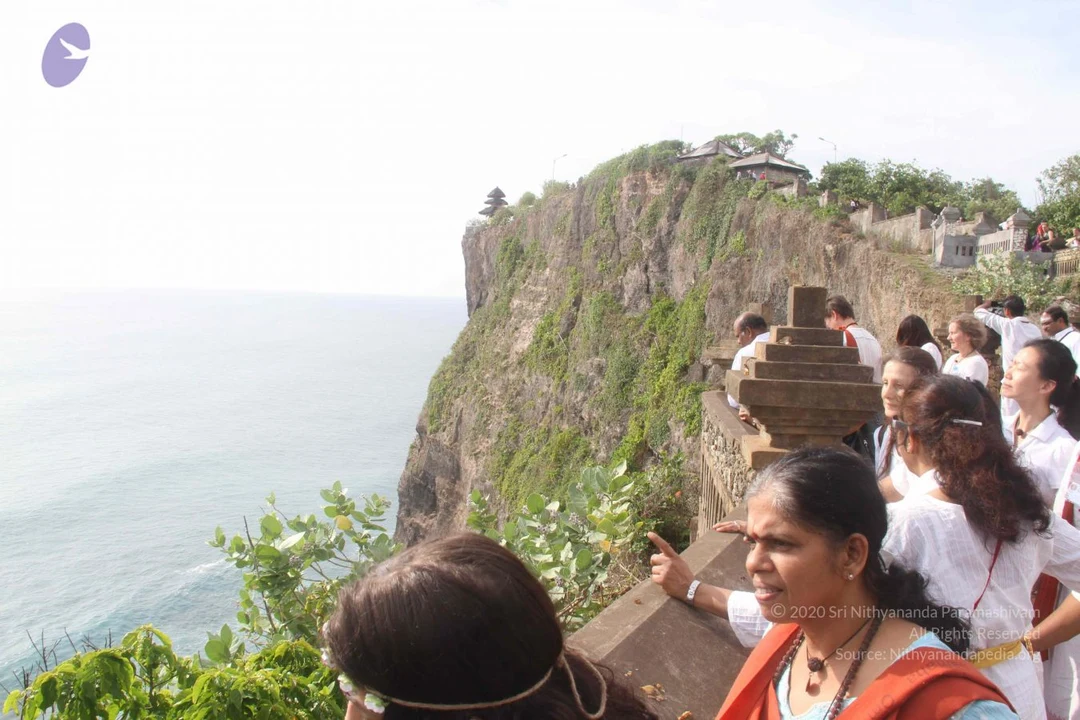
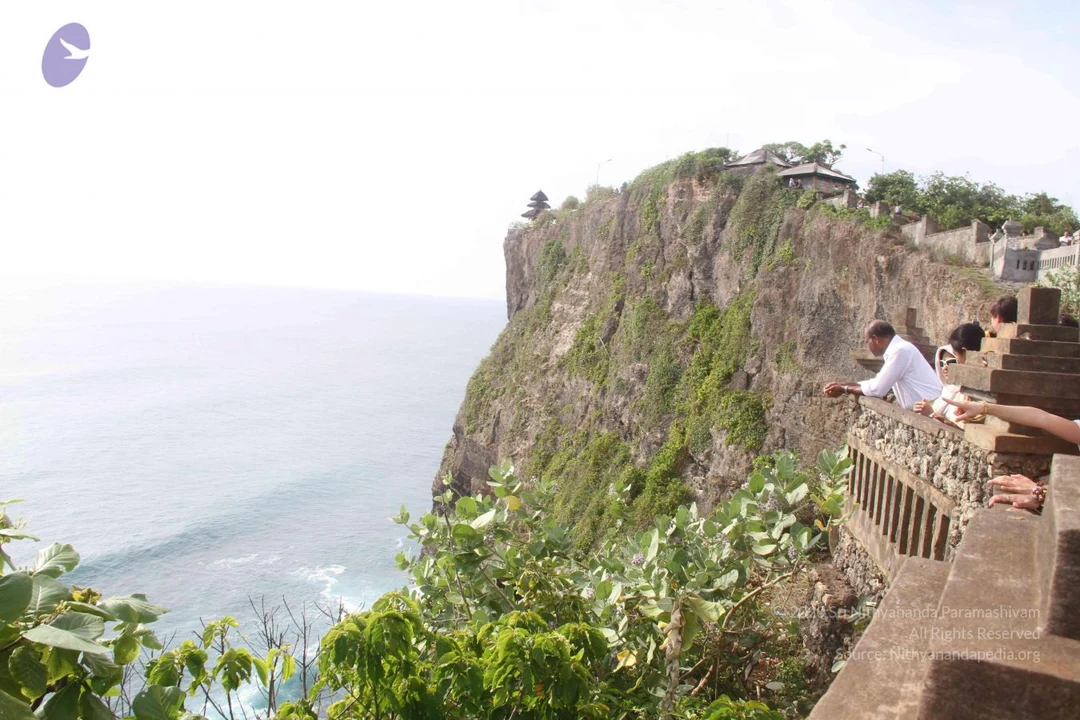
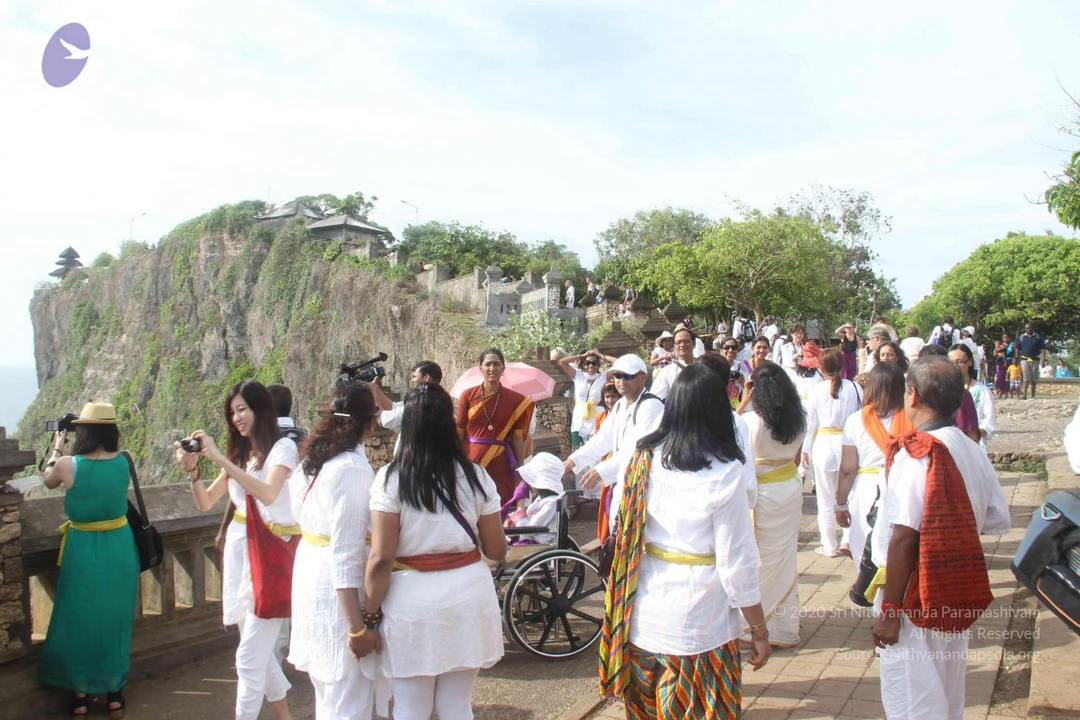
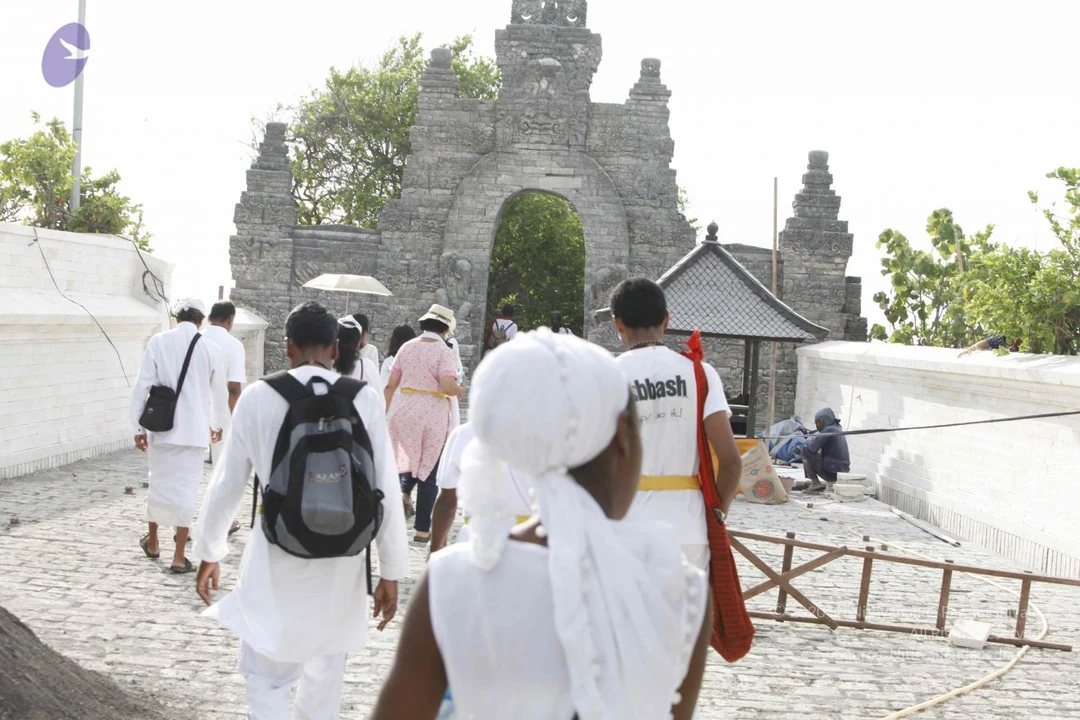
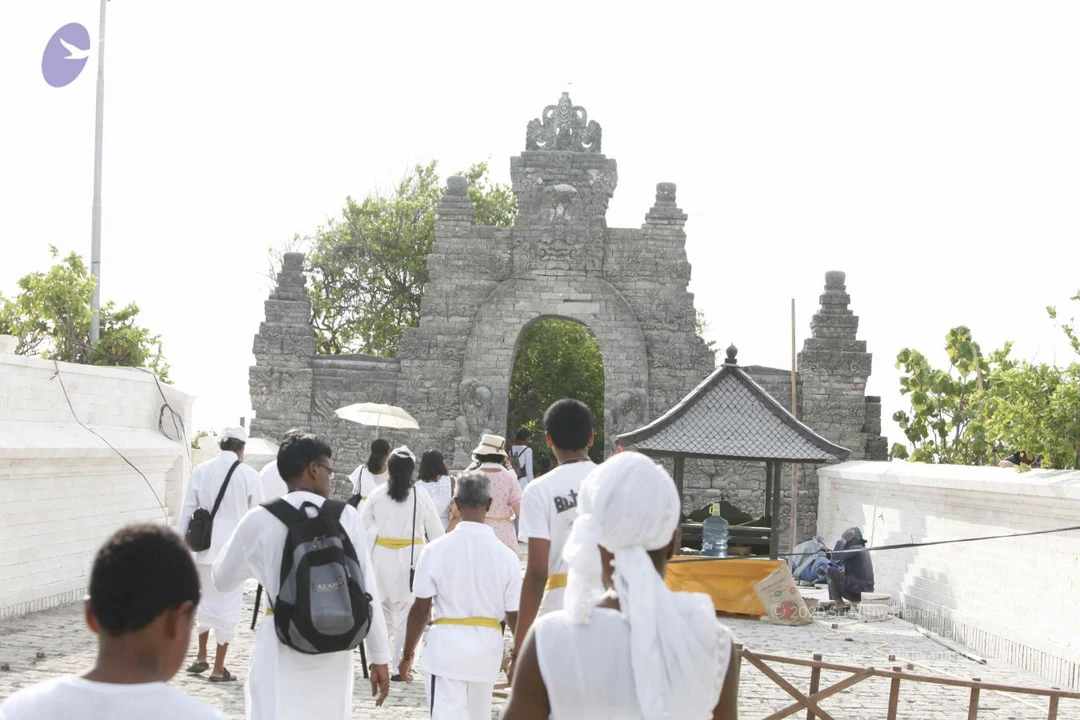
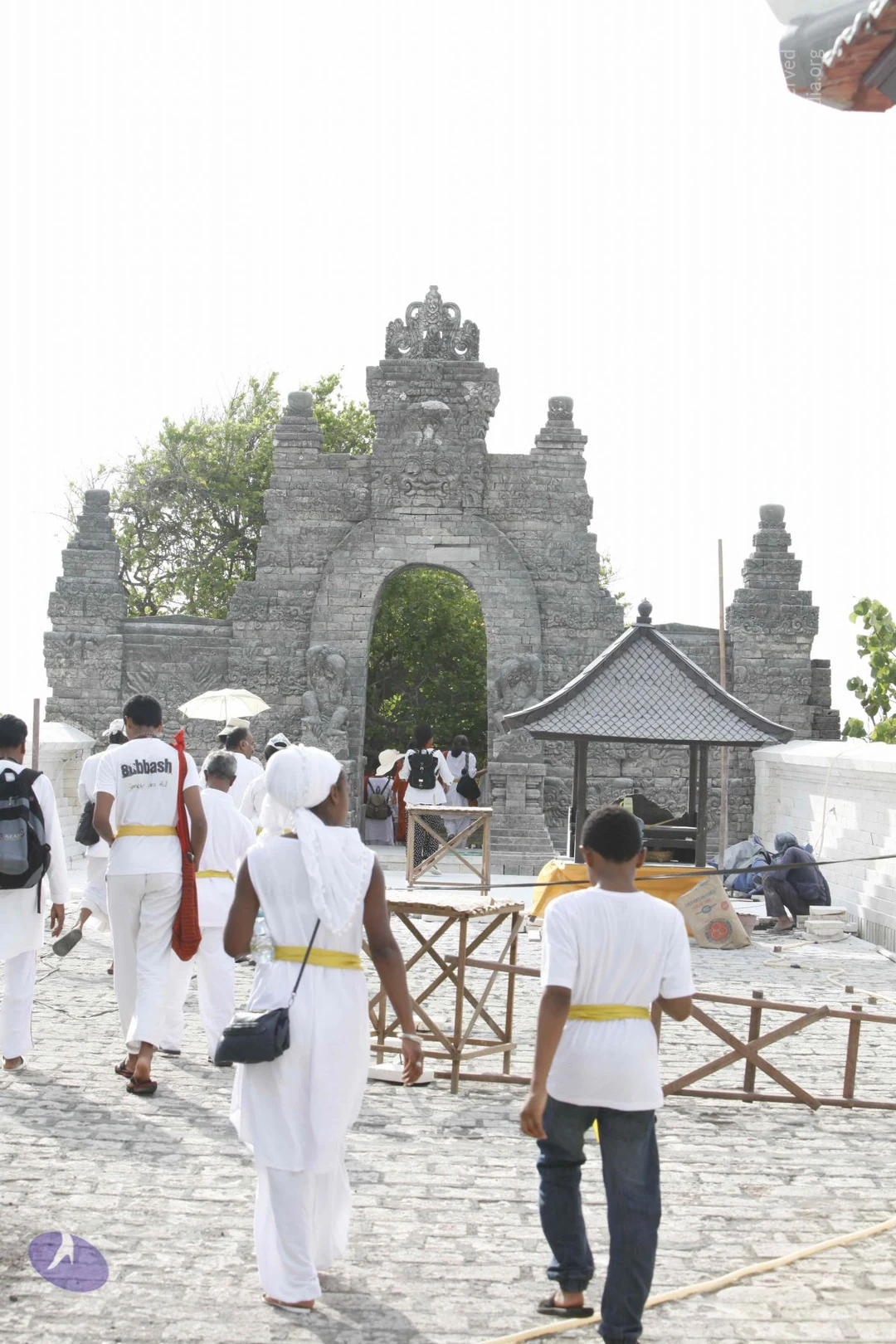
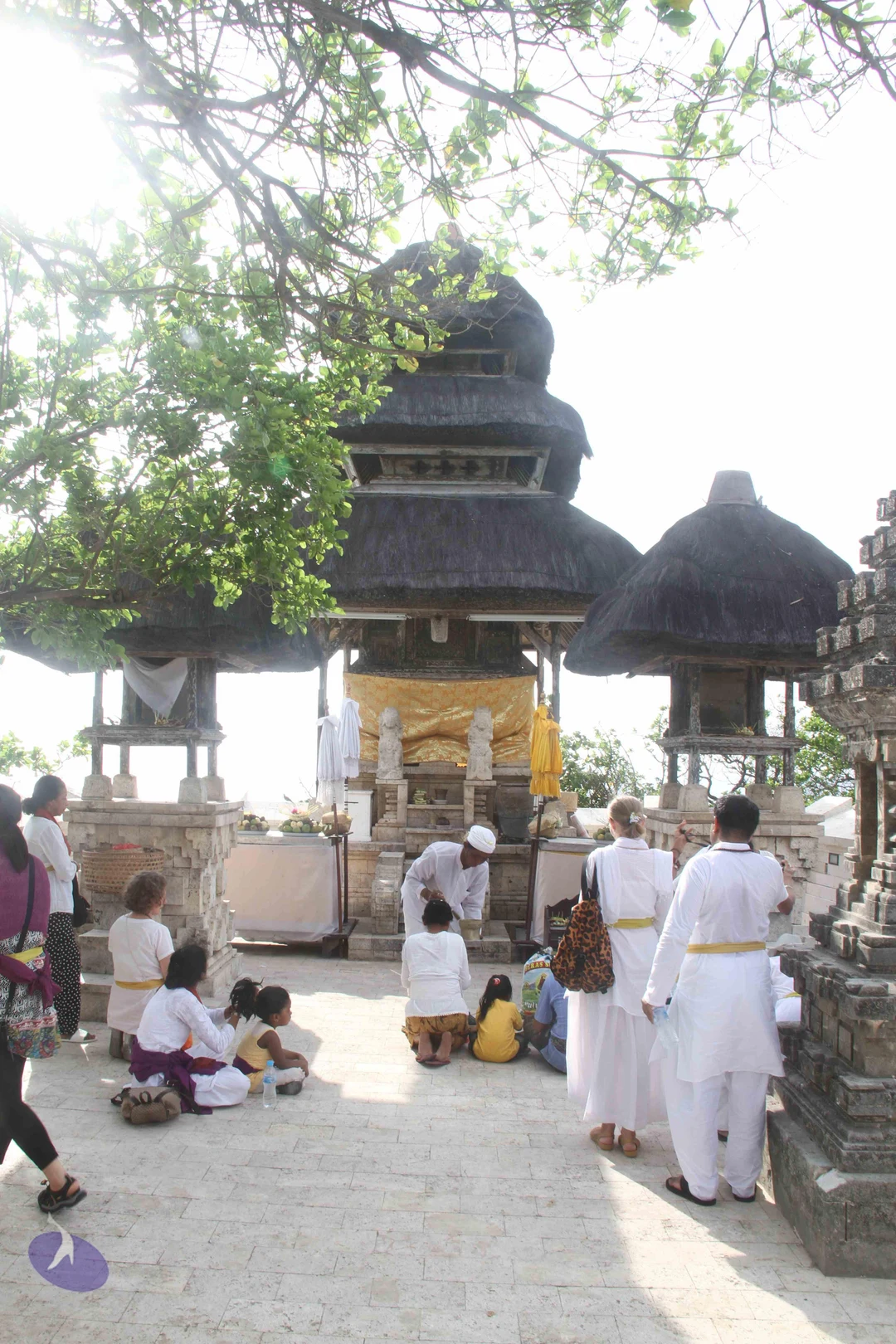
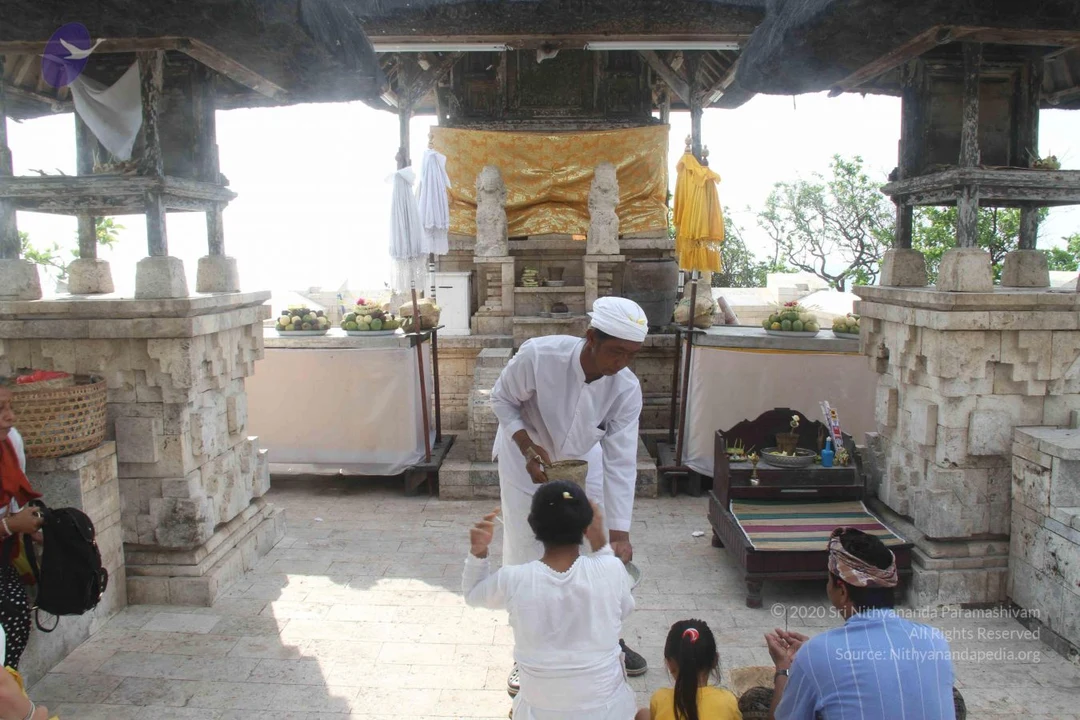
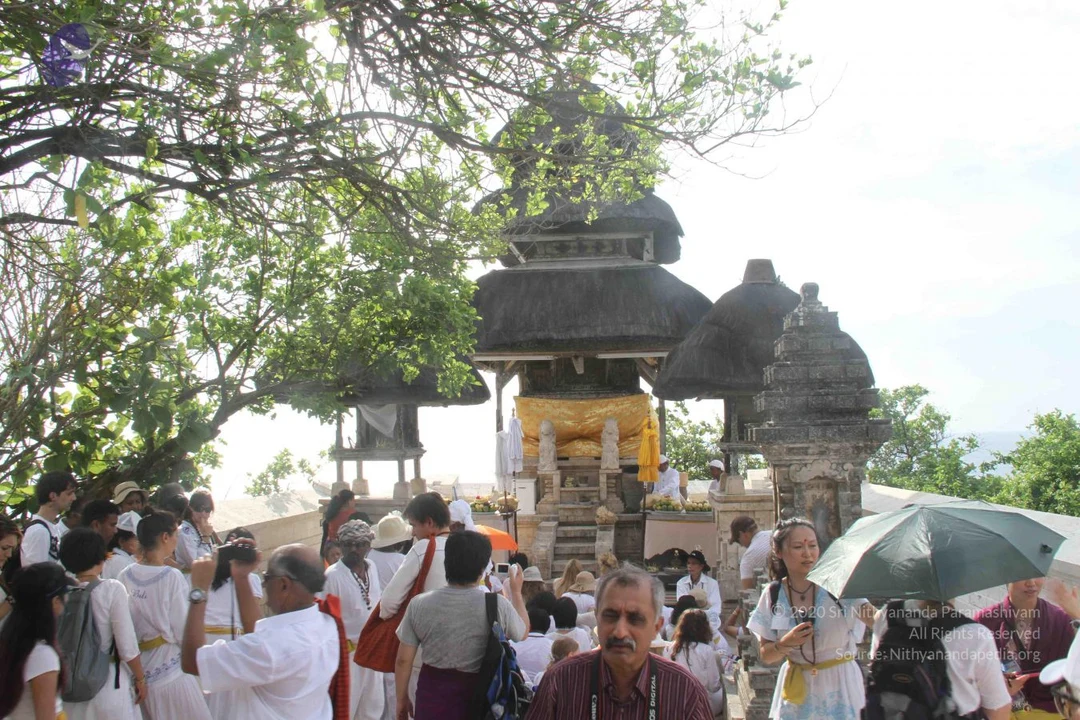
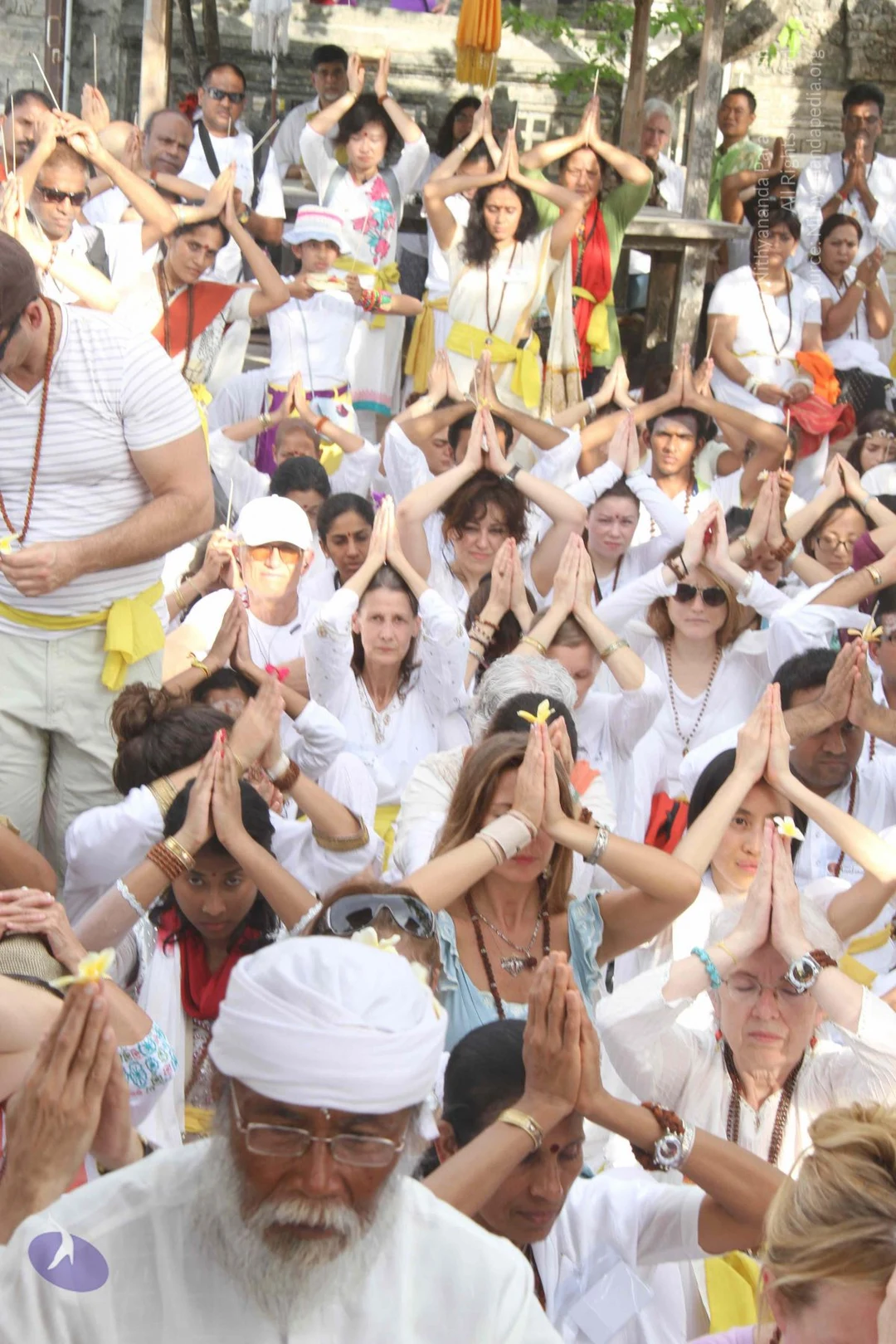
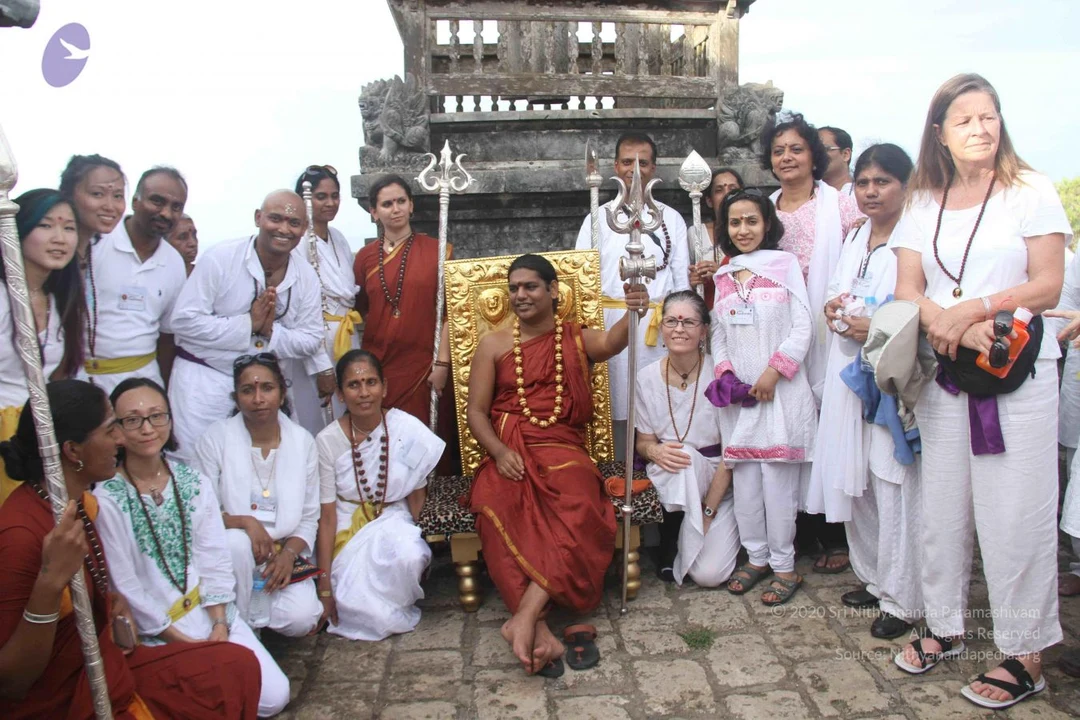
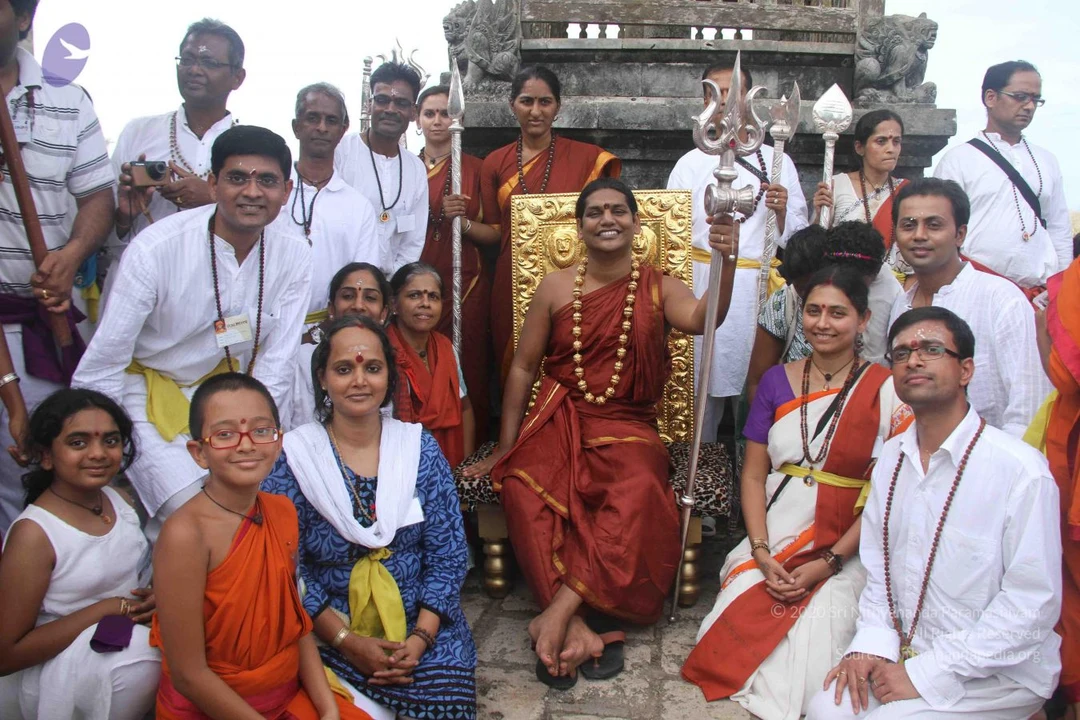
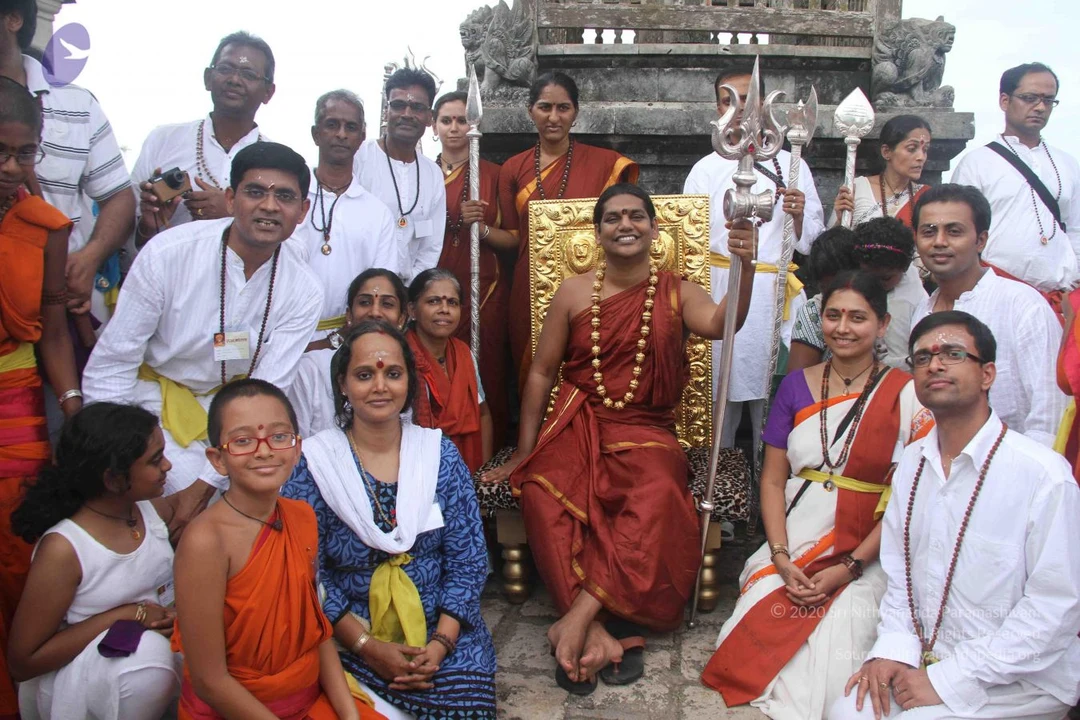
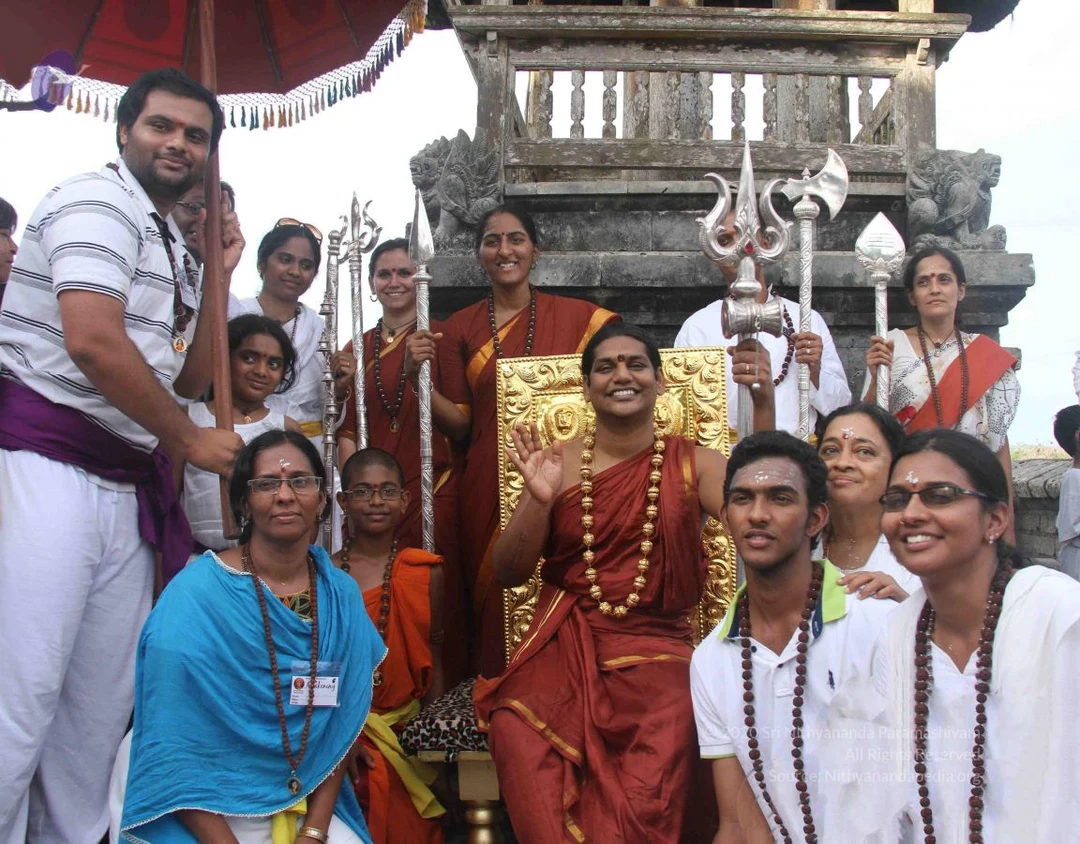
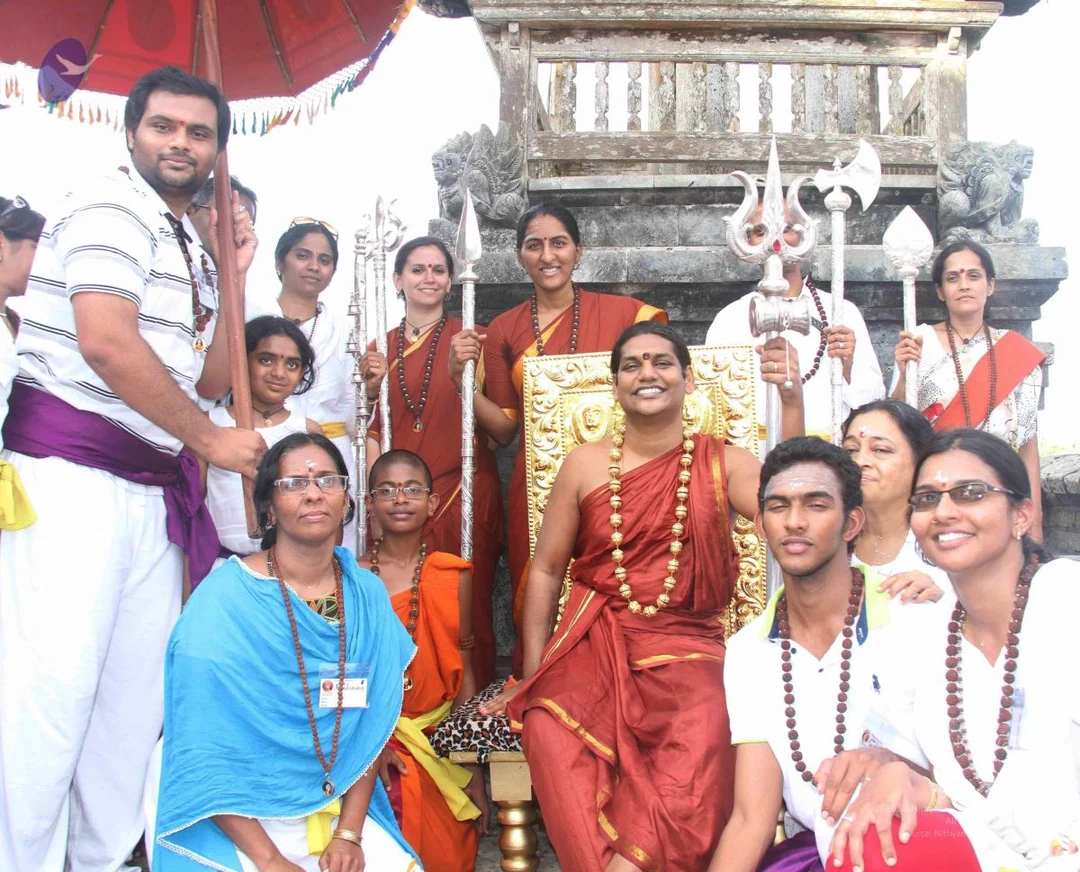
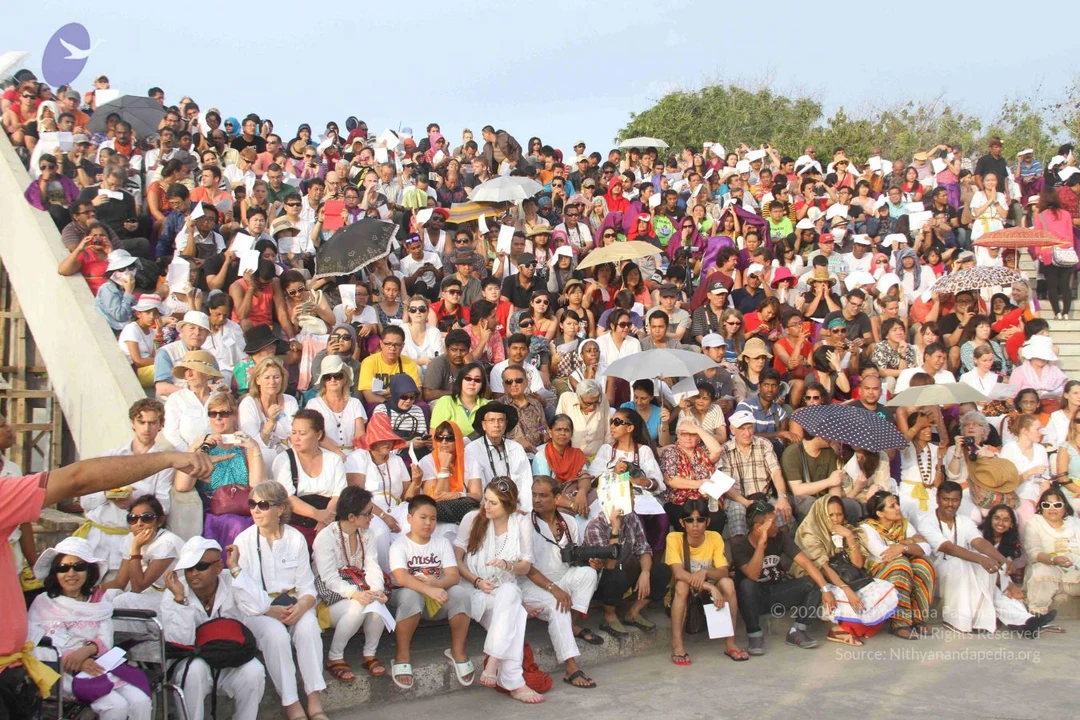
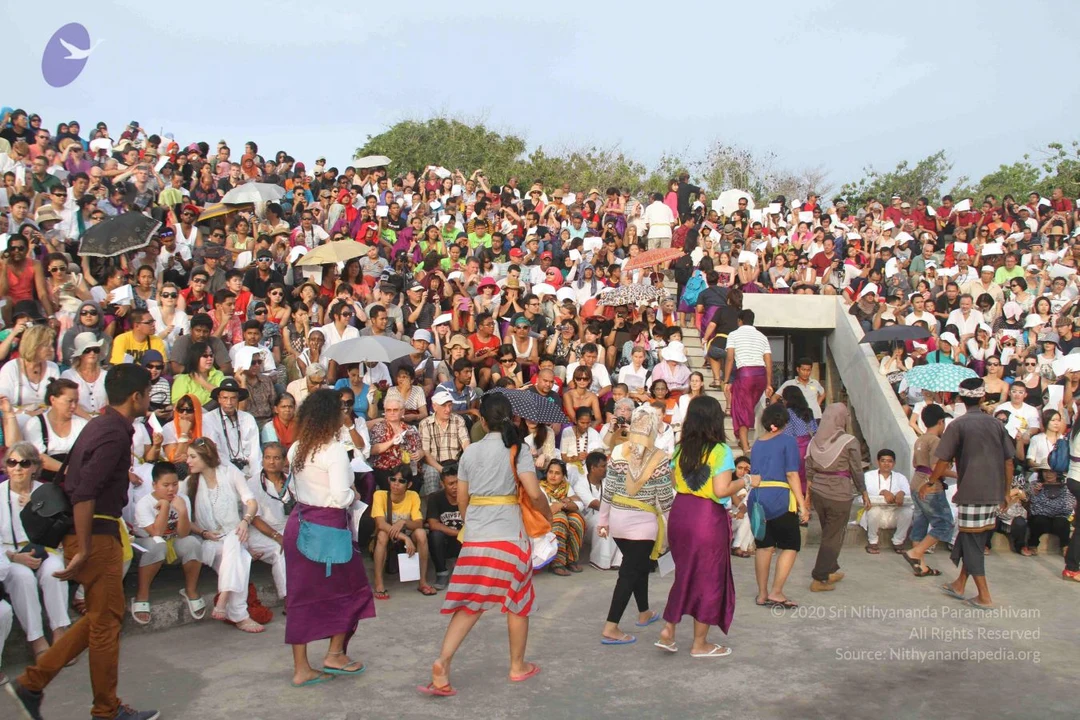
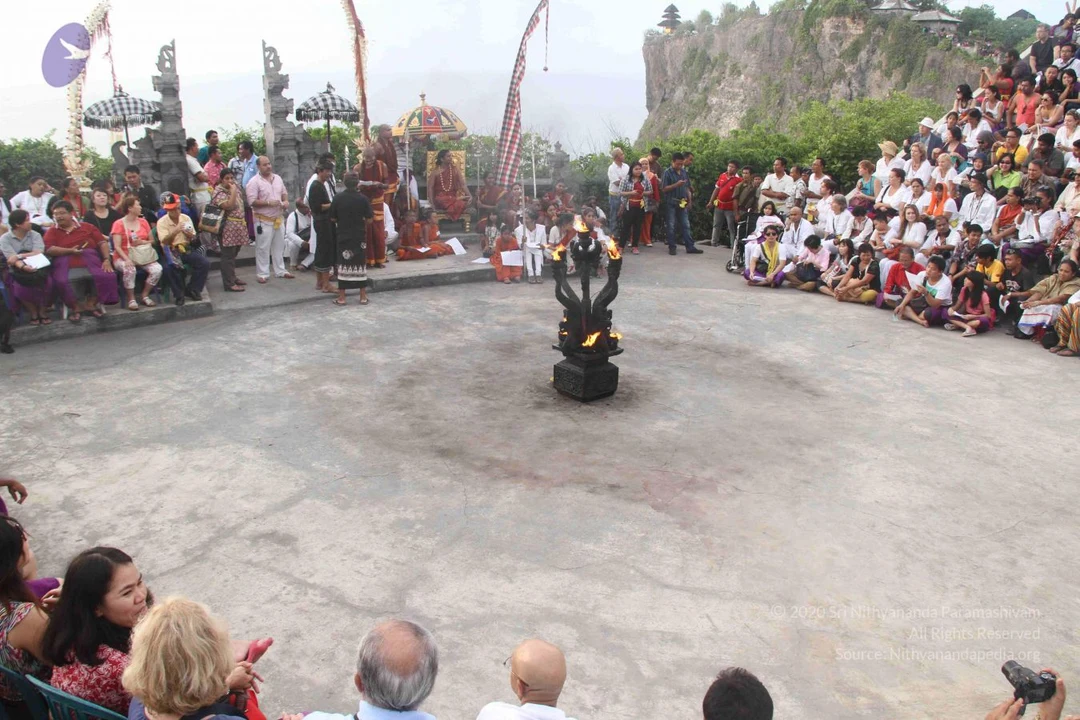
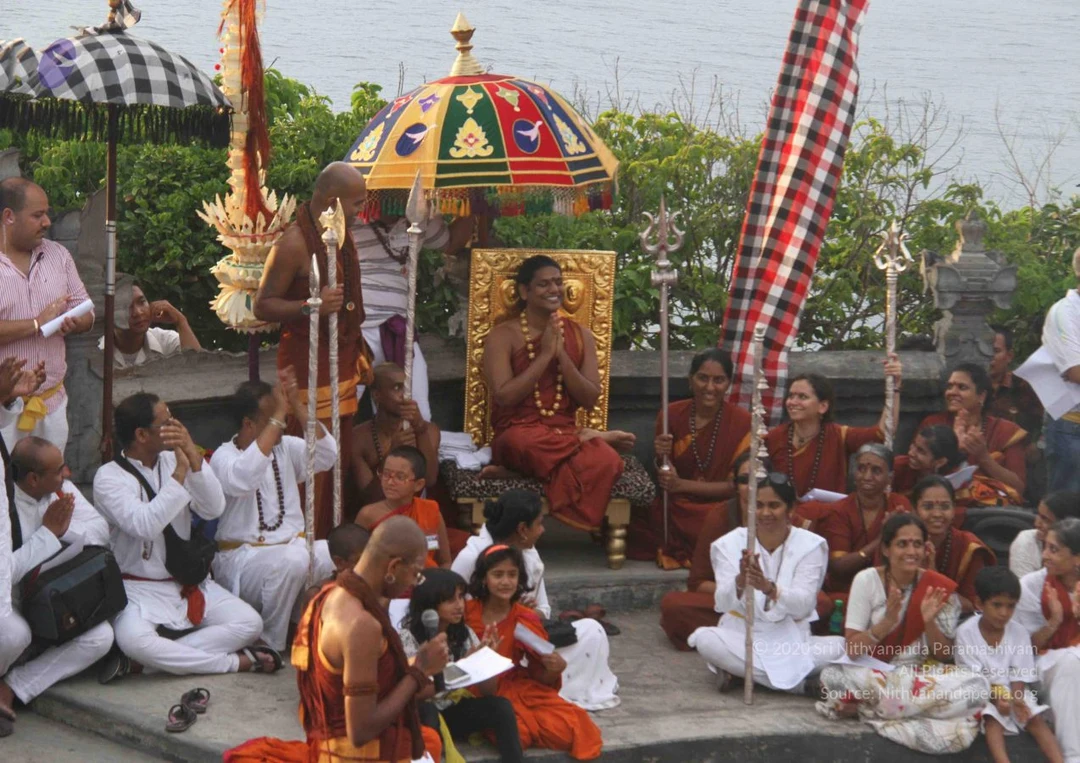
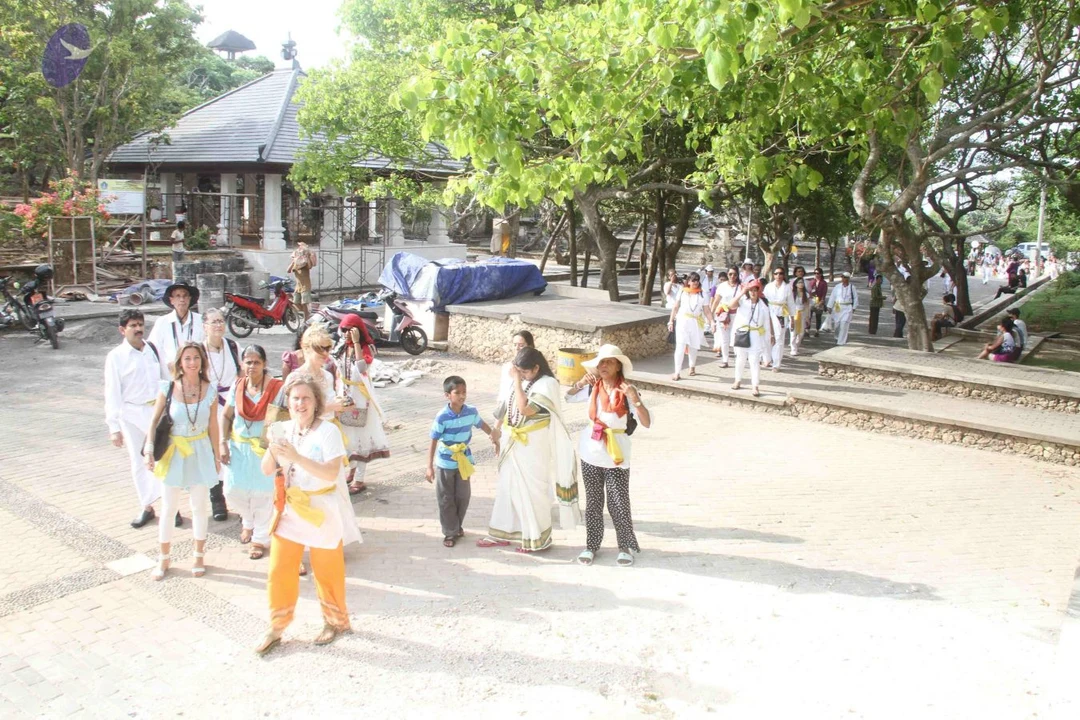
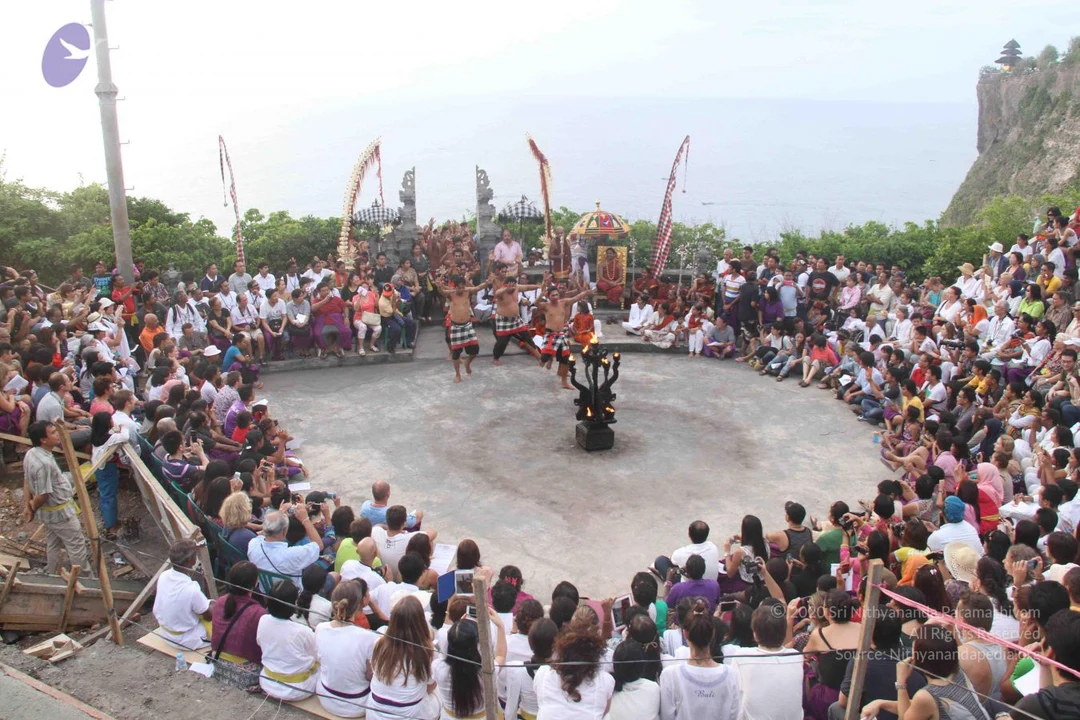
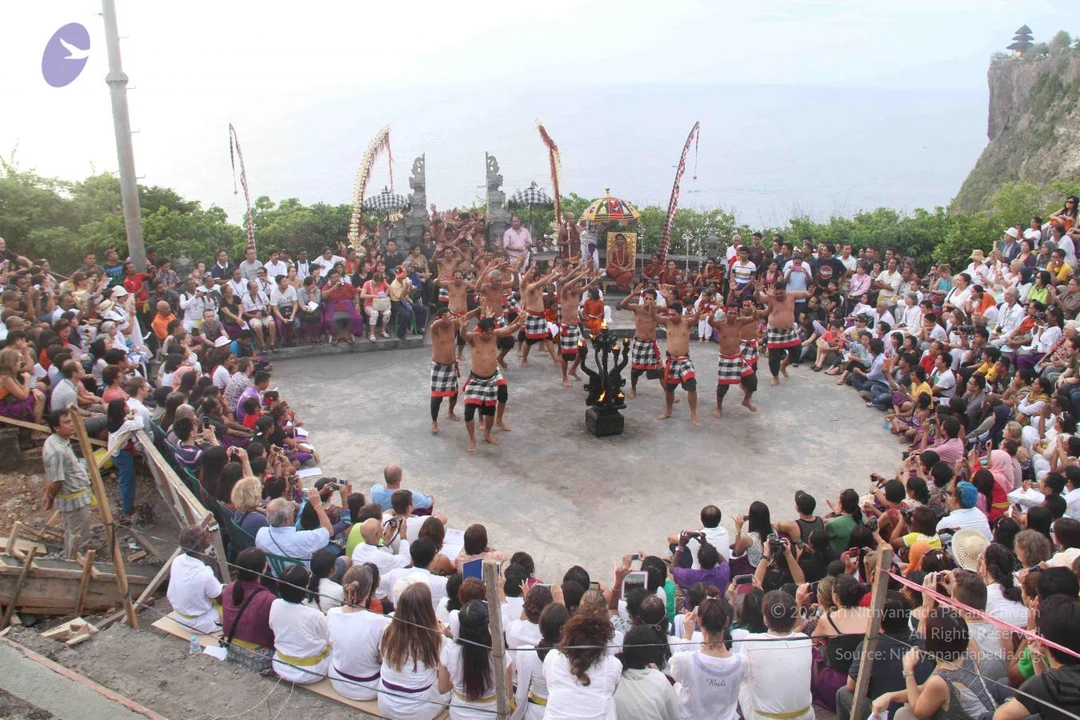
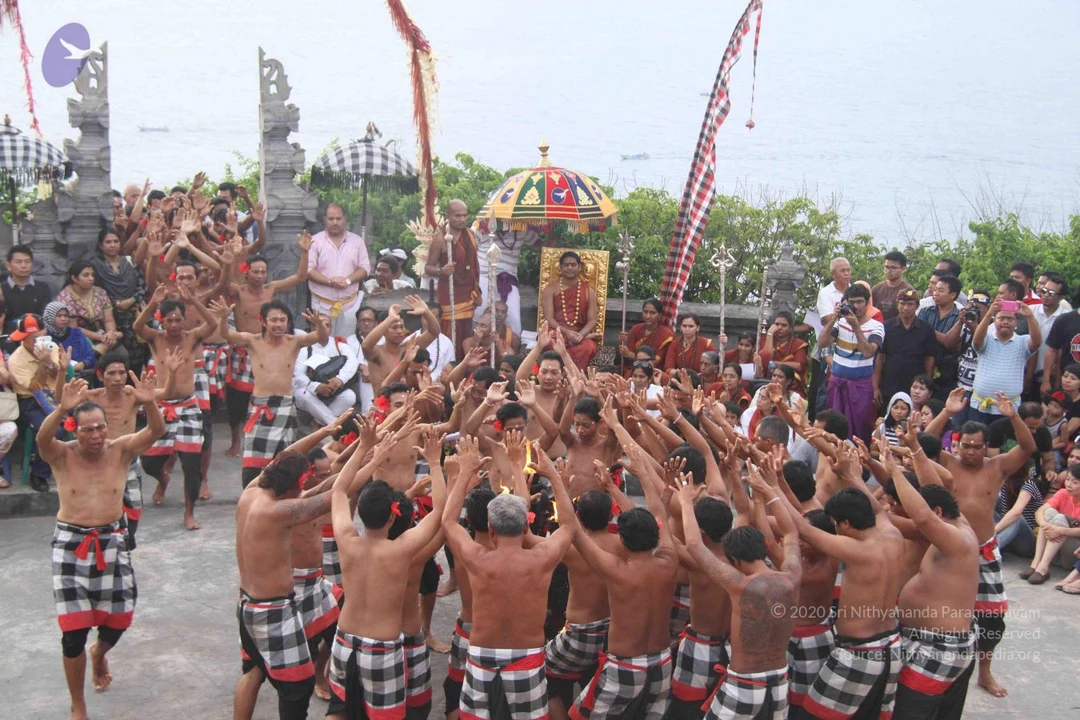
Outdoor photo of a group of devotees walking along a paved courtyard beneath large leafy trees at a temple-style complex with a tiled-roof pavilion on the left. Many participants wear white clothing with yellow sashes or yellow waist cloths, and some wear orange or saffron scarves. In the foreground, a woman in an orange top and orange trousers holds a small item, while nearby a woman in a white sari with yellow border and a woman in a sun hat walk beside a young boy in a blue striped shirt. A woman in white carries a brass kalasha-like pot. Behind them, more white-clad participants walk down stone steps, some carrying items and offerings, and a few people sit on a bench to the right. Motorbikes and a blue tarpaulin are visible near the pavilion.A group of devotees walks along a paved path under shade trees at an outdoor temple complex. Most wear white clothing with yellow sashes and yellow waist cloths, and several women wear saffron or orange shawls. A woman in the foreground with a long light-blue dress and yellow sash holds a white phone up to take a photo, while a woman in a wide-brimmed white hat and striped orange-and-white scarf walks in the middle. A small boy in a blue-and-white striped shirt walks among them. Behind them, a tiled pavilion roof, parked motorbikes and a blue tarpaulin sit beside stone steps, with a larger line of white-clad people further back.A group of devotees walks along a paved path beneath leafy trees at a temple complex, with a grey-roofed pavilion behind them. Most wear white clothing with yellow sashes or waist cloths, and several women wear red or orange shawls. A woman in the foreground wearing a white top and yellow sash holds up a phone to take a photo. A woman in a white sari with a yellow border and a woman in a wide-brimmed white hat walk among others, and a young boy in a blue shirt and yellow sash walks beside them. Scooters, a blue tarpaulin and a small wooden structure sit at the left edge.A photograph of a large group walking along a paved path beneath leafy trees outside a small roofed pavilion with a grey tiled roof. Many people wear white clothes with yellow sashes or yellow cloths, and several women wear white saris with yellow borders, a woman in a wide-brimmed straw hat, and others in red shawls or orange scarves. A young boy in a blue shirt walks in the middle, and a woman in the lower left smiles while holding a phone. Parked motorbikes and a blue tarpaulin sit to the left, with steps and more devotees visible in the background.A large group of devotees walks along a paved path under shady trees at a temple complex in Bali. Most wear white kurta-style clothes or white saris with yellow sashes and orange-red shawls, and several women wear rudraksha-style beaded necklaces. A man at left in white with a dark hat gestures, and a small boy in a blue striped shirt walks among them. Behind them a traditional pavilion with a tiled roof, a blue tarpaulin and parked motorbikes are visible, with more people in white further along the path. No individual is identifiable as a person in this crowd view.A large crowd of devotees walks outdoors along a paved path beneath trees, some holding umbrellas in pink, red, and floral patterns for shade. Most wear white clothing with yellow sashes or waist ties, and several women wear white saris with yellow borders. Many have sunglasses, sun hats, and white caps, and some carry small bags or wear beaded necklaces and rudraksha-style malas. Ancient stone structures and a blue tarpaulin appear in the background. A young boy in a blue-and-white striped polo shirt with a yellow sash stands at left.
01-SATSANG
19 photosSource gallery
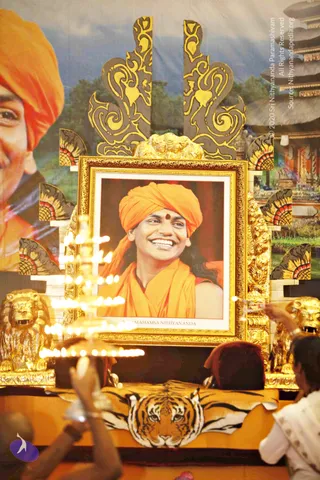
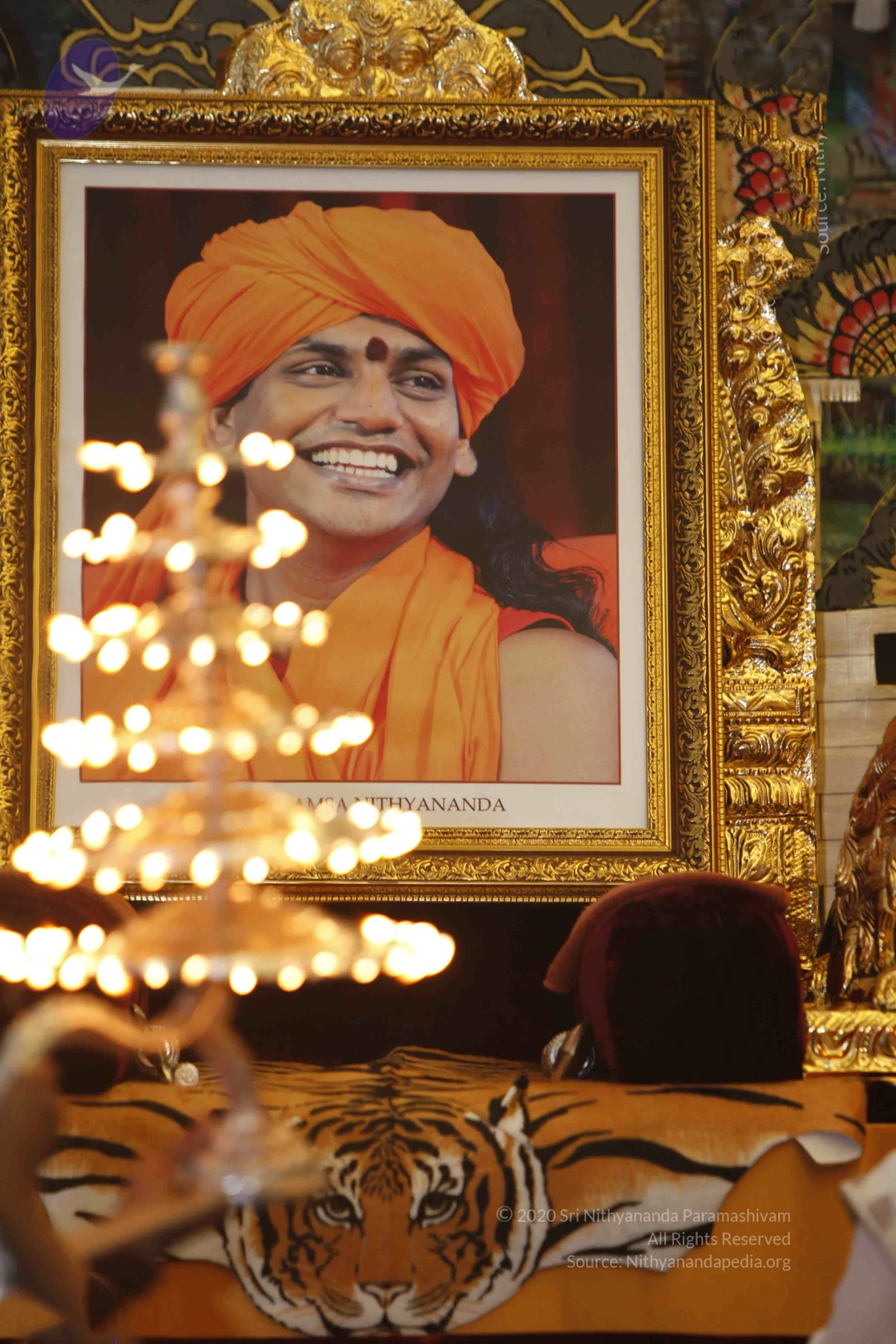
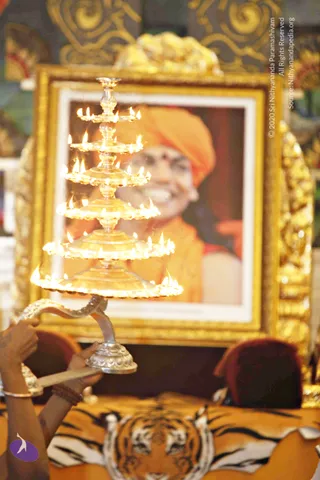
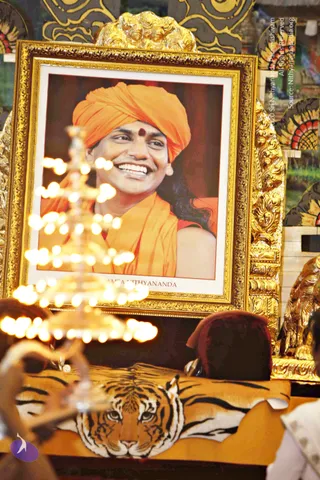
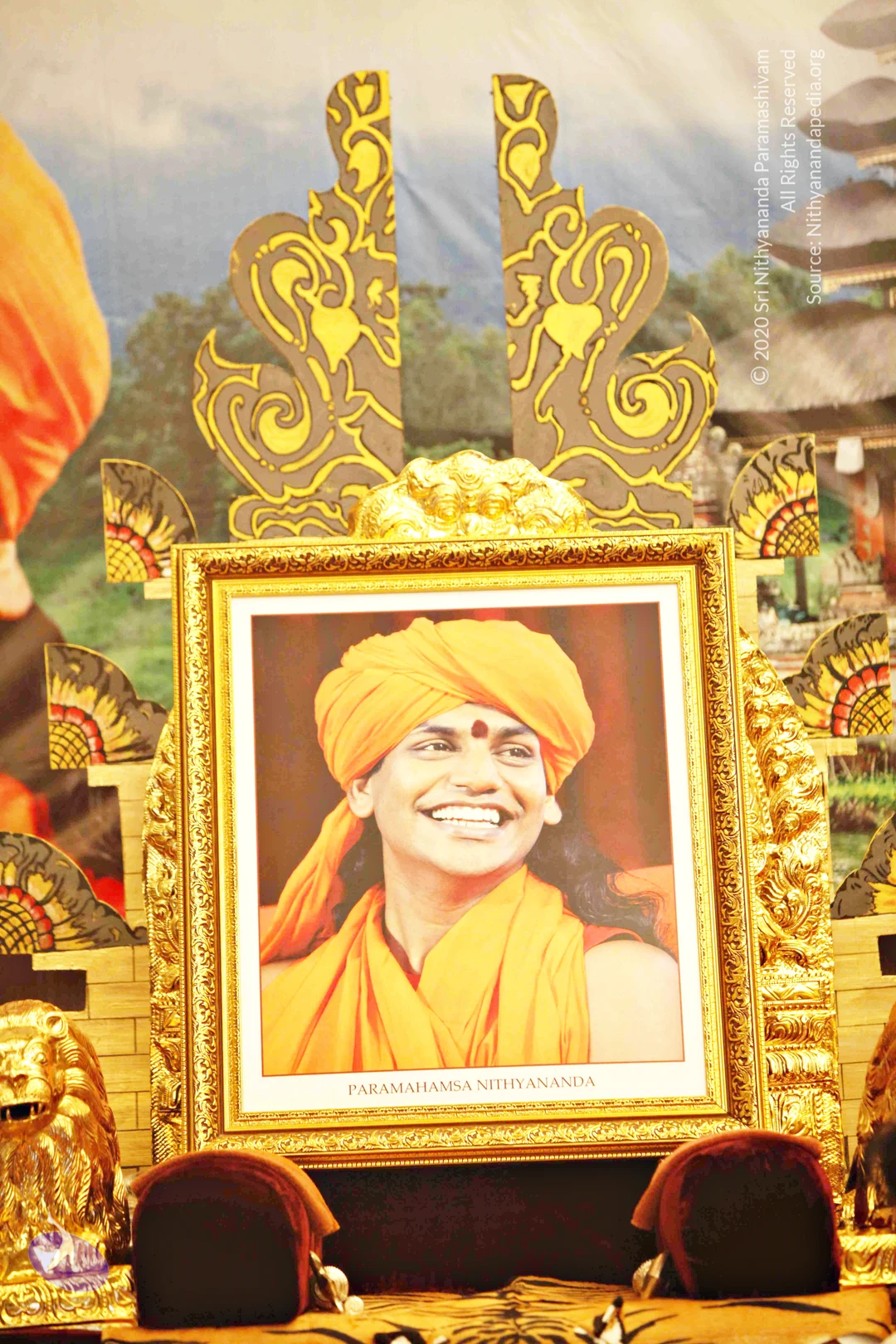
A large gilded picture frame holds a printed portrait of a smiling man in an orange turban with a red bindi and orange robes, labelled "PARAMAHAMSA NITHYANANDA" on the print. The framed portrait sits on a golden ornate stand with carved yellow-and-brown Balinese-style ornaments, flanked by a golden lion figure at left and dark red cushions below. The backdrop shows a painted landscape with temple structures and trees. No physical people are visible; the figure is a printed depiction.A framed portrait of a smiling man in an orange turban, orange shawl and red bindi sits on an ornate gold altar with carved gold-and-black panels. The portrait's caption reads Paramahamsa Nithyananda. Two gold lion statues flank the altar, and a tiger-skin cloth covers the platform. A tall brass lamp with many lit oil lamps stands in front, and a person in white with bangles reaches toward the flames at the lower right. A large orange-turbaned figure is painted on the left backdrop, and a temple-style painting appears on the right. a person appears only as the printed portrait, which is a depiction.A photograph of a multi-tiered silver aarti lamp with many lit oil lamps being held up by a person's hands at the bottom left, with bangles and a red thread bracelet visible. Behind it is a large gilded framed portrait of a smiling figure wearing an orange turban and orange robes with a red bindi; the portrait is labelled as a depiction of a swami and sits above a tiger-striped orange cloth on a table. A second person's reddish head appears in the background. The lamp flames dominate the centre of the frame.A large framed portrait labelled "Paramahamsa Nithyananda" with an ornate gold frame stands on a stage behind a lit brass lamp. The portrait shows a smiling man in an orange turban and orange shawl with a red tilak on his forehead and long dark hair. In front, a tiger-skin cloth covers a seat, with a tiger face visible, and a seated person's head and shoulders appear at the lower edge. Golden carved lion statues flank the frame.A standing man in a rust-red turban and rust-red draped robe with gold-striped borders stands on a raised stage before a gilded throne flanked by golden lion statues. He wears layered silver-beaded necklaces, bangles and a red bindi, smiling with palms raised in greeting. Behind him a painted backdrop shows a Balinese-style pagoda and temple. A large portrait of a smiling man in an orange turban appears at the left edge. Swamiji (probable): the standing figure wears a rust-red turban, layered beaded necklaces and ornate ceremonial dress, consistent with his stage presence at the satsang.A smiling man stands on a raised stage in front of an ornate gold throne with a golden lion statue at its right and a tiger-striped rug beneath. He wears an orange-red turban with a gold ornament, an orange-red draped garment with gold borders, a multi-strand silver-and-white beaded necklace, matching beaded armlets and bracelets, and a red bindi. Behind him is a painted backdrop of a Balinese-style temple with pagoda roofs and gold carved panels. a person: the orange-red turban, layered ceremonial beaded necklace and ornate ceremonial stage setting fit the presentation, though the figure stands rather than seated on the throne.