Skip to content
Monday

23 February 2015

5 People You Should NOT Meet Empty-Handed (Upanishads)

Dated photos
406
Source pages
1
Media
4
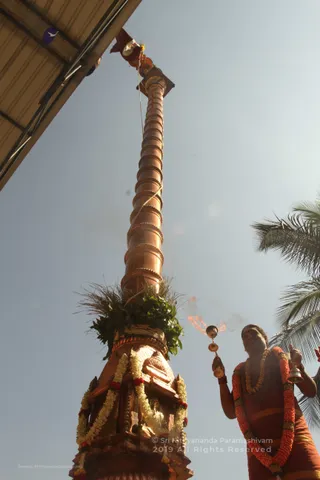
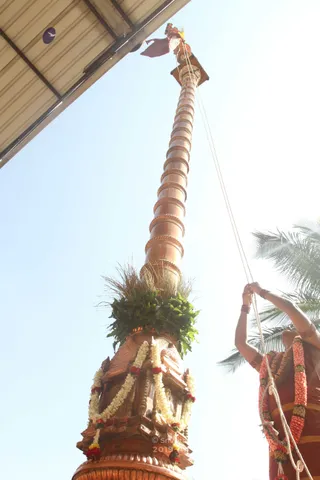
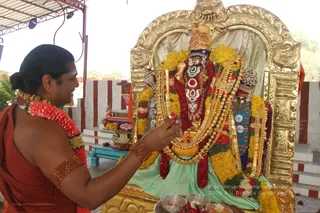
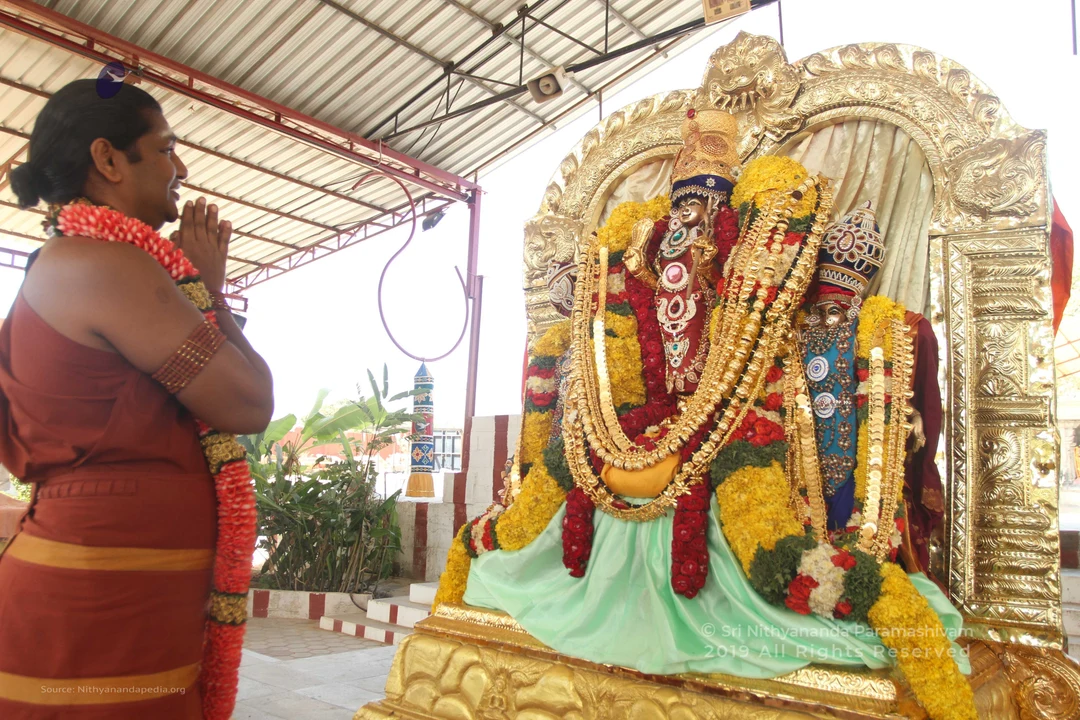
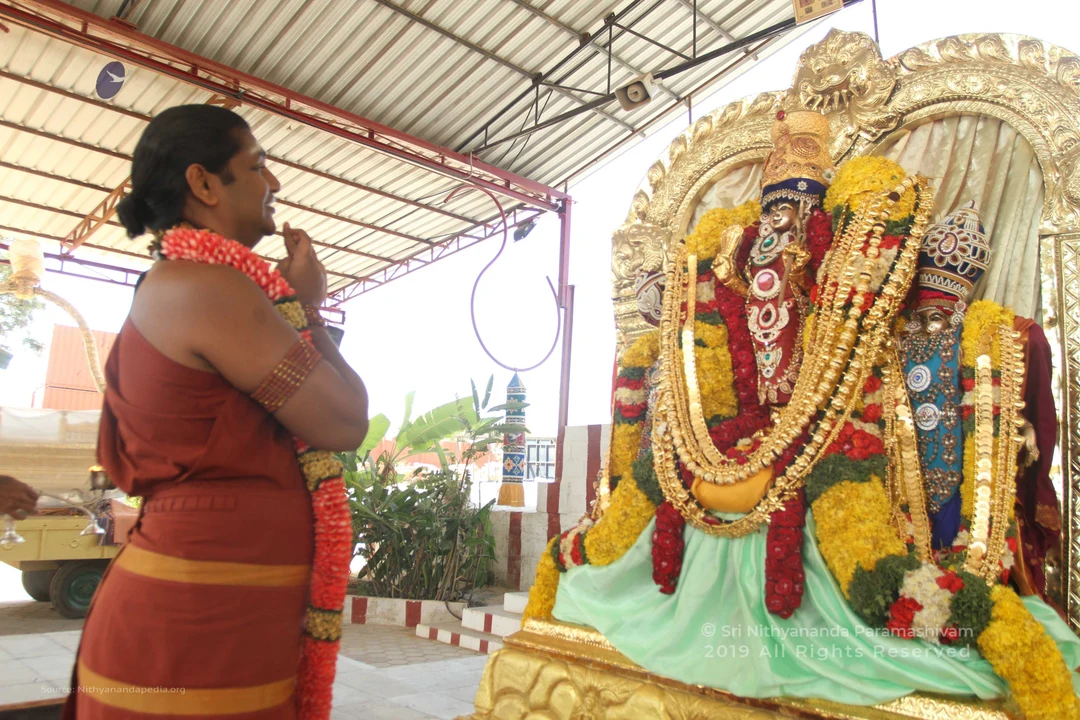
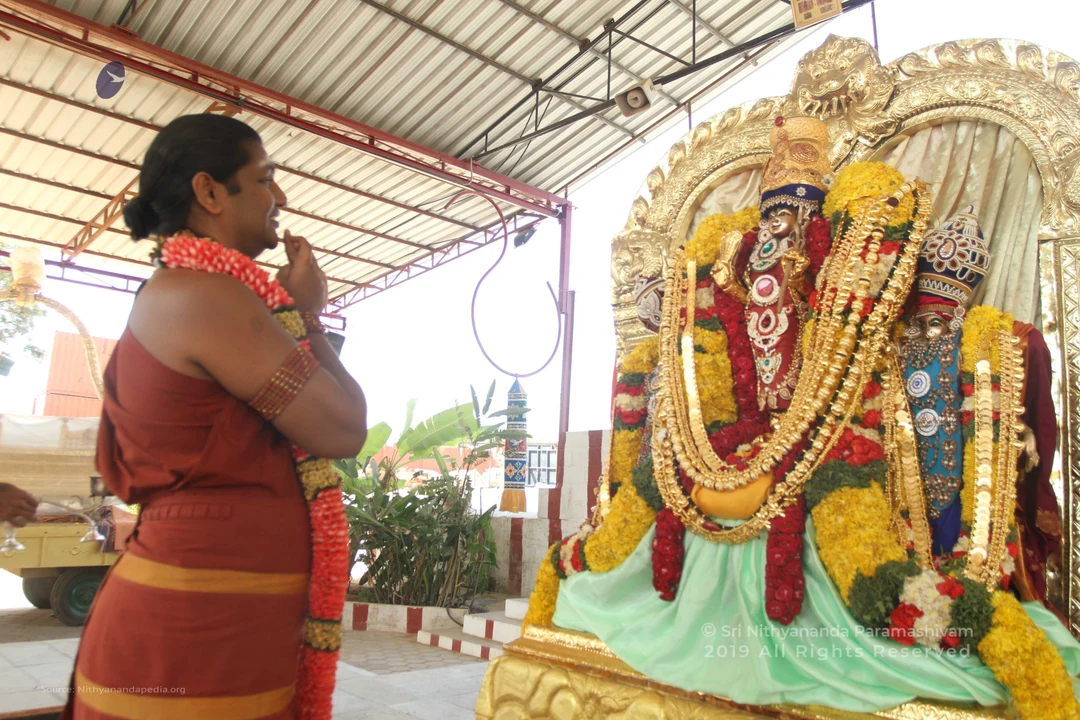
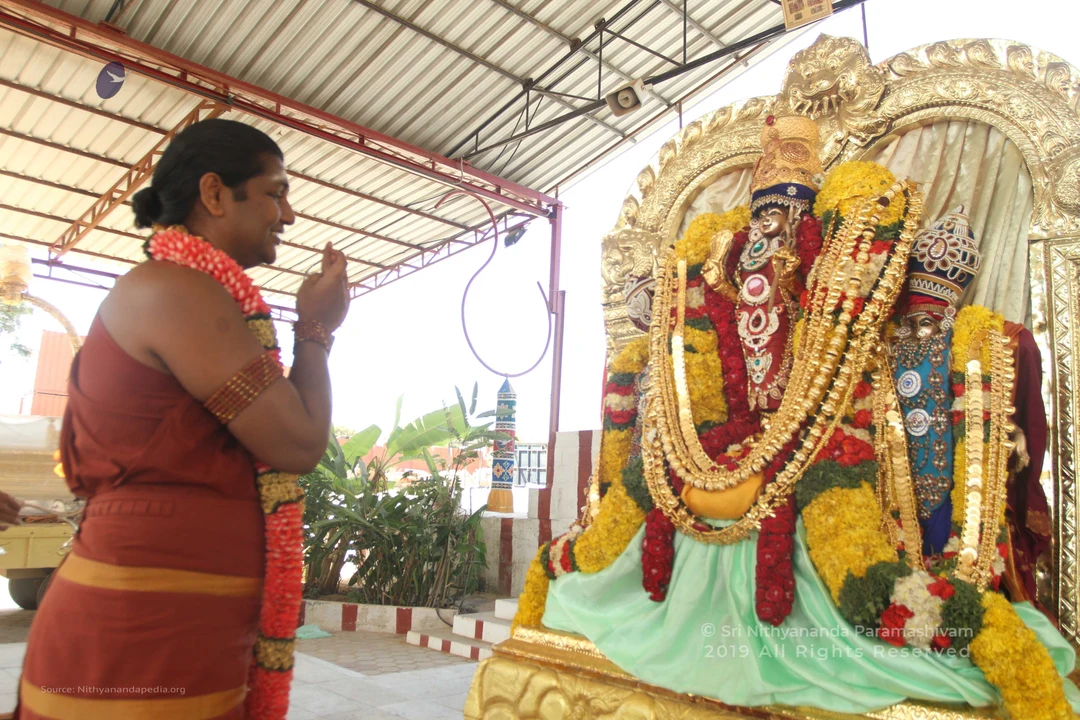
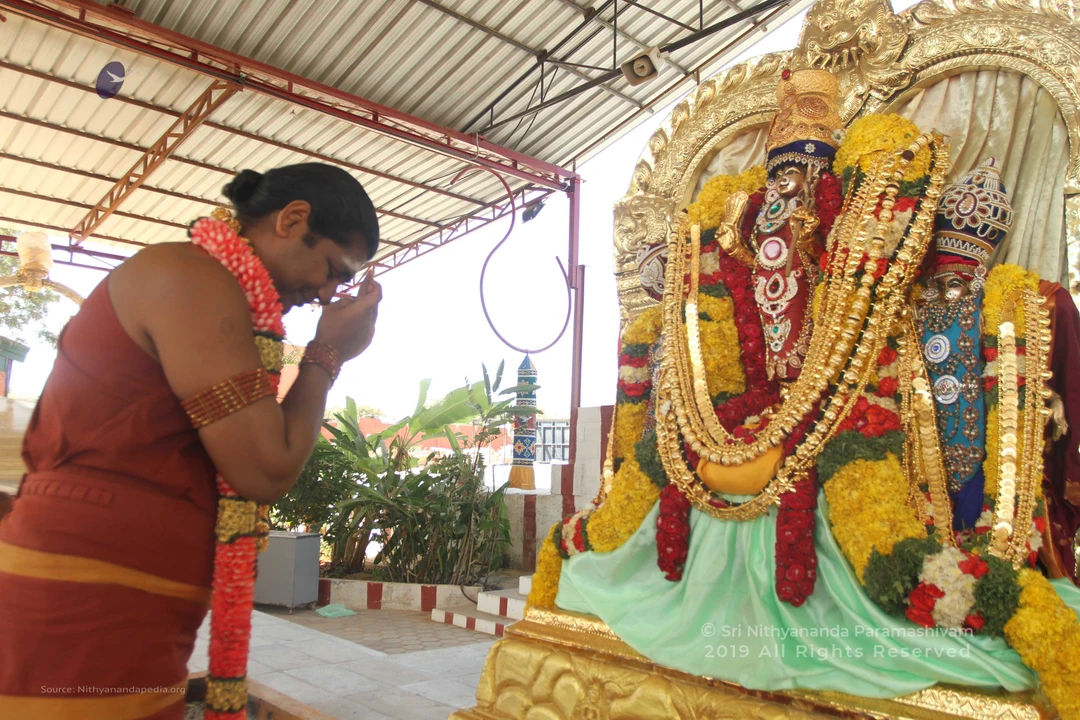
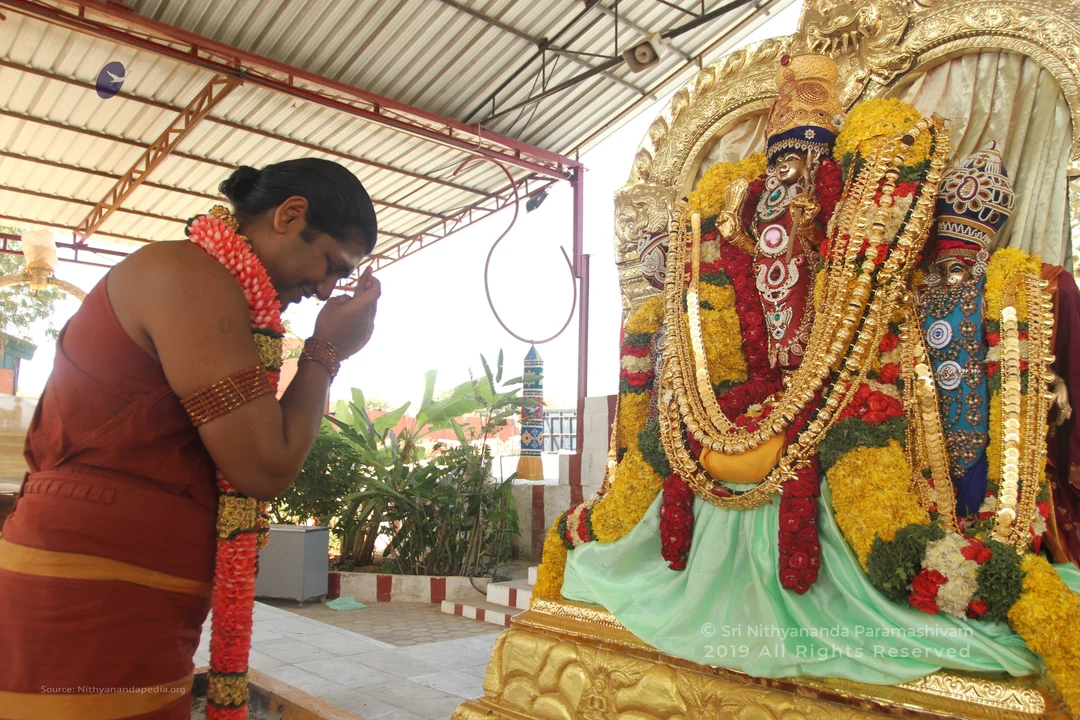
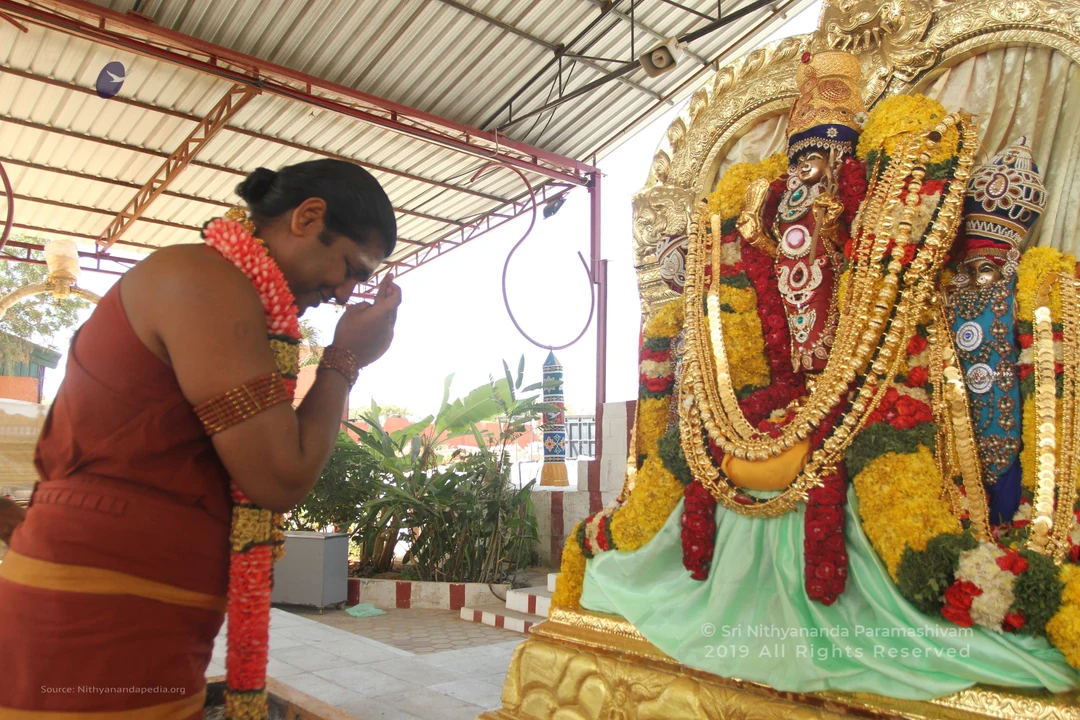
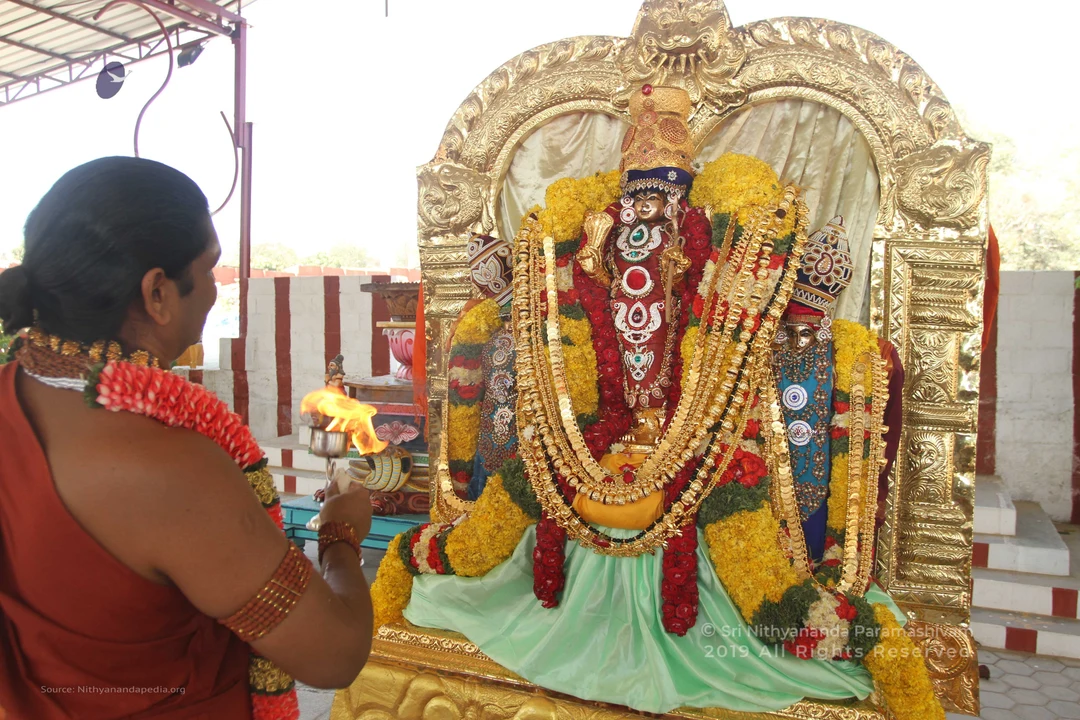
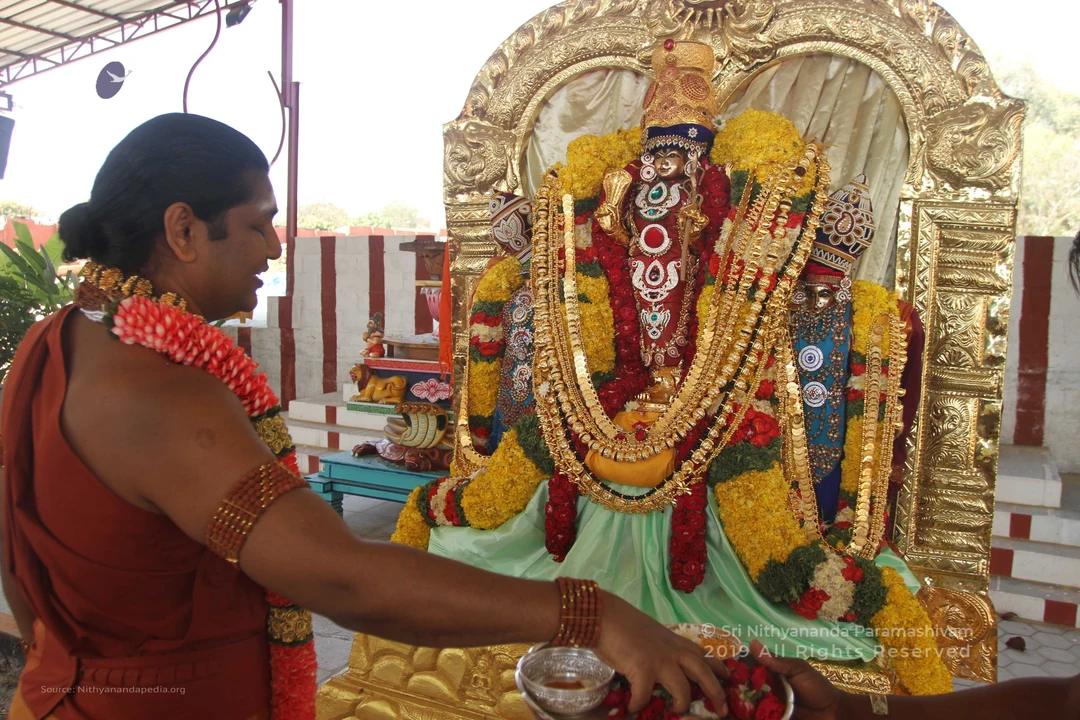
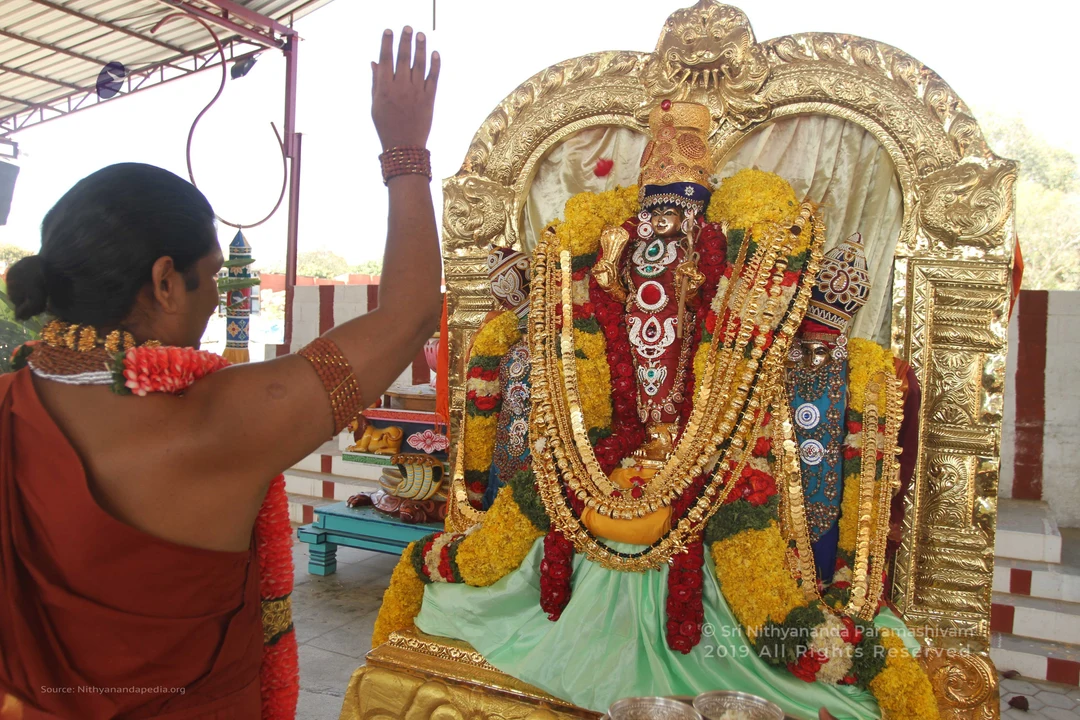
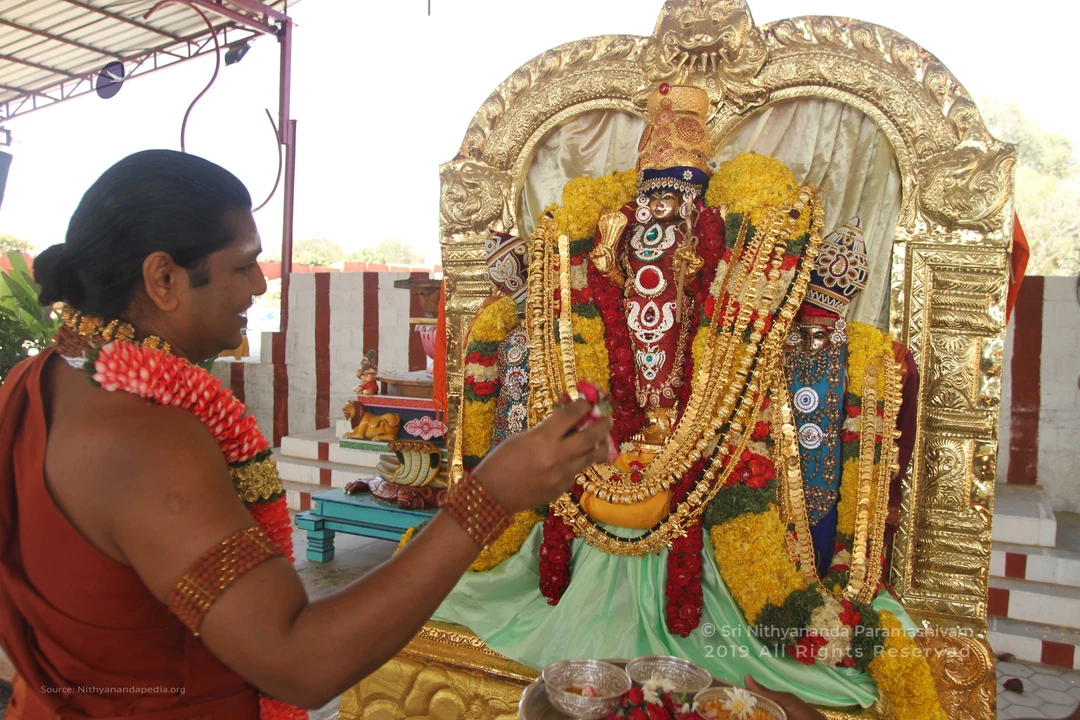
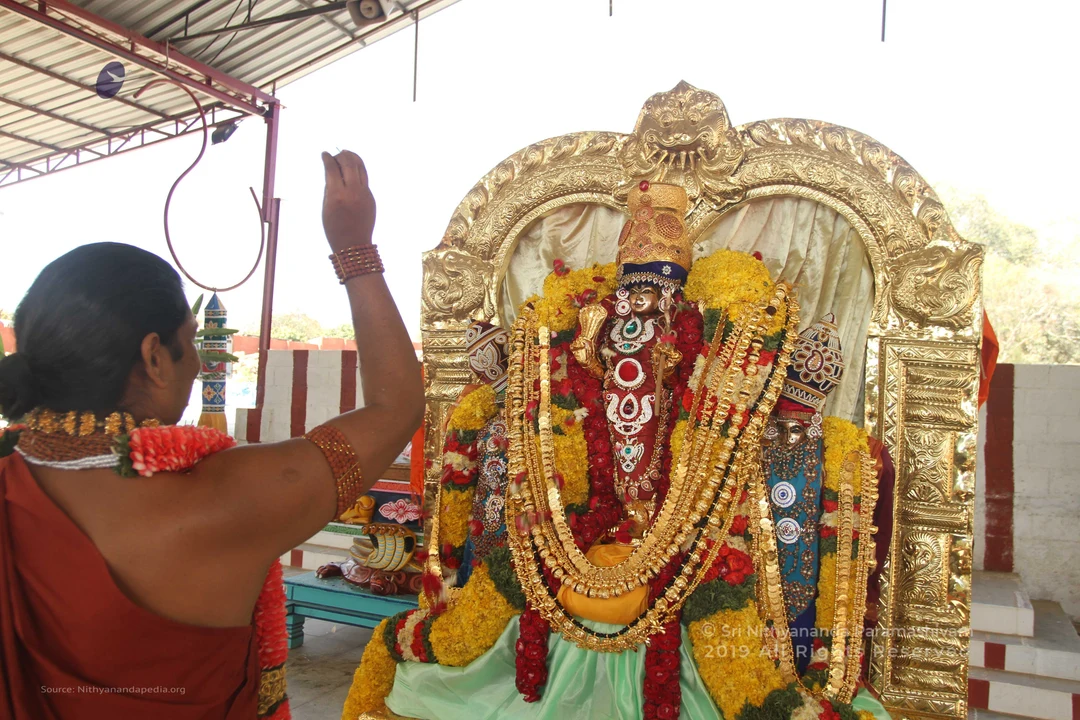
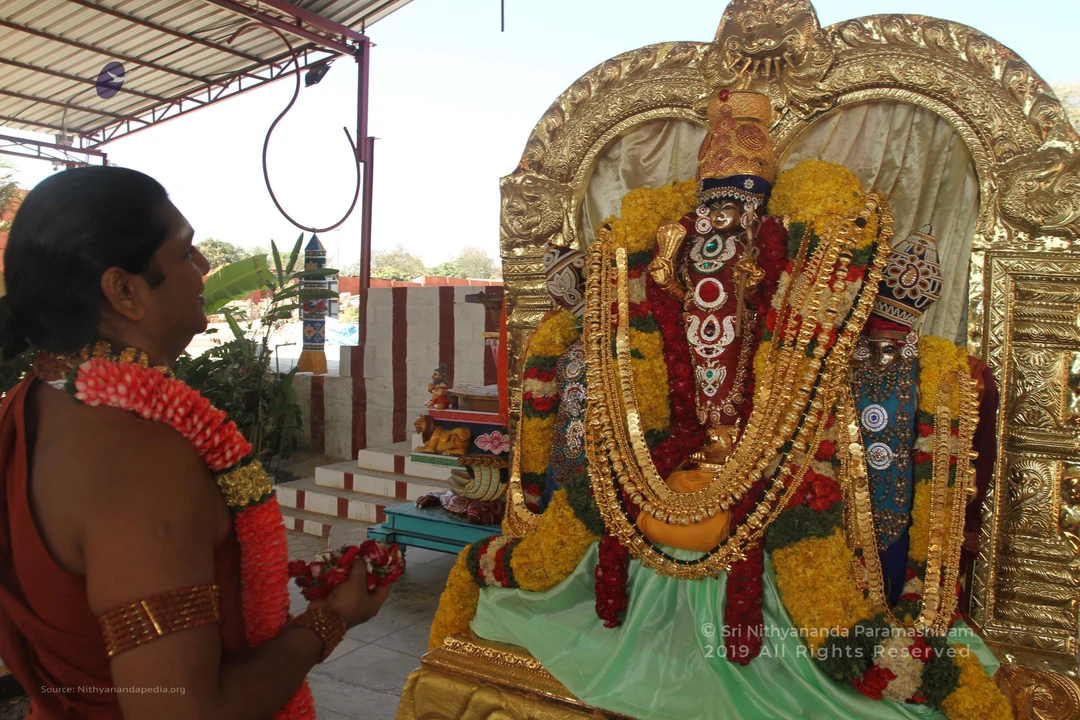
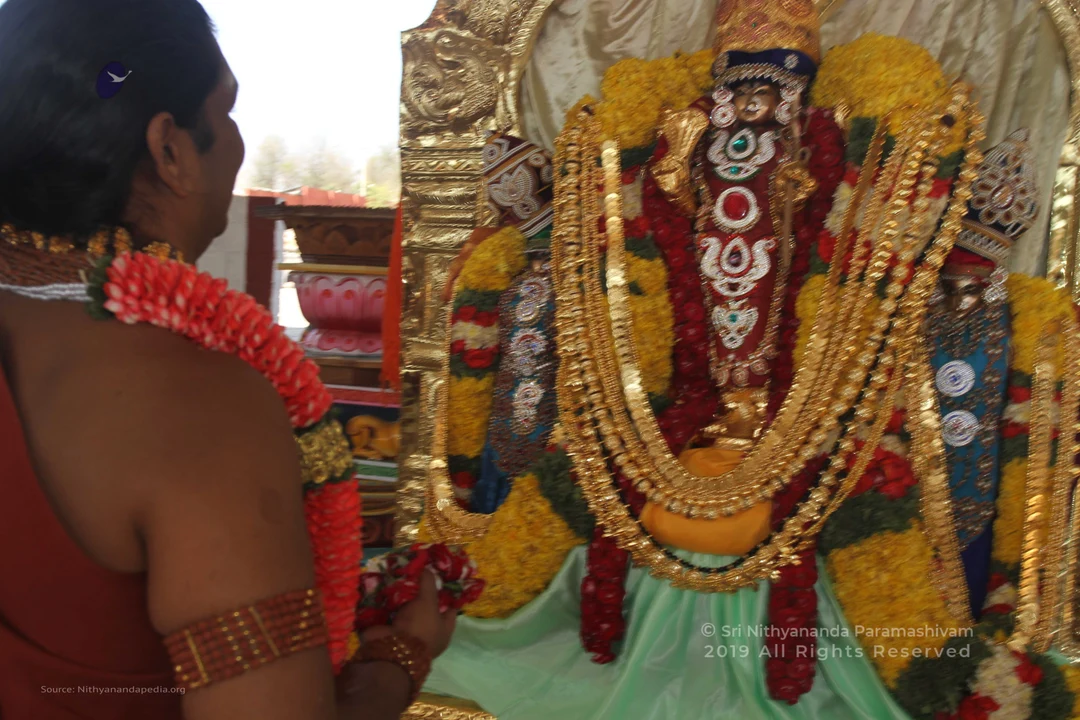
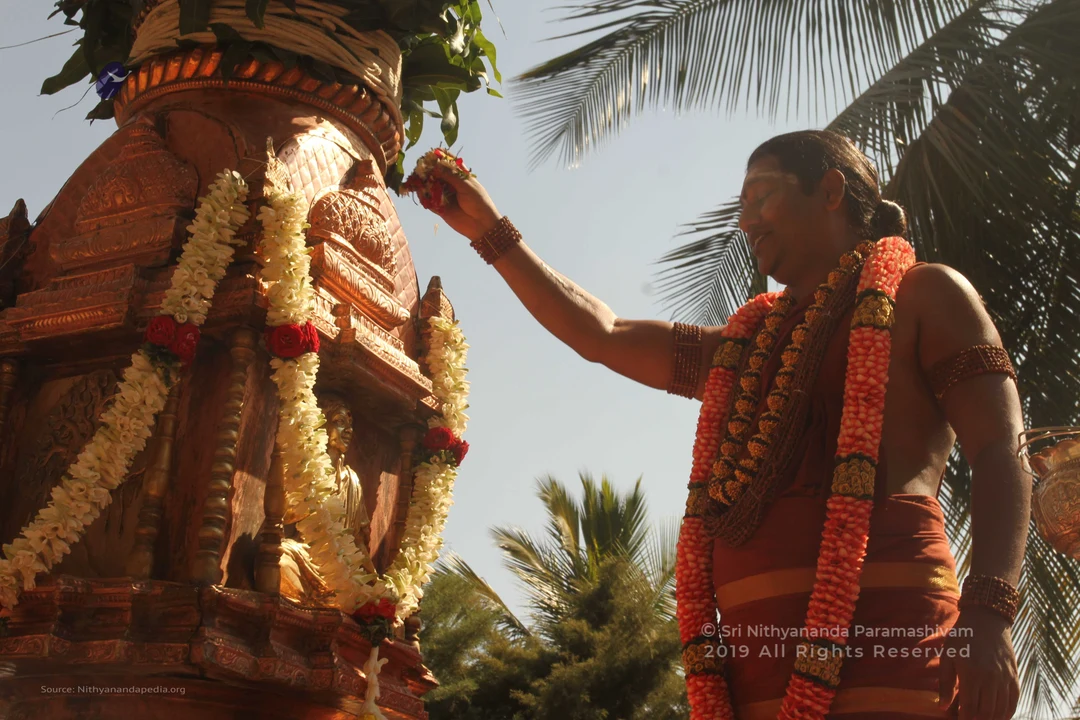
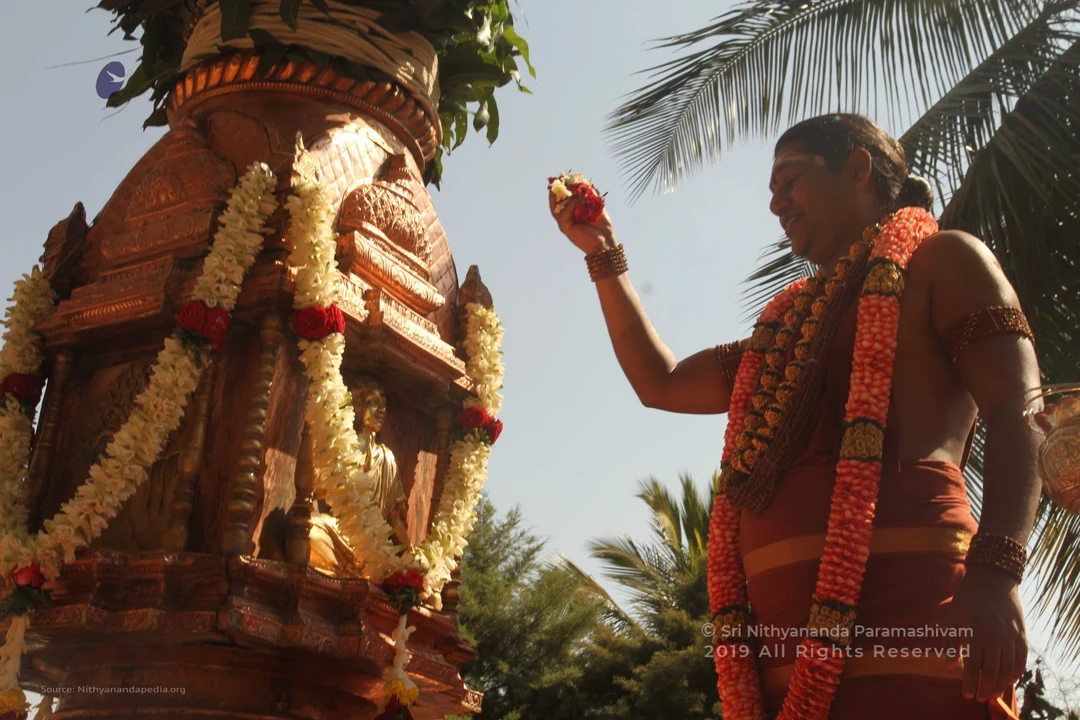
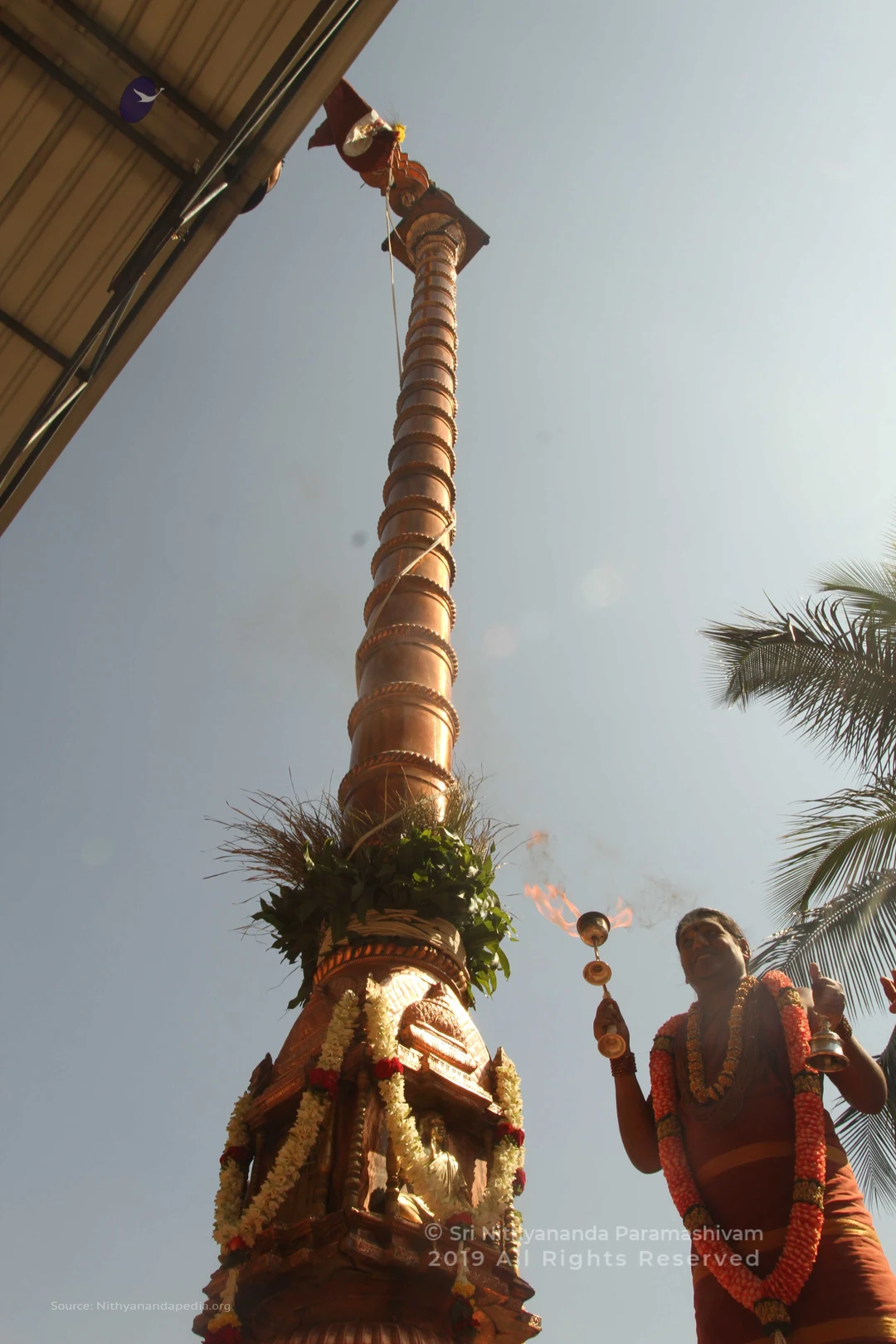
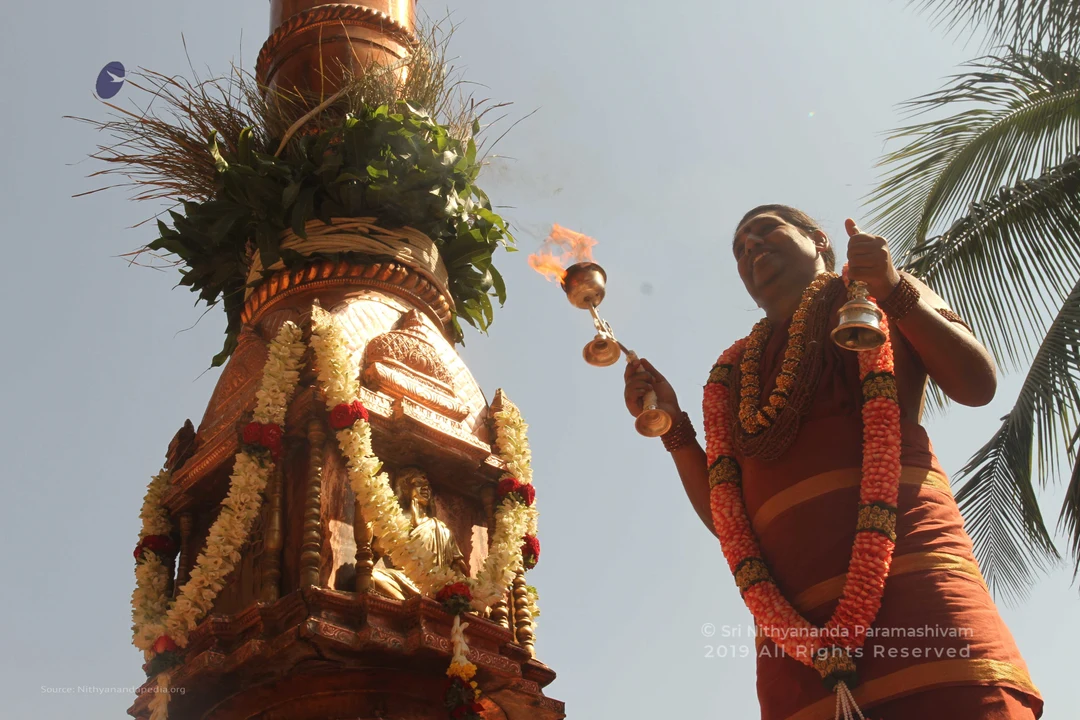
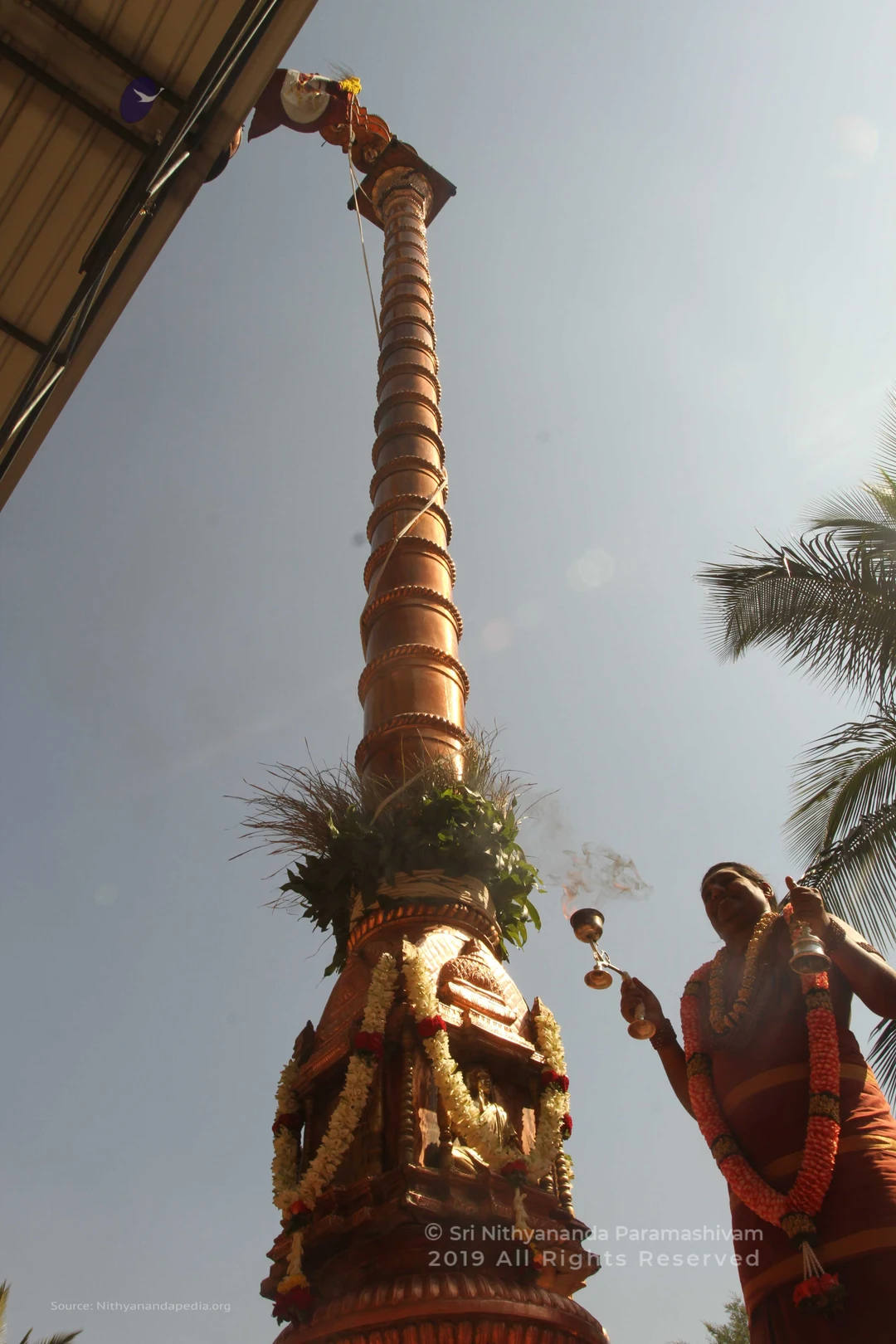
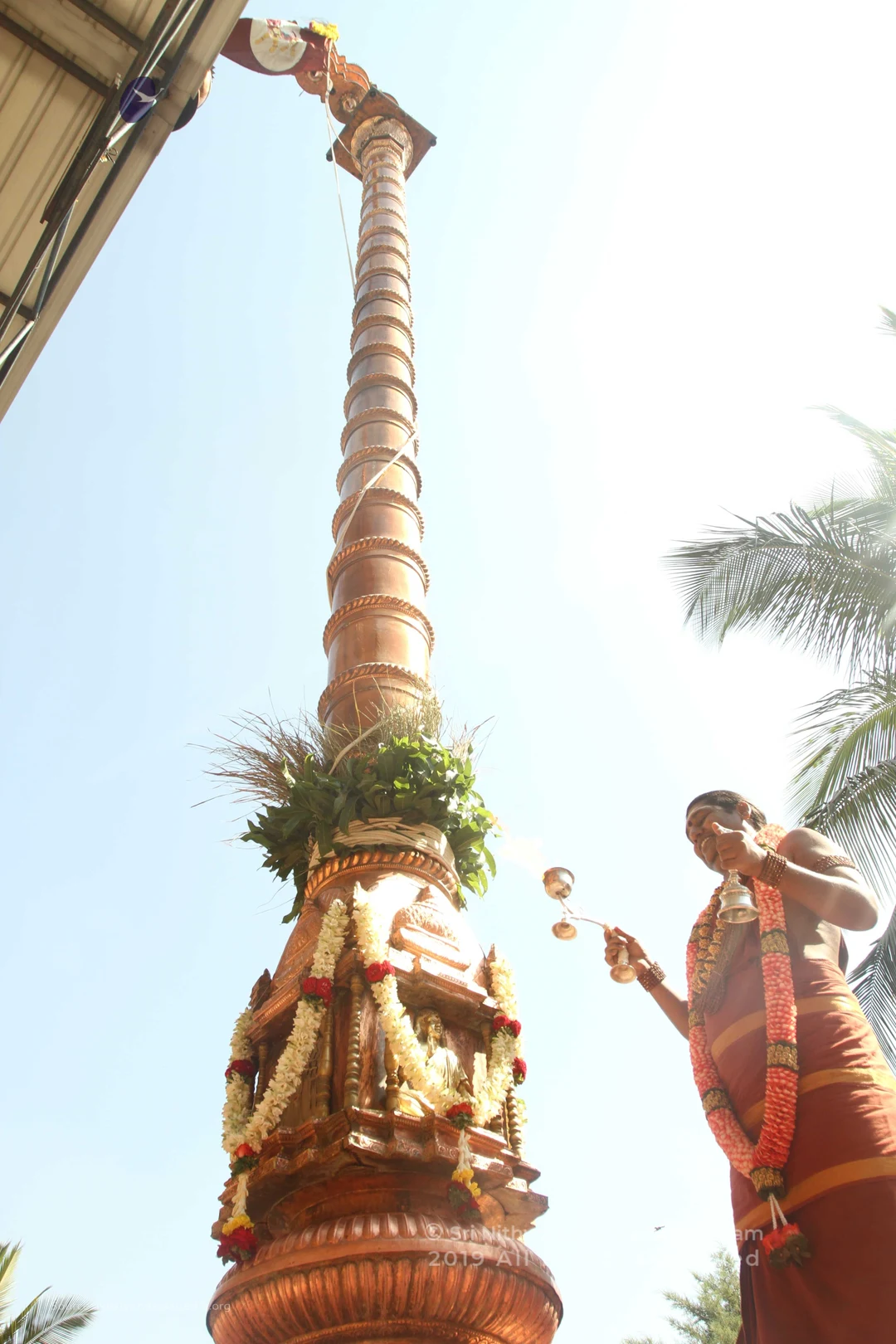
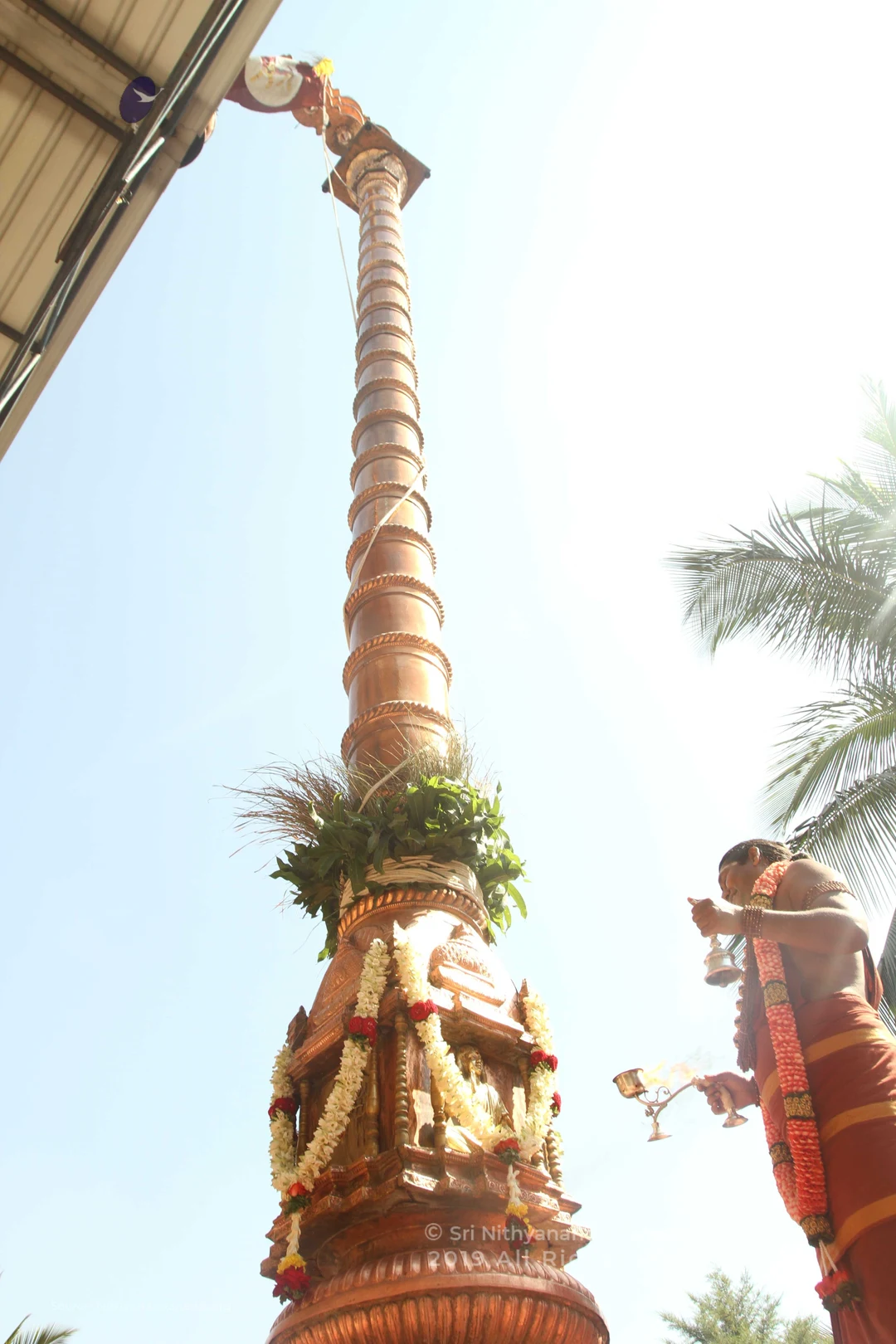
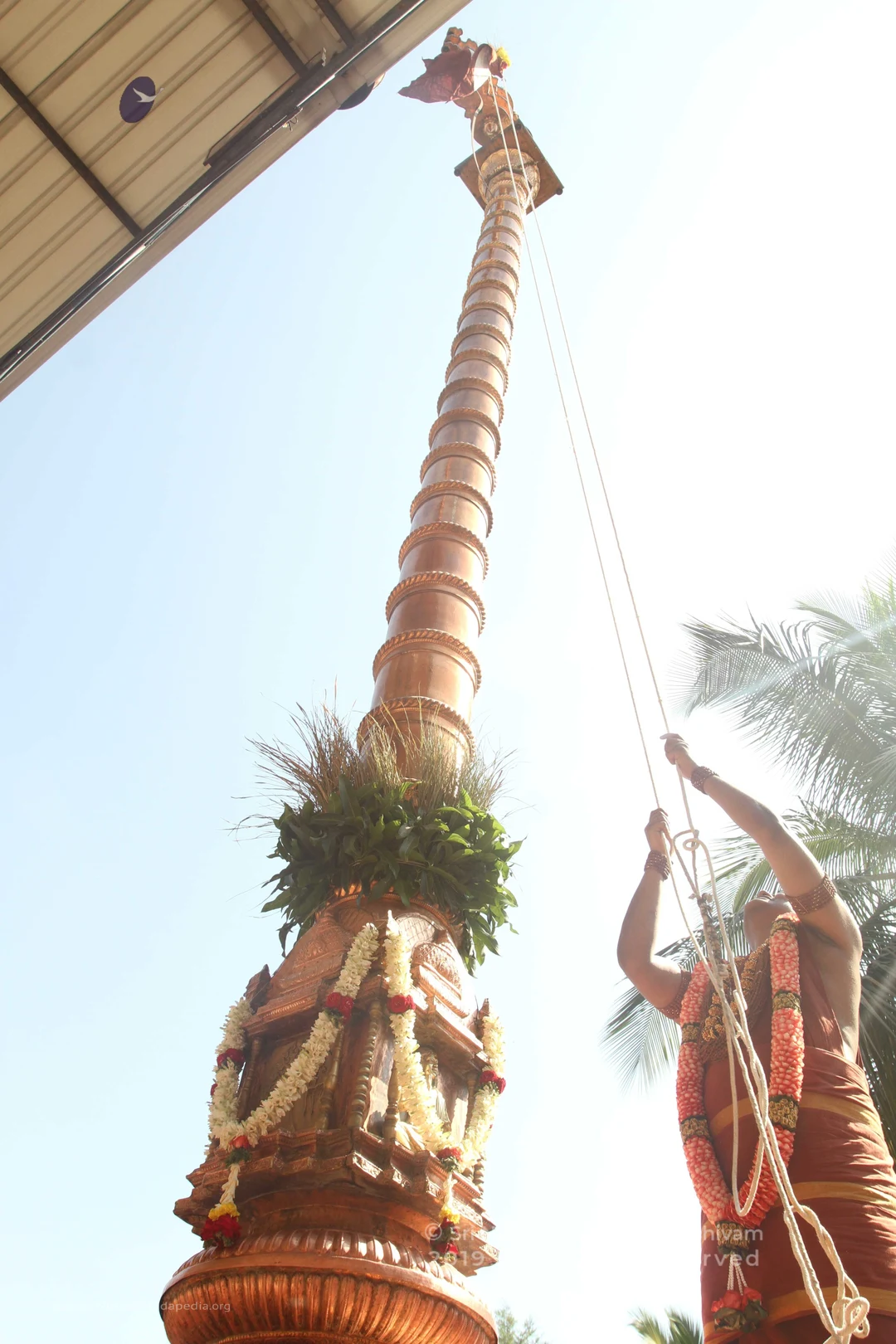
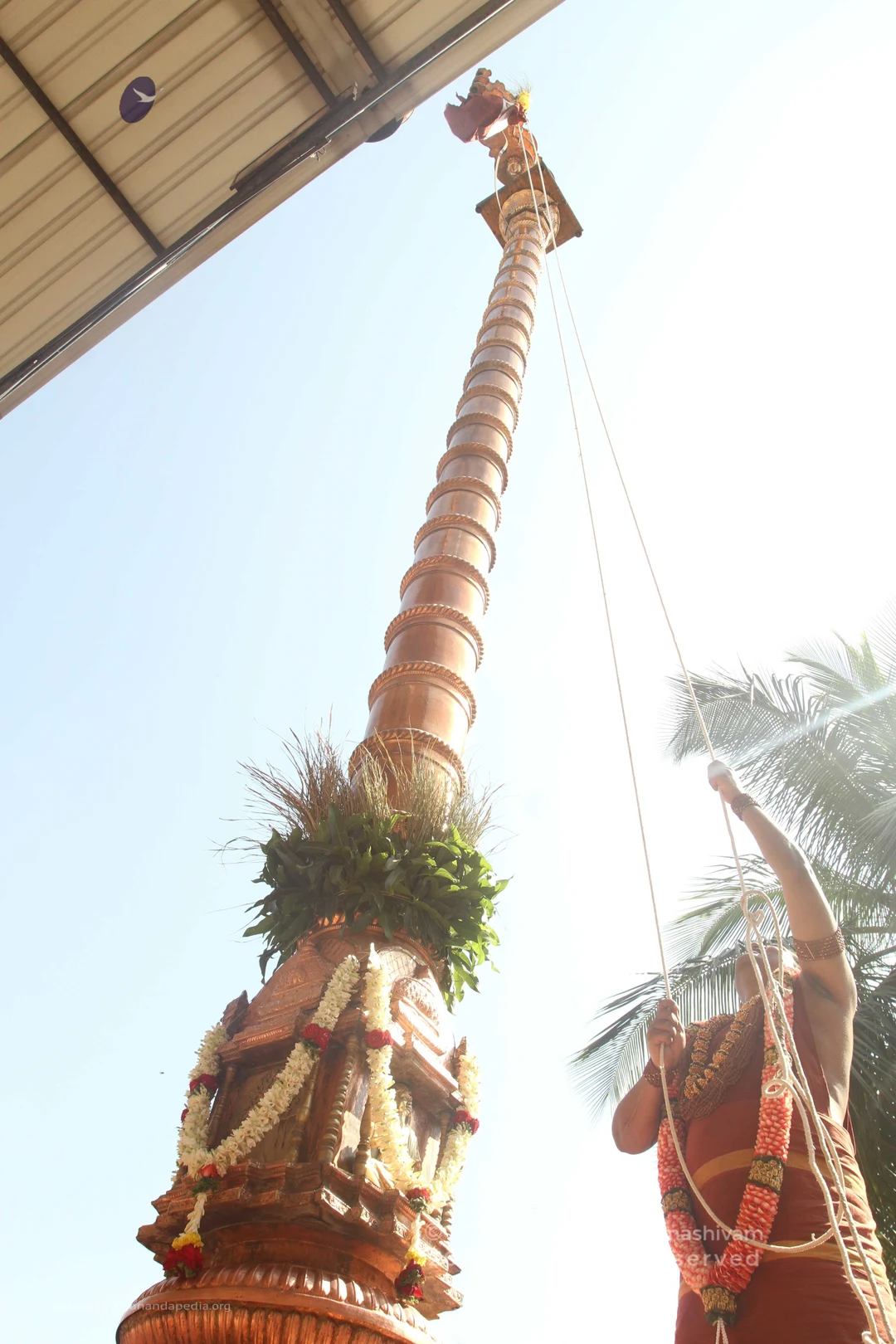
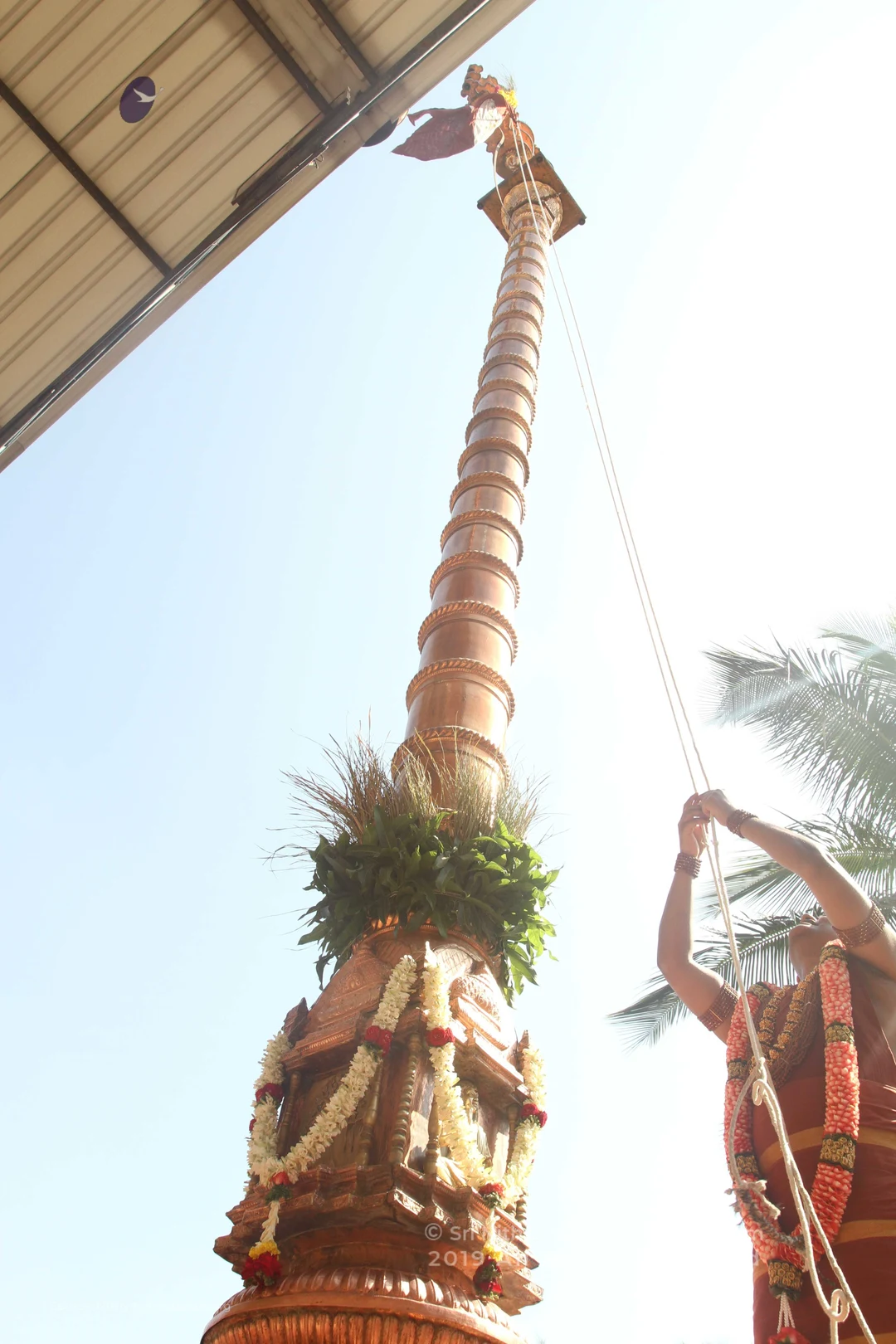
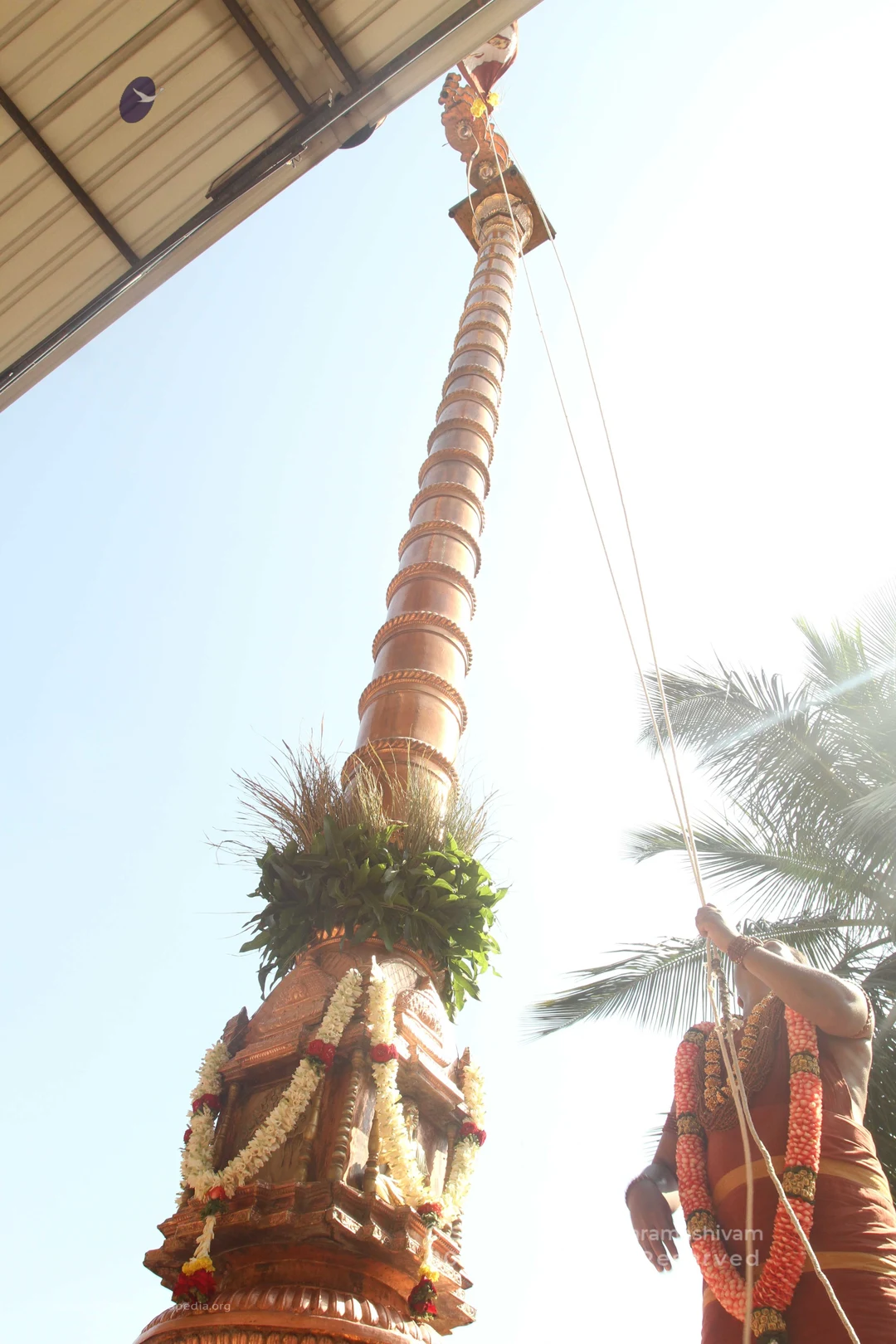
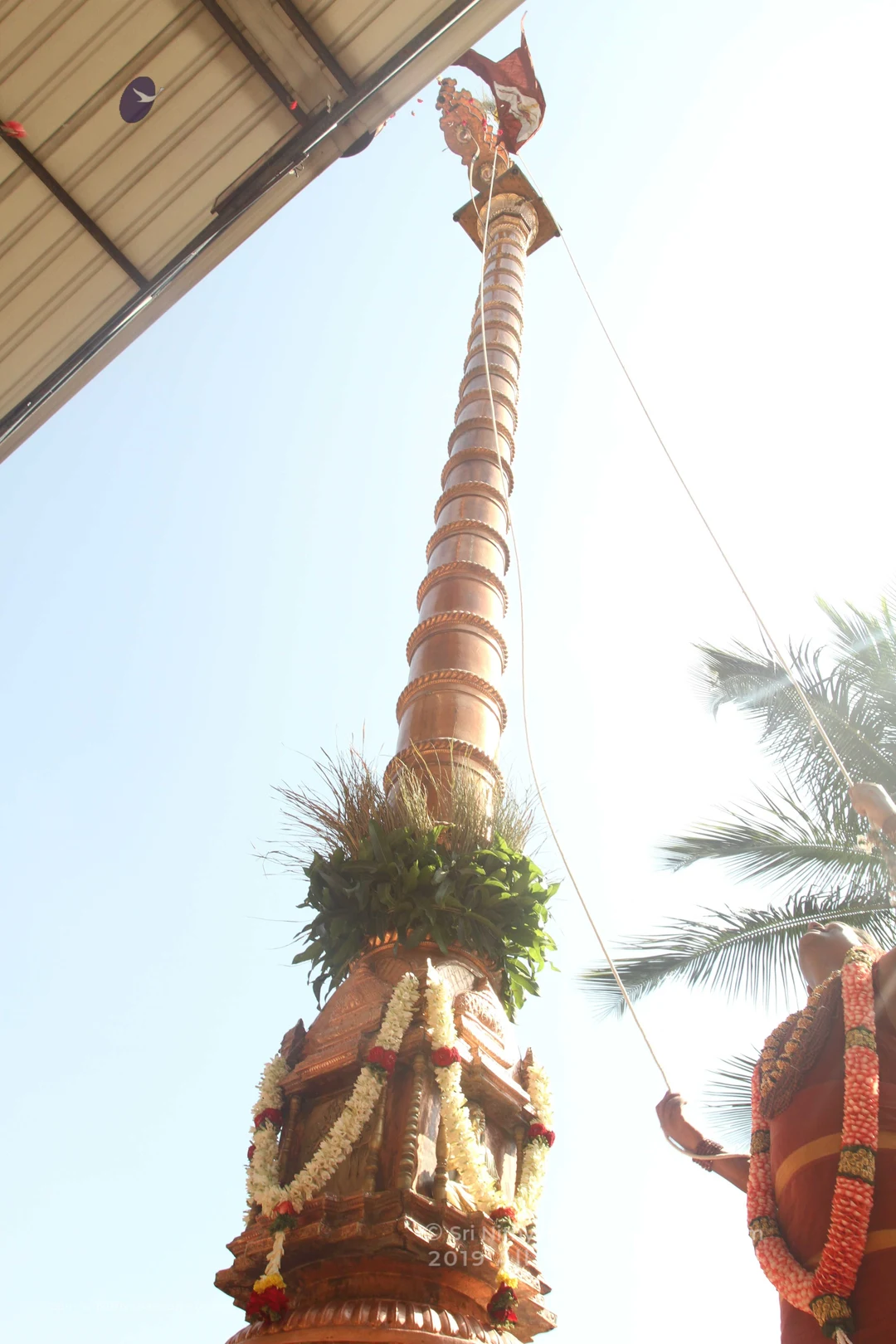
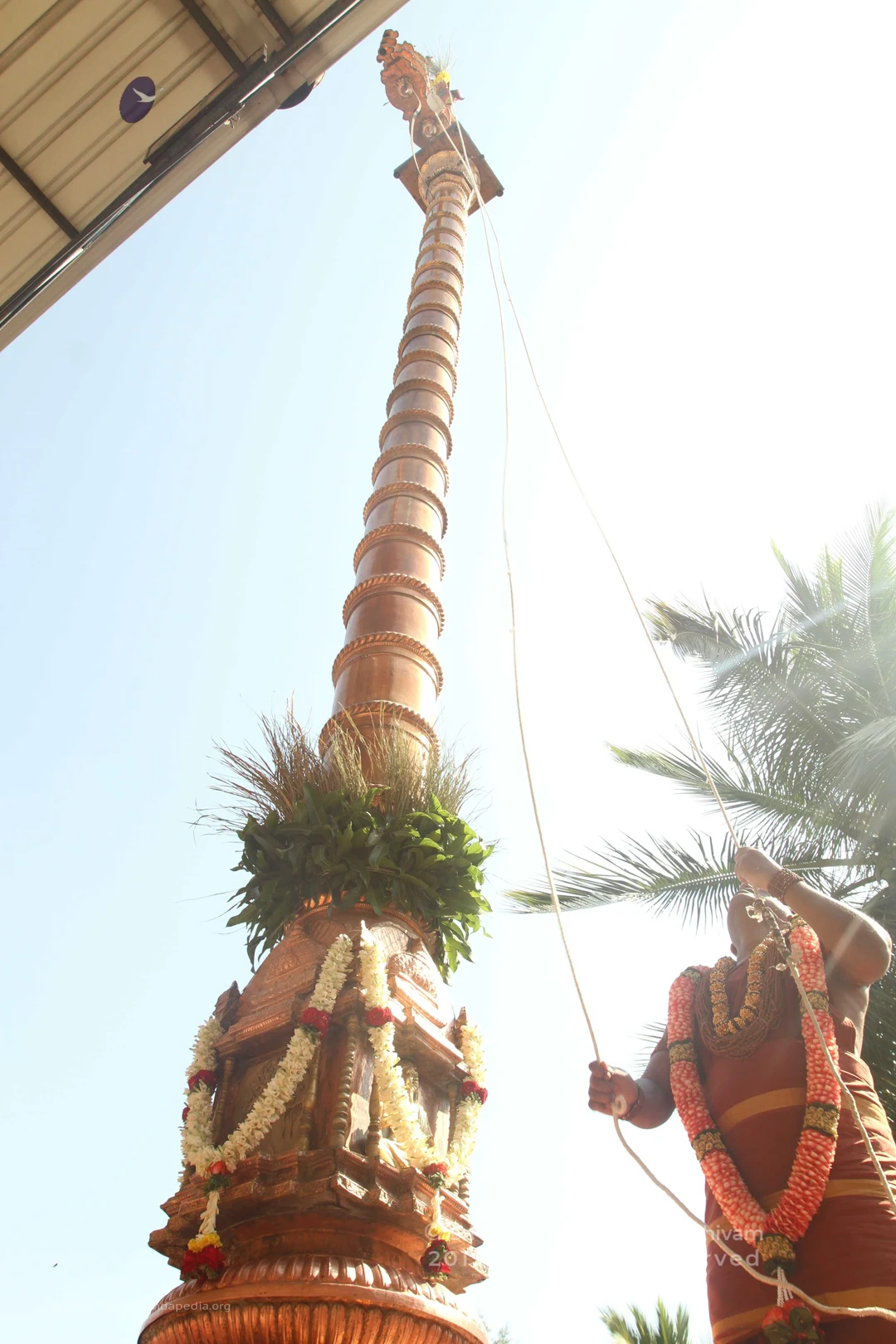
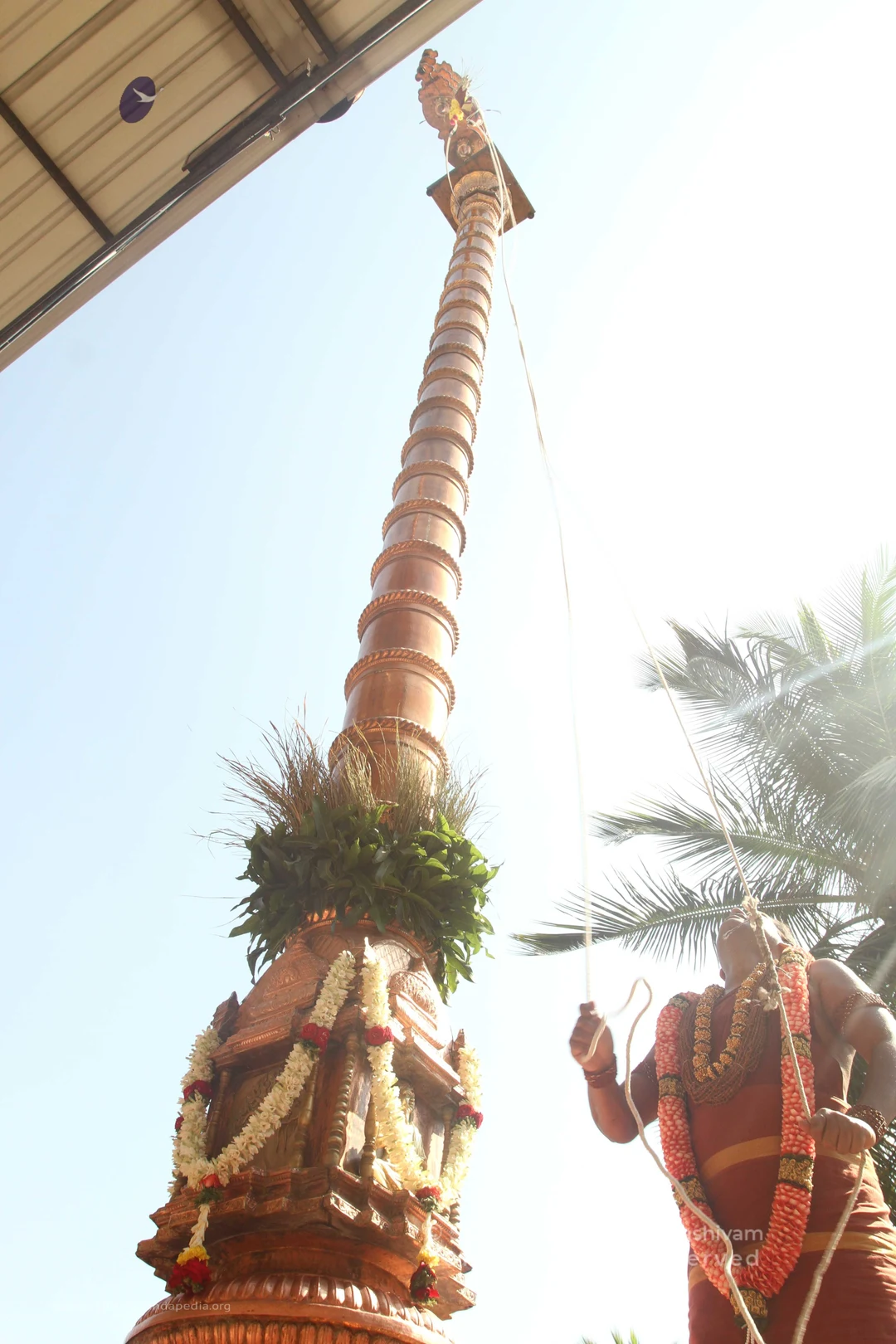
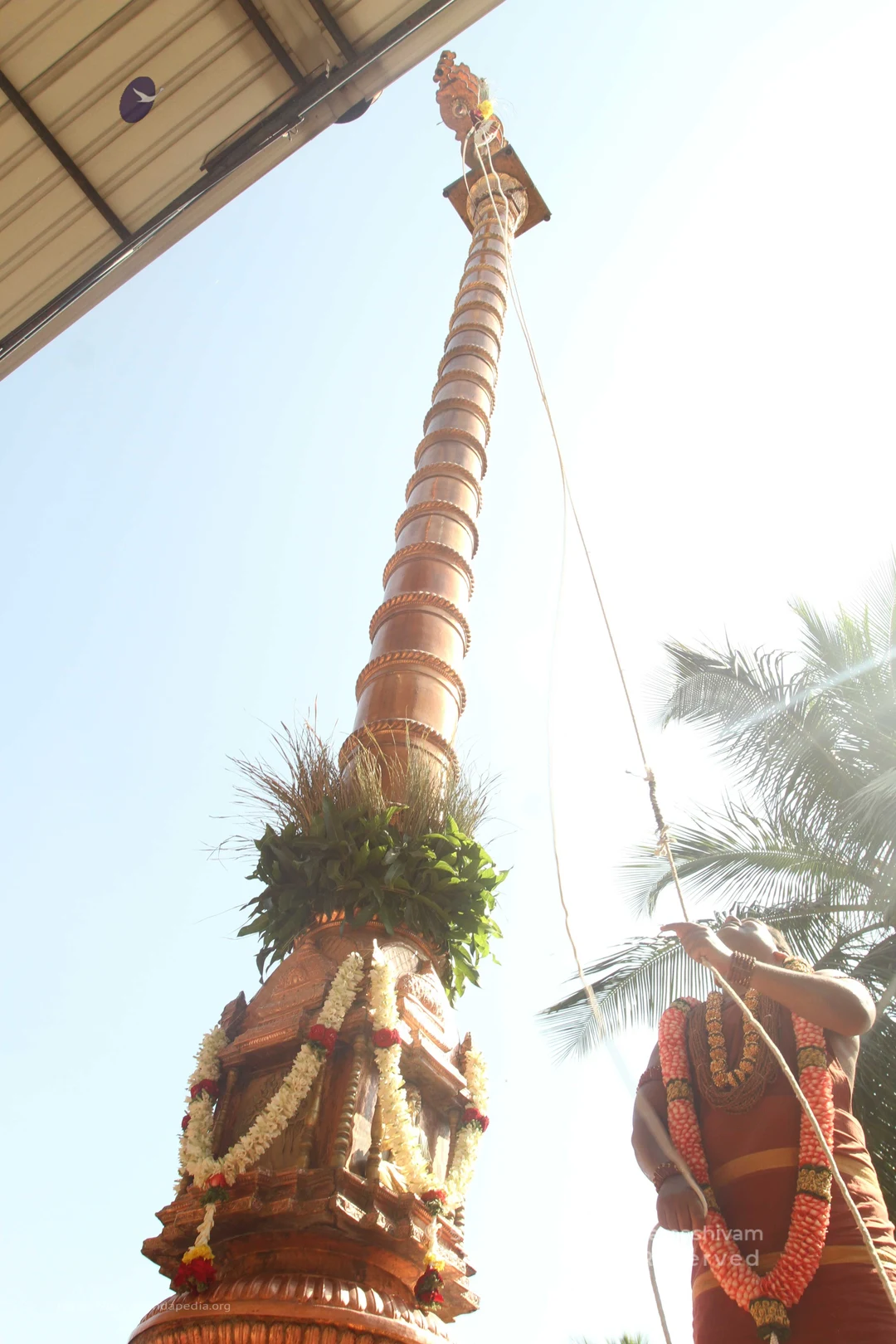
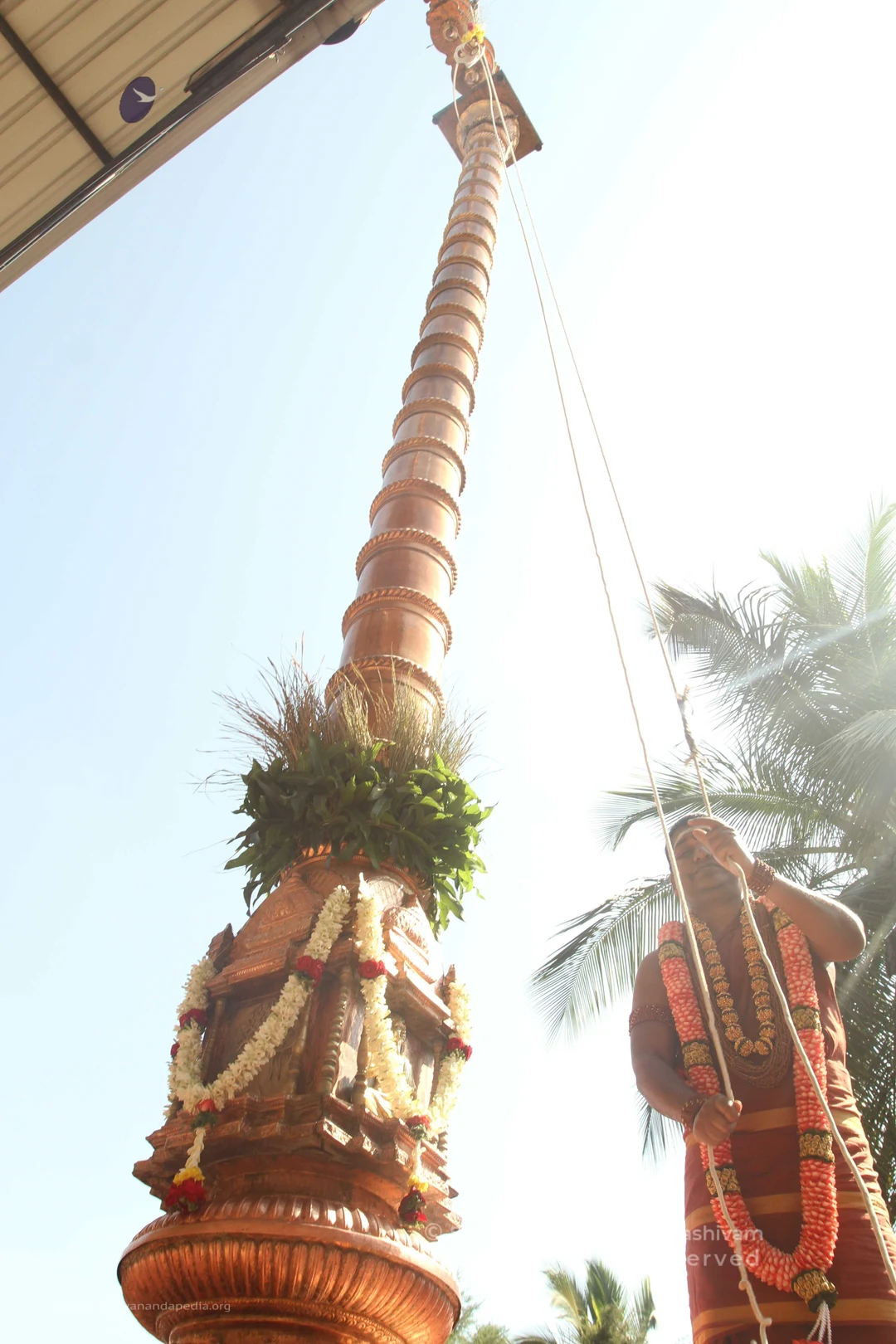
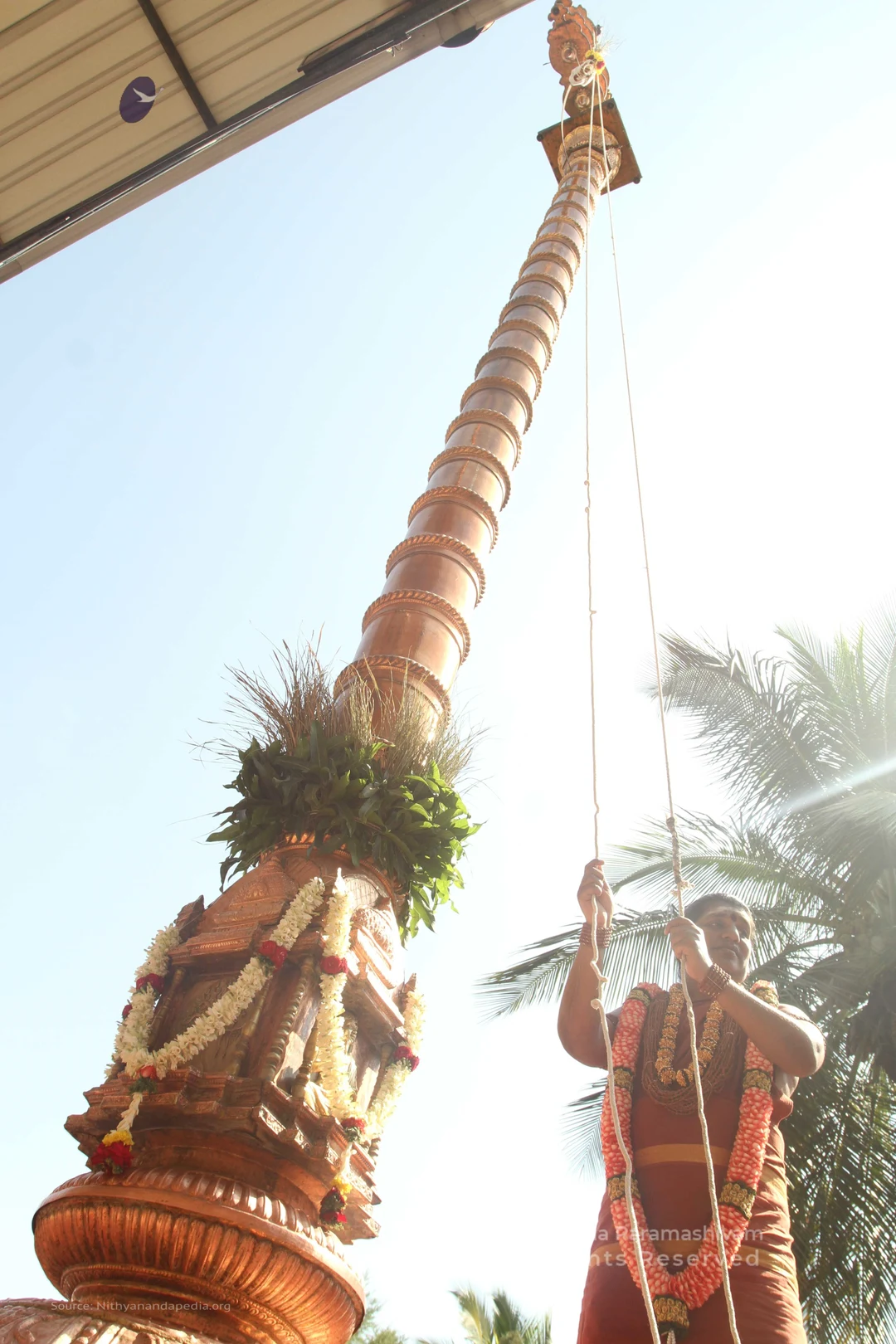
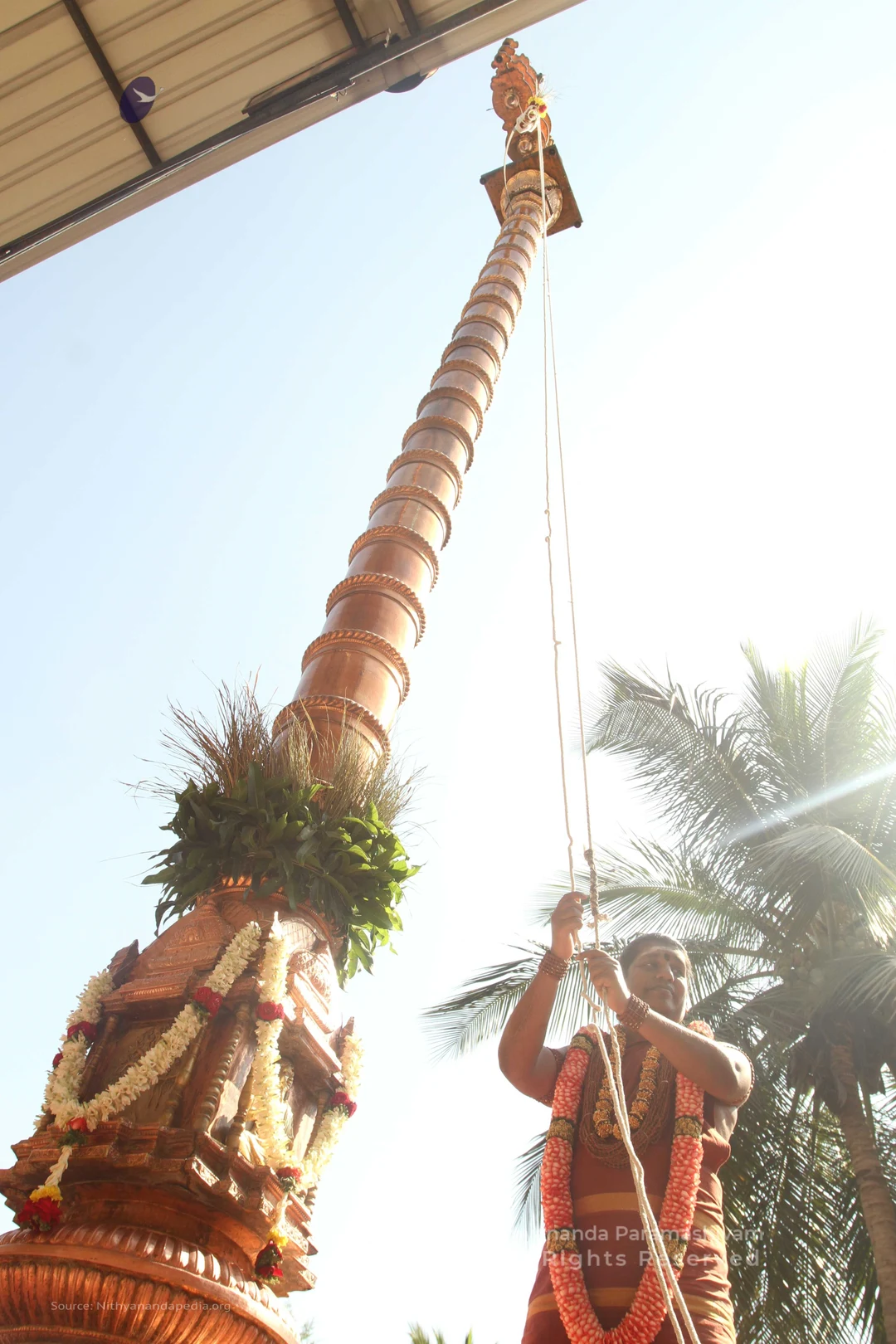
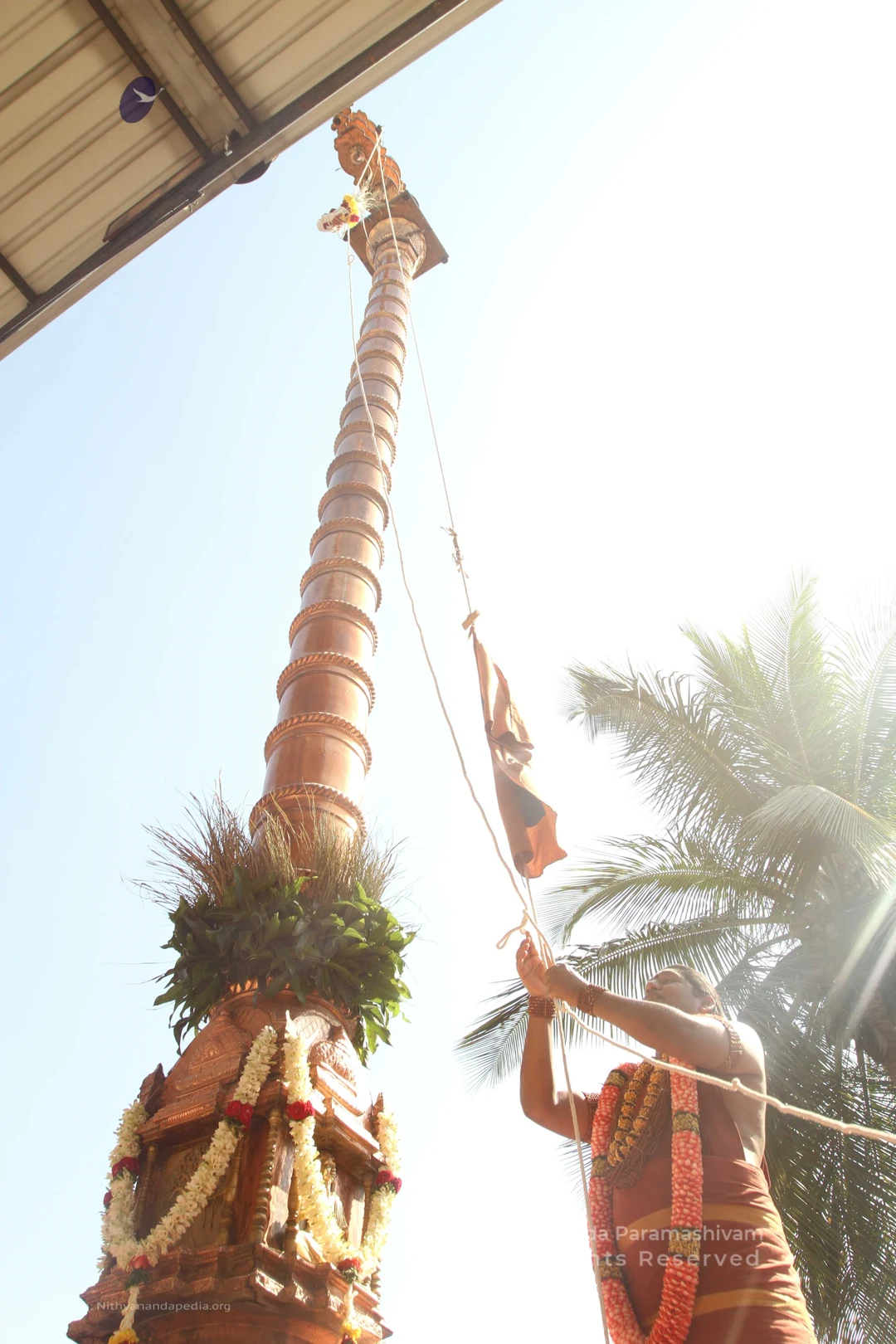
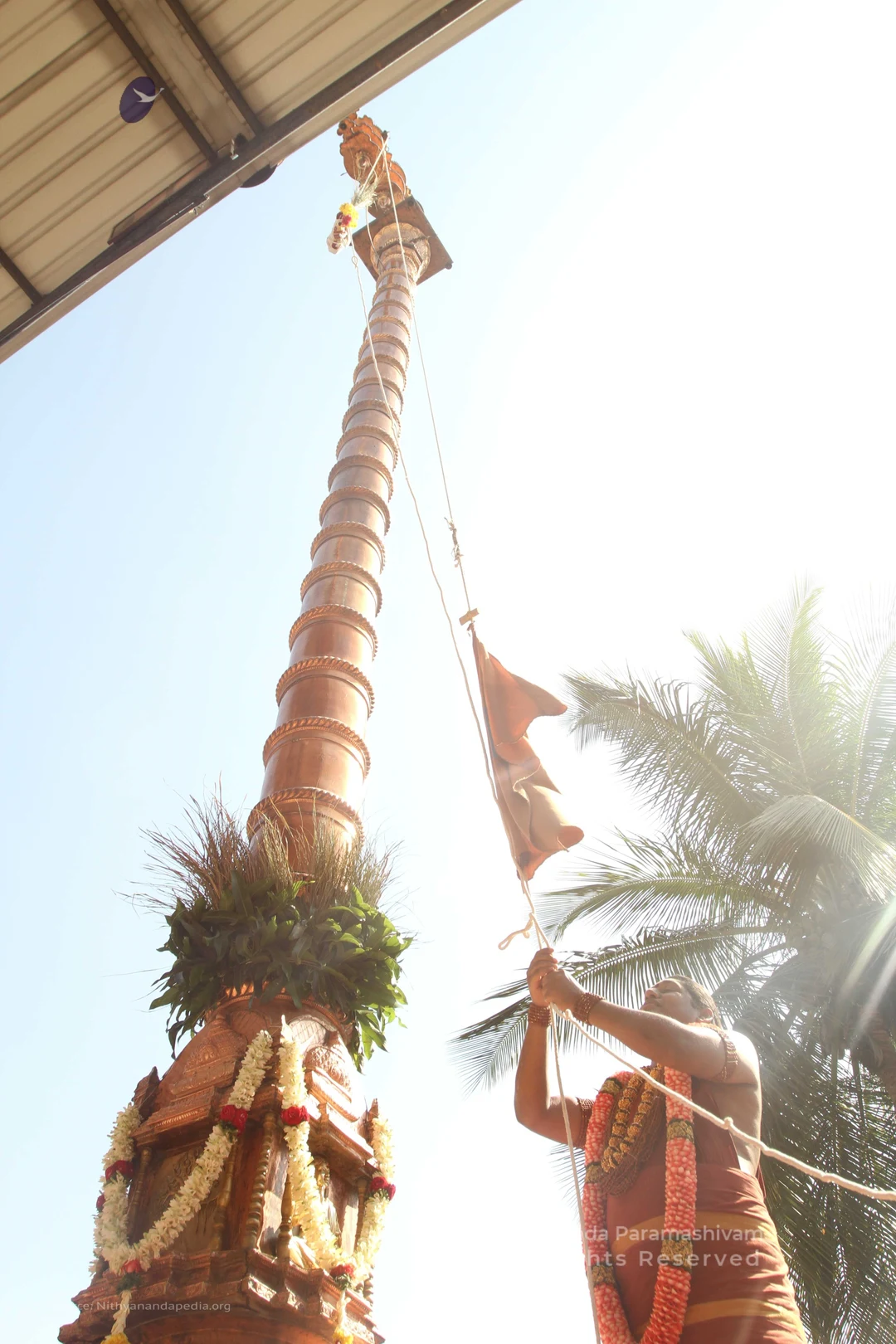
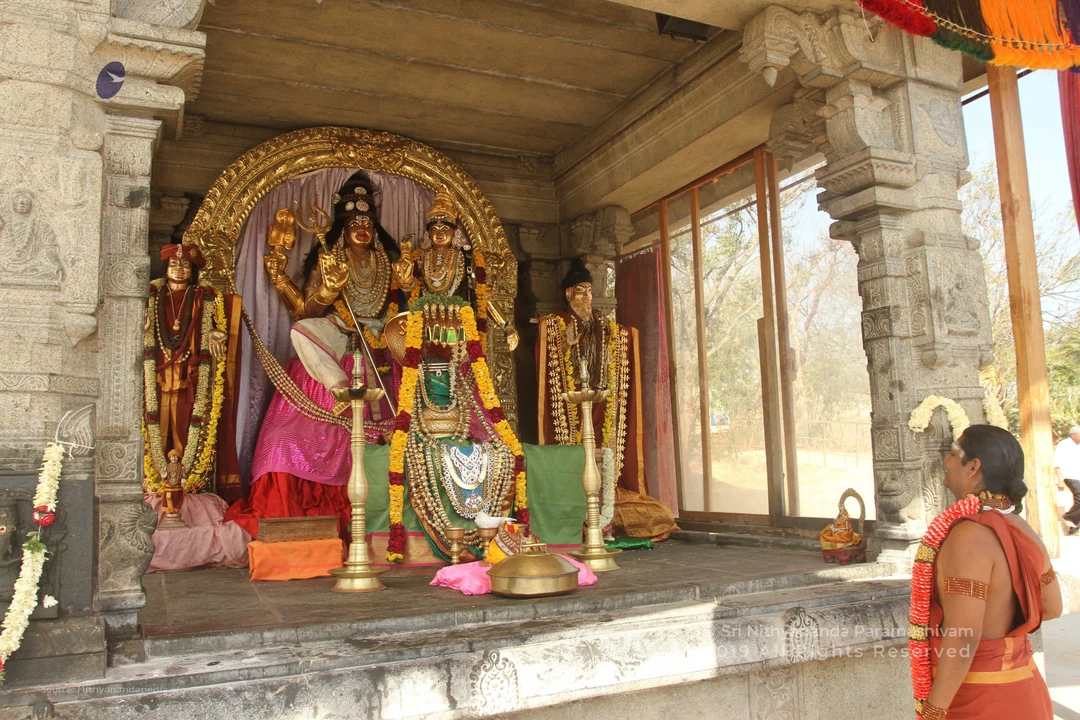
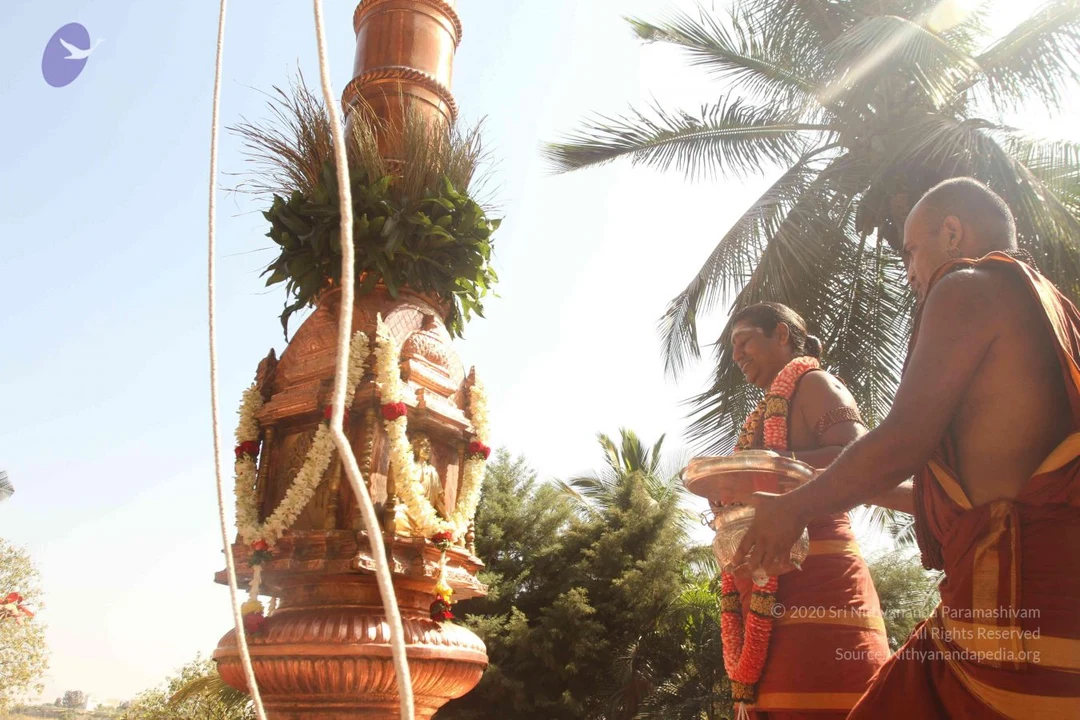
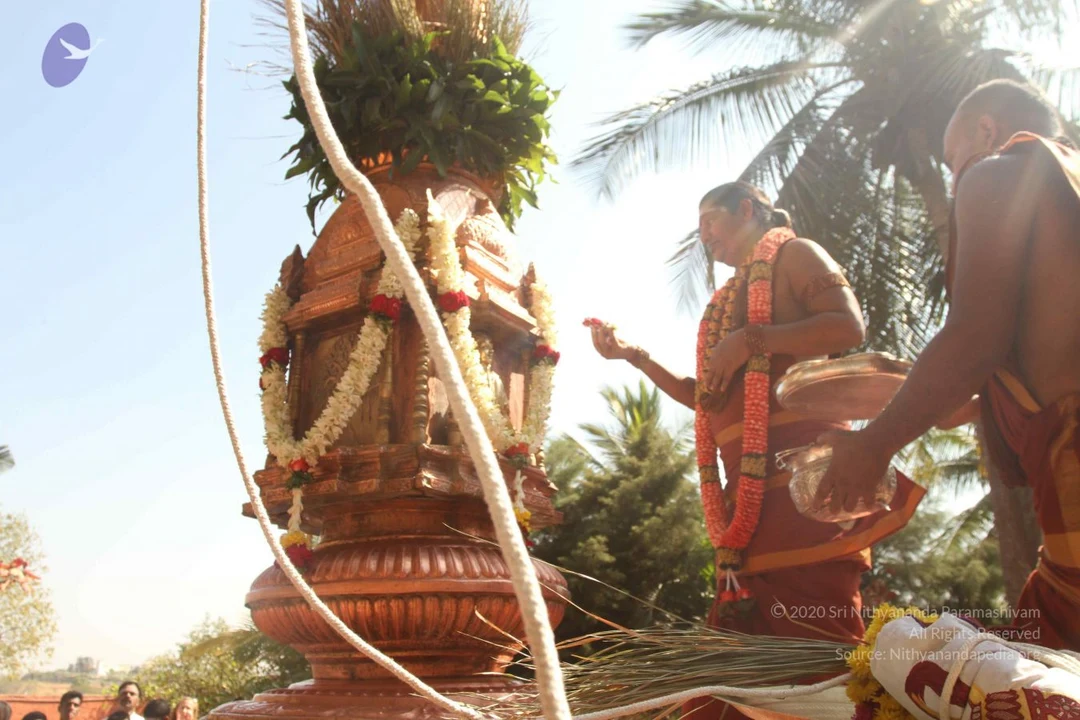
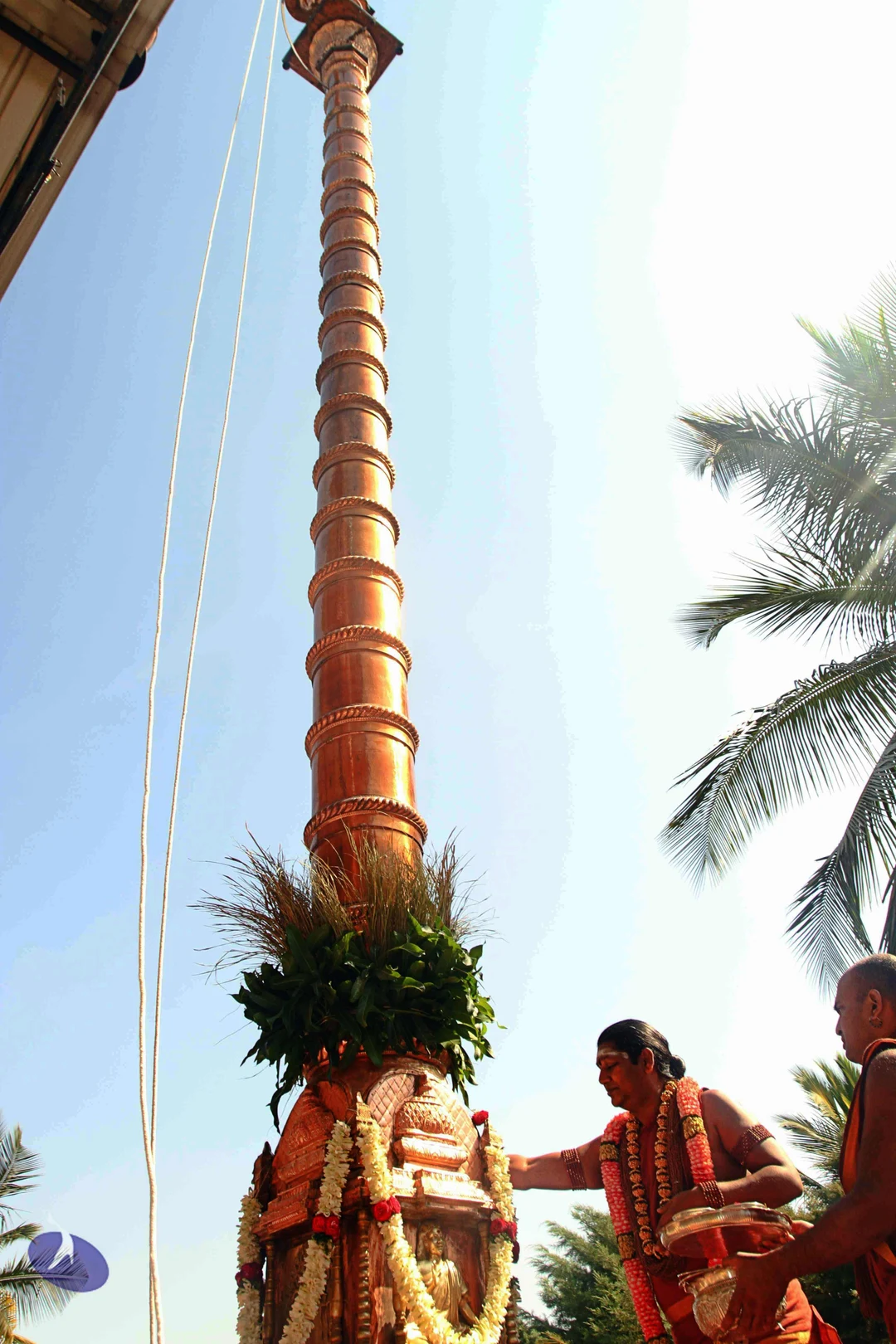
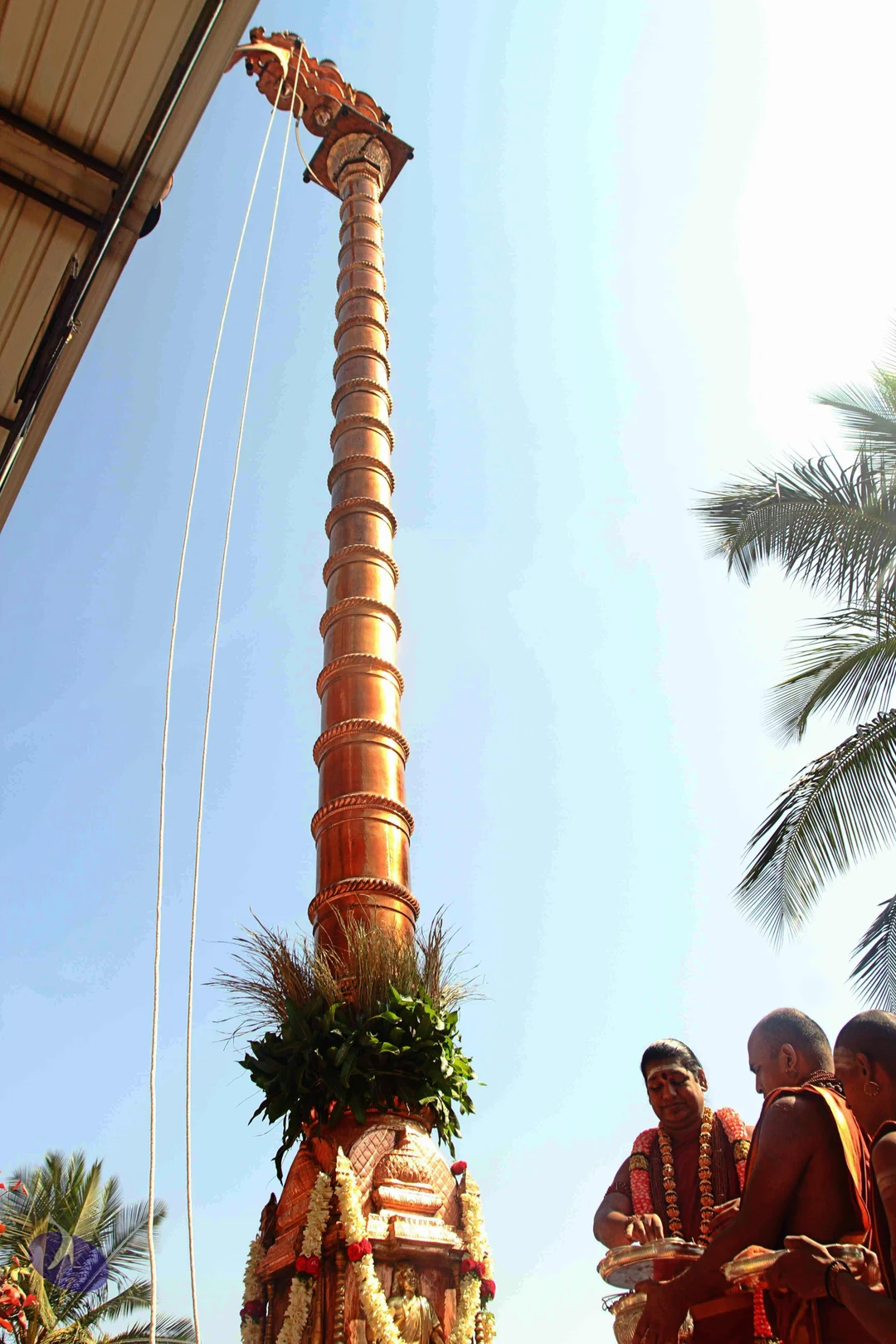
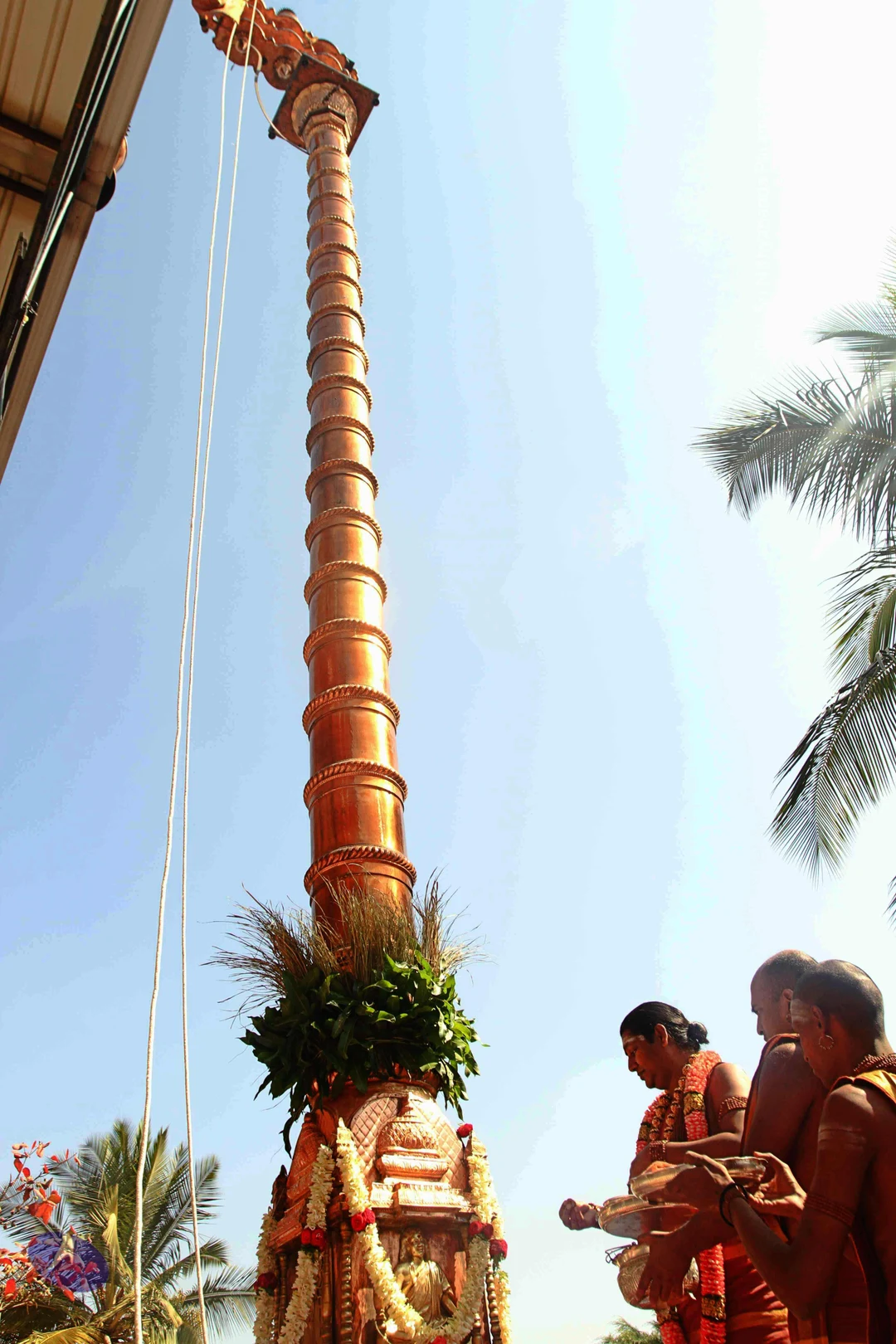
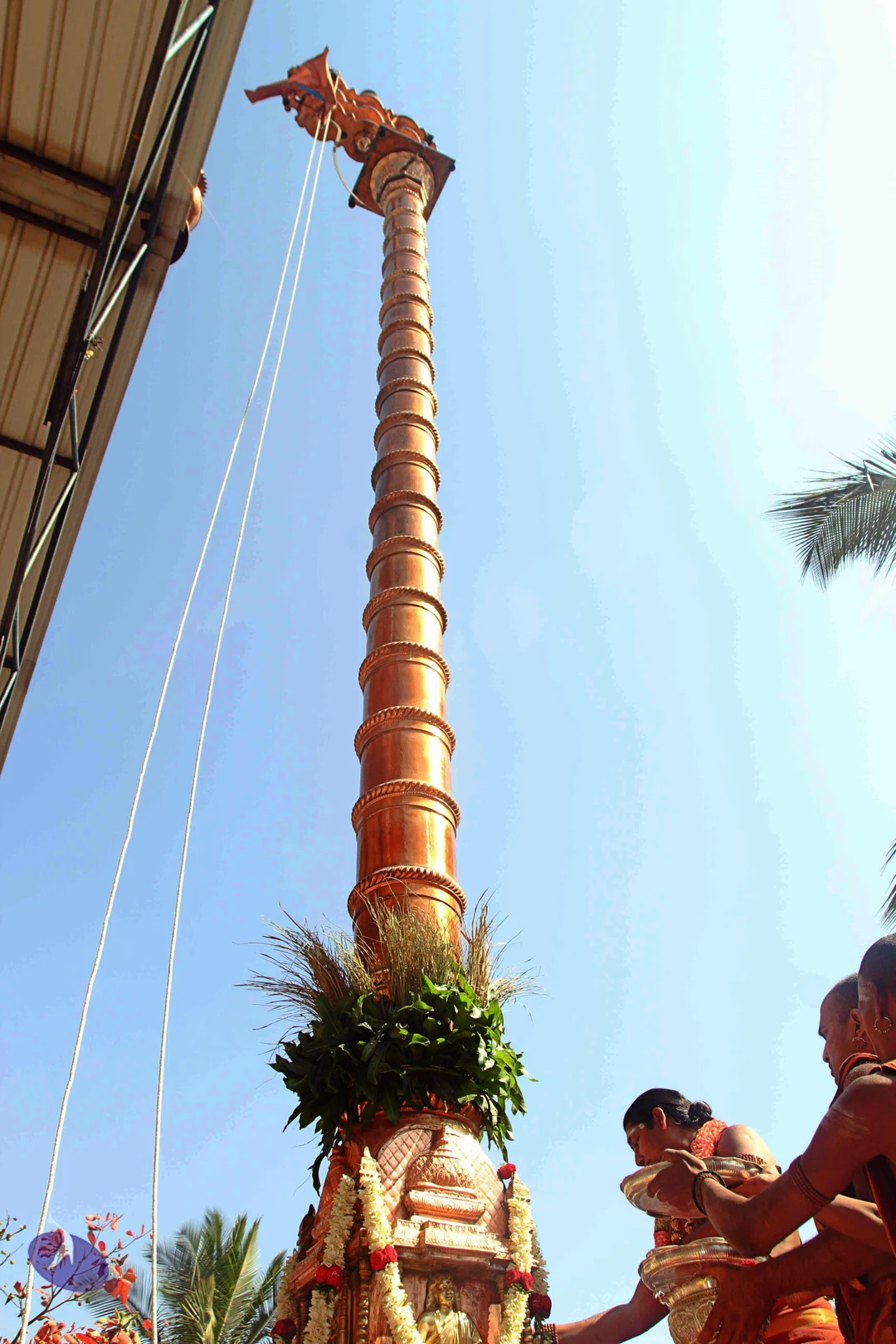
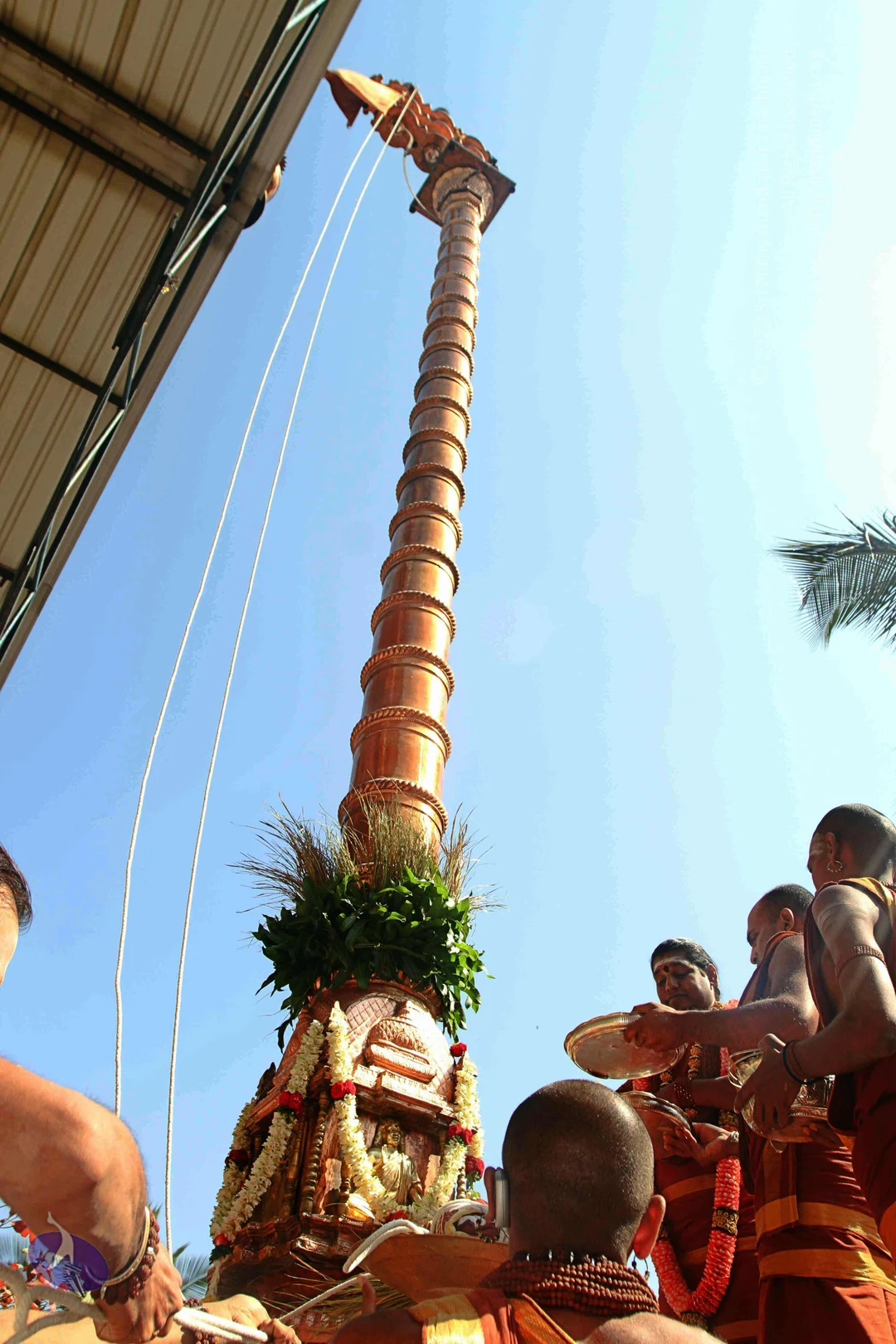
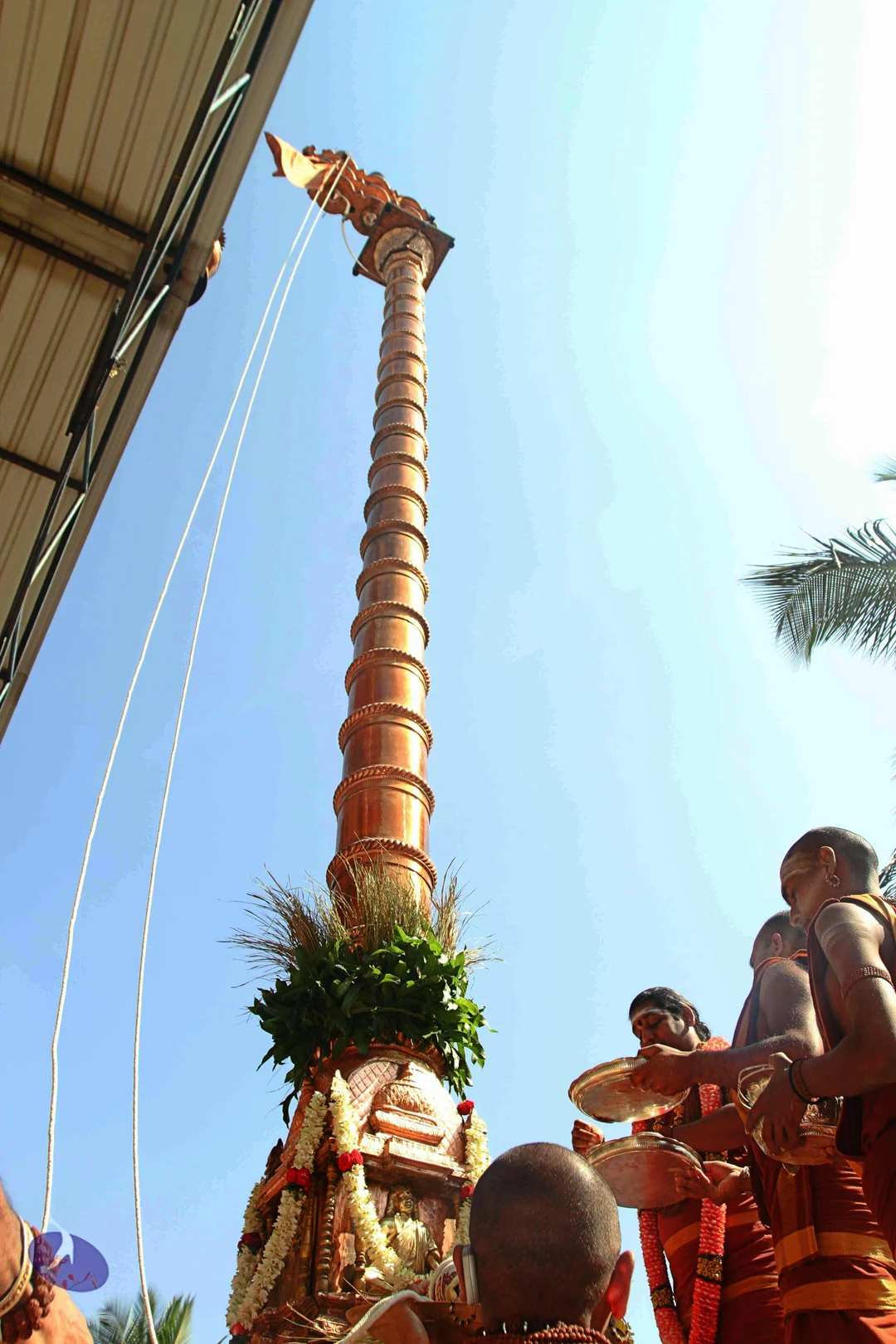
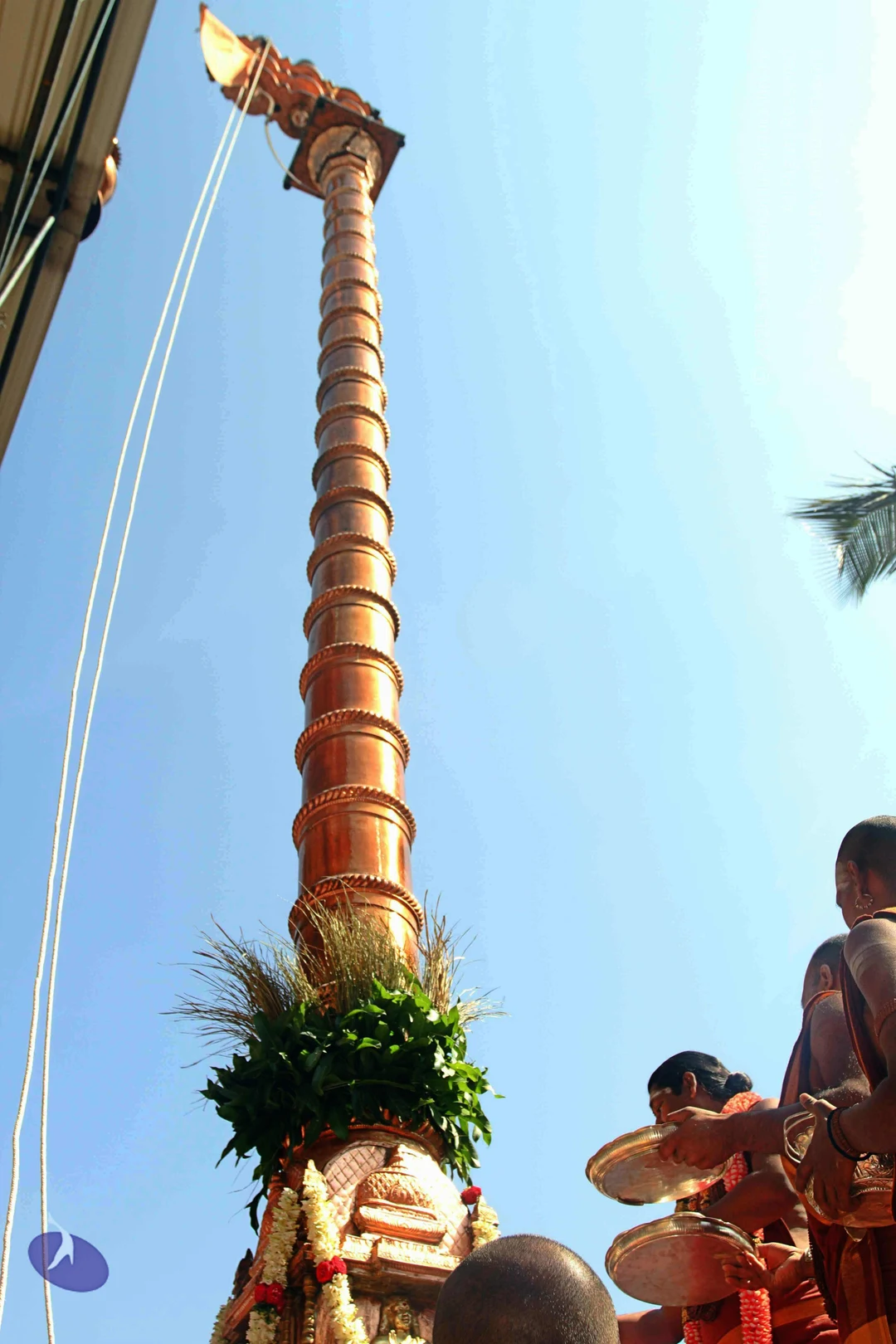
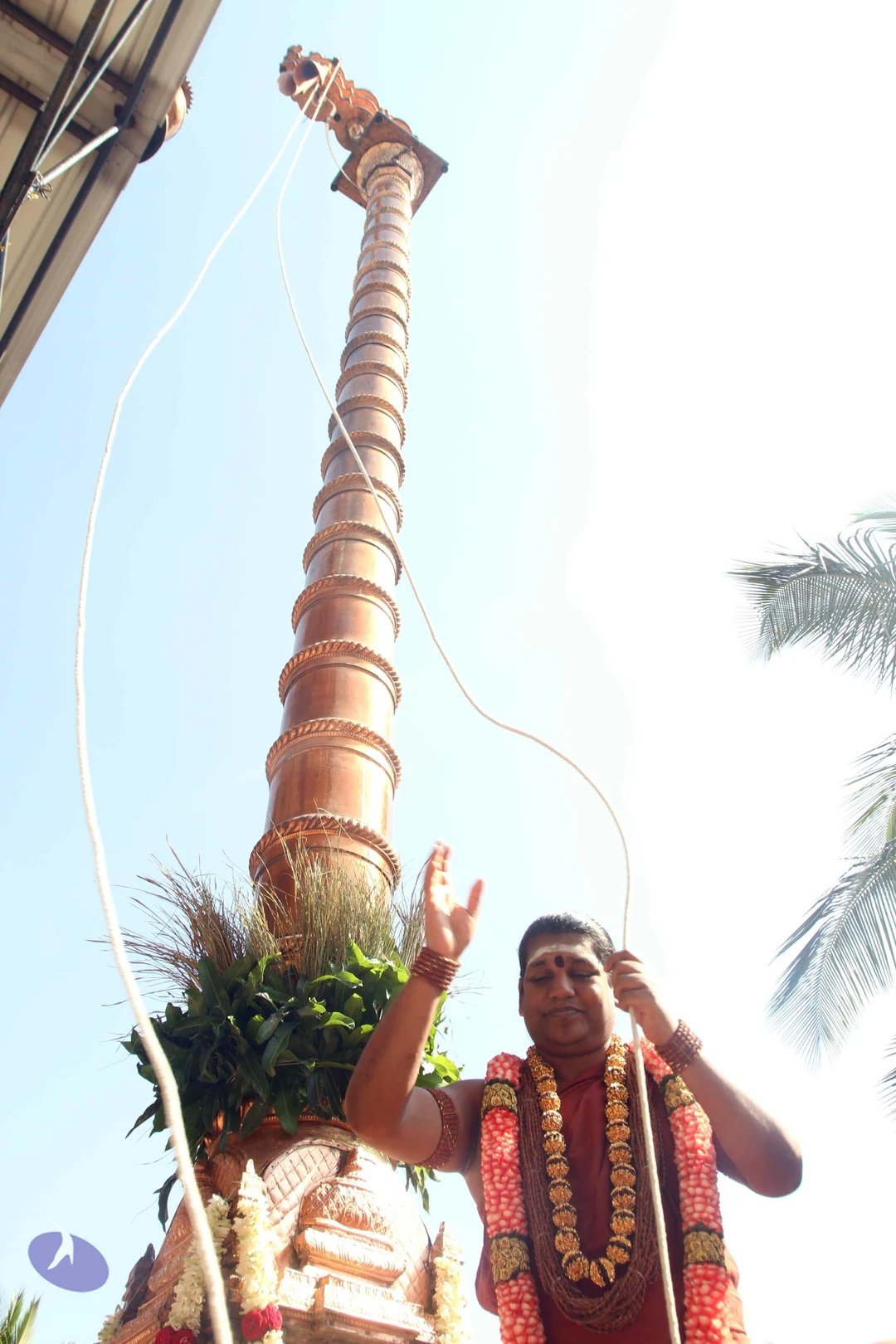
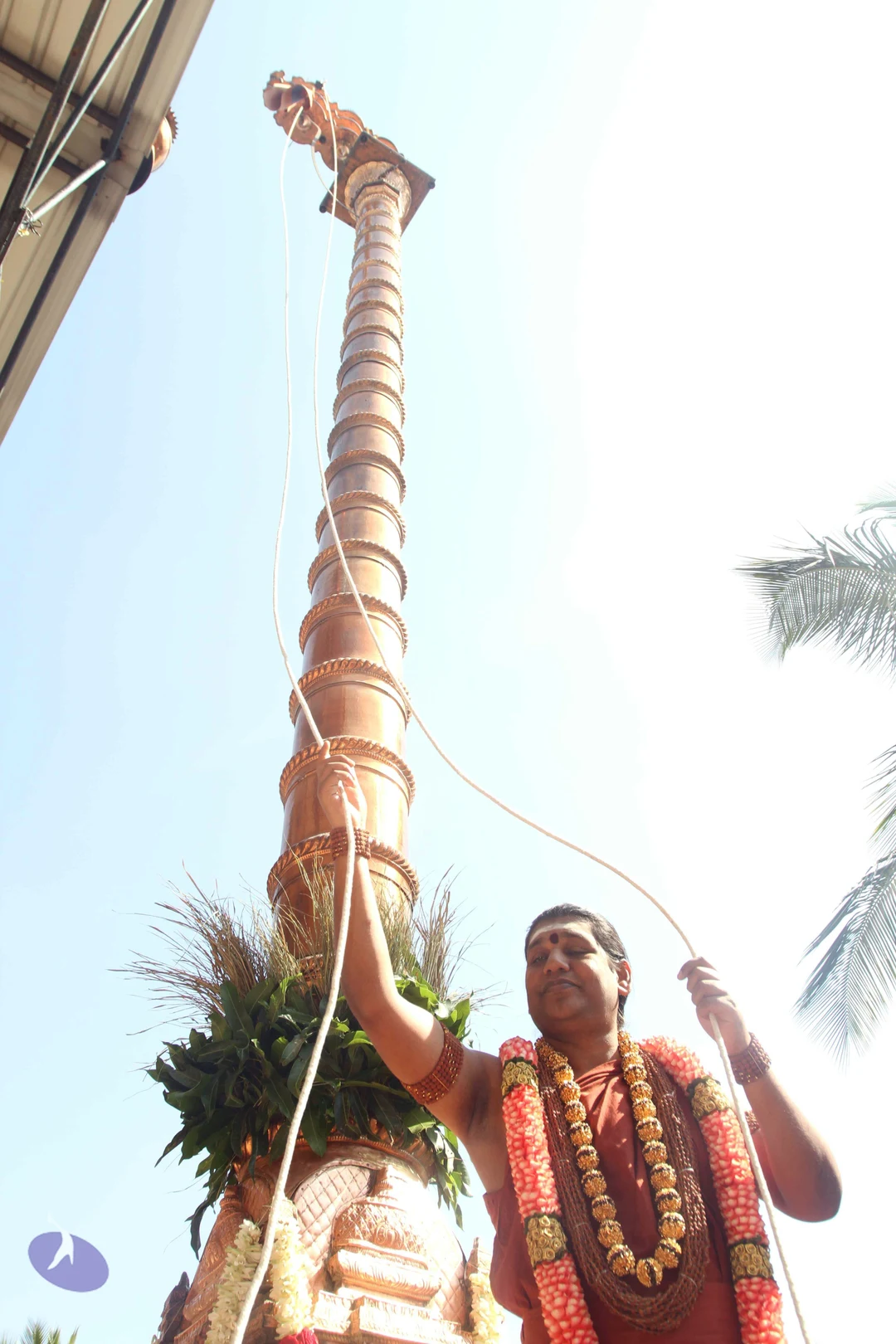
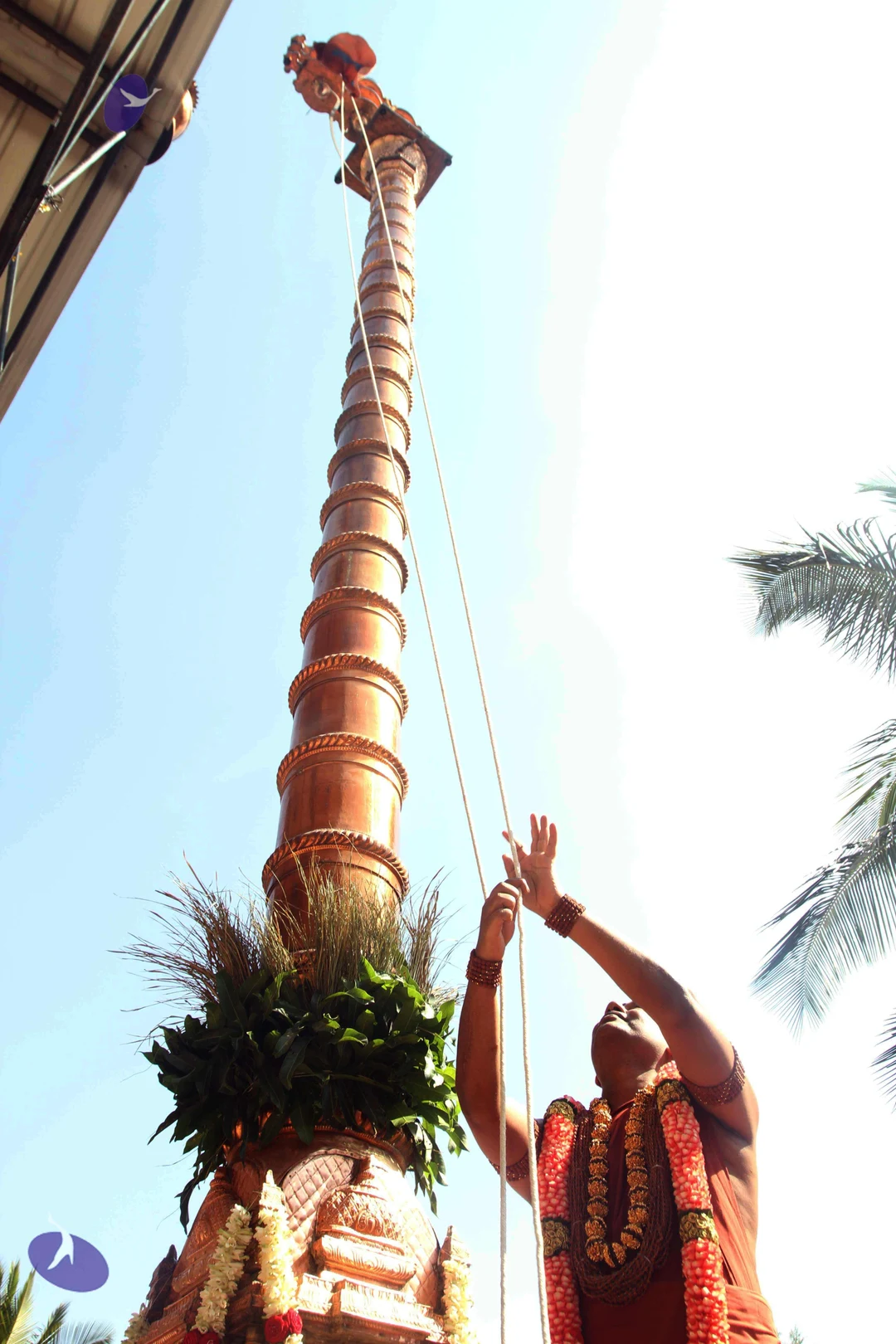
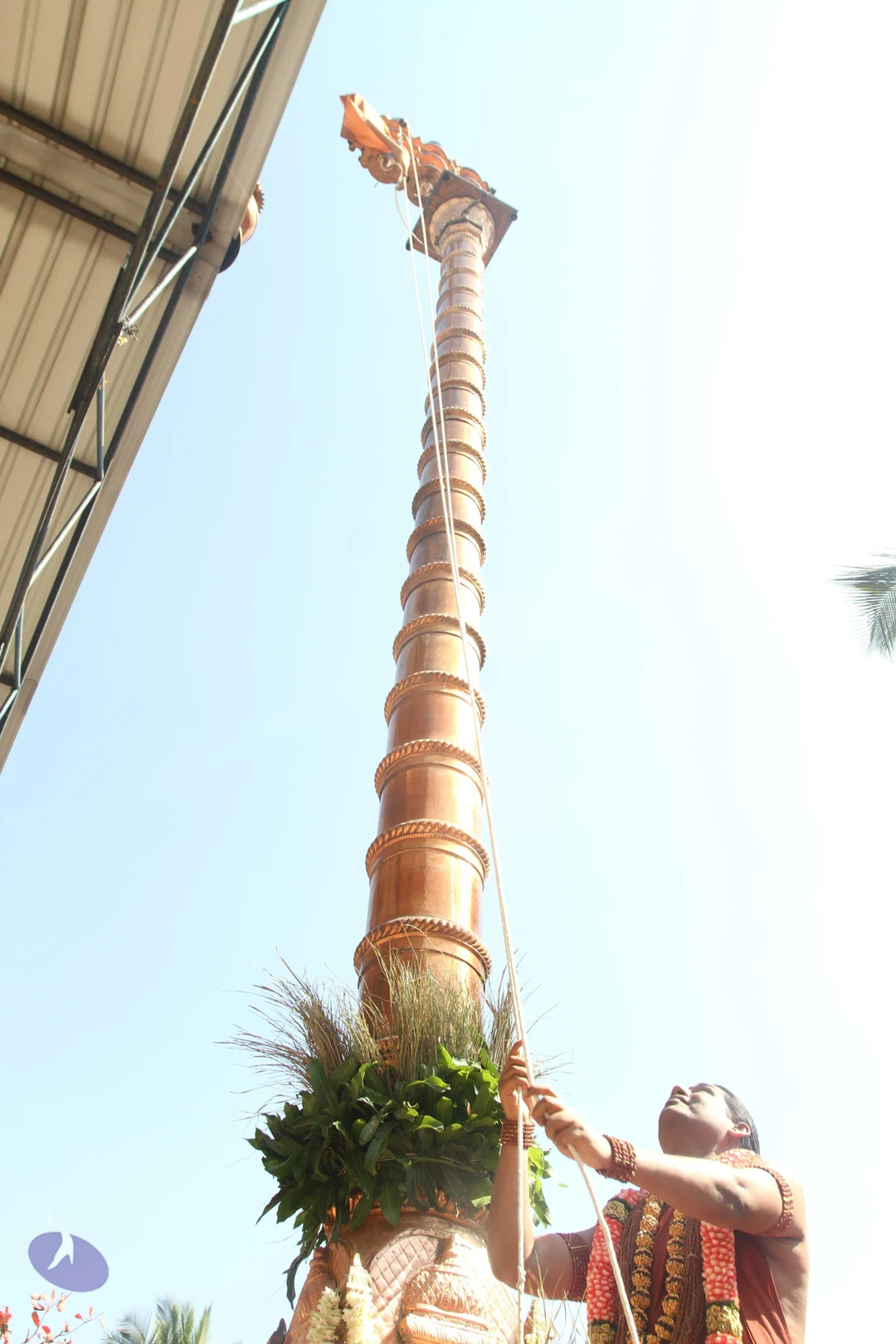
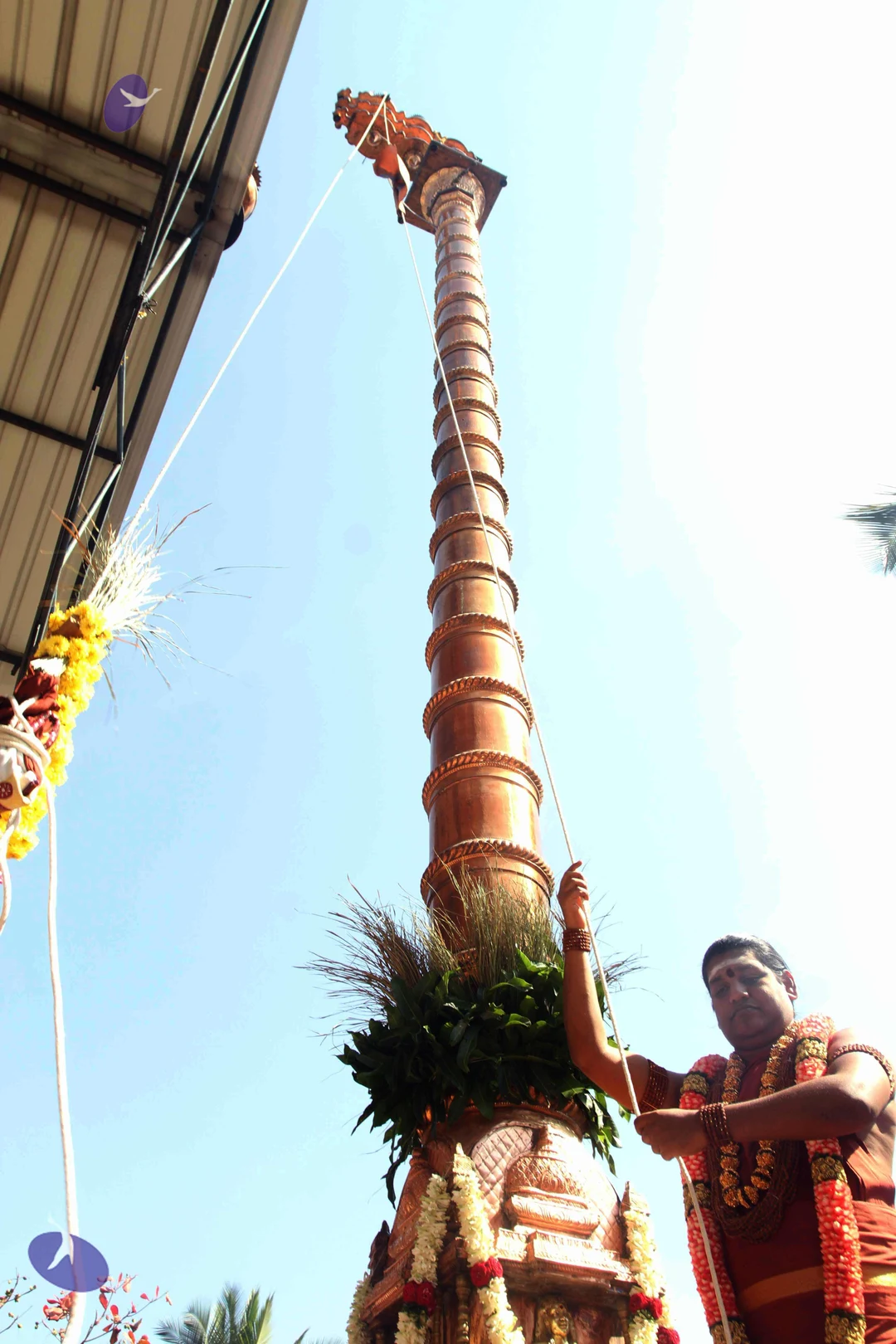
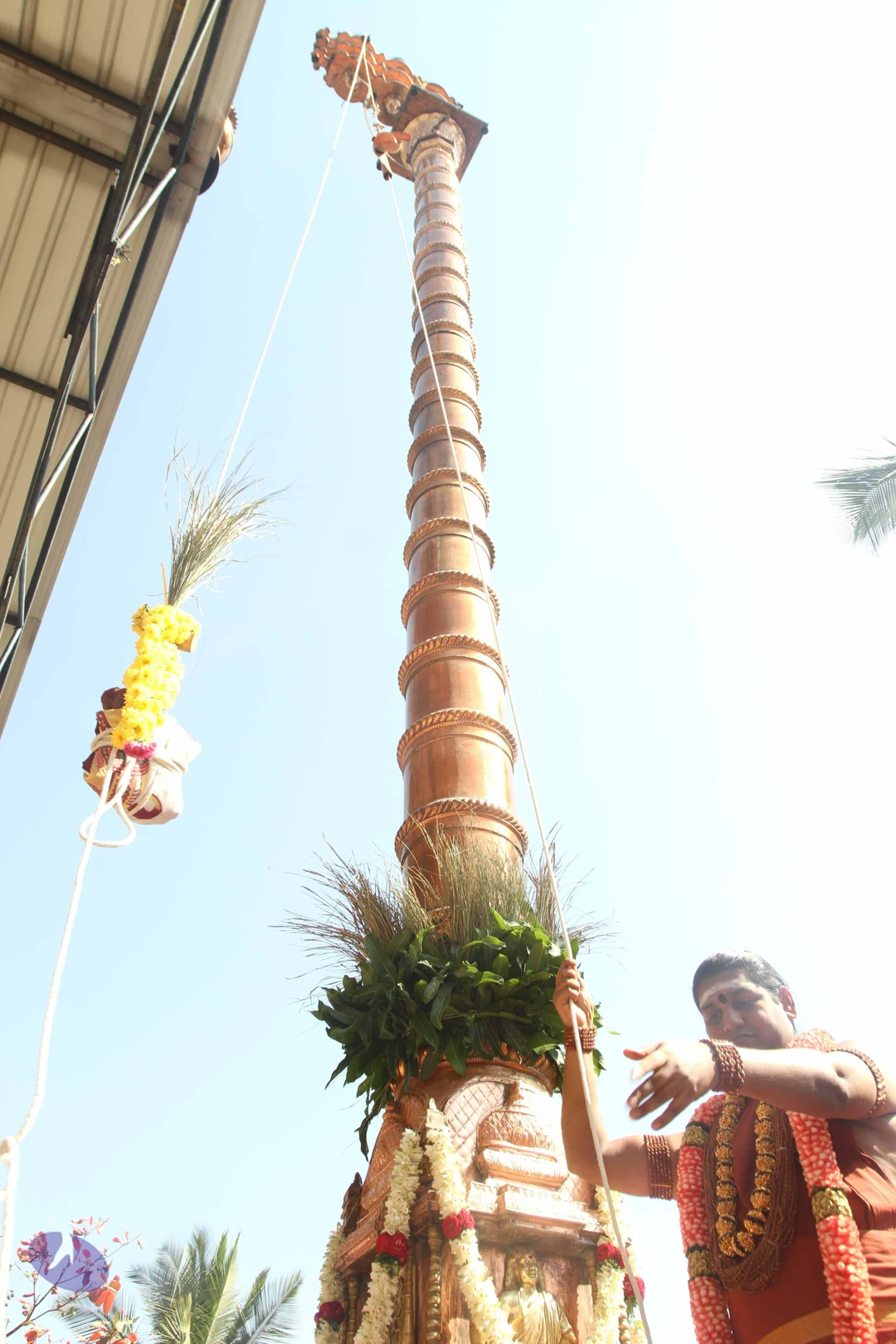
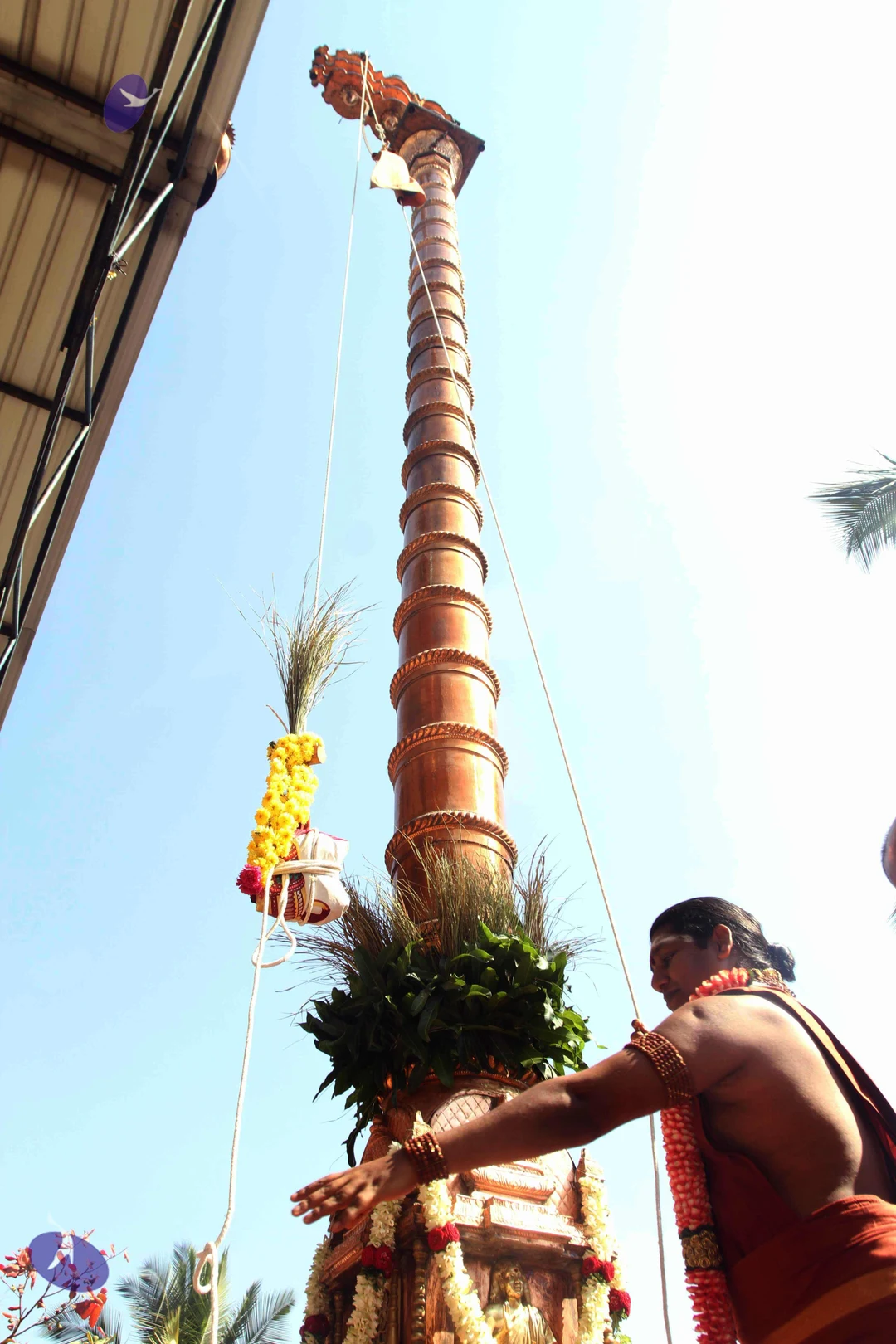
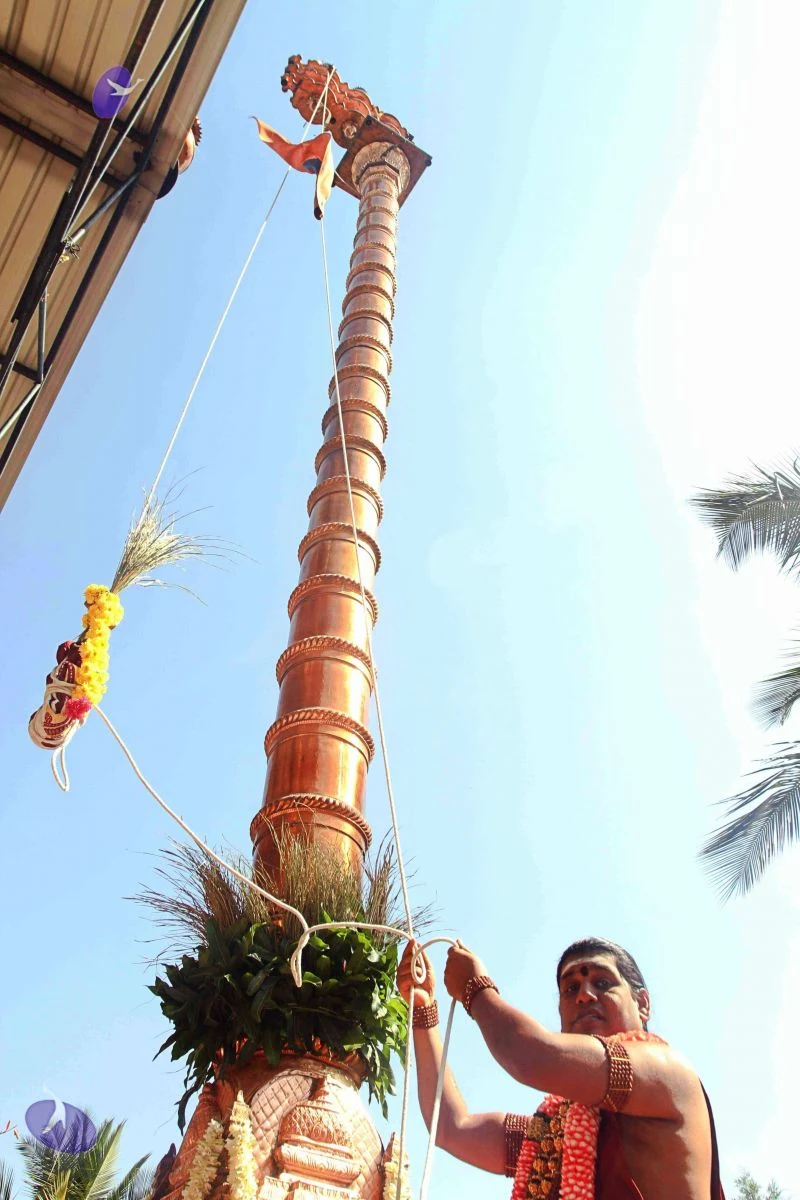
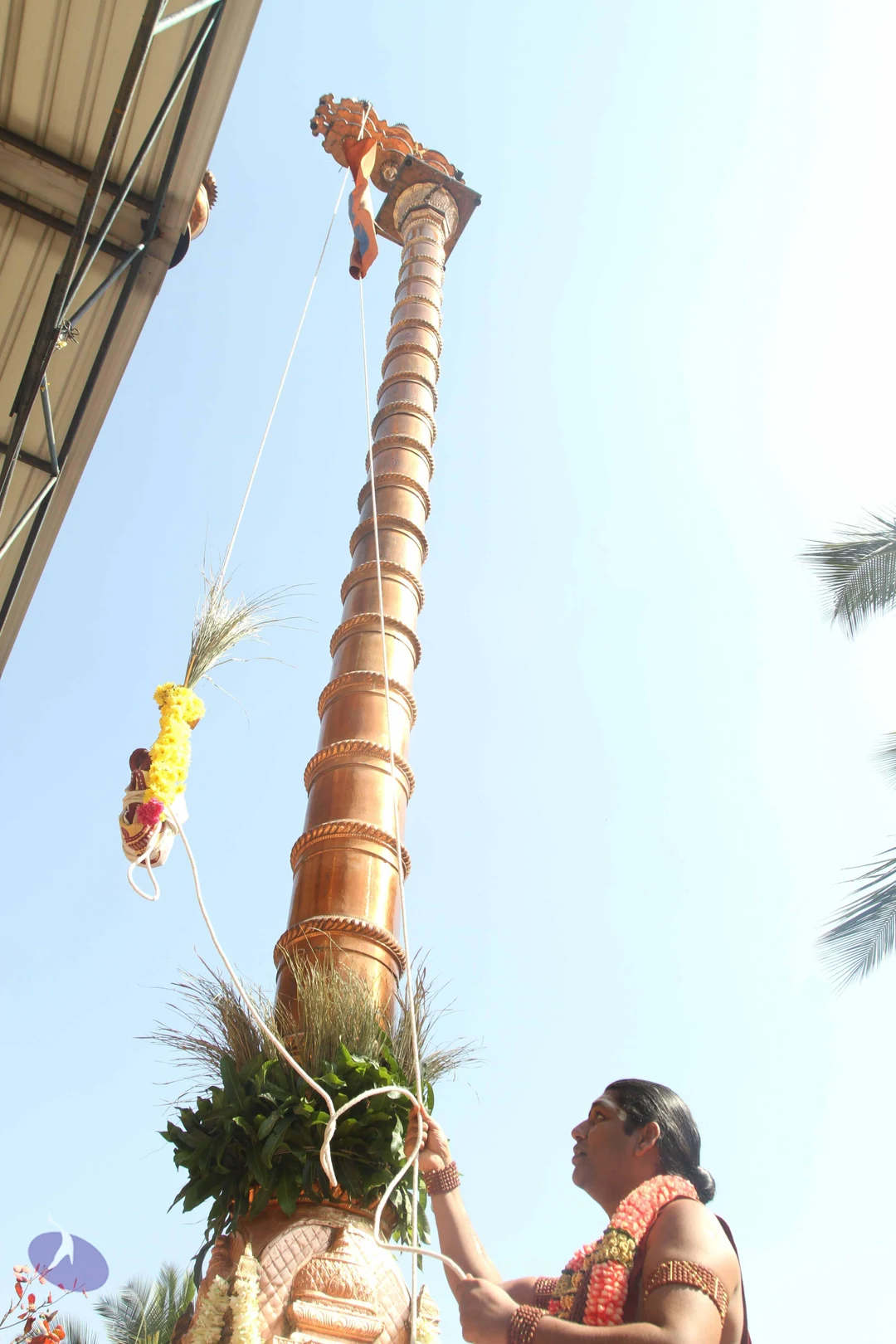
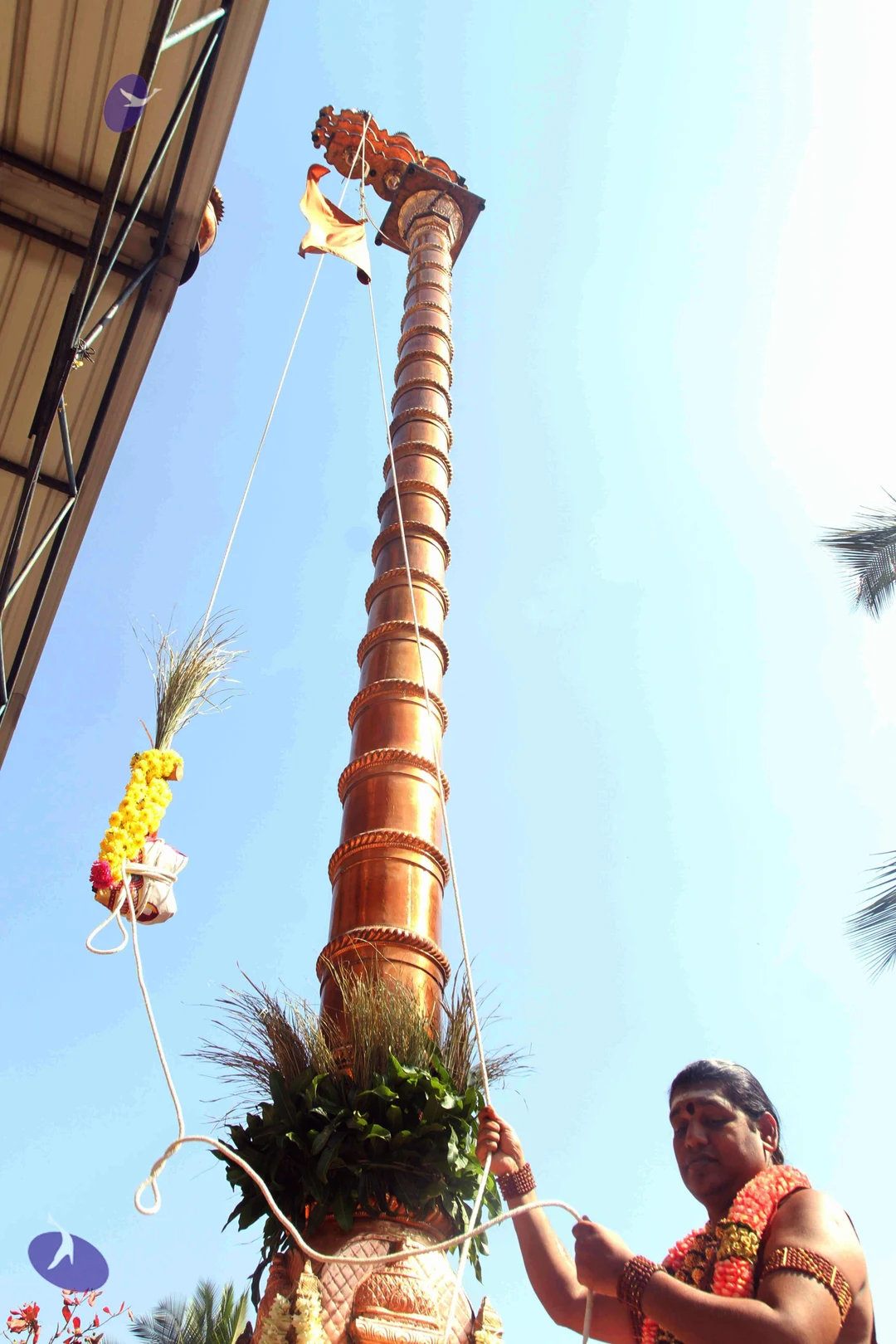
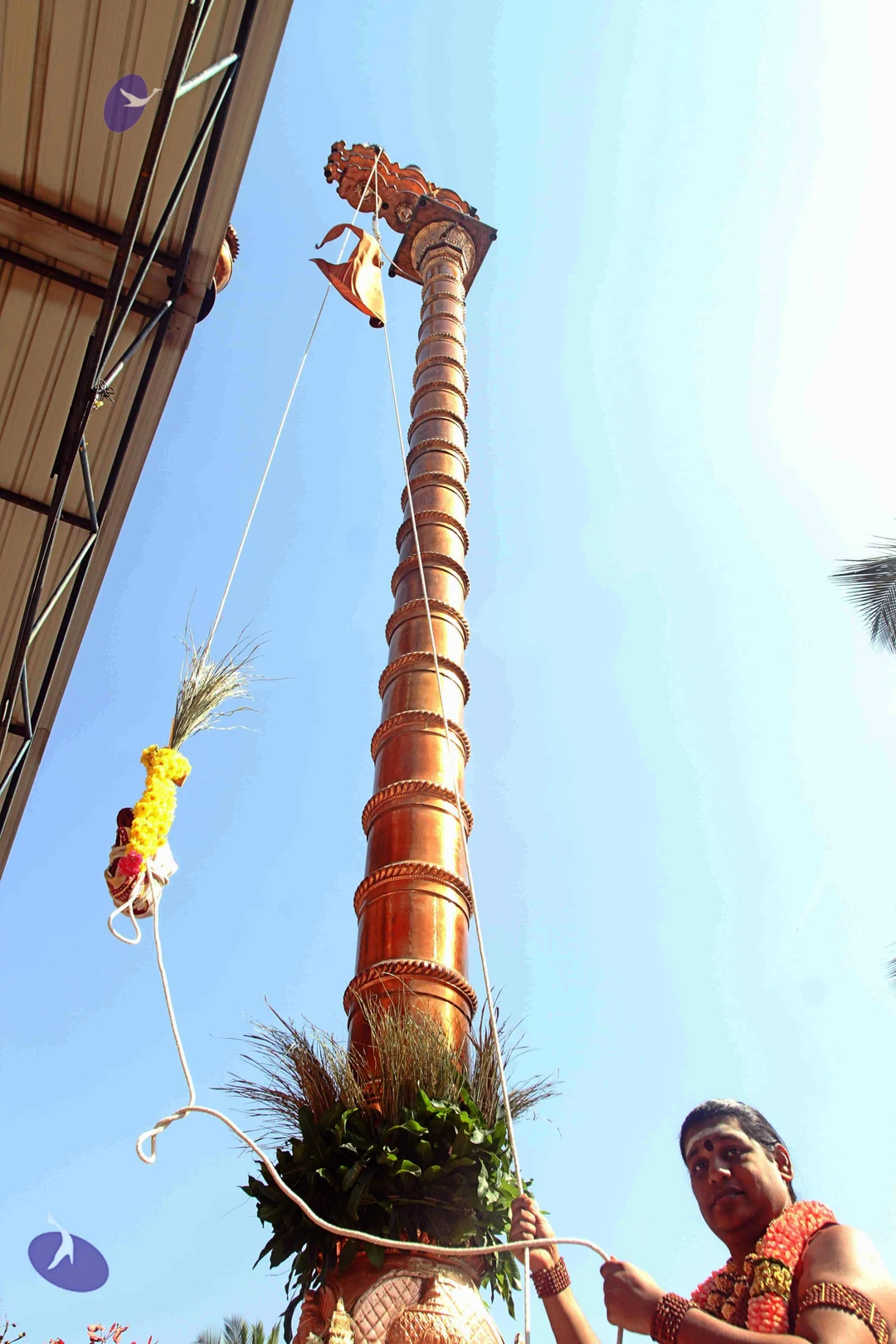
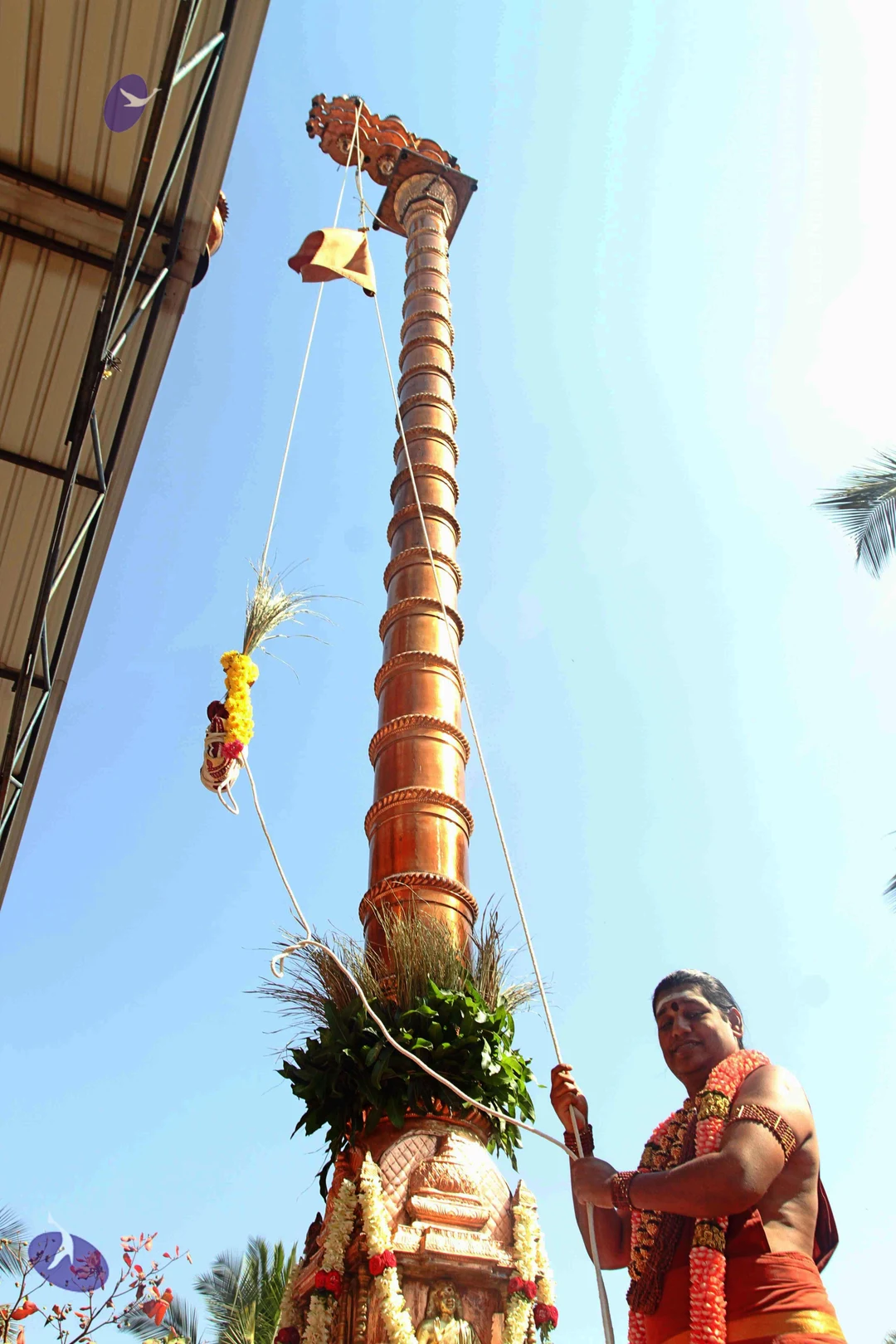
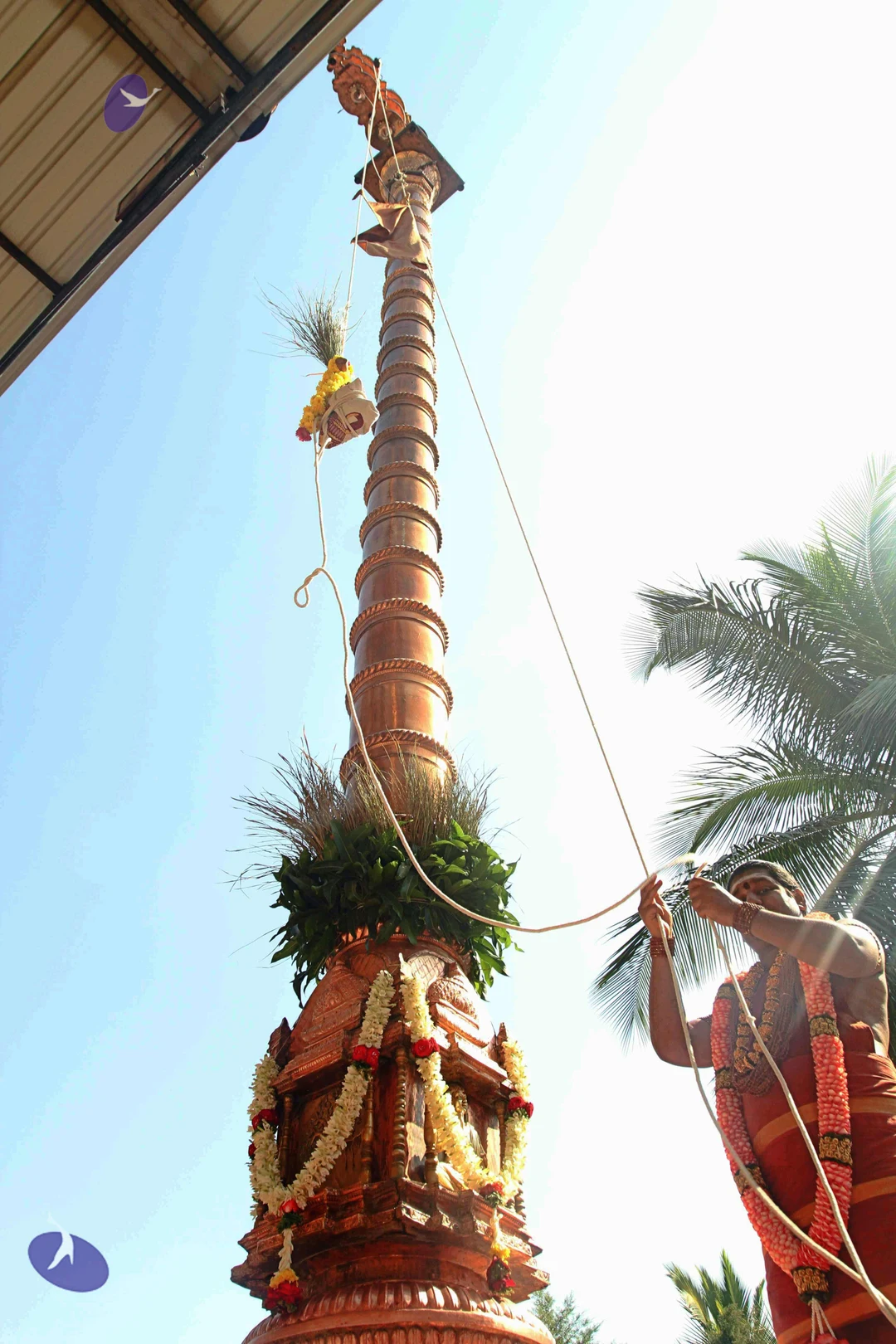
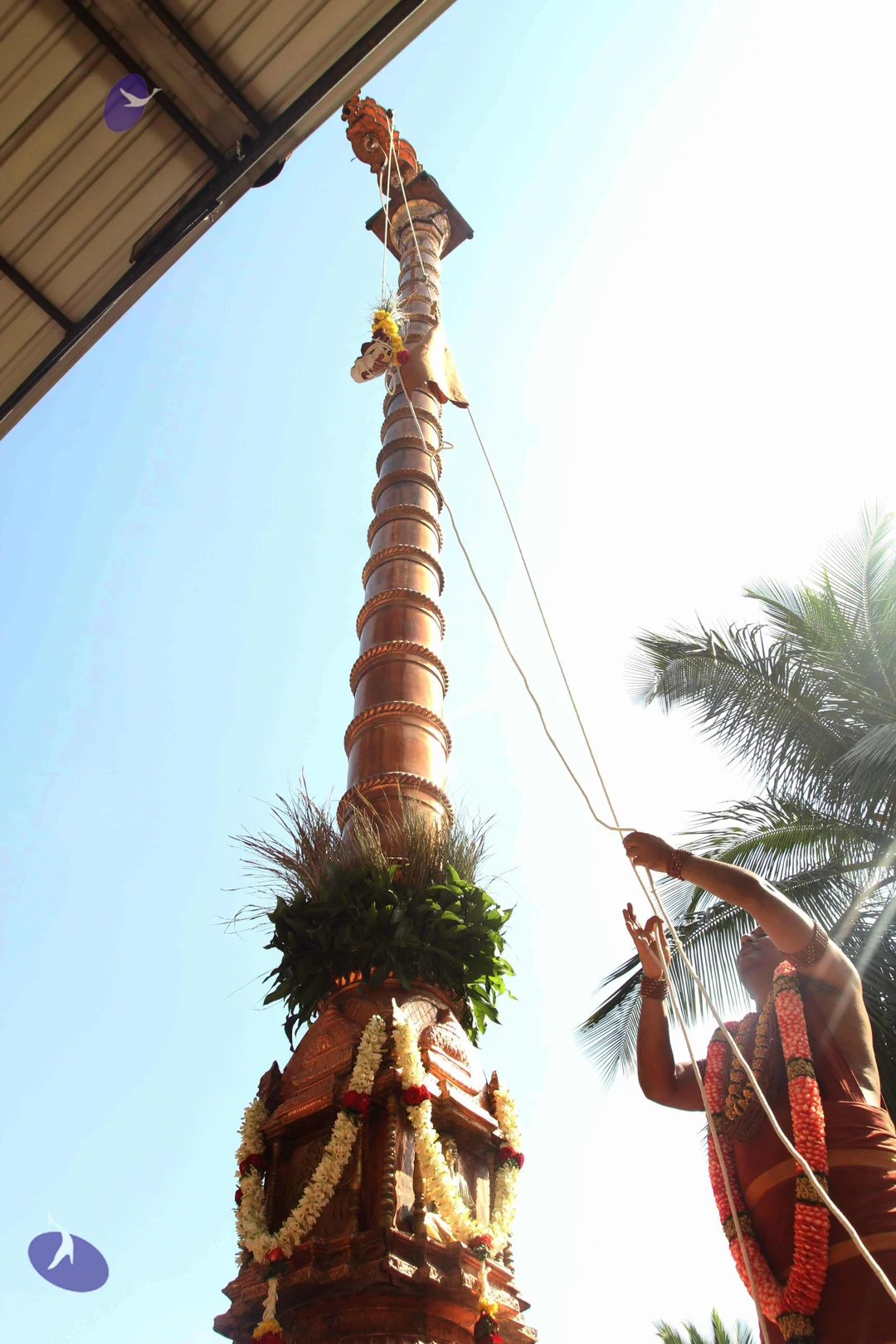
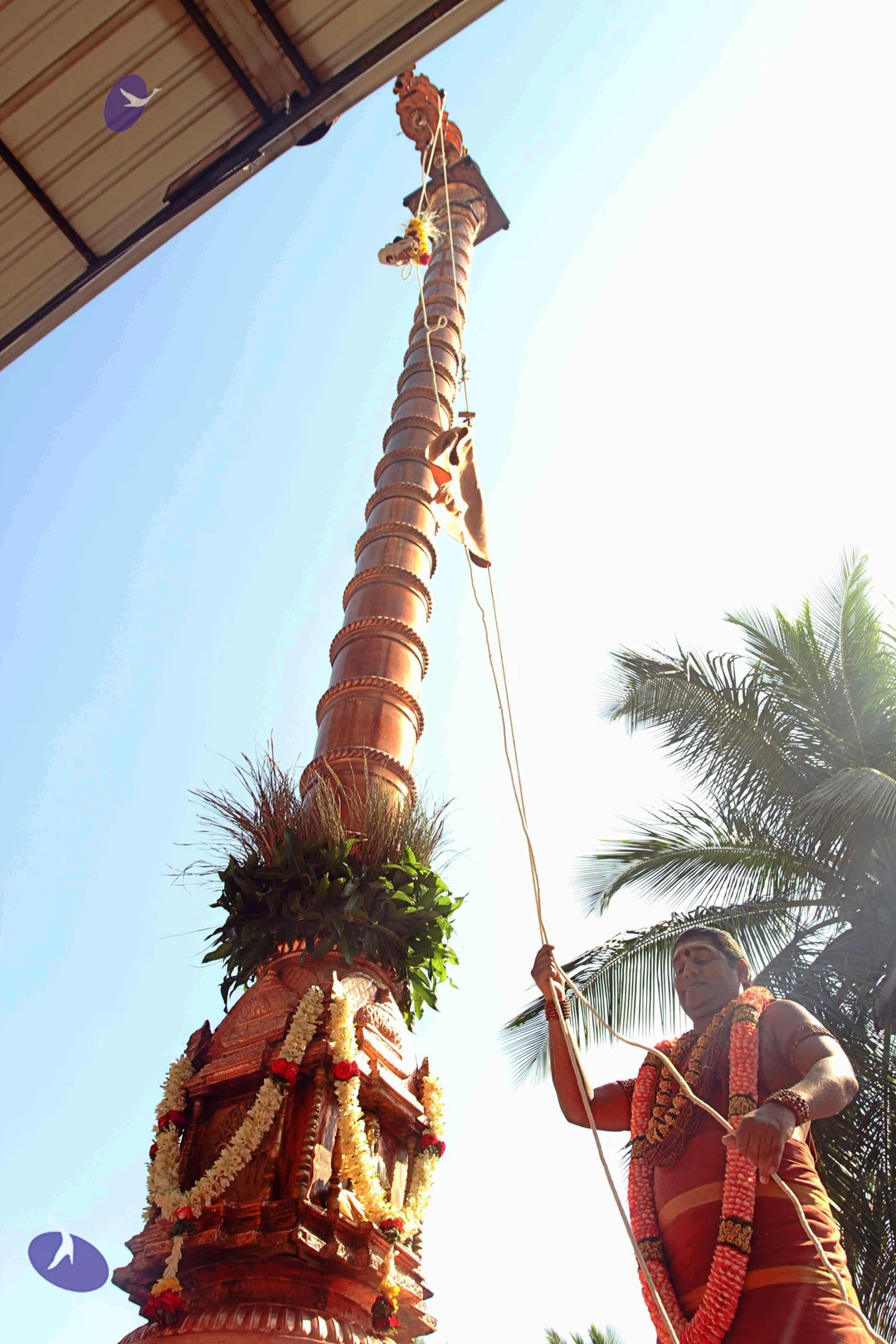
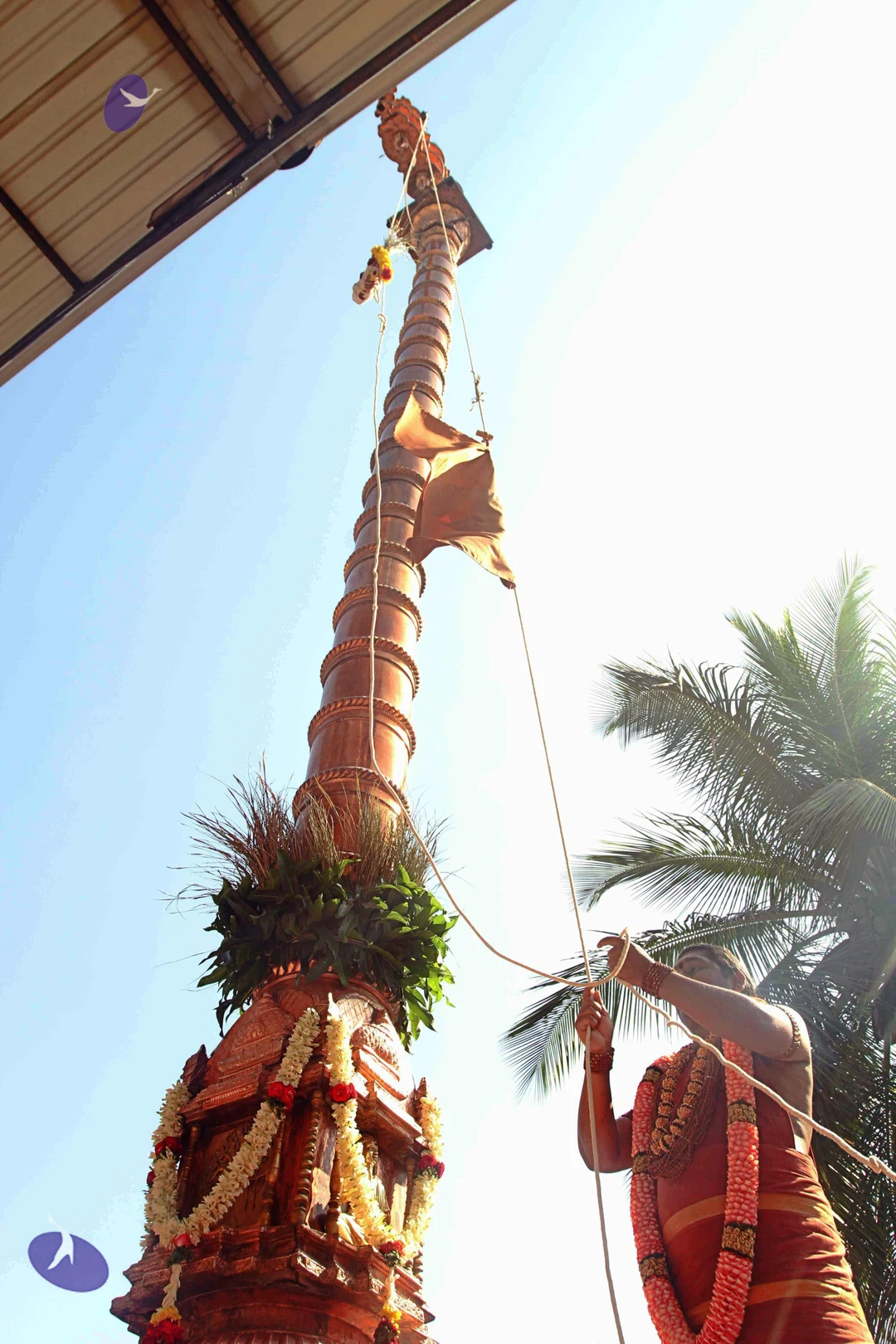
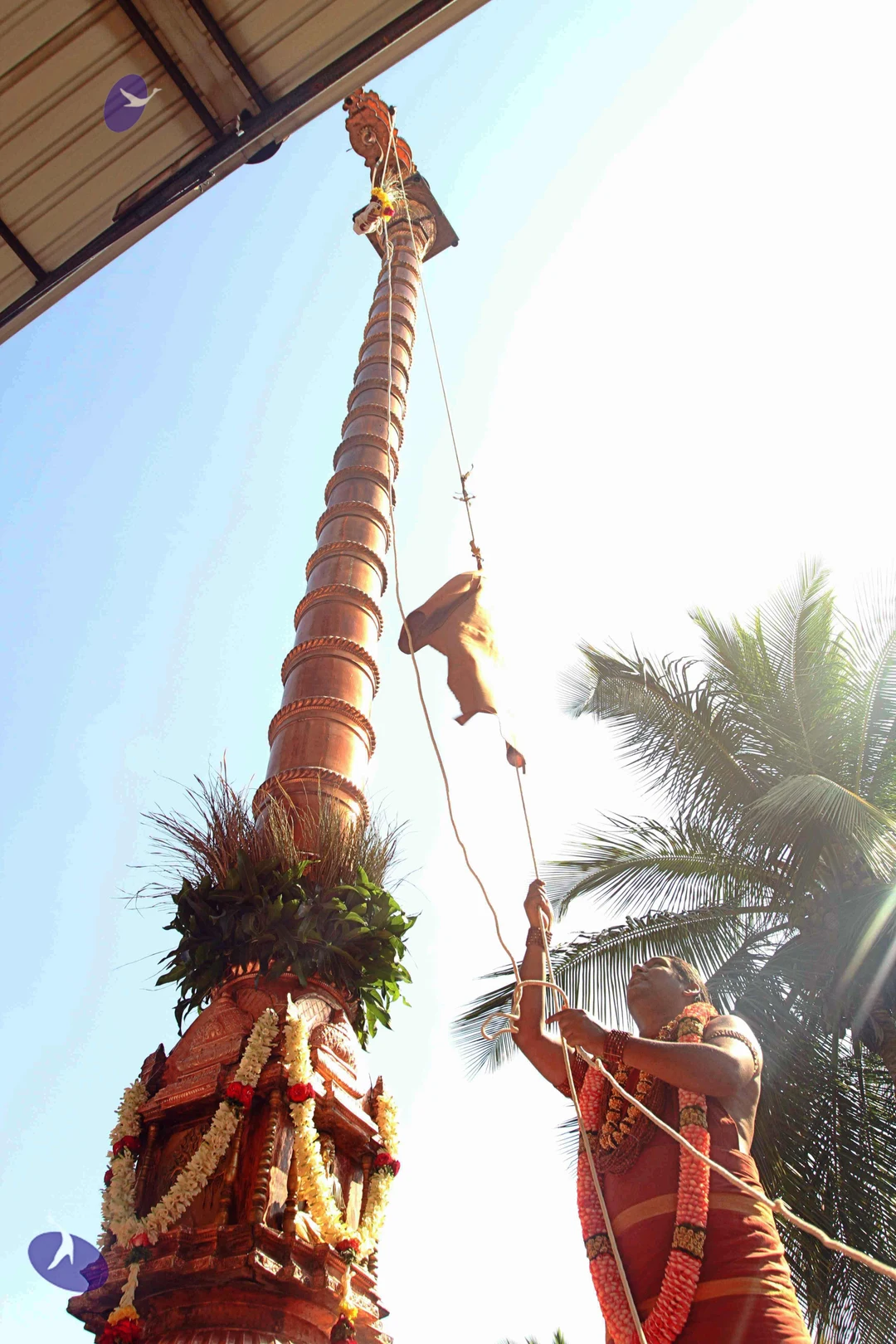
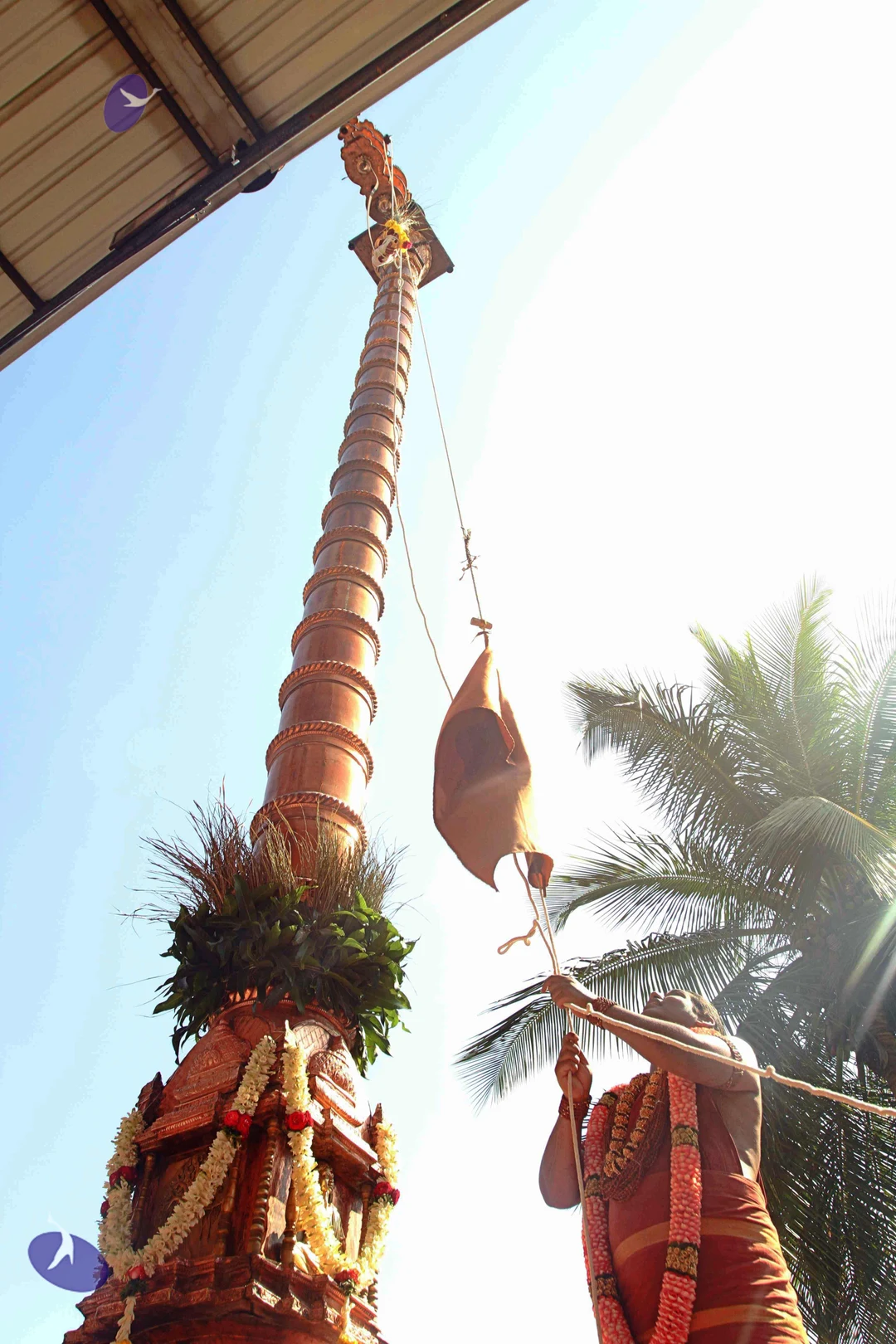
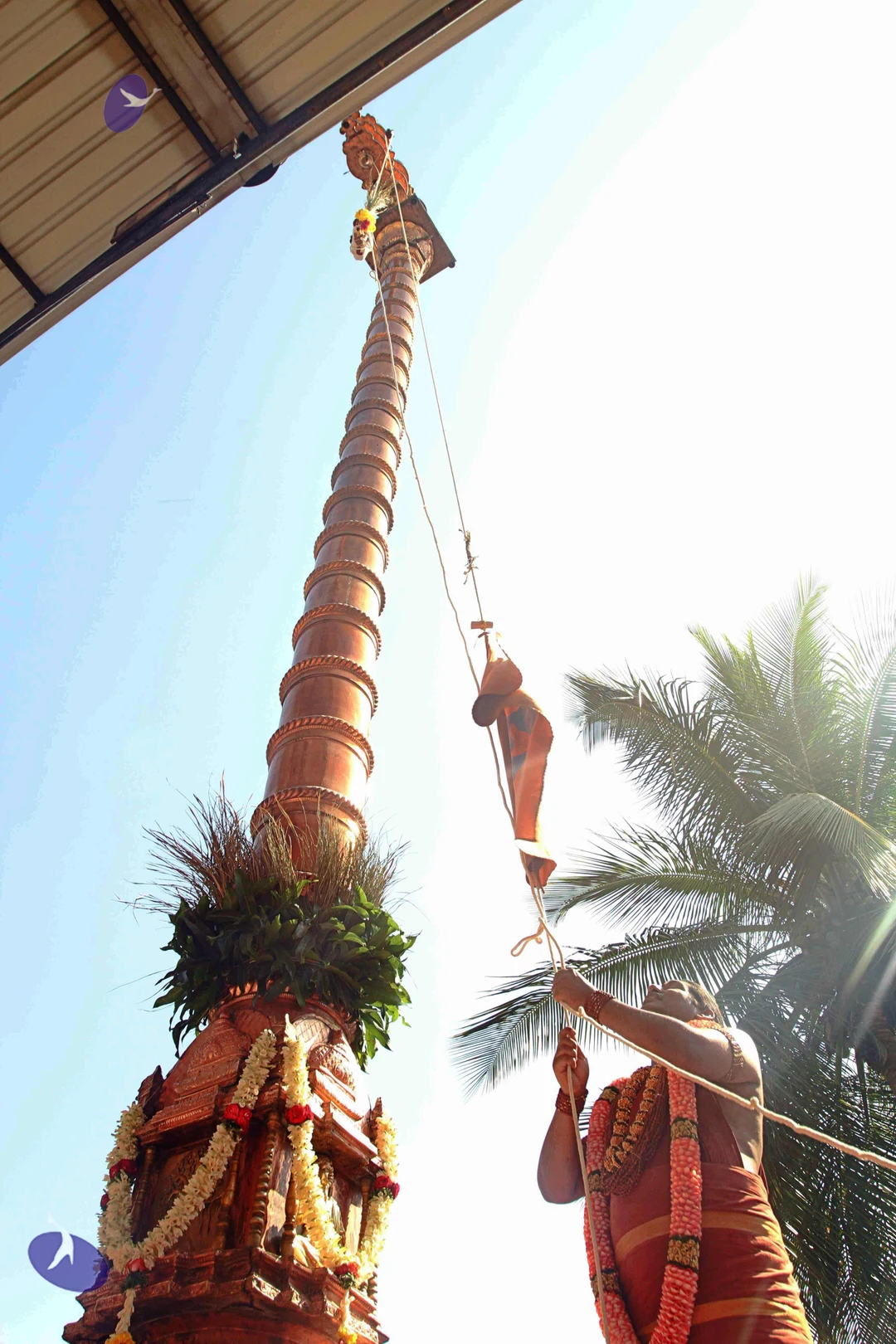
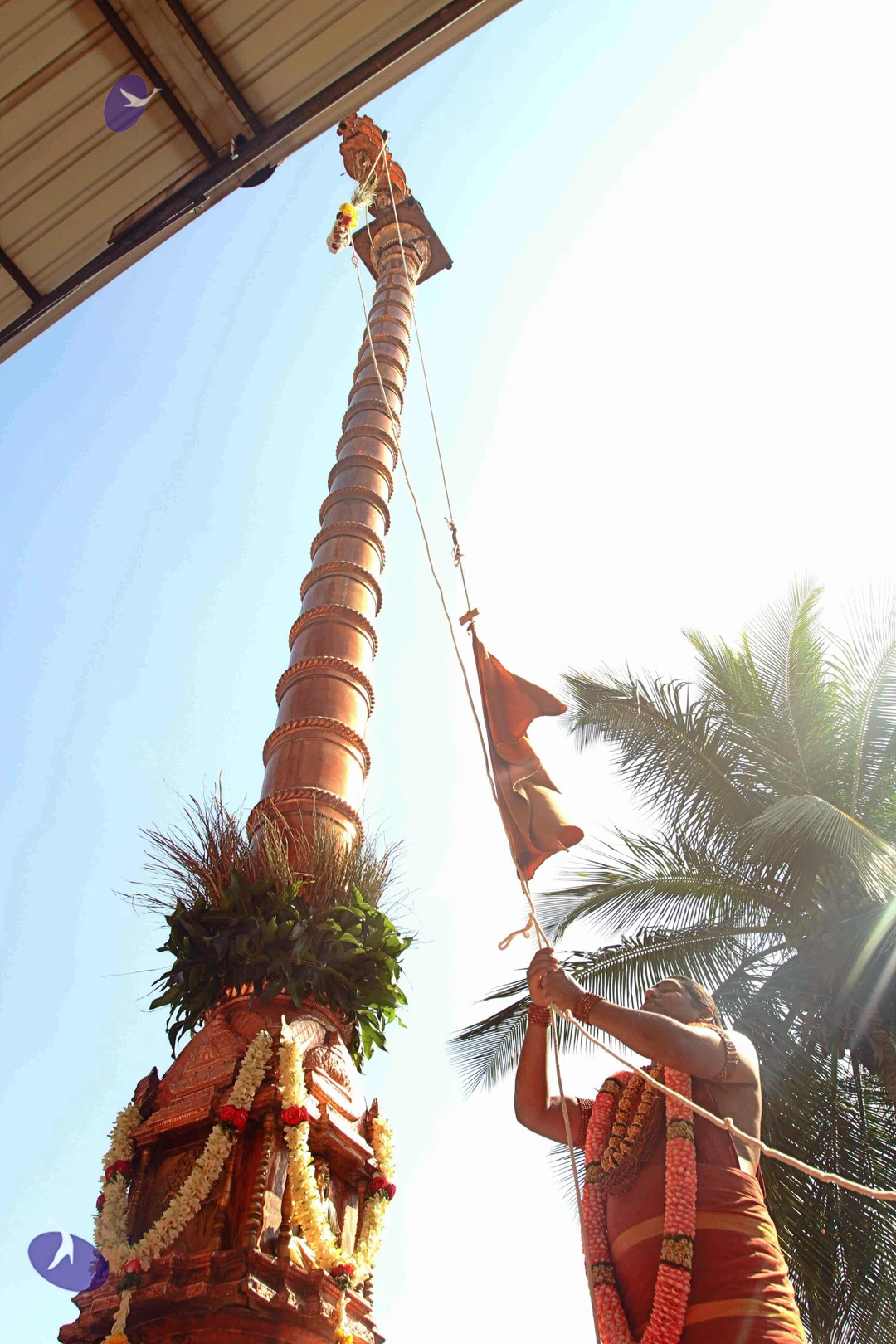
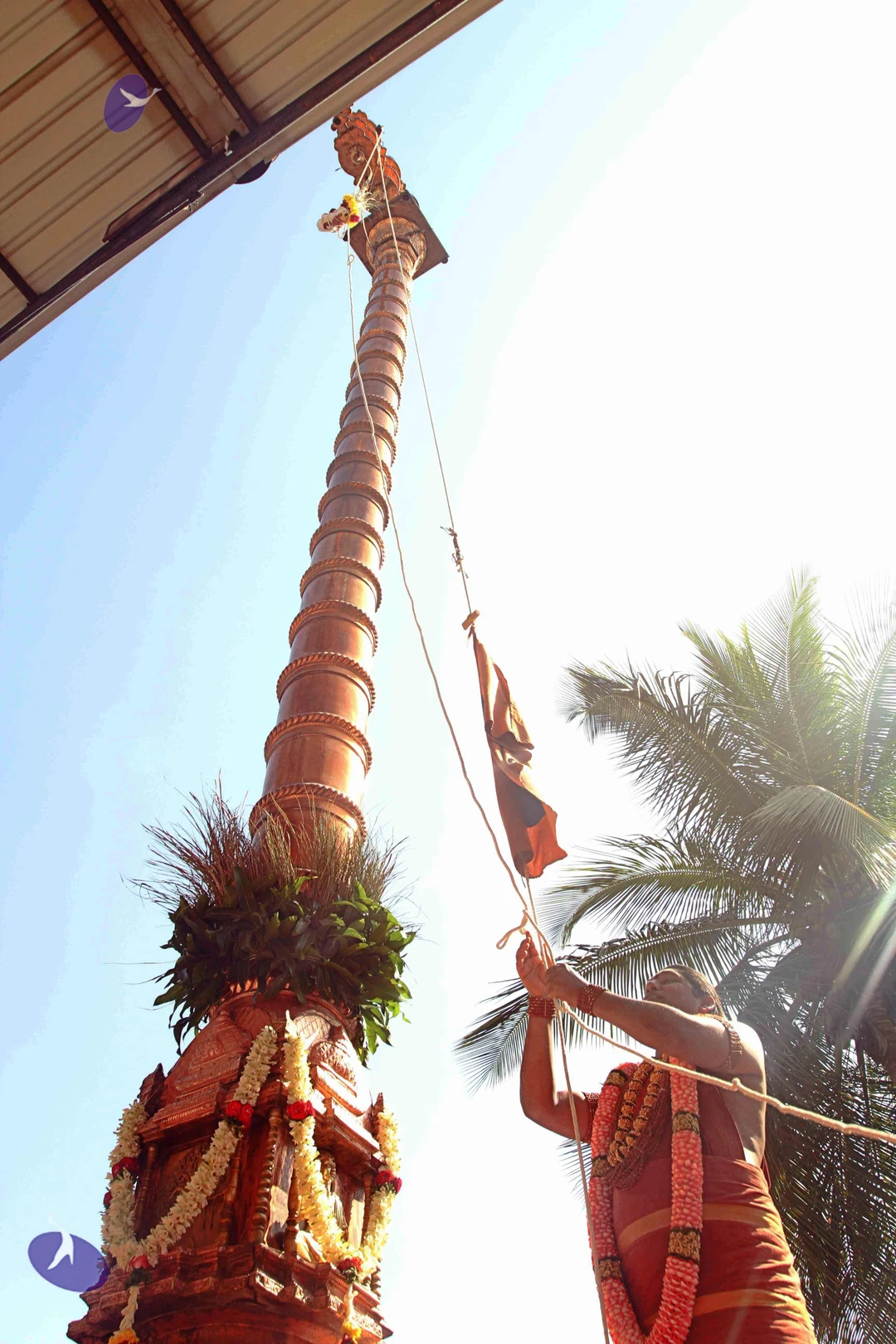
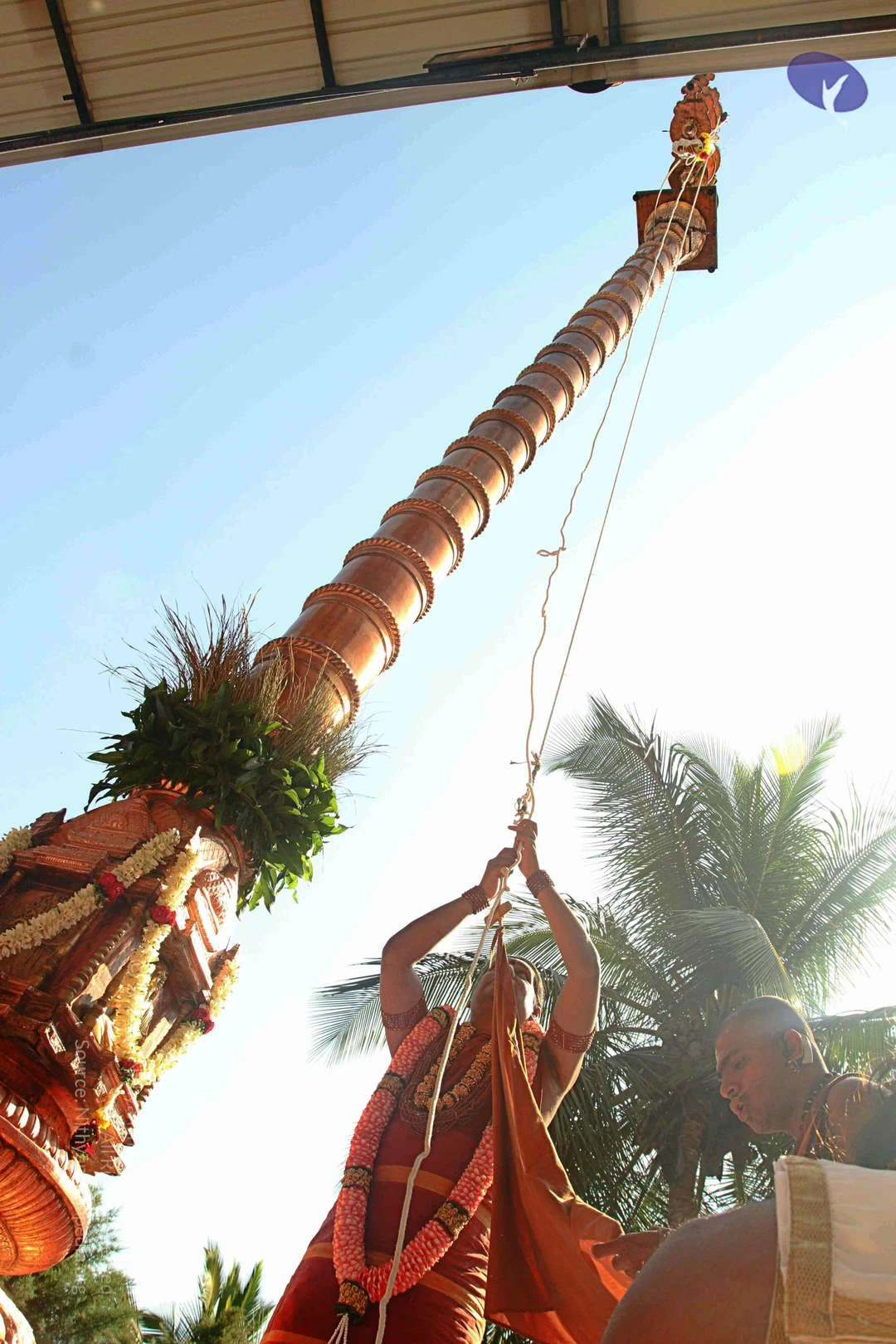
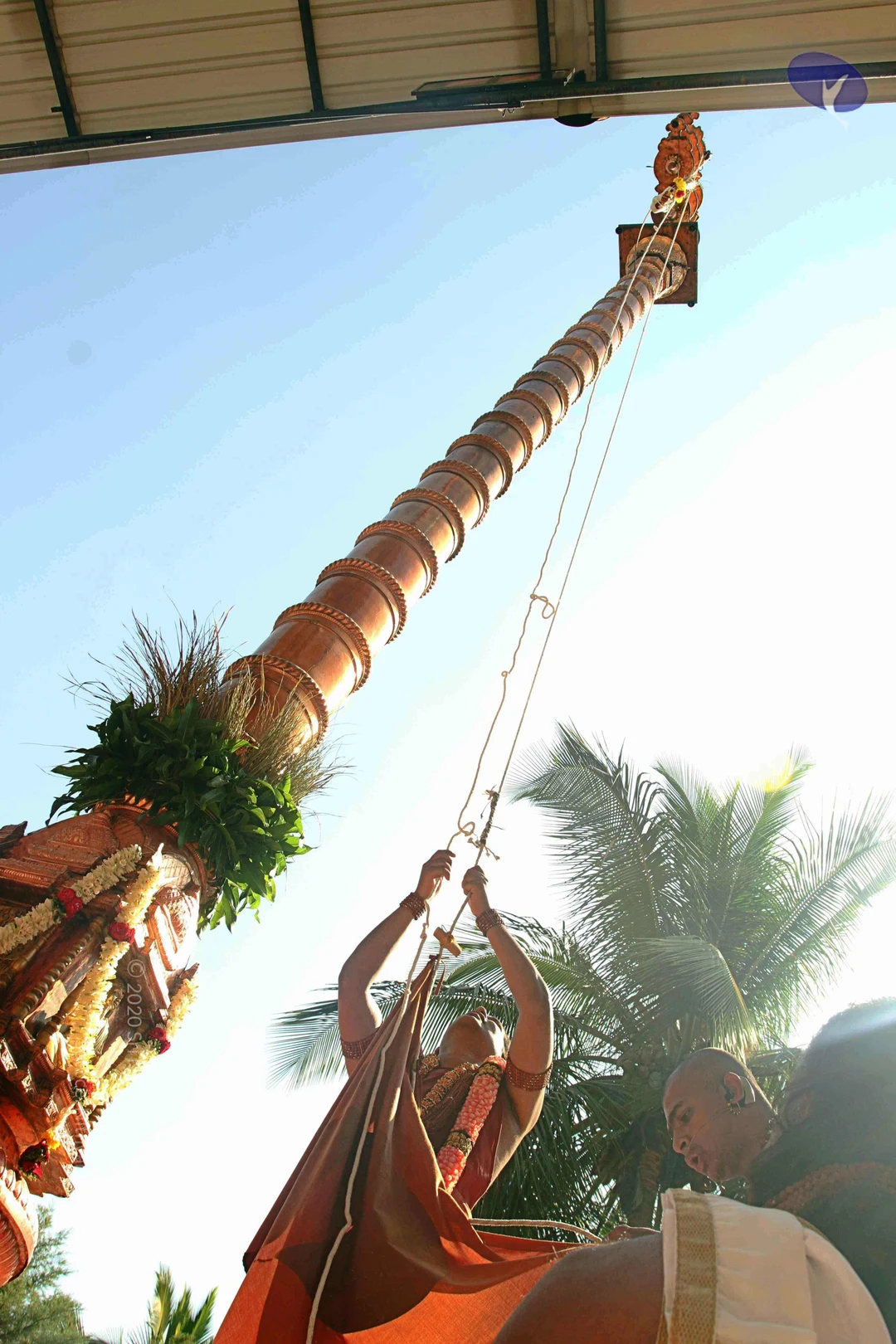
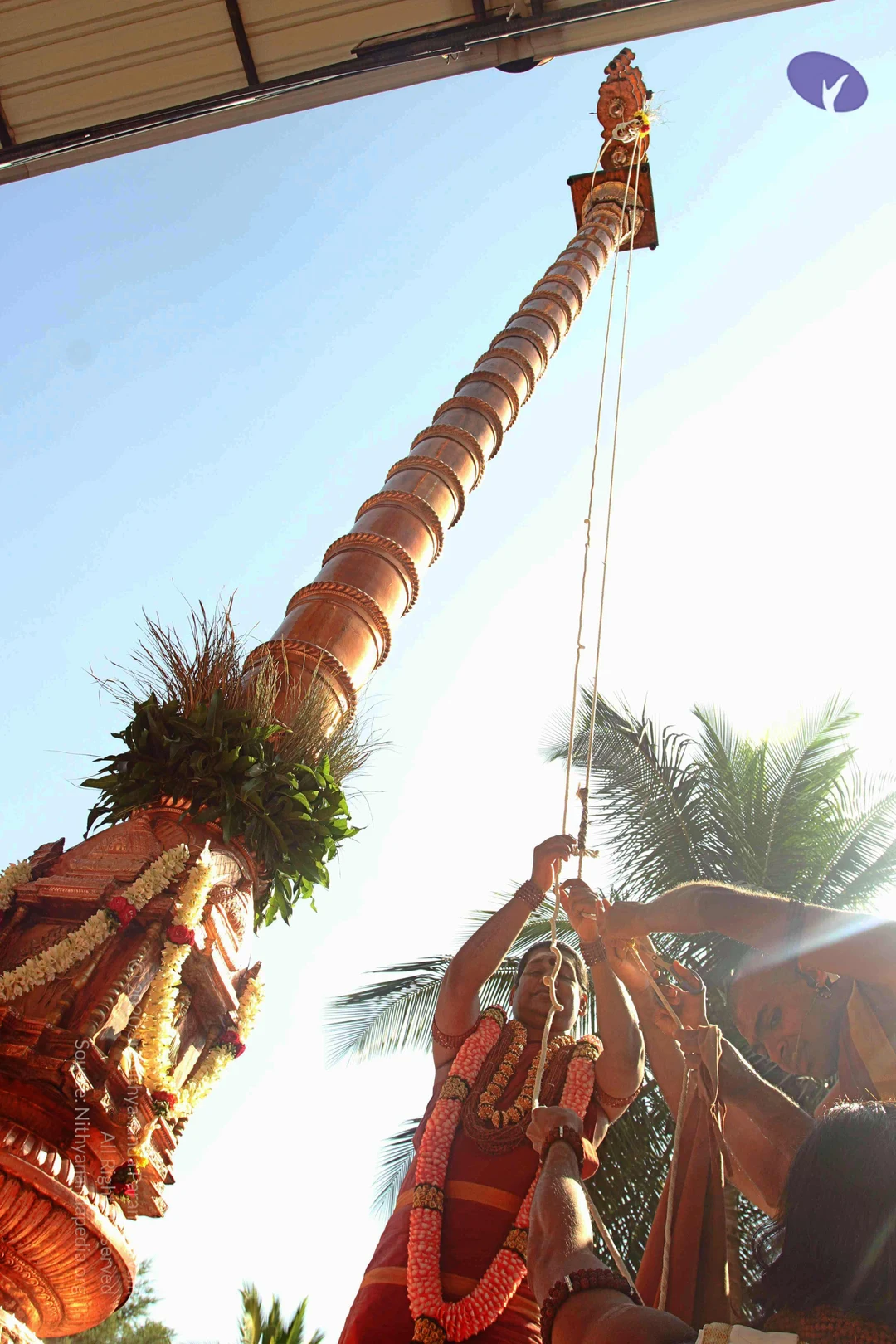
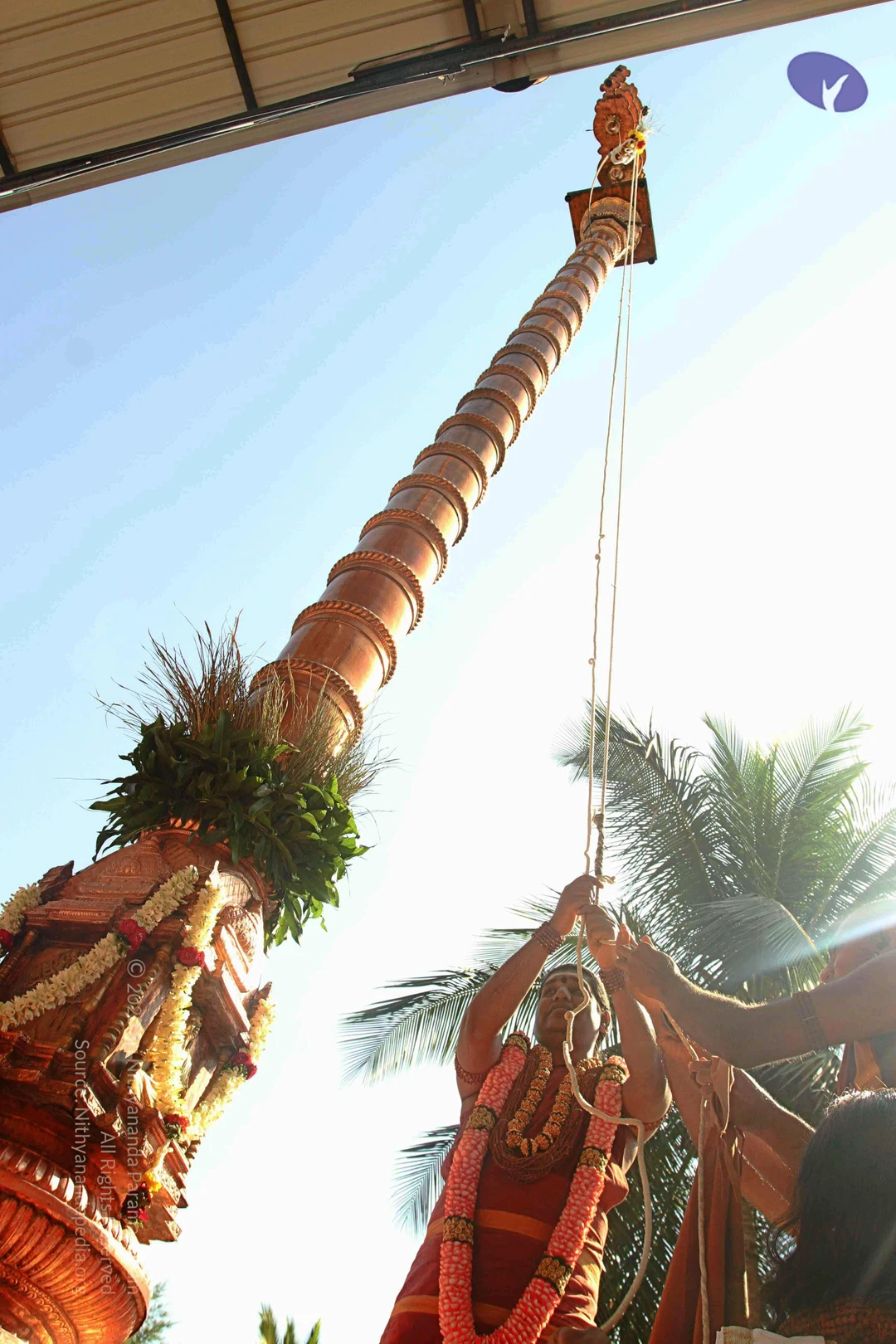
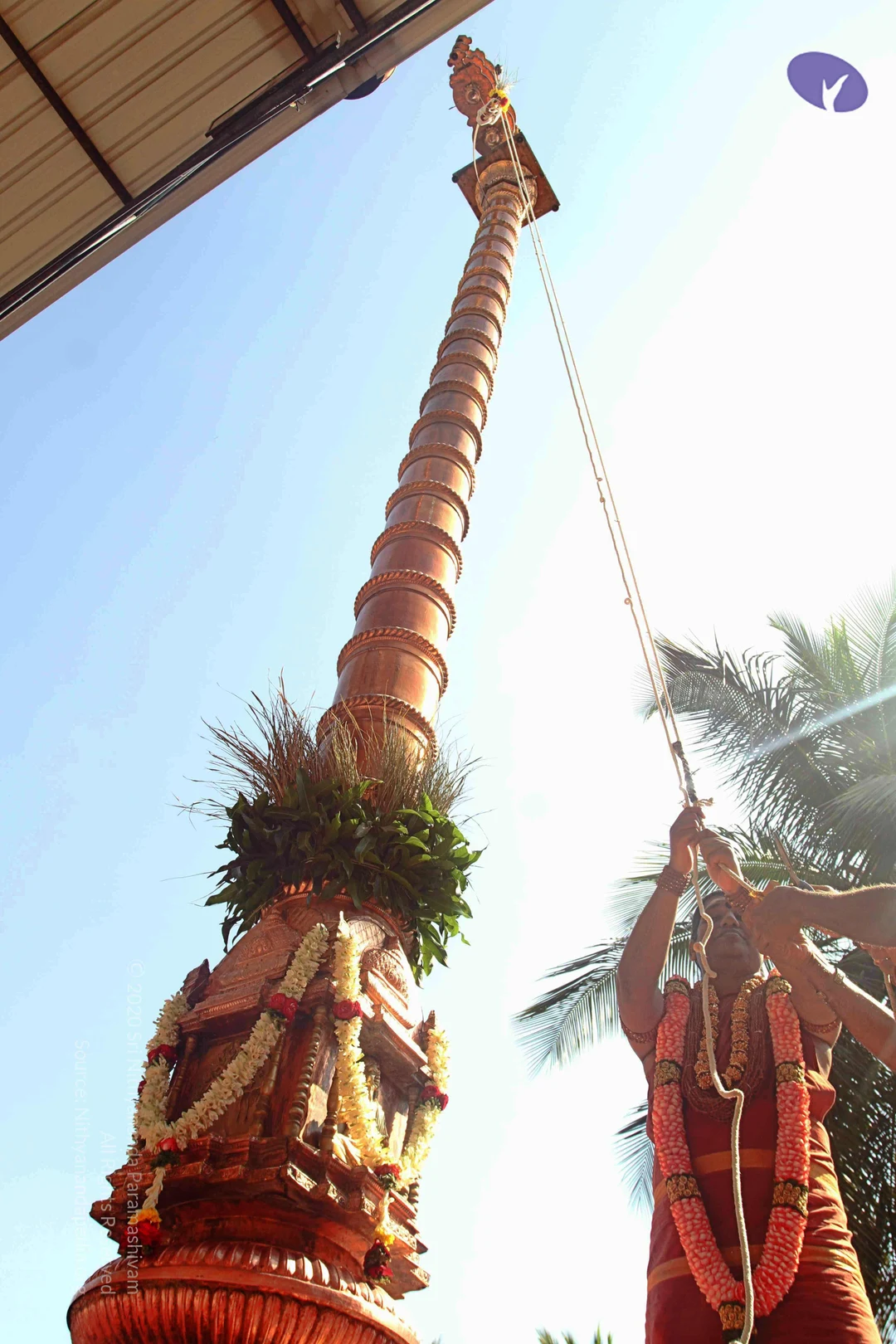
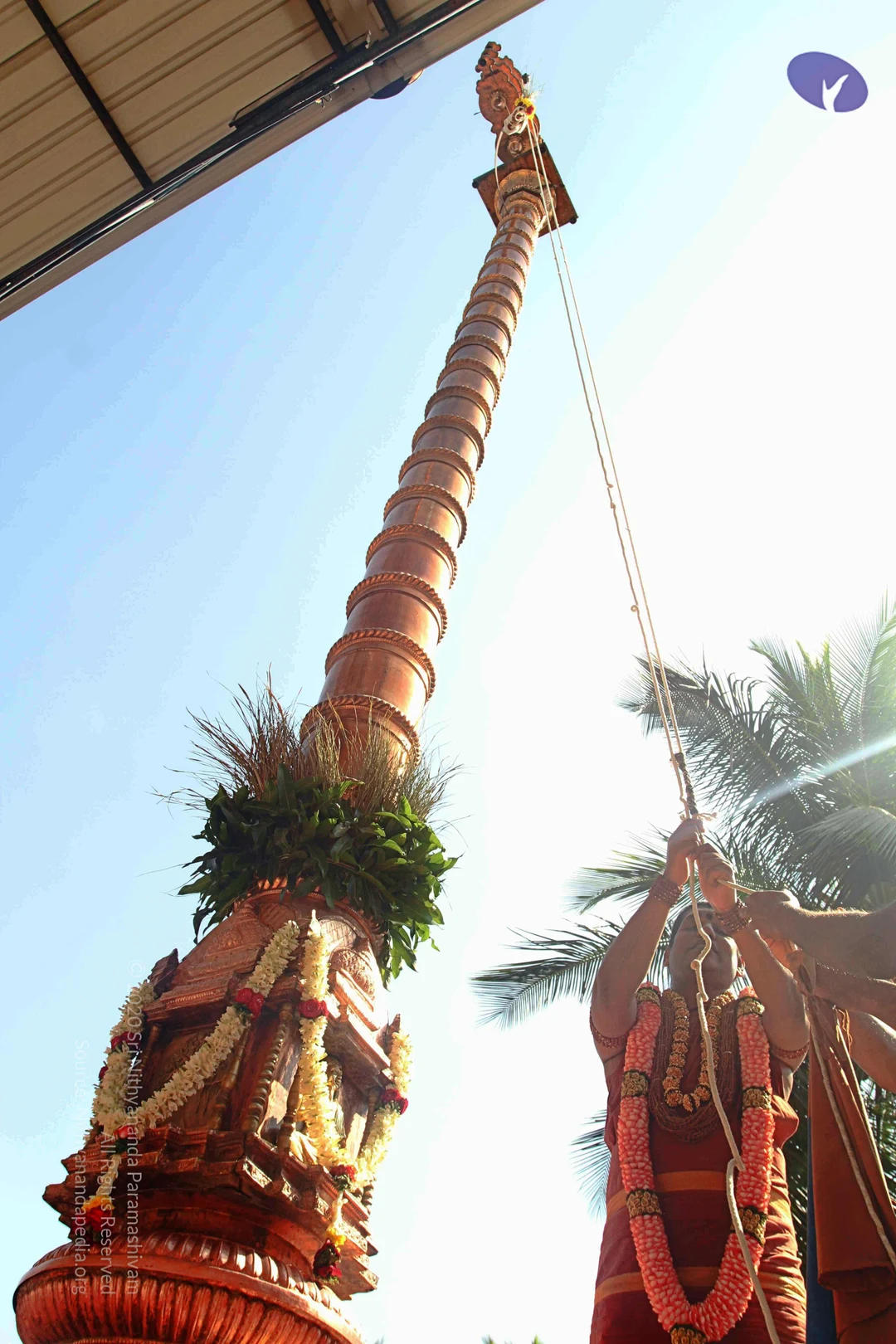
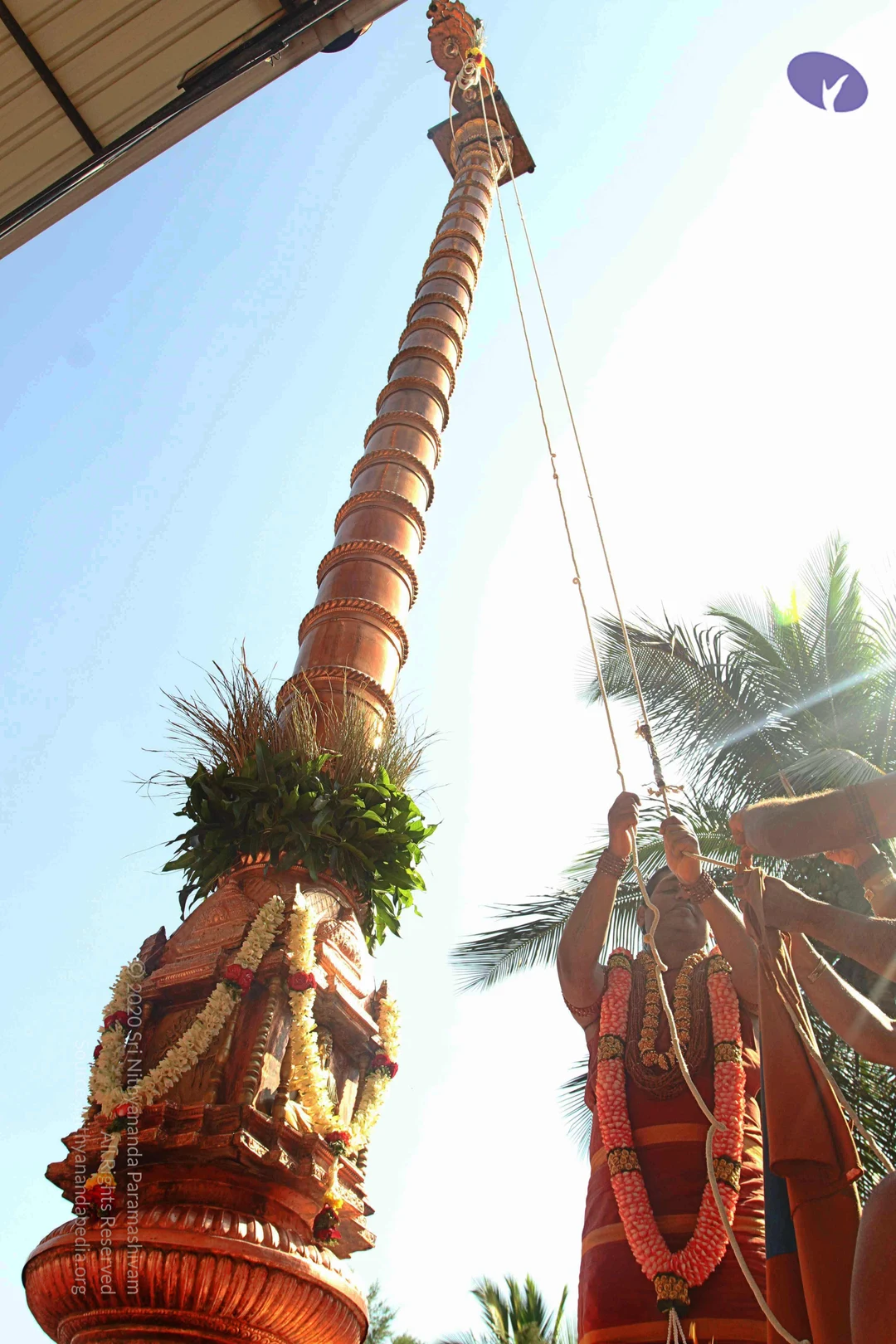
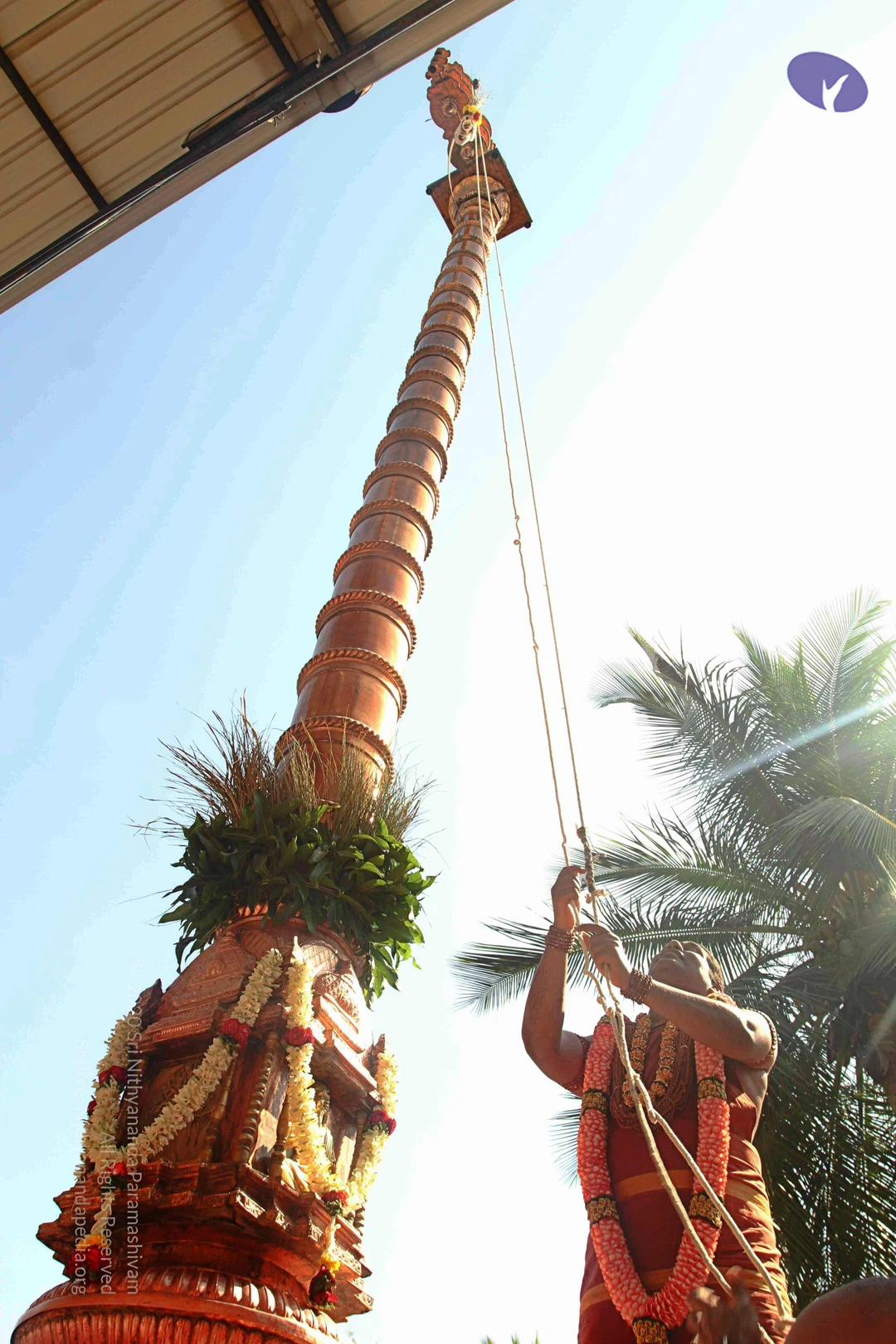
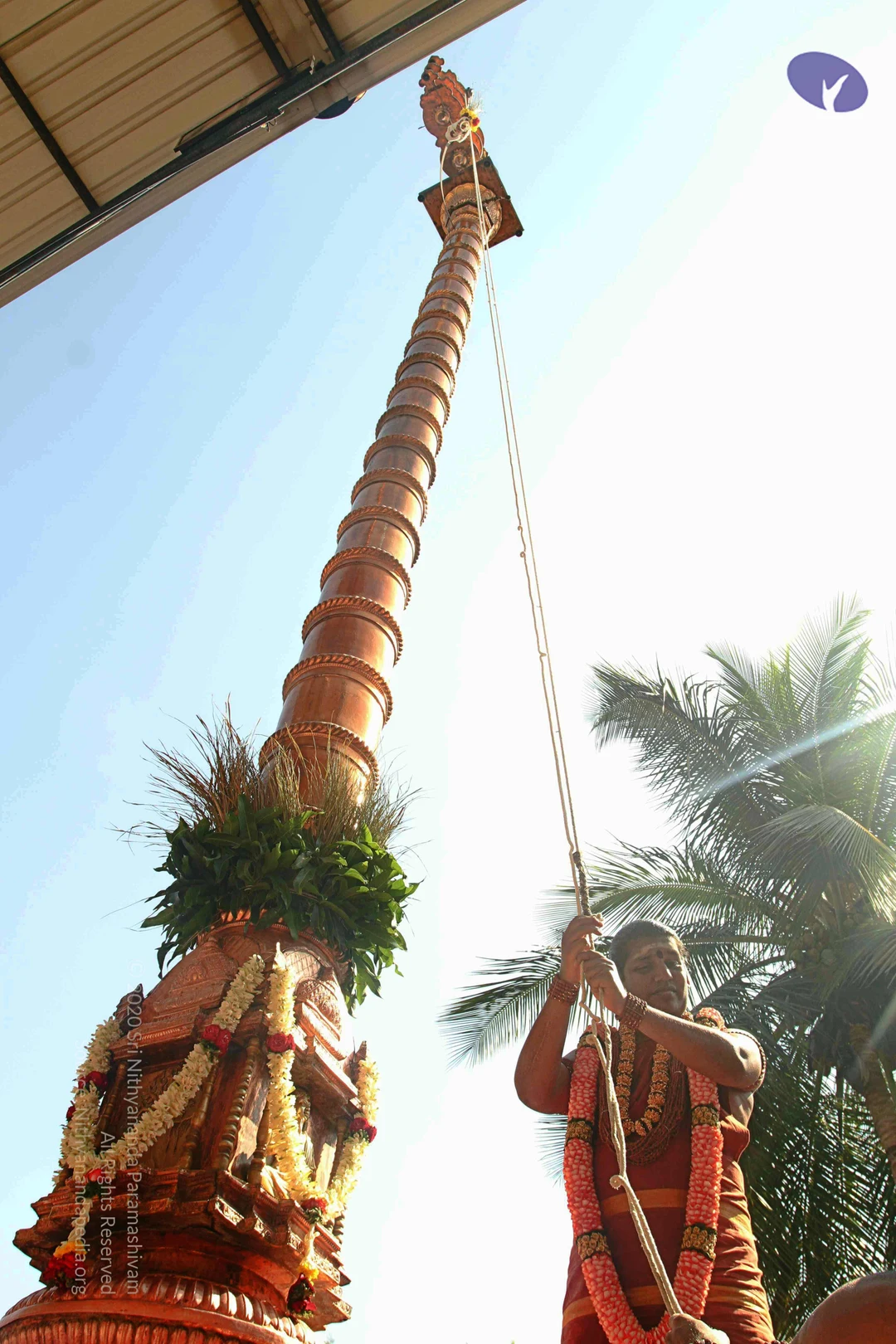
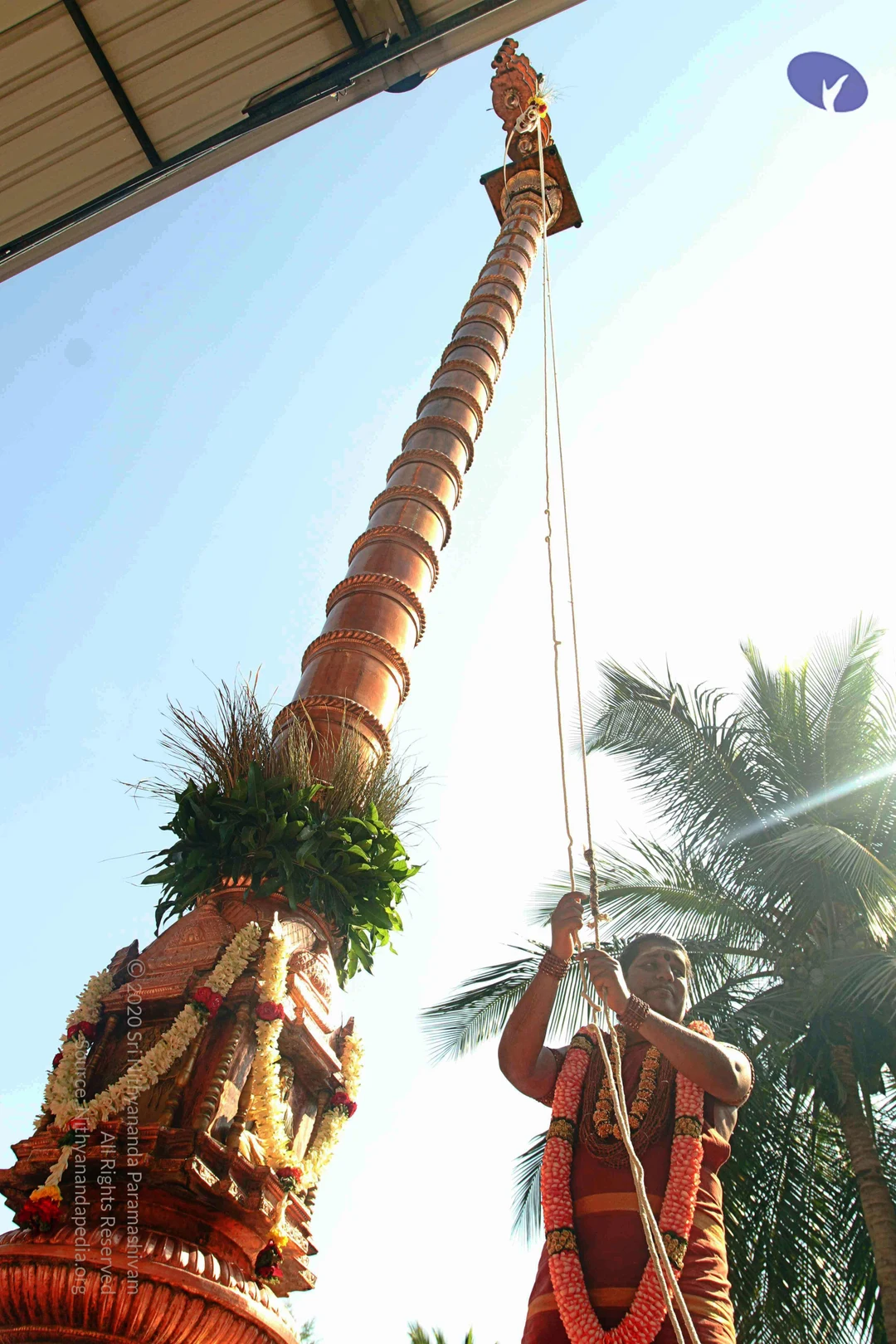
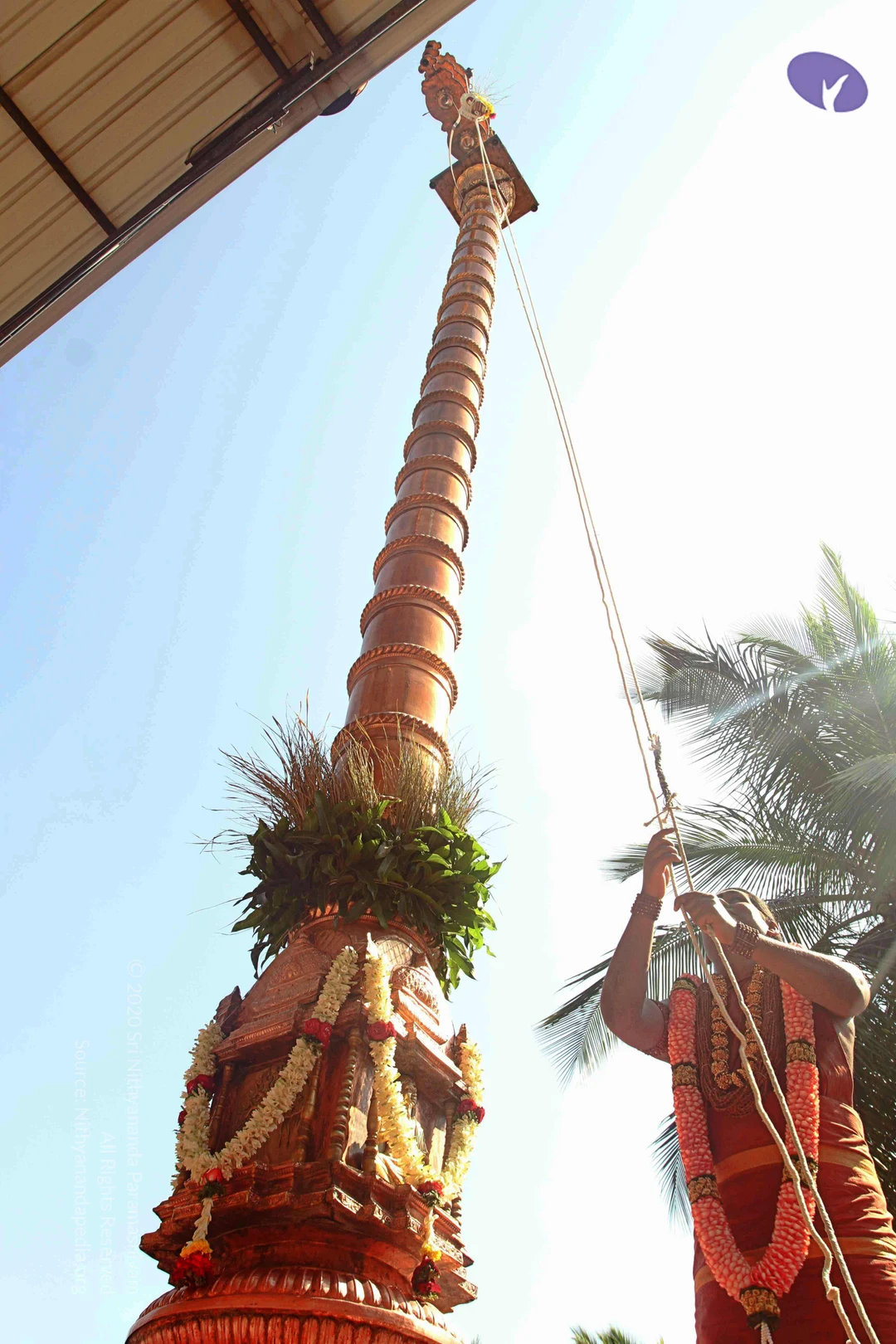
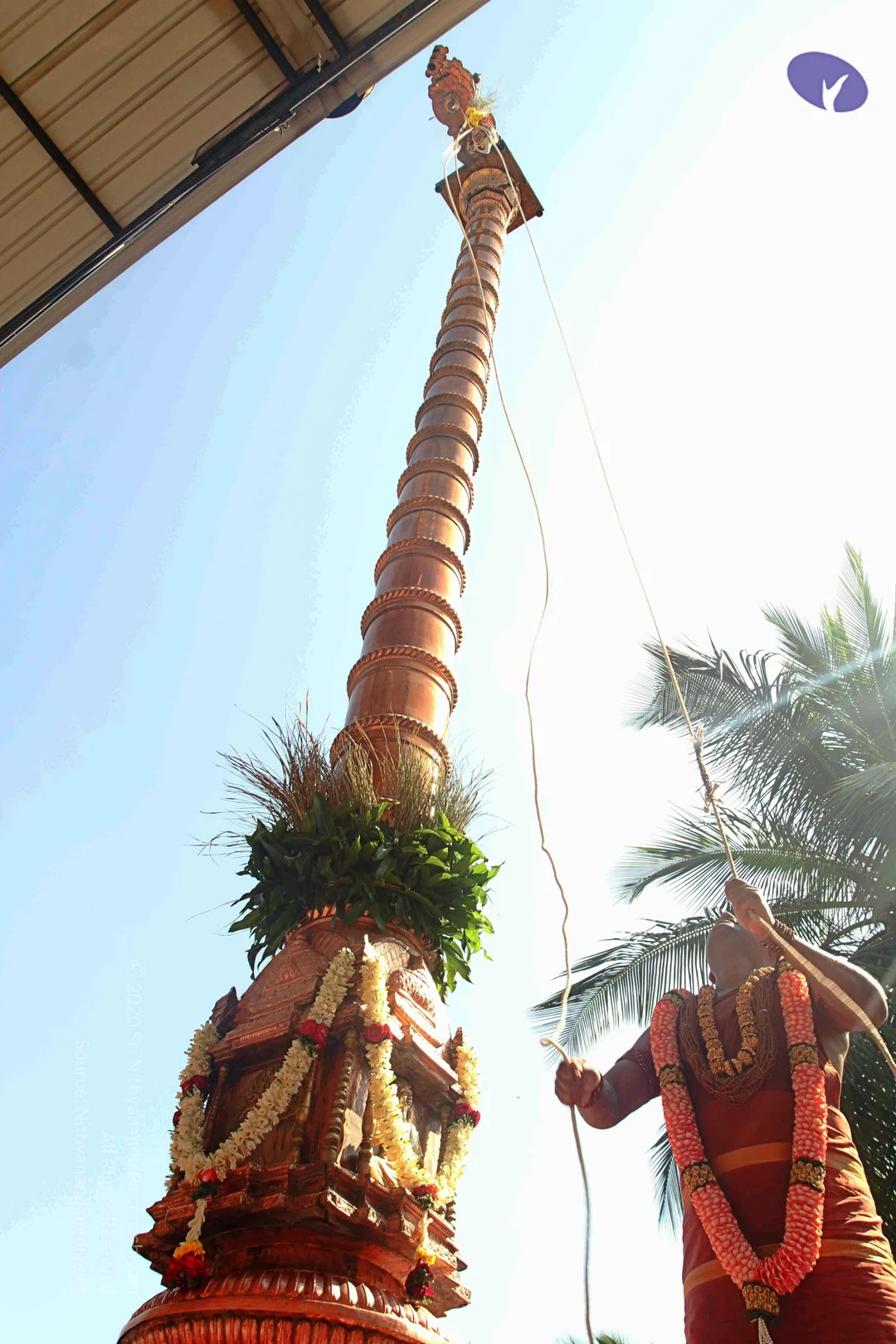
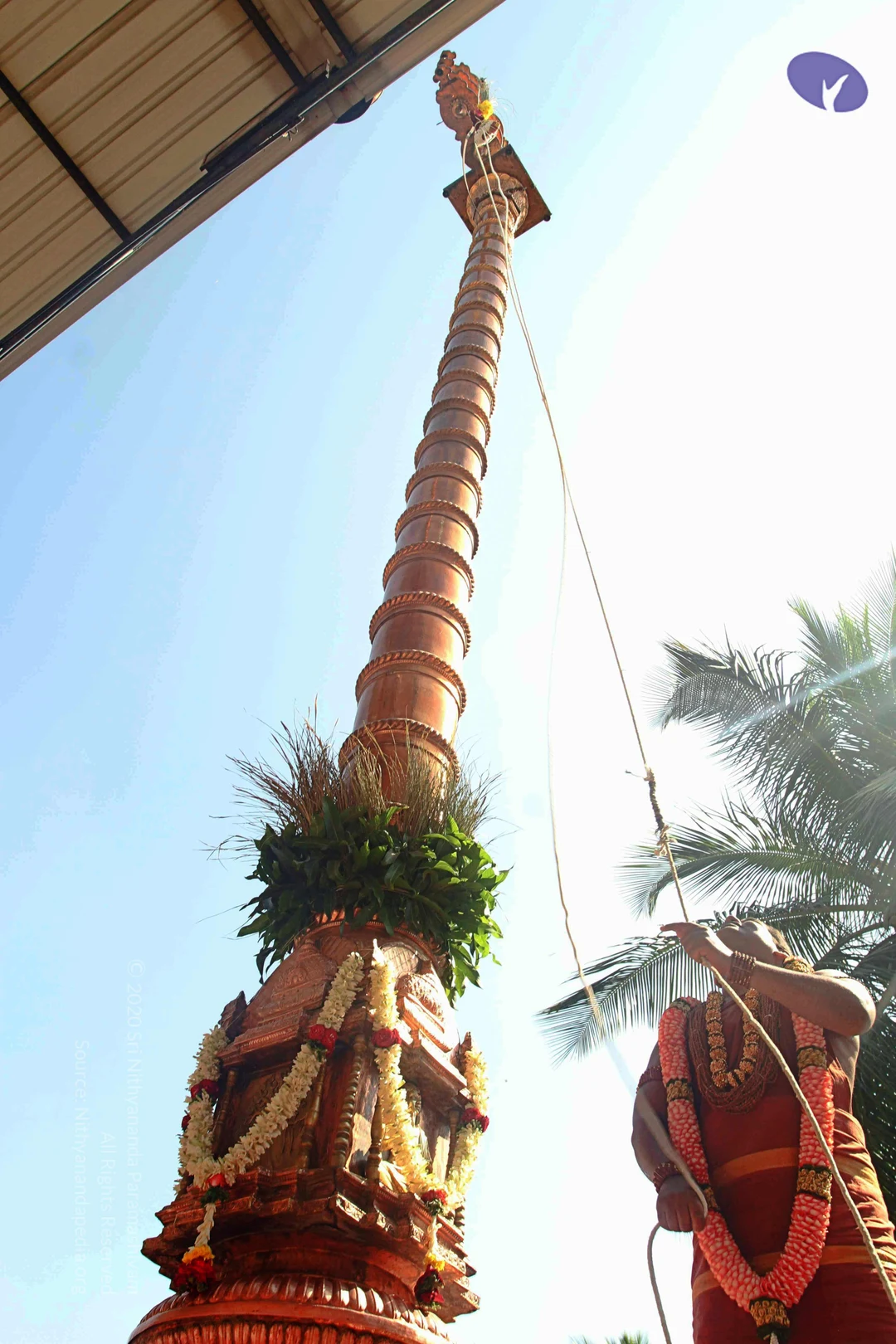
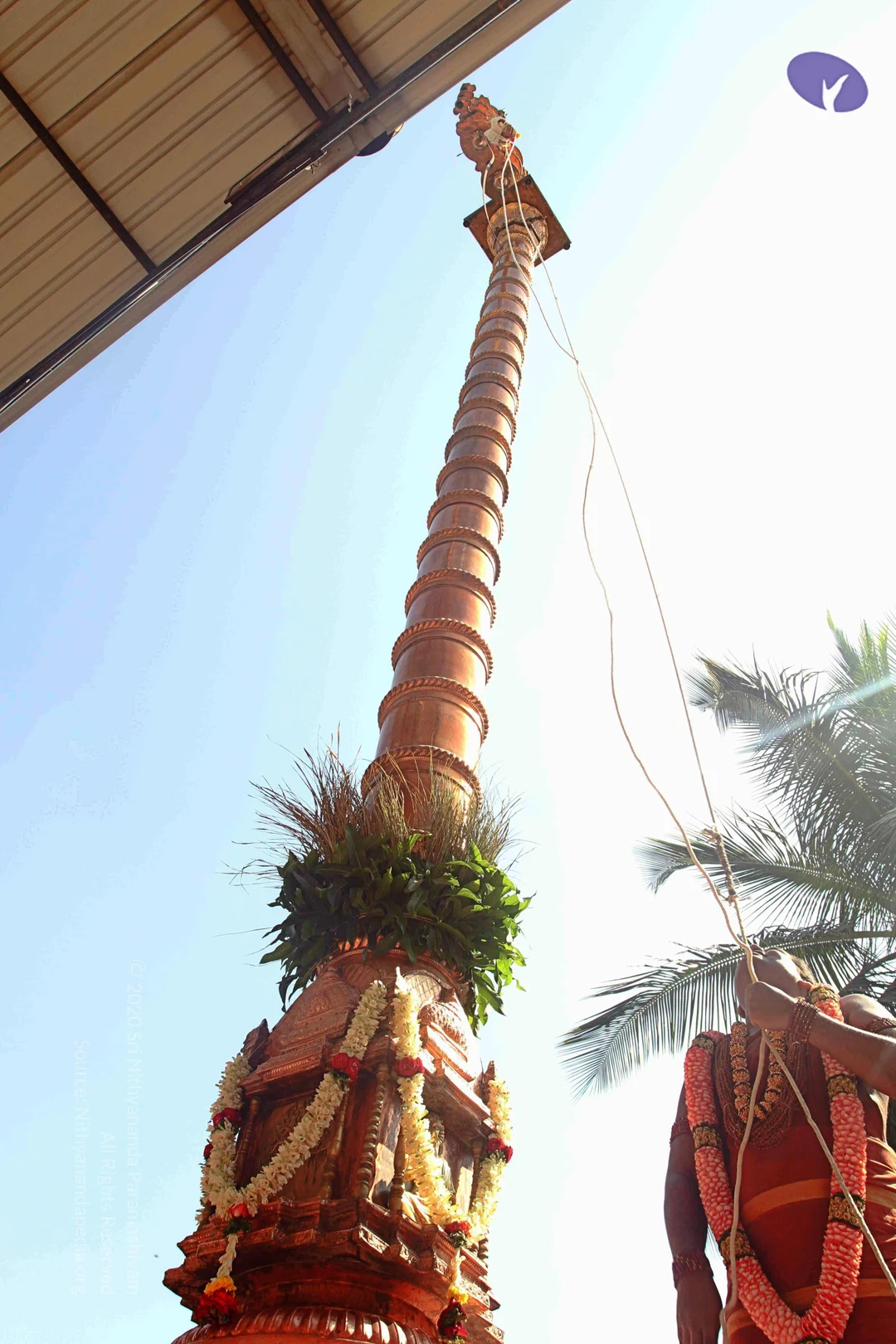
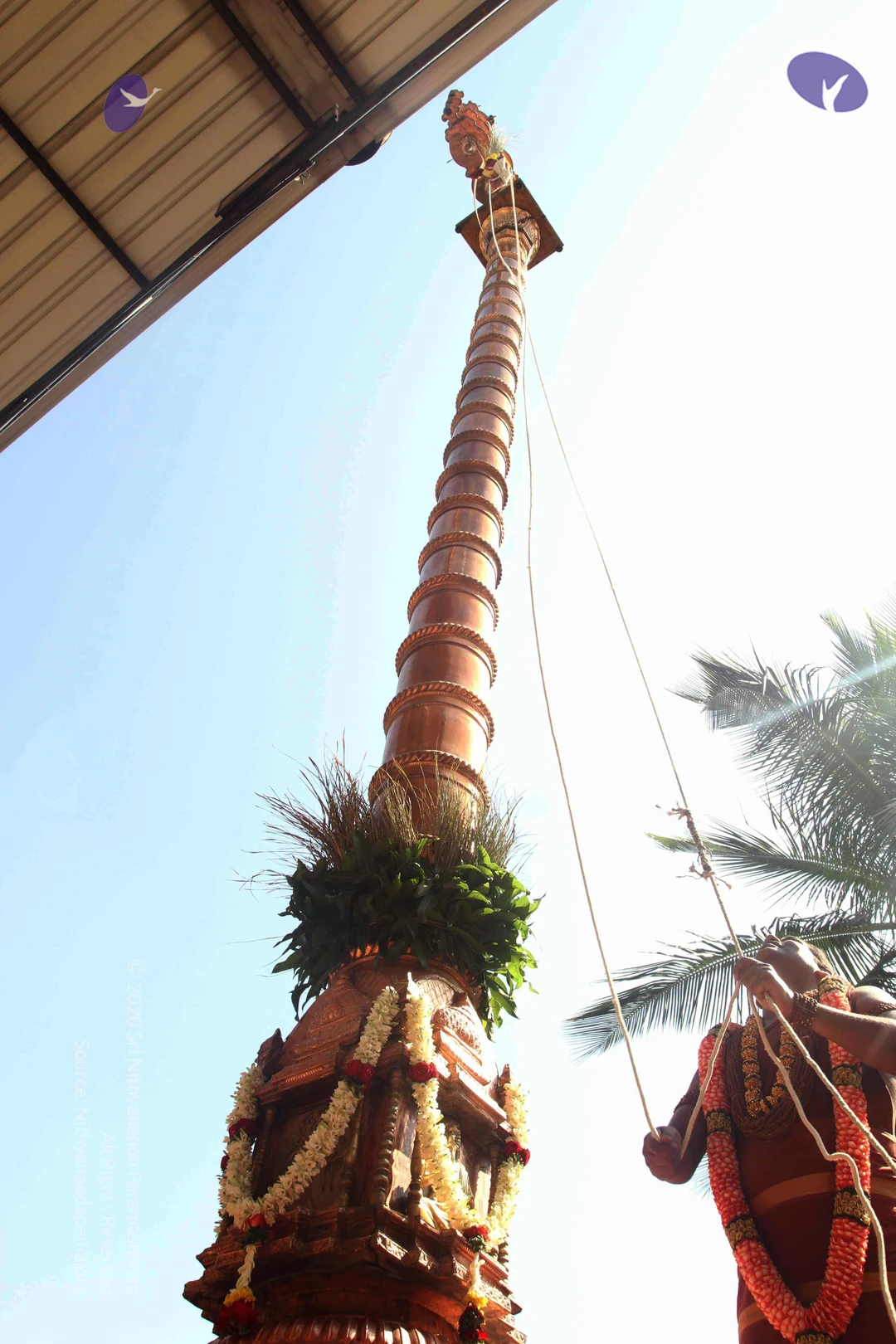
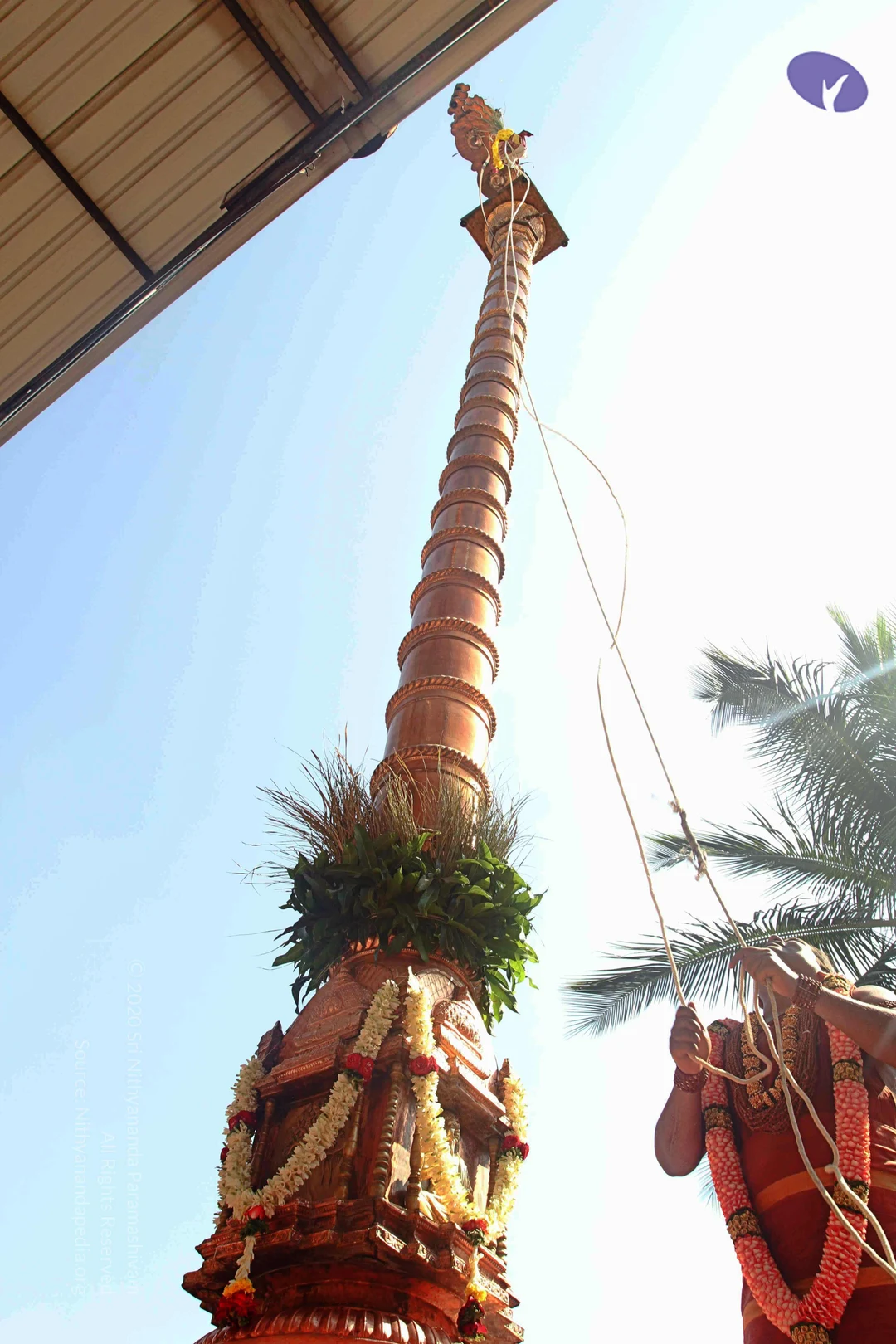
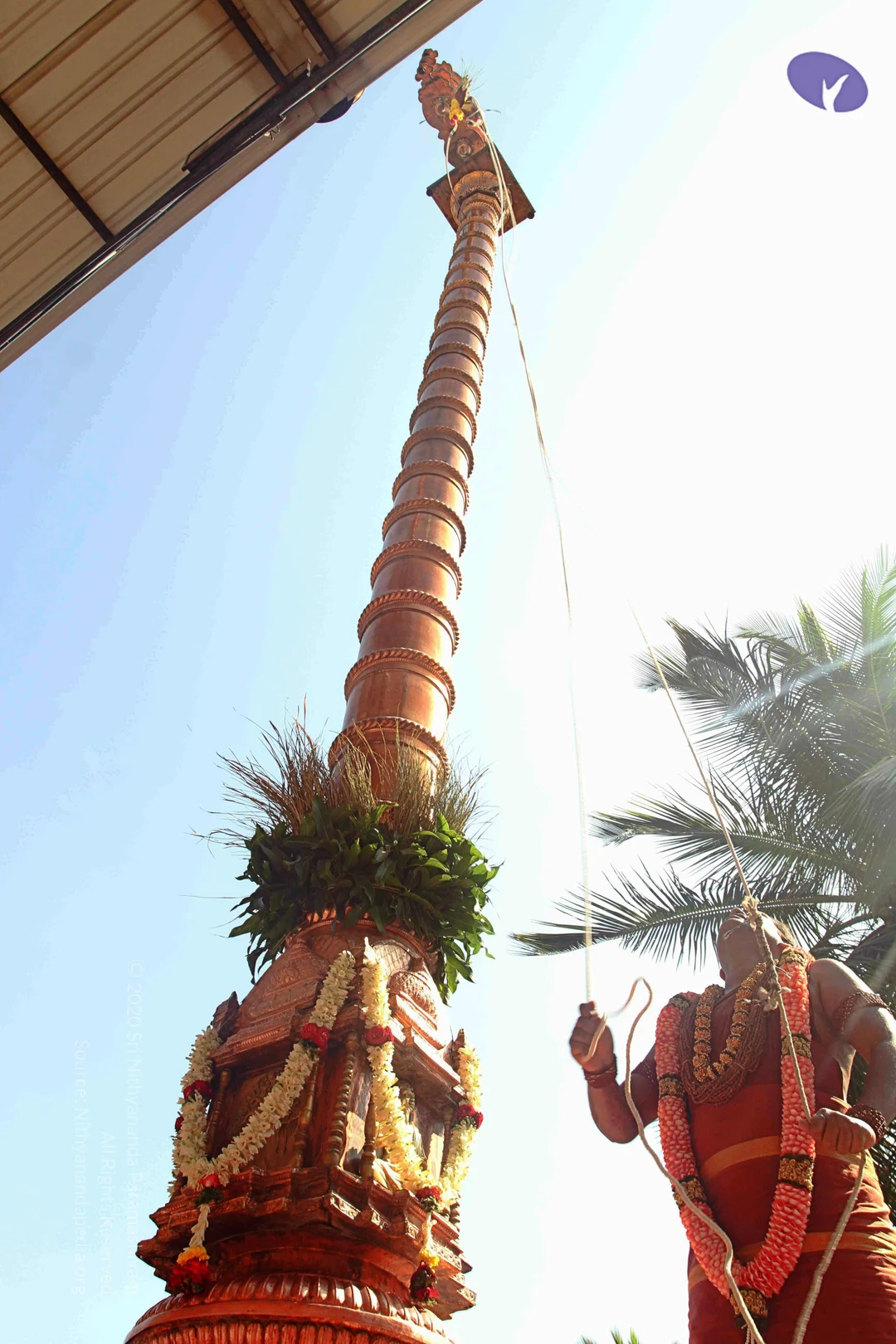
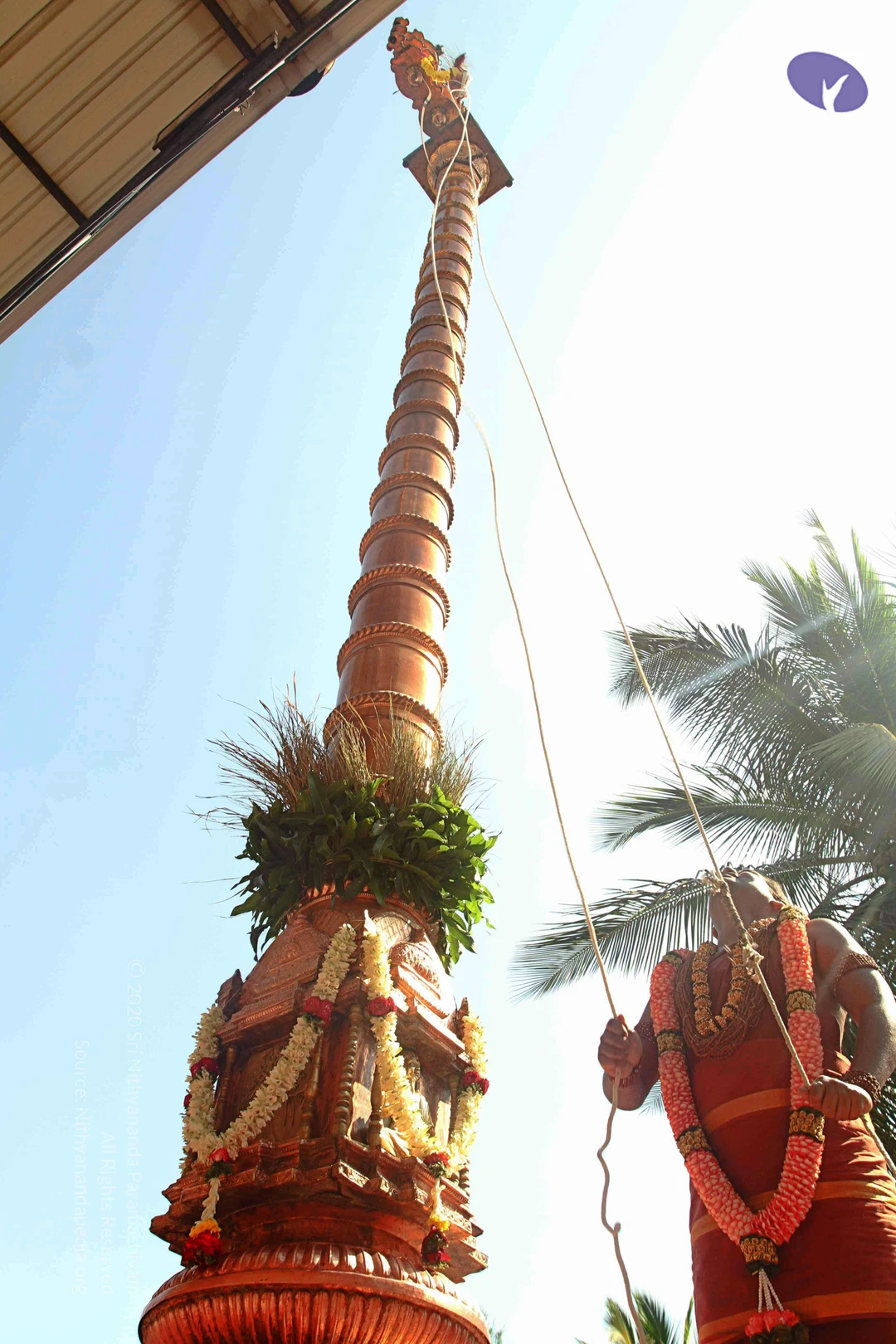
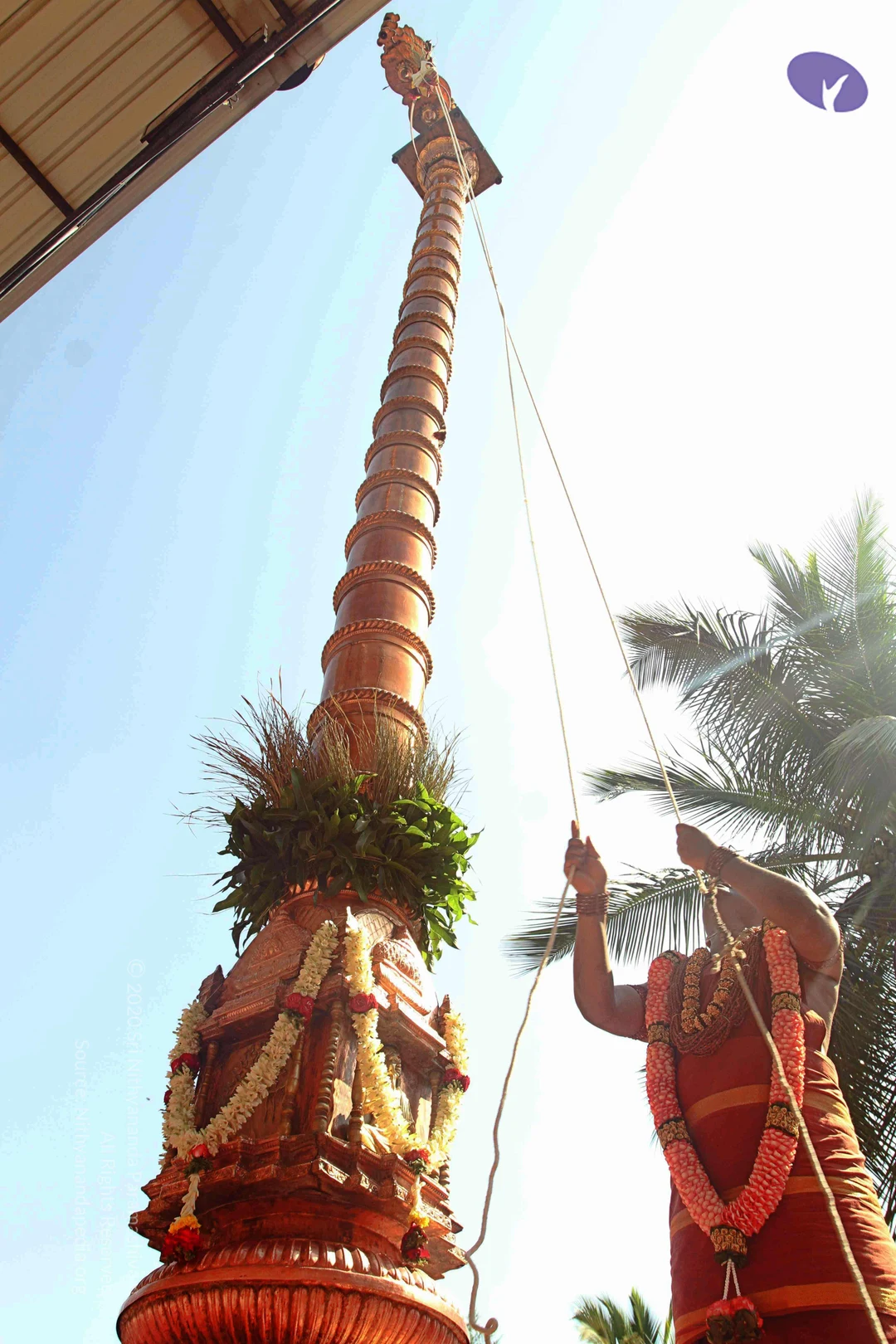
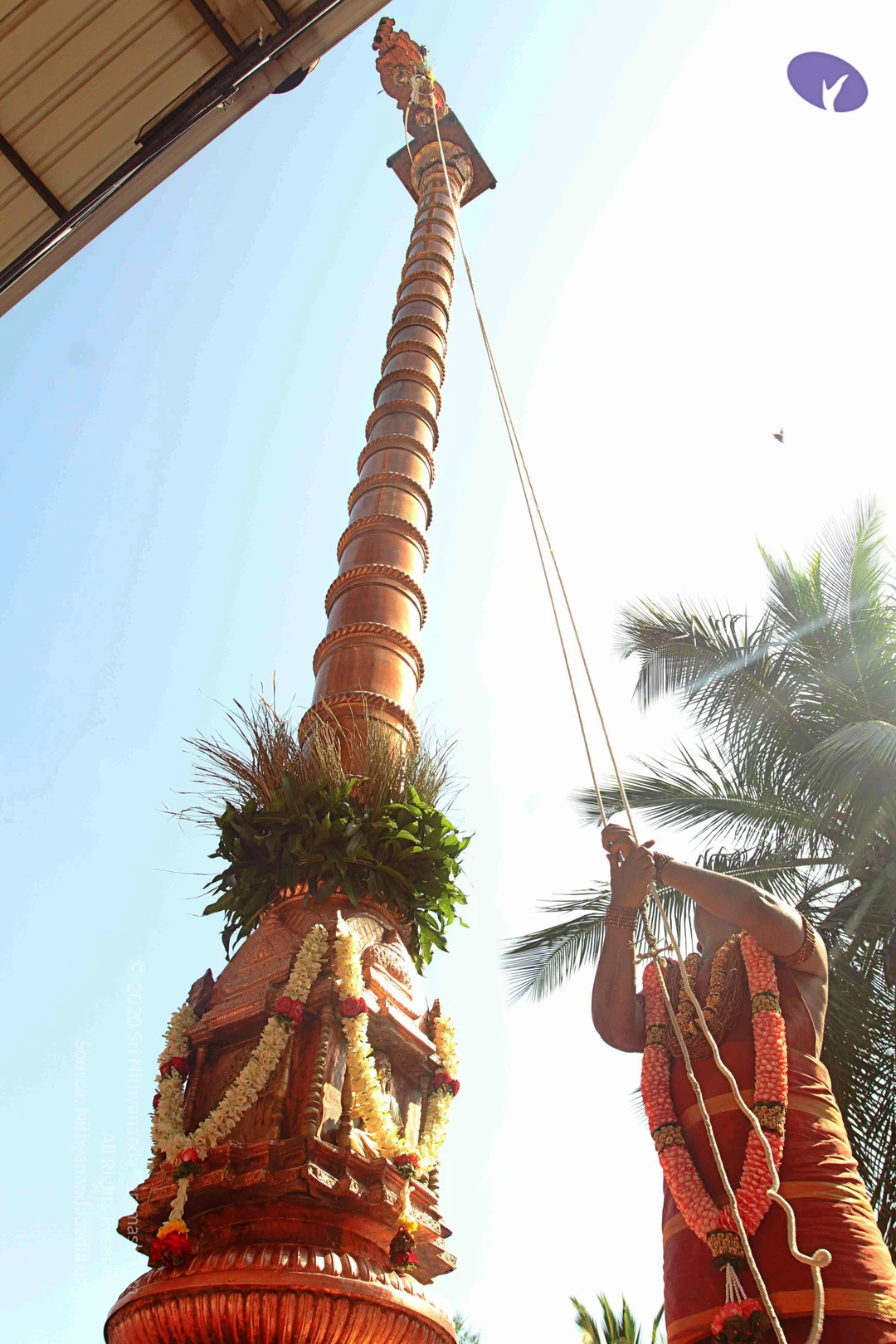
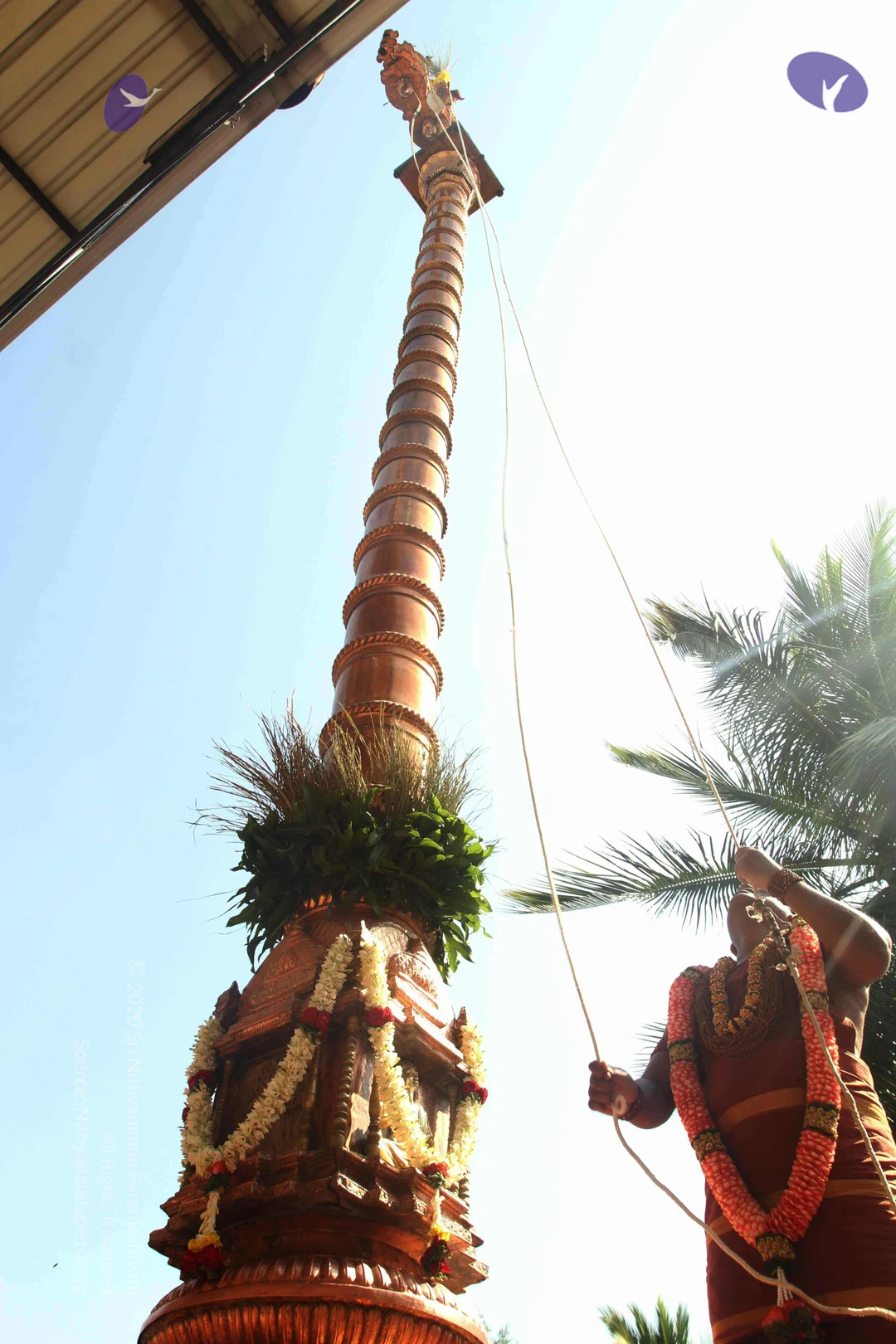
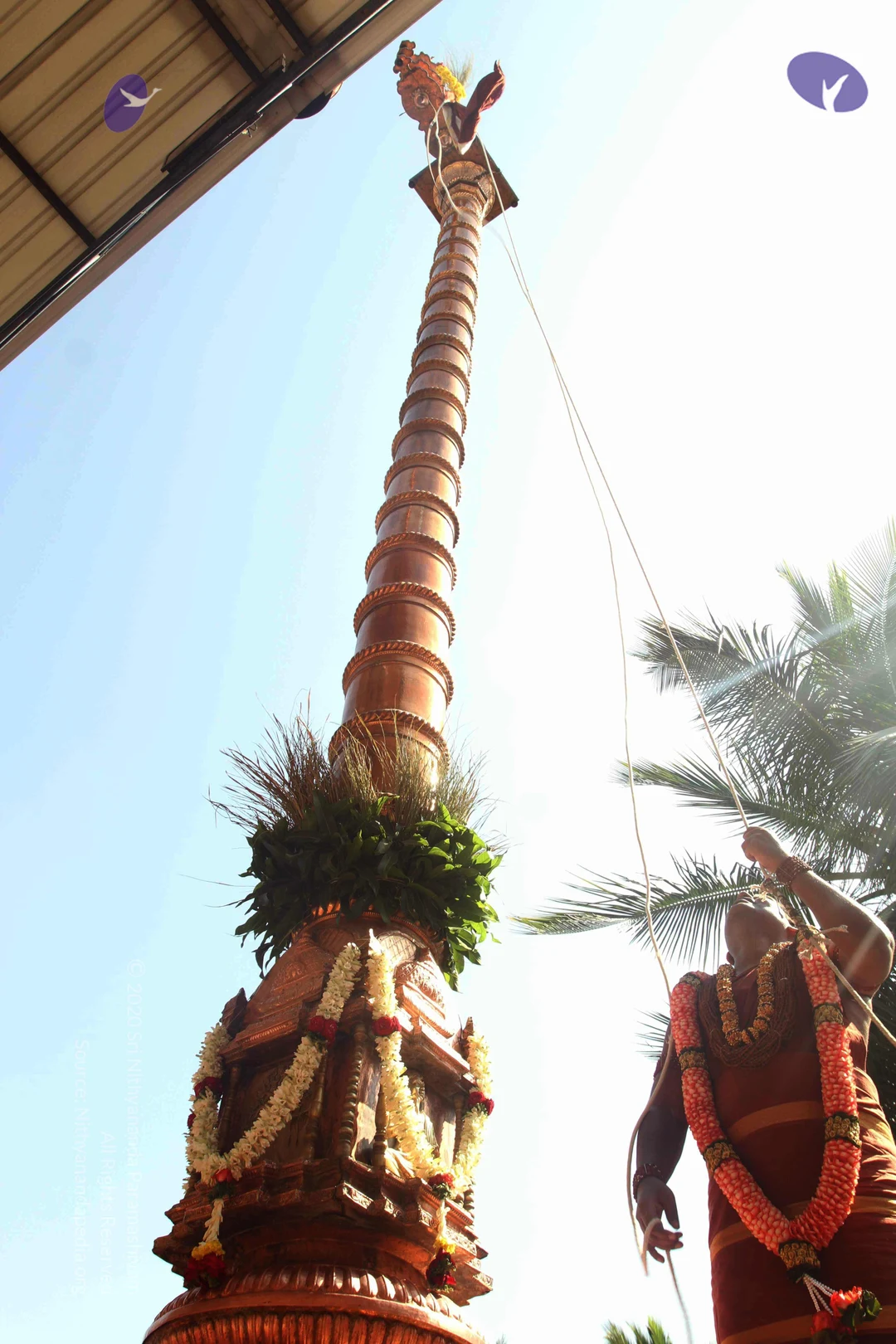
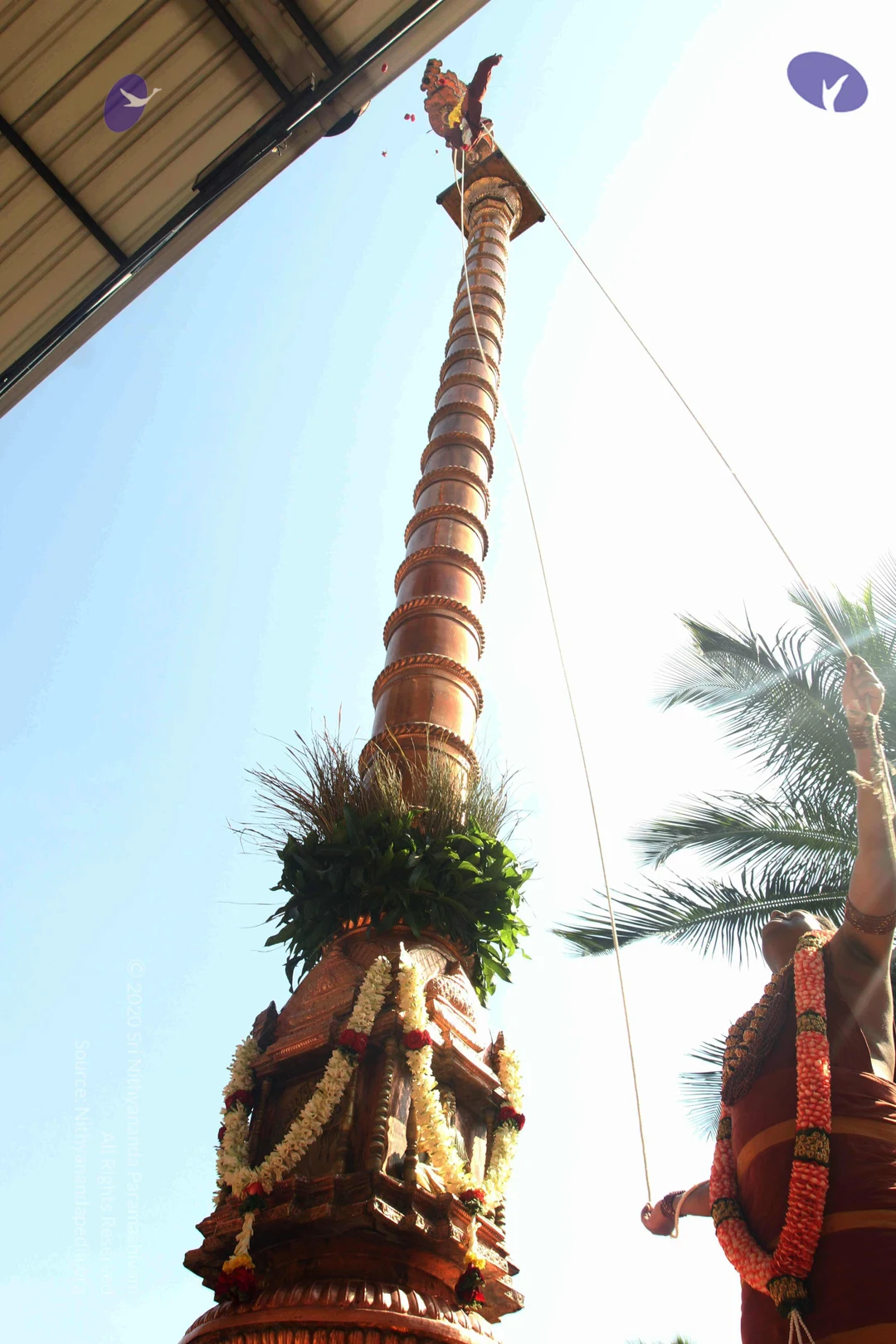
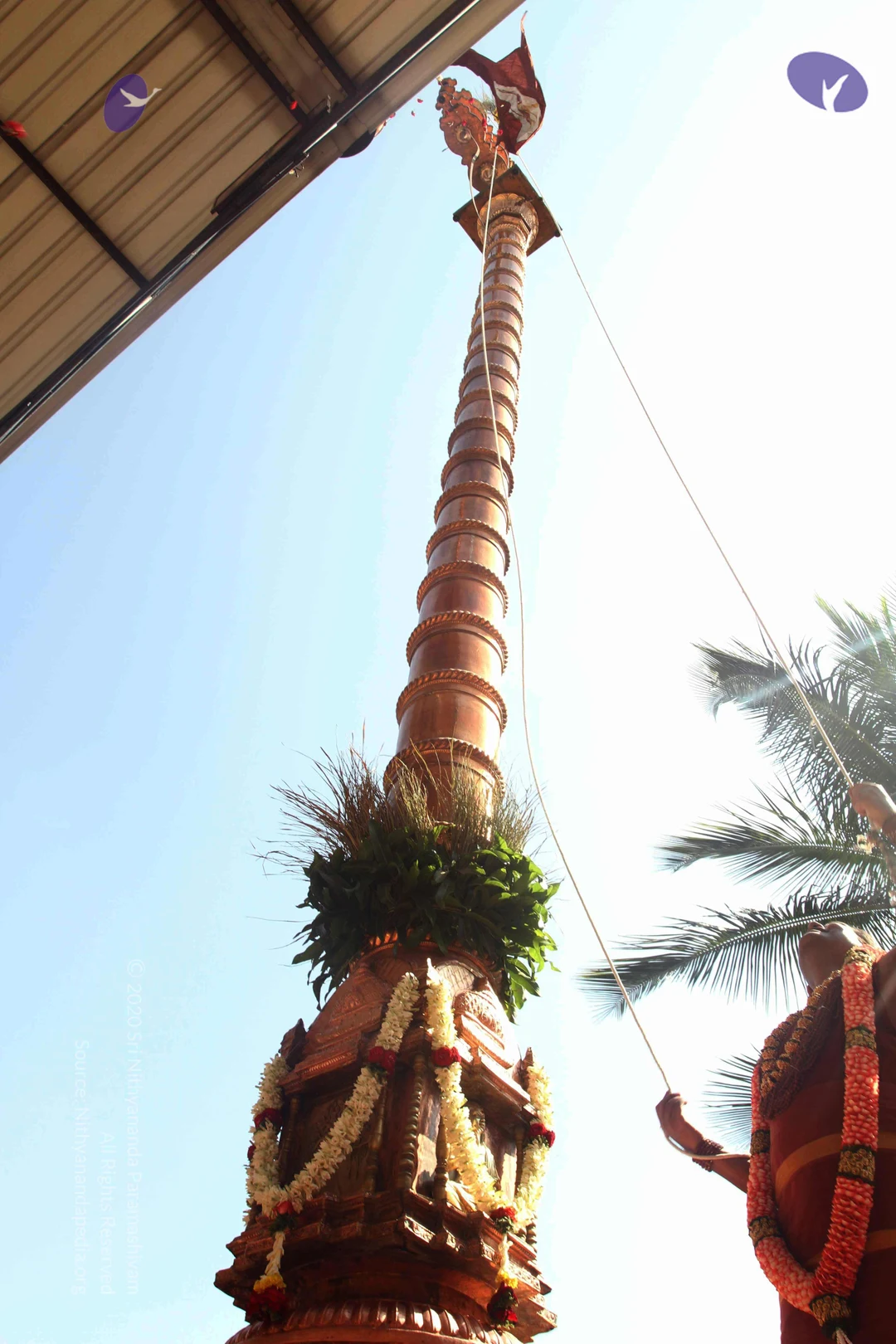
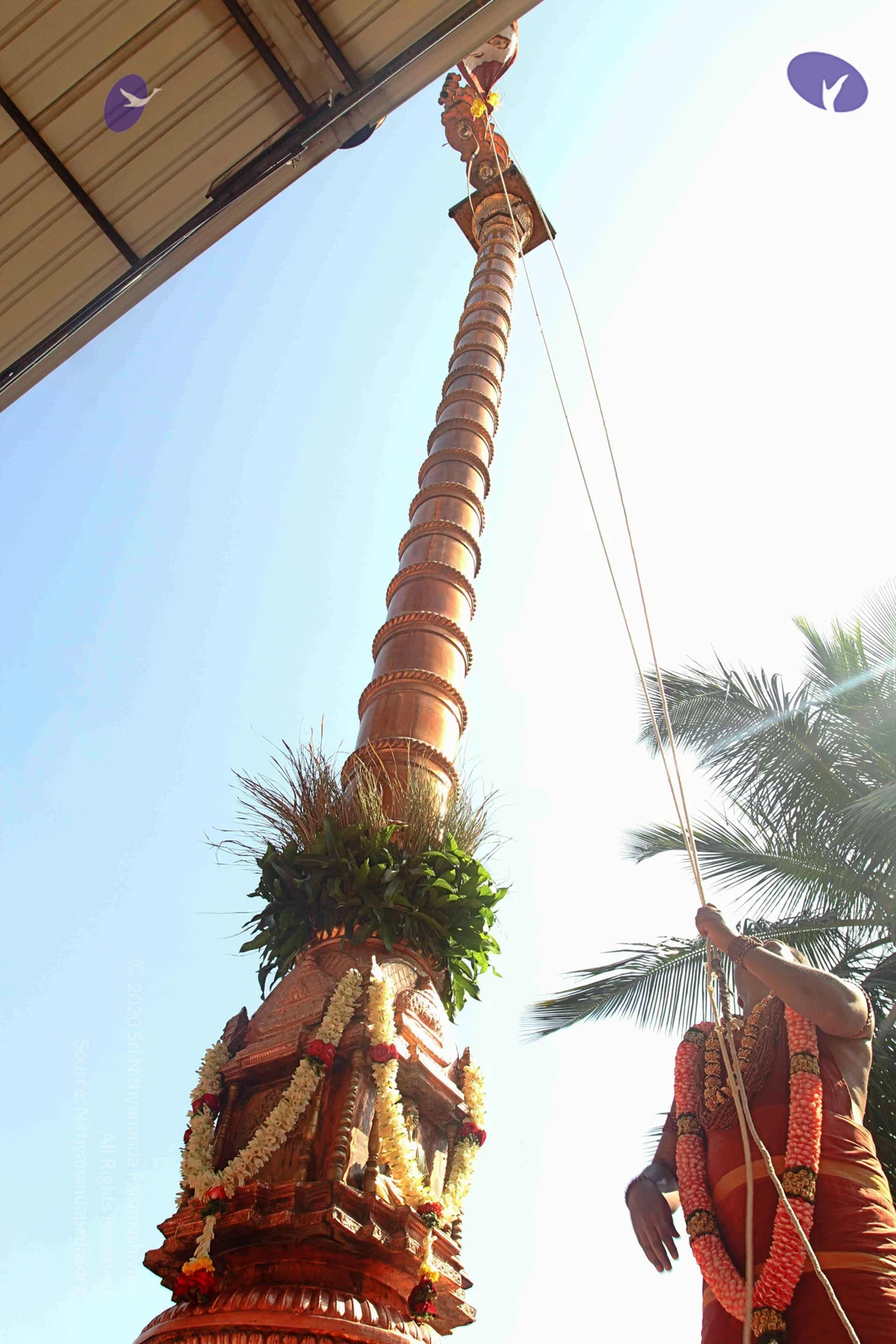
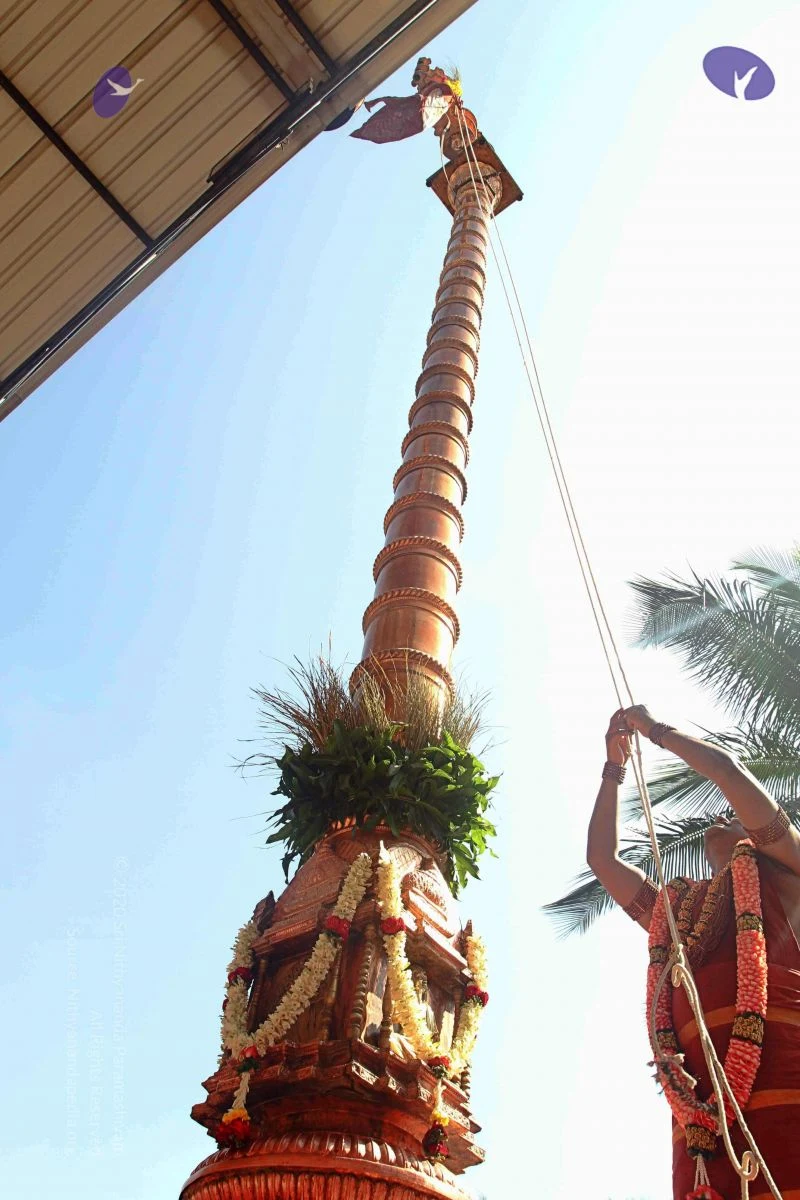
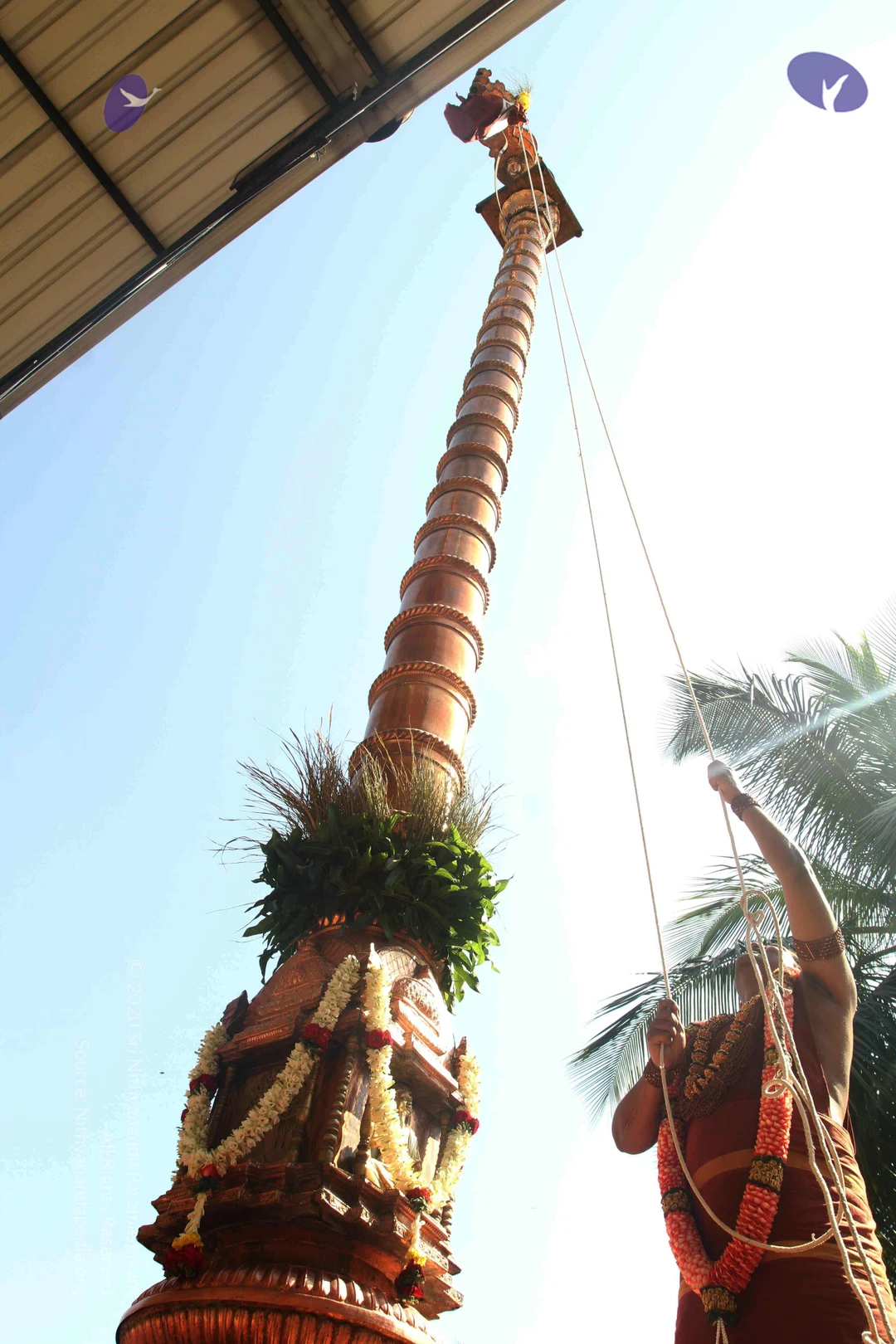
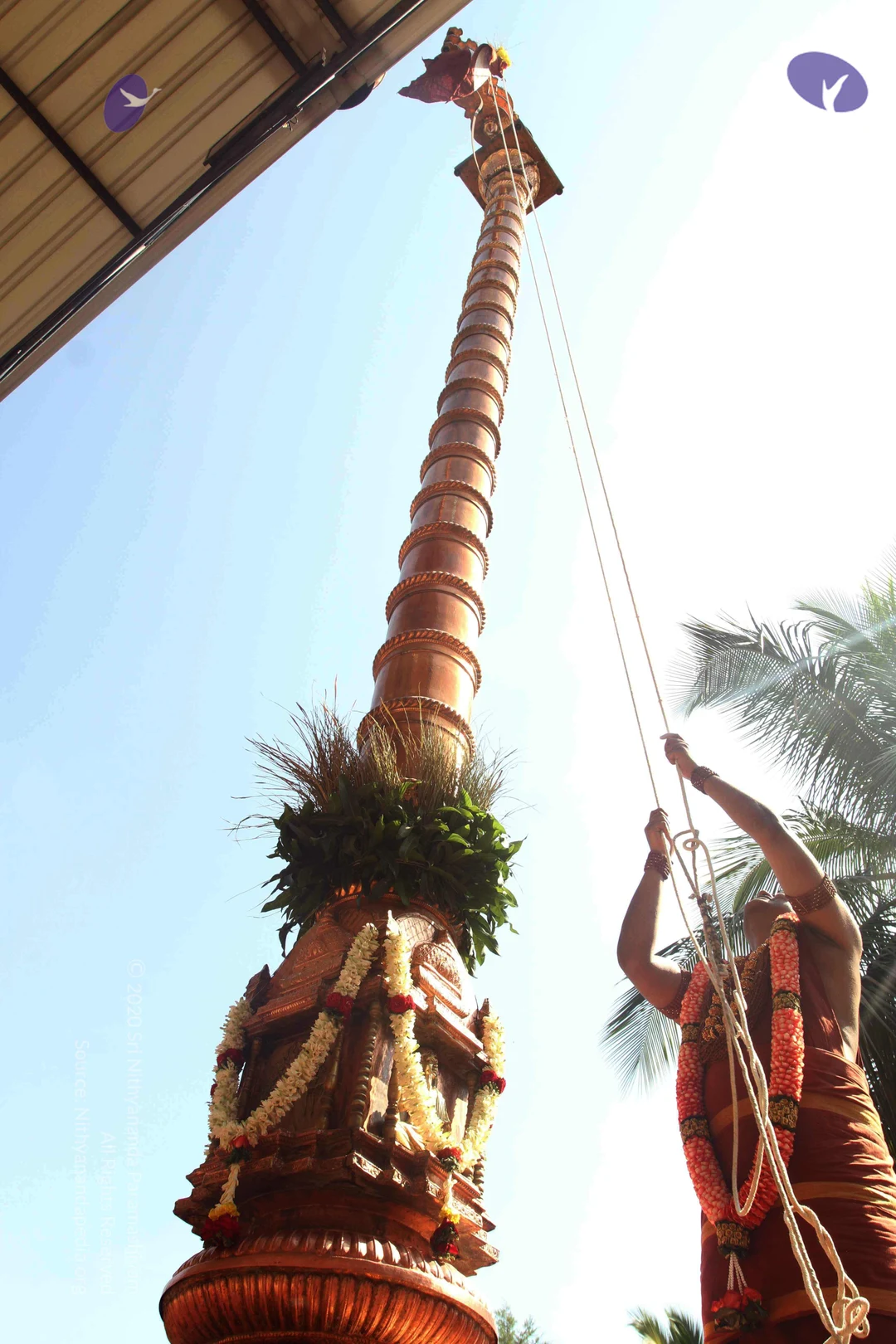
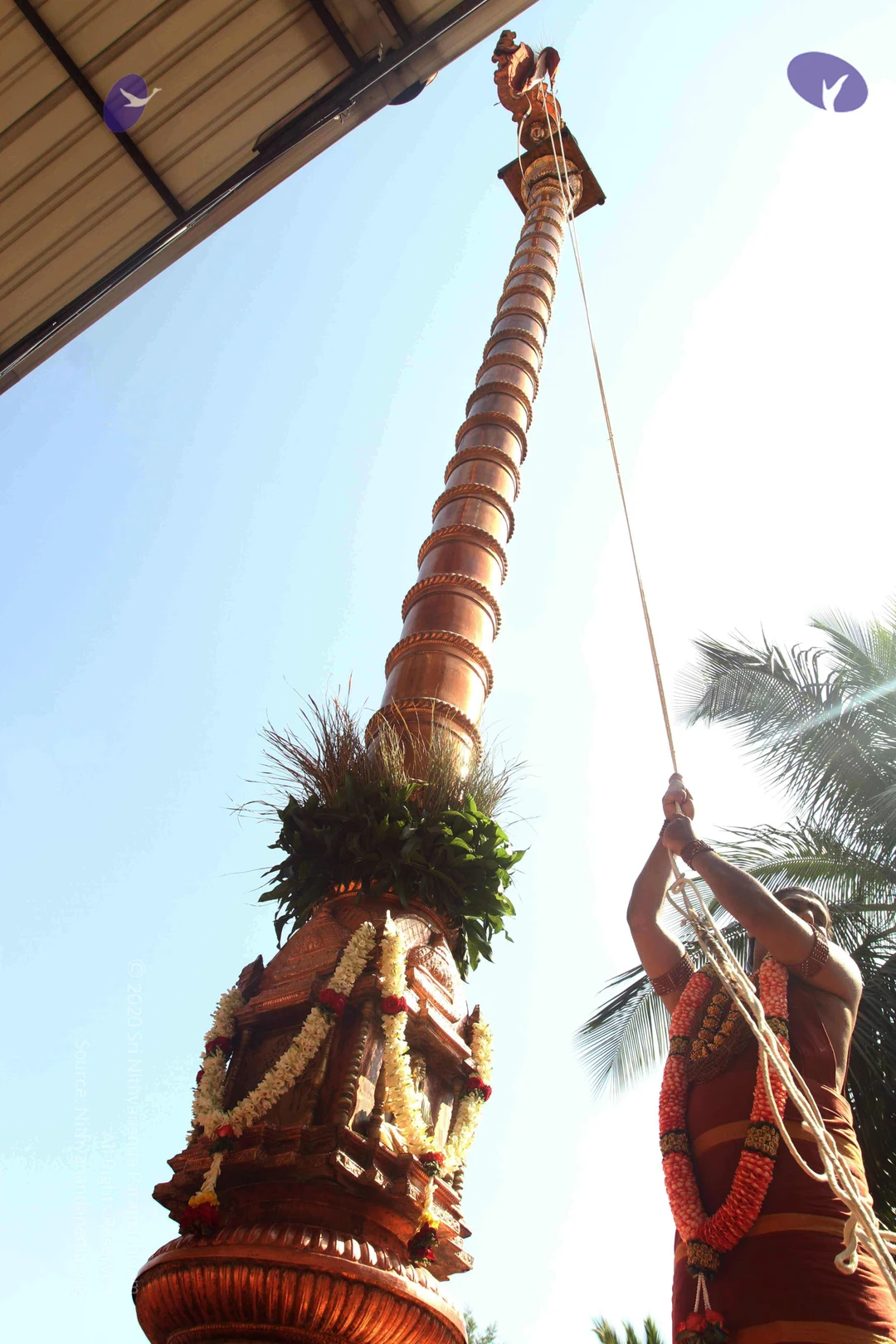
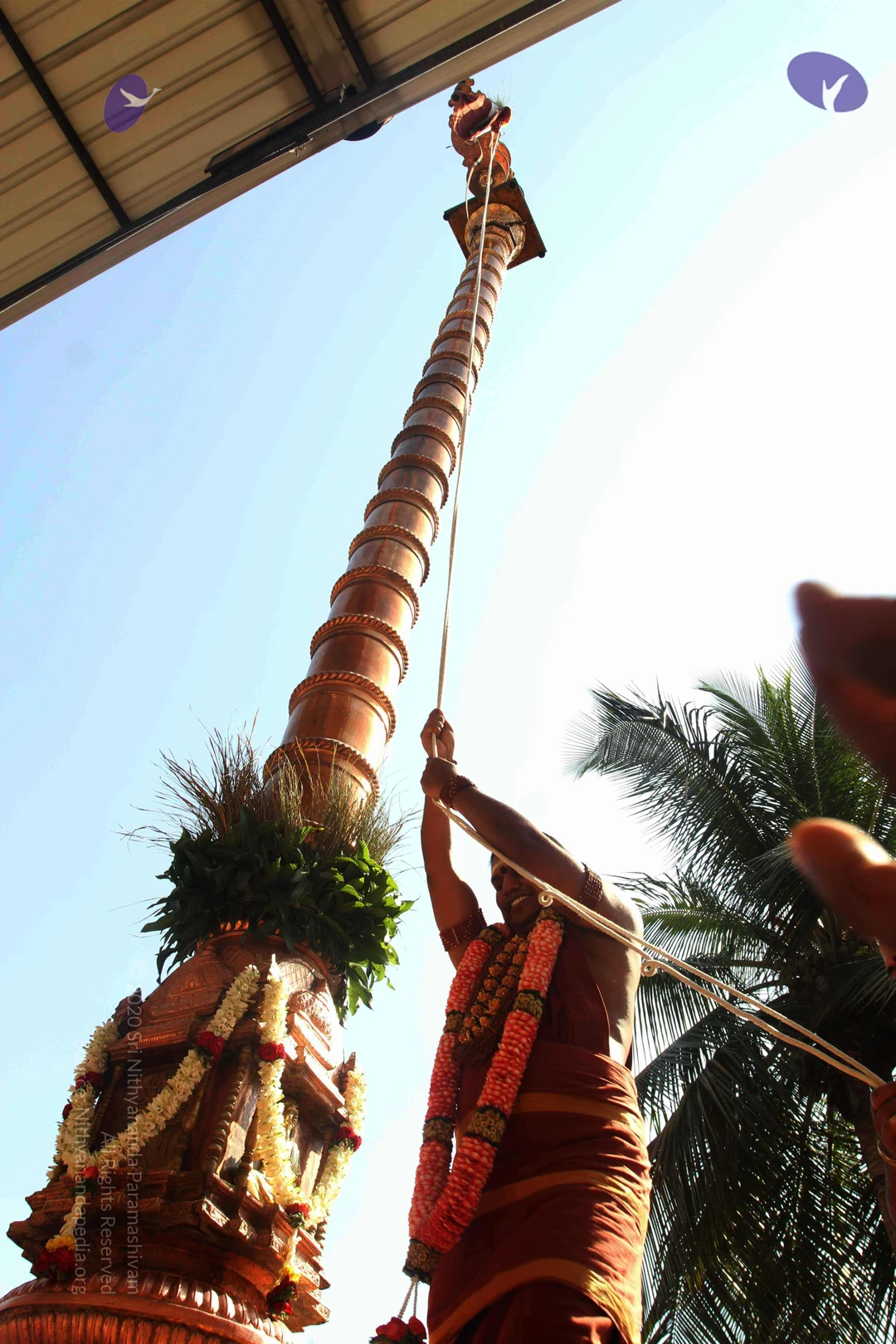
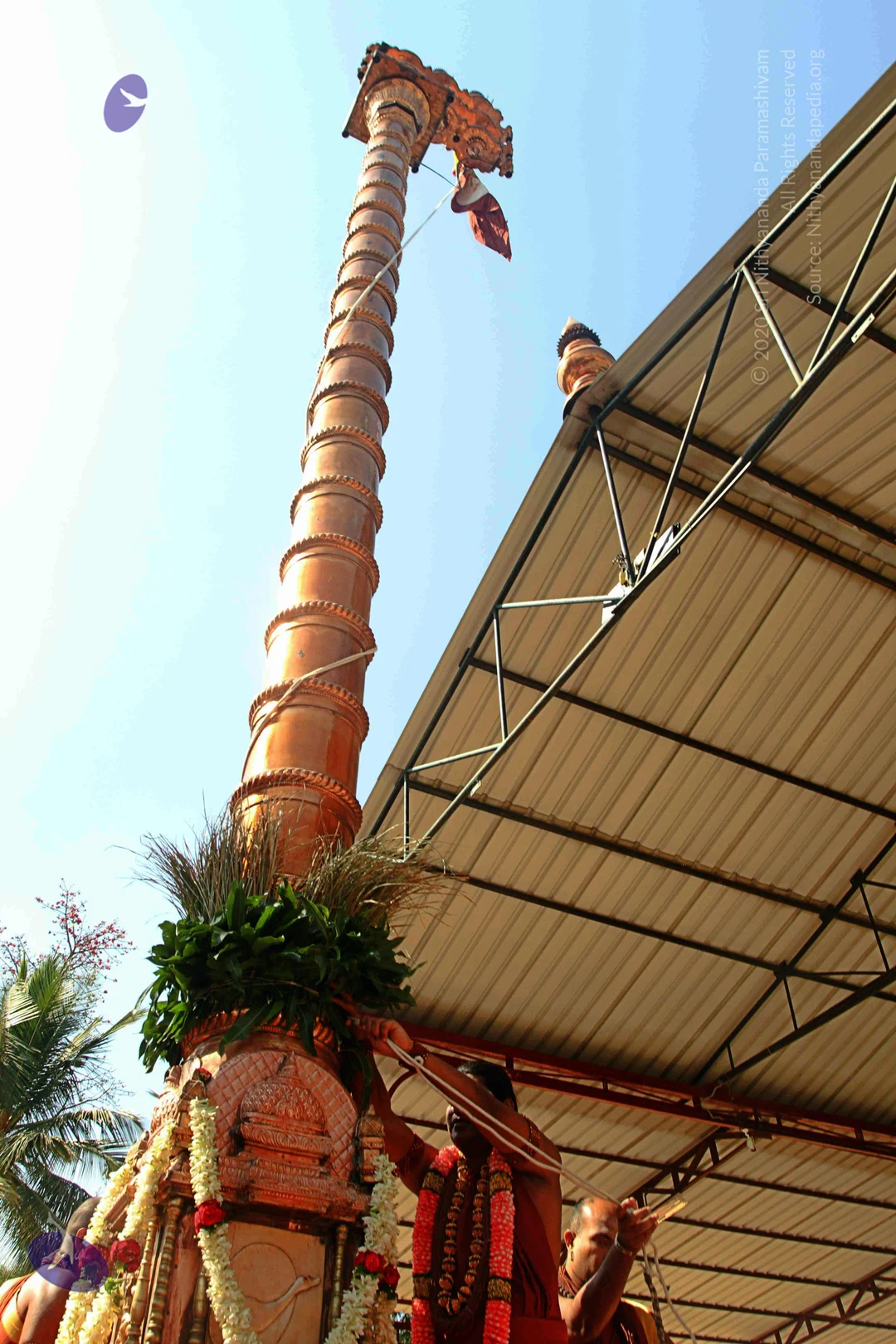
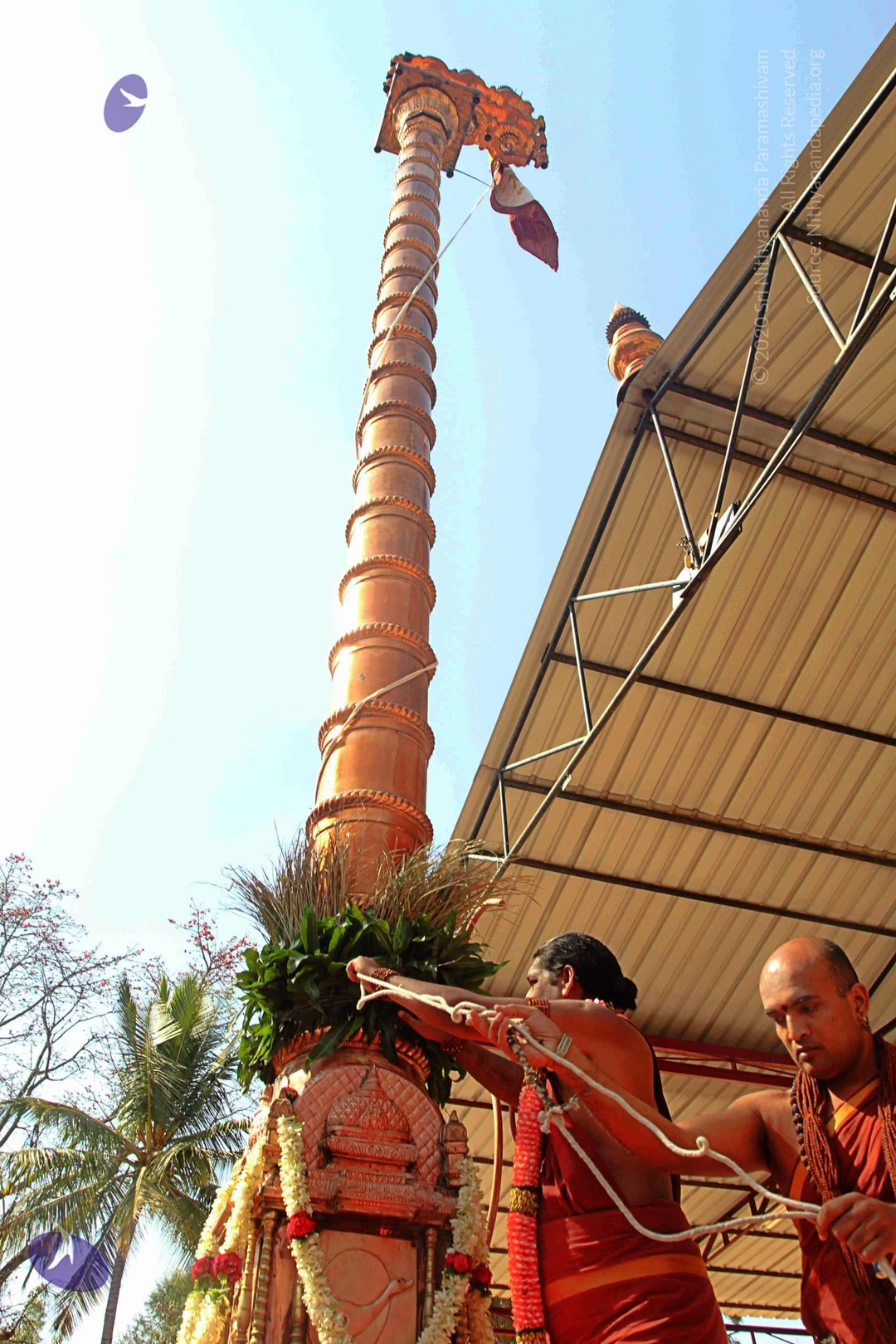
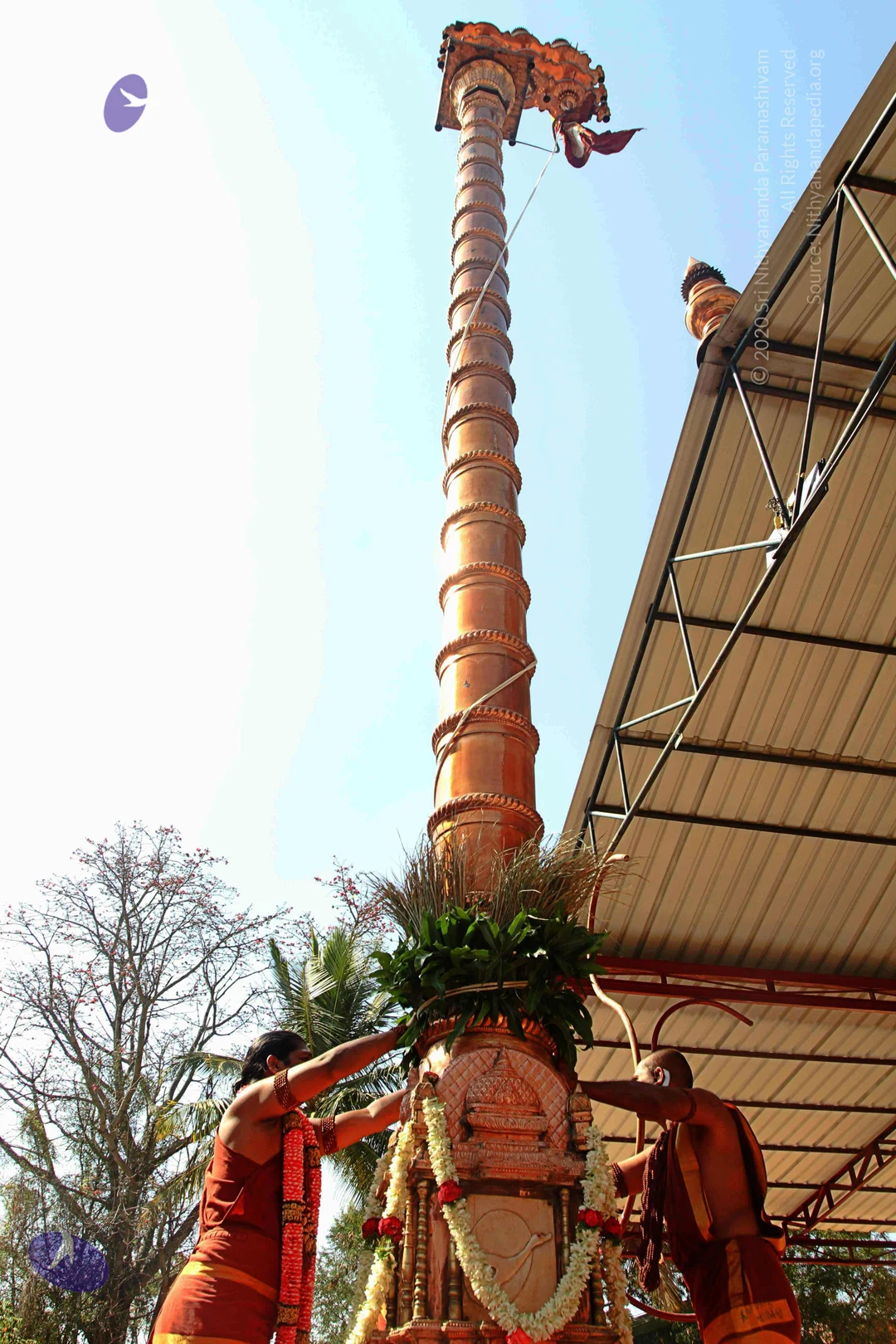
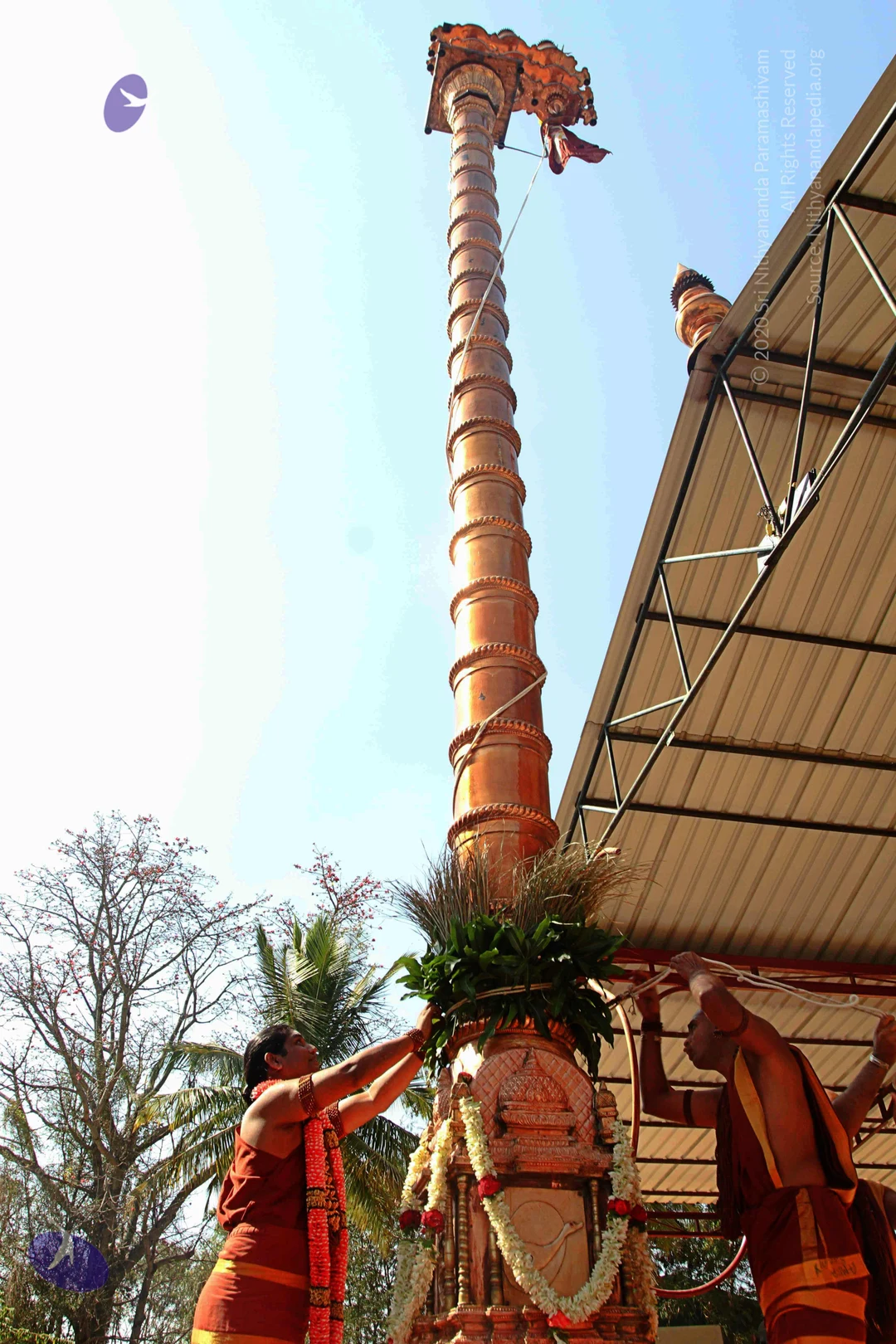
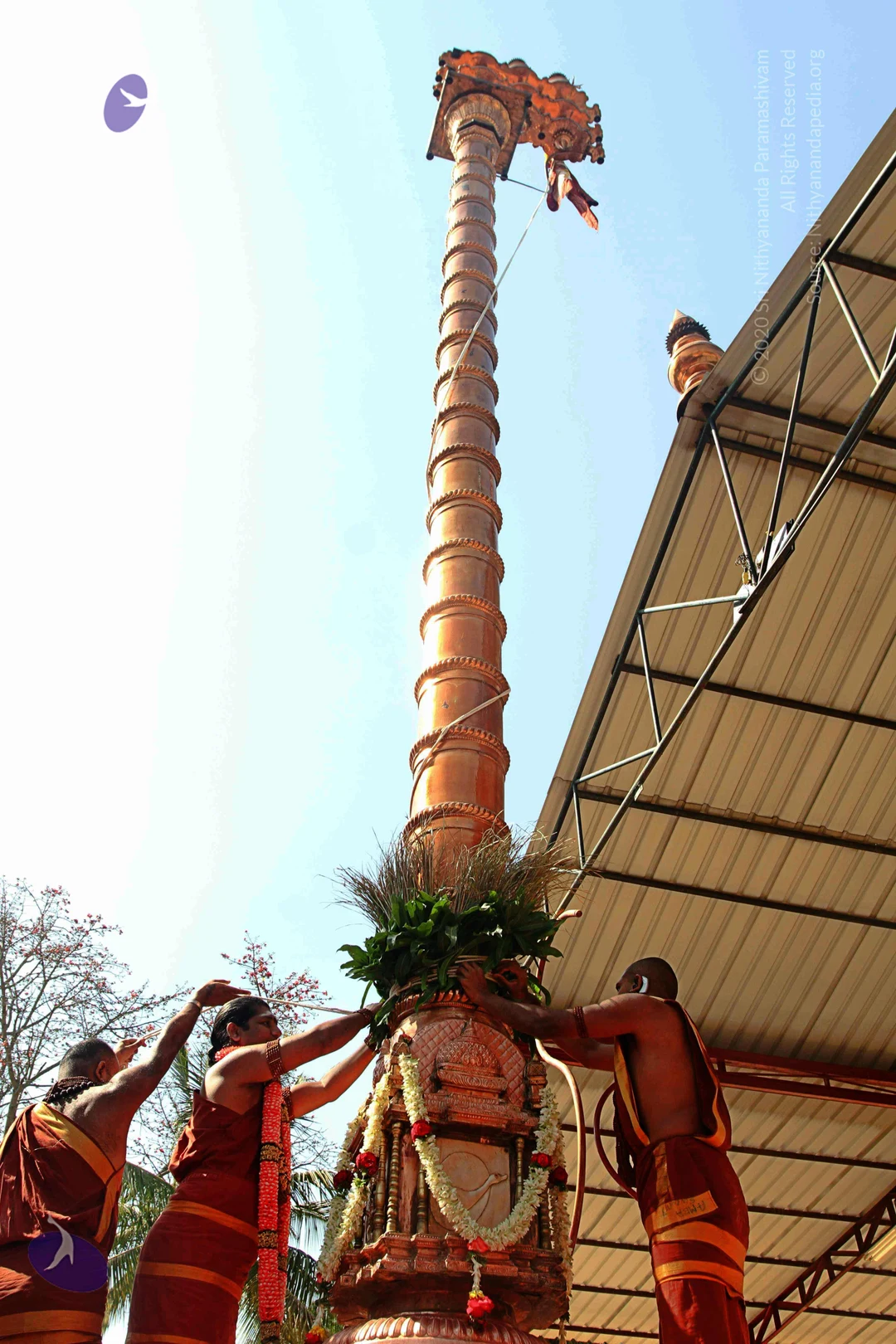
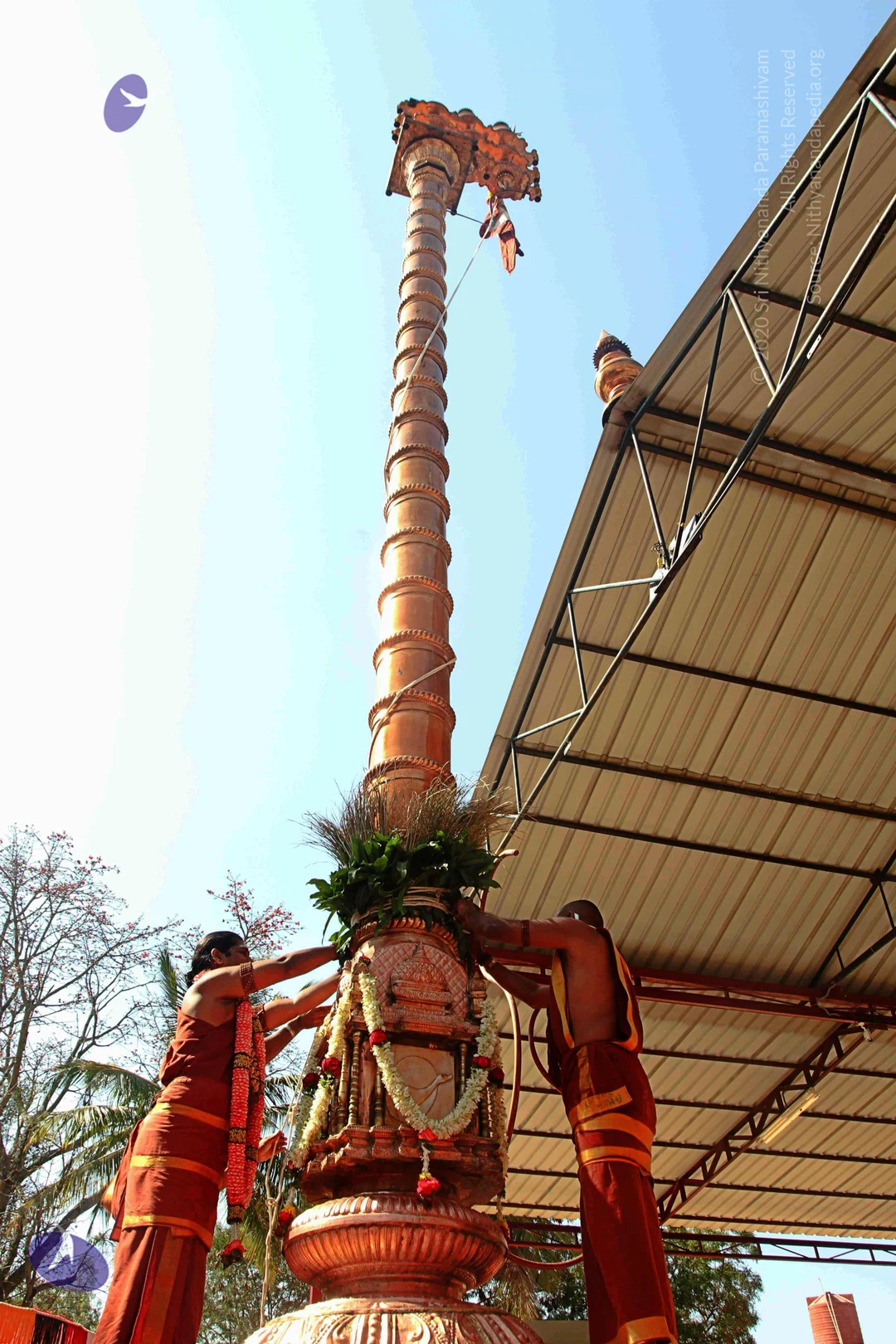
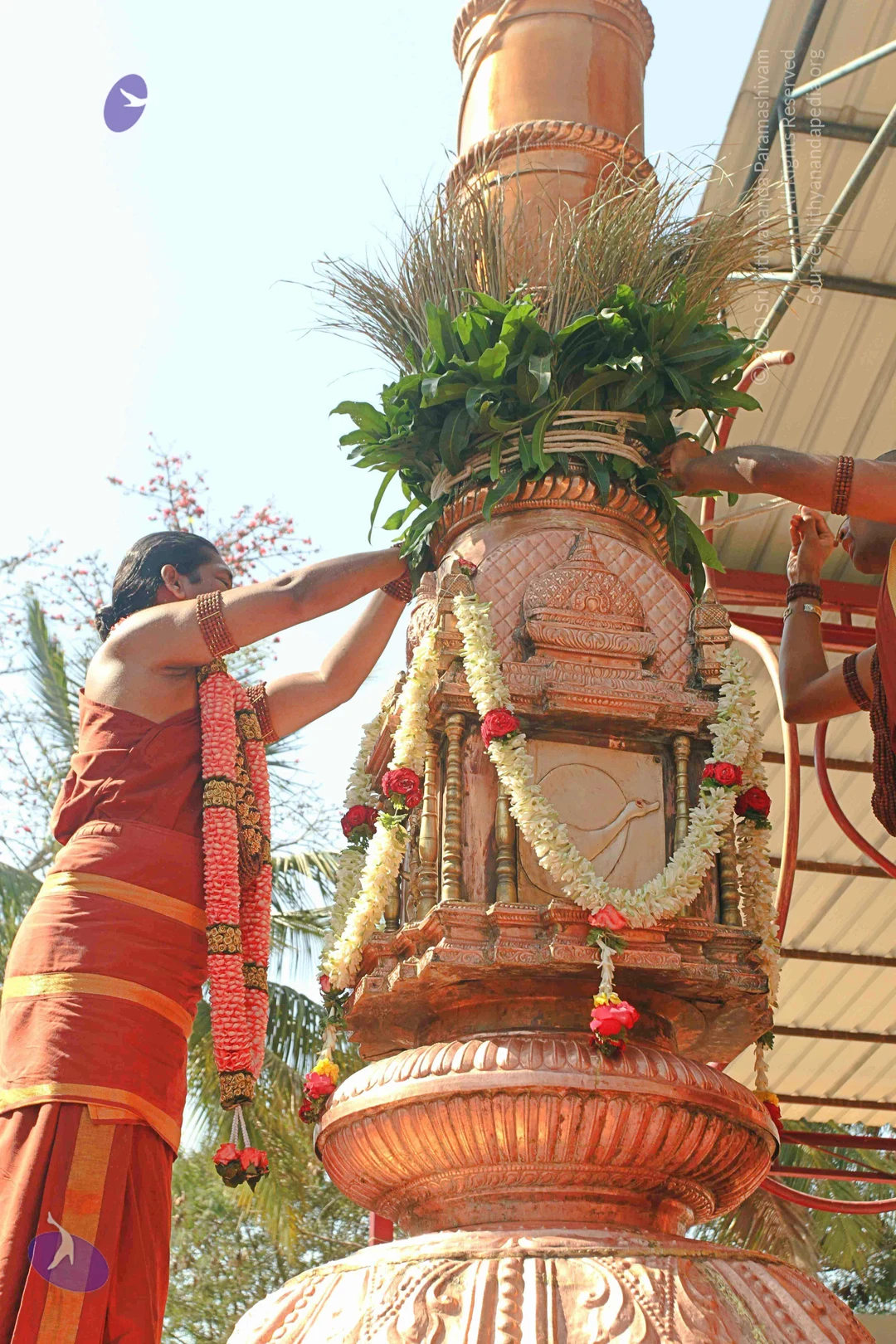
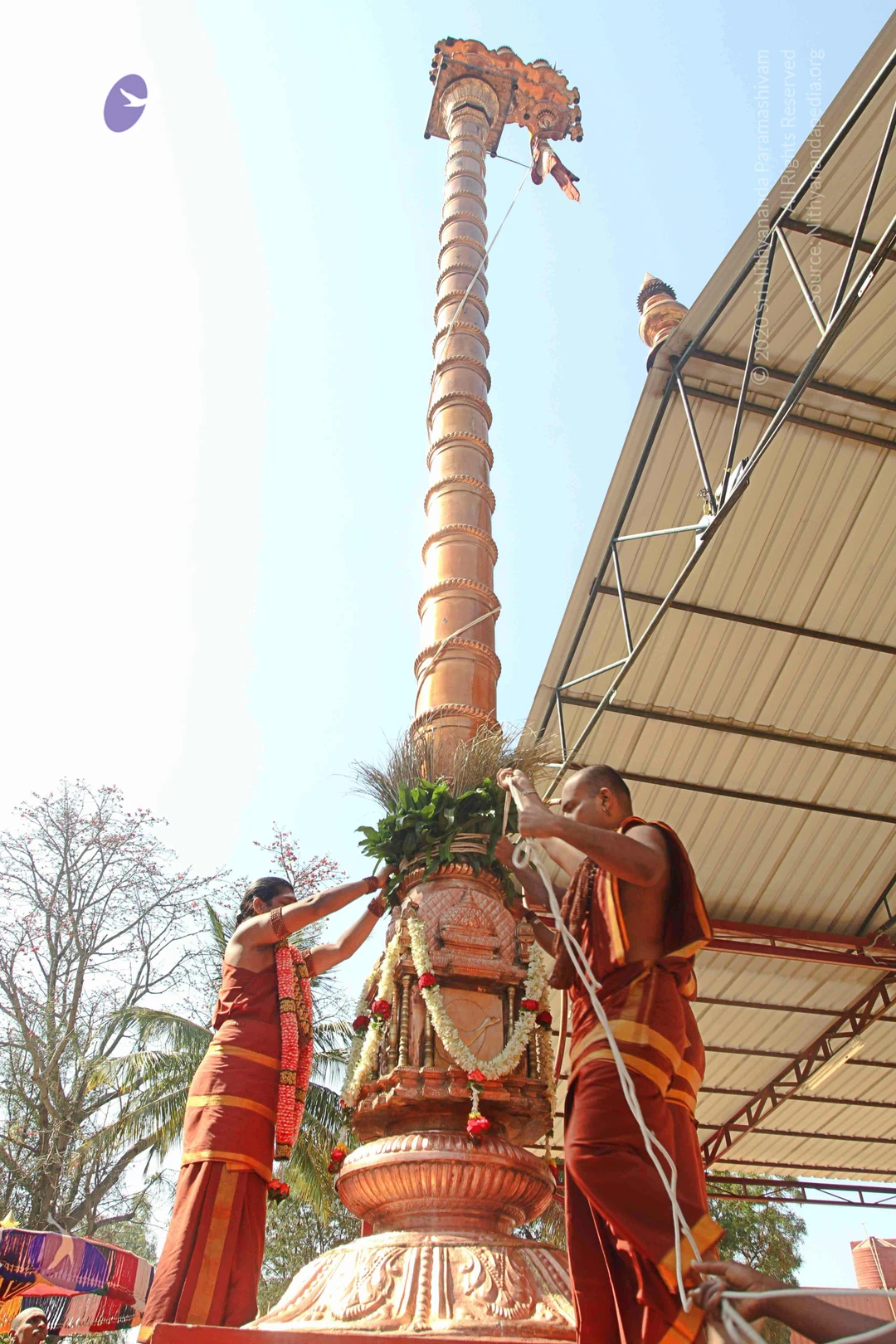
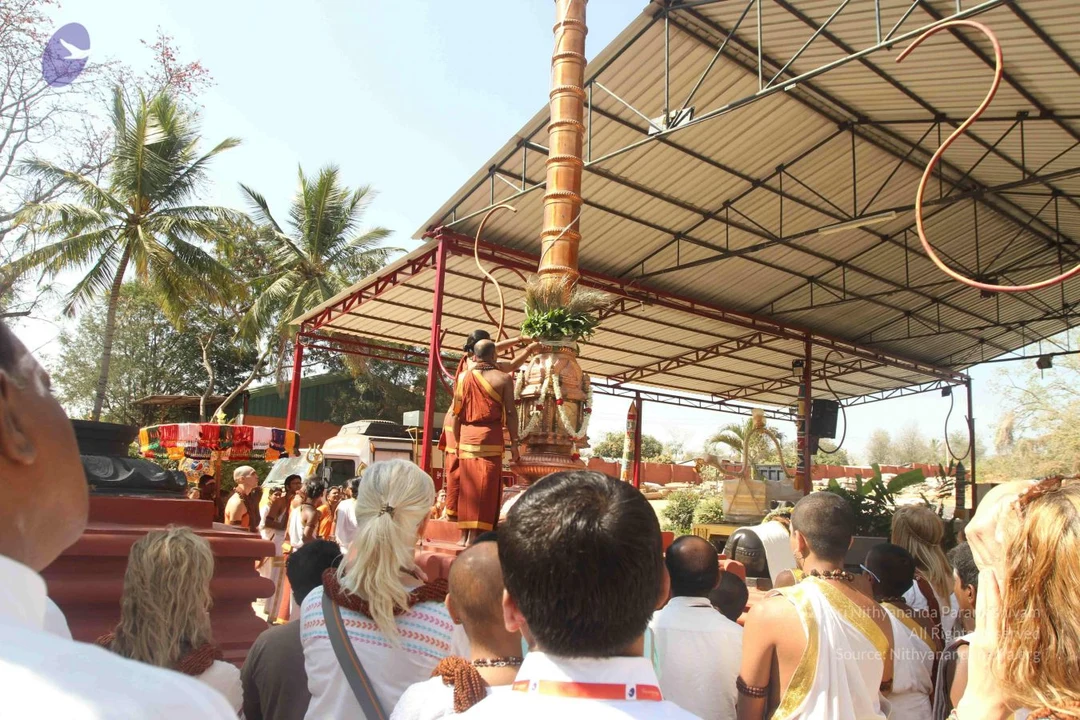
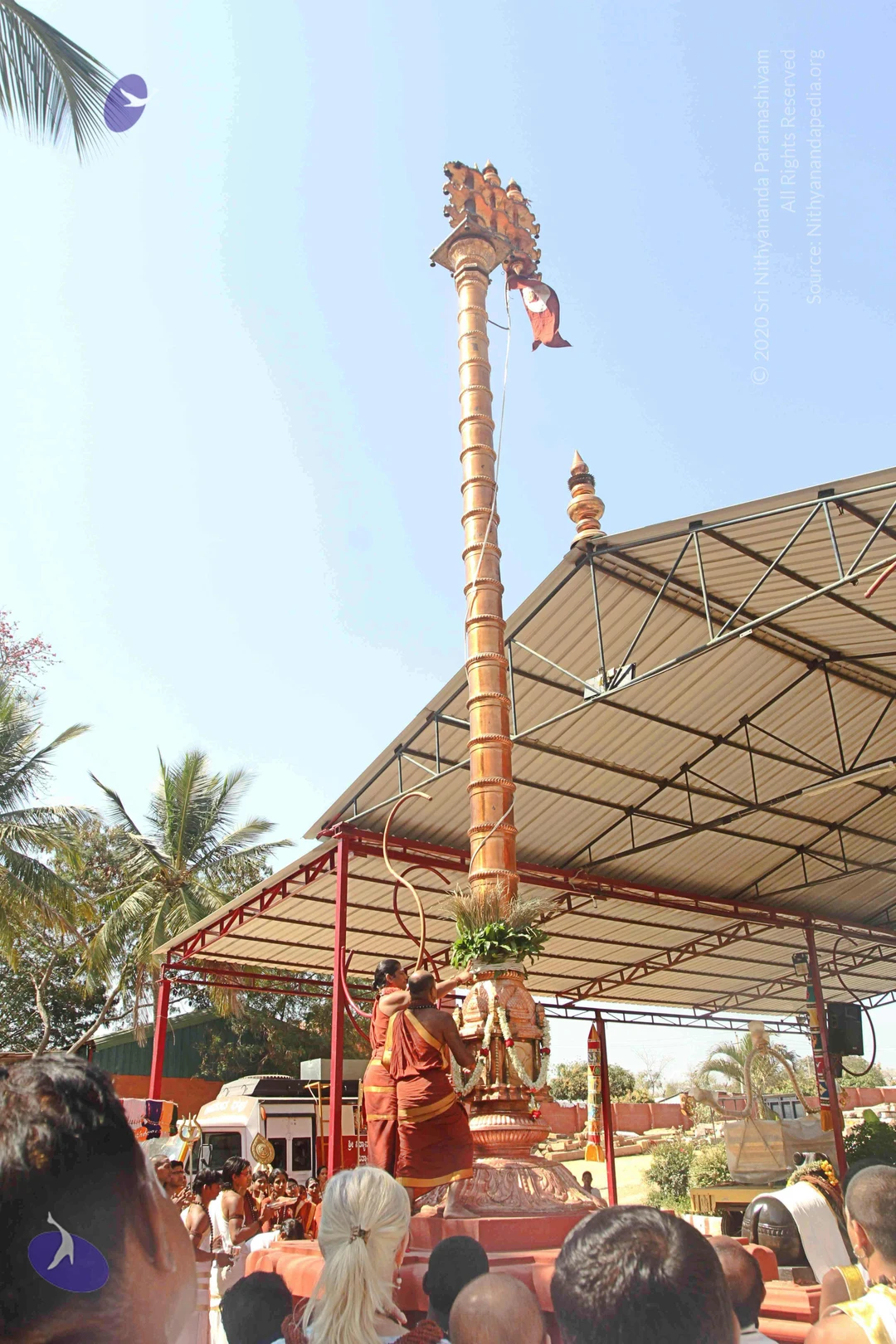
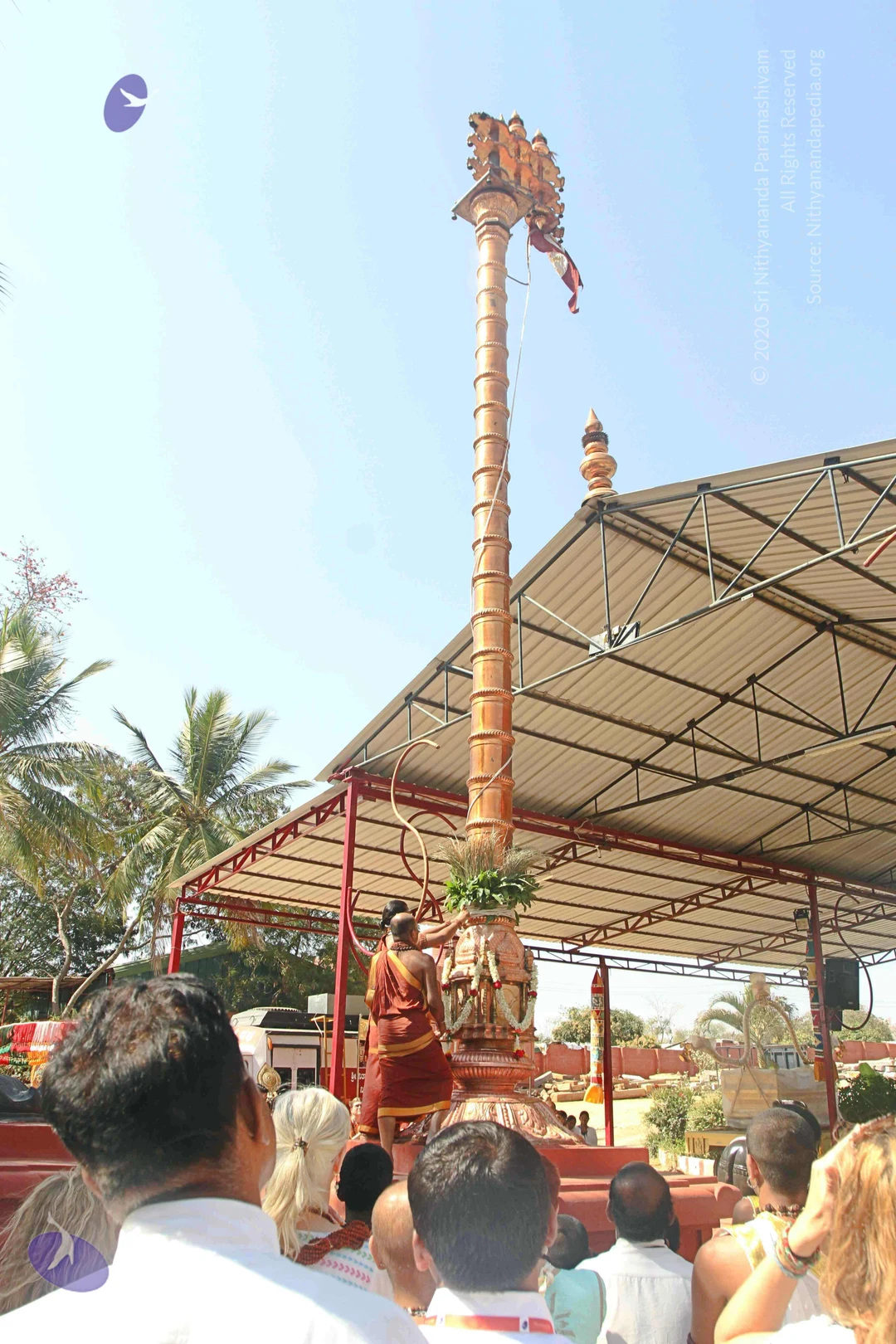
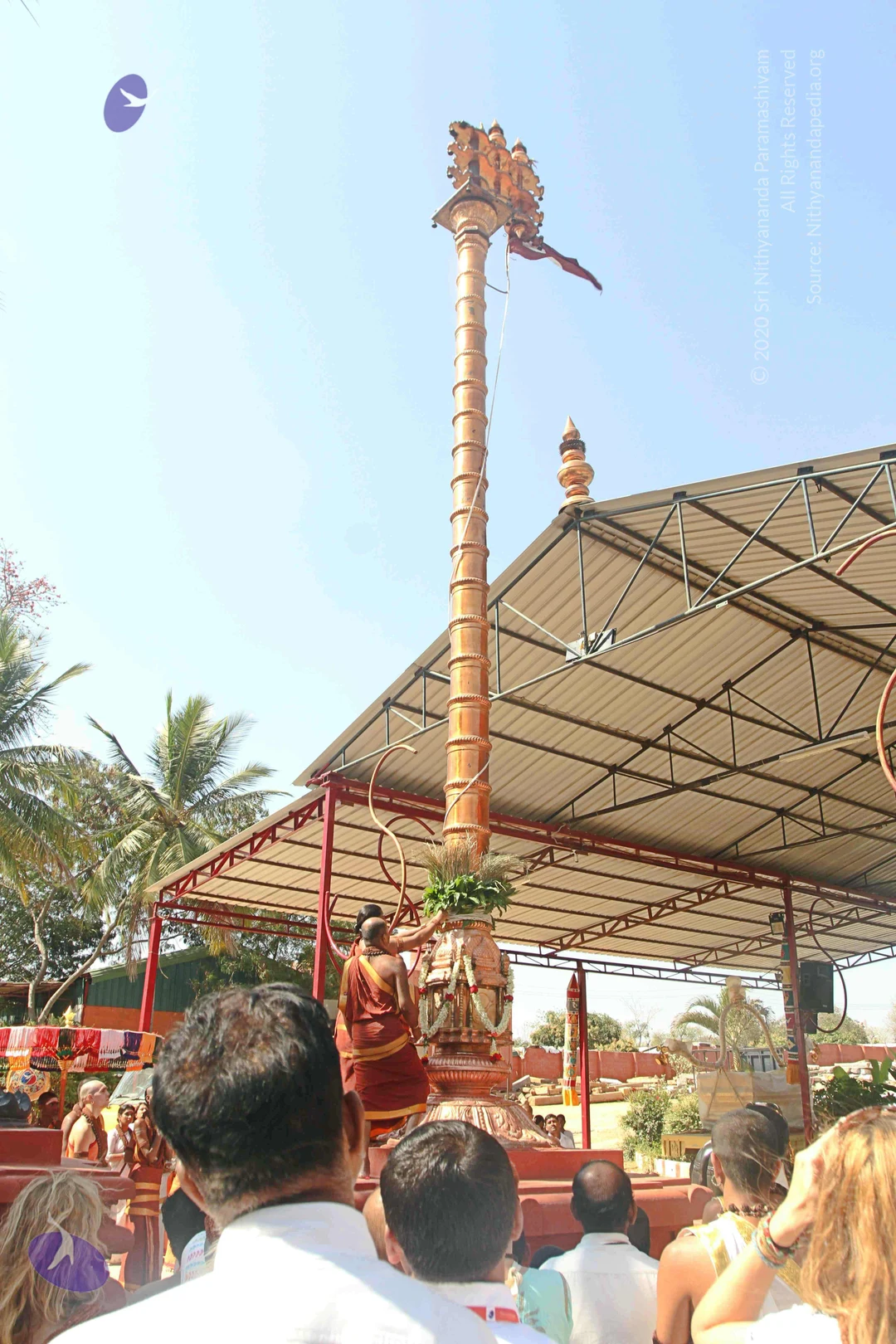
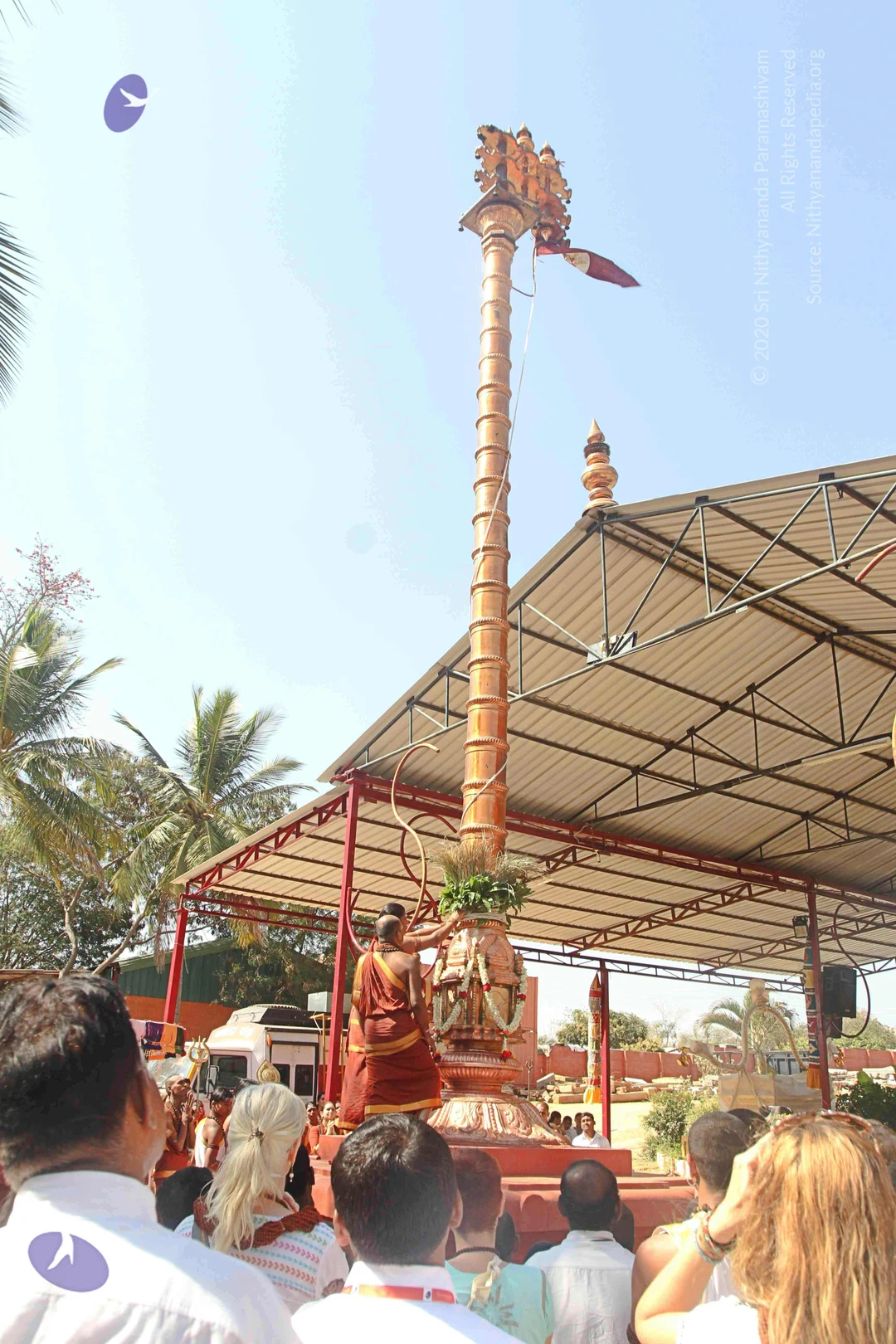
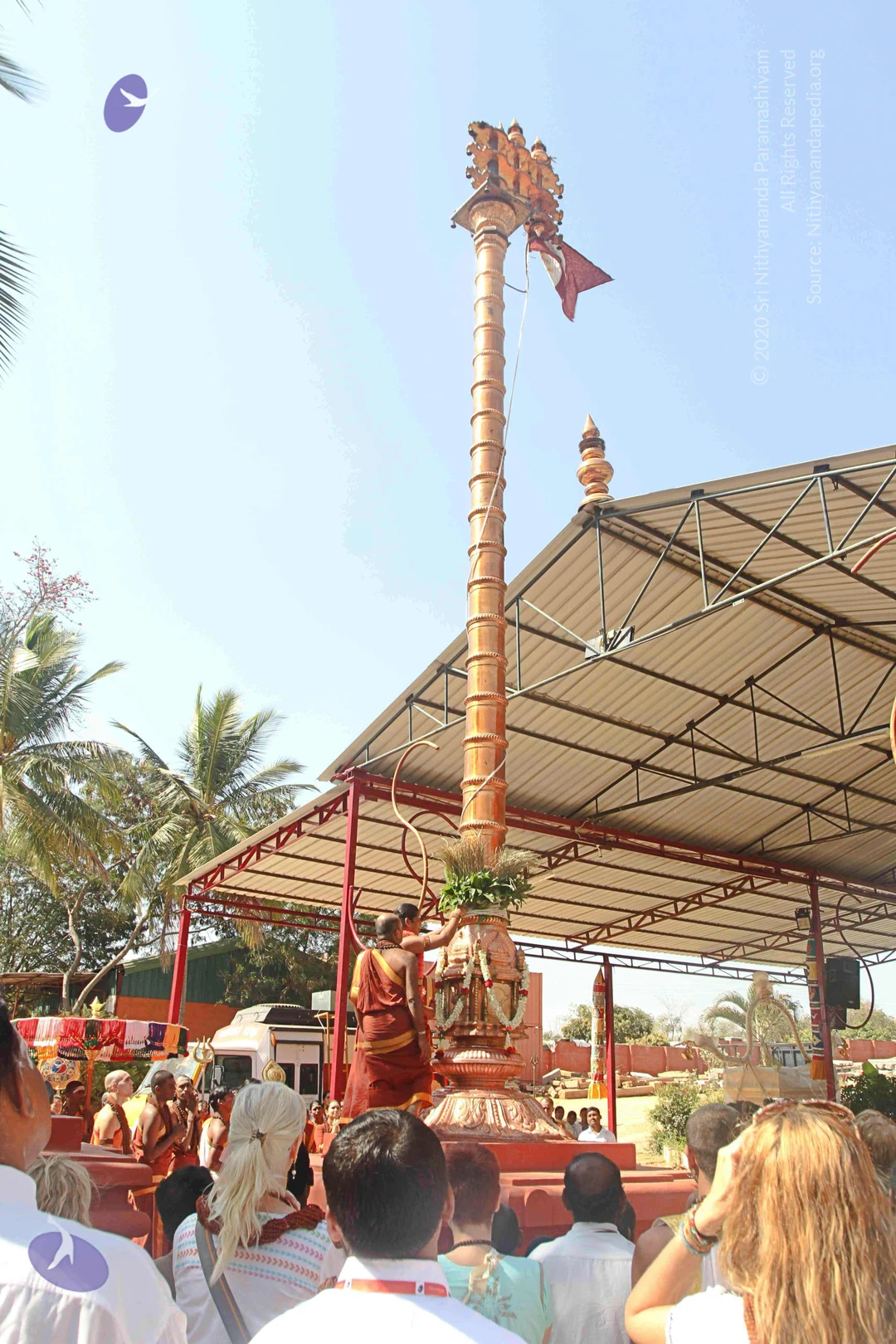
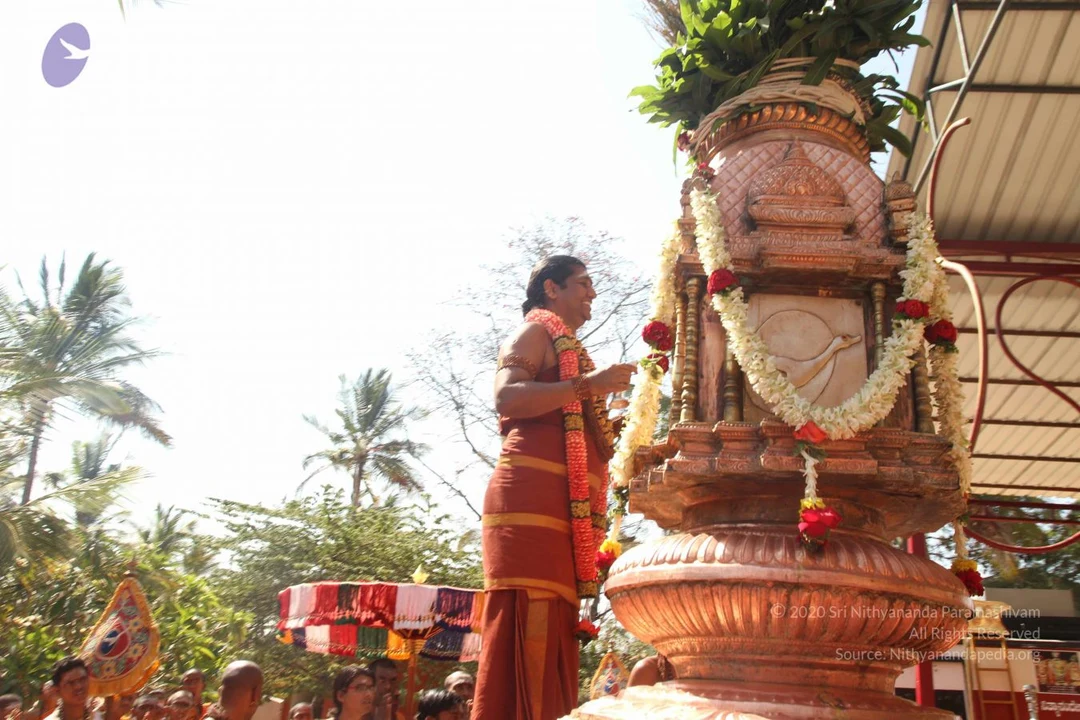
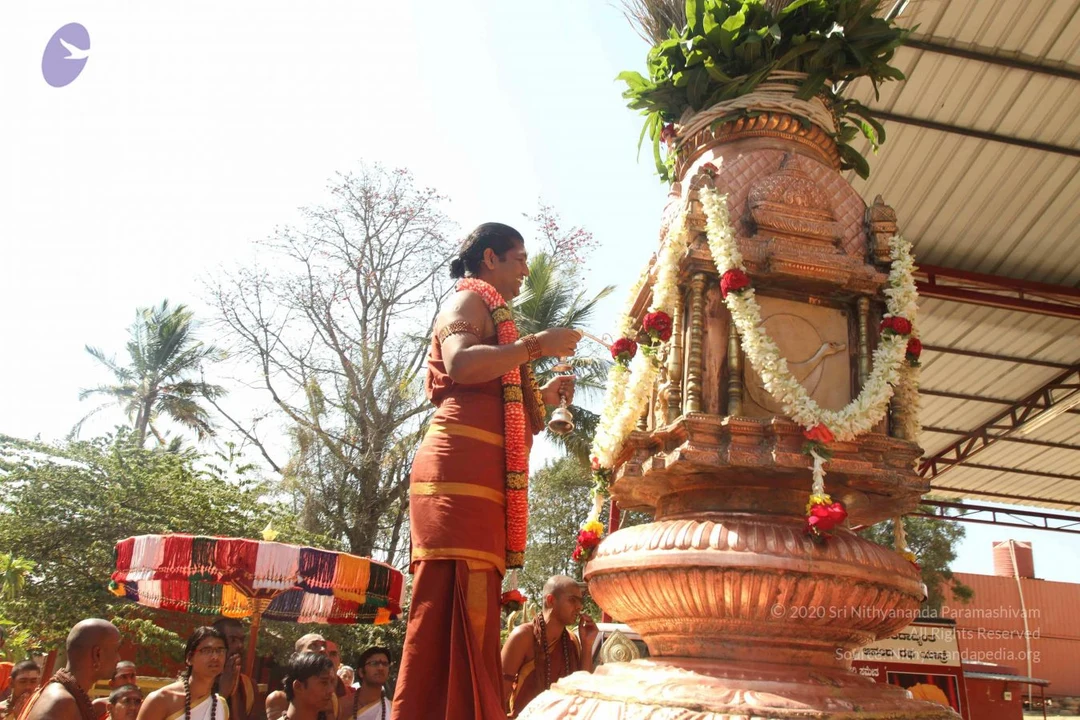
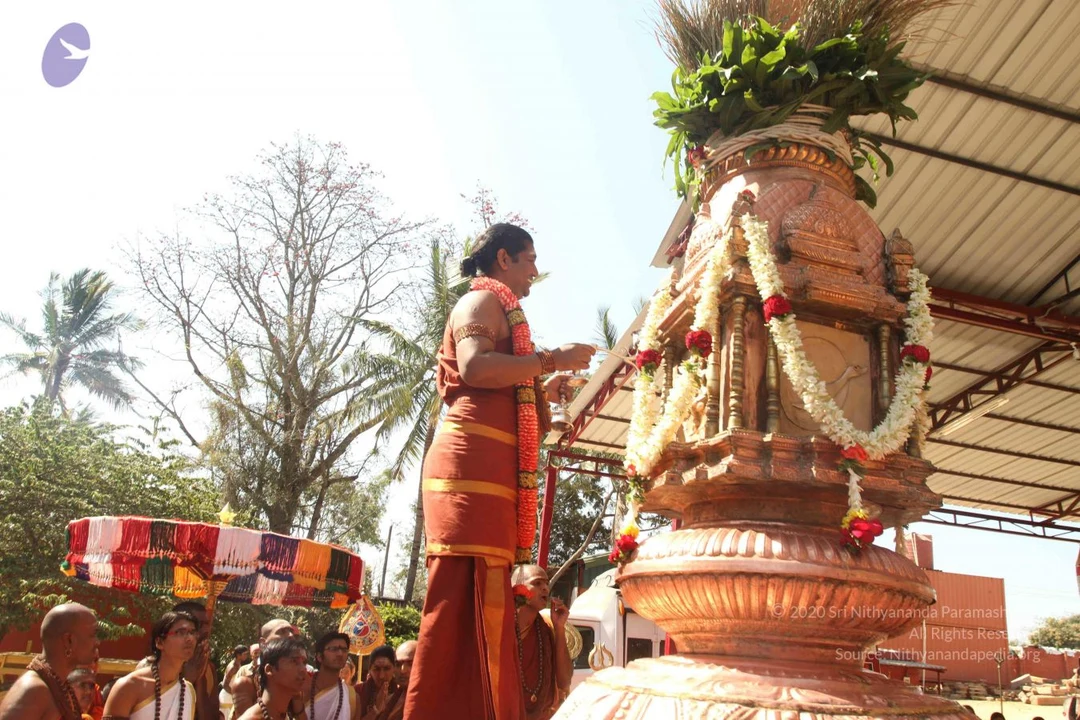
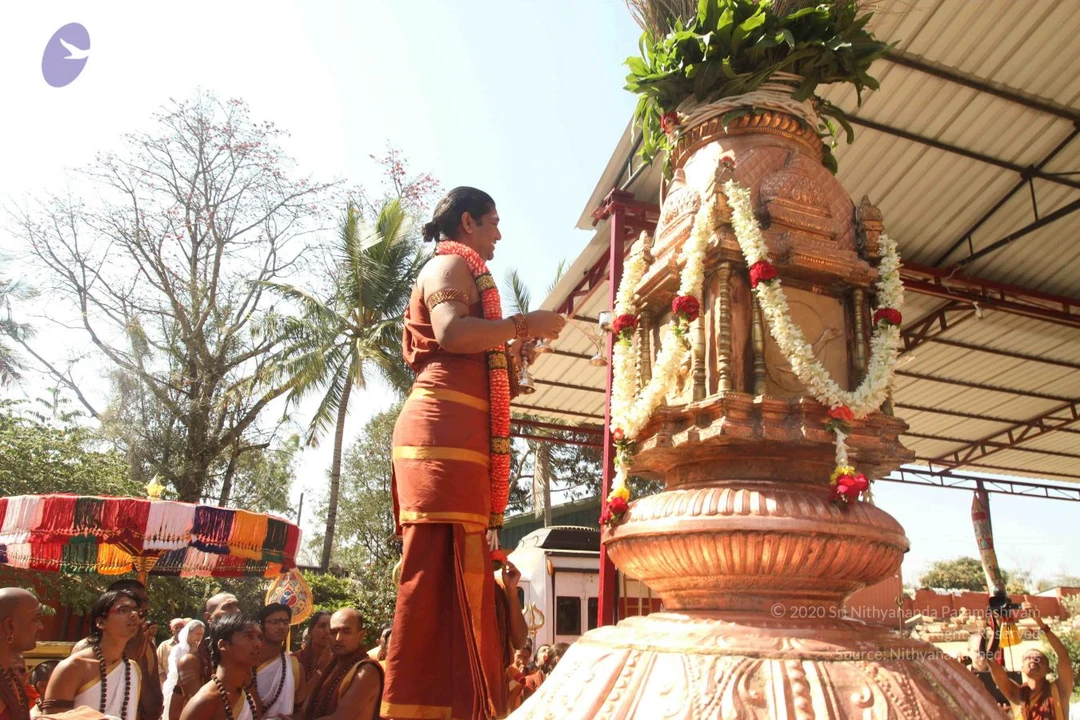
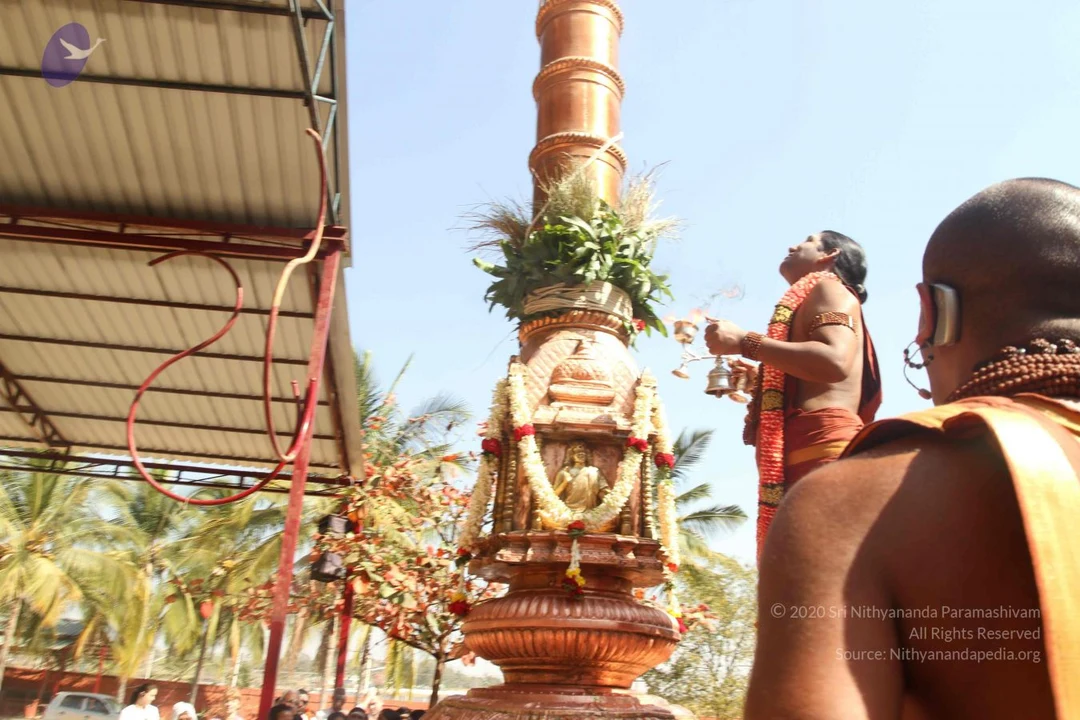
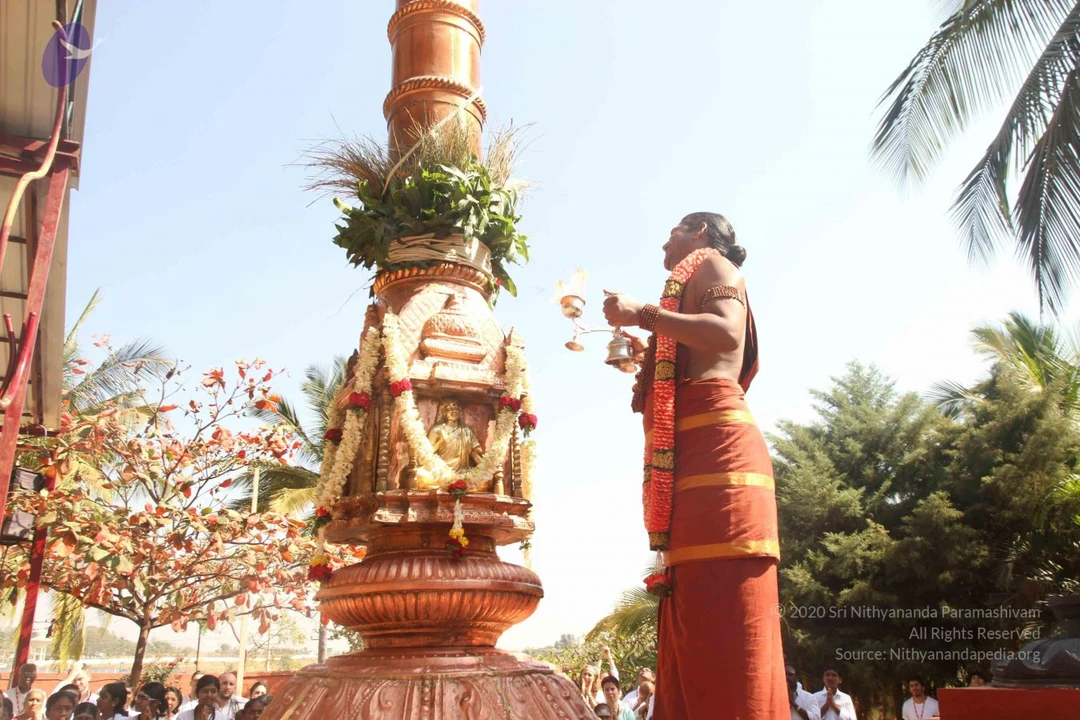
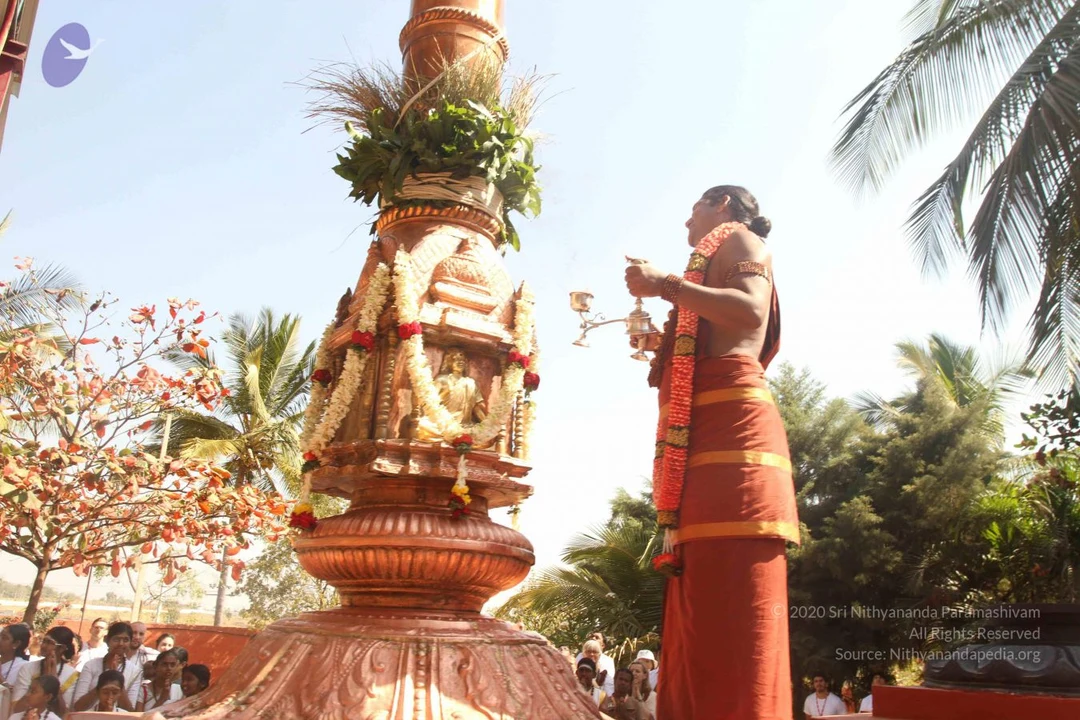
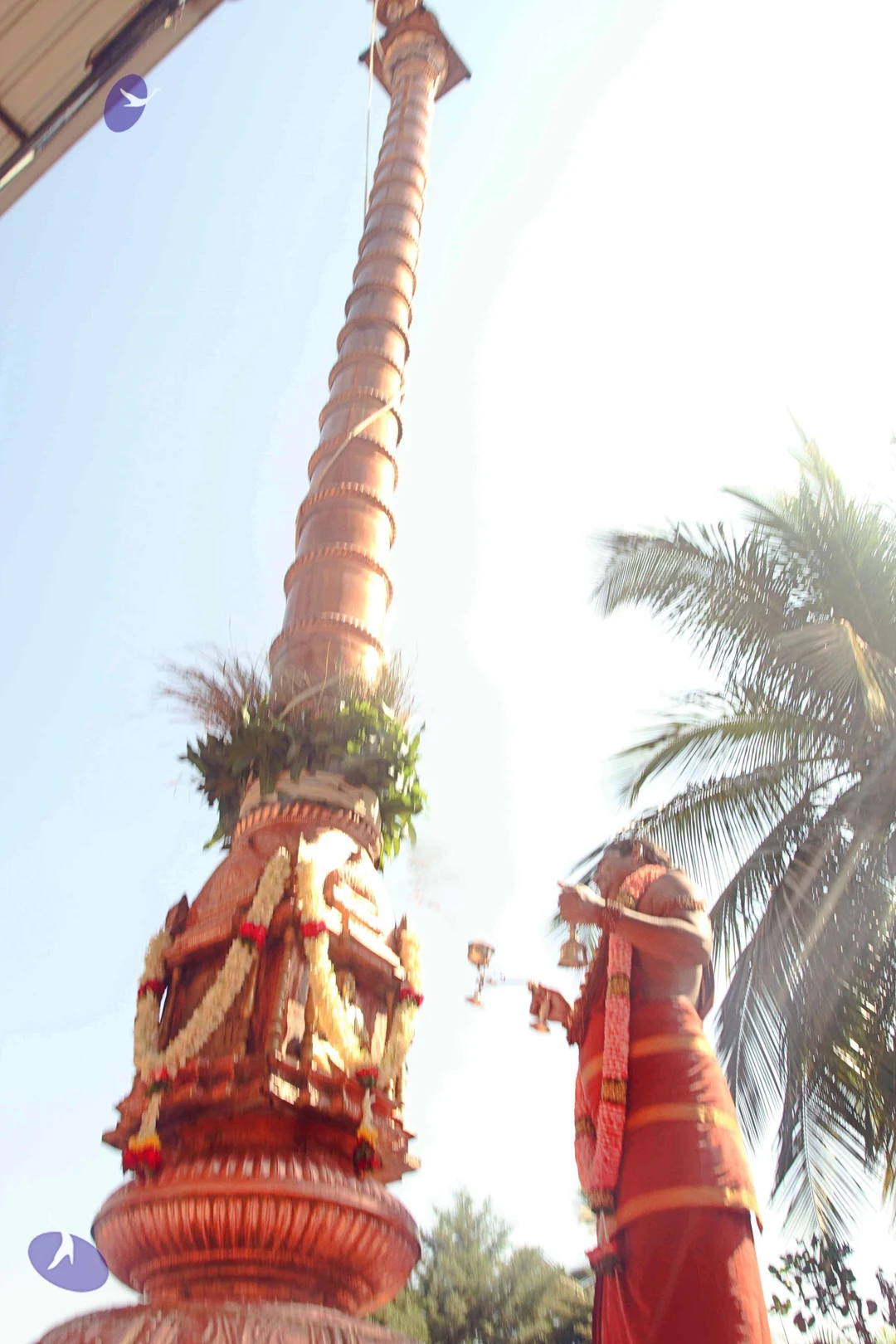
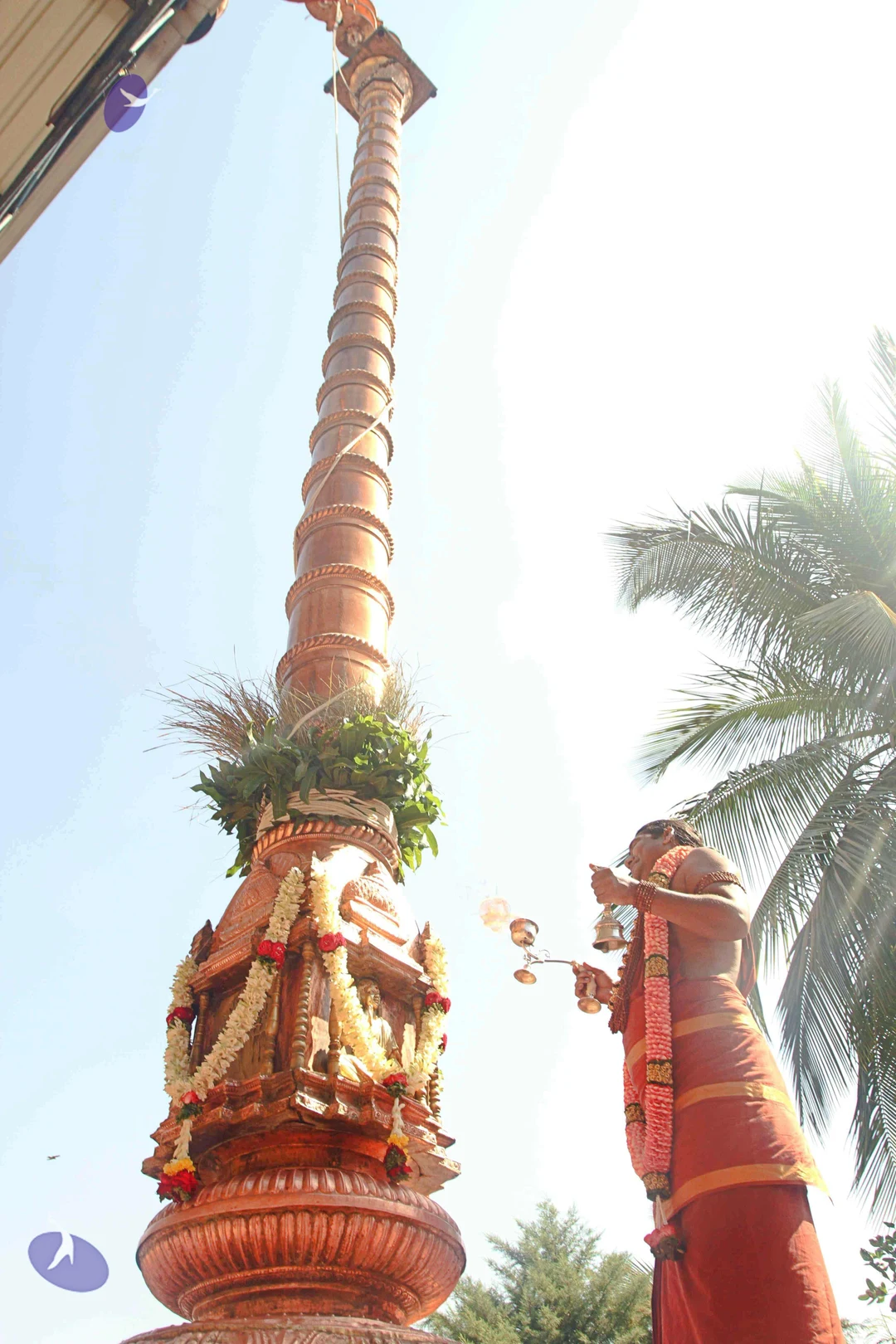
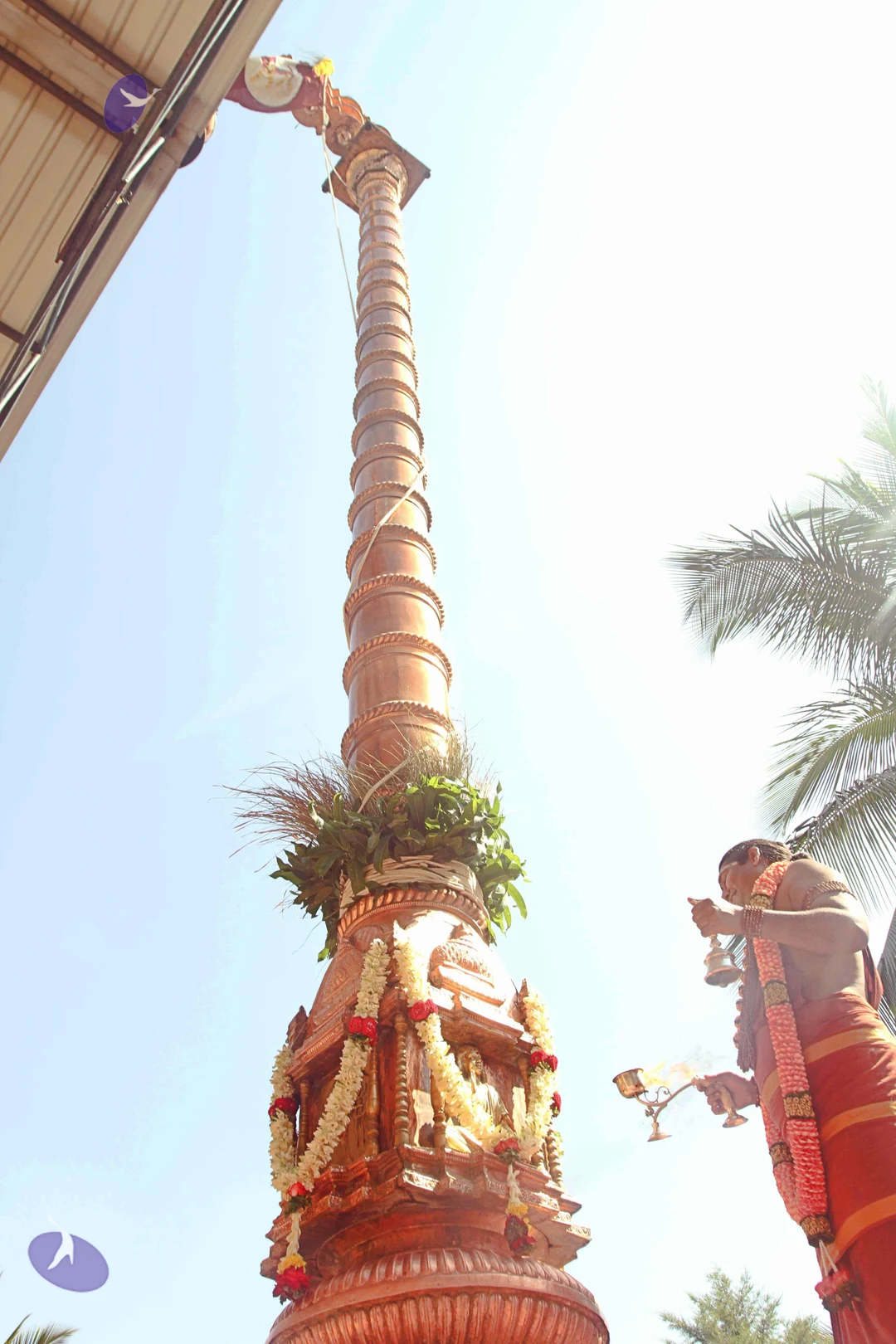
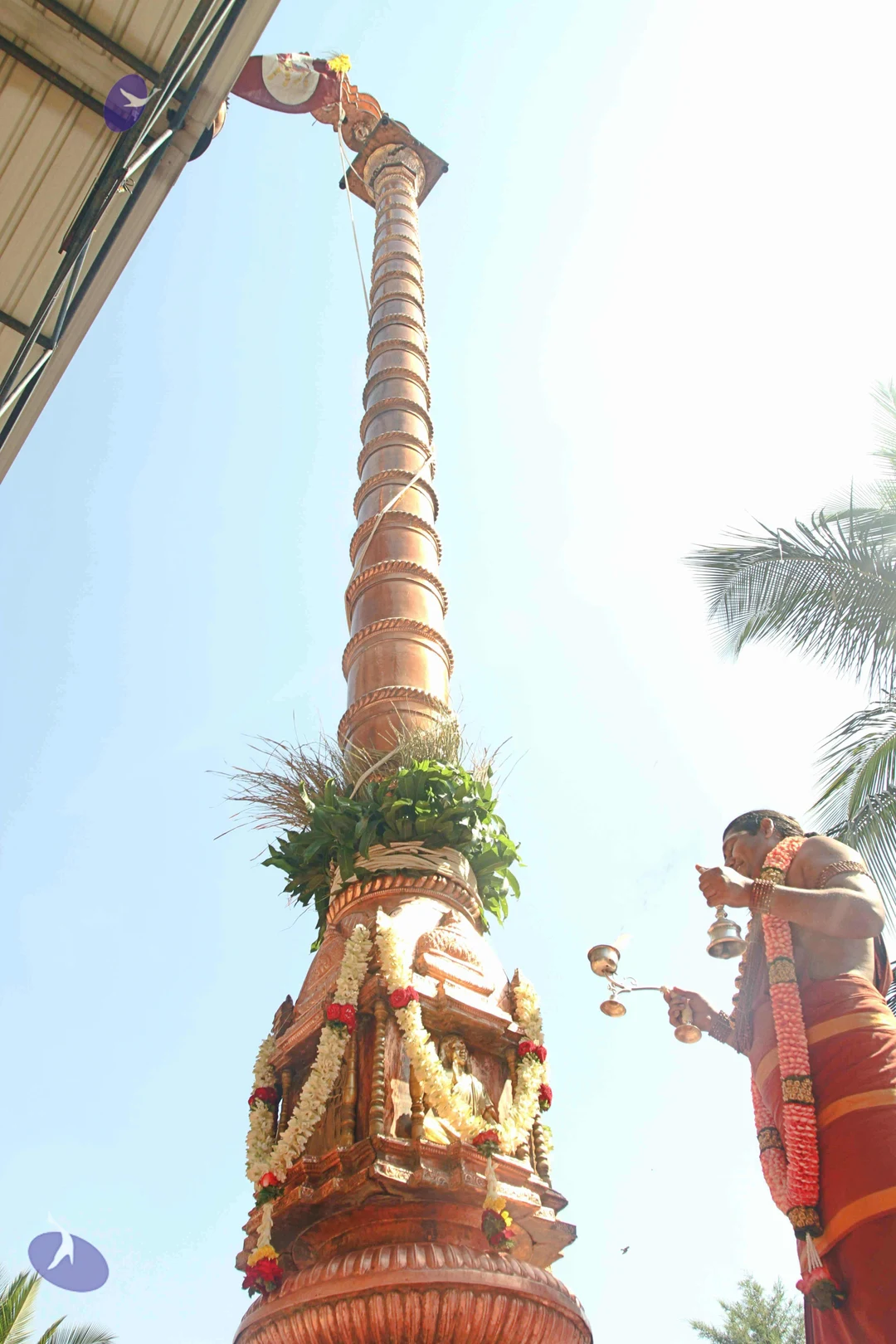
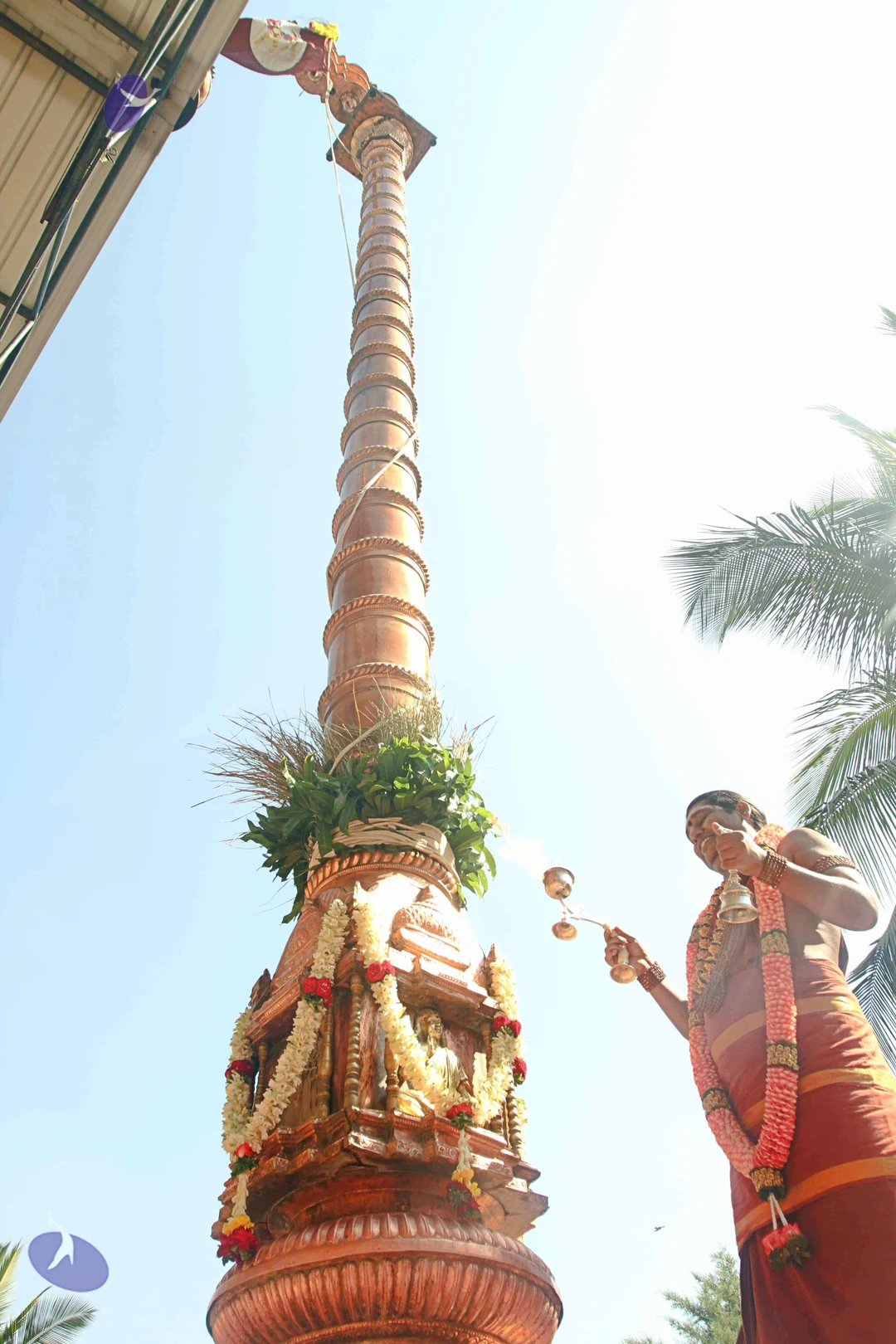
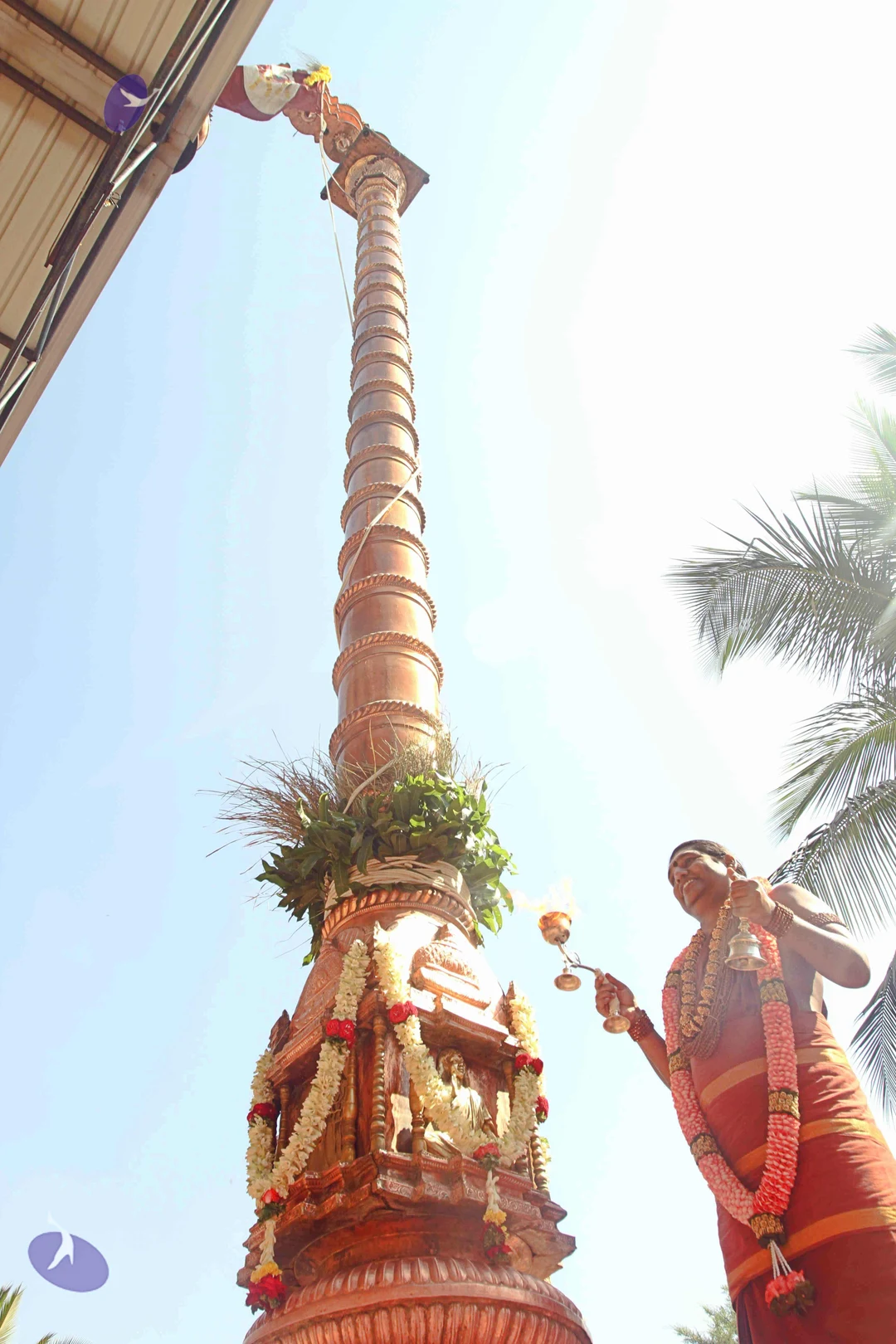
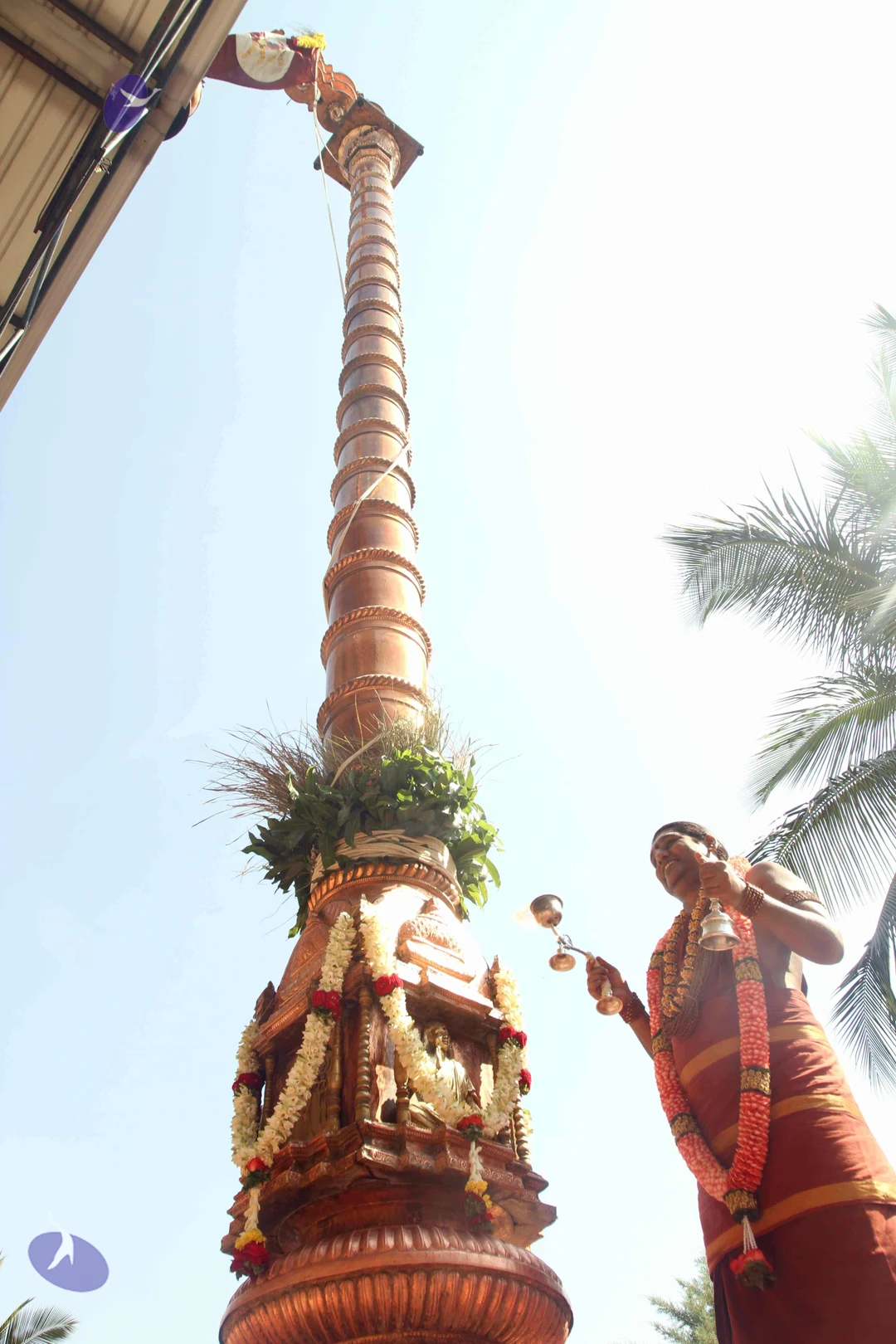
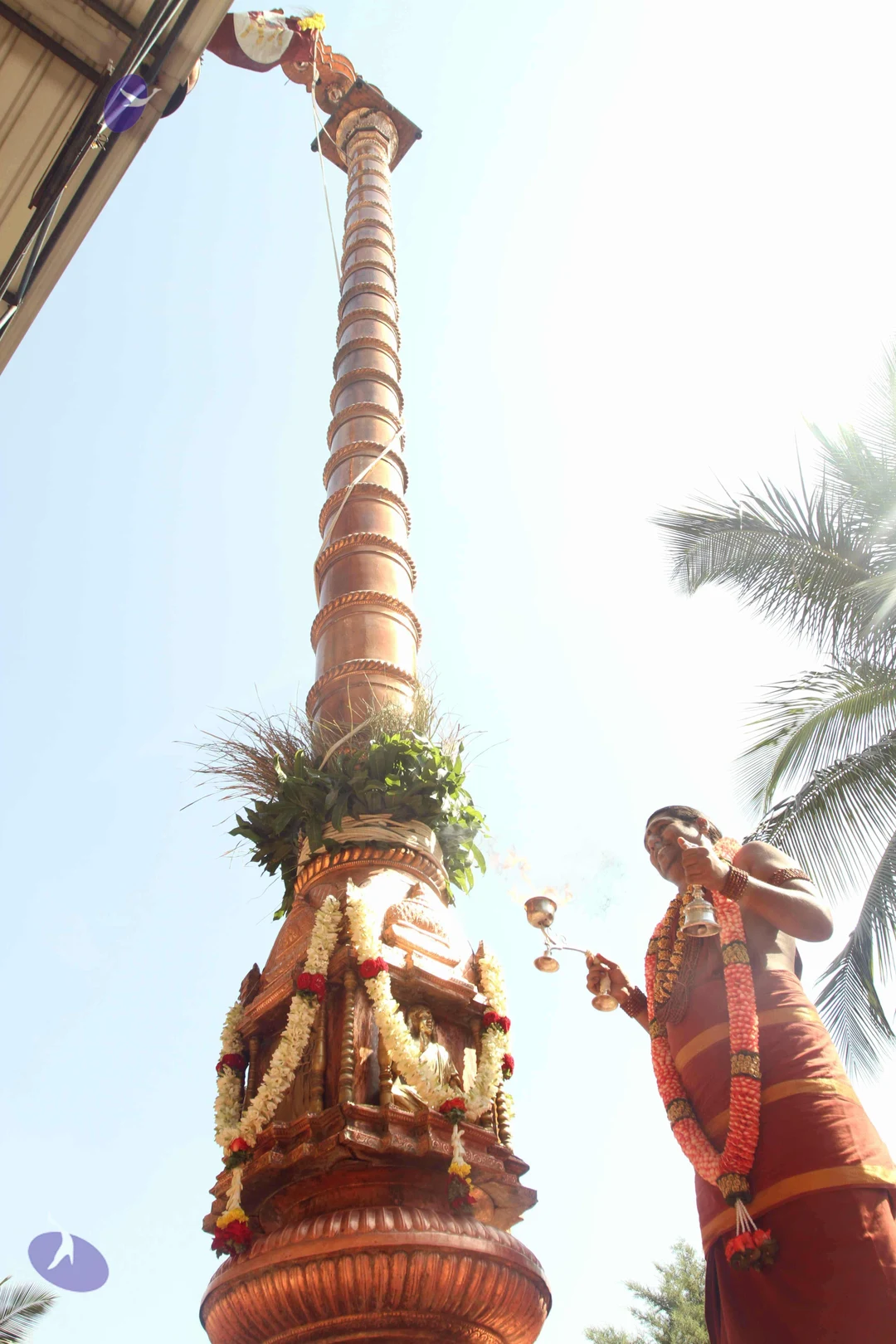
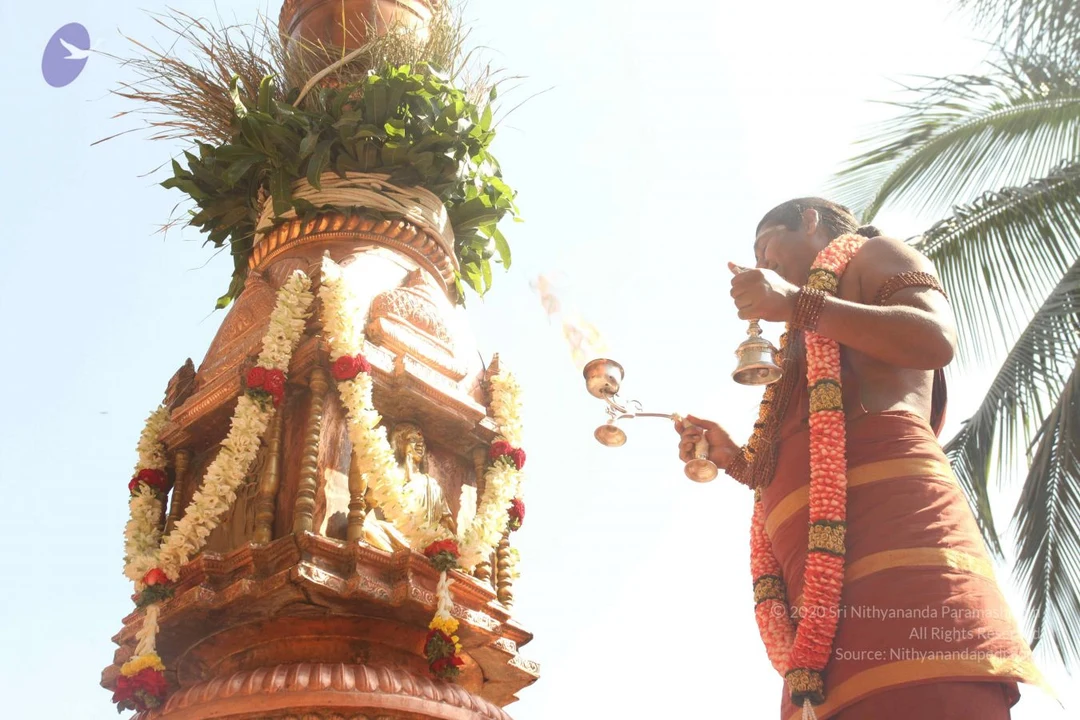
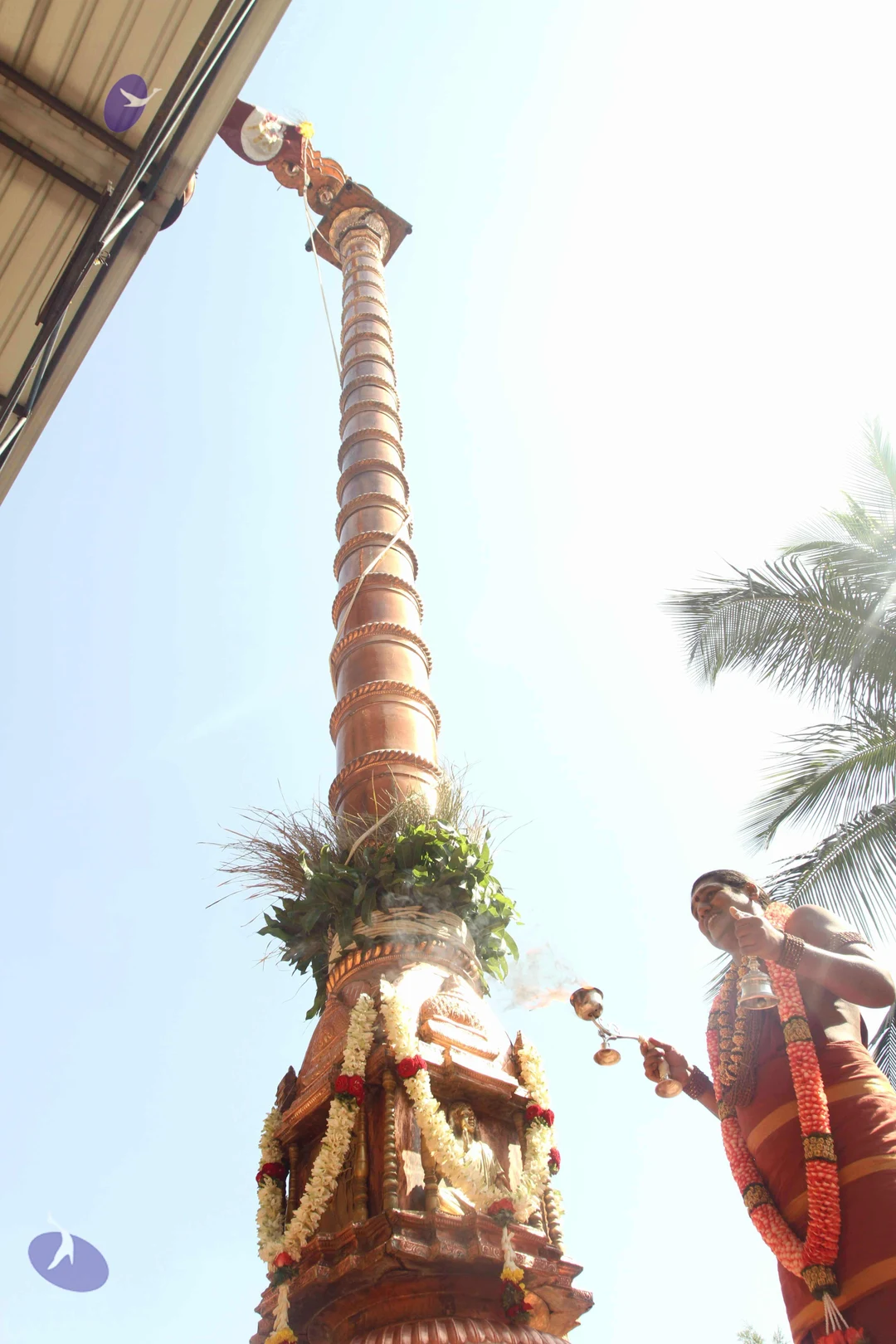
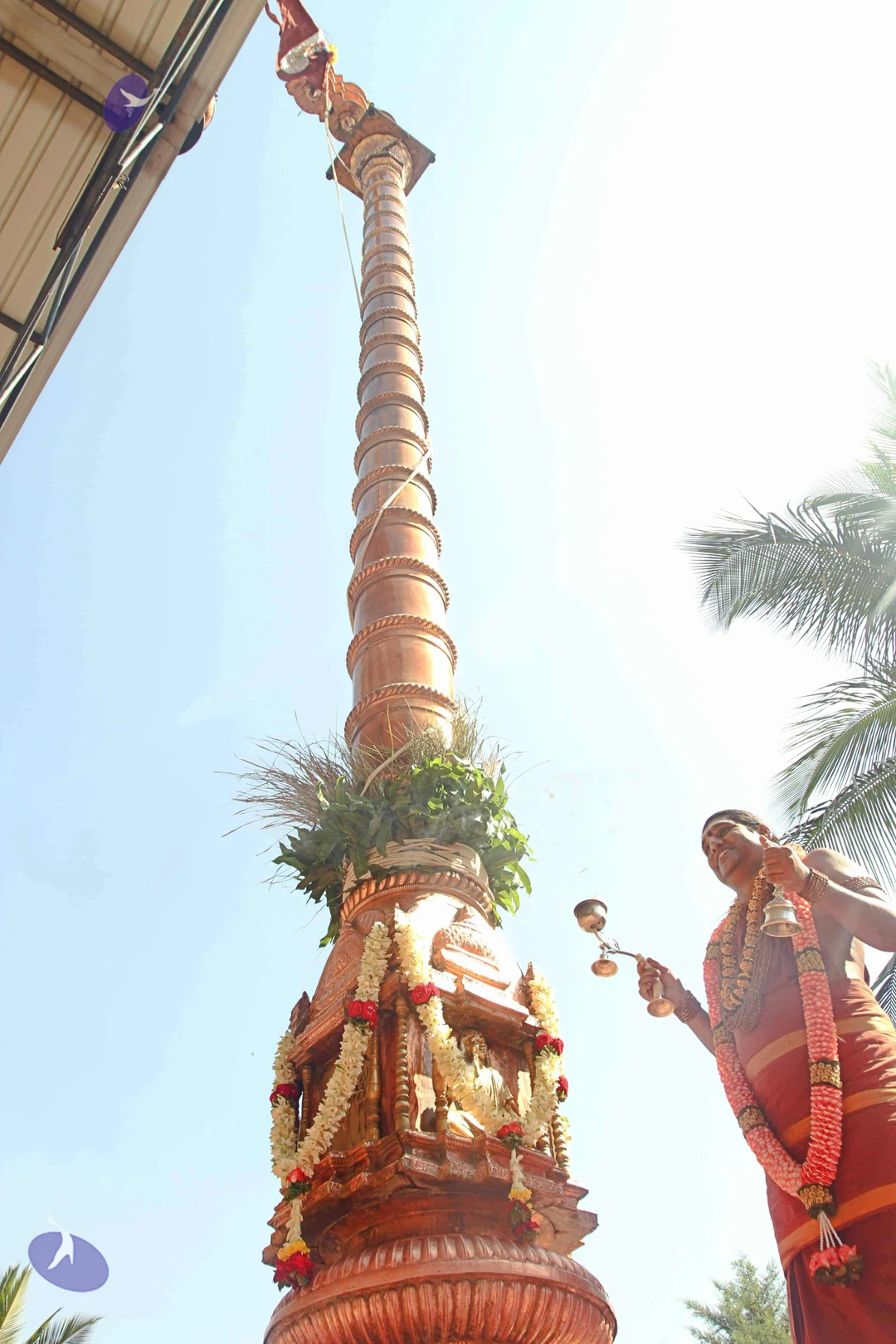
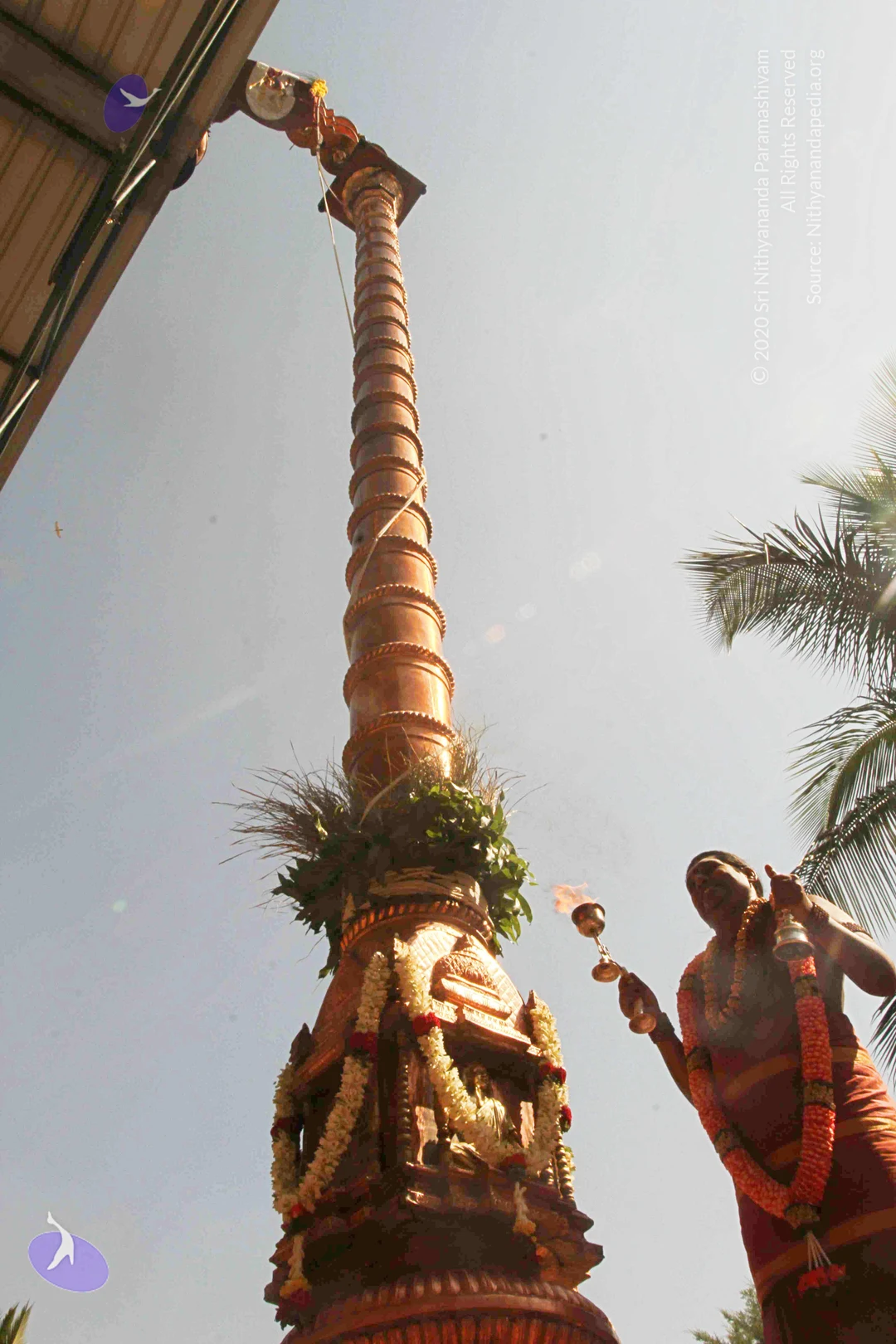
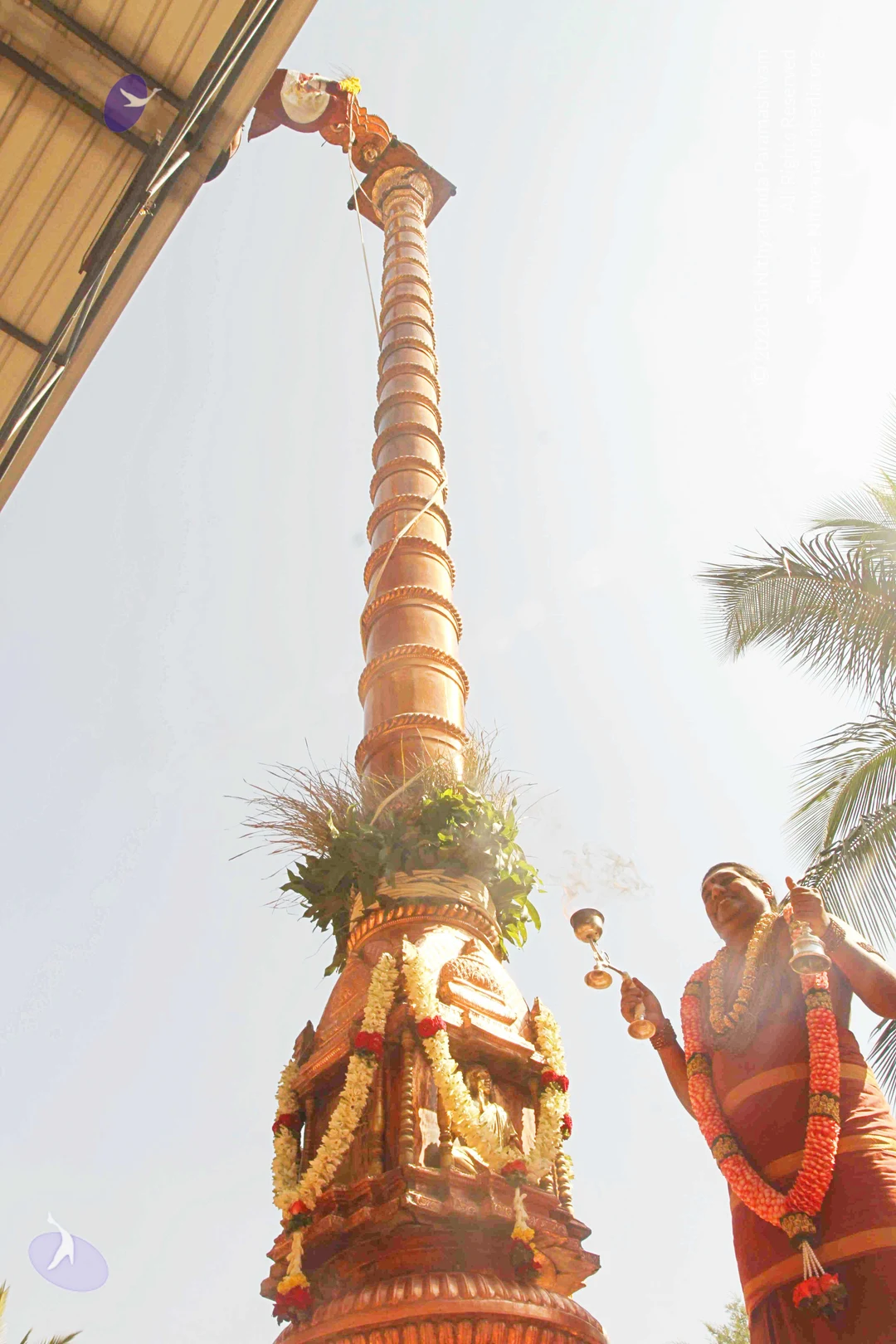
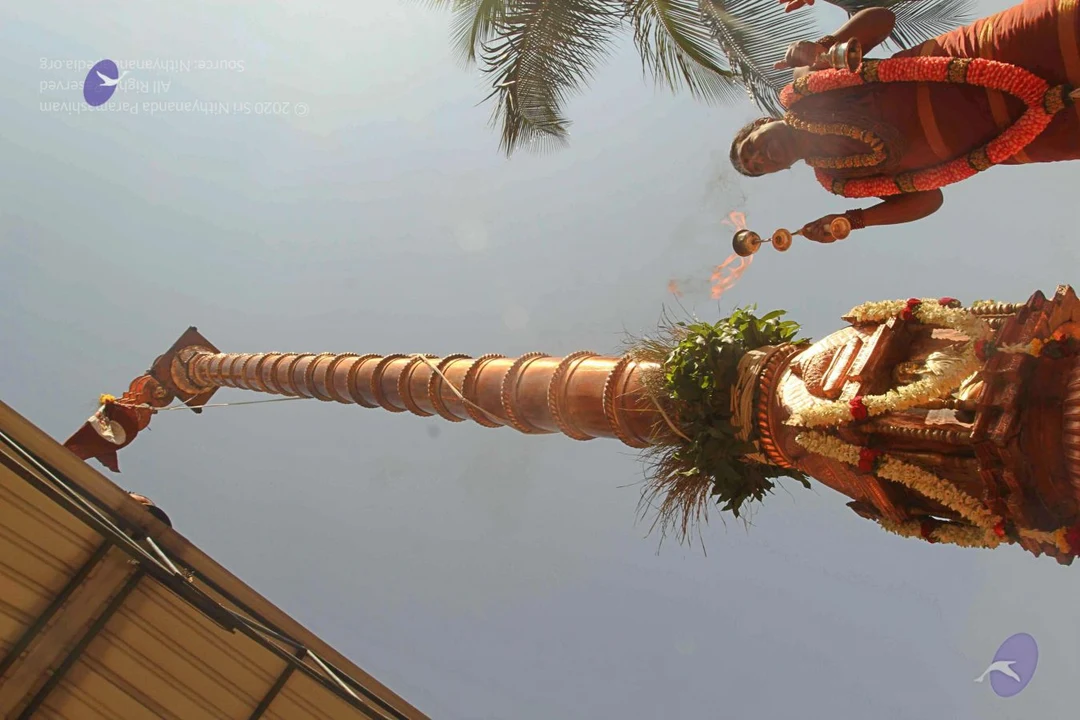
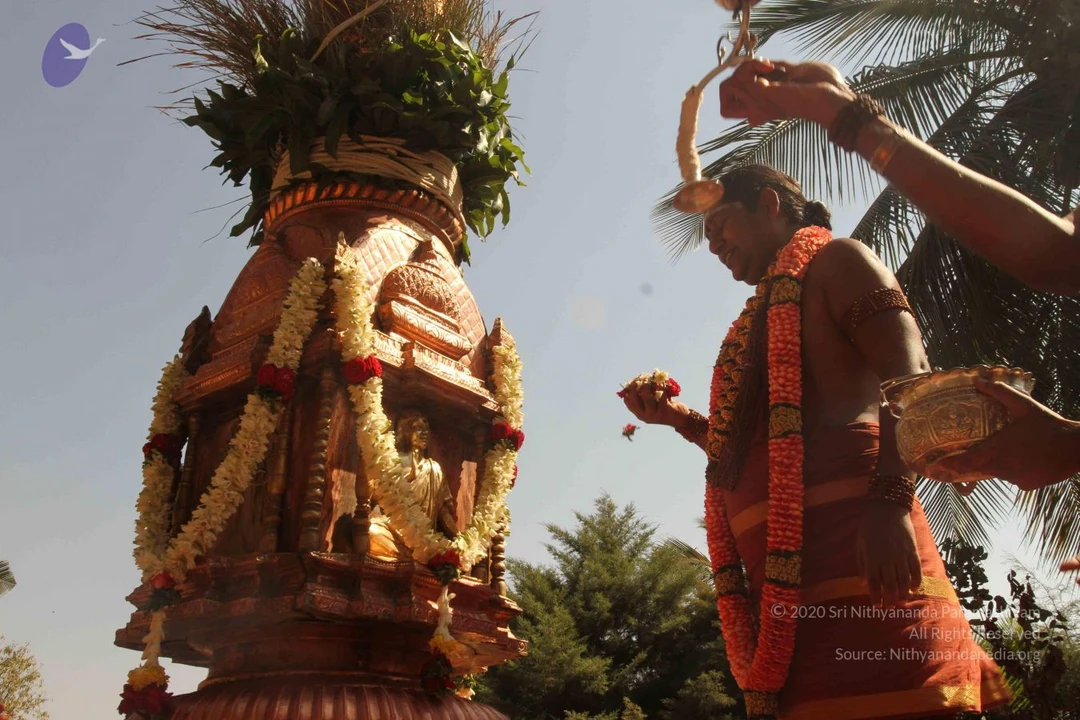
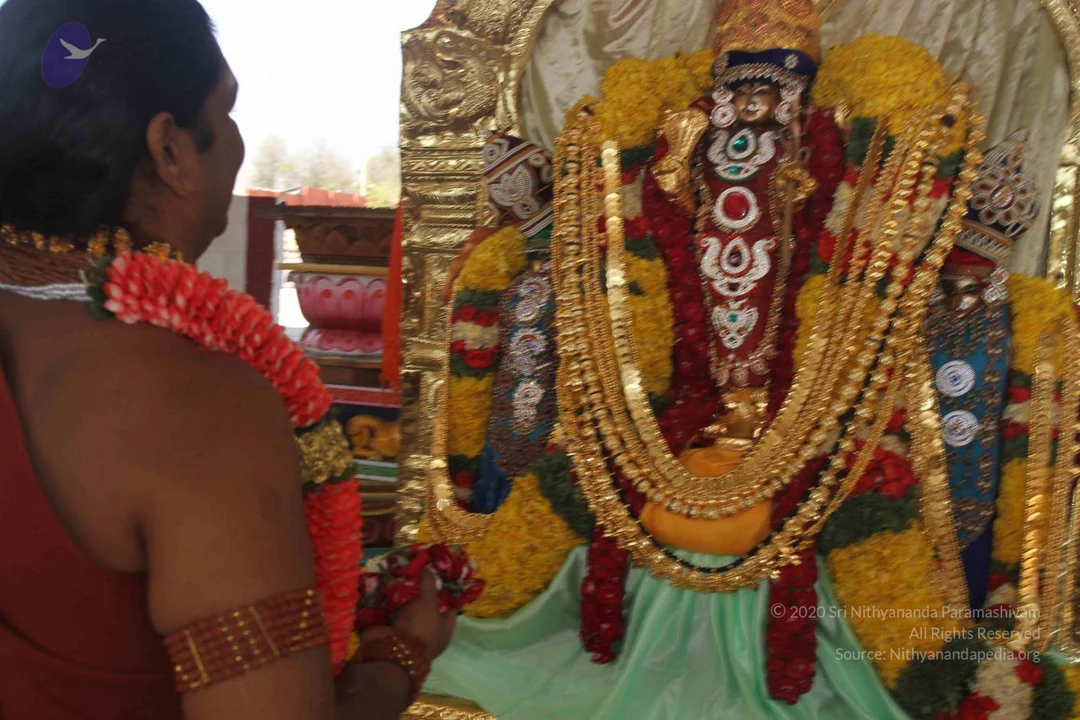
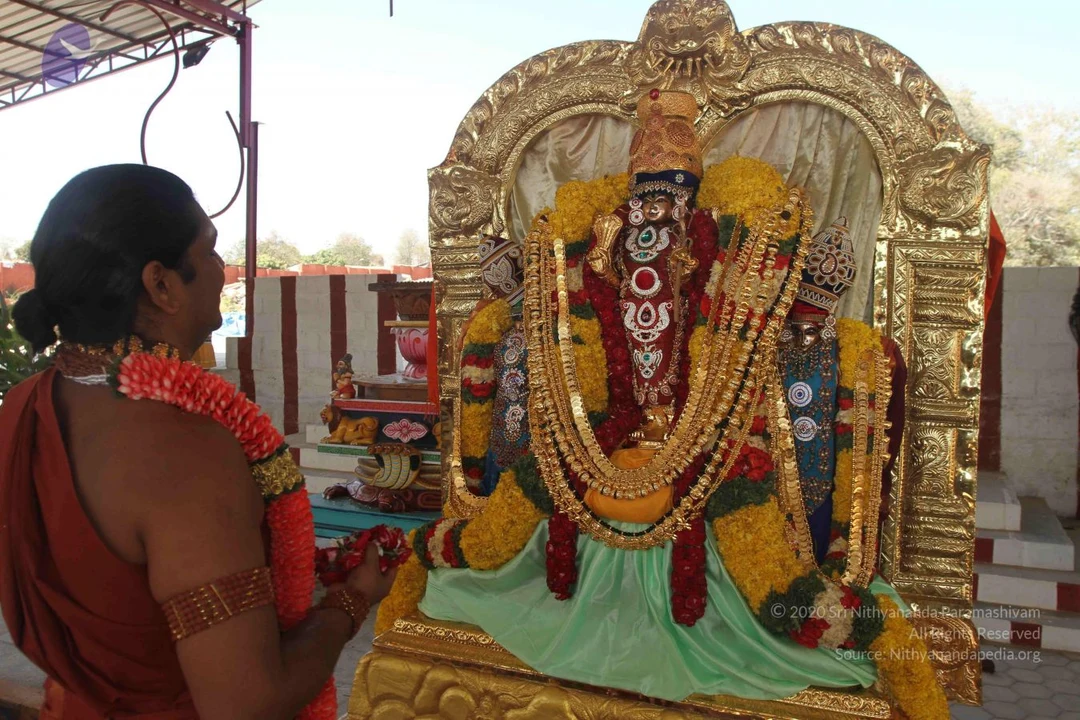
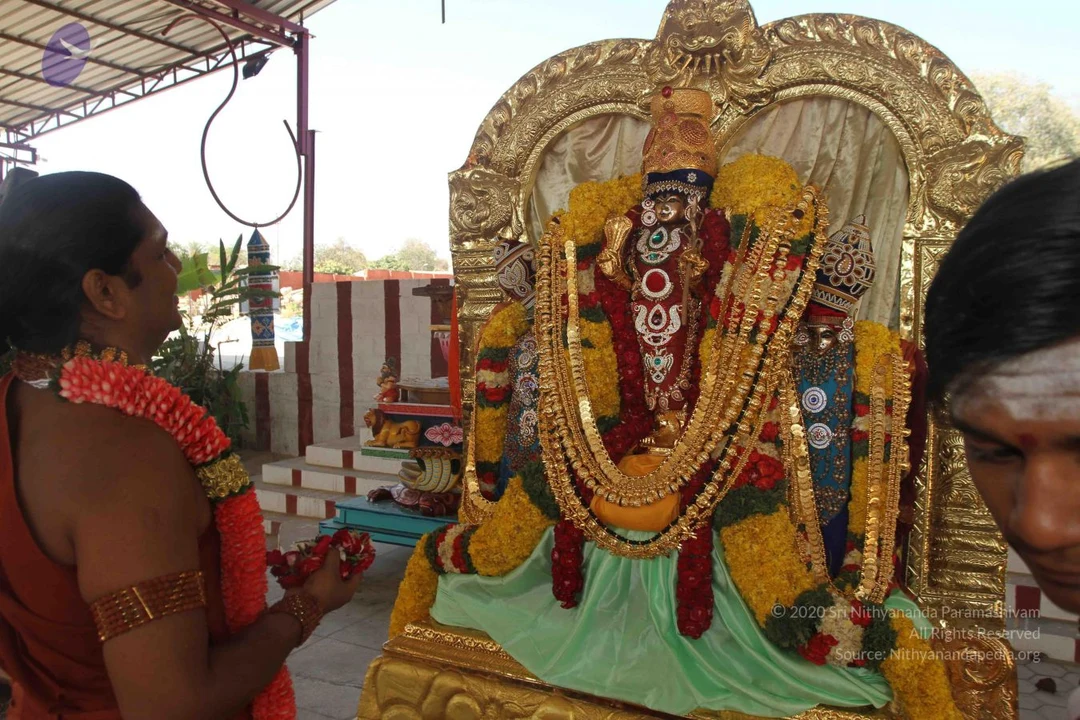
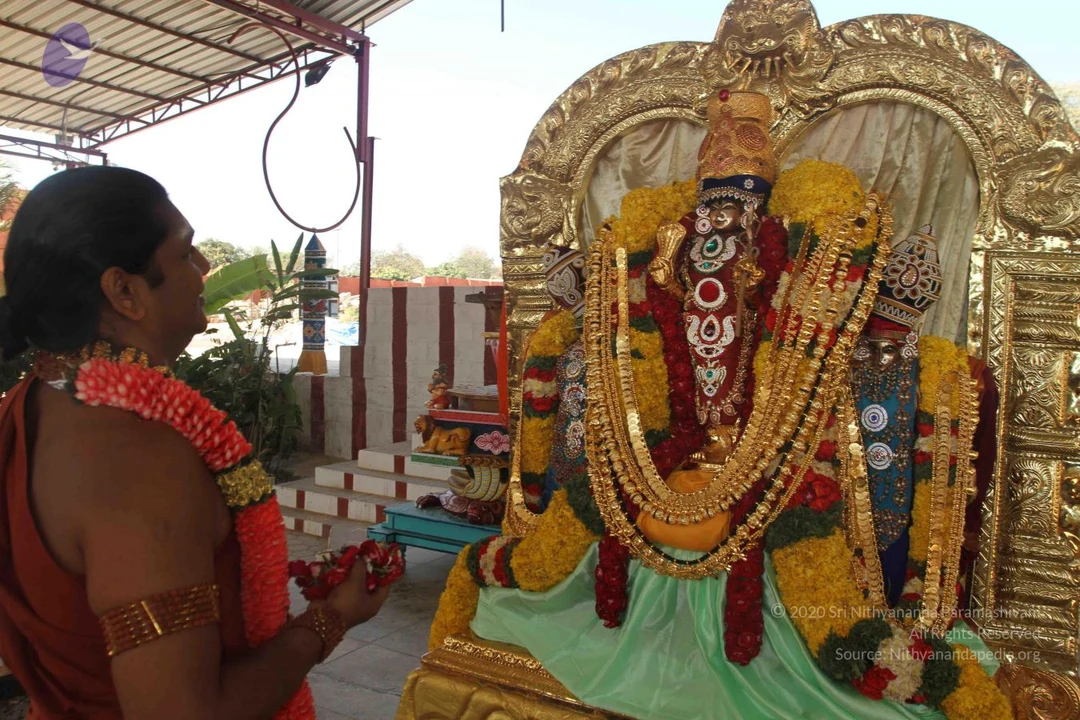
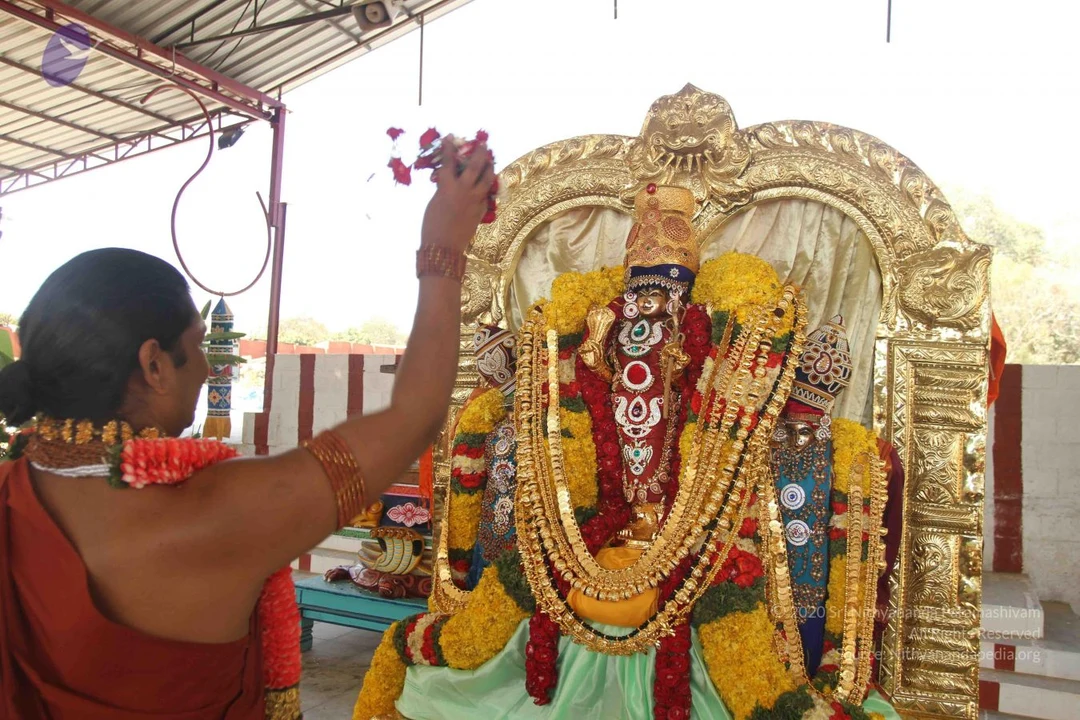
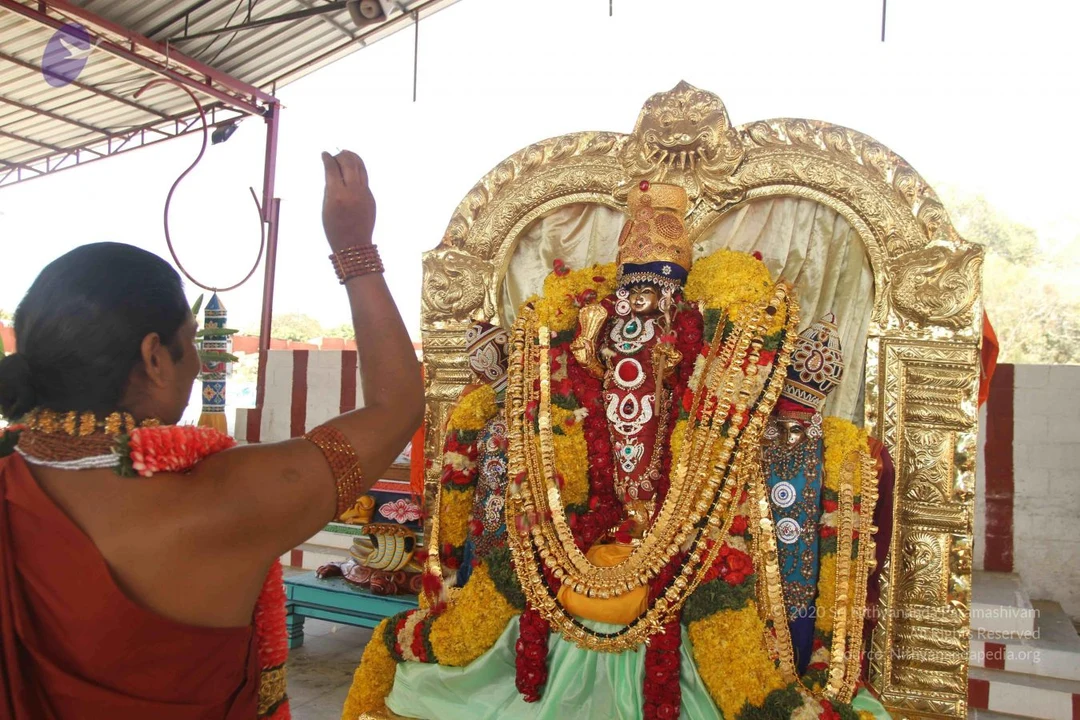
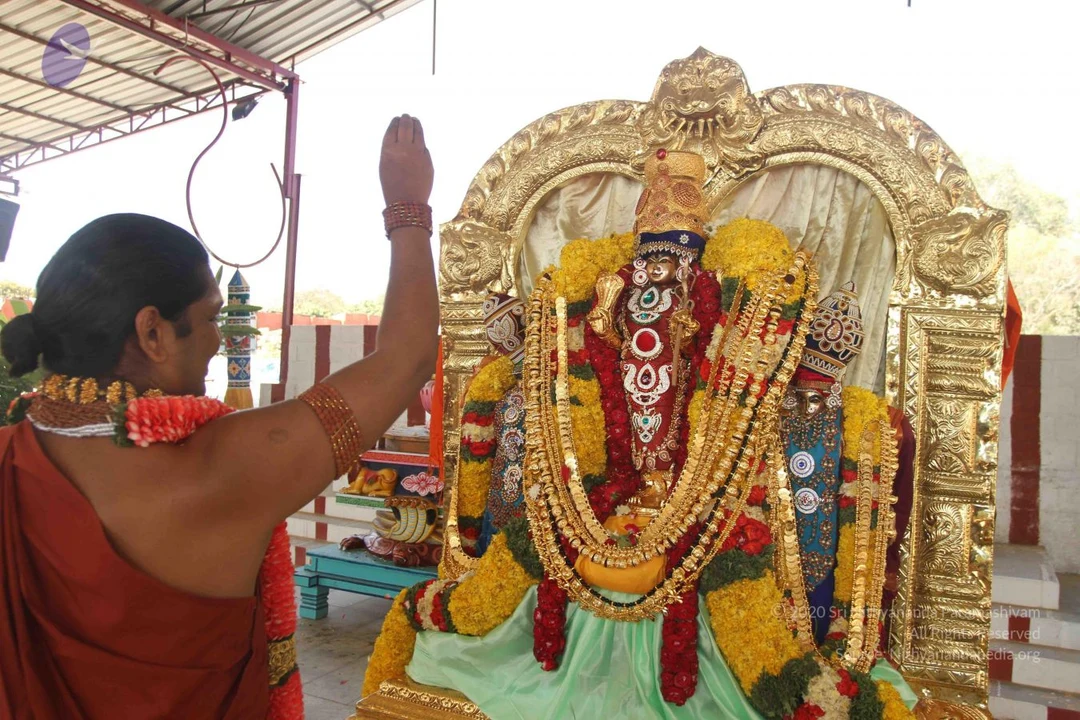
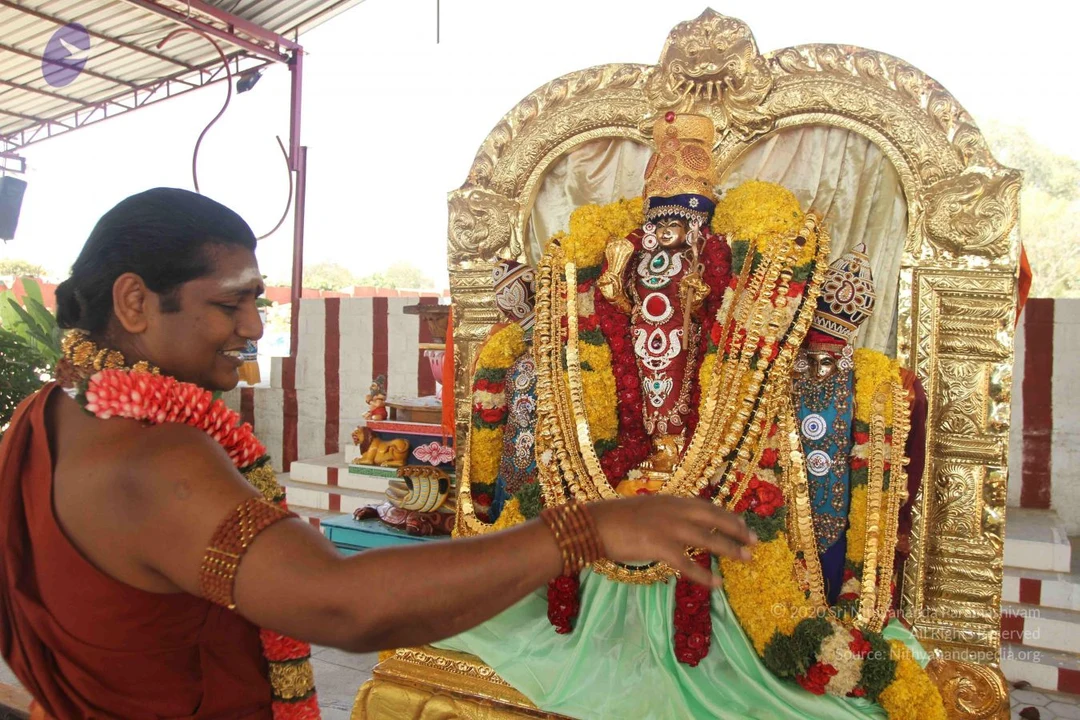
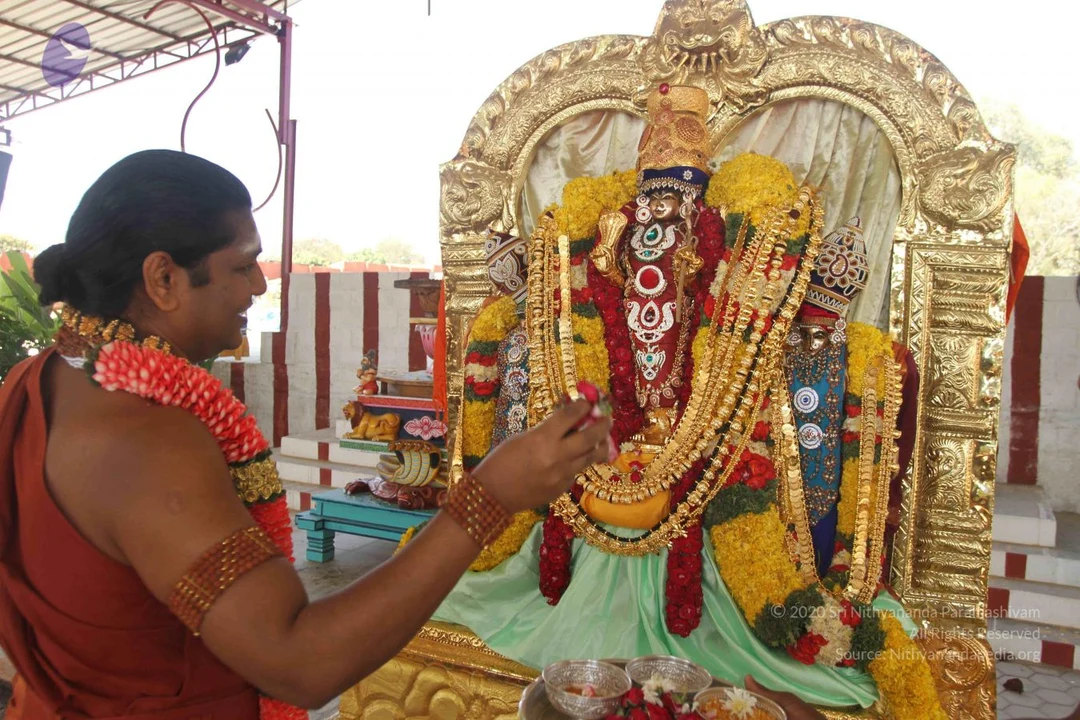
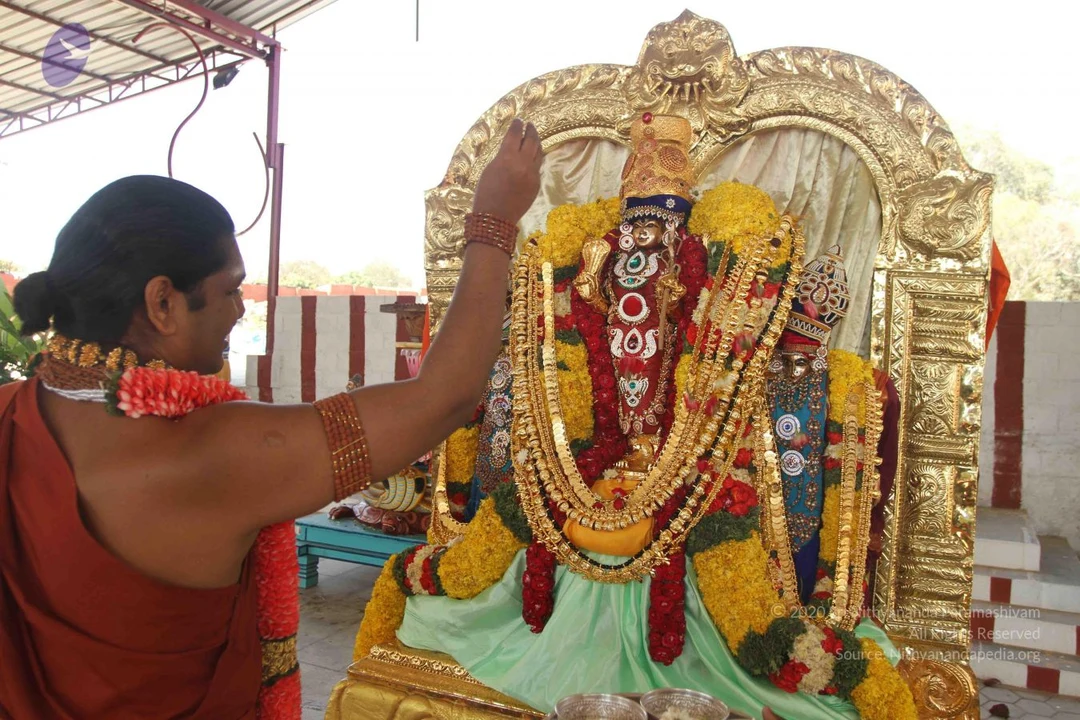
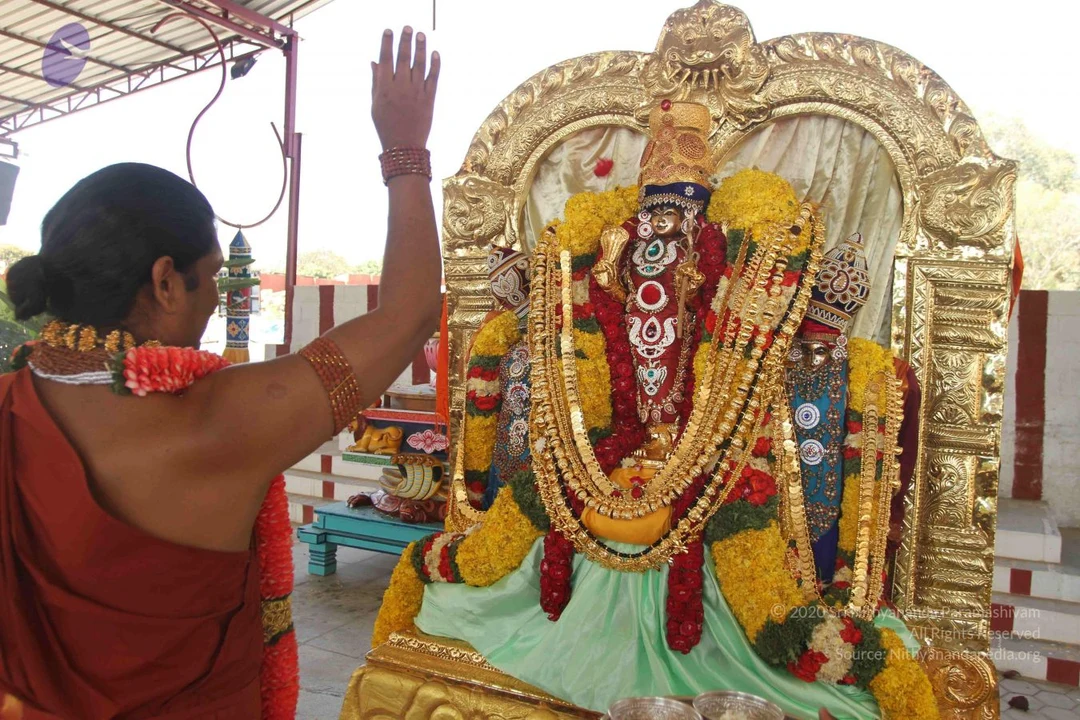
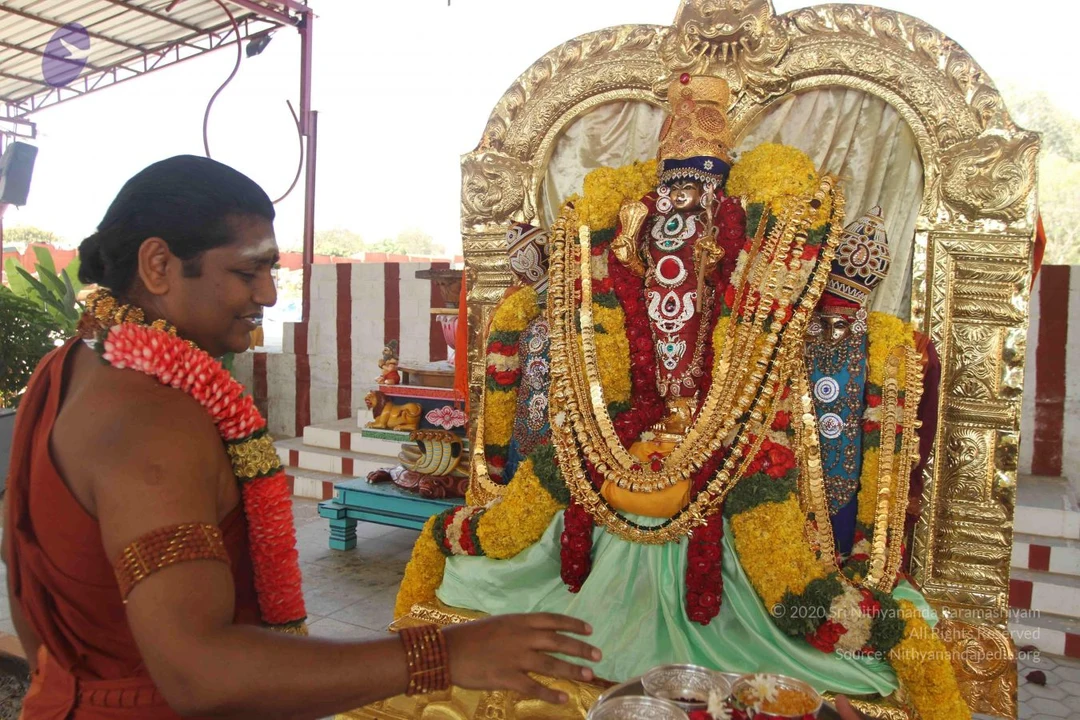
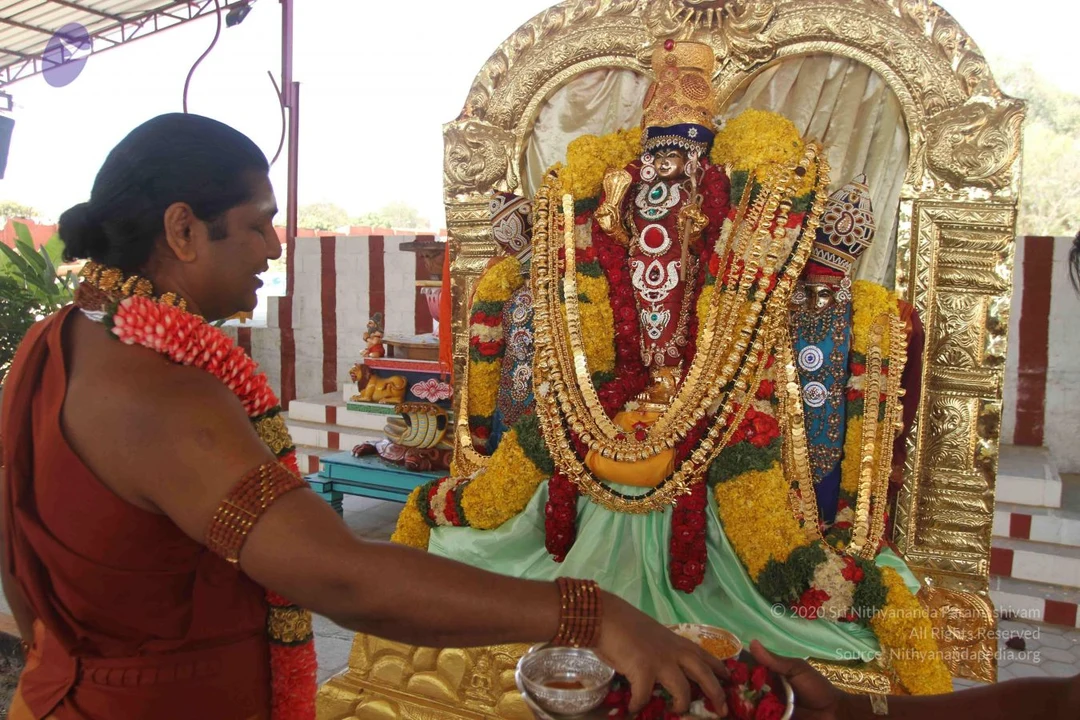
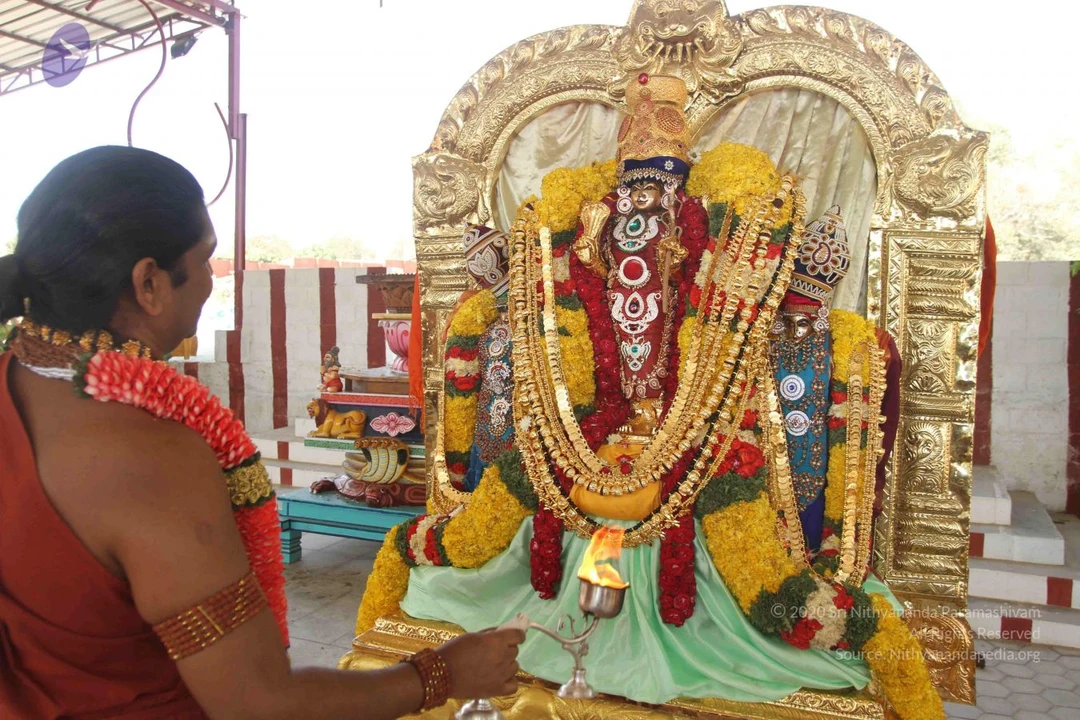
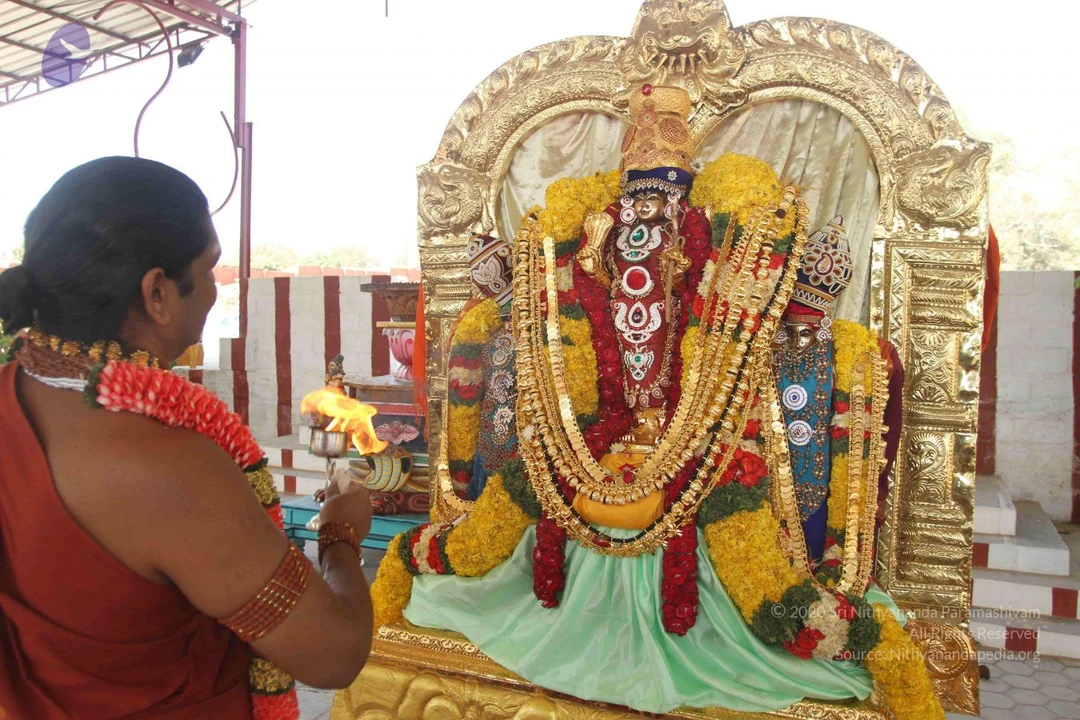
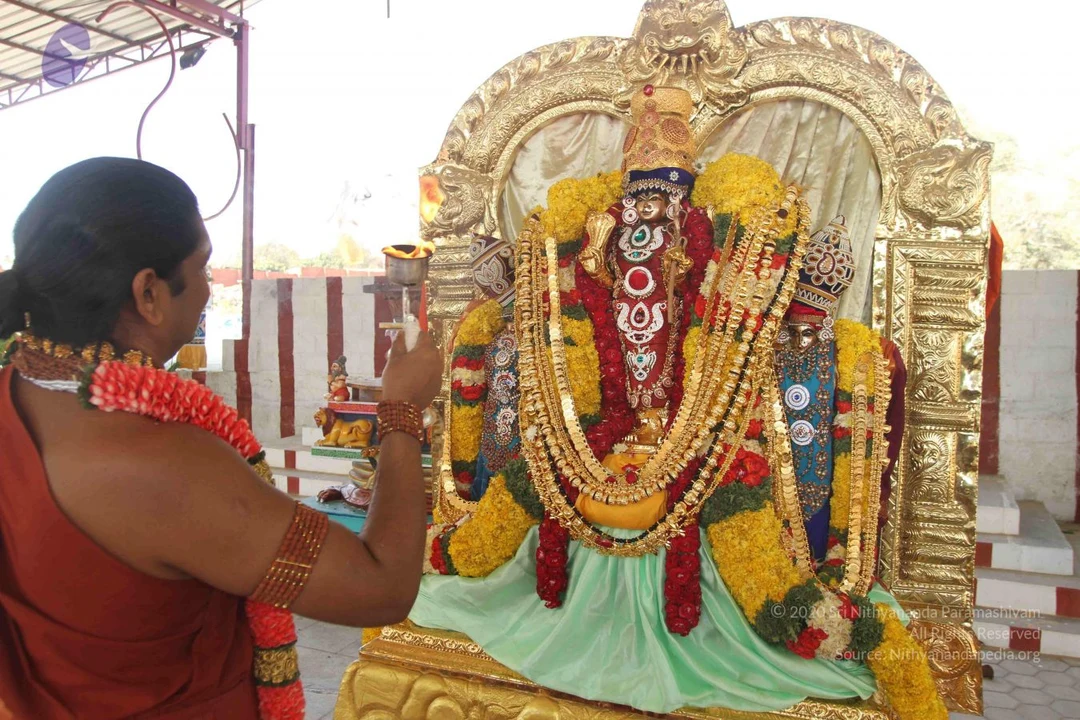
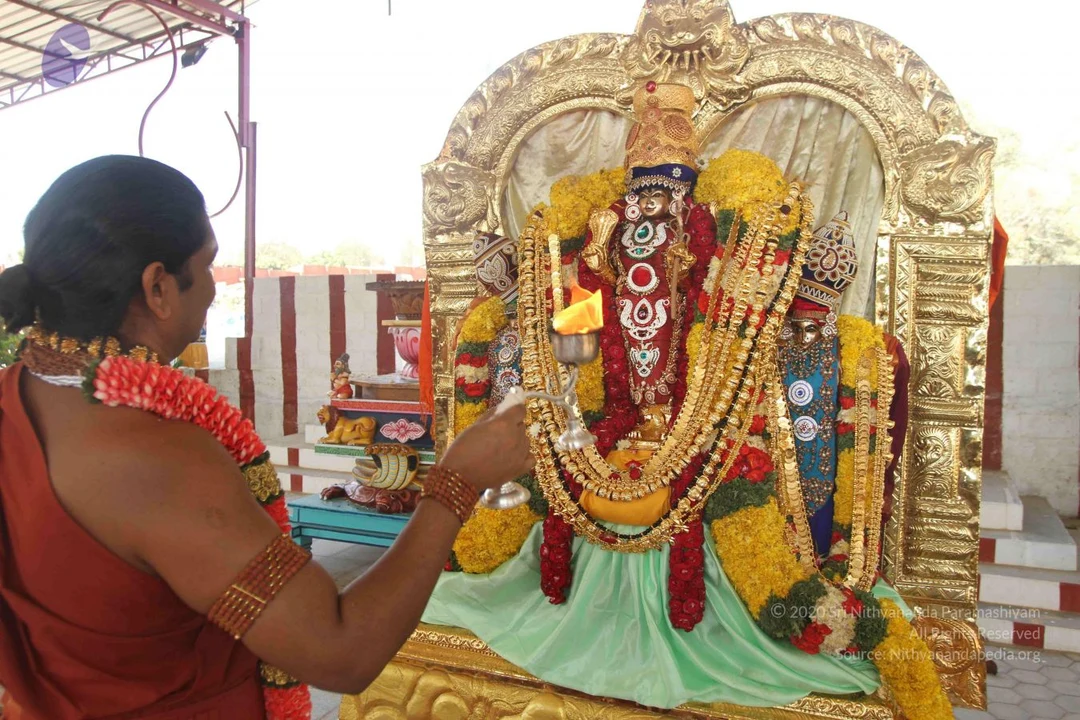
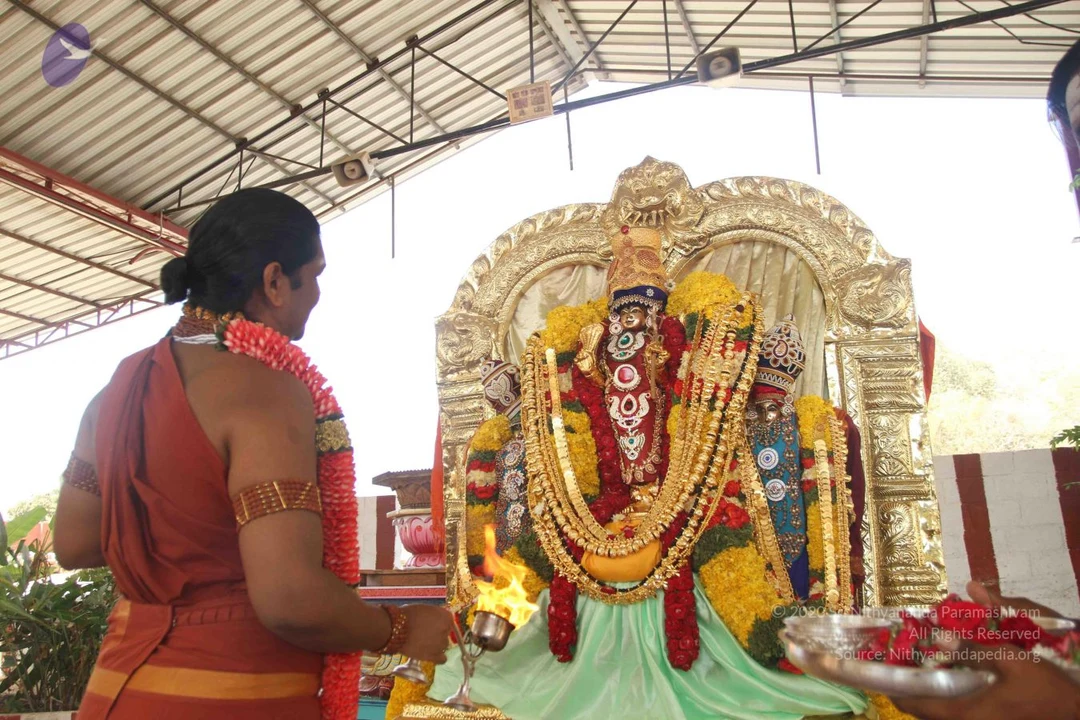
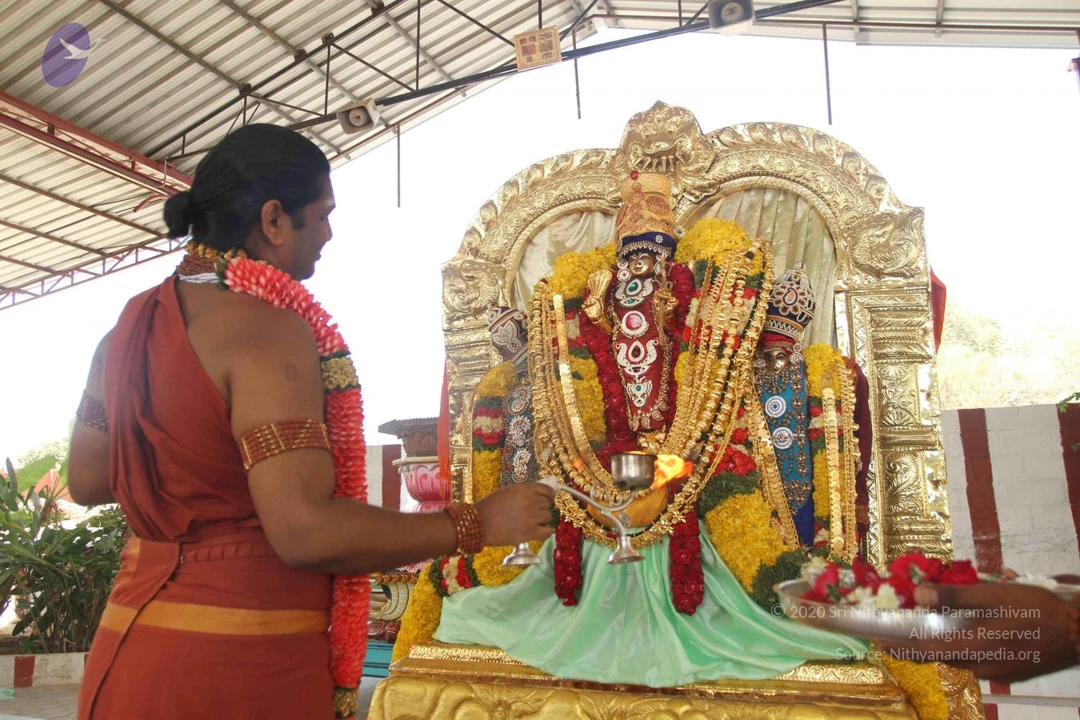
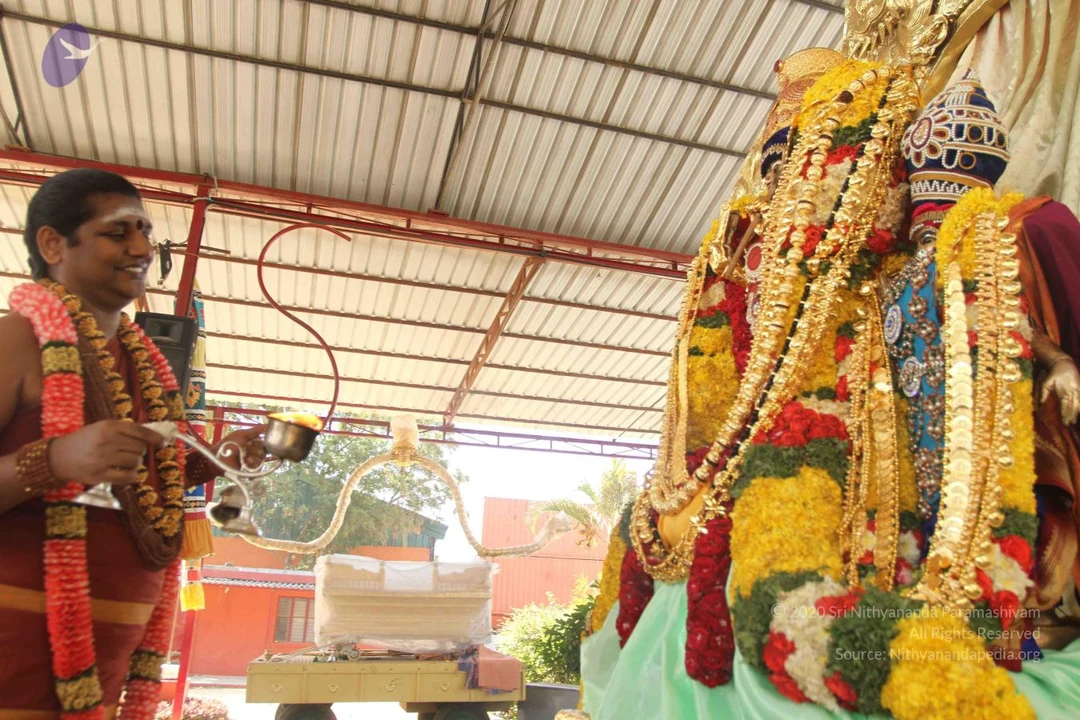
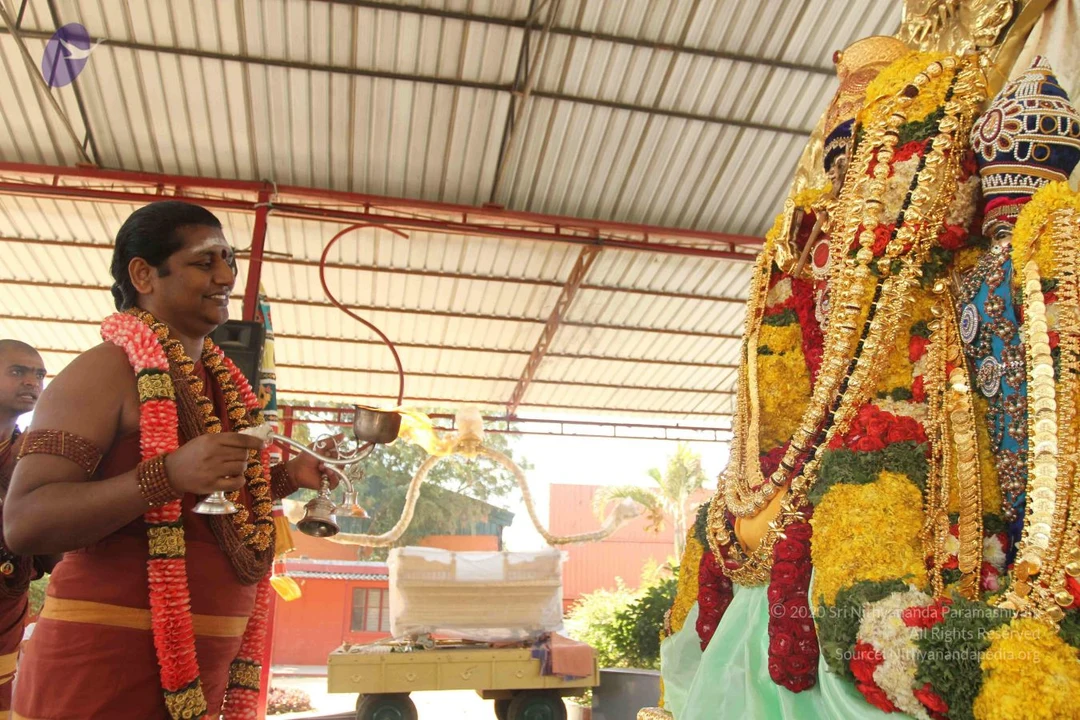
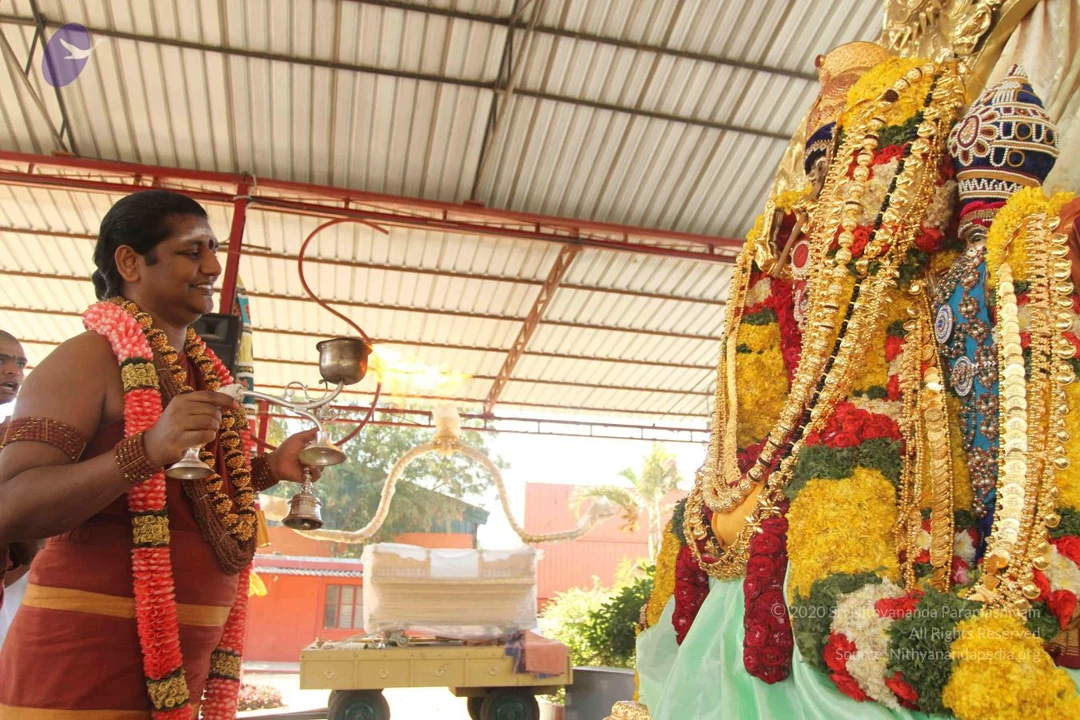
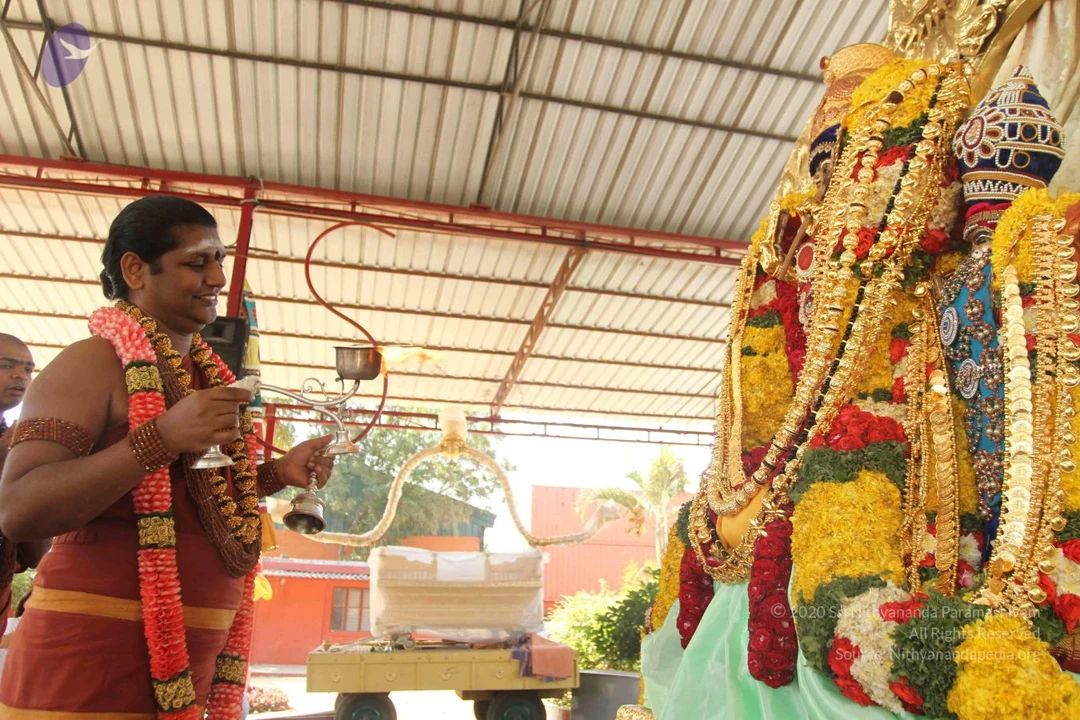
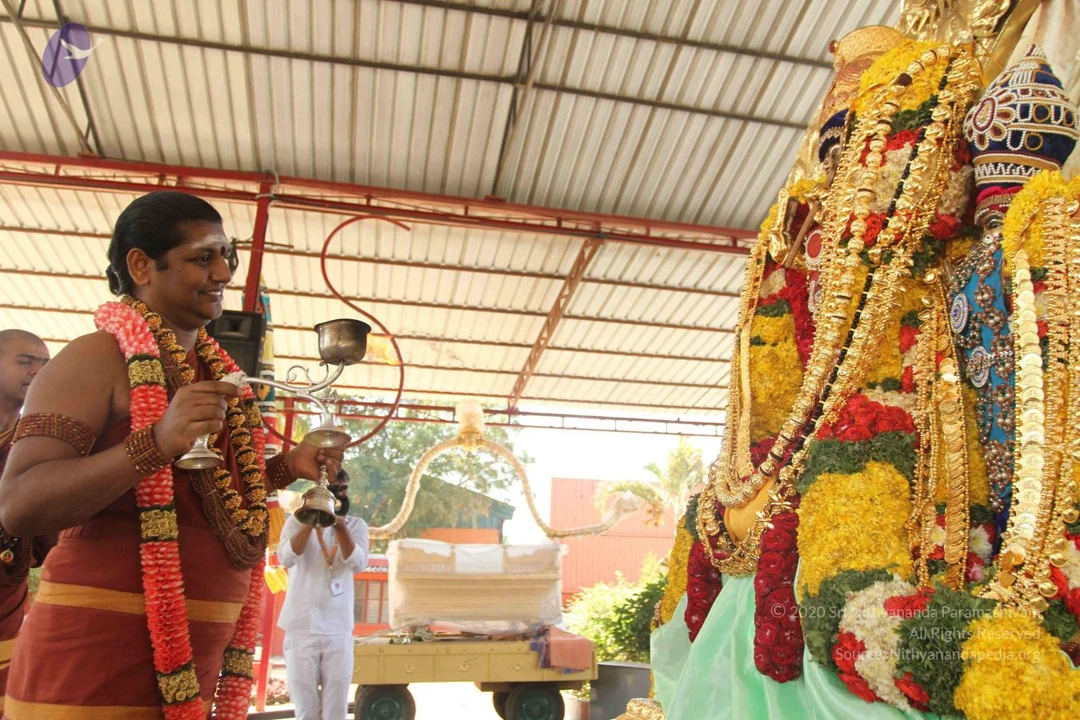
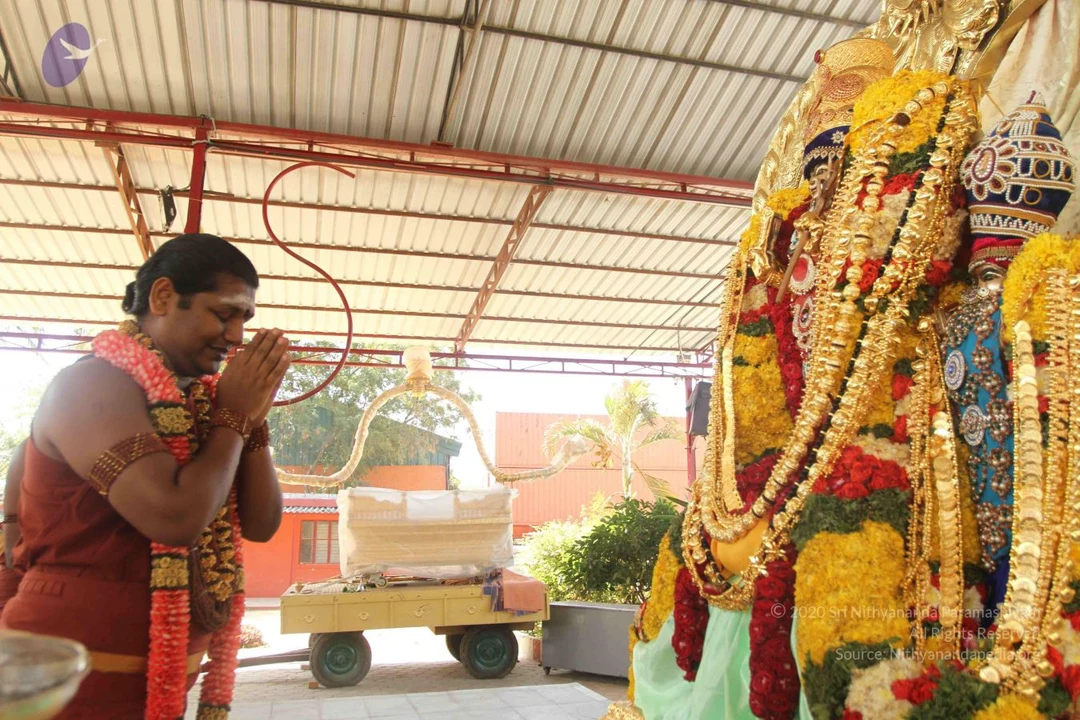
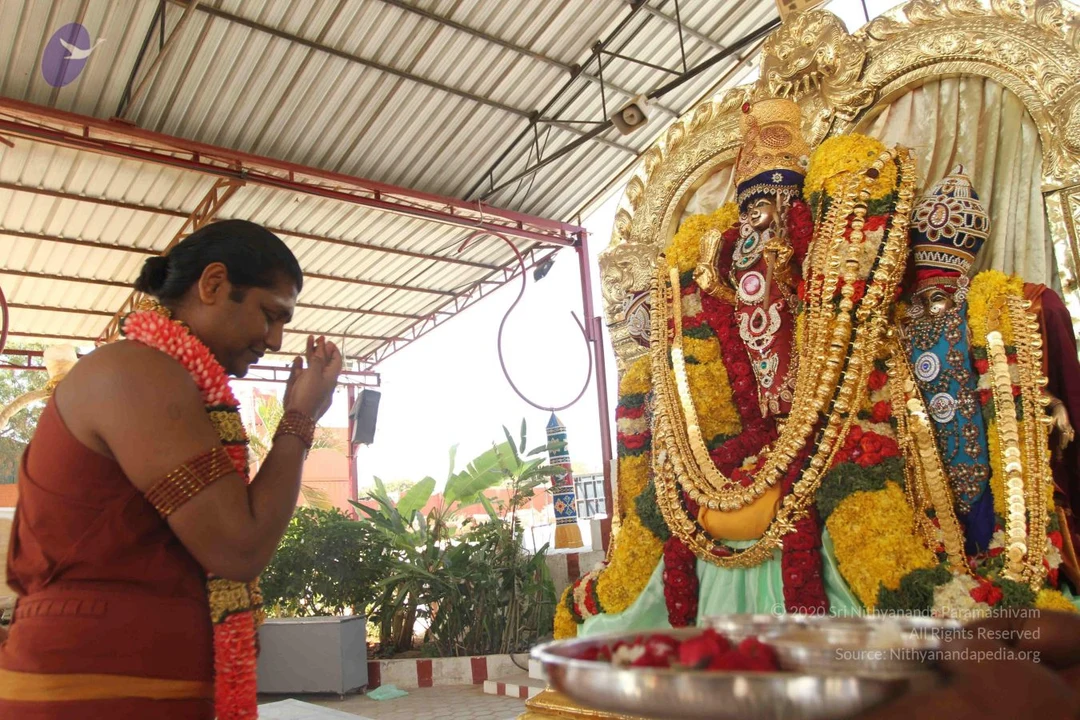
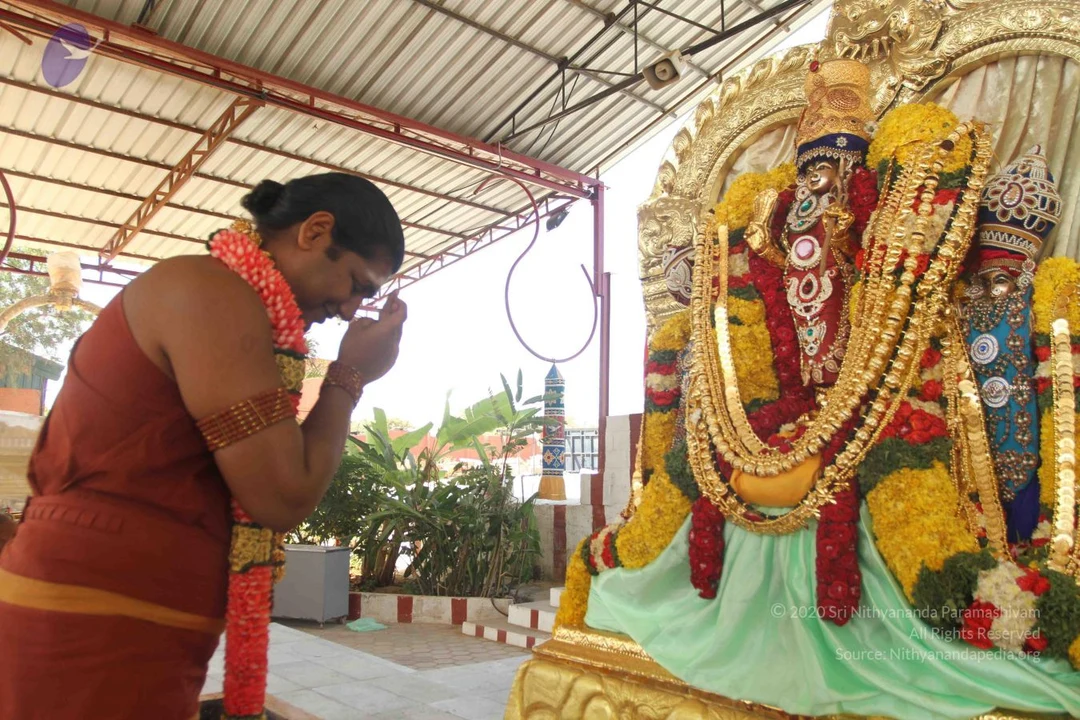
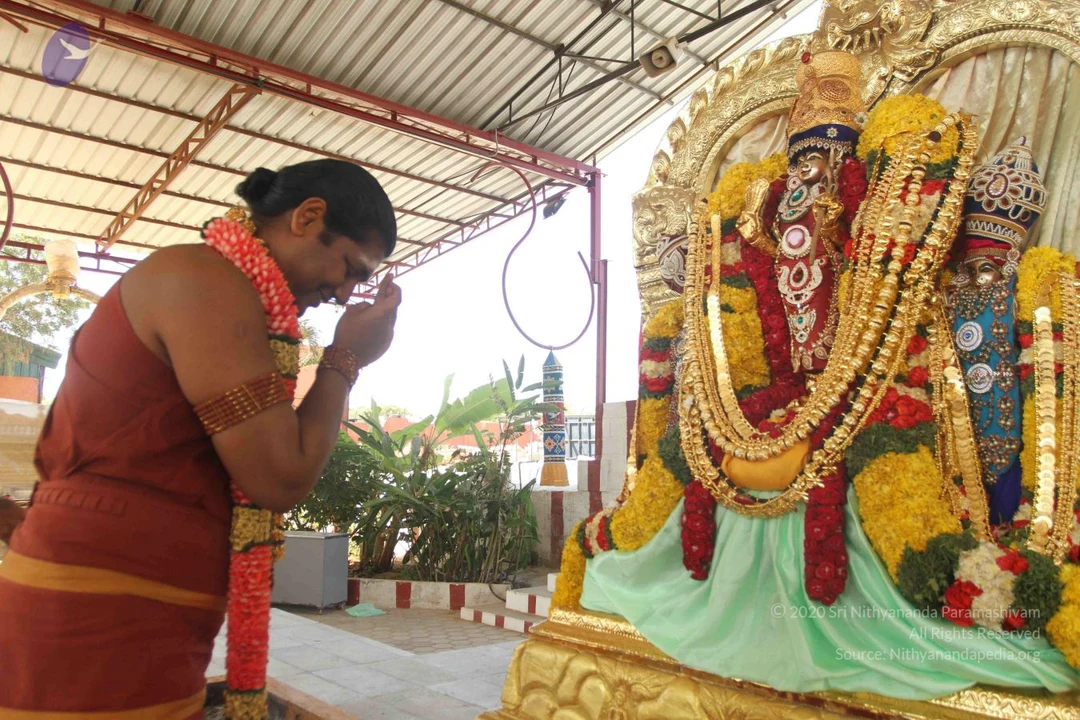
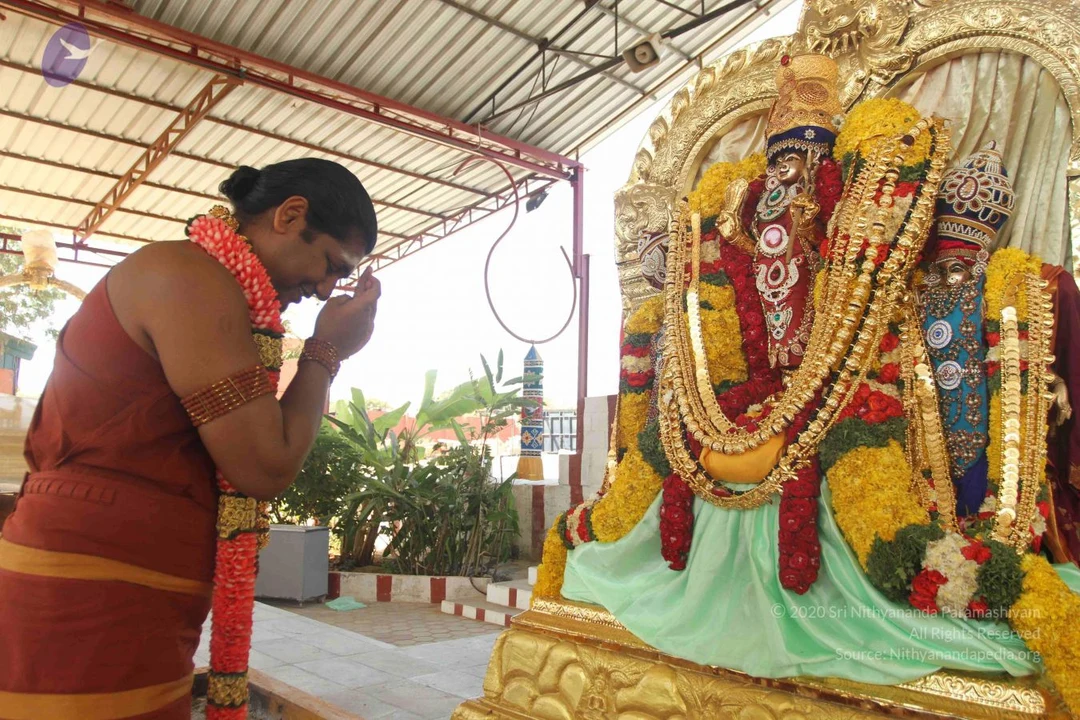
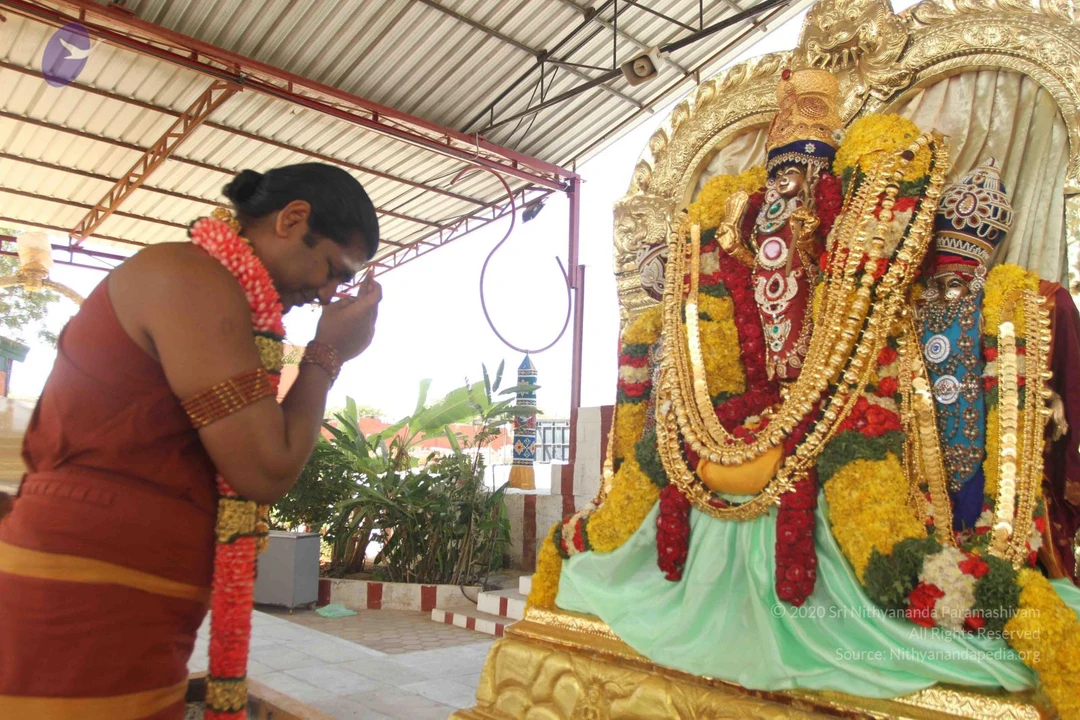
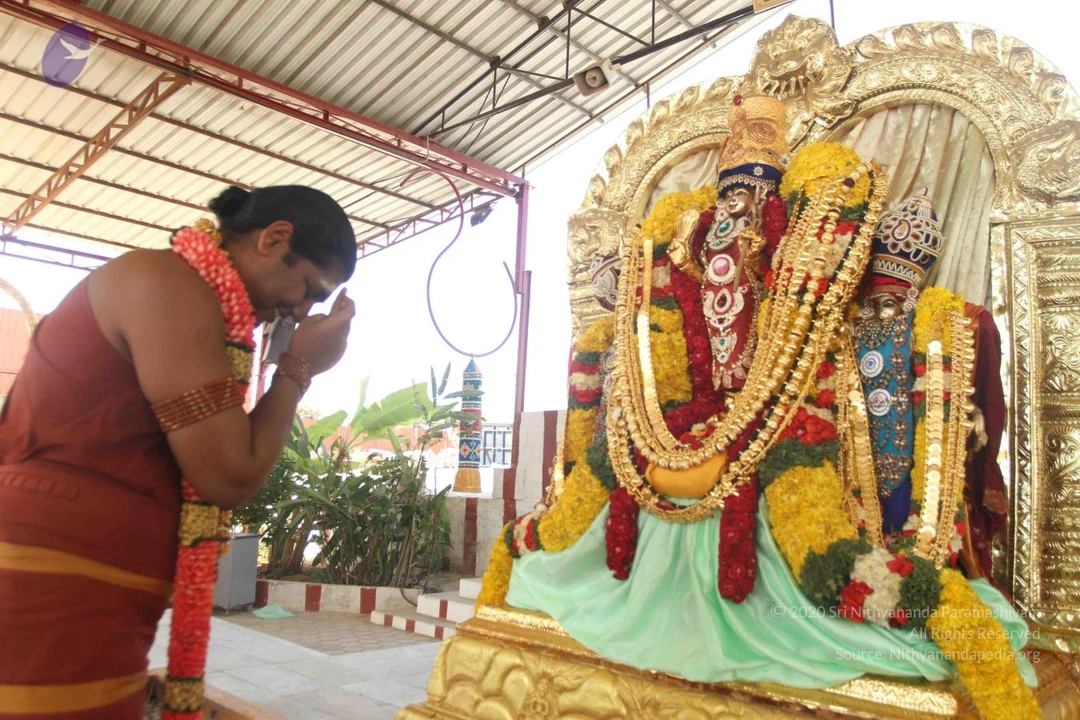
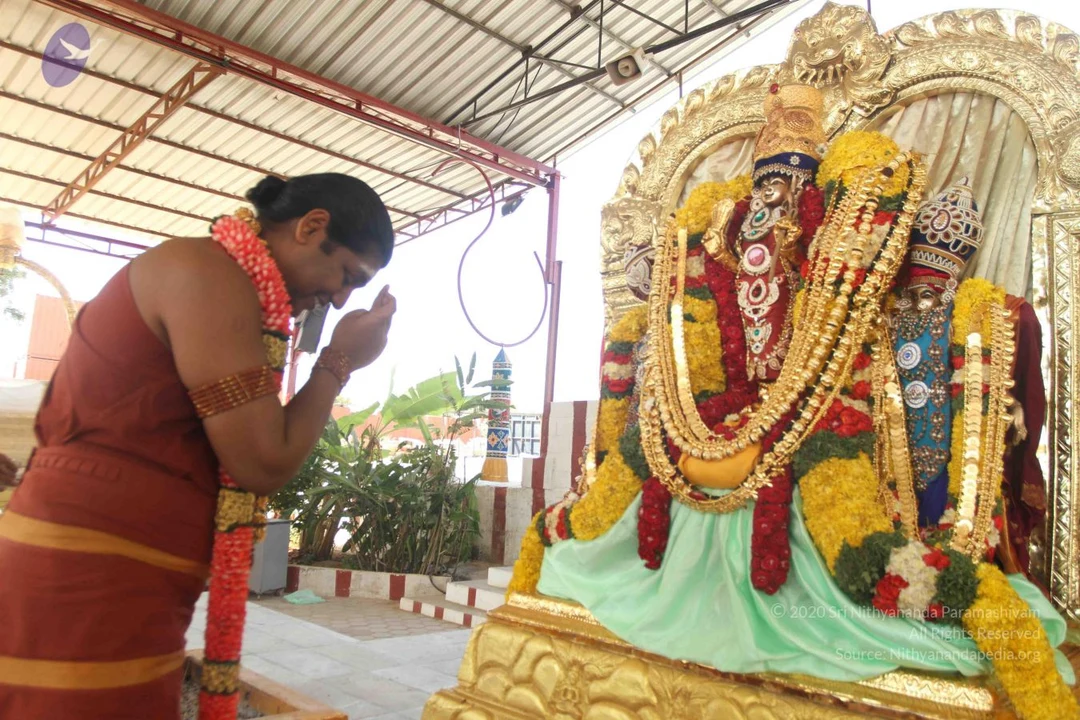
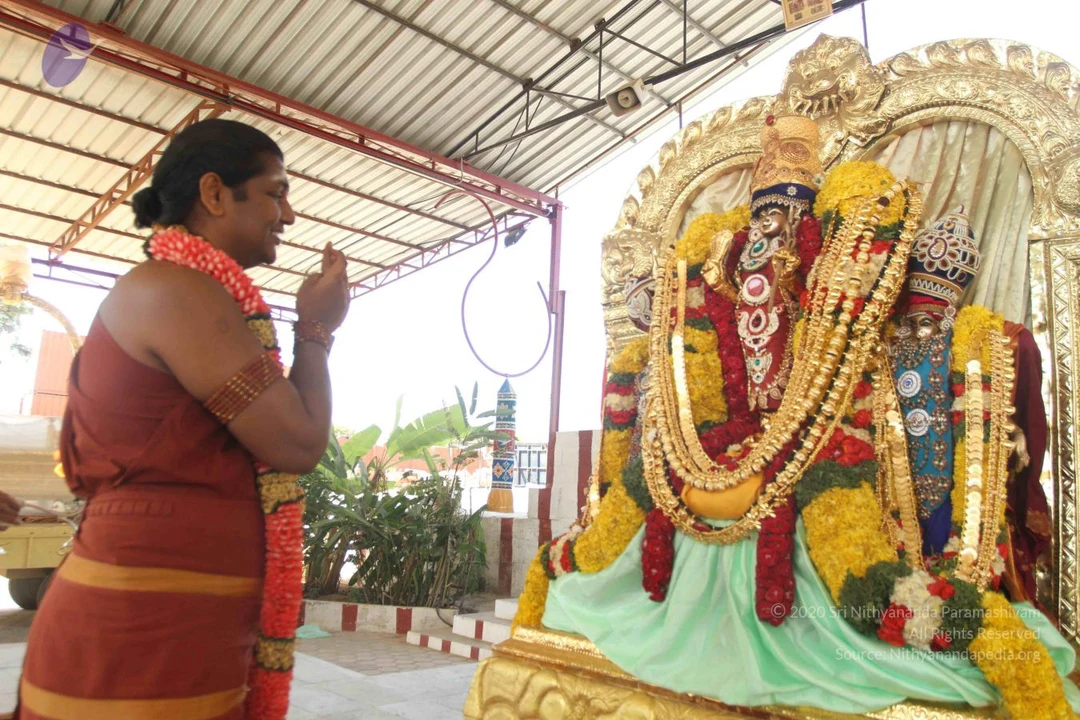
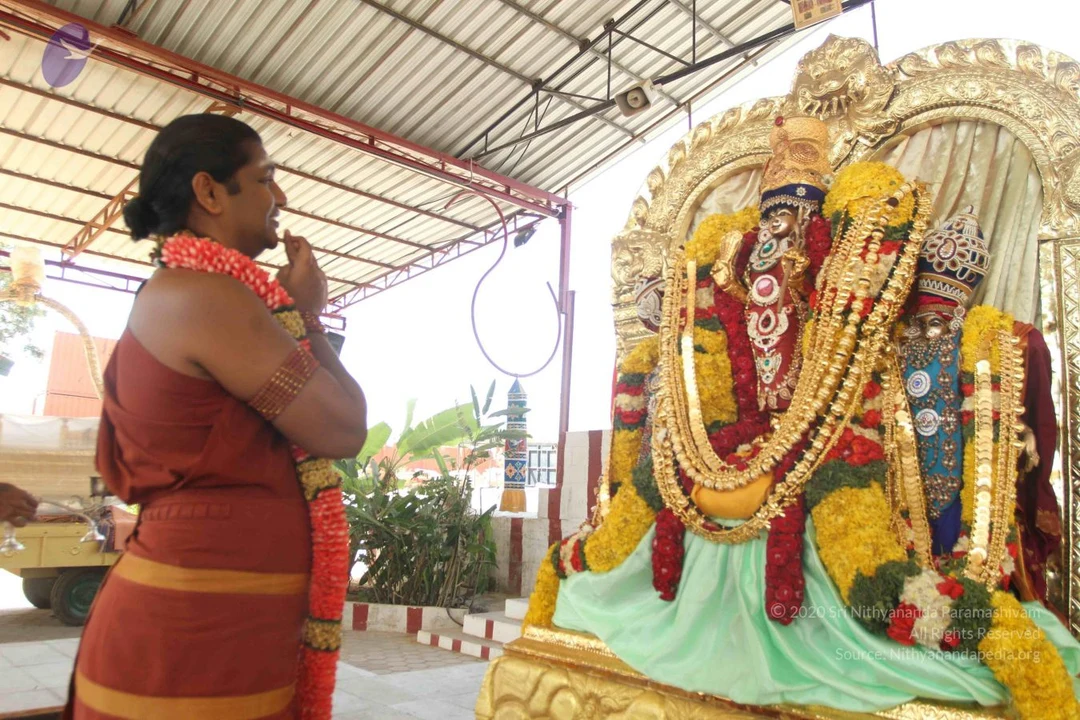
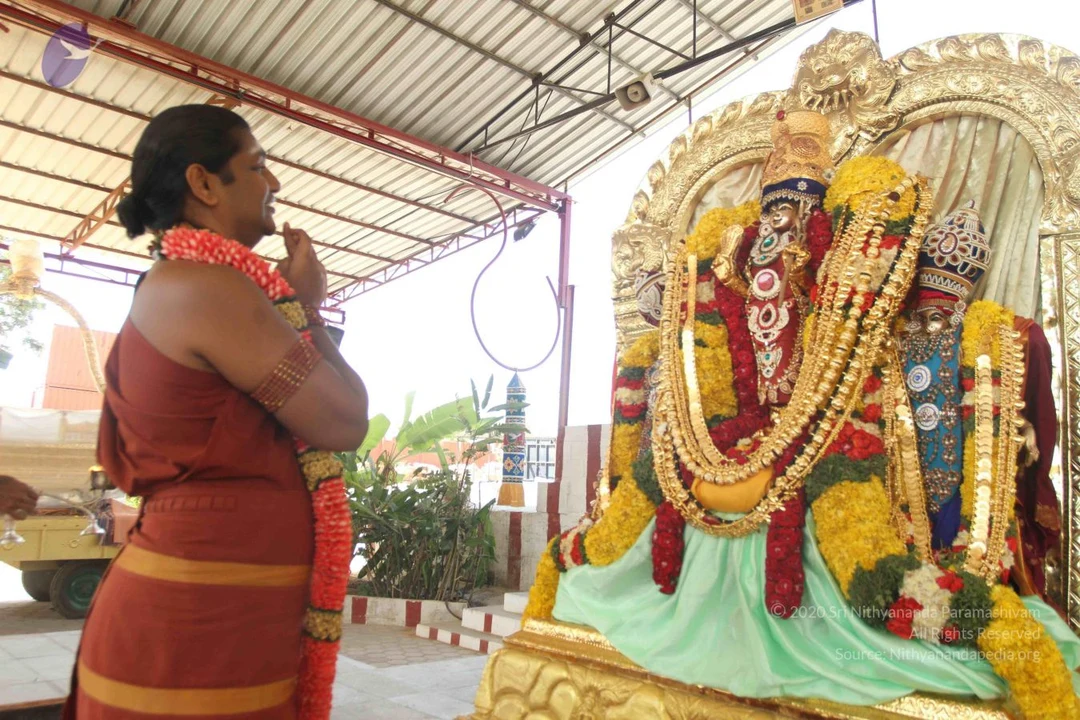
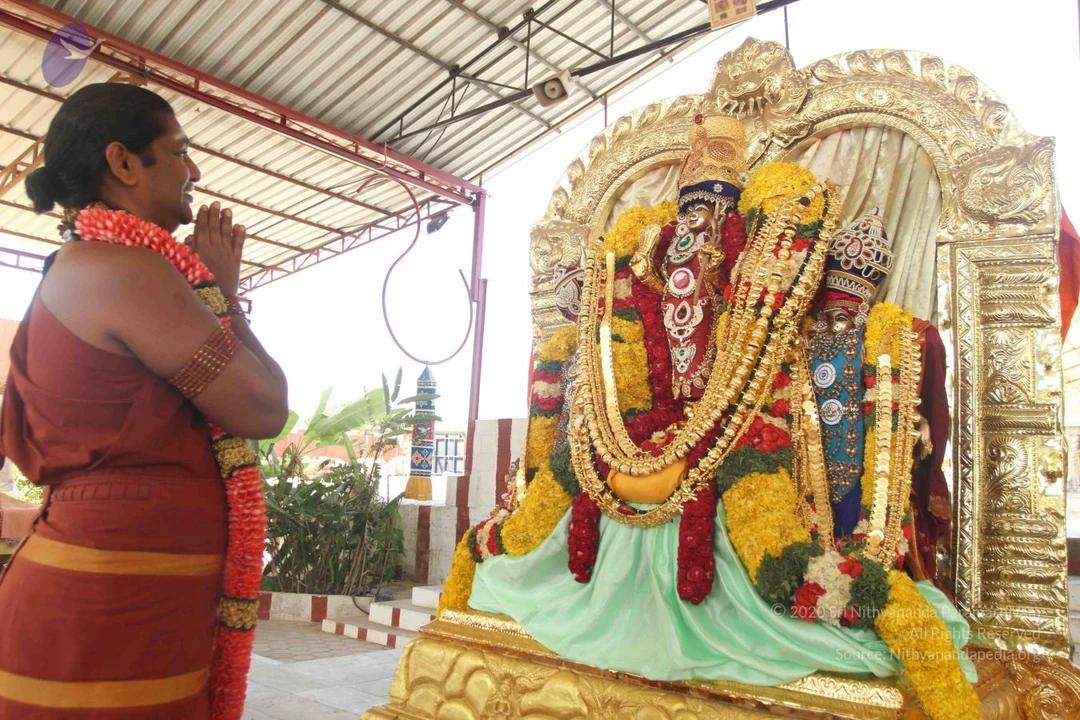
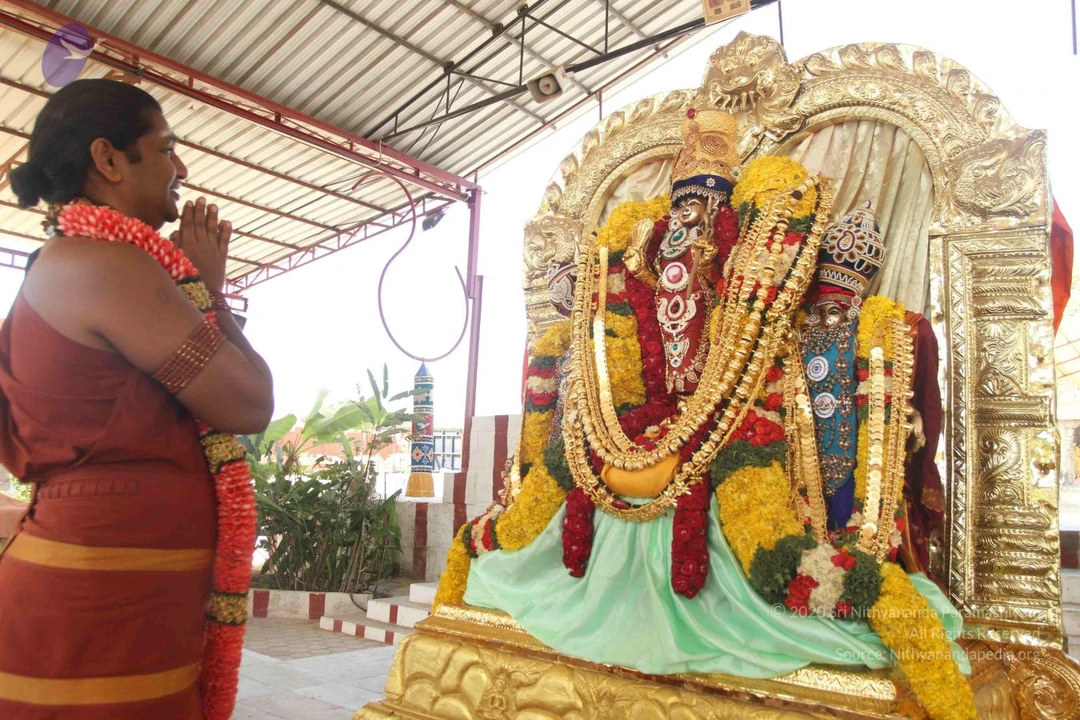
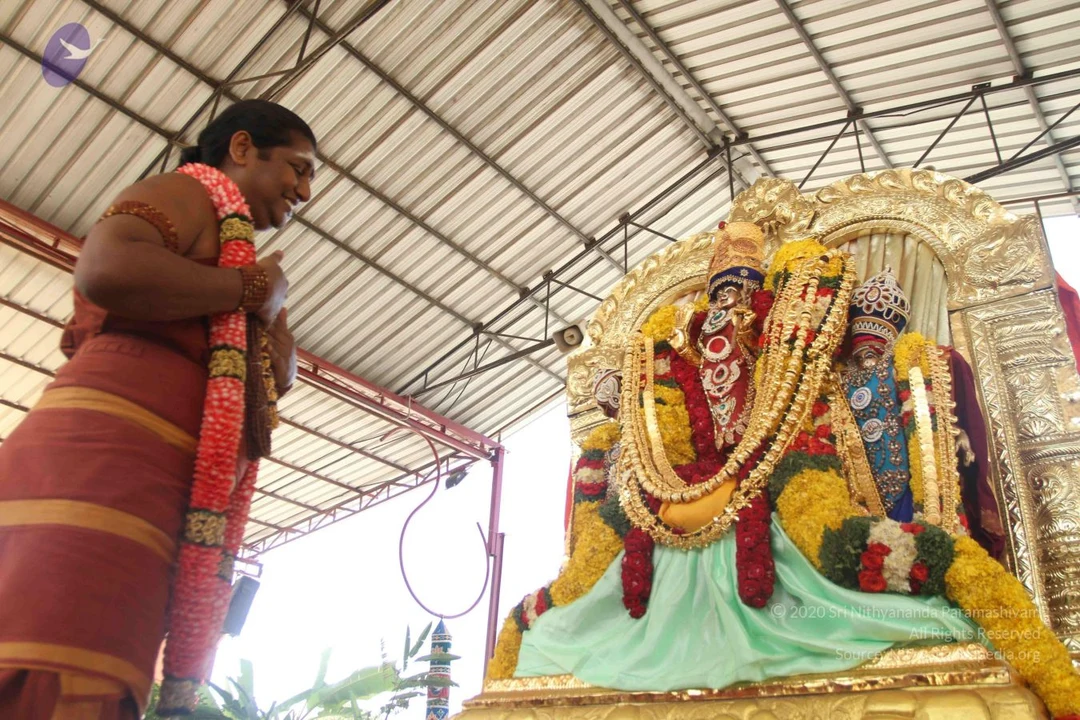
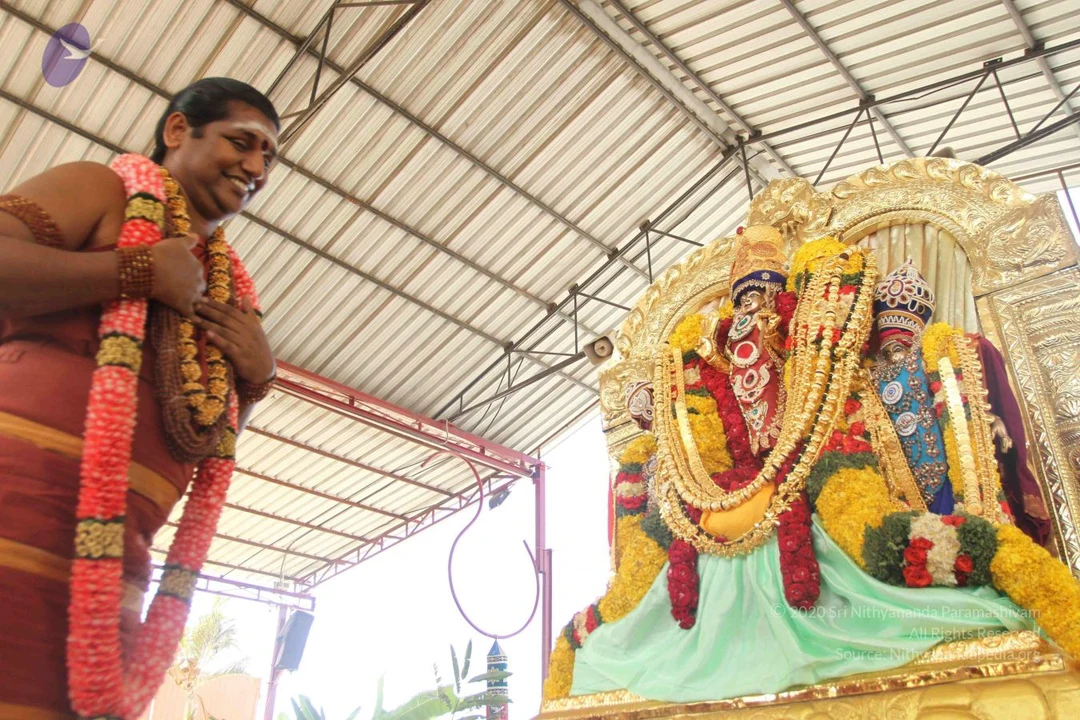
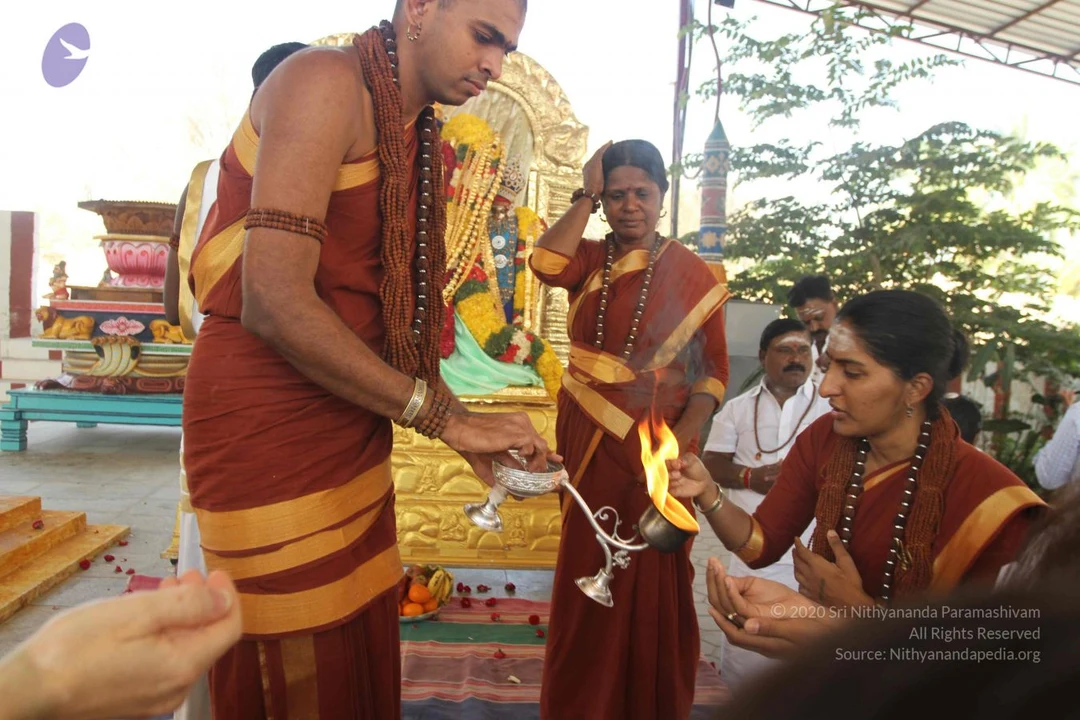
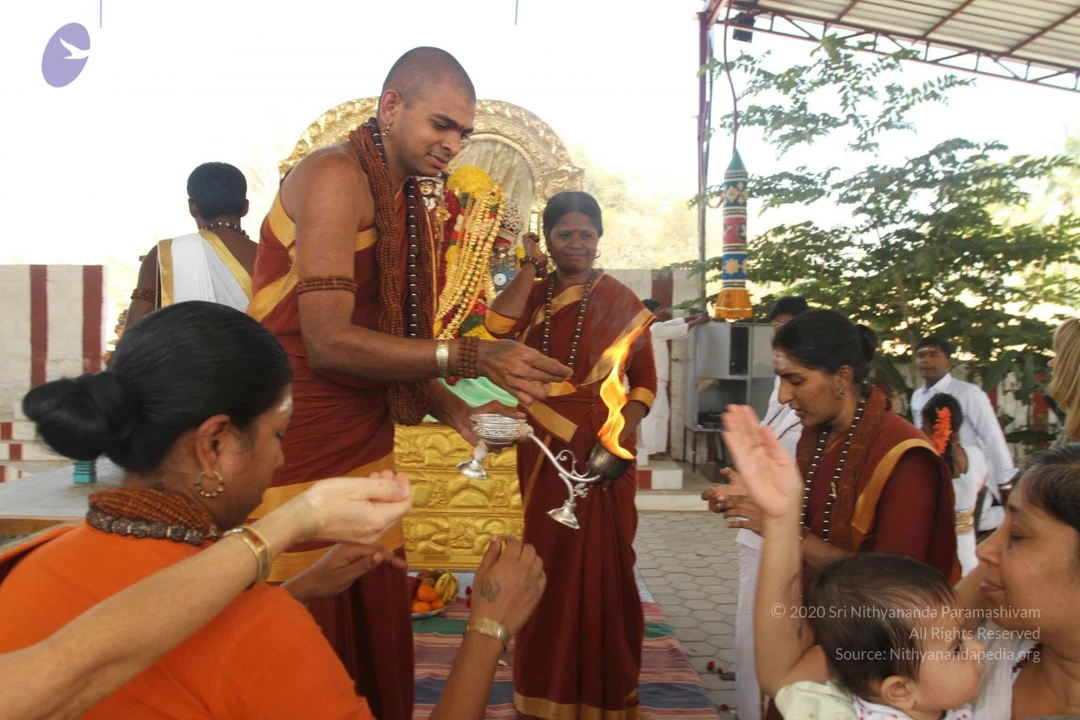
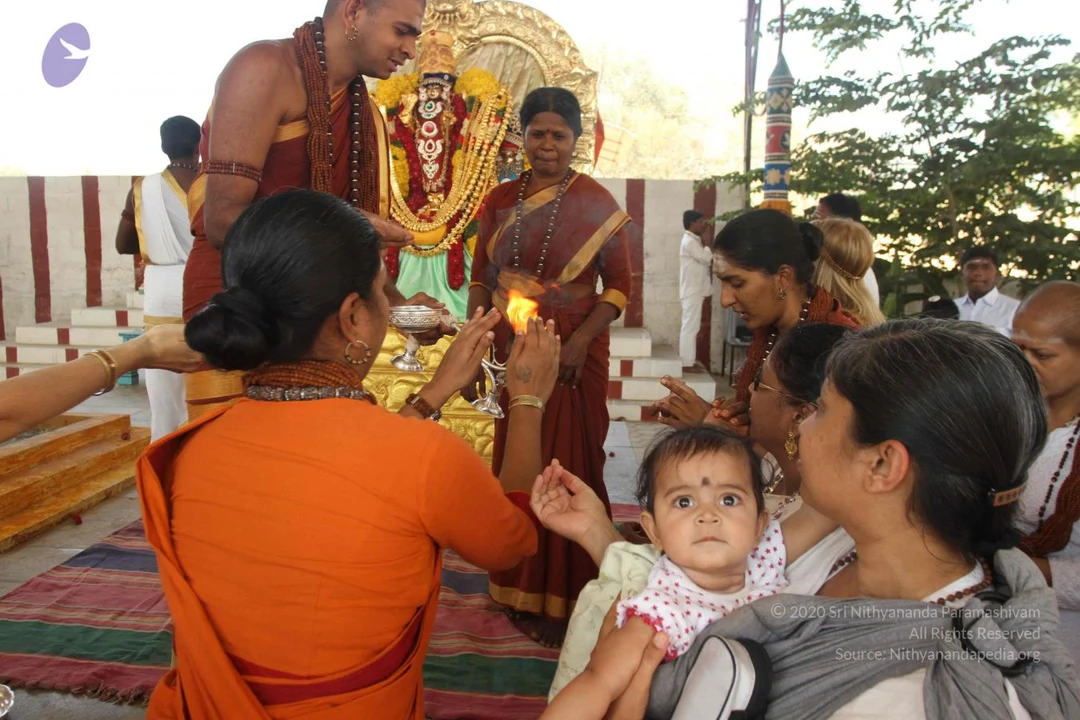
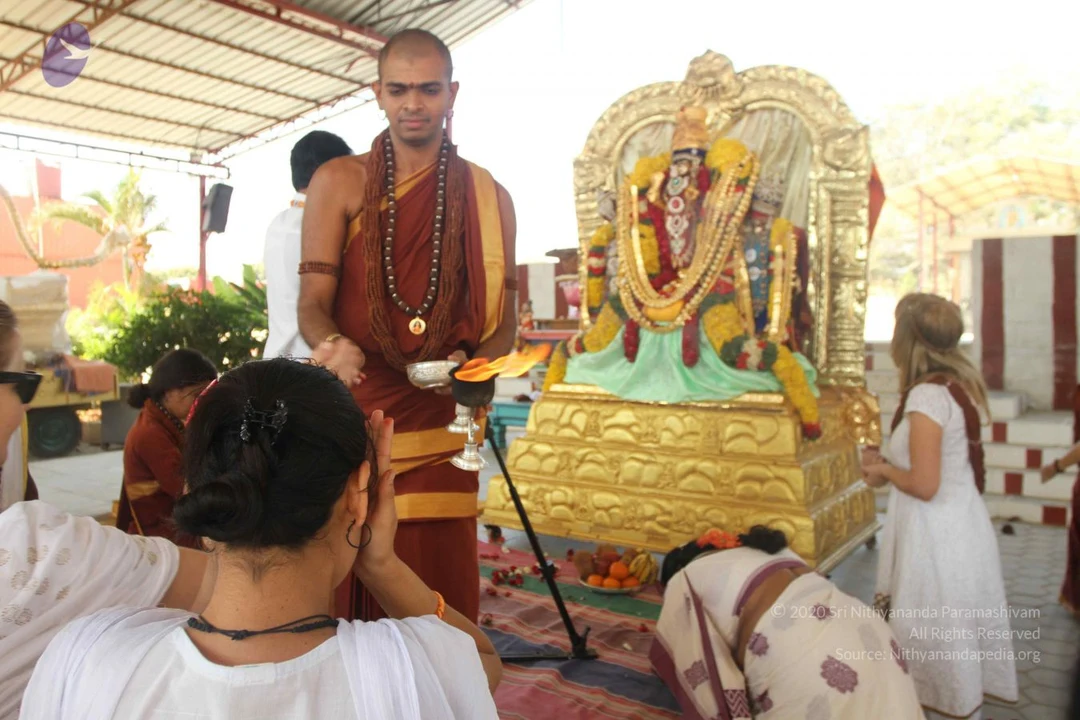
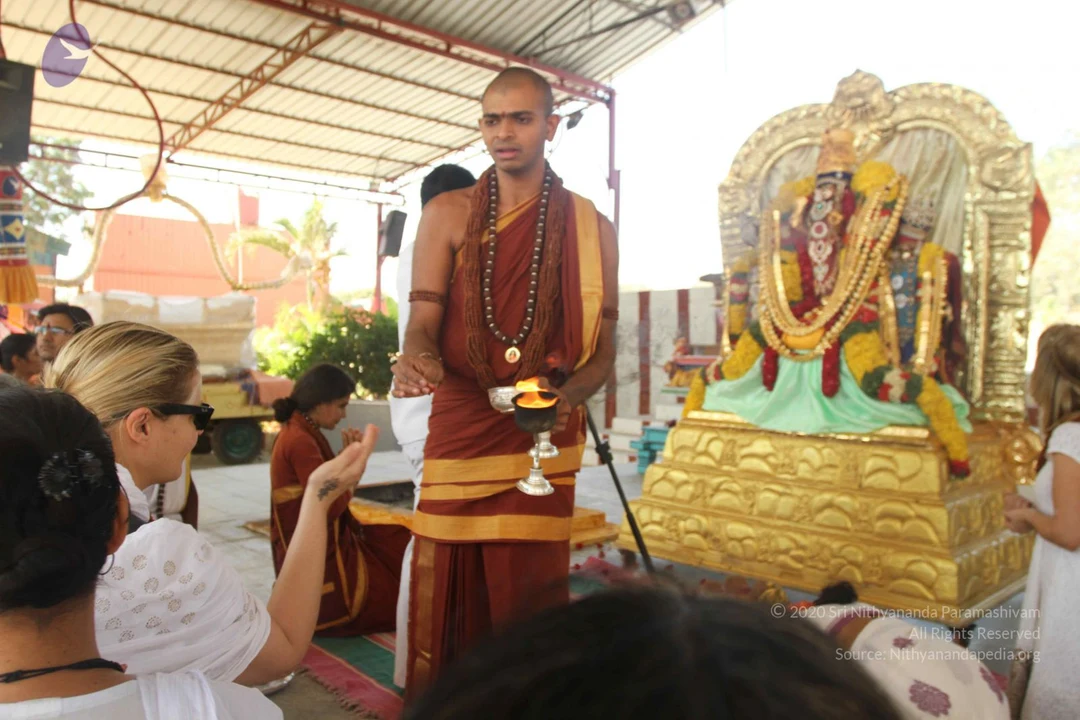
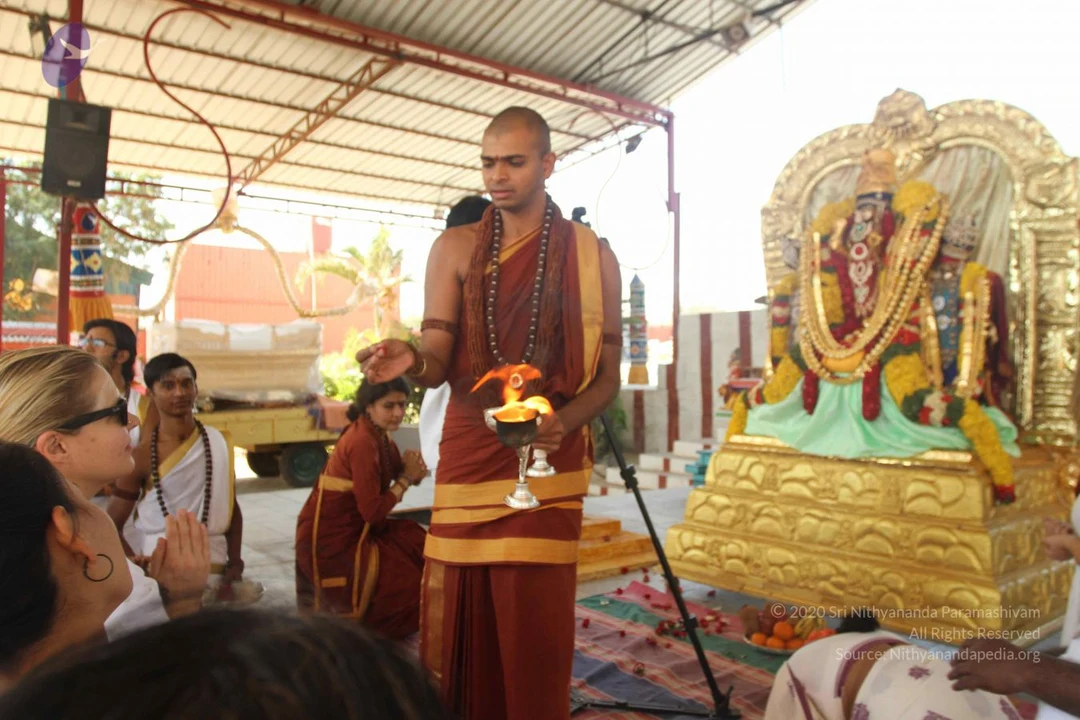
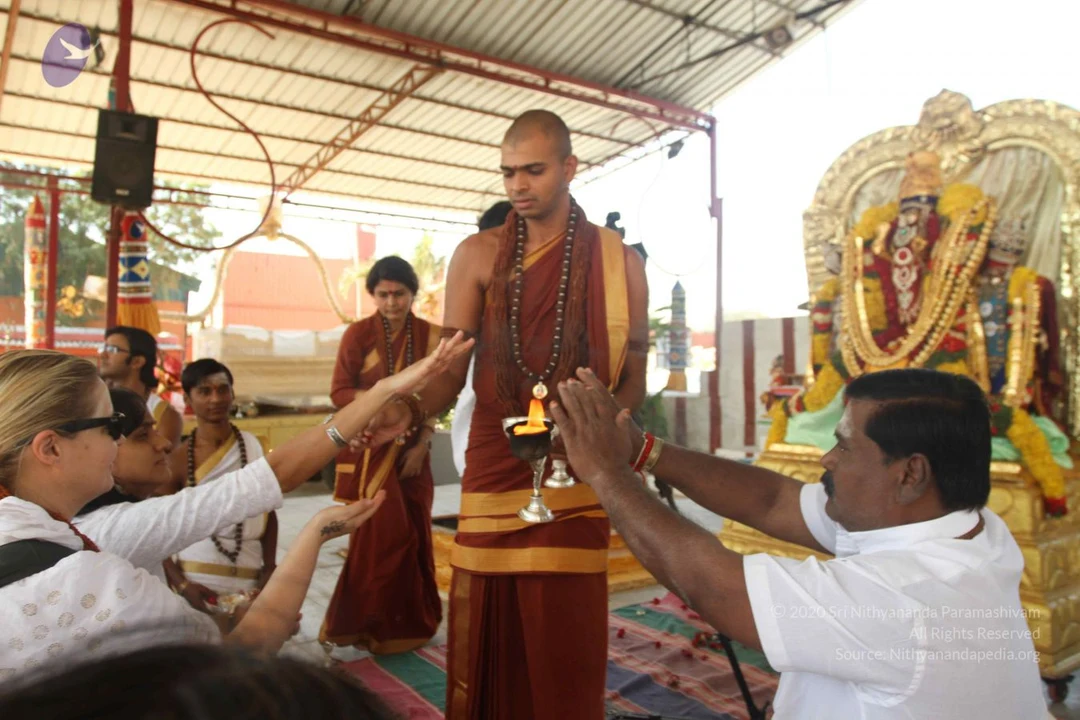
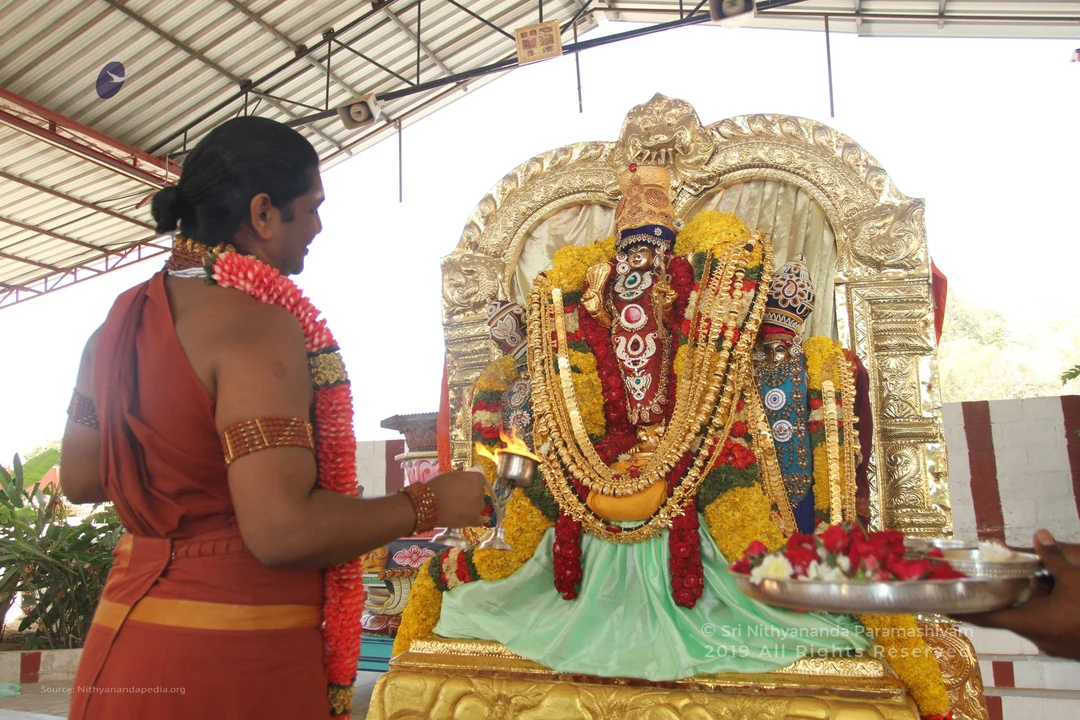
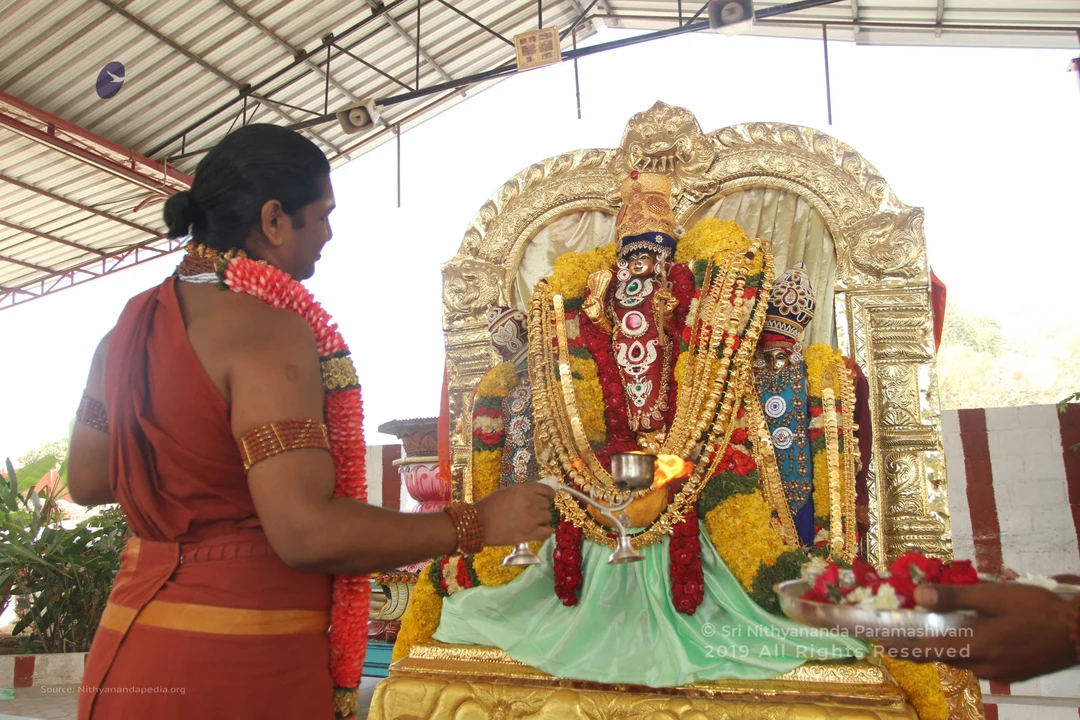
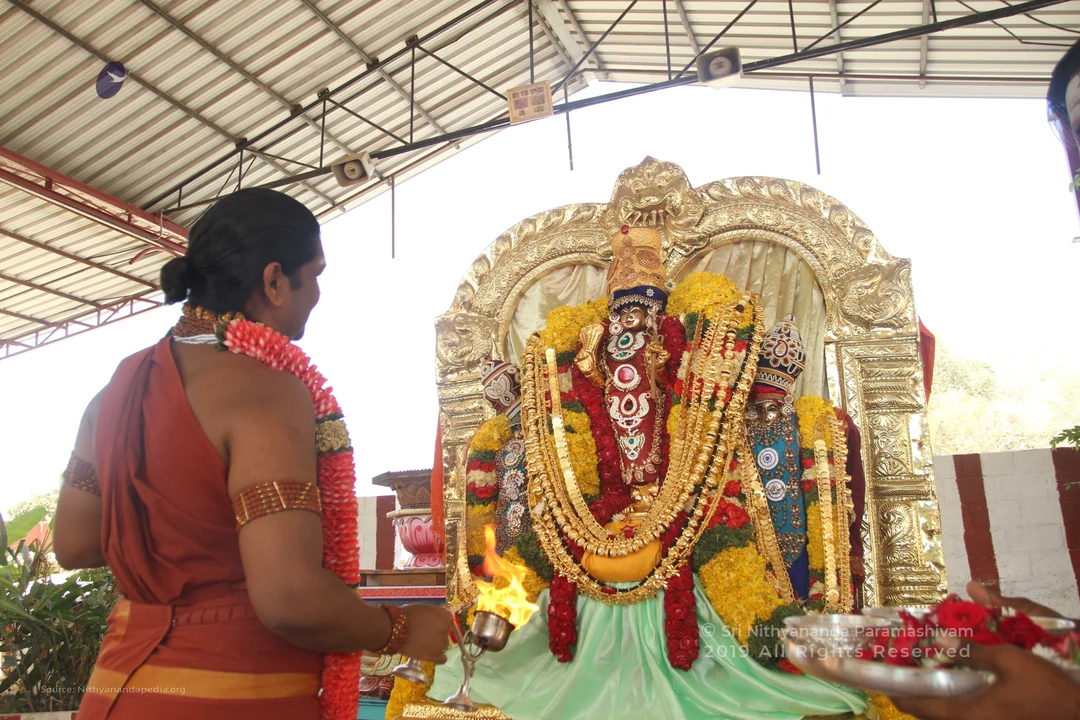
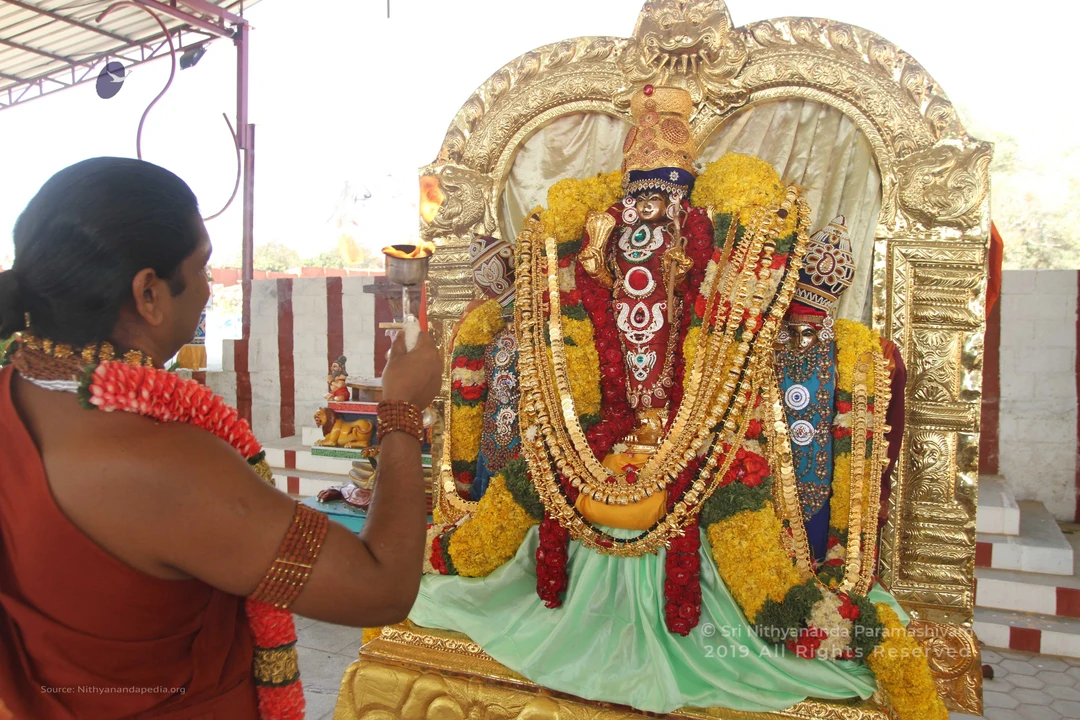
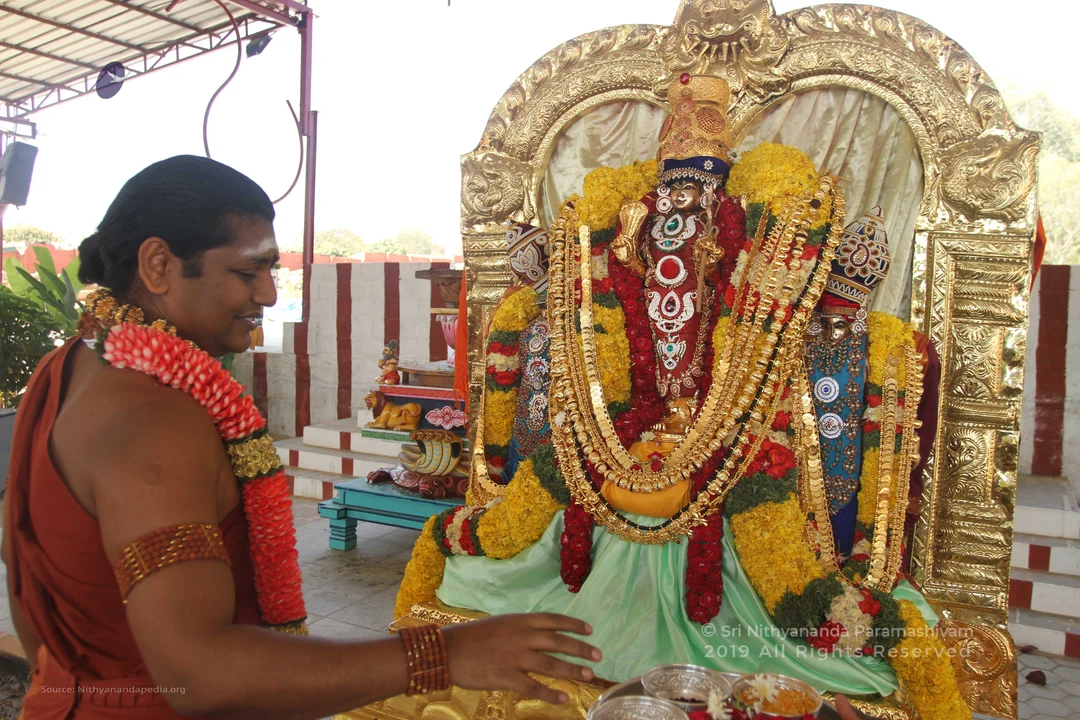
A tall, copper-clad ritual pillar rises steeply against a pale blue sky, its twisted ribbed shaft topped by a small red flag and wrapped at the base with green leaves and grass. Garlands of white and red flowers hang on the lower carved section. At the right, a man in an orange-red dhoti and a long orange-red flower garland holds a brass bell and a lit flame on a small handheld lamp, with palm fronds behind him. A corrugated roof edge is visible at the upper left.Photograph of a tall copper dhvaja stambha (flagstaff) rising against a bright pale sky, its wooden-carved base wrapped in white and red flower garlands and topped with green leaves and grass. A red cloth flag flutters at the summit. At right, a person in a rust-orange dress with bangles and a coral-and-green flower garland holds a rope raising the pole. A palm tree and a canopy edge appear at the frame's top left.A priest in saffron-orange robes with a red and white flower garland and gold armbands offers a red flower toward a decorated deity murti. The murti is adorned with heavy gold and yellow marigold garlands, a red and gold crown, and red rose garlands, seated on a green cloth within an ornate gold arched shrine. Brass offering plates with flowers and food sit in front. Behind, a striped white and red temple wall and a canopy are visible.

February 23 2015

Original wiki page
Contents

Title

5 People You Should NOT Meet Empty-Handed (Upanishads)

Description:

Today’s (23rd February, 2015) Morning Satsang continues with the Upanishads Series - Living Advaita. Isha Upanishad–Verse 3 continues asuryā nāme te lokā andhena tamasā’vṛtāḥ | tāṁs te pretyābhigacchanti ye ke cātma-hano janāḥ || 3 || In this profound delivery of the Isha Upanishad, Paramahamsa Nithyananda advises that following bad people is a huge blunder in our lives and can cause us to miss the Guru, even after 100s of janmas of tapas. Continuously check if you are with people who are saying yes to life; for even just being in the company of good people, we can become enlightened!

Link to Video:

VideoAudio

Transcript:

Nithyanandeshwara Samaarambhaam

Nithyanandeshwari Madhyamaam |

Asmath Aachaarya Paryanthaam

Vandhey Guru Paramparaam ||

I welcome all the devotees, disciples, samajis, satsanghis, Shrimahants, Mahants, Thanedars, Kotharis, everyone sitting with us through Nithyananda TV, Sadhna TV, Arra TV, and two-way video-conferencing having Nayana Deeksha.

Cities sitting with us: Surrey-Canada, Singapore-Singapuram, Hyderabad-Gupta Kashi, China, San Jose-Madurai.....and many more cities.

I welcome all of you with my love and respects.

We will enter into the Ishavasya Upanishad, third shloka:

असुर्या नाम ते लोका अन्धेन तमसाऽऽवृताः ।

ताँस्ते प्रेत्याभिगच्छन्ति ये के चात्महनो जनाः ॥

Asurya naama they lokaa andhena thamasaavruthaah |

Thaagumsthey prethyabhigachchanthi ye ke chaathmahano janaah ||

I will expand on how, saying “NO”, impacts you and others, and how, saying “YES”, inspires you and others.

Listen! Always, “NO” to life is said out of ignorance. Always, “NO” to life is said out of ignorance, unconsciously. Listen! Whether it is an individual level, or level of social leader, political leader, or decision-maker, any level....

I hear in the newspapers, in the Internet, again and again, the various scams at the level of decision-makers in various countries. The politicians or the bureaucrats, just for the sake of the bribe they get, they are compromising the health of the common man. The second quality, not THE very best things, is made available to the common man just because some money they get as bribe. Whether it is in the field of pharmaceutical drugs, or even in the field of food industry, THE best is not made available to human-beings, common mass; the quality is reduced. Sometimes even dangerous, risky things are done; sometimes, knowingly, dangerous things are done by paying some bribe to the bureaucrats or politicians or officials. They also, just for the sake of that money, accept the money and allow this. These are all “saying NO to life”. Listen! But, unfortunately, this stupid fellow who accepts the money, he also does not enjoy. He stores it, stashes it in some tax haven in some remote island, which he never enjoys till his death. So, for something which he is never going to enjoy, he is saying “NO” to so many people’s lives, understand?

This is one small example I am giving. If you look in and study your life, all the difficulties you are facing, understand, I am saying, ‘including the poverty imposed upon you’..... I tell you, in this century, 21st century, no need for poverty. We have awakened critical mass of the human population to work and produce enough of food, clothes, shelter, medical-care, for the whole population of Planet Earth, please understand. In this century, we have awakened enough of the critical mass. Actually, 2% of the human population, if it decides to work eight hours a day in a very disciplined way, we can produce everything needed for the whole population of the Planet Earth – Food, Shelter, Clothes, and Medical-Care, these four basic things. And we have awakened more than that percentage in this century. Then, why, why is still there poverty, there is poverty for these four? If, some way, you don’t have access to these four, be very clear, it is just because of decision-makers saying “NO” to life, decision-makers saying “NO” to life. The only way the problem can be solved is, more and more people who consciously say “YES” to life should become decision-makers. It cannot happen by revolution. No! No revolution will do this, because, usually, the people who lead revolution are always again the people who say “NO” to life. It can happen only by evolution. It is never going to happen by removing the people who are having power and replacing them with somebody else. Making everyone powerful, raising more and more people to say “YES” to life! I am attending to some of the basic understandings about life.

When I look into the Vedic Tradition and the lifestyle, there was not at all so much talk about work. Working eight hours a day was not lifestyle in Vedic Tradition. Work was never more than three to four hours per day. But, so much was available, so much was available for everyone, for everyone, because, decision-makers were always saying “YES” to life, decision-makers enjoyed people having abundance instead of the wealth being locked in their treasury under their control, because, decision-makers were not feeling so insecure and possessive in Vedic Tradition.

Please understand, when Bhagavatham describes that 16,000 golden palaces existed in Dwaraka, for each citizen they had a golden palace, it is true! Not just perception or fact; it is truth! Because, Krishna never felt insecure, and it was done by his great space which says “YES” to life. Above all, Dwaraka was “Soft Power” city, not “Hard Power”. Please understand, Dwaraka was a city made of immigrants....city made of immigrants. Means, whoever loved Krishna, whoever wanted to be with him, they all gathered around him and they created their own heaven. Please understand, it was not “Hard Power”; means, people existed, and Krishna became king and he controlled everyone. No! He hated to be in the space of “Hard Power”. That is the reason he had to leave Brindavan. He could have become king of Mathura after killing Kamsa. He said, ‘No! No “Hard Power”!’ He handed over the kingdom to Kamsa’s father. He said, ‘No! No “Hard Power”! I am going to a place where people who love me will gather around me, who want to celebrate life around me they will gather around me. Only “Soft Power”.’ And the whole “Narayani Sena” (Krishna’s army) was volunteers of Narayana, devotees of Narayana, disciples of Krishna, followers of Bhagawan. Understand? Saying “YES” to life!

All corruption, whether it is in the physical level, mental level..... Please understand, mental level corruption means, spreading lies, which some of the media houses does because of their vested interests. It is mental level scam, psychological scam, information scam. So, understand, whether it is a physical level scam, or mental level scam, conscious level scam, i.e., spreading lies as religion, some of the strong lies spread as religion, especially when you are talking something about what will happen to an individual after death.

Just recently, the other day, I was reading an article in the Facebook. A Catholic priest was medically dead for more than forty minutes, went to some space and came back, and he declares, ‘God is woman’, and, ‘God is female’. We have known this for centuries, understand! We have known this for centuries! Ultimately, in reality, he (God) is beyond male, female; but, in the truth level, he IS female! Anyhow....! If we are teaching some concepts which are not ultimate truth in the best possible way, it is a “conscious scam”. The last form of the divine you will experience is feminine, understand? Before you experience the formless divine, the reality, the truth will be – from truth only you will jump into reality – the truth is, God is Devi! The last form you will experience is Devi! It is only from her you will slip into formlessness, existence, which we call “Mahadeva” or “Shiva”, whatever name you want to use, “God”, “Super-Consciousness”. At various stages of Samadhi, the last Savikalpa Samadhi, Saguna Samadhi, from which you will enter into Nirvikalpa Samadhi, the last Saguna Brahmam you will realize is Mother, Devi!

Listen! Whether it is physical, psychological, conscious, lies being spread, wrong things being spread is scam, and, that is “saying NO to life”, “saying NO to life”. Say “YES” to life as much as possible in every possible way, understand? Even the healing science, the science behind how I heal, and how our thousands of healers are healing, is nothing but the science of “Saying YES to Life”. Science of “Saying YES to Life”!

People ask me, ‘Is organ donation accepted in Vedic Tradition?’

I can very clear say, ‘YES! Organ donation is perfectly accepted, supported, because, it is again “saying YES to life”.’

Please understand, only an enlightened body should not be touched, disturbed. After they leave the body, it should be preserved as it is, through the proper Vedic way of mummifying, the Jeeva Samadhi process as described by Thirumoolar.

Thirumoolar is Mahadeva using the body of a farmer who was taking care of his cows, who was bitten by a snake and died. And all his cows were standing around him and crying. The story says, there was a divine being going above the sky and saw the scene and decided to enter into that farmer’s body just to remove the sufferings of the cows. I am telling you from my own authority, who can feel so compassionate for “pashu” (cattle)? Only the Pashupathi (Lord of all Pashus – Mahadeva) can feel so compassionate for “pashus”, and only Pashupathi can feel the sufferings of “pashus”. He was only moving! And, he only assumed the body of Thirumoolar and came back to life! And, he describes the whole science beautifully, the Vedic way of mummifying the body, Jeeva Samadhi.

Only the enlightened beings’ bodies should be properly preserved and Jeeva Samadhi should be done. Other than that, any person, any normal person can write a Will to donate his organs. And organ donation is accepted, and it is one of the best ways to say “YES” to life! “YES” to life!

Let me expand from a different angle the same truth, from this mantra, a practical, user-friendly way to use this verse.

Whenever you make a conscious decision to say “YES” to life, listen, whenever you make a conscious decision to say “YES” to life, all the other energies associated to life get awakened in you, understand? A simple “dhaana”, means, “charity”, you give some money for somebody’s medical expense, or you give some food for somebody, listen, simple “Anna Dhaana” awakens, because Anna Dhaana is “saying YES to somebody’s life”. He is suffering with hunger – hunger is considered as one of the diseases in Ayurvedic Tradition; giving food is curing the disease – the moment you give food, you say “YES” to his life, and I tell you, immediately the life energy in your stomach will be awakened! Anybody, please understand, as an authority on this Cosmic science, the science how the Cosmic energy works, as the authority on the Dharma, with all my integrity, authenticity, I am declaring, I am revealing this truth, please understand, whenever you share food, do “Anna Dhaana”, you say “YES” to somebody’s life, and the life energy in your stomach is awakened! So, any disease related to your stomach is healed!

Same way, whenever you do “Vaidya Dhaana” – it is one of the very powerful “dhaanas” in the Vedic Tradition – means, giving money or supporting somebody in his medical care. A poor person who can’t afford, providing medical care for that person through medicines or whatever, whatever surgery, or providing whatever is necessary for his medical care, it is called “Vaidya Dhaana”. I tell you, if you are suffering with heart problem, do Vaidya Dhaana of a poor patient who is suffering with the same heart problem. Do Vaidya Dhaana. I guarantee, the life energy in you will be awakened; your recovery will be so fast, you will be healed so quickly! I have seen the benefit of Vaidya Dhaana in my life in many ways! Whenever I prescribed to devotees to do Vaidya Dhaana, or I myself did for some devotees, it has helped a lot! Helped a lot! Many people who were supposed to die, did not die. Their life got elongated just by Vaidya Dhaana! I tell you, from my experience! Because, the moment you say “YES” to somebody’s life, the life energy in you wakes up to that “YES”! It wakes up to that “YES”! Whenever your life energy wakes up to the “YES”, simply your body heals!

All “dhaana”, please understand, all “dhaana” is “saying YES to life”. Still, now, I follow, whenever I go to the sacred places, I will do all the great “dhaanas” that need to be done. Of course, nowadays, we don’t collect as individual items like a cow, or gold, cloth. I give it as huge charity to “sadhus” or poor people. Even if the poor comes in the garb of “sadhus”, anything! Poor coming in the garb of “sadhus” is much better than poor becoming thieves. So, don’t deny. Anybody comes in the garb of “sadhus”, give them. At least, in the garb of “sadhu”, slowly he will pick up the “sadhu” qualities. Even now I never miss the opportunity to say “YES” to life.

And I wanted to tell all my devotees, my followers, even when you are going in your car or whatever, how much ever you can, if you are going in two-wheeler or car, always keep in your bag some change (coins/money), whatever you can. Don’t miss a single beggar in any traffic signal. Please understand, thousands of people may say, ‘Oh, don’t encourage begging. Don’t give. They become drug addicts. They misuse this money.’ So many things! That is their problem, understand. By giving, you say “YES” to life. And, I tell you, when you start giving from this context – ‘By giving this “dhaana”, I am saying “YES” to his life’ – you will see the life energy, “saying YES to life”, will be awakened not only in you, but even in him (the person to whom you are giving)!

I have transformed so many people who received from me! Just by giving some money or support, I have transformed so many people, understand? Because, the context from which I am giving is “saying YES to life”. Don’t bother about all the other stupid theories.

Whether you go to a temple, whenever....

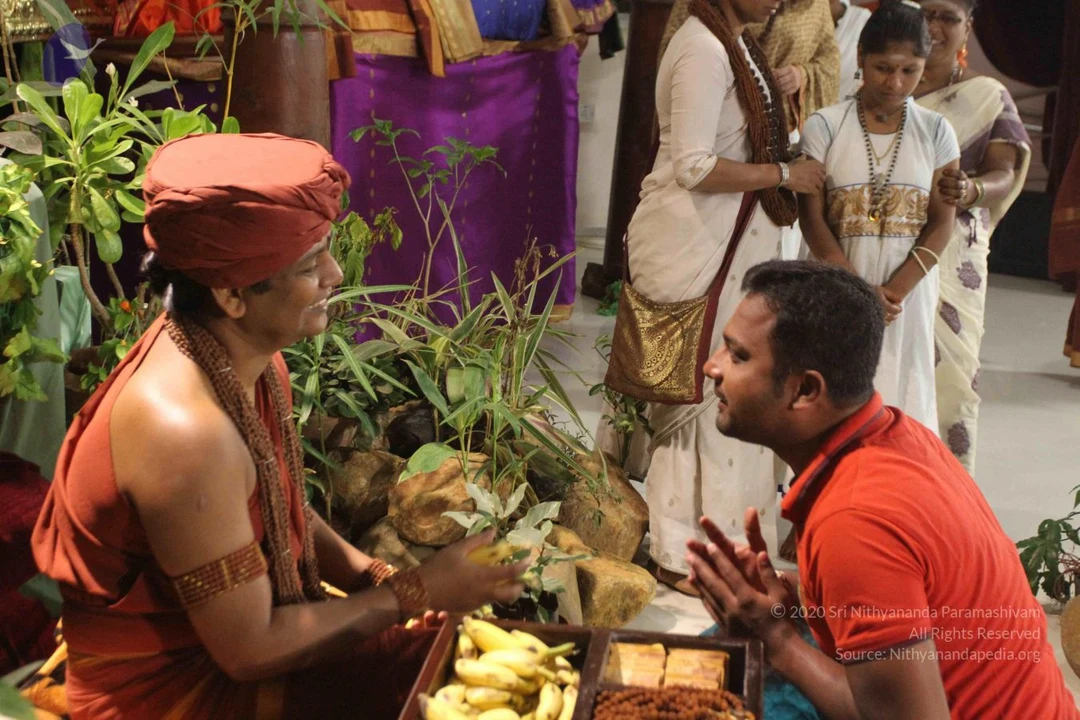
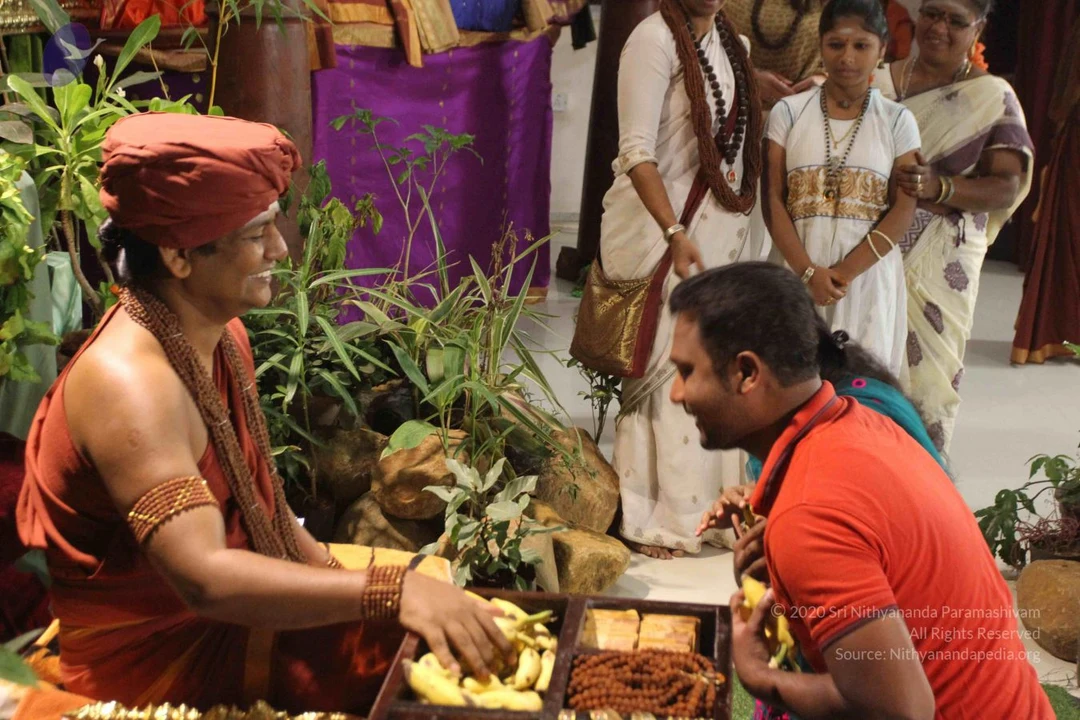
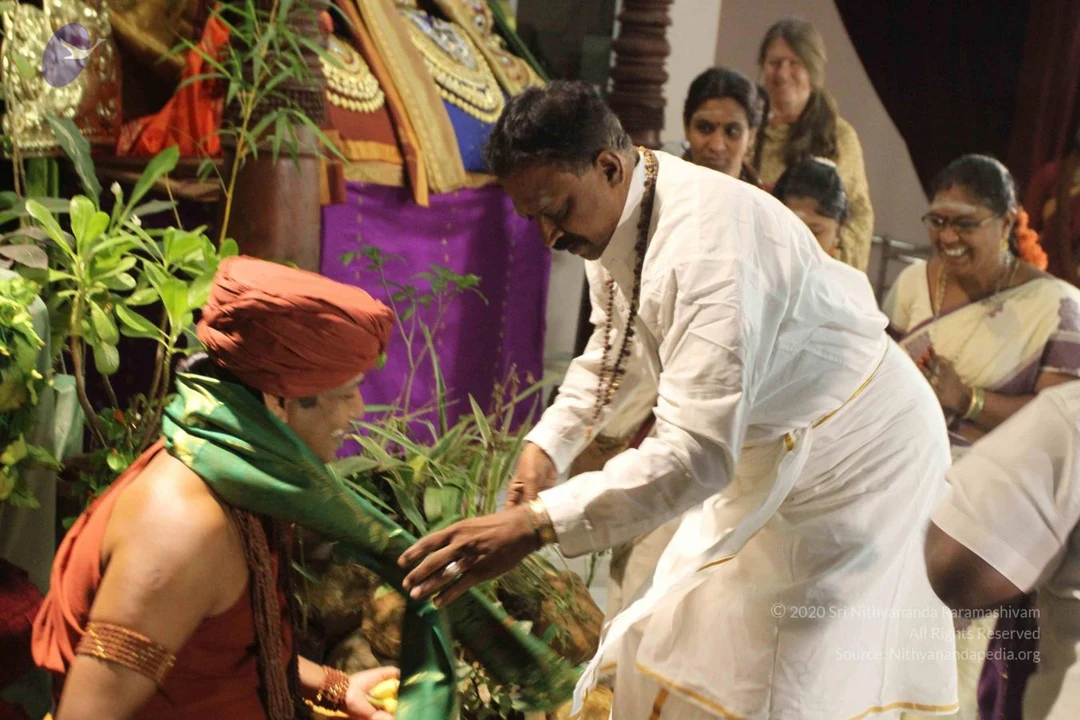
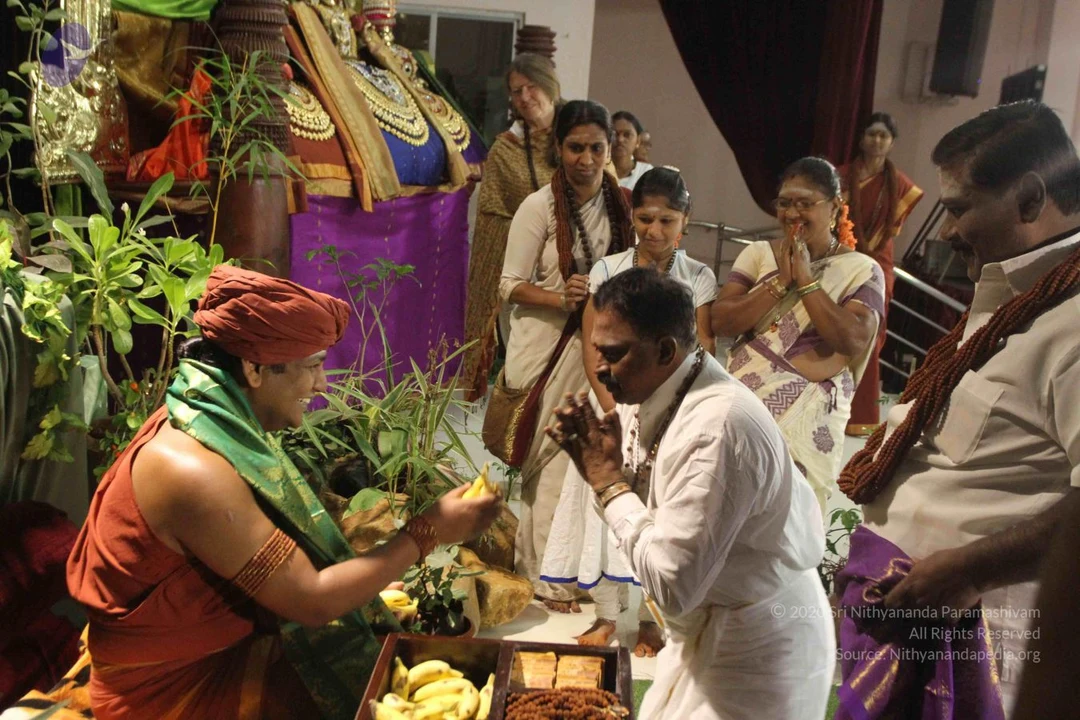
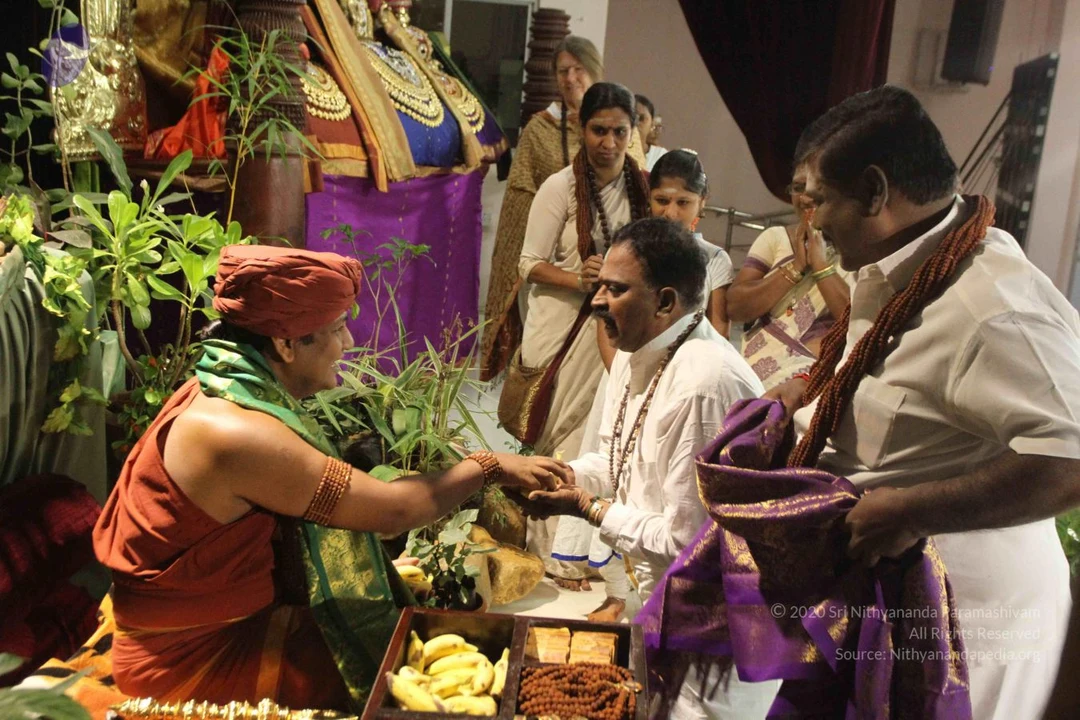
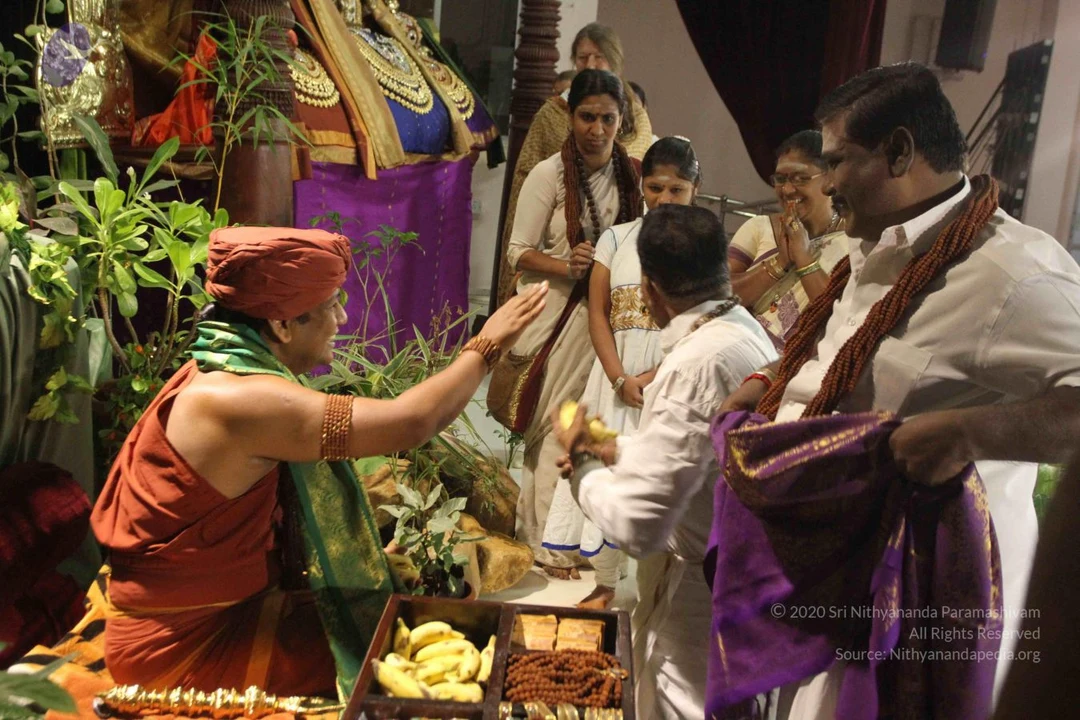
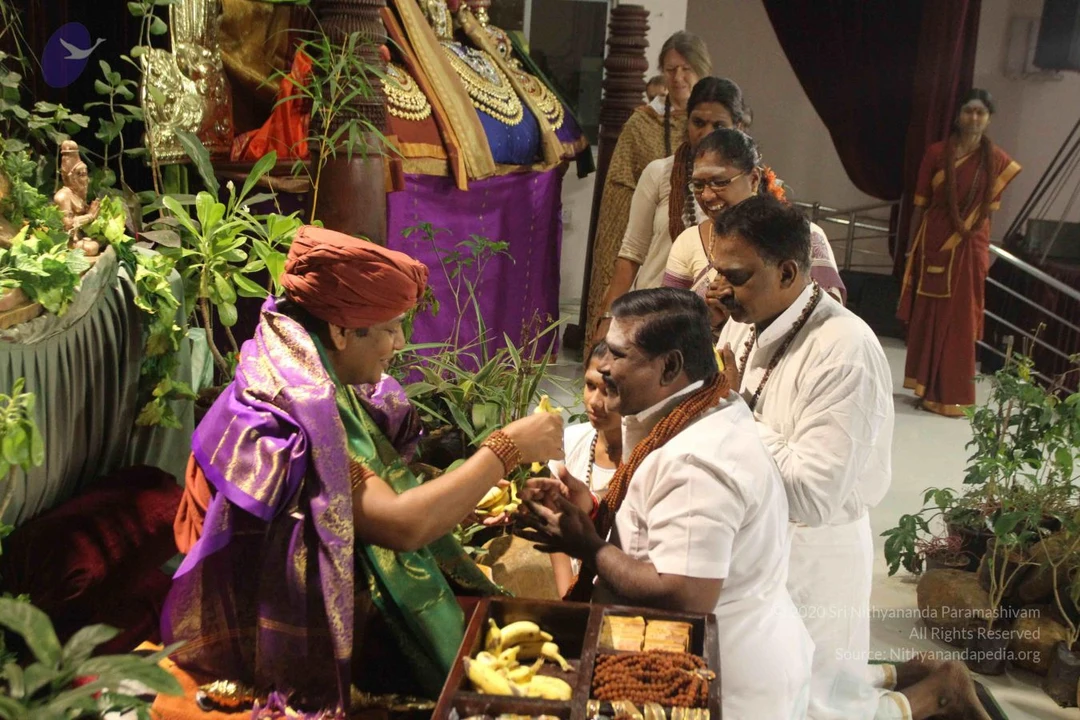
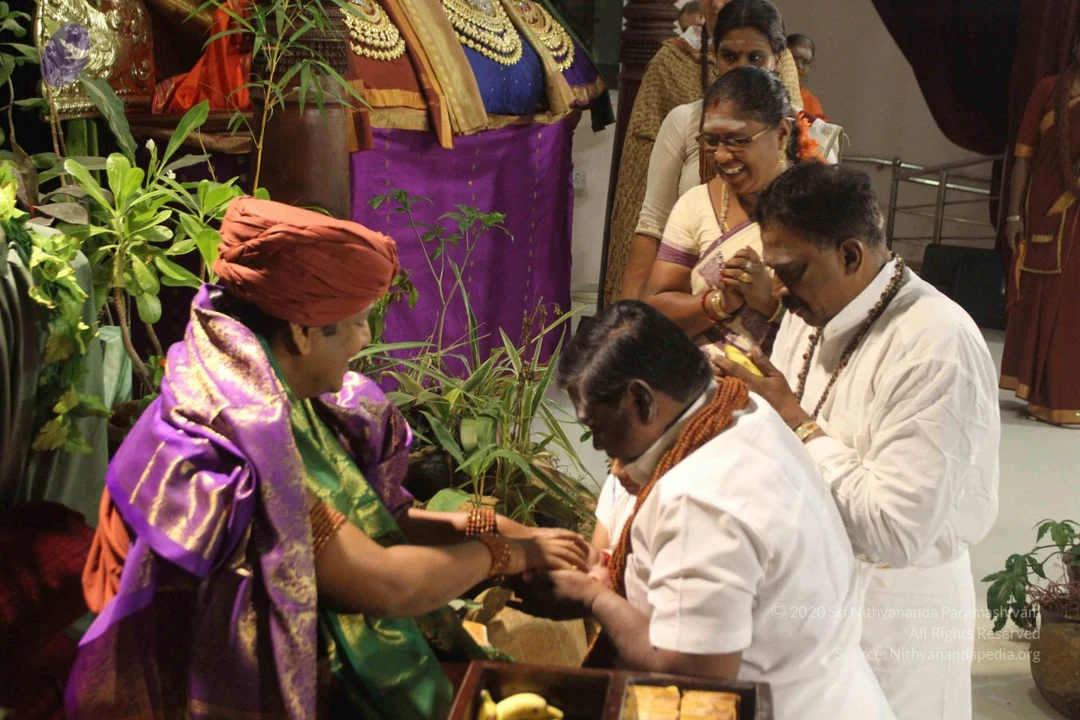
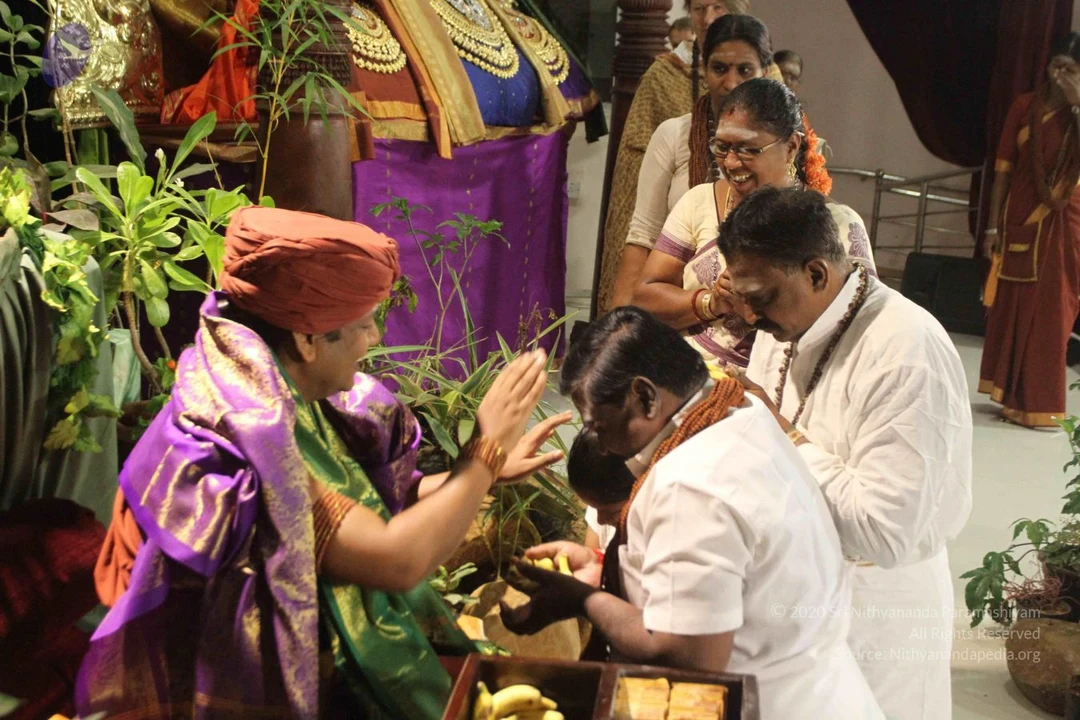
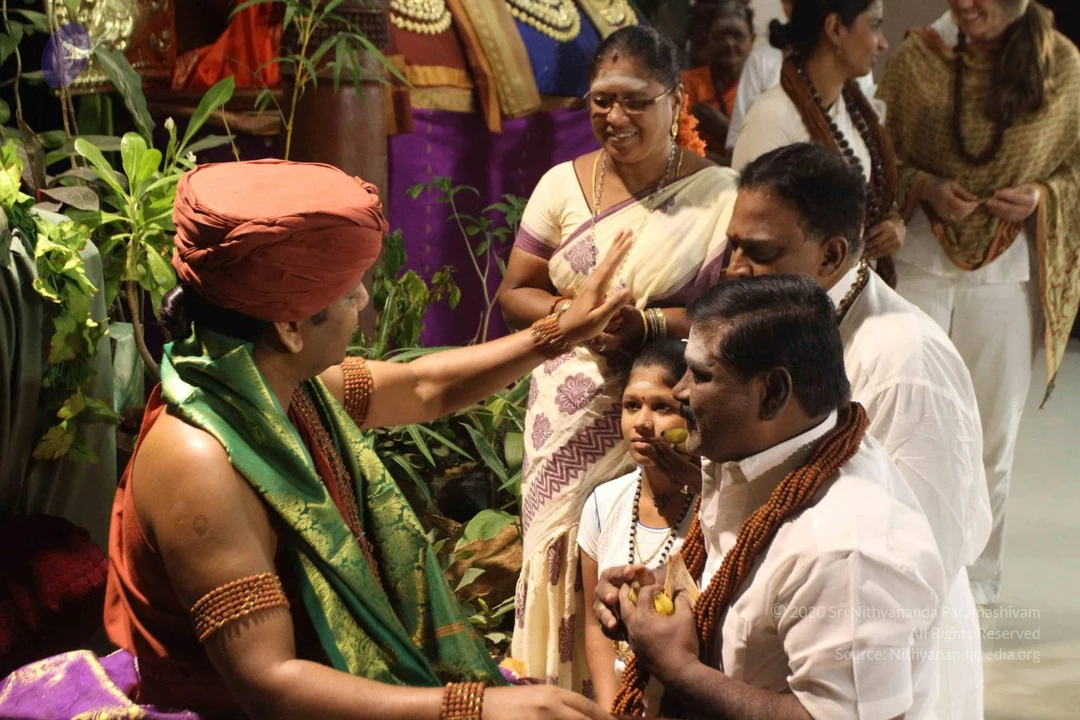
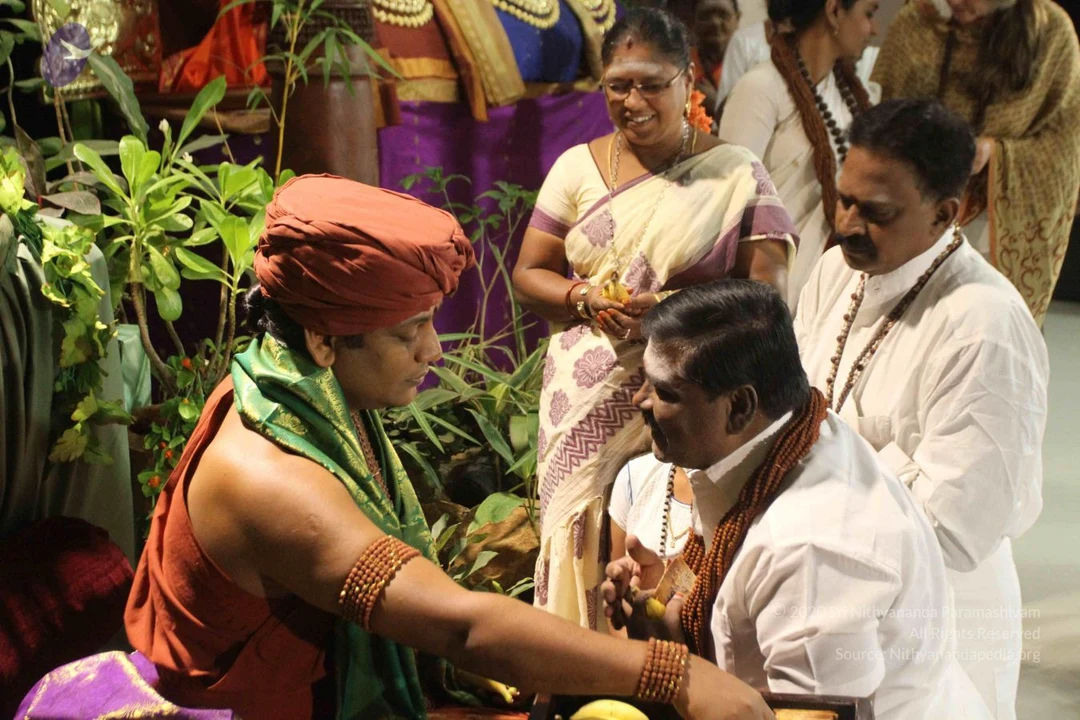
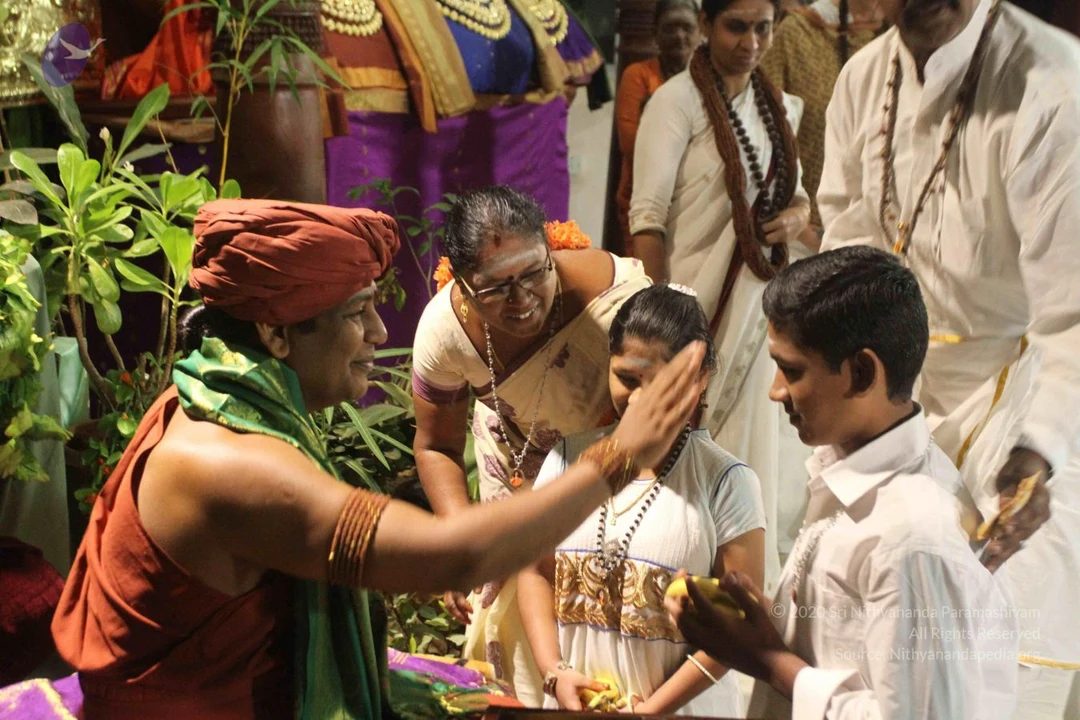
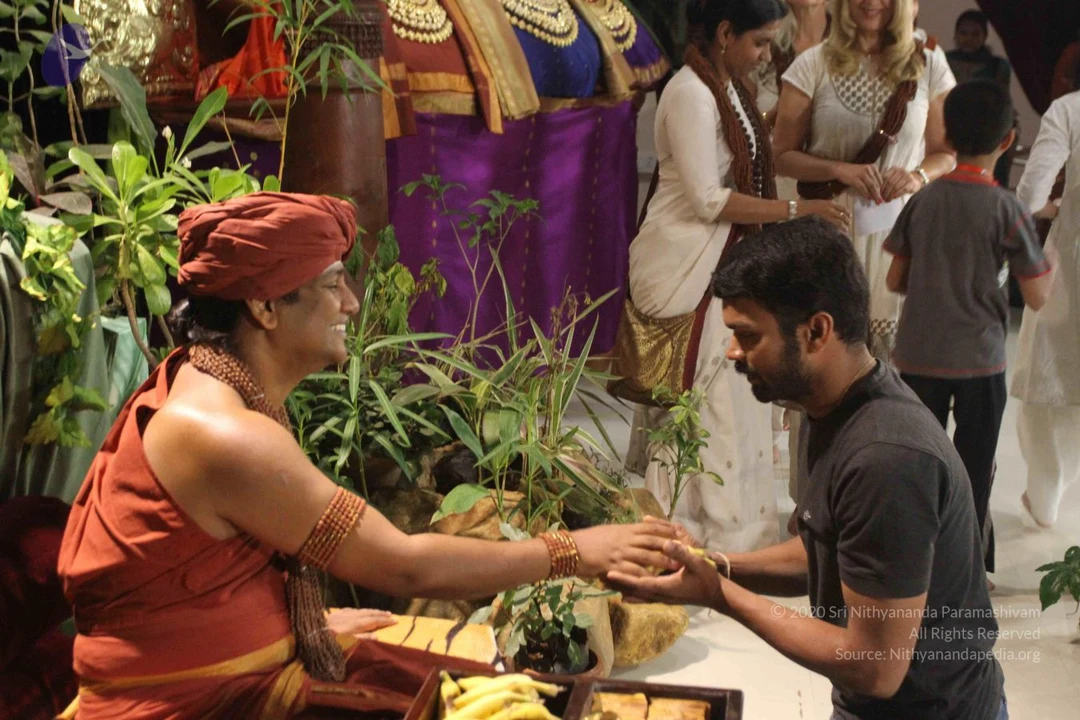
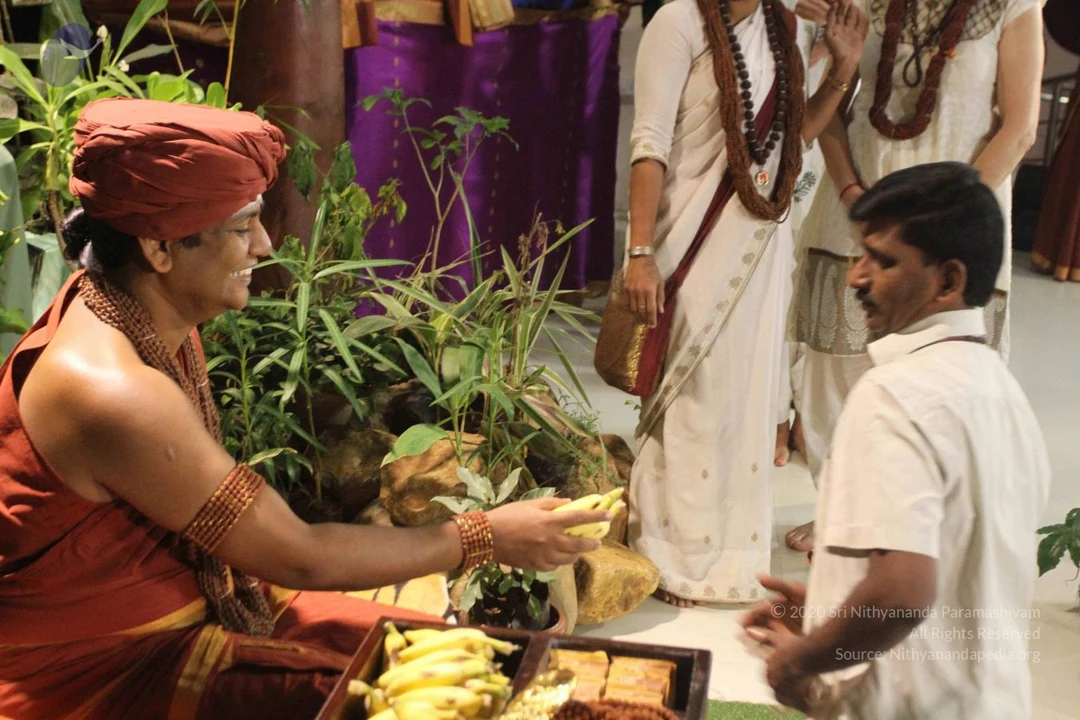
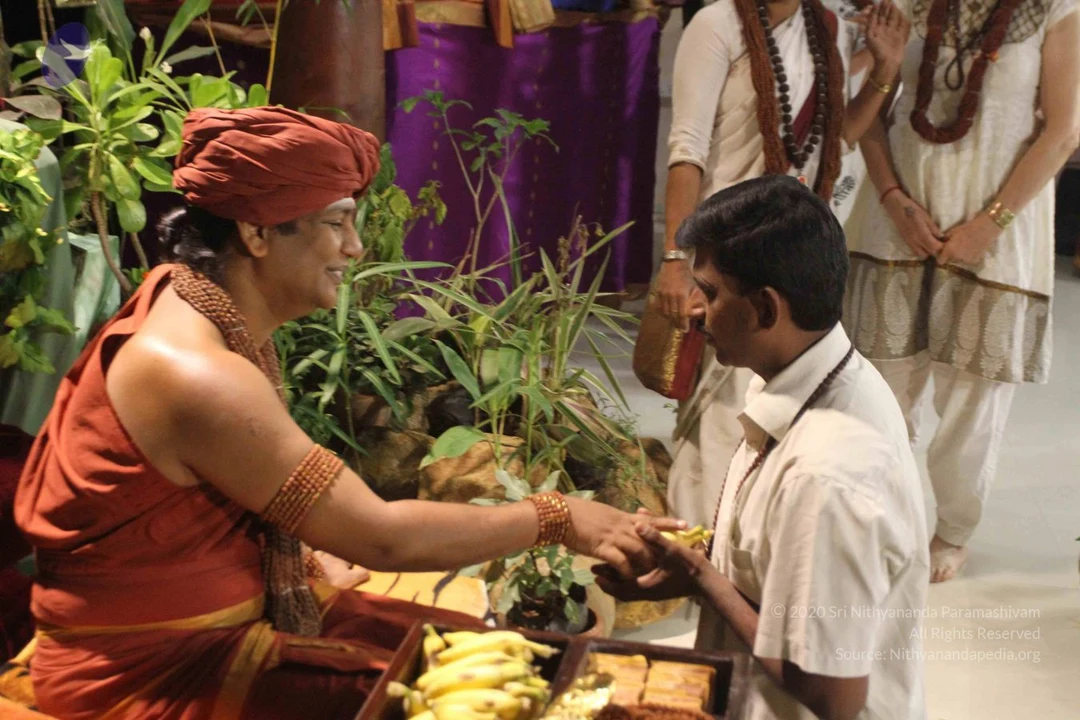
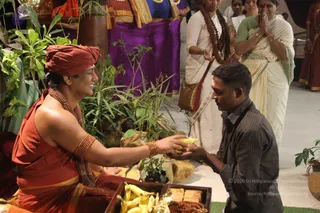
The tradition says, these five people you should never meet empty-handed or say “NO”. These five people you should always give something:

· One, a child. Whenever you meet a child, see a child, always share something.

· And, a pregnant woman who is carrying one more life. Whenever you see her, always share something.

· And, a beggar in the street or anywhere, person who is in need, poor. Always share something.

· Fourth, a “sadhu”. Always share something.

· Fifth person you should not go meet empty-handed, you should always give something is, Guru.

Tradition says, these five people you should always share something, offer something, because, this is “saying YES to life”.

And, I tell you, I tell you, you will NEVER become poor by saying YES to life and sharing! You will NEVER become poor! Go on sharing; you will be showered! You will be showered!

Just yesterday, to one of my Mahants I was telling..... I gave her the “asana”, means, the traditional seat for the Branch she is going to be in-charge. That time I said, ‘Behave as a princess, and be the princess! Whether you go to a temple or anywhere, always offer, share, give, how Swamiji gives. That way give!’ And I told her, ‘You will always receive it! Never have insecurity. You will always receive it! You will be showered!’ Because, whenever you share, especially from this context of “saying YES to life” – ‘I am saying YES to life by sharing, by giving’ – understand?

“Dhaana”, charity, sharing, is one of the highest forms of saying “YES” to life. Whether it is sharing of food, sharing of clothes, sharing of knowledge, or sharing of enlightenment itself, “dhaana” is one of the greatest ways of saying “YES” to life. And, by giving “dhaana” from this context of “saying YES to life”, you will awaken the life energy not only in you, but even in the person who is receiving! So, always say “YES” to life, “YES” to life! Say “YES” to life! Constantly, constantly sharing from the context of “saying YES to life” will awaken so much of life energy in you, so much of life energy in you!

Wherever you get a chance to say “YES” to life, do it! Do it! I don’t even bother about the security. I will always keep notes, changes, coins, in the car. Wherever in the signals the car stops, any poor or beggars I see, that is the only time I touch money. Always giving with the context, from the context of “saying YES to life”! Please understand, go on sharing as much as you can from the context of “saying YES to life”, “saying YES to life”!

And these five people – a Child, Pregnant Woman, a Beggar, or a Sadhu, and Guru – these five people, you should never go and meet empty-handed. You should always go, whenever you see them, always share something with this clear context of “saying YES to life”, “saying YES to life”.

And, whichever position you are in, you may be a social leader, bureaucrat, religious leader, spiritual leader, or a political leader, let all your decisions be always based on saying YES to life; you will have so much of blessings, strength, security, showered on you by the Cosmos.

Sharing and giving is one of the important ways of saying “YES” to life. Even when I heal somebody, I just say a deep “YES” to life; that’s all! Their bio-memory also picks up that truth of saying “YES” to life. And, when the bio-memory picks up the fire of “YES to life”, it suddenly starts healing itself. So much of healing, so much of recovery, so much of health happens!

And, I tell you, say a deep “YES” to life. That is the essence of all these three verses of this first Upanishad, Ishavasya Upanishad. Say a deep, powerful “YES” to life. And never say “NO” to life. All your fears are nothing but “saying NO to life”. All your fears are nothing but “saying NO to life”. Say a powerful, deep “YES” to life.

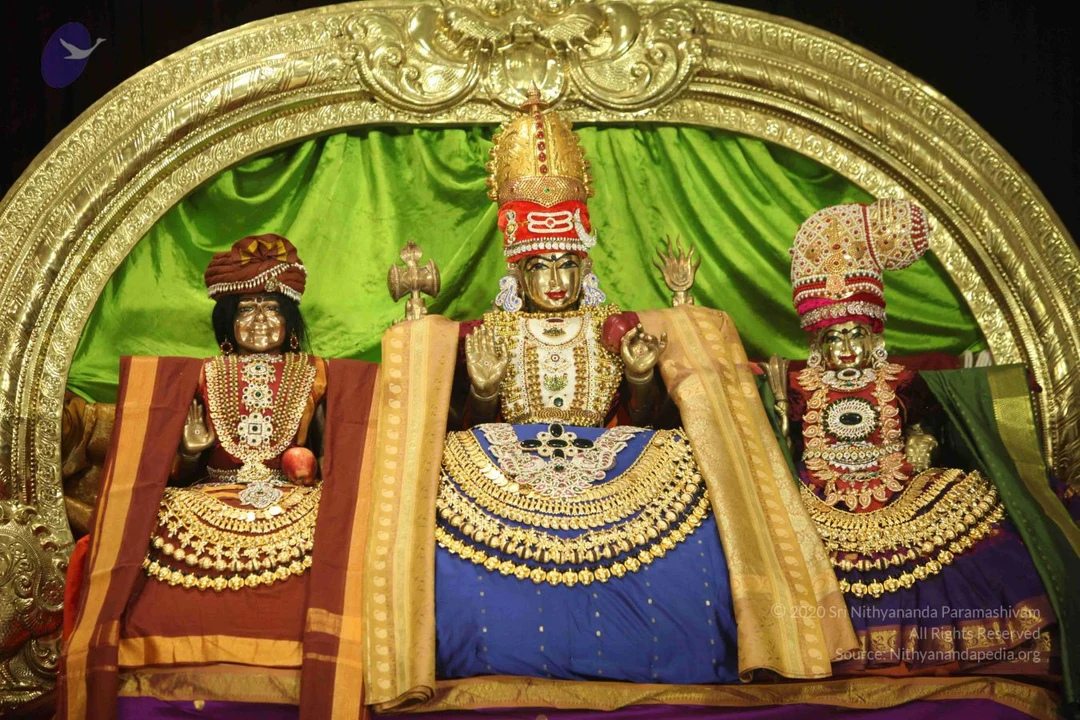
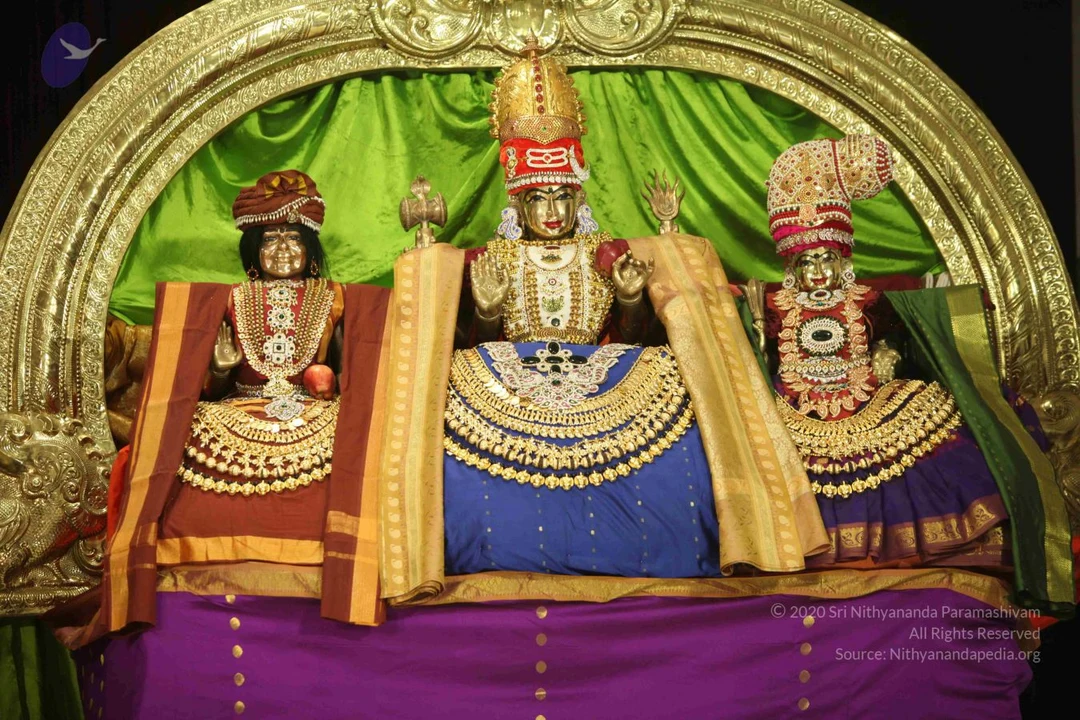
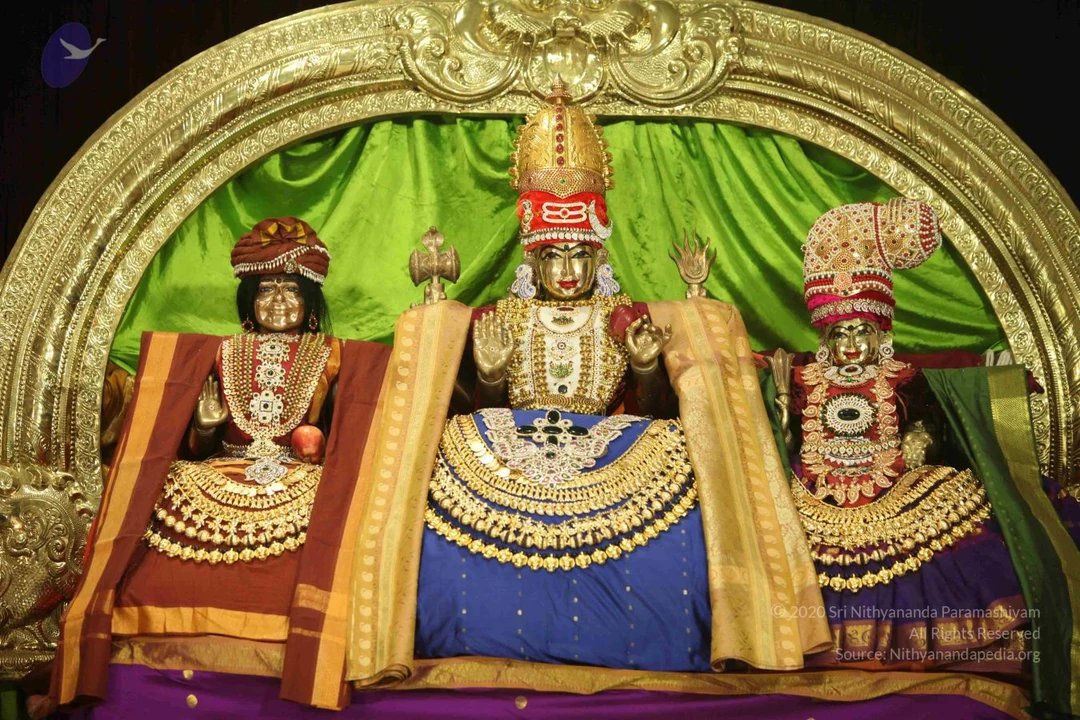
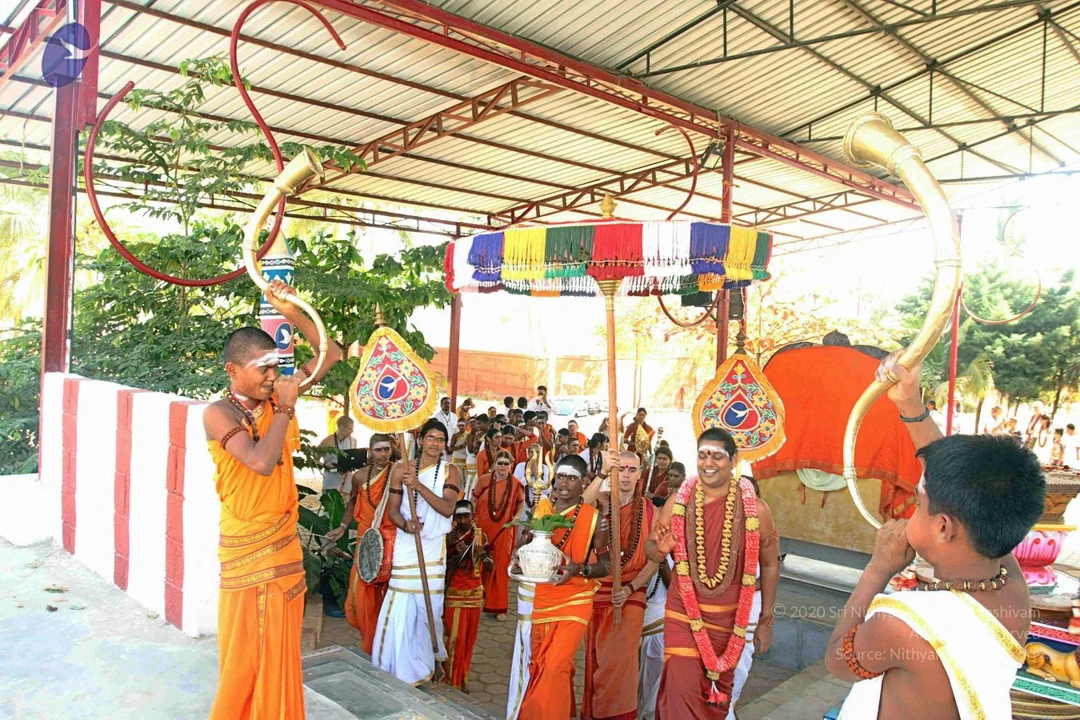
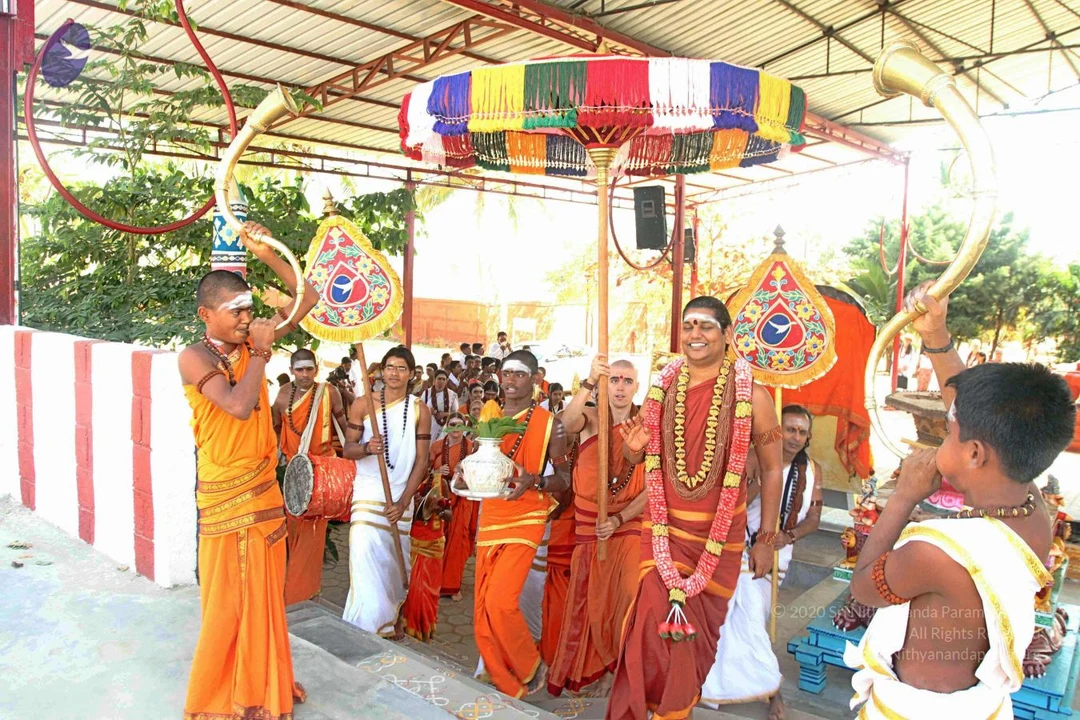
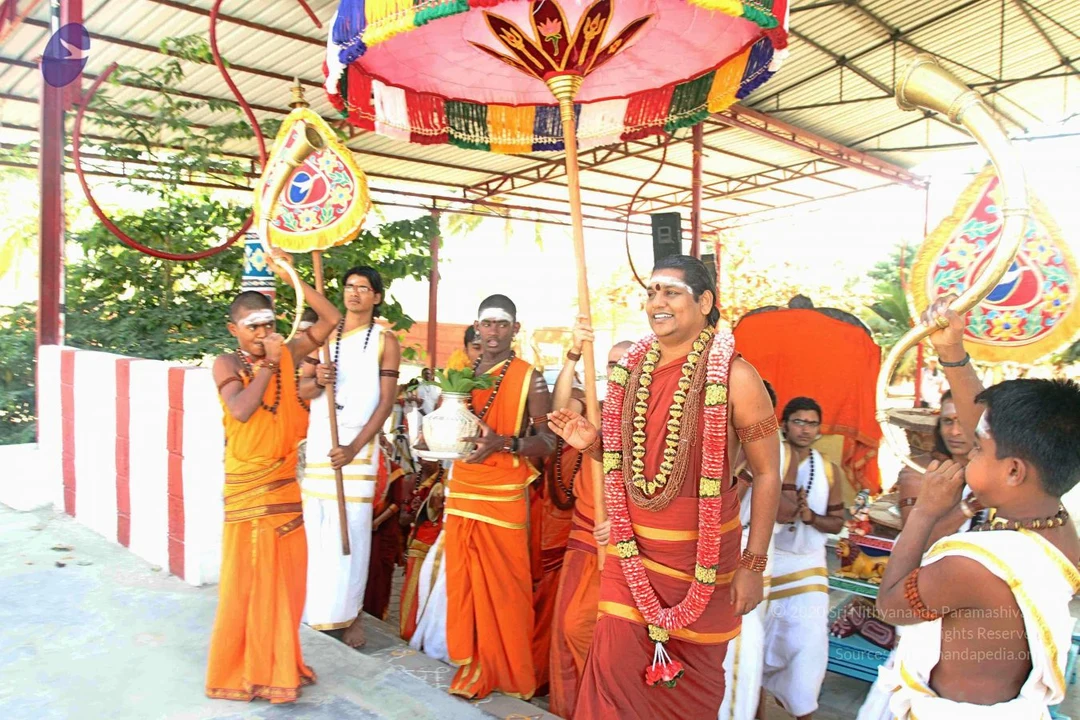
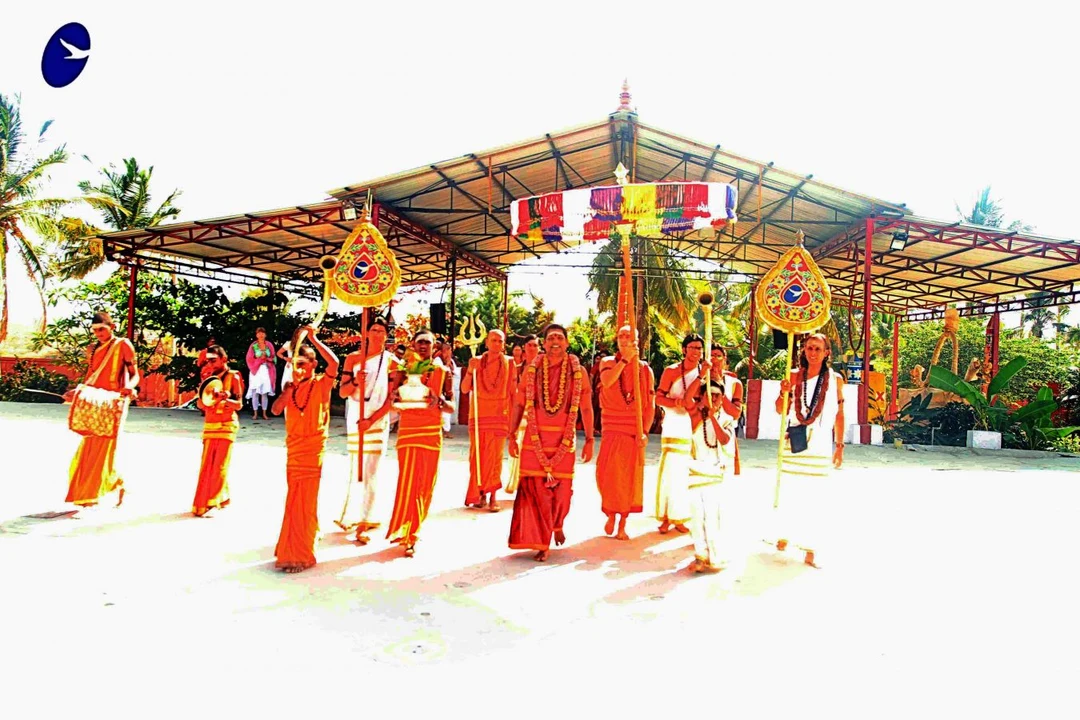
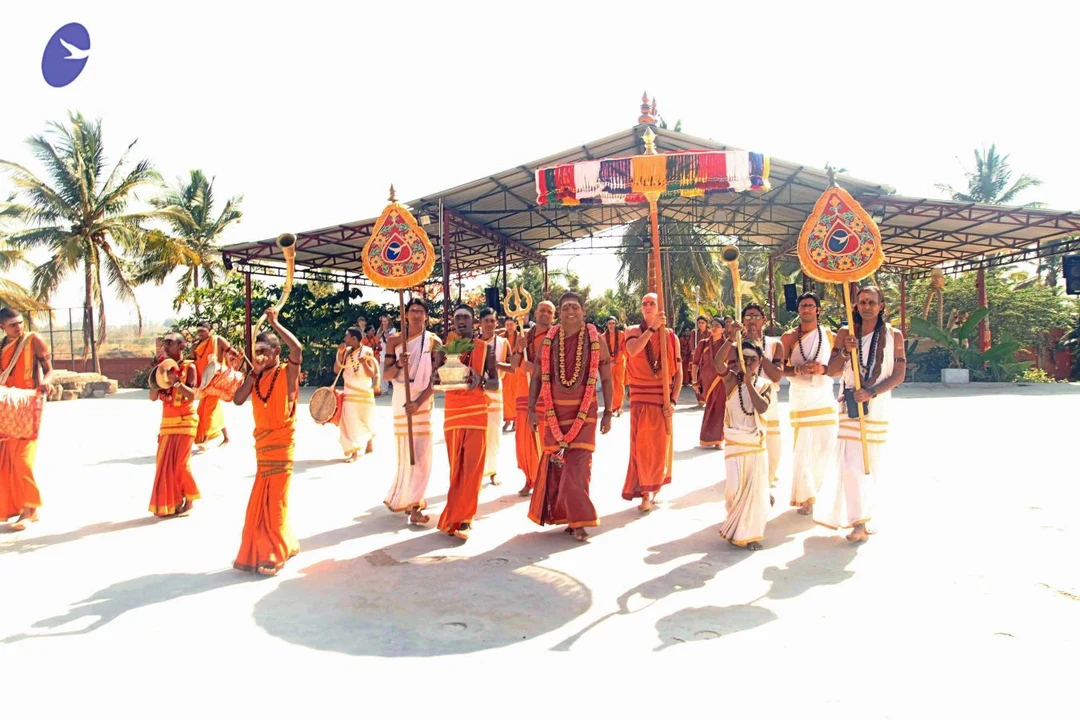
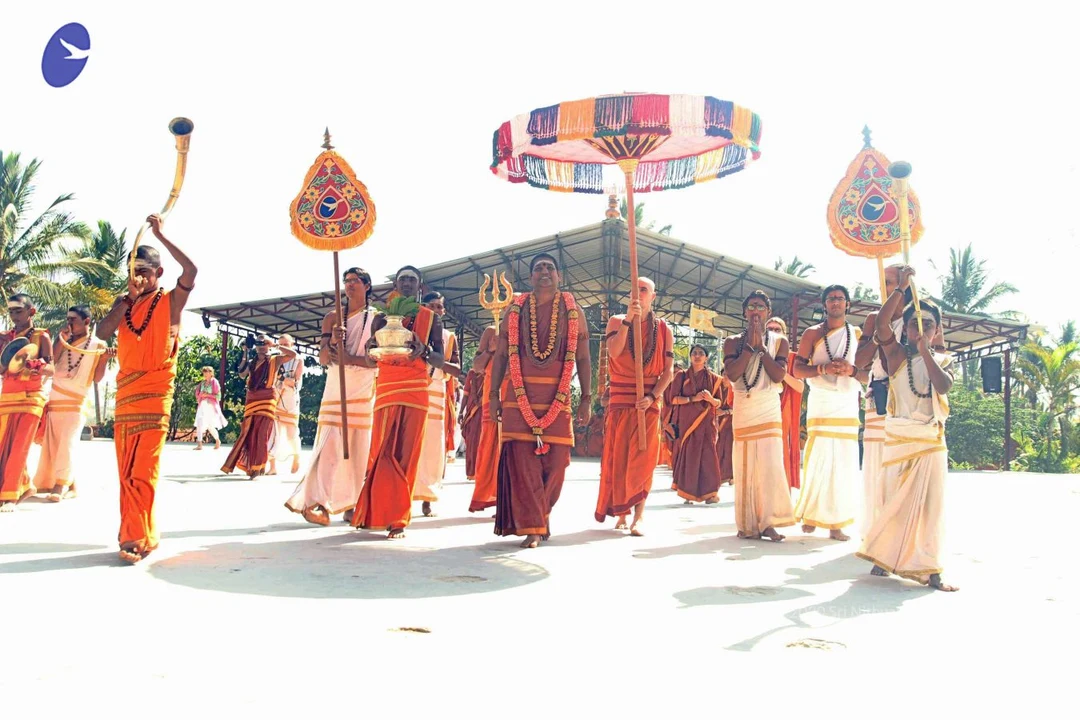
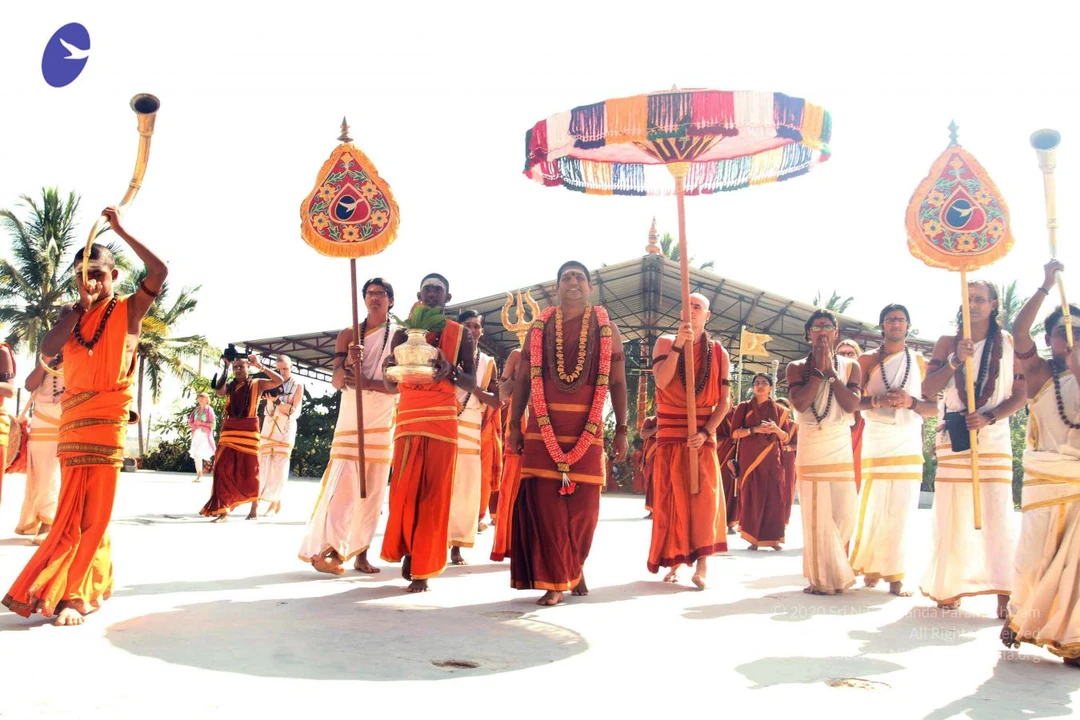
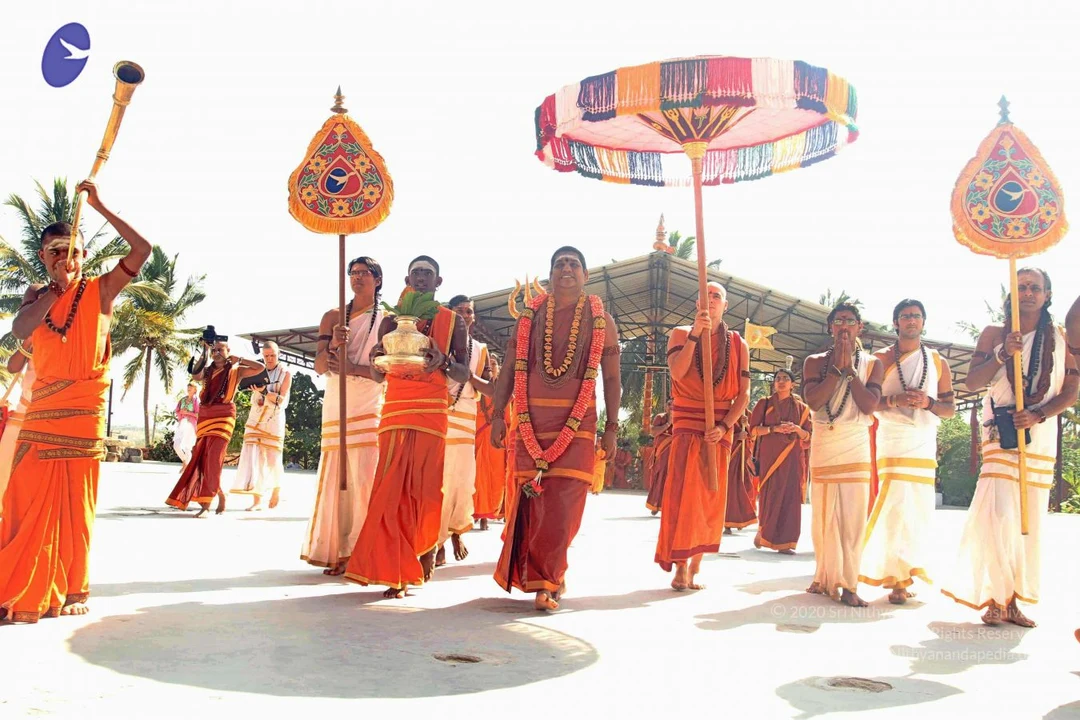
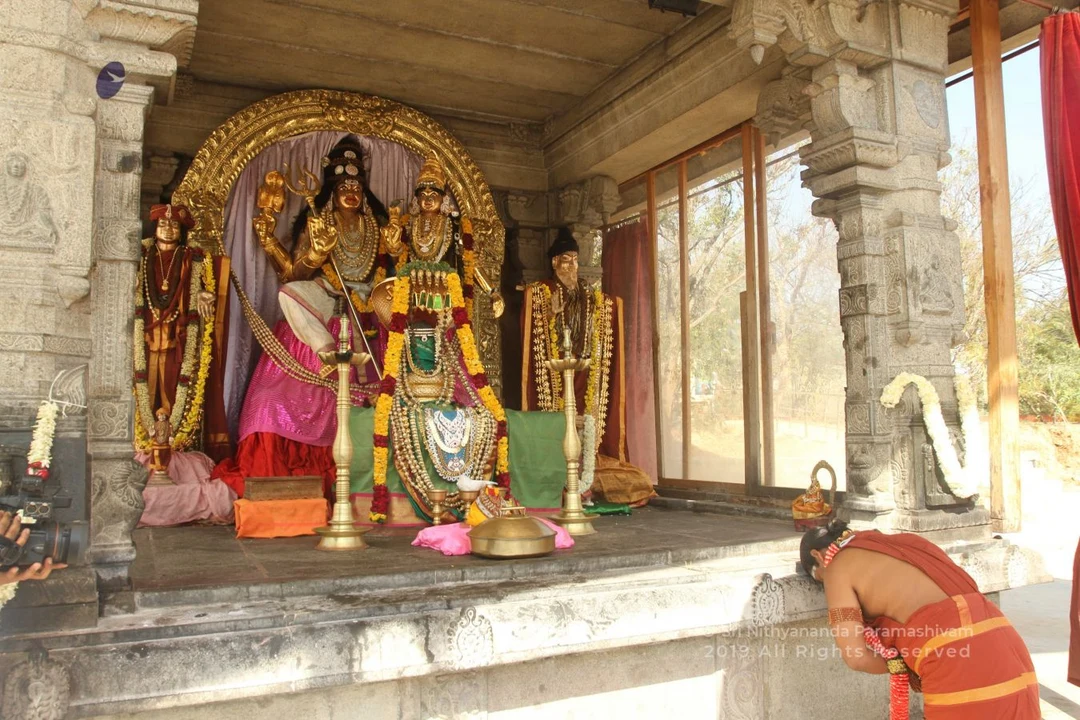
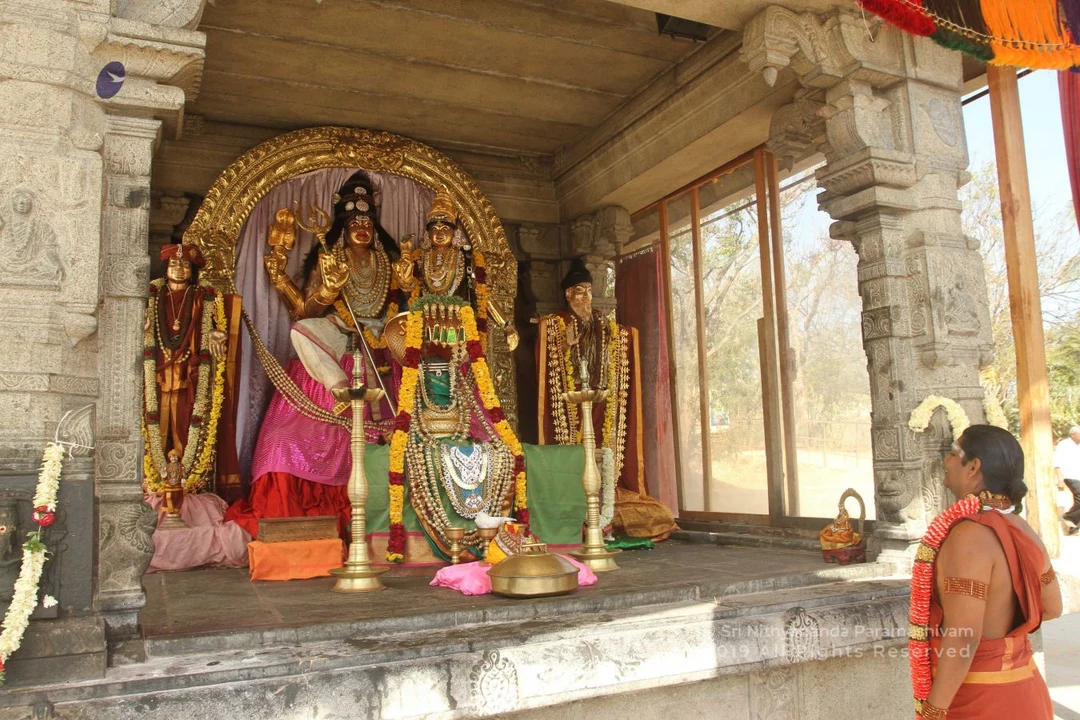
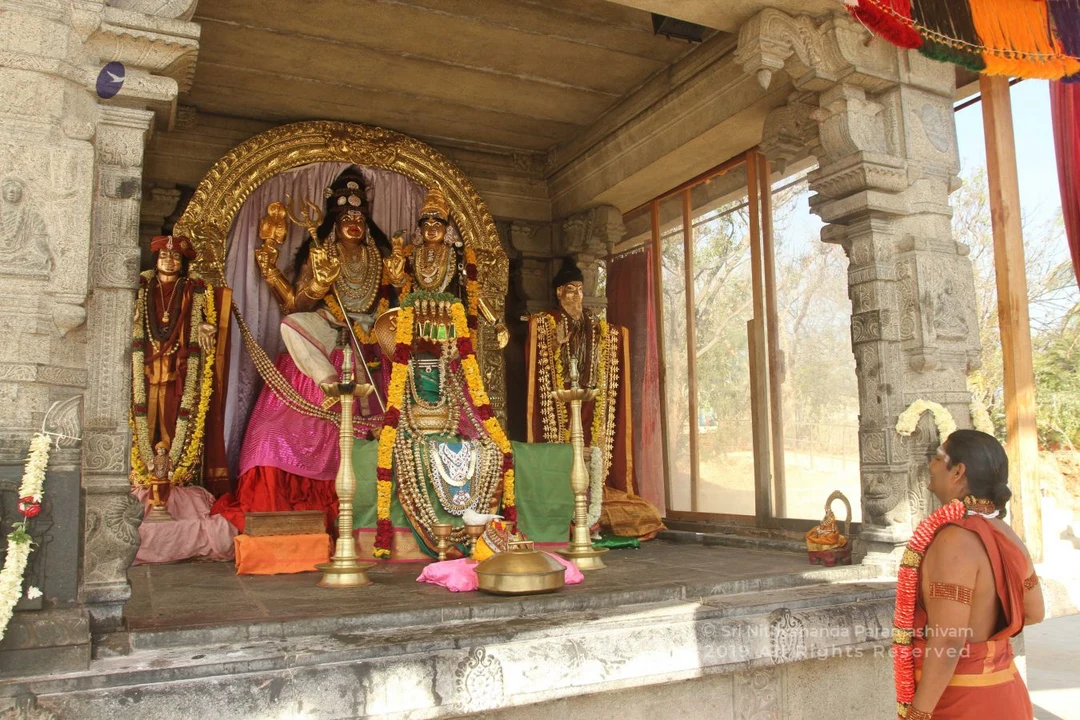
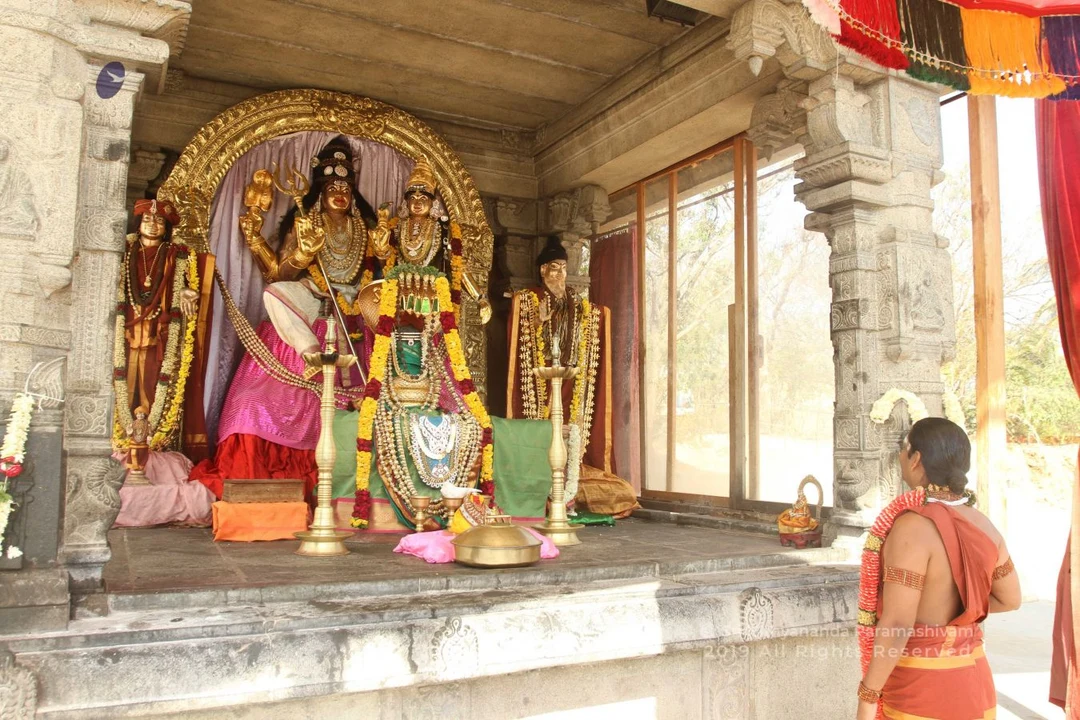
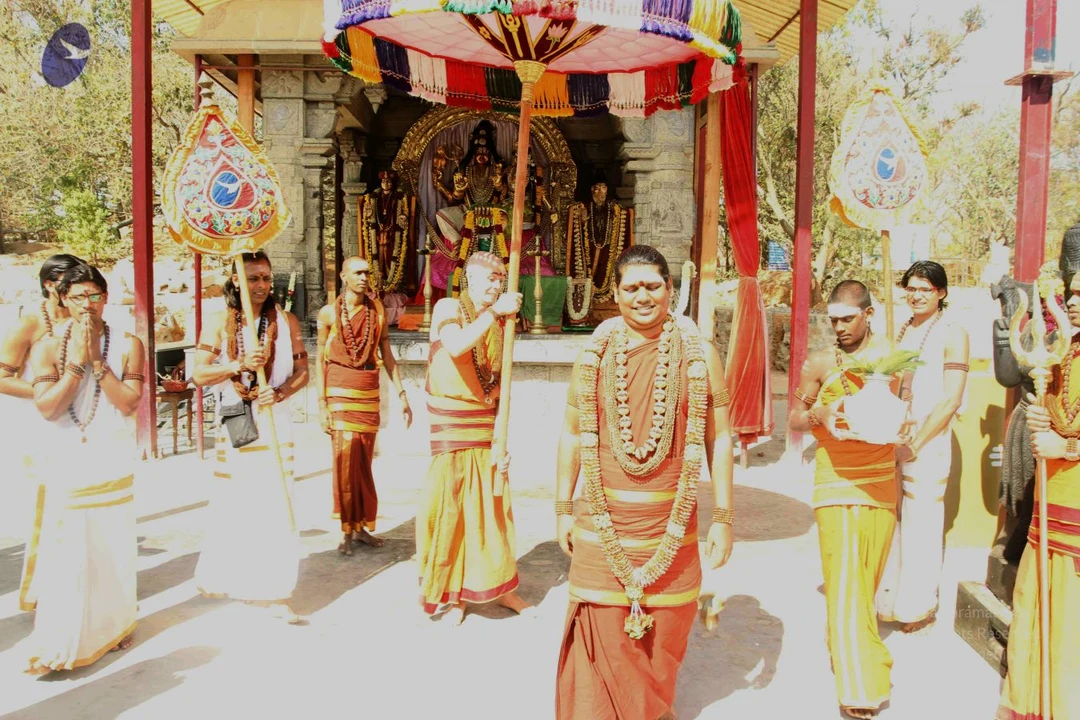
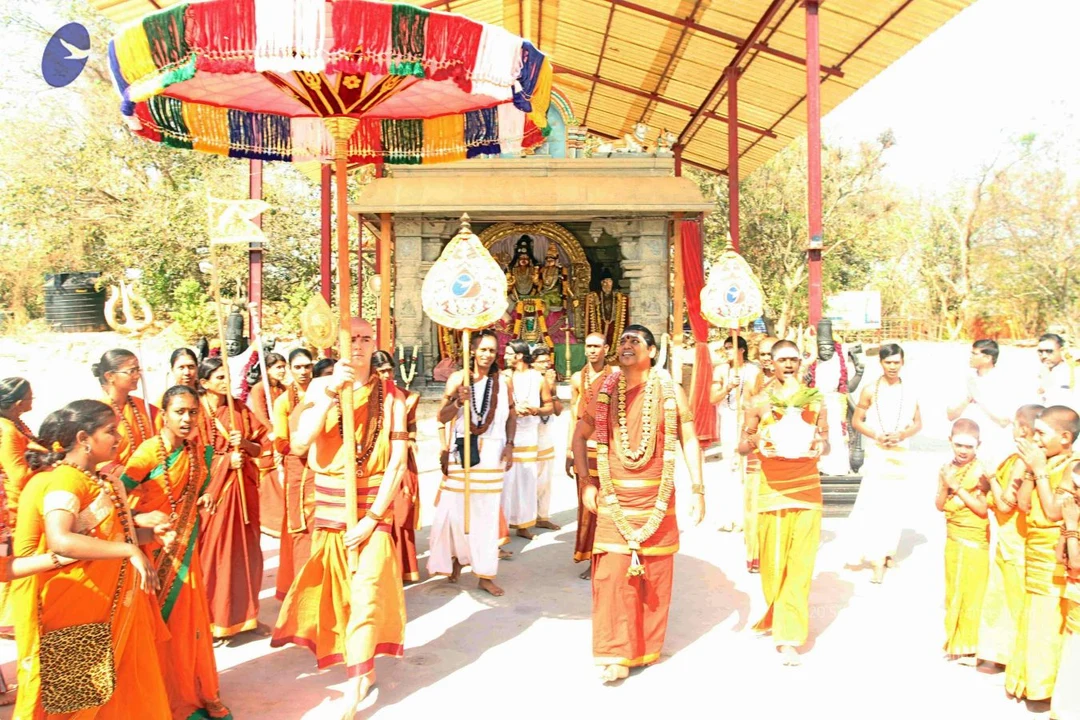
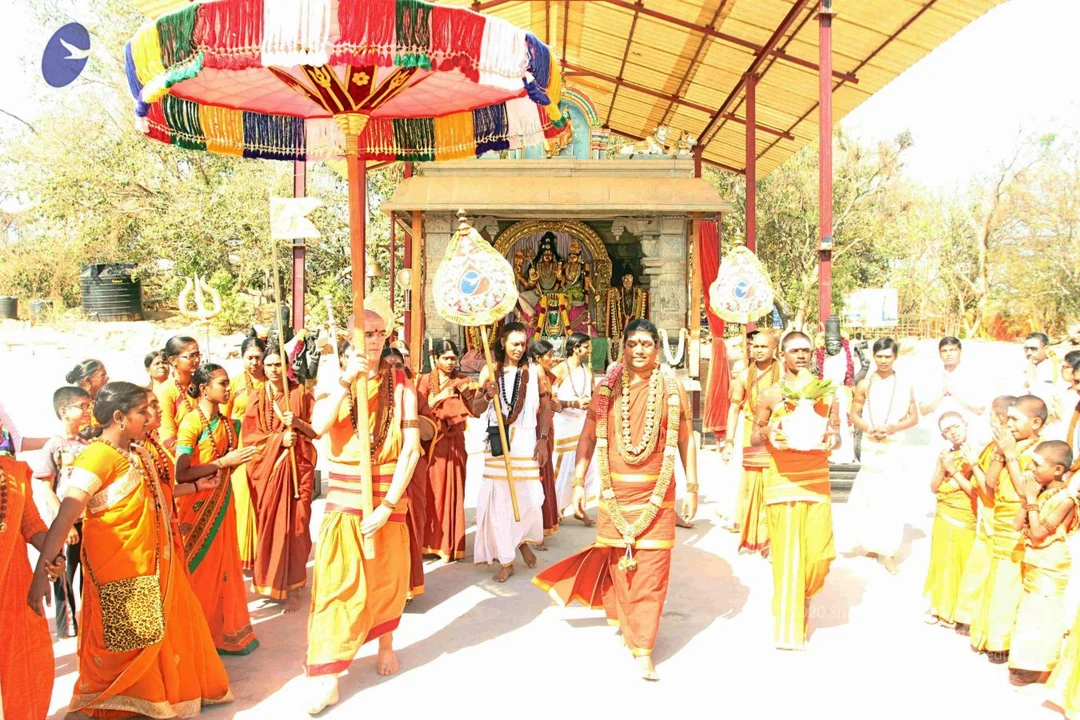
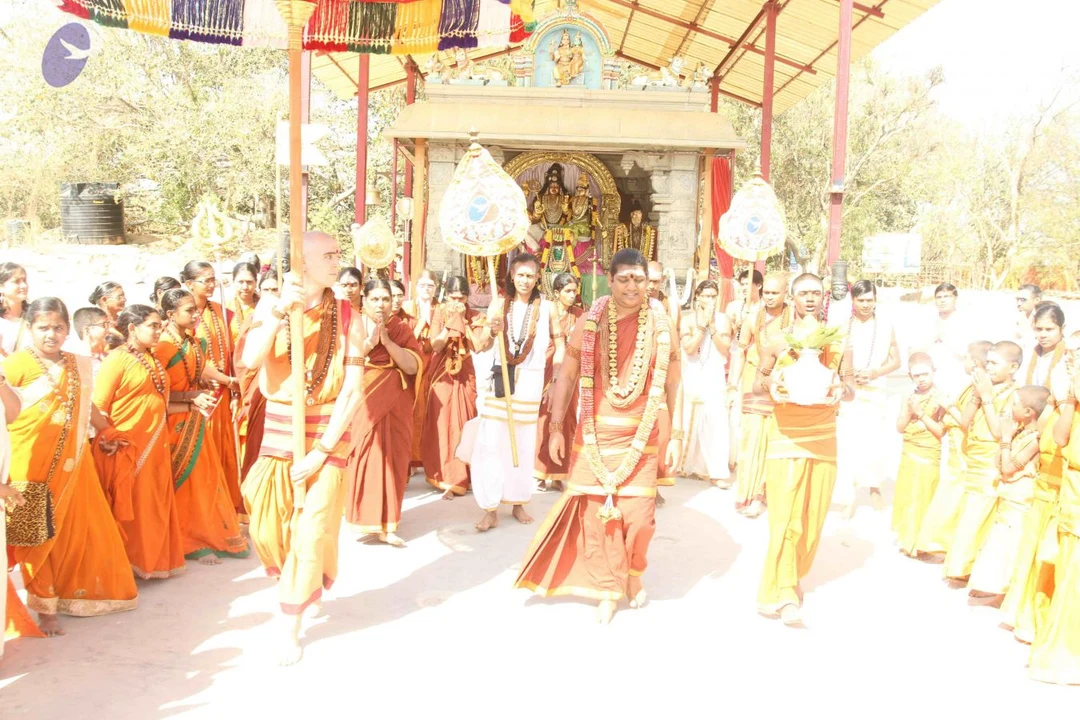
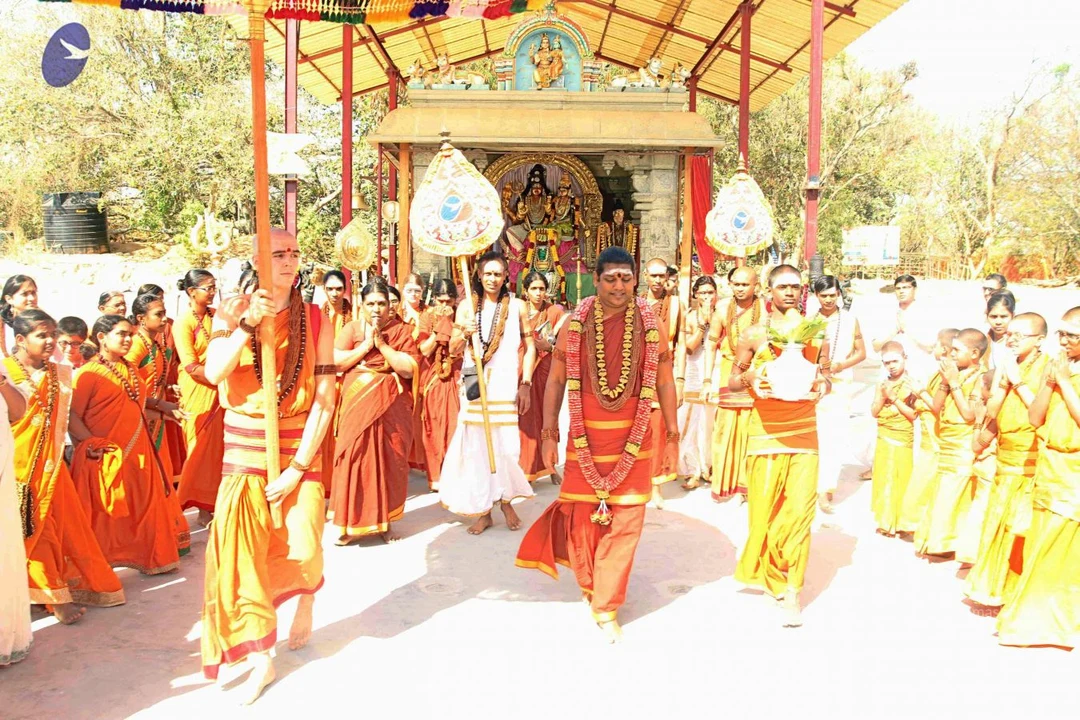
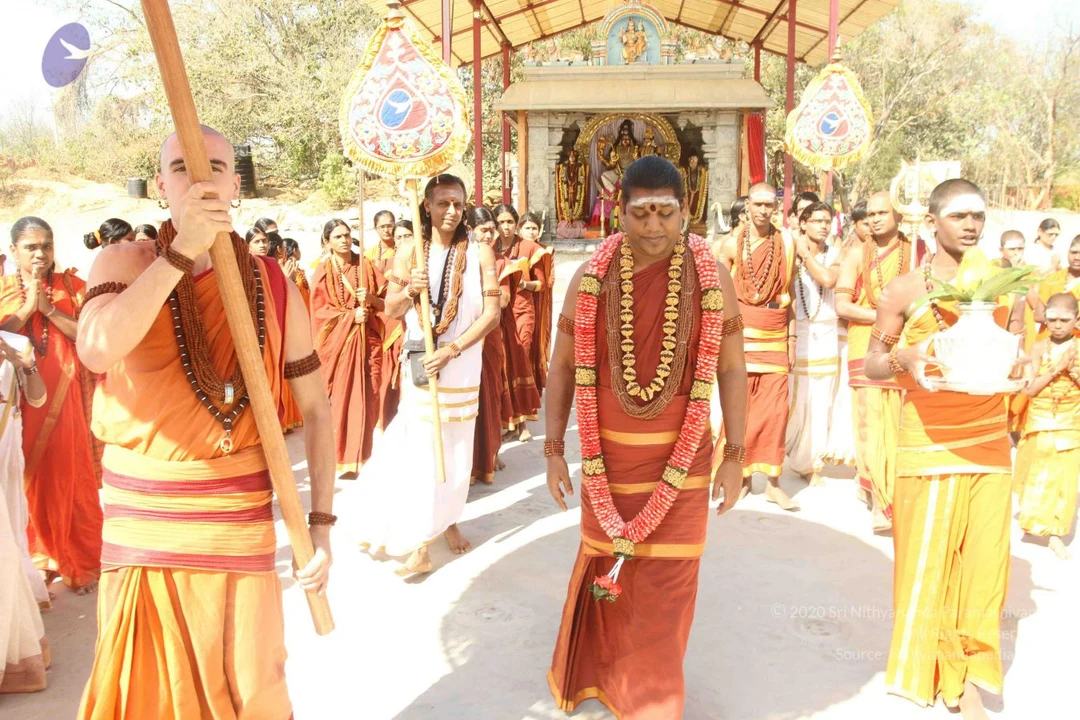
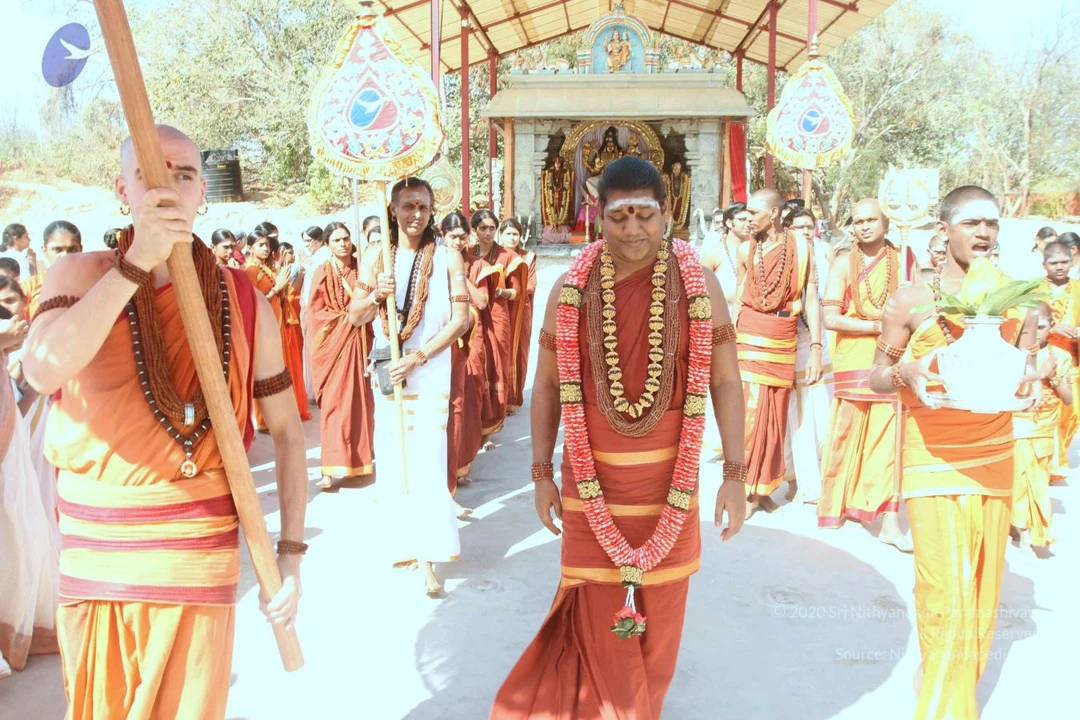
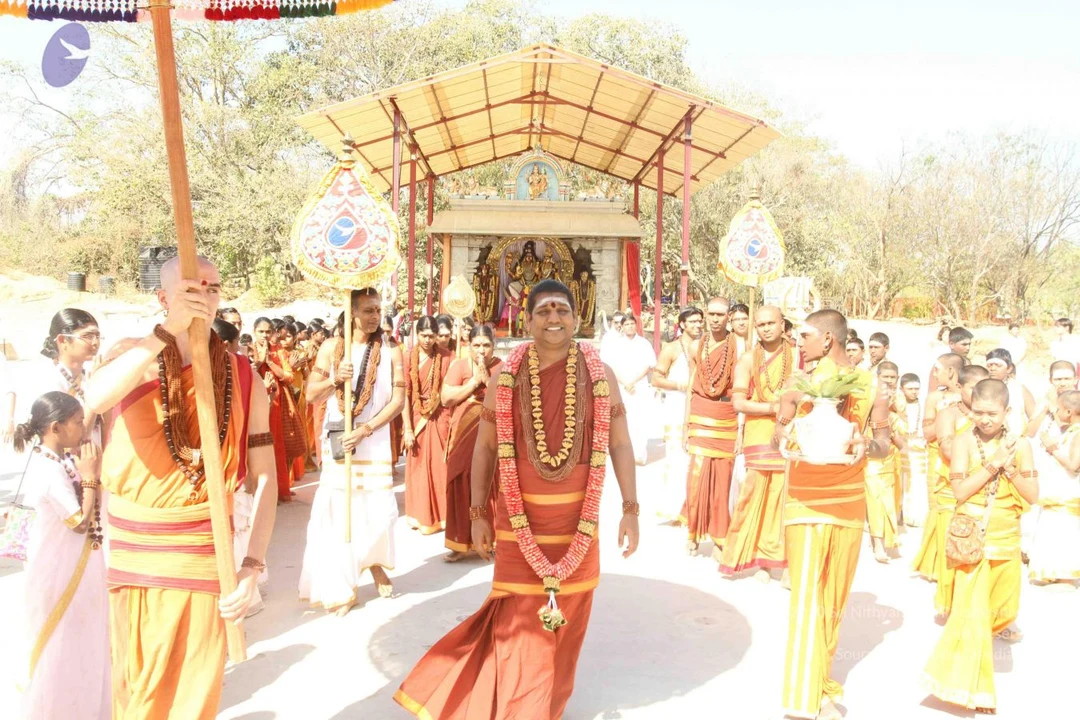
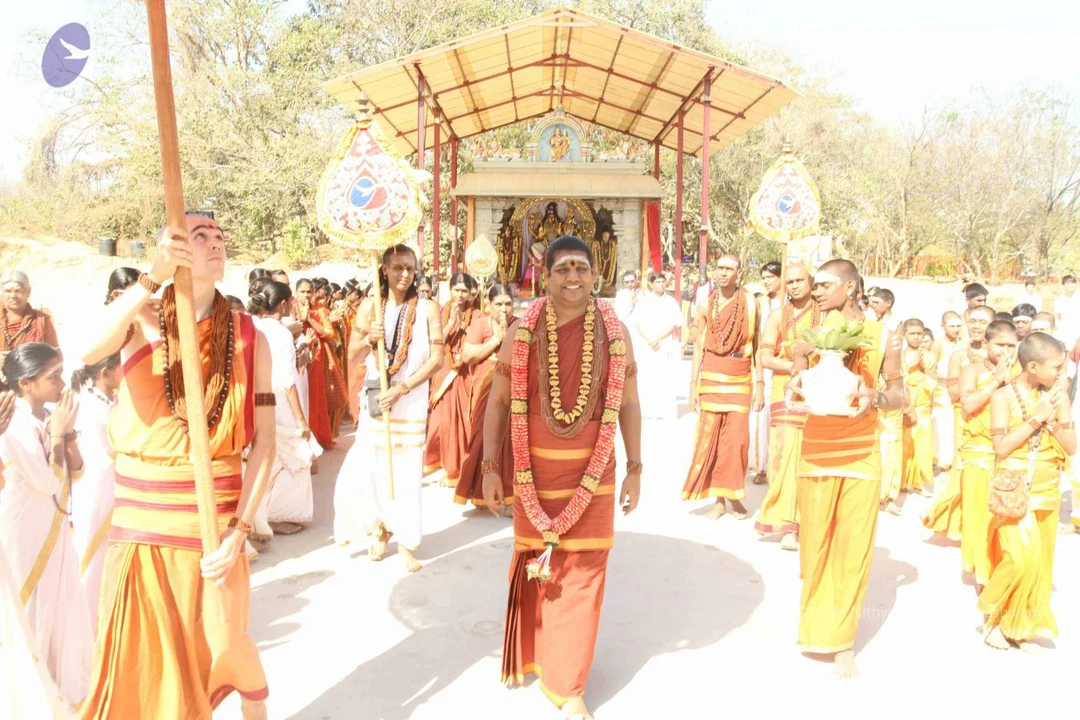
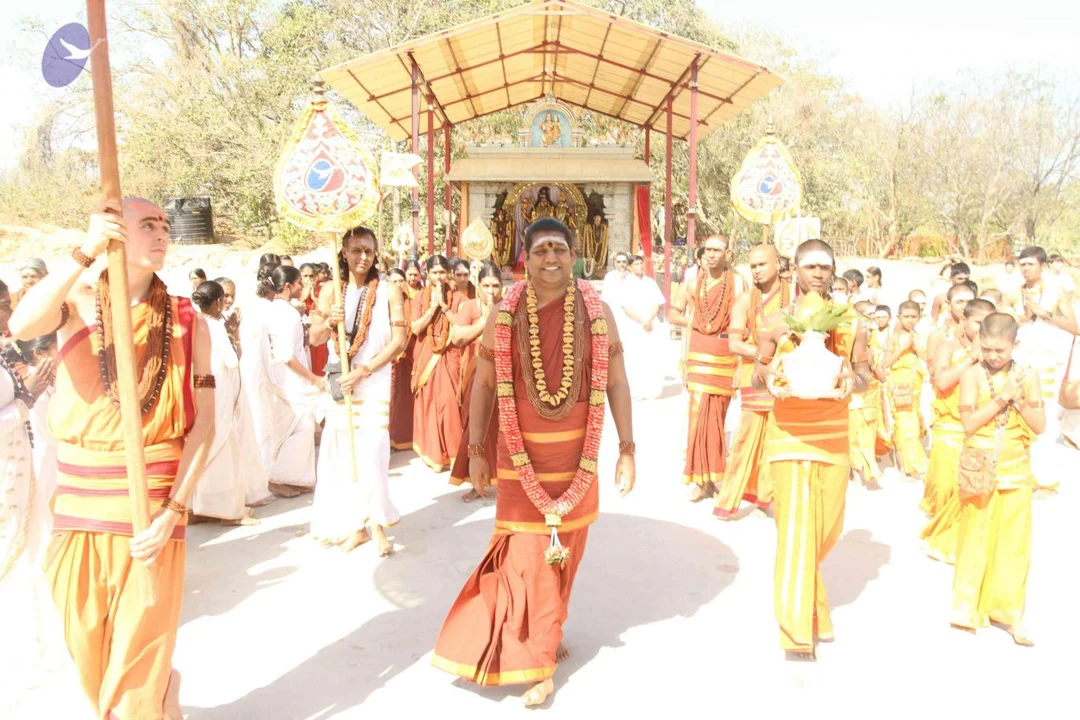
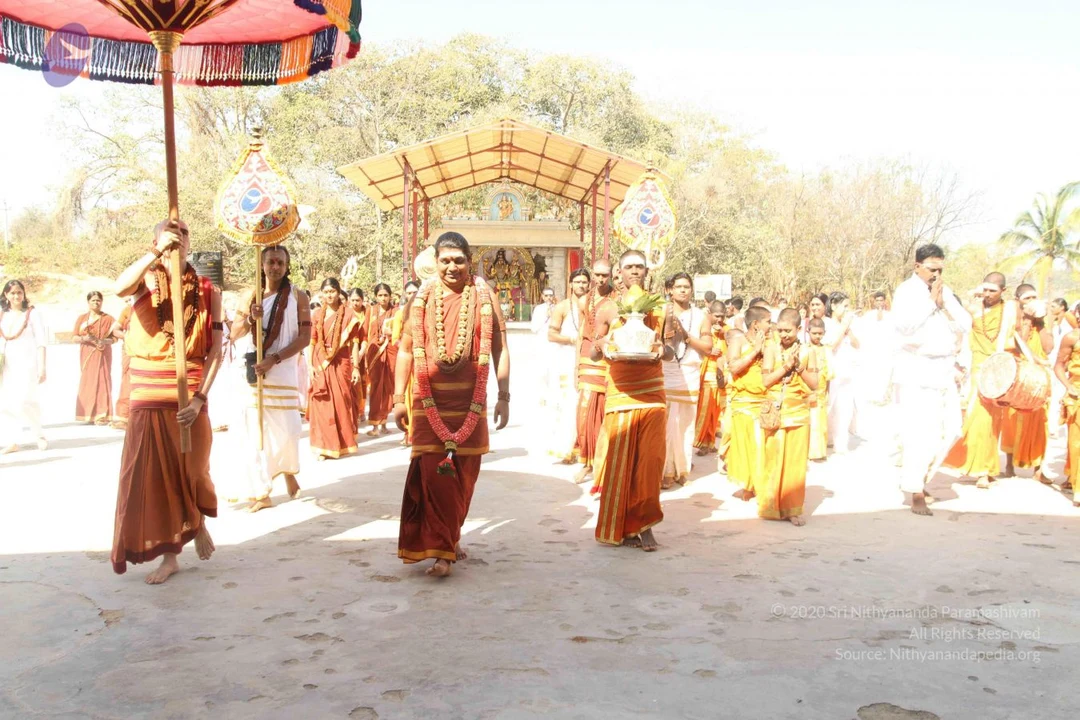
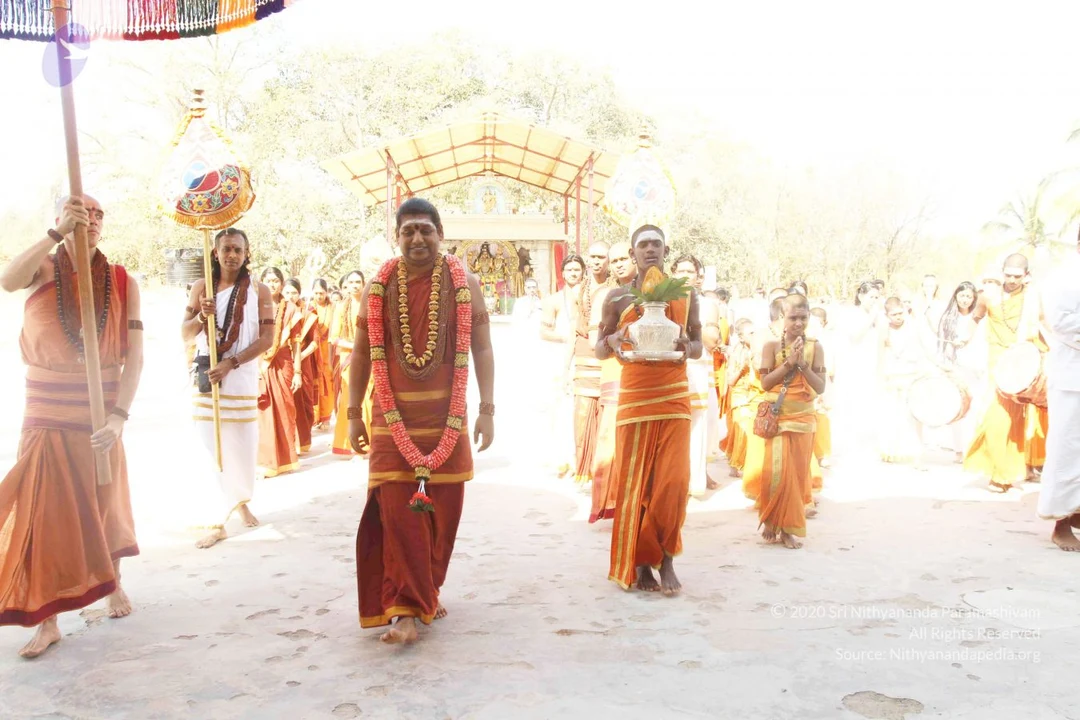
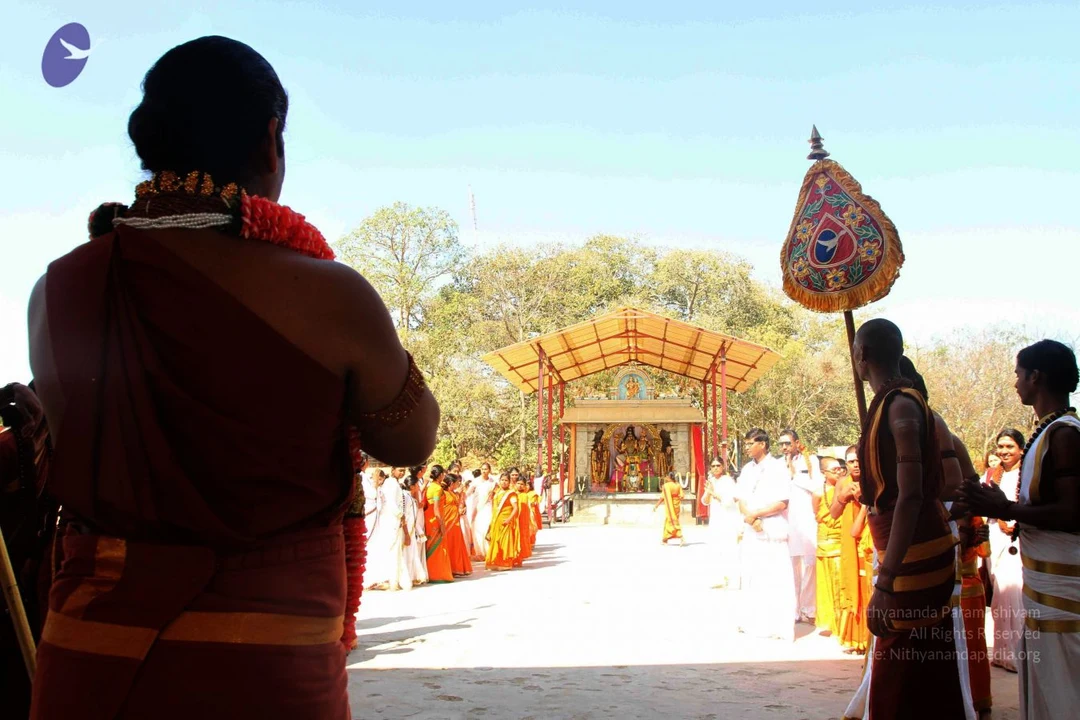
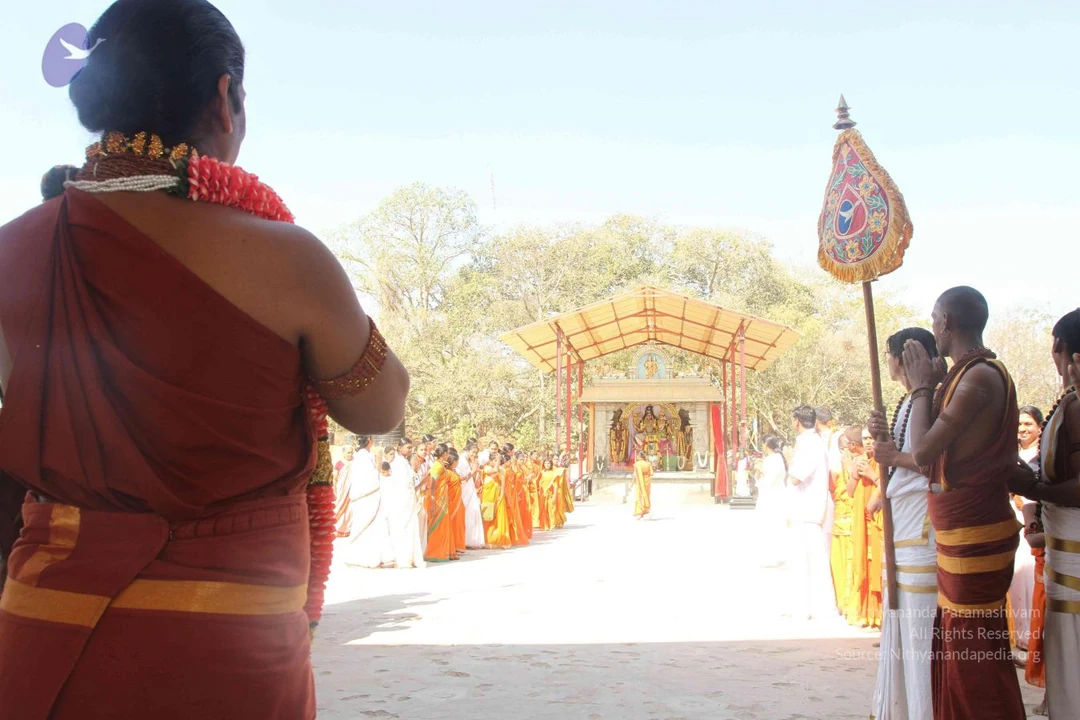
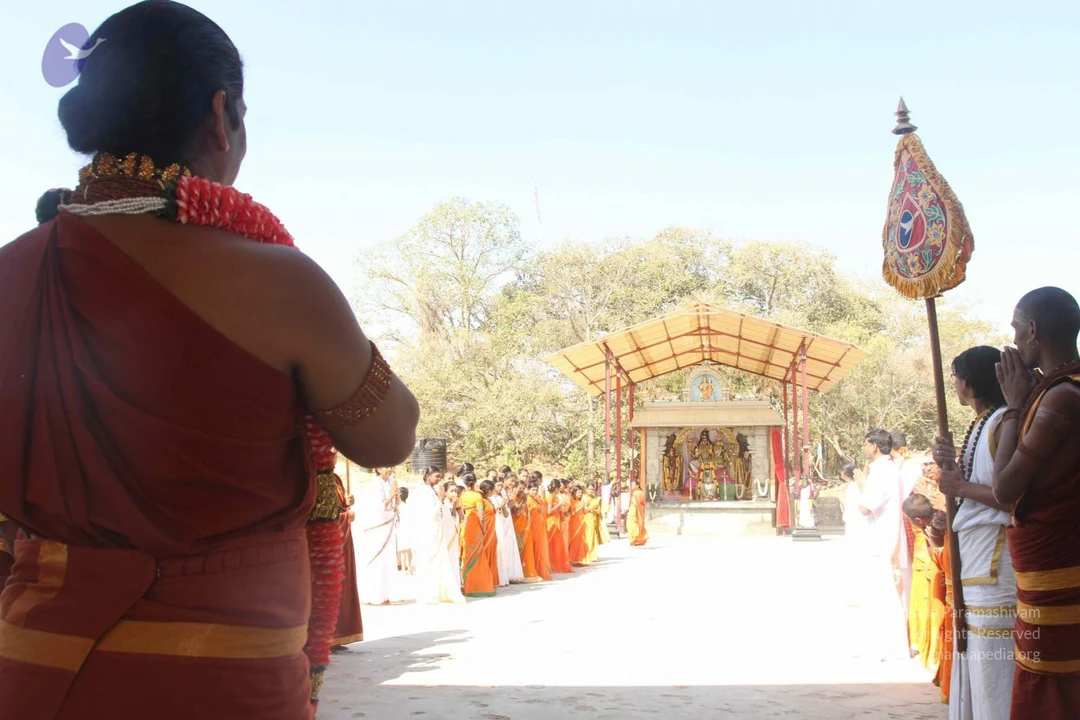
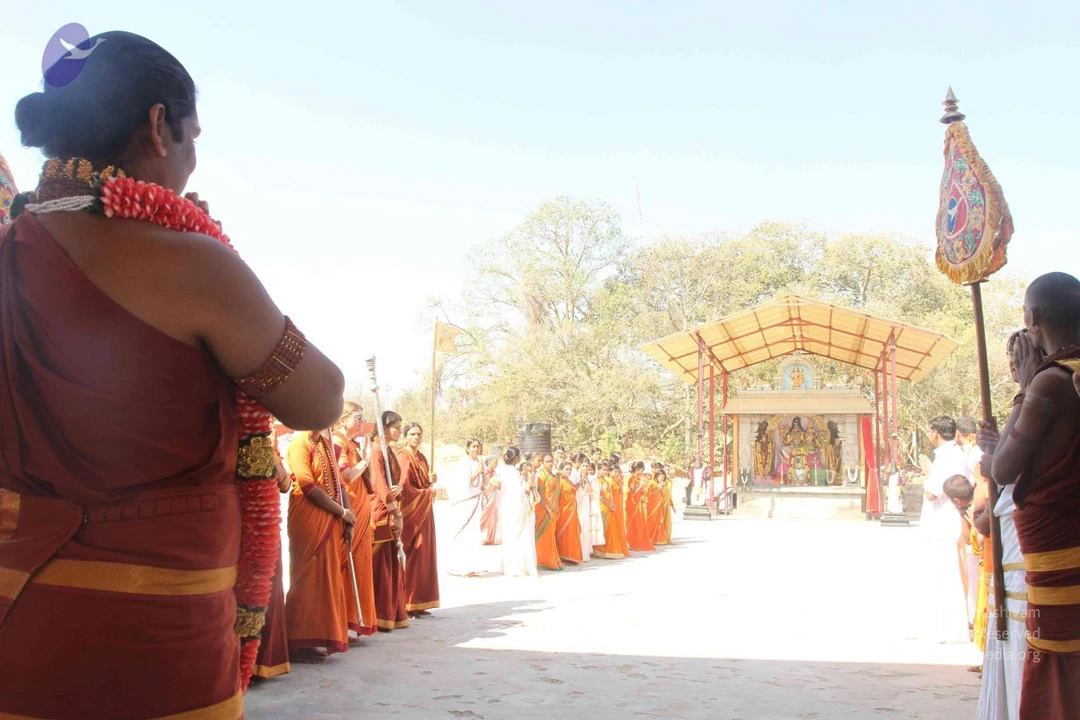
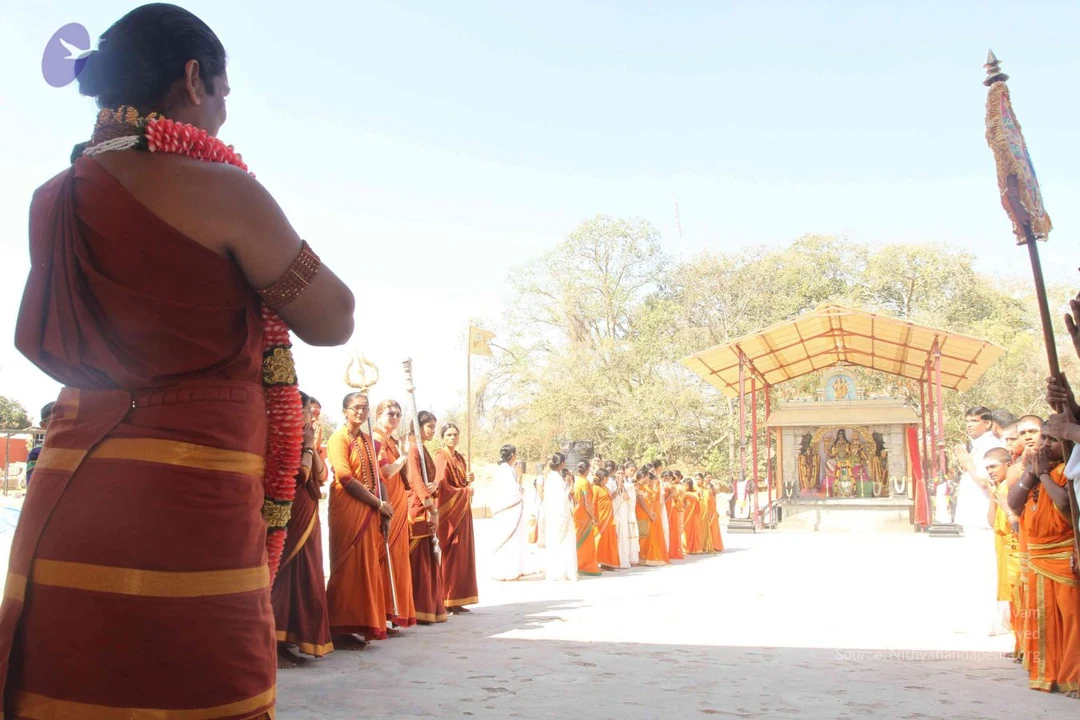
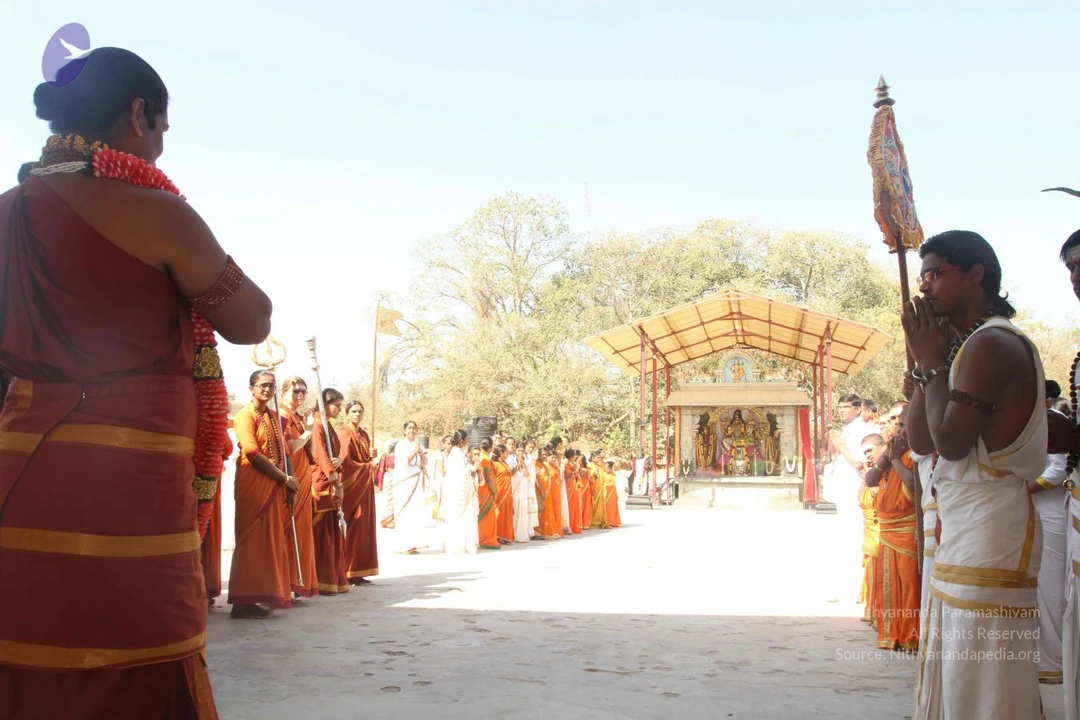
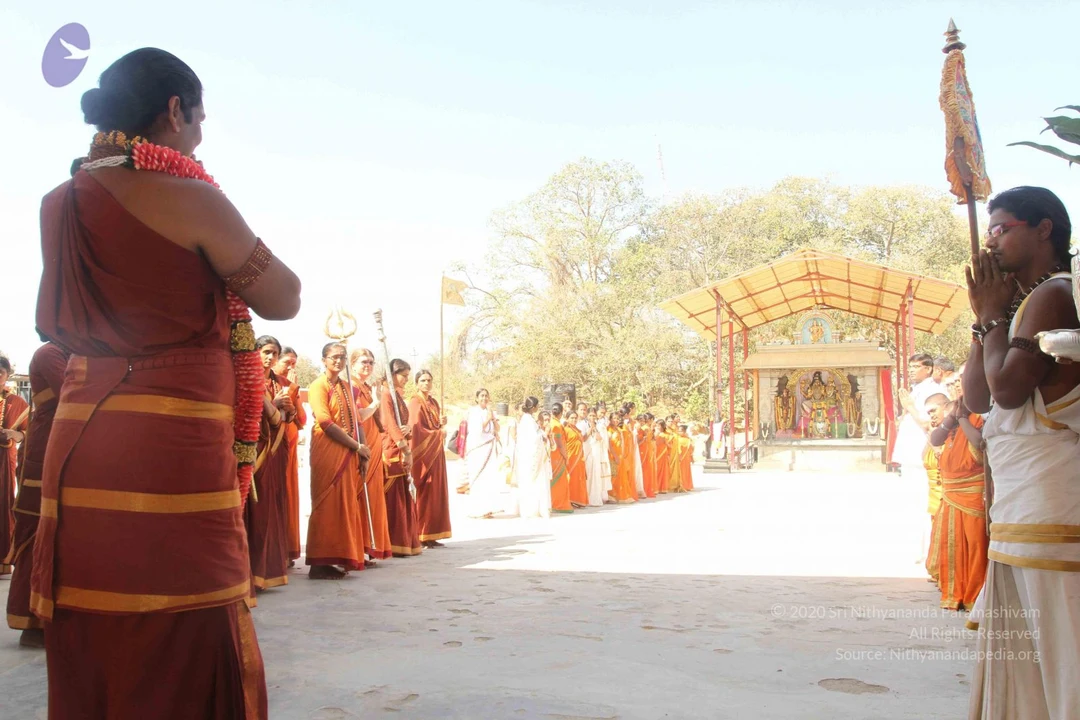
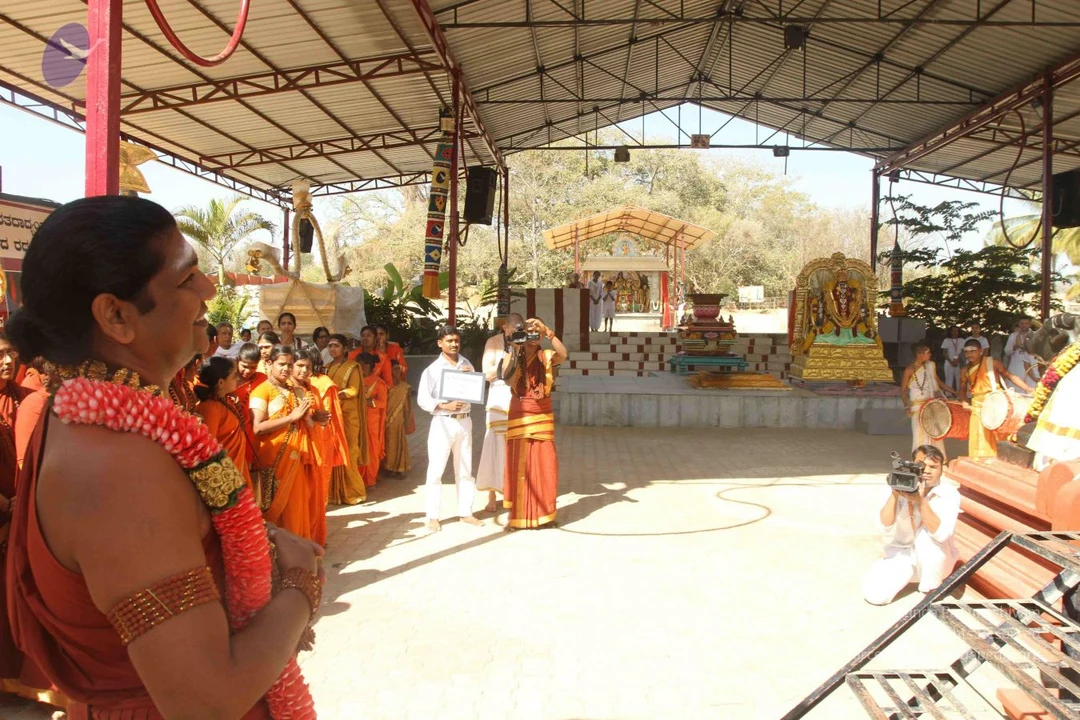
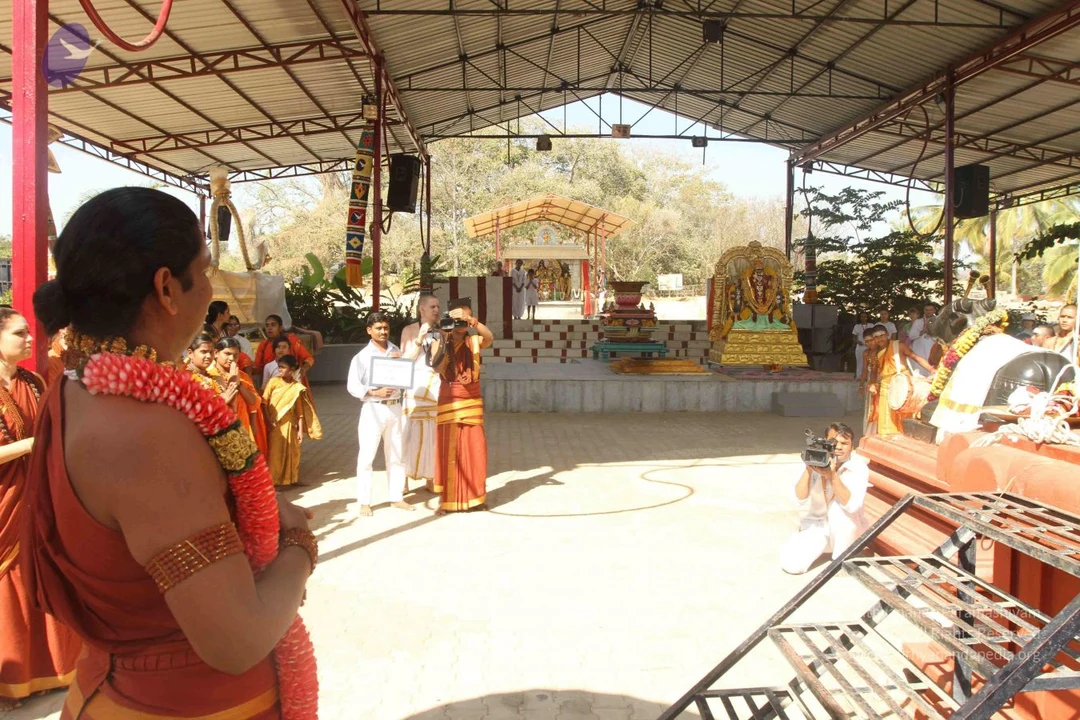
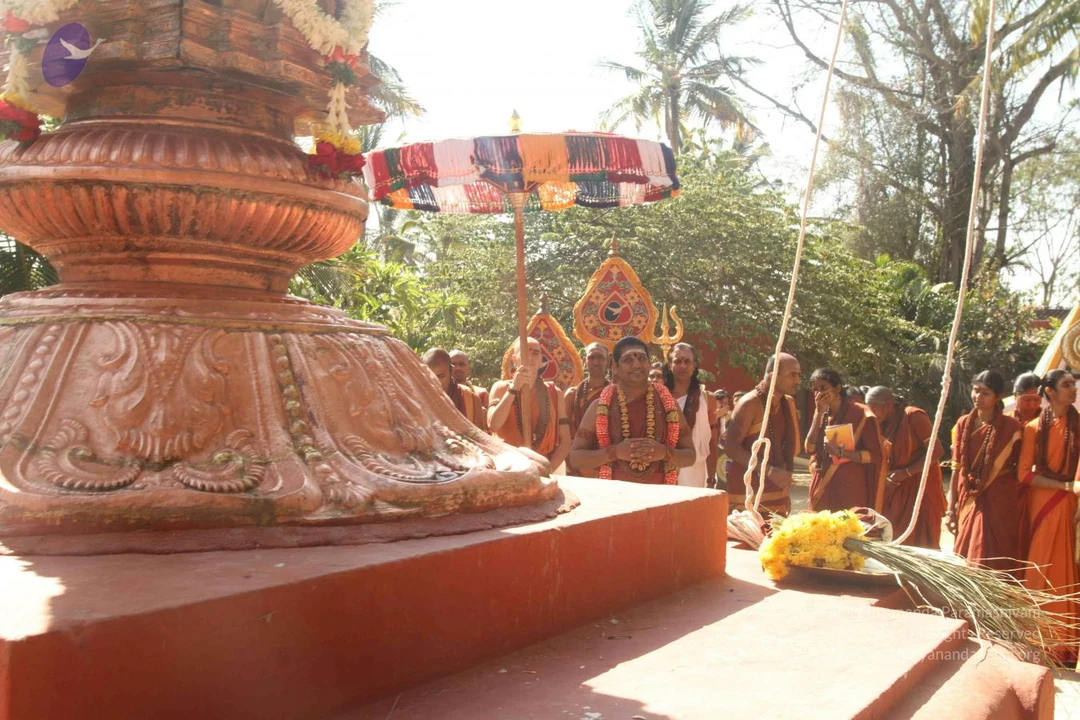
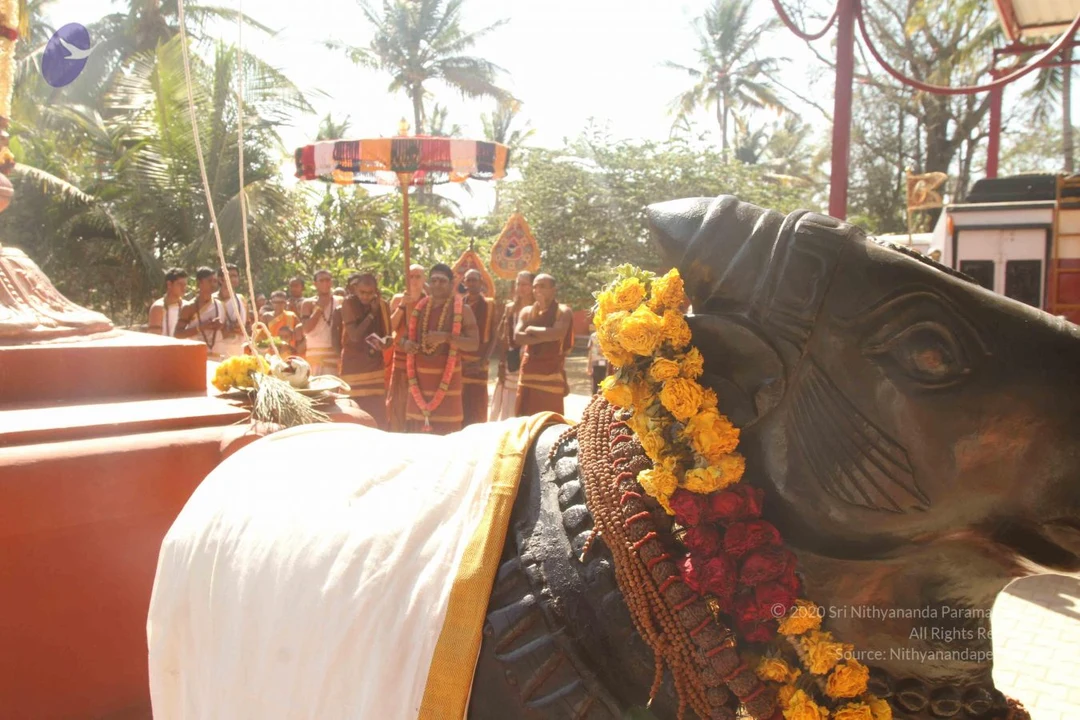
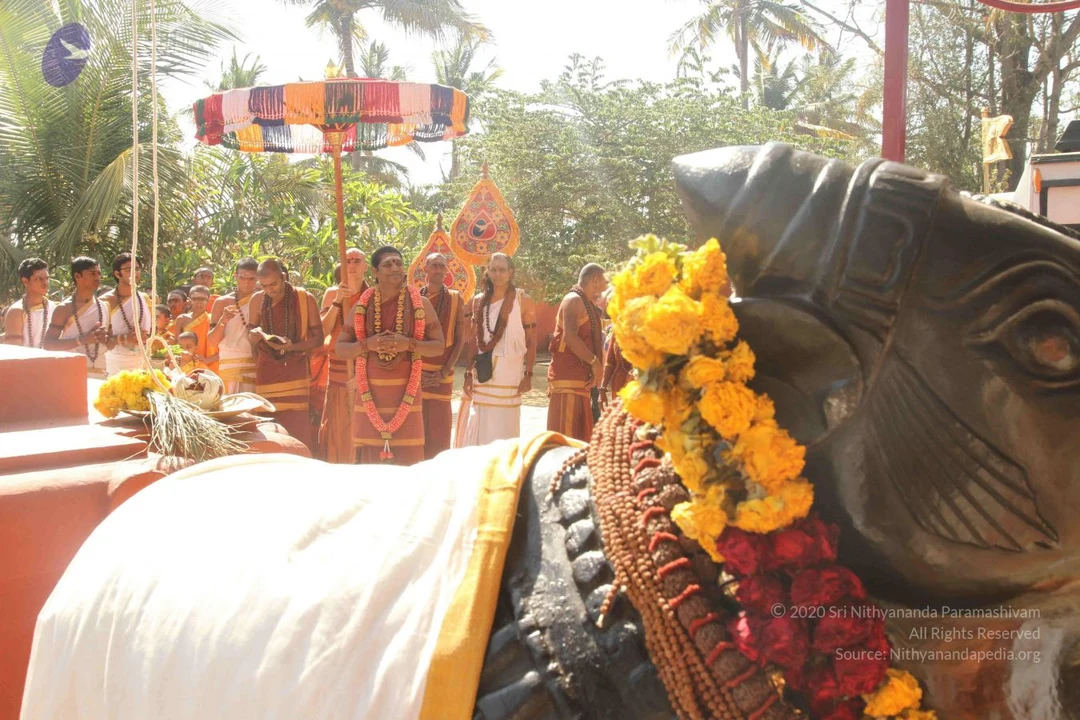
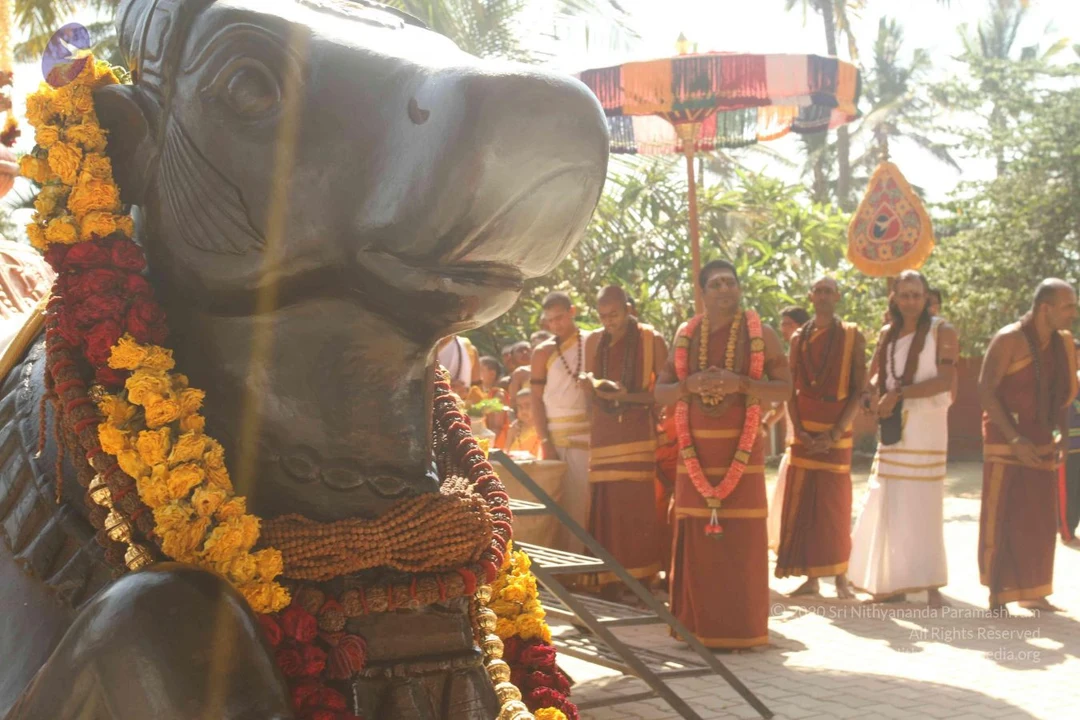
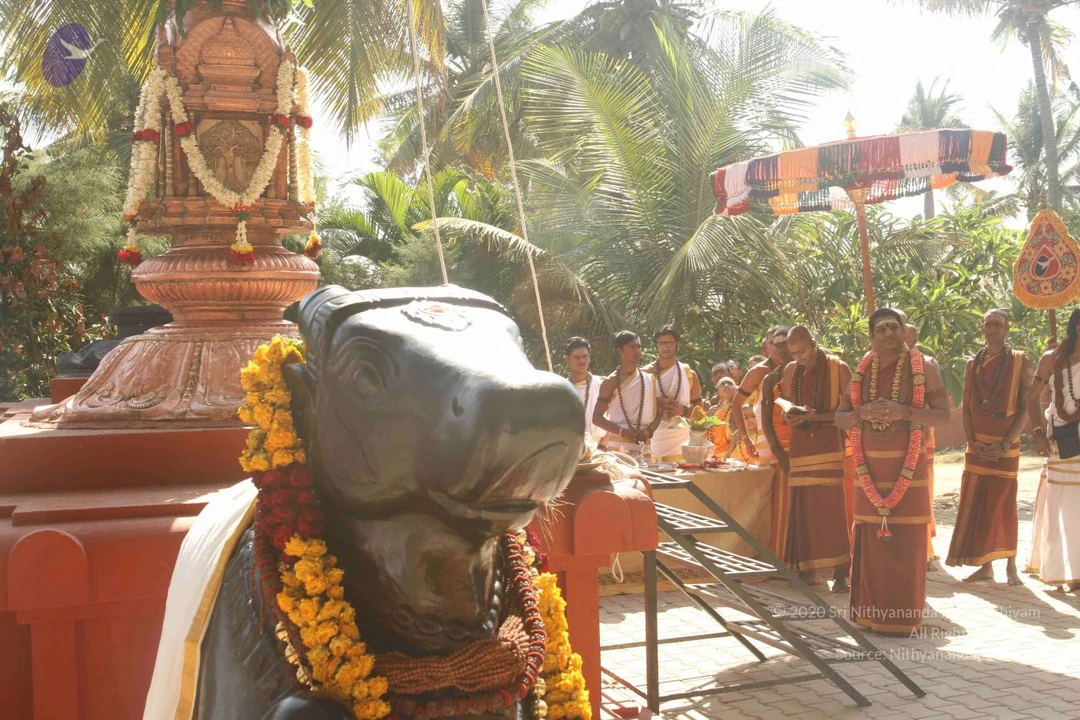
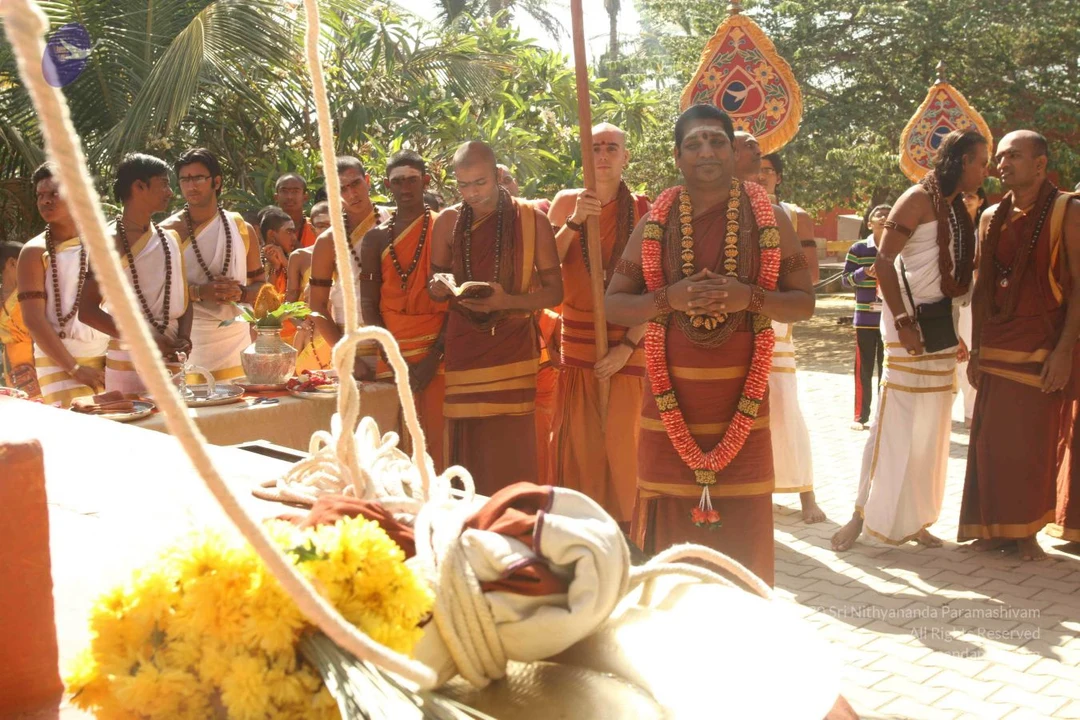
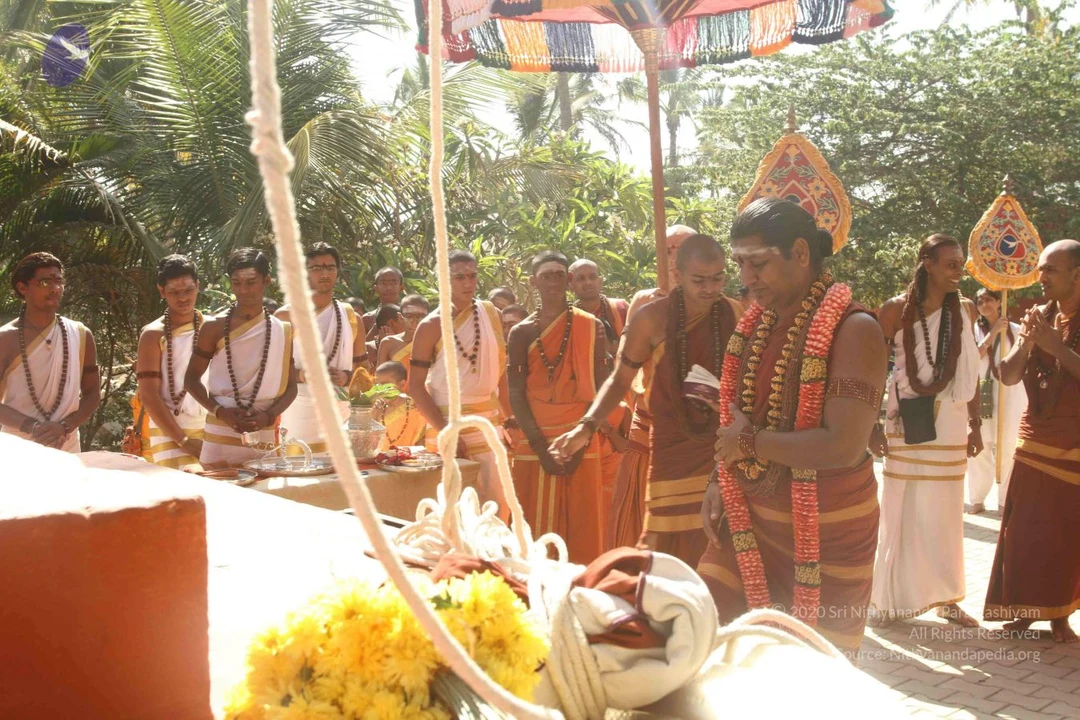
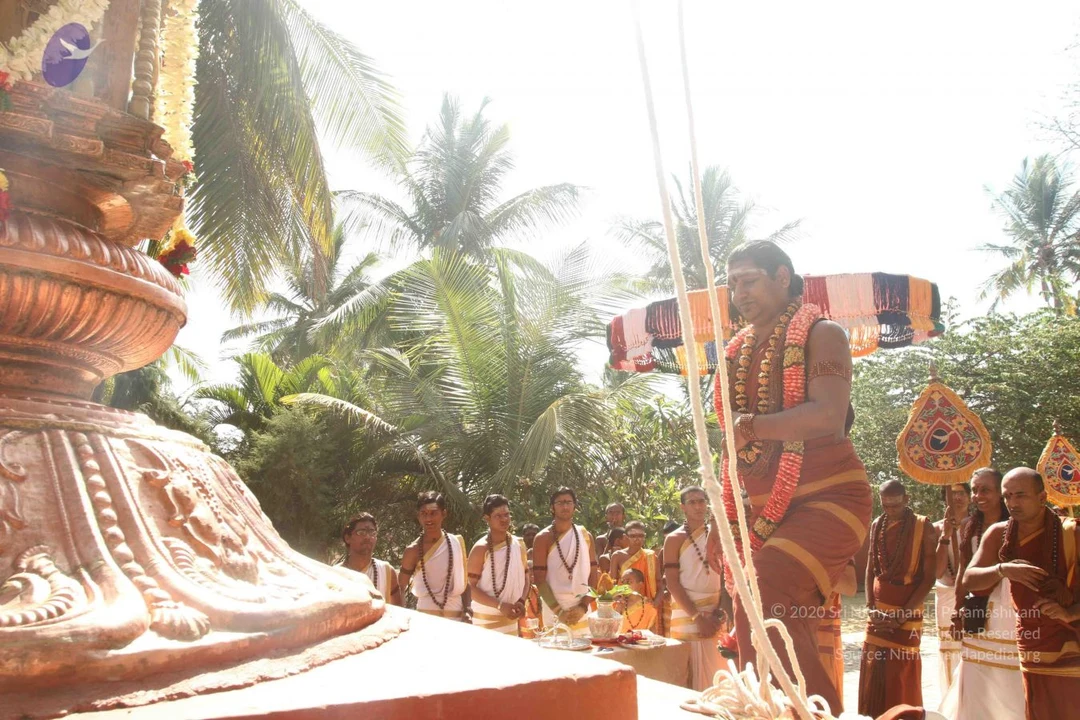
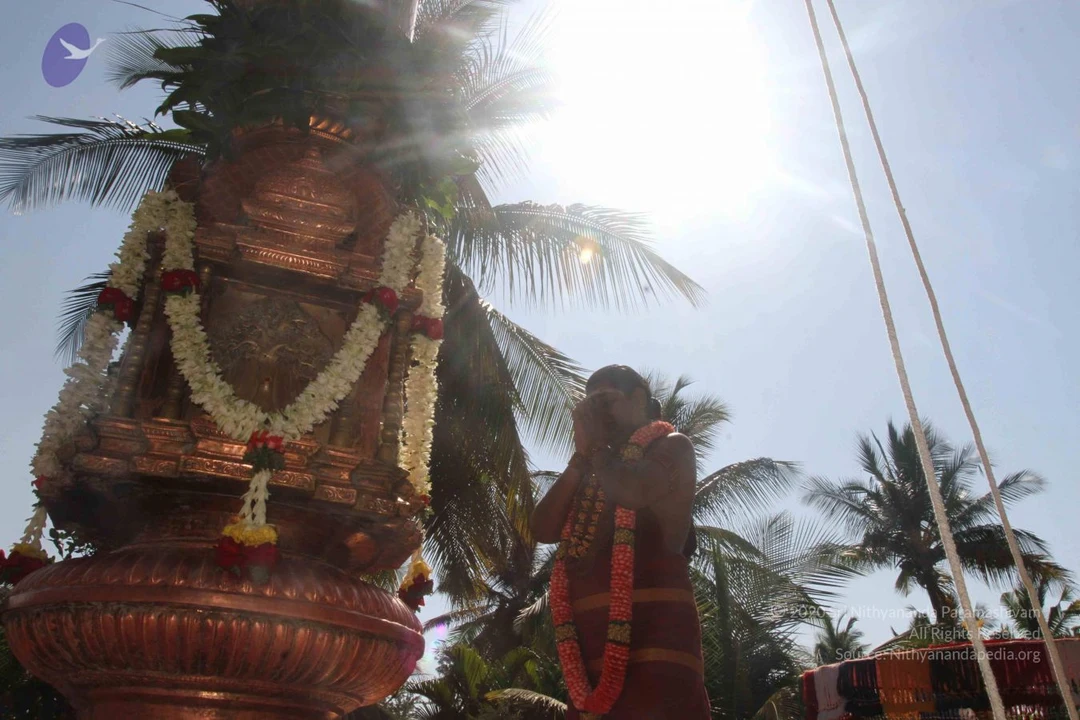
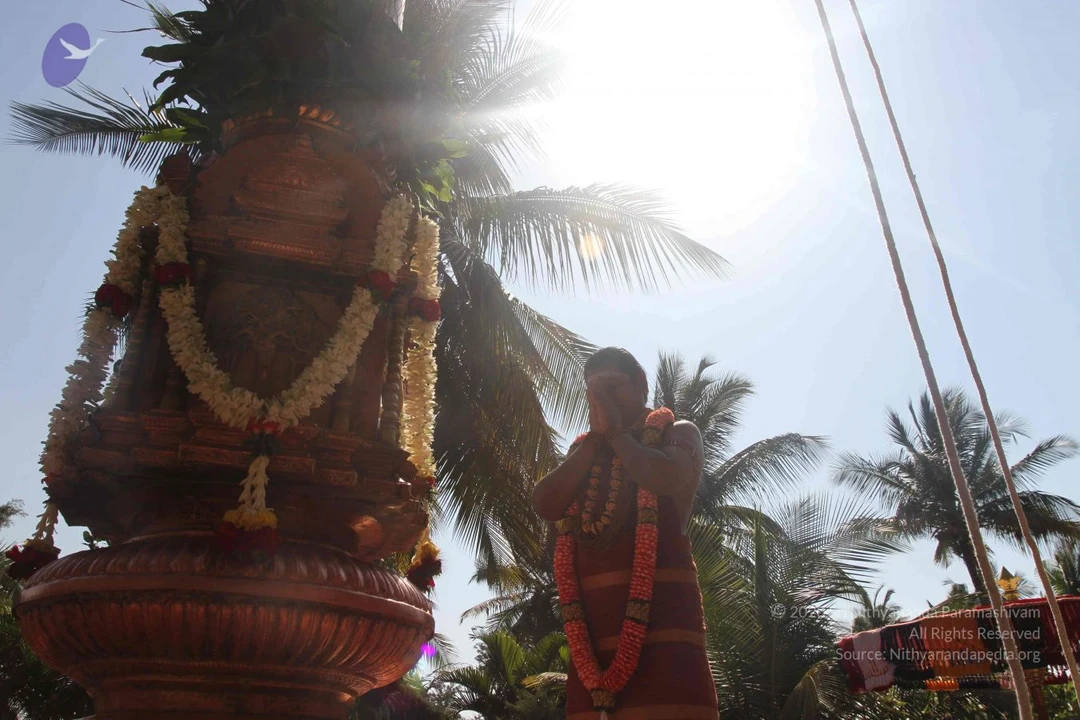
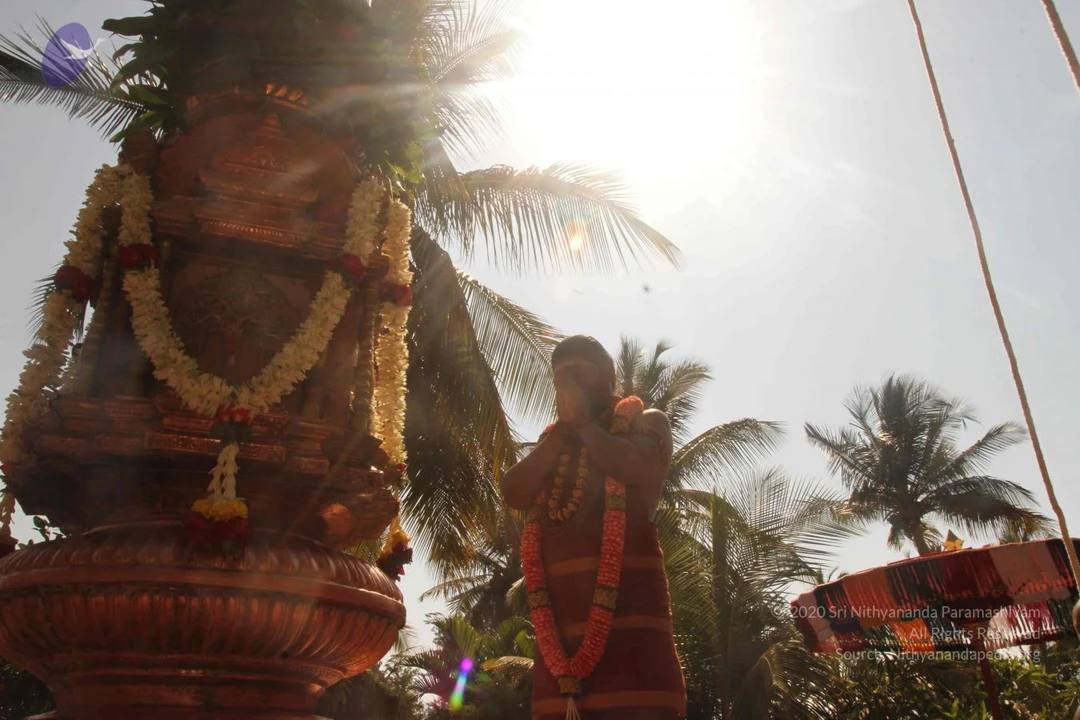
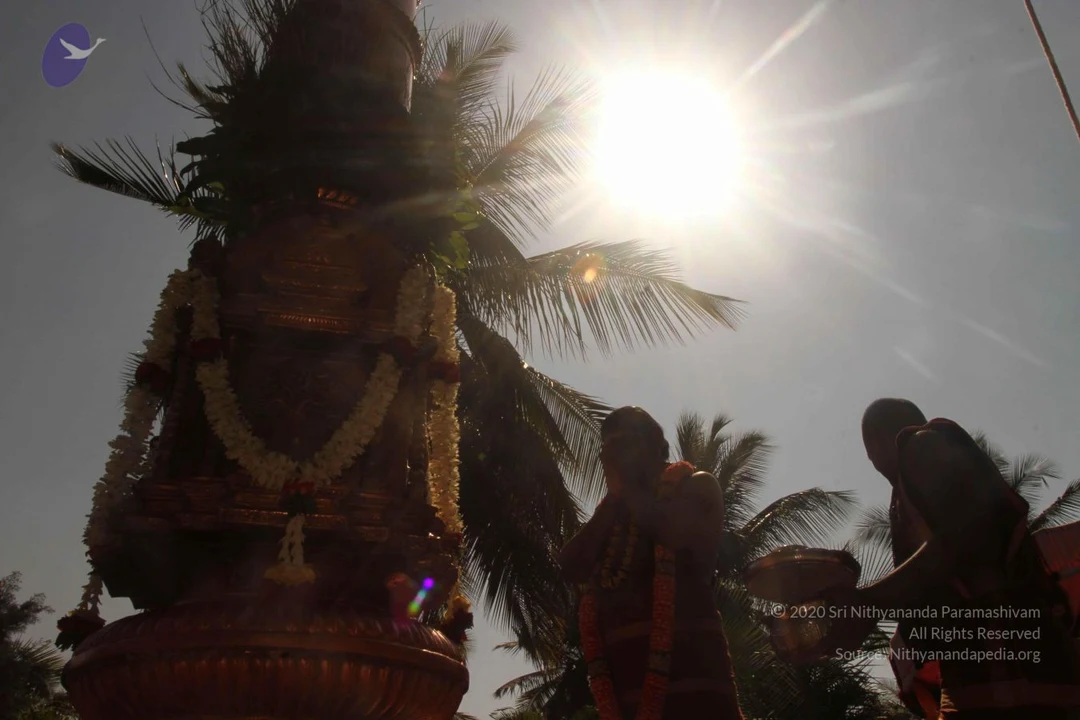
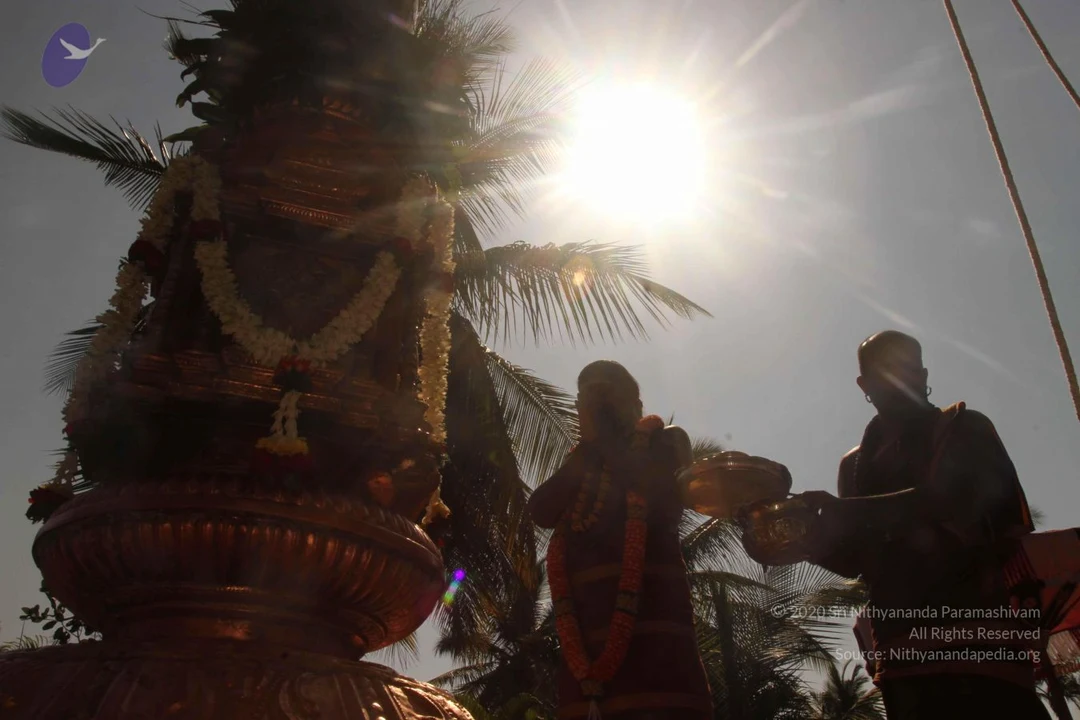
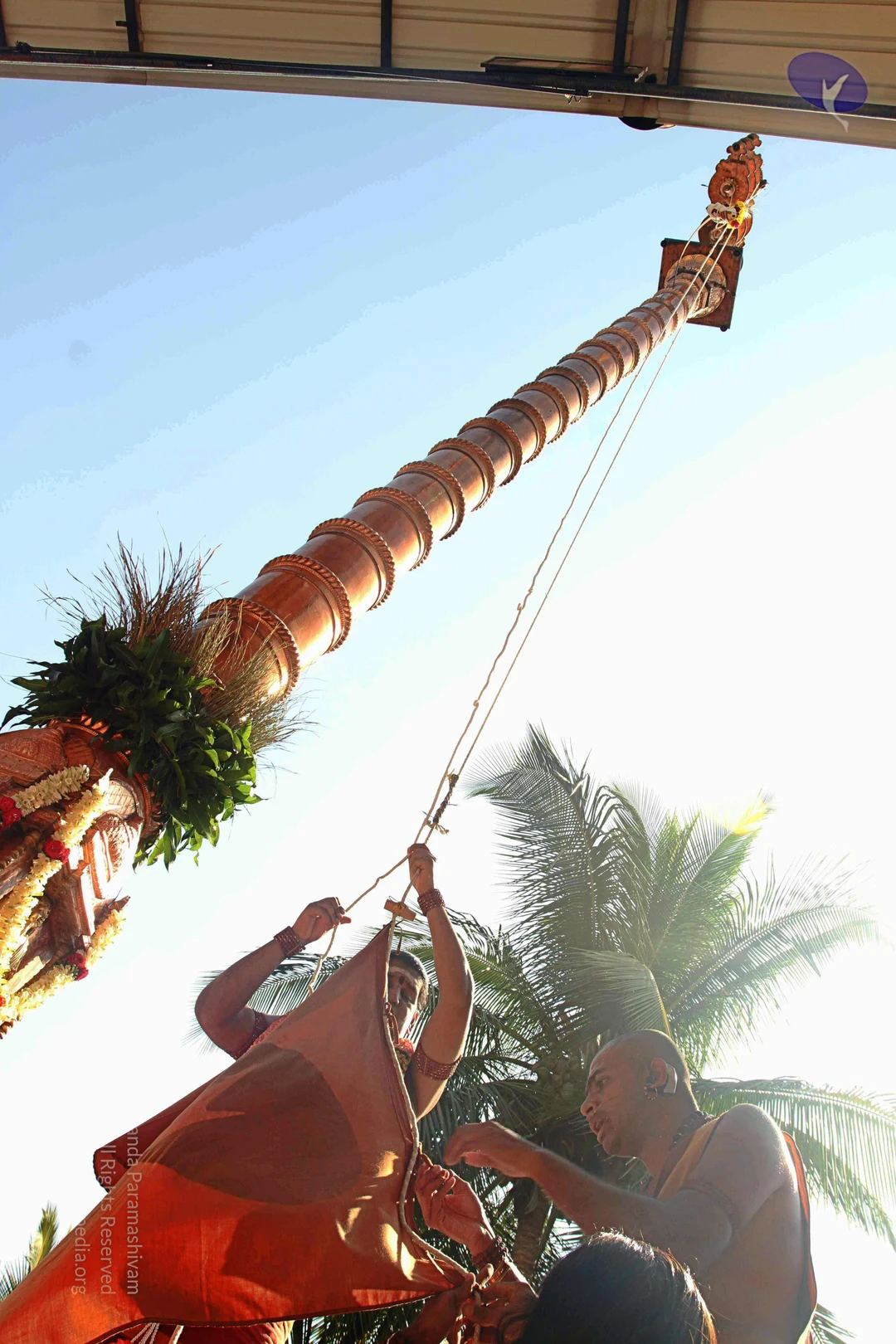
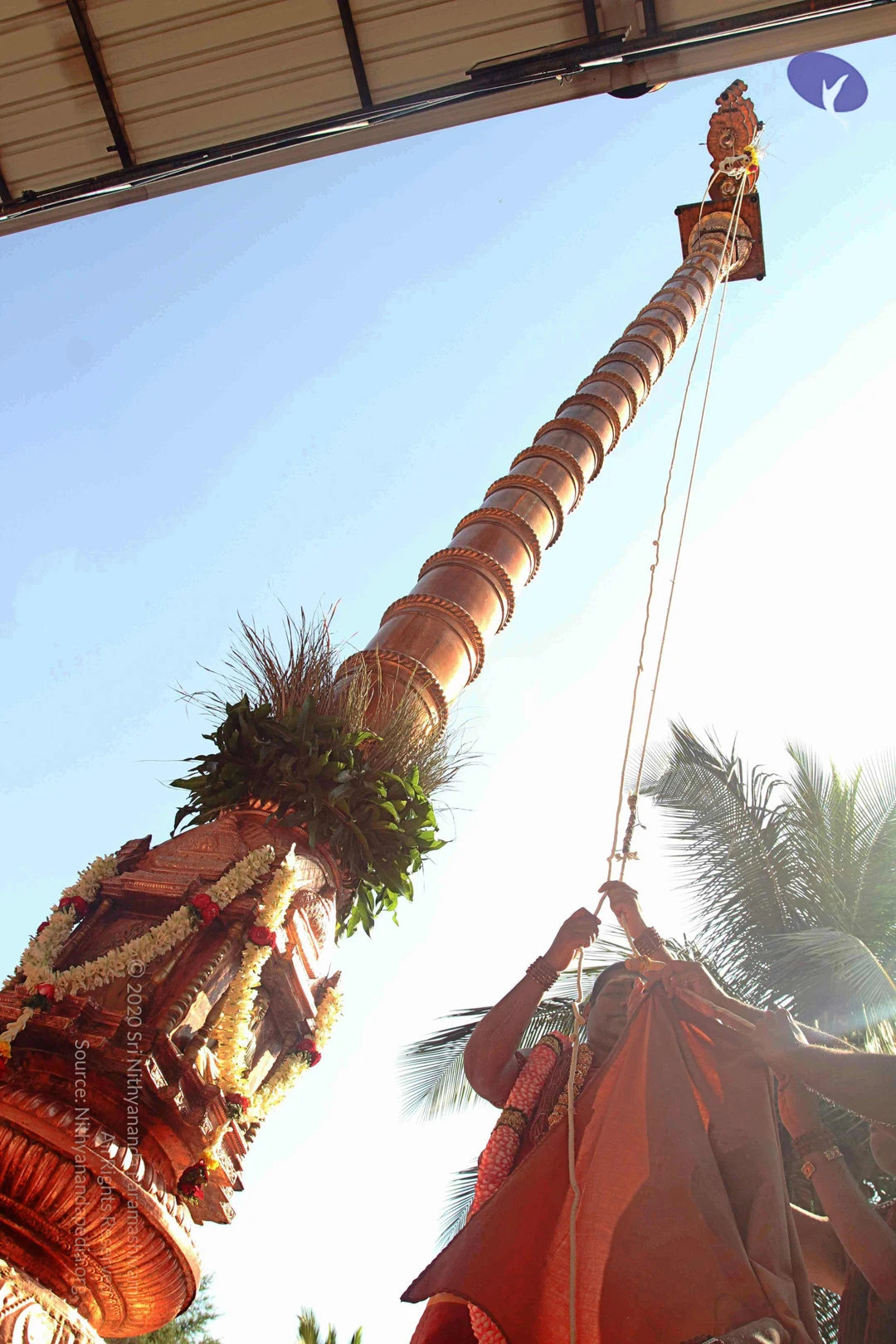
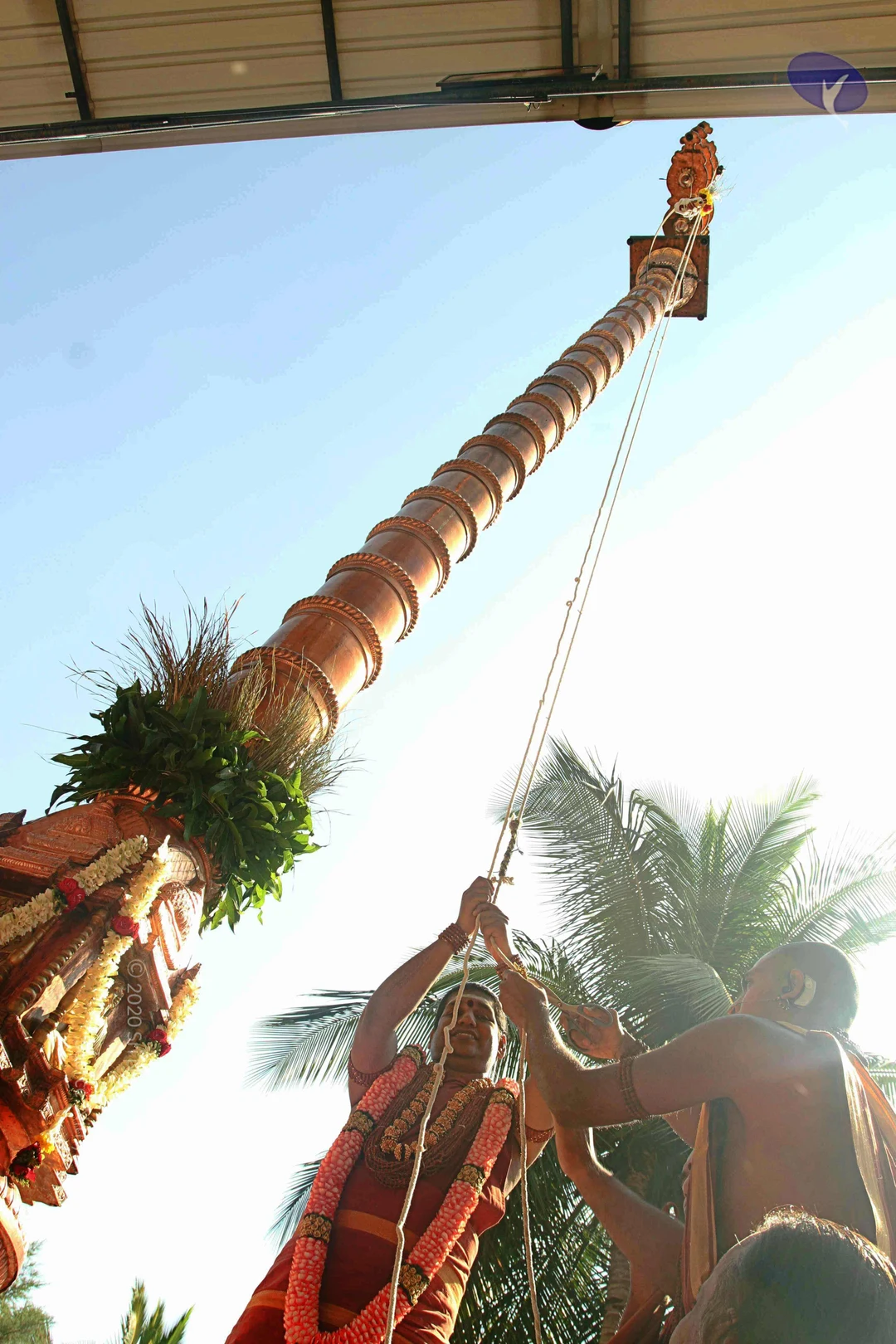
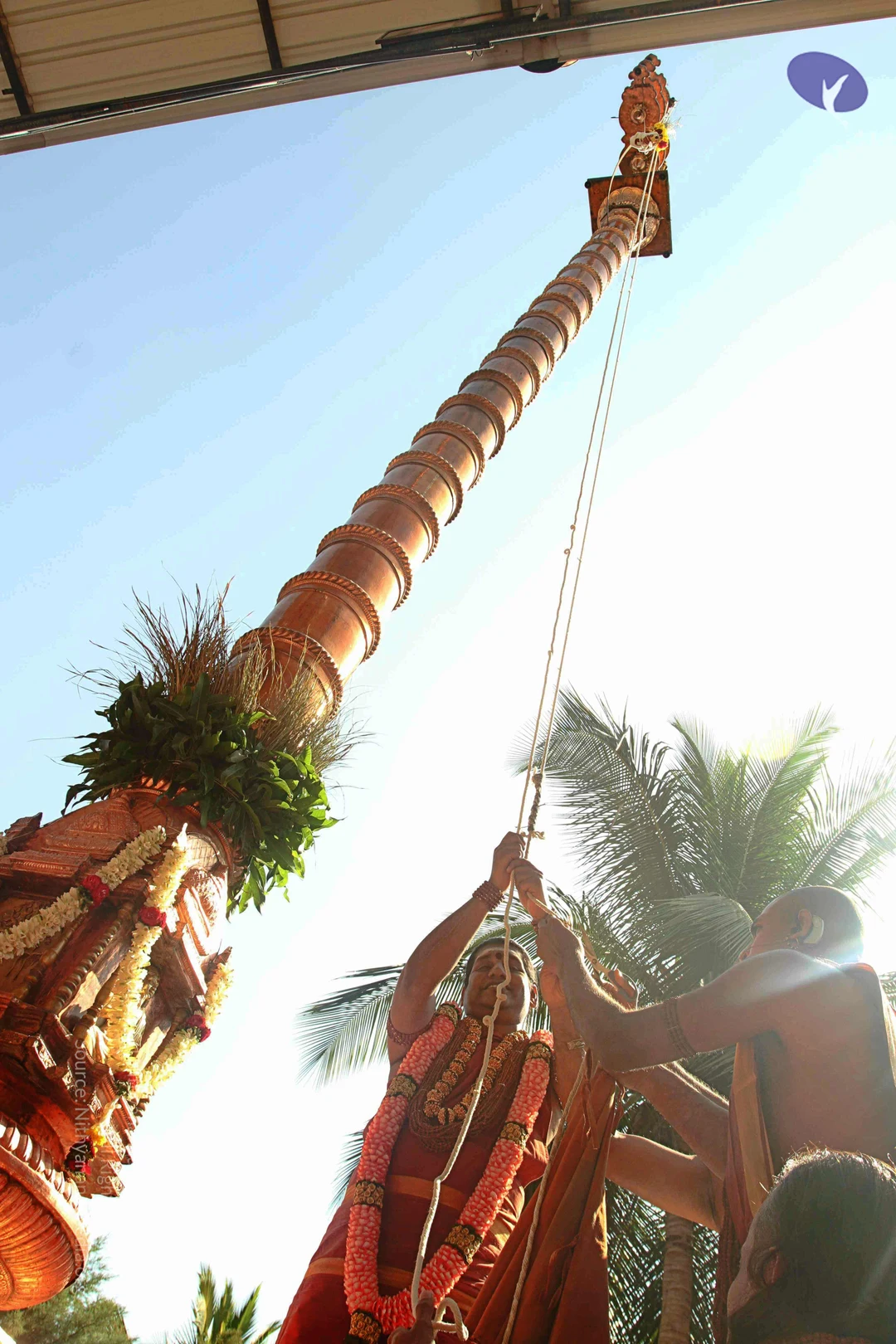
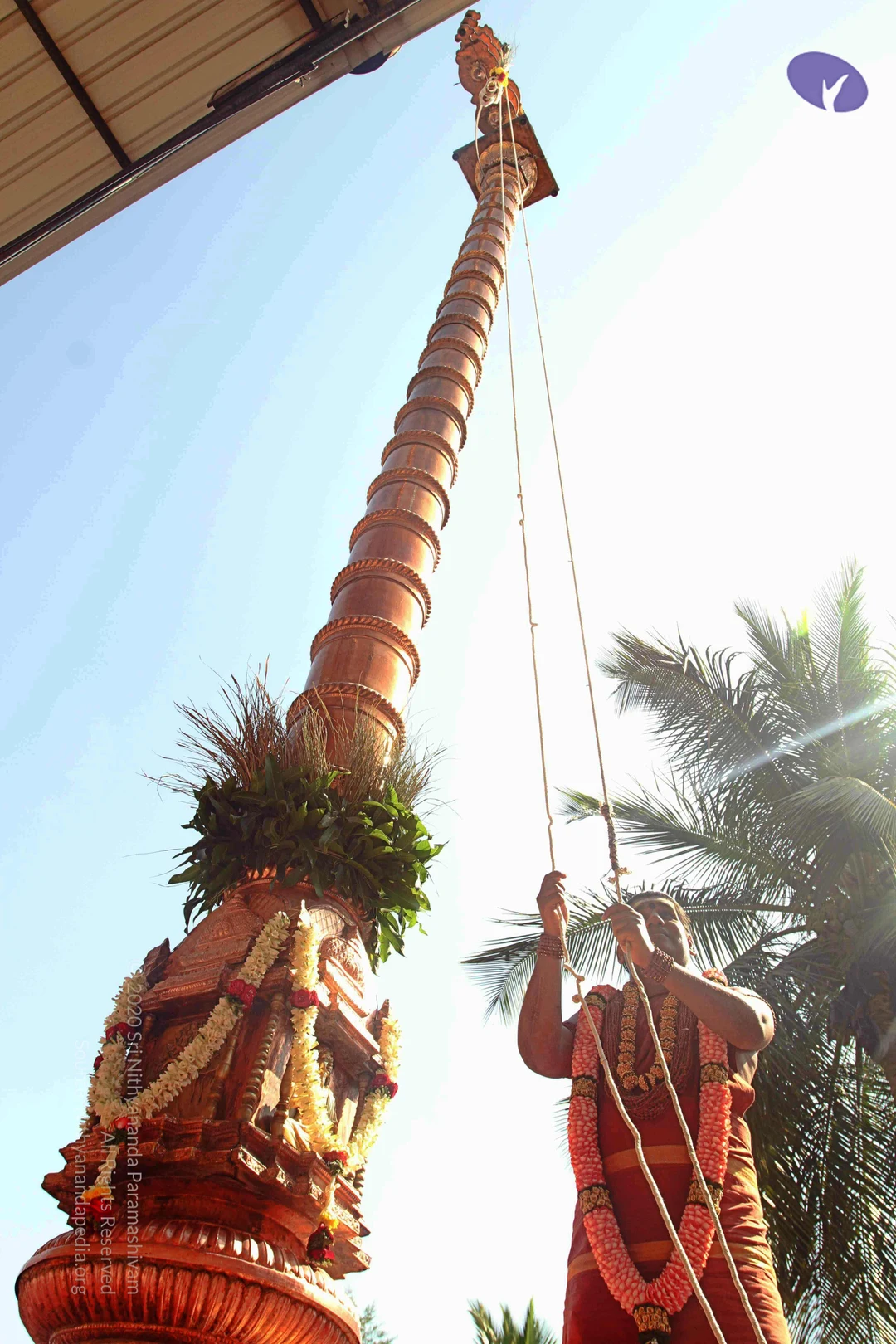
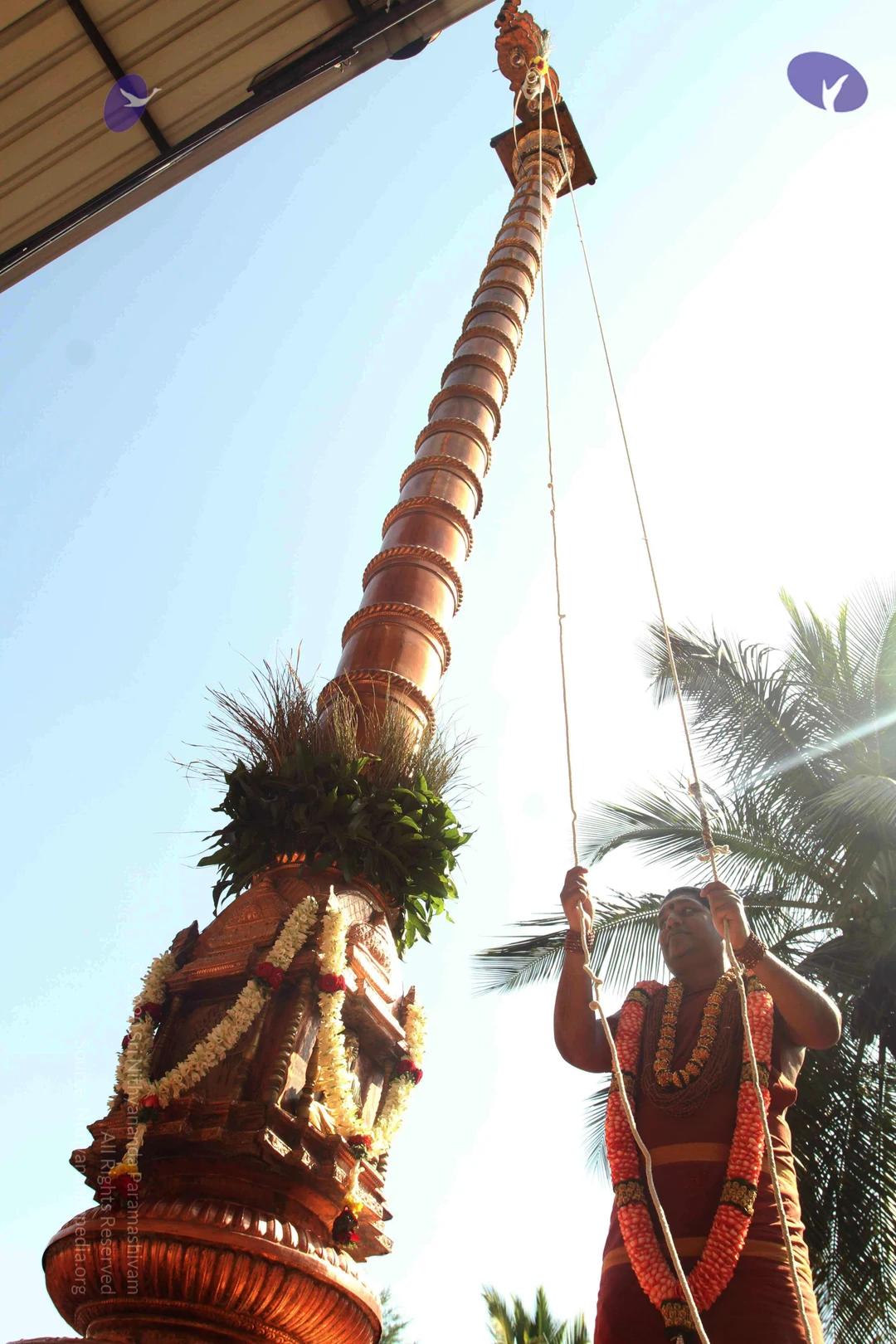
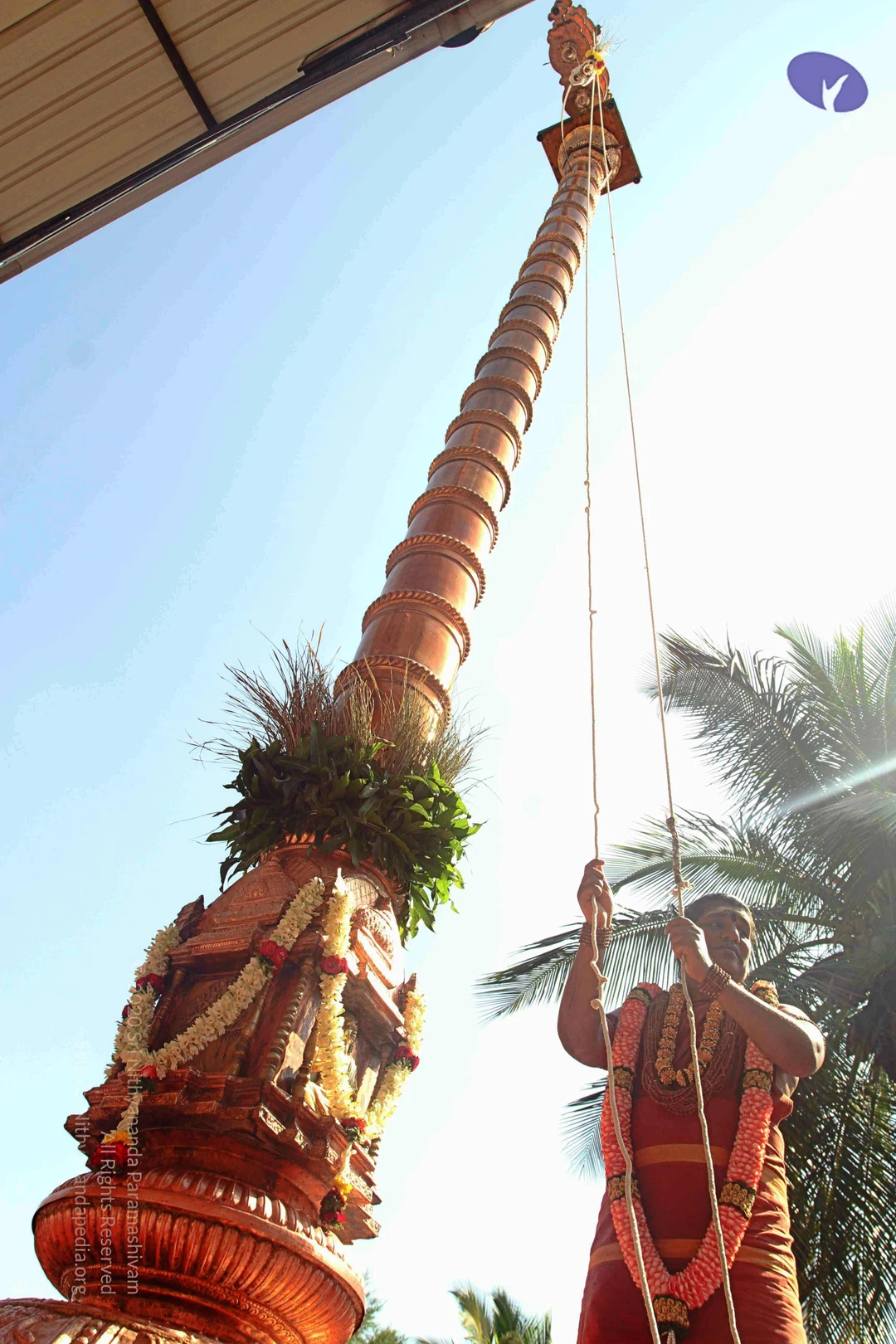
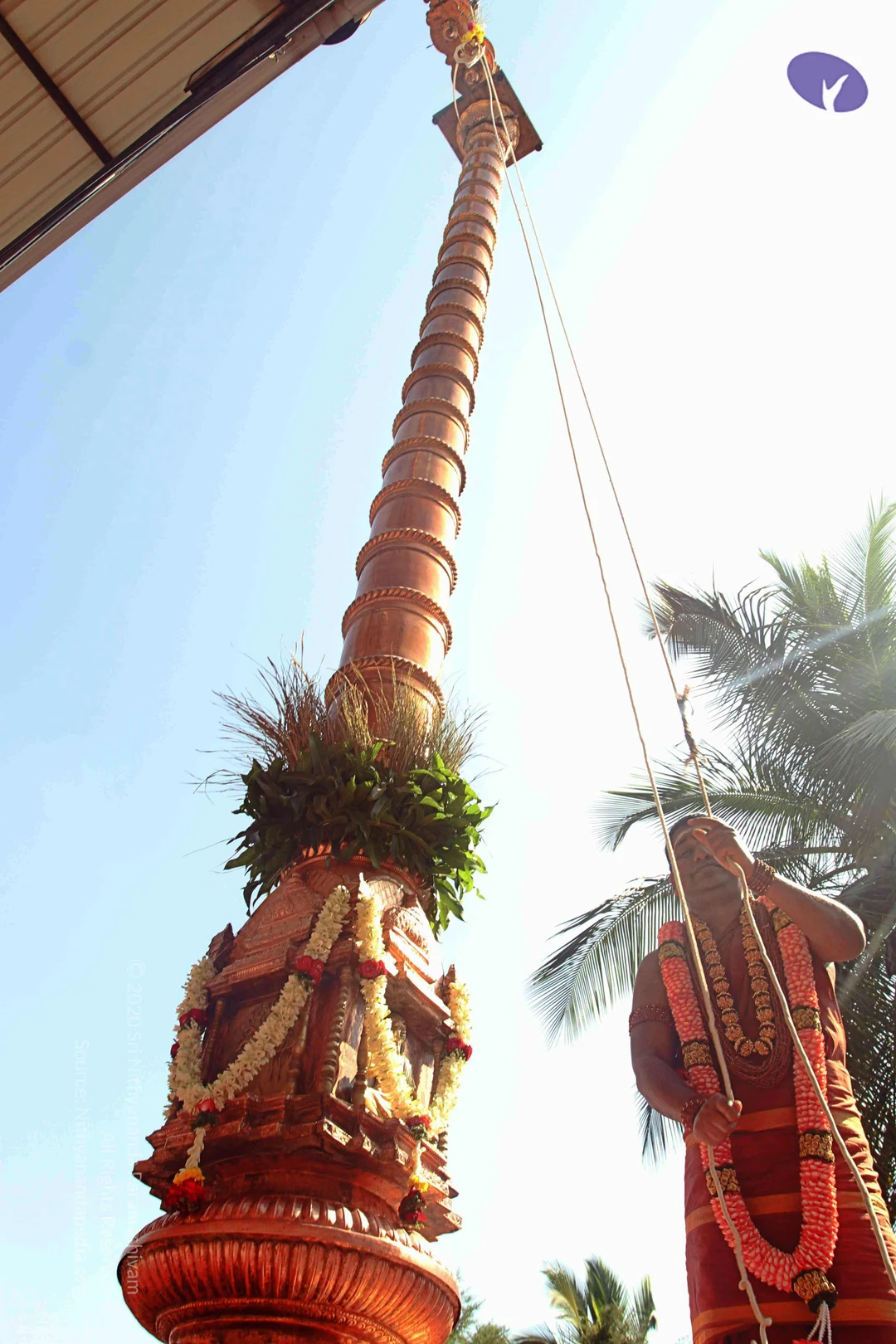
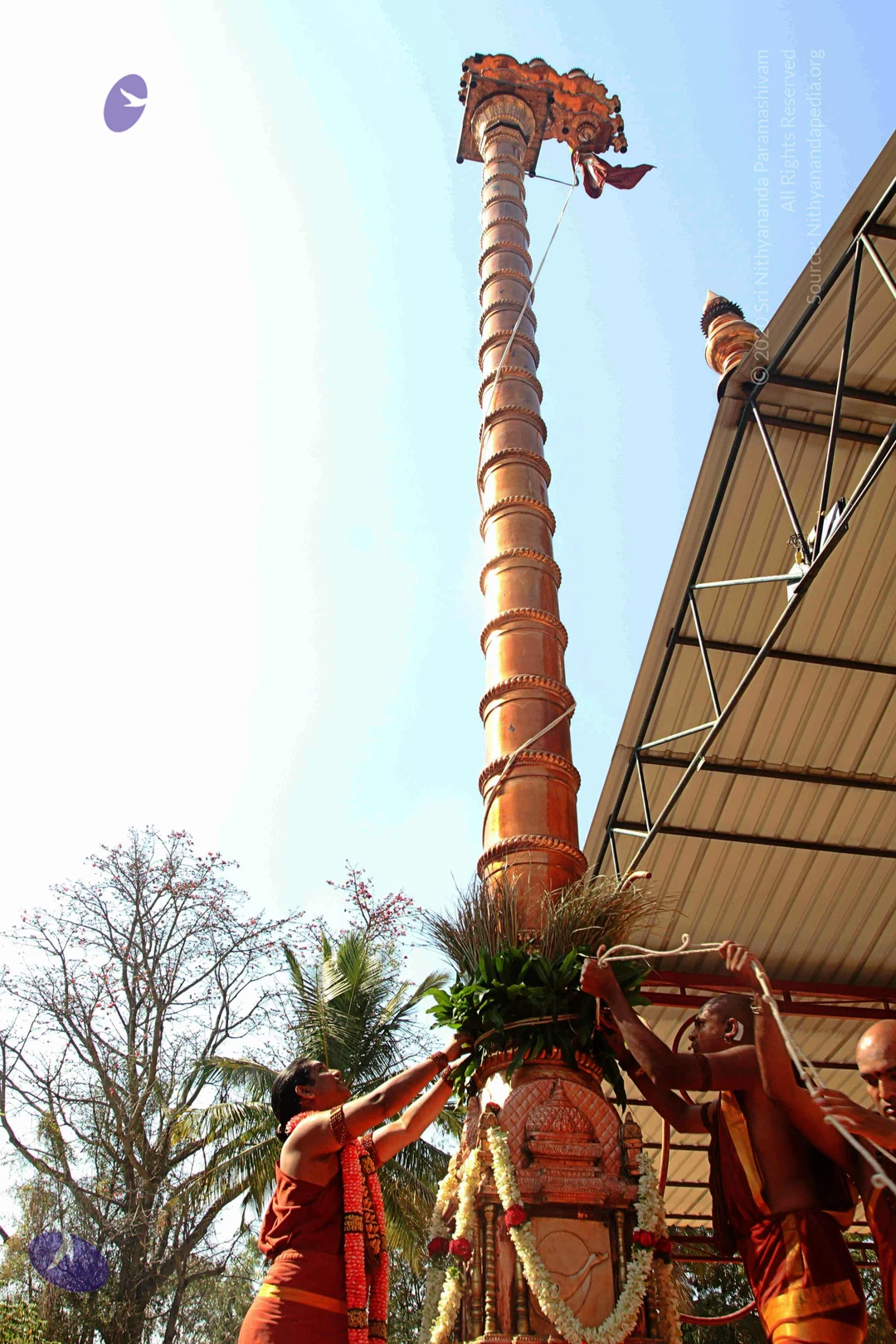
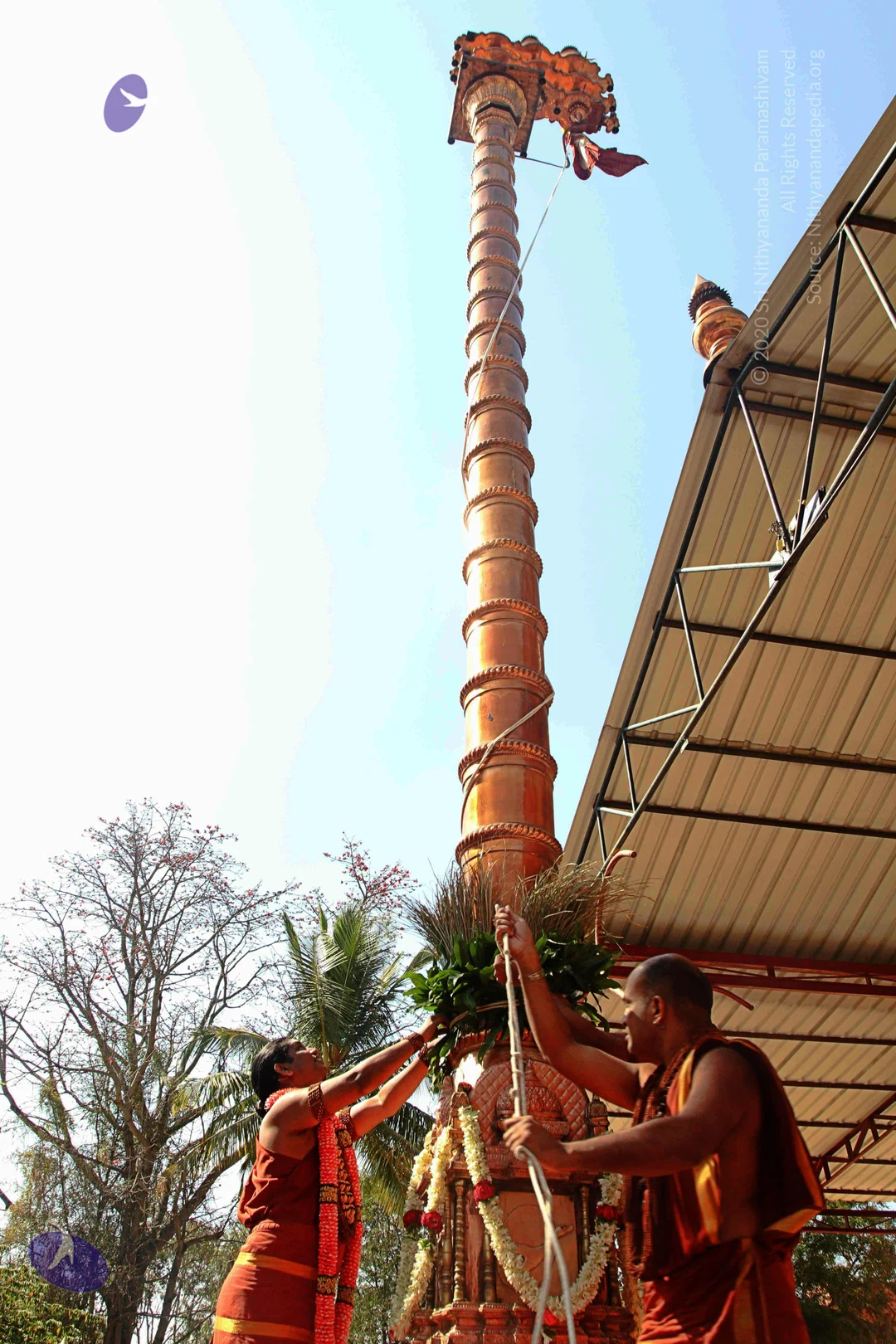
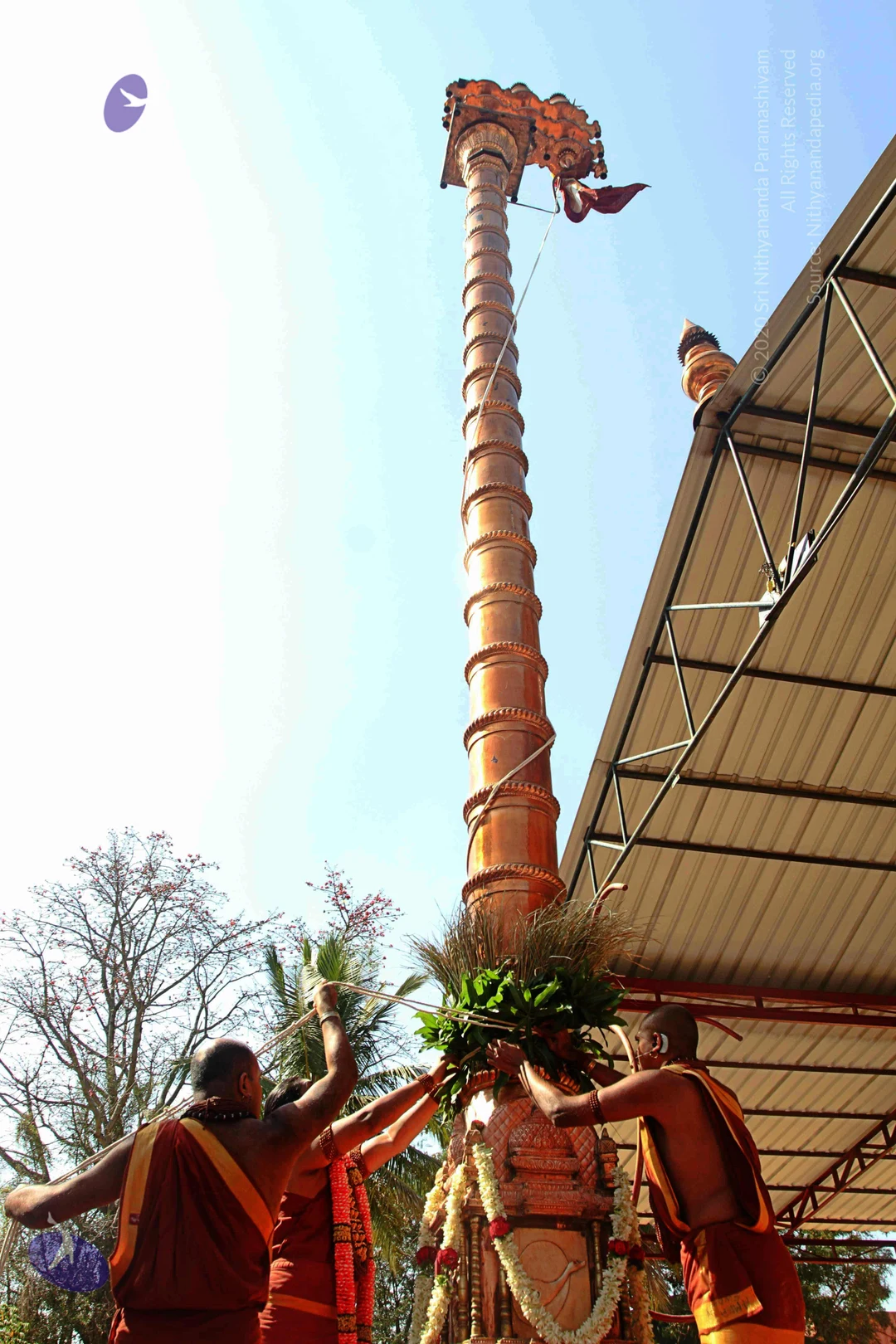
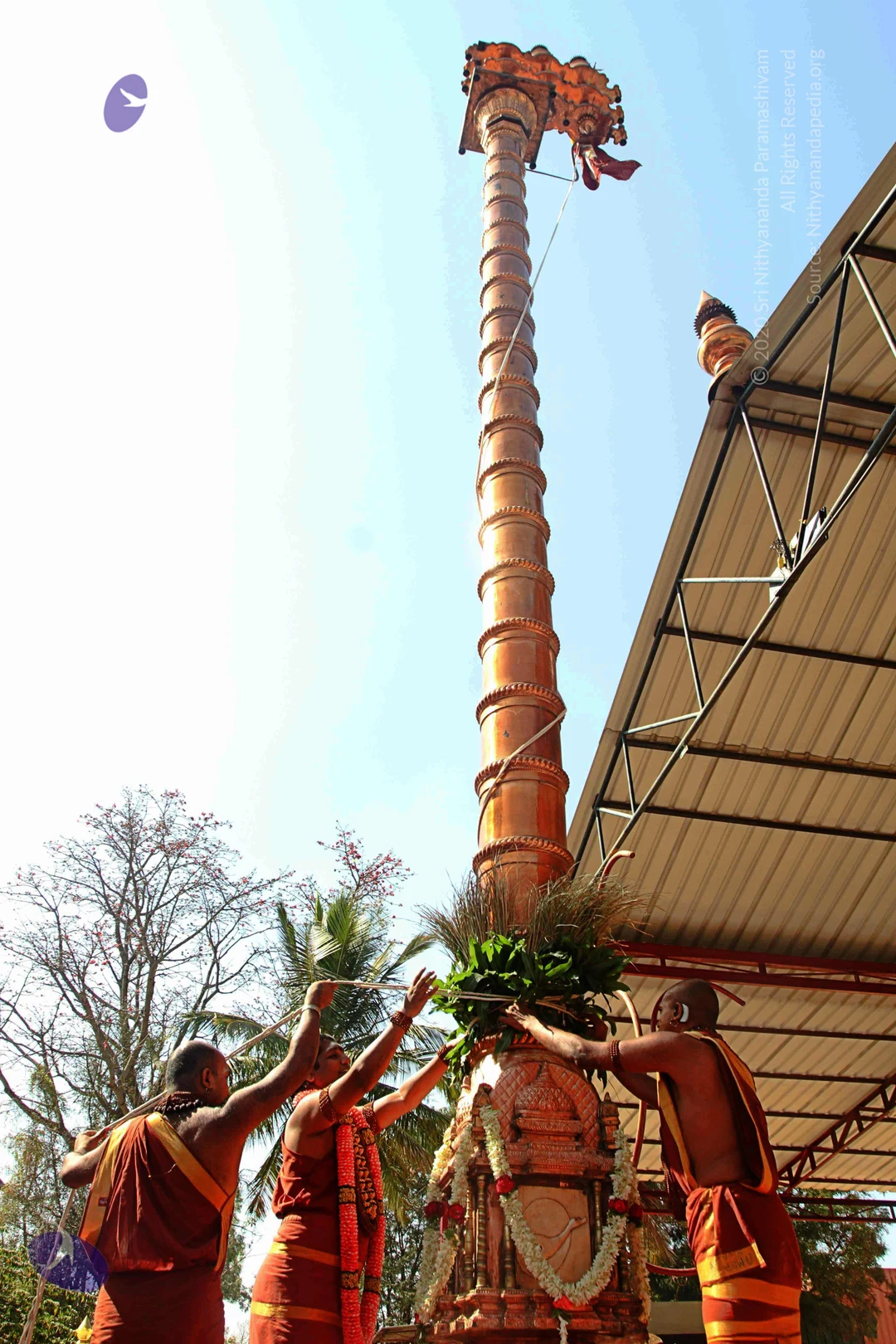
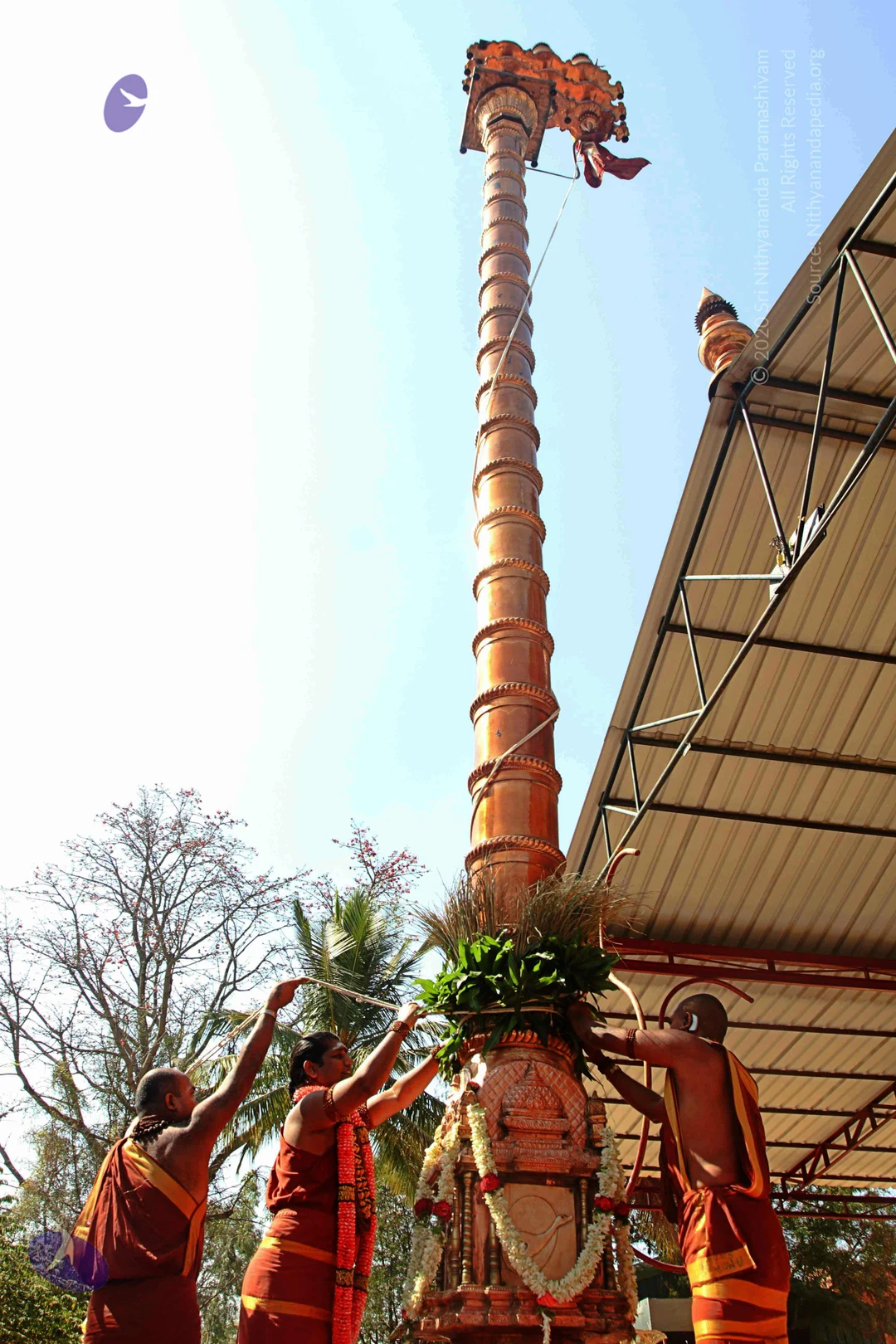
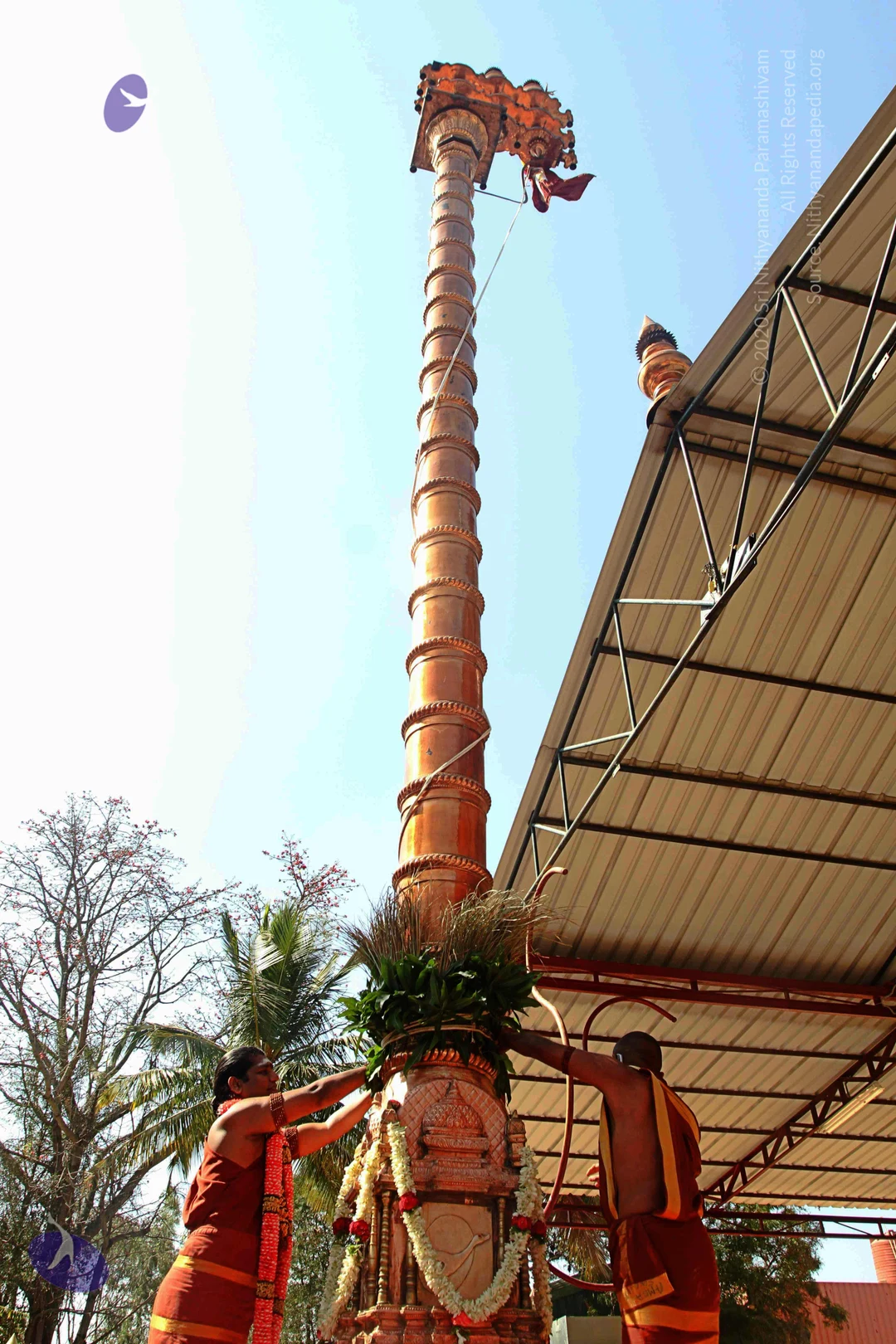
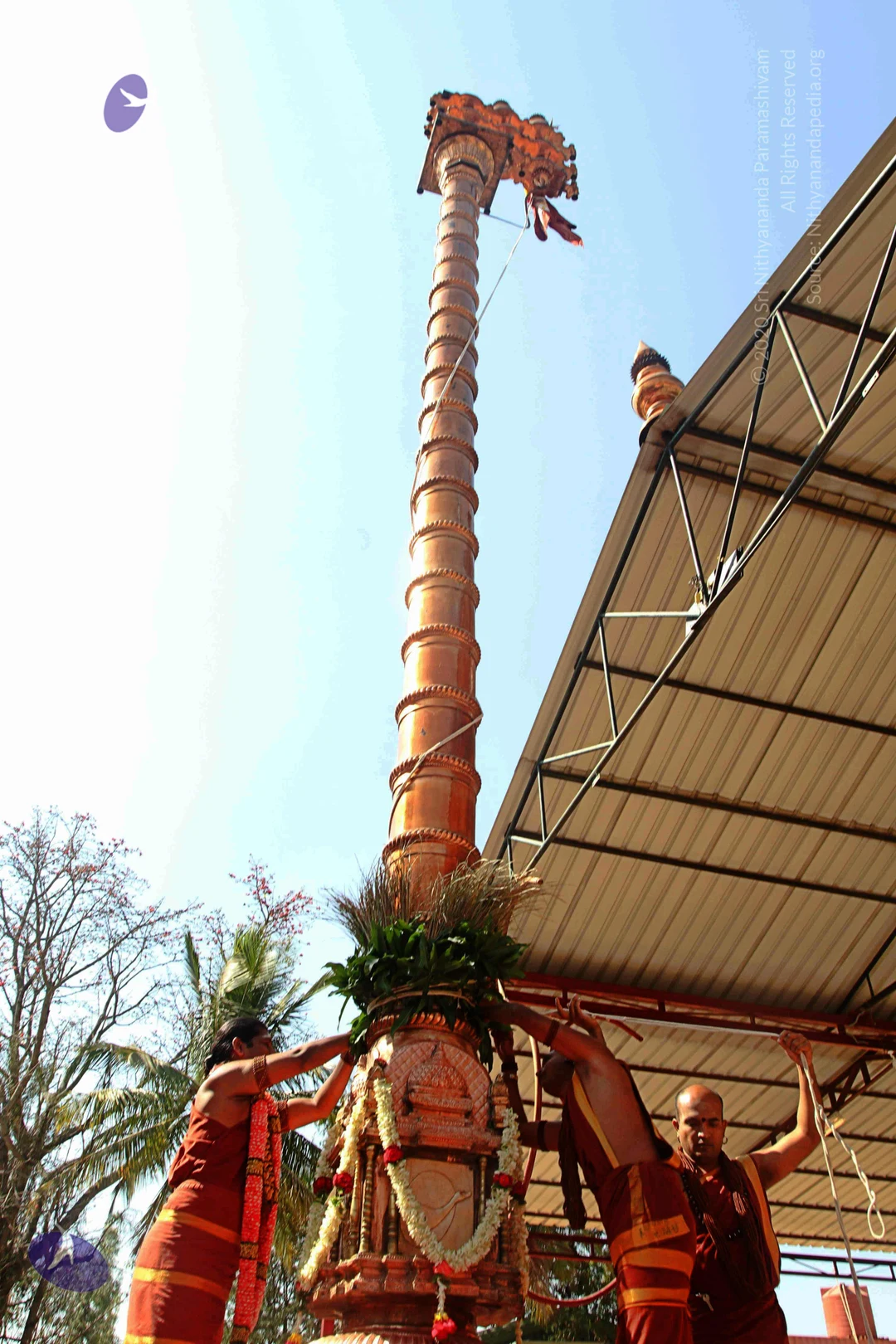
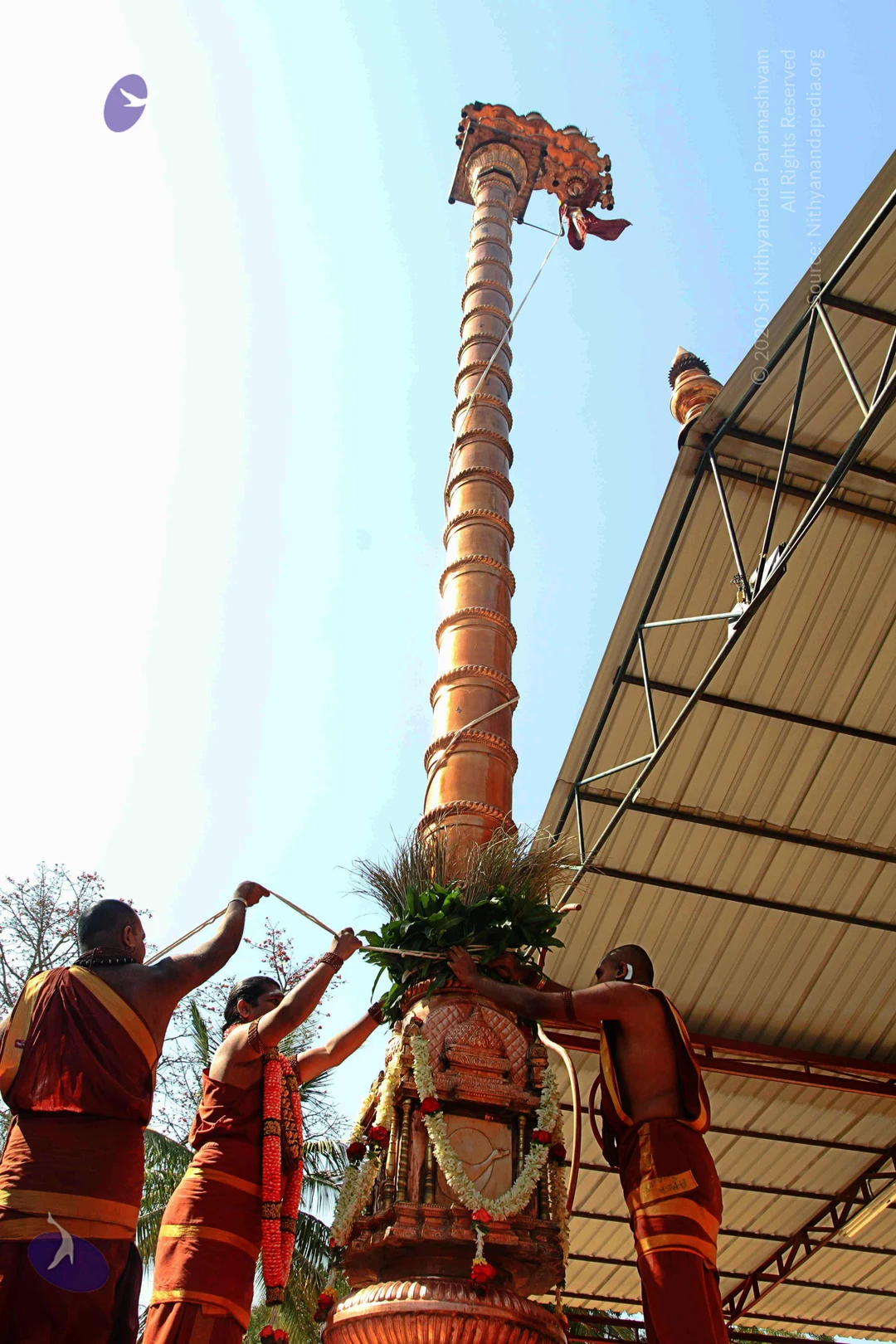
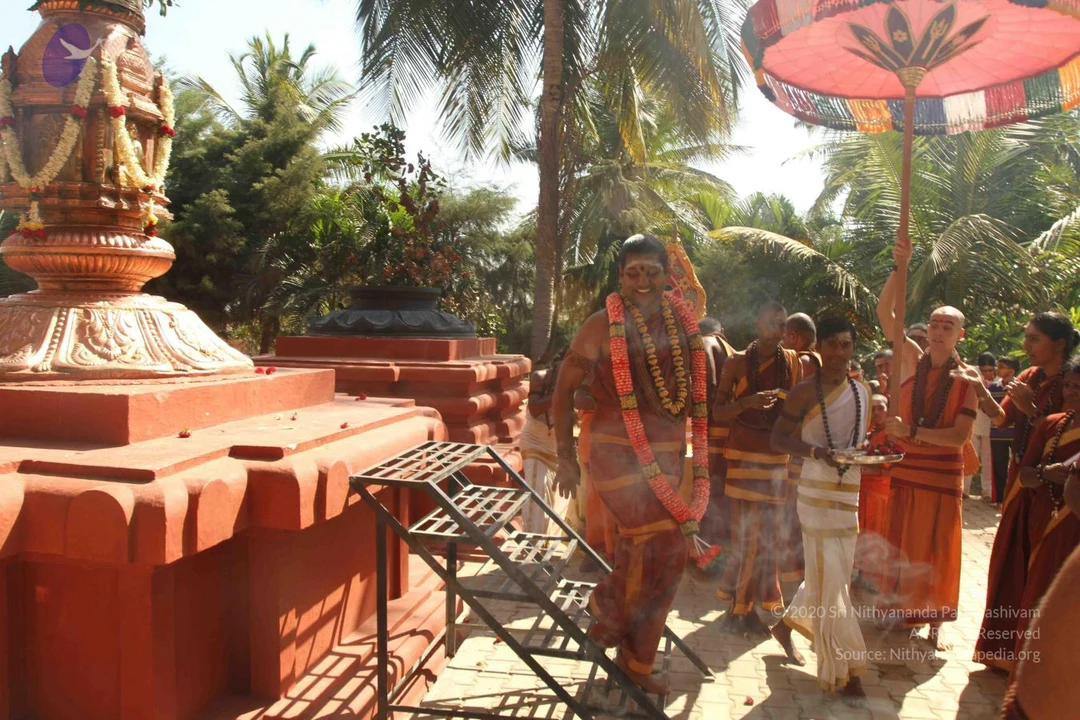
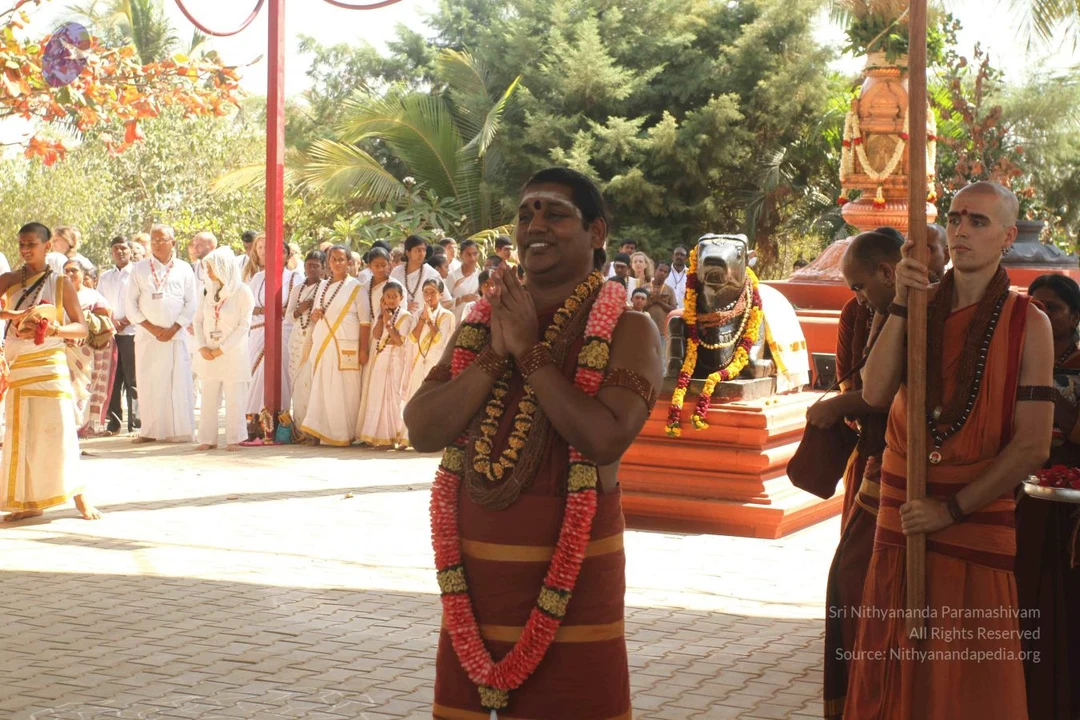
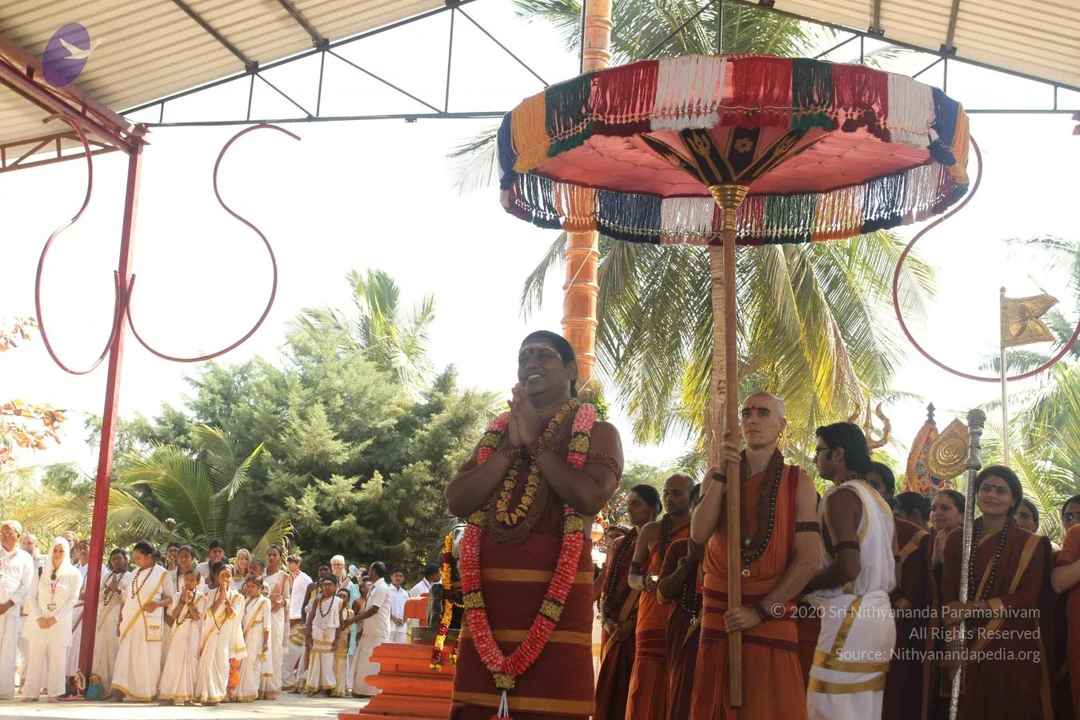
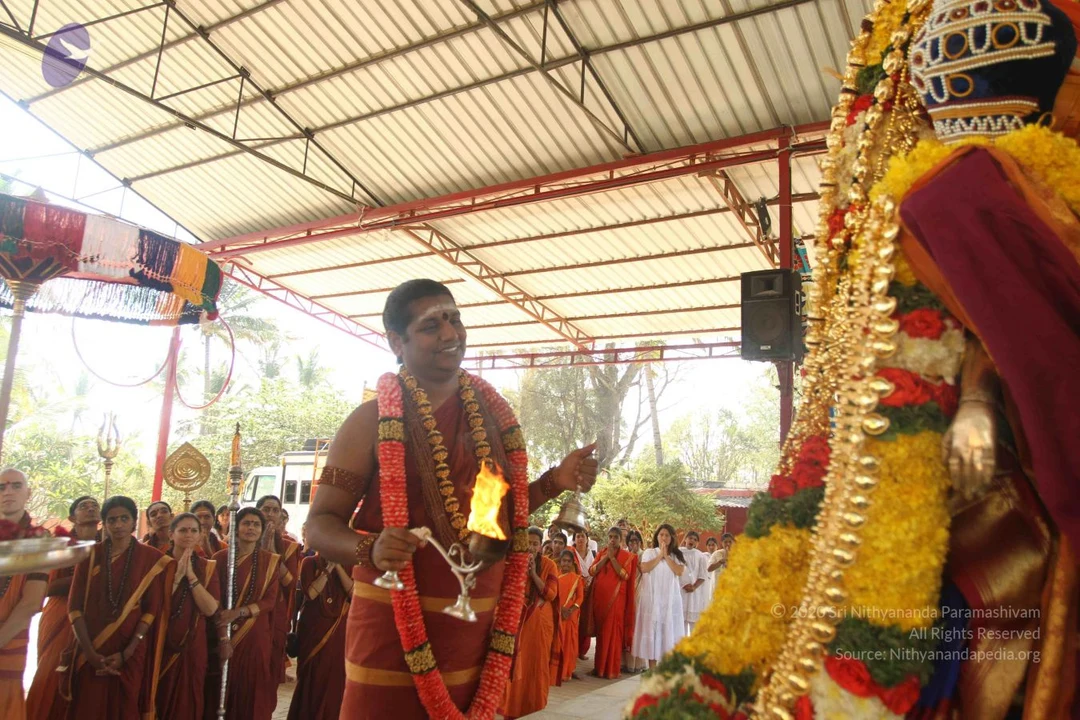
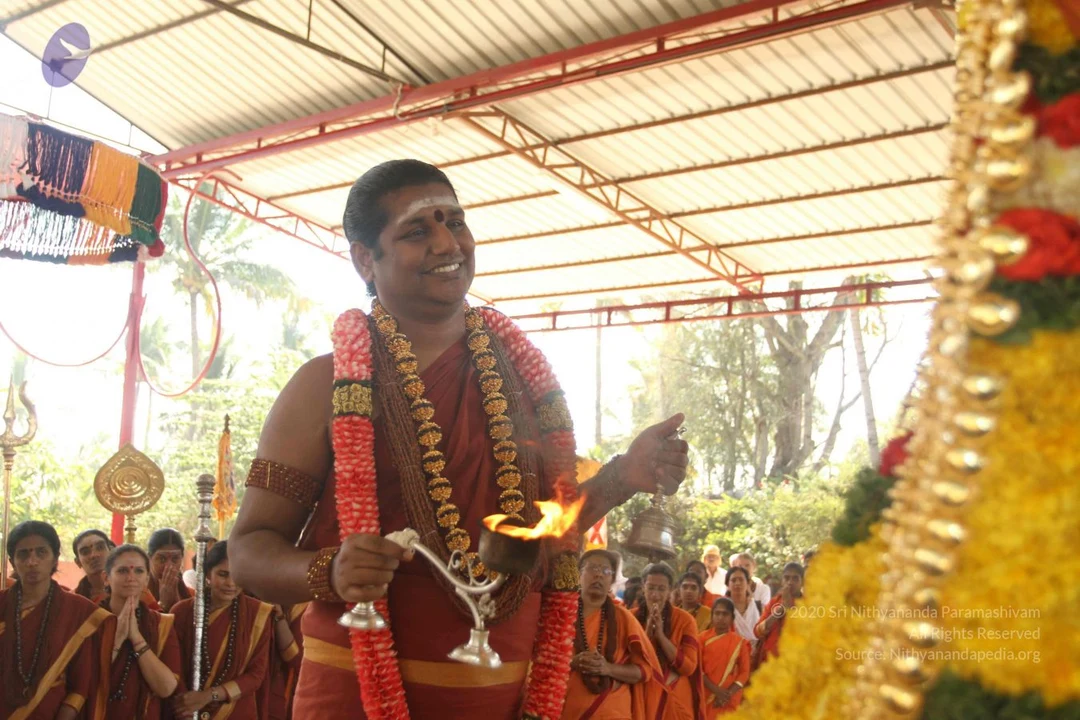
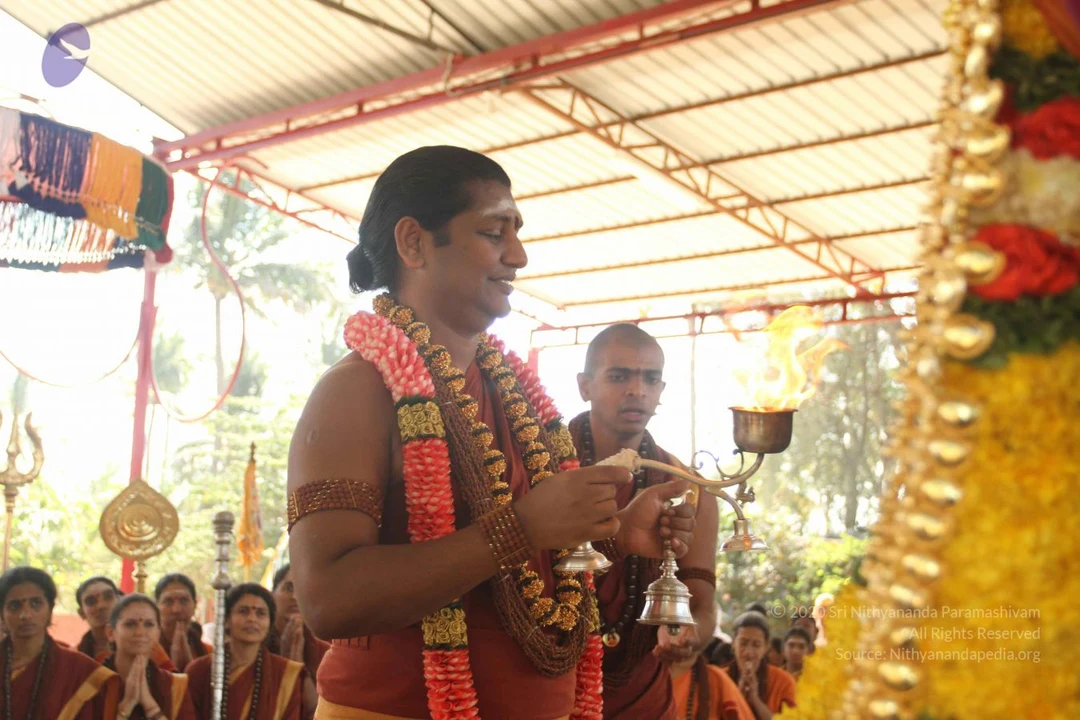
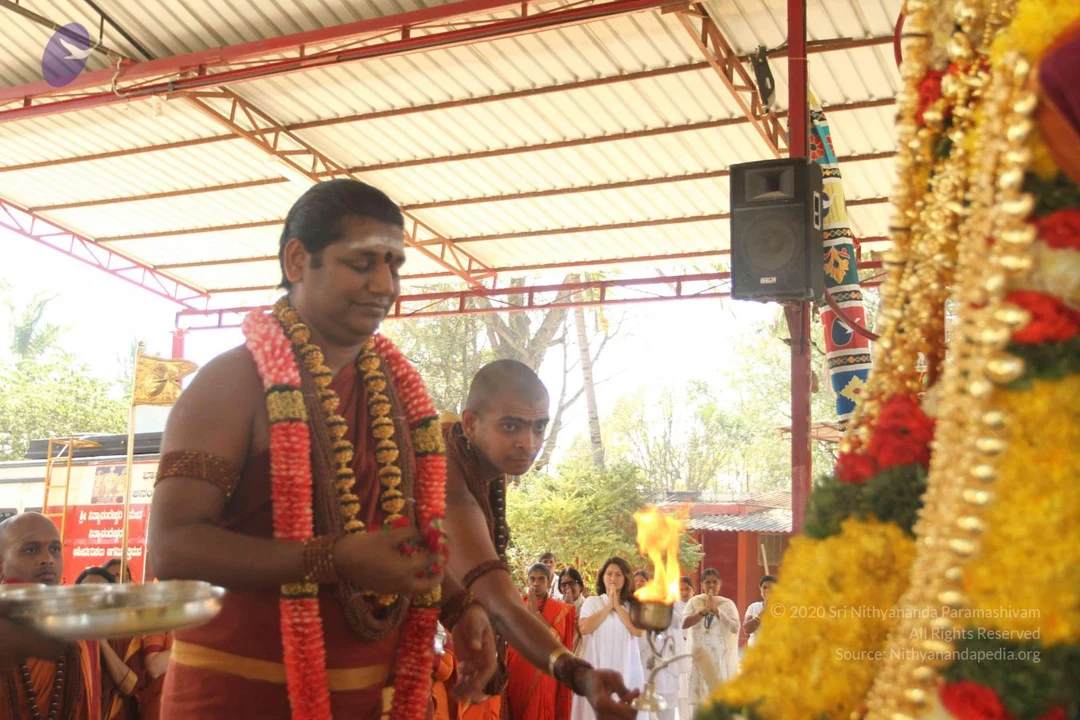
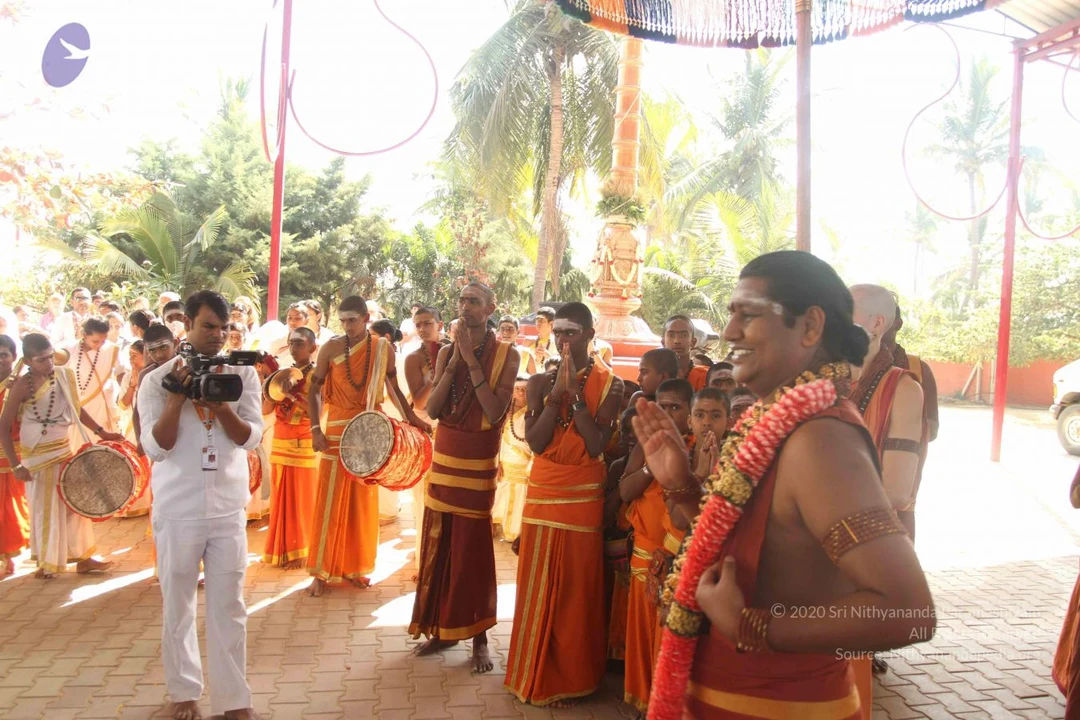
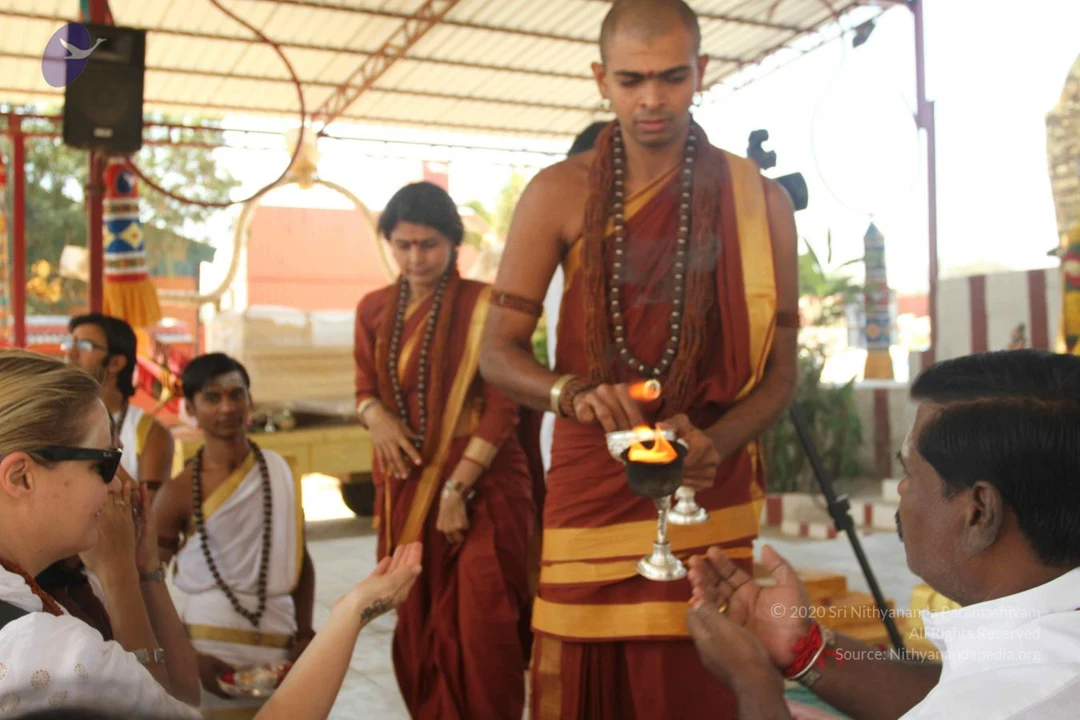
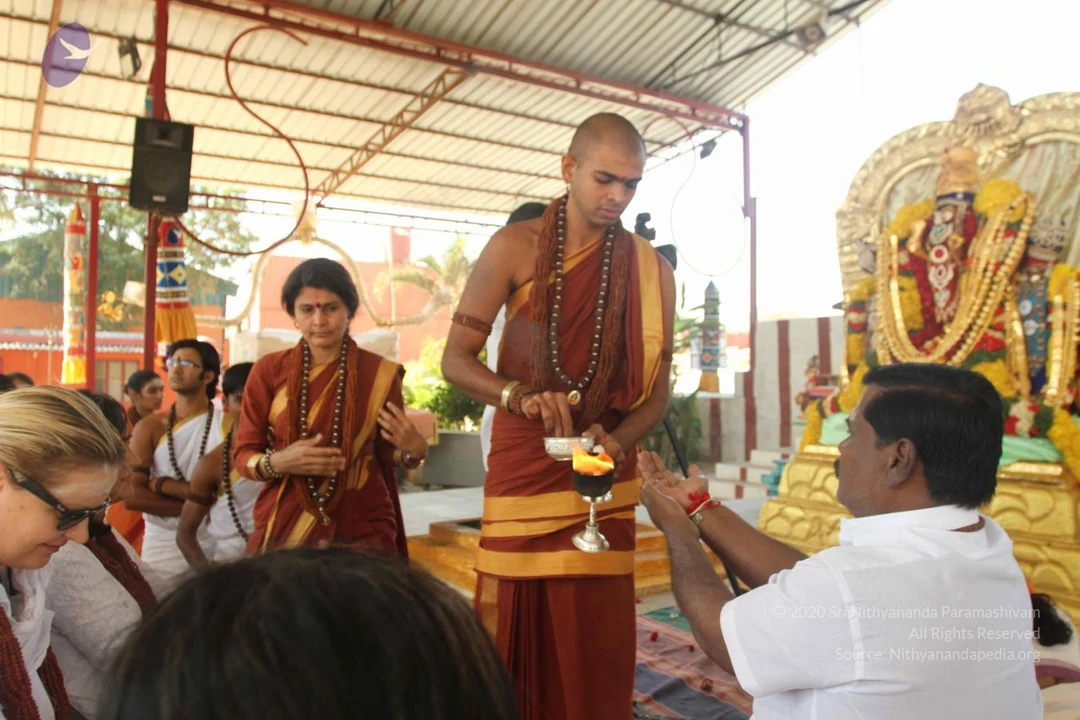
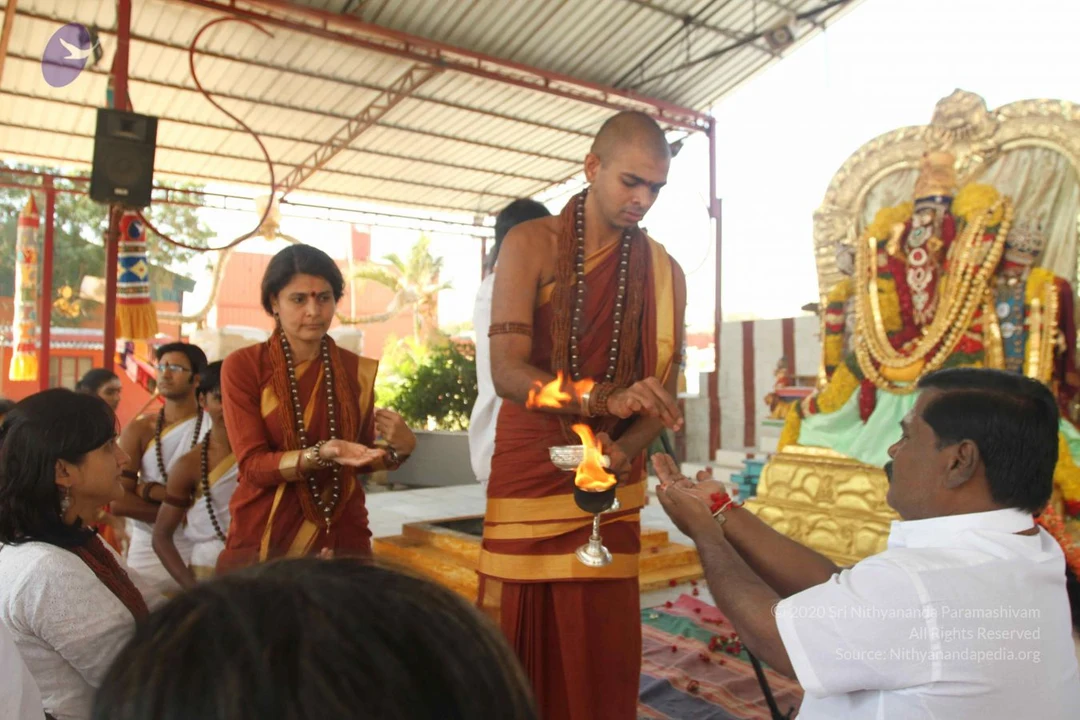
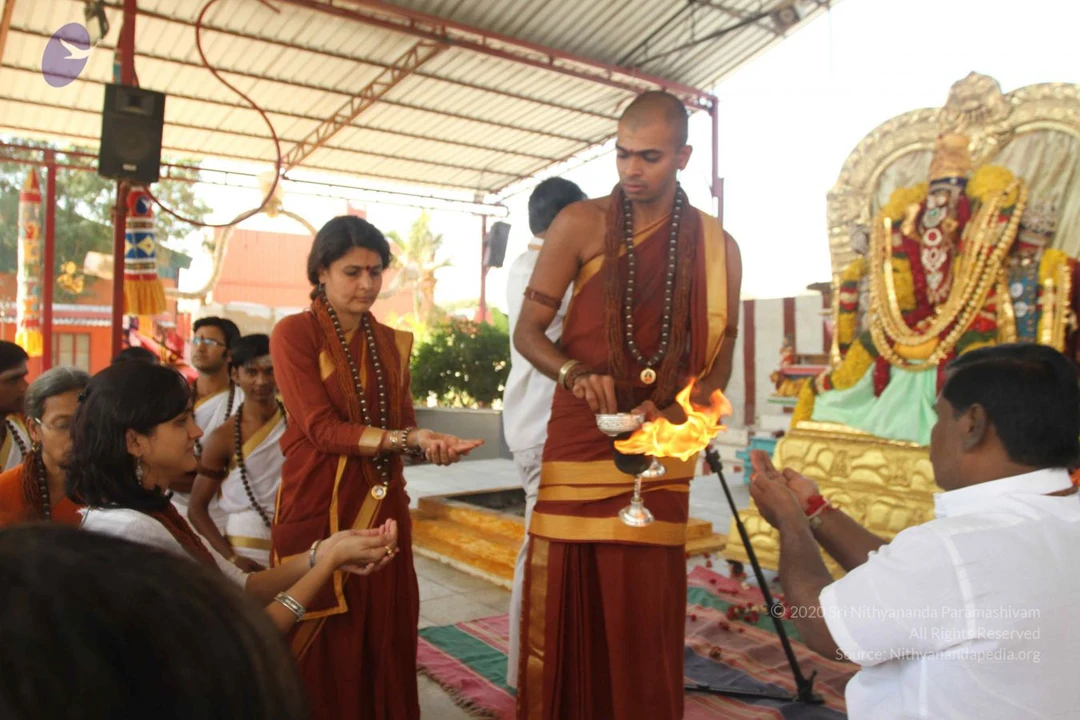
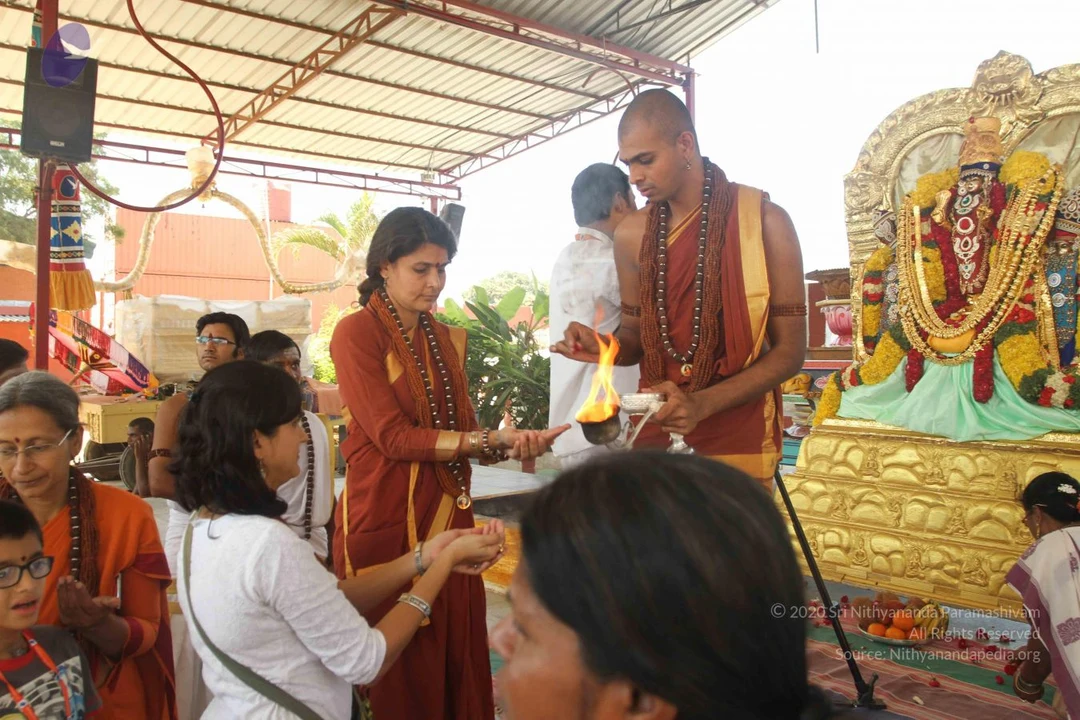
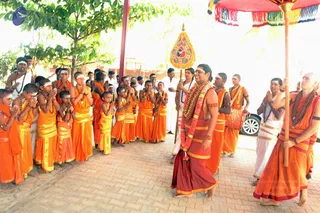
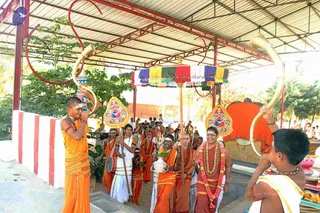
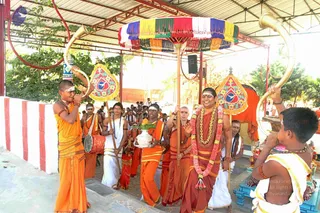
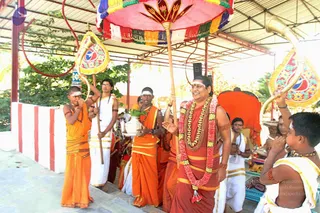
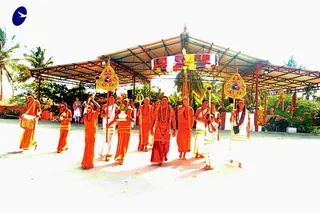
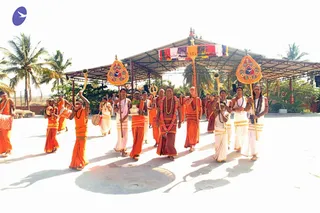
So, today, in the temple, we are starting......of course, all over the world in the Sangha, in the whole adheenam and in the whole Sangha, we are inaugurating, starting Rajarajeshwari Brahmotsava, celebration of Devi, feminine consciousness! After 10 am (Indian Standard Time) today, we will be raising the Brahmotsavam Dhwaja, Flag, Brahmotsava Dhwajarohanam, Flag Hoisting of Brahmotsava. You can see live on Nithyananda TV. And, all the IA (Inner Awakening) participants can also participate. It is a beautiful ceremony to start celebrating Devi as Rajarajeshwari.

With this, I bless you all! Let you all radiate with Integrity, Authenticity, Responsibility, Enriching, and Causing Living Advaitha, eternal bliss, Nithyananda! Thank you!

Description

The Daily Video Magazine of the Nithyananda Sangha. Nithyananda Times - 23rd February, 2015

Title

Rajarajeshwari Brahmotsavam || Dhwajarohanam || 23 February 2015

Link to Video

Photos
Link to Facebook Post

https://www.facebook.com/ParamahamsaNithyananda/photos/a.321615927926264/793505714070614

Tags:

Upanishads, Advaita, Isha Upanishad, Isha Upanishad Verse 3, Paramahamsa Nithyananda, Isha, Satsang, tapas, janmas, enlightened,guru, jadguru,satguru,isha

Photos Of The Day:
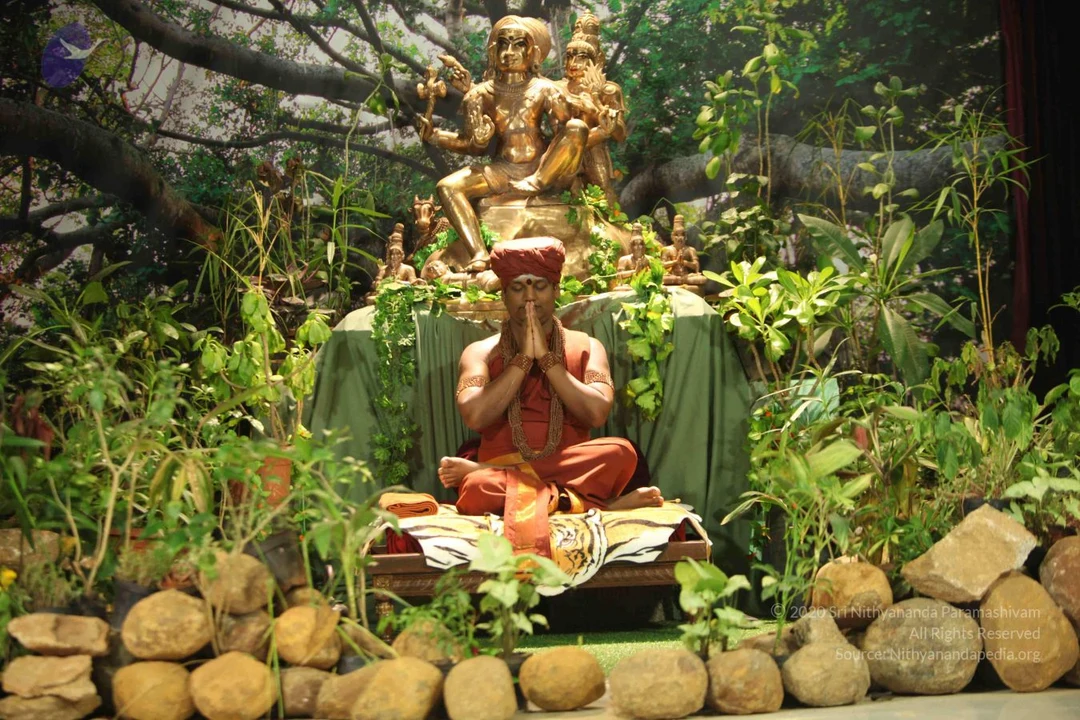
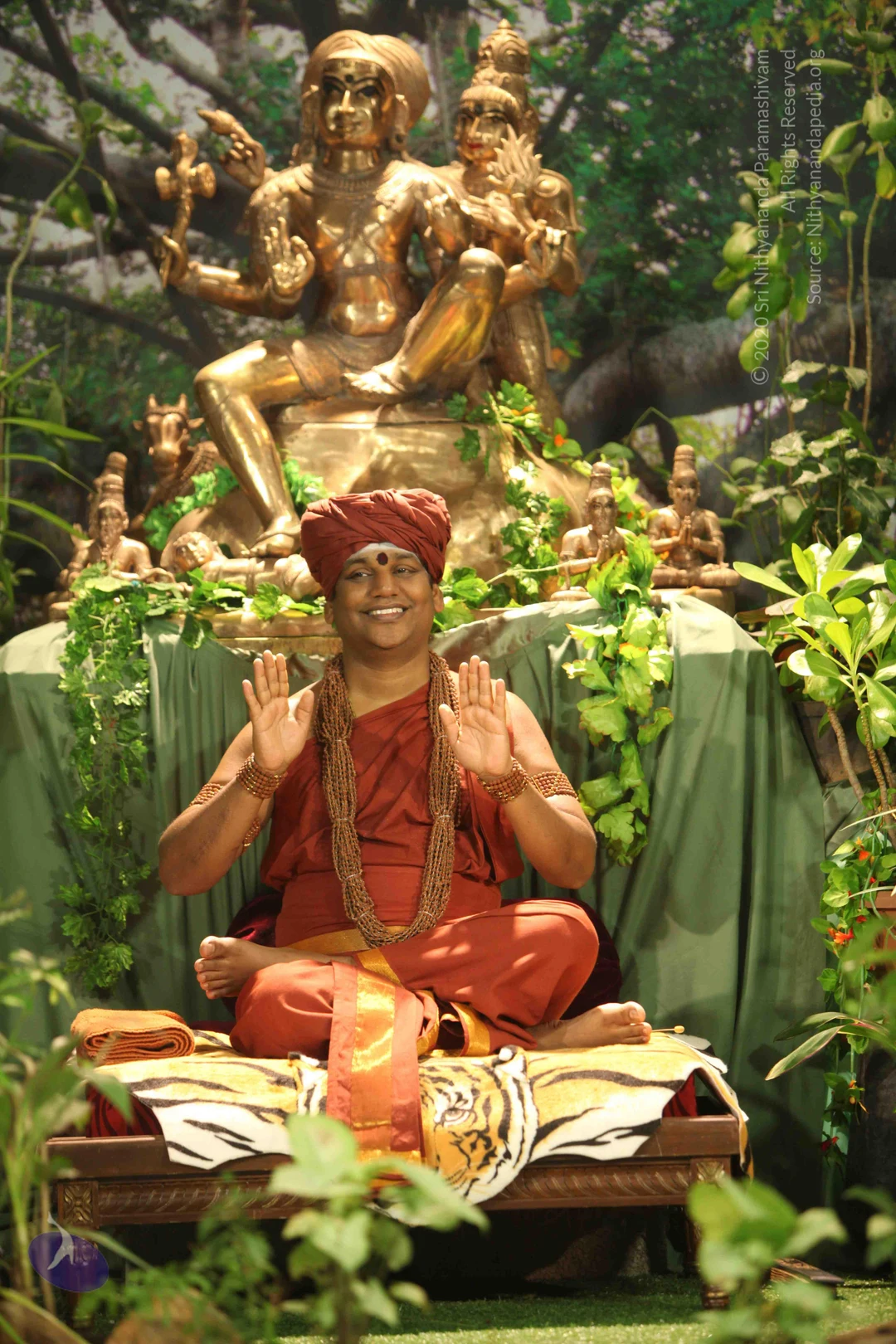
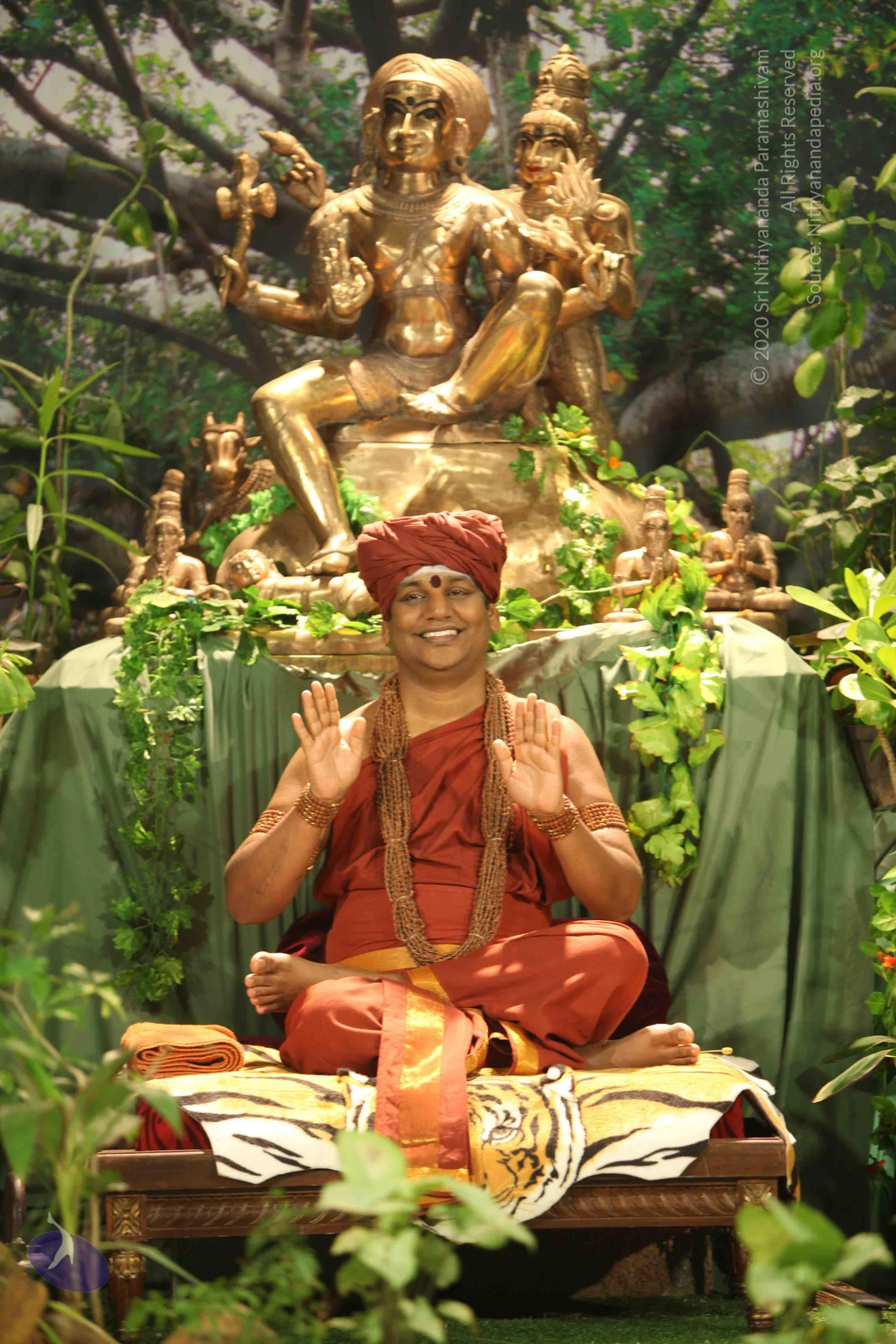
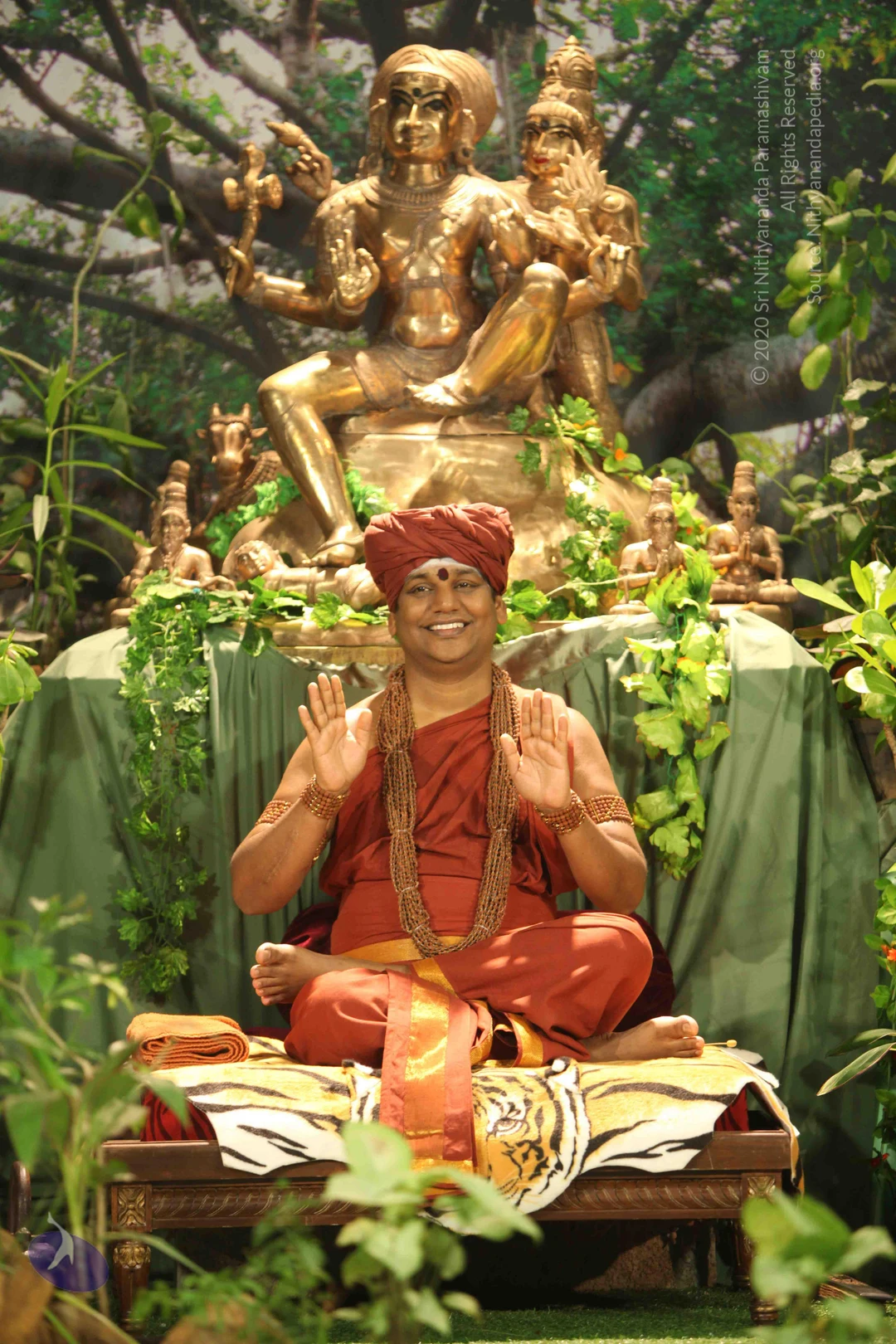
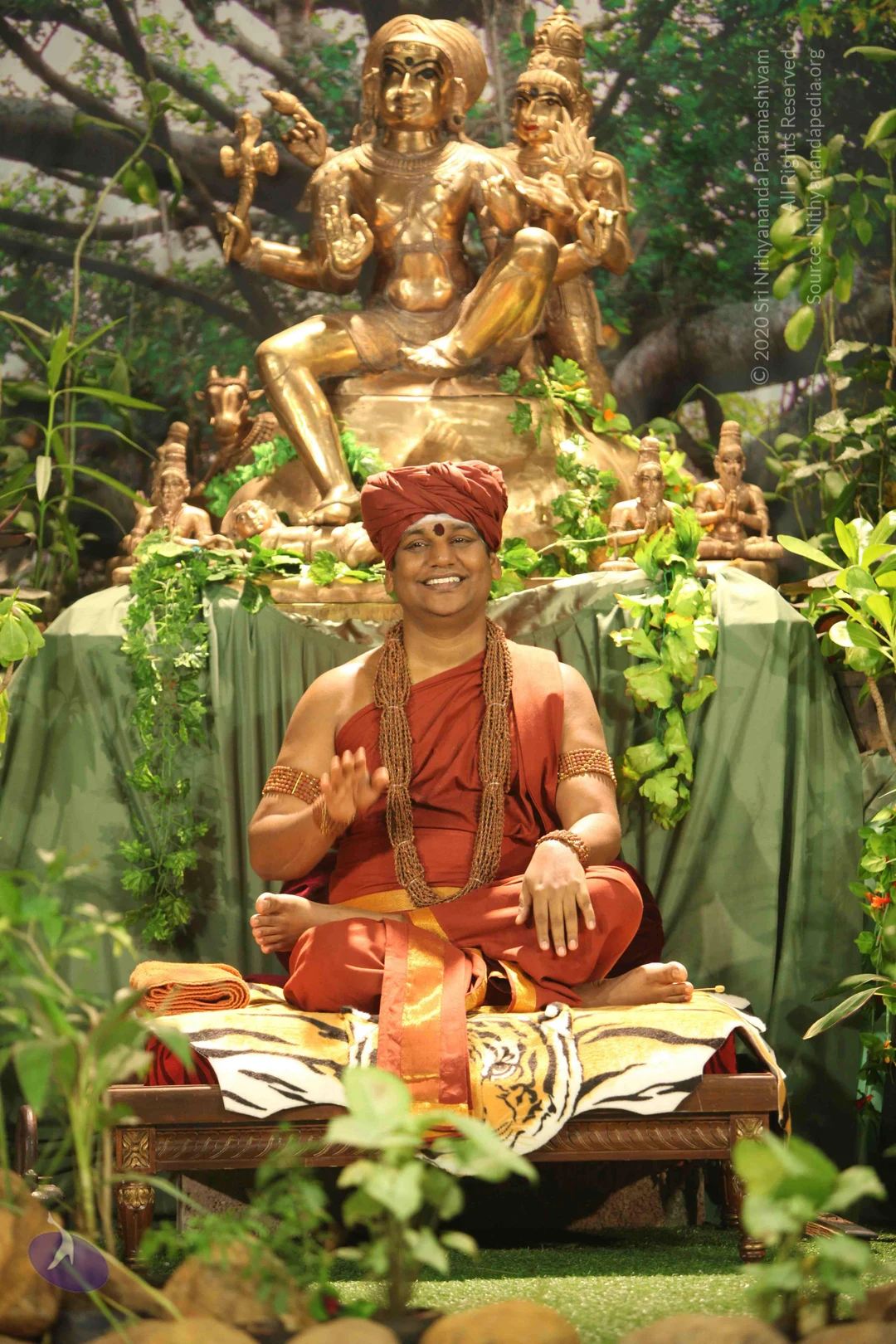
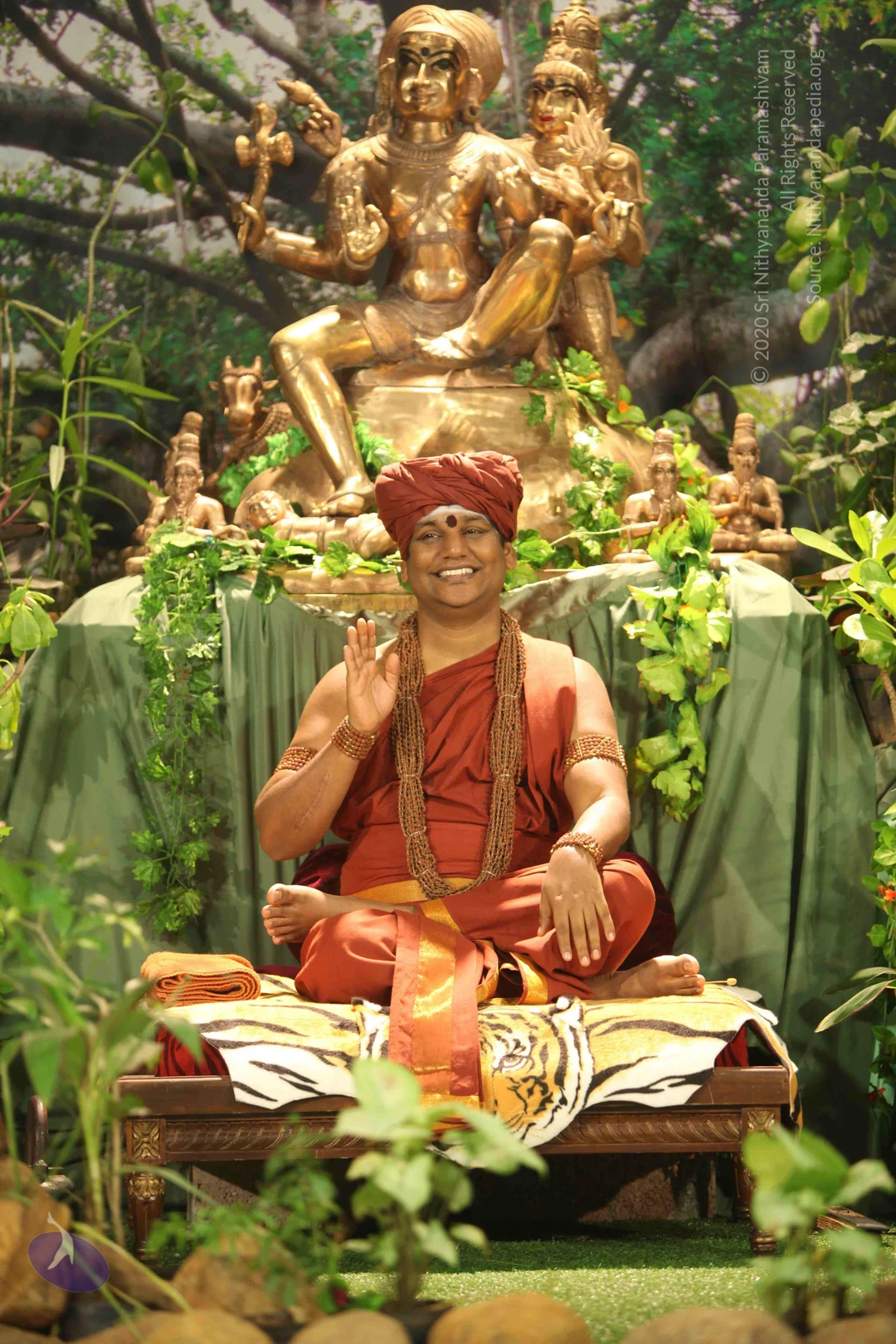
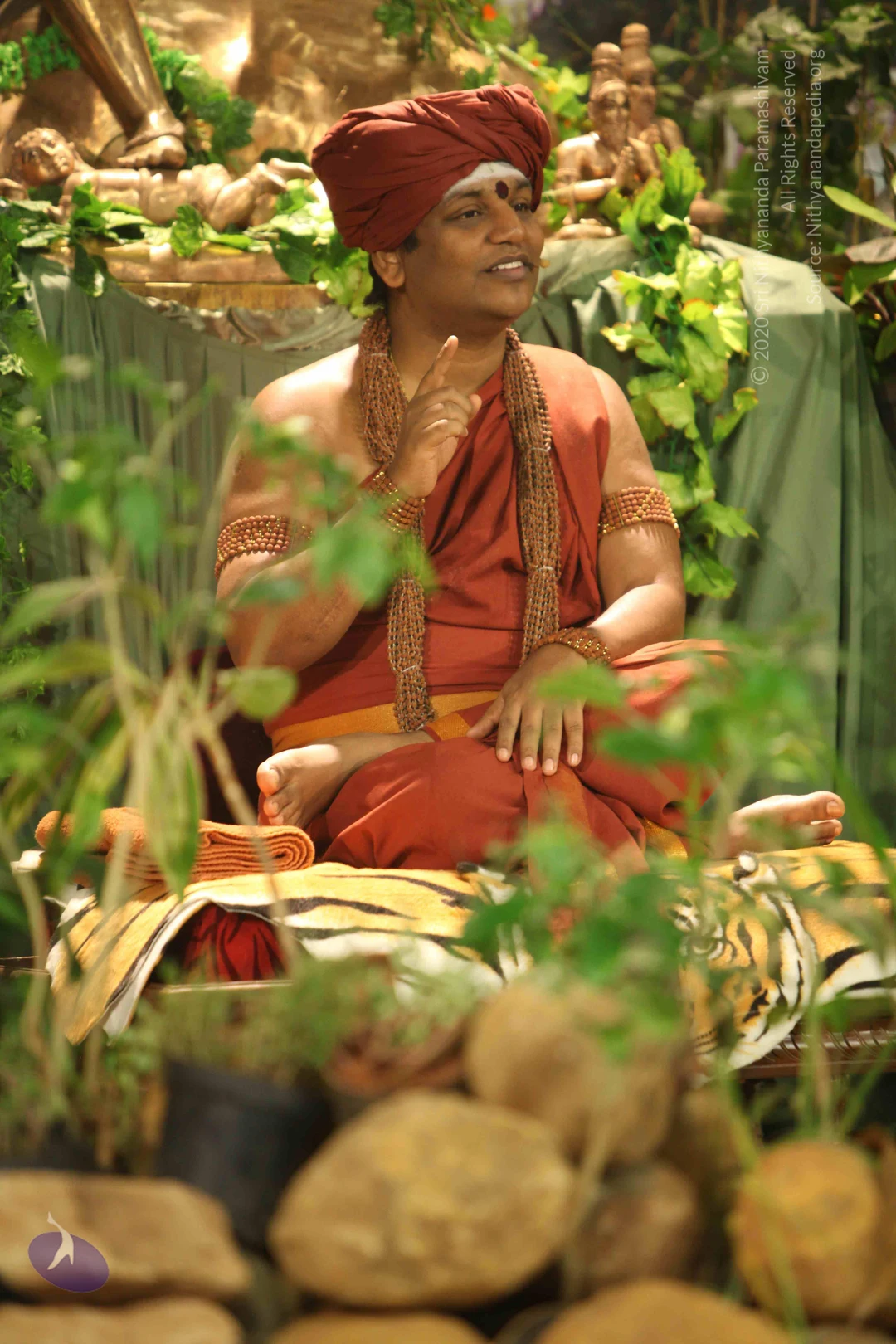
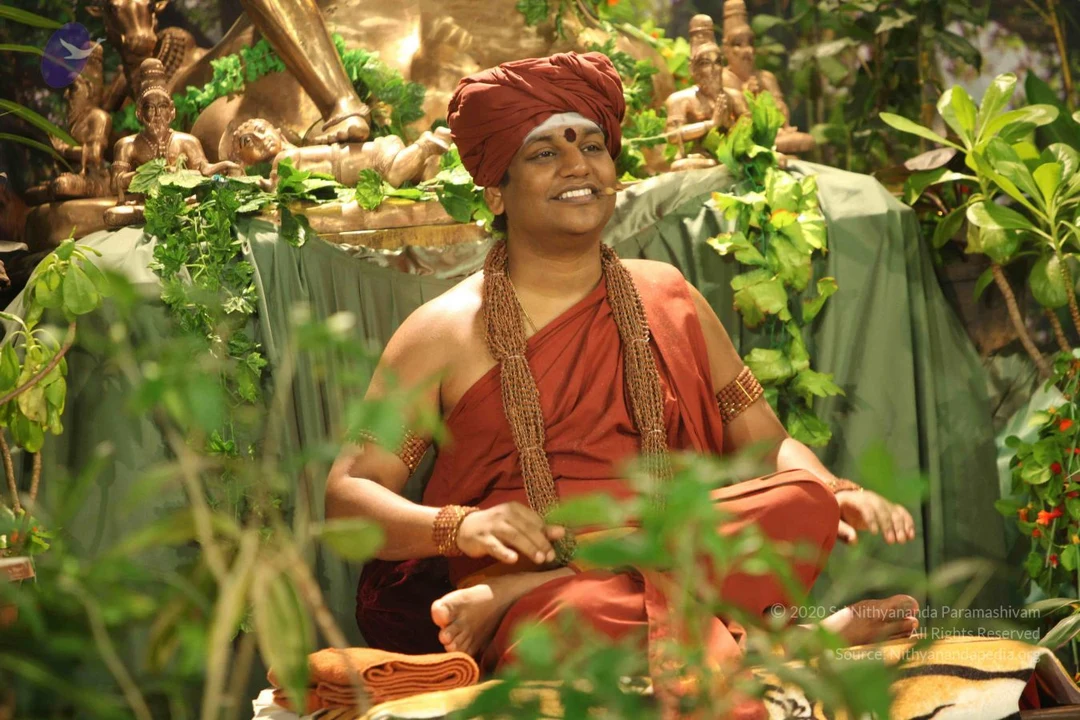
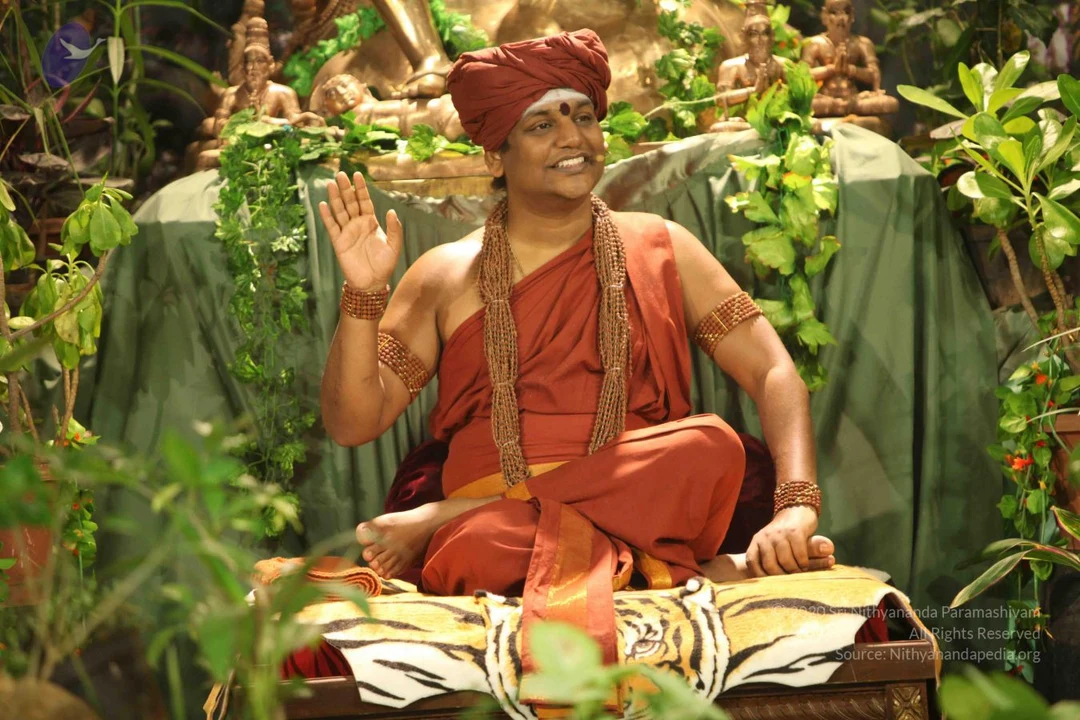
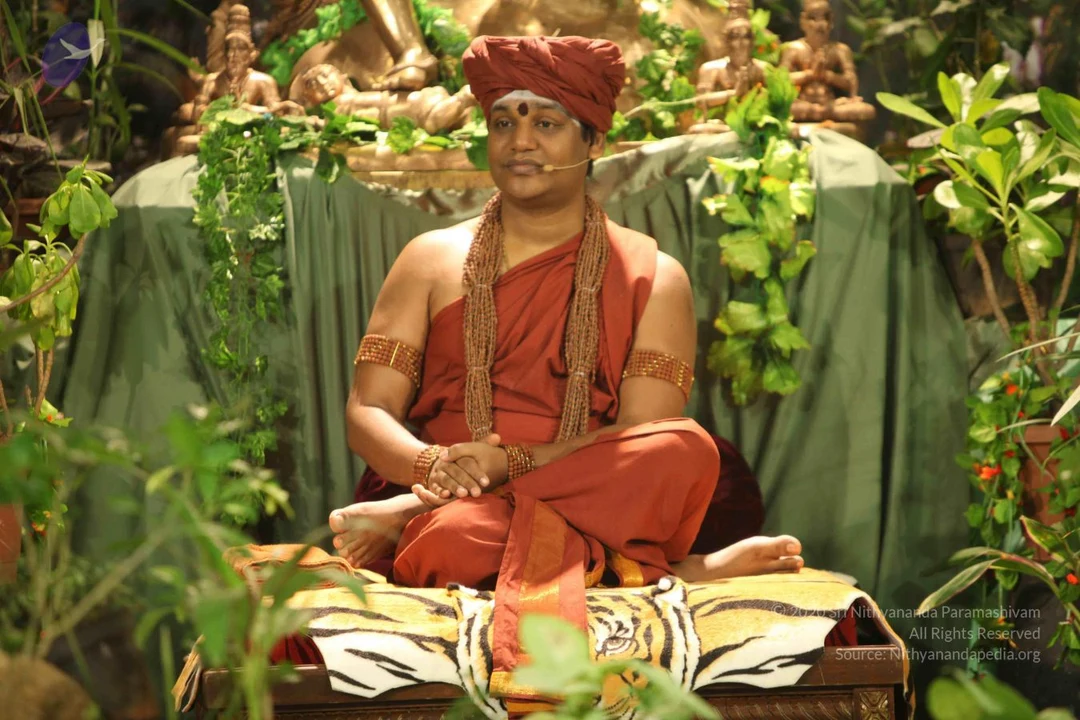
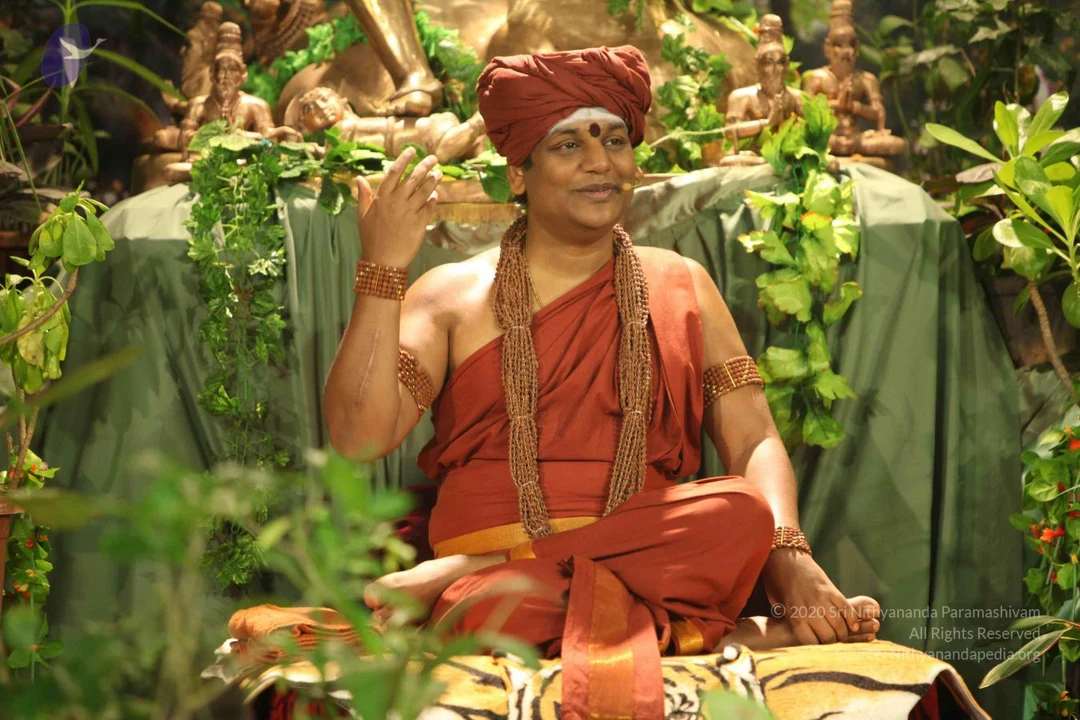
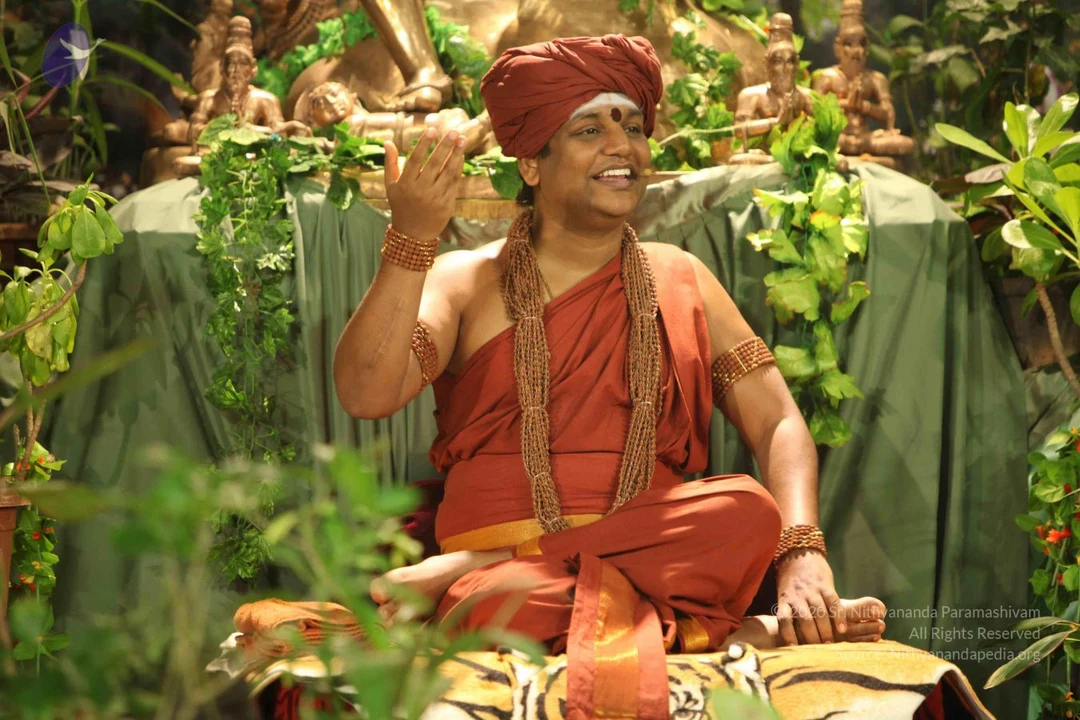
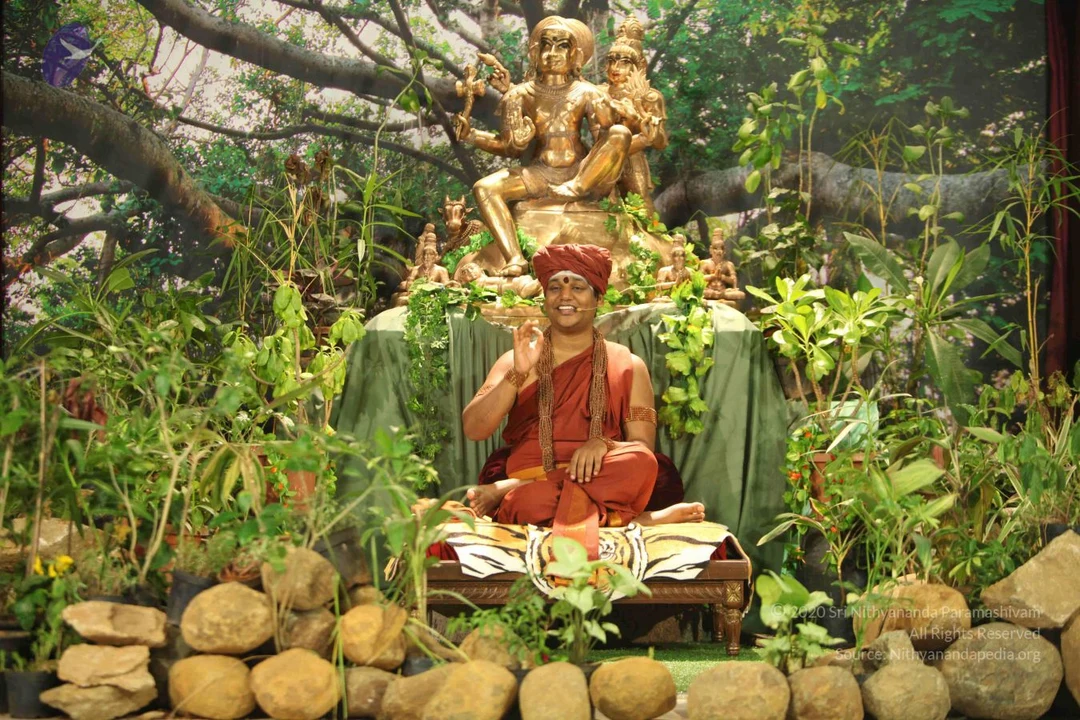
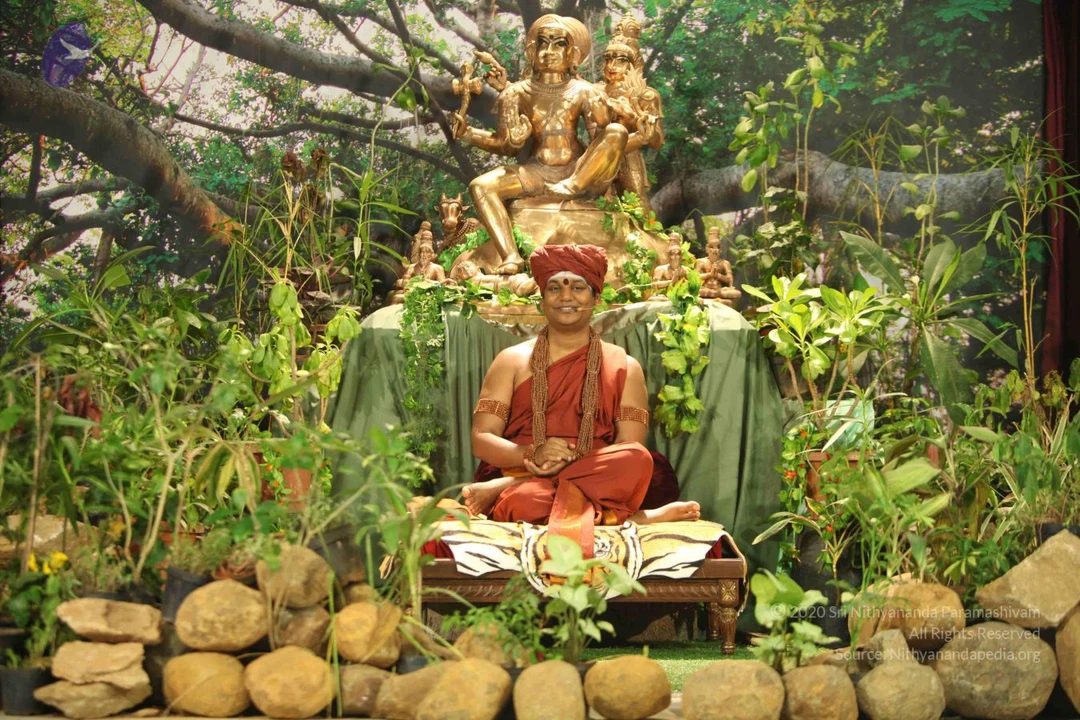
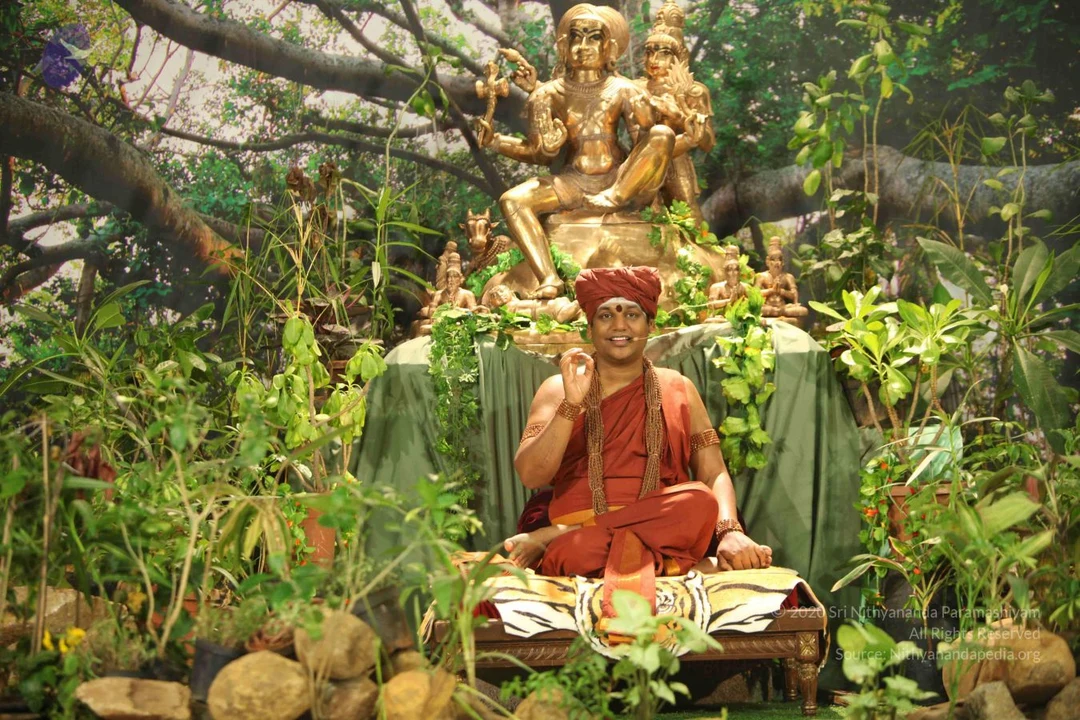
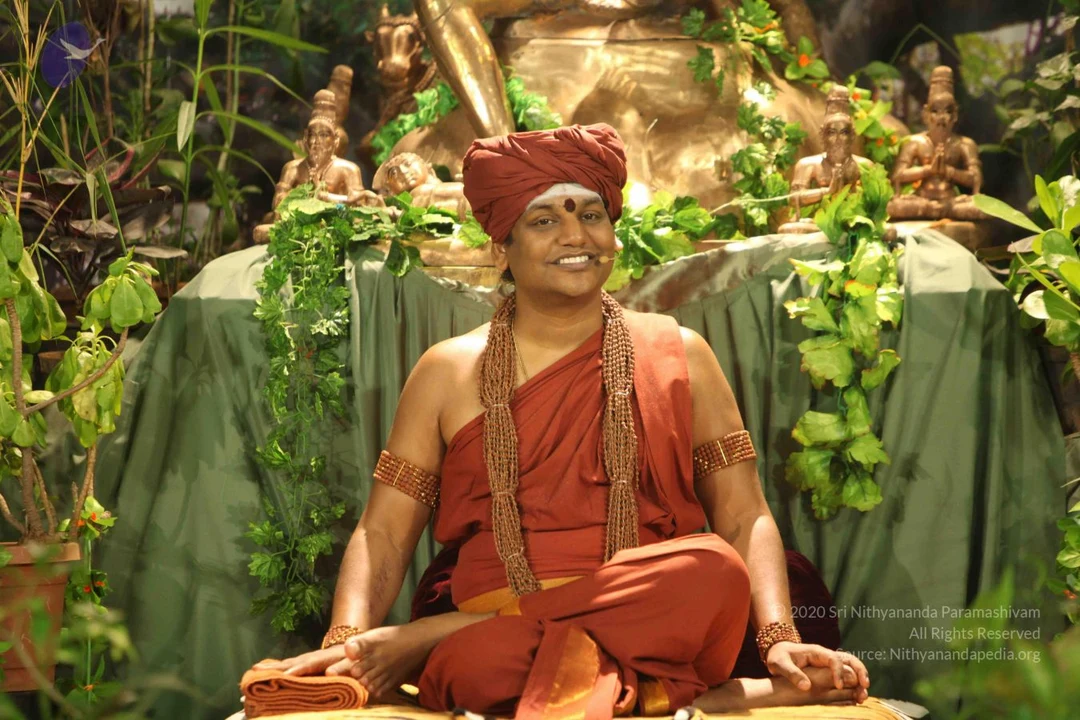
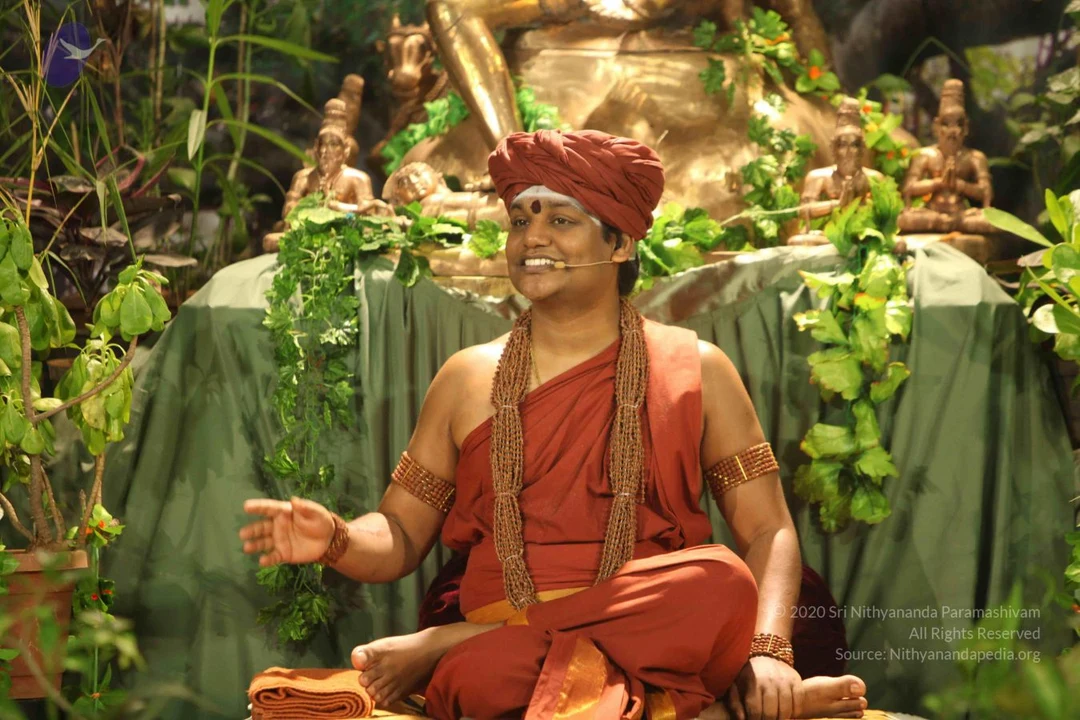
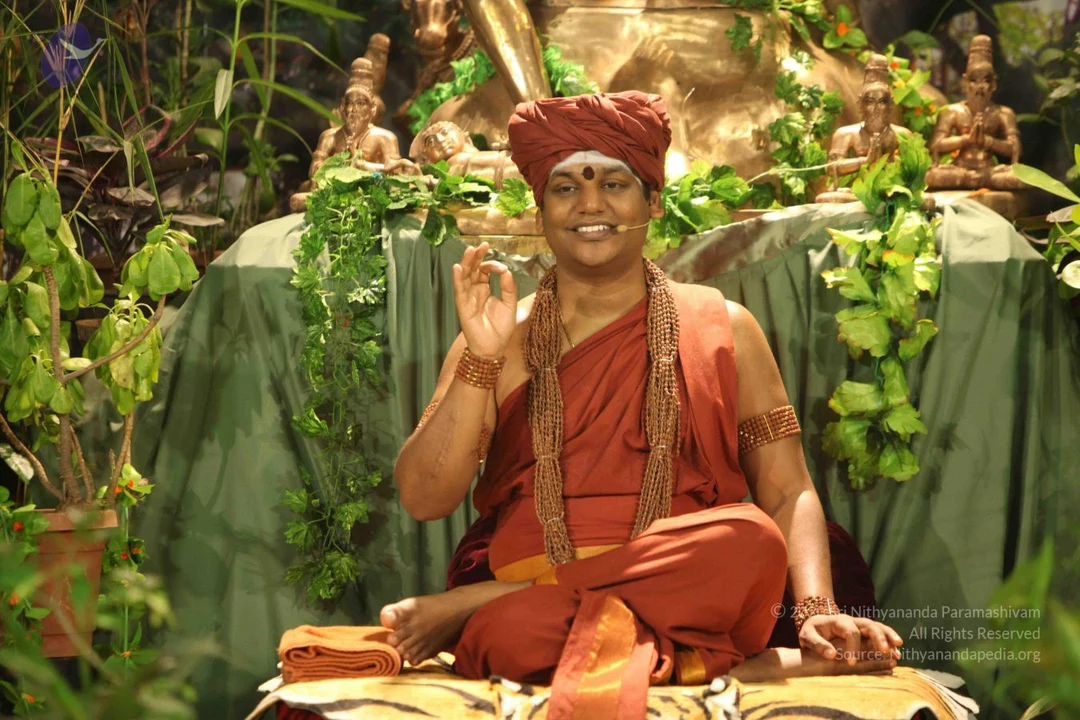
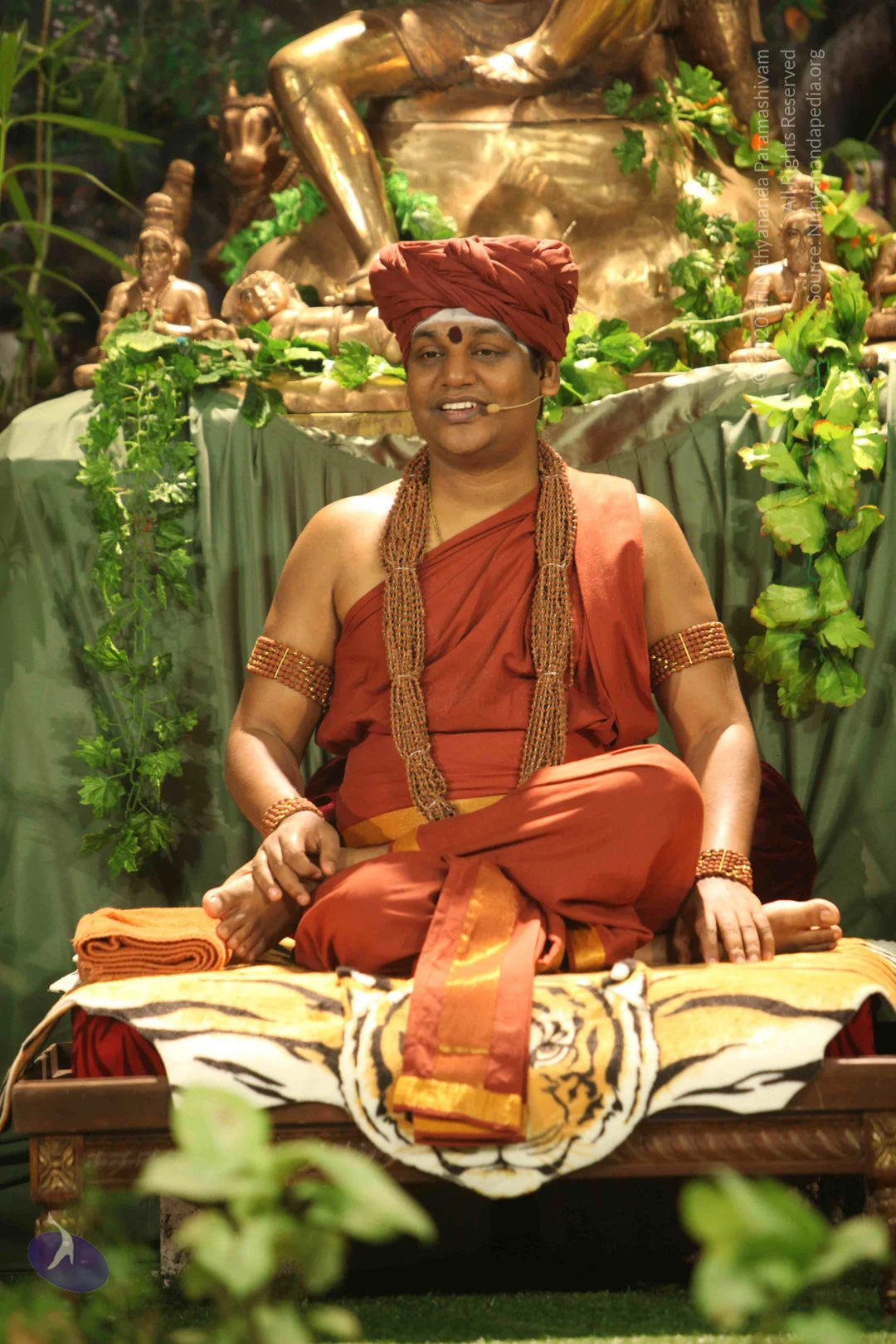
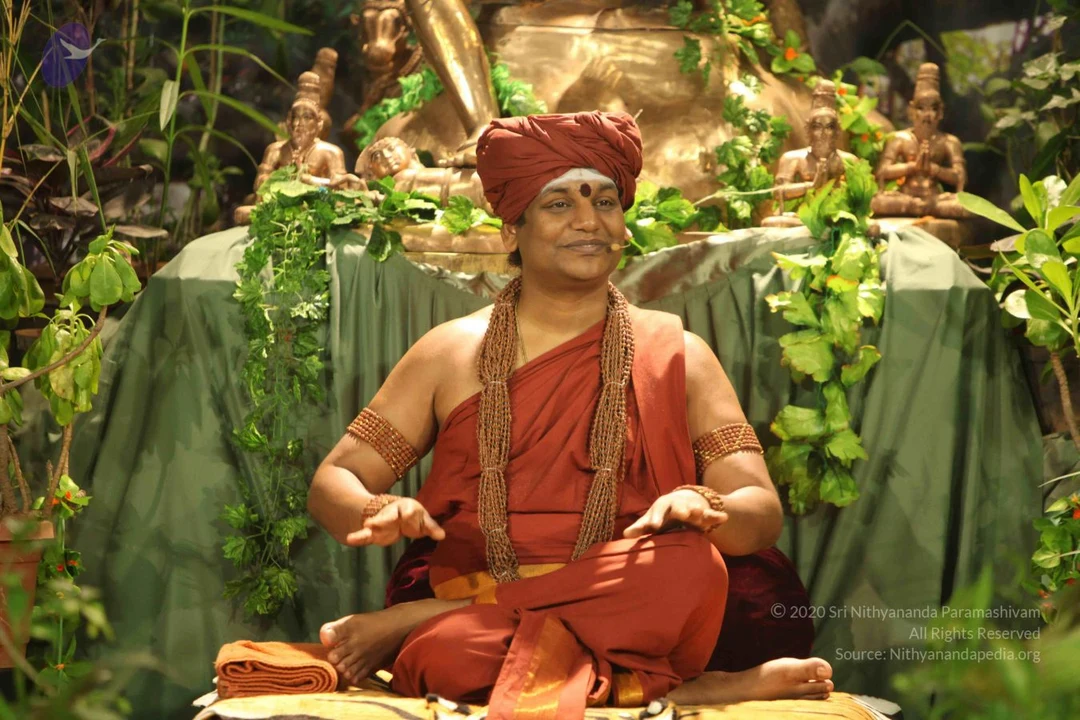
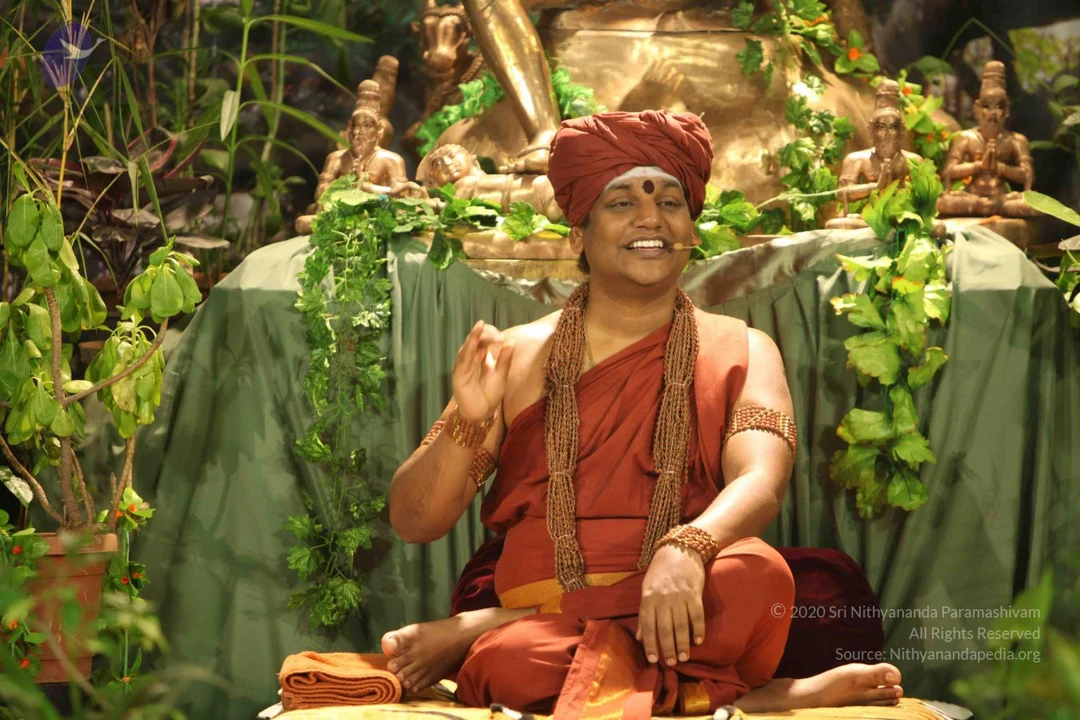
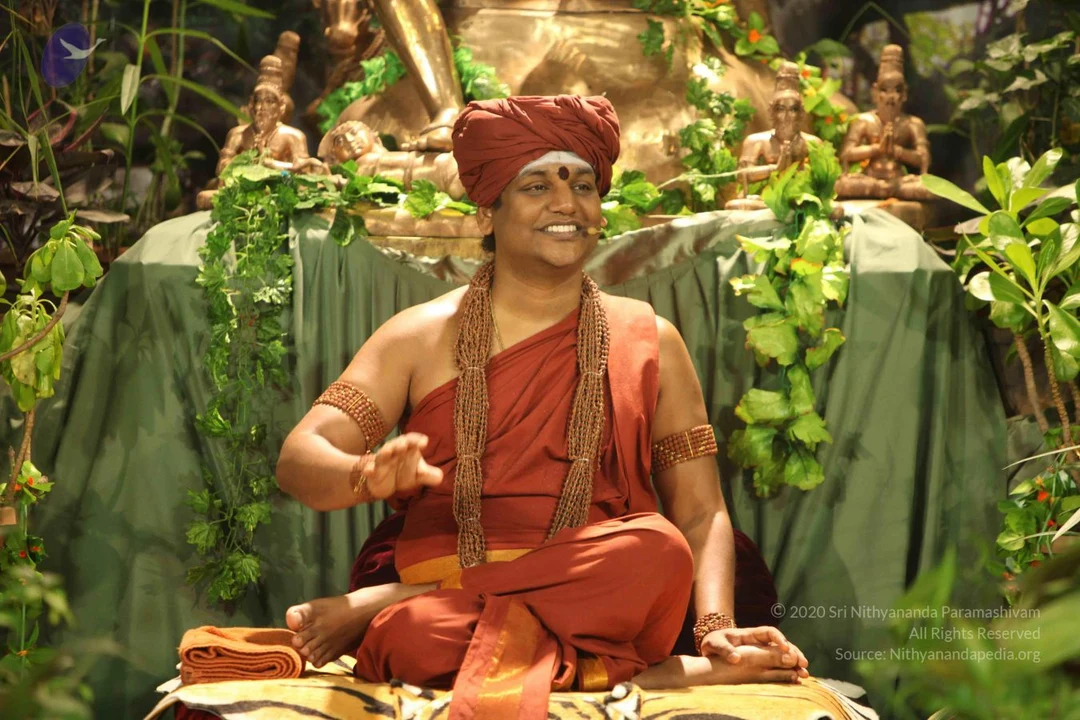
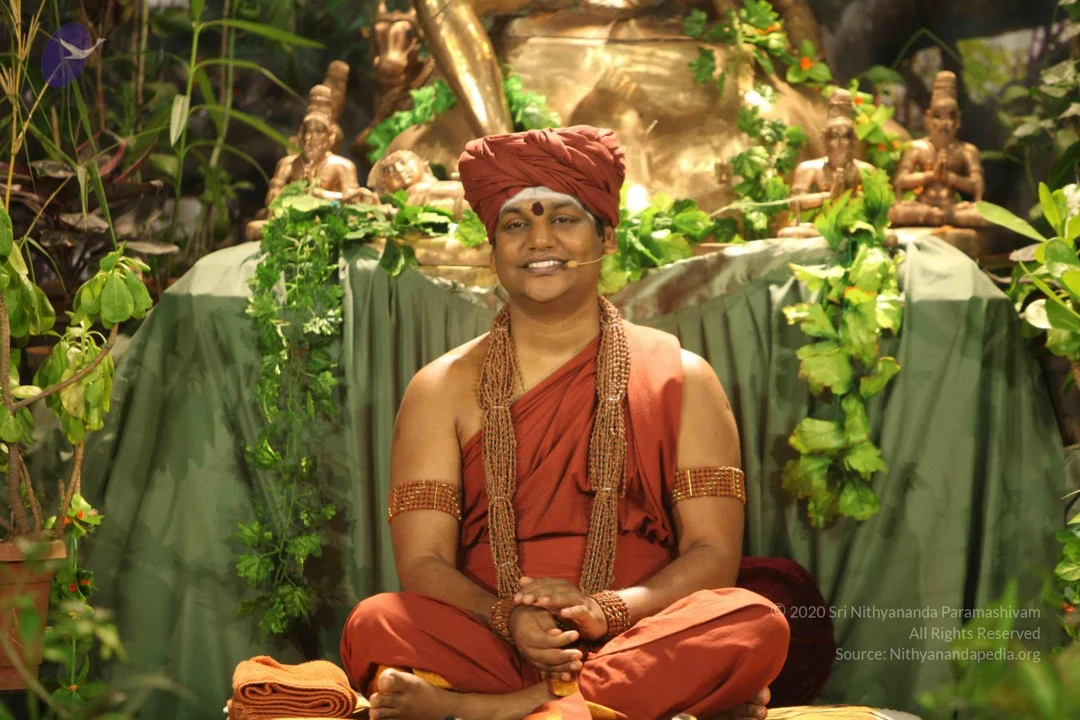
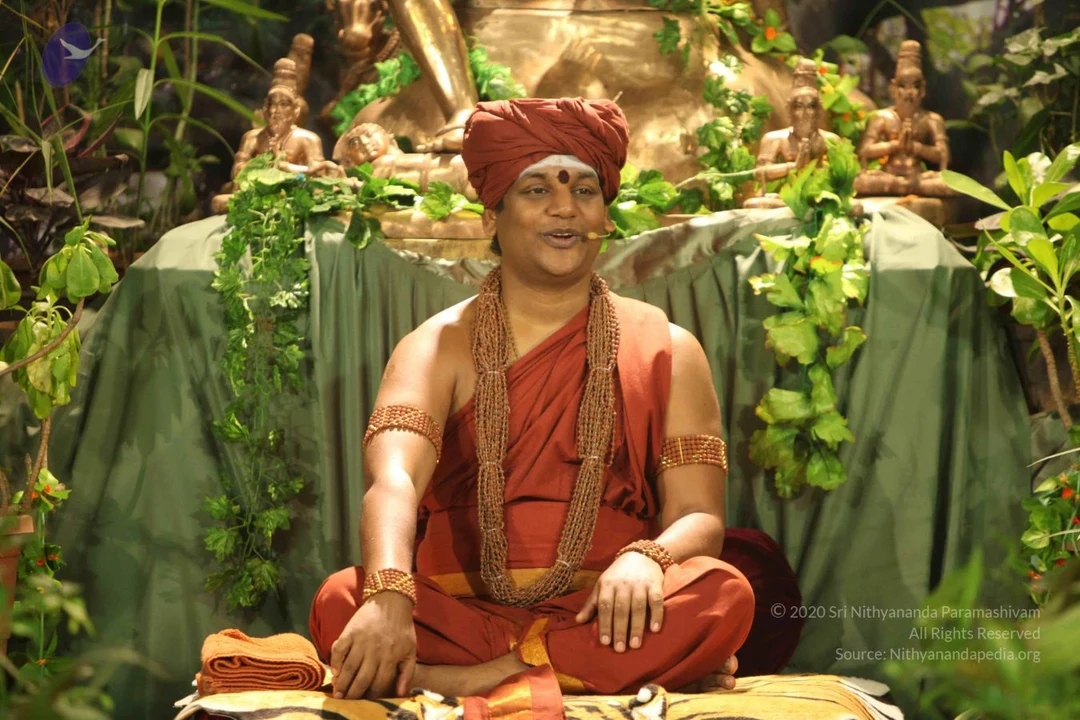
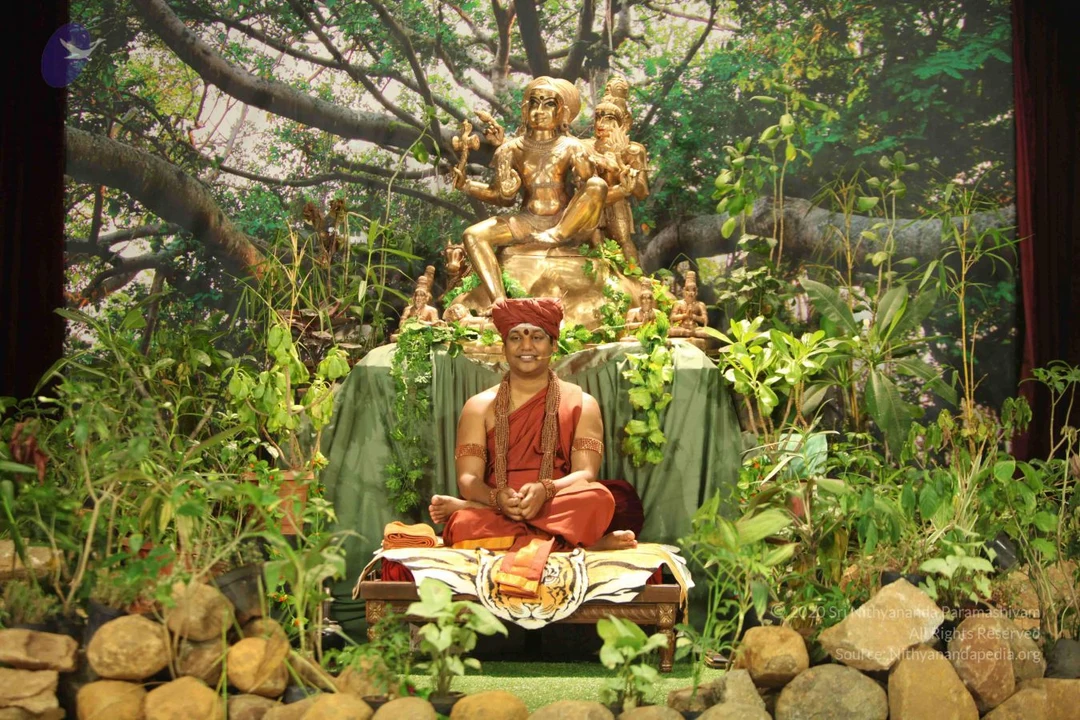
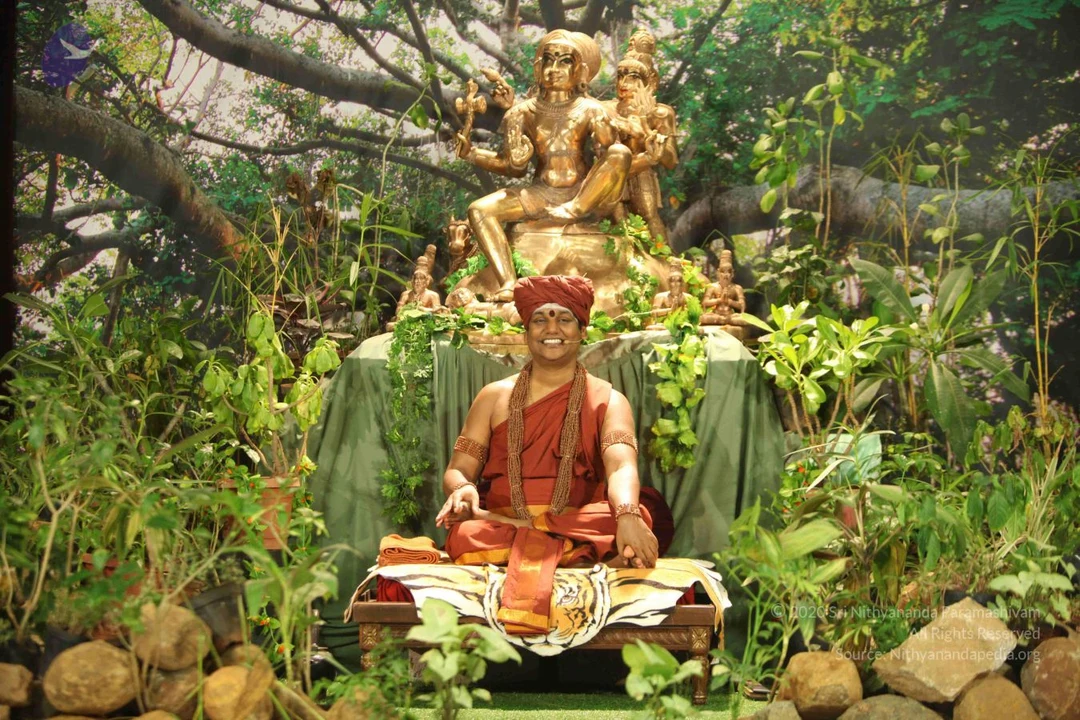
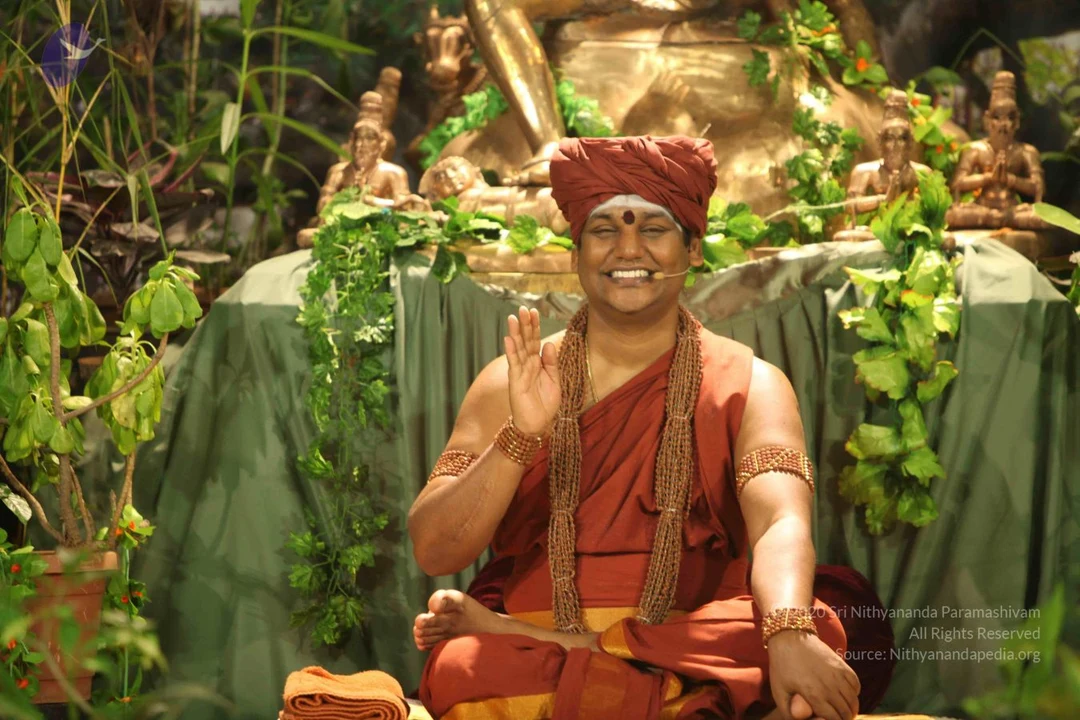
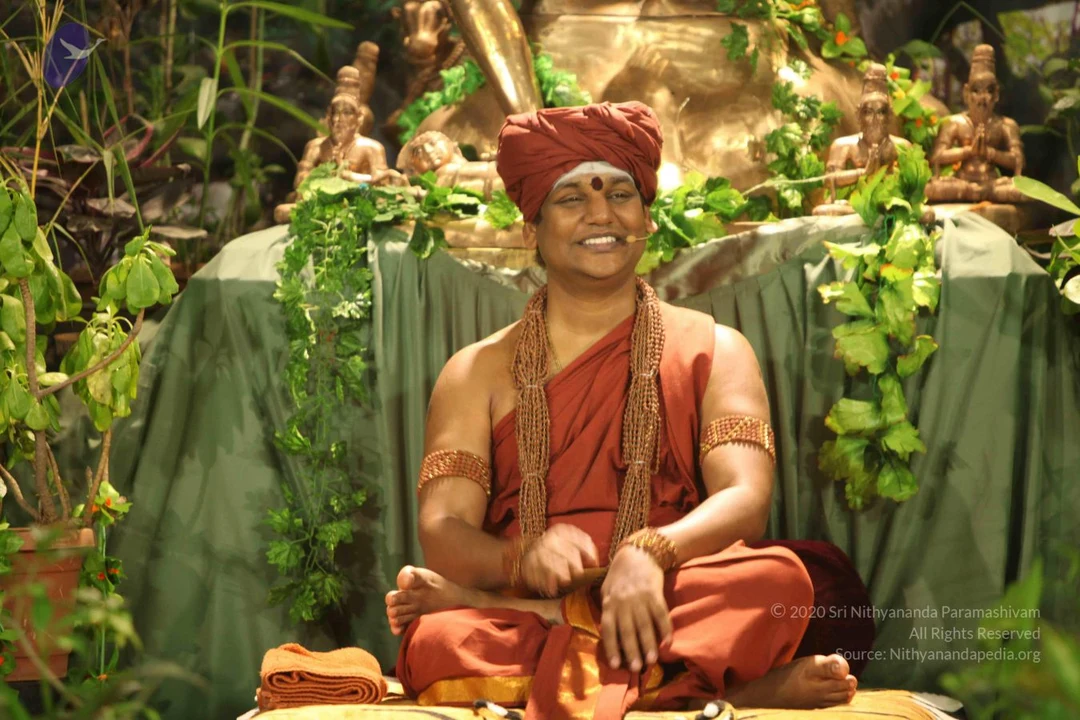
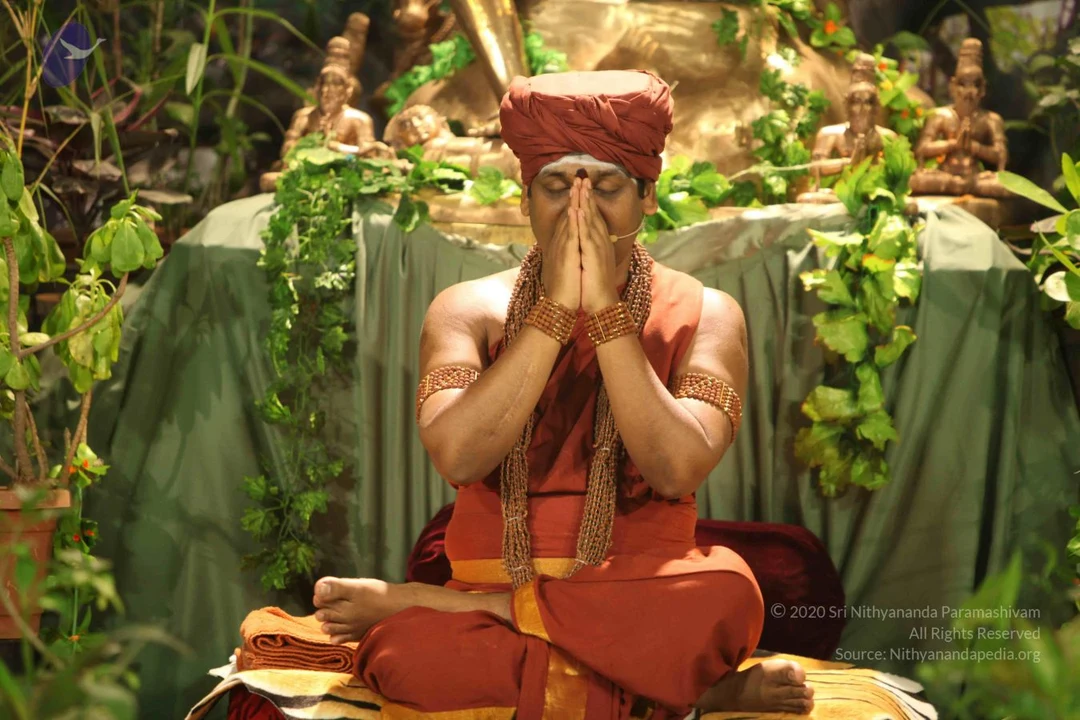
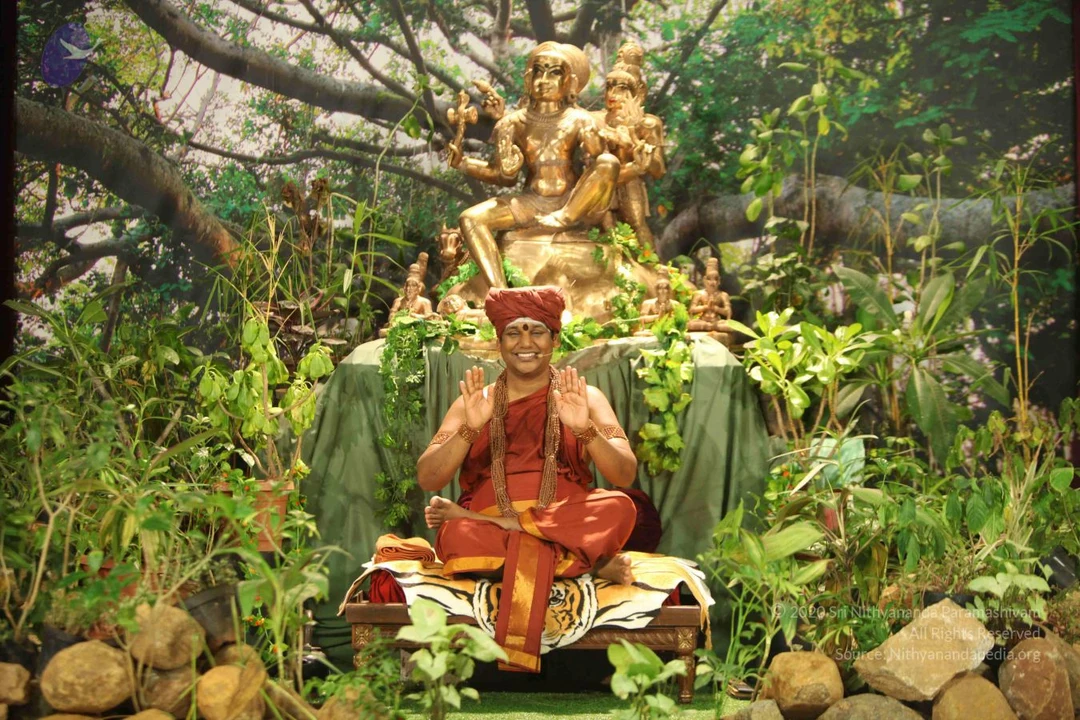
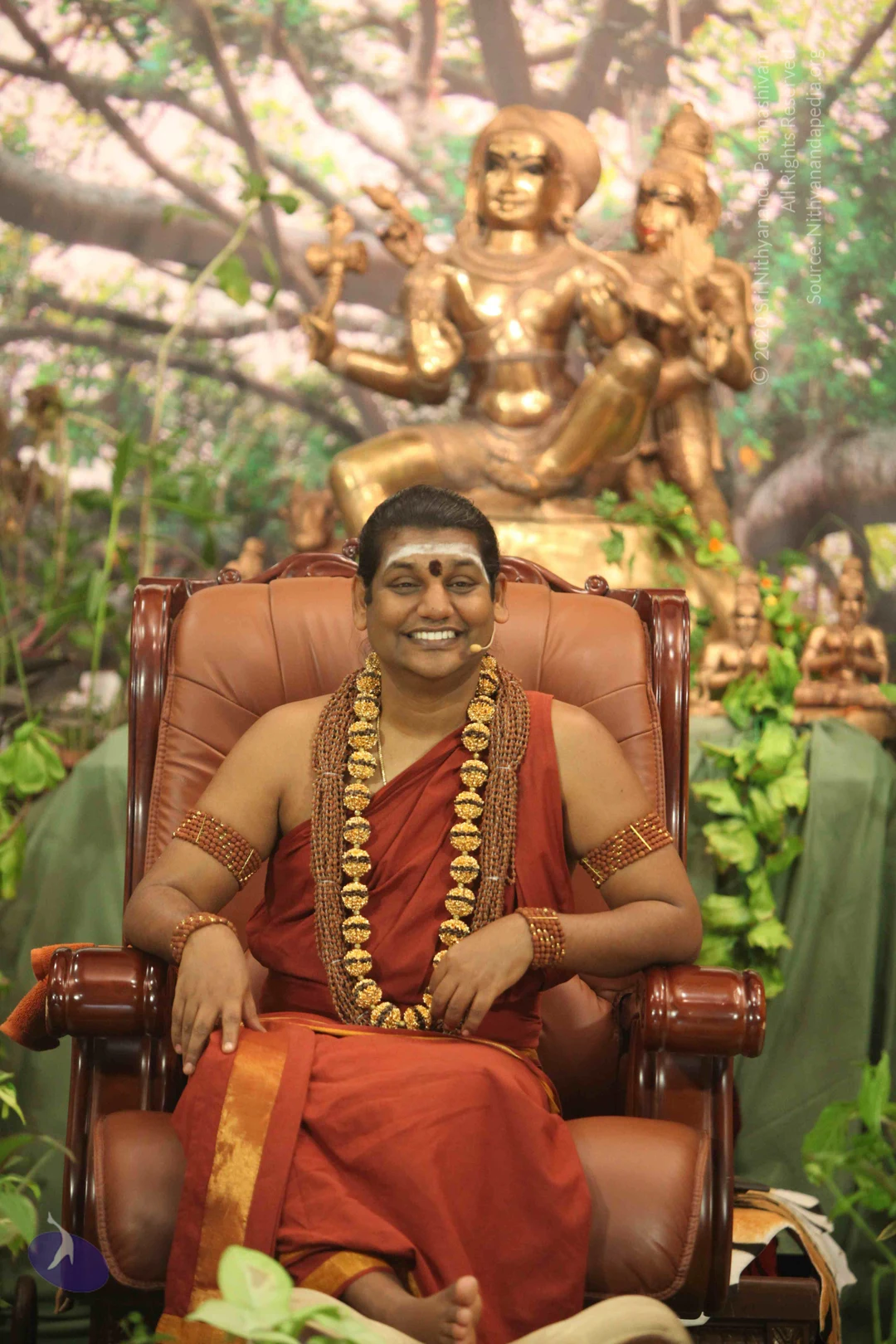
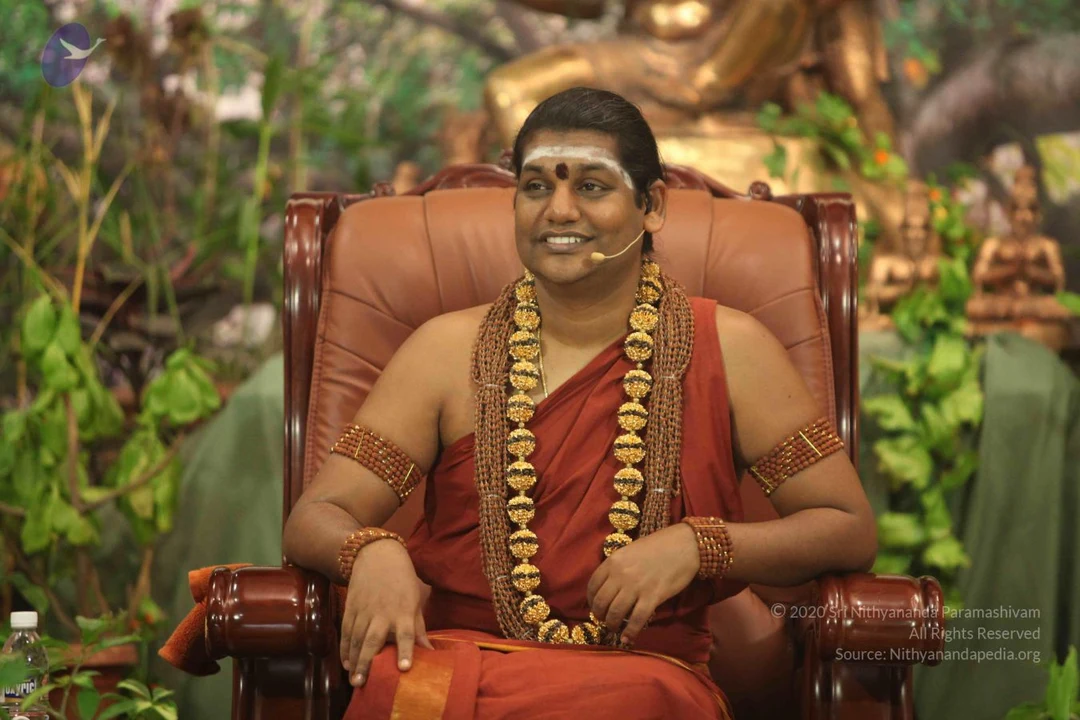
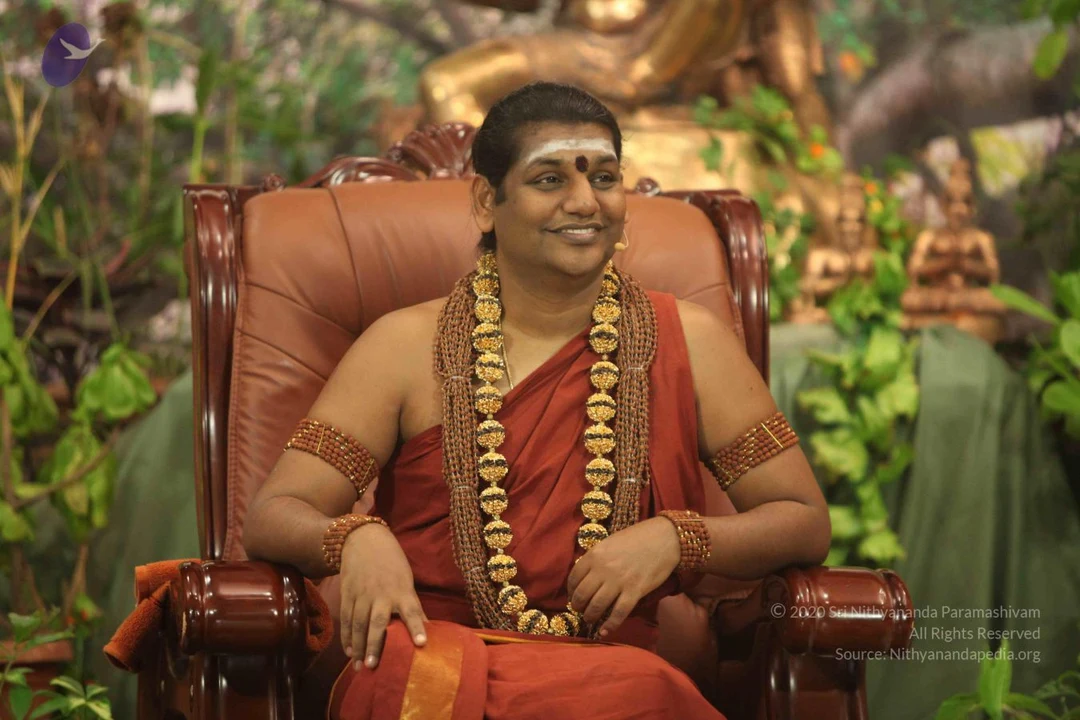
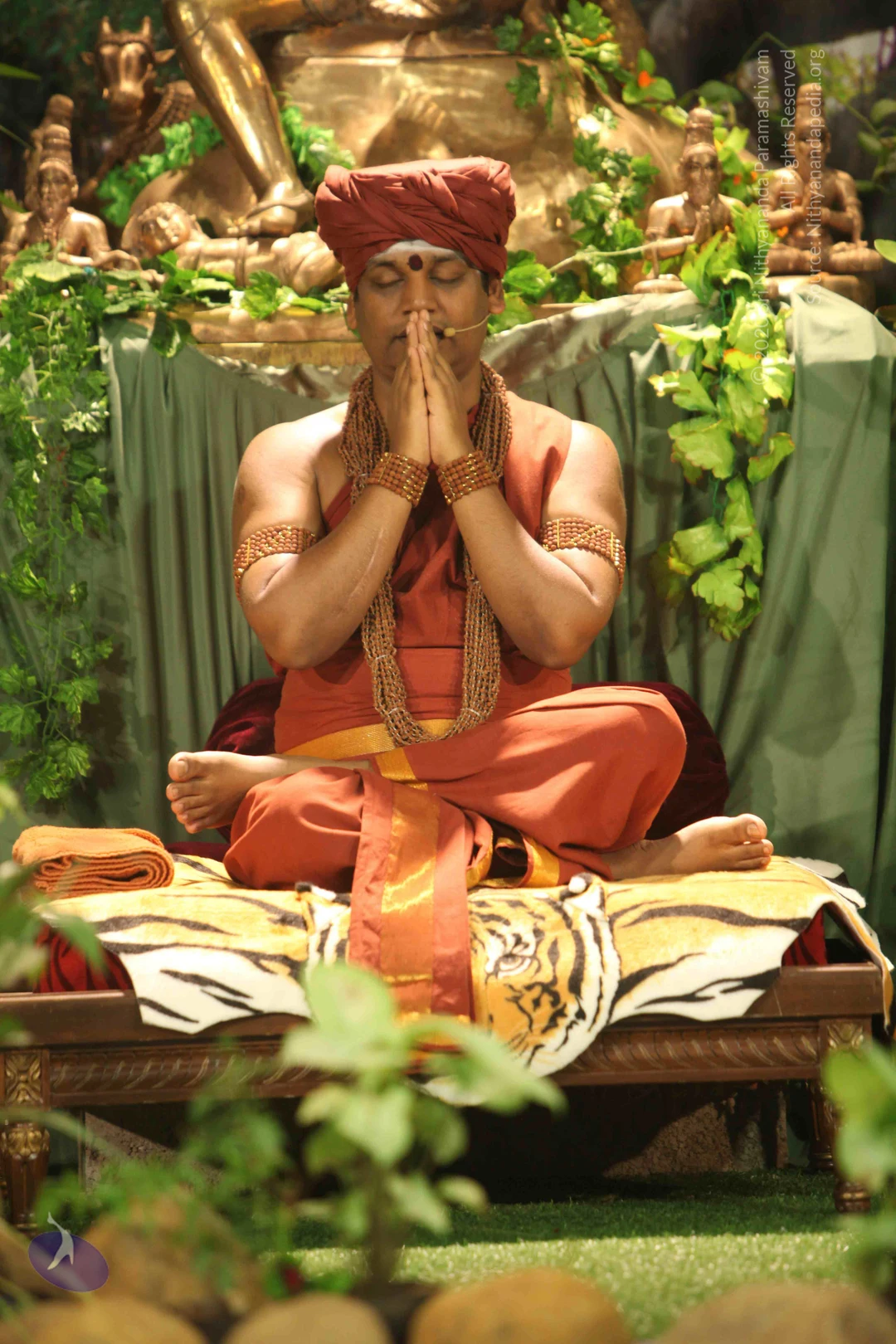
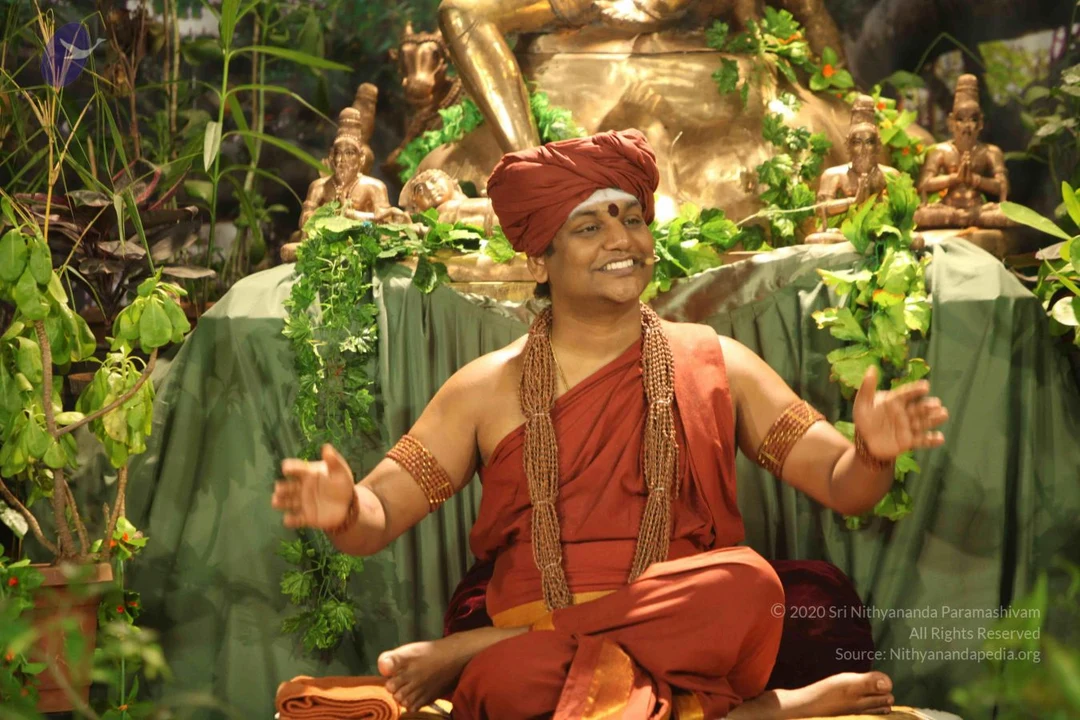
SPH At the Satsang in AdiKailaasa, Bengaluru, India

Kalpataru Darshan To All

SPH Hoisting The Flag To Mark The Beginning Of Rajarajeshwari Brahmotsav

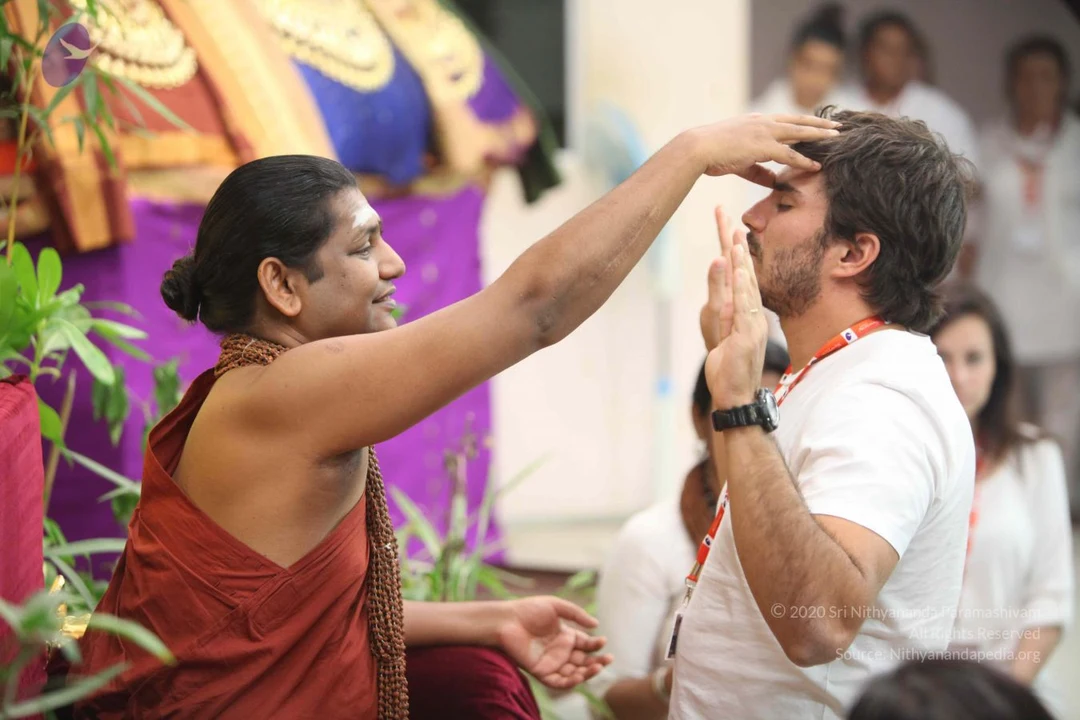
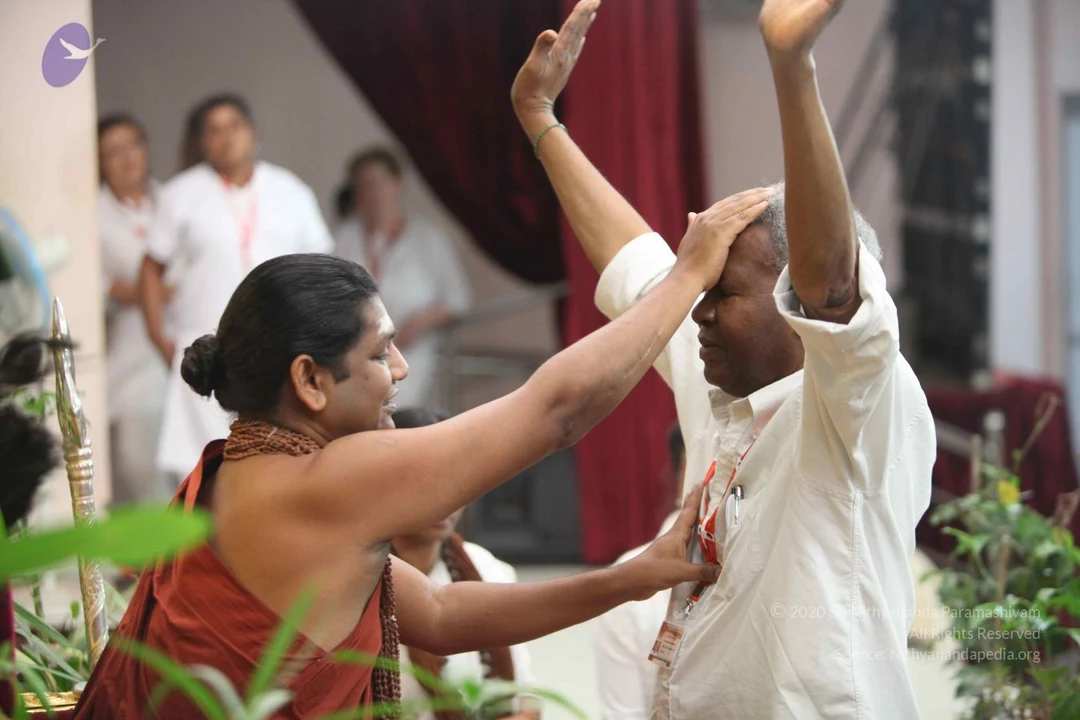
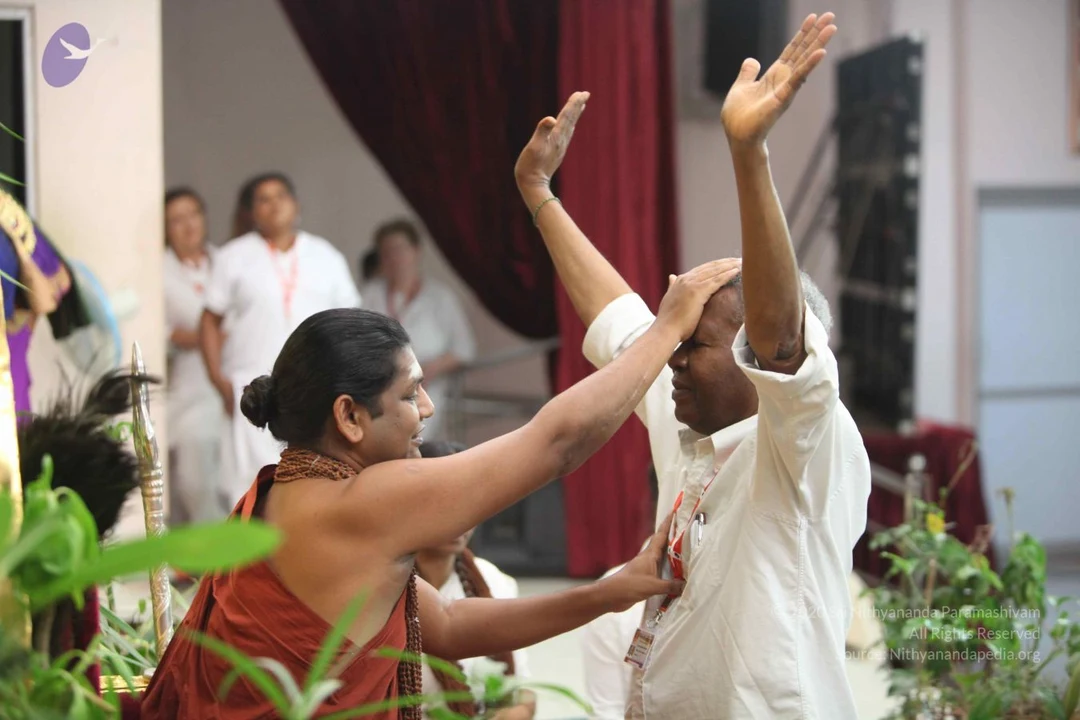
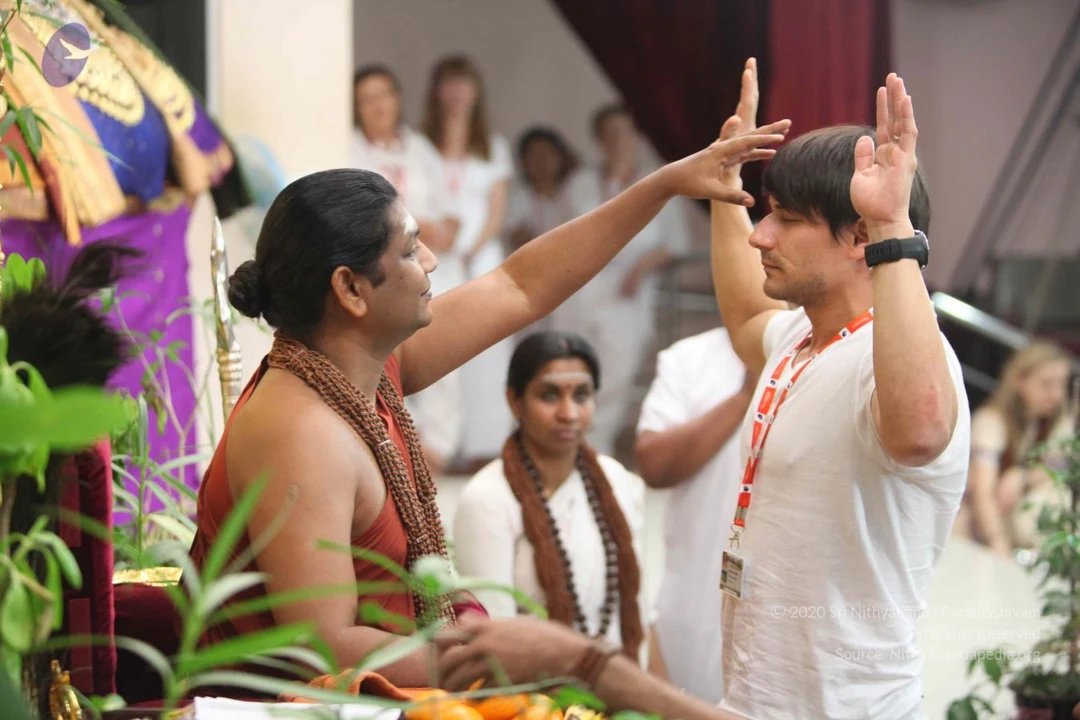
SPH Conducting A Session for the Inner Awakening Delegates At AdiKailaasa, Bengaluru, India

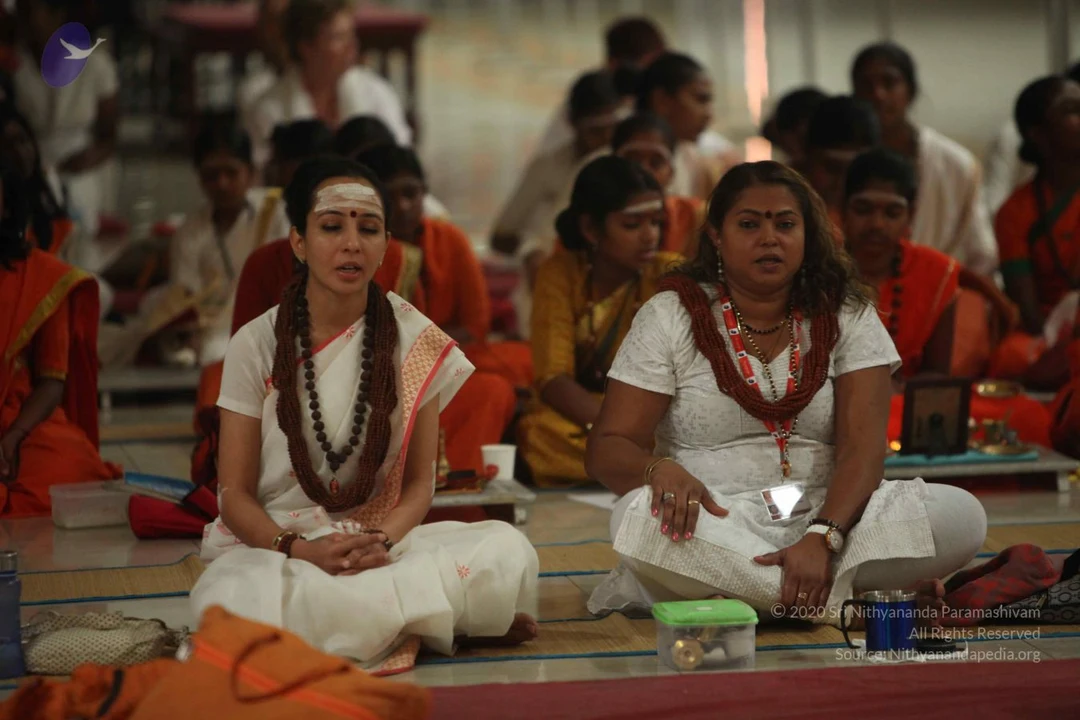
Darshan For Inner Awakening Delegates

FB-Photos-of-the-Day

01-Satsang

Photos from this day
View all 406 photos
Photos
46 photosSource gallery
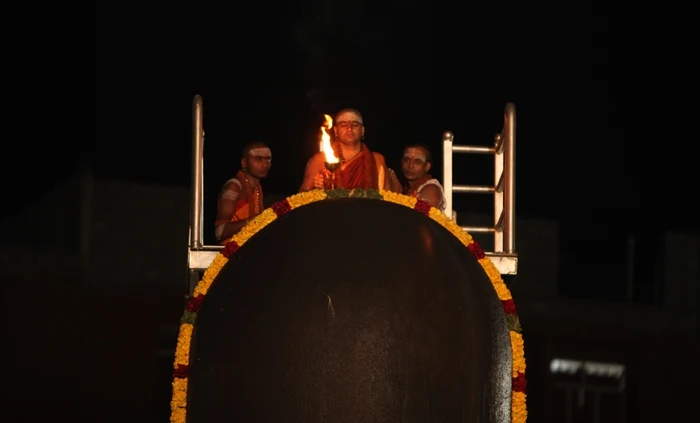
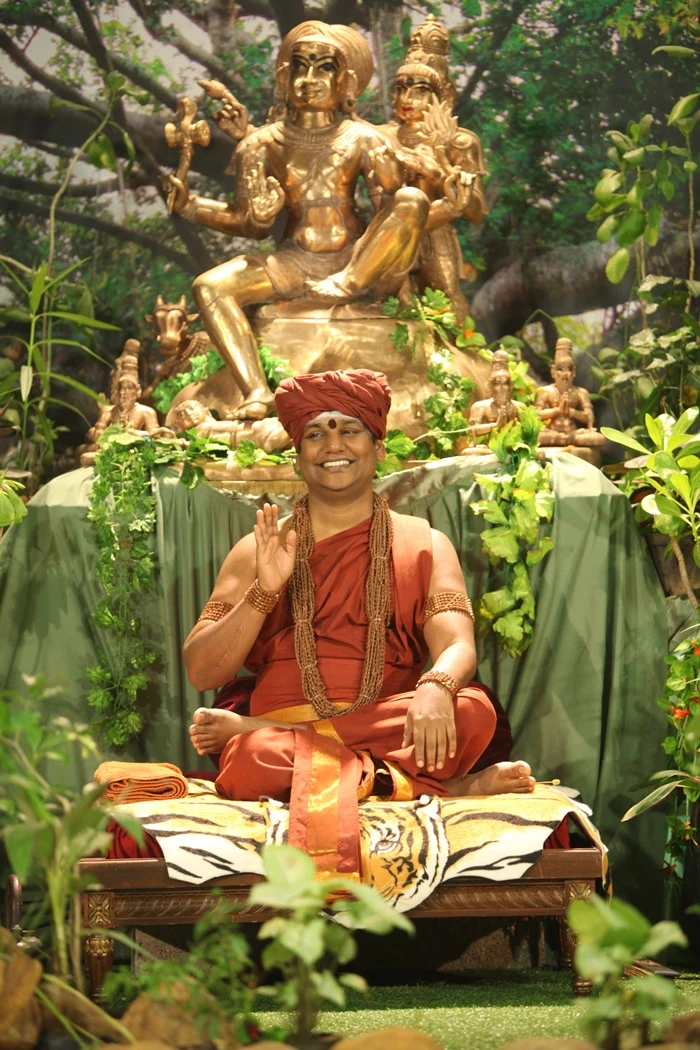
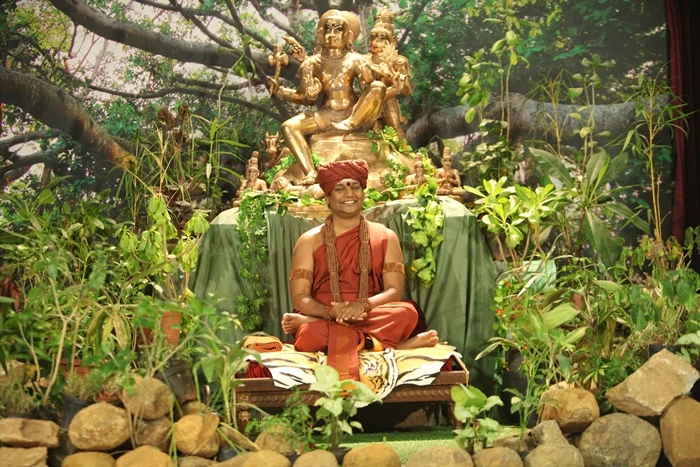
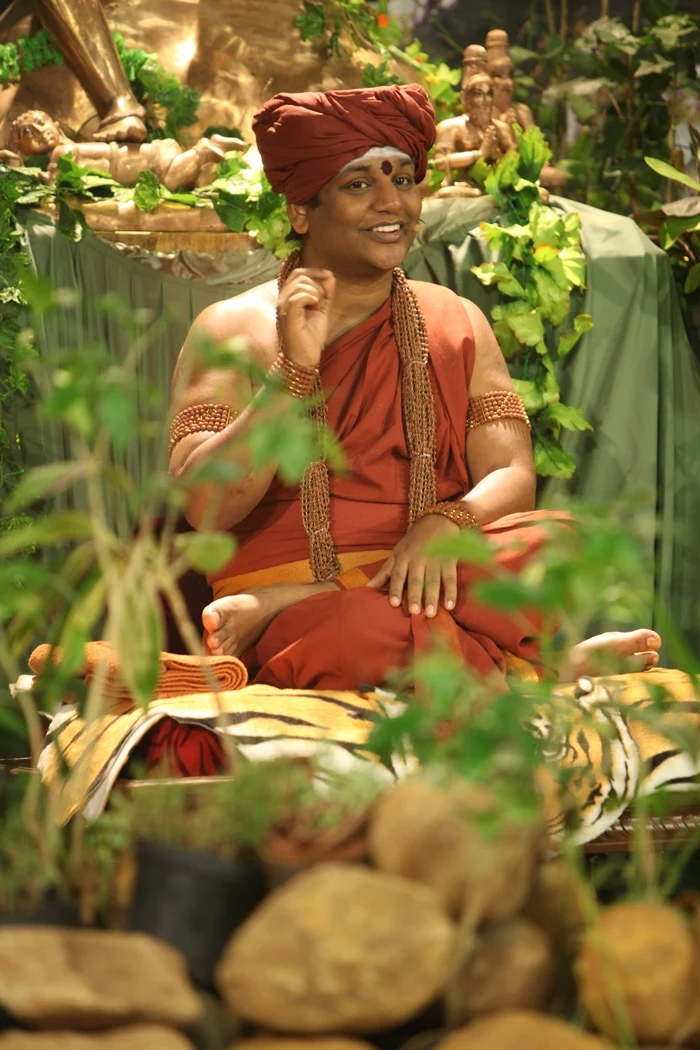
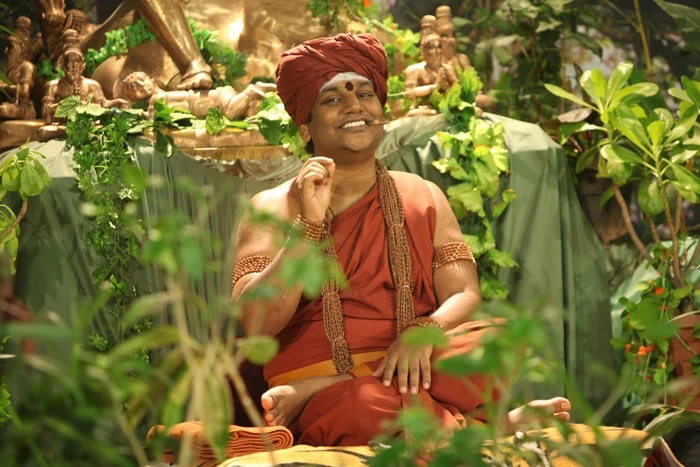
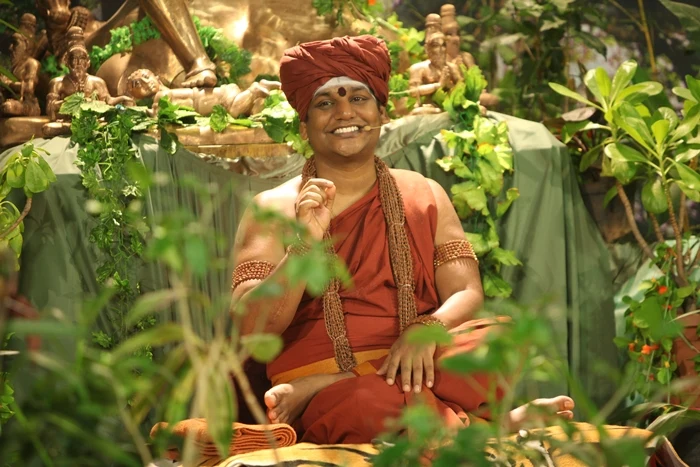
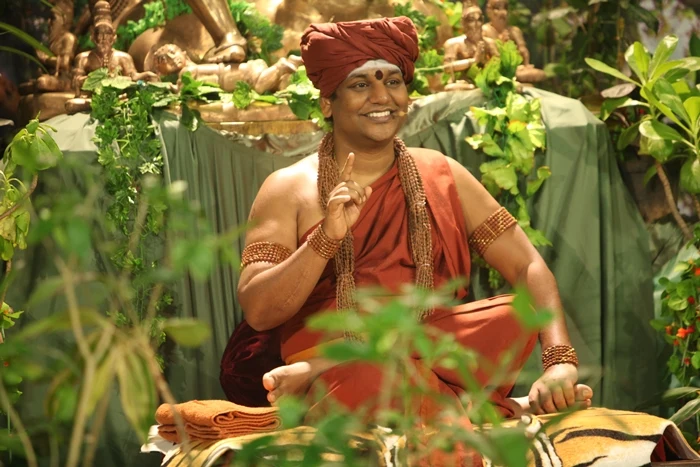
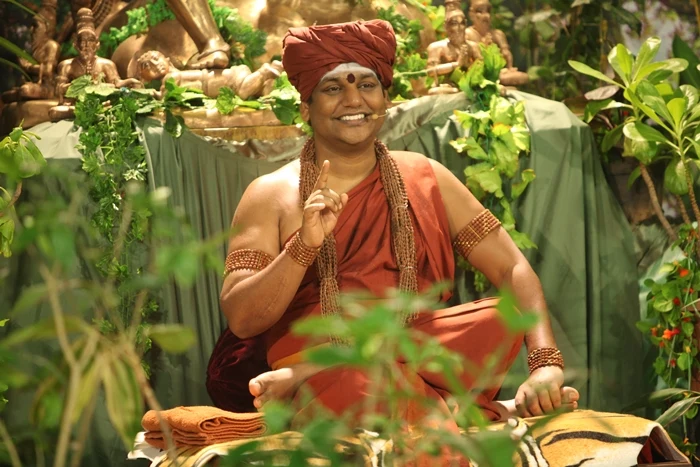
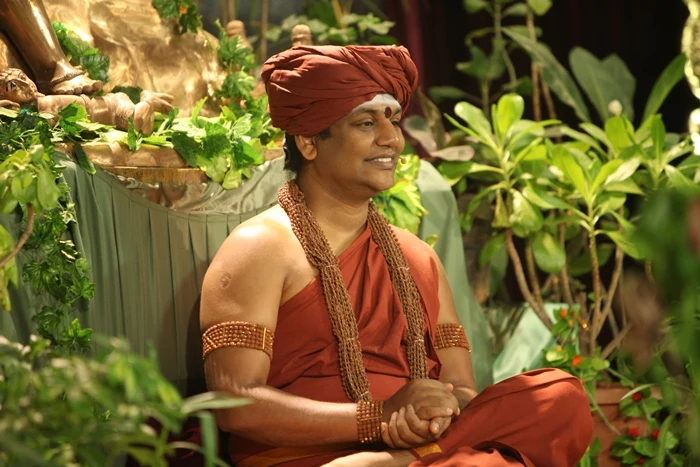
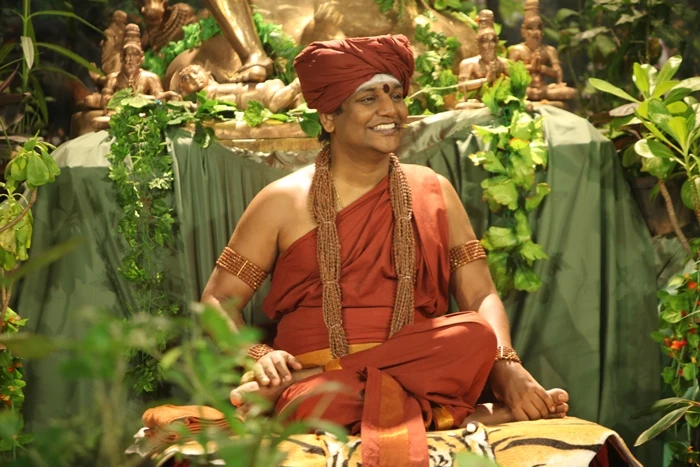
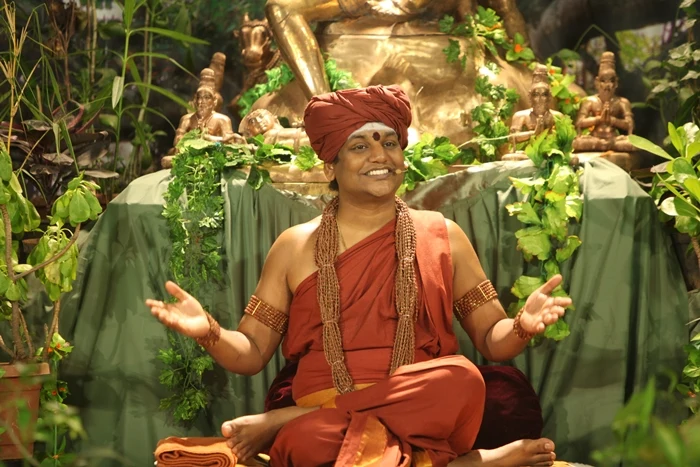
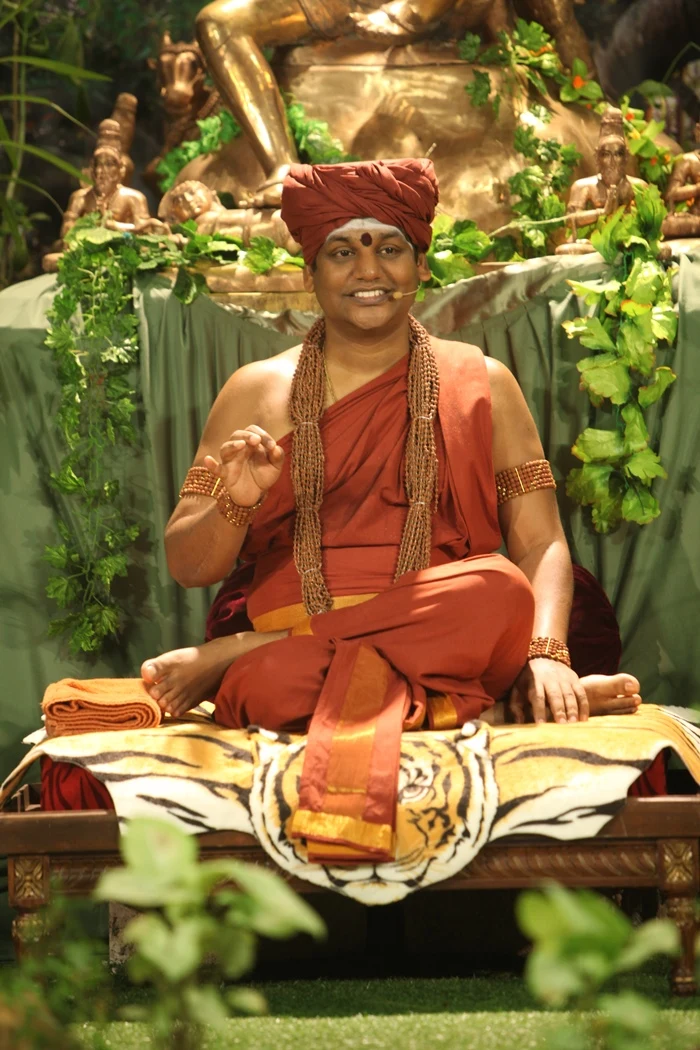
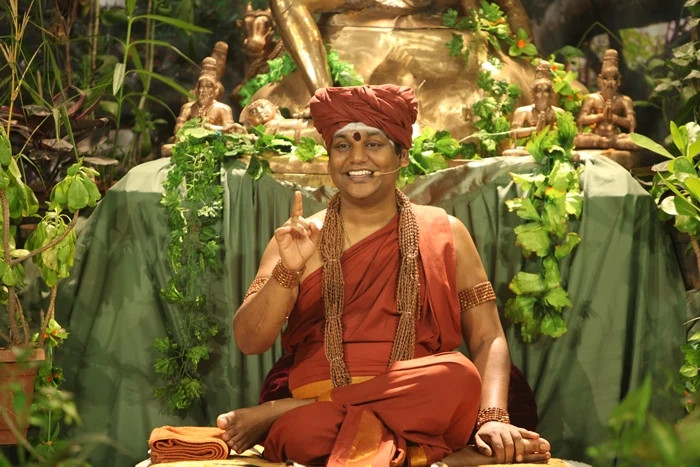
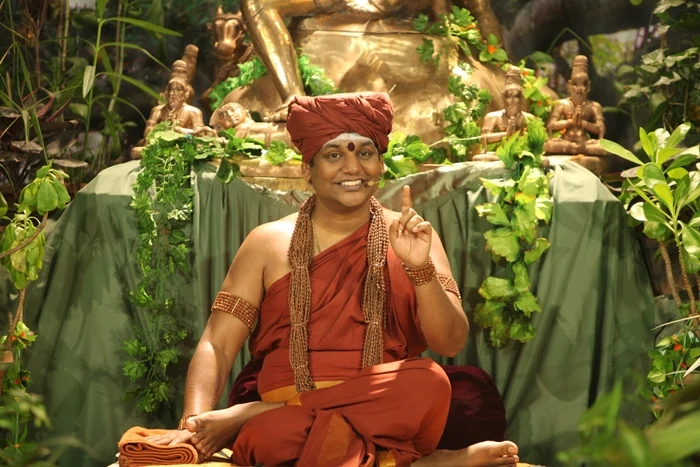
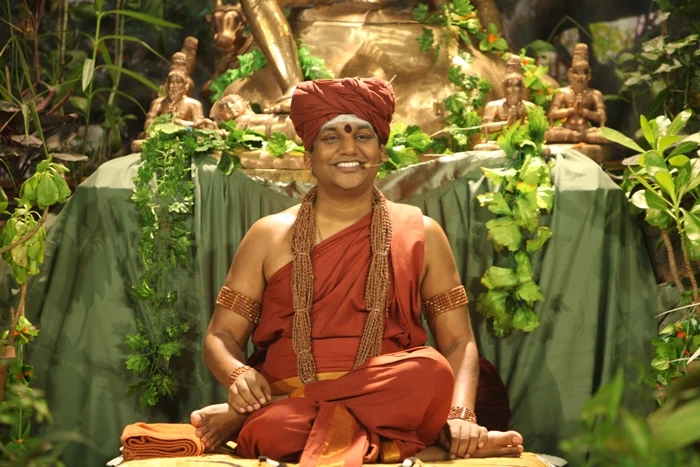
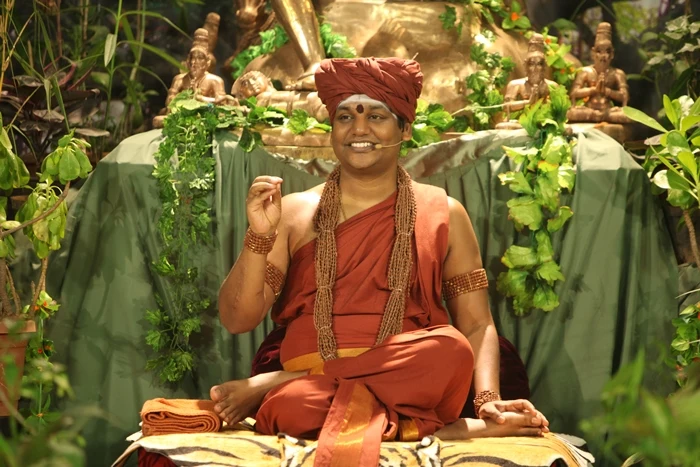
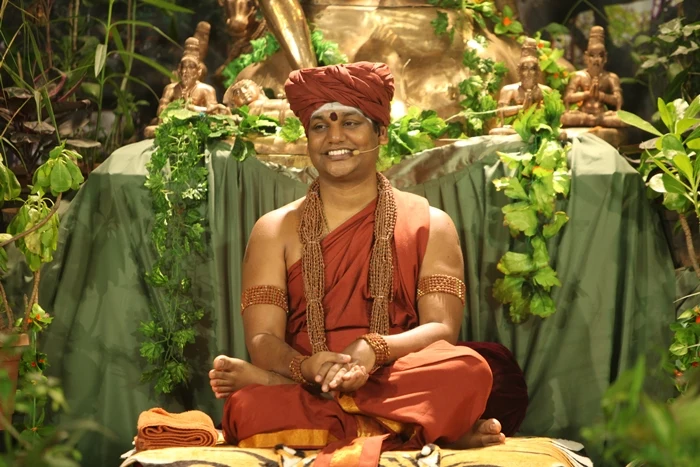
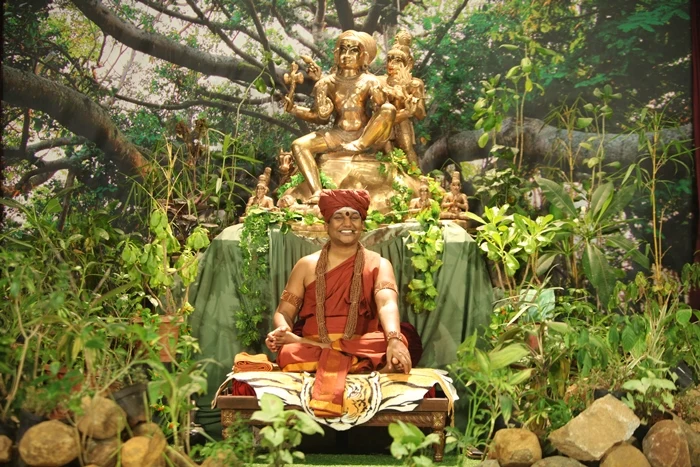
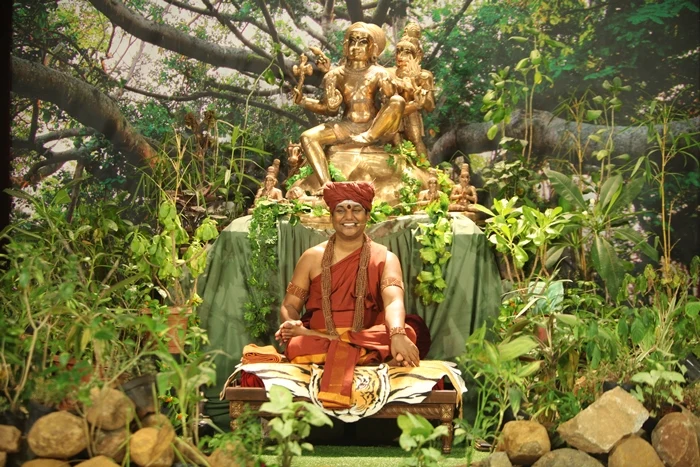
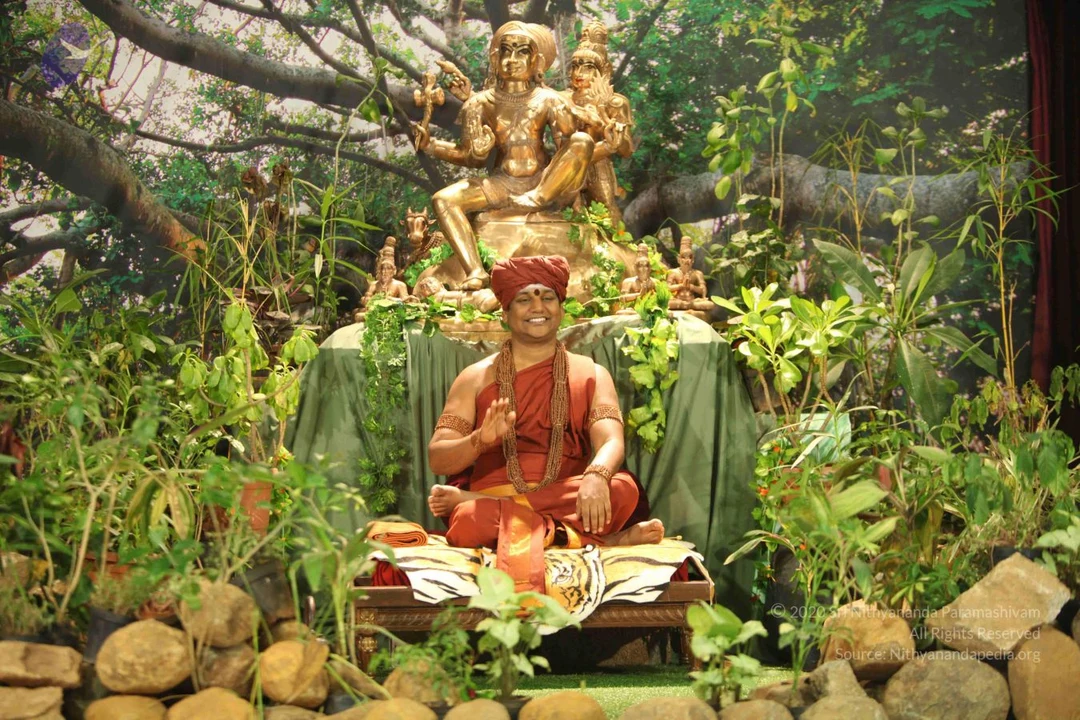
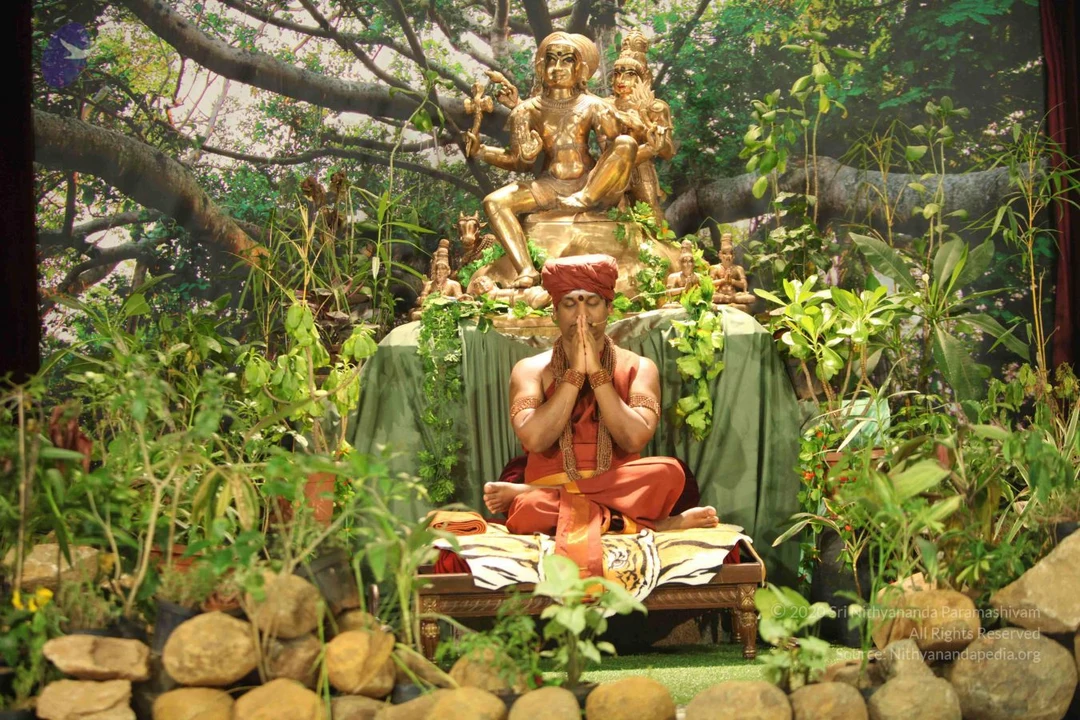
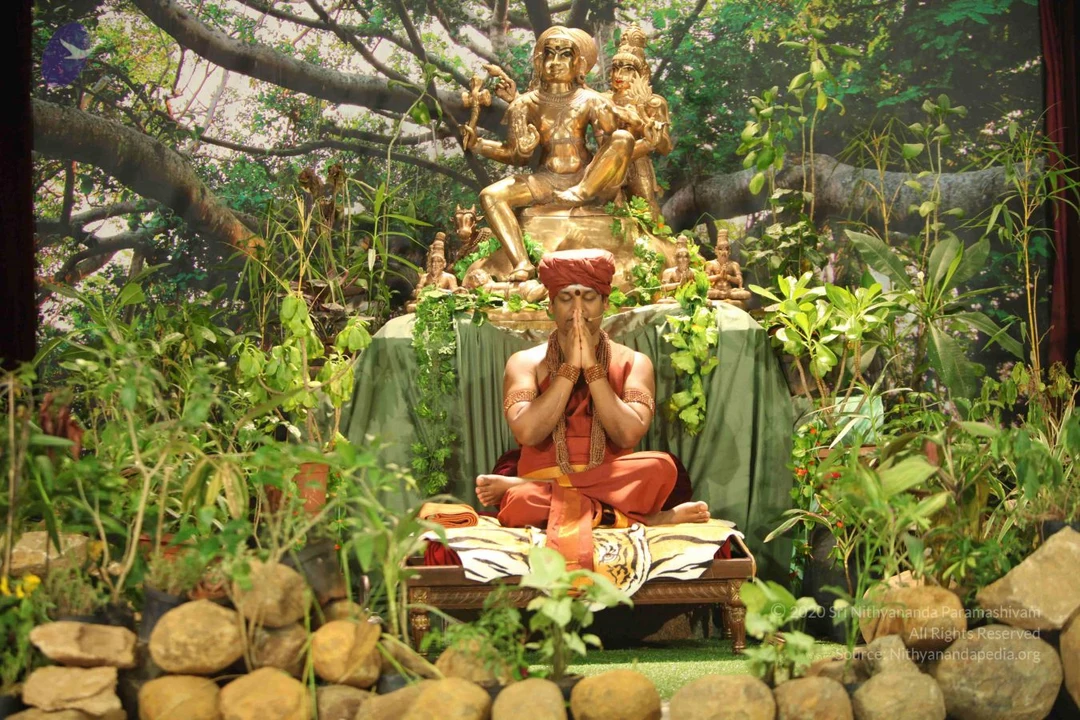
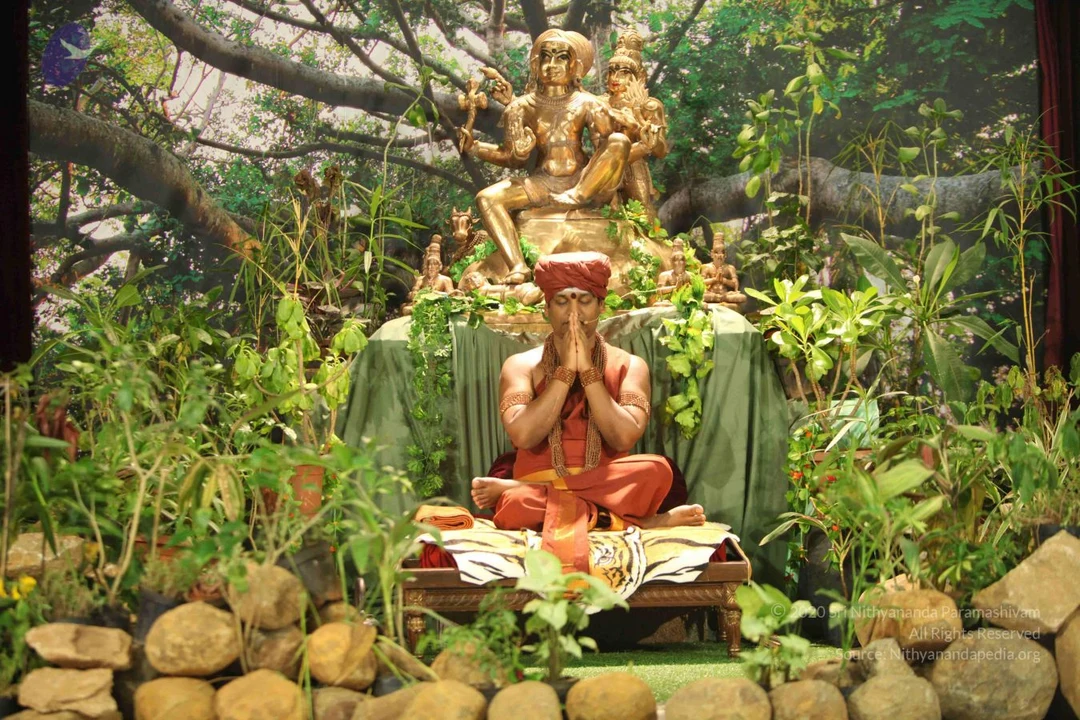
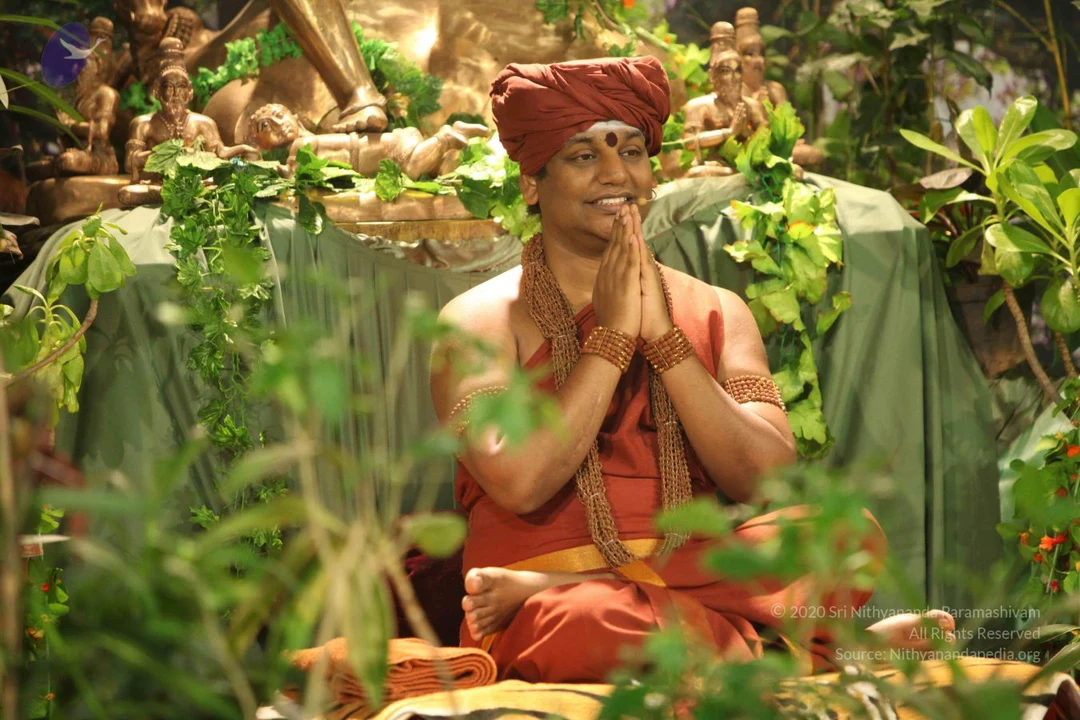
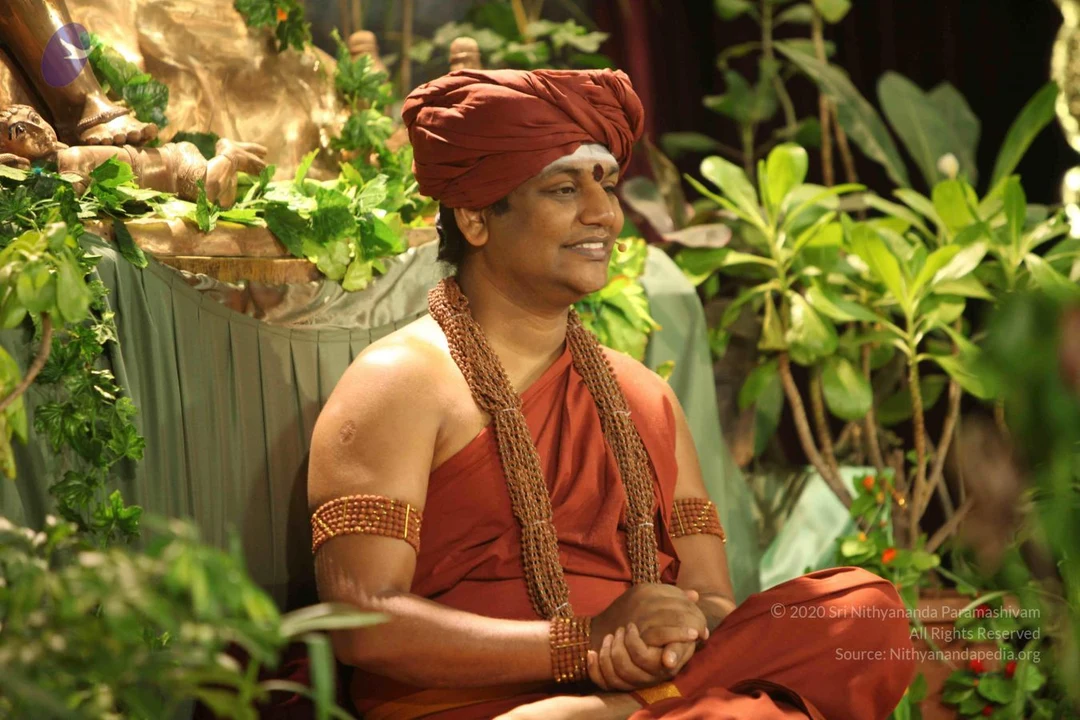
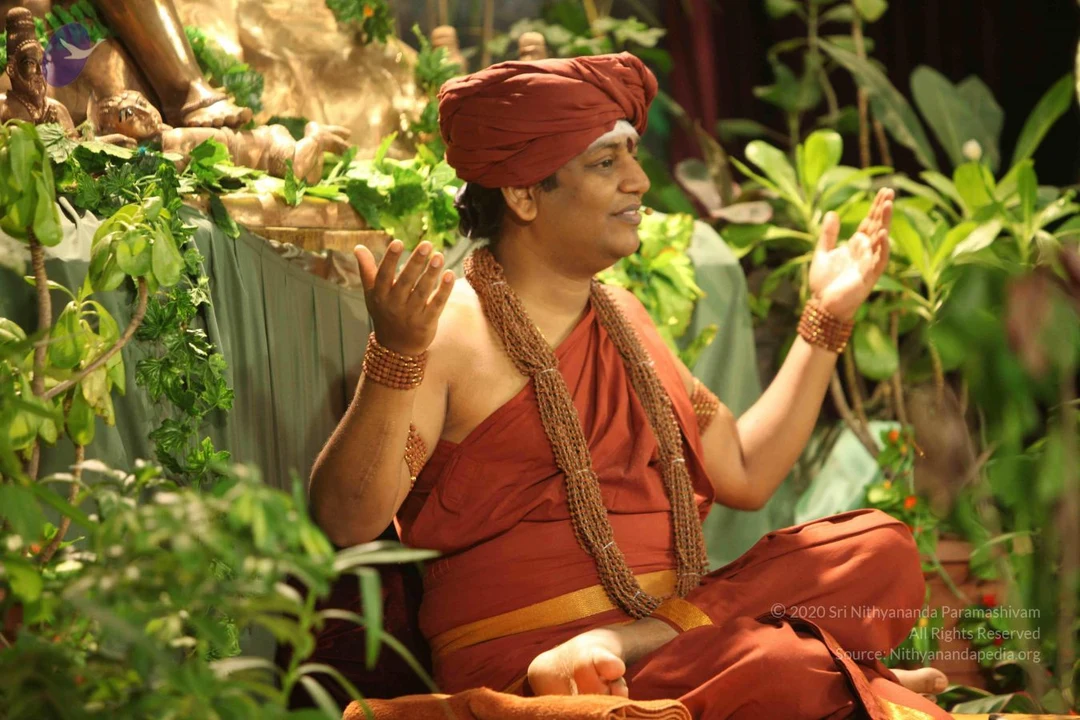
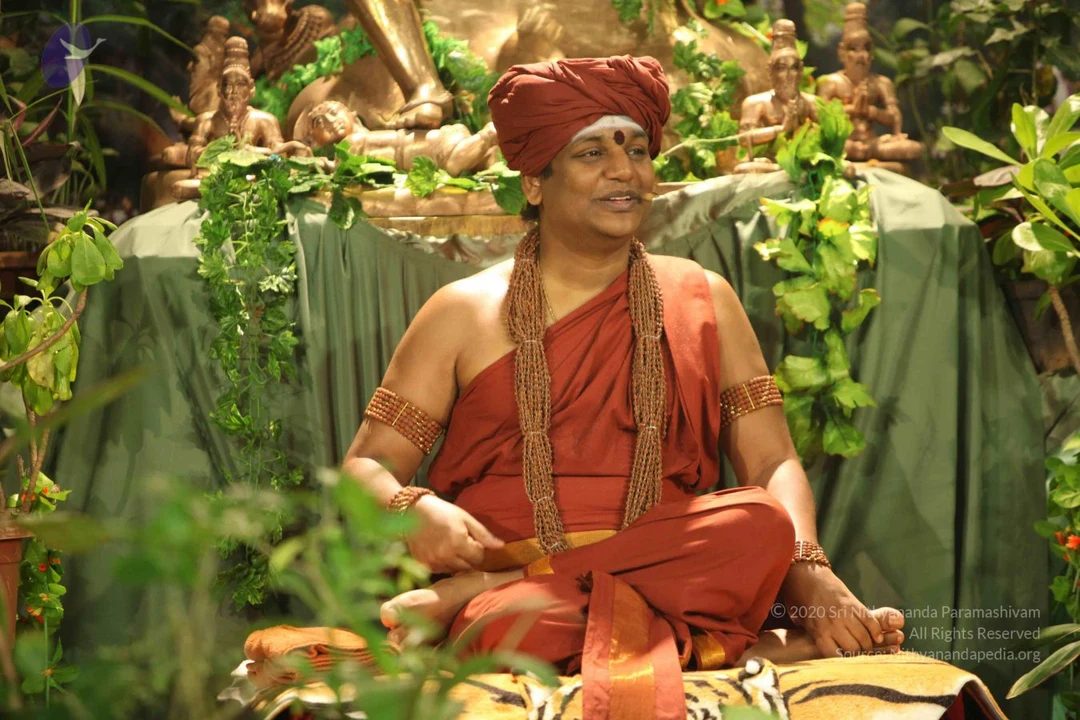
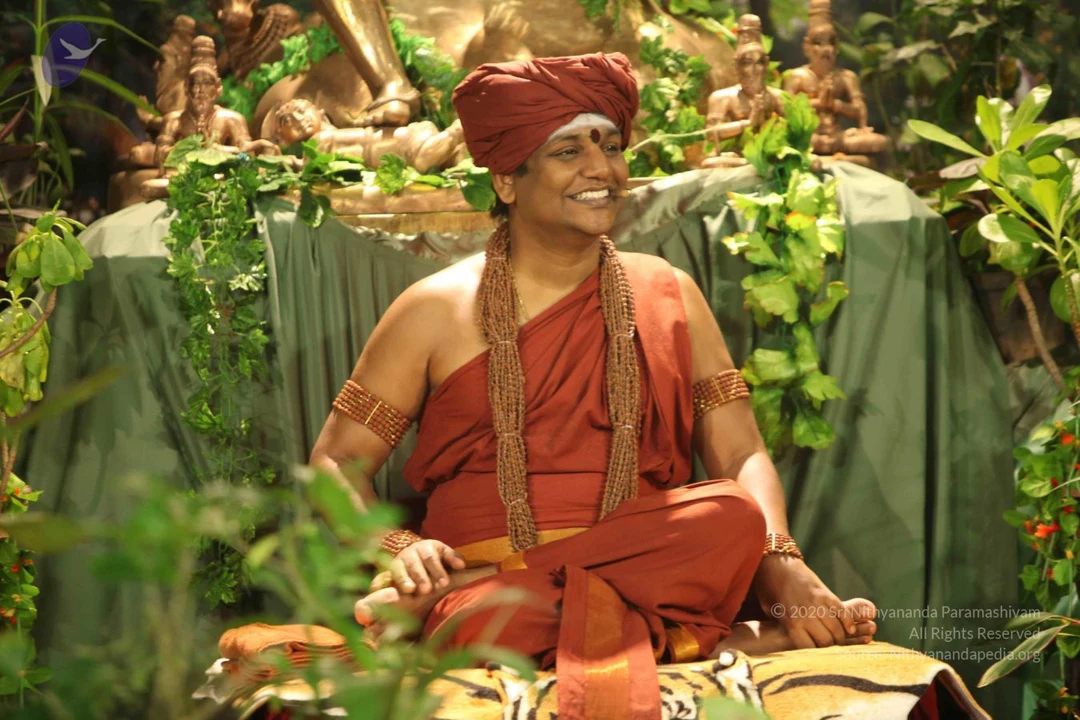
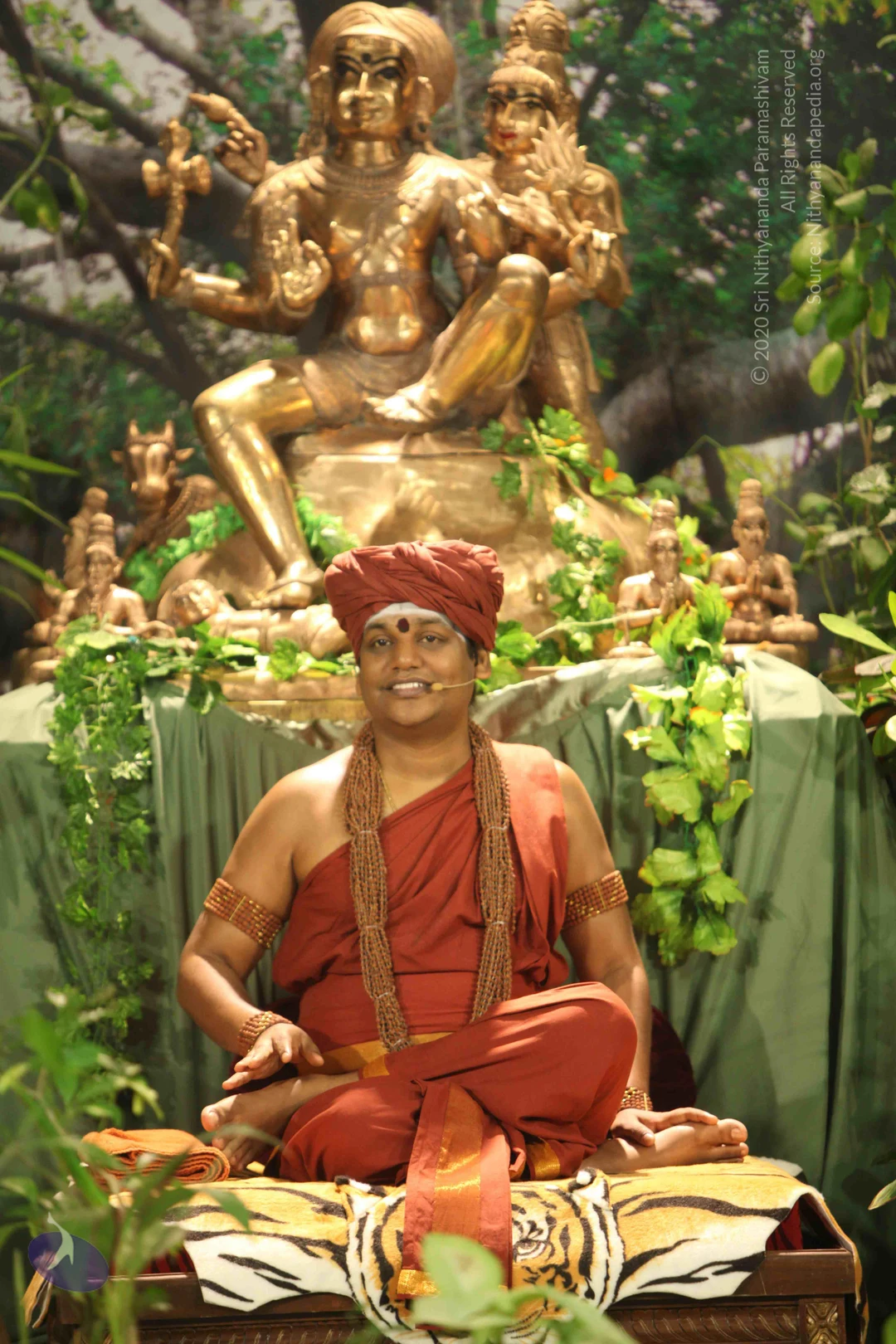
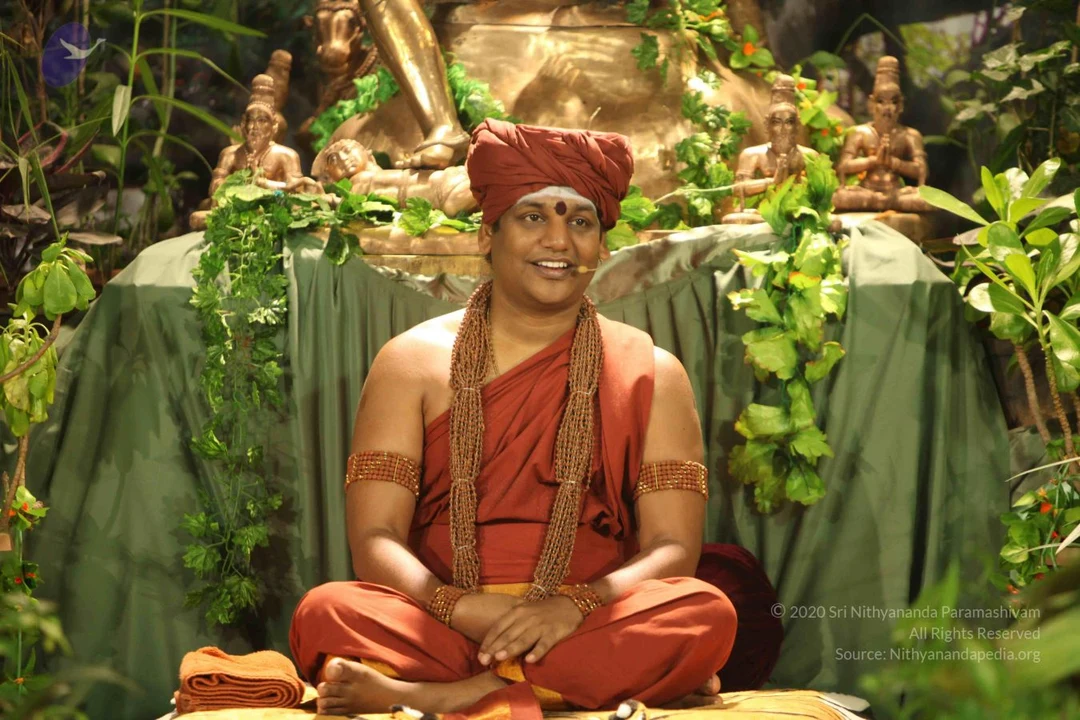
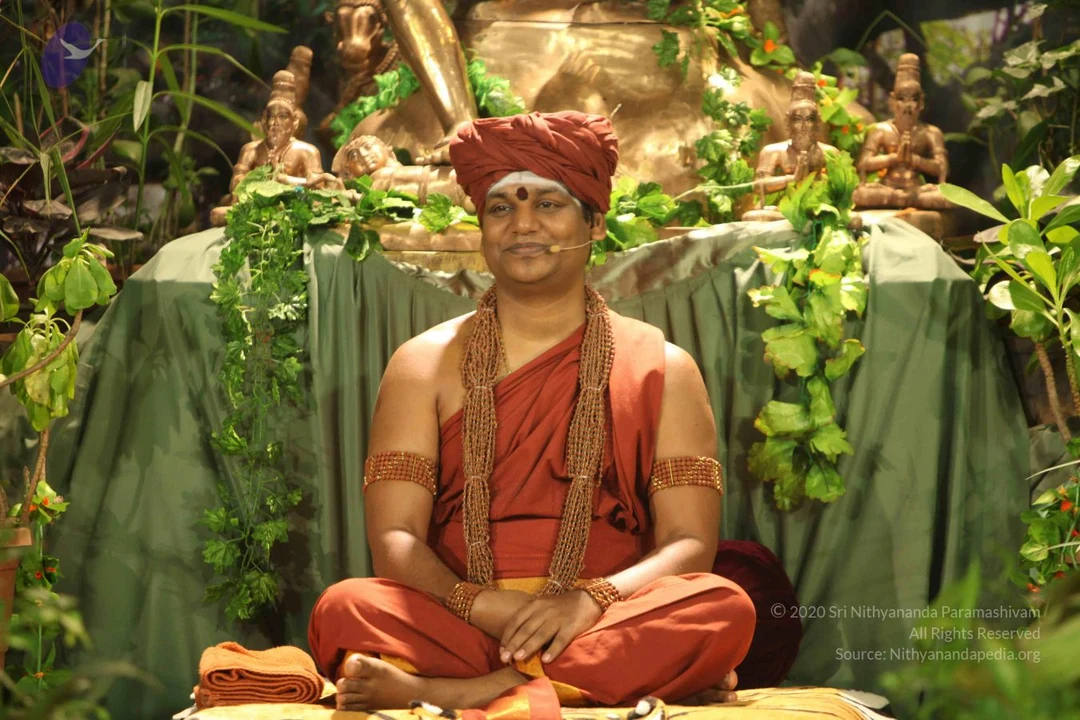
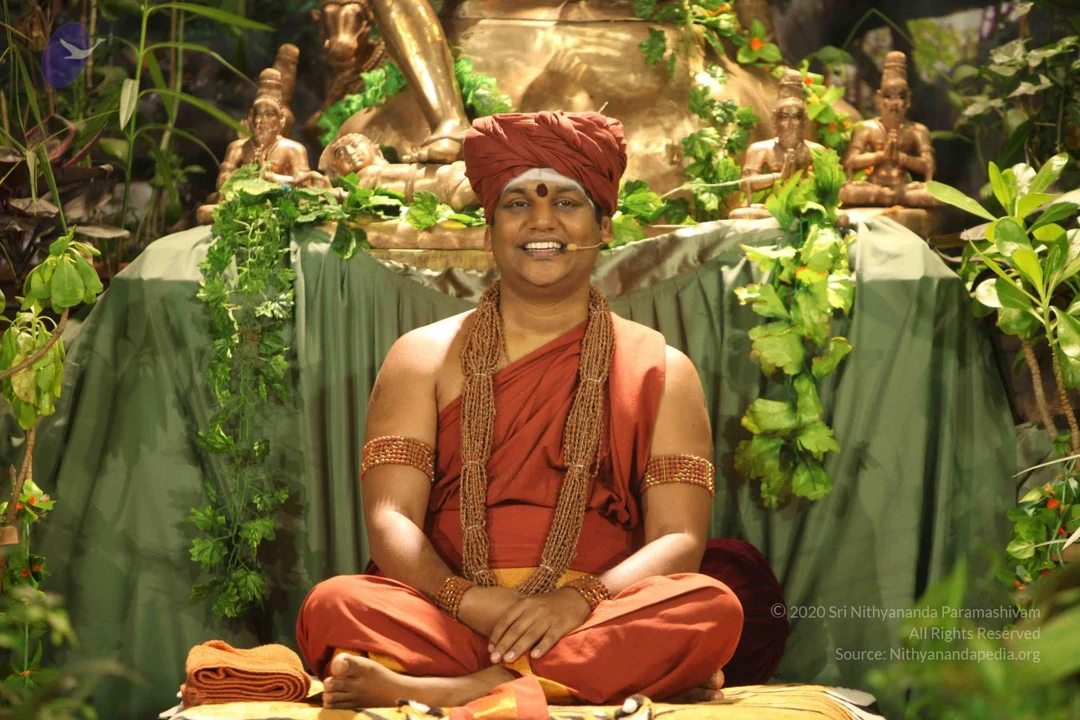
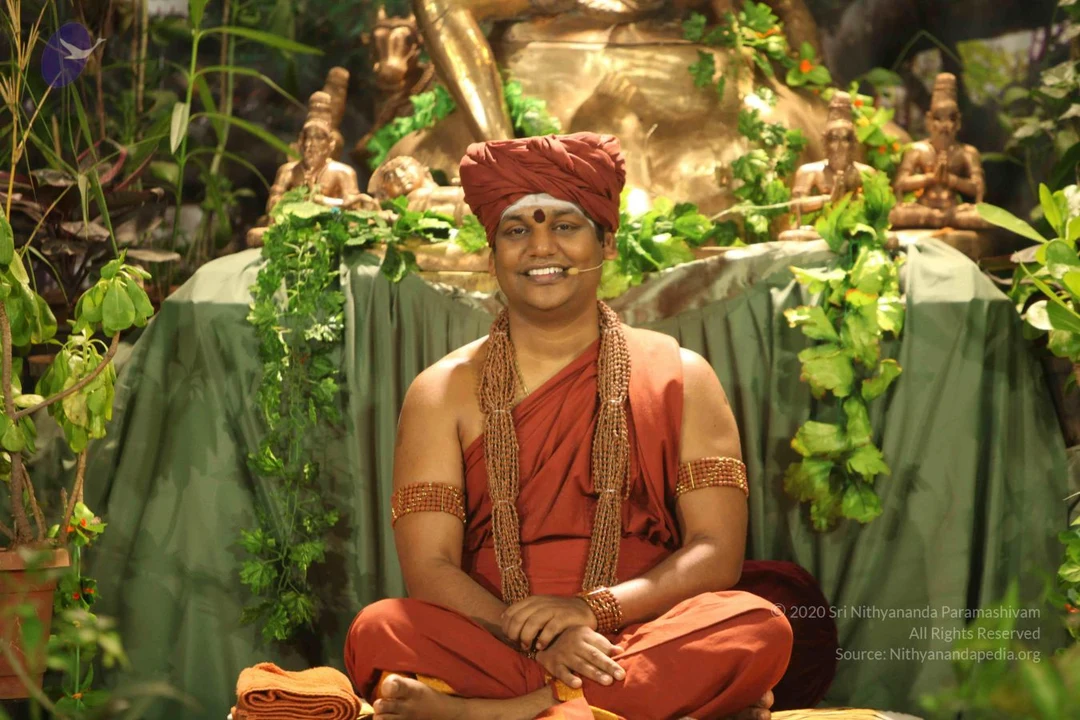
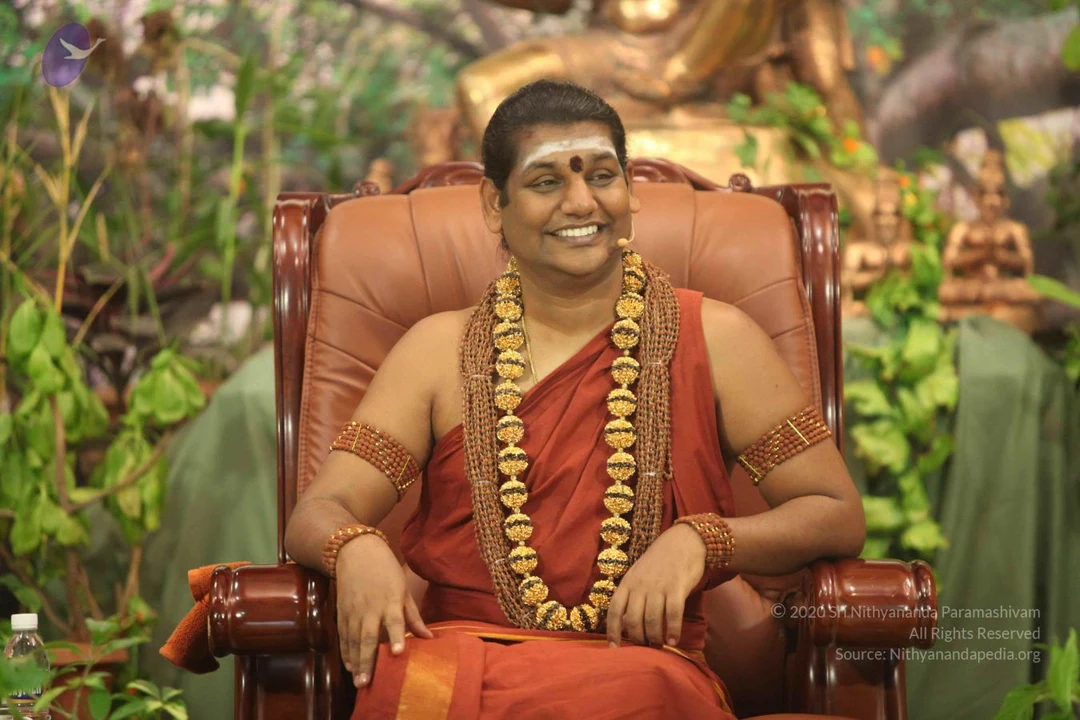
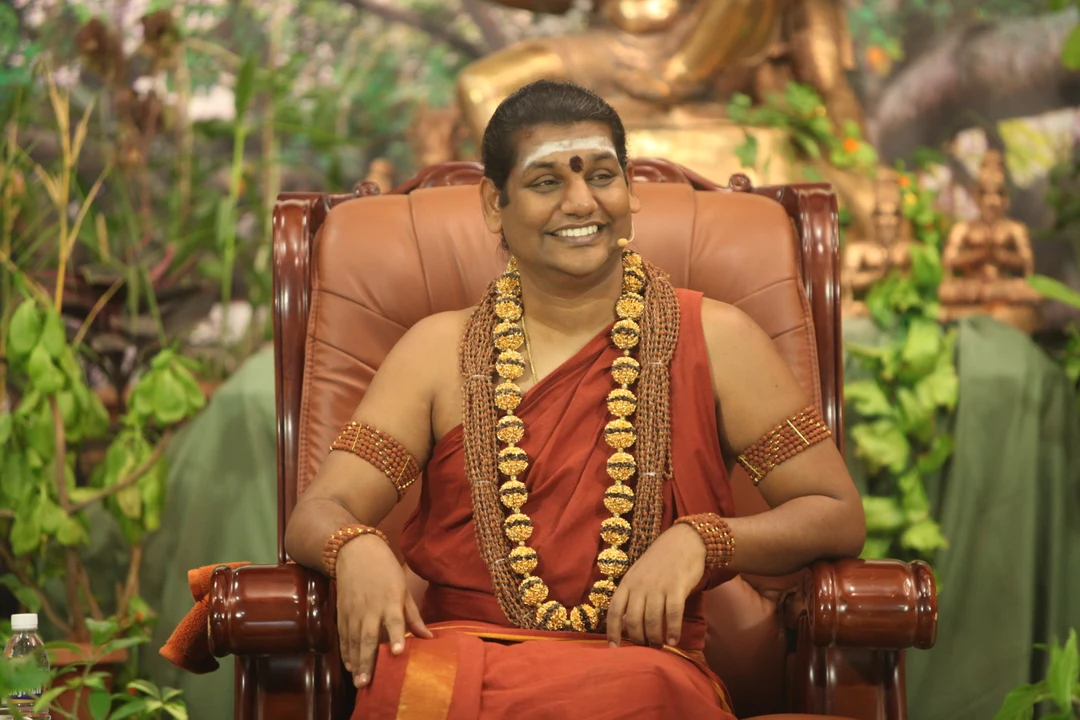
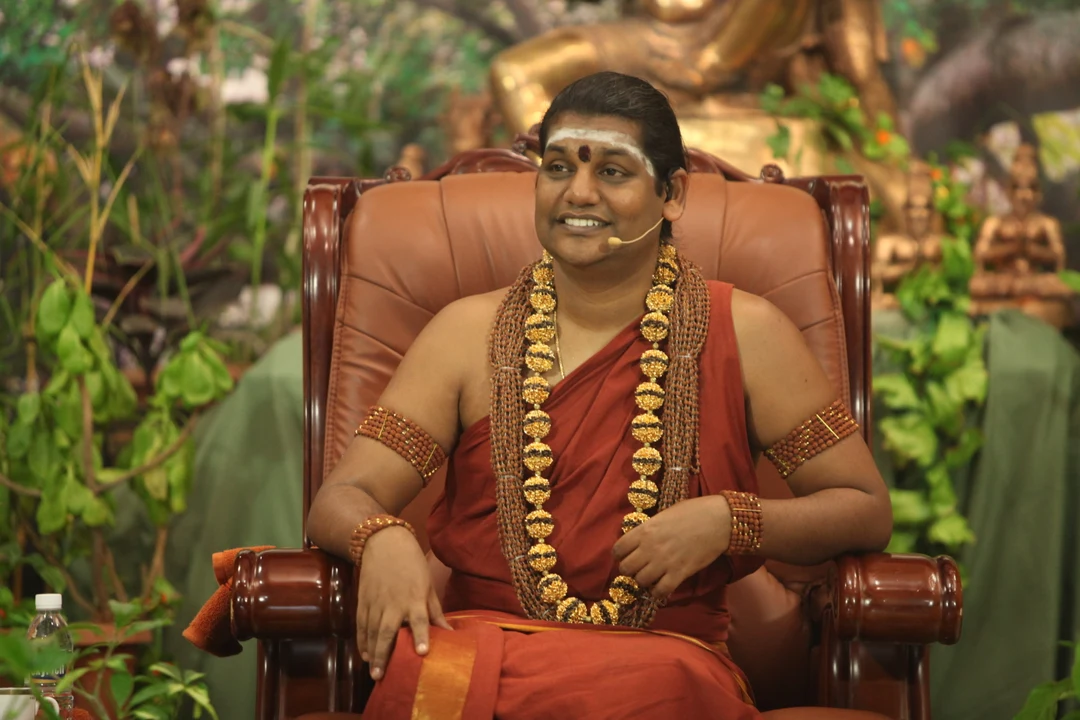
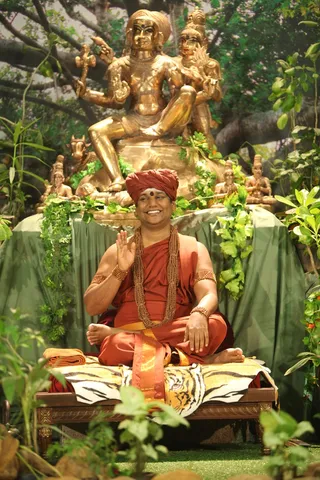
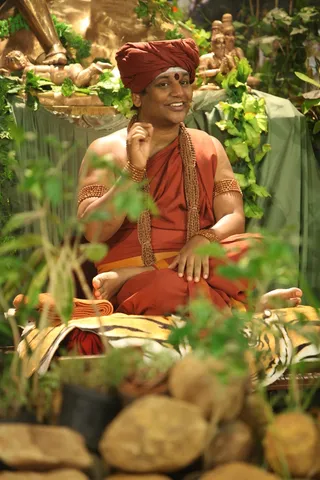
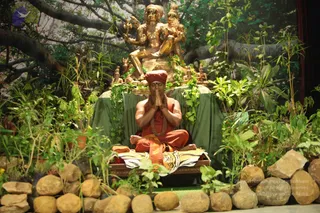
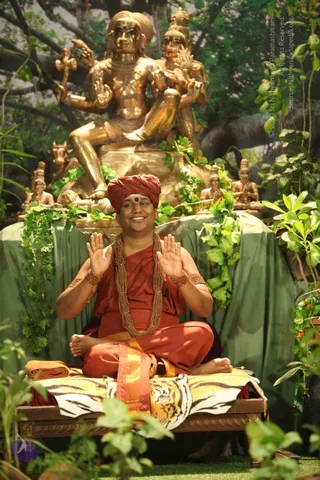
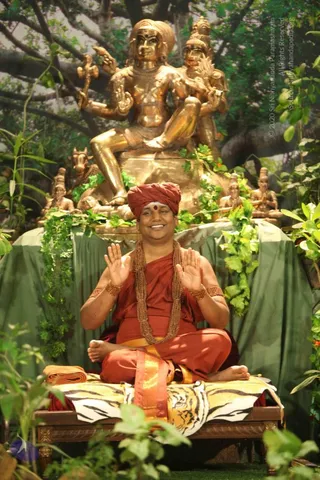
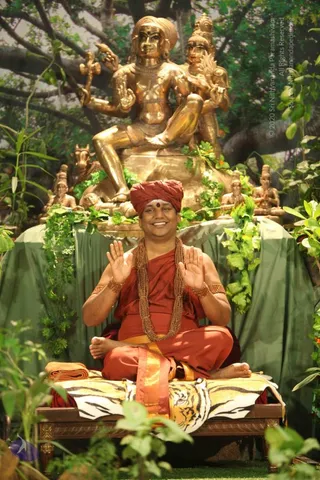
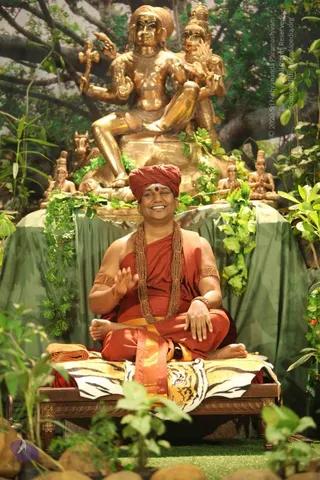
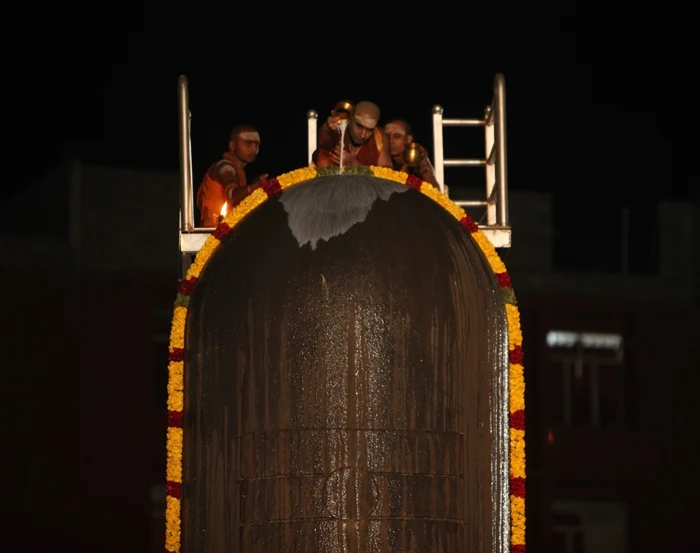
Night photograph of a large dark stone Shivalinga being bathed in an abhishekam, with water streaming down its surface. The linga is wrapped with a band of orange marigold garlands and red flowers. Three men in saffron-orange robes stand on a raised metal platform beside the linga, one pouring liquid from a vessel over the top, others holding small brass vessels and a small oil lamp. Dark building silhouettes and a lit sign are in the background.Night photograph of a large black Shivalingam decorated with a ring of yellow and orange marigold garlands and red accents. Three men stand on a metal platform above it: a central man in saffron-orange robes holds a lit lamp flame, flanked by two men in orange and white clothing. Dark background with a faint building outline and a white light at lower right.A seated man in saffron-red robes sits cross-legged on a wooden dais draped with a striped tiger-skin cloth, smiling and raising his right hand in greeting. He wears a red turban with a vermilion mark on his forehead, a long beaded rudraksha mala, and gold bangles on both wrists. Behind him stands a large gold-coloured deity sculpture of a seated multi-armed figure with a consort, surrounded by smaller golden figures and lush green foliage and artificial trees. Green draped fabric frames the dais. The man has a shaved head under his turban and is the only physical person visible; the setting suggests a satsang stage.Photo of a seated man in a saffron-orange dhoti and matching shawl with a red-orange turban, wearing a beaded rudraksha-style mala and gold armbands, sitting cross-legged on a tiger-skin-covered wooden seat with a white cloth. Behind him stands a large gold statue of a multi-armed deity with a seated consort and attendant figures, framed by a painted jungle backdrop of trees, green foliage and potted plants, with rocks lining the front.A photograph of a man seated cross-legged on a striped tiger-skin cushion in front of a green forest-like backdrop with leaves and rocks in the foreground. He wears a red-orange turban, a red-orange cloth wrap, a rudraksha-style bead mala across his chest, and beaded bangles on his arms and wrists, with a vertical red-and-white tilak mark on his forehead. His right hand rests near his knee while he smiles and gestures. Behind him are golden statues of figures and a gilded curved element with greenery, creating a staged satsang setting. Visible cues include the turban, saffron wrap, and rudraksha mala, so this is a probable Swamiji appearance in a satsang setting.A smiling man sits cross-legged among green leaves and vines on a decorated stage, wearing a red-orange turban, orange-red robe and a long rudraksha mala with gold bead ornaments on his arms and chest. A vertical tilak marks his forehead, and his right hand rests near his chin while the left hand rests on his knee. Behind him, golden sculptures of figures and a reclining gold deity murti stand against a green draped backdrop. Swamiji (probable) is identified by the distinctive red turban, saffron-orange robes, rudraksha mala and ceremonial gold armlets; he is the only physical person visible.
SPH At the Satsang in AdiKailaasa, Bengaluru, India
58 photosSource gallery
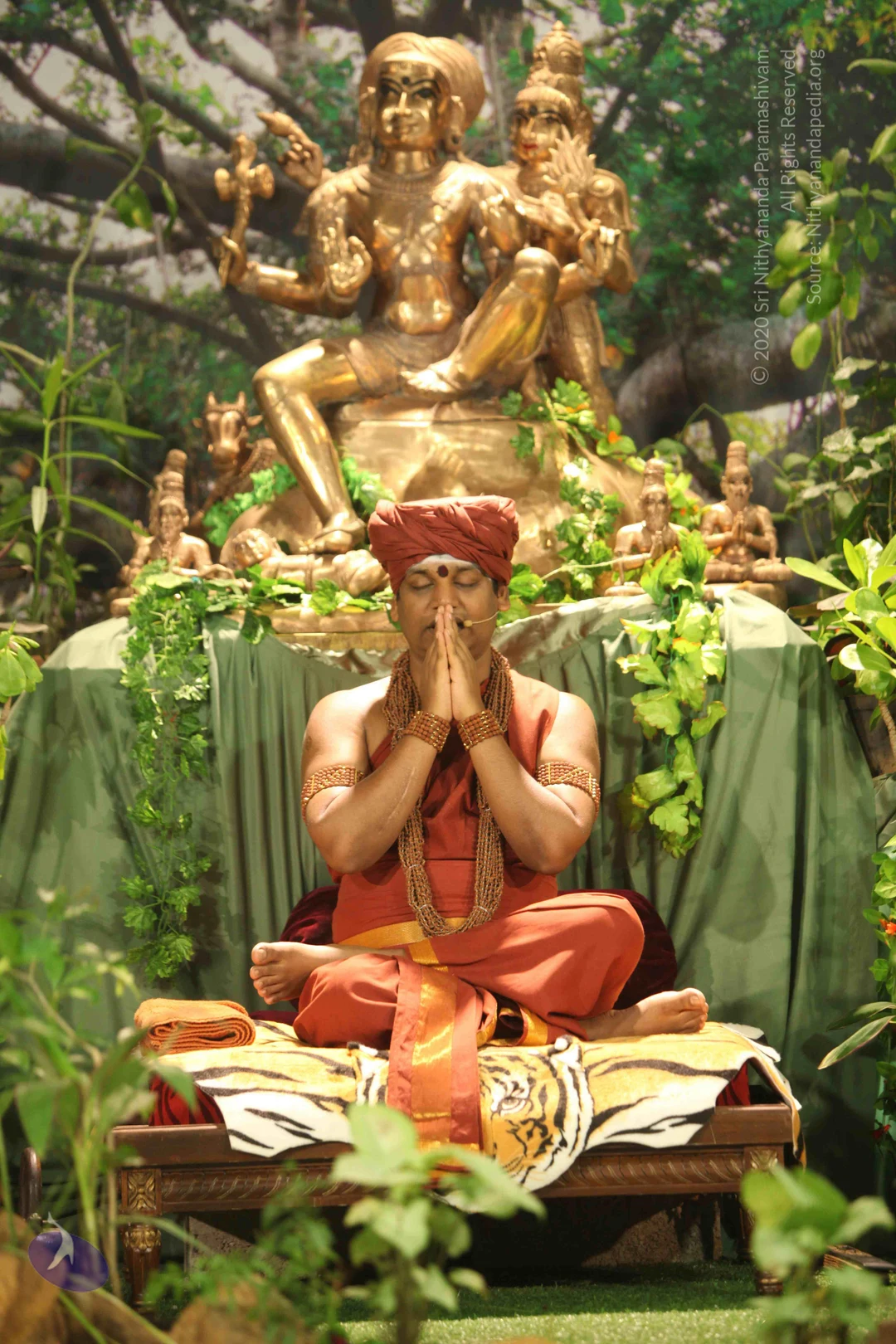
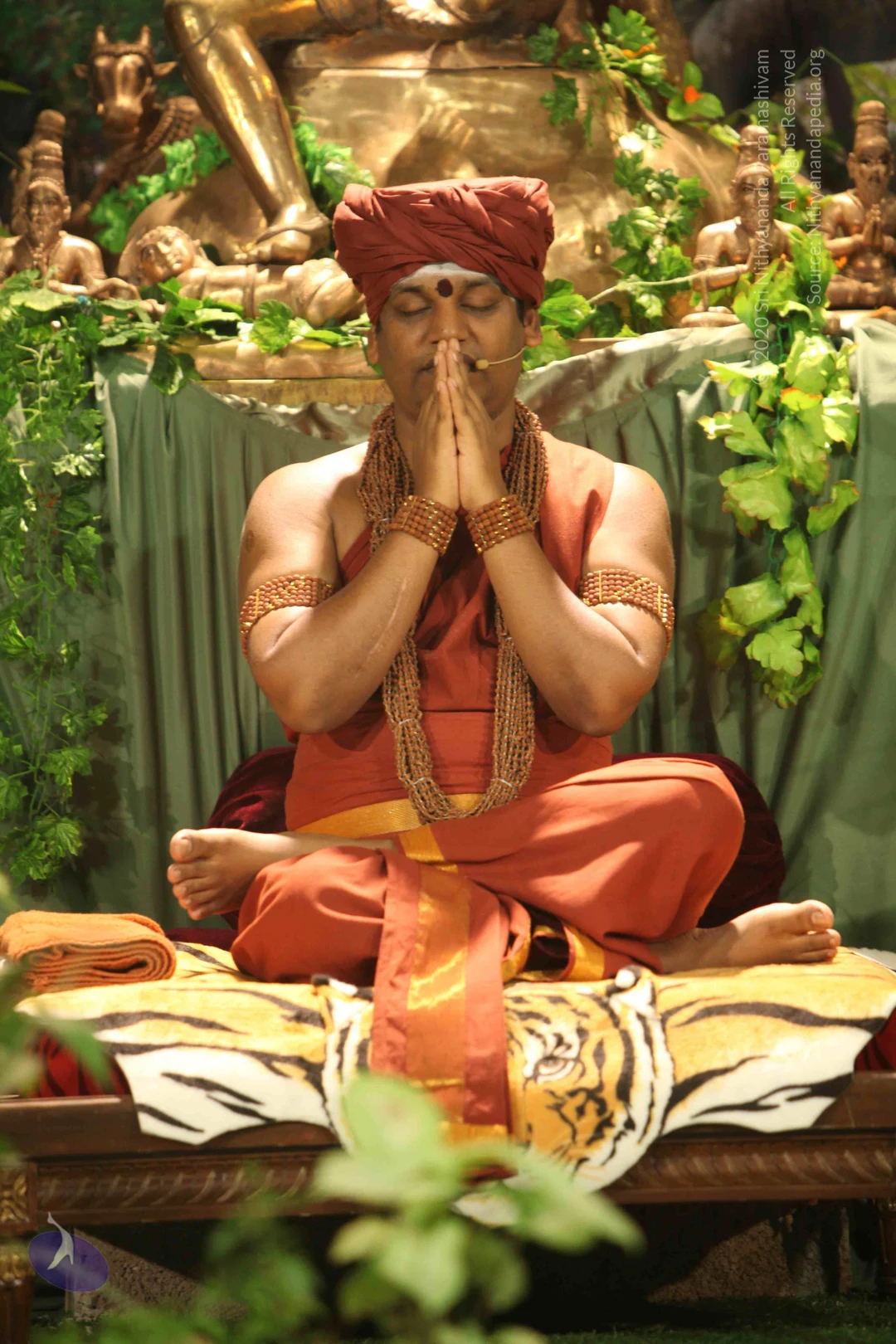
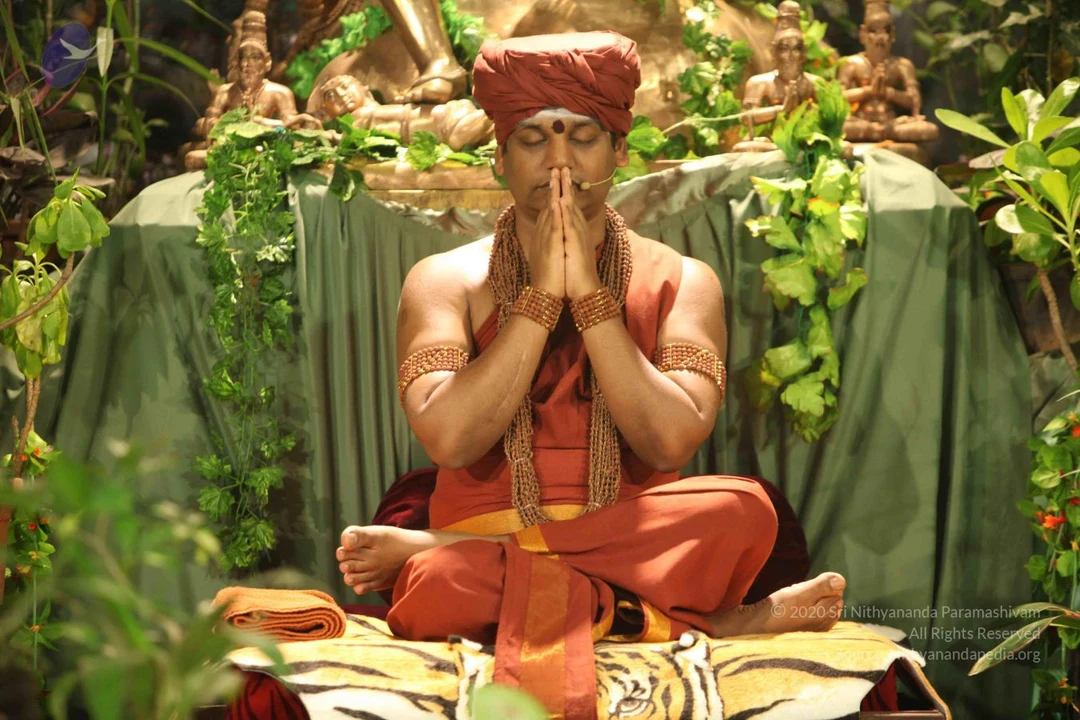
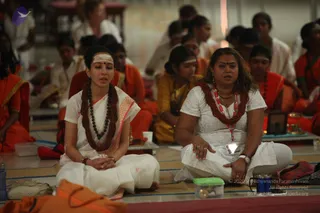
A photograph of a seated satsang gathering in a hall with a mat-covered floor. In the foreground, two women in white clothes sit cross-legged with eyes partly closed. The woman on the left wears a white saree with a red border, a dark rudraksha mala with a white wooden bead strand, and a white forehead band with a red bindi; her hands are clasped in her lap. The woman on the right wears a white top and white trousers, a long red rudraksha mala and a red and white lanyard, and a gold wristwatch. Behind them, many people in saffron and orange robes and a woman in a yellow saree sit in rows. A framed portrait stands on a small table at right beside brass lamps and a kalasha-style vessel. Other people in white and orange are blurred in the background.A seated man in saffron-orange robes sits cross-legged on a low wooden platform draped with a striped tiger-skin cloth, with his palms pressed together in a namaskar gesture at his chest. He wears a red turban, a rudraksha mala and a gold-toned beaded necklace, and his bare feet are visible. Behind him stands a golden statue of Shiva seated with a consort, set on a green draped altar decorated with trailing green vines and potted plants. A dense painted backdrop of tree trunks and foliage surrounds the stage, and rounded rocks line the front edge. The setting suggests a satsang discourse. One person is physically present.A photograph of a seated man in a red-orange turban and matching orange-red robes, with a long rudraksha mala draped over his chest and gold bangles on both wrists. He sits cross-legged on a wooden seat draped with a tiger-striped cloth, raising both palms in a blessing gesture while smiling. Behind him stands a large golden statue of a seated deity with multiple arms and a companion figure, flanked by smaller golden figures, a bull and a green draped backdrop with leafy vines and plants. The setting resembles a decorated forest stage. A person identified by the page as Swamiji appears in this photo, with a distinctive presentation of red-orange turban, rudraksha mala and ceremonial gold bangles, so he is described as Swamiji (probable).A seated man in a red-orange turban and matching orange-red robes sits cross-legged on a wooden platform draped with a tiger-striped cloth, raising both palms in a blessing gesture while smiling. A red tilaka mark is on his forehead and he wears a long brown rudraksha mala and gold bangles. Behind him a gilded statue of a deity seated on a pedestal, with a bull figure at its side, stands among green leaves and garlands on a green draped altar, against a painted tree backdrop. Two smaller gold figures sit on either side. No other people are visible.A man sits cross-legged on a wooden platform draped with a tiger-striped cloth, palms raised toward the camera in a blessing gesture. He wears a red-orange shawl and dhoti with a gold-bordered waist cloth, a red turban with a red tilak, a long rudraksha mala and gold bangles. Behind him stands a large golden deity murti of a multi-armed figure with a seated consort, surrounded by smaller golden figures, green leaves and a green draped backdrop with a tree painted behind.A smiling man in a red-orange turban with a vermilion bindi sits cross-legged on a wooden seat draped with a tiger-striped cloth, hands in a teaching gesture. He wears a red-orange garment, multi-strand rudraksha mala, and gold armbands and bangles. Behind him stands a large golden deity murti of a seated figure with a consort, flanked by smaller golden figures, against a painted forest backdrop with green foliage and garlands. The seat is surrounded by potted plants and leaves in a garden-like setup.

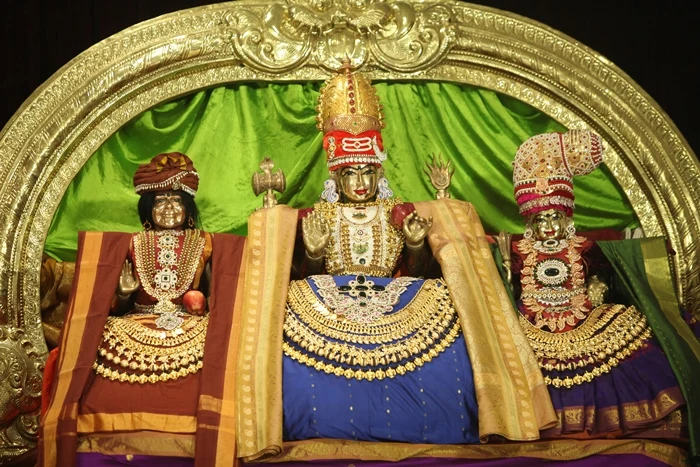
Kalpataru Darshan To All

34 photosSource gallery
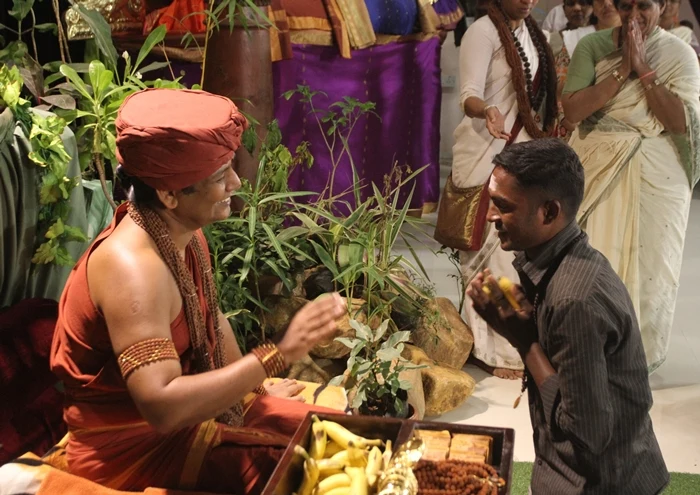
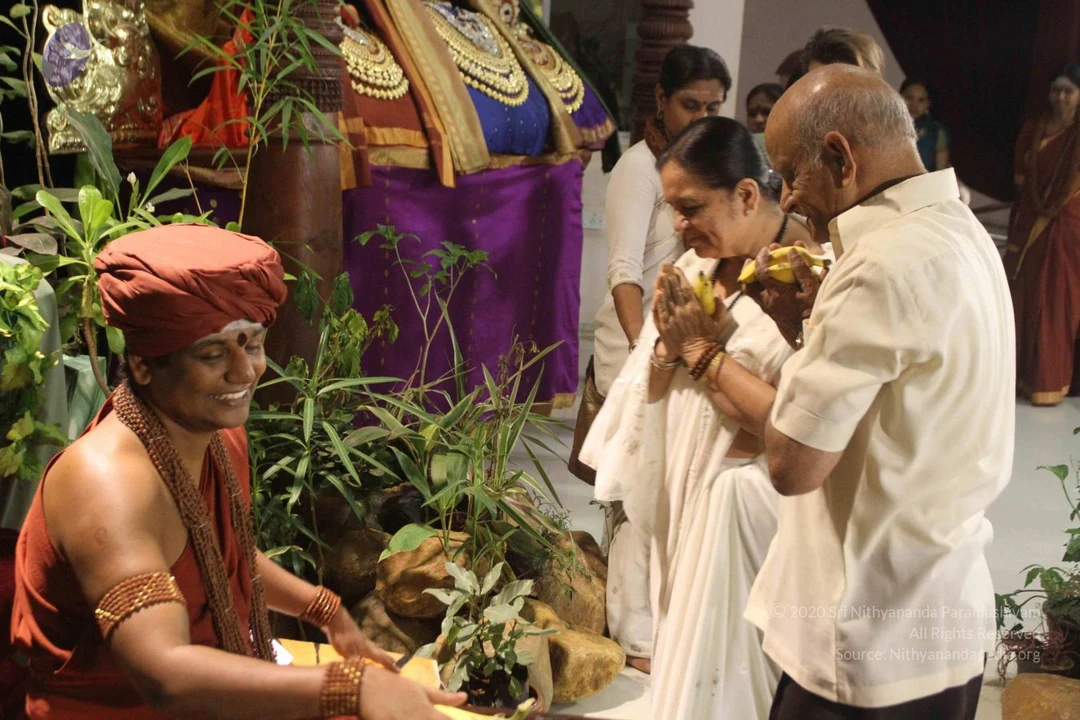
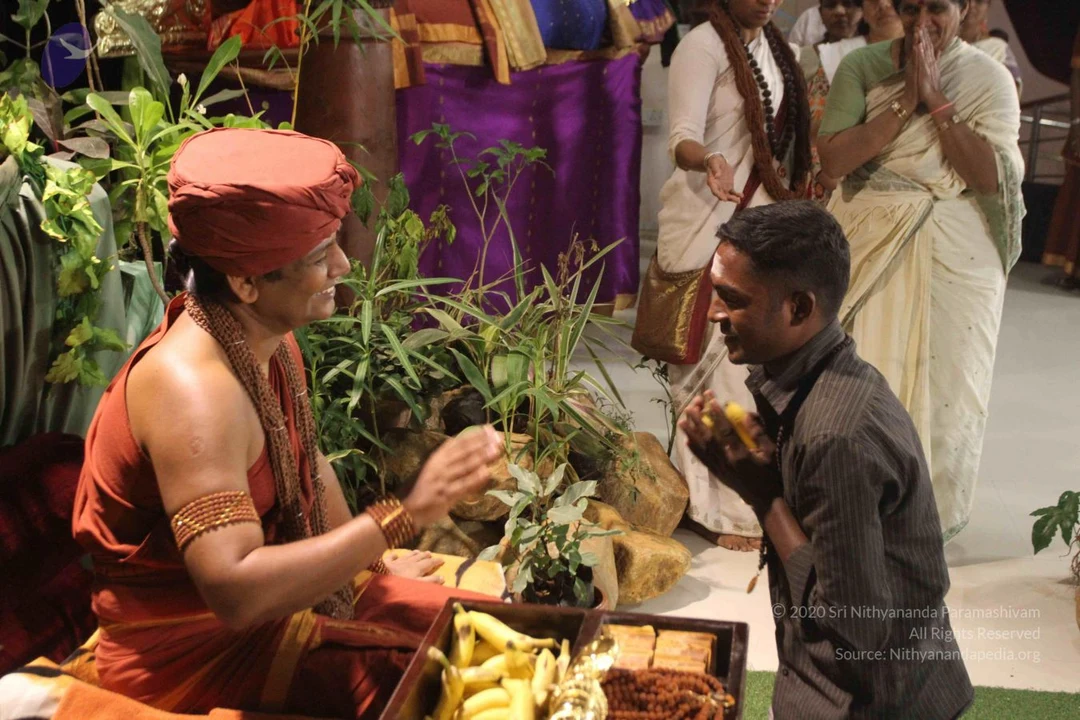
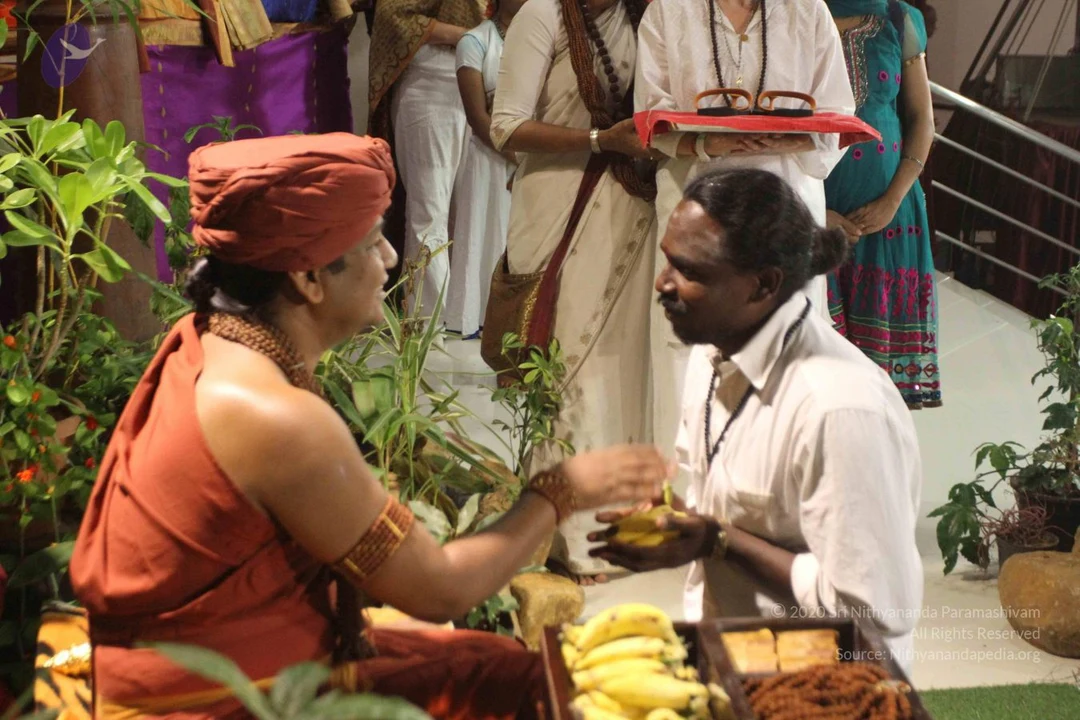
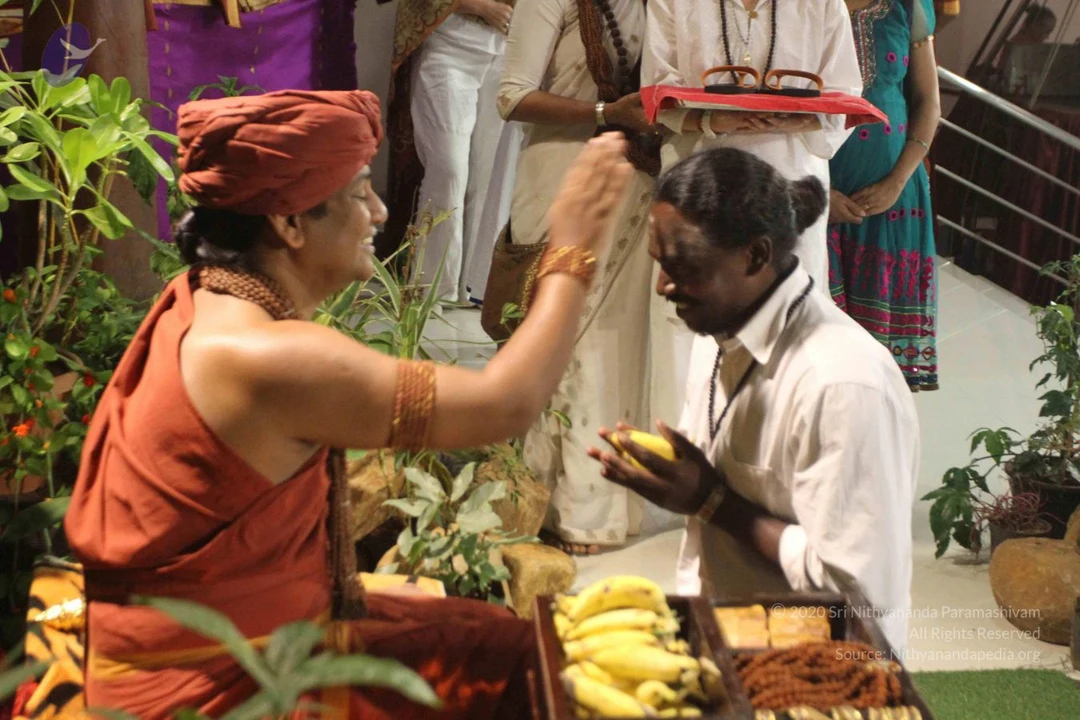
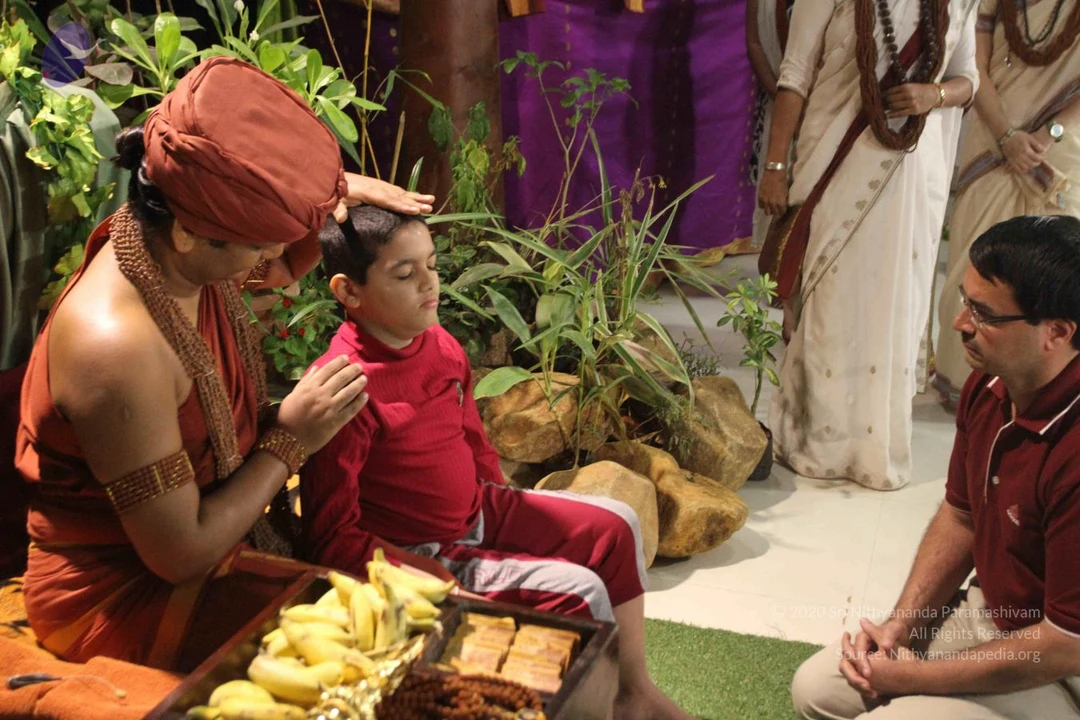
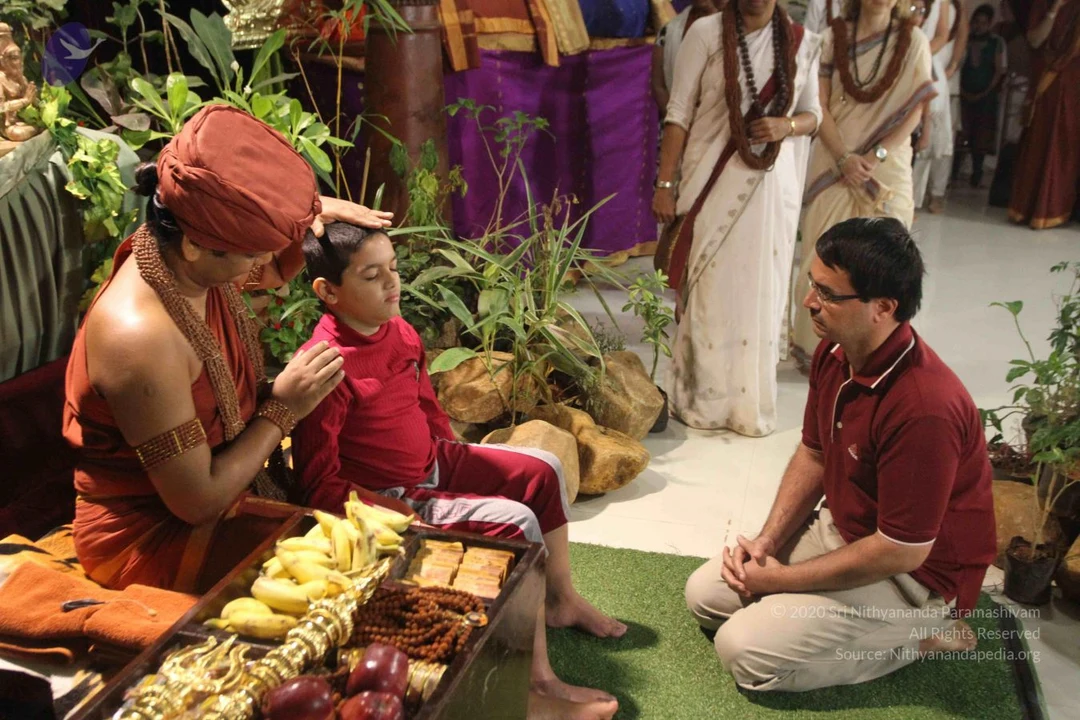
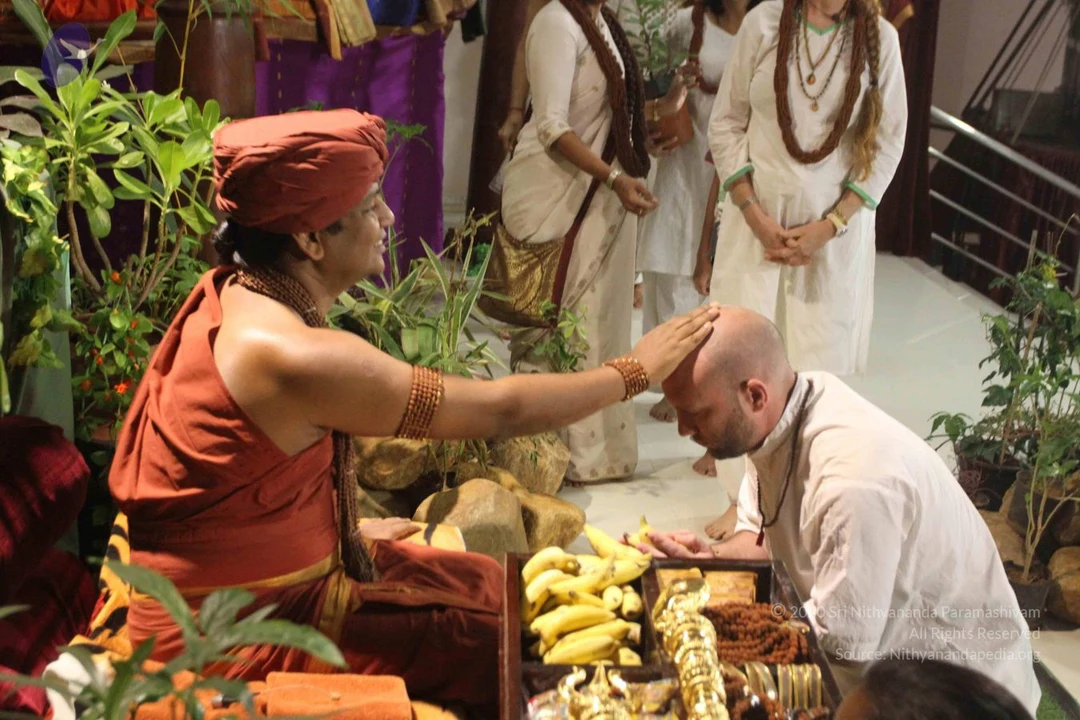
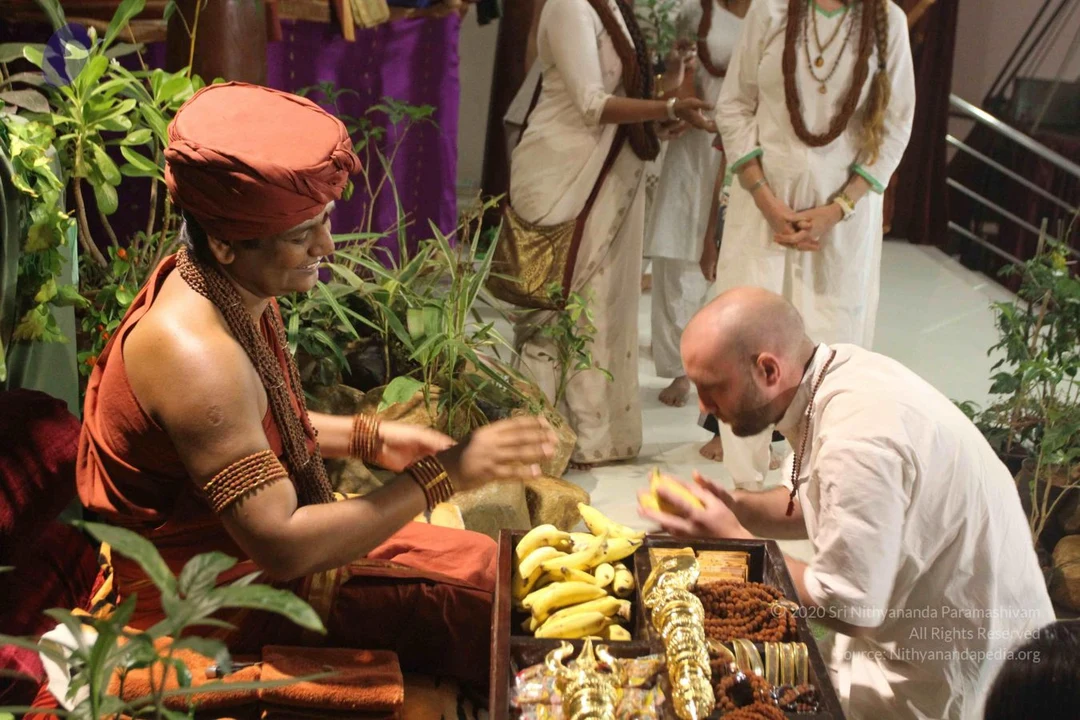
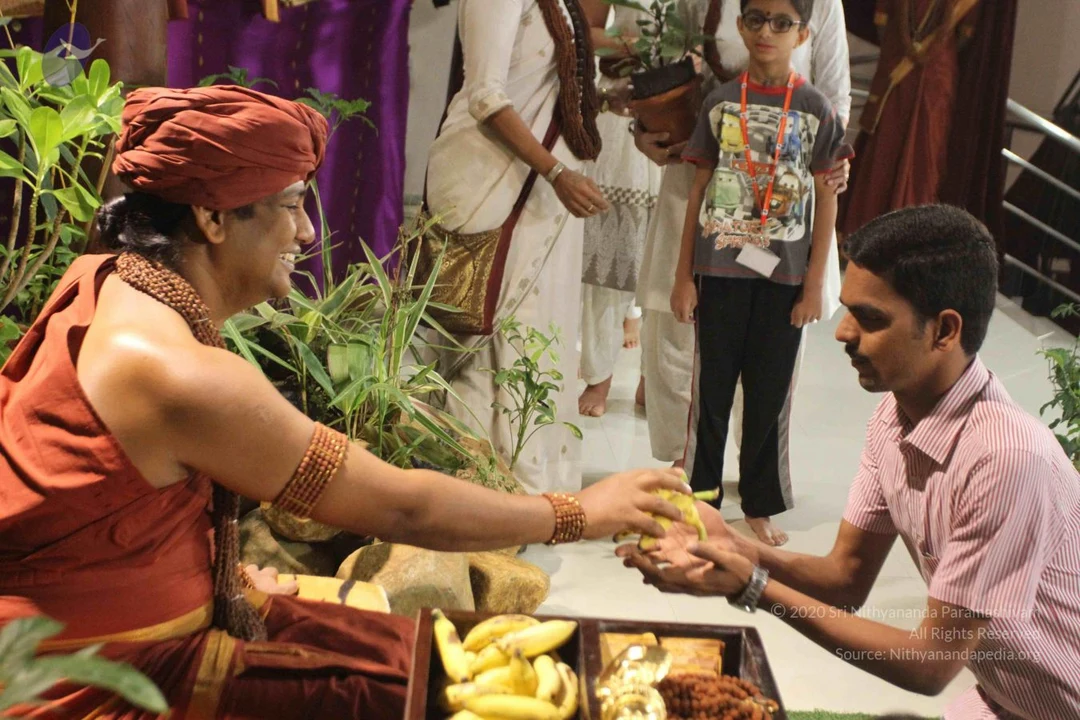
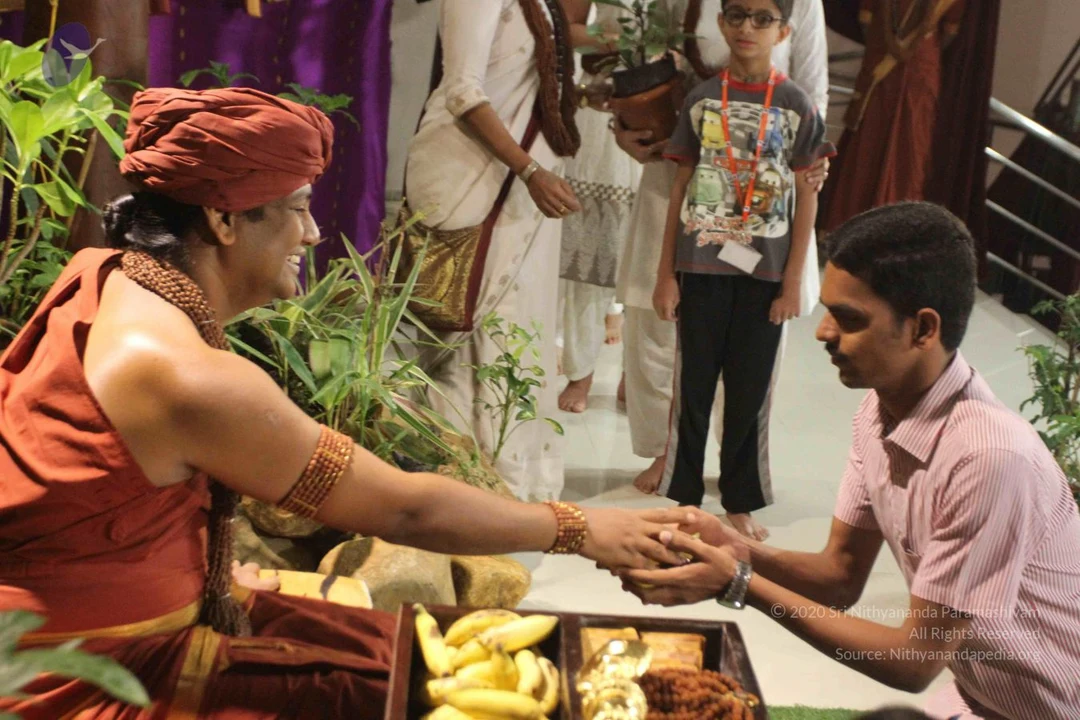
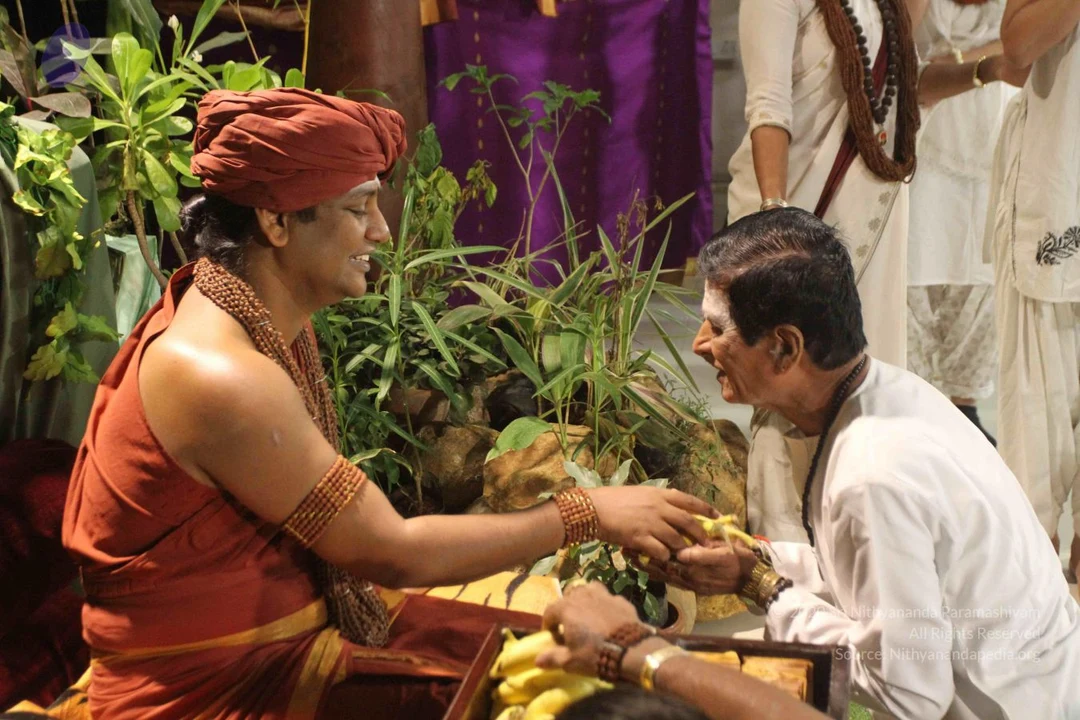
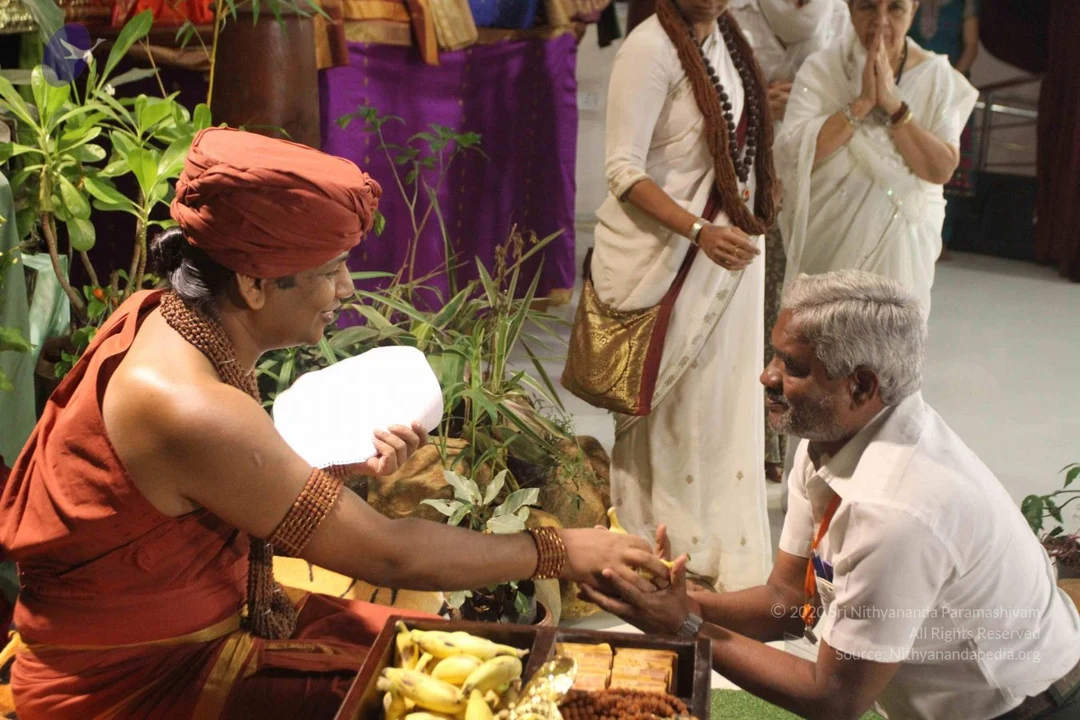
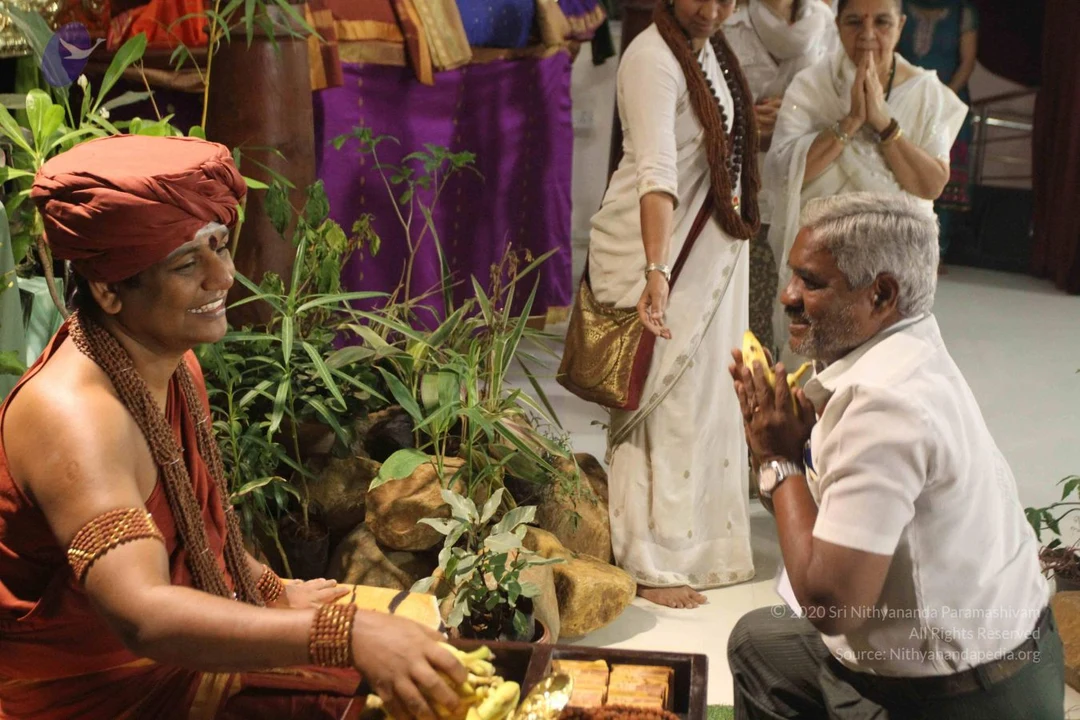
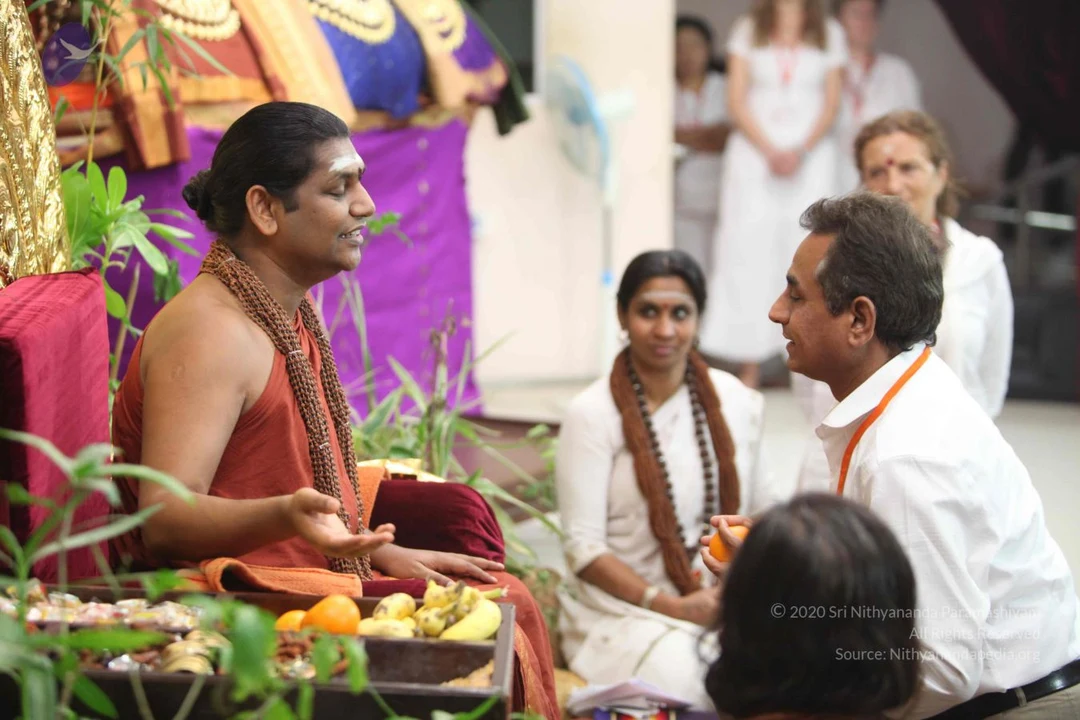
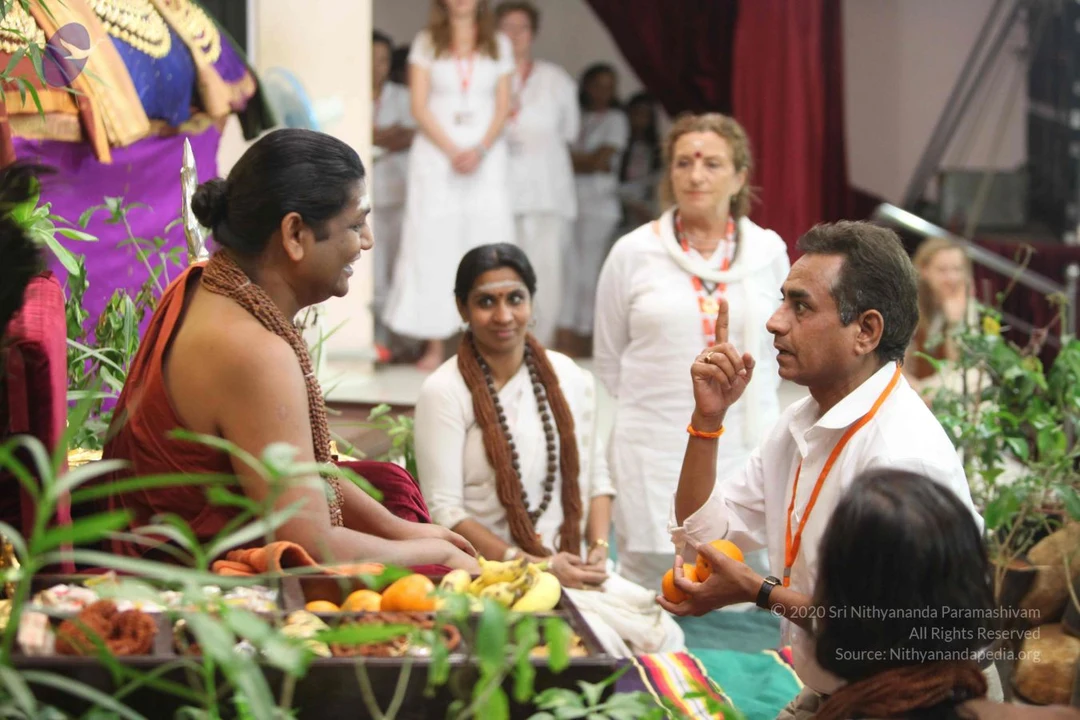
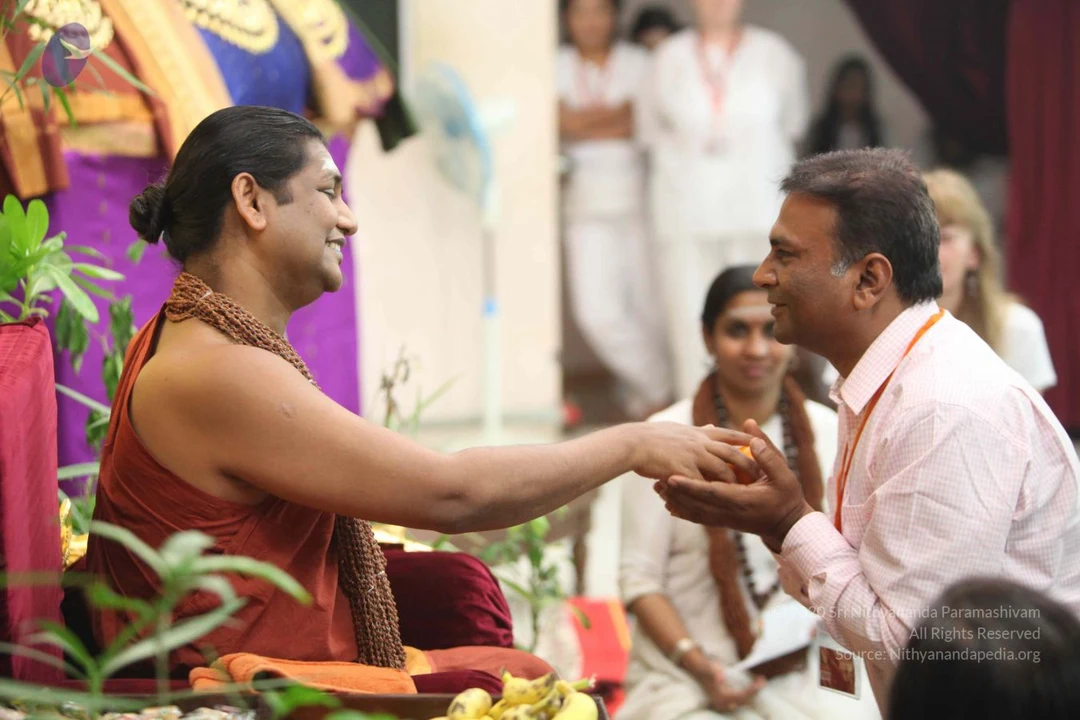
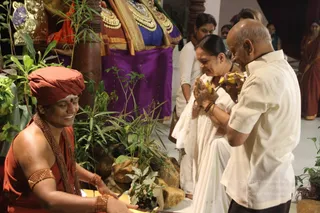
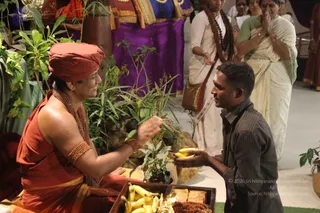
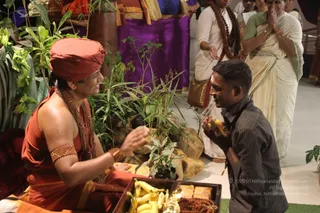
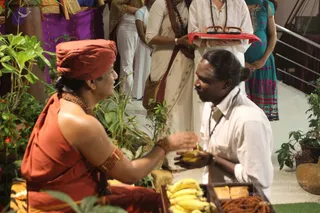
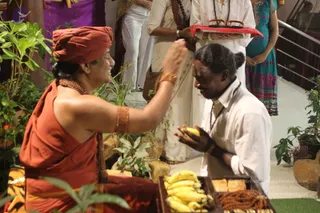
A photograph of a ritual scene in a temple hall with green potted plants and a small rock arrangement. On the left, a person in an orange-red turban and orange-red robes with rudraksha malas on the neck and wrists, marked with a vertical tilak, sits and reaches toward a yellow cloth-covered tray. In the centre, a woman in a white sari with dark hair pulled back stands with palms joined in anjali while holding a yellow banana. To the right, a man in a cream short-sleeved shirt also holds bananas and stands with hands folded. Behind them, a gold-and-blue ornate deity decoration with a purple cloth is visible, and other people stand in the background in white and red-brown clothing.A photograph of a seated figure in an orange-red dhoti and matching red turban with a rudraksha mala and beaded bracelets, smiling as he hands a small offering to a kneeling man in a grey striped shirt with a mala. Behind them, two women in cream and white saris stand with hands folded in namaskar. Potted plants, a purple draped backdrop and a tray of bananas, sweets and rudraksha beads sit in the foreground. The scene suggests a ritual offering or blessing at a satsang setting.A seated figure in an orange-red saffron dhoti and matching orange turban, wearing layered rudraksha malas and beaded bracelets, smiles and extends a hand toward a man in a dark striped shirt who kneels and offers a bunch of bananas. A wooden tray in front holds more bananas, sweets, rudraksha beads and brass vessels. Behind them a potted plant and greenery frame a stone-look base, and a purple and blue draped backdrop with gold trim is visible. Several women in white and cream saris stand with folded hands, one with a small gold-trimmed bag.A seated man in an orange-red turban and orange-red robe, with a long rudraksha mala and gold armlets, smiles while gesturing toward a kneeling man in a dark striped shirt who holds a yellow fruit in his folded hands. Behind them potted green plants and rocks form a garden-like setting. In the background, two women in white and cream saris stand with palms joined. A wooden tray holds bananas, sugar blocks and a rudraksha mala, and a brass vessel rests at the front.A seated figure in an orange-saffron robe and matching orange turban, with a rudraksha-style bead necklace and a wide gold armlet, reaches out to a man in a white shirt and white trousers who is seated before him, holding bananas. In front, a wooden tray holds more bananas, sweets and rudraksha beads. Behind them, women in white and cream saris and a woman in a teal dress stand among potted plants, one holding a red tray with glasses. The setting is an indoor space with a staircase and a purple cloth backdrop.A seated figure in an orange-red turban and saffron-orange robe, wearing a rudraksha mala and bronze-coloured bangles, raises a hand to touch the head of a kneeling man in a white shirt with a mala around his neck, who holds a ripe banana in cupped hands. Behind them, standing people in white and teal garments hold a red tray with eyeglasses. Trays of bananas, rudraksha beads and sweets sit on the floor amid potted plants and a stone vessel. Overlaid copyright text appears at the lower right.

SPH Hoisting The Flag To Mark The Beginning Of Rajarajeshwari Brahmotsav

224 photosSource gallery
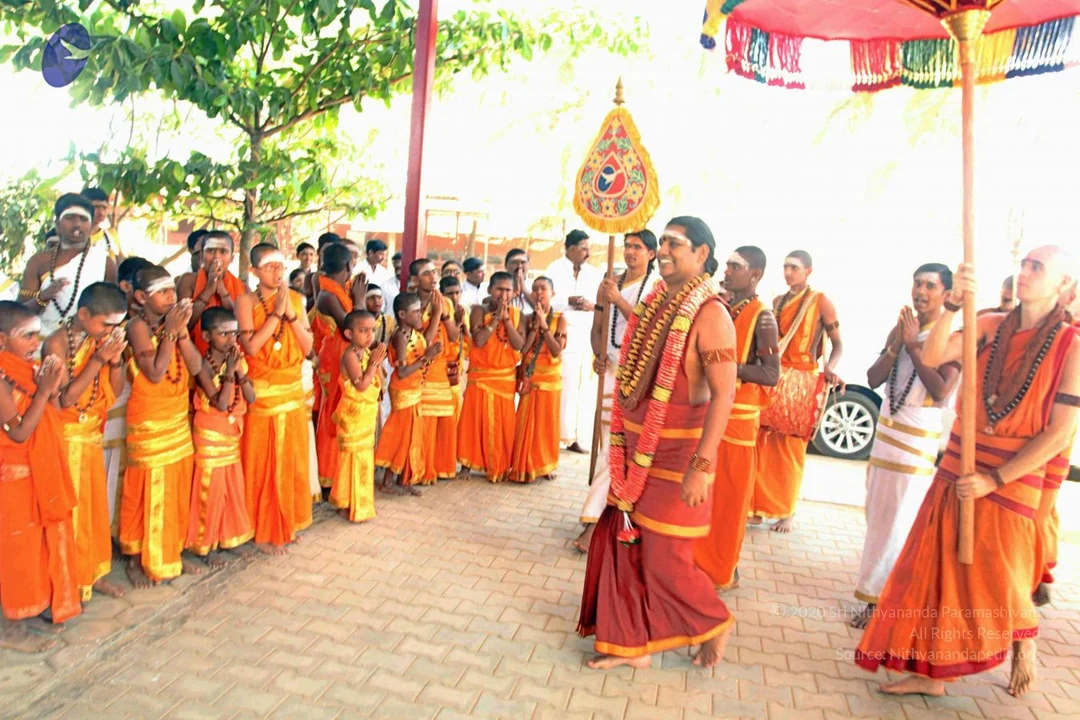
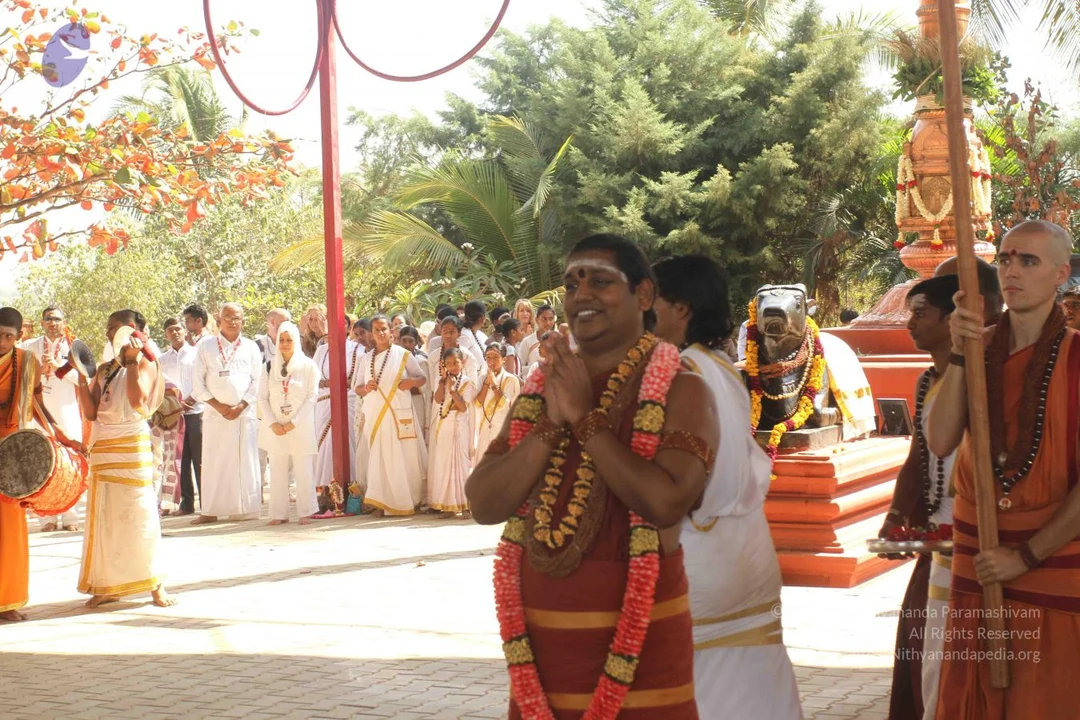
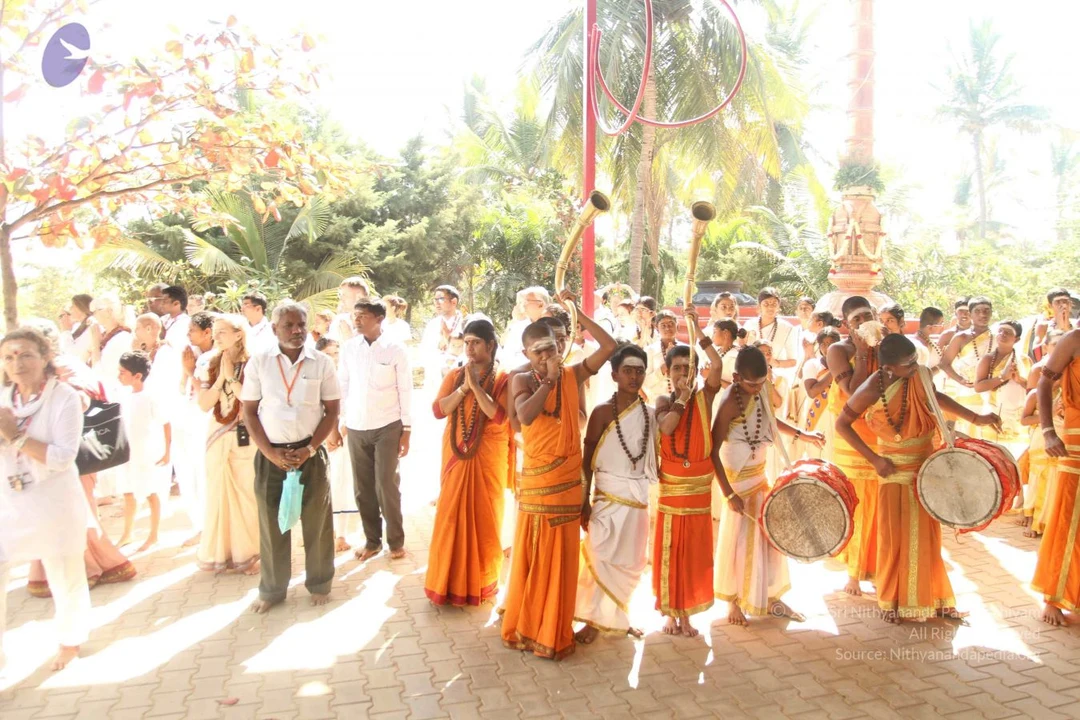
A photograph of a procession on a paved courtyard. A bare-chested man with long swept-back hair, wearing a red-and-gold dhoti, a large red-and-white flower garland and a rudraksha mala, walks at the centre while holding a bronze-and-gold ceremonial rod. Behind him a figure in white holds a fringed ceremonial umbrella, and a bald man in orange robes with a rudraksha mala holds a tall pole with a decorated pennant. Around them a line of young boys and adults in saffron and orange robes with gold borders stand with palms pressed together in greeting, several with white forehead markings. Trees and a red pillar stand in the background.A procession under an open-sided metal-roofed pavilion. Two long golden horn-shaped trumpets curve upward at left and right, played by young boys in orange and white. Central figure in the foreground wears a red and white floral garland and orange clothing, holding a silver vessel with green leaves; behind him a figure in orange with a shaved head and rudraksha mala walks beside a long ceremonial pole with a multicolored tasseled canopy. Other devotees in orange and white follow, some carrying drums and a palanquin-like orange canopy. Red-and-white pillars and a sign with a crescent emblem frame the scene.A photograph of a ceremonial procession under a covered open-air structure. At centre, a man with long dark hair and a saffron-orange garment with a red-brown shawl wears a long multicoloured flower garland and a gold necklace, and holds a tall umbrella canopy with a striped multicolour fringe. Beside him, a bare-chested man in white dhoti carries a silver vessel, and young boys in orange and white garments blow long brass horns. Several robed attendants in saffron and orange walk behind, with ornate red-and-gold pennant banners beside them. Brass horns, a drum and a painted white-and-red wall frame the scene, with a blue-trimmed shrine at right.A procession under an open-sided shelter with a corrugated roof. At the centre, a man in an orange-red dhoti and shawl, wearing a thick red and white flower garland and gold-bead necklaces, walks smiling while holding a long-handled pink and multicoloured ceremonial parasol-umbrella. Around him, several shaven-headed young men in saffron-orange dhotis with white forehead marks and rudraksha malas carry a white pot with green leaves, and others in white dhotis with gold borders stand behind. On the right, a boy with a shaved head and white forehead marks blows a curved brass horn, and a decorated ceremonial umbrella with a red and blue motif hangs above.A procession of robed devotees walks across a paved courtyard beneath a large open-sided pavilion with a corrugated roof and palm trees behind it. Most men wear saffron-orange dhotis and shawls with rudraksha and flower garlands, while several in white dhotis carry tall ceremonial staffs topped with gold-framed red and gold emblems. A figure at centre-left carries a brass vessel and another carries a drum. A multicoloured woven cloth canopy is raised on a pole above the group. Several spectators stand at the edge of the courtyard near the pavilion, and a trident is visible on the left.A procession of ceremonial attendants in orange and saffron garments walks across a paved courtyard under a open-sided pavilion with palm trees behind. Central figure in a deep orange robe and a multi-strand marigold garland stands out, flanked by men holding long ceremonial staffs topped with orange fan-shaped banners bearing a circular emblem, and carrying a trident and a long curved horn. Men in white dhotis with orange borders carry a decorated canopy and drums. Bright daylight casts long shadows on the ground.

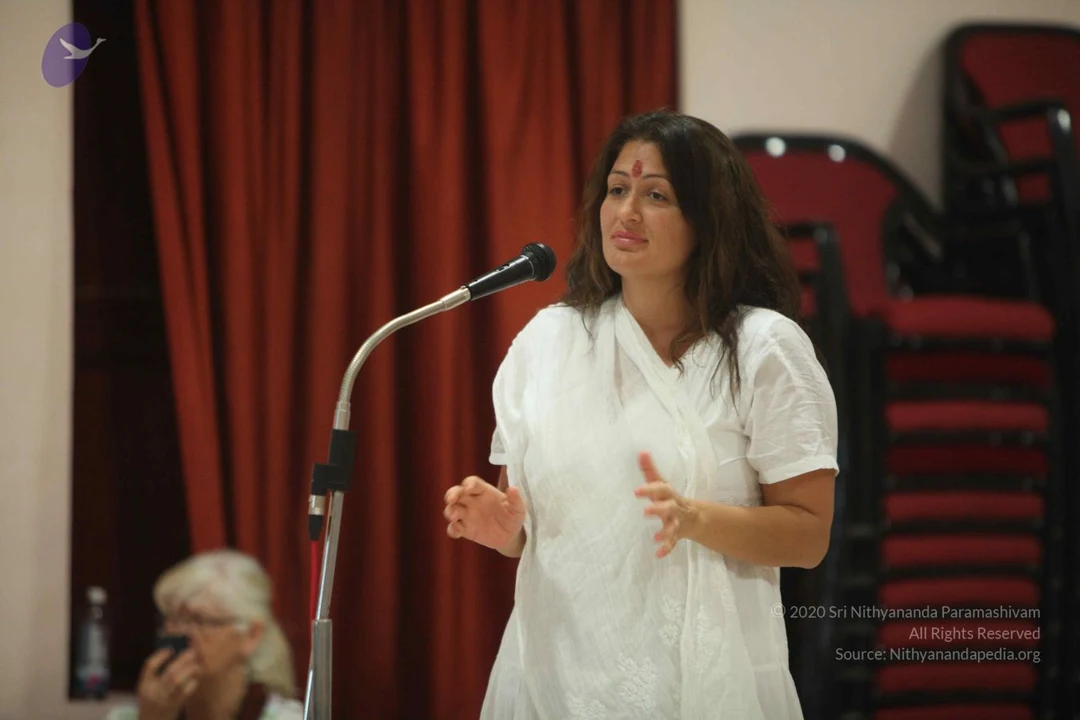
SPH Conducting A Session for the Inner Awakening Delegates At AdiKailaasa, Bengaluru, India
23 photosSource gallery
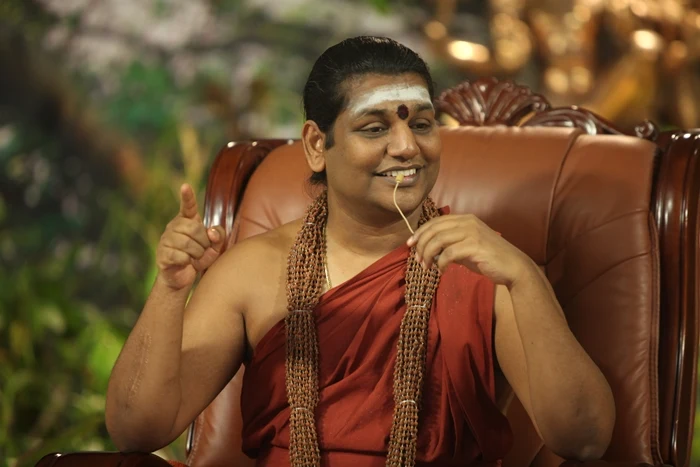
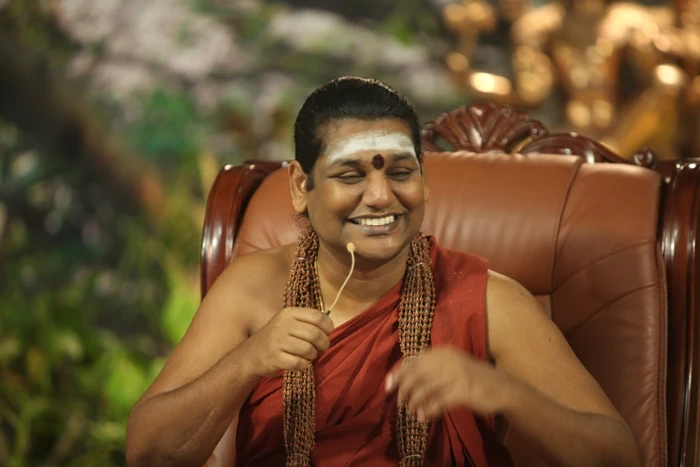
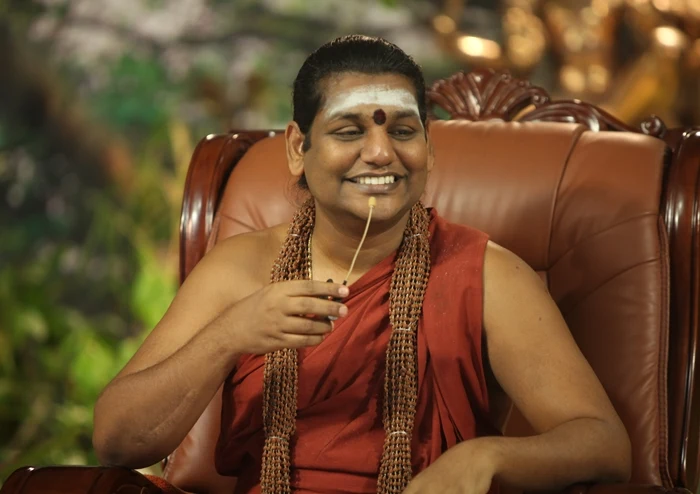
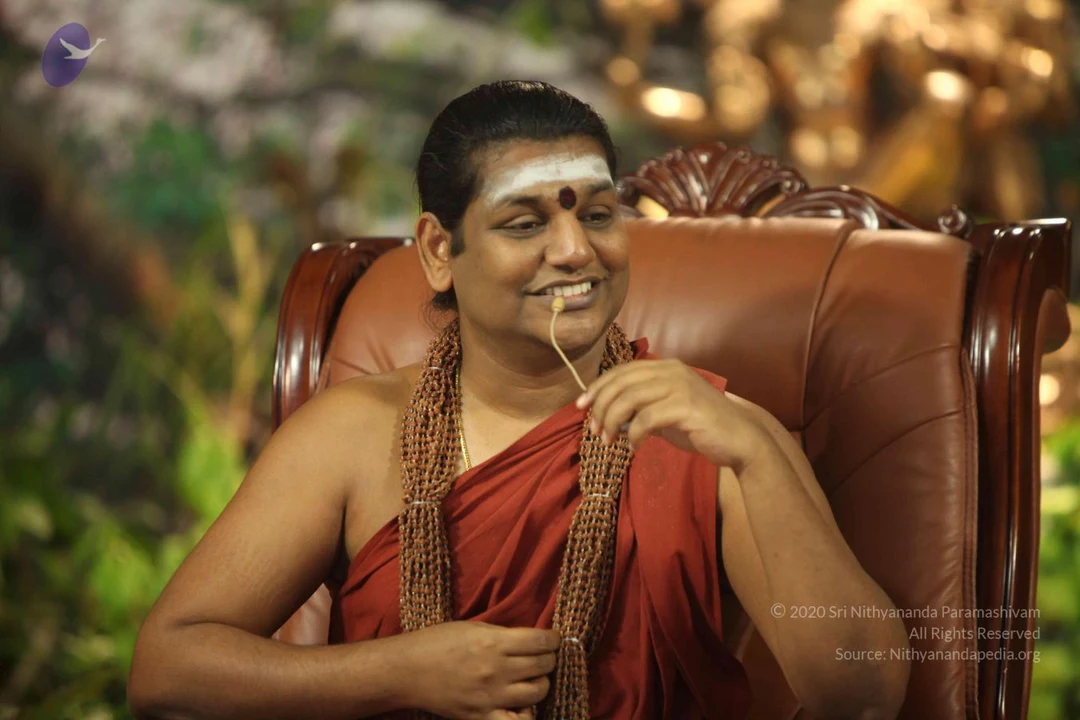
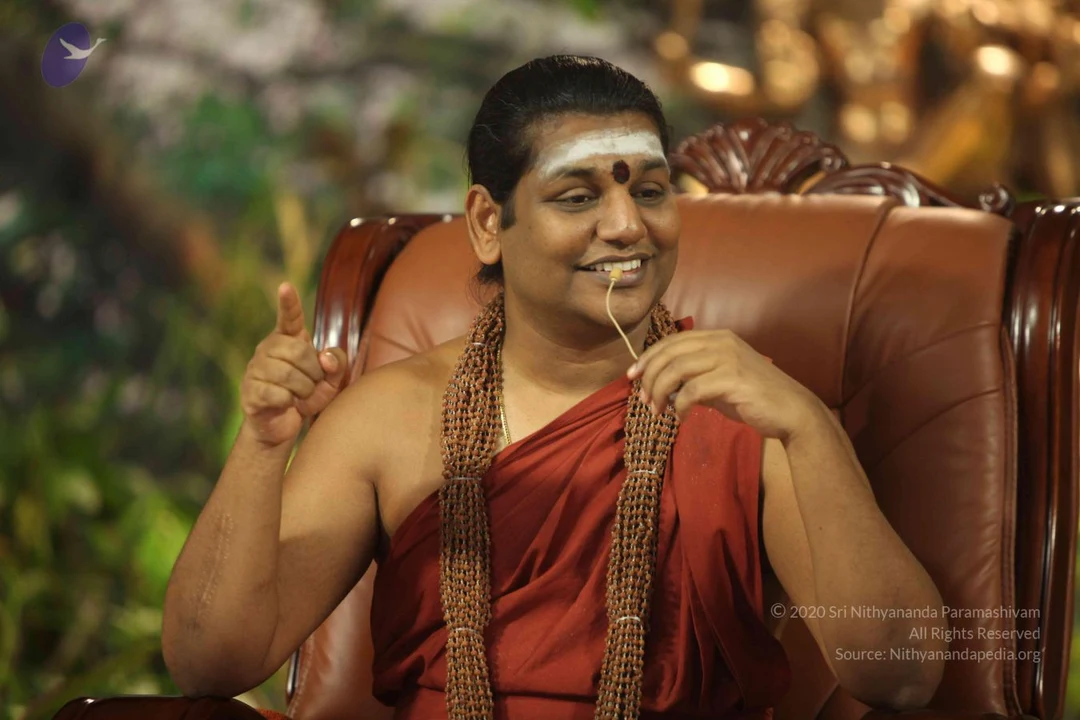
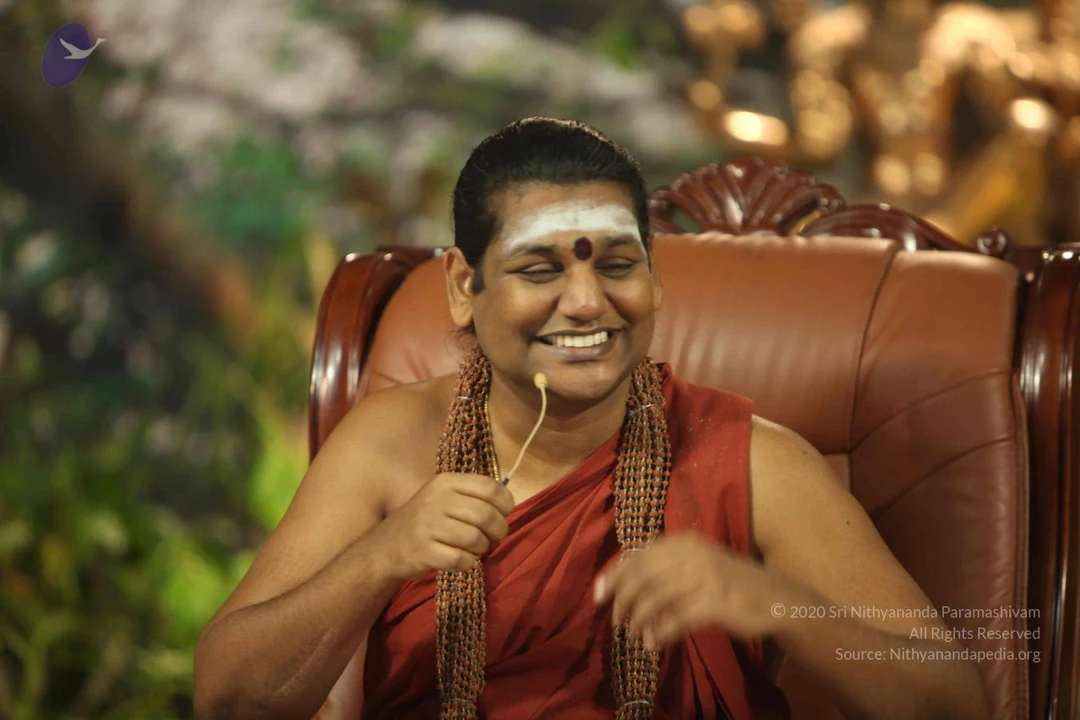
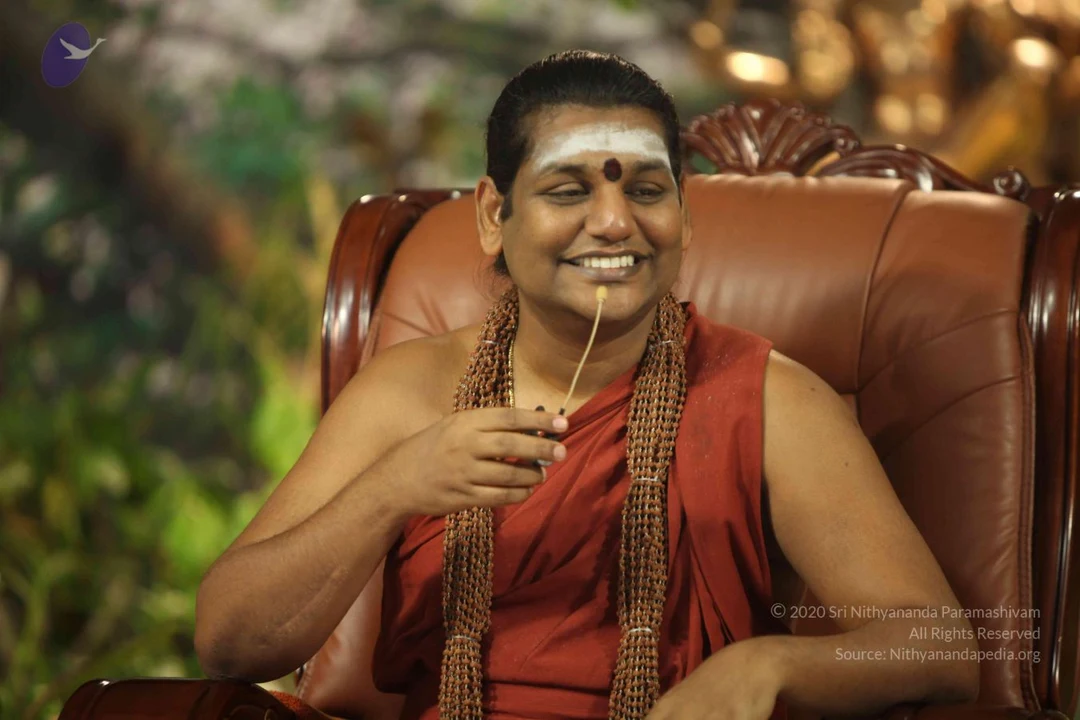
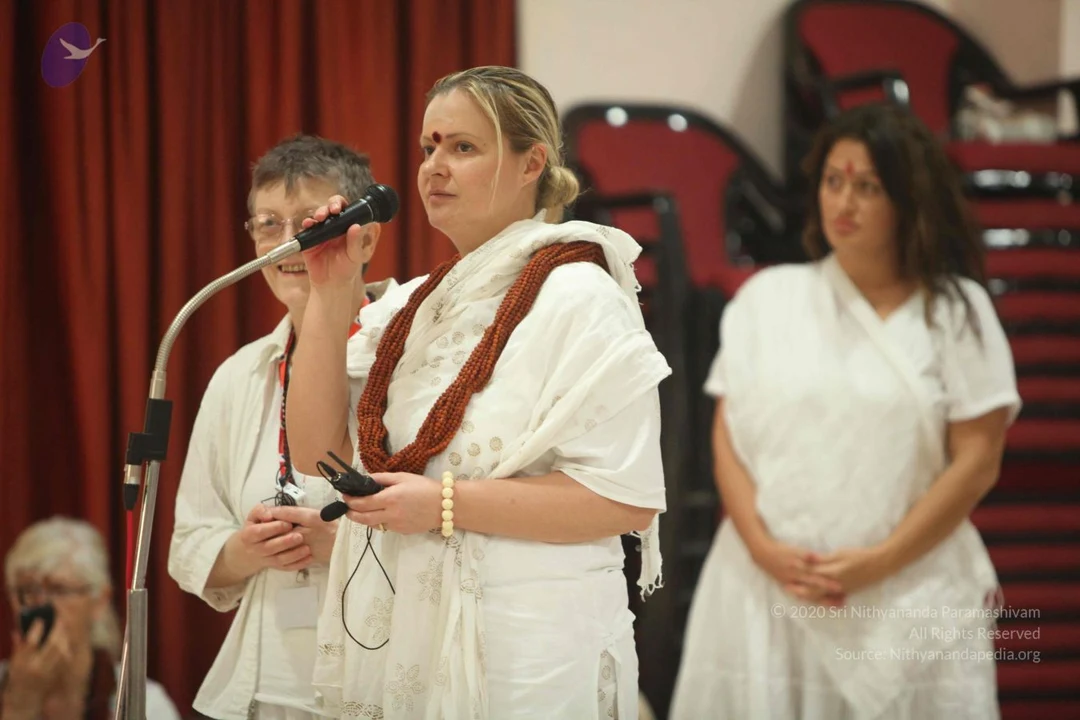
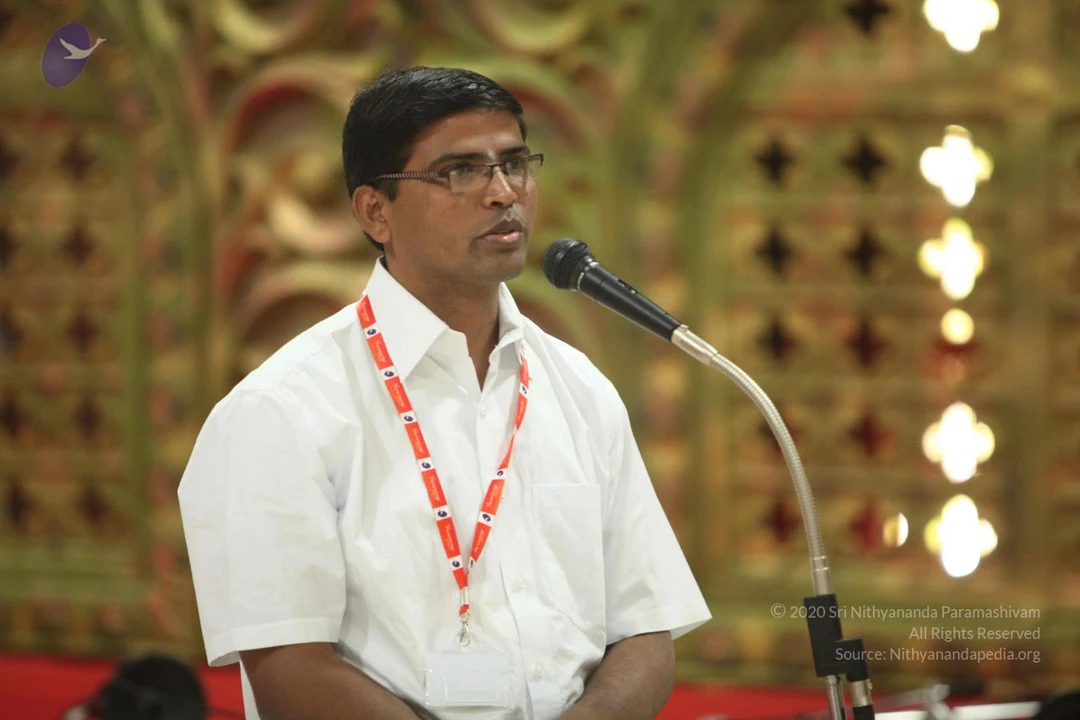
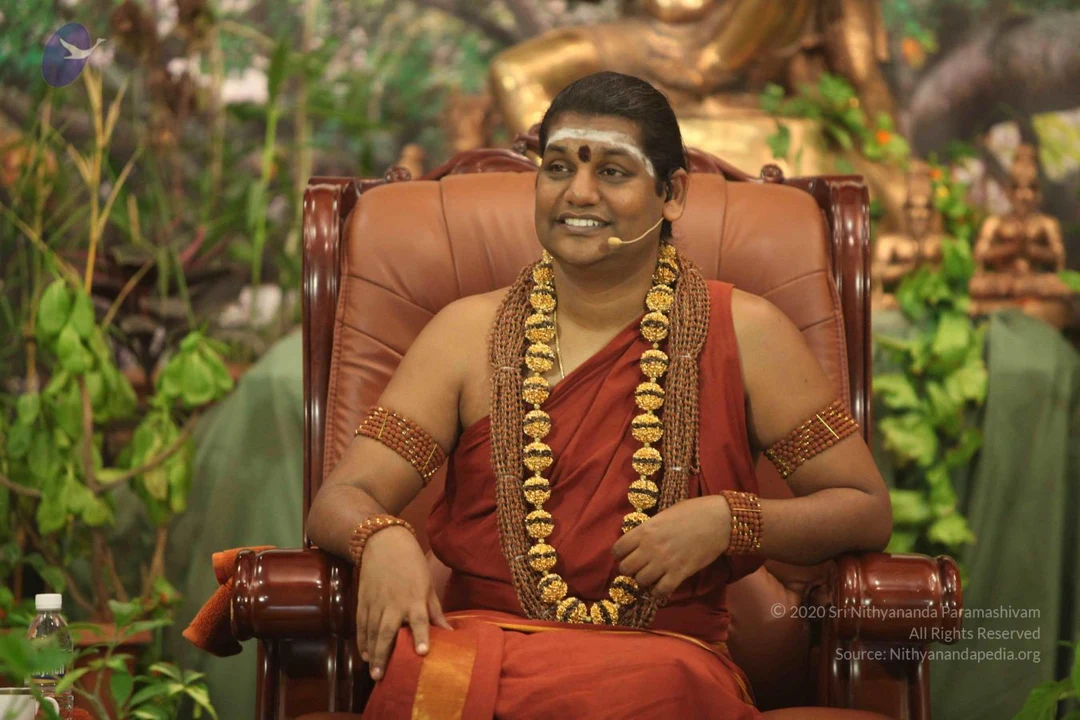
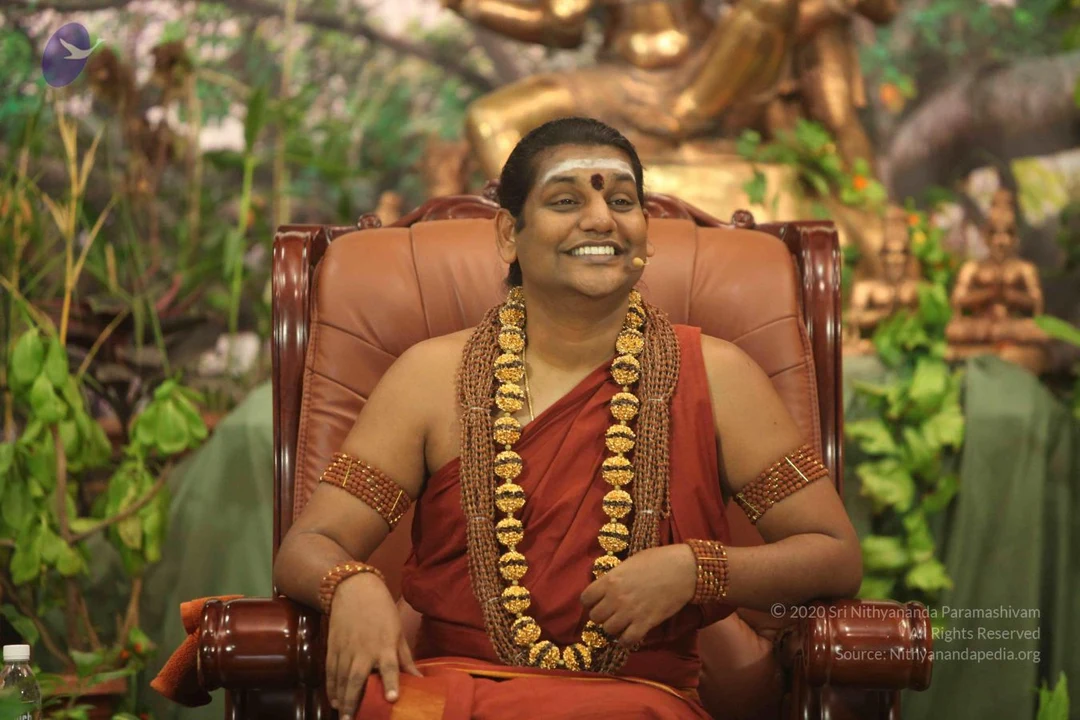
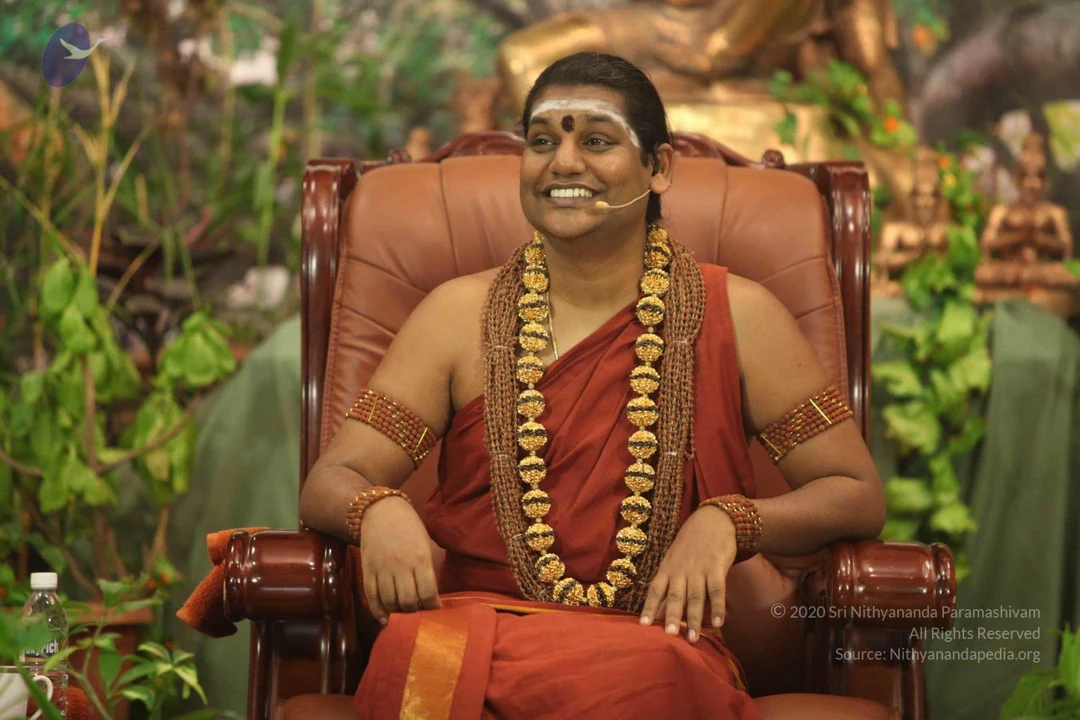
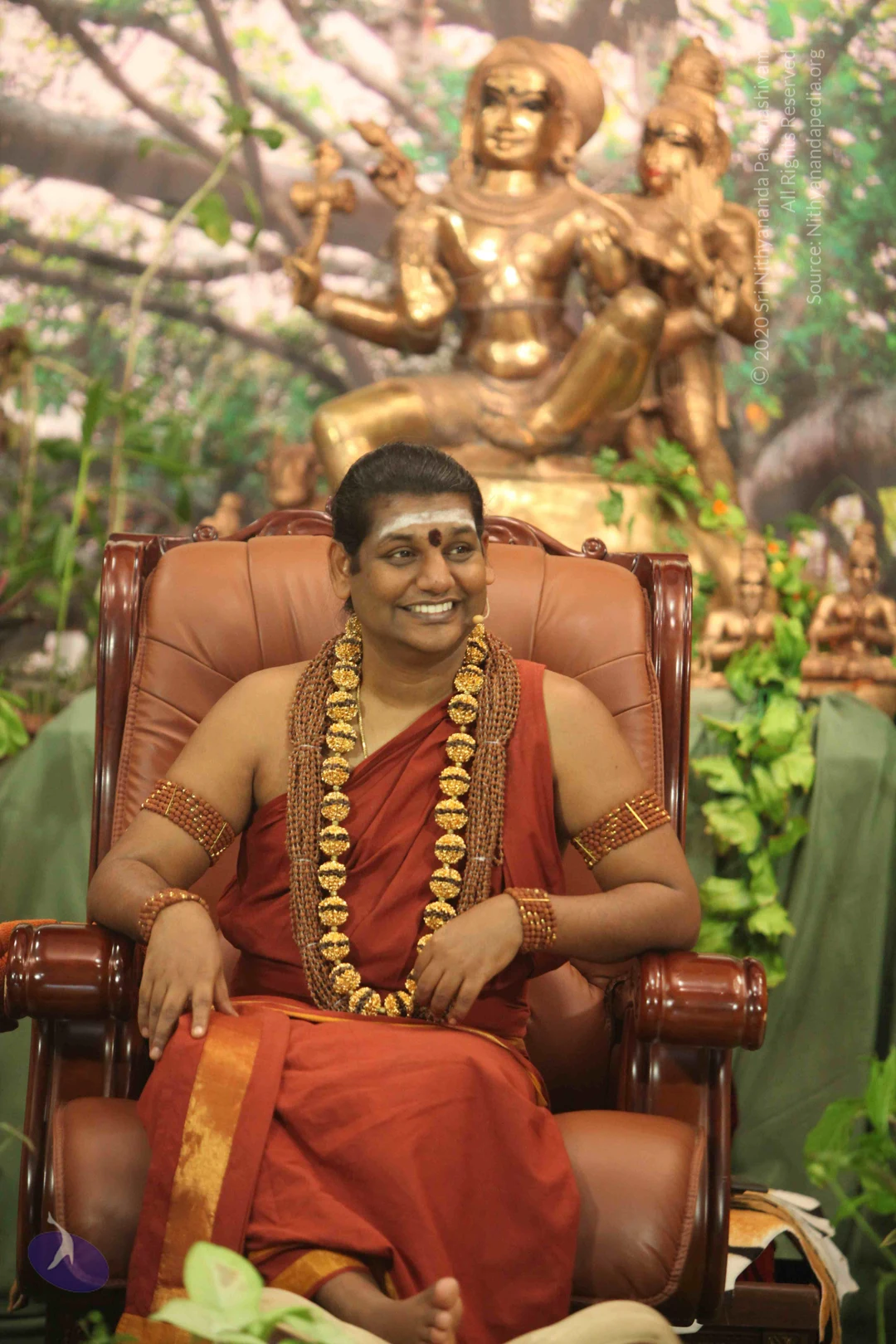
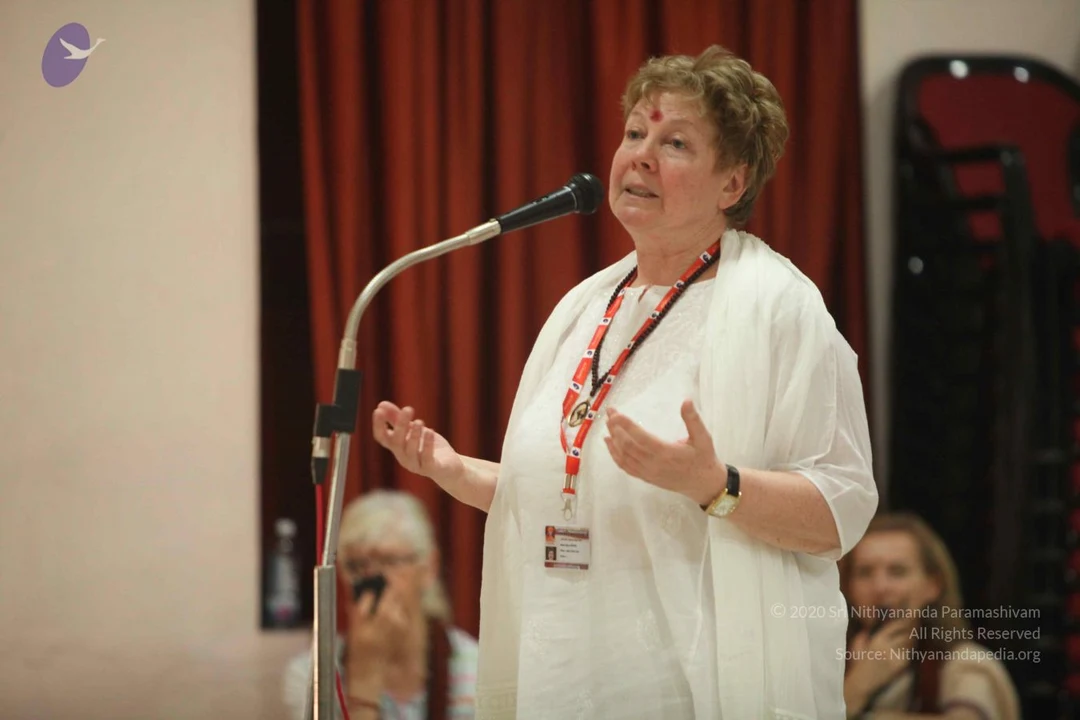
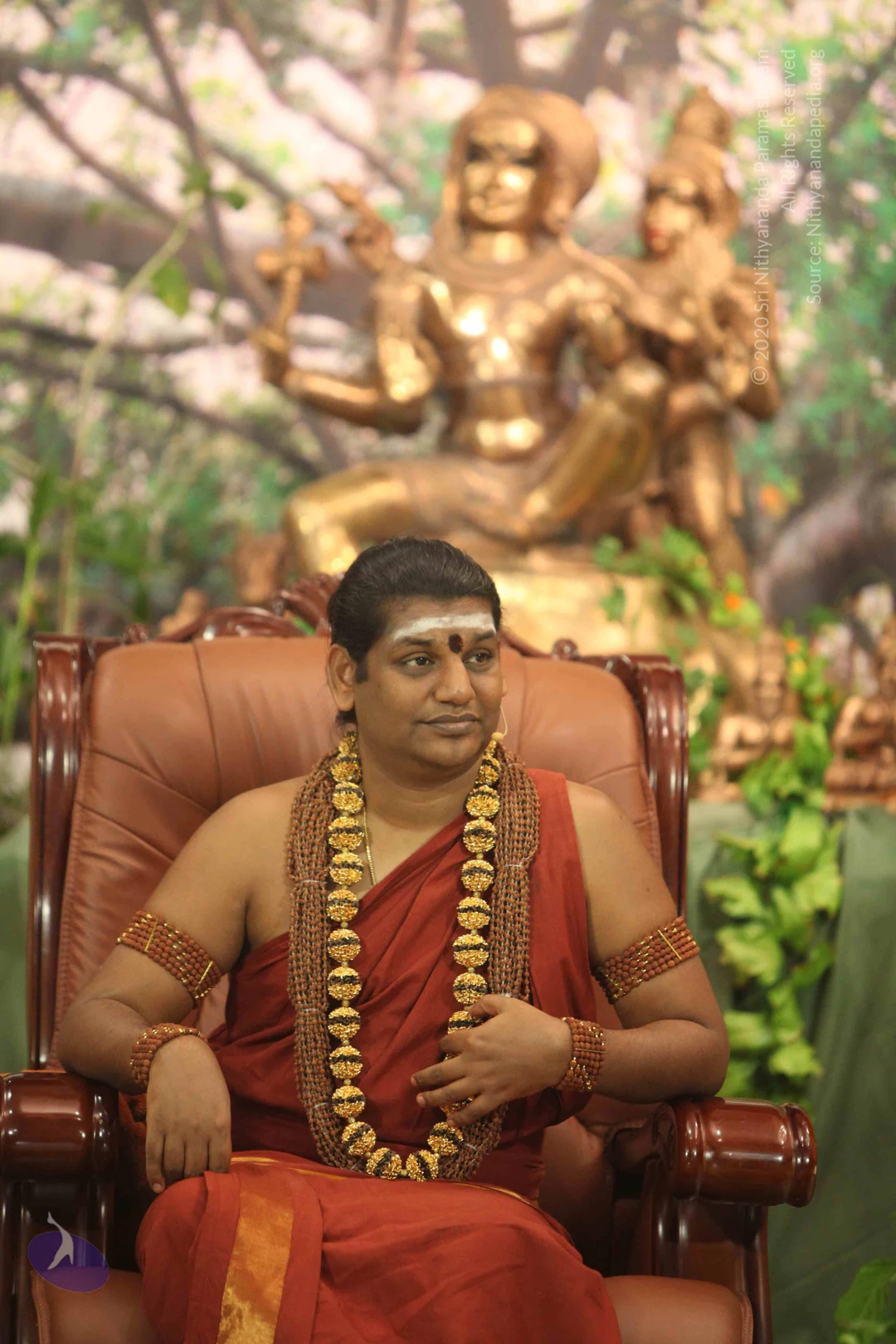
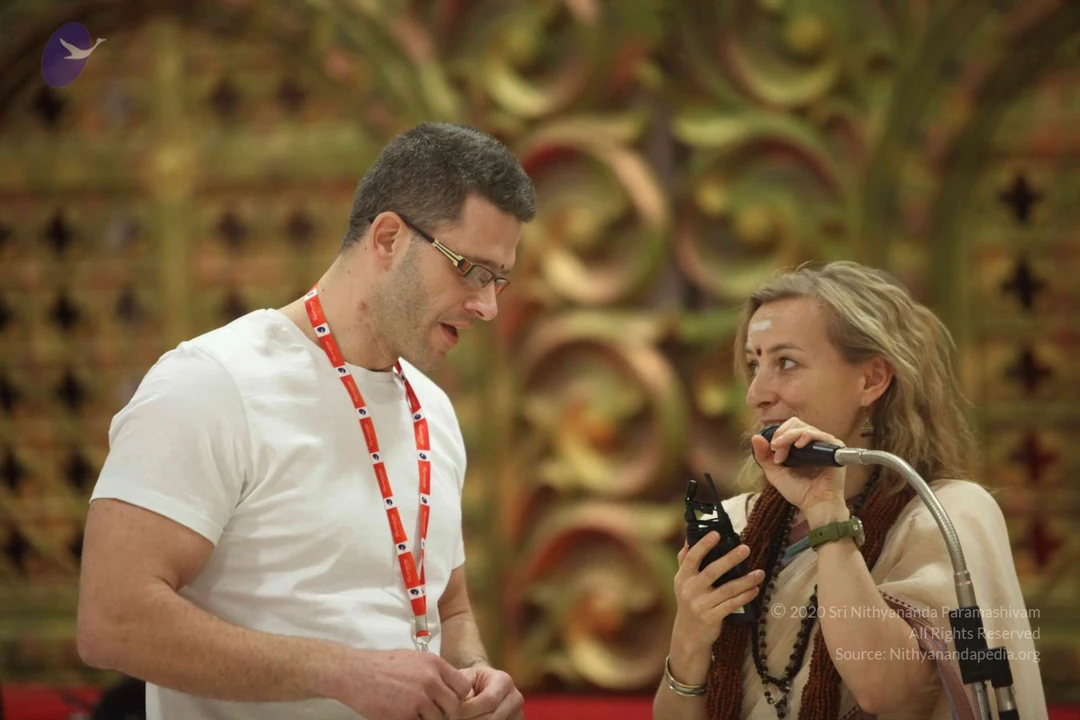
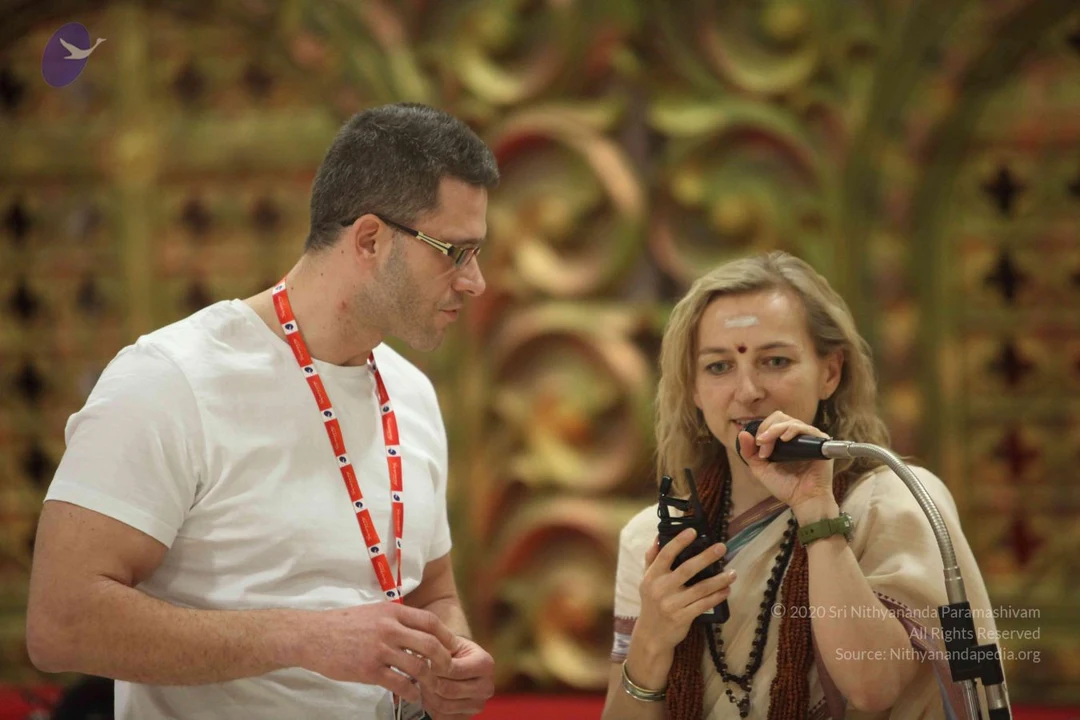
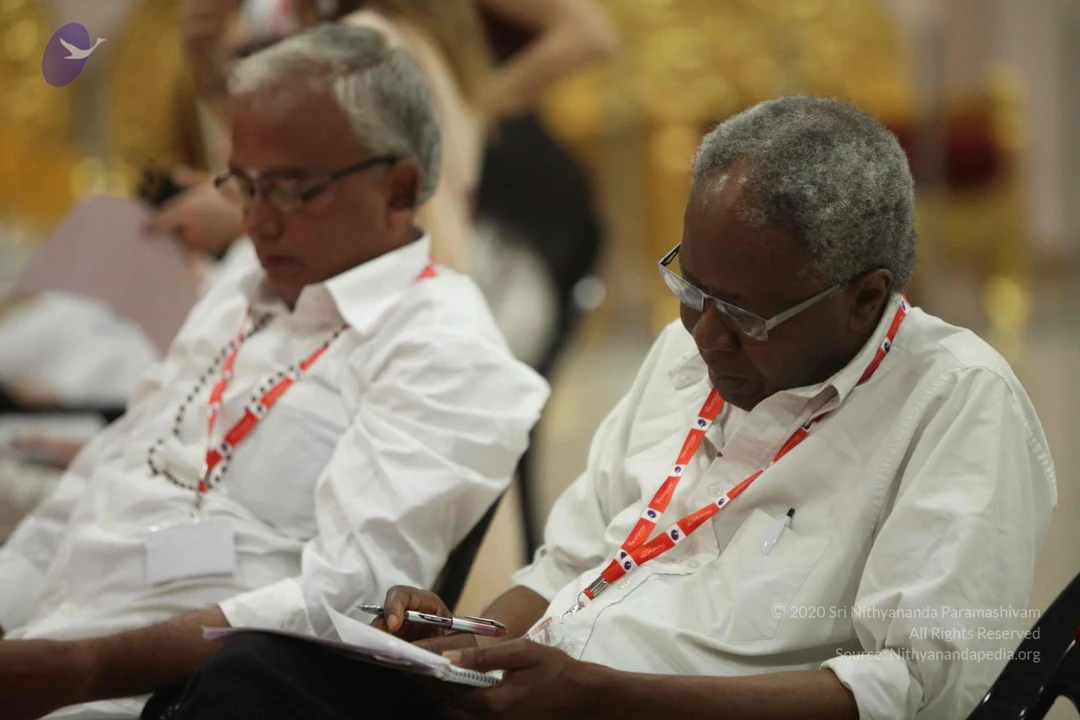
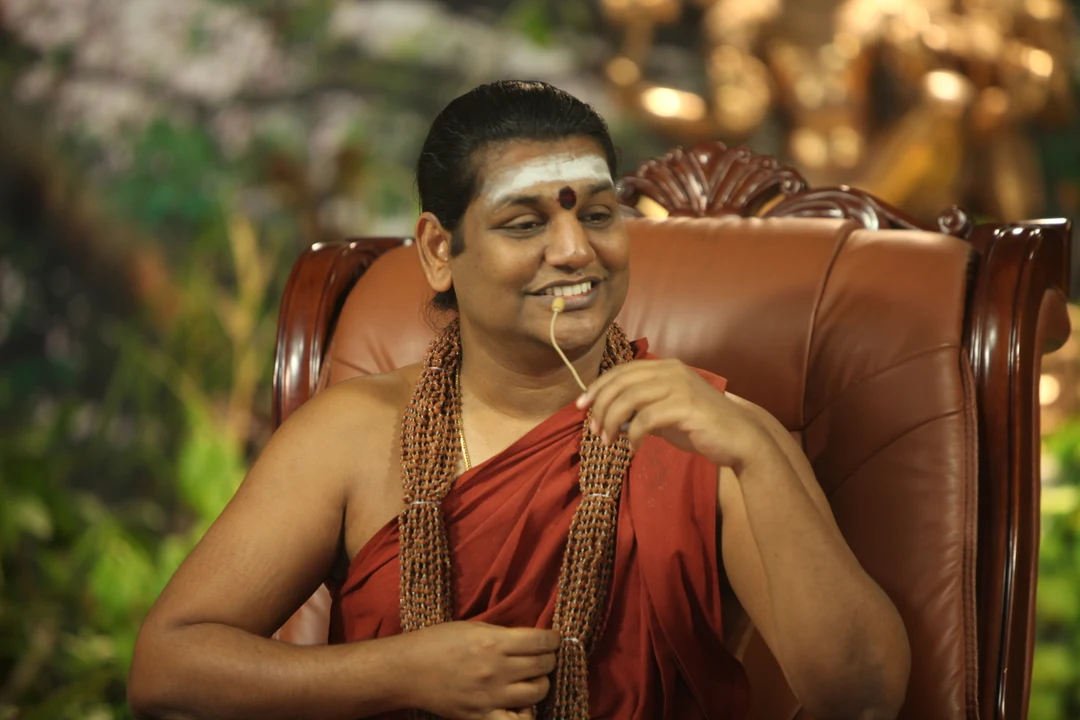
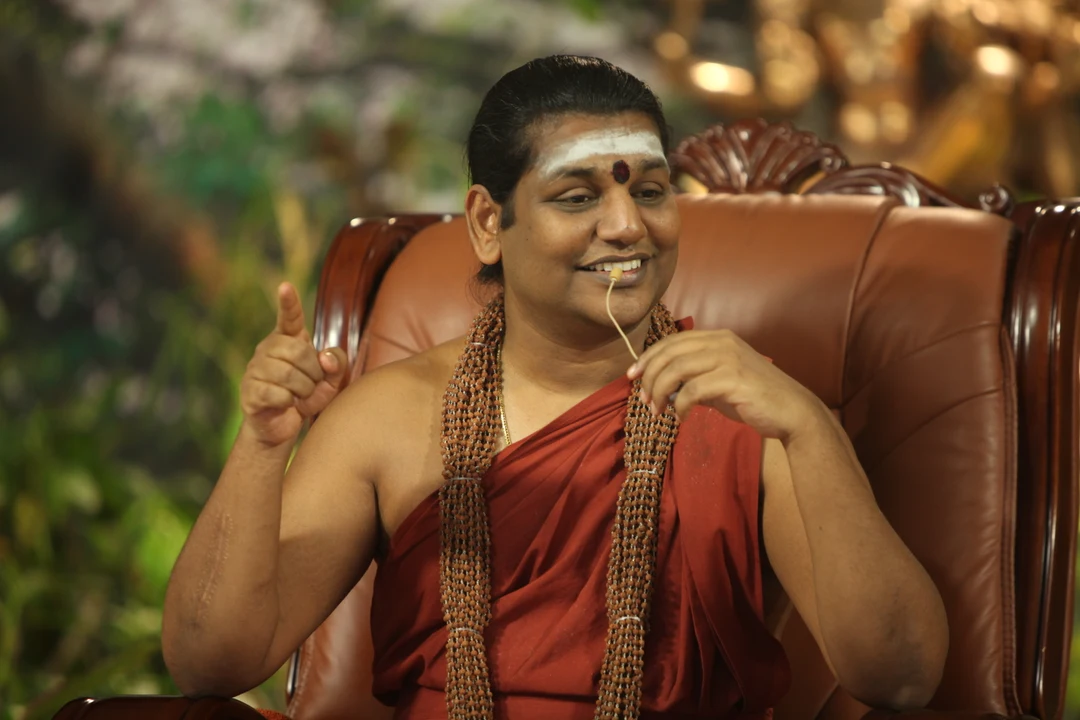
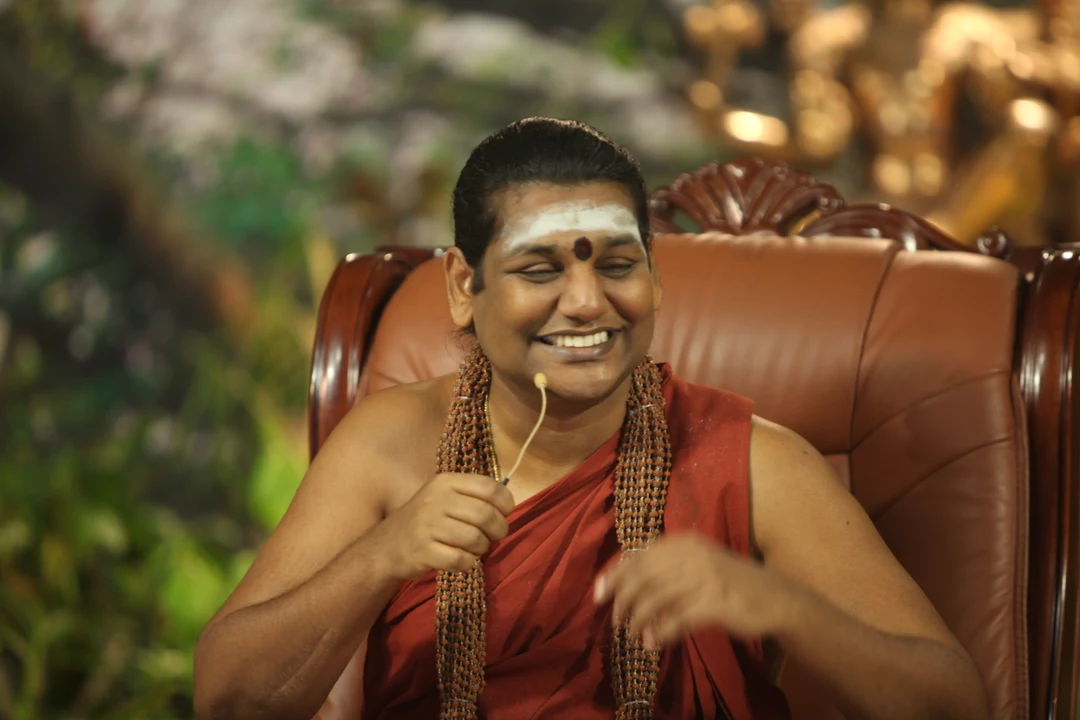
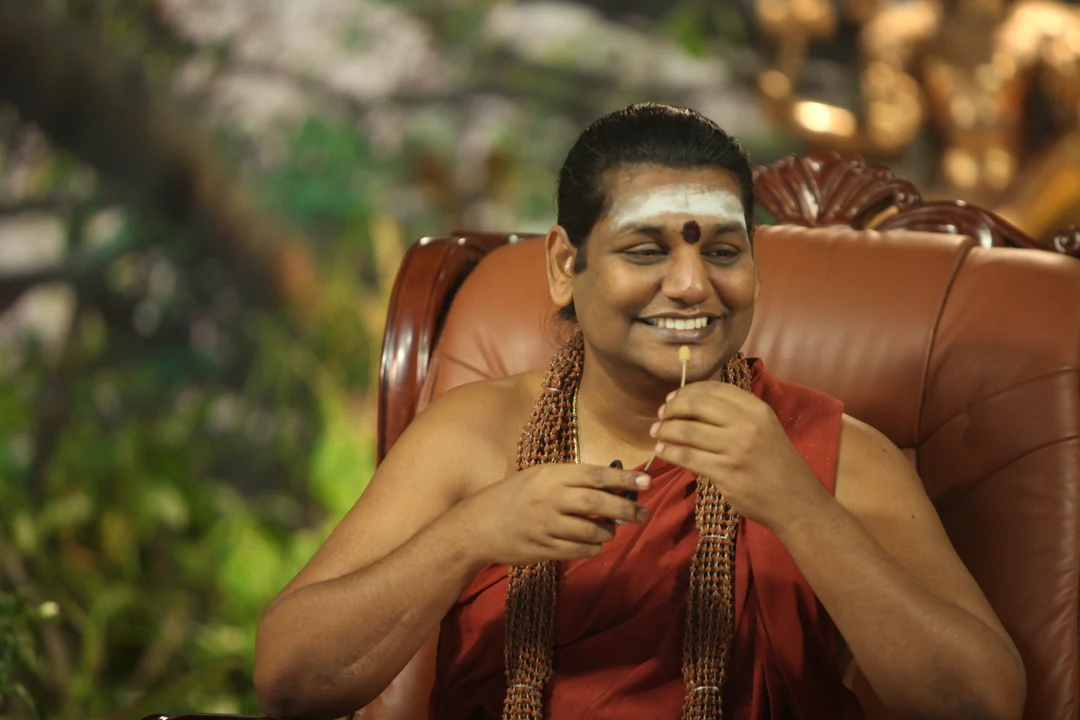
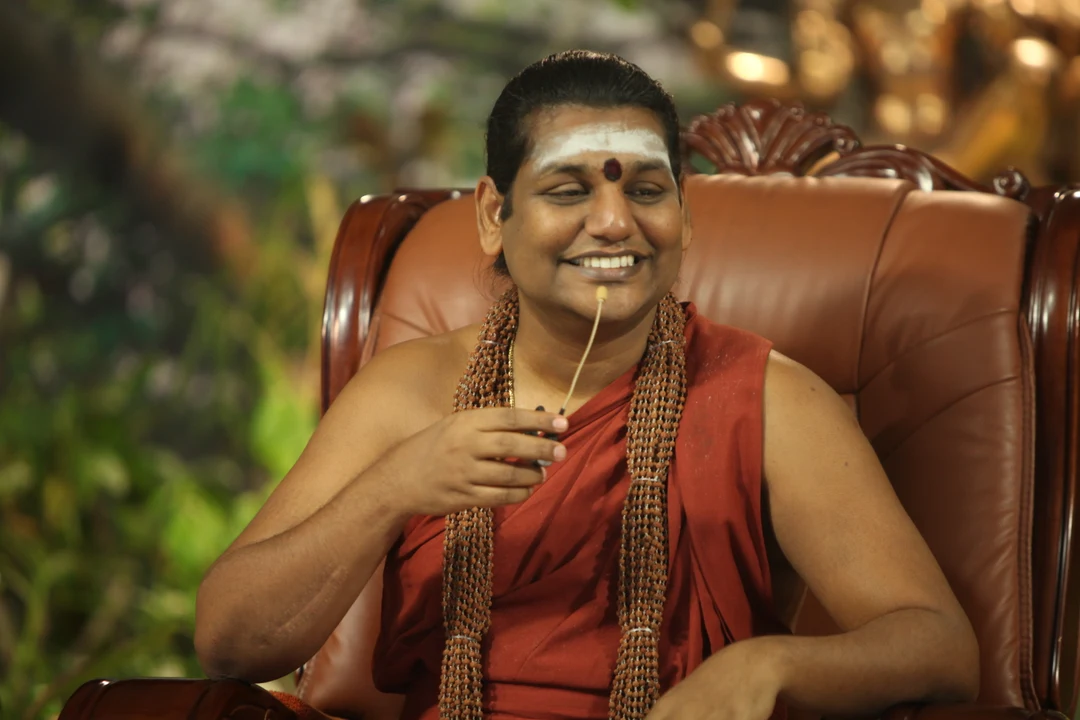
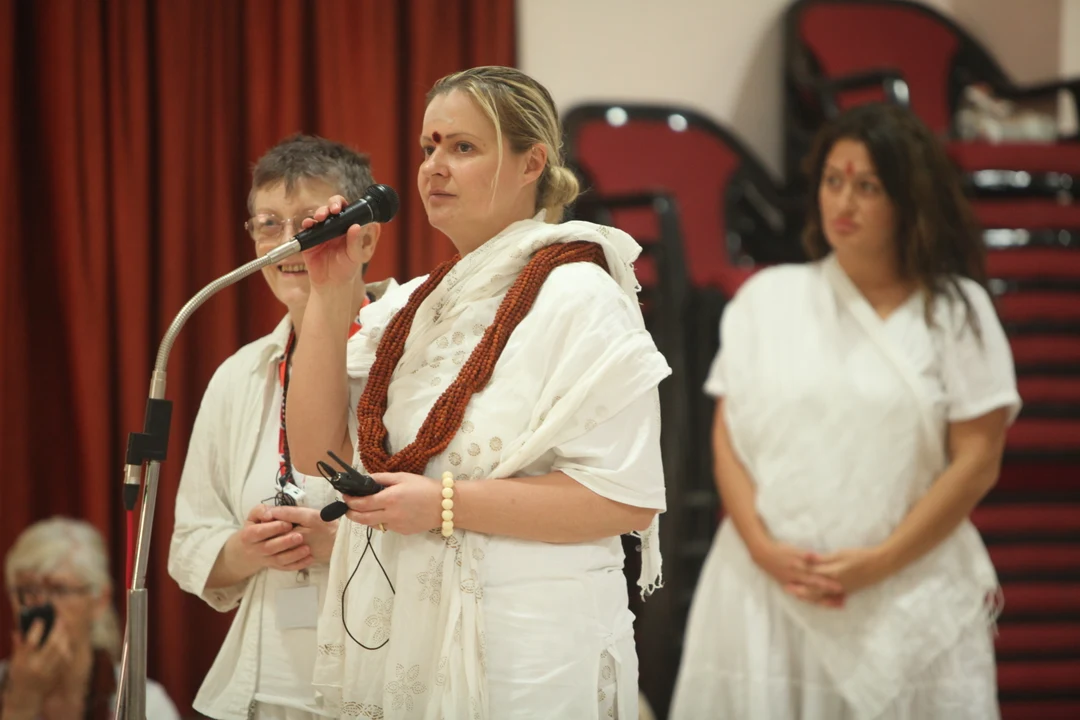
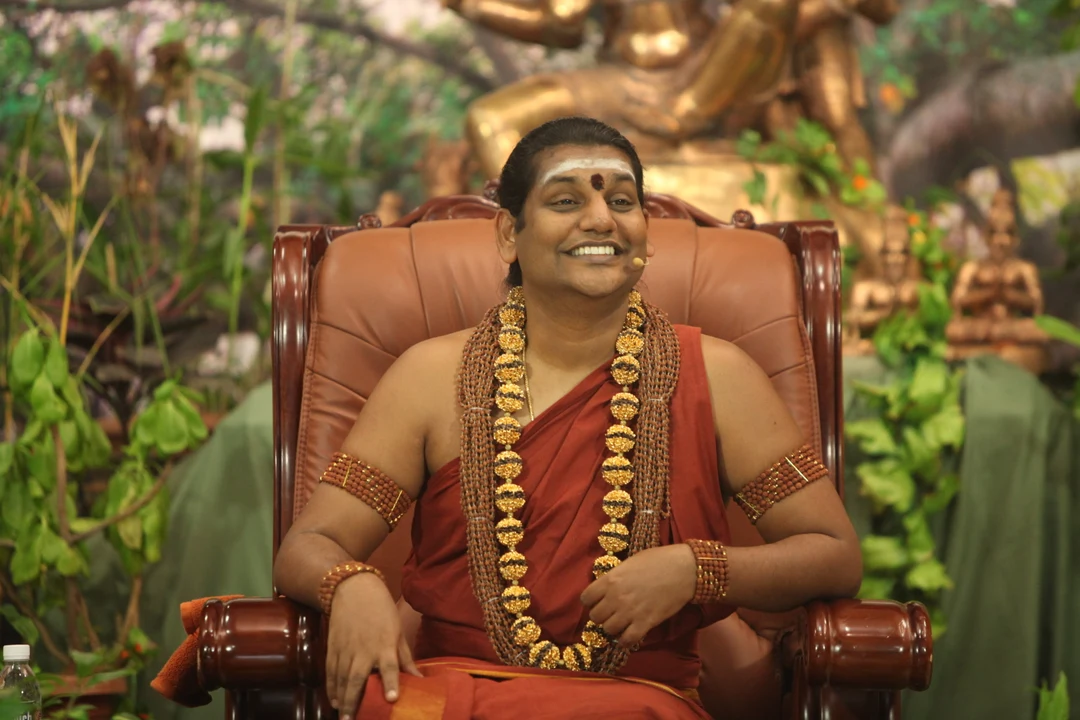
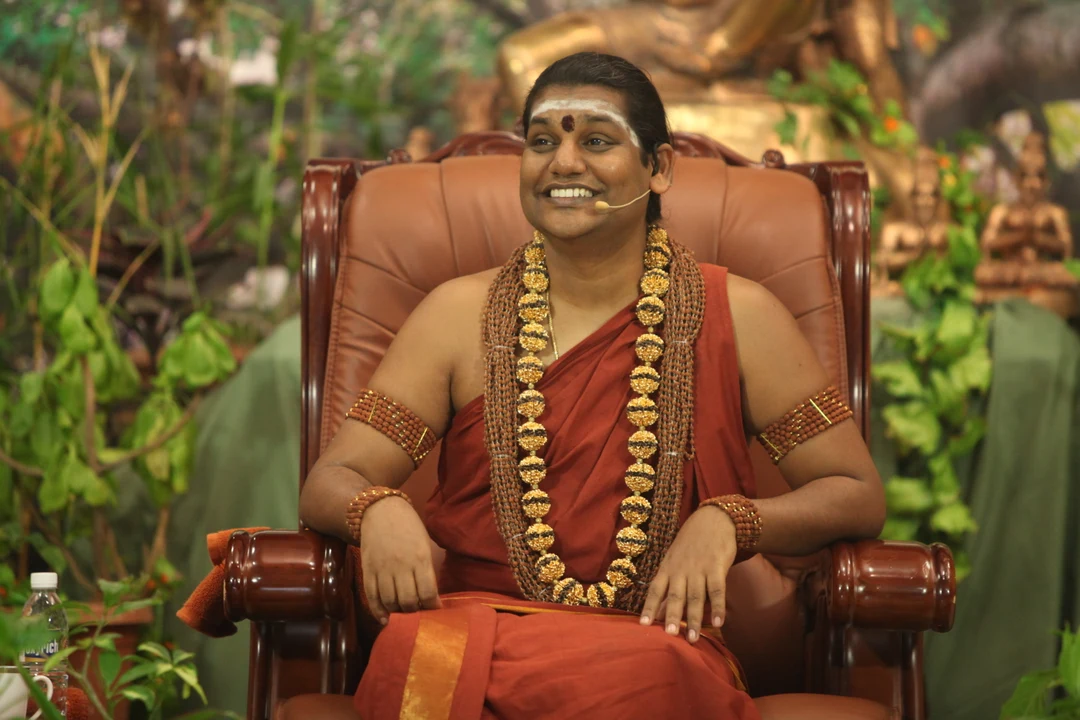
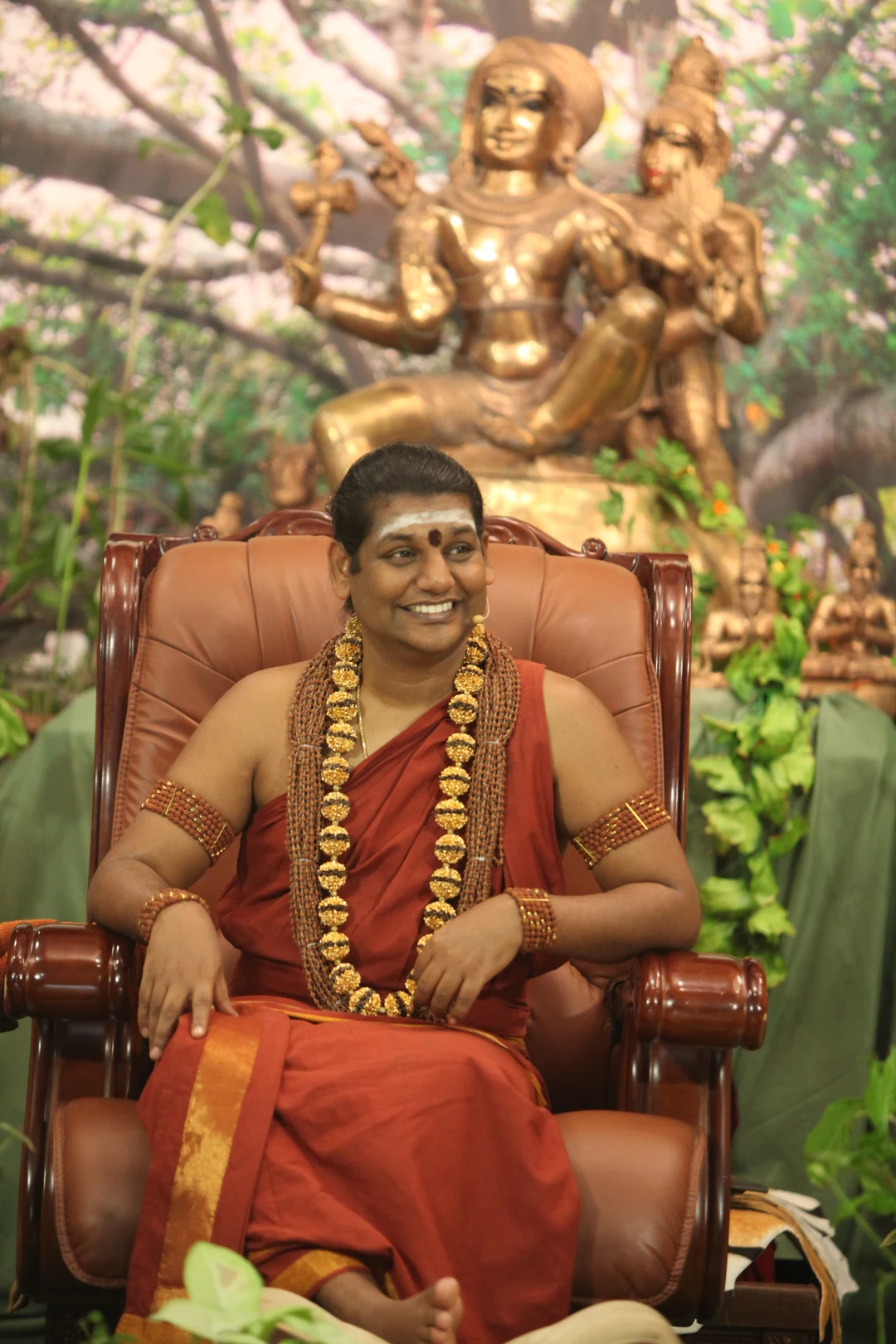
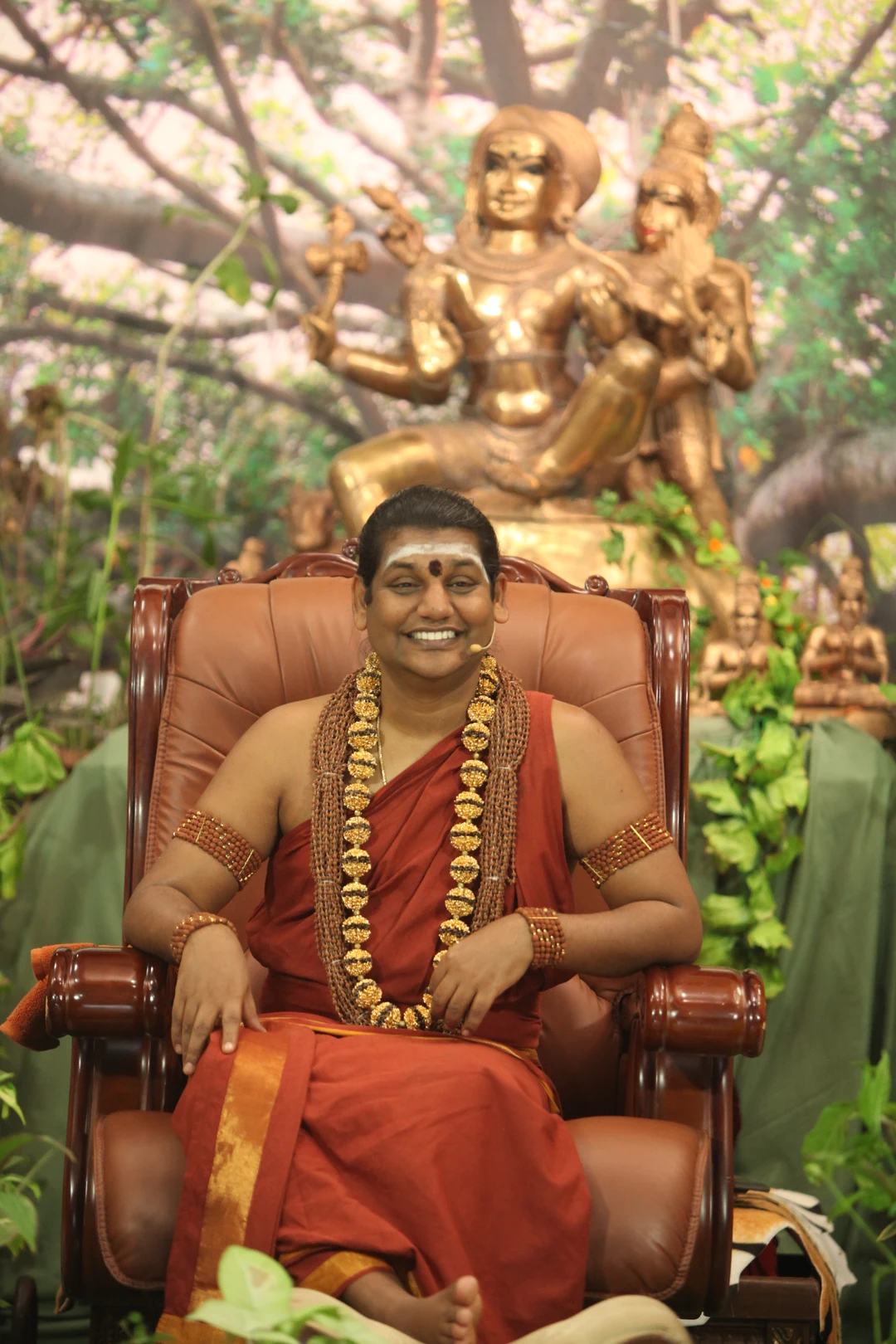
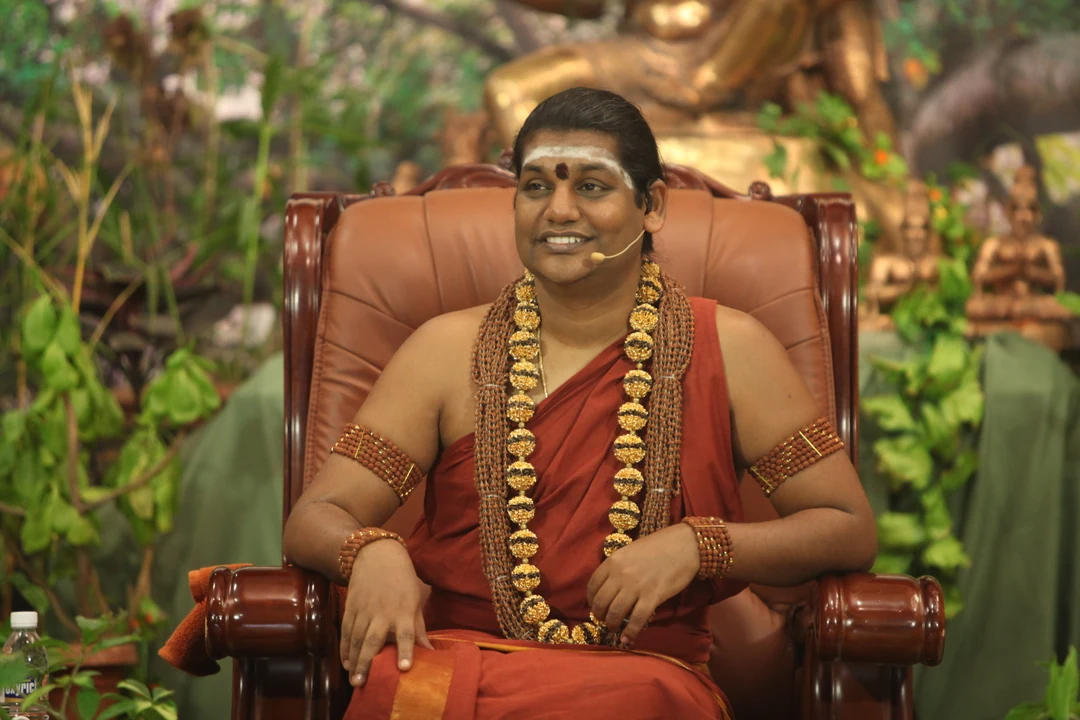
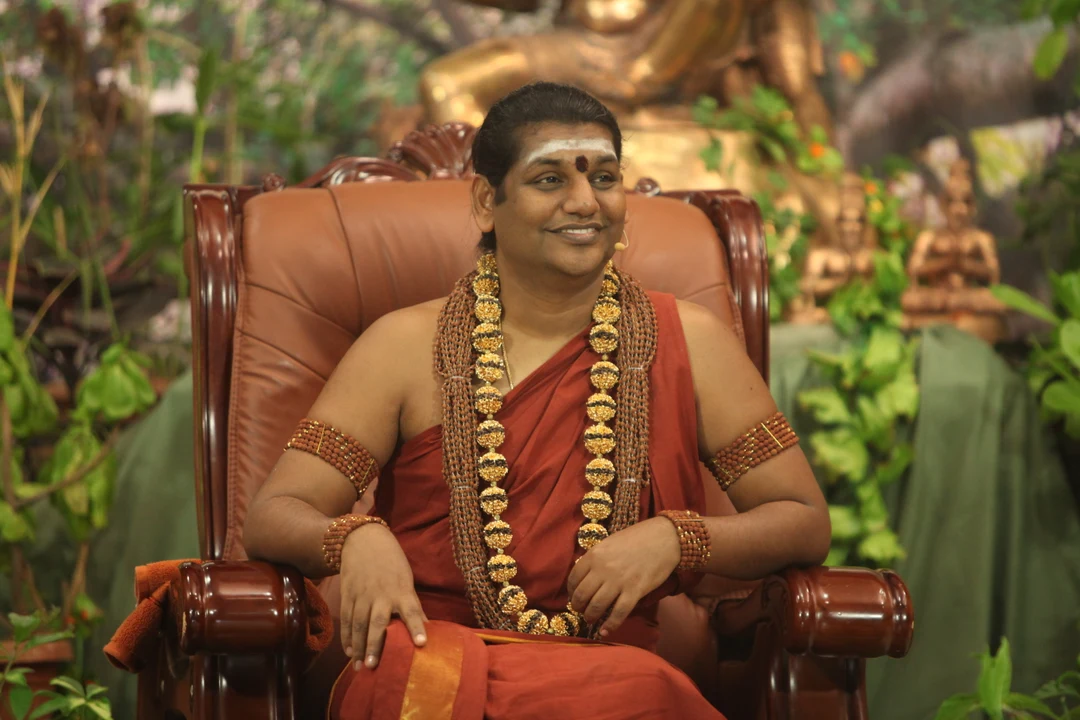
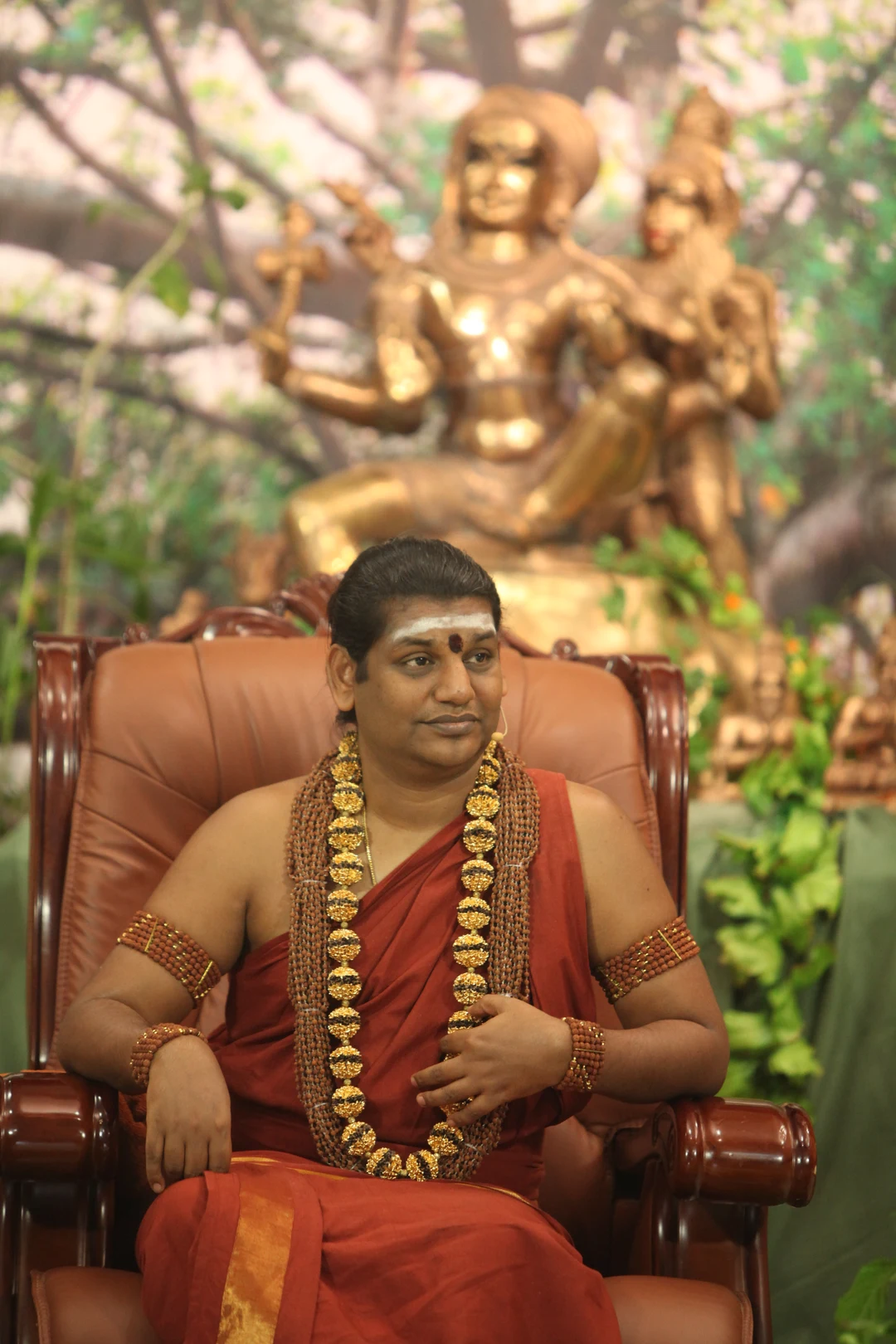
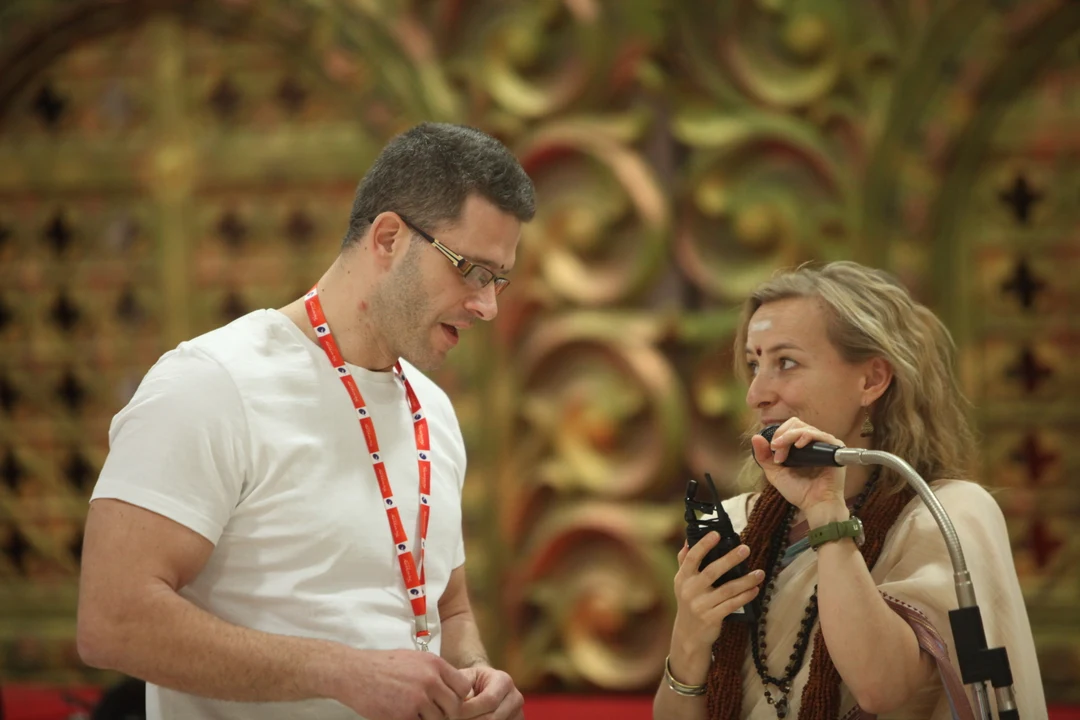
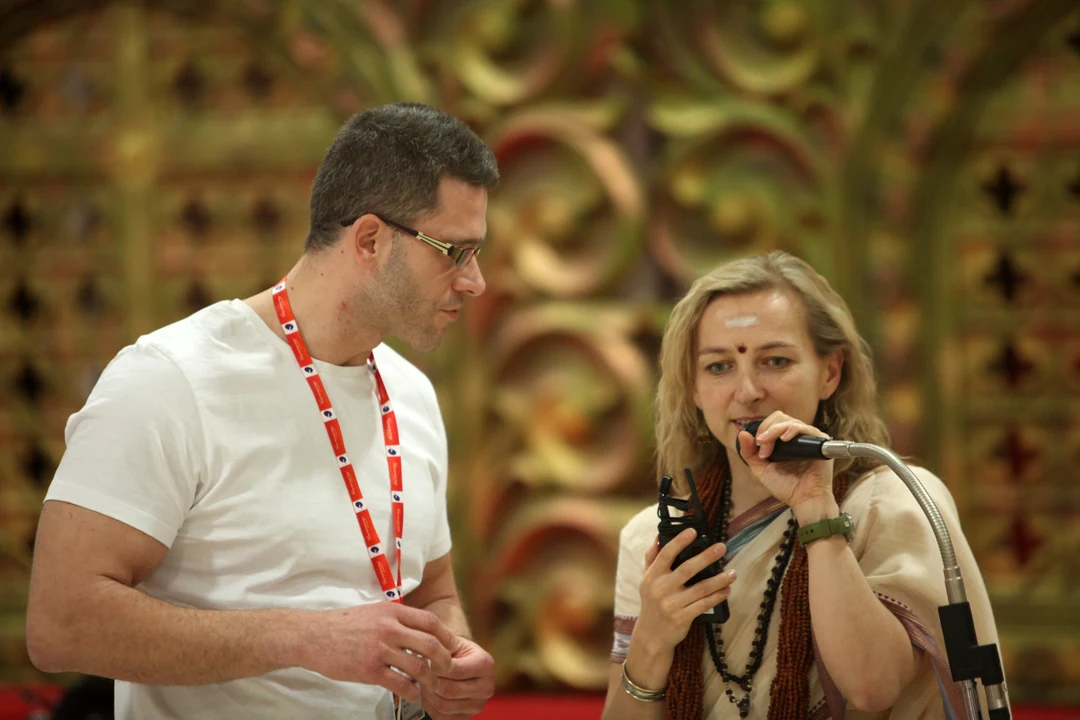
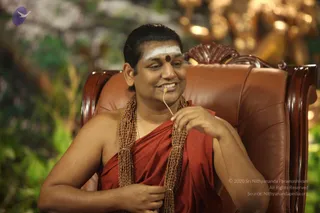
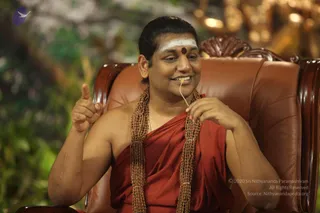
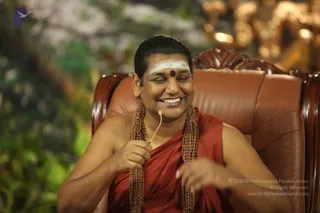
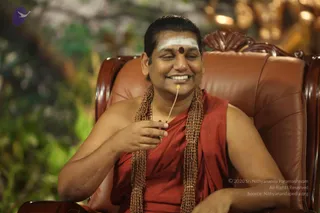
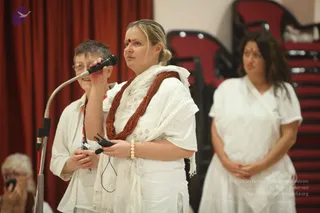
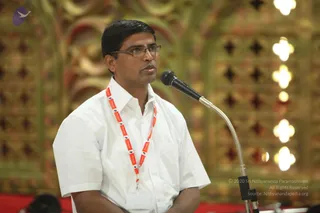
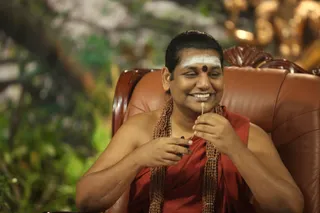
A smiling man sits in a brown leather armchair with carved wooden armrests against a blurred green and floral backdrop. He wears a red-orange draped cloth over bare shoulders, multiple long rudraksha mala strands, and a gold chain. His forehead bears white vibhuti horizontal lines with a red kumkum dot. He holds a small stick-like object near his mouth with one hand while the other rests on his lap.A smiling man sits in a brown leather armchair with carved wooden armrests against a blurred green and floral backdrop. He wears a rust-red saffron-toned shawl over one shoulder and long double strands of brown rudraksha malas, with a thin gold chain at his neck. A white horizontal tilak and a red dot mark his forehead. He raises one index finger while holding a thin stem between his lips, gesturing as he speaks during a satsang setting. The image shows one person.A smiling man with eyes nearly closed sits in a brown leather throne-style armchair with carved wooden armrests. He wears a red-orange ochre robe draped over bare shoulders and long brown rudraksha-style beaded mala necklaces. His forehead bears a white vertical mark with a red dot, and his hair is swept back. He holds a small lapel microphone clip near his chest with one hand while gesturing with the other. Behind him is a blurred green foliage backdrop with warm golden lights and ornate gold objects. The image carries a copyright overlay in the lower right corner.A smiling man sits in a brown leather armchair with carved wooden armrests against a blurred green garden backdrop. He wears a rust-red sleeveless robe and a long double-strand rudraksha mala, a white horizontal tilak with a red dot on his forehead, and holds a thin yellow stalk near his mouth with one hand. The photo is a presentation still with a small purple bird logo at top left. Appearance-based candidate: a person, seated in the chair in a saffron-red robe with rudraksha mala cues.A photograph of three women standing at a microphone stand in front of a red curtain and red-cushioned auditorium seating. In the centre, a woman with blonde hair pulled back and a red bindi wears a white shawl over white clothing with a reddish-brown rudraksha mala, holding a handheld microphone and a small clip-on mic. Beside her on the left, a woman with short hair and glasses in a white top holds a microphone to the stand. On the right, a woman with long dark hair and a red forehead mark wears a white dress with hands clasped. A seated person with white hair is partly visible at the lower left. No a person candidate is visible in the frame.A man in a white short-sleeved shirt and dark-rimmed glasses stands at a silver microphone on a stand, speaking. He wears a red-and-white lanyard with a small white badge clipped to it, and his hands are clasped at his waist. Behind him is an ornate golden lattice wall with dark red diamond motifs and rows of round lights. A red surface is visible at the bottom edge. He appears to be a speaker or organiser addressing an audience.
Darshan For Inner Awakening Delegates
19 photosSource gallery
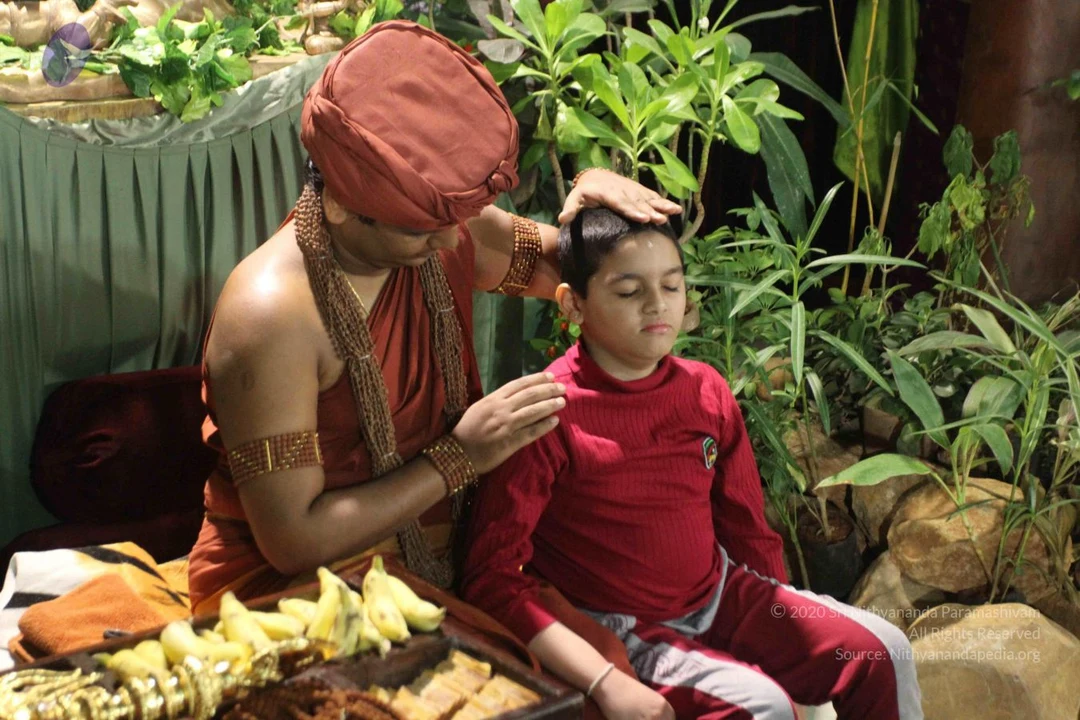
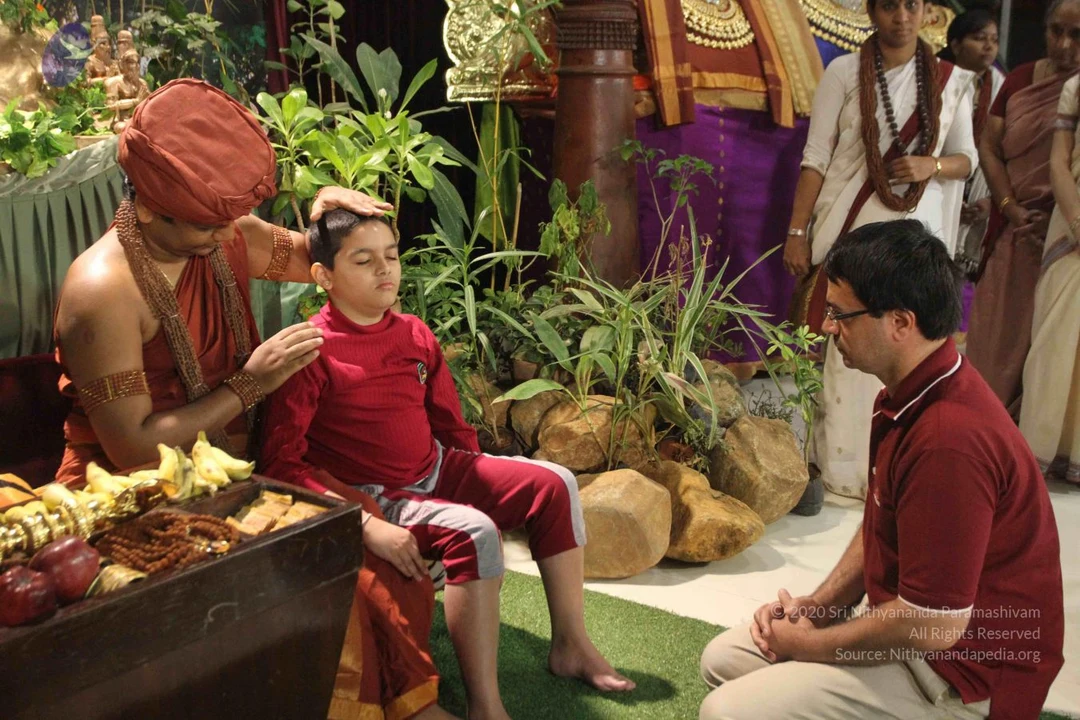
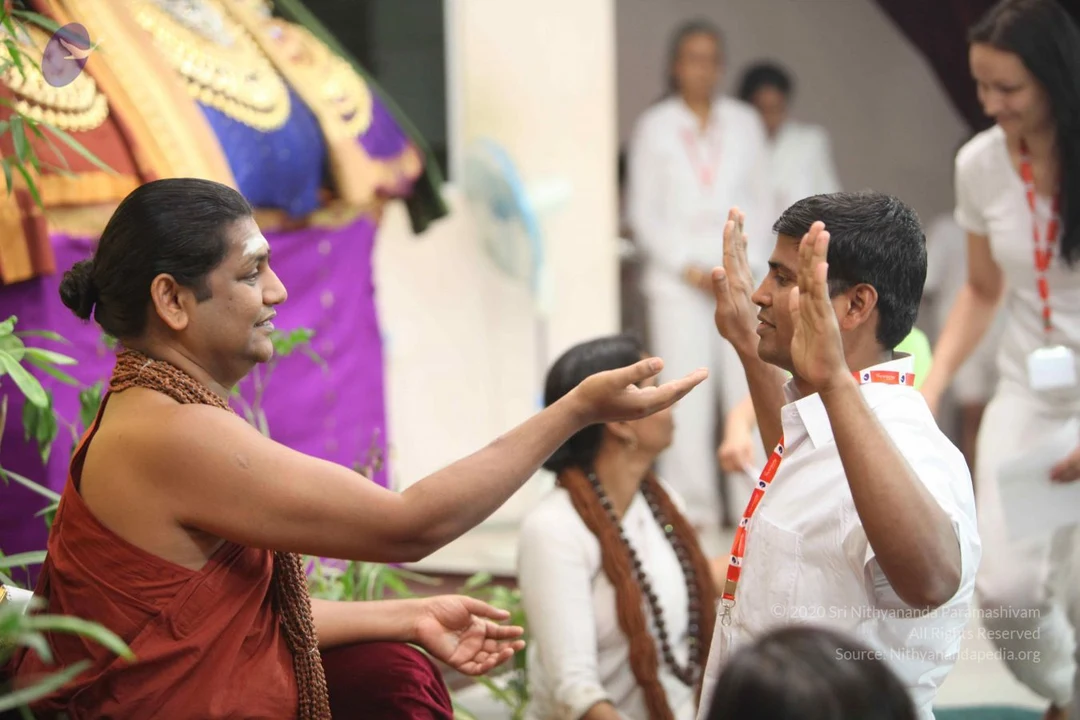
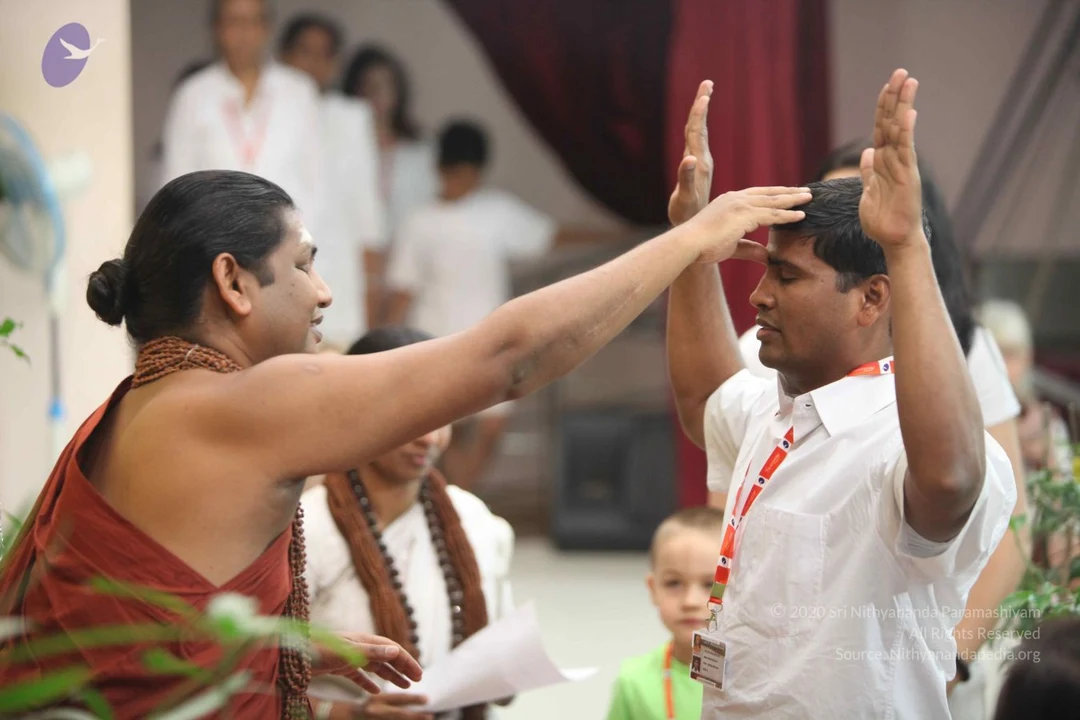
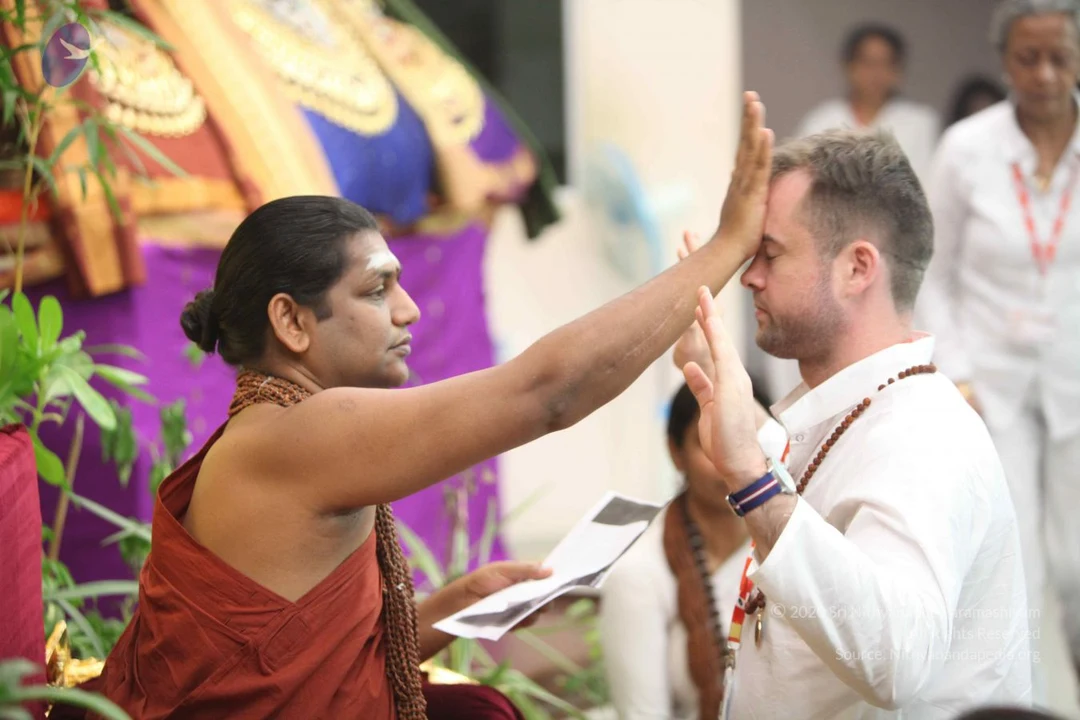
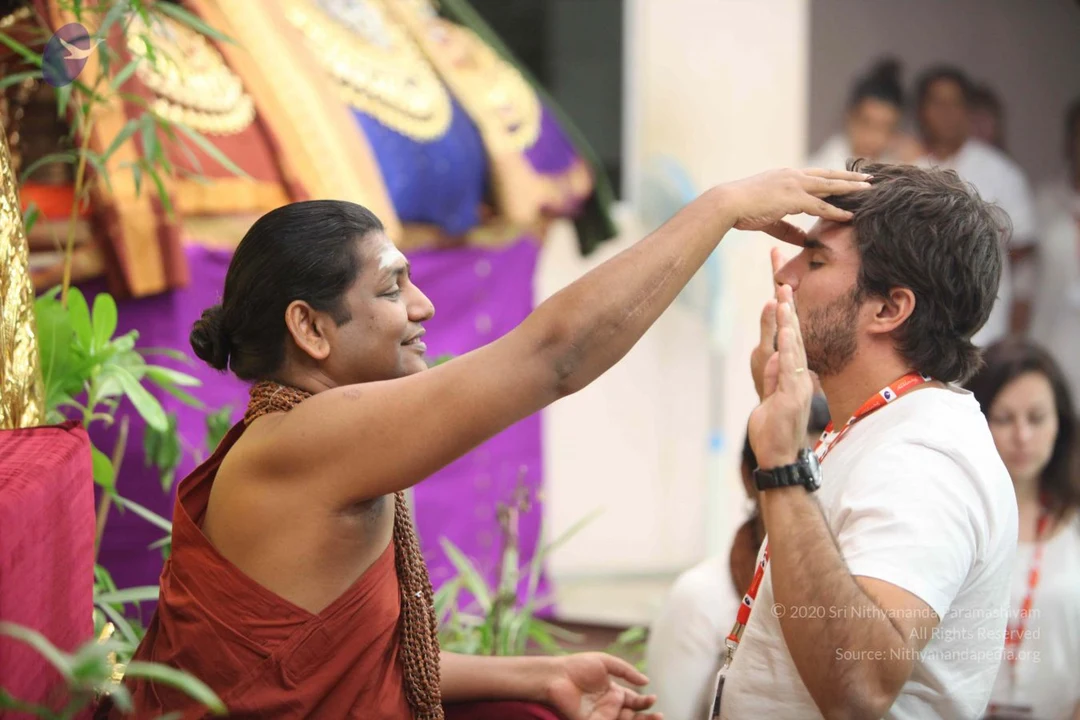
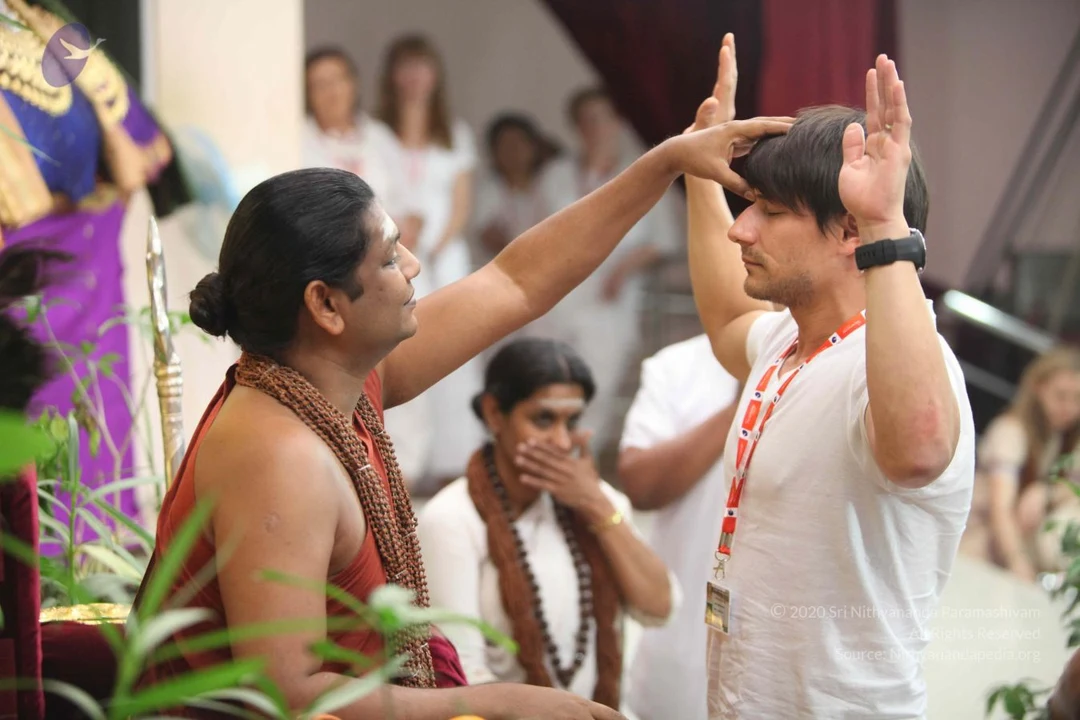
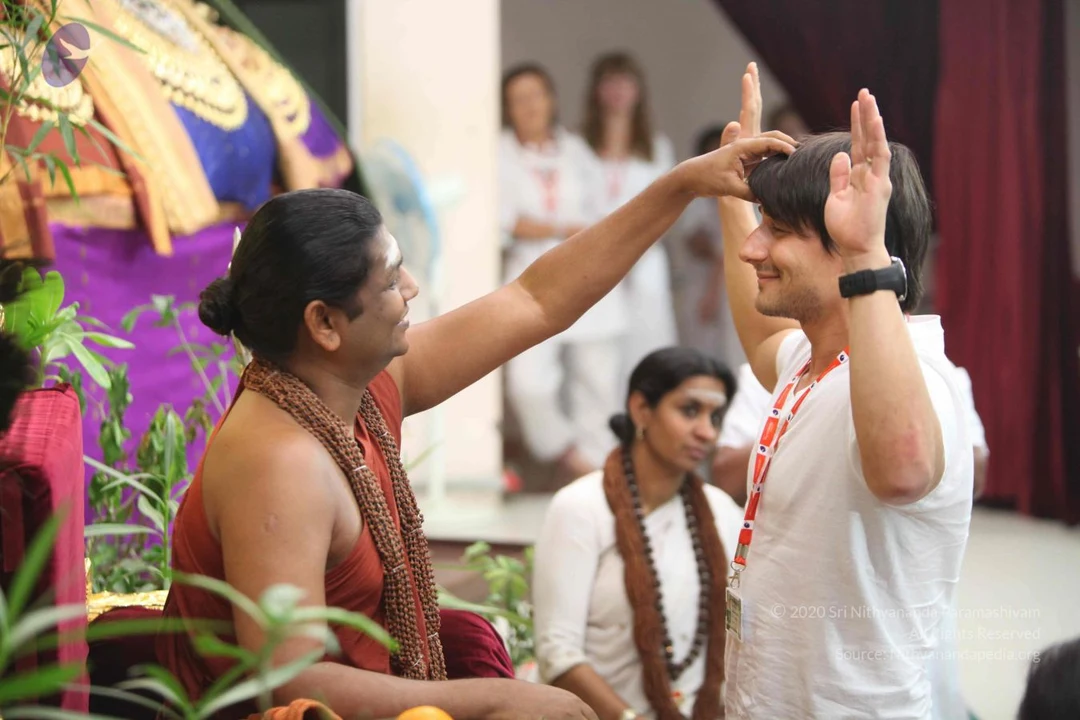
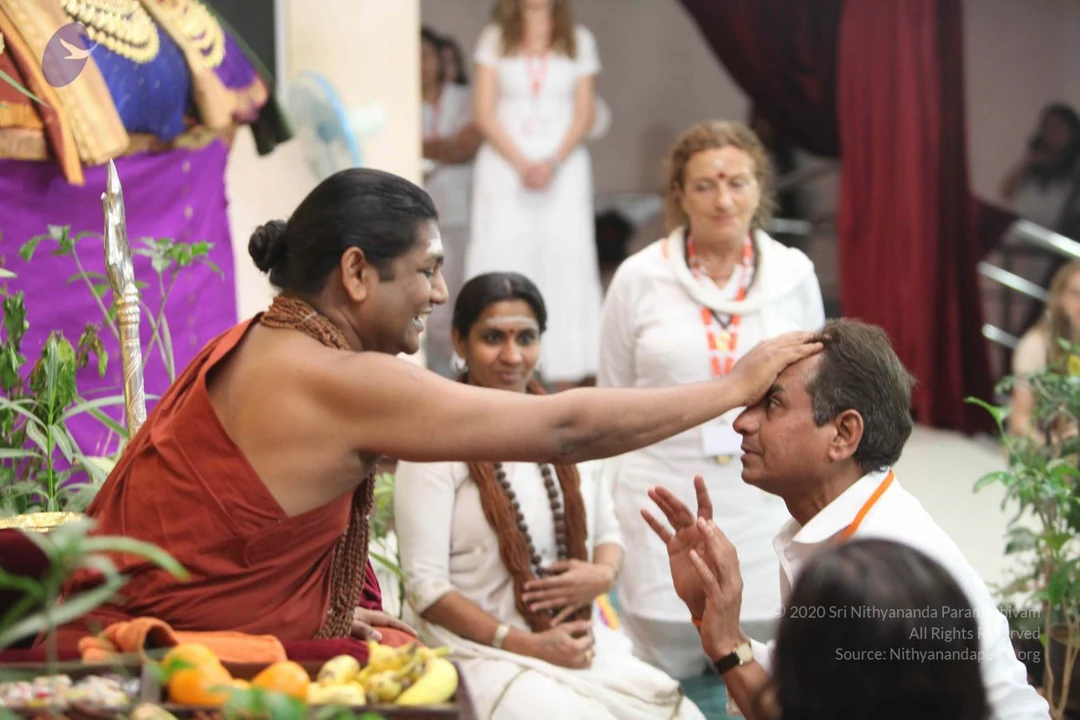
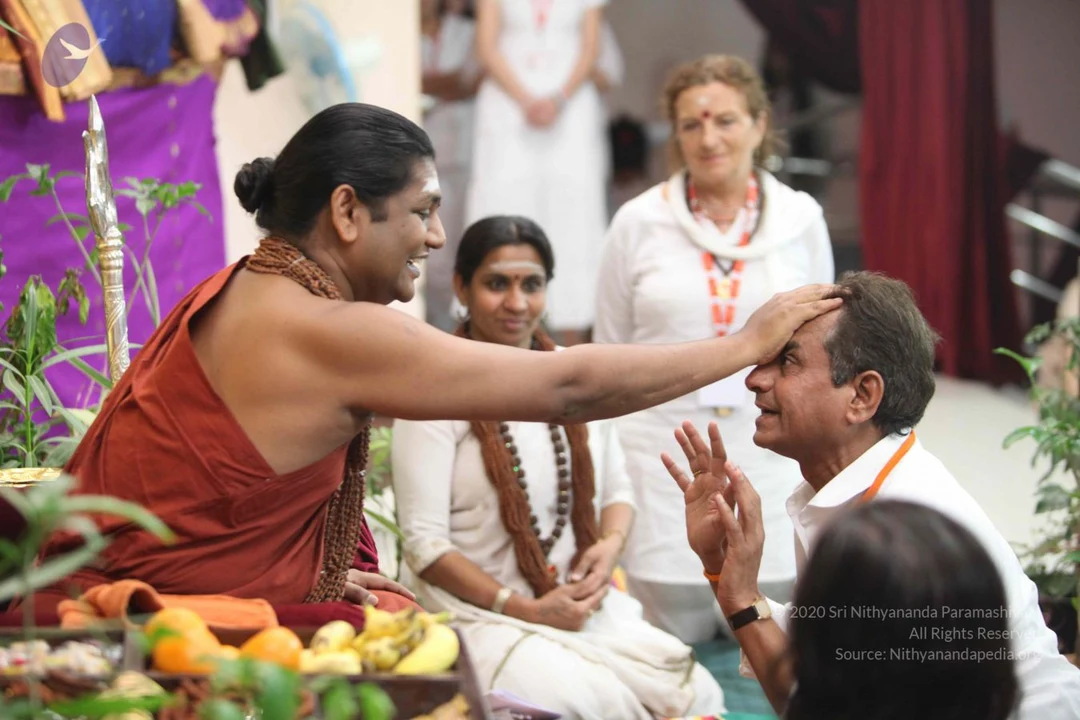
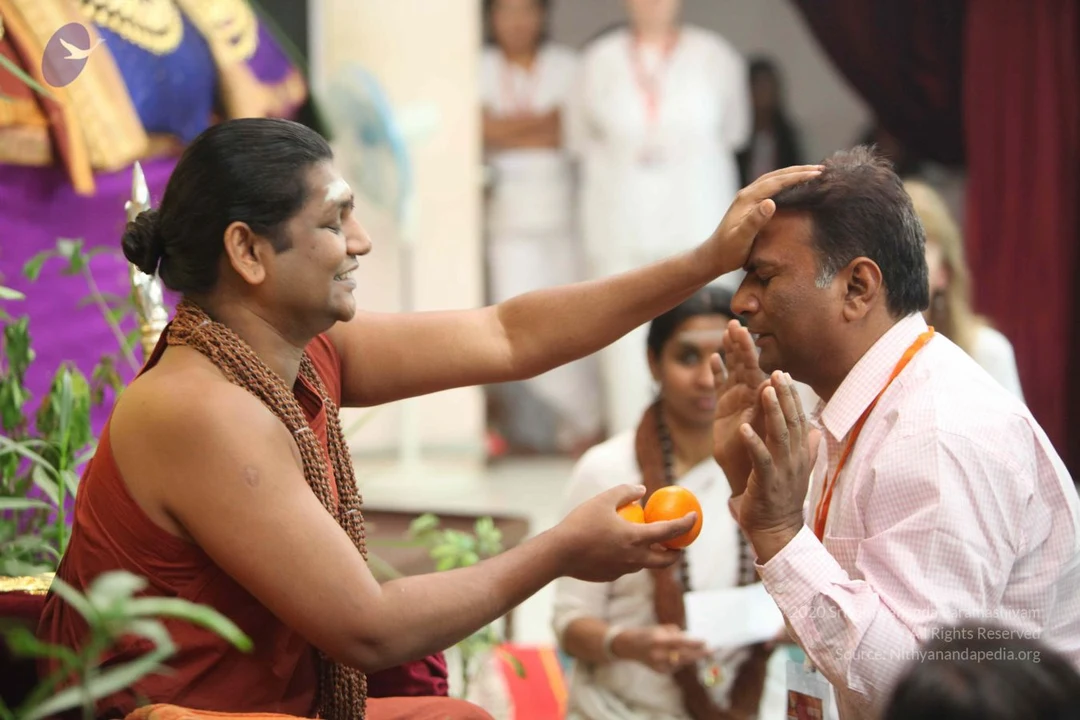
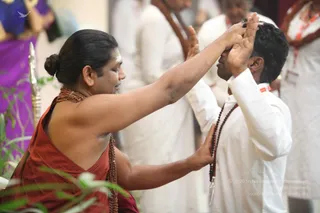
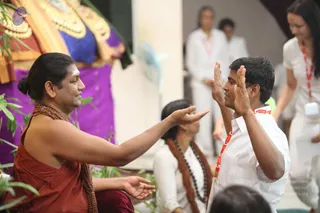
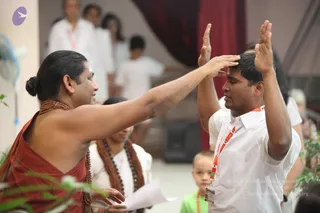
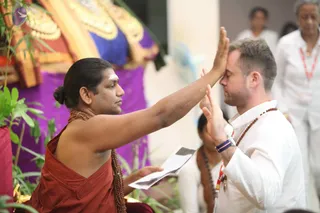
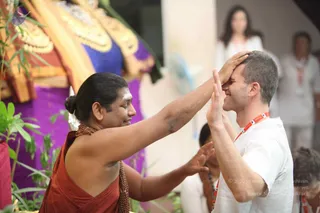
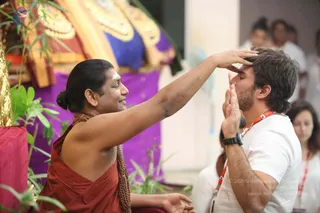
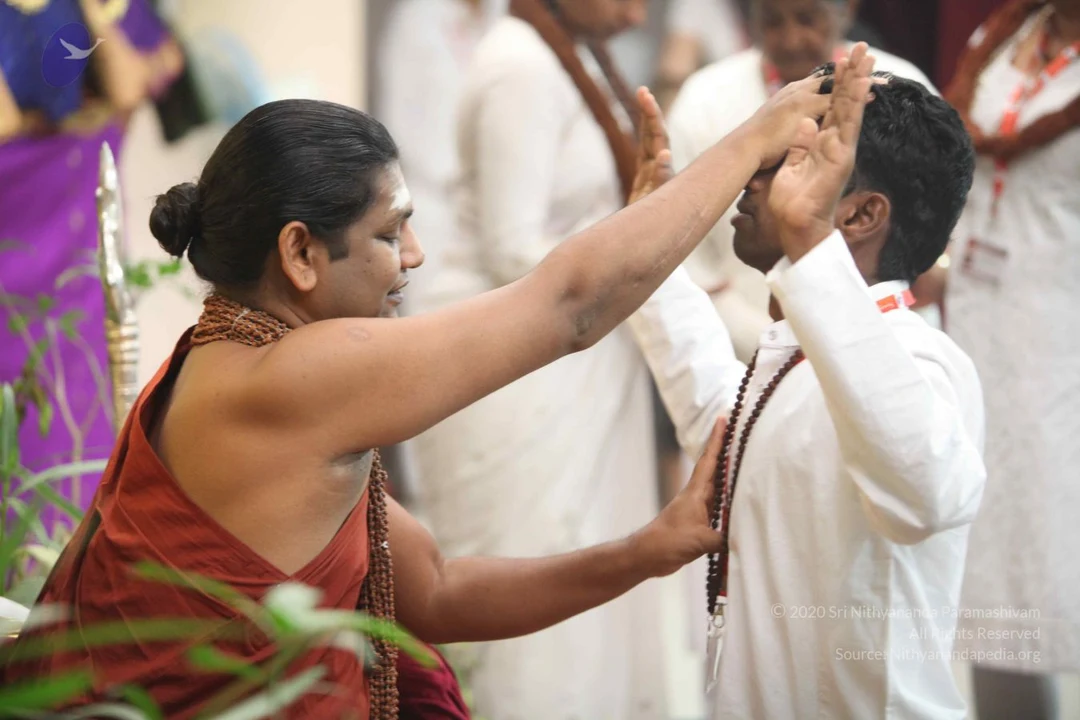
A photograph of a shaved-headed figure in a rust-orange wrap with a rudraksha mala and a white tilak on the forehead, facing right and extending both hands toward the head of a man in a white shirt and white trousers who wears a red-and-brown bead mala. The recipient has his eyes closed and his palms raised as if receiving a blessing or touch on the head. Other people in white garments and a woman in a purple sari stand blurred in the background, with greenery in the foreground. The gesture resembles a blessing or initiation.A photograph of a seated man in a rust-red sleeveless robe with a bare left shoulder, wearing a long rudraksha mala and a white vertical tilak on his forehead, with his hair in a bun. He extends his right arm toward a younger man in a white shirt with an orange-and-white lanyard, who holds both palms up facing him. Behind them, a purple and gold draped backdrop and a golden ornamental arch are visible. A woman in white with a long brown braid and rudraksha mala sits nearby, and two more people in white and a woman in a white top with an ID badge stand in the background. Partially visible people in the foreground and background.A photograph of a ritual blessing in an indoor hall. A bald-headed man in an orange-red shawl and a rudraksha mala raises his right hand toward the crown of a man in a white shirt with an orange lanyard, who stands with both palms raised above his head. Behind them, a second person in white and brown beaded necklace holds a sheet of paper, a small child in green shirt watches, and devotees in white stand near a maroon curtain.A man in a rust-red shawl with a tilak on his forehead and a rudraksha mala around his neck places his right palm on the forehead of a man in a white shirt with a rudraksha mala. The recipient, short-haired and eyes closed, holds his palms together in front. Behind them is a deity murti draped in purple and gold, with a green plant at left and a few people in white clothing in the background.A photograph of a shaved-headed man in a white shirt with an orange lanyard being blessed by a man in a rust-orange garment with a rudraksha mala and a white vibhuti mark on his forehead. The blesser holds his right palm on the man's head while his left hand is raised in front of the recipient's face, a gesture of blessing. Behind them, a blurred deity murti is draped in purple and gold cloth, with a woman in white standing in the background and foliage at the left edge. The blesser has a bun of dark hair and a rudraksha necklace; the recipient's eyes are closed and he smiles.A seated figure in a rust-orange sannyasi wrap with a brown rudraksha mala and a white tilak on the forehead places his right hand on the forehead of a young man with dark hair and stubble. The young man wears a white t-shirt, a black wristwatch and an orange lanyard, and has his palms pressed together. Behind them stand a gold-embroidered red and blue textile backdrop and purple drapery with green leaves in front. Other people in white clothing sit or stand in the background.

FB-Photos-of-the-Day
1 photoSource gallery
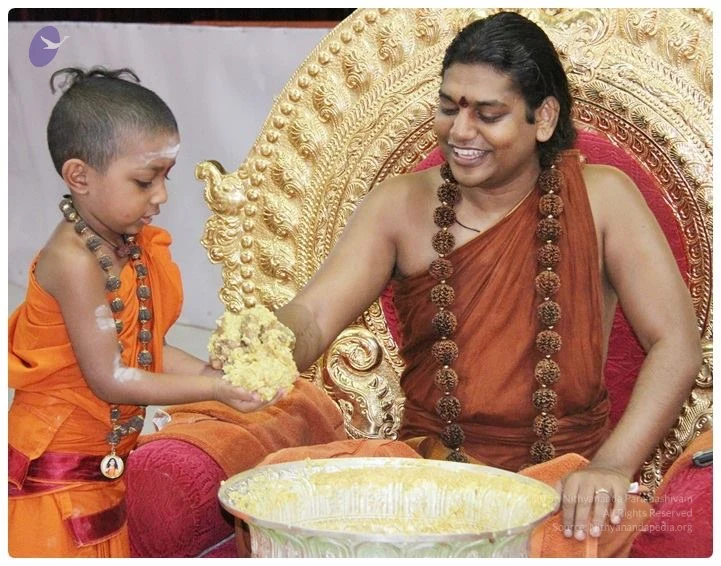
A photograph of a seated man in an orange-brown robe with a rudraksha mala draped across his chest, smiling and reaching into a large white bowl filled with a yellow grainy offering. Beside him stands a young child in orange robes with a rudraksha mala and white ash markings, holding out cupped hands to receive the offering. The seated man sits on an ornate gold-carved throne with red upholstery.

01-Satsang

1 photoSource gallery
A smiling man sits in a brown leather armchair with carved wooden armrests against a blurred green foliage backdrop with golden decor at upper right. He wears a rust-red unstitched robe over bare shoulders and multiple long rudraksha mala strands across his chest. A white tripundra mark and a red bindi are on his forehead, and he holds a small object near his mouth with both hands. Swamiji (probable): long swept-back hair, rudraksha malas and saffron-red clothing are visible, consistent with the page's satsang context. The scene appears to be a satsang discourse setting with one person present.