Skip to content
Tuesday

24 February 2015

The Qualities of Ishwara

Dated photos
318
Source pages
1
Media
3
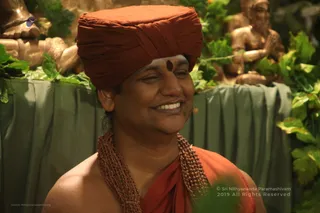
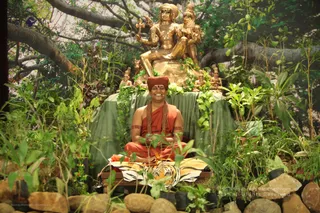
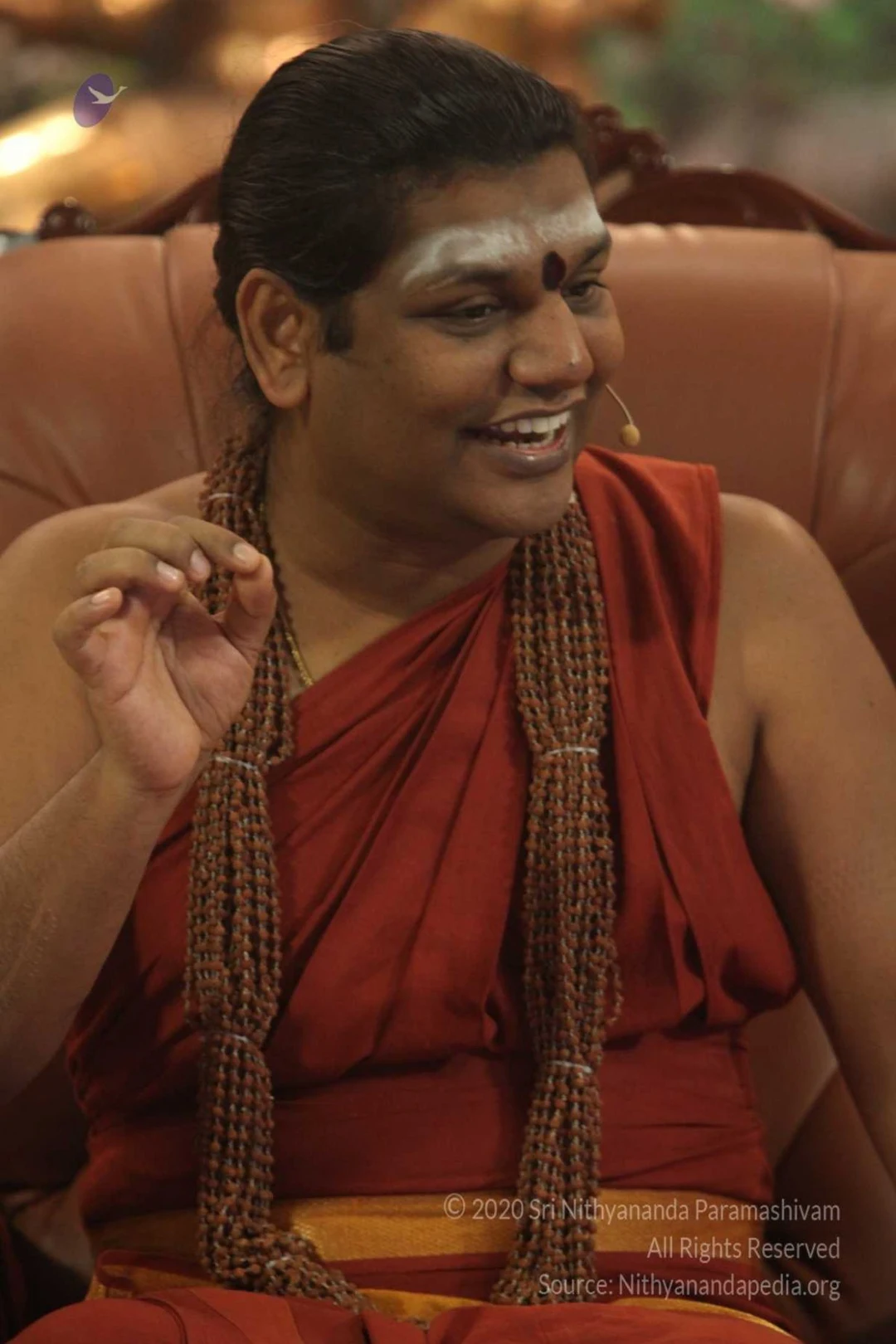
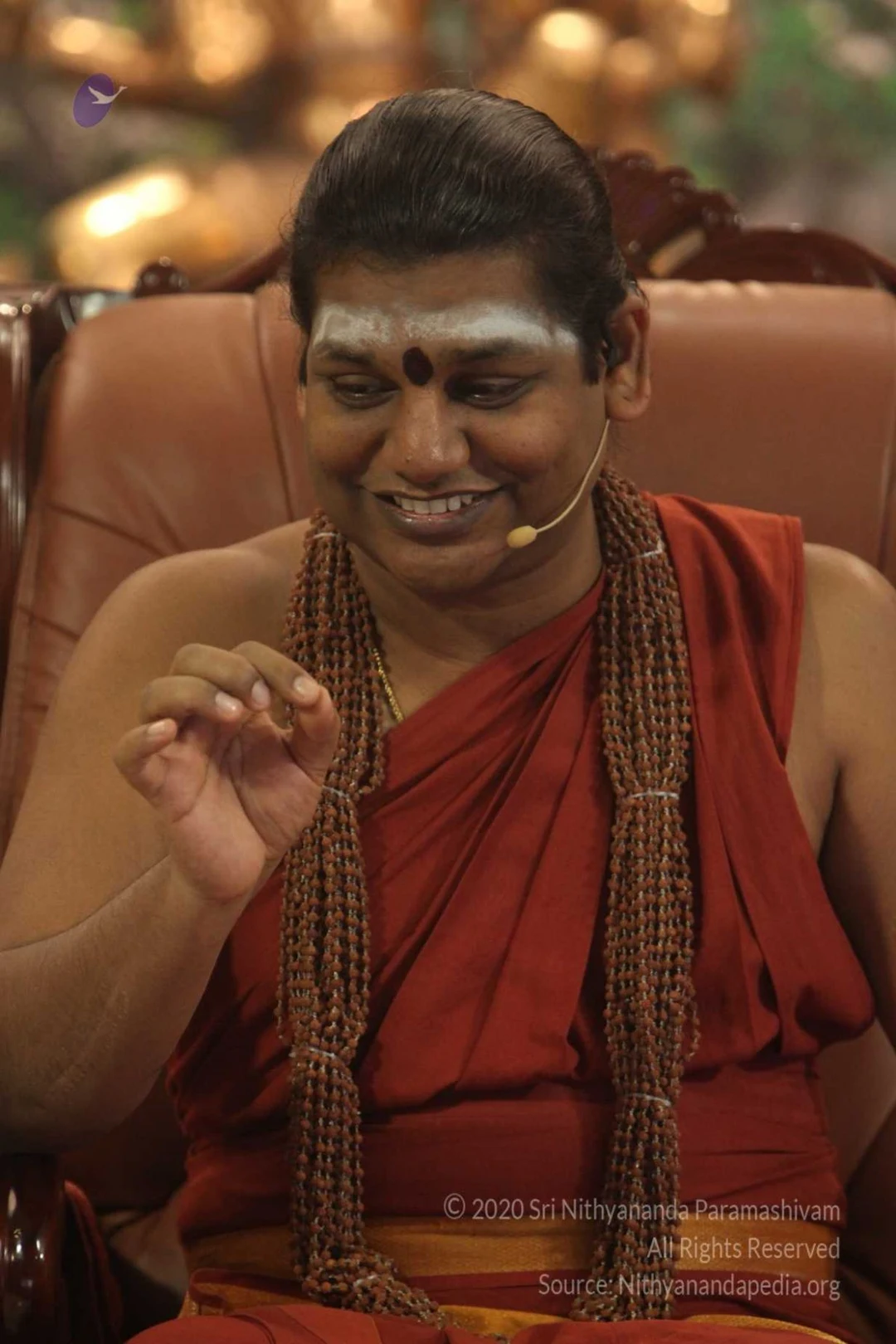
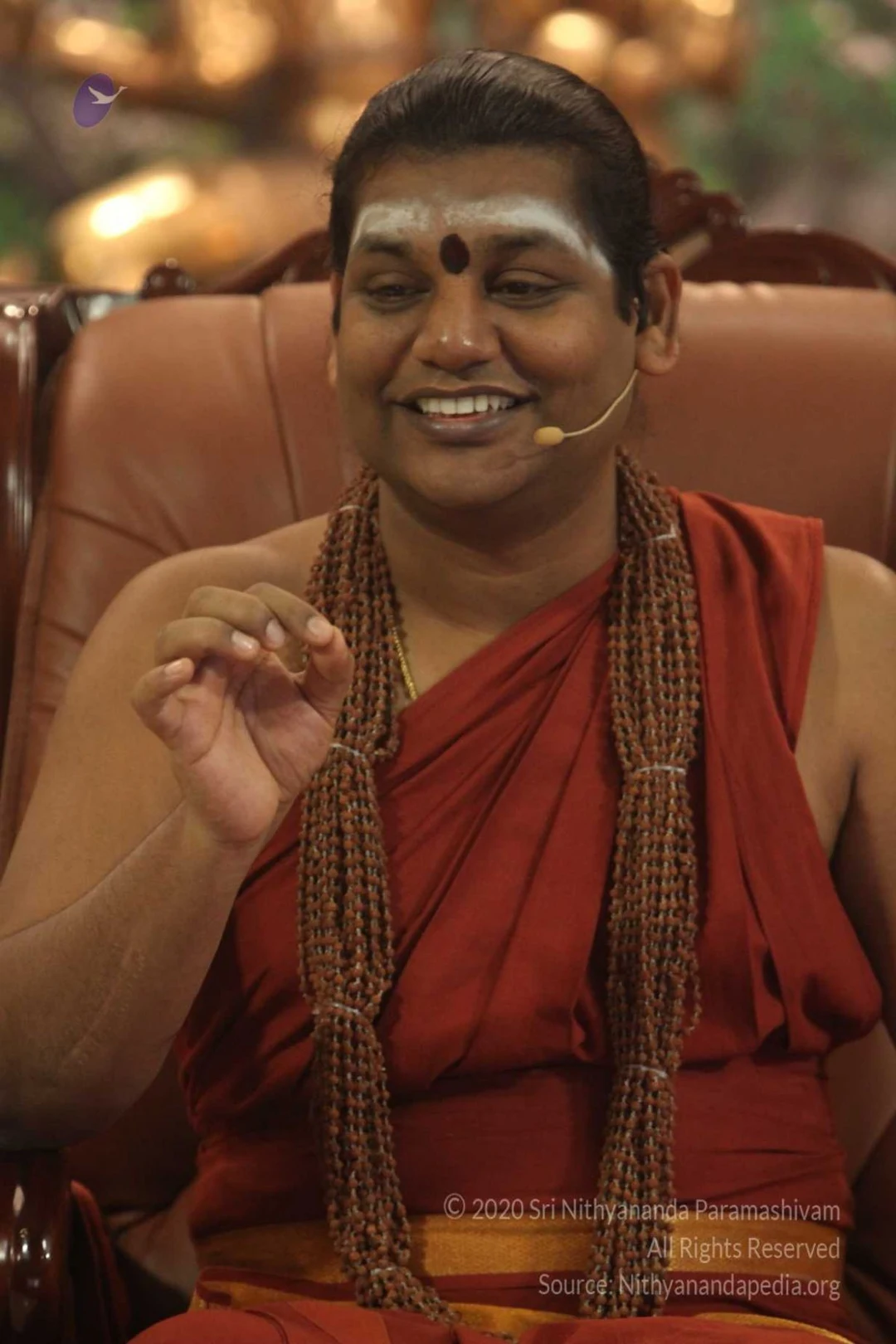
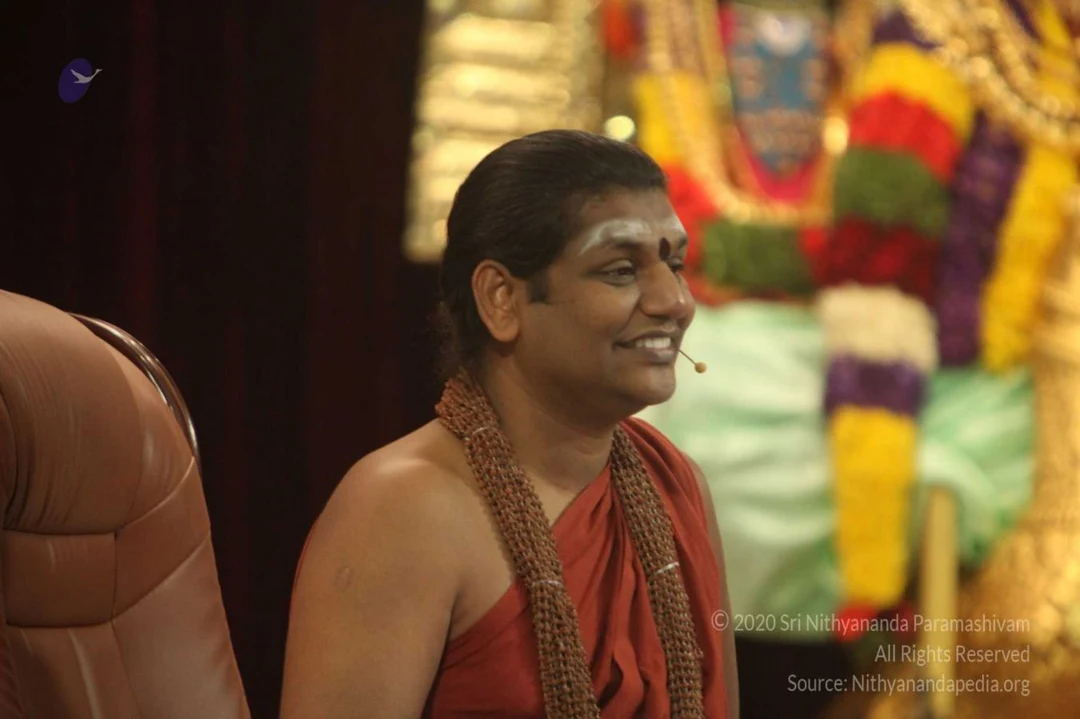
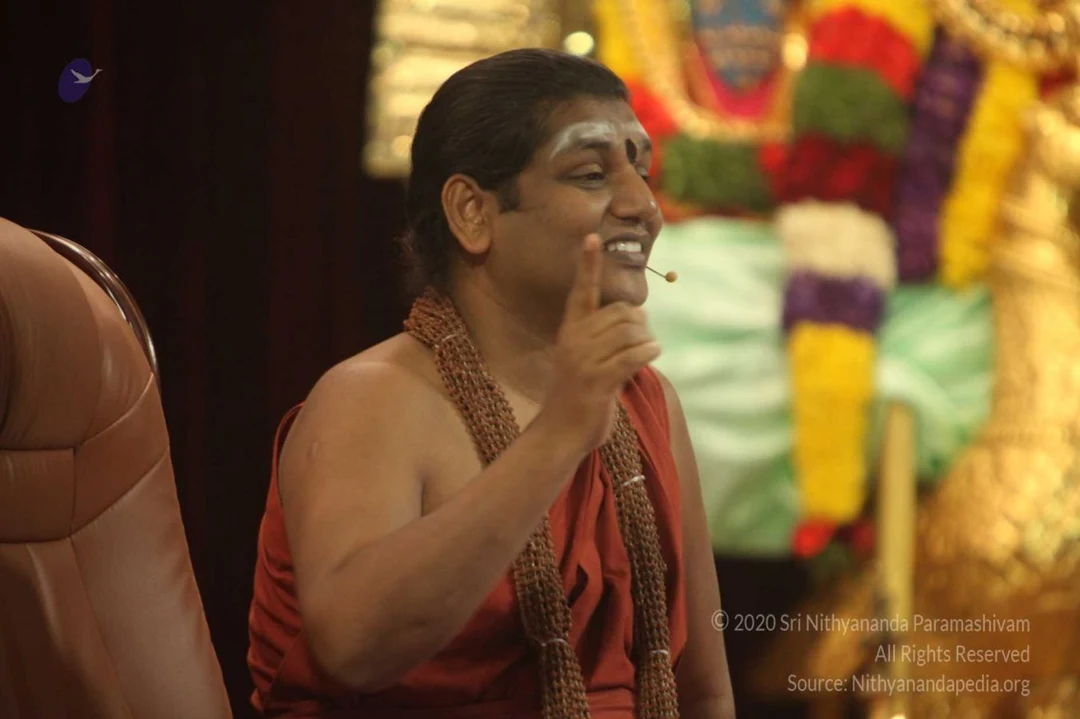
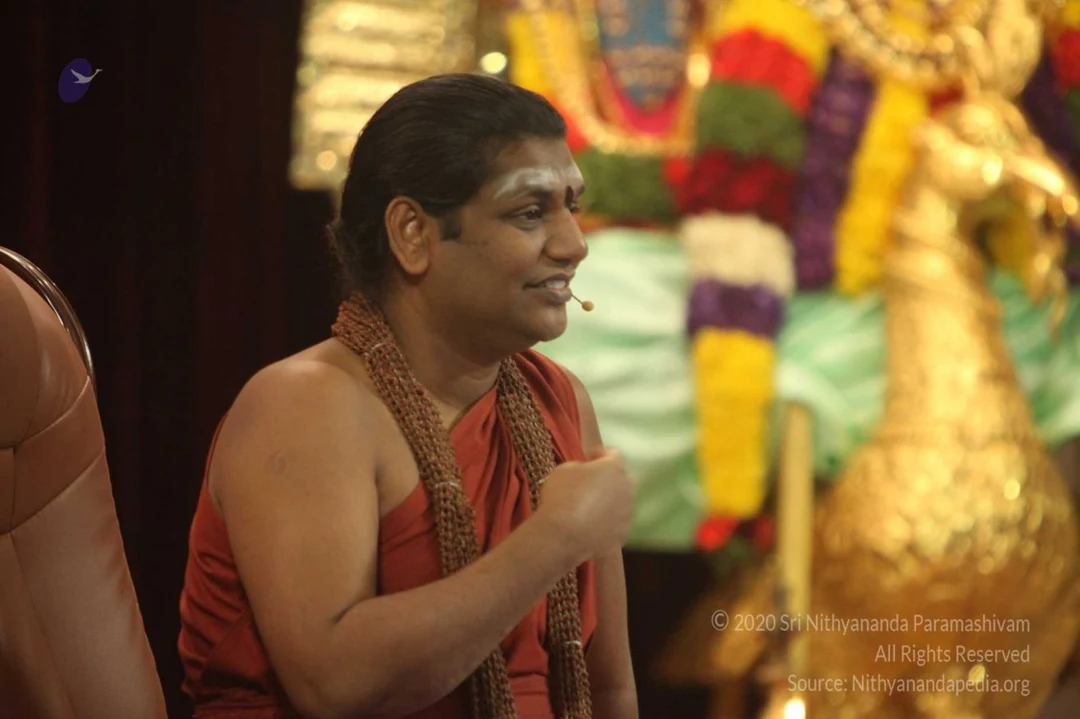
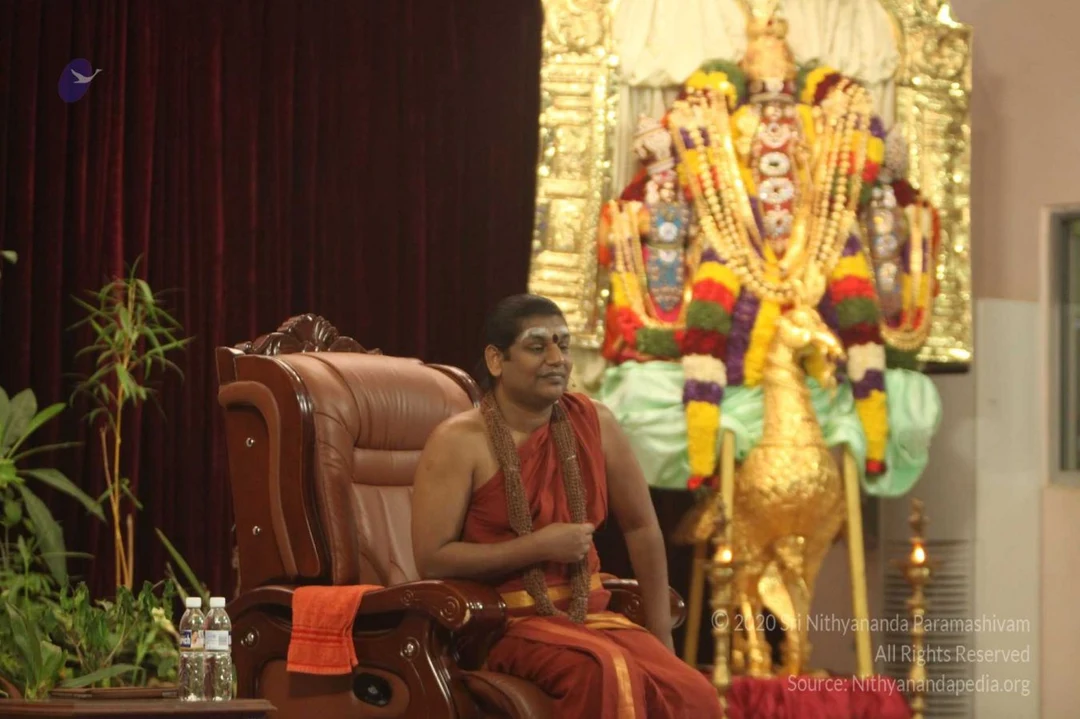
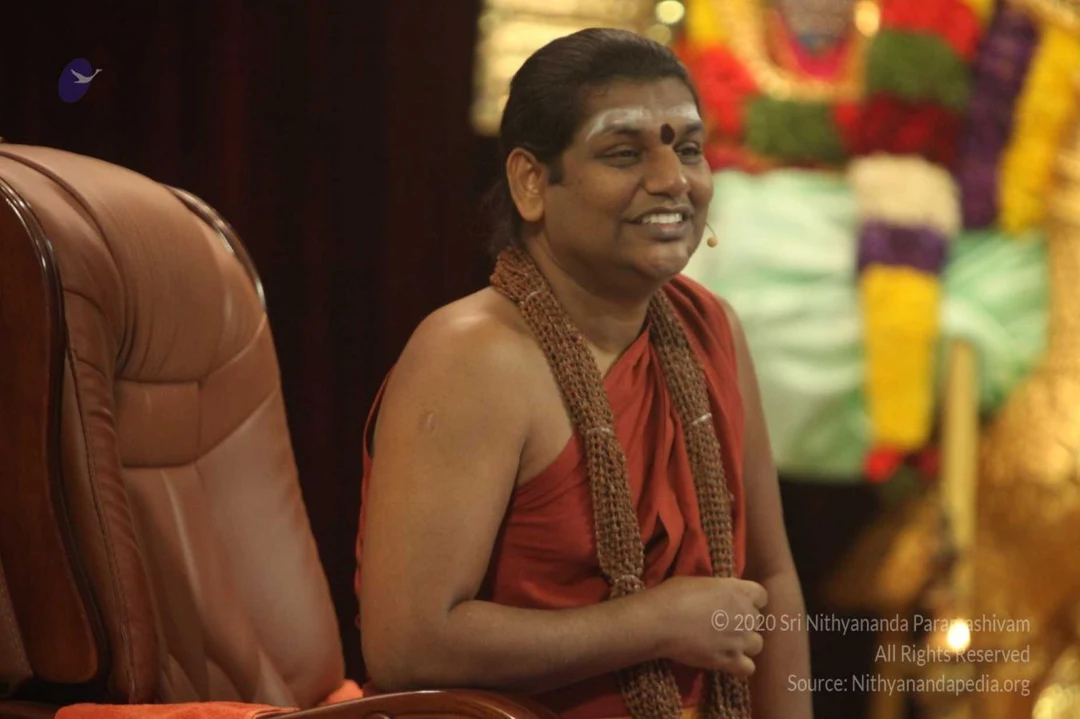
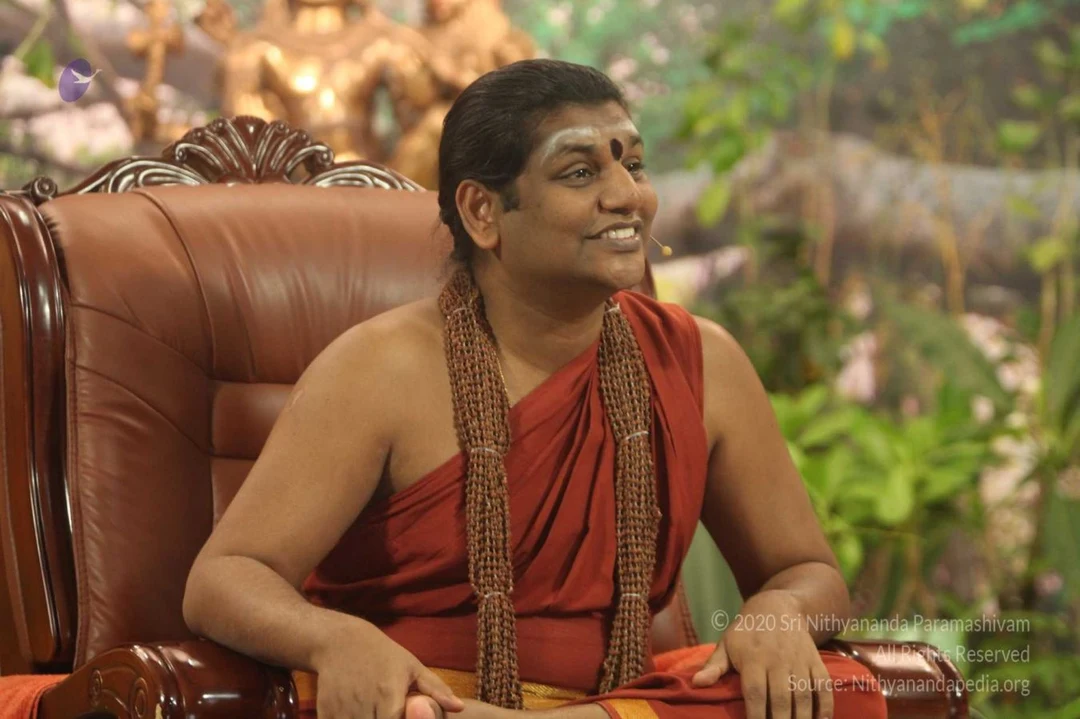
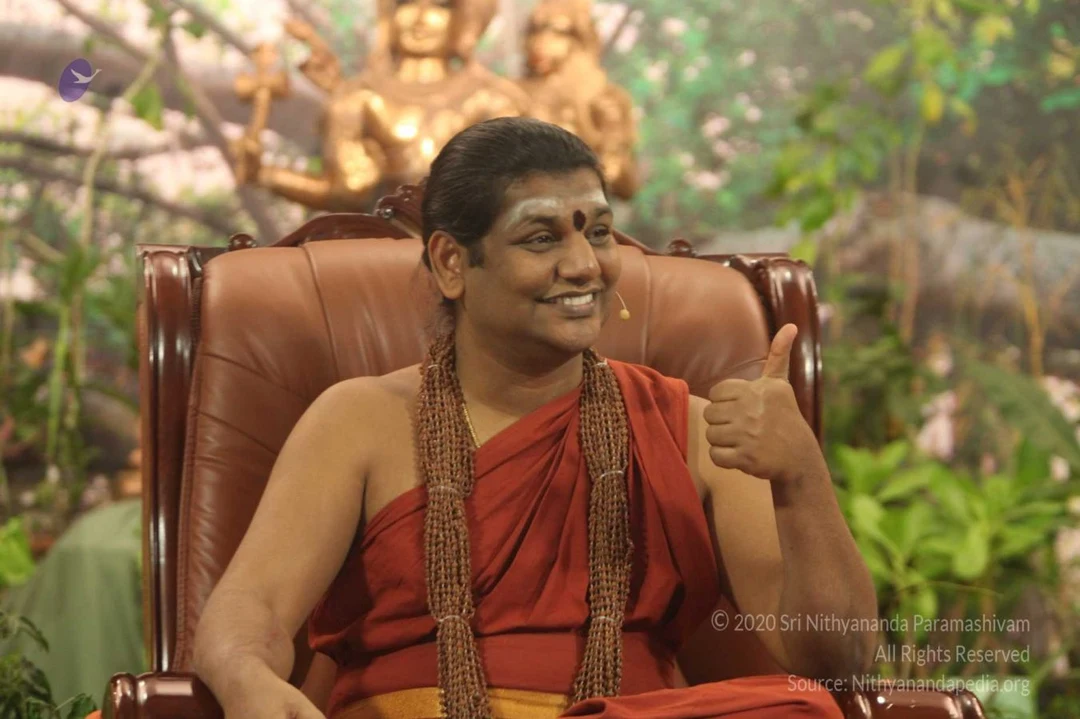
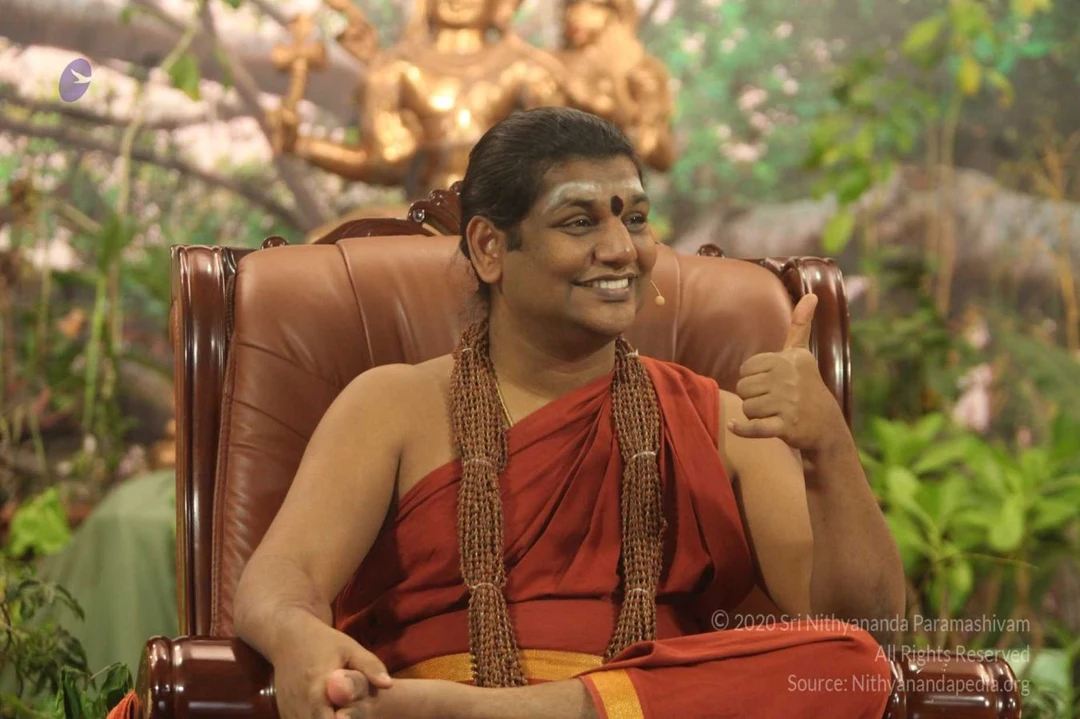
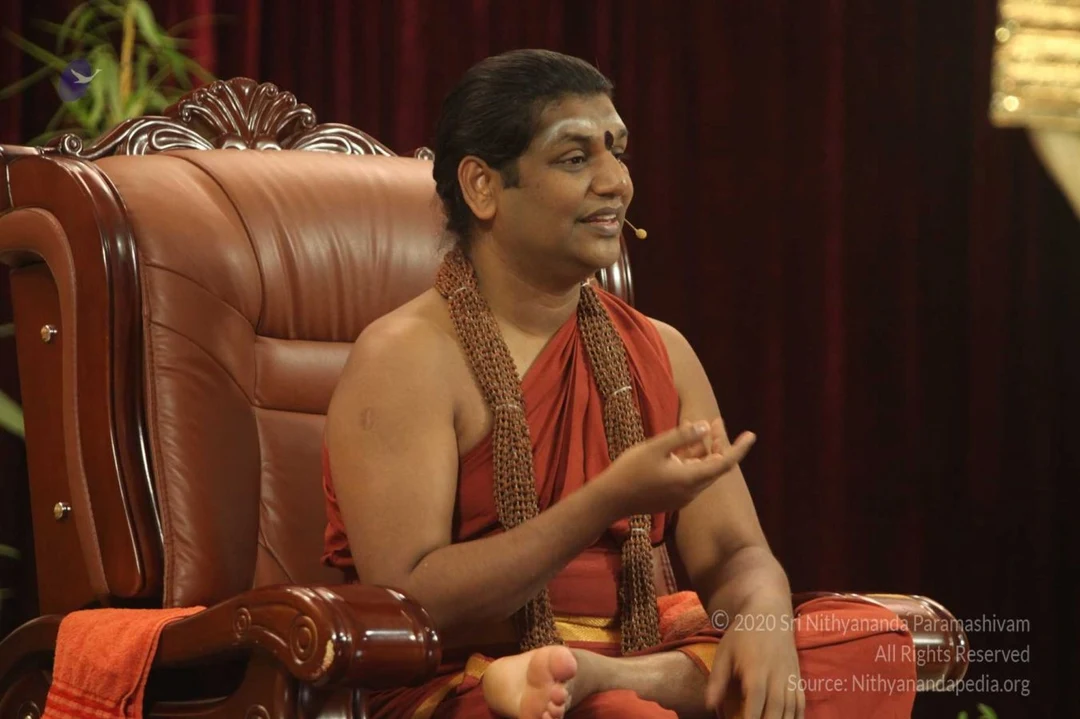
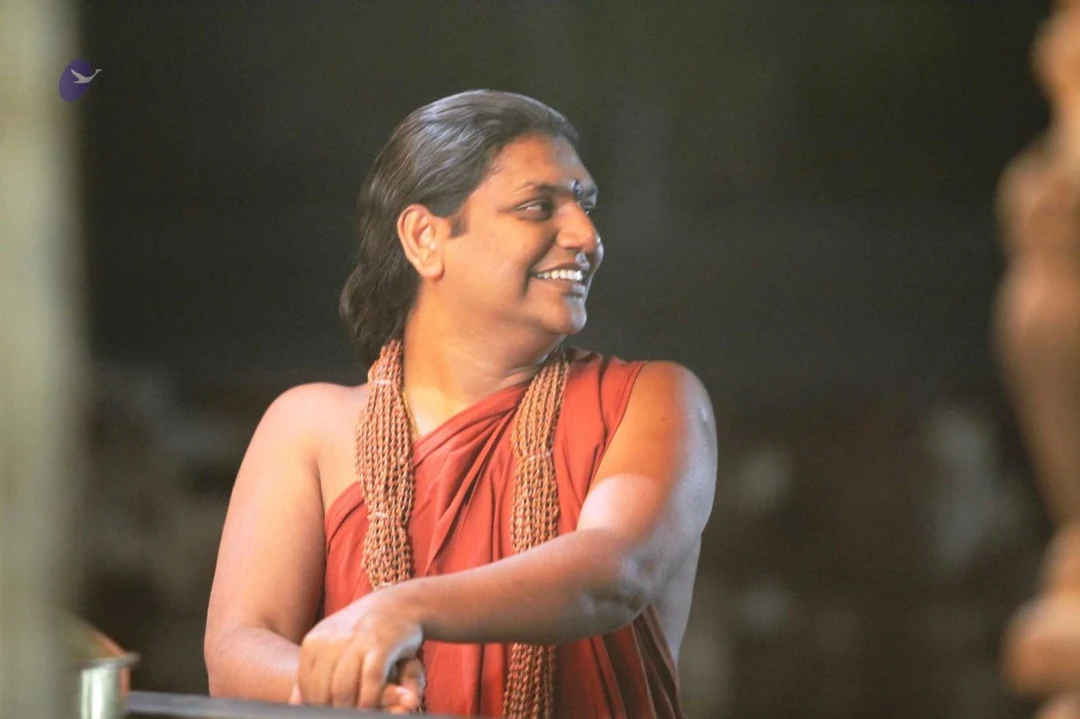
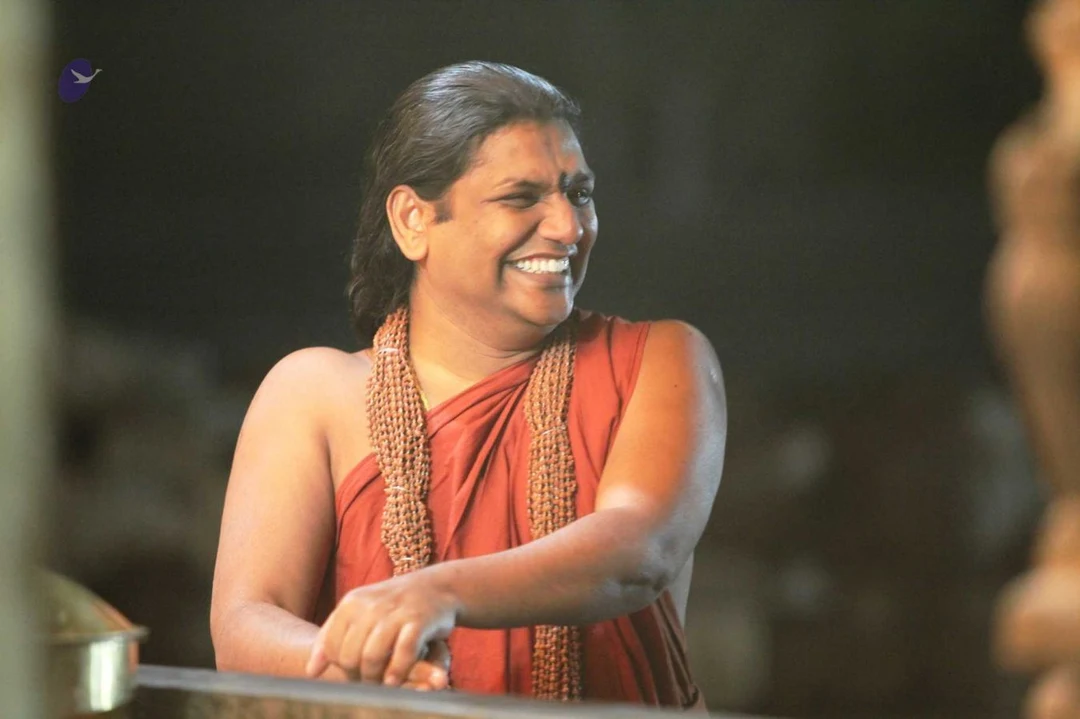
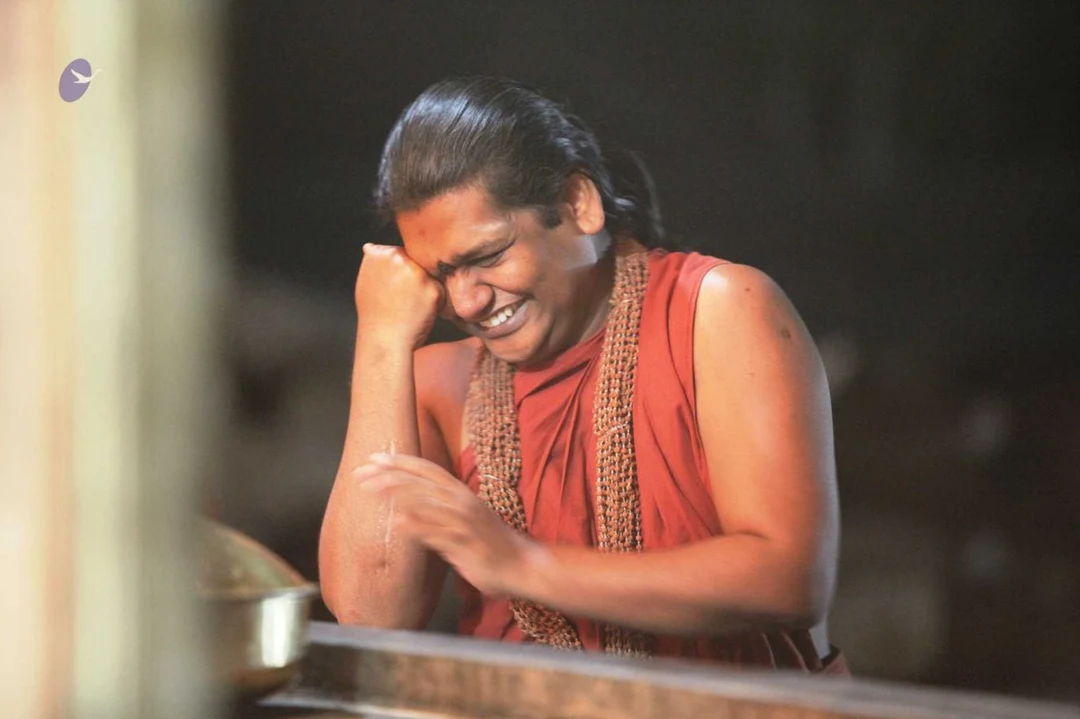
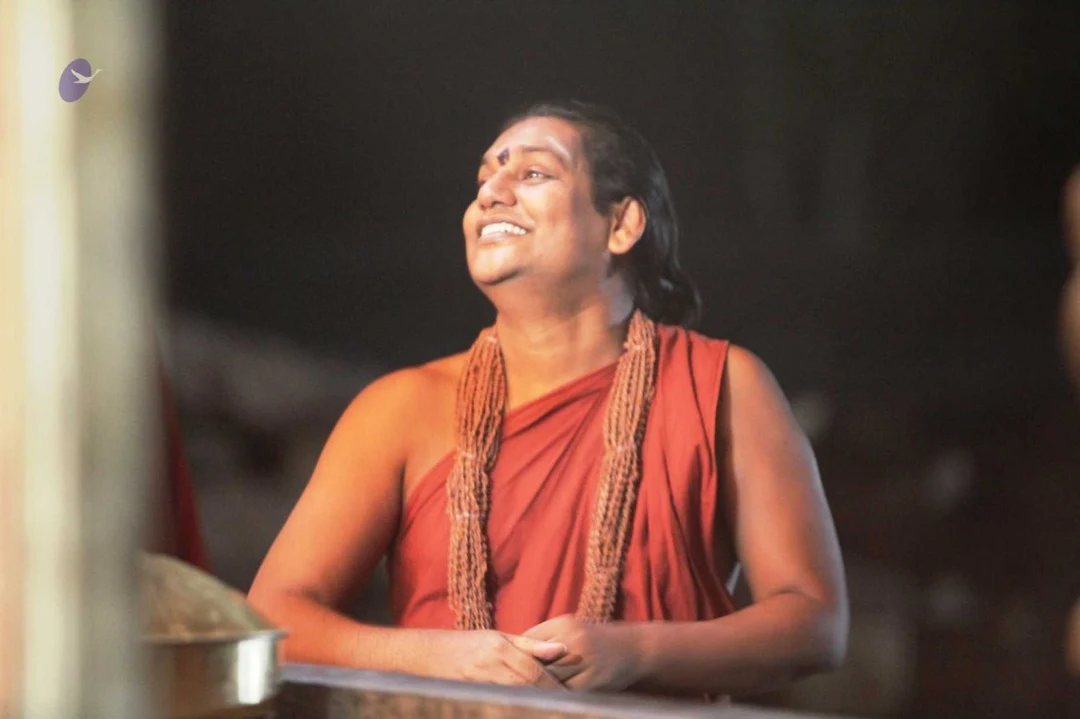
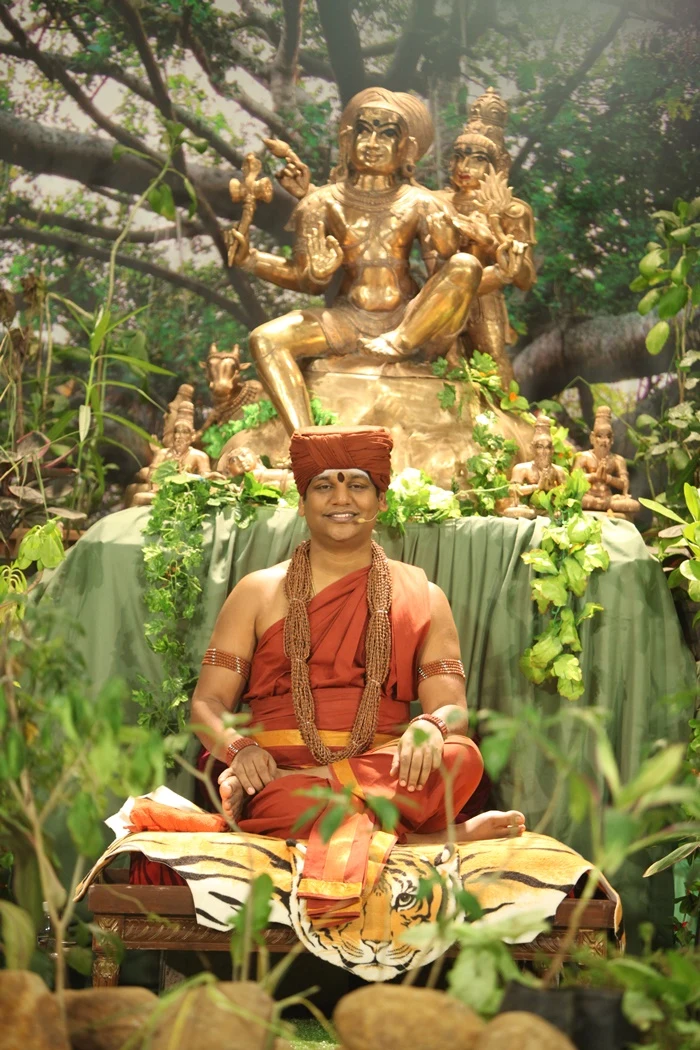
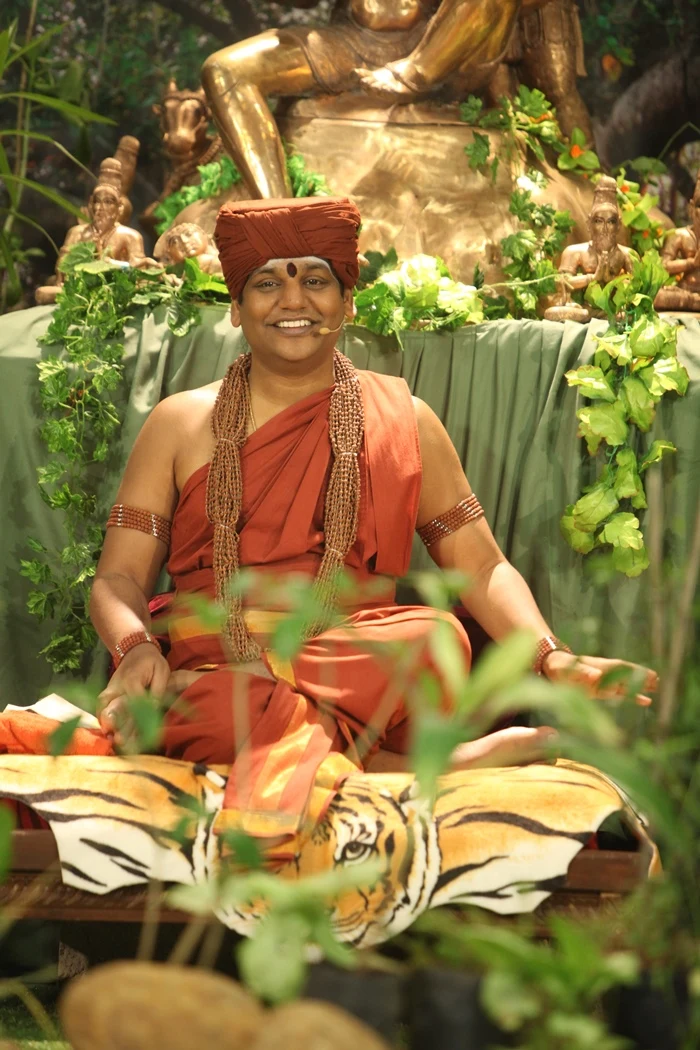
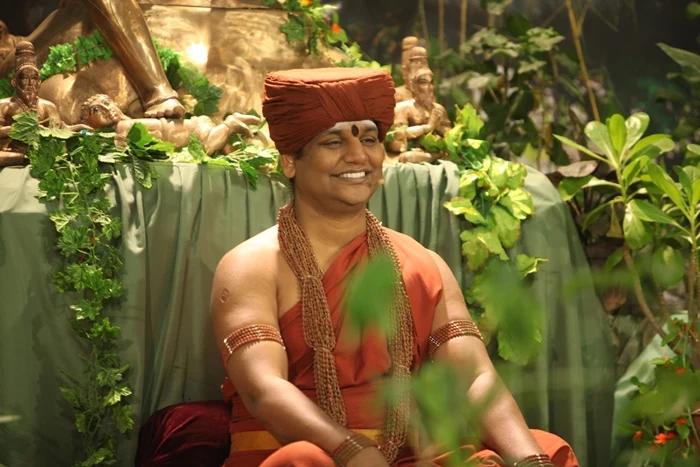
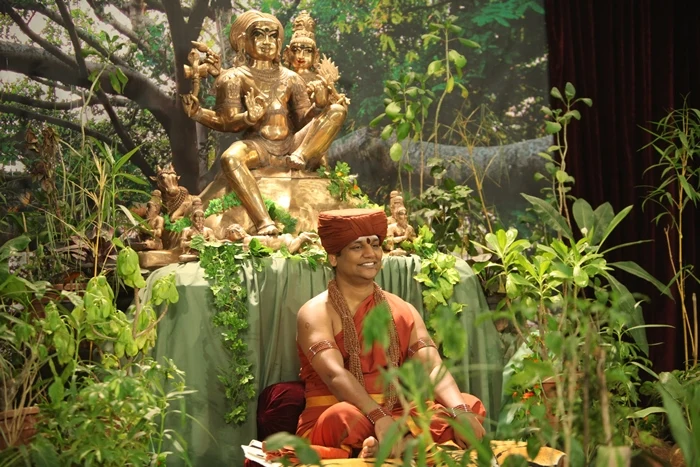
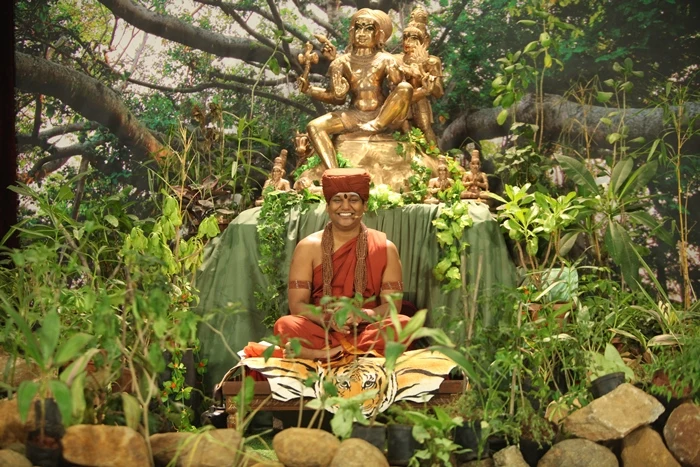
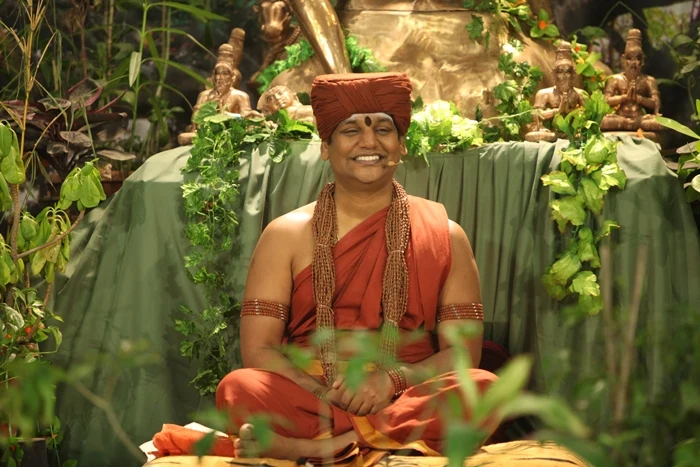
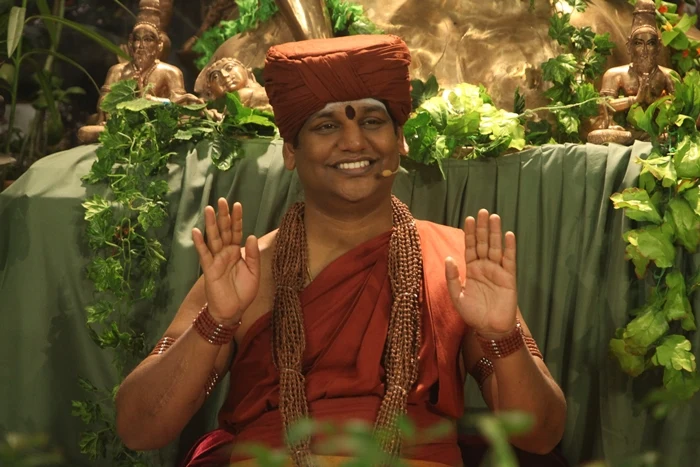
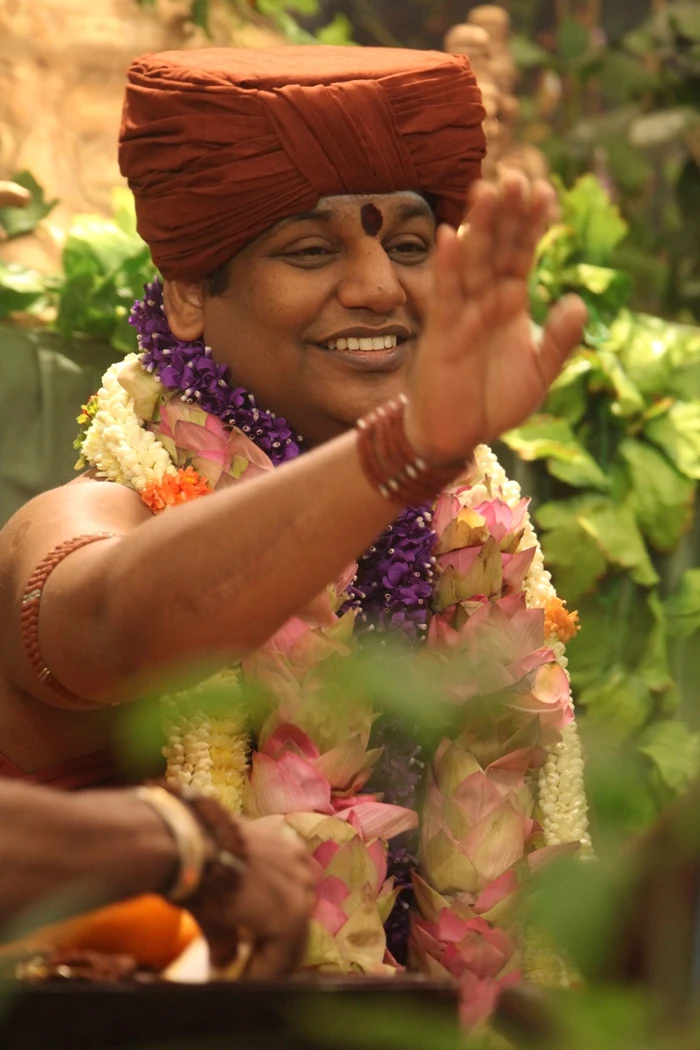
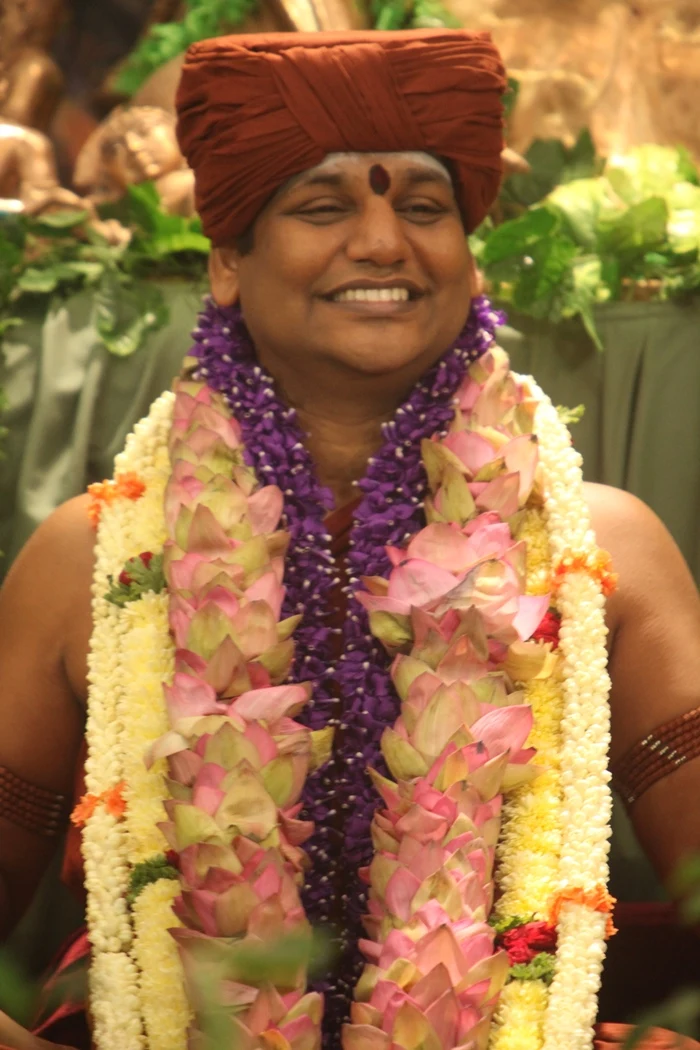
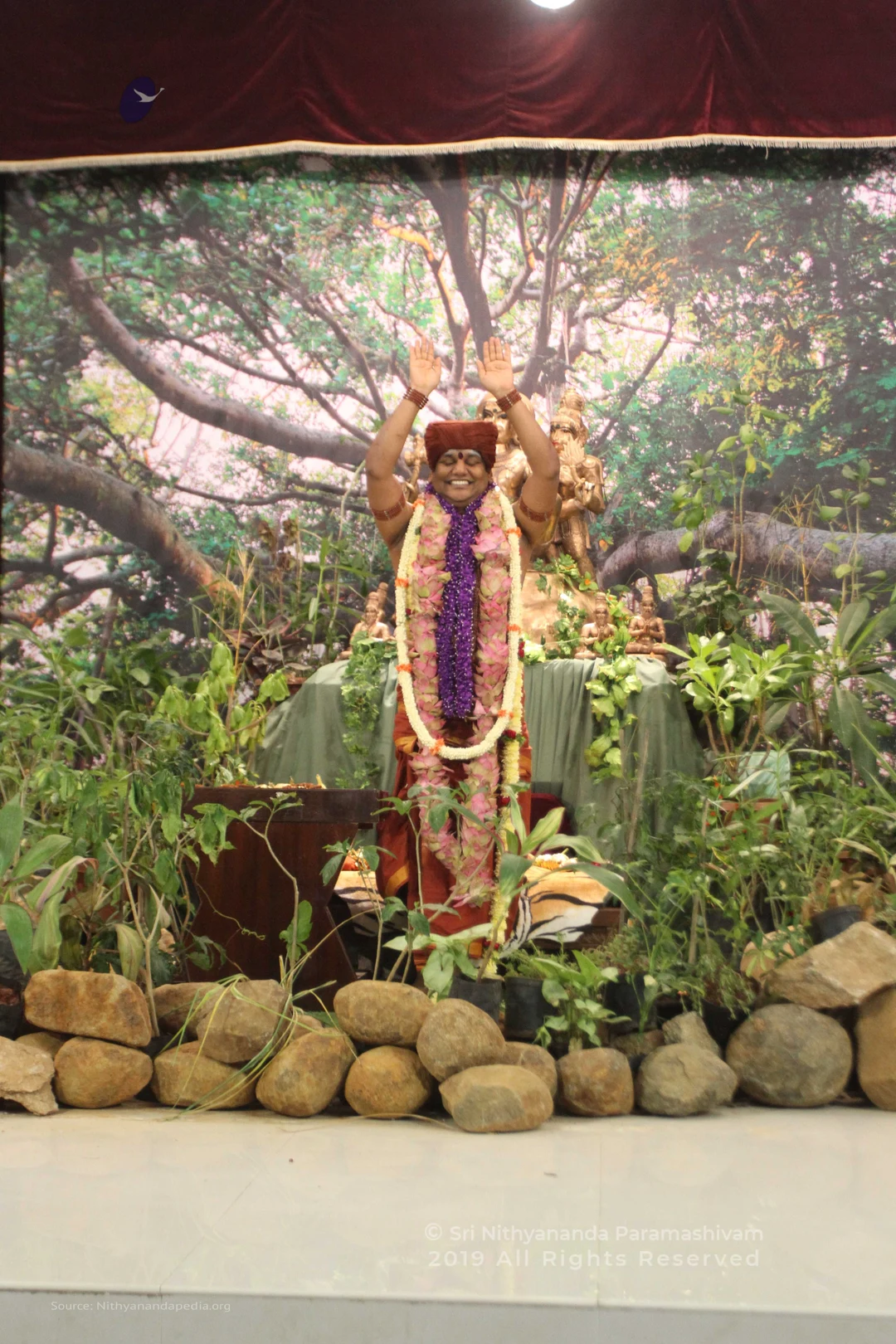
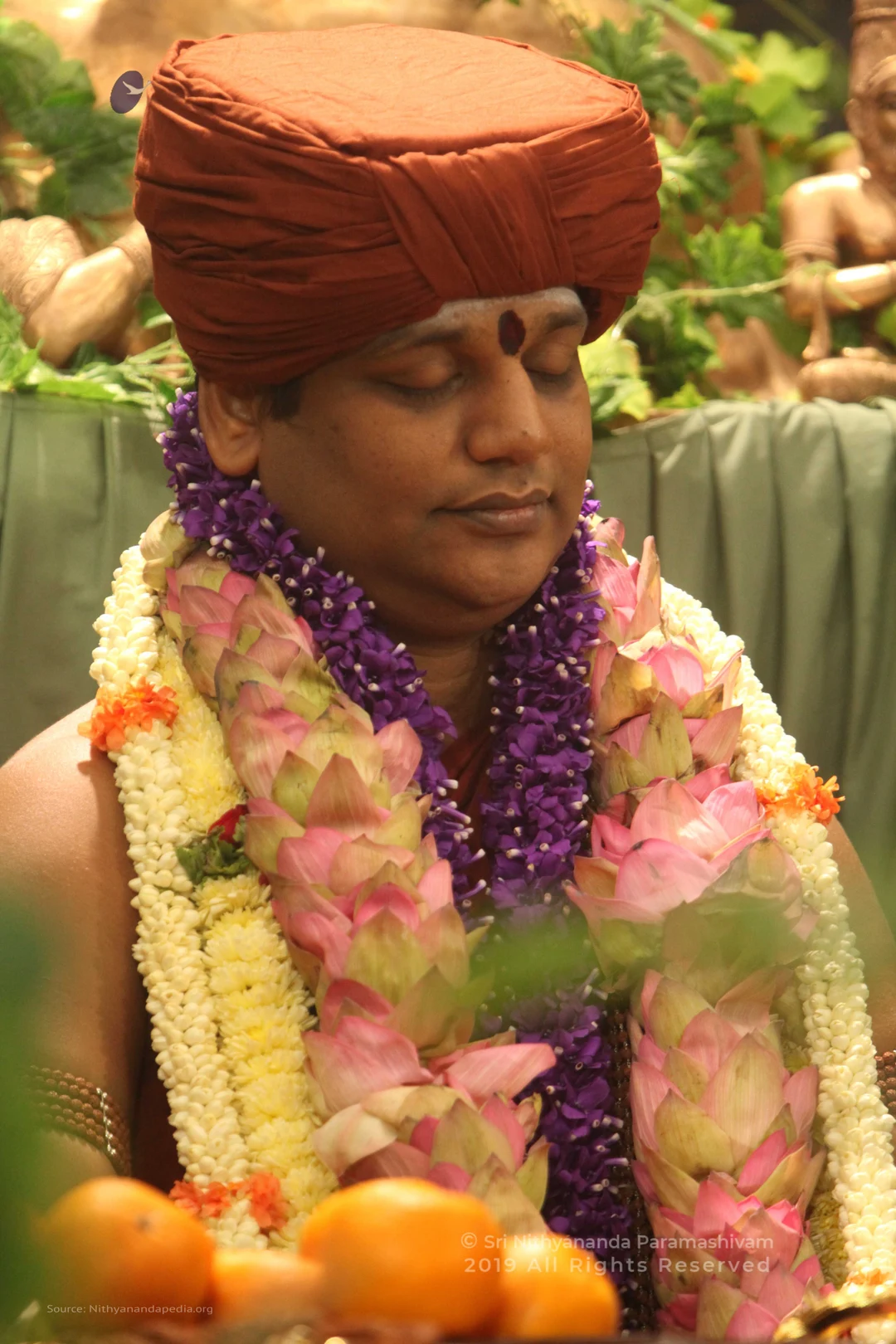
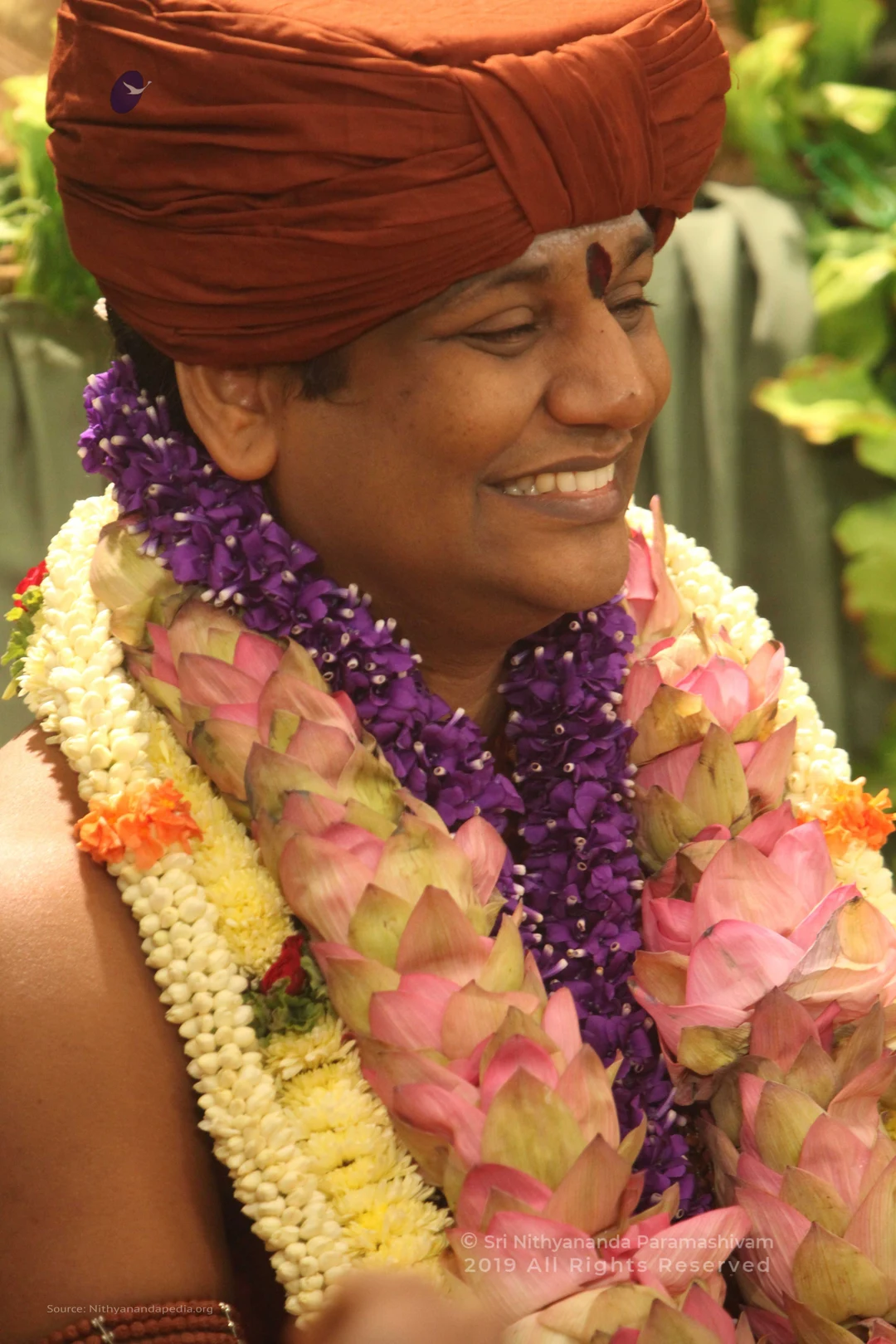
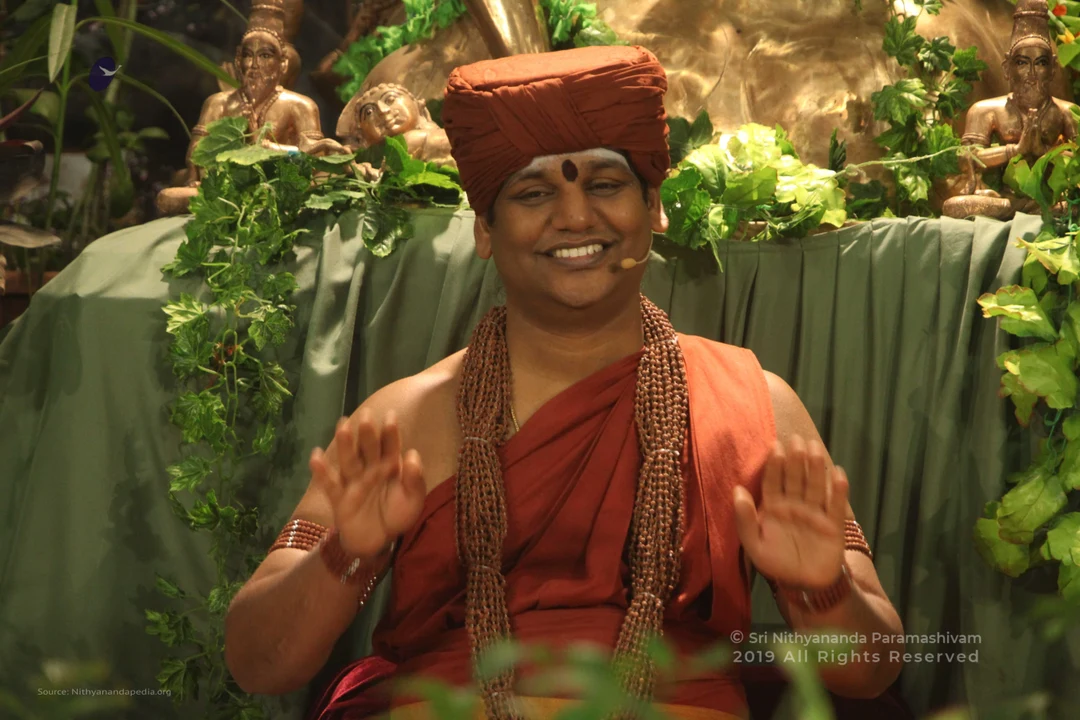
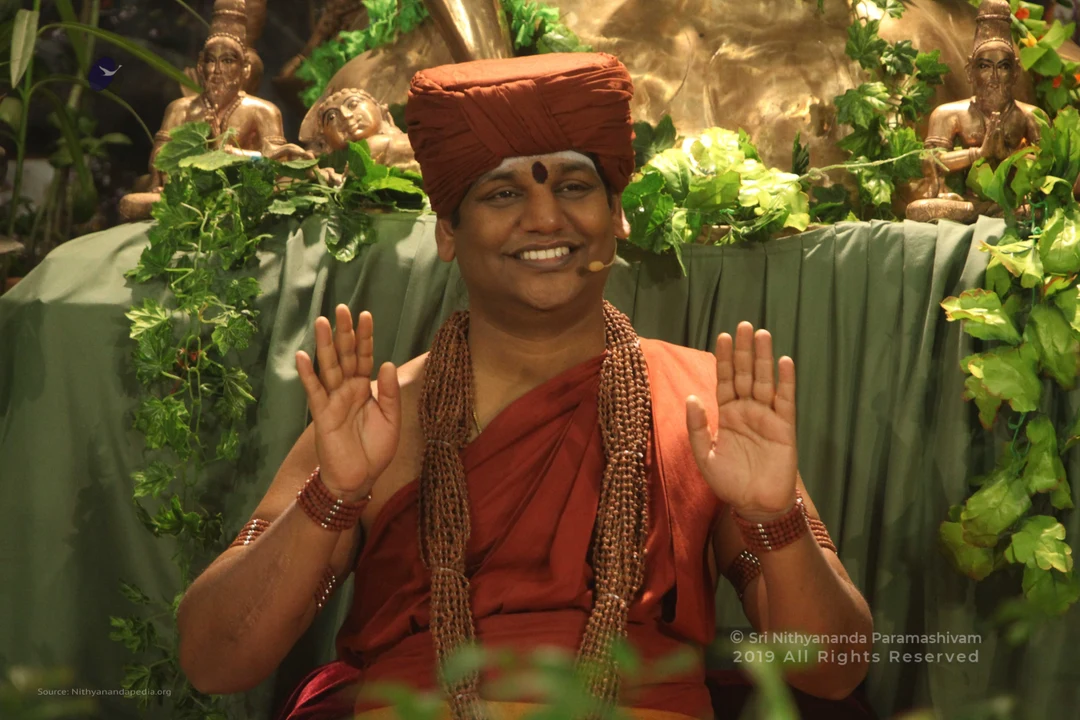
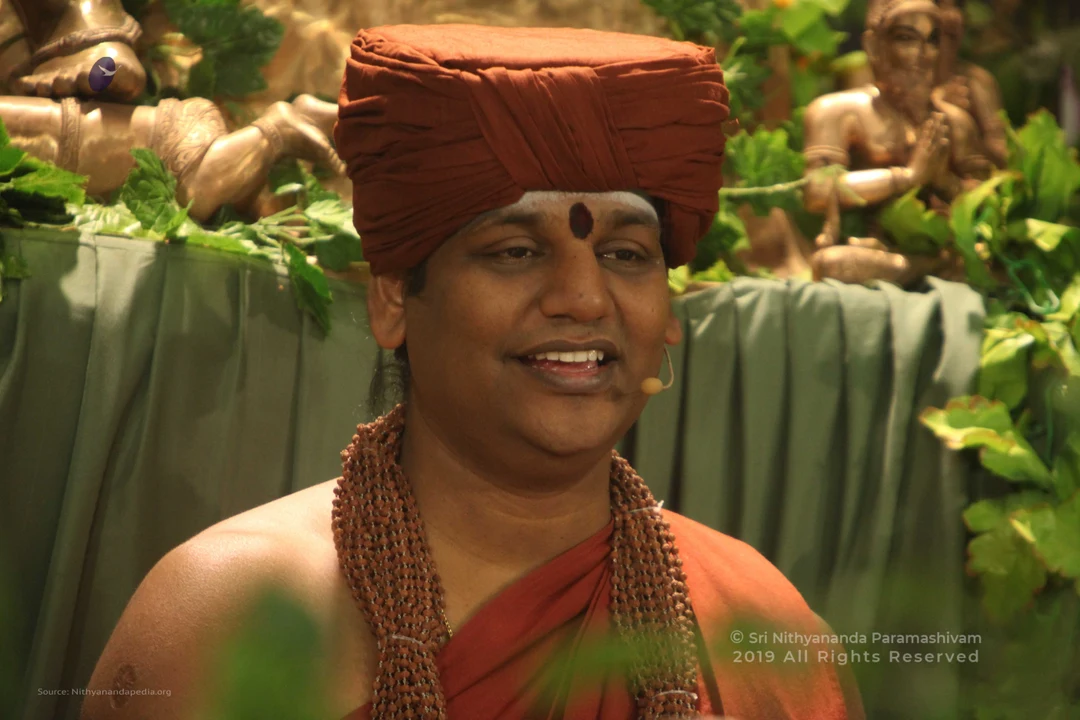
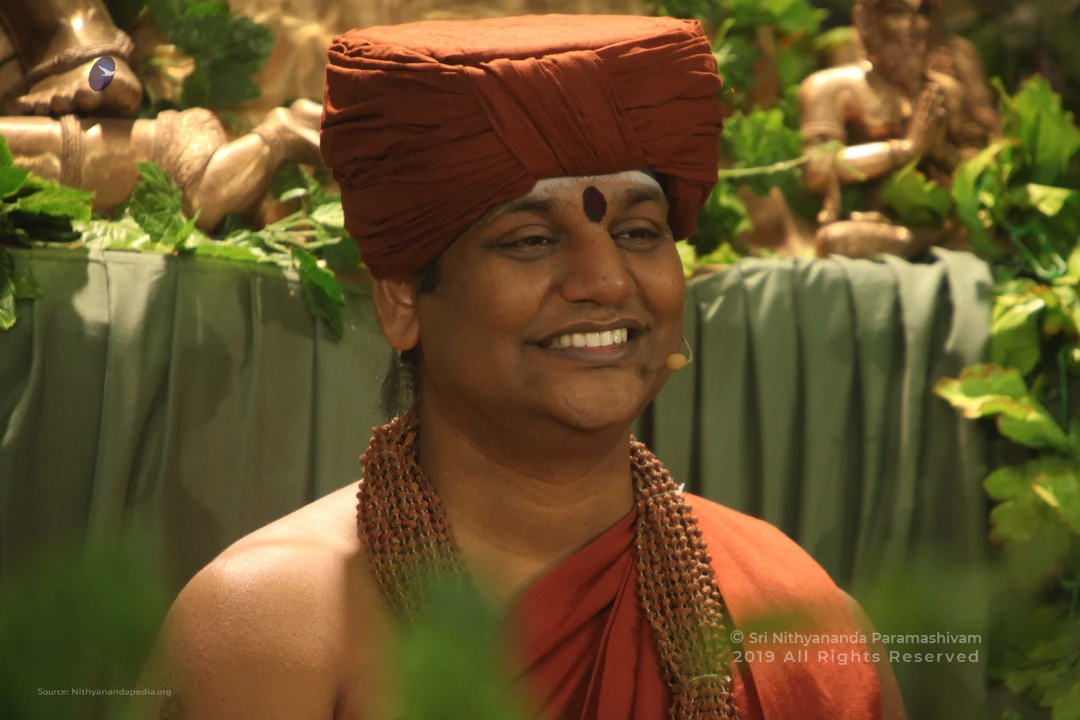
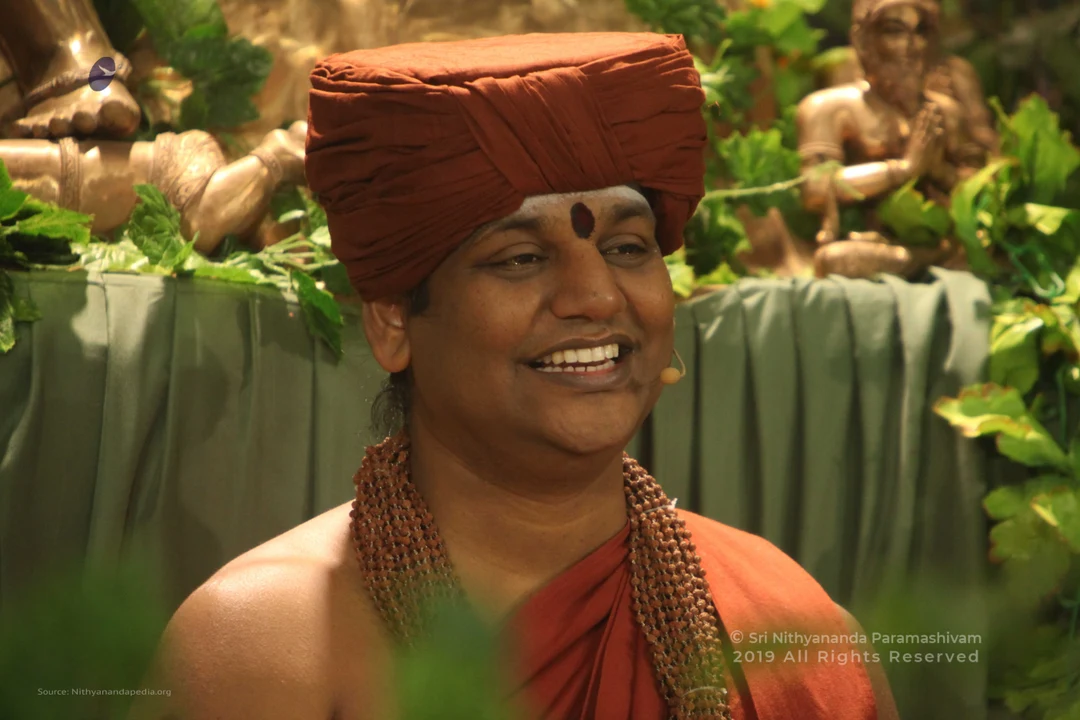
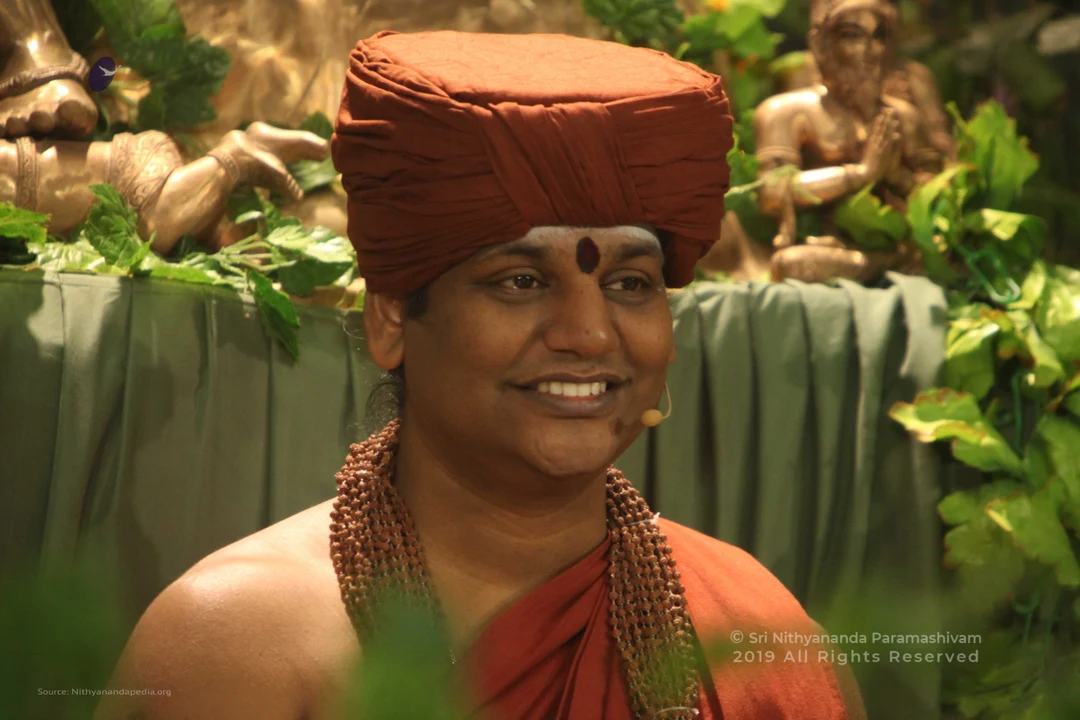
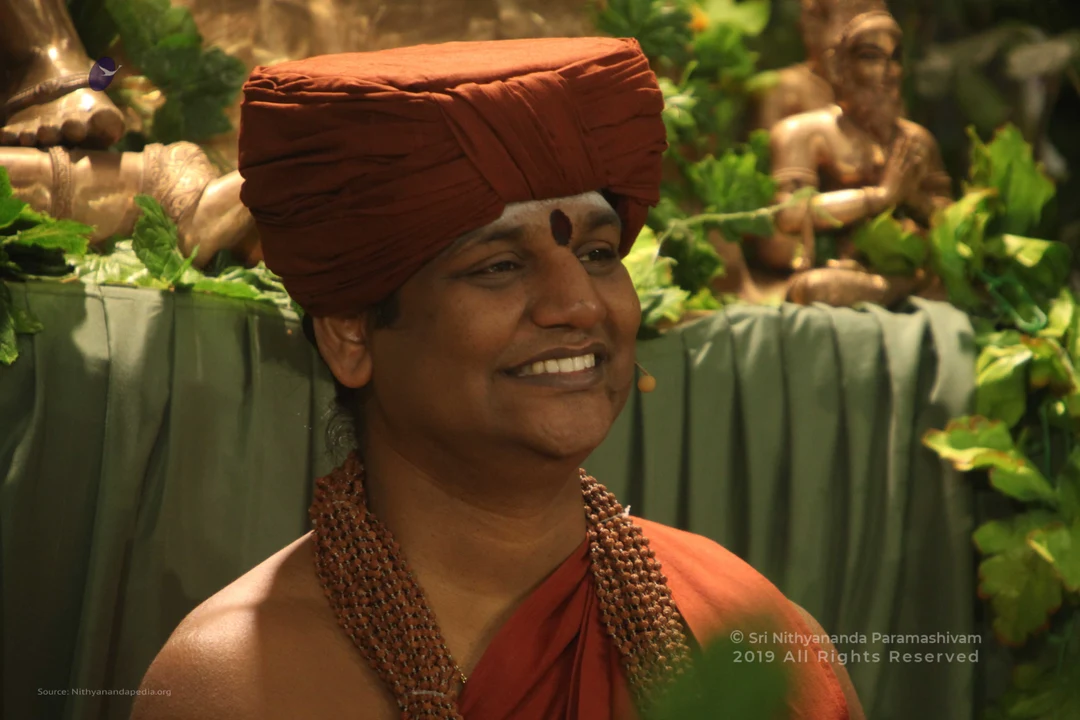
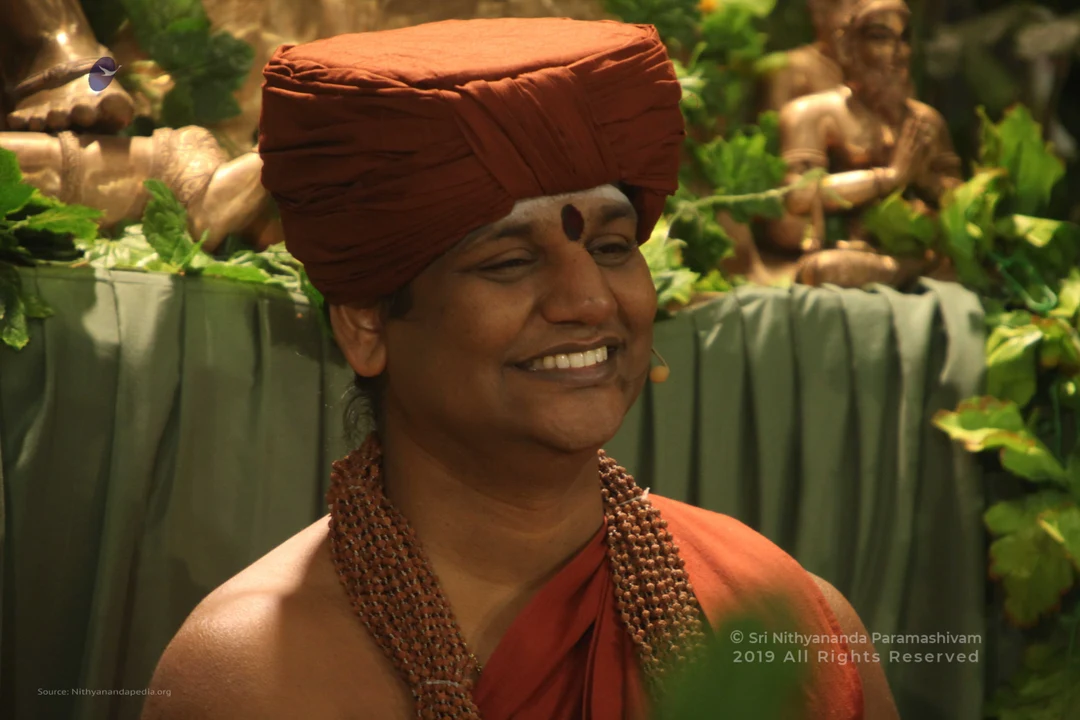
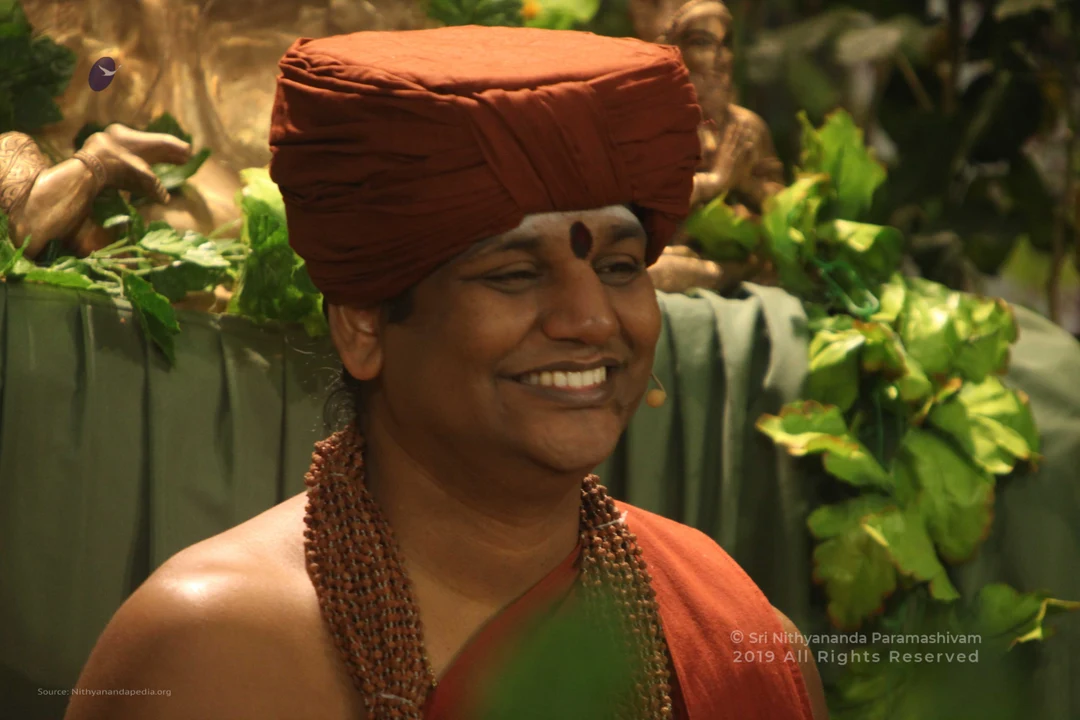
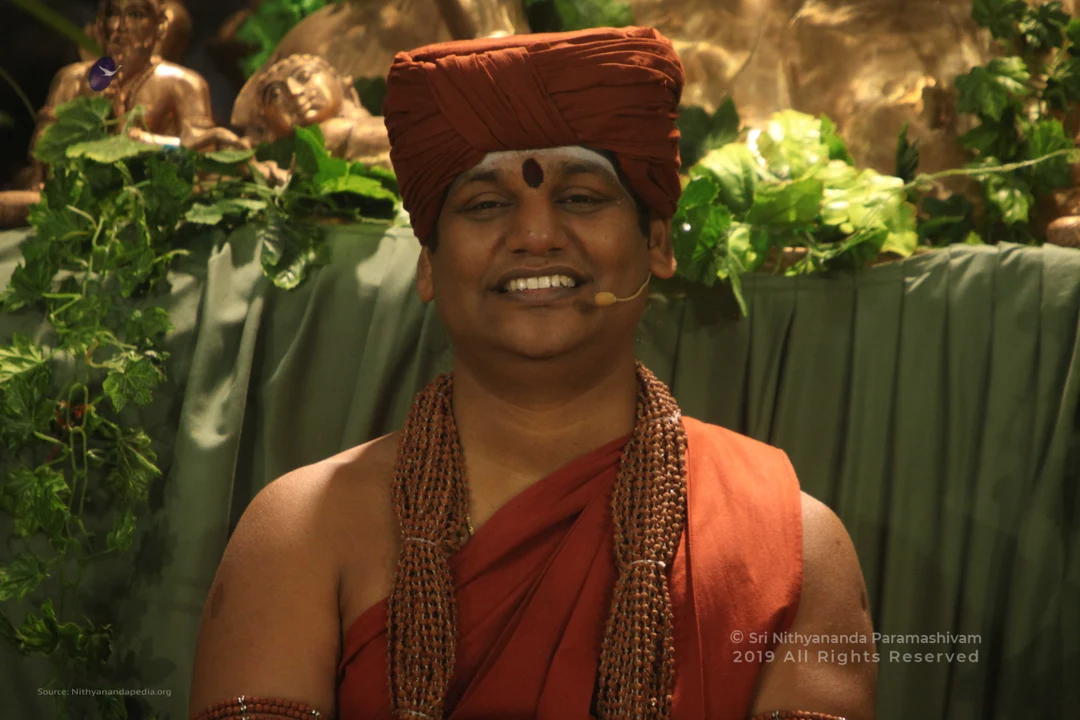
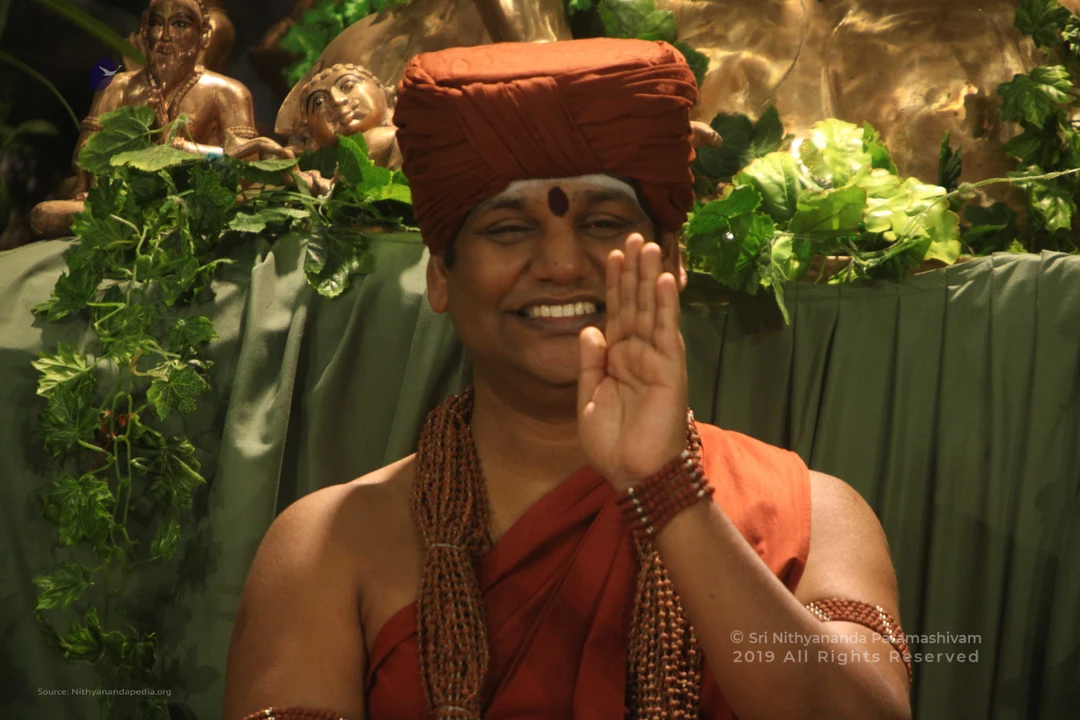
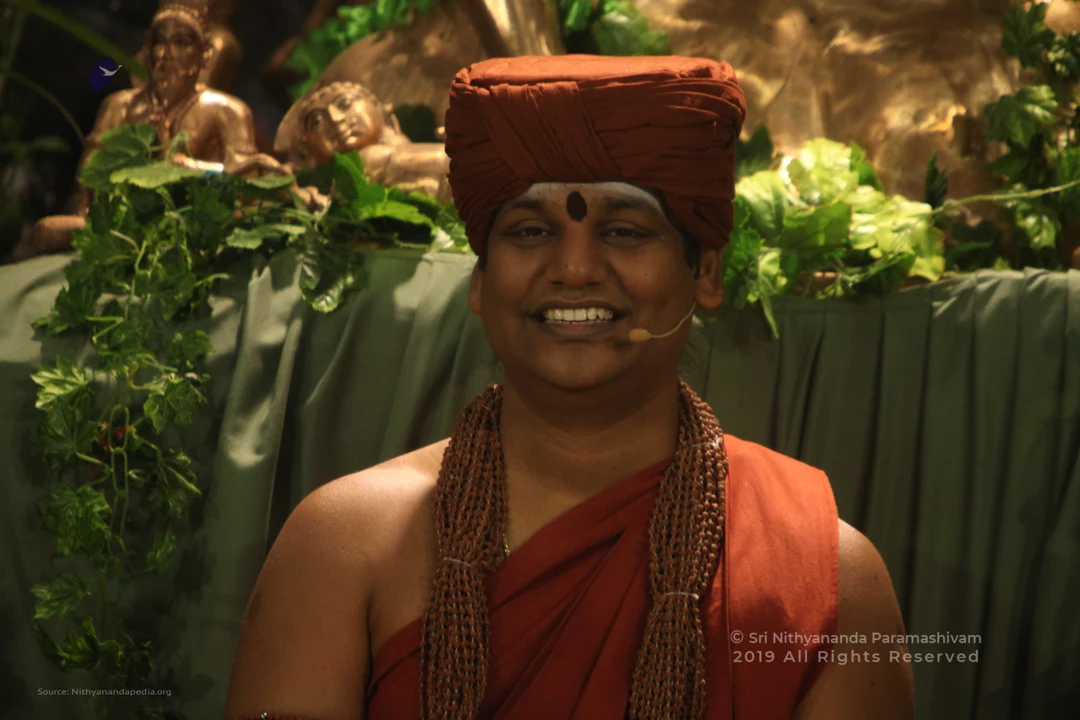
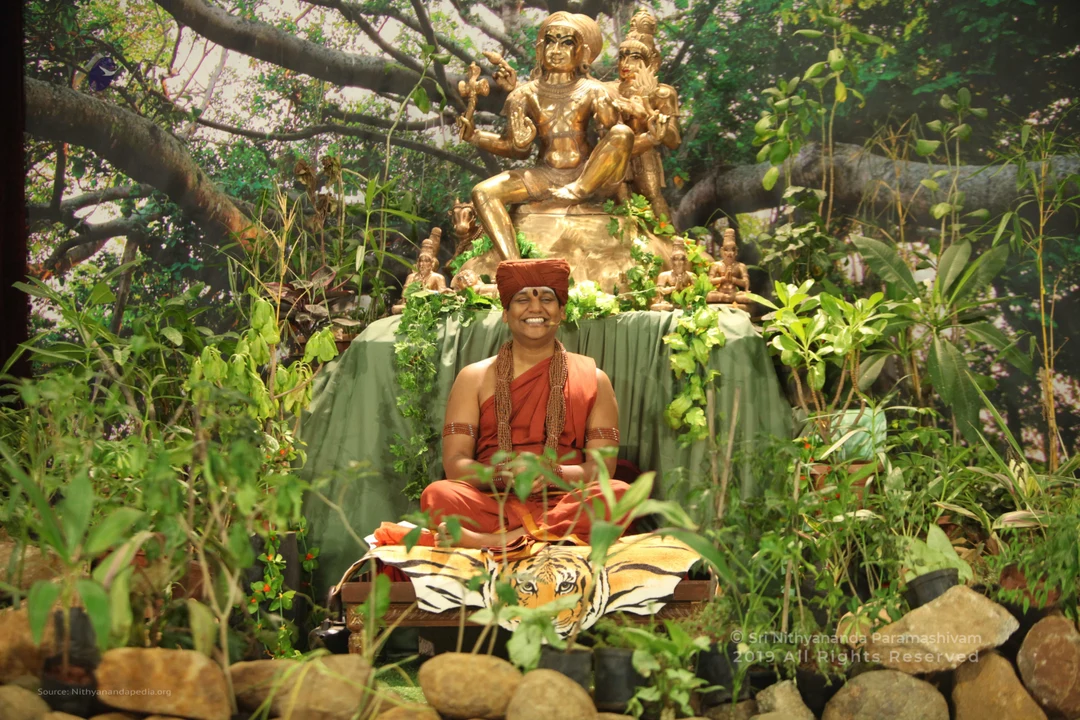
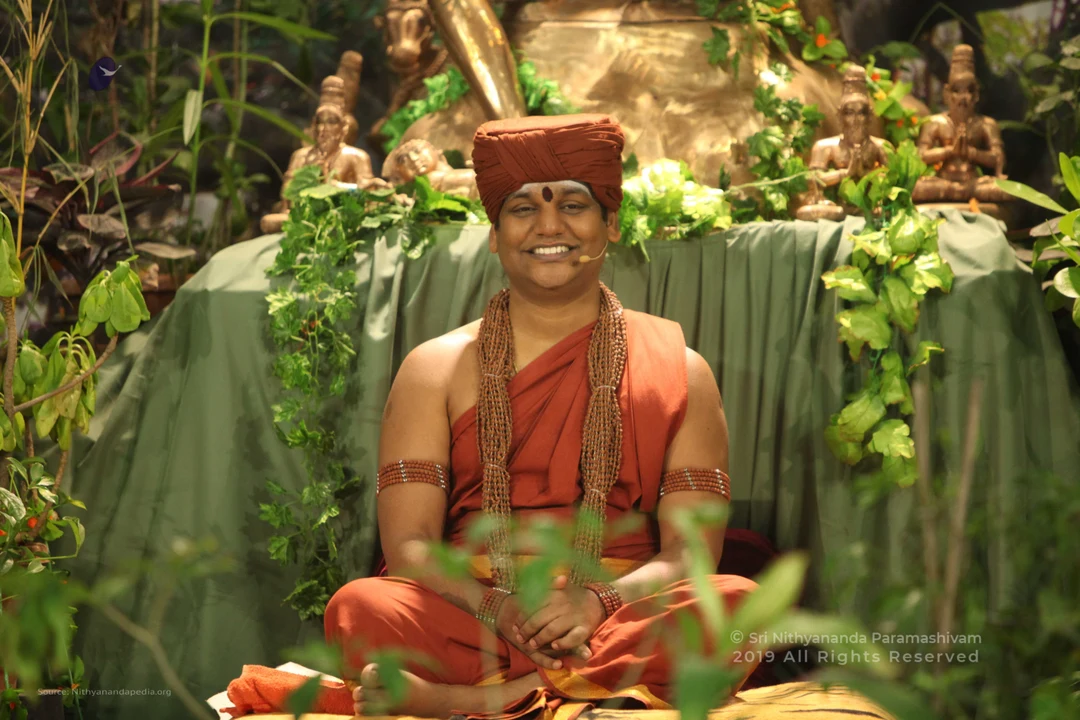
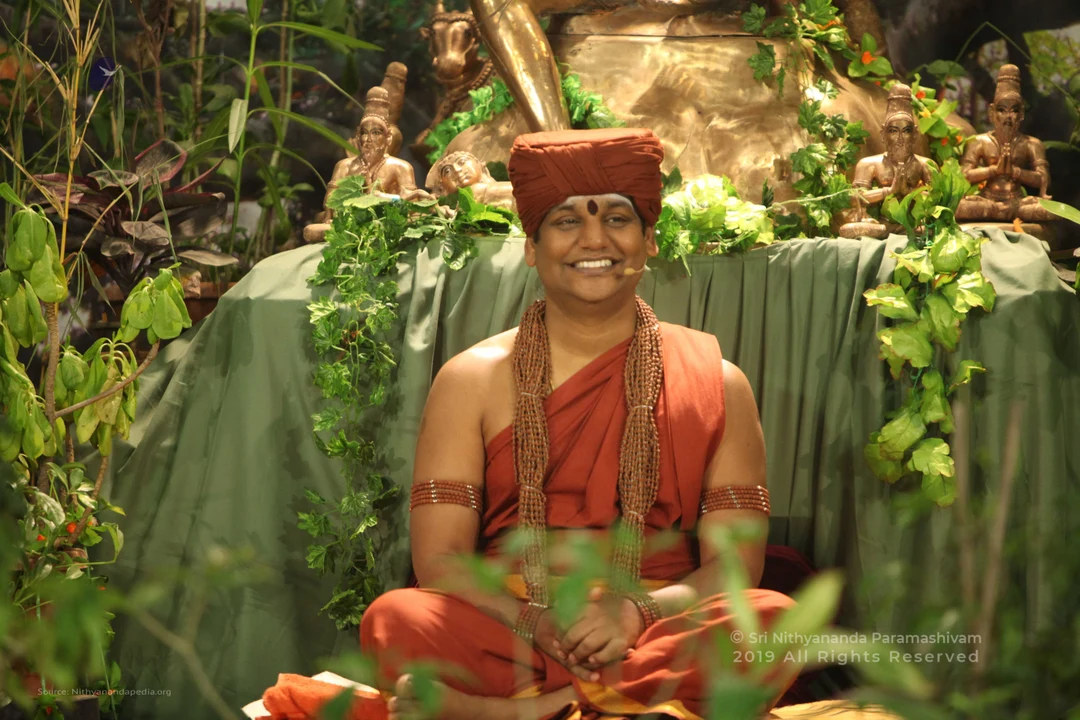
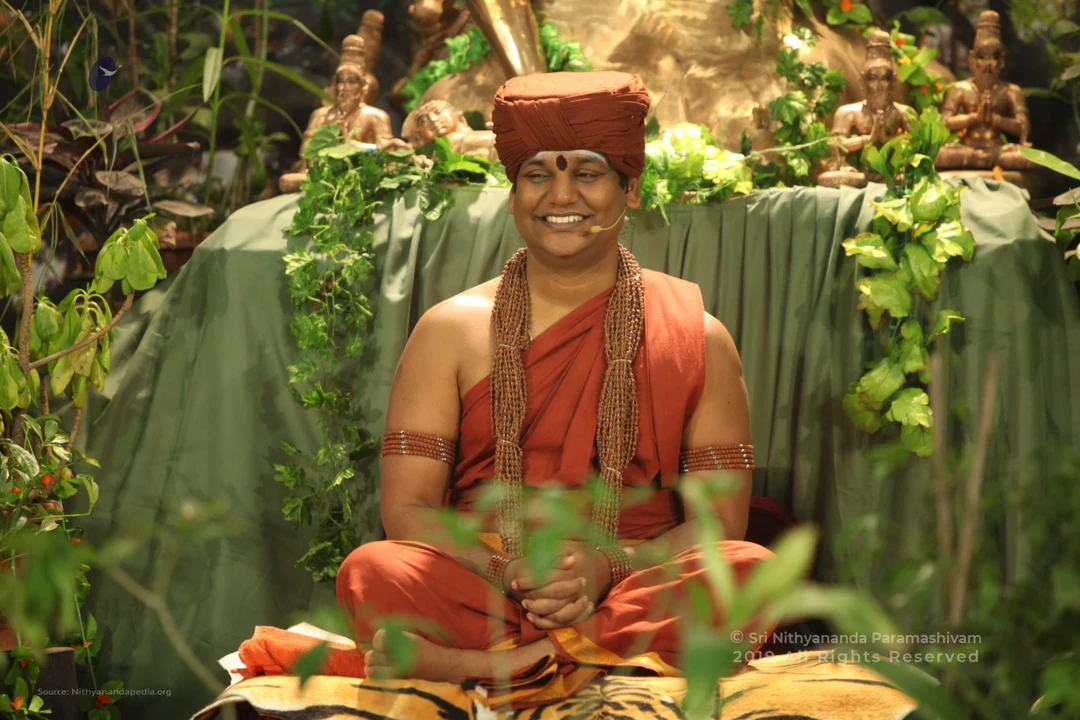
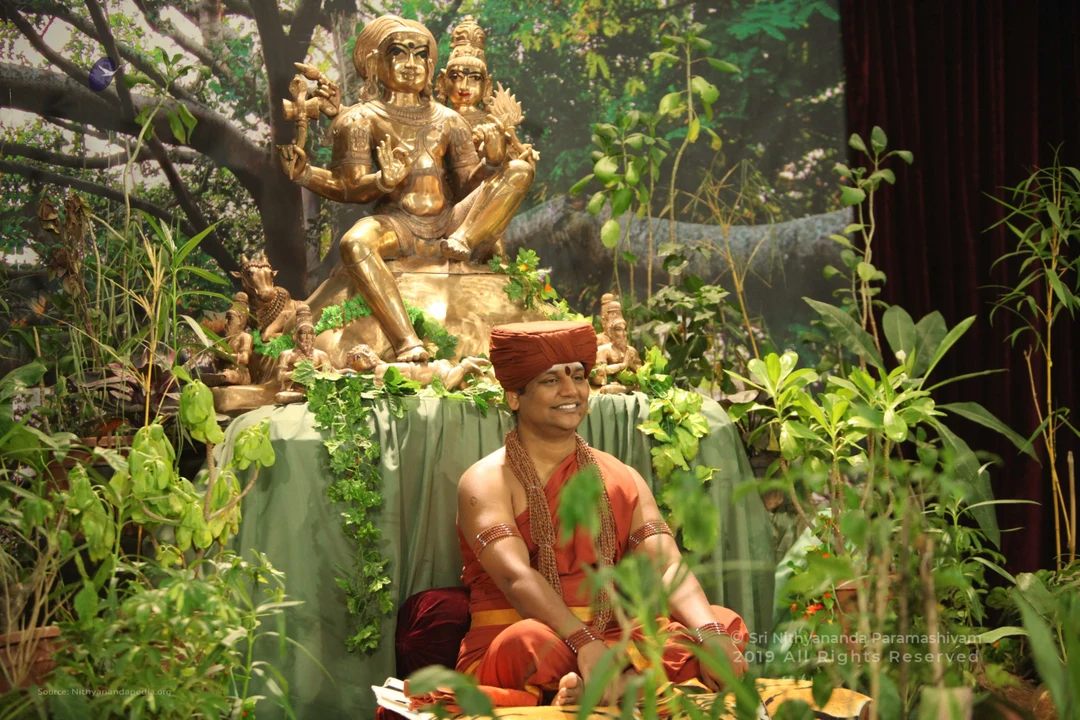
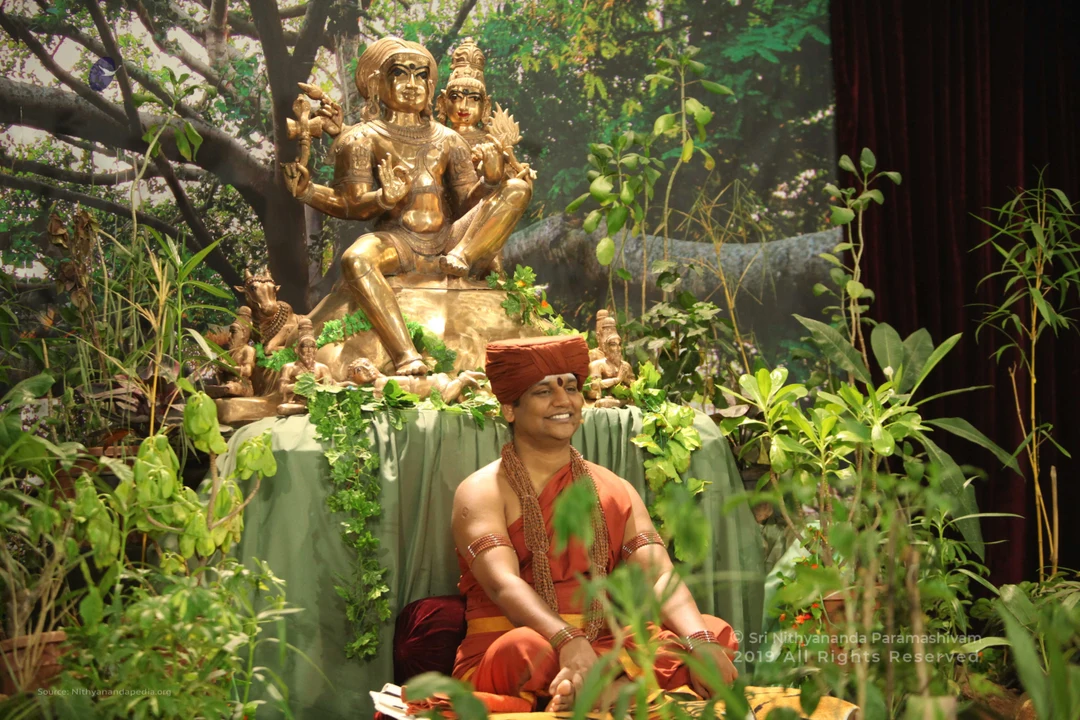
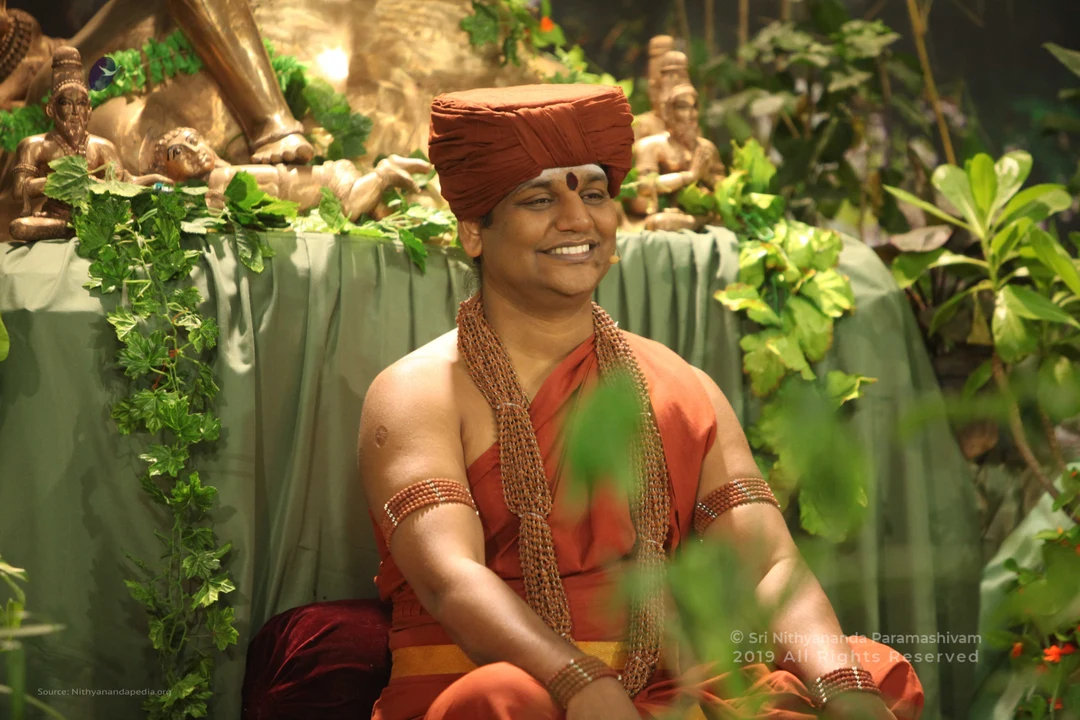
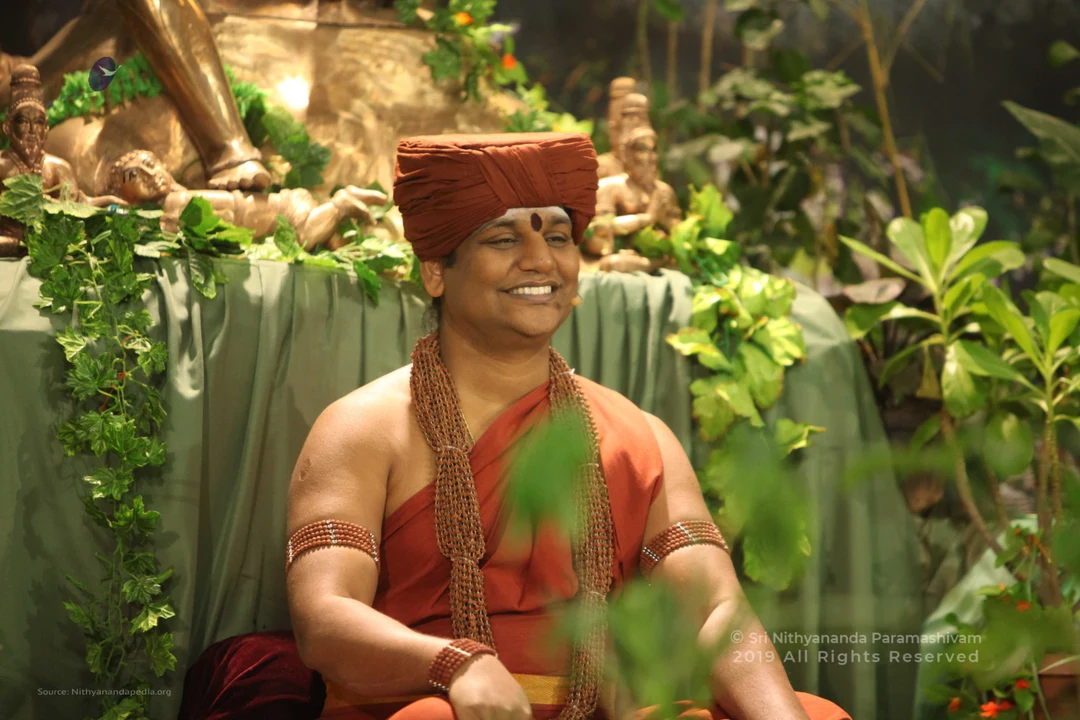
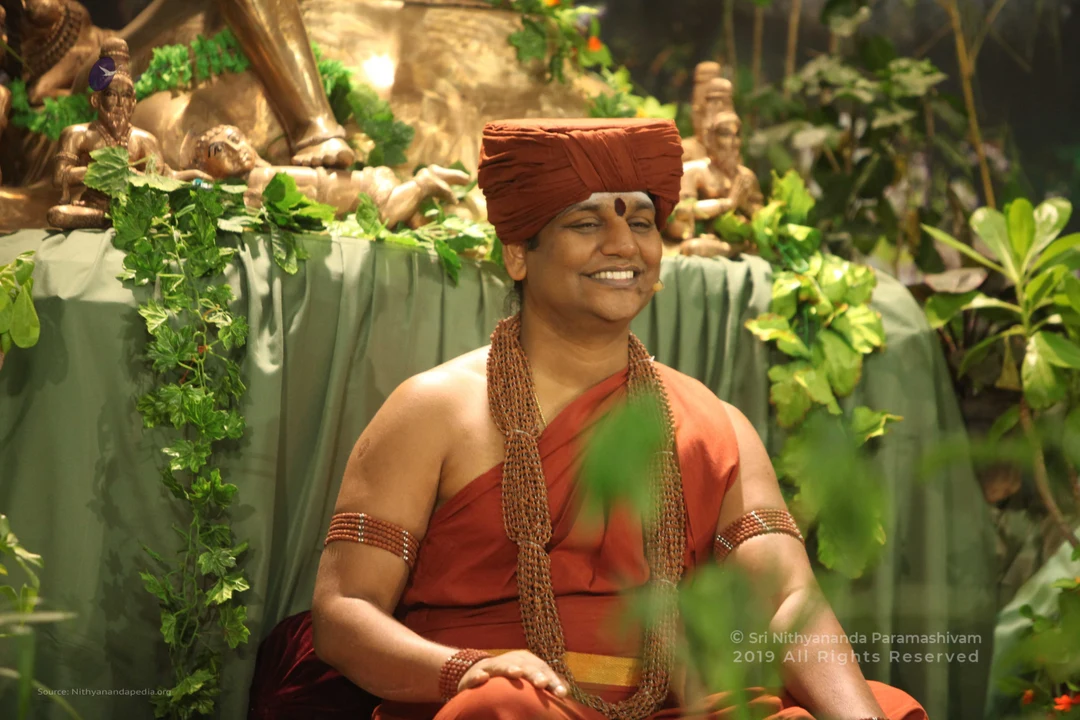
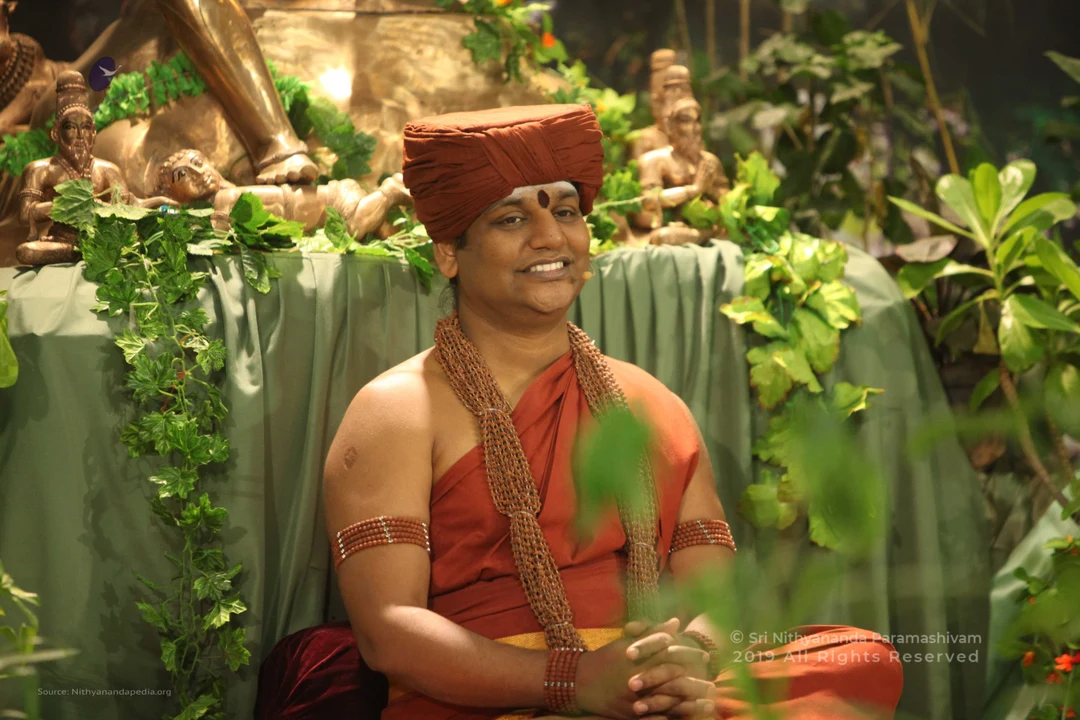
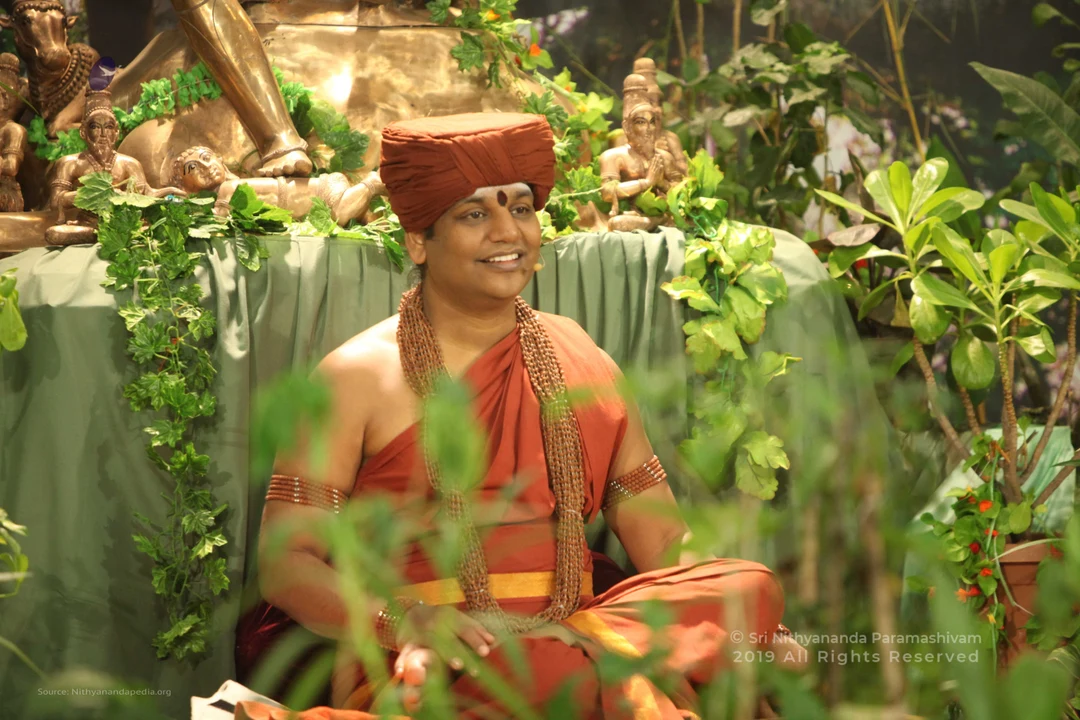
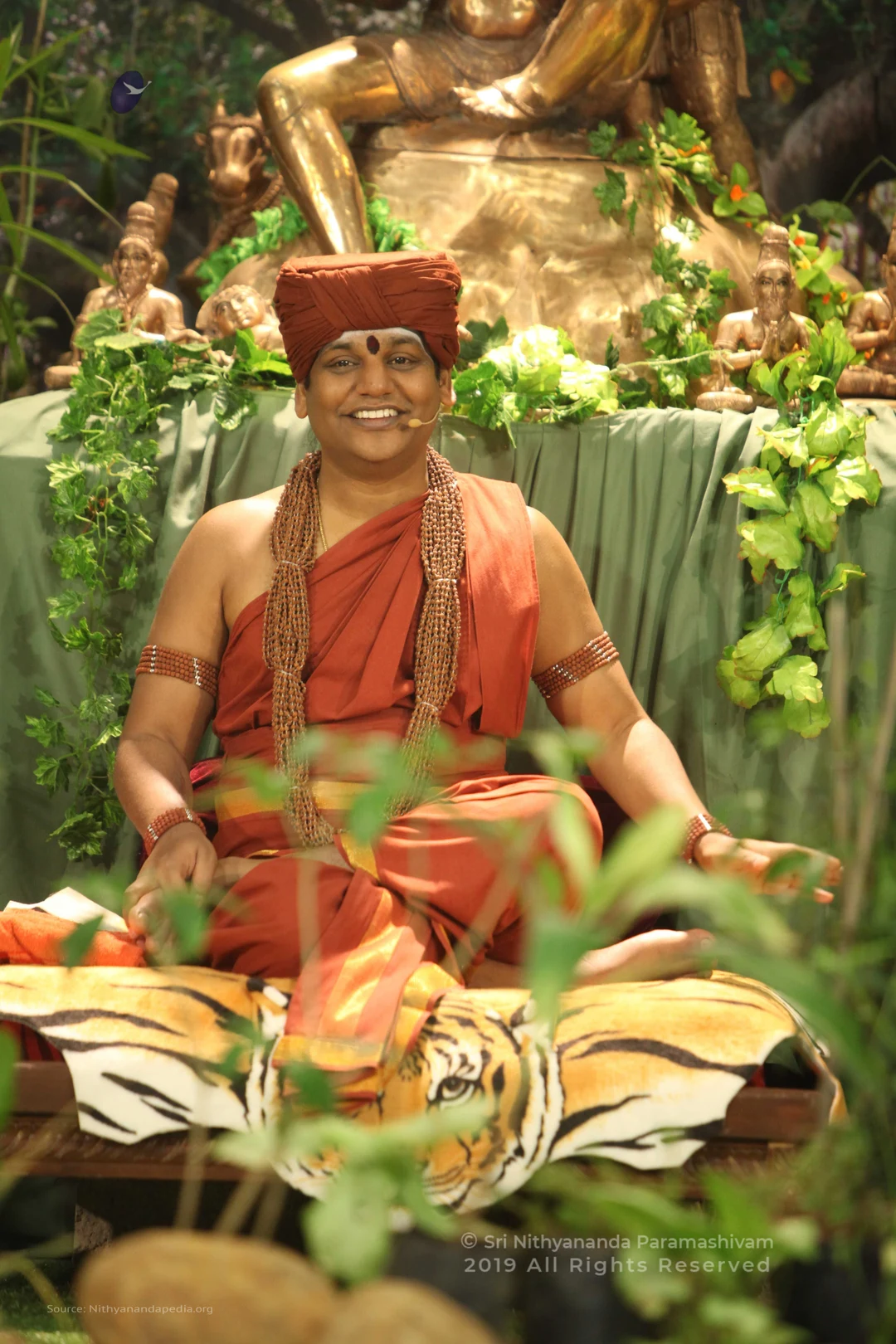
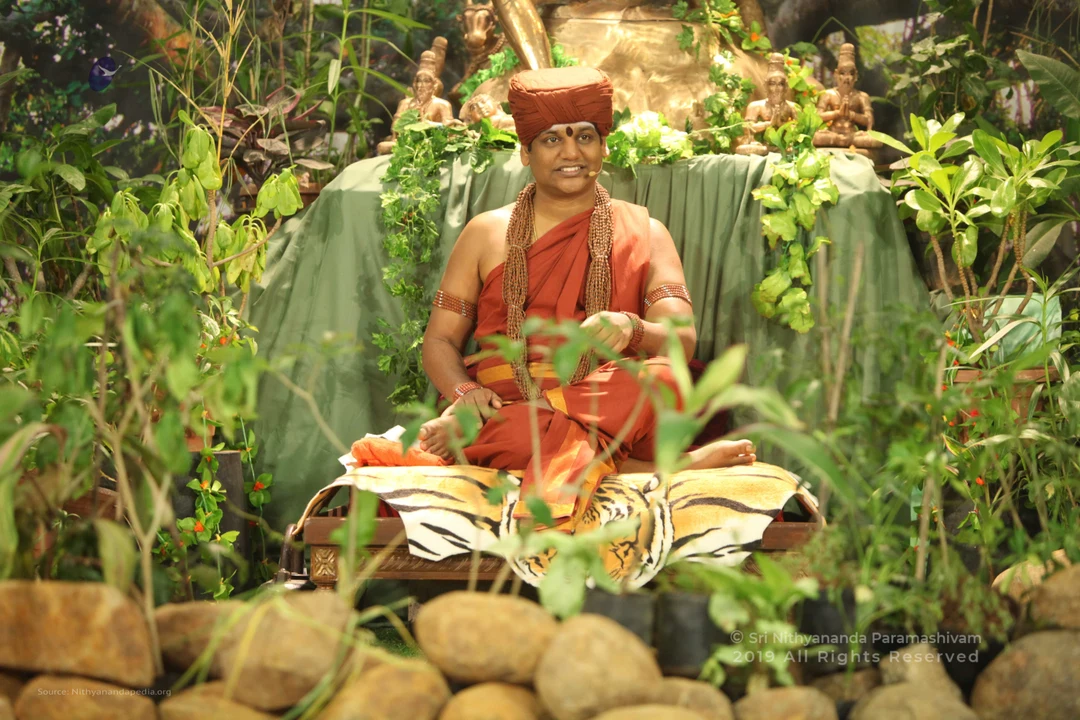
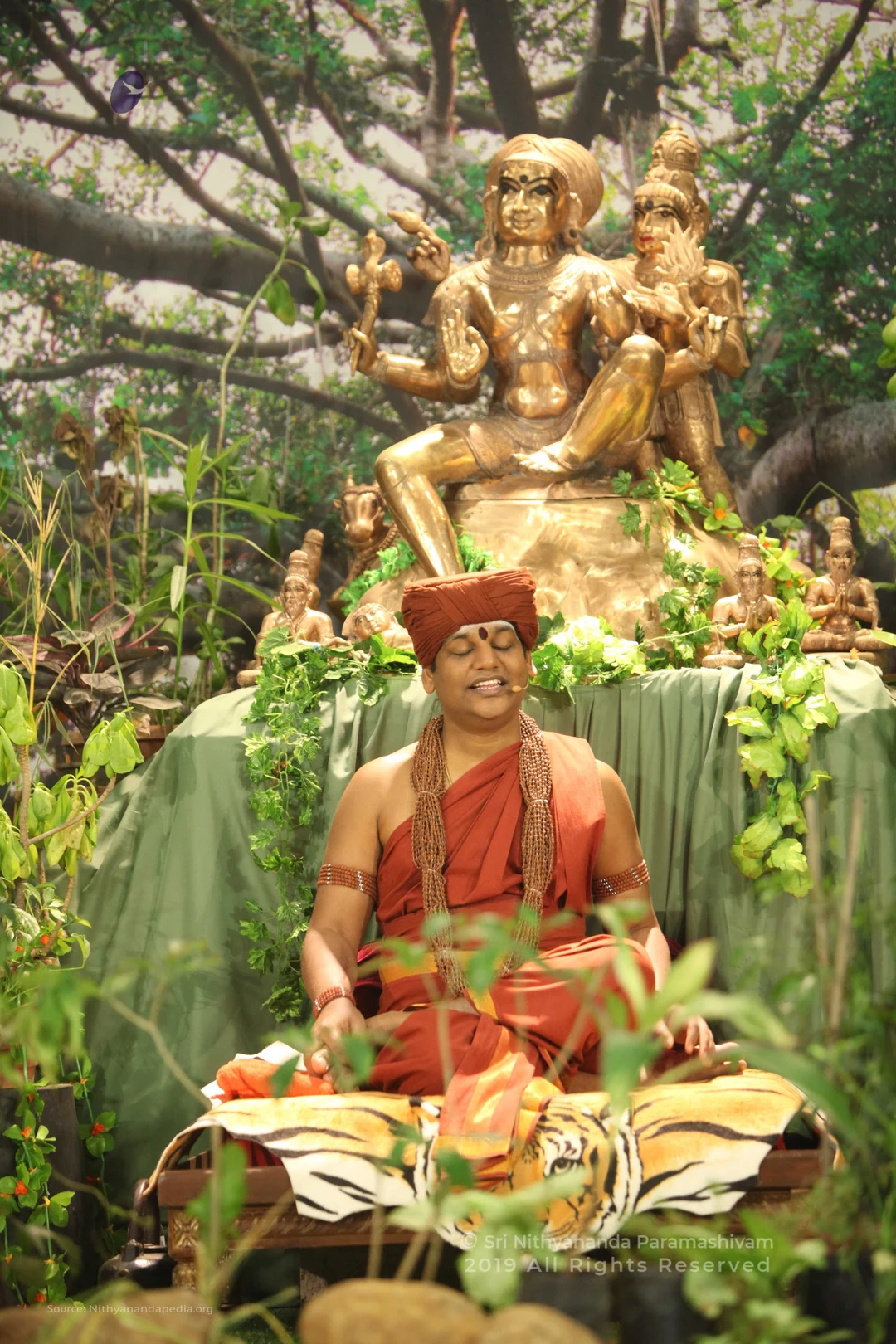
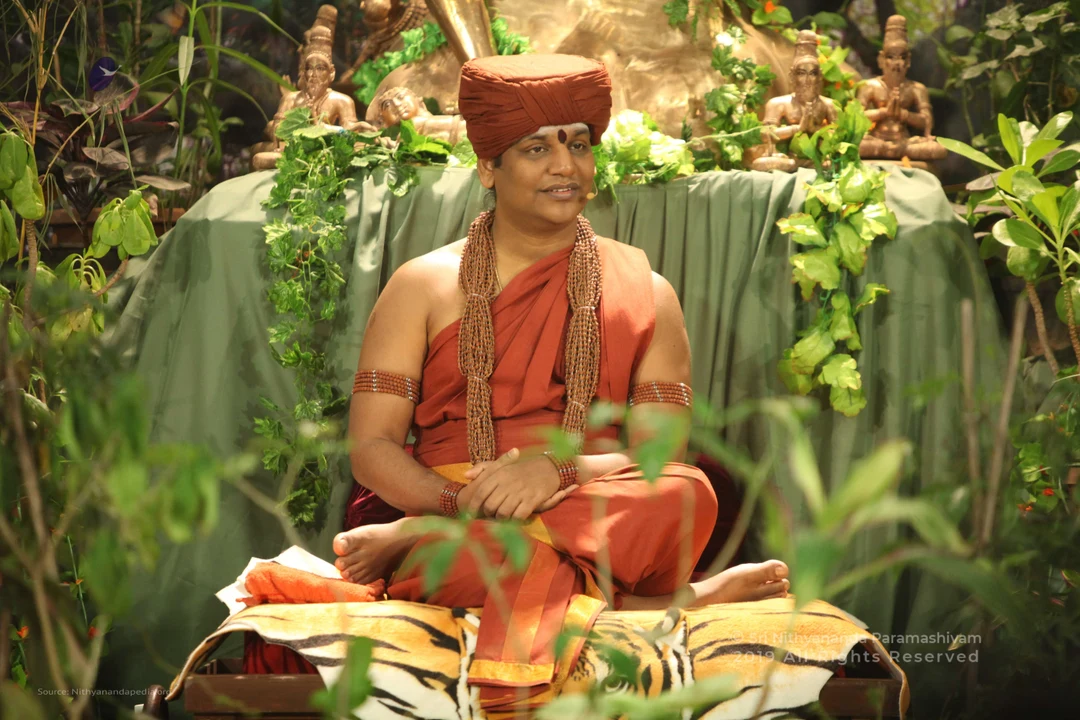
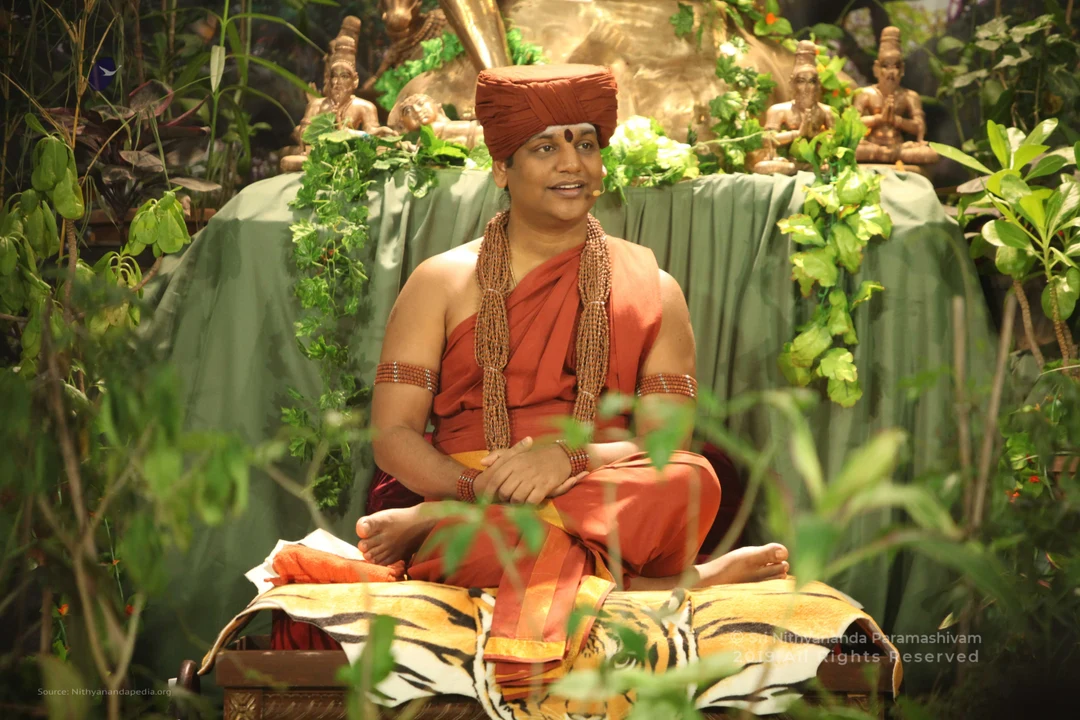
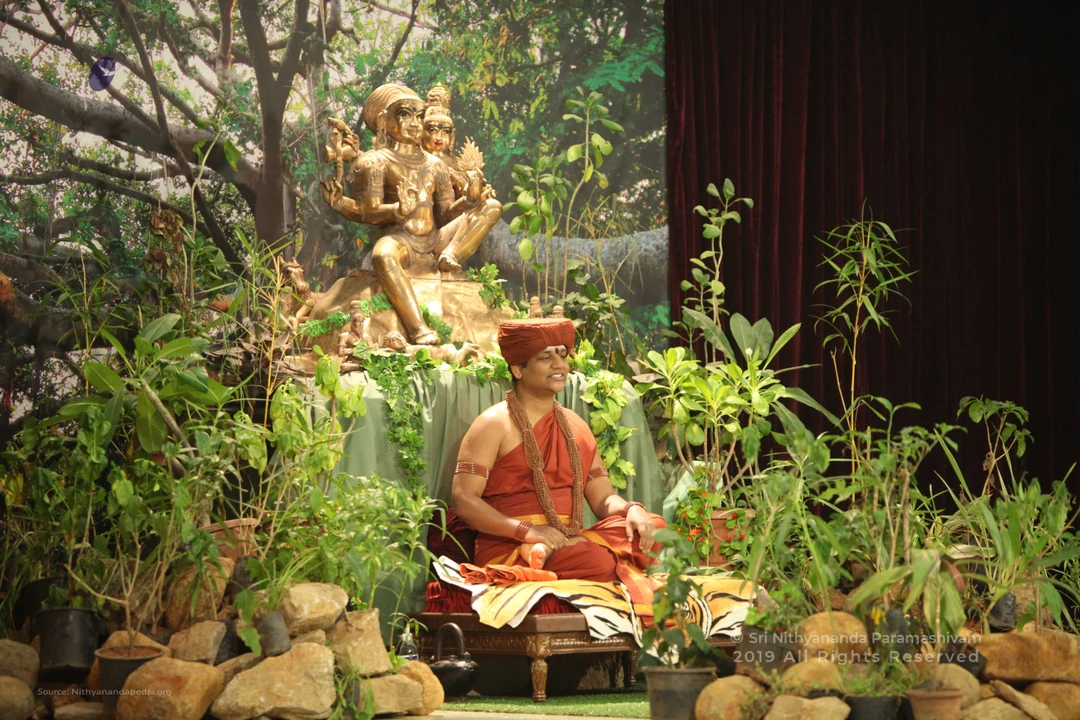
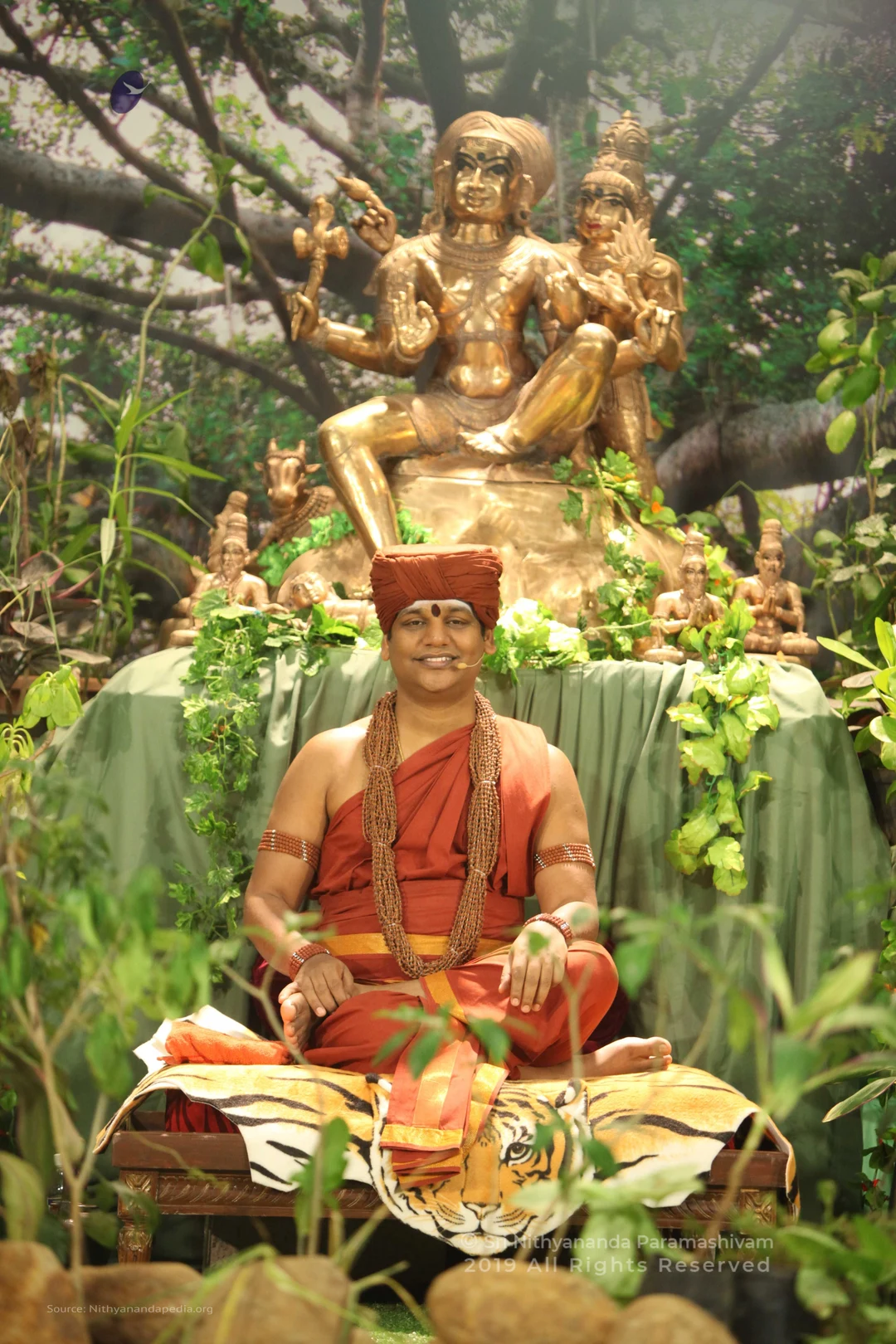
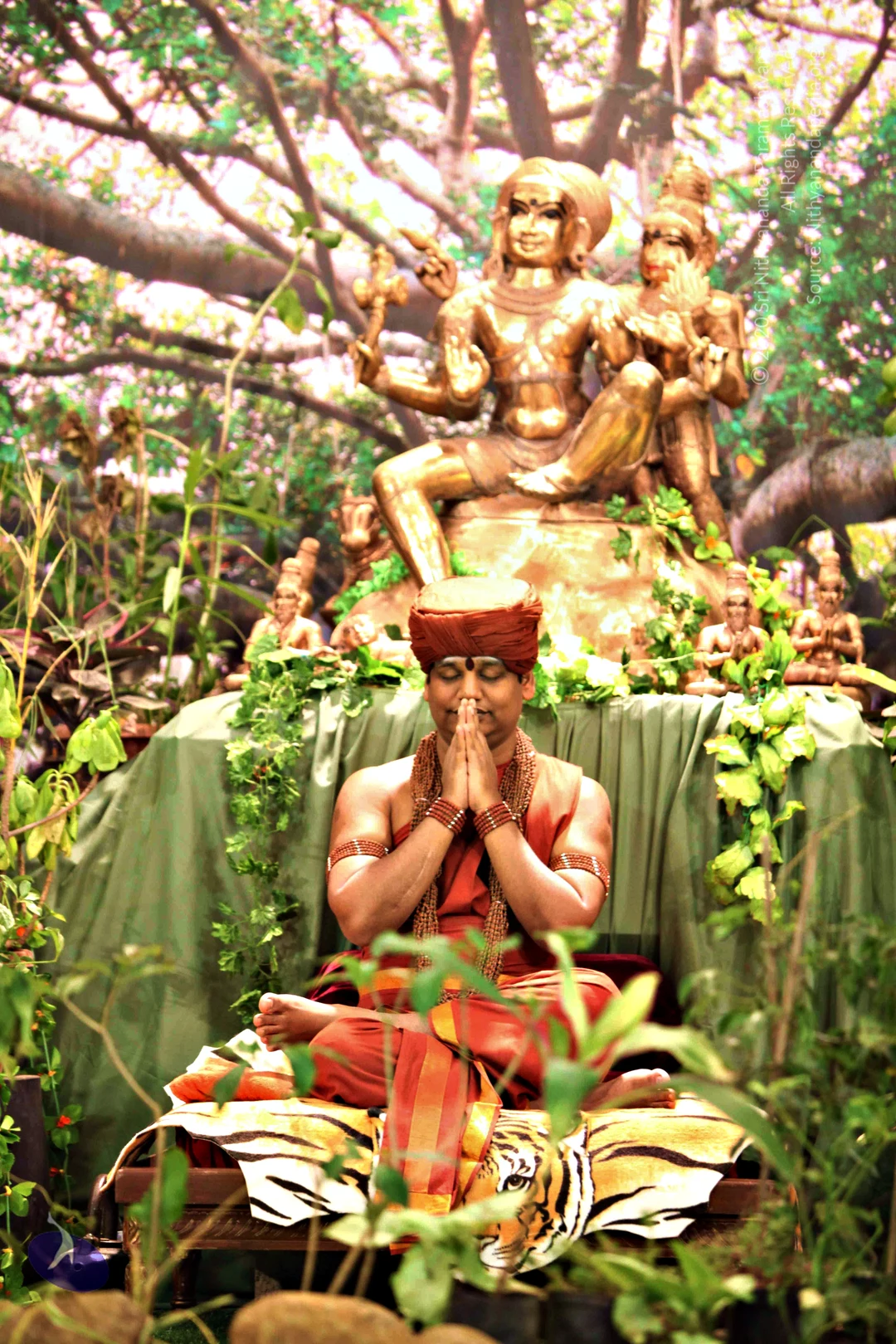
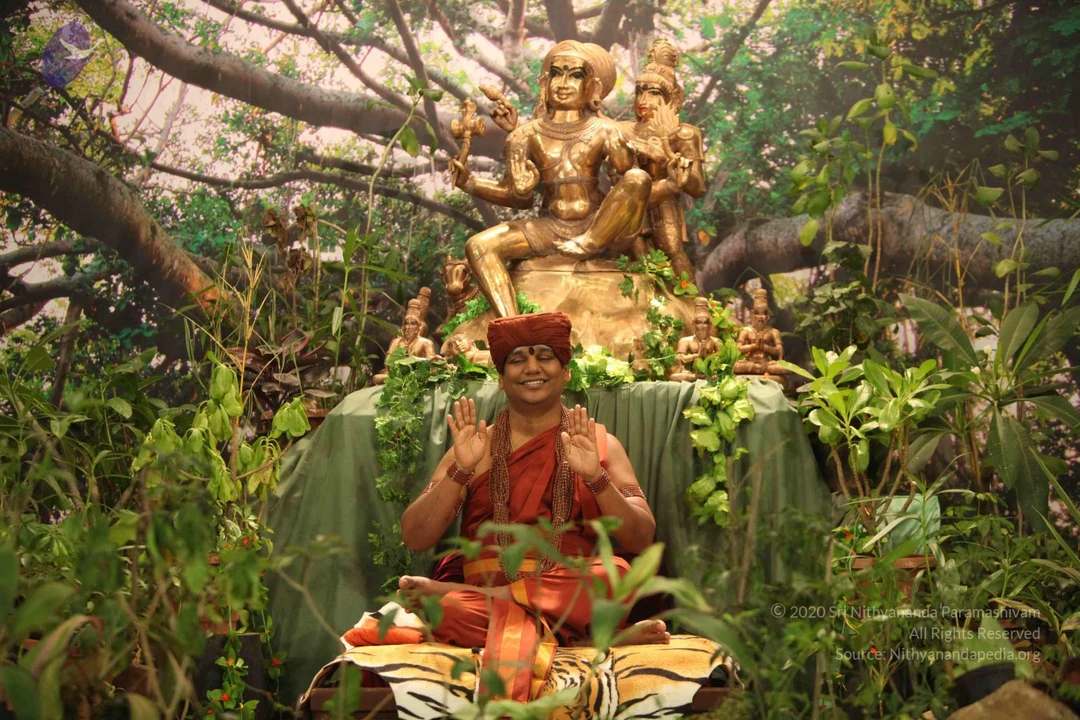
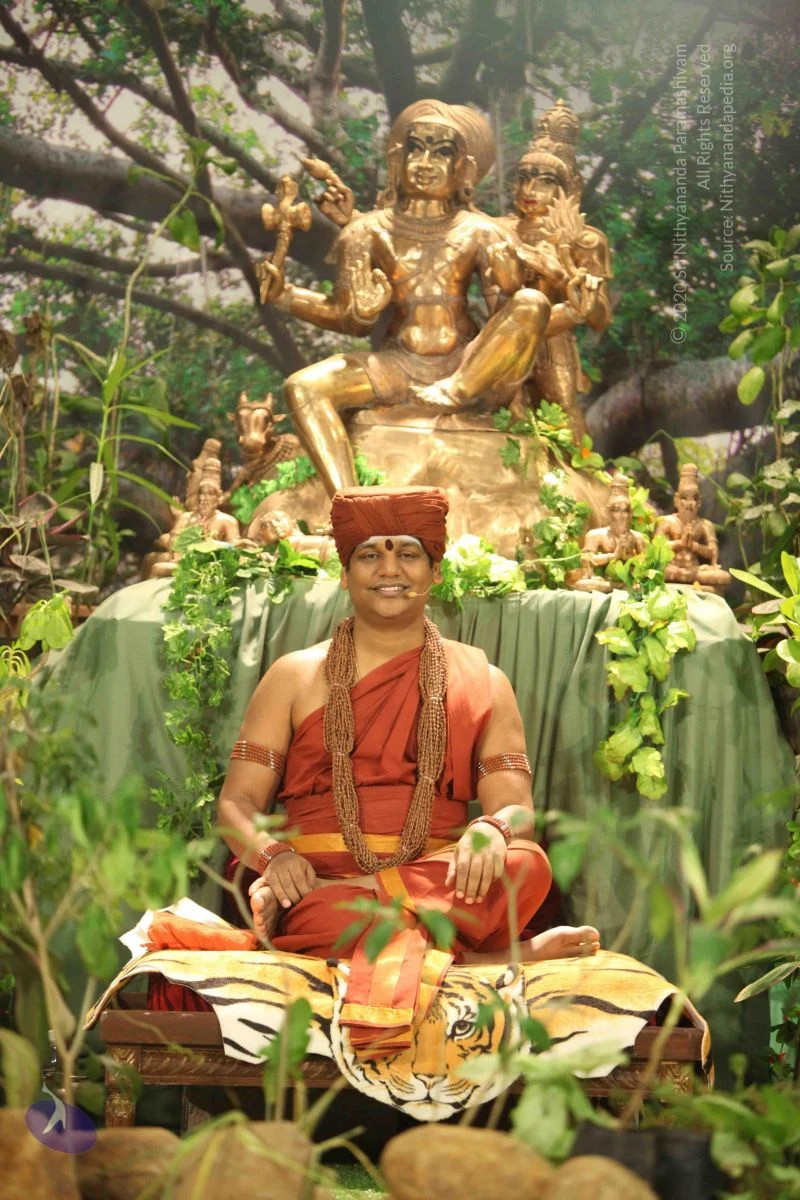
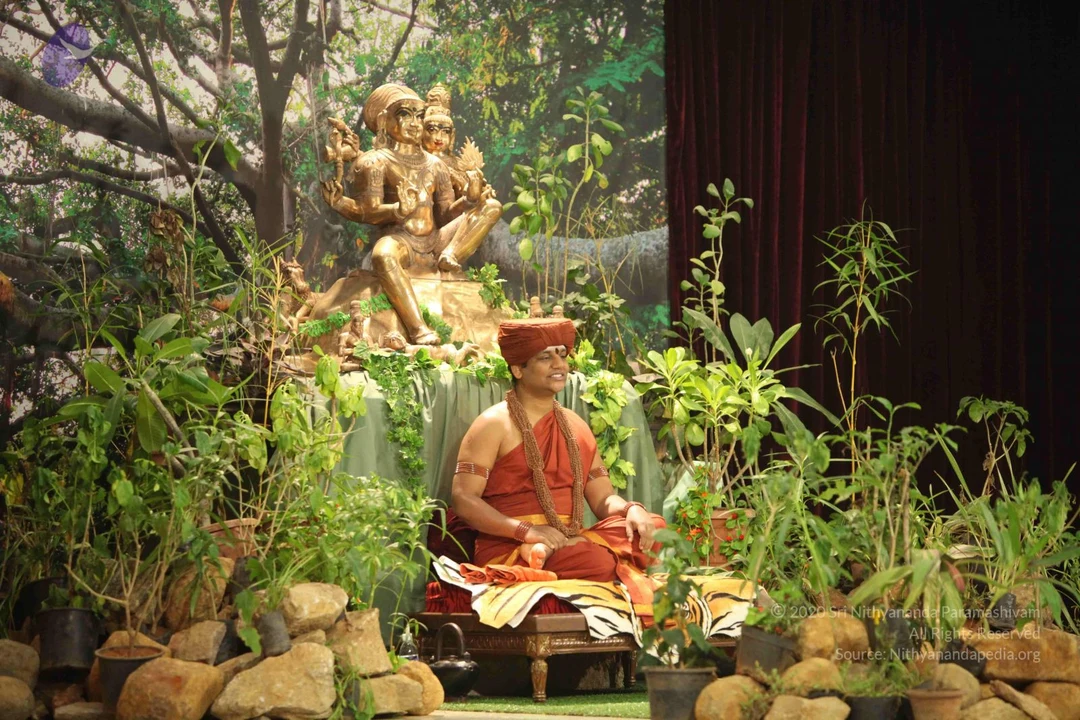
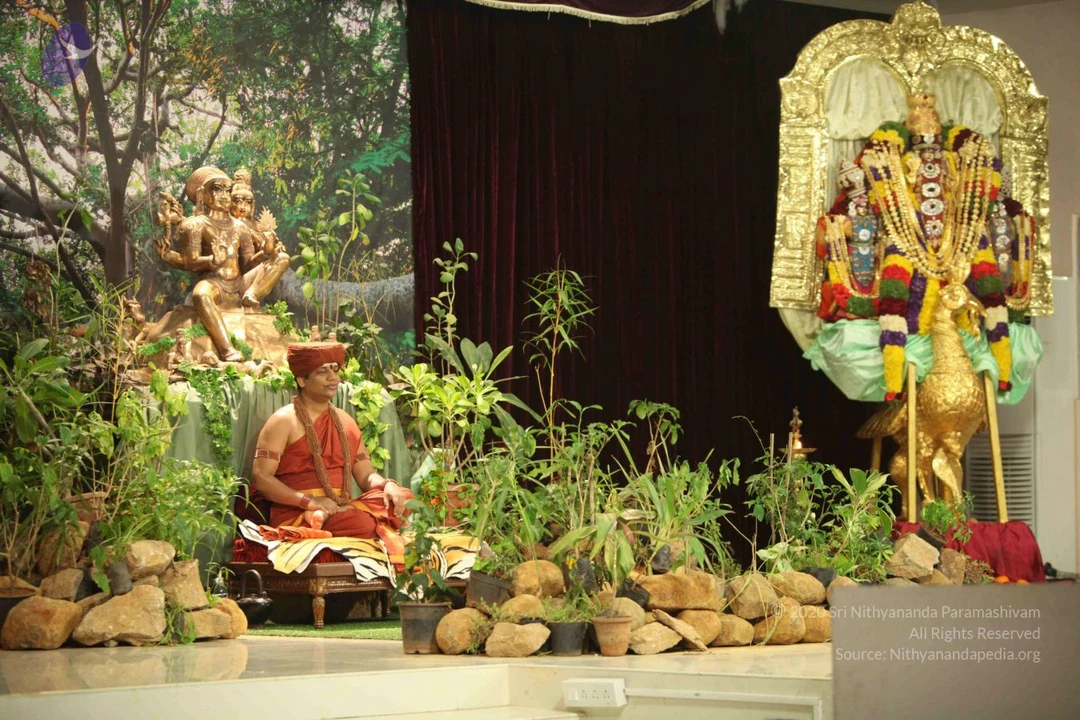
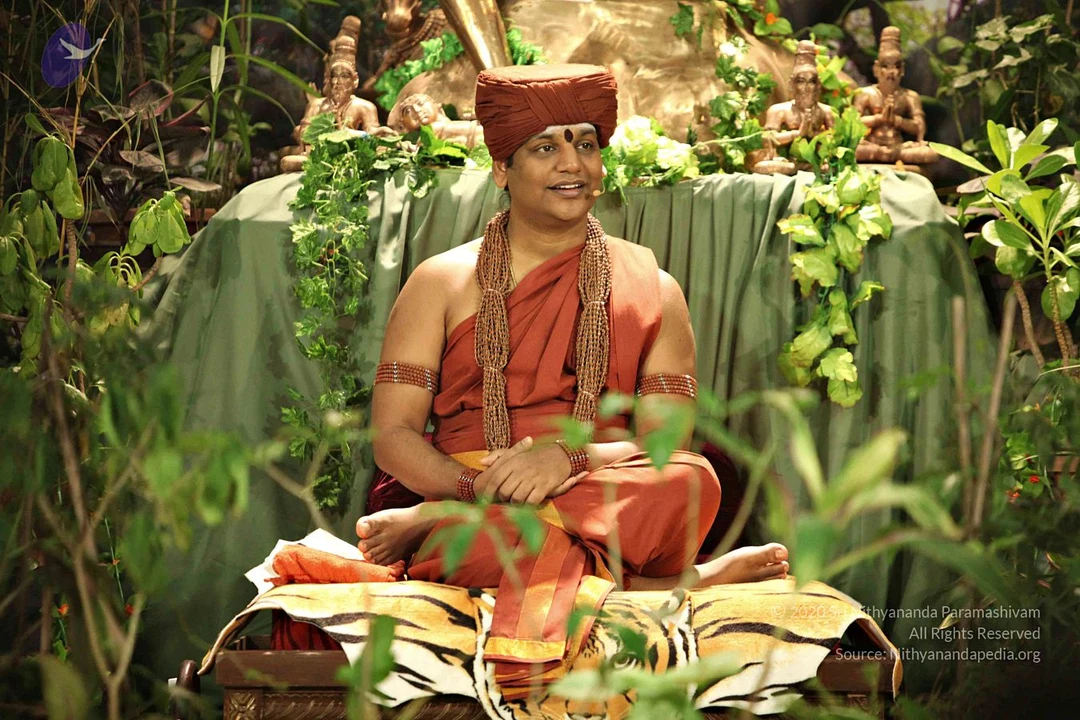
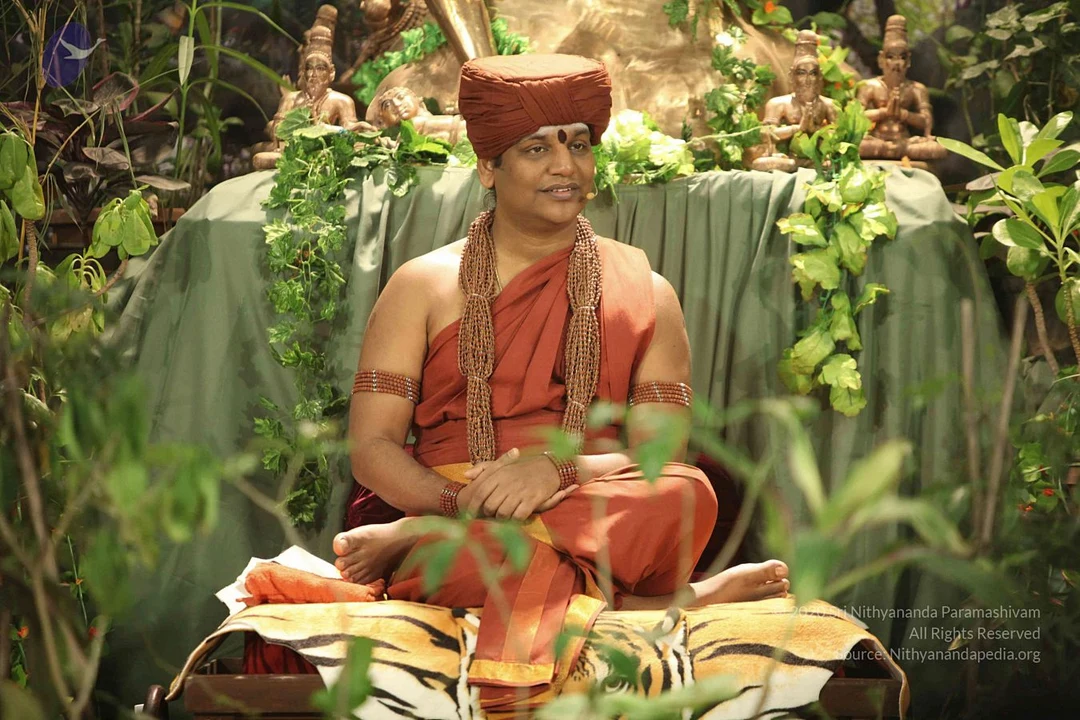
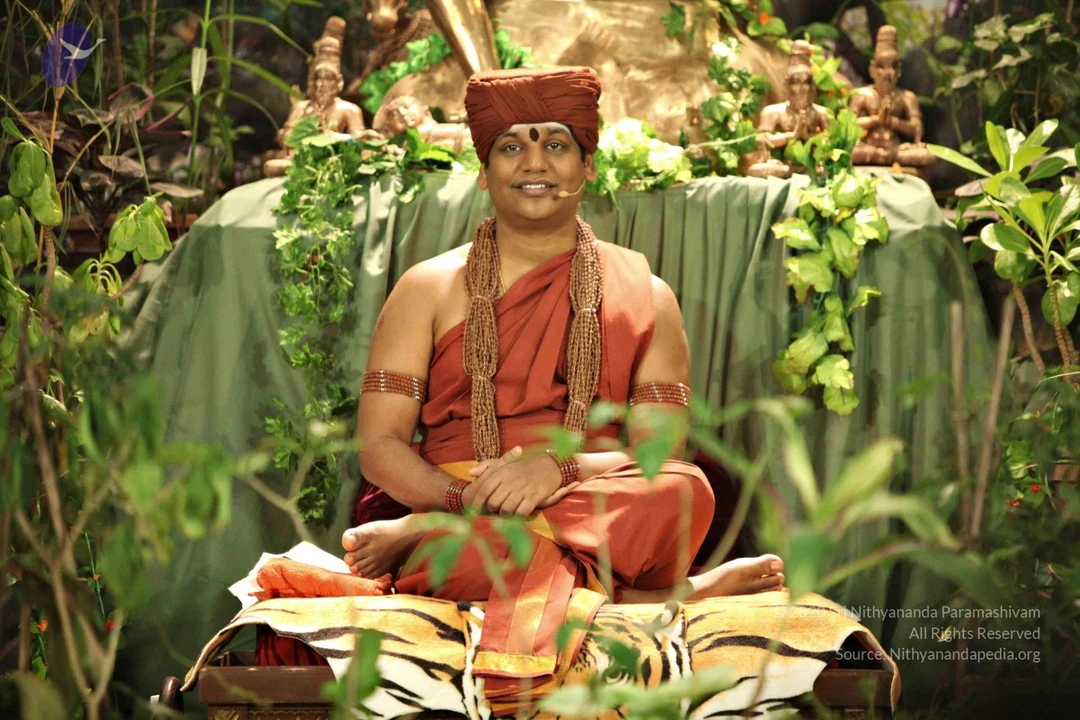
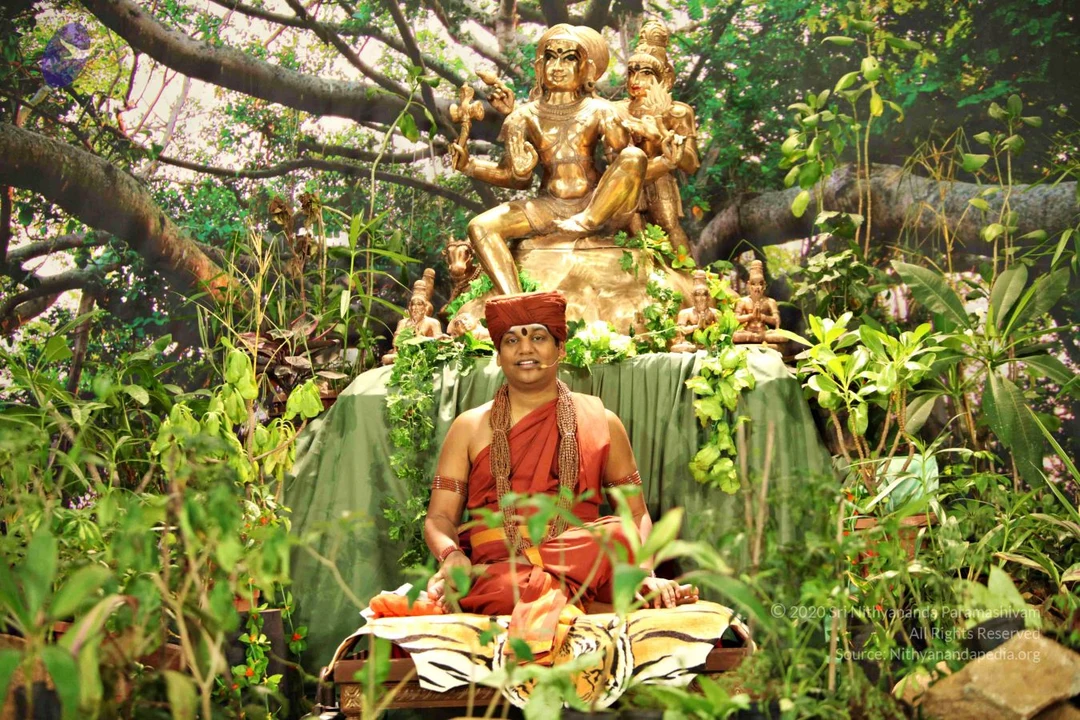
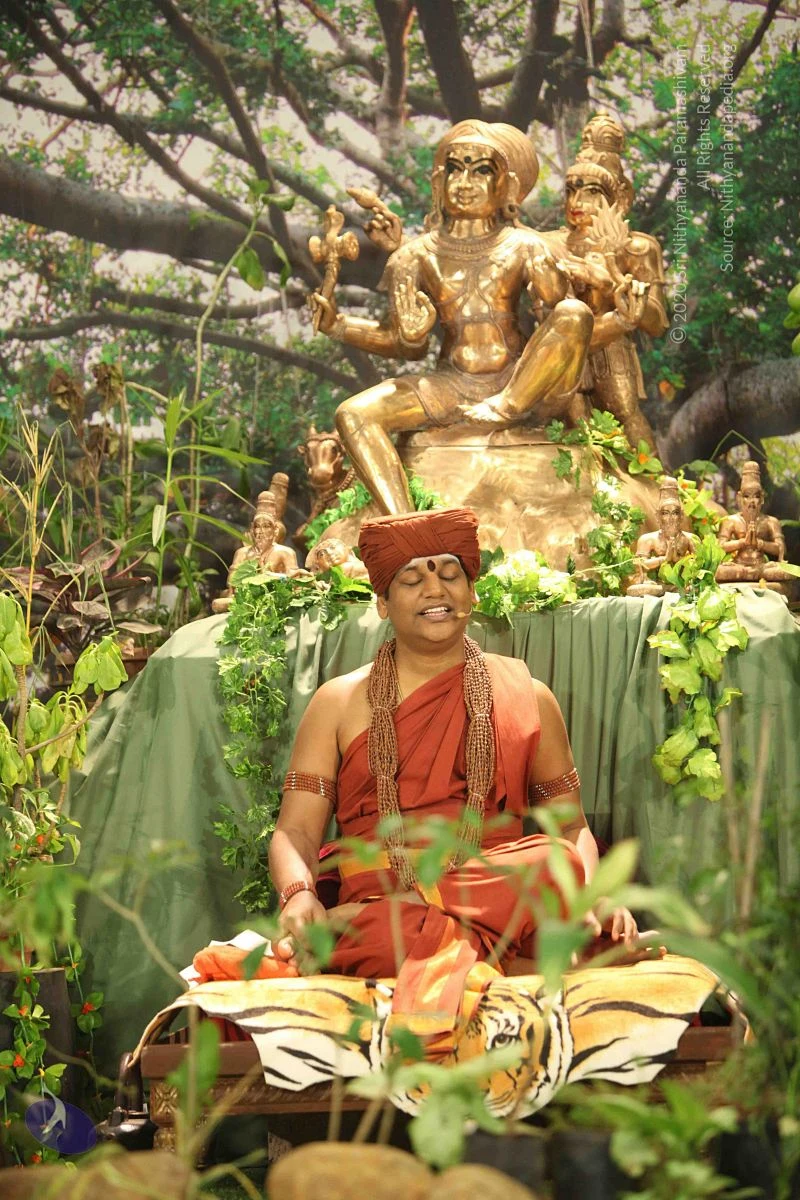
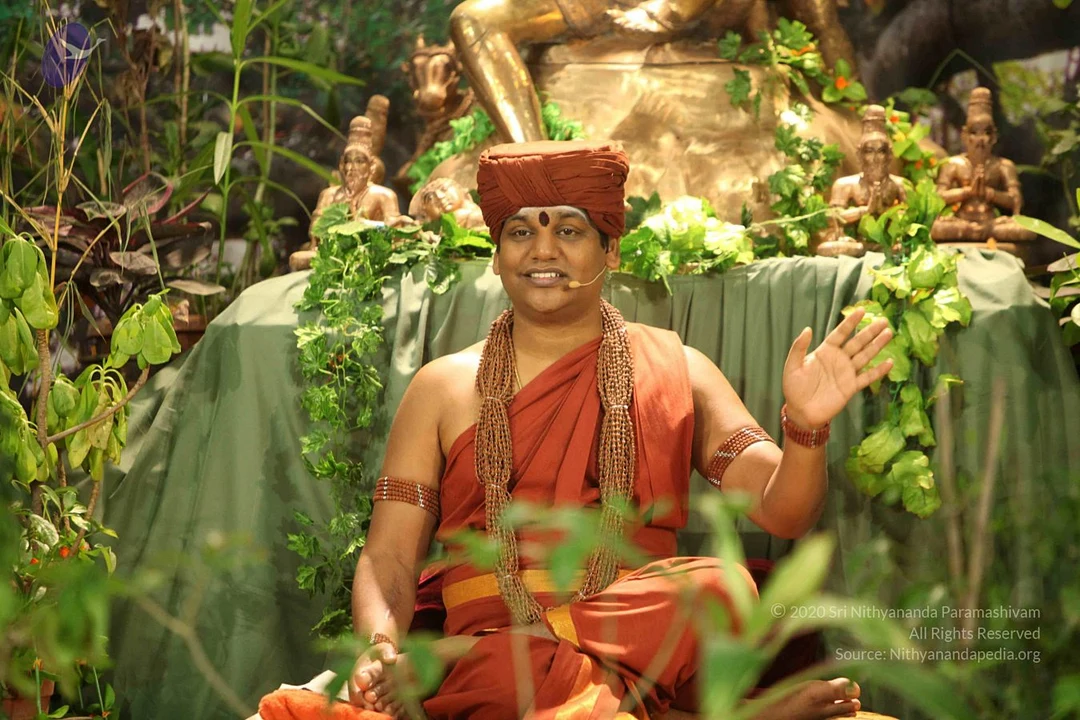
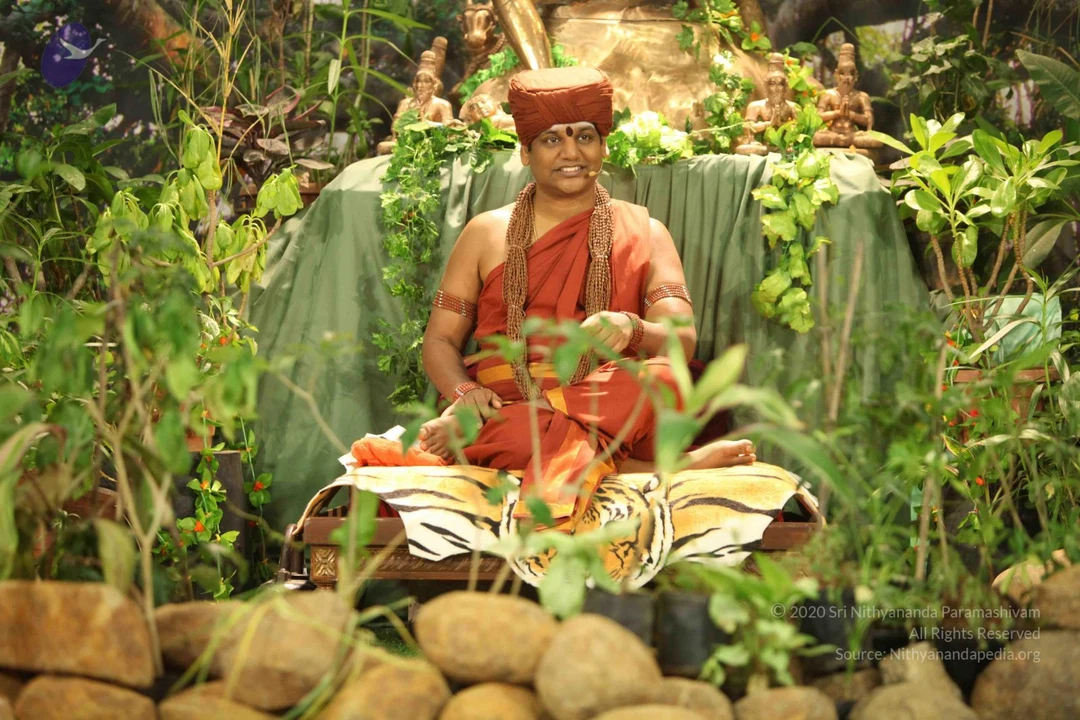
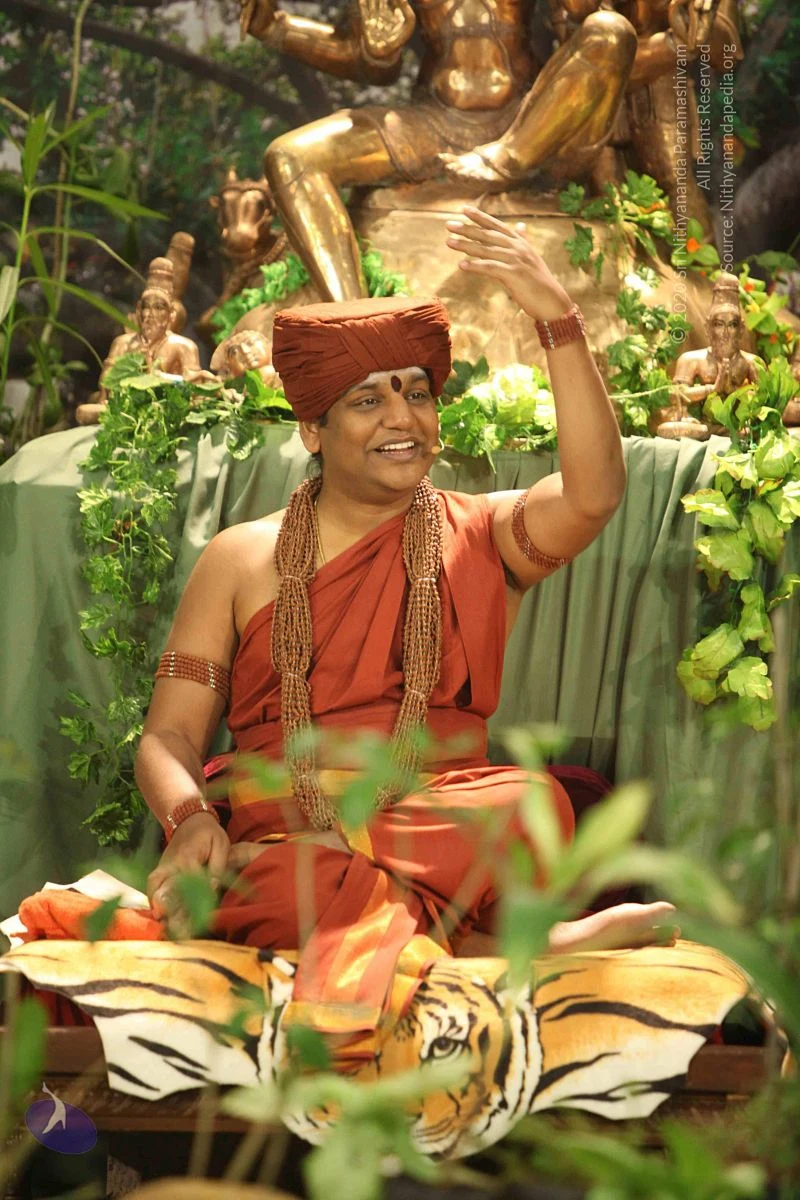
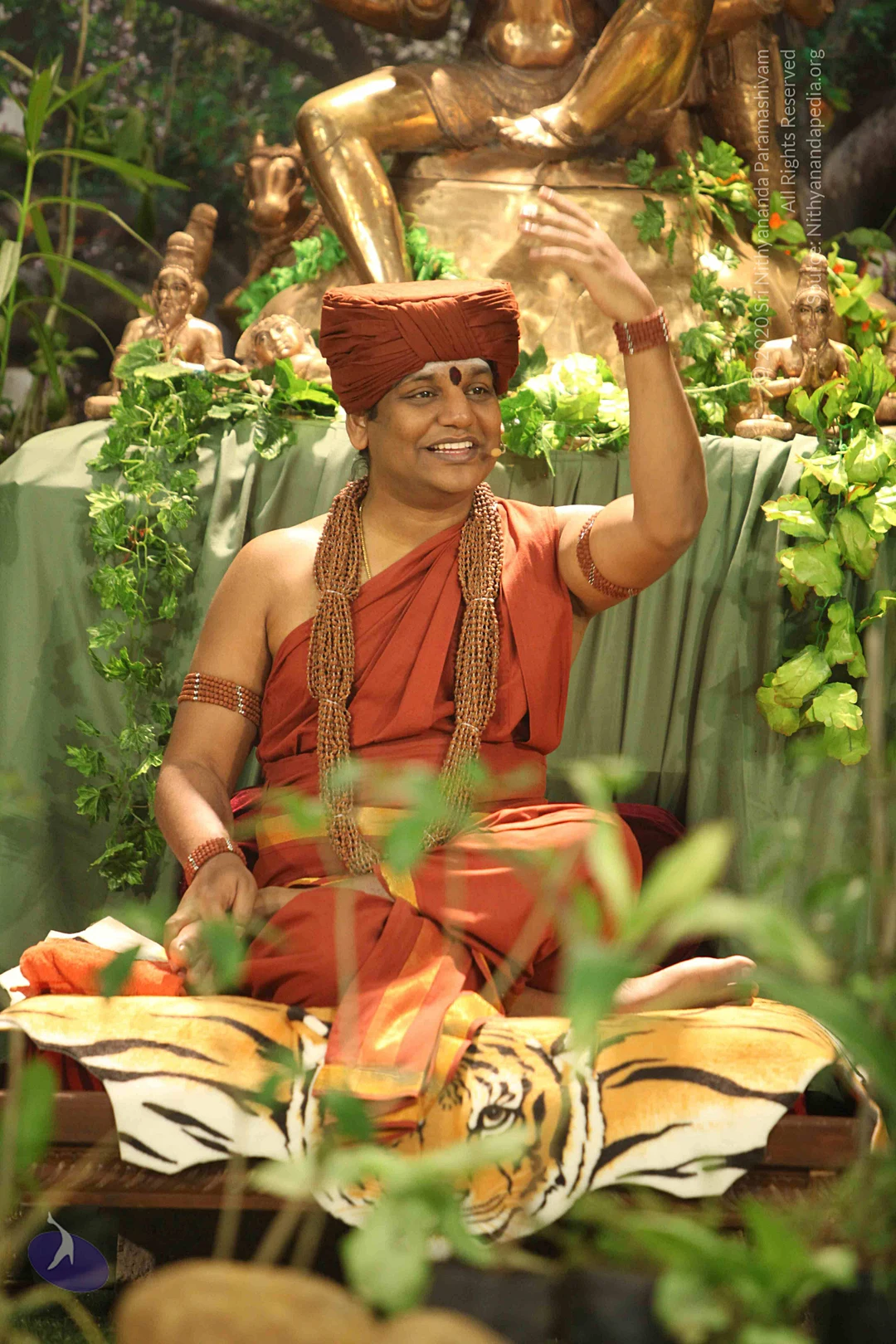
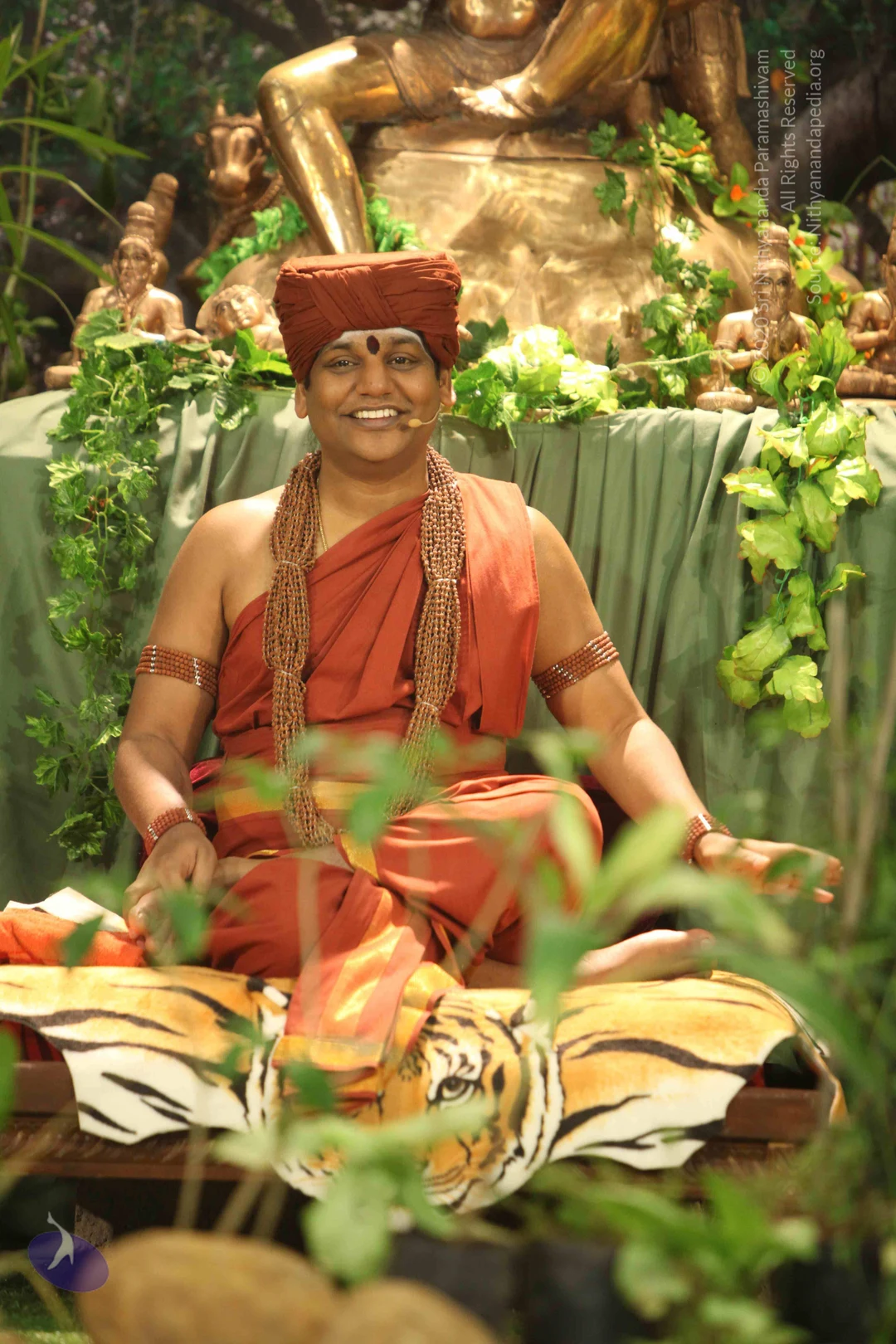
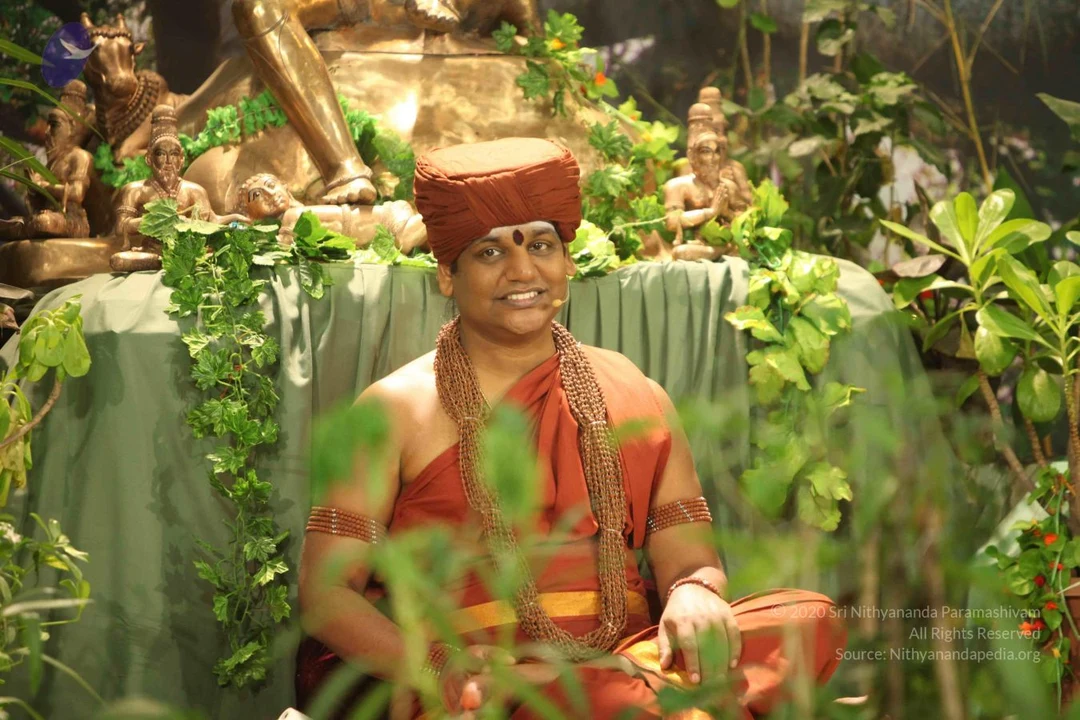
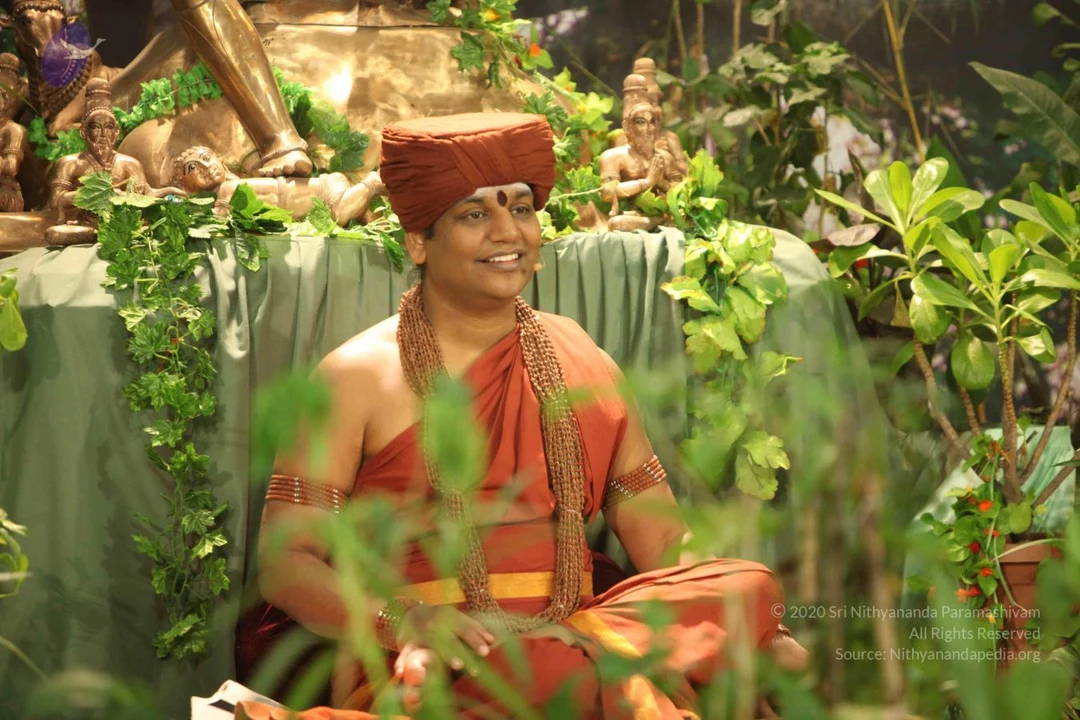
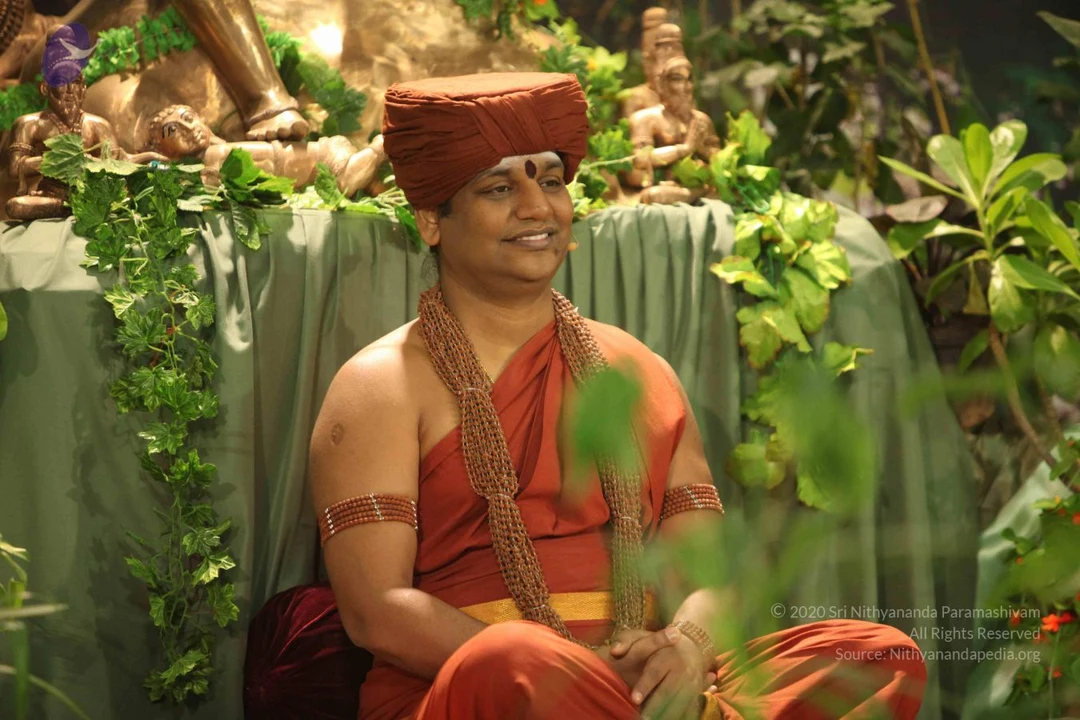
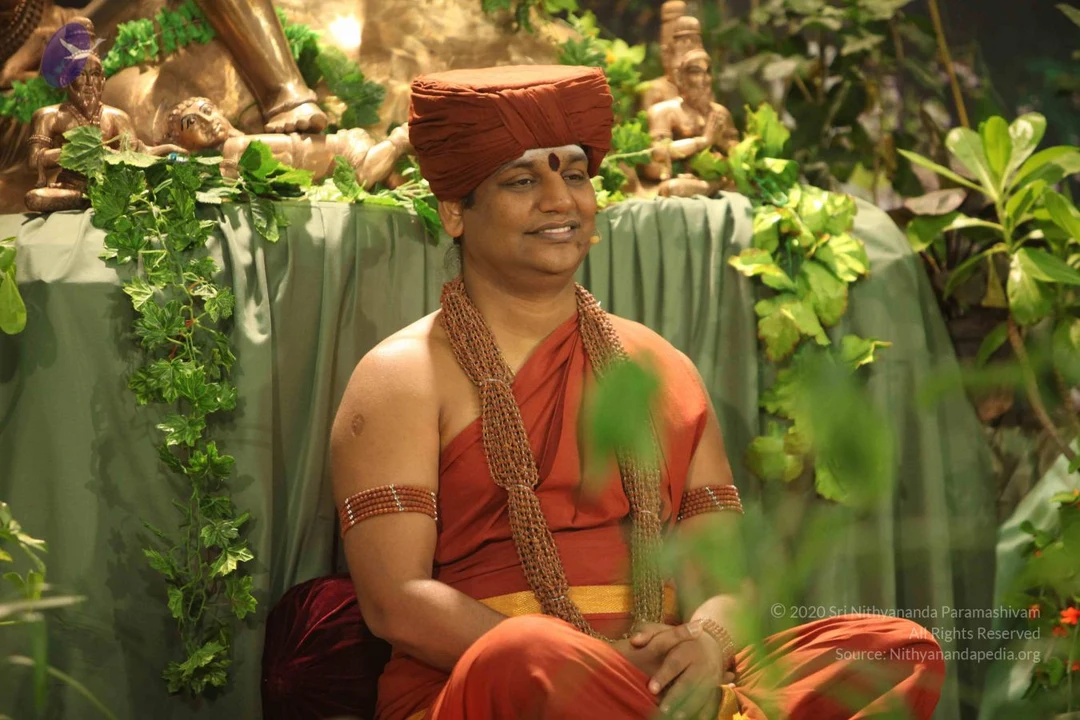
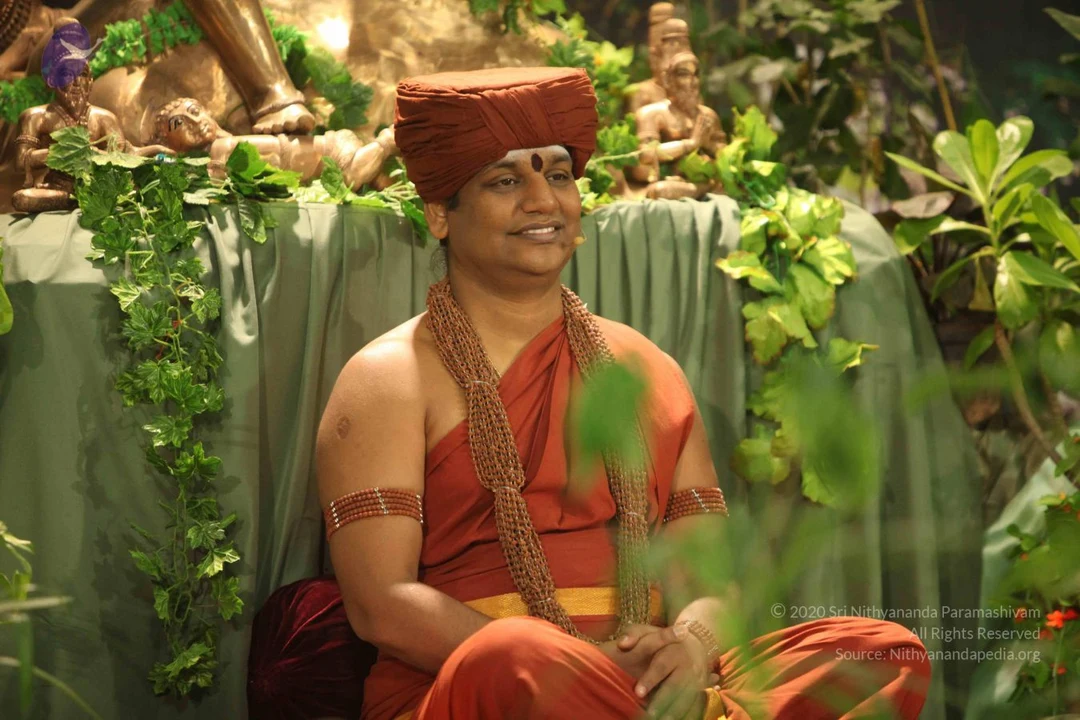
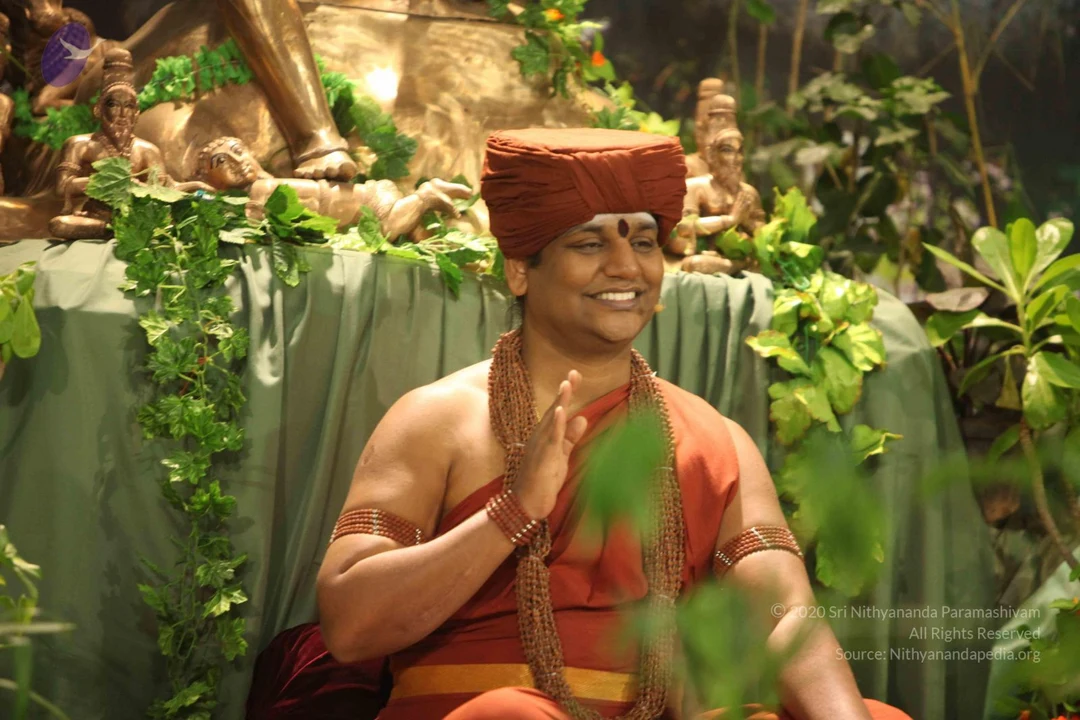
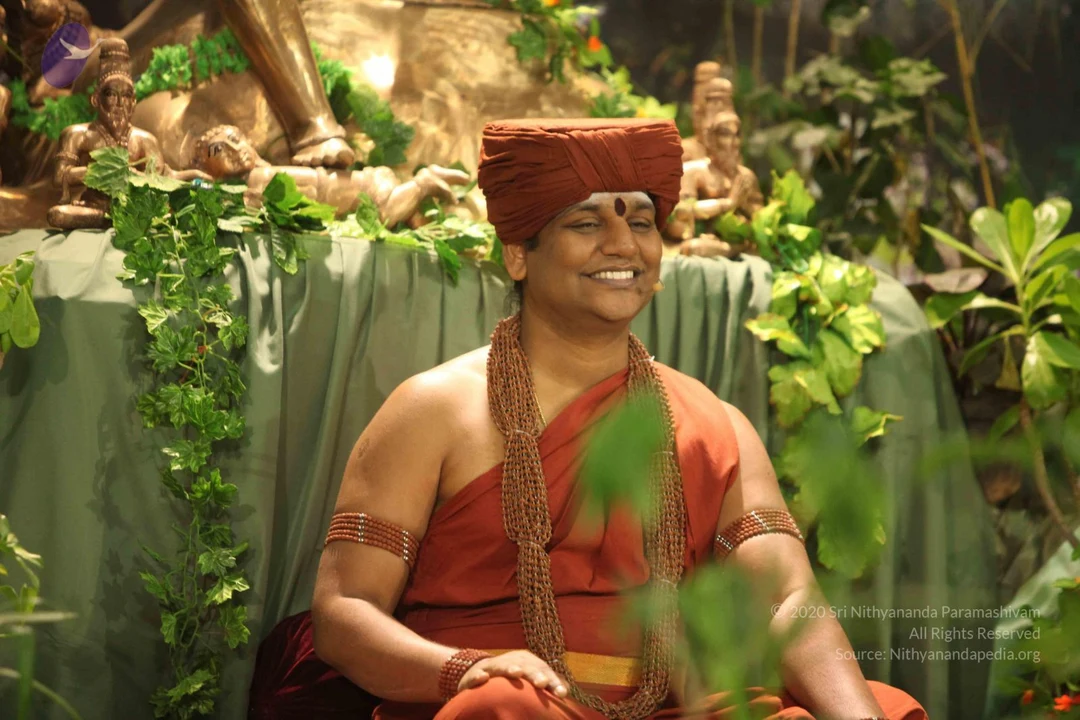
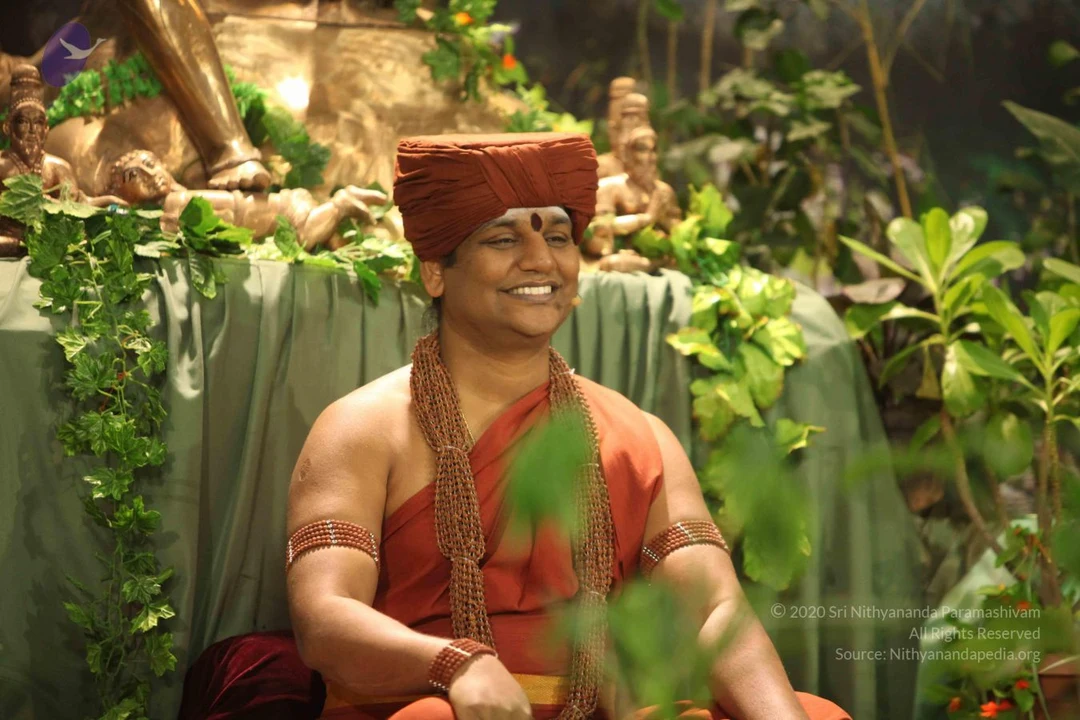
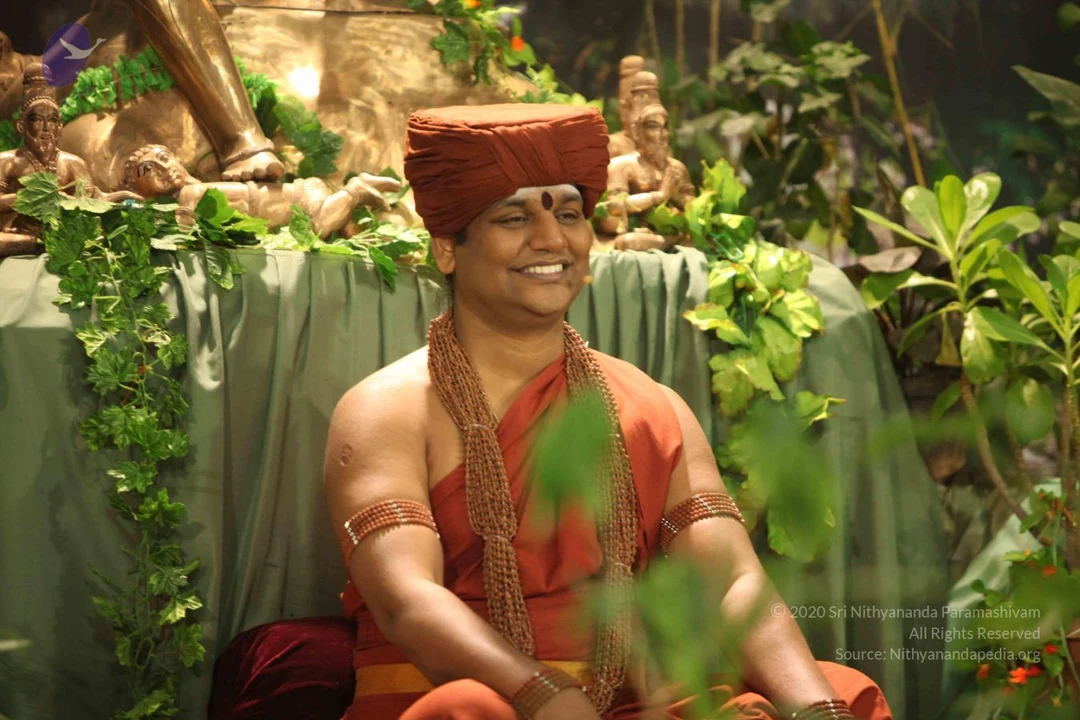
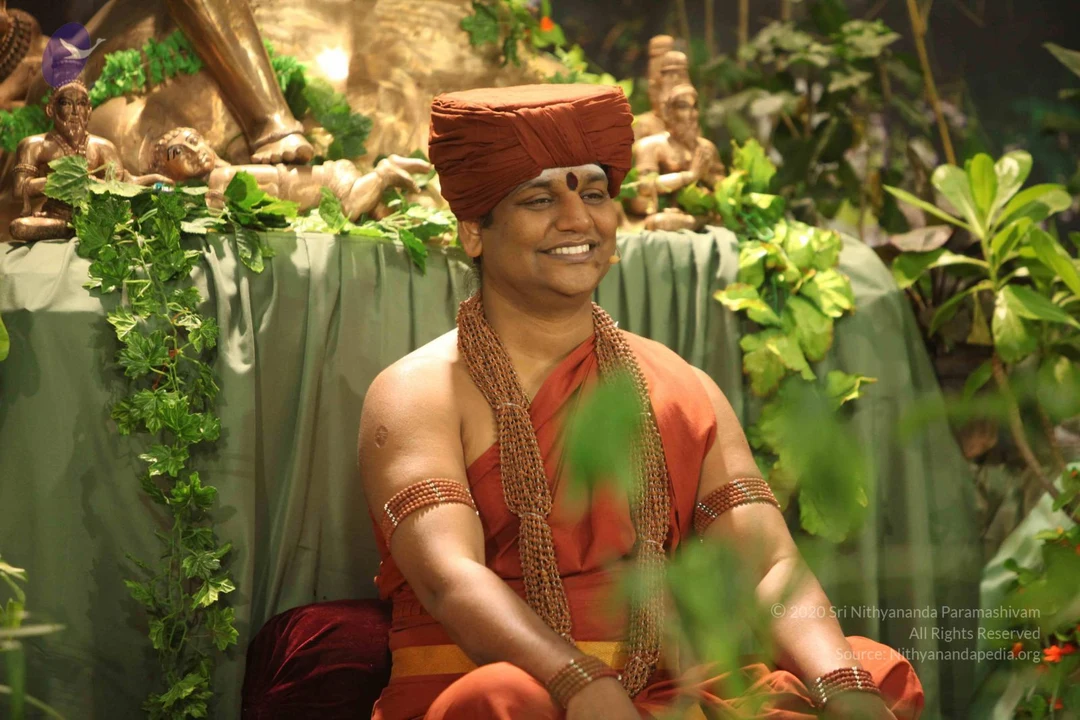
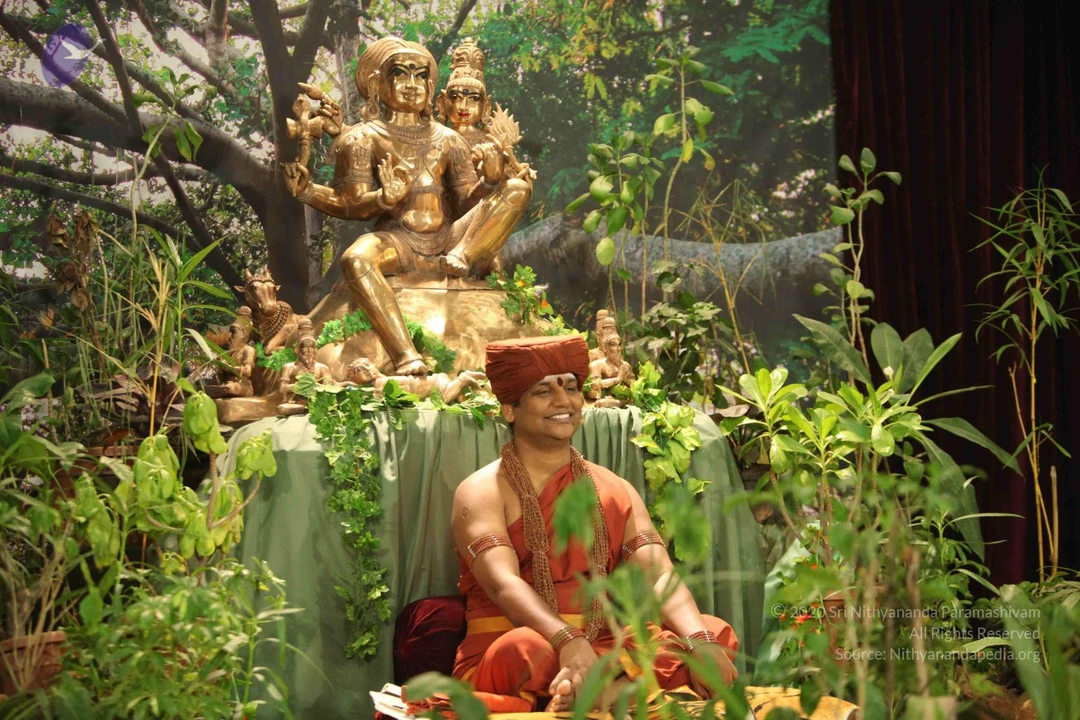
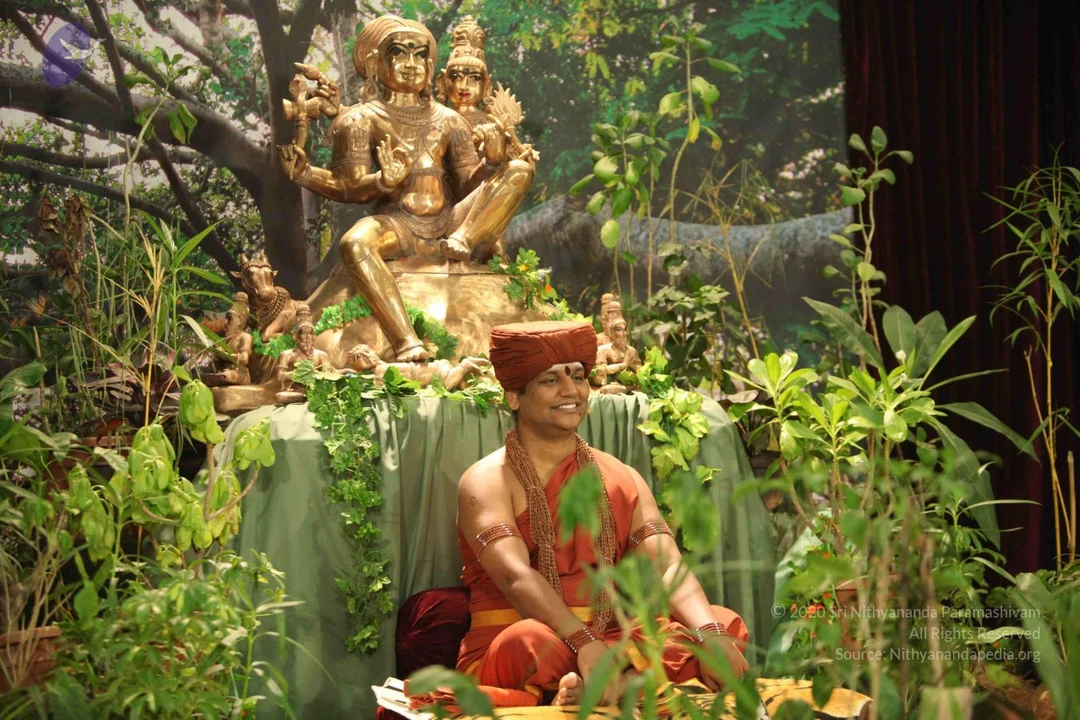
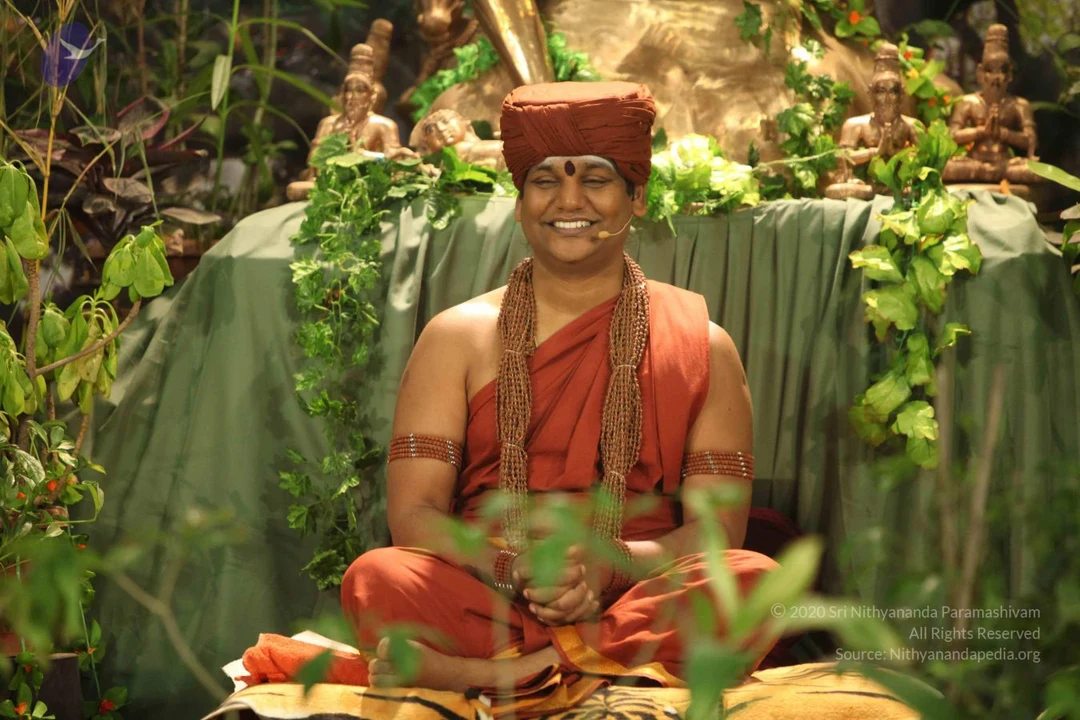
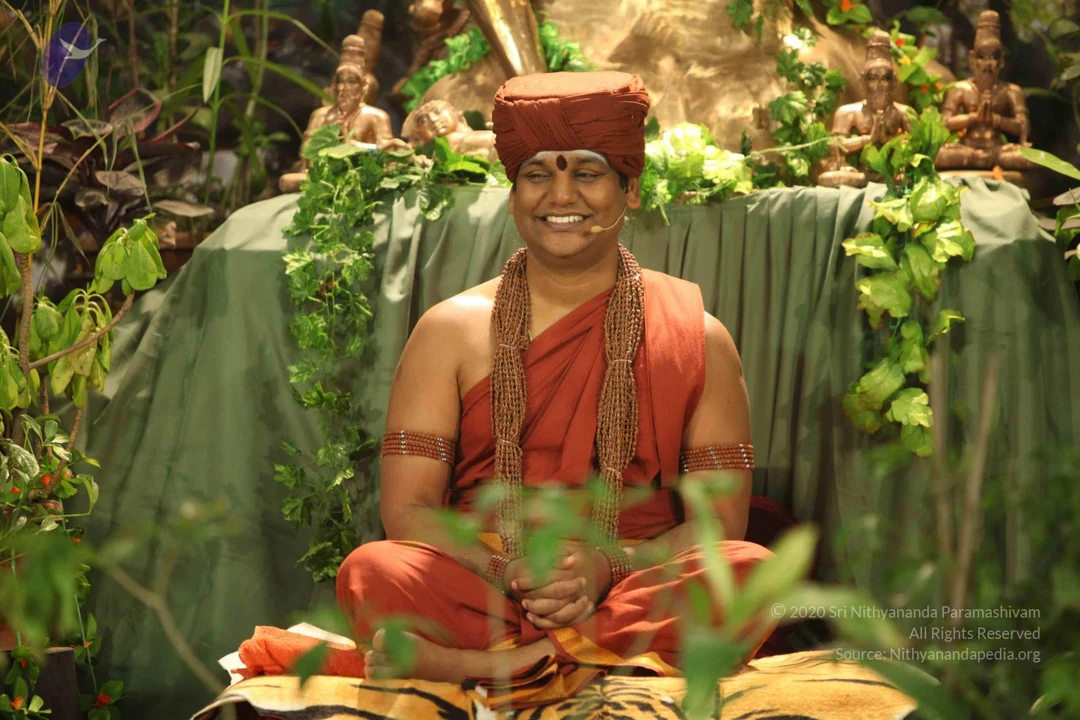
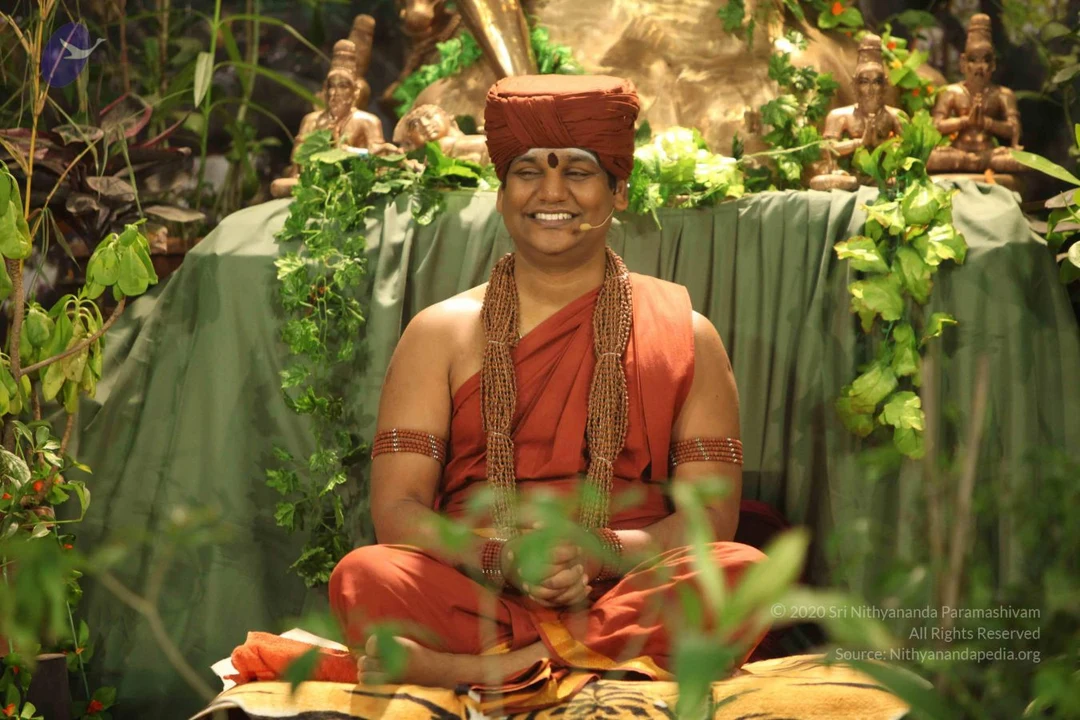
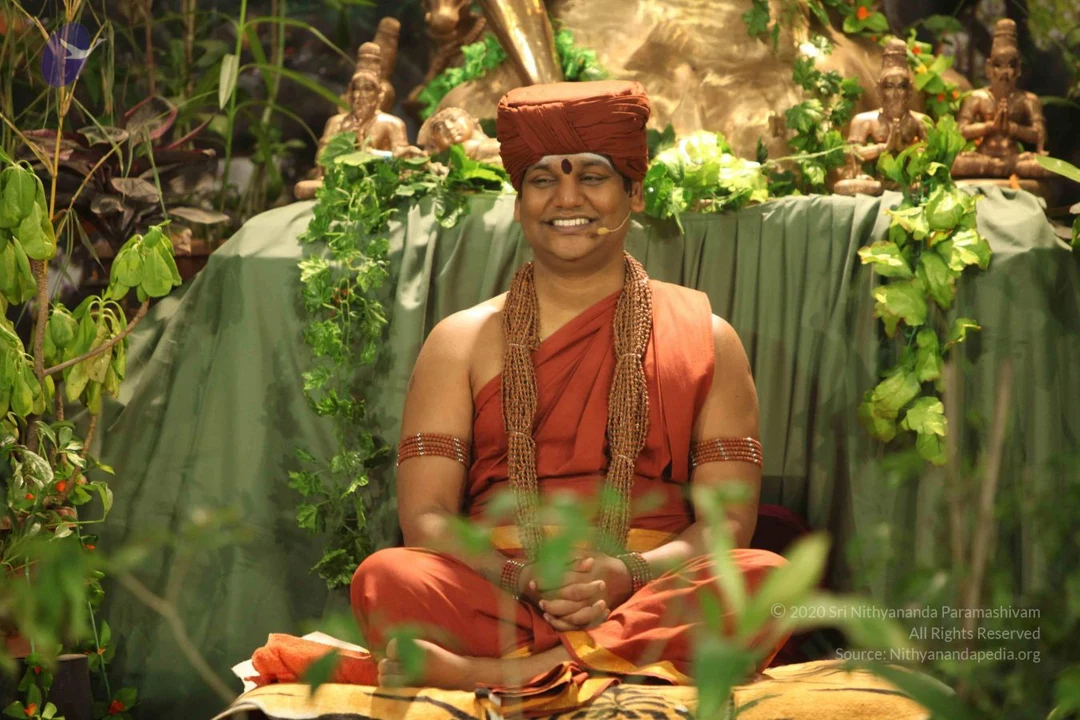
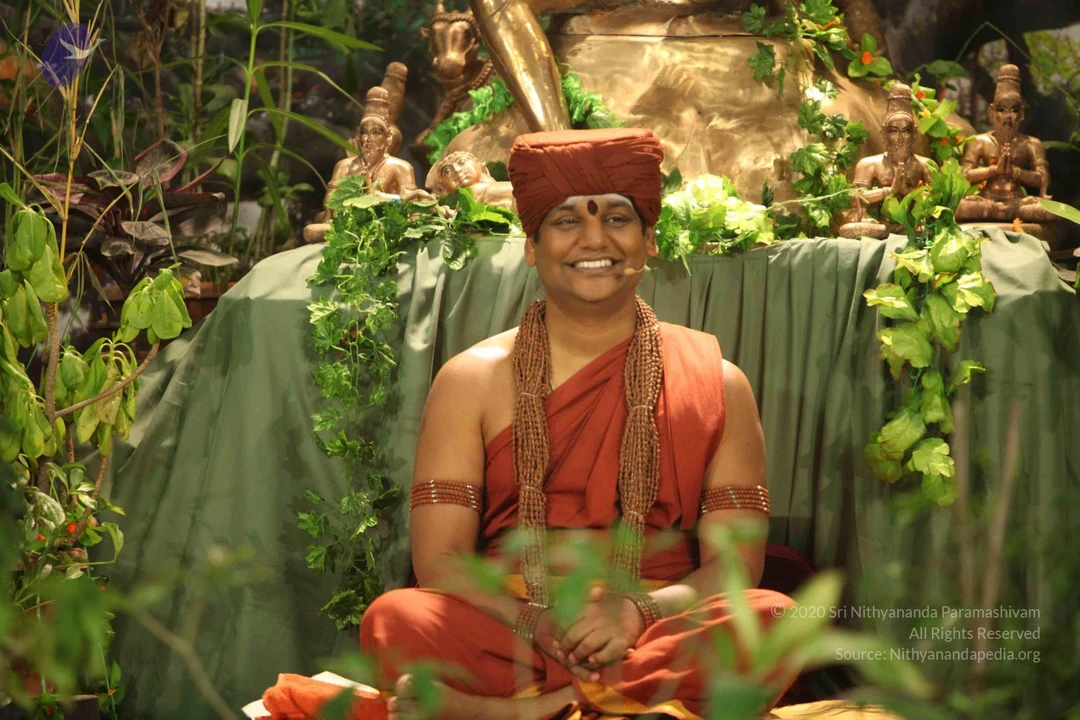
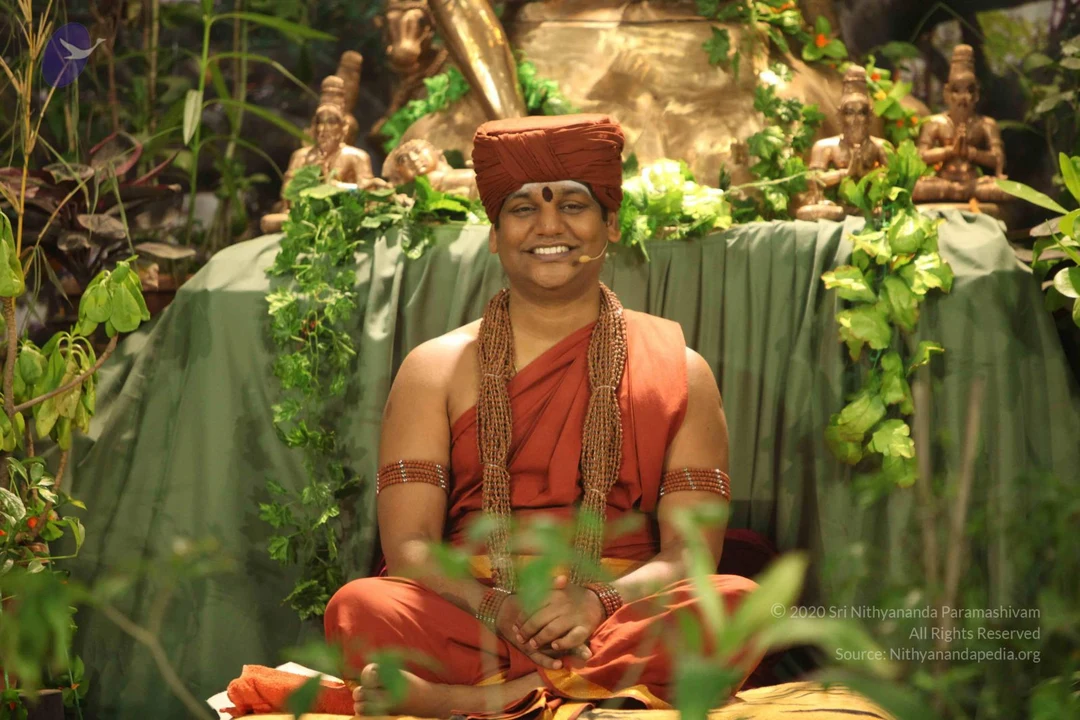
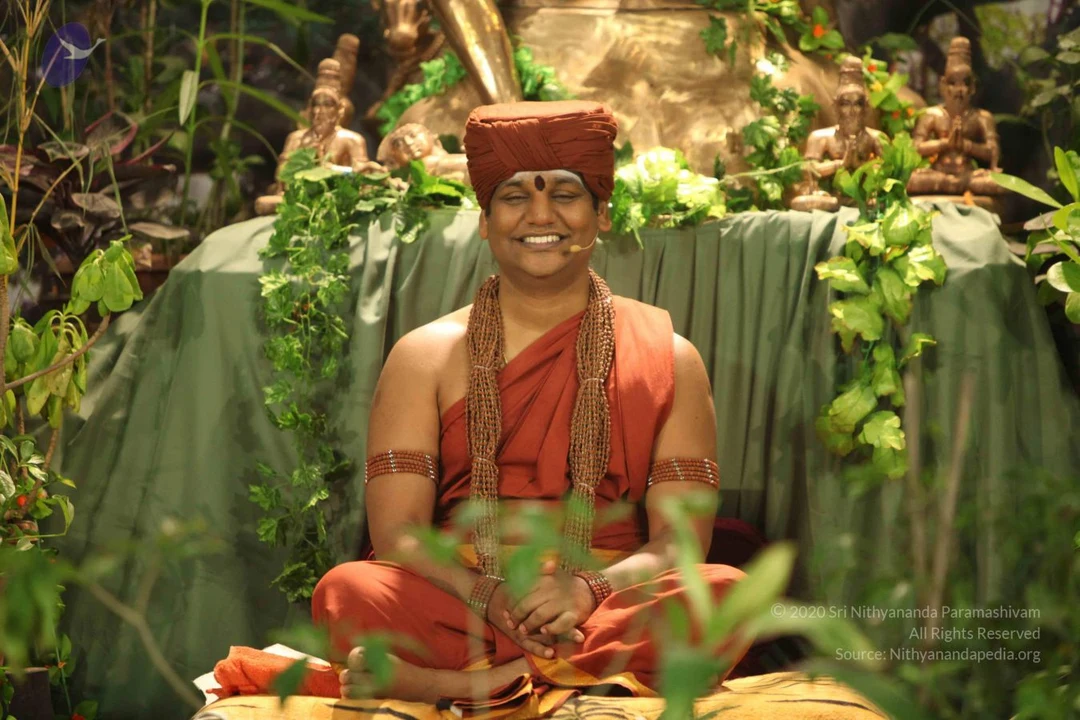
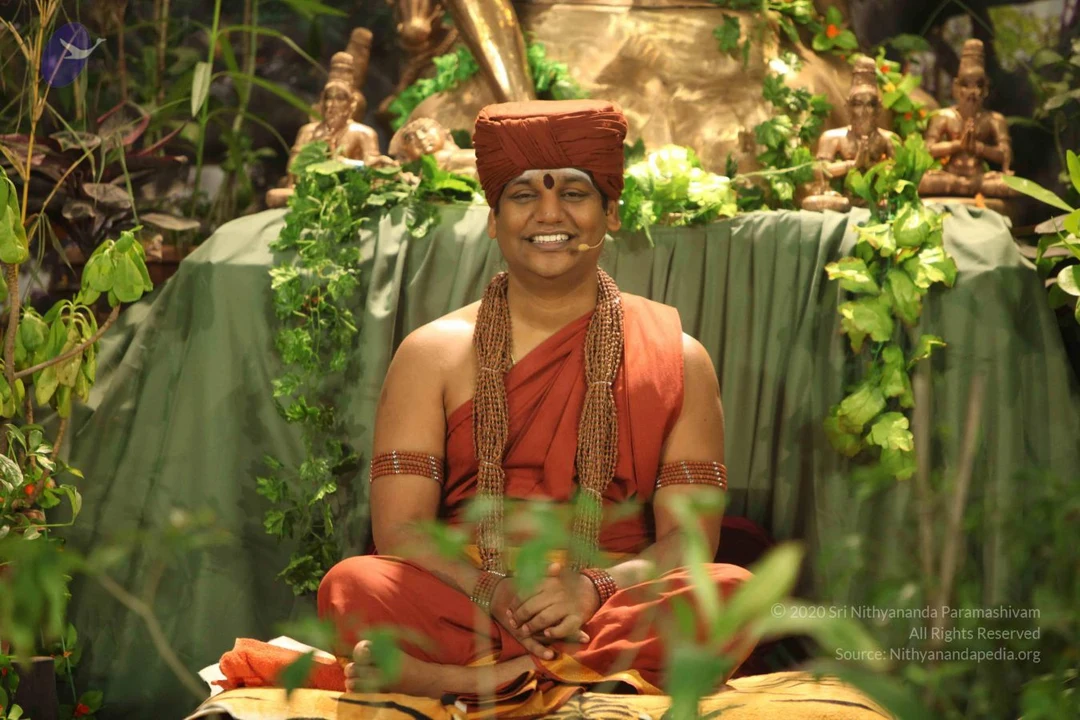
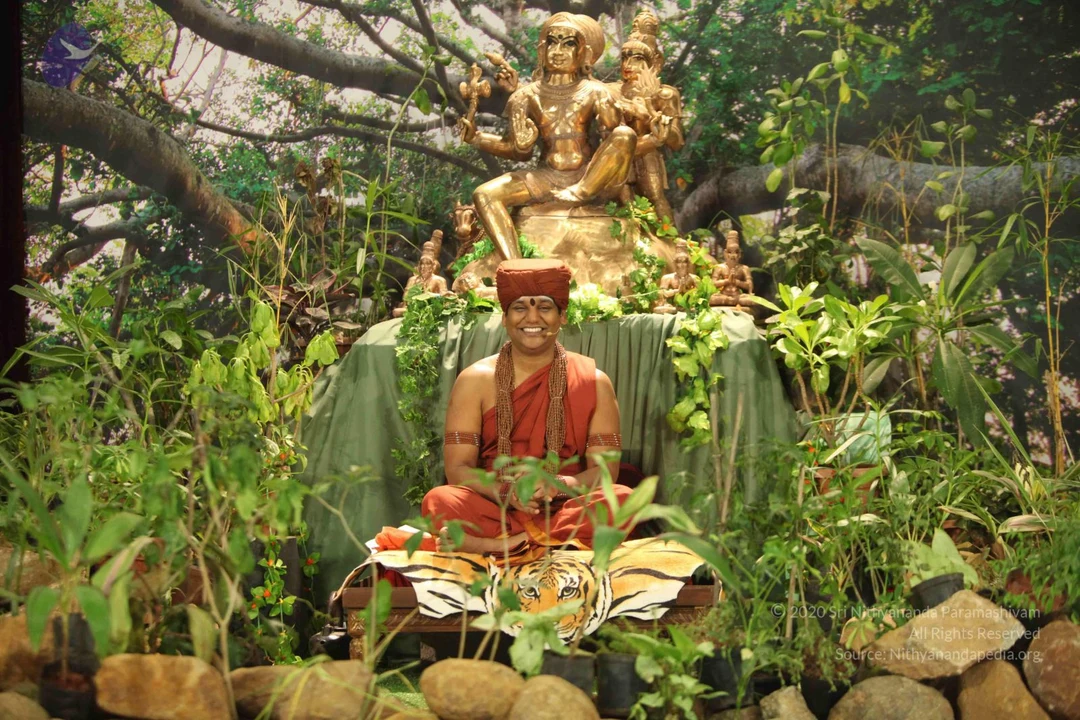
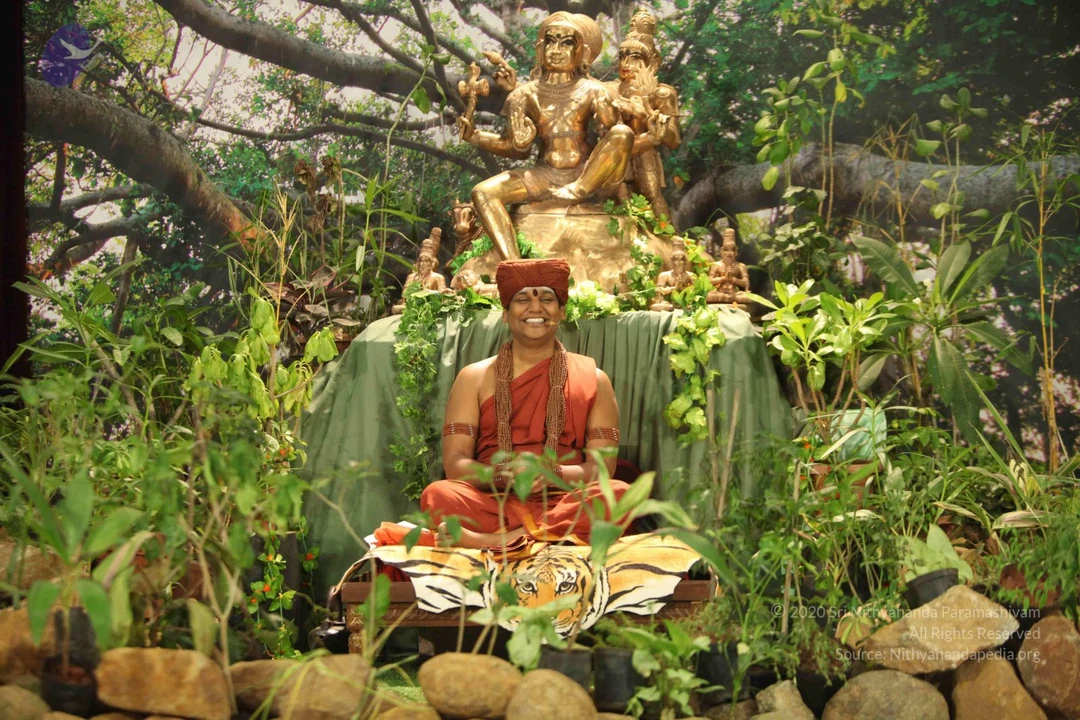
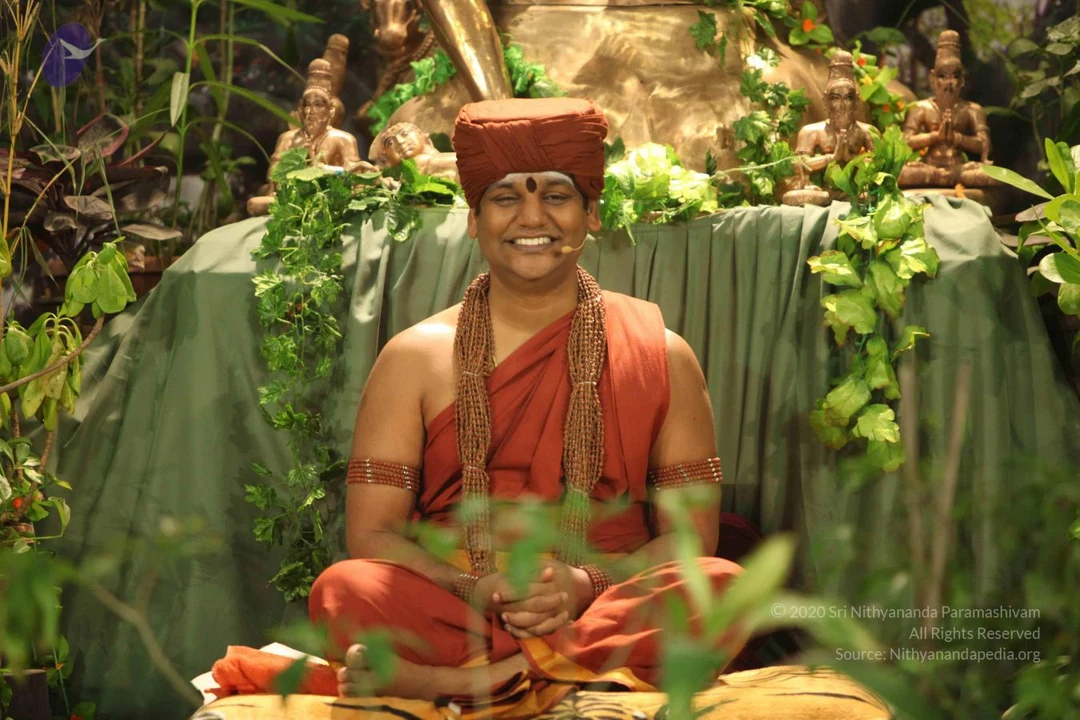
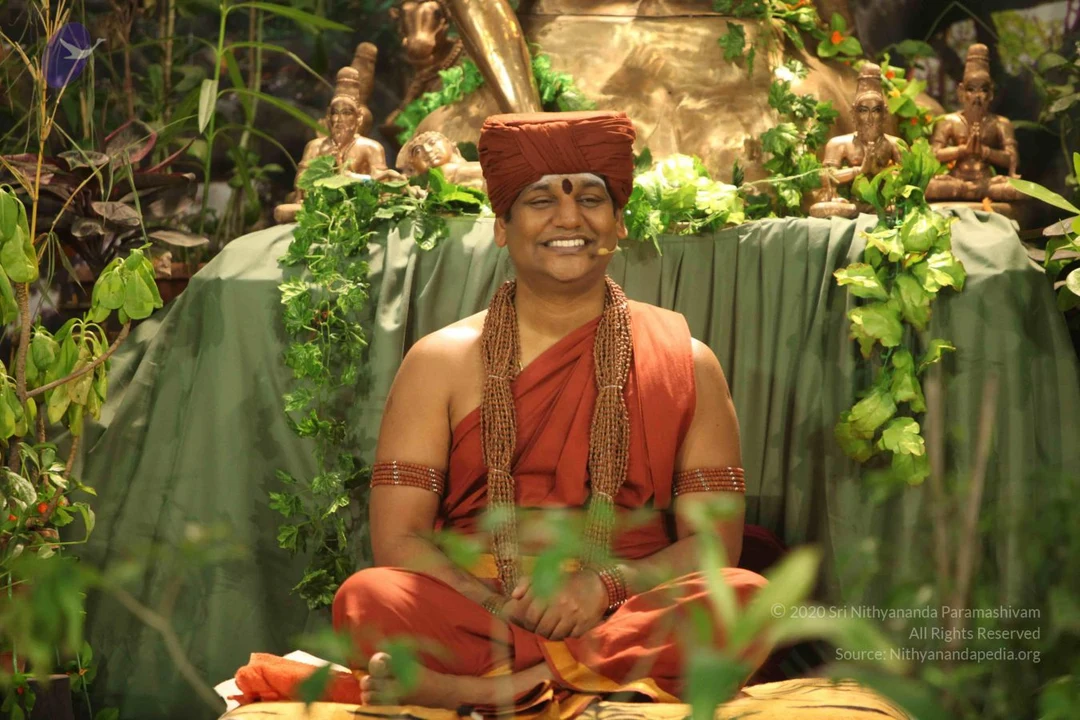
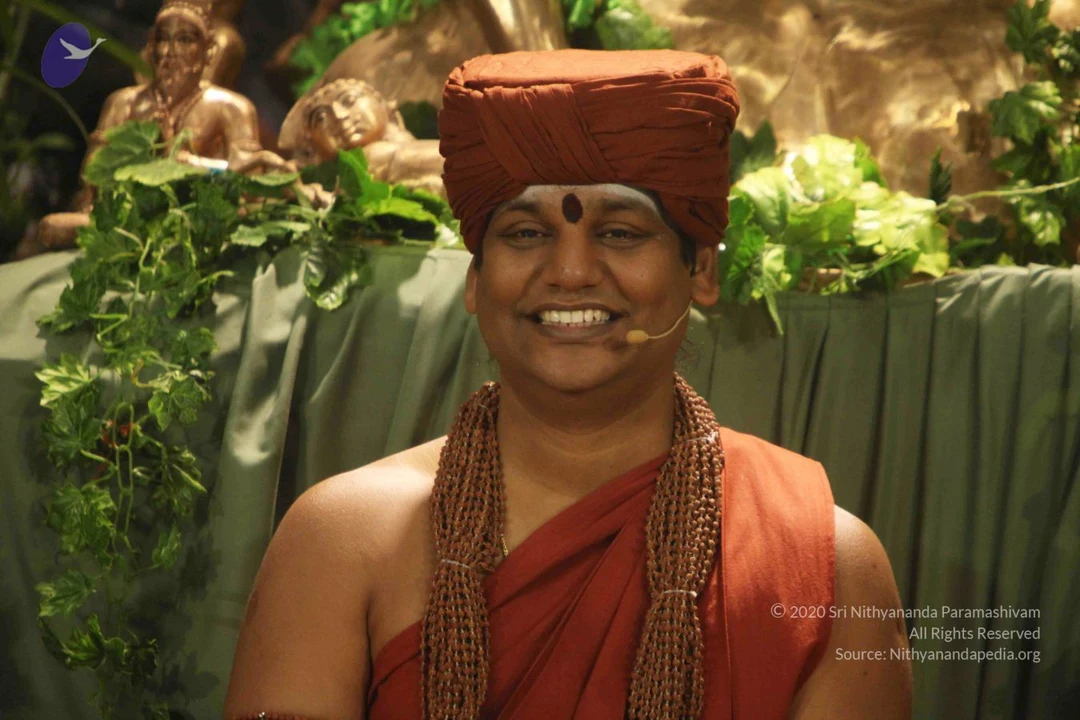
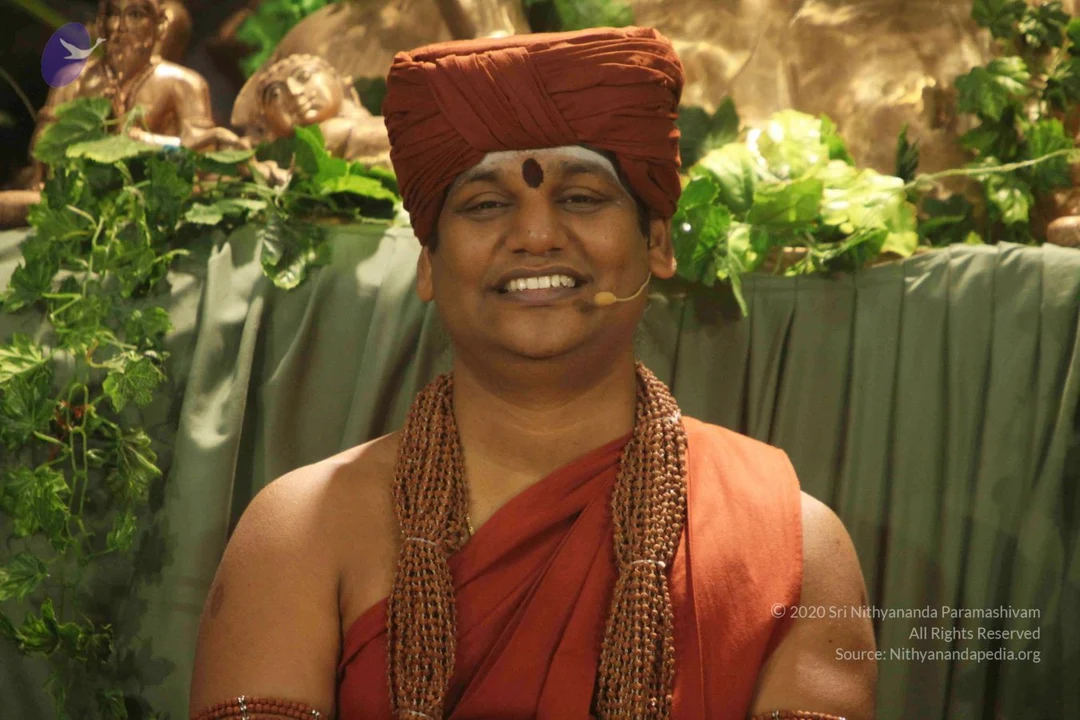
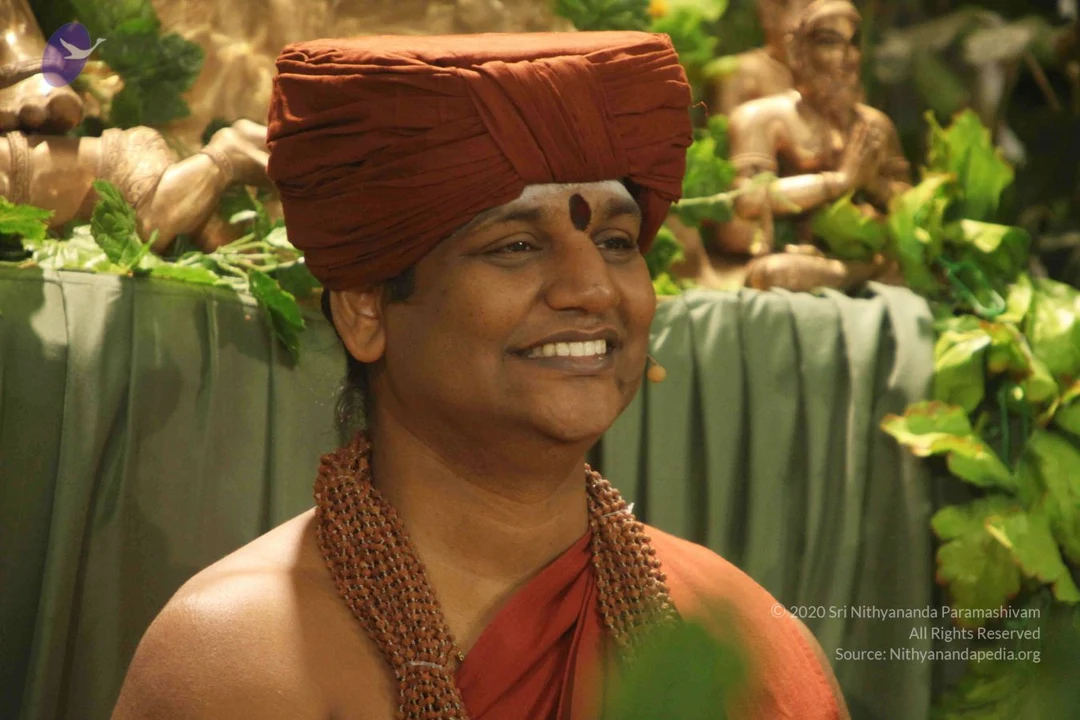
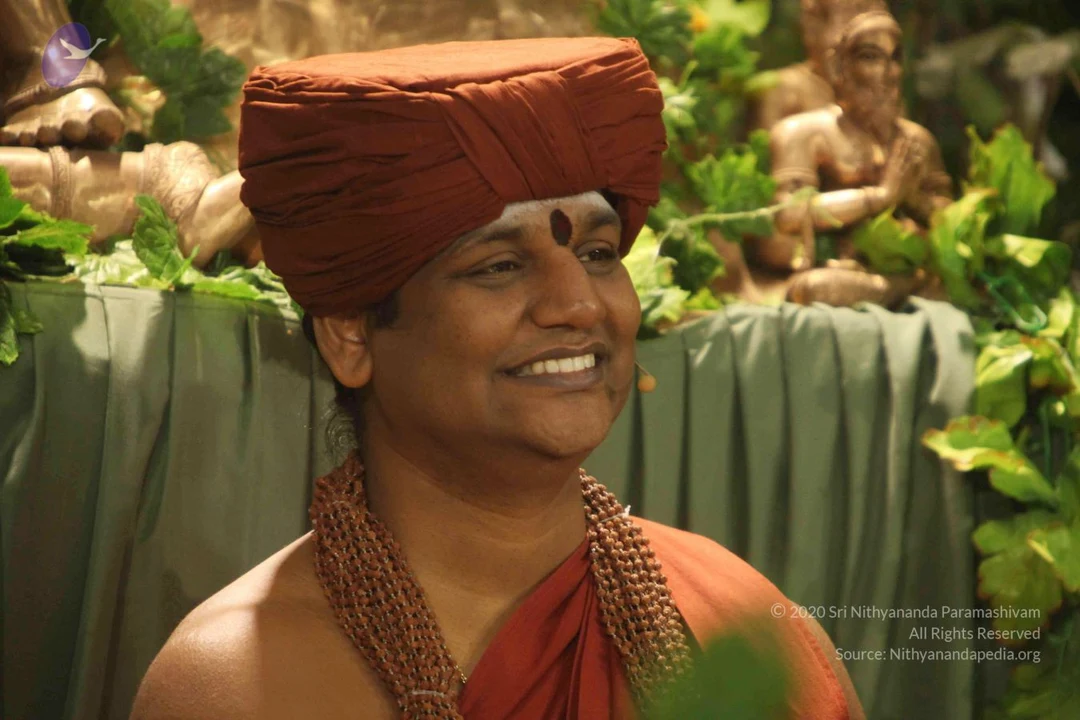
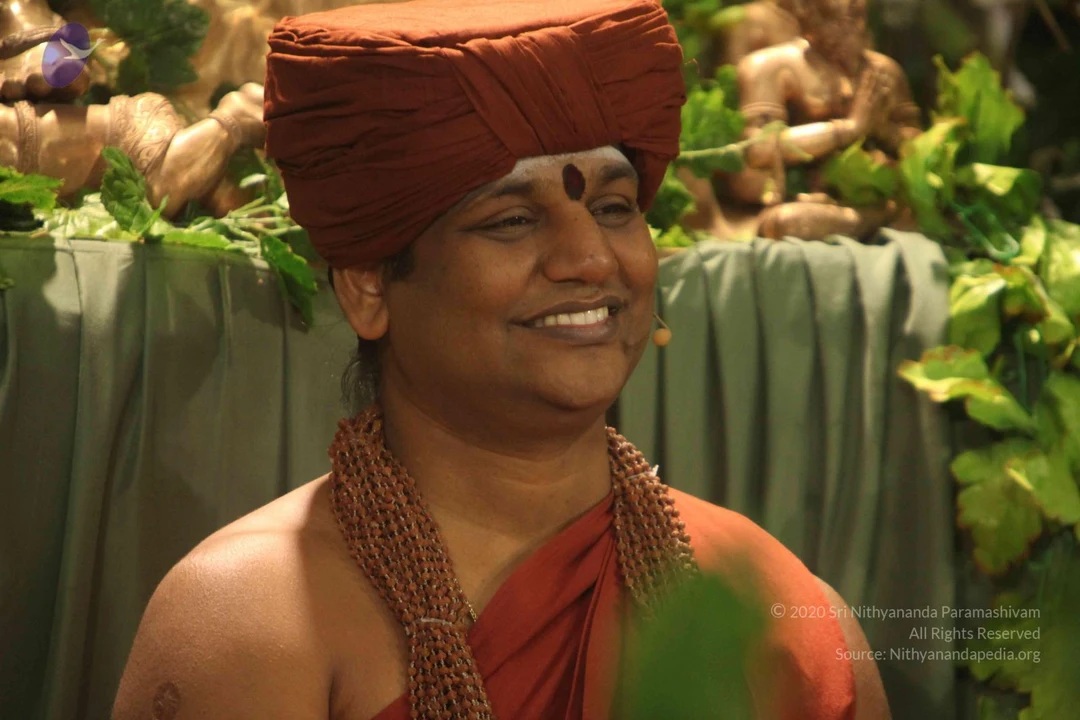
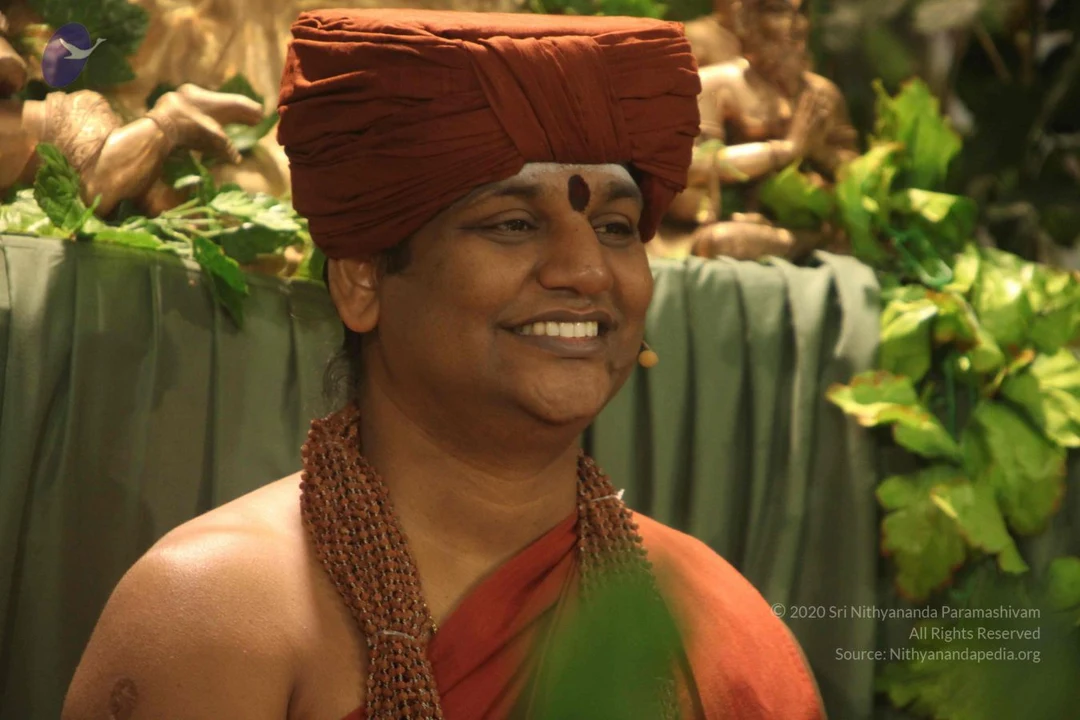
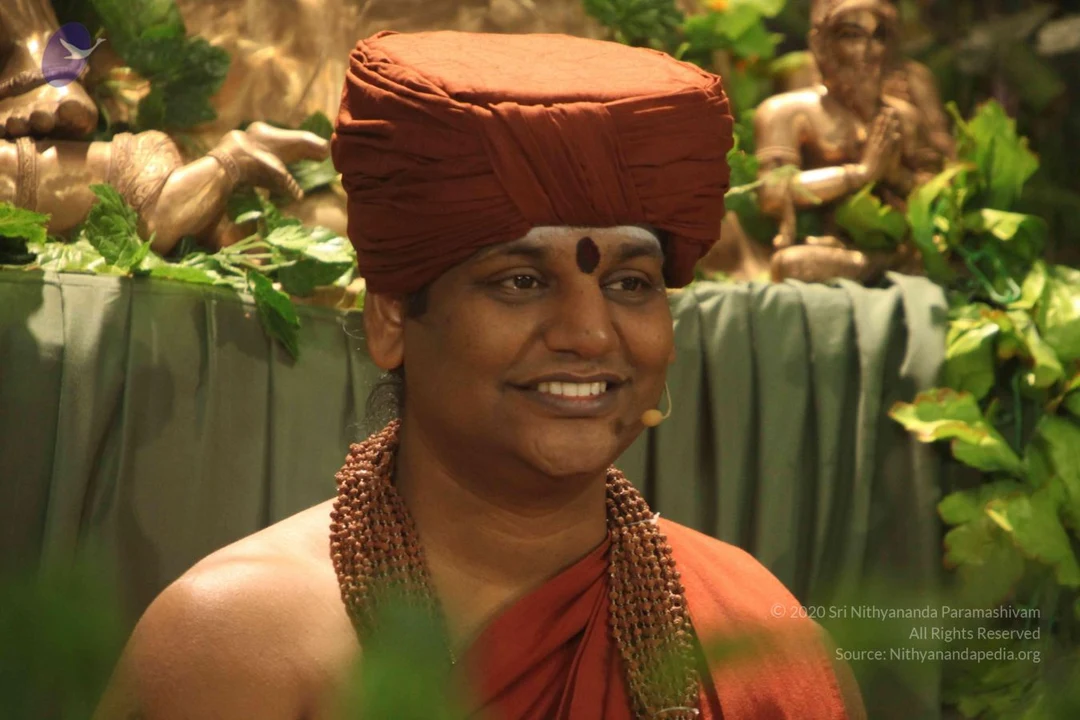
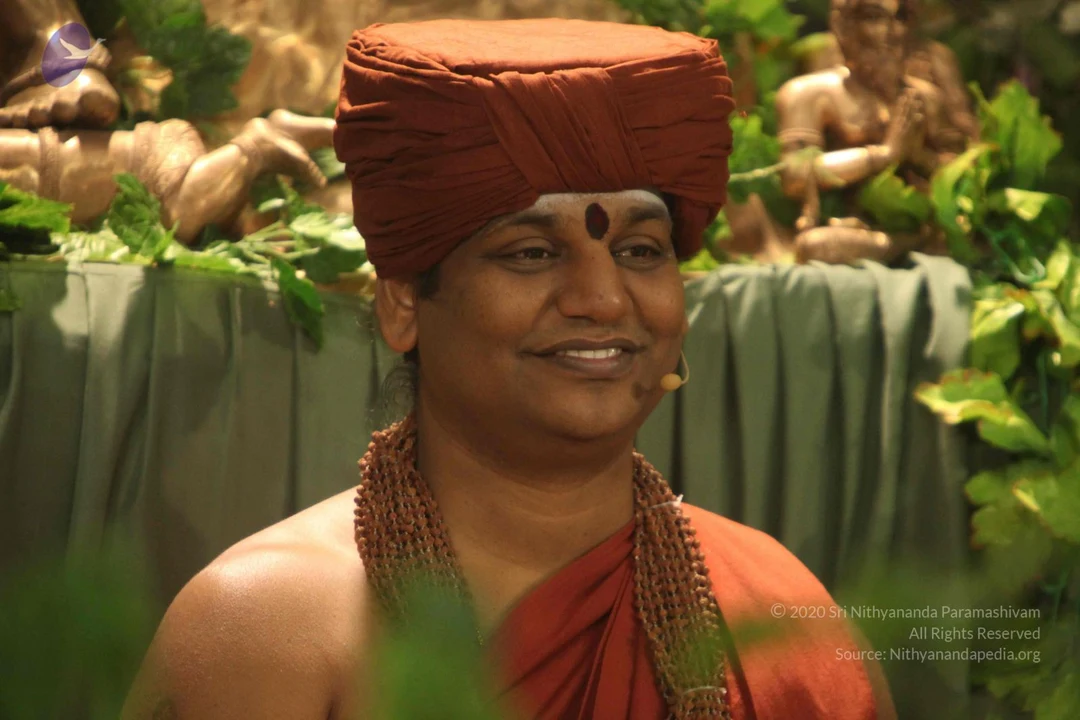
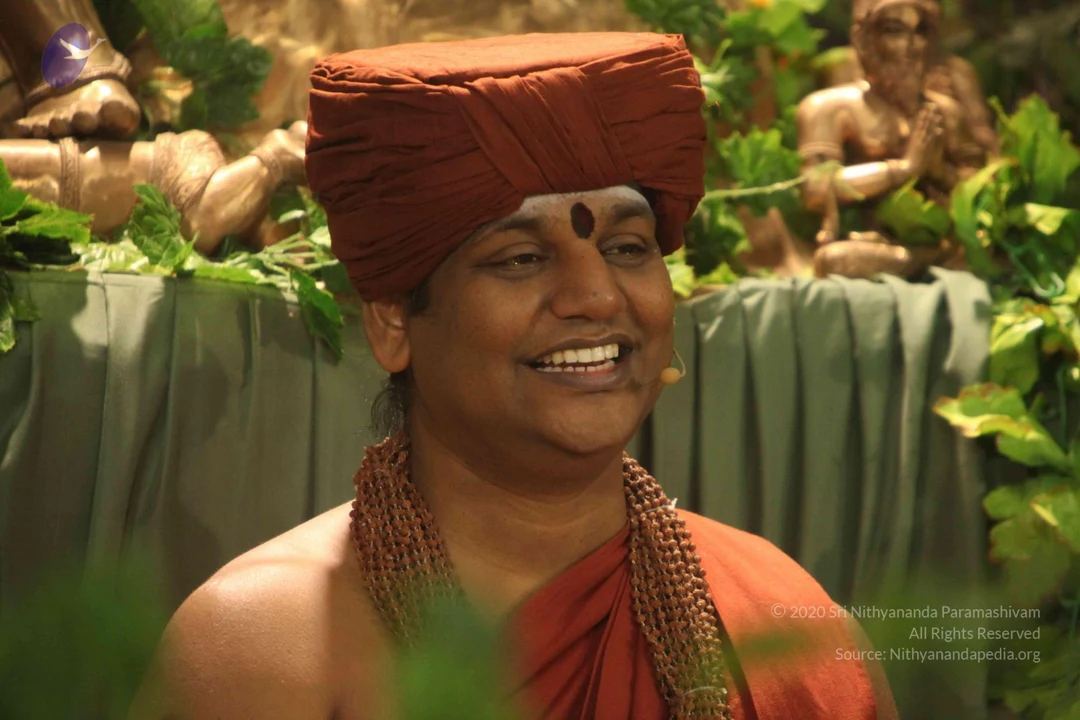
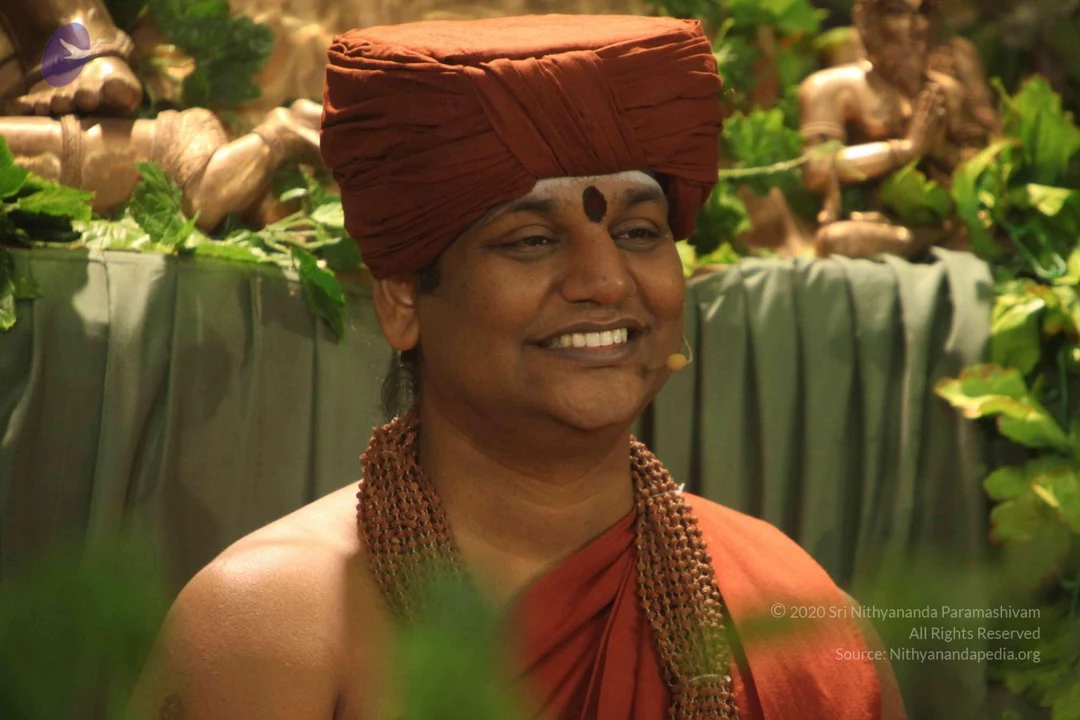
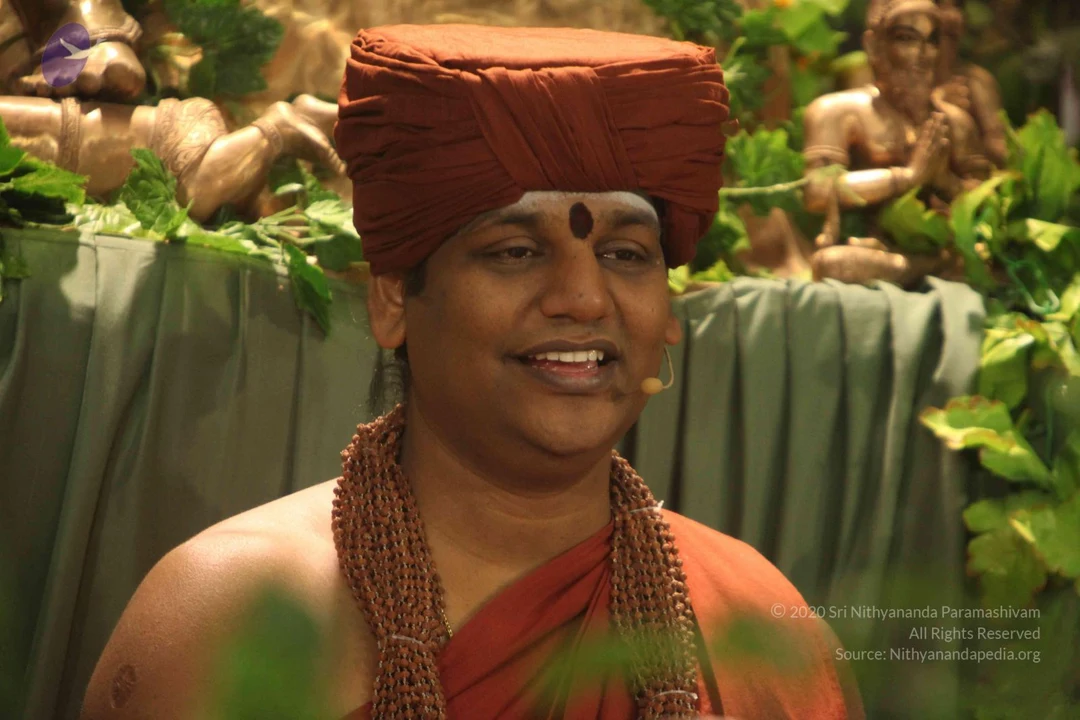
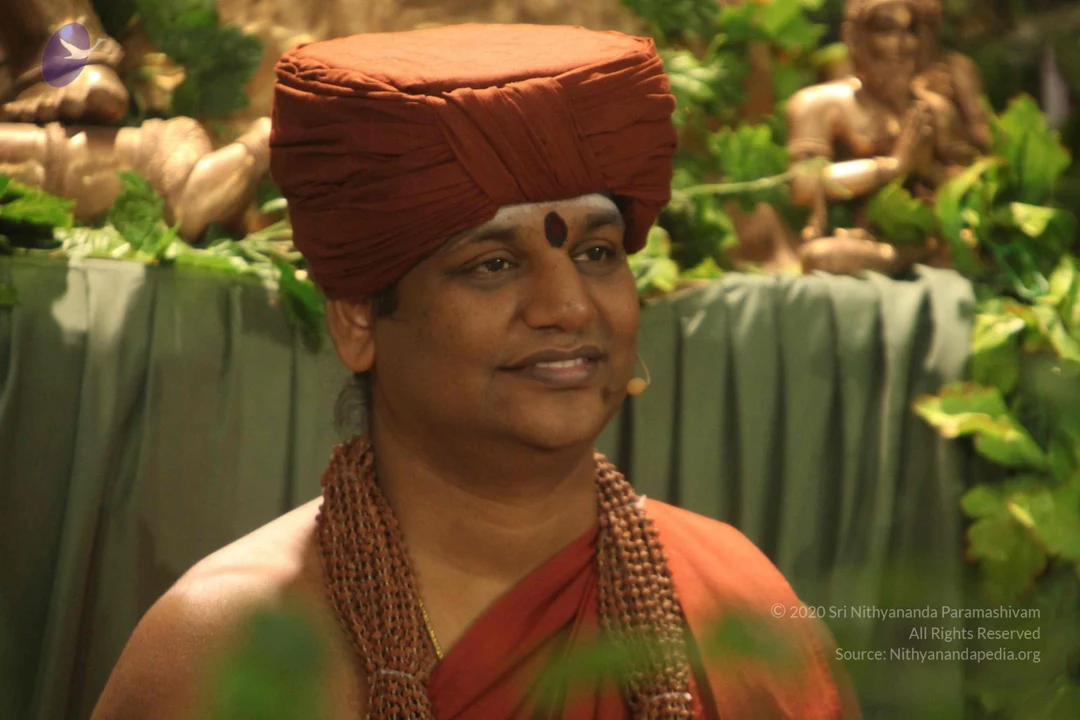
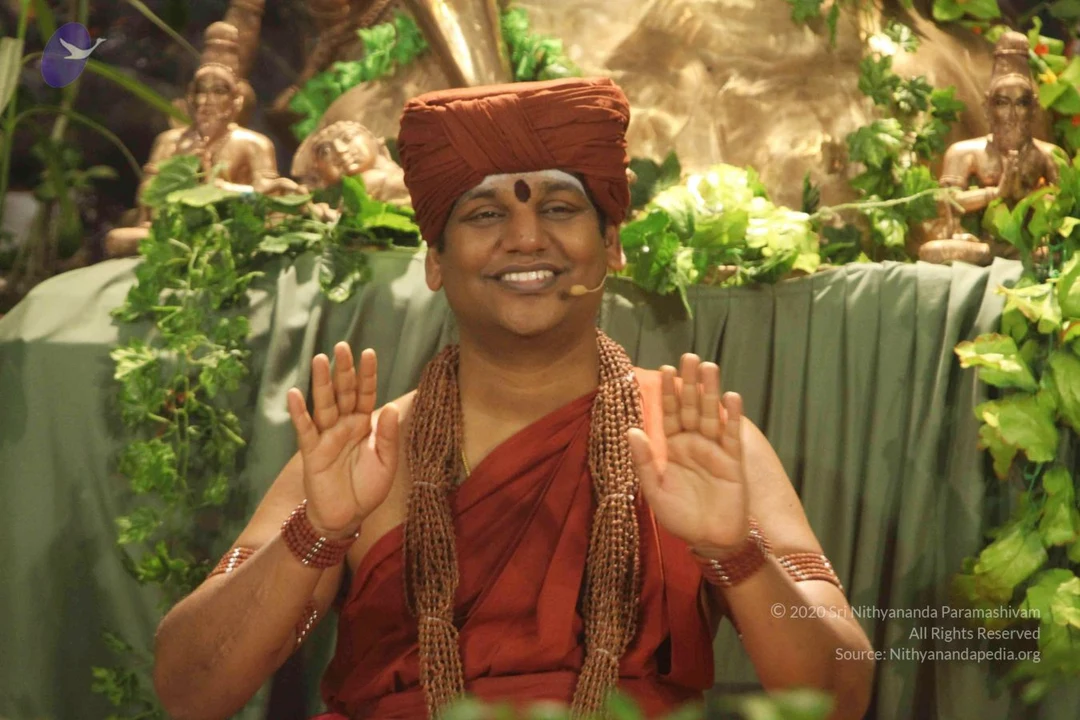
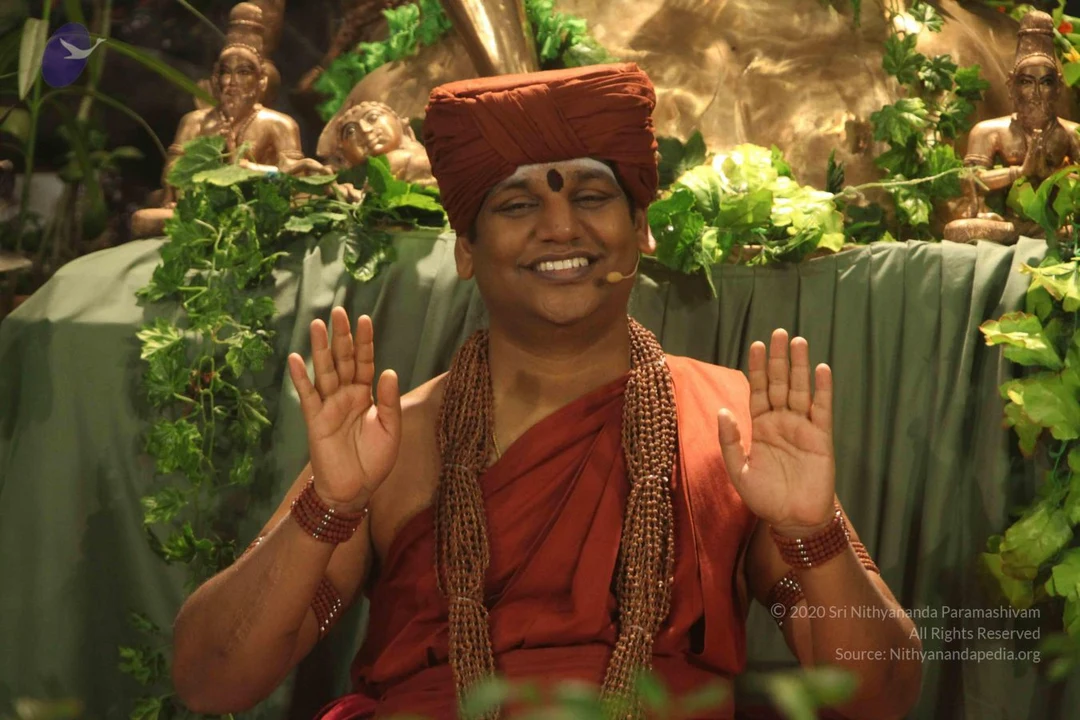
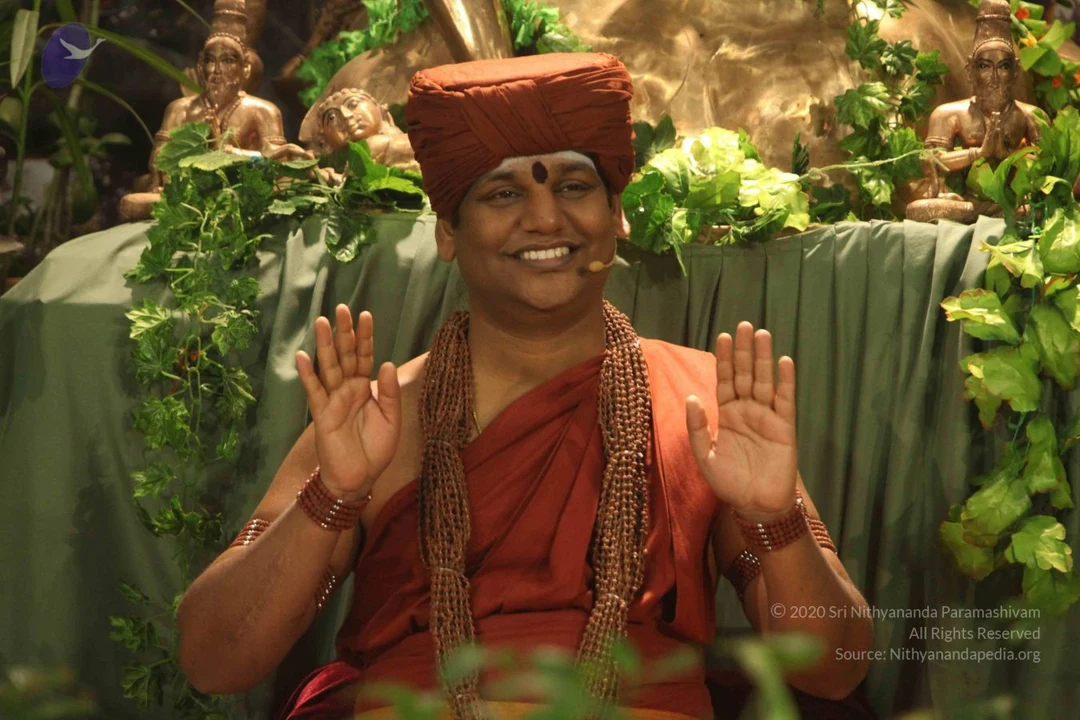
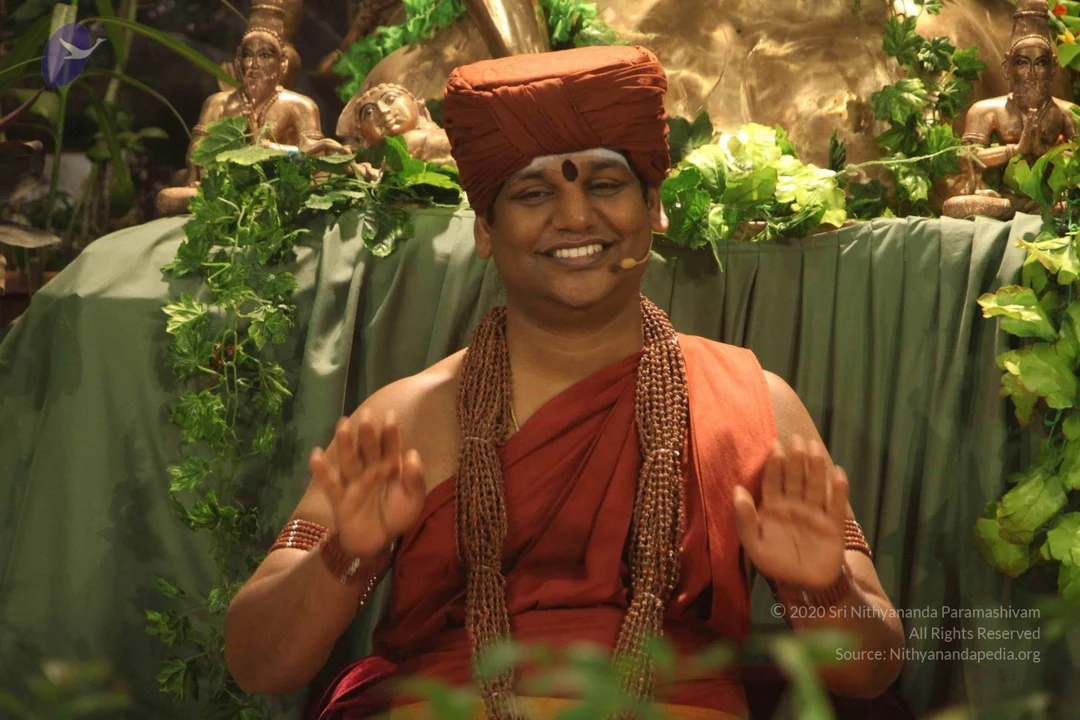
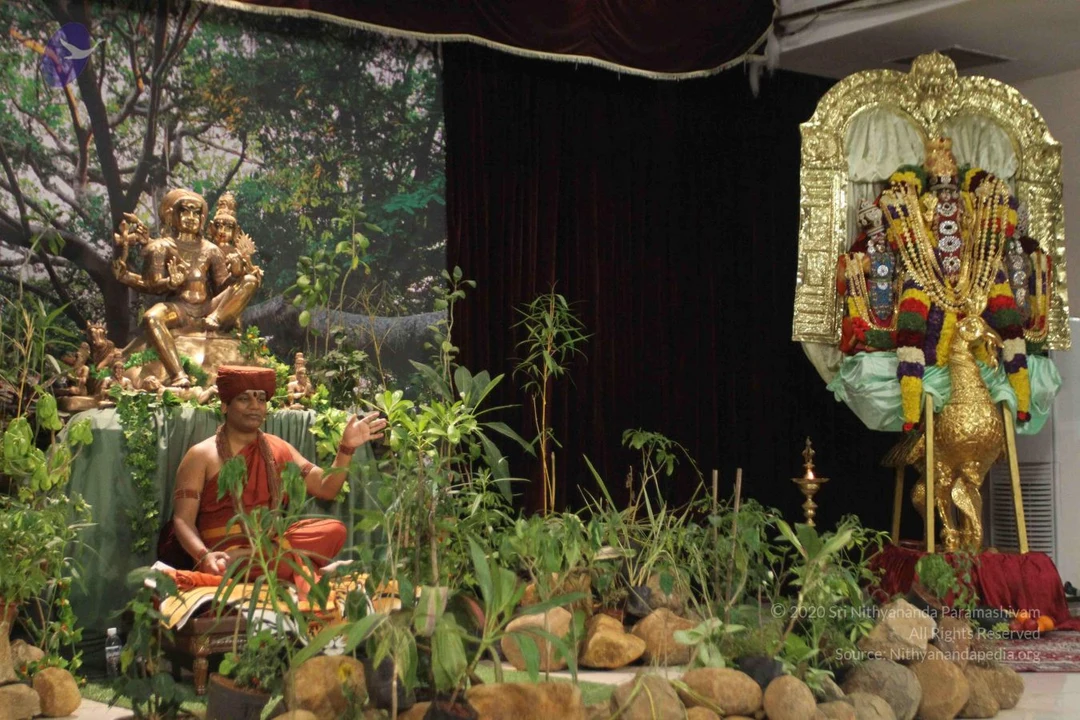
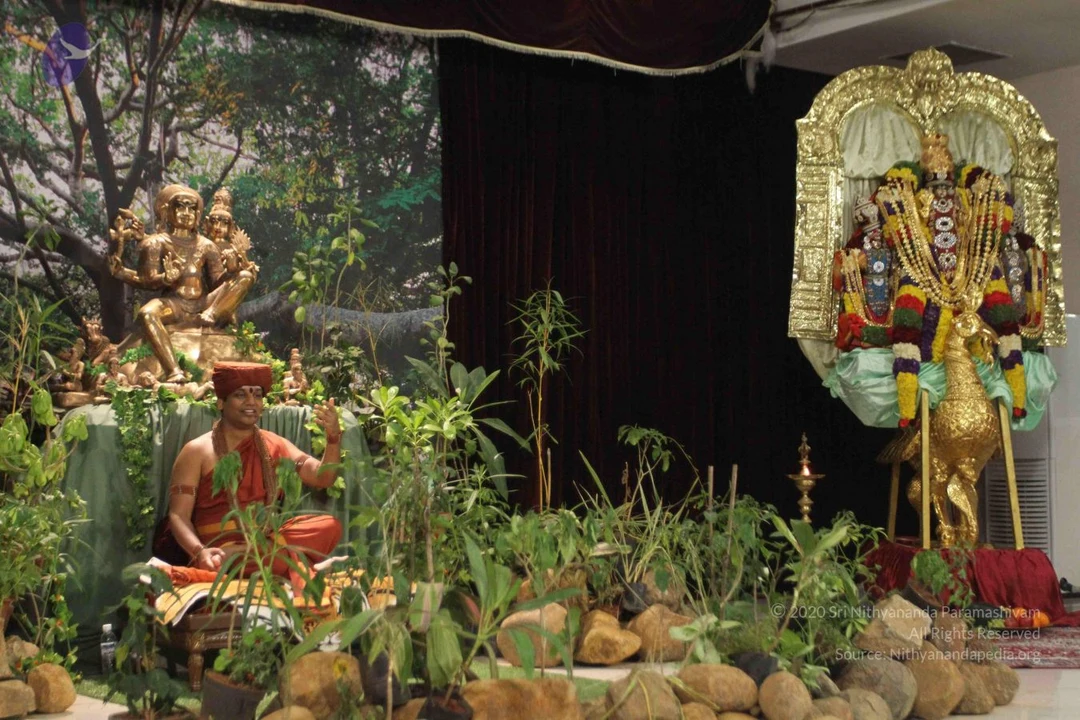
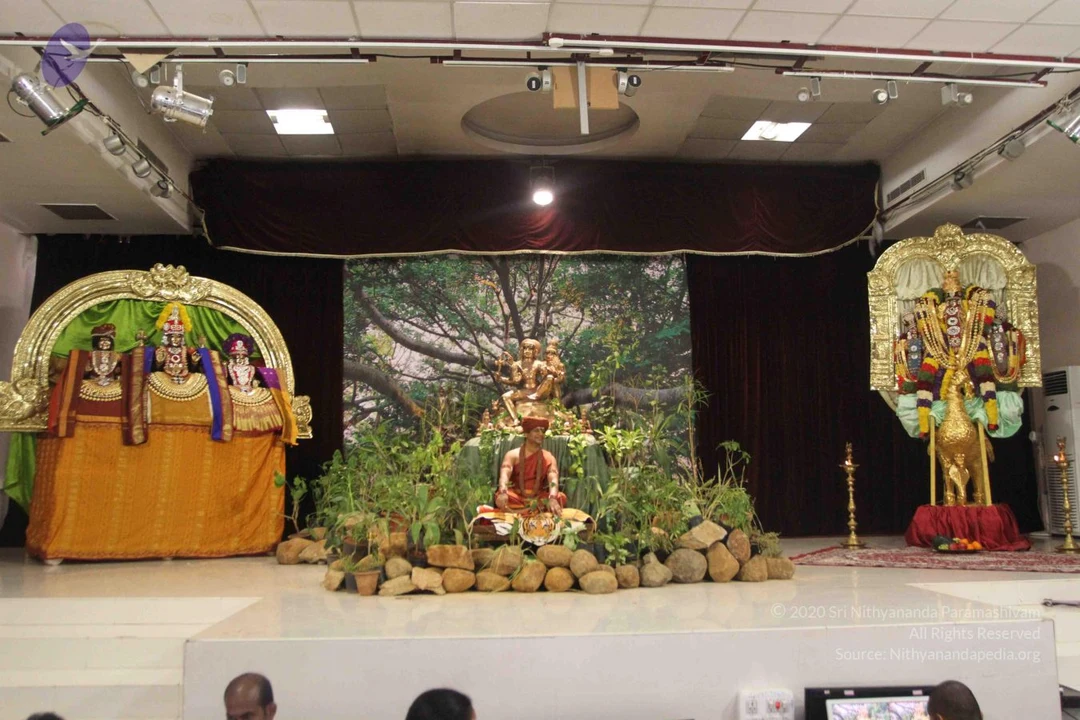
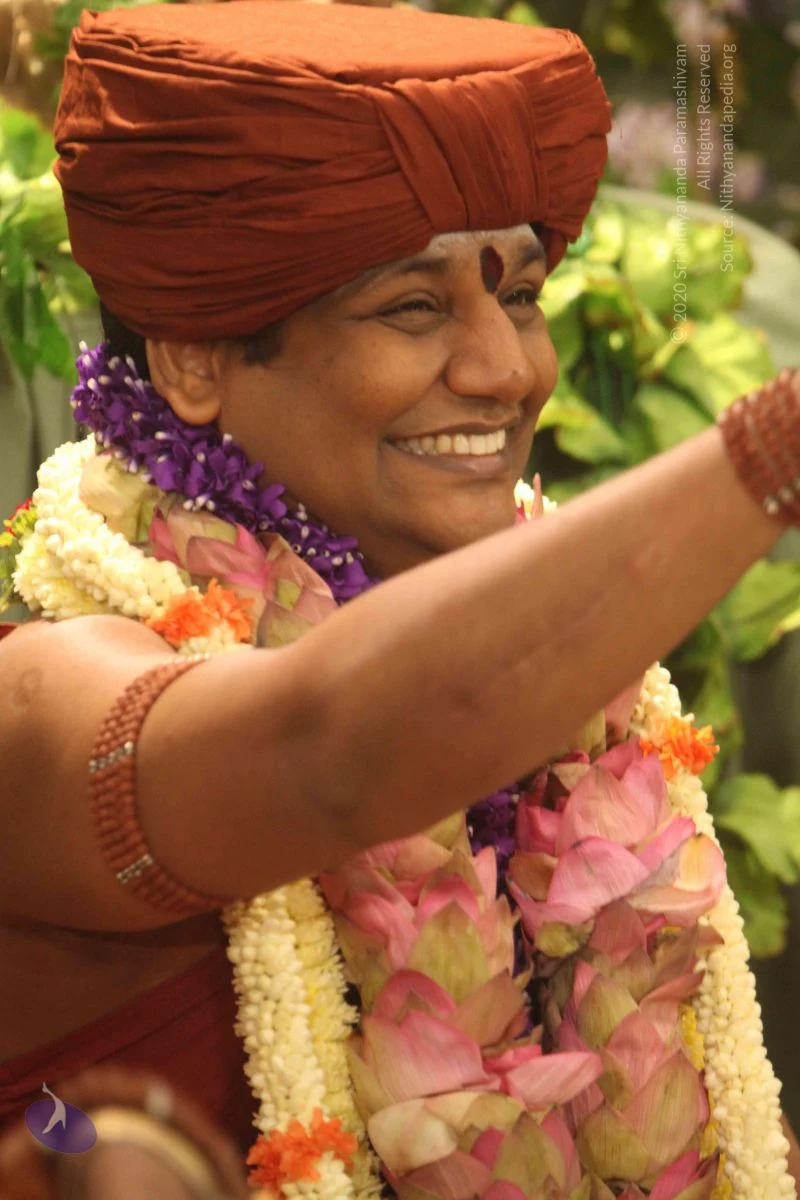
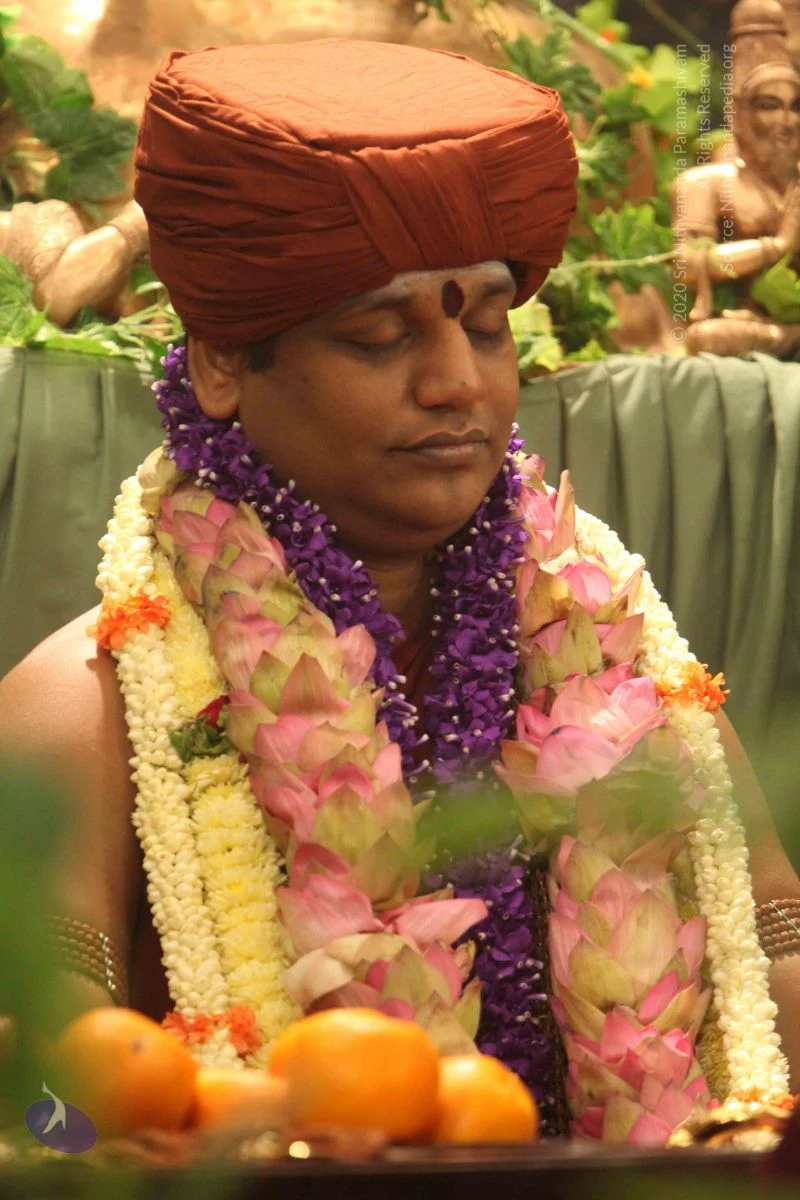
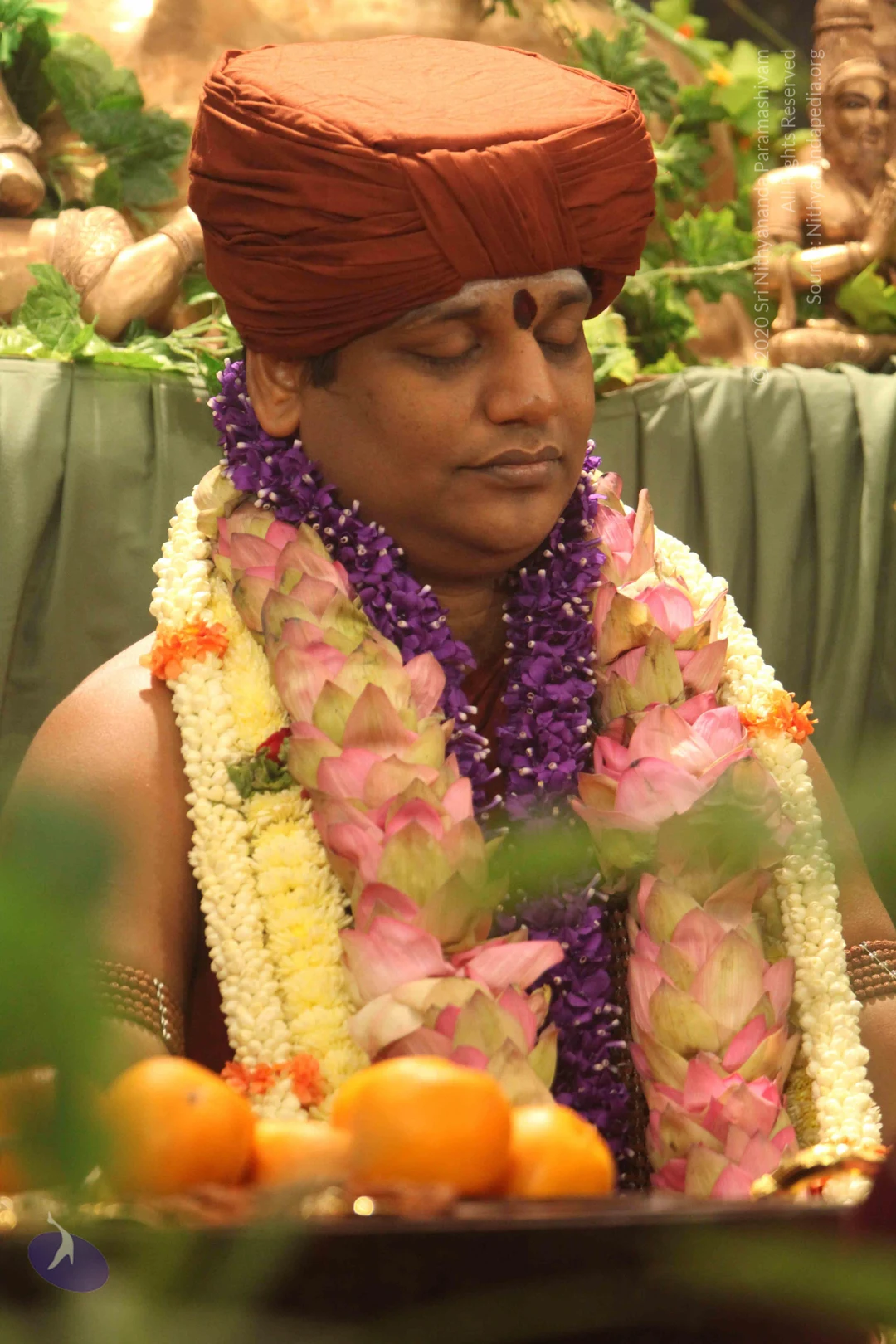
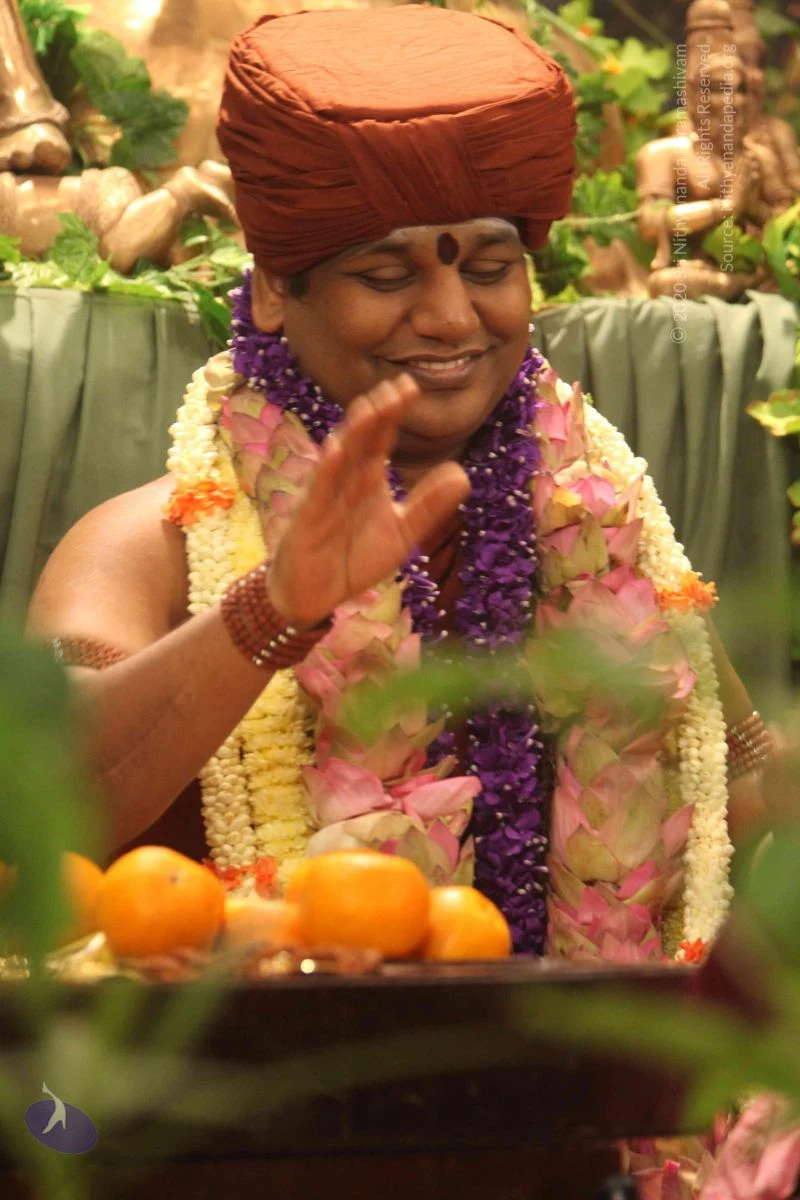
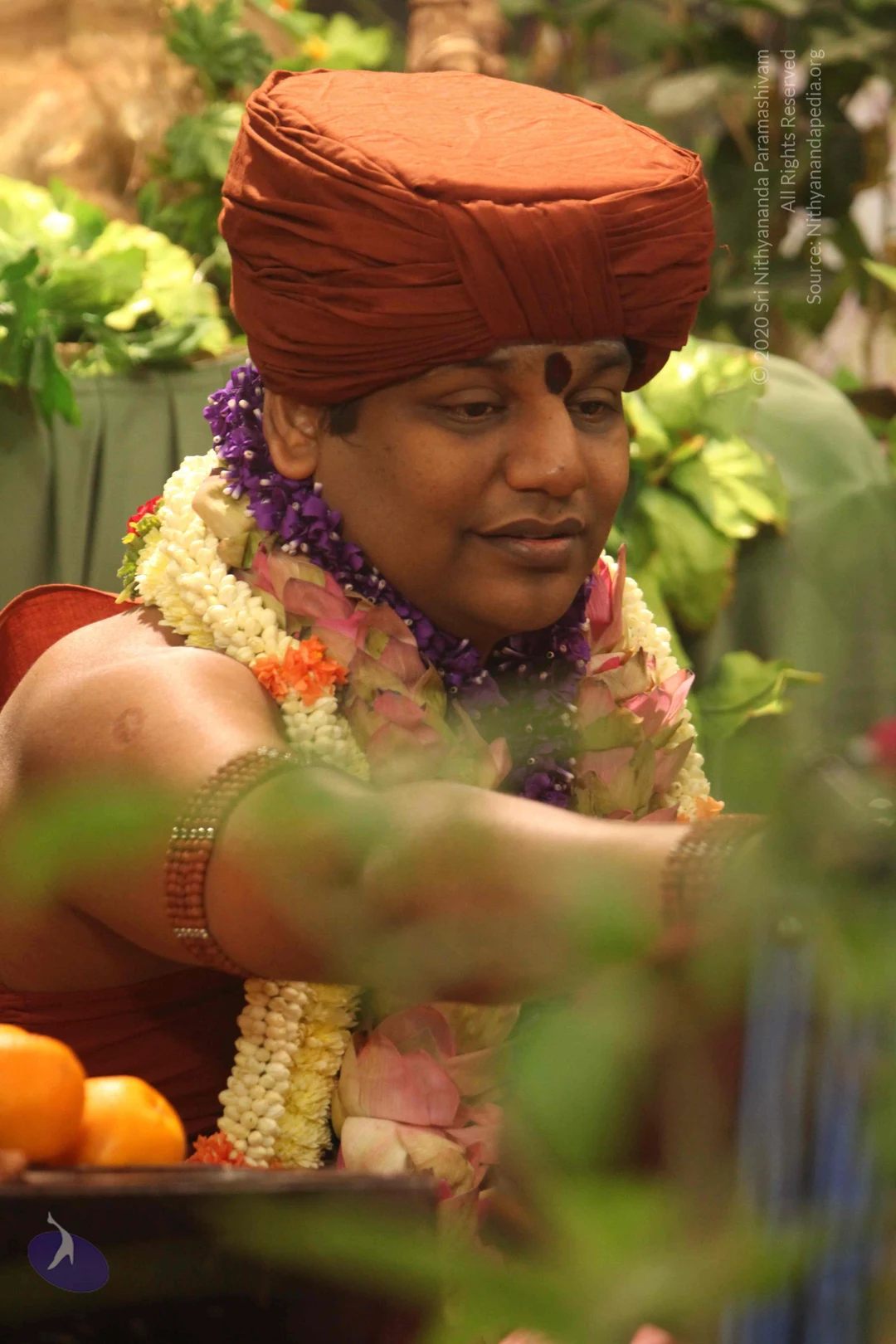
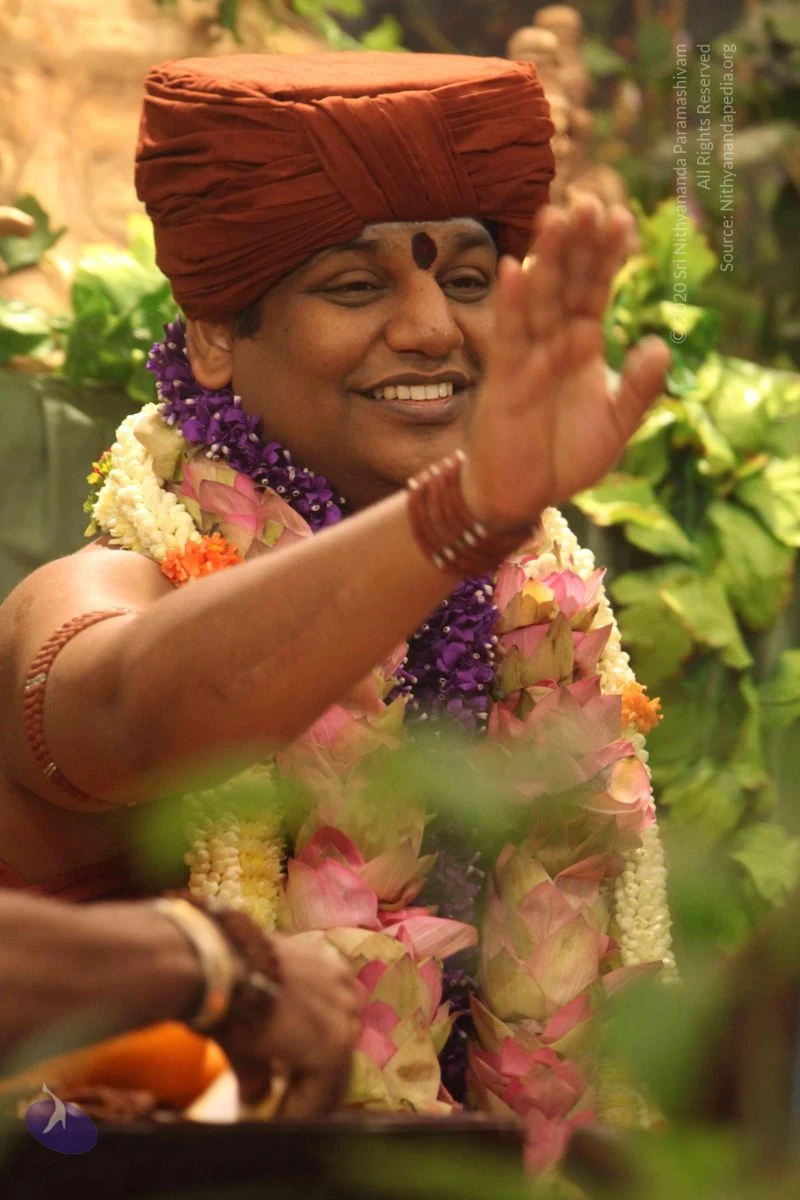
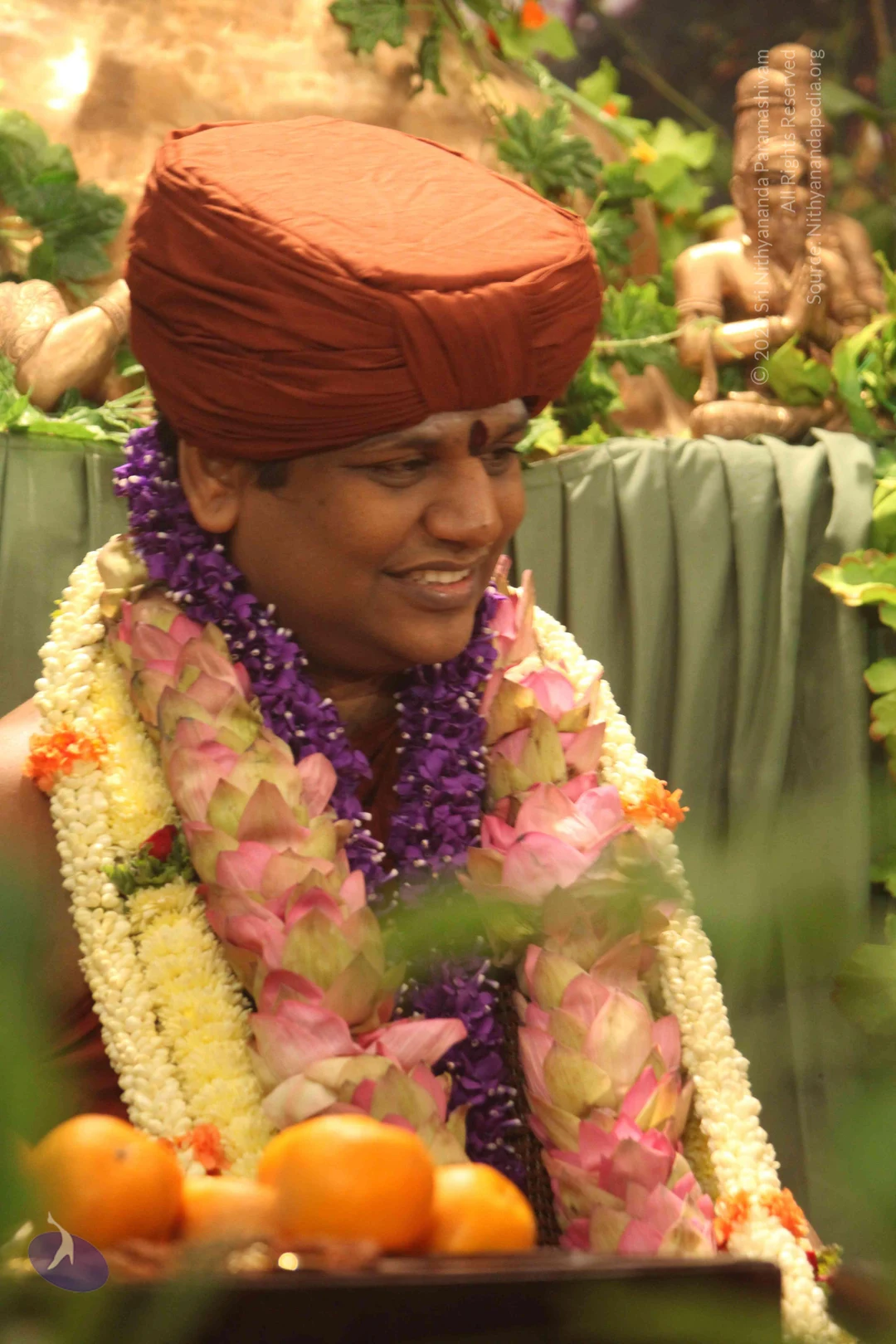
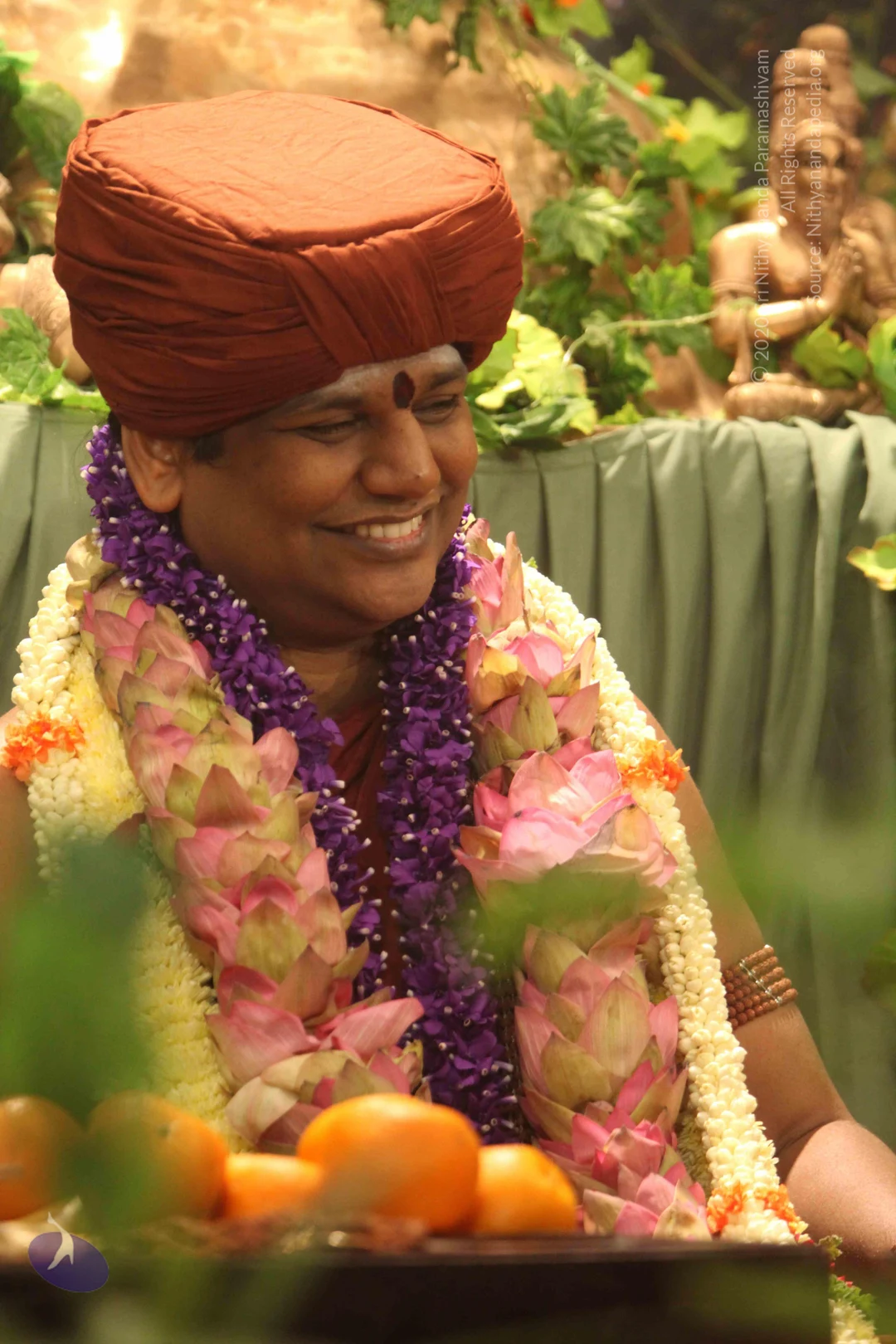
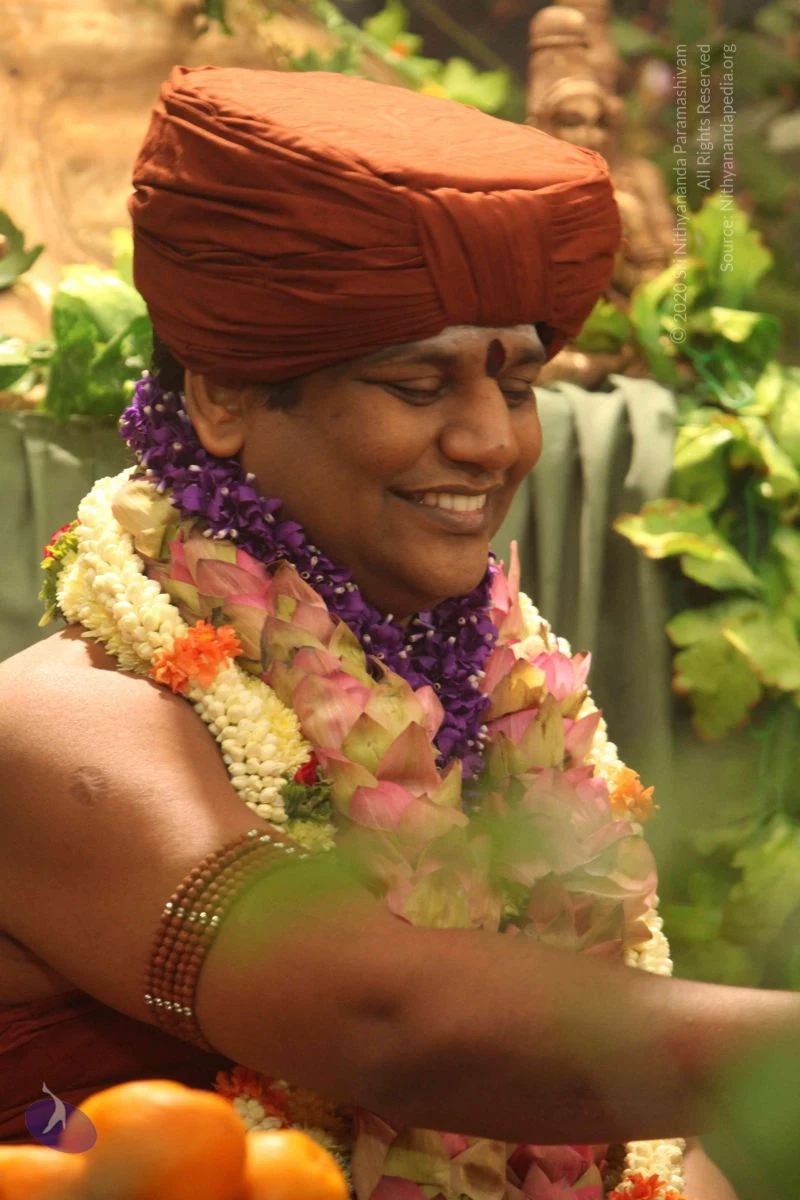
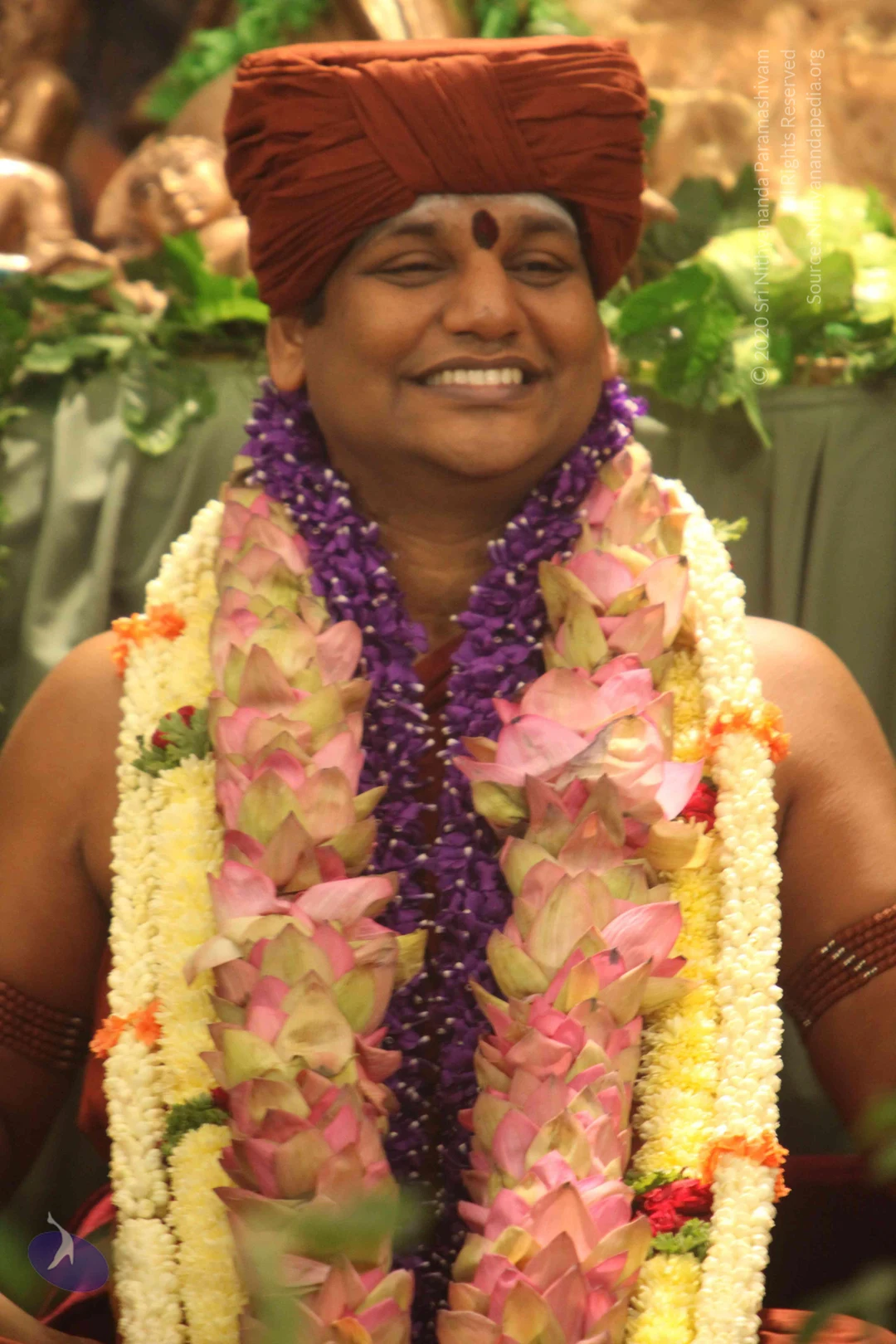
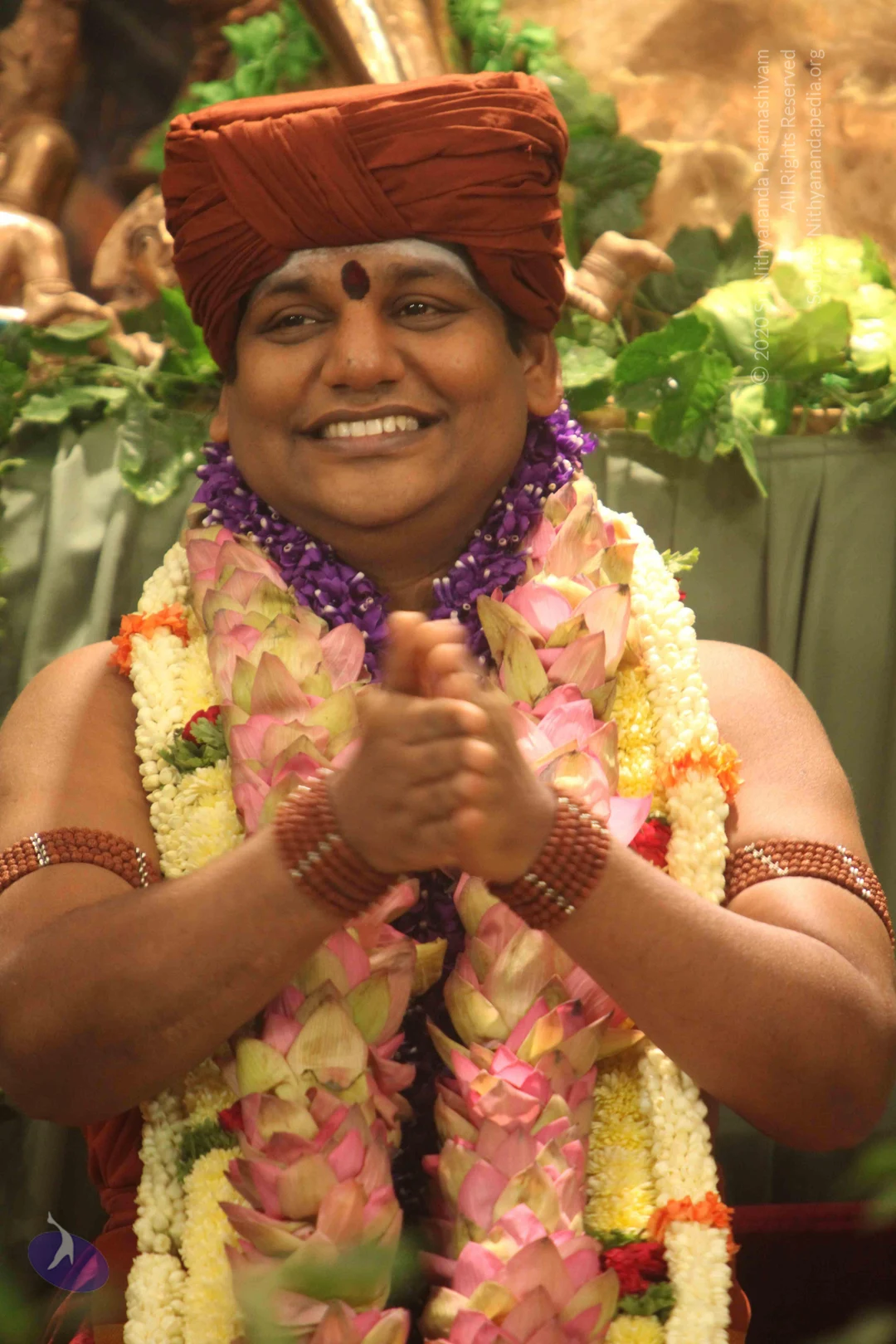
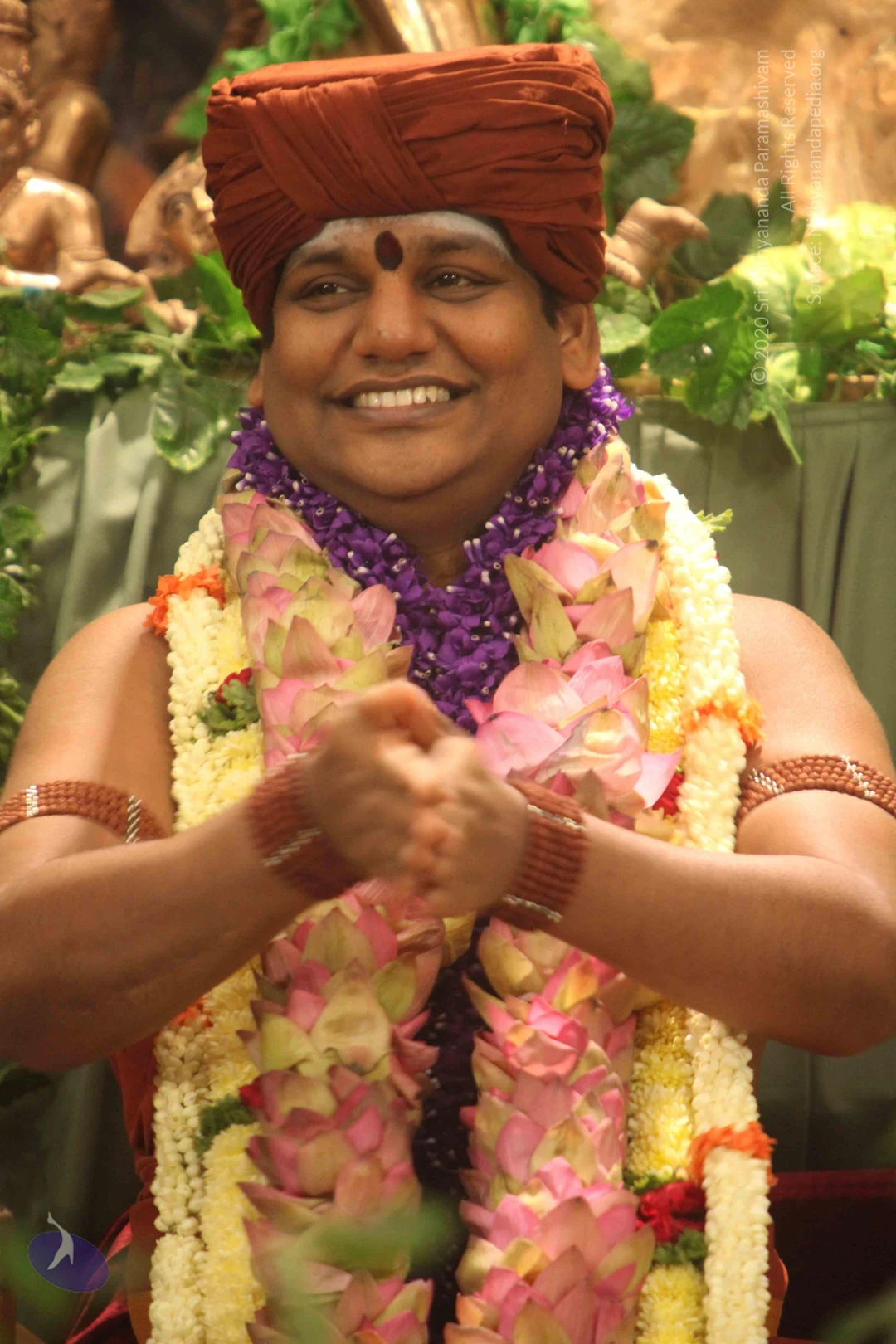
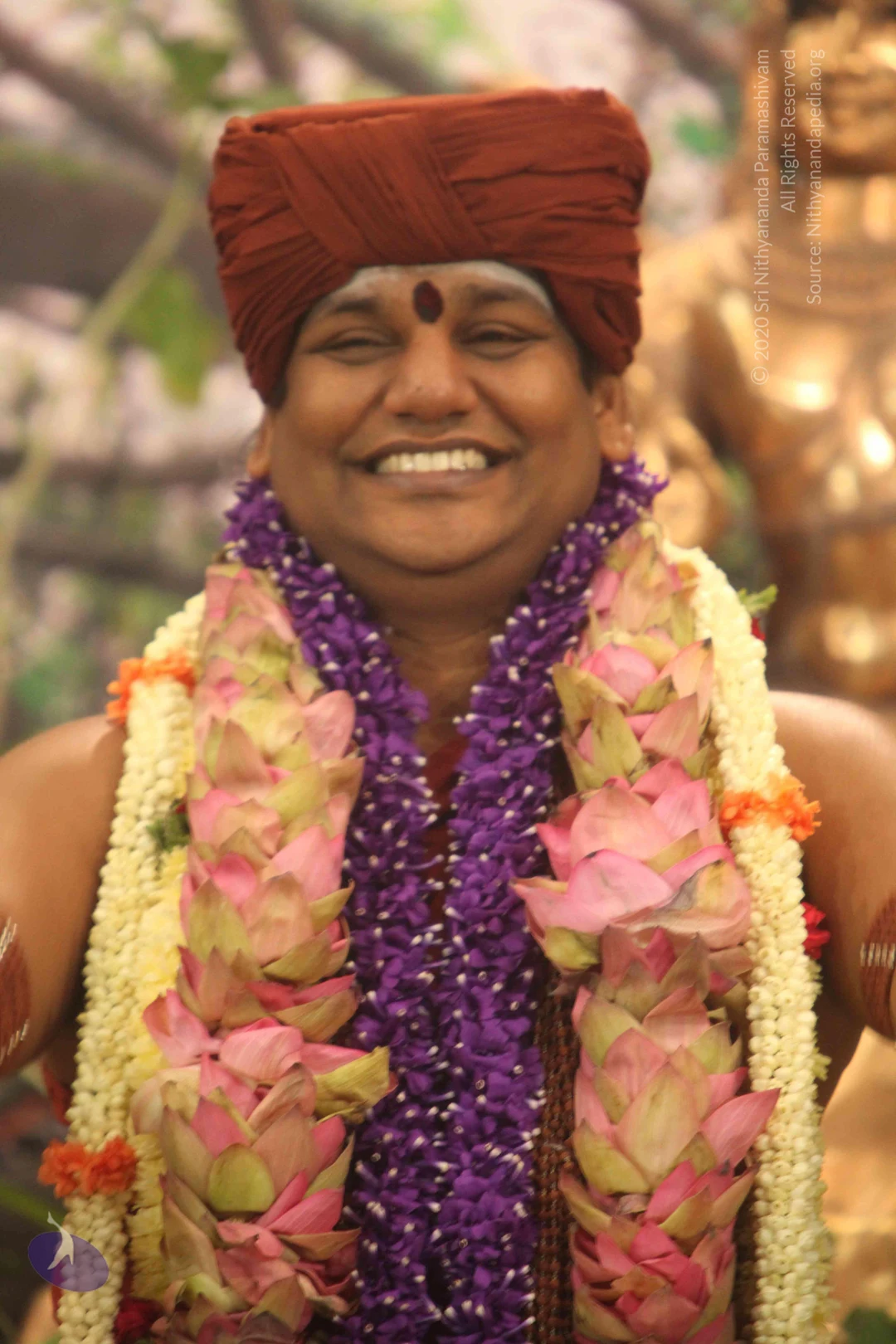
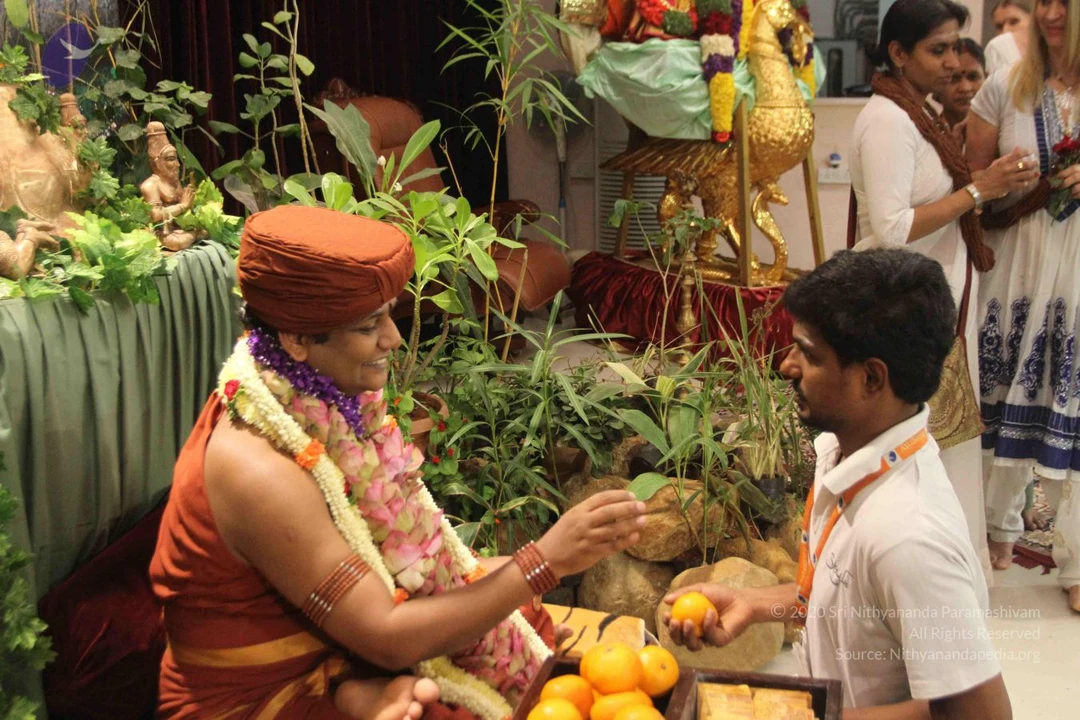
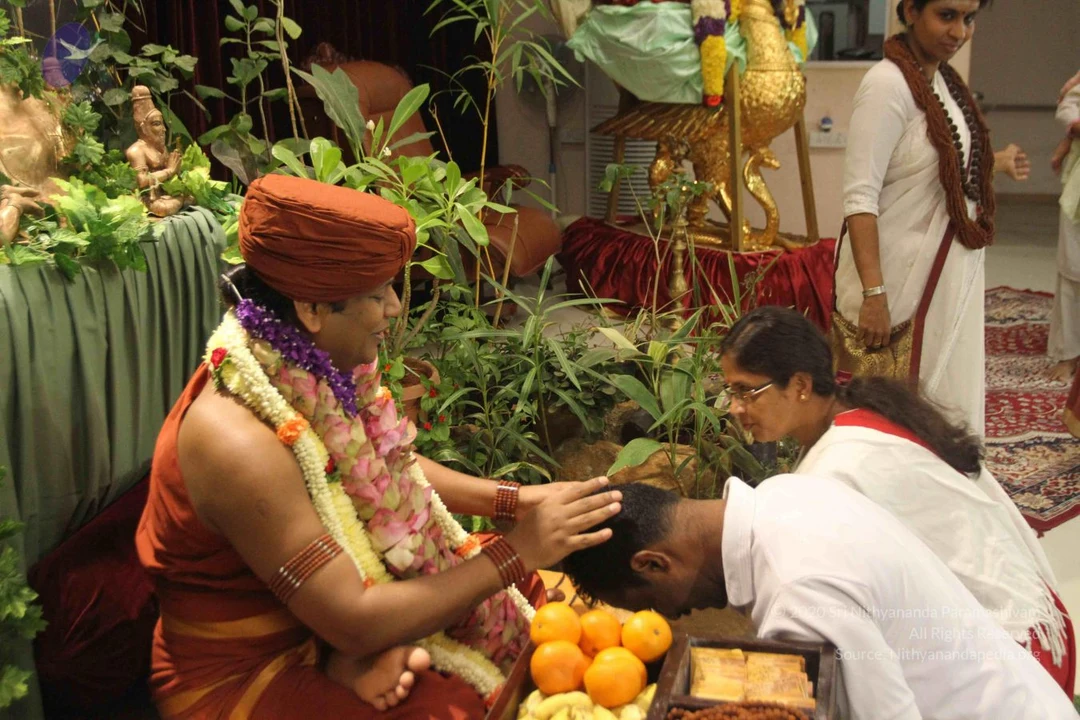
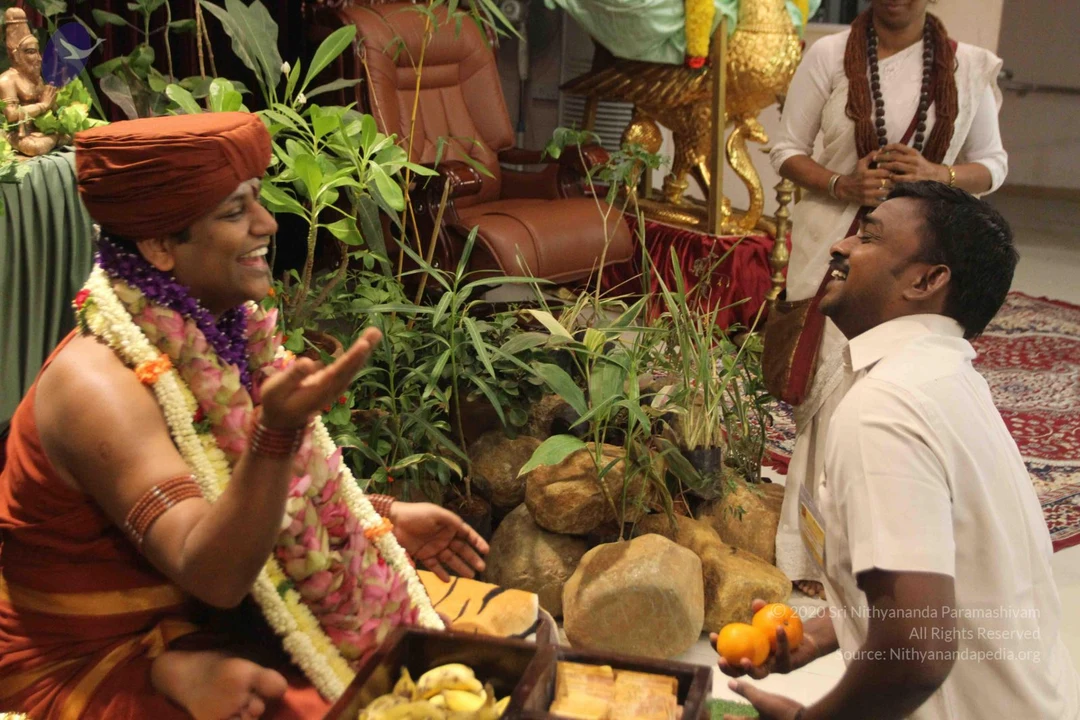
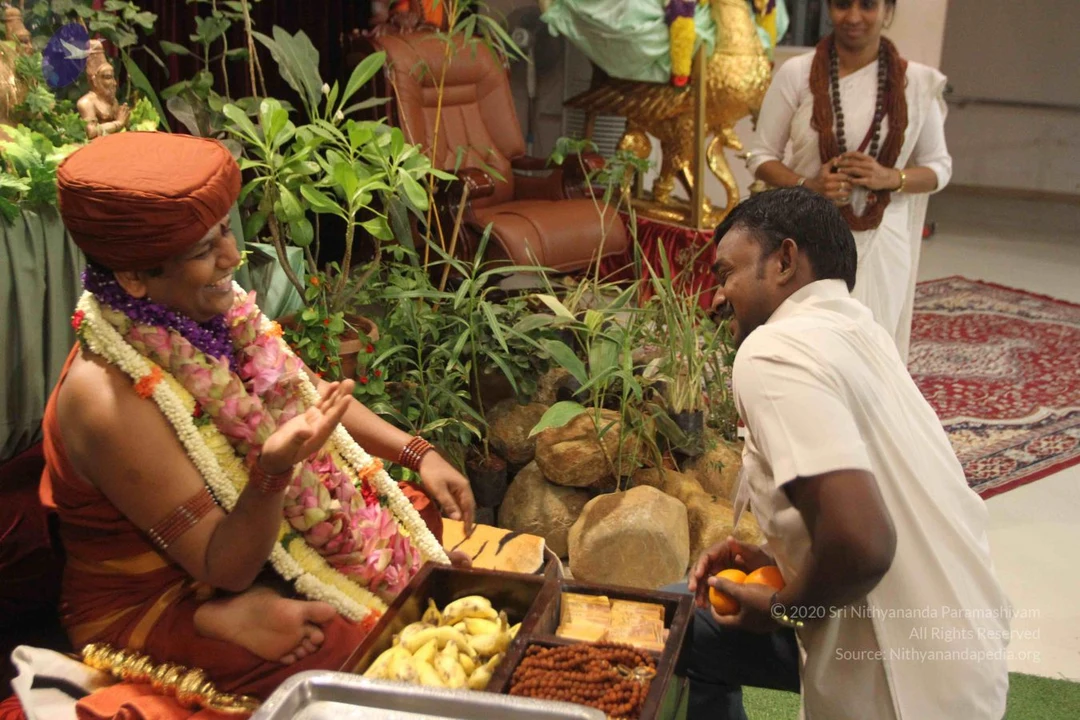
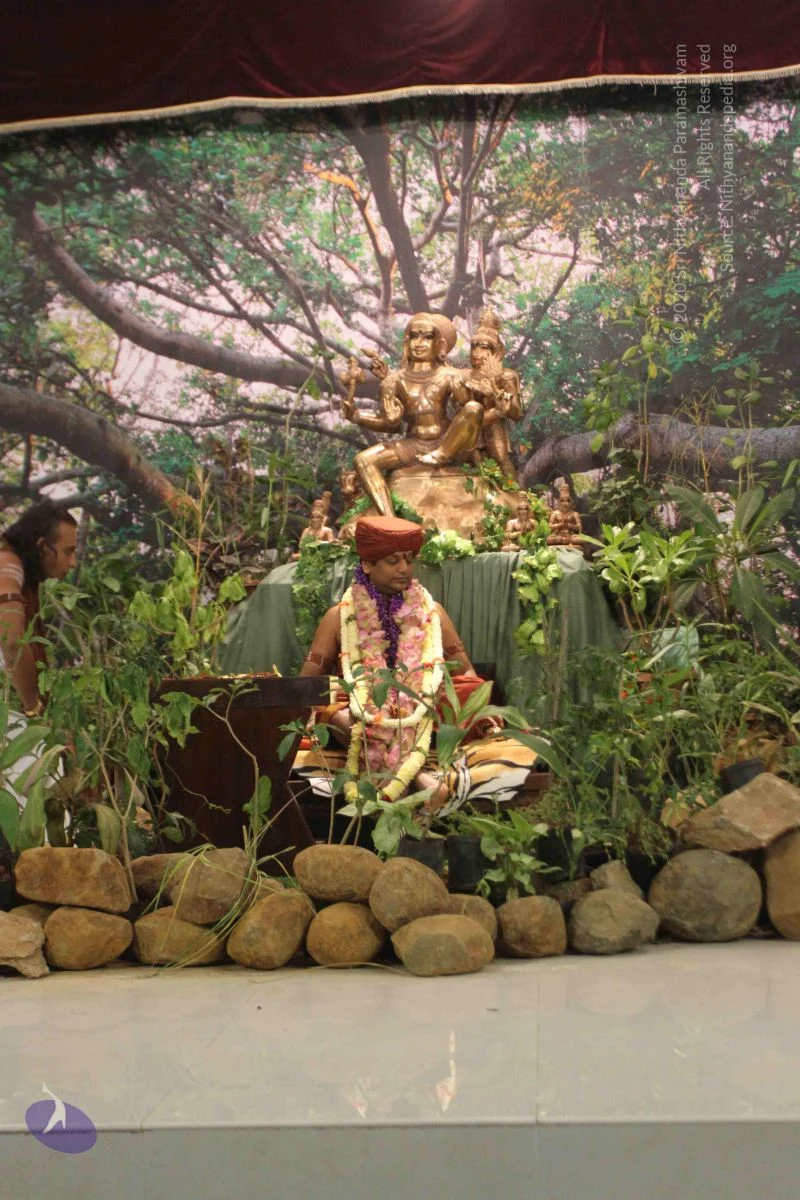
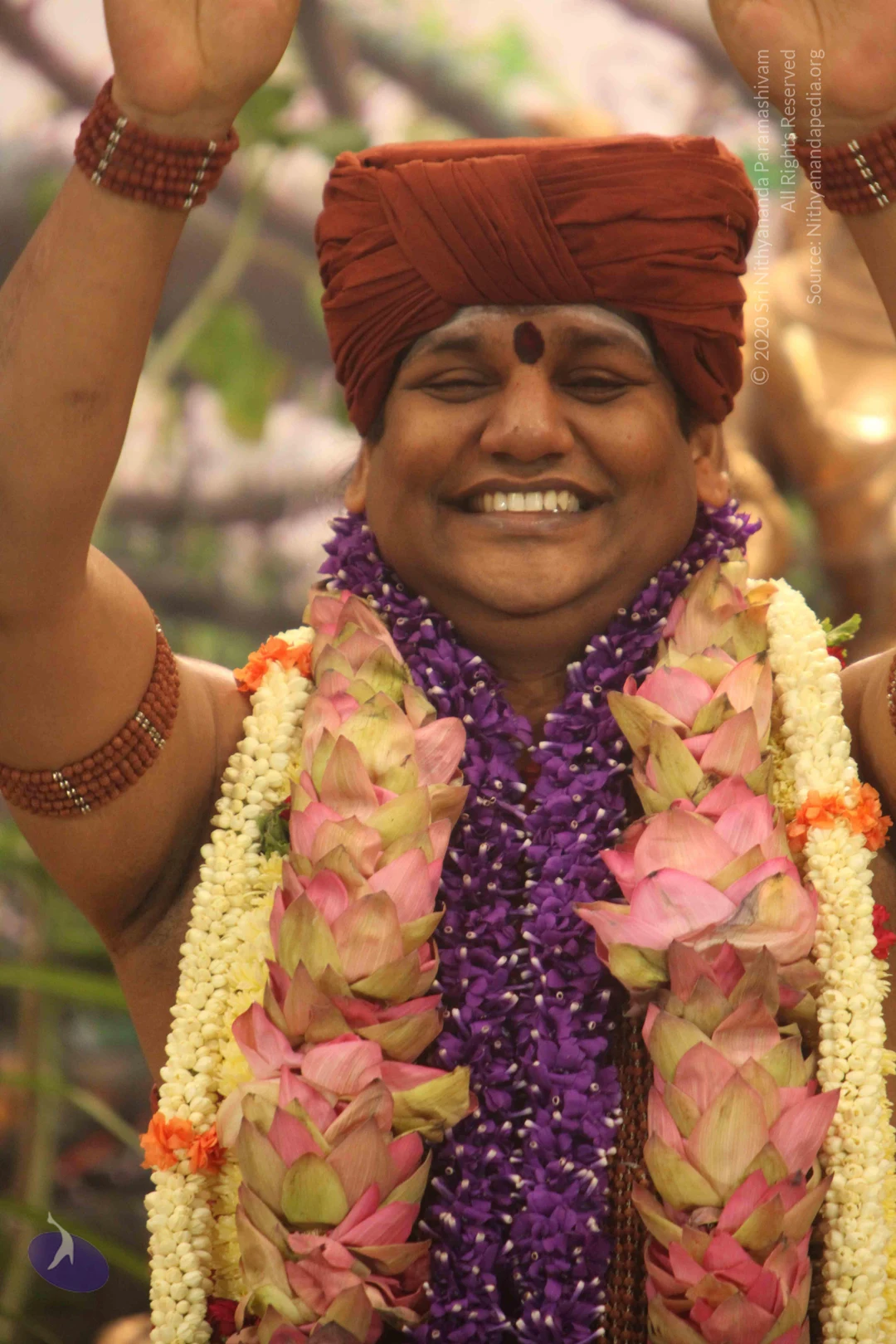
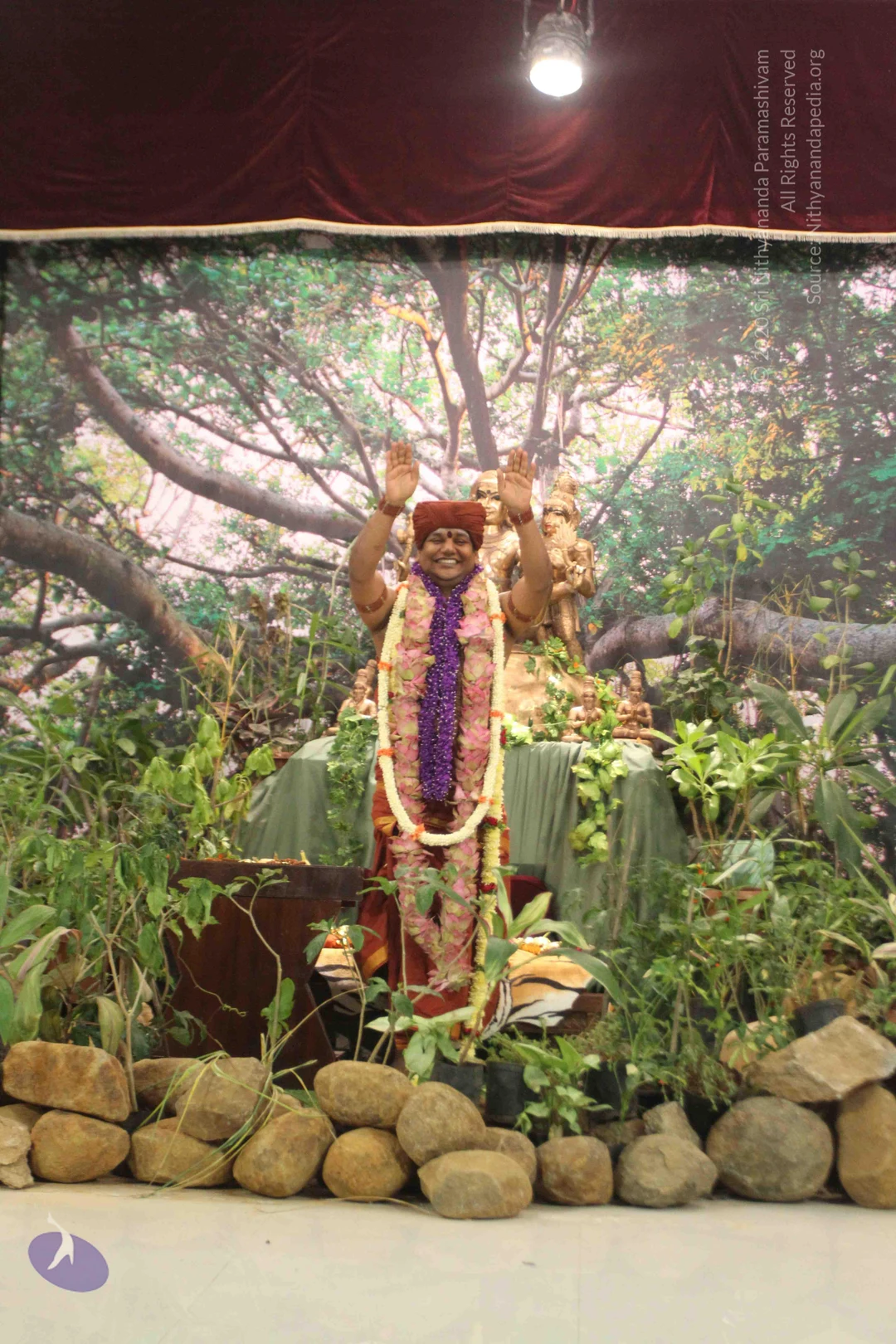
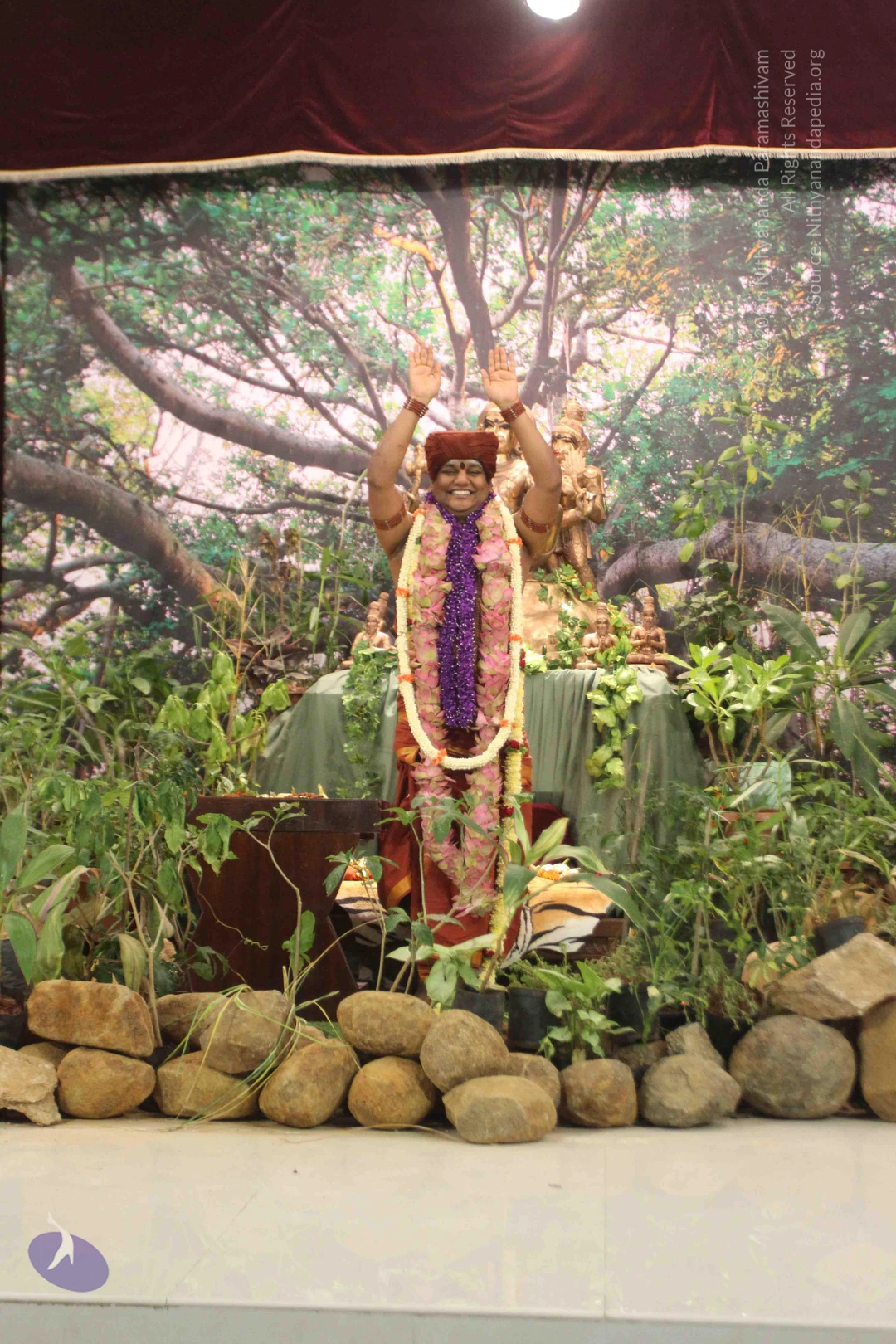
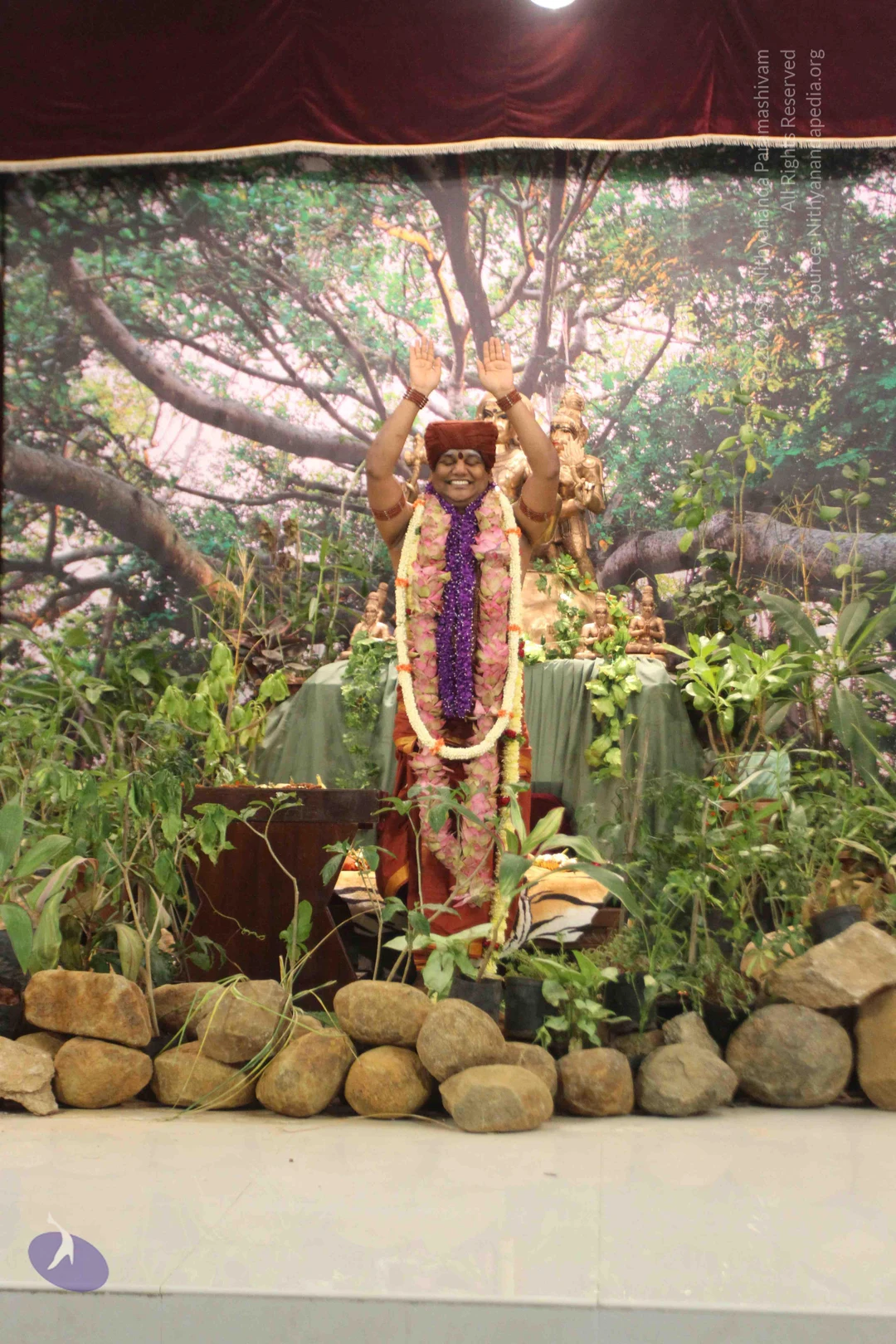
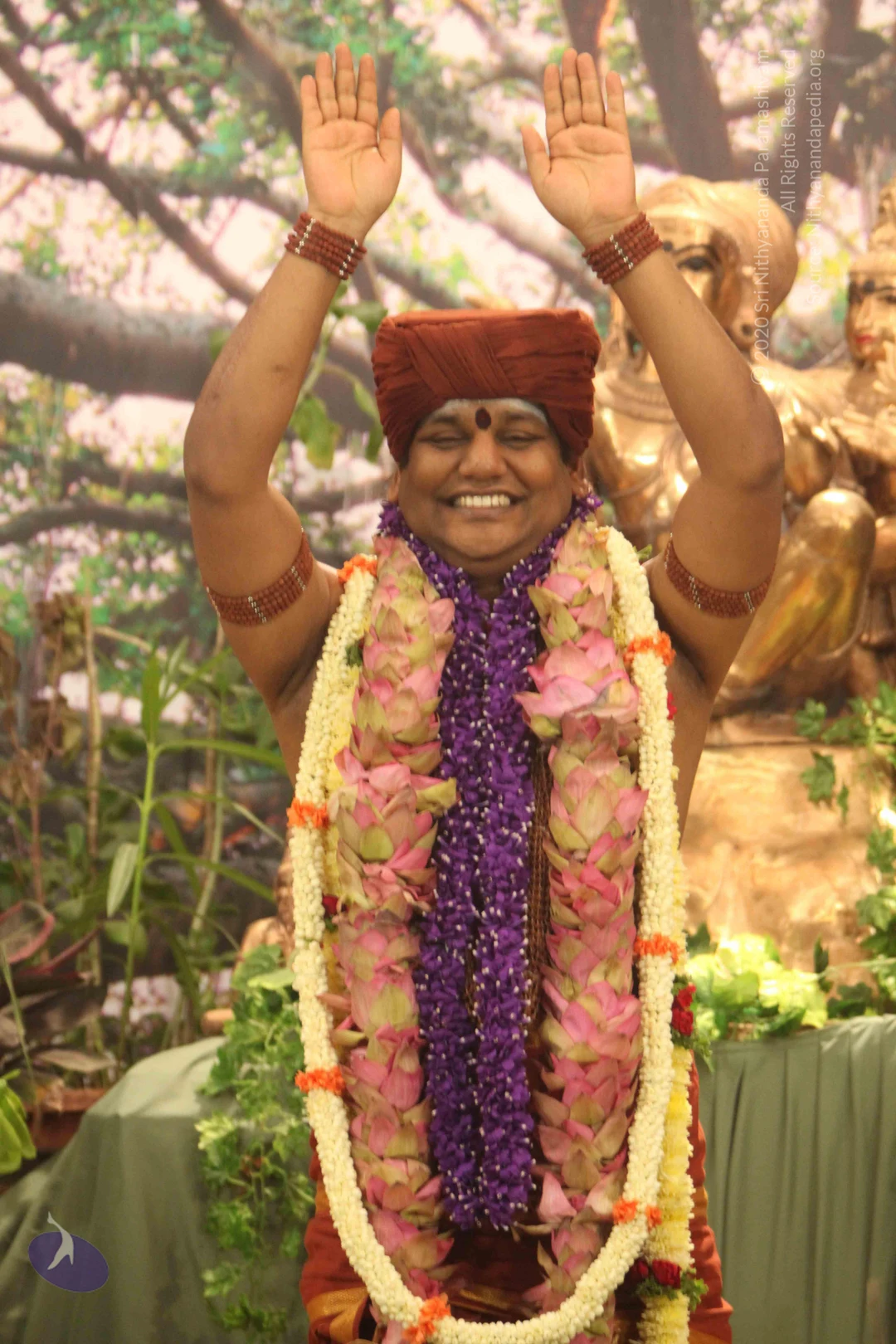
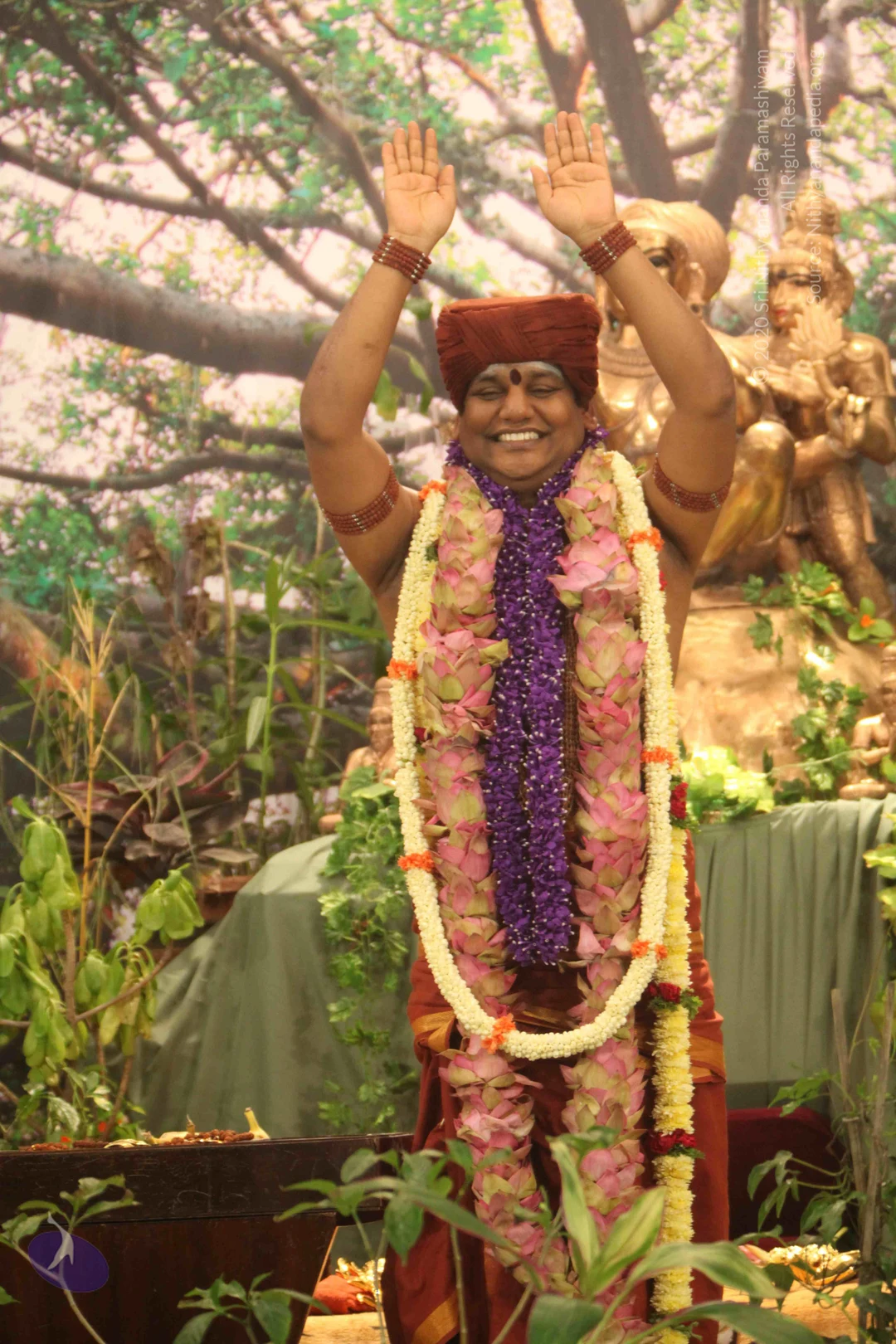
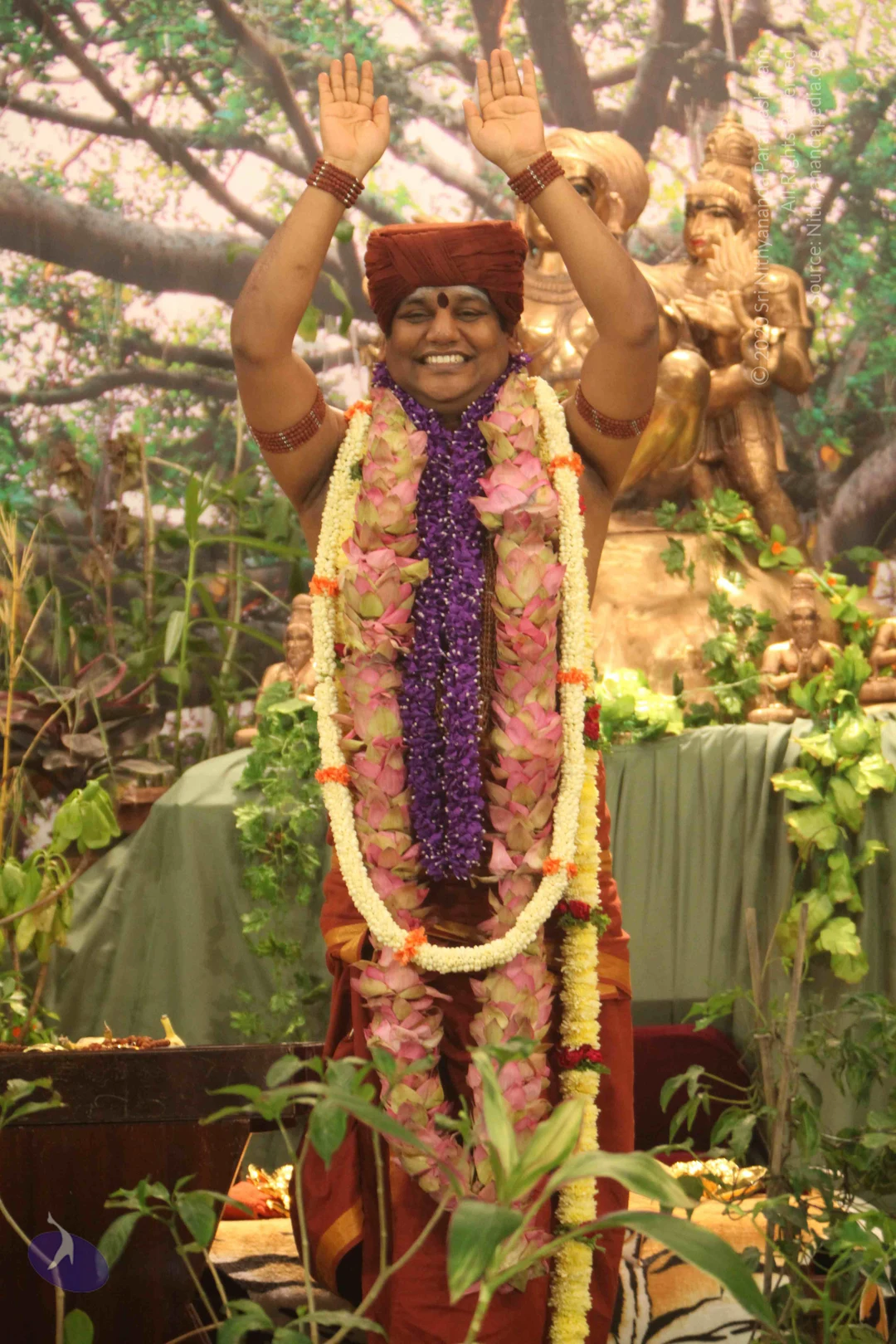
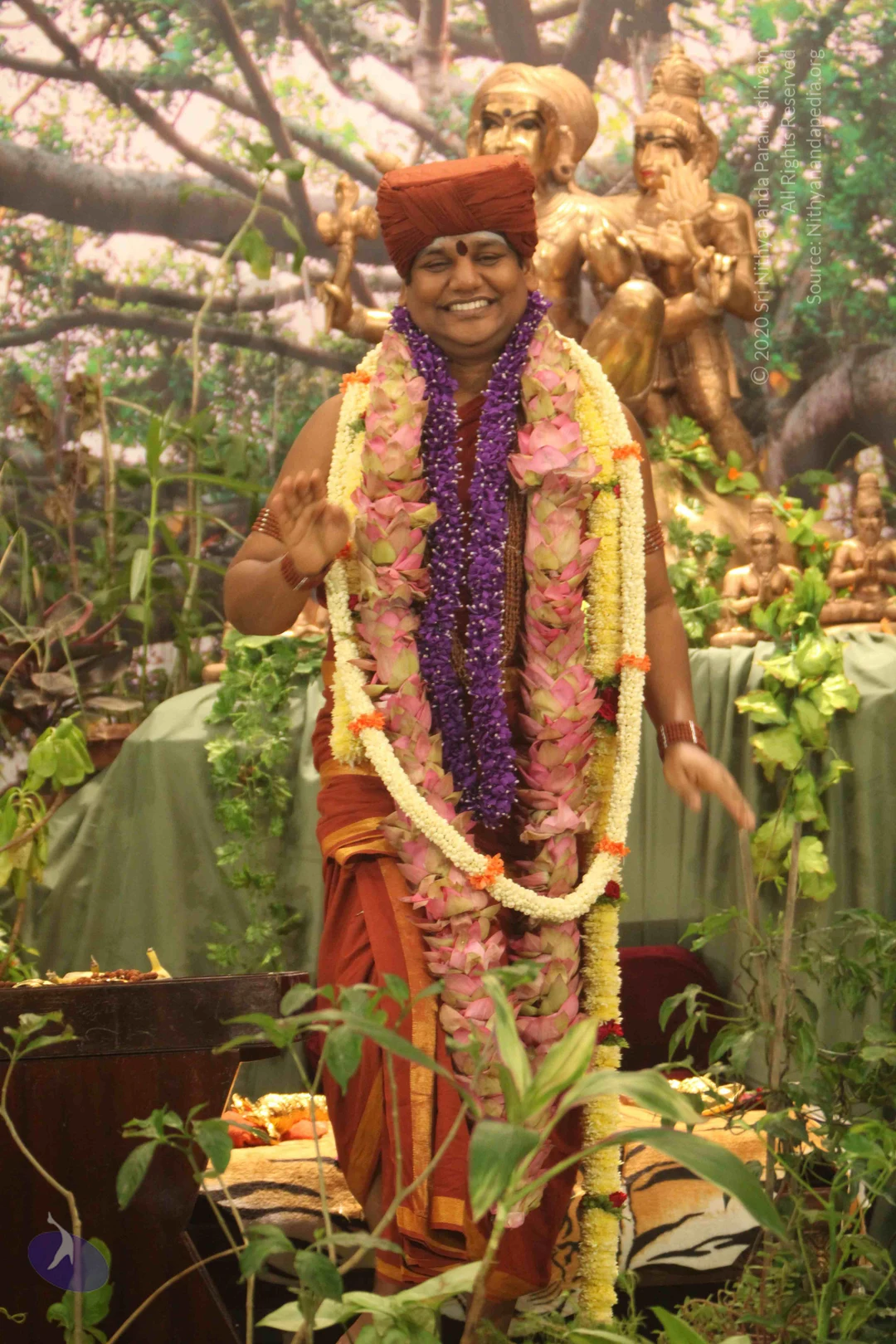
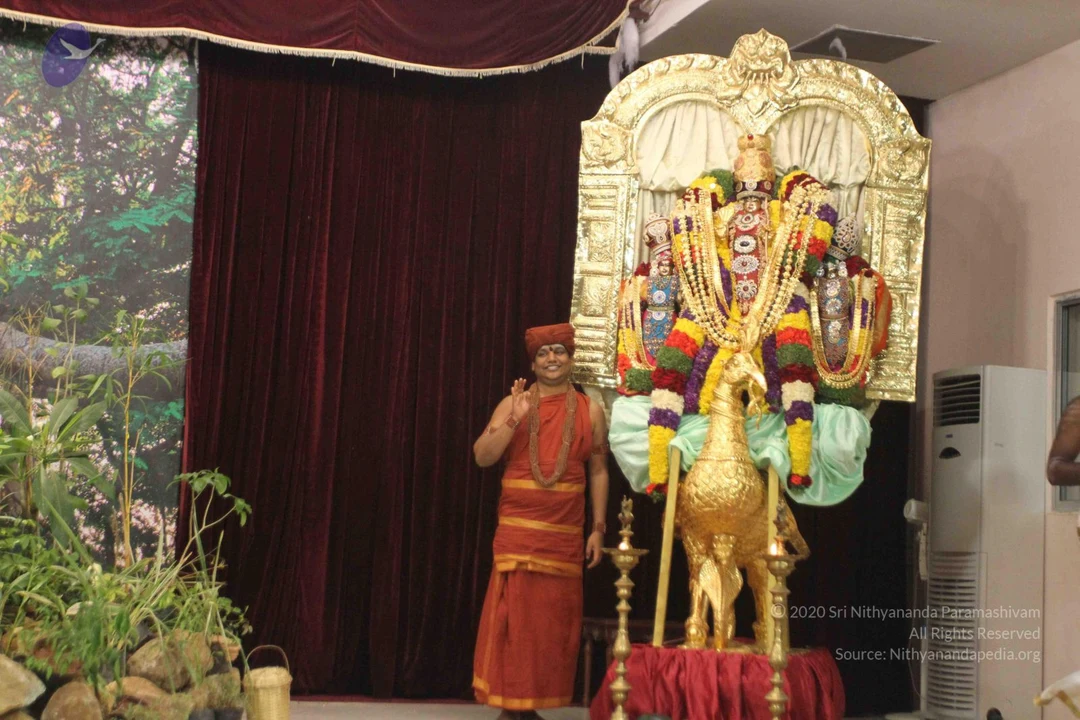
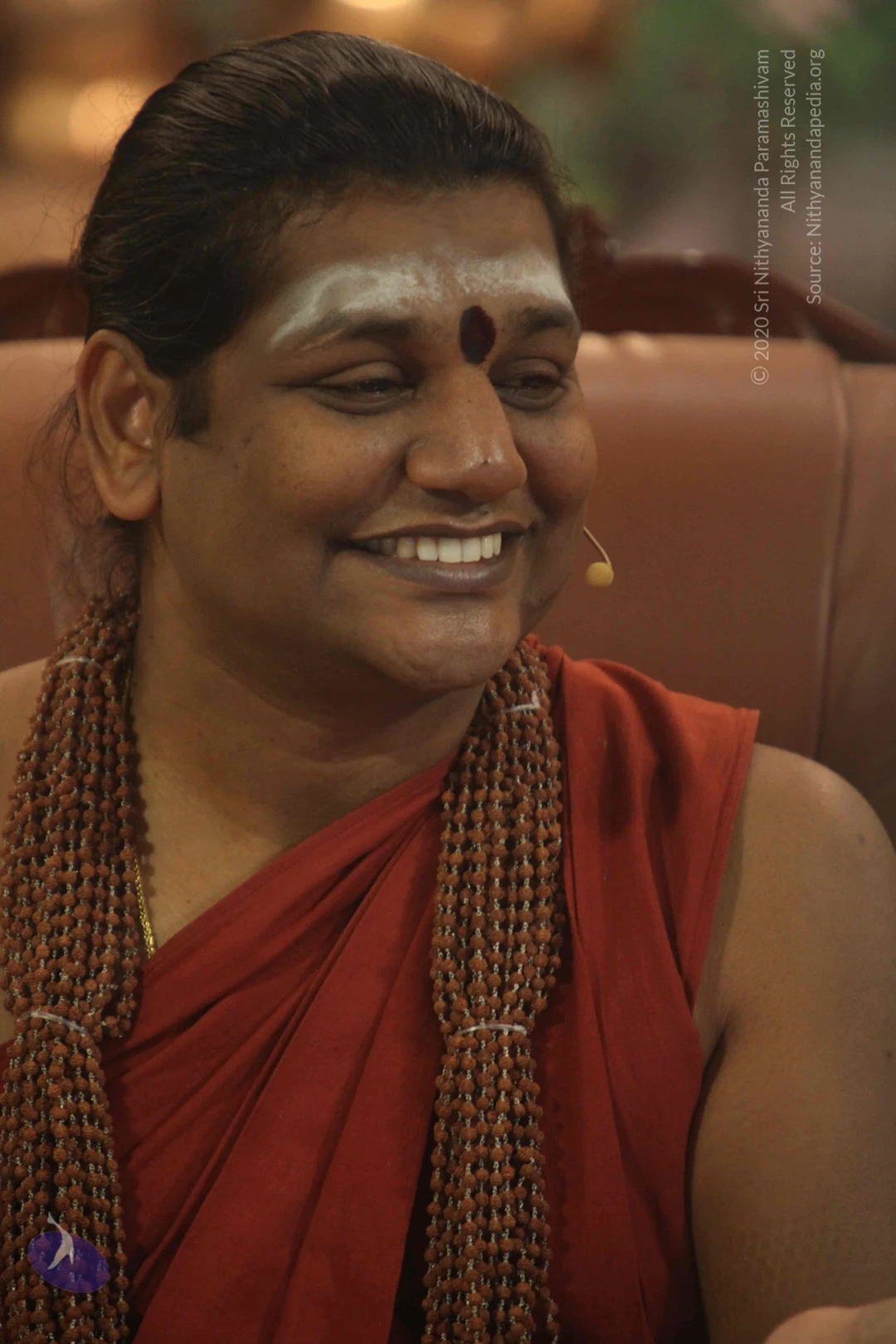
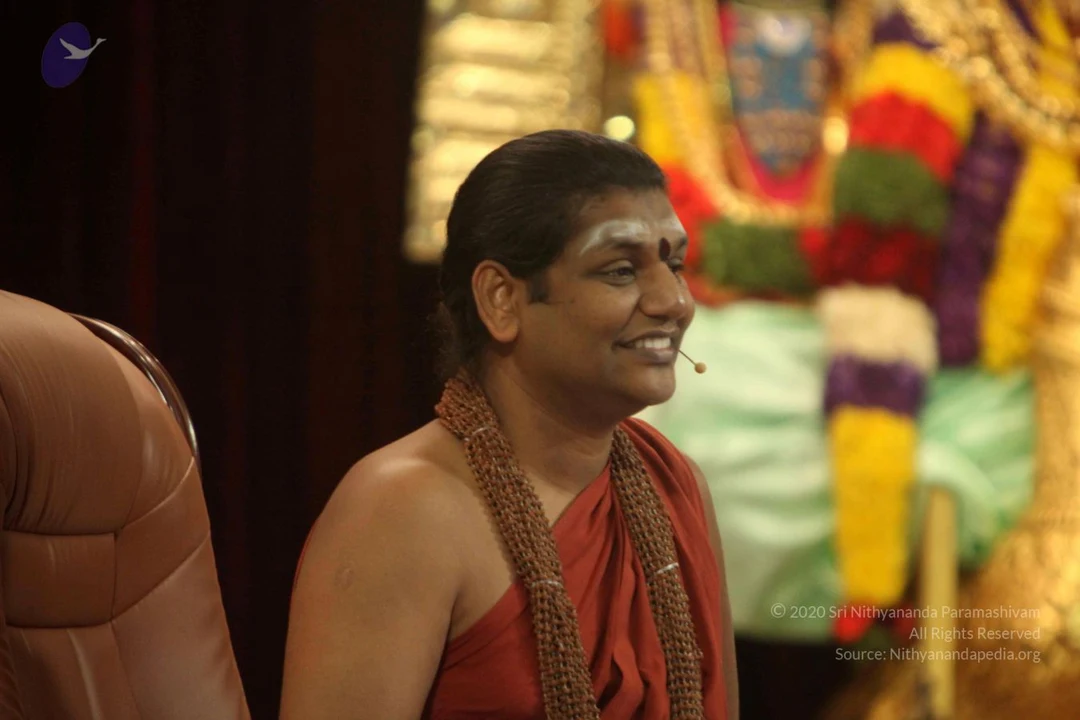
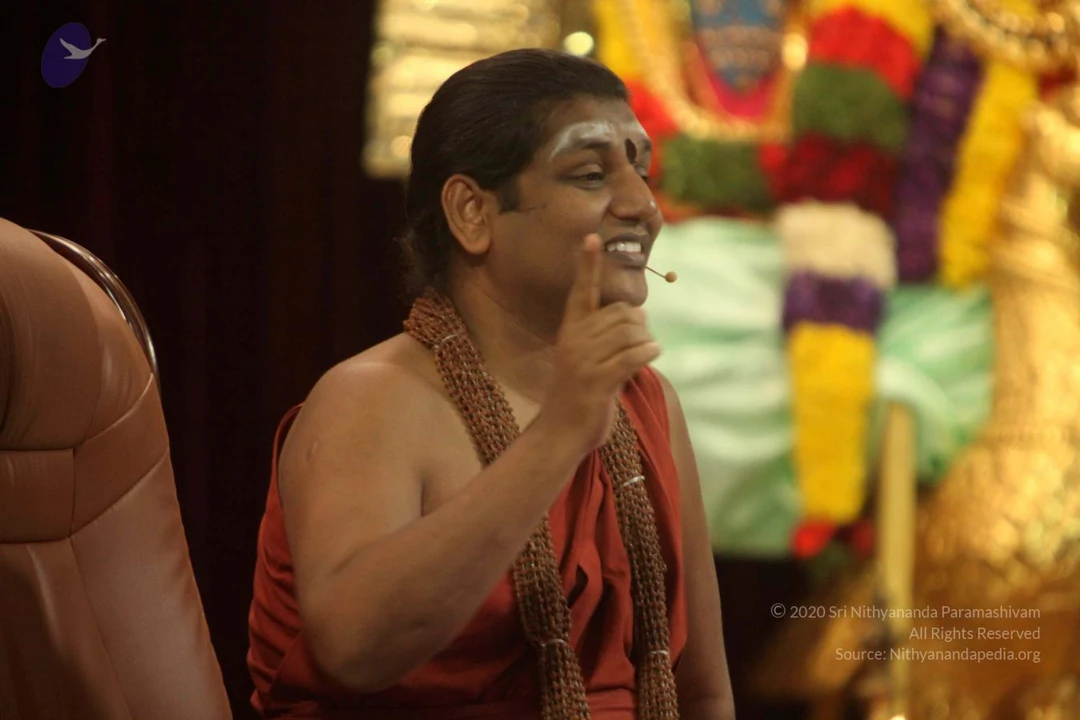
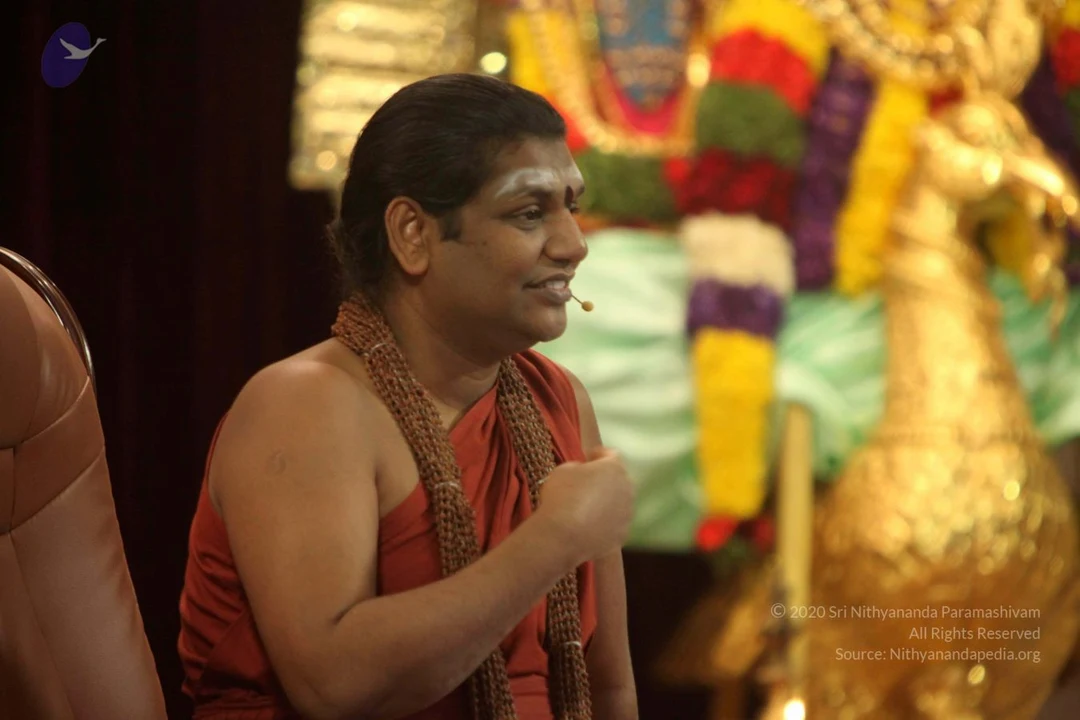
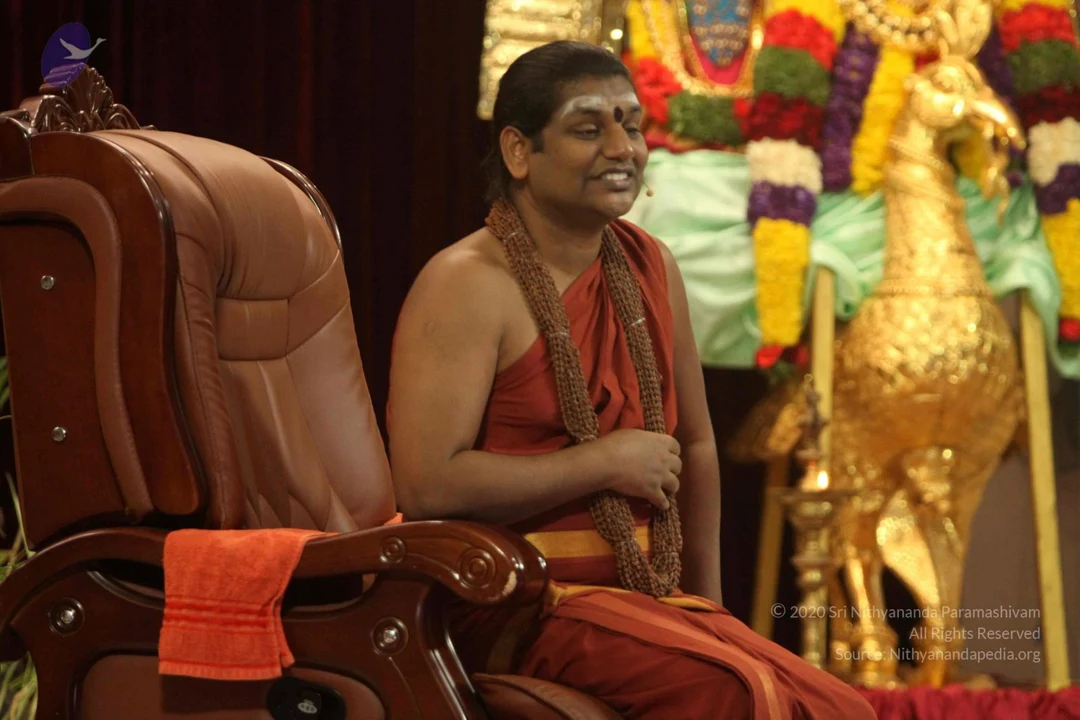
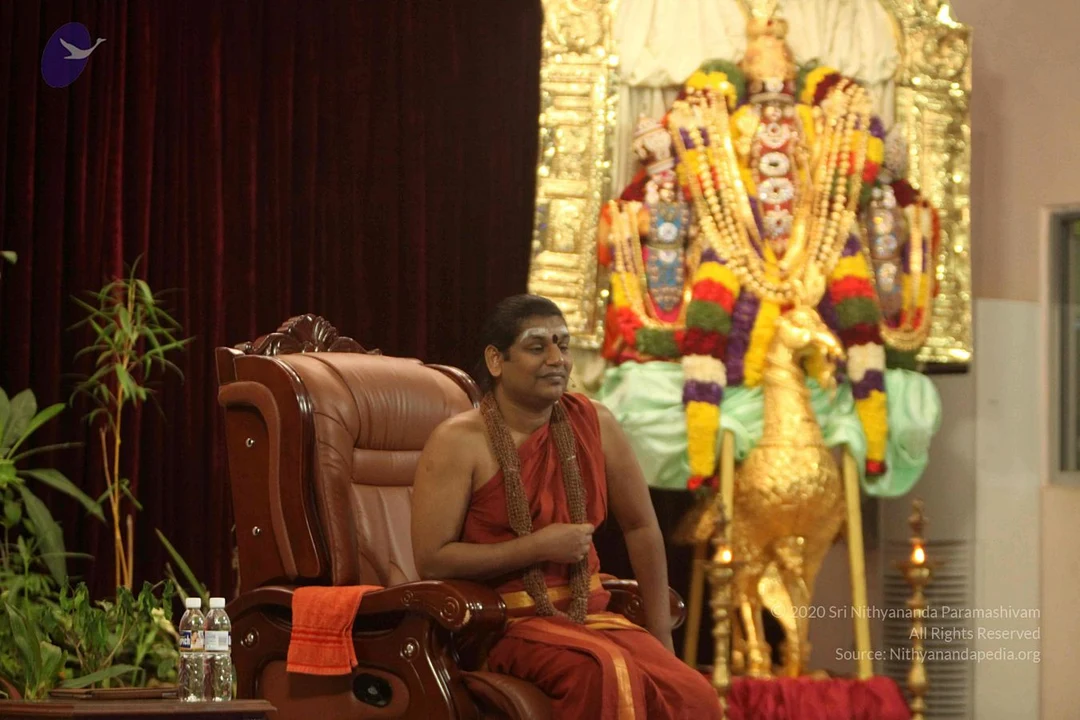
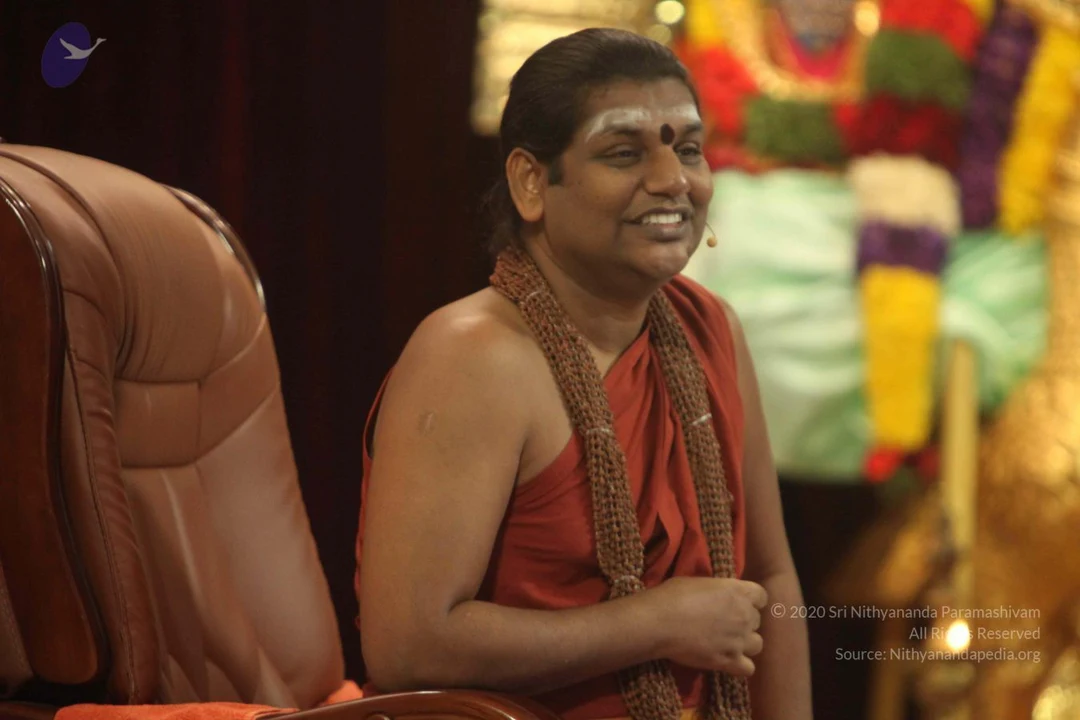
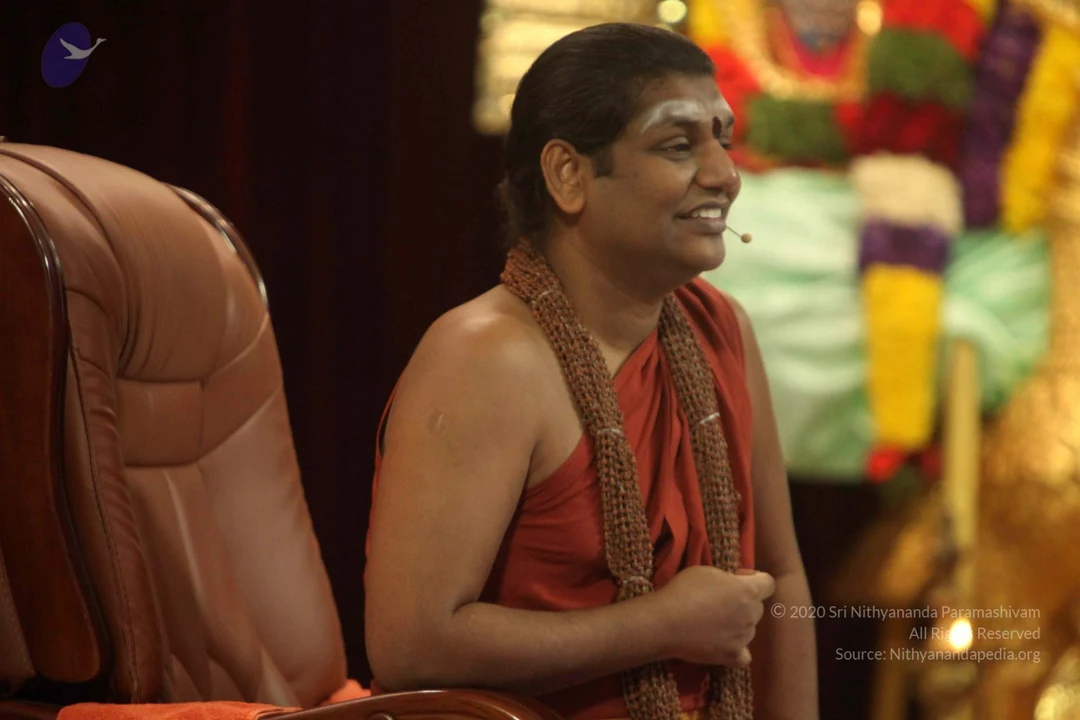
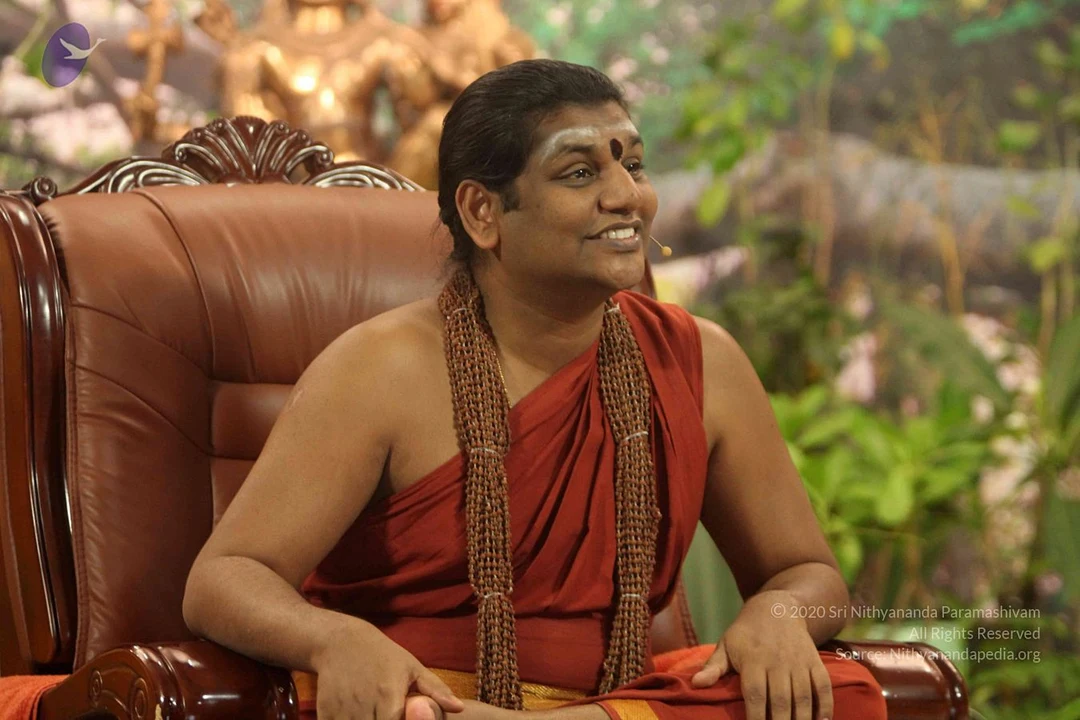
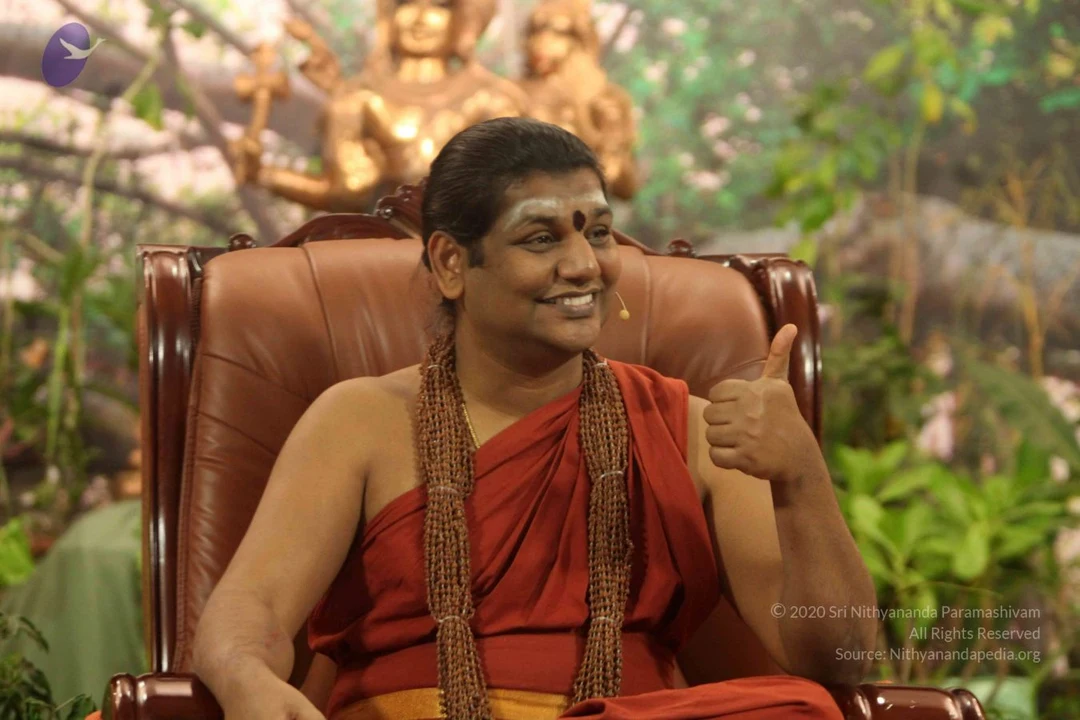
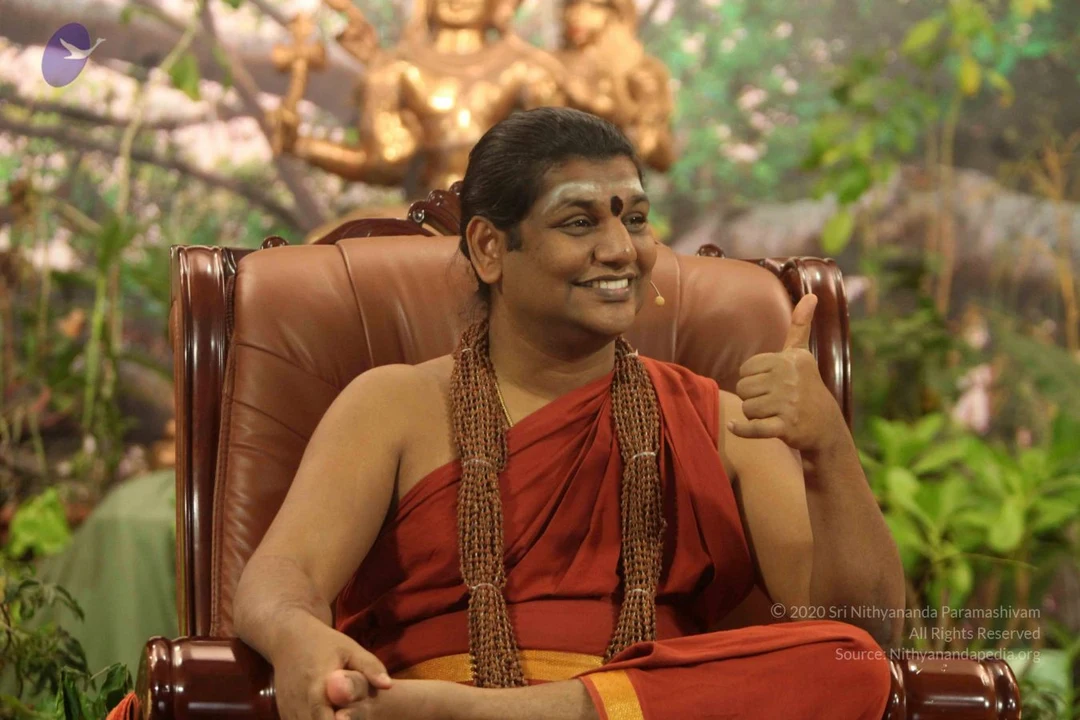
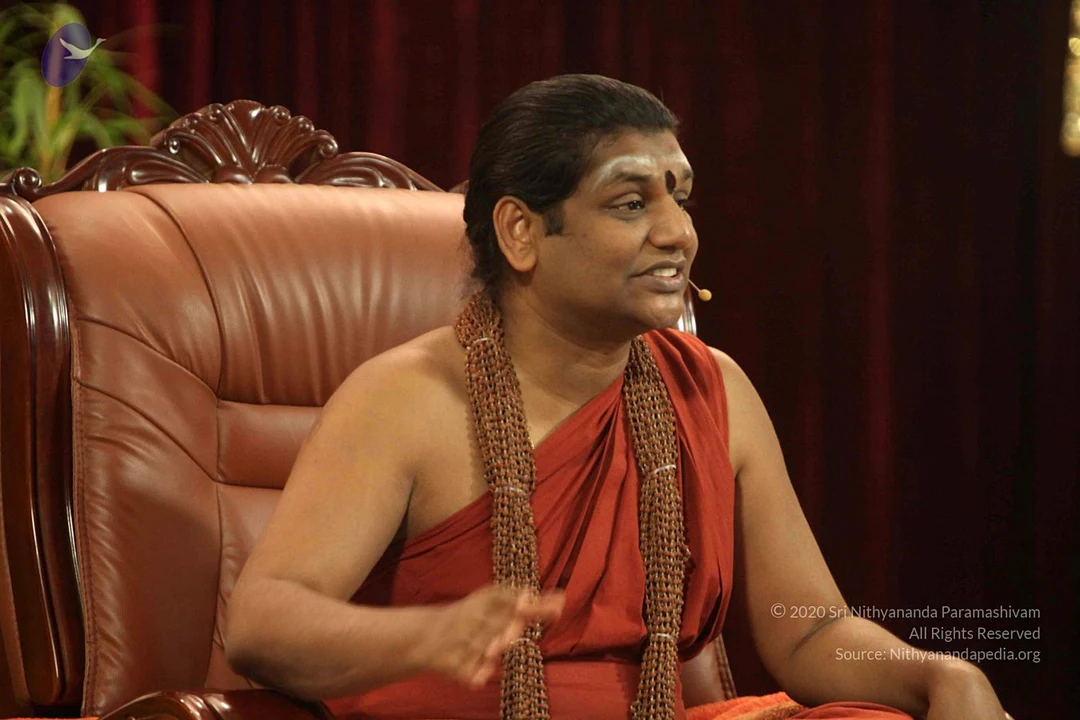
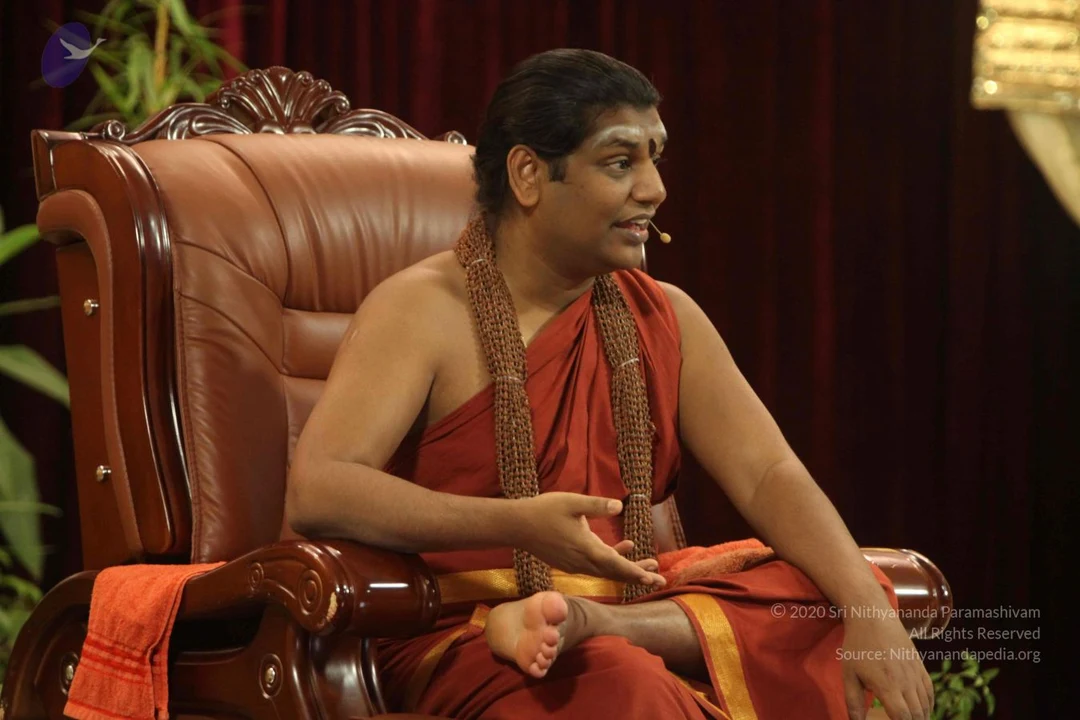
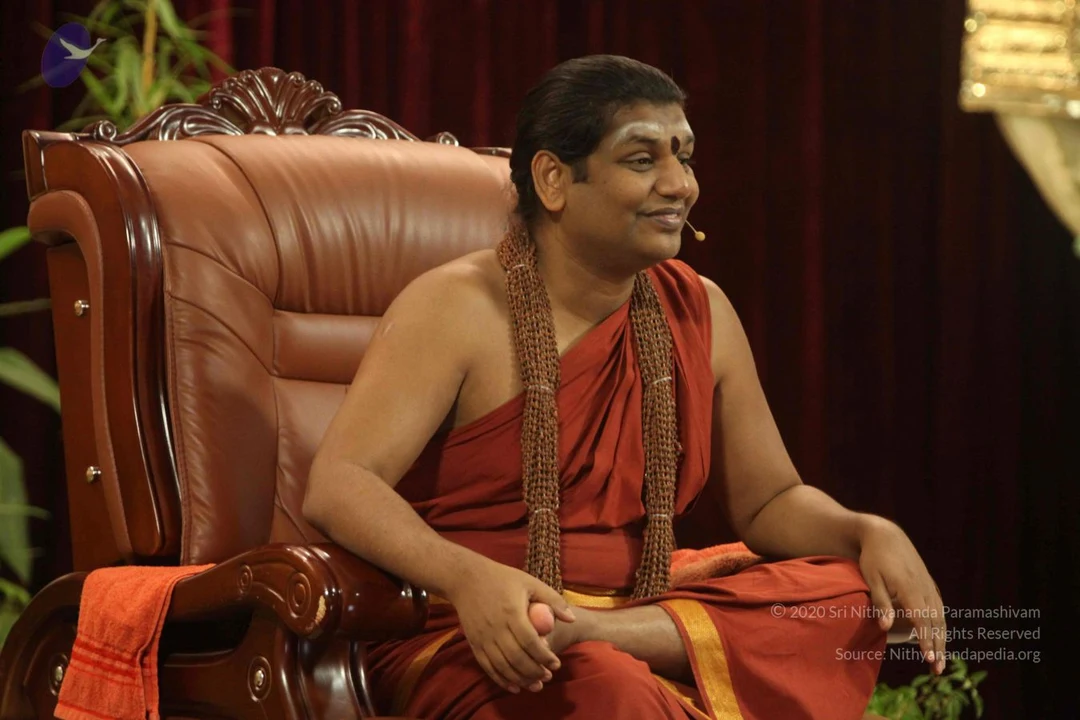
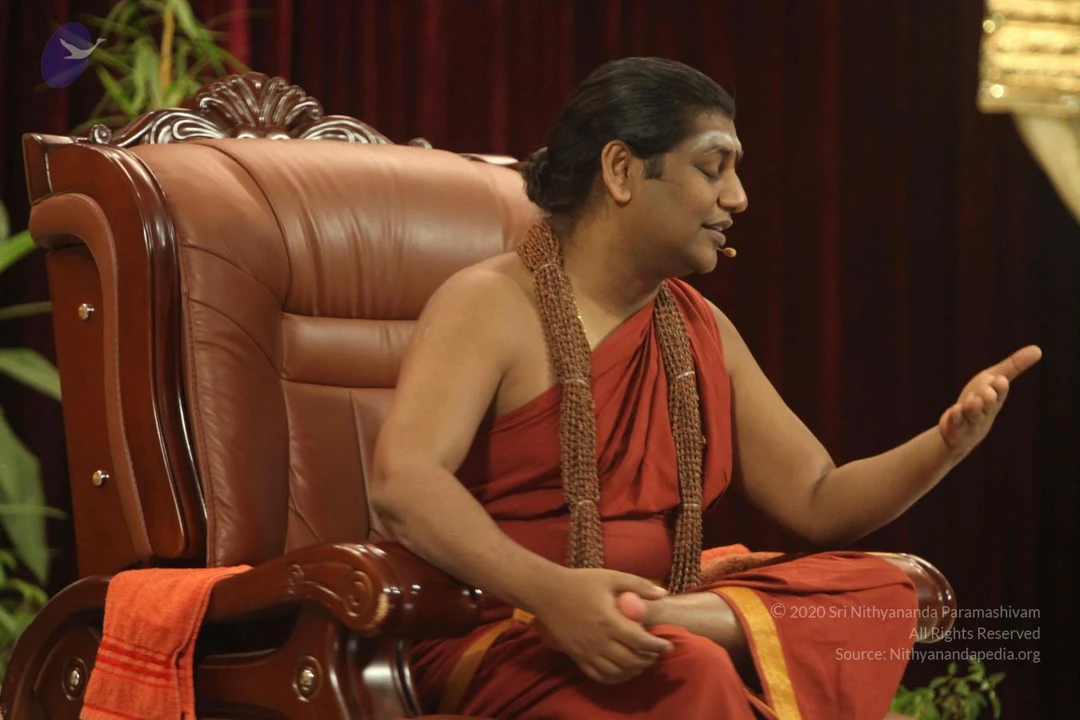
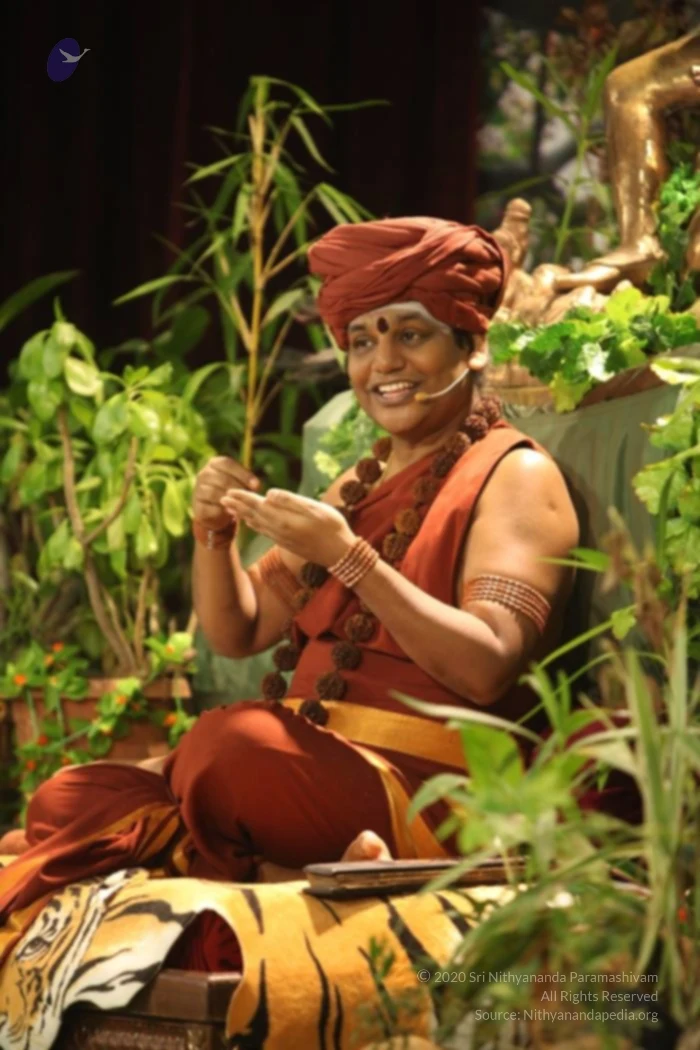
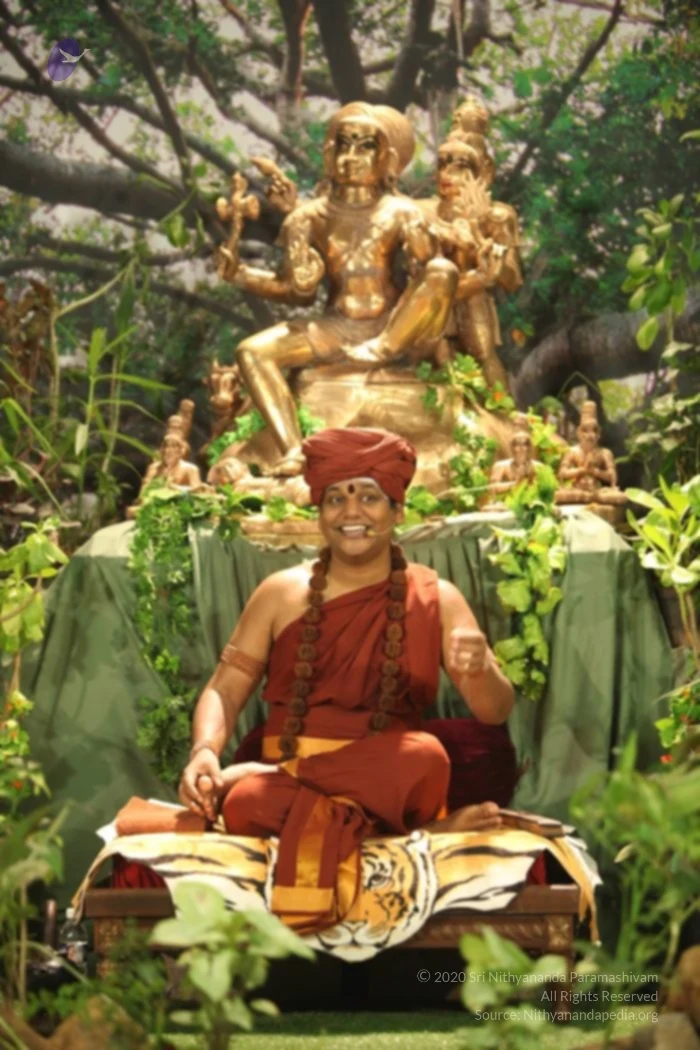
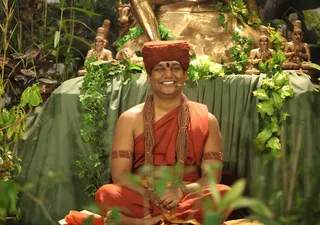
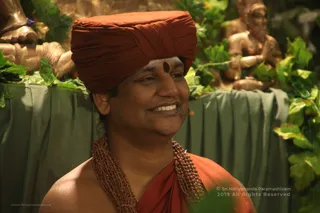
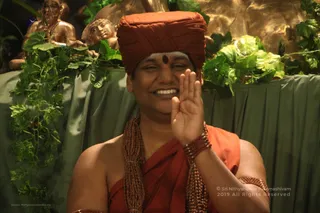
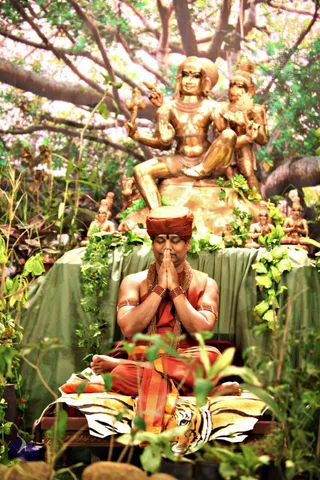
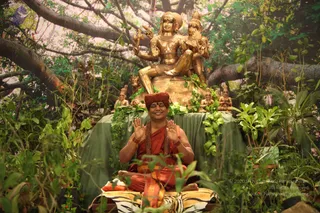
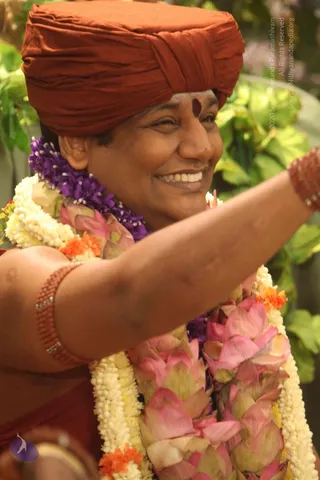
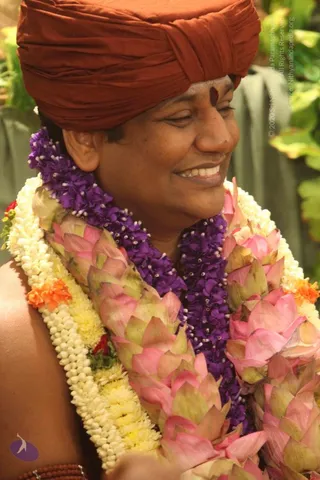
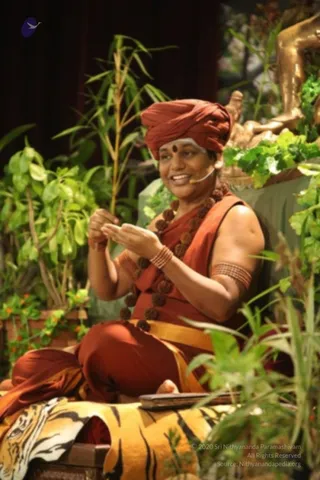
A smiling man wearing a rust-orange turban with a red bindi on his forehead, a bare shoulder, and an orange-red shawl draped over his body, with a thick beaded rudraksha-style mala necklace around his neck. Behind him are gold-toned sculptures of seated and reclining figures amid green leaves, with a green draped cloth backdrop. The image is a photograph of a person in a decorated room.A smiling man in a rust-orange turban with a small red bindi on his forehead, wearing an orange shawl over a bare shoulder and a beaded rudraksha-style mala necklace. He sits in front of green foliage and a gold-coloured sculpted figure with raised hands. The setting is a decorated stage backdrop. Swamiji (probable): appearance cues include the orange turban and rudraksha mala with an orange shawl, and the page indicates he is at this event.A seated figure in saffron-orange robes with a red turban, rudraksha malas and beaded necklaces sits smiling on a tiger-skin mat in front of a green draped platform. Behind him a gilded statue of a deity with a trident and a seated companion rises among potted plants, leafy greenery, stones and a painted backdrop of forest trees. Swamiji (probable): the saffron clothing, red turban and layered rudraksha malas match the page's Swamiji claim, so the seated figure is labelled as a probable in-person presence. The tiger skin, gilded statues and jungle set suggest a staged dais.

February 24 2015

Original wiki page
Contents

Title

The Qualities of Ishwara

Description:

February 24, 2015 Today’s (24th February, 2015) Morning Satsang continues with the Upanishads Series - Living Advaita. Isha Upanishad–Verse 4 begins: anejad-ekaṁ manaso jivīyo nainad-devā āpnuvan pūrvamarṣat | tad-dhāvato’ nyān atyeti tiṣṭhat tasminn apo mātariśvā dadhāti || 4 || In this profound delivery of the Isha Upanishad, Paramahamsa Nithyananda describes how Verse 4 is a technique for us to align ourselves to the right context. The Vedic tradition puts the context first; how else can we recognize consciousness or the Divine inside of us? When something beyond our comprehension is described, we need to be given a description to meditate upon so that we have a scale to measure our experiences.

Link to Video:

VideoAudio

Transcript:

(00:17)

Nithyānandeśvara samārambhām Nithyānandeśvari madhyamām | asmat āchārya paryantām vande guru paramparām ||

(01:02)

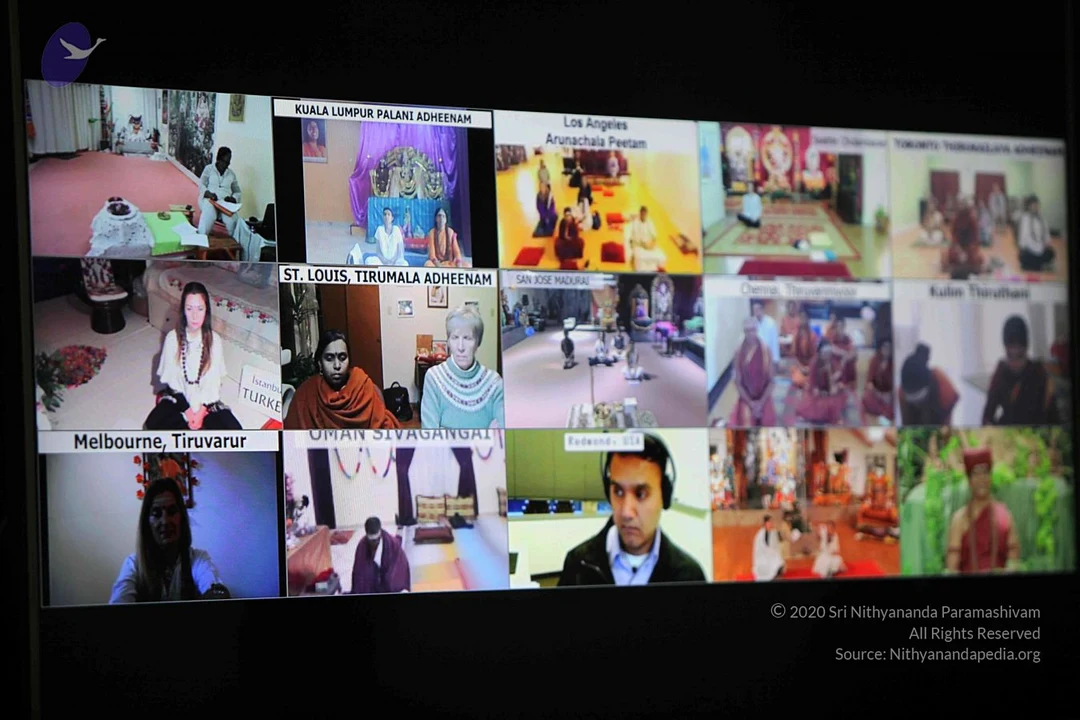
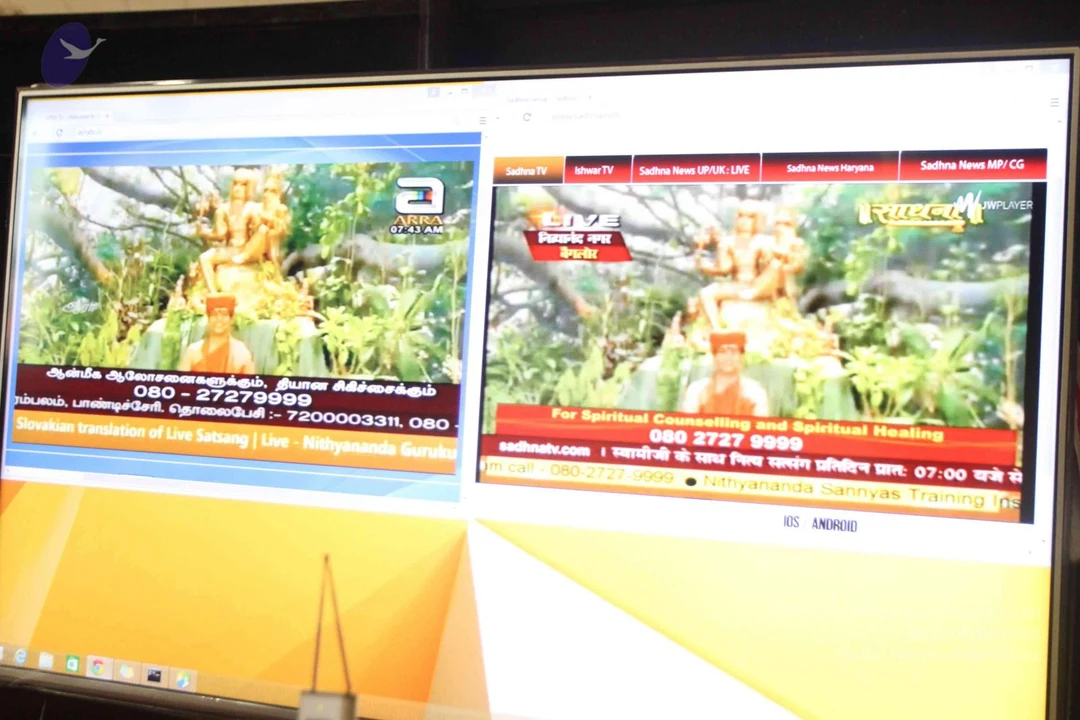
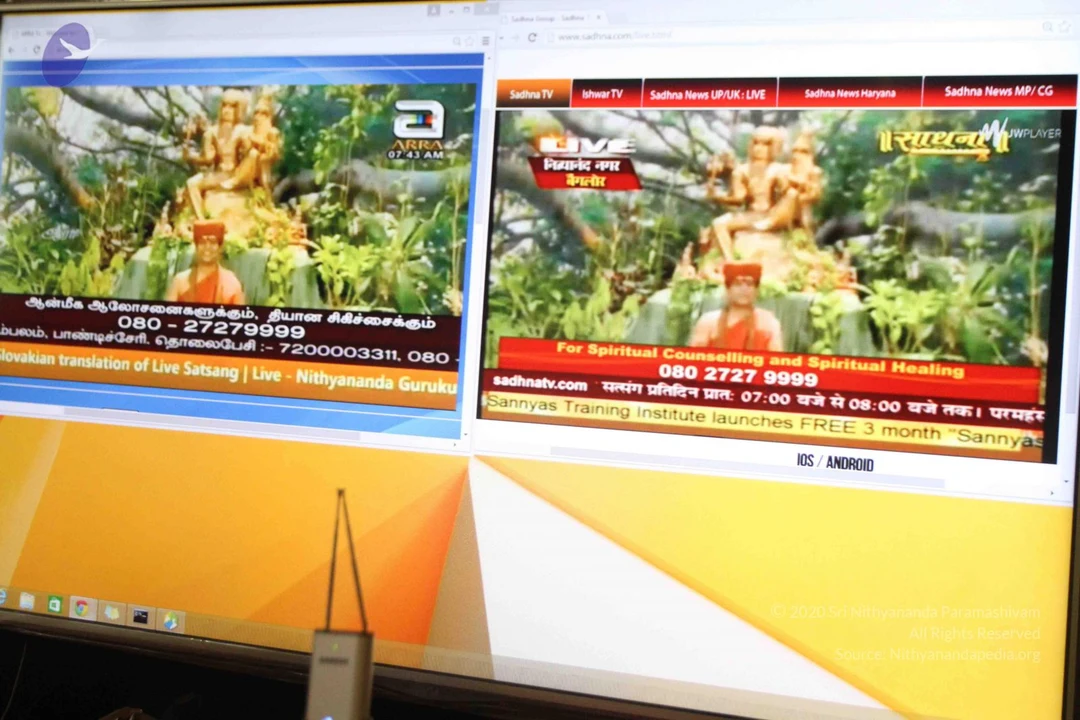
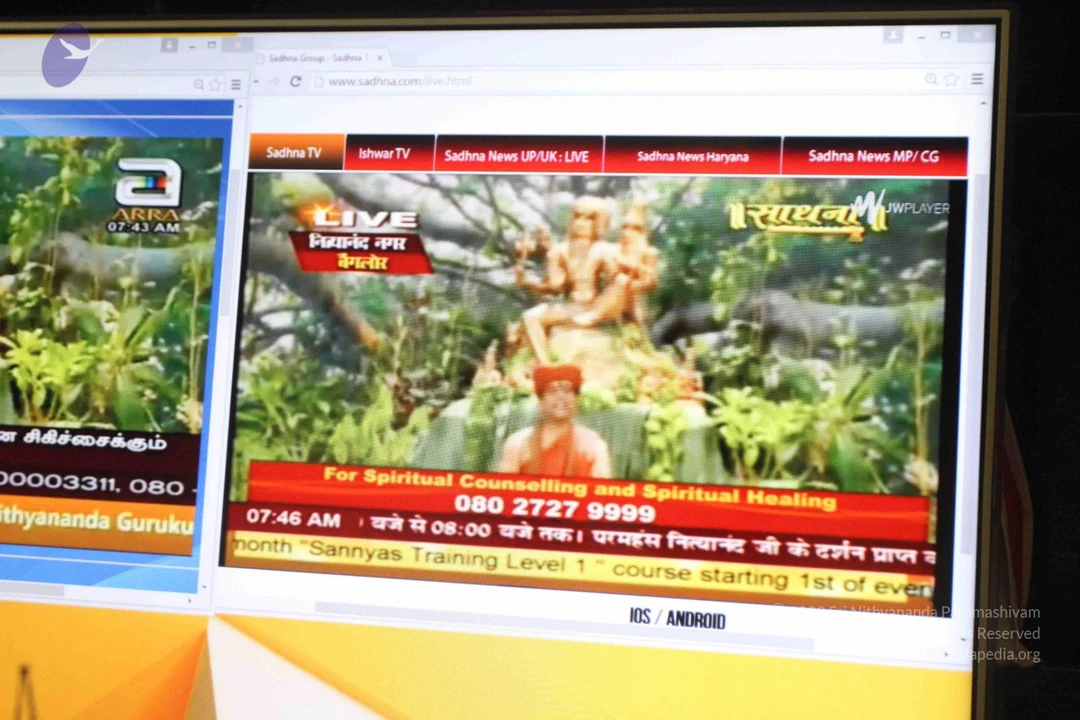
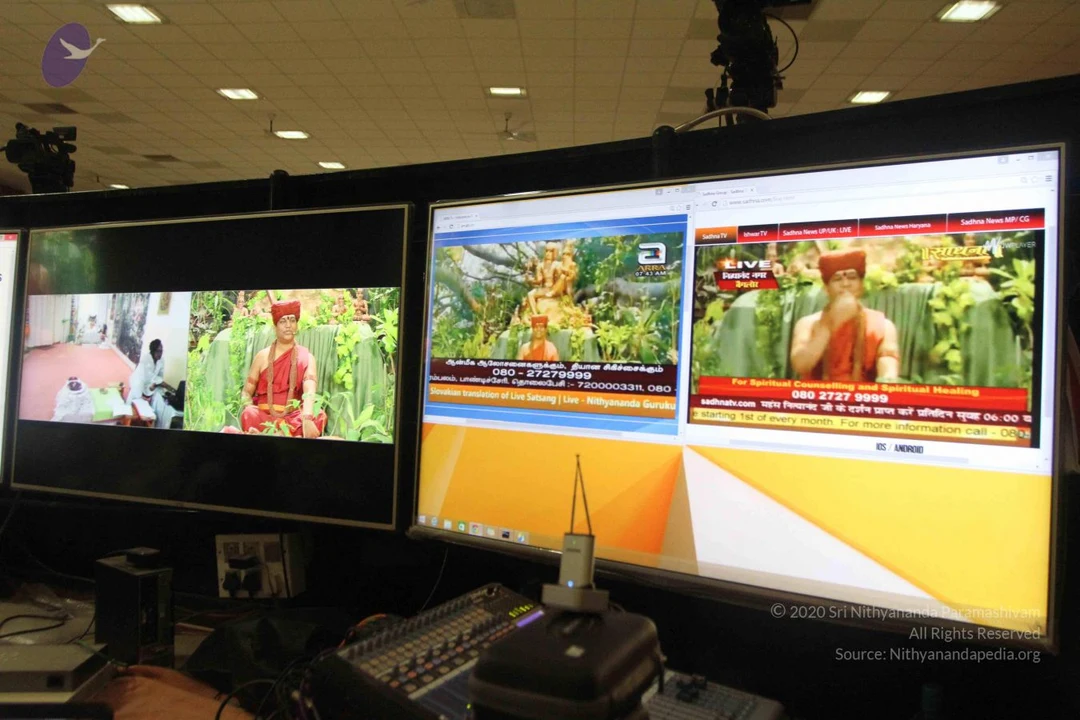
I welcome all of you with My love and blessings. I welcome all the devotees, disciples, samajis, satsangis, Shrimahants, Mahants, Thanedars, Kotharis, sitting with us through Nithyananda TV, Sadhna TV, ARRA TV, and two-way video-conferencing having Nayana Deeksha. Cities sitting with us in two-way video-conferencing: Singapore, Surrey-Canada, Hyderabad-Gupta Kashi, Guadeloupe-Rameshwaram, Istanbul-Turkey, Los Angeles - Arunachalam, St. Louis-Tirumala, Thiruvanmiyur-Chennai, Kuala Lumpur -Palani, Australia, Oman-Sivagangai....lot more cities. Chidambarananda-Dubai, Madurai, Bangalore North, Houston-Texas, Surrey-Canada, Toronto, Seattle and everyone I welcome all of you with My love and respects.

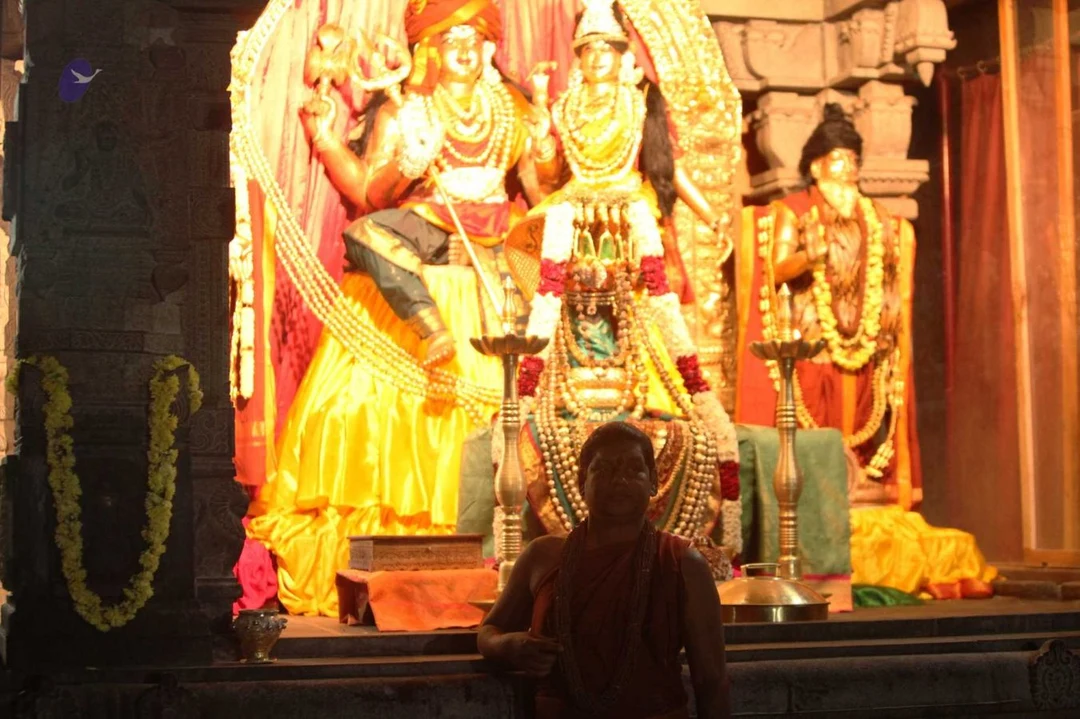
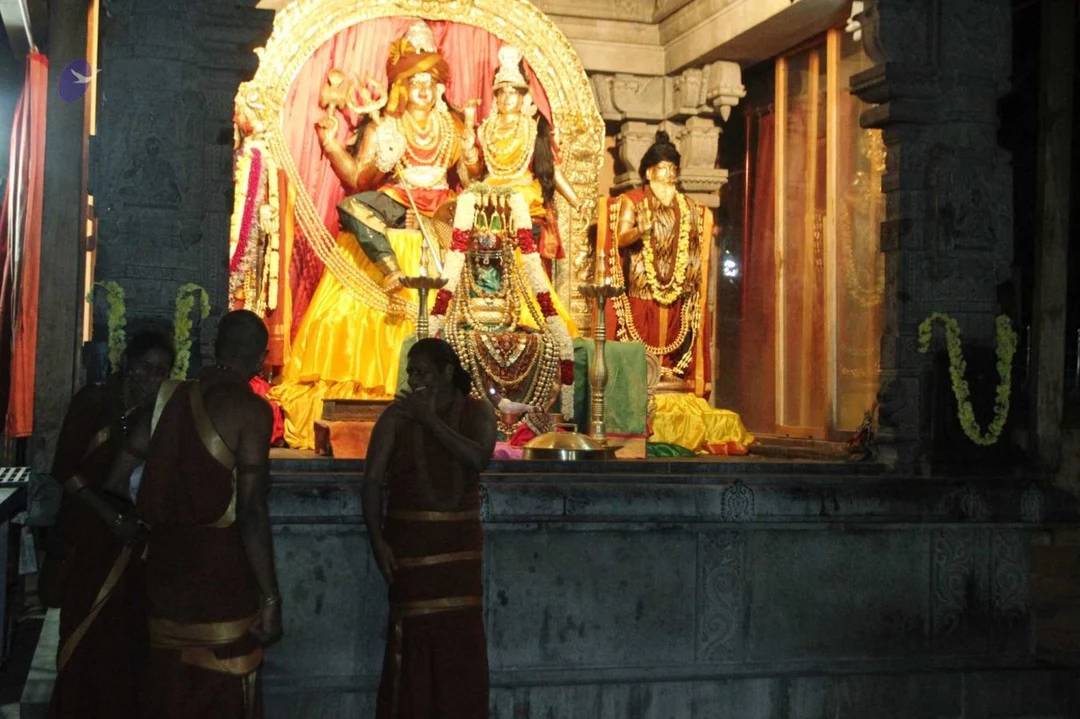
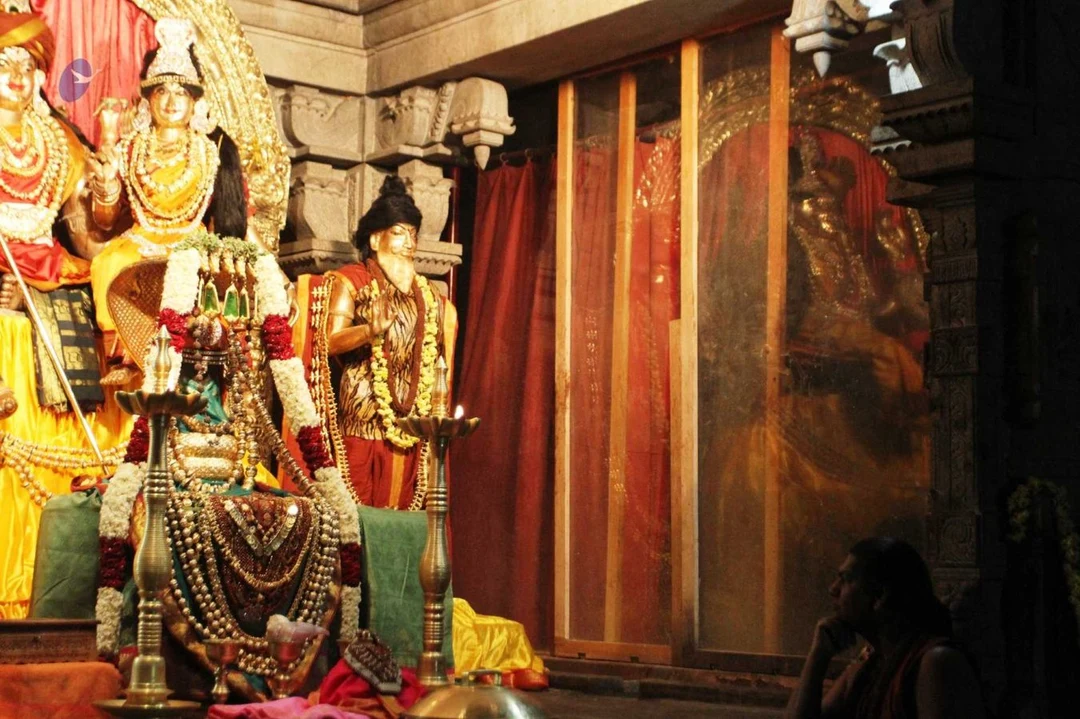
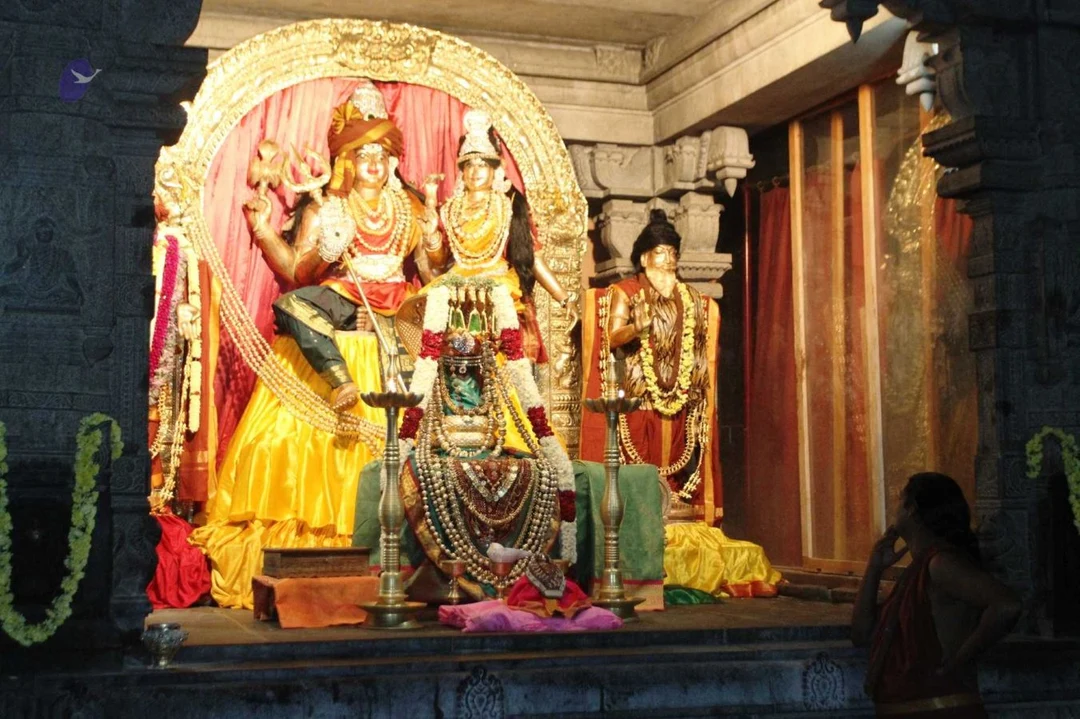
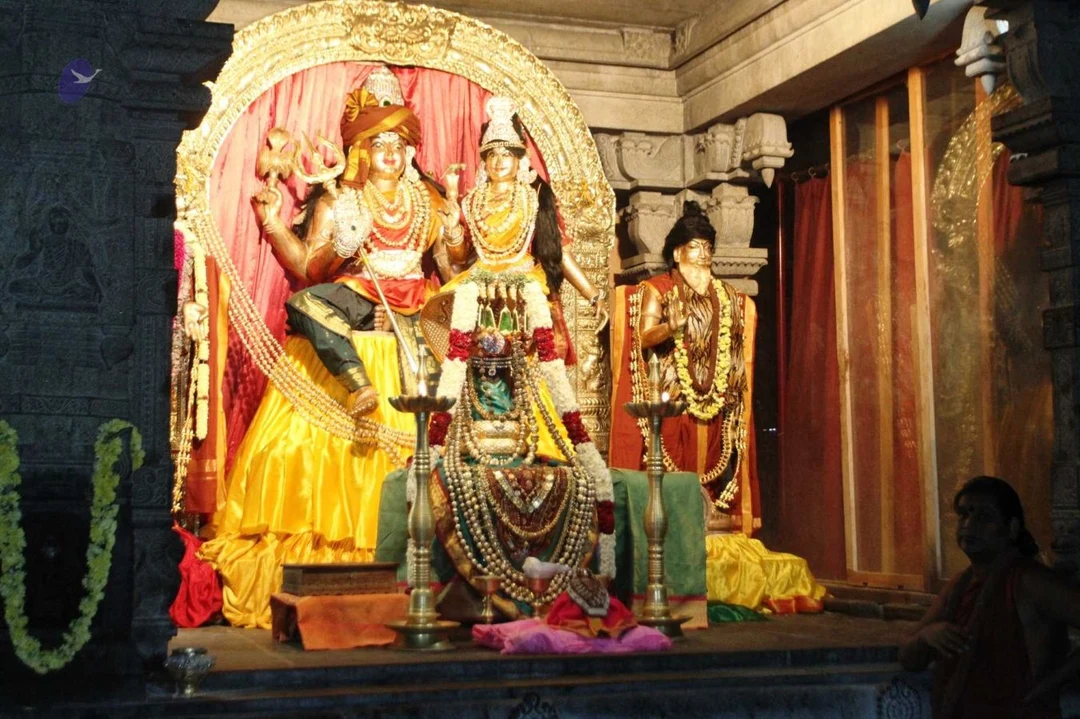
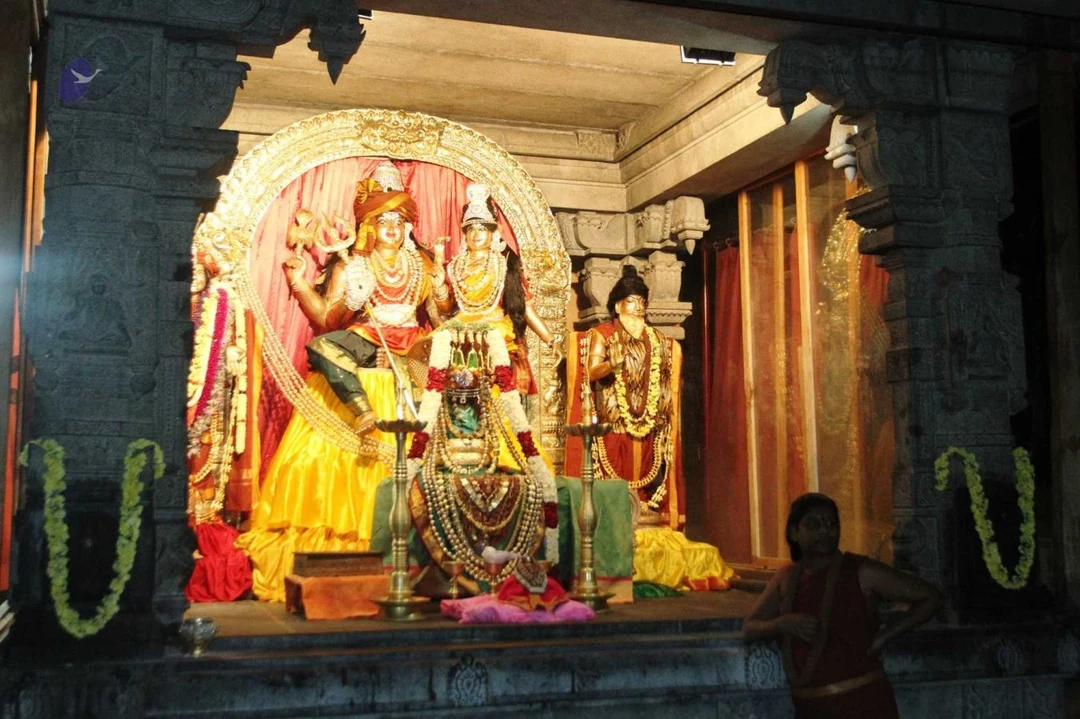
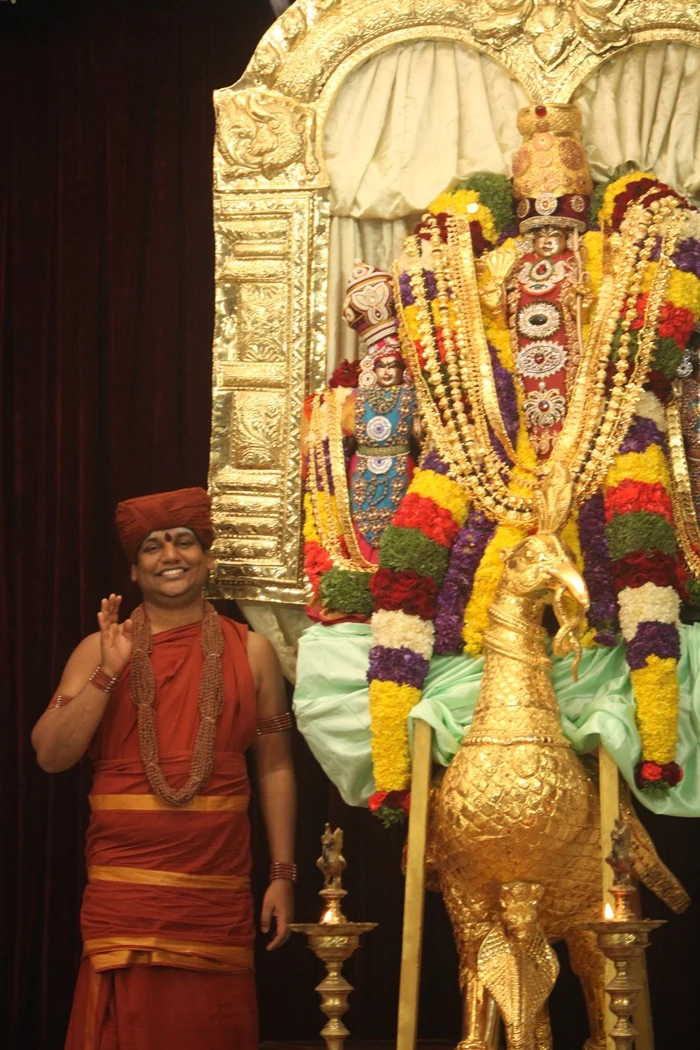
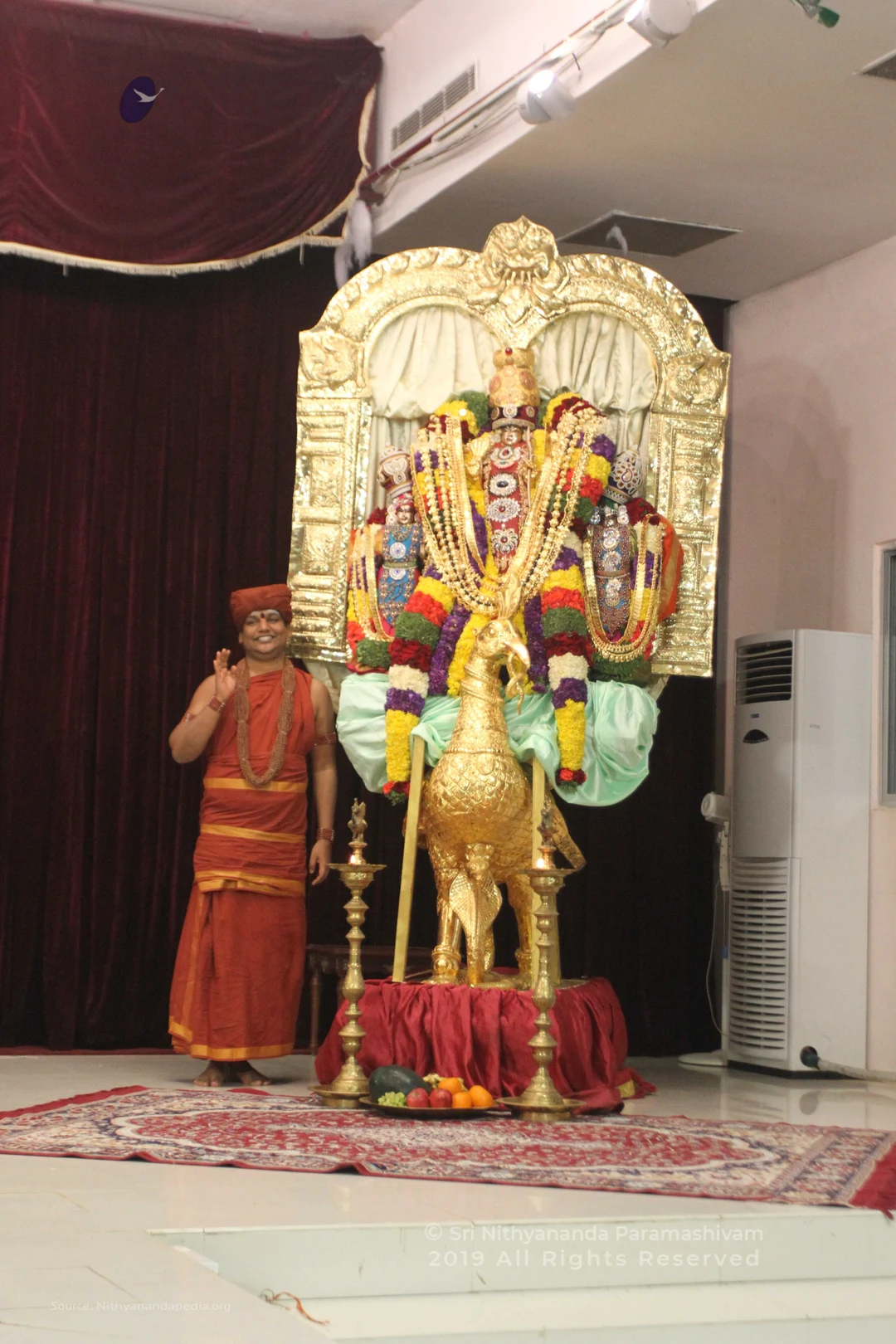
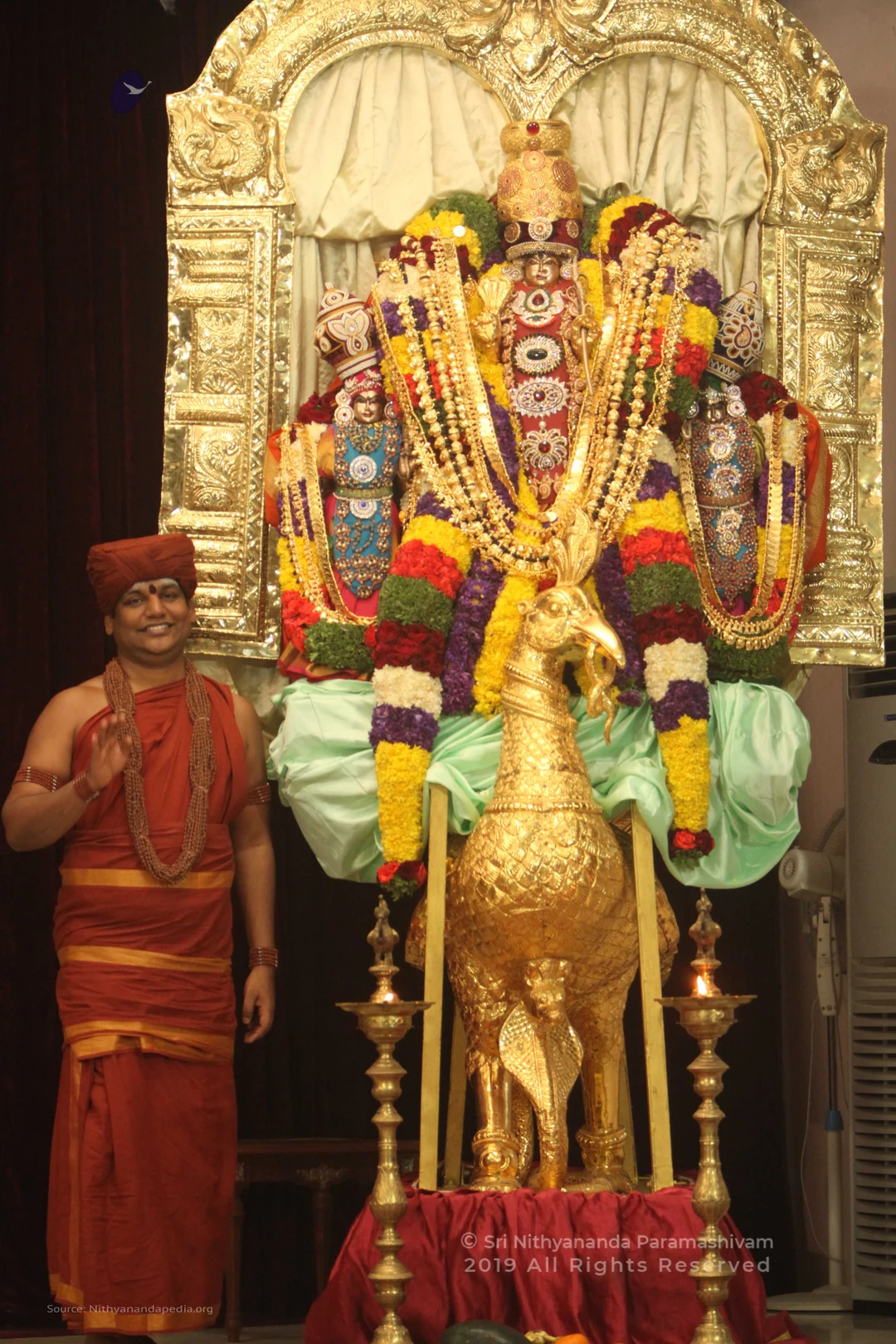
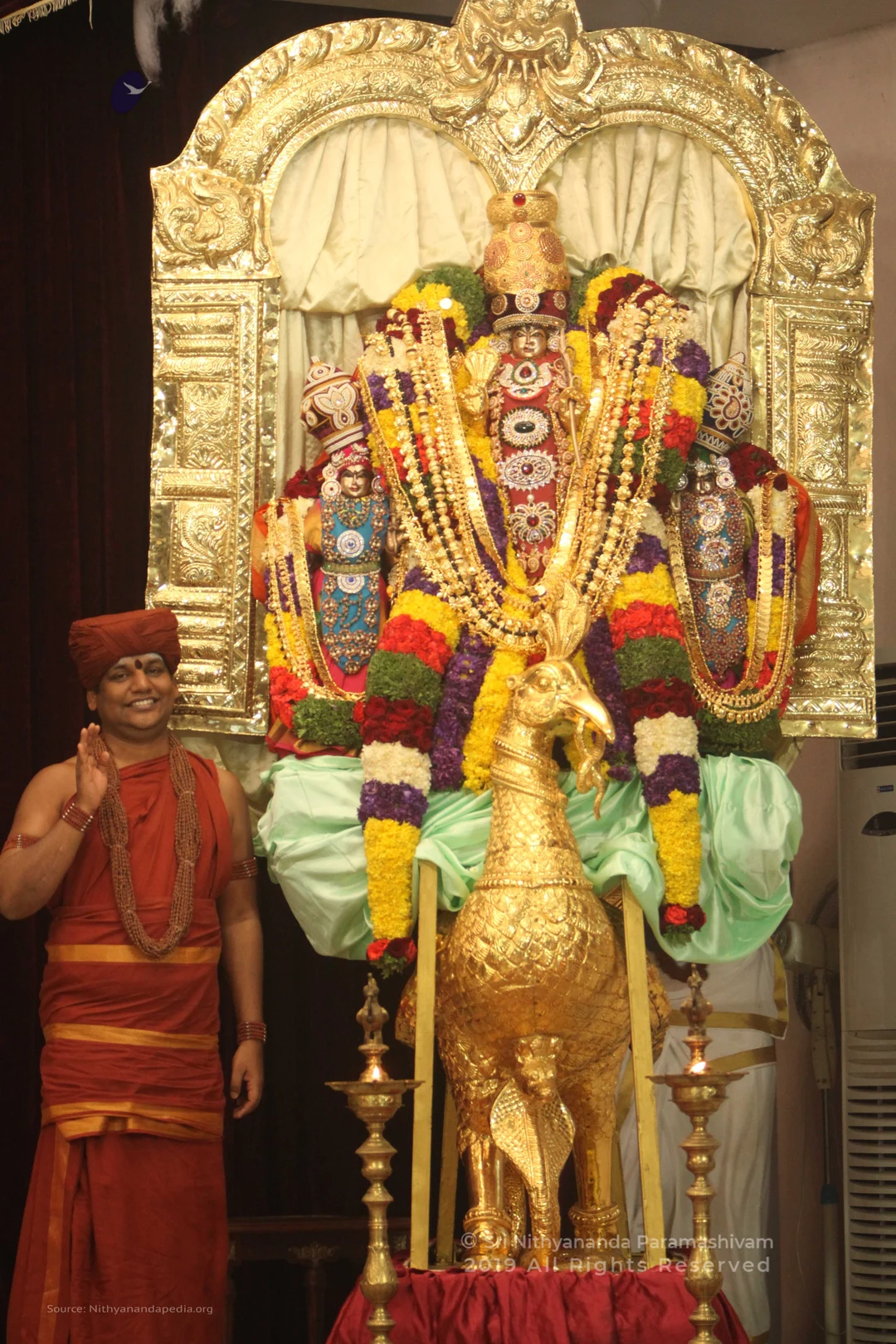
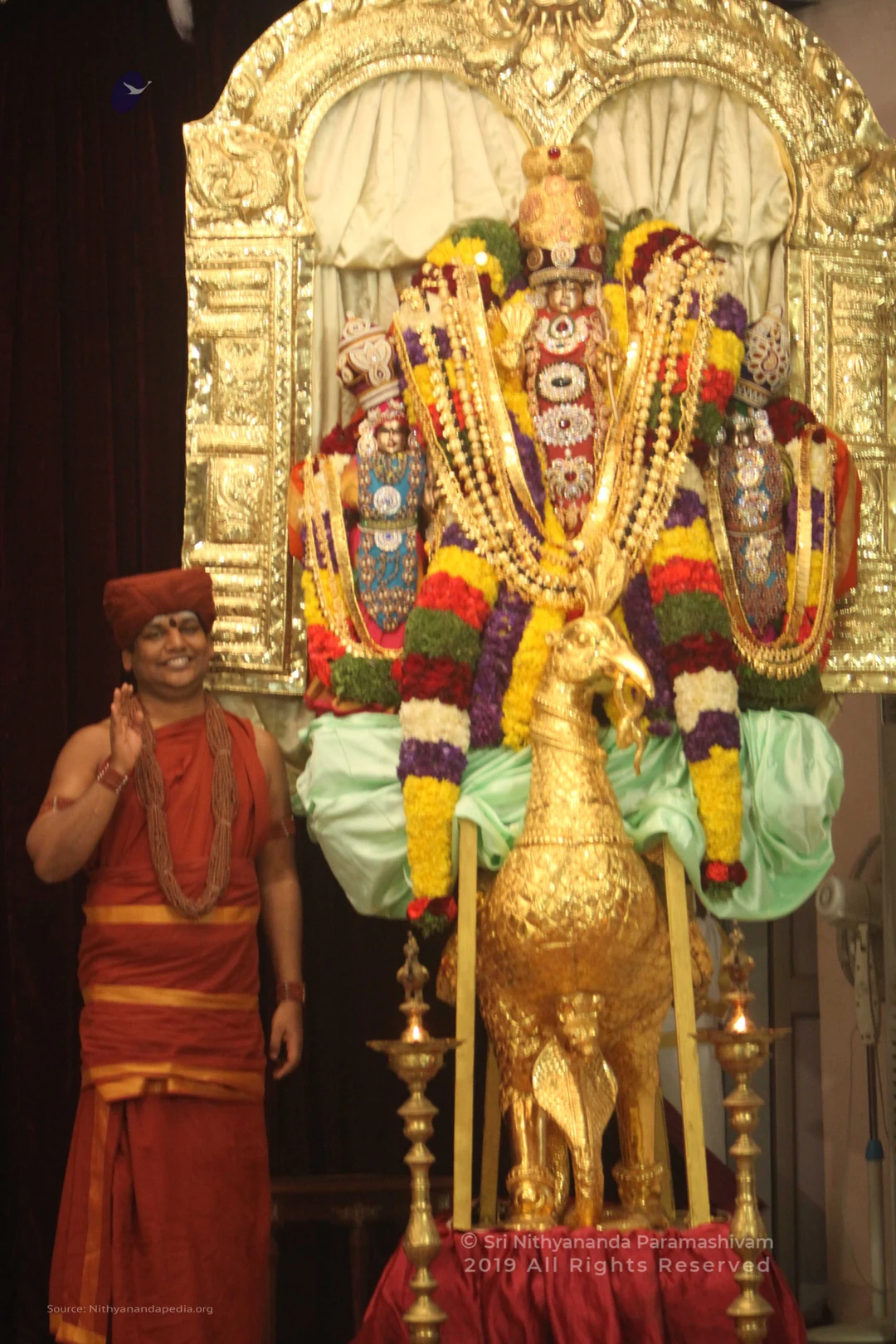
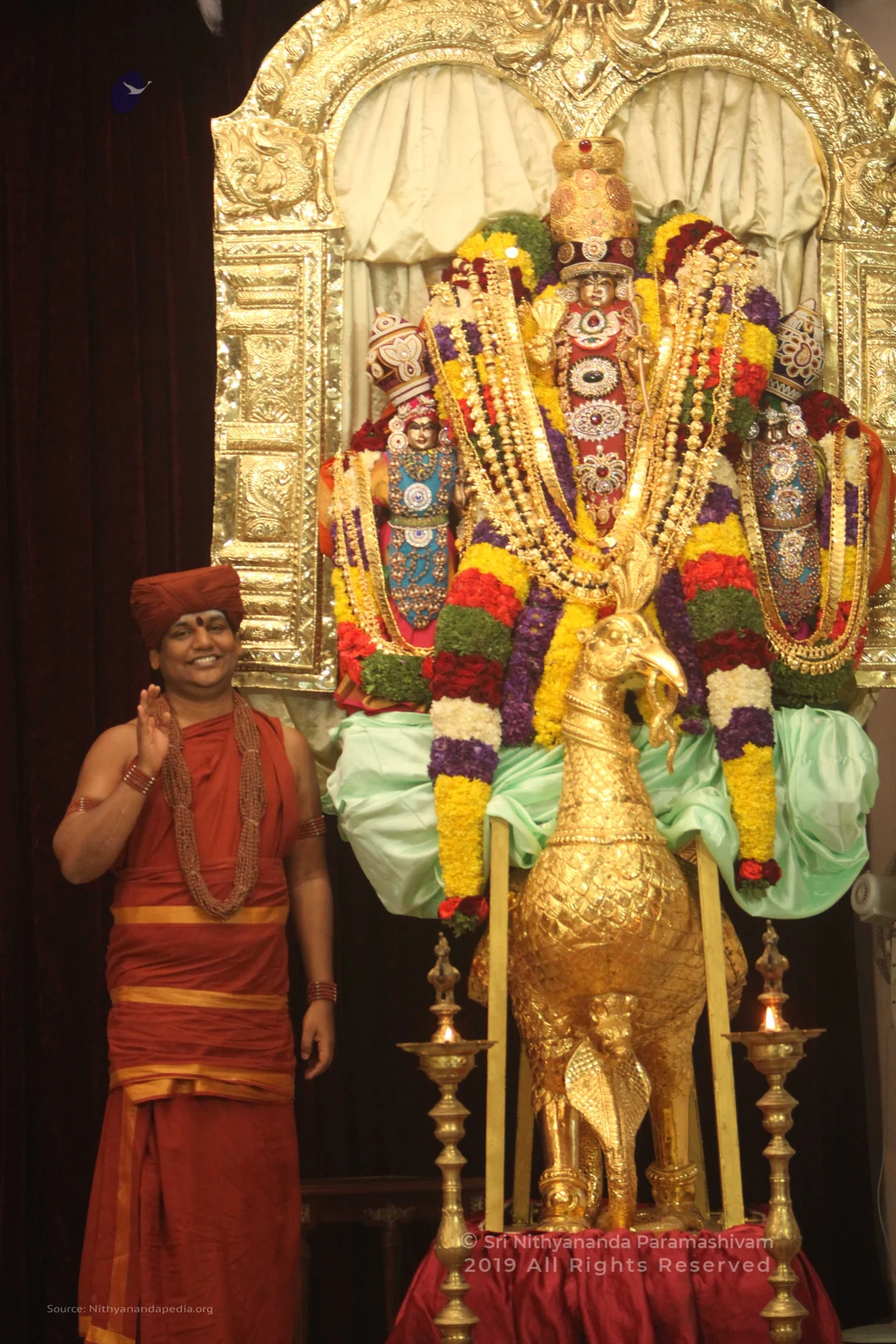
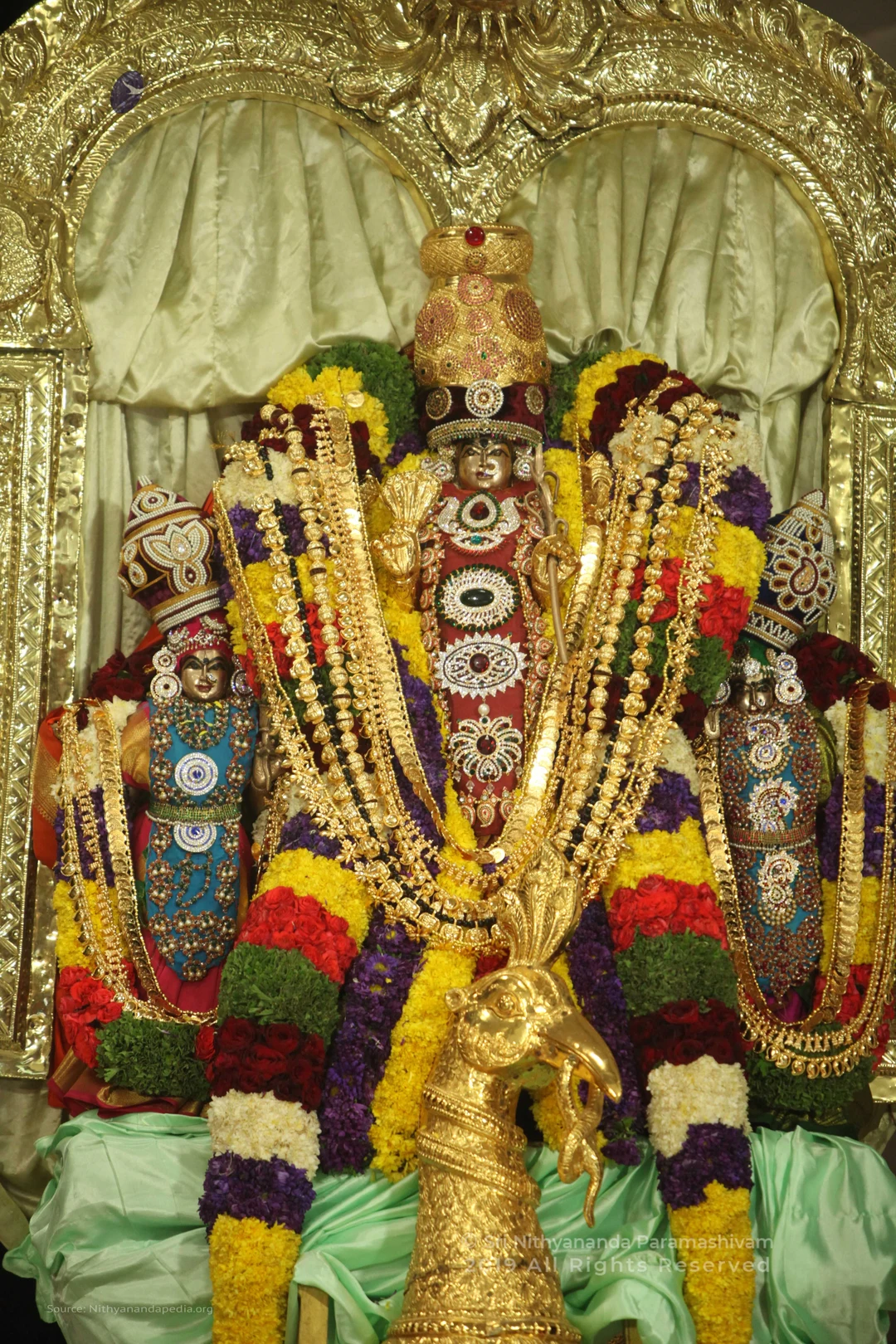
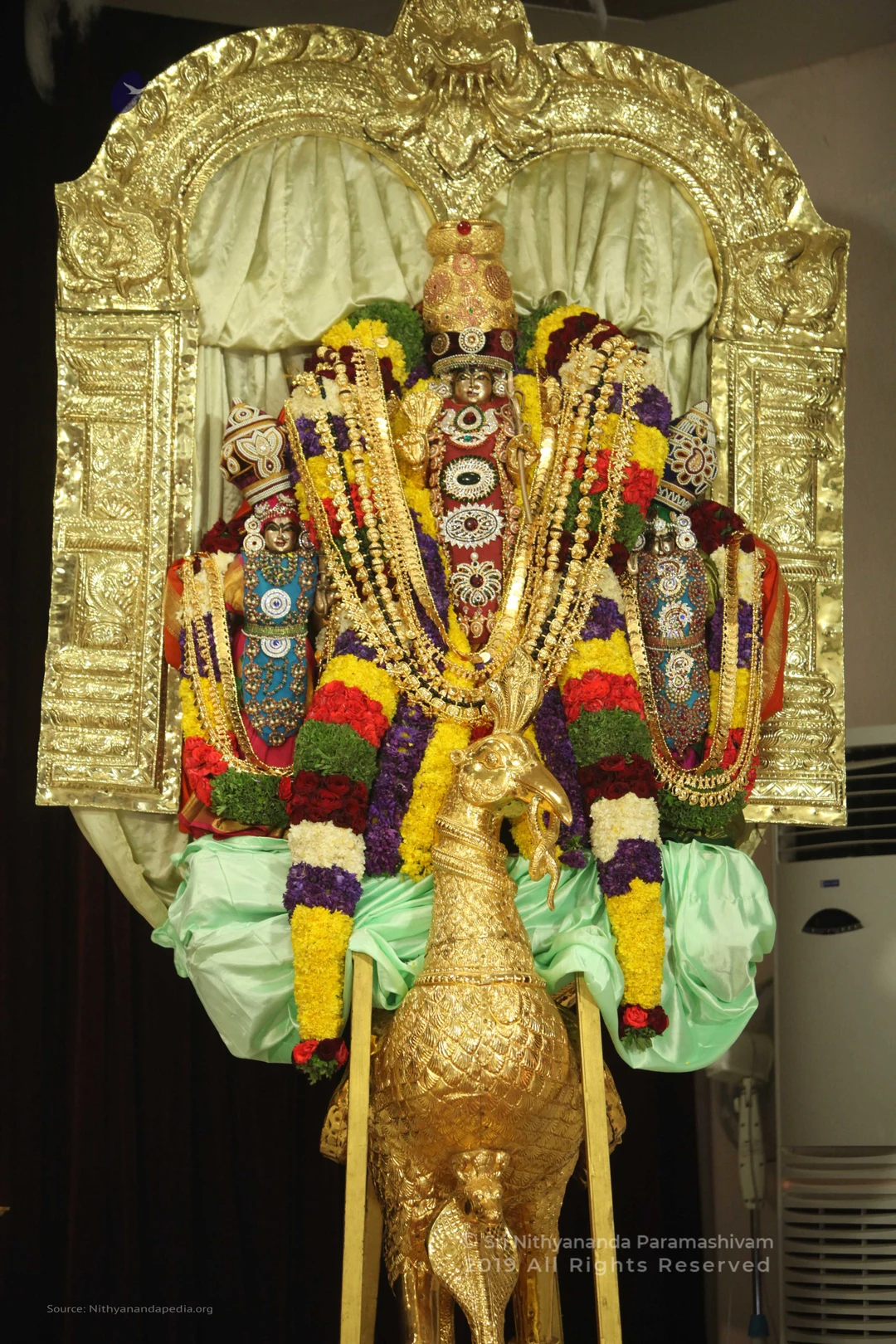
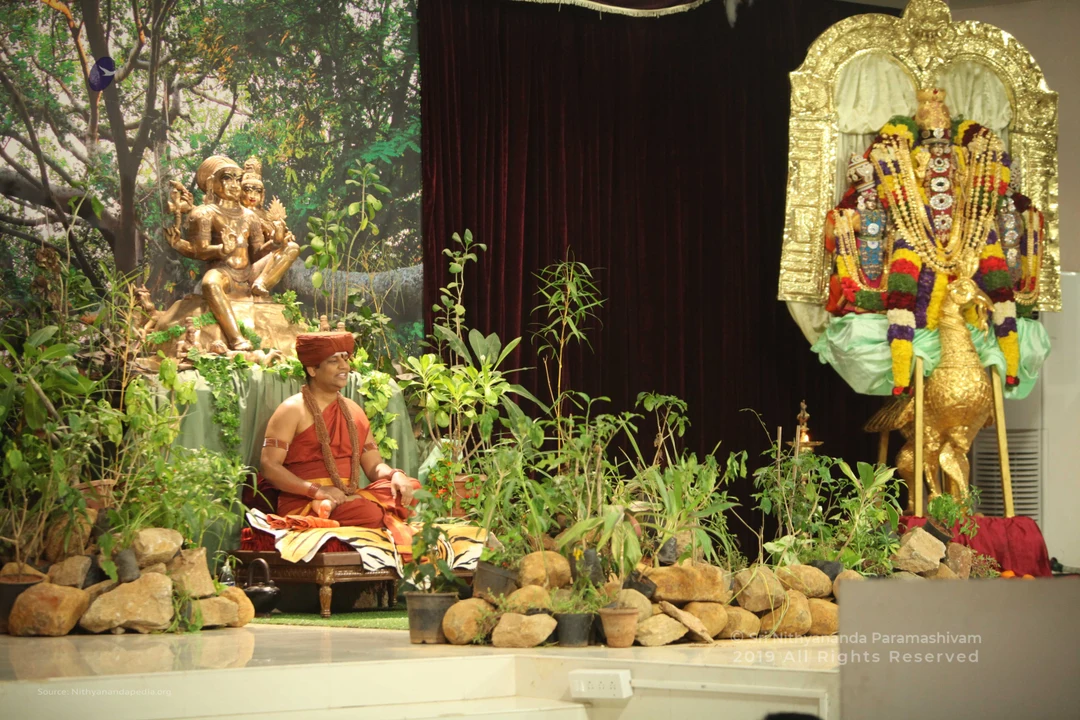
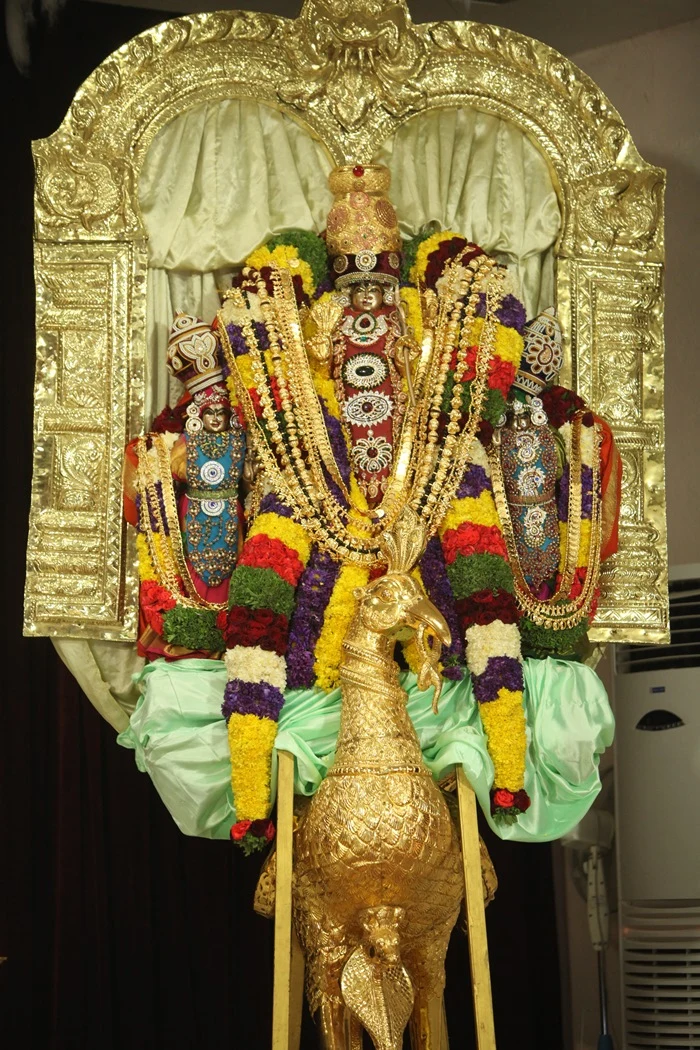
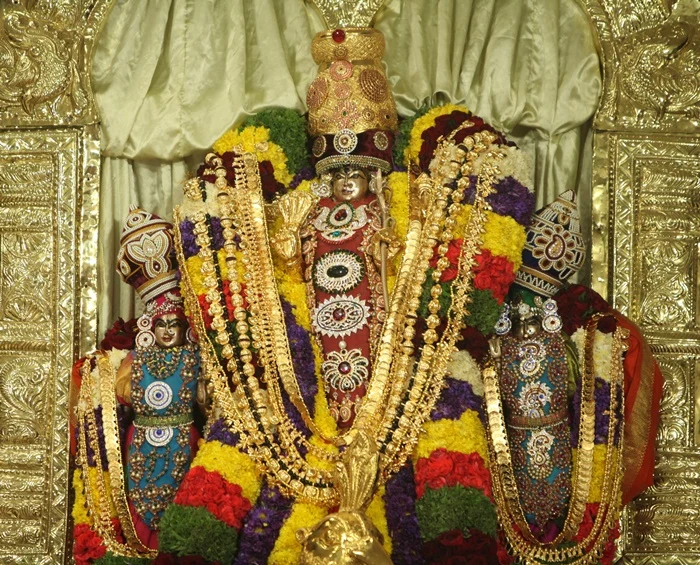
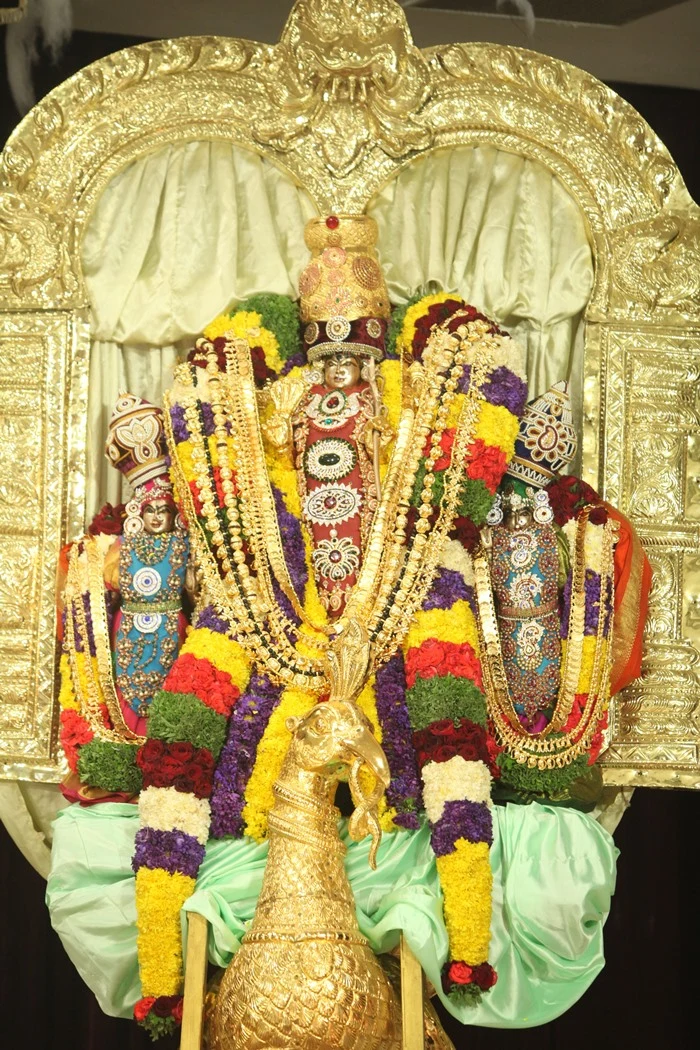
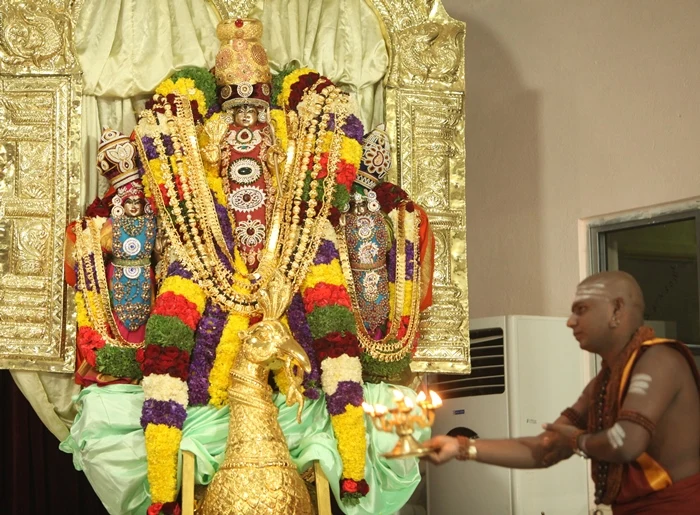
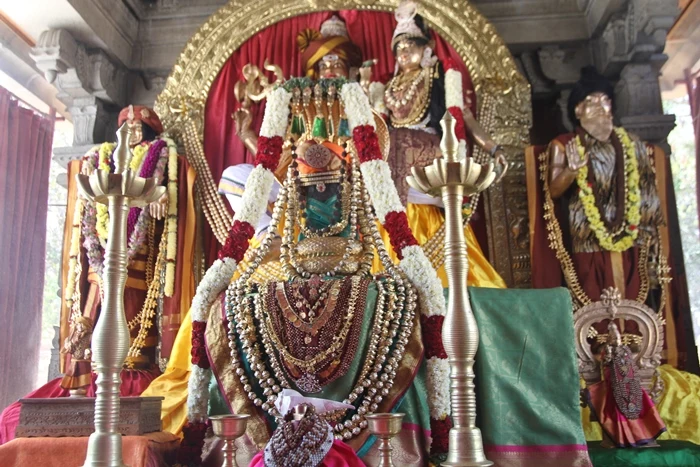
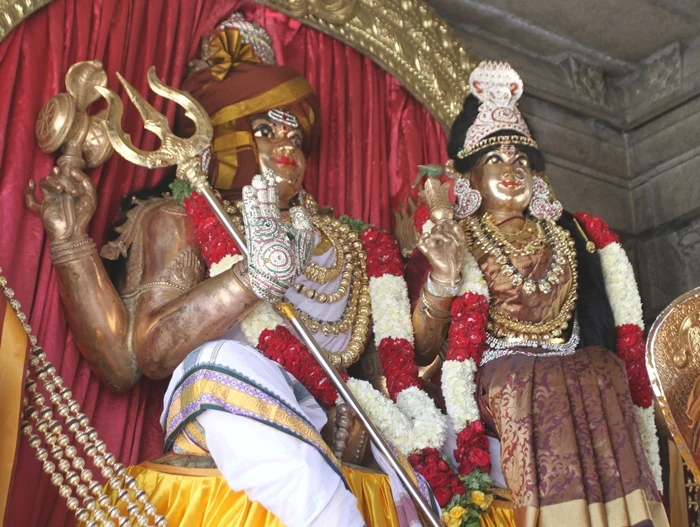
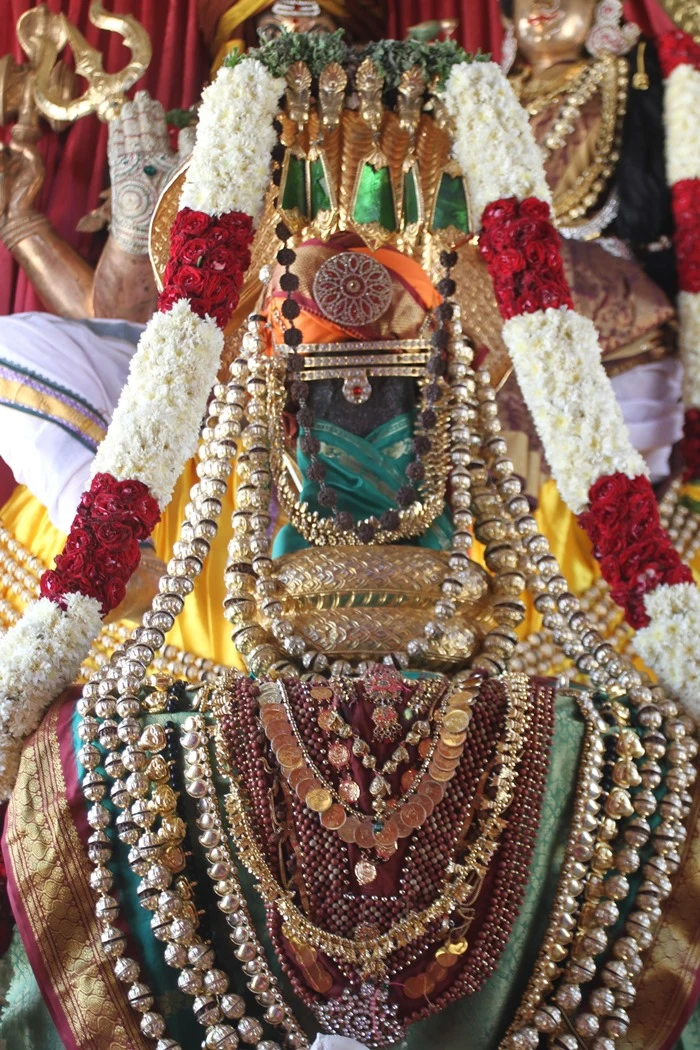
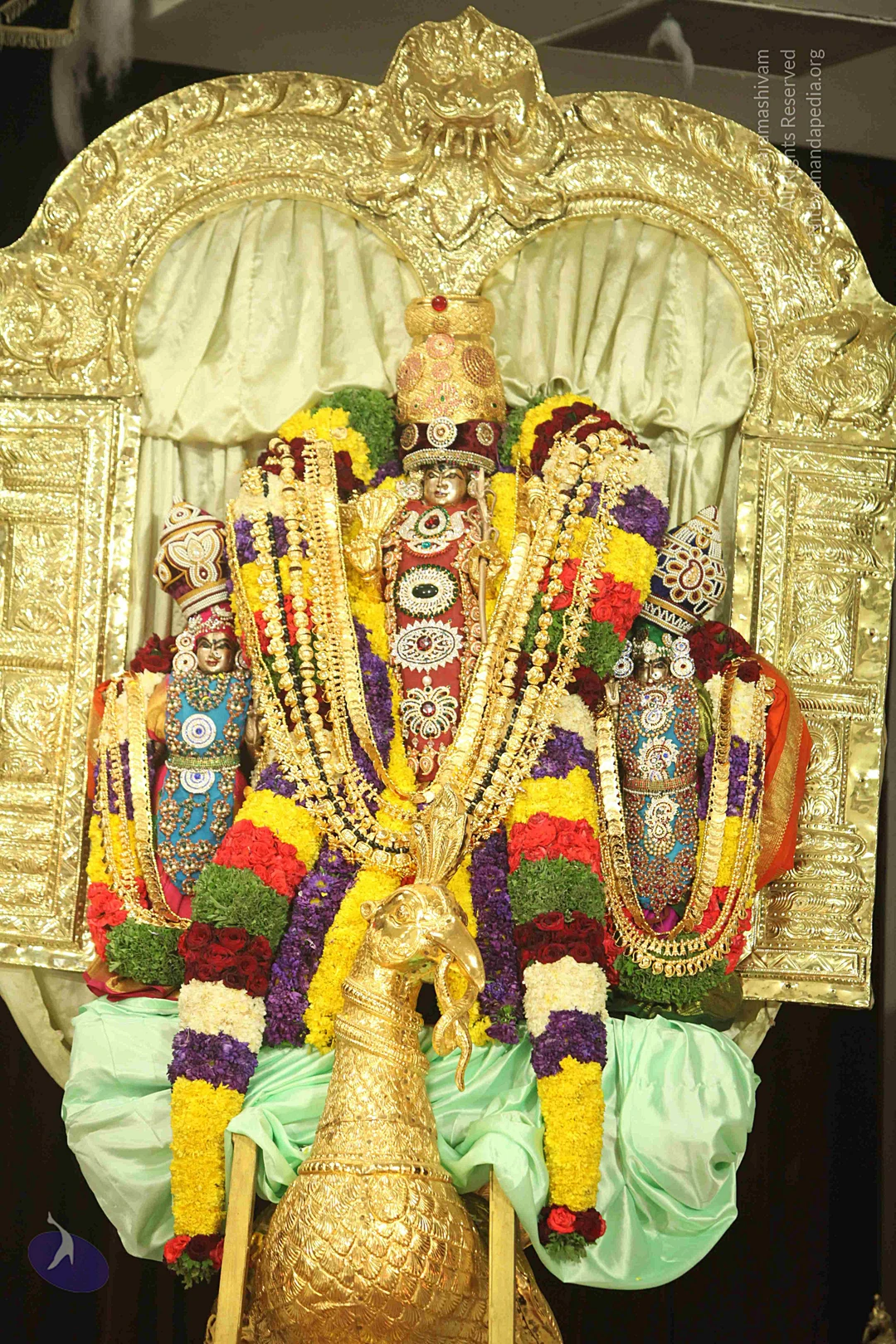
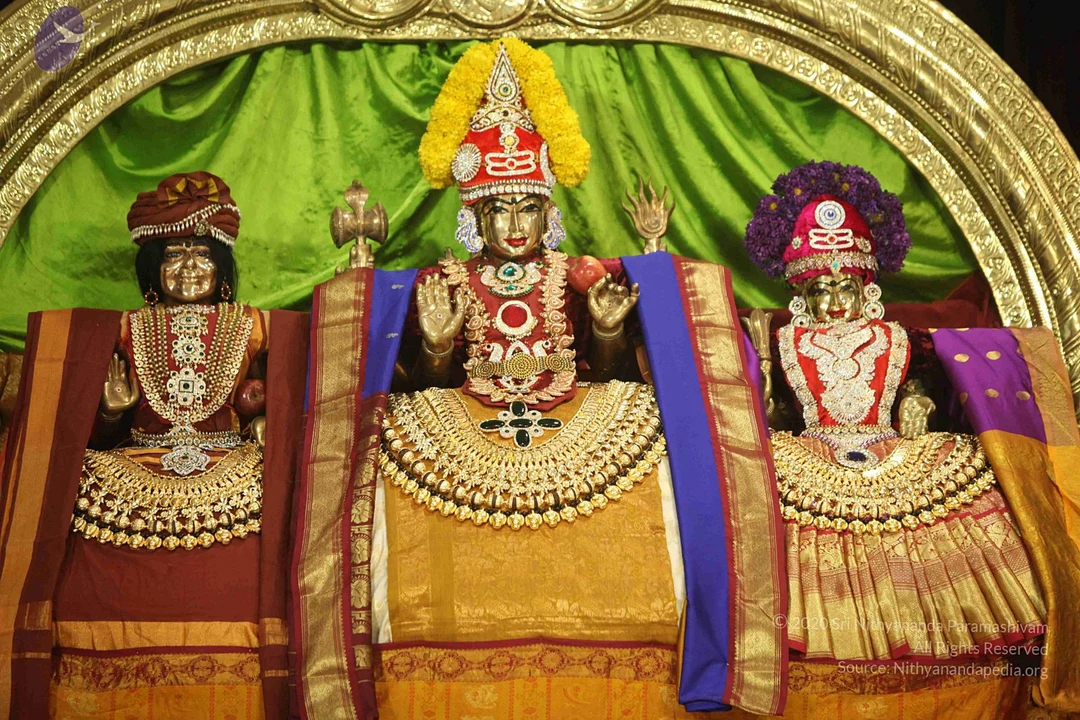
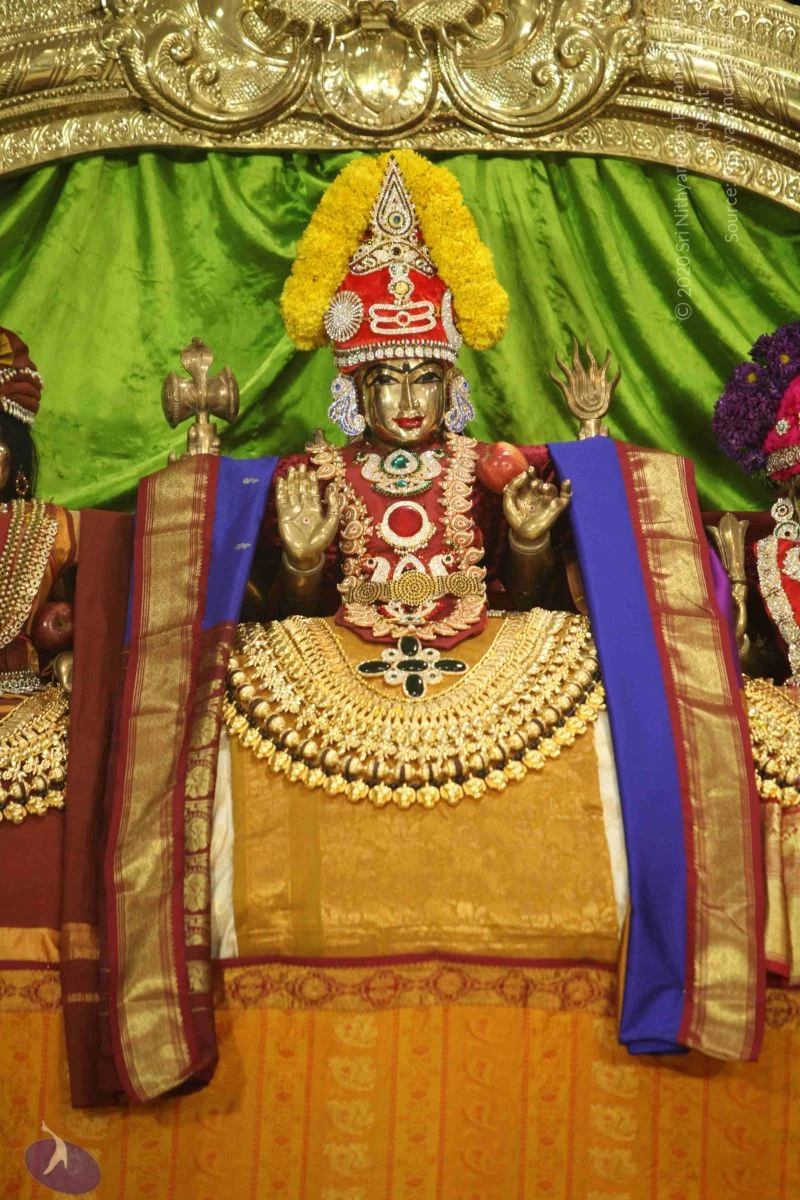
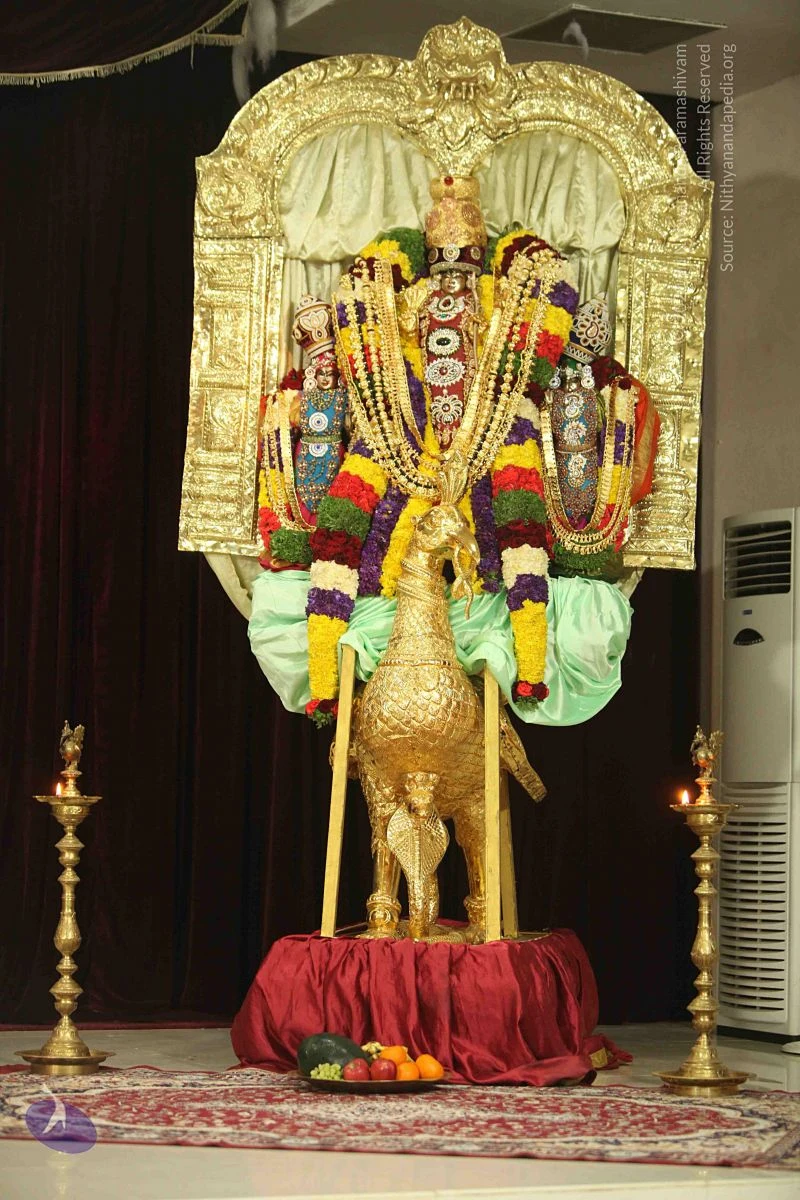
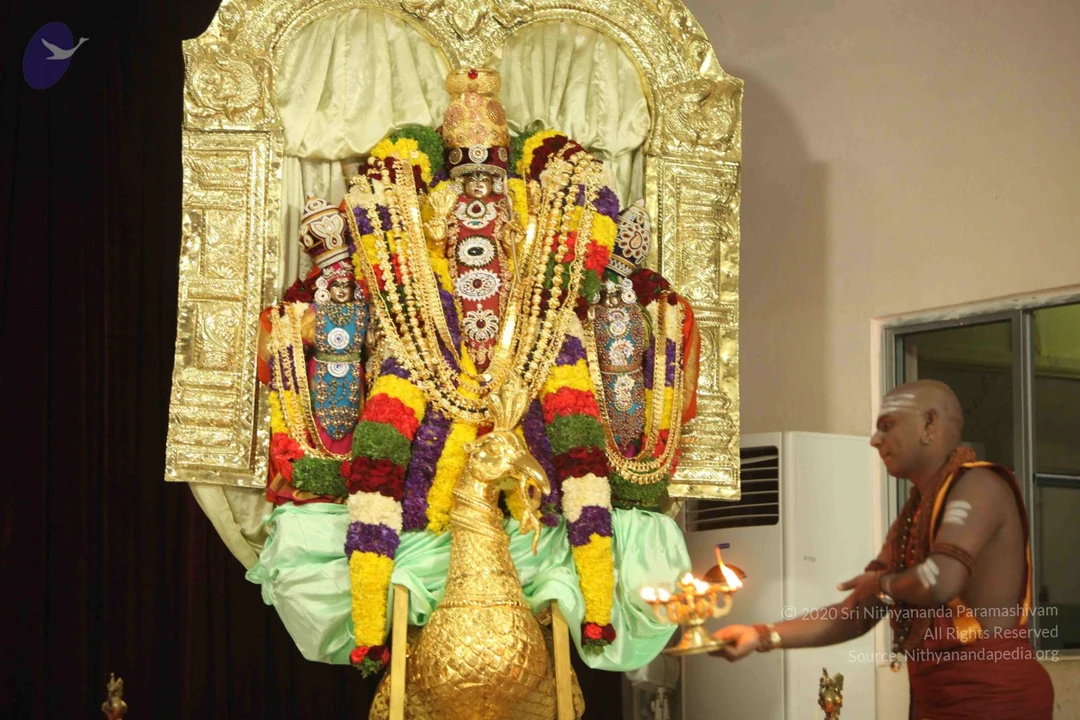
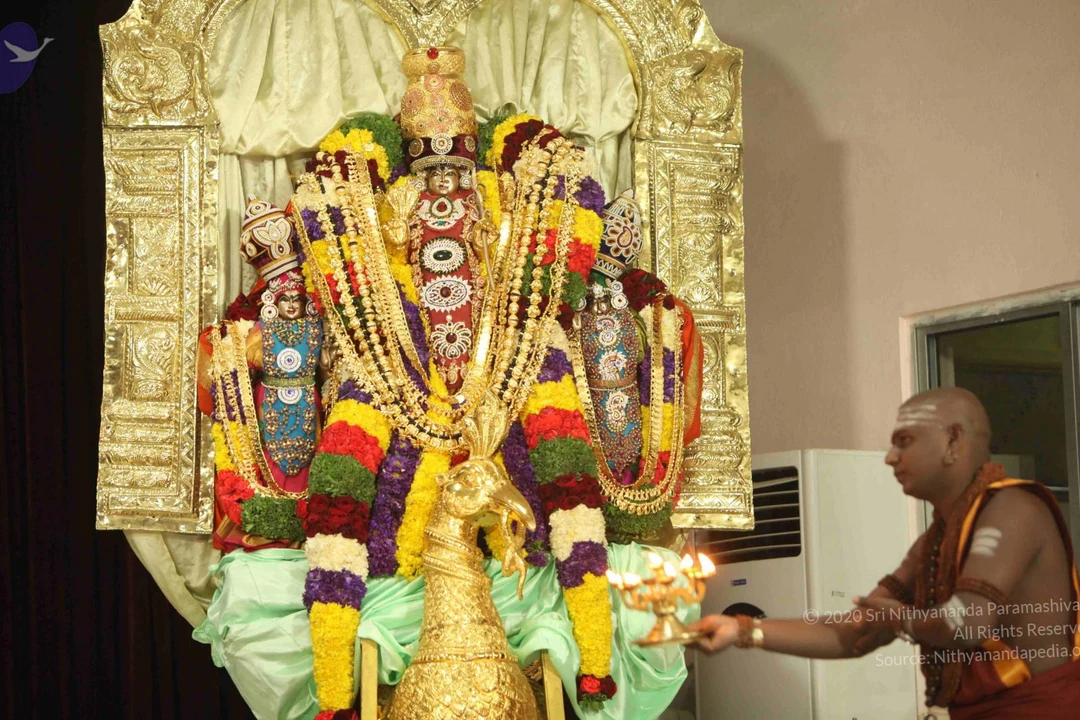
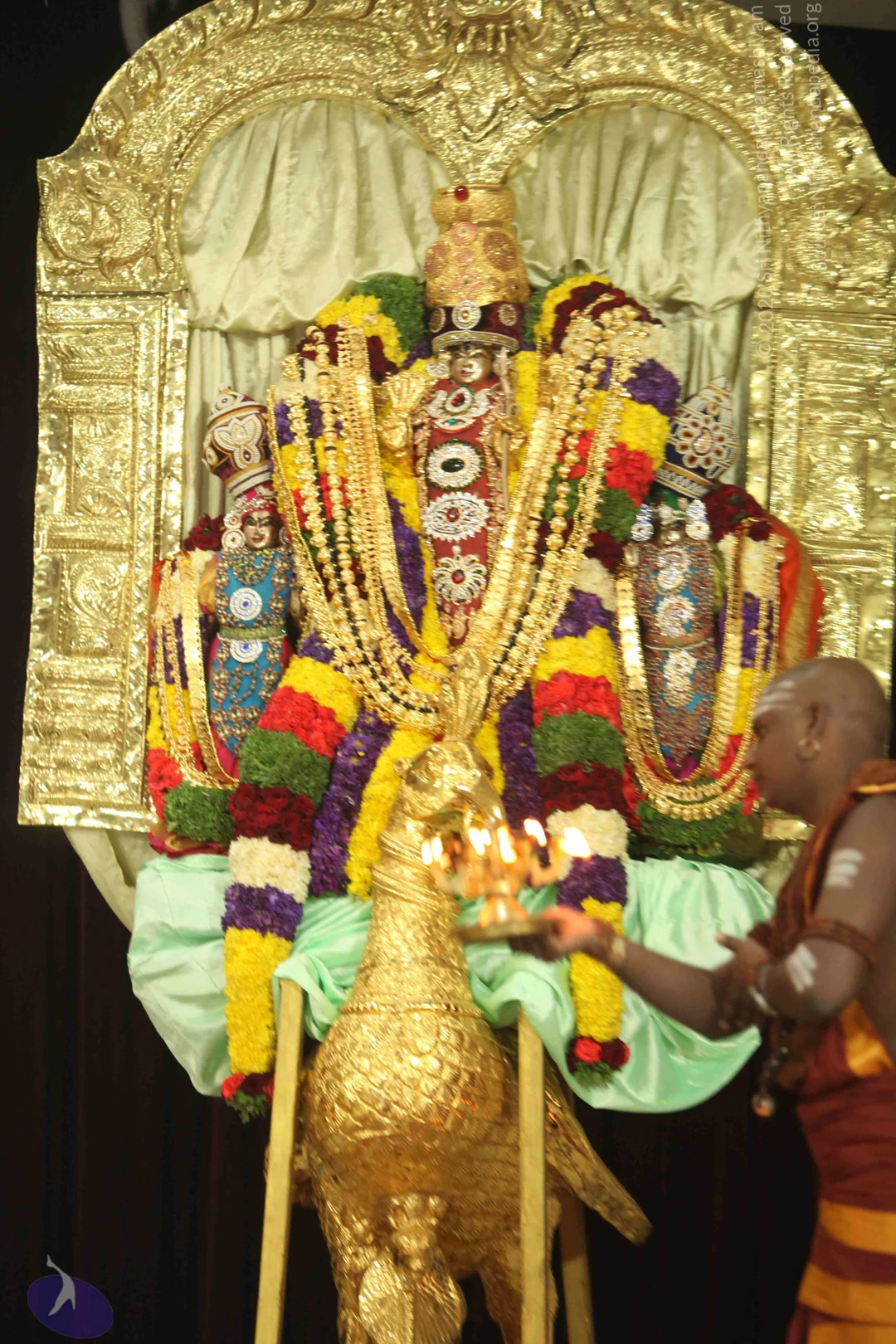
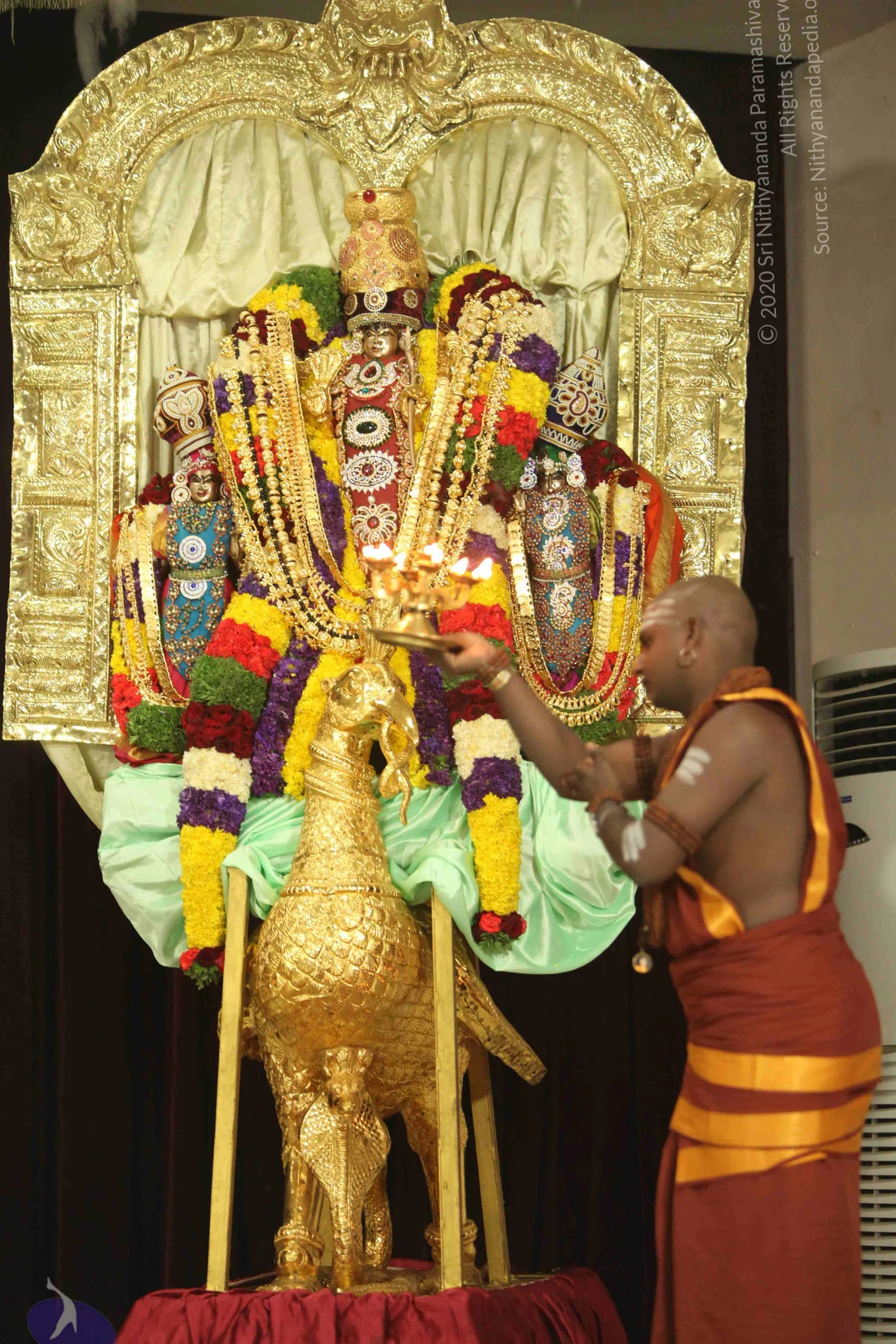
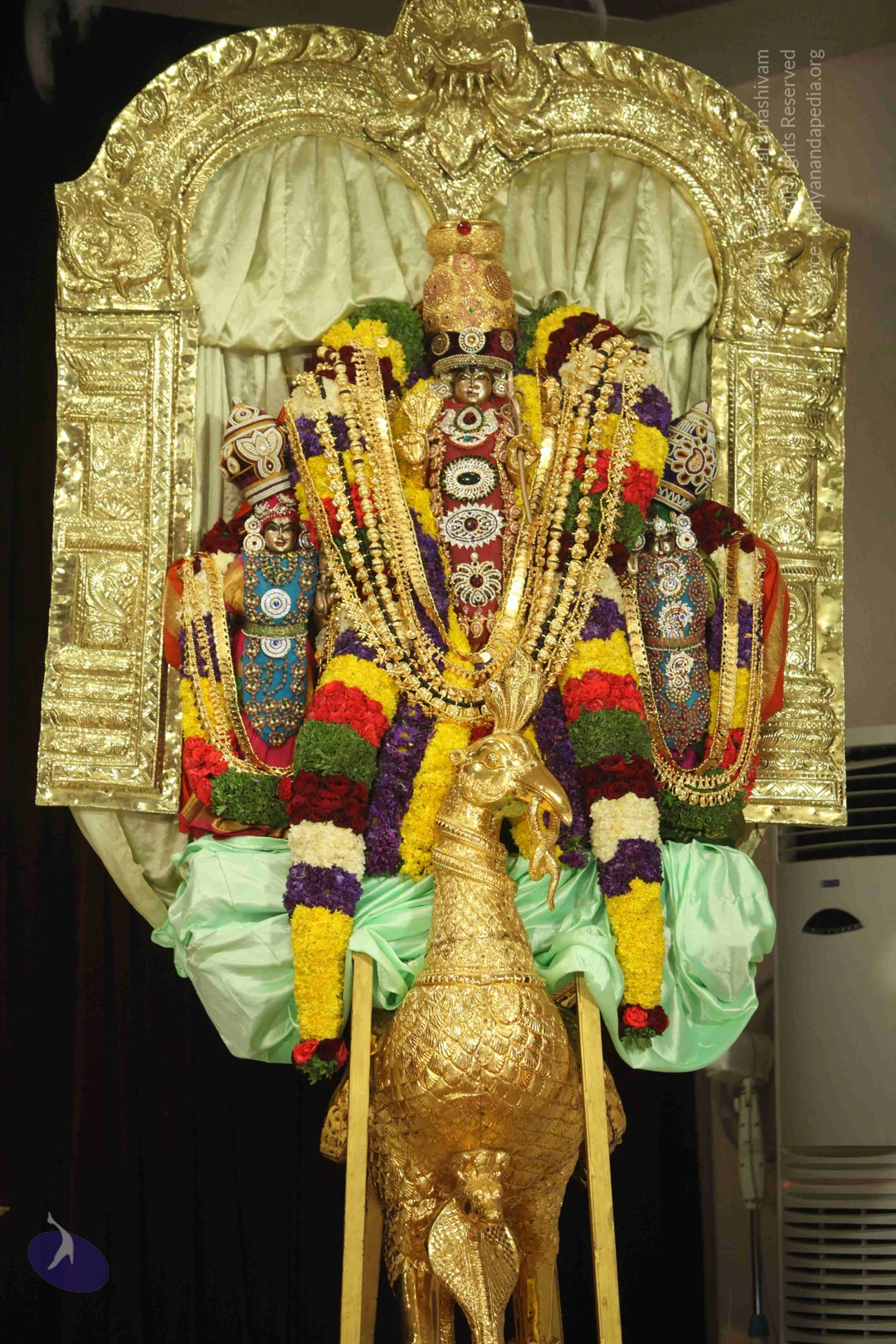
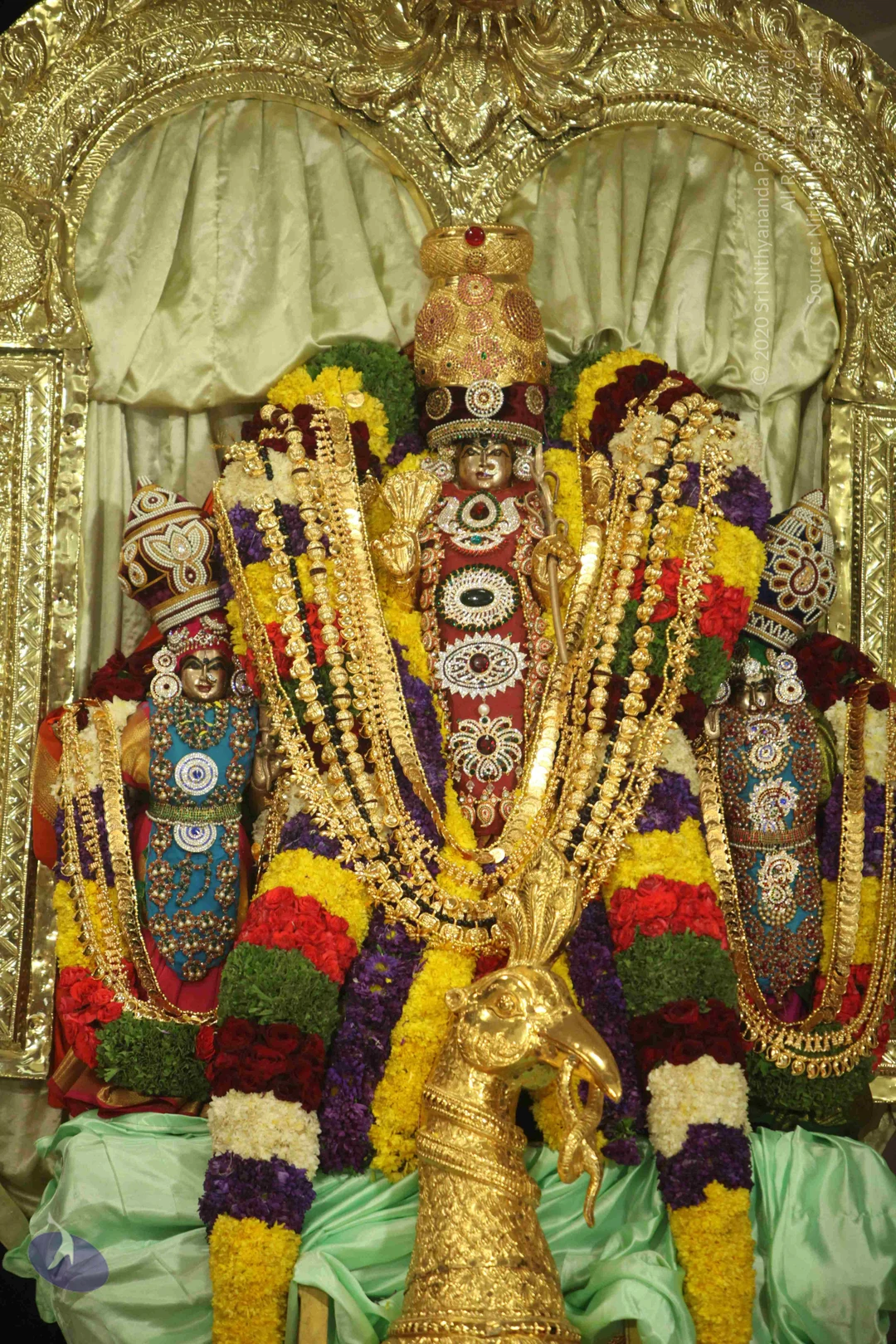
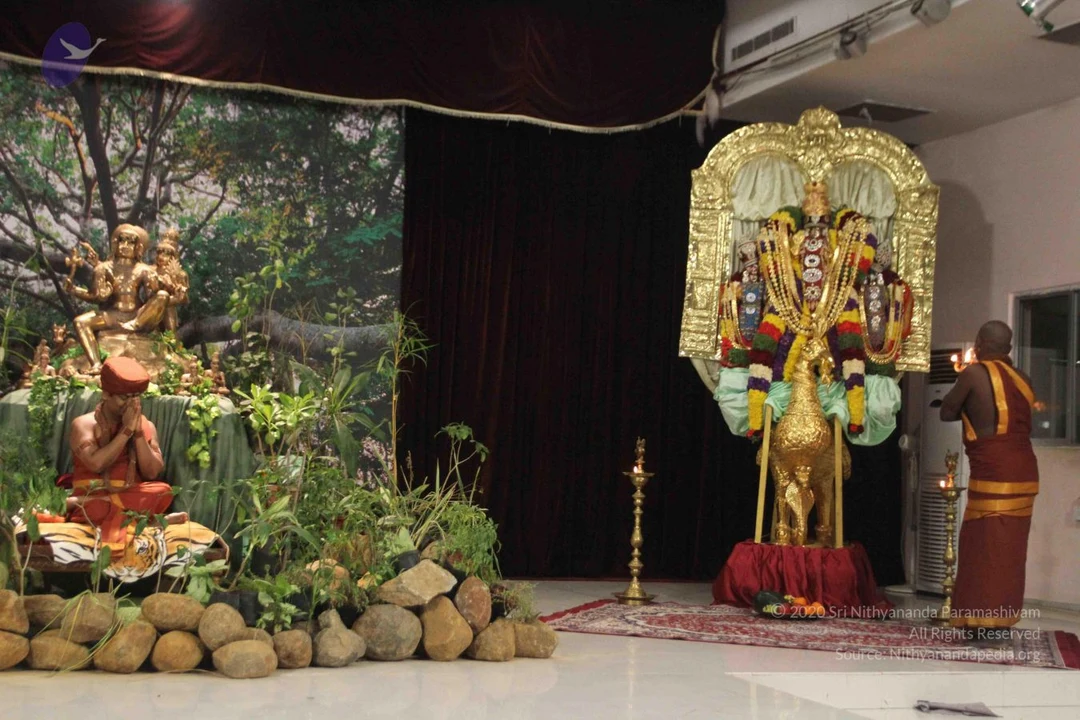
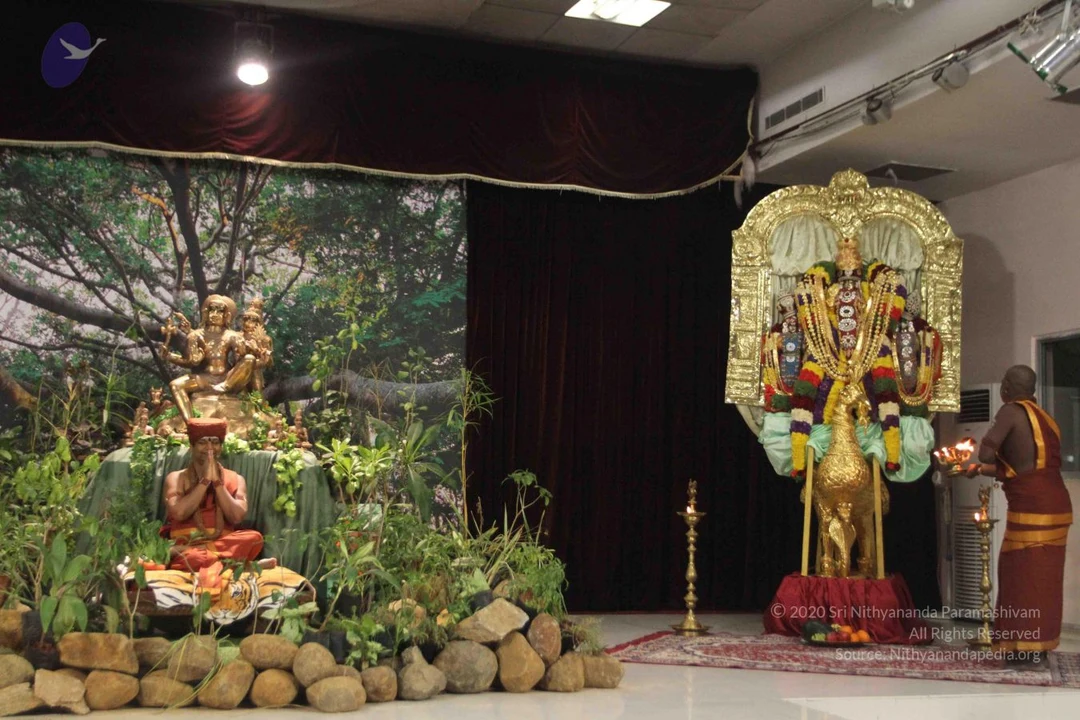
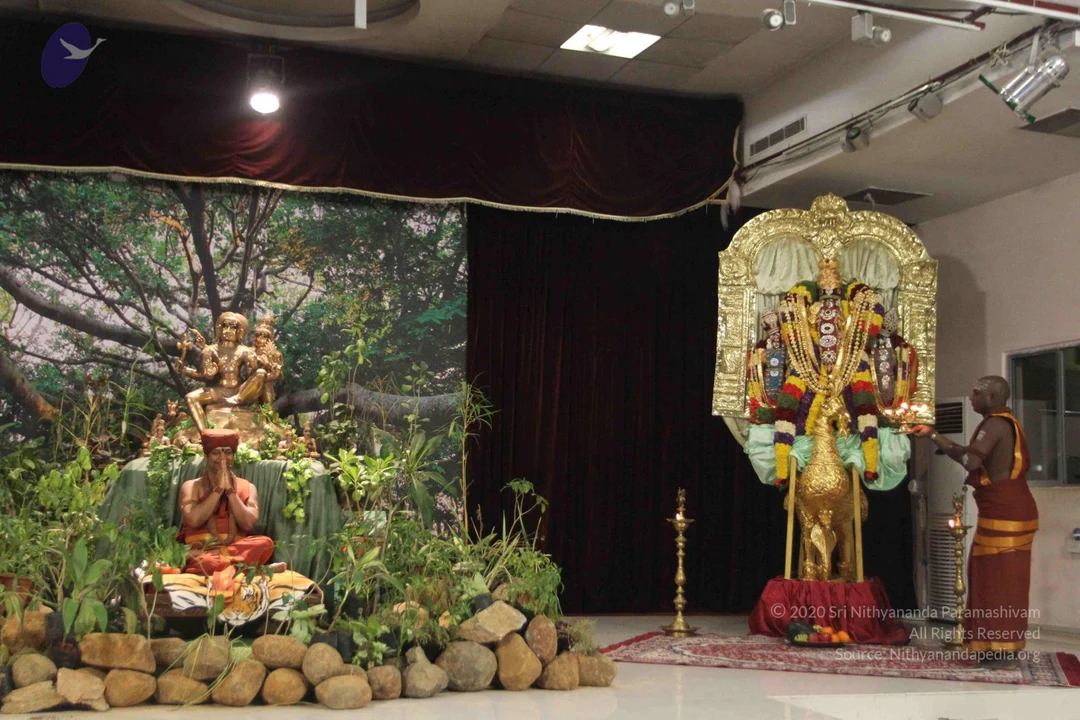
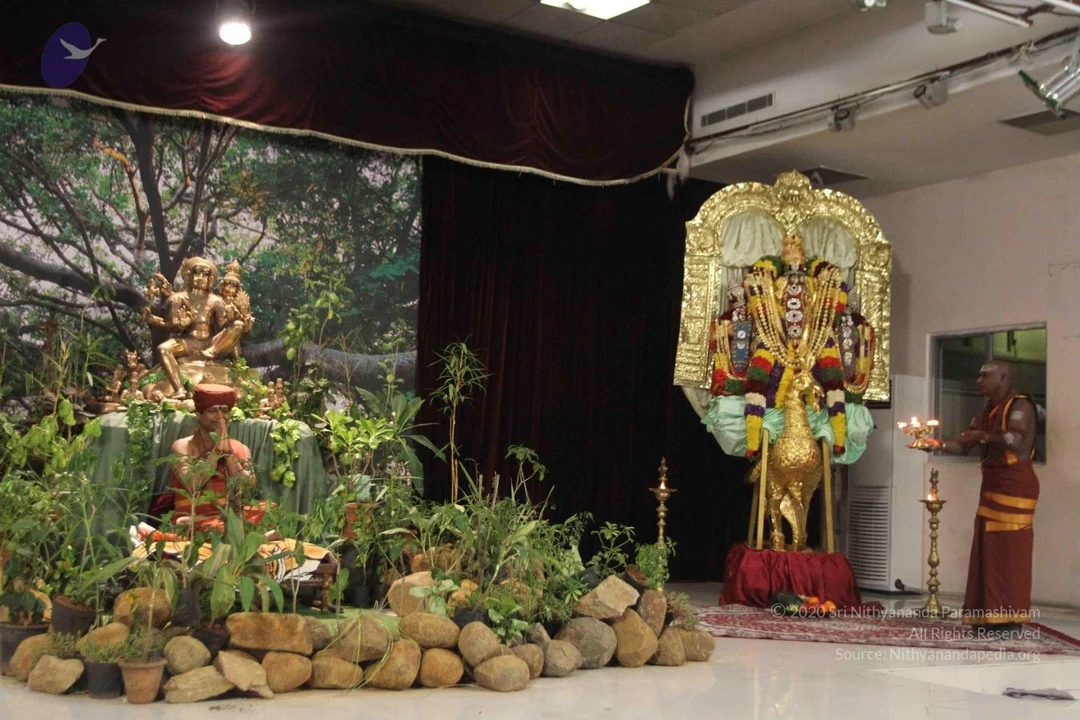
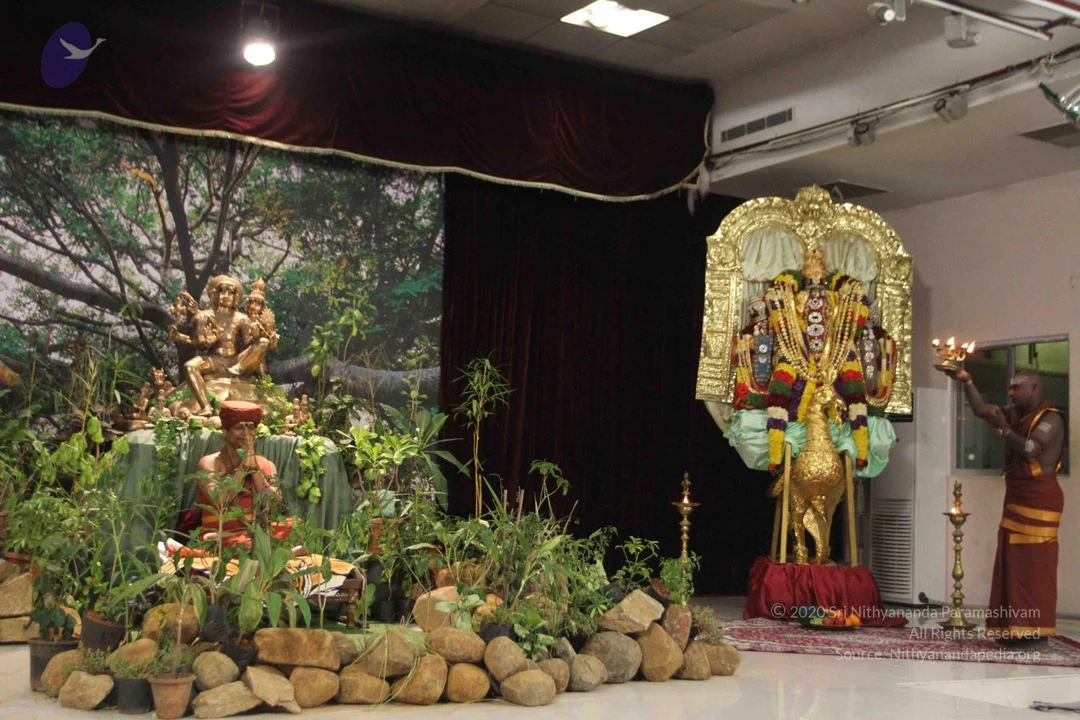
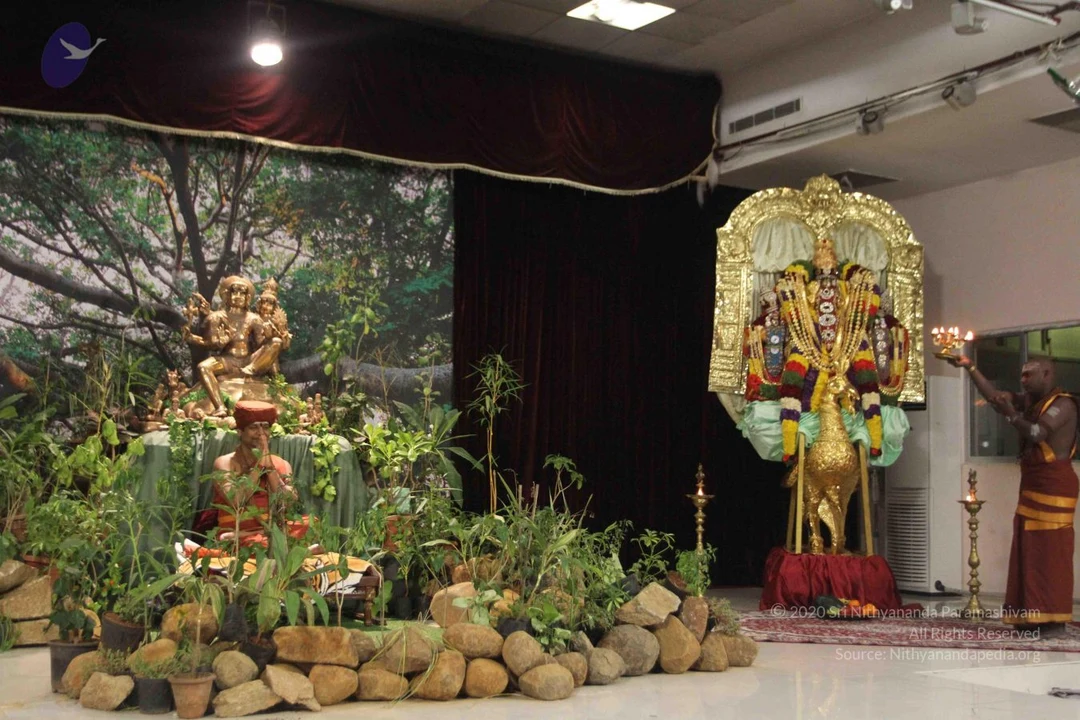
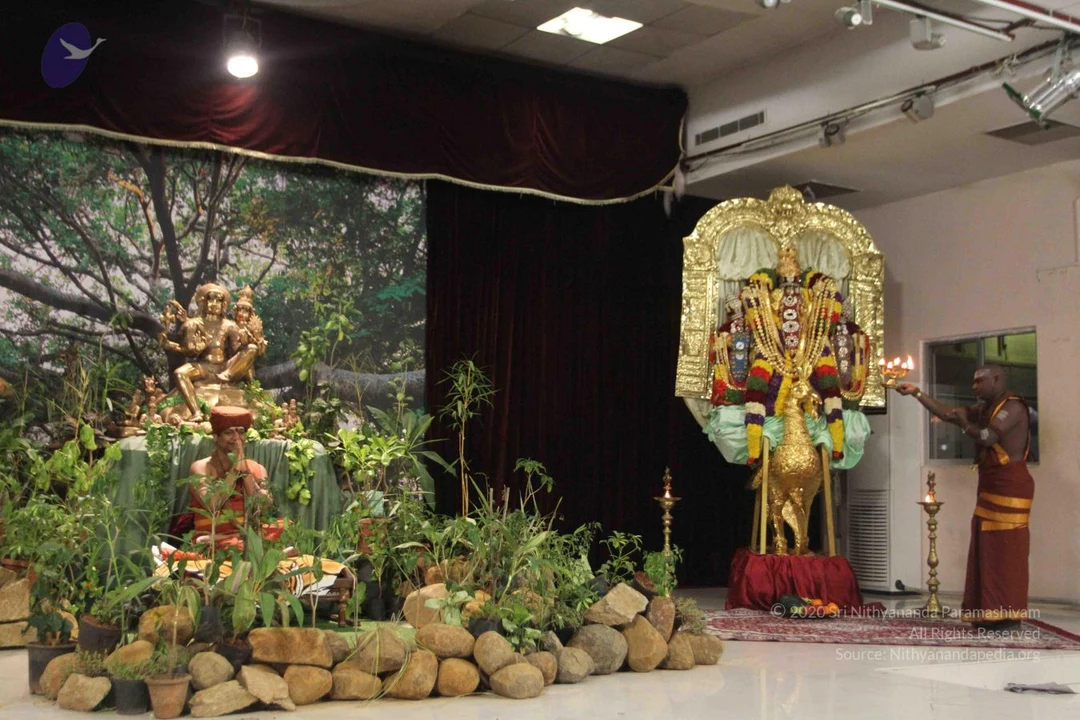
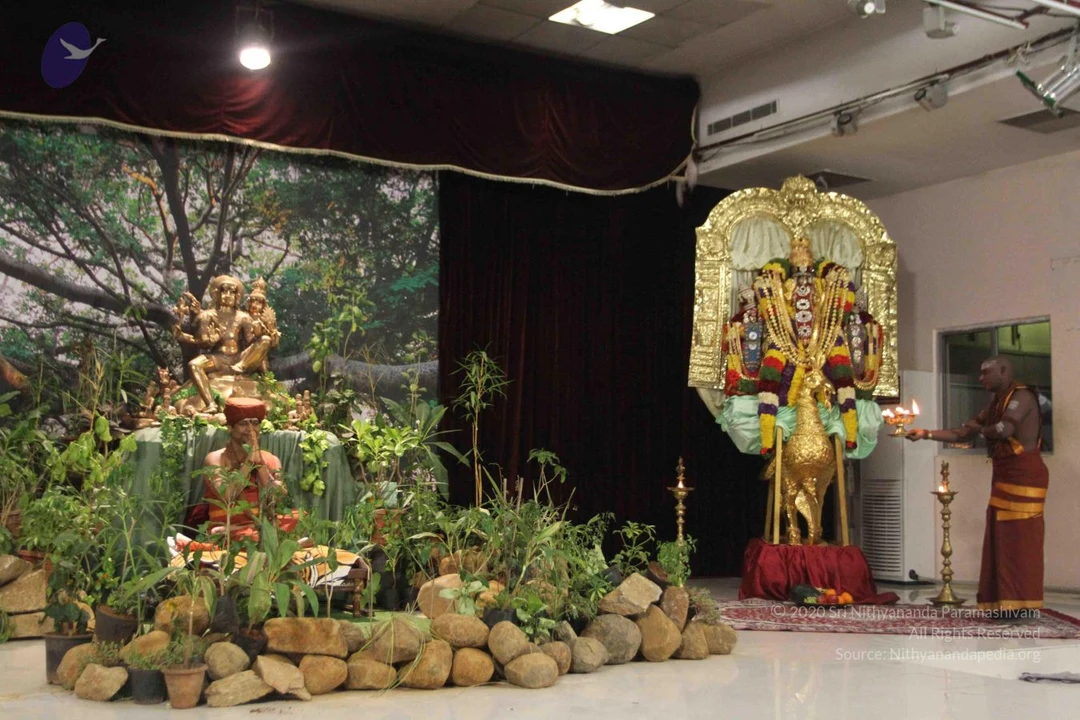
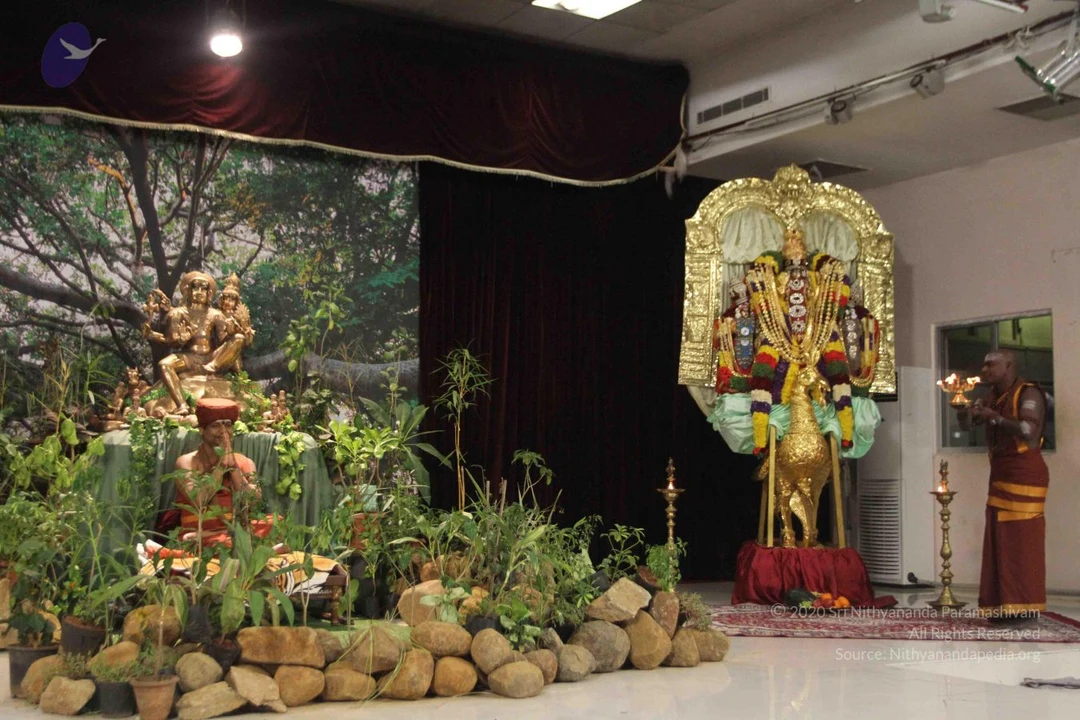
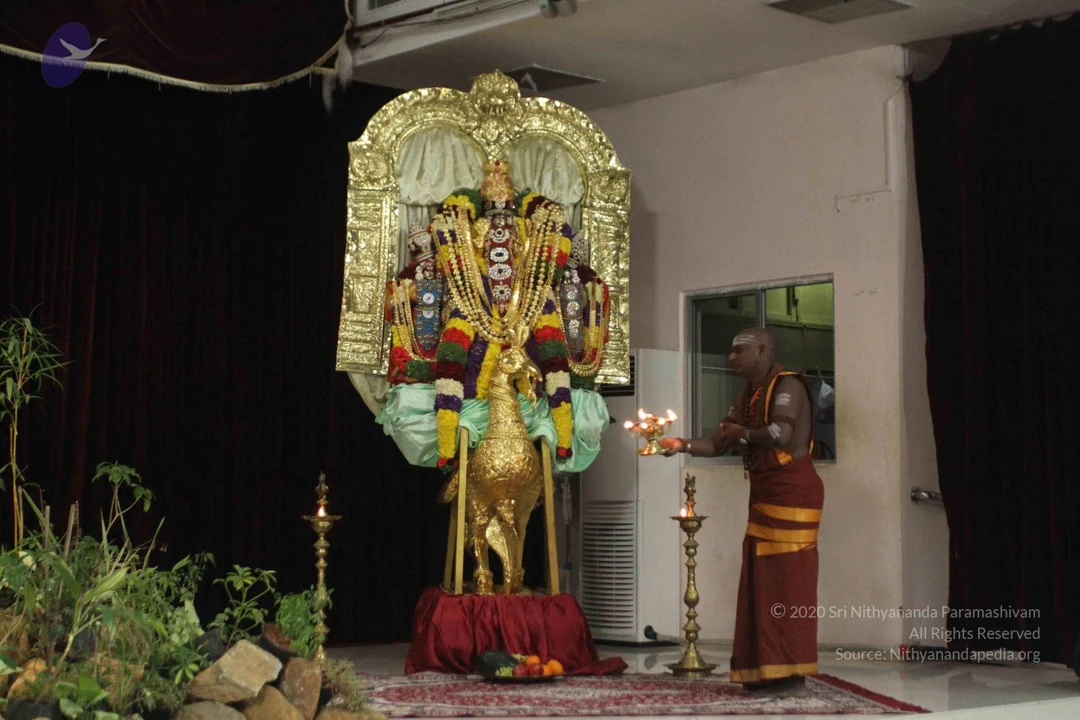
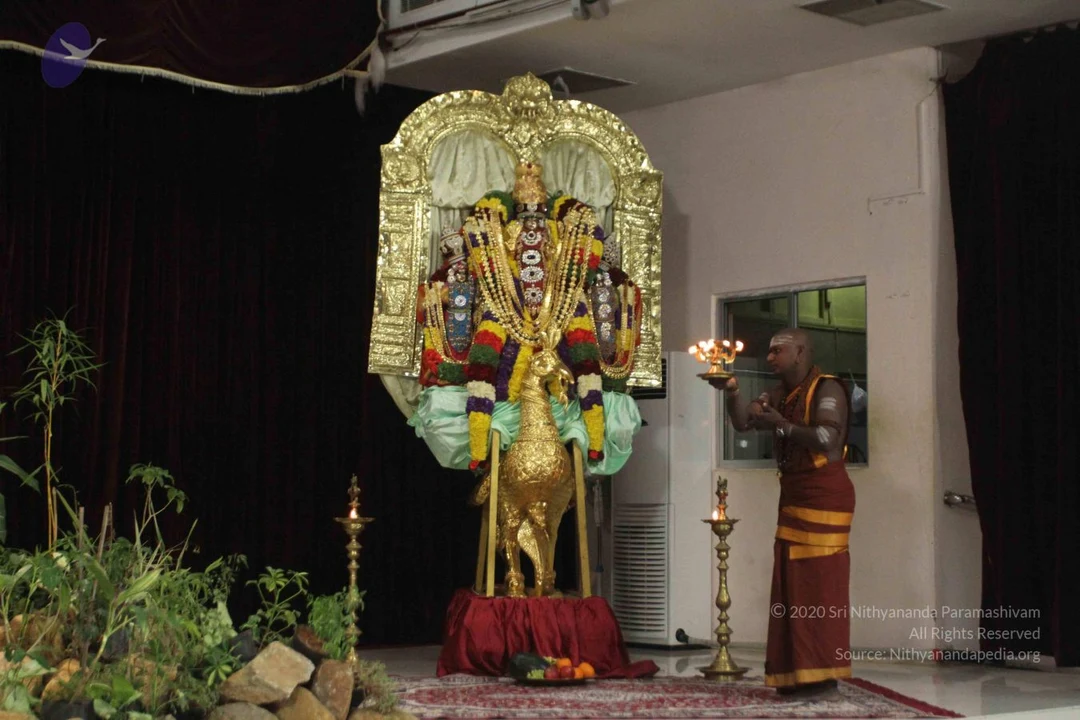
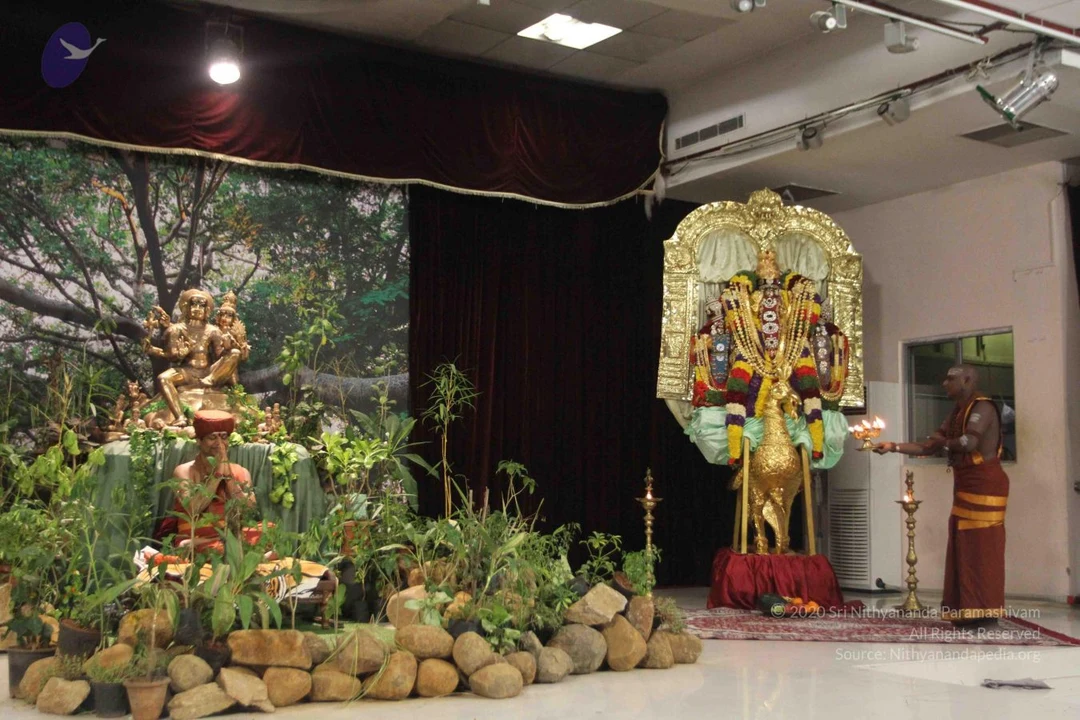
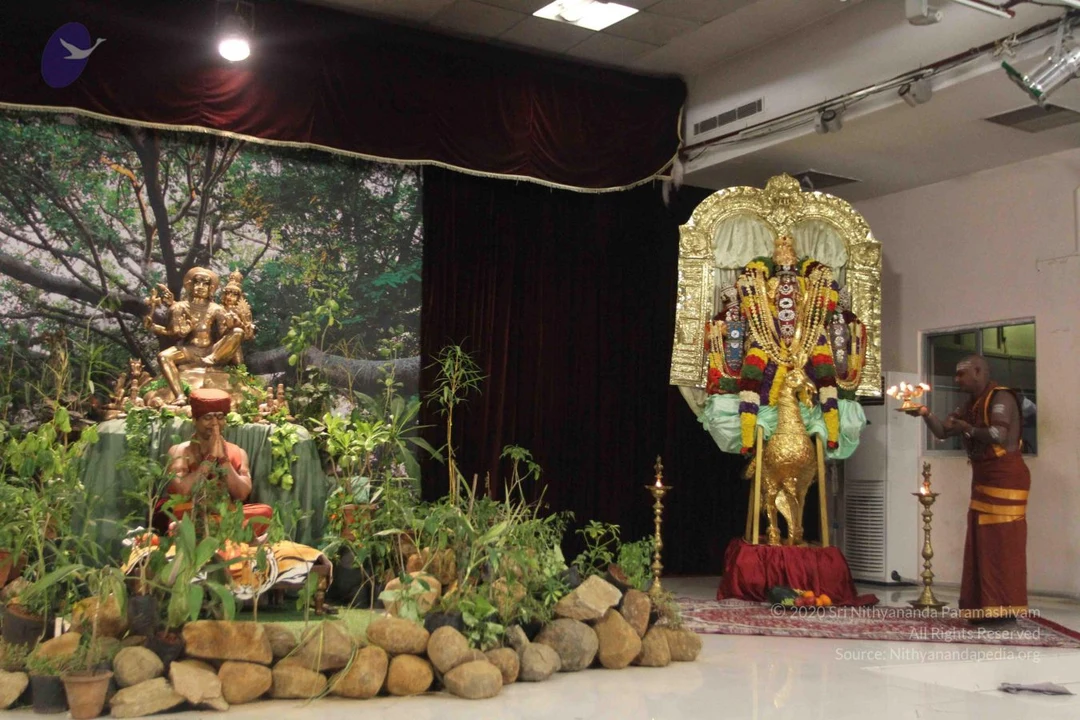
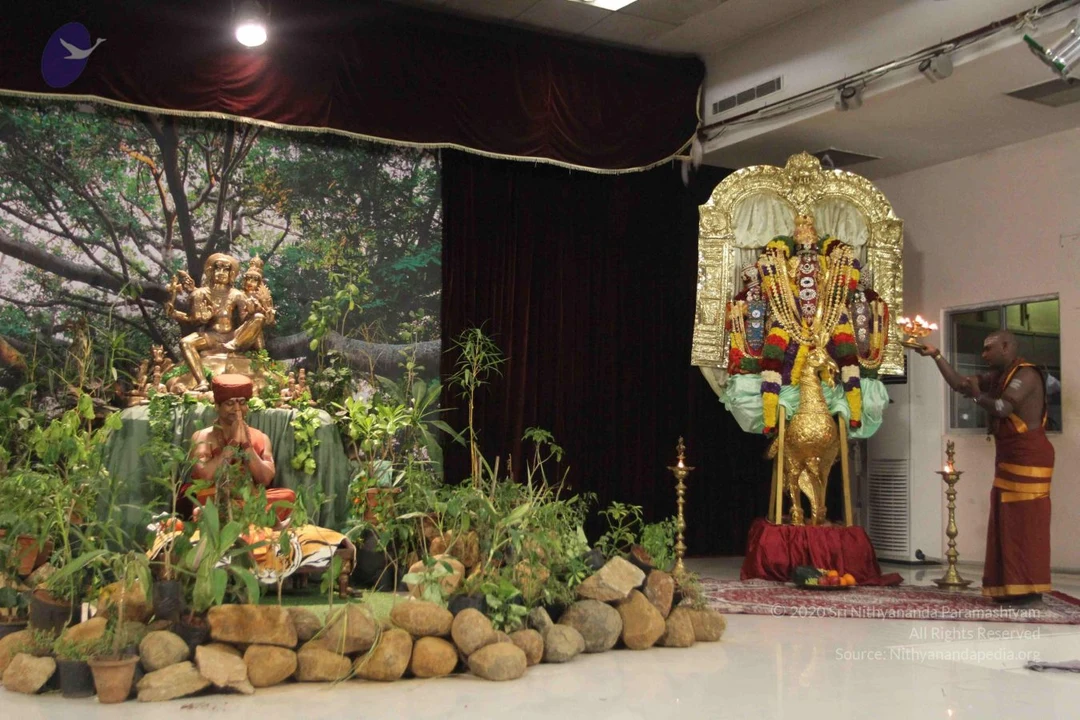
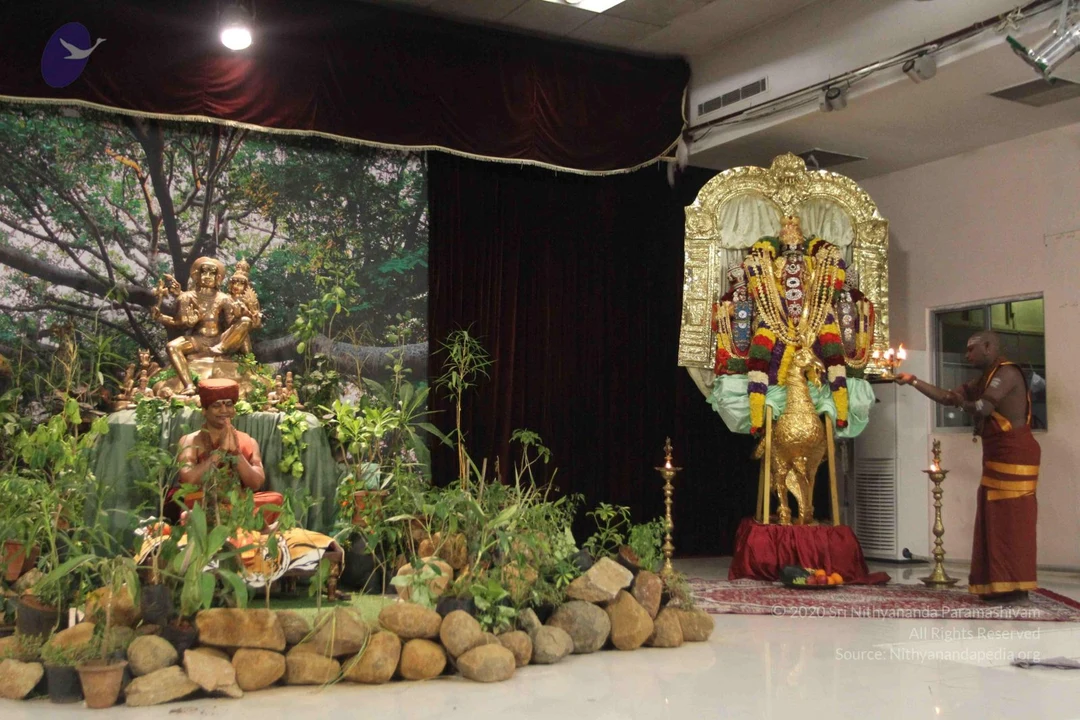
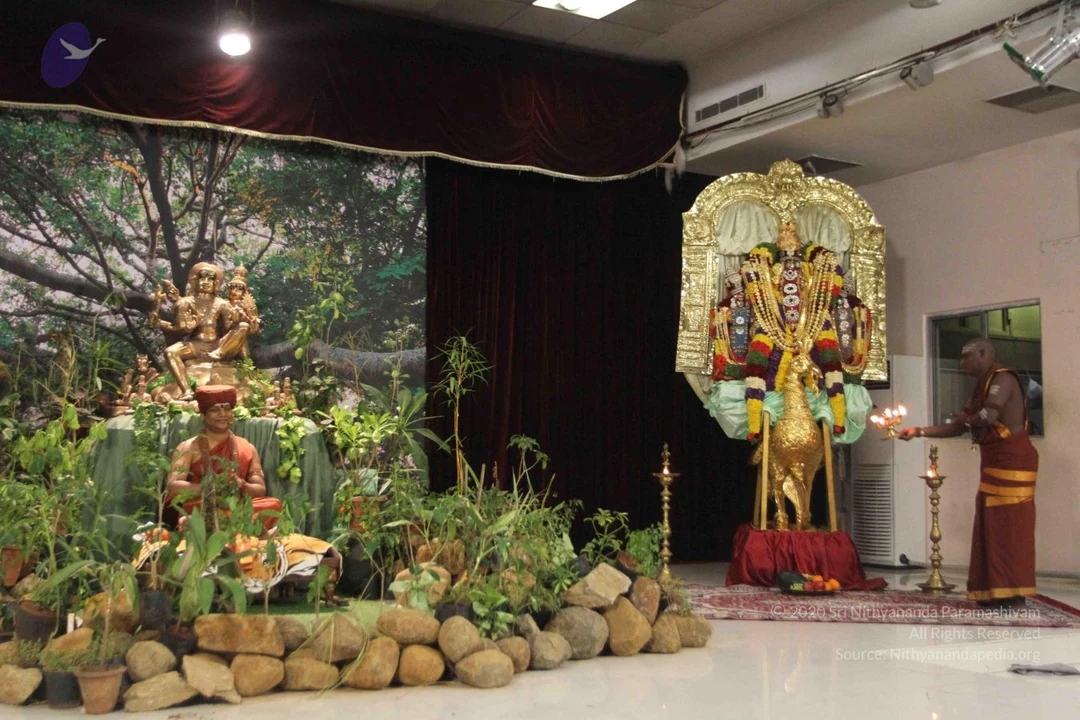
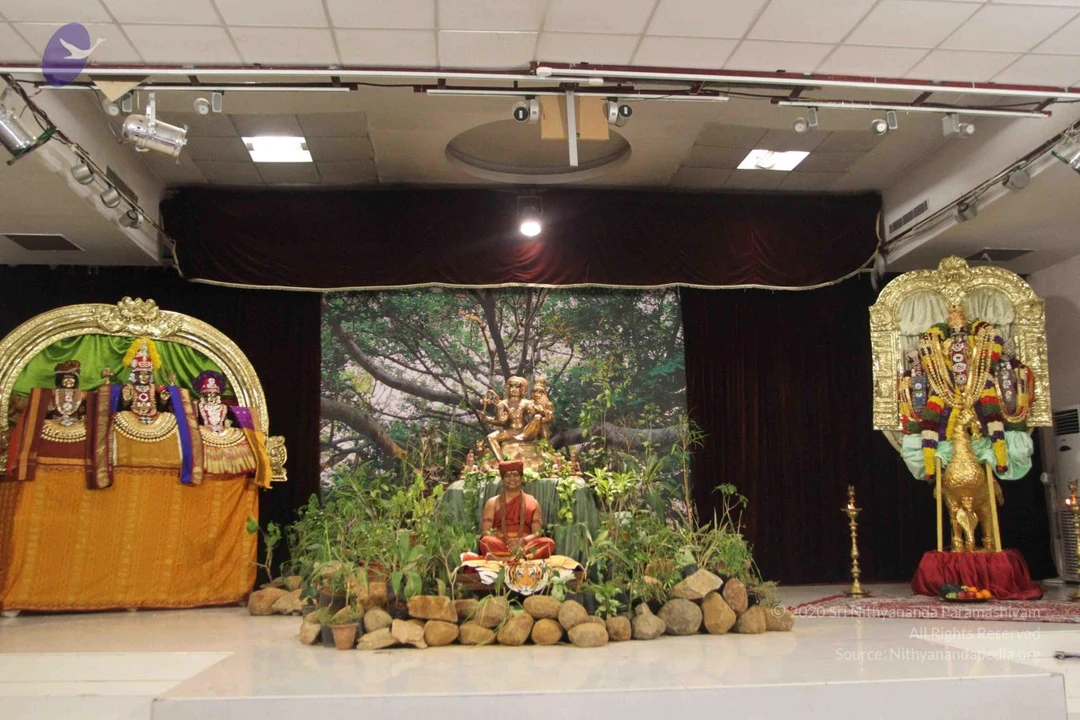
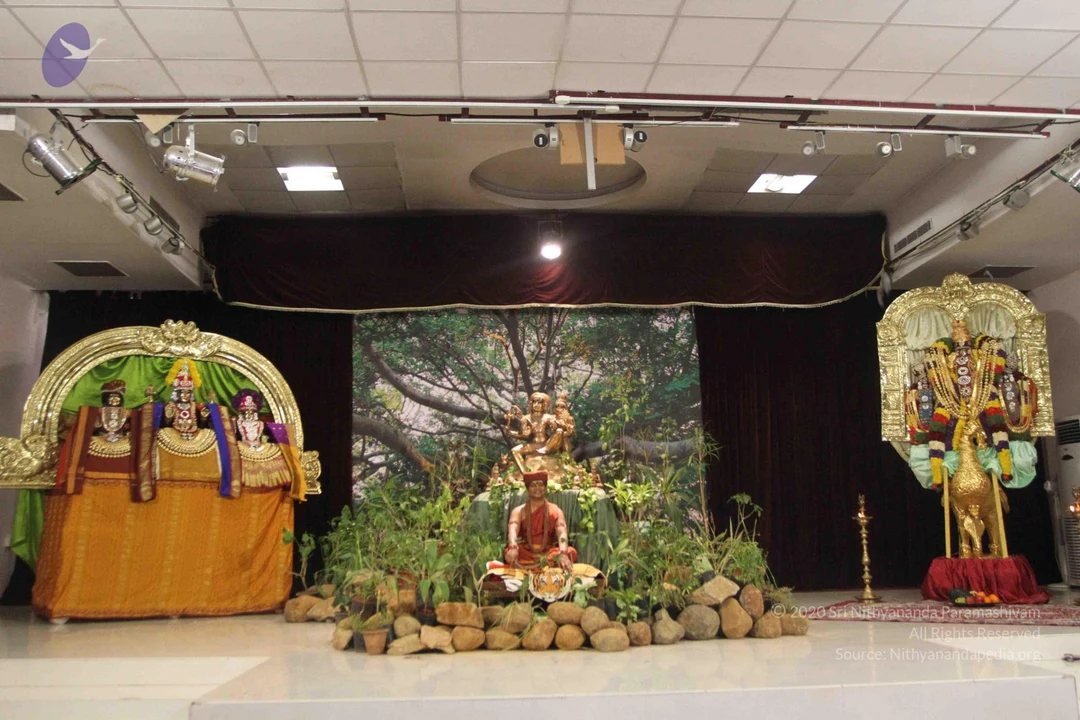
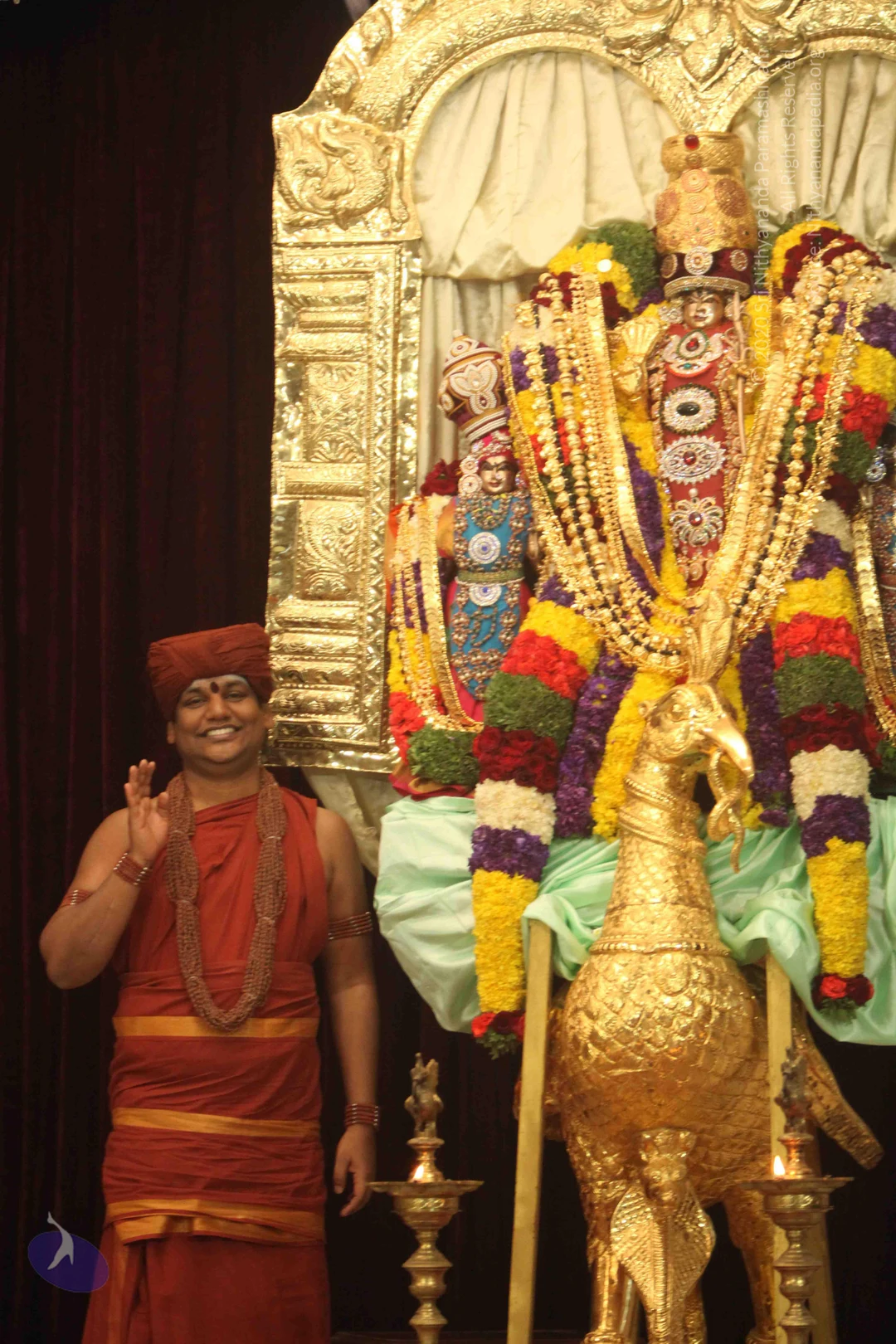
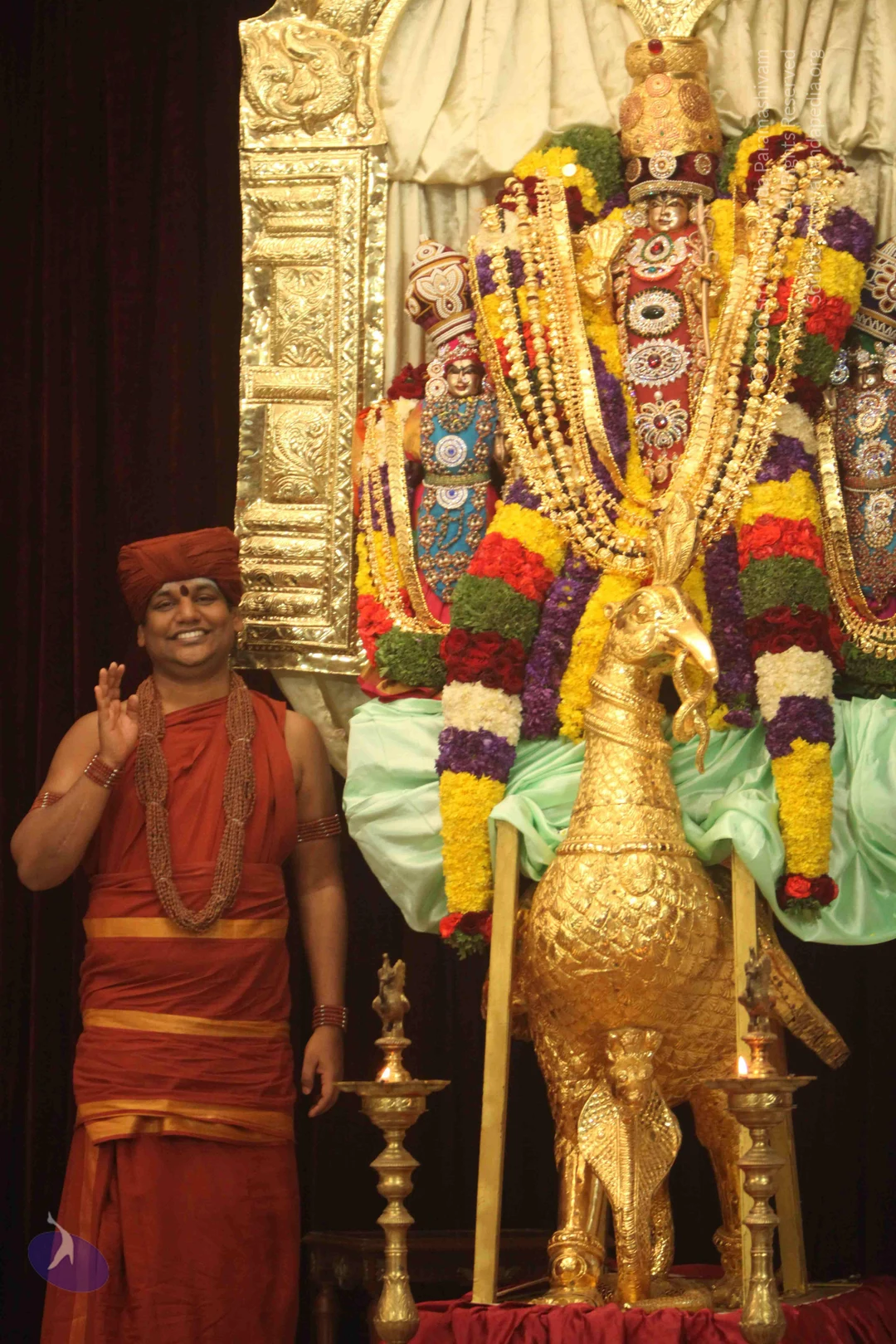
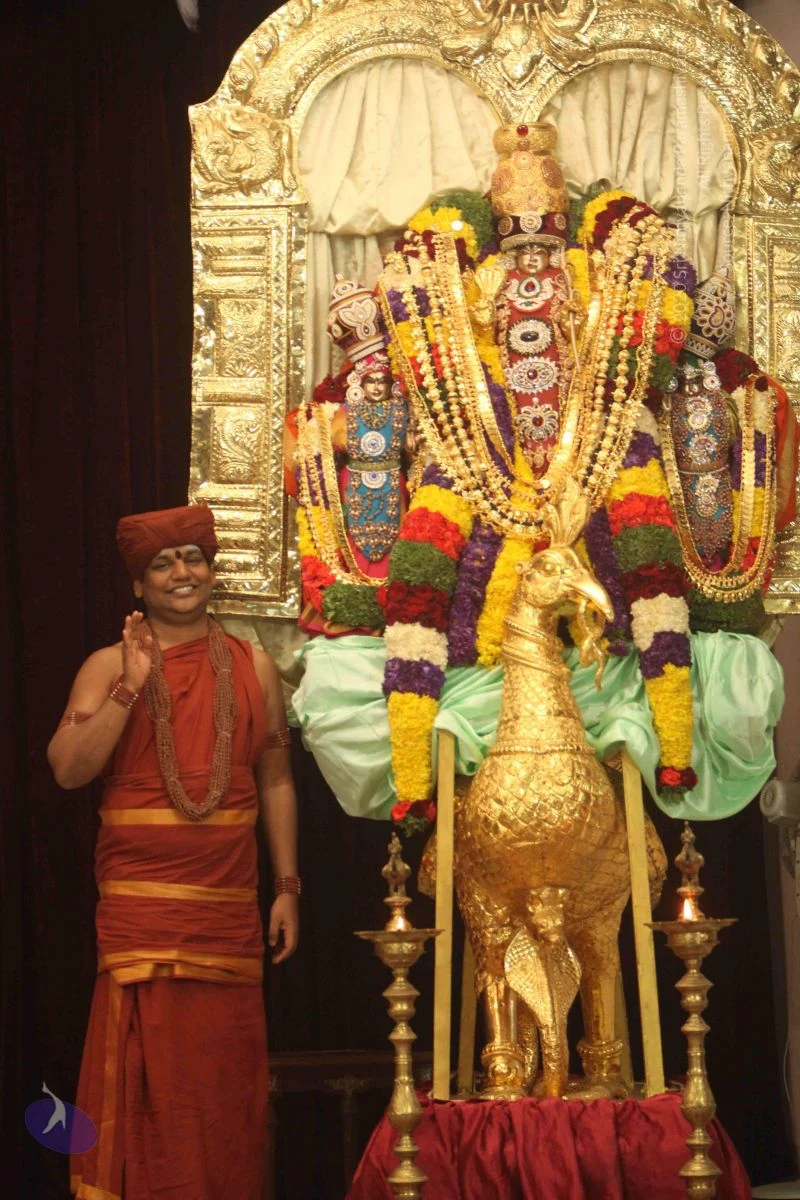
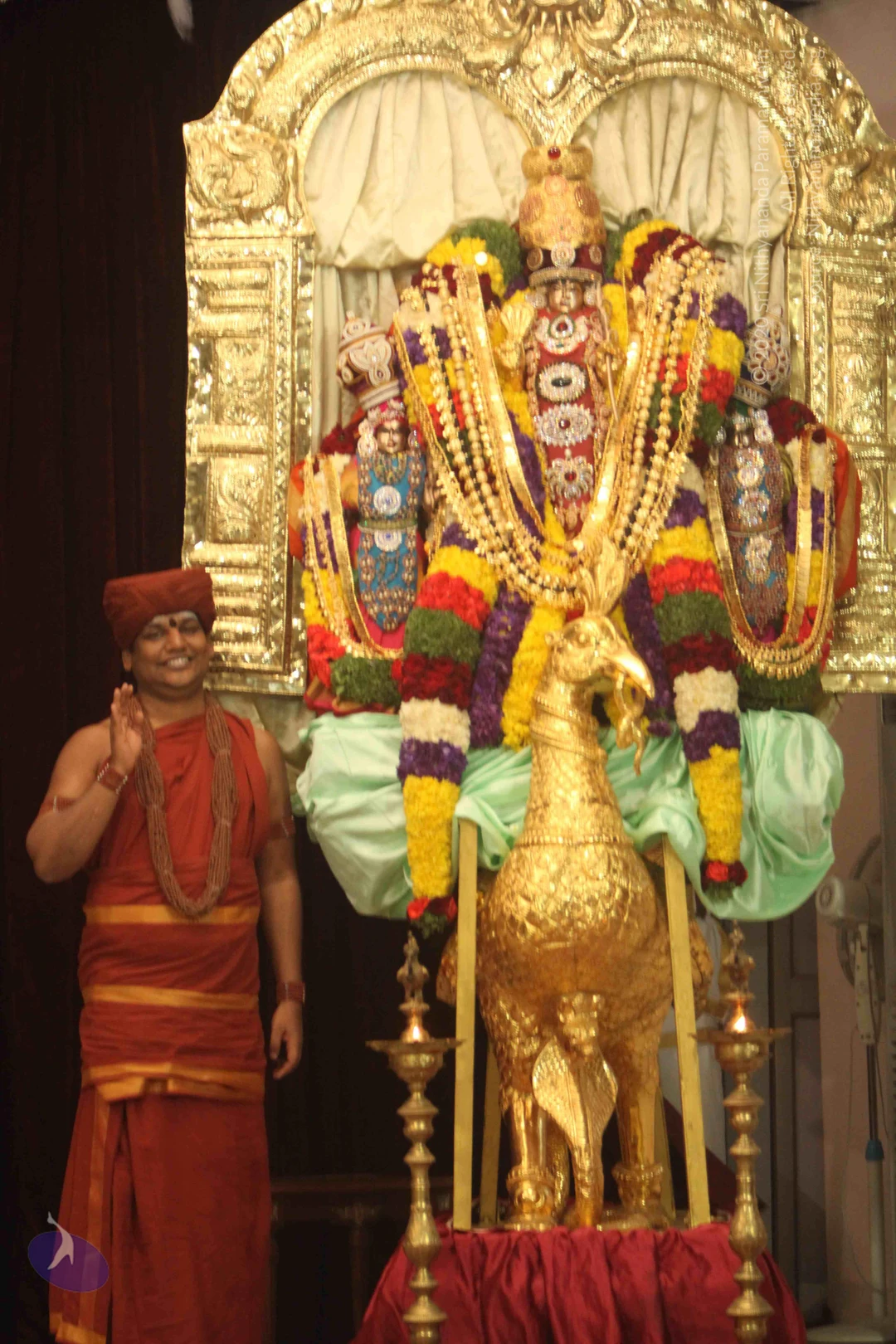
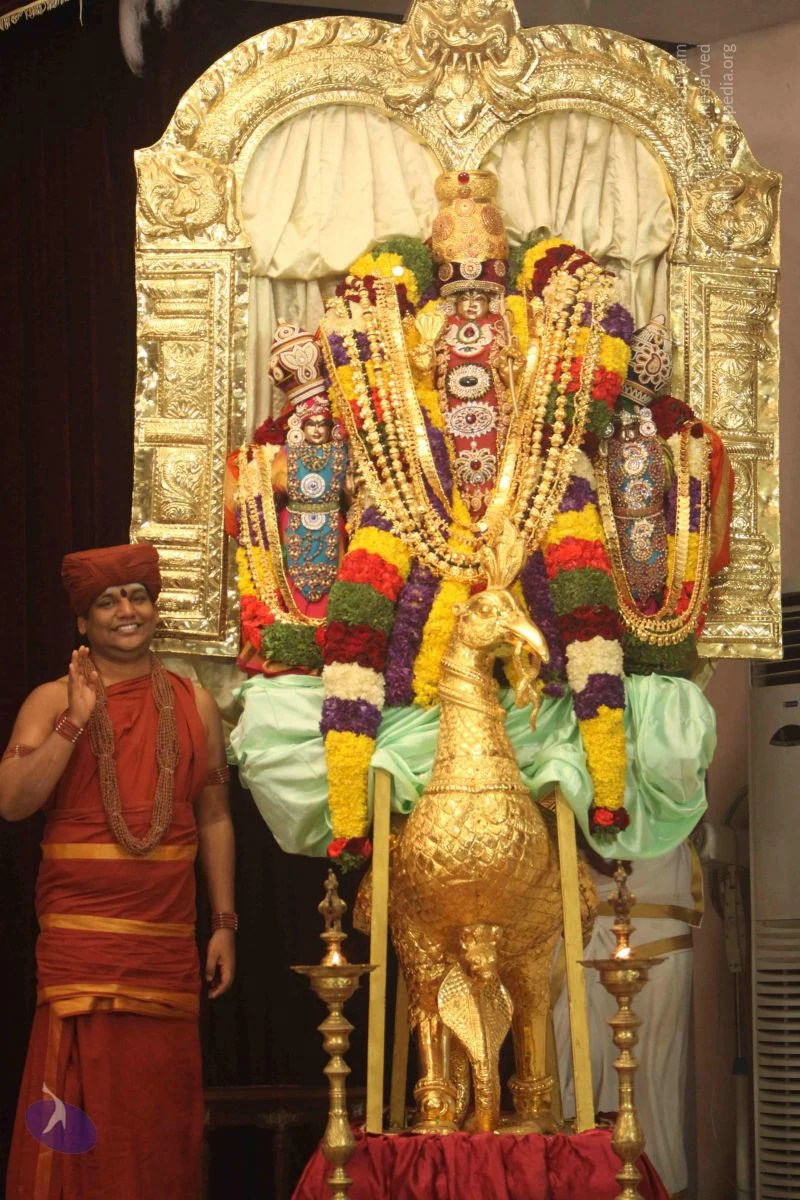
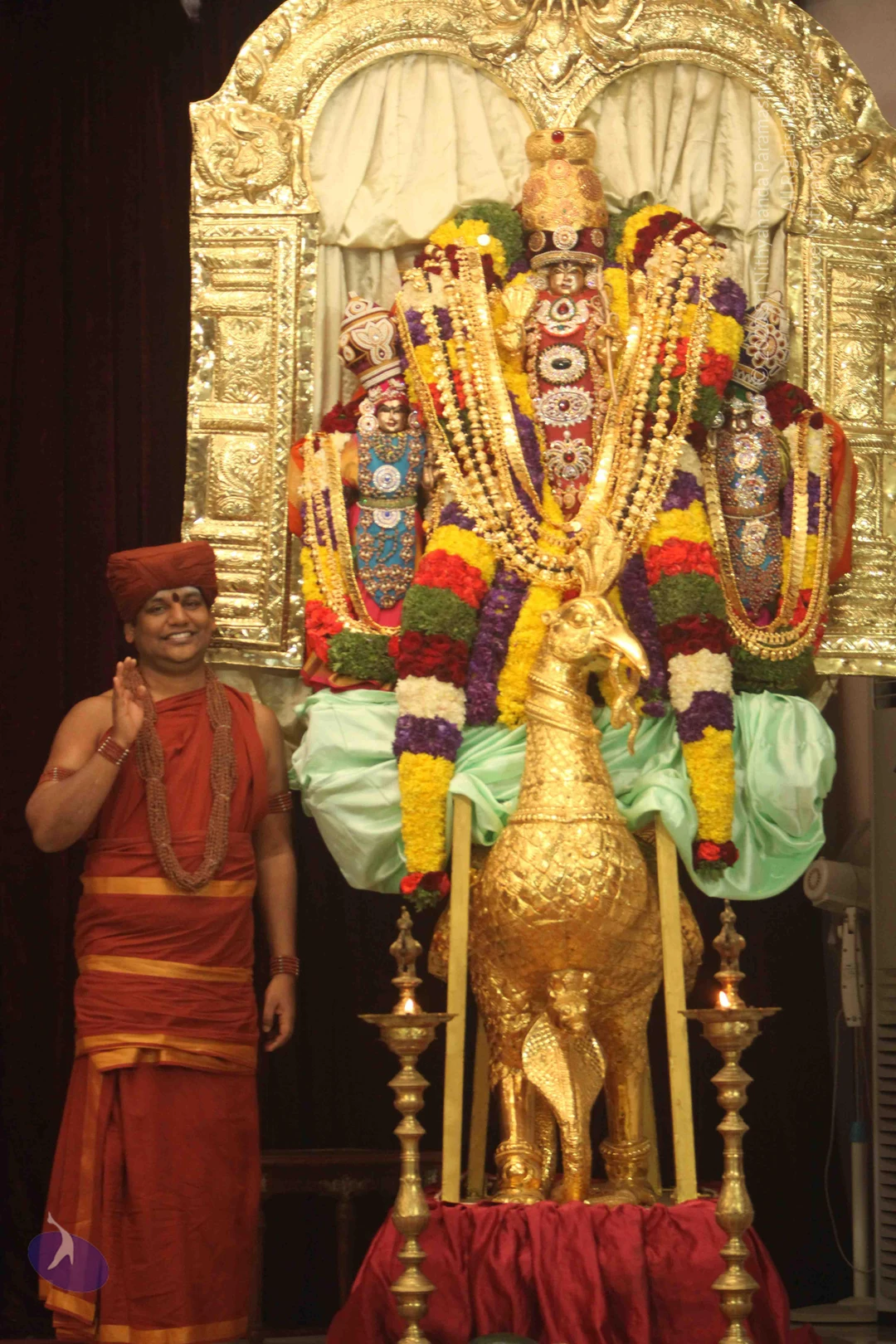
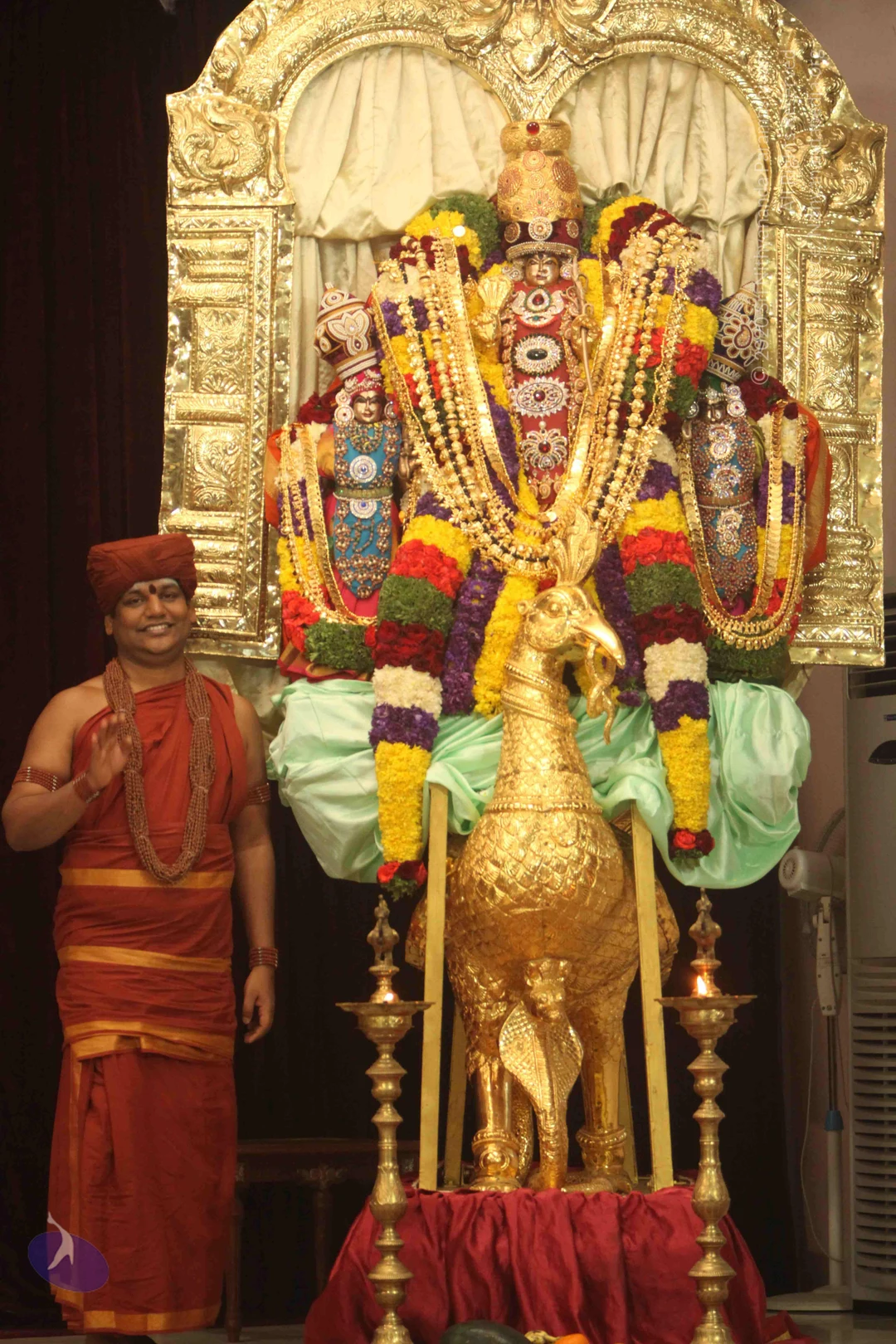
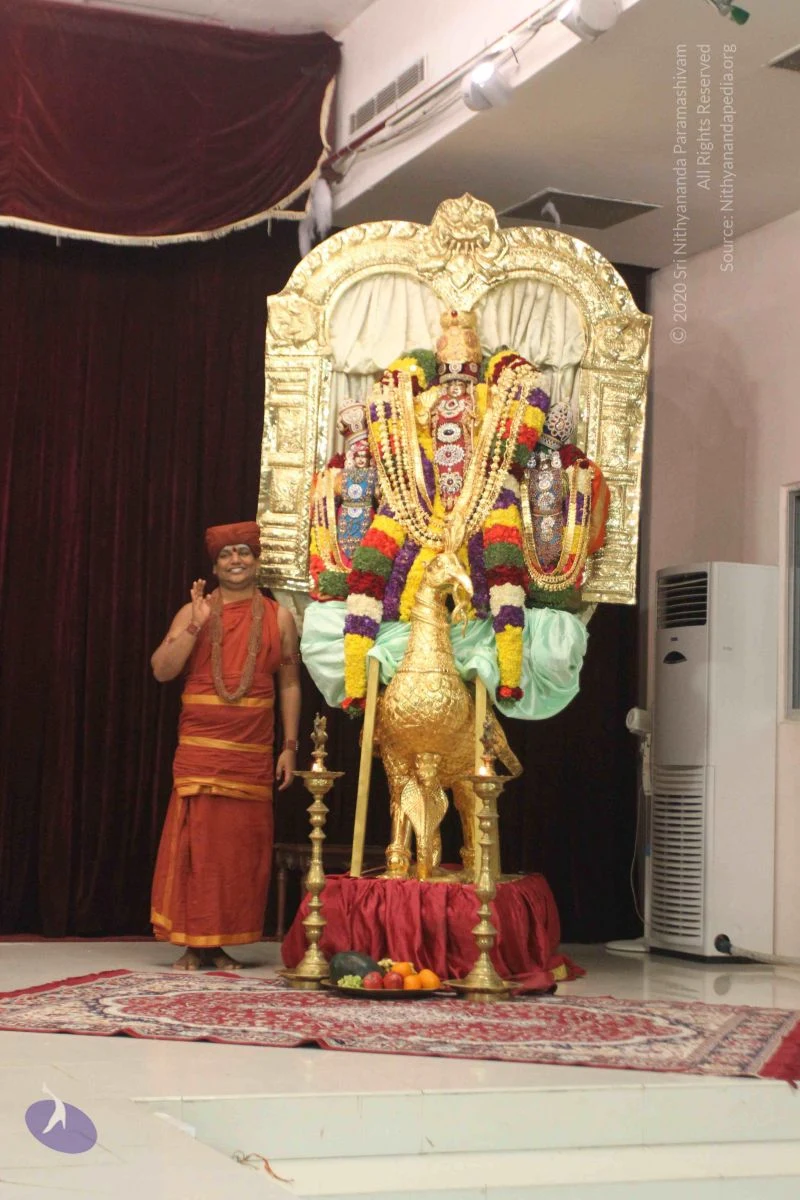
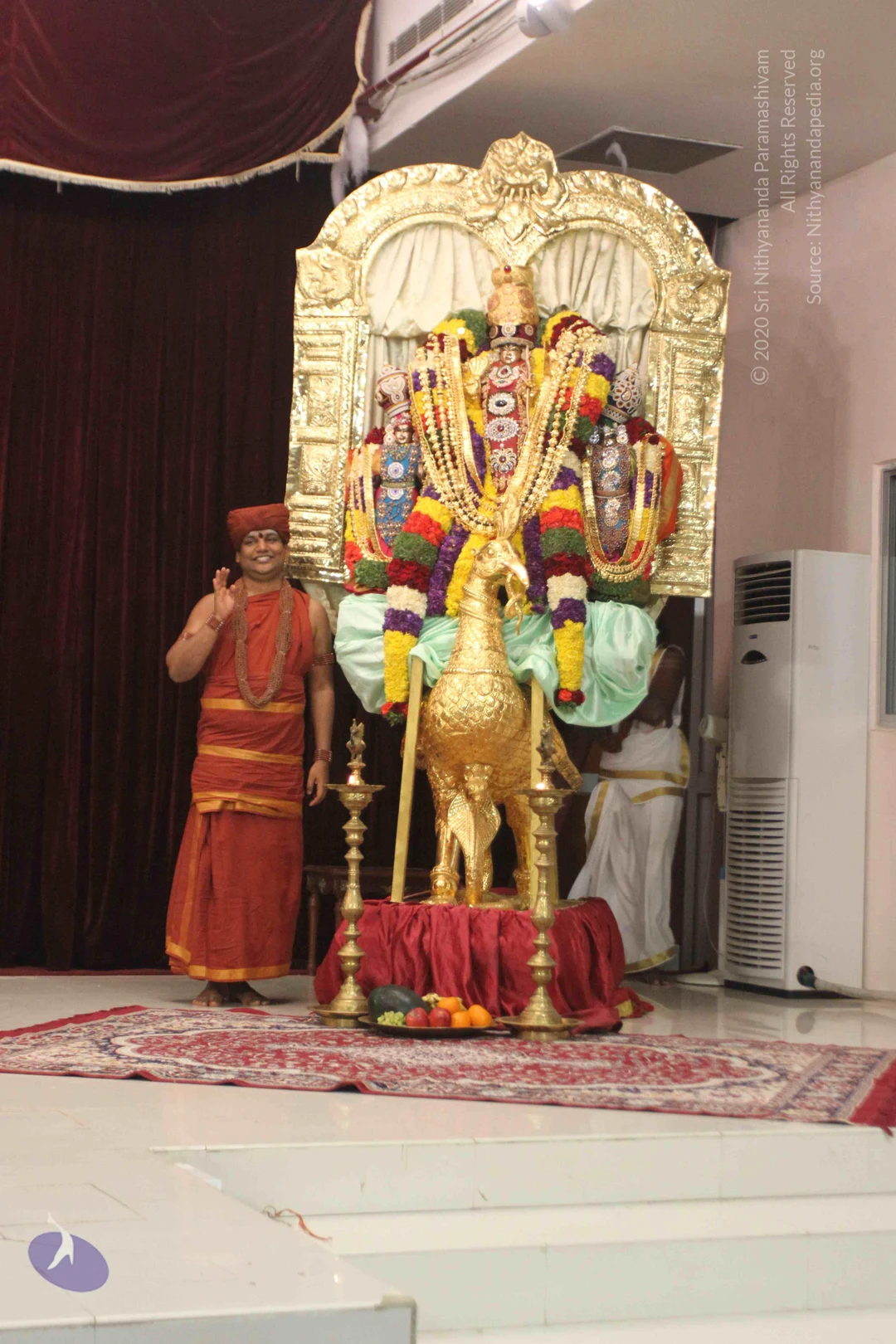
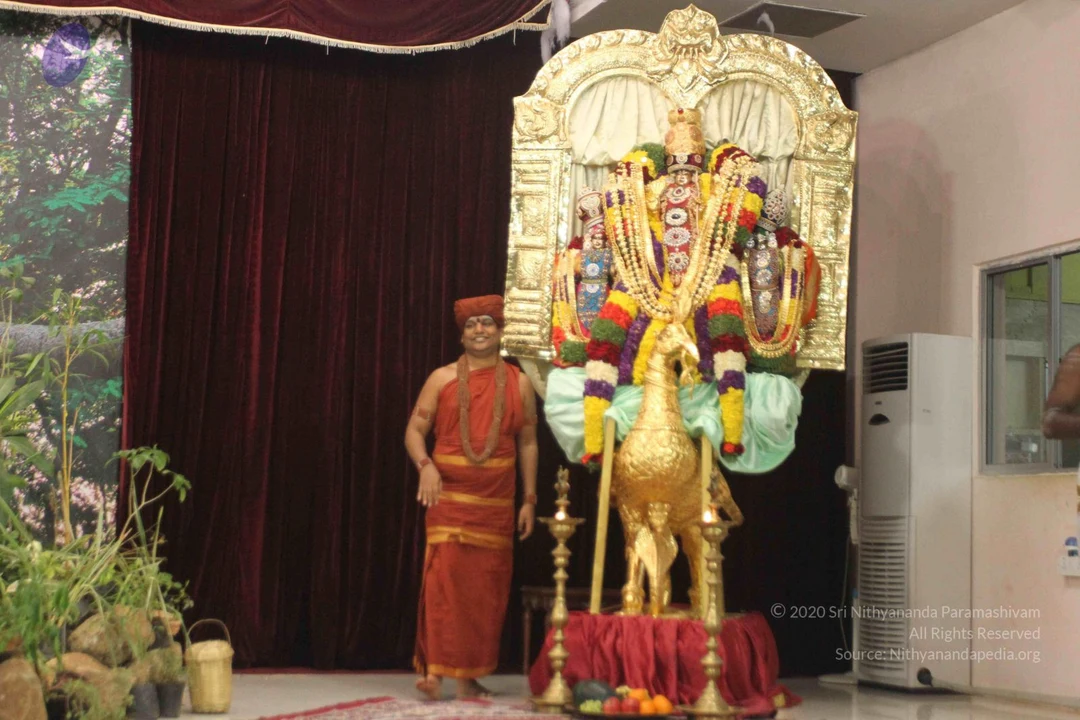
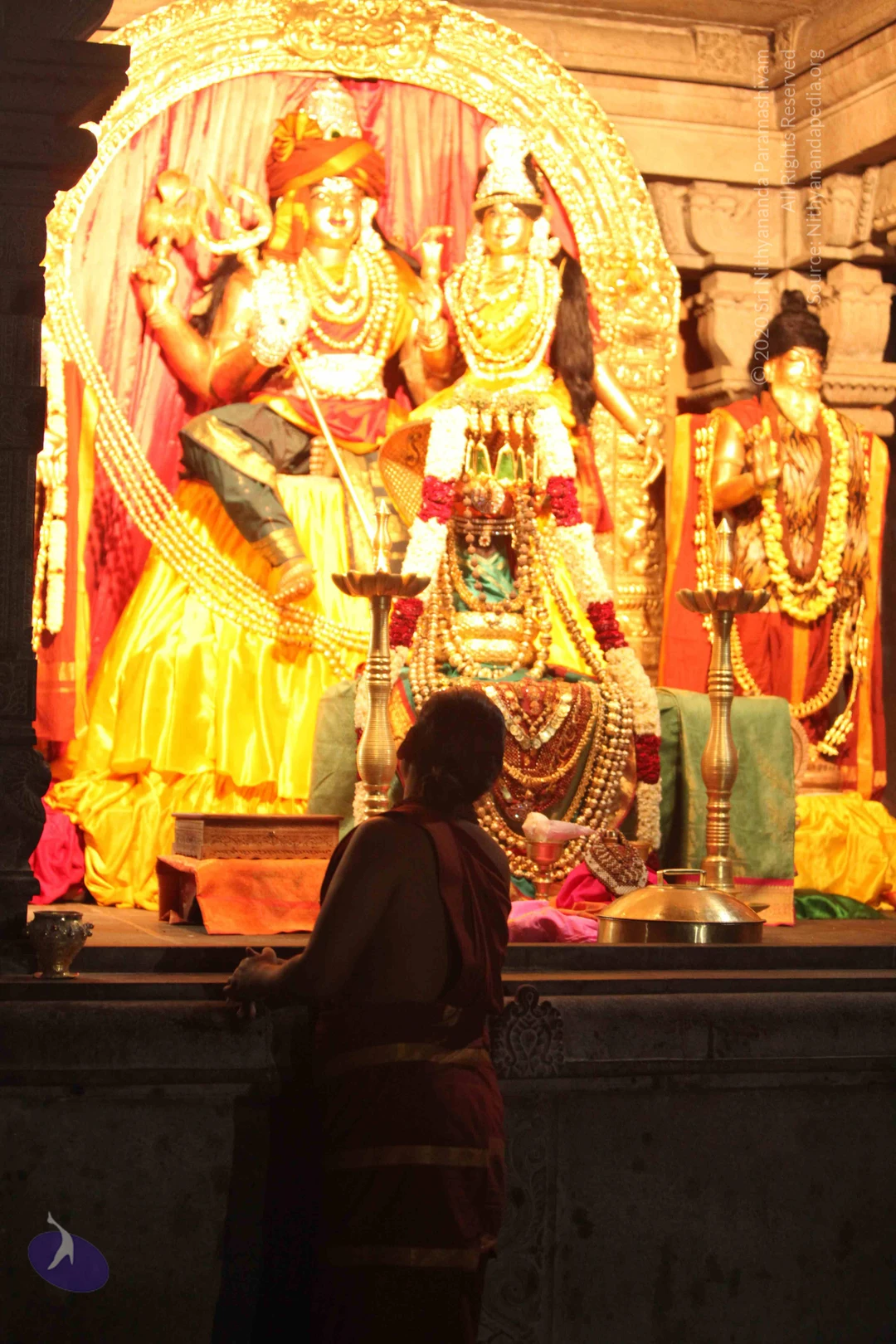
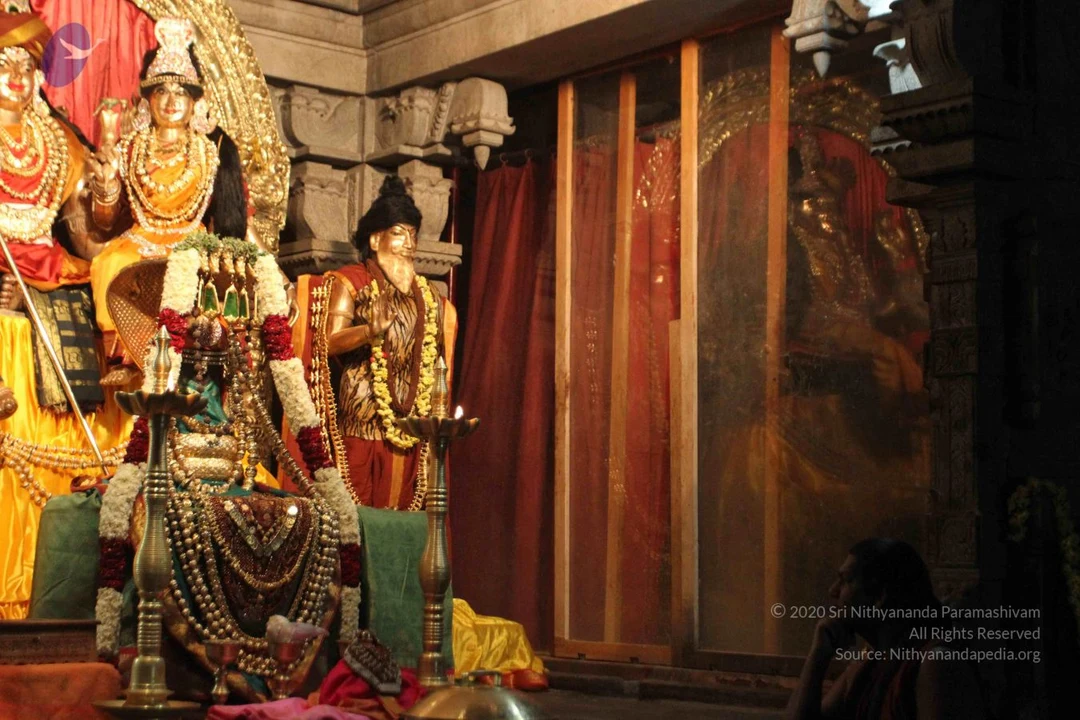
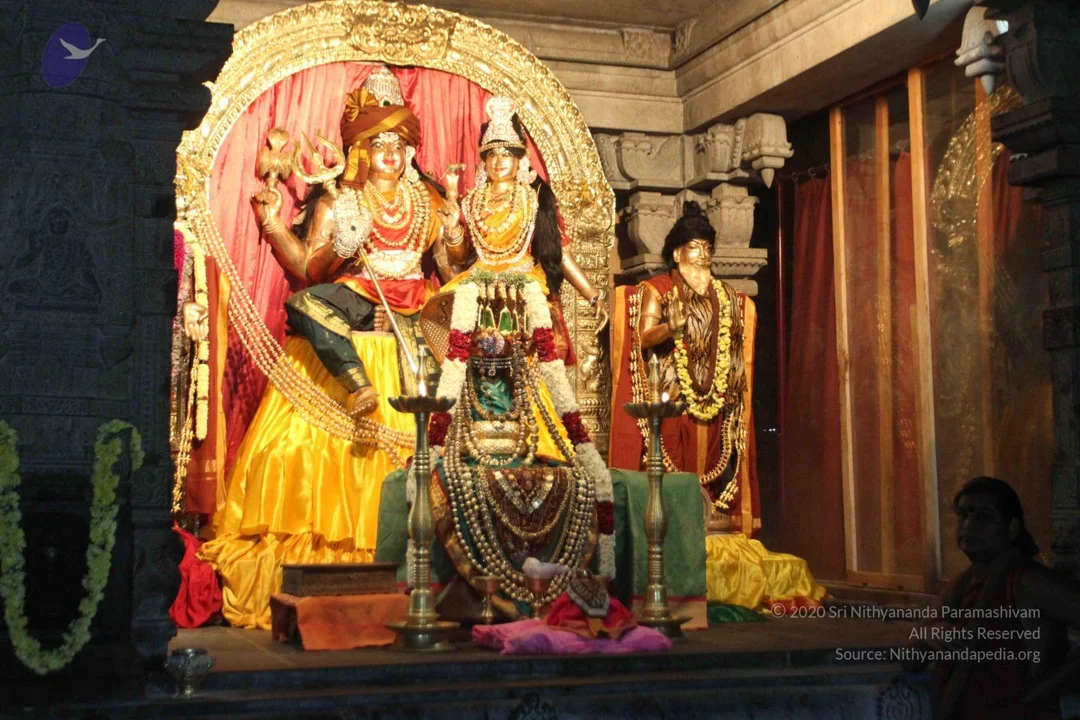
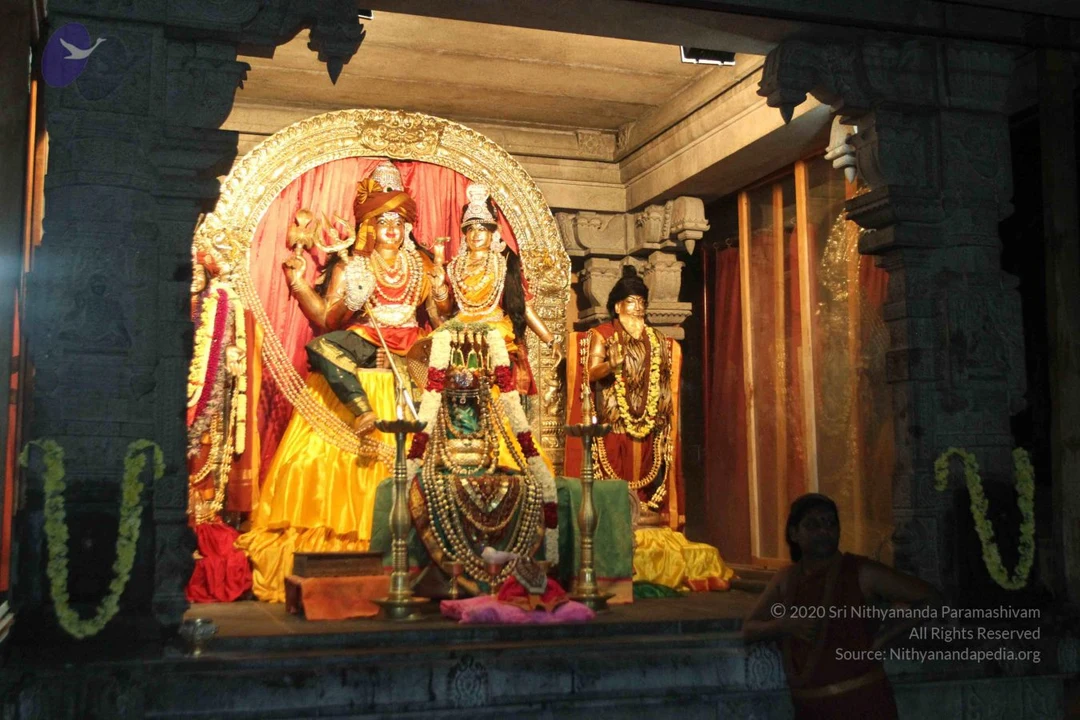
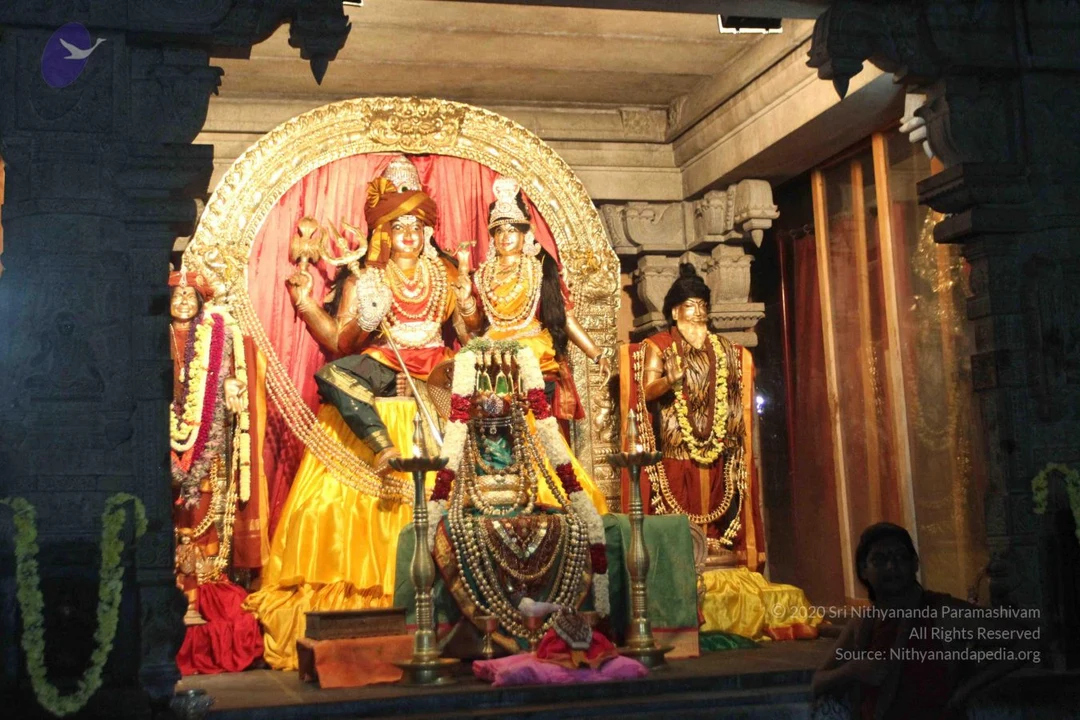
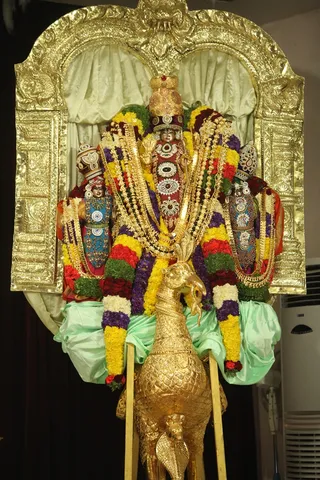
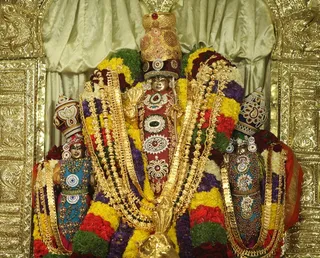
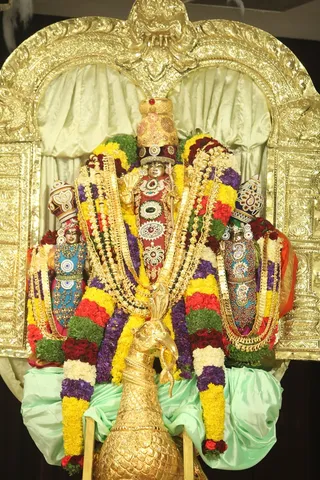
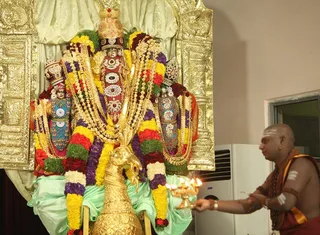
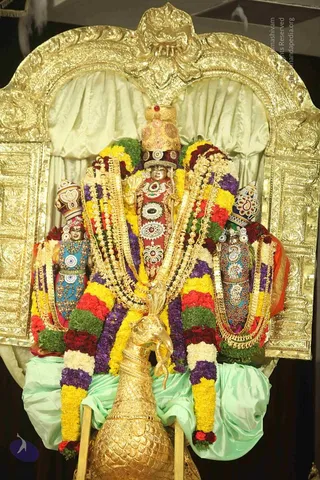
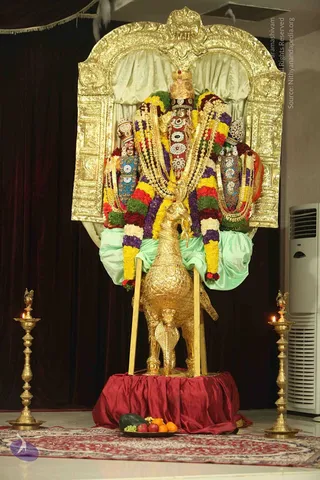
Today, Rajarajeshwari Brahmotsavam Day-2. Yesterday we had Dwajarohanam, and today, the second day, on Mayura Vaahana, Golden Peacock Vehicle, Devi is gracing, with Lakshmi and Saraswathi.

(aarati is offered)

With the grace of Mother, let us celebrate the Rajarajeshwari Brahmotsava to experience and celebrate Mother Consciousness, Feminine Consciousness, the Cosmic Mother.

(03:52)

Now, the fourth verse in Ishavasya Upanishad. Please recite along with Me. अनेजदेकं मनसो जवीयो नैनधेवा आप्नुवन्पुर्वमर्षत् | तद्धावतोऽन्यानत्येत तिष्ठत् तस्मिन्नपो मातरिश्वा दधाति || Anejadhekam Manaso Javeeyo Nainadhdheva Aapnuvanpurvamarshath | ThadhDhaavathonyanathyetha Thishttath Thasminnapo Maatharishva dhadhDhaathi ||

Loud! Anejadhekam Manaso Javeeyo Nainadhdheva Aapnuvanpurvamarshath | ThadhDhaavathonyanathyetha Thishttath Thasminnapo Maatharishva dhadhDhaathi ||

Actually, the following verses enumerate the attributes or qualities which are special and exclusive to Eshwara: He is Stable. He is the only One. He has swiftness which surpasses the agility of the mind. He was present before anything came into being. He existed in the beginning. He is the embodiment of Jnana, truthful knowledge, enlightenment, wisdom, erudition. He is all-pervading, Omnipresent, Omniscient, and all-knowing. He is beyond the comprehension of even the Gods such as Indra. He can overtake others who are running fast, even though He does not run or move Himself a bit. And it is really relying upon His powers and authority that the various Gods such as the Wind God are successfully able to do deeds such as producing rain and enabling mortal creatures to have life to live and bear the prana, the spark of life, and the vital winds that sustain life in a creature.

(07:08)

I have My own translation which I will share with you all. Listen, It, Consciousness, is unmoving, One, and swifter than the mind. The gods of senses cannot overtake and go beyond it as it has swiftly moved ahead. Remaining situated, it outruns all the other running ones. In it, the life energy moves and expands itself in space, supporting all activities. Come on. In this verse, now the quality of Eesha is defined…. The quality of Consciousness is defined. You may ask, “Why?” Please understand. When something beyond your comprehension is being described, at least few qualities which your mind can comprehend should be told to you, so that you can start meditating on it. Or, when that experience happens, you can analyze whether ‘This is It’, or, ‘This is not’.... Even to do that process of ‘nethi, nethi, na ithi, na ithi’, you need to have a scale. Please understand. Here, the qualities of Consciousness, the qualities of Eshwara is described. I Am using the word Eshwara, instead of Eesha. Please listen. Eesha is Pure Super-Consciousness in its existence. Eshwara means, whenever Eesha is described in a method to reach Him, or in a technique to reach Him, or some form or some name, some quality attributed to Him, Eesha becomes Eshwara, Understand. Eesha becomes Eshwara. If you say, “Pure Consciousness”, it is Eesha. The moment you attribute qualities – swifter than the mind…. Gods of senses cannot overtake and go beyond it. The moment you give these attributions, it is Eshwara. Now, in this verse, the qualities of Eshwara is described, qualities of Eshwara is presented. You should know why.

(11:35)

One of the biggest crimes the Hindu society has done is, thinking the peace of the Sattva as laziness of Tamas, and practicing the laziness of Tamas, thinking that they are in the peace of Sattva. Understand. Sattva and Tamas, both look same; but the context is totally different. The Sattva, peace of Ramana Maharshi, and the laziness of the beggar lying outside Ramana Maharshi’s ashram, even though the actions look same, the context is different.

Listen. Listen. This is one of the biggest problems Hindu society is facing. Even now, many of the so-called seekers can’t accept the way of life I Am presenting, or the way I Myself living. Continuously I Am teaching and living inaction in action. But lazy fellows, they will be action in inaction. There will be so much of action inside, but outside they will be inactive. Inaction can come due to various incompletions: inability, does not want to take the responsibility, non-committal lifestyle and thinking and patterns, and thousand and one reasons, laziness, vengeance and anger, hatred towards life. Inaction can come due to ten-thousand incompletions. All that cannot become Sattva. Listen Pure inaction out of Complete Completion, without any incompletion, only can be called as Sattva. And in that Sattva, you may or may not even have action or inaction. When the Completion is there, you are in the space of Sattva. You may even act to teach the world, to teach to others. So, understand.

(15:15)

Anejadhekam Manaso Javeeyo Nainadhdheva Aapnuvanpurvamarshath | ThadhDhaavathonyanathyetha Thishttath Thasminnapo Maatharishva dhadhDhaathi ||

All these qualities are described: Consciousness is unmoving, One, and swifter than the mind. I may not want to say, “One”; “Oneness.” The qualities of Consciousness is described here so that you won’t miss the context. Listen. If you go to a temple without having the right context, it may be just a nice art, kind of a museum, stone carved in beautiful shapes, sizes. Nice, that’s all. But, if you know the context and go, it is a place to connect with God, Consciousness. It is a place to celebrate Enlightenment, Living Advaita.

(17:00)

Listen. So, now the Upanishads are setting the context. In the first statement they declare the ultimate truth – Eeshaavaasyamidham Sarvam – Everything is Consciousness. In the next verses they taught the important truth of saying, “YES” to life. And, if you decide to say, “NO”, what happens, they describe. Now they are describing the qualities of Consciousness – Eshwara. Why you know? For various reasons. First thing, for you to set a context, you should know what is Consciousness, and what all is not Consciousness…. And you should also know how to start practicing, how your practices can be done, how you can align yourself for the practices. If you don’t know the context even and enter into the temple, it won’t be useful to you. Sometimes you lose the respect for the temple. Then, again gaining it back is very difficult. Sameway, when you start the practice itself, the context should be set. Please listen. That is why I said, context is more important than the God itself in Hindu Tradition. Eesha is more important than Eshwara itself.

(19:20)

Setting the context means: Why, What, How, Where, When, Clarity of the whole. That is what I call, “the context that is more important than God itself. Context is more important than God itself.” I will expand on why the context is more important. Only if you know He is the Creator, Maintaining, Destroyer, you will even know you need to relate with Him. So, all the qualities described here is to set the context why you should do what you should do. He is unmoving in the world where everything is moving. He is the Oneness. He is swifter than the mind; means, anywhere your mind can reach, he is already there. He is beyond your mind. The word Manaso Javeeyaha means: Any hope you have, the fulfillment of that hope is He. Any fear you have, the space from which the fear comes is He. So, instead of running behind your hope or fear, run behind Him.

(22:02)

Nainadhdheva Aapnuvanpurvamarshath – The Gods of senses cannot overtake and go beyond It. Actually, each Gods, each God associate themselves to one sense. But the Super Consciousness – Eesha is beyond all these Gods. Meditating on these qualities, wherever these qualities exist, that is Eshwara; where it is not, it is not Eshwara. Actually, here, the Upanishads declare more in the negative sense. Means, if you see the whole thing, it is more a technique for you to use ‘nethi -nethi’, ‘na ithi, na ithi’ – Not this, Not this. Unmoving: Then anything moves, is not That. Oneness: Then anything which is lower than that, not That. Swifter than the mind: Then anything which you can assume by the mind, it is not That.

Here the qualities are described more for you to use as a technique to find the Consciousness. Many times, people ask Me, “What is Completion?” The space where this question does not arise is “Completion.” It means, till then, you will have to go on be completing, completing, completing, completing, completing. You can’t give a positive answer for this. You can only give a technique with which they can be cleaning it up and get into that space. Like the question – “Who am I?” Never can have answer. Because it is not a question; it is a quest. It can have only experience as the response. The question “Who am I?” – neither it is a question, nor it can have an answer. It is only a quest. It can only have experience as the response to it.

(25:06)

Here, two things you need to understand: First, the qualities are described. Second, not in an affirmation way; it is described for you, to be used as a technique to do the process, “Not this, Not this.” You can see, all the descriptions are:

Anejadhekam Manaso Javeeyo Nainadhdheva Aapnuvanpurvamarshath |

It is Unmoving, Oneness, Swifter than the mind, gods of senses cannot overtake and go beyond it, as it moves swiftly ahead. Remaining situated, it outruns all the other running ones. See, it outruns everything that runs, and it does not move. Now what will you do? So, naturally, this is used for the purpose of negation…. In it the life energy moves and expands means, whatever you are, you exist, you live, you expand, you become one with, everything happens in the Super-Consciousness described here as Eesha. In It everything happens. In It everything dissolves. Eesha, when you try to relate with Him, becomes Eshwara. Eshwara, when you experience Him, becomes Eesha.

(27:32)

Every, every description here in this Upanishad, the fourth verse, is given for you to use as a technique to reach, technique to reach the truth as it is. The truth as it is. So, meditate on these qualities. When you try to meditate on these qualities, you will understand you can’t meditate on these qualities. It is only to be used as a technique to find out: What you are perceiving or grasping as ‘Eshwara’, is it Eshwara or not? Only to find out, these qualities can be used.

Anejadhekam Manaso Javeeyo Nainadhdheva Aapnuvanpurvamarshath | ThadhDhaavathonyanathyetha Thishttath Thasminnapo Maatharishva dhadhDhaathi ||

(29:17)

So, if you sit and find out: What is unmoving? So, anything you imagine, is not It. What is Oneness? Because, anything you imagine has triputi bhedha – Imagine, Imaginer, Imagined – the being which imagines, the thing which is imagined, and the imagination, action. The triputi bhedha comes. As long as there is three, it is not That. And, Swifter than the mind: Then anything you do with your mind, it is not That. Today’s subject for Vakyaartha Sadhas is: Are all these qualities, qualities to be attributed? Or, are they technique for us to discover the truth, discover the Consciousness? On the qualities described here, I wanted Vakyaartha Sadhas to be done today all over the world. I will continue to expand on these verses.

(31:02)

I bless you all. Let us all radiate with Integrity, Authenticity, Responsibility, Enriching, Causing Living Advaita, Eternal Bliss, Nithyananda. Thank you!

(31:17)

Description

The daily Video Magazine of Nithyananda Sangha. Nithyananda Times - 24th February, 2015

Photos

Inner Awakening(IA) Session
Inner Awakening(IA) Temple Session

Nithya Satsang

Temple Glimpses

Link to Facebook Post

https://www.facebook.com/ParamahamsaNithyananda/posts/793986344022551

Tags:

nithyananda, paramahamsa nithyananda, Upanishads, Advaita, vedic tradition, divine, meditation.

Photos Of The Day:

Nithya-Satsang

Photos Of The Day:

IA-Darshan

Photos Of The Day:

Nithya-Satsang

Photos Of The Day:

IA-Session

IA-Temple-Session

Photos Of The Day:

FB-Photos-of-the-Day

Photos from this day

View all 318 photos

Inner Awakening(IA) Session
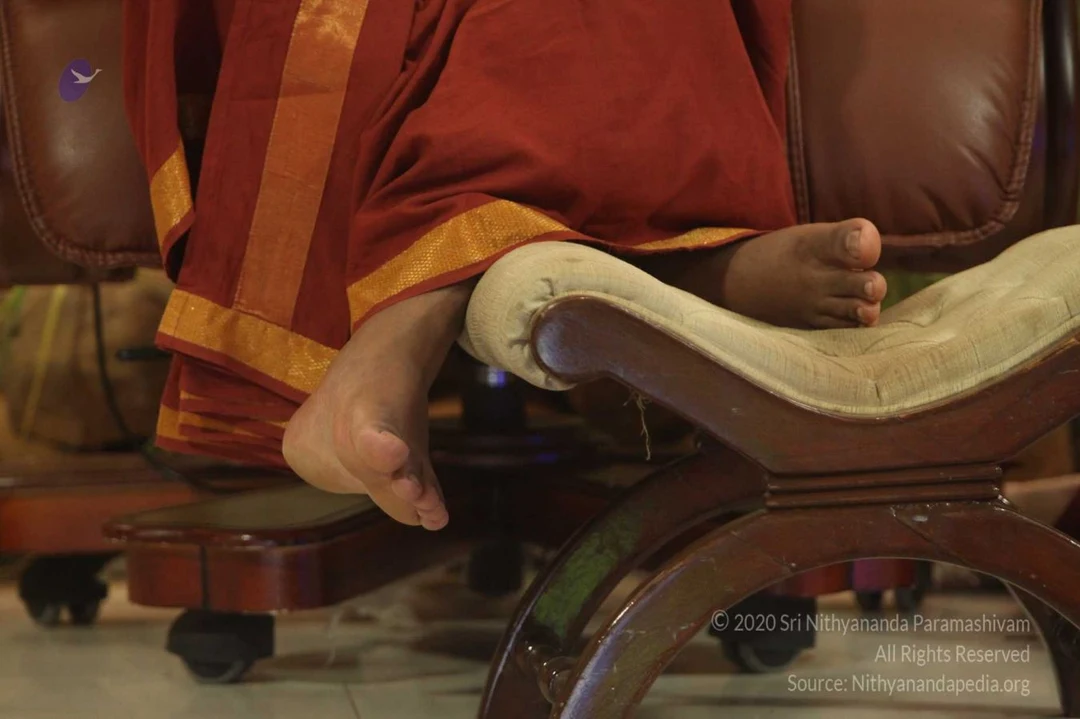
19 photosSource gallery
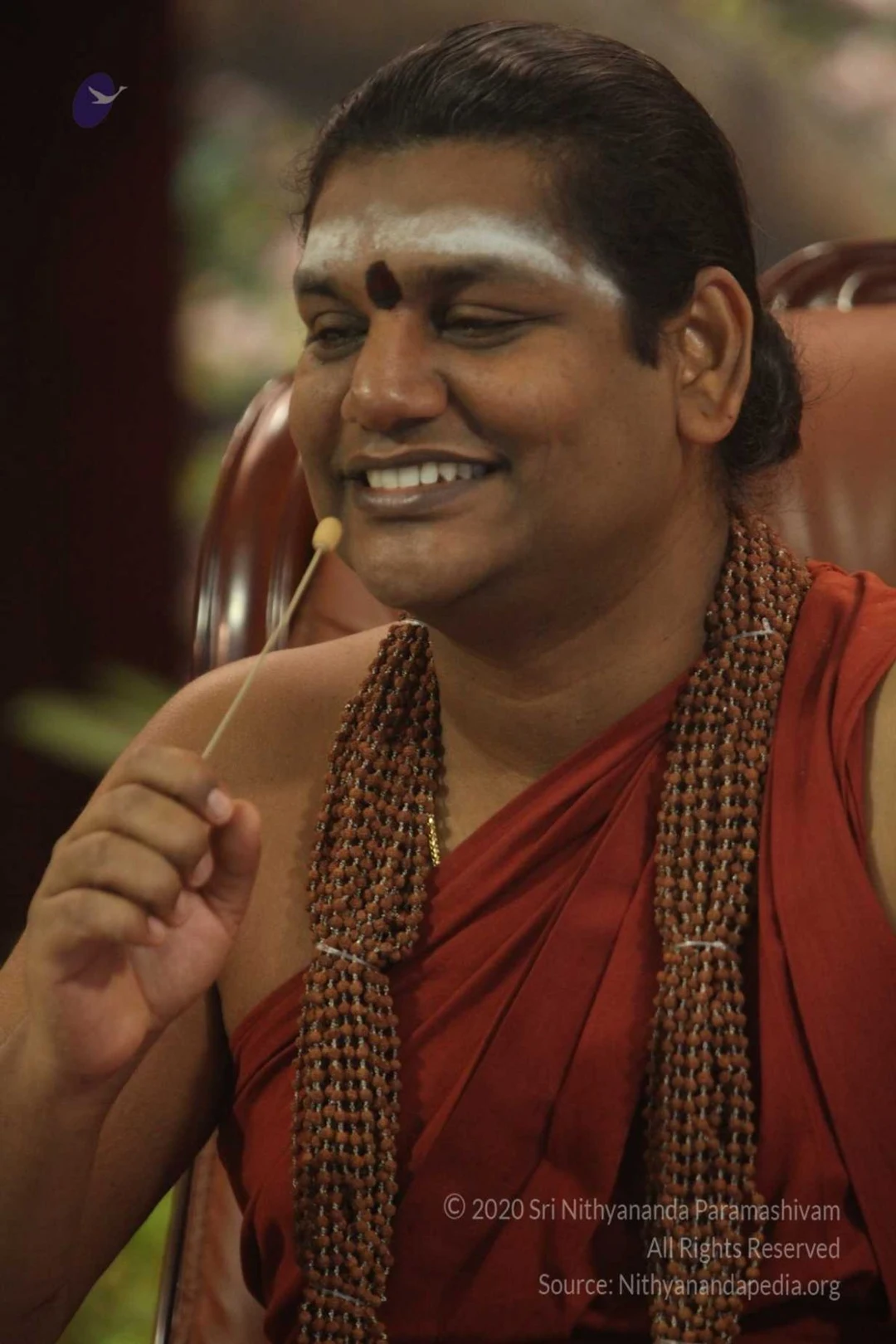
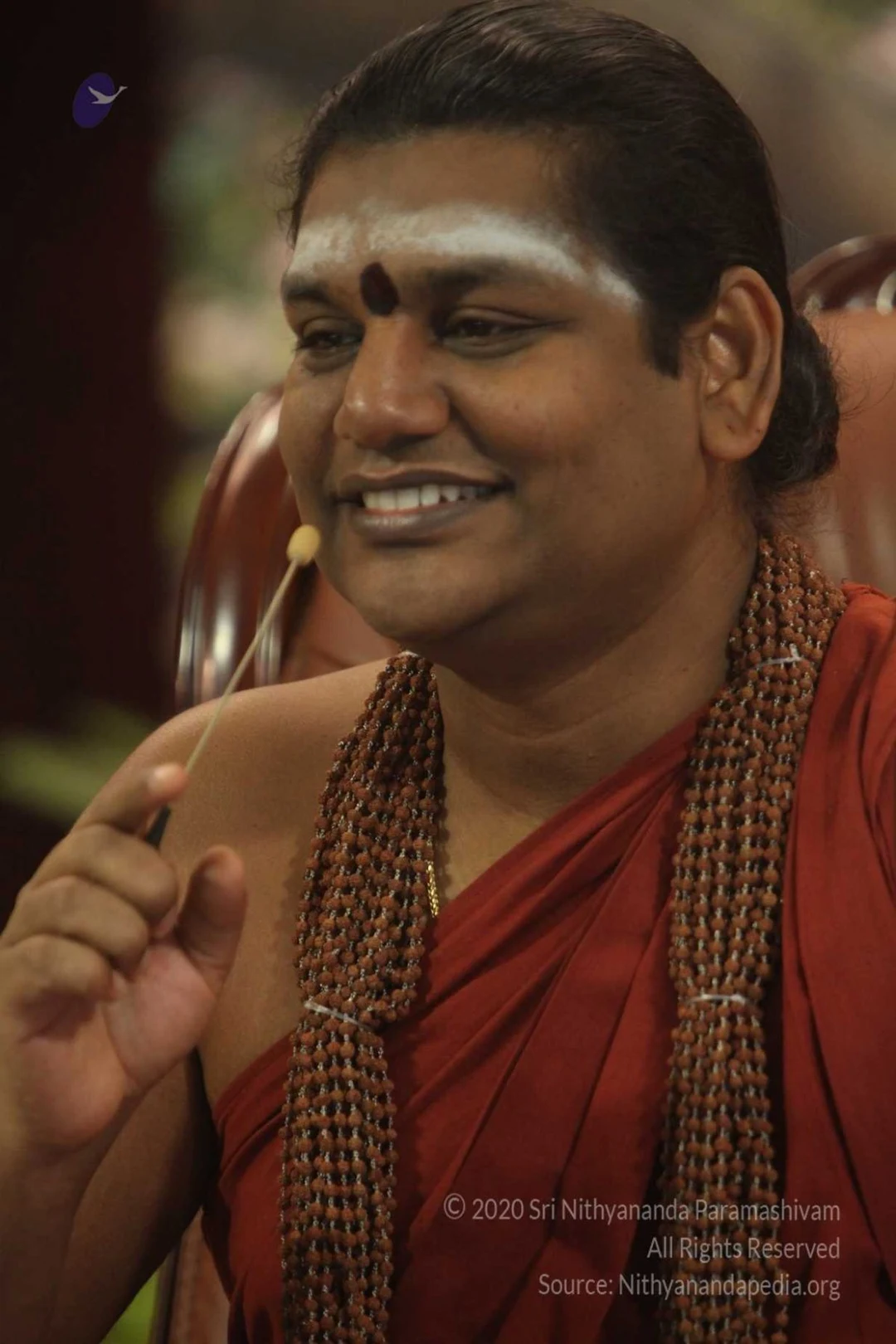
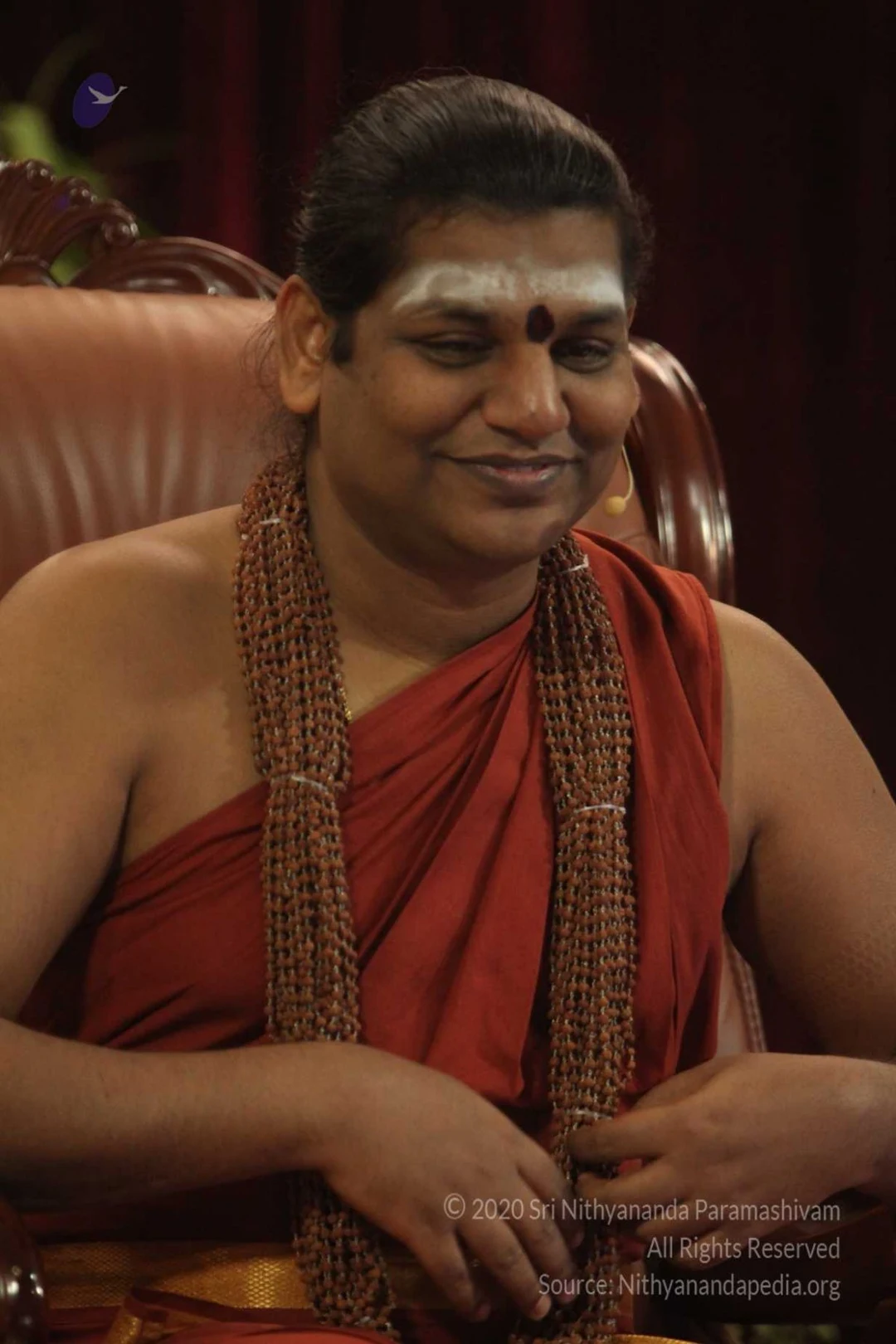
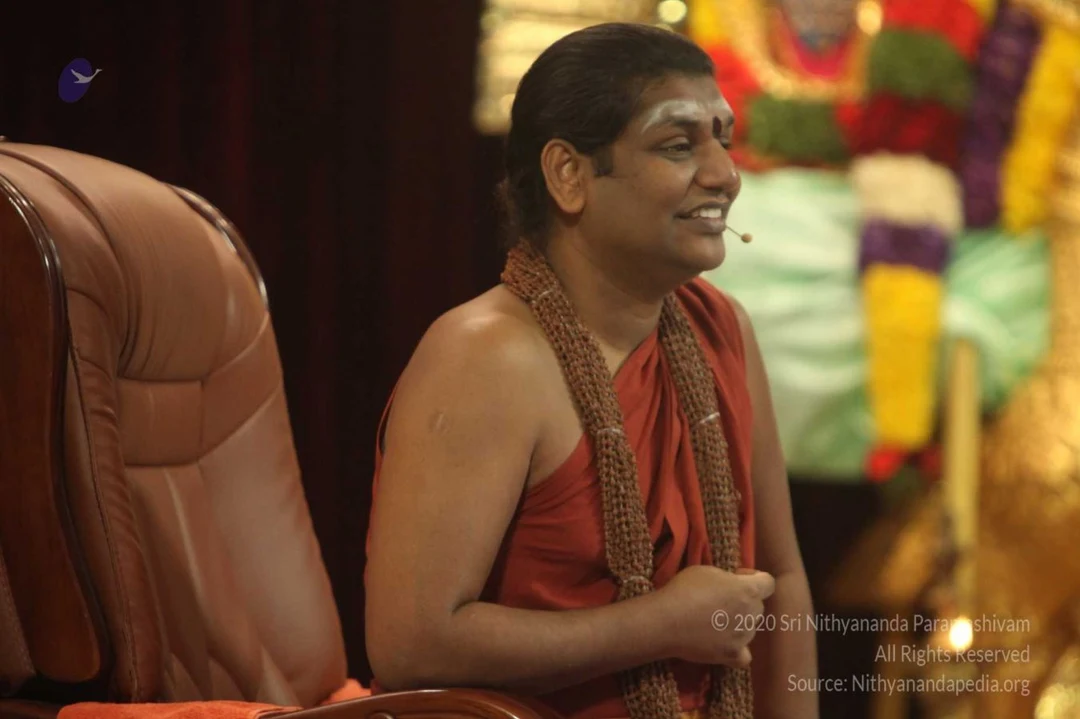
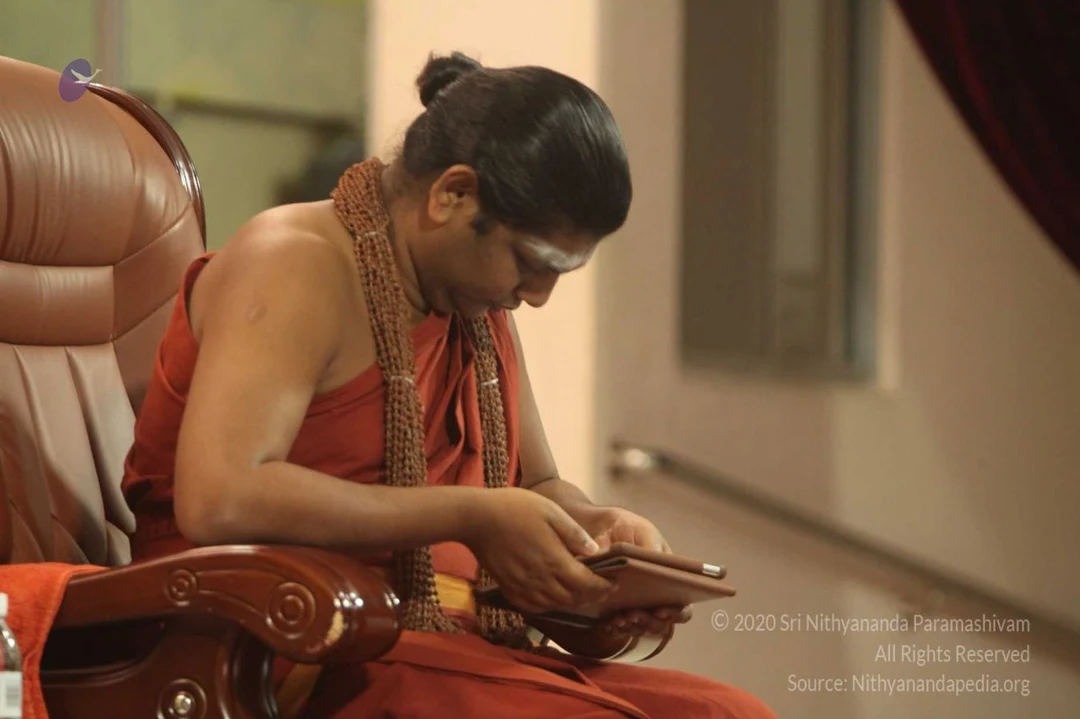
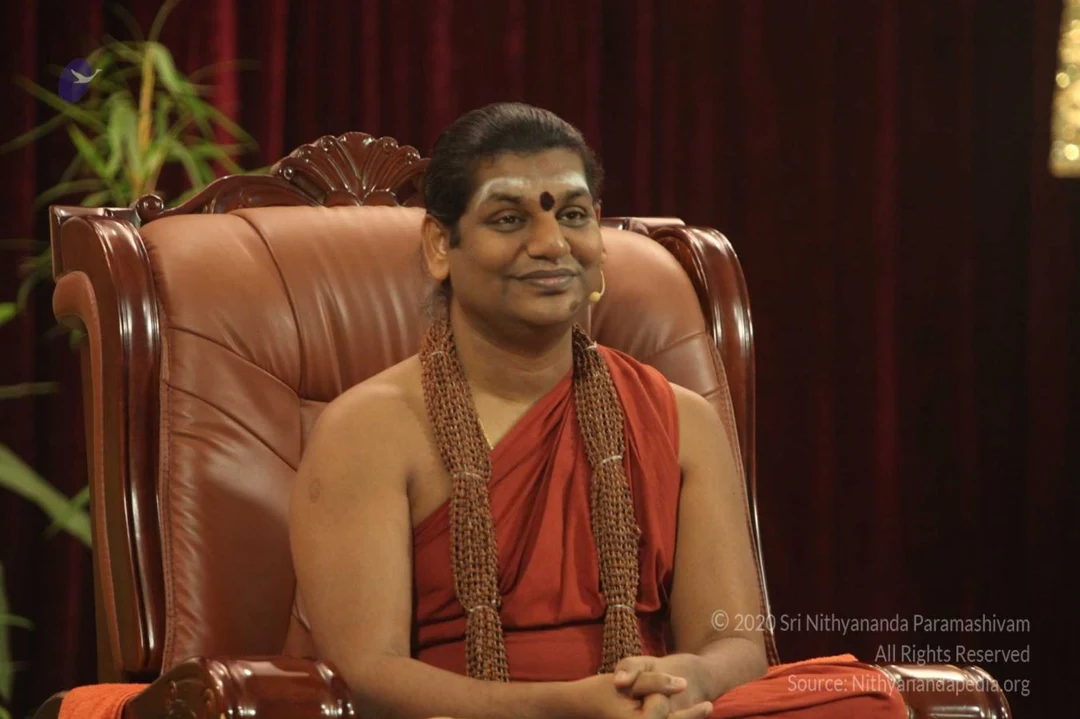
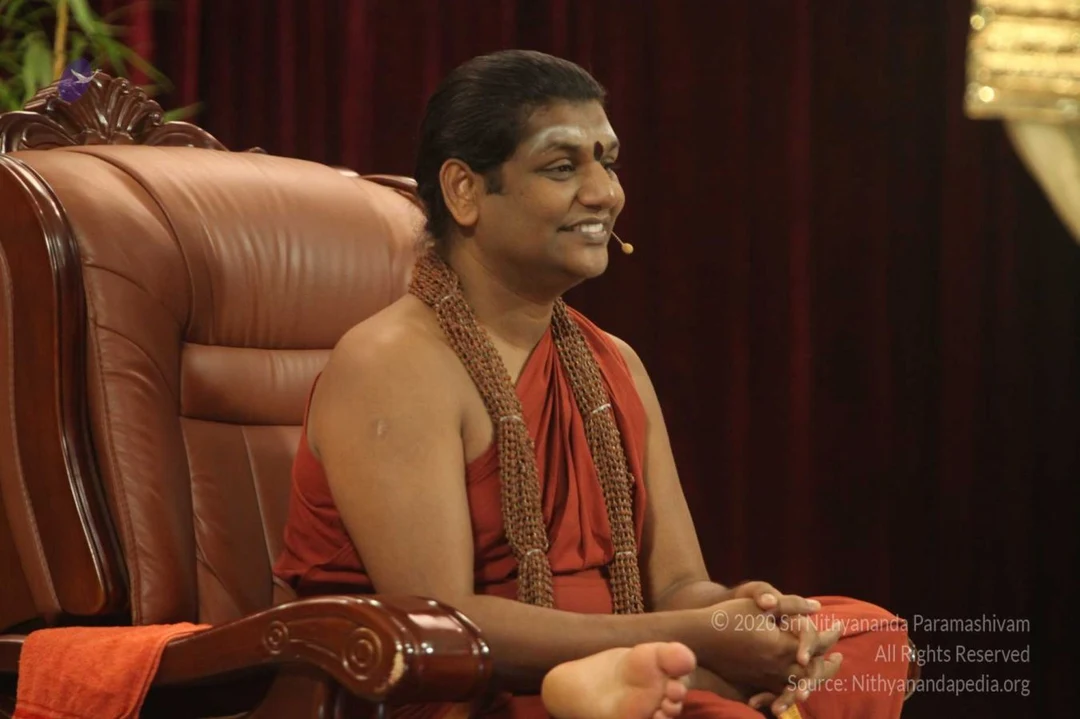
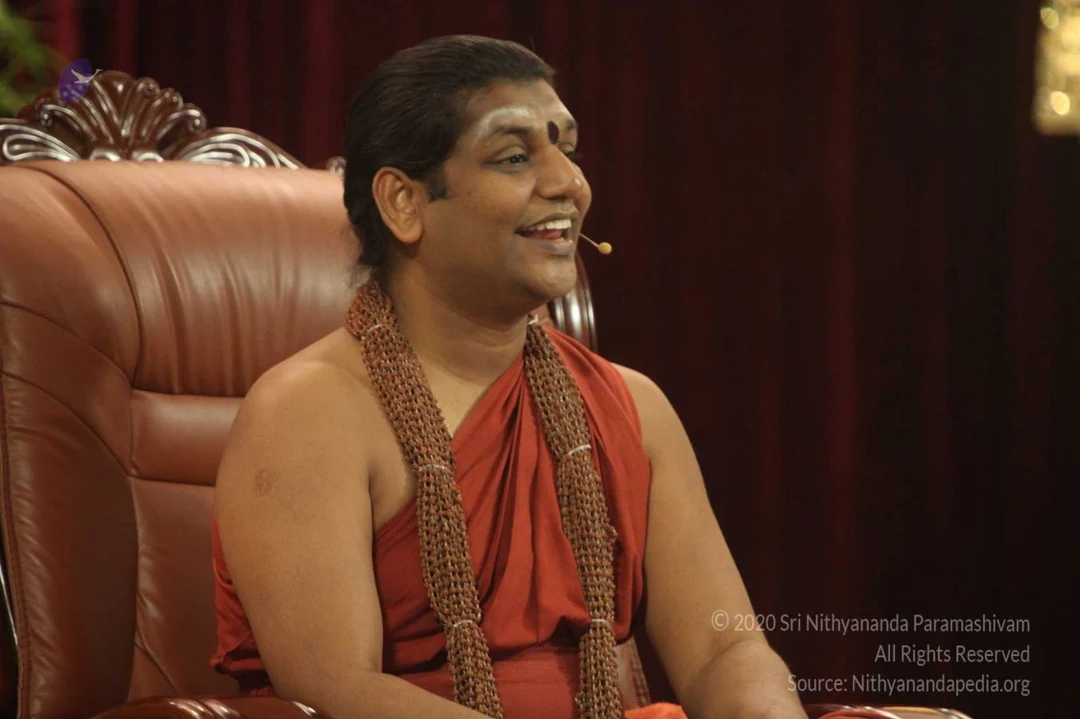
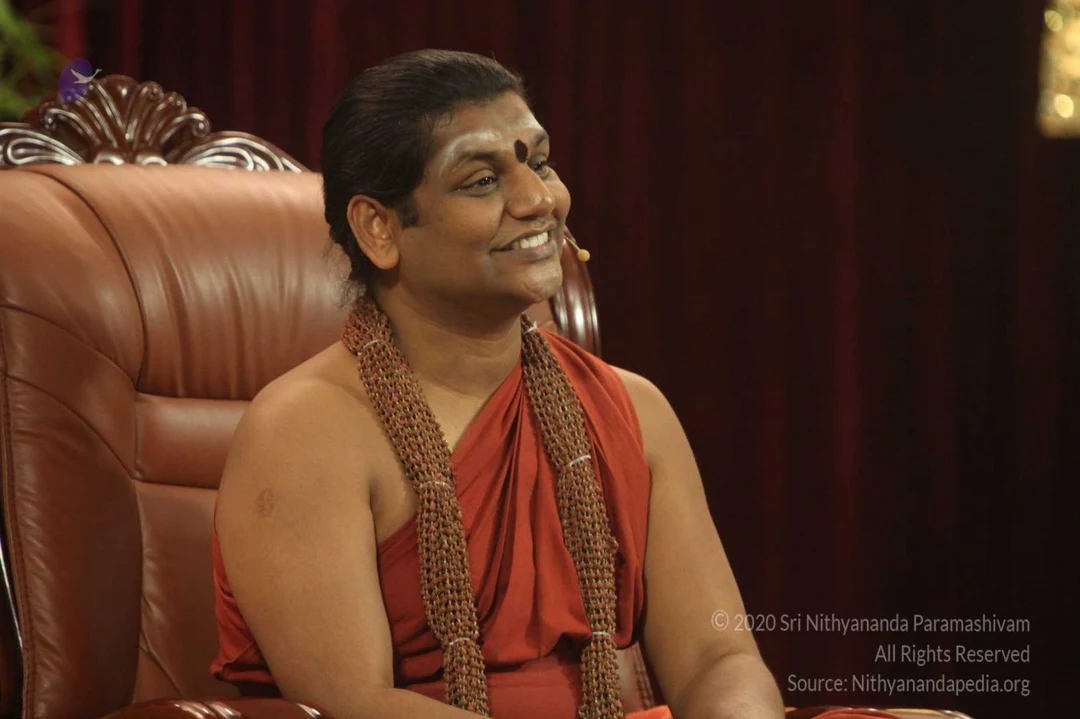
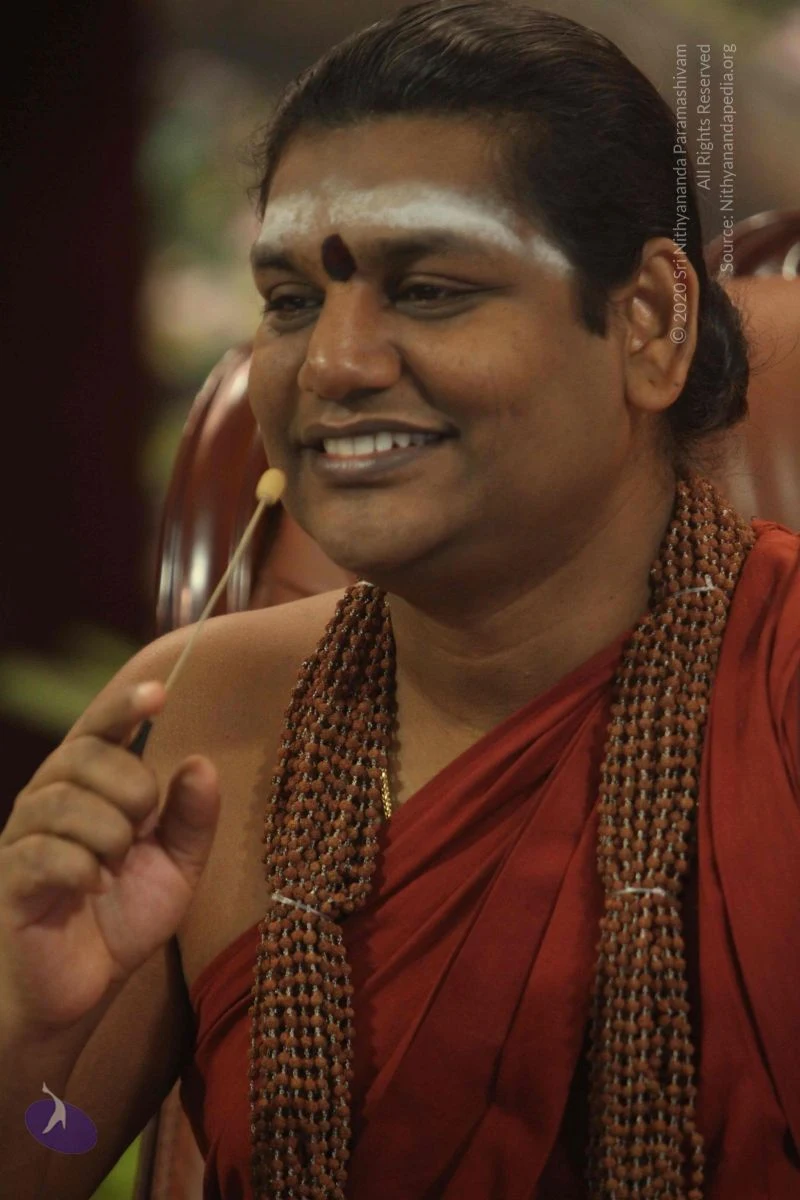
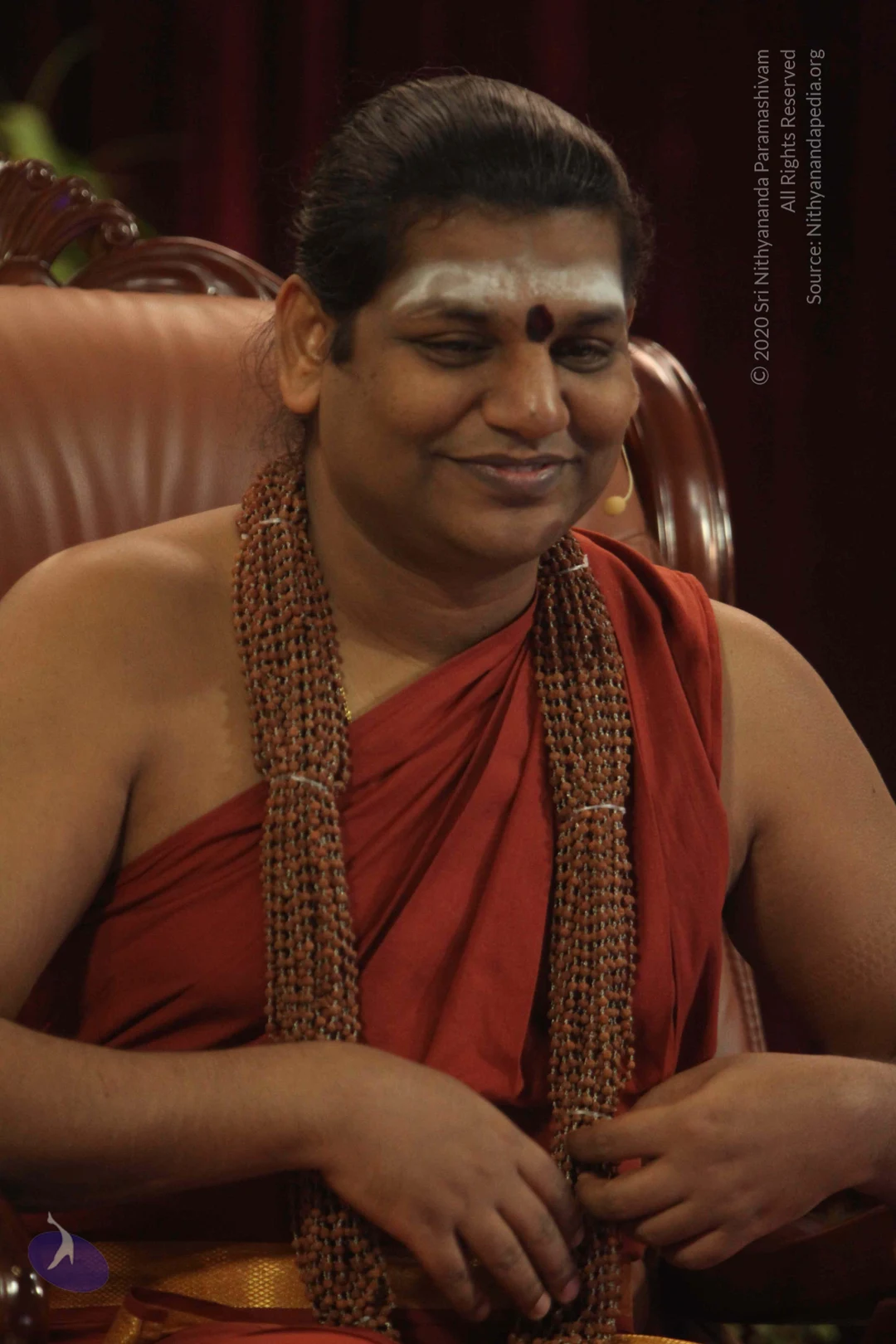
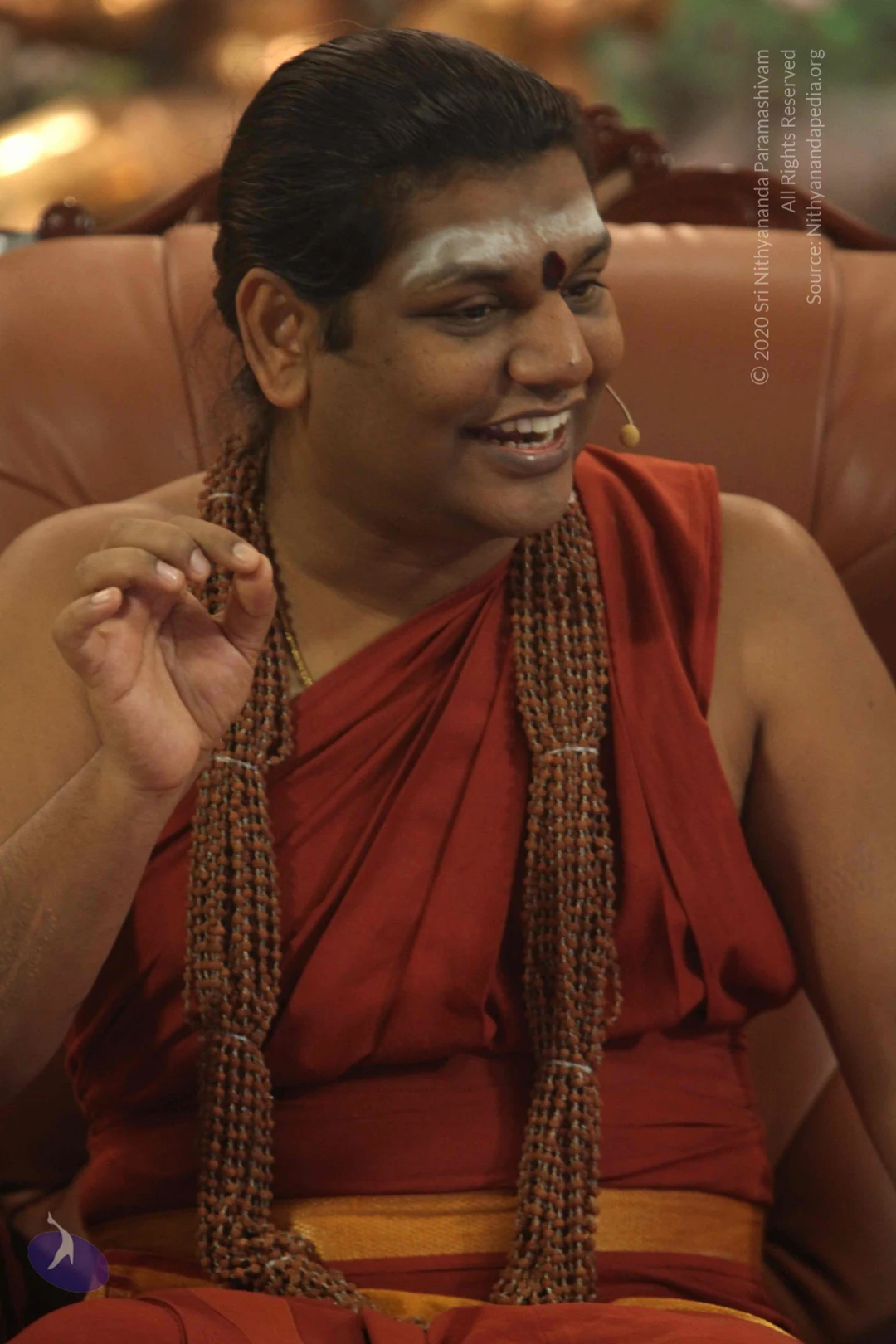
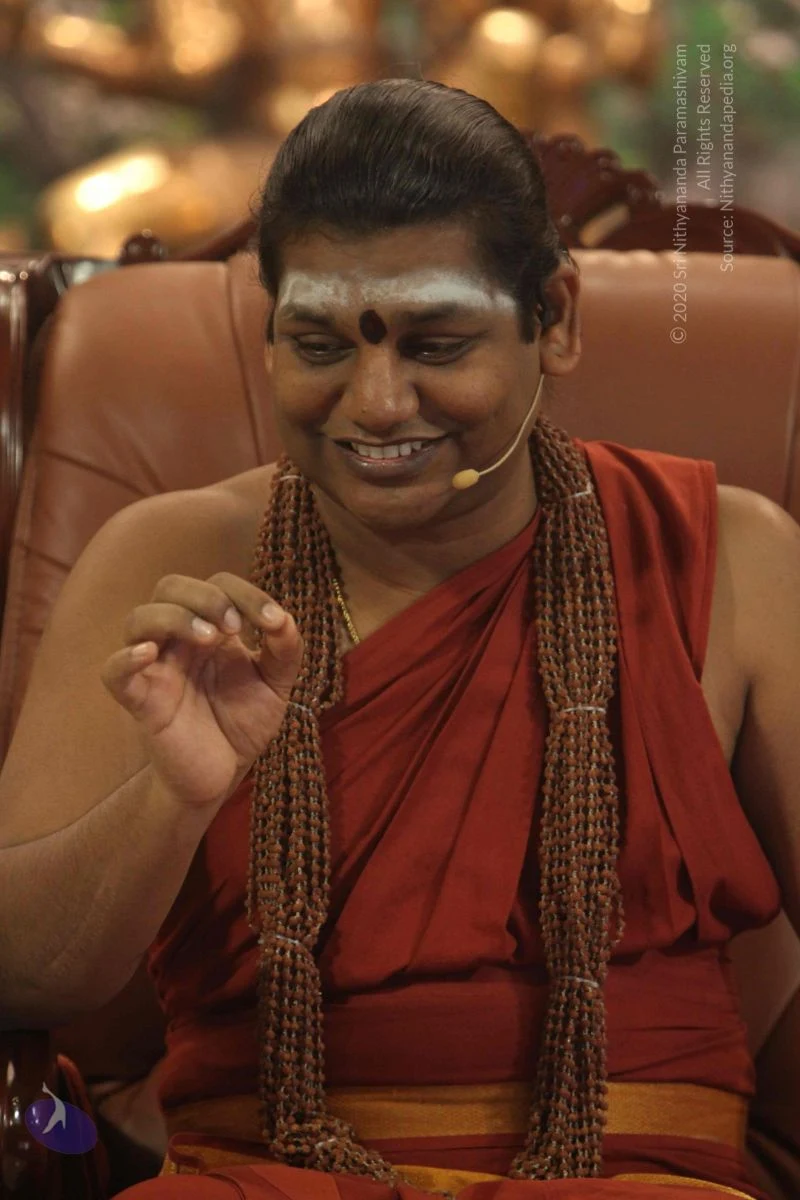
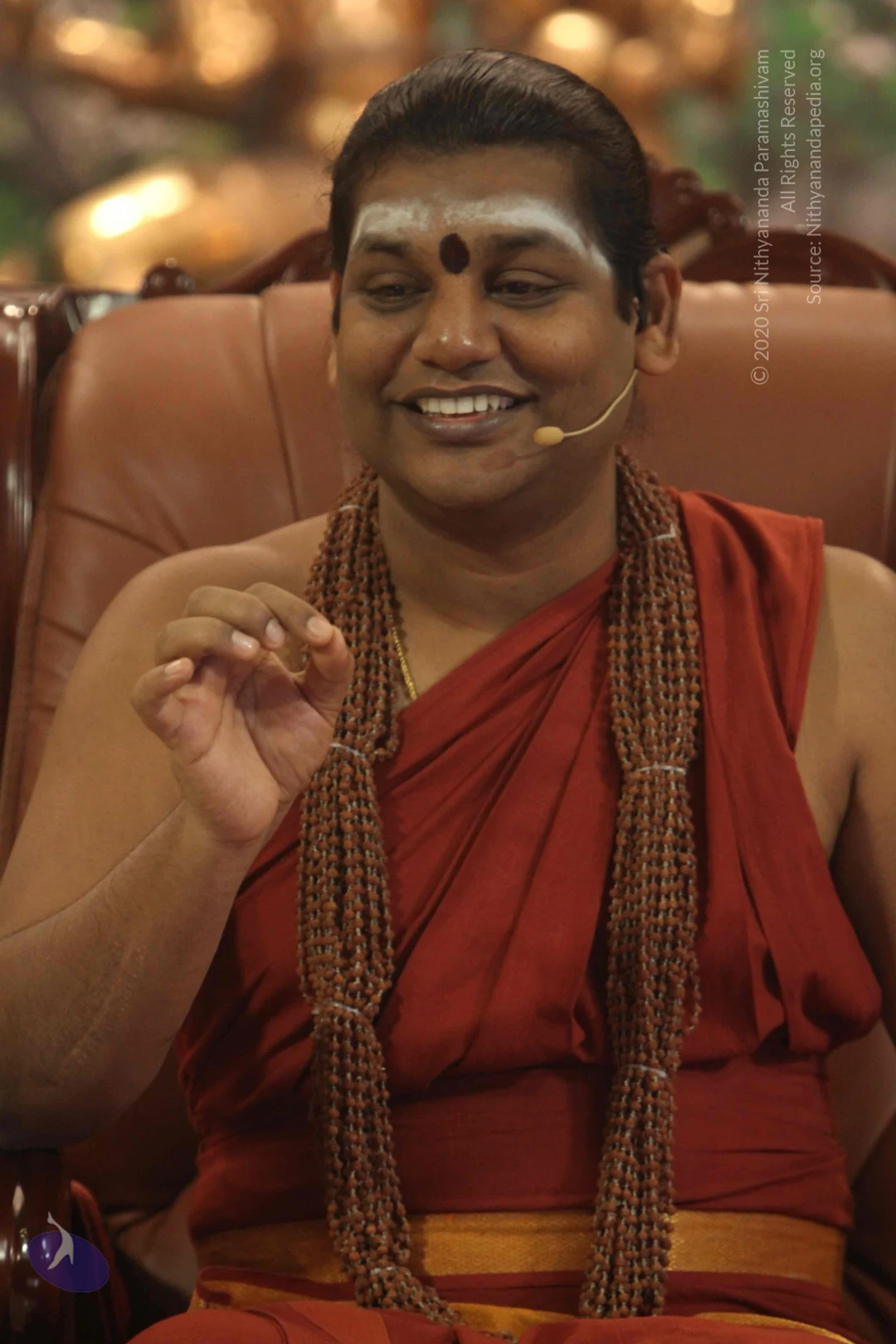
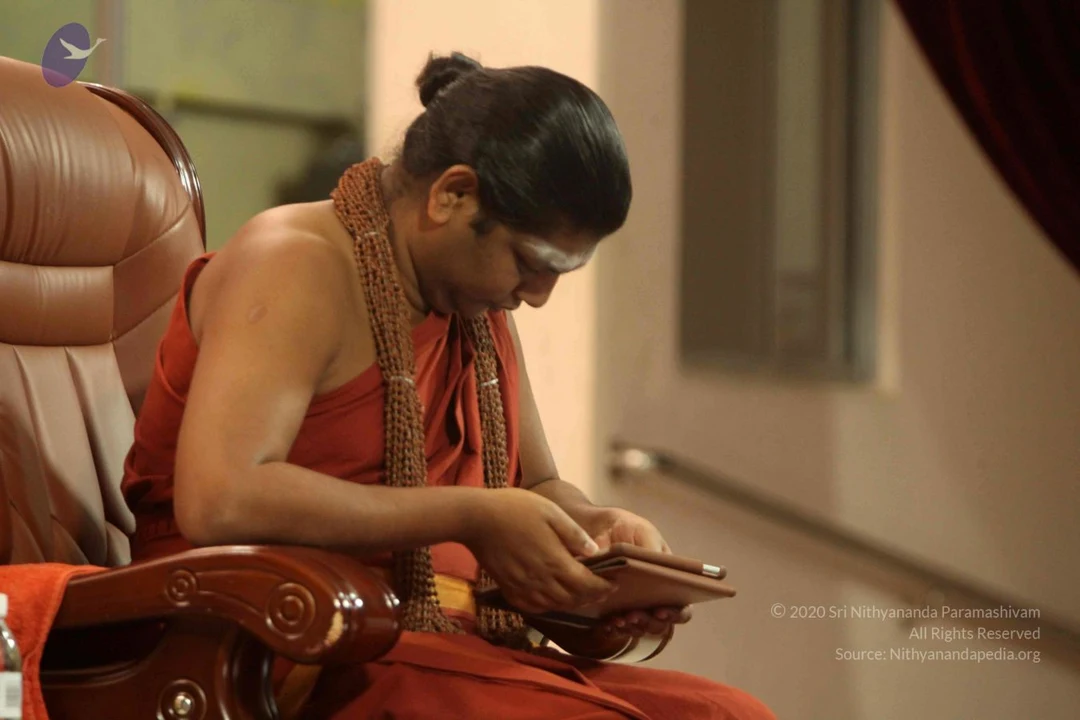
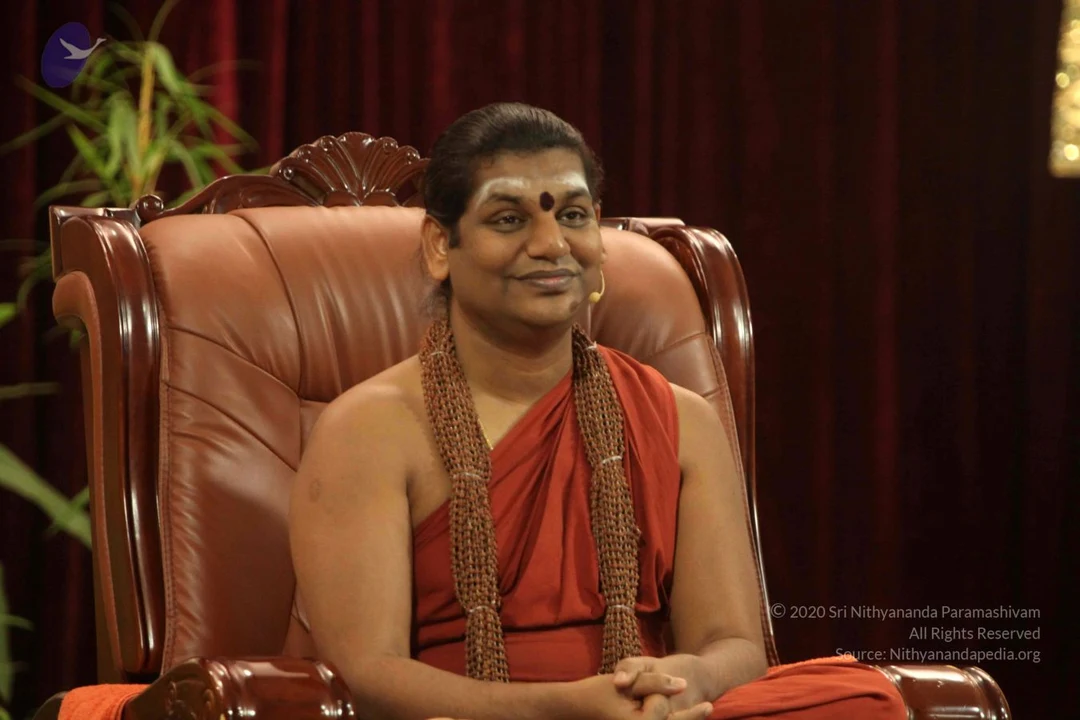
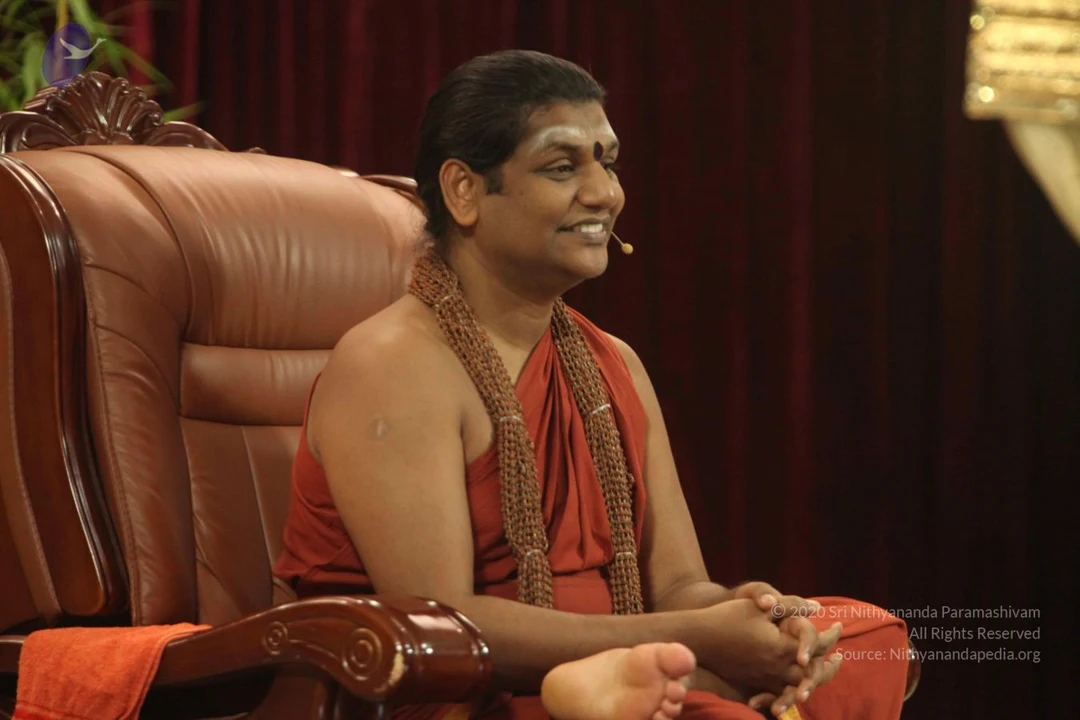
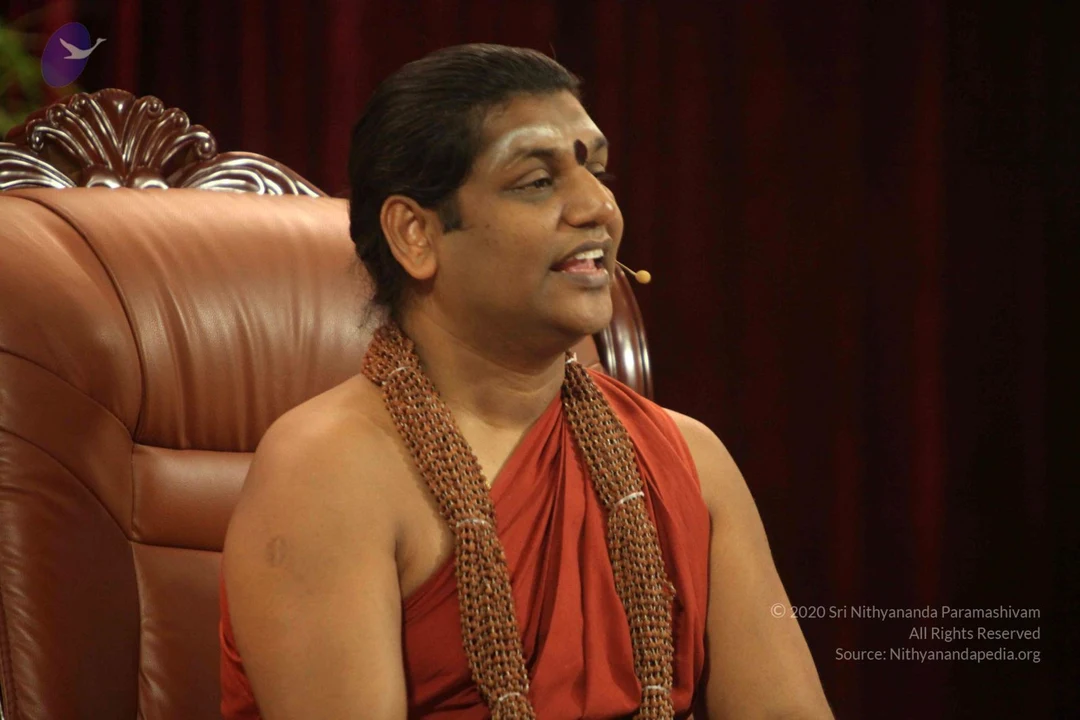
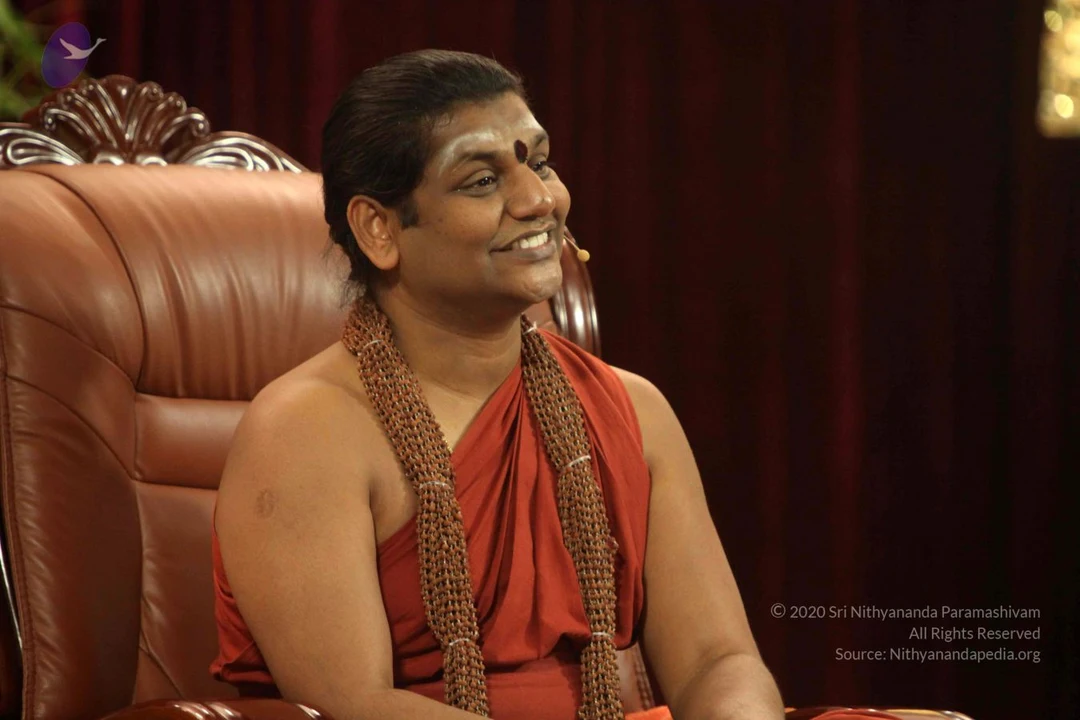
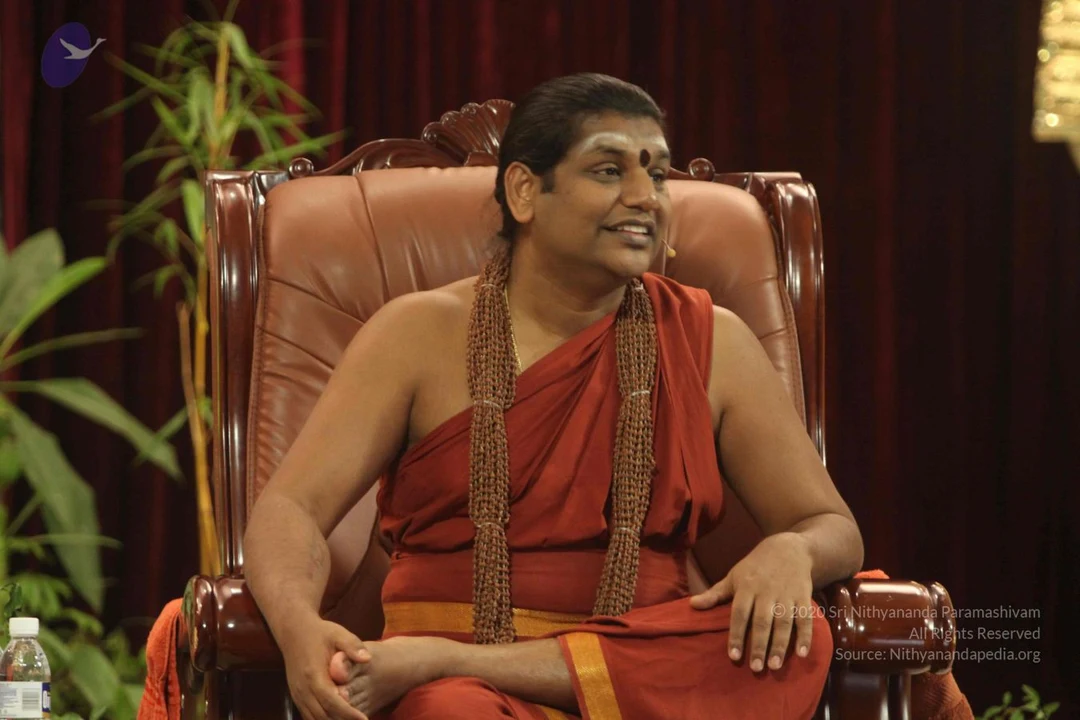
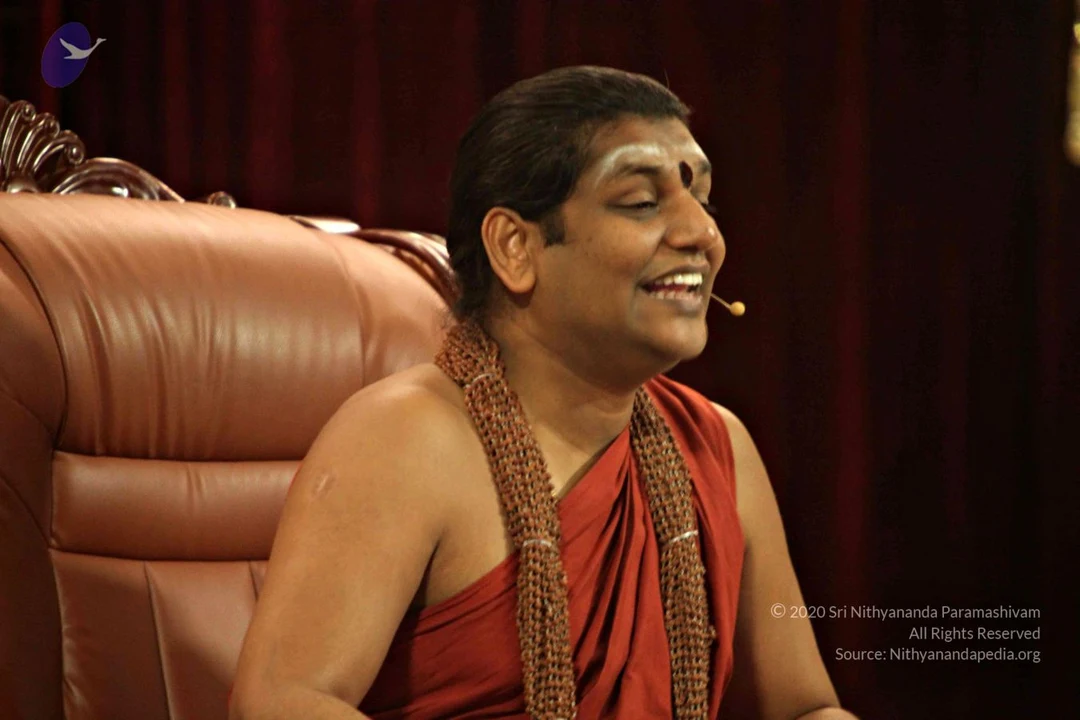
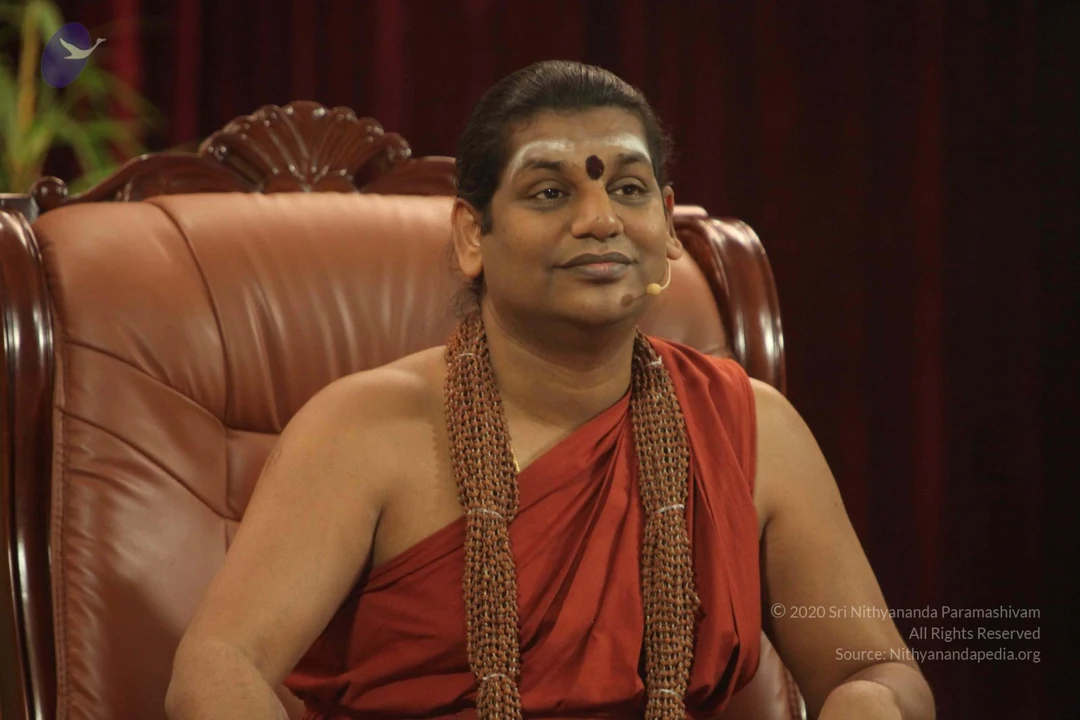
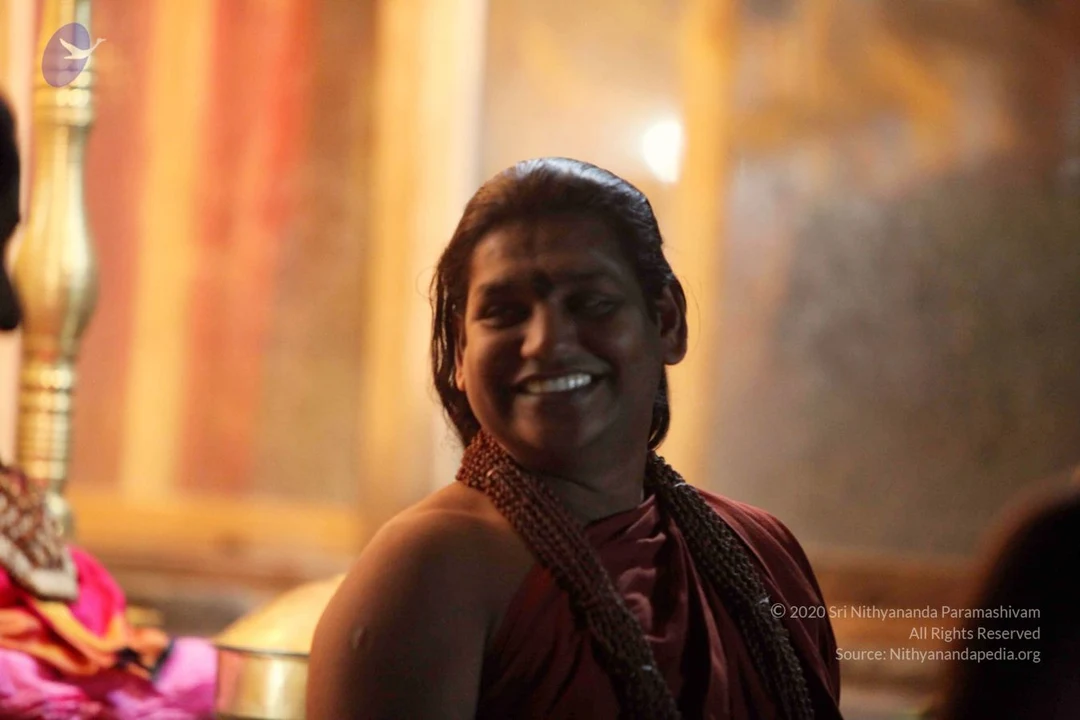
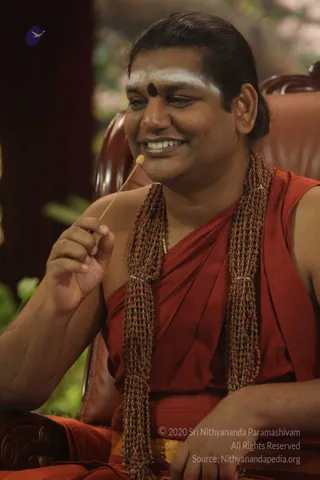
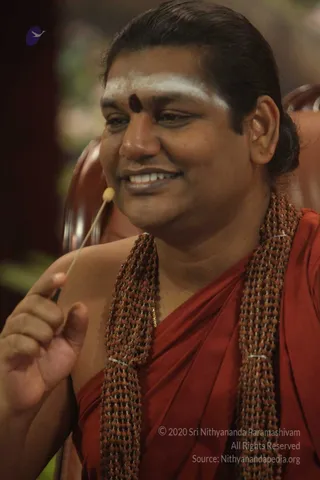
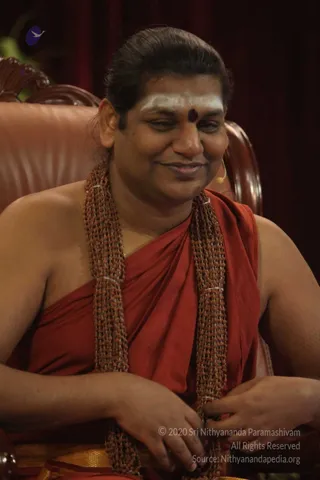
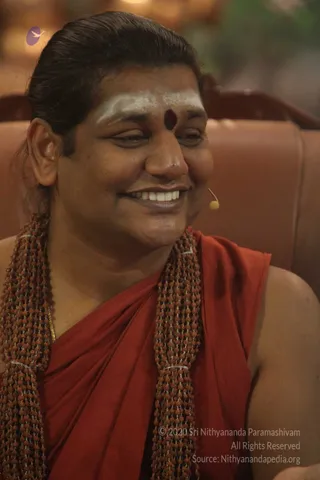
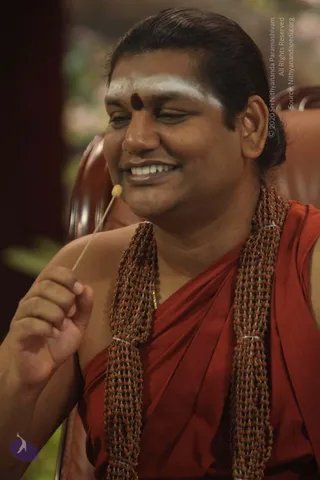
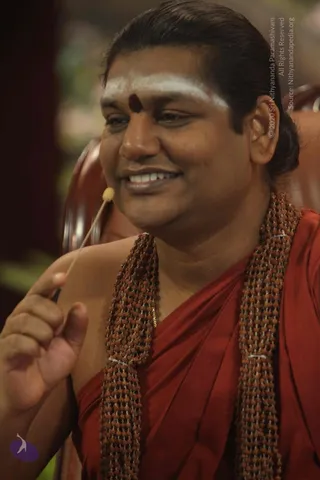
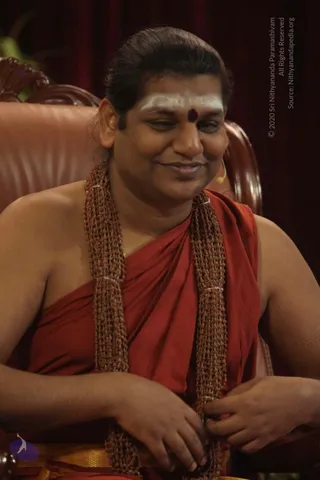
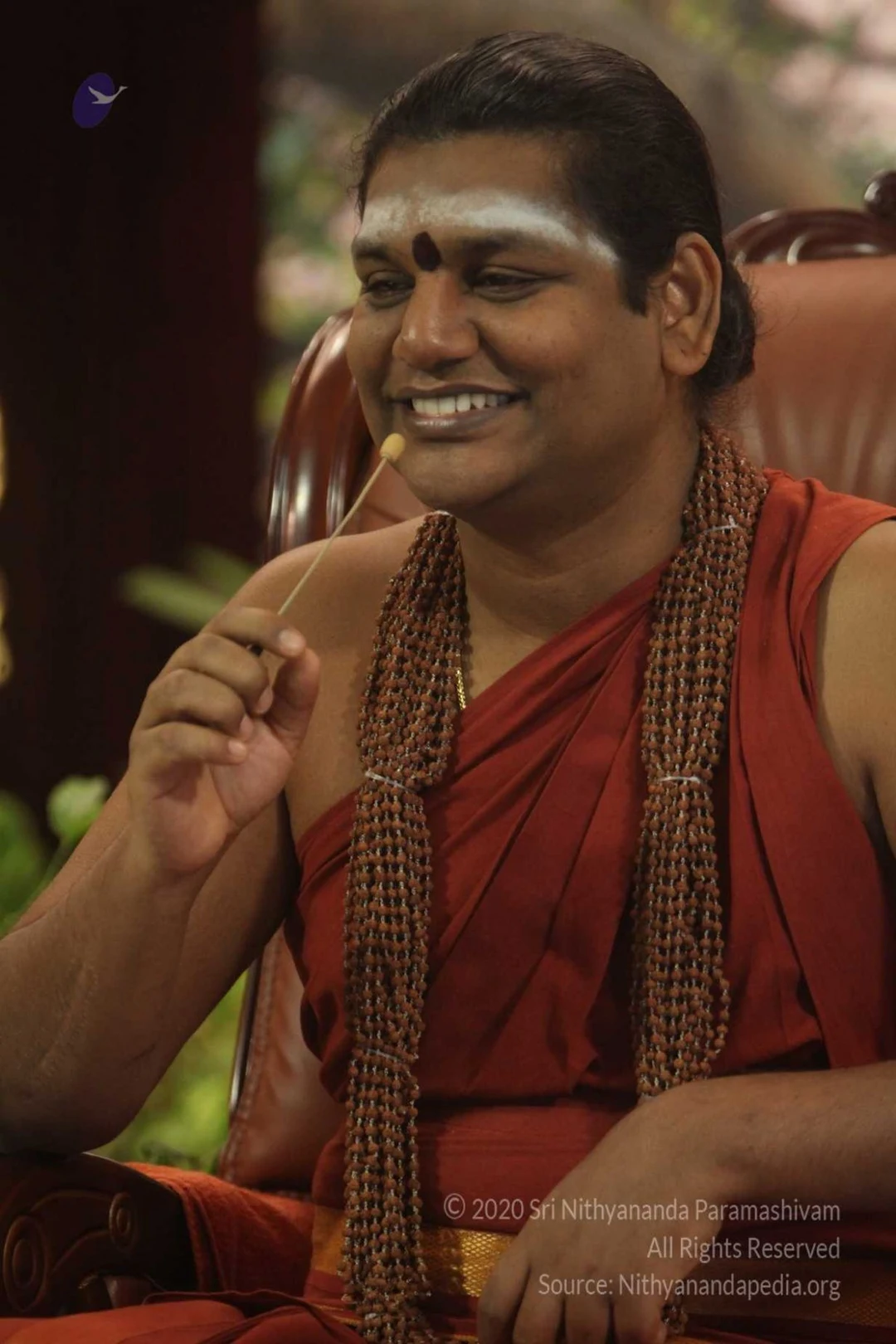
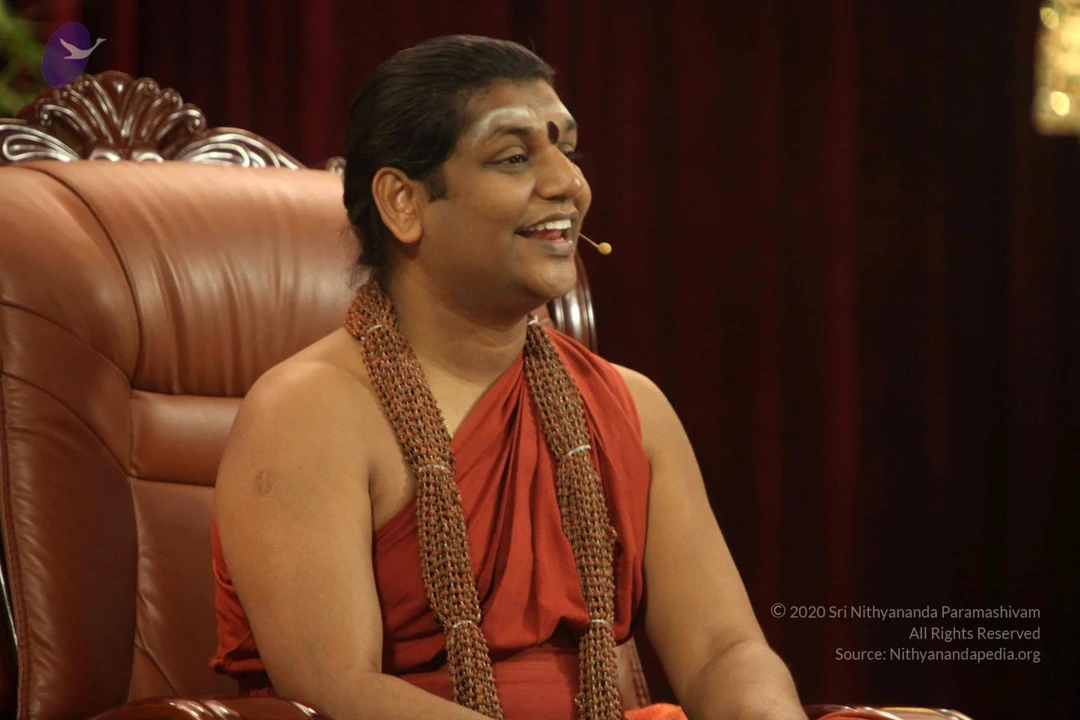
Close-up photograph of a smiling man seated in a satsang setting, wearing a rust-red saffron-toned robe and multiple strands of brown rudraksha beads around his neck. He has a white horizontal forehead marking with a dark red bindi and his hair is swept back. He holds a thin wooden stick with a small round end near his raised hand. Background is blurred with a reddish chair and warm lighting.A man seated in a carved wooden armchair with dark red drapery behind him smiles while looking downward. He wears a red-orange draped garment over one shoulder and multiple strands of rudraksha beads across his chest, with white sacred ash on his forehead and a red bindi. His hands rest on the beads at his waist. Appearance-based candidate for a person: the rudraksha malas, red-orange clothing and white forehead markings are present, and he is seated in a teaching setting. Single physical person.

Inner Awakening(IA) Temple Session
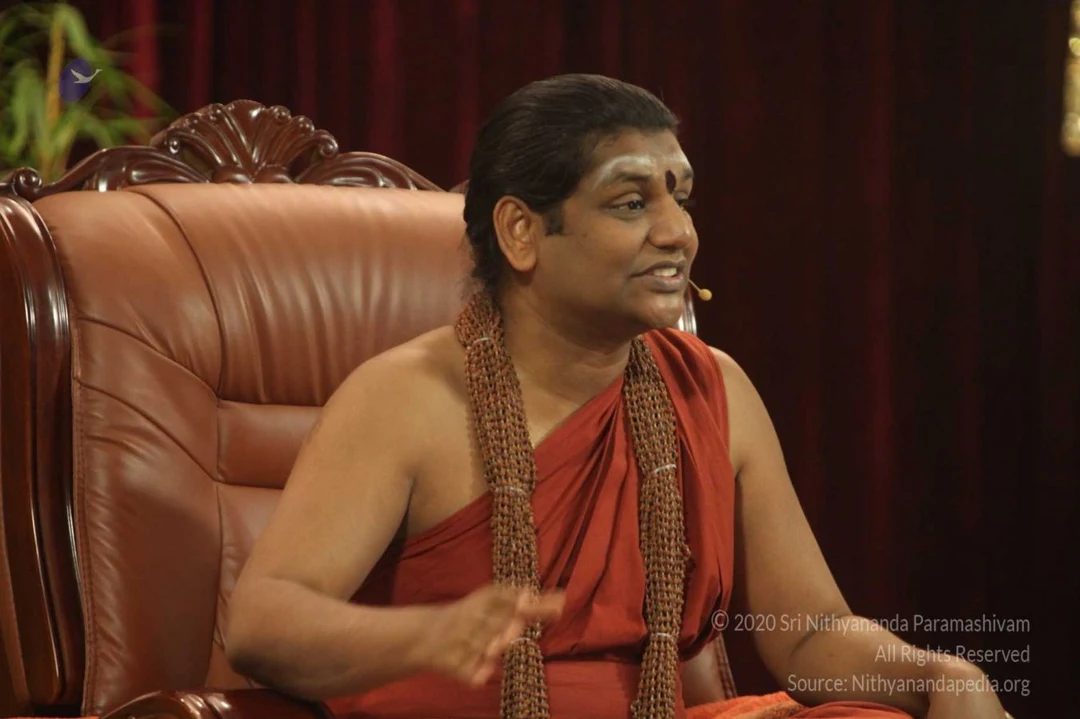
20 photosSource gallery
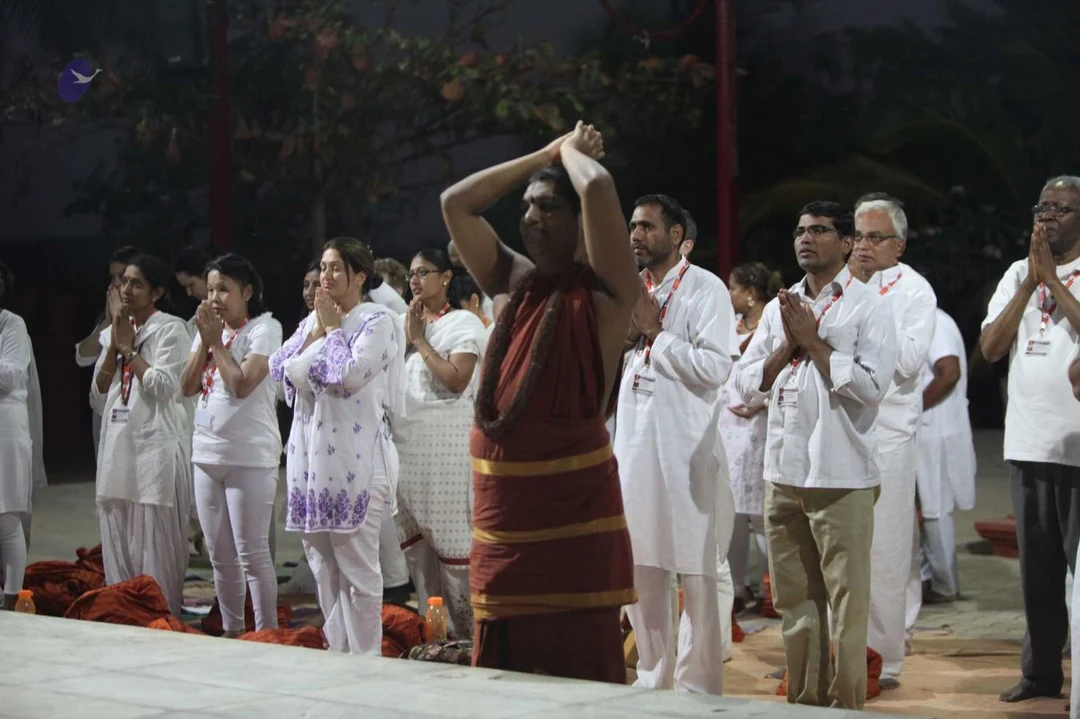
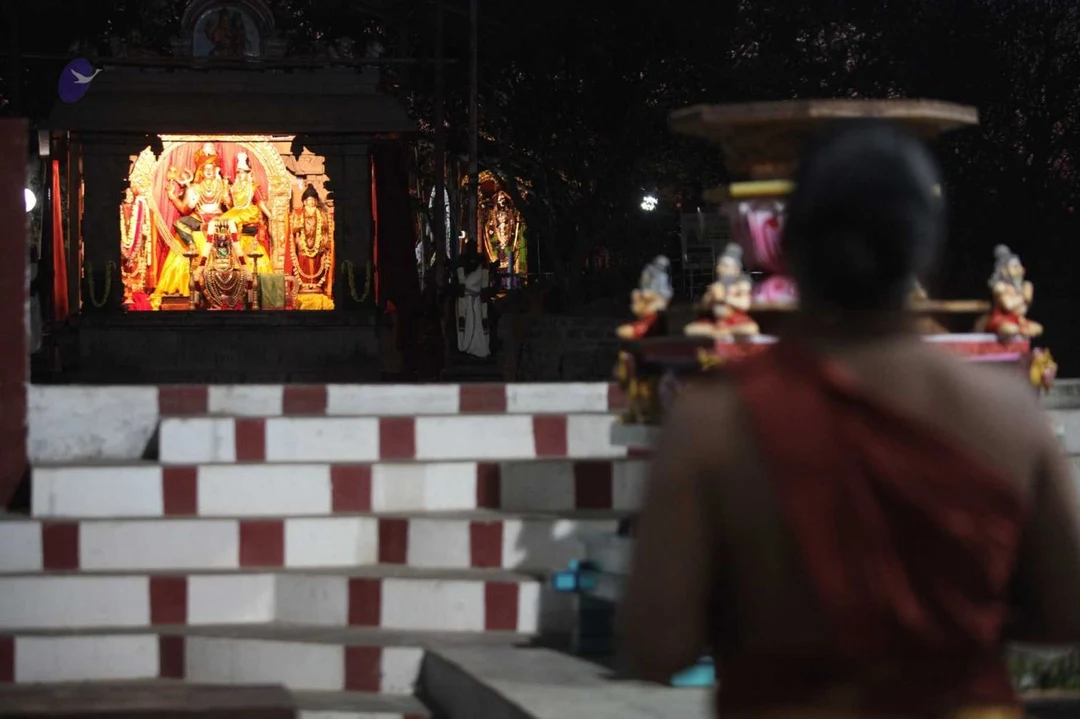
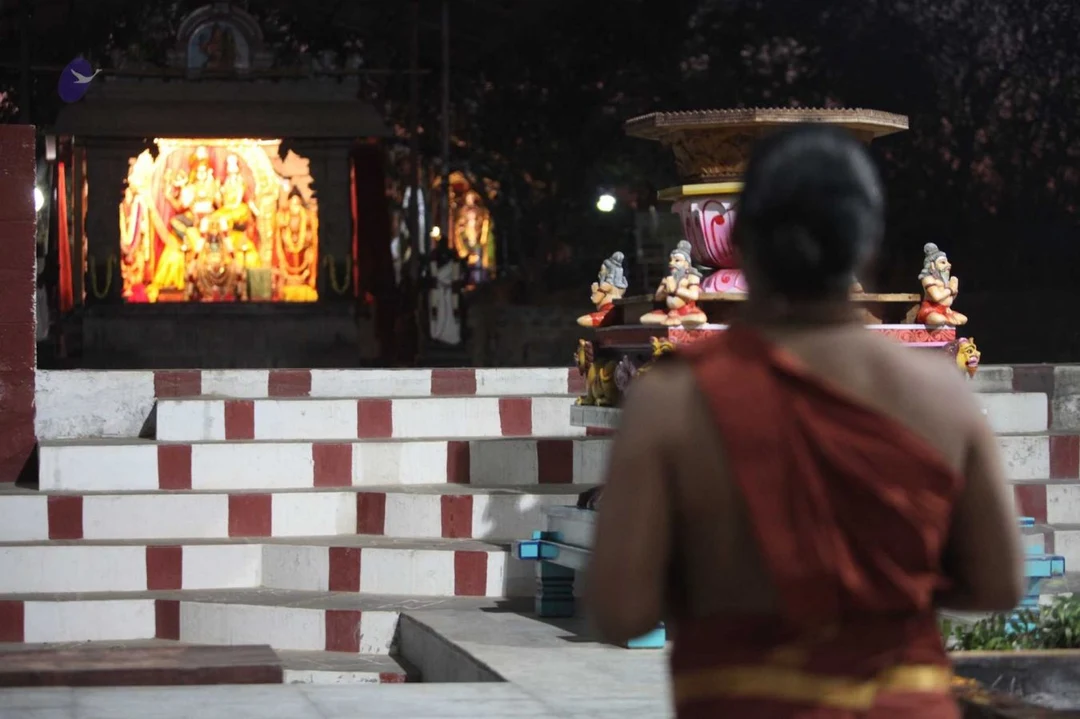
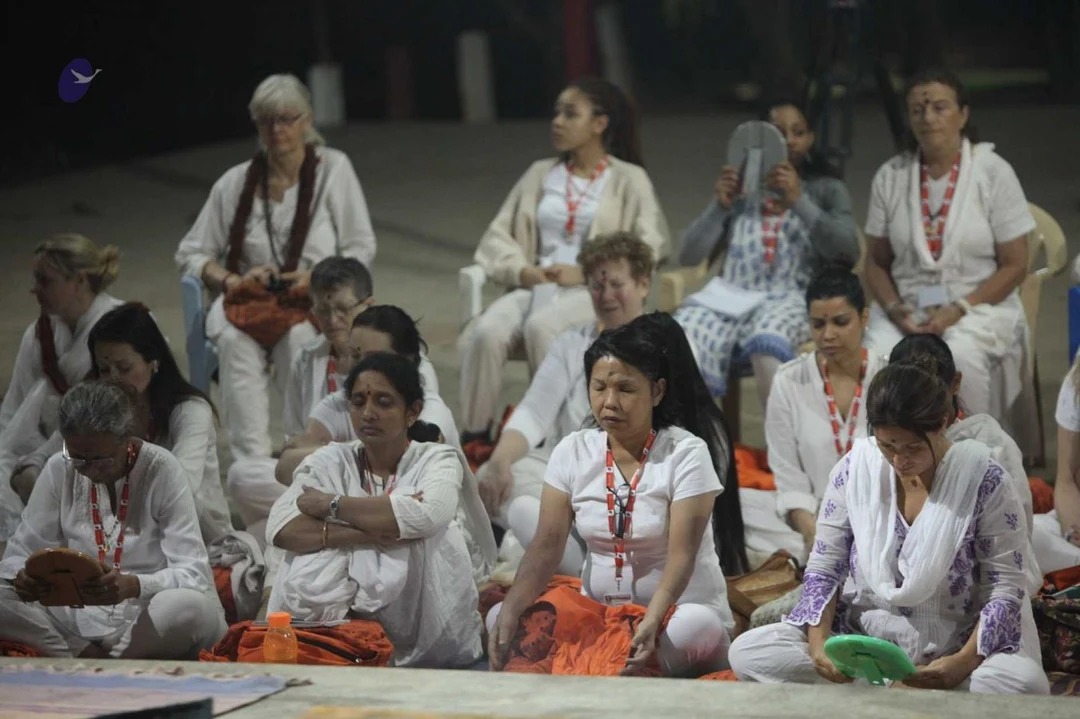
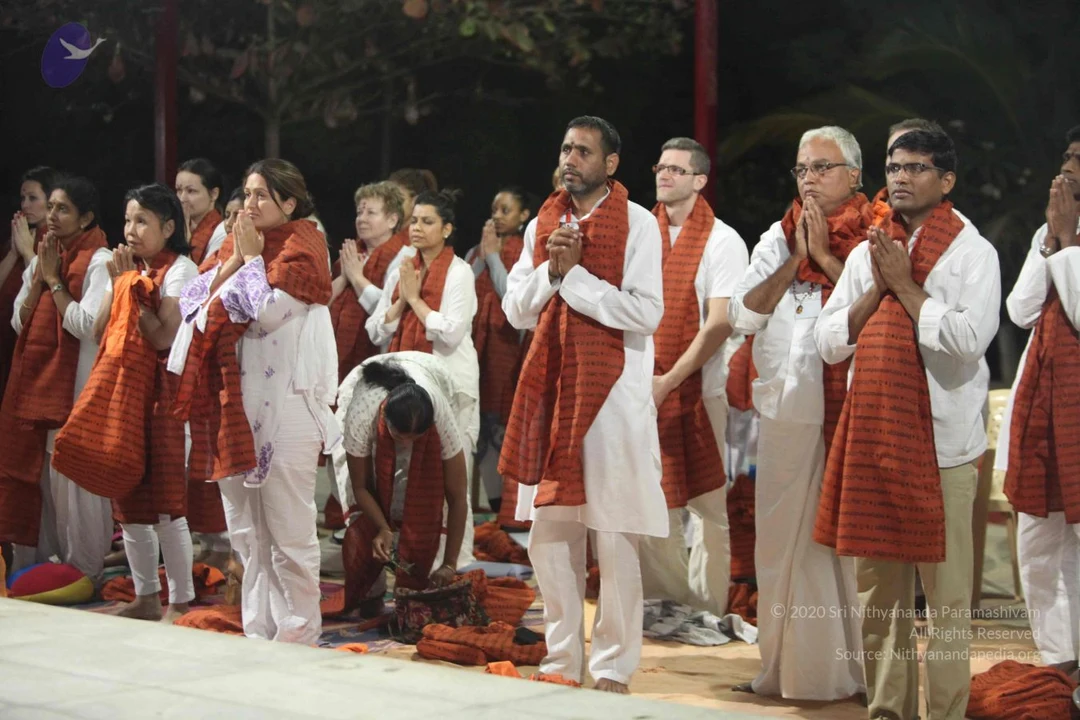
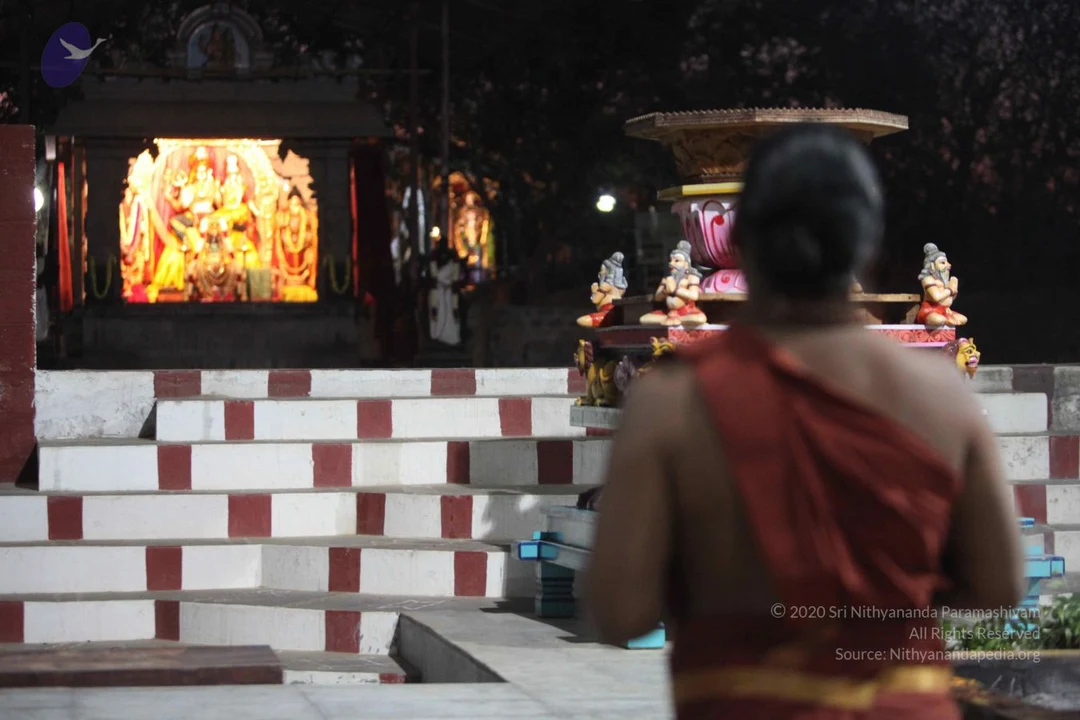
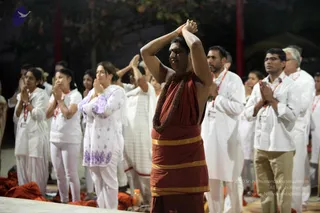
Evening outdoor gathering at an ashram courtyard at night. Around him, devotees in white kurtas, salwar and lanyards stand in anjali mudra with palms pressed together, and several have their eyes closed. Dark foliage and a red pillar frame the background, and orange cloths and water bottles lie on the ground at the front.

Nithya Satsang

1 photoSource gallery
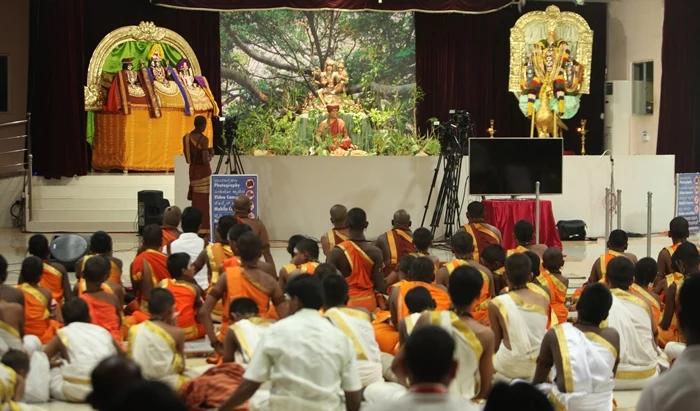
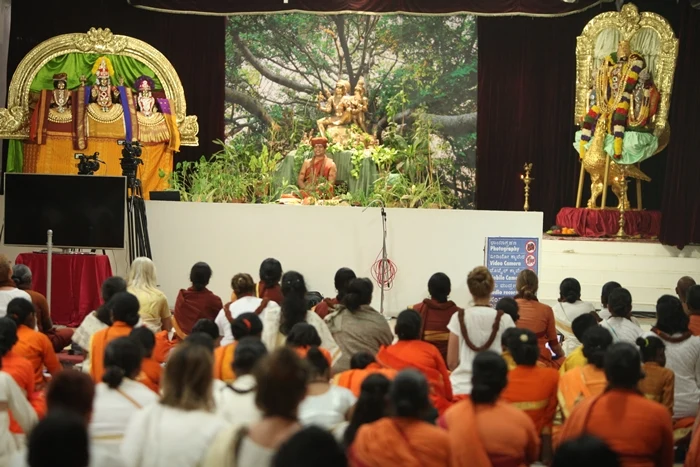
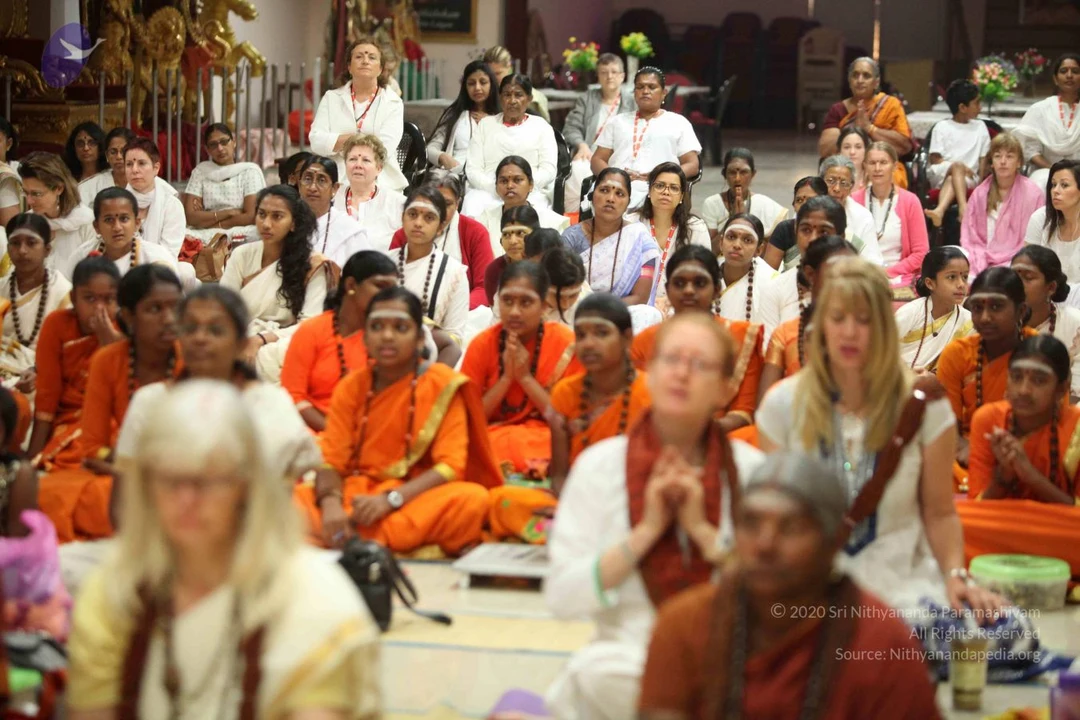
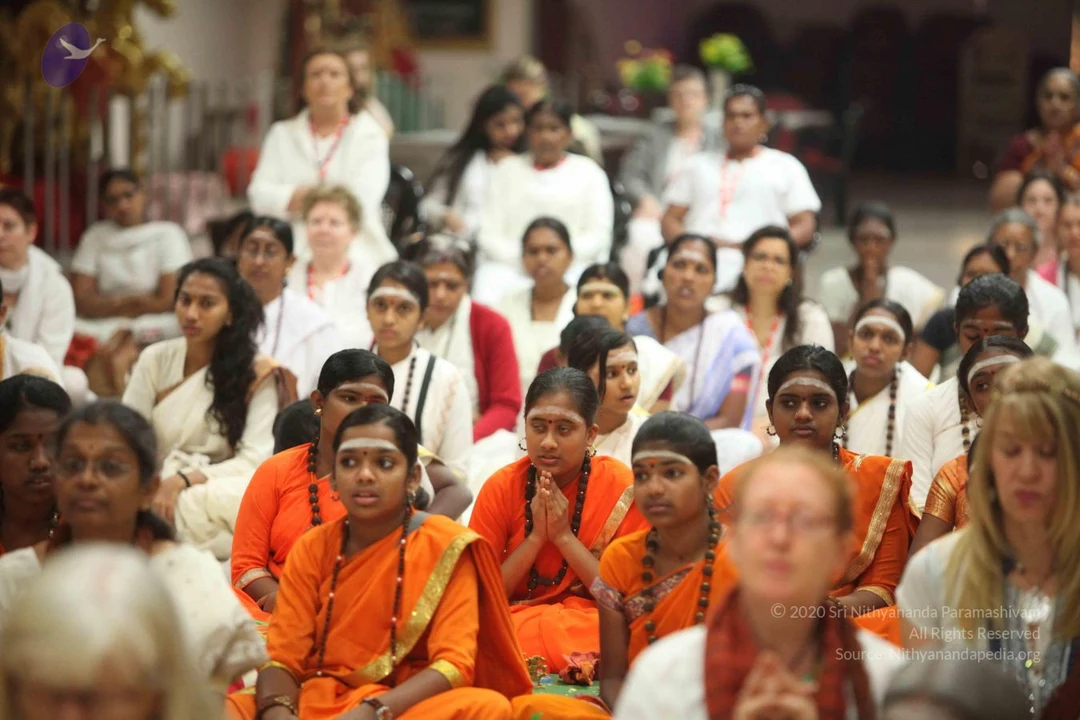
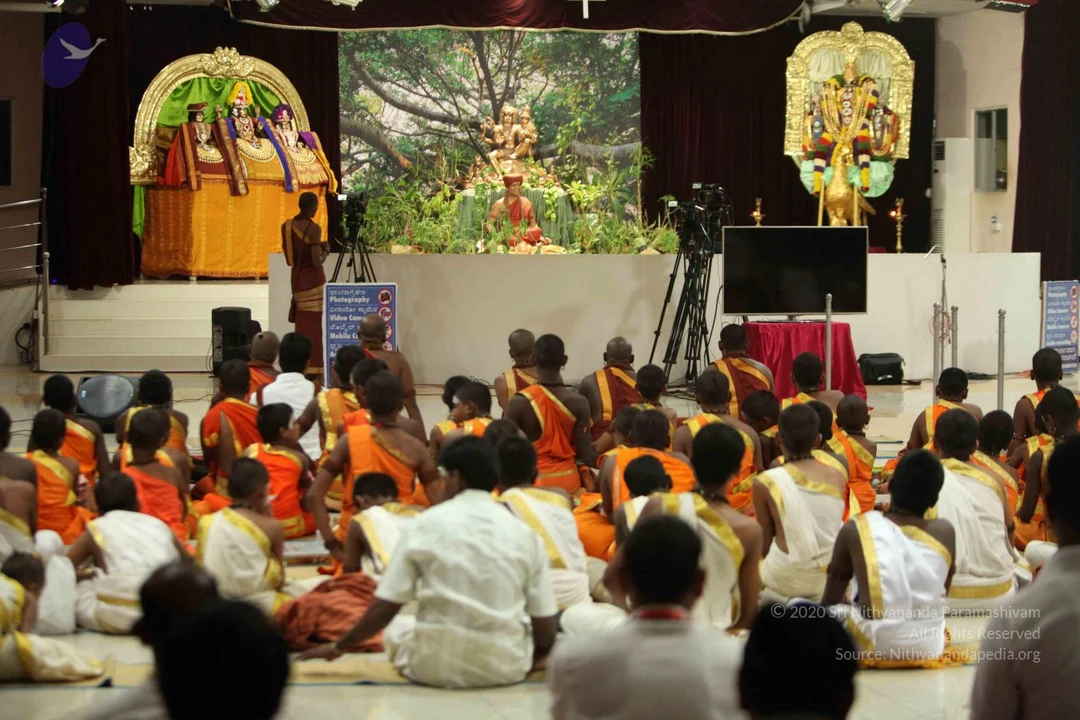
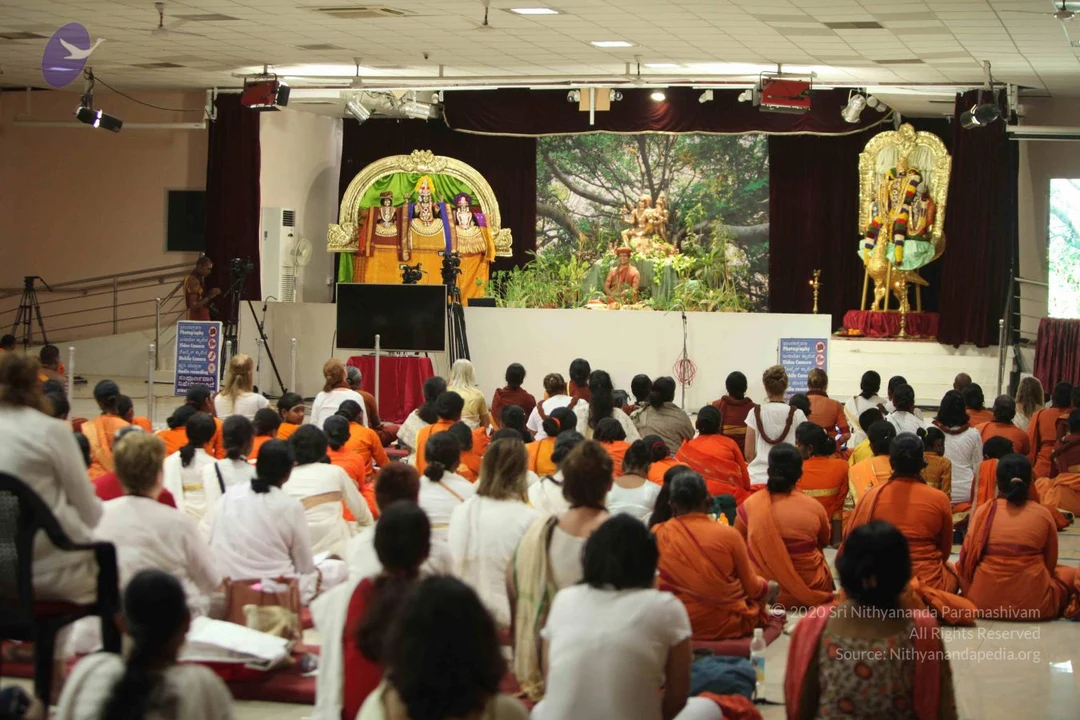
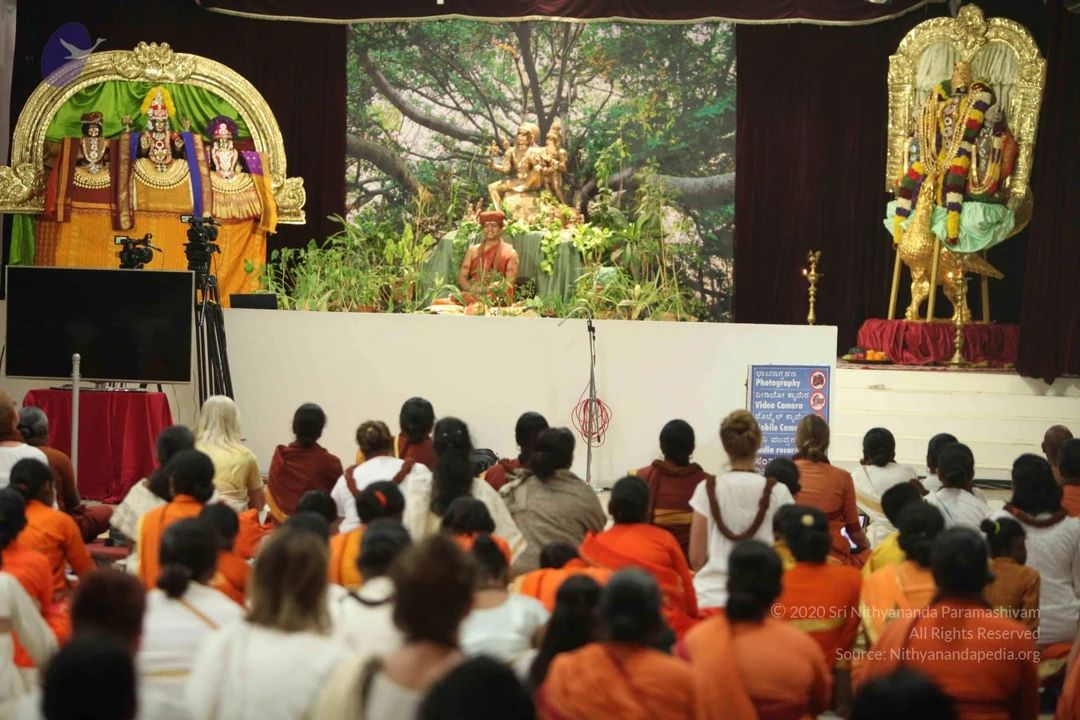
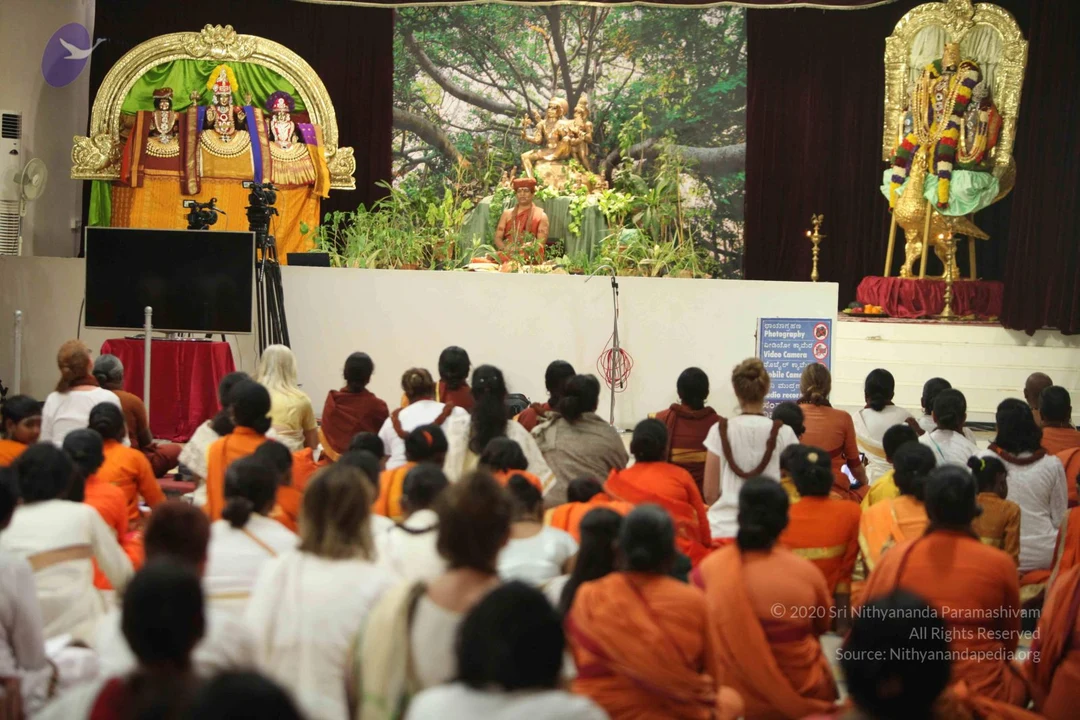
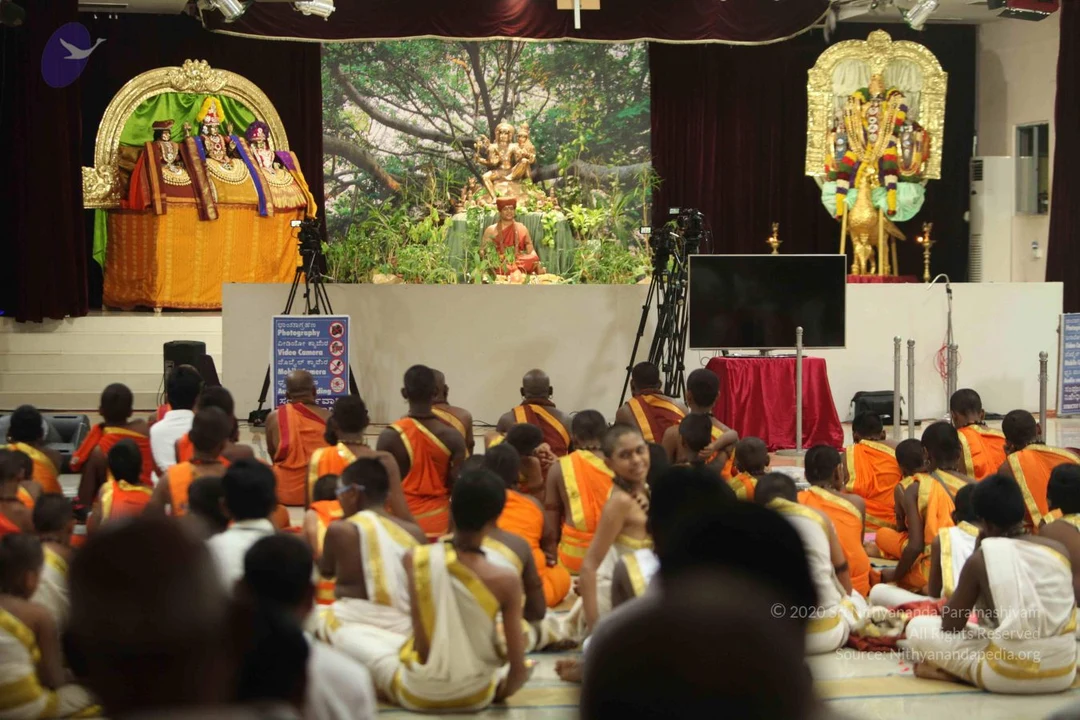
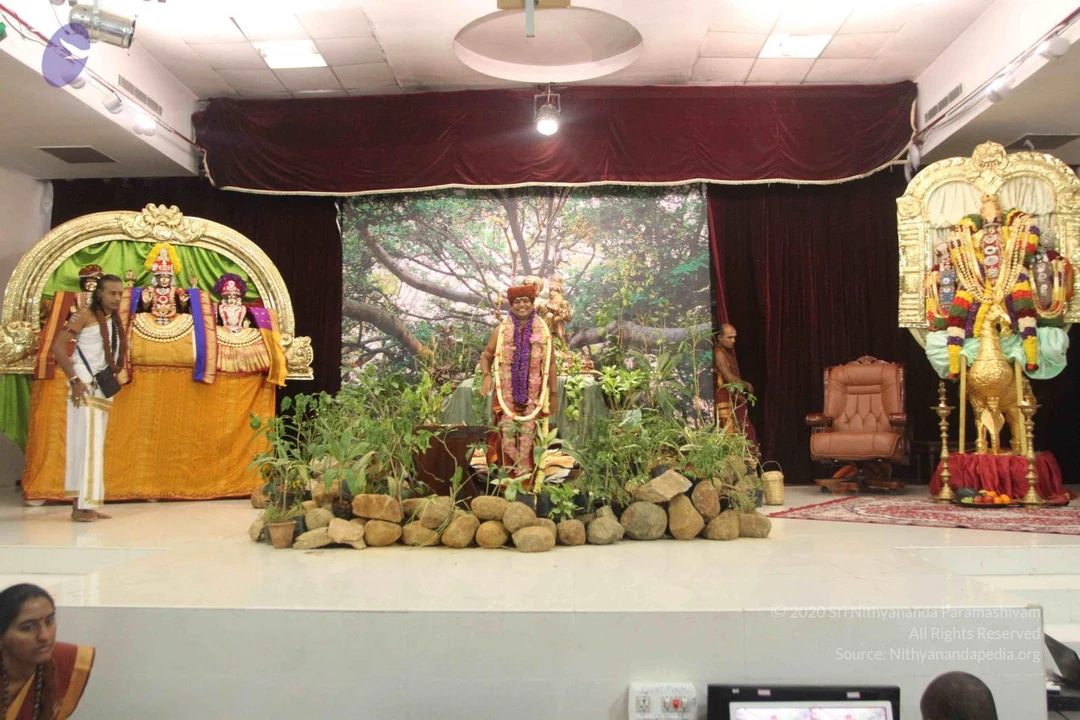
A large indoor hall during a seated satsang. Rows of devotees sit cross-legged on the floor, many in orange or saffron robes and some in white dhotis and shawls. In the foreground a figure in saffron clothing faces the stage. Behind them a stage features an ornate golden canopy with deity murtis in a rich green and gold setting, a large backdrop image of a banyan-like tree with a seated figure amid flowers, and a golden-framed shrine with a deity murti at right. Brass lamps flank the stage, and camera tripods and a monitor are visible. Approximately 40 to 50 people are seated in the audience.

Nithya Satsang

12 photosSource gallery
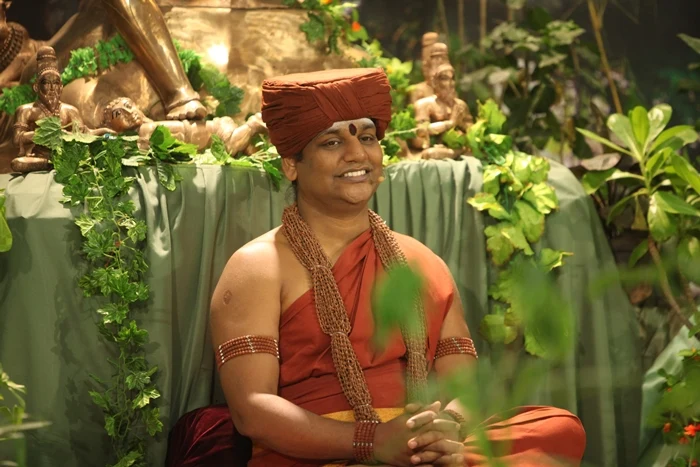
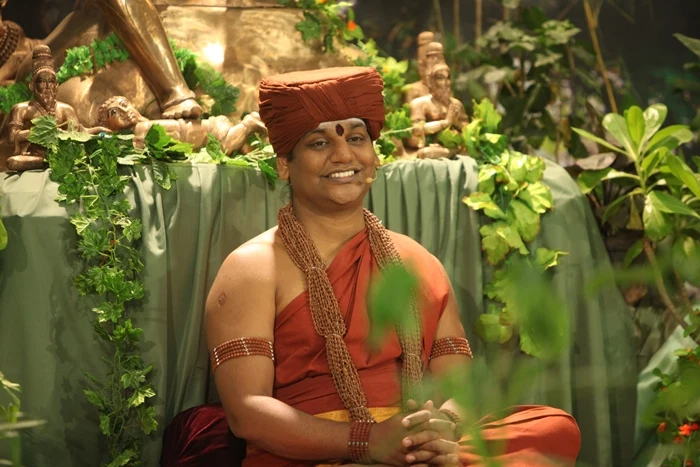
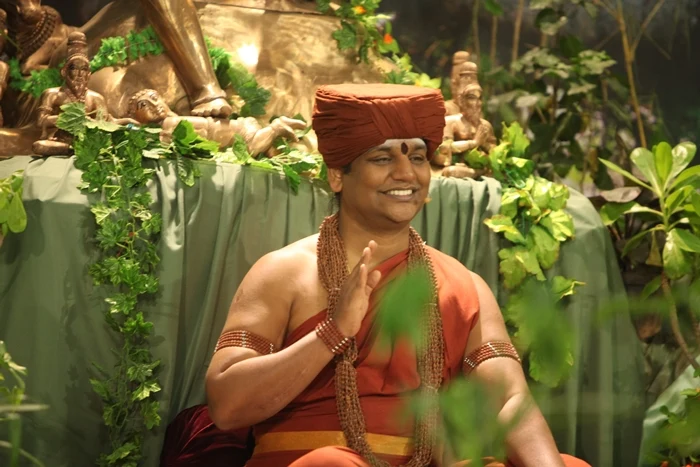
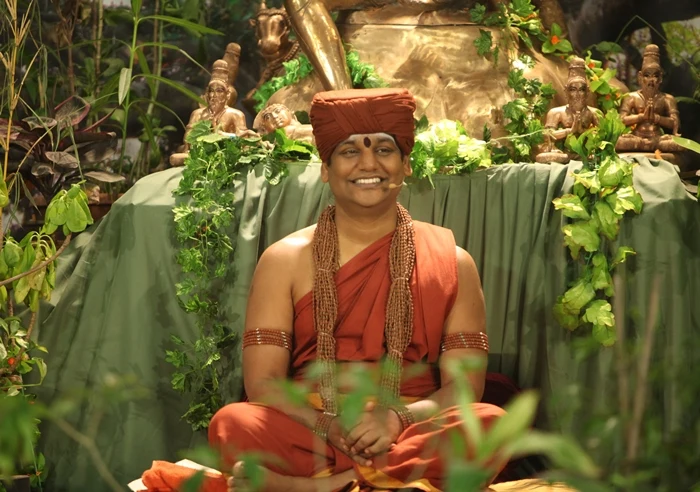
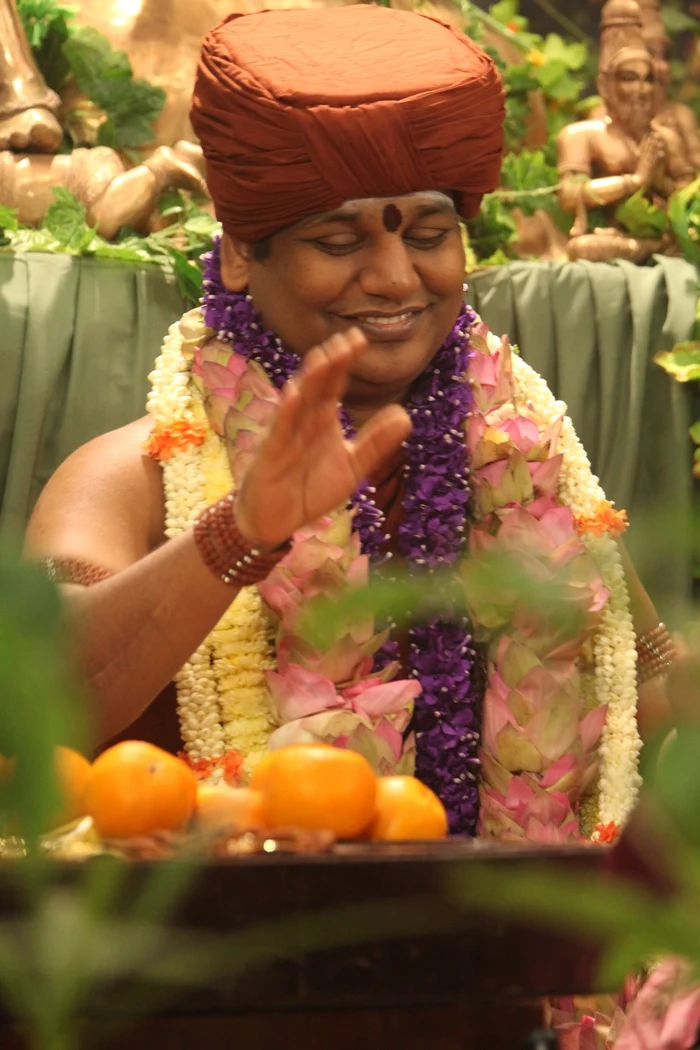
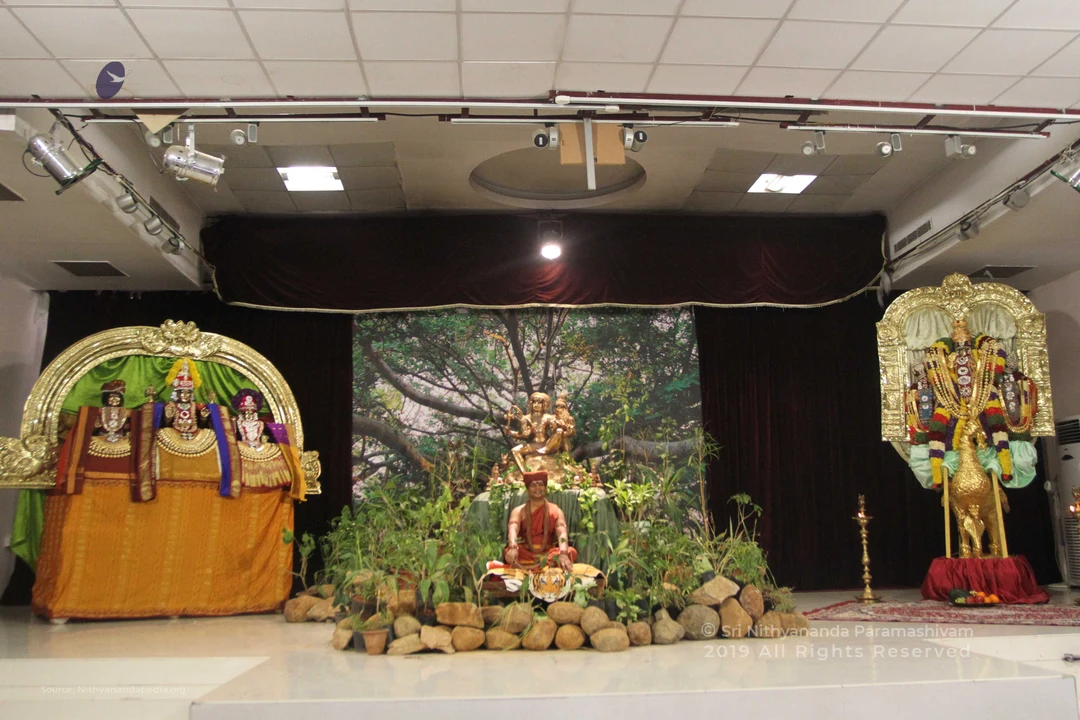
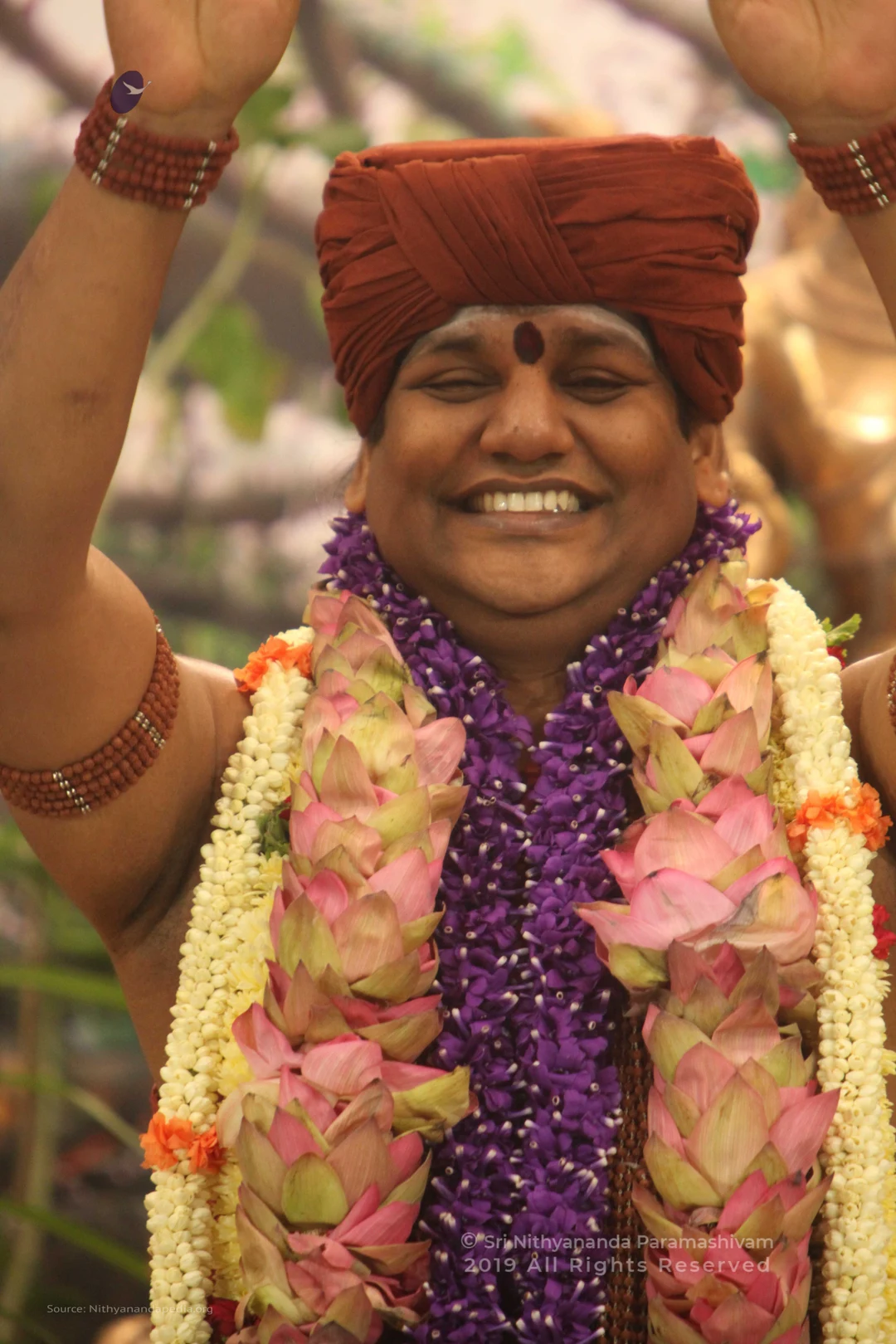
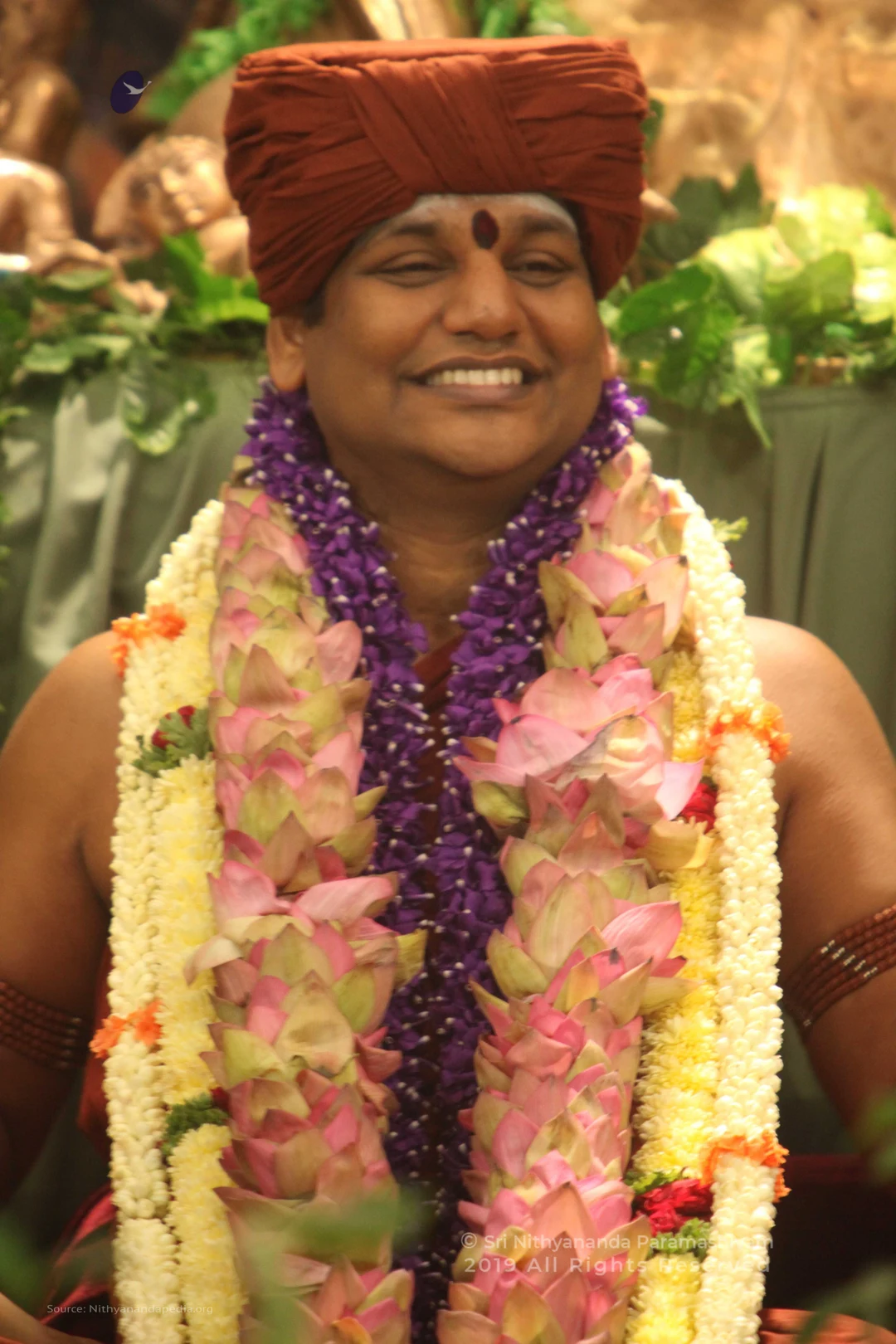
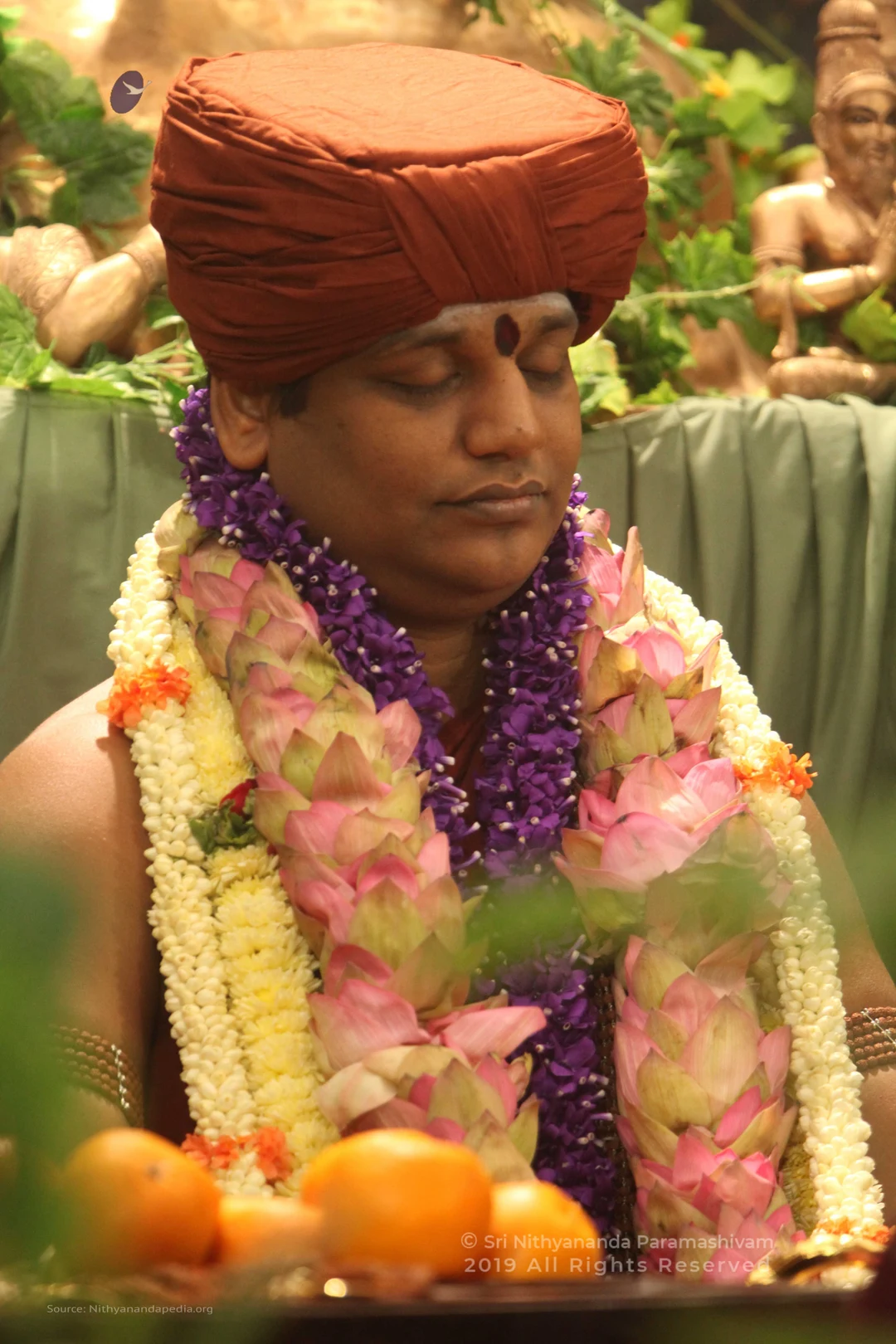
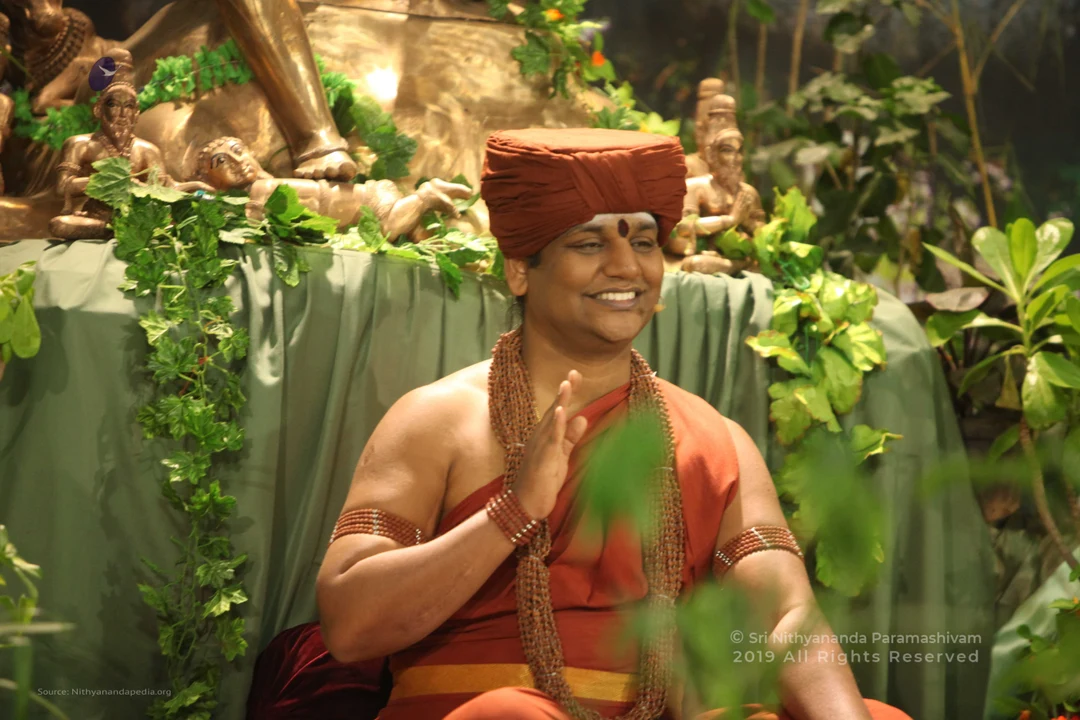
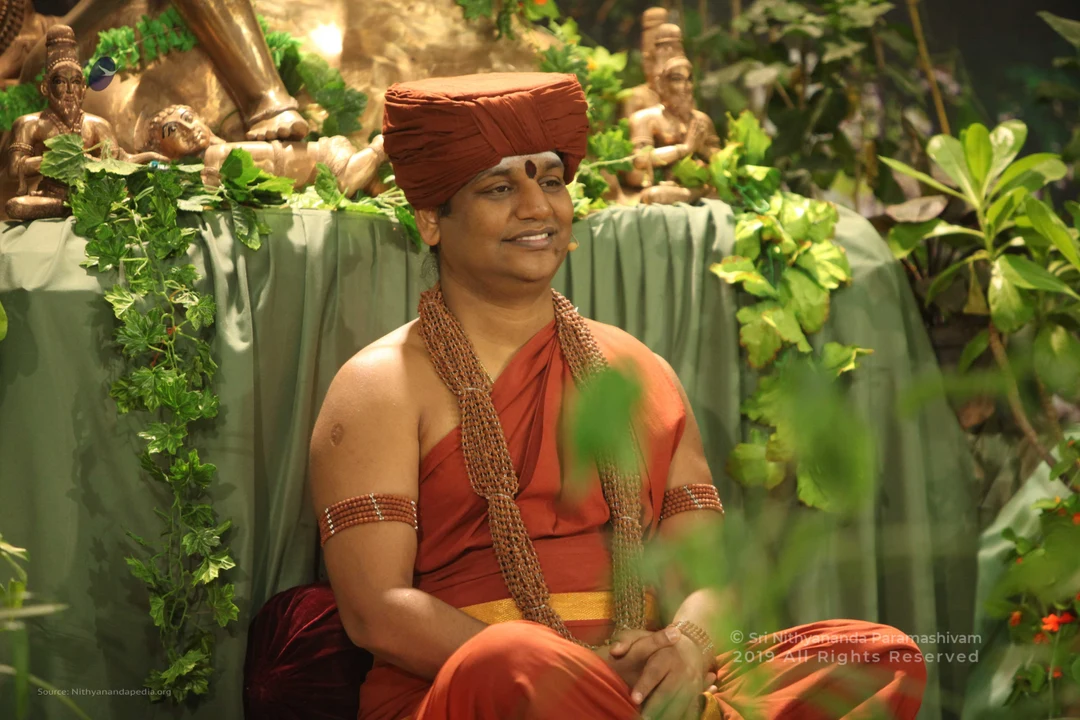
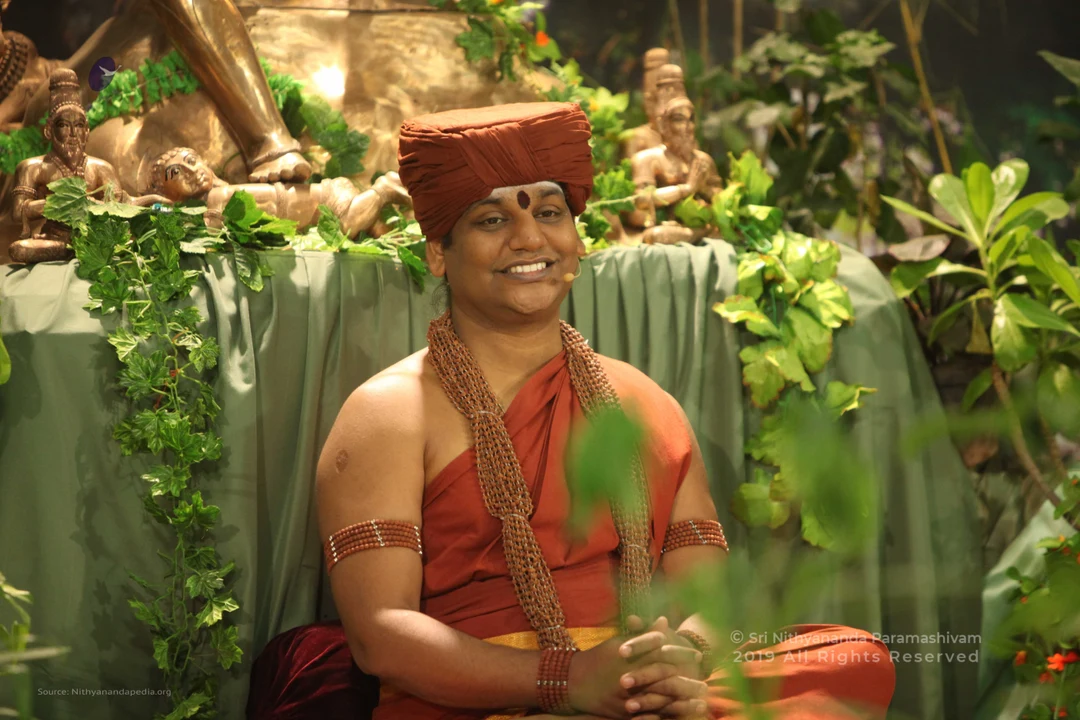
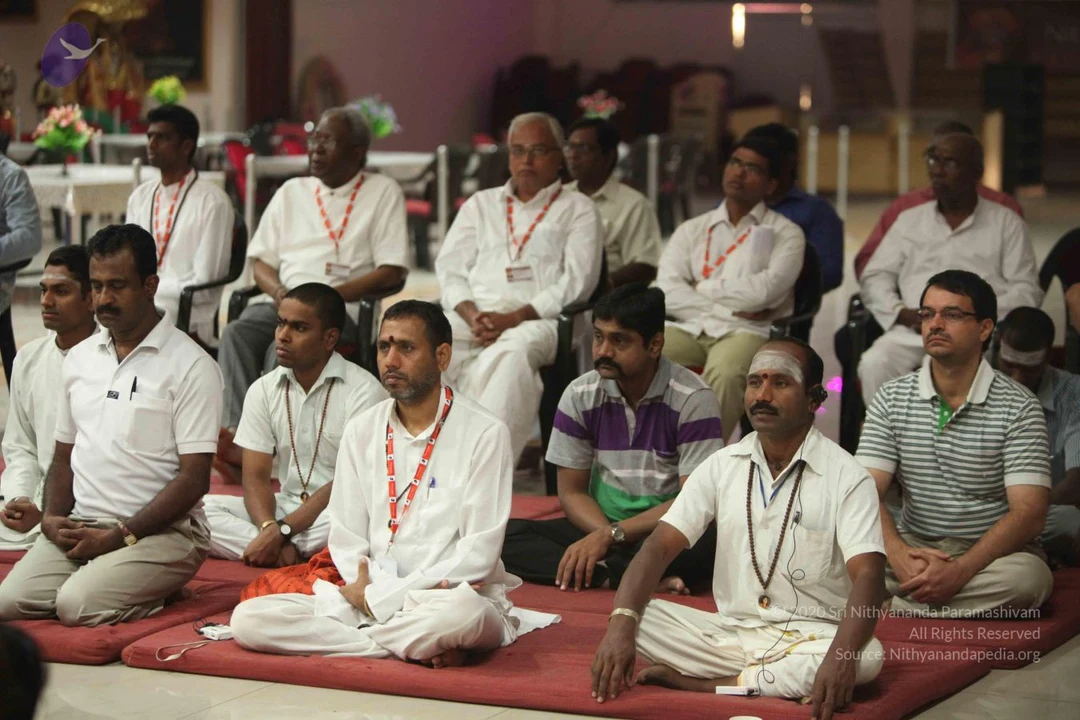
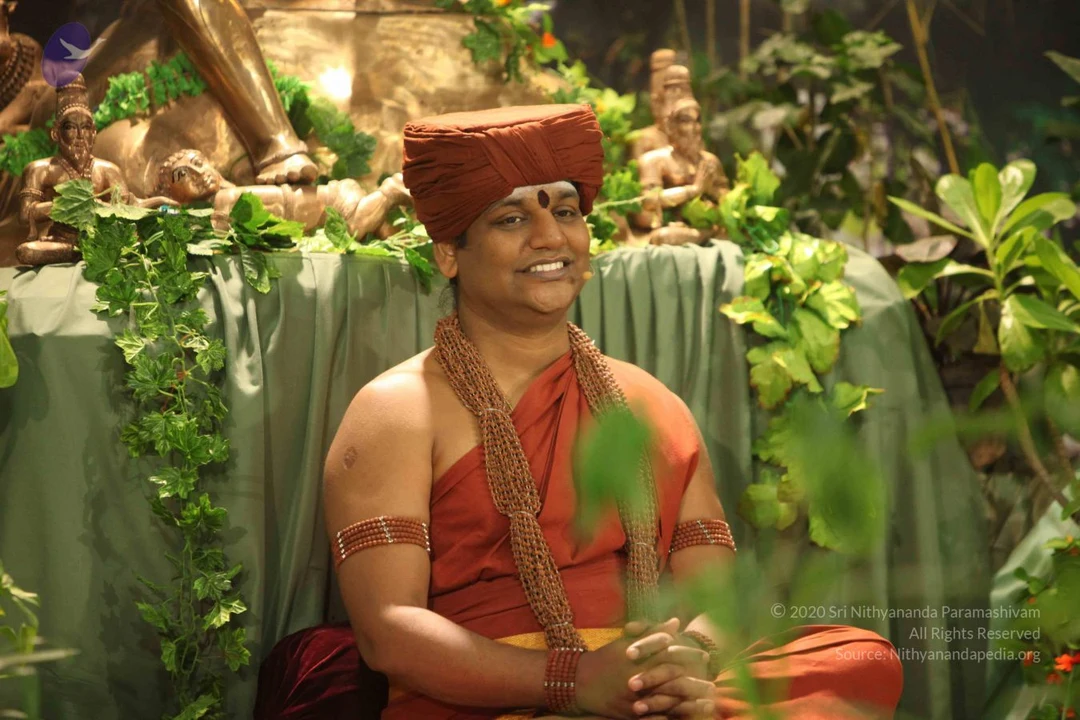
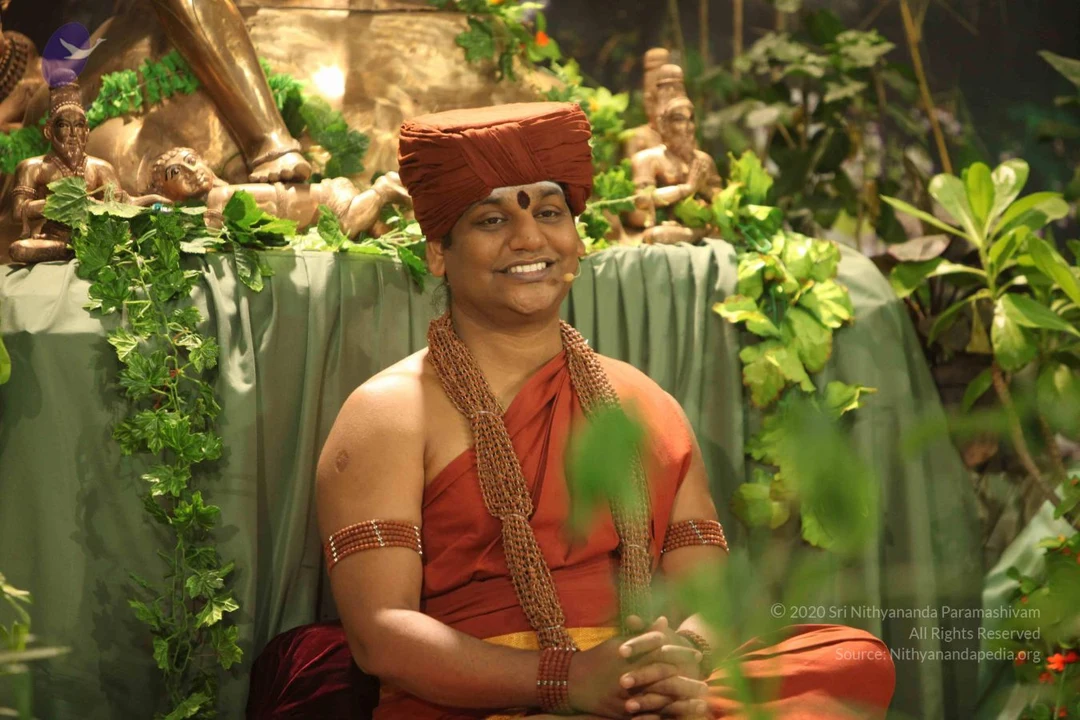
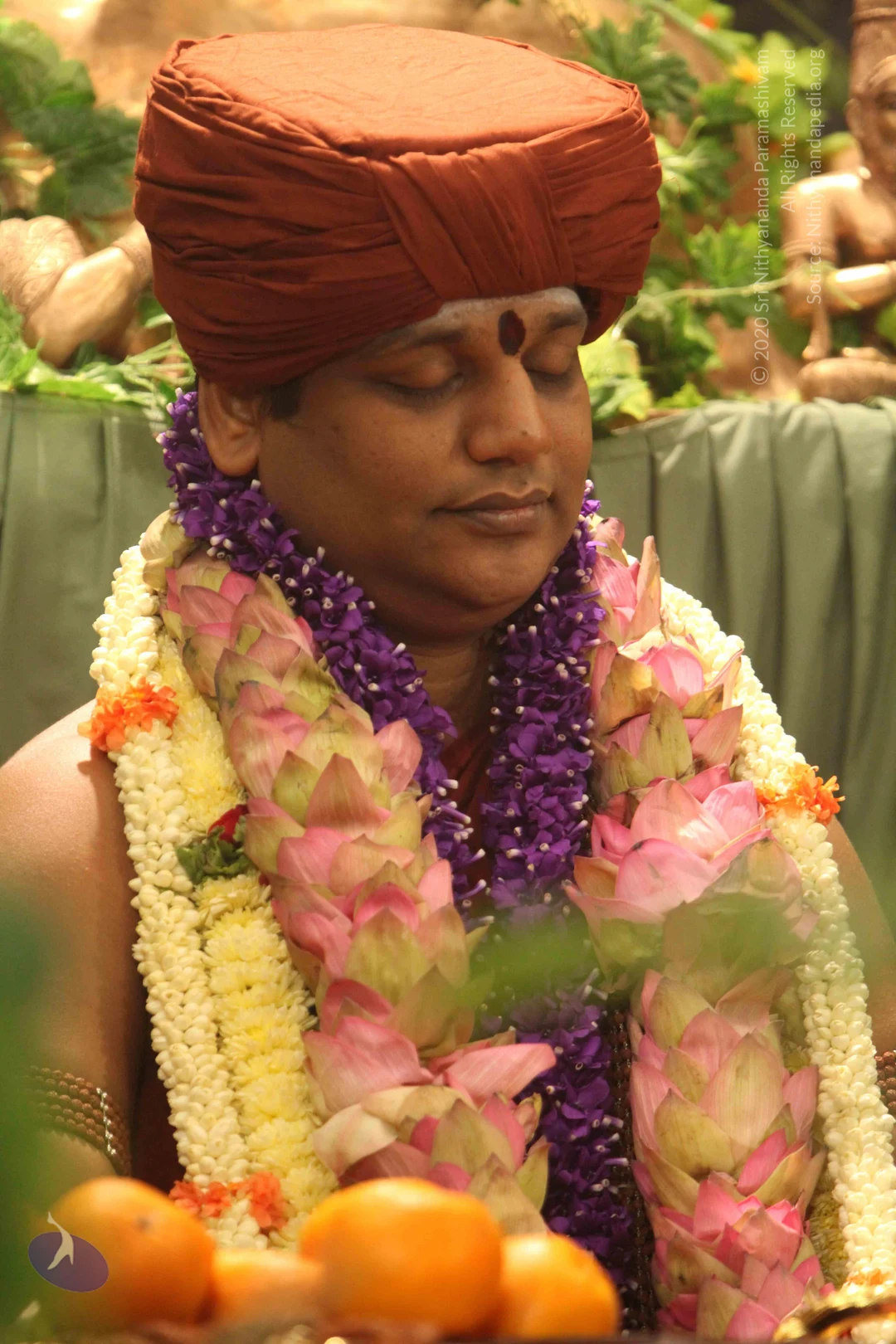
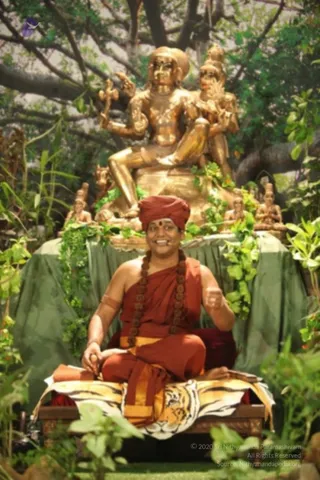
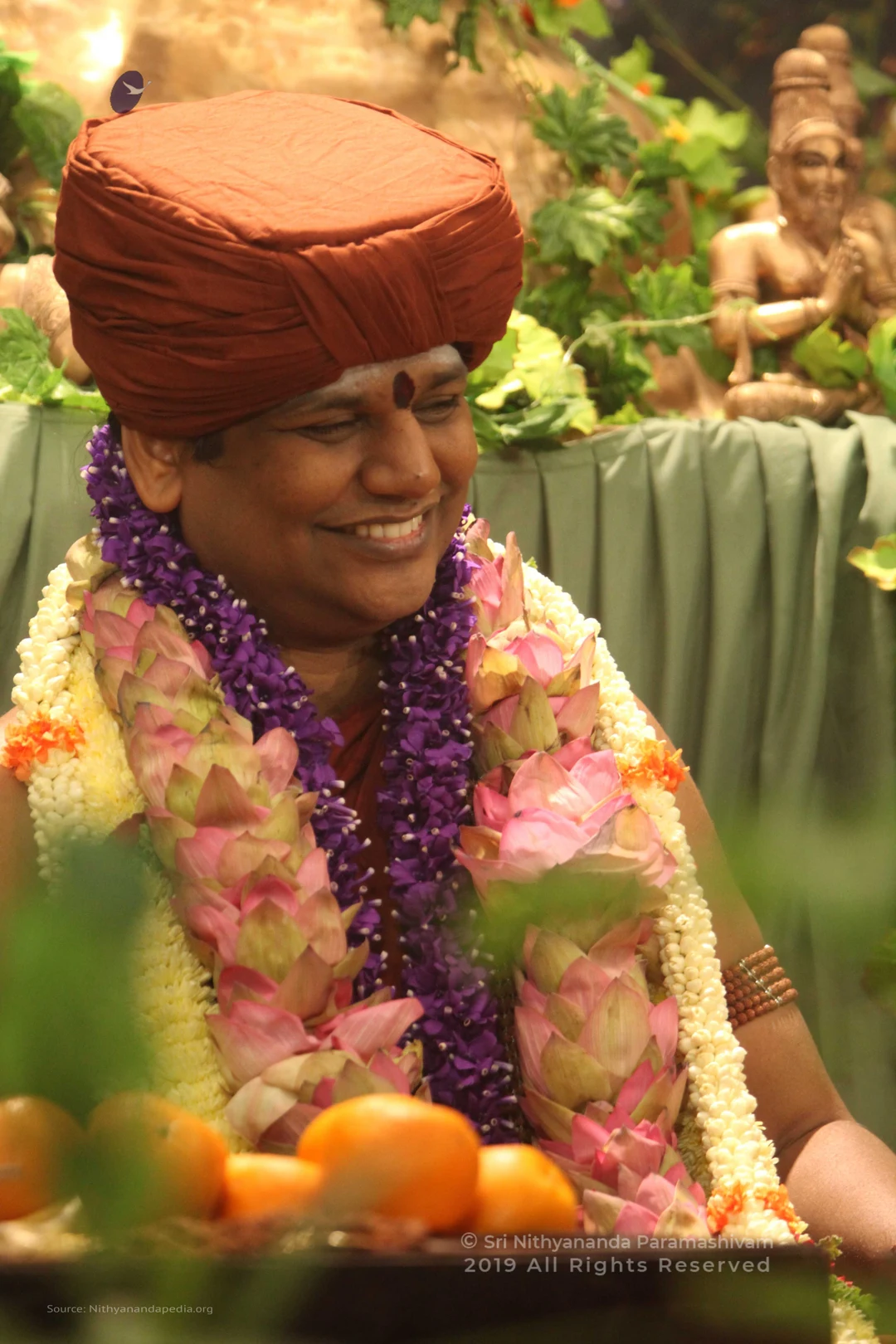
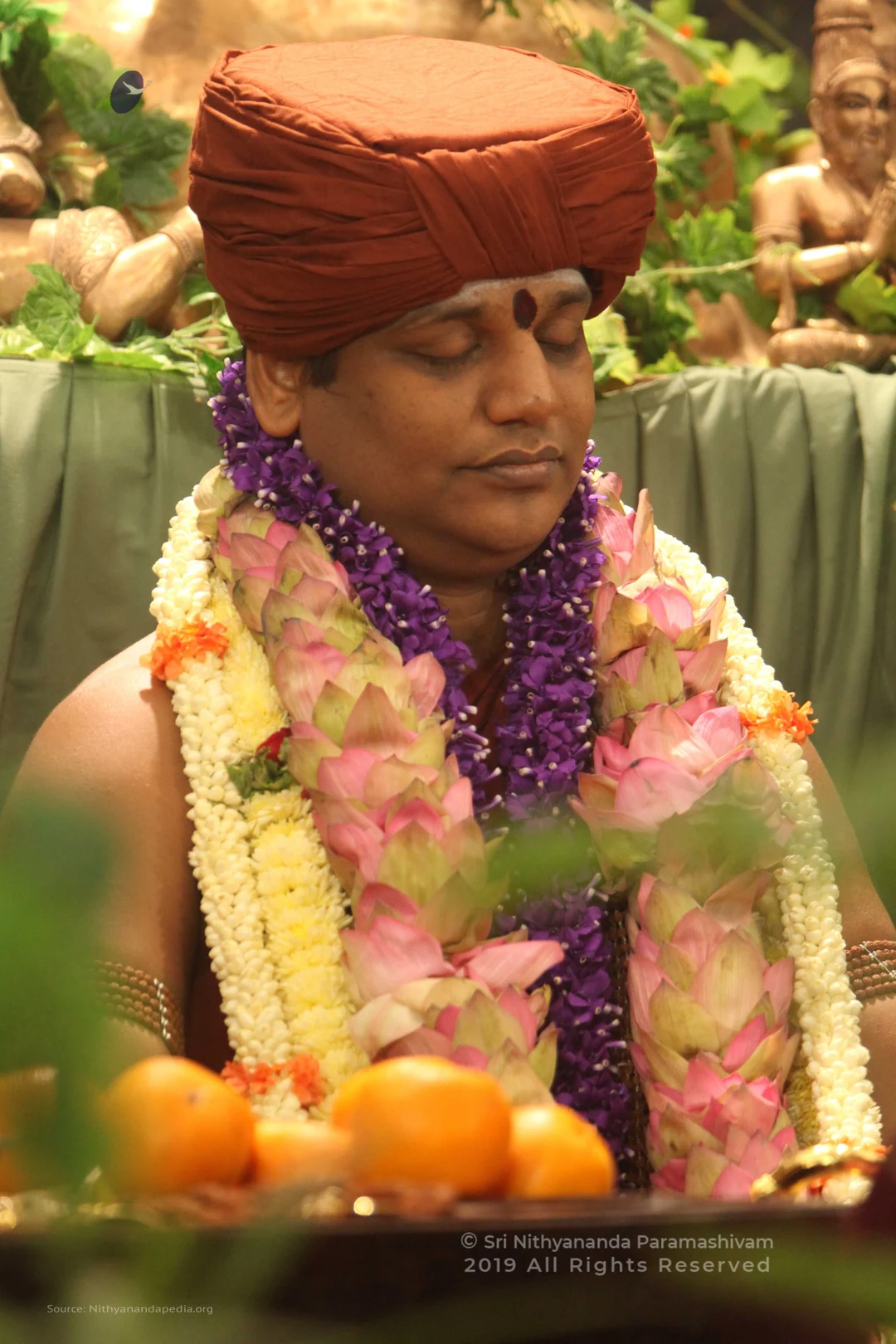
A photograph of a seated man in a saffron-orange robe and matching red-orange turban with a vermilion forehead mark, smiling while sitting cross-legged on a green draped platform. He wears a long rudraksha mala and wrist bands, hands resting together in his lap. Behind him, golden statues of seated figures with folded hands and a gold kalasha-like ornament stand among green foliage and hanging leaves.A photograph of a seated man with closed eyes wearing a rust-orange turban and a red-brown tilak mark on his forehead. He is draped with long garlands of pink lotus buds, white jasmine strands, yellow flowers and purple blossoms, and bare-shouldered with bangles on his wrists. Behind him are golden-brown sculptures of deities and green leaves and draped green fabric. In front, blurred oranges sit on a brass tray as offerings. Only one physical person is visible.A smiling man wearing a rust-orange turban with a red bindi and white vibhuti stripe on his forehead, bare-shouldered in an orange-red wrap, and a thick rudraksha mala necklace. Behind him are green leafy plants and a green draped stage backdrop, with golden statues of seated figures with folded hands, one of them with a raised hand.A smiling man wearing a rust-orange turban with a red bindi on his forehead, a bare shoulder, and an orange-red shawl draped over his body, with a thick beaded rudraksha-style mala necklace around his neck. Behind him are gold-toned sculptures of seated and reclining figures amid green leaves, with a green draped cloth backdrop. The image is a photograph of a person in a decorated room.A smiling man in a rust-orange turban with a small red bindi on his forehead, wearing an orange shawl over a bare shoulder and a beaded rudraksha-style mala necklace. He sits in front of green foliage and a gold-coloured sculpted figure with raised hands. The setting is a decorated stage backdrop. Swamiji (probable): appearance cues include the orange turban and rudraksha mala with an orange shawl, and the page indicates he is at this event.A smiling man in an orange-red turban with a red tilak on his forehead raises his right hand in a blessing gesture. He wears an orange-red saffron cloth draped over the shoulder and bare arms, with multiple strands of rudraksha beads around his neck and red beaded bracelets on his wrists. Behind him stands a green draped backdrop decorated with green ivy leaves and golden sculpted figures of seated and standing divine figures. The probable Swamiji appearance is marked by the turban, saffron clothing, rudraksha malas and beaded adornments, seen here at a satsang-style setting.

Temple Glimpses

19 photosSource gallery
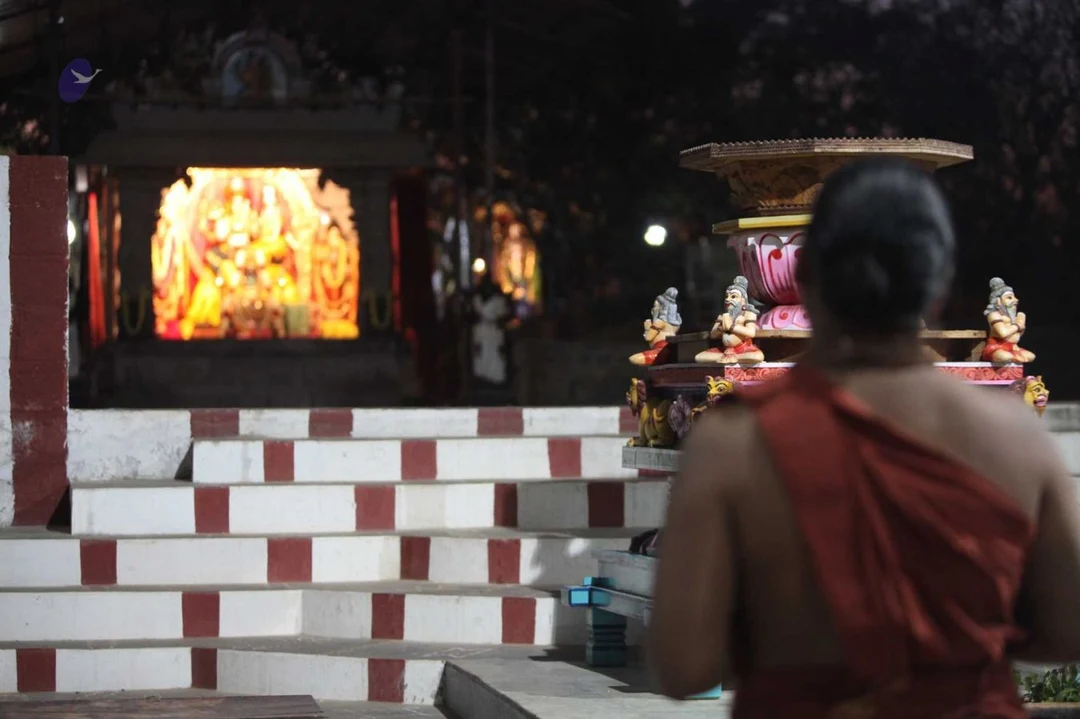
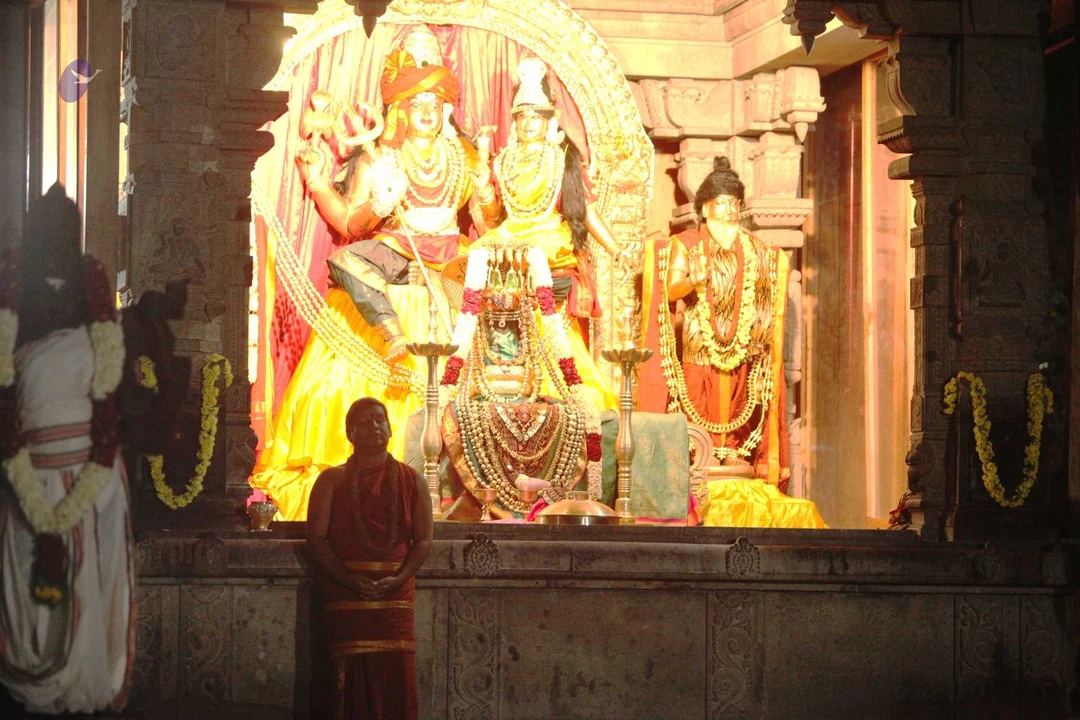
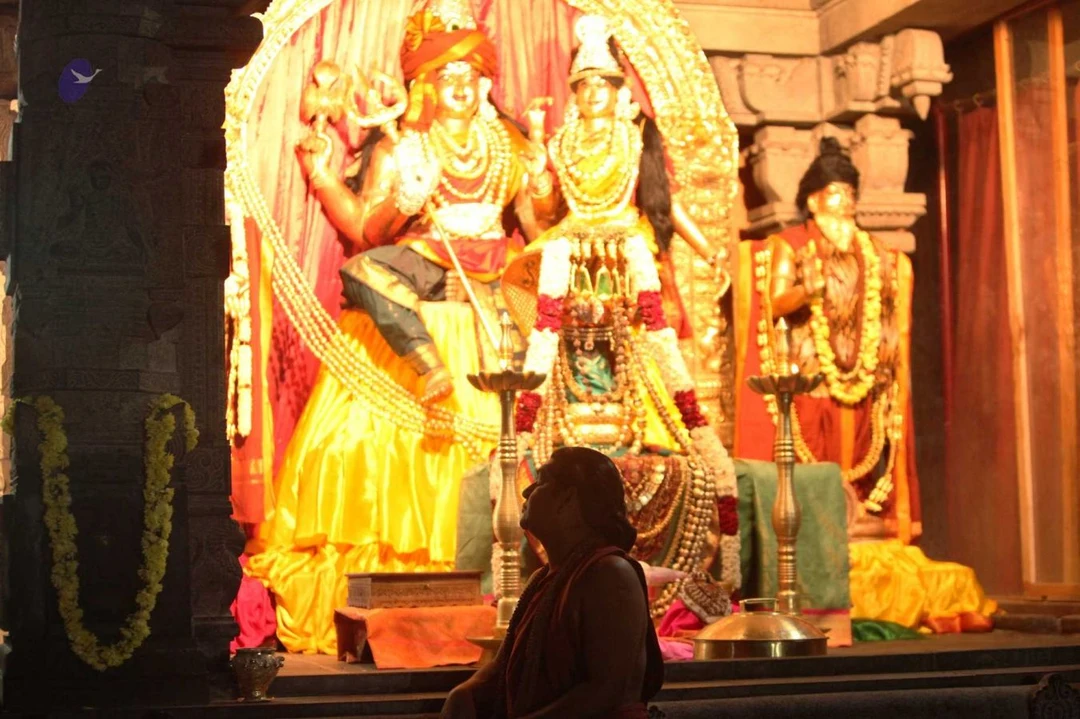
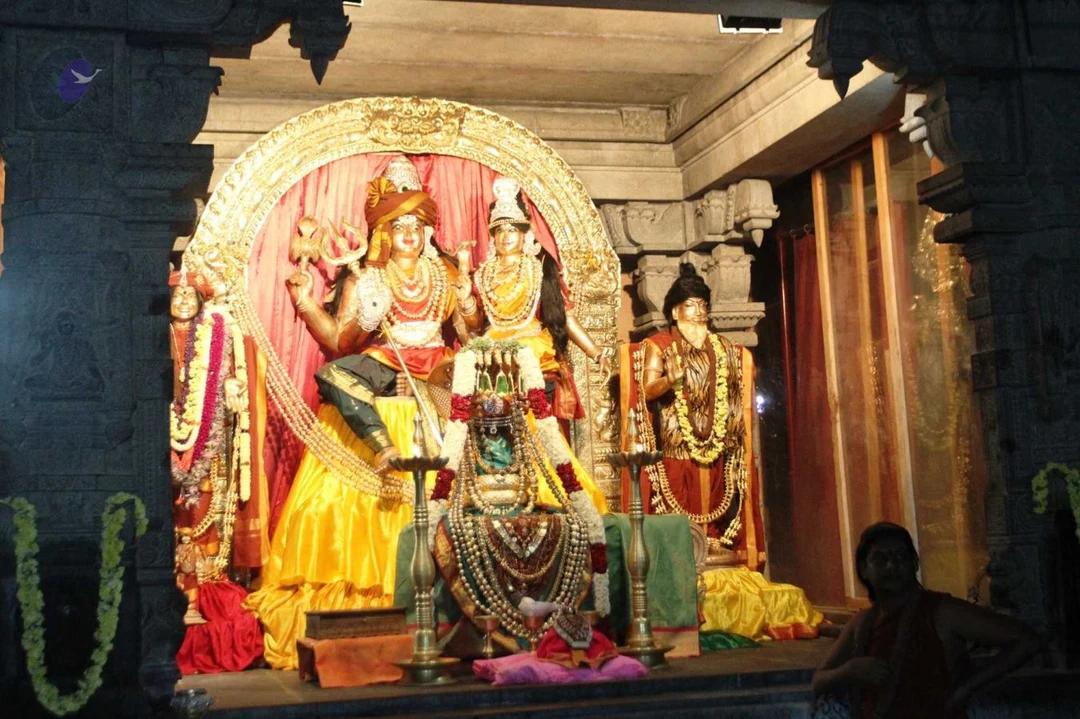
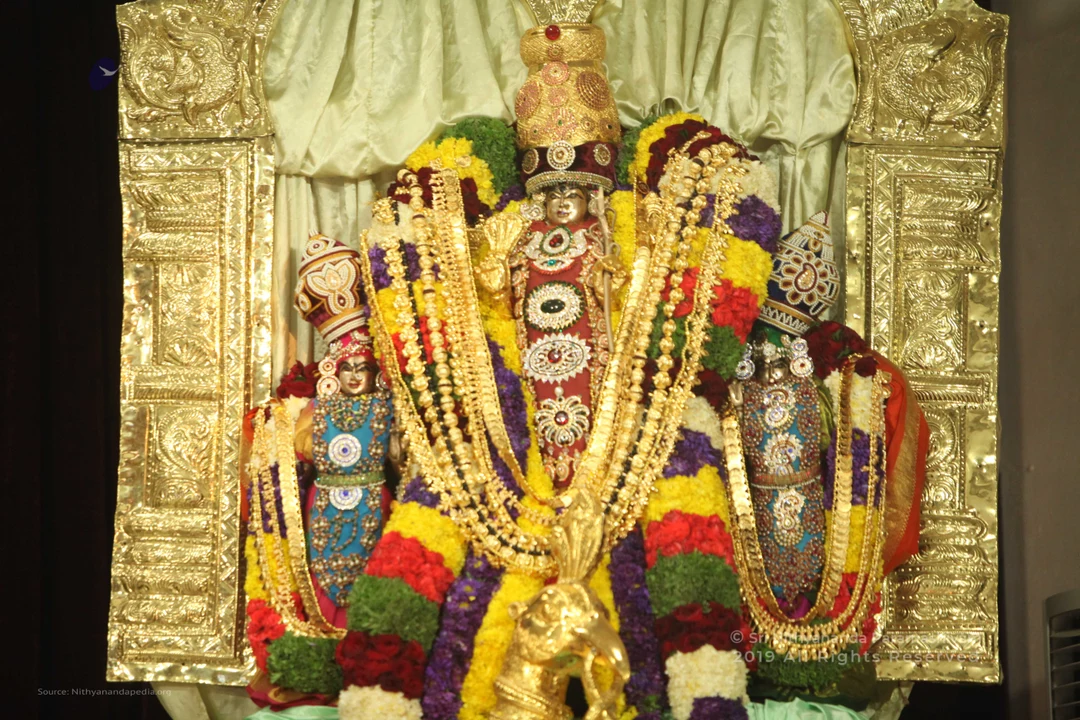
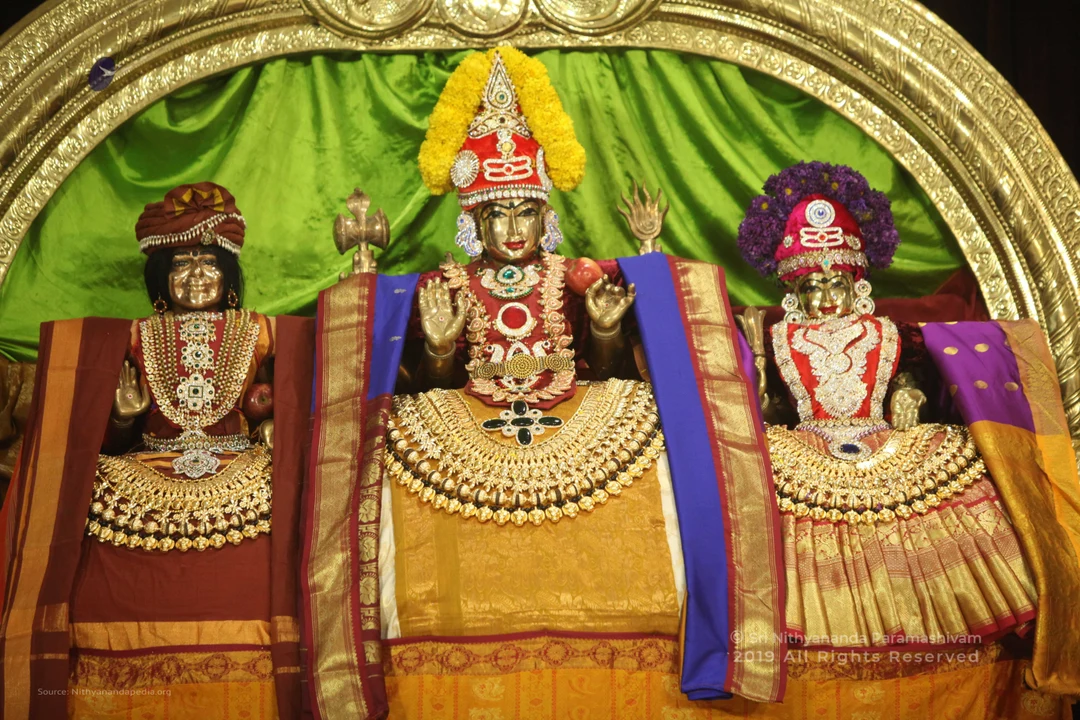
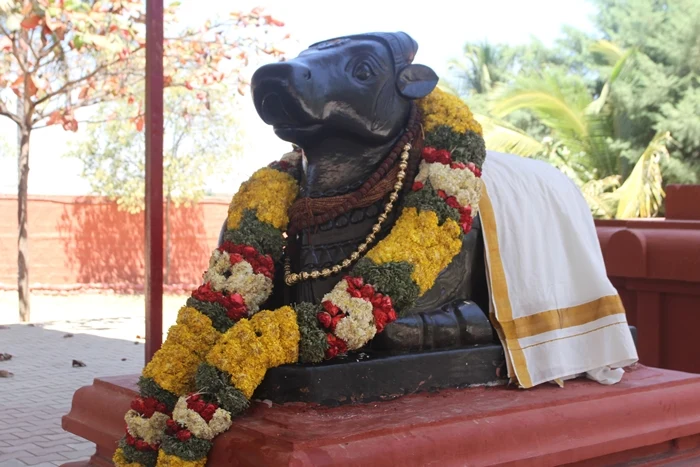
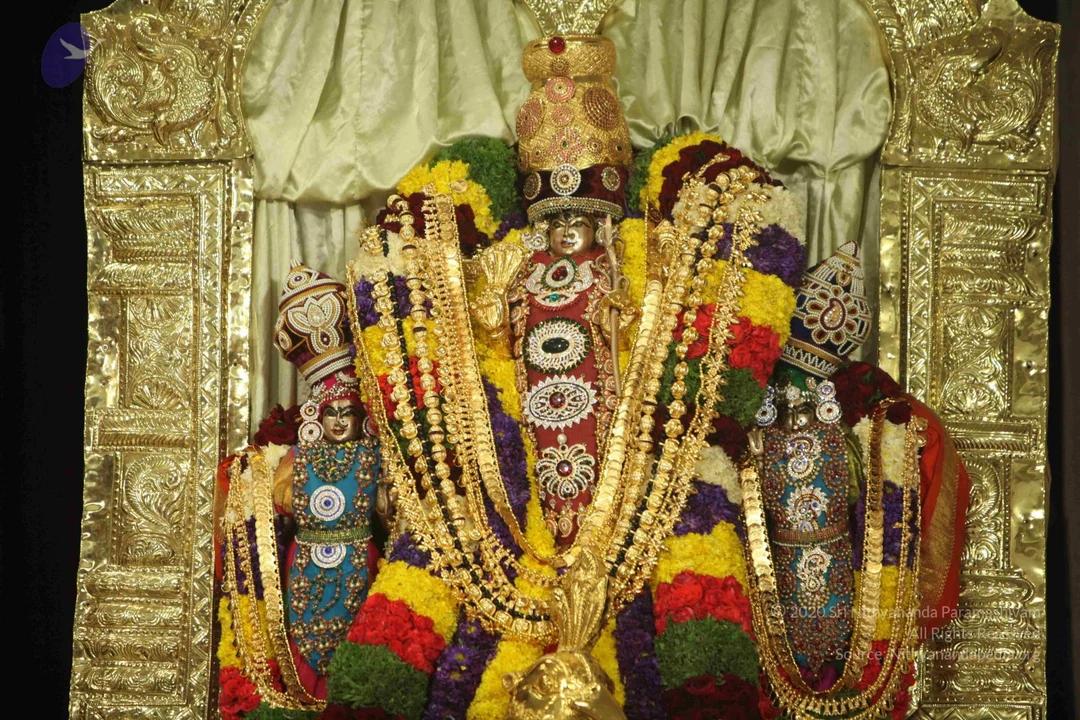
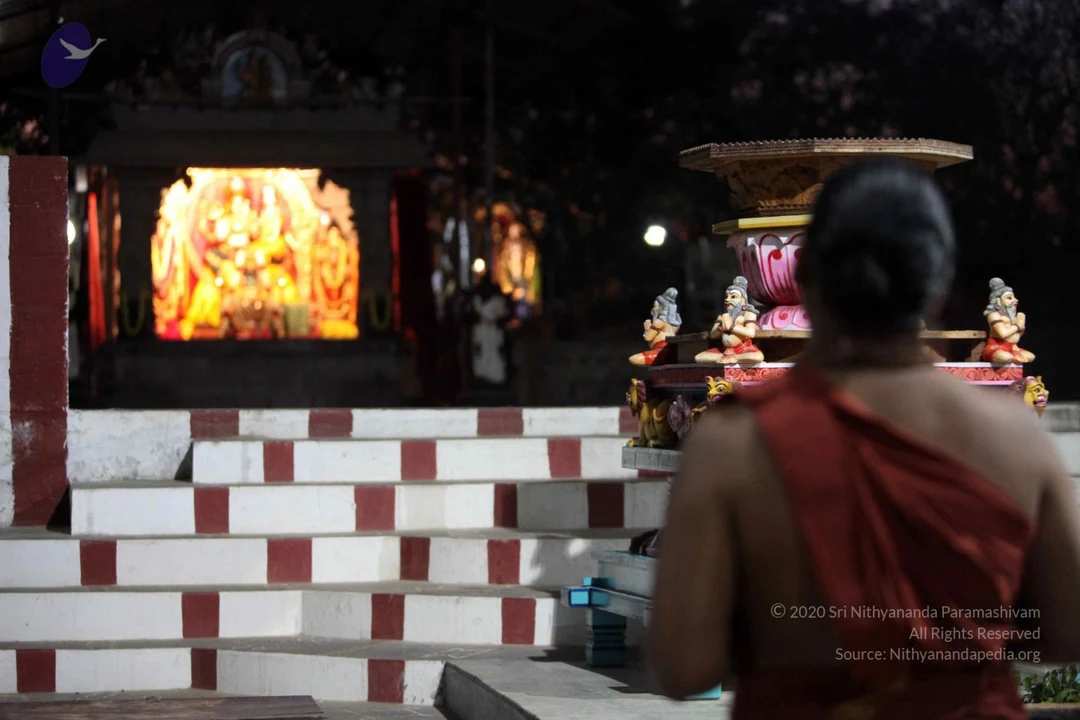
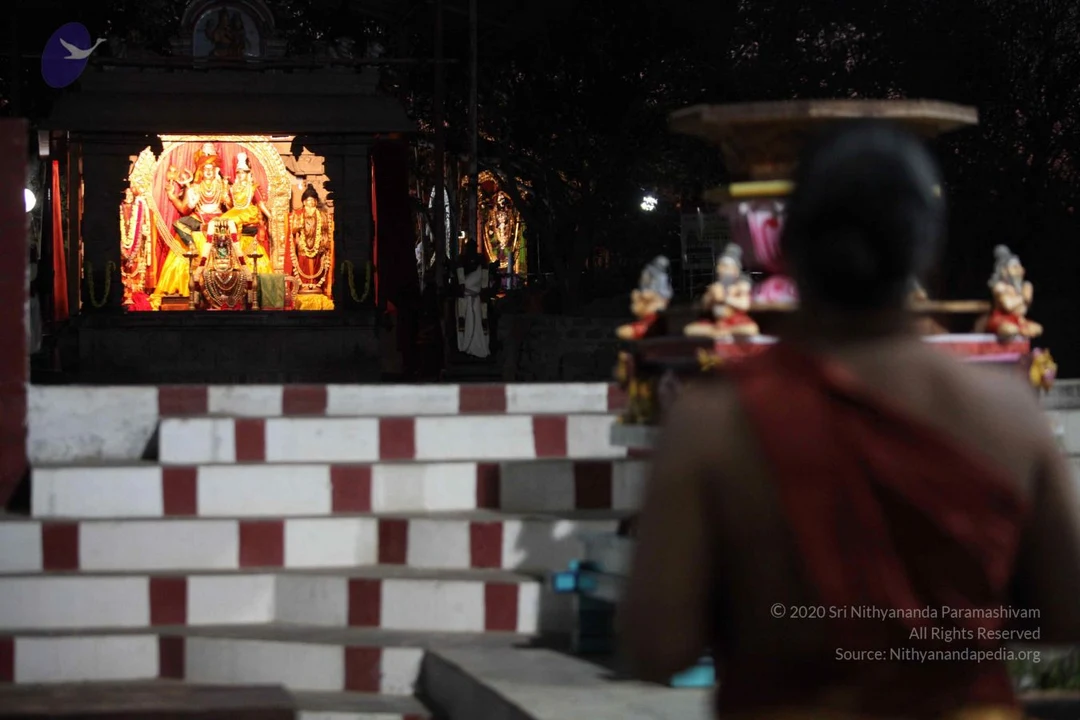
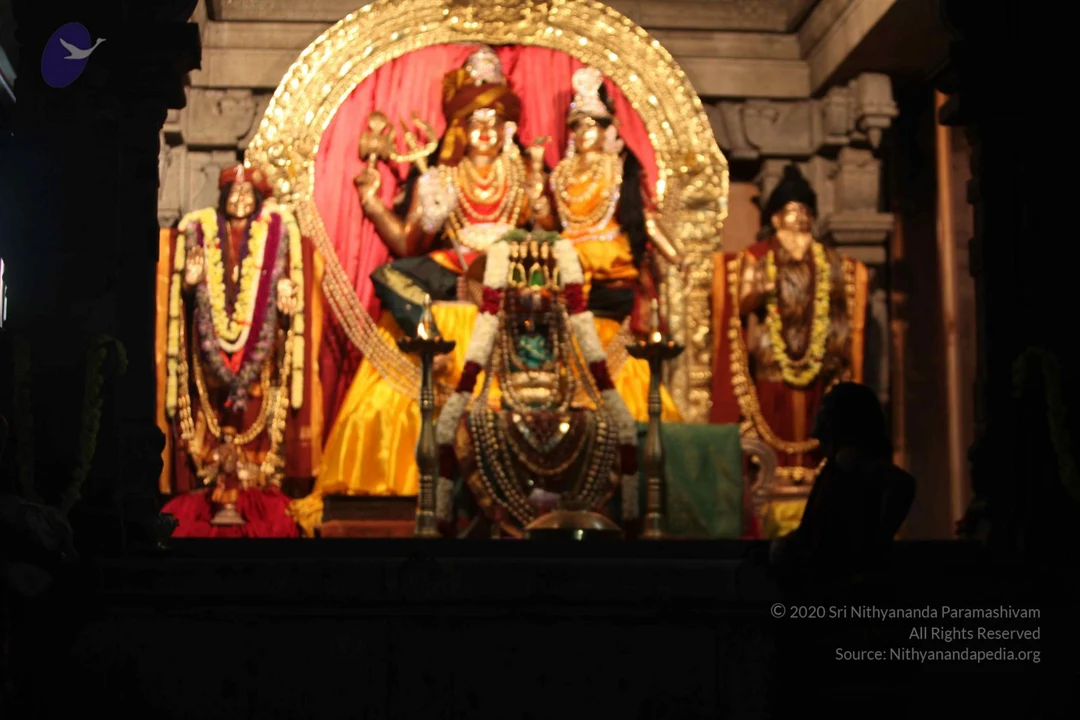
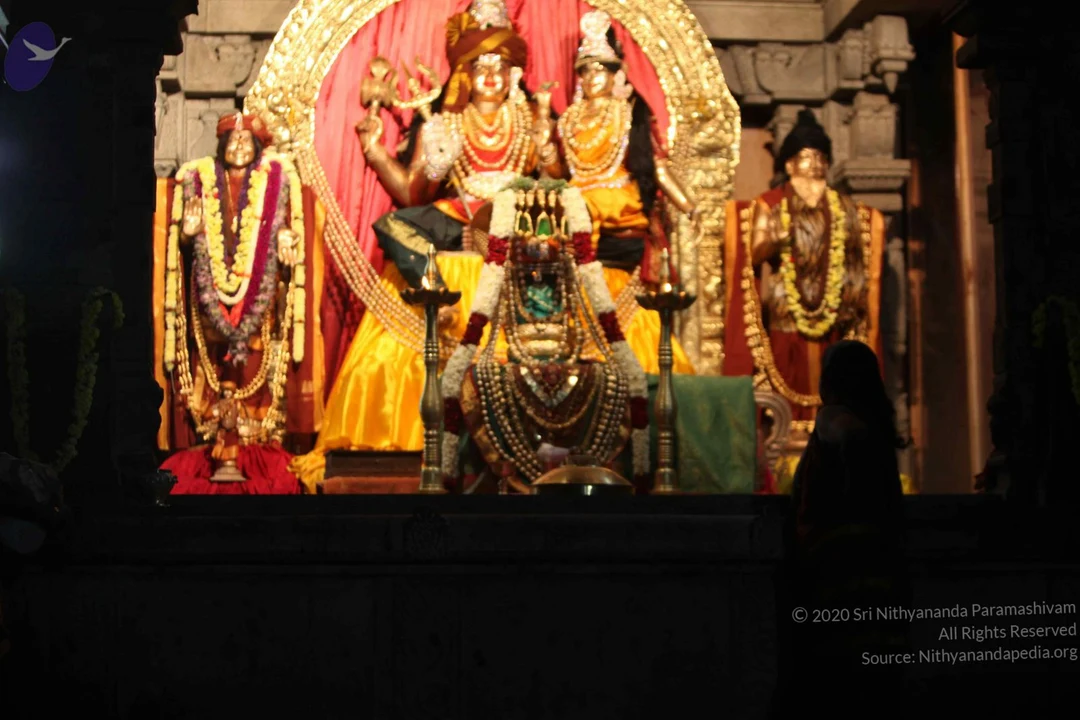
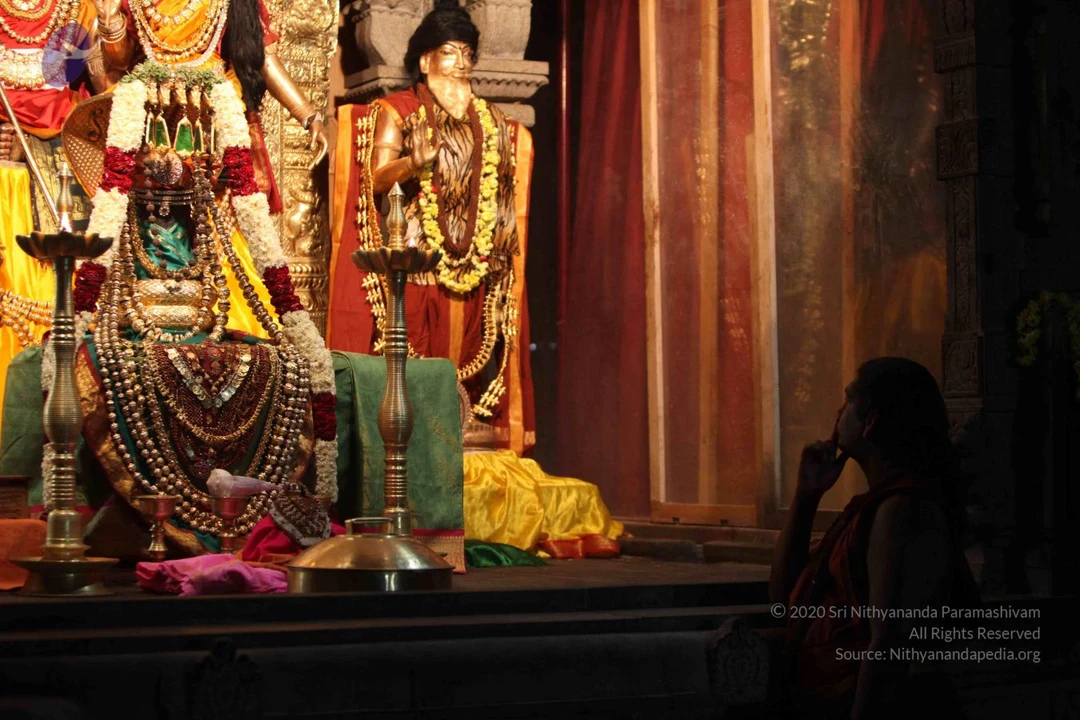
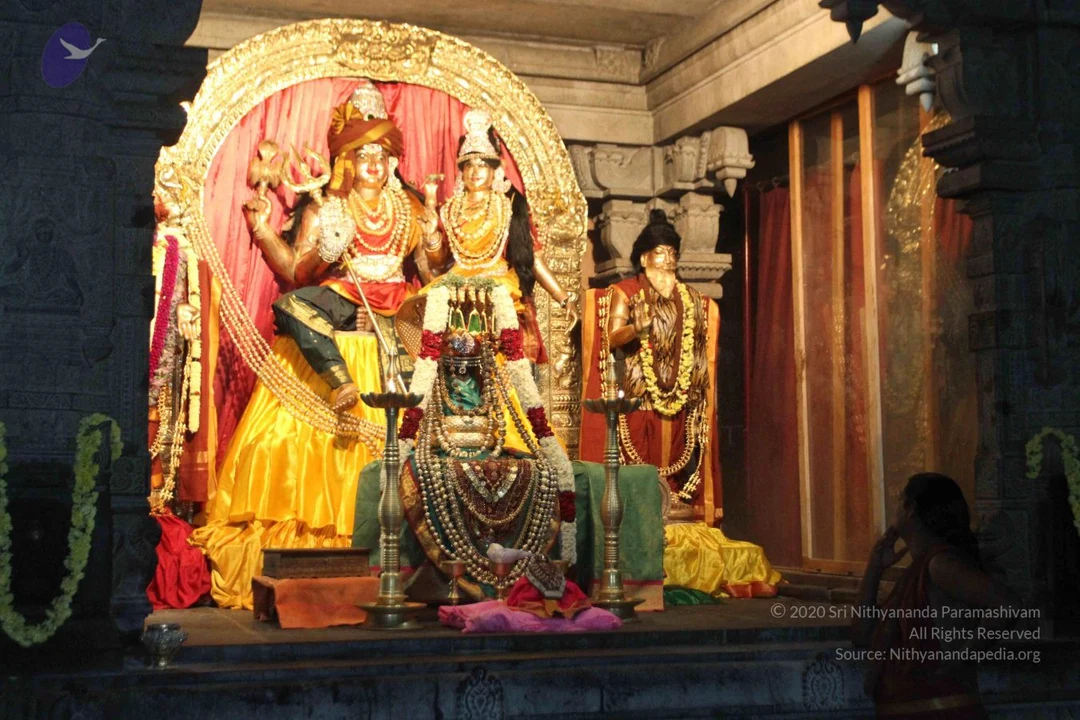
A photograph of a decorated deity murti of Murugan, standing in an ornate gilded arched shrine frame with pale cream drapery behind it. The central figure wears a tall gold and red crown with a jewelled band and carries a spear, with multiple long garlands of yellow, red, purple and green flowers draped across the body and gold chains hanging to the chest. Two smaller attendant figures flank it on either side, similarly adorned with jewelled headdresses and flower garlands. In front, a large gilded peacock with a raised head serves as the vahana. The background is dark with a visible air conditioning unit at the right edge. No people are visible.A photograph of a deity murti in a gilded shrine, adorned with heavy gold necklaces and multicoloured garlands of yellow, red, purple and green flowers. The central figure wears a tall gold crown with red jewels and holds a staff, flanked by two smaller attendant figures in blue and red embellished robes with matching crowns and garlands. A pale green cloth canopy and ornate gold-patterned panels frame the scene. No physical people are visible.A photograph of a decorated deity murti set within an ornate gold-toned arched frame with pale green draped fabric behind. A central standing figure in a red and gold garment, wearing a tall gold crown, is flanked by two smaller figures in blue and jewelled attire with matching crowns. Multiple layered garlands of yellow, purple, red and green flowers, together with long gold chains, drape across all three figures. A golden bird-shaped vahana sits in the foreground. No physical people are visible; the figures are statues.Three metal deity murtis are seated side by side on a draped platform in front of a green cloth backdrop framed by an ornate gold arch. The central murti wears a tall crown with a yellow marigold garland, a red and gold ornament, layered gold necklaces and a red and gold breast ornament, with raised hands and a blue-and-gold silk sash. The murti on the left wears a maroon head cloth, red and gold necklaces and a gold-bordered maroon garment. The murti on the right wears a red and silver crown with a purple flower garland, red and silver ornaments and a gold-bordered sari-style garment. No physical people are visible.A metal deity murti, seated under a golden canopy in front of a green silk backdrop. The figure wears a tall red crown trimmed with a garland of yellow marigolds and jewelled ornaments, blue jewelled earrings, and a layered gold necklace with green and red gemstones. The murti's hands are raised in blessing, and a red fruit is held in one hand. It wears a red and blue silk garment with gold zari borders and a gold skirt. A trident-like staff and a ceremonial mace stand at the sides. The image shows a murti, not a person, so no physical people are visible.A photograph of a deity murti of Murugan (Lord Subramanya) dressed and decorated for worship, standing on a golden peacock vahana in front of a gold-framed backdrop with a green and white draped cloth. The murti wears a tall golden crown, a red and gold ornamented costume and layered garlands of yellow, red, purple and green flowers, with jeweled gold necklaces. A bald man with white vibhuti markings on his forehead and arms, wearing an orange-saffron shawl and a rudraksha-style mala, holds a lit oil lamp (aarti) toward the deity from the right side of the frame. A white air conditioning unit and a window are visible at the right edge of the room.

Nithya-Satsang

108 photosSource gallery
A seated man in an orange-red turban and matching saffron-red robes sits on a tiger-striped mat before a green draped dais, with palms pressed together in namaskar and eyes closed. He wears layered rudraksha malas and beaded armlets. Behind him a large golden deity murti of a seated four-armed figure stands beneath a banyan-like tree canopy, flanked by smaller golden devotee figures with folded hands. Green leaves and vines decorate the dais and surrounding plants, creating a forest-shrine setting. The scene suggests a satsang or meditation session.A seated man in saffron-orange robes and a red turban sits cross-legged on a tiger-striped mat before a green draped platform, hands raised palm-out in blessing, with rudraksha malas and a gold necklace visible. Behind him a golden deity murti of seated Shiva with an embracing consort and smaller golden figures stands amid a painted jungle backdrop of large tree trunks and lush green foliage with potted plants around the platform. Swamiji (probable): the seated man wears saffron and red robes, a red turban, layered rudraksha malas and a gold necklace, consistent with the page's reference to Swamiji at this satsang.A photograph of a decorated deity murti set in a gilded arched shrine with cream silk drapes. The central deity wears an ornate jewelled crown and a red jewelled garment, holding a staff, with heavy gold chains and layered garlands of yellow marigolds, red roses and purple flowers. Two smaller attendant figures flank it, dressed in blue-green embellished garments with jewelled crowns and garlands. In front stands a golden peacock vahana with a gold mint-green silk cloth draped beneath.Three metal murtis are seated side by side on a raised platform against a green silk backdrop framed by a gold arch. The central deity wears a red crown with a yellow marigold garland, gold and red necklaces, and a gold collar, and holds a trident-like emblem. The figure on the left wears a maroon turban and layered beaded necklaces with a red-and-gold sari. The figure on the right wears a red crown with a purple flower crown, pearl-and-gold necklaces, and a purple sari with gold border. These are deity murti figures, not people.A golden metal murti of a goddess seated on a gold-embroidered cushion in front of a green draped backdrop. She wears a red and gold crown trimmed with a yellow marigold garland, a red-and-gold blouse, layered gold necklaces, large dark-green and gold pendant ornaments, and a blue-and-maroon zari-bordered shawl. Her raised right hand shows abhaya mudra while the left hand rests near her waist. A trident and a ceremonial staff stand at her sides, and flowers decorate the right edge. Gold-embossed canopy work frames the top.A photograph of a gilded deity murti set in an ornate gold arched frame draped with pale green cloth, decorated with multicolour flower garlands in yellow, red and purple and gold necklaces. A golden bull figure stands in front on a red draped platform, with a bowl of fruit including a watermelon, apples and oranges. Two brass oil lamps flank the display on a patterned rug, and a white air conditioning unit is at right beside a dark curtain. No people are visible.

IA-Darshan

7 photosSource gallery
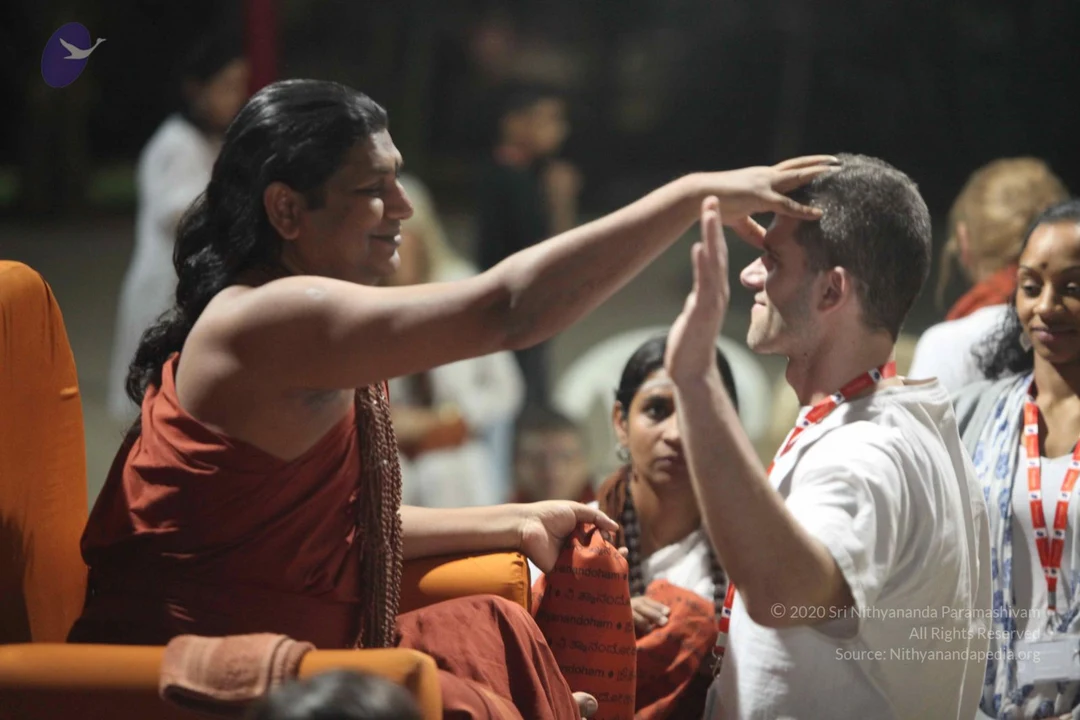
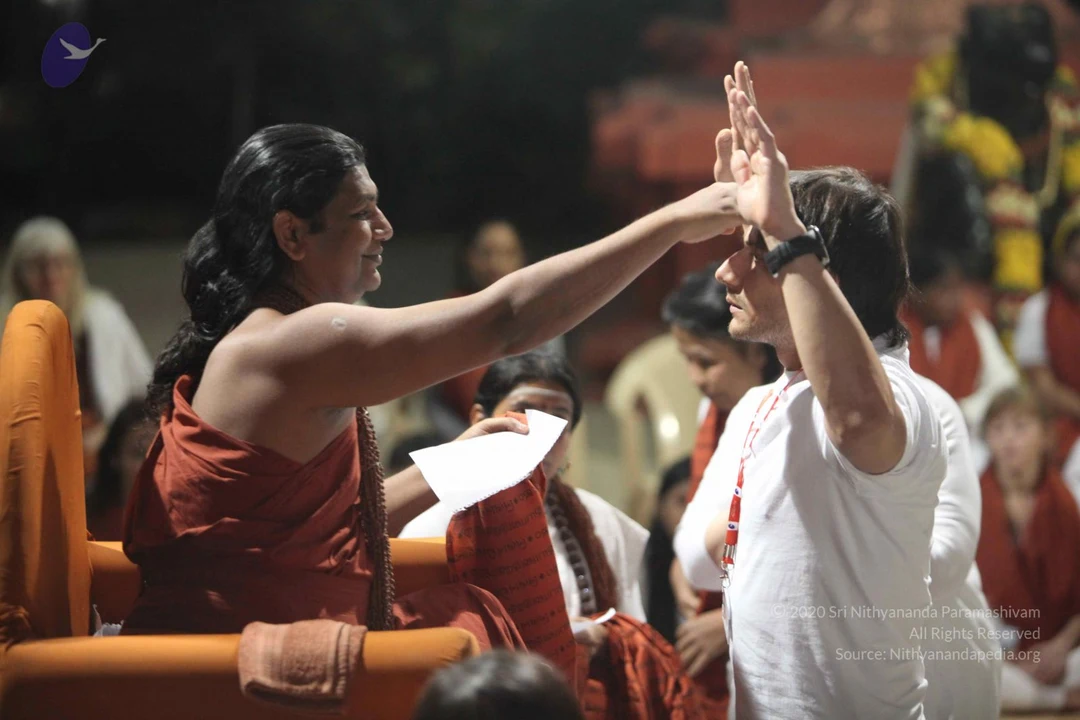
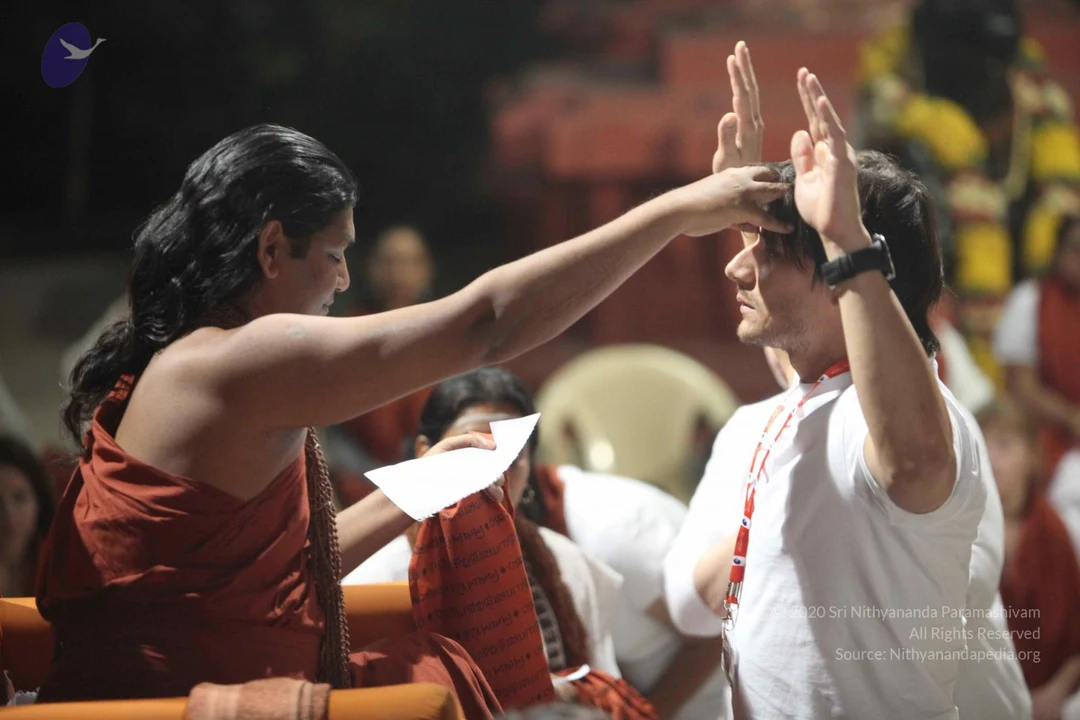
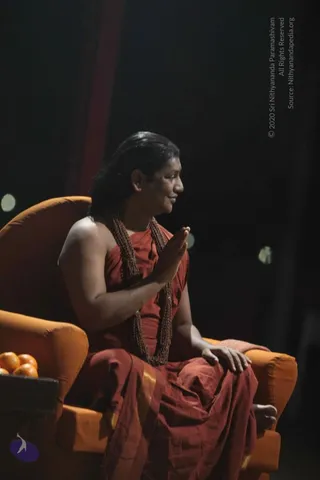
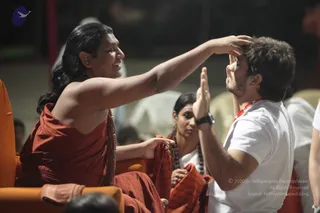
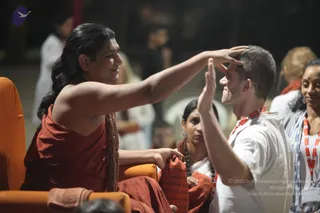
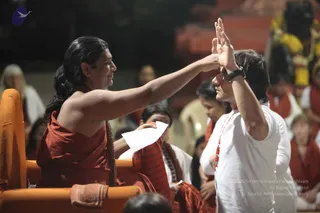
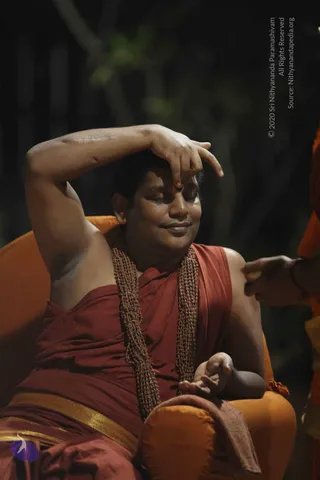
A seated man in an orange-red robe sits in an orange upholstered chair against a dark background, eyes closed and palms pressed together in anjali mudra at the chest. A long rudraksha mala hangs over his shoulders, and a small red bindi marks his forehead. Soft stage lights glow faintly at the edges. A purple bird logo appears in the top-left corner and a copyright line runs across the lower right. Swamiji (probable): long swept-back hair, saffron-orange robe and rudraksha mala, seated in a discourse setting.A photograph of a person seated in a large orange upholstered armchair against a dark stage background. The person wears a rust-red garment draped over the shoulder and a long brown beaded mala necklace, with hands joined together in a gesture of greeting. Hair is long and swept back. A bowl of oranges sits on a small table at the left edge, and a faint circular logo appears in the lower left corner. The person's appearance, long swept-back hair, rust-red robes and mala are consistent with Swamiji (probable) seated in a satsang setting, as indicated by the page's Upanishad discourse context.A photograph of a seated man with long, swept-back black hair, bare-shouldered and wearing a rust-orange wrap and a rudraksha mala, reaching forward to press his palm onto the forehead of a younger man with short brown hair. The younger man wears a white t-shirt, a red lanyard, a wristwatch and has his palms joined in front of his chest. Behind them a woman in white with a beaded necklace watches, and a few other seated people are partly visible in a dim hall. Two or three other people are partly visible.Outdoors at night, a long-haired man in a rust-orange robe sits on an orange-cushioned chair and reaches to press his palm onto the forehead of a short-haired young man in a white t-shirt wearing a red lanyard. The recipient raises his own hand toward the giver's arm, smiling. Behind them, a woman in white with a red lanyard and other devotees in white and red stand in the dark. The seated figure is an appearance-based probable Swamiji, identified by long, swept-back hair and saffron-orange clothing, giving a forehead blessing to a devotee during satsang. A small orange cloth with printed text rests on the armrest. Watermarked photograph.A photograph of a satsang setting. A man with long, swept-back dark hair, wearing a rust-red shawl over his bare shoulder with a rudraksha mala, sits on an orange cushioned chair and extends his right arm to touch the raised palms of a man in a white t-shirt with a red lanyard. Several seated devotees in red and white garments, some holding papers, sit behind them, and blurred floral garlands and a deity murti appear in the background. The seated figure has a long-hair, rudraksha and rust-shawl presentation matching the Swamiji (probable) cues, so this is a candidate physically present on stage.A photograph of a bare-chested figure in an orange-red cloth draped over one shoulder, with long dark hair swept back, placing one hand on the head of a man in a white t-shirt with a red lanyard and black wristwatch. The man stands with both palms raised in a blessing gesture. Behind them, seated people in orange and white clothing and a blurred background of orange structures and yellow-garlanded figures suggest a satsang or darshan setting at night. Another seated person holds a white paper.

Nithya-Satsang

54 photosSource gallery
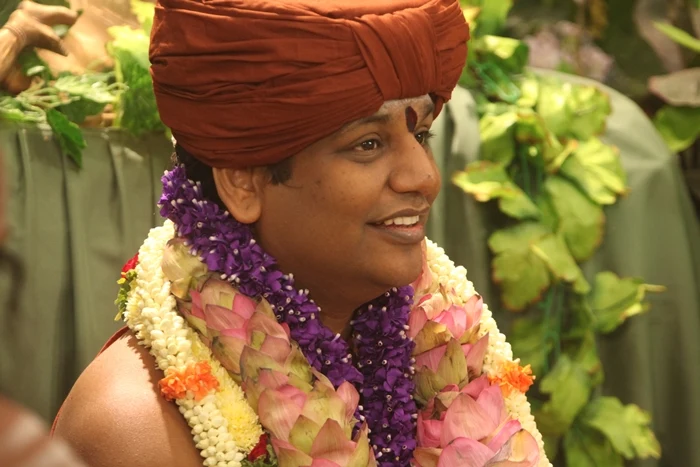
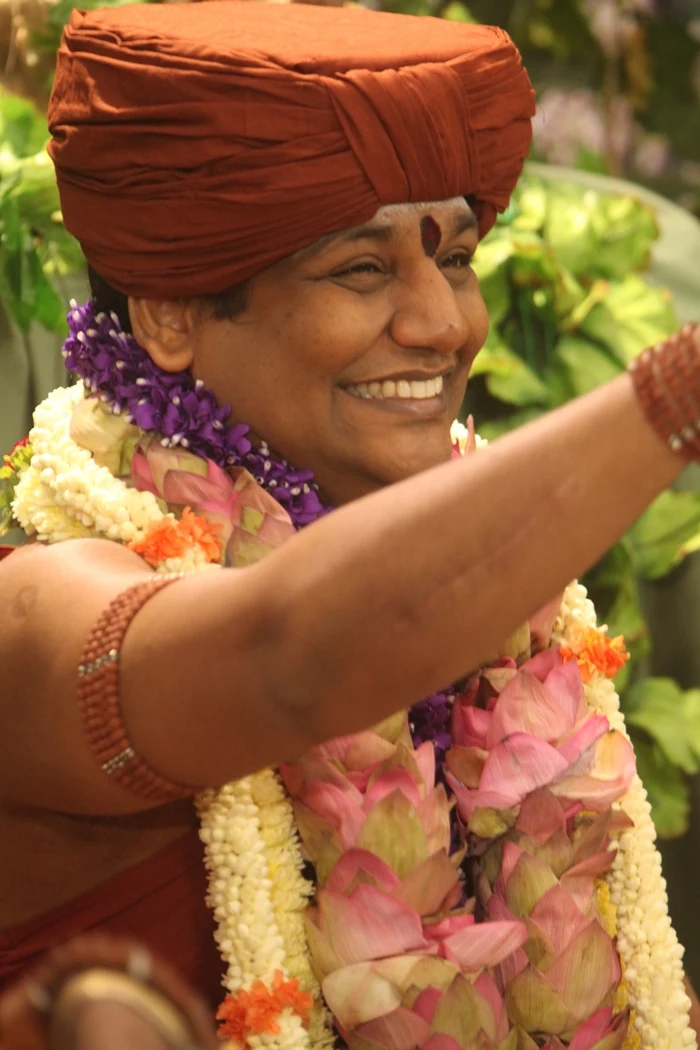
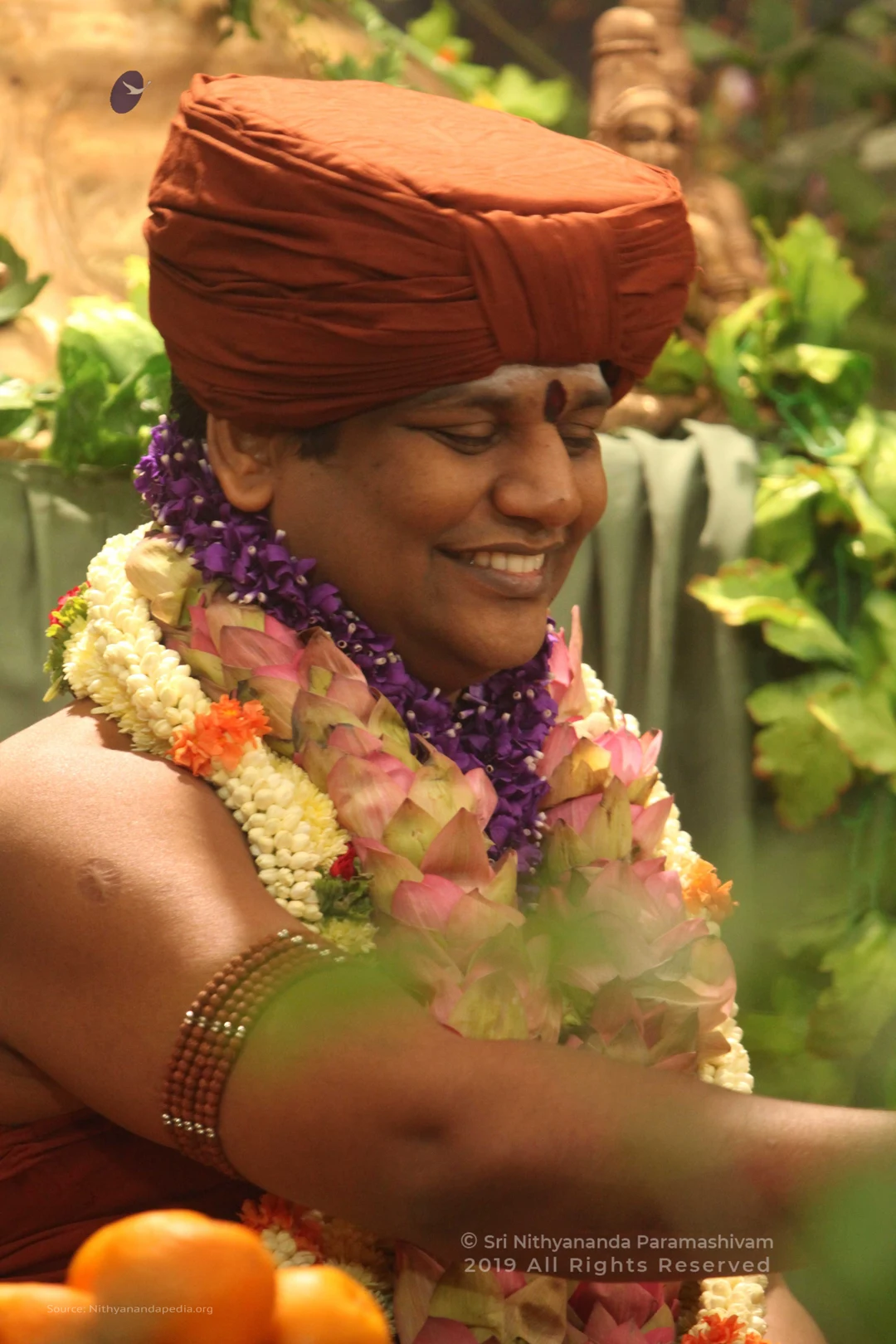
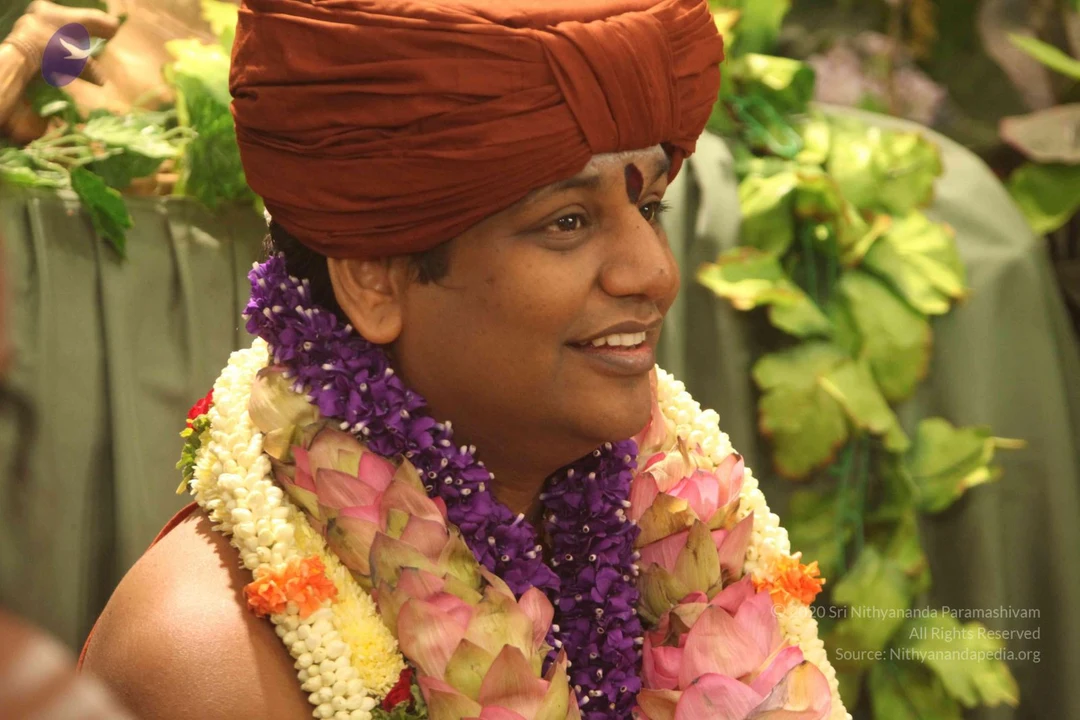
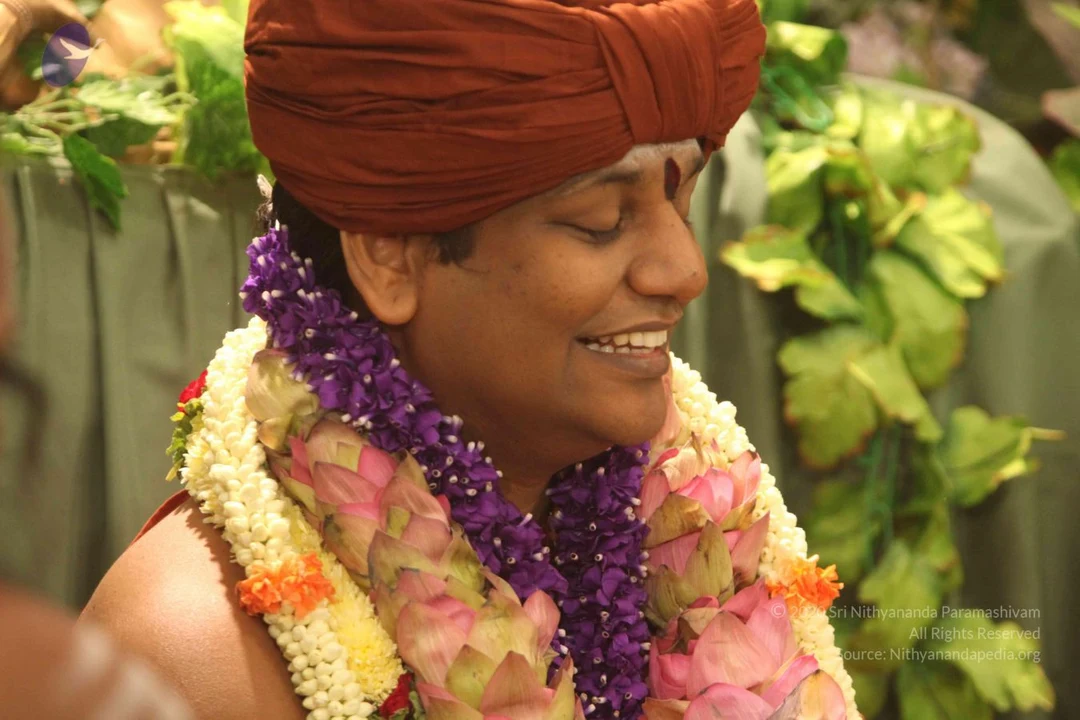
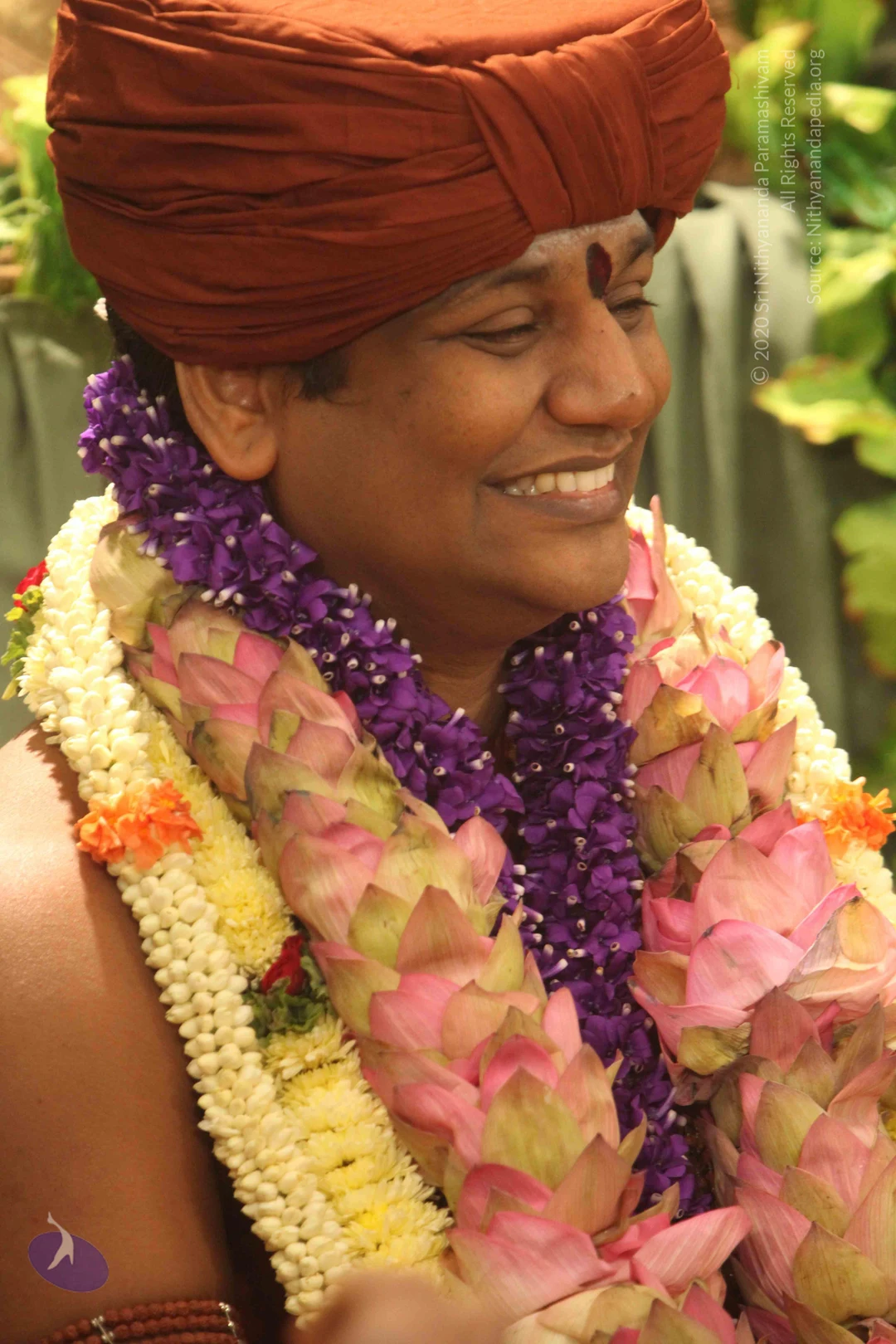
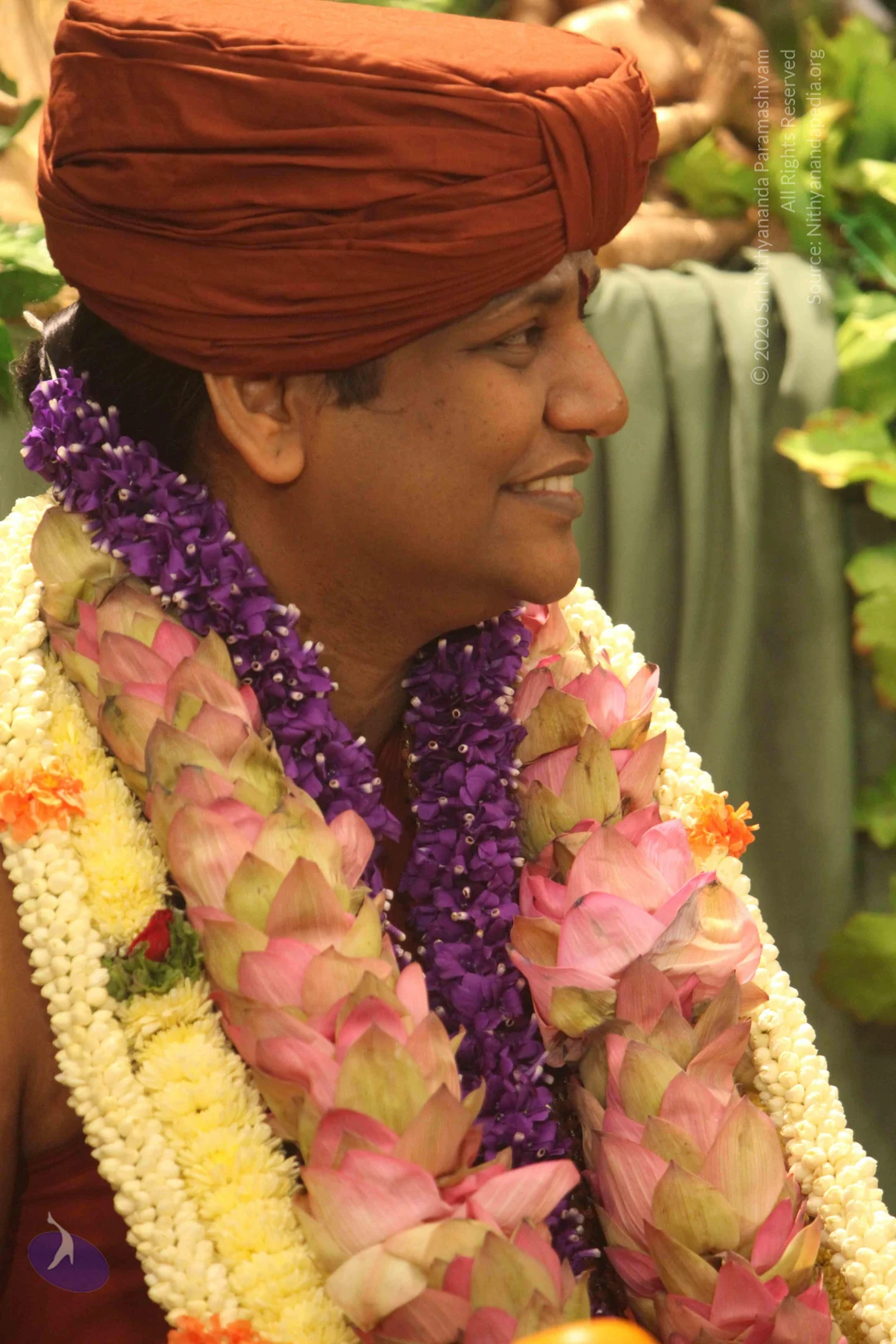
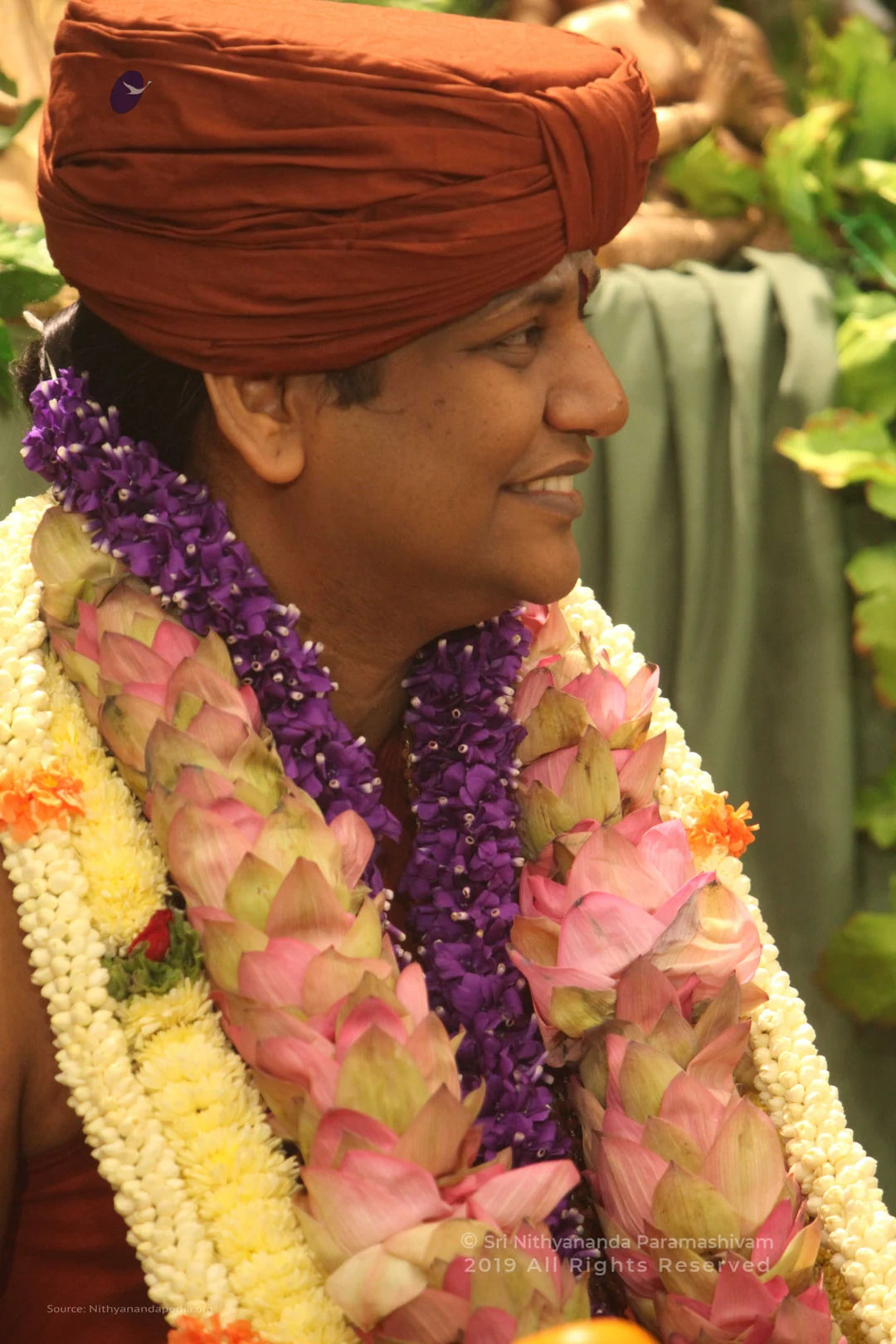
Close photo of two hands holding pink and yellow lotus buds and a red fruit or flower, with a blurred green garden and red flowers behind. A figure in pink or saffron-pink clothing is partly visible at the right edge, and a lotus garland is visible at the left. The hands are in a ceremonial offering gesture during a satsang or puja setting. The lotus is the focal point, with the hands in soft focus at the centre.Close-up photograph of a person's forearm and hand in an orange sleeve, wearing a wrist mala of reddish-brown beads and a silver-toned bracelet, holding a cluster of pink and cream lotus buds with green stems. Blurred green curtain and potted plants with small red flowers fill the background. Part of a pink lotus is visible at the left edge.Close-up photograph of a smiling man in profile wearing a rust-orange turban wrapped high on his head and a red-orange kumkum mark on his forehead. He wears layered garlands of white jasmine, deep purple orchid-like flowers and pink lotus buds, with a few orange blossoms at the shoulders. He is bare-shouldered, and a green-draped table with leafy foliage stands behind him.Close photo of a smiling man with eyes lowered, wearing a rust-orange turban and a tilak mark on his forehead. He wears layered garlands of white jasmine, purple flower strands and pink lotus buds, with orange marigolds at the shoulder. Bare shoulder visible; green leafy decorations behind him. a person: long-haired figure with orange turban and garlands, described as the central honoured guest in this satsang setting.Close photo of a smiling person wearing a rust-orange turban with a small red tilak on the forehead. Layered garlands of white jasmine, purple flowers and pink lotus petals drape the neck, with orange marigolds woven in. Red-beaded bracelets are on both wrists, and one arm is extended outward toward the right. Green foliage fills the background. The page links this to a satsang discourse, but the visible figure's identity is not established from appearance cues alone, so the a person field is set to unsure.Close photo of a smiling man in a rust-orange turban with a red tilak on his forehead, wearing layered garlands of purple flowers, white jasmine strands with yellow and orange blooms, and large pink lotus petals. His head is turned to the side and he appears bare-shouldered. A faint leaf-filled green background is behind him. a person: the orange turban, tilak and ceremonial garlands are the visible cues.

IA-Session
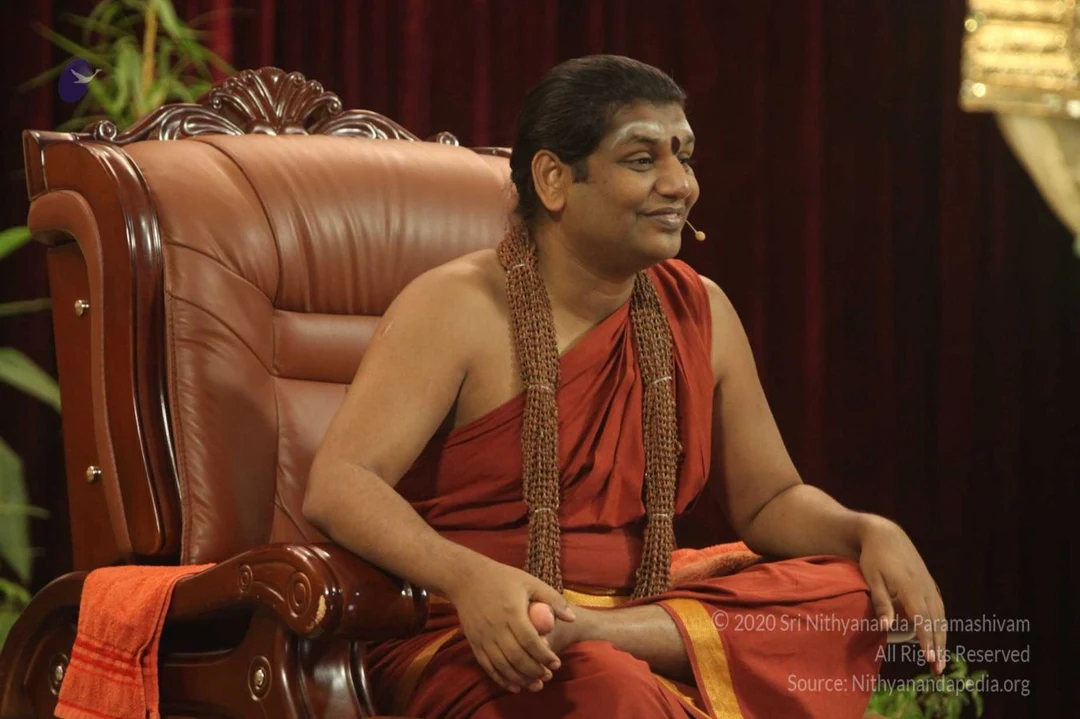
43 photosSource gallery
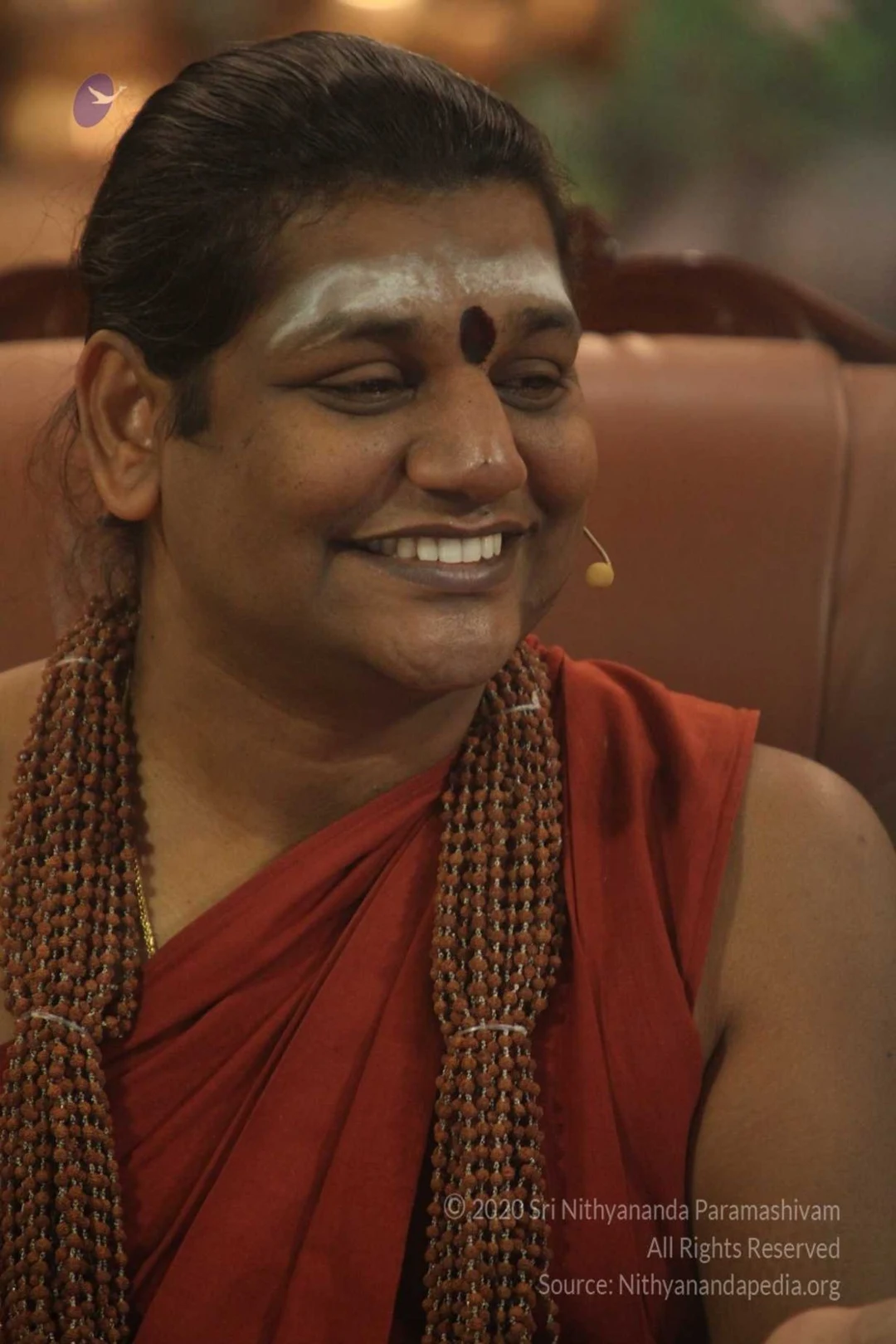
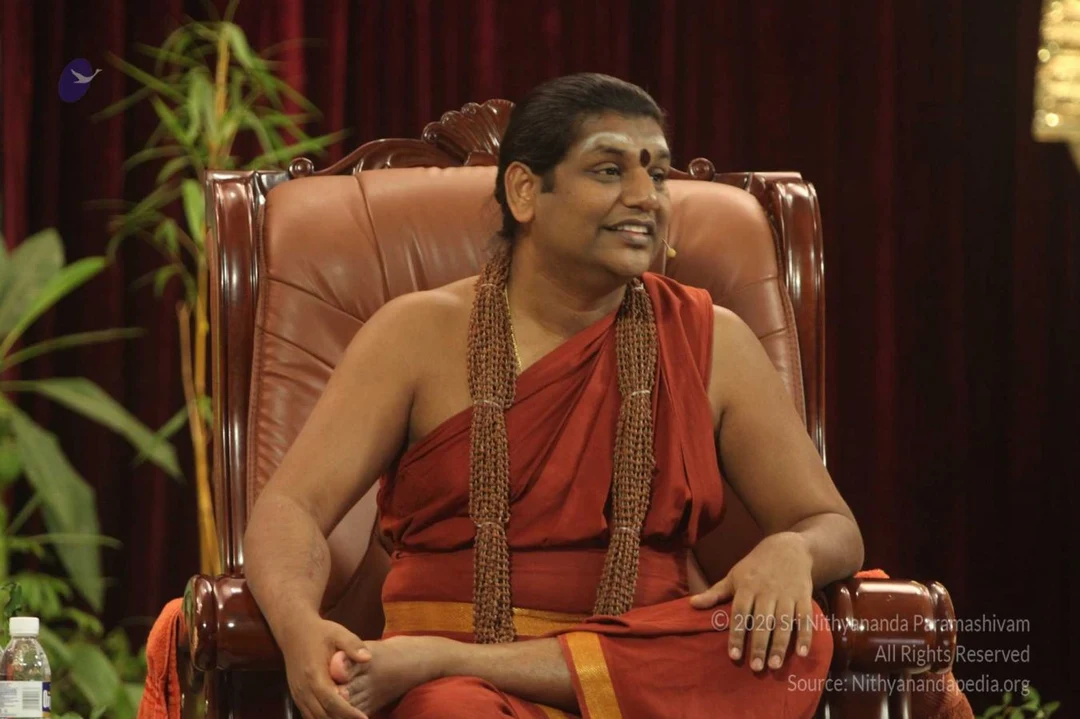
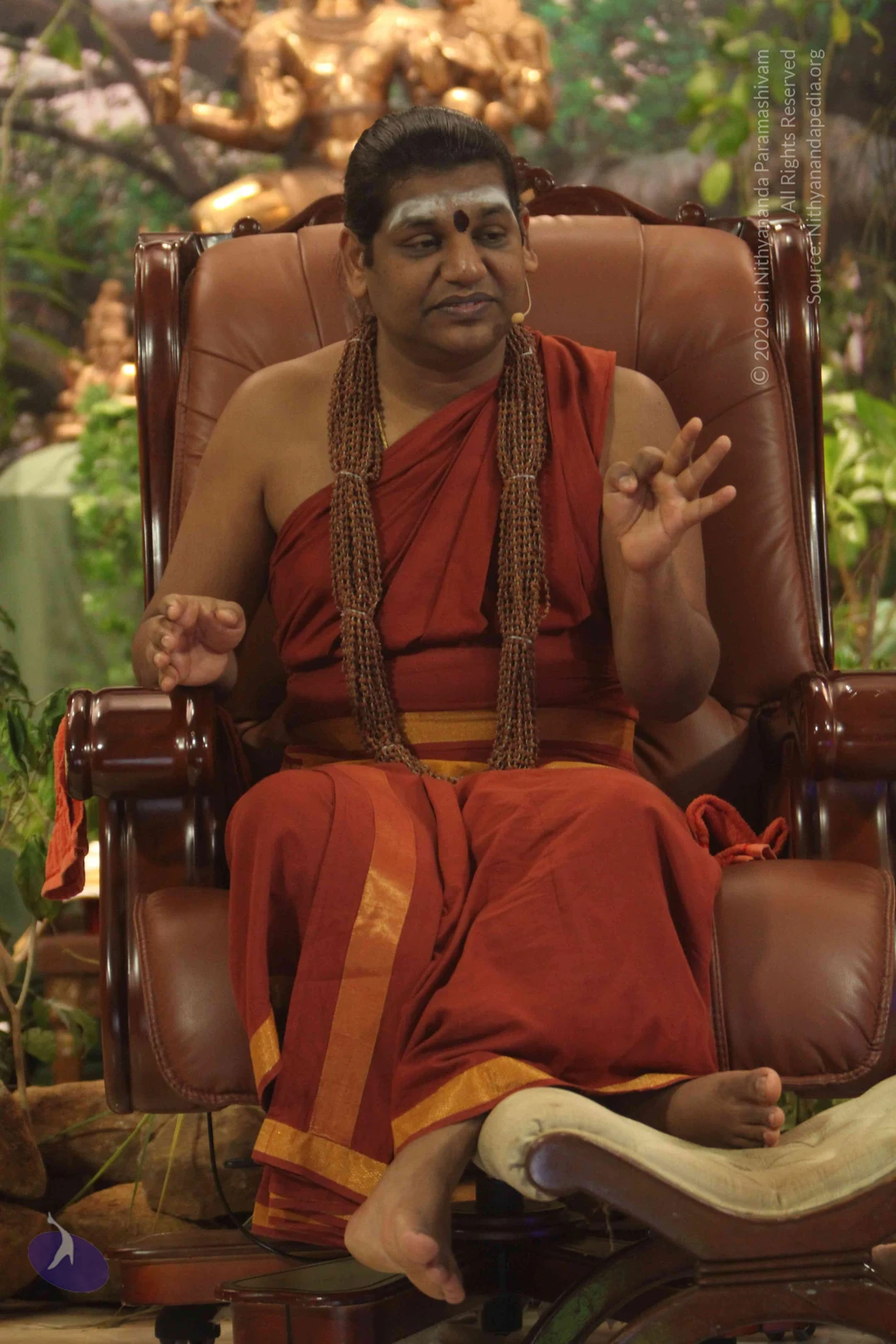
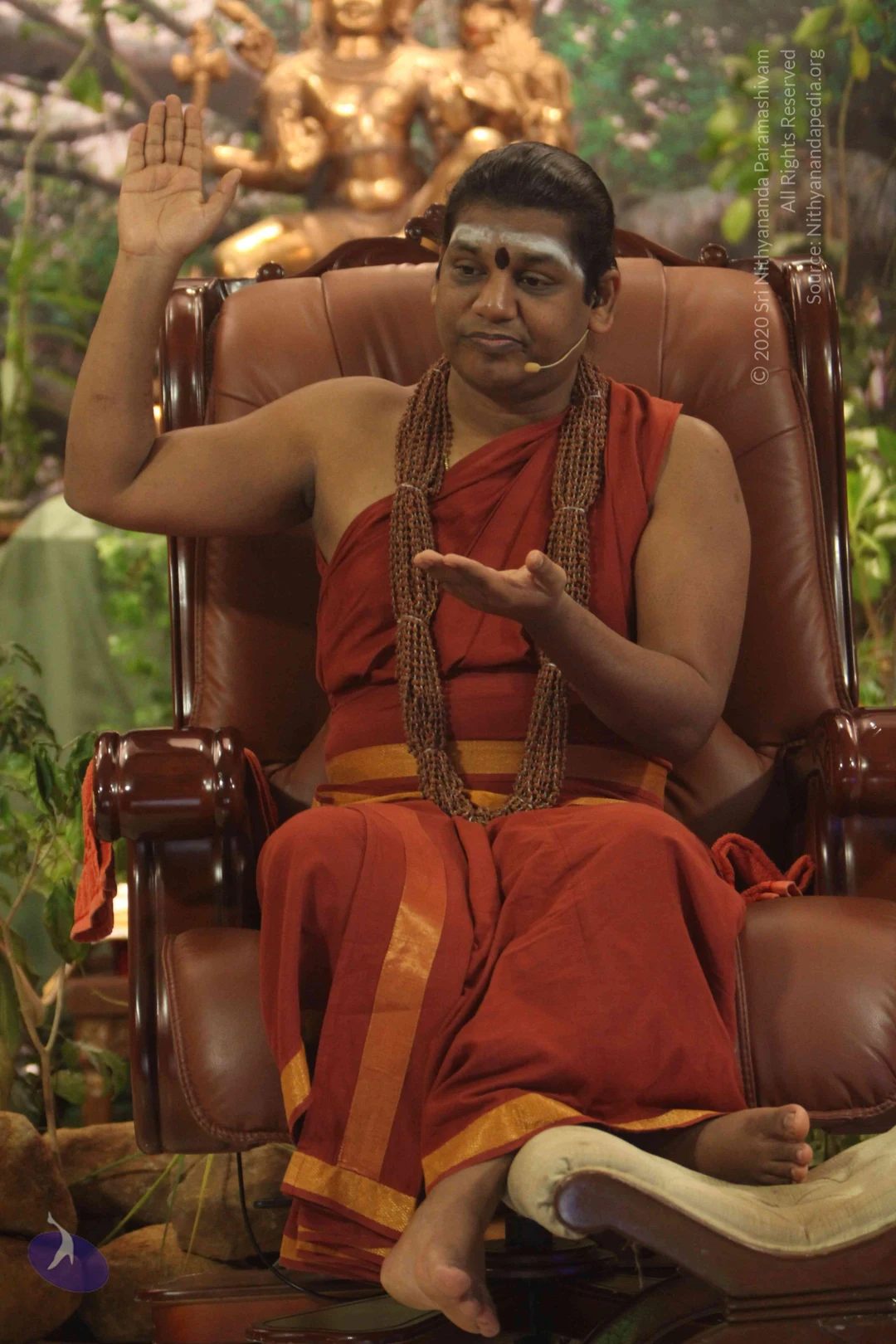
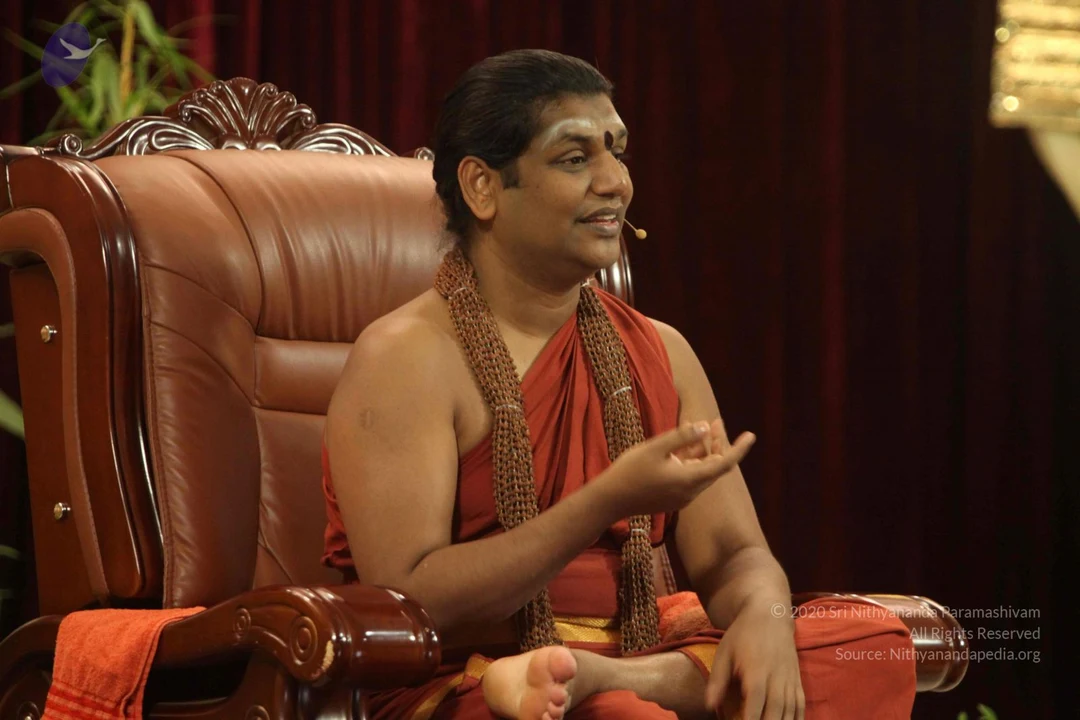
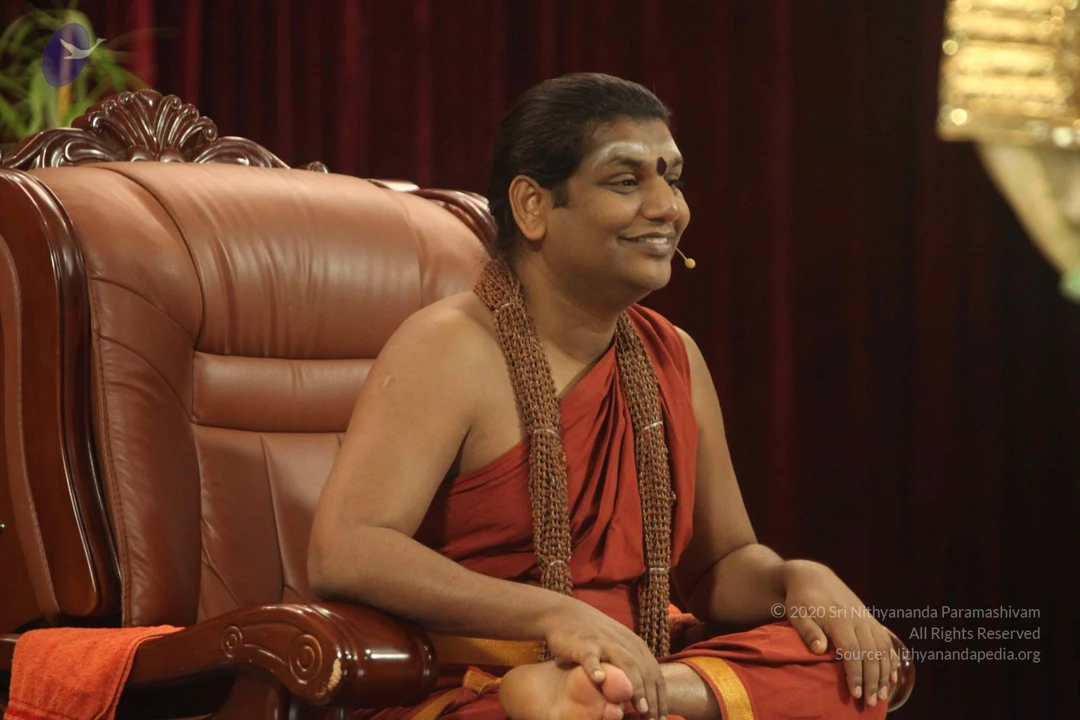
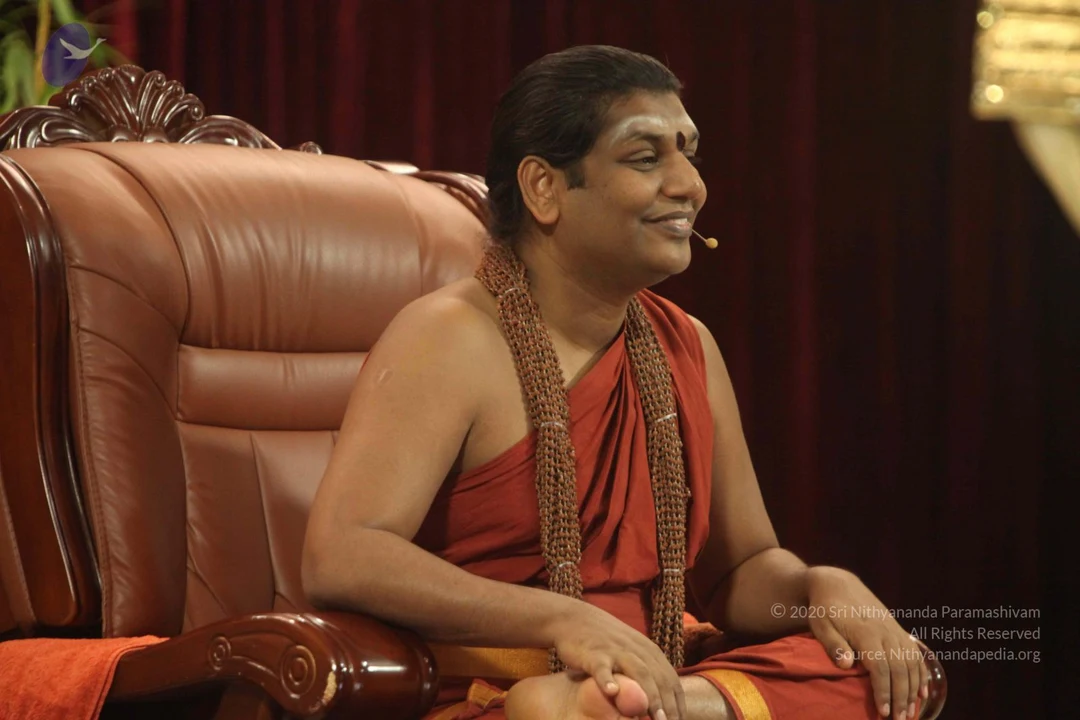
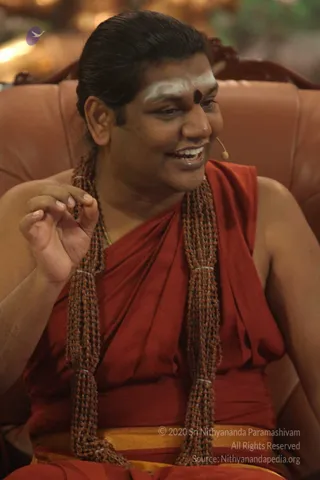
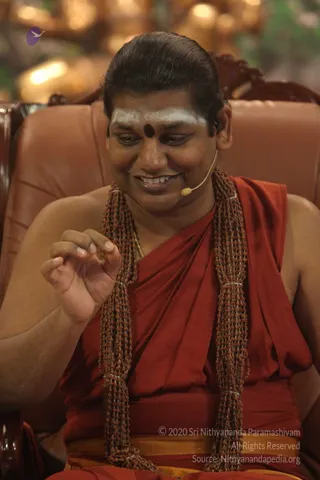
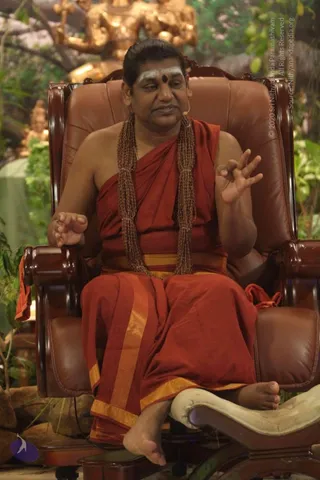
Close-up photograph of a smiling man with swept-back dark hair, white vertical tilaka marks on his forehead and a dark red kumkum dot between the brows. He wears a red-orange saffron-coloured garment draped over one shoulder and multiple strands of brown rudraksha mala beads around his neck. He holds a thin wooden stick with a small pale tip near his face and sits in front of a reddish wooden chair with a blurred green background.Close-up photo of a smiling man in a rust-red sannyasi-style wrap, with a white horizontal forehead band and a dark round bindi, wearing multiple strands of brown rudraksha beads around his neck. He holds a small thin rod with a tan tip. A blurred warm background shows a wooden chair and soft greenery. a person is visible in person, based on the rudraksha malas, saffron-toned wrap and ornate ceremonial presentation.A photograph of a smiling man seated on an ornate reddish-brown carved wooden throne with a leather-upholstered back against a dark red curtain. He wears a saffron-red shawl draped over his shoulders and multiple strands of rudraksha mala beads across his chest, with a white urdhva-pundra forehead mark and a red bindu. He holds the beads with both hands. A small lapel microphone is visible near his ear. The setting suggests a satsang discourse.Close-up photograph of a seated person's bare feet and lower legs resting on a dark wooden chair with curved arms. The person wears a deep red garment edged with wide gold-coloured woven borders. One foot is pressed against a cream cushioned armrest, the toes curled over the wooden frame. The marble floor and a blurred red seating area are visible behind. Only the lower body is shown, so the person's face and identity are not visible.Close-up photo of a seated person in saffron-orange robes with a wide gold-bordered waistband. Two long strands of rudraksha beads hang across the chest, and one hand holds the beads while the other rests on the lap. Only torso, arms and hands are visible, so no face or identity can be confirmed.A man seated in an ornate dark-brown leather throne-style armchair, speaking with his right hand raised in a mudra-like gesture. He wears a rust-red and saffron-bordered unstitched cloth draped over his shoulders and lower body, with long tiered rudraksha malas hanging to his waist. A white vertical tilak marks his forehead with a red bindi, and a small lapel microphone is clipped near his face. Behind him stands a golden deity murti among green foliage and artificial rocks, and a cushioned footrest is at the lower right. The scene resembles a satsang discourse setting. a person: the rudraksha malas, saffron-red robes and central throne seating are the appearance cues; the image is a photograph of him delivering teaching.

IA-Temple-Session
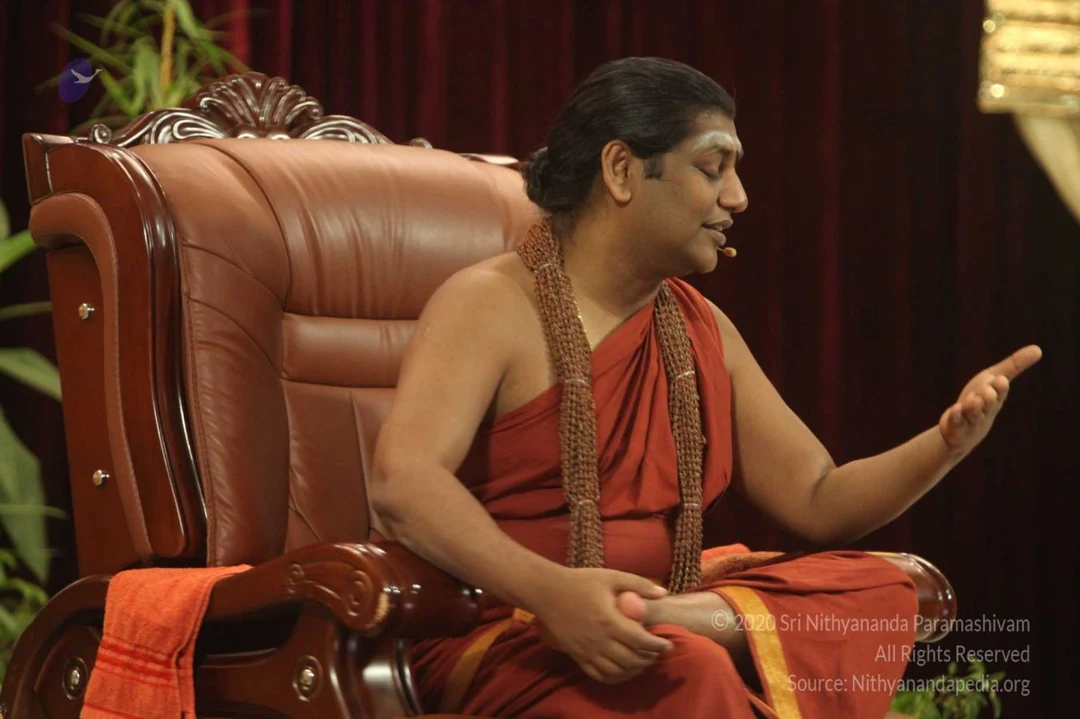
33 photosSource gallery
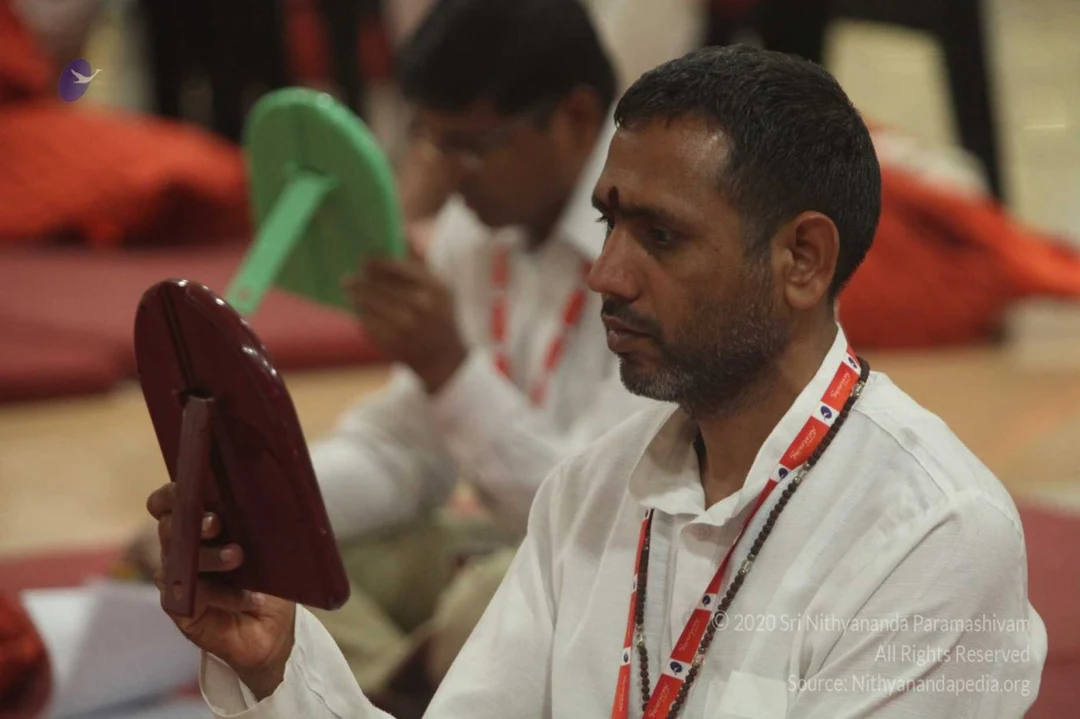
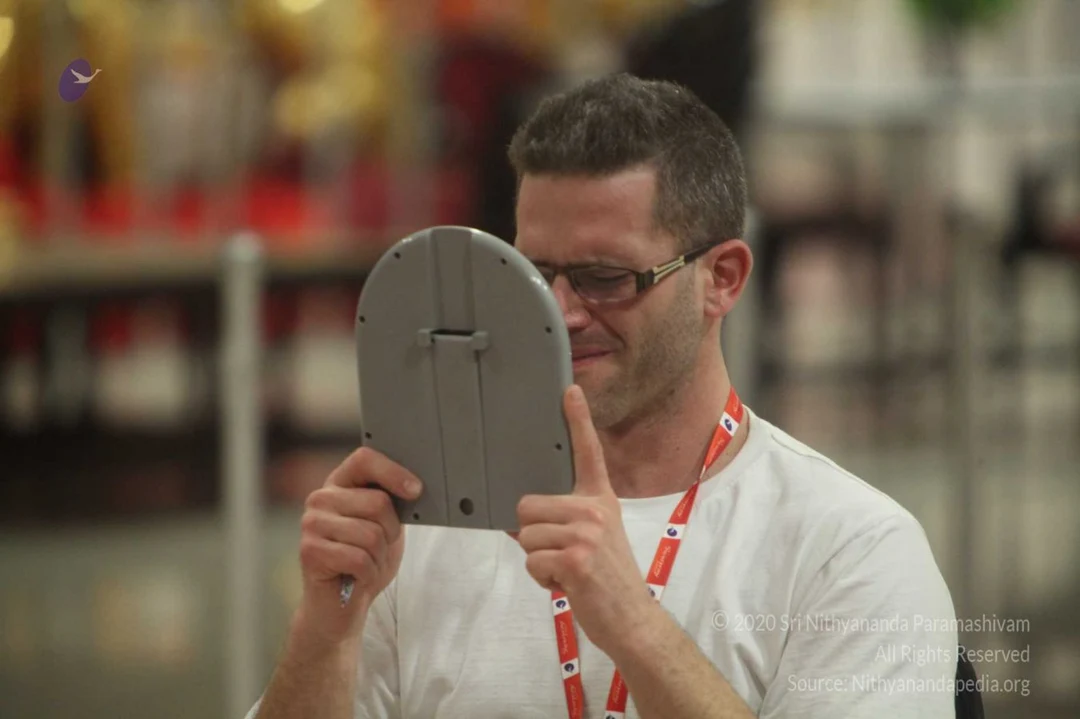
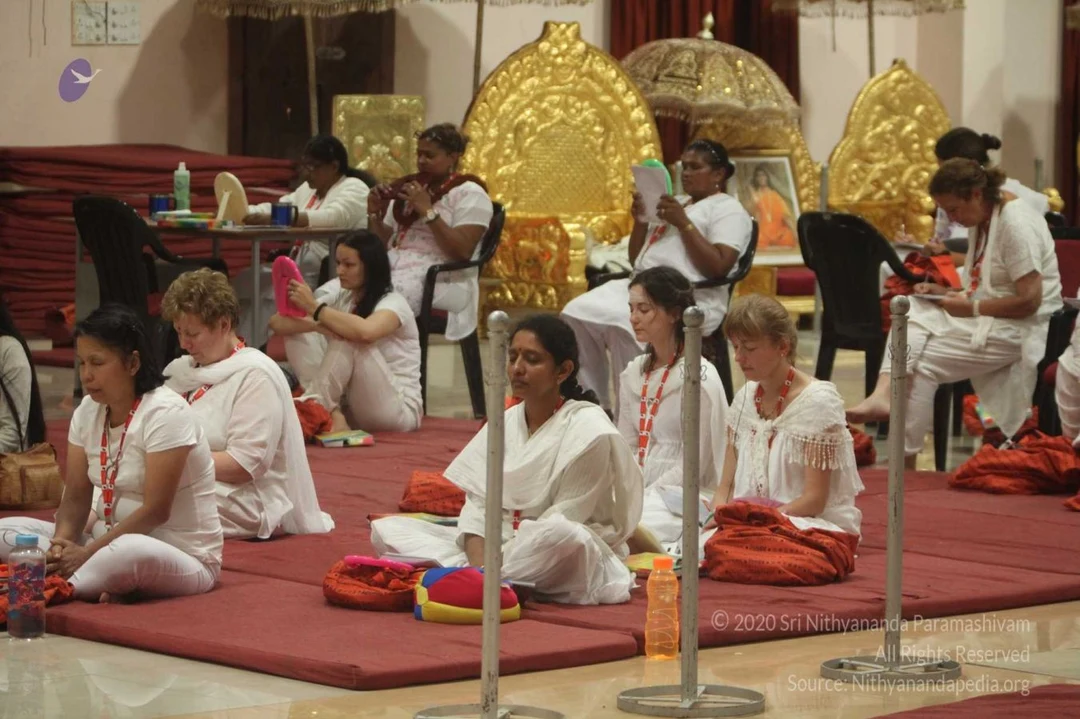
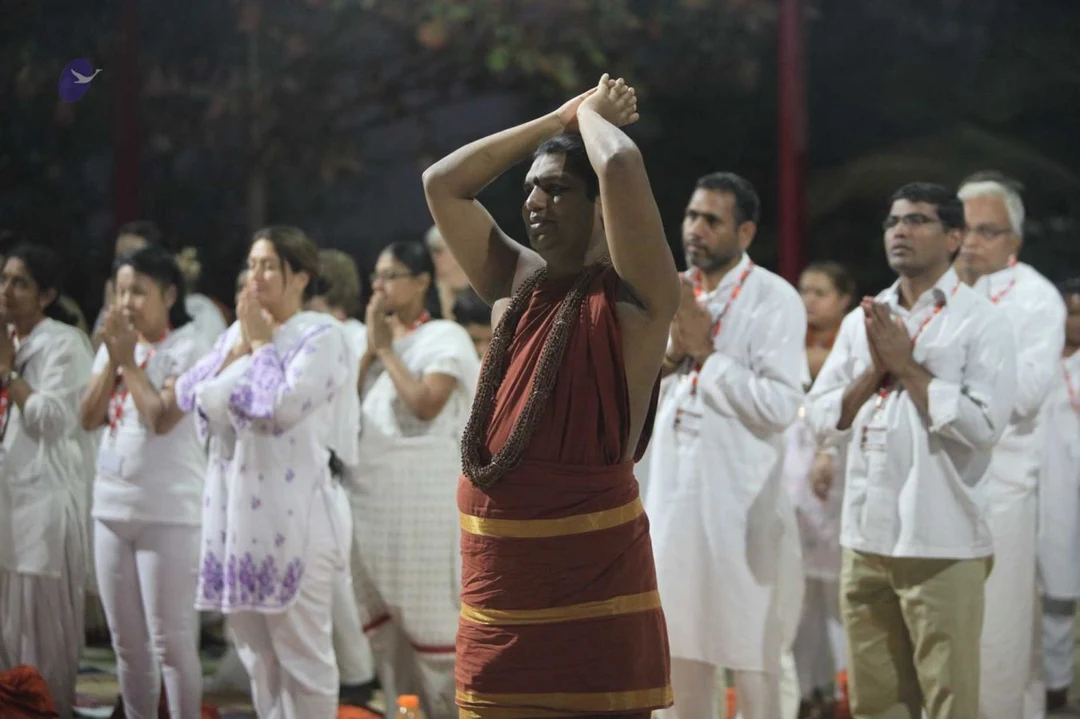
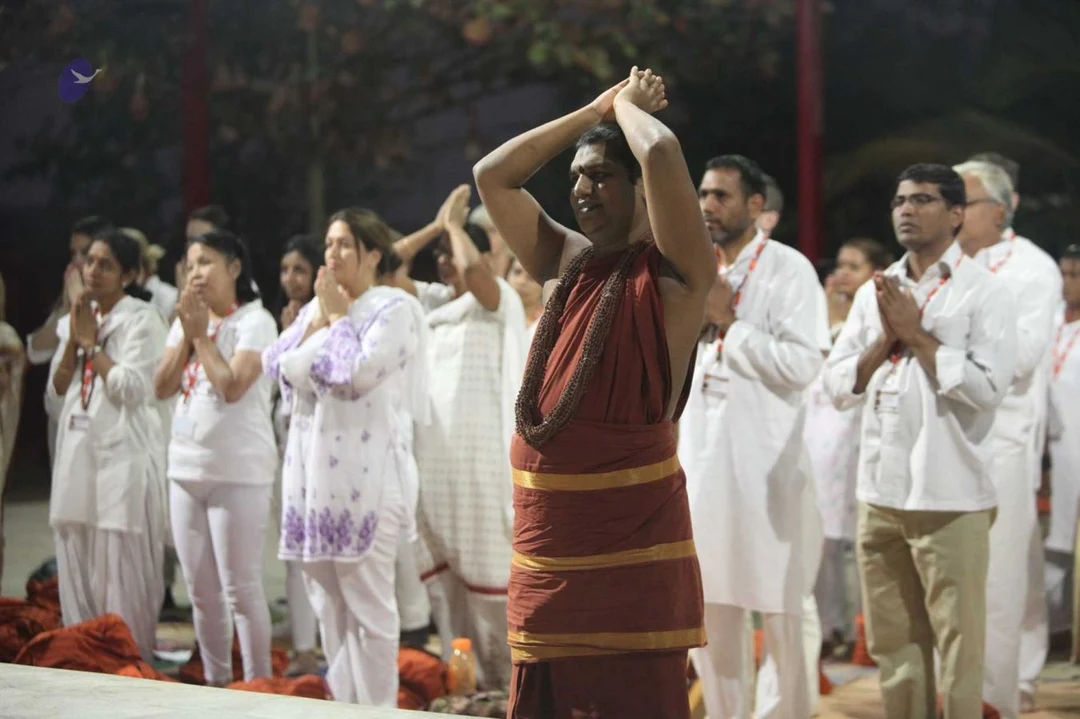
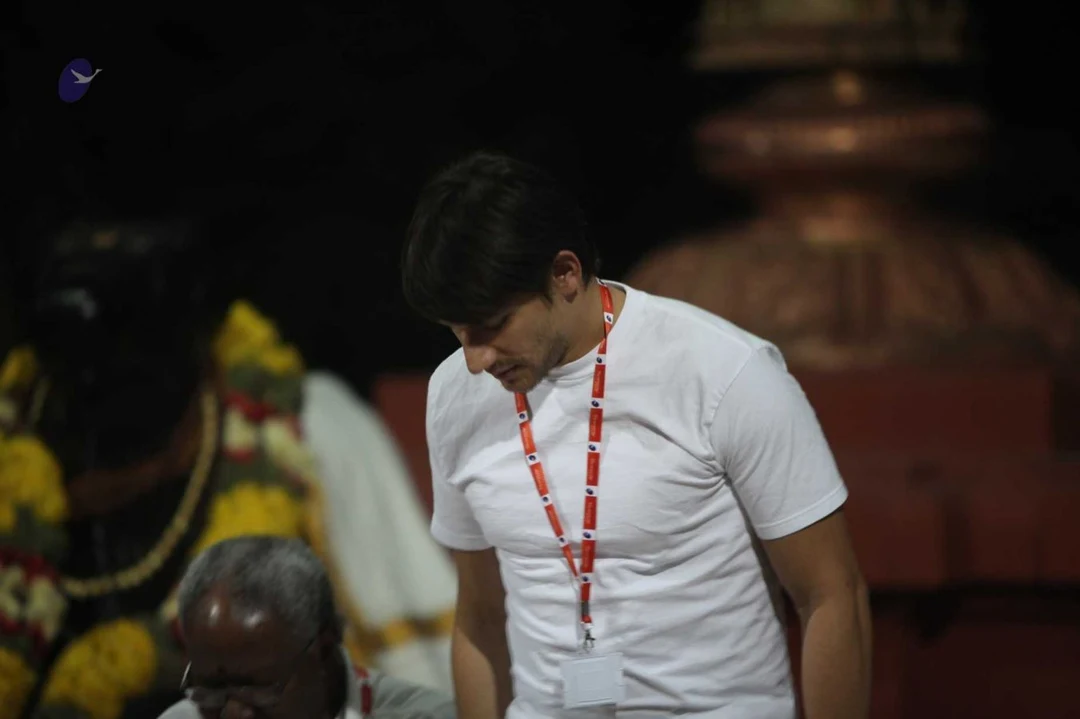
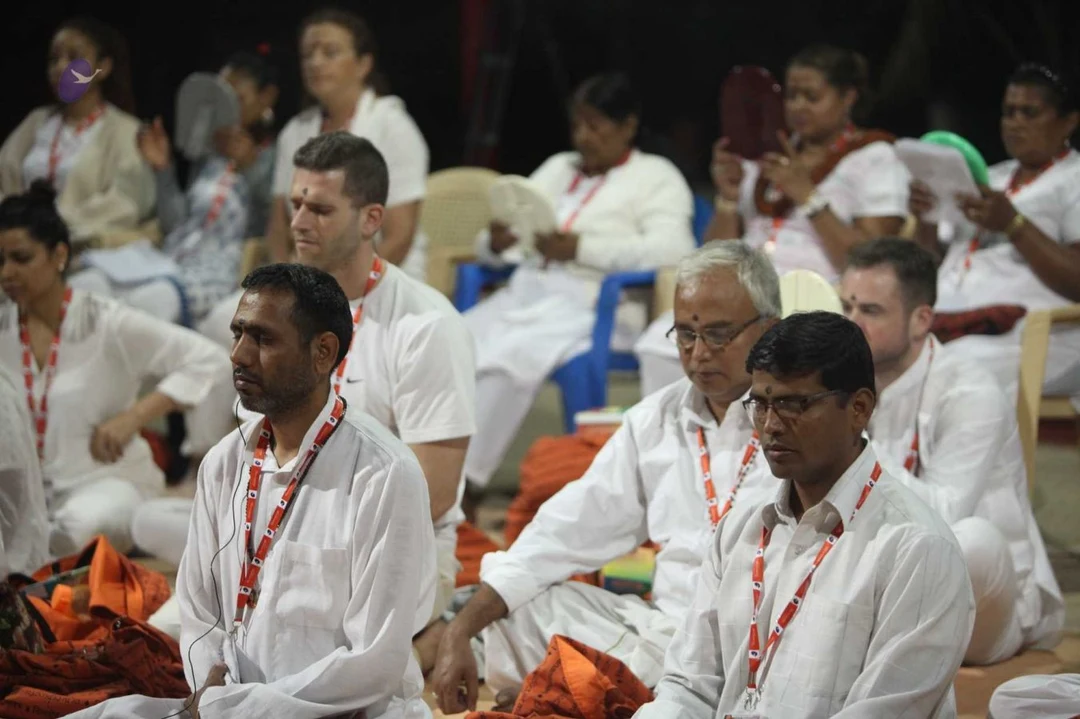
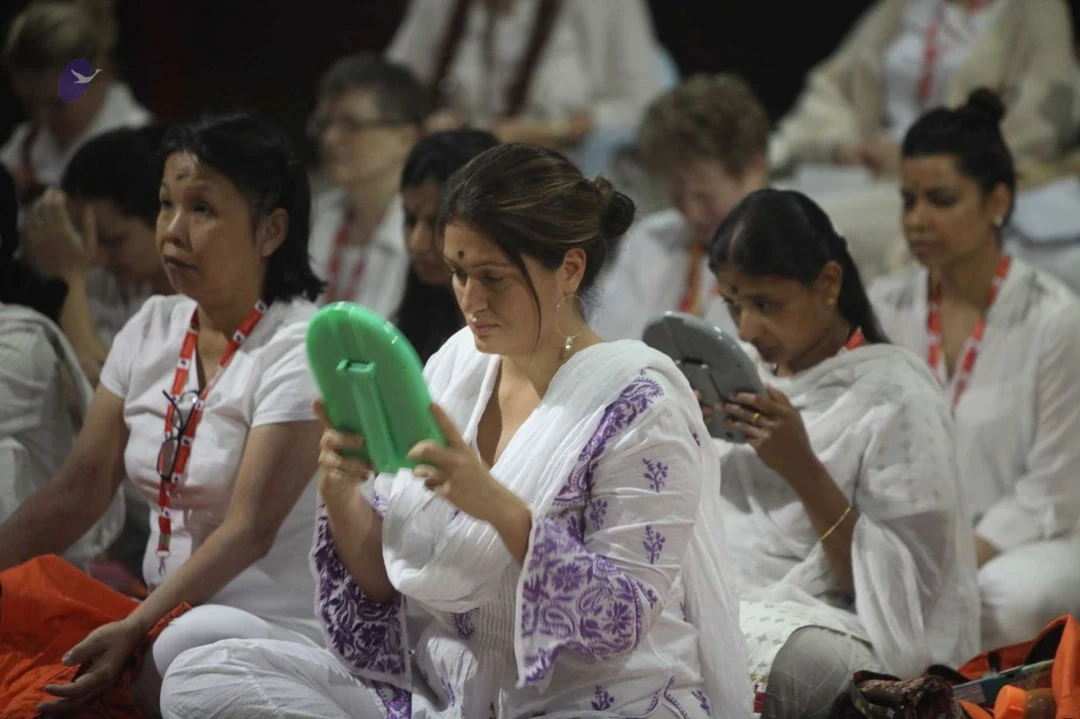
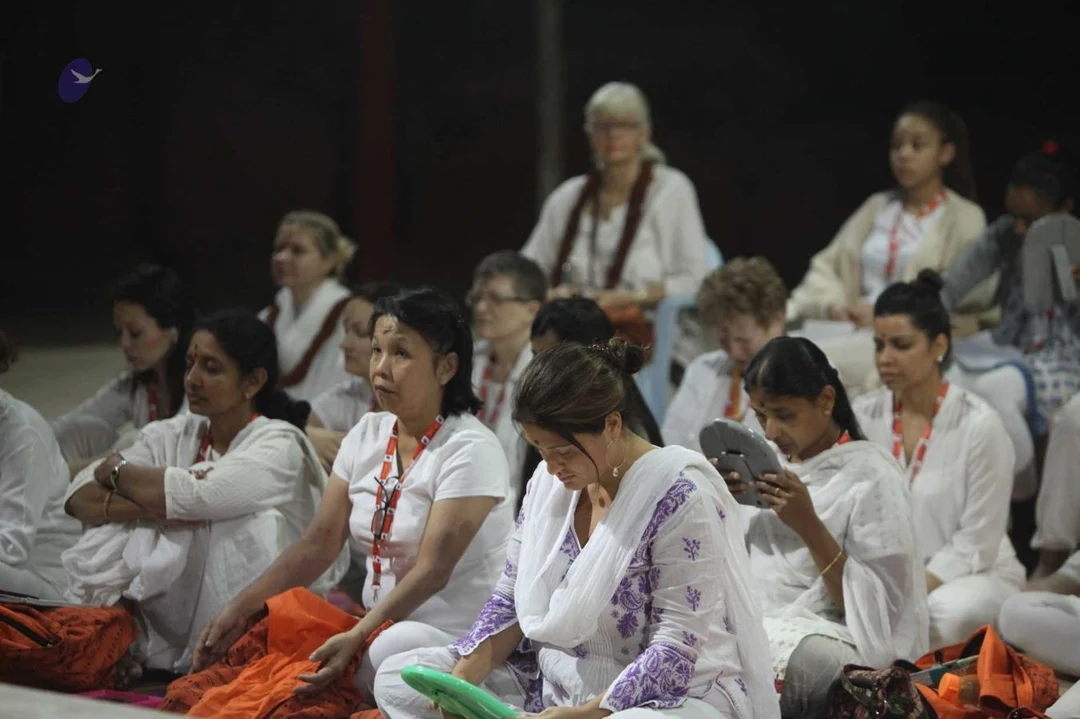
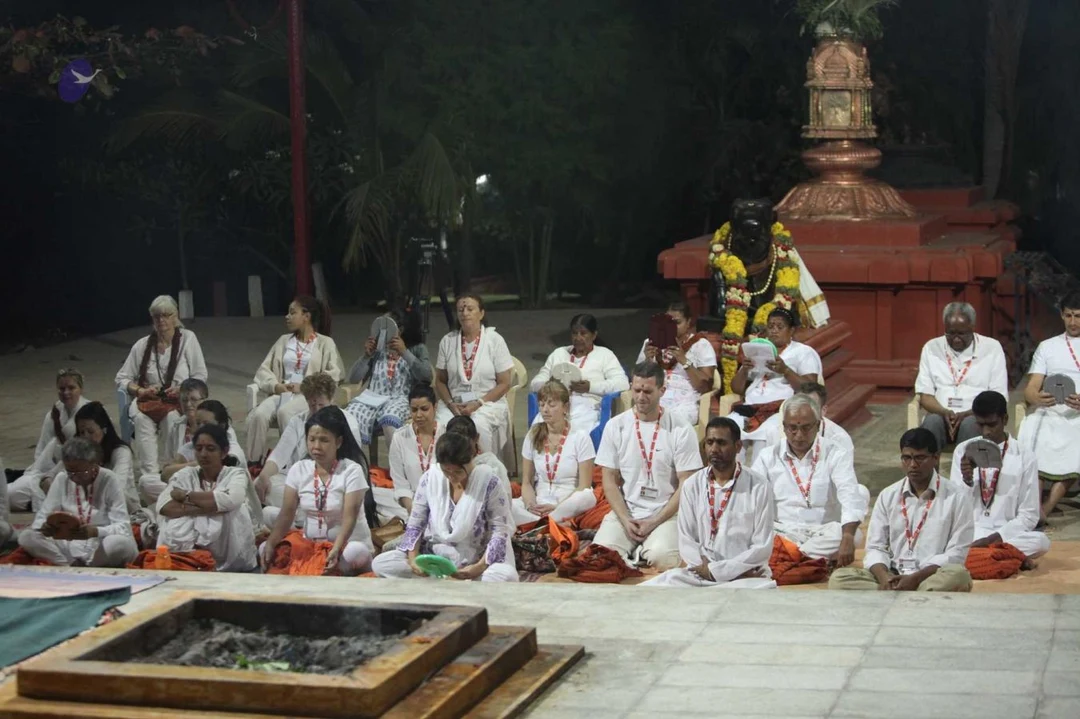
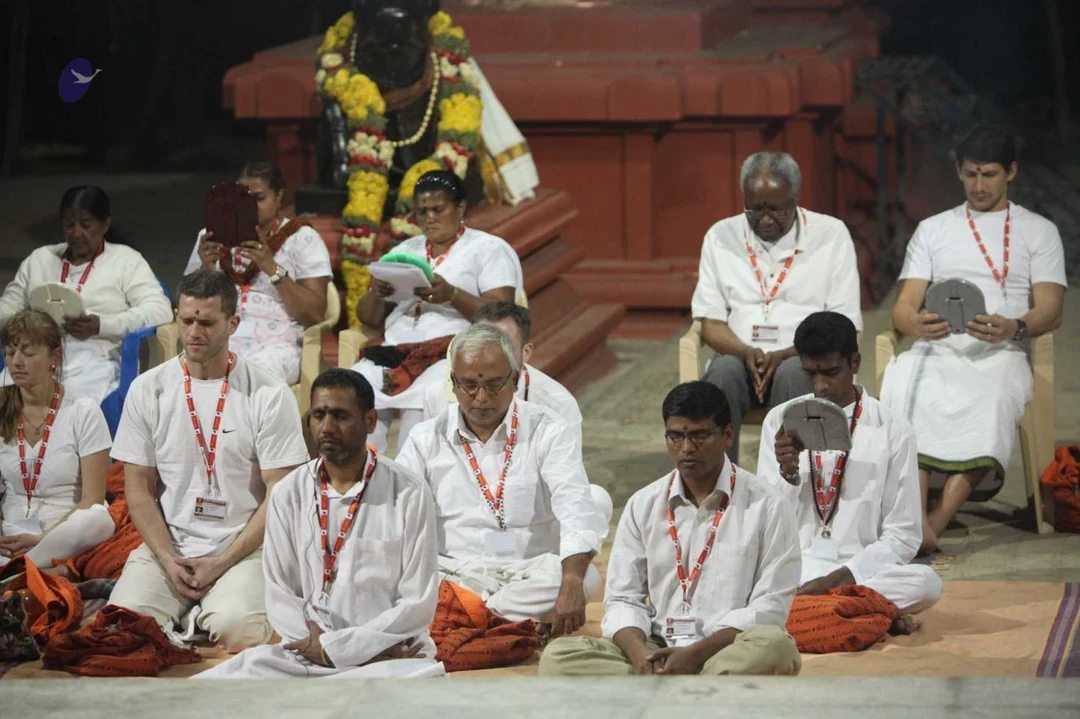
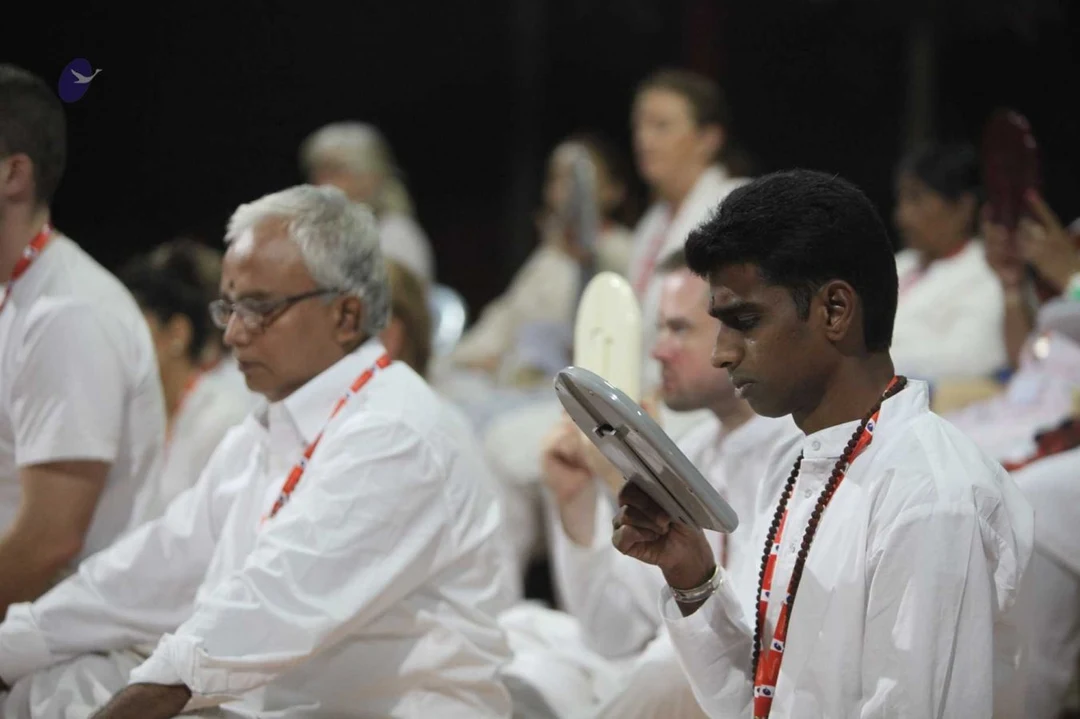
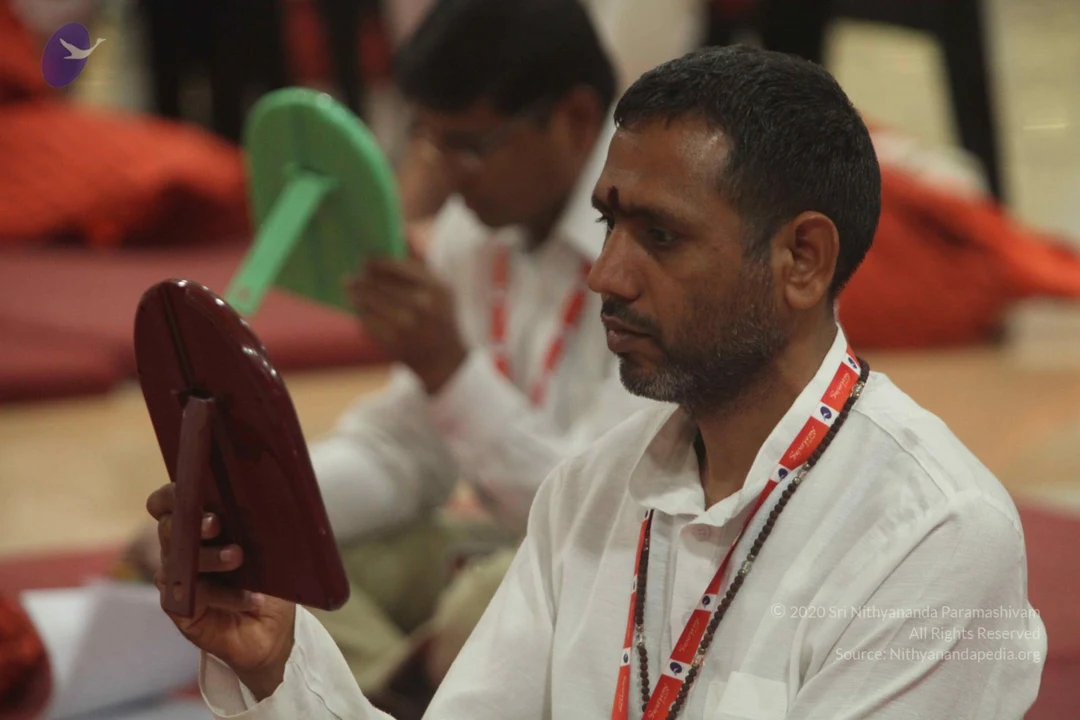
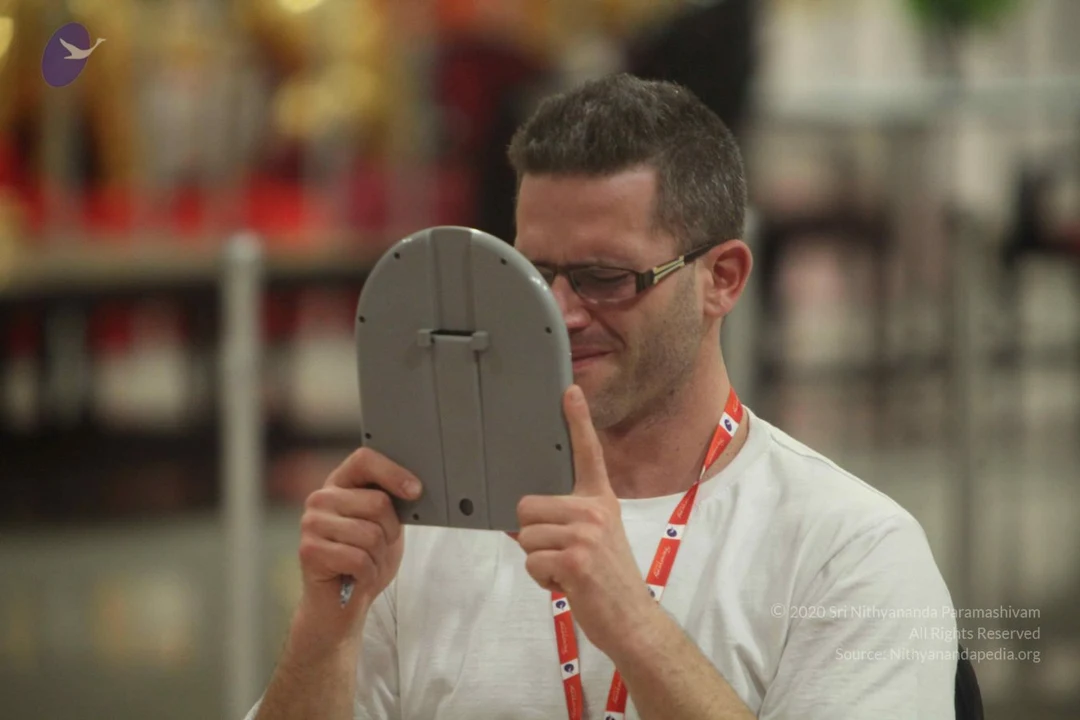
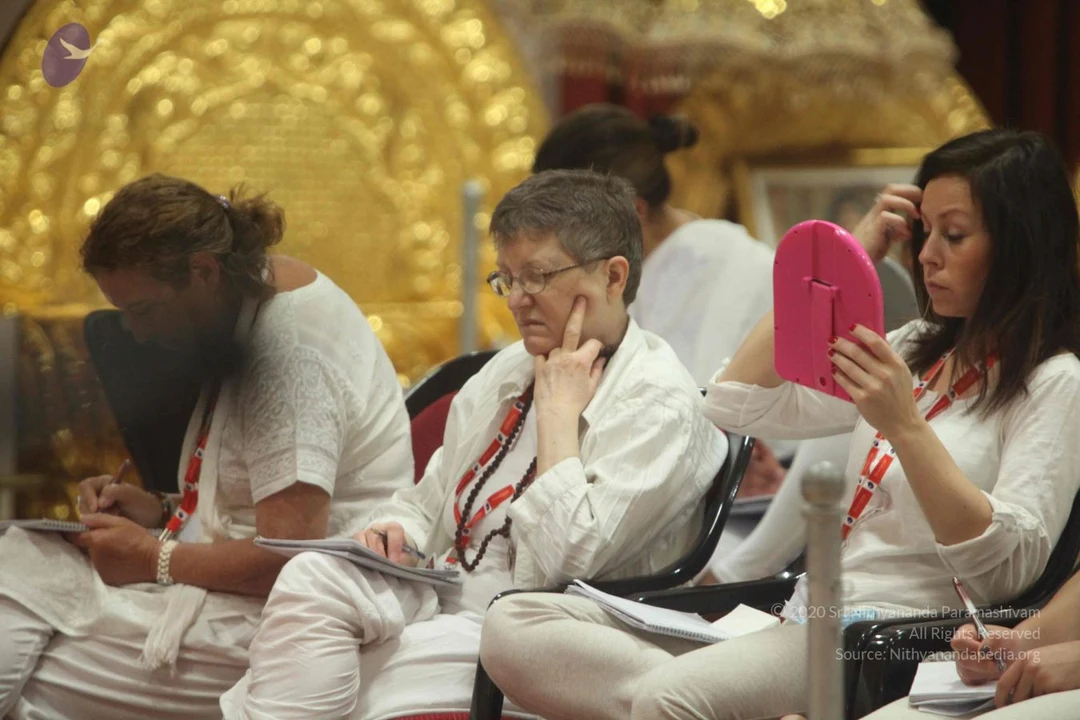
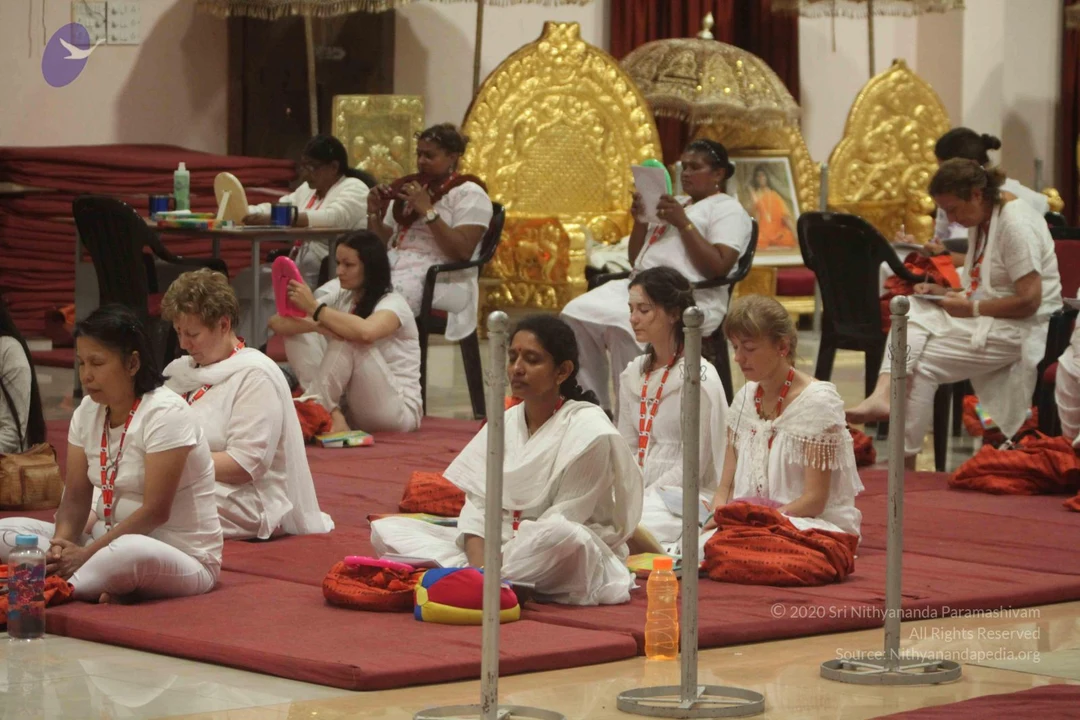
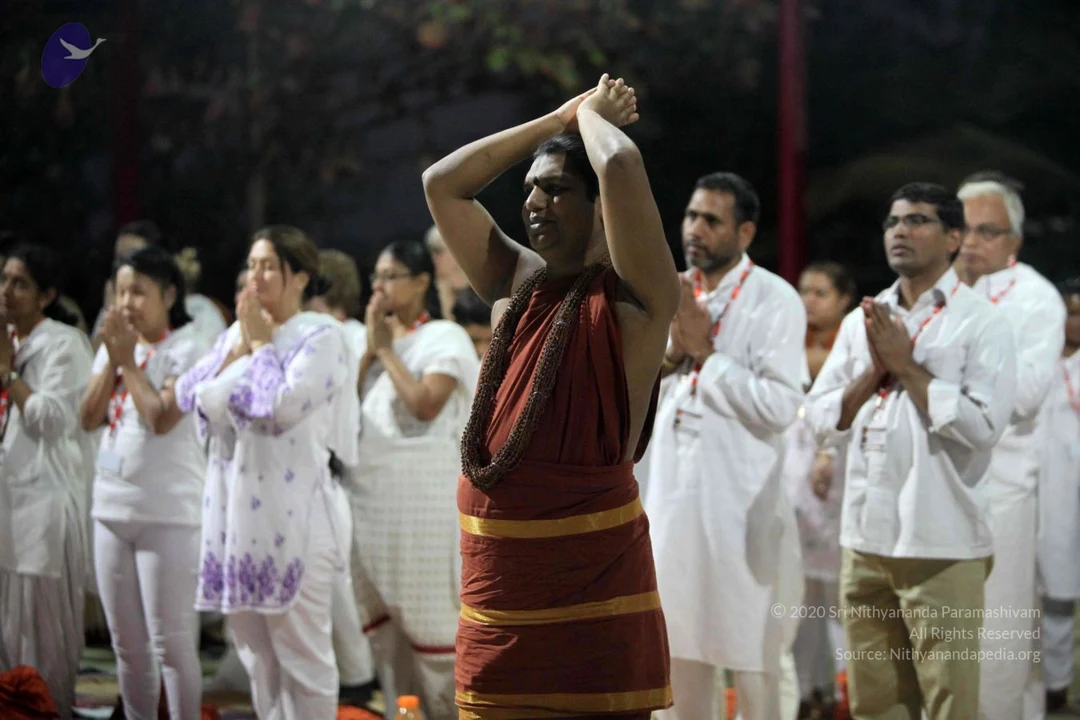
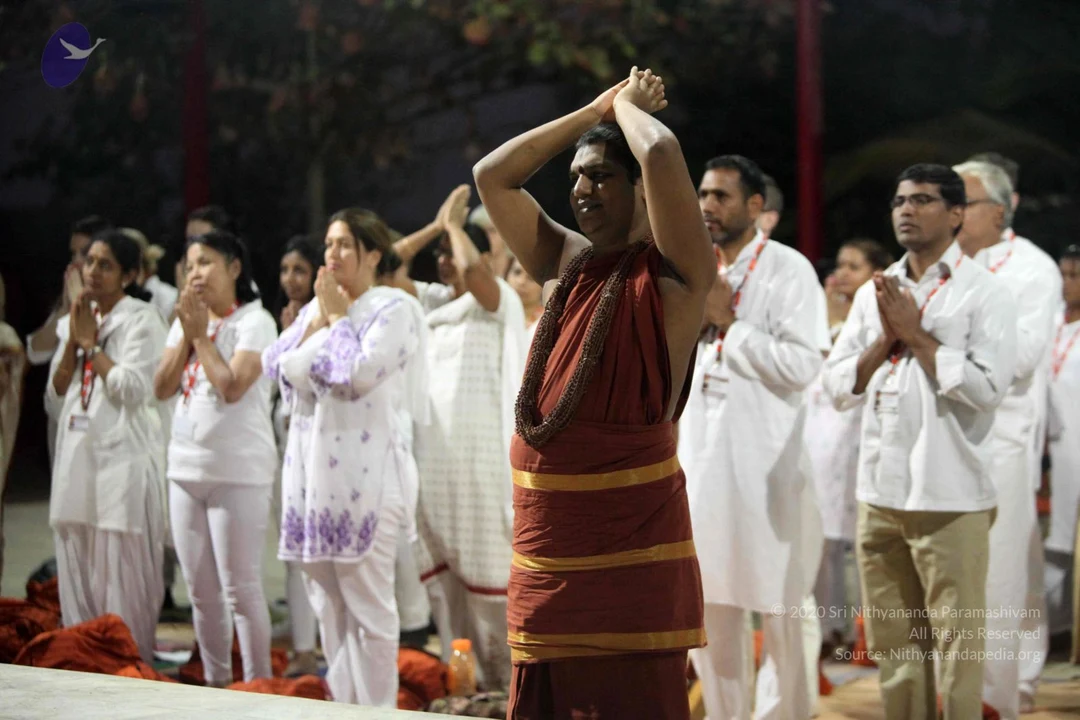
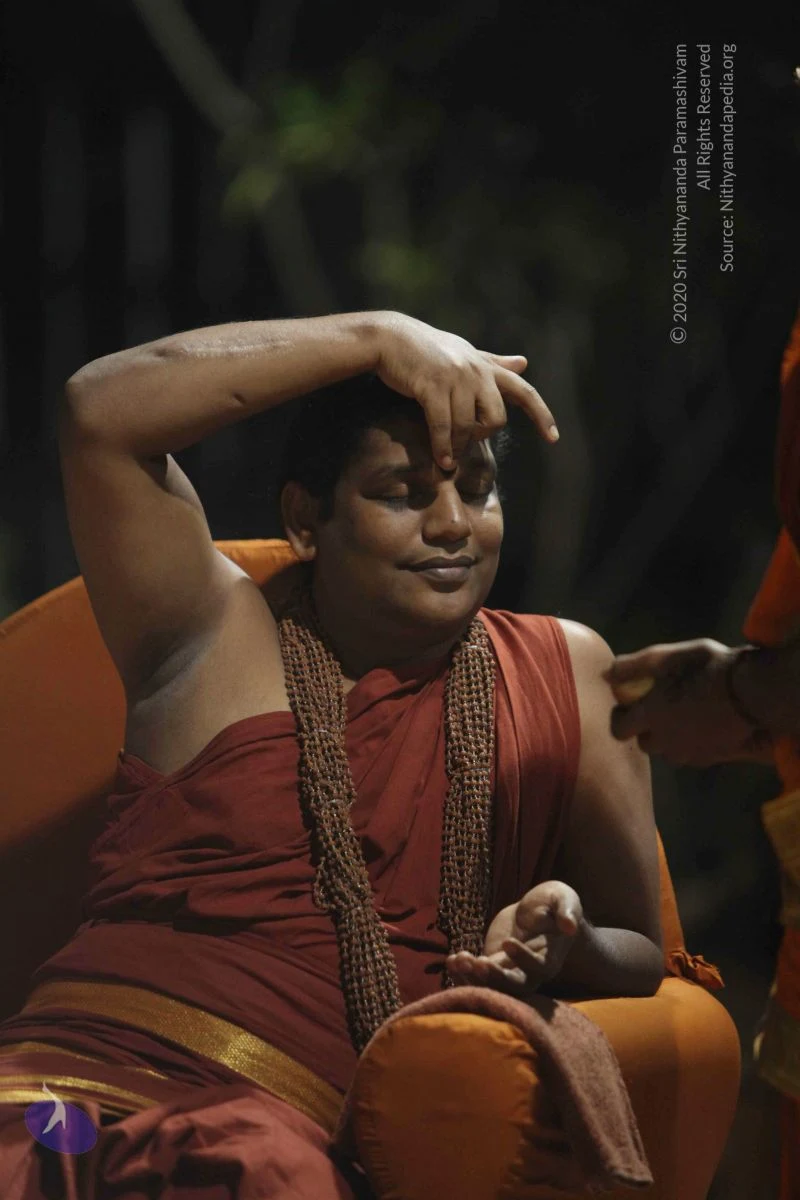
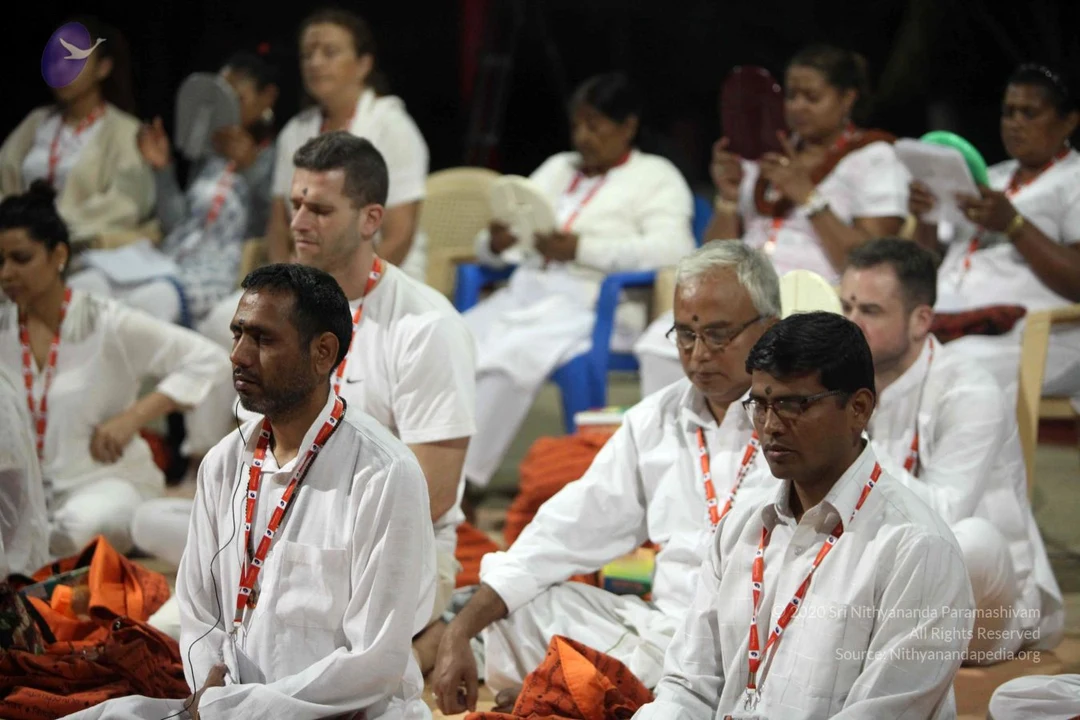
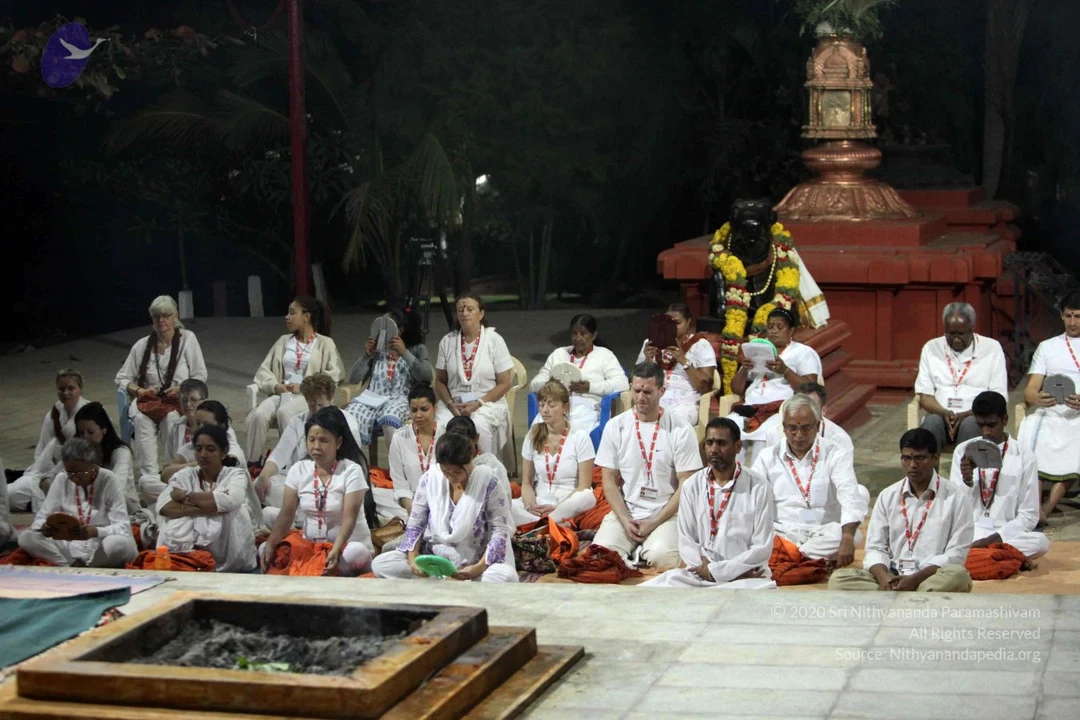
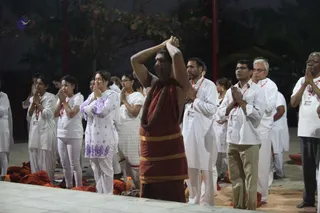
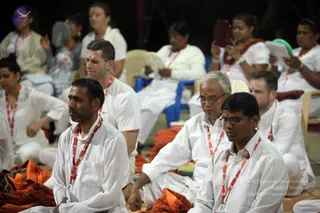
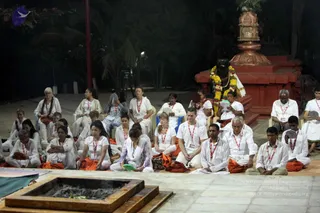
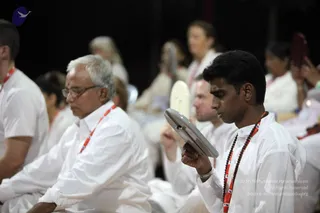
Outdoor evening gathering of devotees in white clothes with red lanyards, hands pressed in namaste. In the centre, a man with hands raised overhead wears a rust-red robe with gold-yellow bands and a dark rudraksha mala around his neck; he appears to be leading a practice. Around him stand several men and women in white kurtas and salwar, some in lavender-patterned white, with trees and red pillars in the dark background.Outdoor evening gathering of devotees in white ritual clothing standing with palms joined in namaskar. In the centre foreground, a man with short dark hair wears a rust-red sannyasi-style wrap with gold-yellow bands and a dark rudraksha-style mala, arms raised with hands clasped above his head. Around him, people in white kurtas, dupattas and white trousers hold their hands in anjali, some wearing red-and-white lanyards. Dark trees and a red pillar form the background, with orange cloth on the ground in the lower left.A seated man in a rust-orange monastic wrap and bare-shouldered draping sits in an orange armchair against a dark, blurred background. He rests his right hand on his forehead with eyes closed and a faint smile, while his left hand rests open on the armrest. He wears a long beaded rudraksha-style mala with a gold-bordered cloth at the waist. Another person in orange clothing stands at the right edge, reaching toward his shoulder.Photograph of a seated group of devotees at an evening satsang, mostly dressed in white with orange-red lanyards. In the foreground a man with short dark hair and a light beard sits with eyes closed, and beside him a man in white wears glasses and reads from a sheet. Behind them women in white sit on blue and white chairs, several holding papers, one raising a red folder, and a man with grey hair and glasses sits in the middle row. Orange cloths lie on the floor near the front. No a person candidate is visible.Night outdoor satsang on an open stone platform. Many devotees in white clothes and red-orange lanyards sit cross-legged on mats and chairs, many holding small books or sheets. A large fire pit with ash sits in the foreground. Behind them a dark-stone deity murti stands on a red base, adorned with a yellow-and-white marigold garland, beneath a copper kalasha-style lamp housing. Palm trees and foliage fill the dark background.Photograph of a seated satsang audience dressed in white, with several devotees wearing red-and-white lanyards and rudraksha-style beaded necklaces. In the foreground a man with short dark hair holds a round grey plate in his hands, eyes lowered in devotion, while an older man with grey hair and glasses sits beside him in a white shirt. Behind them other participants in white hold up phones and a small paddle-like object, and the background is dark.
FB-Photos-of-the-Day

2 photosSource gallery