Skip to content
Tuesday

23 February 2016

Paramashivoham Oneness Capsule 257 (23 Feb 2016 Photo)

Dated photos
345
Source pages
1
Media
2
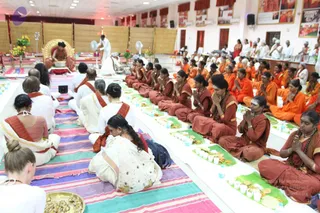
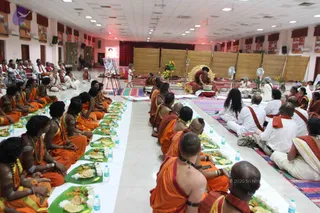
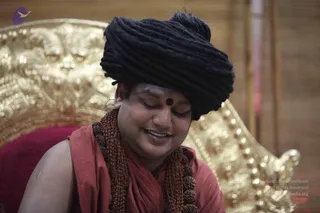
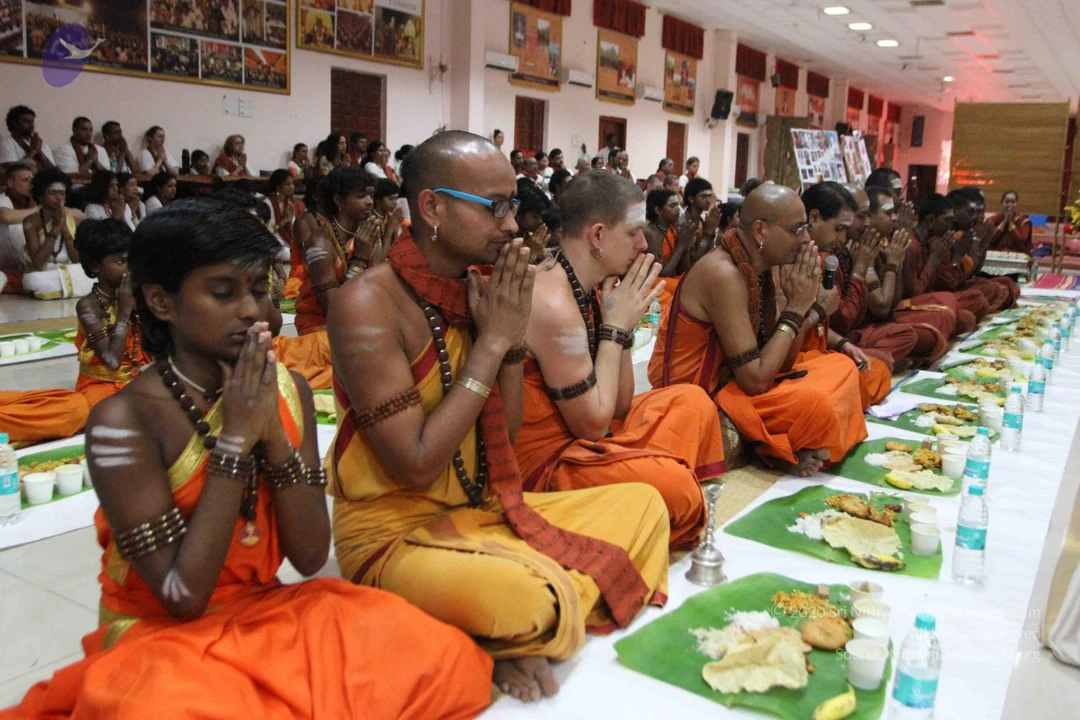
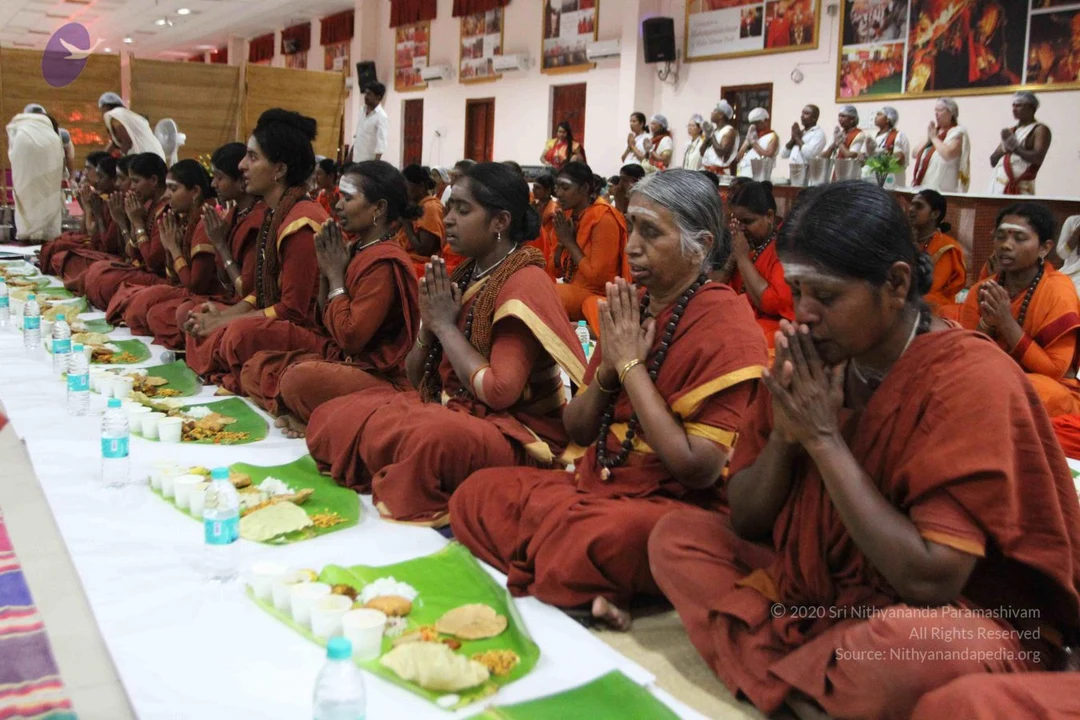
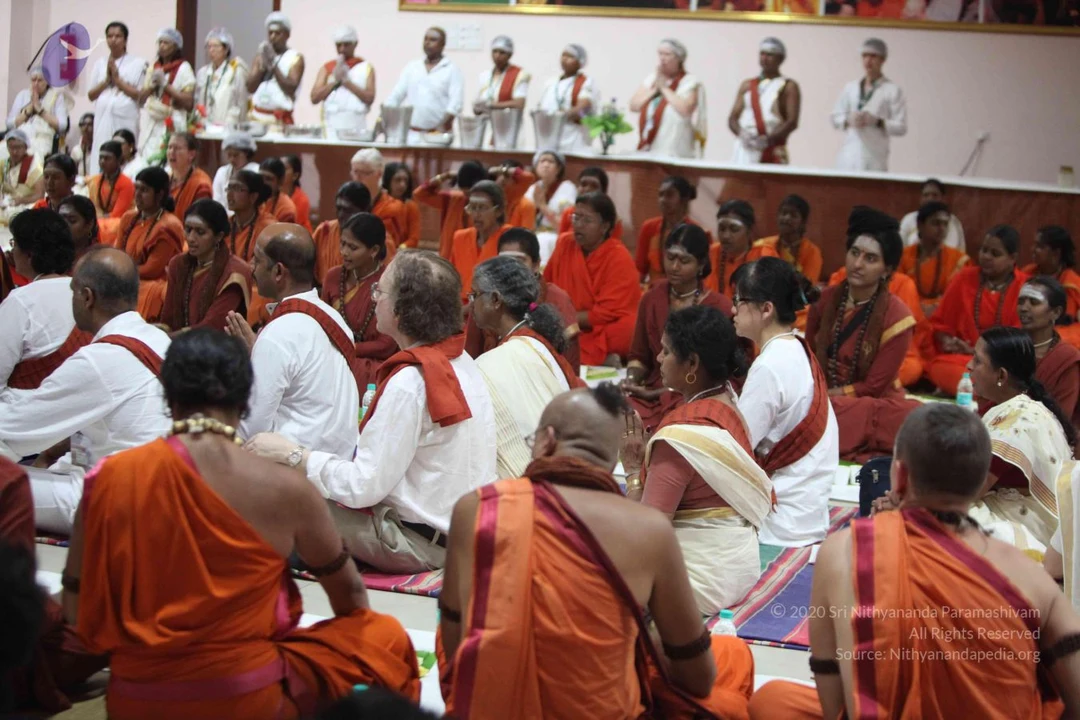
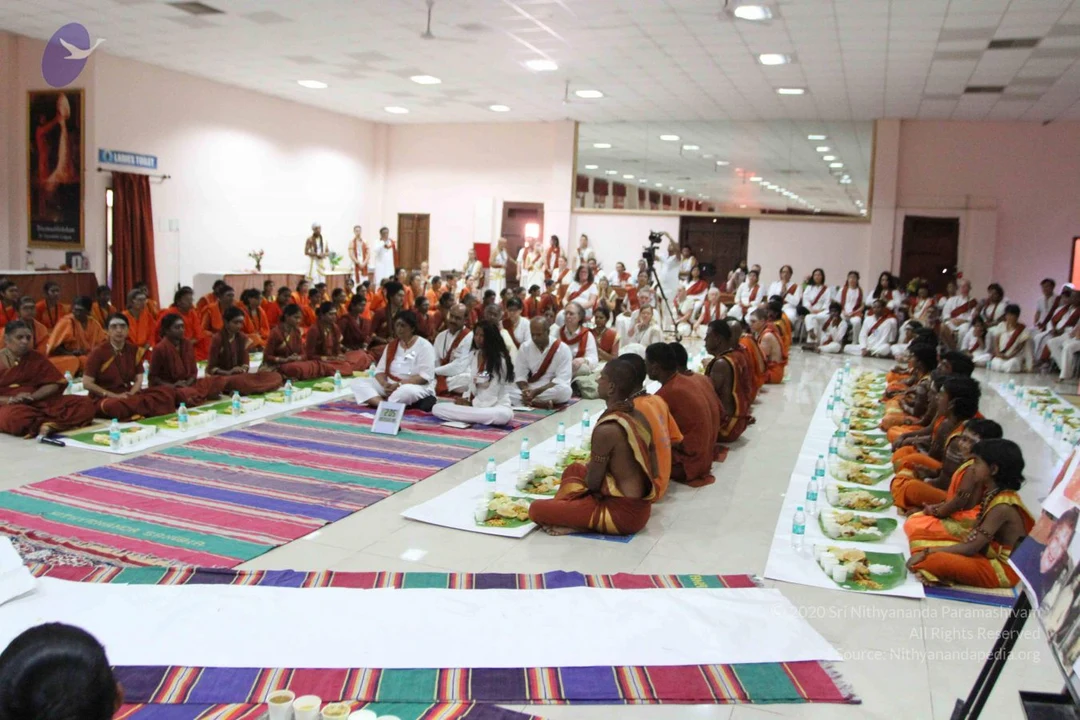
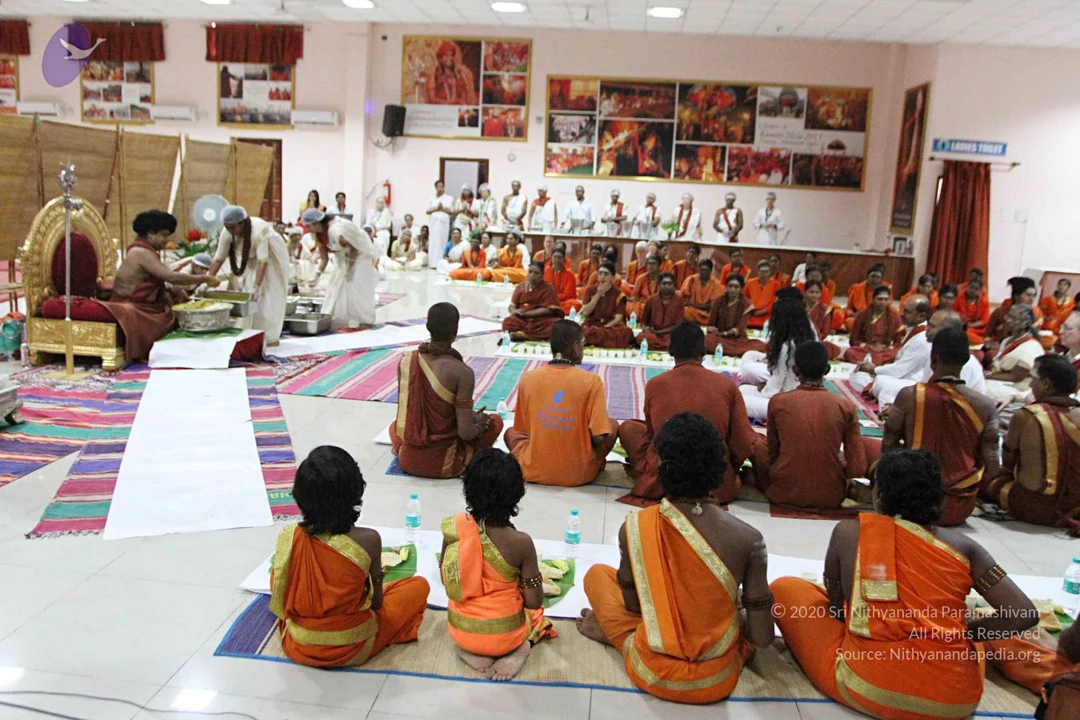
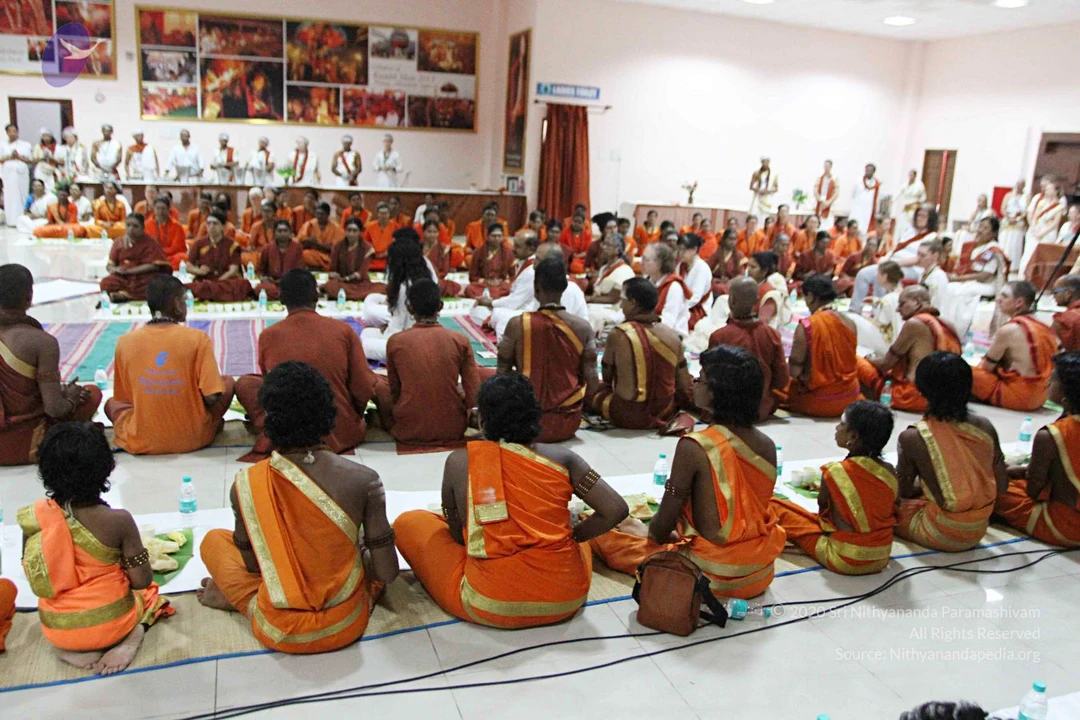
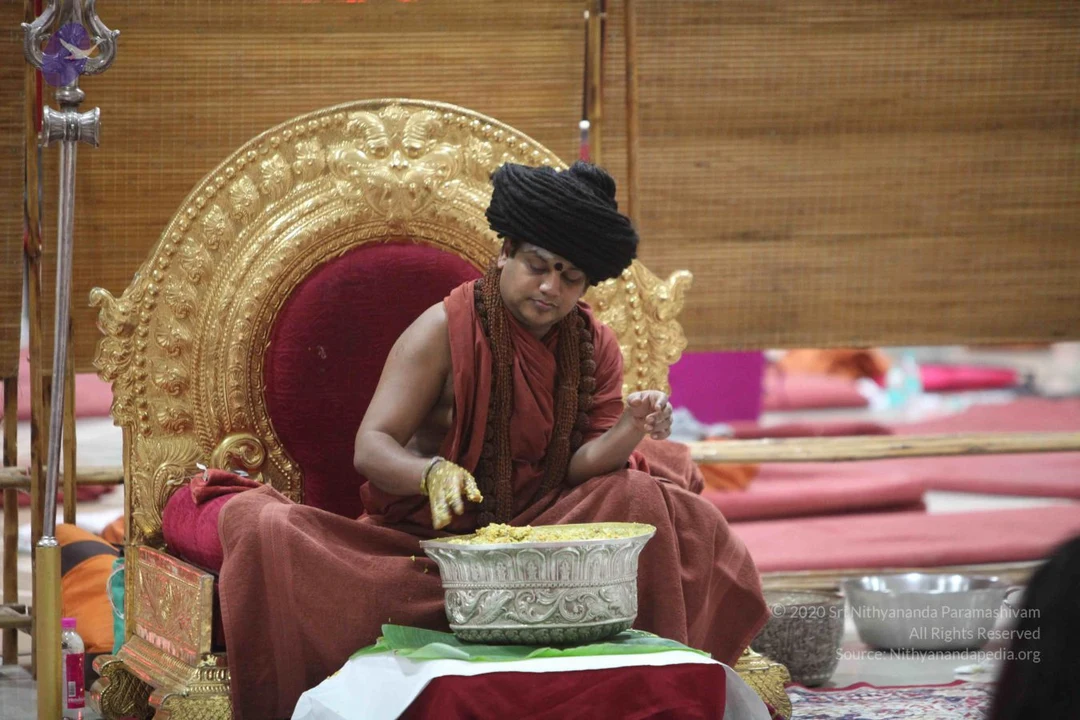
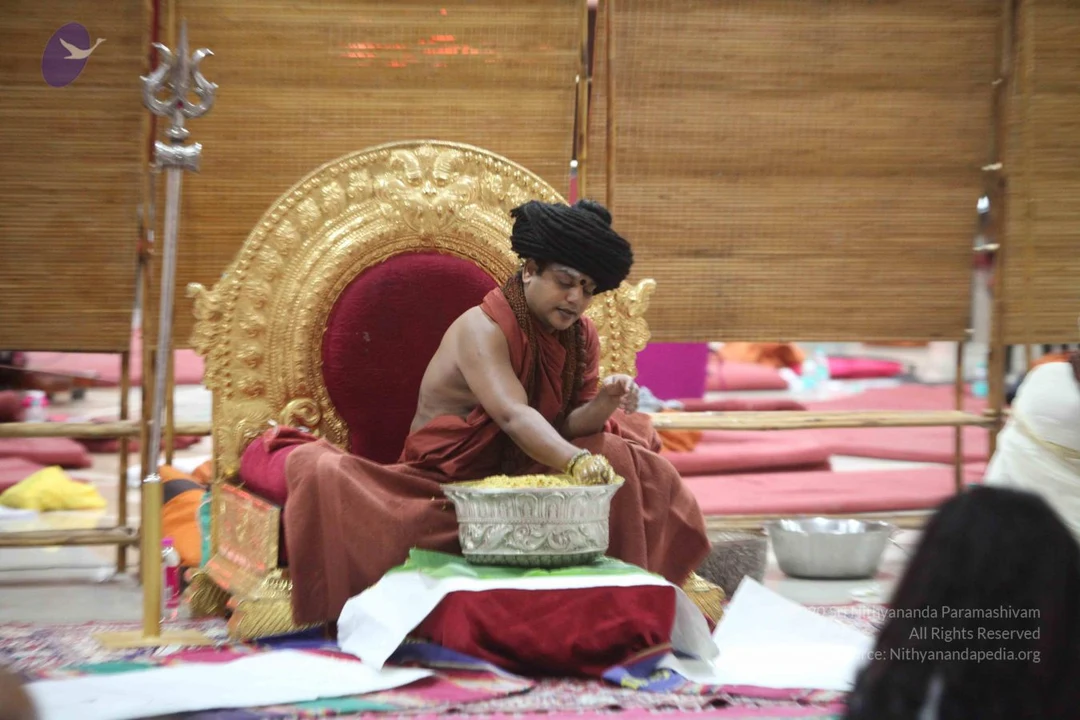
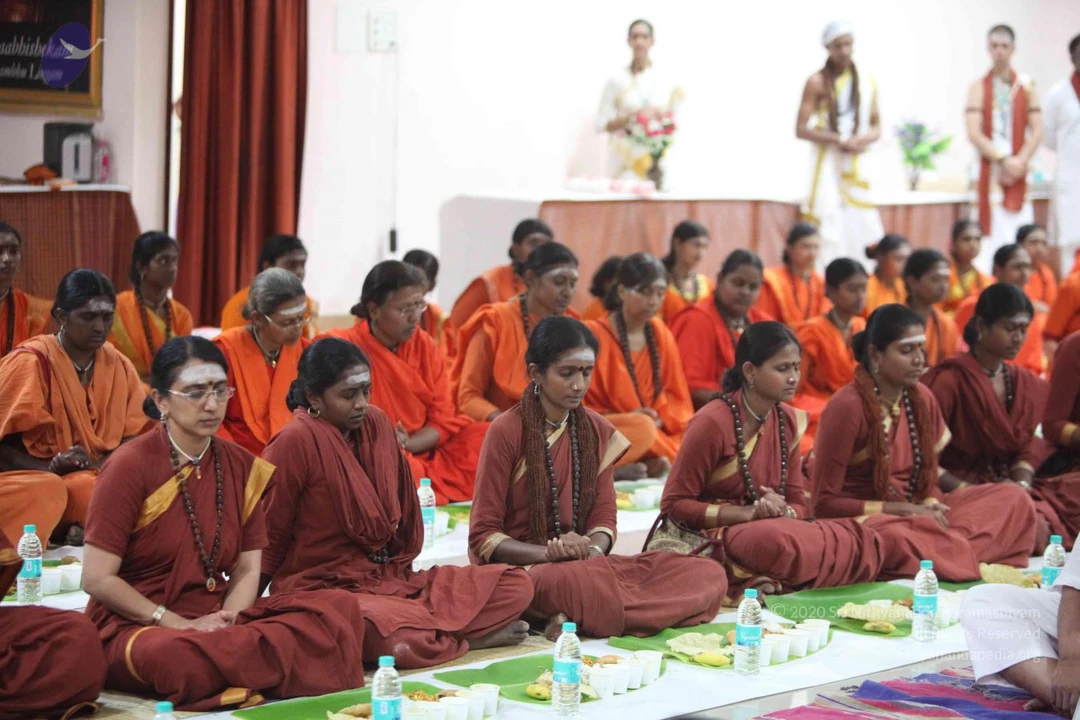
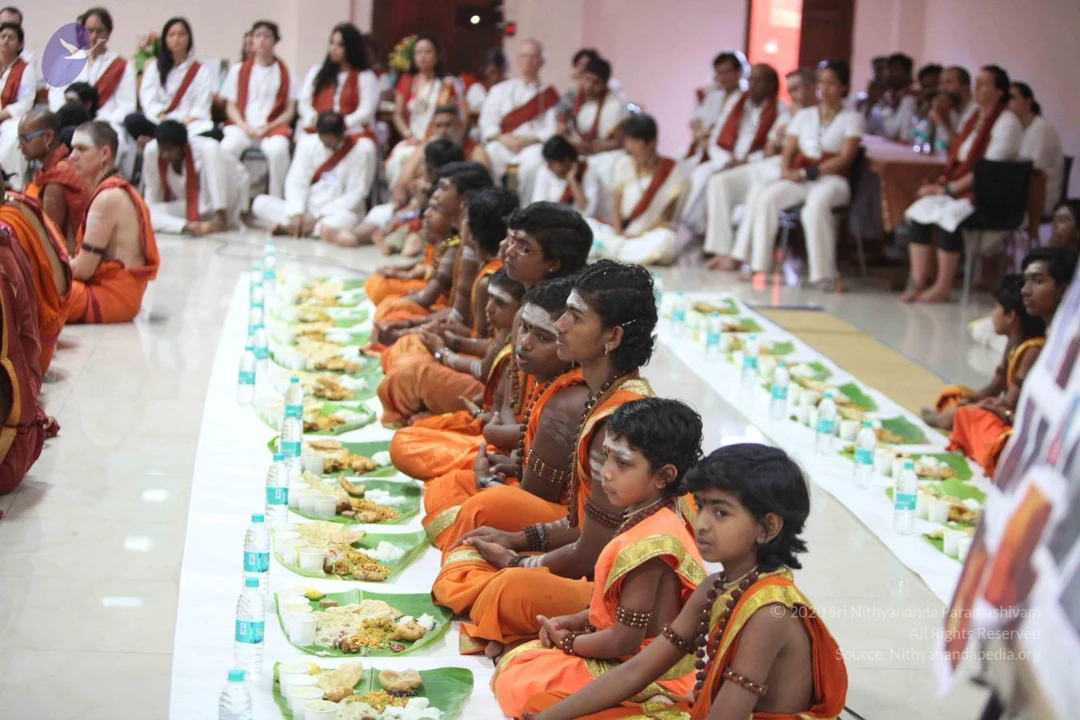
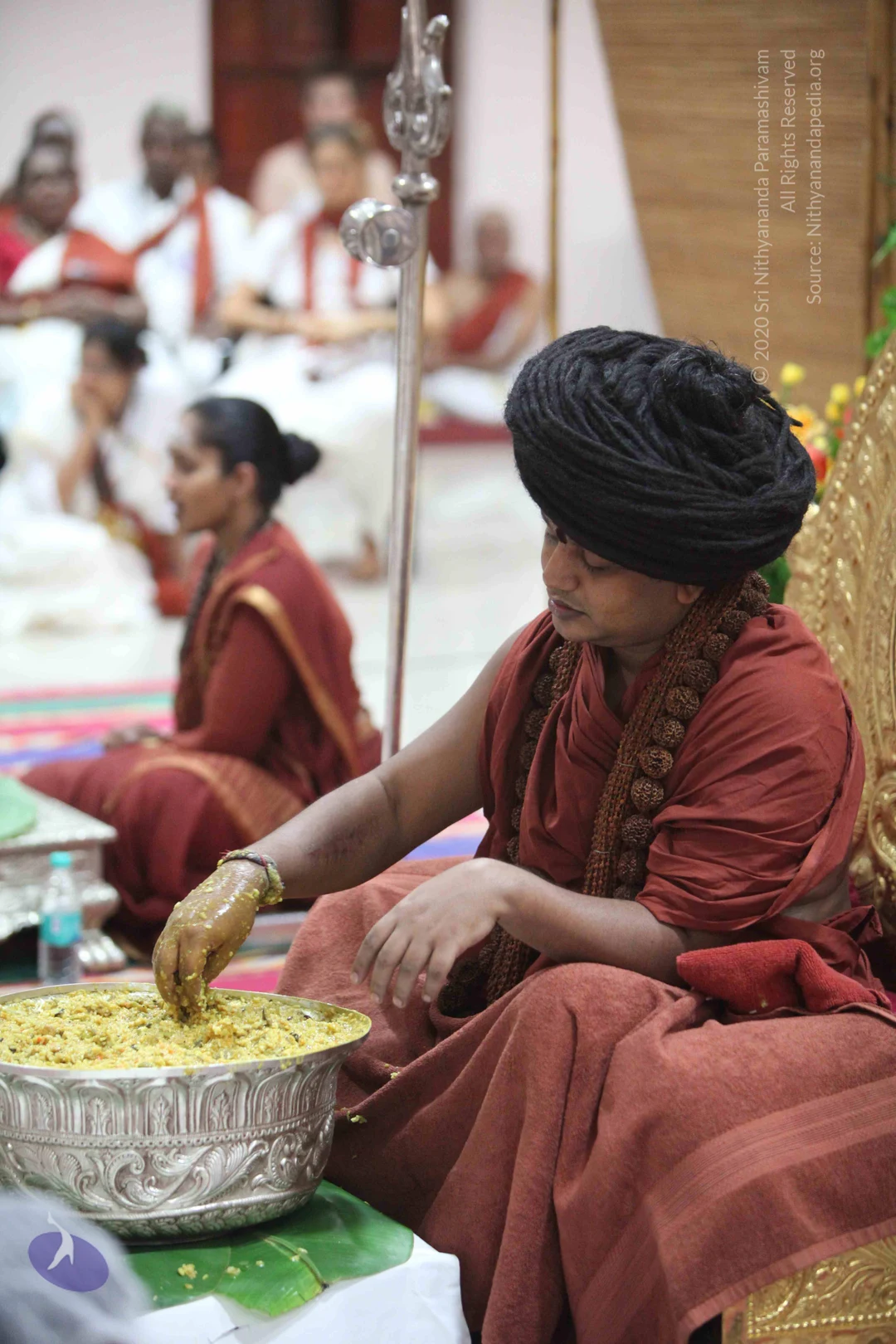
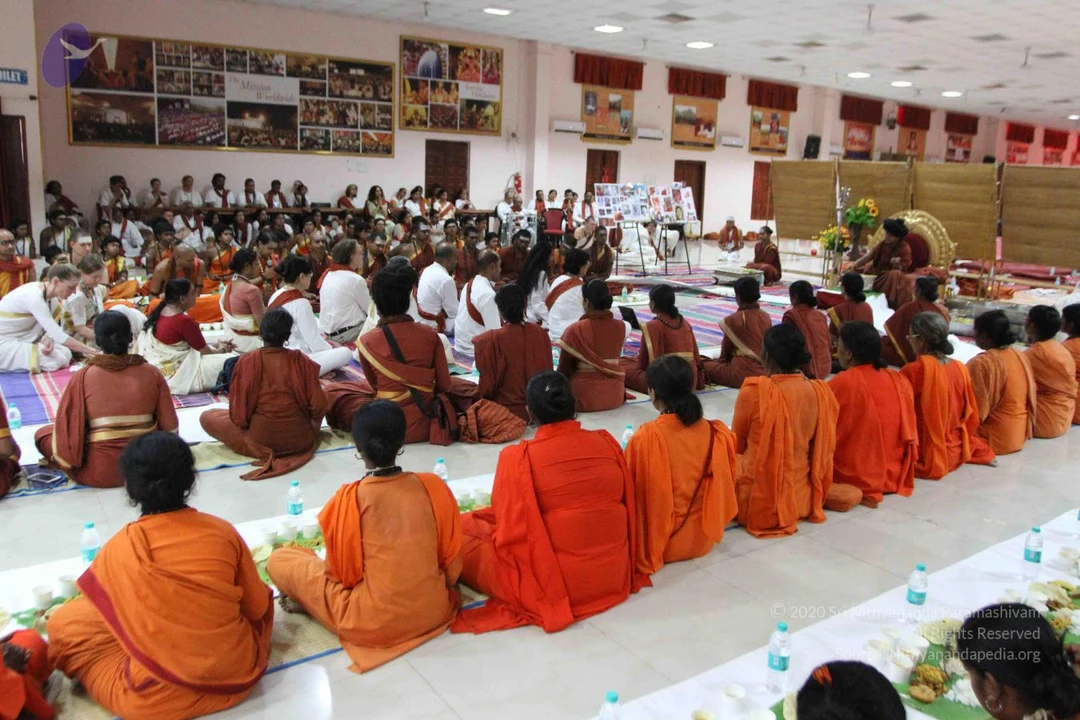
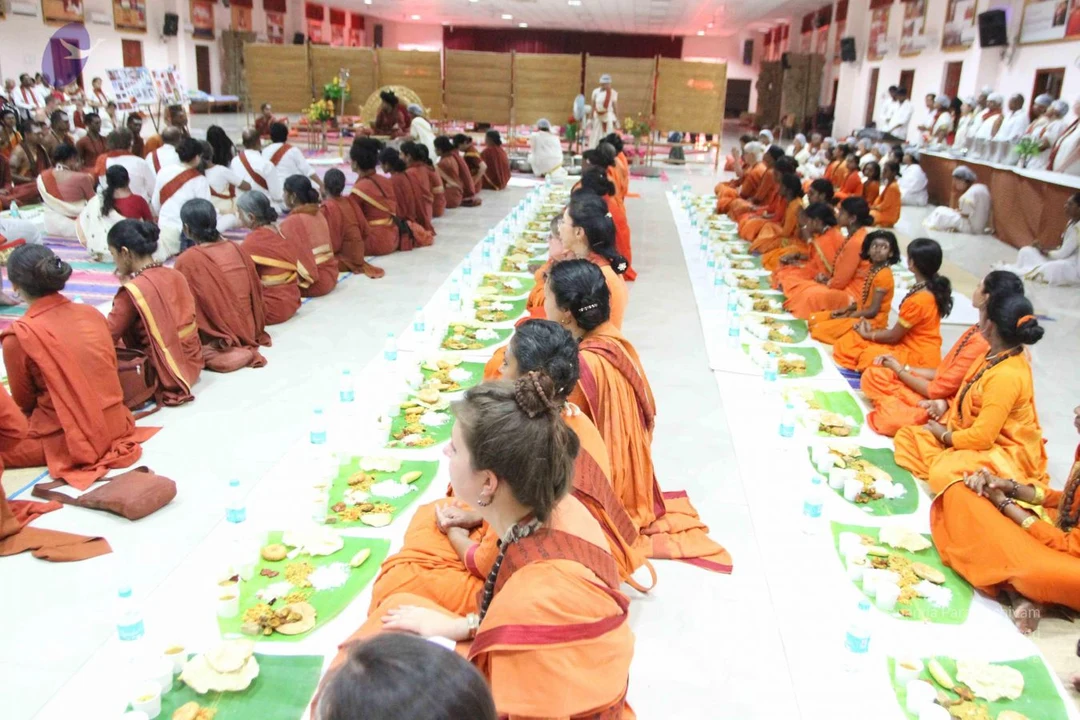
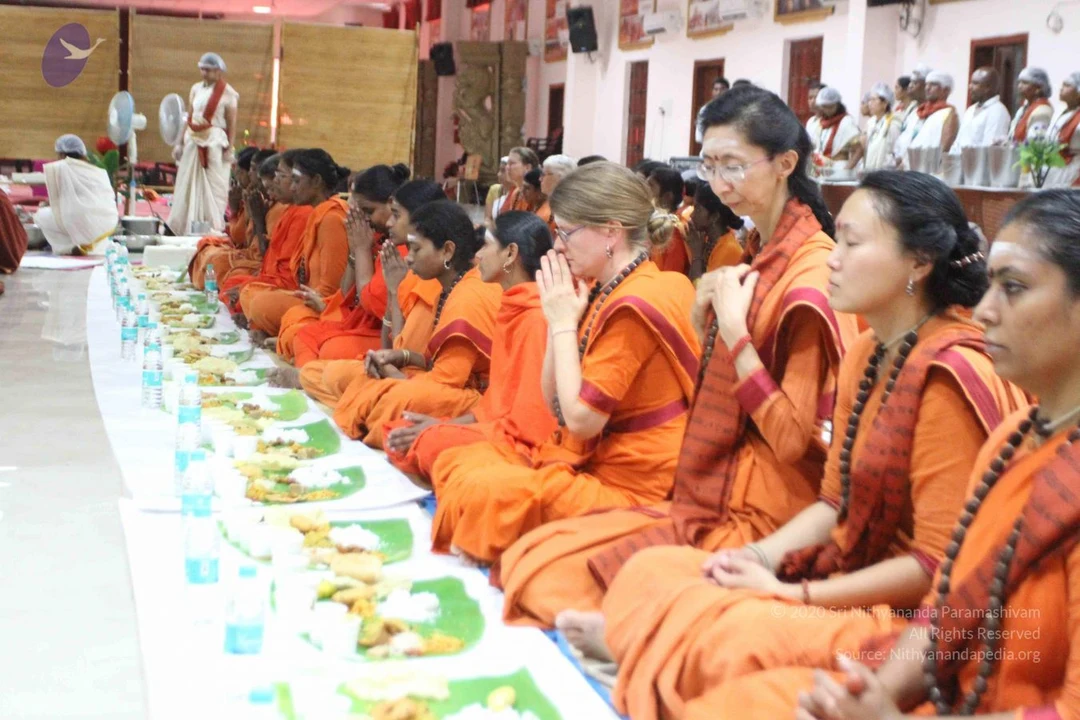
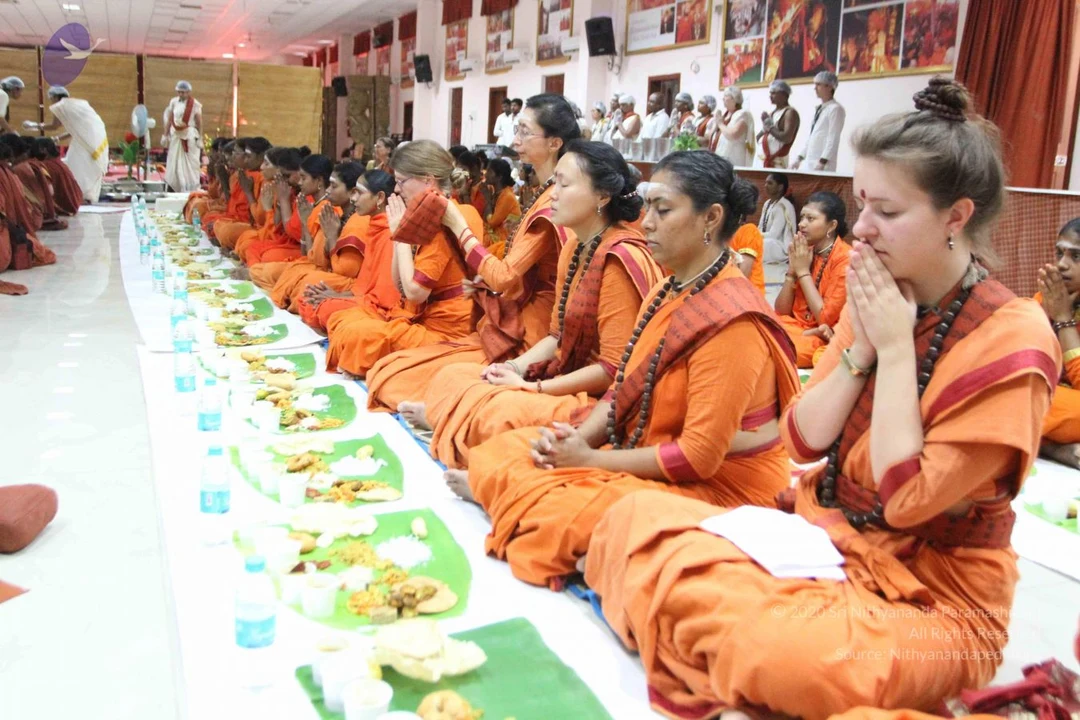
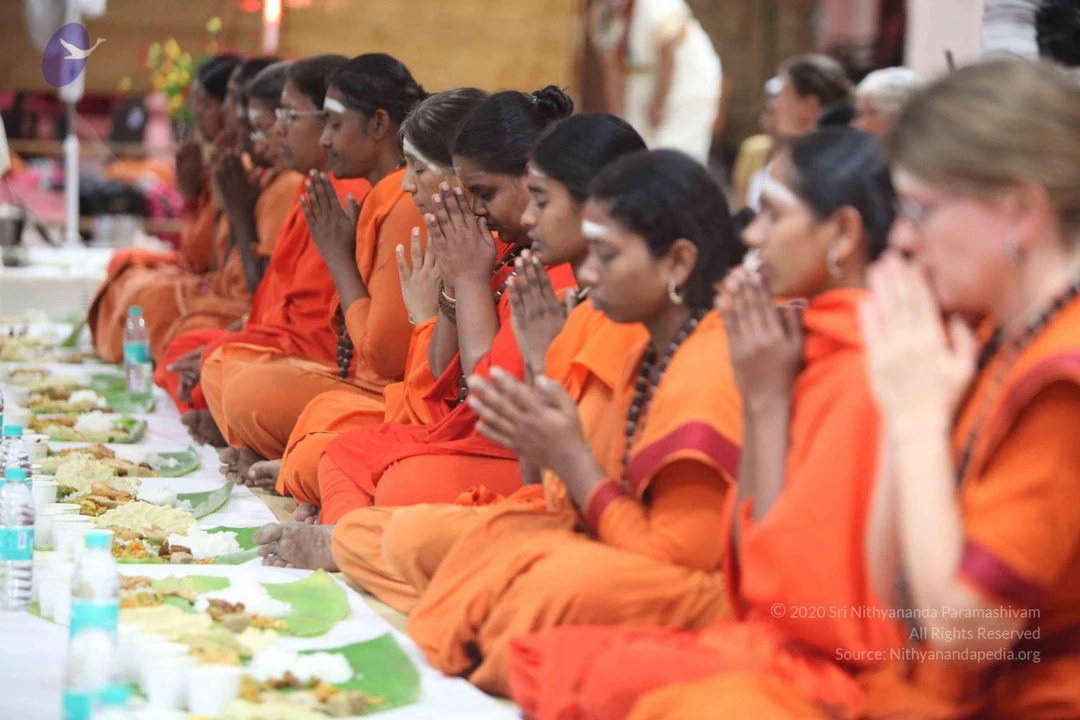
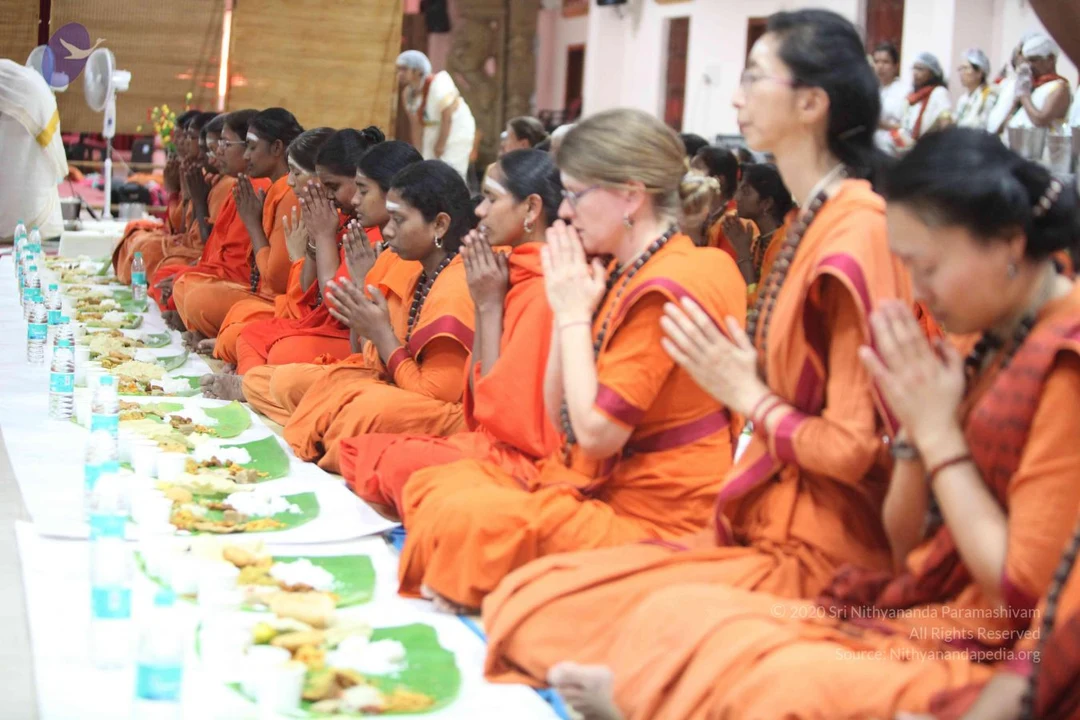
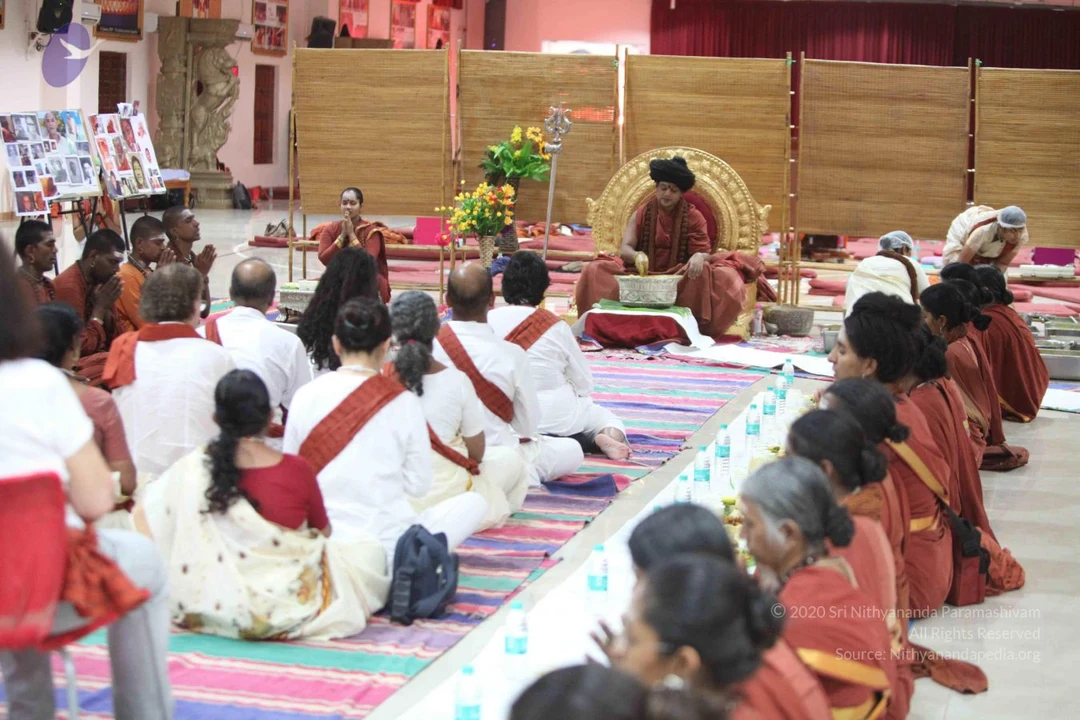
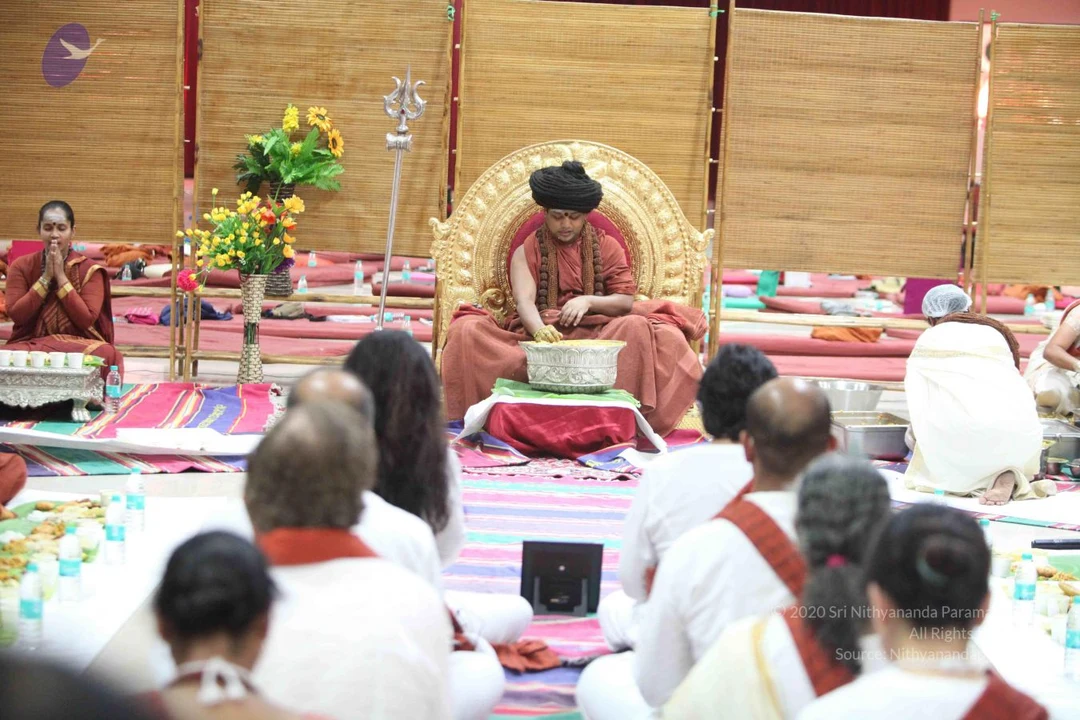
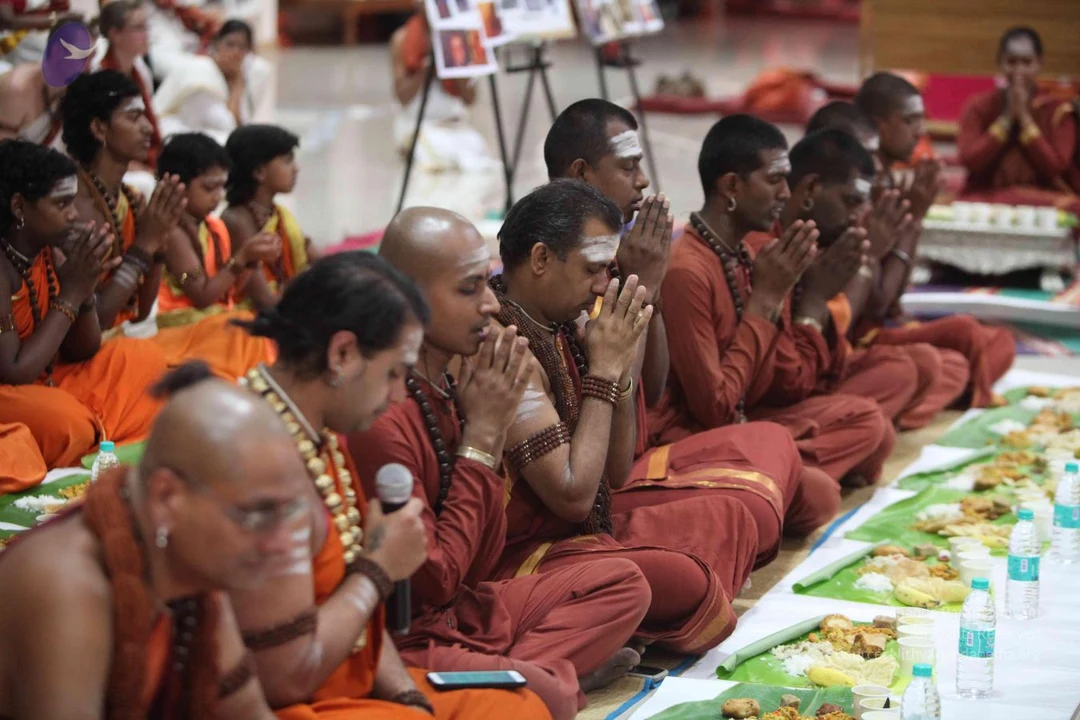
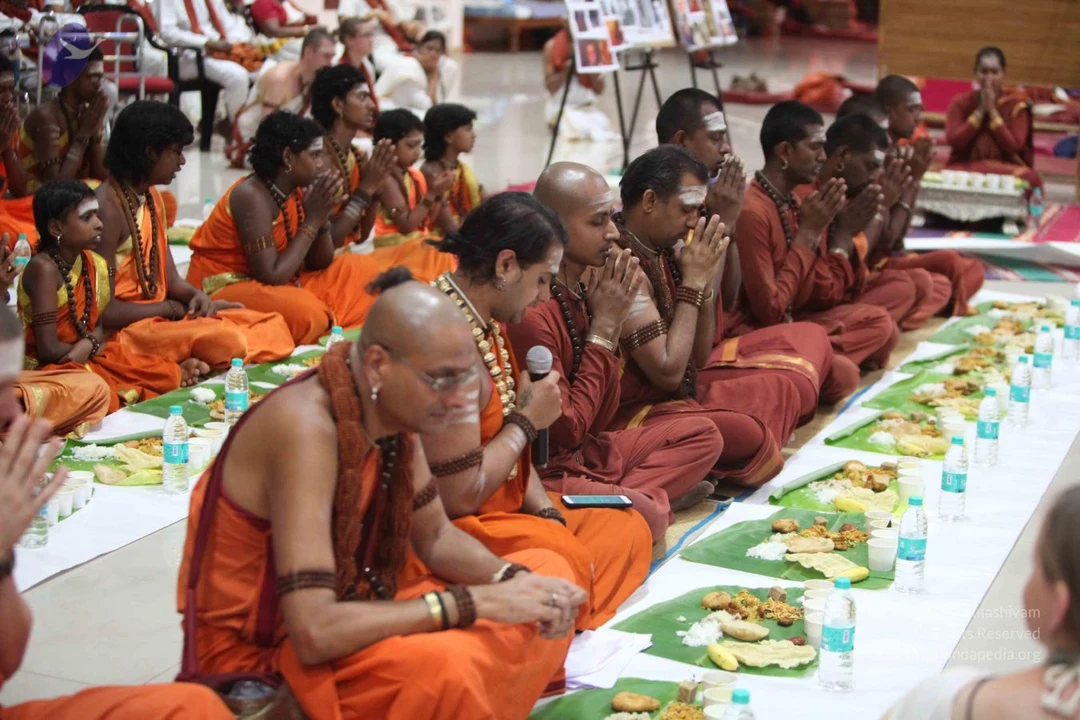
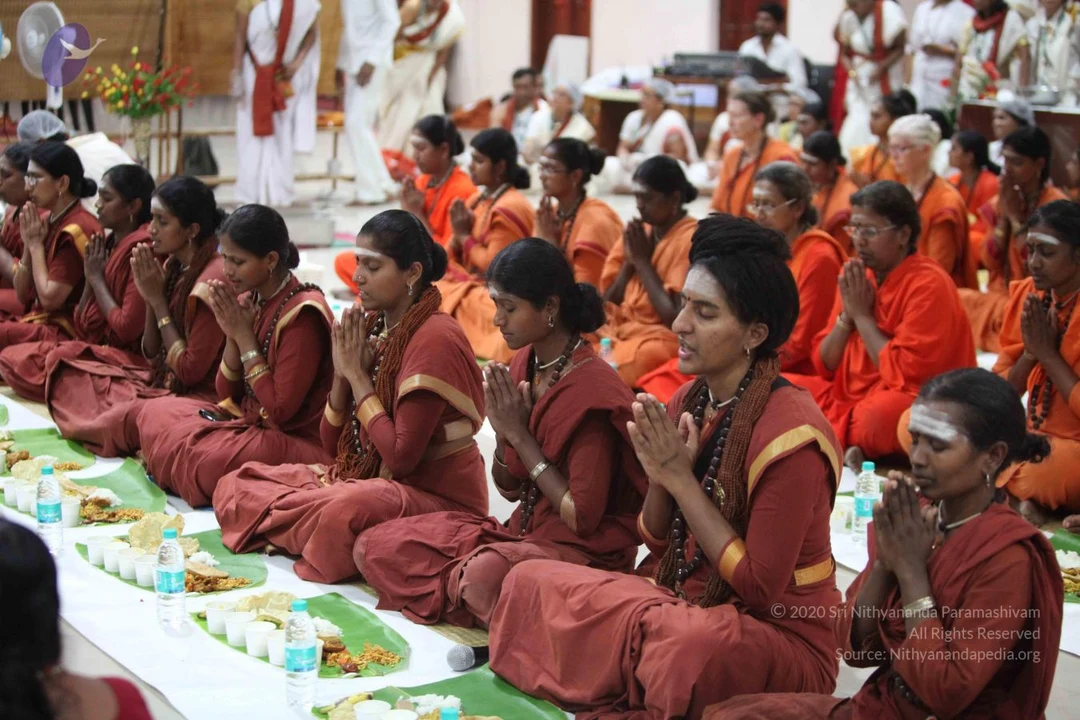
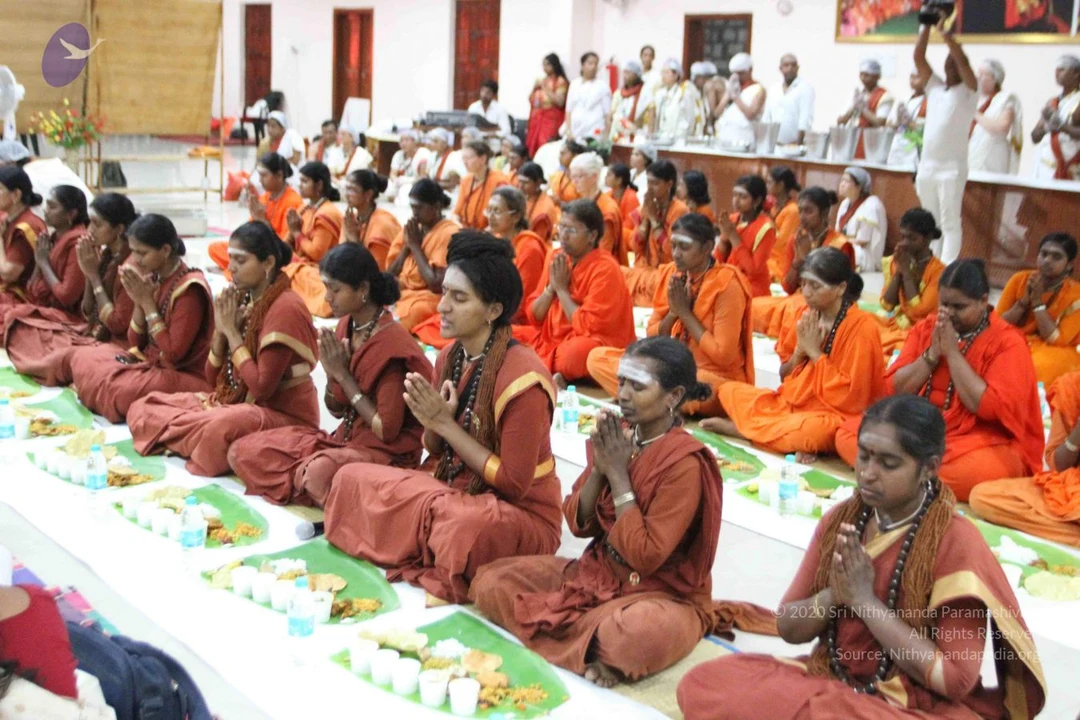
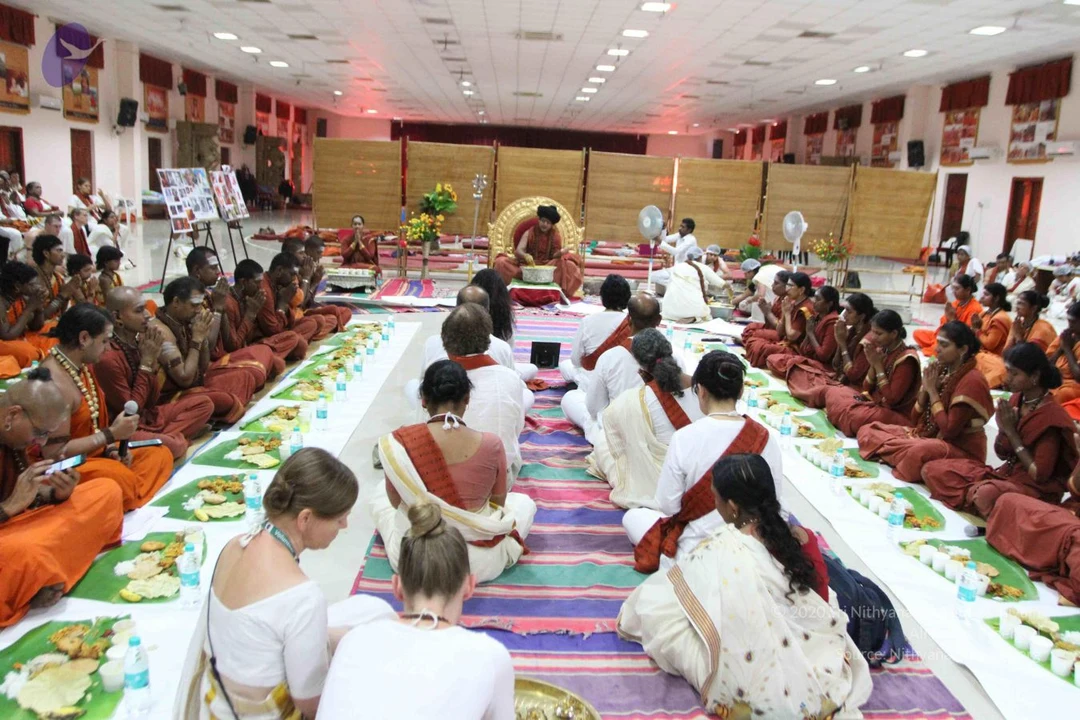
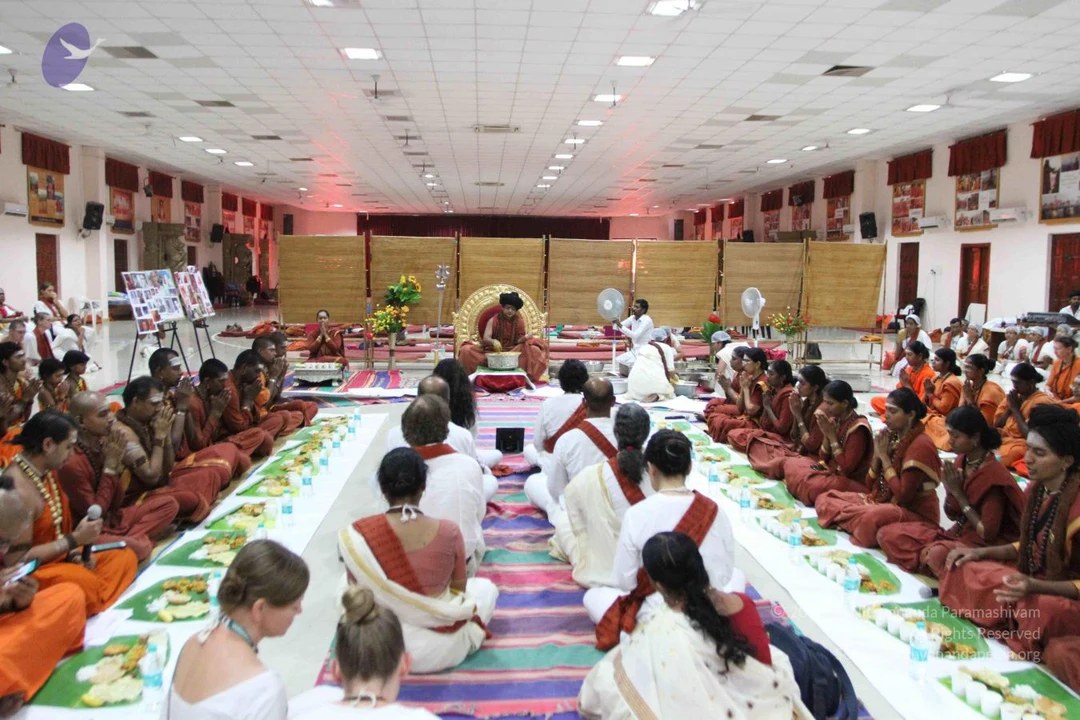
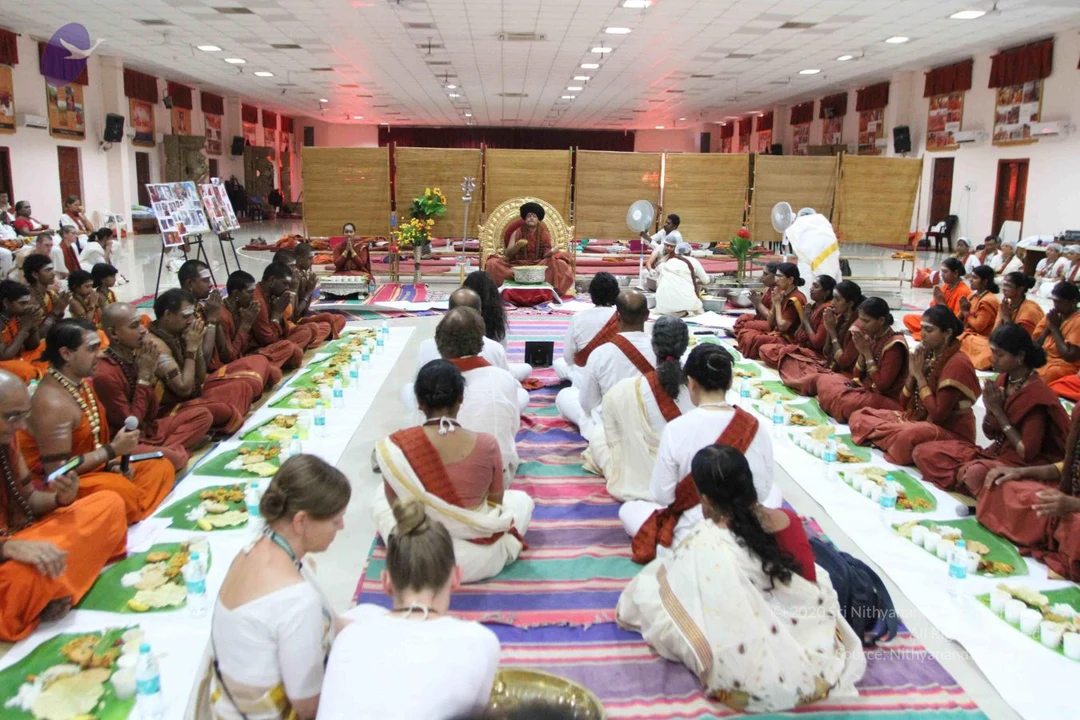
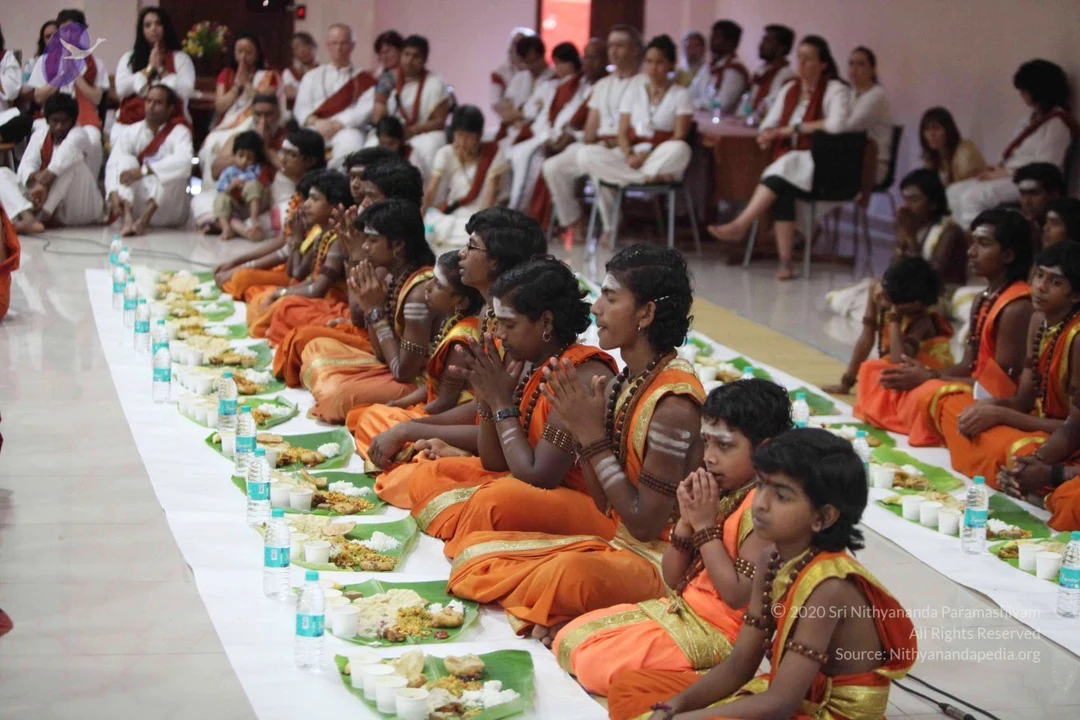
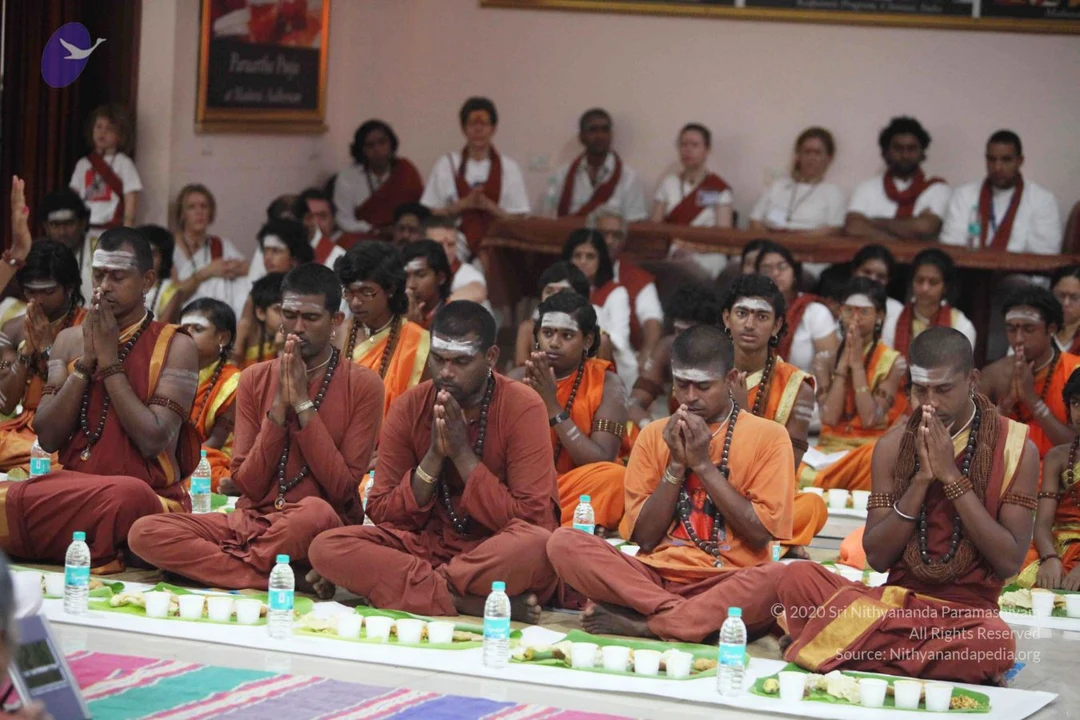
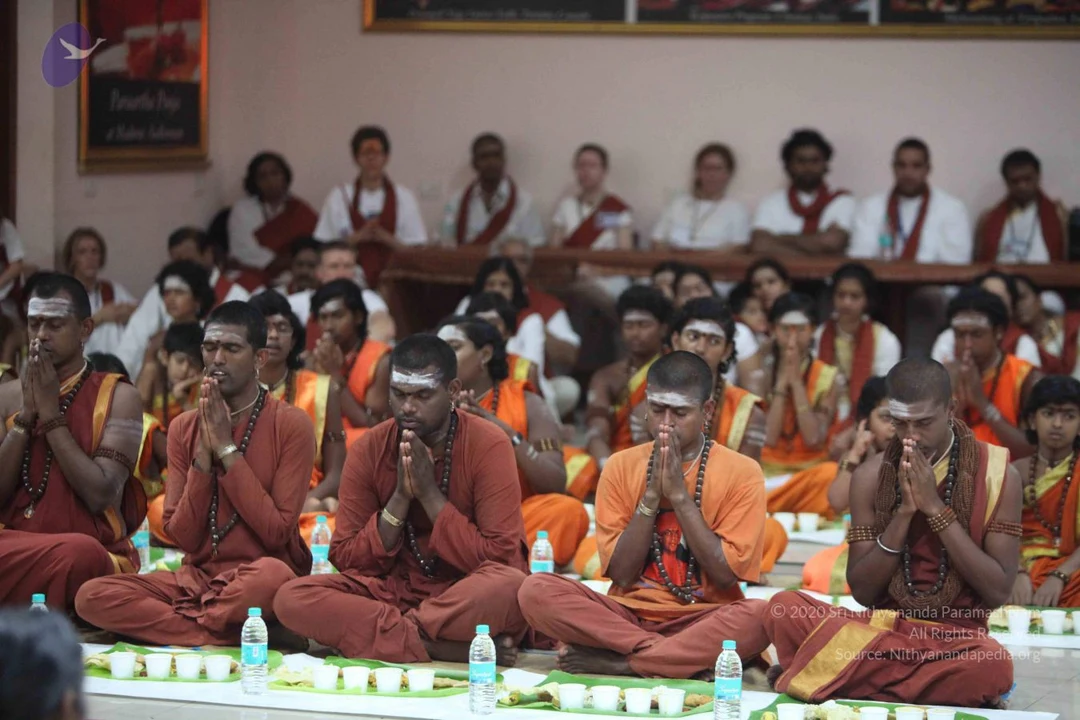
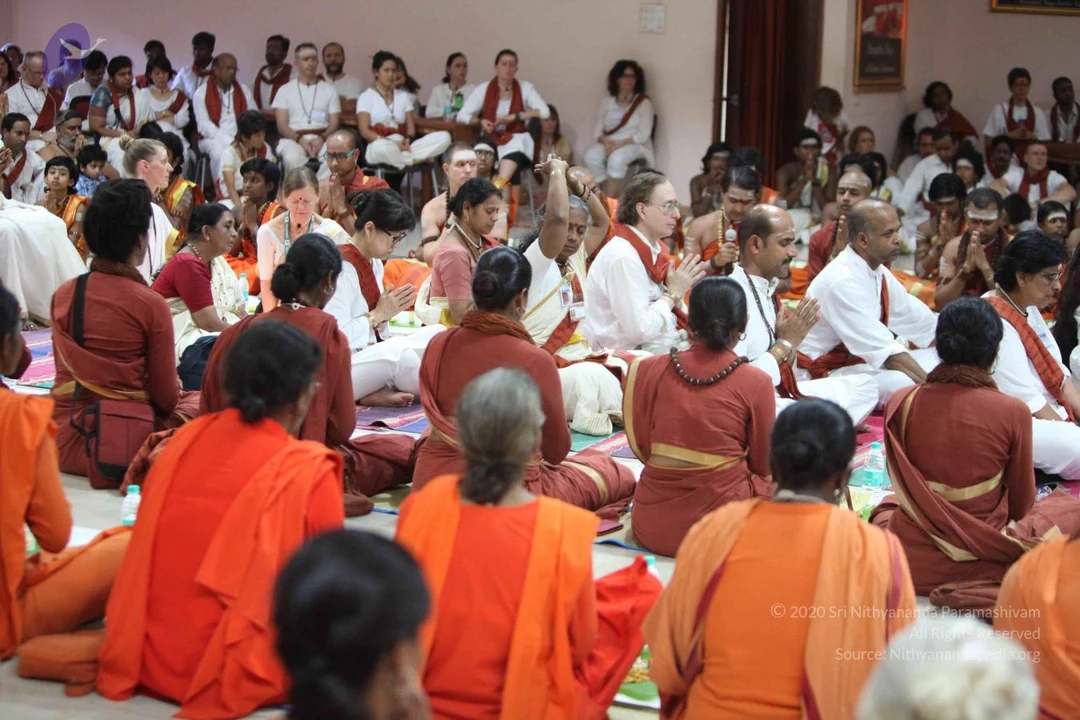
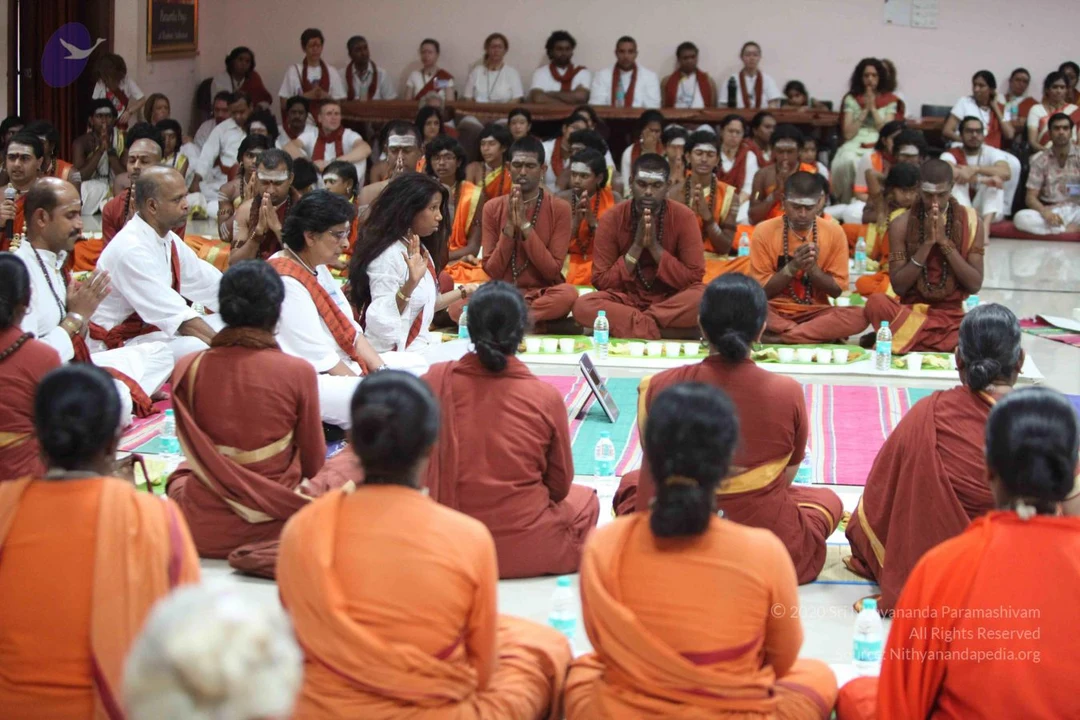
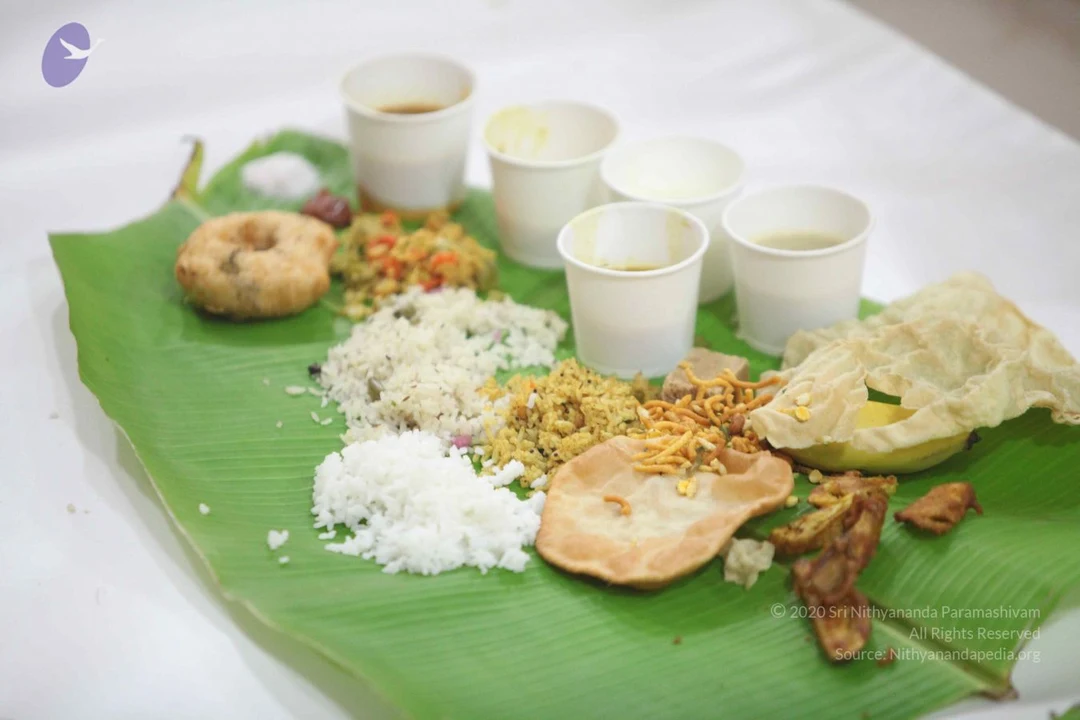
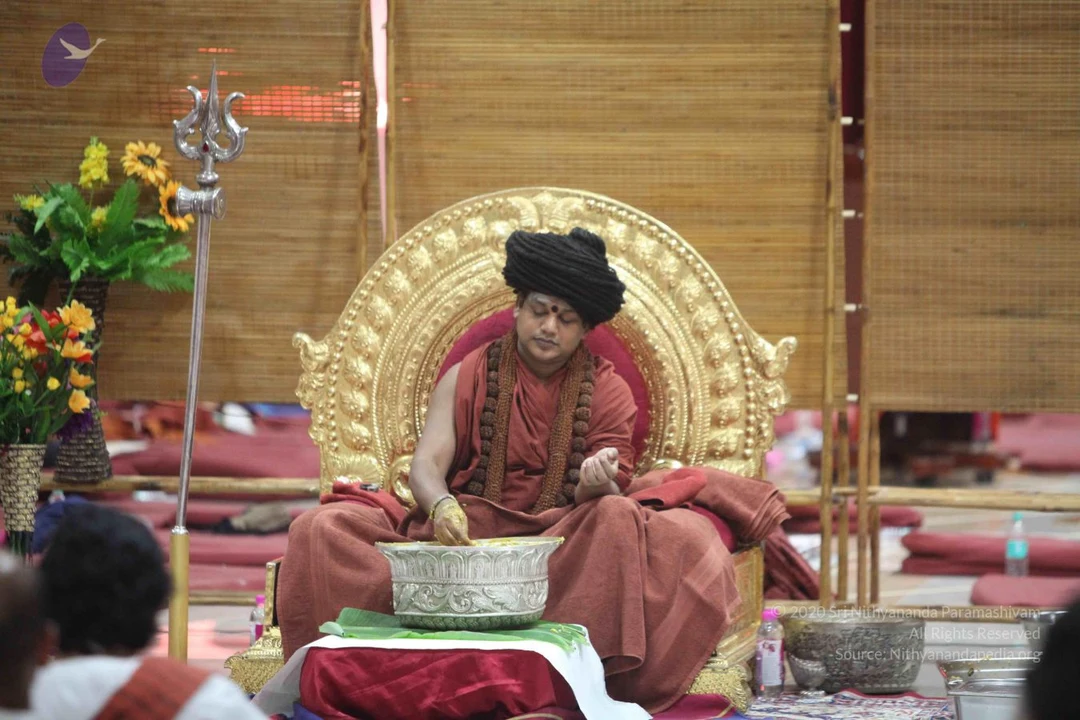
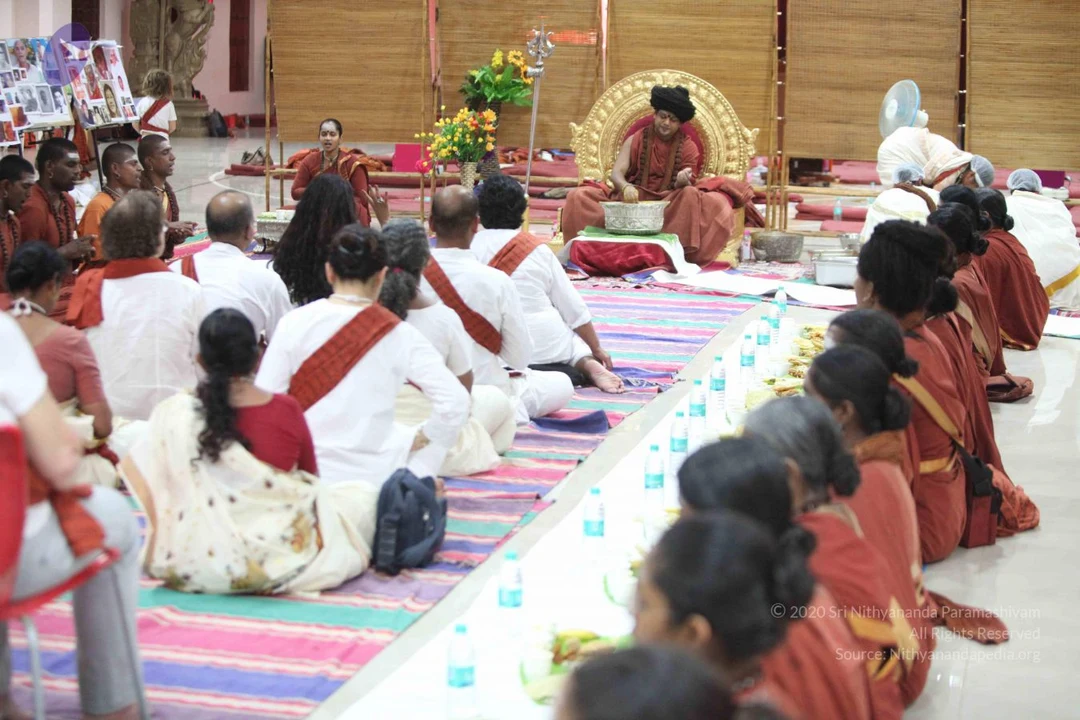
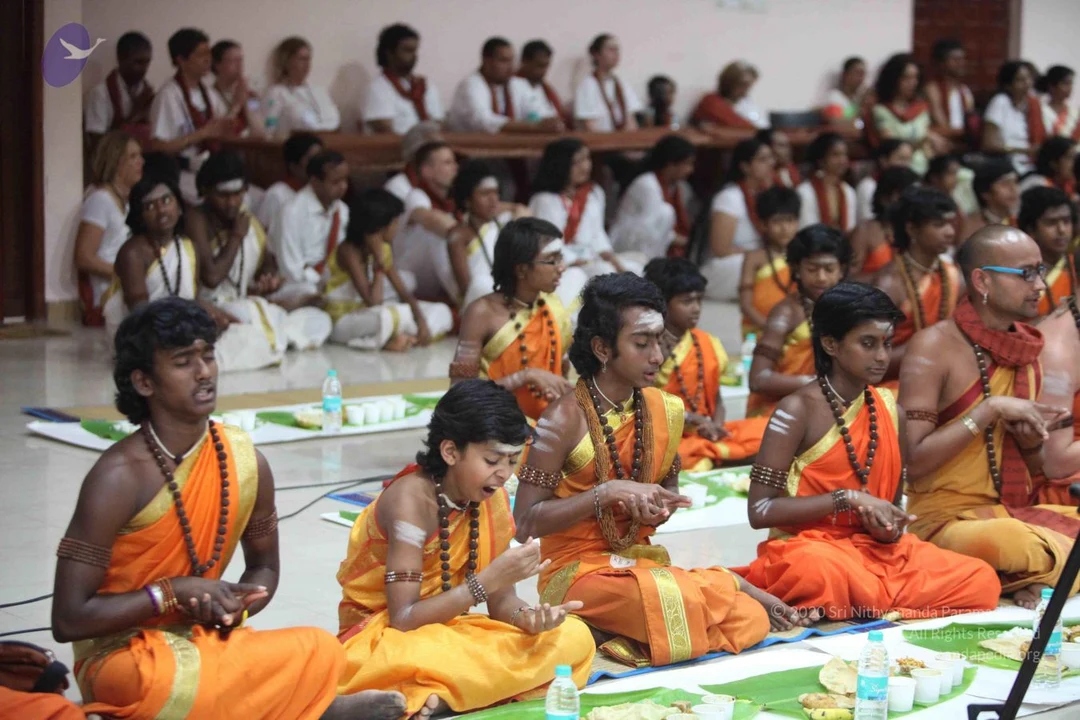
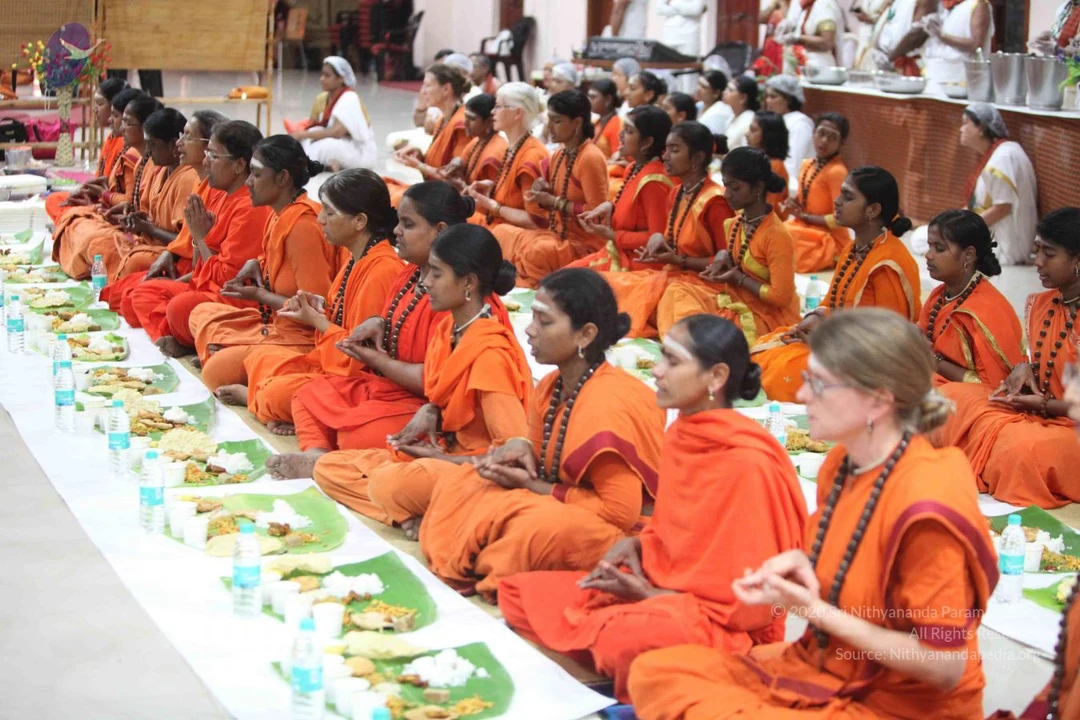
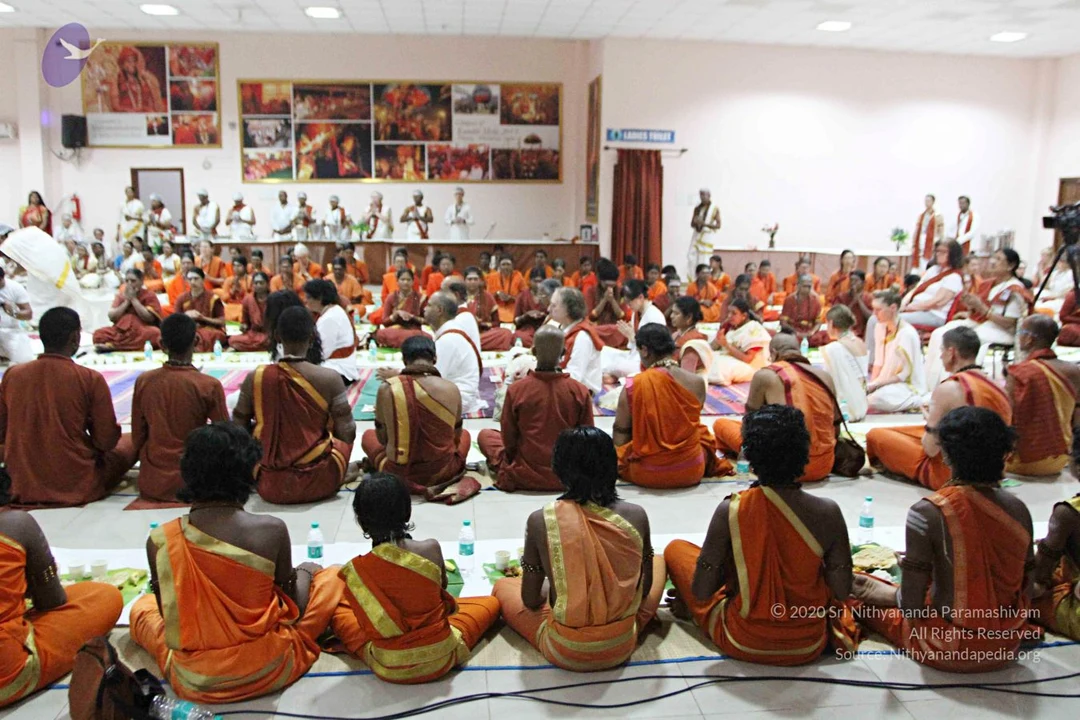
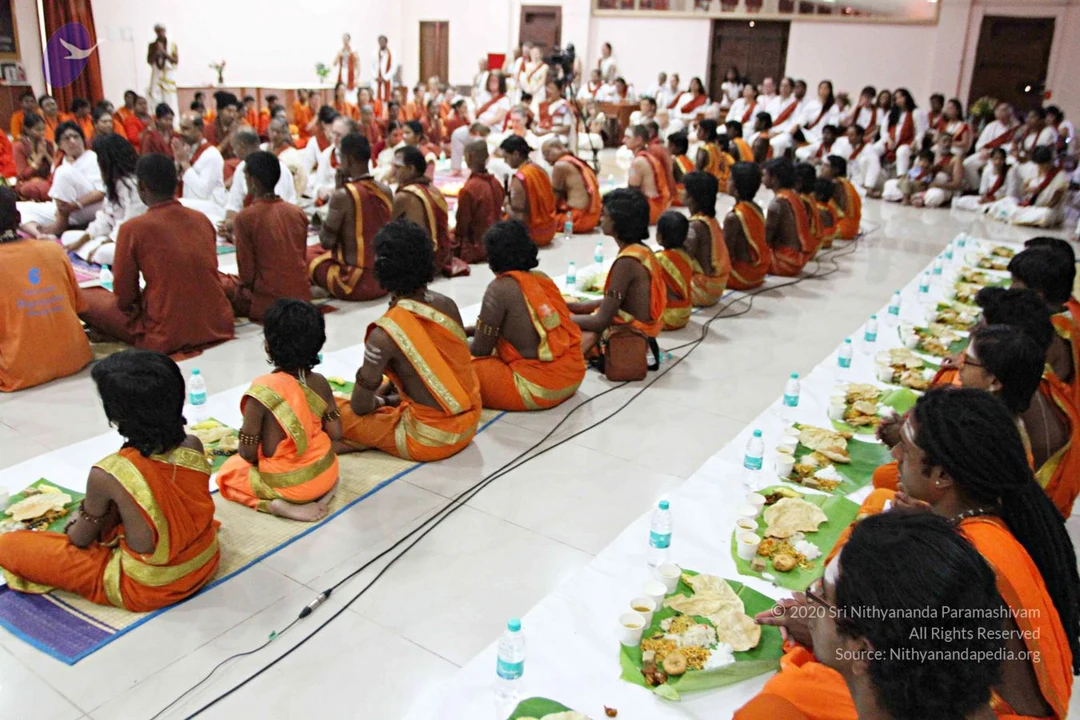
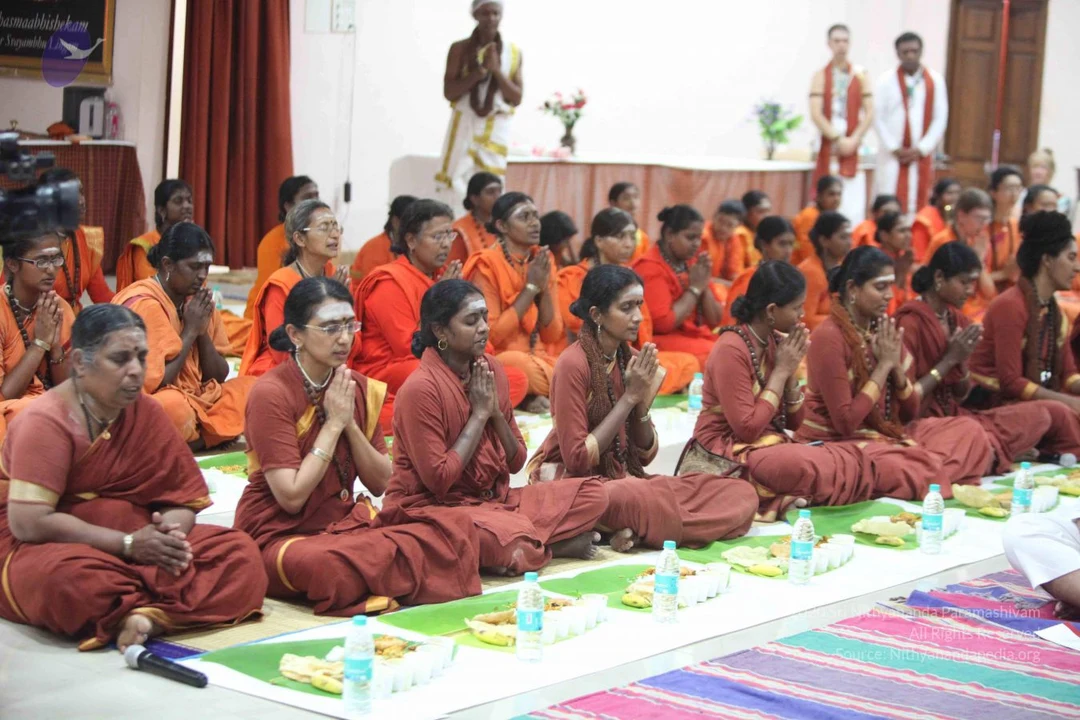
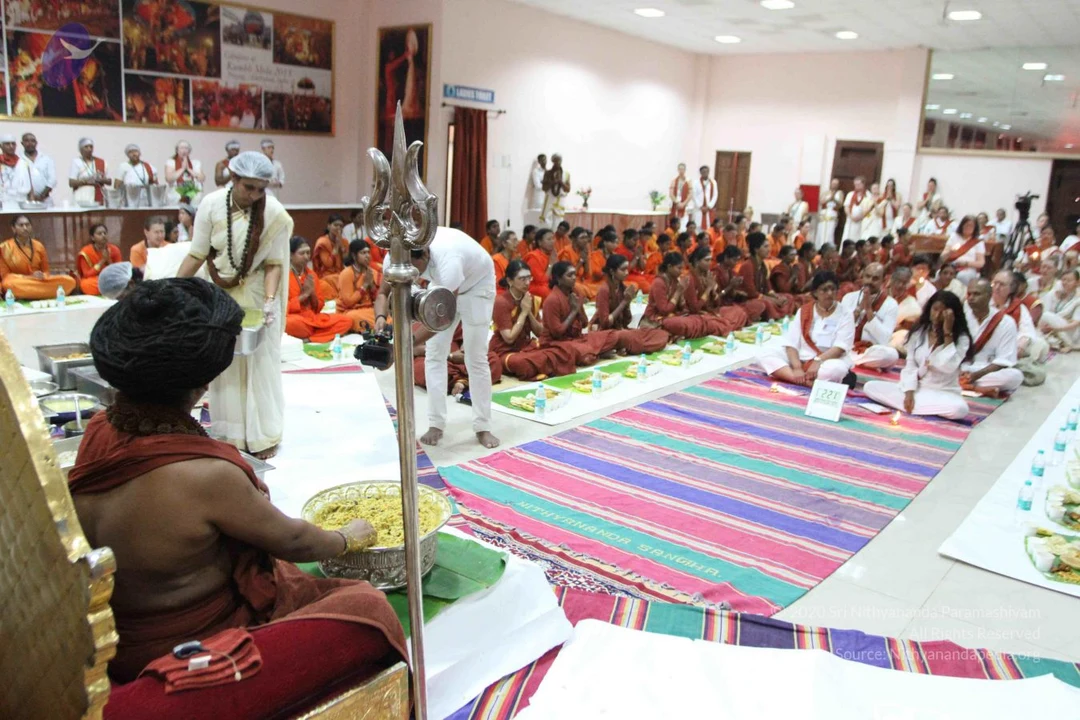
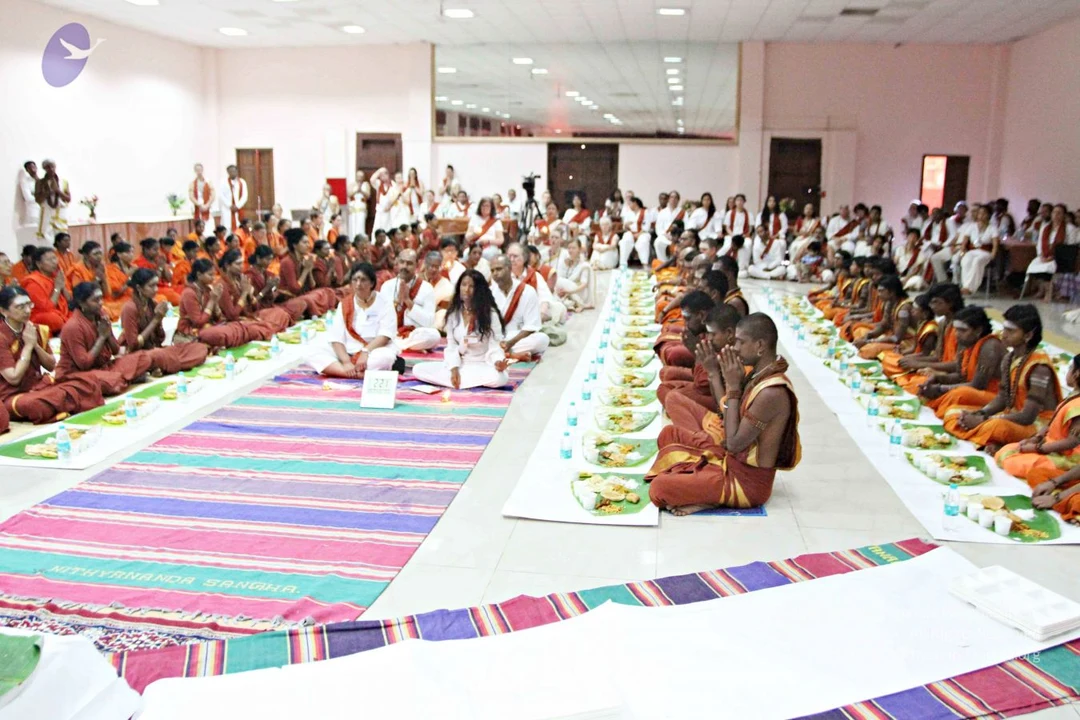
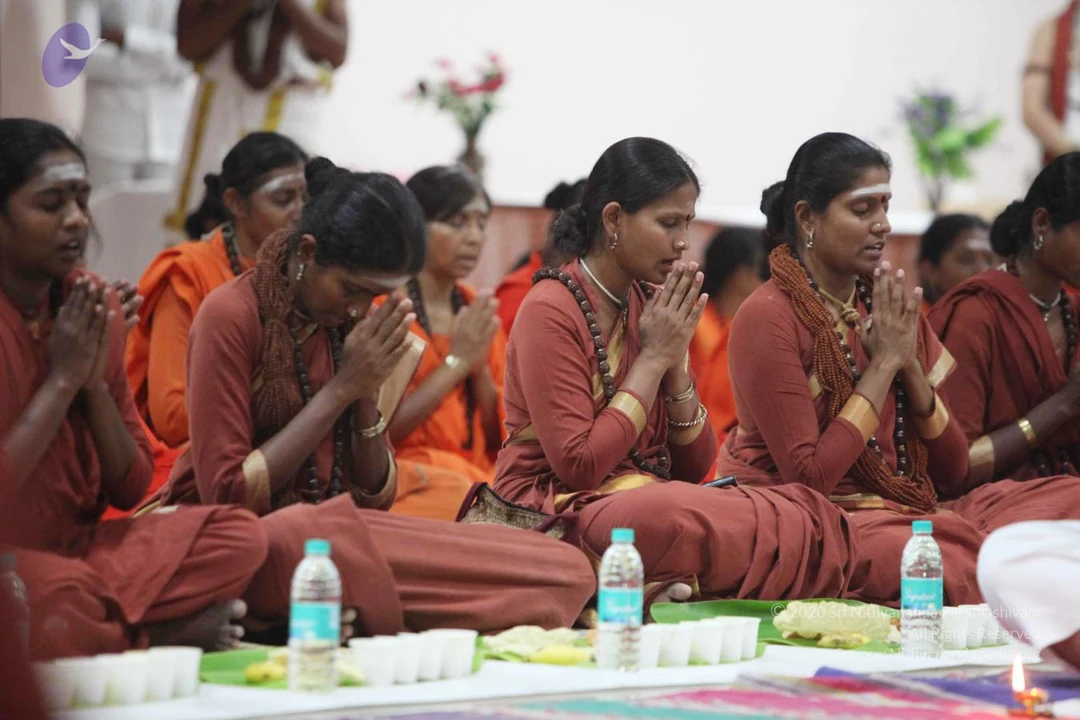
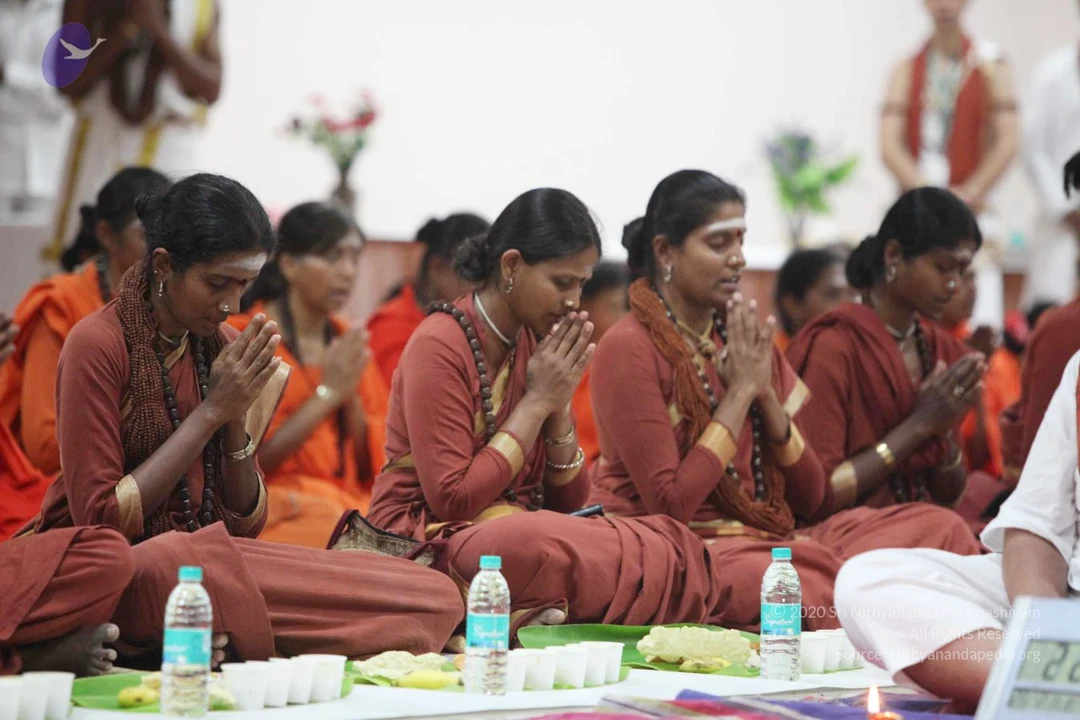
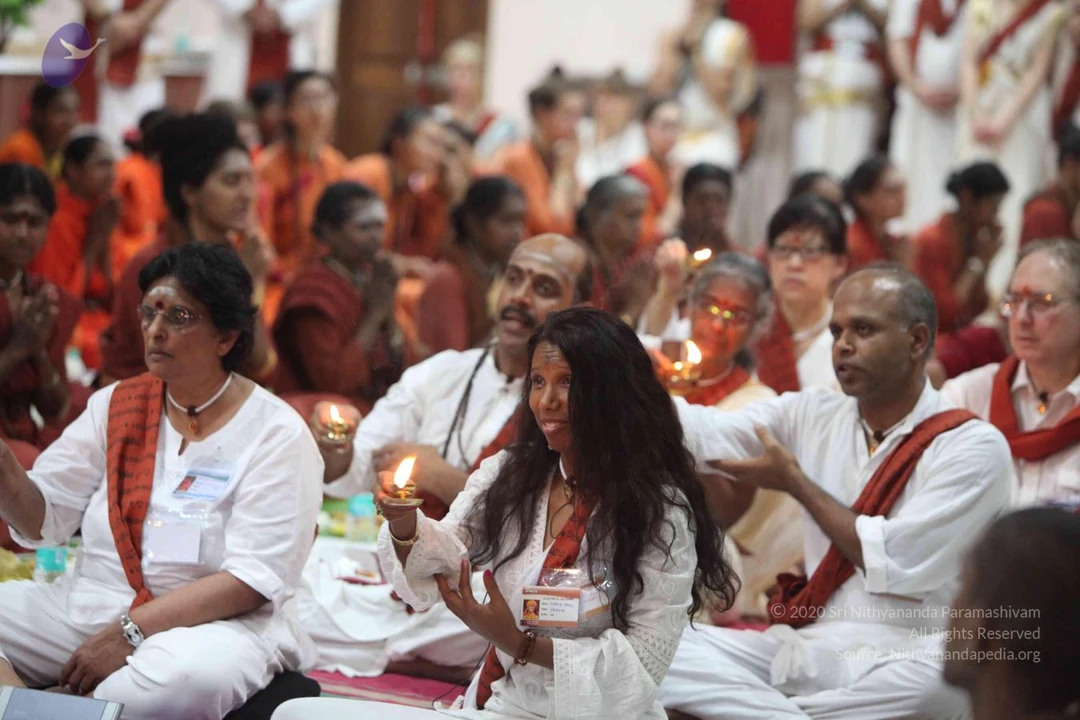
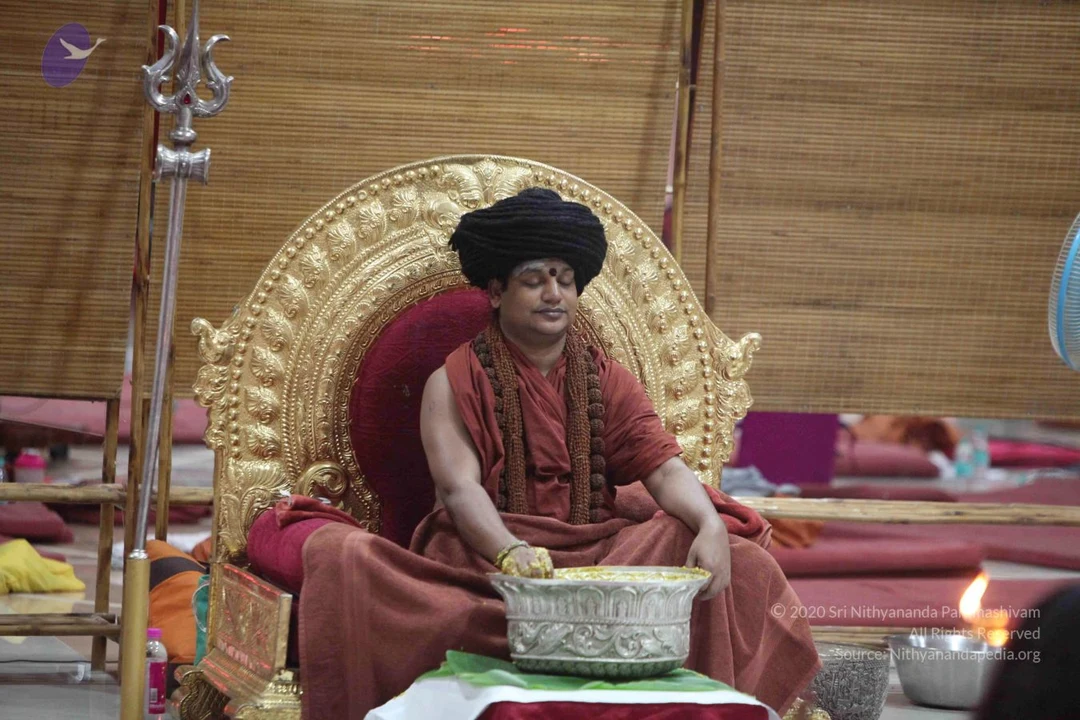
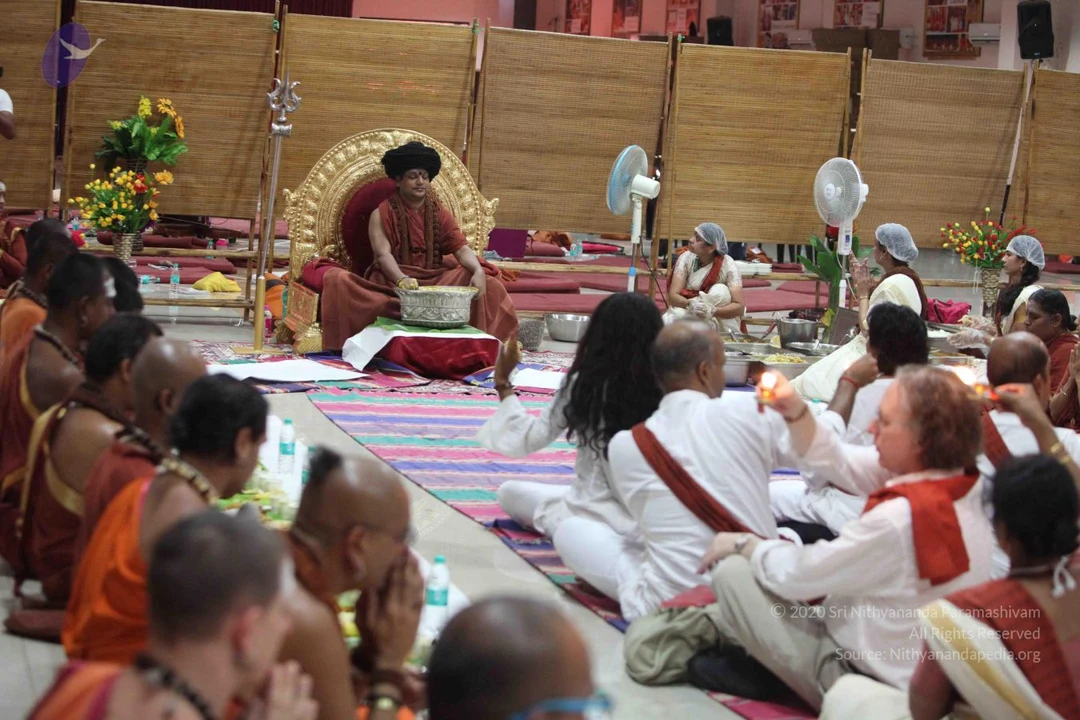
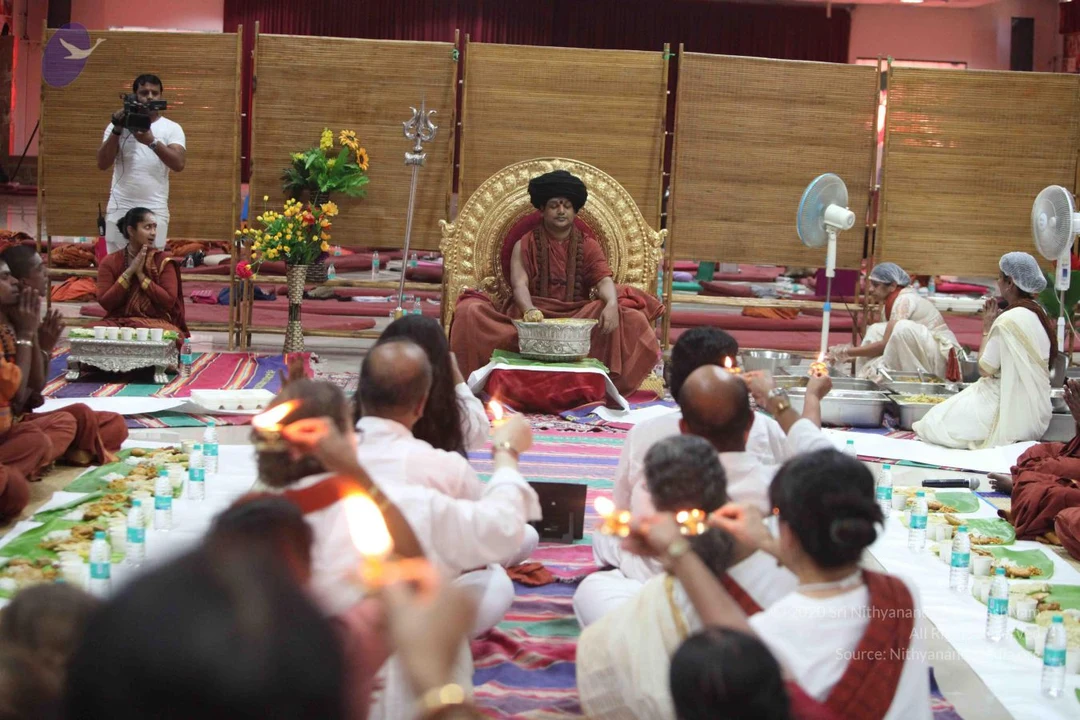
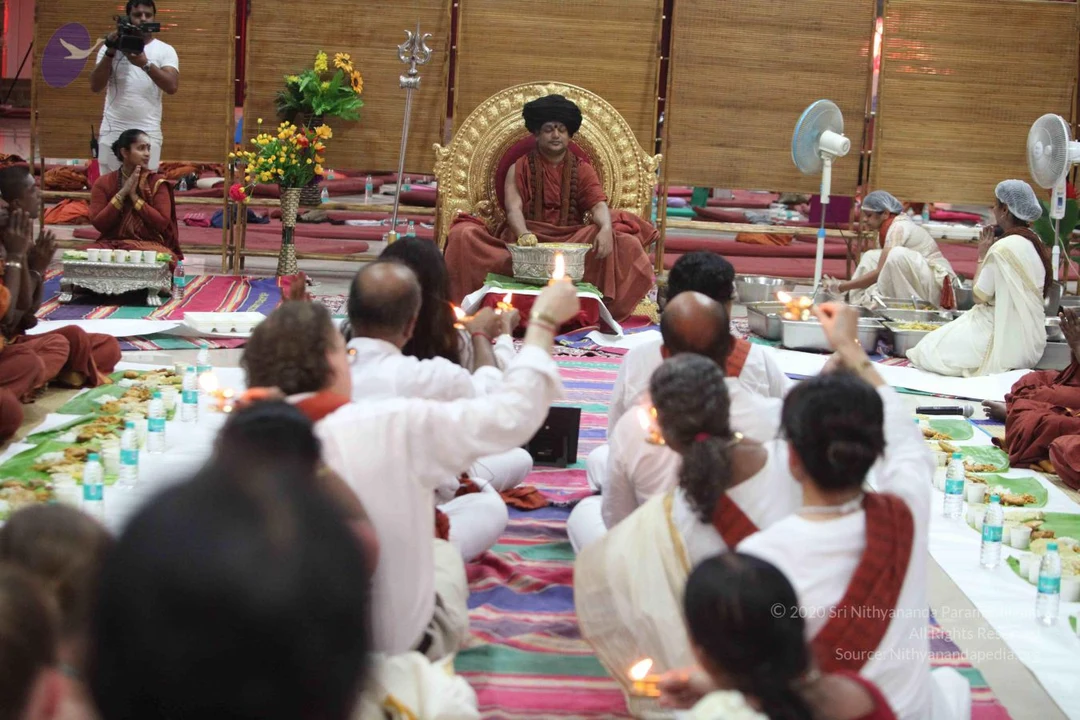
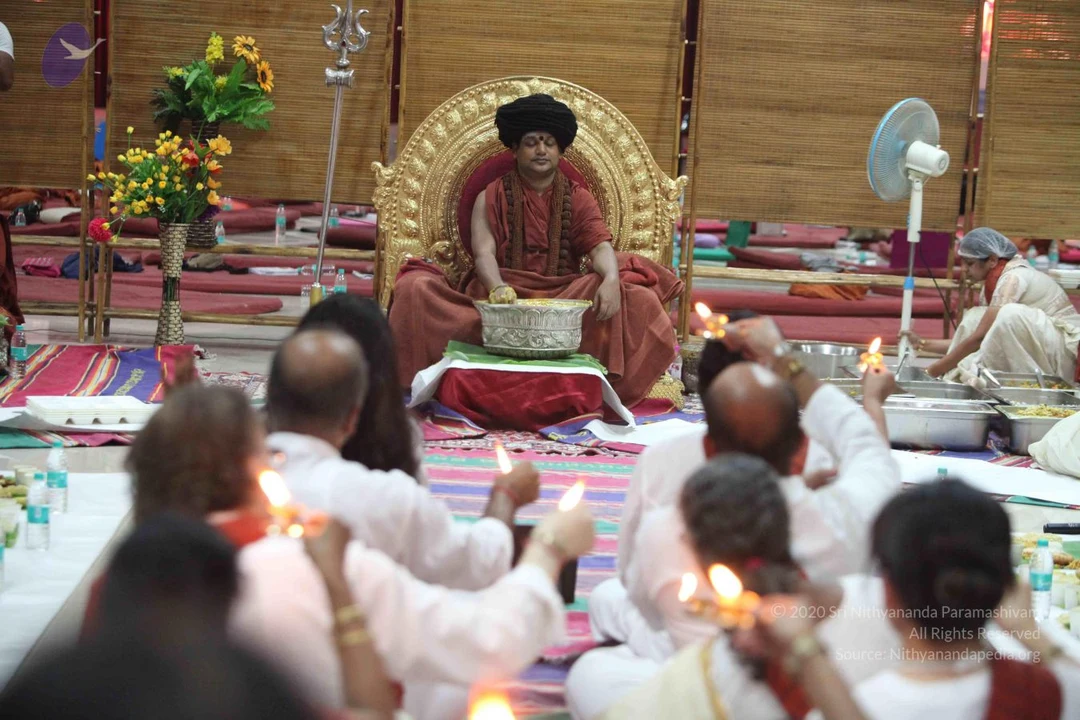
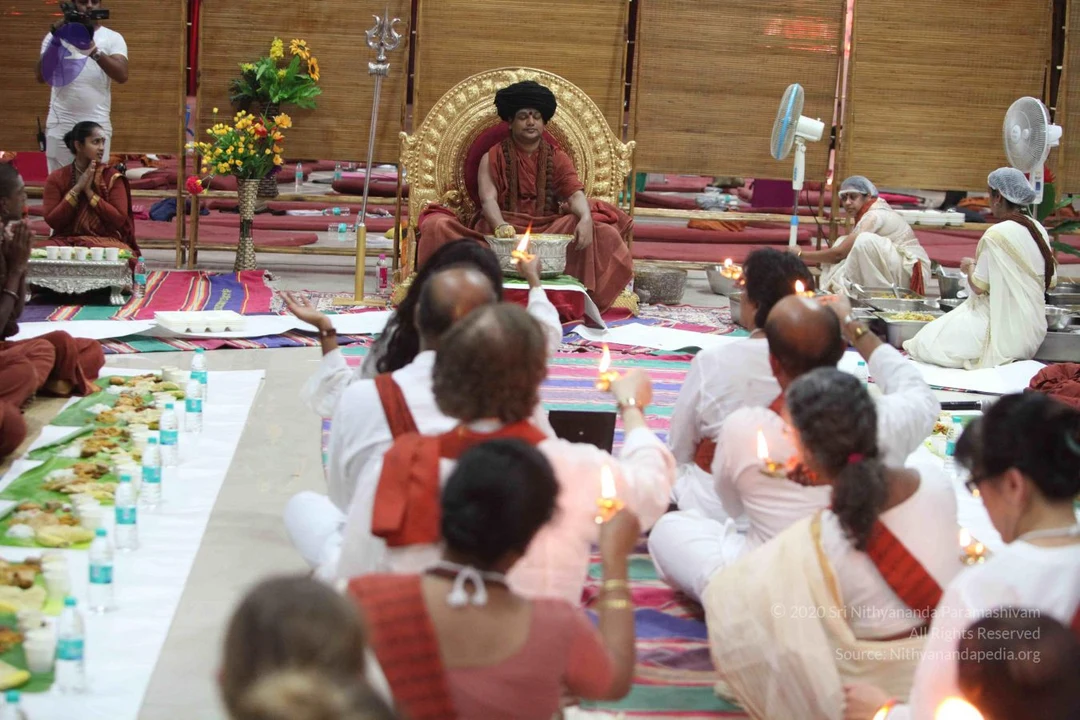
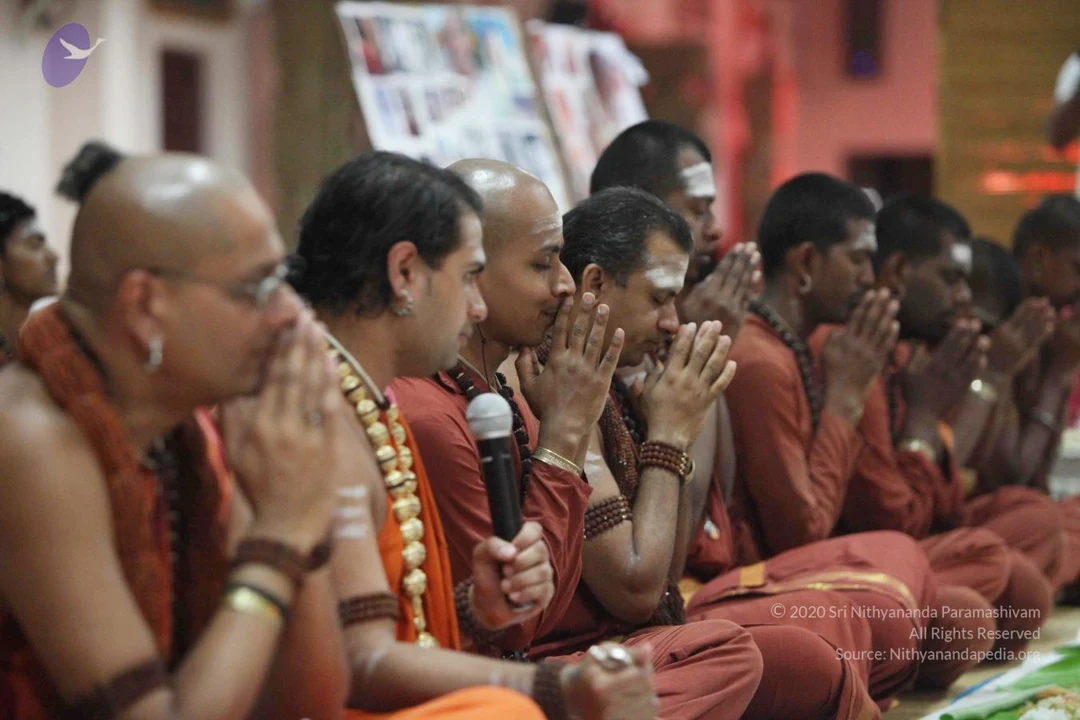
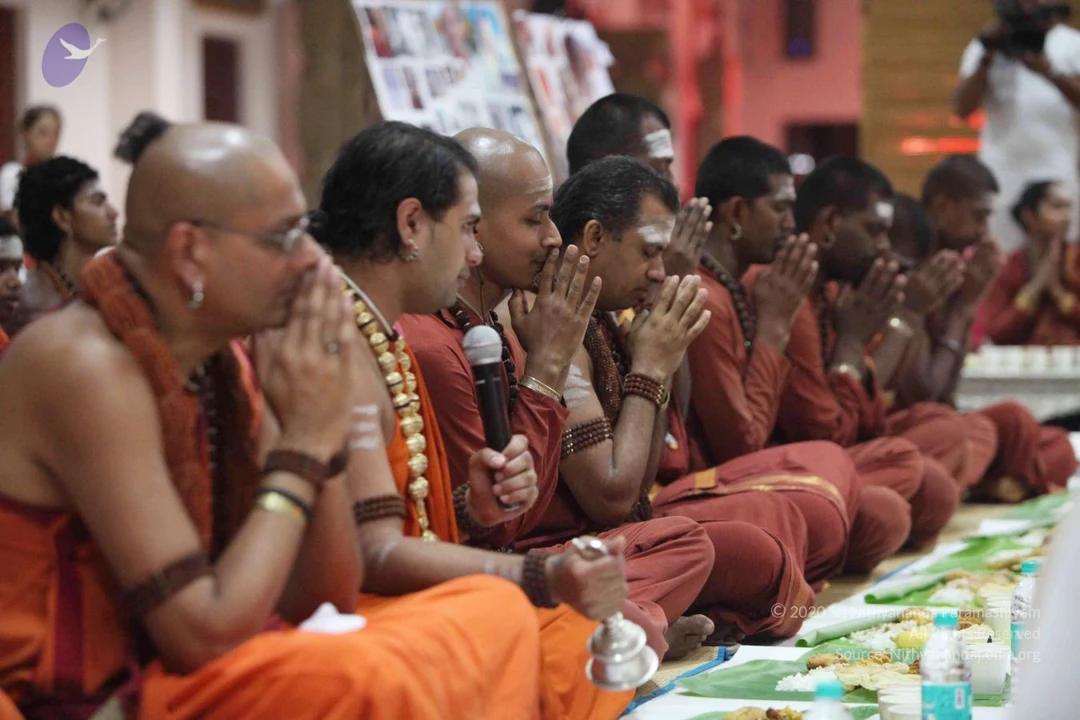
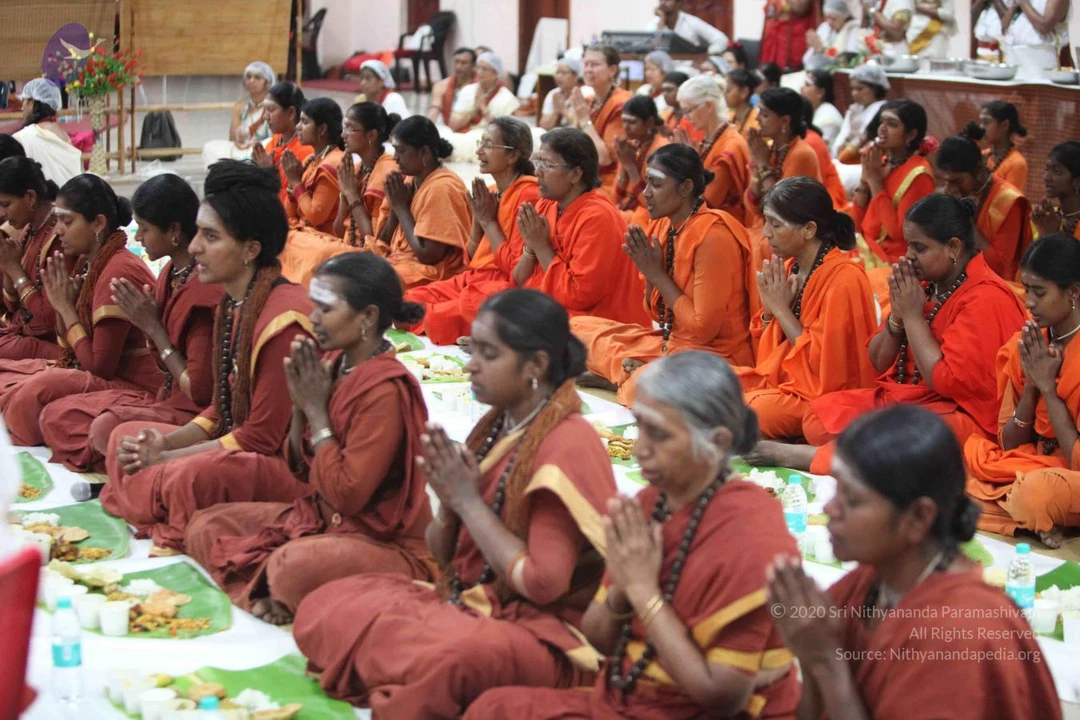
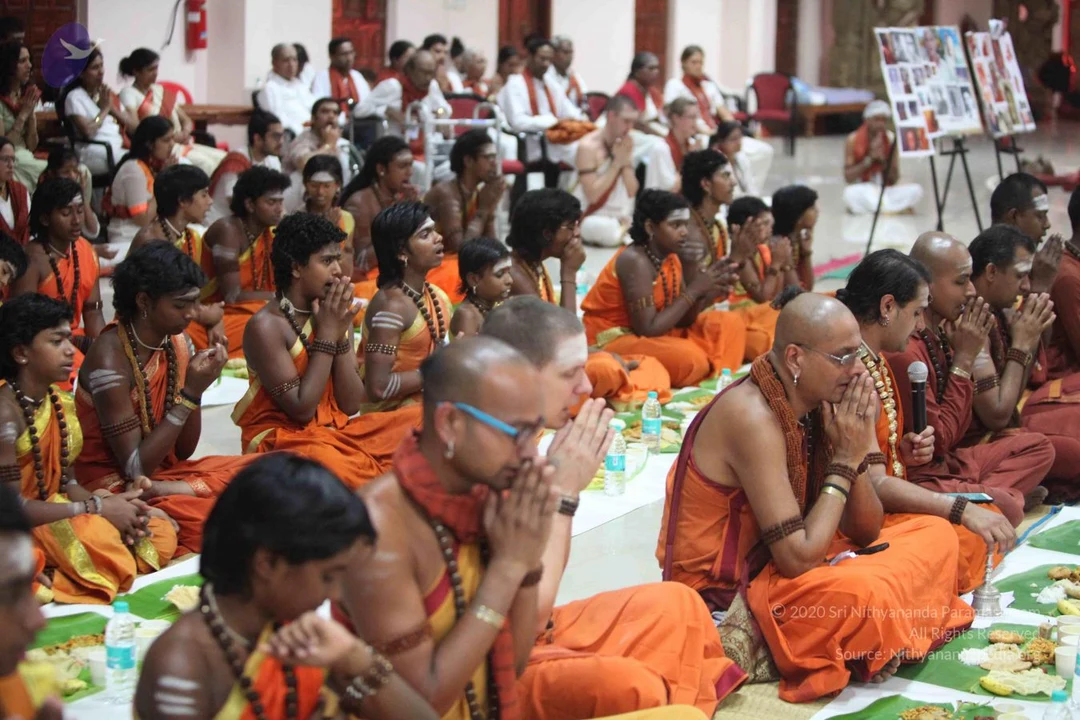
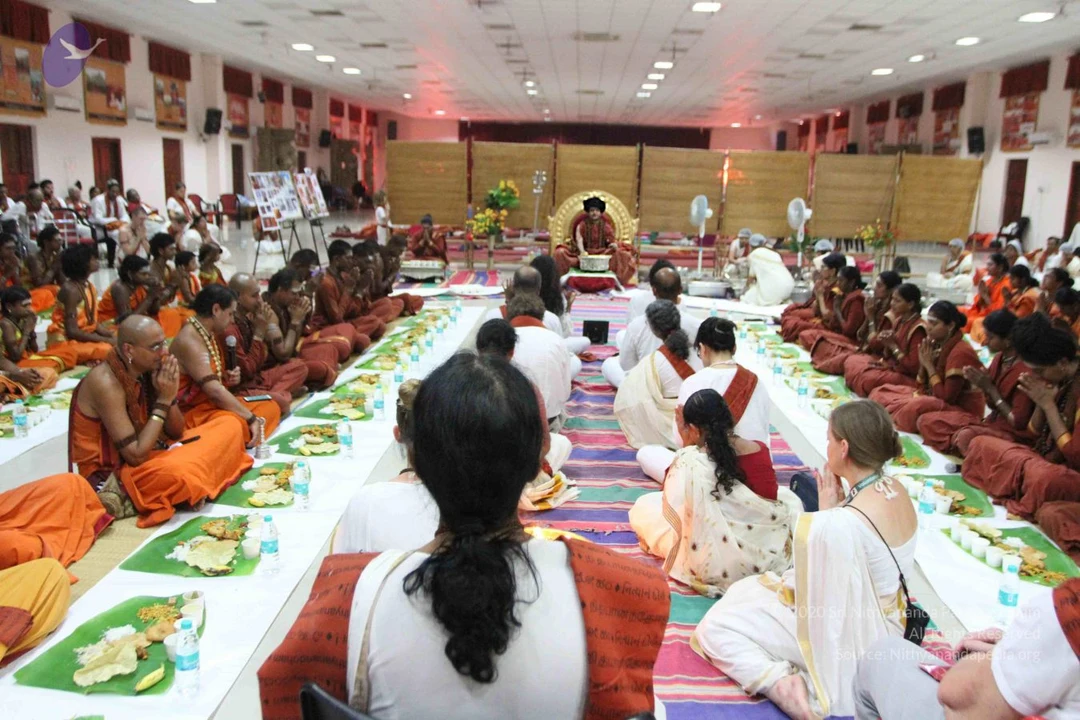
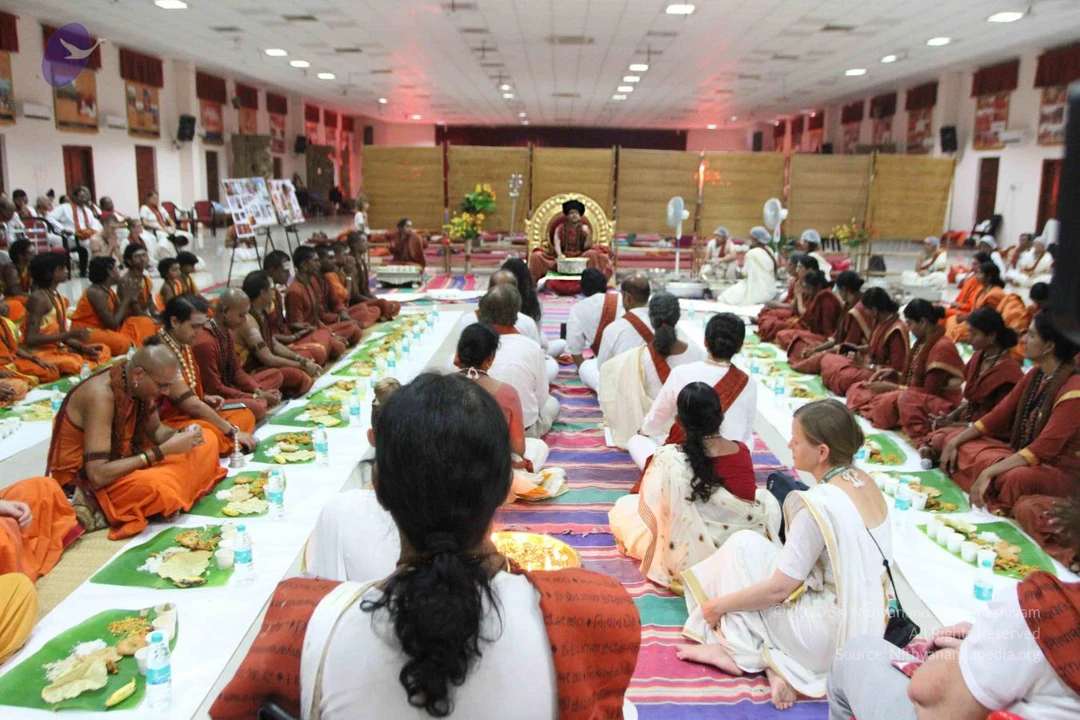
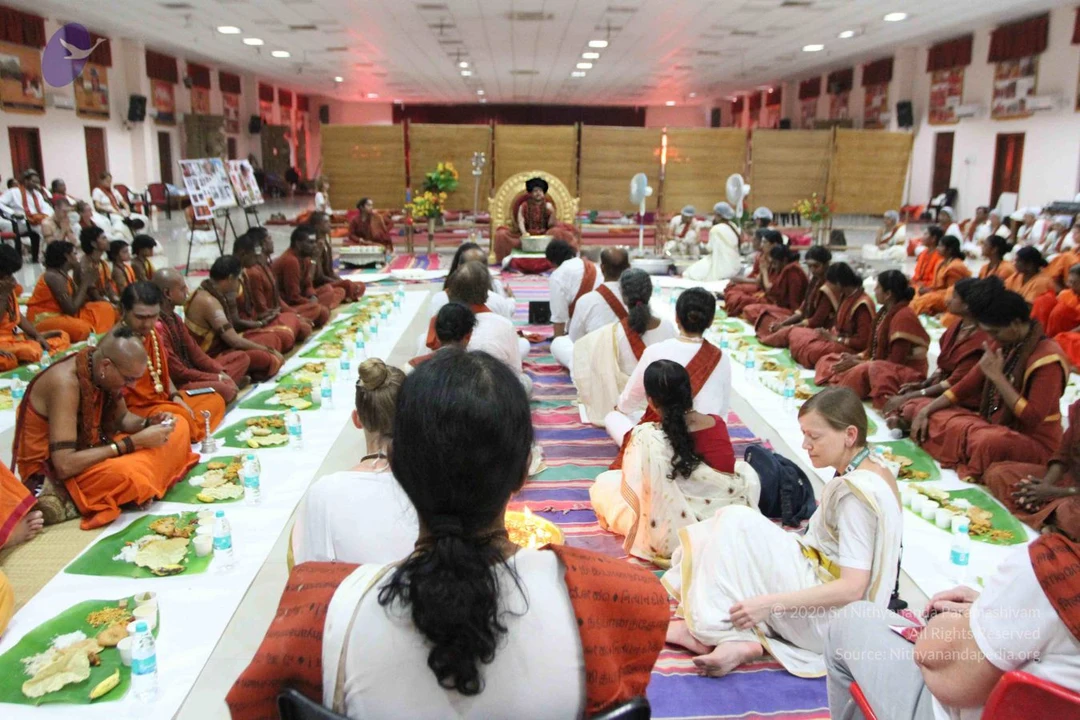
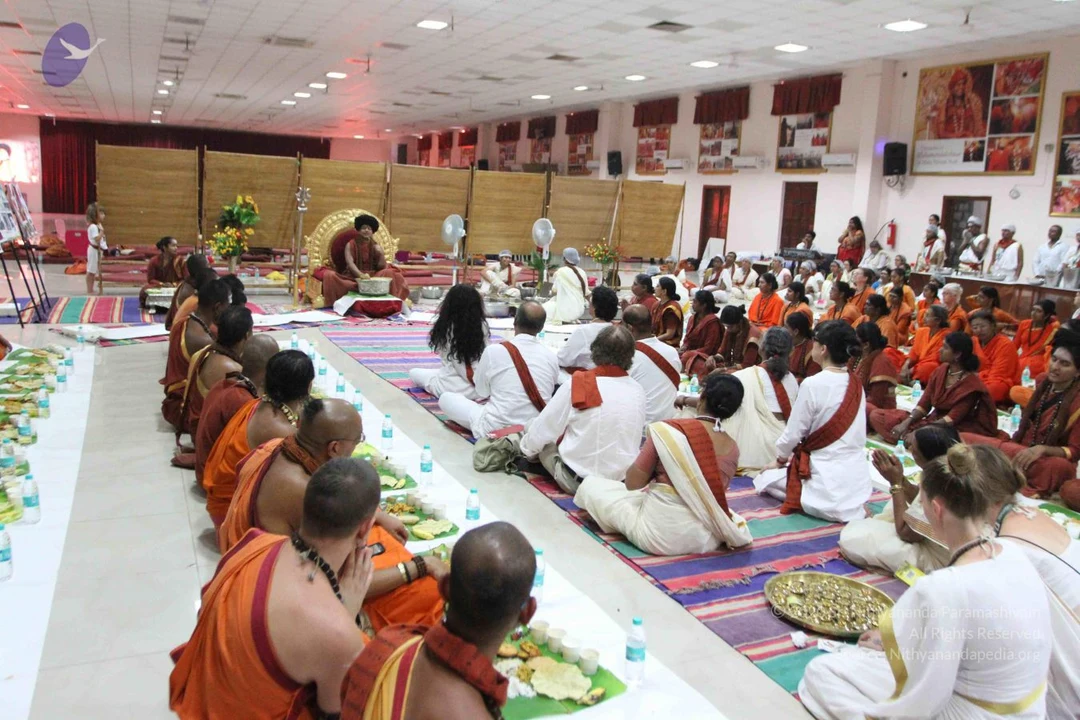
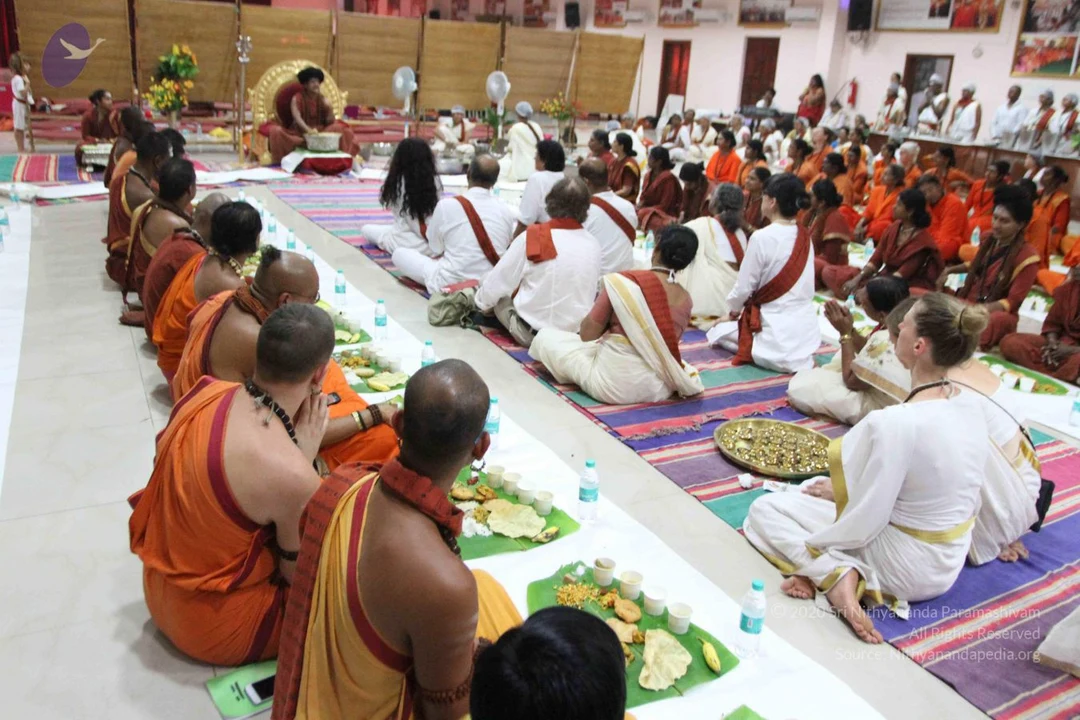
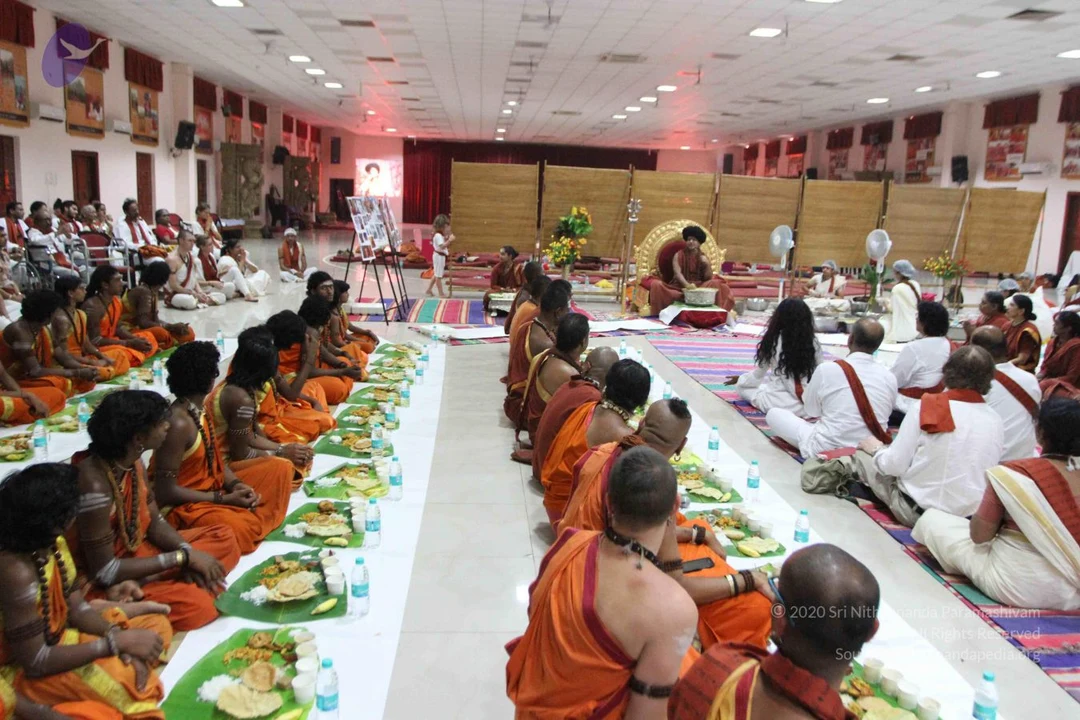
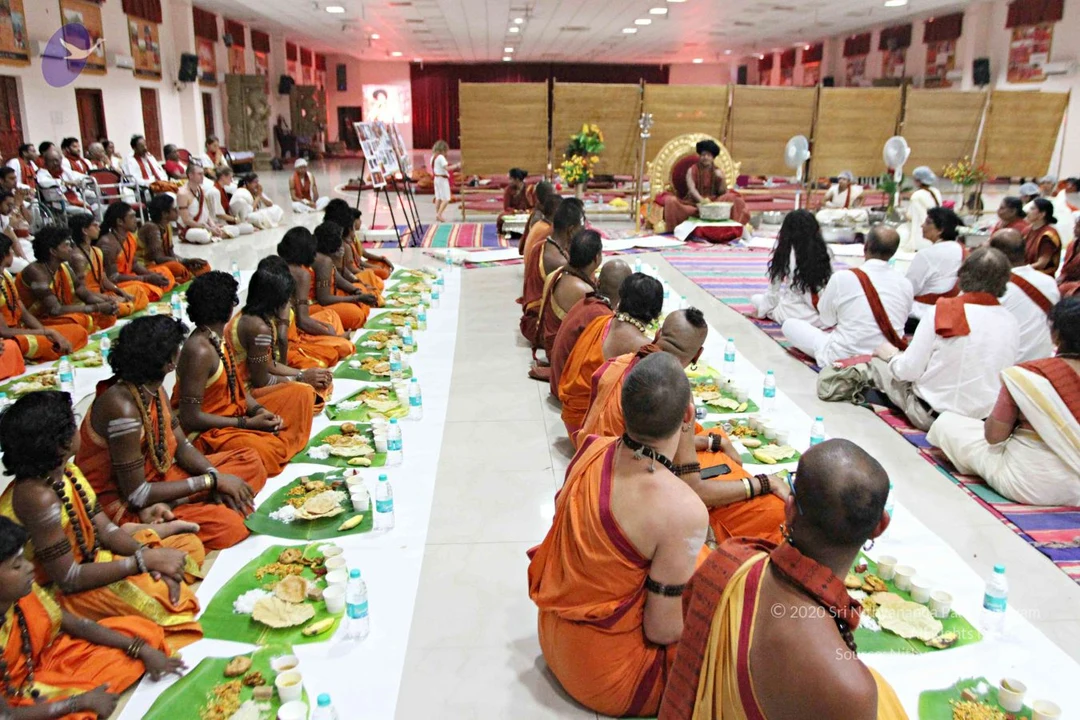
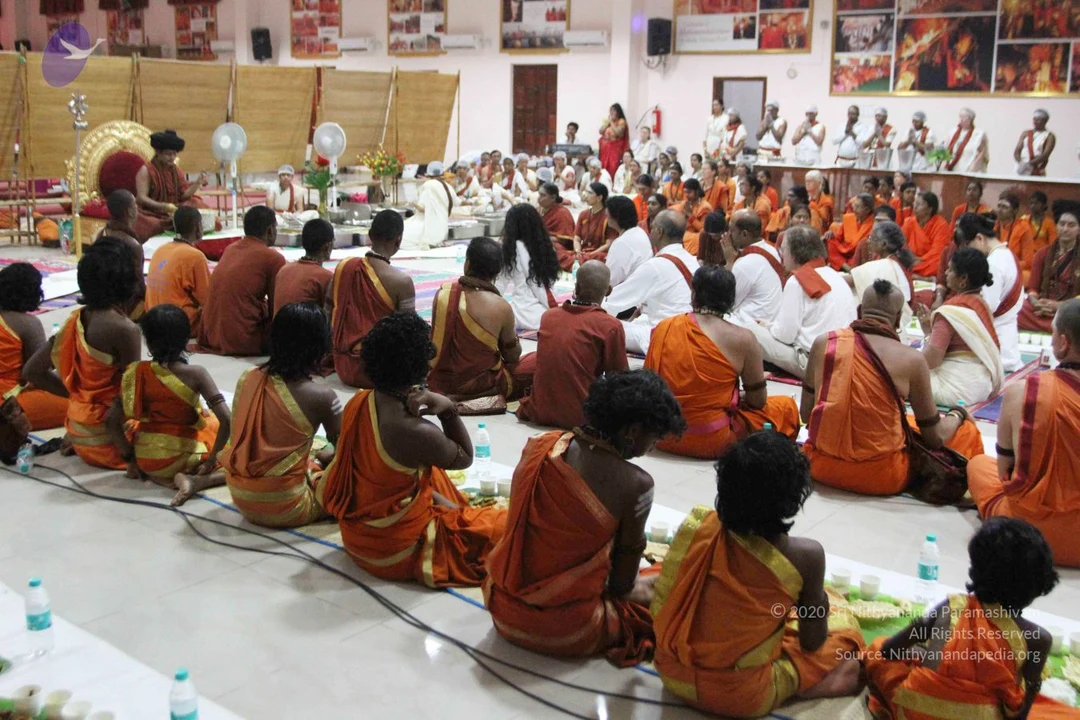
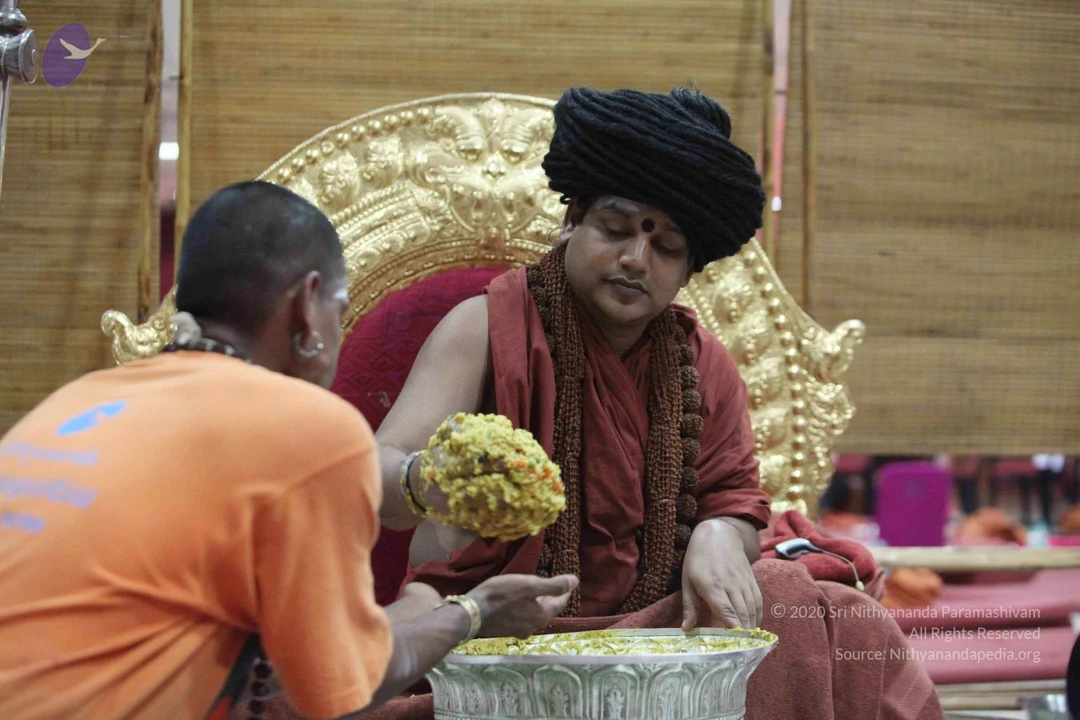
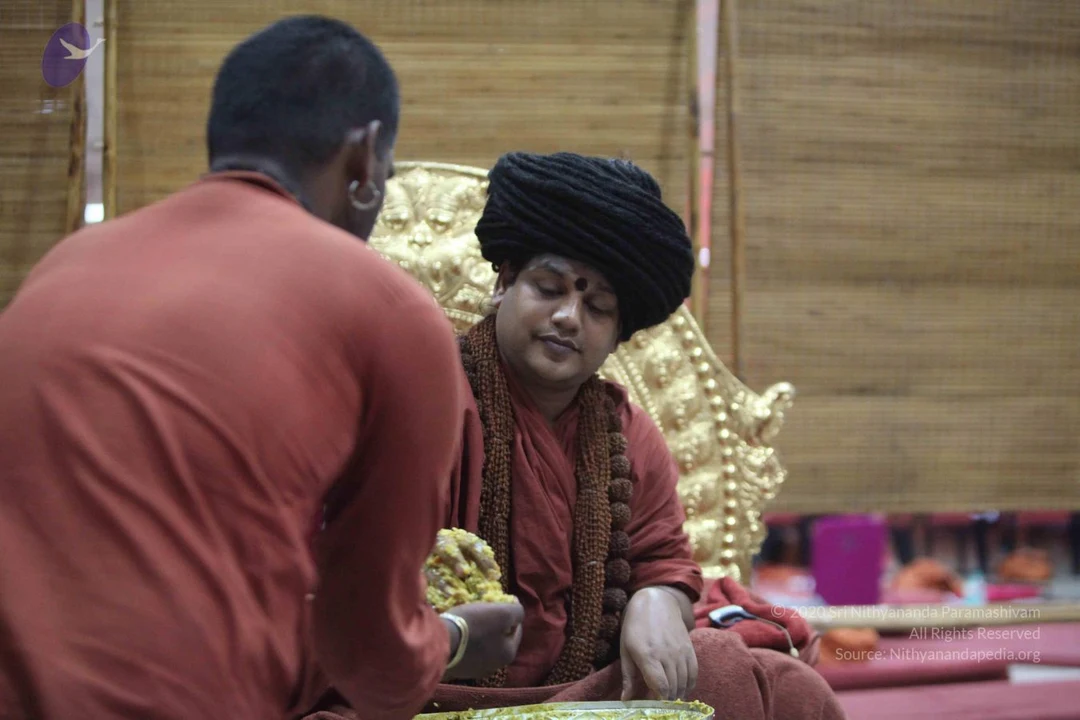
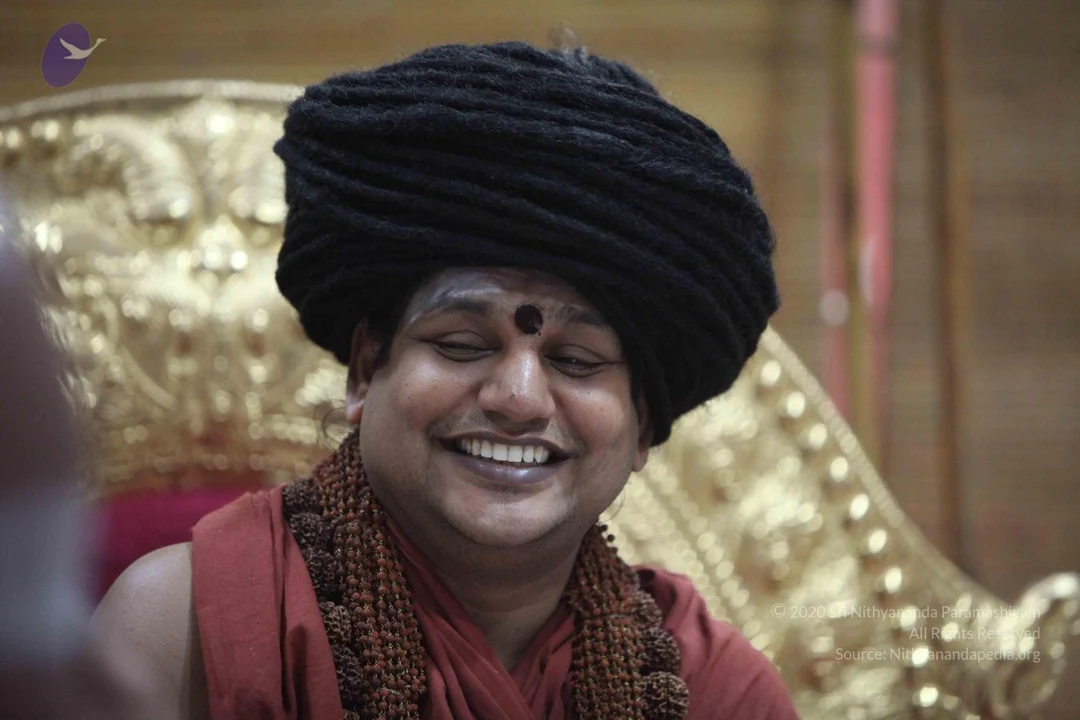
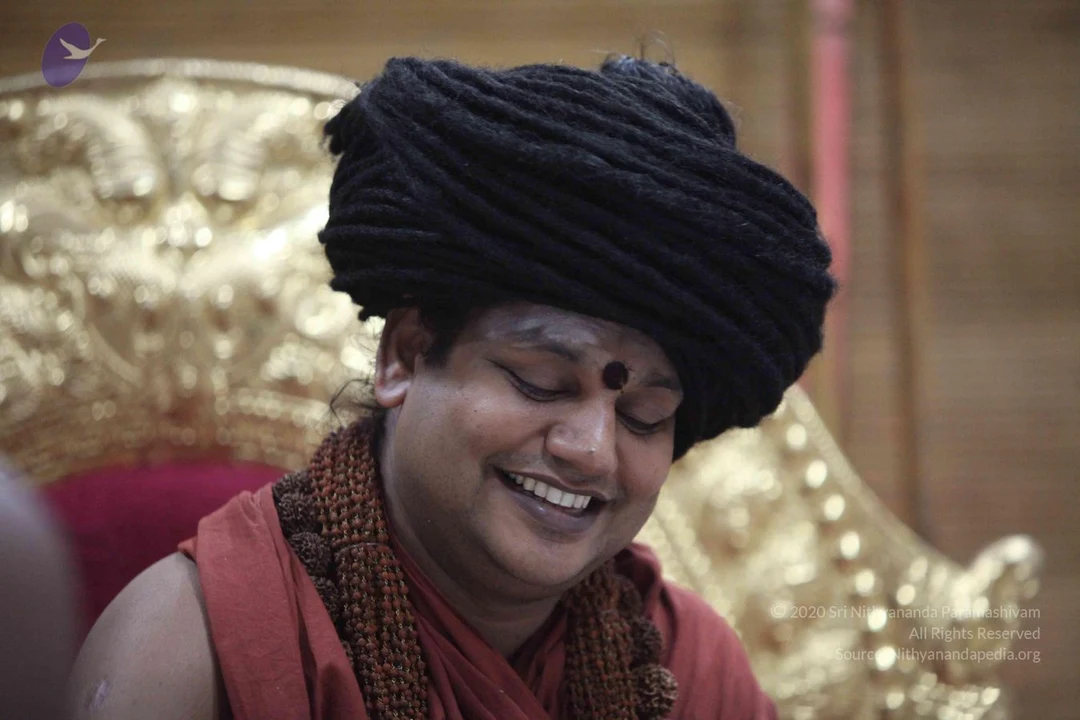
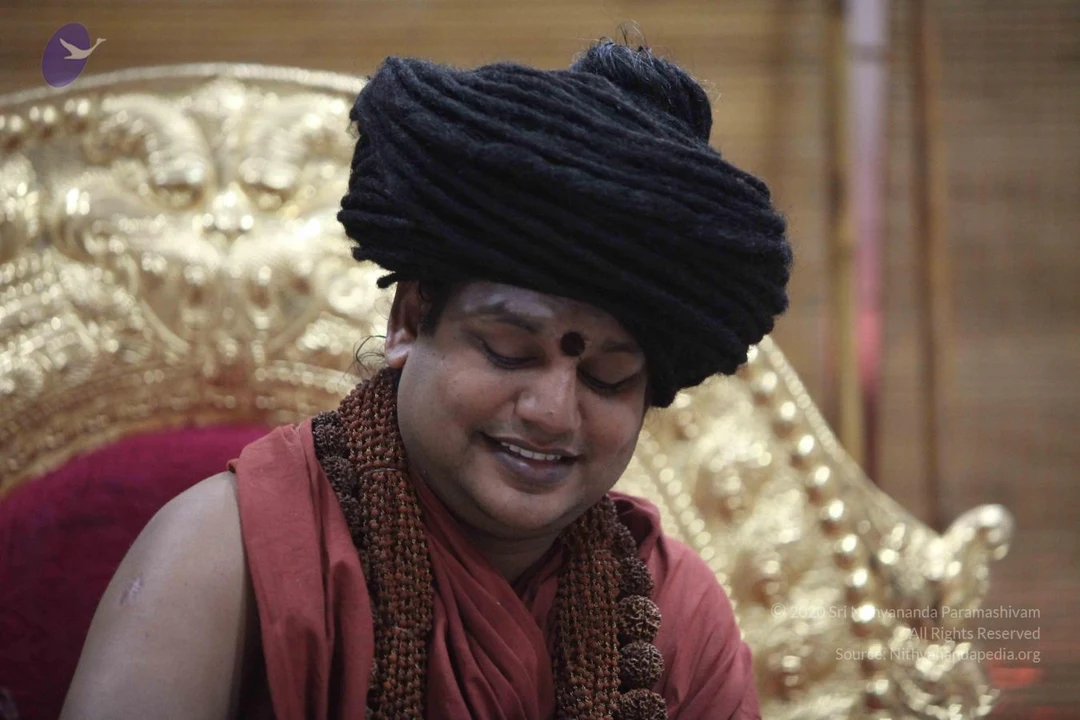
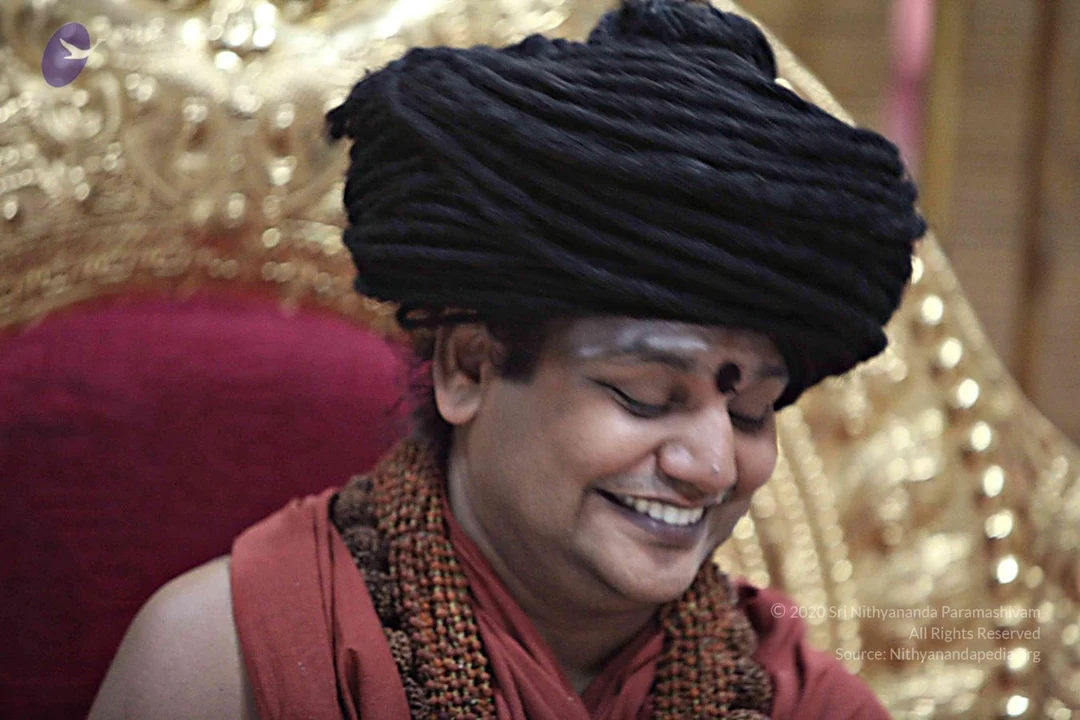
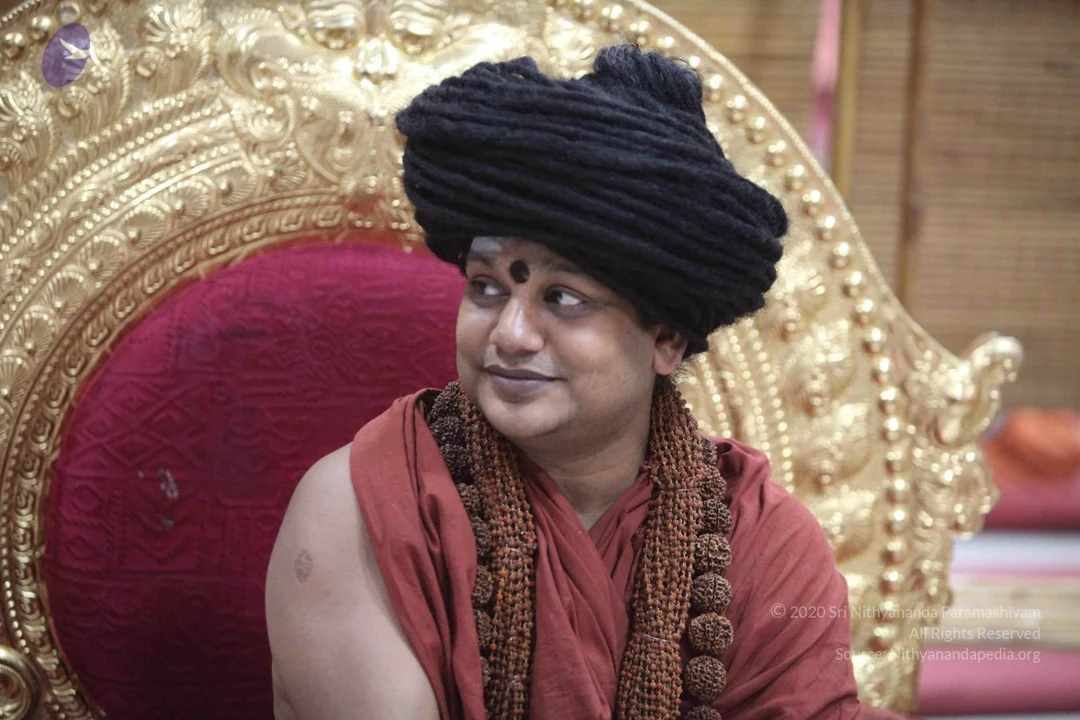
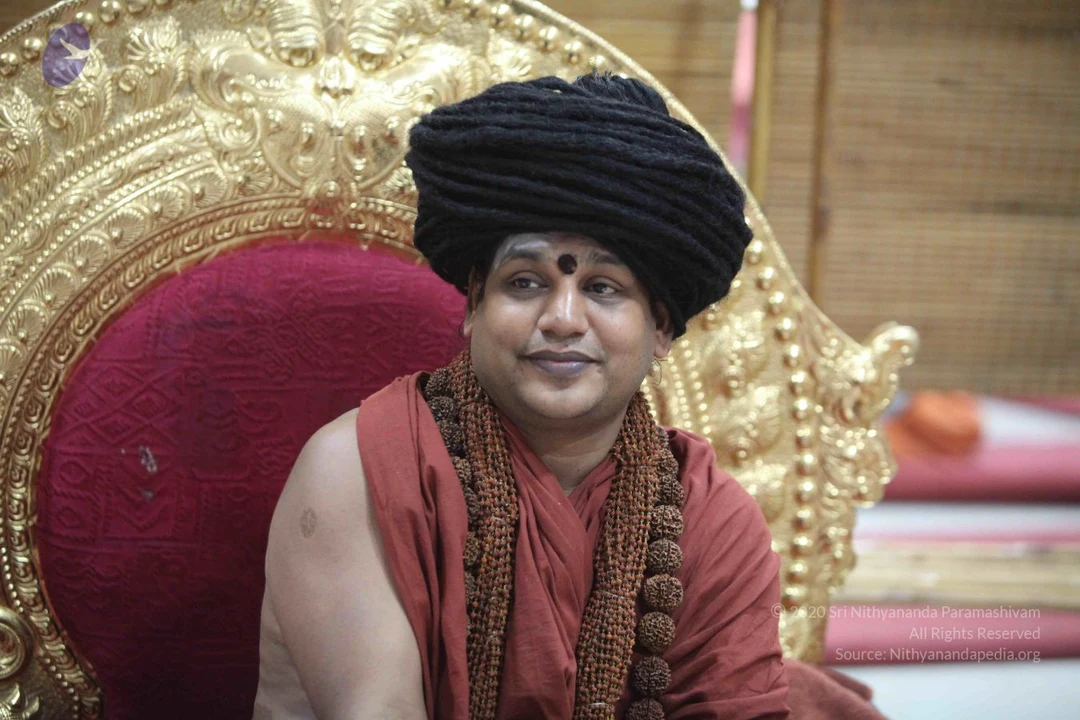
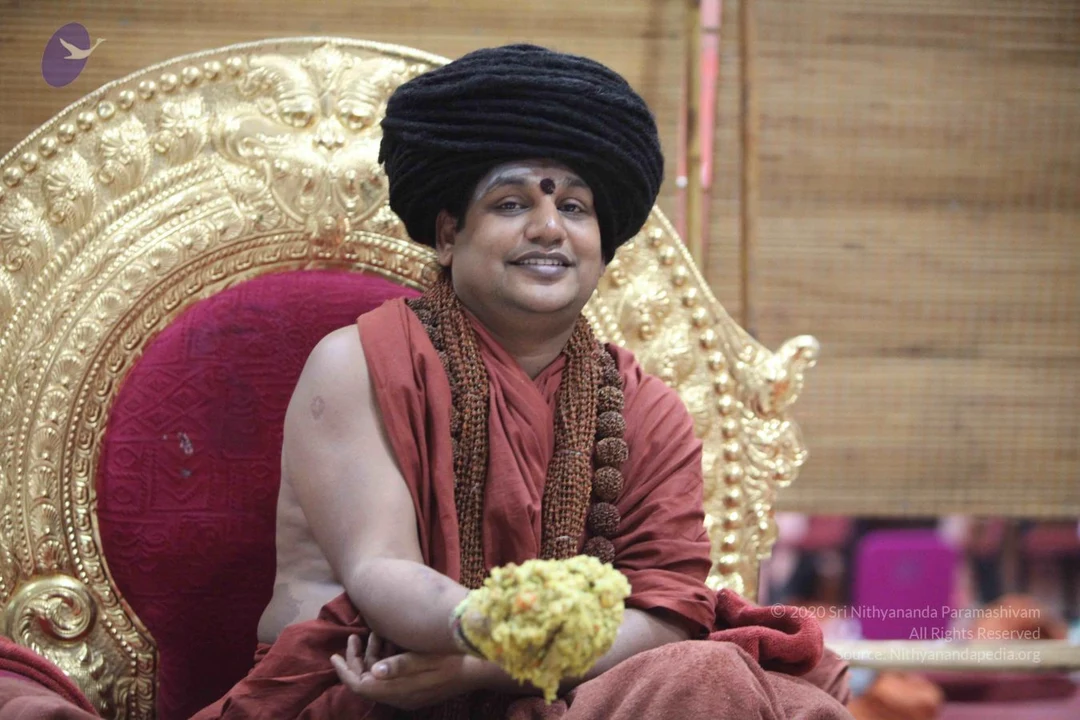
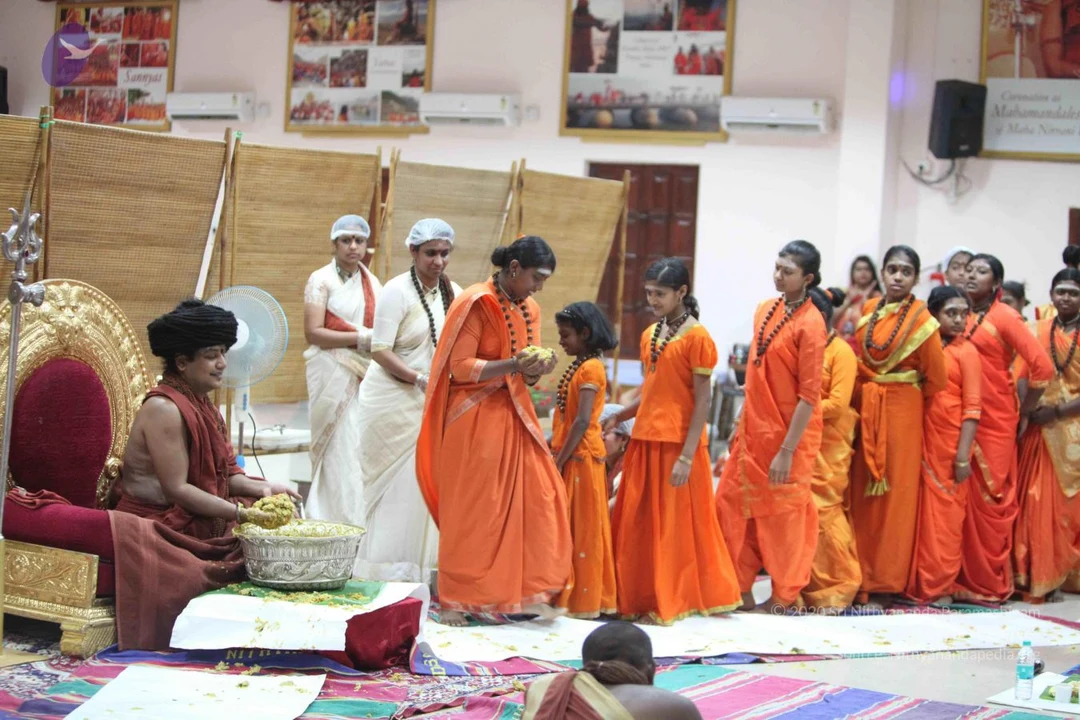
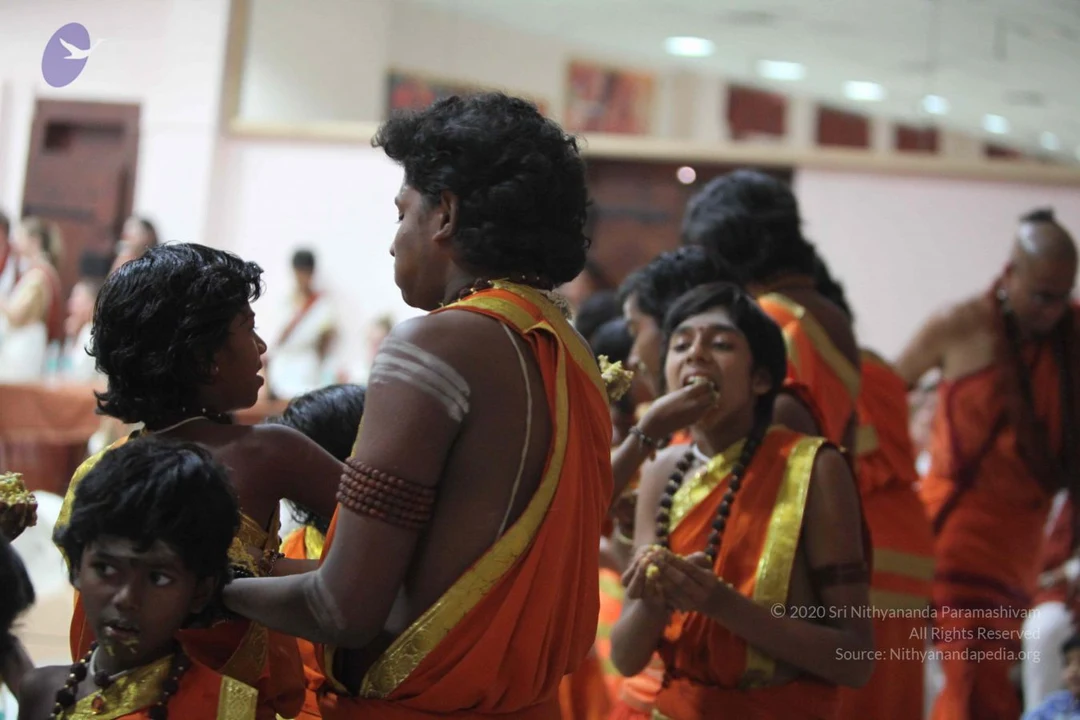
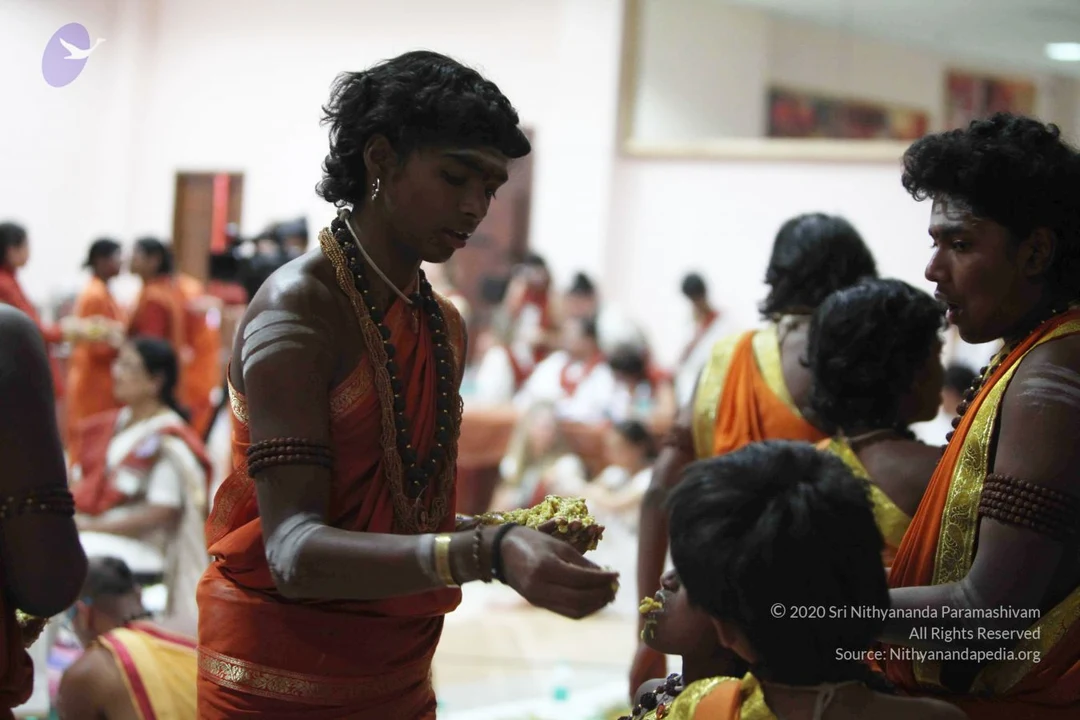
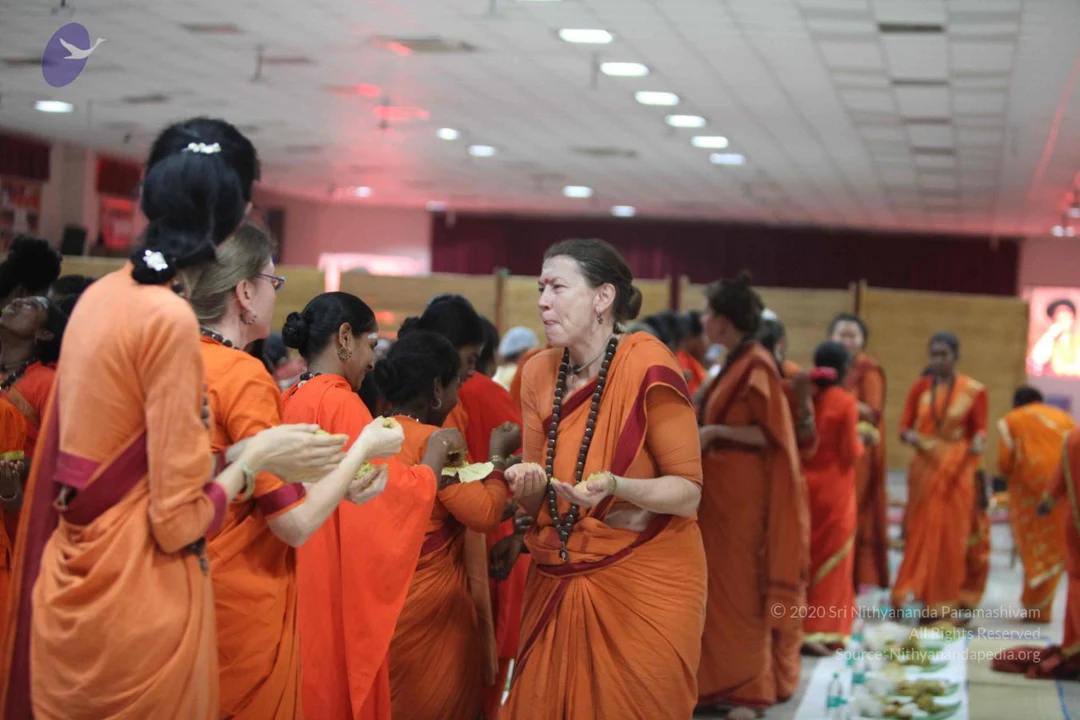
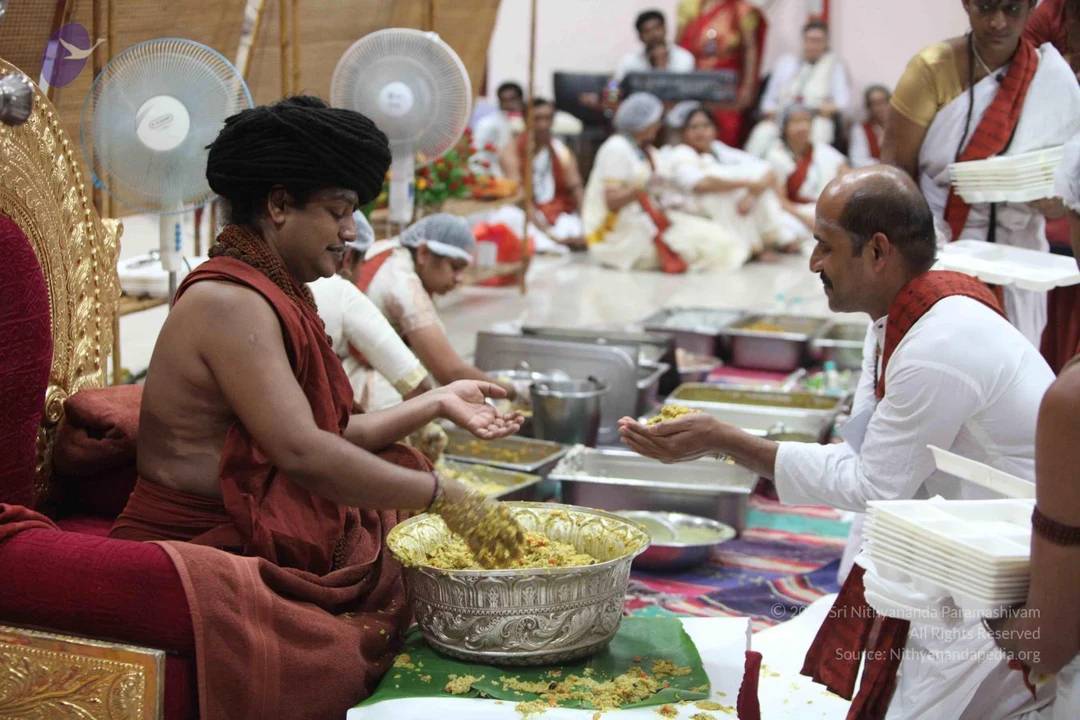
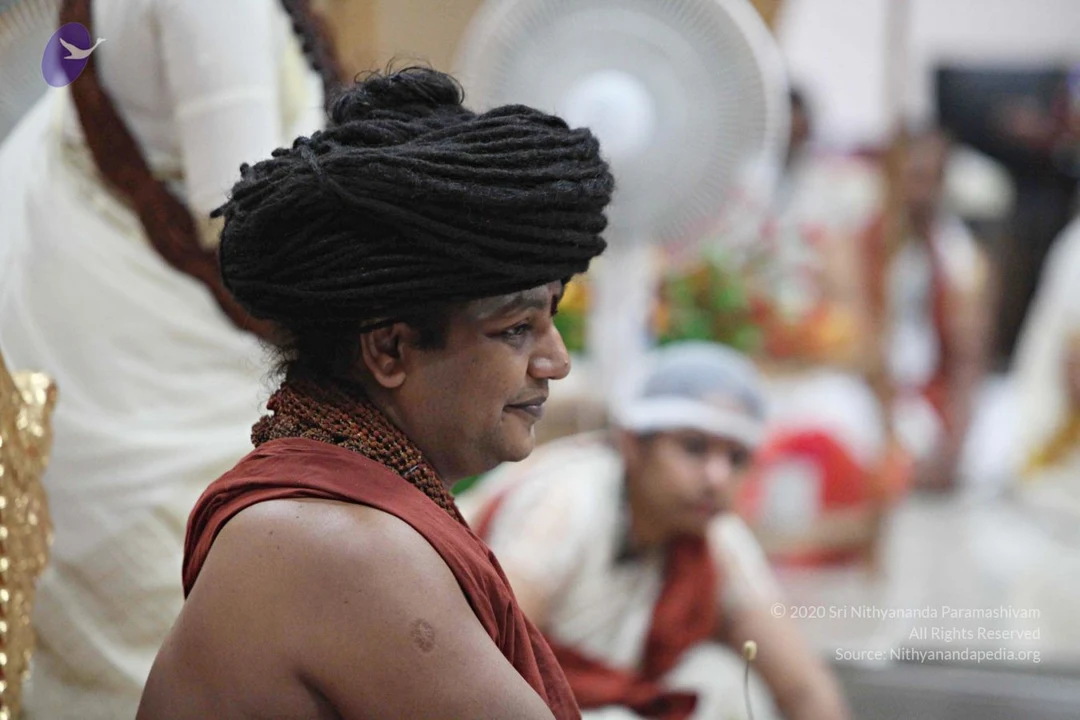
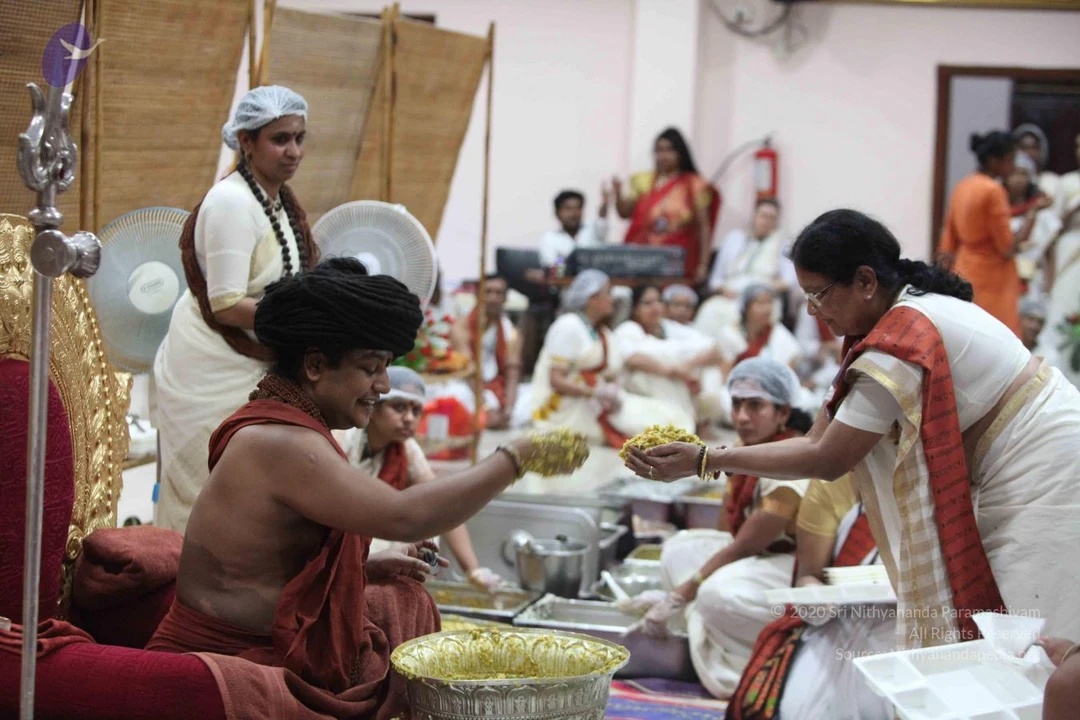
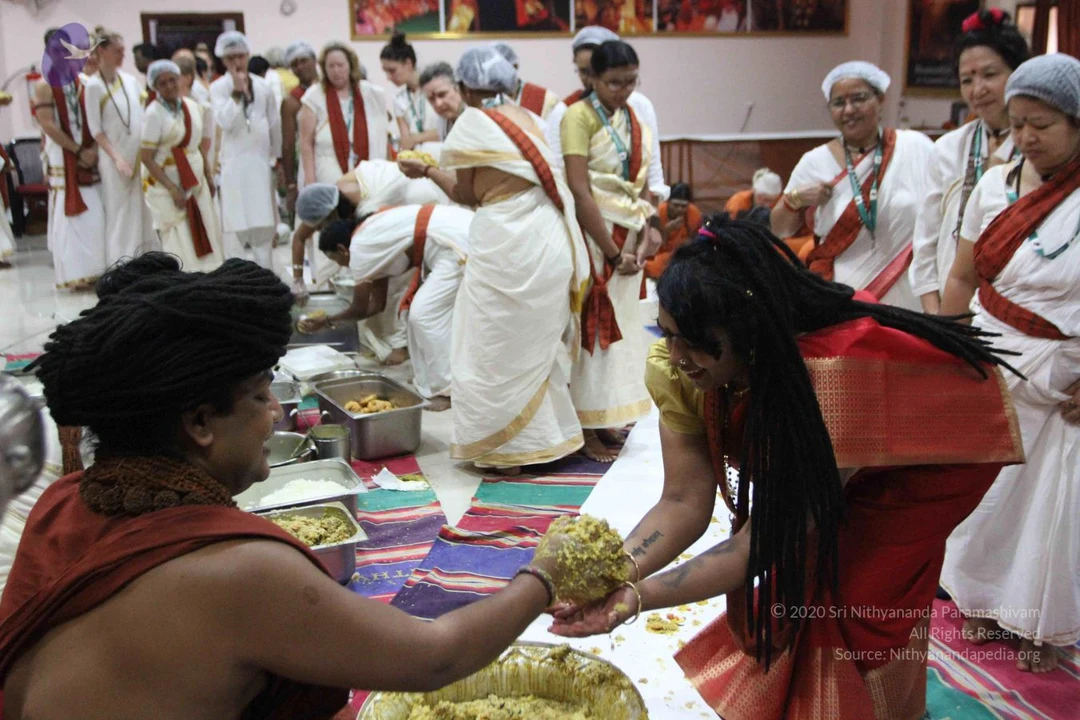
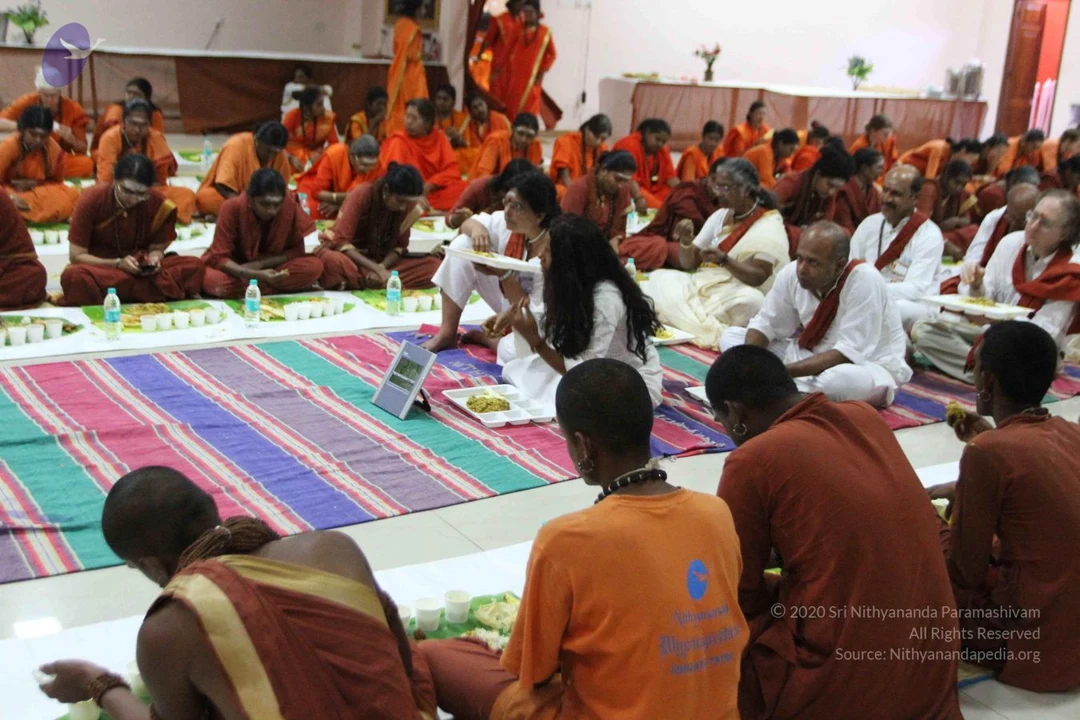
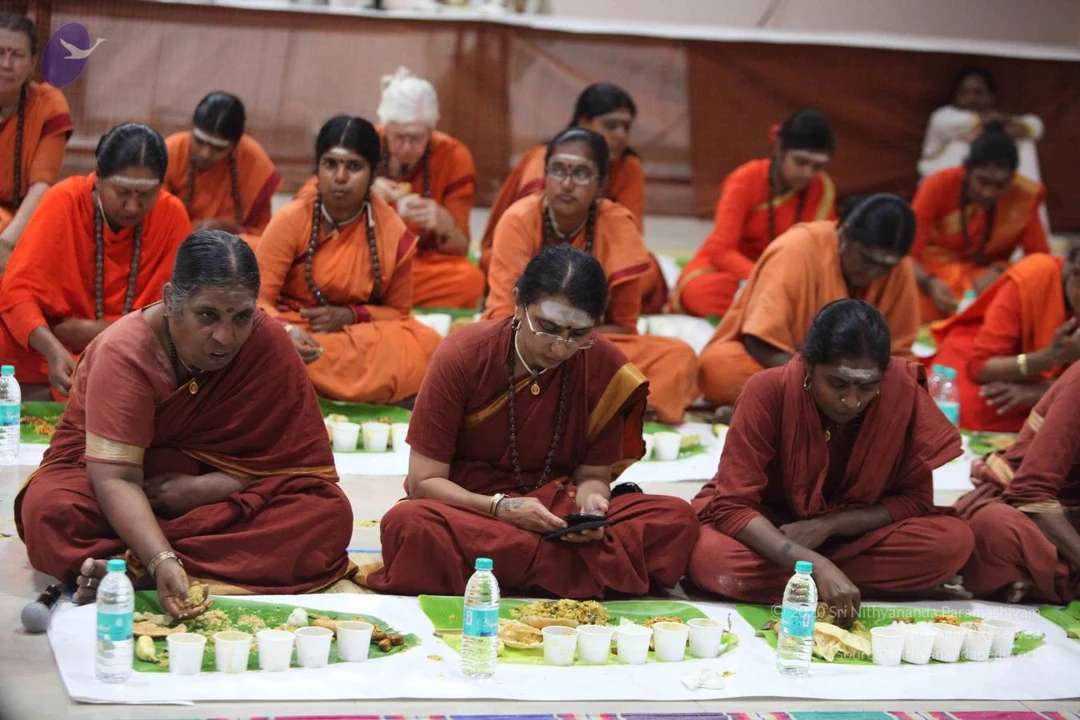
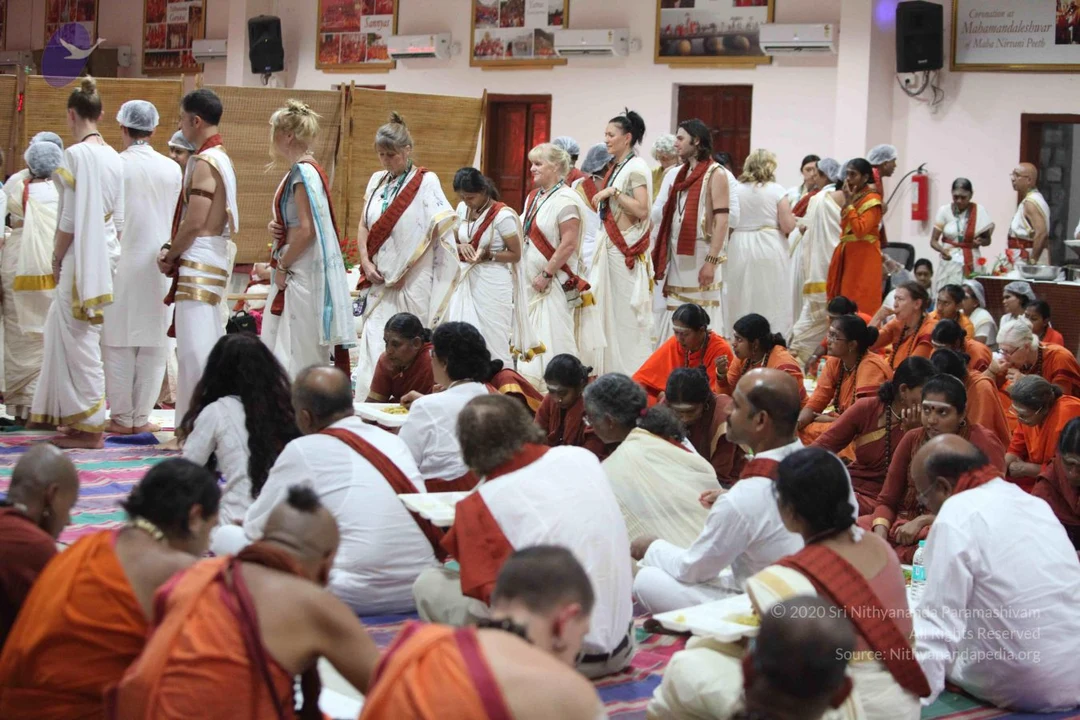
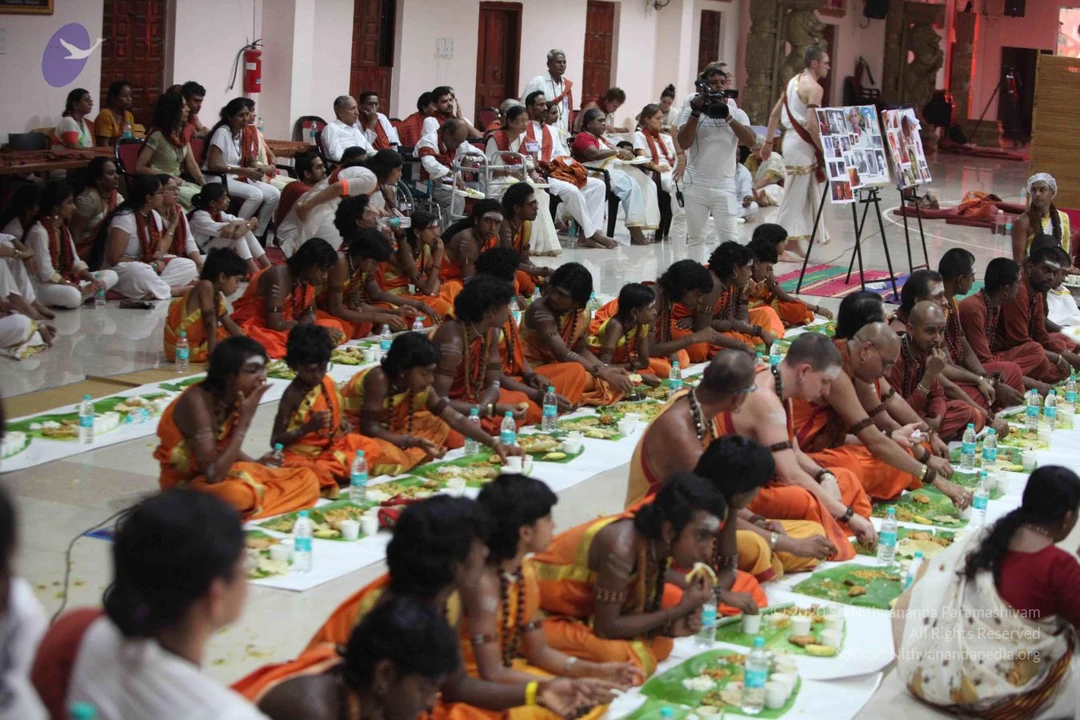
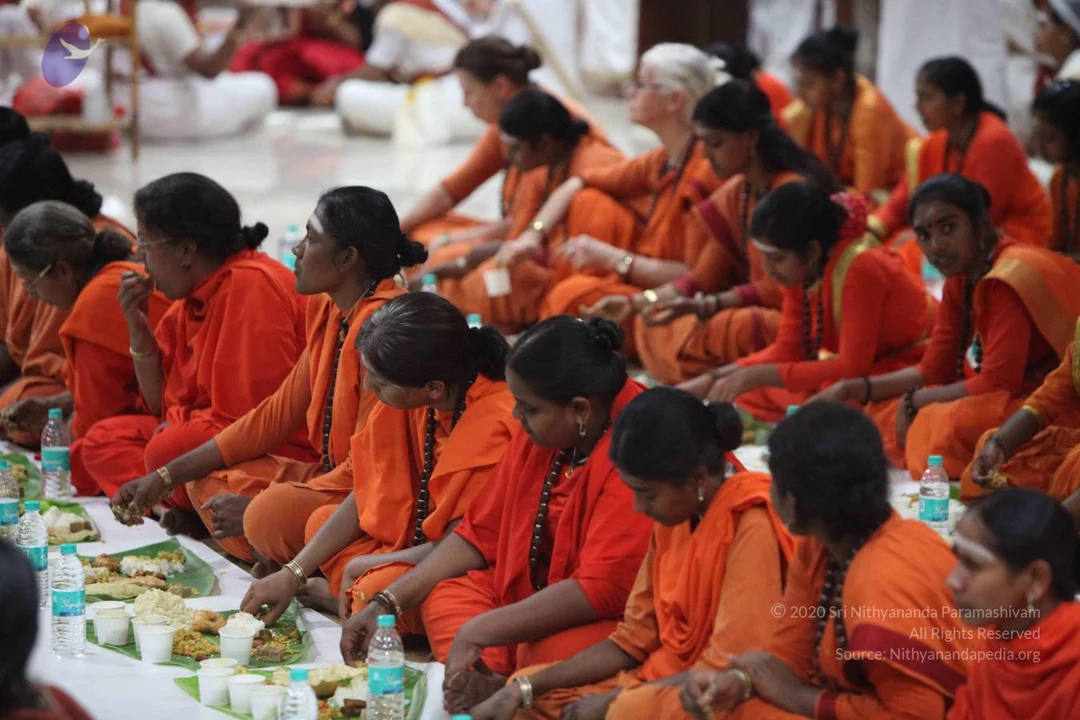
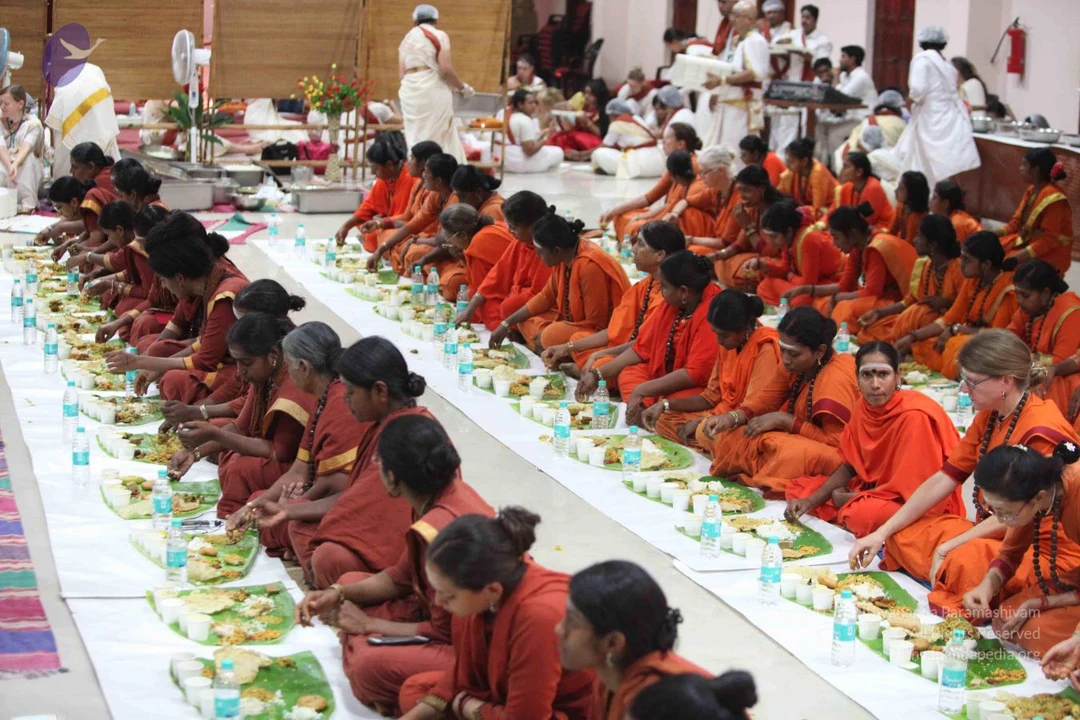
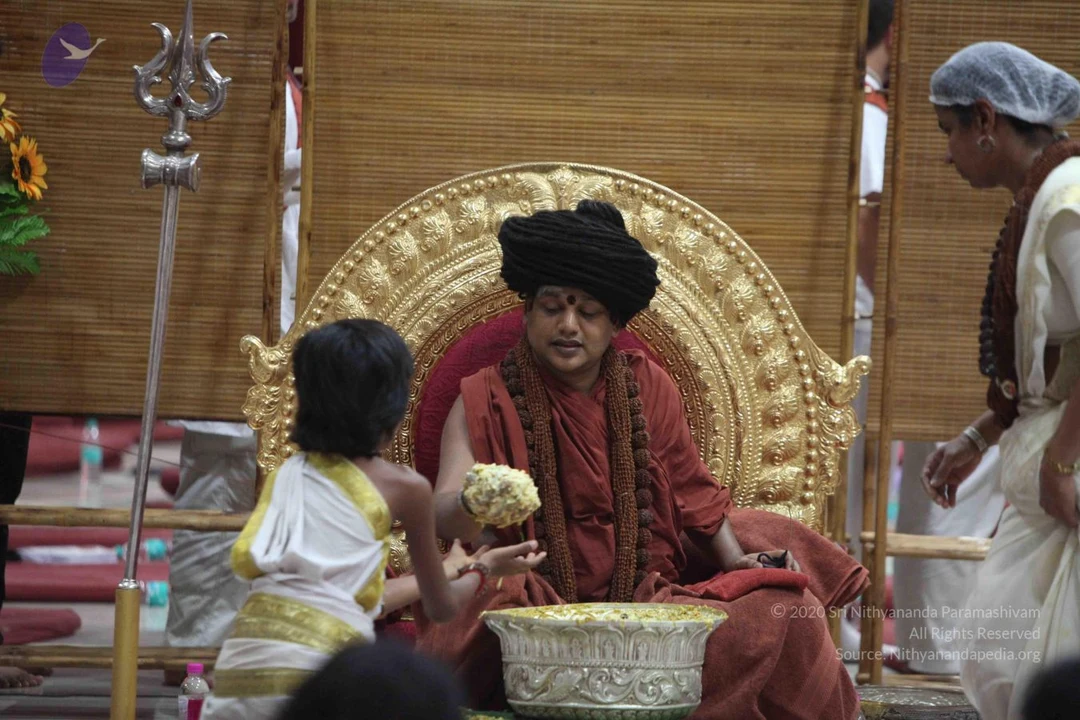
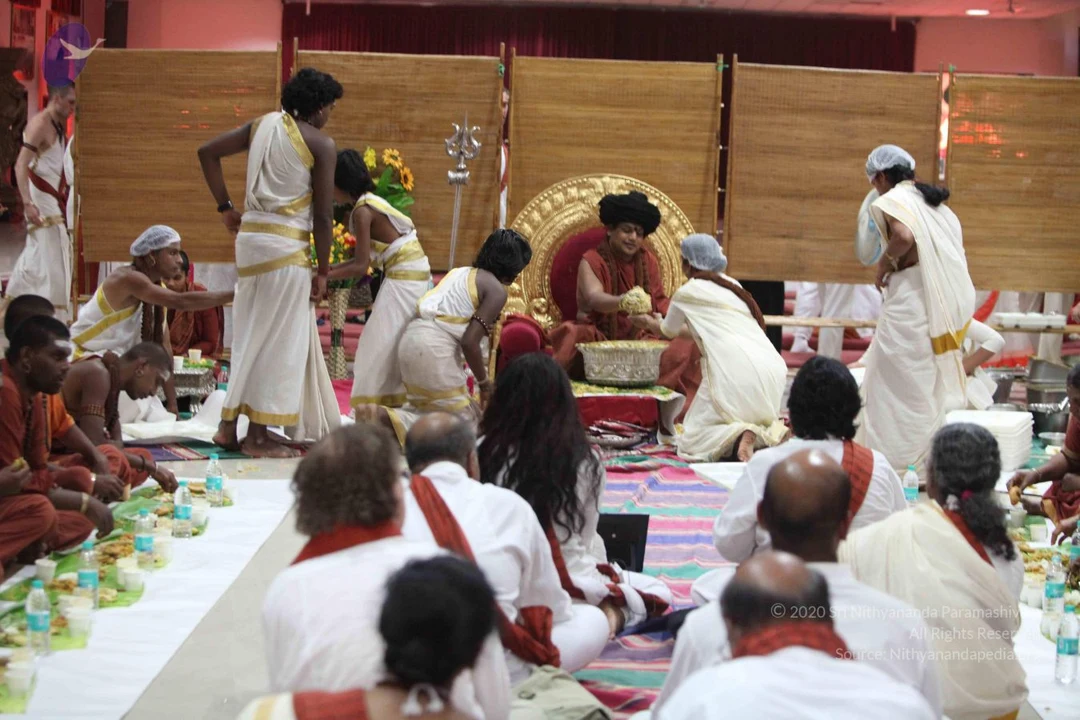
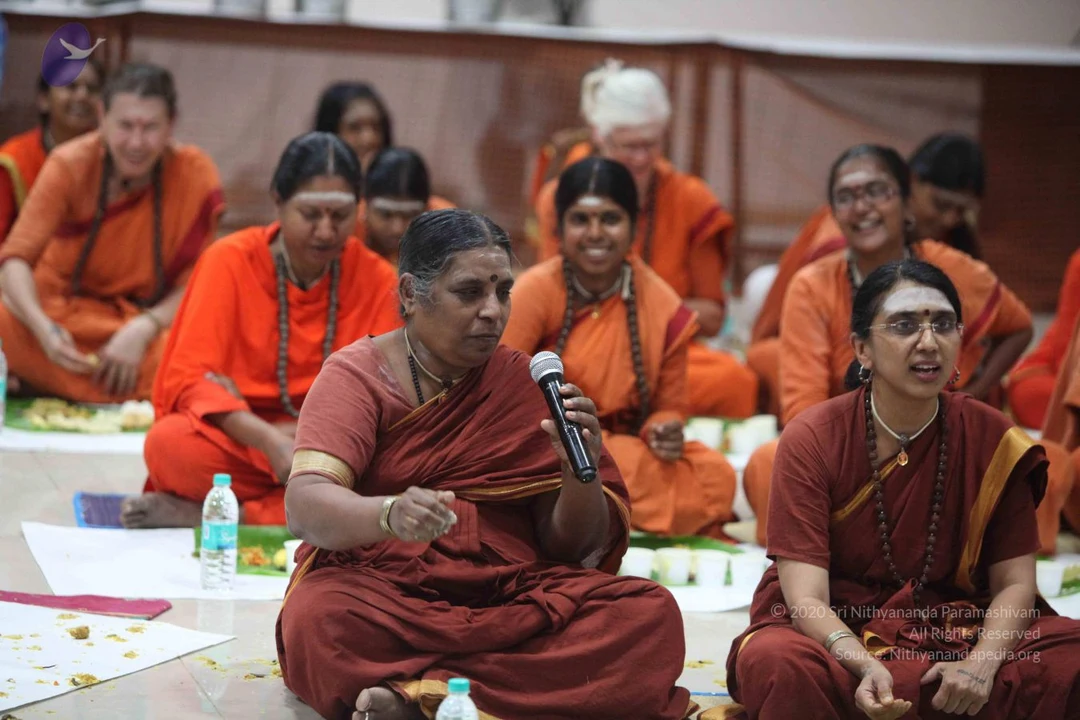
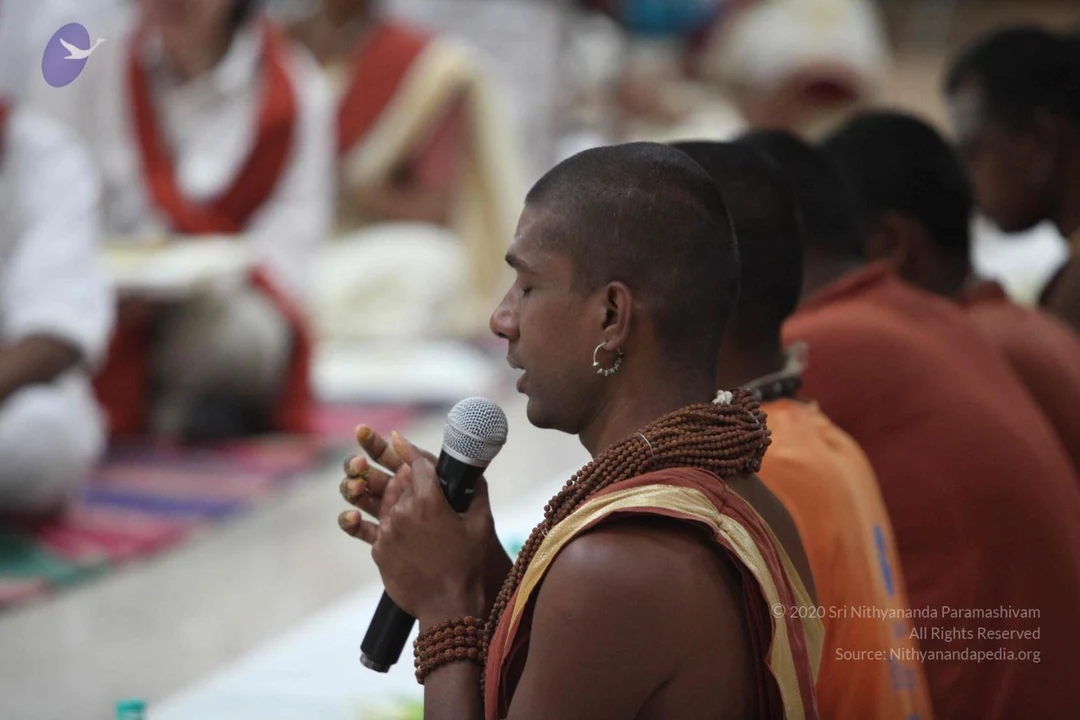
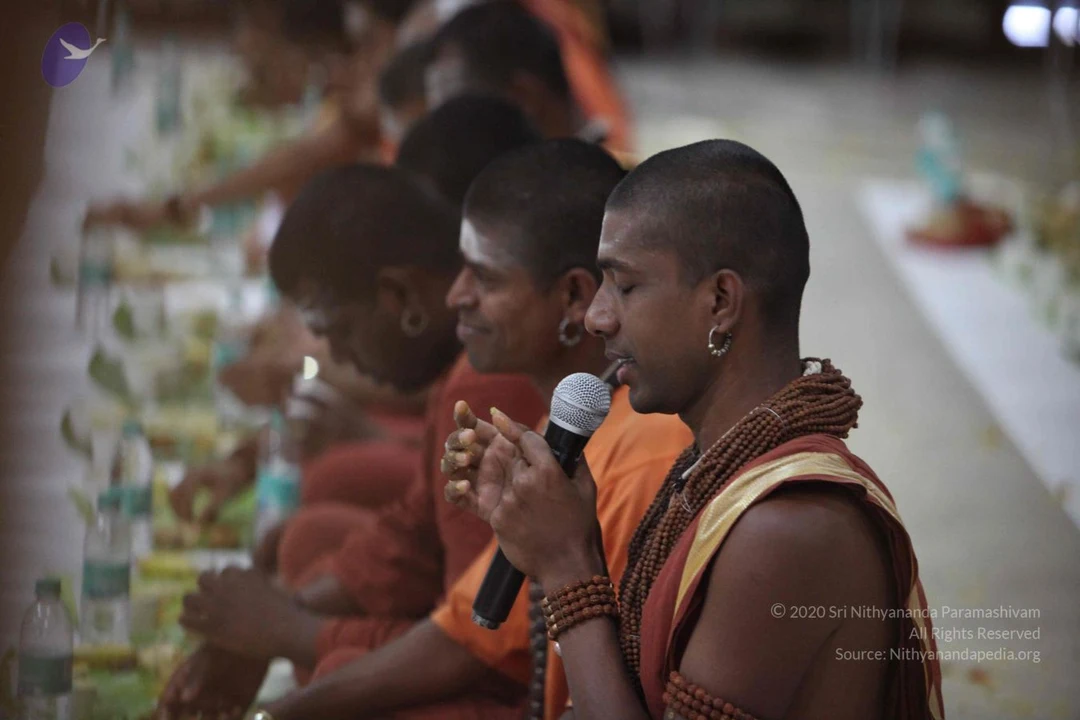
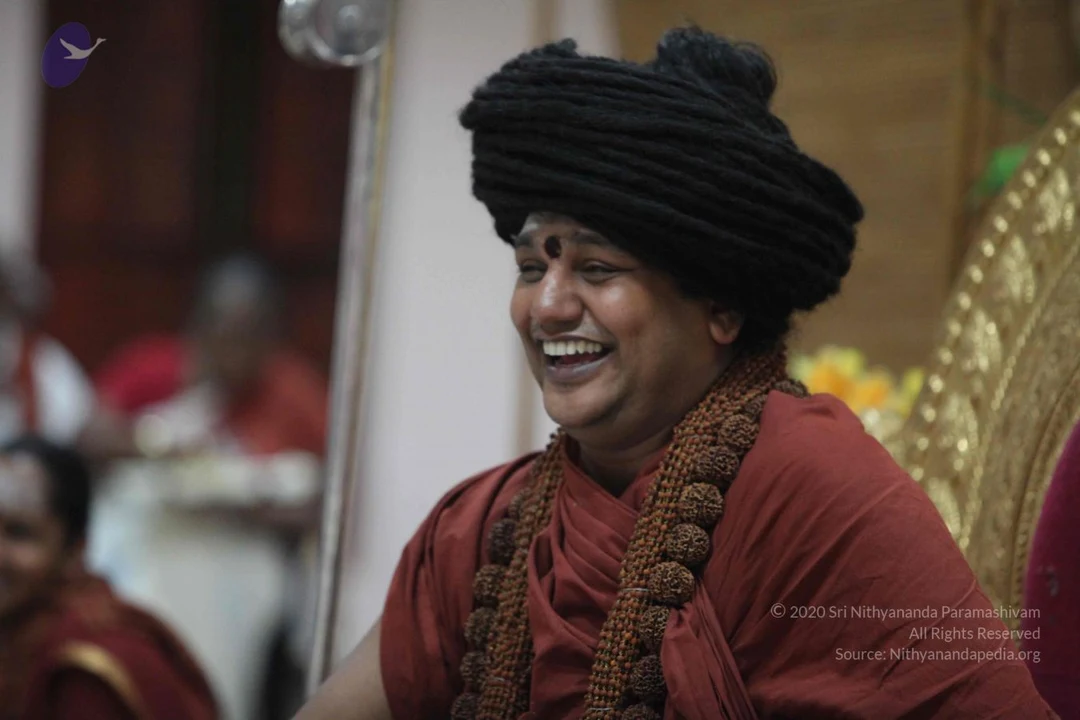
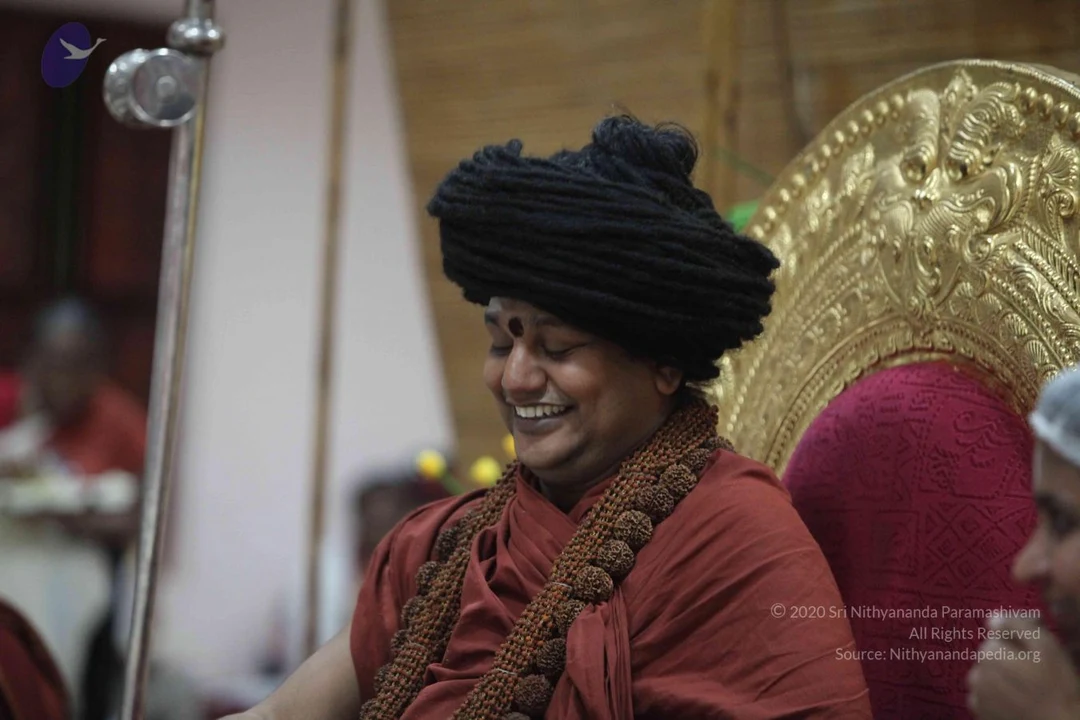
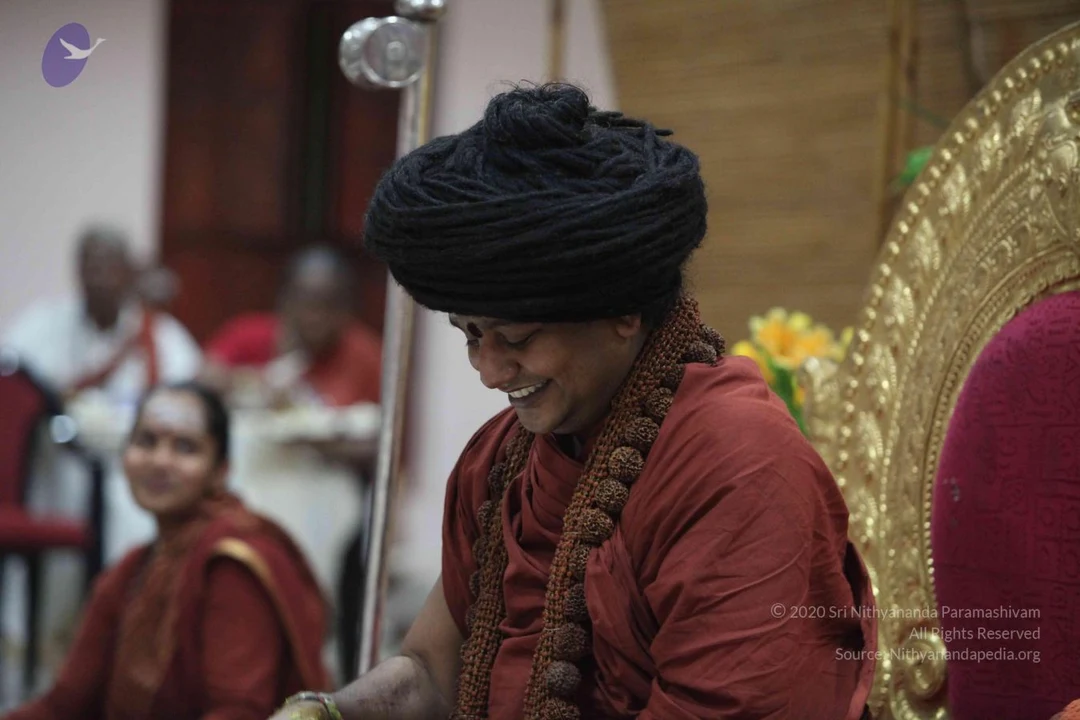
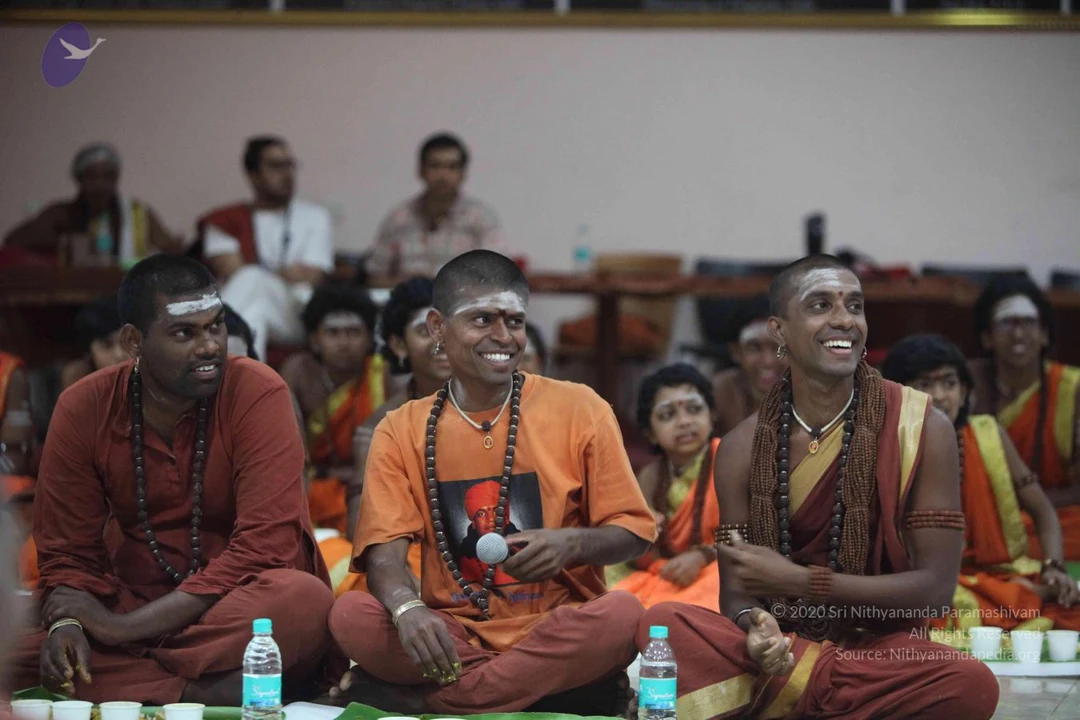
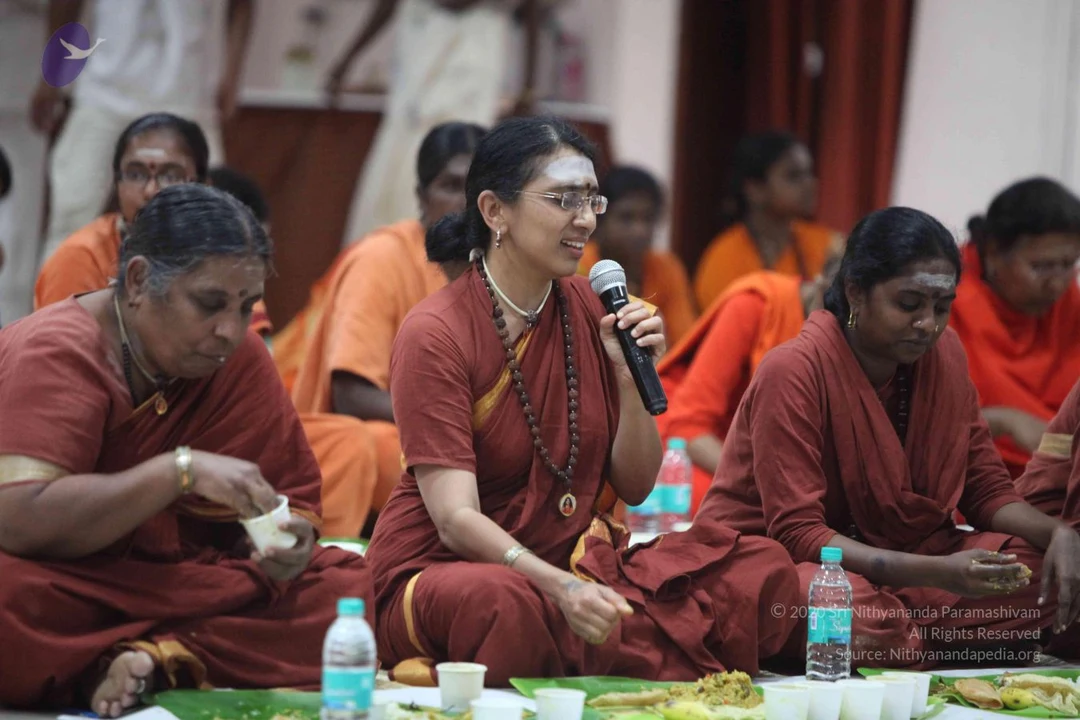
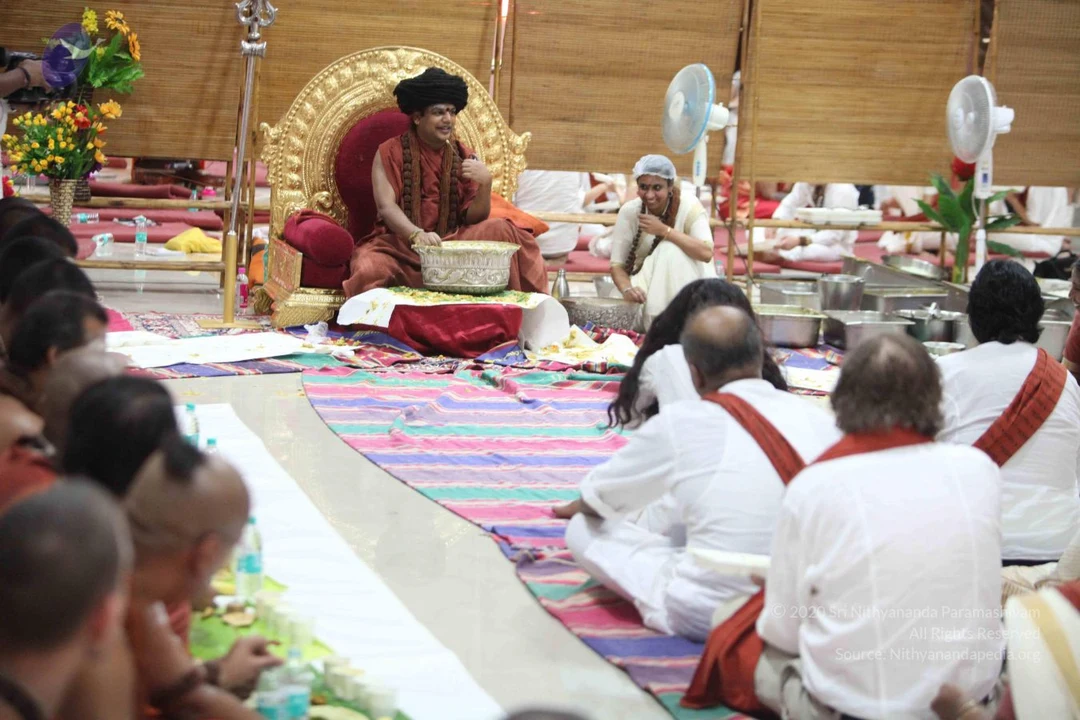
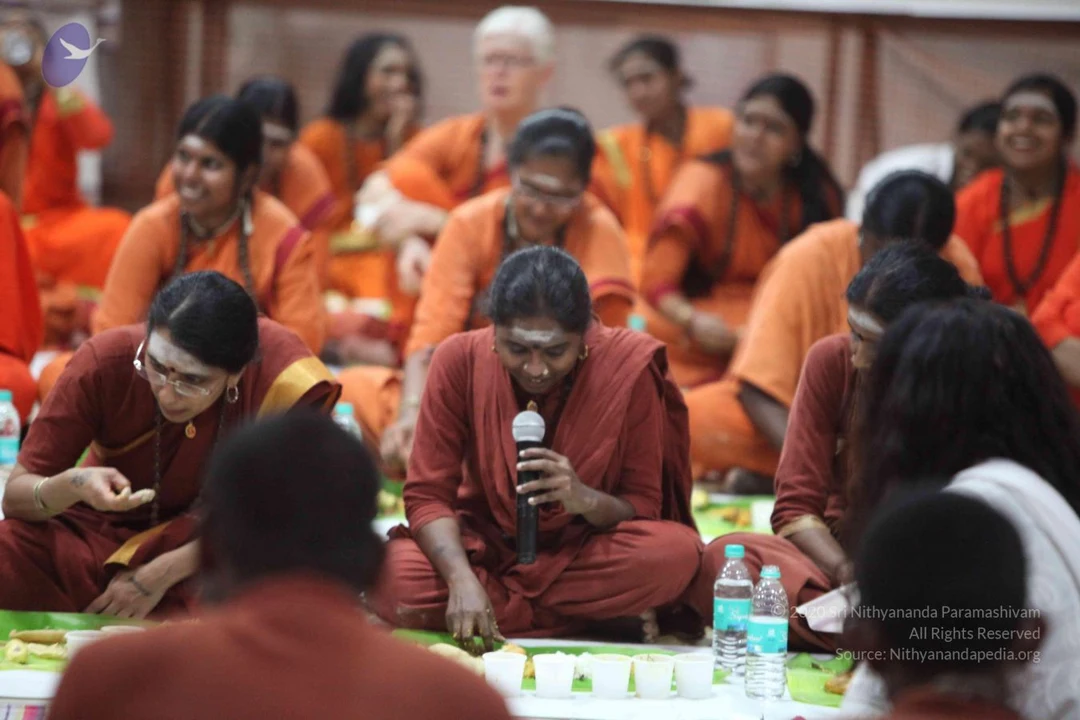
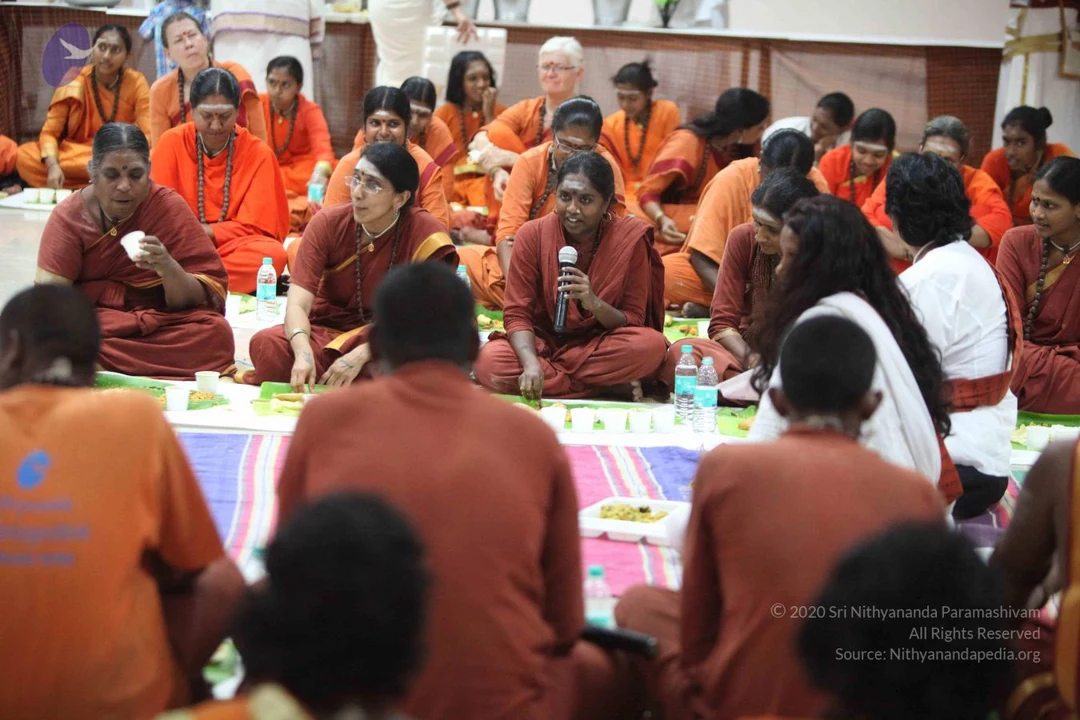
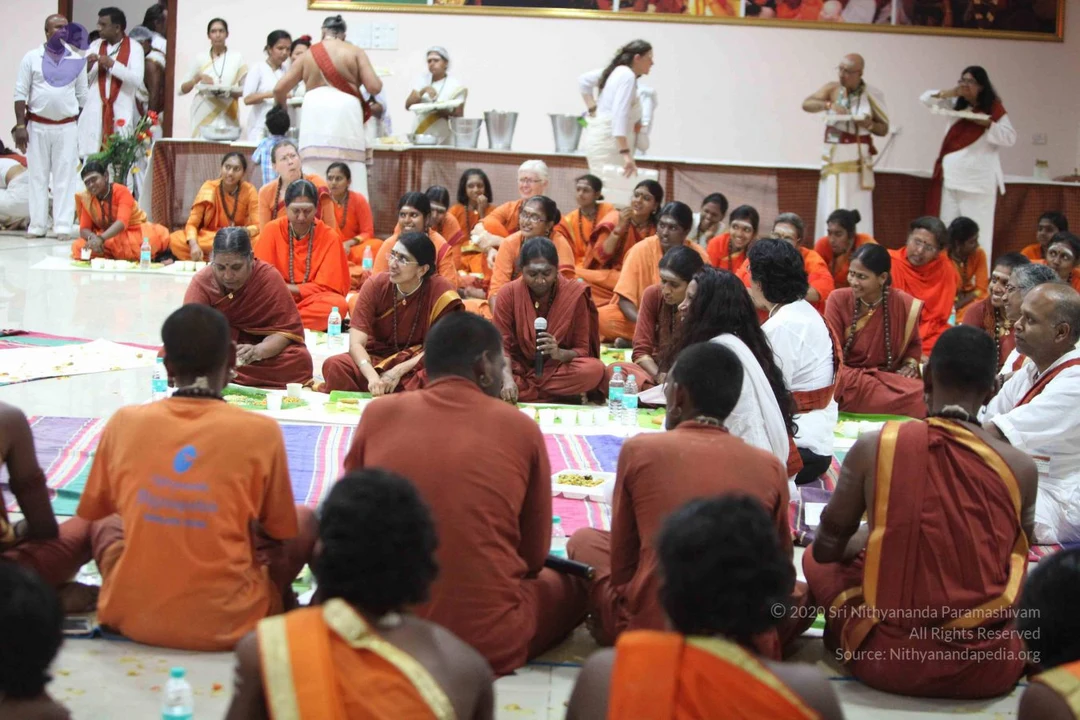
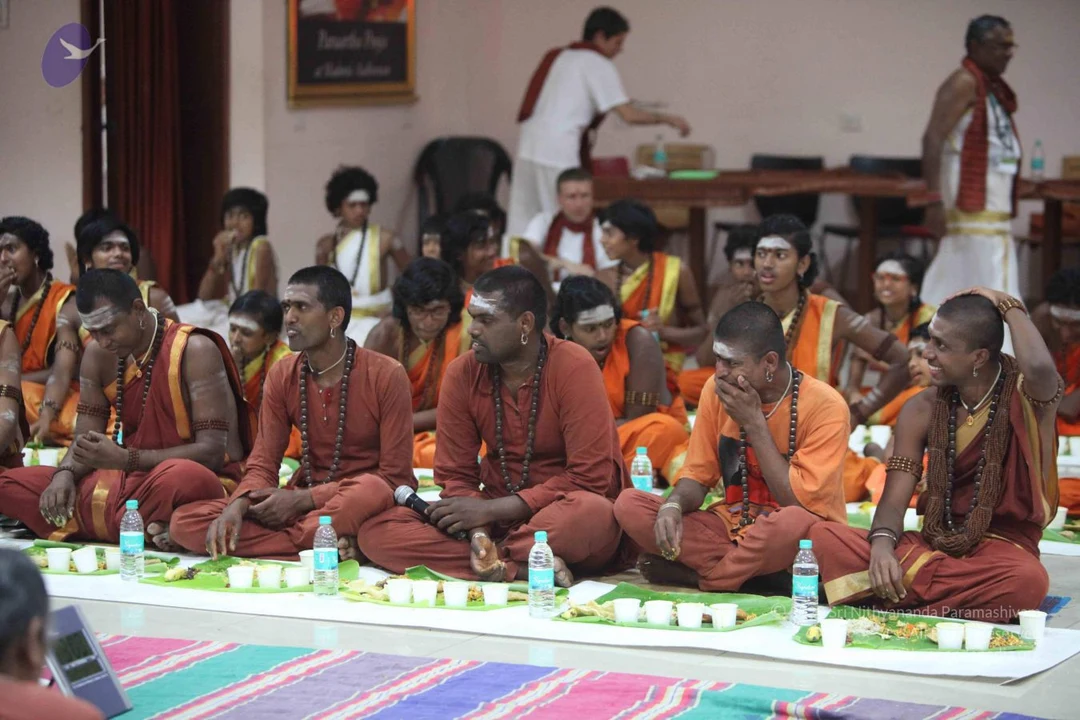
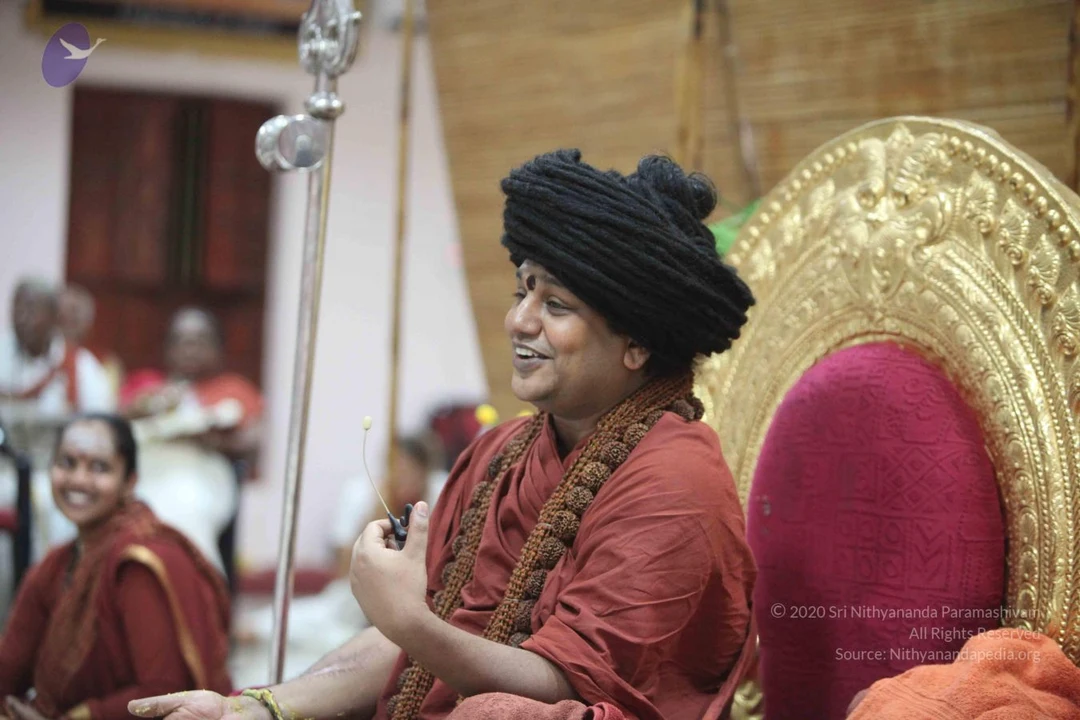
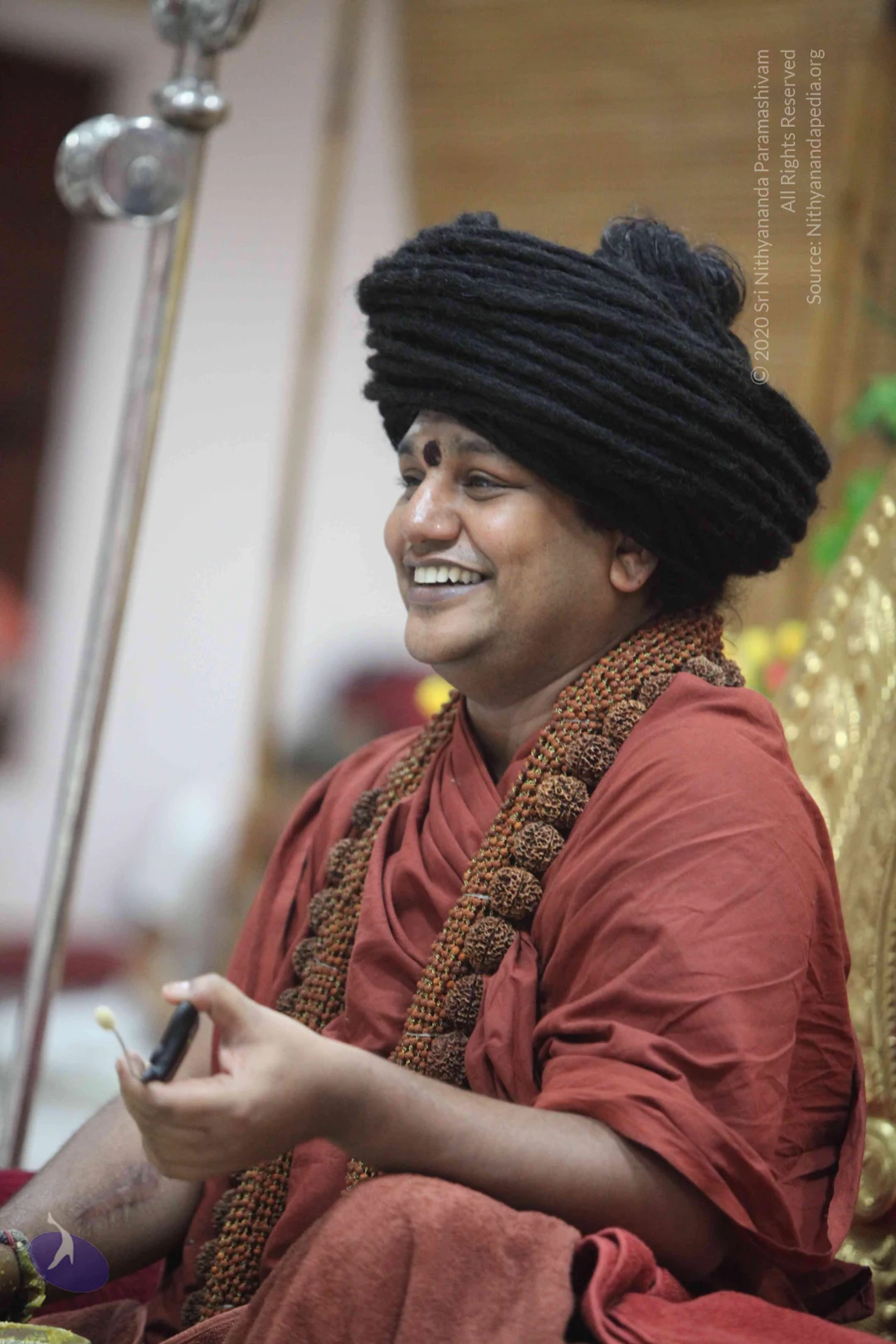
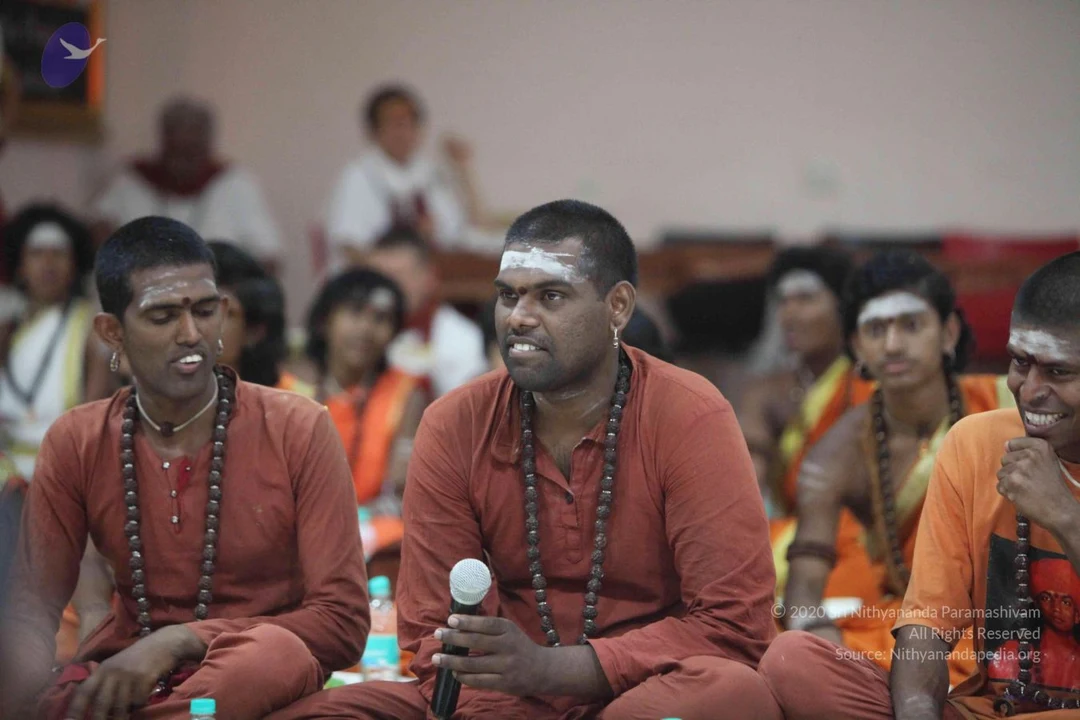
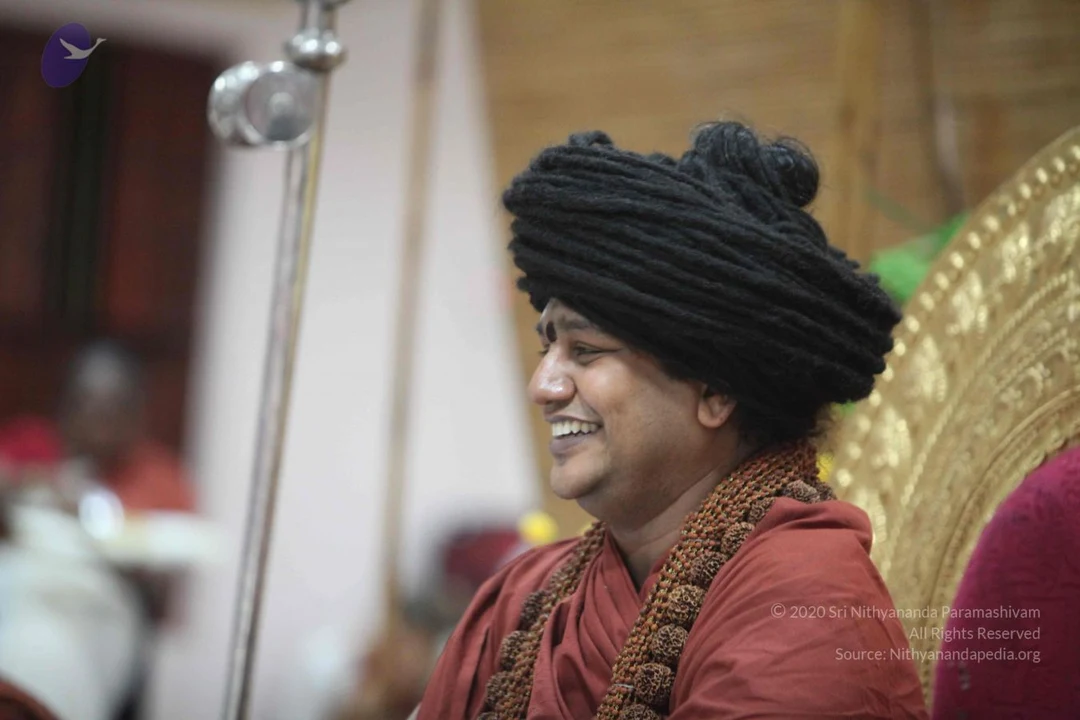
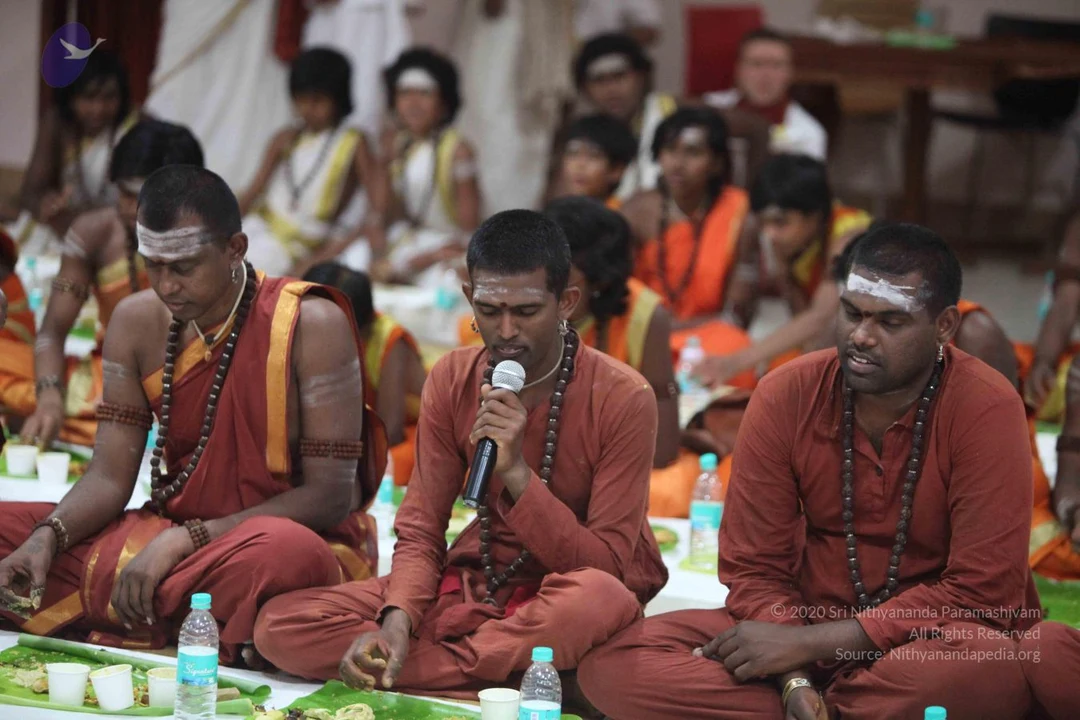
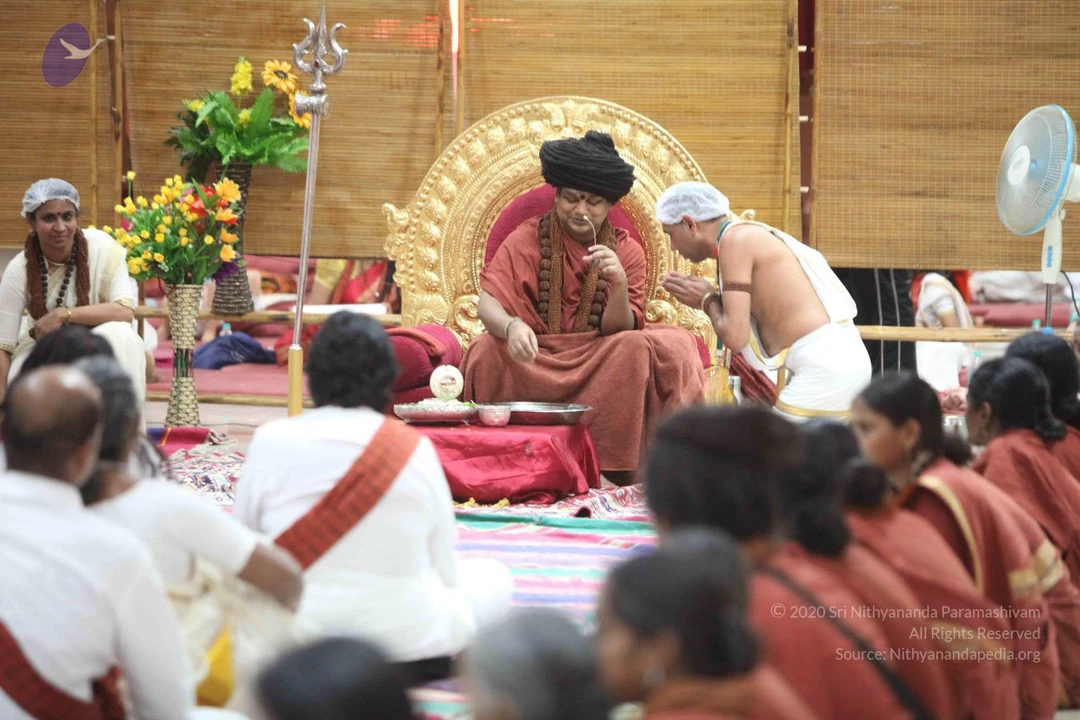
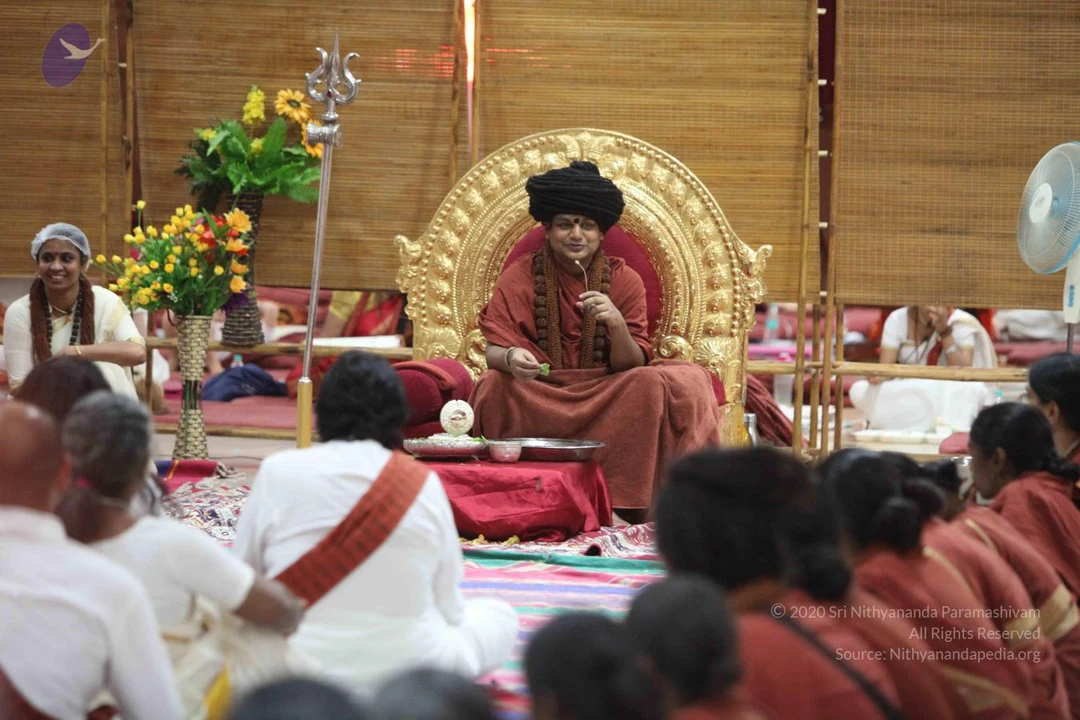
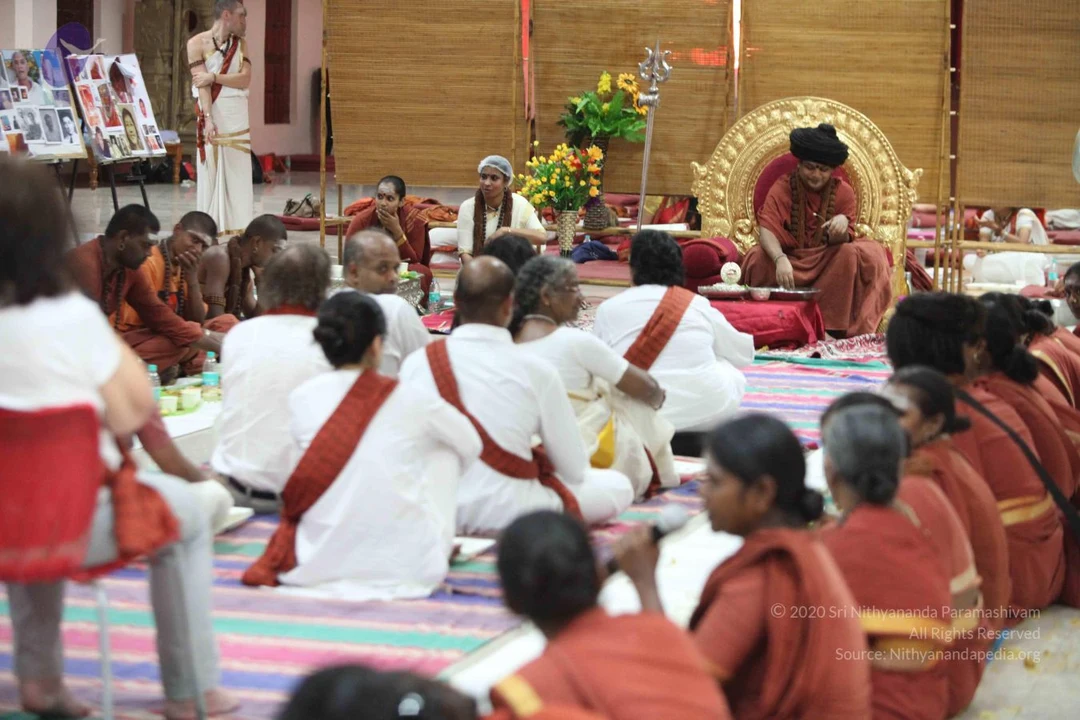
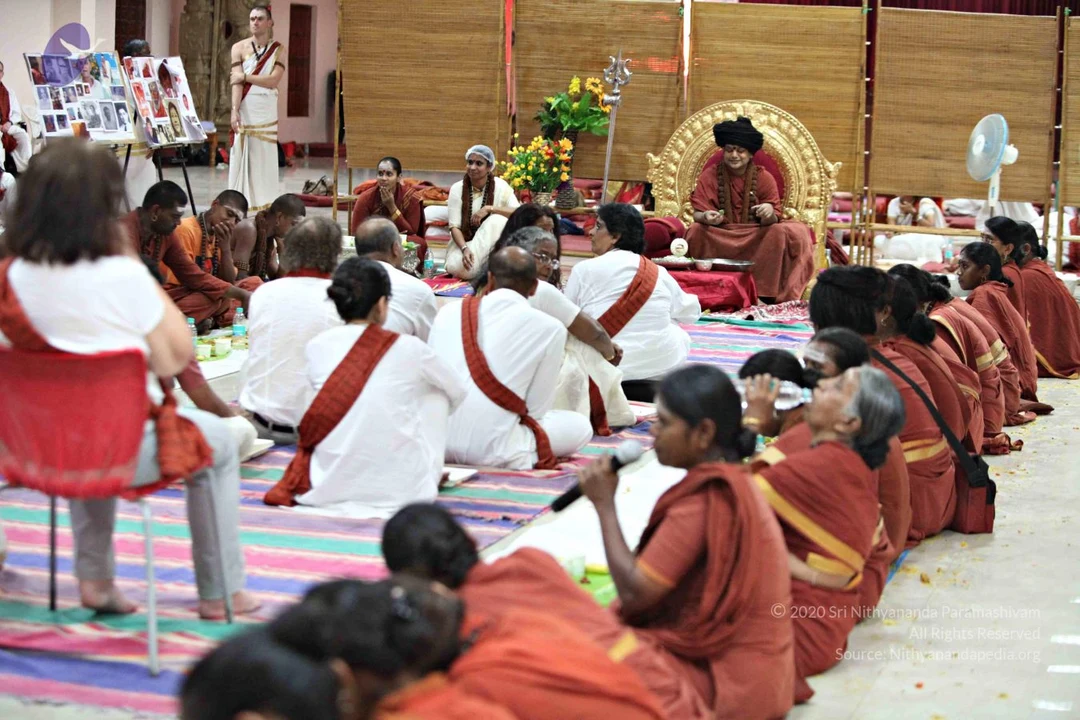
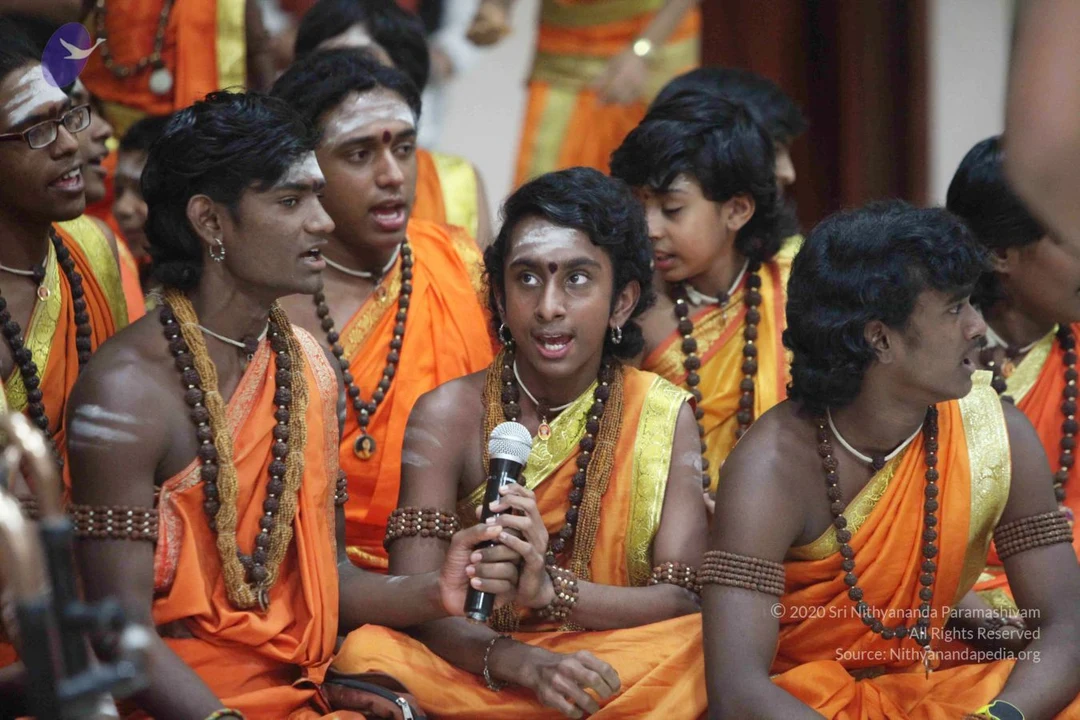
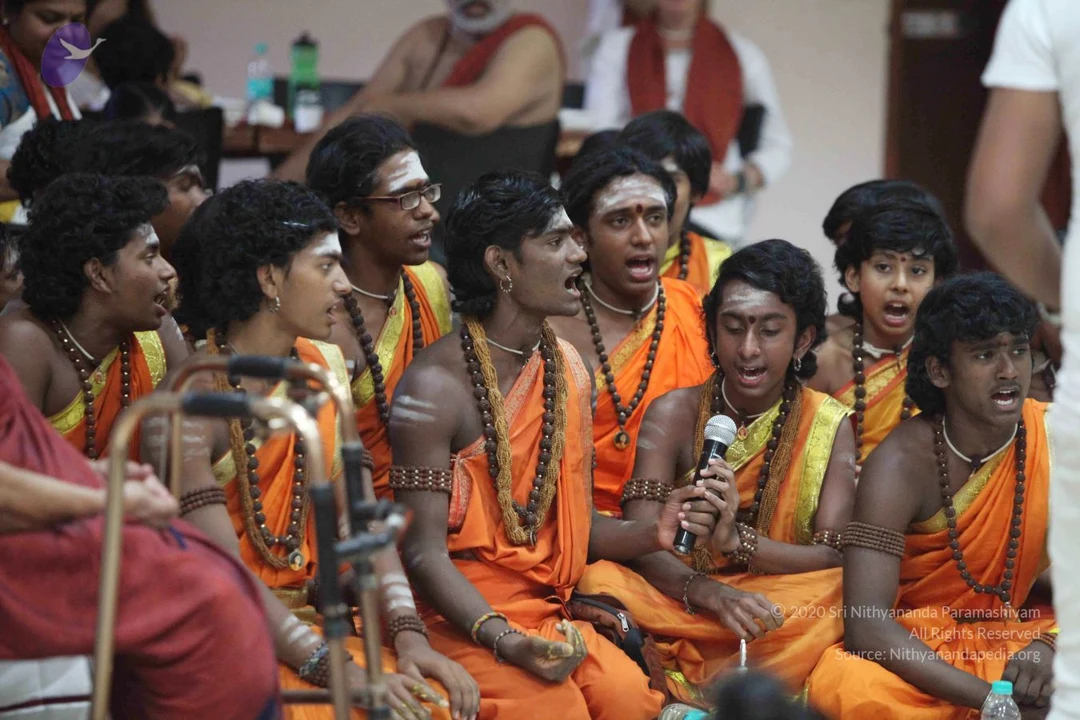
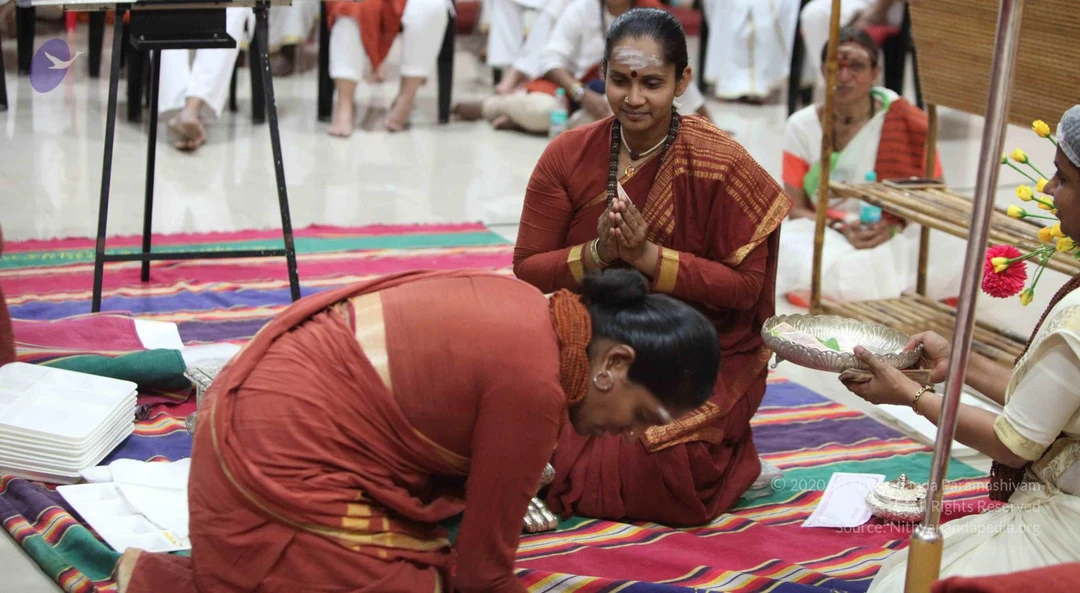
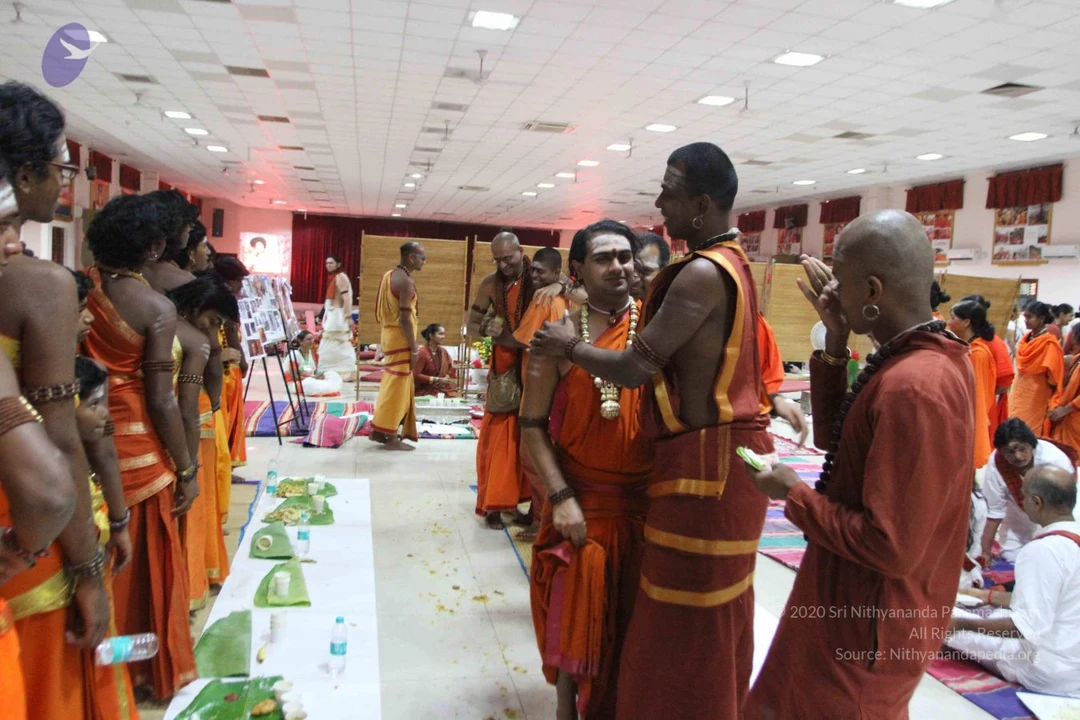
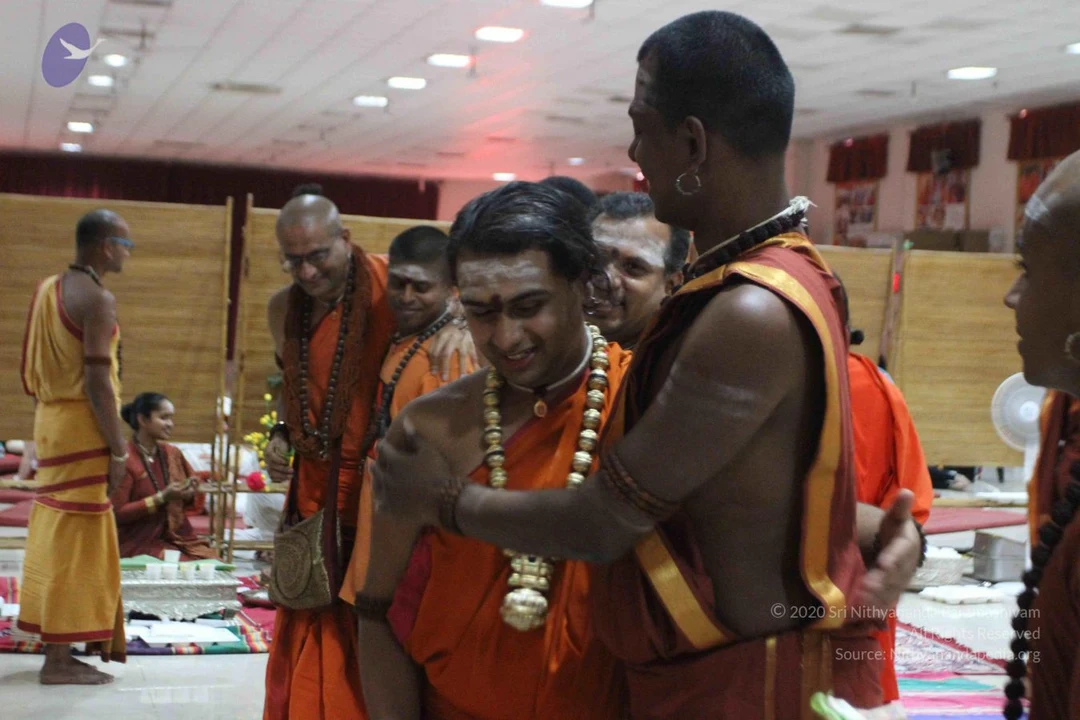
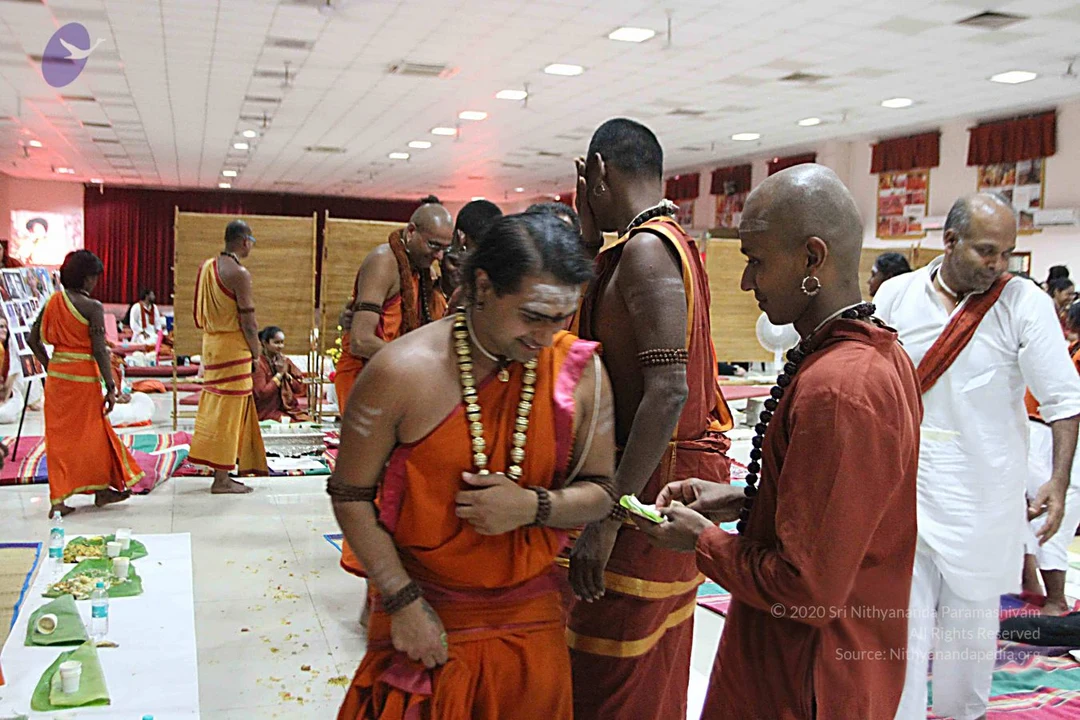
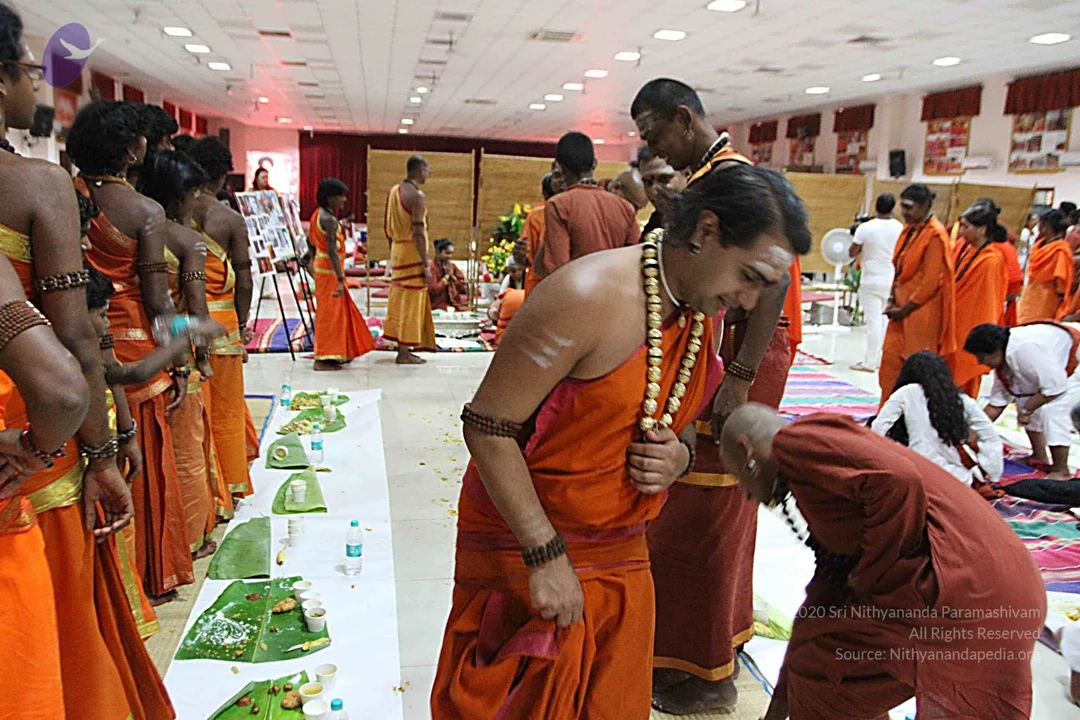
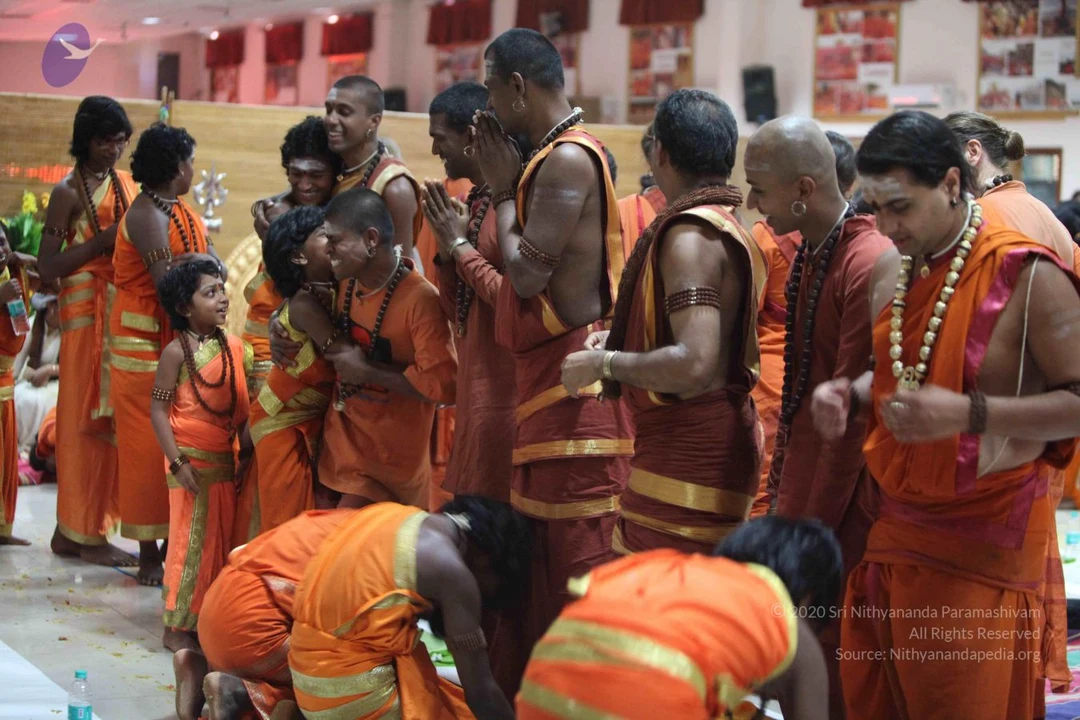
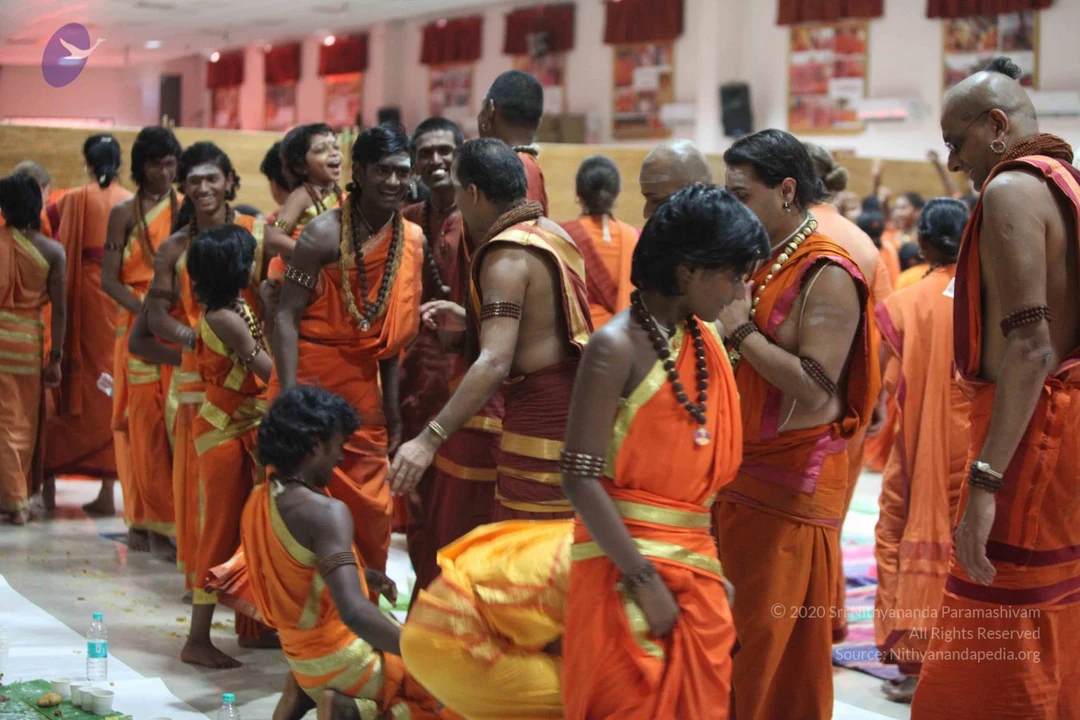
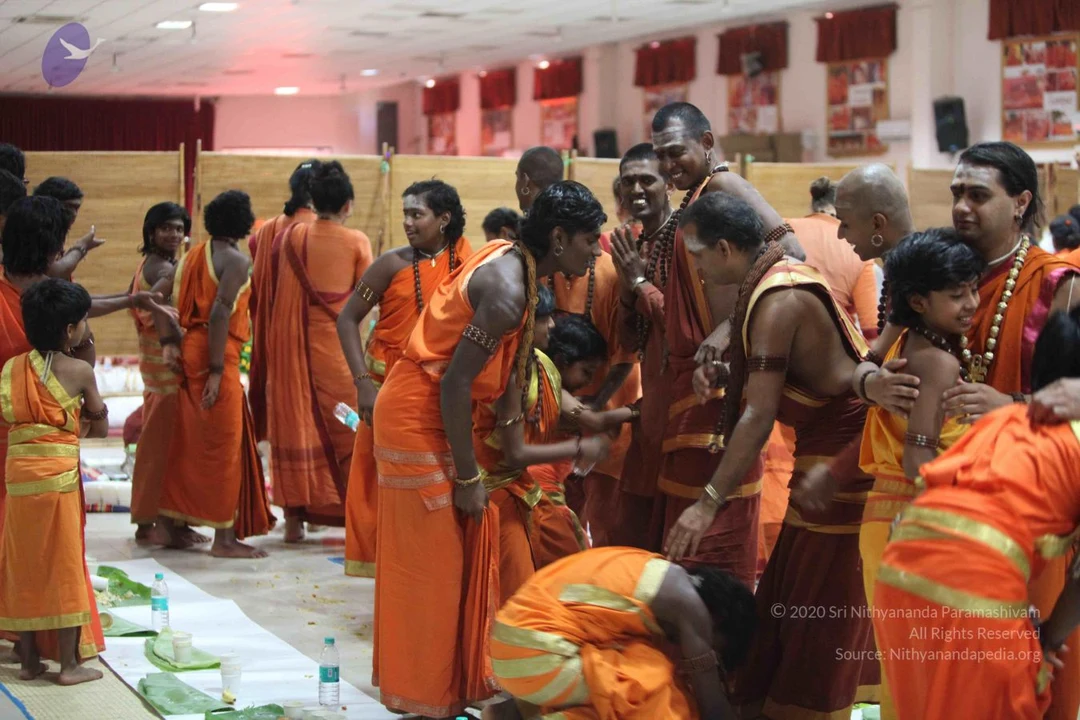
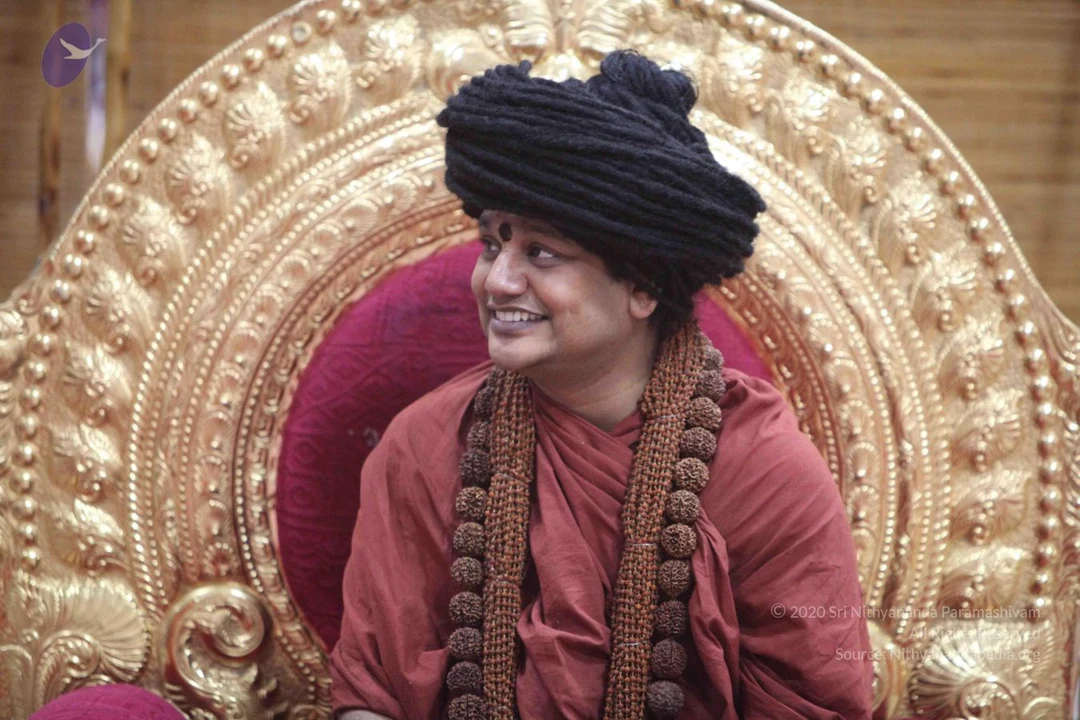
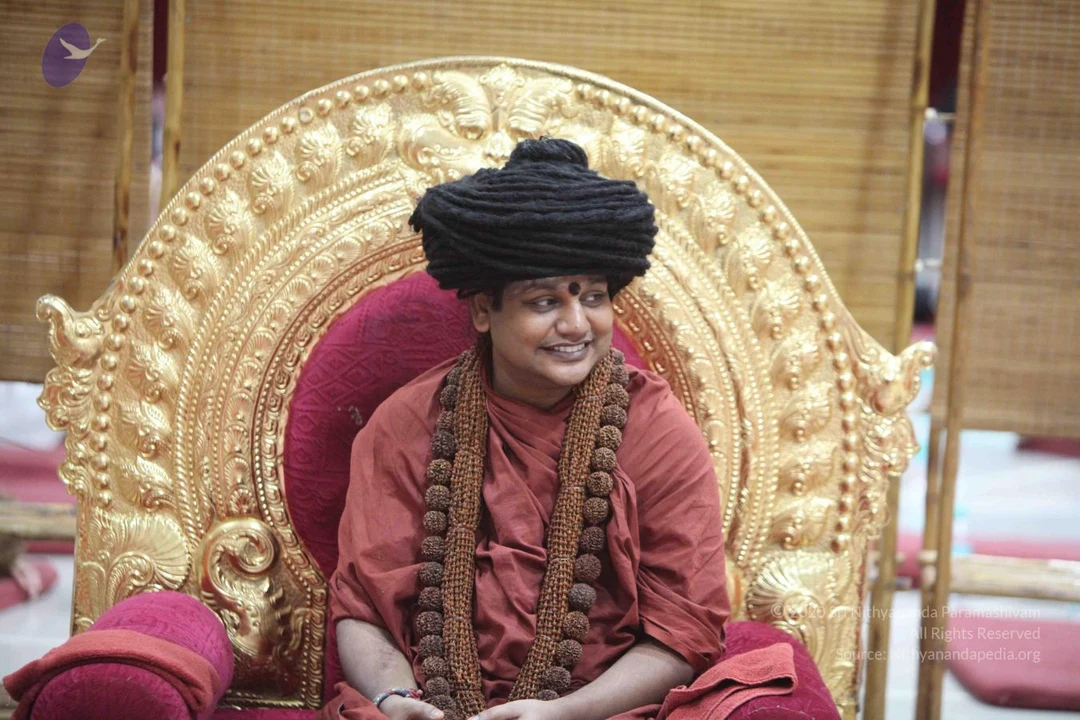
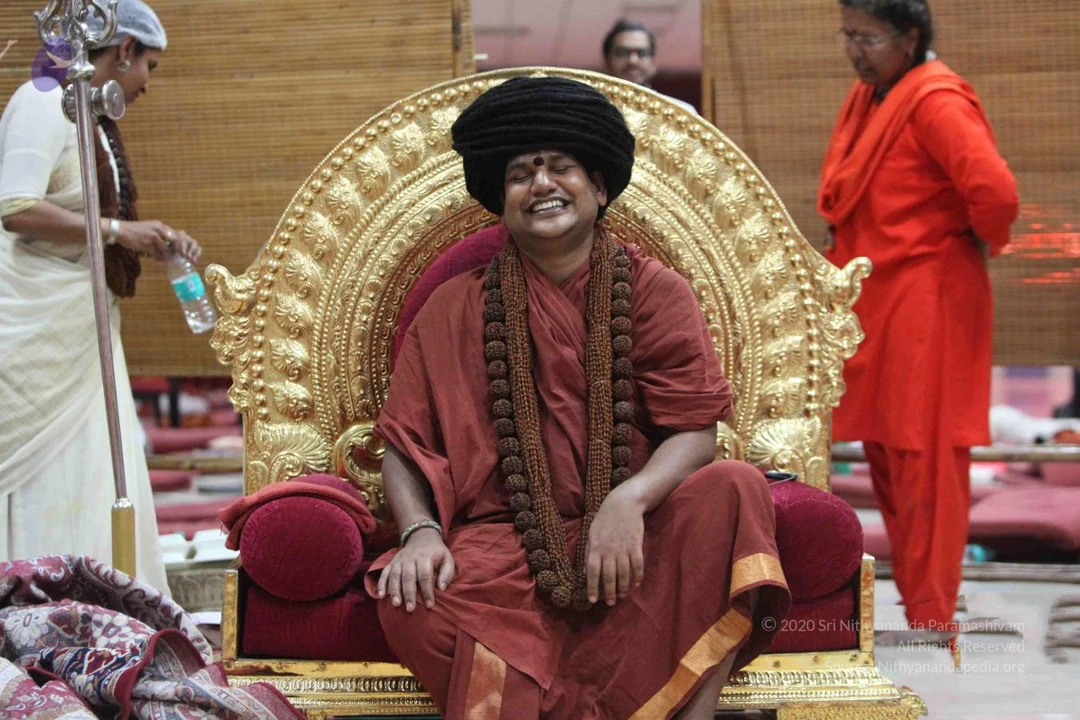
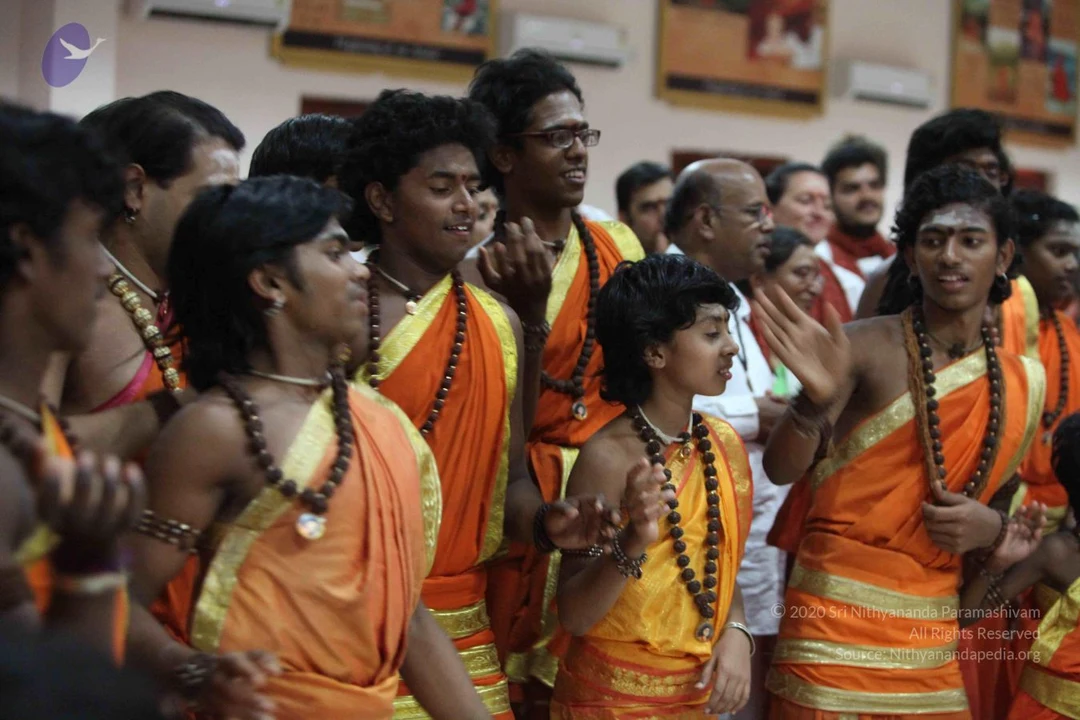
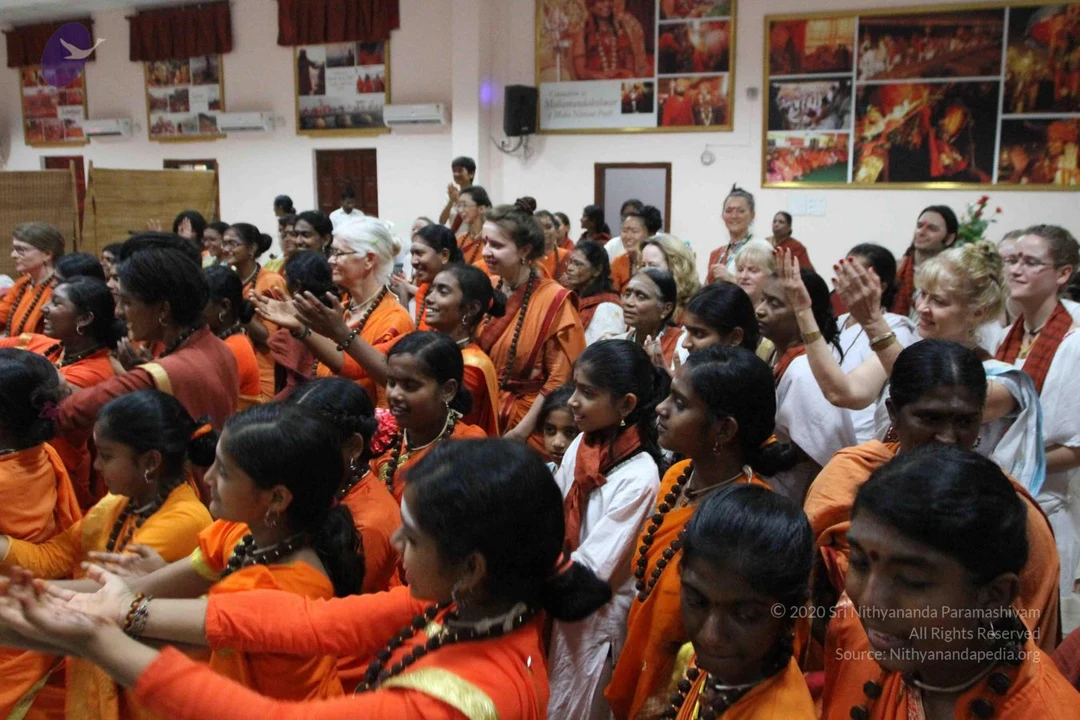
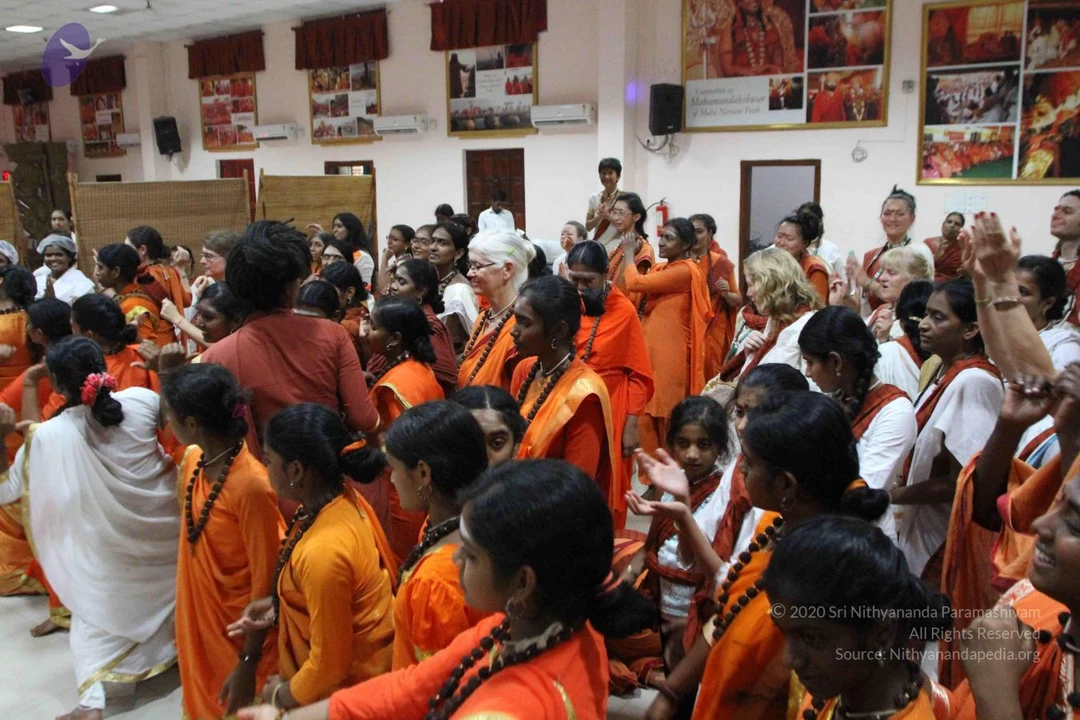
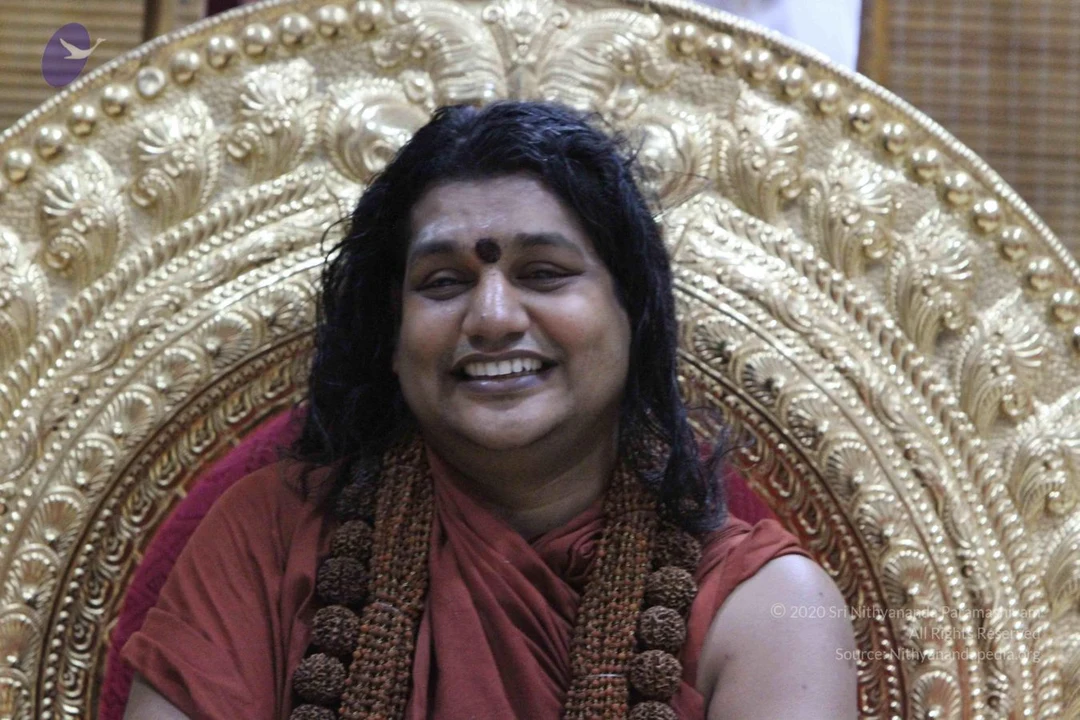
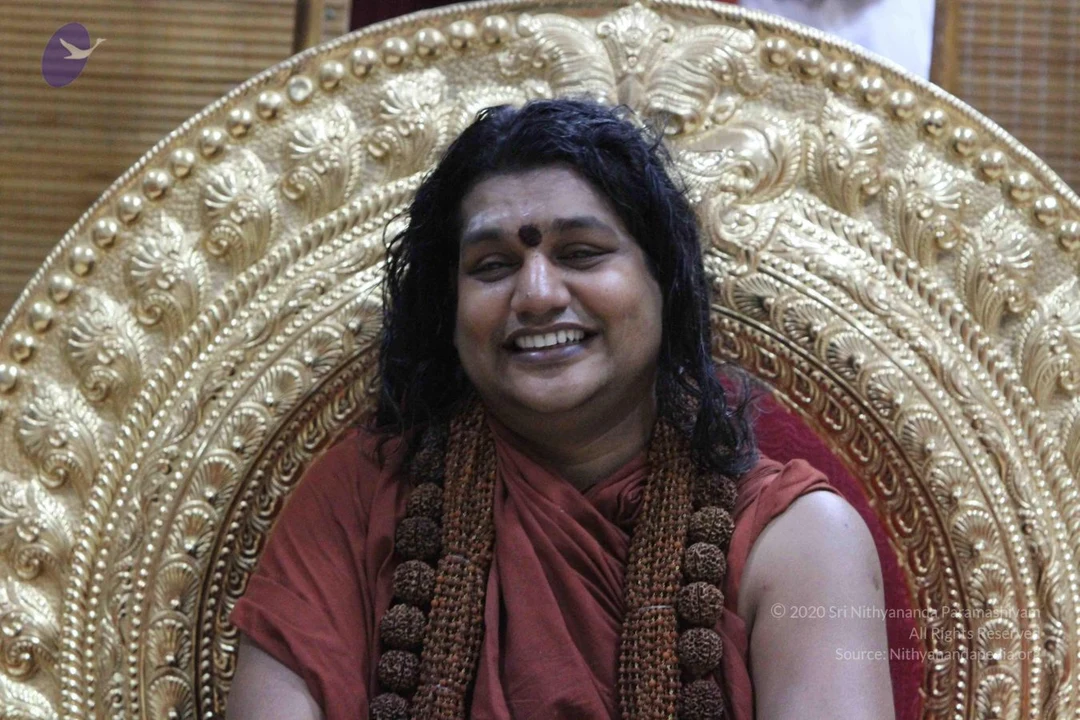
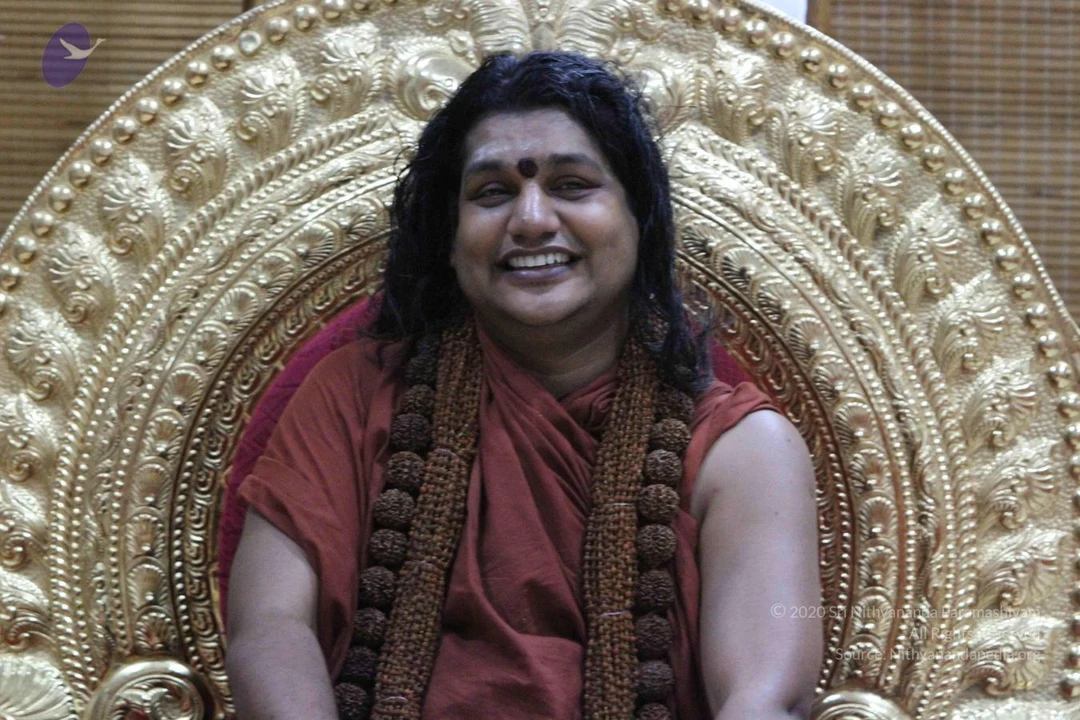
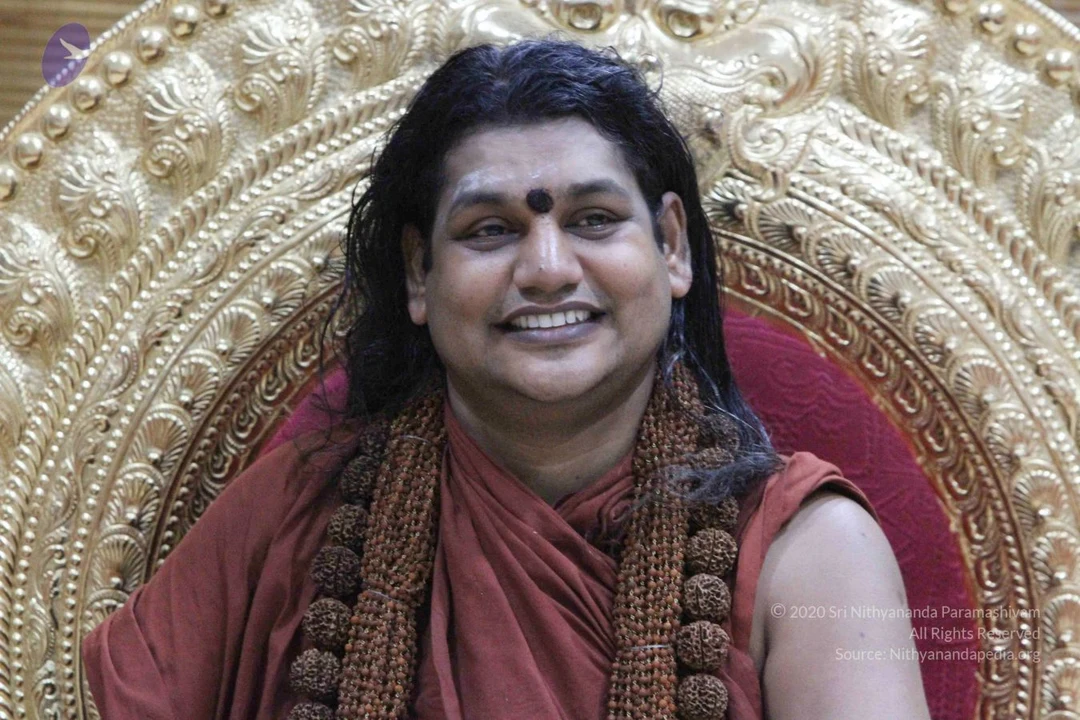
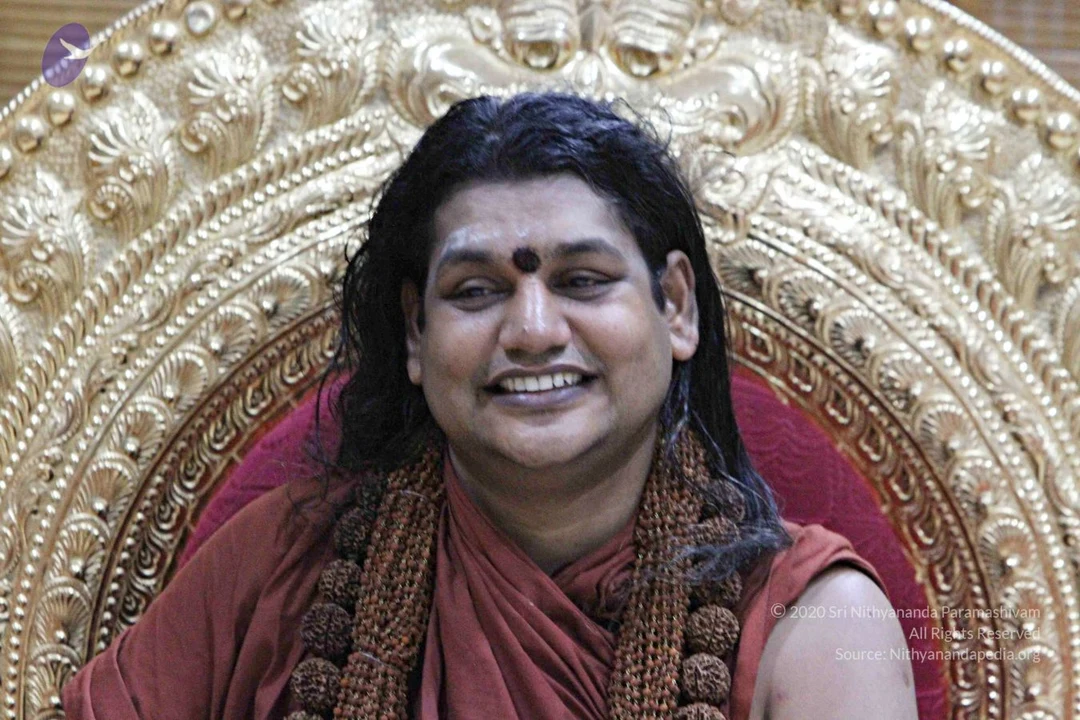
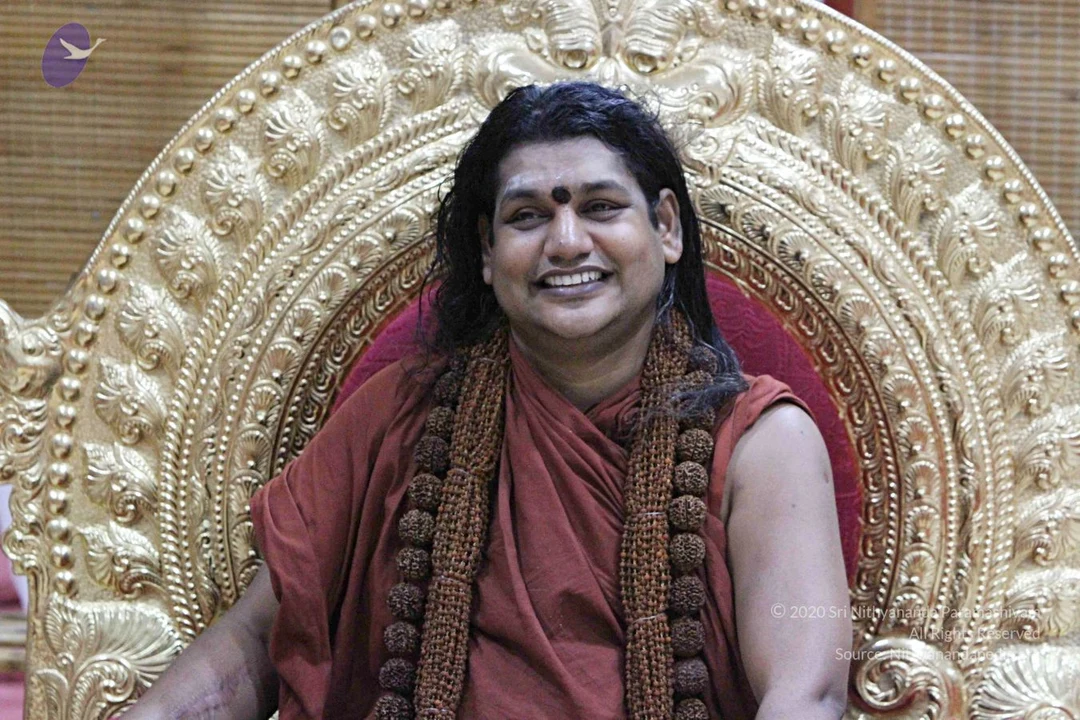
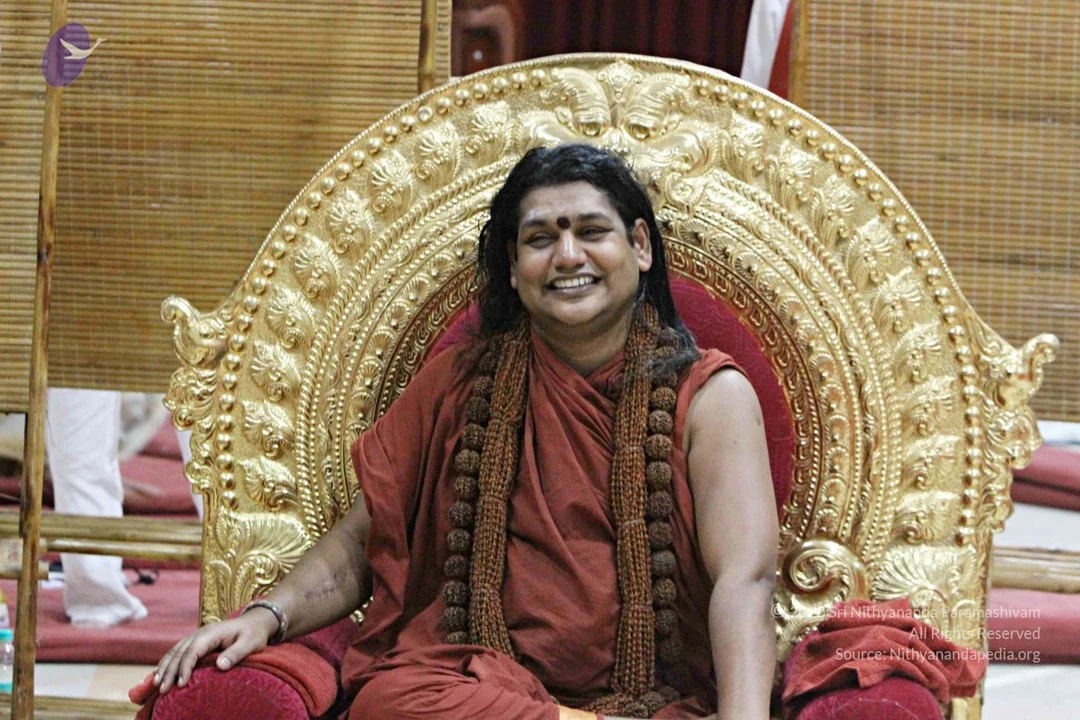
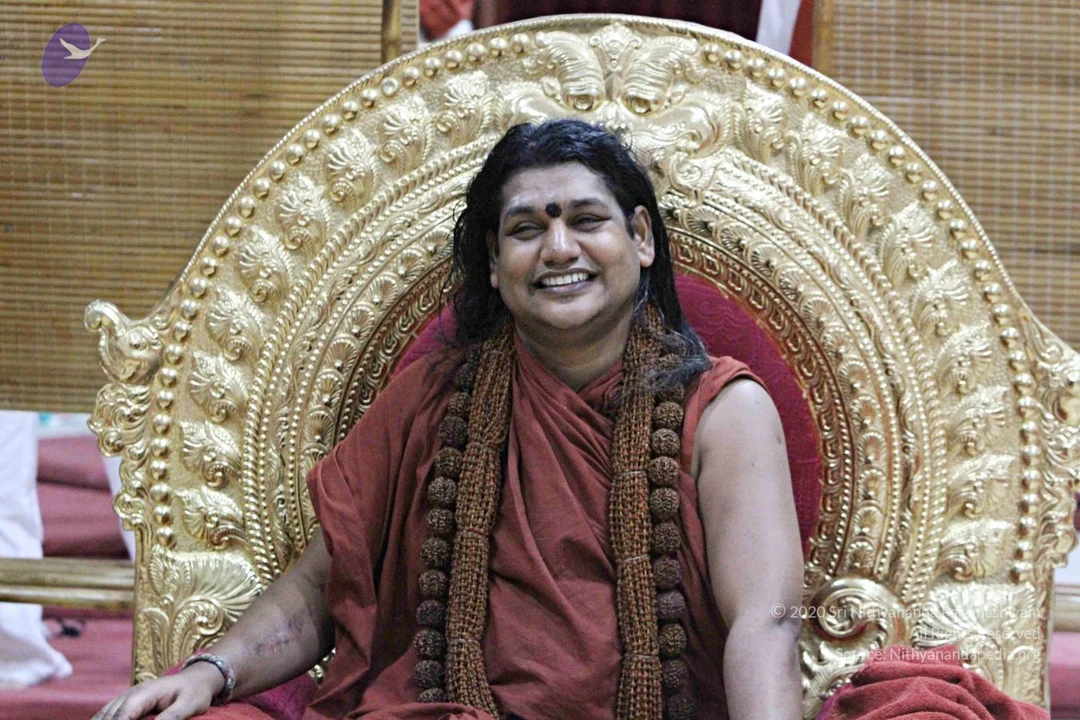
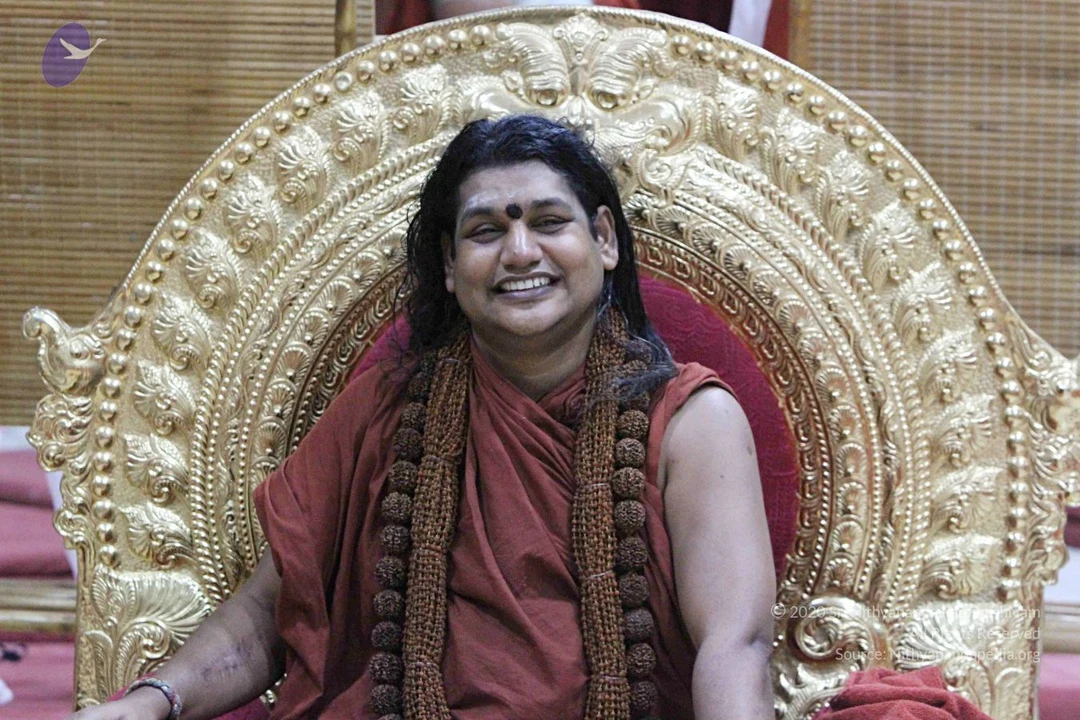
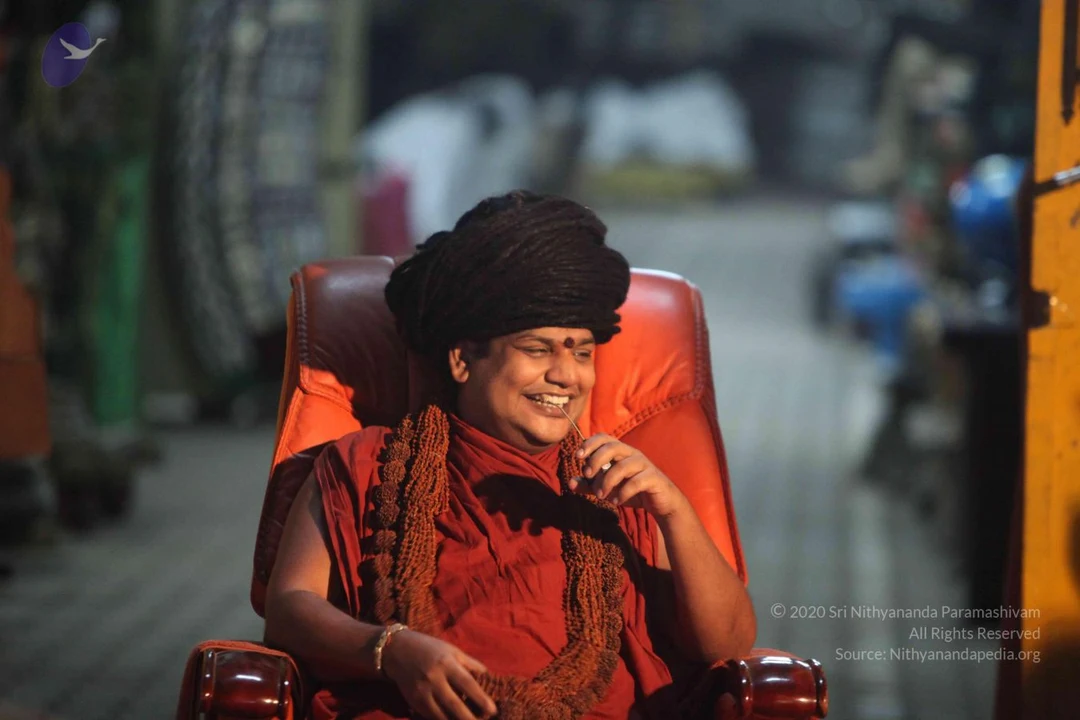
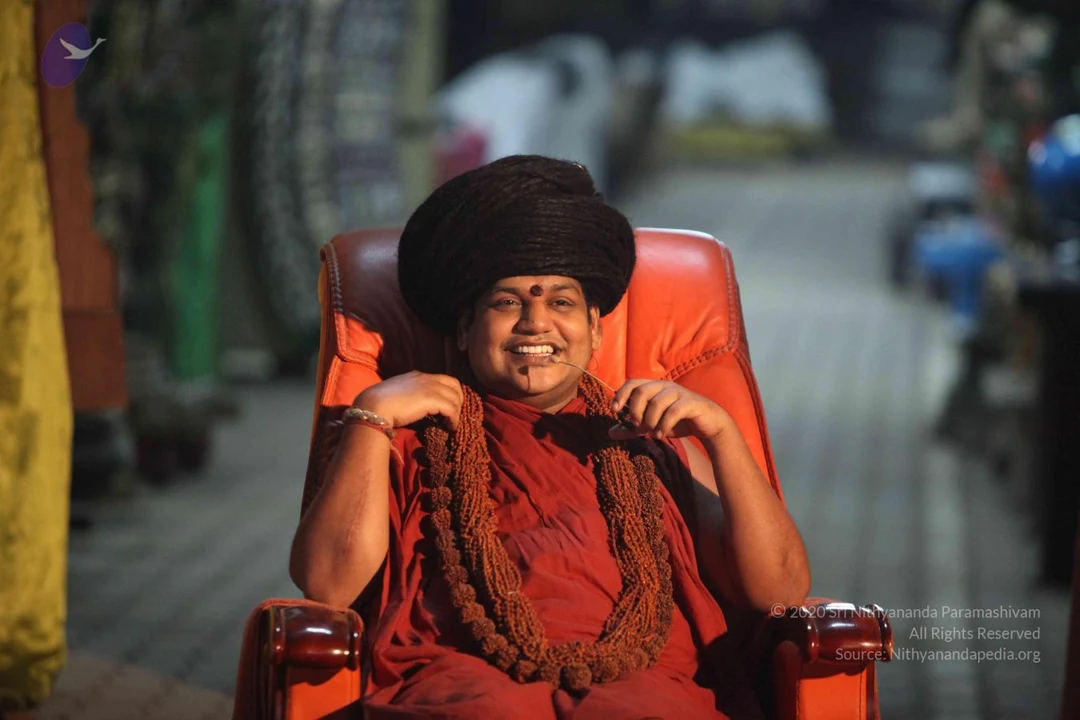
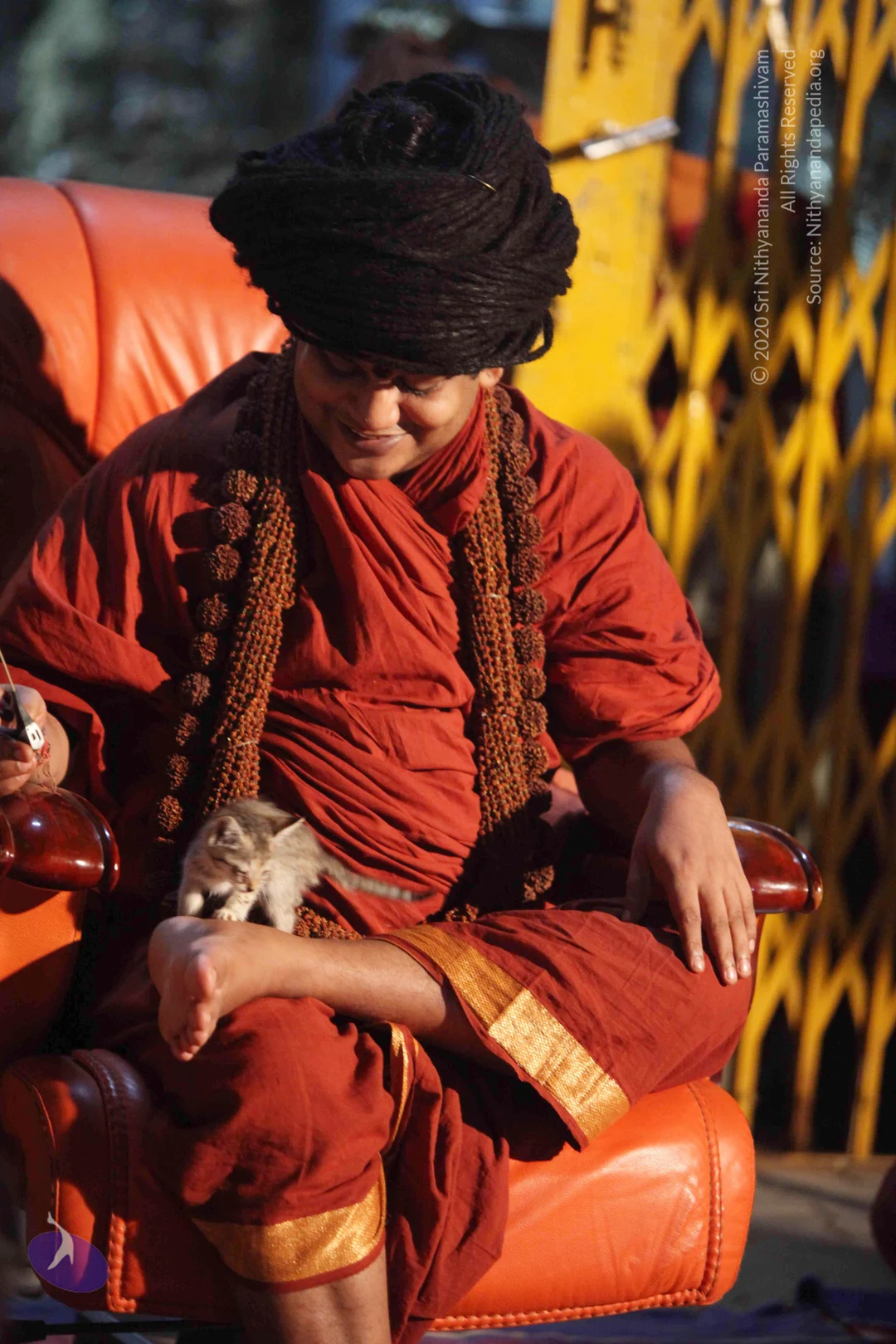
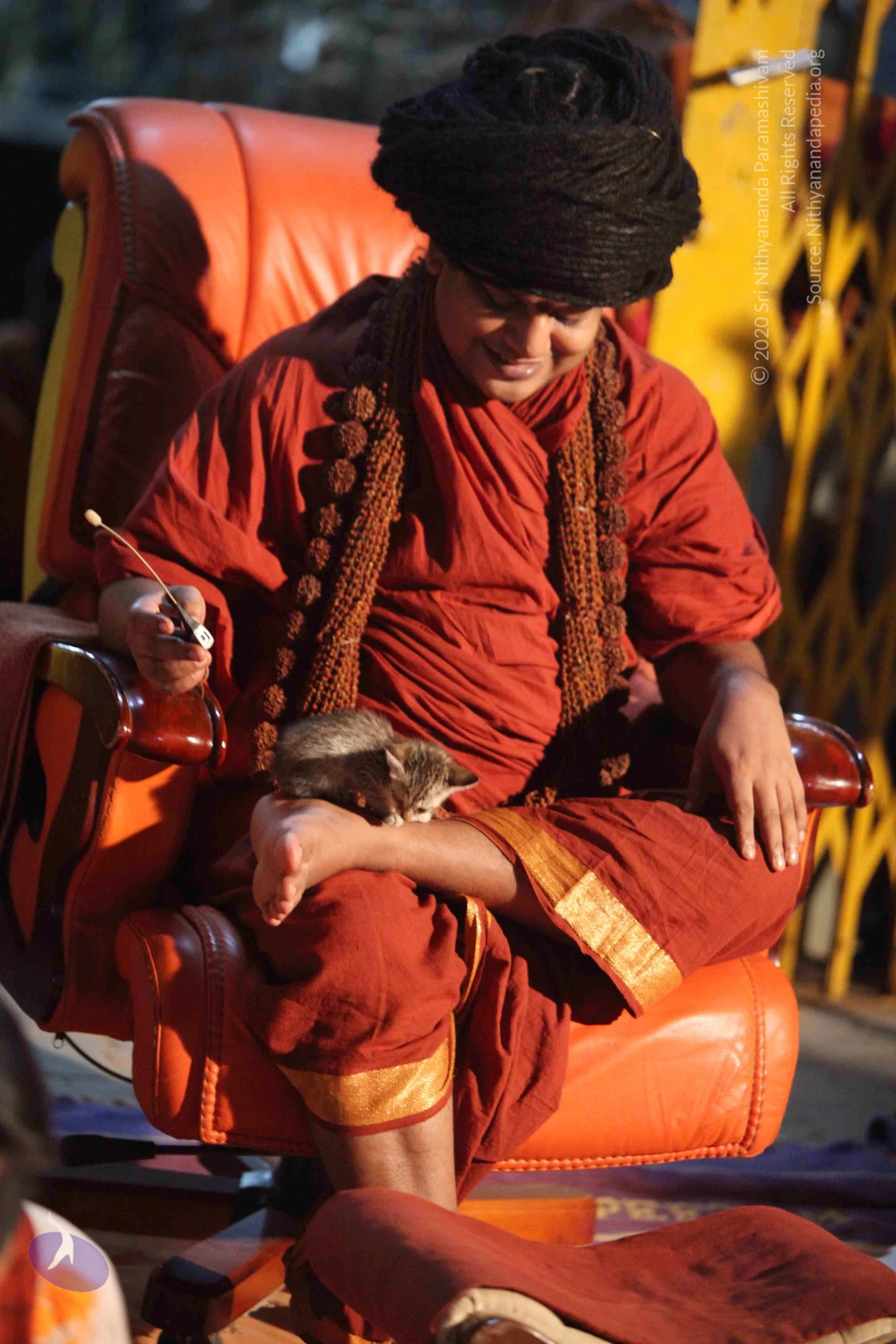
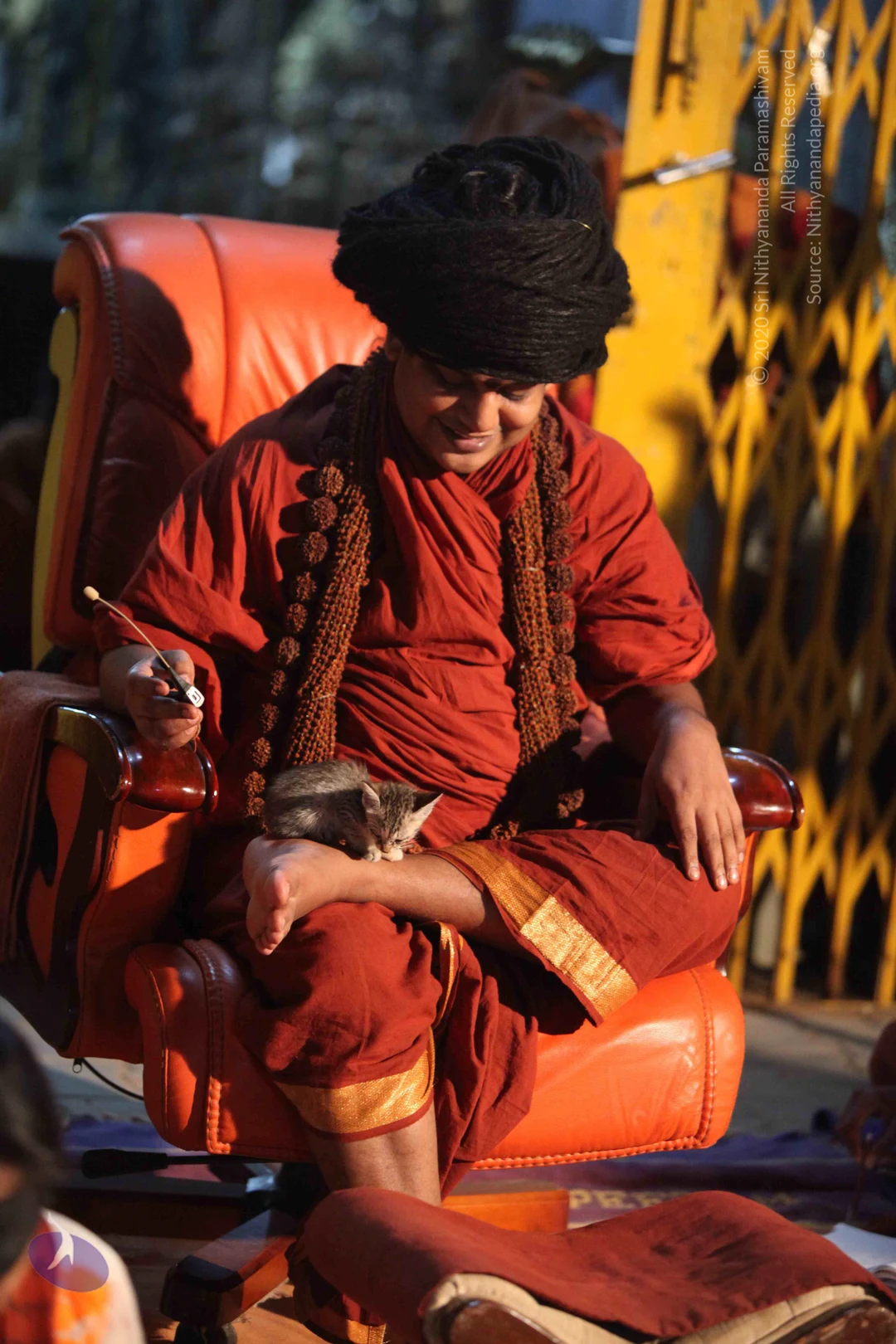
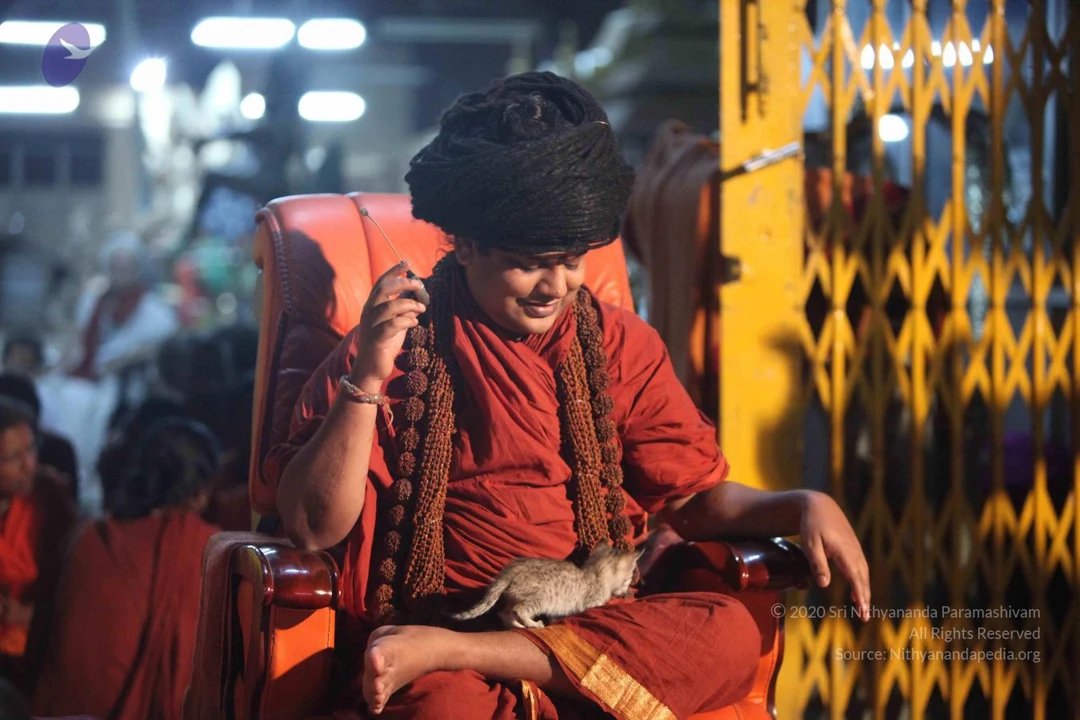
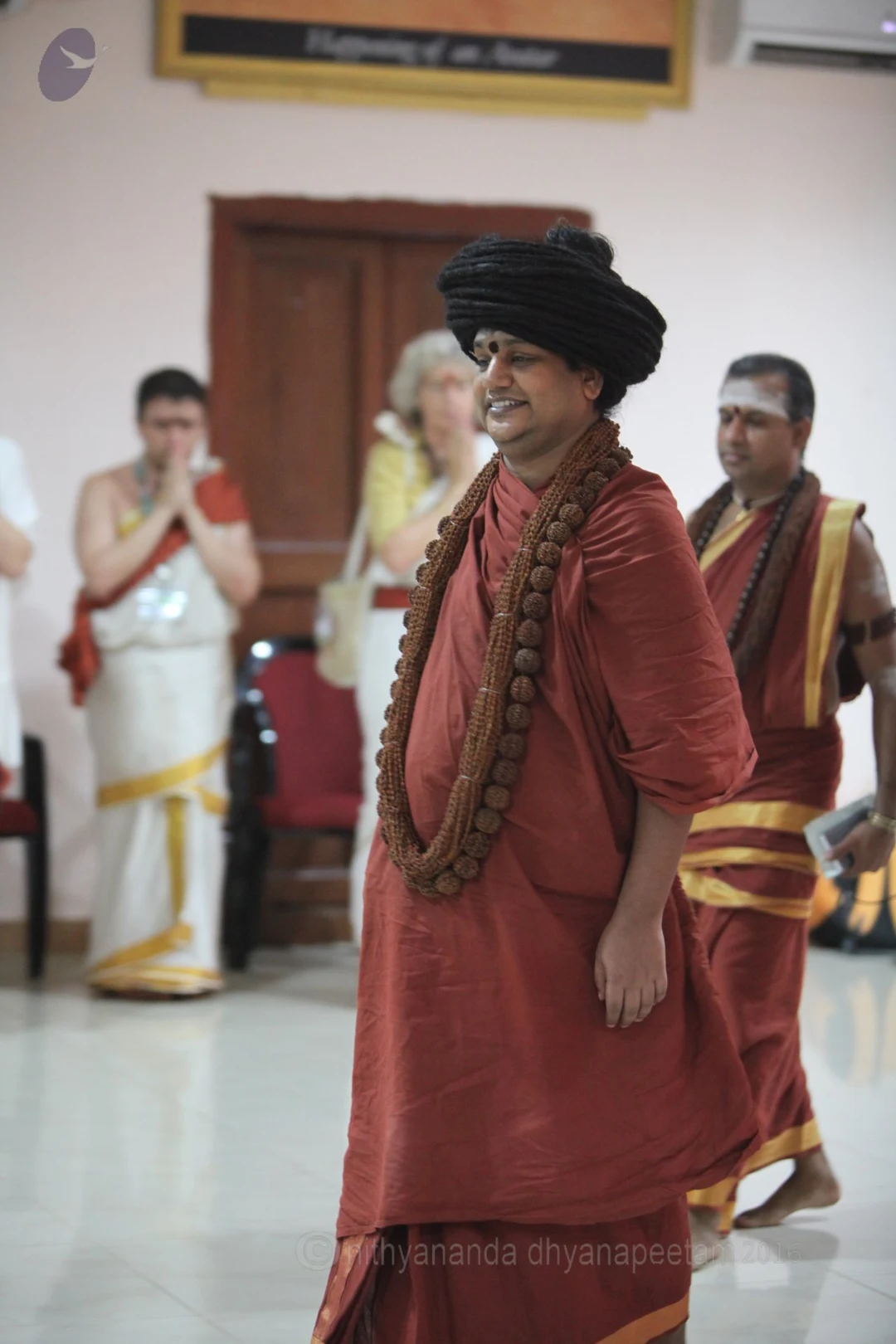
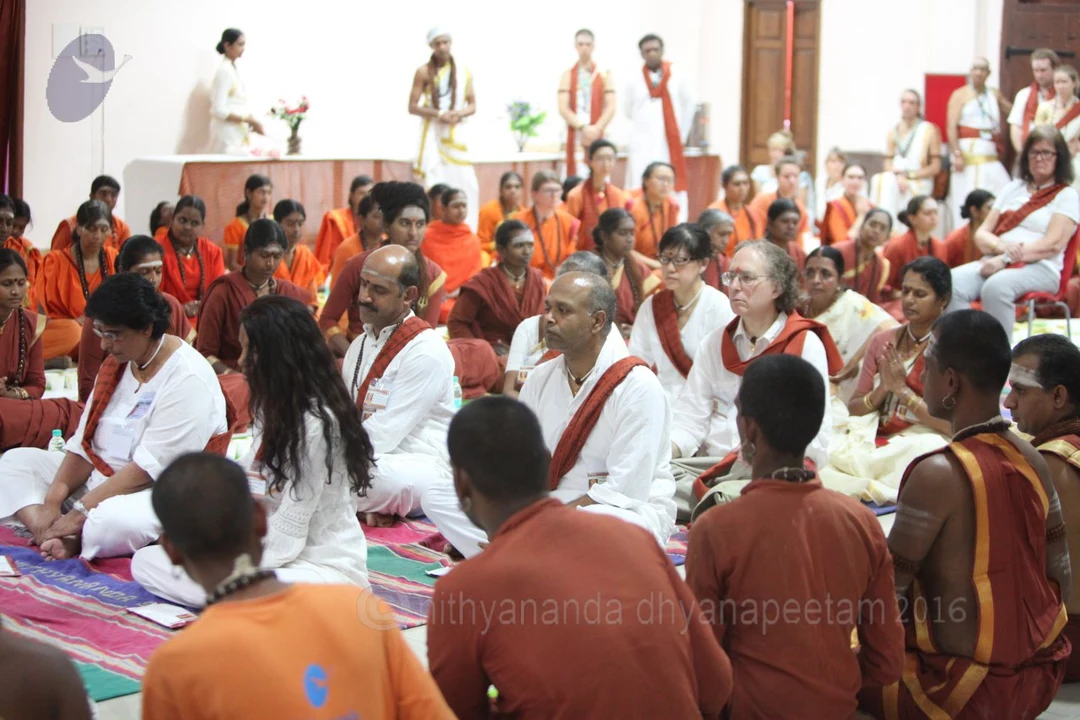
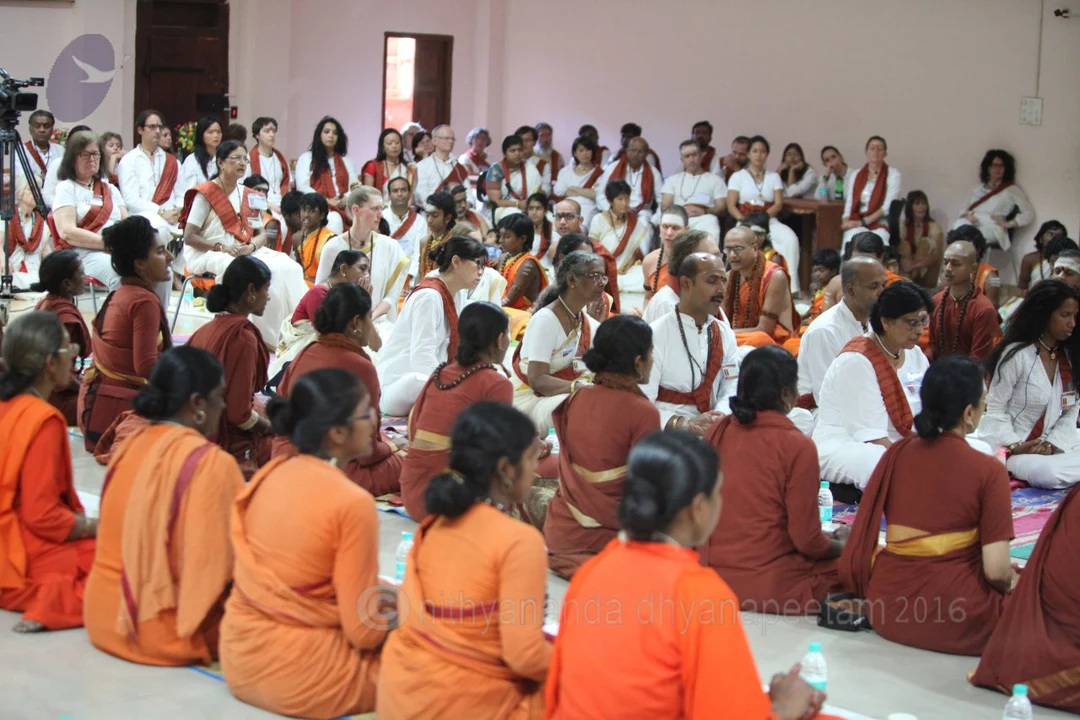
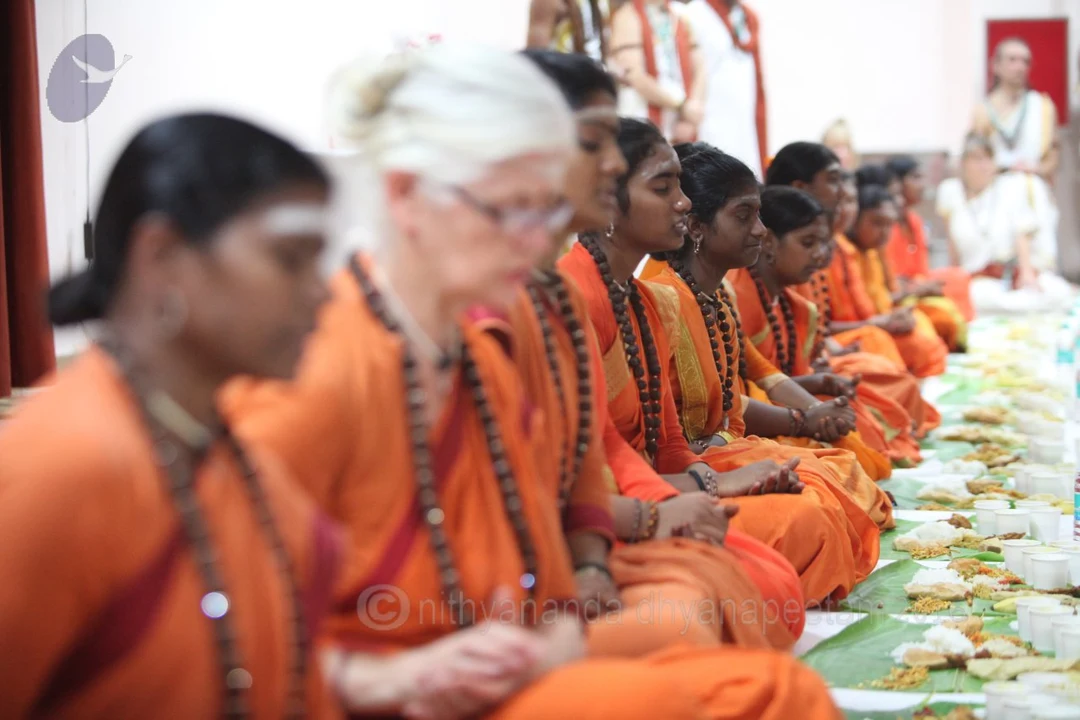
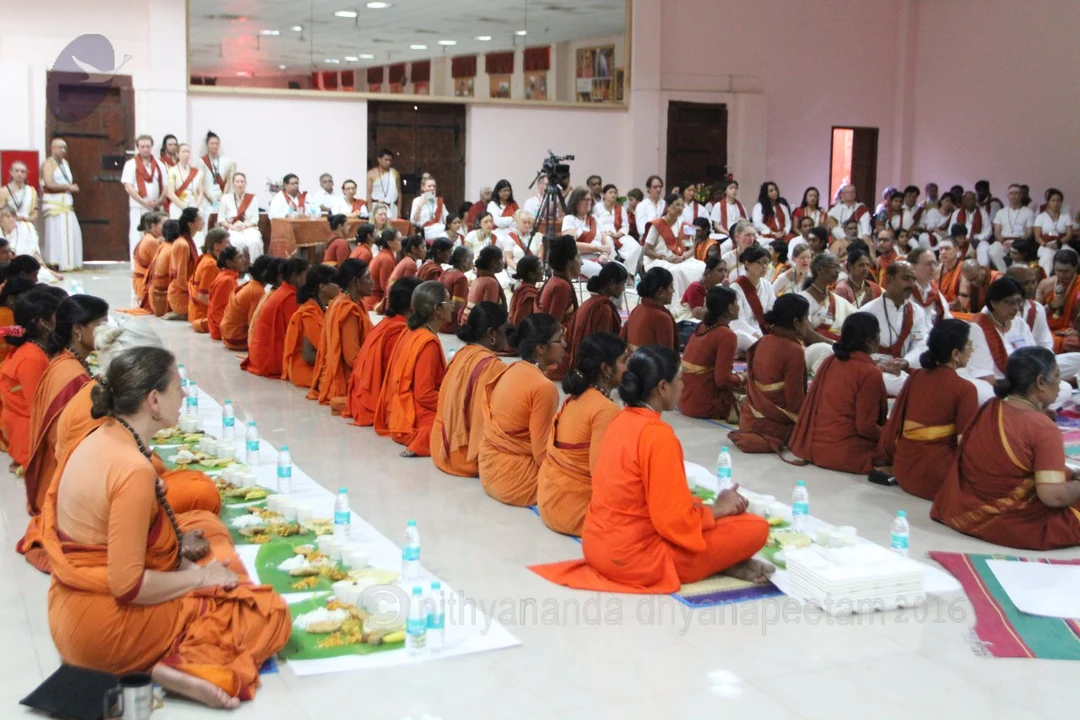
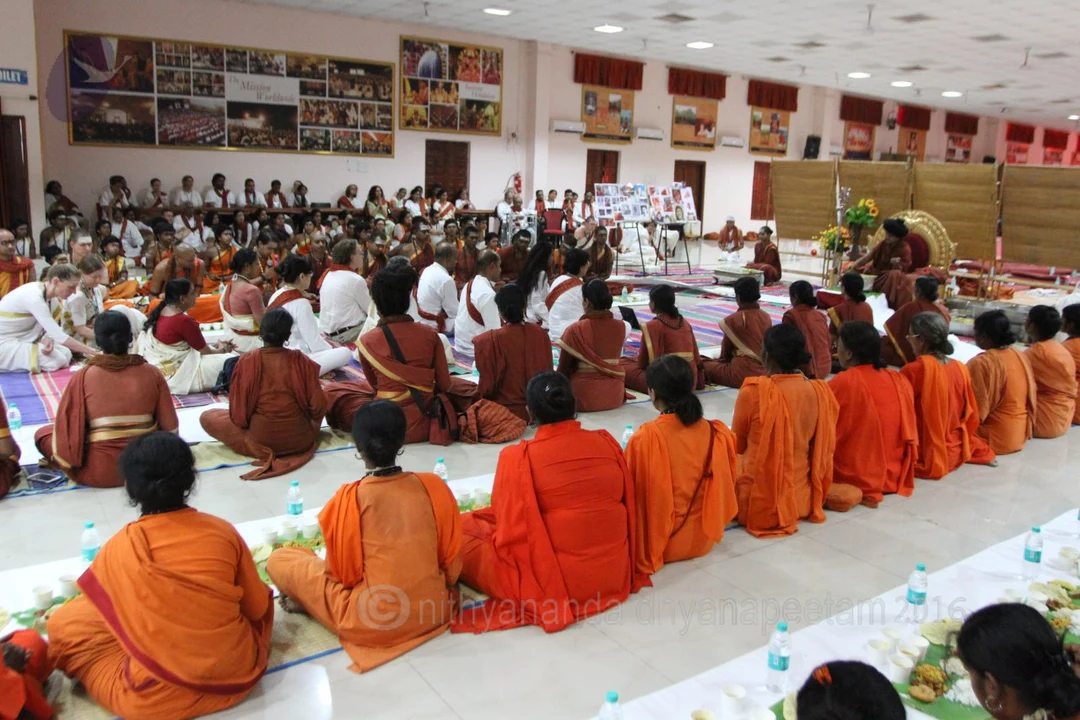
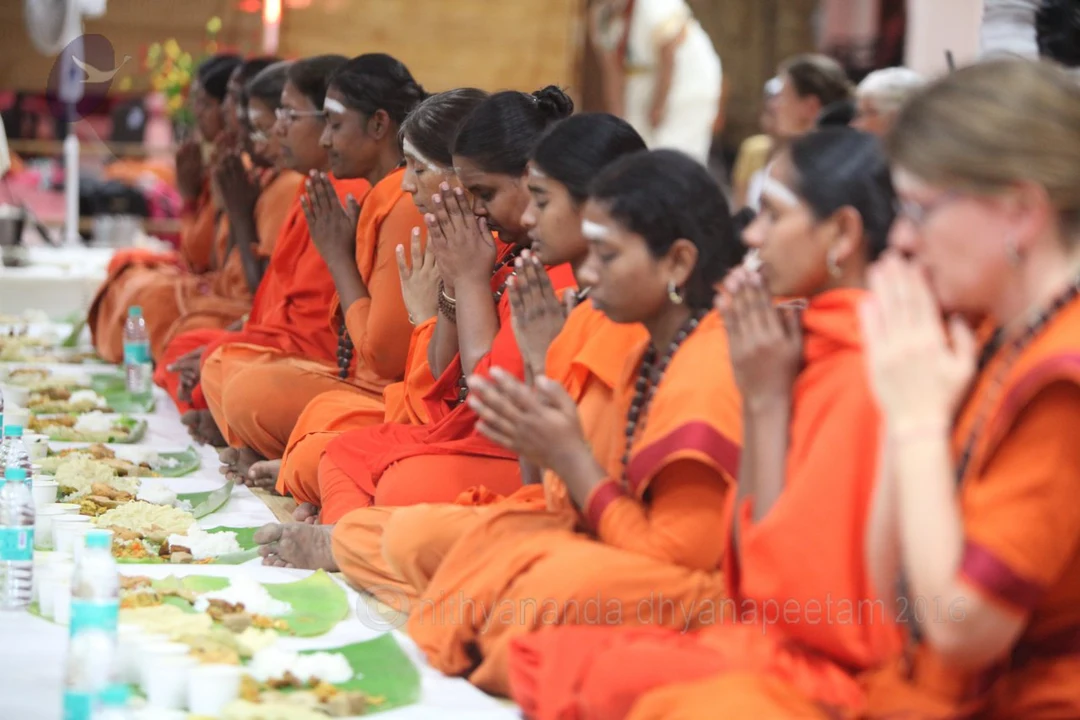
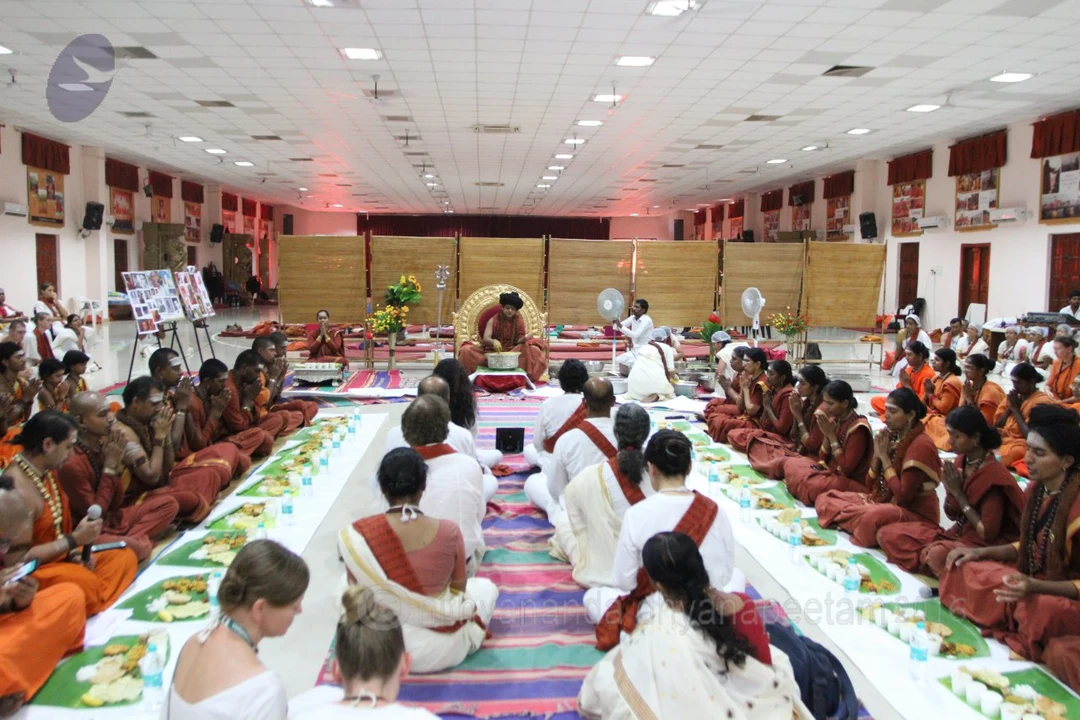
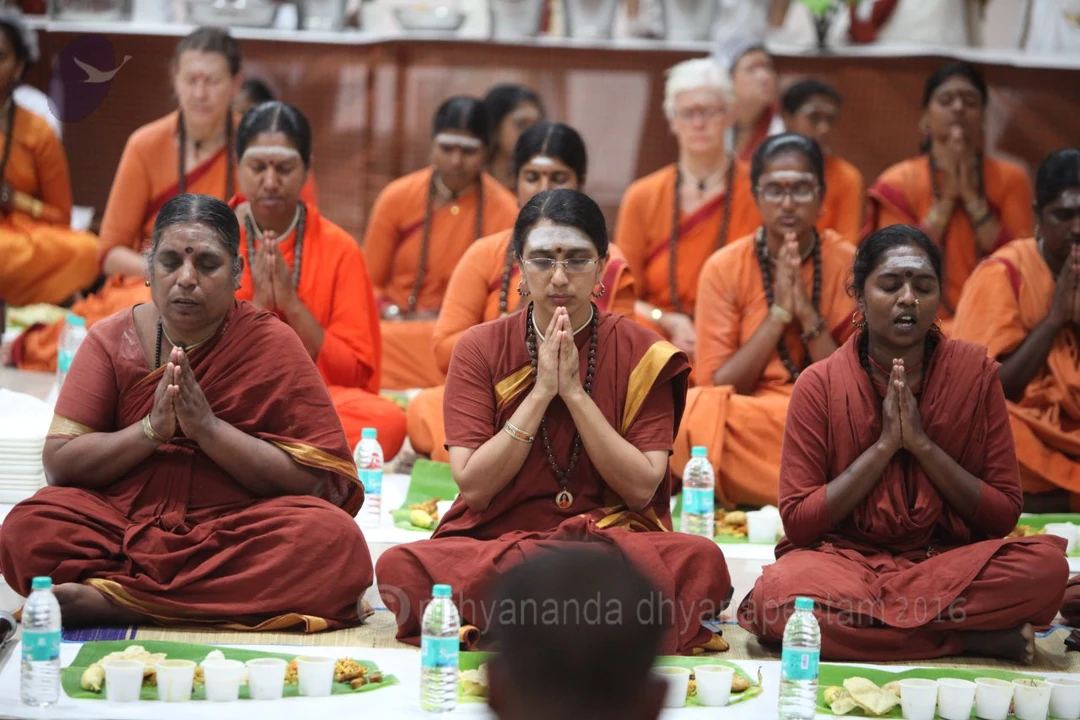
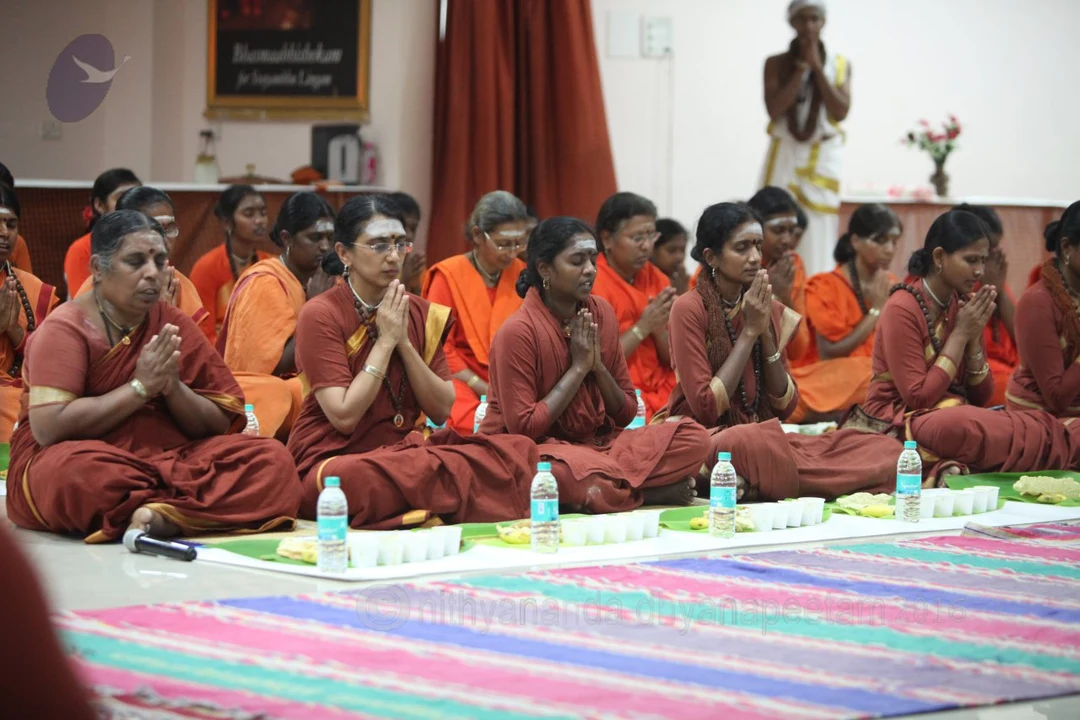
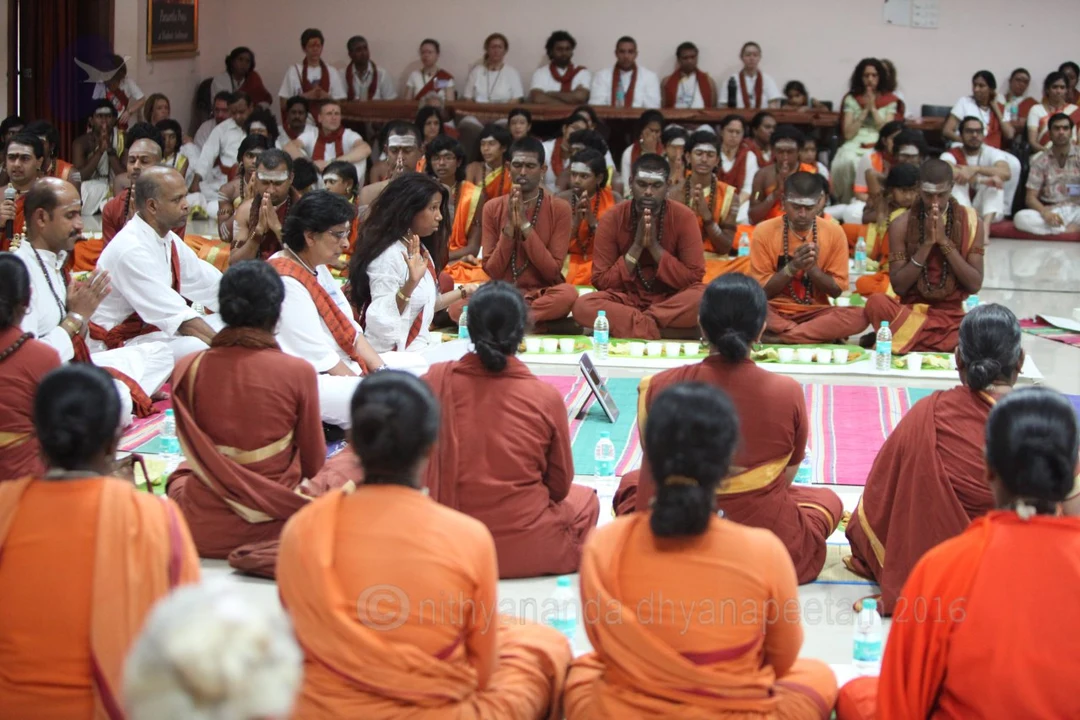
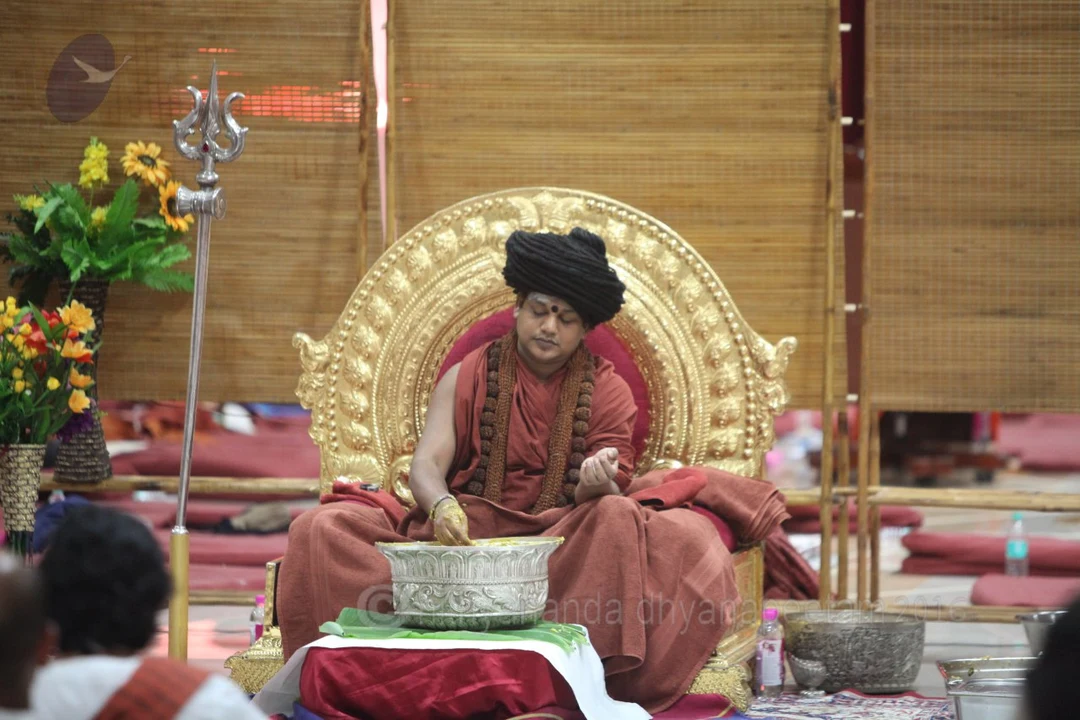
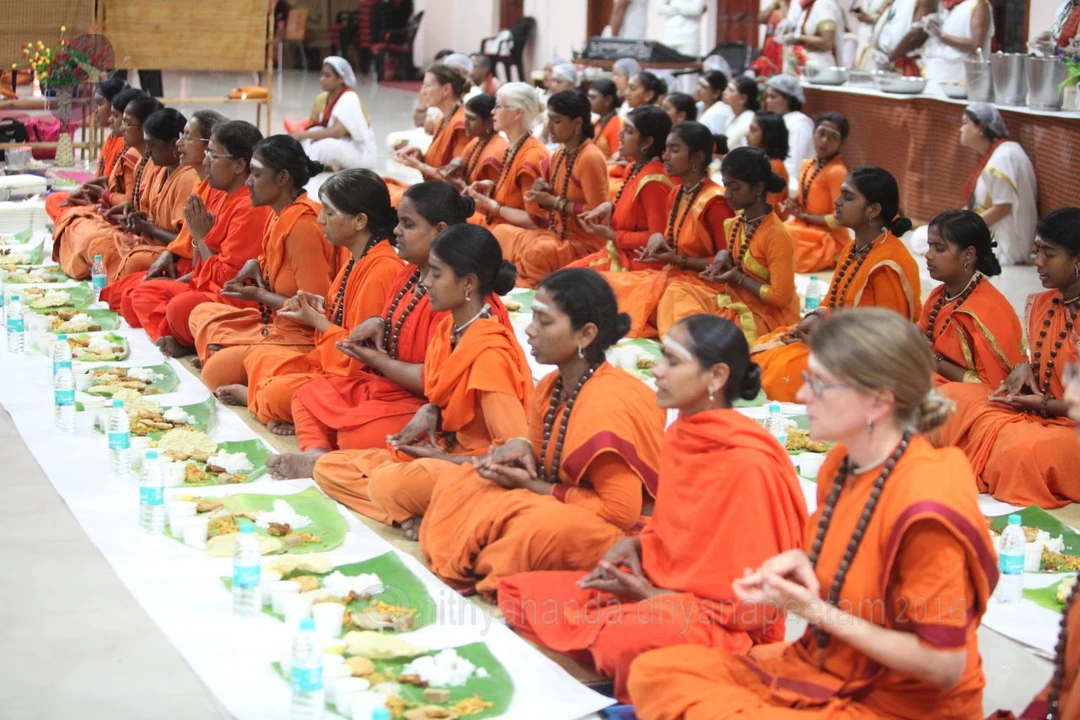
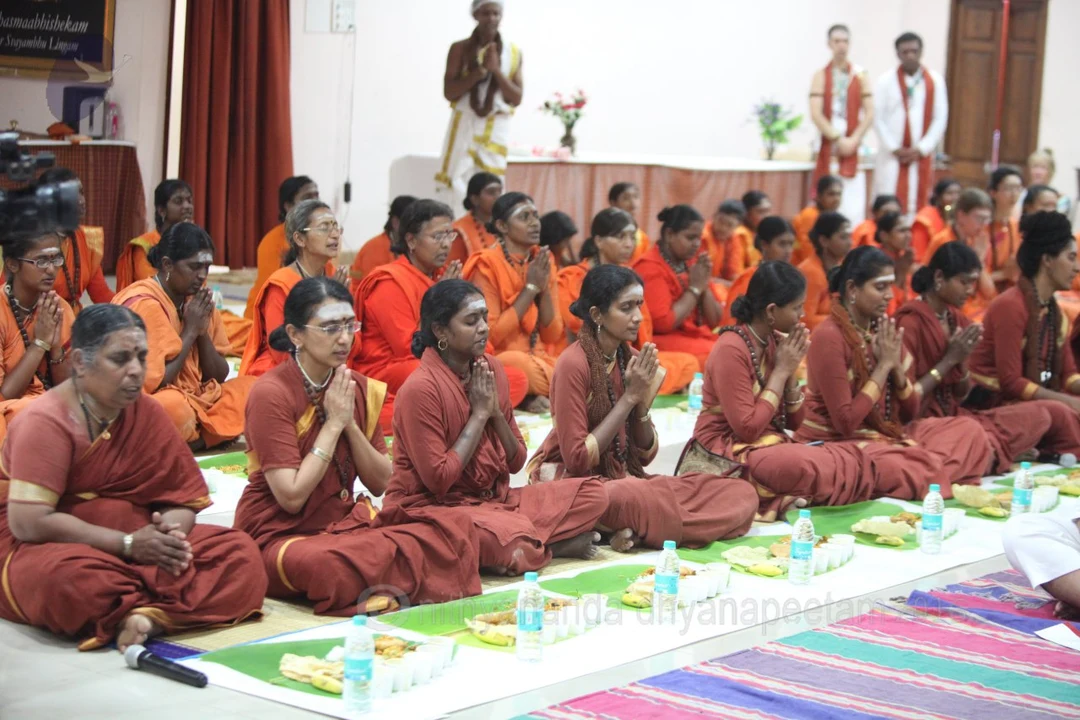
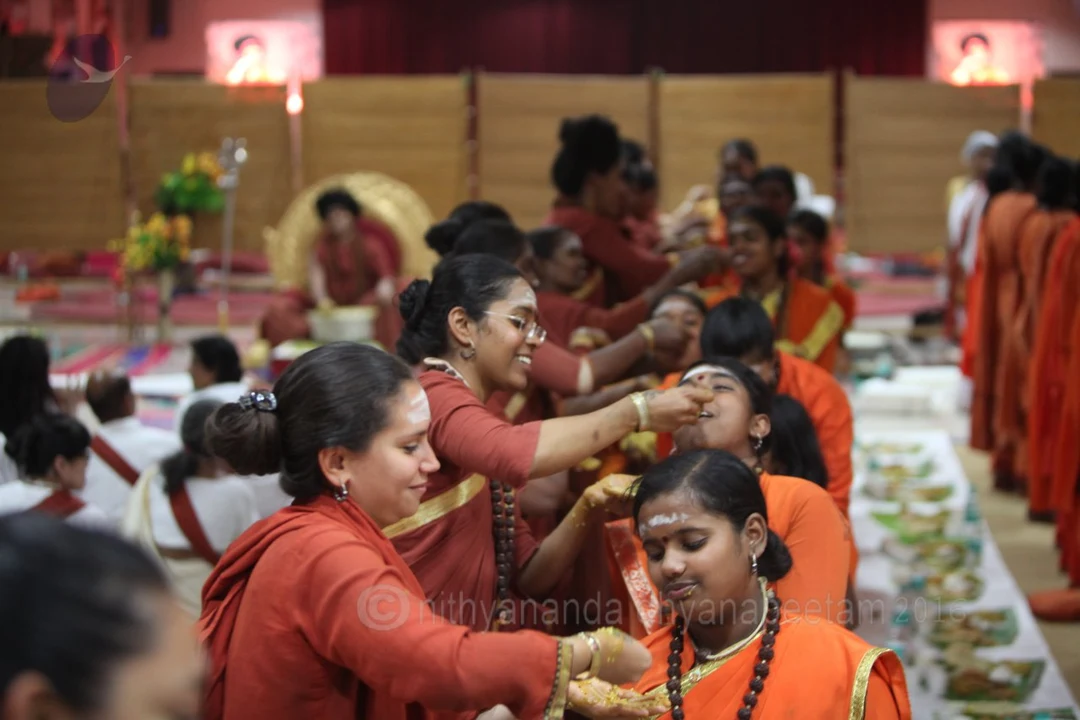
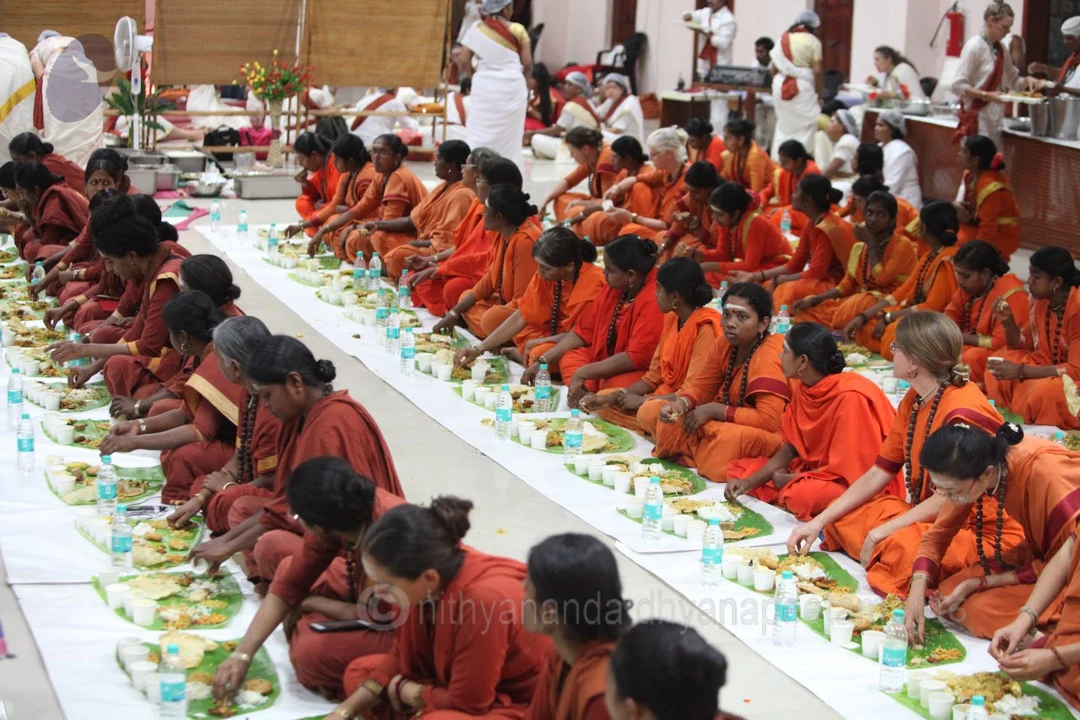
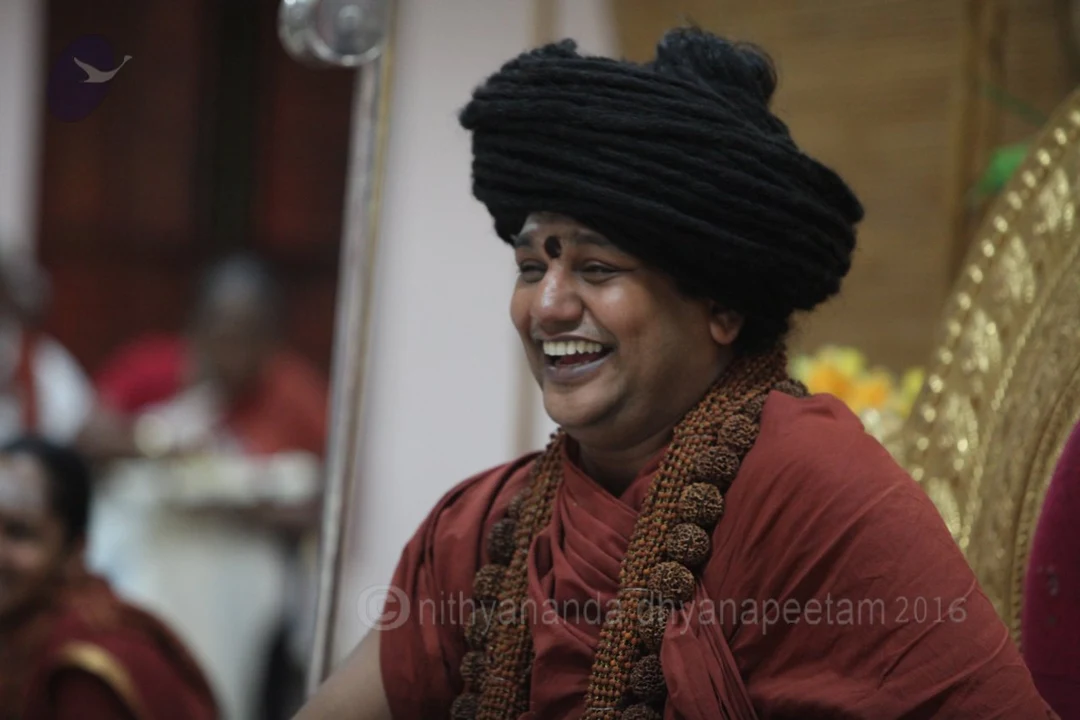
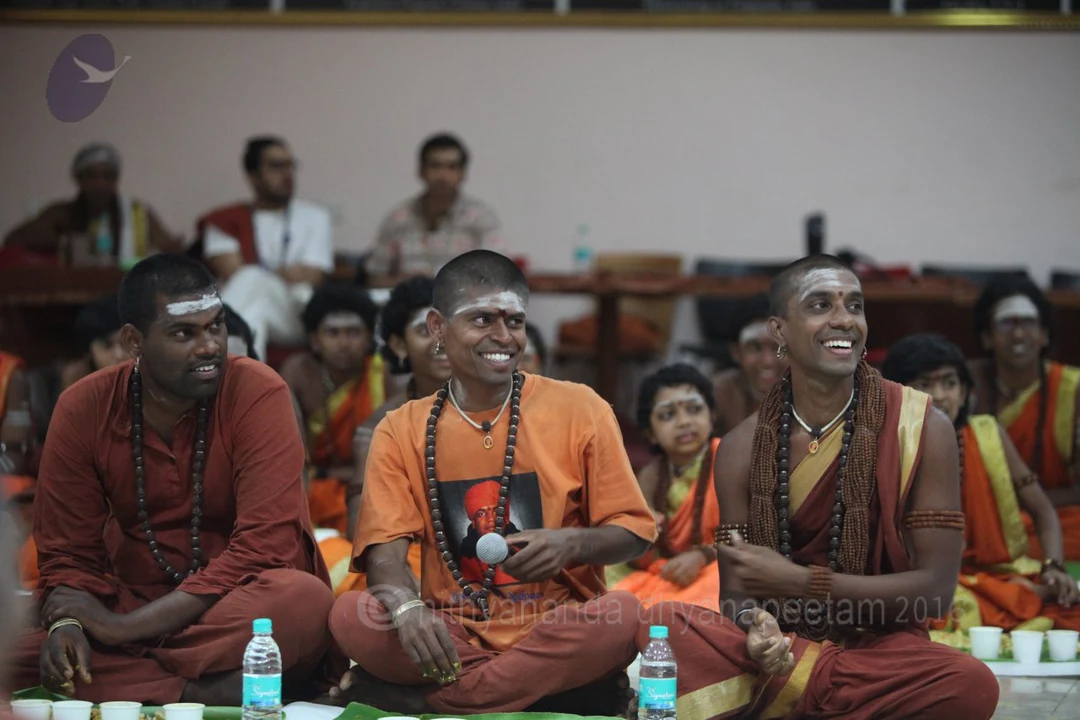
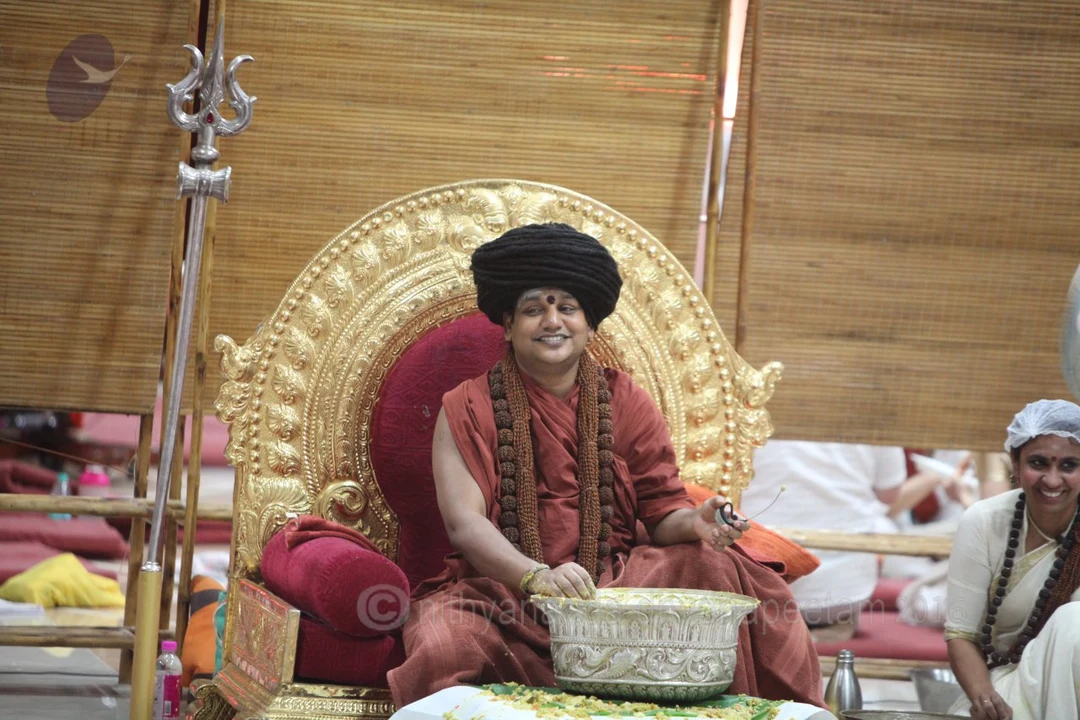
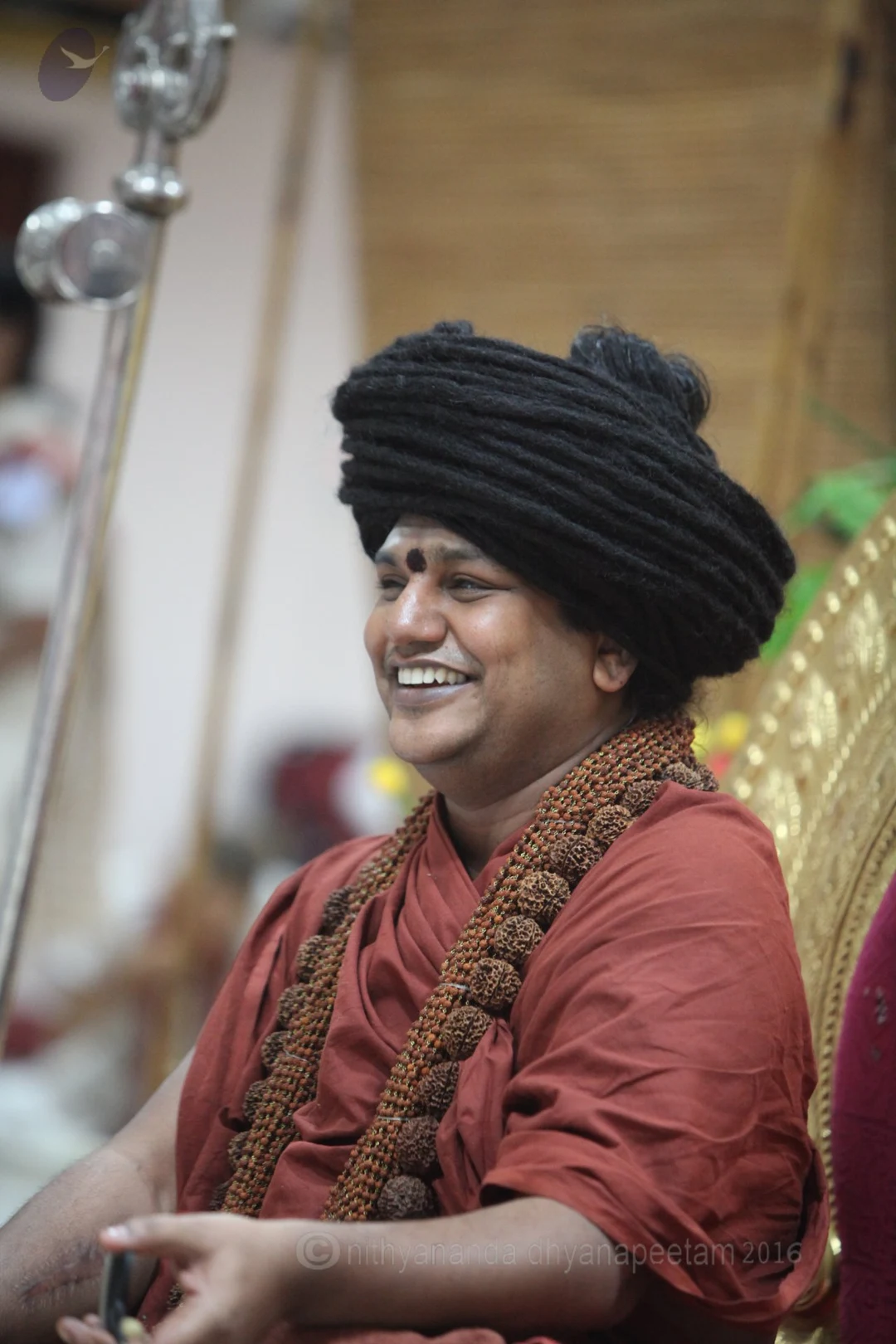
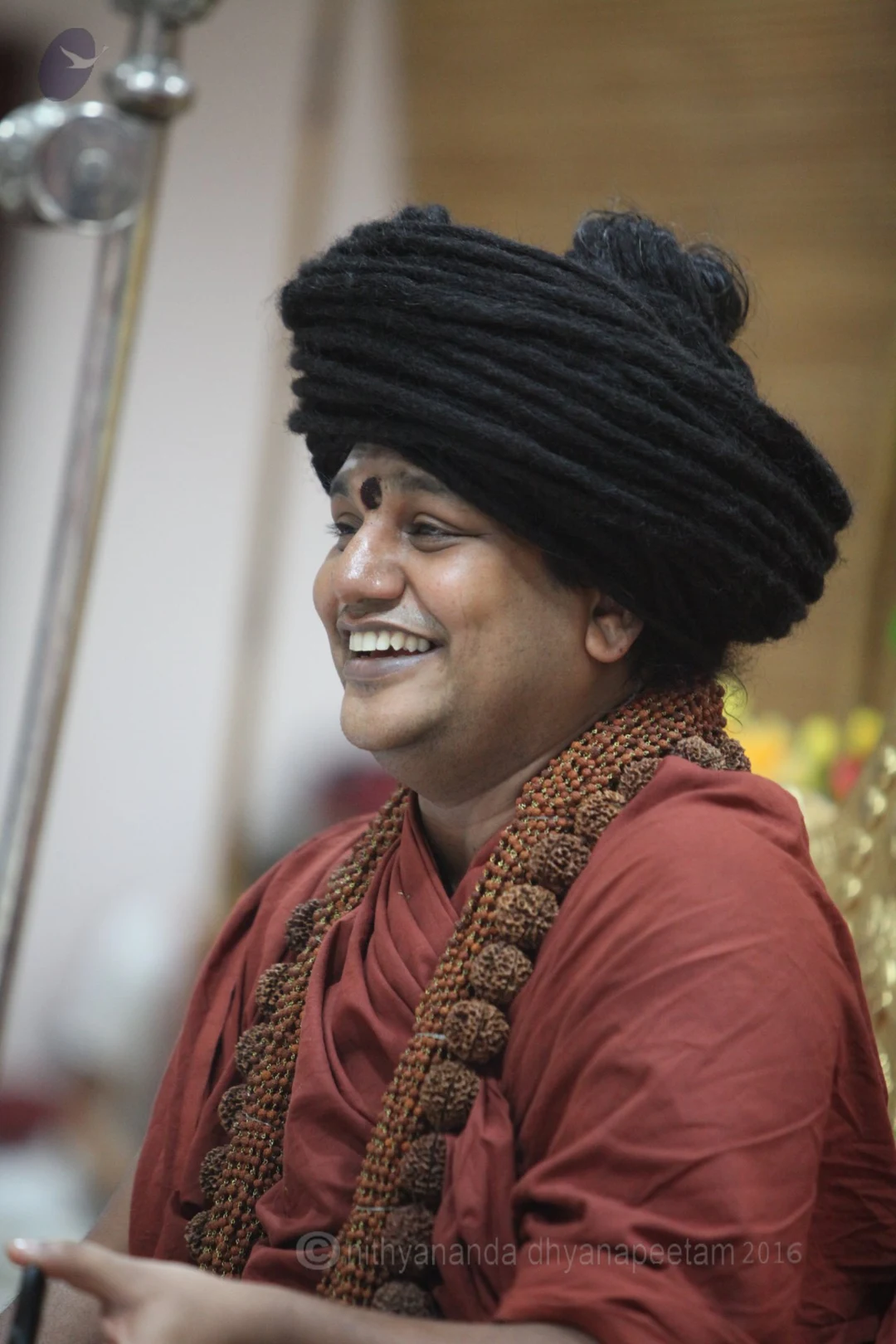
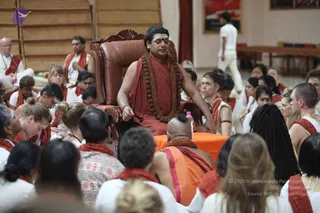
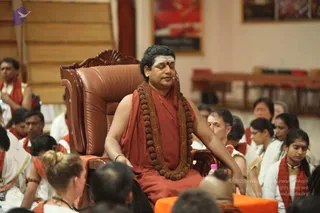
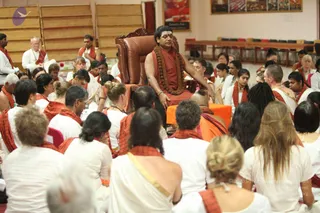
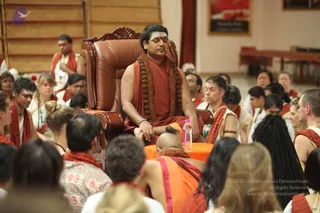
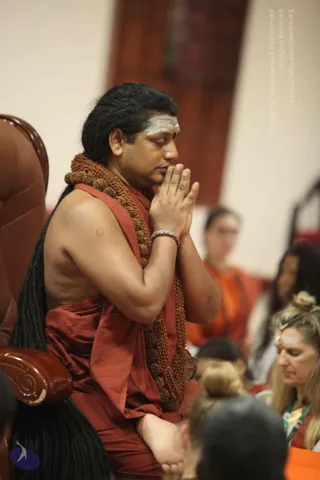
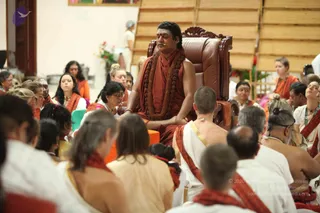
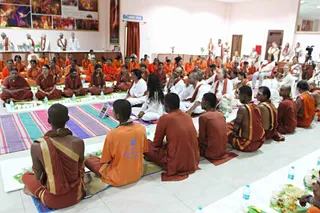
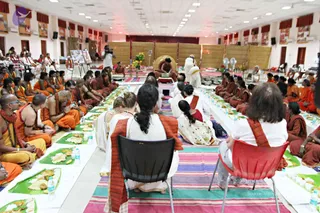
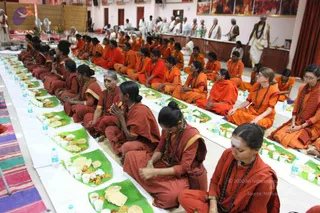
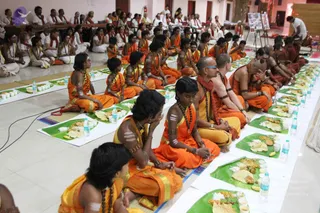
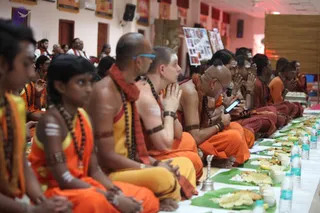
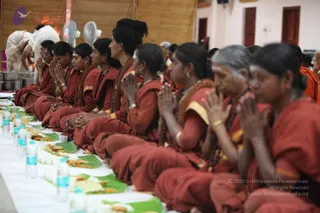
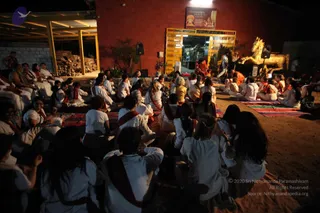
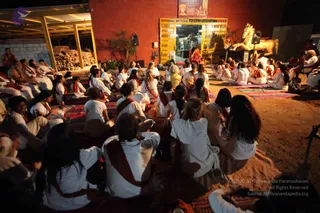
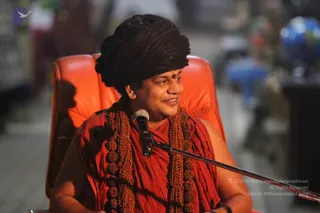
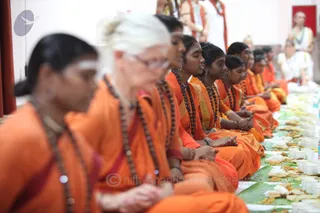
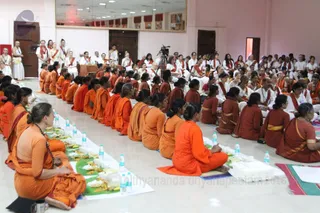
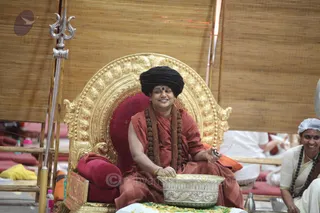
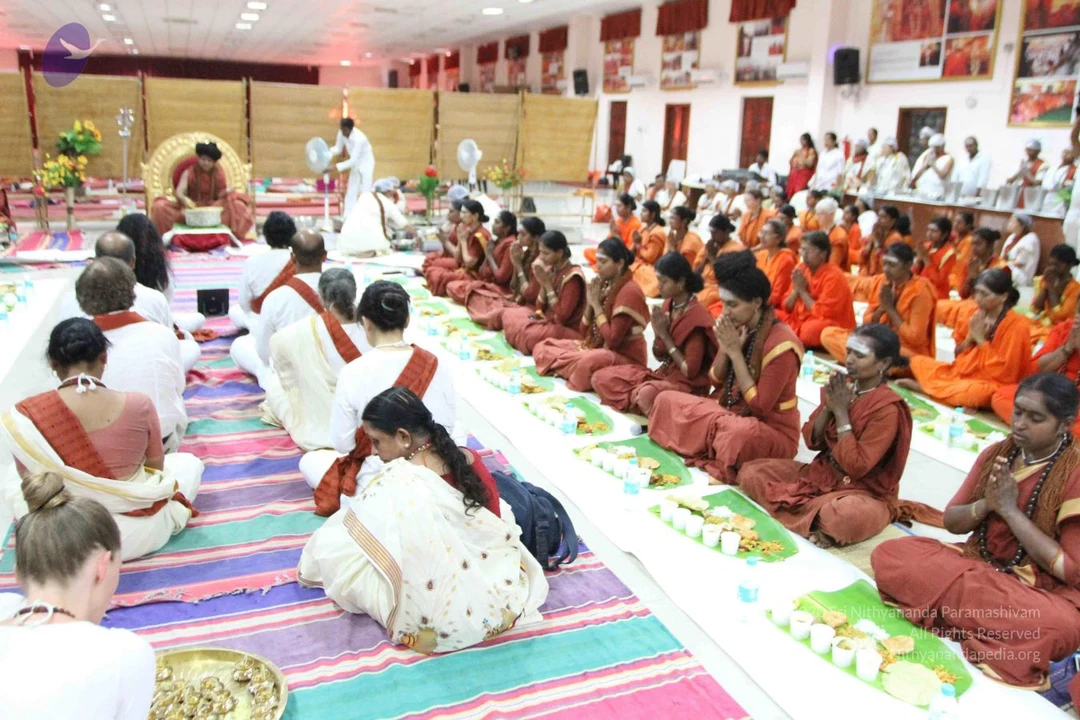
Interior hall during a seated ritual meal offering. A figure in orange and red sits on a gold throne at the far left, with a standing attendant in white beside them and a lit lamp nearby. Long rows of seated devotees face the center. Many women in orange and maroon robes with rudraksha malas press their palms together, while others in white saris and white garments sit on a striped mat in the foreground. Before them are leaf plates with food, small cups and bowls. Yellow flowers and a brass tray of offerings lie at the front. Red walls and framed images of saffron-clad figures line the background.Wide view of a large hall during a Maheshwara Puja-style food offering. Along the left foreground, a long row of monastic disciples in saffron-orange robes, rudraksha malas and forehead markings sit before green leaf plates of rice, bread, curries and sweets, with water bottles beside them. At the far end, a figure in orange sits on an ornate gold-framed throne with a bowl before them, facing the assembly. Opposite, devotees in white clothes with red-orange shawls sit on striped mats. Bamboo screens, flower arrangements, an easel with a framed picture and a red-lit backdrop complete the setting.A man seated in front of an ornate gold throne with a red cushion, eyes lowered and smiling. He wears a tall black cloth turban, a dark tilak mark on his forehead, a rust-red saffron-toned shawl over one shoulder and a multi-strand rudraksha mala necklace. Background is wood-panelled. Swamiji (probable) appearance-based label: long swept-back hair wrapped in a black turban, rudraksha mala and saffron-toned clothing, seated on the gold throne.

February 23 2016

Original wiki page
Contents

Title

Paramashivoham Oneness Capsule 257 (23 Feb 2016 Photo)

Day's Event

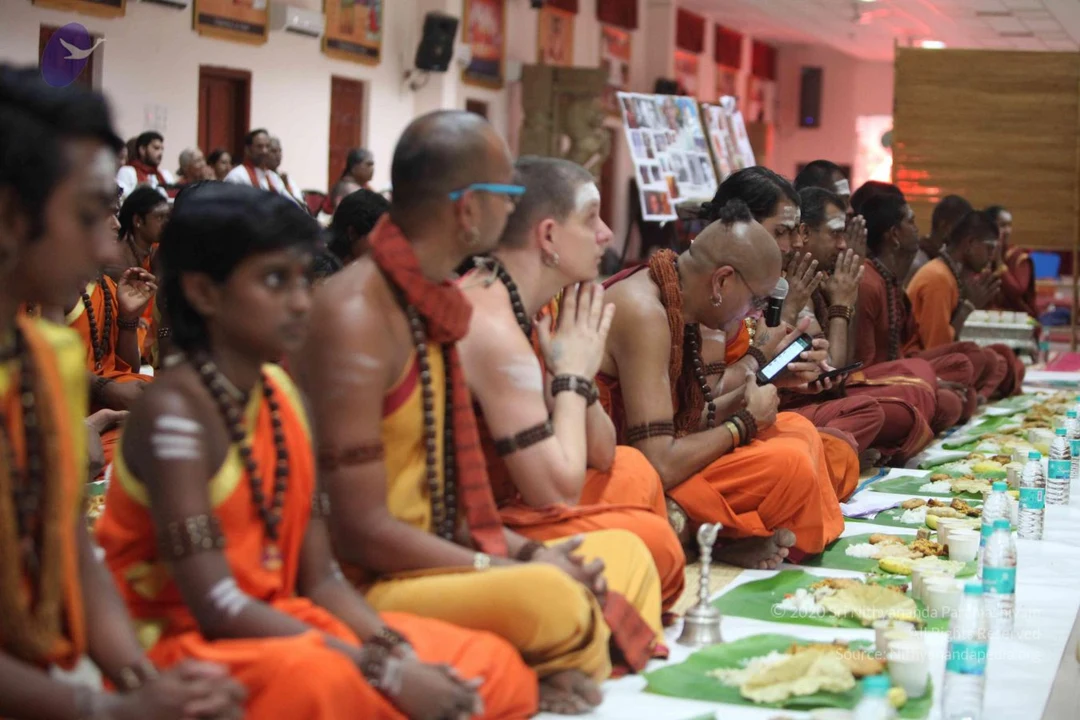
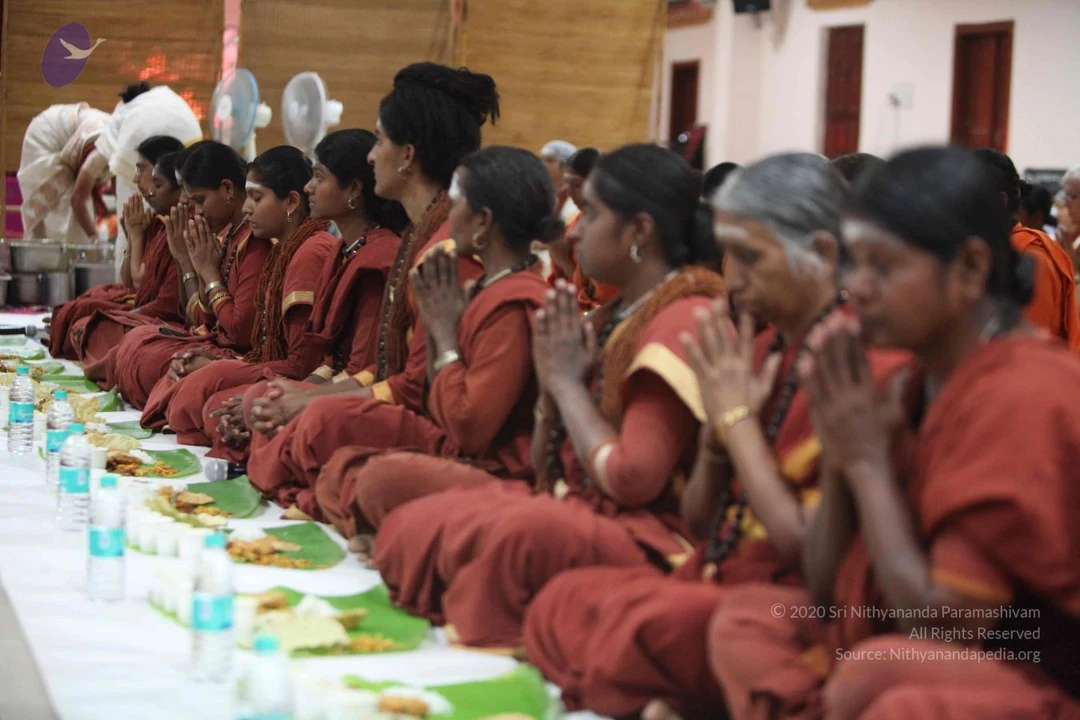
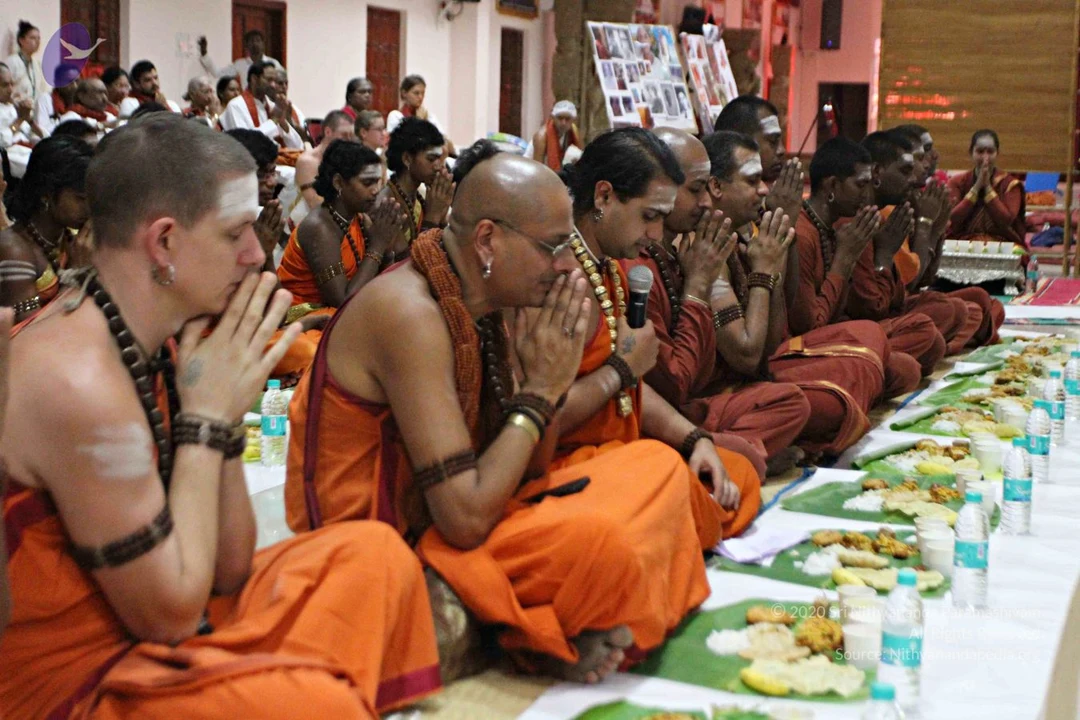
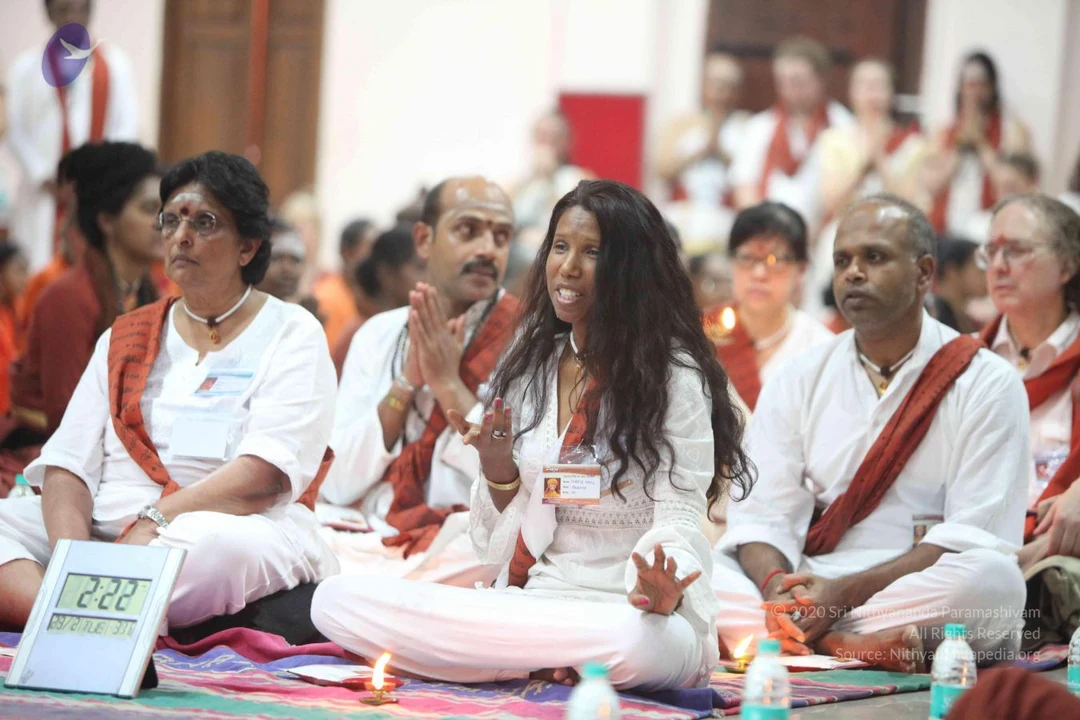
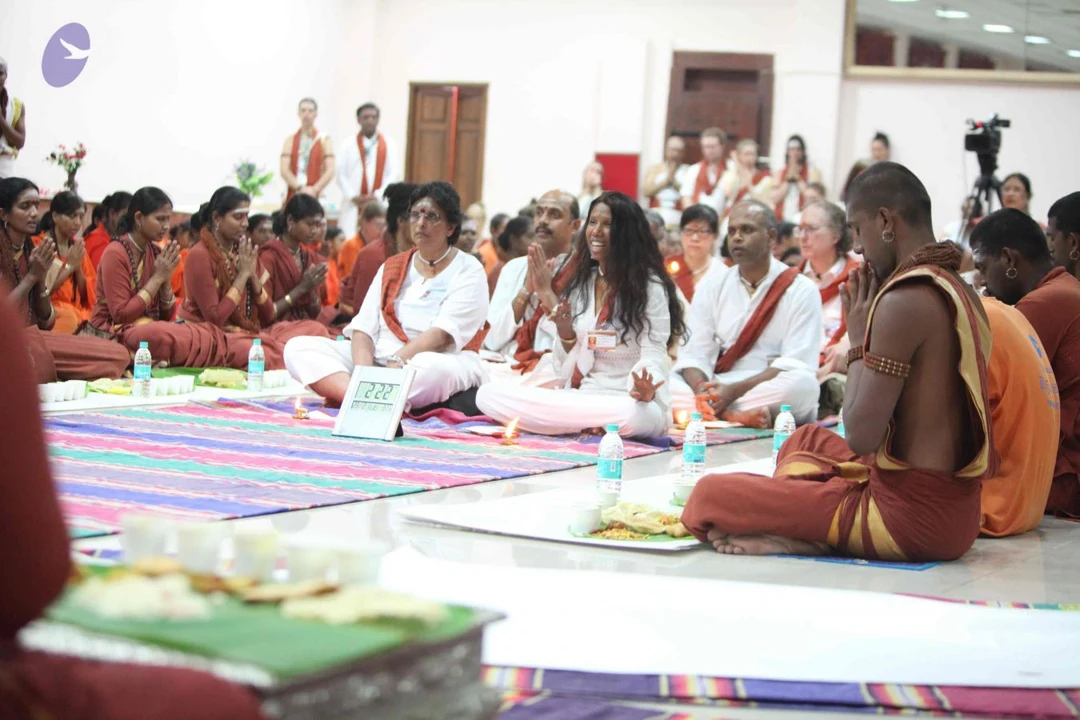
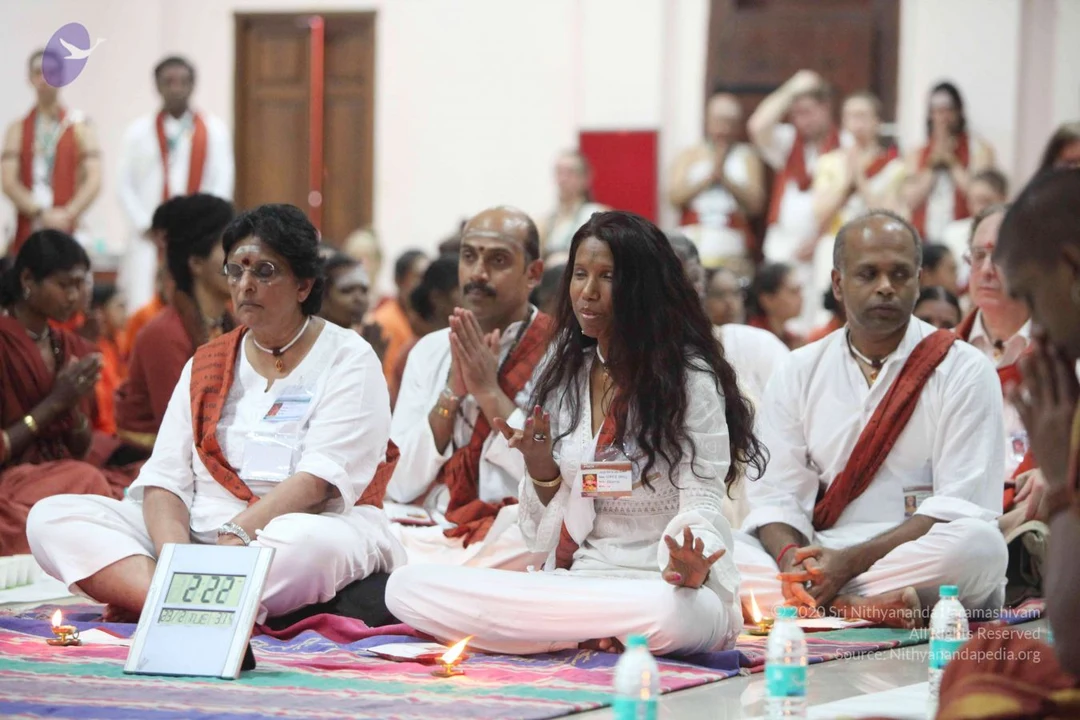
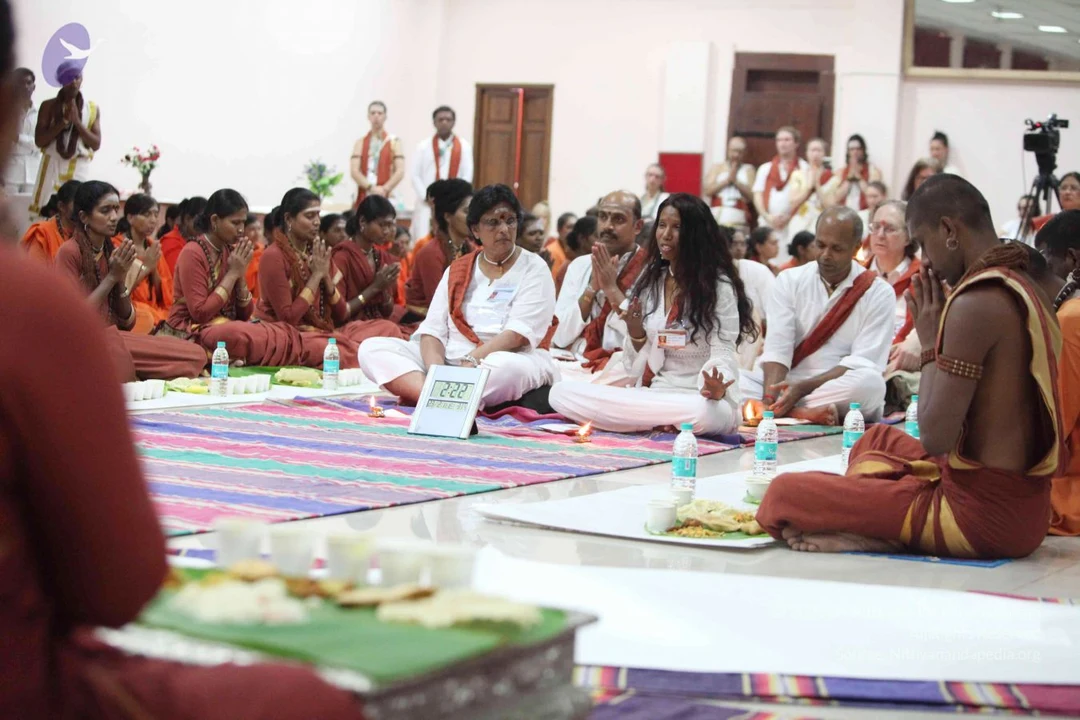
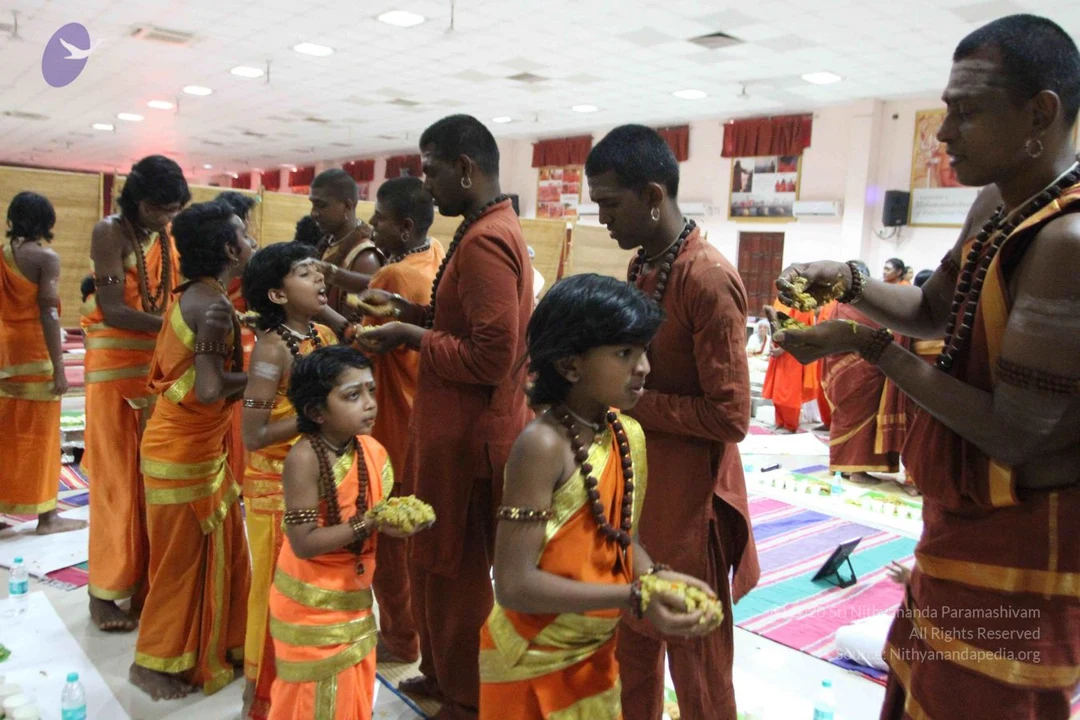
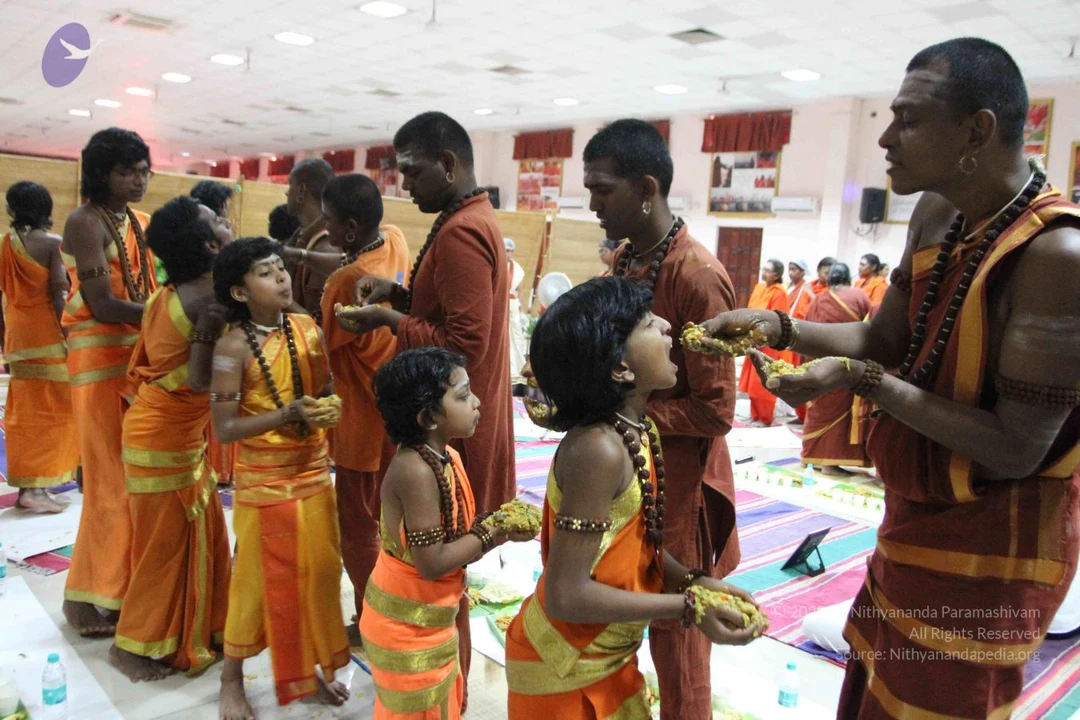
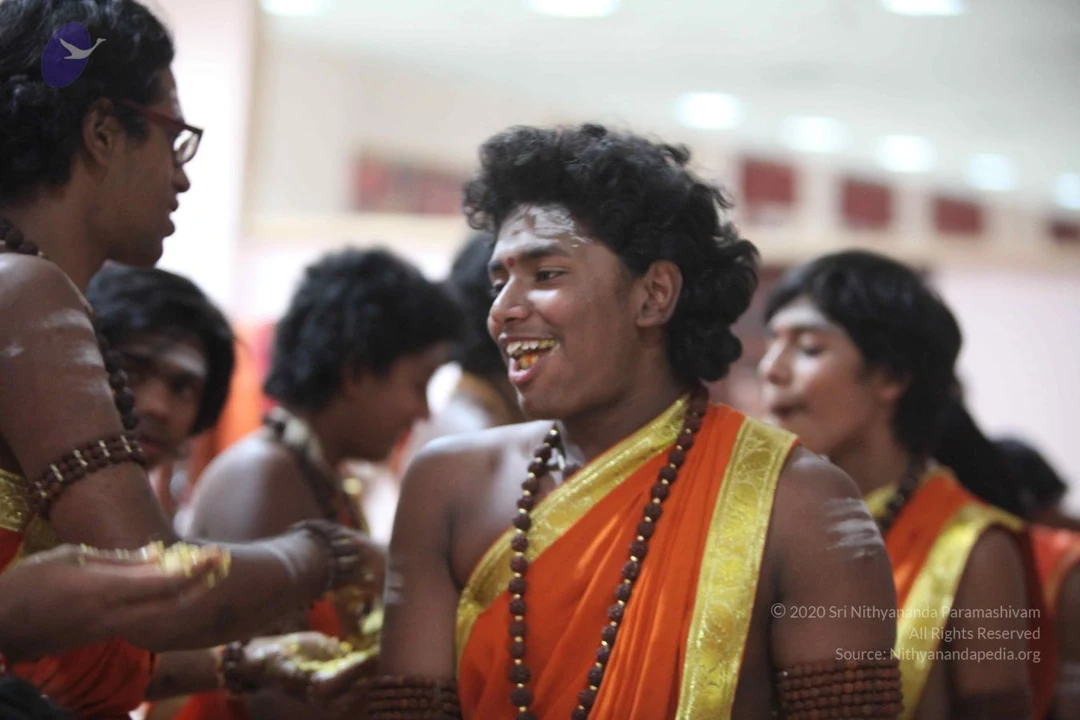
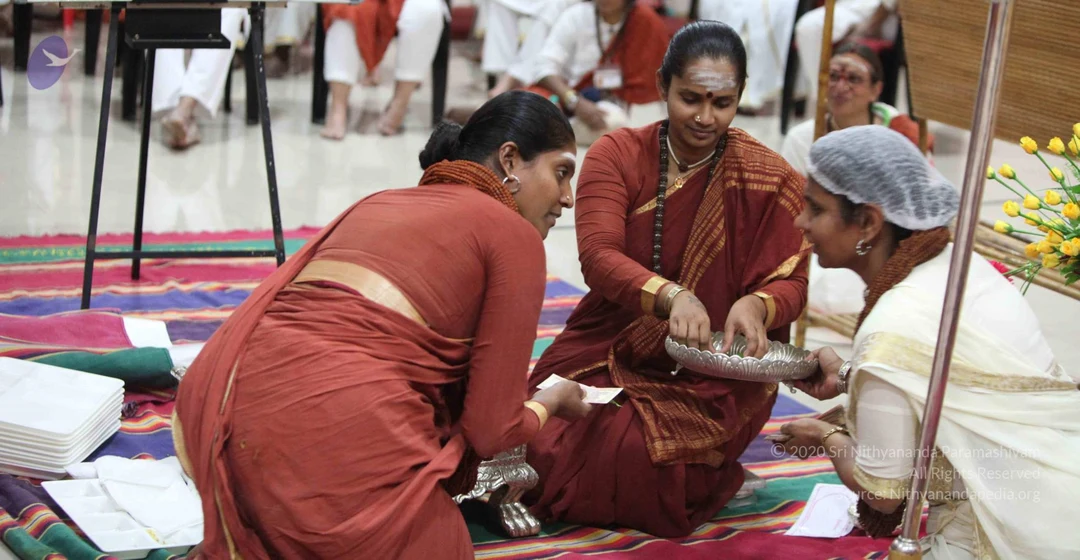
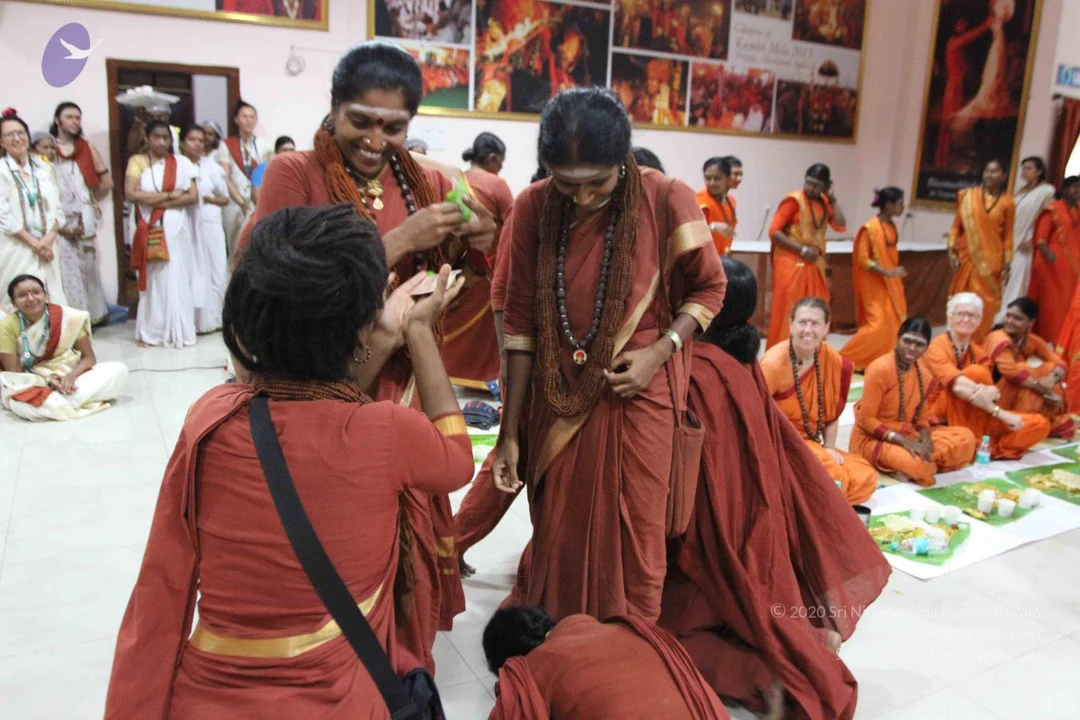
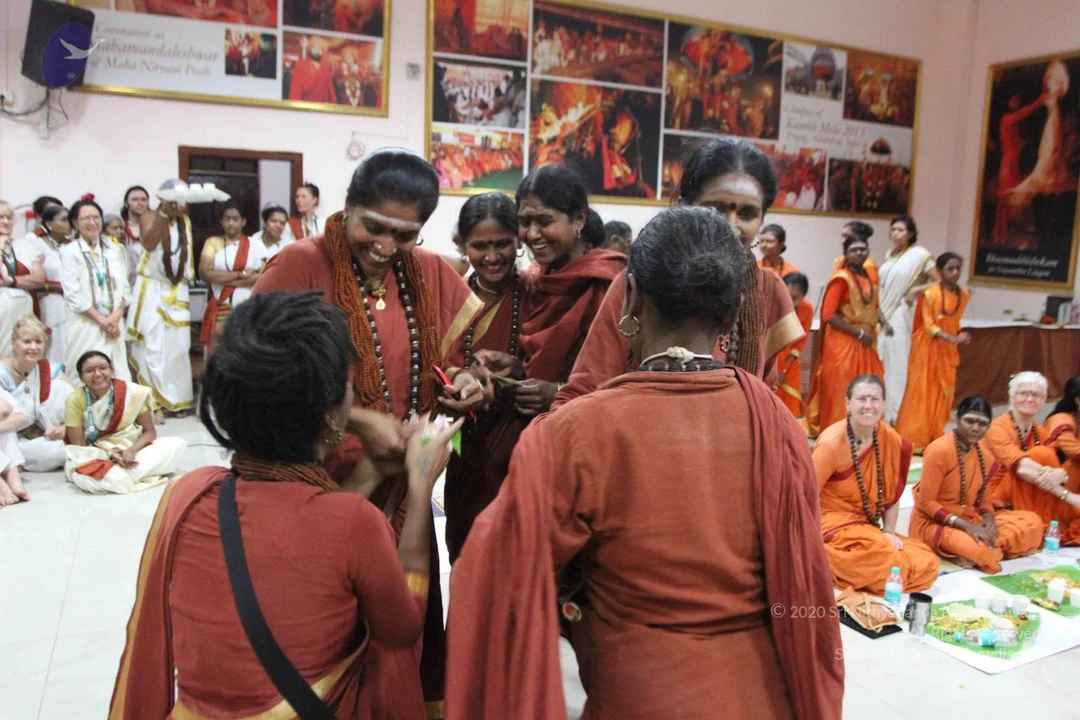
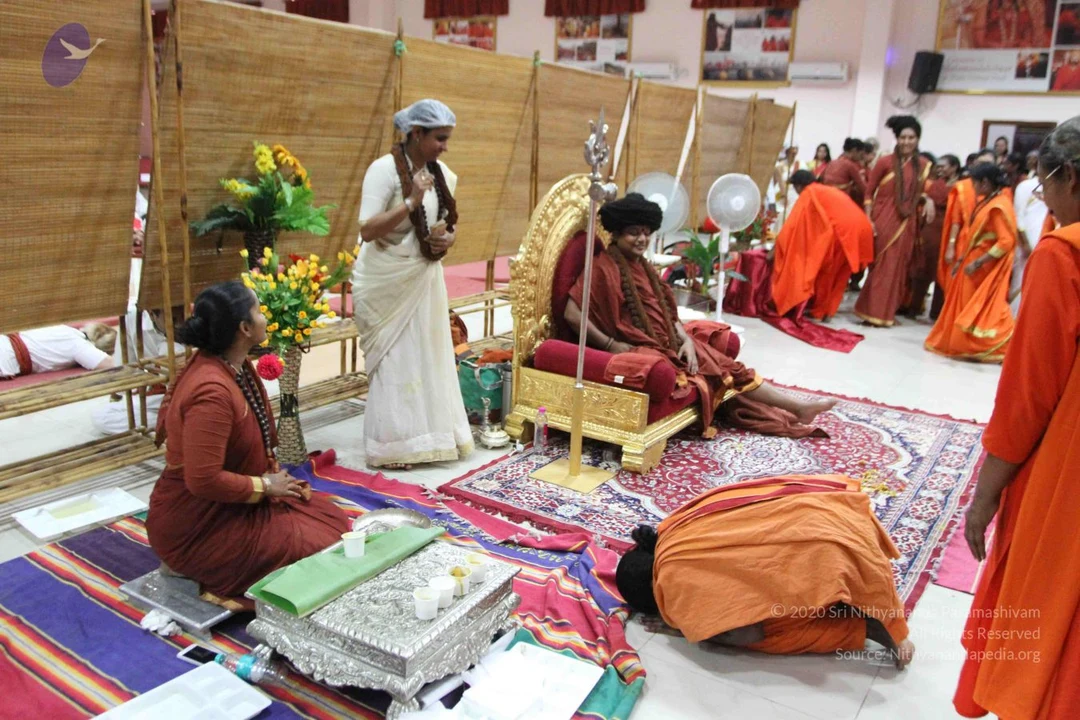
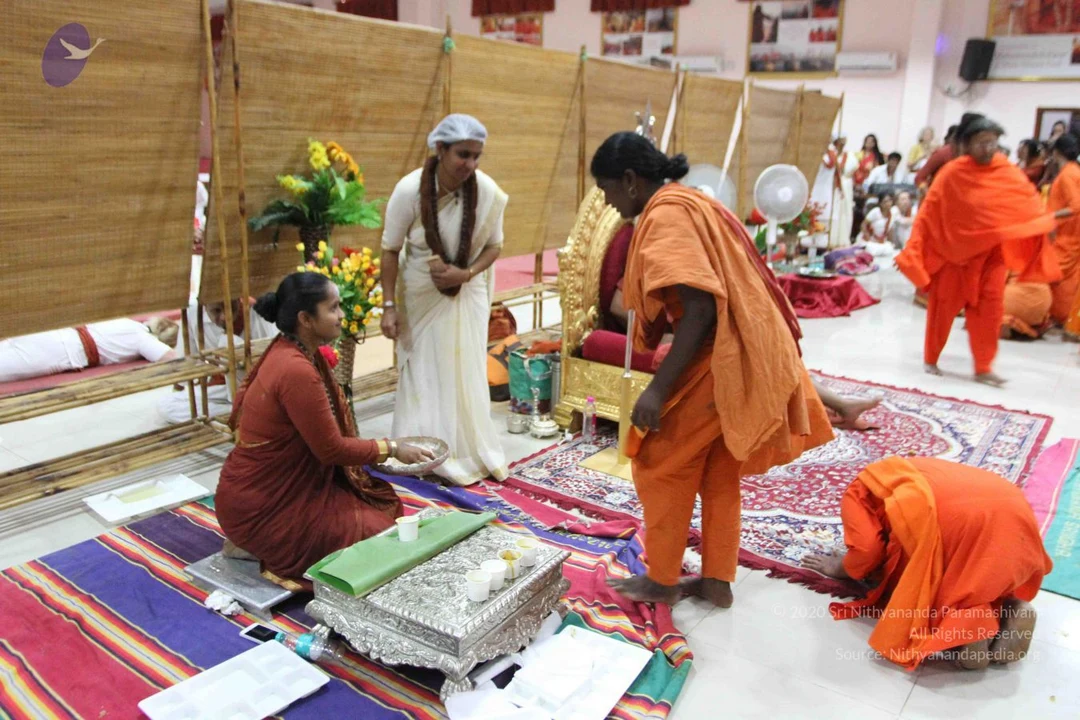
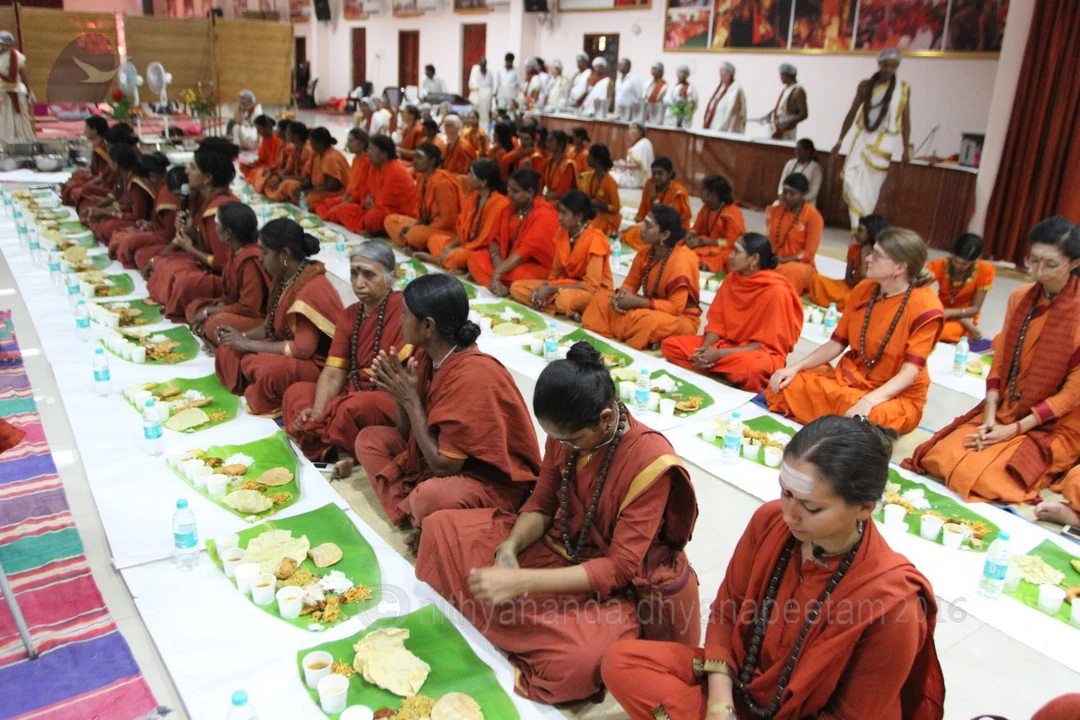
Maheshwara Puja is one of Hinduism’s most ancient rituals.

Maheshwara Puja is usually offered in the remembrance of a person who is no more. It is offered so that the departed soul rests in peace. The real peace that a soul can experience is the peace of Enlightenment.

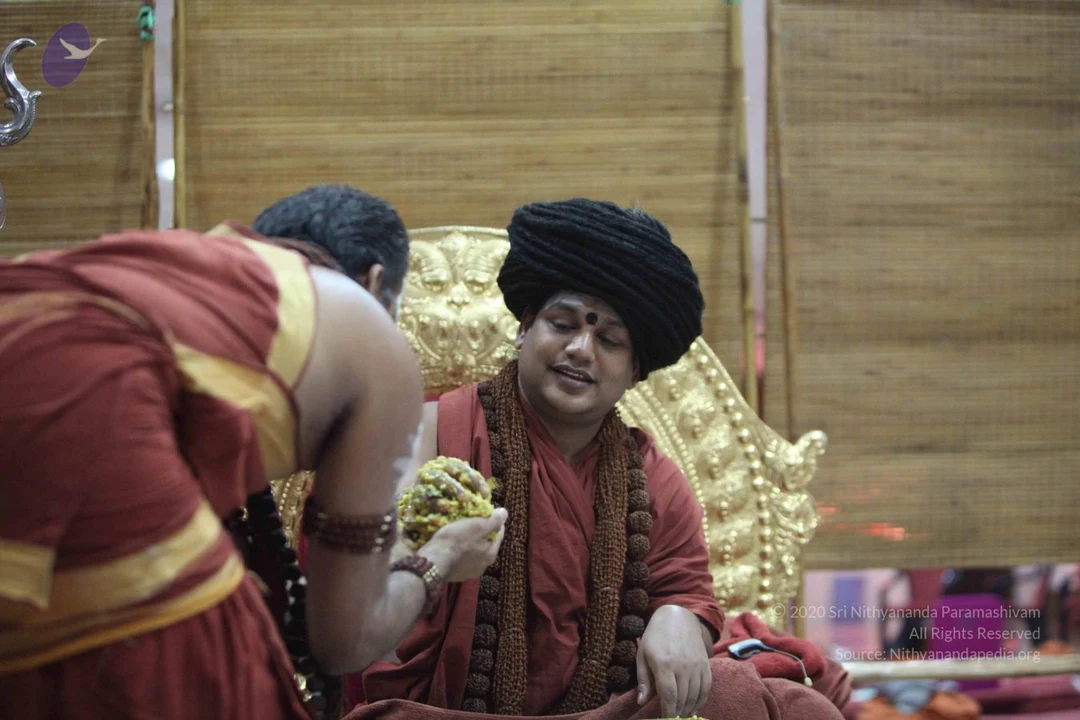
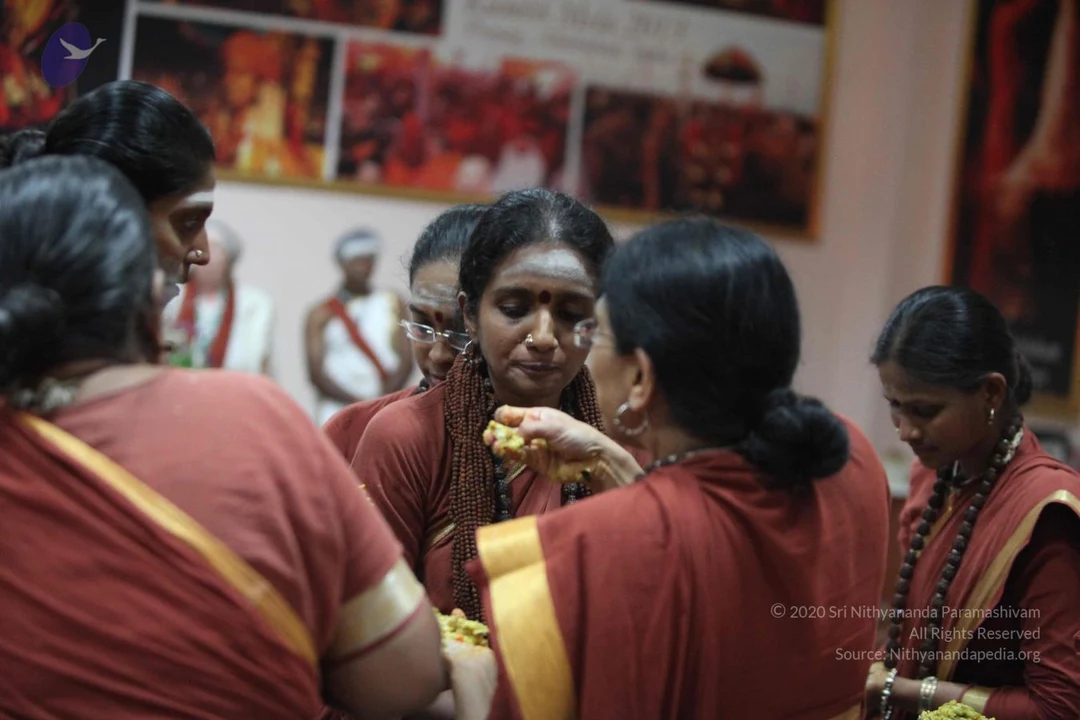
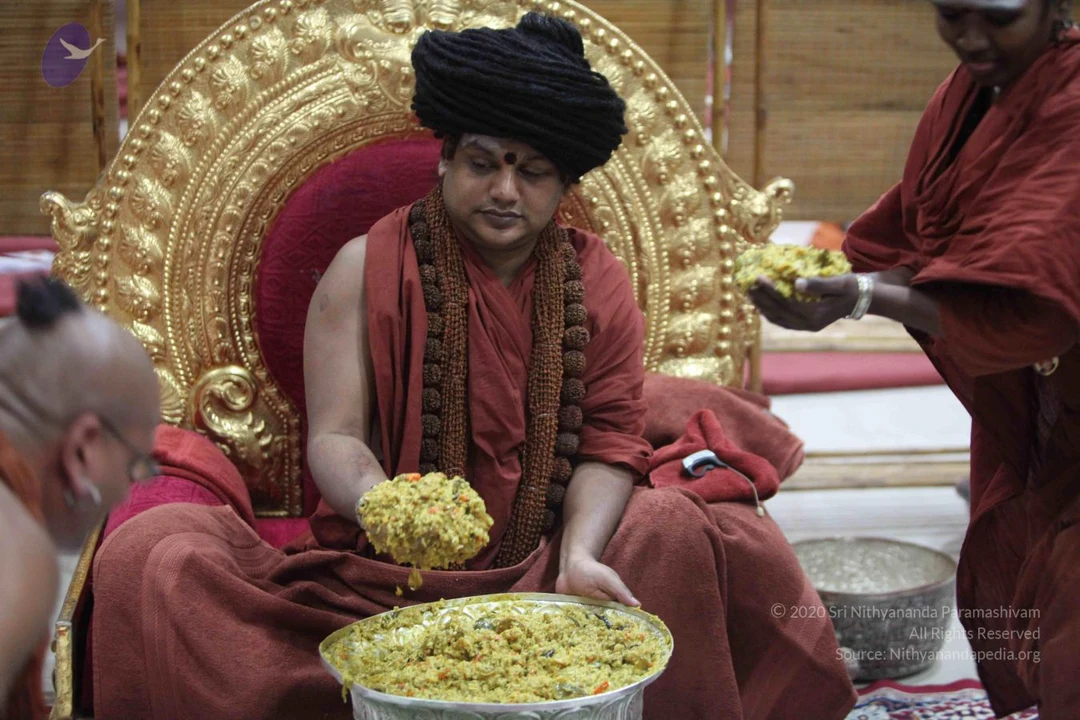
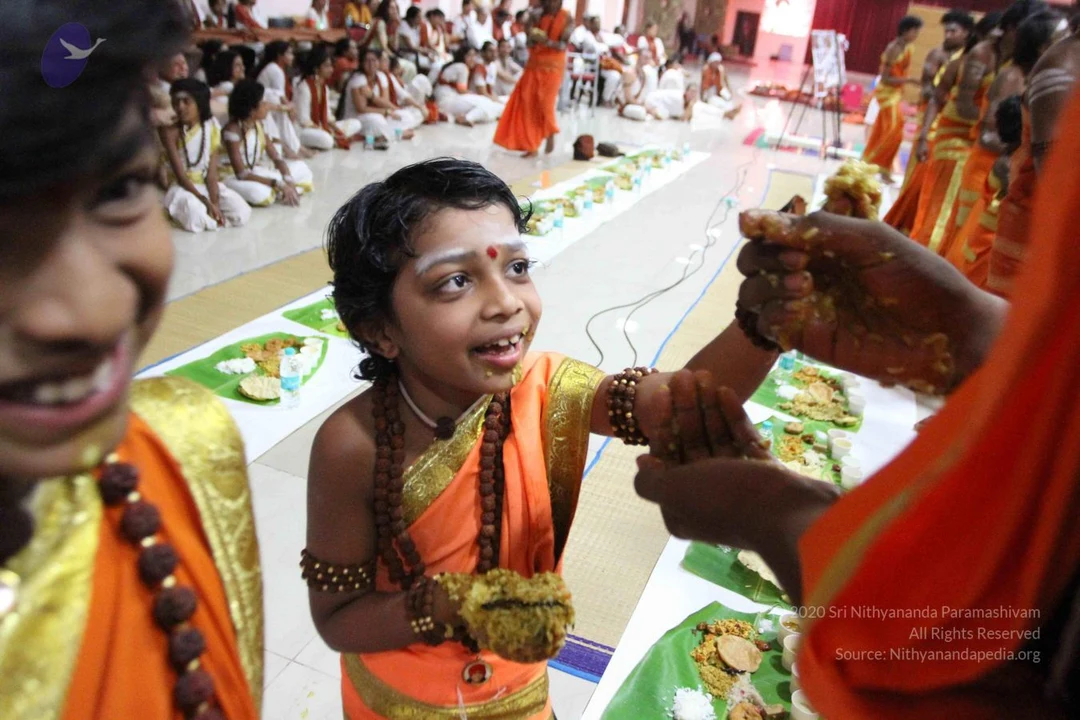
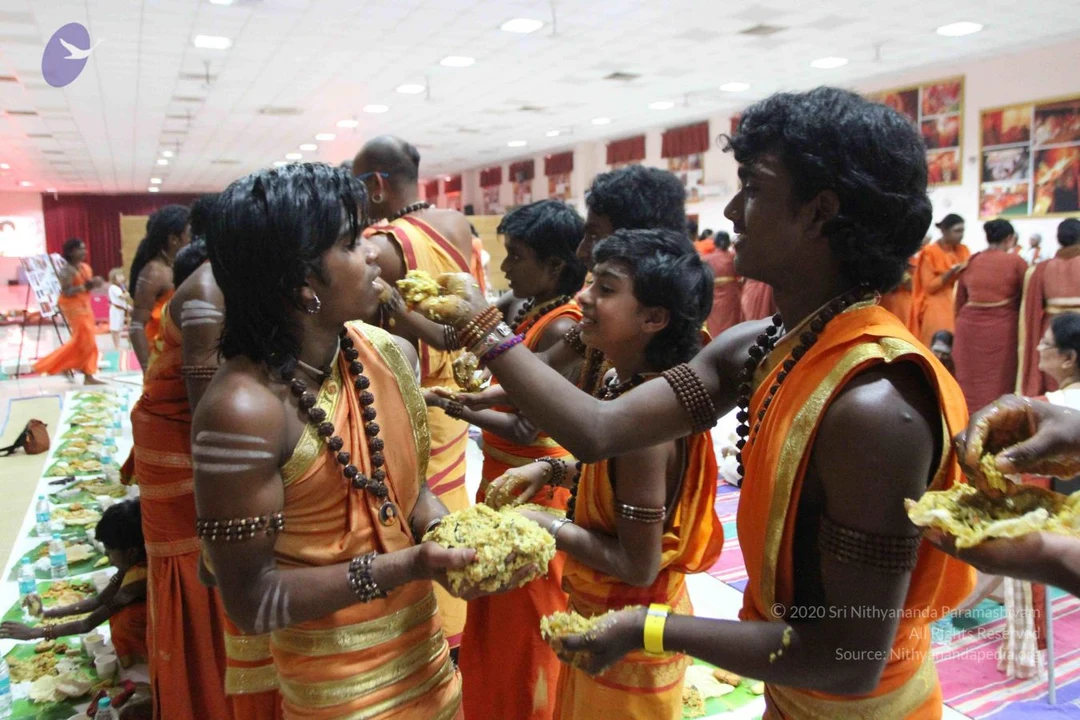
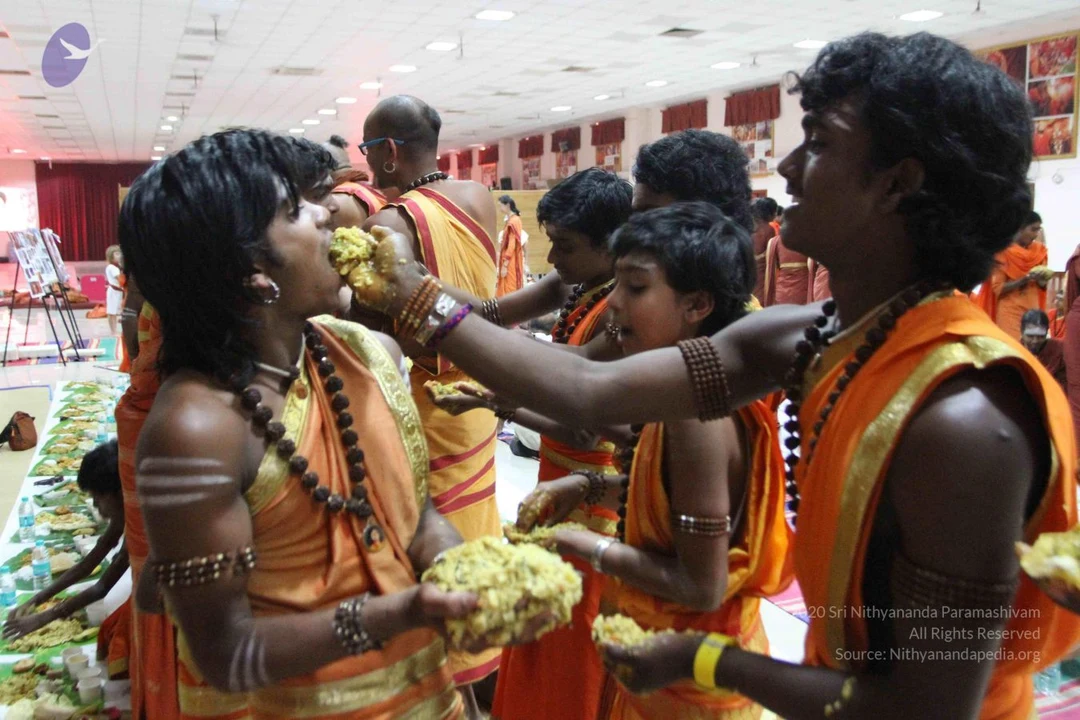
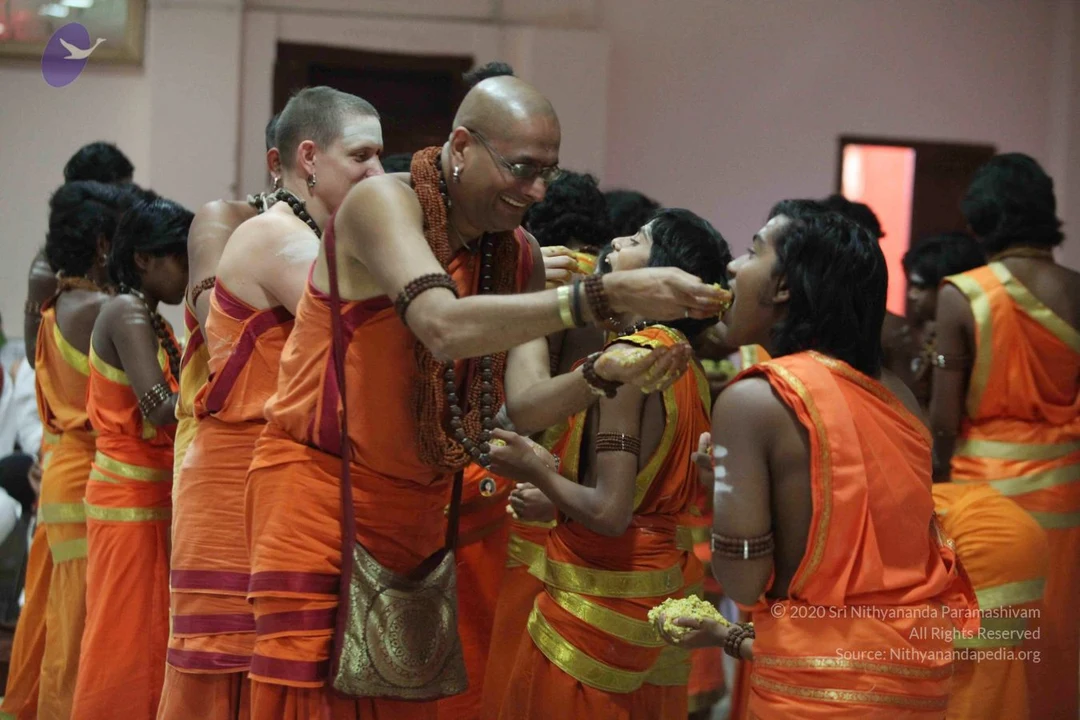
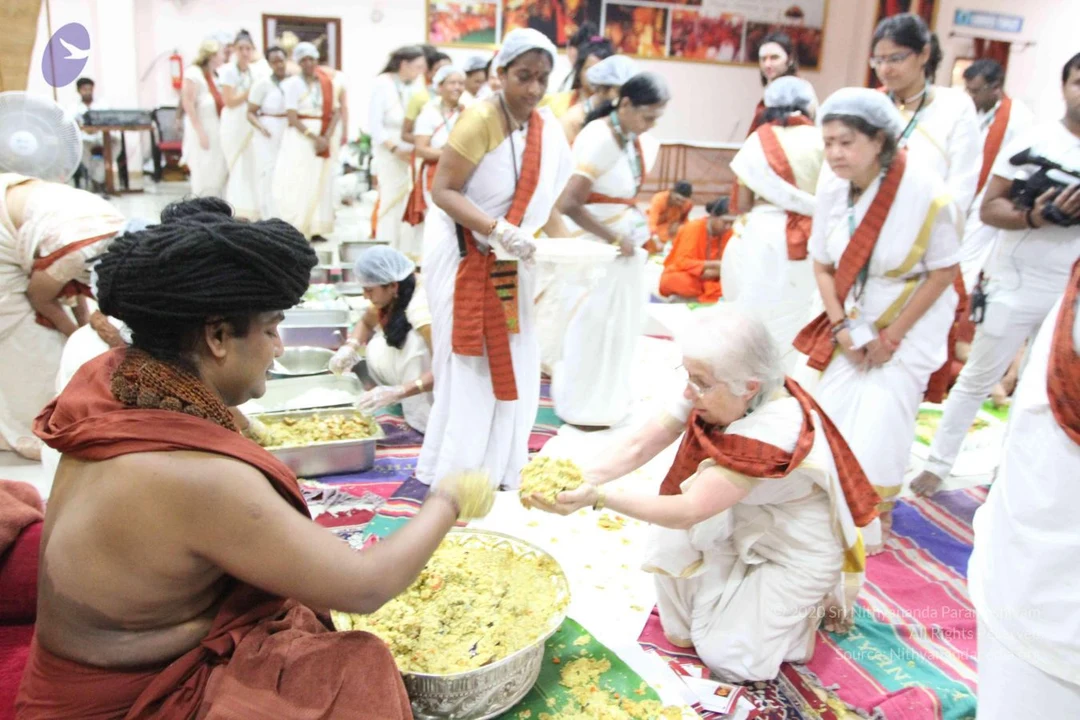
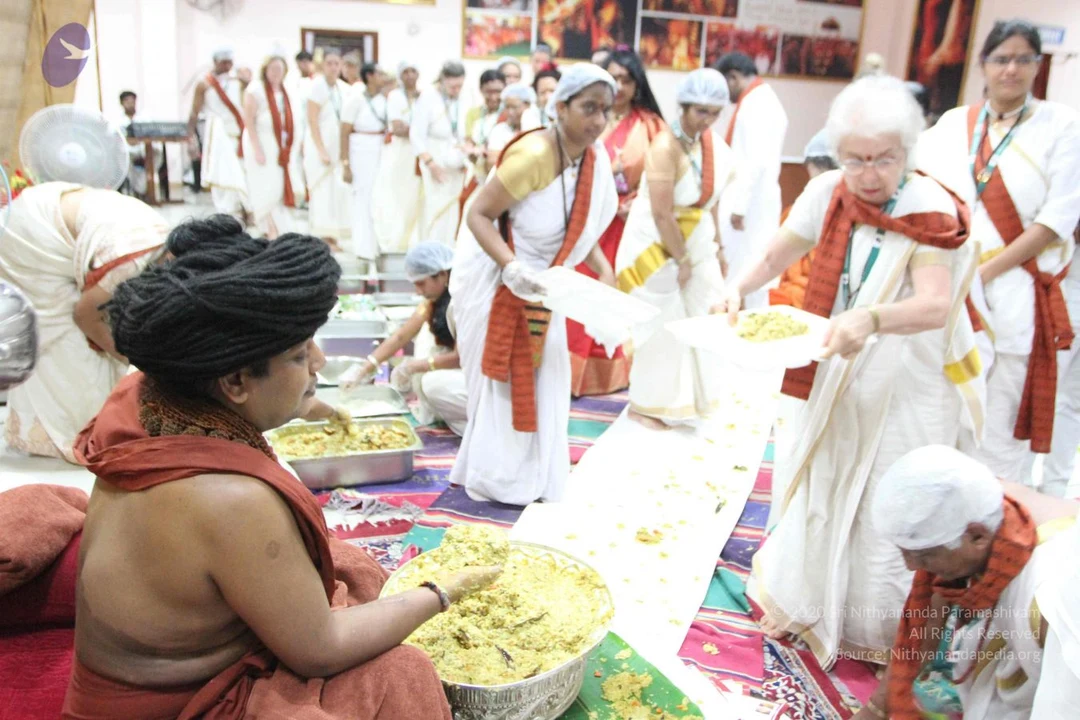
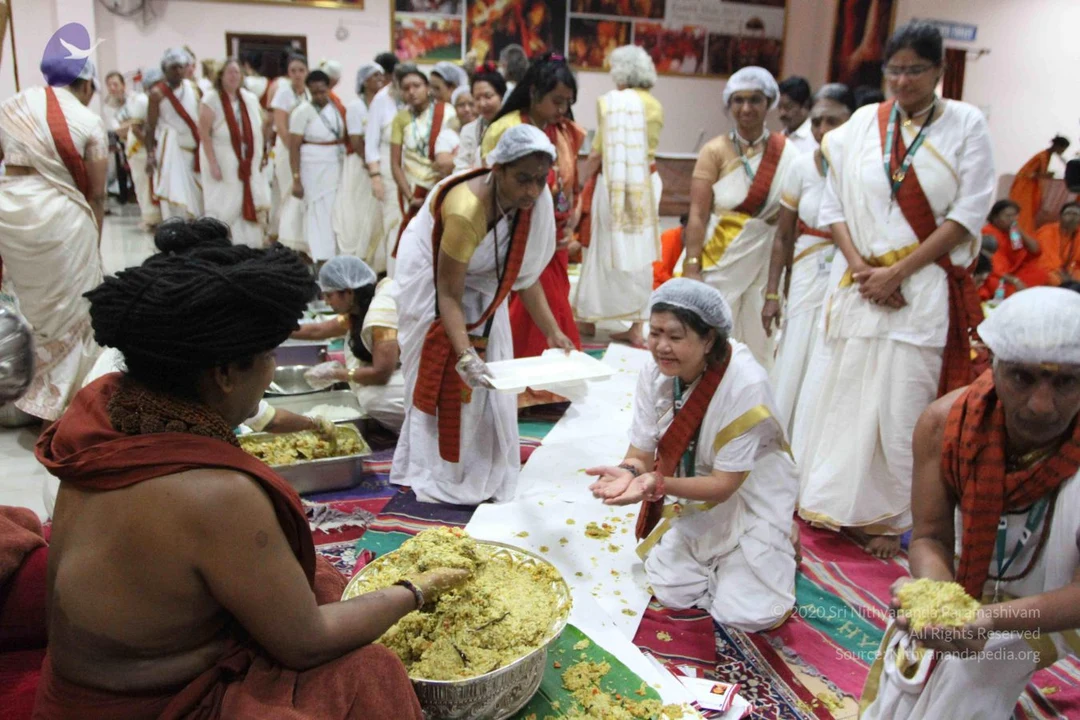
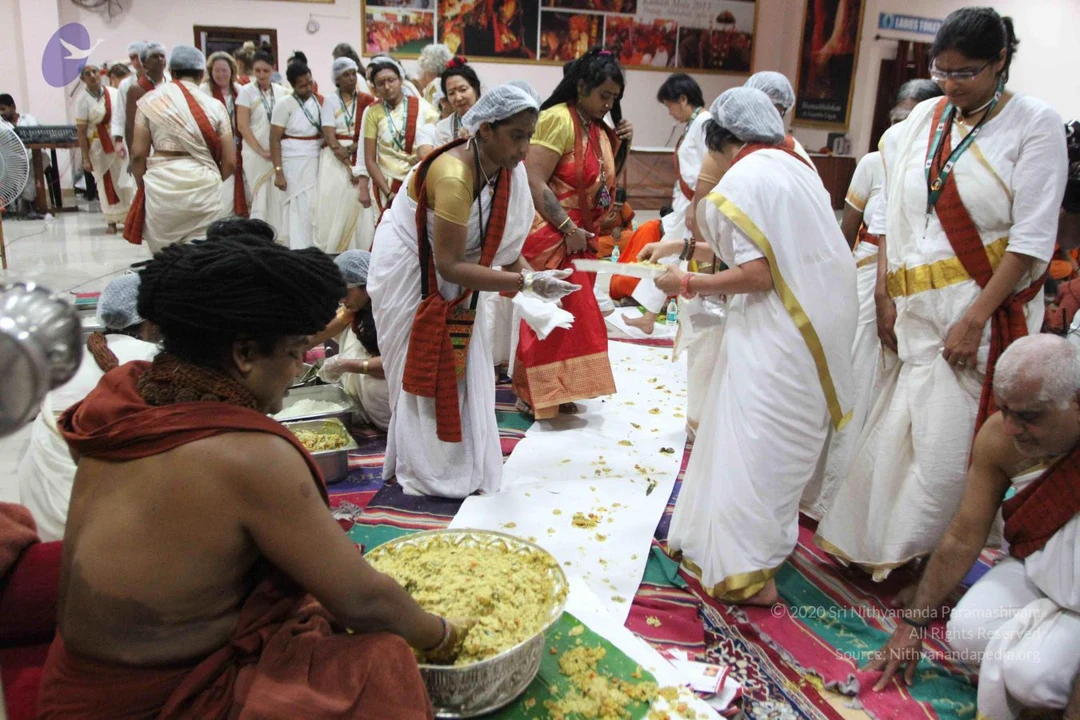
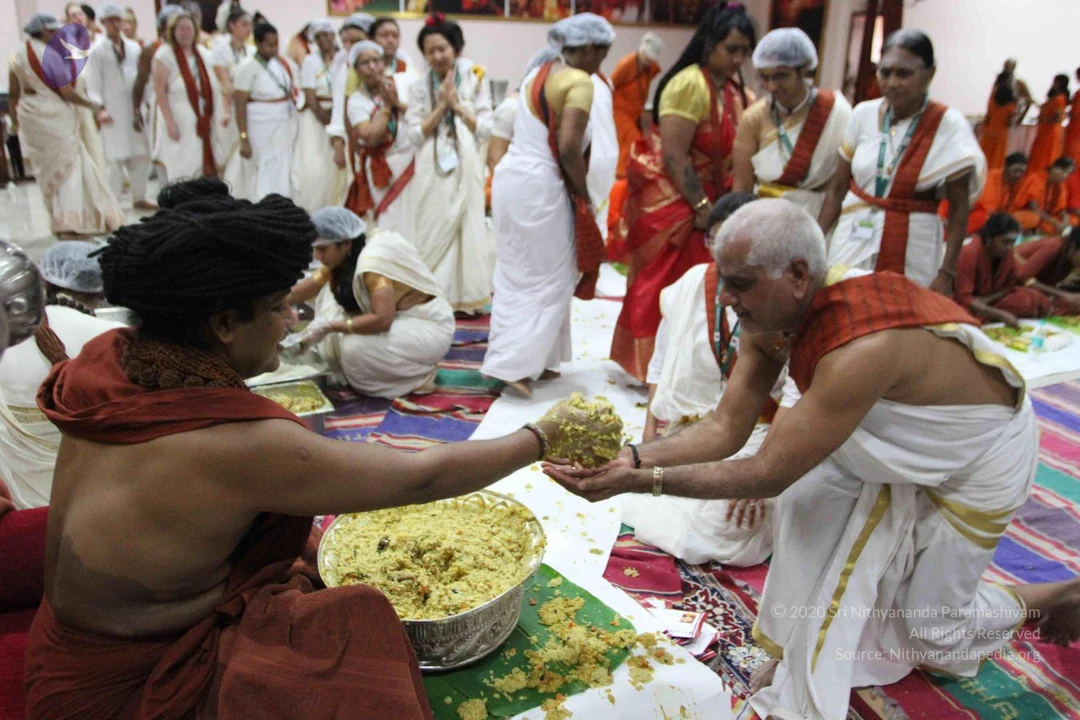
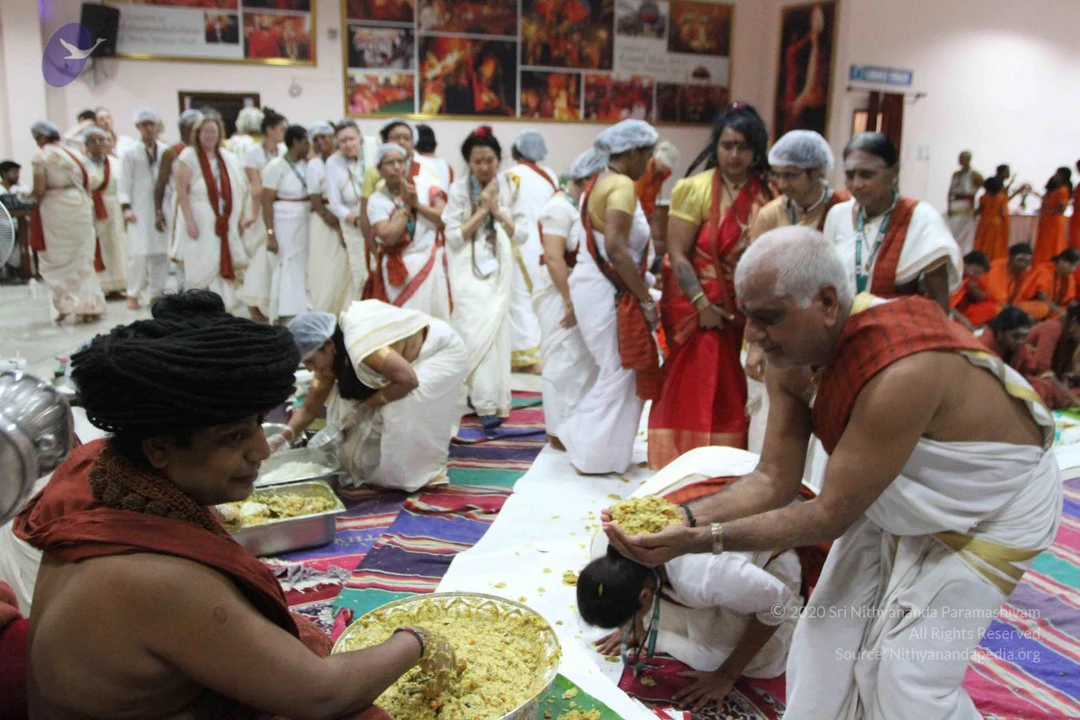
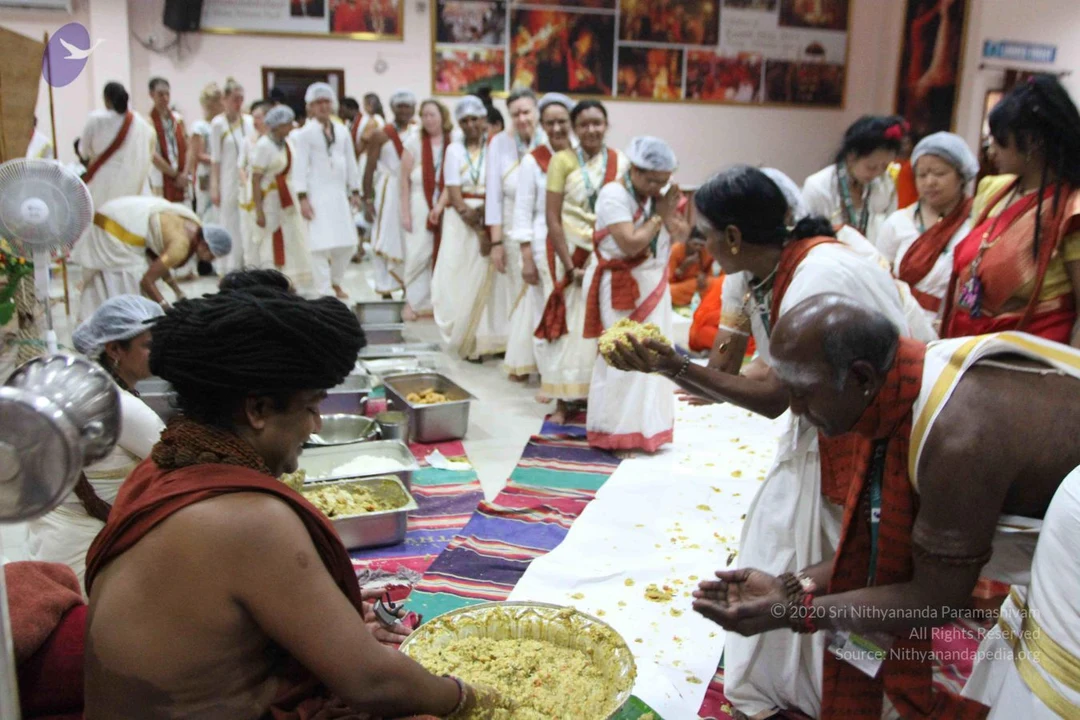
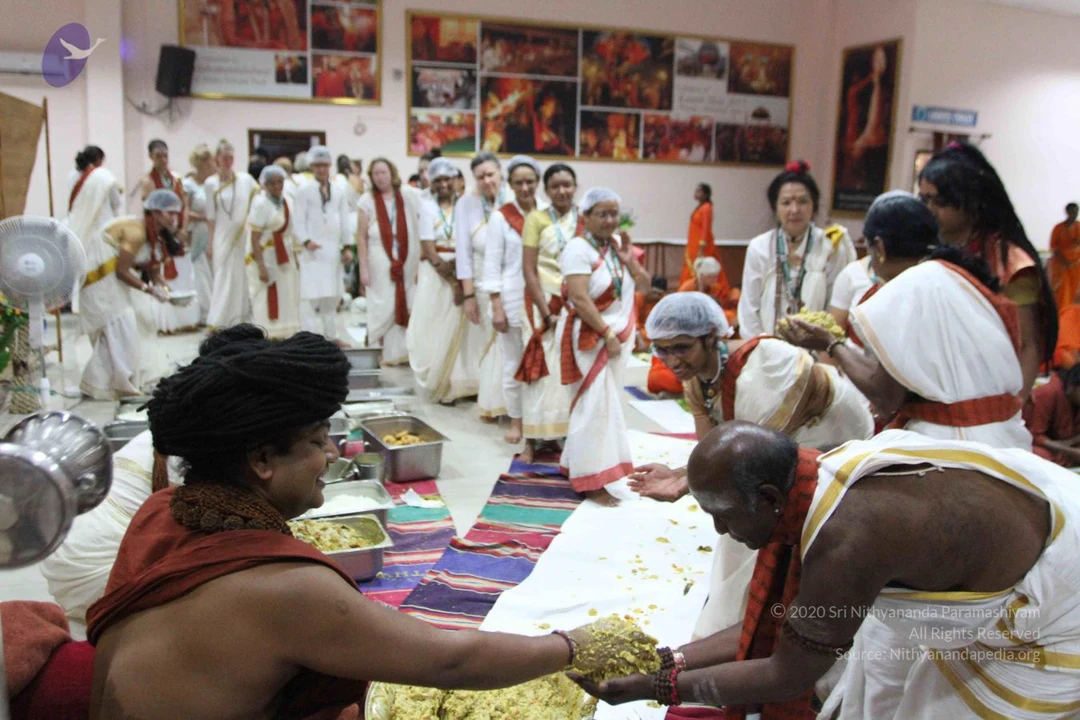
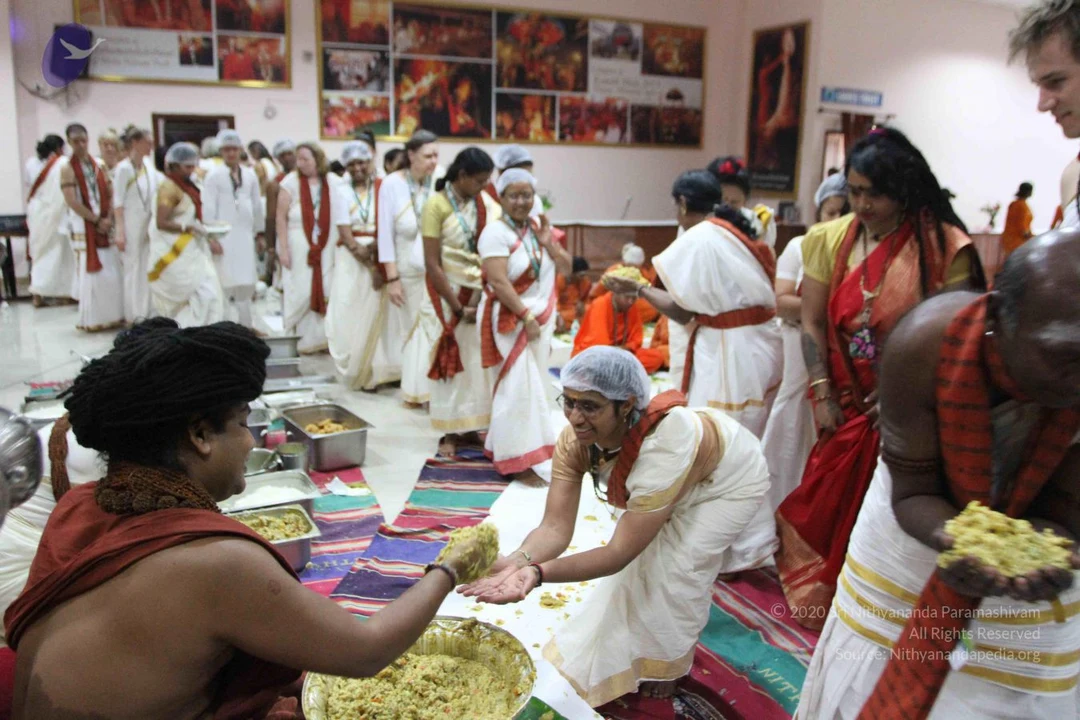
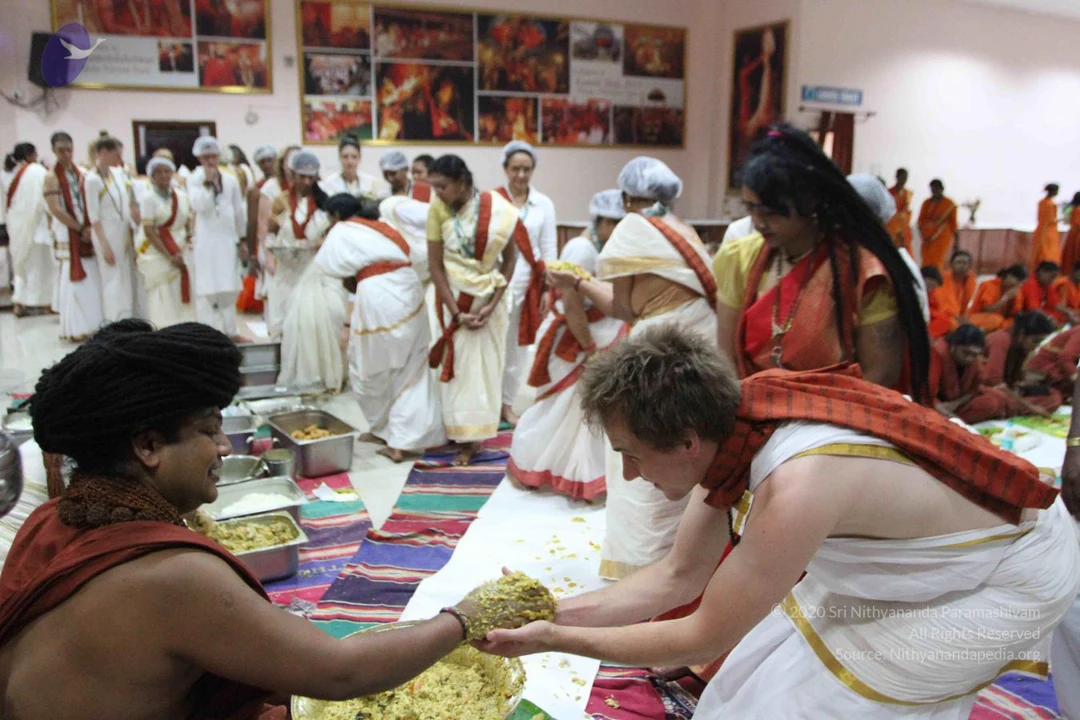
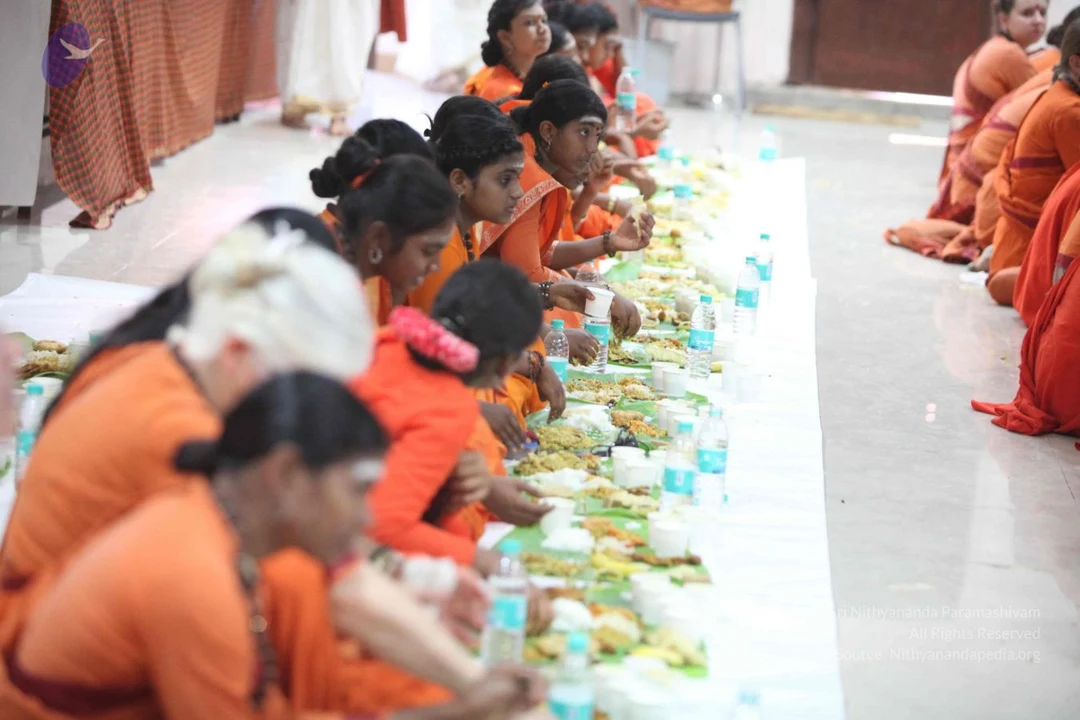
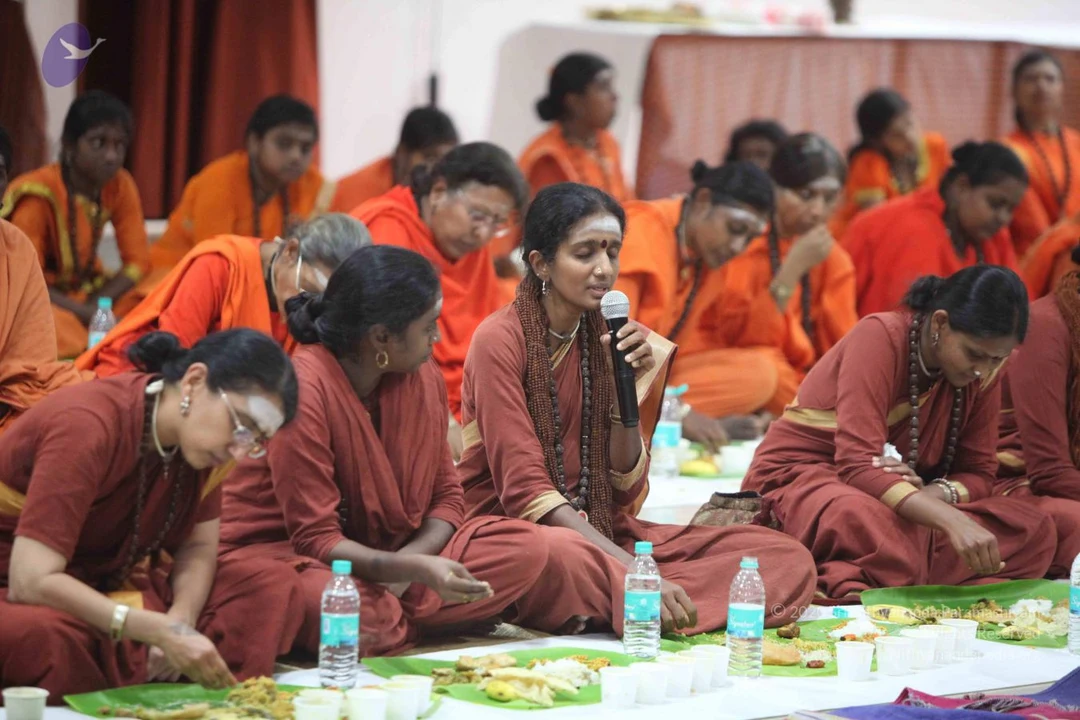
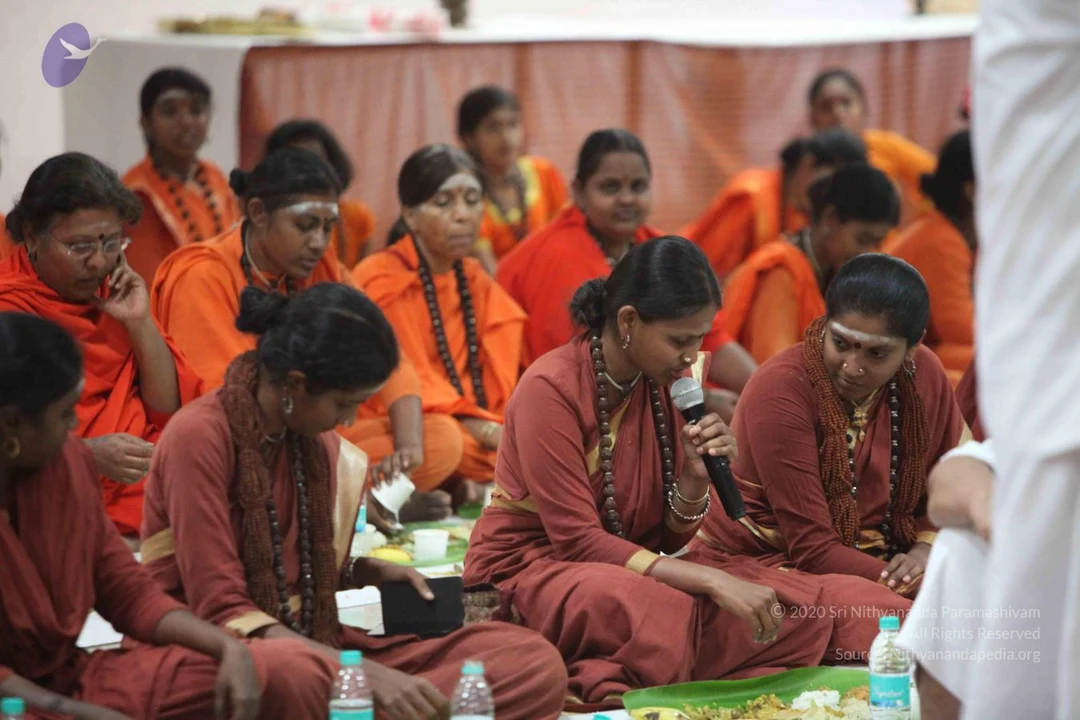
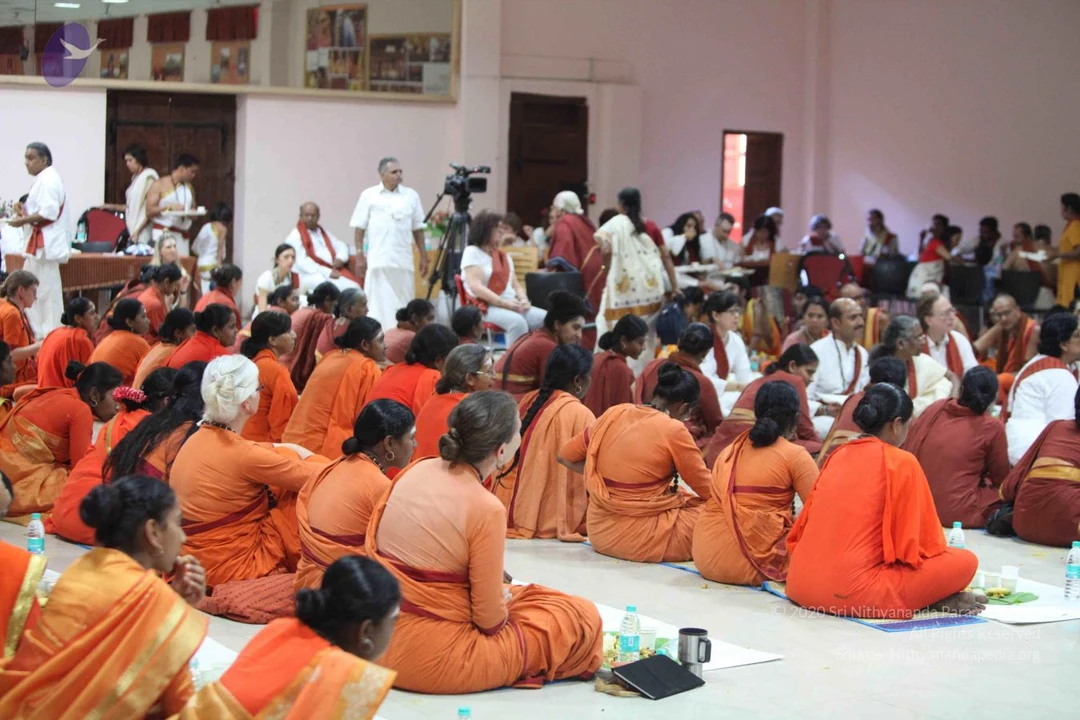
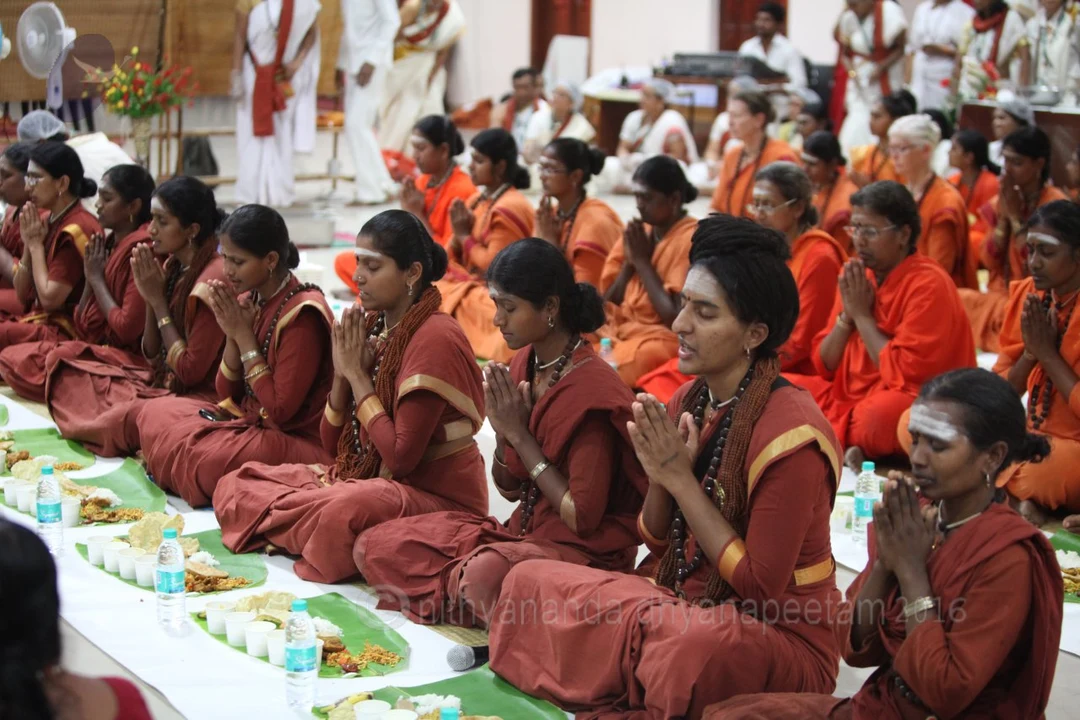
In our Nithyananda Sampradaya, Devotees offer Maheshwara Puja so that the departed soul can be liberated in the presence of The Avatar, His Holiness Paramahamsa Nithyananda. In the Maheshwara Puja, His Holiness Paramahamsa Nithyananda, who is the embodiment of Cosmic energy, personally receives the Bhiksha or food offering and he liberates the departed soul . No matter how many births the person would have taken after leaving the body and no matter if the person has met the Master or not in the life, the Master can intervene and make His presence available in the departed soul’s life and lead it to Enlightenment.

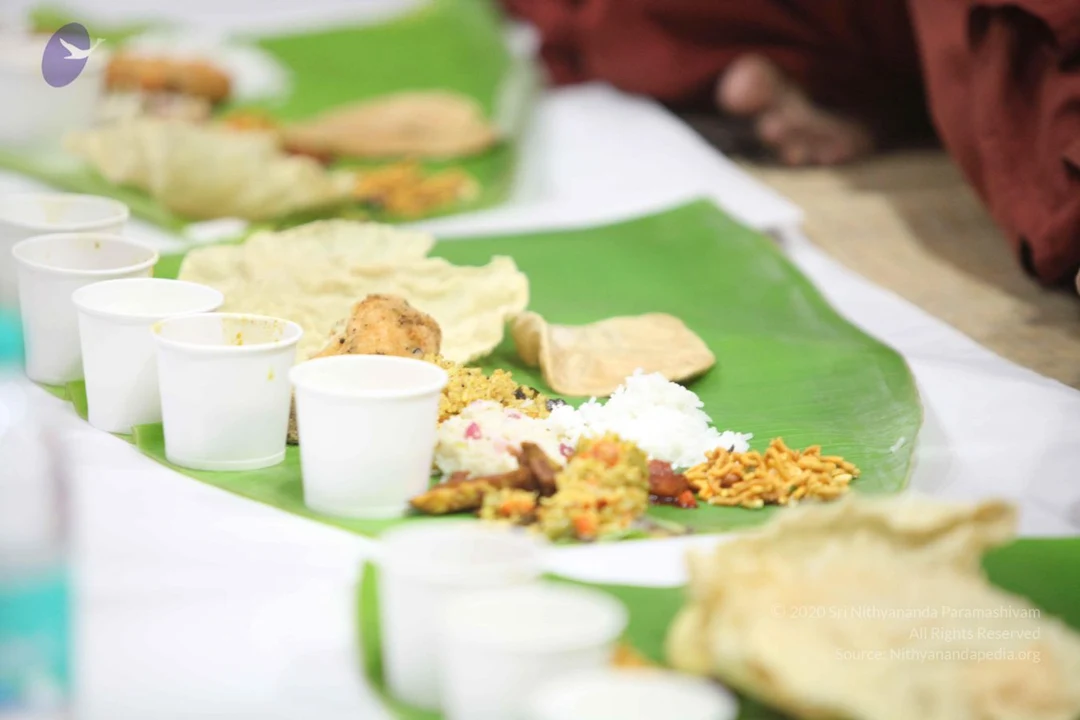
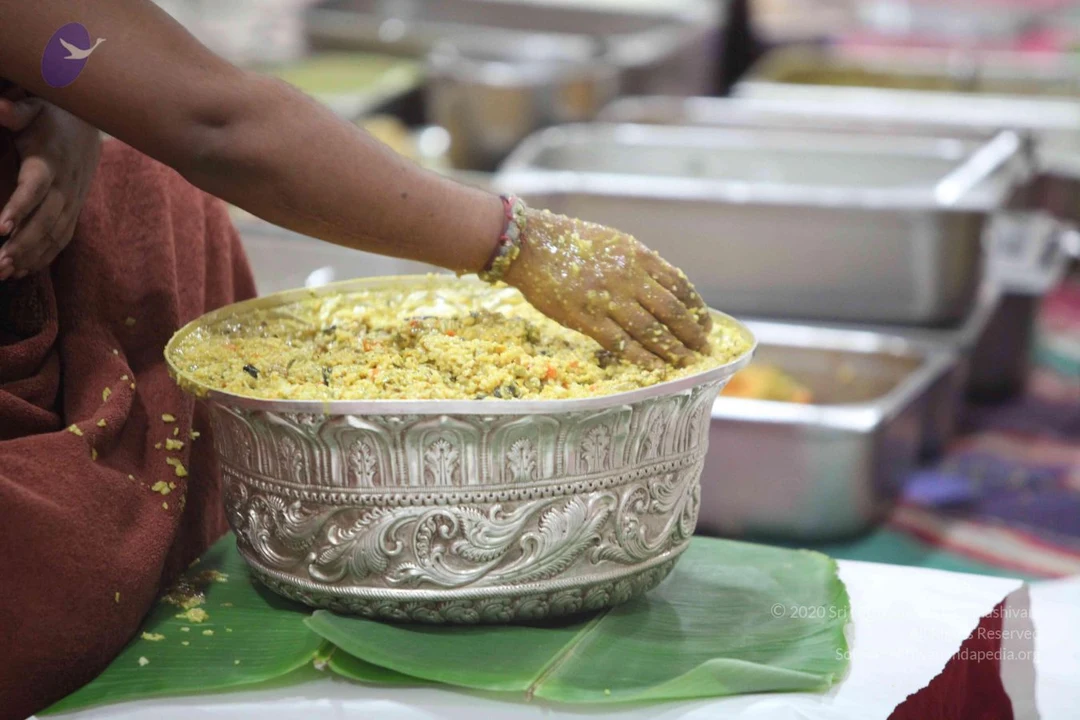
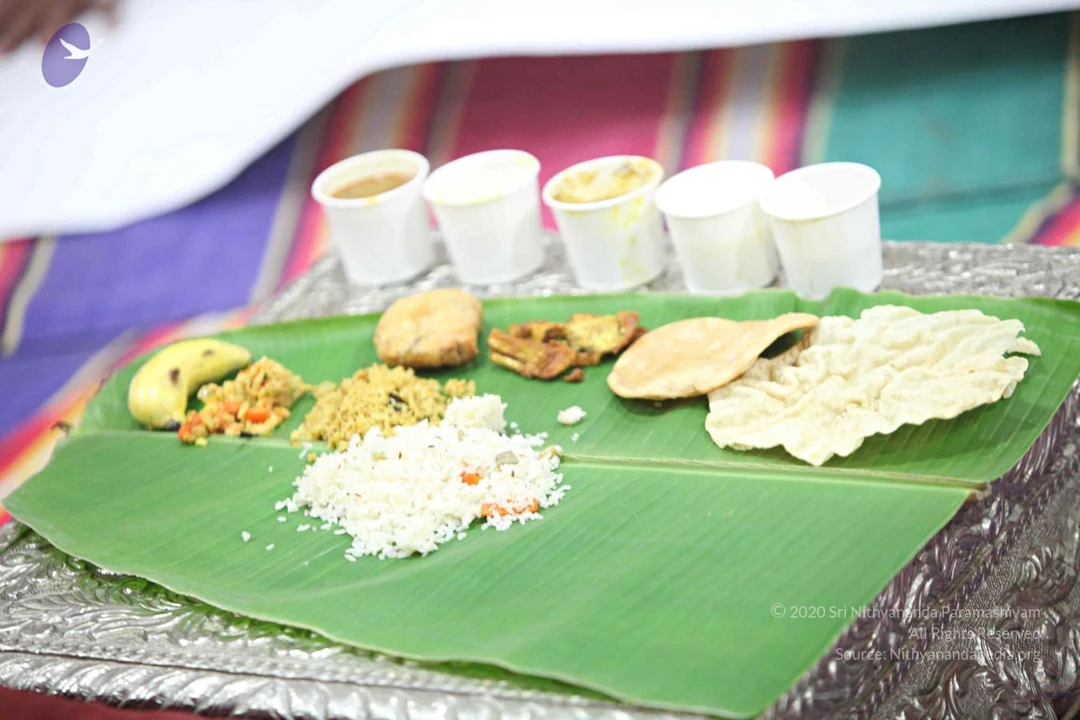
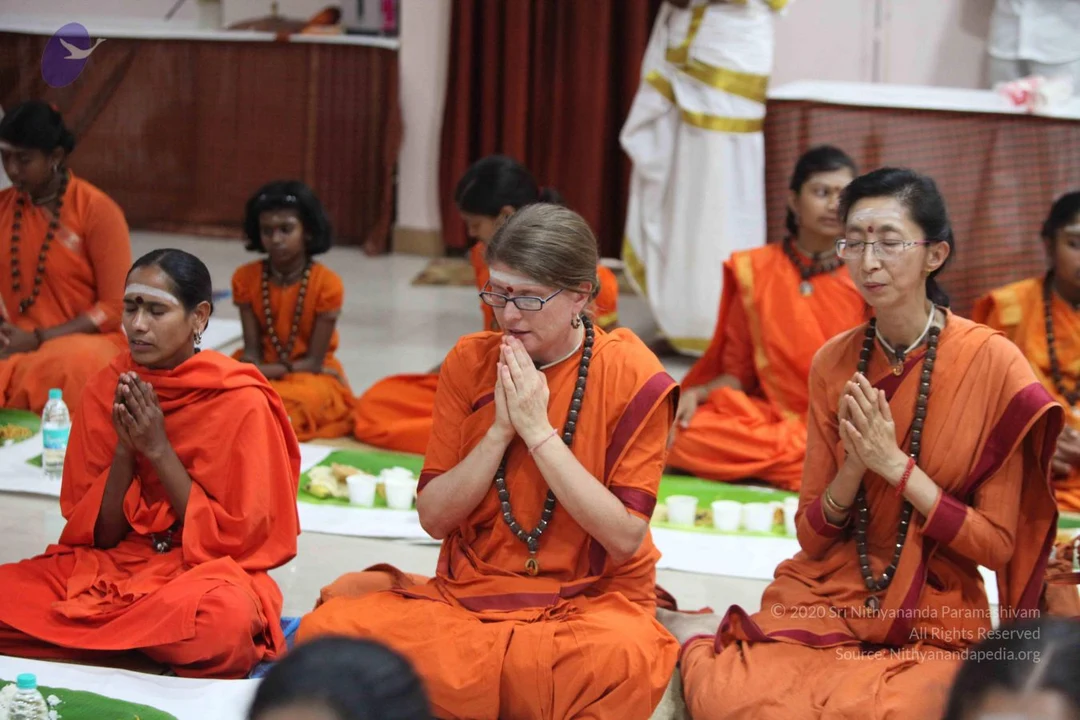
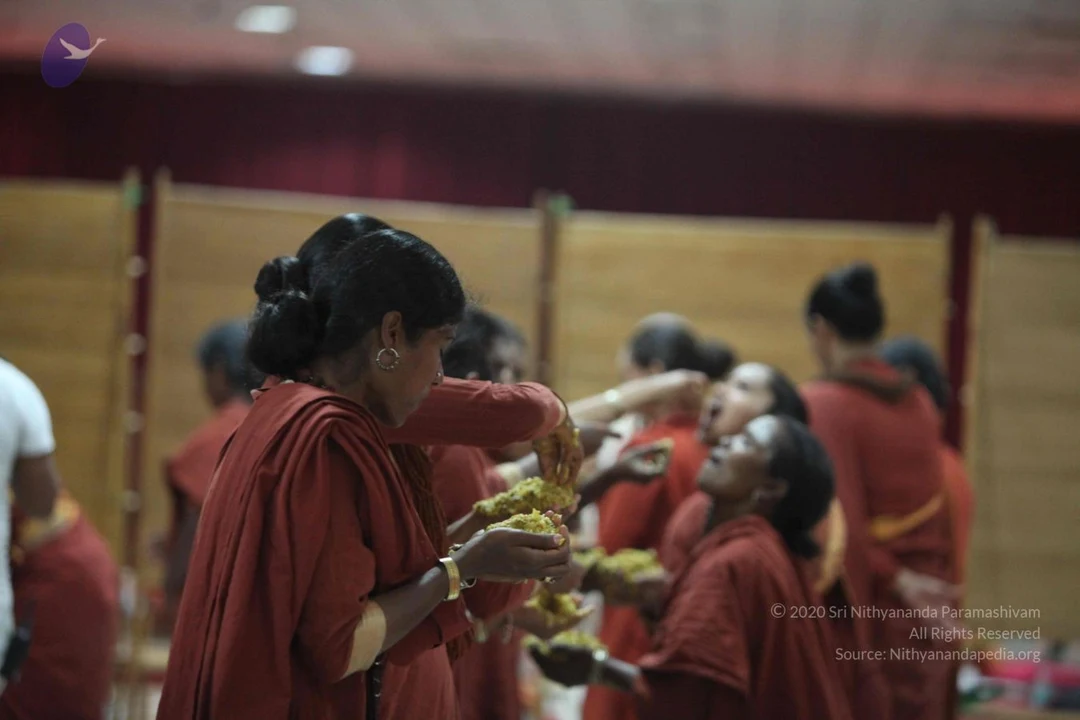
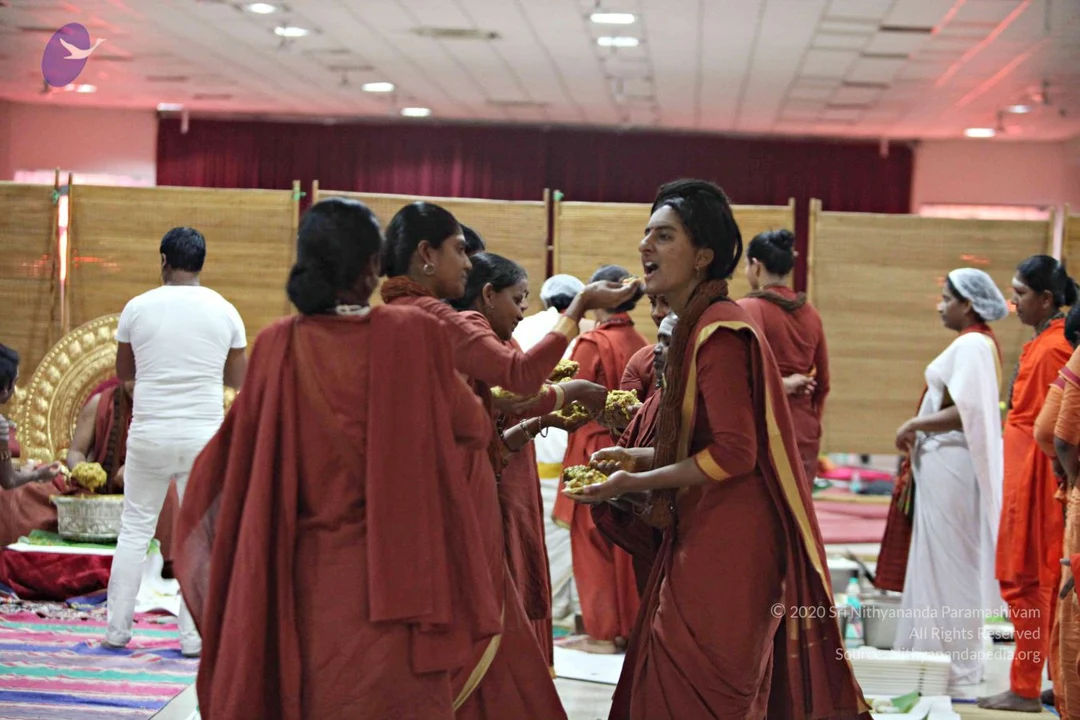
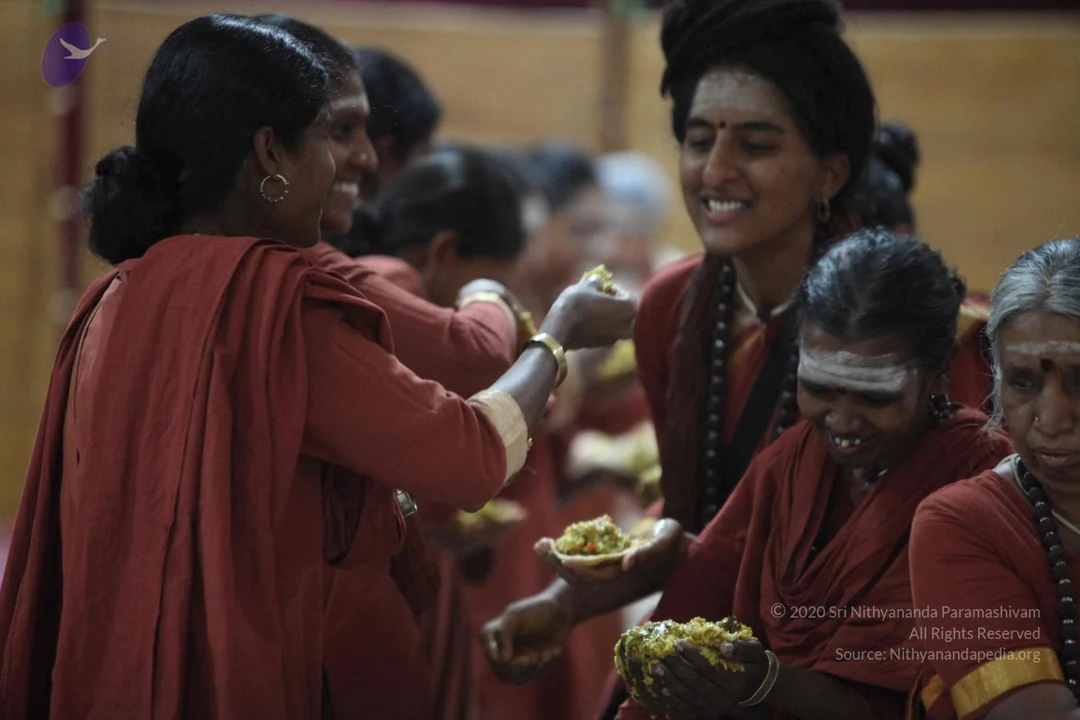
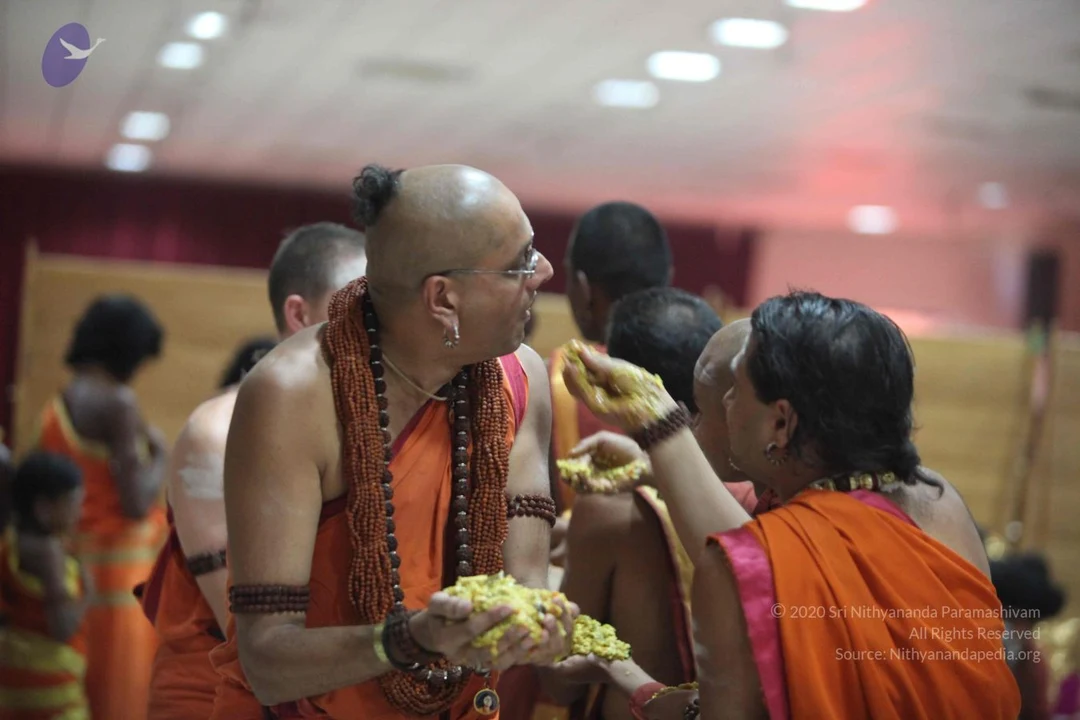
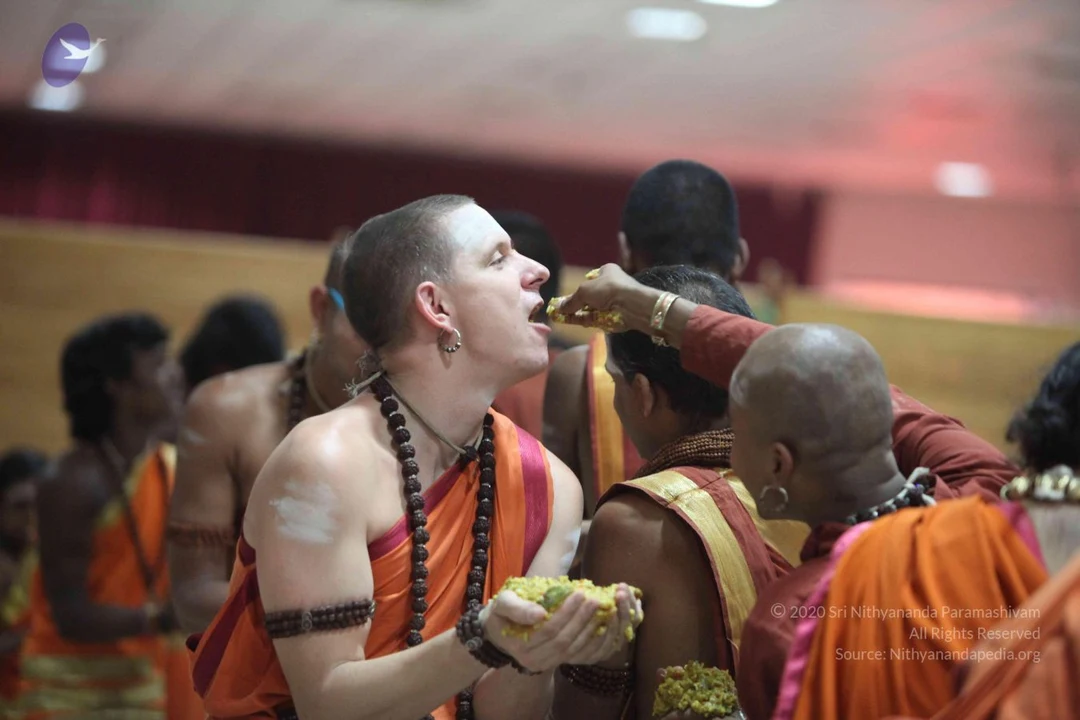
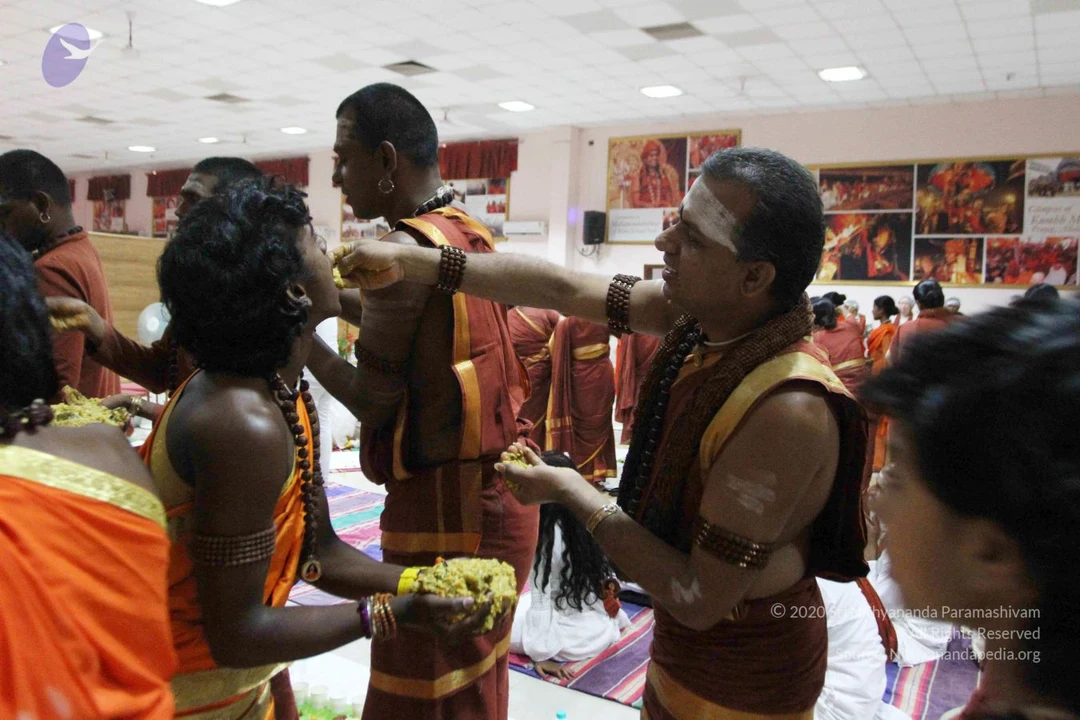
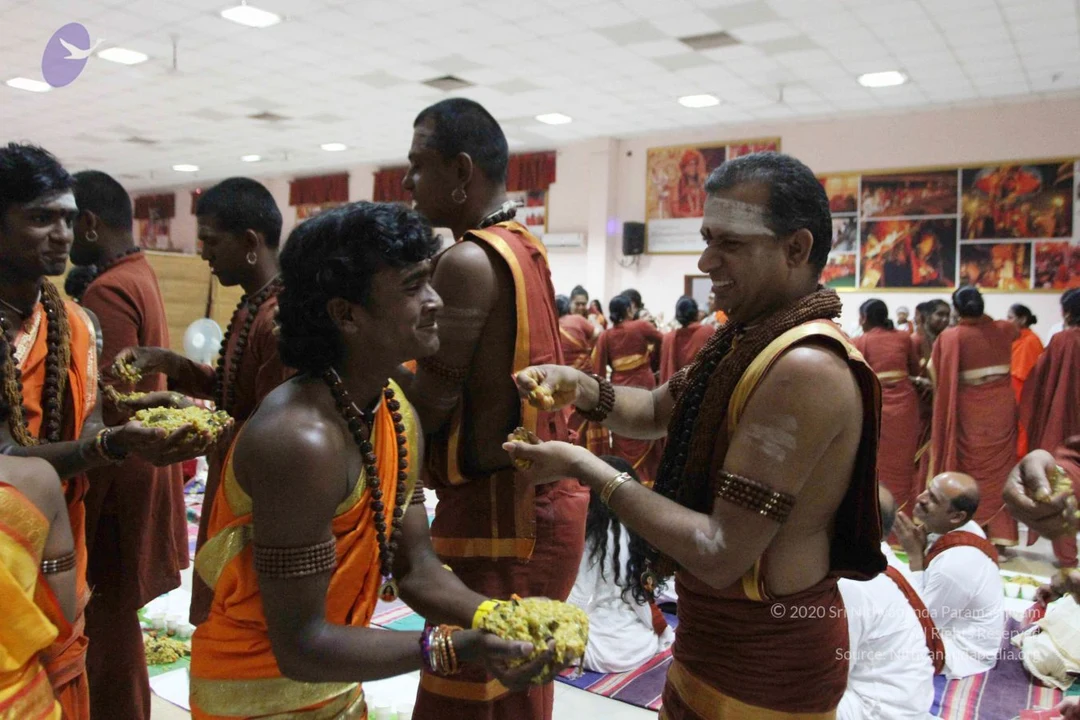
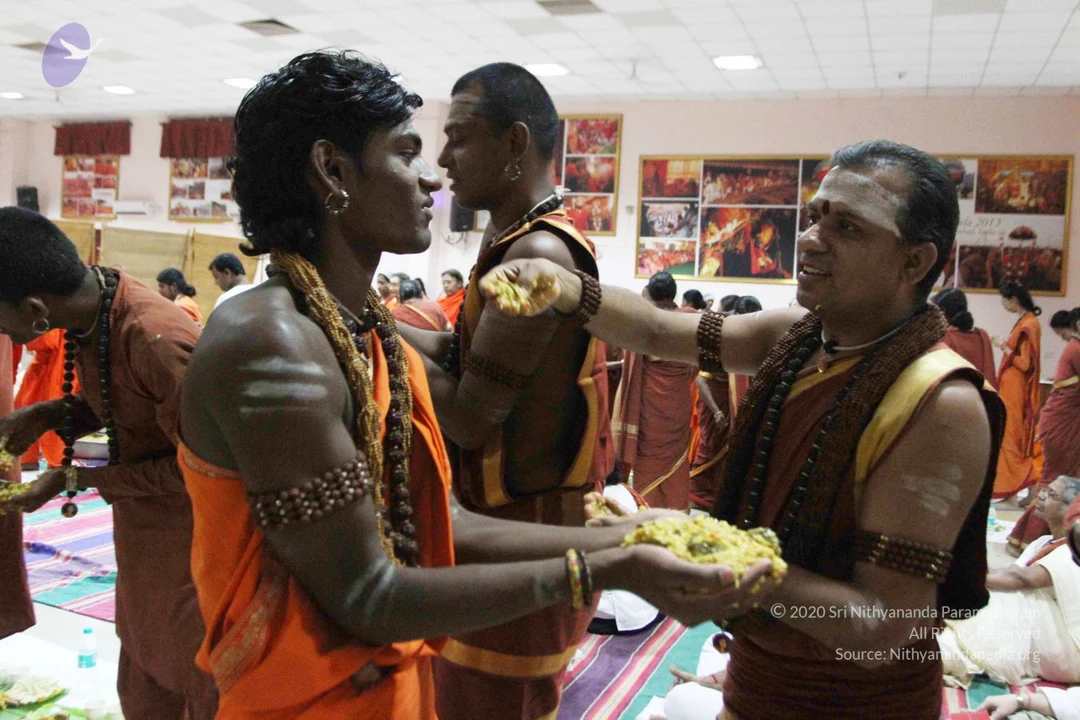
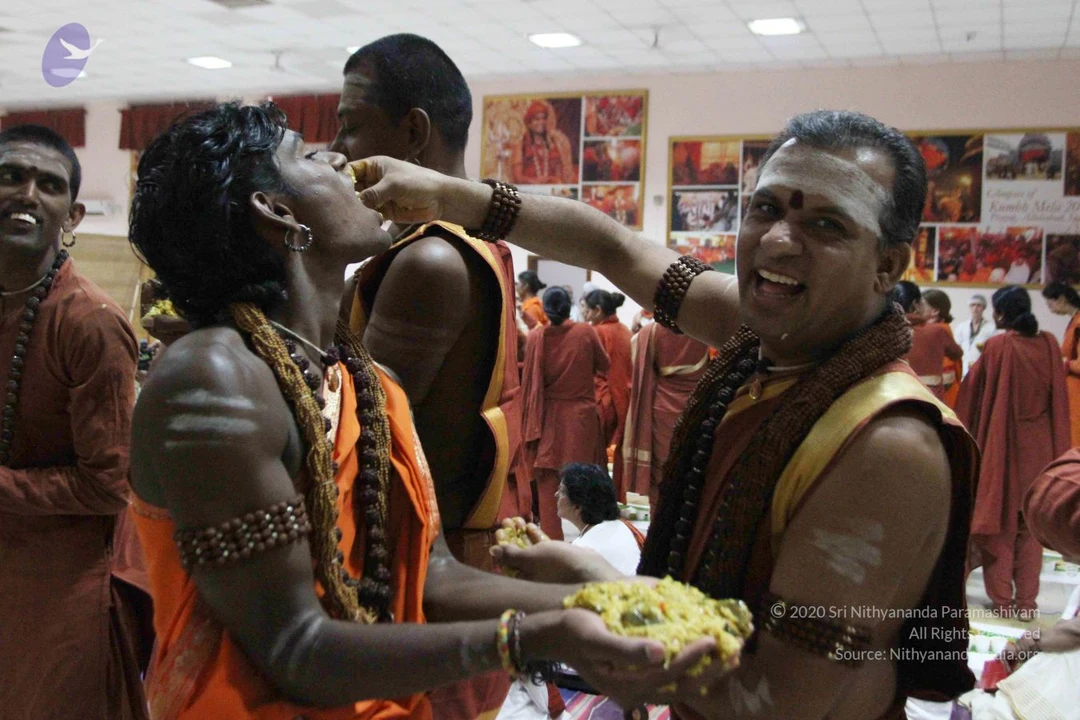
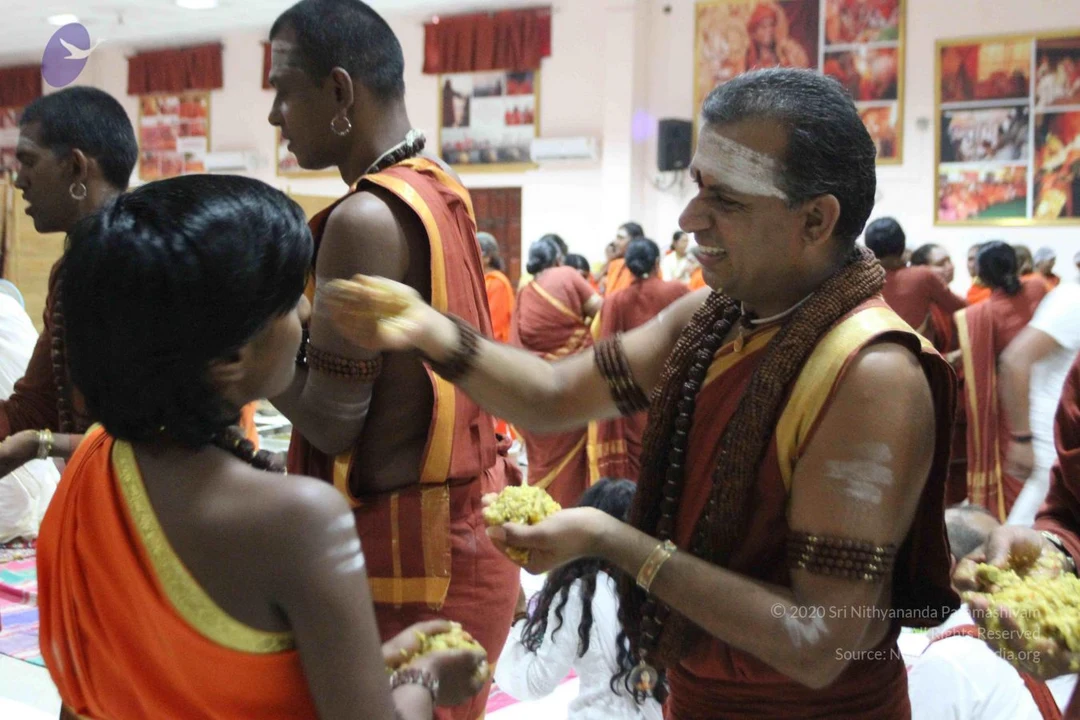
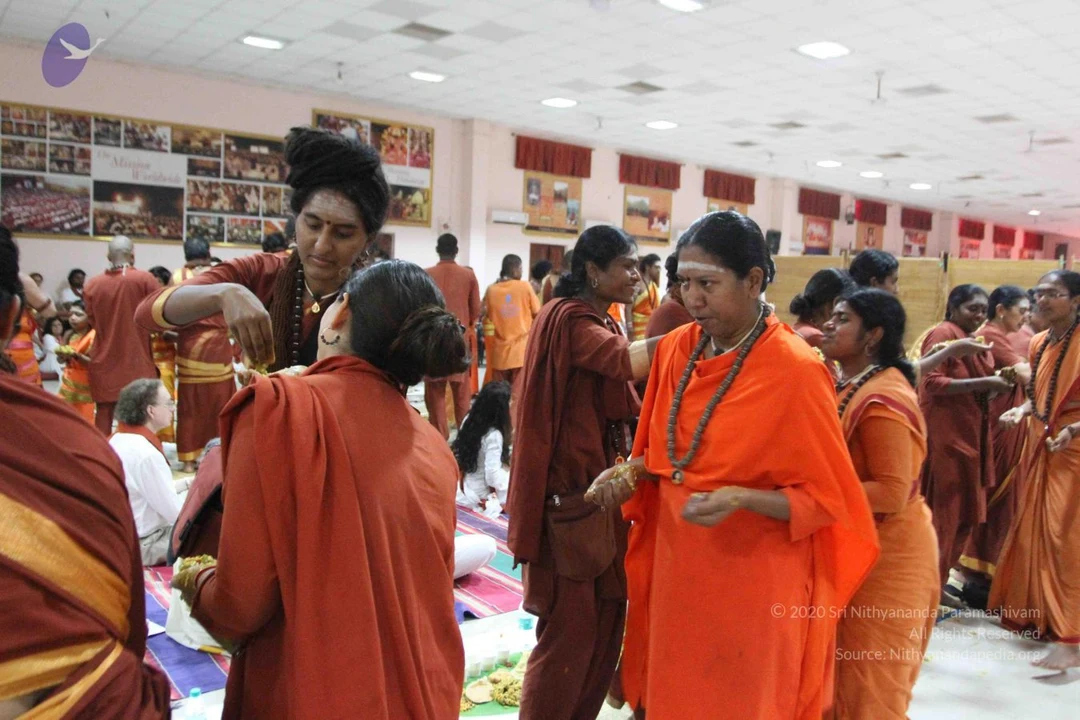
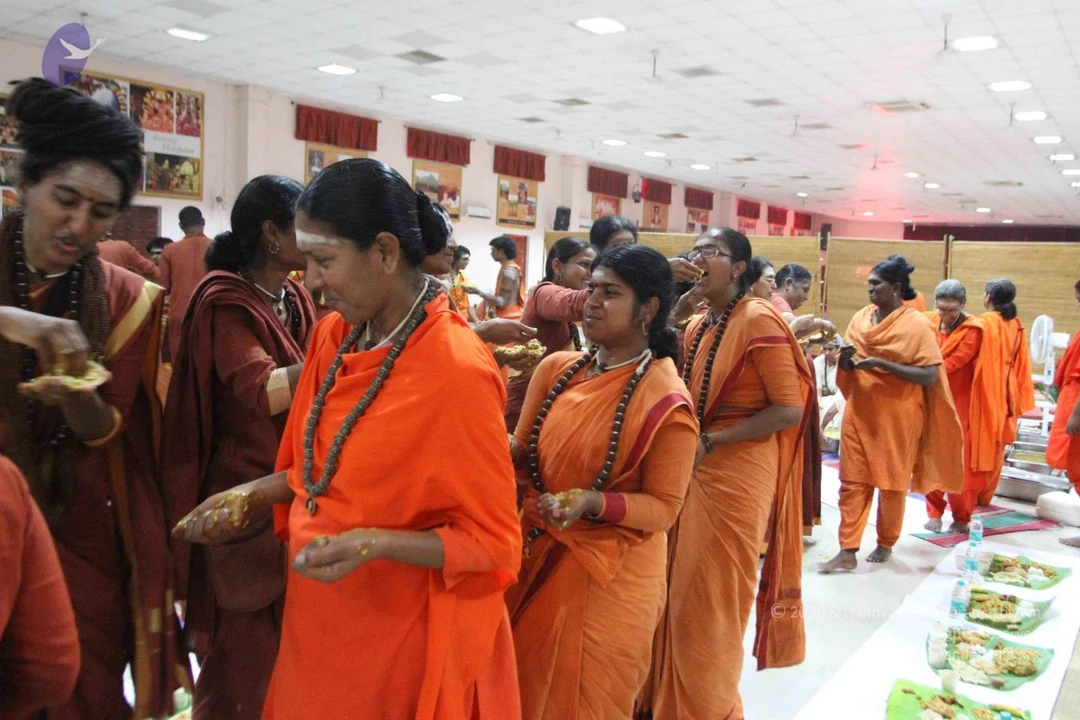
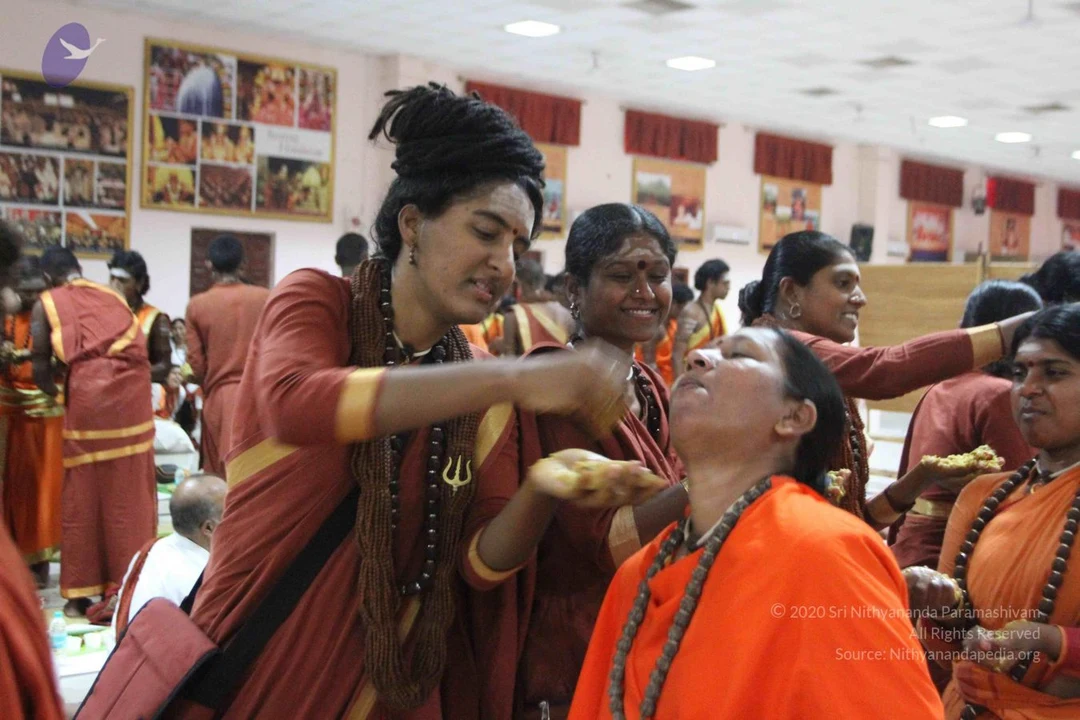
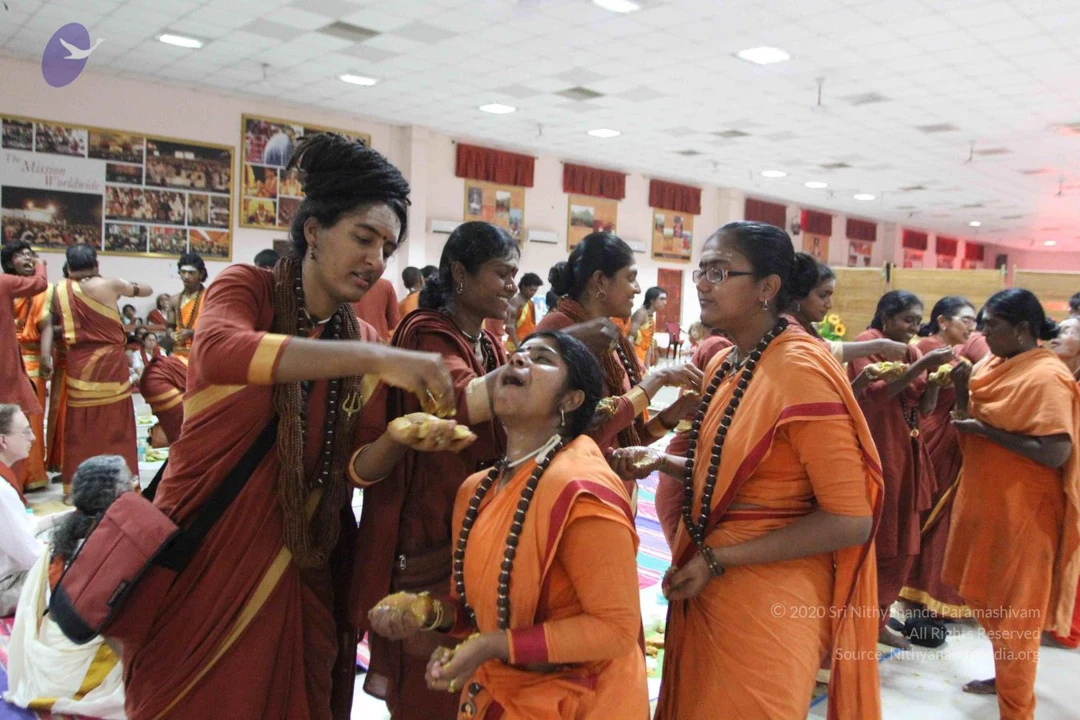
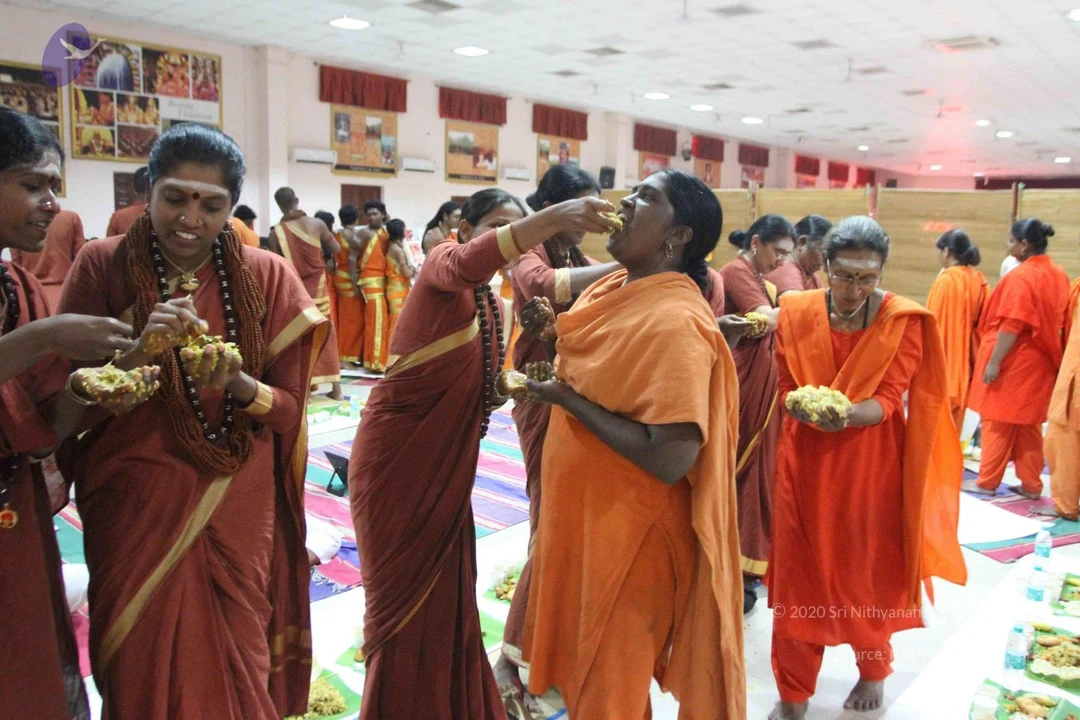
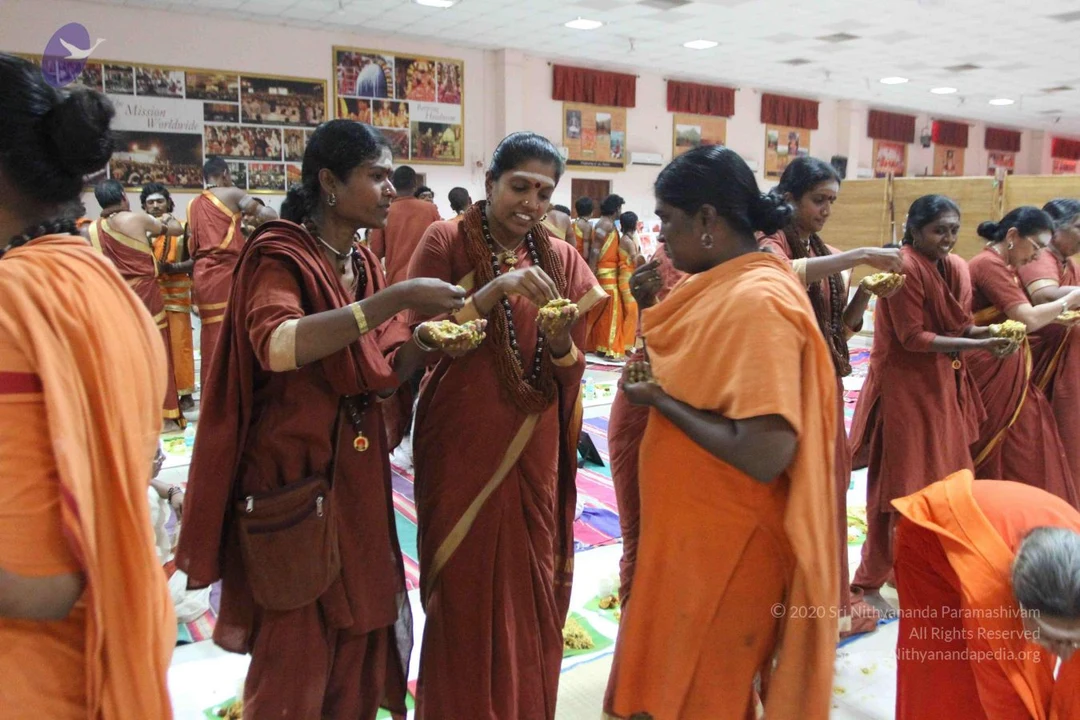
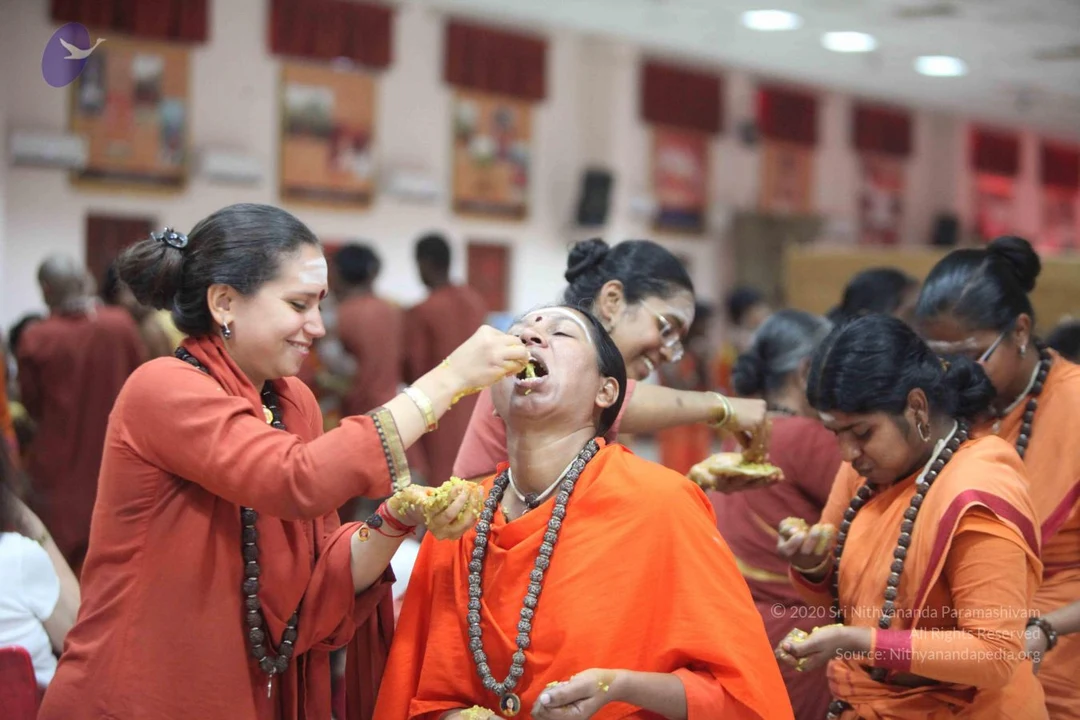
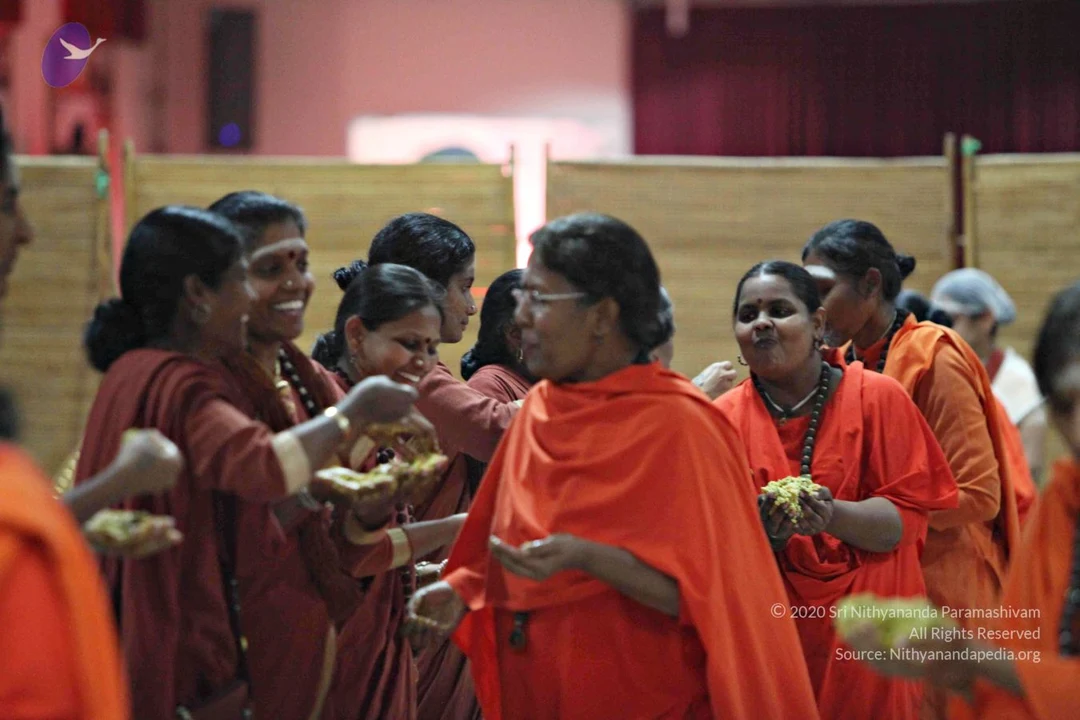
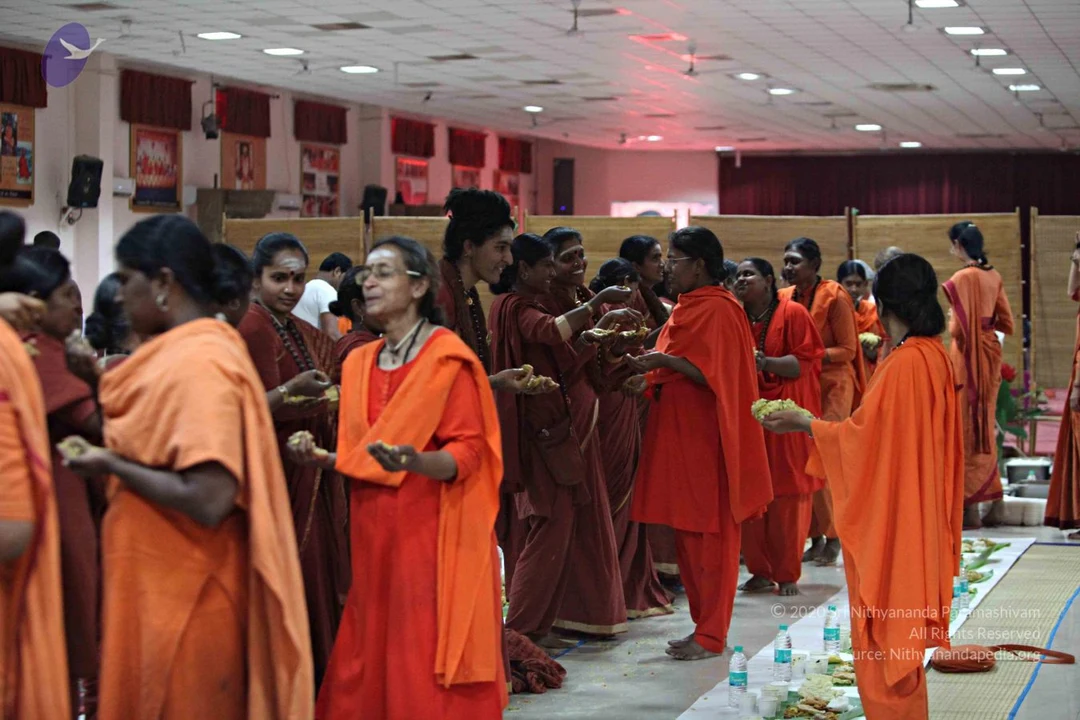
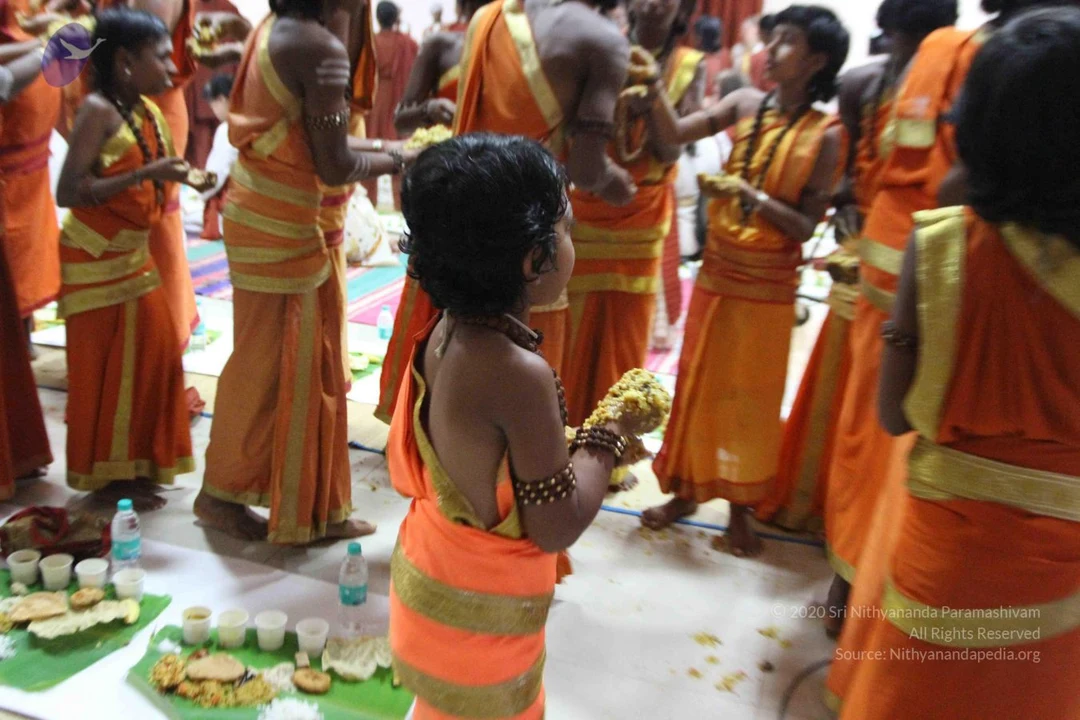
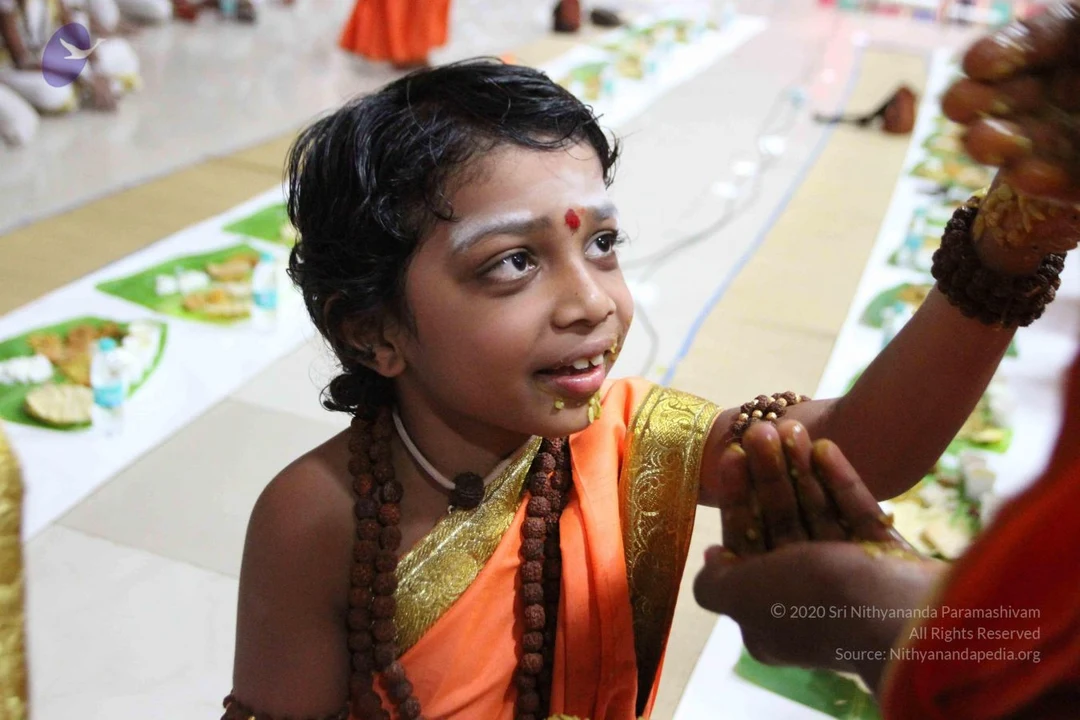
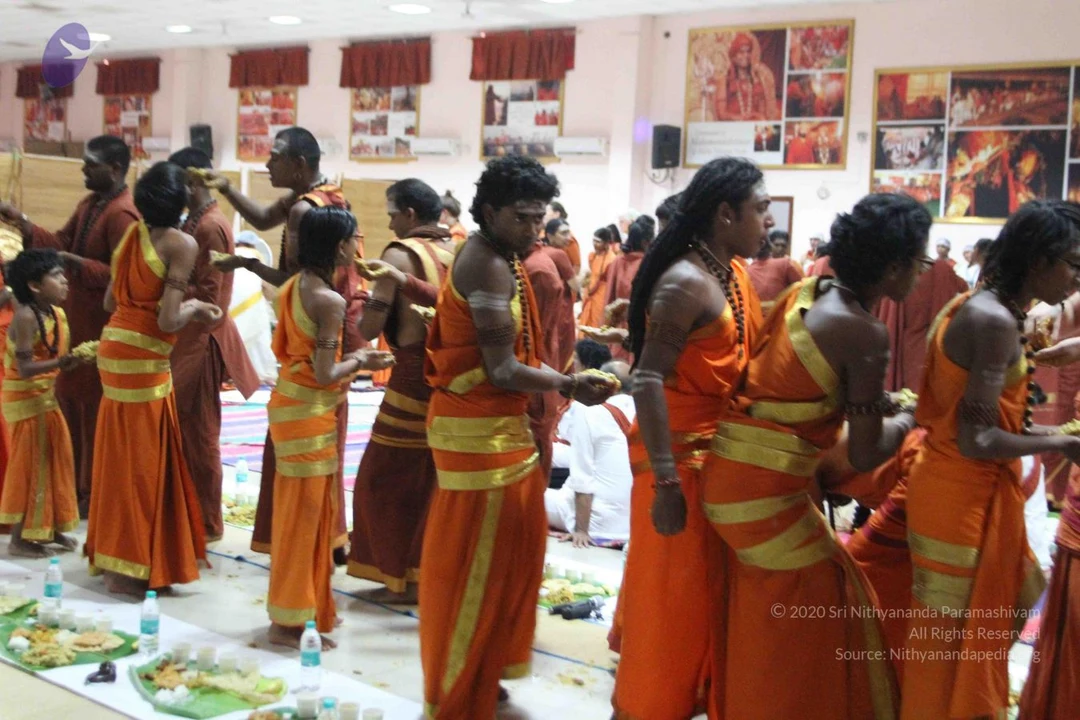
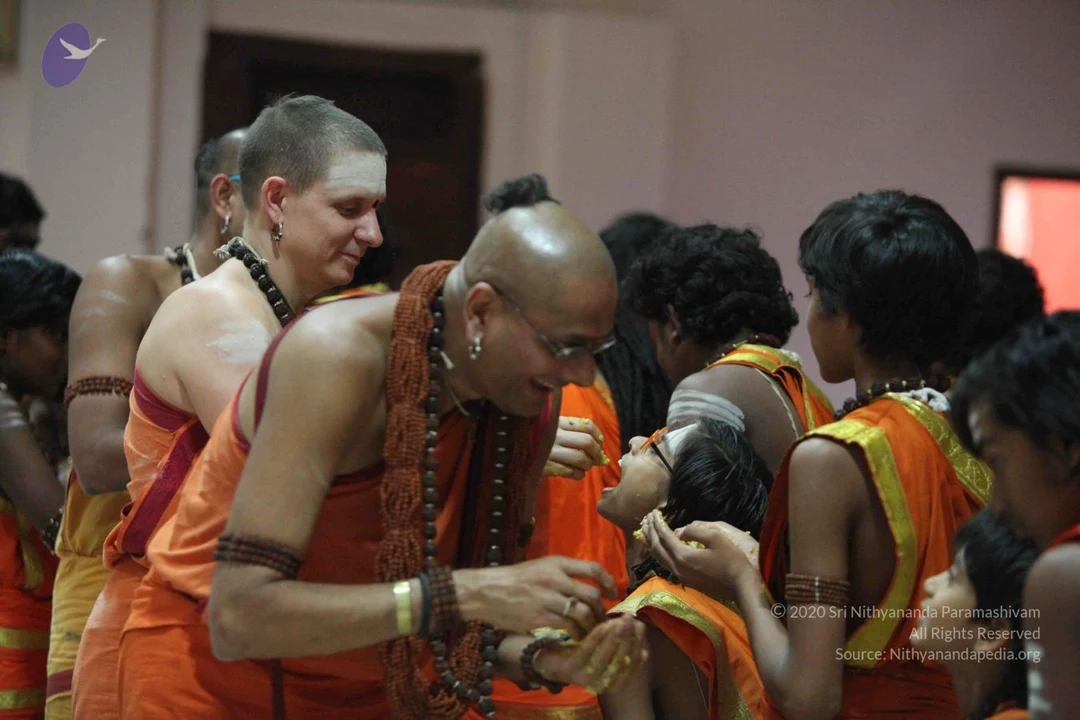
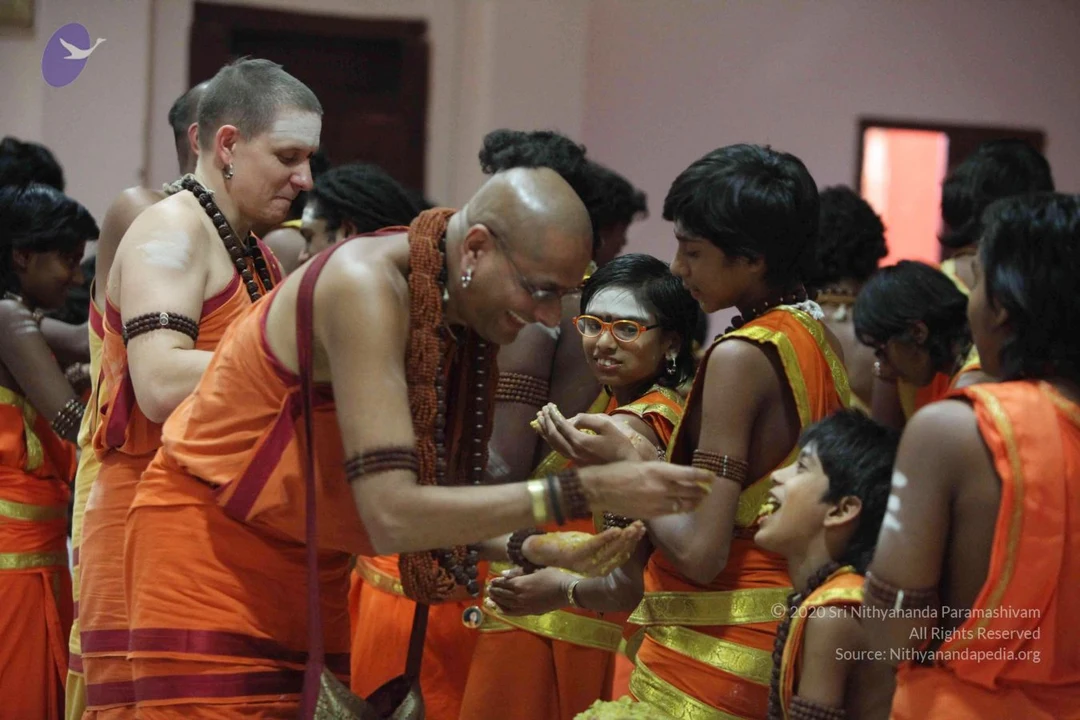
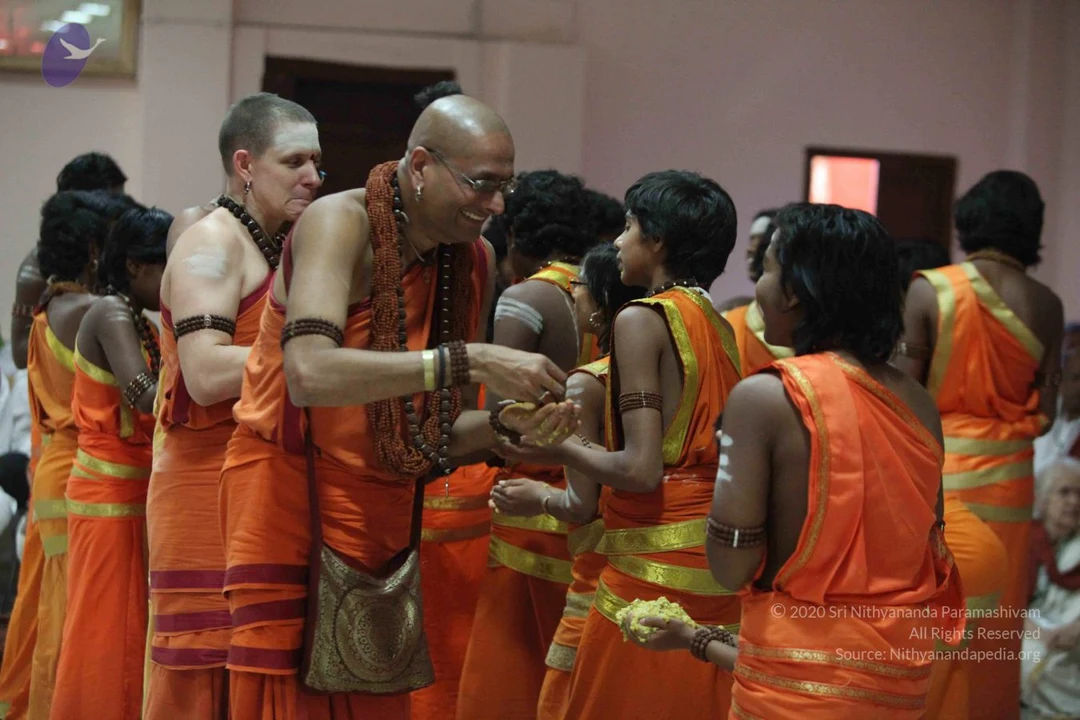
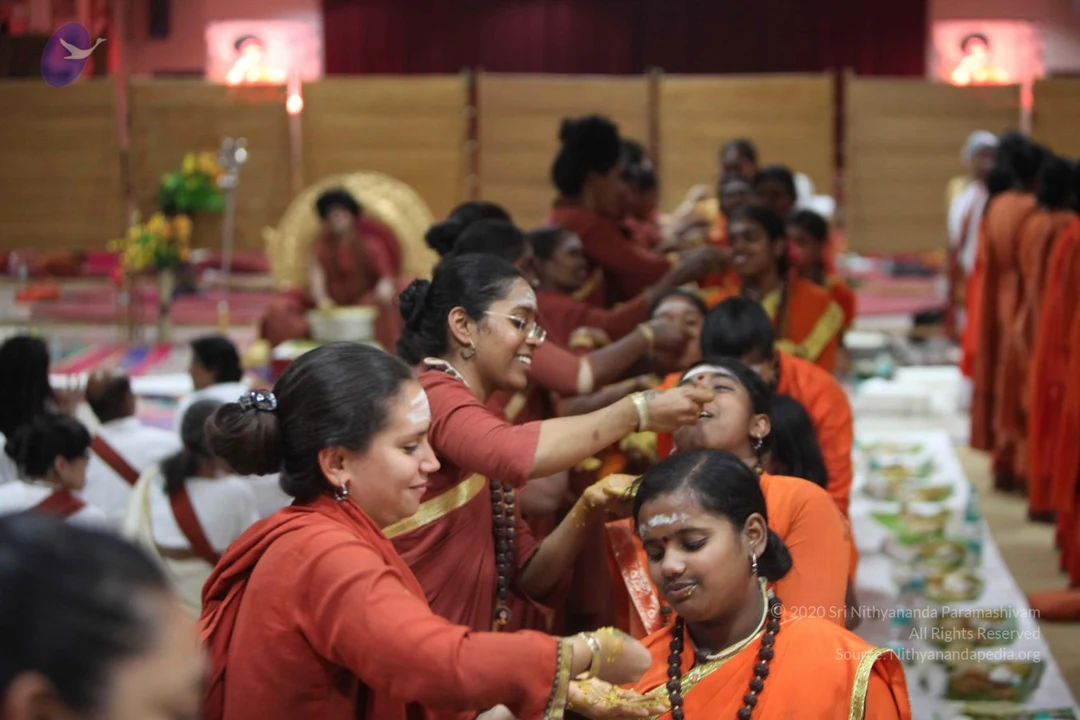
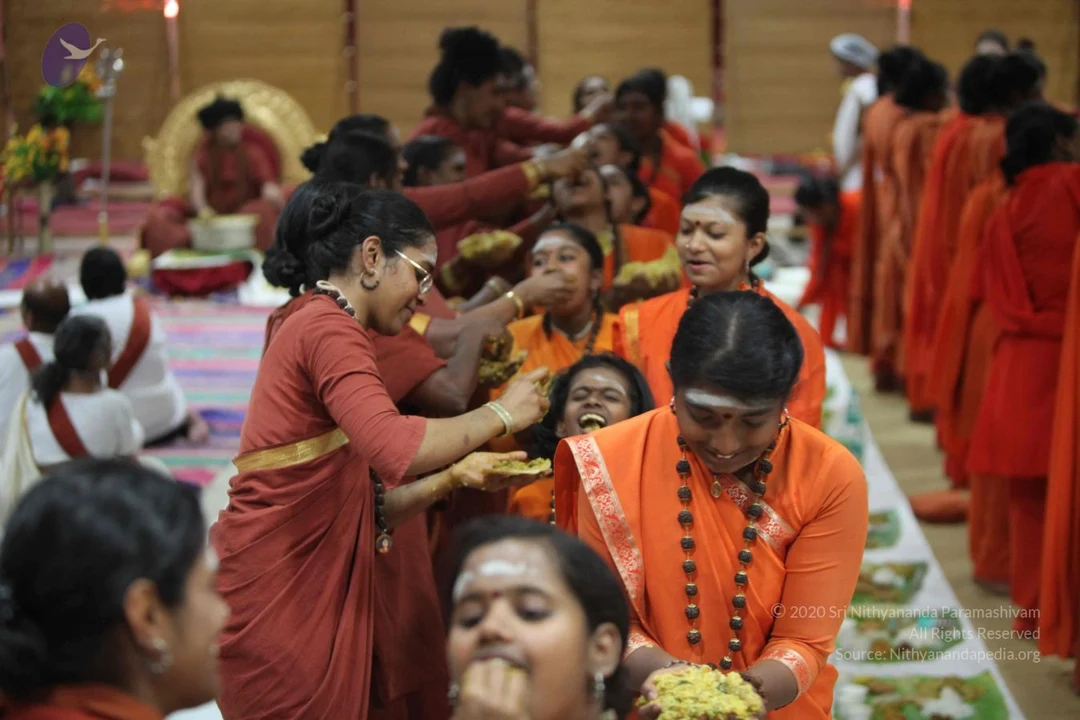
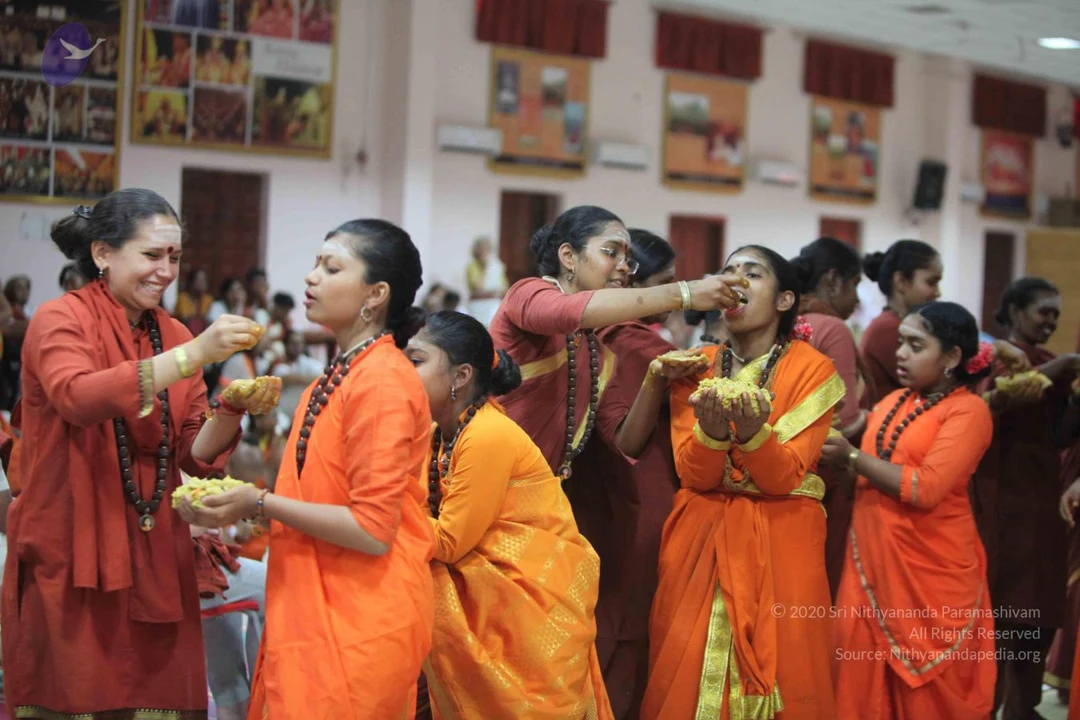
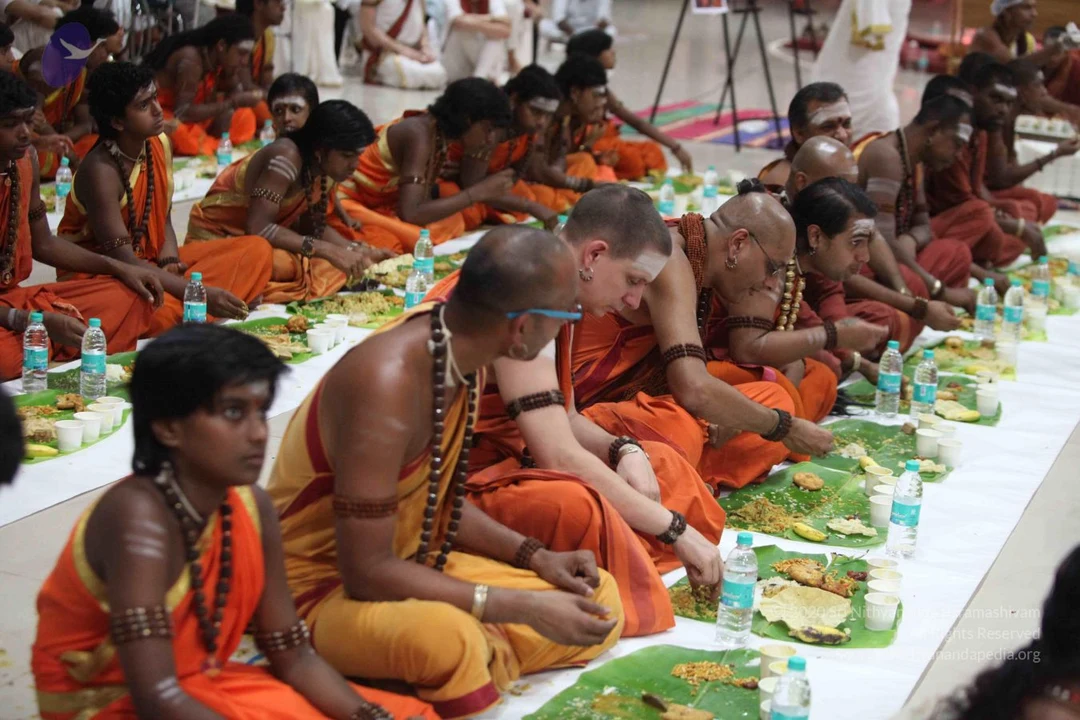
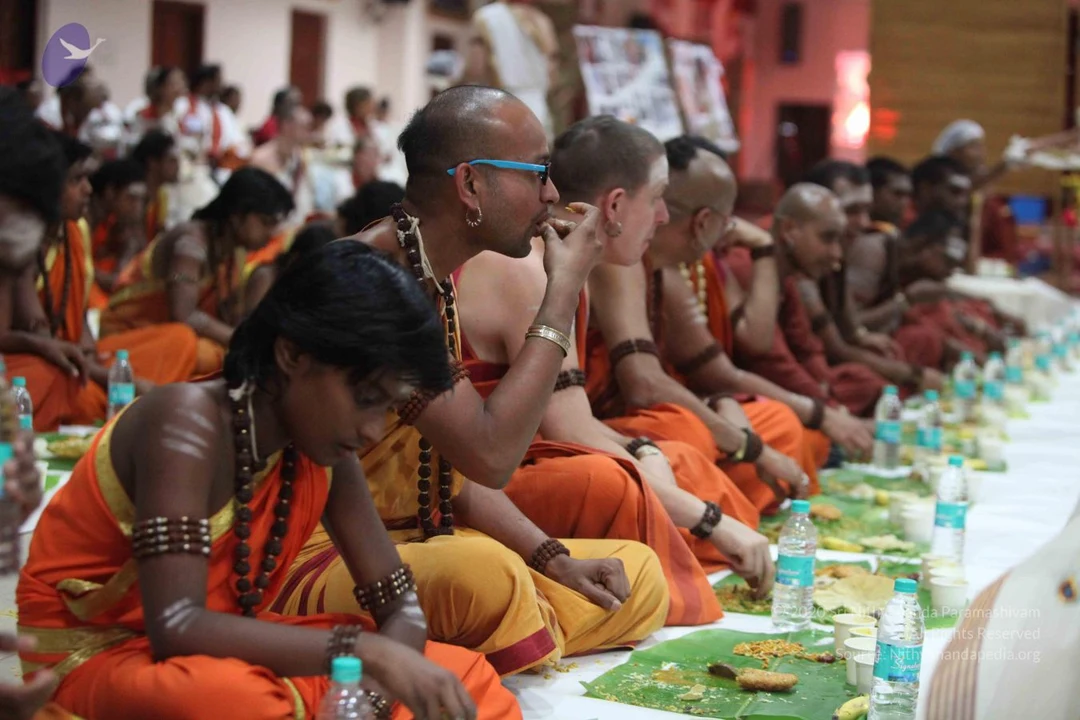
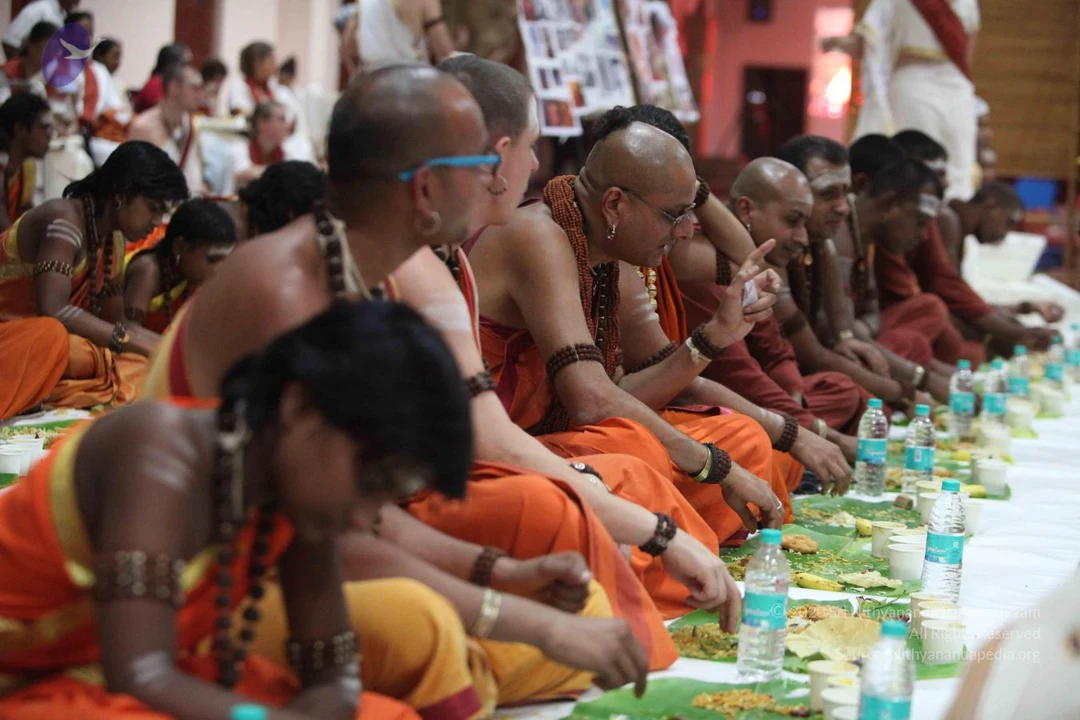
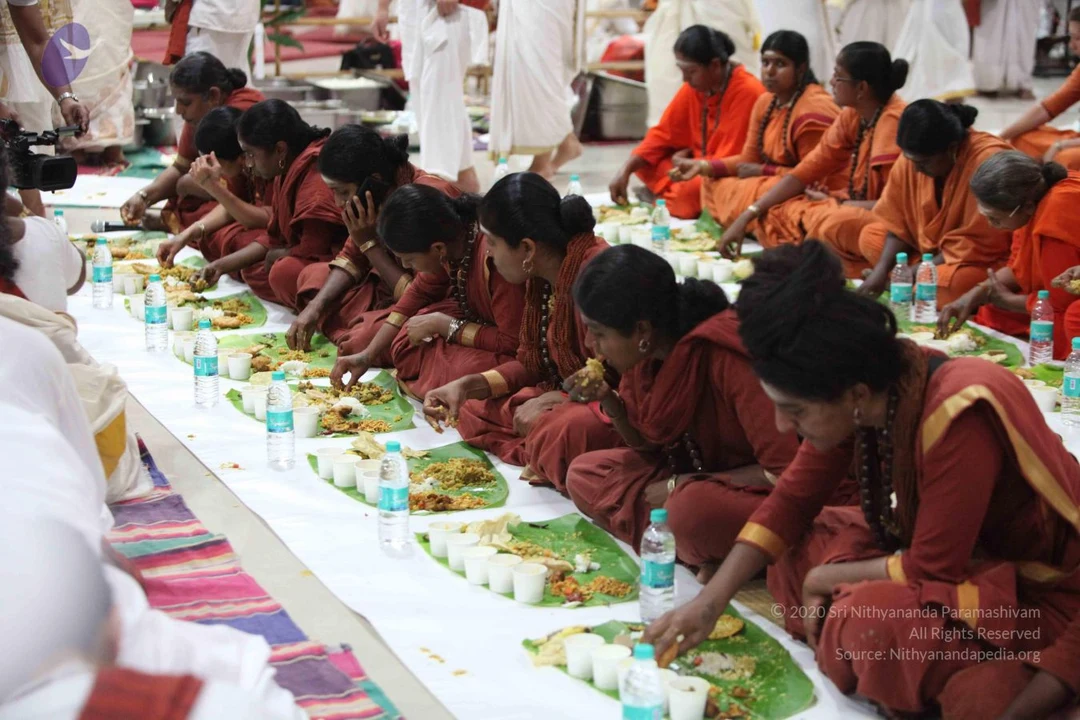
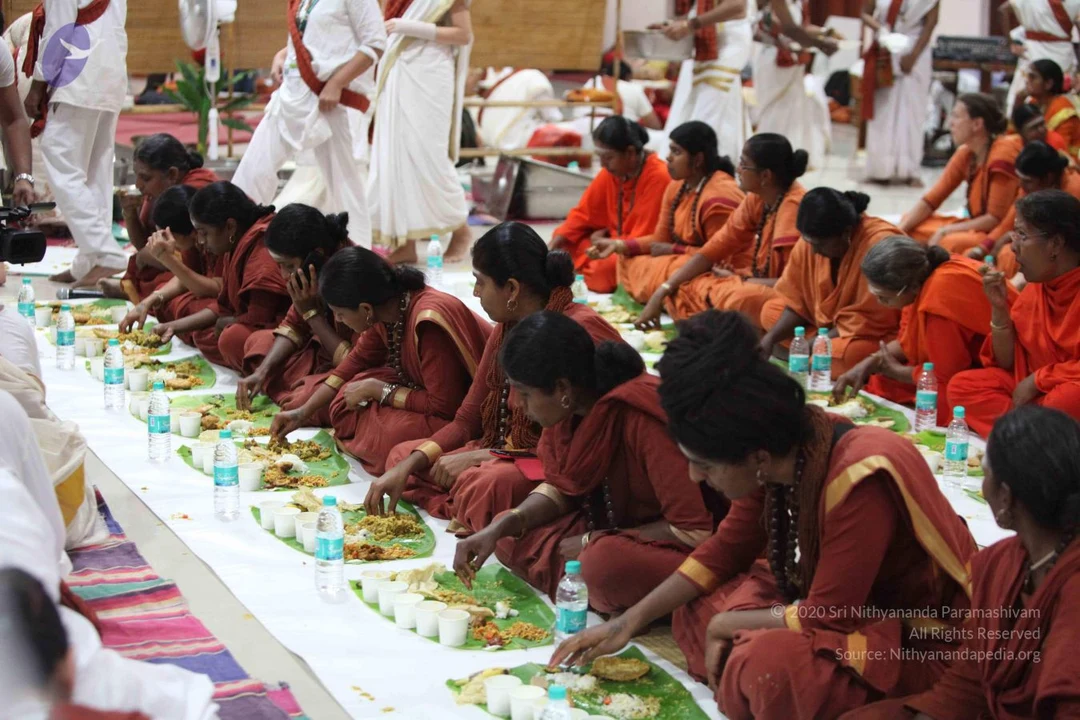
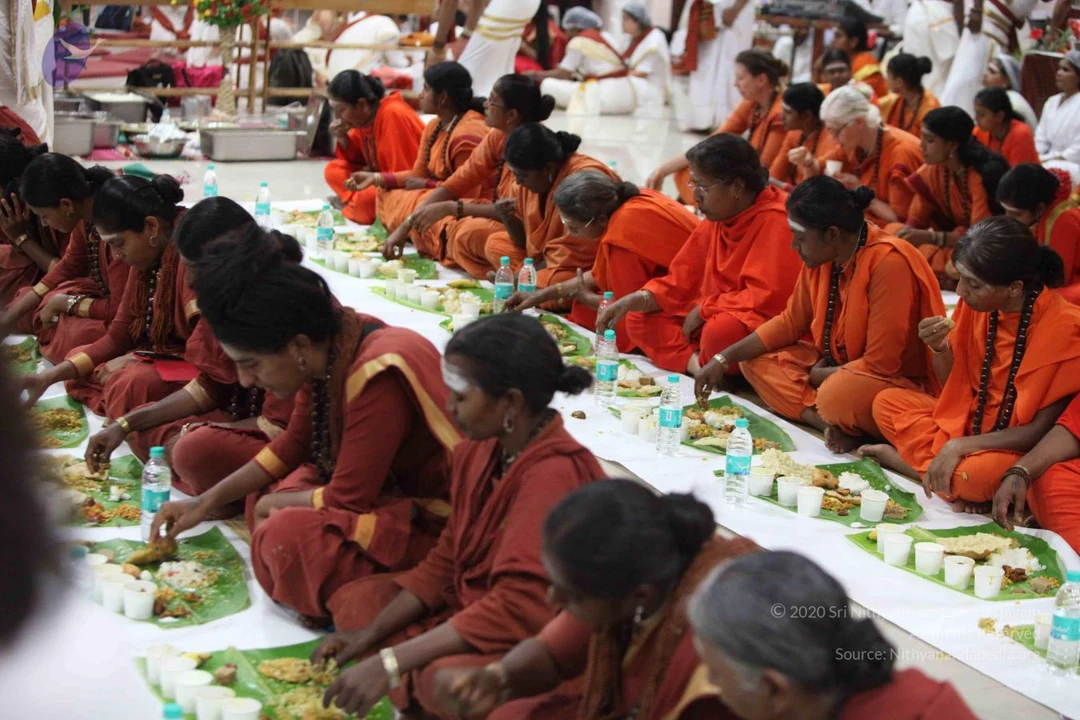
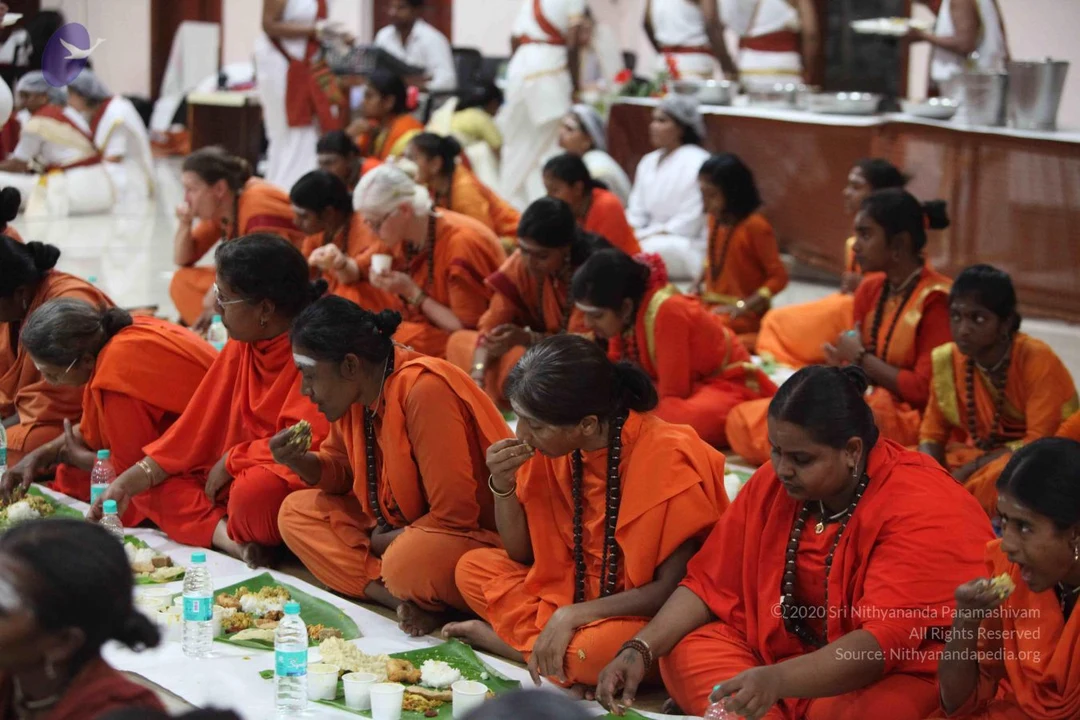
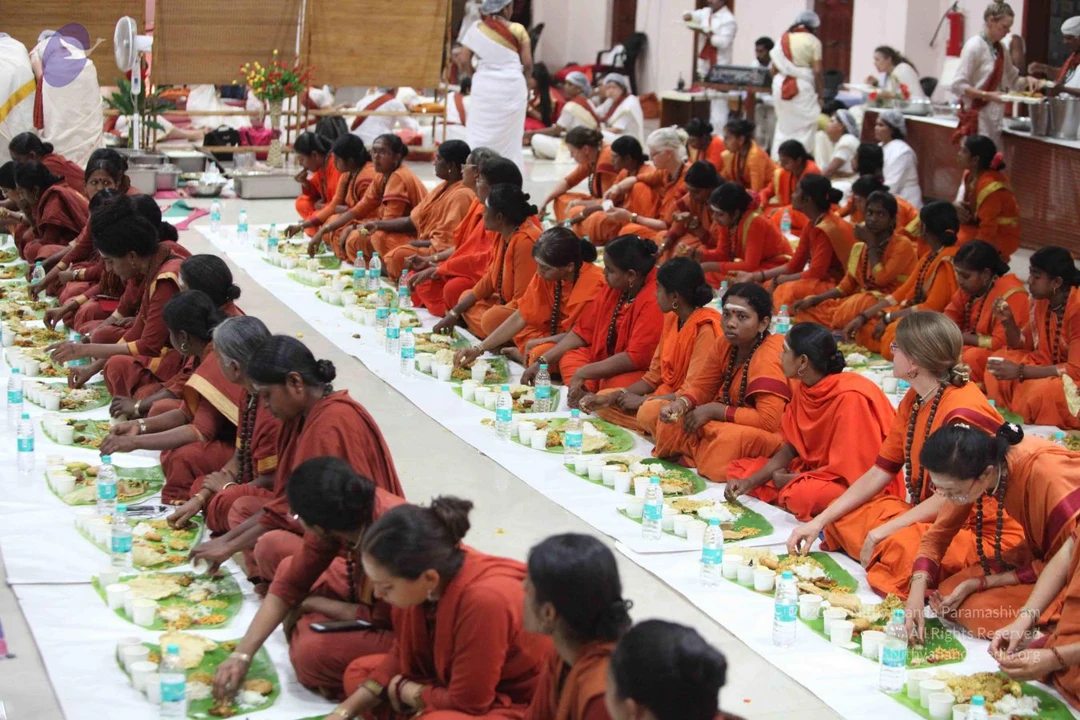
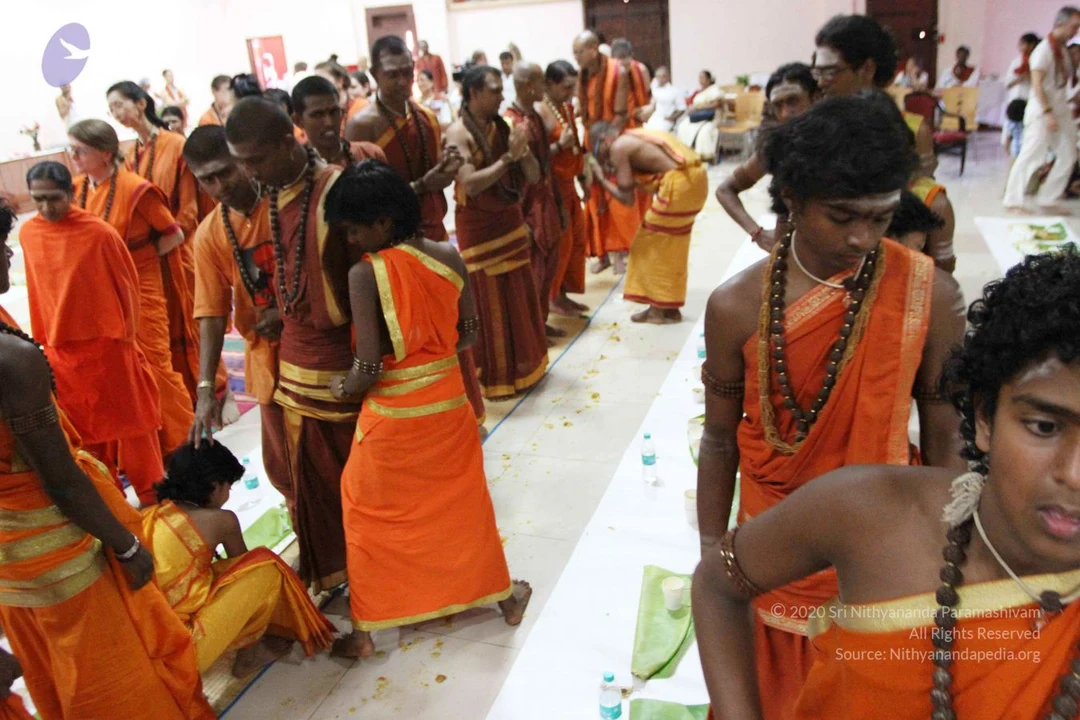
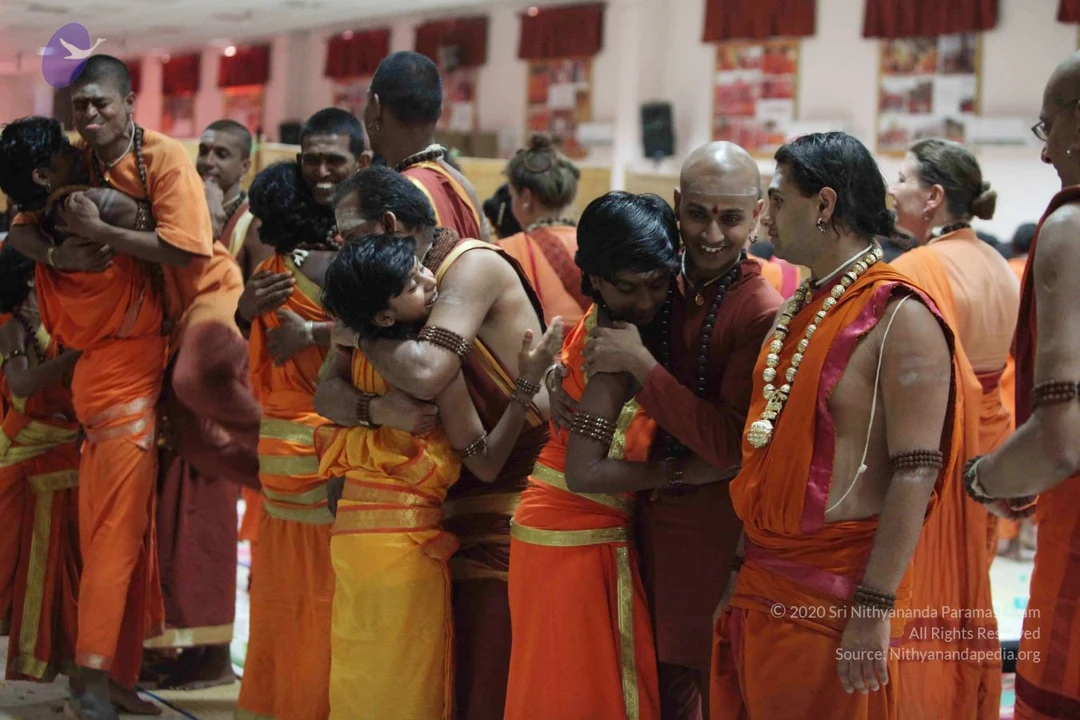
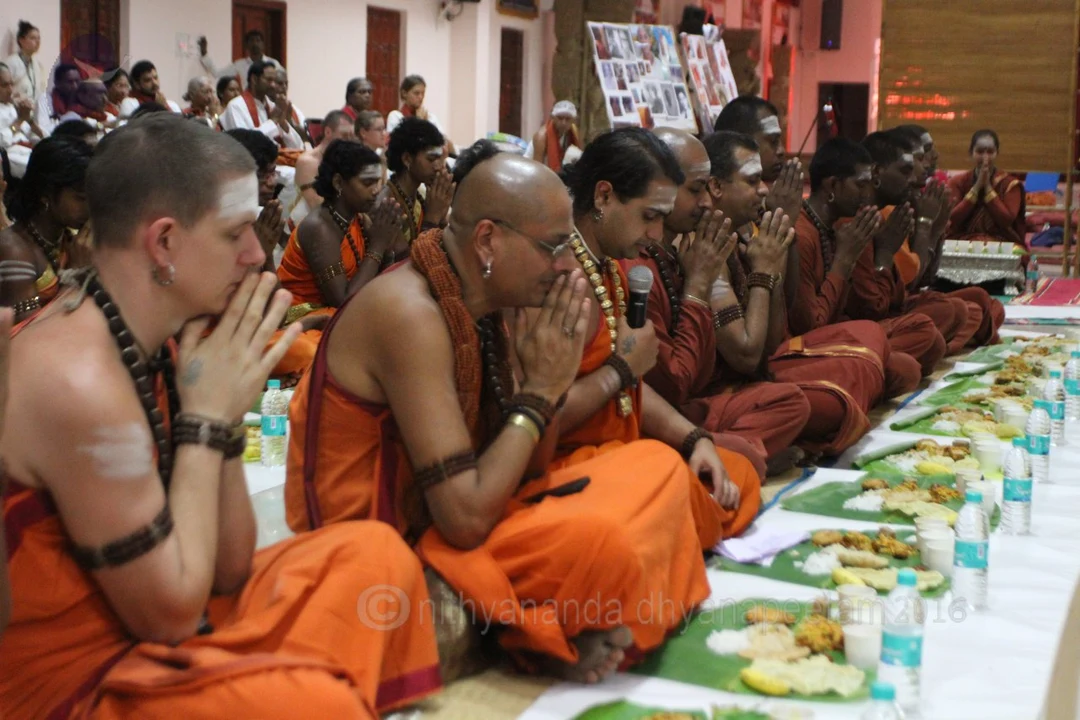
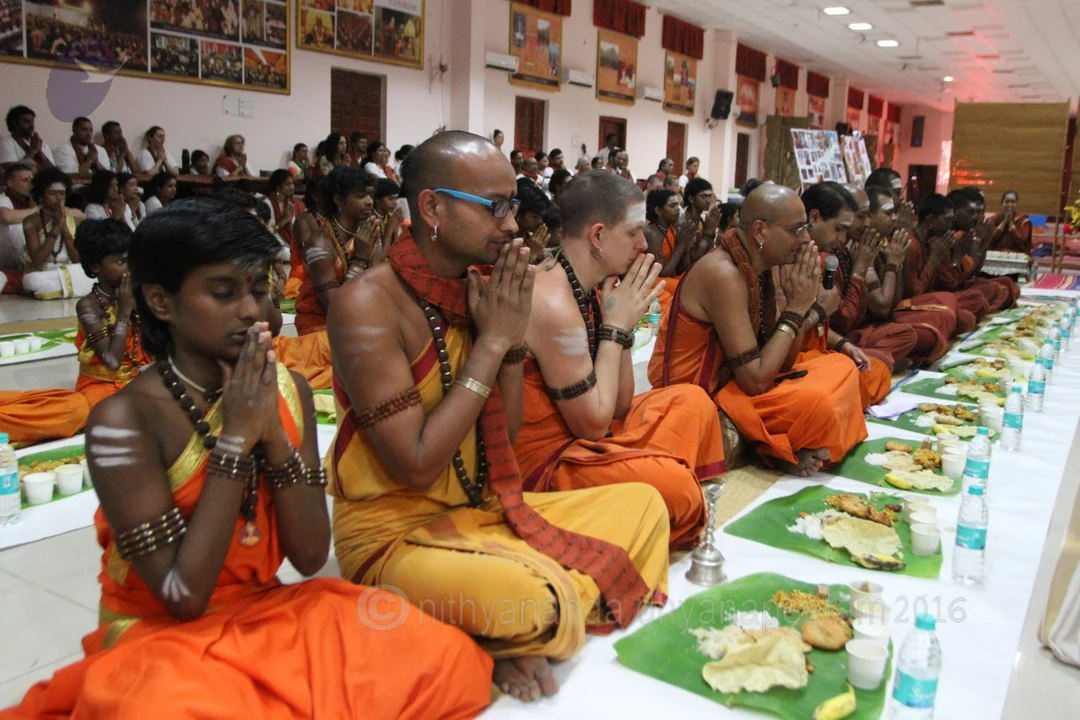
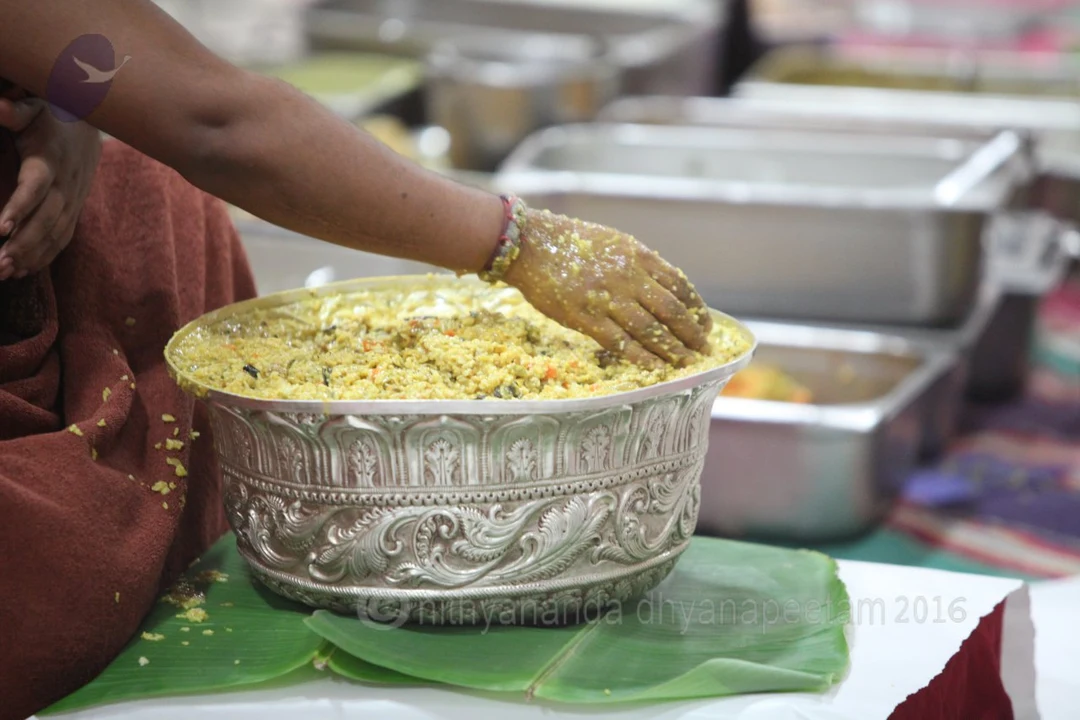
A key component of the Maheshwara Puja is the offering of food to the Master along with His monastic disciples. This is when Swamiji blesses the ancestors to attain Enlightenment and offers them “pinda” or food for the journey to their Enlightenment.

Link to Video:

Title

Bring Liberation to Departed Souls || Maheshwara Puja || 23 February 2016

Link to Video:

Photos Of The Day:

IA-Mandala-Process
Maheshwara-Pooja

Photos Of The Day:

Sacred-Arts

Photos Of The Day:

Sacred-Arts

Maheshwar Puja

,,,,,

Photos from this day

View all 345 photos

IA-Mandala-Process
26 photosSource gallery
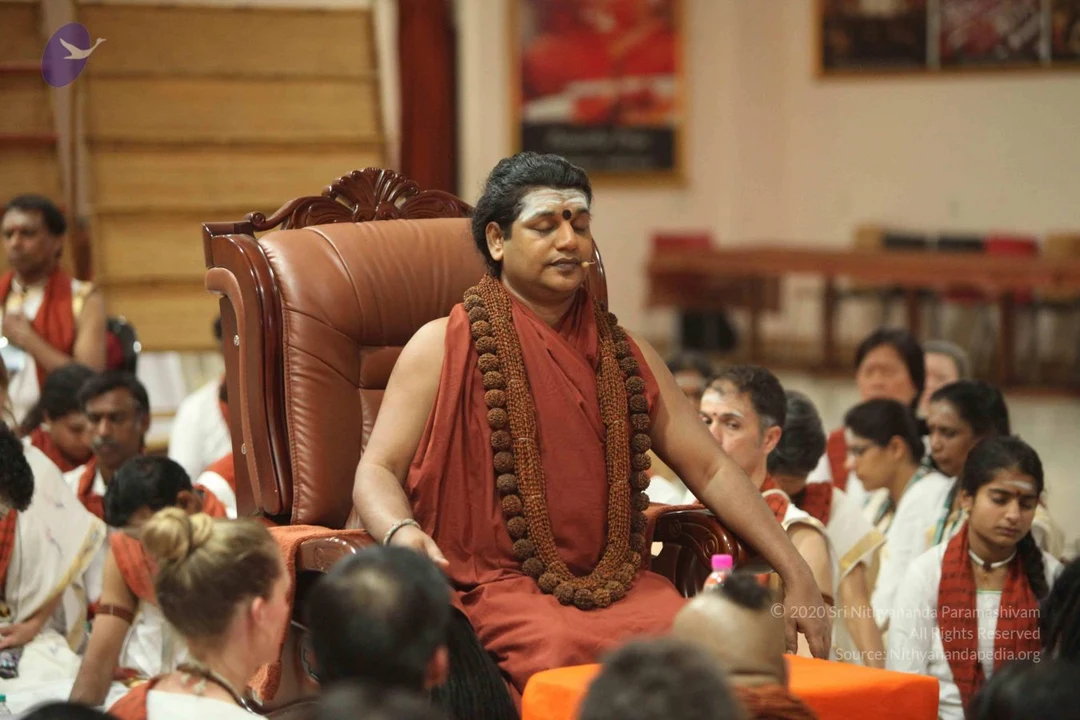
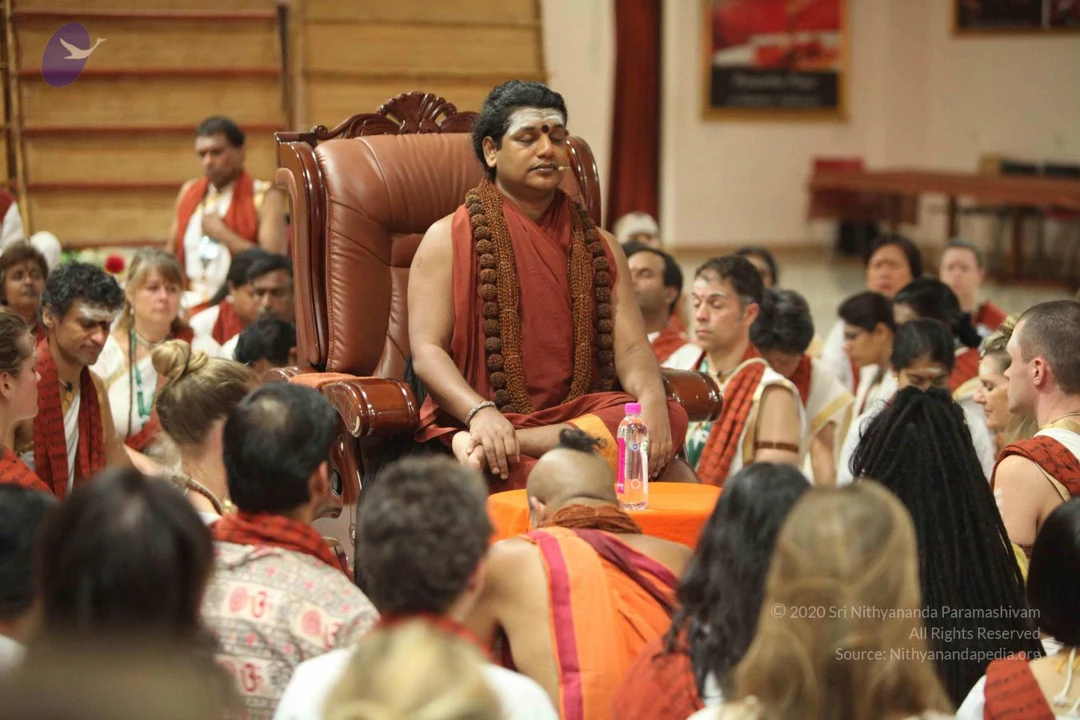
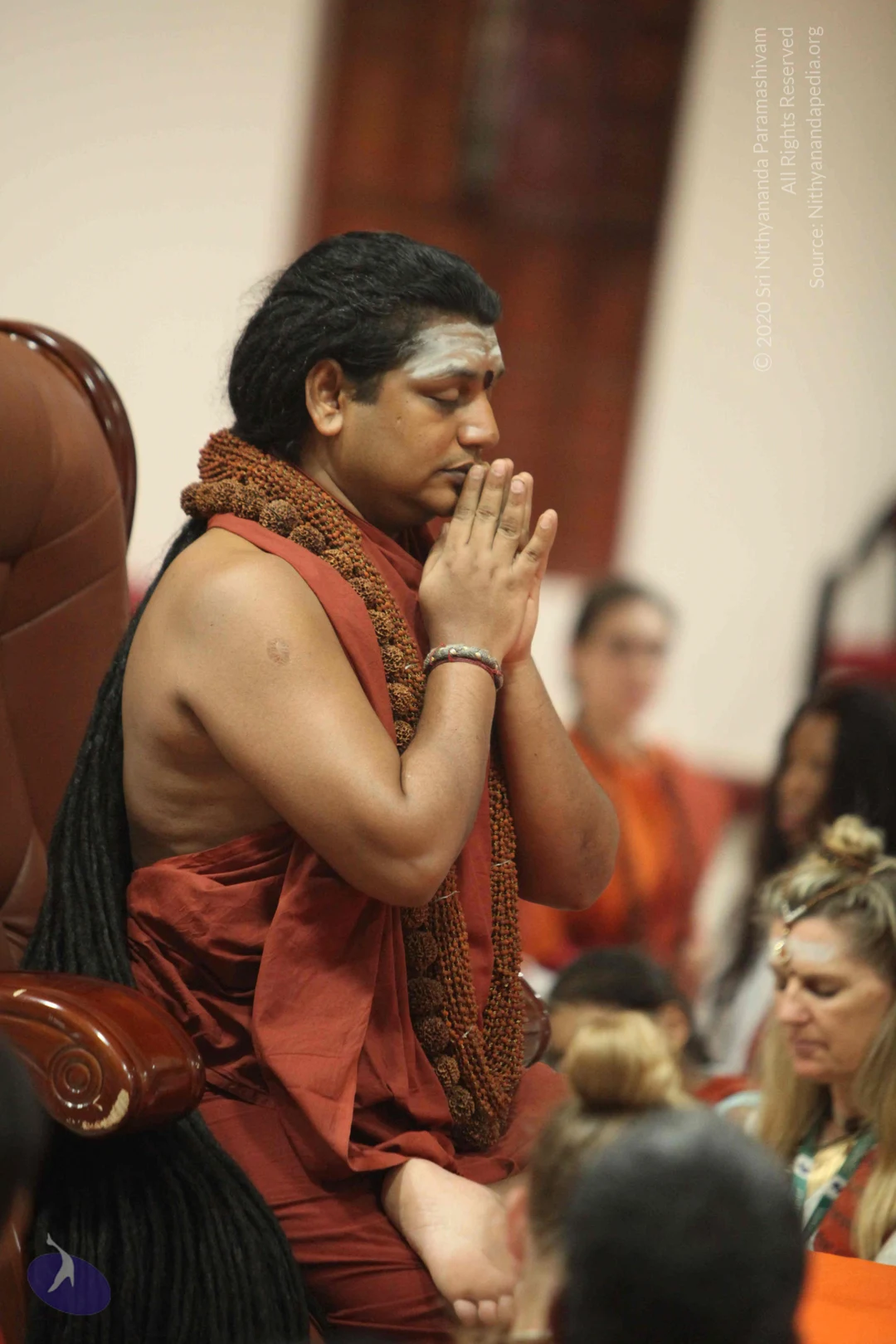
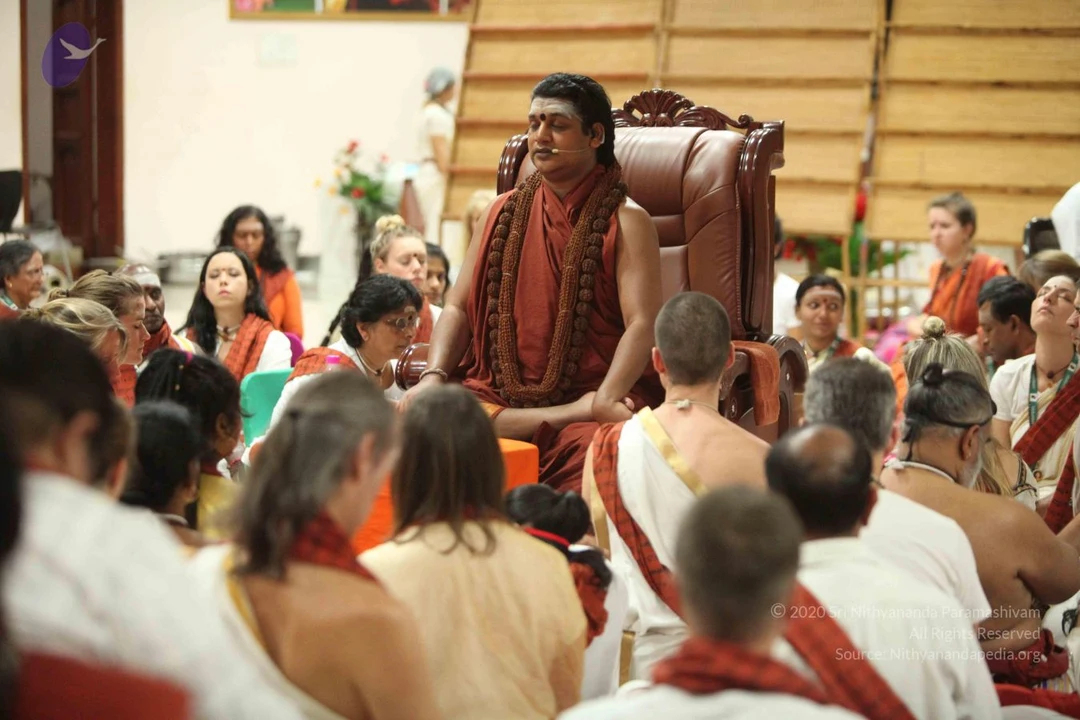
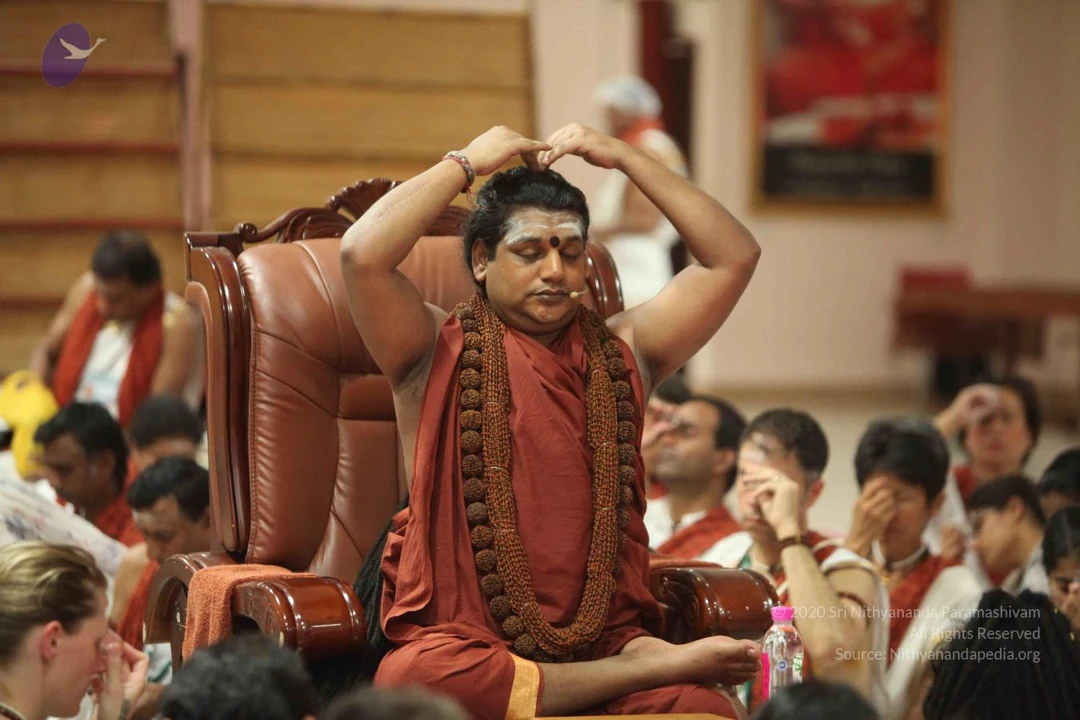
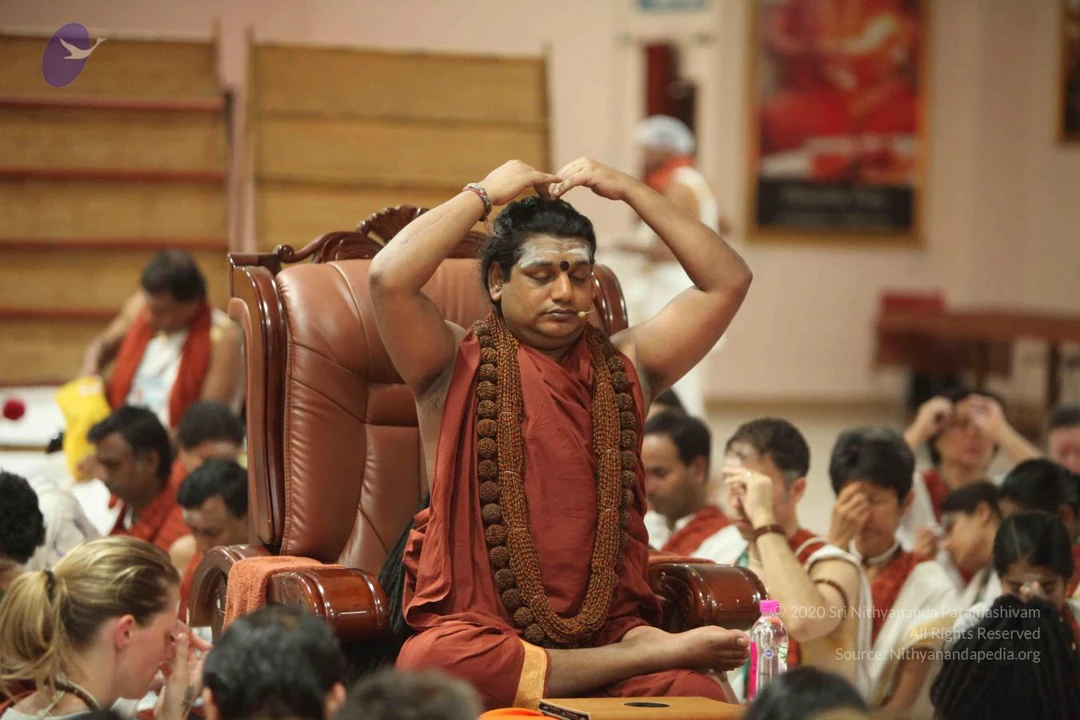
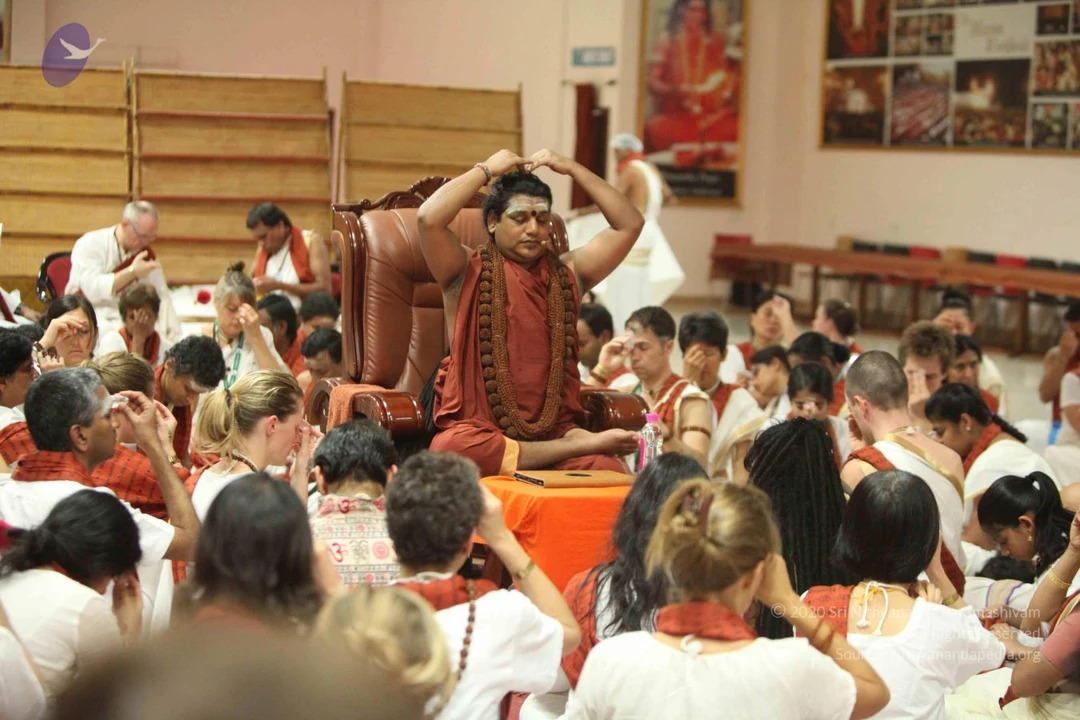
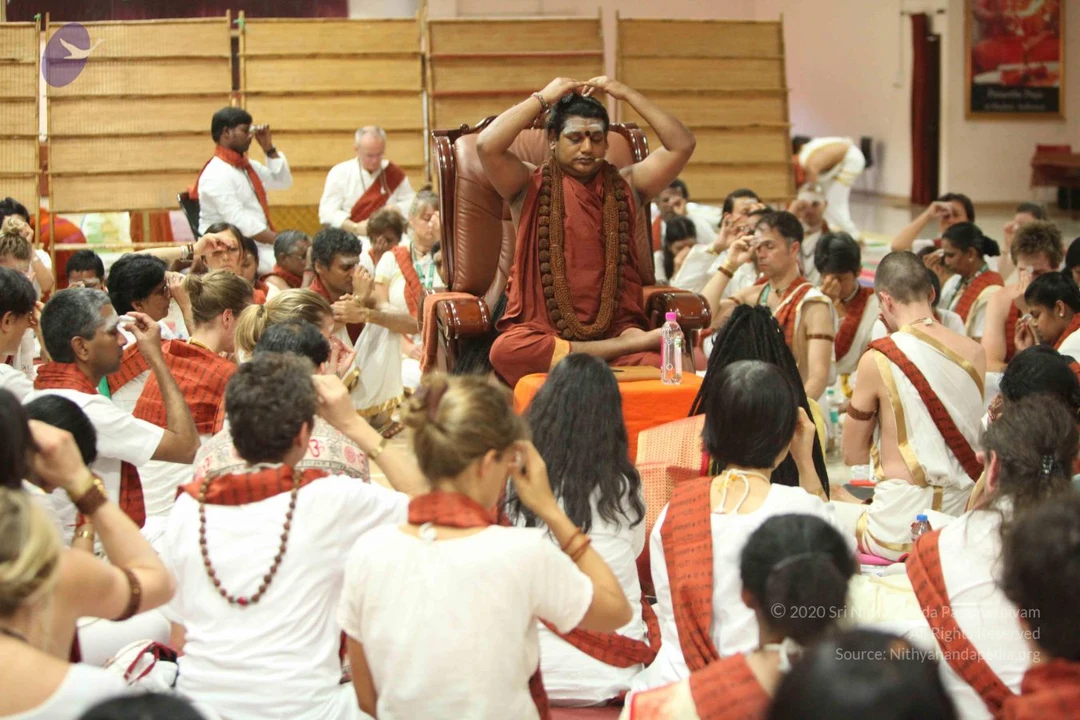
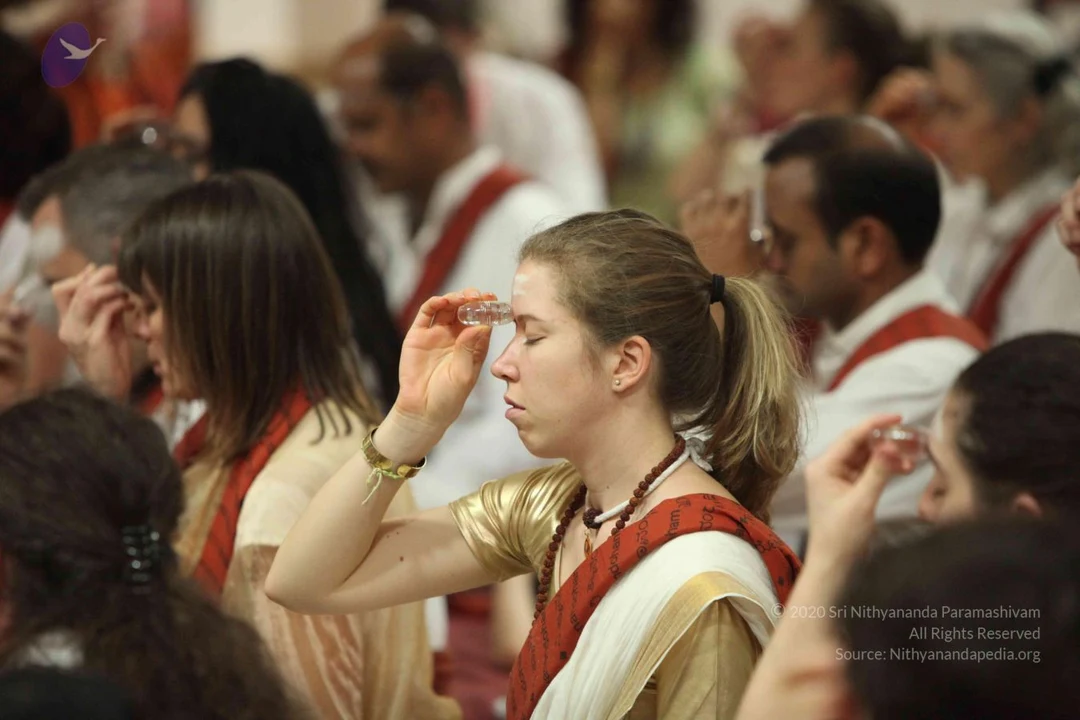
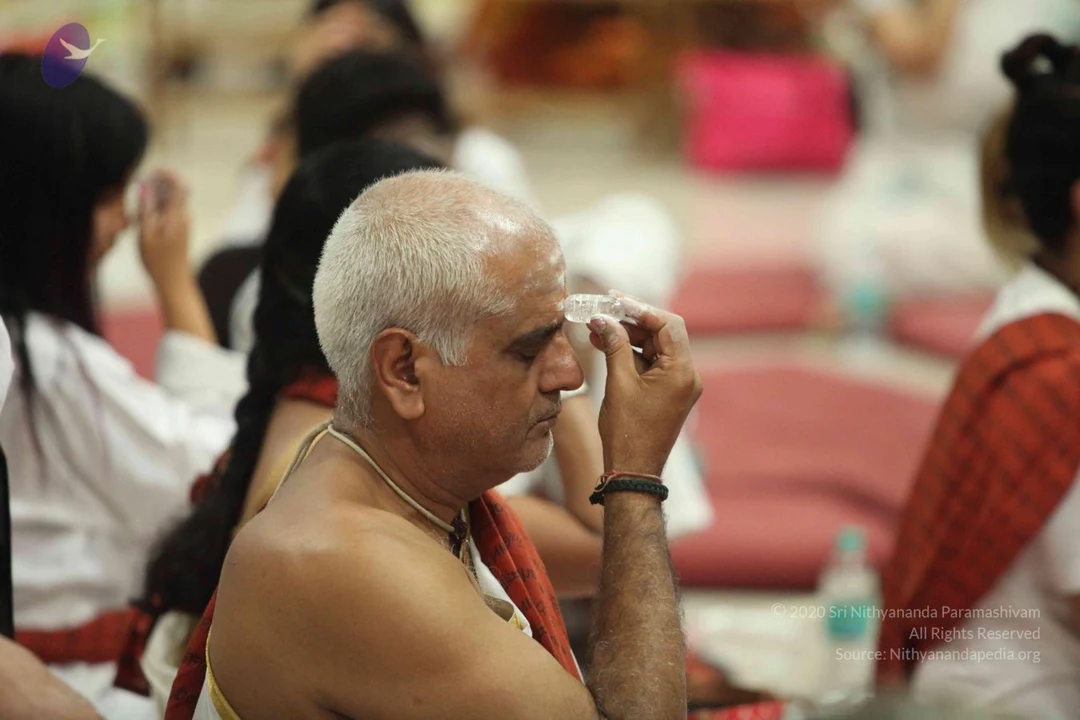
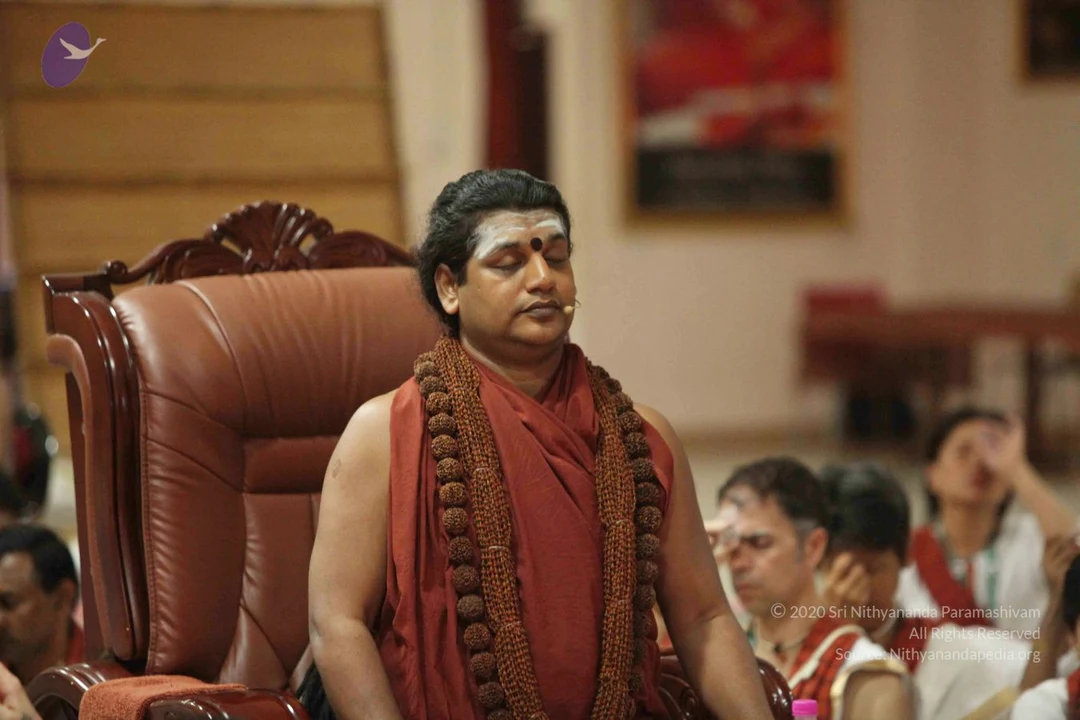
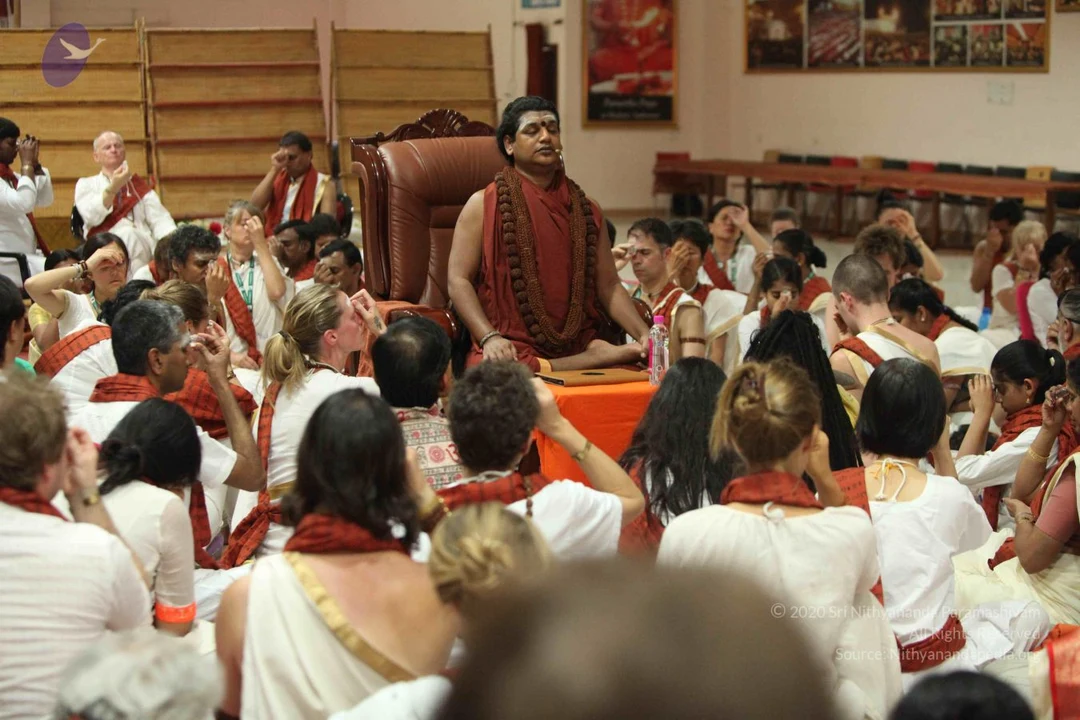
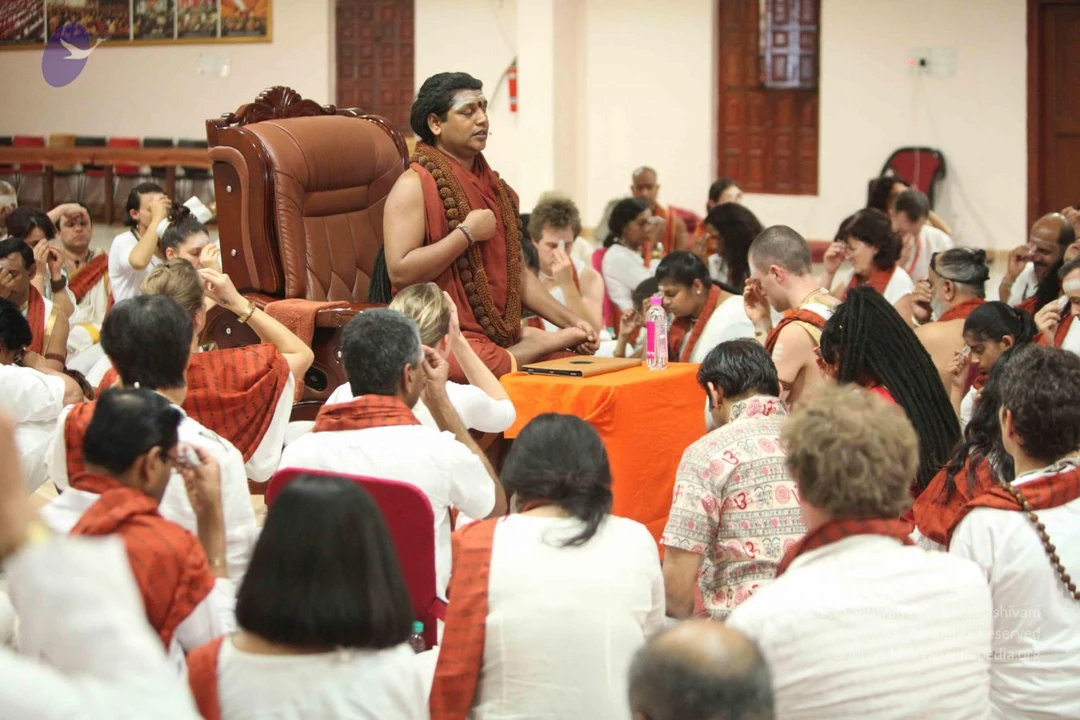
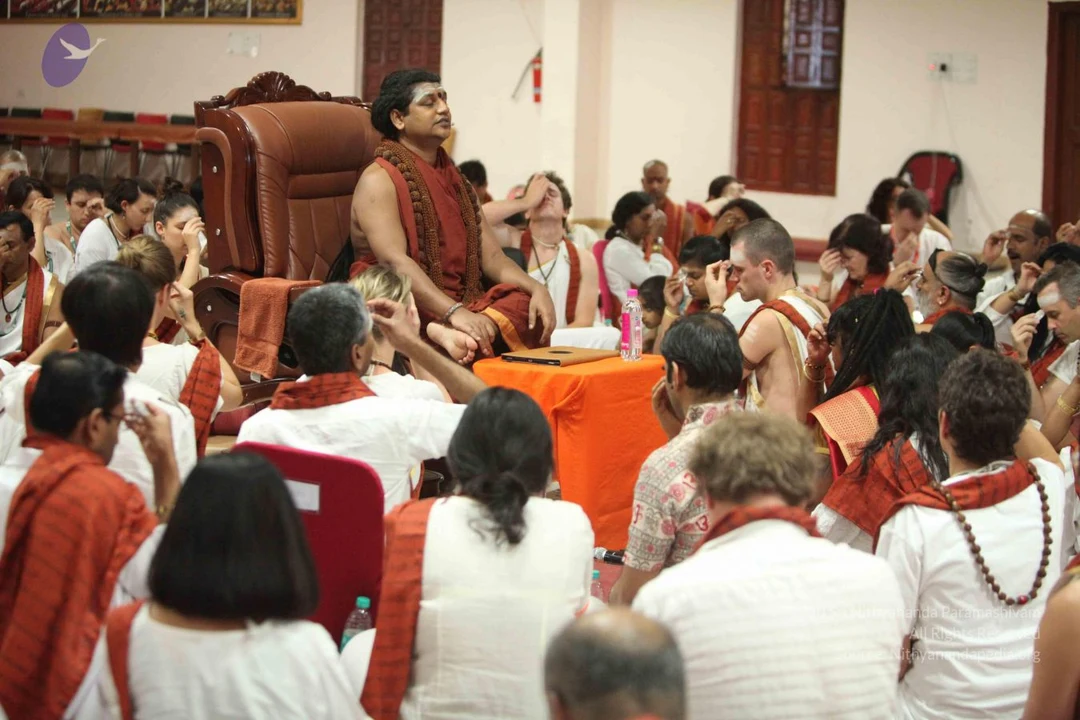
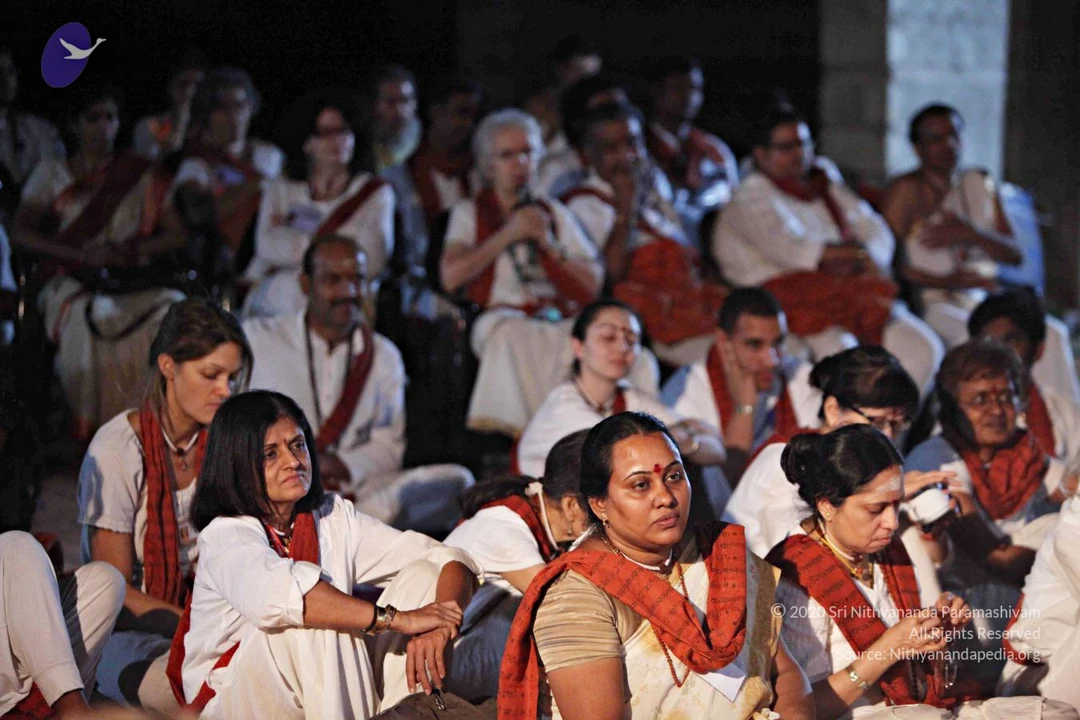
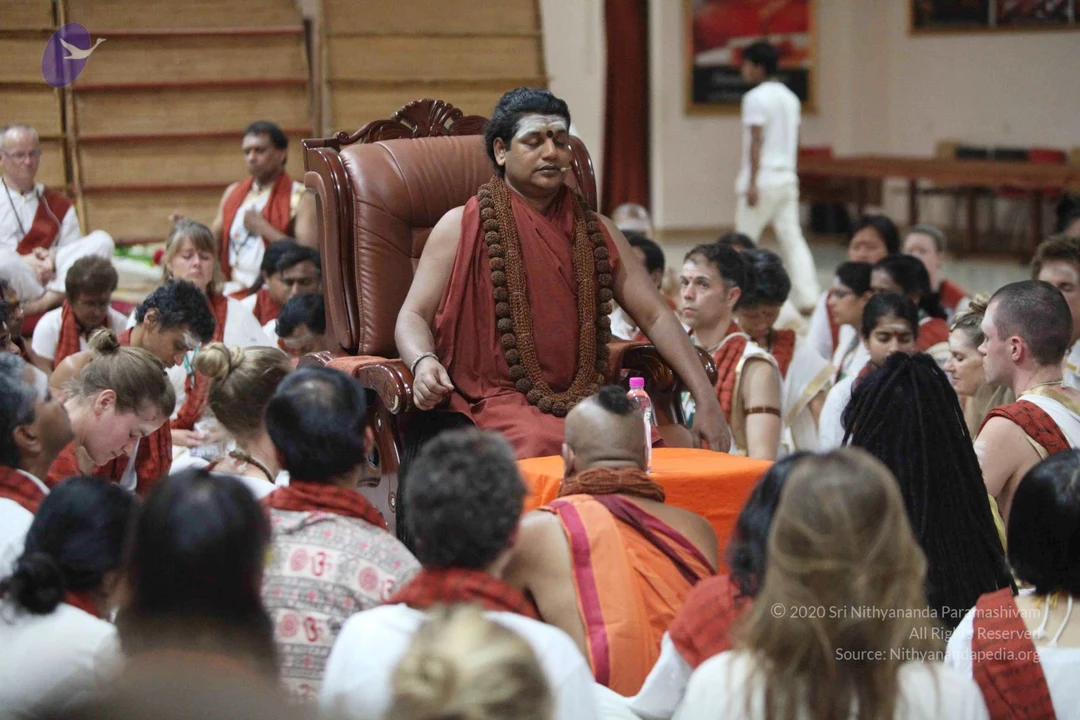
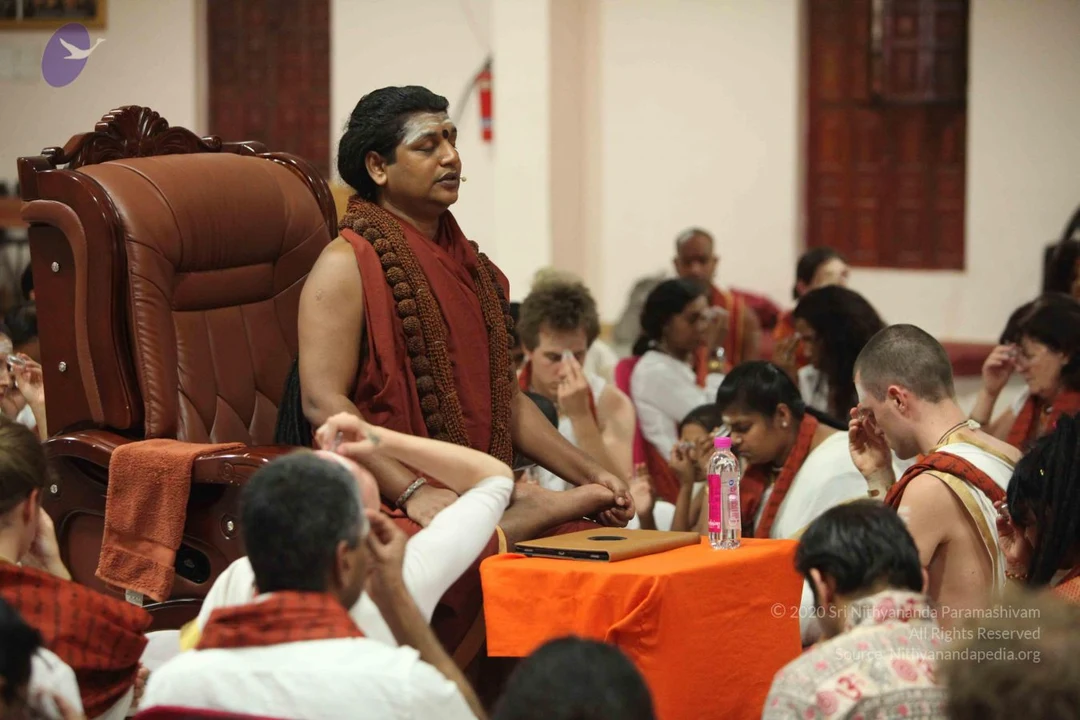
A photograph of a seated man in a red-orange robe and a long rudraksha mala, with a vibhuti or tilak mark on his forehead, sitting upright in a large brown leather throne-style chair in a hall. Around him, a dense crowd sits on the floor, many wearing white clothes with red shawls. In the foreground, a shaved-headed man in an orange robe sits before an orange-draped table. A young woman in white and a long-haired figure appear among the devotees. Behind them, wooden panels, a red curtain and a standing person in white complete the scene, consistent with a Maheshwara Puja satsang gathering.A photograph of a seated man with a shaved-looking head and white vibhuti lines on his forehead, eyes closed, wearing a rust-red robe and a long rudraksha mala. He sits in a large brown leather throne-style chair with carved wooden armrests. Around him, people in white clothes with red shawls sit close together, some with red-and-white garments and vibhuti on their foreheads. In the lower right, a small orange cushion and an offering vessel are visible. Behind is a hall with a red banner on the wall. The man is in a throne with a mala, consistent with a rudraksha-adorned seated figure receiving devotees, though his identity cannot be confirmed from appearance.A photo of a seated teacher on a brown leather throne-style chair in a hall, wearing a saffron-orange robe and a long rudraksha mala over the chest, with a short dark hair and a microphone at his face. He gestures with his right hand while addressing a large seated audience of devotees dressed in white with red-and-white shawls. A low orange cushion sits before the chair. Faces and clothing of the audience are partly visible in the foreground, several with shaved or bare heads and white sarongs. Wooden bamboo-style panels and a red-framed wall display are behind the room.A seated man in a rust-red robe and red shawl sits on a tall brown leather throne-like chair, eyes closed, wearing a long rudraksha mala and a white-and-red vibhuti mark on the forehead. In front of him a low orange-draped table holds a clear water bottle. A bald monastic in orange robes sits cross-legged on the floor before the chair, and a crowd of seated devotees in red and white shawls fills the hall, with a man in a red shawl standing at the back. Framed posters hang on the pale wall behind. The chair and rudraksha mala suggest a satsang or puja setting, but the seated man's identity is not established from appearance alone.Photo of a man seated on a brown leather armchair with eyes closed, palms pressed together in namaste. He wears a rust-red sleeveless wrap over a bare upper body, a long rudraksha mala with large brown beads draped over his shoulders, a red thread bracelet, long dark hair falling down his back, and white-and-red tilak on his forehead. Behind him, blurred devotees in orange and white clothing sit in a hall with wood-panelled walls. A woman in the foreground wears a white tilak and a patterned top. a person, seated in devotion during a satsang setting.A seated man in a saffron-orange monastic robe and a long rudraksha mala sits on a dark brown leather throne-style chair with carved wooden arms, eyes closed, with a small red bindi on his forehead and a headset microphone. He appears to be the central figure before a seated audience. In front, rows of devotees sit on the floor: men with shaved heads wearing white dhotis with saffron-orange borders, women in orange, red and cream saris and shawls, and several people in white. Flower arrangements stand in the background near a wooden lattice wall. The man in the chair matches the page's a person candidate by a long rudraksha mala, saffron robe and throne seat, so this is a person identification.

Maheshwara-Pooja
265 photosSource gallery
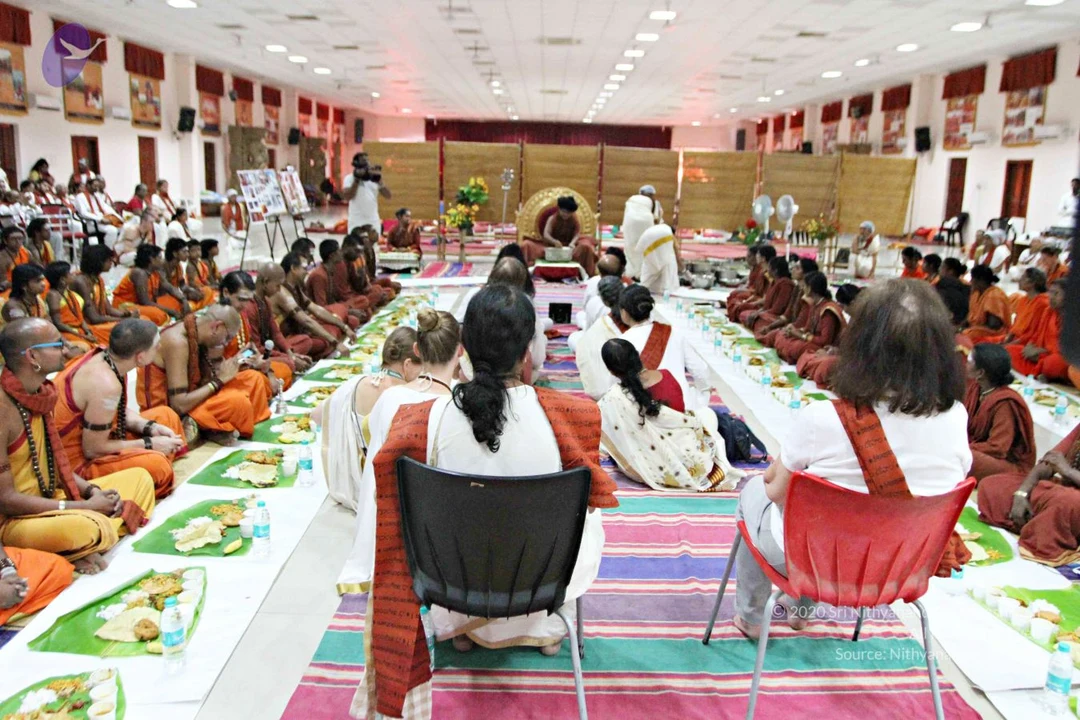
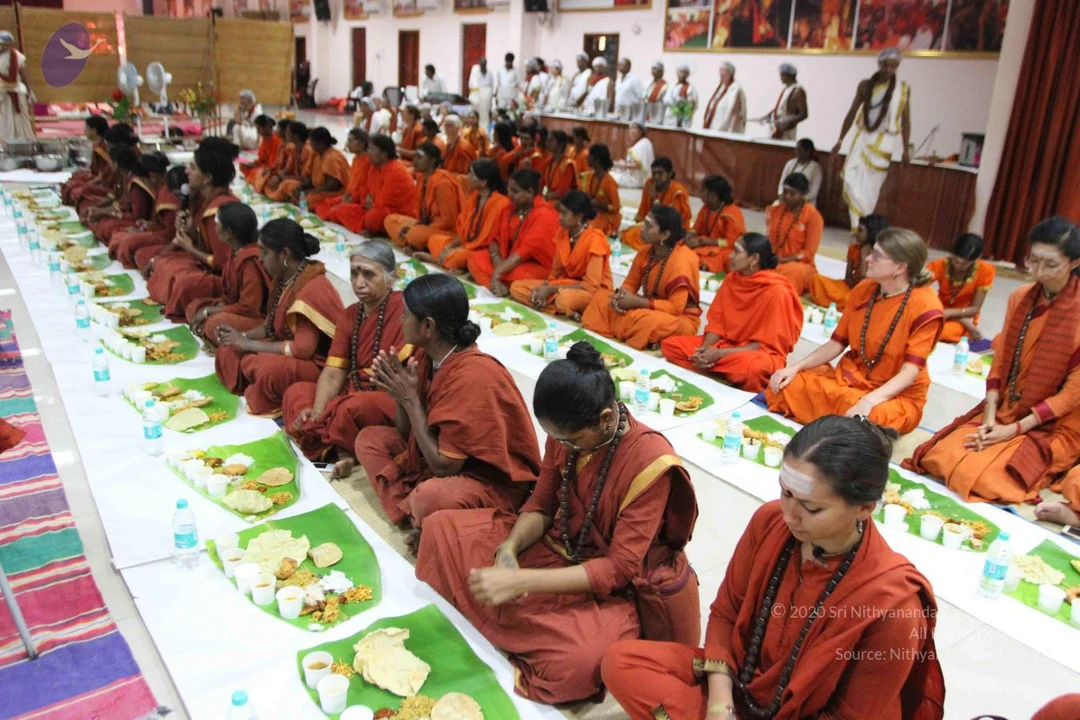
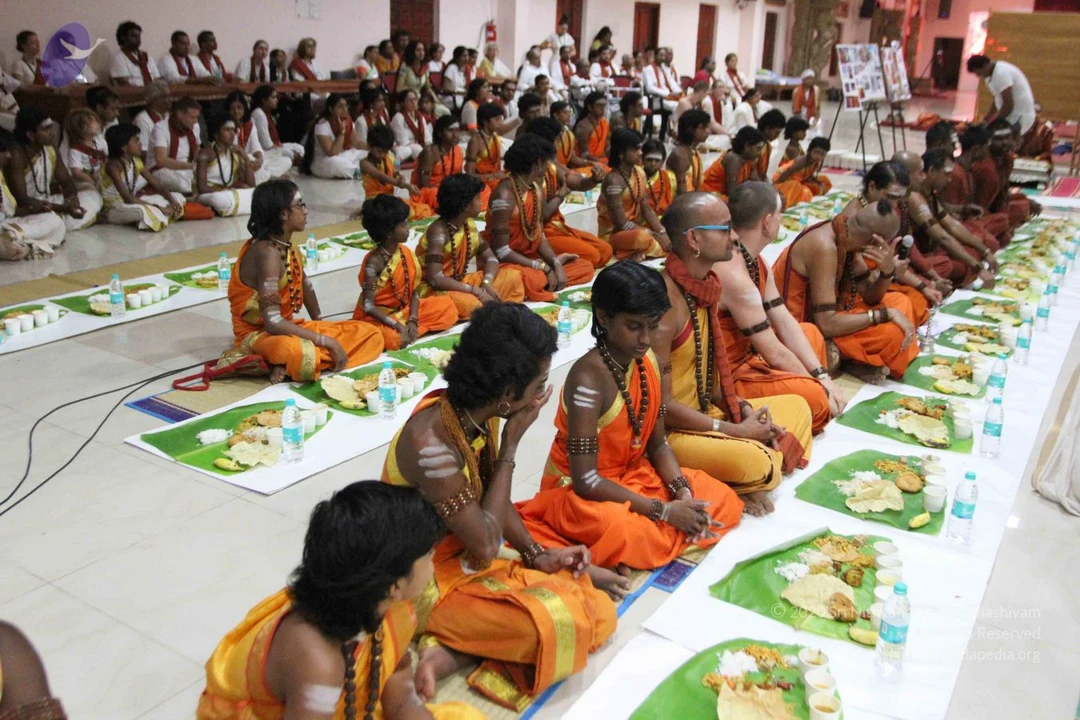
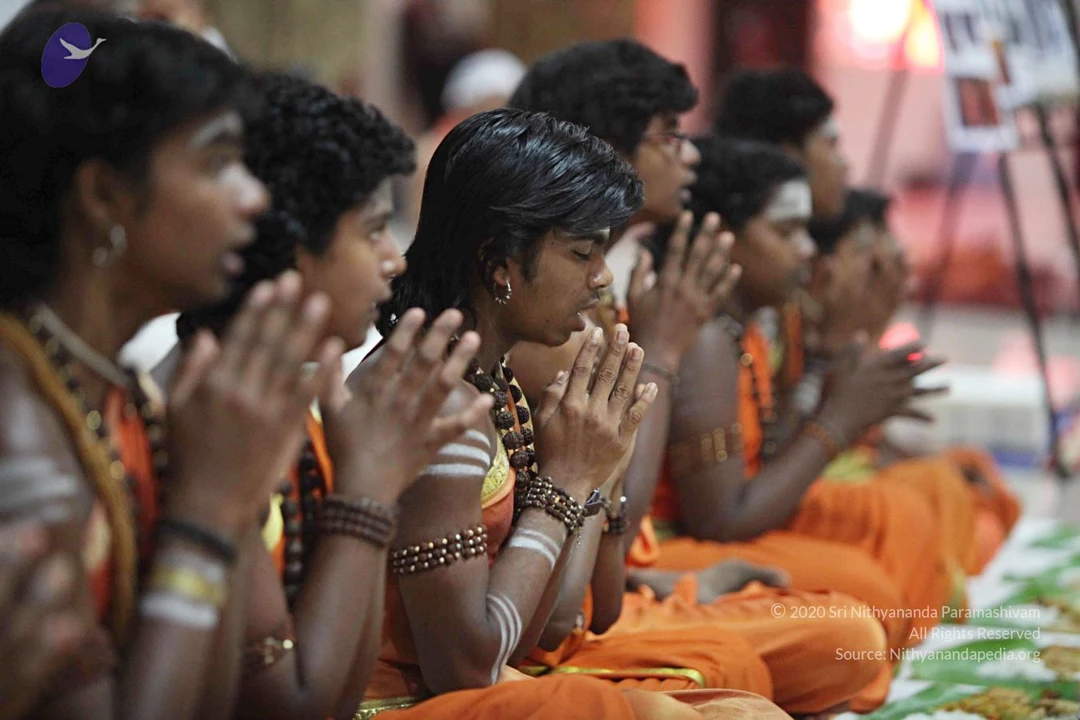
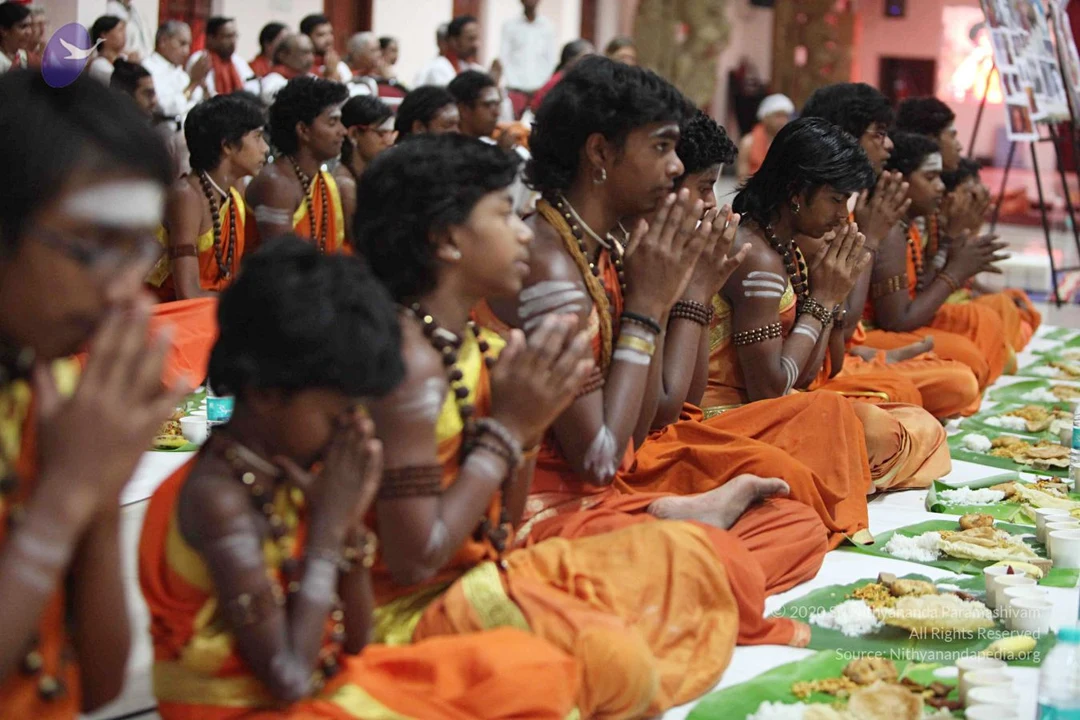
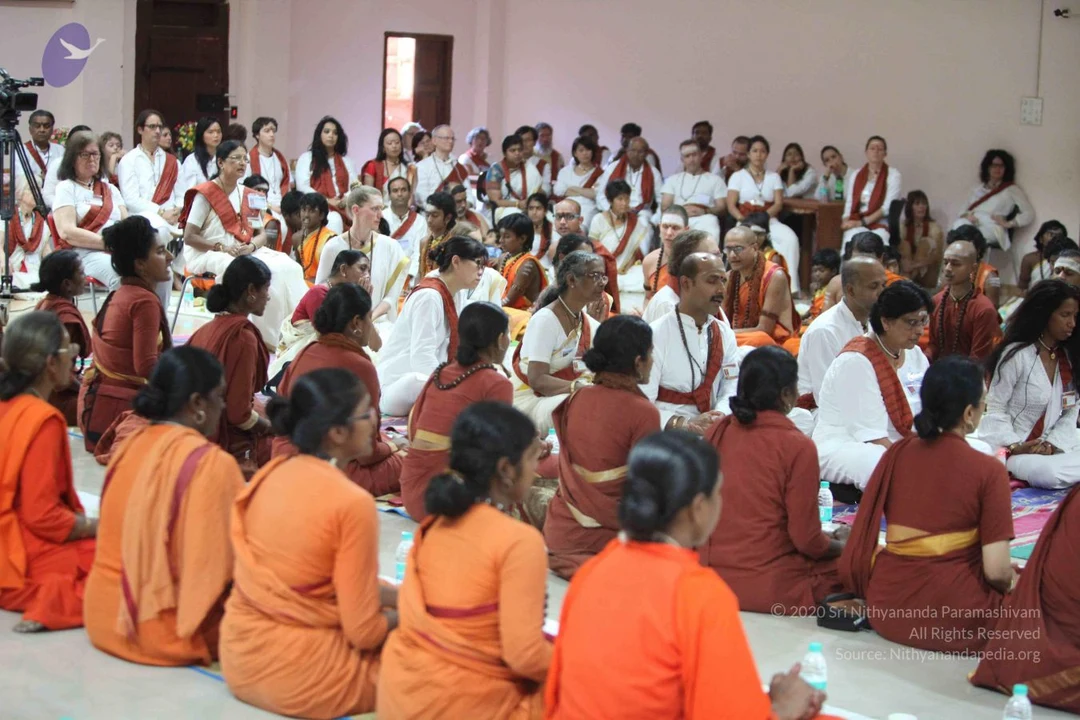
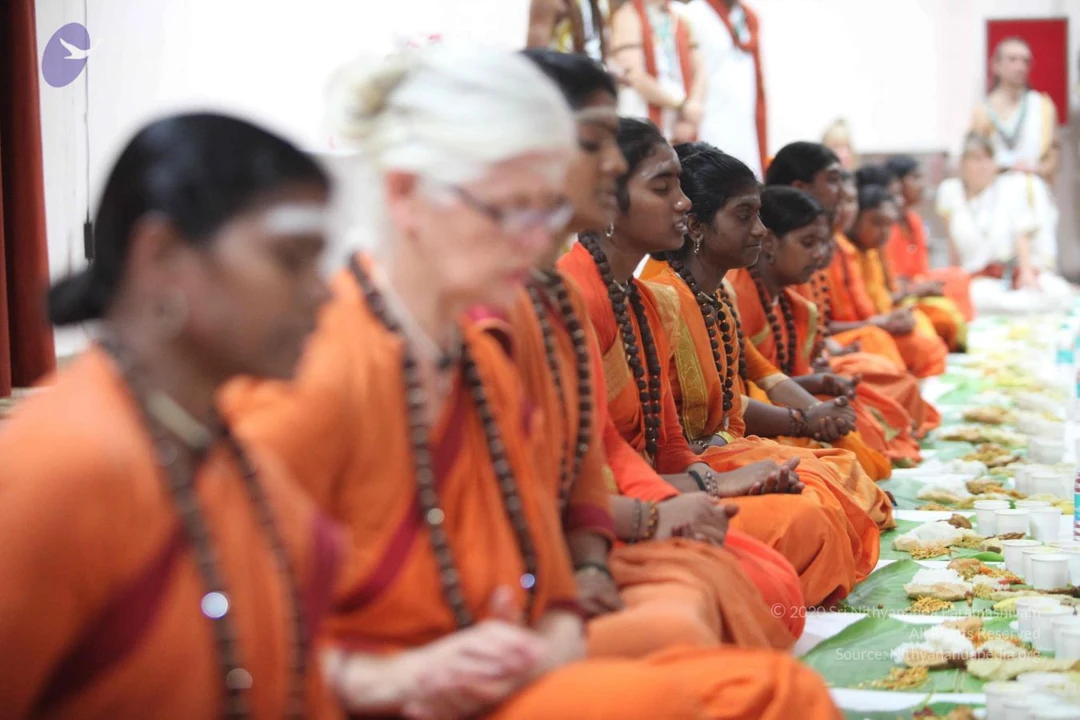
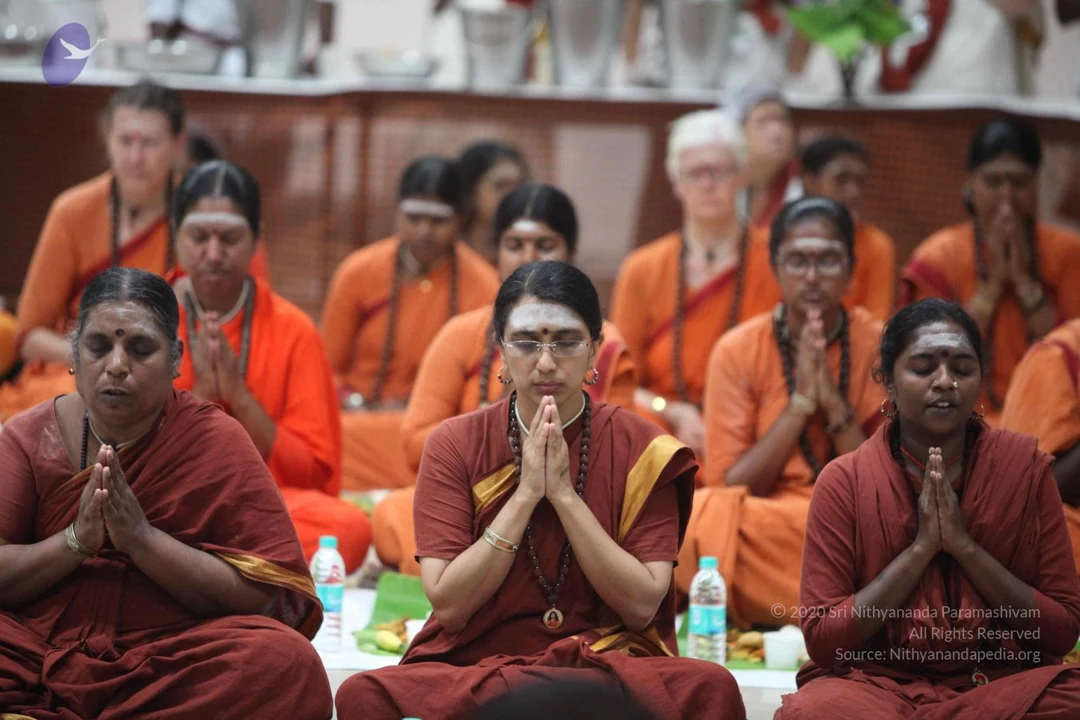
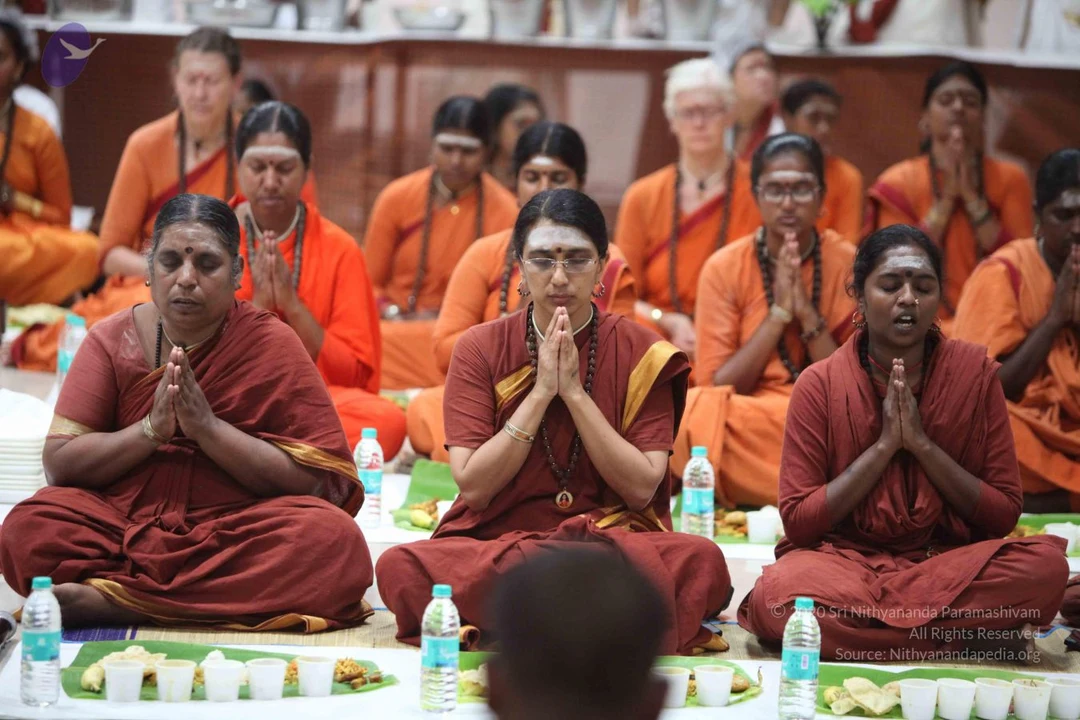
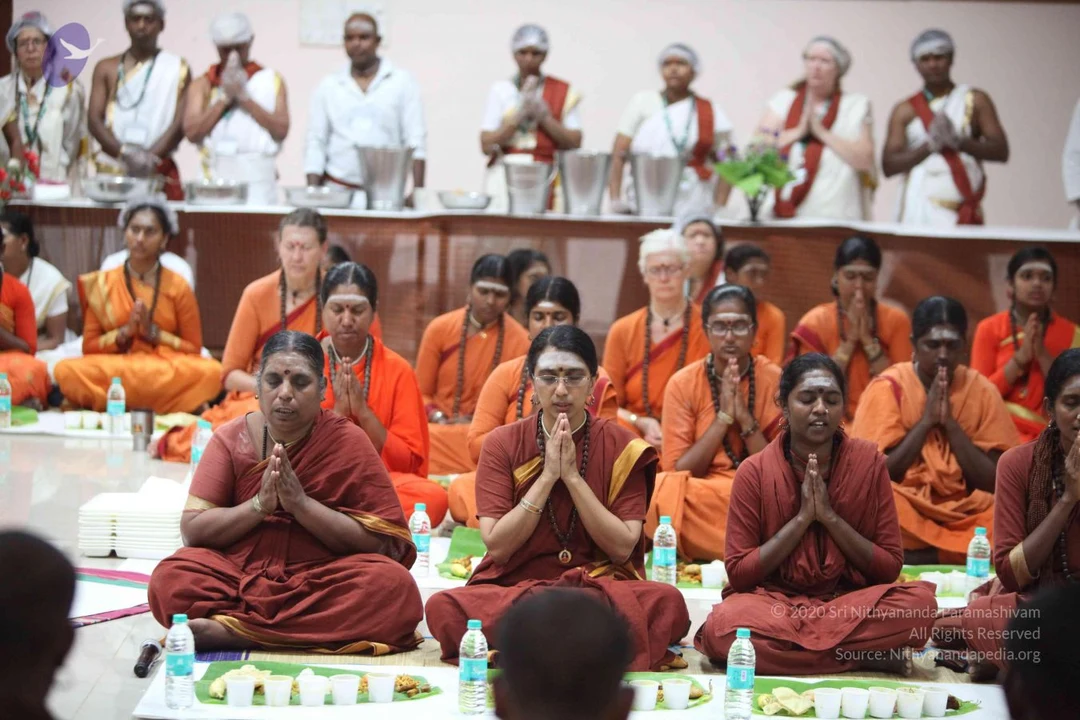
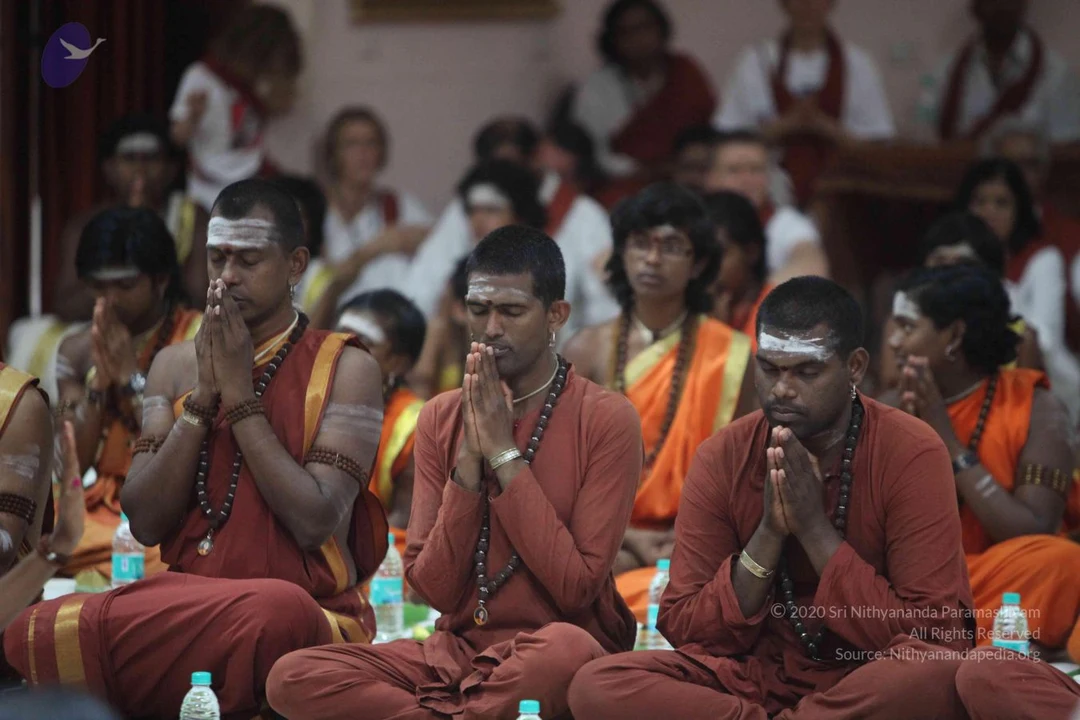
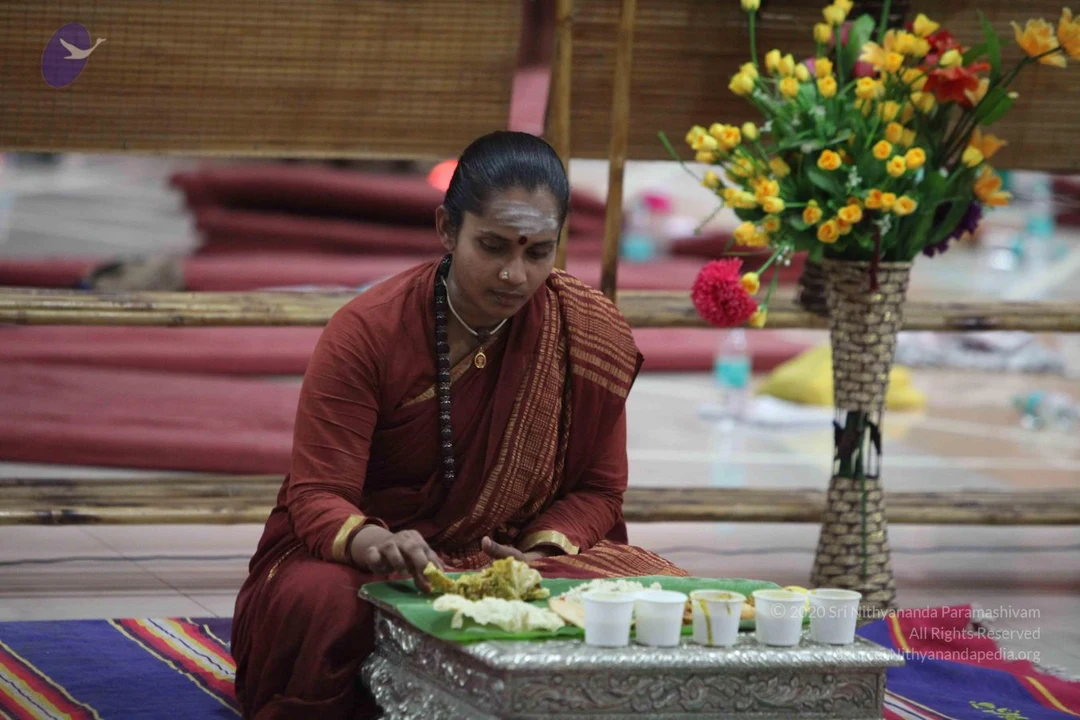
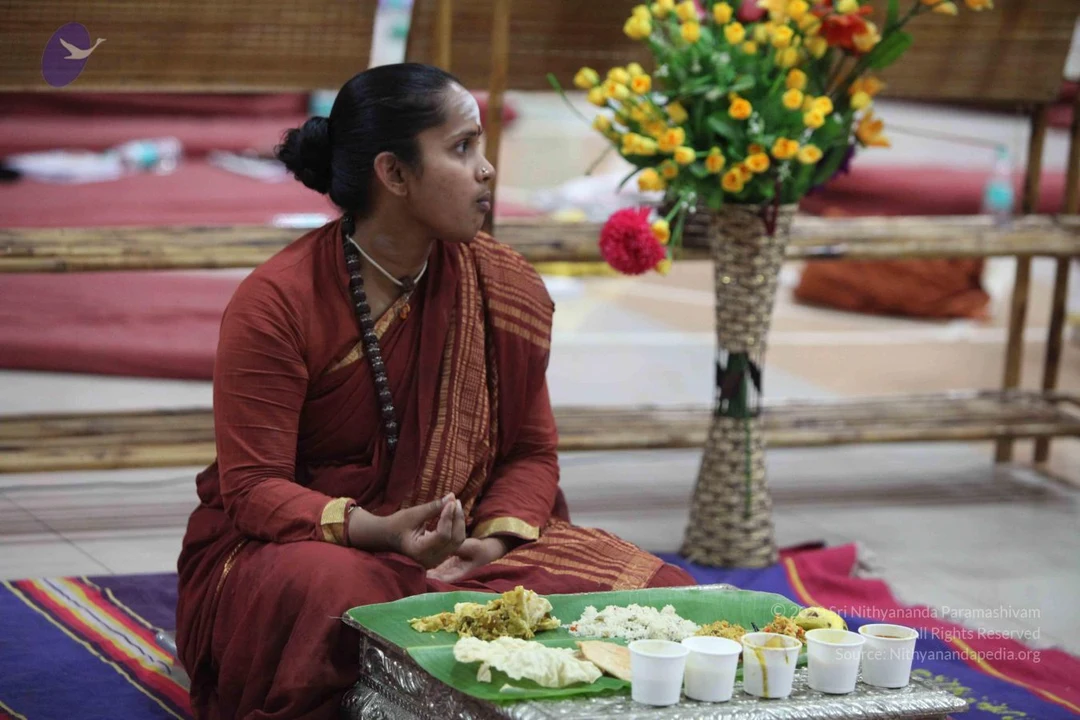
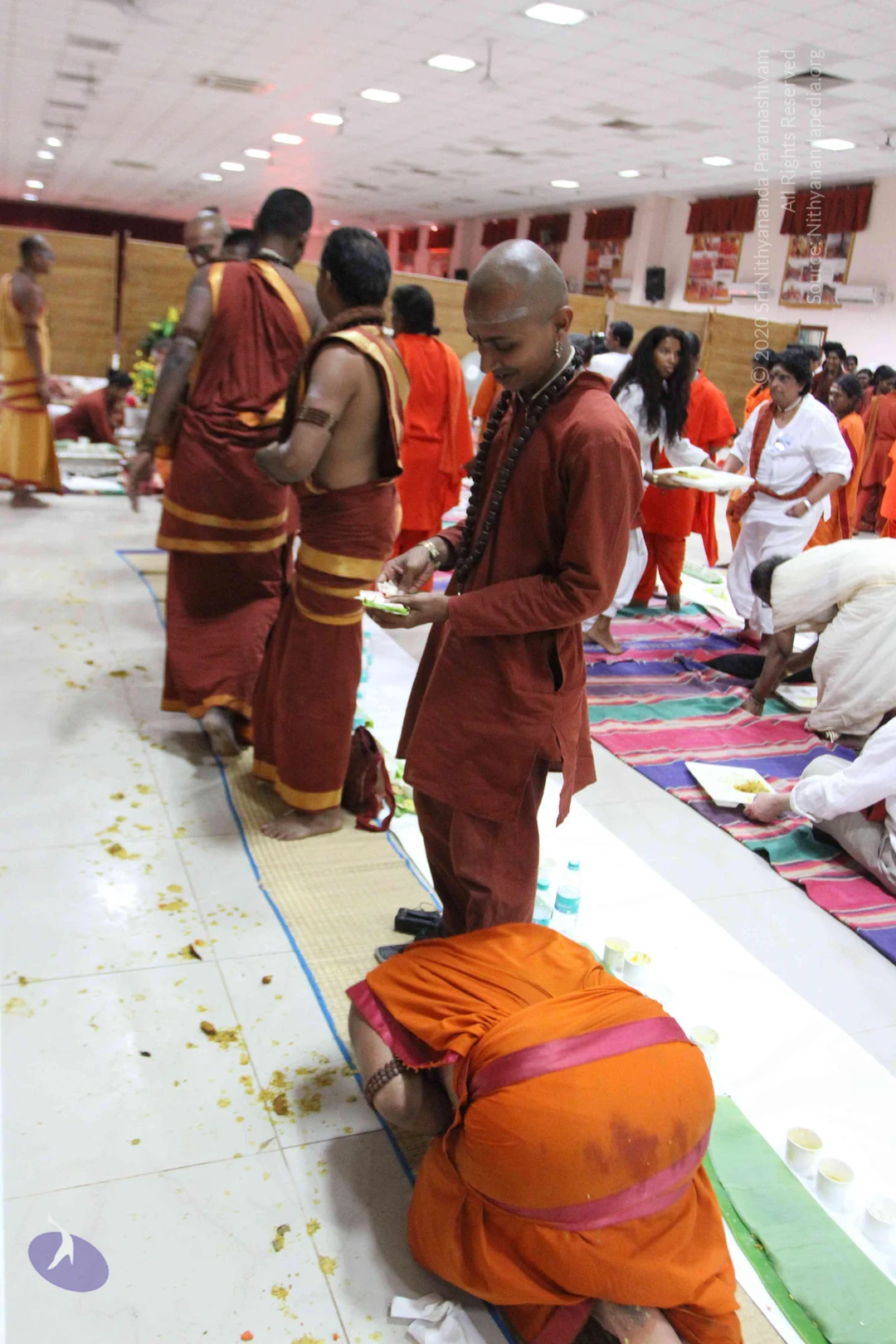
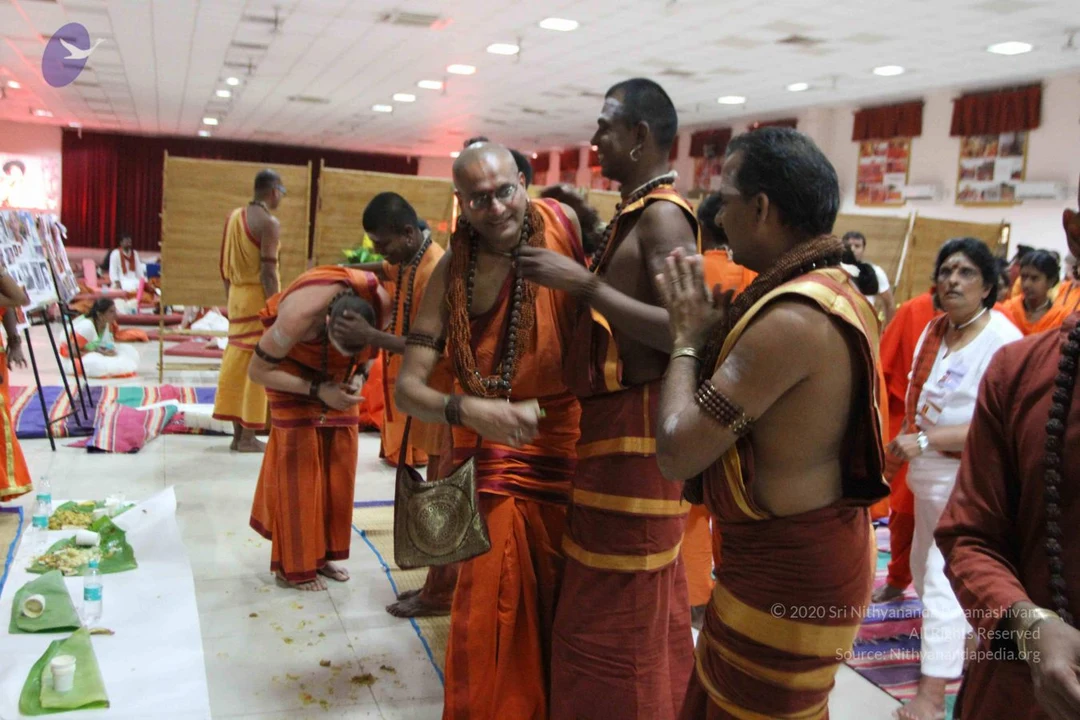
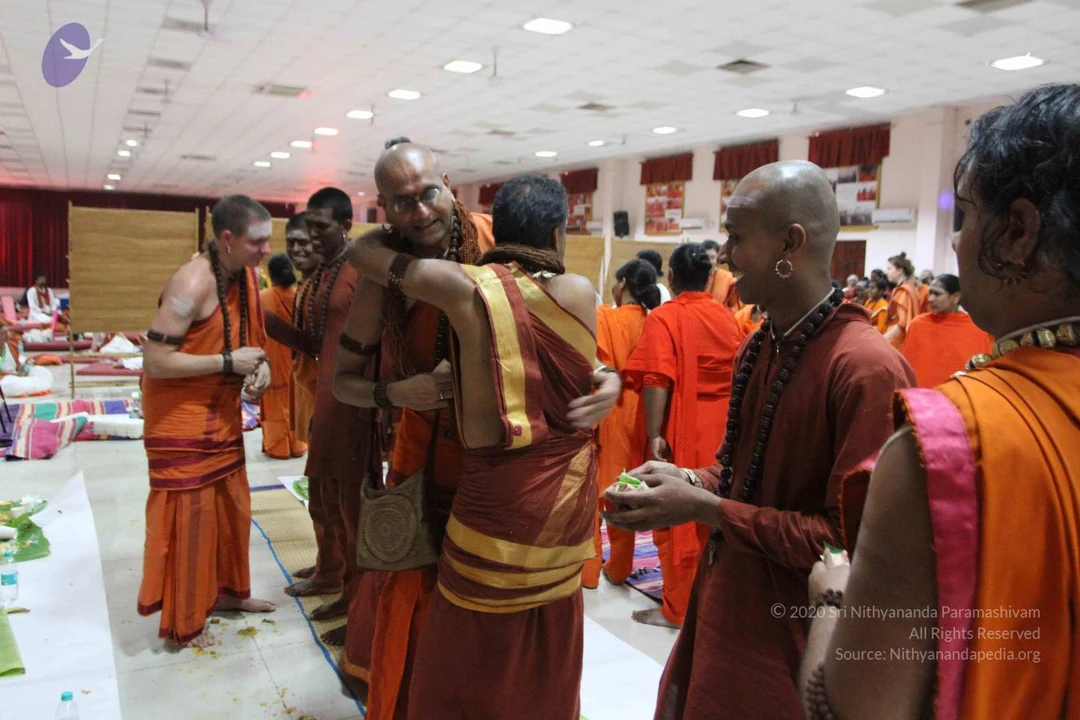
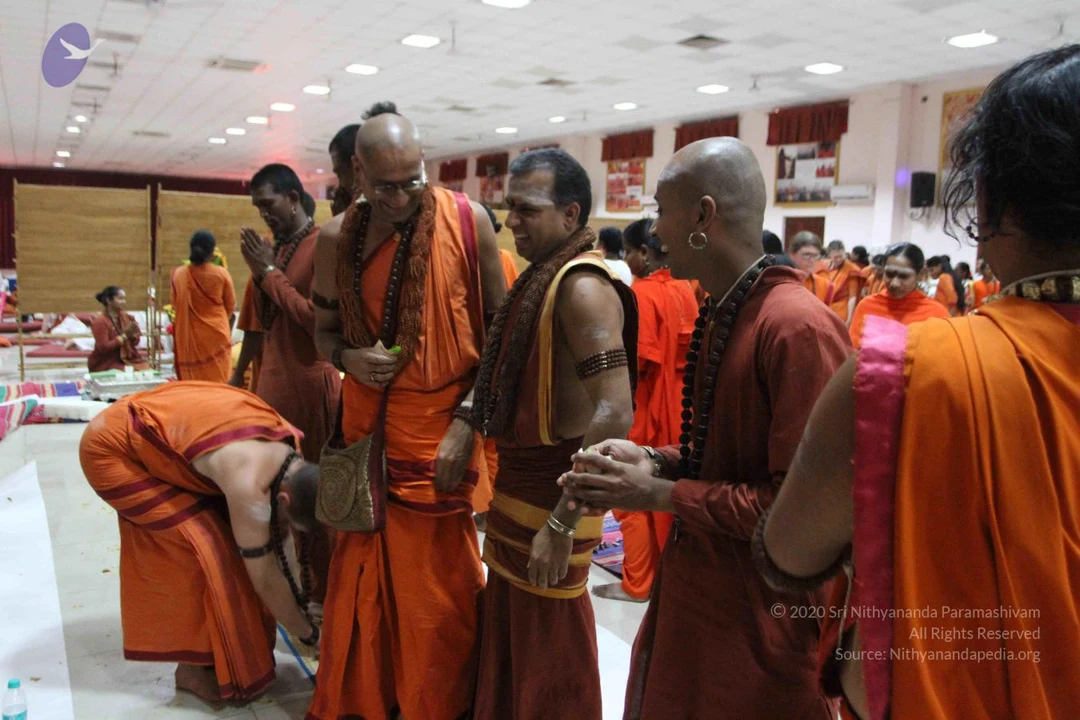
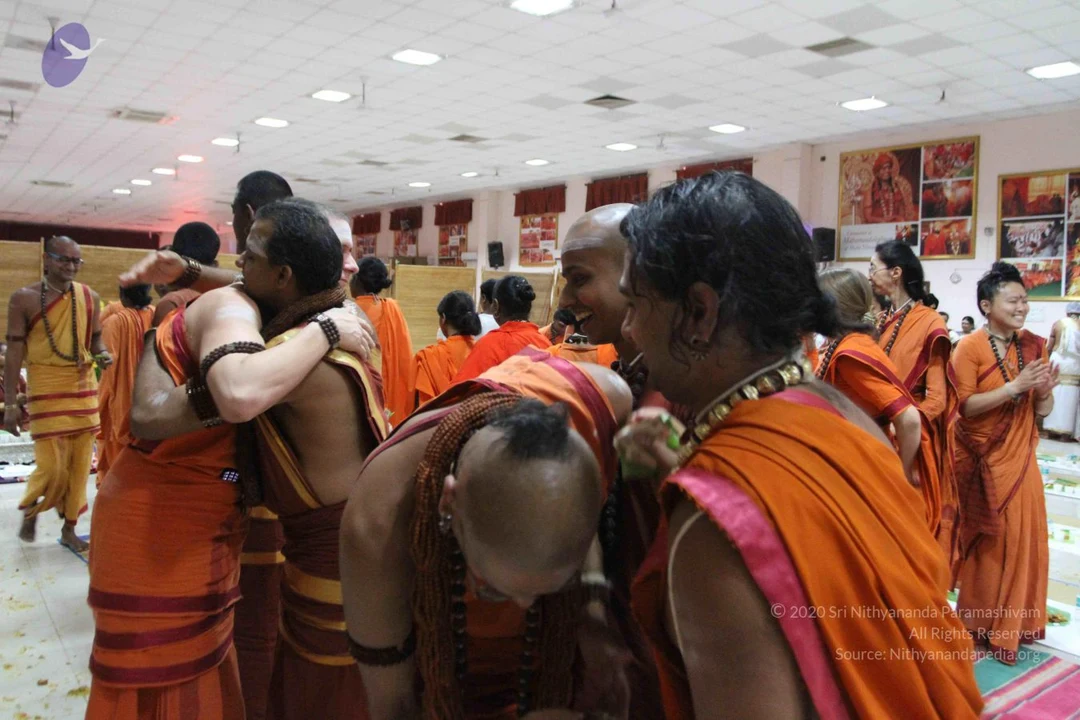
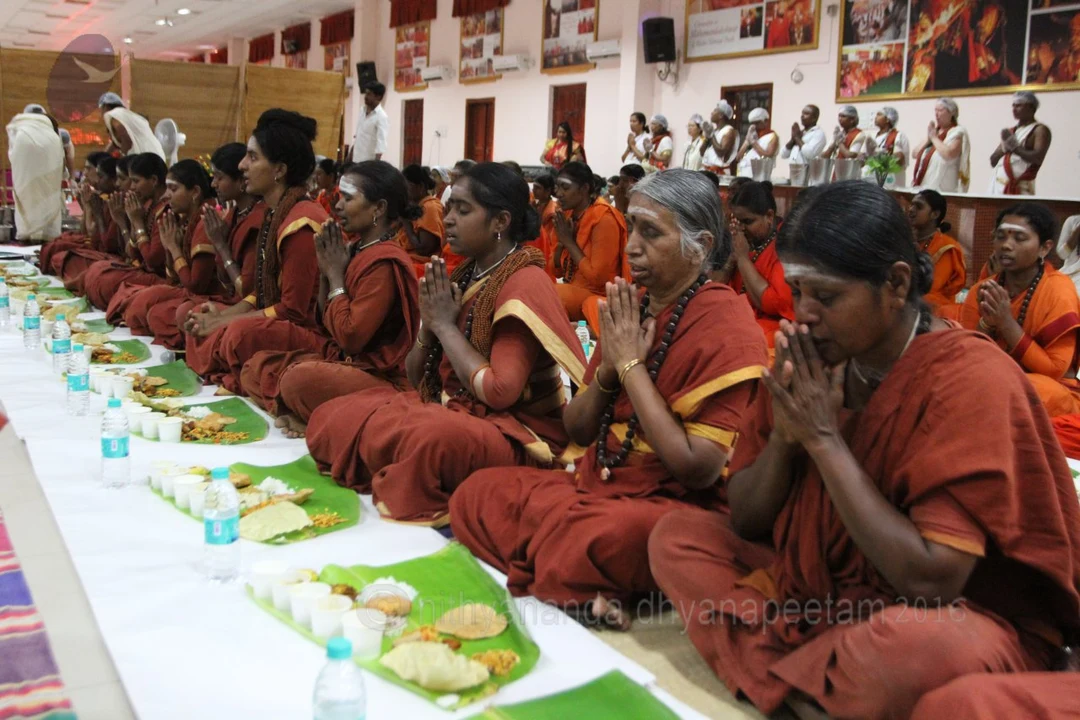
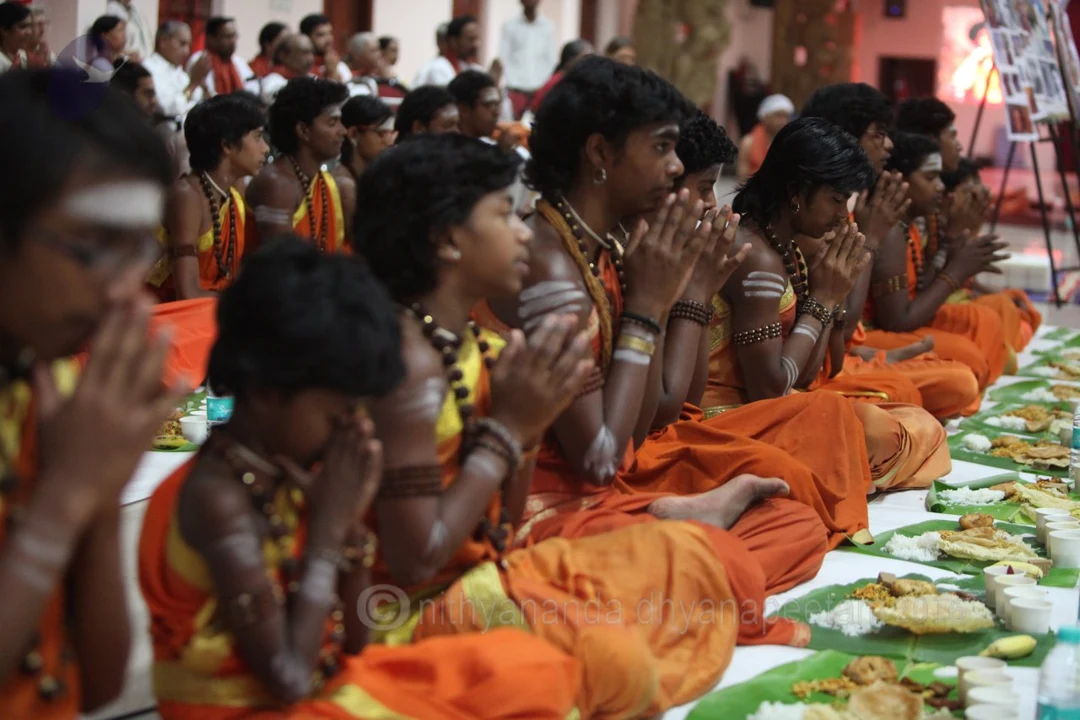
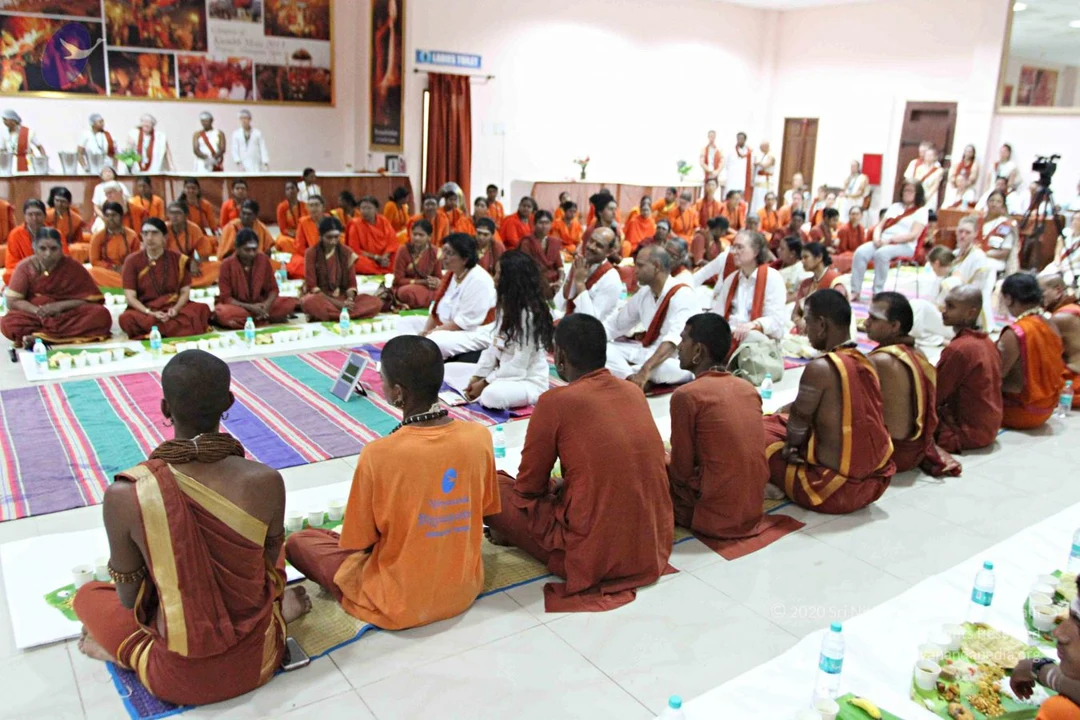
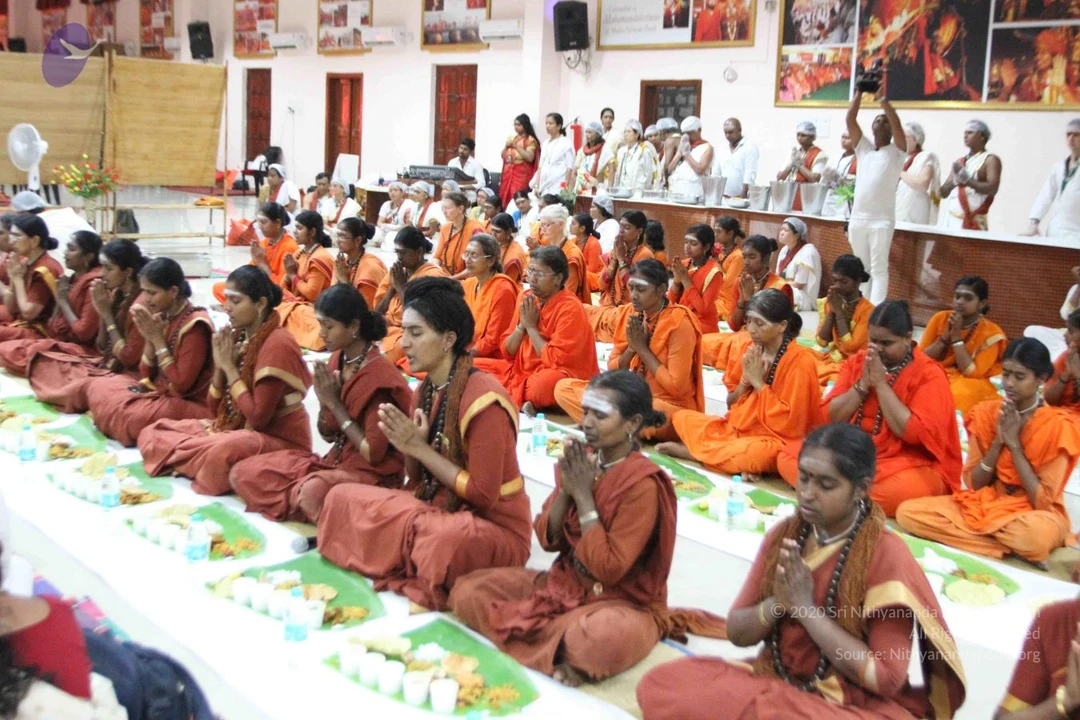
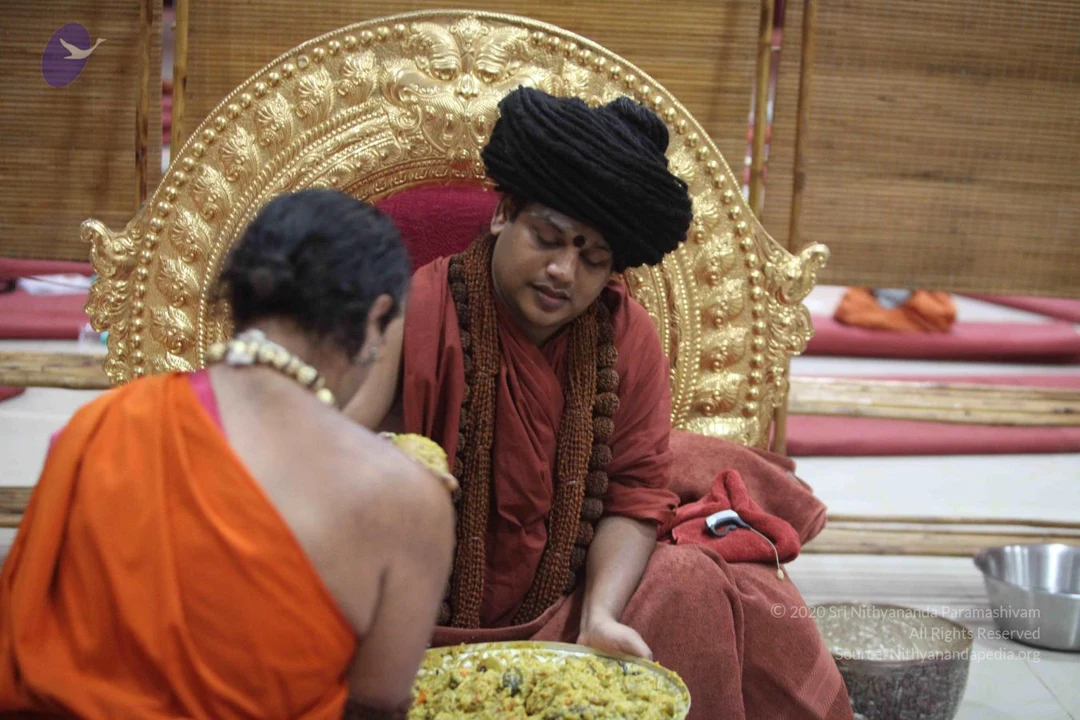
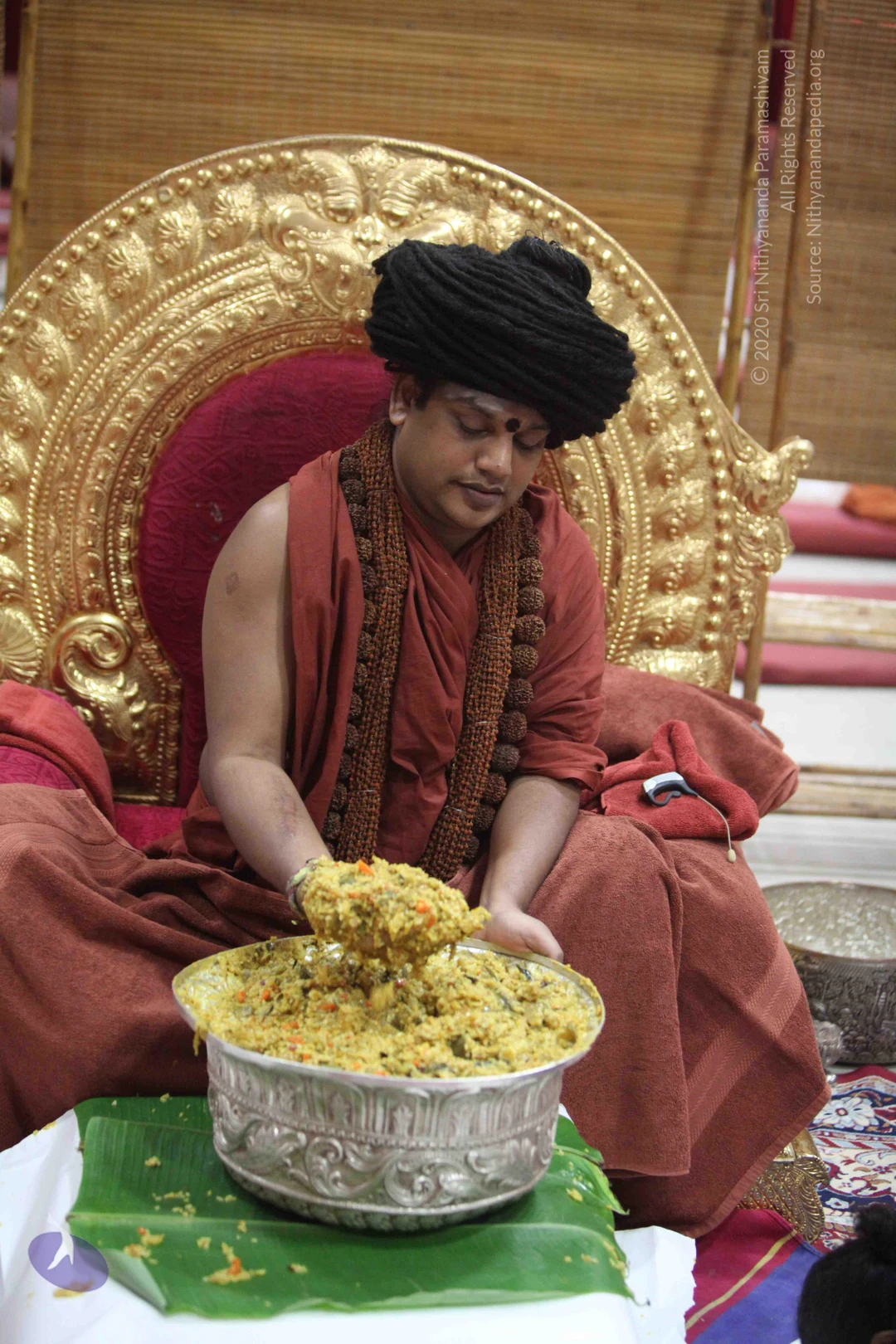
A photograph of a large hall during a Maheshwara Puja-style ritual meal. Many seated devotees in saffron and rust-red robes sit in rows on mats and cloth, with banana-leaf plates of food and water bottles set on the floor in front. Along the back wall, several people in white robes stand near a raised platform. In the foreground, a shaven-headed monastic in rust-red clothing sits with his back to the camera, facing a seated figure in white clothes with a rust-red shawl. Pale walls display framed red and orange images, and a camera operator stands at the right edge. The image is a photo of people gathered on the floor.A photograph of a large hall during a Maheshwara Puja meal offering, with rows of seated participants facing a central figure on a raised gold-trimmed throne-like seat. Many monastics wear saffron and orange robes with rudraksha malas, and some sit on the floor before long rows of banana-leaf plates set with food and water bottles. Foreground figures in white clothes with orange shawls sit on chairs and mats, with a striped runner on the floor. Pink-tinged overhead lighting, brass vessels, flower arrangements, a camera operator and a backdrop of bamboo screens complete the scene. The seated central figure's identity cannot be confirmed from appearance.Rows of seated women in orange and rust-red saris and robes, many wearing rudraksha malas, sit on the floor before banana-leaf plates of food in a hall. Water bottles and steel cups line the white-covered floor. Behind them, standing men in white with orange shawls and a woman in white stand near a long wooden table, under a wall of framed red and gold panels. The scene shows a community meal offered during a ritual, with many seated attendees visible.A photograph of a large seated gathering of monastic disciples in saffron-orange robes sitting cross-legged on the floor in rows along white mats. Each person has a green banana-leaf plate of rice, fried snacks and vegetables, with small cups and water bottles beside them, indicating a shared meal offering. Several figures have white ash or paint on their arms and foreheads and wear rudraksha beads and bangles. A man in the foreground right with a shaved head and a red shawl over orange robes sits among them. Behind them, rows of seated devotees in white clothes and red shawls face the same direction in a hall with pink walls and a stage area at the back.A long row of seated monastic disciples in saffron and orange robes and rudraksha malas faces a long white-covered table set with banana leaves, food and water bottles, during a Maheshwara Puja style offering. Several people in front have their palms pressed together in prayer, and one shaved-headed disciple in orange with a red shawl holds a phone. Brass vessels stand on the cloth, and a framed photo collage hangs on the back wall beside a wooden panel. Other people sit or stand in the background, some in white. No single figure is clearly identifiable as a person from appearance, so no identity label is applied.A row of women in matching rust-red saris sit cross-legged along a long white-covered table, palms pressed together in namaste. Several wear rudraksha malas and gold bangles and have white forehead markings. In front of them are green banana leaves holding food, plus water bottles and steel vessels at the left edge. Two people in white garments work near the steel pots at the upper left, and a man in orange robes is visible at the right. The scene shows a Maheshwara Puja food offering with devotees seated for prasad.
Sacred-Arts
39 photosSource gallery
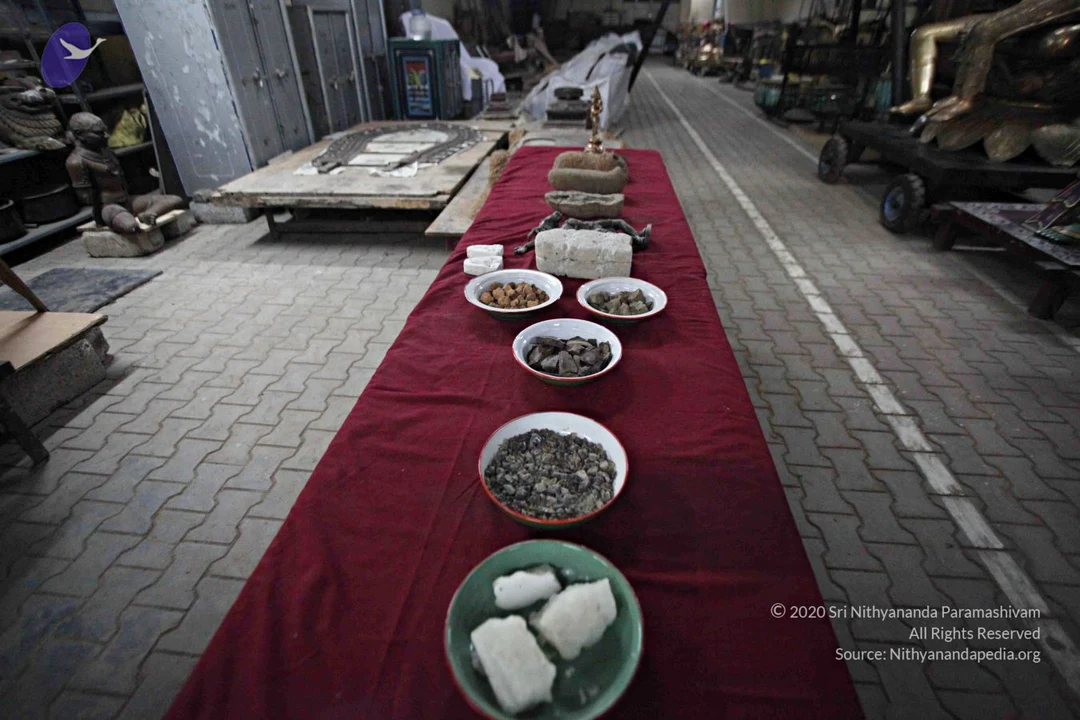
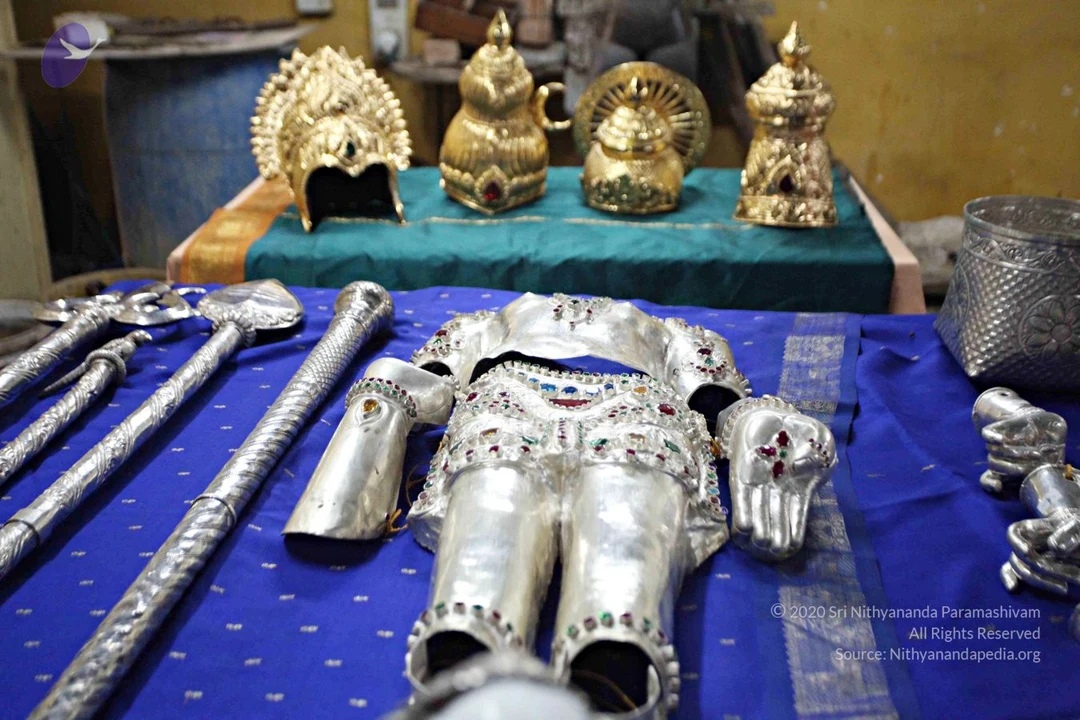
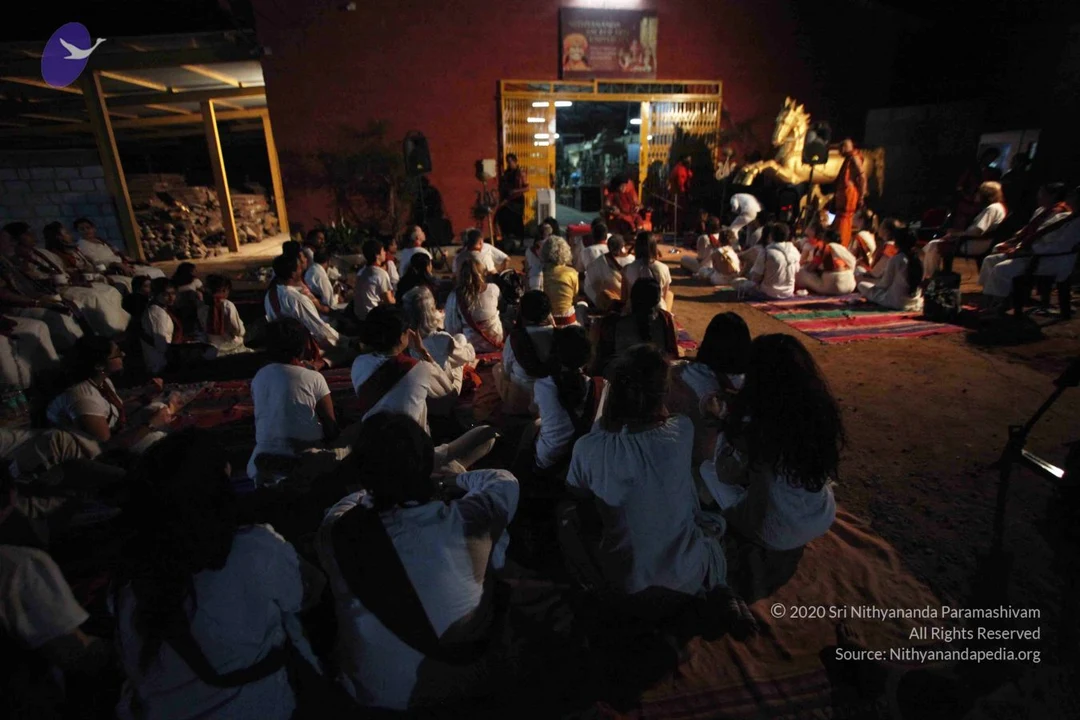
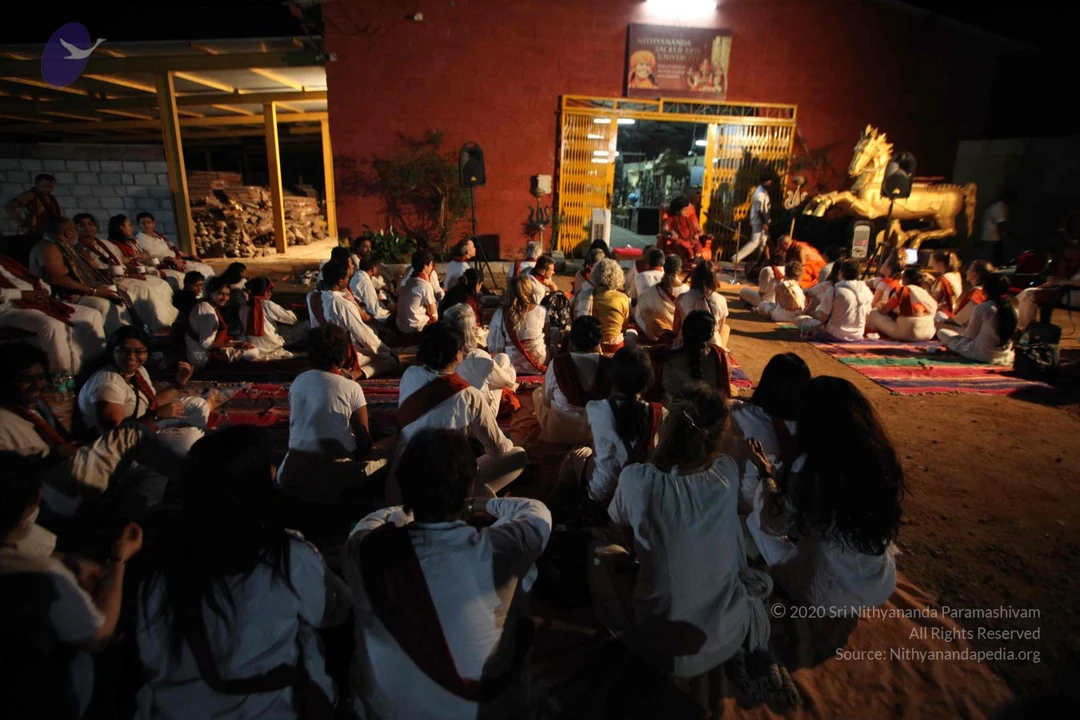
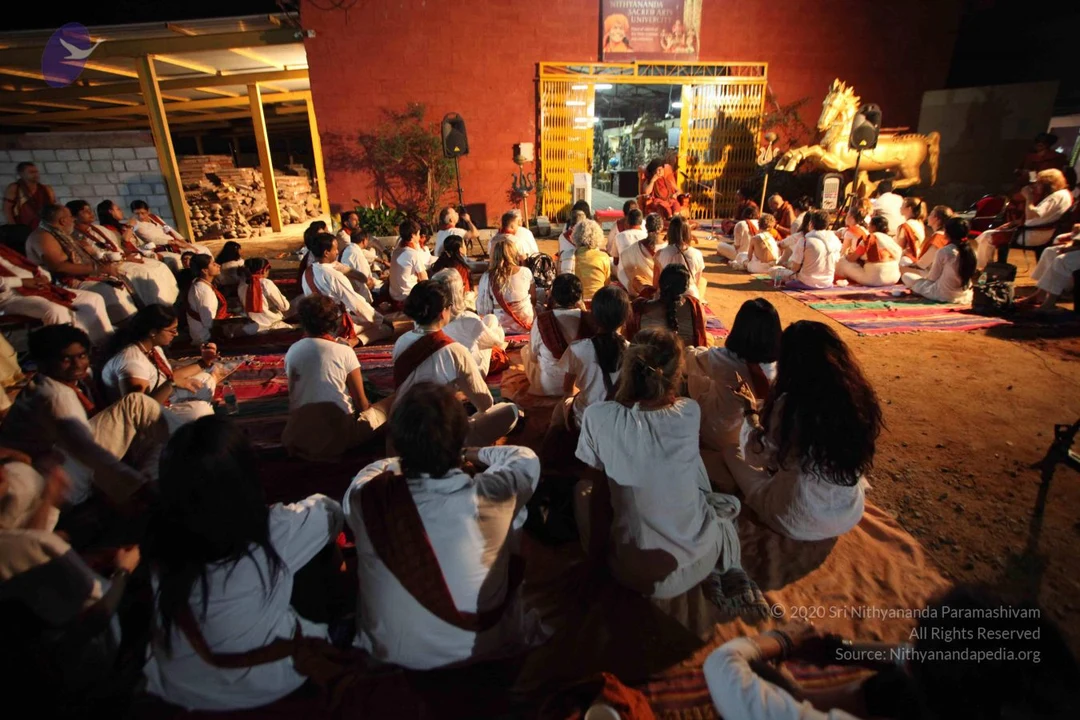
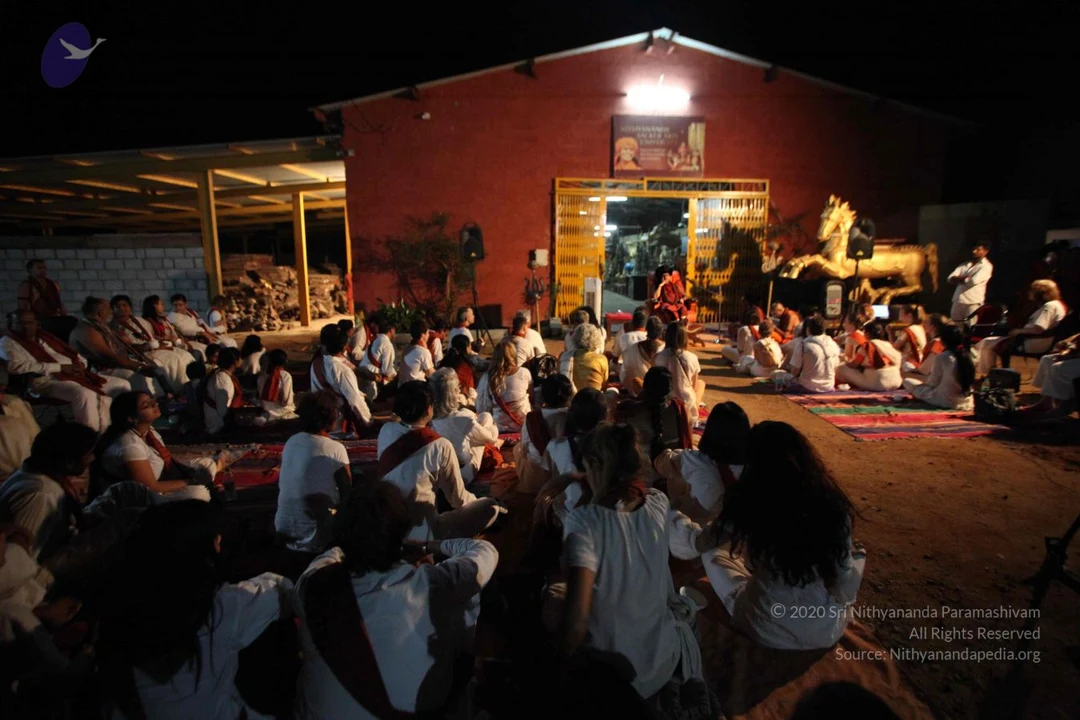
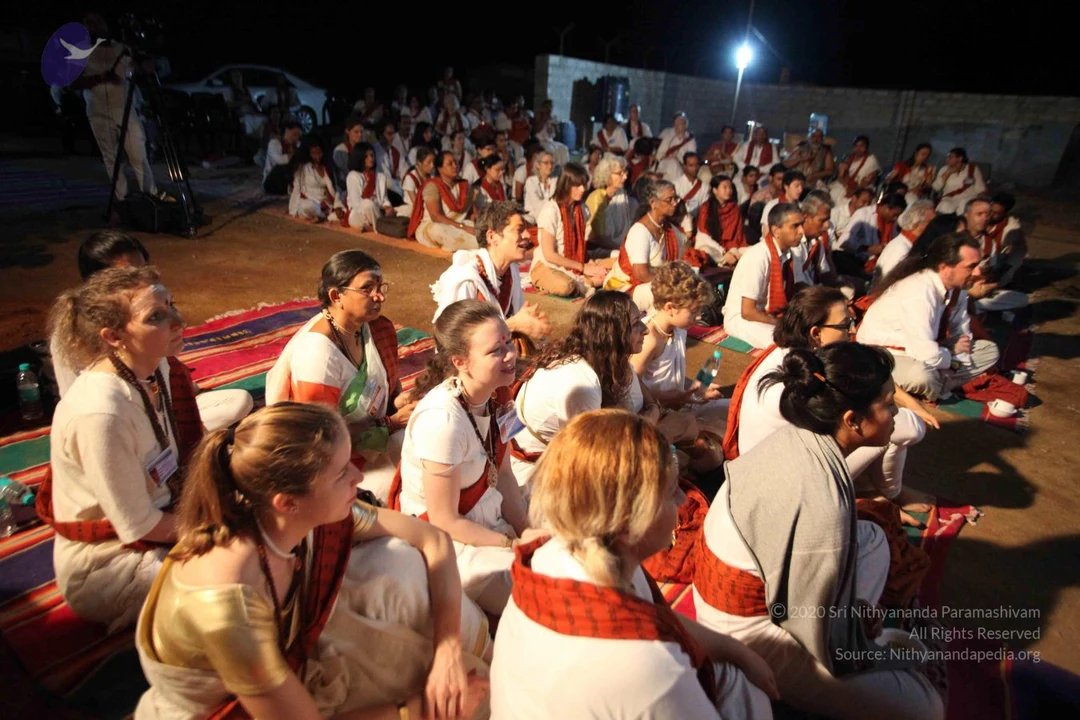
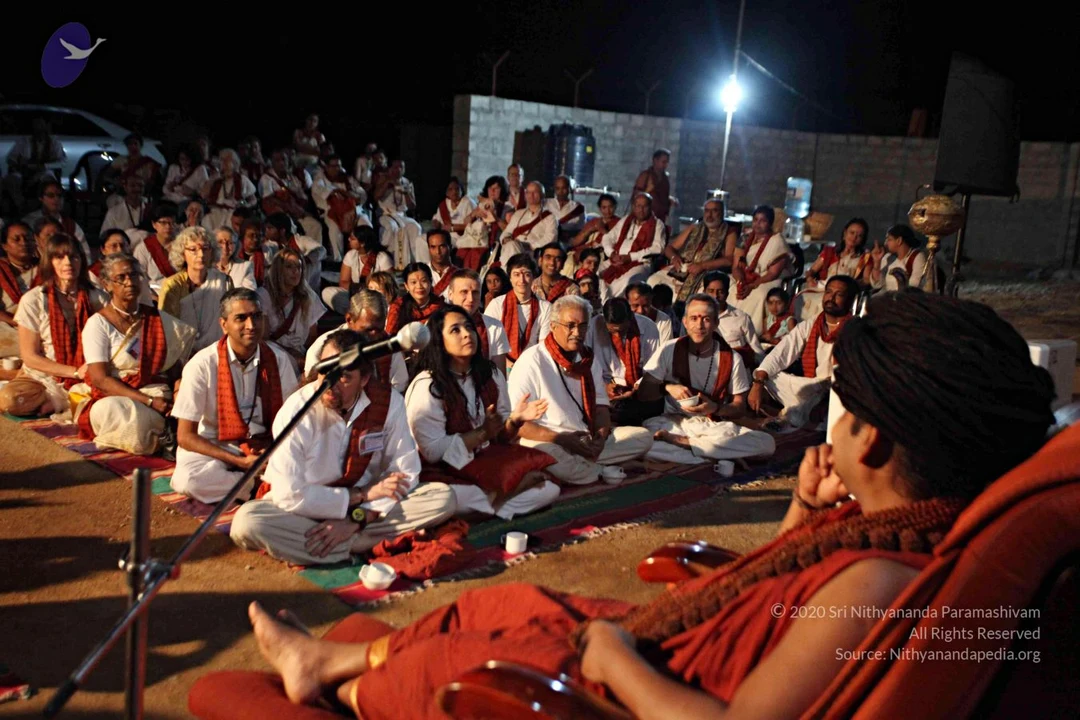
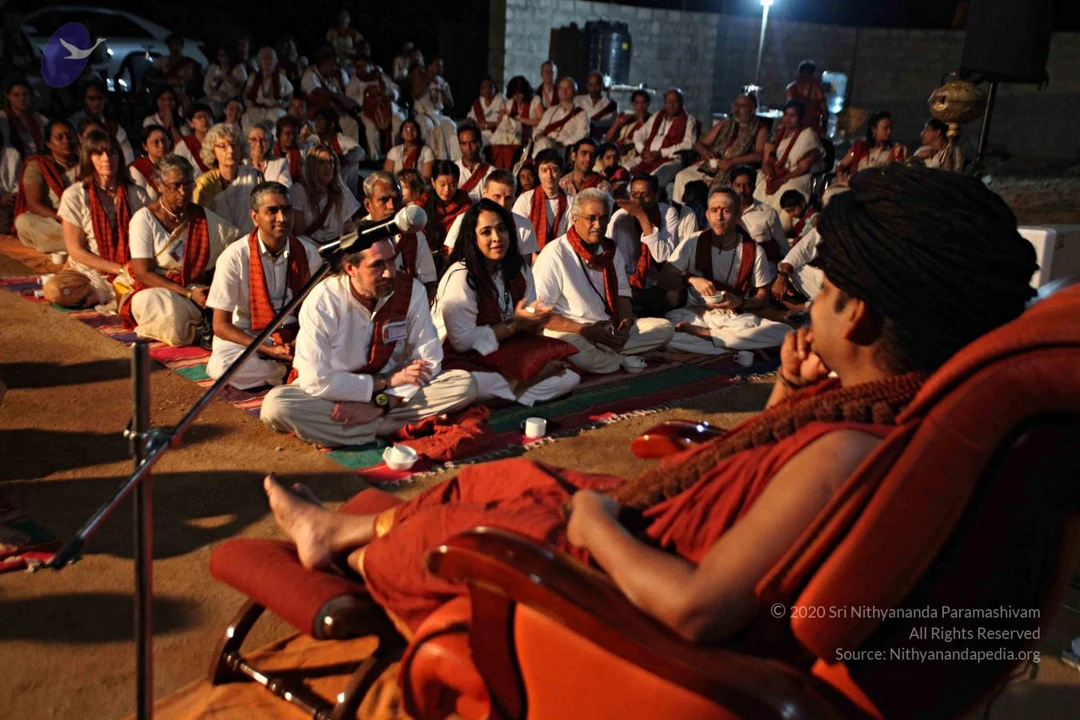
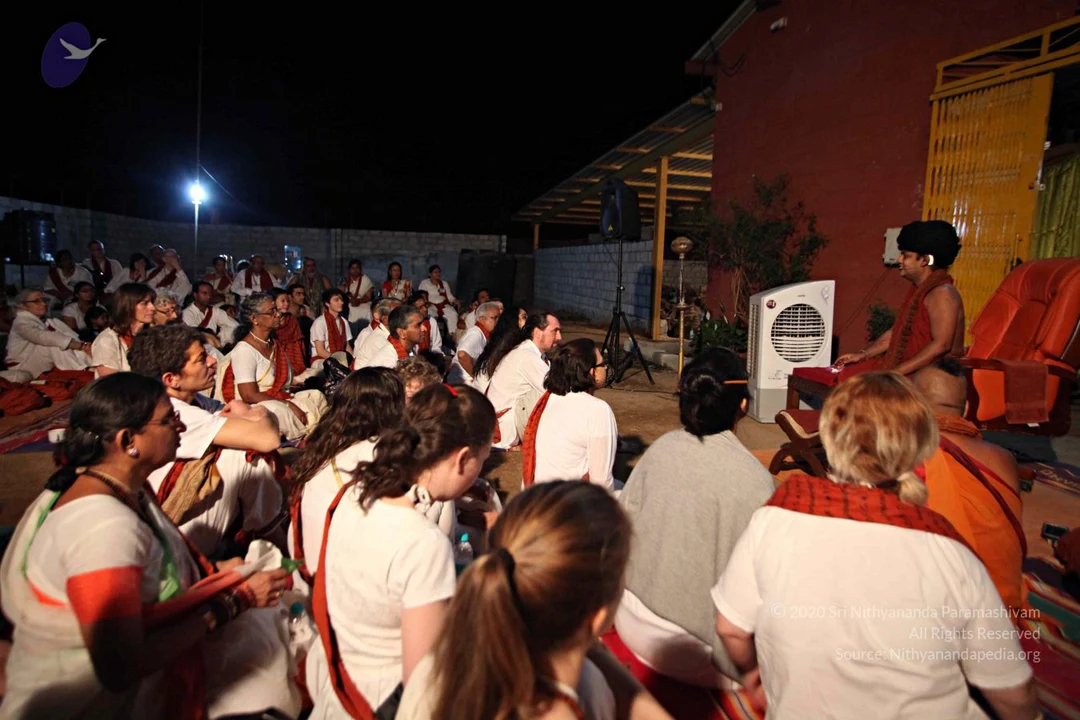
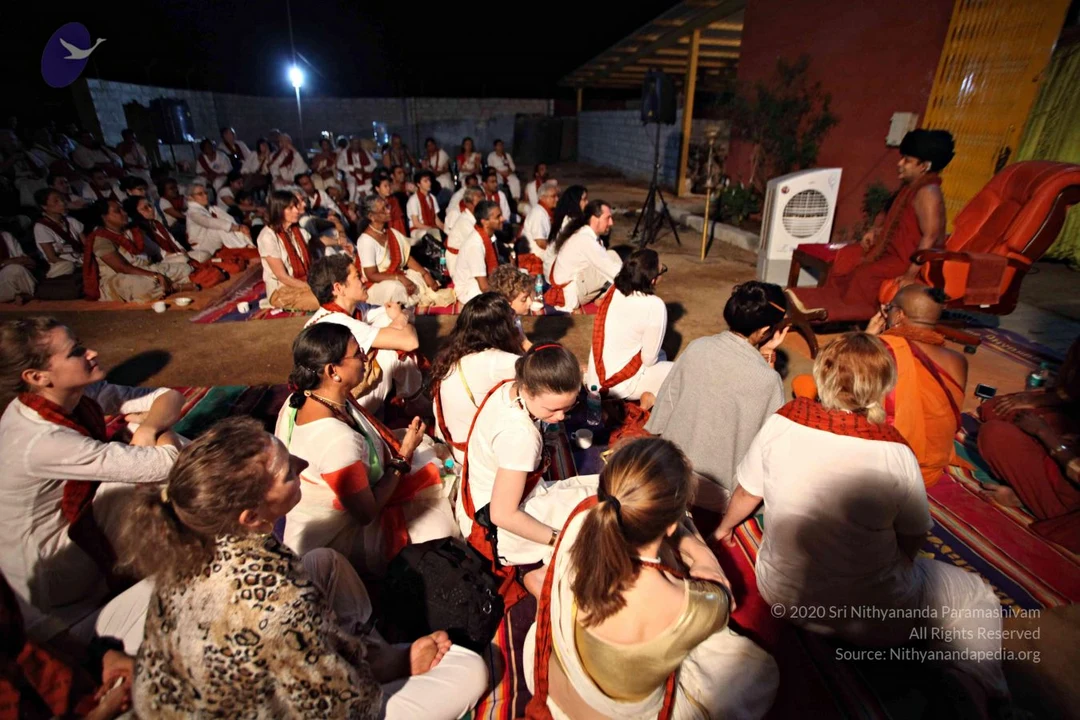
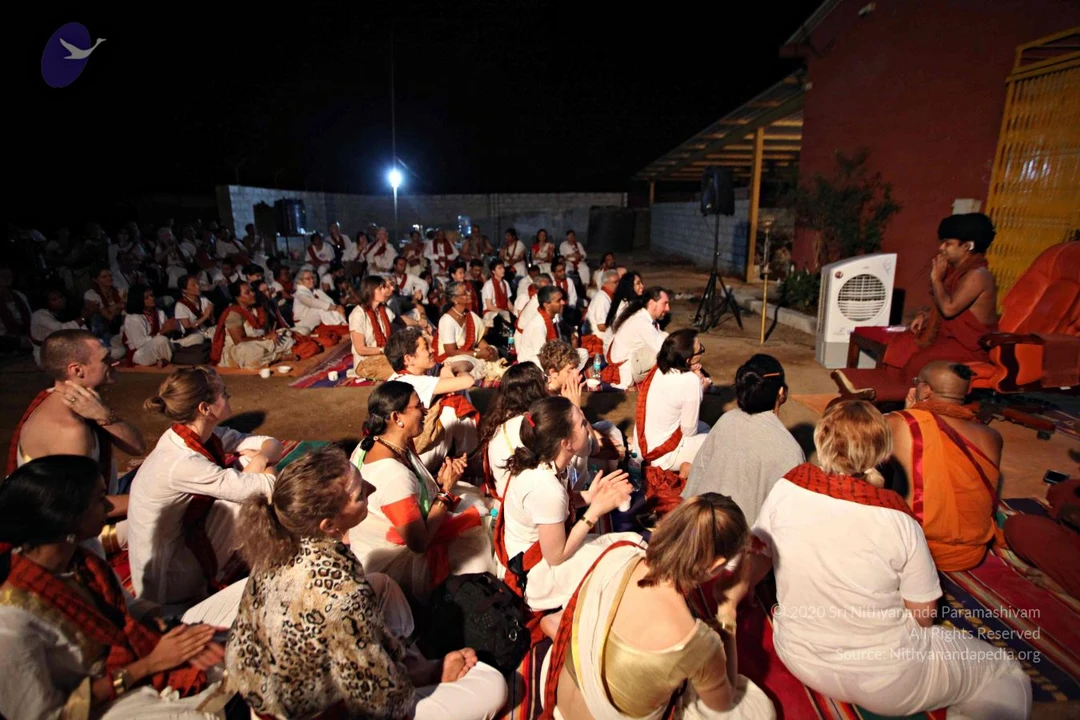
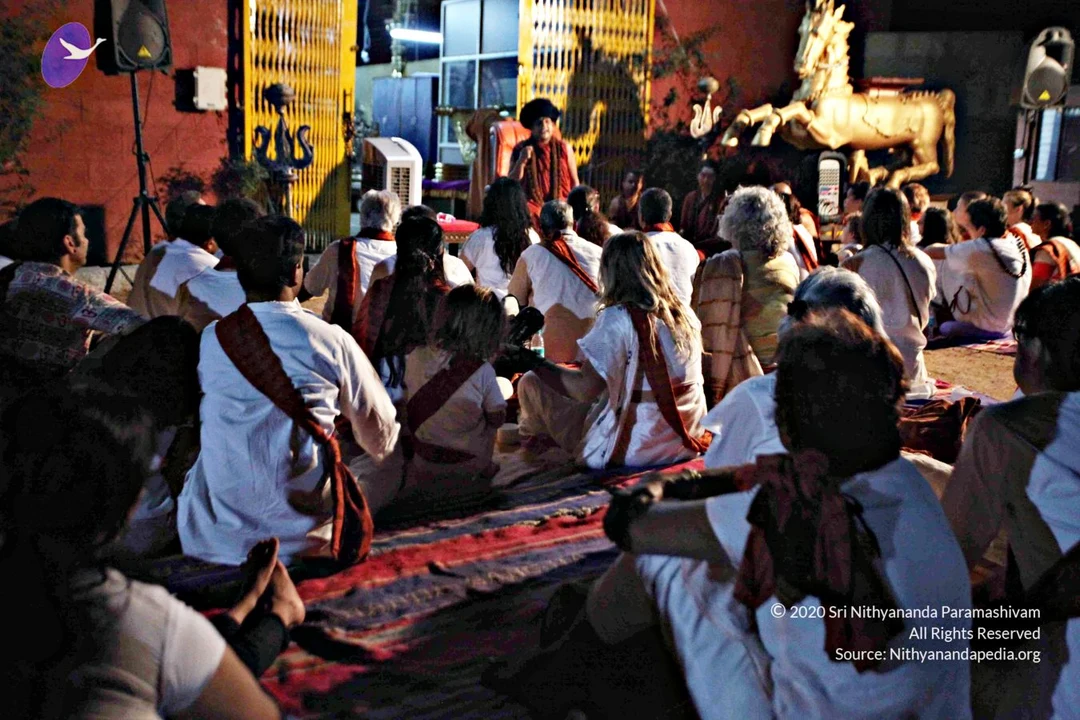
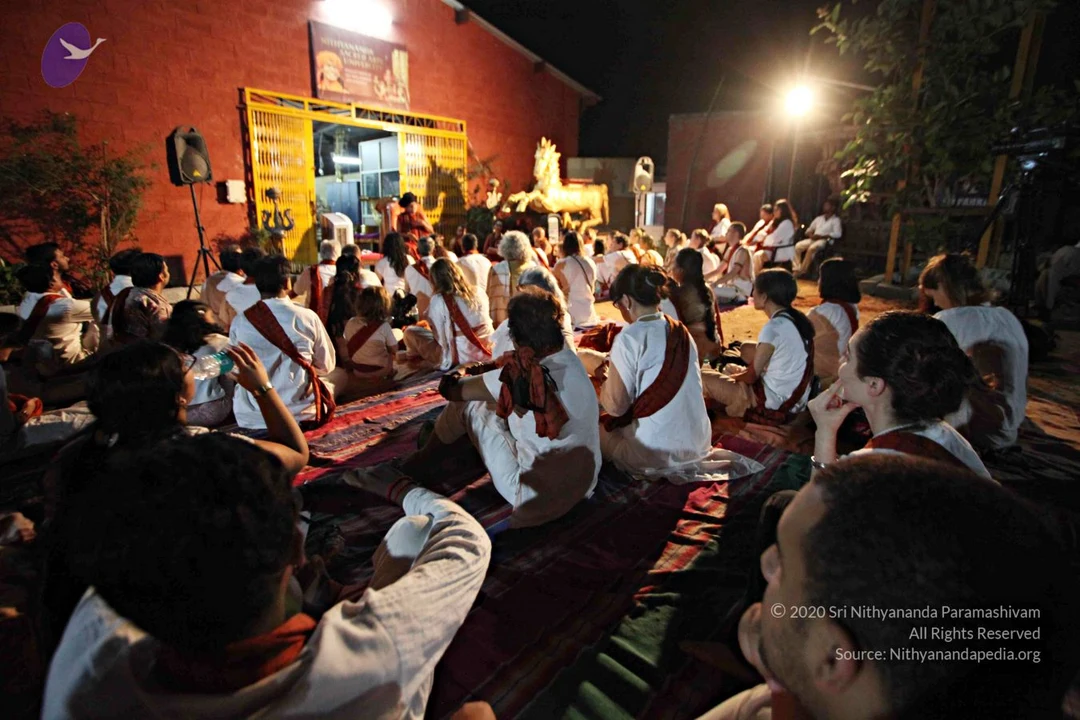
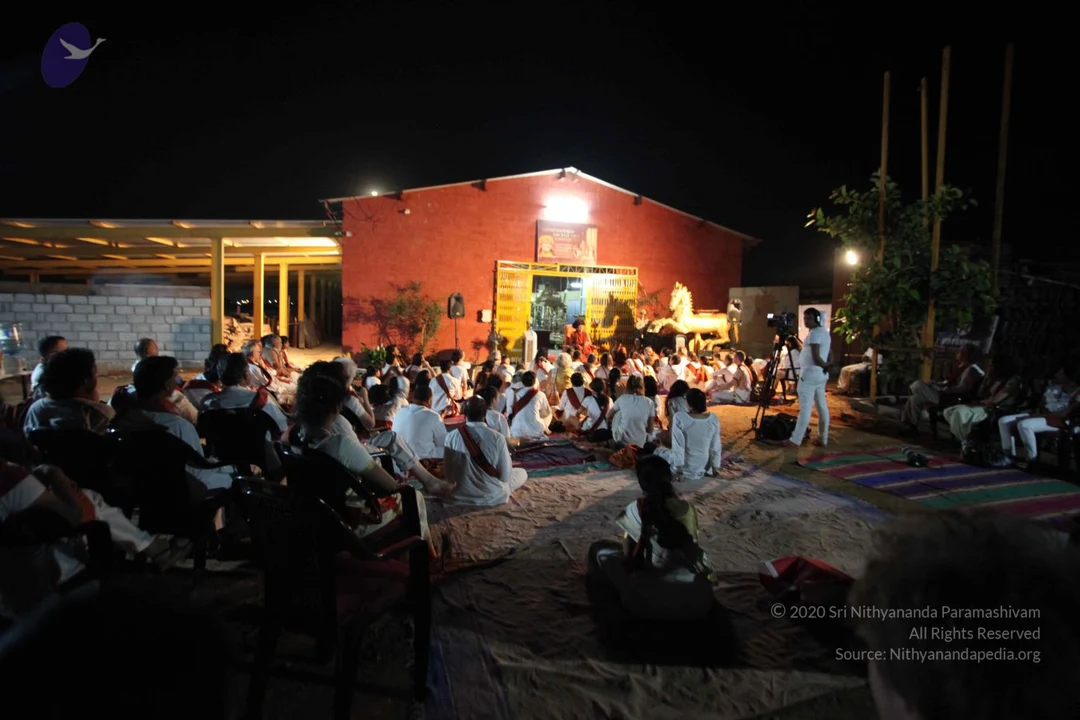
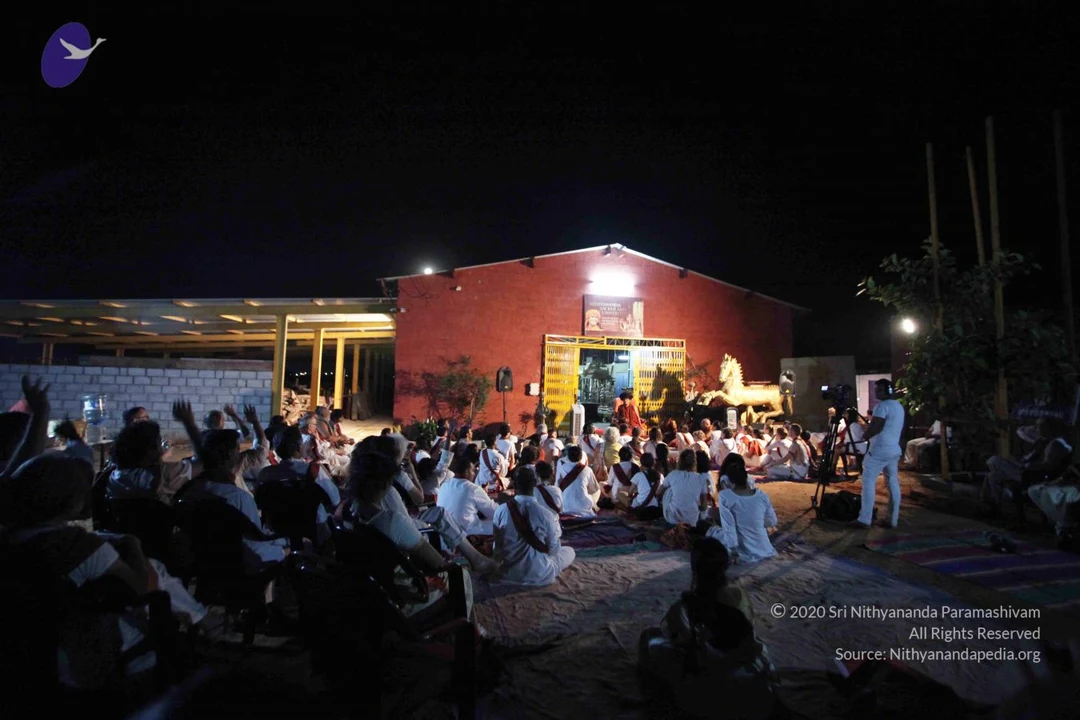
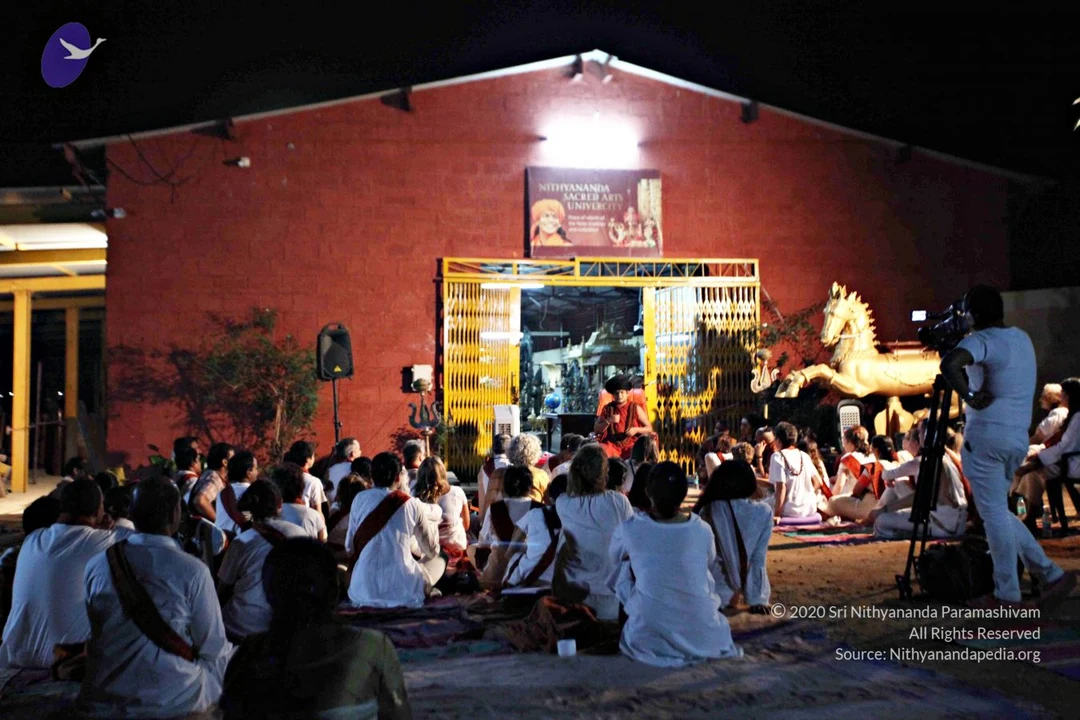
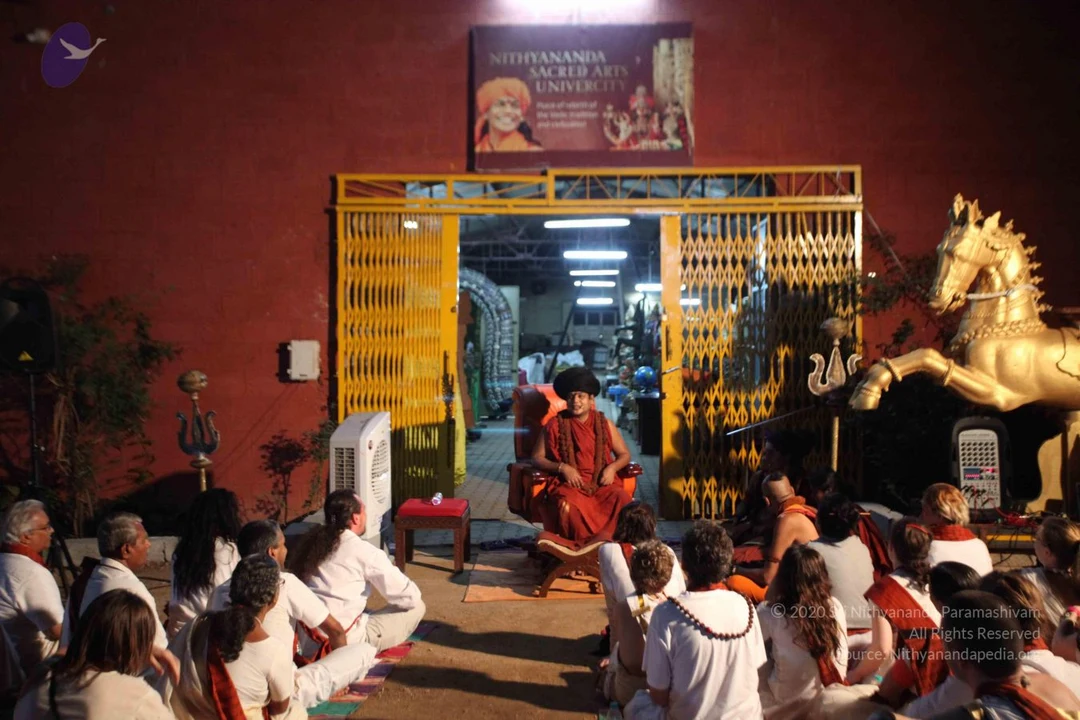
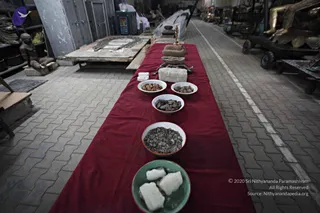
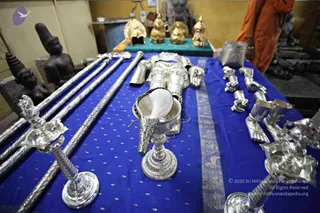
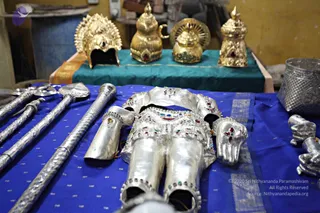
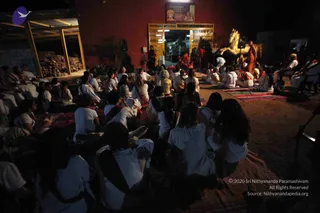
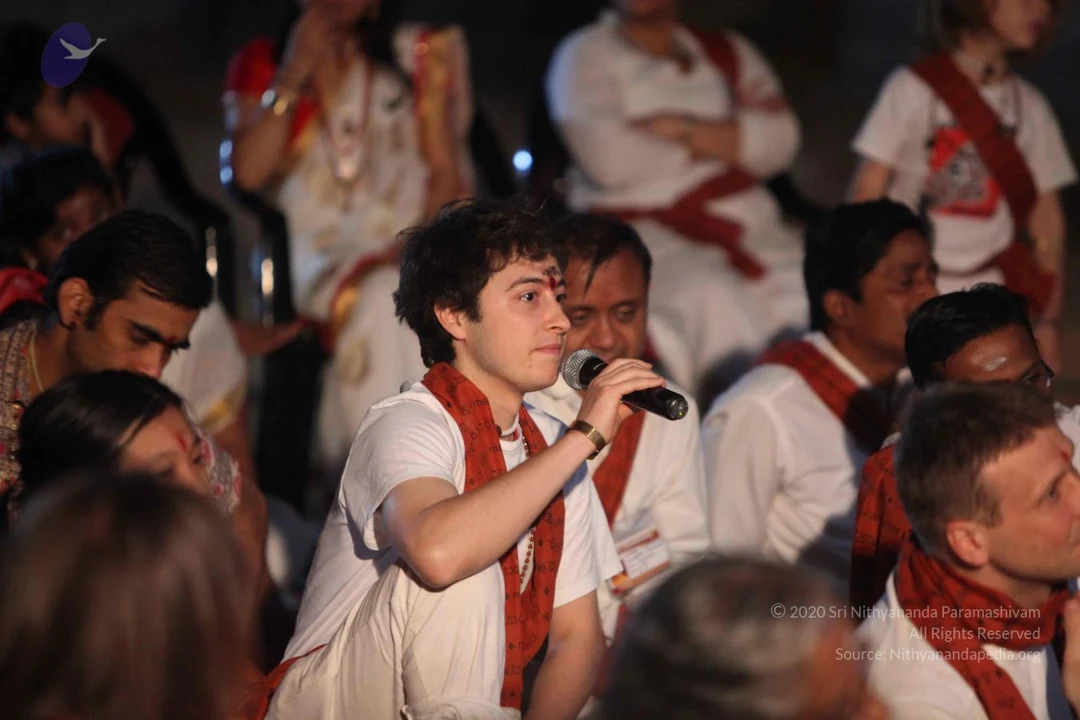
A long red cloth runs down the centre of a workshop aisle, laid with small white bowls of offerings: reddish grains, dark stones, and grey pebbles, plus white blocks of solid material and a small bronze figure. Behind the table stand statues, stone sculptures and a golden deity murti near a kalasha-like object, with a grey gravel-paved floor and metal carts lining the right side. No people are visible. The setting resembles a sculpture workshop used as a ritual space for the offering table.Photograph of a ritual display on a royal blue cloth with a gold-bordered stripe. Silver ritual objects are arranged on the table: silver staffs or rods, a silver vessel with a spouted pouring lip and a white cloth or stone insert, a silver lamp stand, and silver feet or footwear pieces. Behind the table are dark stone or bronze figures and gold-coloured deity murti or crowns on a teal cloth. A person in an orange robe stands at the upper right, partly cropped. The setting looks like a temple workshop or storeroom, with bare walls and a metal shelf in the background.A photograph of ceremonial metal items laid out on a blue cloth with a gold-bordered edge. In the foreground is a silver-toned, jewel-studded figure-shaped deity form or murti armour with arms and a hand, beside silver staffs and a silver ceremonial mace-like object. Behind them on a teal cloth are four ornate gold crowns or headpieces set with red and green stones. A silver vessel stands at the right edge. No people are visible; the objects appear prepared for a puja or deity adornment.Night outdoor gathering at an ashram courtyard lit by warm lights, with a large audience of people in white clothes seated on the ground on mats and cloths. In the foreground, many attendees sit with their backs to the camera. At the far end, a few figures in orange and saffron robes sit on a raised area near a golden horse statue and a red wall with a gold-framed gate. A man in saffron clothing stands at right near the horse statue, and a seated figure in orange sits near the centre. Ceremonial activity appears to be taking place, with some participants in white and red-orange attire. Photo credit overlay reads 2020 Sri Nithyananda Paramashivam.Night-time outdoor gathering at an ashram courtyard where a large crowd of devotees dressed in white with red-and-maroon shoulder cloths sit on the ground and on colourful striped rugs, facing a central area. Several people in white and orange-saffron robes sit at the far side near an illuminated gold horse statue beside a red brick wall. A banner on the wall reads Nithyananda Dhyanapeetham University. Some devotees sit on plastic chairs at left, and a figure in white stands near the gold doorway. The scene suggests a seated ritual or discourse, though no clear central figure can be identified.Night photo of an outdoor evening gathering in front of a red brick wall with a yellow gate and a sign reading Nithyananda Sacred Arts University. Dozens of people in white clothes with saffron-orange shawls sit on colourful striped mats and rugs on dirt ground, facing a seated figure in orange clothing near the gate. A large golden horse statue stands at right, and a rock pile sits at left. Some seated people have shaved heads, others have long dark hair. Several people hold cameras or phones. The scene appears to be a ritual or discourse, but no identifiable candidate is clearly visible enough to confirm.

Sacred-Arts
10 photosSource gallery
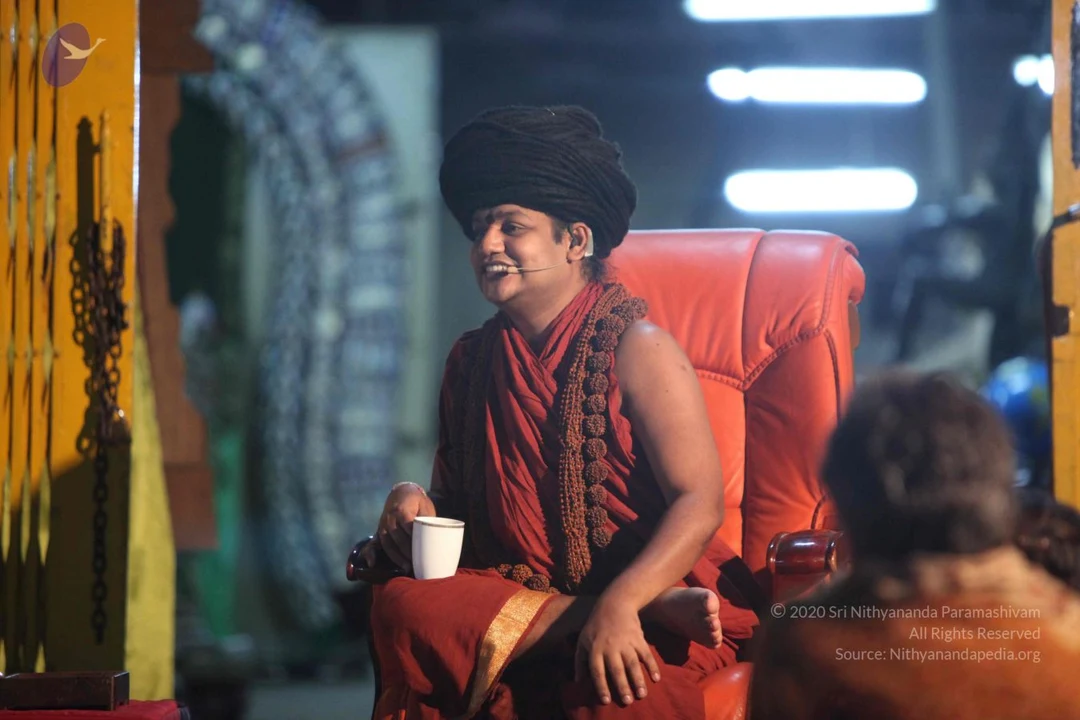
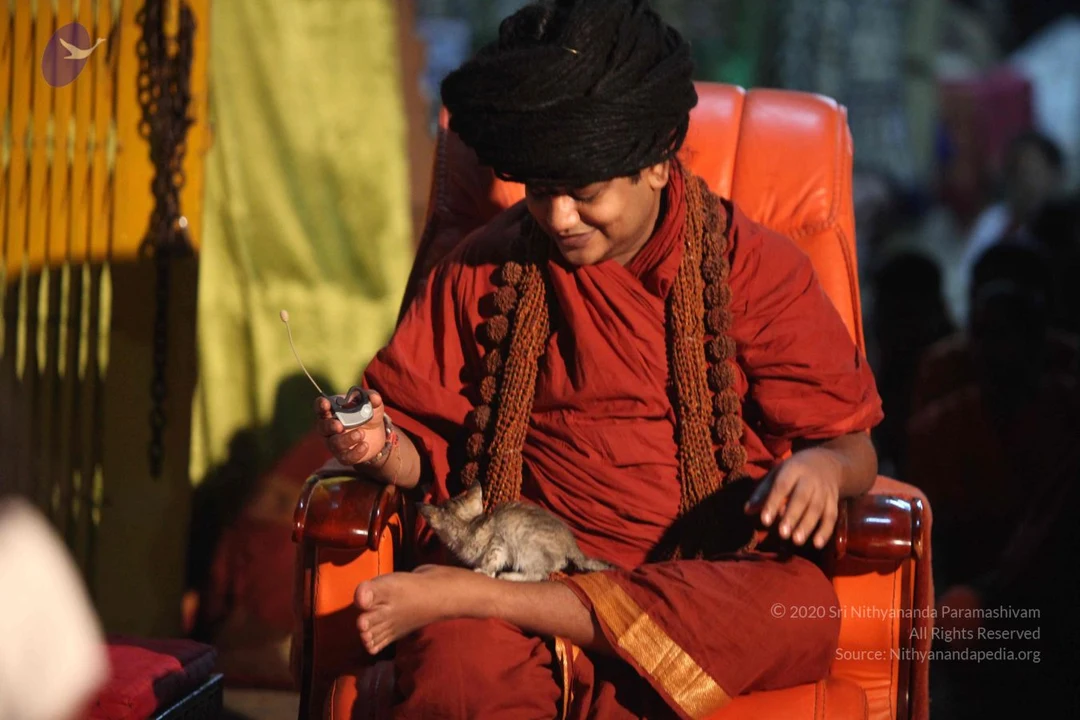
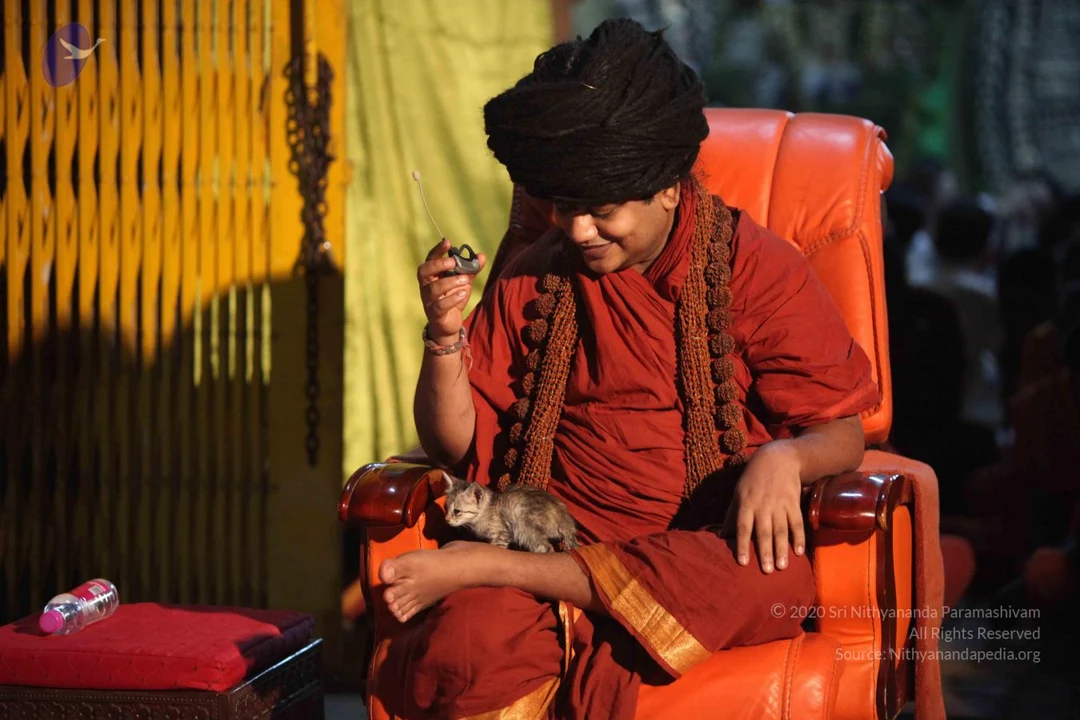
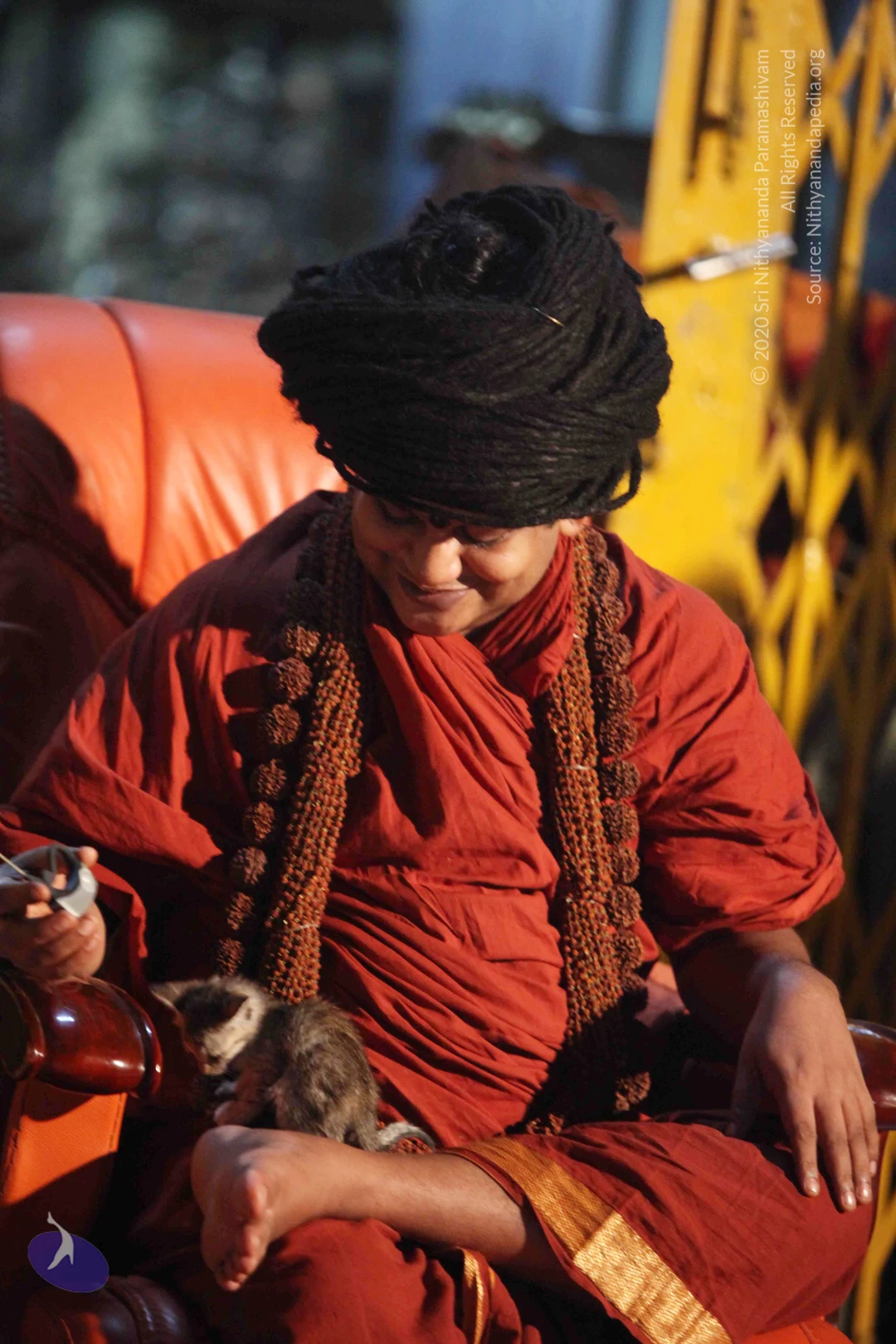
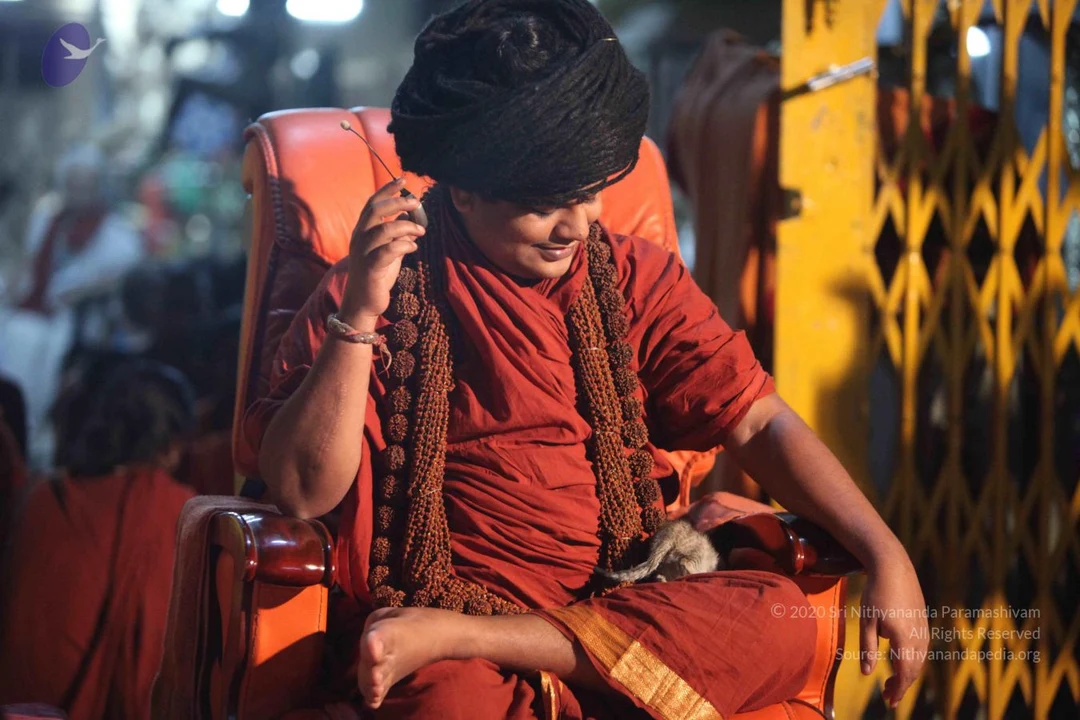
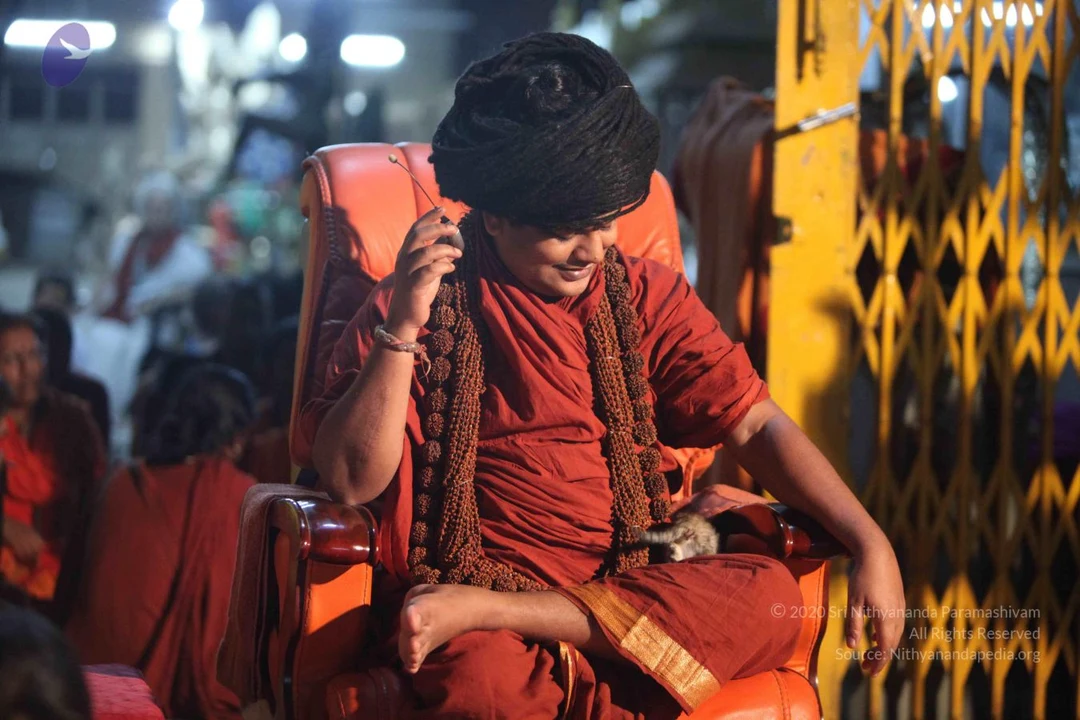
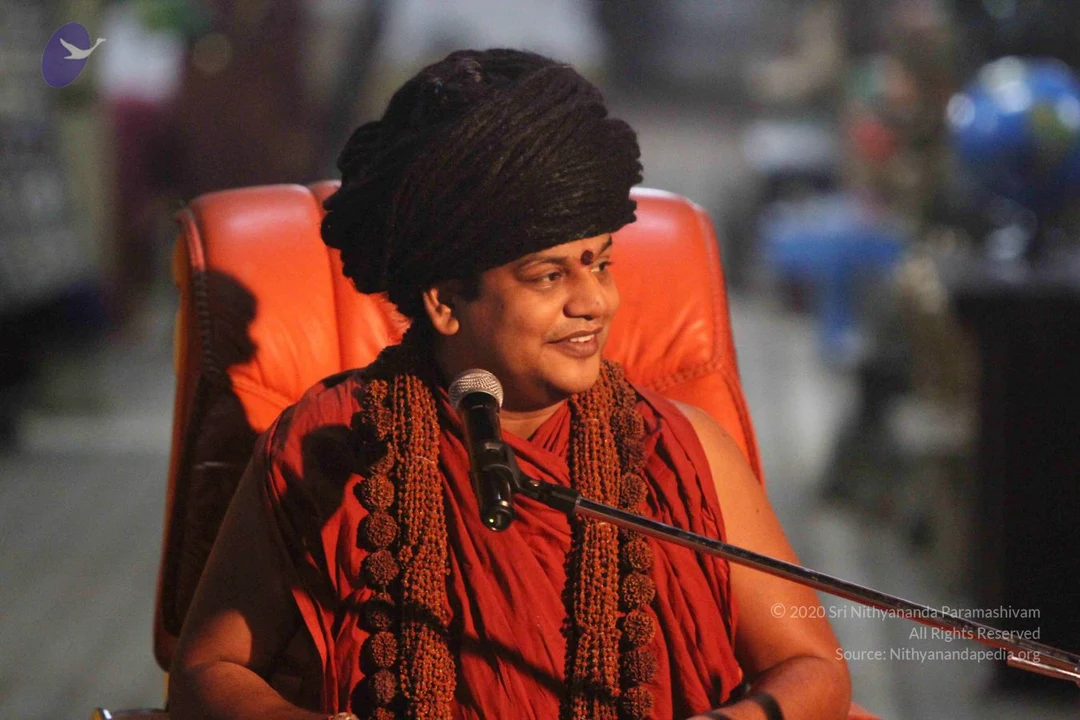
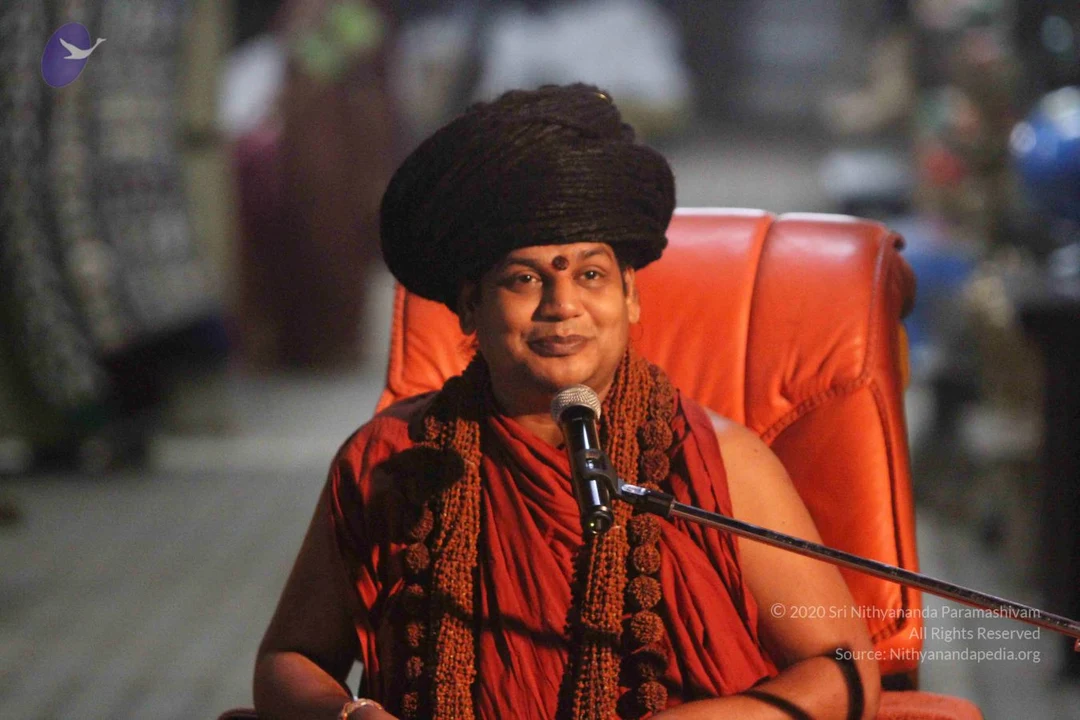
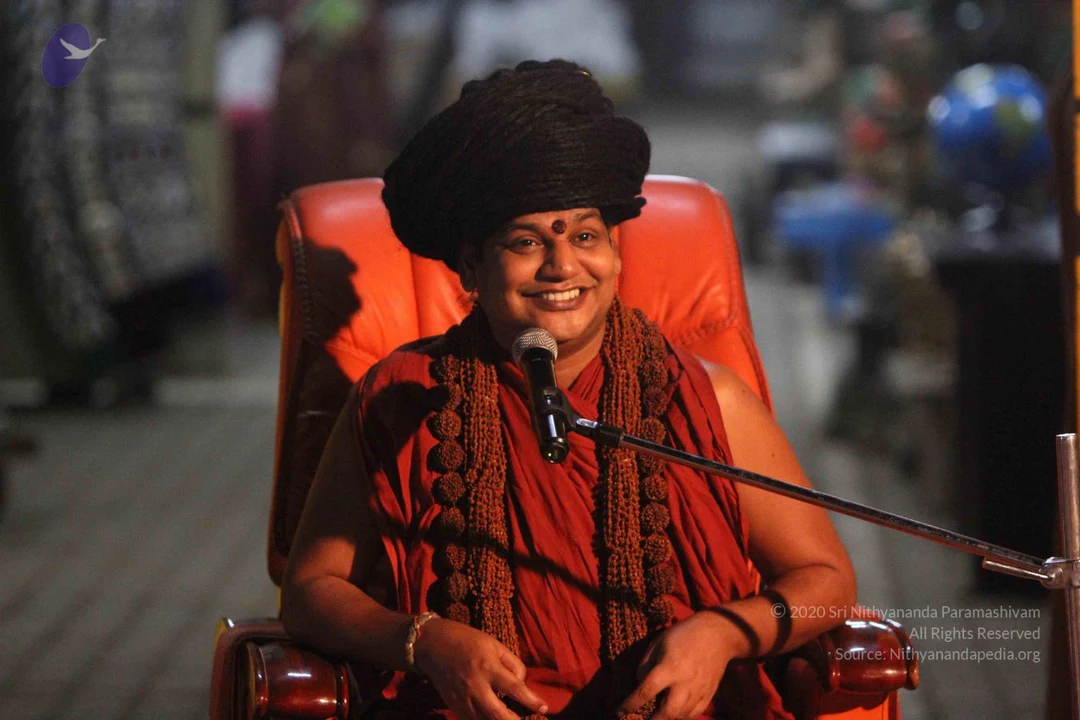
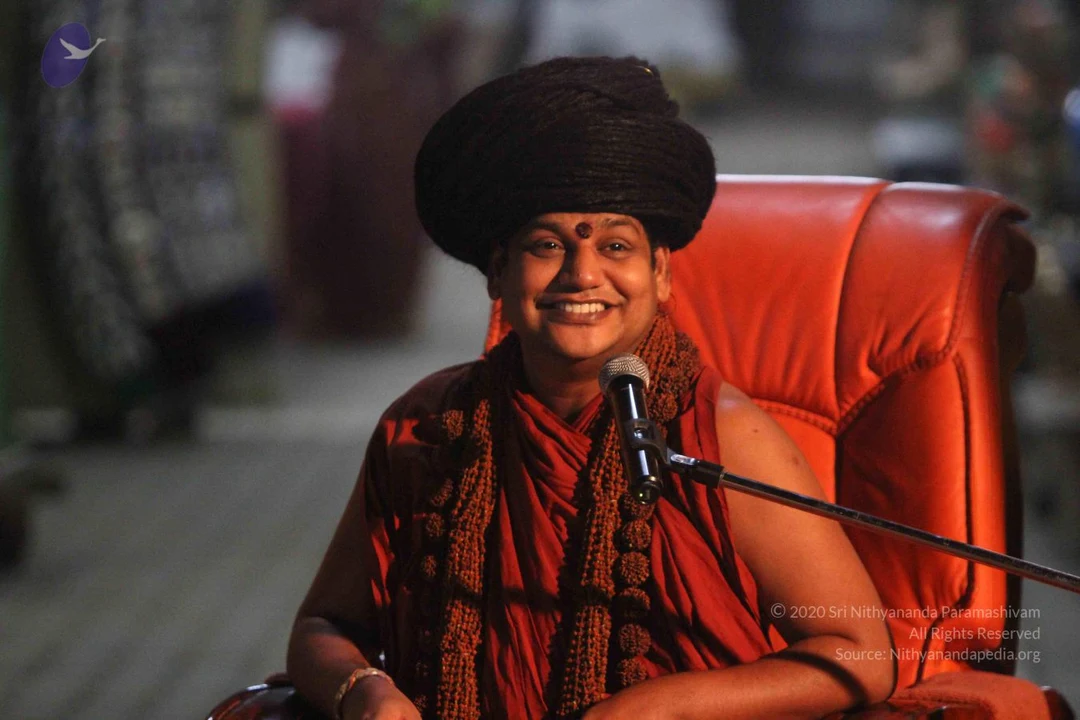
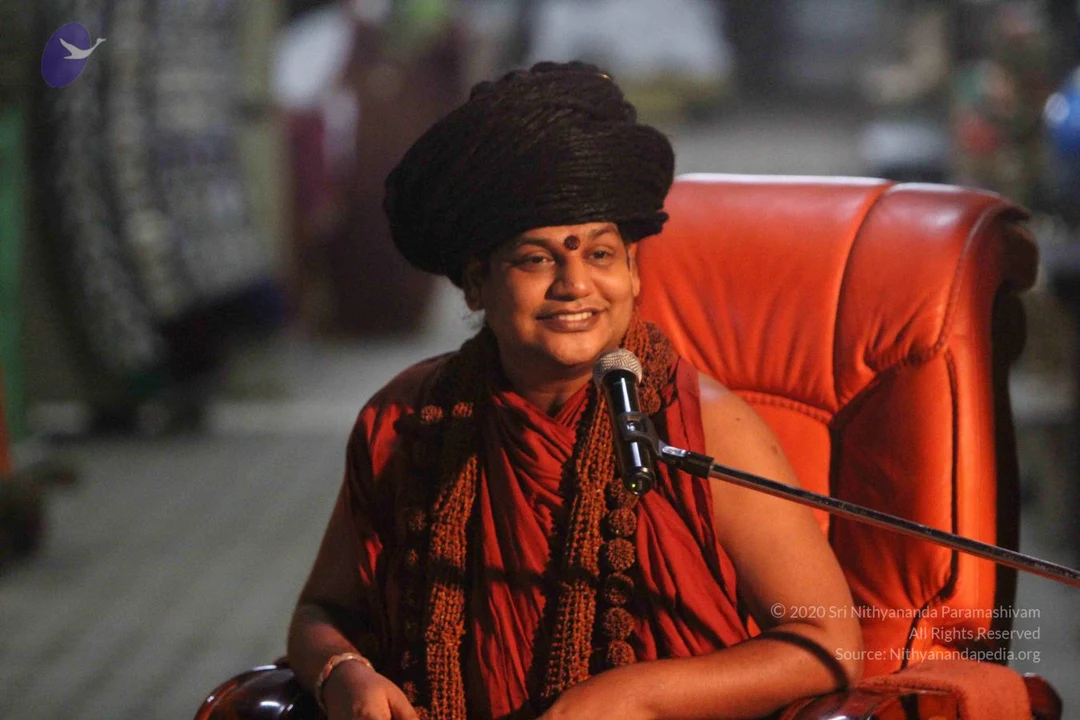
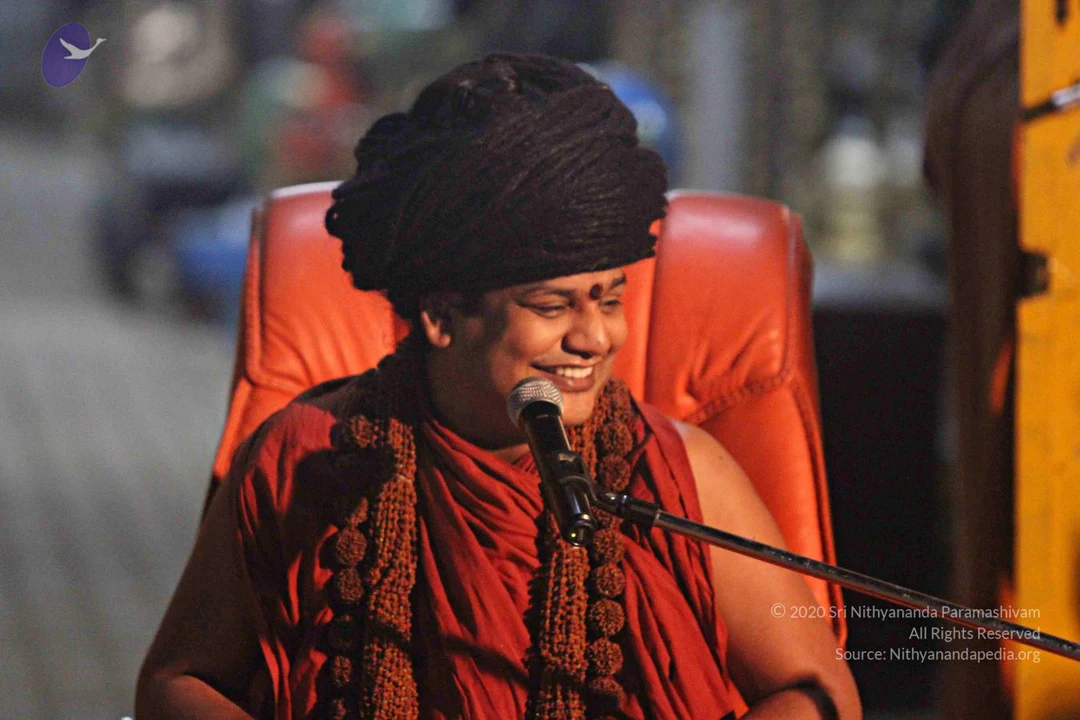
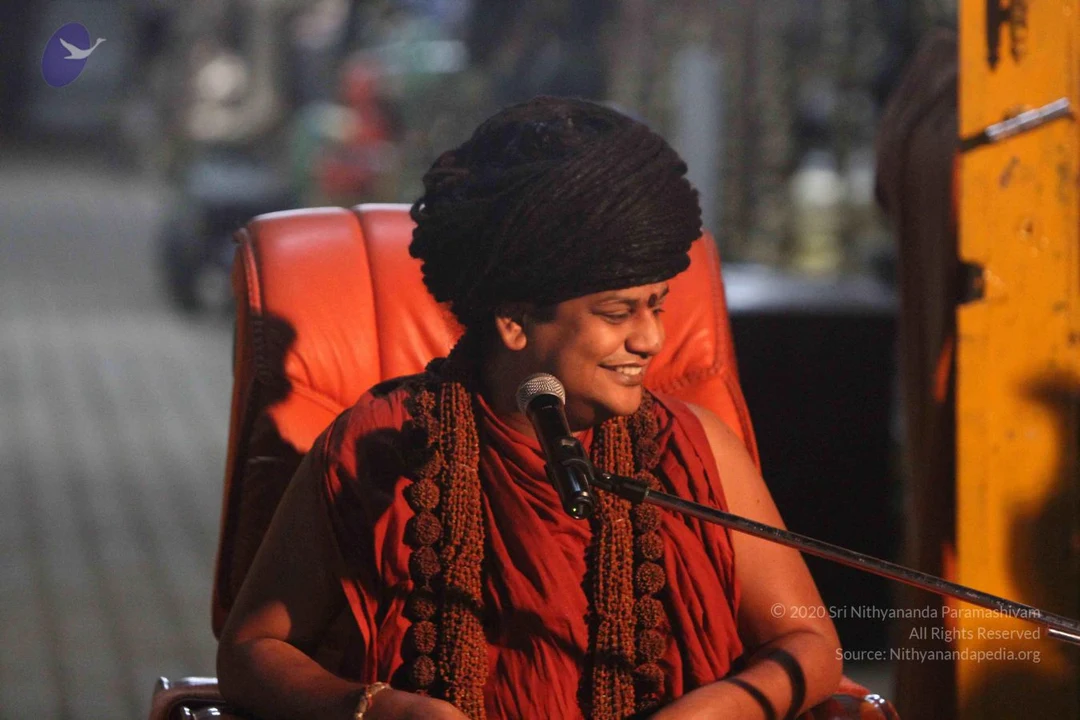
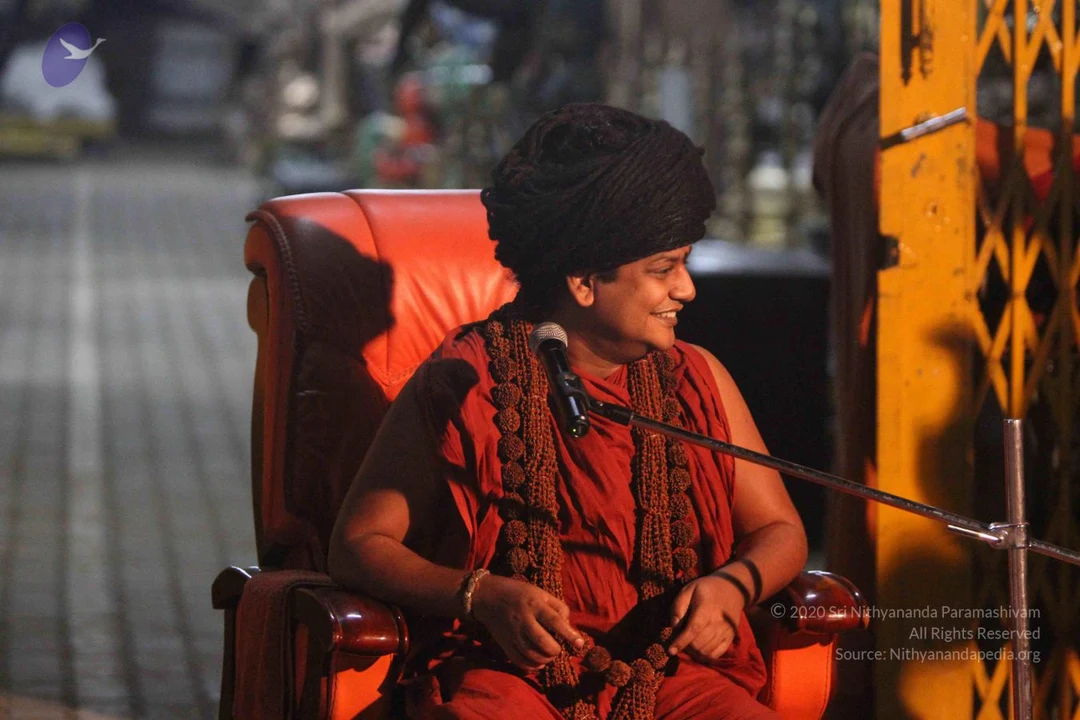
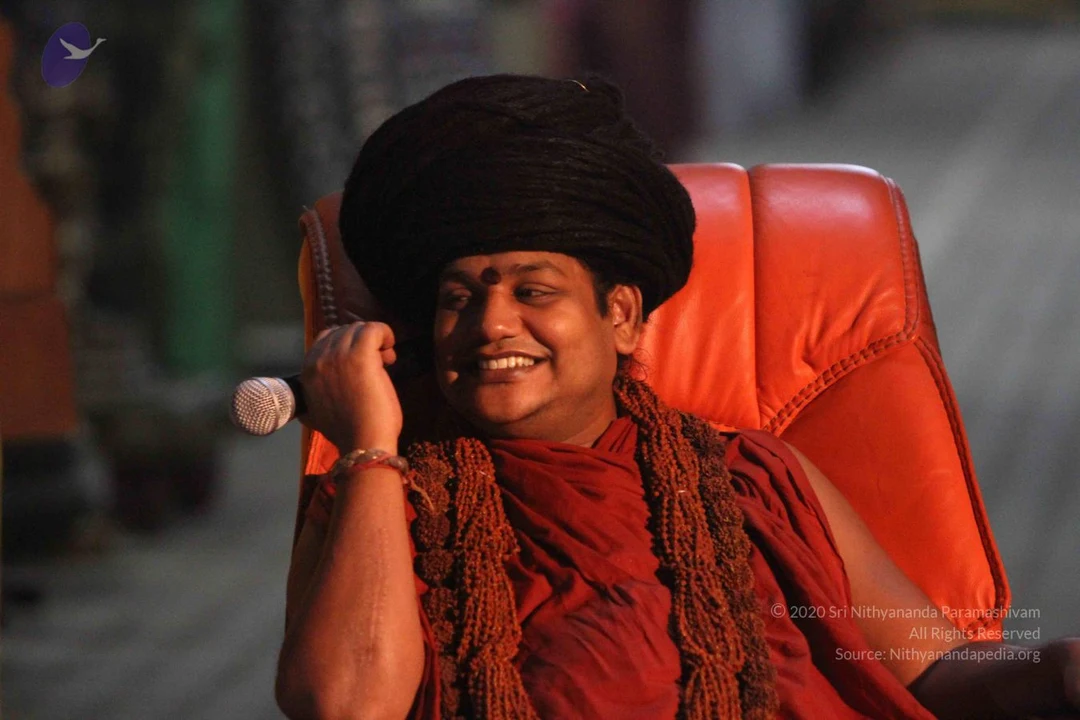
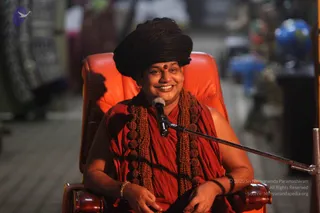
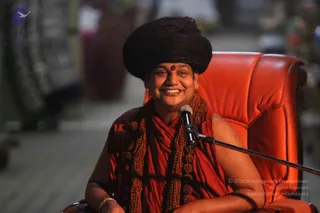
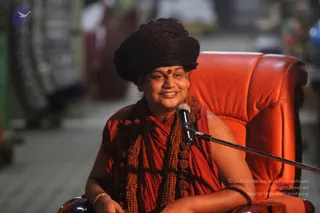
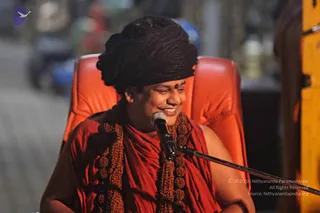
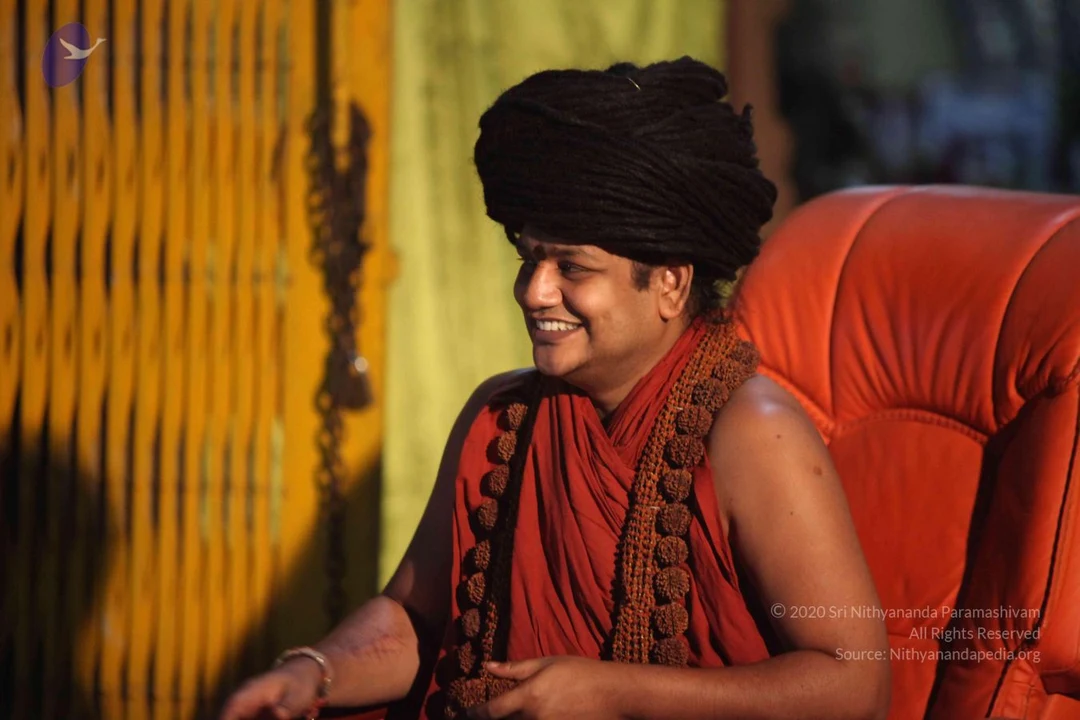
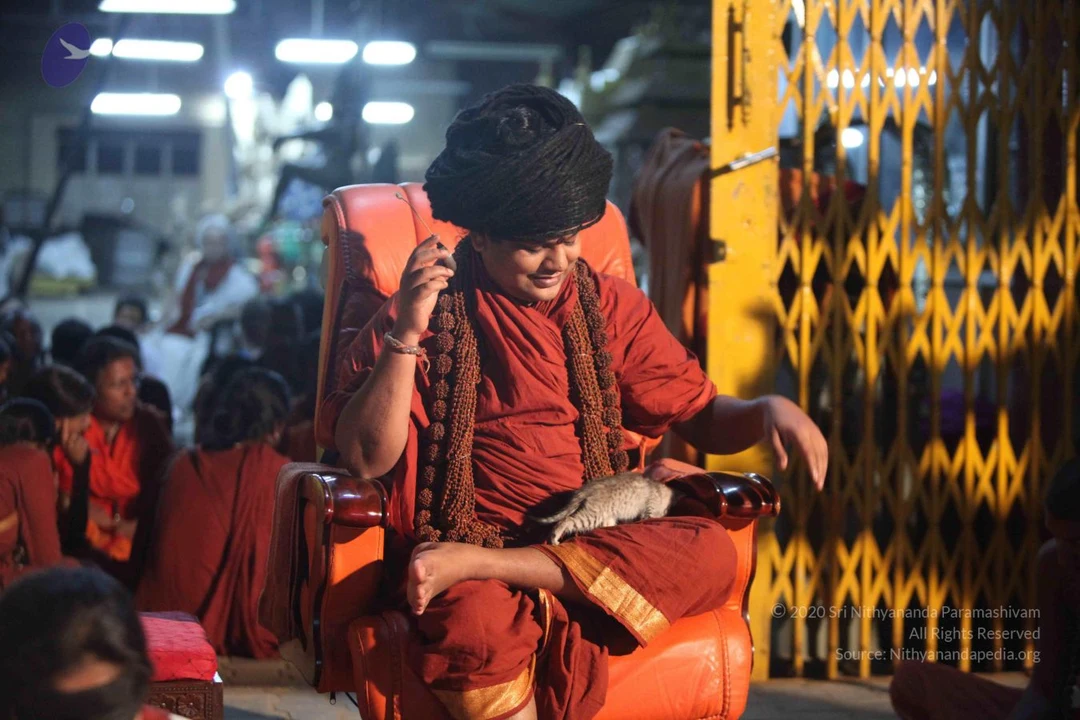
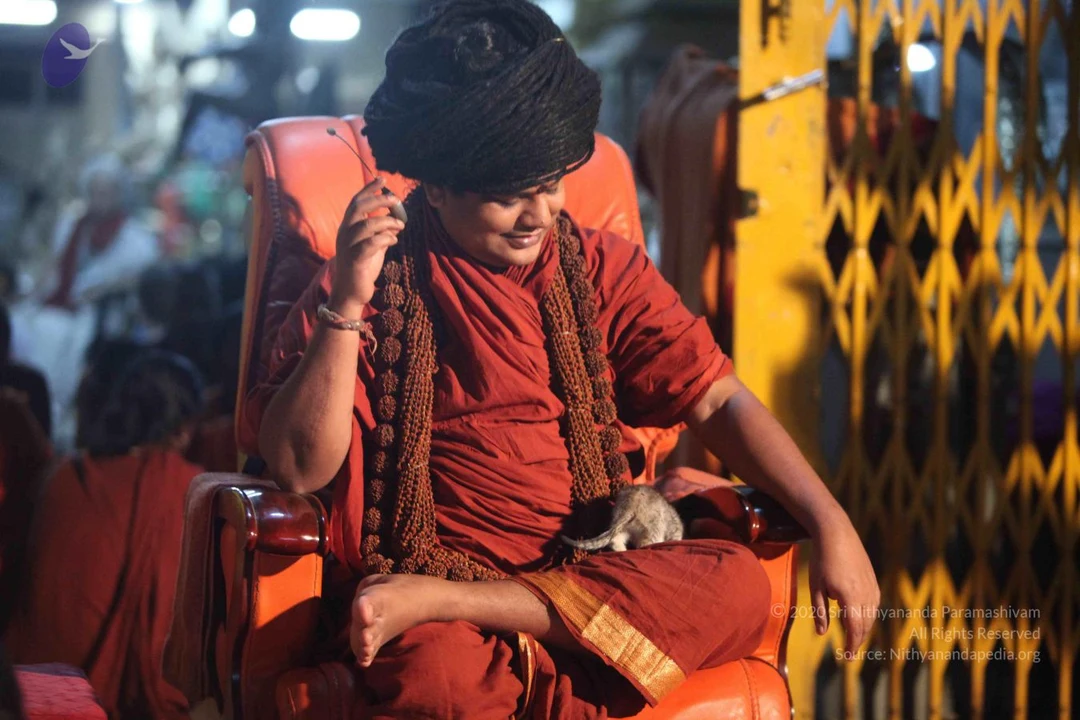
A person seated in an orange leather chair speaks into a microphone on a stand. They wear a dark twisted turban-style head covering, a small red bindi, an orange-red shawl over the shoulders, and long rudraksha mala necklaces. Blurred background shows a room with a blue globe and other objects. Appearance-based label: a person, seated speaker in a discourse setting.A seated man in an orange-red robe and a large dark turban sits in a bright orange-red leather chair in front of a microphone on a stand. He wears a red bindi, a shawl draped over the shoulders, and a long brown rudraksha mala with bead clusters around the neck. He is smiling and speaking, with his hands resting in his lap. Blurred background shows colourful cloth and an indoor setting. Swamiji (probable): the turban, saffron-orange robe, rudraksha mala and the page's claim of his presence at this event are consistent with the appearance, so the candidate is marked as present.A smiling man seated in an orange-red leather armchair before a microphone on a stand, wearing a dark brown turban, a red-orange robe draped over his shoulders and a long rudraksha mala around his neck, with a red bindi on his forehead and a wristwatch on one wrist. a person is the sole visible person.A smiling man sits in an orange leather armchair beside a microphone on a stand. He wears a dark brown turban, a red-orange saffron-toned shawl draped over the shoulders, a brown rudraksha-style bead necklace, and a bangle on his wrist, with a red tilak mark on his forehead. The background is softly blurred with pale and red drapery.A seated man in a dark brown turban and rust-orange robe with a rudraksha-style bead and crochet-textured orange shawl sits in a red leather armchair, smiling toward a microphone on a stand at right. A red kumkum dot marks his forehead and a thin bangle is on one wrist. The background is a blurred indoor hall with draped fabric and a few distant figures. Appearance-based label: Swamiji (probable), with the turban, saffron-orange robes, beaded shawl and seated discourse setting as the qualifying cues. The page presents this as a Maheshwara Puja day event on 23 Feb 2016, but no ritual or offerings are visible in the frame.A smiling man with a dark wrapped turban sits in an orange leather chair beside a microphone on a stand. He wears a rust-orange draped garment, with a bare shoulder, and multiple rudraksha mala strands hang across his chest. A small red tilak marks his forehead. A yellow fixture is at the right edge and a blurred street scene sits behind him. Watermarked archive photo.
Maheshwar Puja
5 photosSource gallery
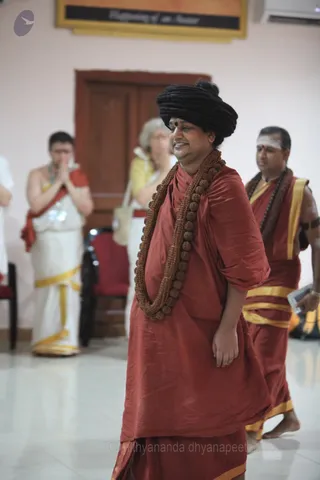
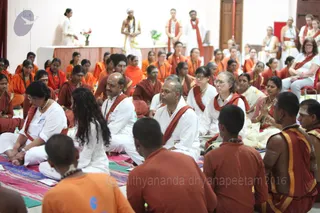
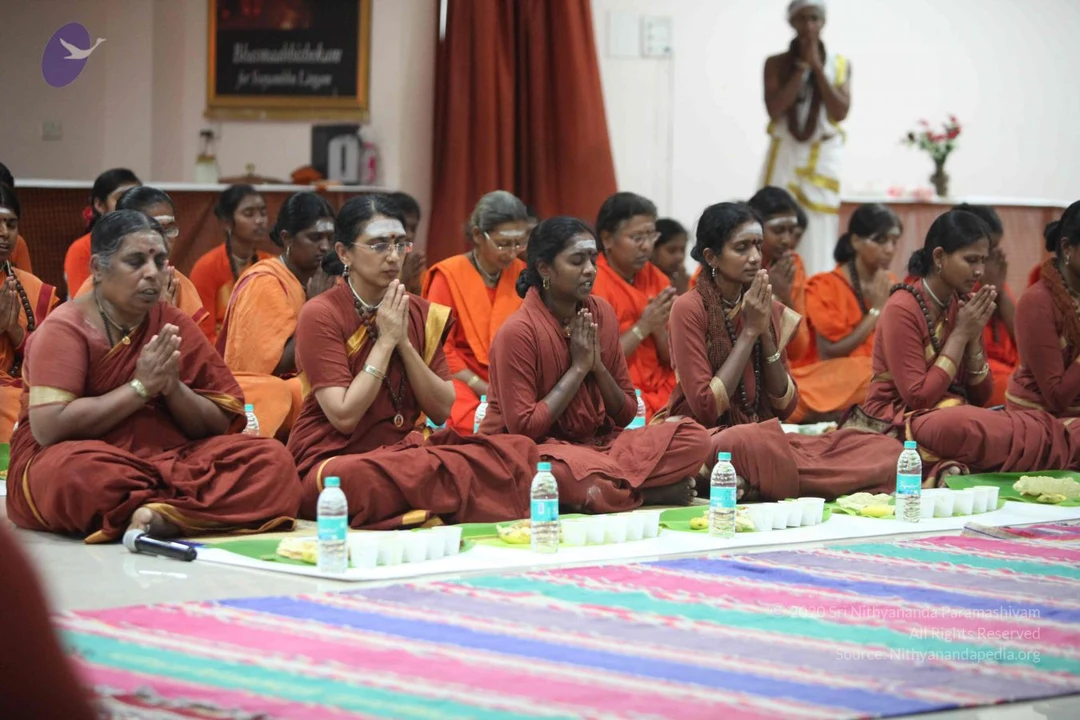
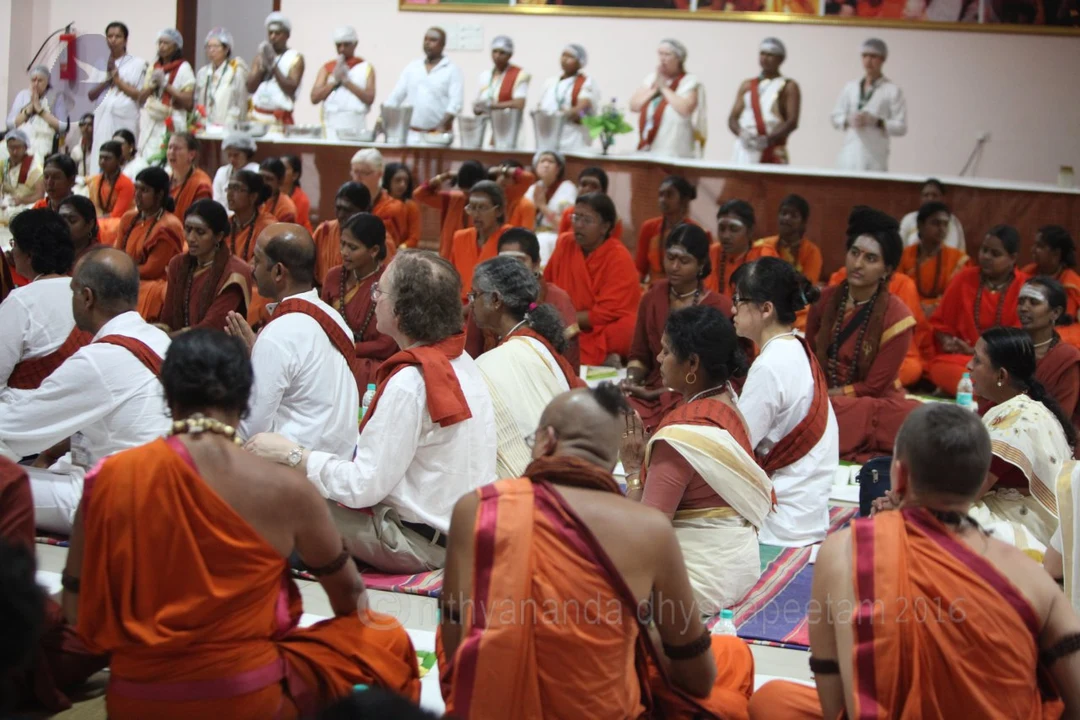
A photograph inside a bright hall with white tiled floor and a wooden door behind. A smiling man in the foreground wears a large black turban, an orange-red robe draped over one shoulder, and a long rudraksha mala with big beads across his chest. Behind him, a man in a red-and-gold dhoti with a bare upper body and white forehead markings walks past. In the background, a man in white dhoti with gold border stands with palms pressed together in namaste, and a woman in yellow top stands beside him near a red-cushioned chair.A large indoor hall with seated devotees in orange, maroon and white clothing, many wearing red or maroon shawls and rudraksha malas. In the front rows, several people in white kurtas sit on striped mats. Near the back, a figure in white stands beside a draped altar table with flowers, and a man in white dhoti with a white head covering and red shawl stands nearby. Some seated people hold their hands together in prayer.A photograph of a long row of seated sannyasis in orange robes and rudraksha malas, sitting cross-legged with hands folded on a floor lined with green banana leaves. Several women in orange saris with white forehead markings sit in the foreground, one in the centre wearing white hair in a bun and glasses. Along the leaves are small white cups, bowls of food, and rice and sweets. In the background a man in white clothes and a person in a white robe are seated near the back wall. A blurred foreground figure and the right edge of the scene add depth. The setting appears to be a hall with a red curtain and white walls, consistent with a Maheshwara Puja food offering.A large hall with white walls and pink-trimmed doorways shows a seated congregation of sannyasis and devotees arranged in long rows. In the foreground, women in orange robes sit before long strips of banana leaf set with food, paper cups and water bottles, forming a feast line for a Maheshwara Puja offering. Behind them, rows of people in orange, maroon and white clothing sit on the floor facing a front area where a few standing and seated figures in white and orange gather near a raised platform. A camera on a tripod stands at the centre. Several people wear rudraksha beads and orange or maroon shawls.