Skip to content
Monday

22 February 2016

Your Path to Inner Awakening 3: Why Have a Guru in Your Life?

Dated photos
307
Source pages
1
Media
2
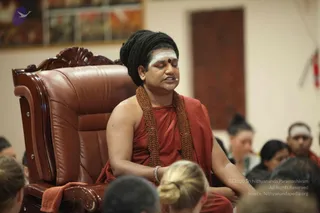
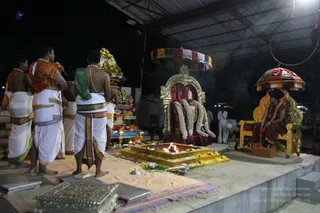
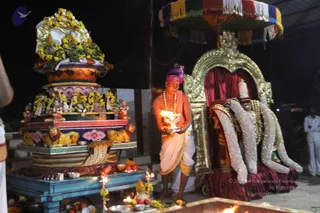
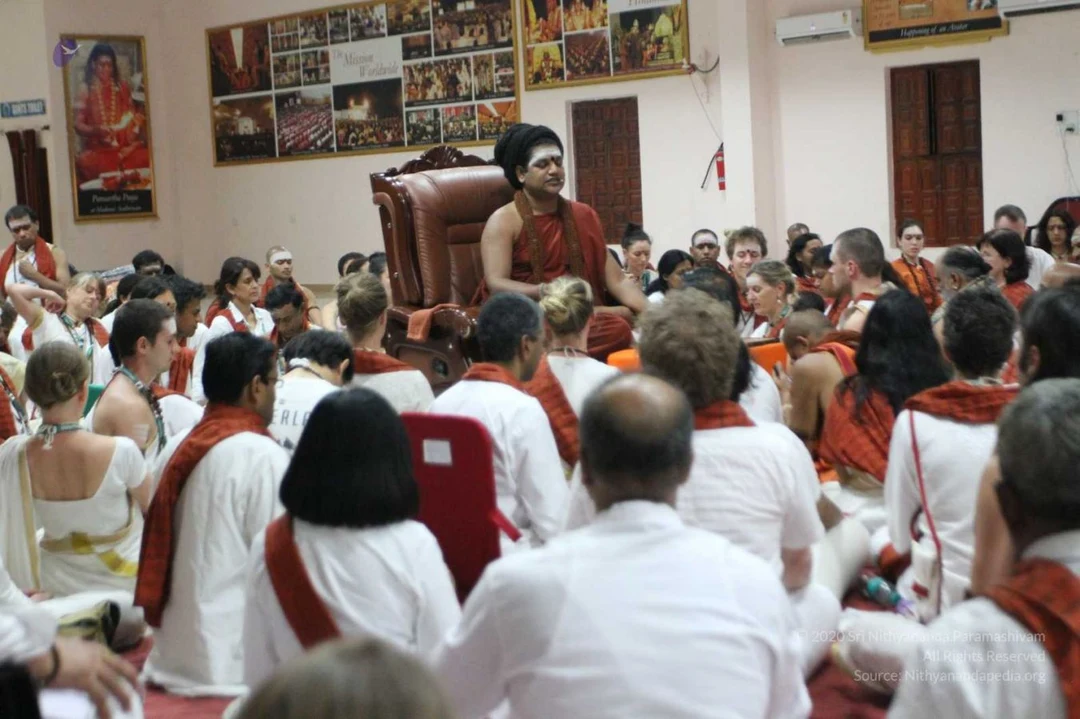
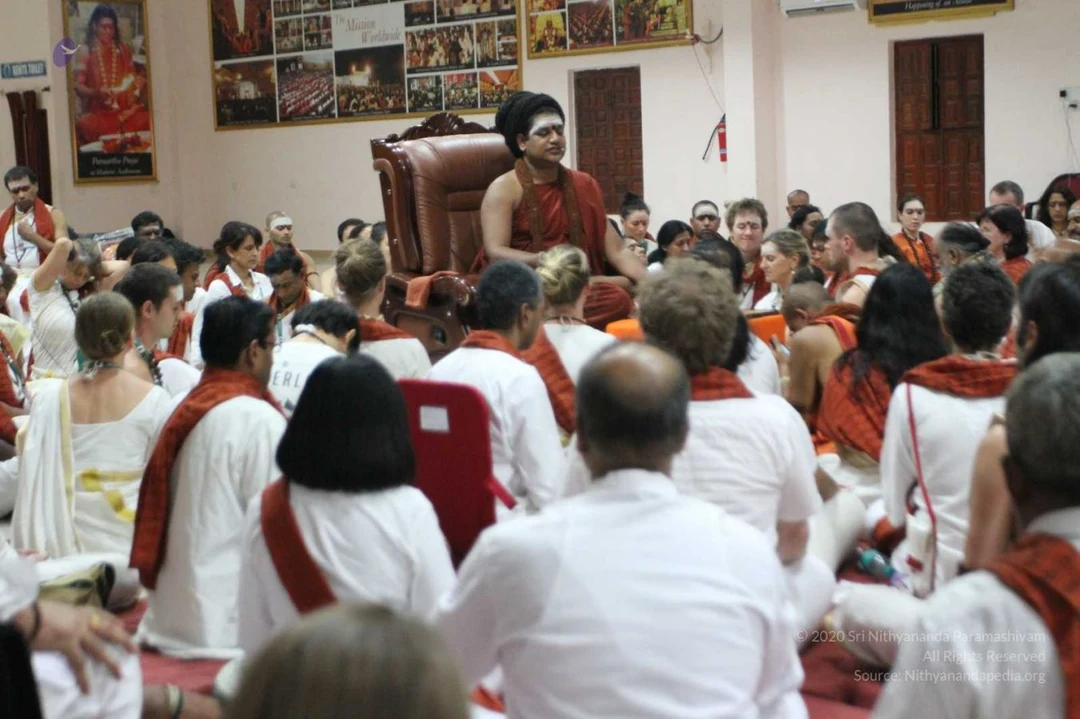
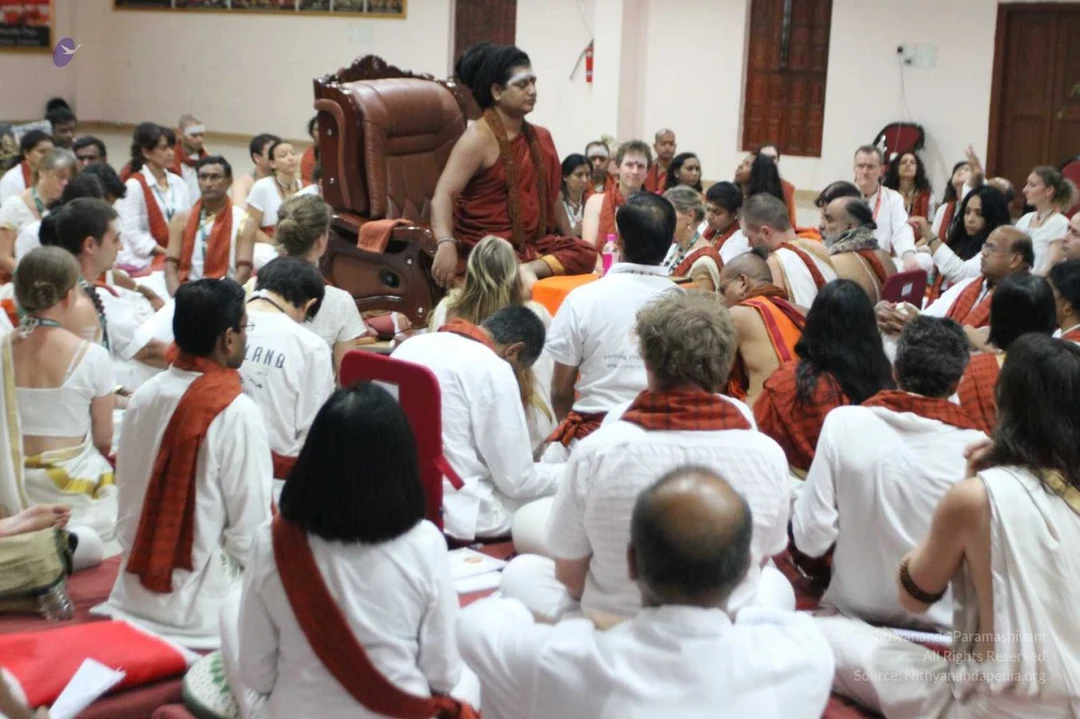
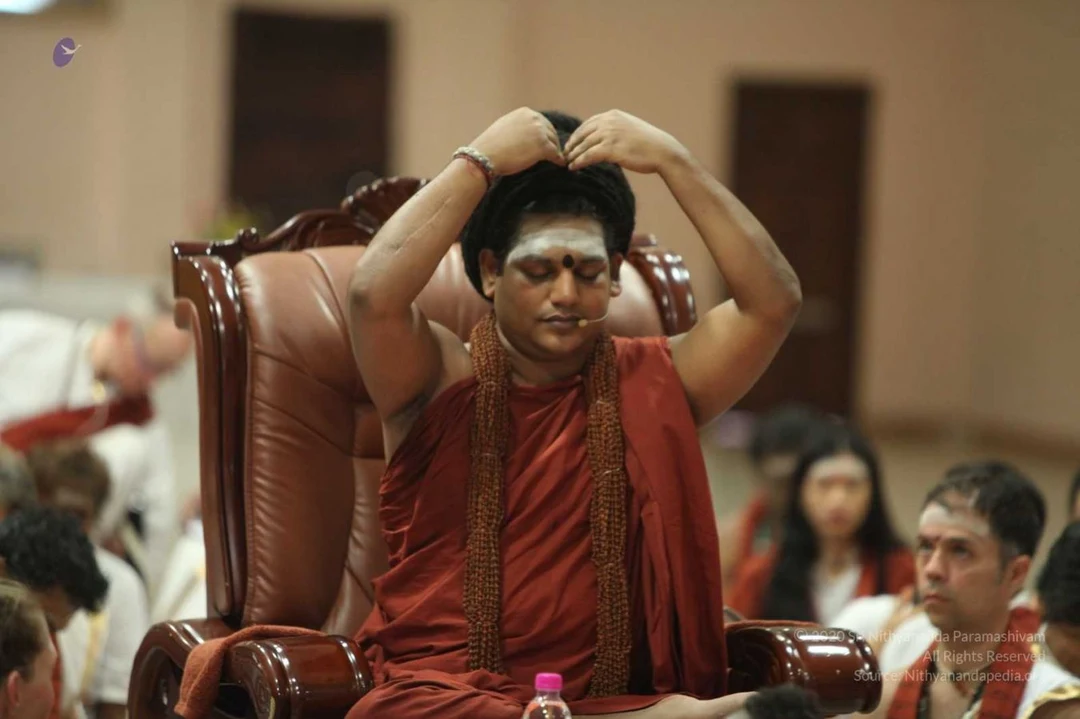
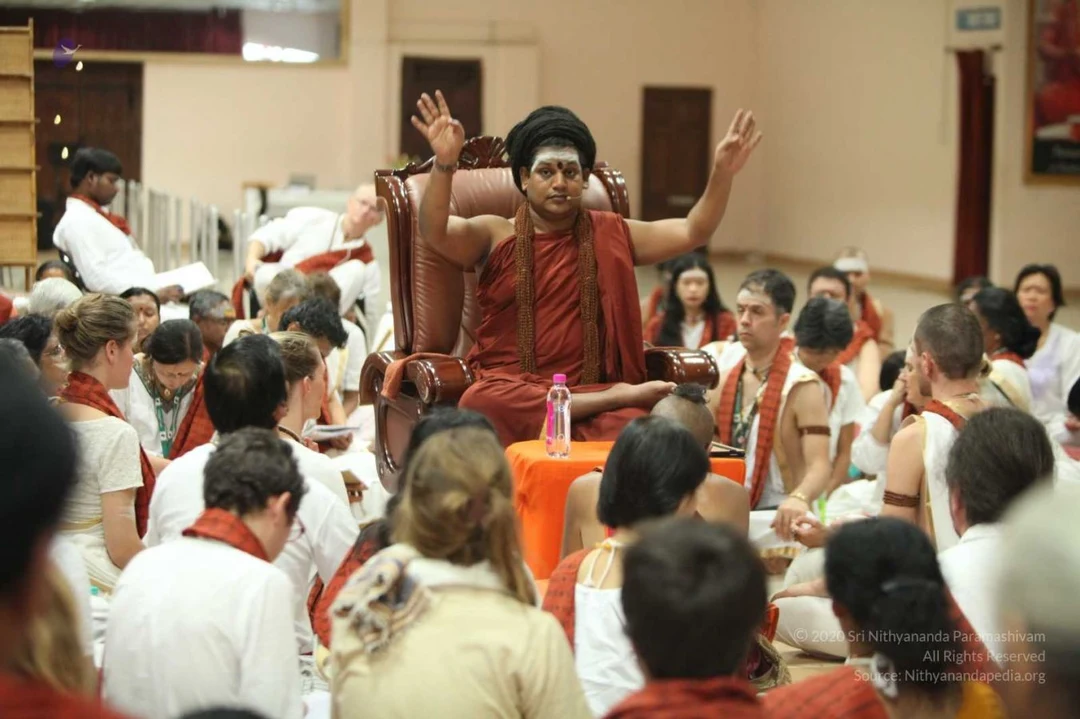
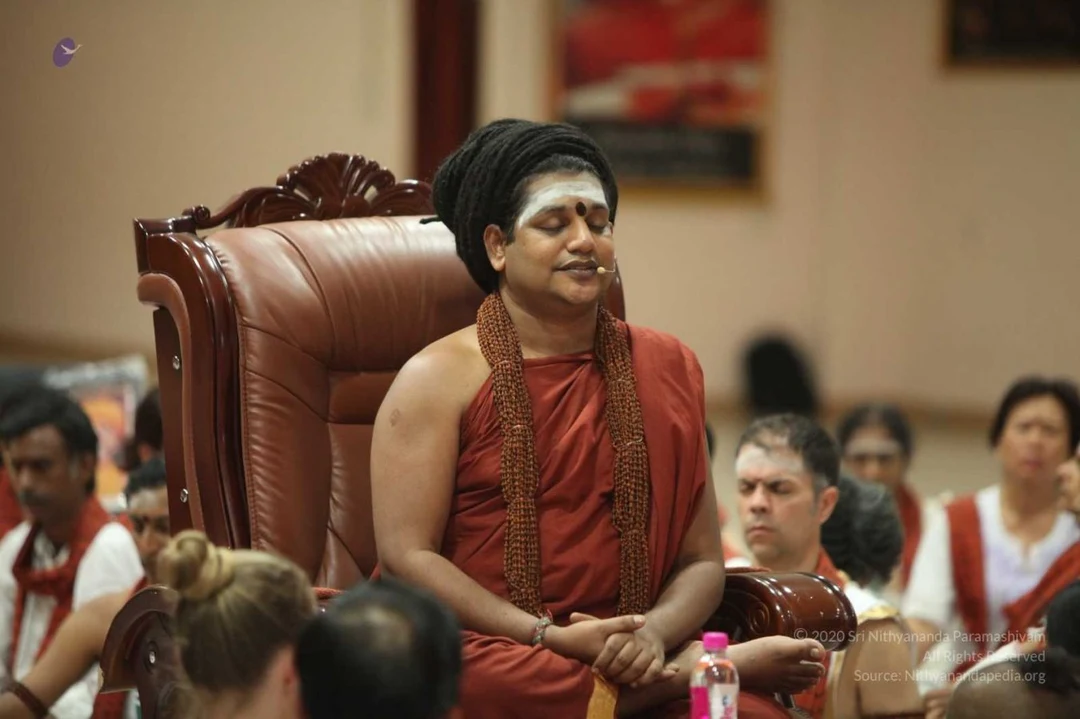
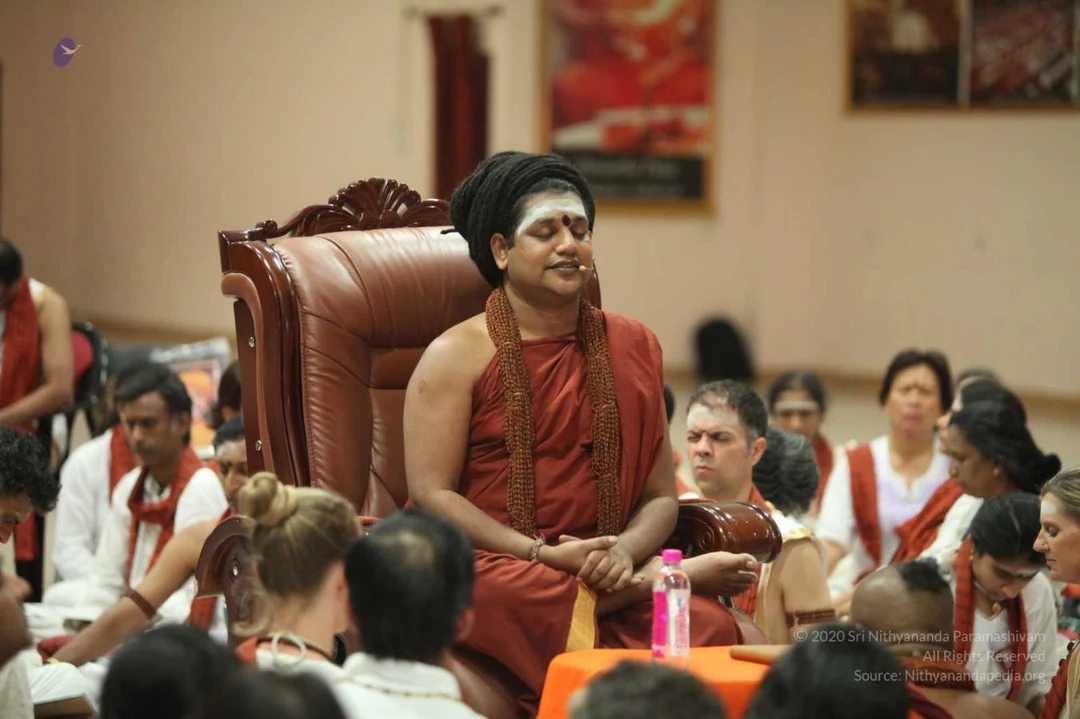
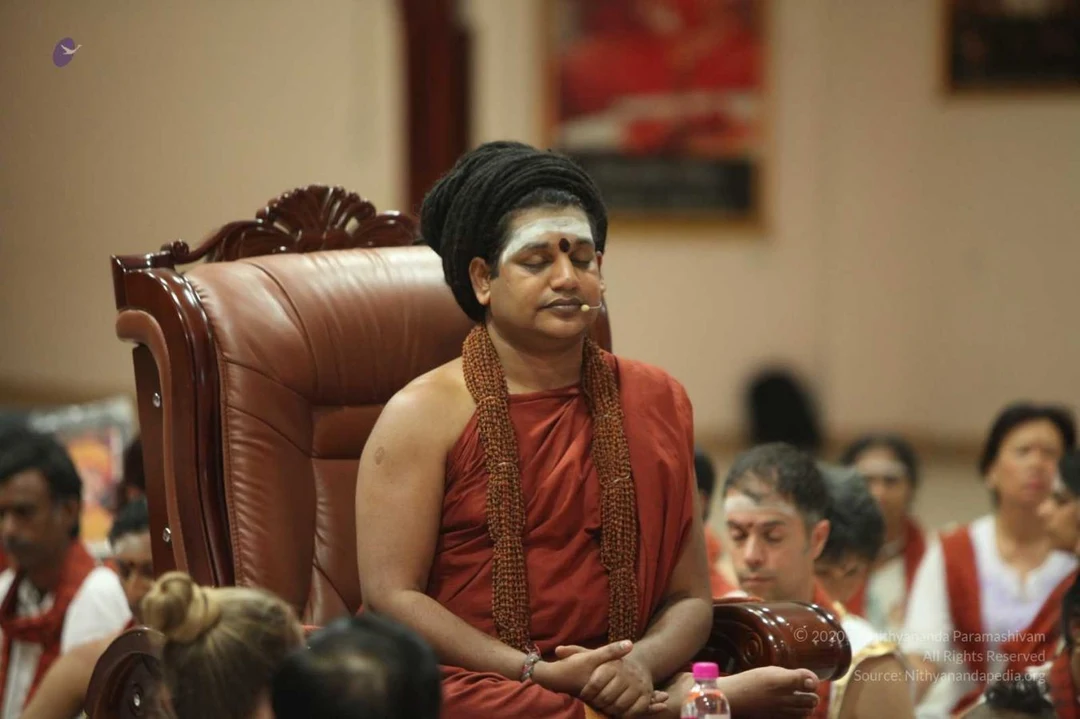
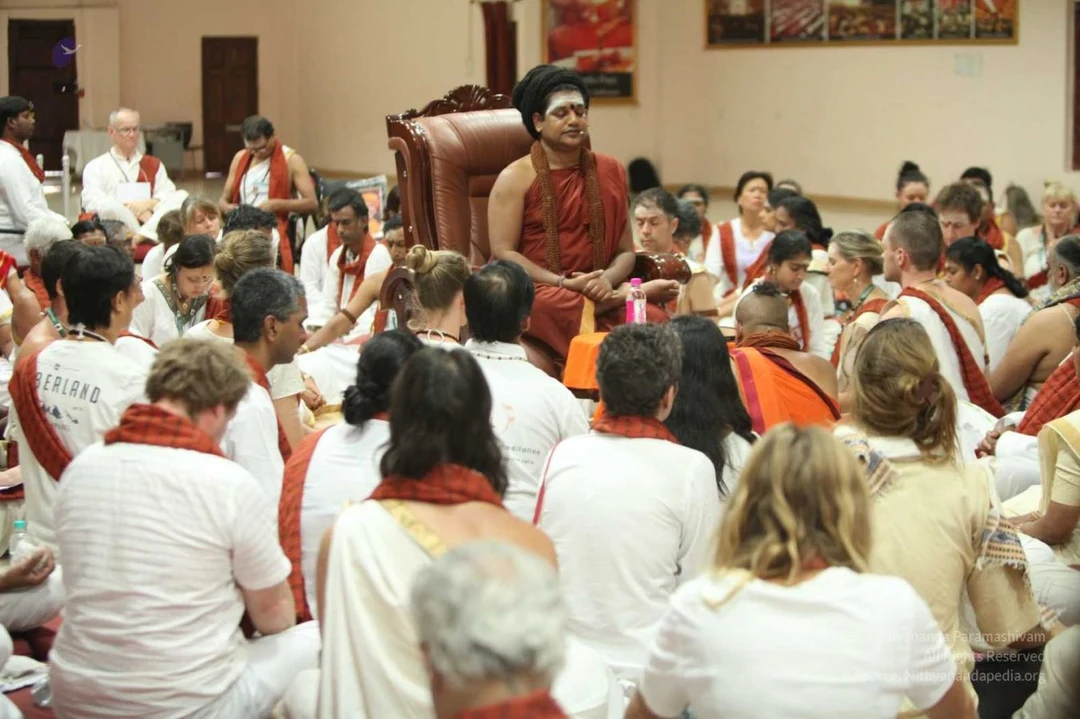
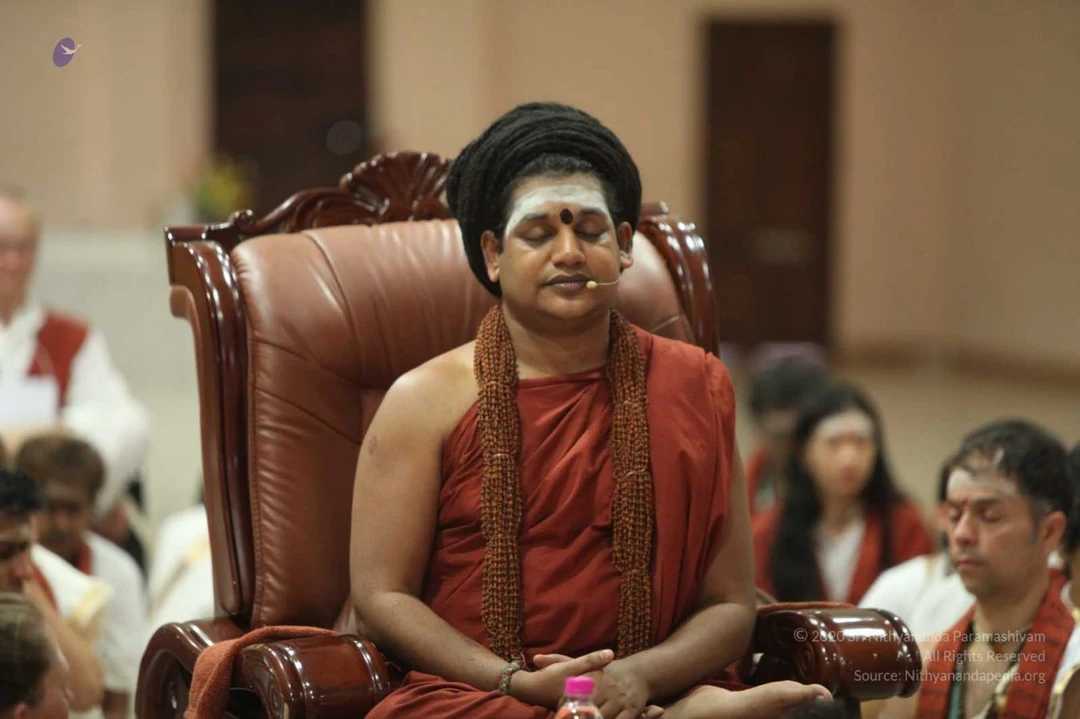
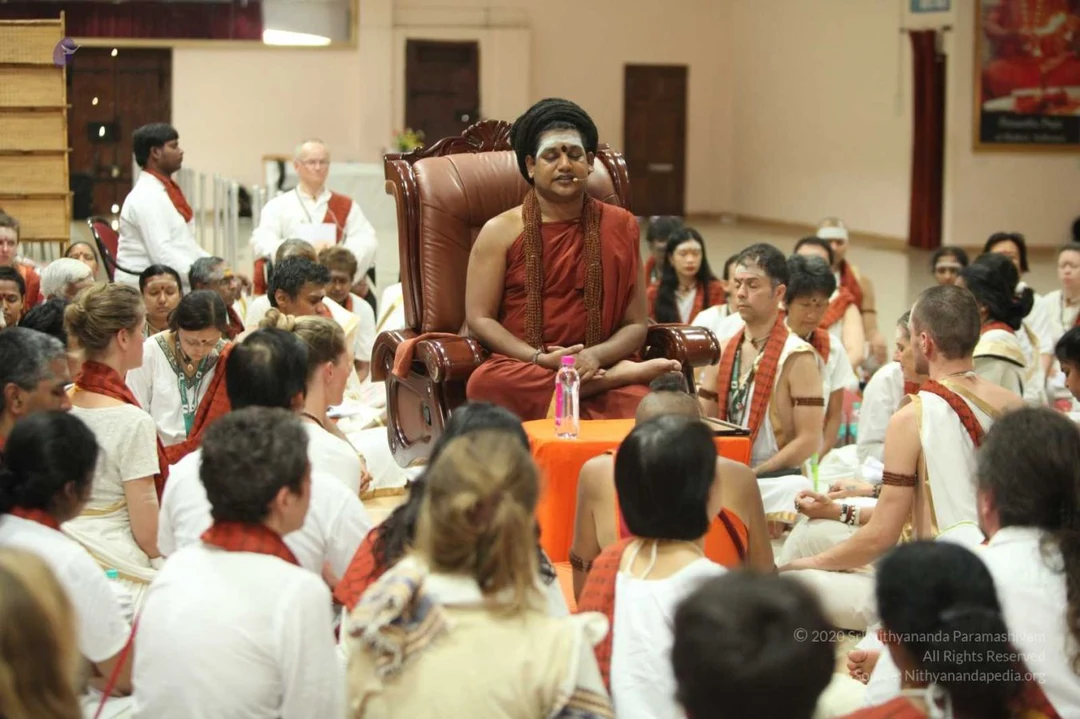
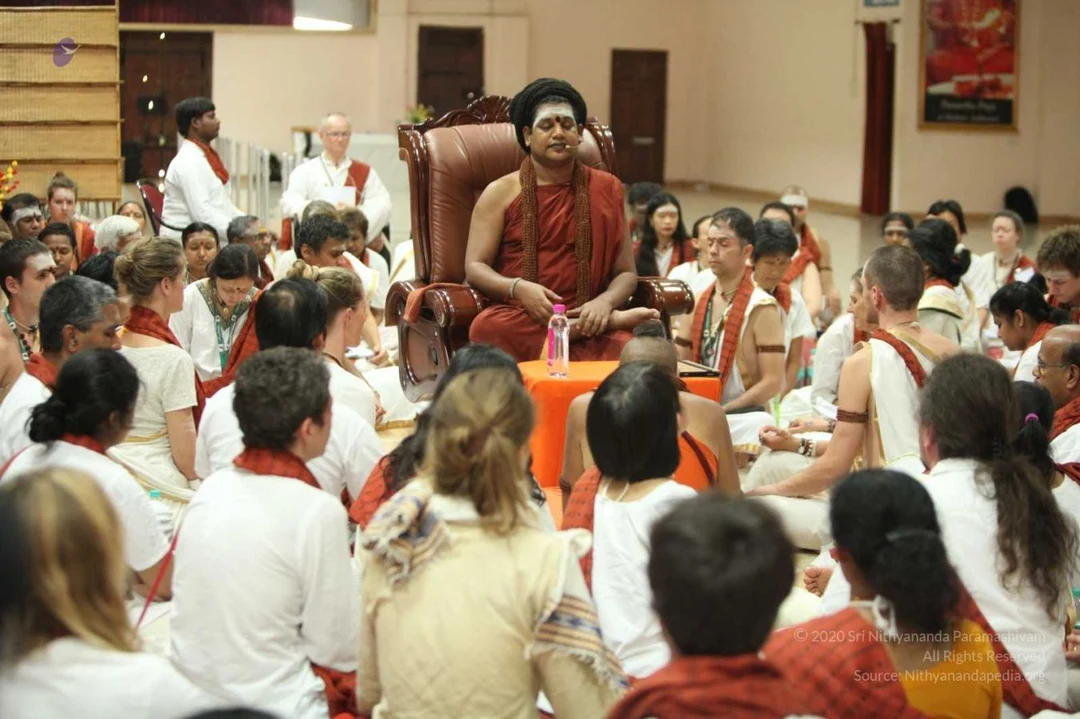
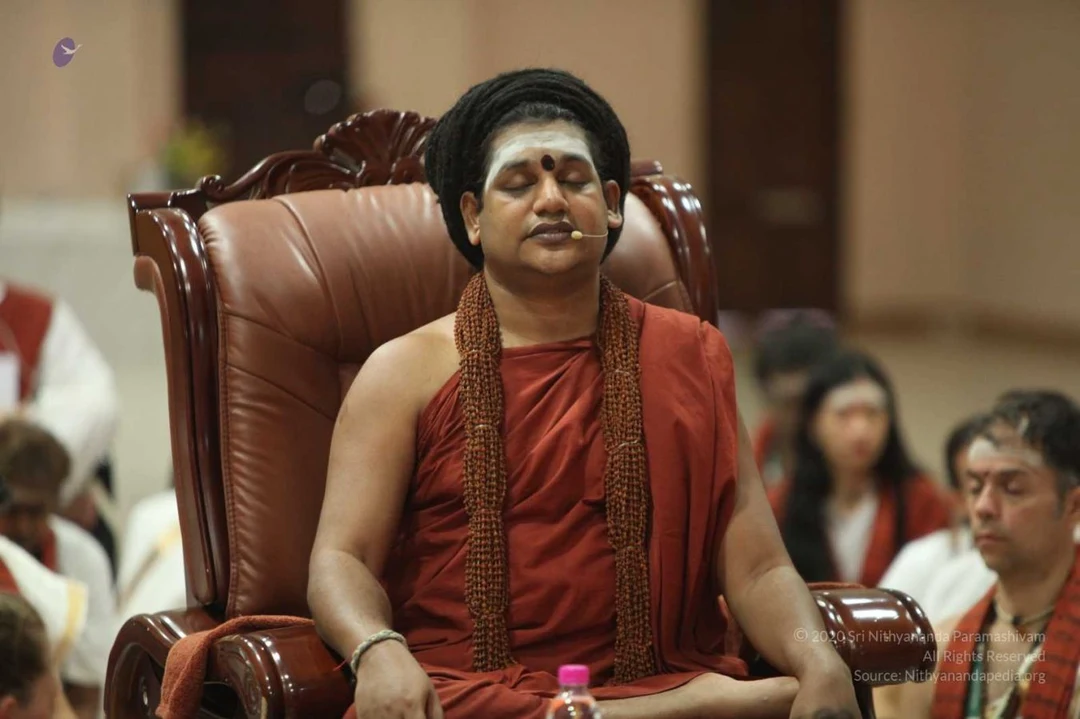
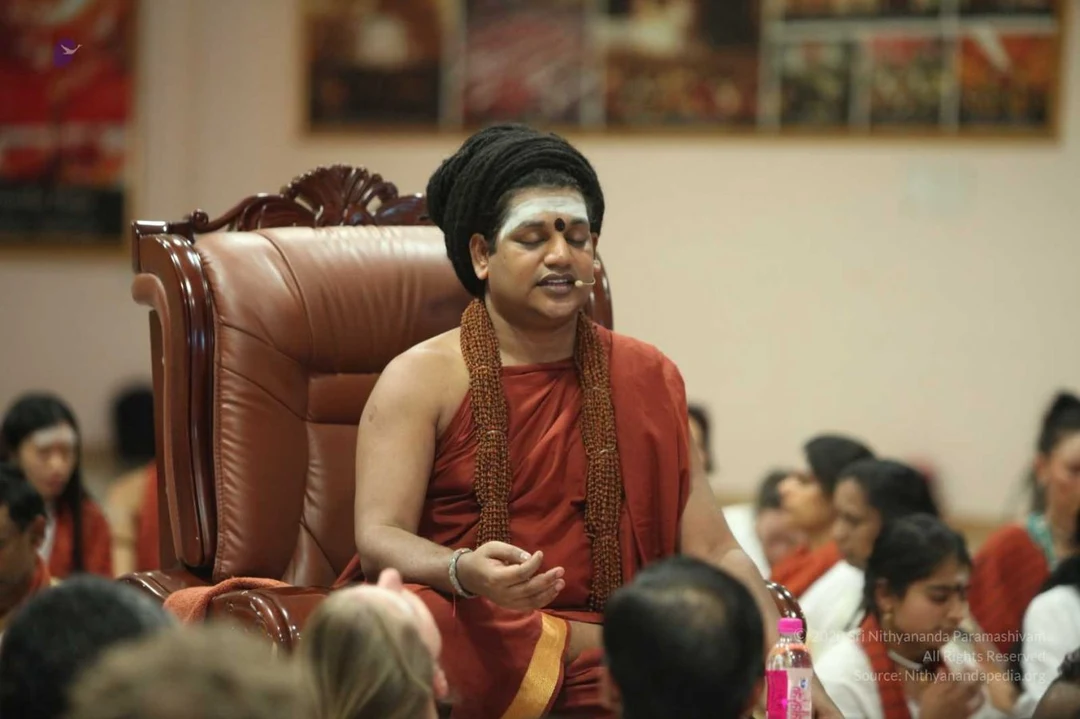
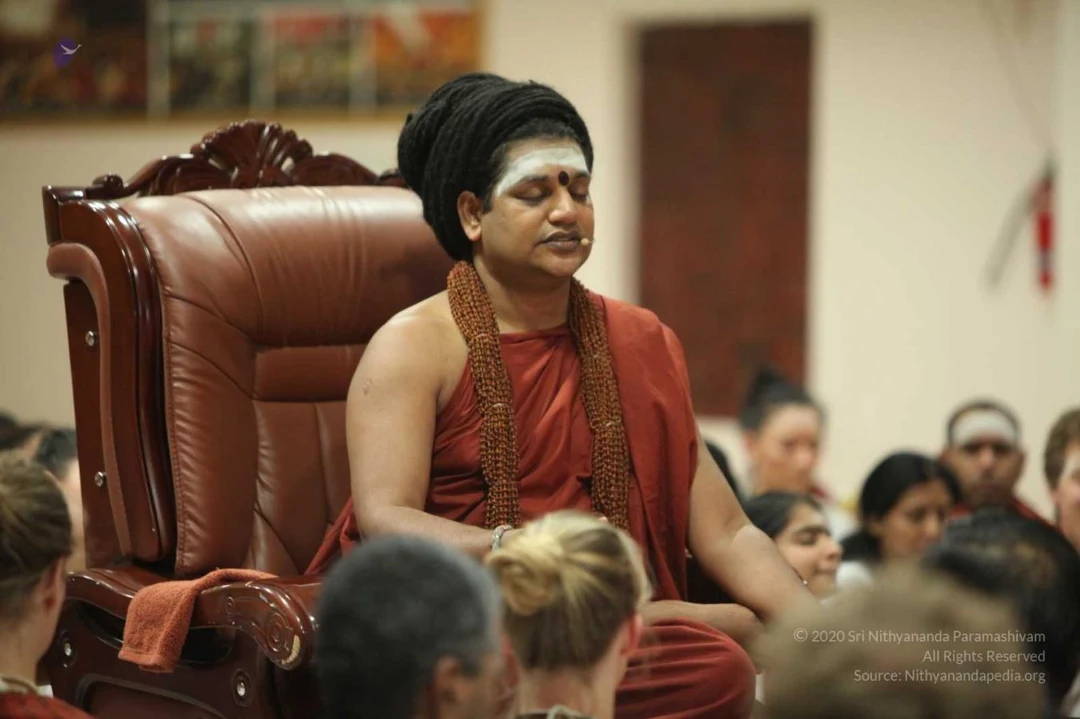
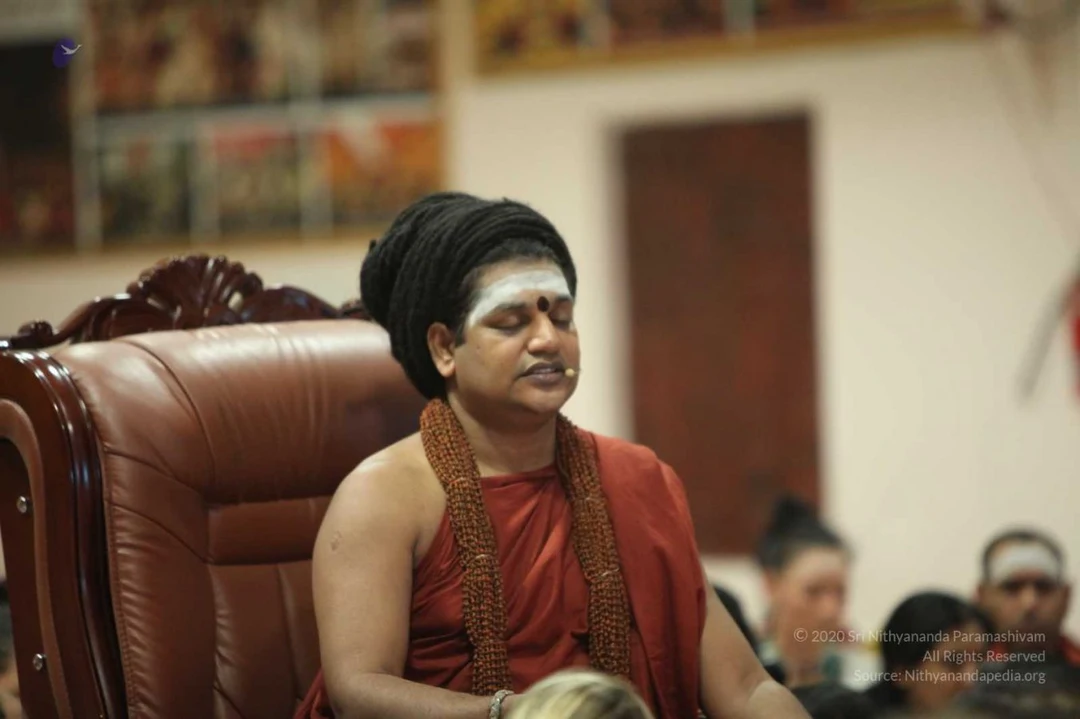
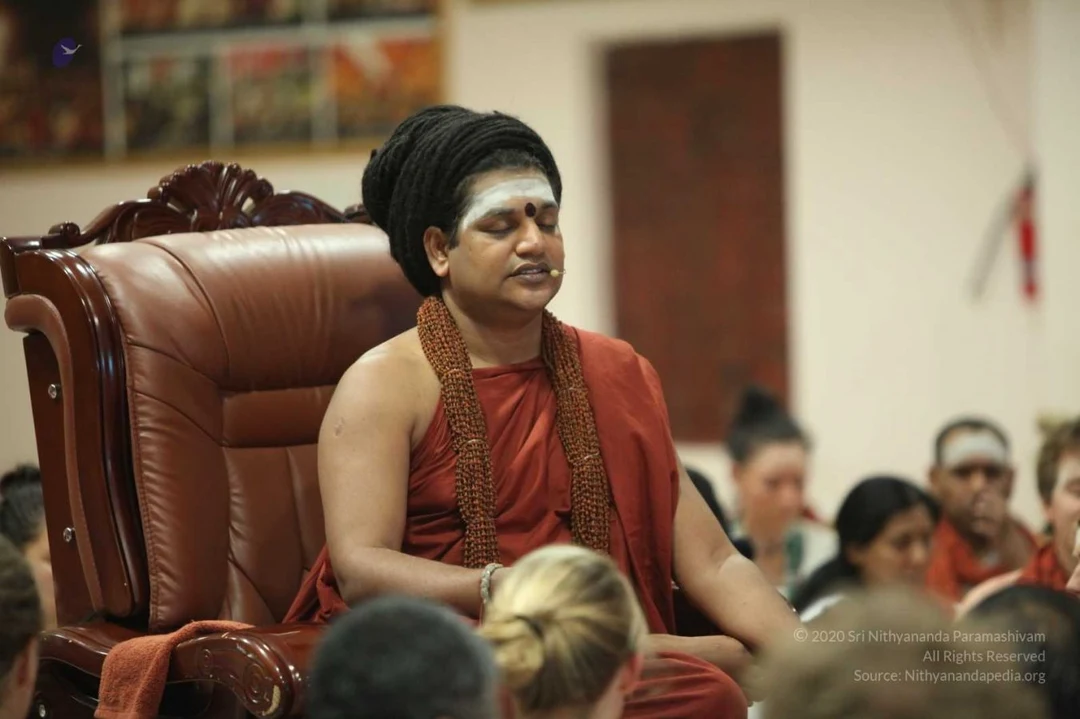
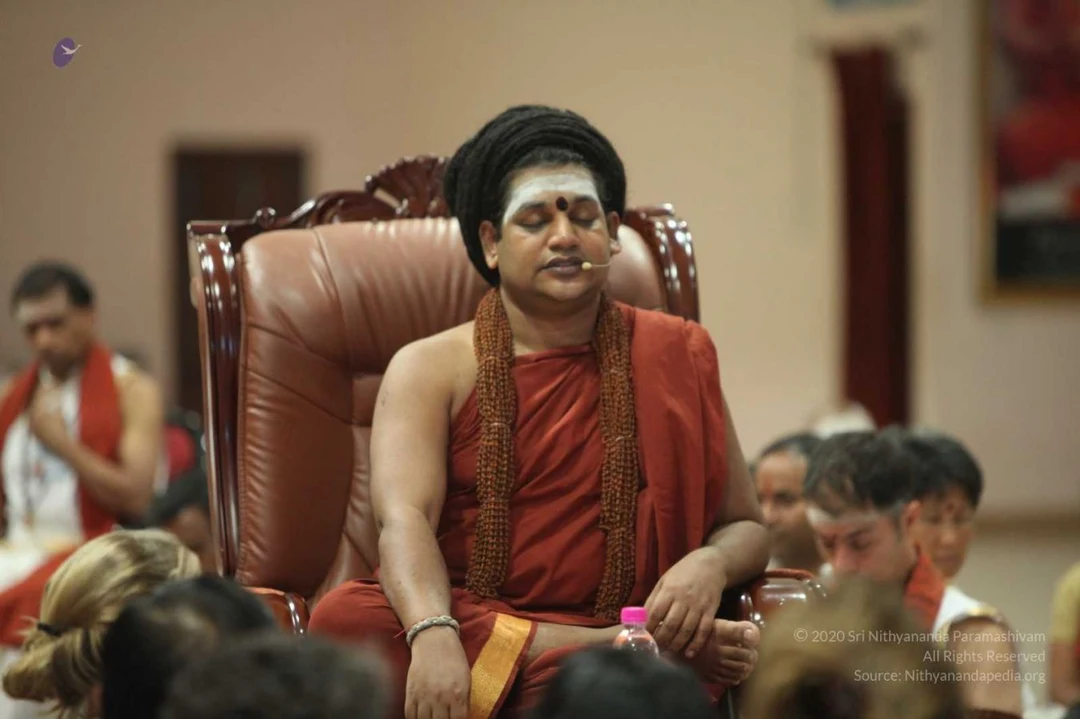
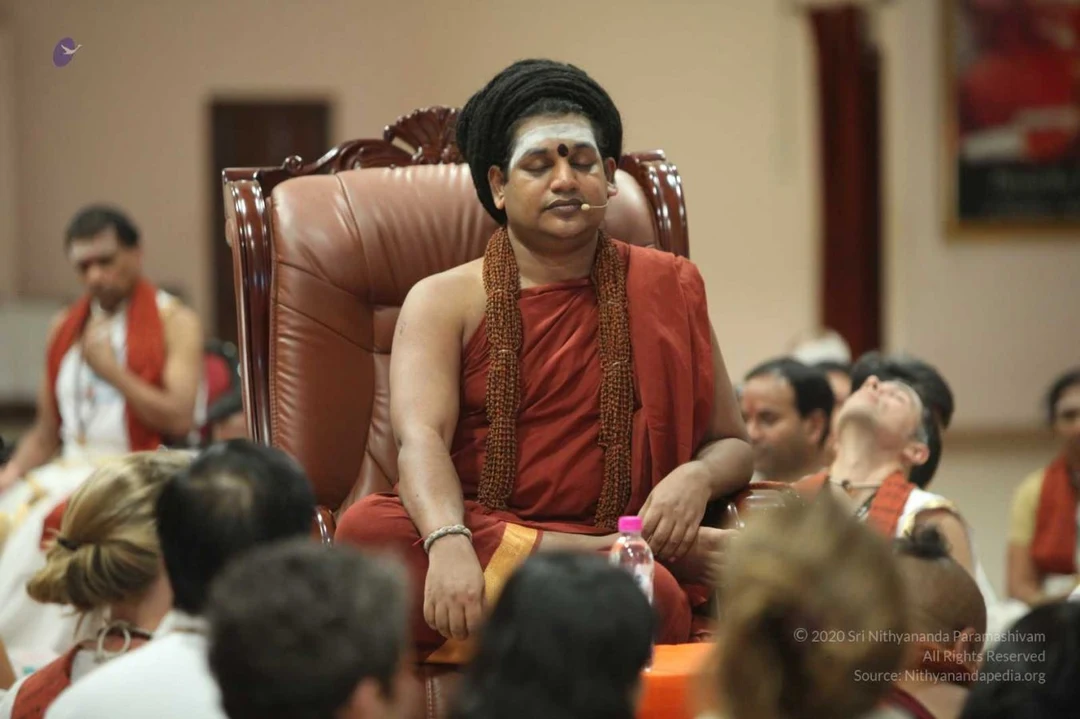
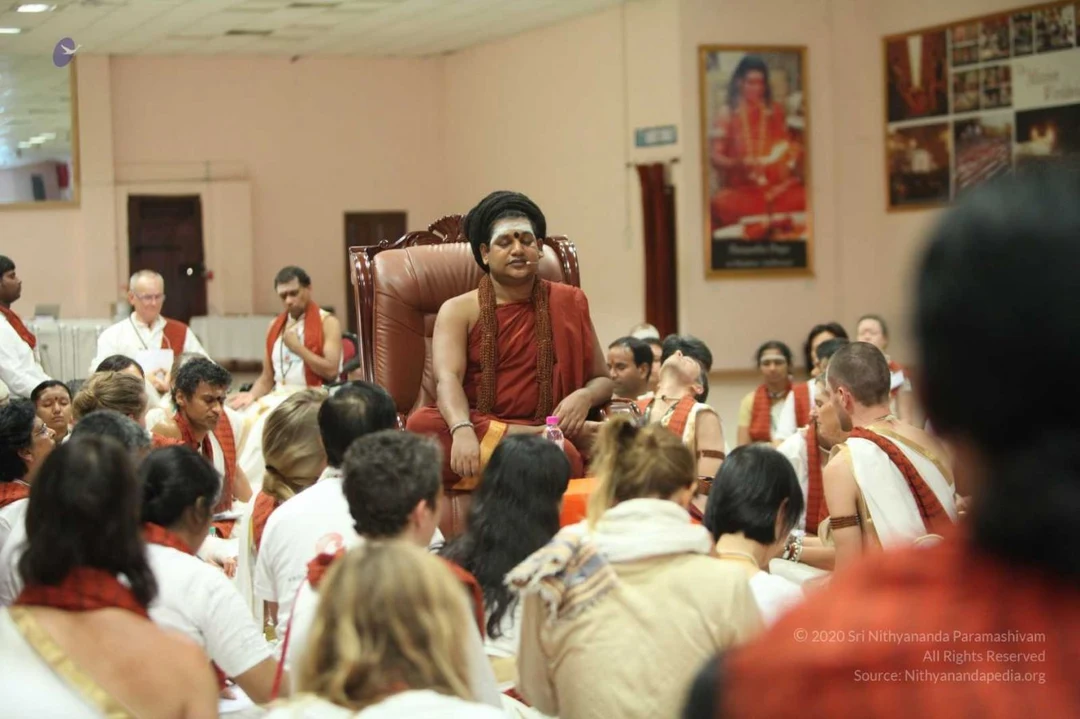
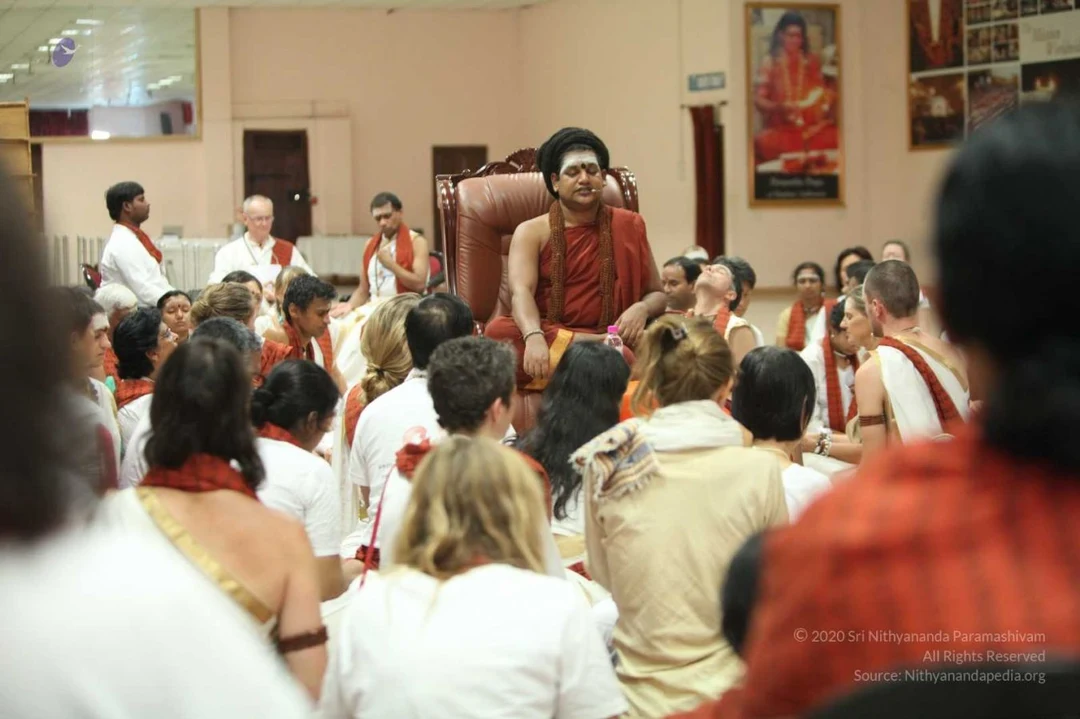
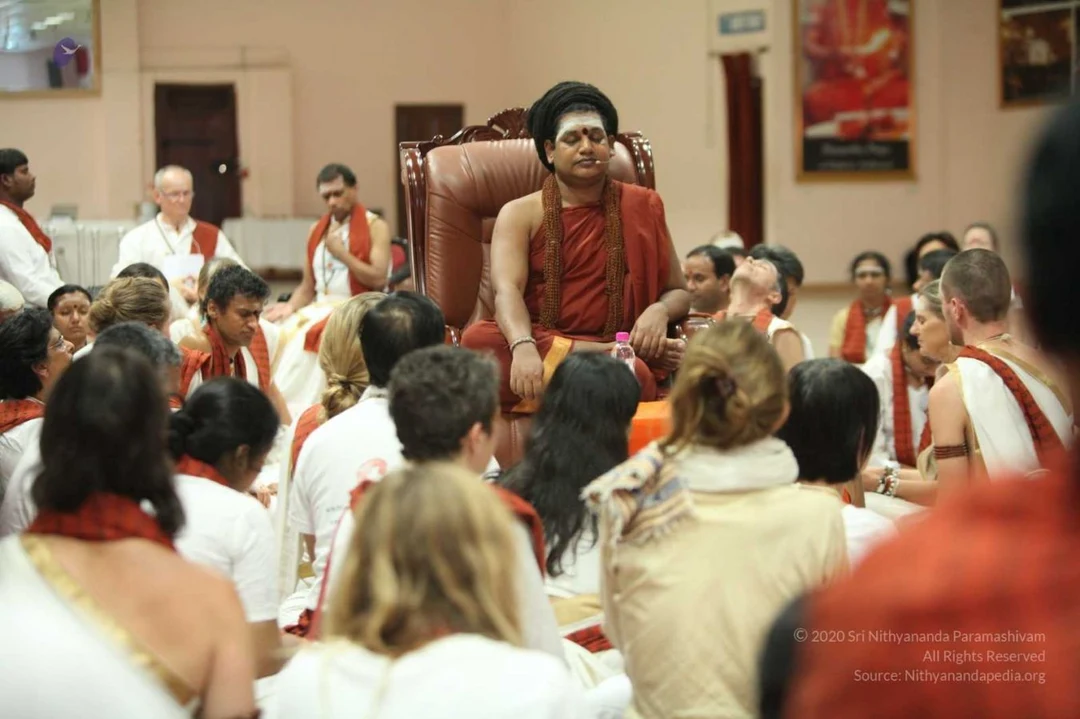
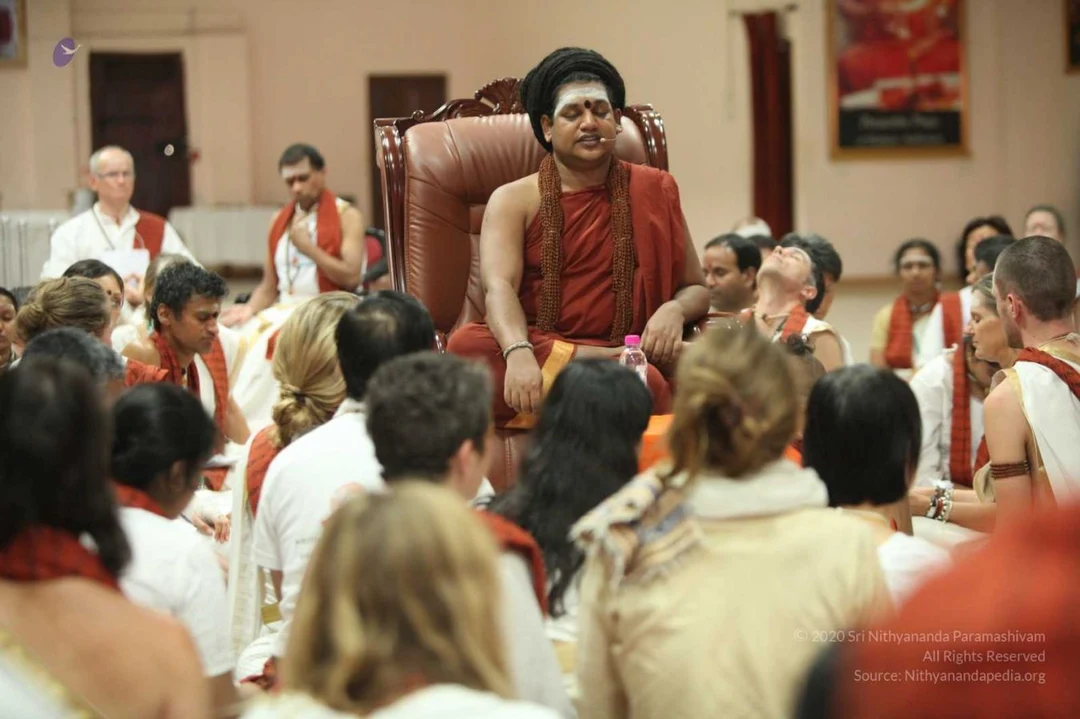
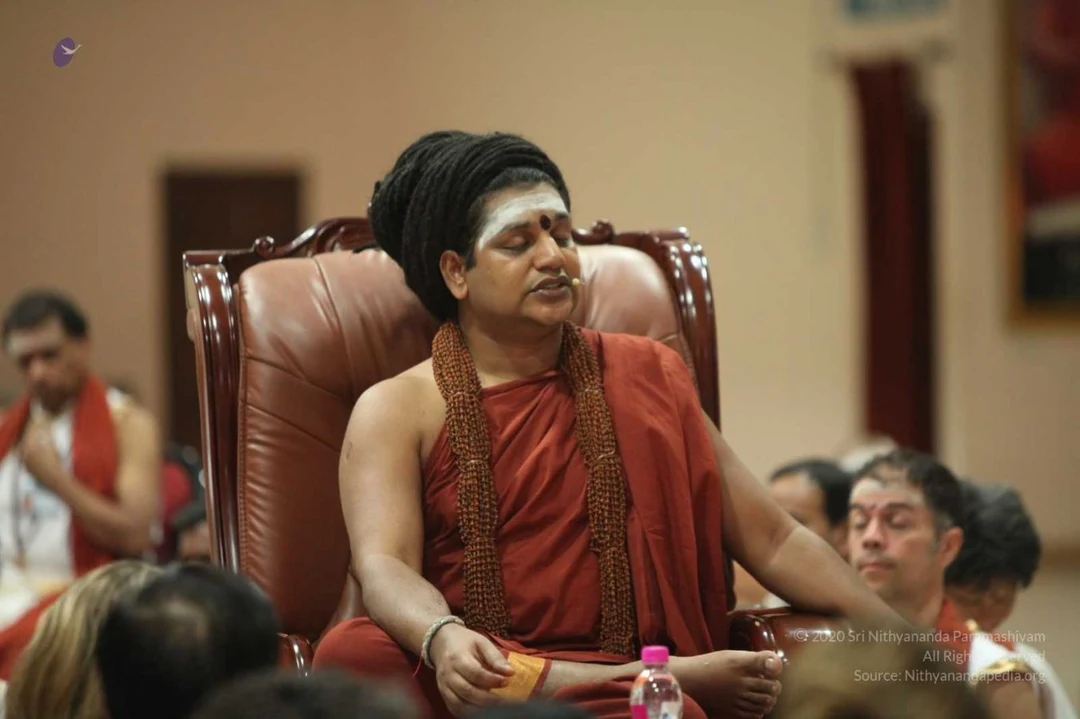
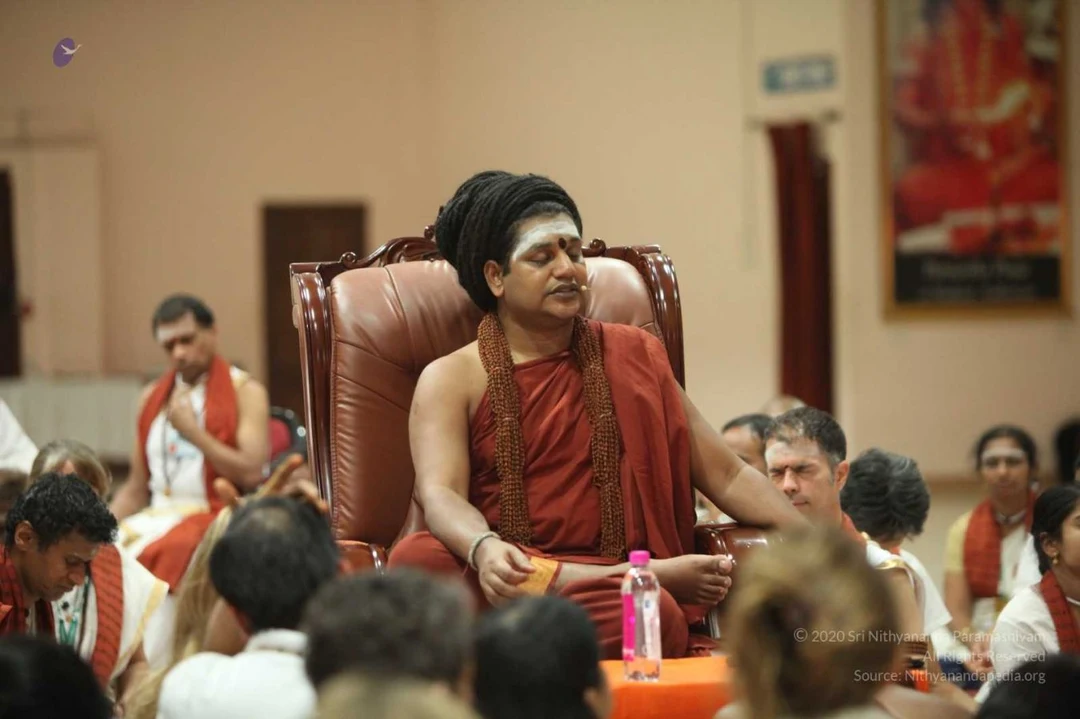
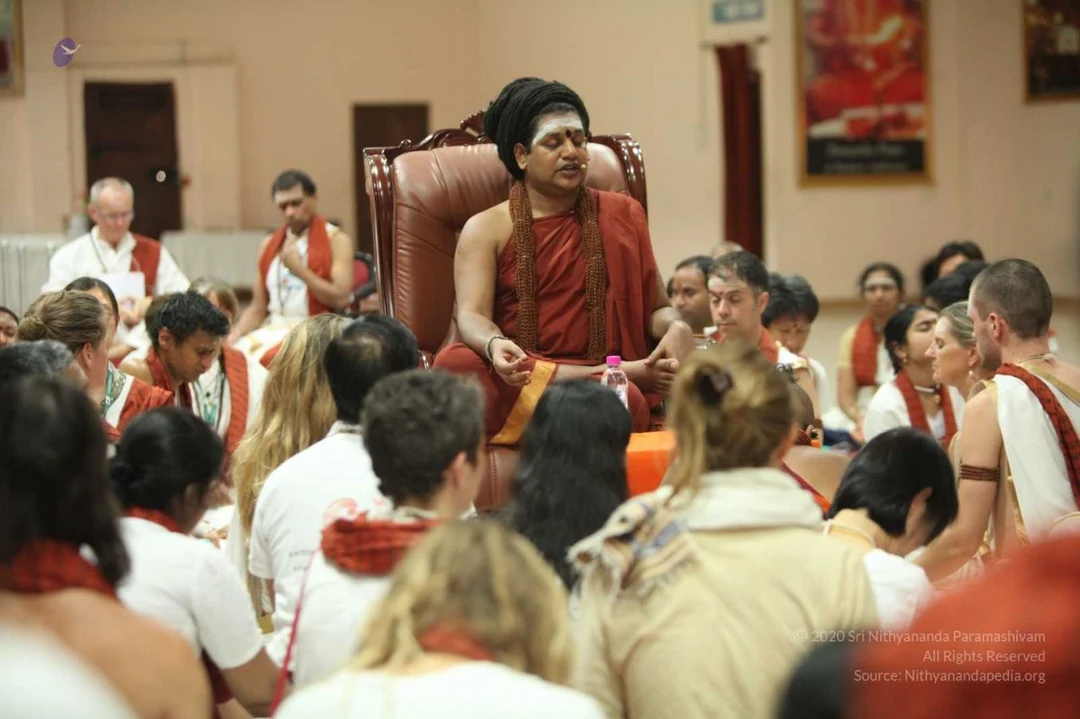
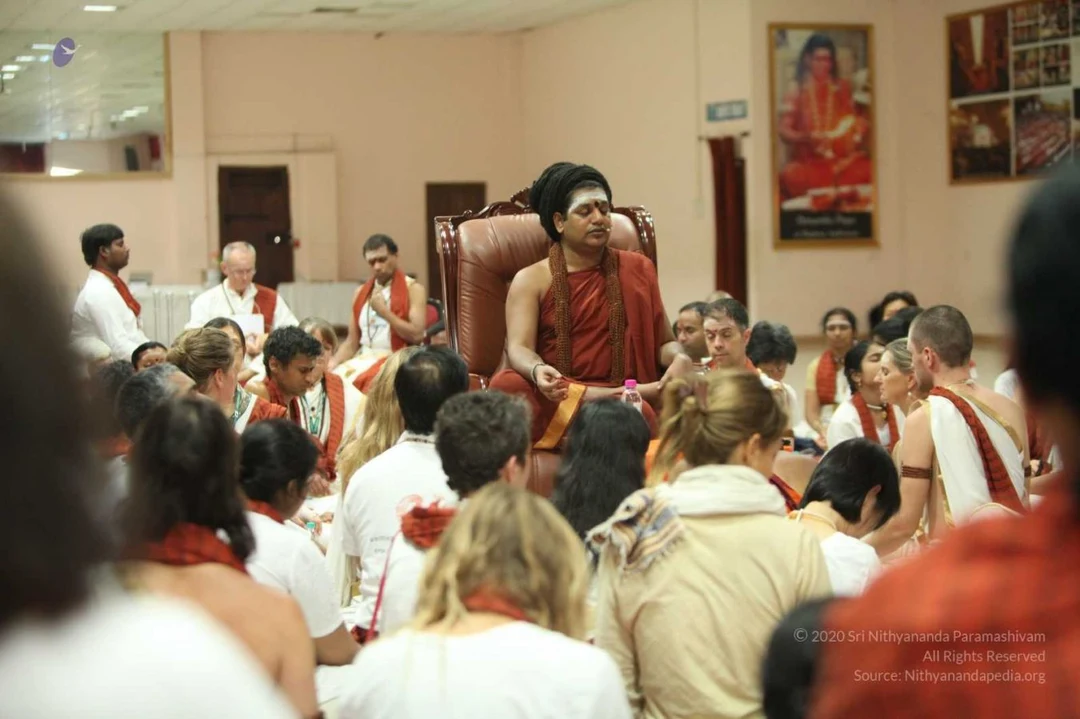
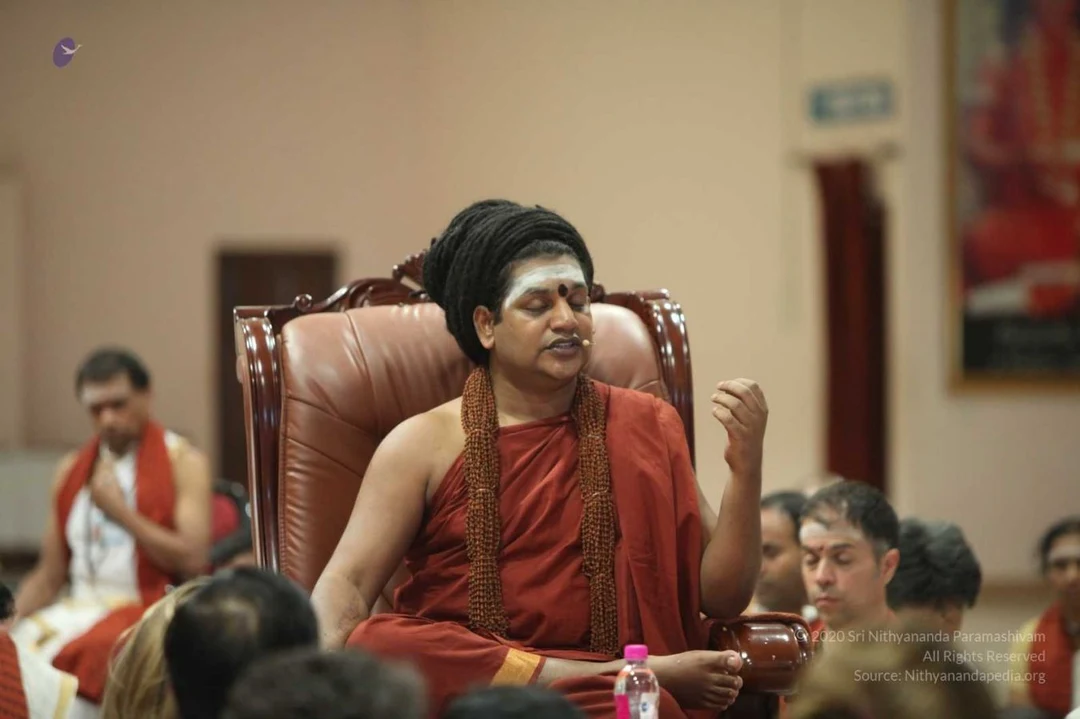
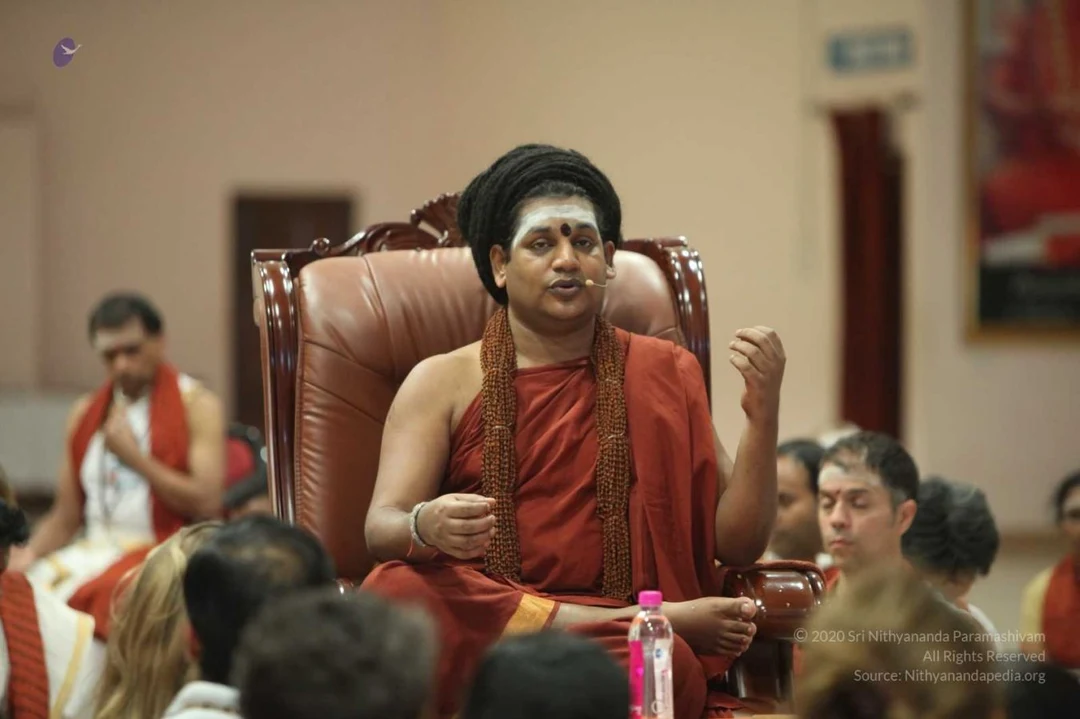
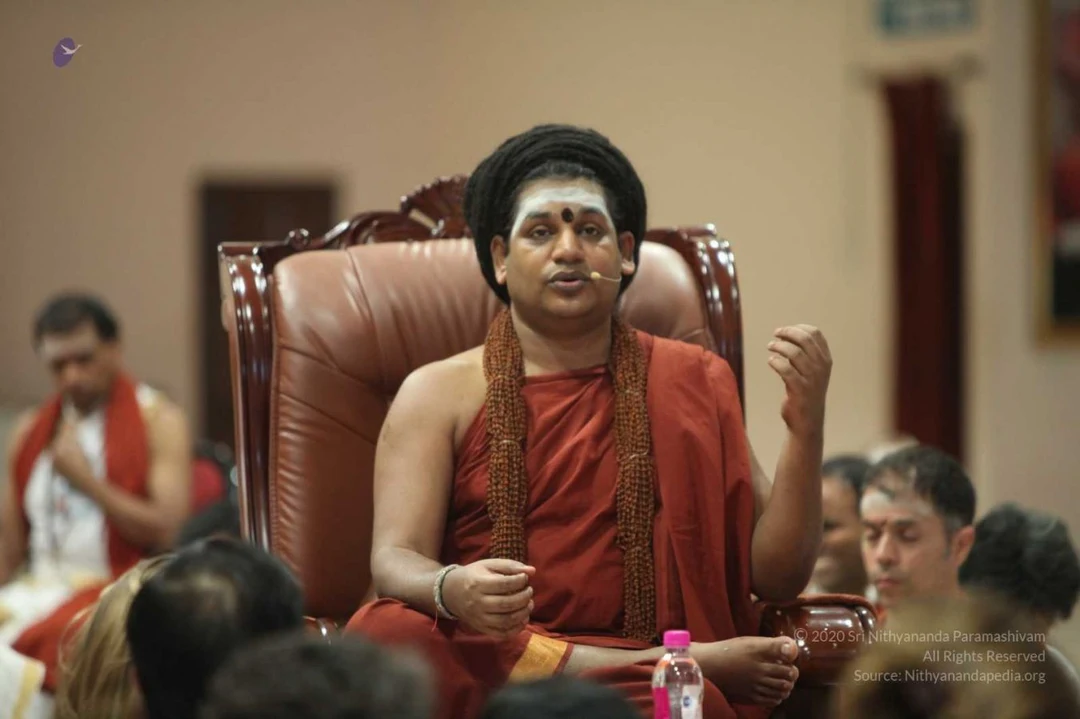
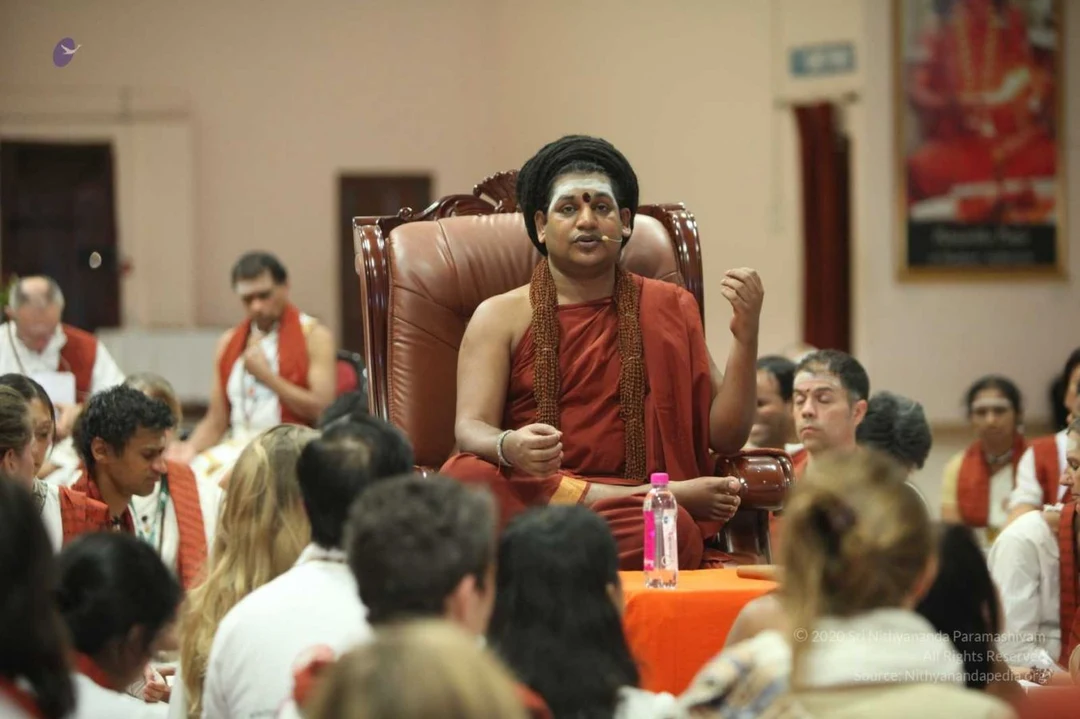
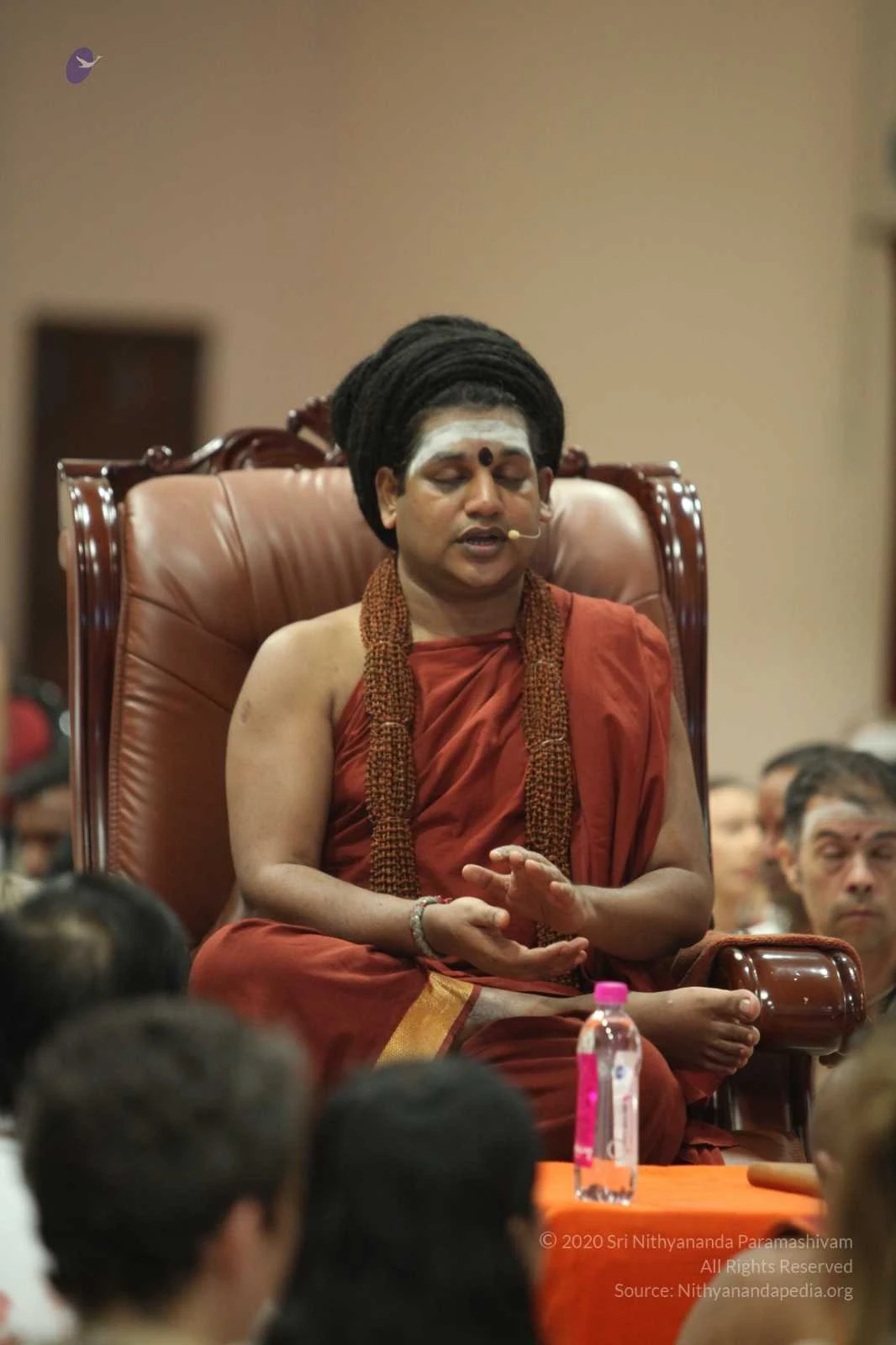
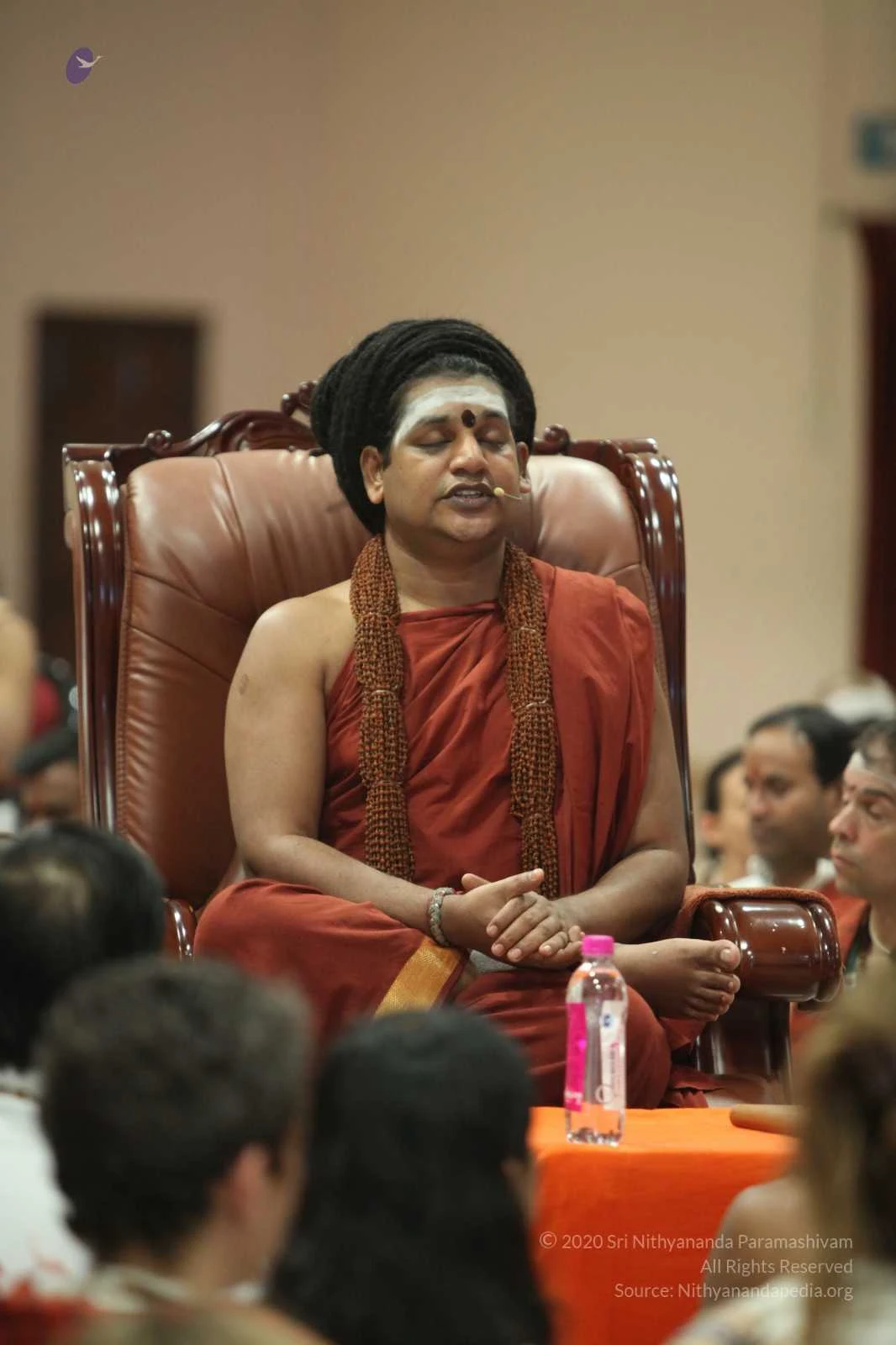
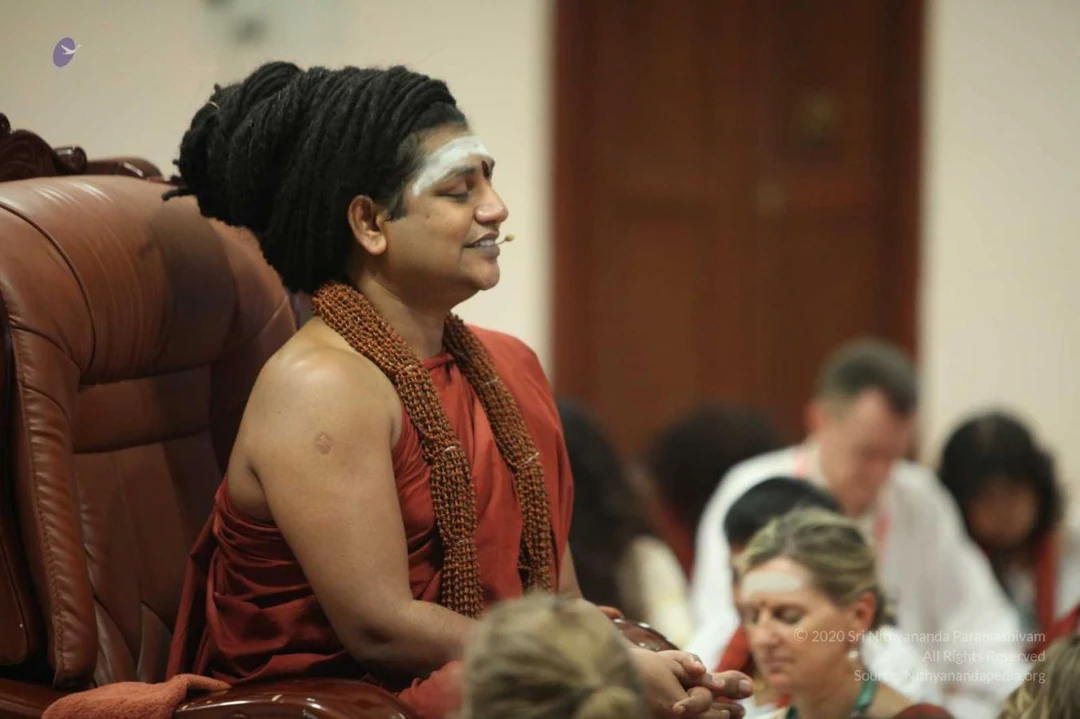
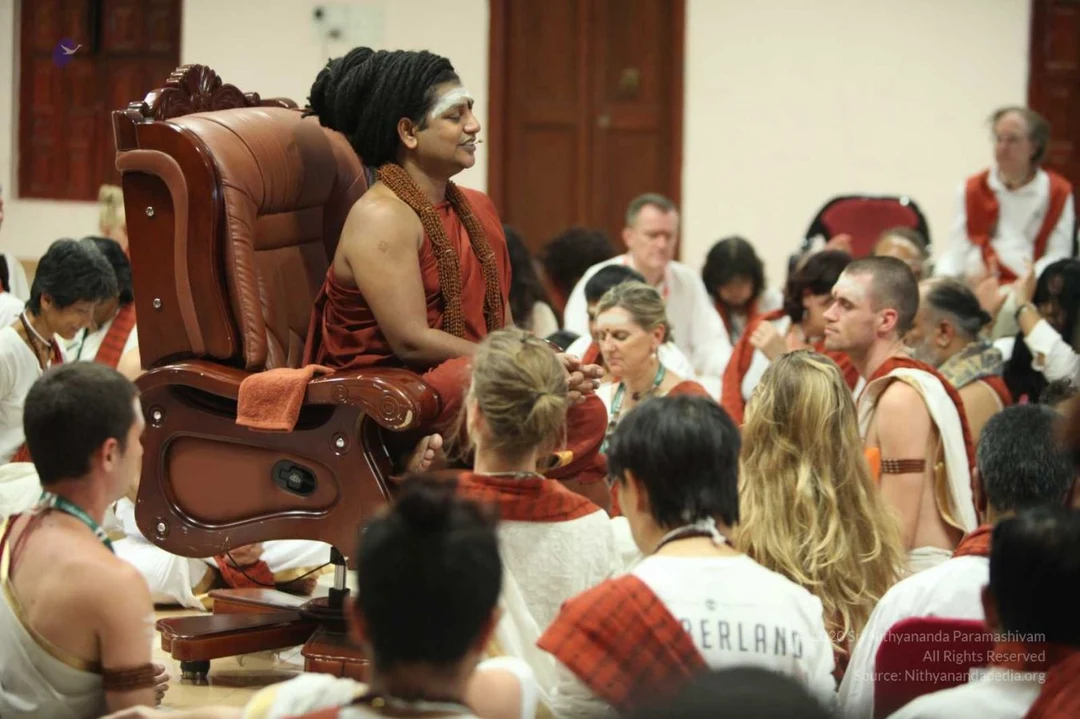
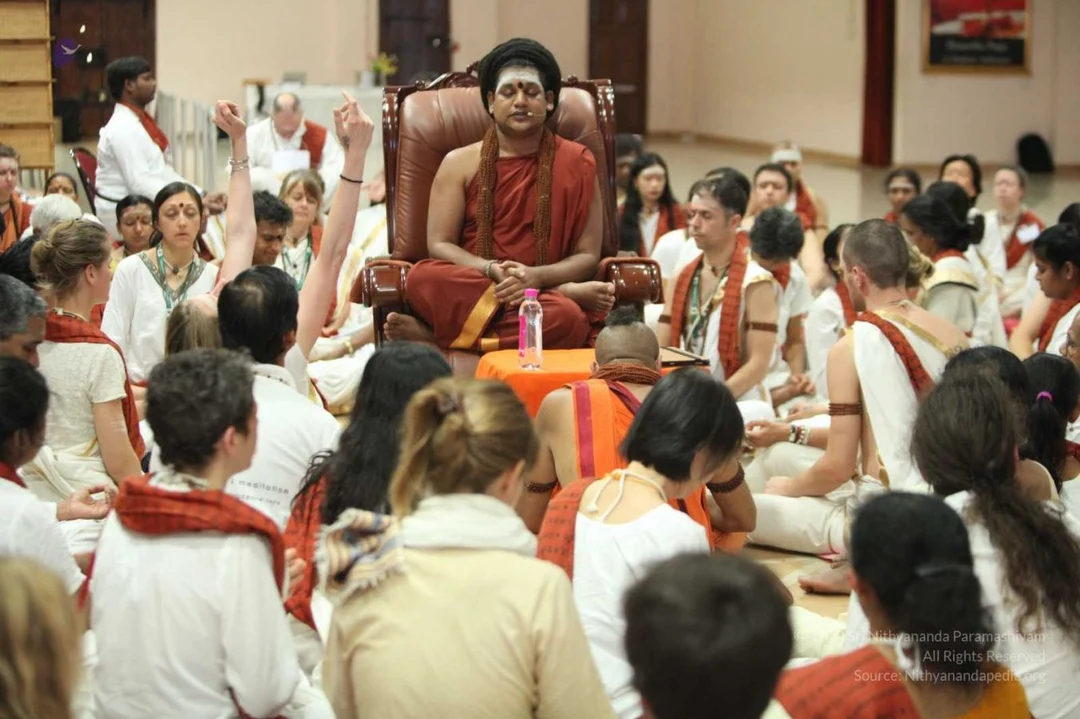
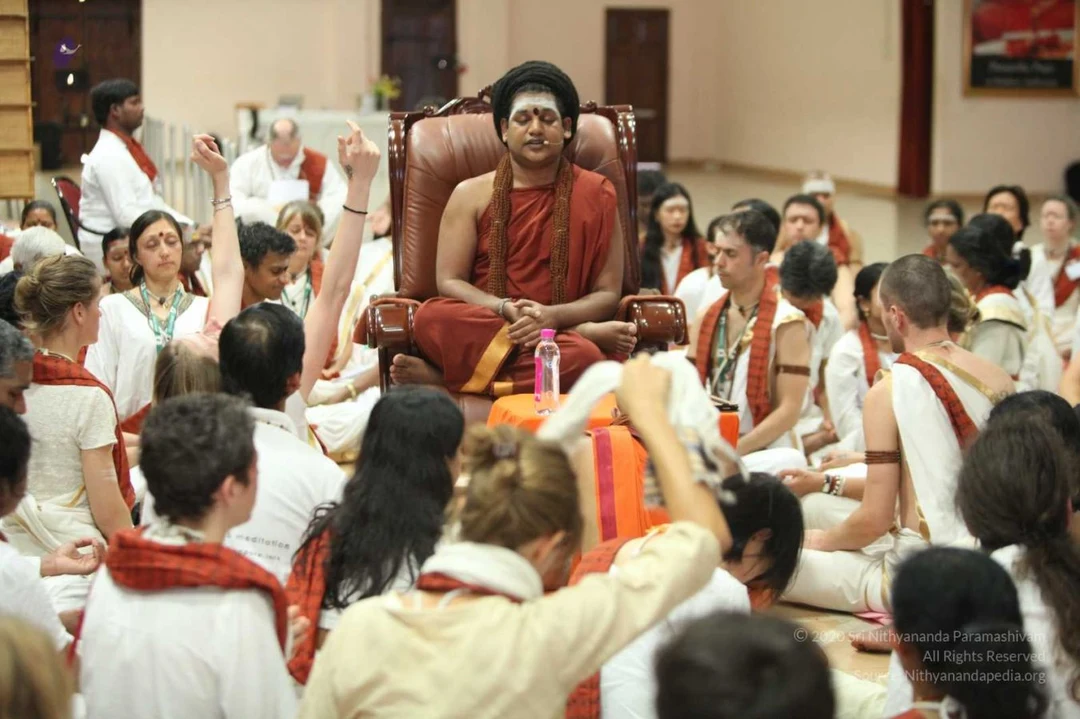
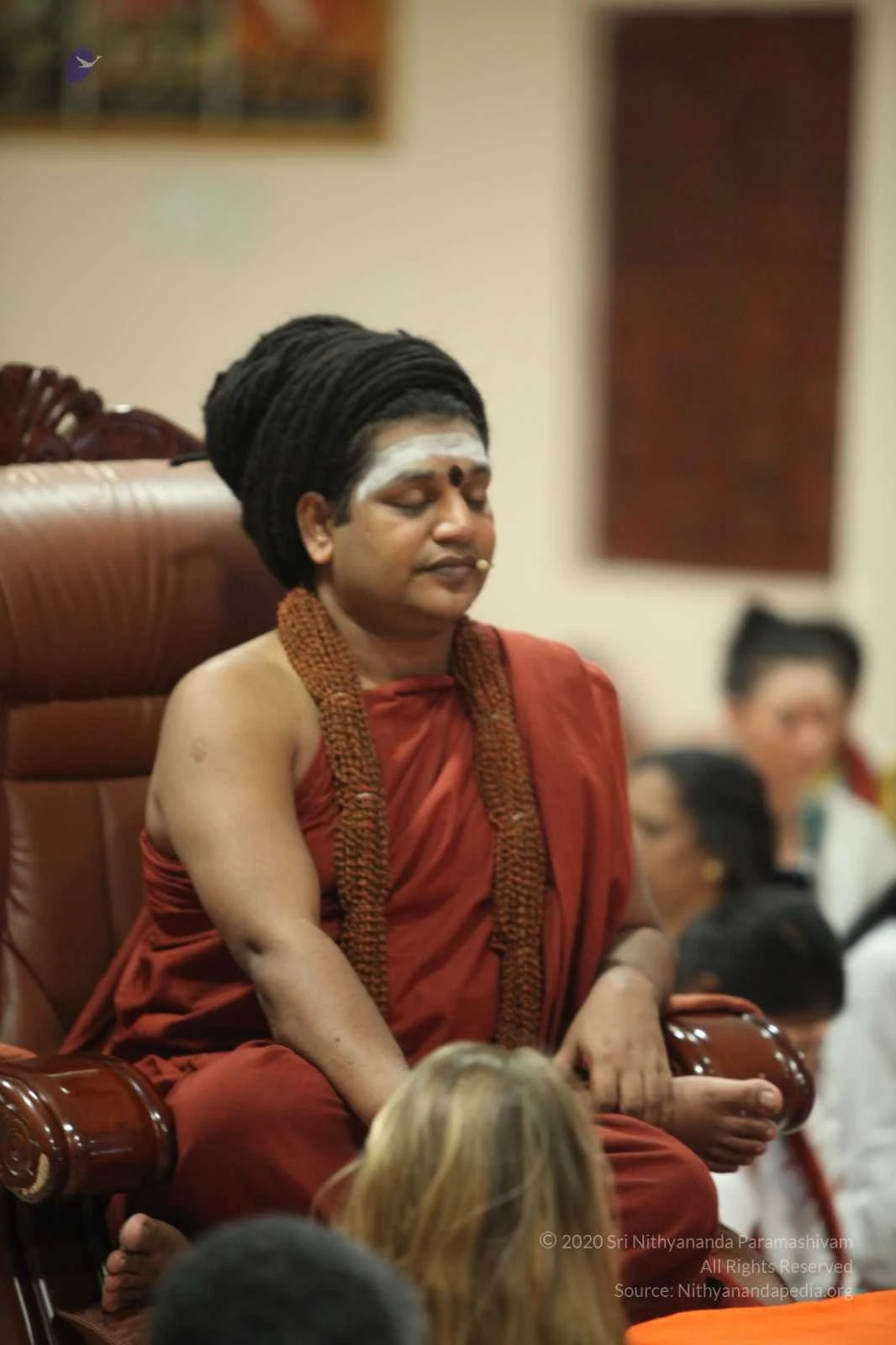
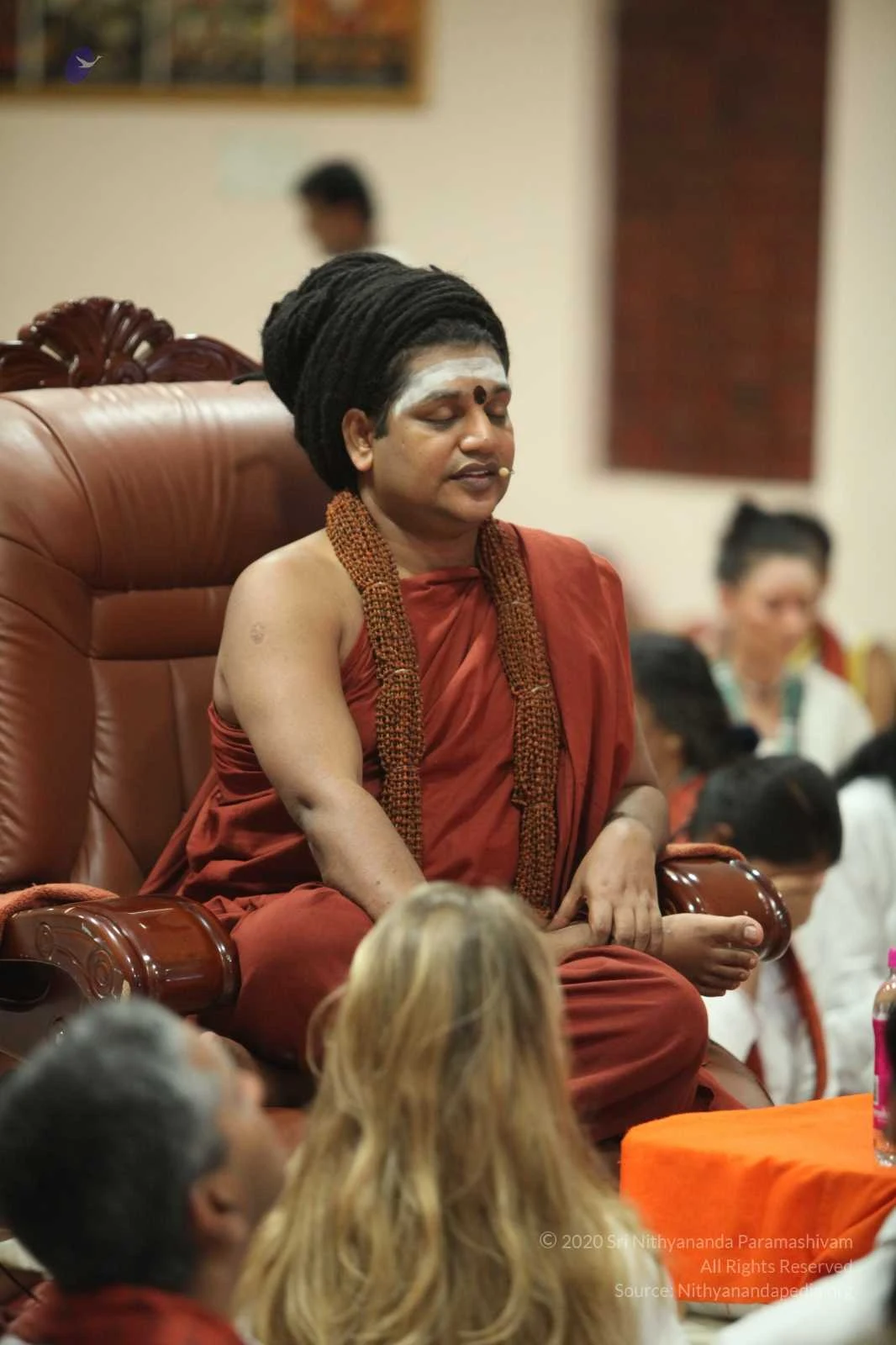
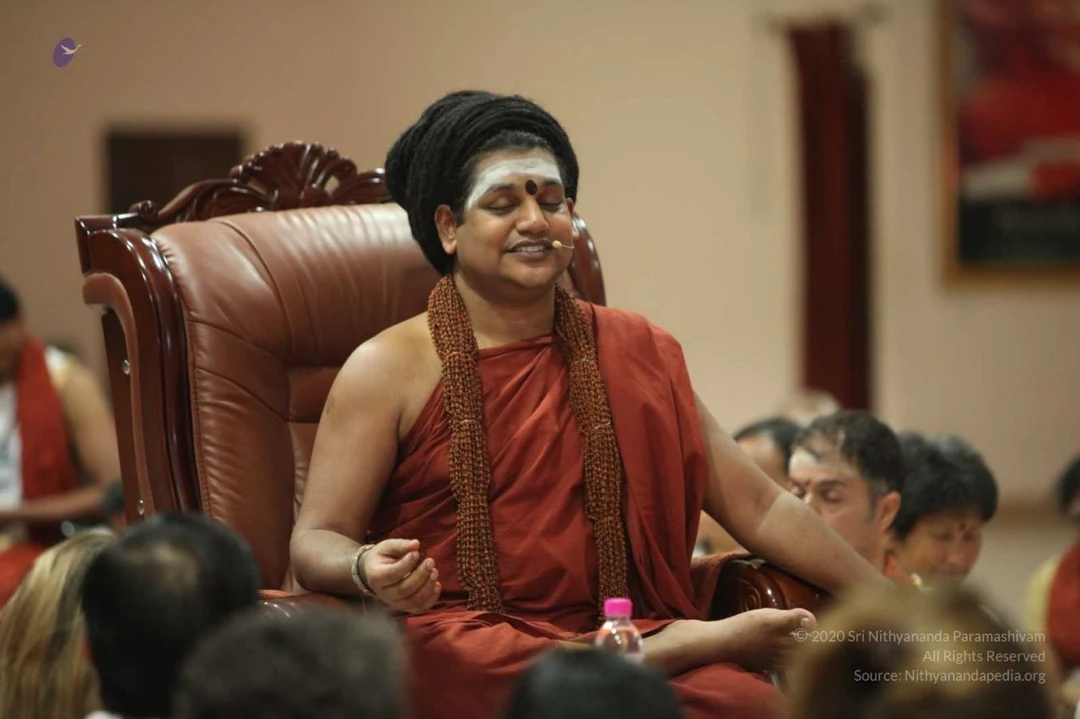
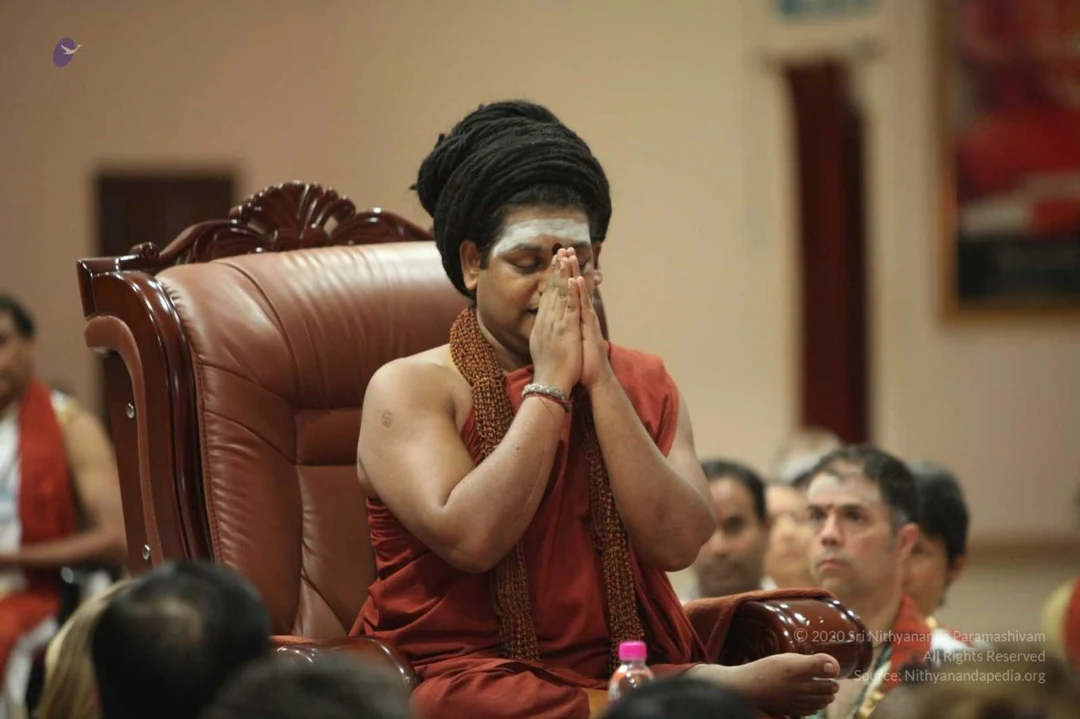
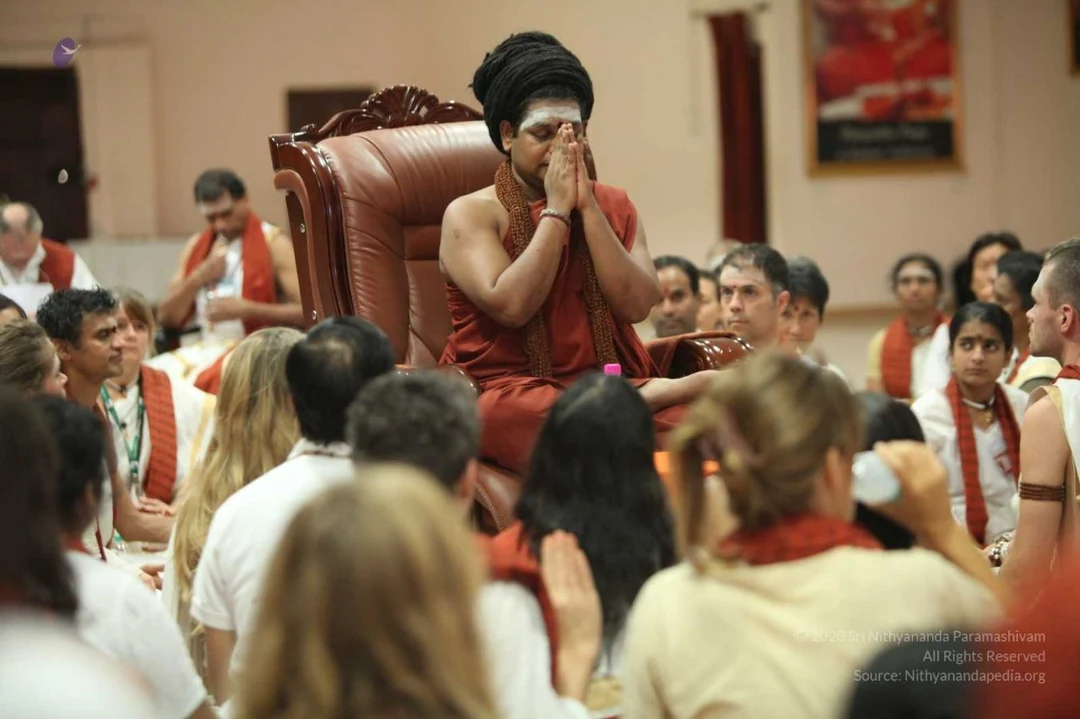
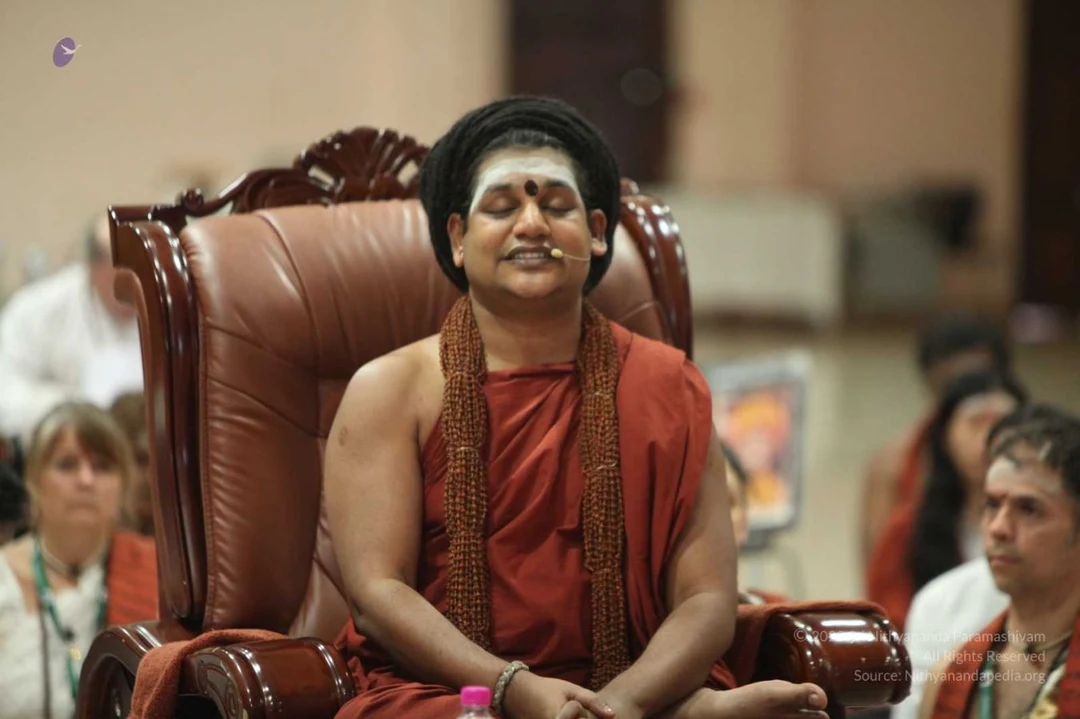
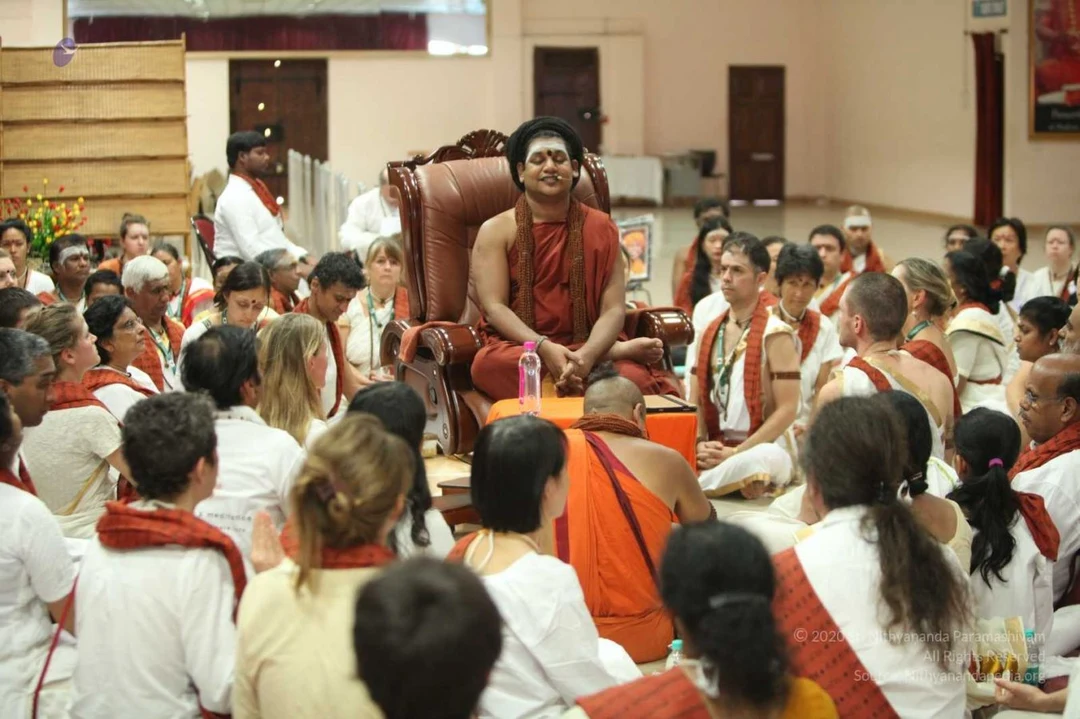
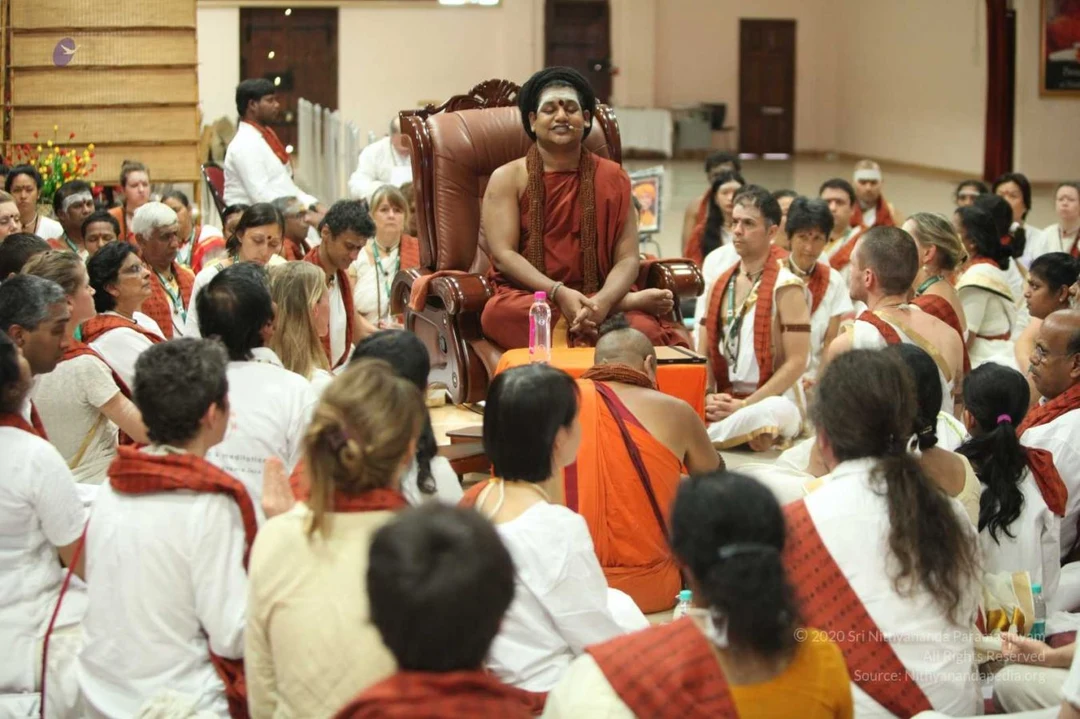
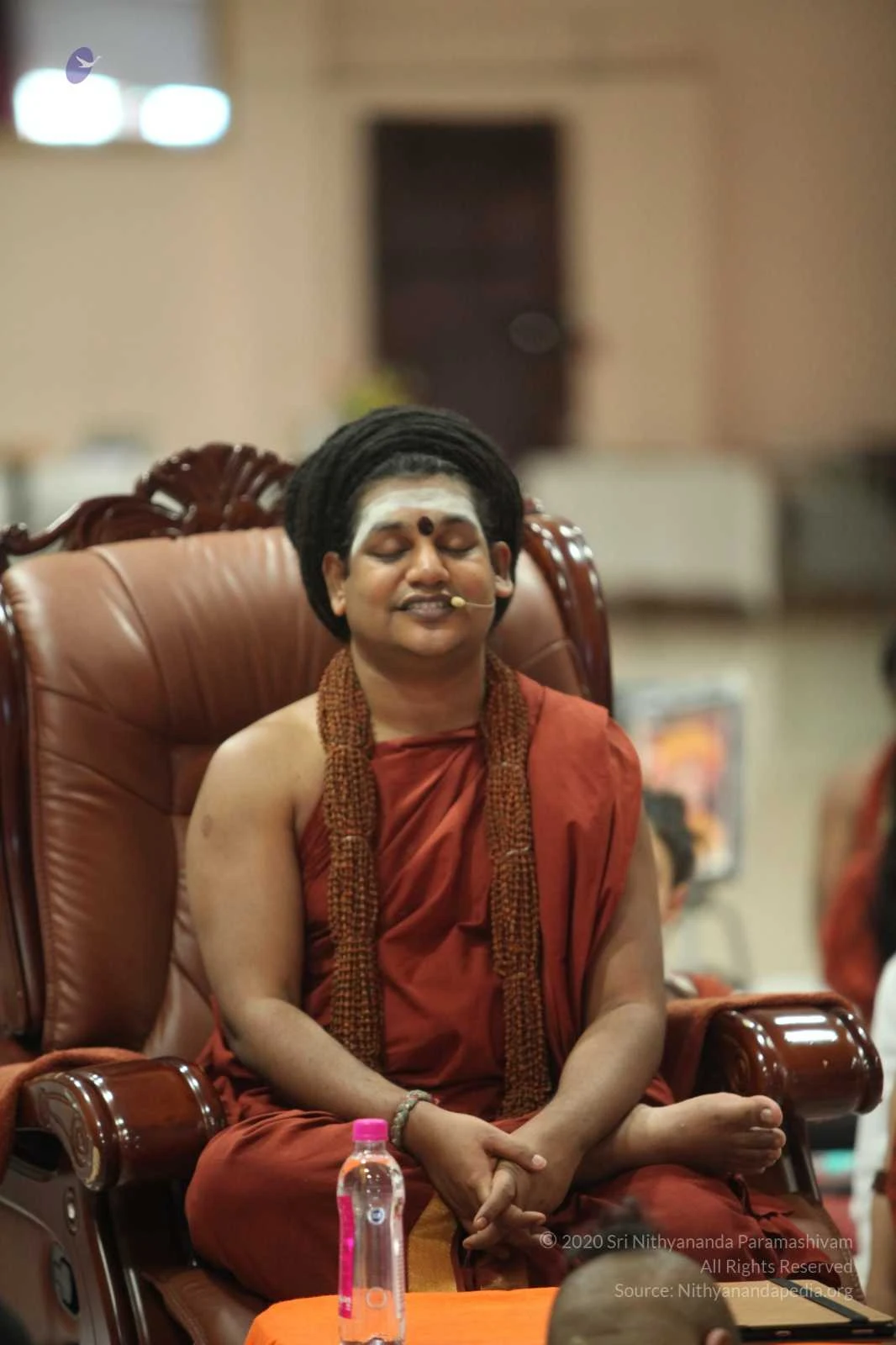
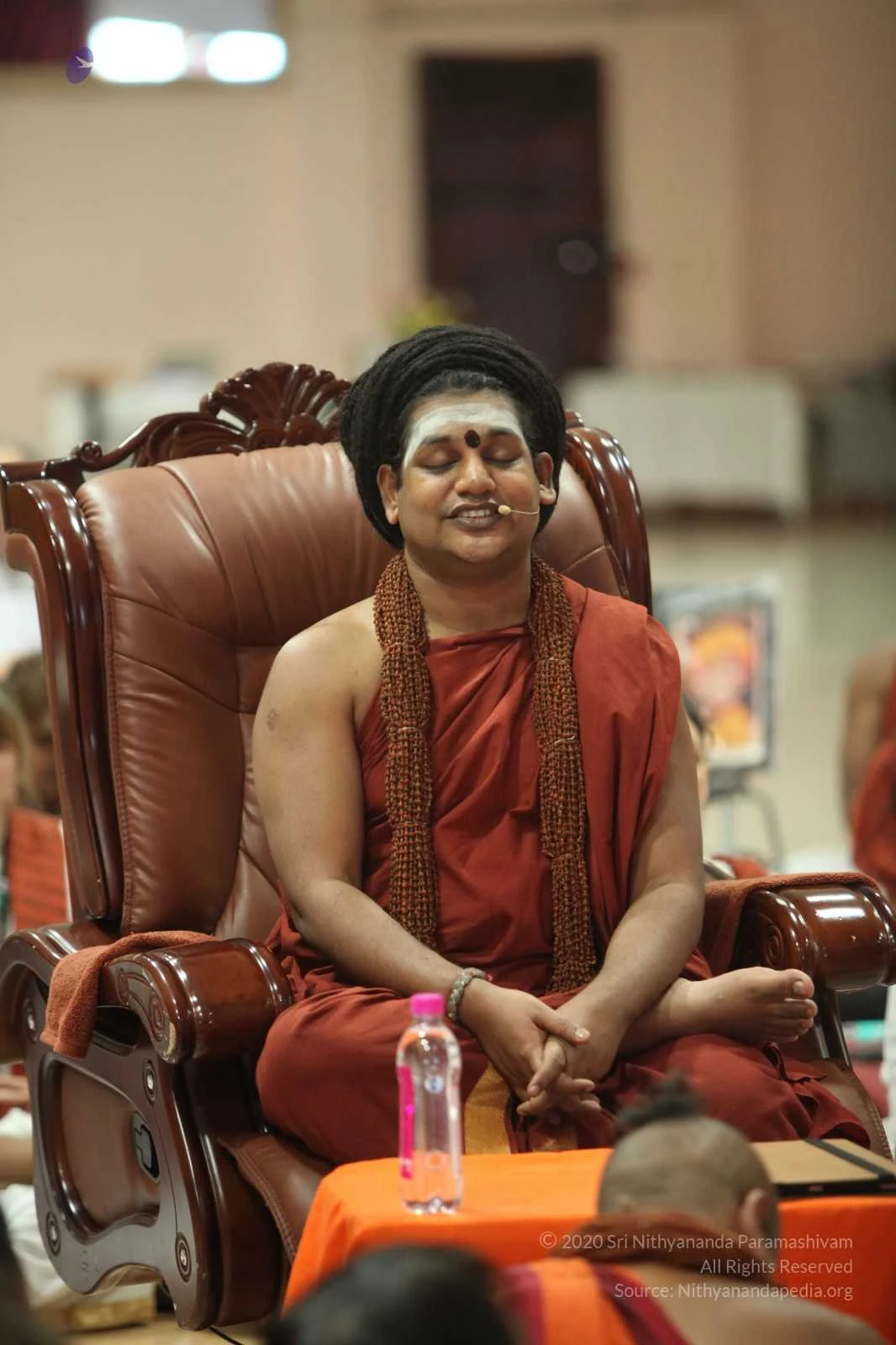
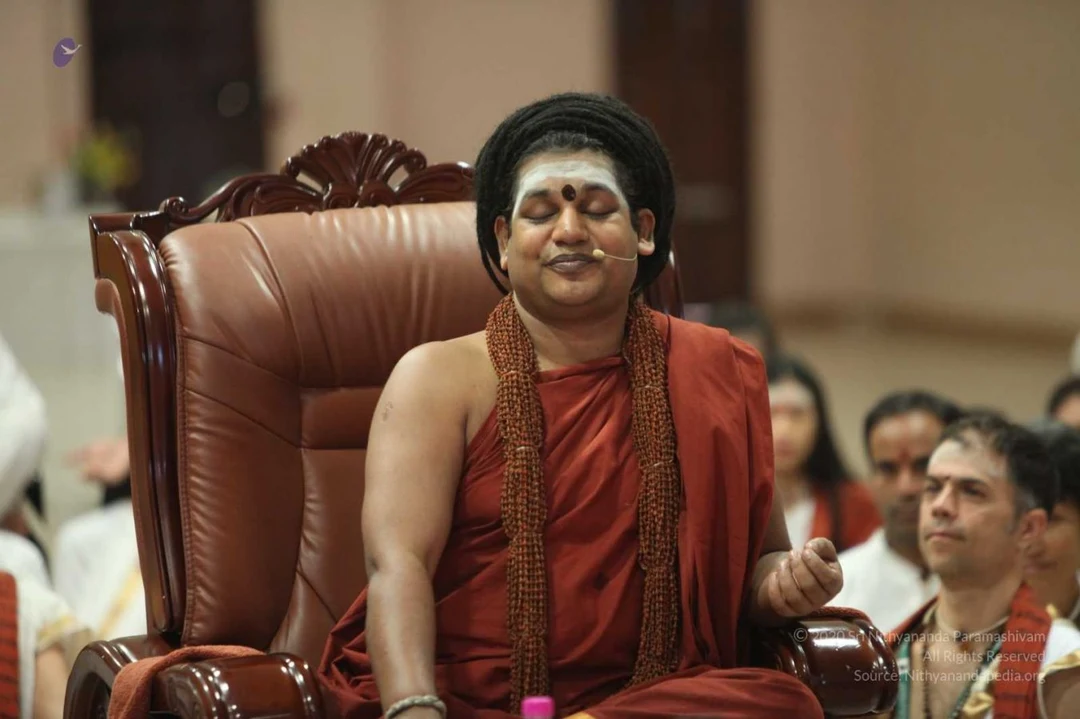
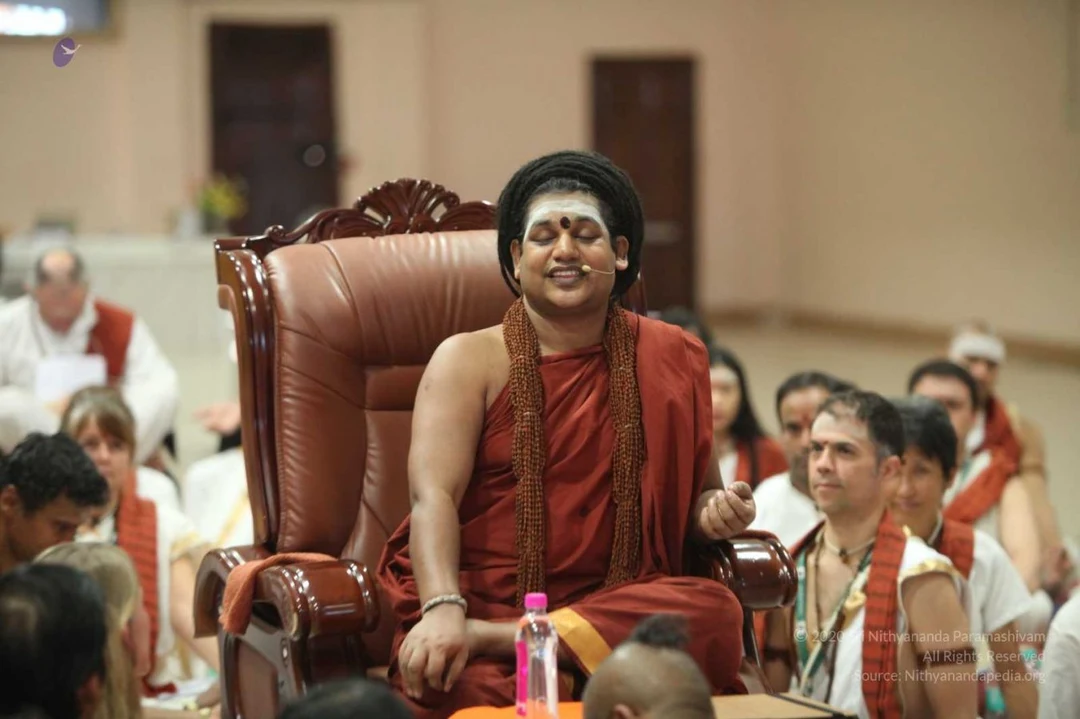
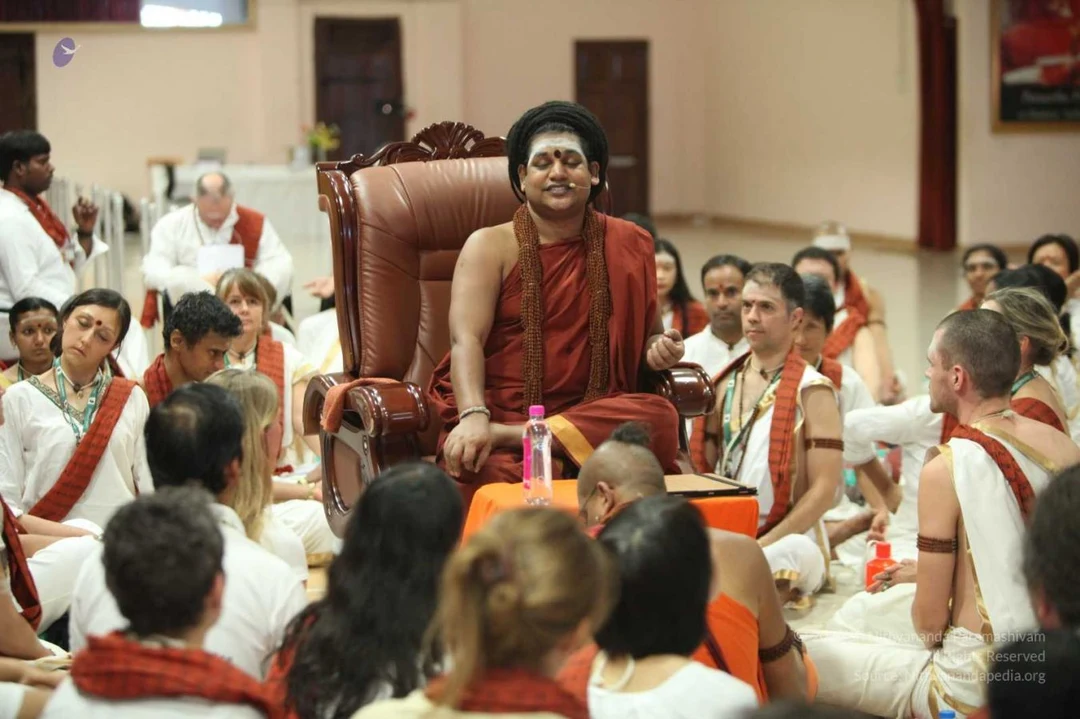
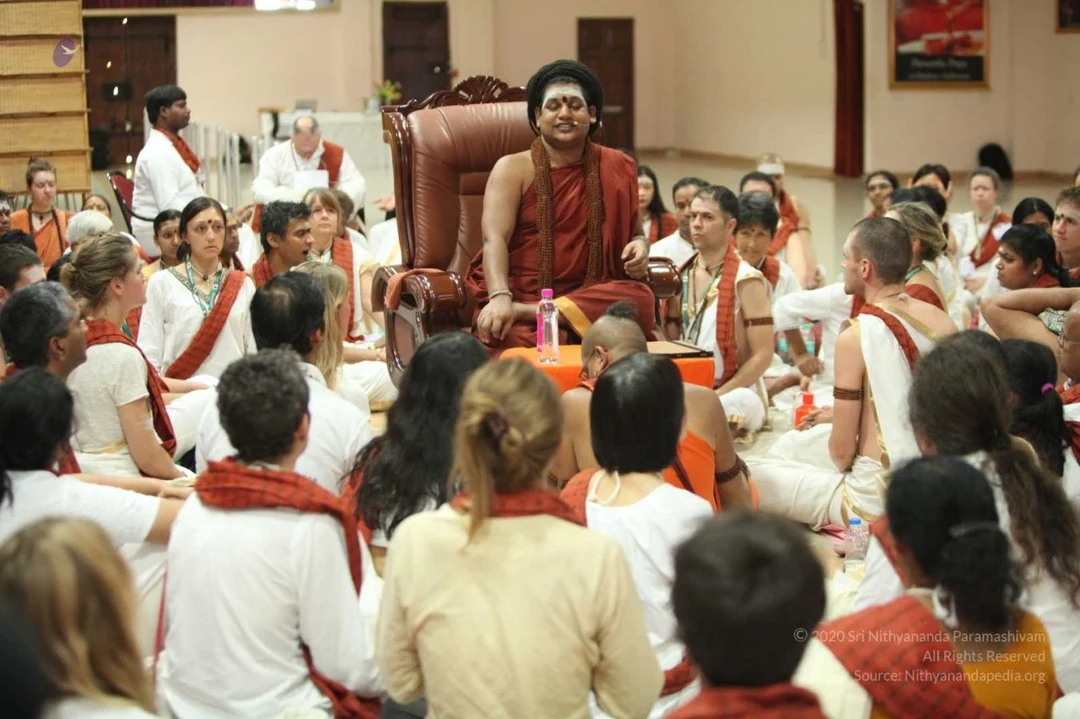
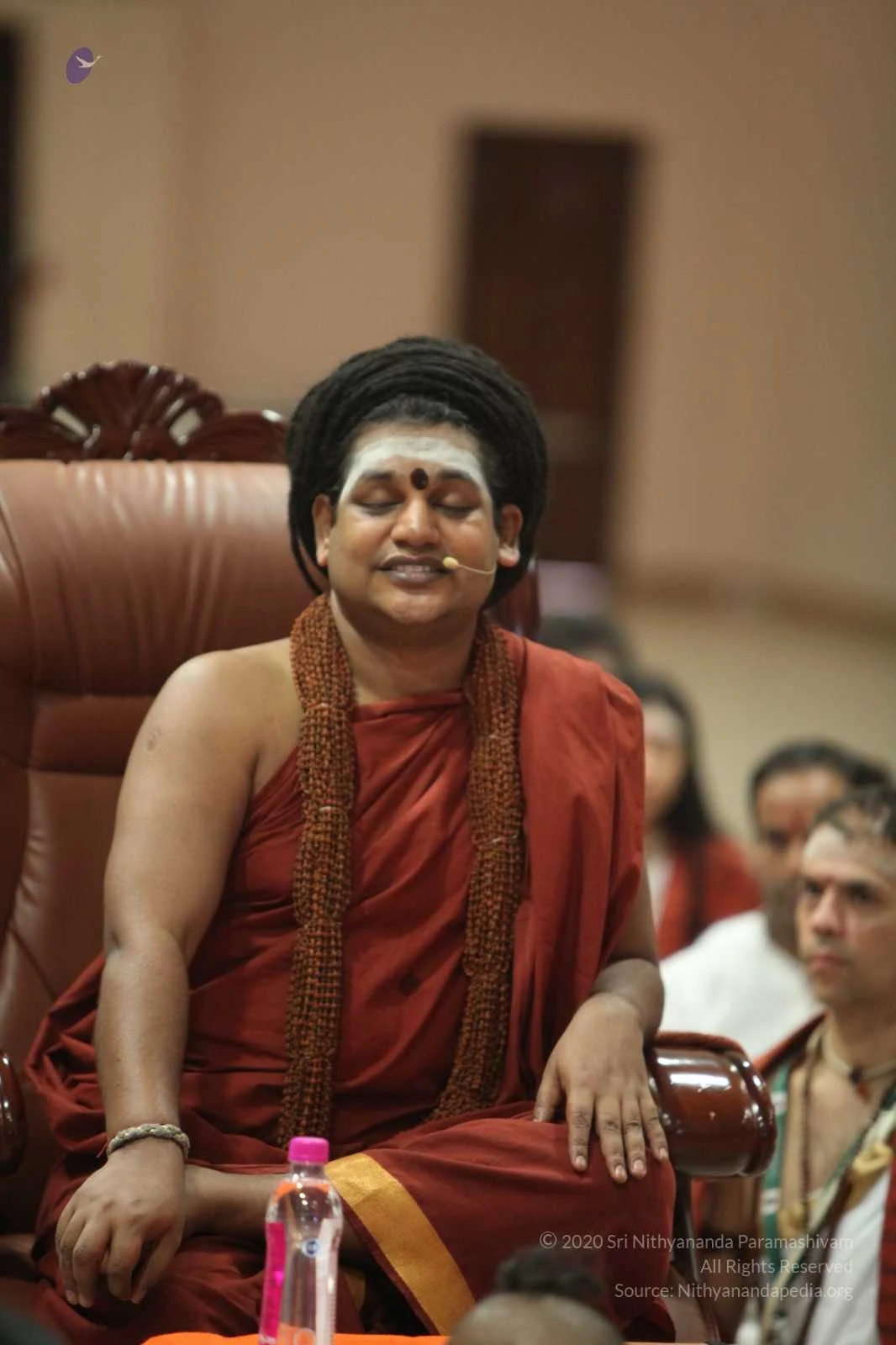
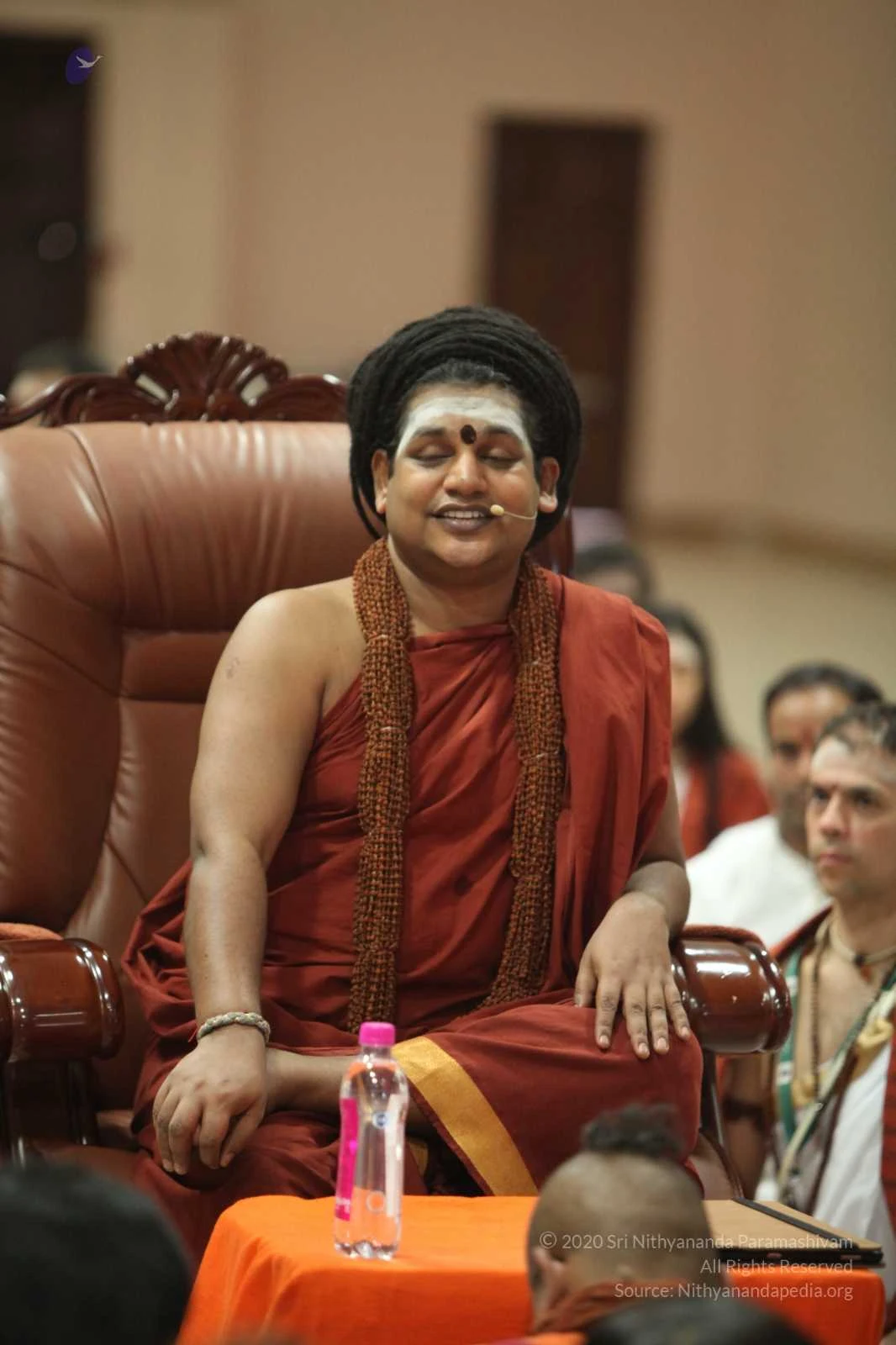
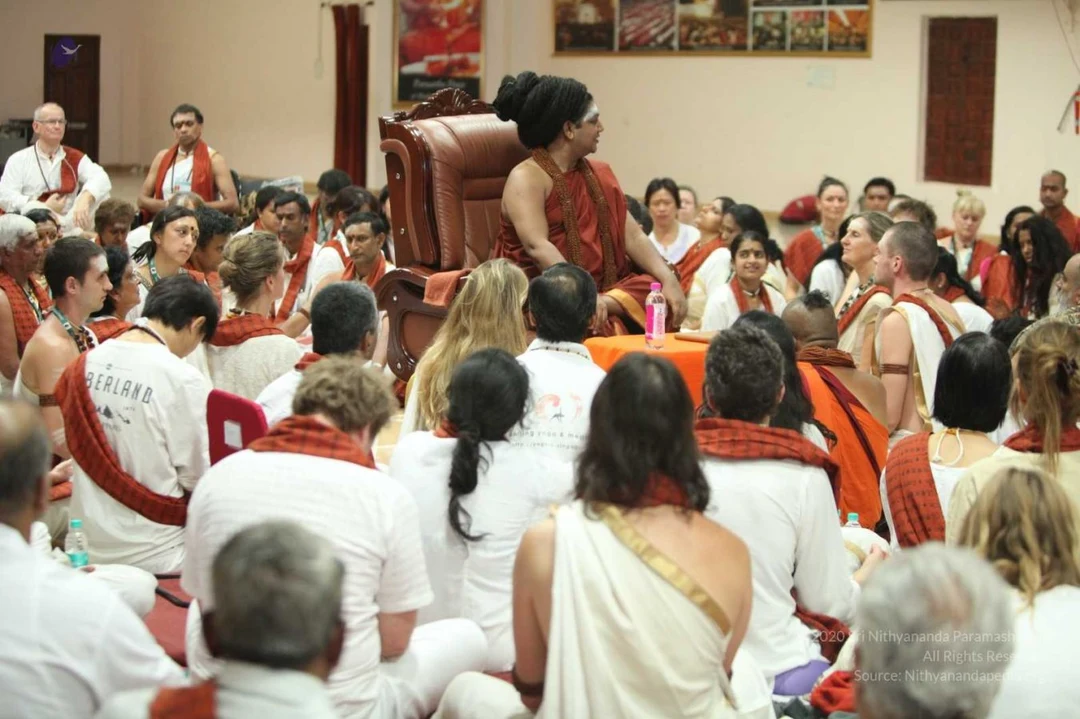
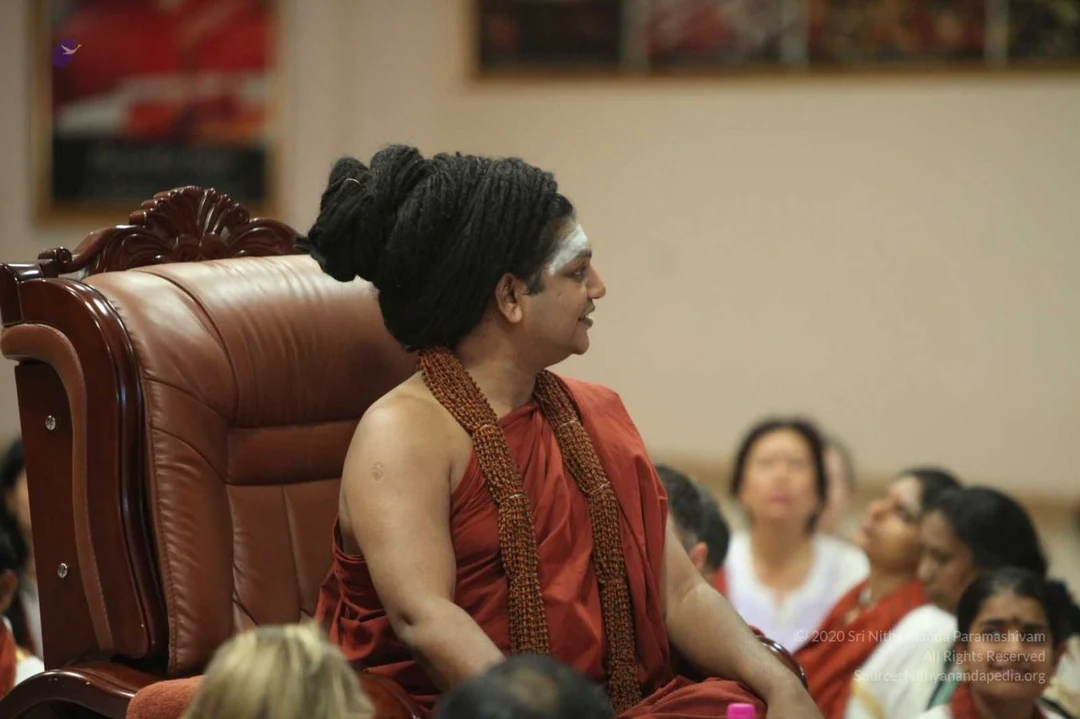
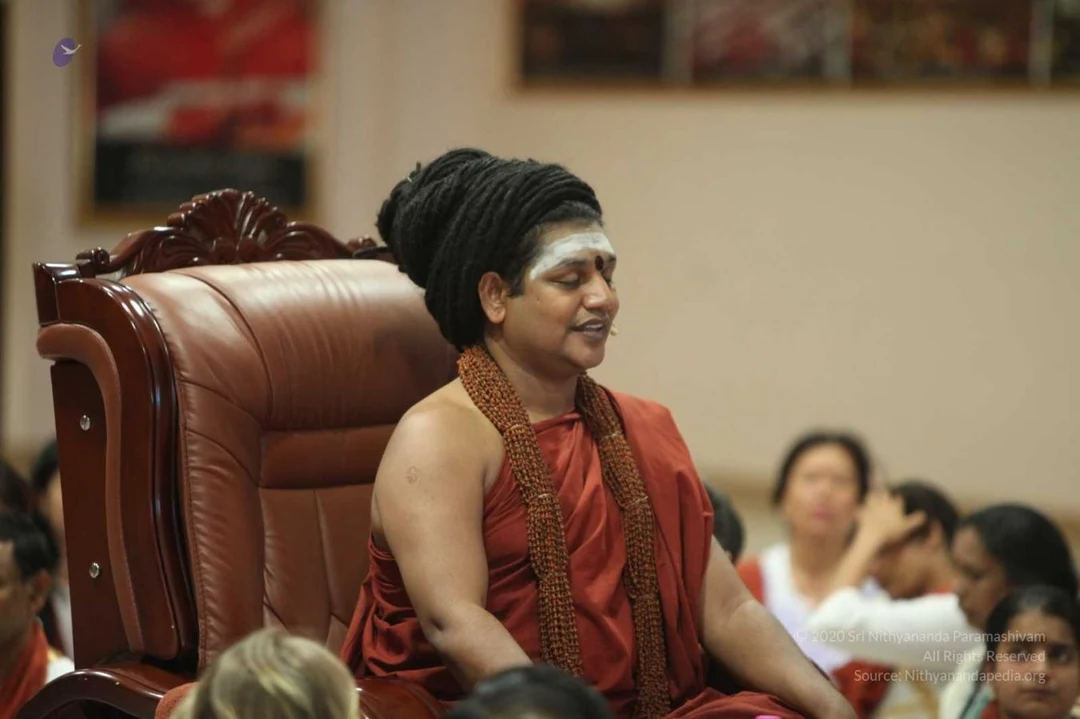
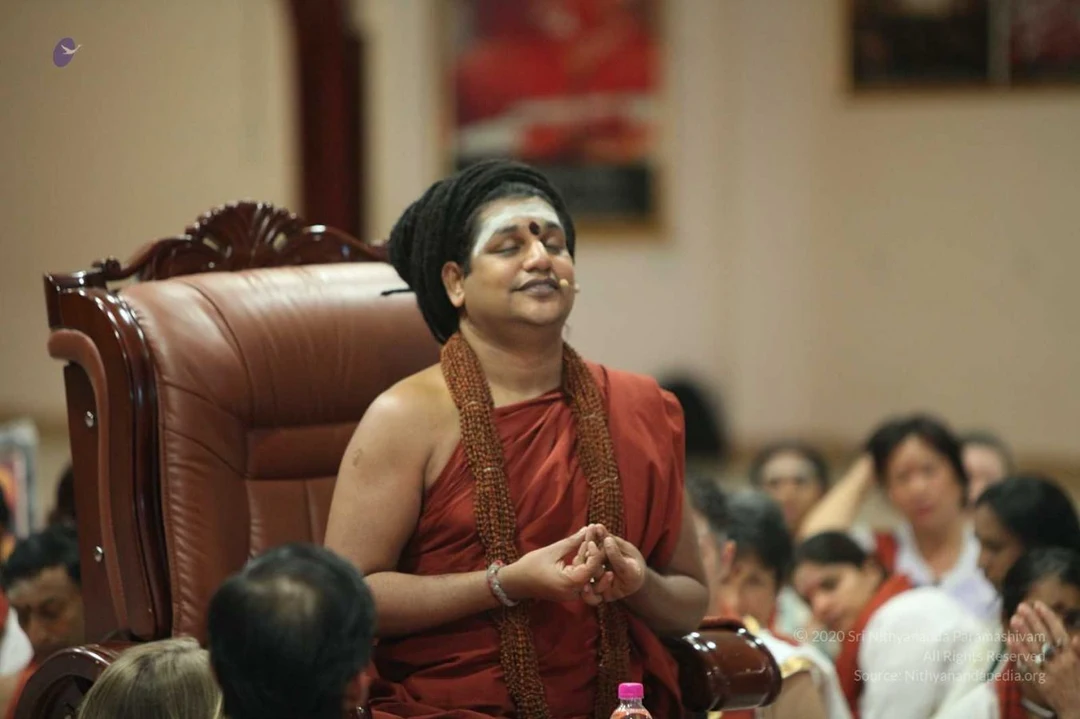
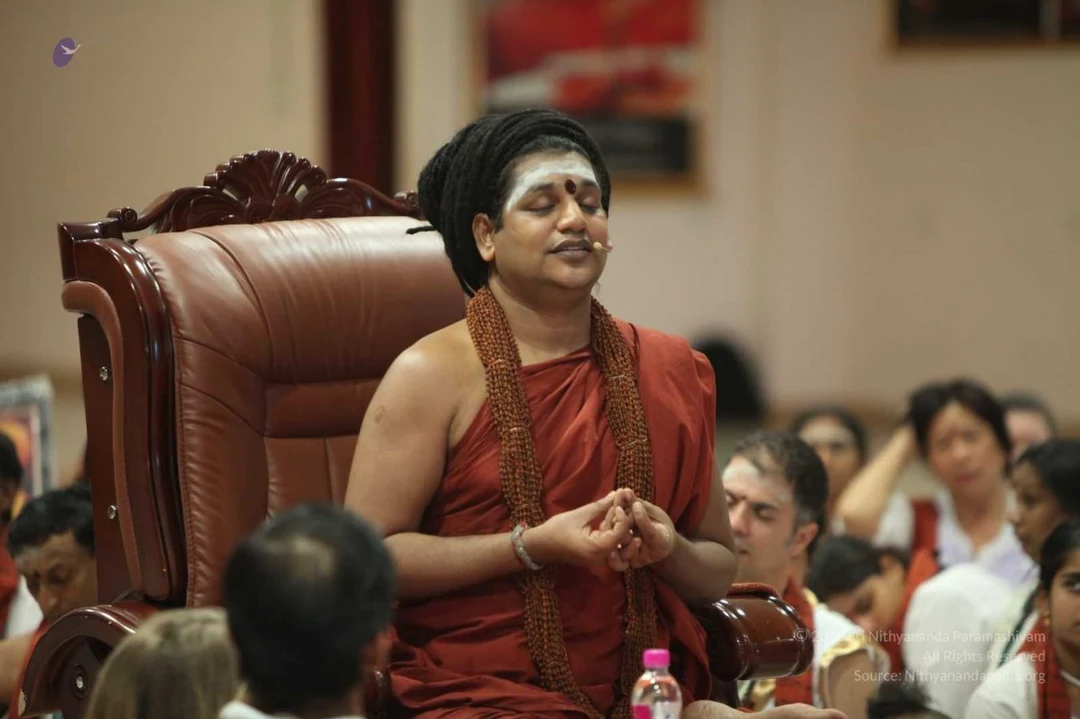
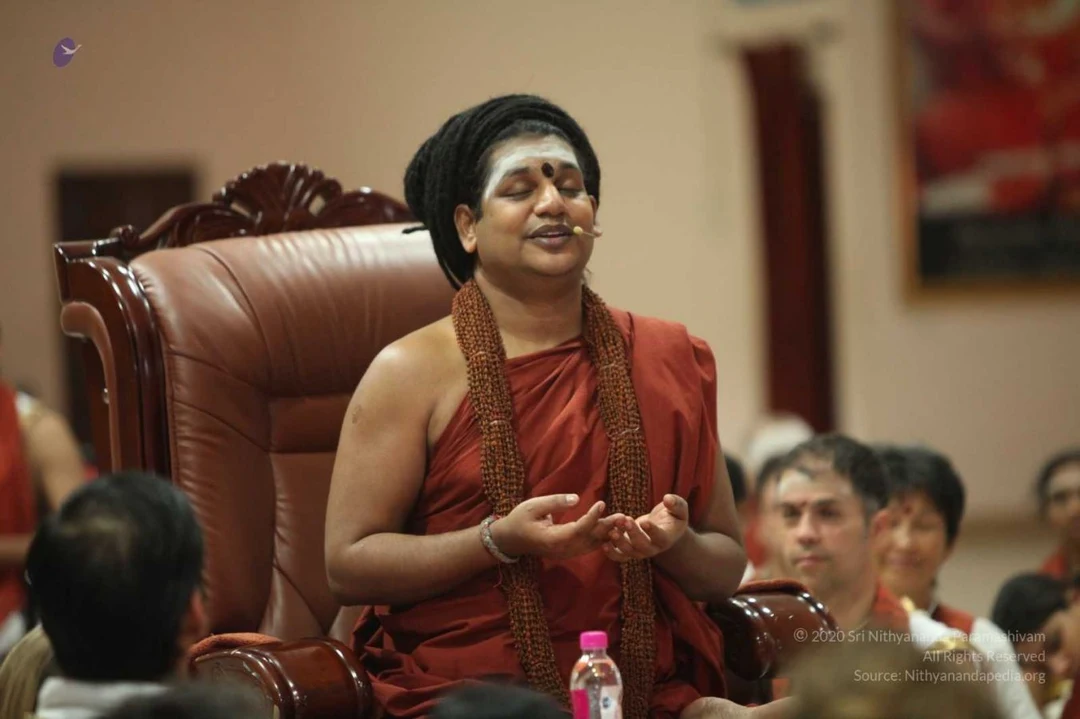
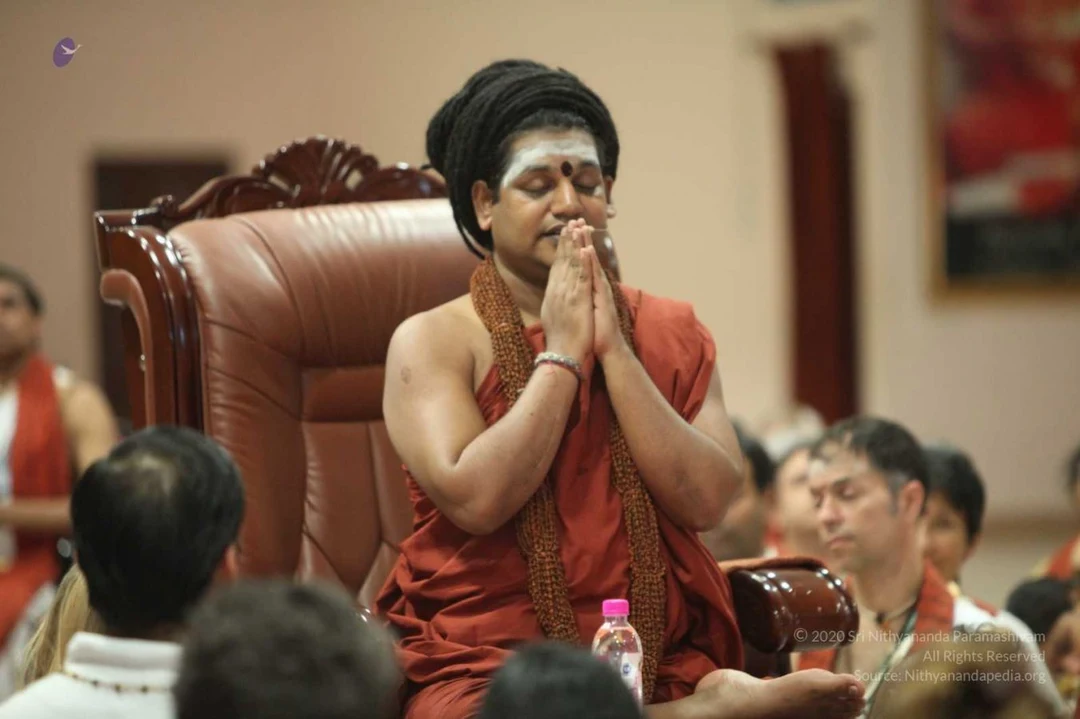
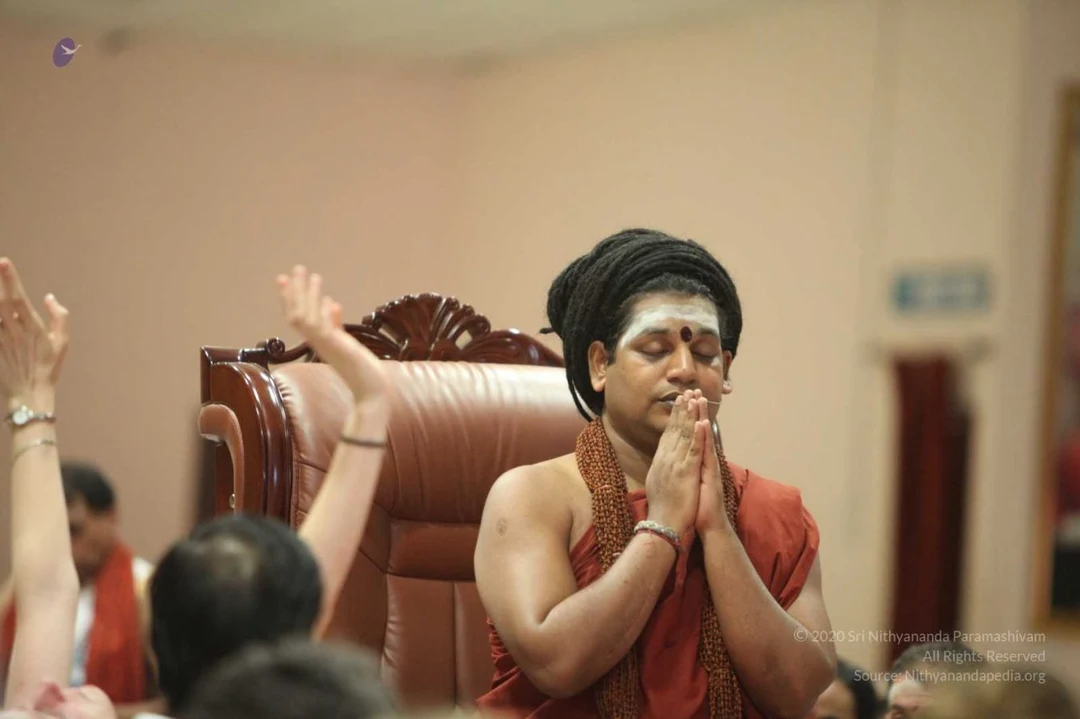
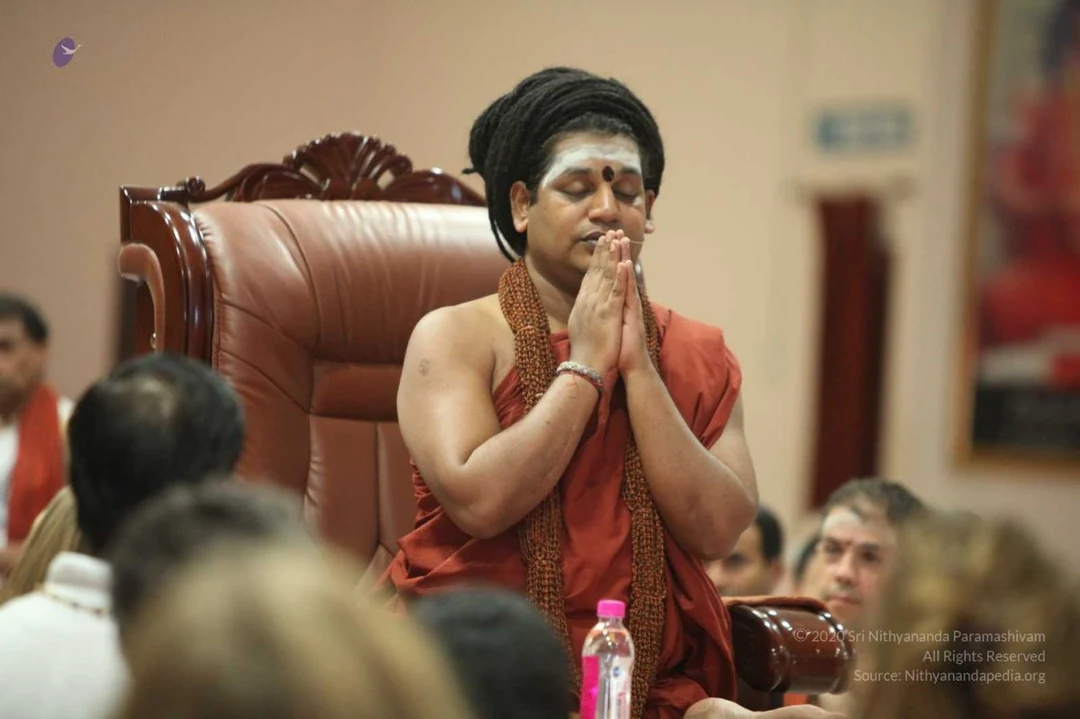
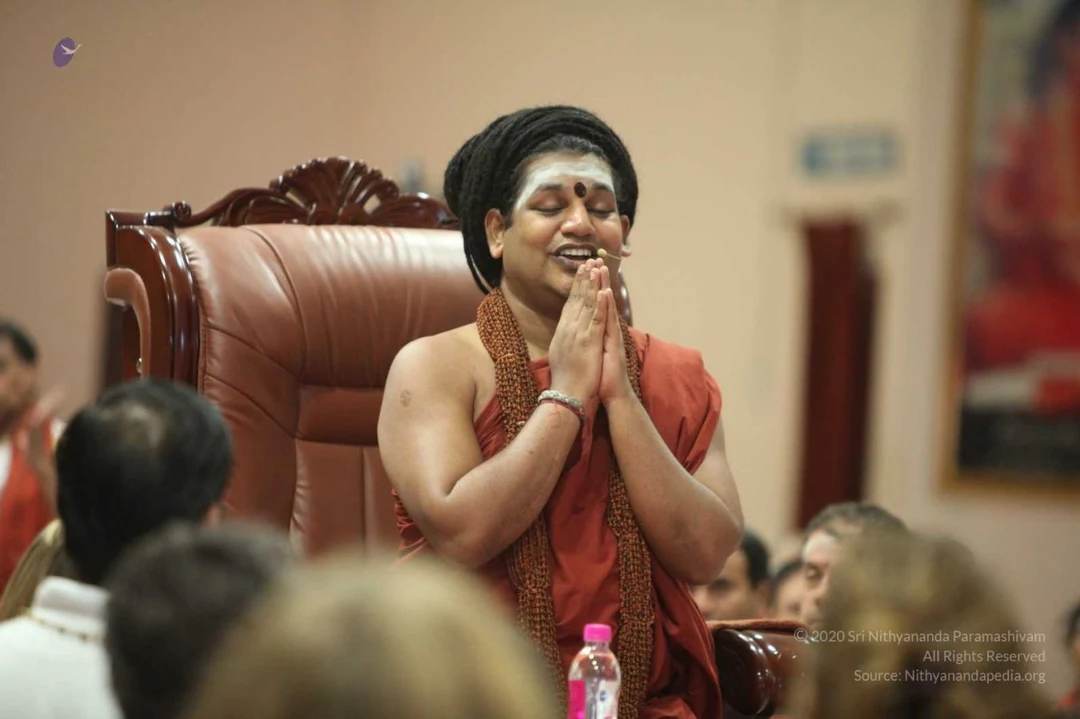
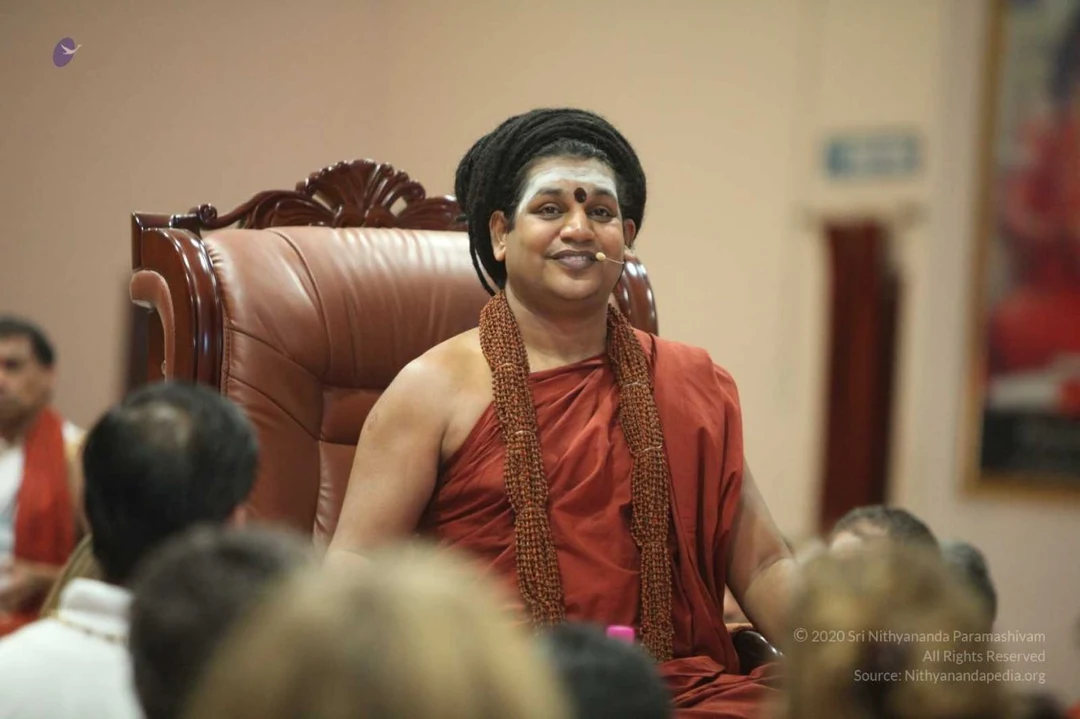
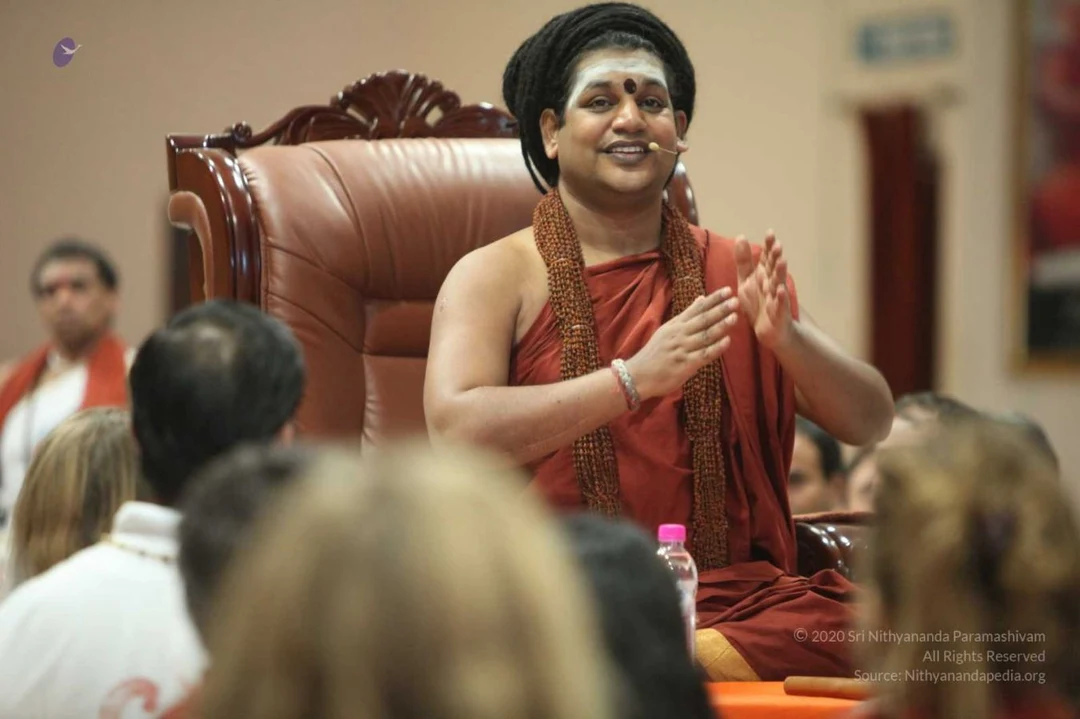
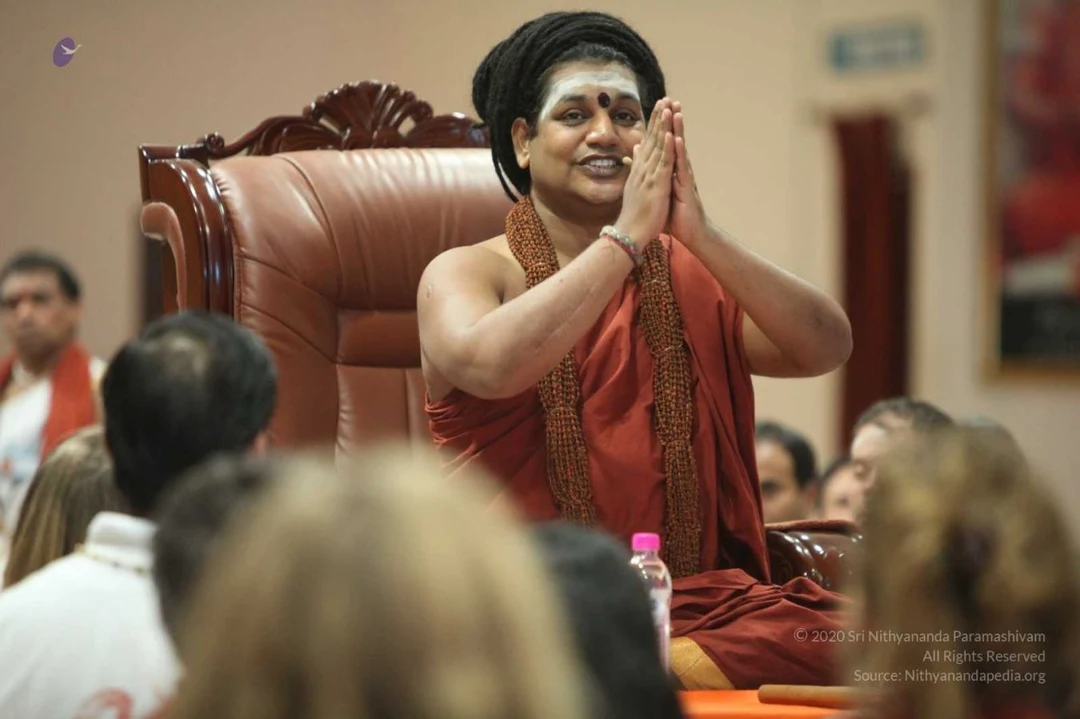
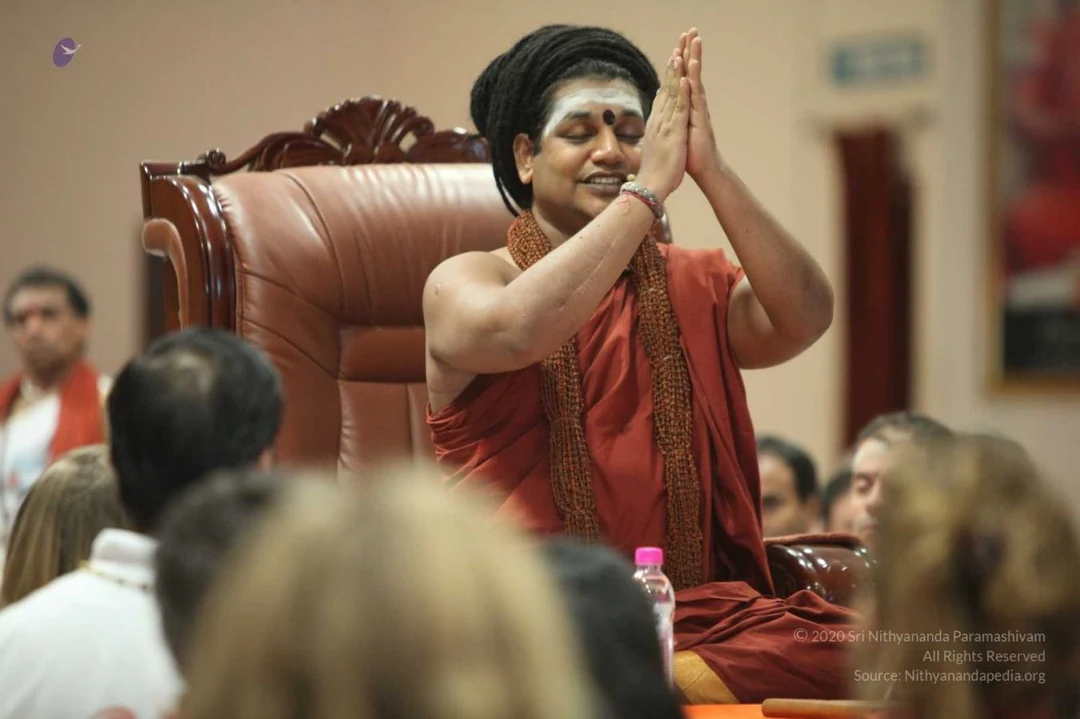
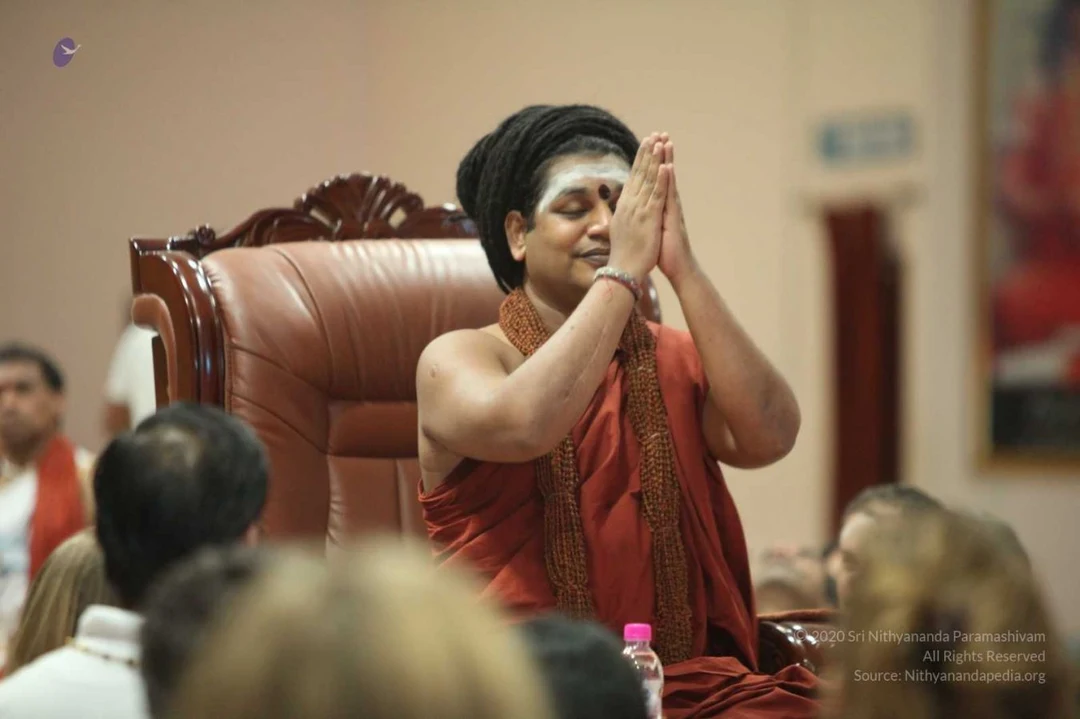
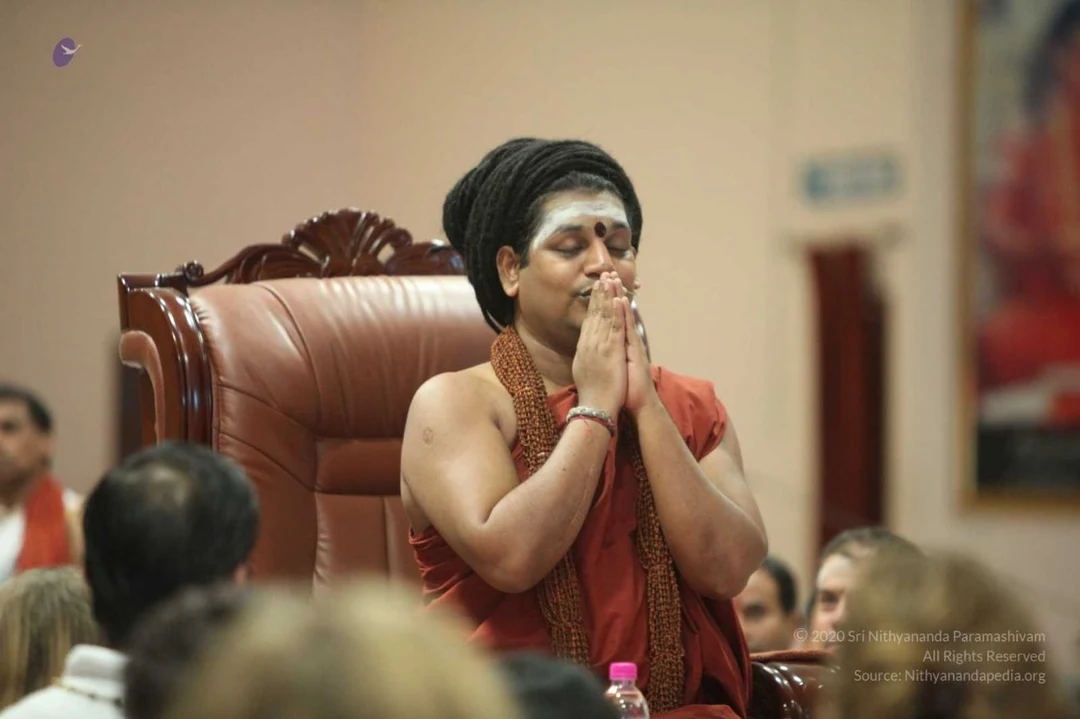
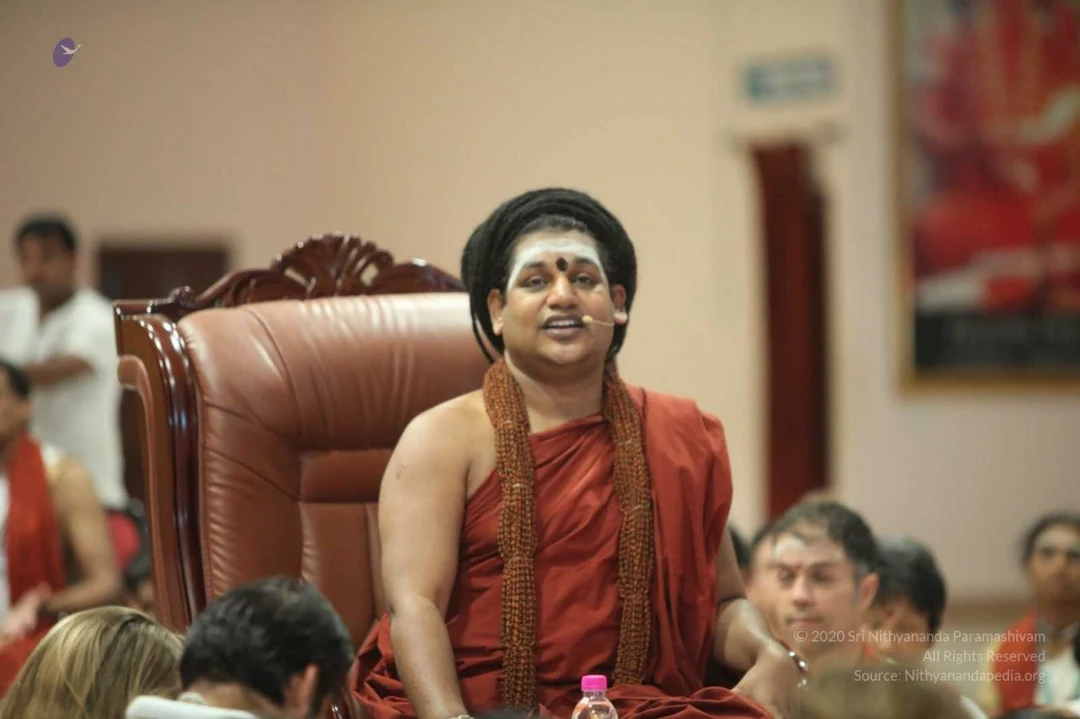
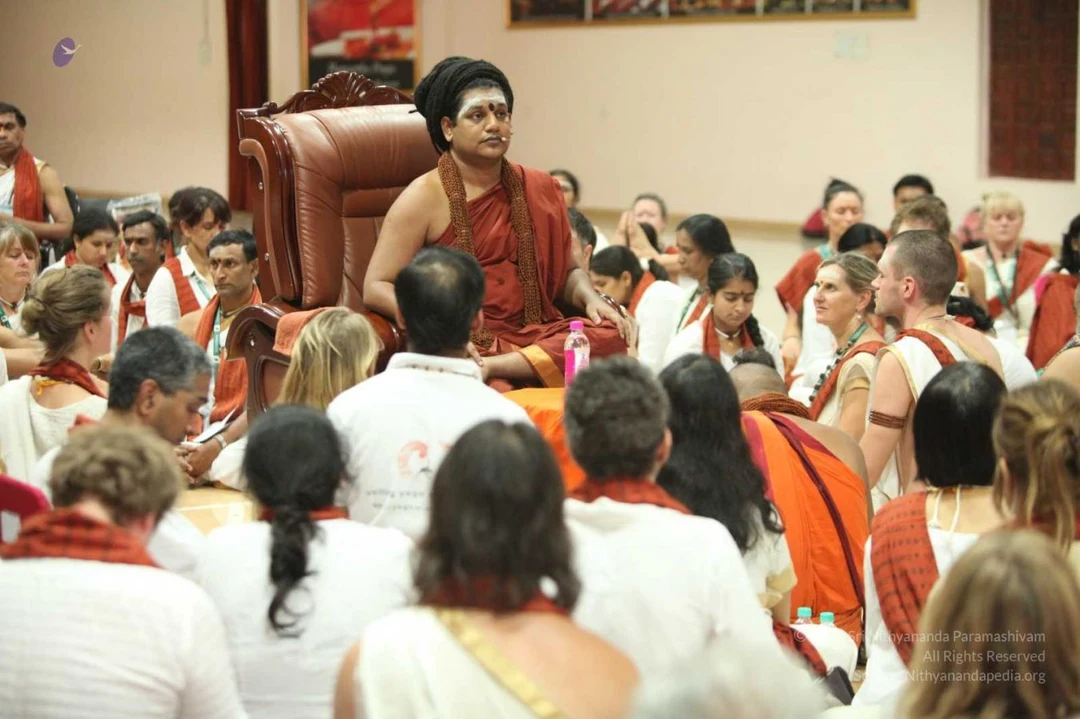
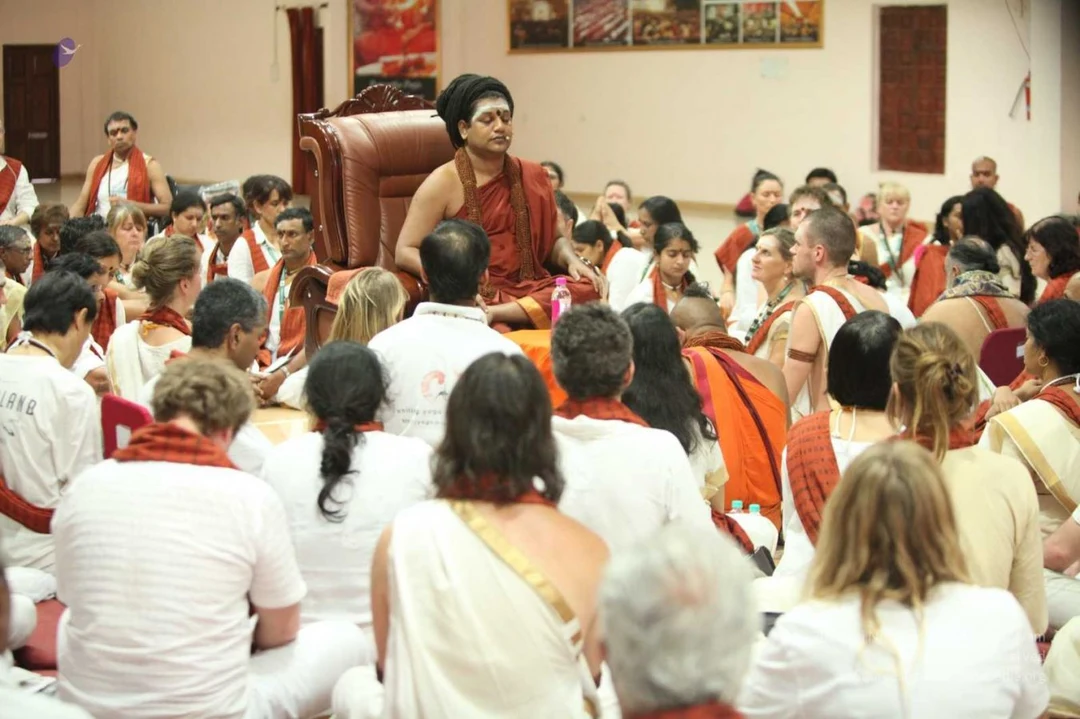
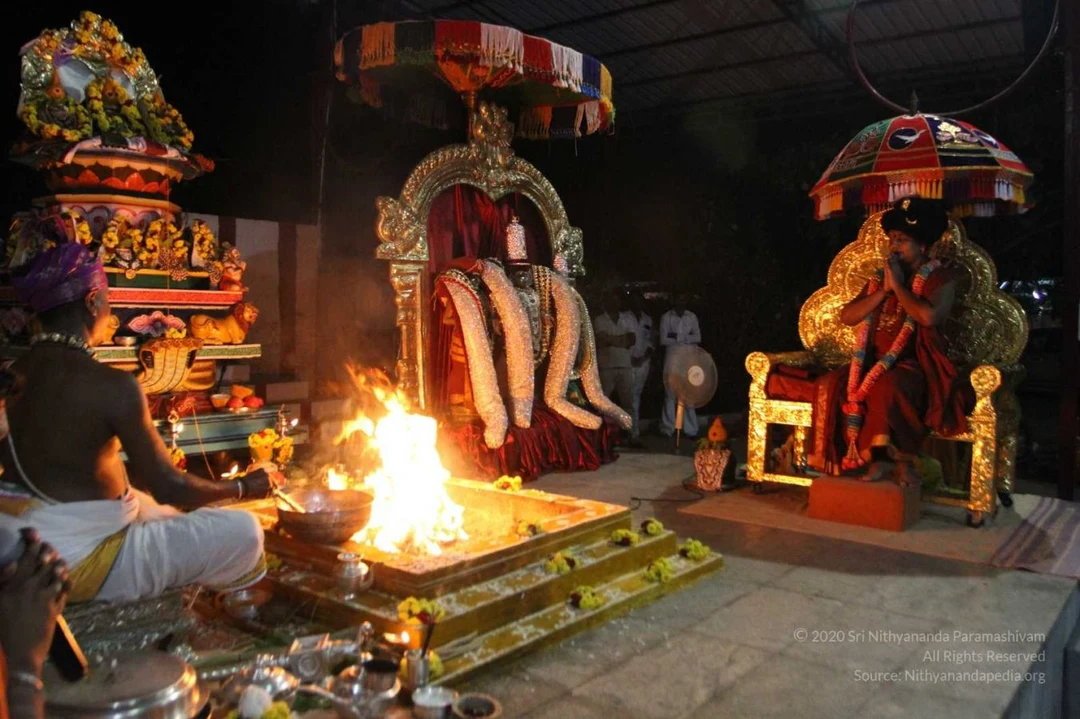
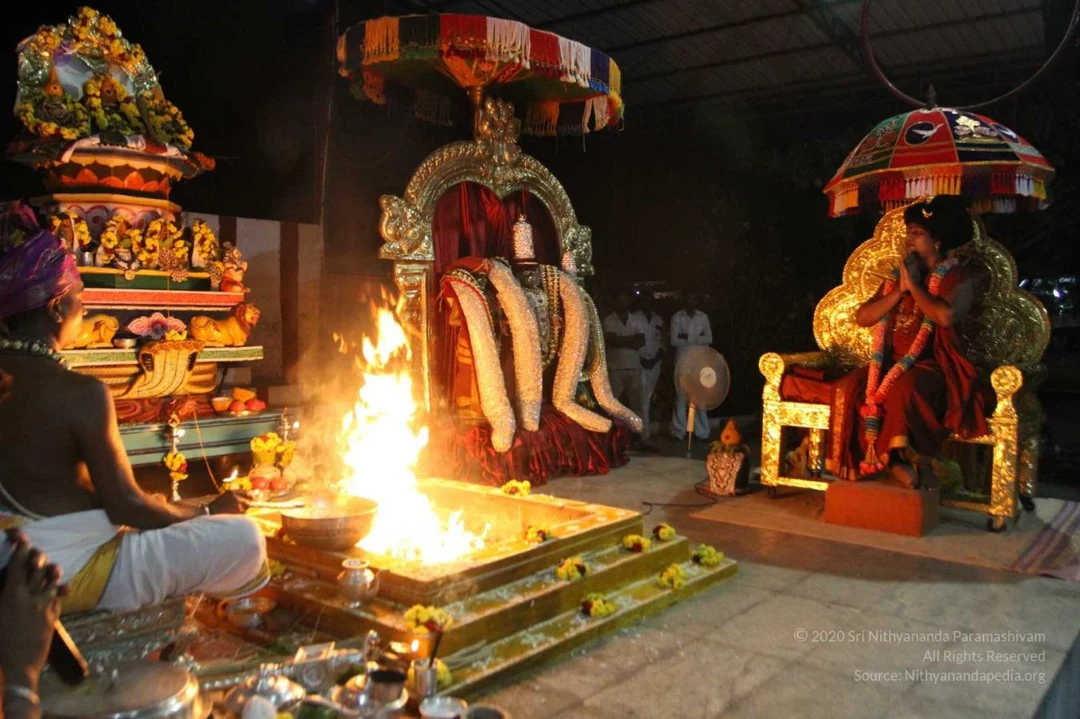
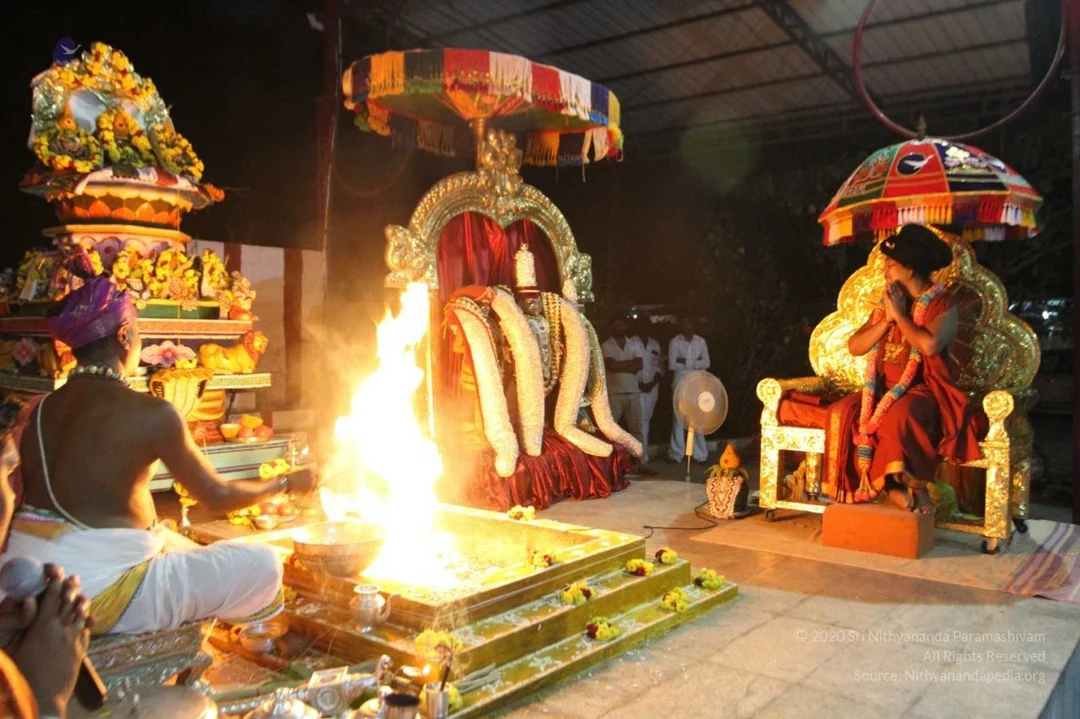
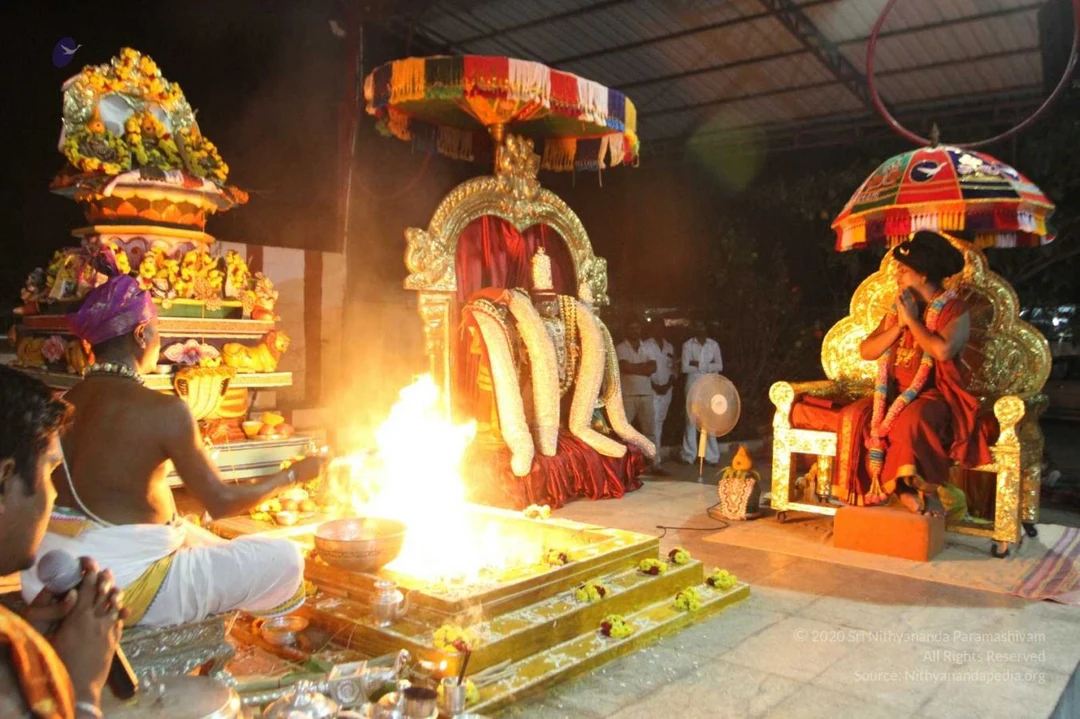
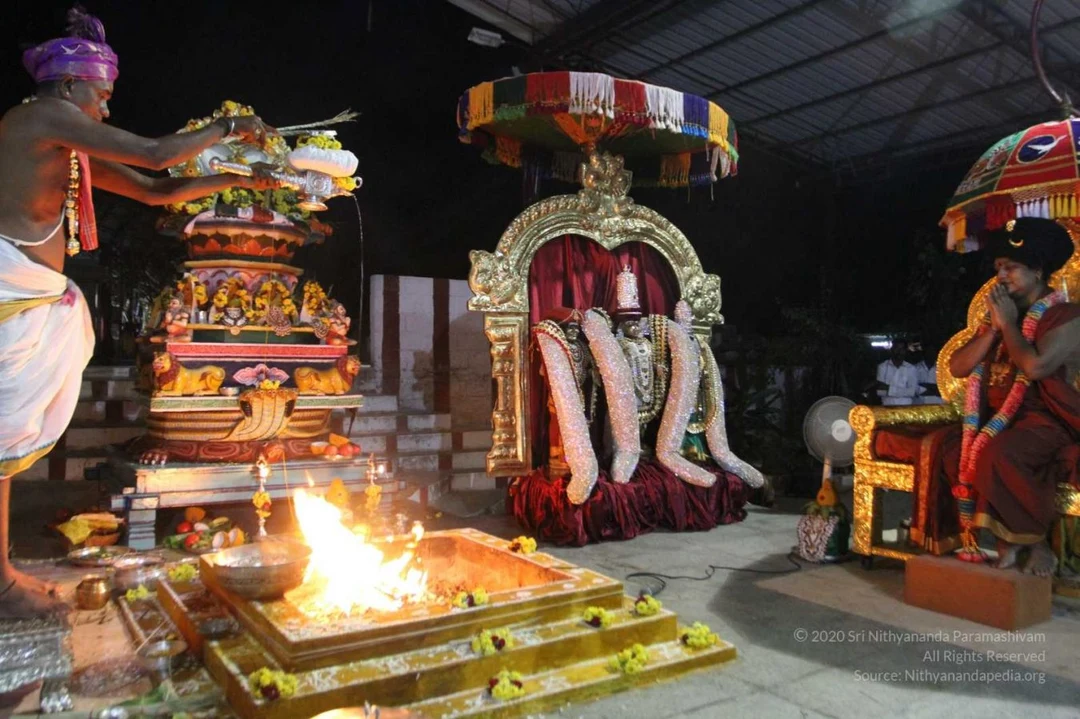
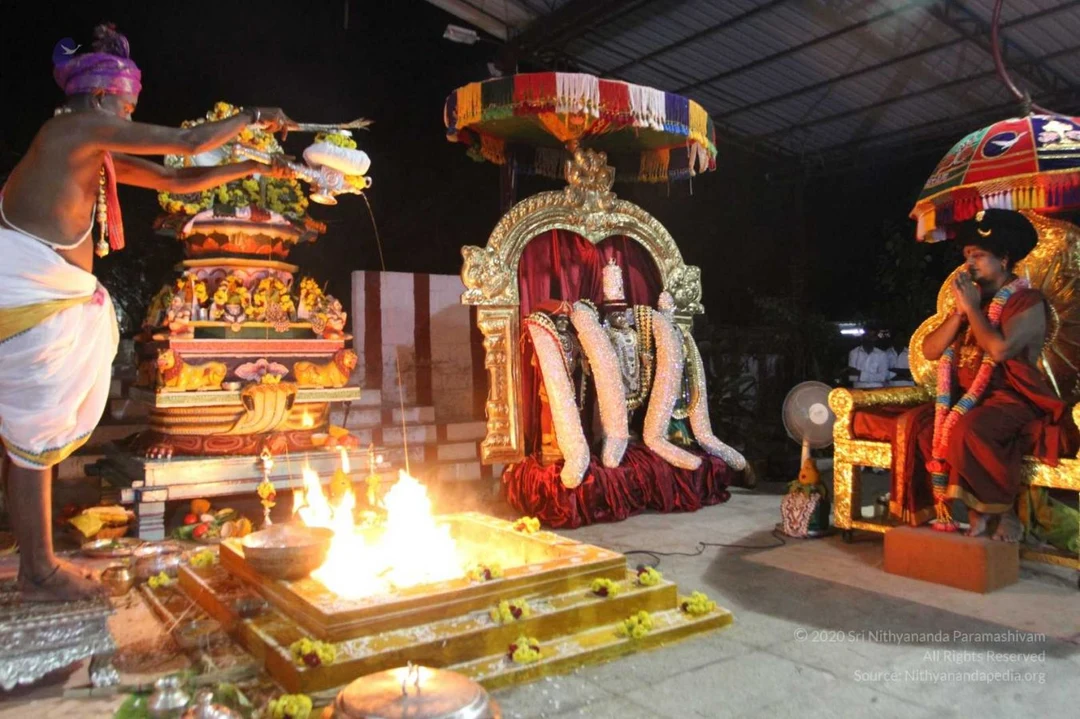
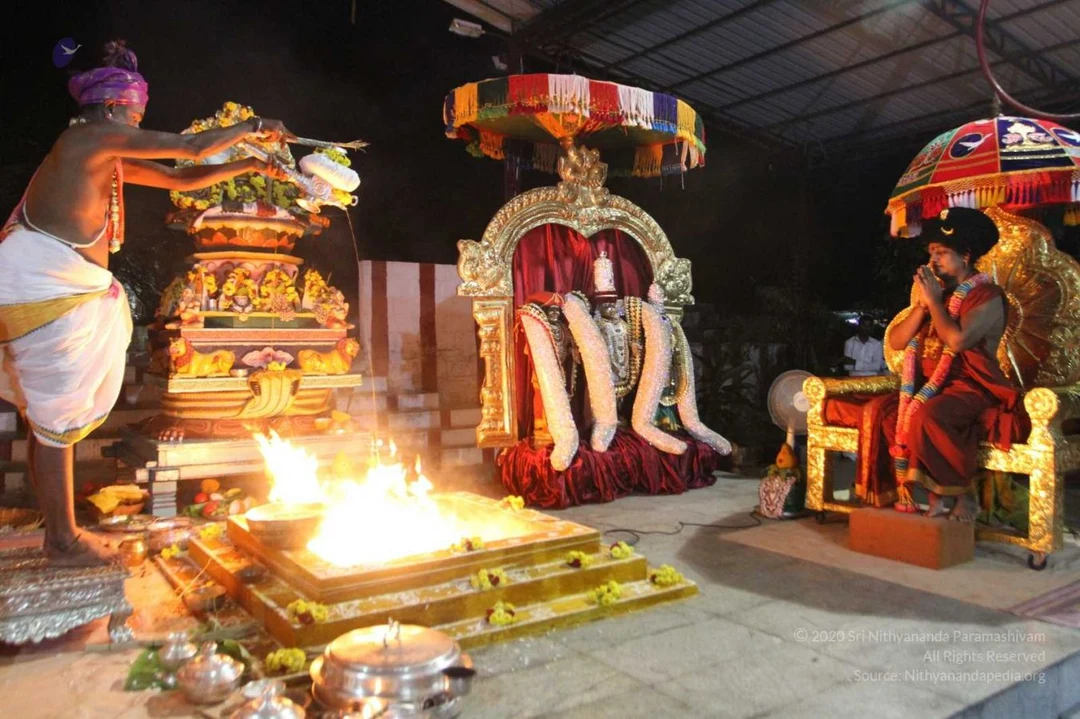
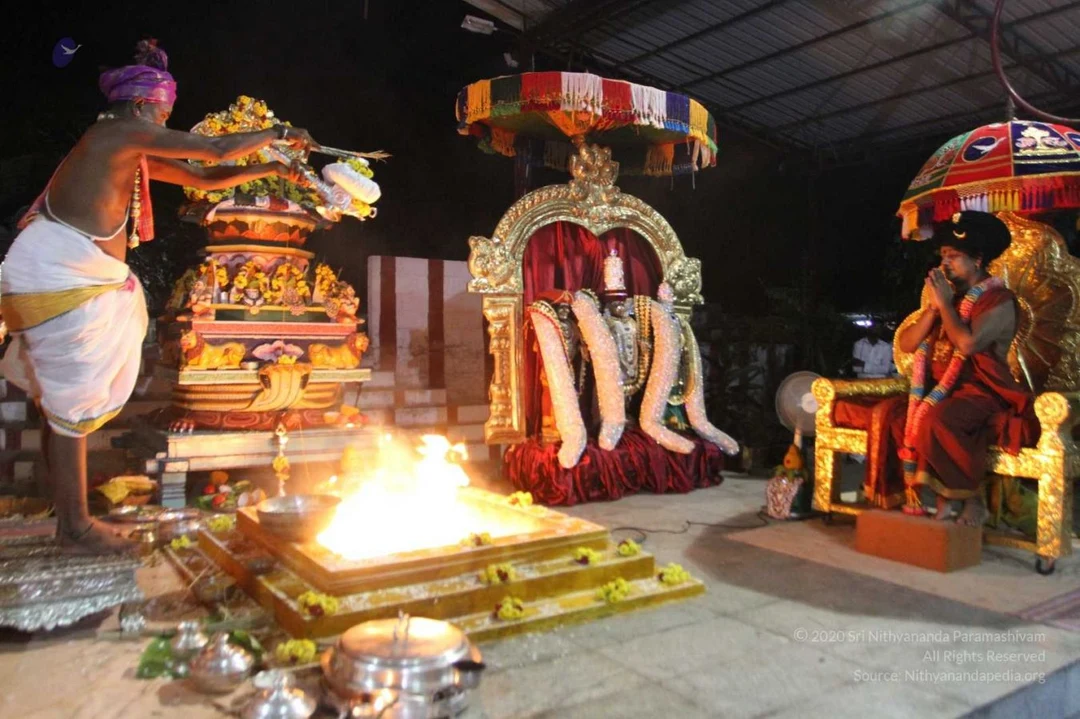
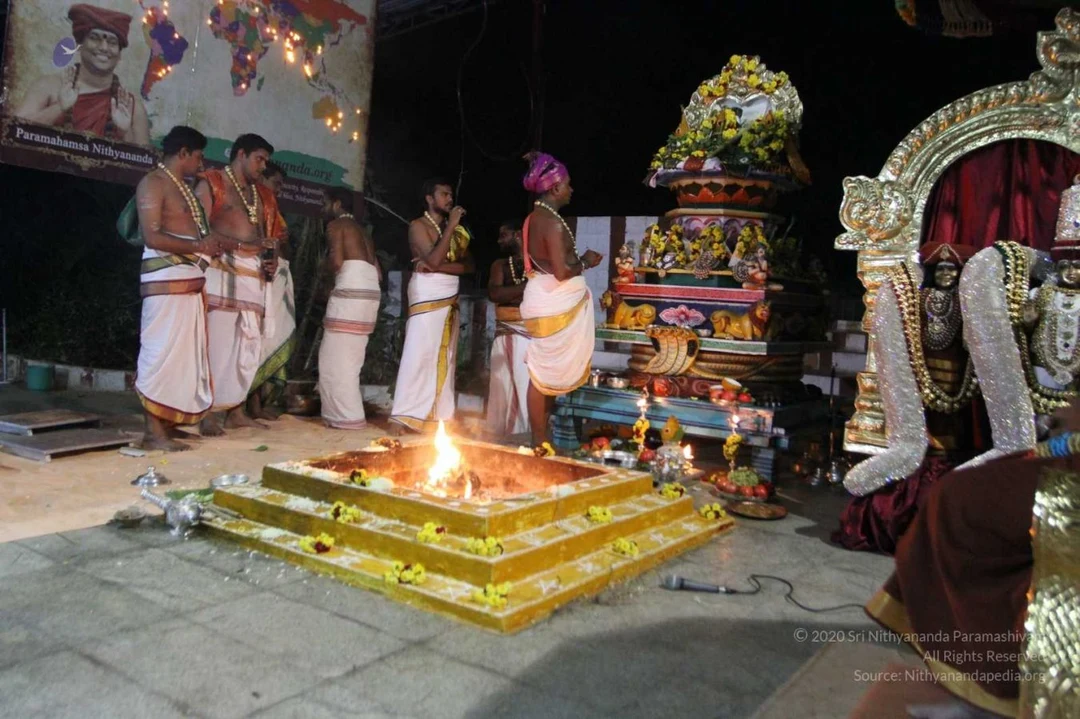
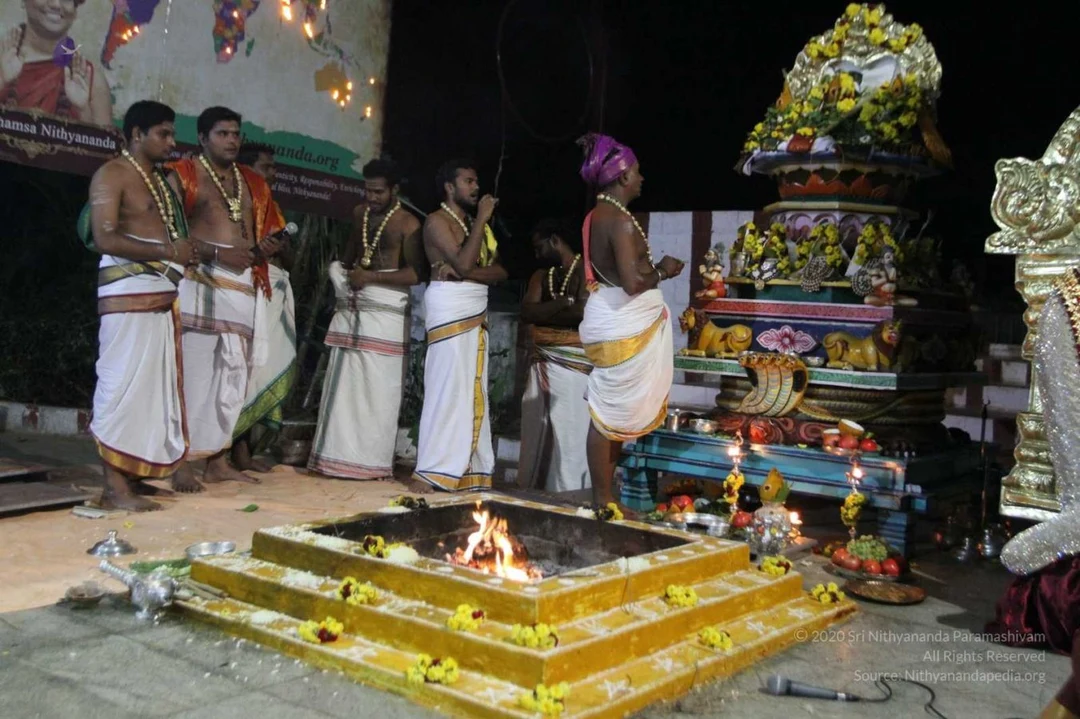
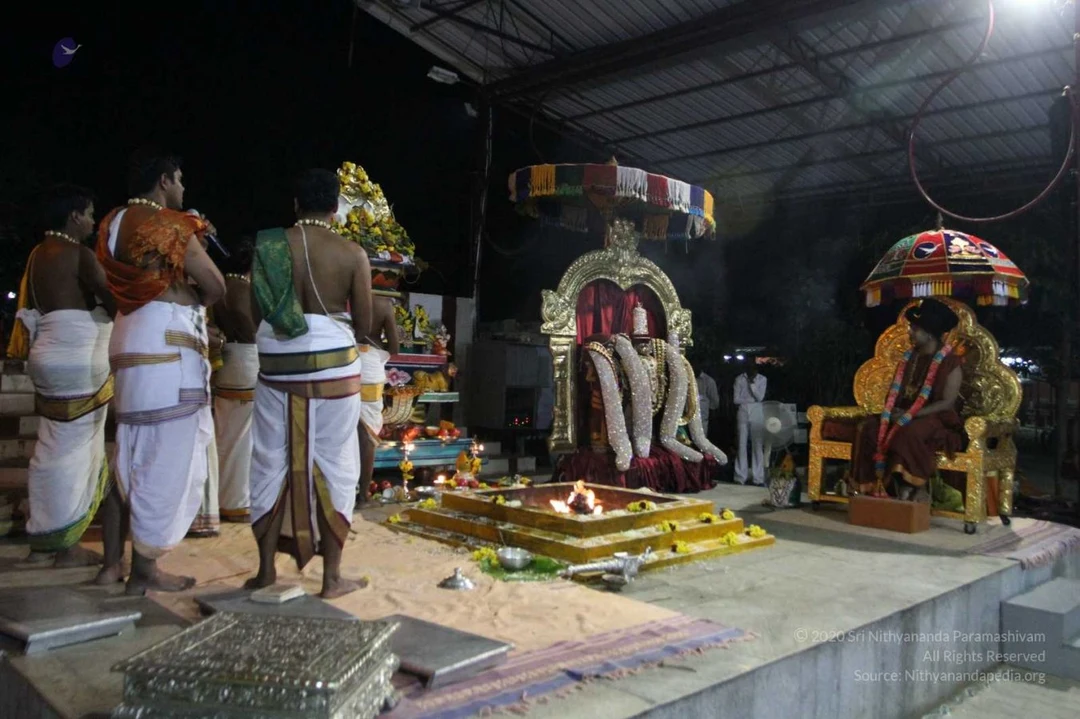
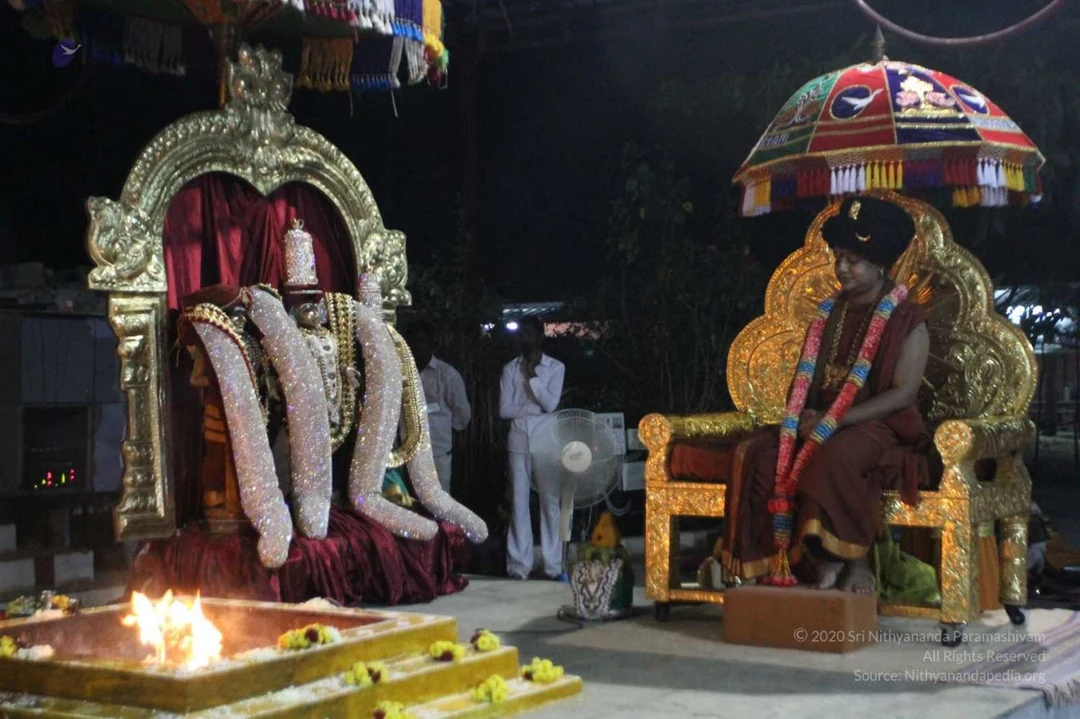
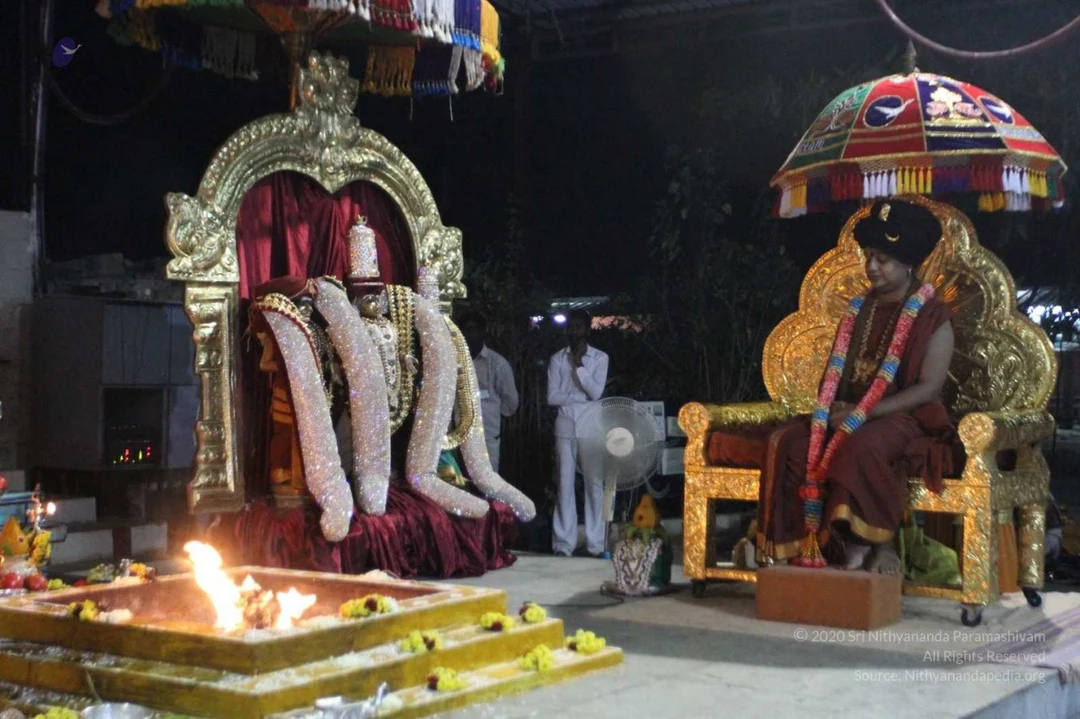
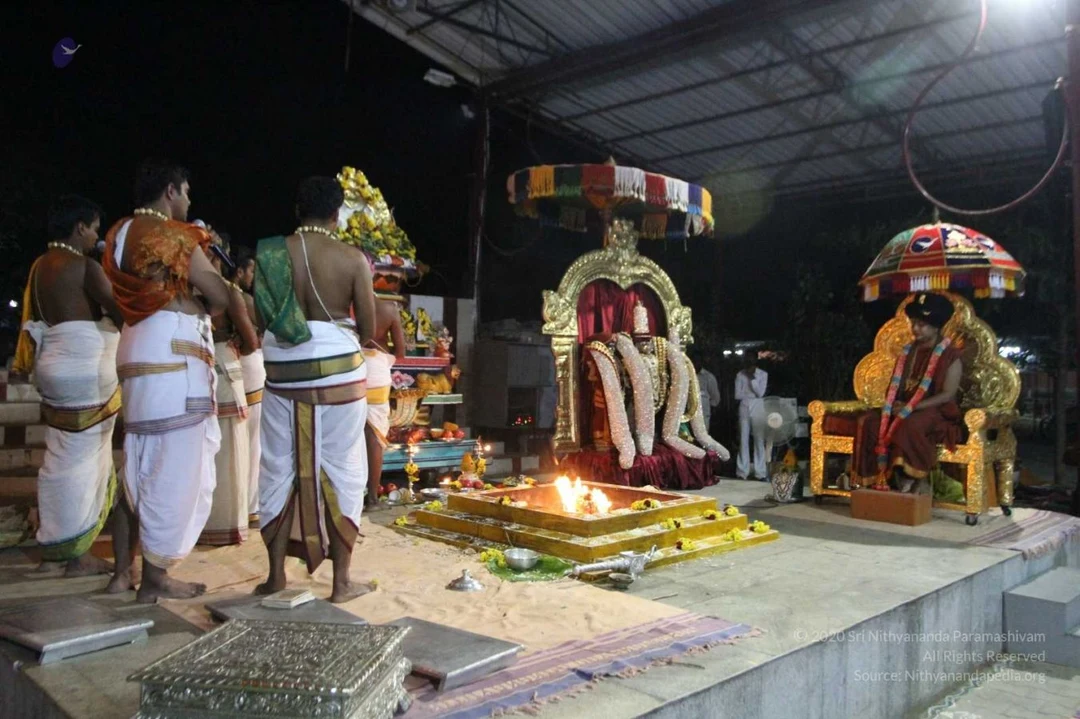
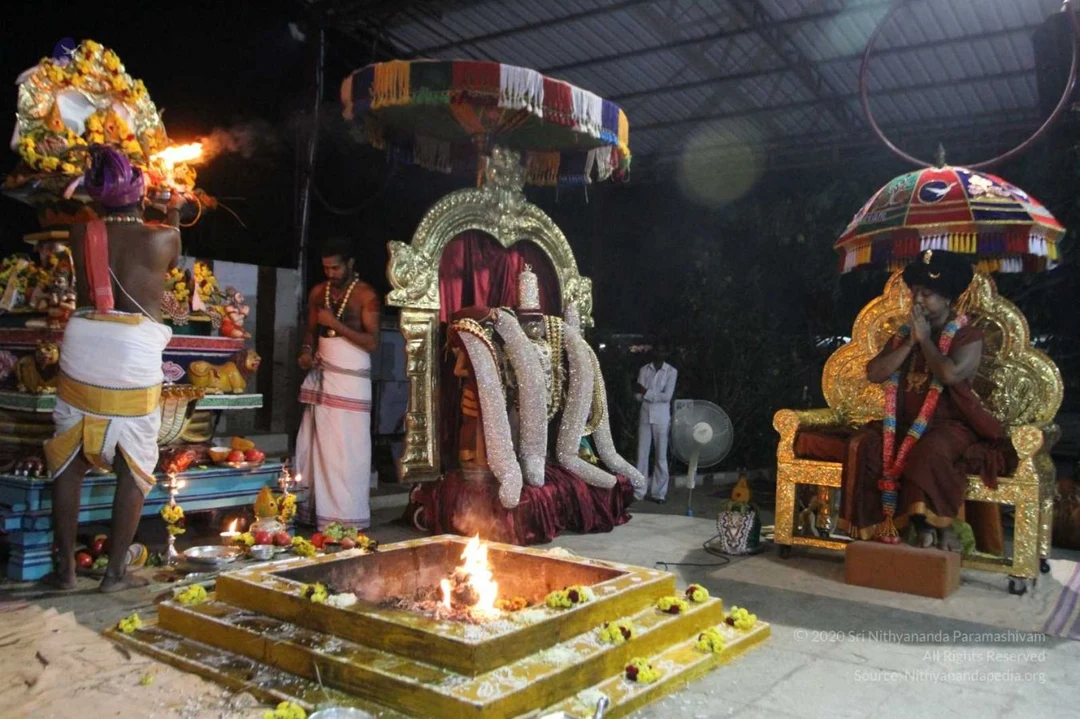
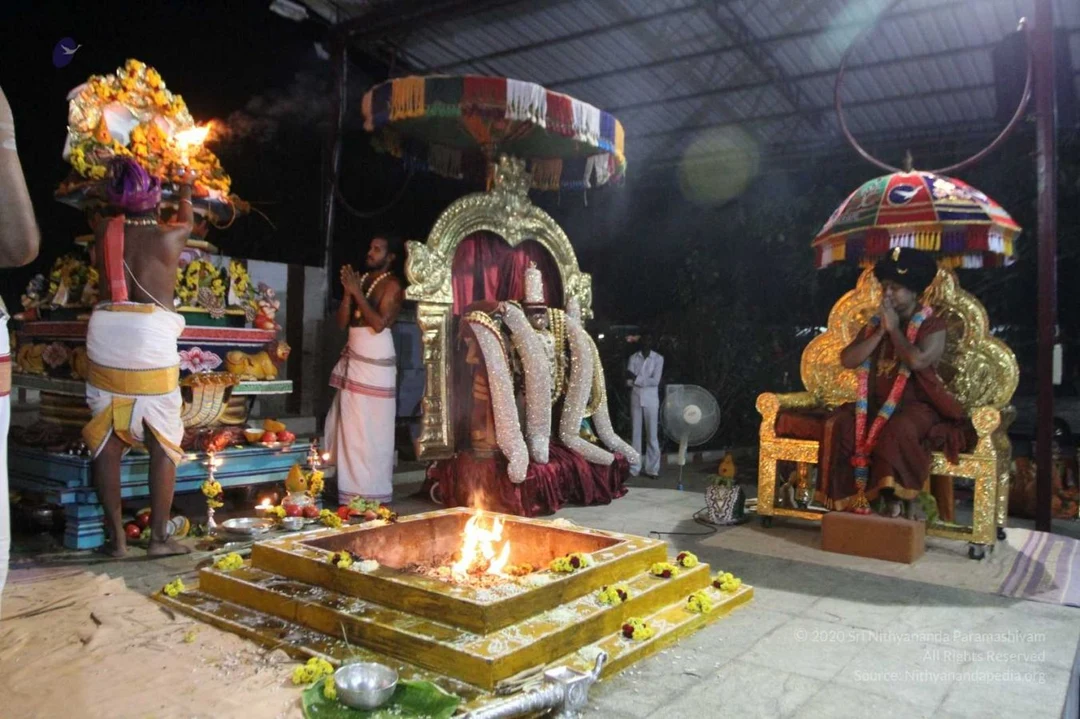
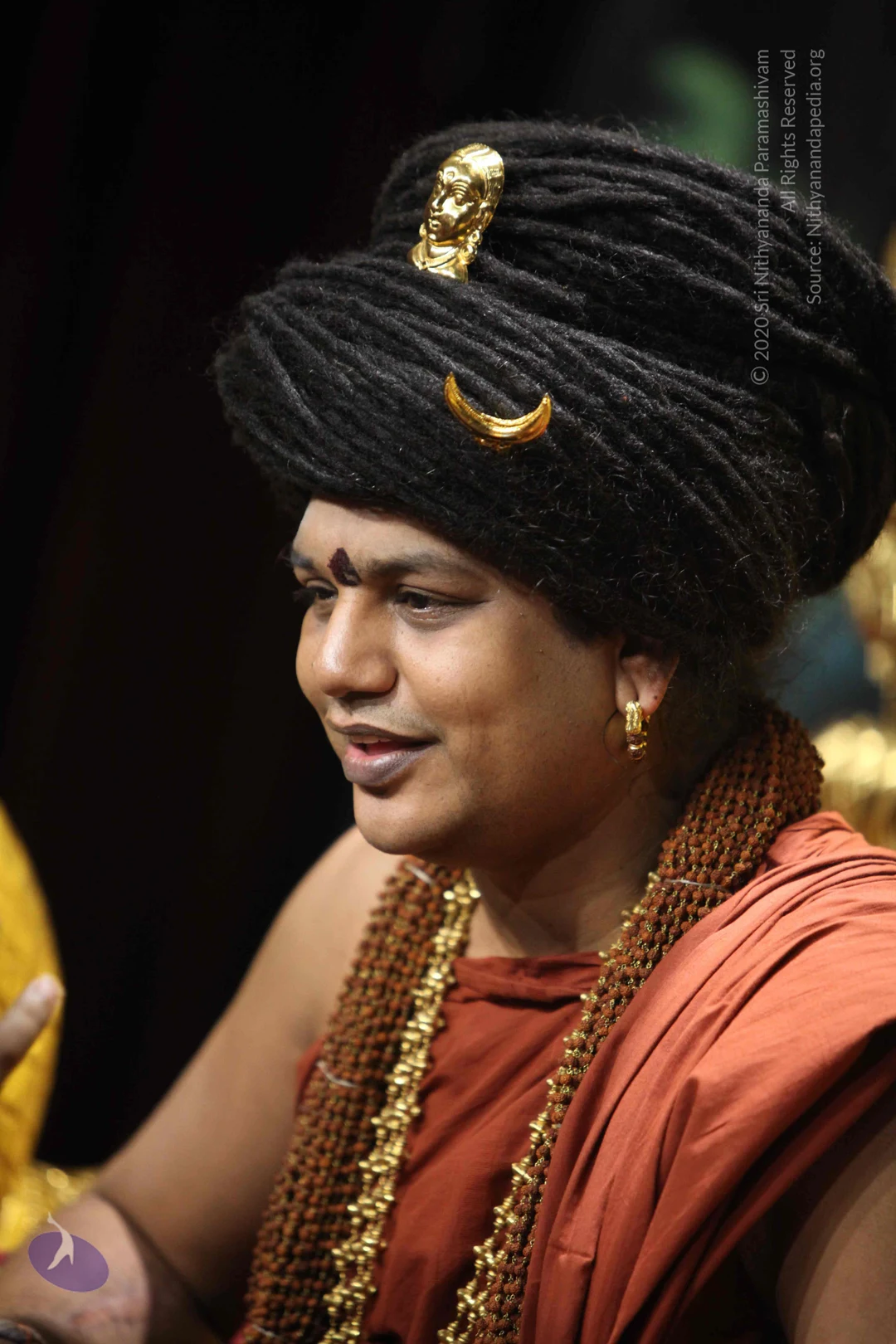
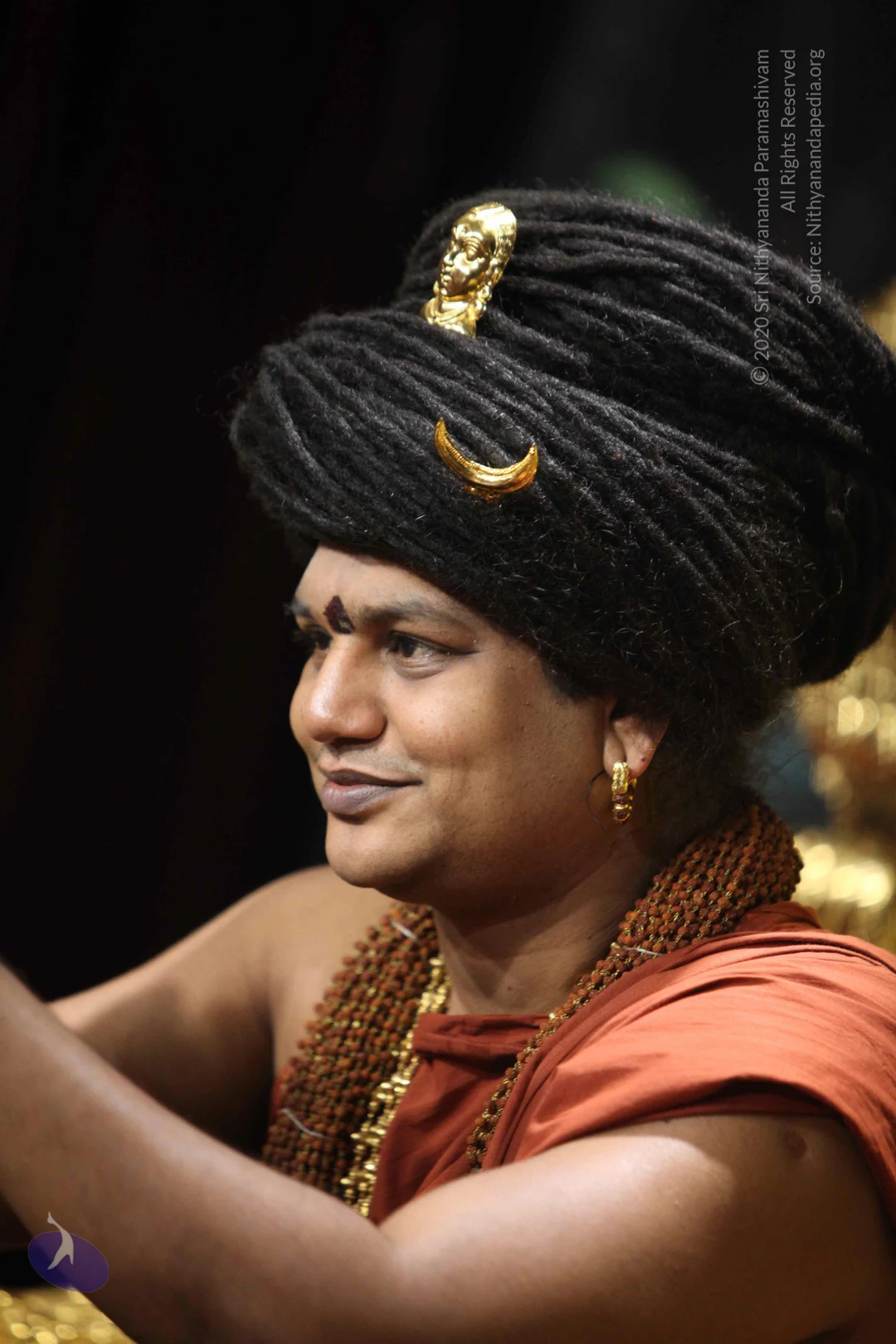
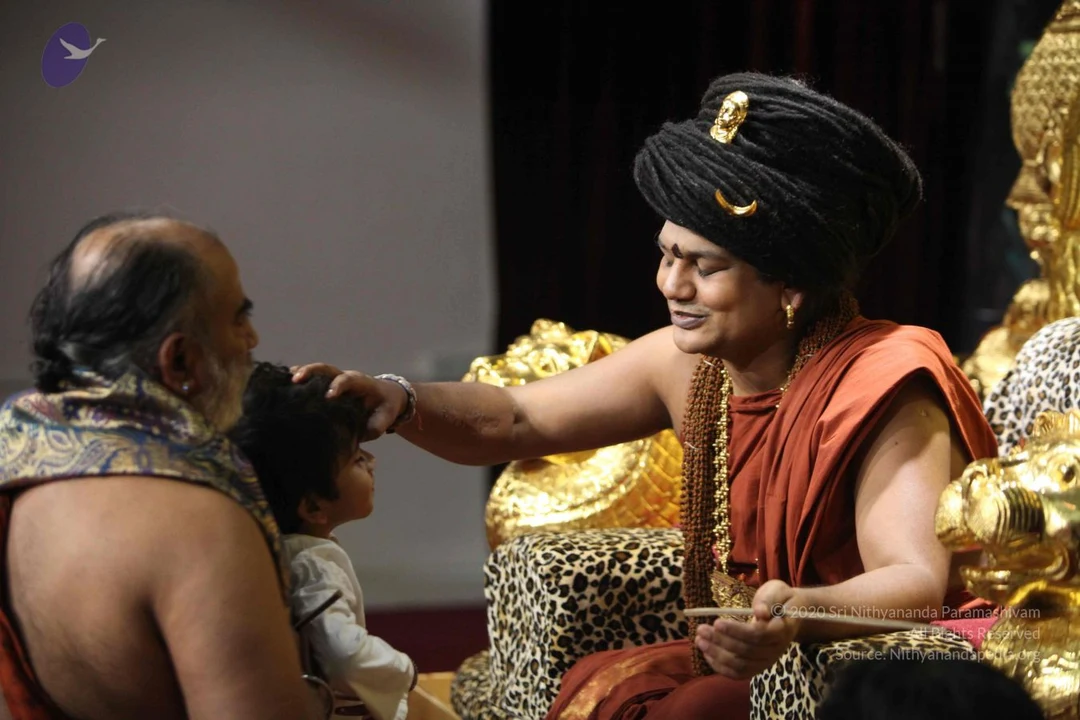
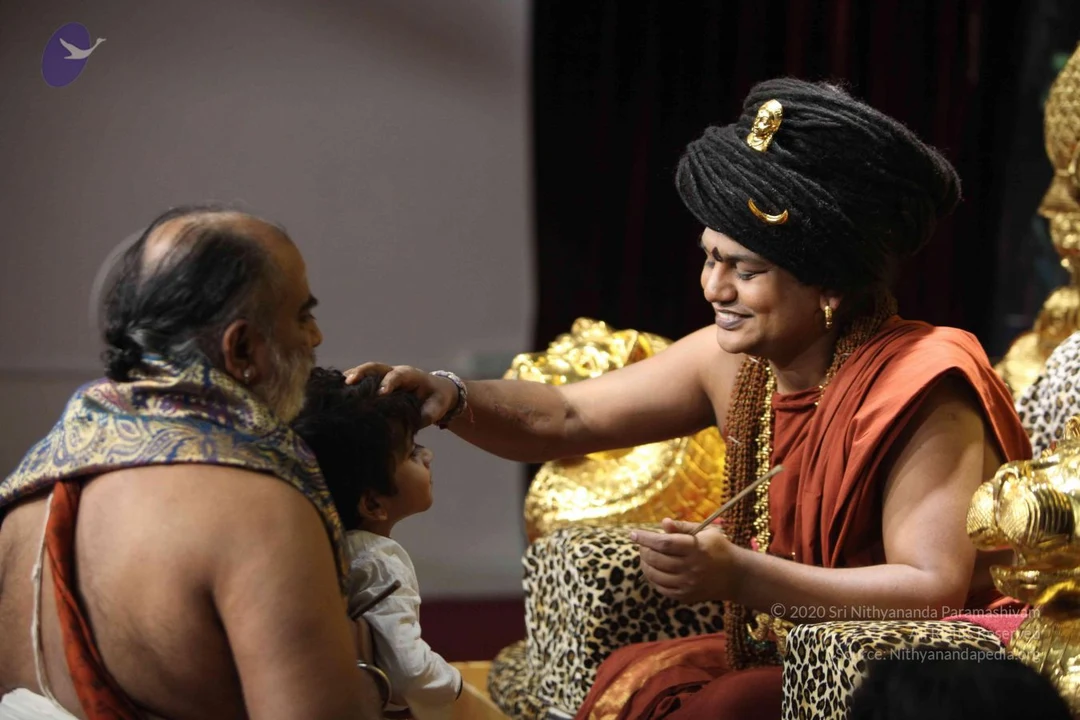
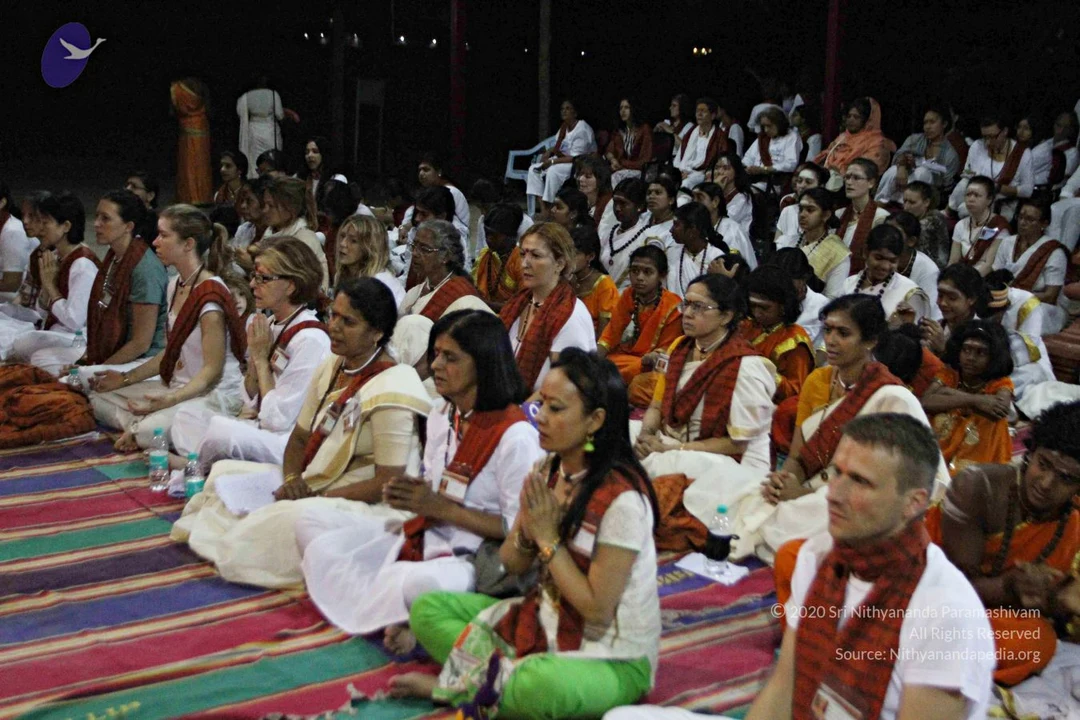
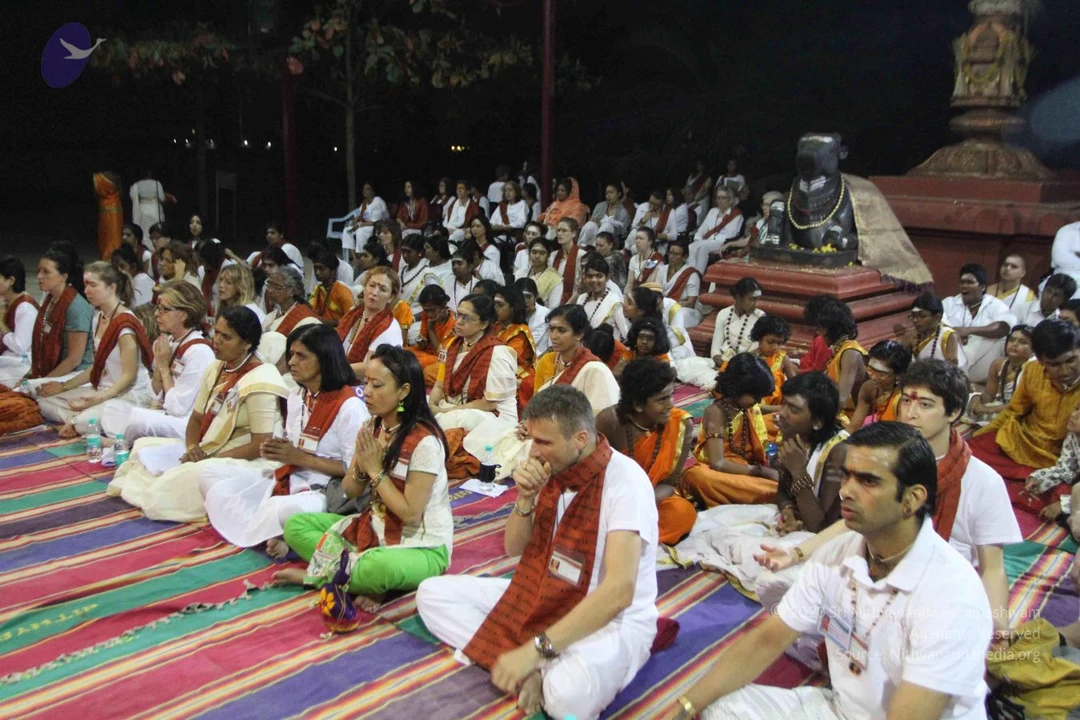
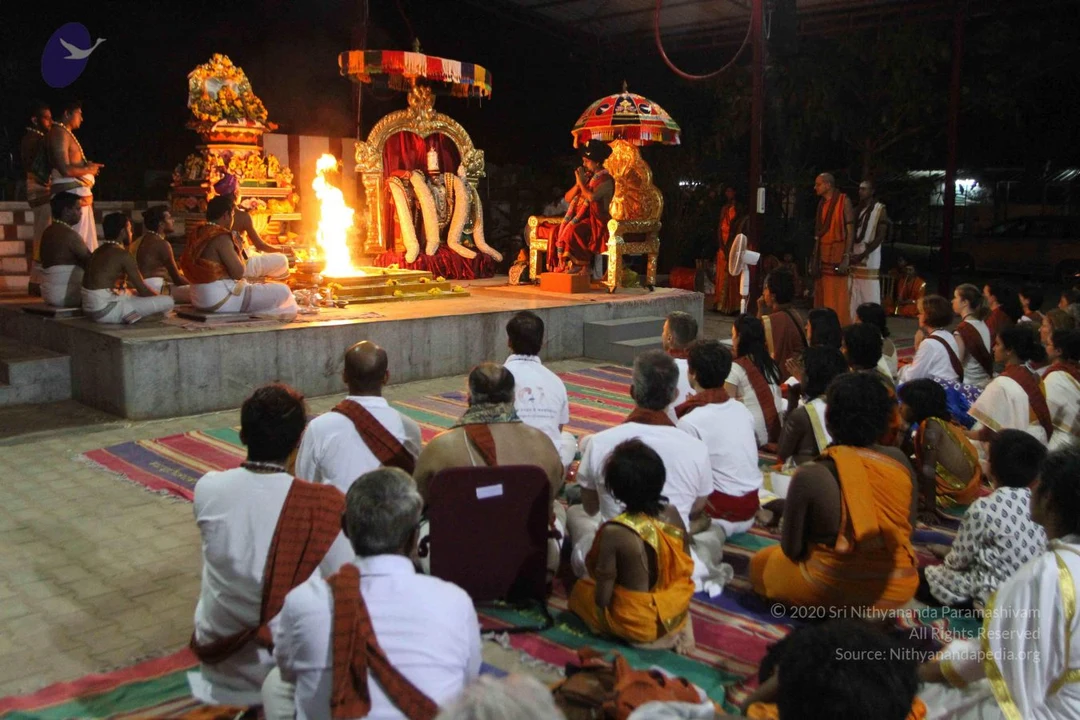
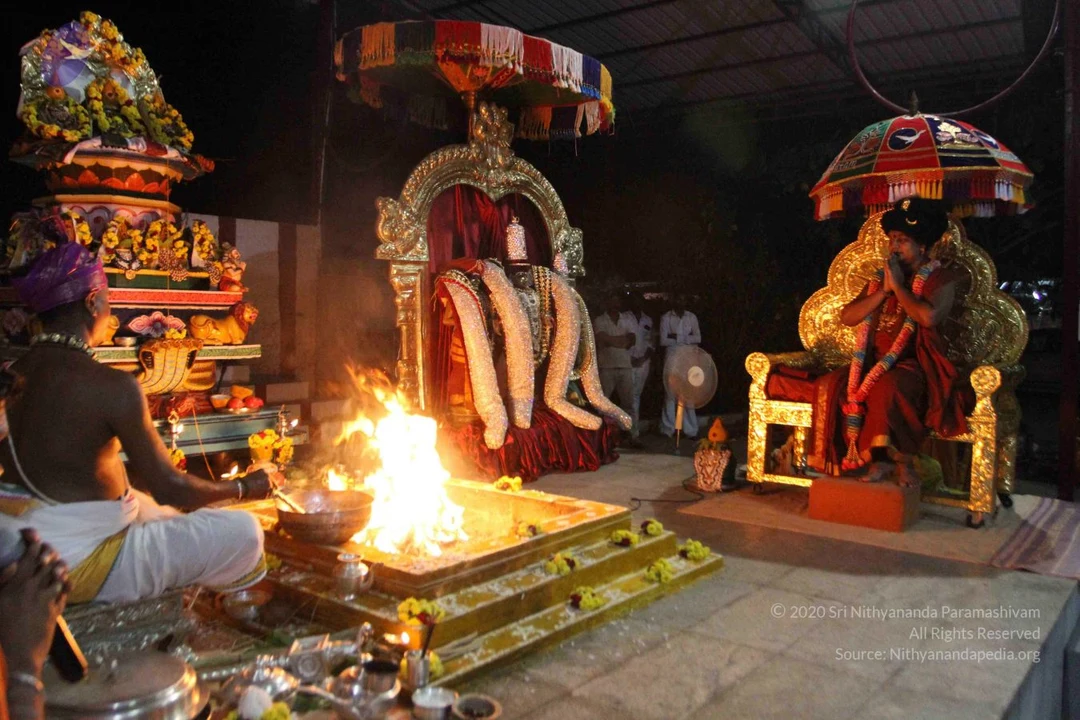
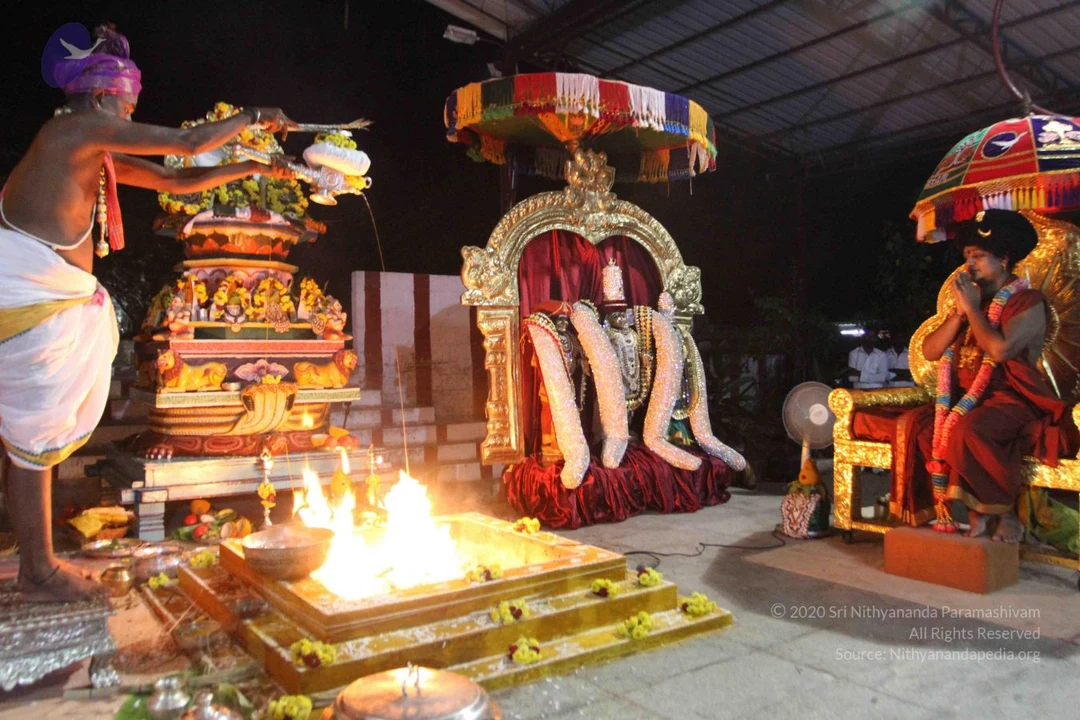
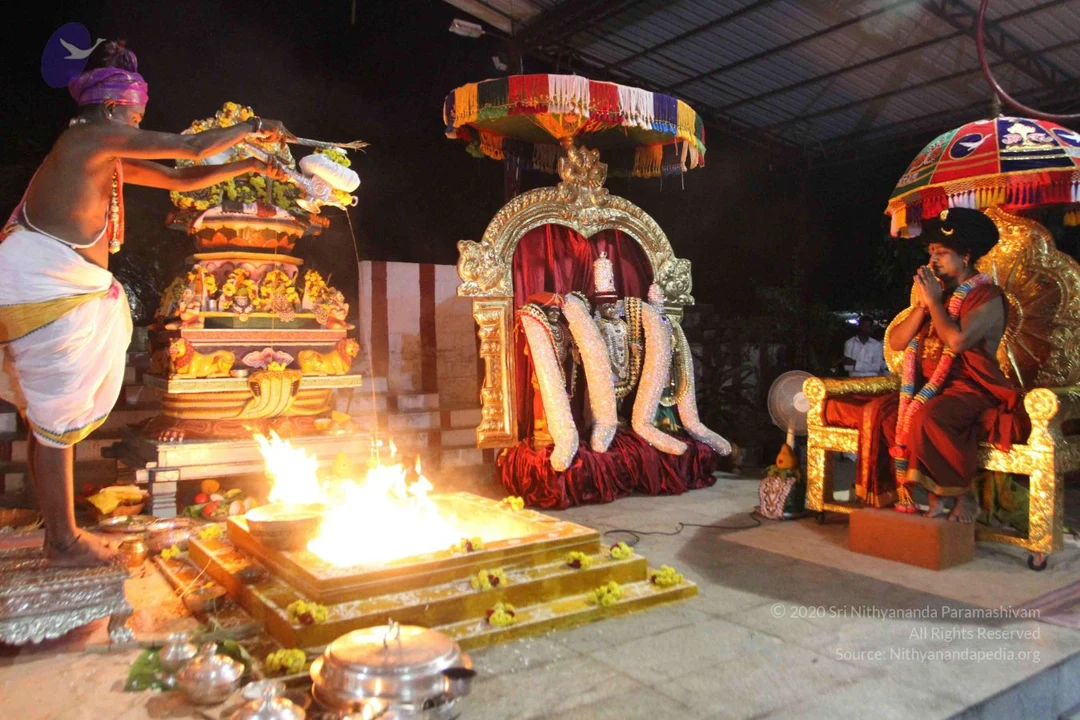
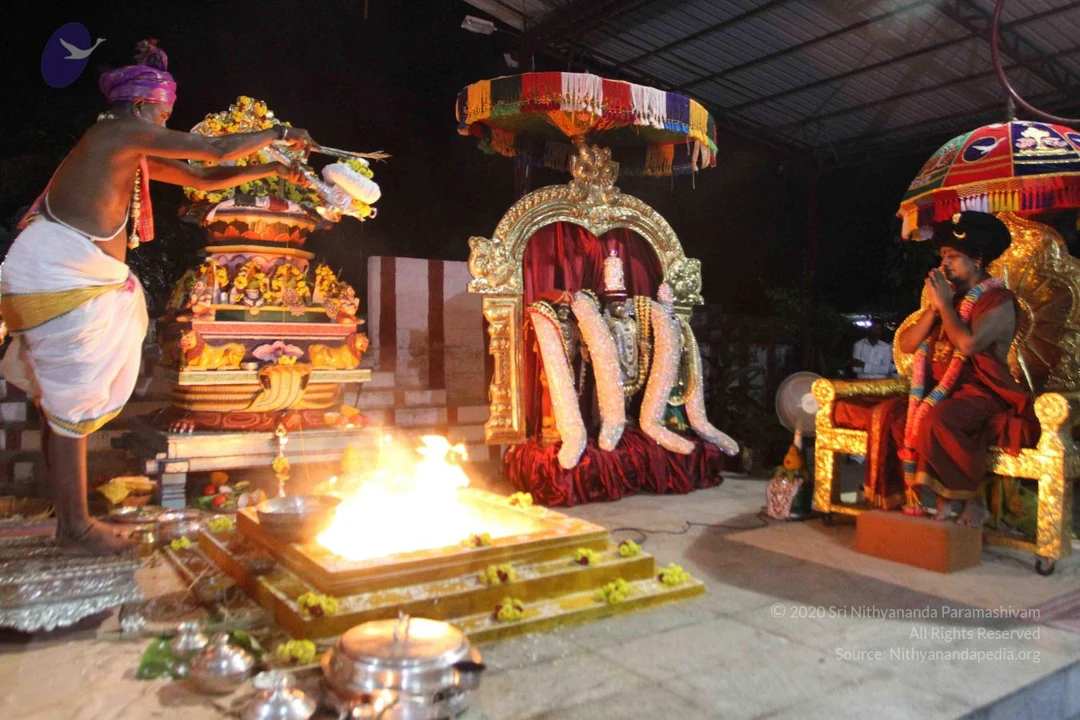
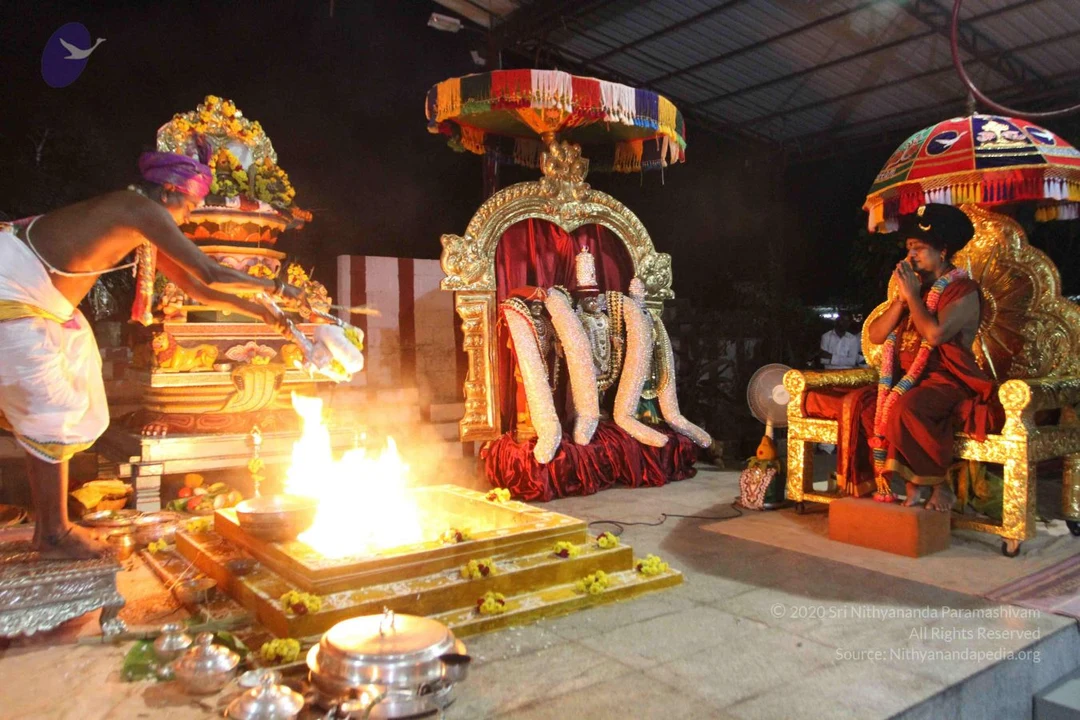
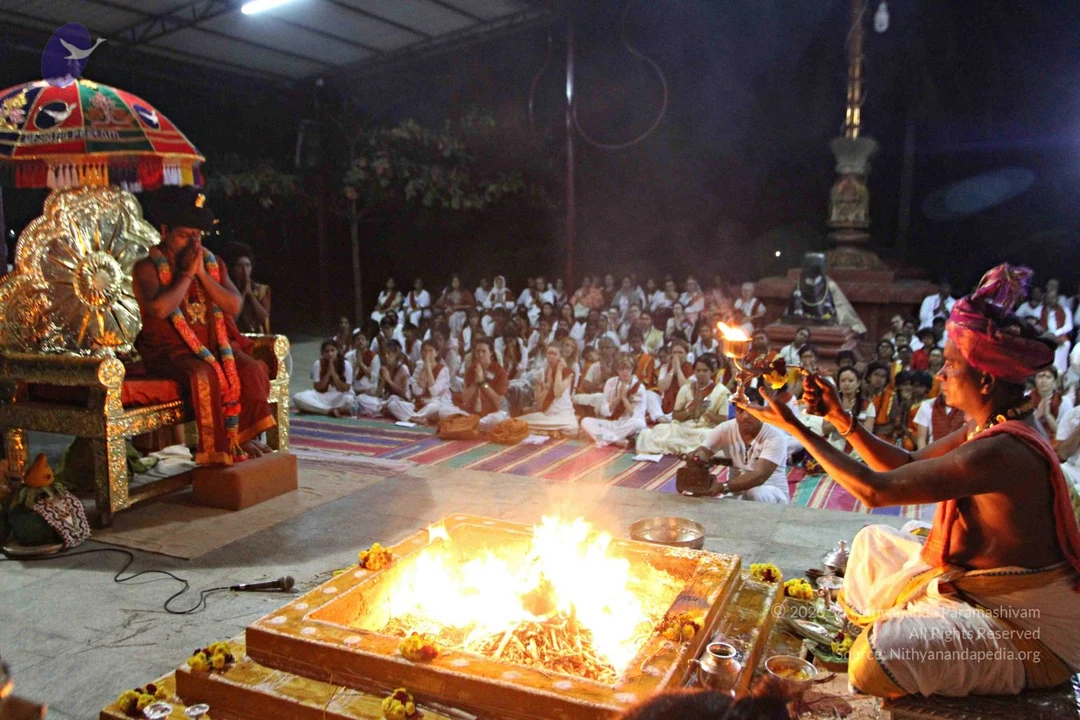
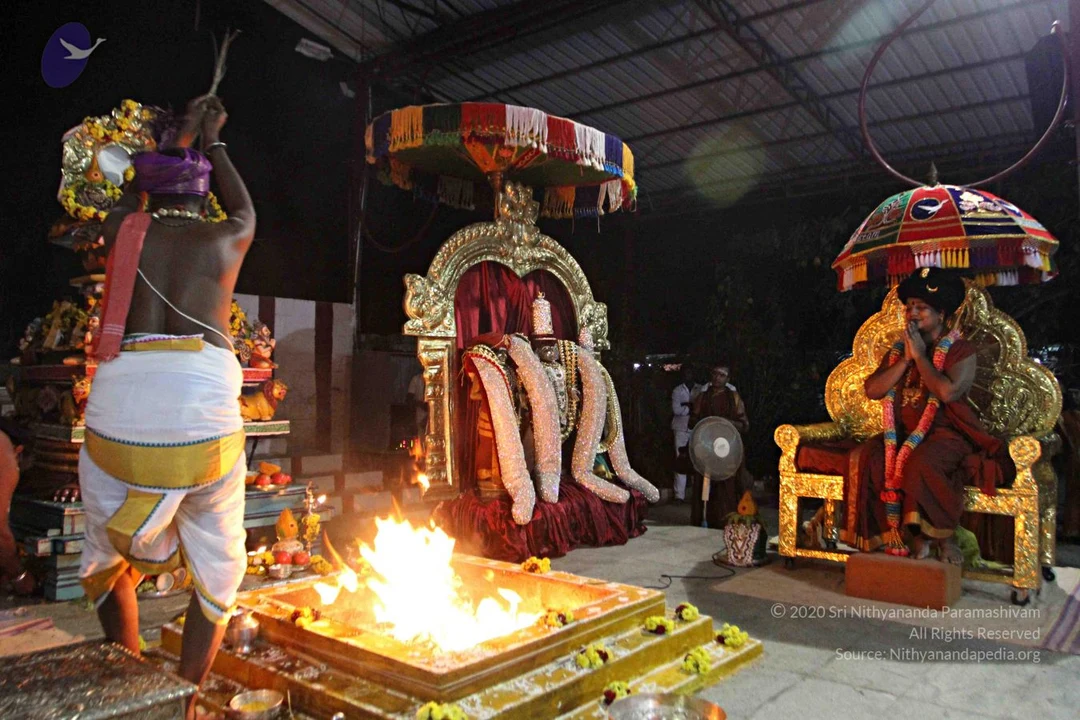
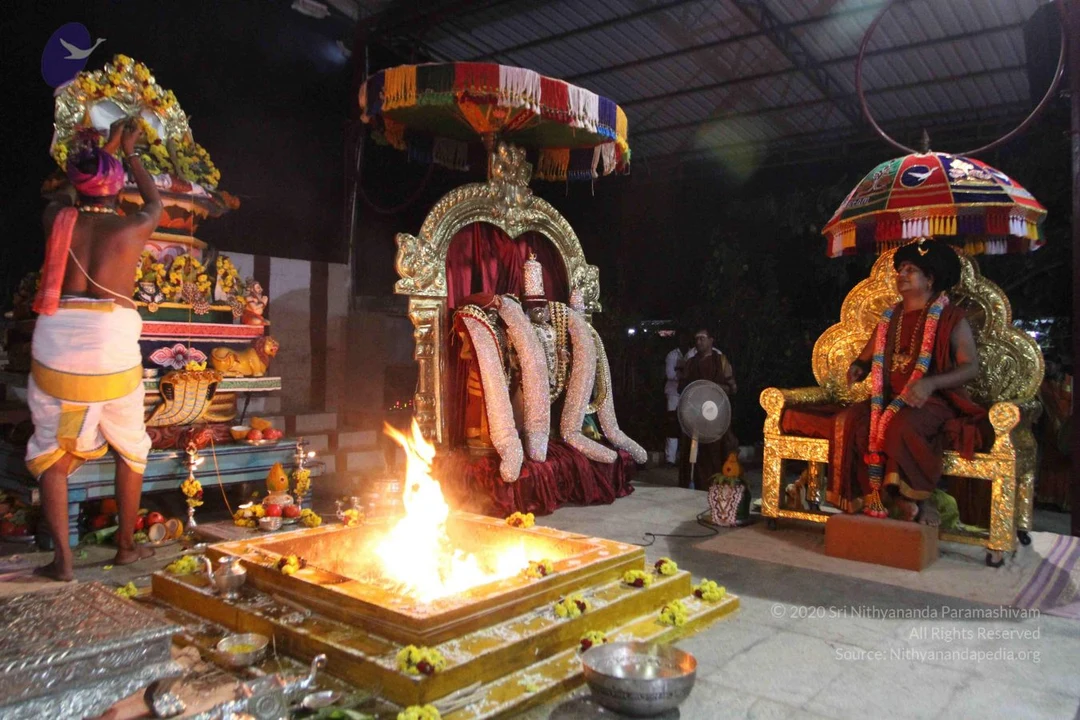
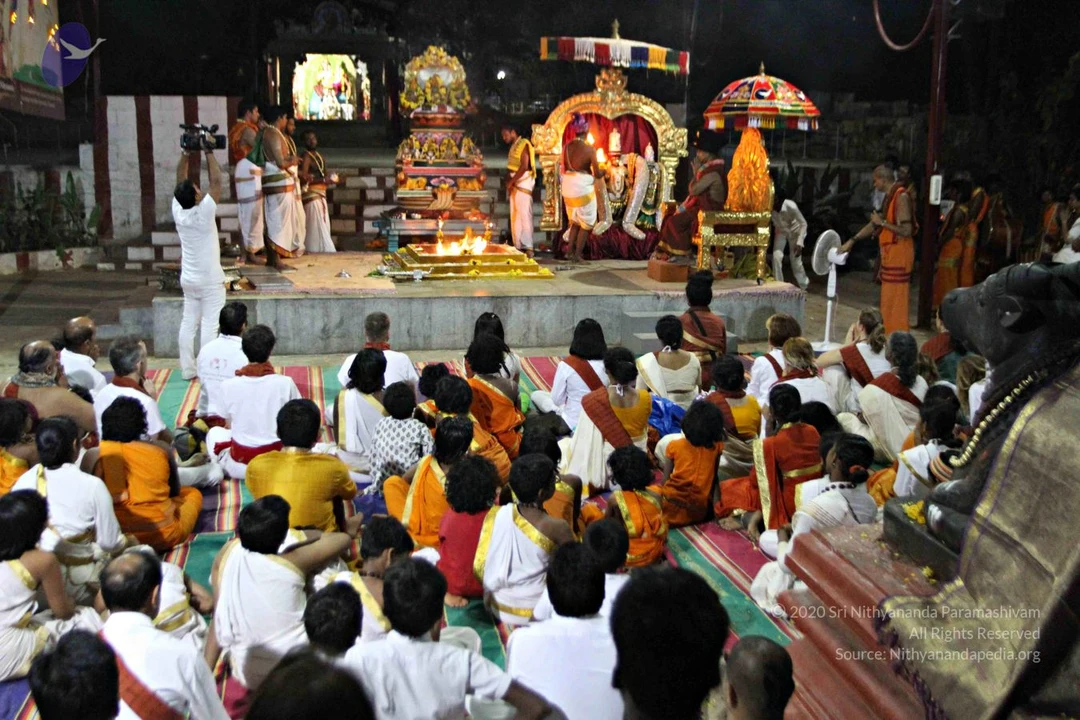
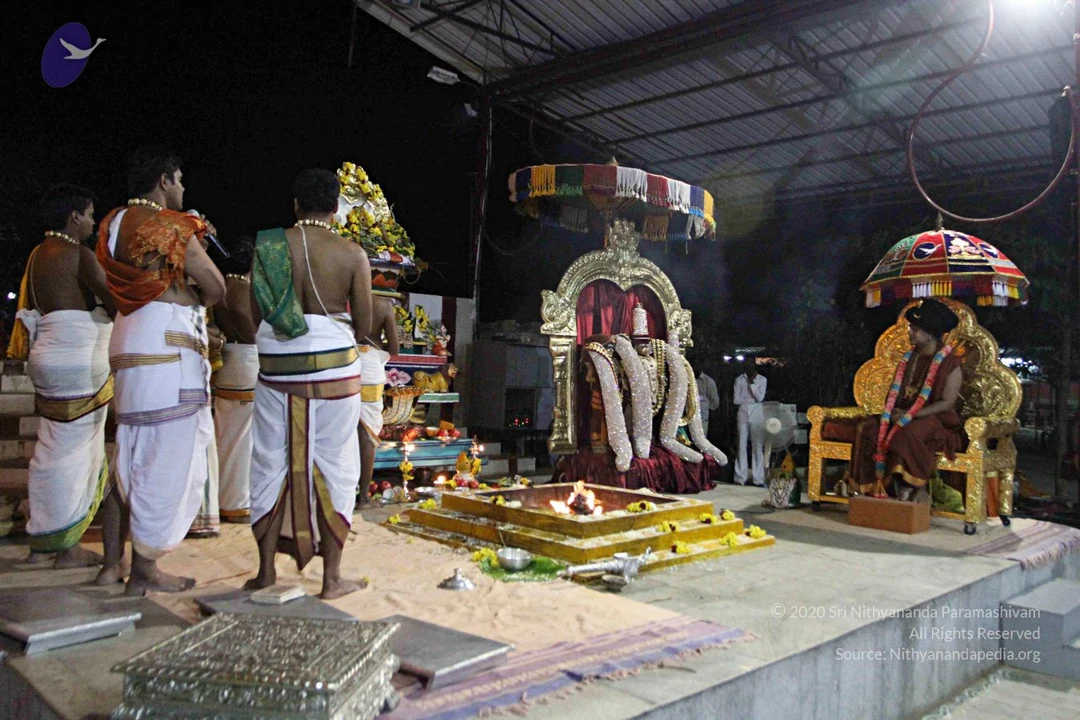
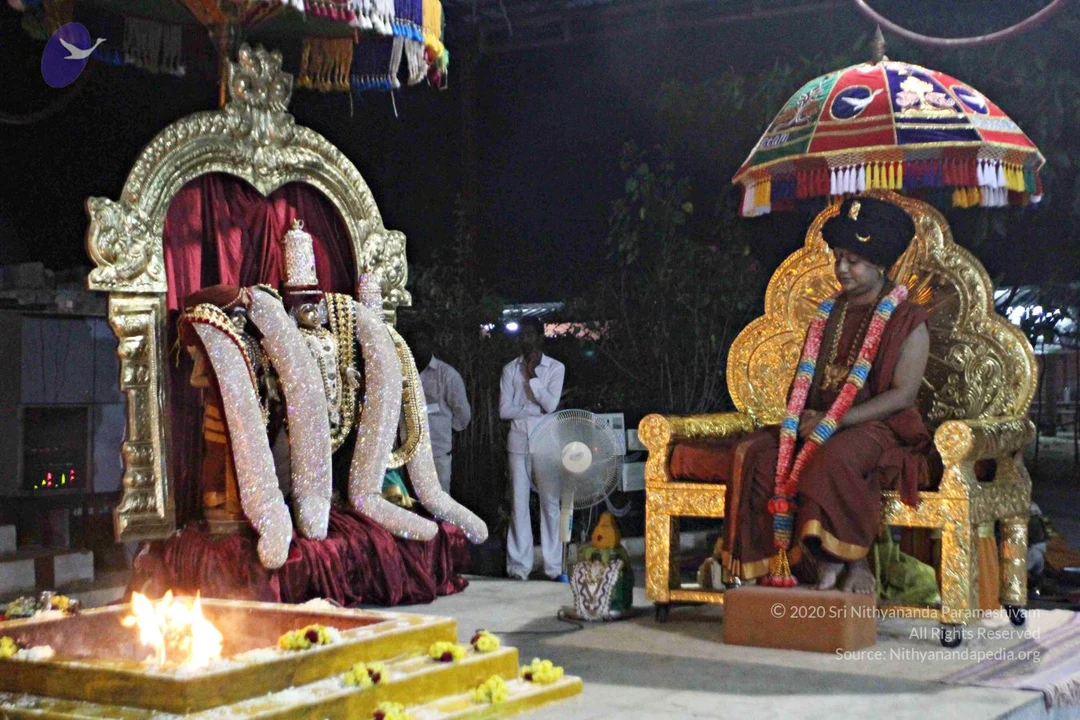
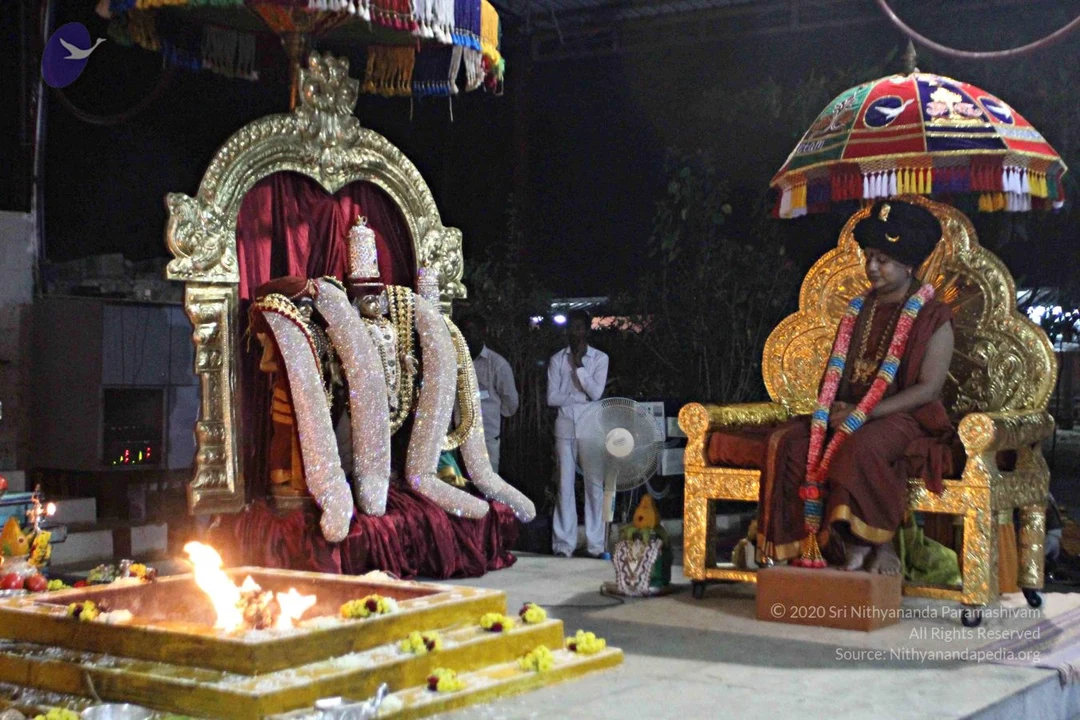
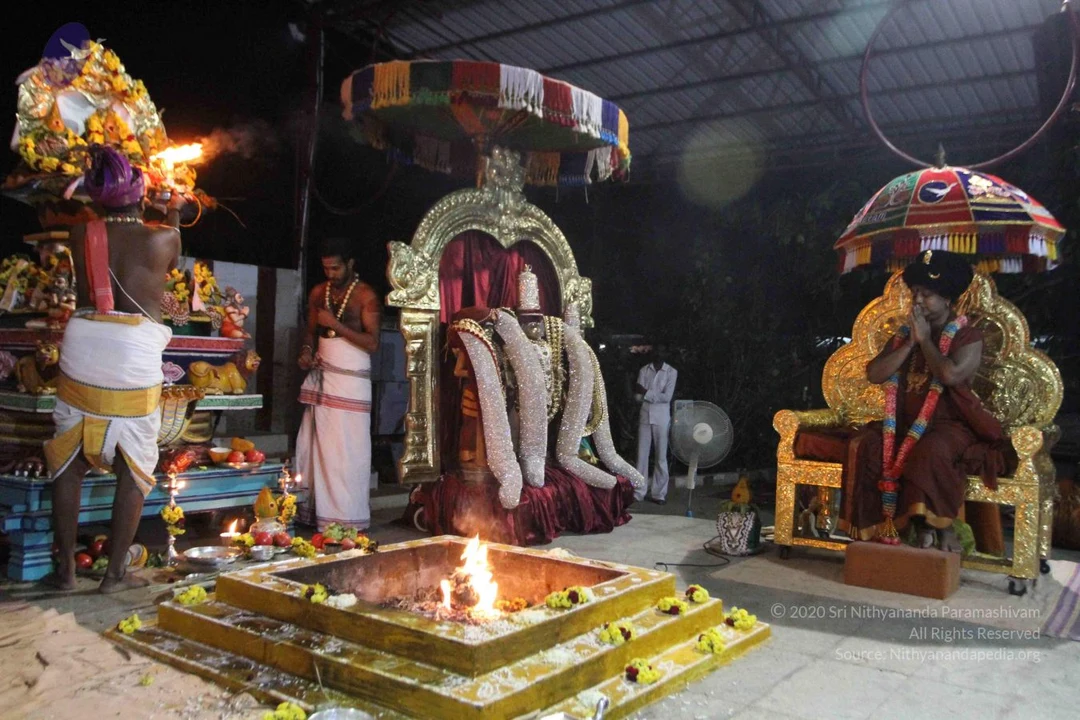
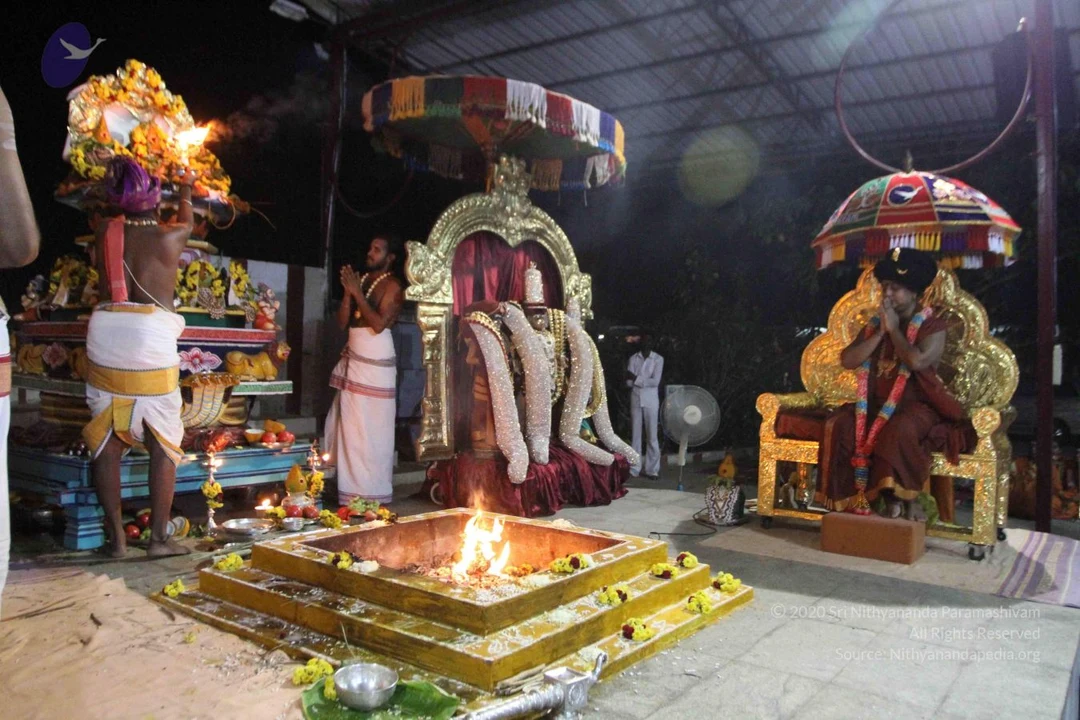
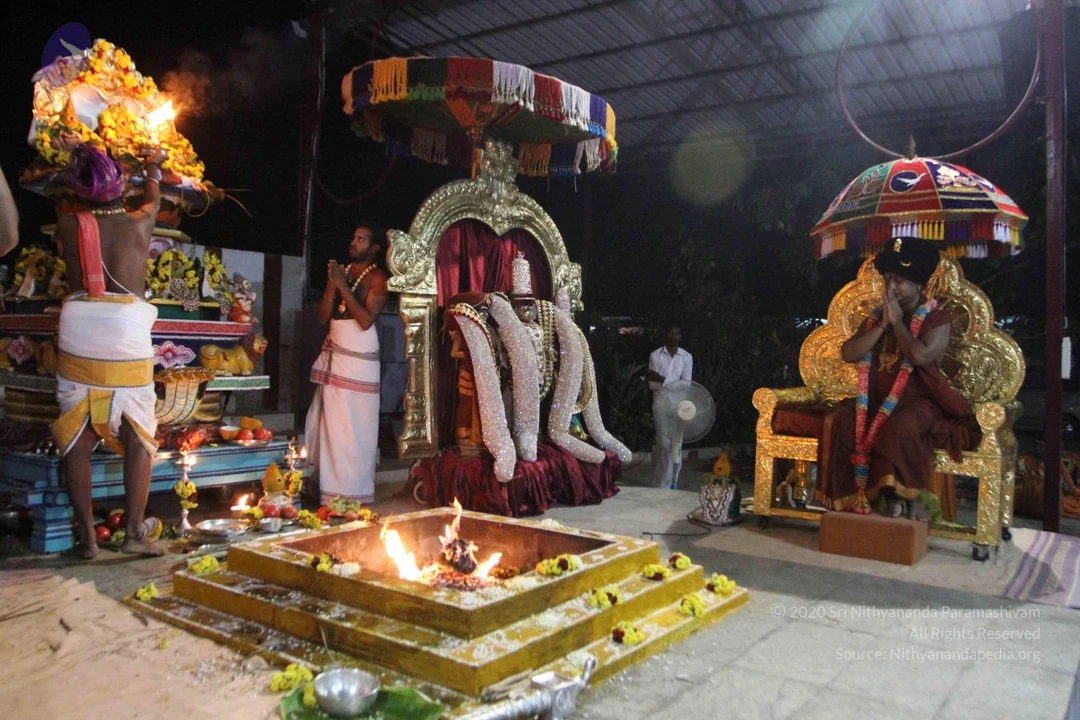
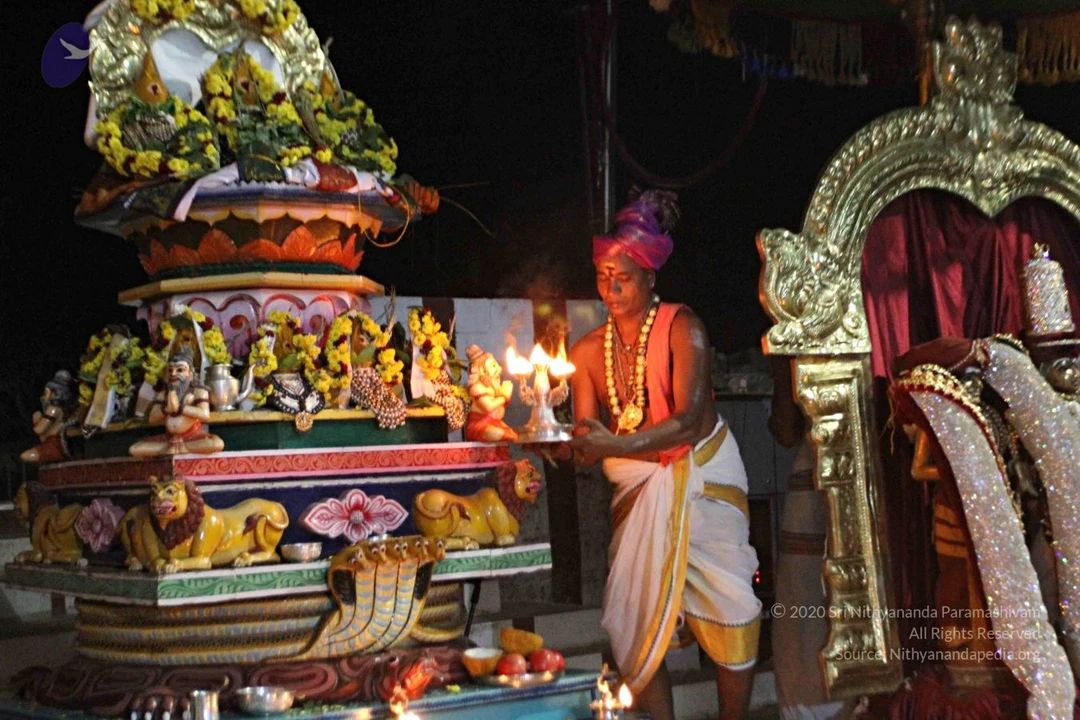
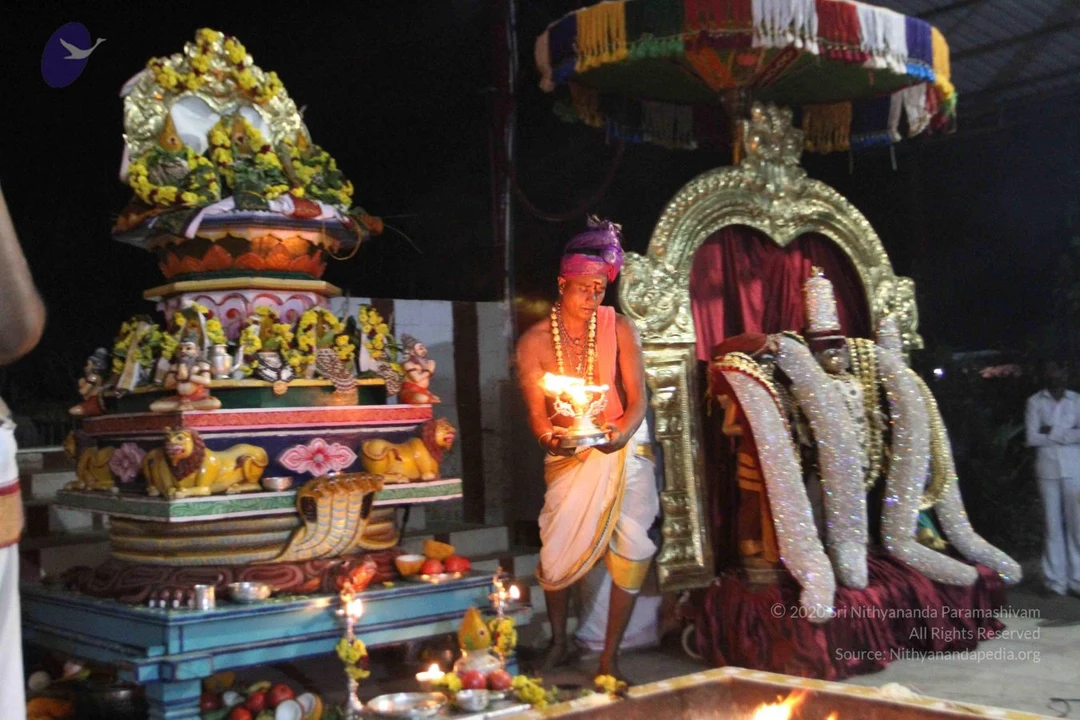
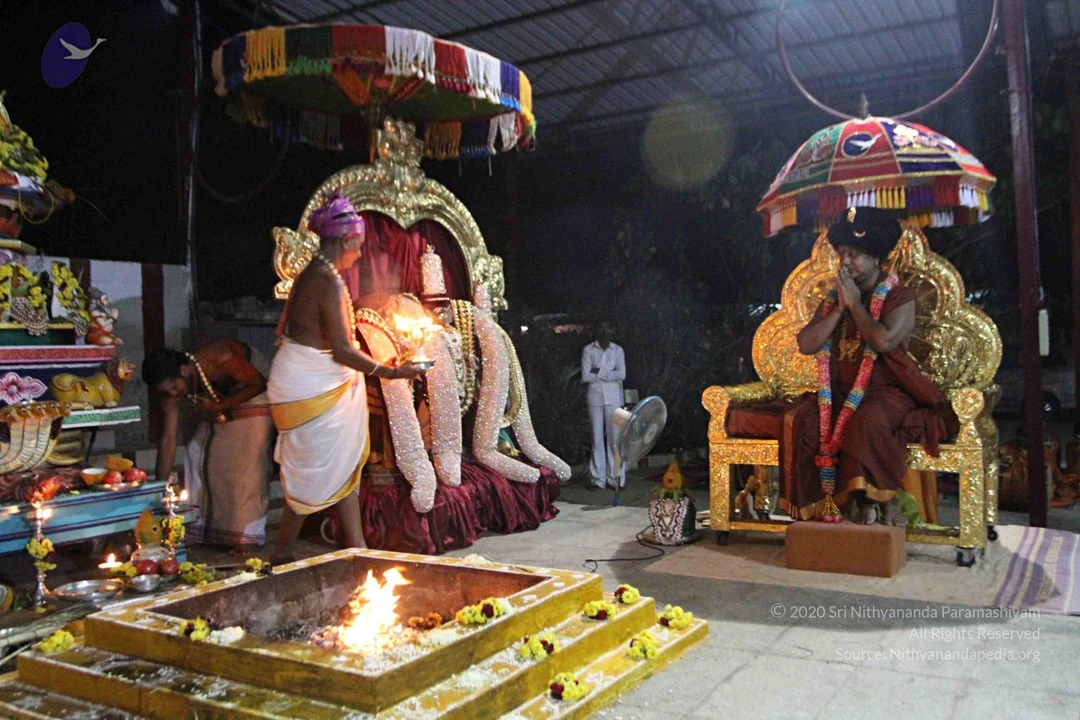
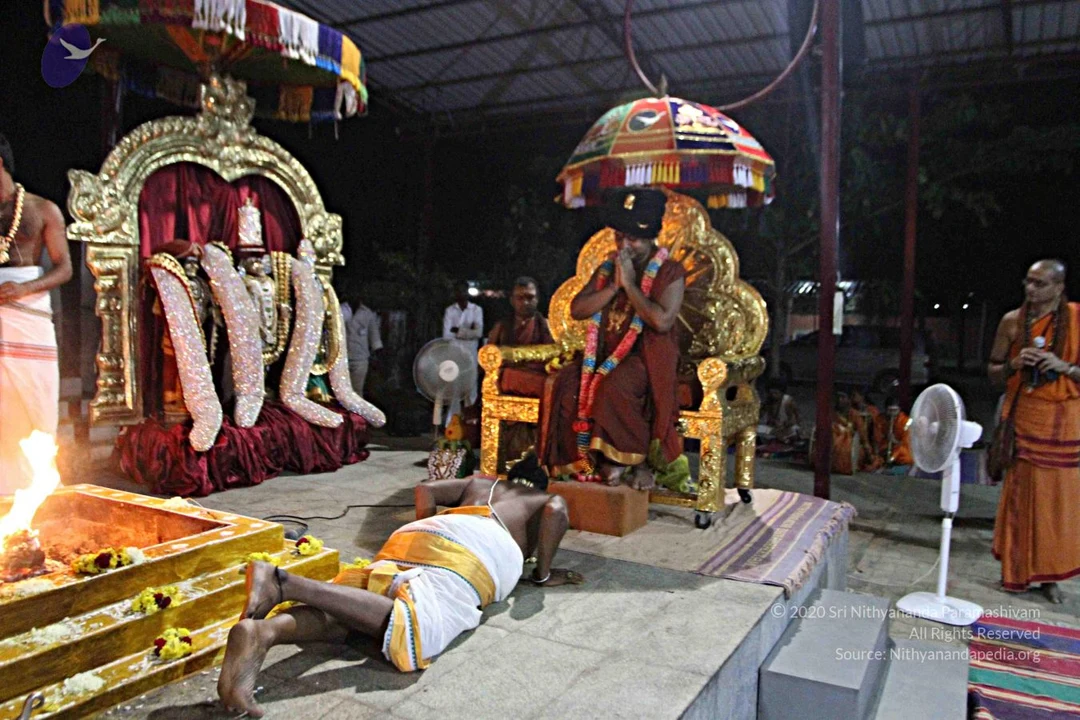
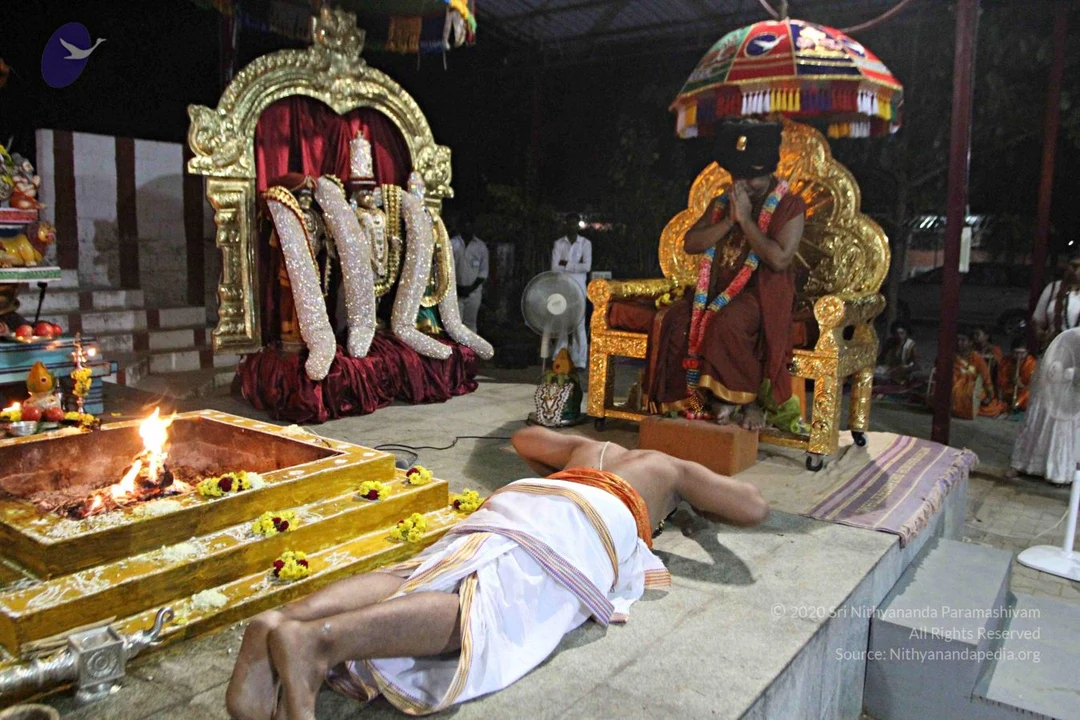
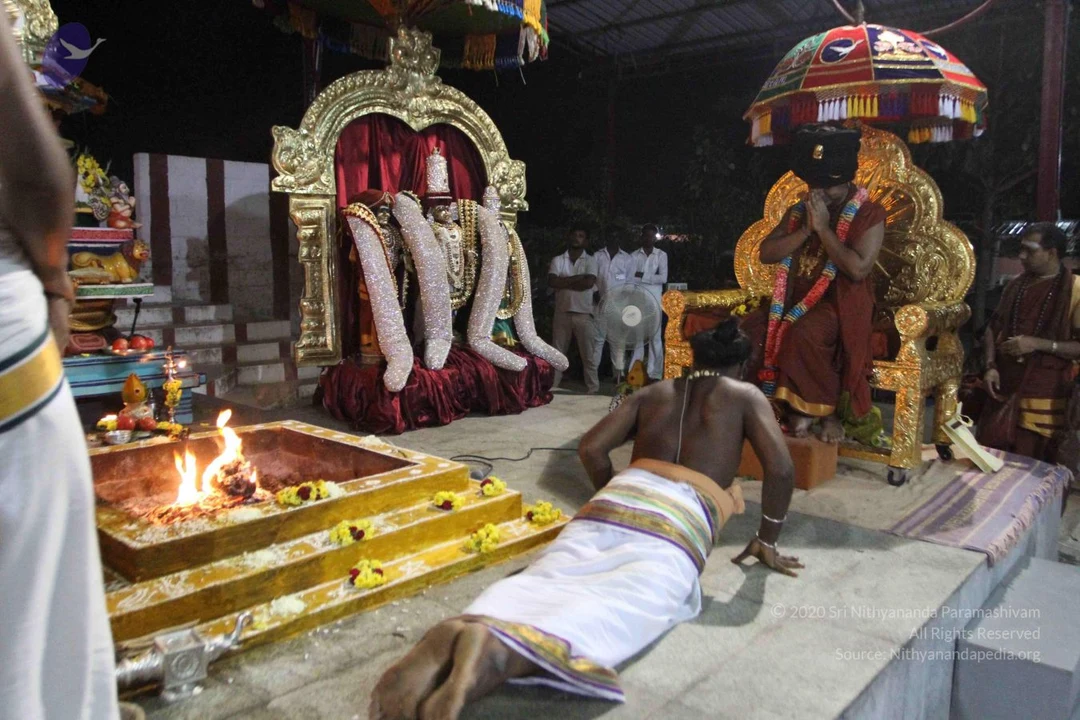
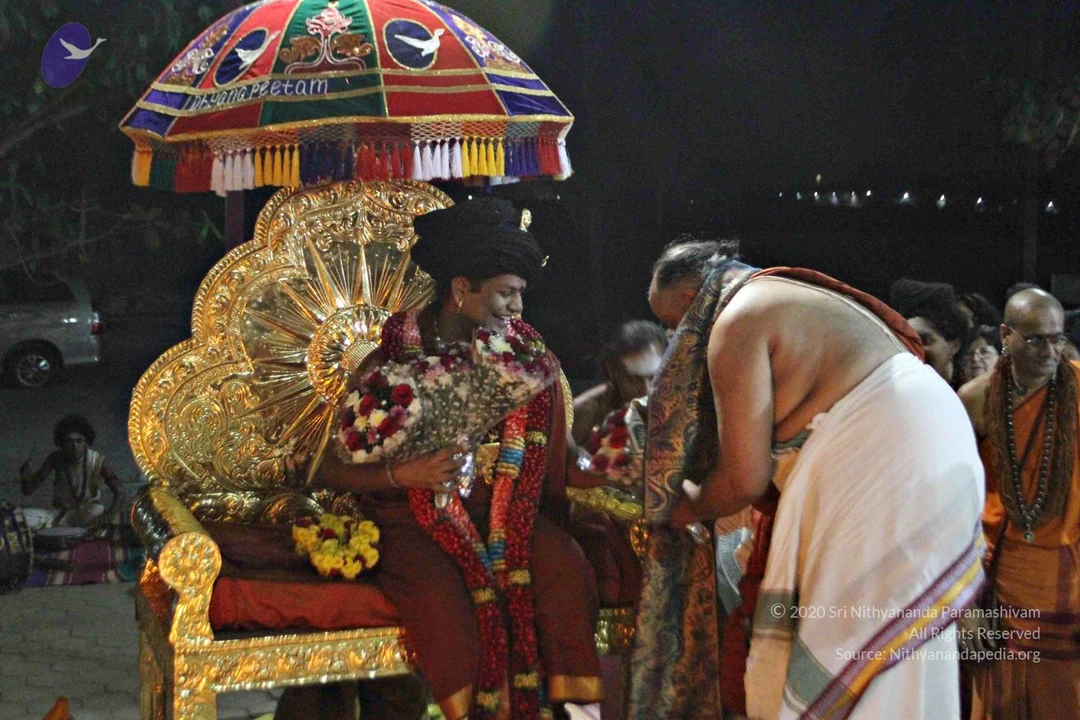
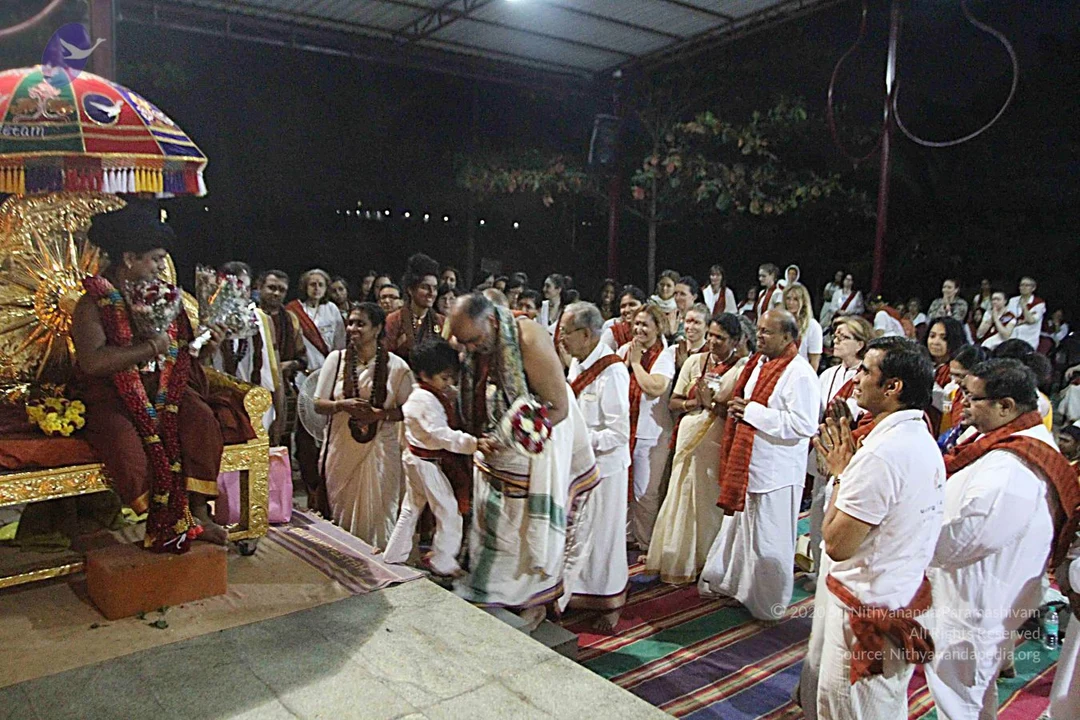
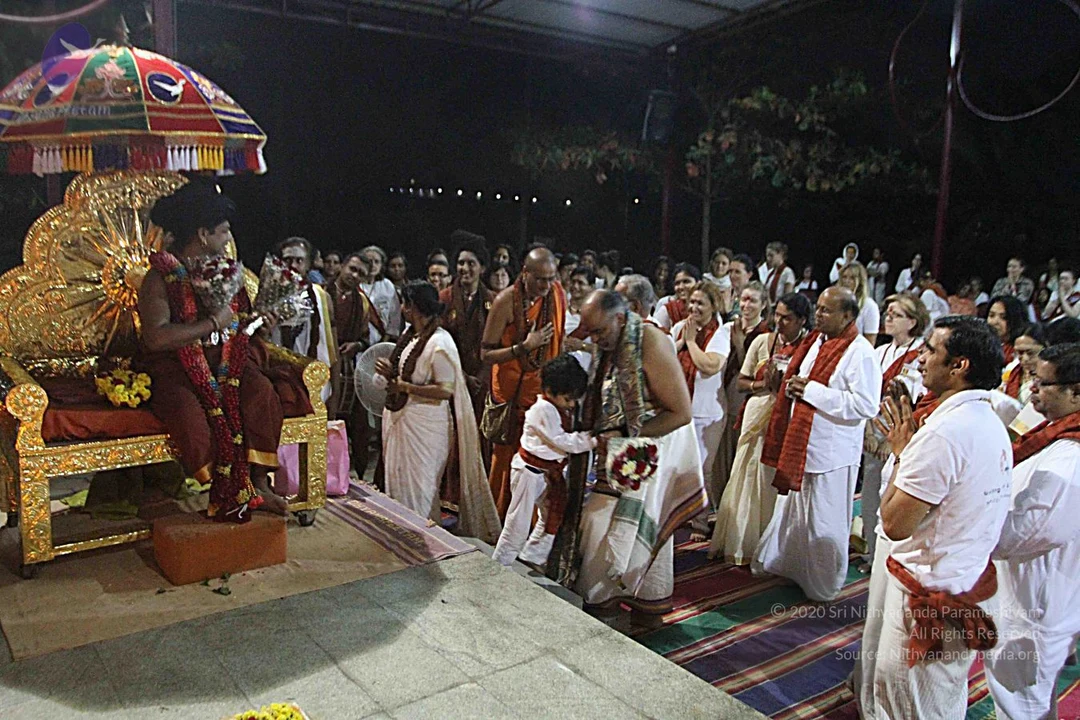
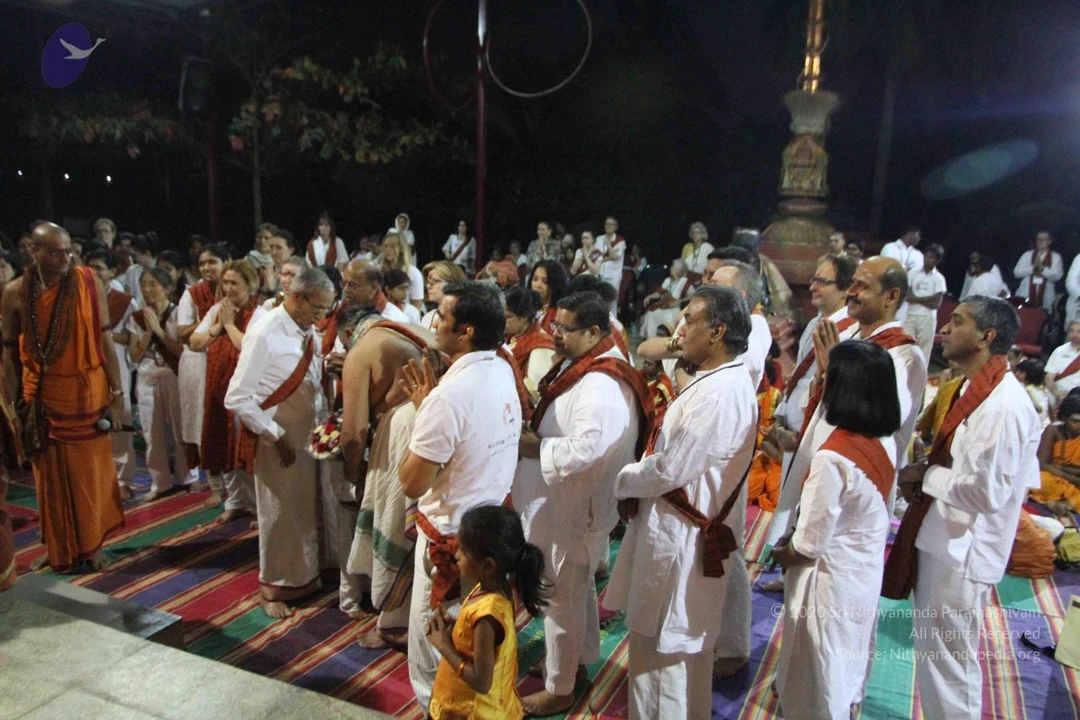
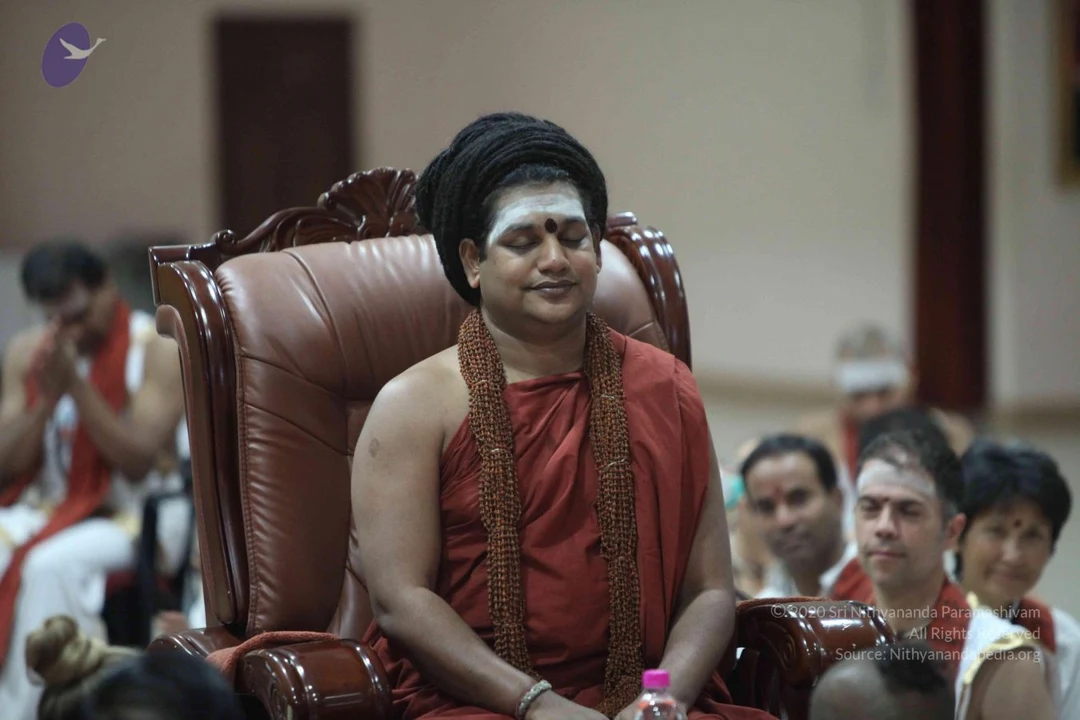
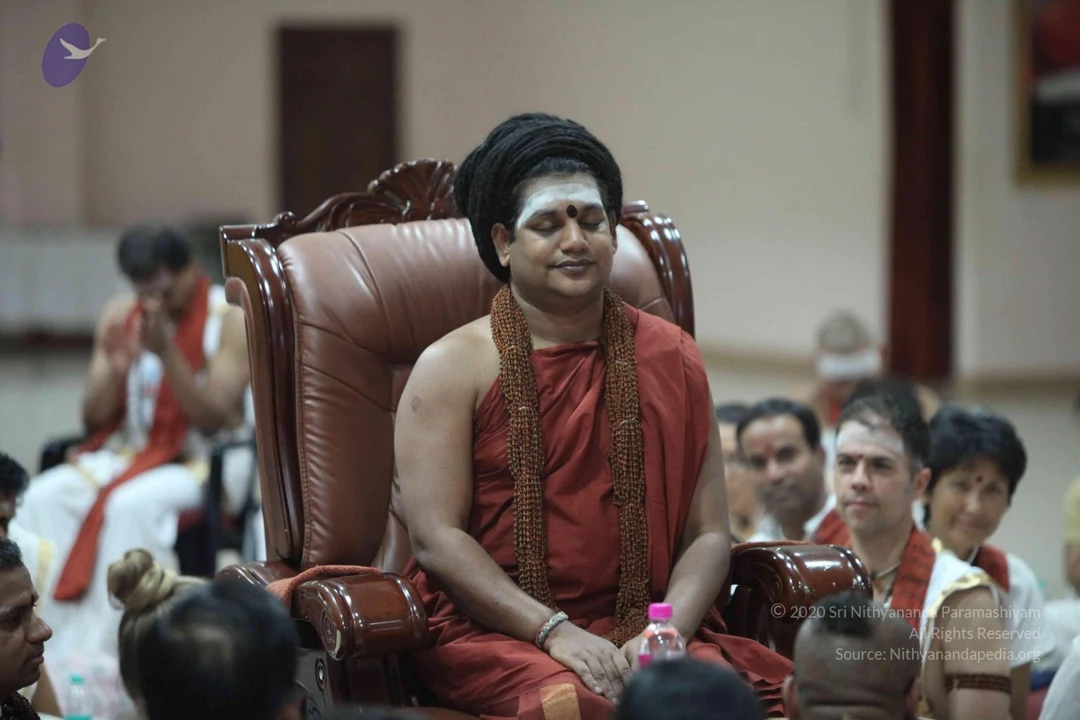
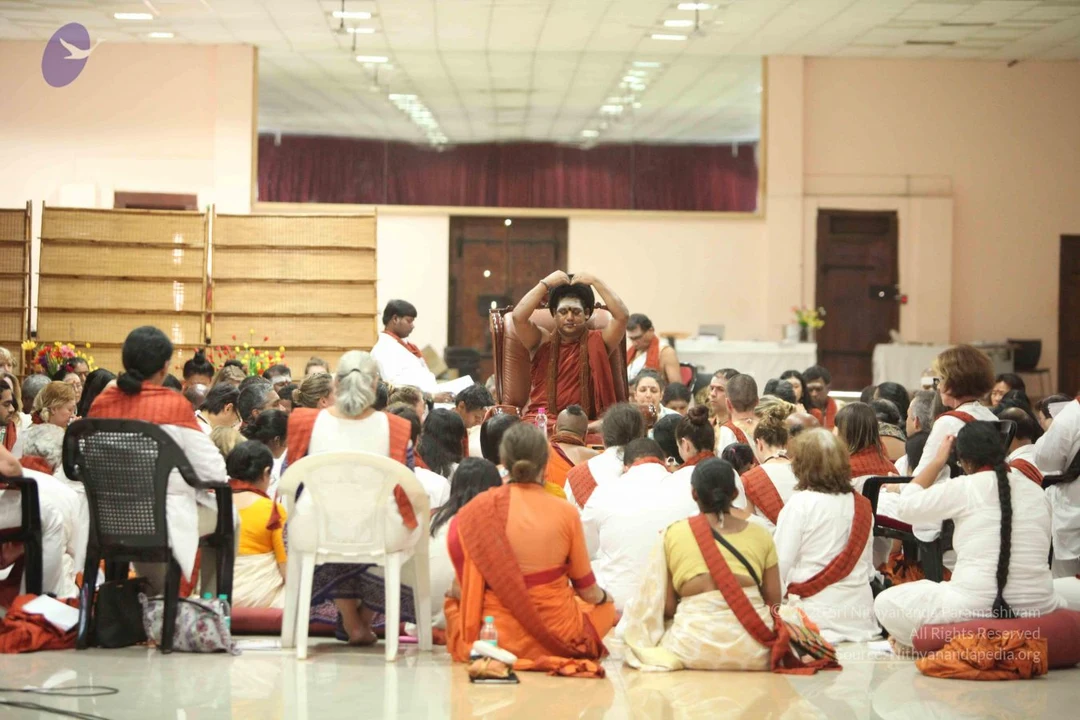
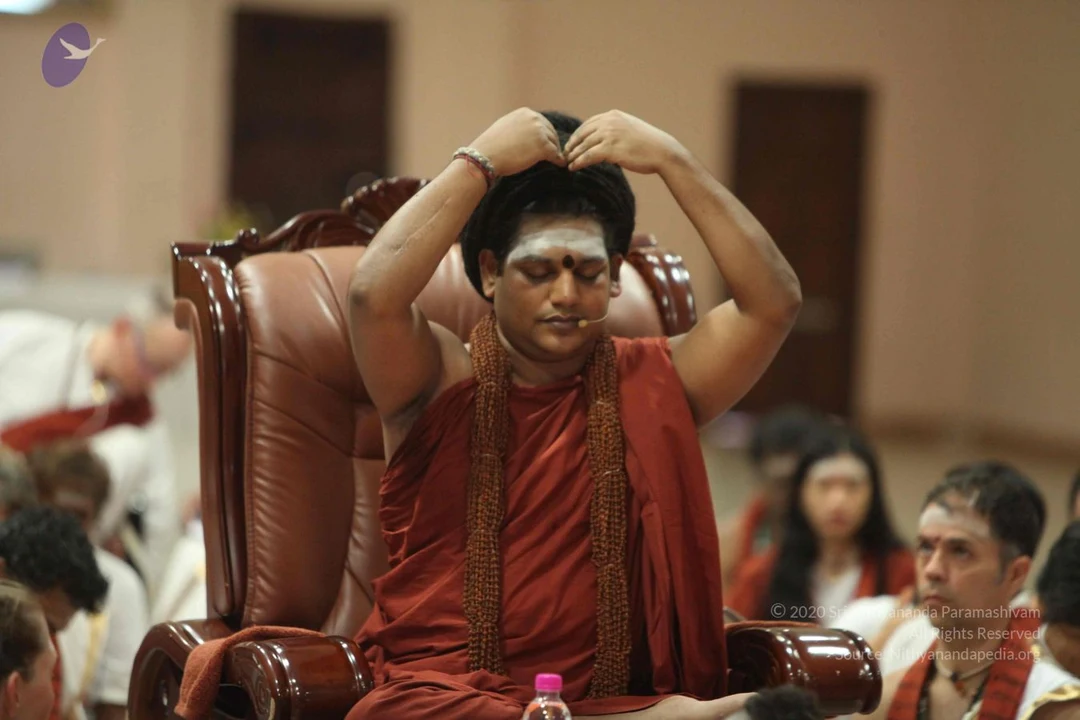
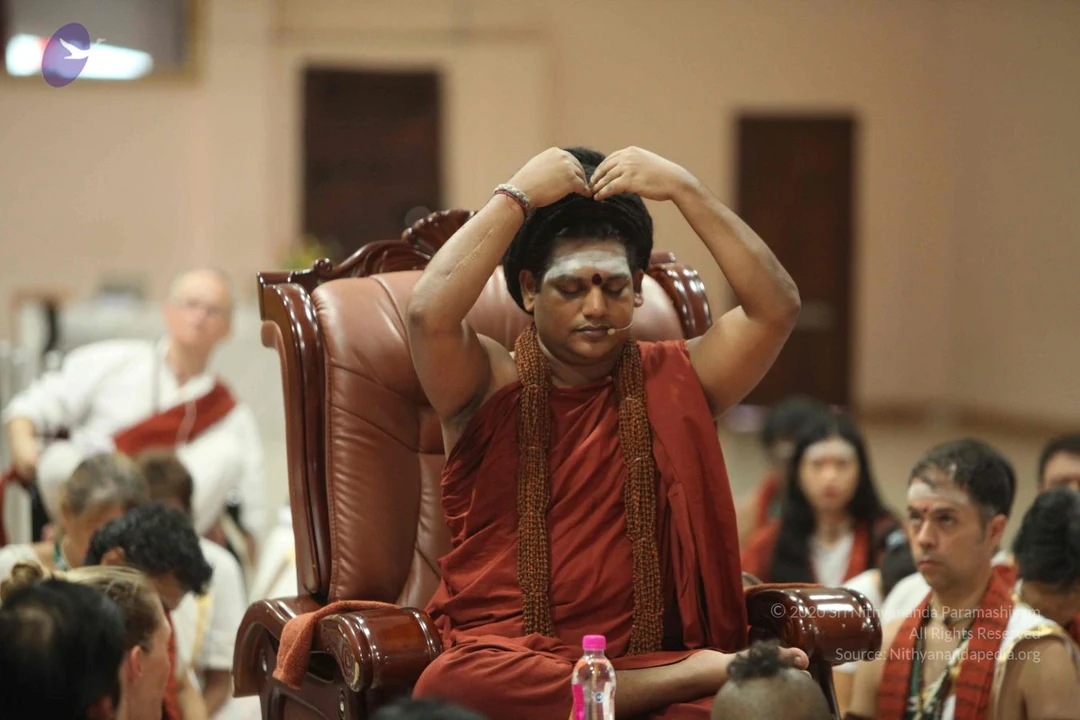
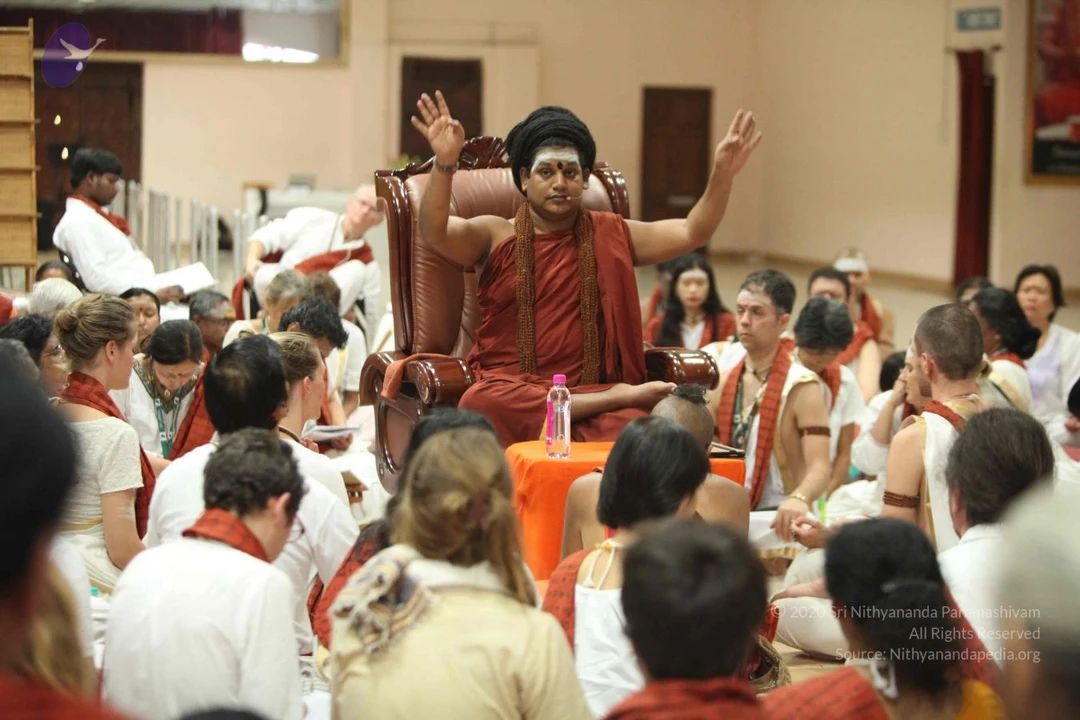
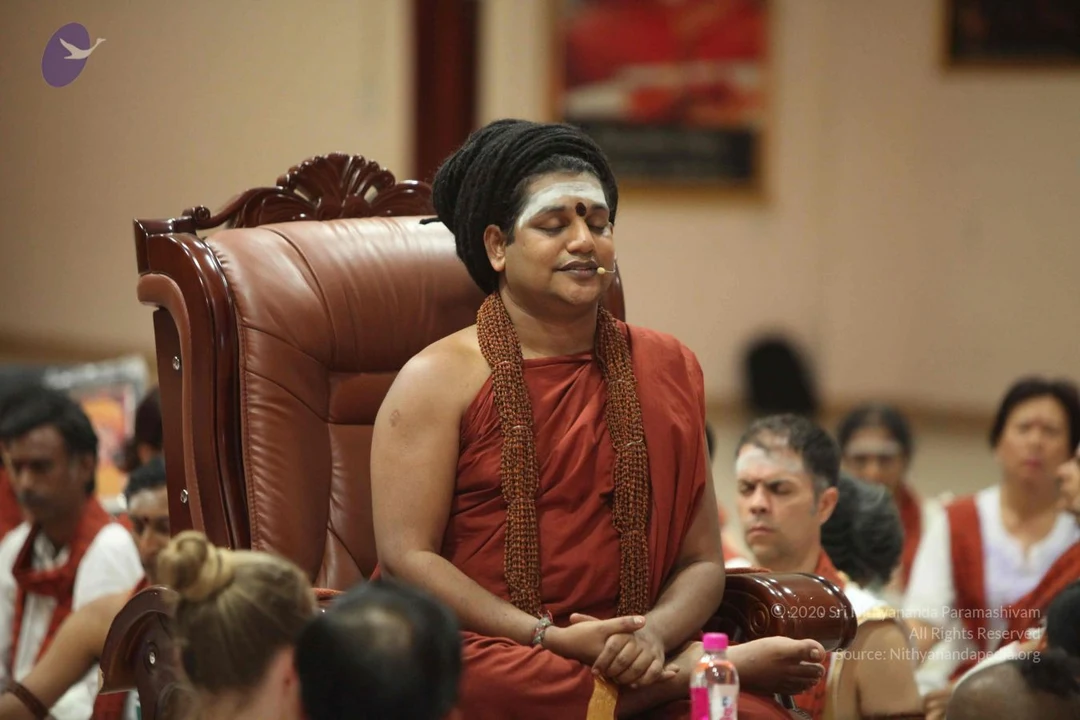
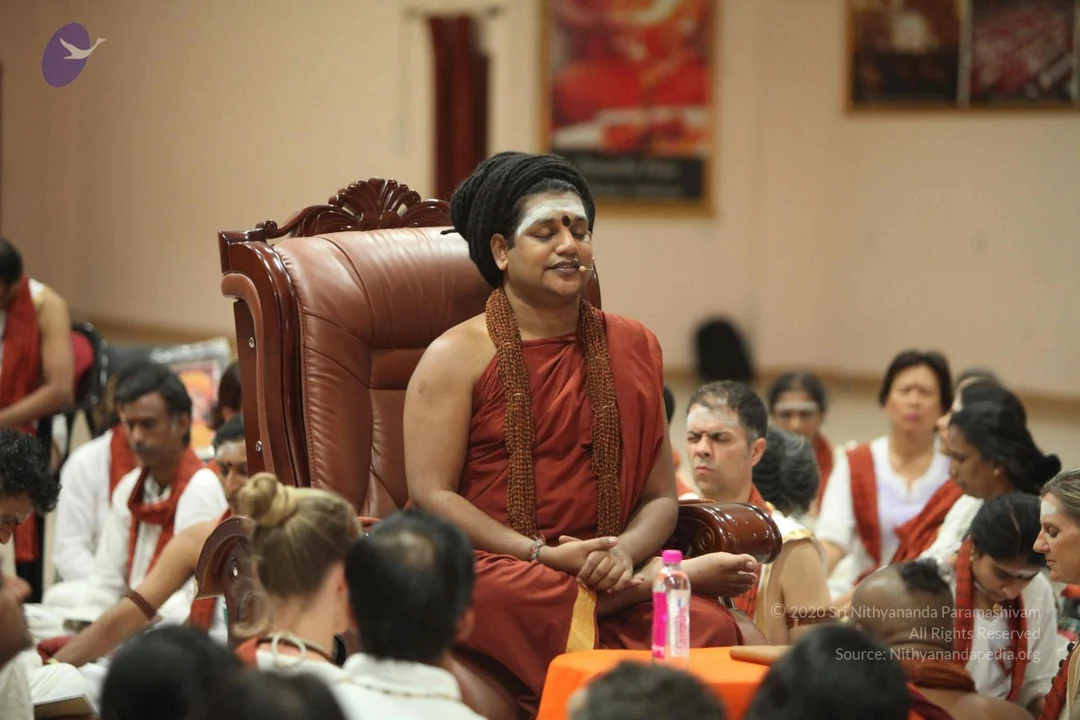
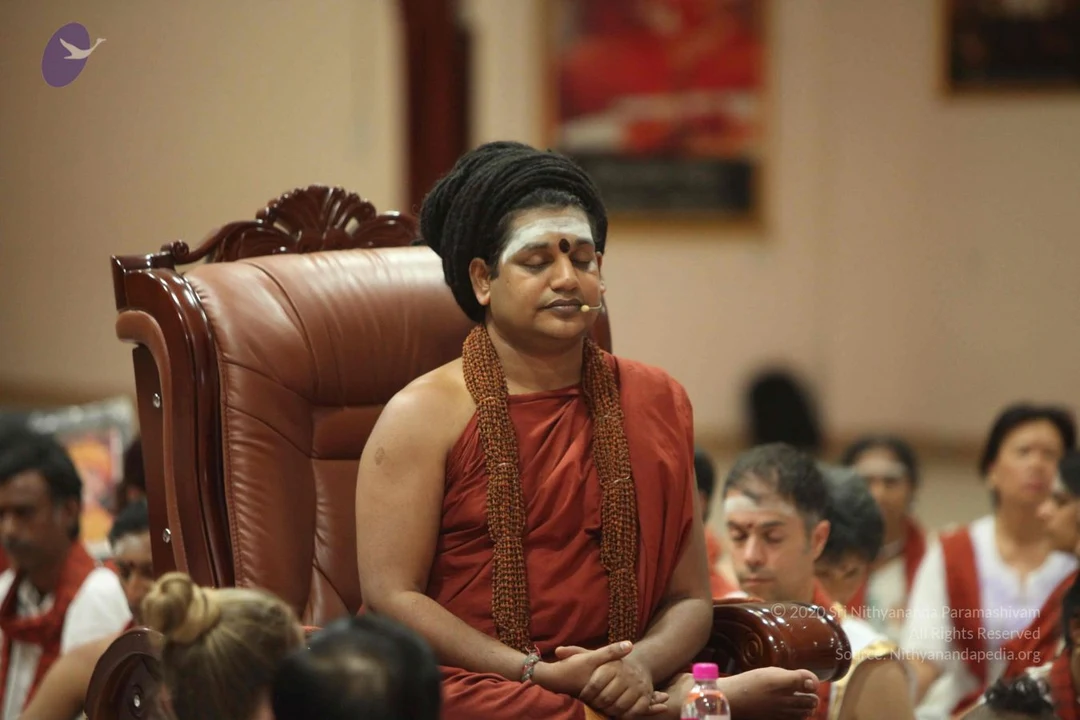
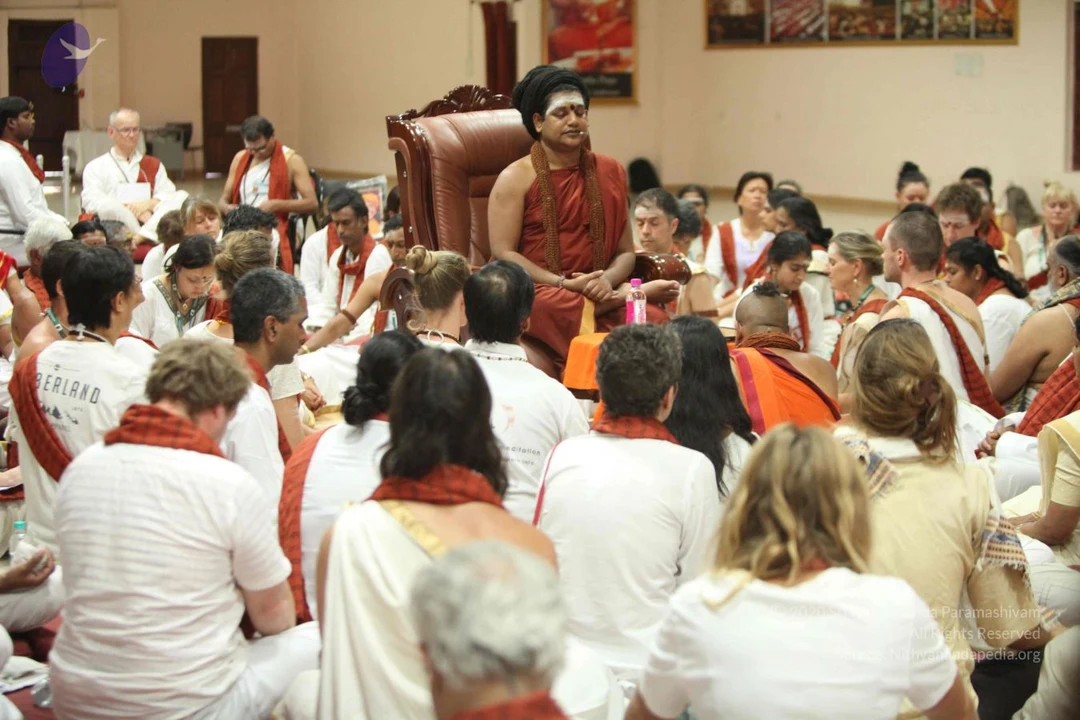
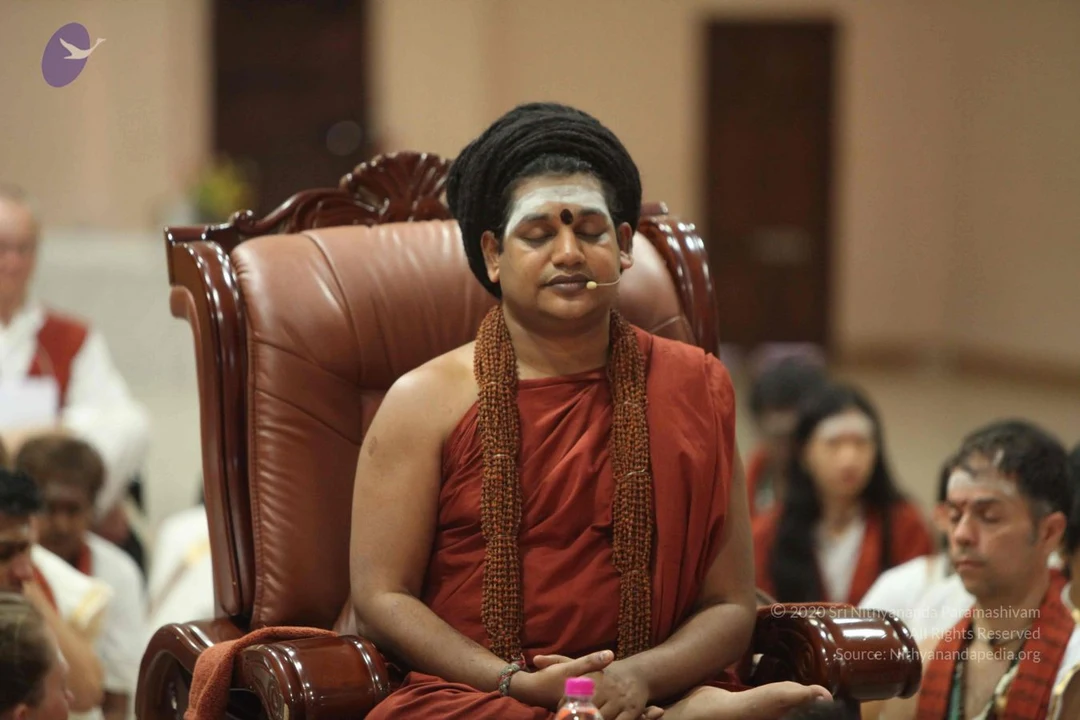
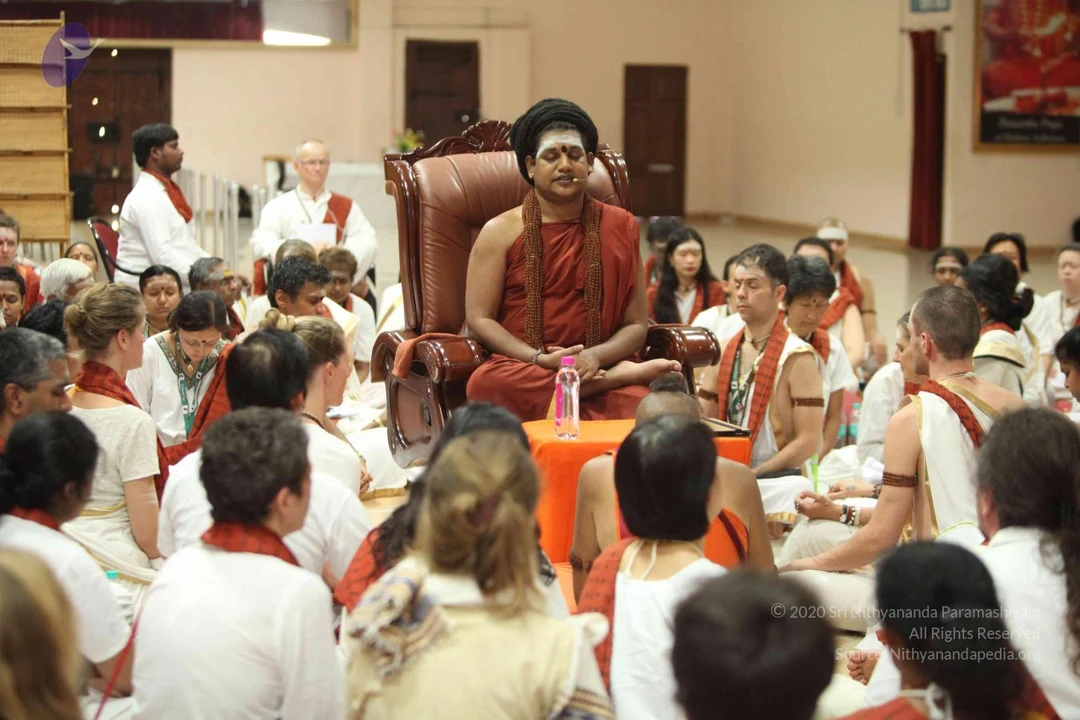
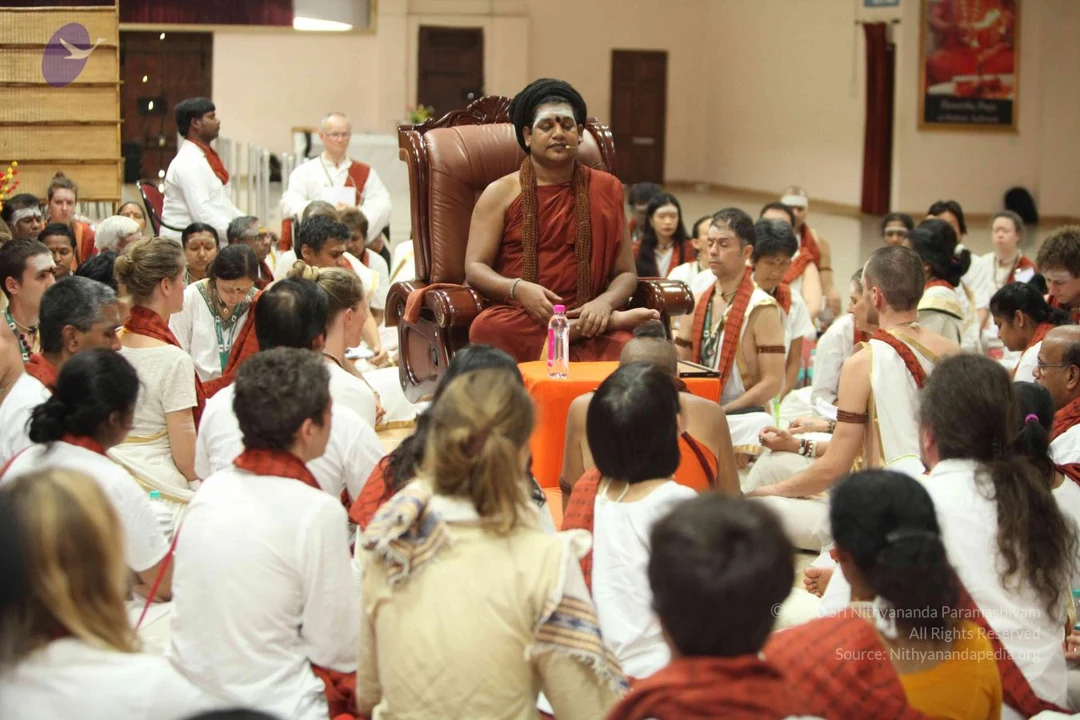
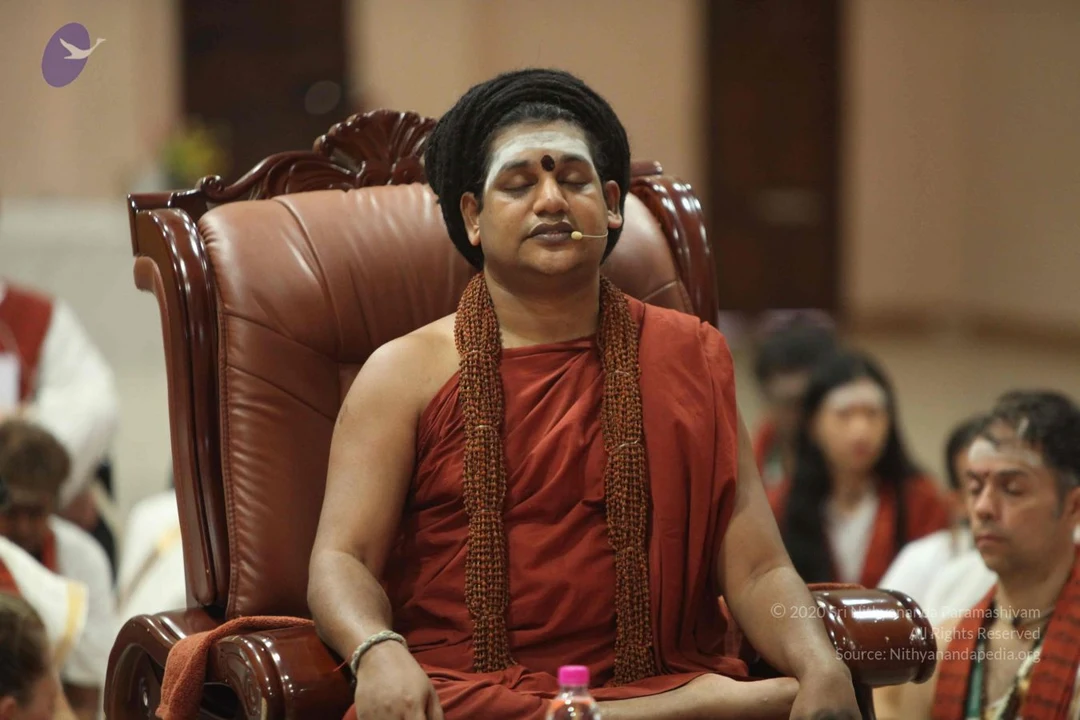
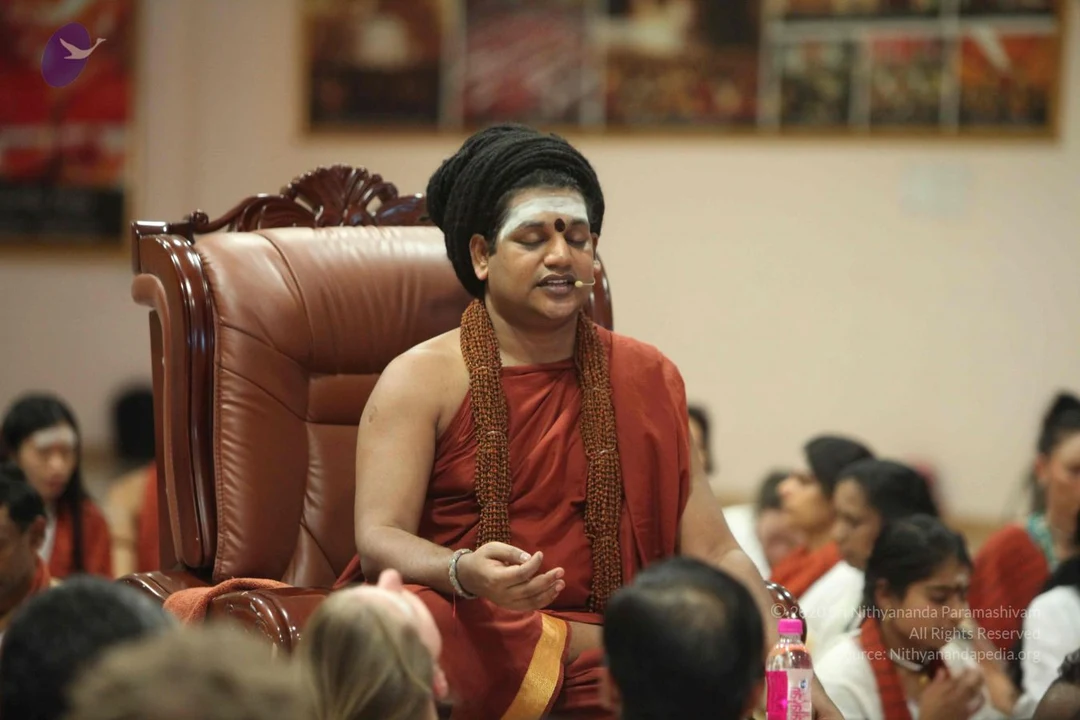
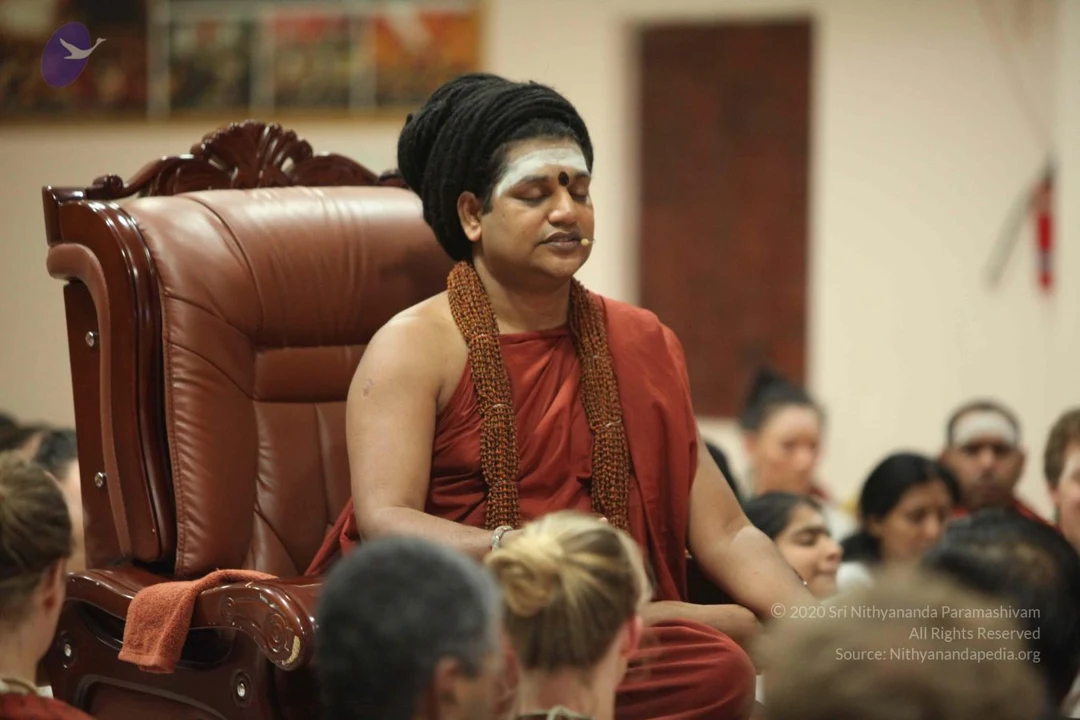
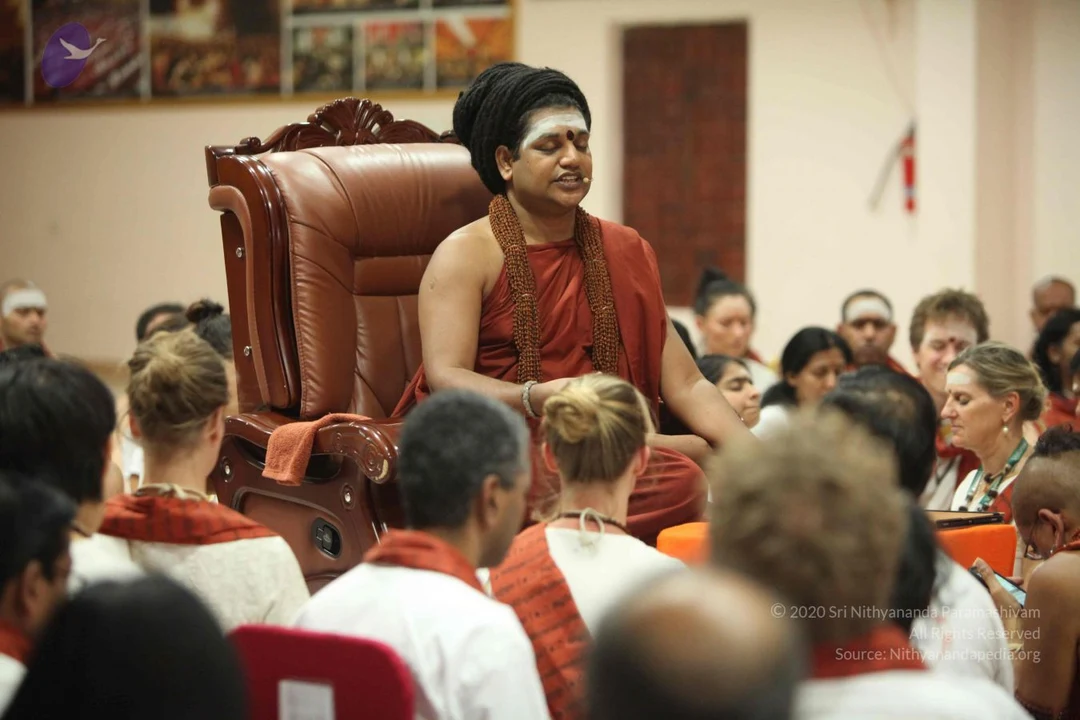
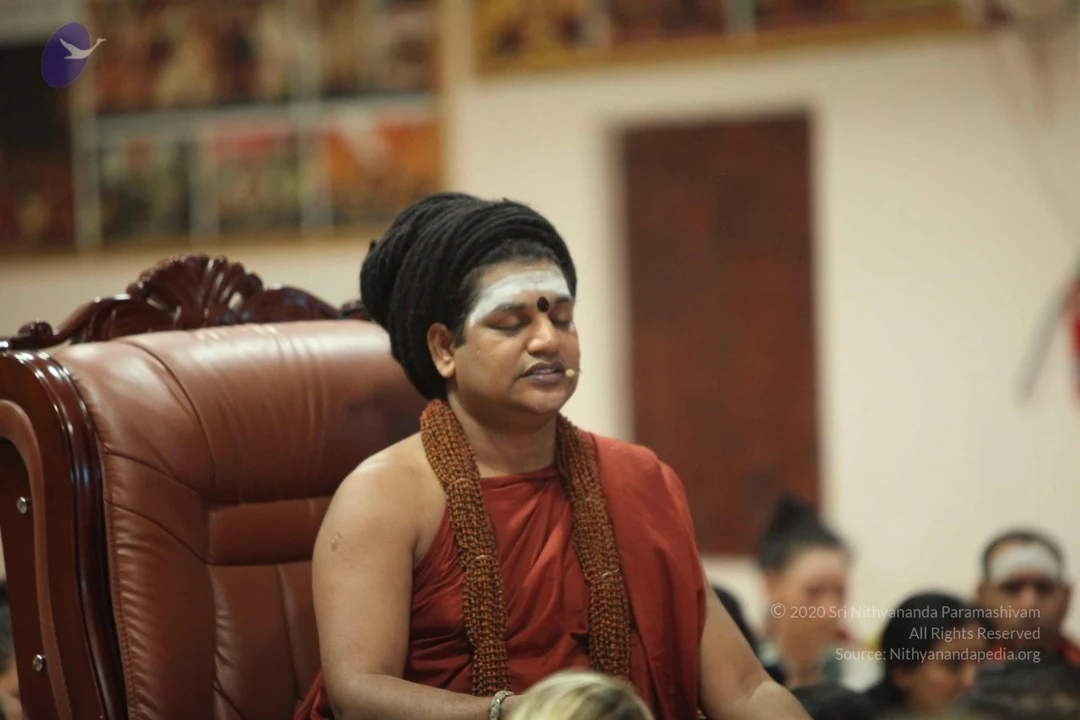
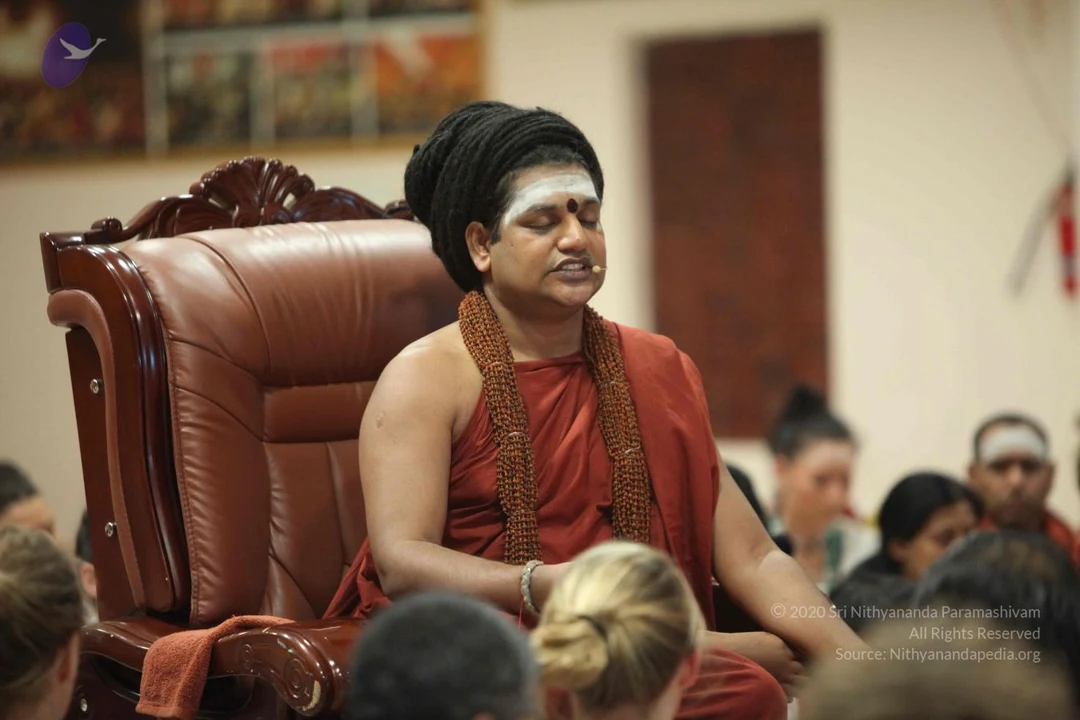
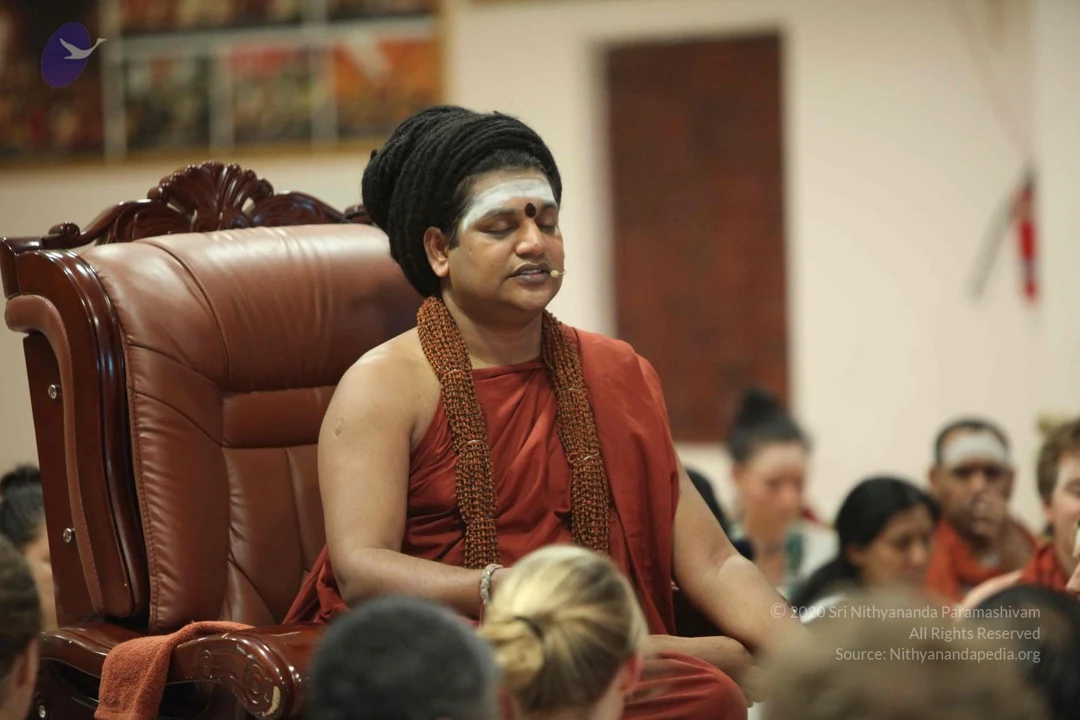
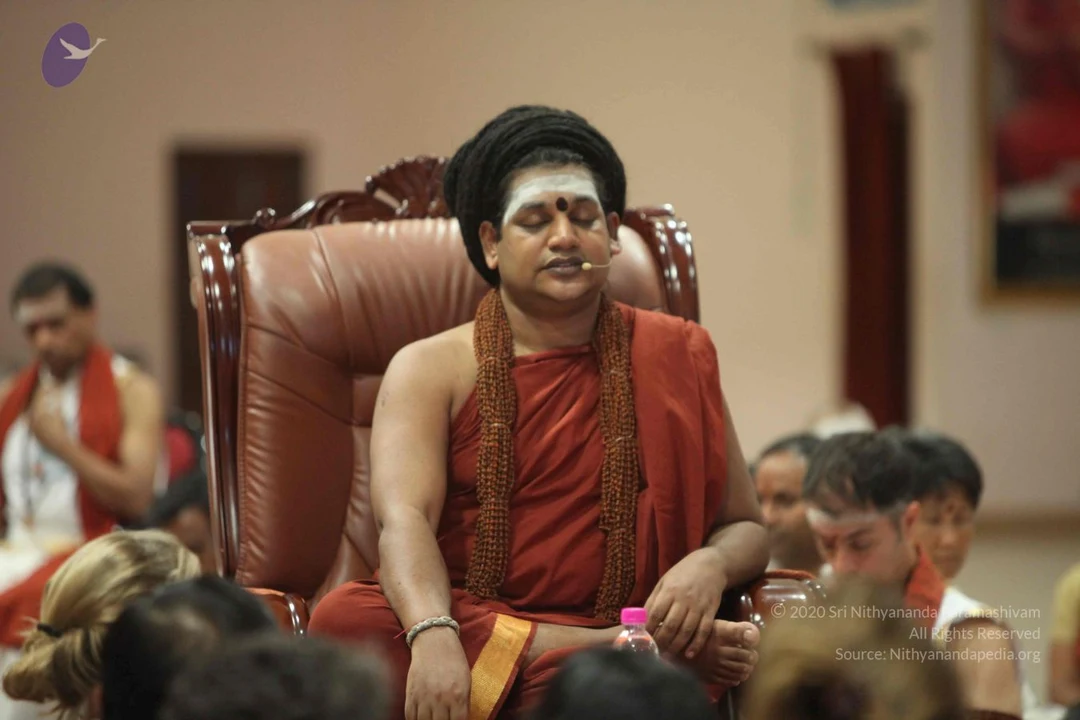
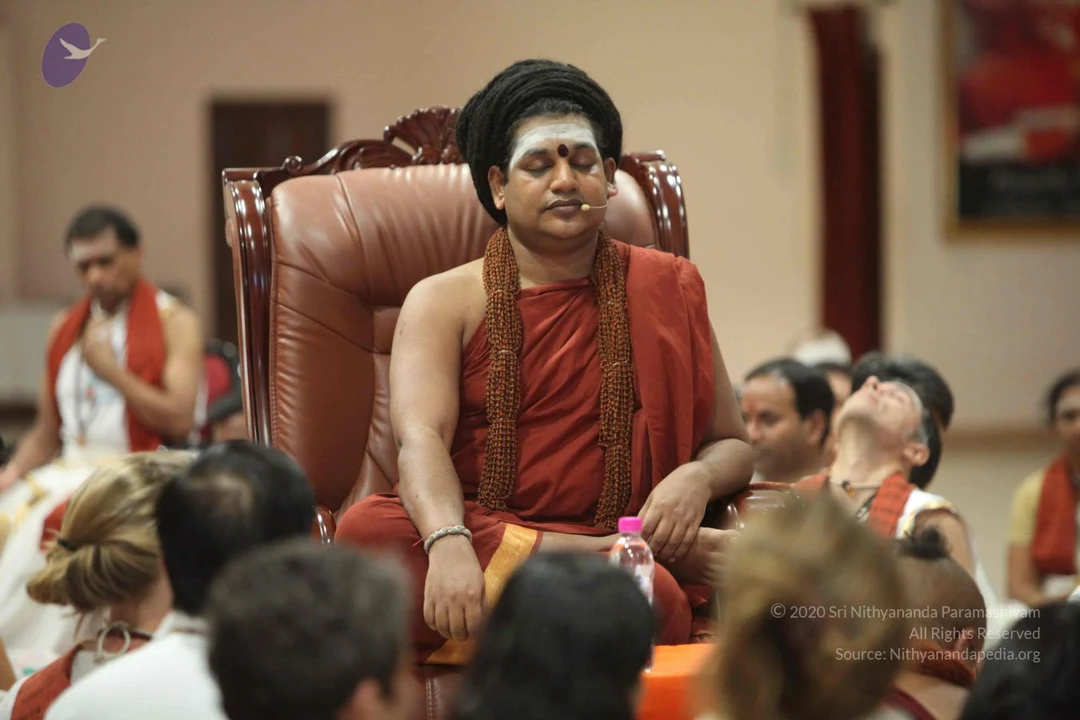
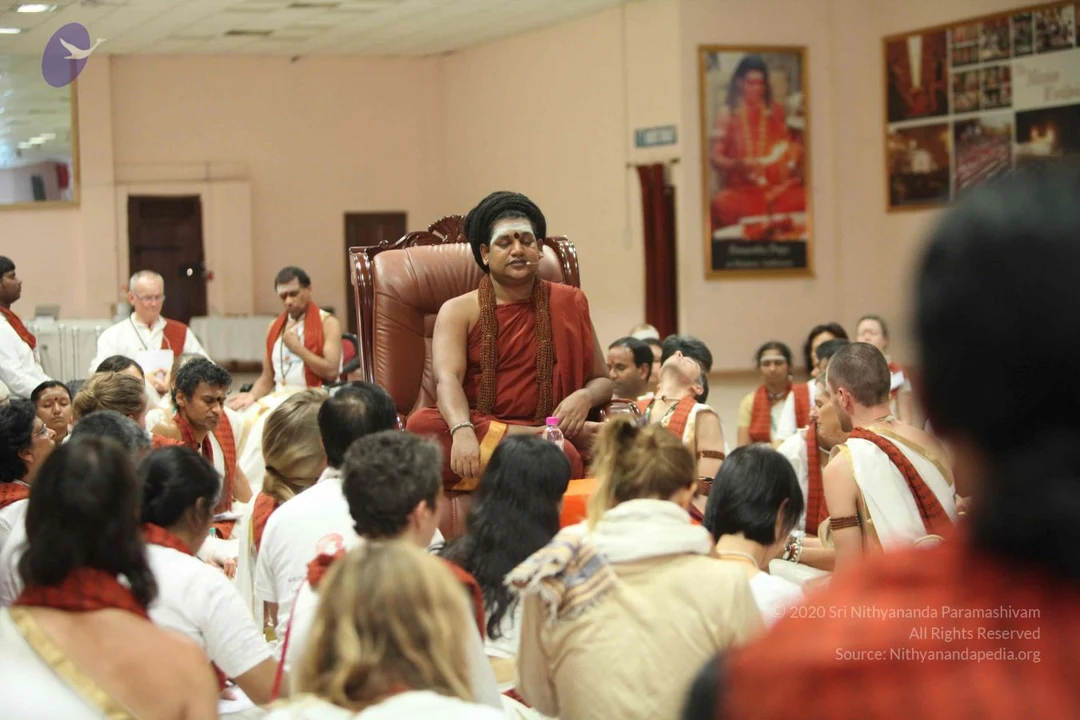
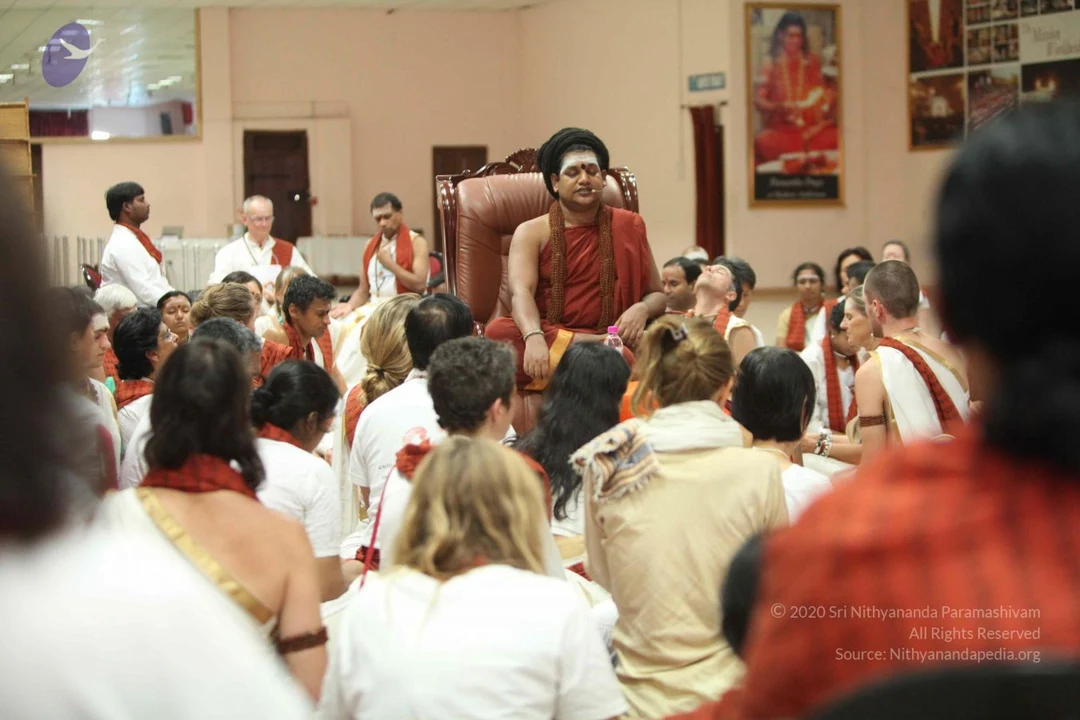
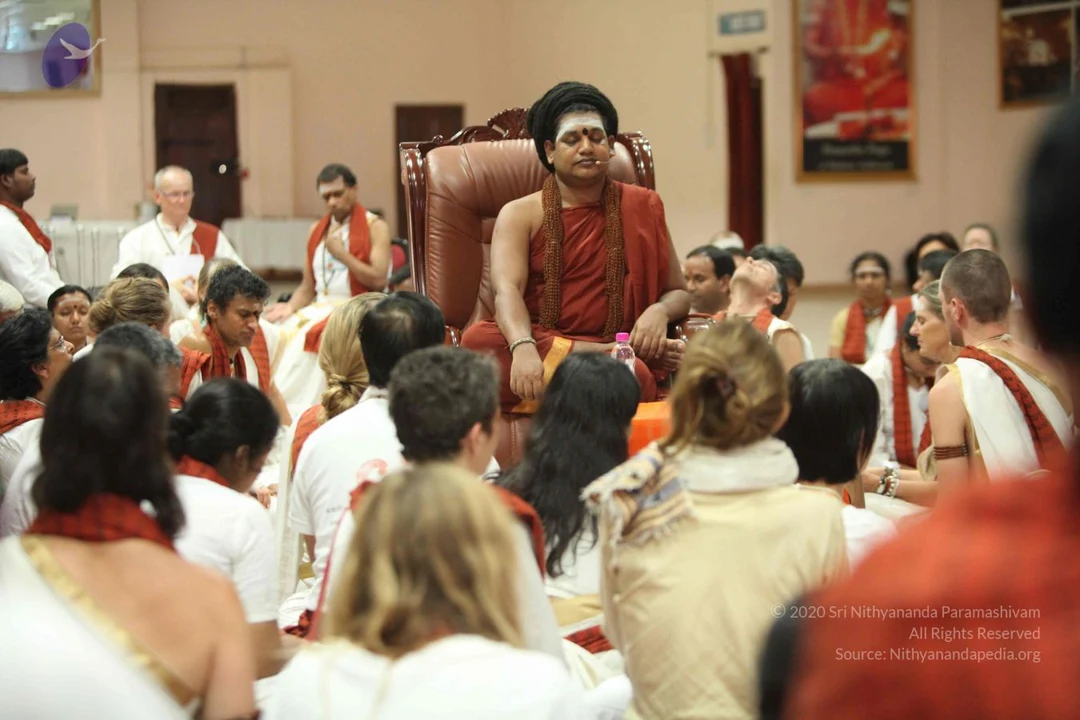
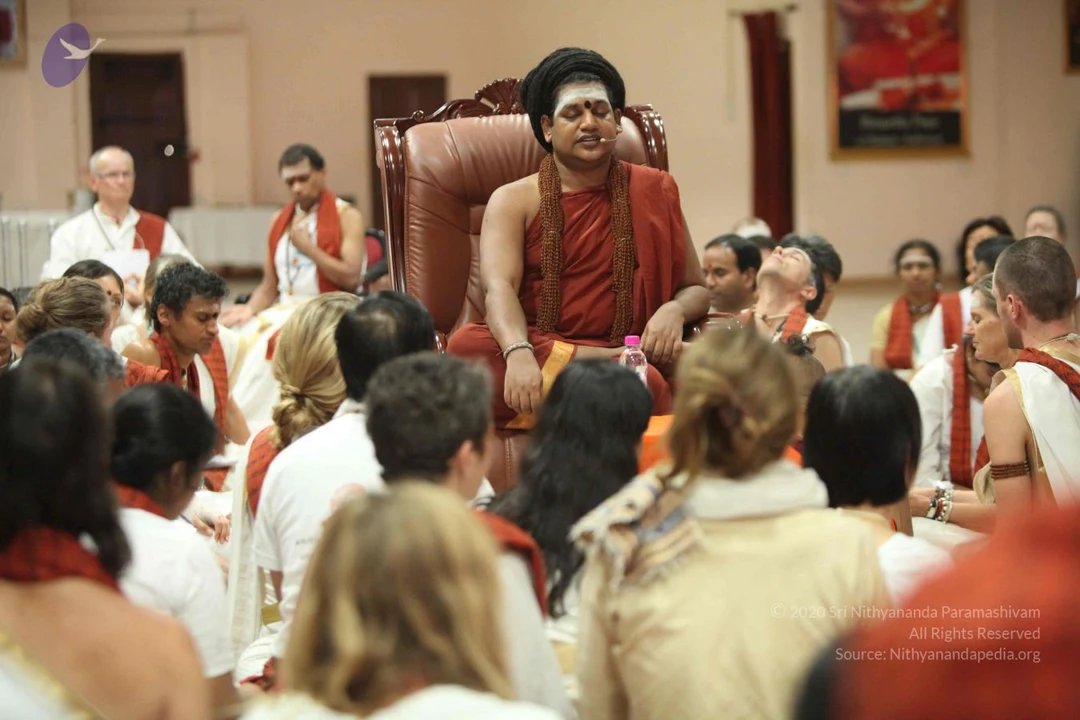
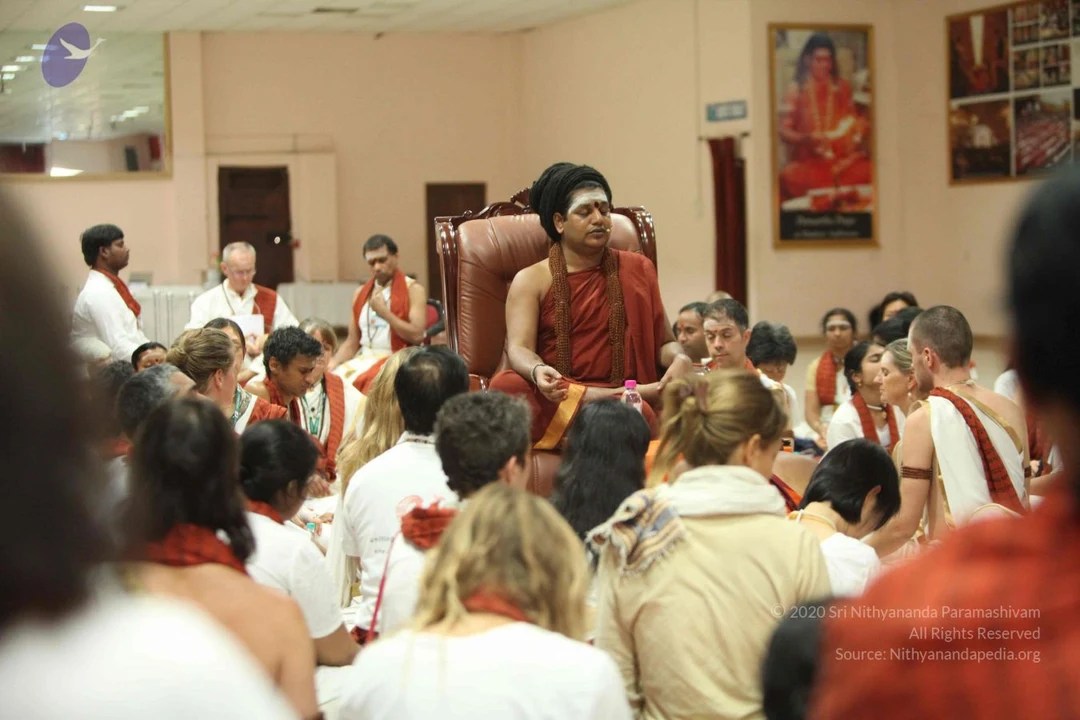
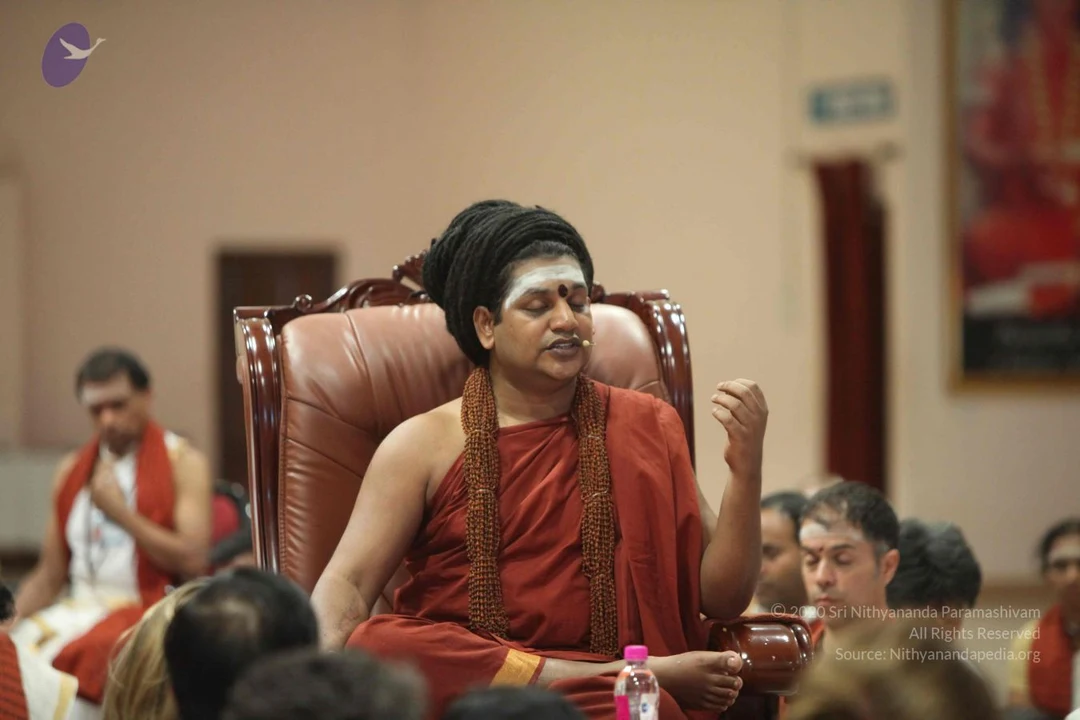
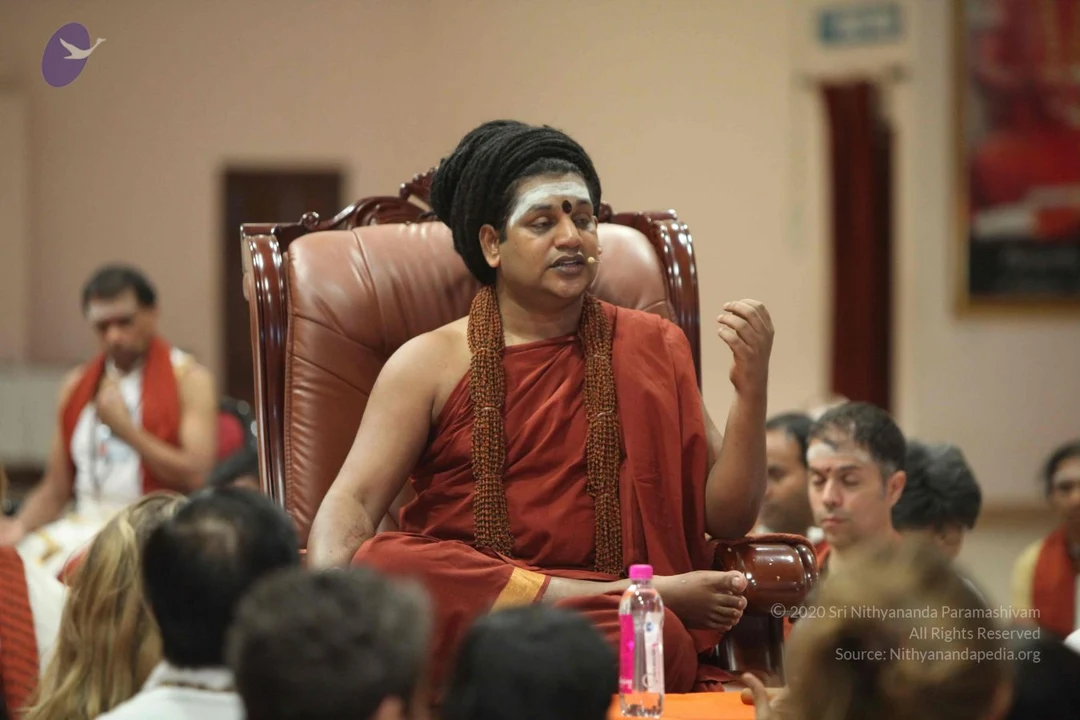
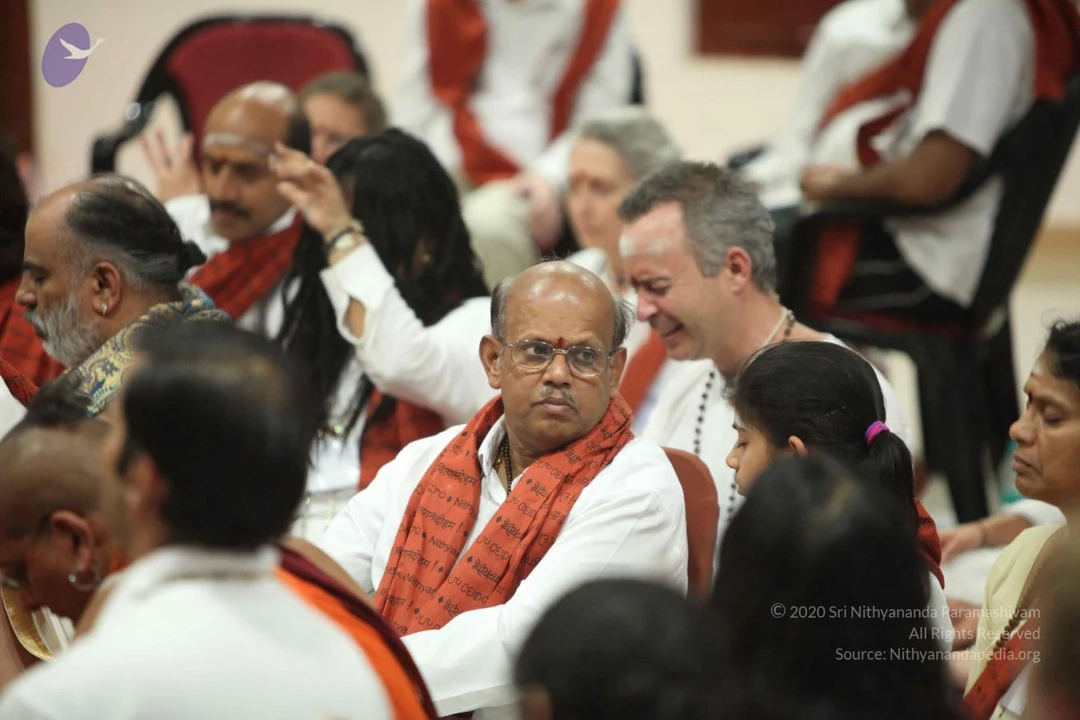
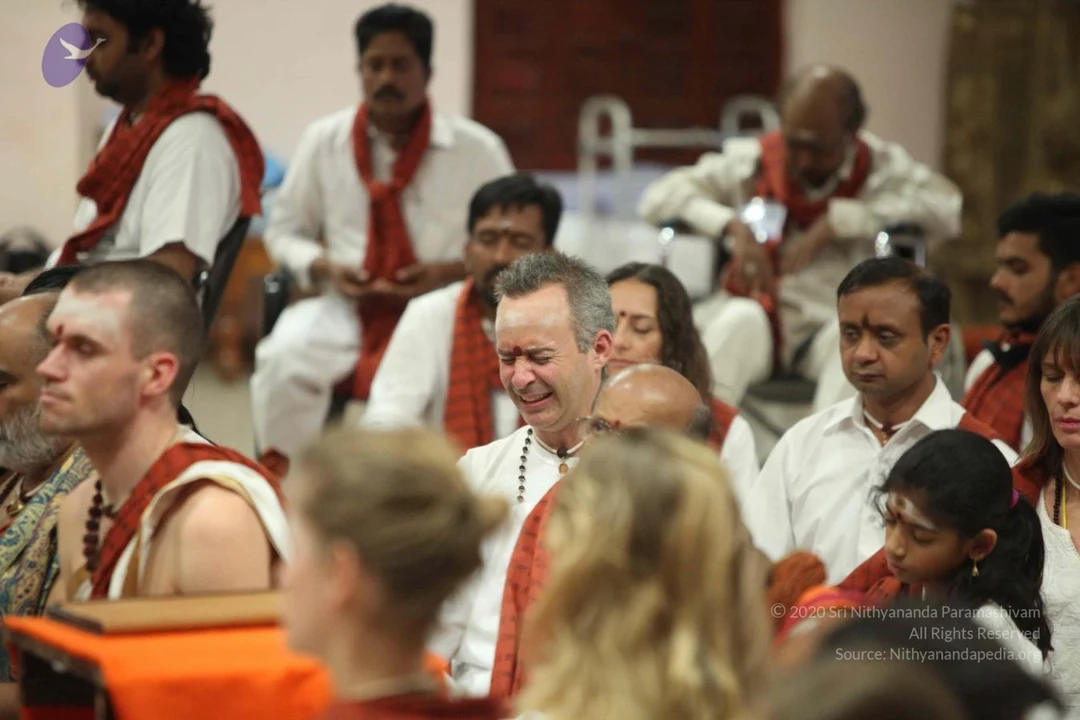
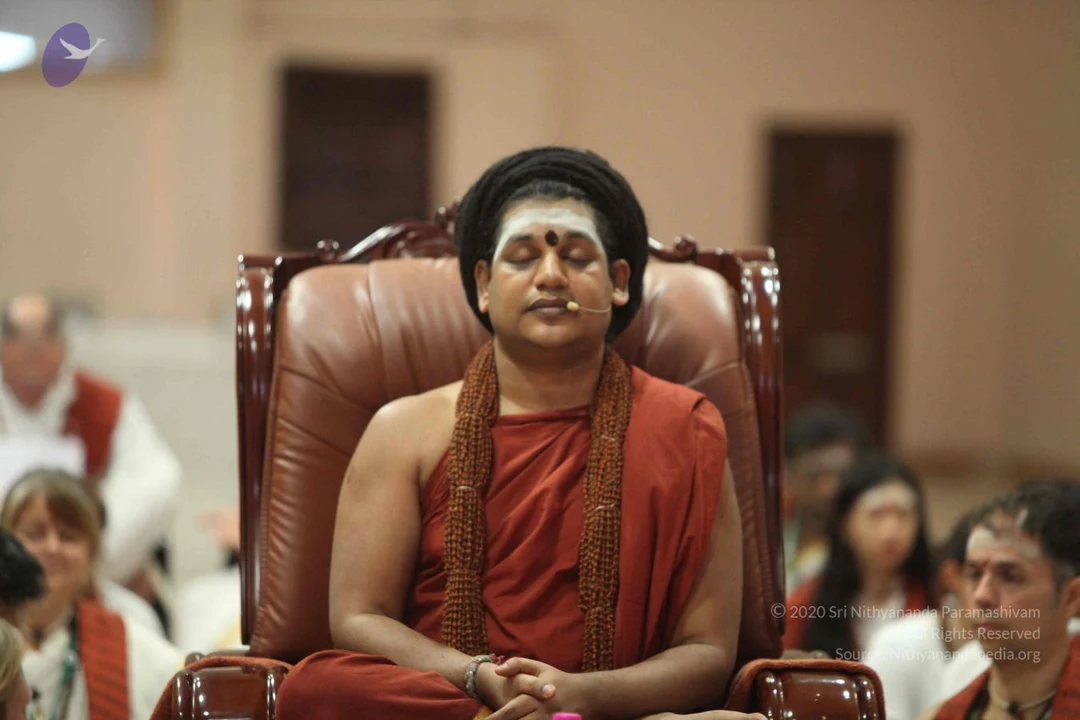
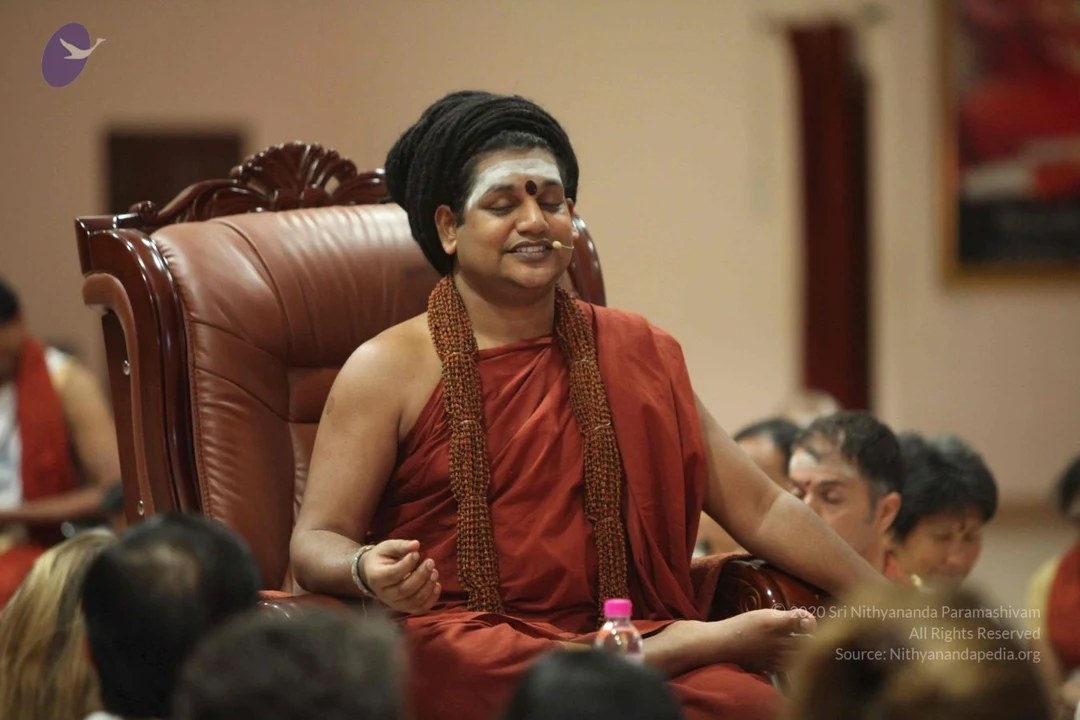
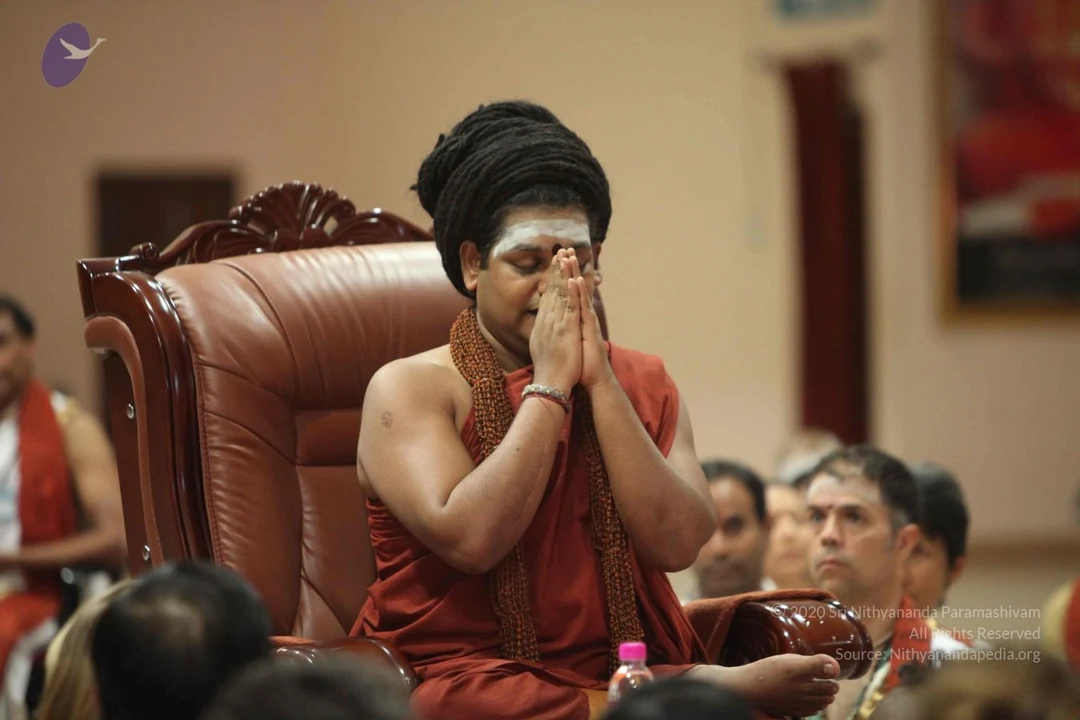
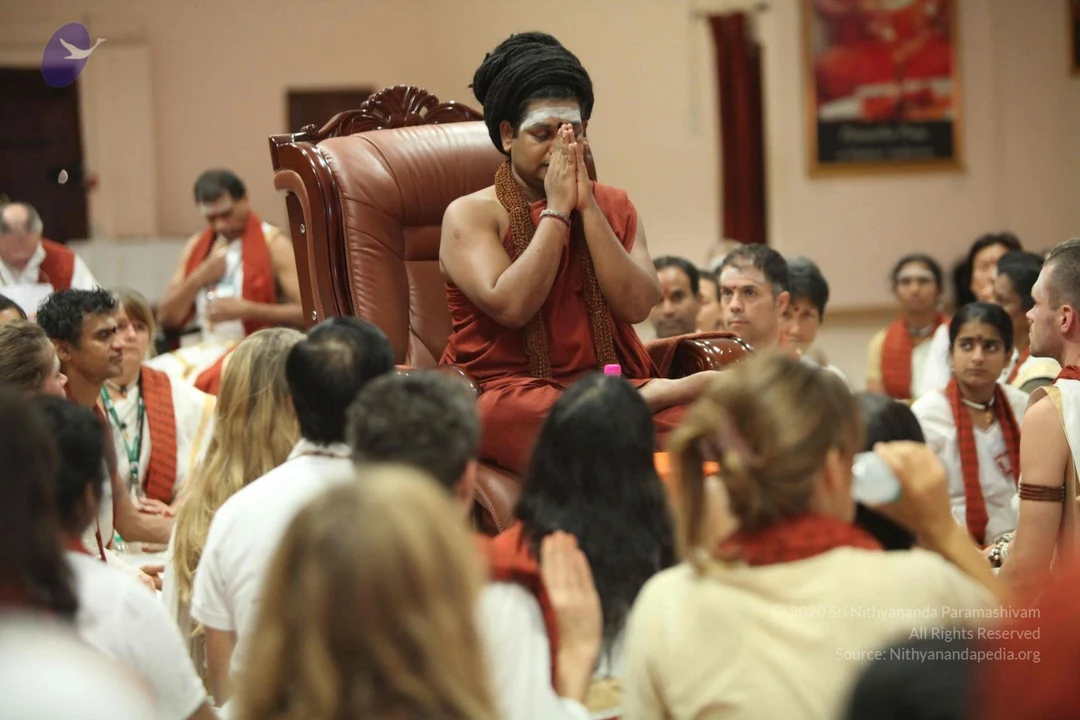
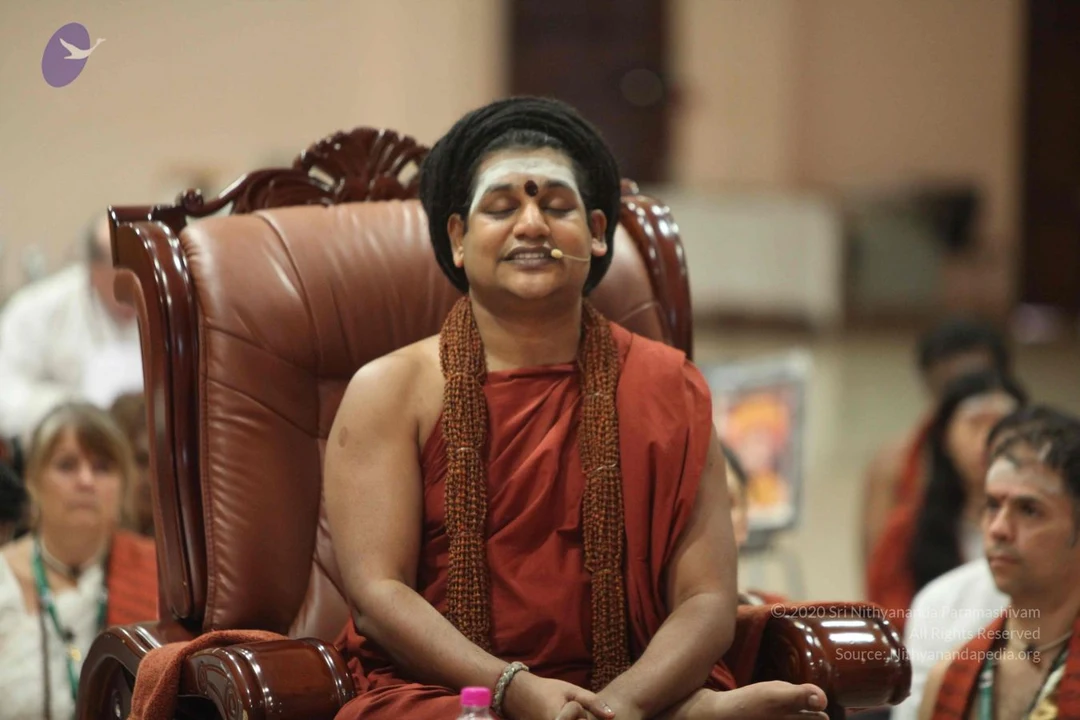
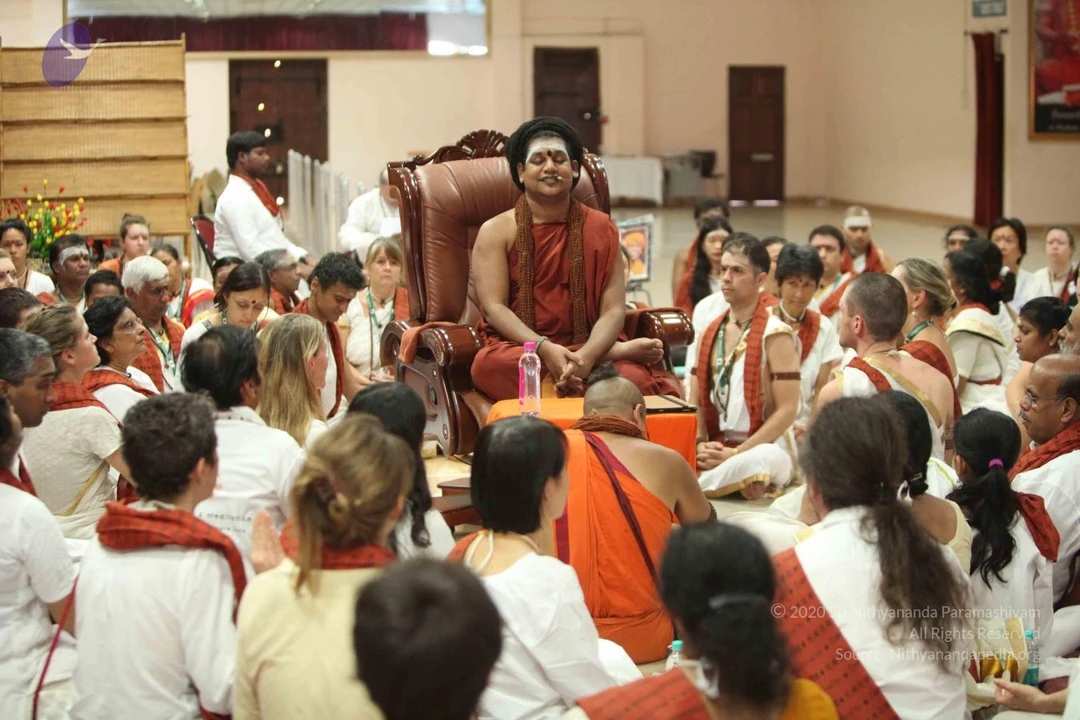
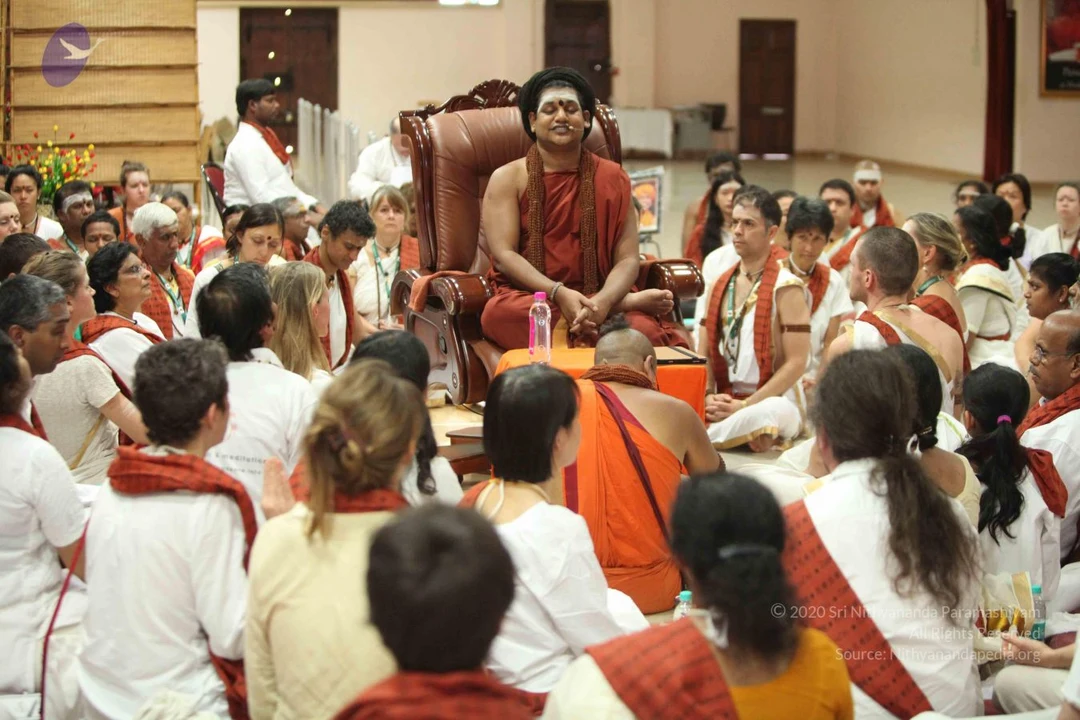
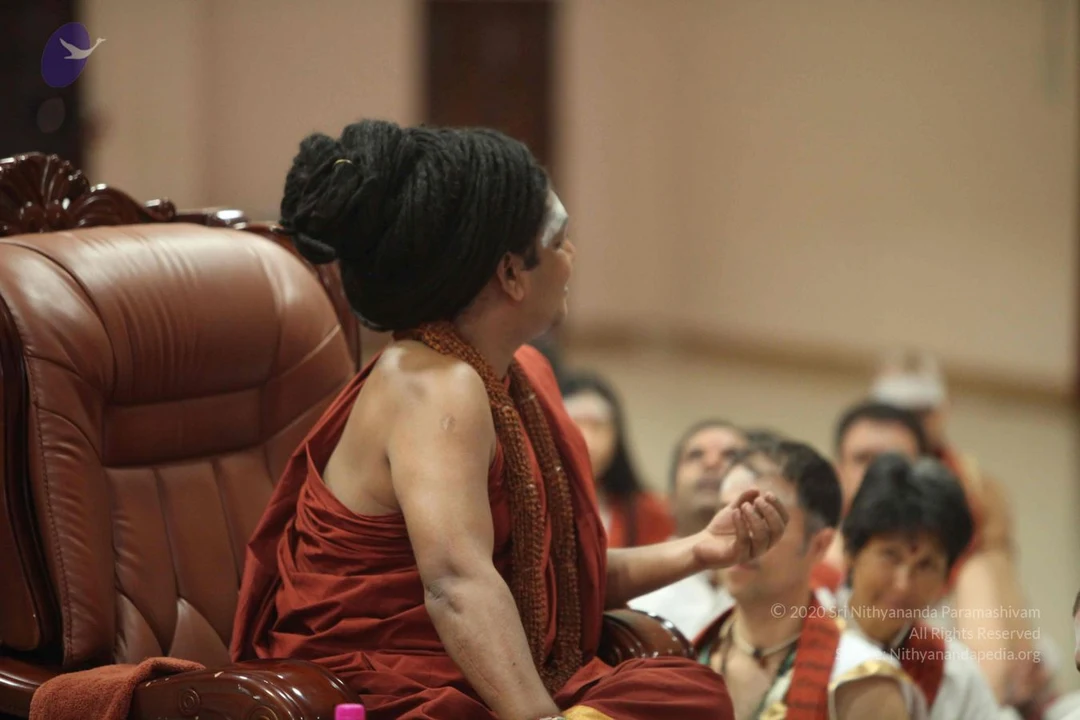
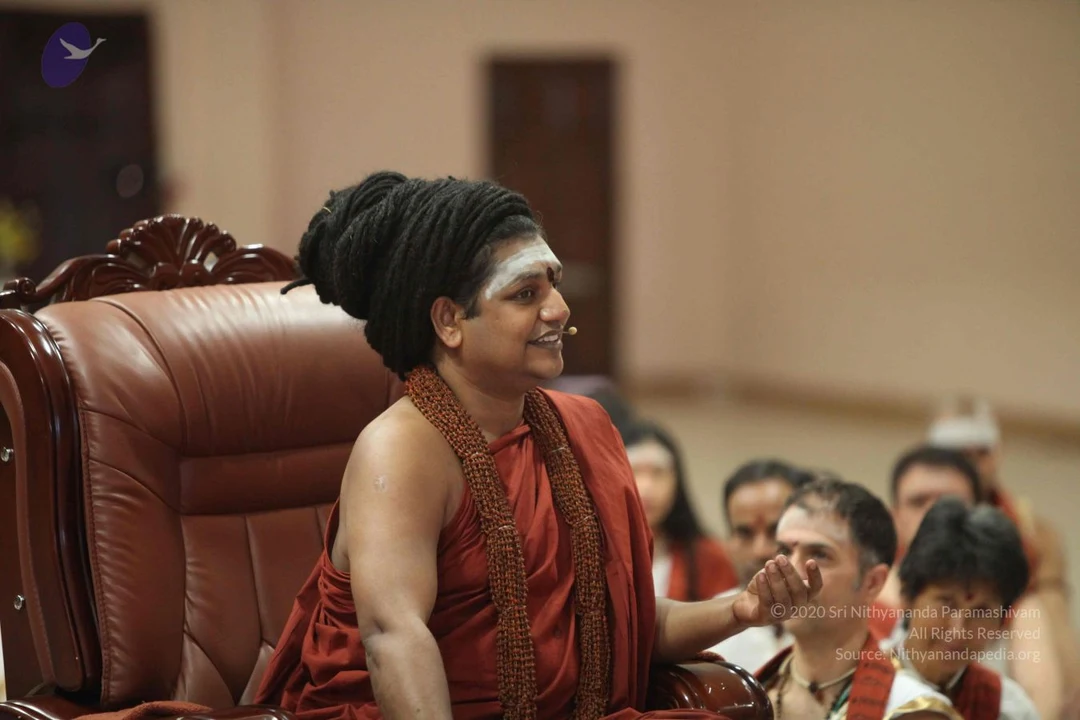
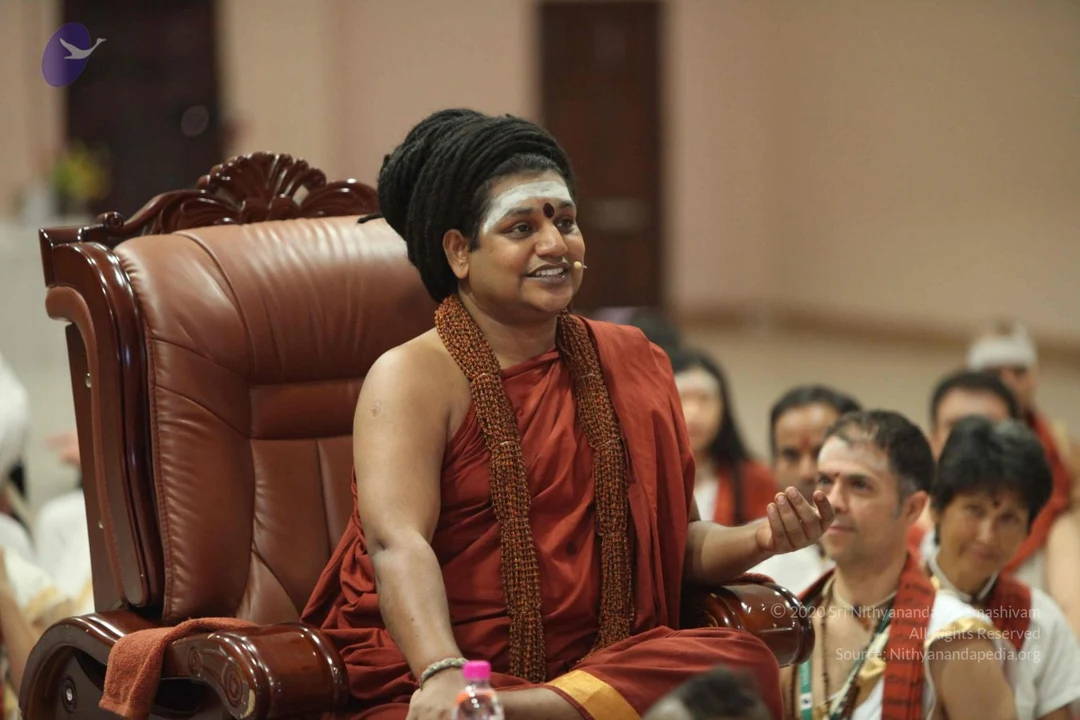
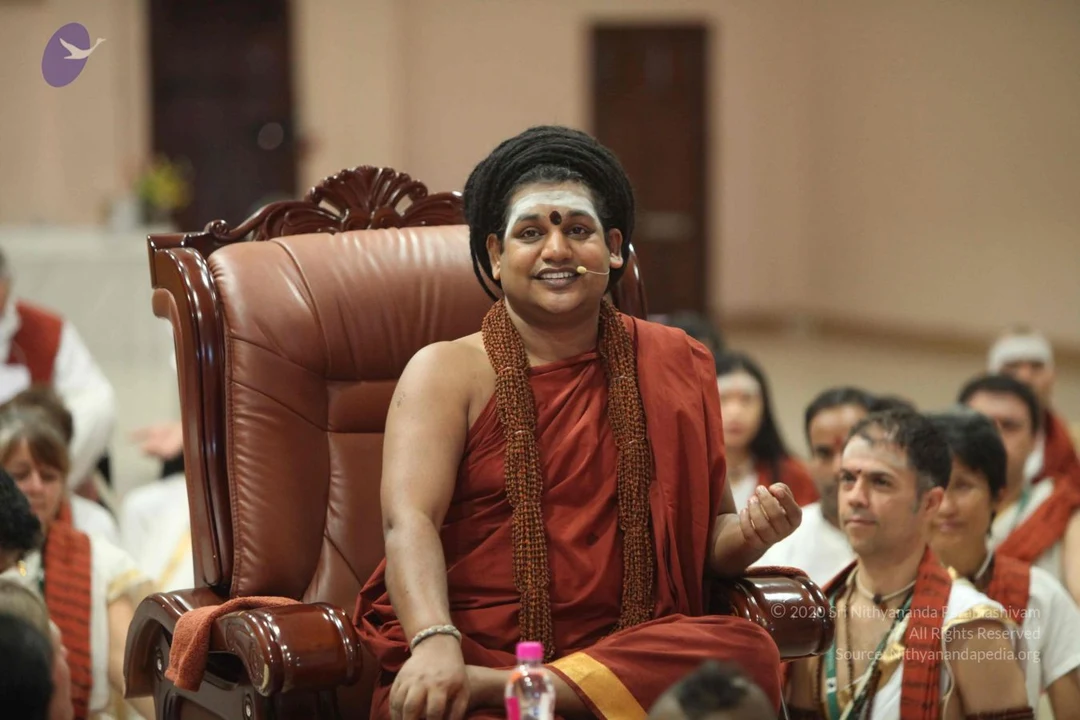
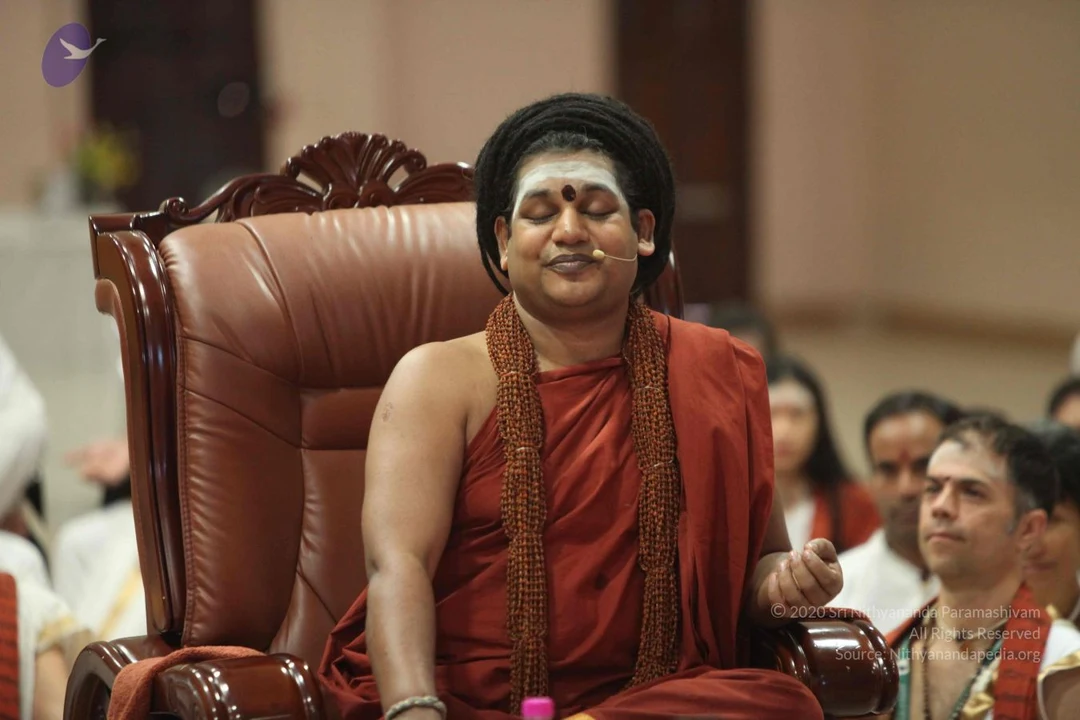
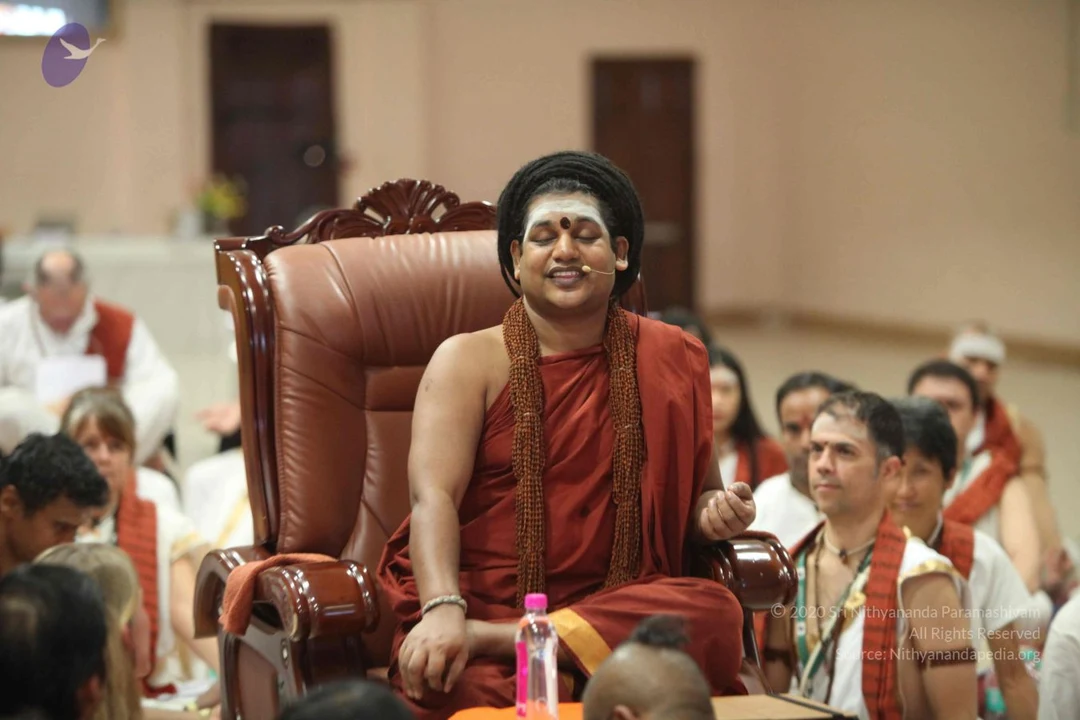
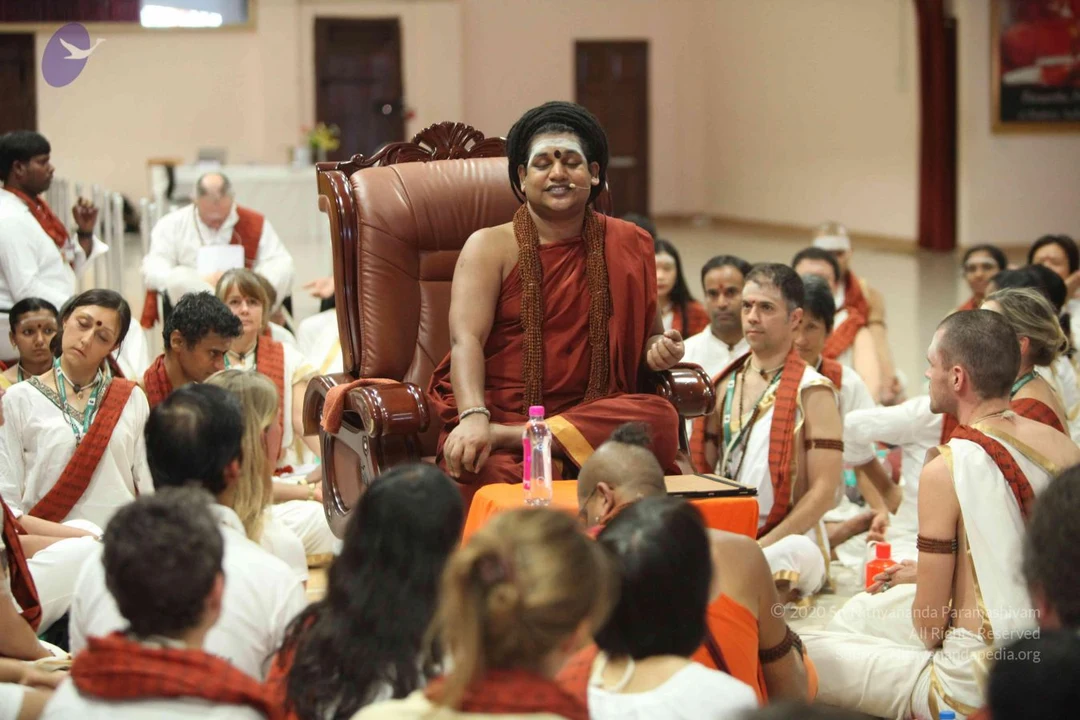
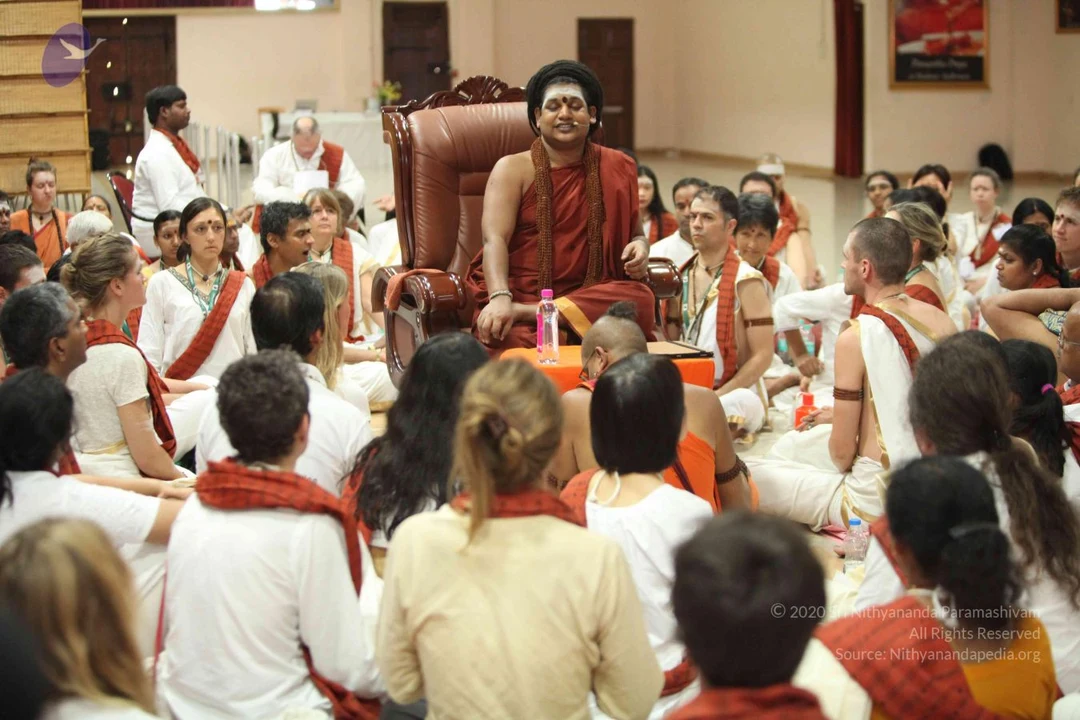
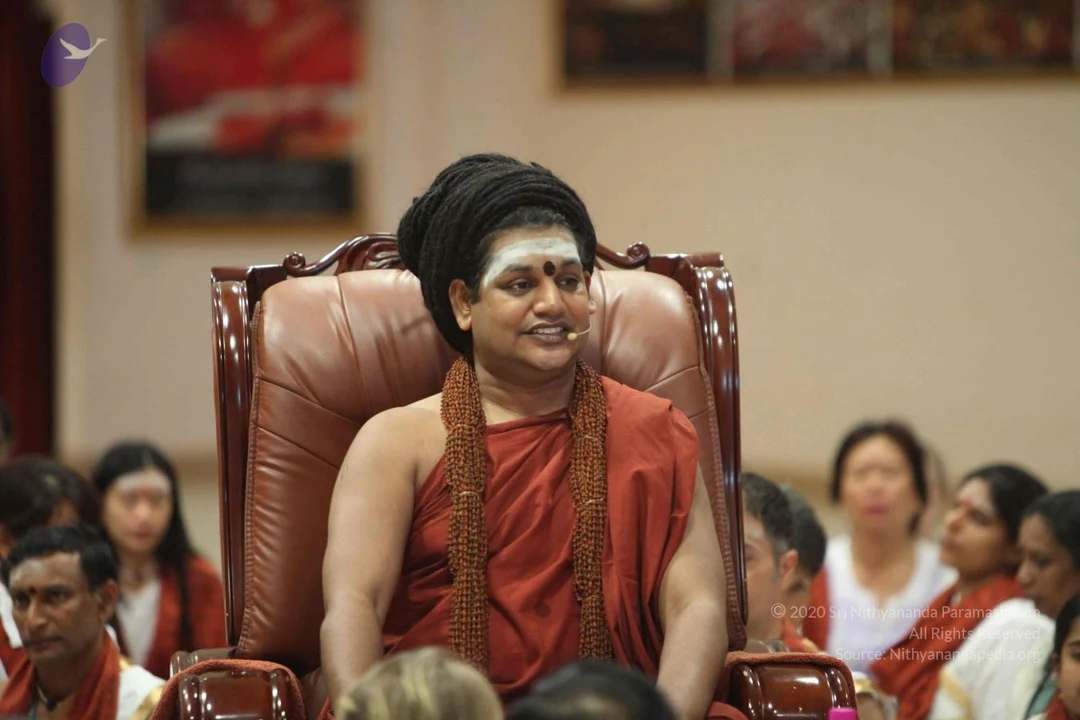
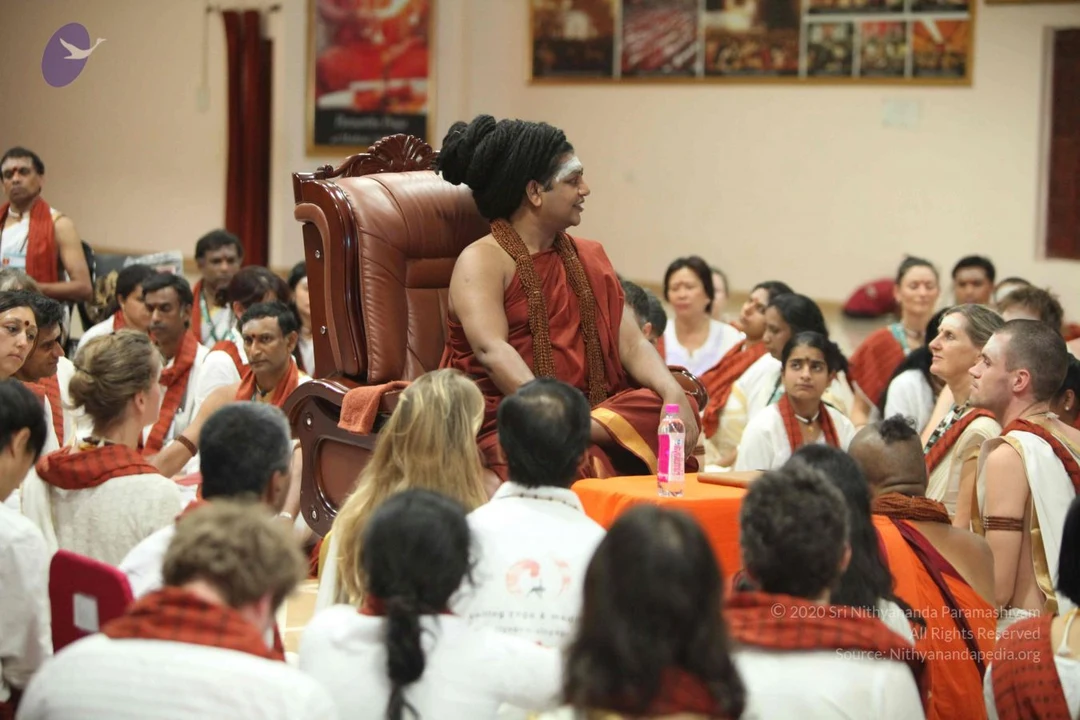
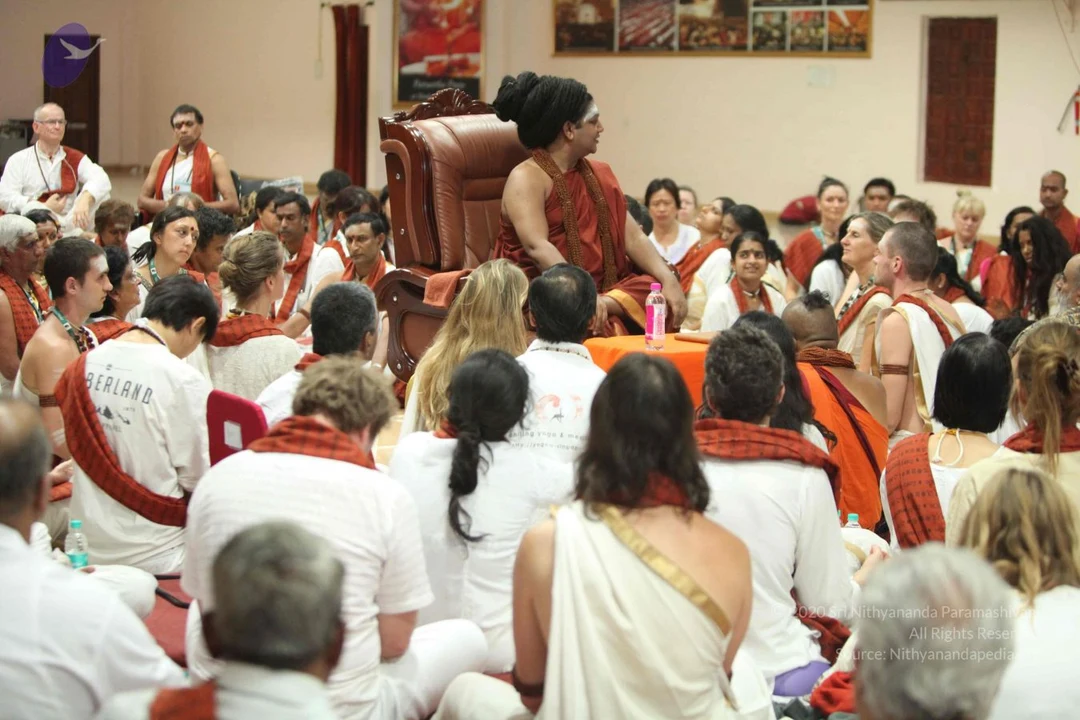
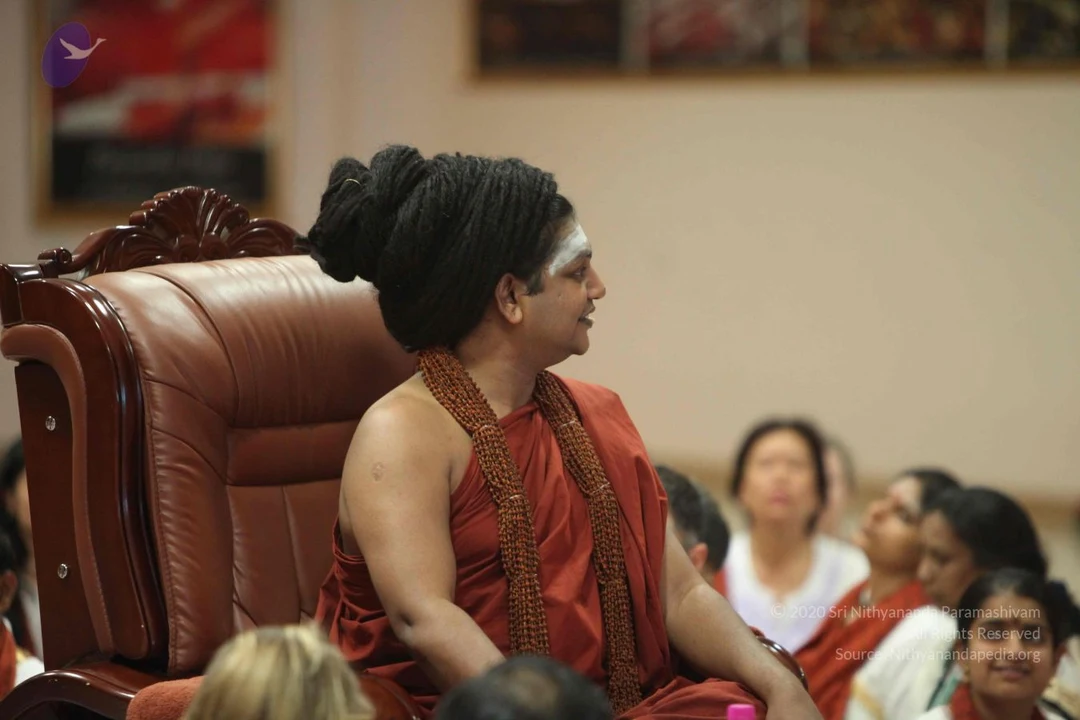
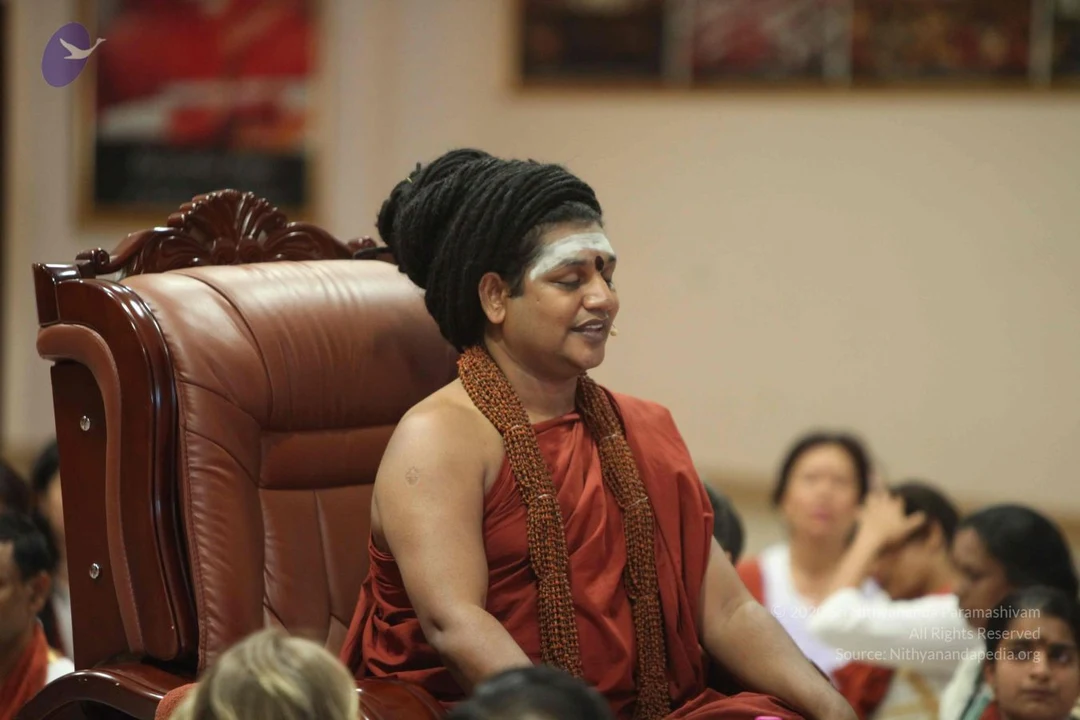
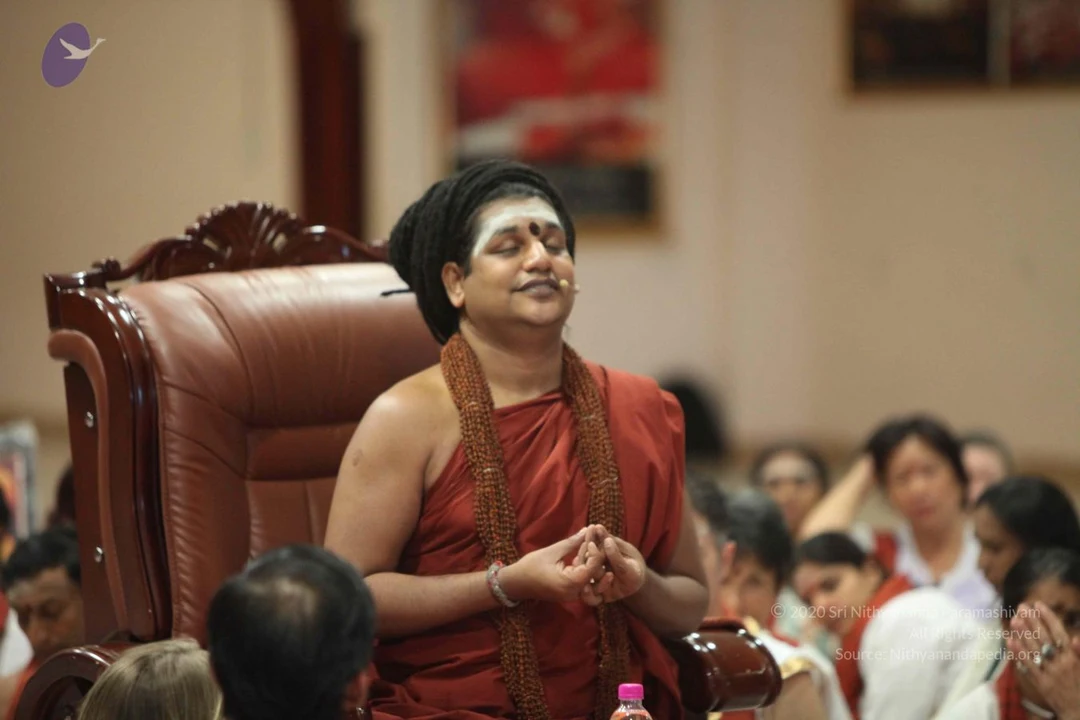
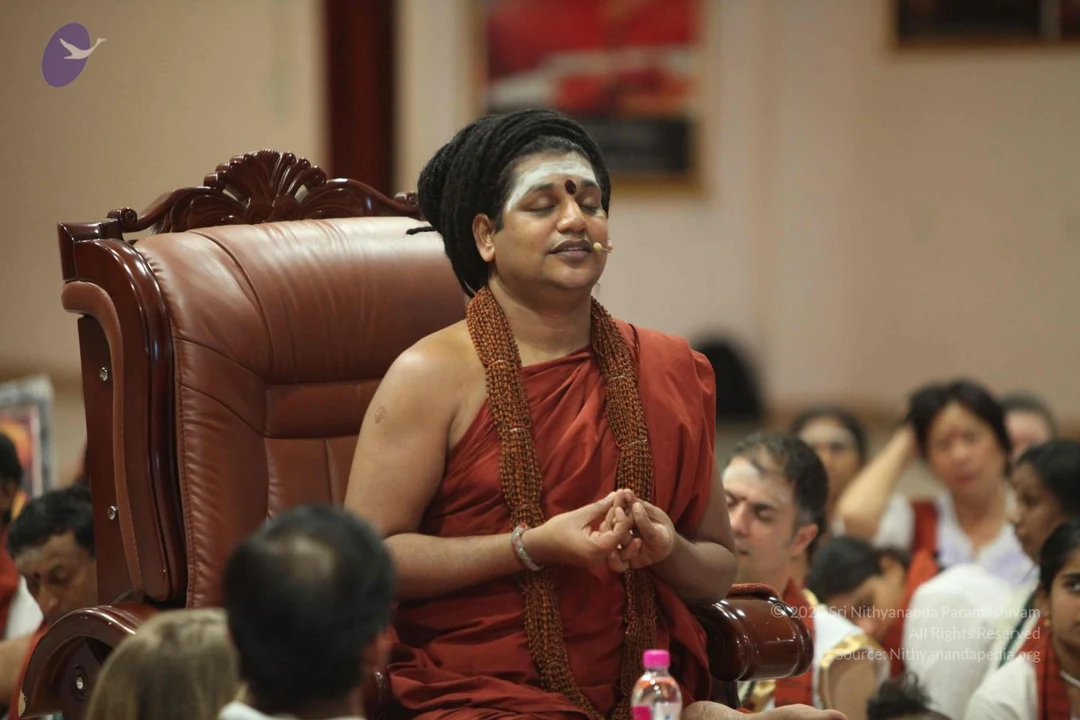
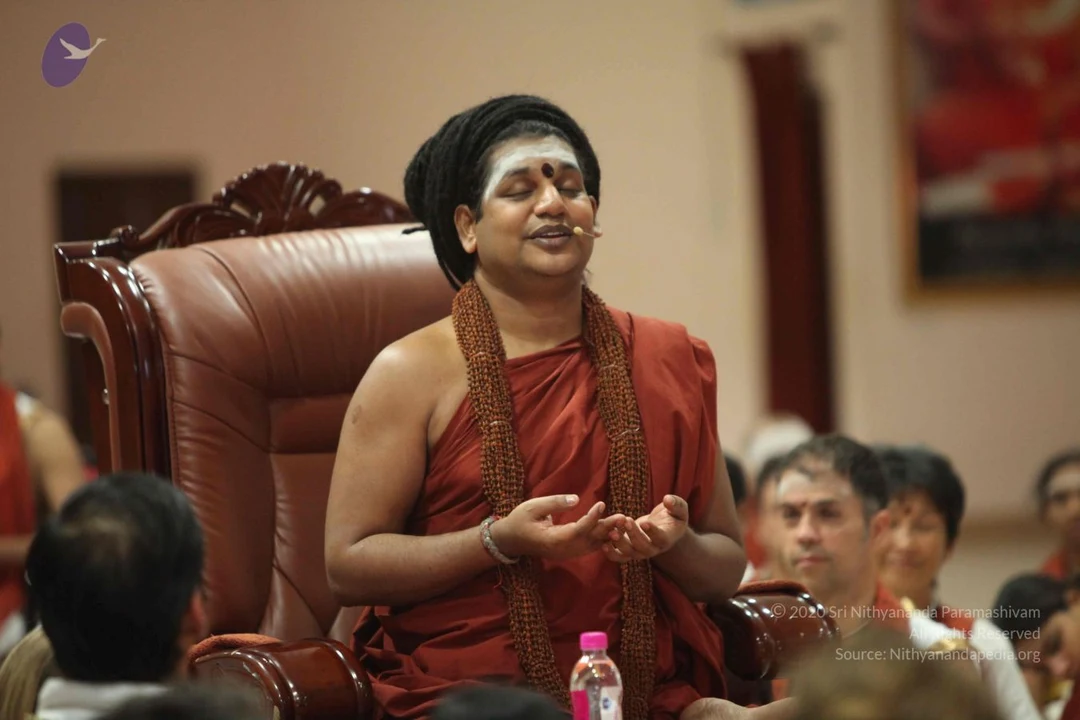
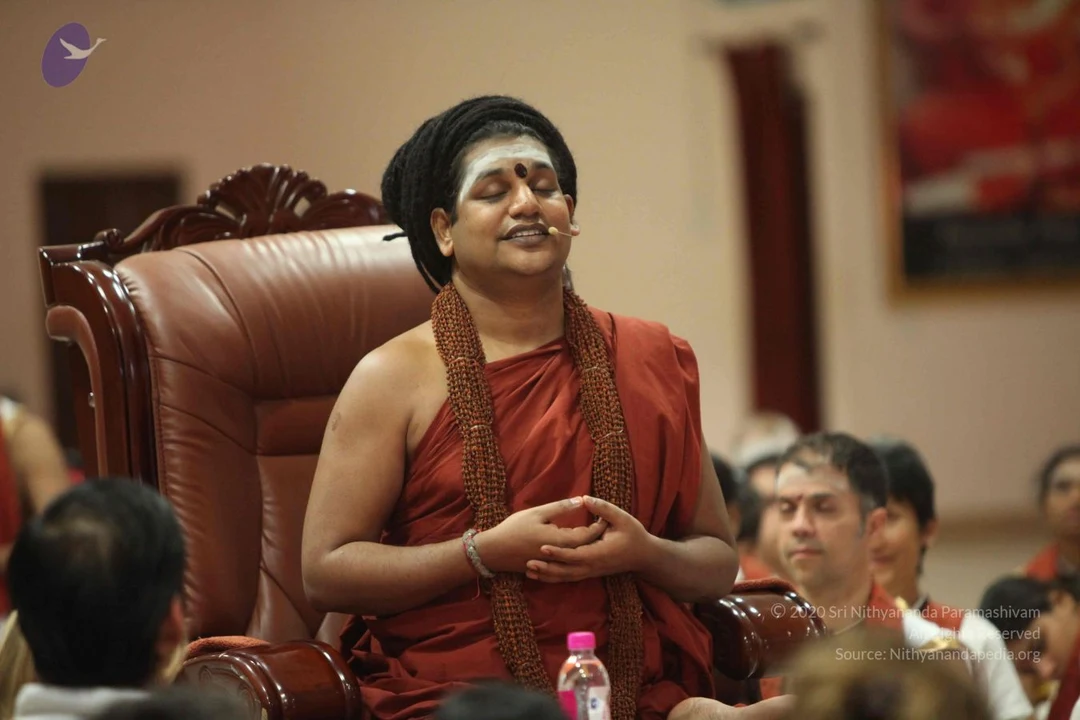
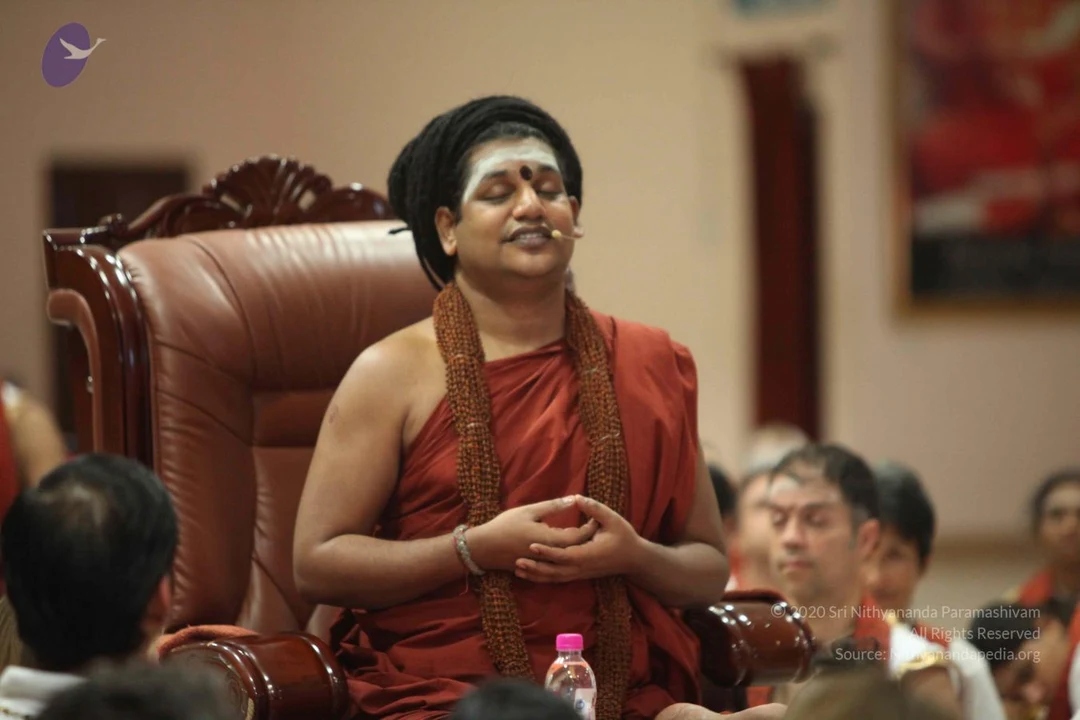
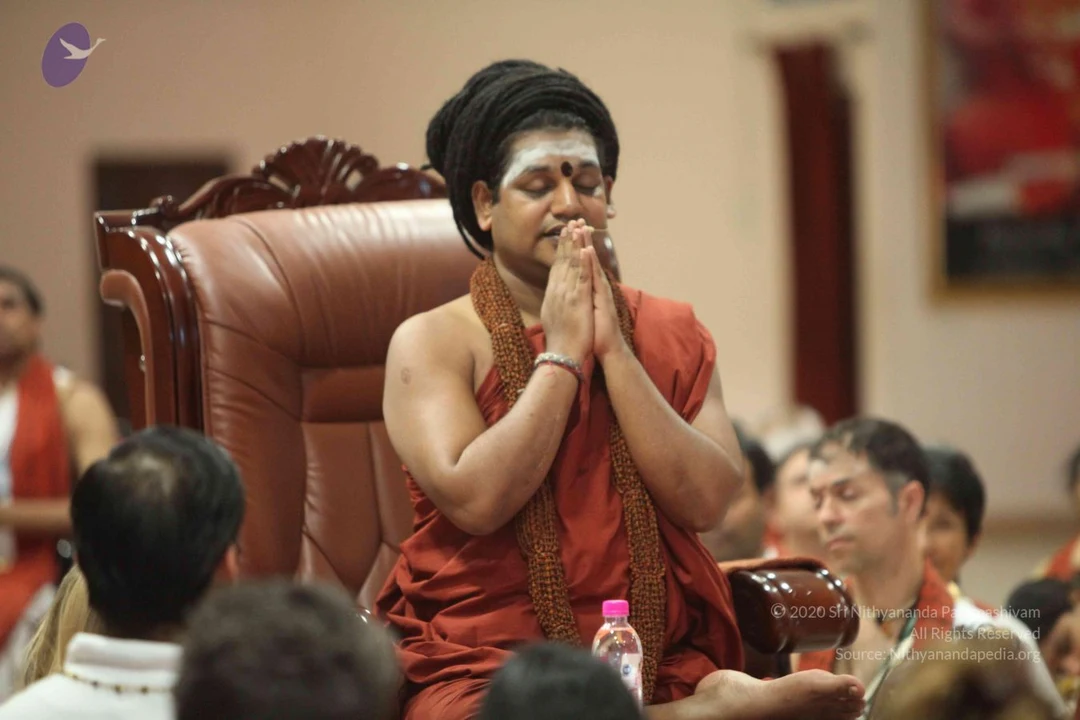
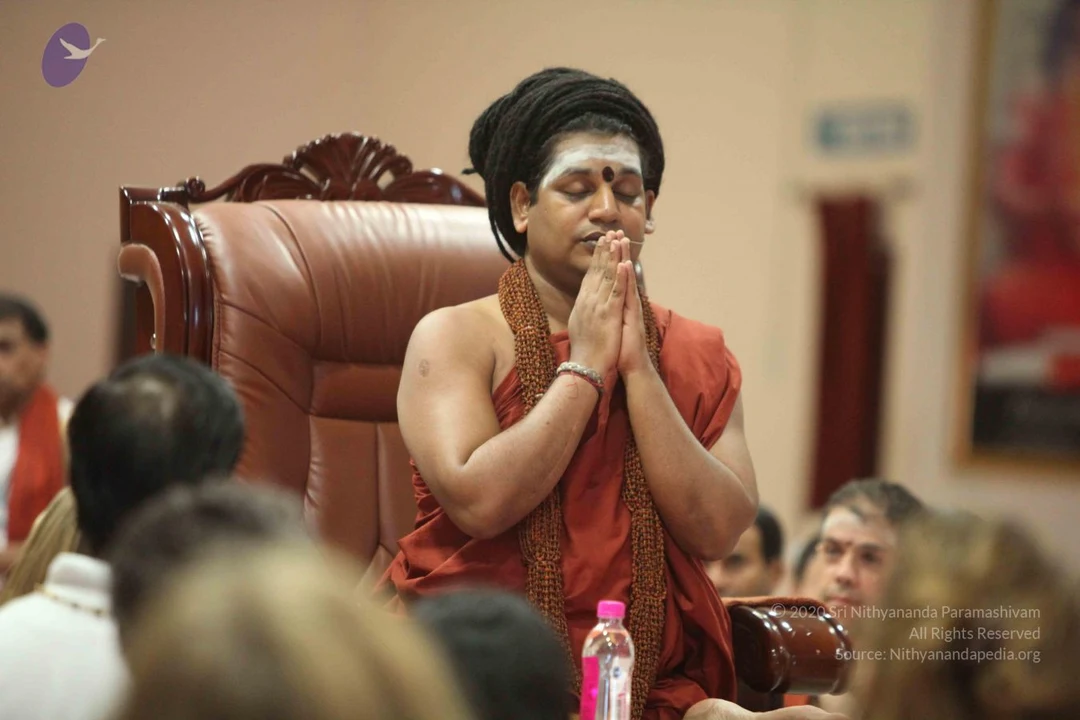
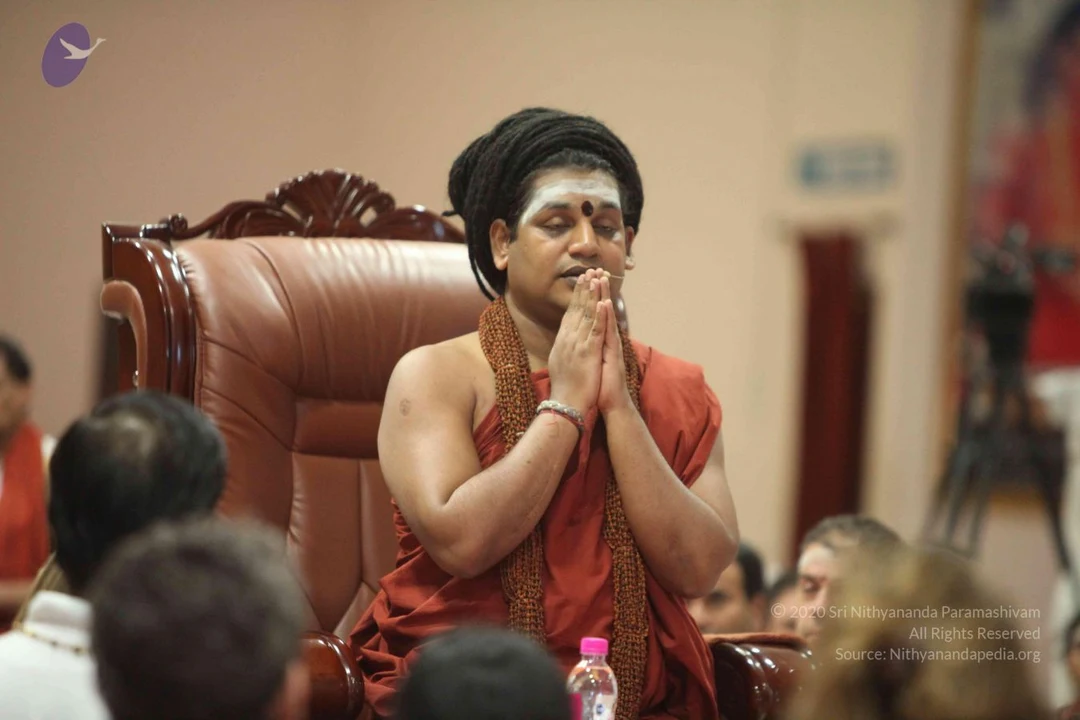
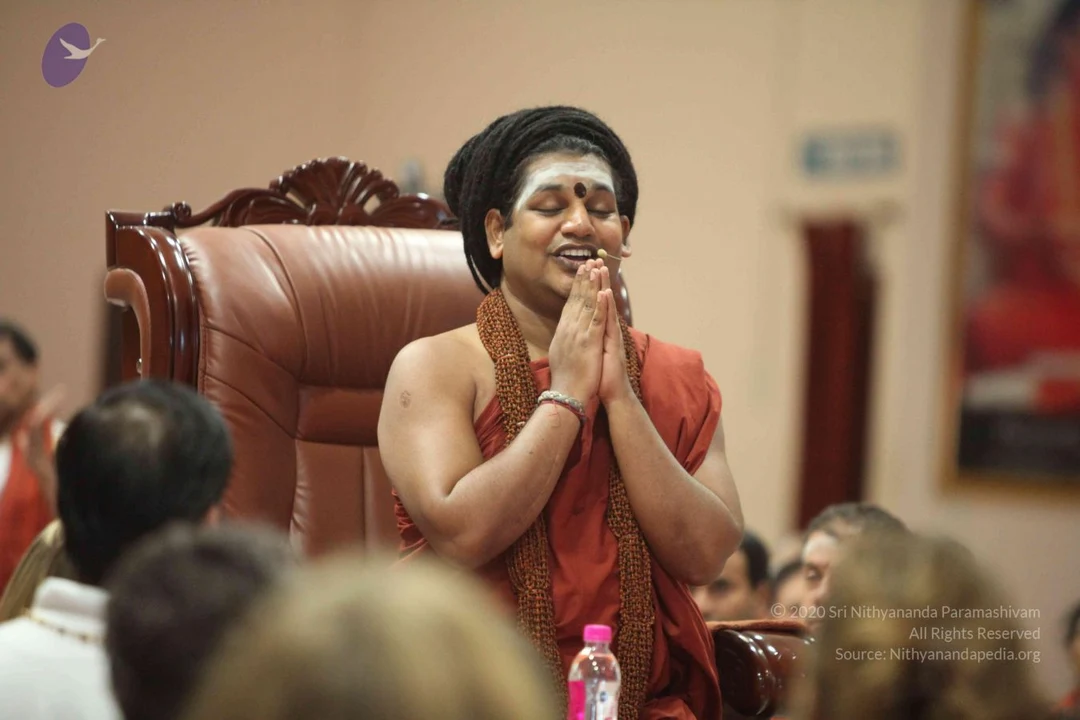
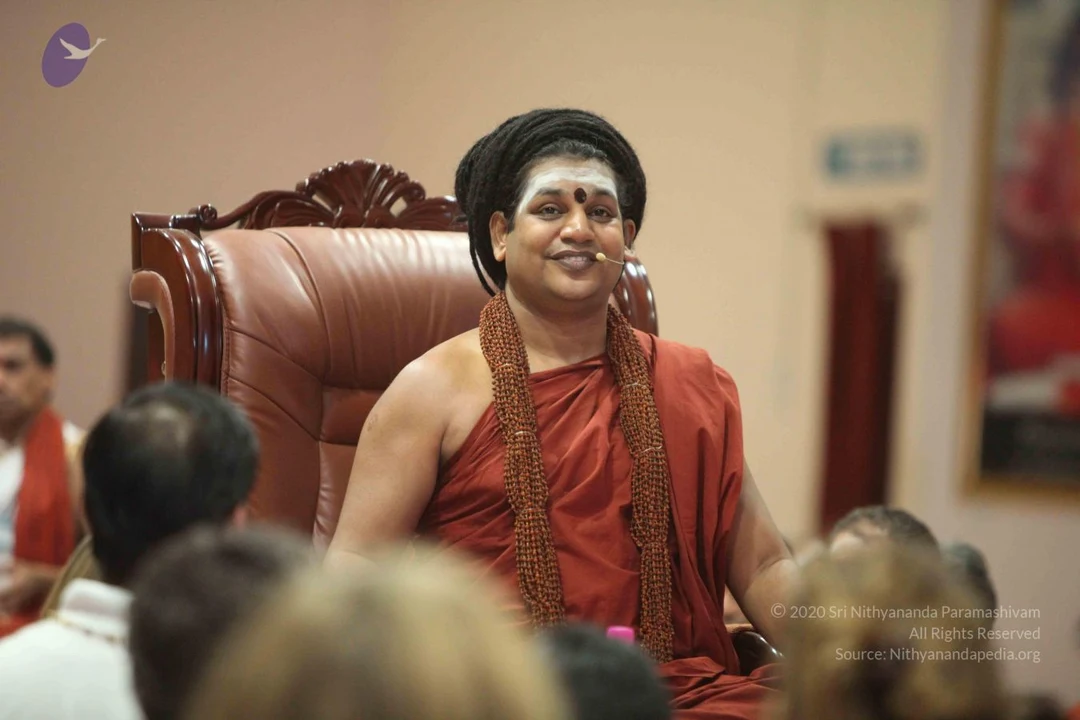
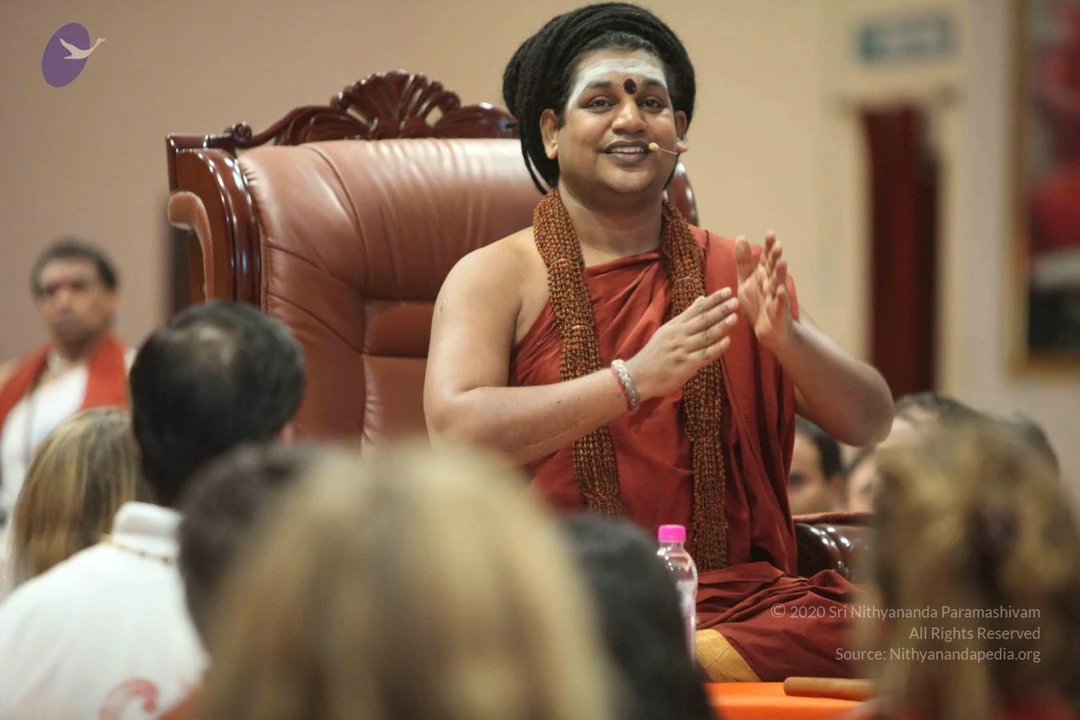
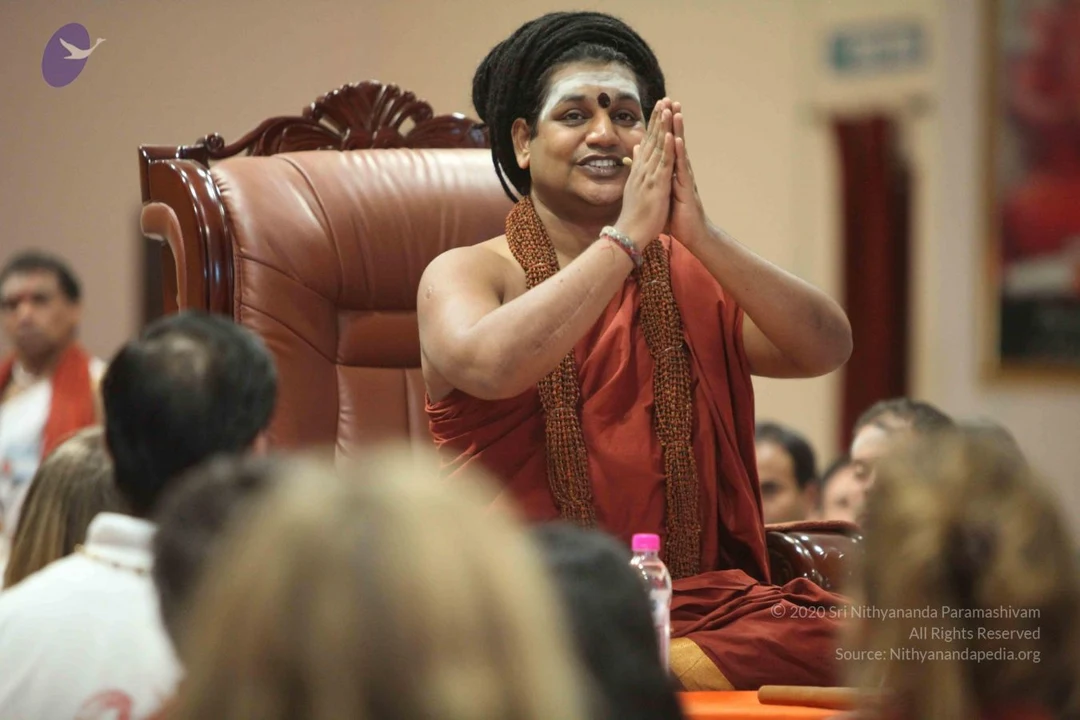
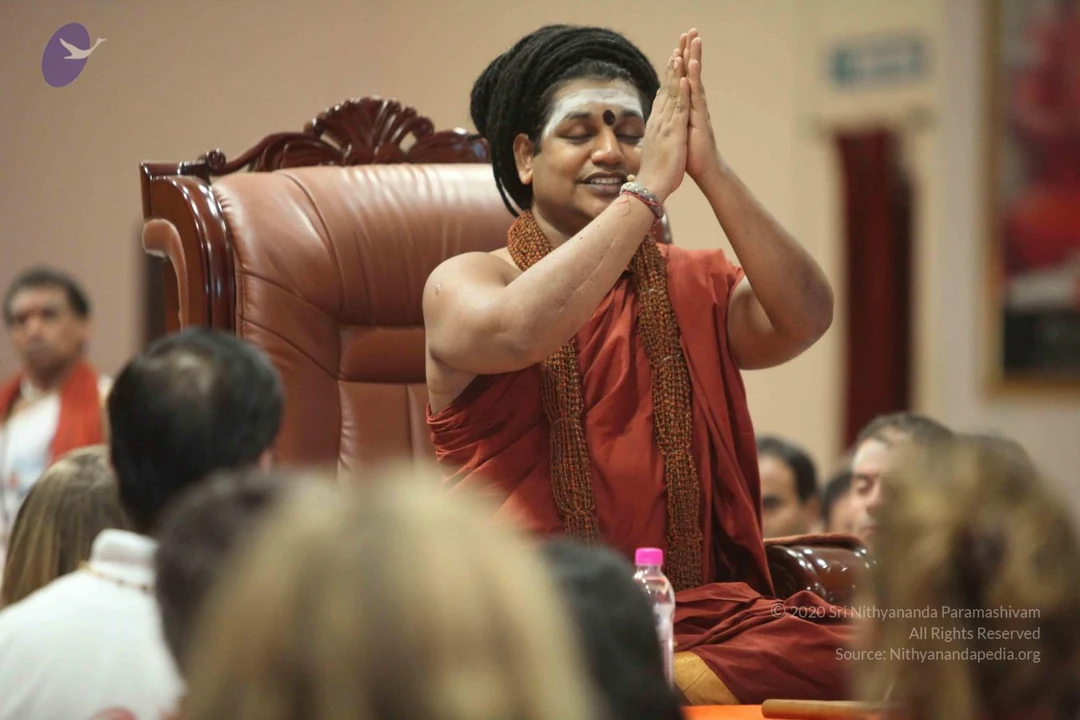
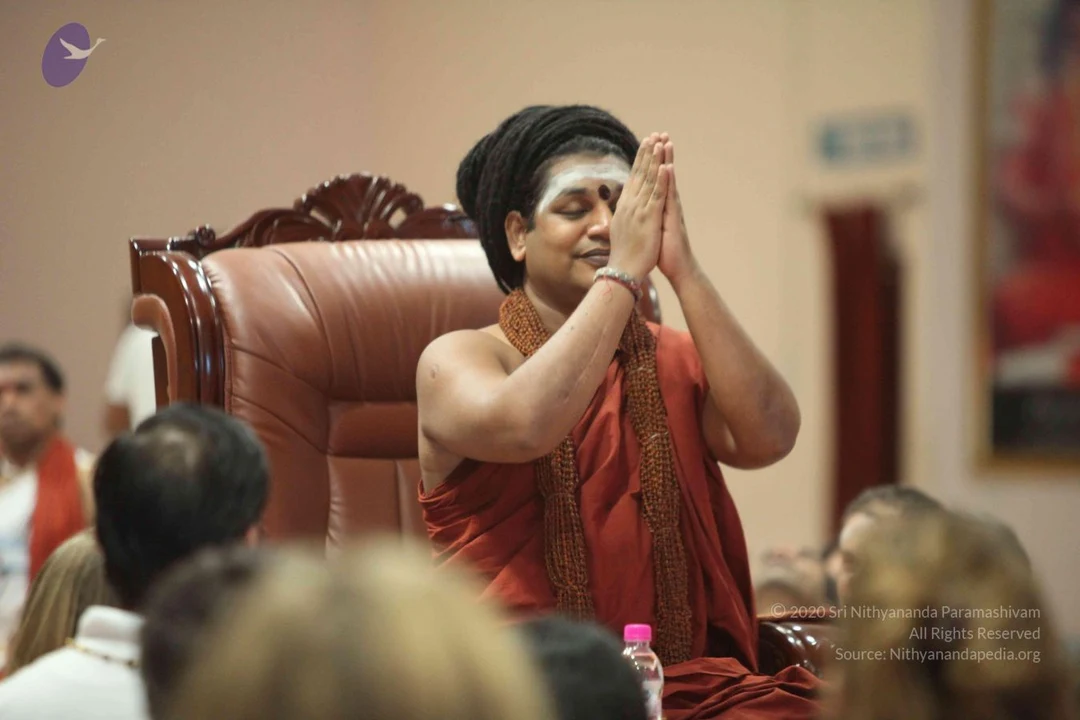
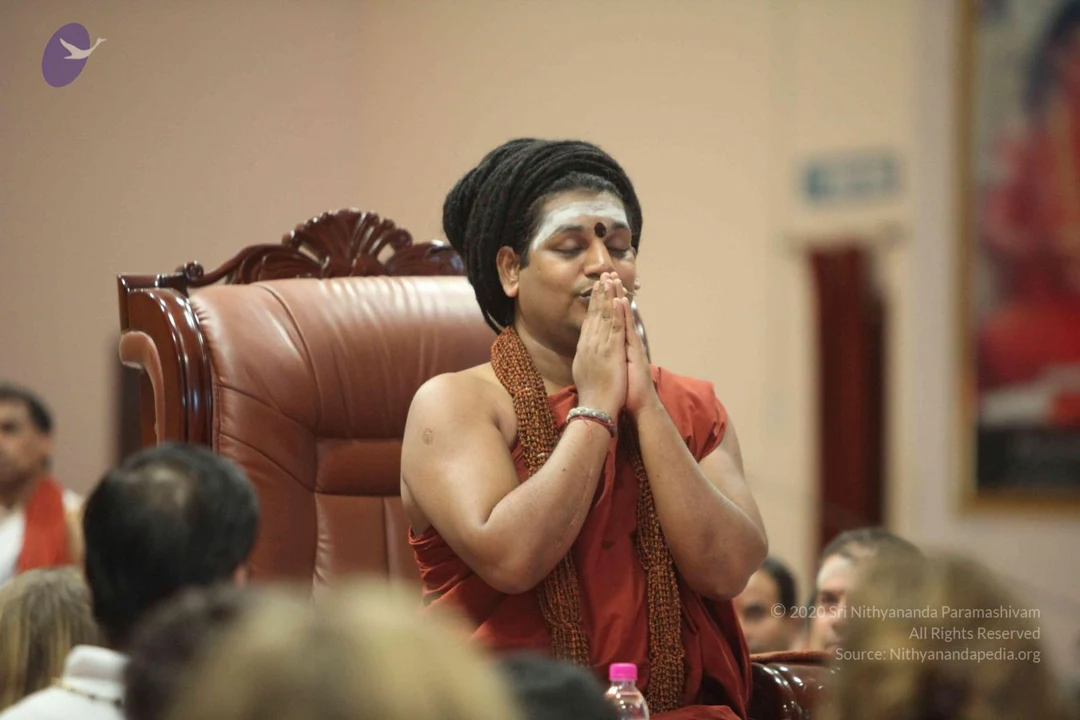
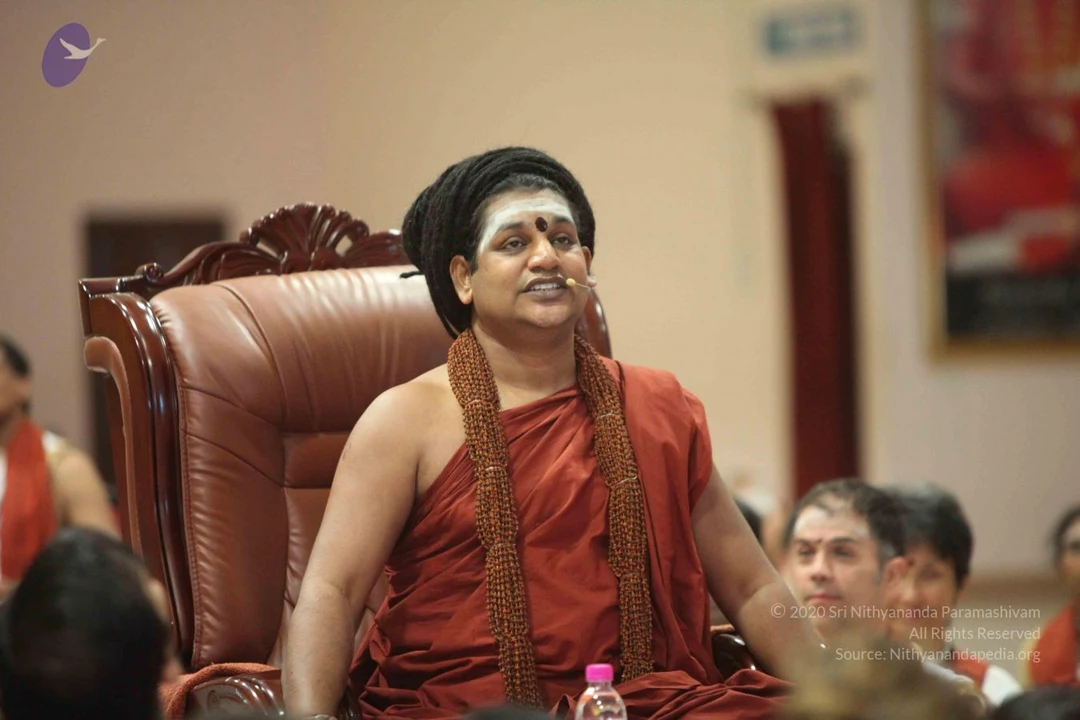
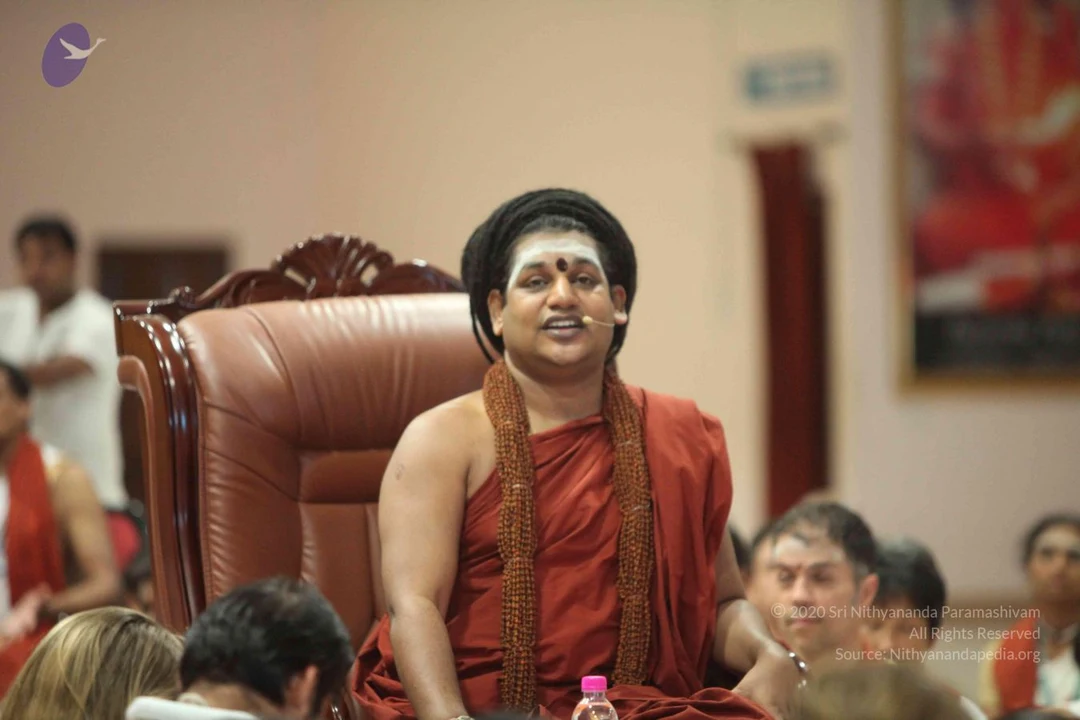
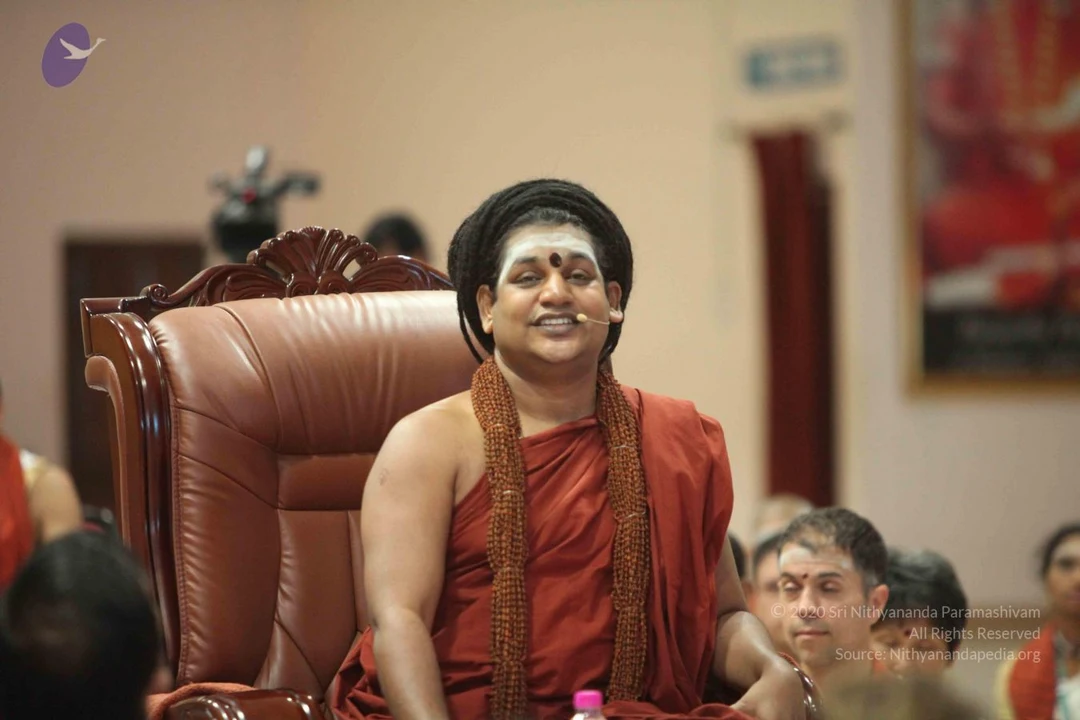
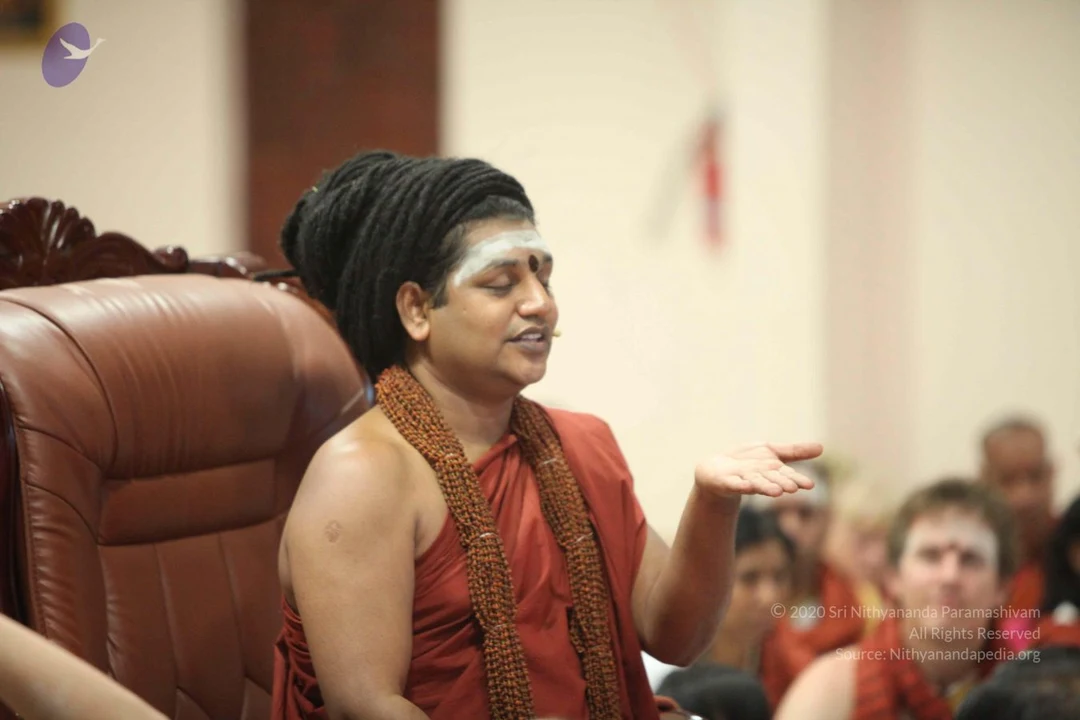
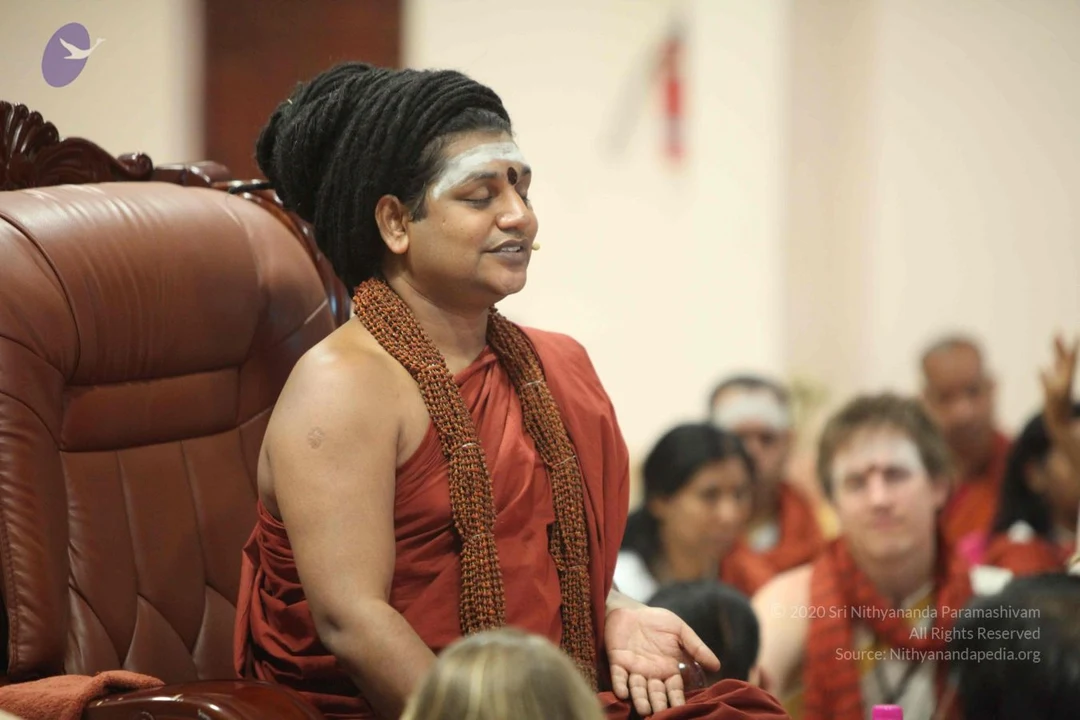
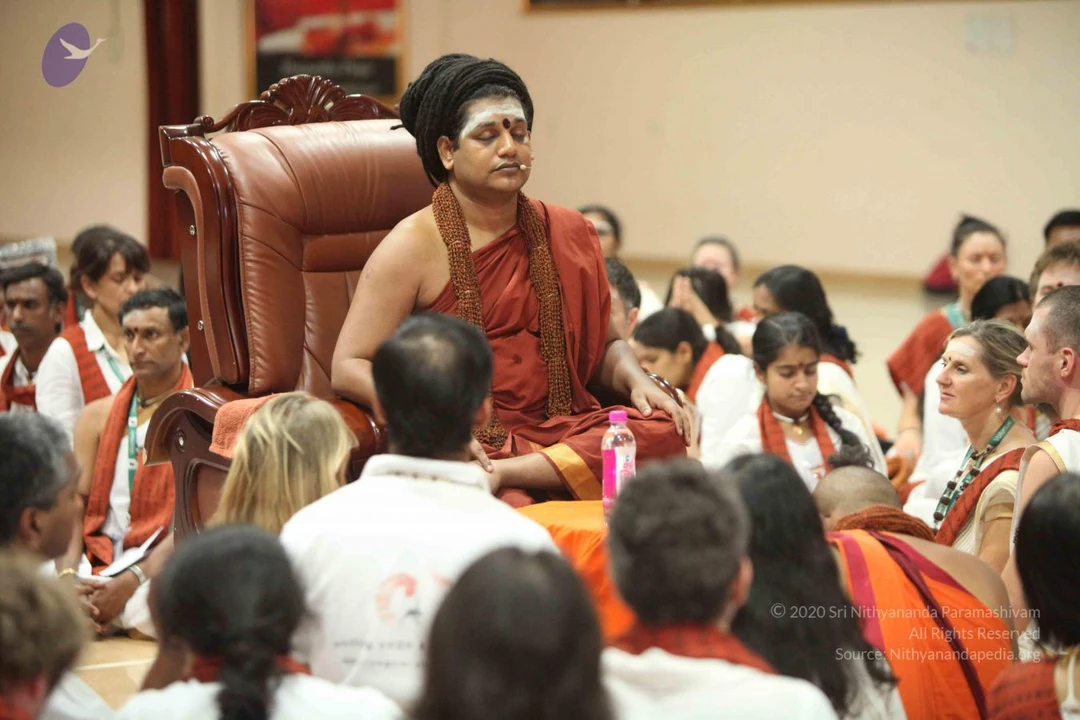
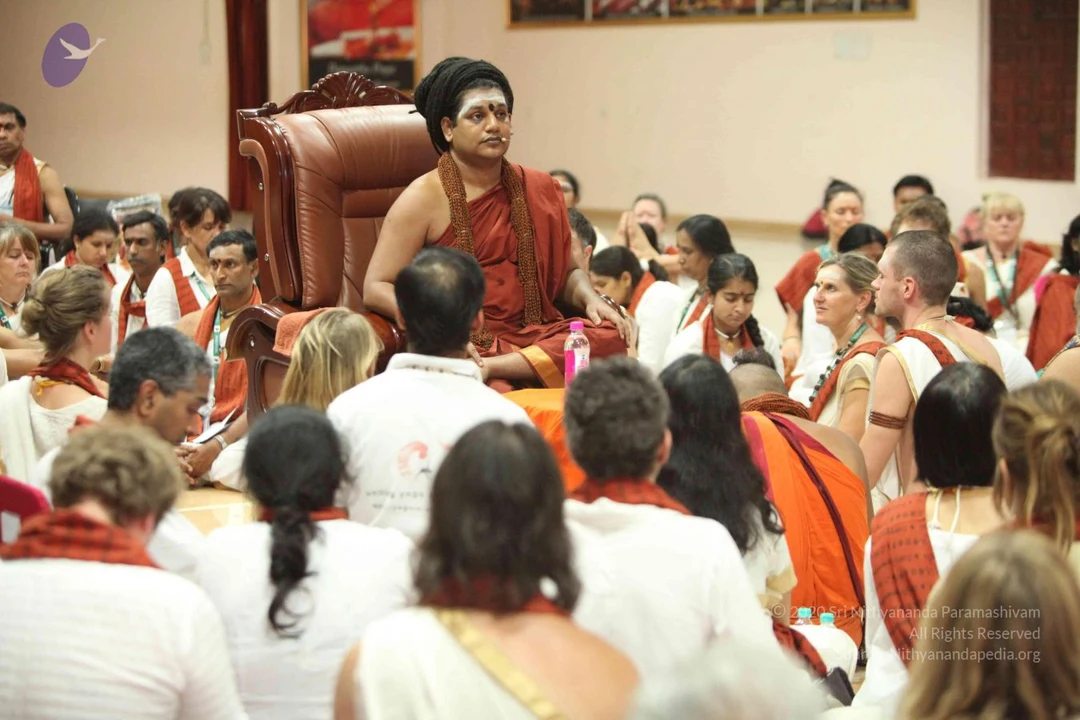
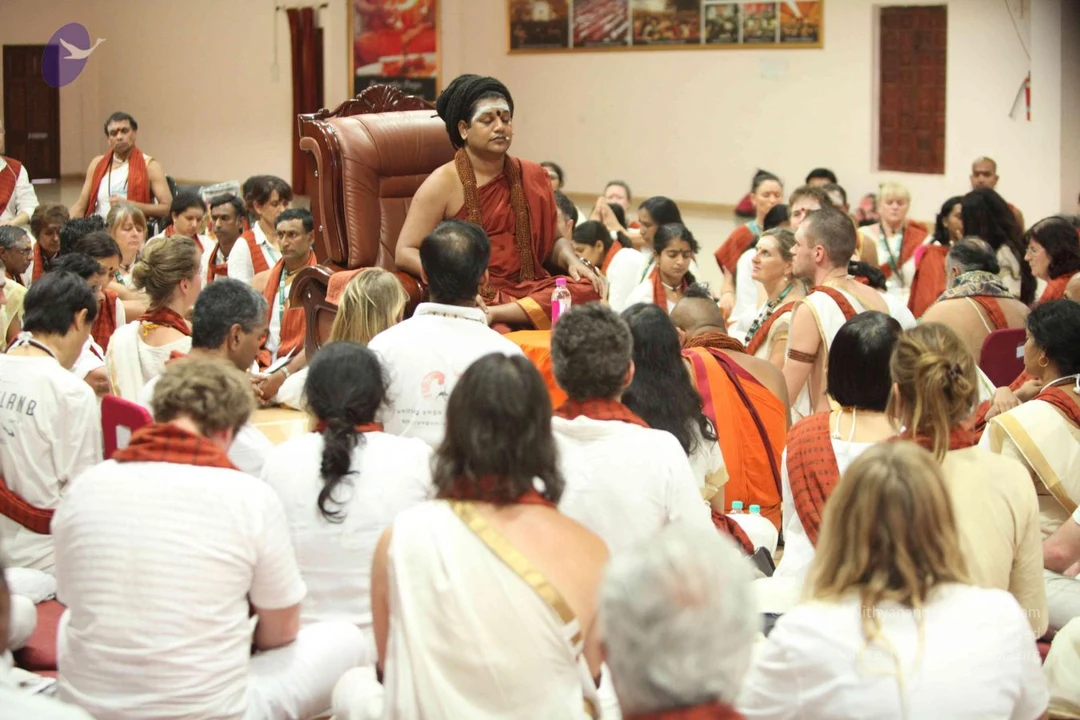
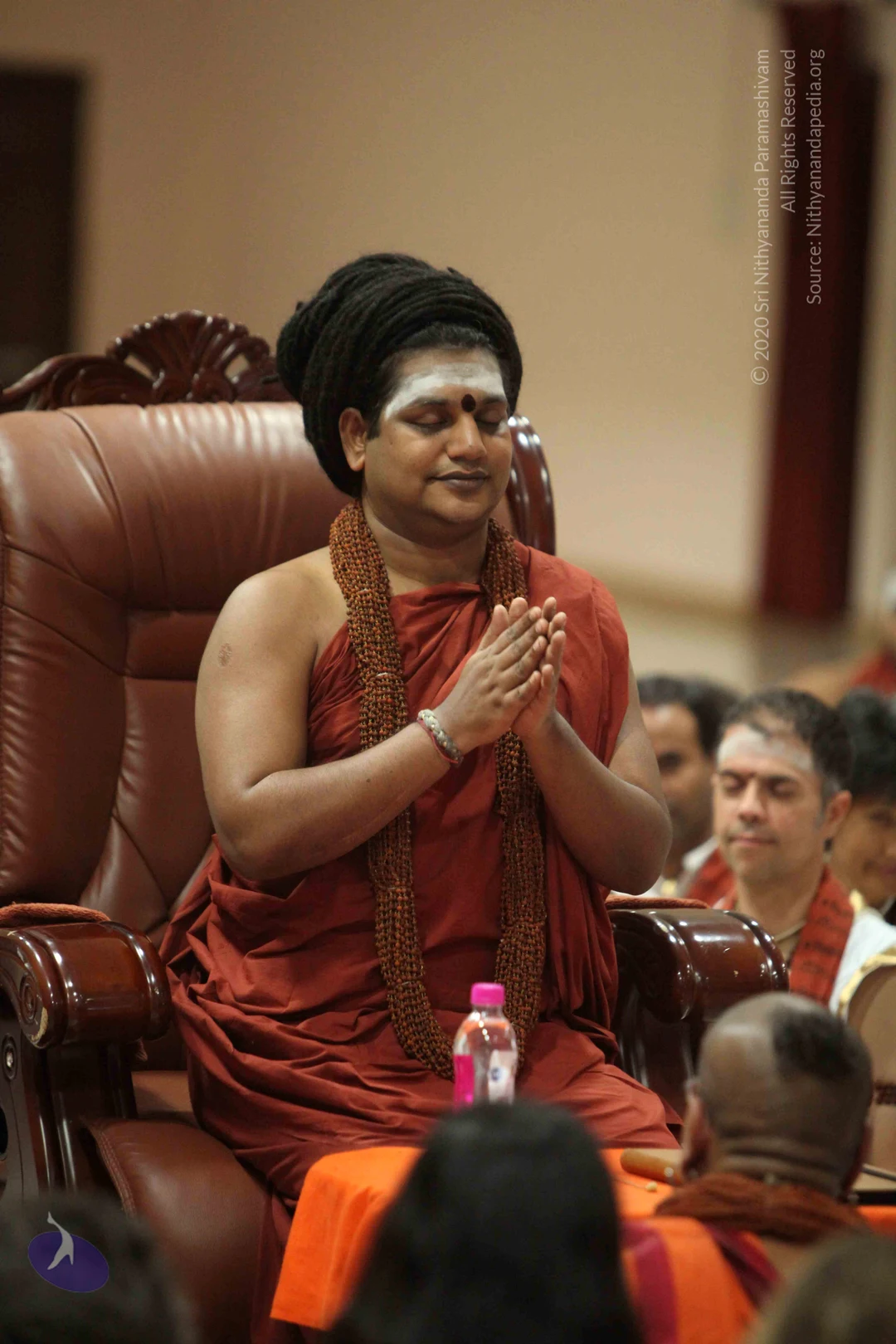
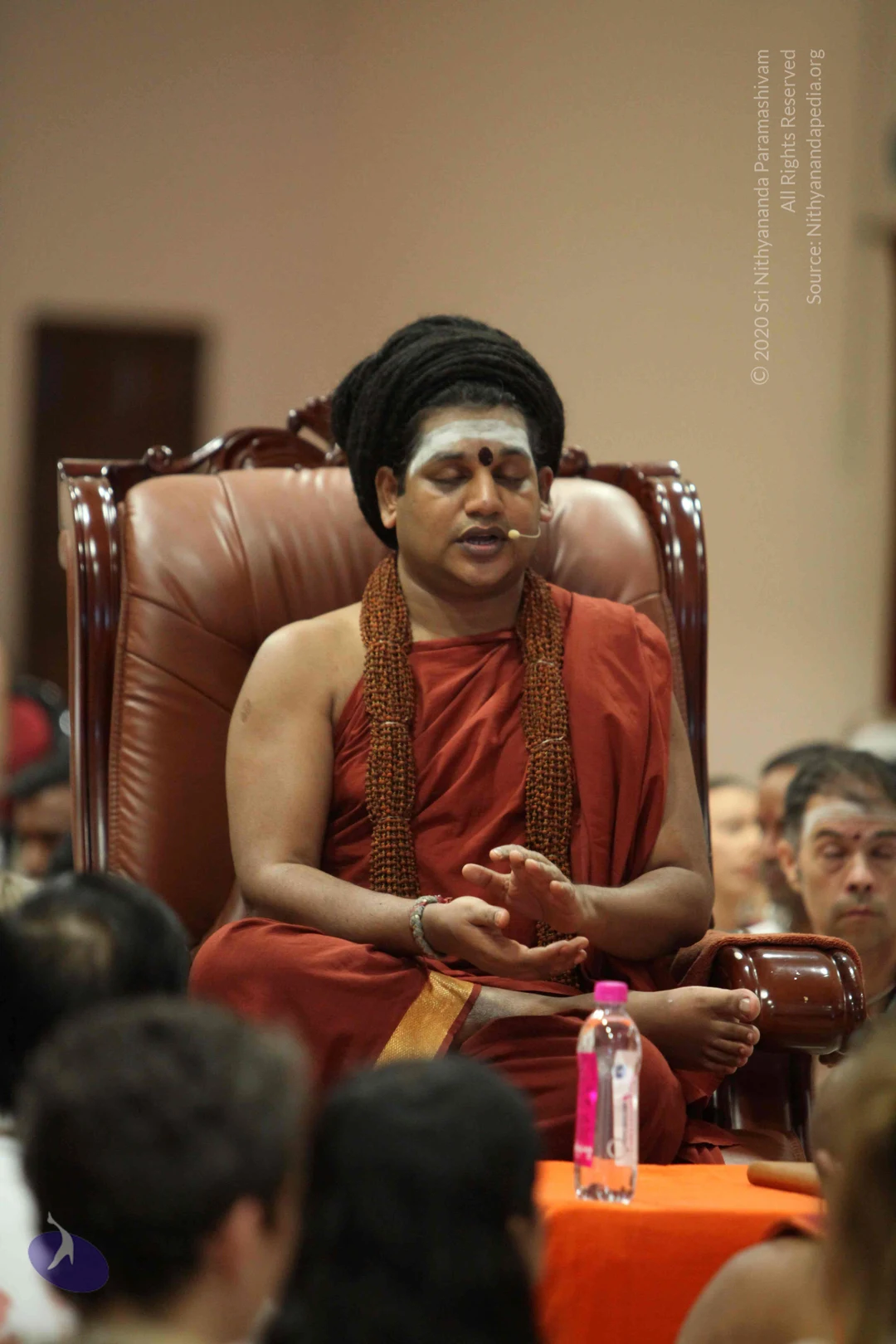
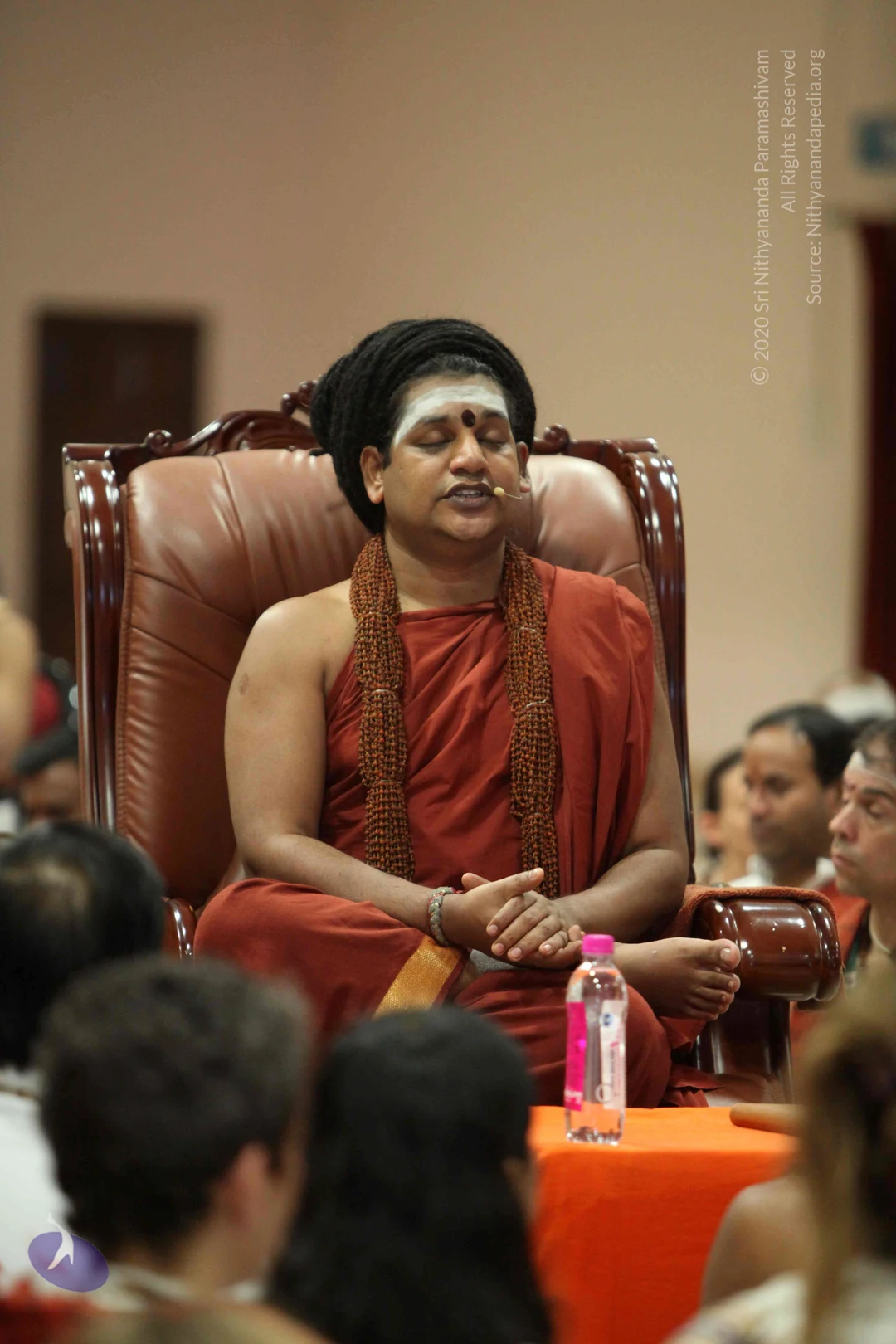
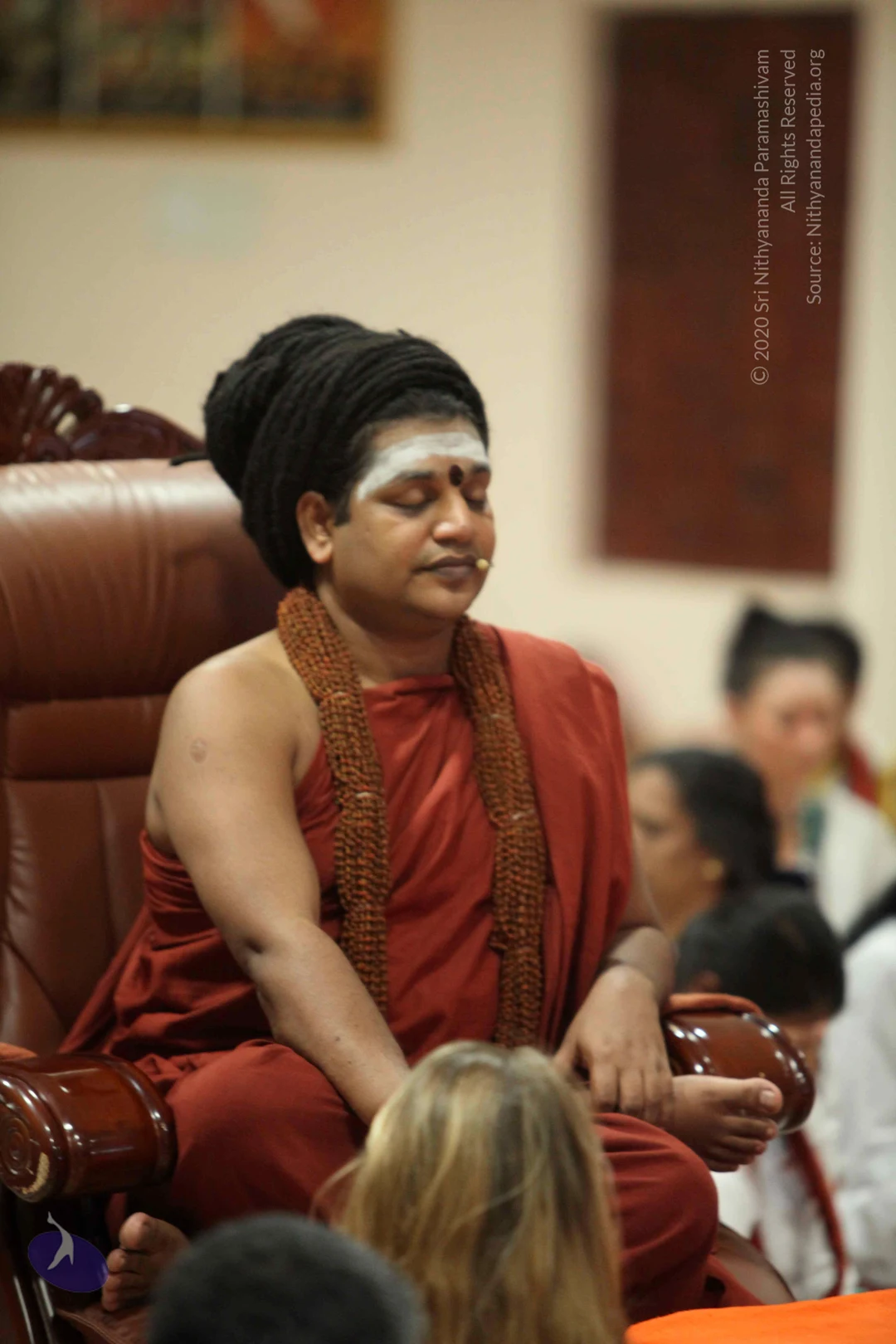
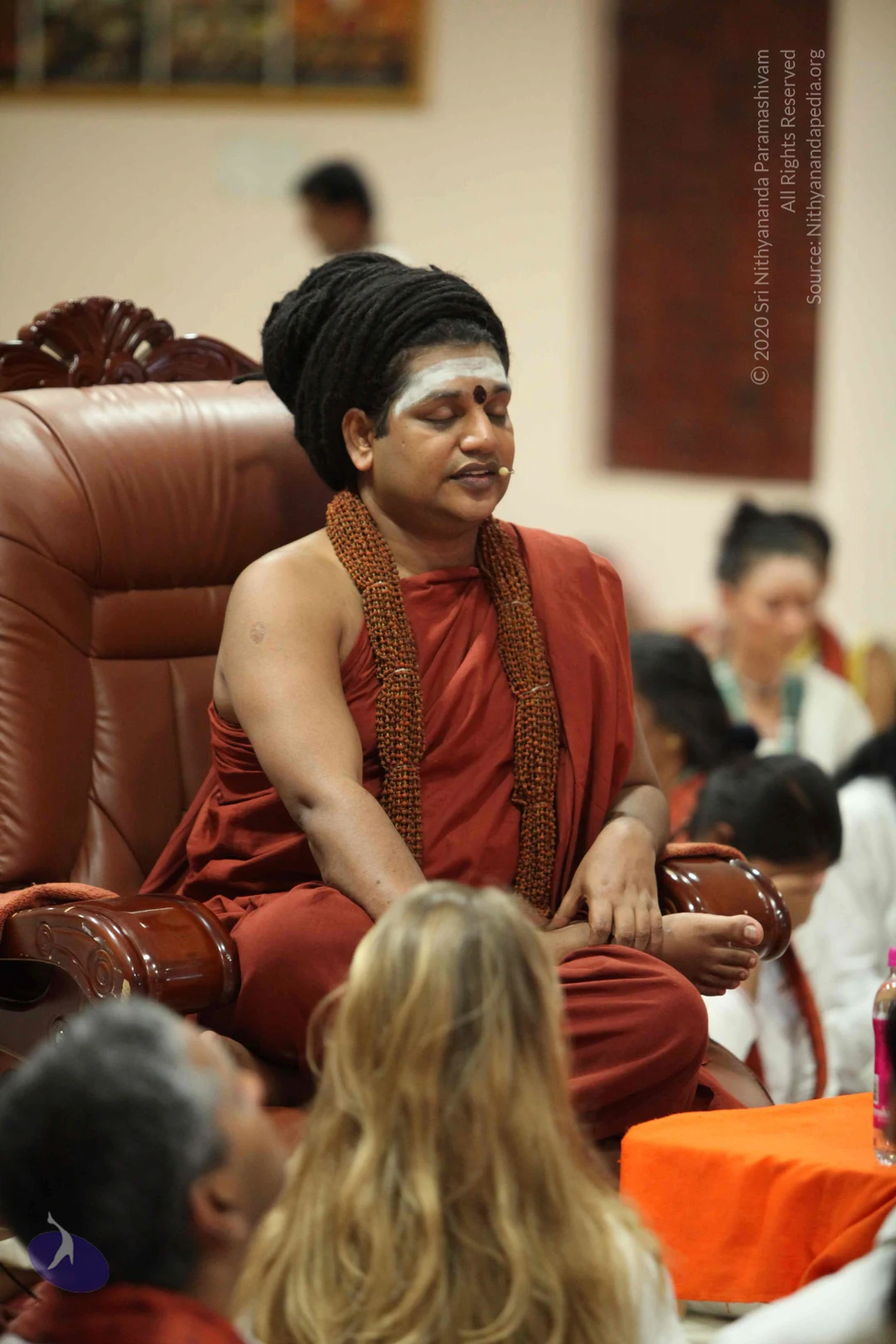
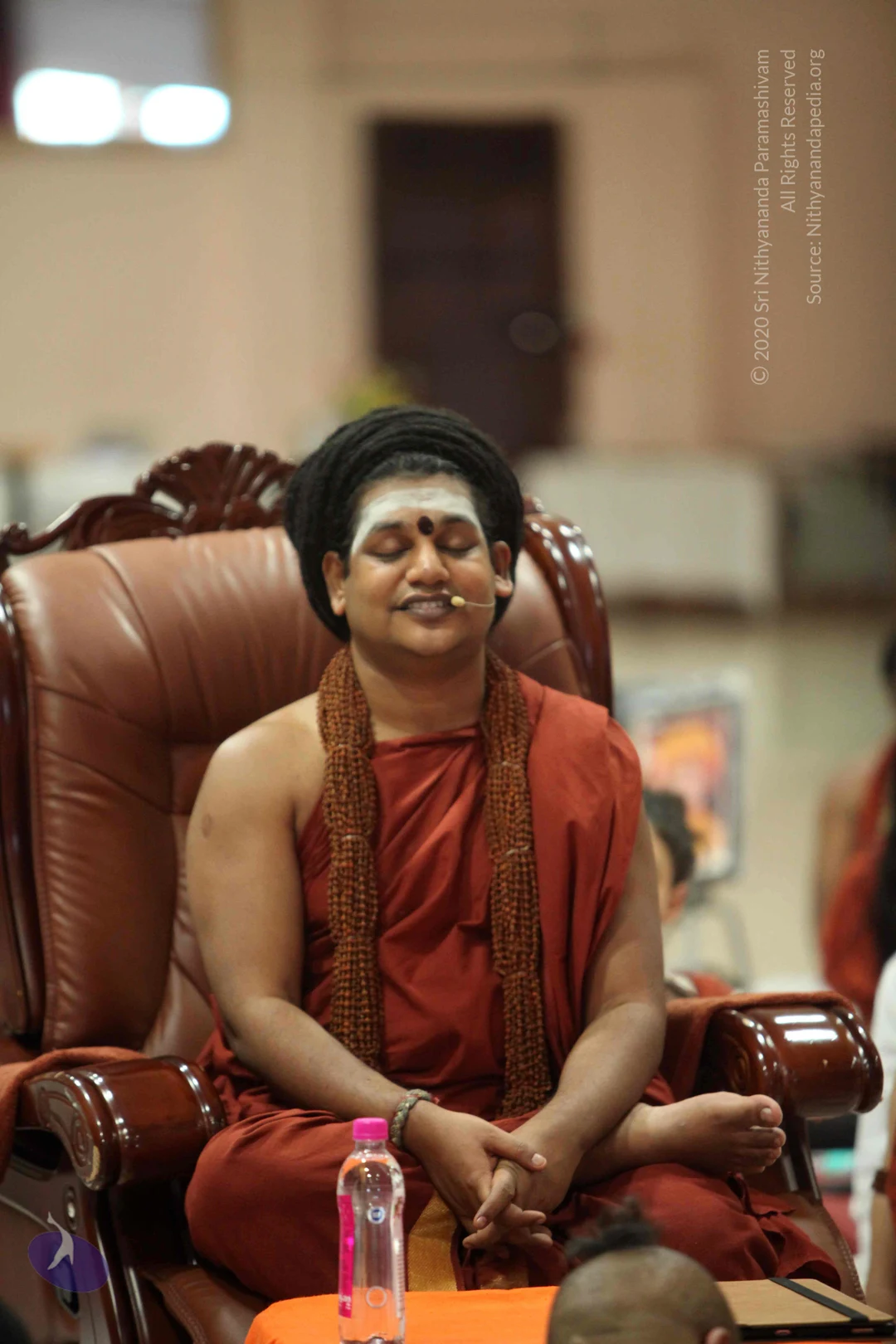
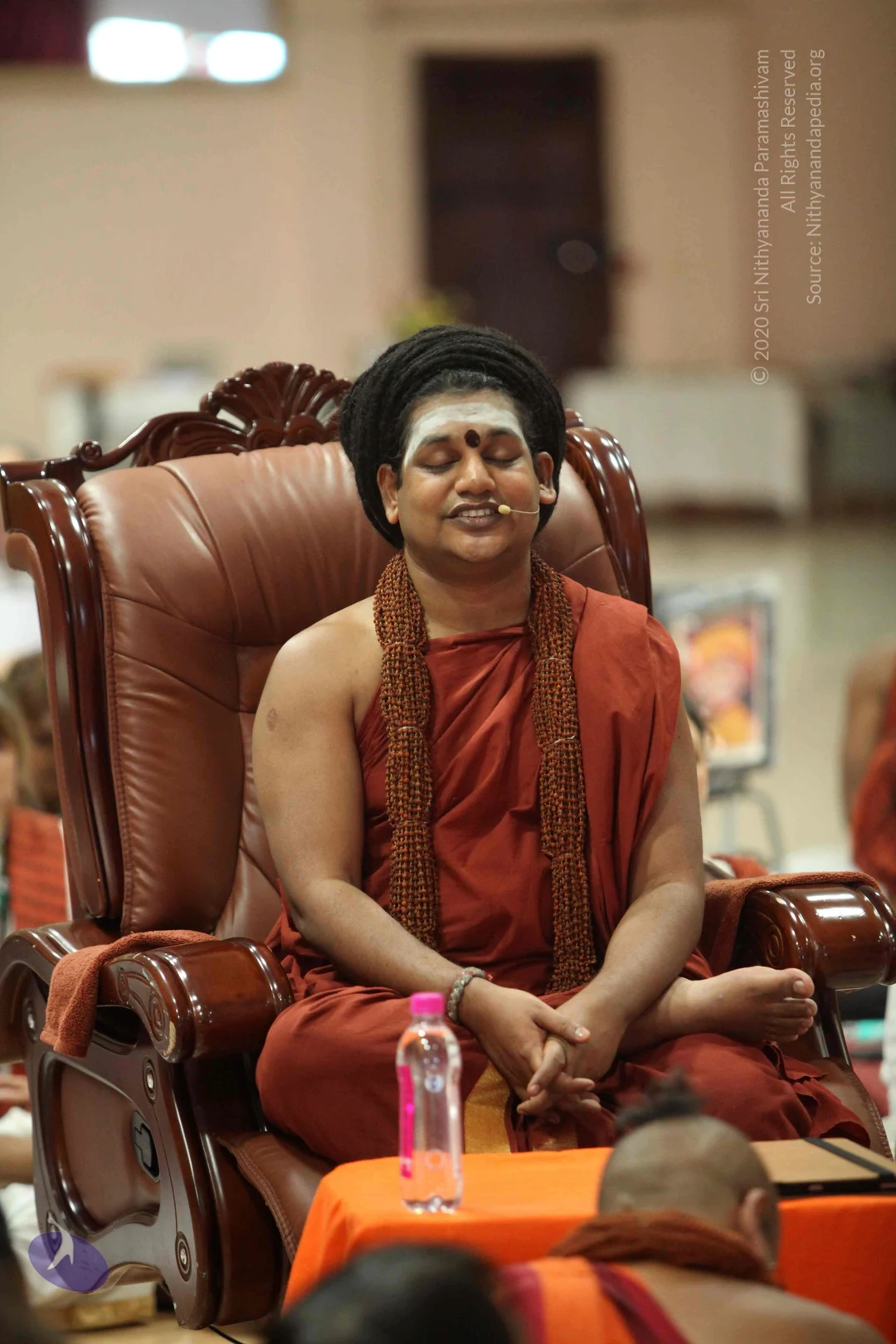
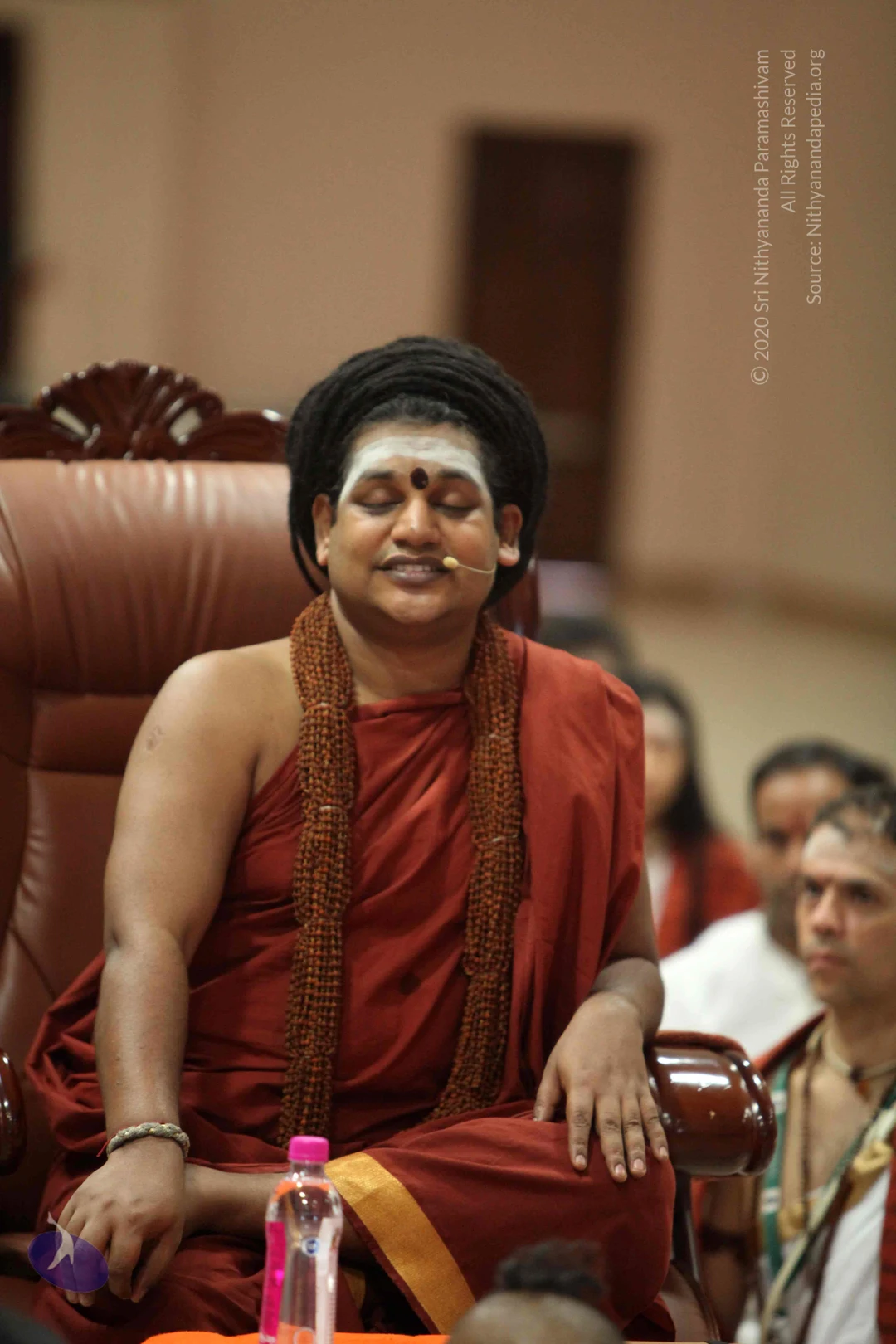
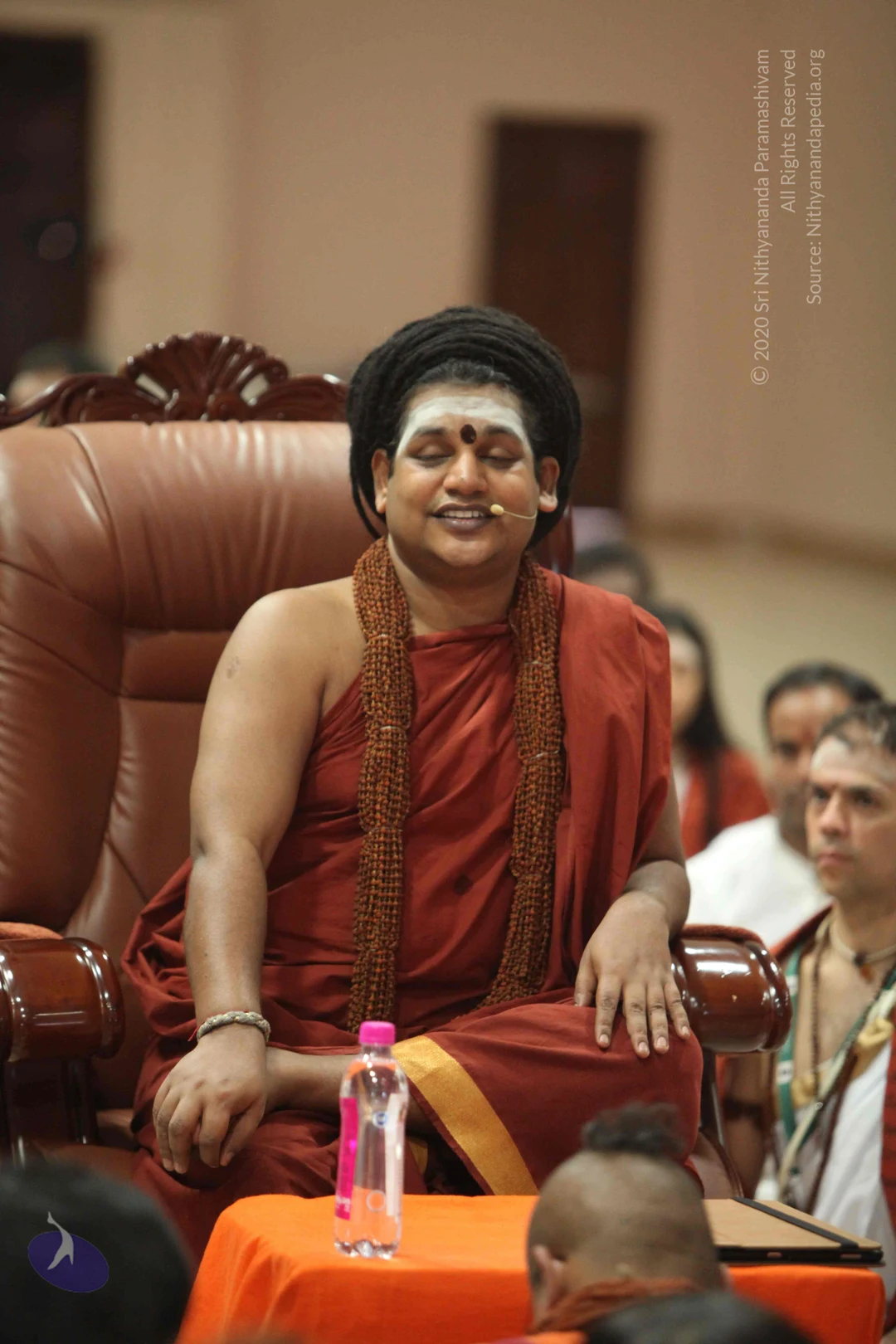
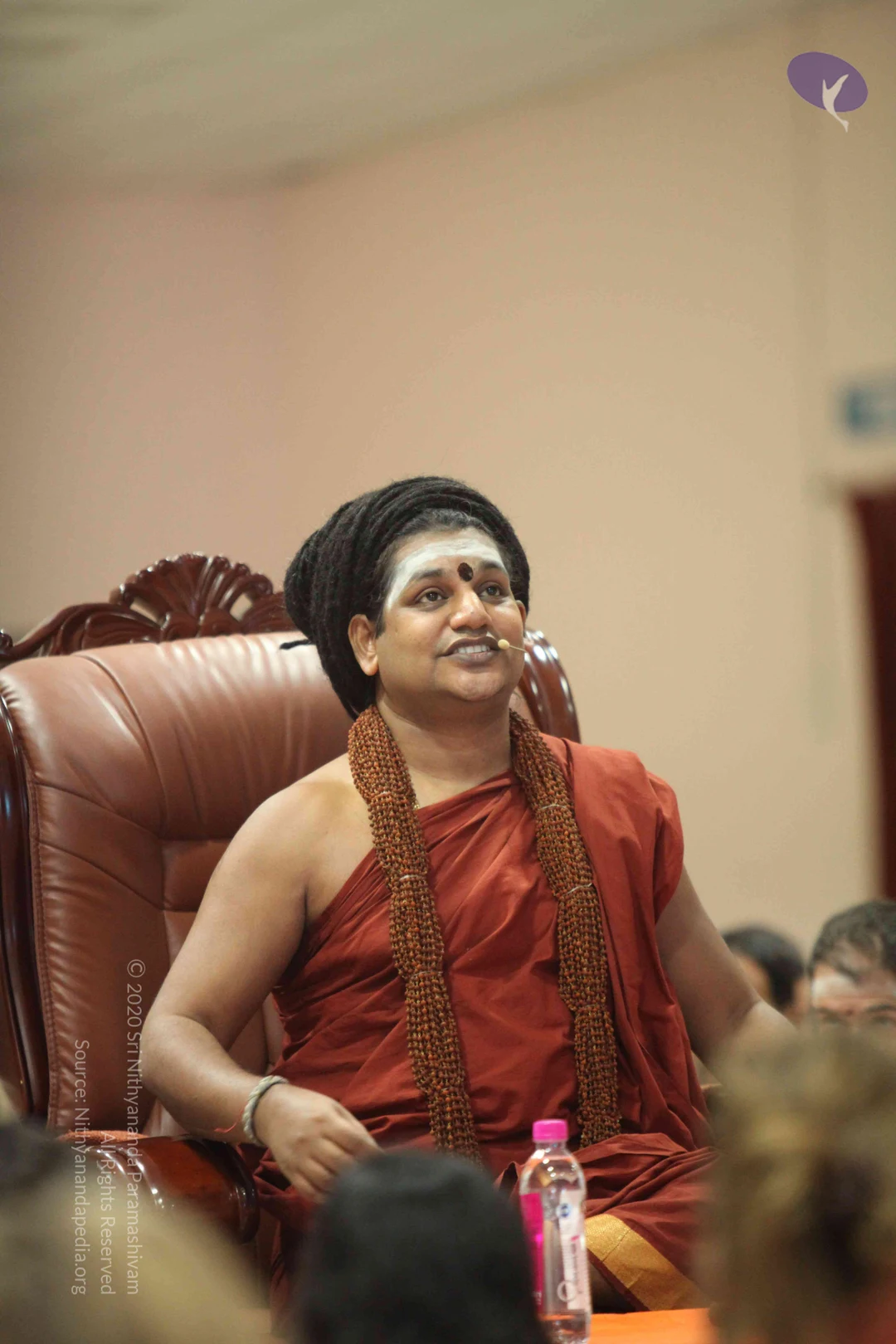
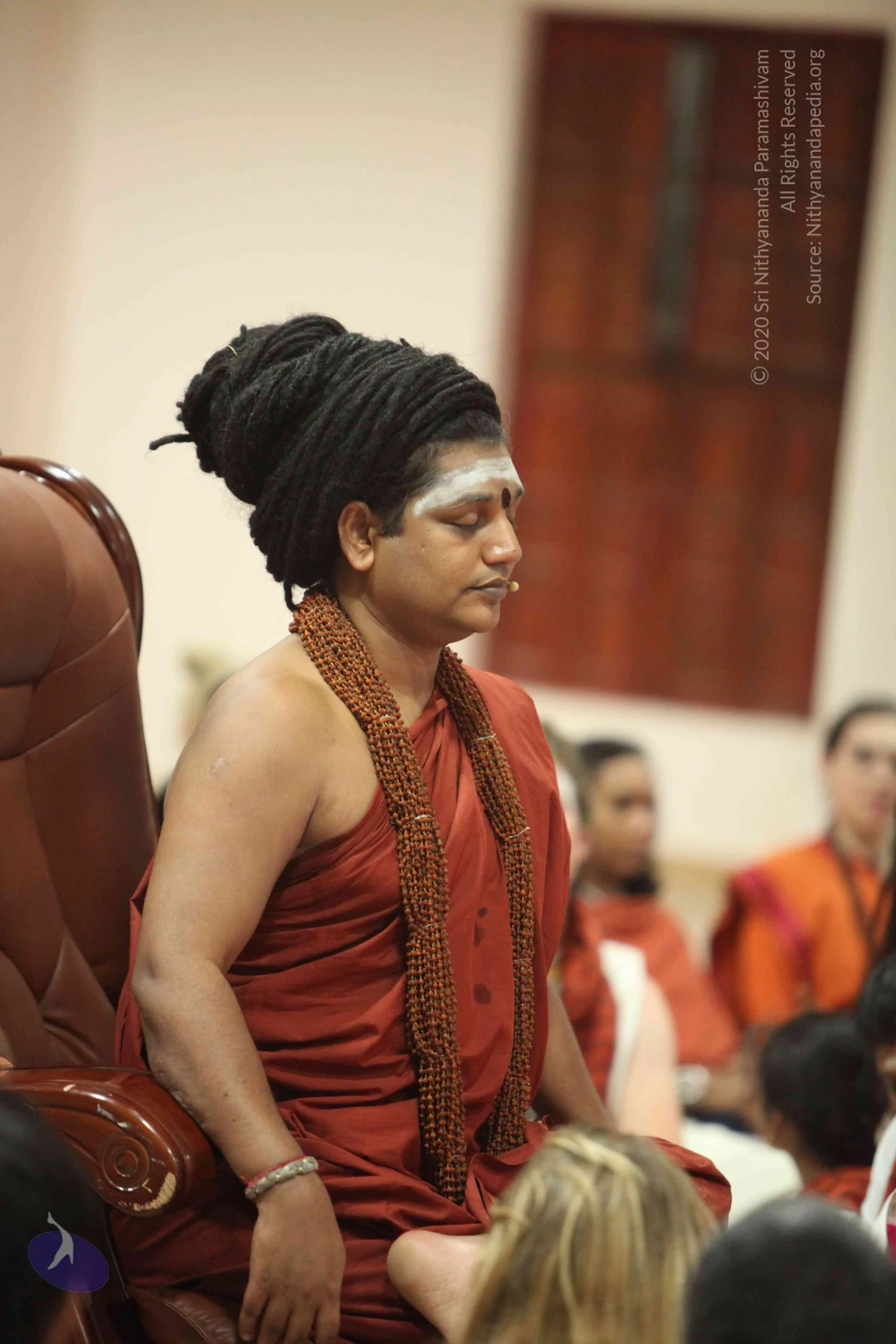
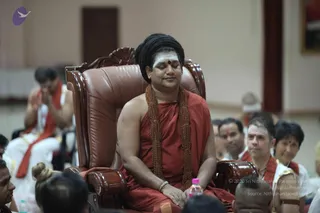
A photograph of a seated teacher in a red-orange robe with a rudraksha mala draped over his shoulders, sitting on an ornate carved brown leather chair with eyes closed while speaking into a headset microphone. He has white vertical tilak marks and a red bindi, and long dark locks are coiled on top of his head. Several seated audience members in the foreground, including a woman with blonde hair in a bun and a man in a white headband, listen. A small brown cloth lies on the chair arm. The wall behind holds framed pictures and a red panel.Night-time outdoor ritual on a raised platform under a corrugated roof. Several men in white dhotis, some bare-chested with rudraksha-style white beaded necklaces, stand at left facing a central fire pit (homa kunda) with a small flame, surrounded by marigold offerings and brass vessels. Behind the fire, a large gilded peetha holds a deity murti or ornamented image draped with white garlands. At right, a seated figure in a red-brown garment wearing a red-and-white garland sits on an ornate gold throne under a red, yellow and green canopy, with a seated attendant nearby. A man in white stands behind at right. Ritual implements and flower-decorated kalasha-like items fill the foreground.Night-time temple ritual photograph. A bare-chested priest in a white dhoti with a saffron-orange sash and a purple turban holds a lit oil lamp (aarti) in both hands in front of a gilded arched canopy and a deity murti draped with white and silver sequined cloth, a garland and a gold necklace. Behind him a multicoloured fringed canopy hangs overhead. To the left stands a tiered offering stand decorated with yellow marigold garlands, lion figures and a lotus base, with brass vessels, fruits and small lamps placed on a turquoise table. Diyas and a flame glow in the foreground. A man in white clothing stands at the right edge.

February 22 2016

Original wiki page
Contents

Title:

Your Path to Inner Awakening 3: Why Have a Guru in Your Life?

Description:

Why do we need a Guru, especially in the modern age, where everything is available? Google may have all answers, but it may not be able to give you all answers. Having is different, giving is different. Even in the Google age, you need a Living Enlightened Being. Who is an Enlightened Being, what is his constitution? An Enlightened Being is somebody who is literally enlightened in his very core. His very cognition is built on the highest possibility, truth, clarity. Only an Enlightened Being can transmit experience to you. For long-lasting transformation, an Enlightened Being becomes an important co-creator for your reality. So you don't have to waste your time in trial and error. Sometimes the long journeys of trial and error are not only futile, but also the moment you realise the journey is futile, your life is lost. An Enlightened Being is an alchemist, who transmits the great truths and helps you to cross some of the major karma patterns, thoughts patterns you carry. Like self-doubt, self-hatred, self-denial and self-blackmailing. All these subtle patterns you can cross only with the help of a person who himself has crossed, who himself has gone through all possible situations. Who himself has gone through and re-written his future. Only he can make you re-write your future, without wasting your time further in the trial and error processes. And re-writing your future also needs a certain mystical, safe environment, where your being can open up without being scared. An Enlightened Masters love and supportive ambience, gives you the ability to open up. He can get you to the space of ultimate possibility, to cause your reality. Watch, share and like the video's and Subscribe to our channel to be notified of the next upload. click http://bit.ly/20j90wr to subscribe. Links to the other video’s in the Your Path to Inner Awakening series: 1 What personality type are you? https://youtu.be/BV_k3a1Xo6U?list=PL2... 2 A suprising solution to your problems https://youtu.be/nNbqM0qsGWM?list=PL2... 3 Why Have a Guru in Your Life? https://youtu.be/GLvqBRhZLJQ?list=PL2... 4 What it Takes to Wake Up and Transform Permanently https://youtu.be/5kkLpIJL61I?list=PL2... 5 5 Common Doubts About Spiritual Awakening https://youtu.be/TNWt2nUJfhM?list=PL2... 6 The One Thing That Will Ruin Your Life Immediately https://youtu.be/yohkHyUghsw?list=PL2... 7 The Effects of Inner Awakening on Your Life https://www.youtube.com/watch?v=Fk3Jp...

Link to Video:

VideoAudio

Tags:

Paramahamsa Nithyananda, Nithyananda, Guru

Transcript:

I welcome you all with my love and respects.

Today, I will expand on need for the Enlightened Being.

0:28

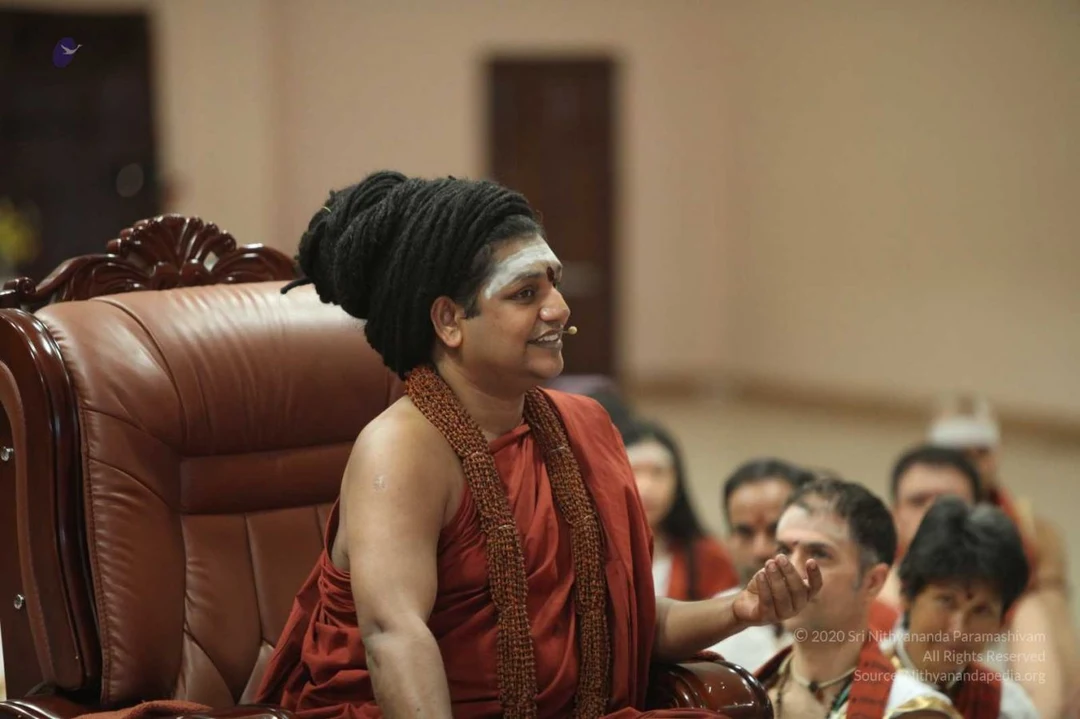
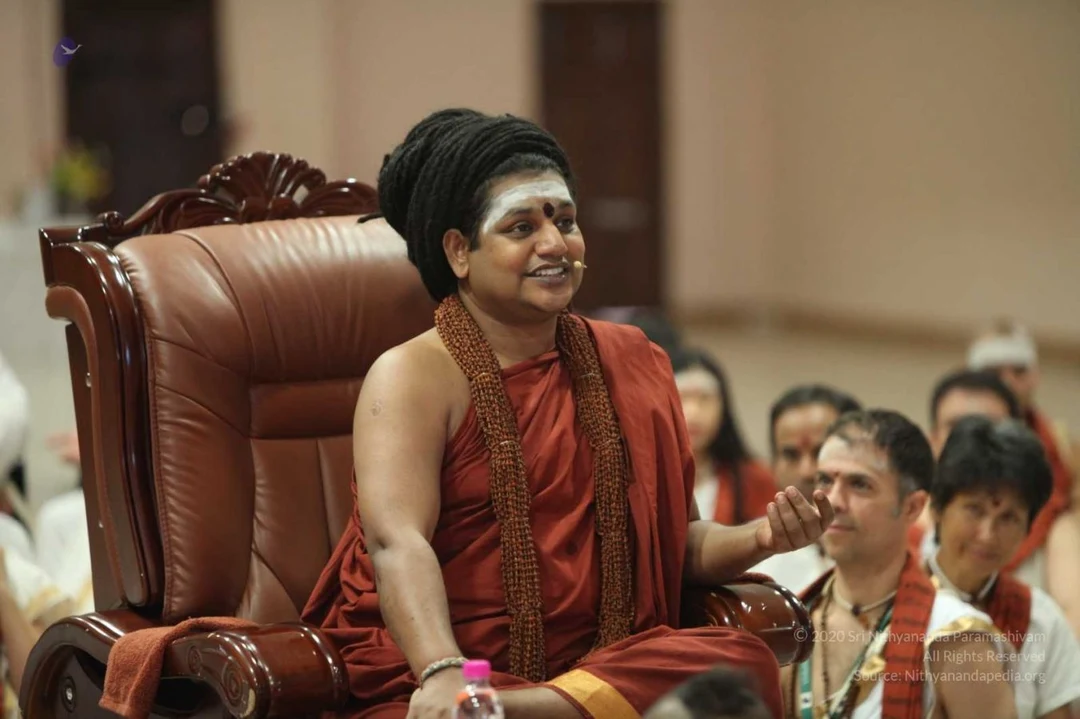
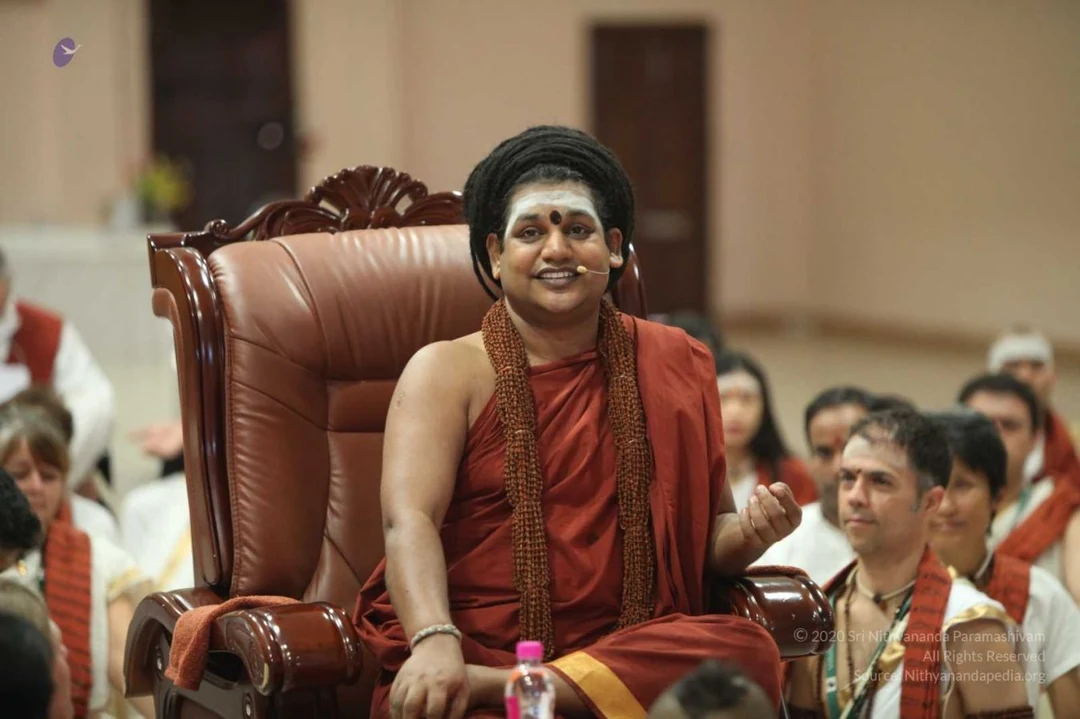
People ask me why do we need Guru, especially in the modern age where everything is available? You need to know, Goggle may have all answers, but it may not be able to give you all answers.

0:51

Please understand! Having is different, giving is different. Goggle may have all answers but it'll not be able to give you all answers. Even in the Goggle age, you need a living Enlightened Being.

1:14

Let's understand who is Enlightened Being, what makes somebody Enlightened Being, what is the constitution of an Enlightened Being? Enlightened Being is a person who is literally enlightened in his very core. His very cognition is built on the highest possibility; knowledge, truth, clarity.

1:56

So understand, if somebody intellectually understands the spiritual truths, truths about life, he will be able to give you an intellectual understanding. If somebody is emotionally excited about these great ideas, he will be able to emotionally excite you with that same great ideas. But, only if somebody is enlightened, somebody's core being, cognition, is established in these great ideas, he will be able to transmit that experience to you.

2:42

So if you want an authentic, long-lasting transformation, Enlightened Being becomes an important co-creator for your reality. Please understand, when an Enlightened Master is a co-creator for your reality, you don't waste your time in trial and error processes. You don't waste your time in trial and error methods. You don't unnecessarily waste your time in long journeys. Sometimes, the long journeys not only are futile, by the time you realise they are futile, your life is lost. The precious, very important time is lost.

4:00

So, Enlightened Being is an alchemist who transmits these great truths, who helps you to cross some of the major karmic patterns you carry, thought patterns you carry, like self-doubt, self-hatred, self-denial, self-blackmailing. See, all these subtle patterns you can cross only with the help of a person who himself has crossed, who himself has gone through all possible situations, all possible impediments, all possible ups and downs, who himself has gone through and re-written his future. Only he can make you re-write your future without wasting your time further in the trial and error processes.

5:21

And, re-writing your future also needs certain loving, caring, a mystical ambience where your innermost being is able to relax and open up without being scared of opening up, without being in the fear of being vulnerable. An Enlightened Master's love, his presence, his caring and supportive ambience gives you the experience of ability to open up, ability to be open without feeling vulnerable. Opening does not need to make you vulnerable or powerless. The Master's ambience, Master's presence gives you the space, ability to open up without making you feel the powerlessness of being vulnerable.

6:52

Sometimes people ask me, how can you say an Enlightened Being has gone through all the situations of life? You are not married, you don't have a job, you don't have to maintain a relationship. Please understand, when somebody gets cancer and goes to a doctor, it is not that only if the doctor also had cancer and cured himself he can do surgery on you or chemotherapy or give you the medical care and cure you and heal you. No! If he has mastered the science, he can heal you, cure you.

7:45

Understand! An Enlightened Being, in a way, goes through the whole circuit of human mind and body. In his being, all the possibilities are awakened and he goes through. That is why I am saying it is equivalent to going through everything in life. He can solve every situation, every difficulty. He can get you to the space of ultimate possibility to cause your reality

Photos

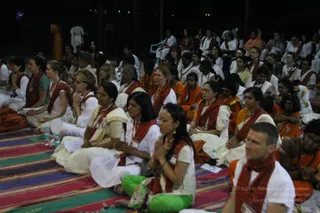
Mandala Process
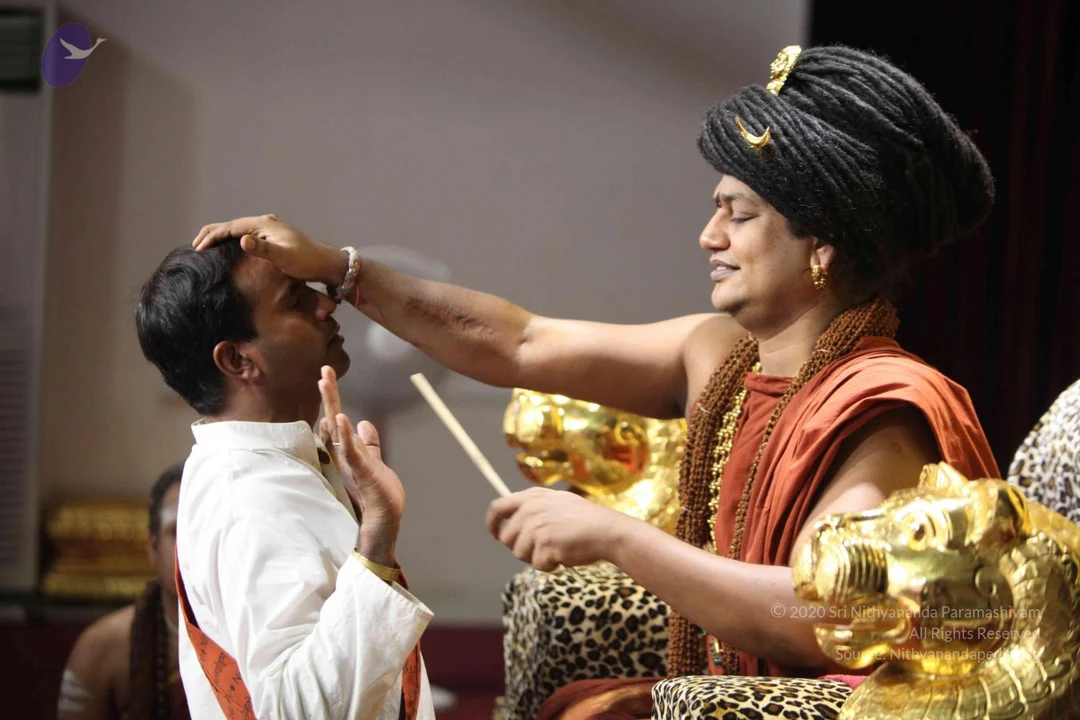
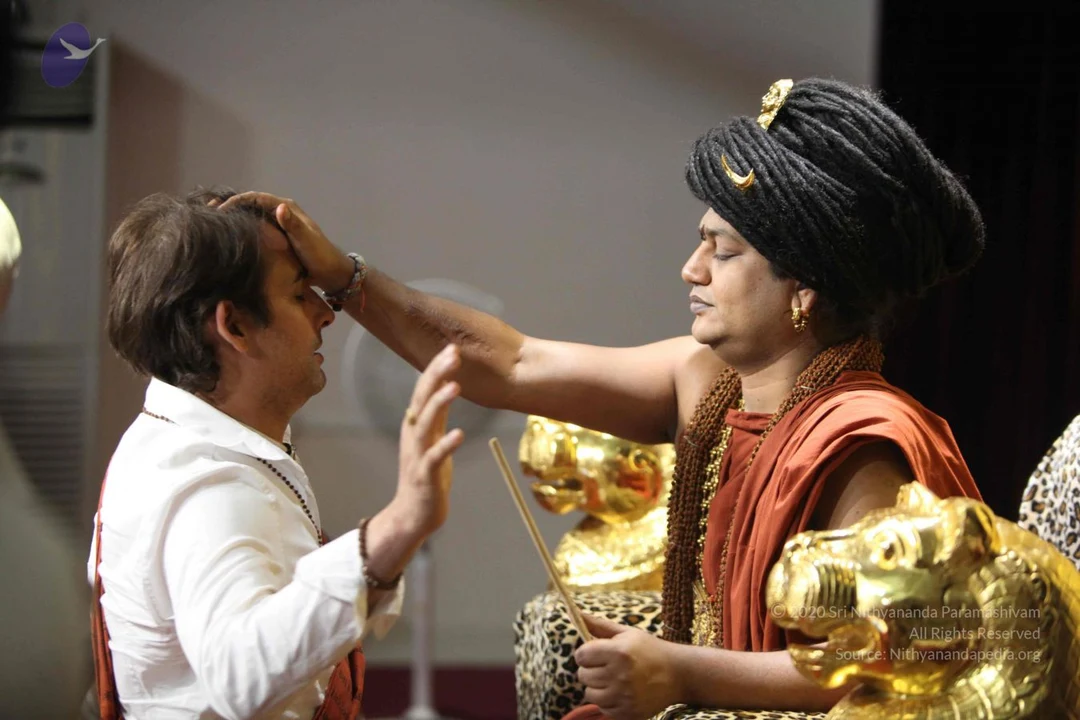
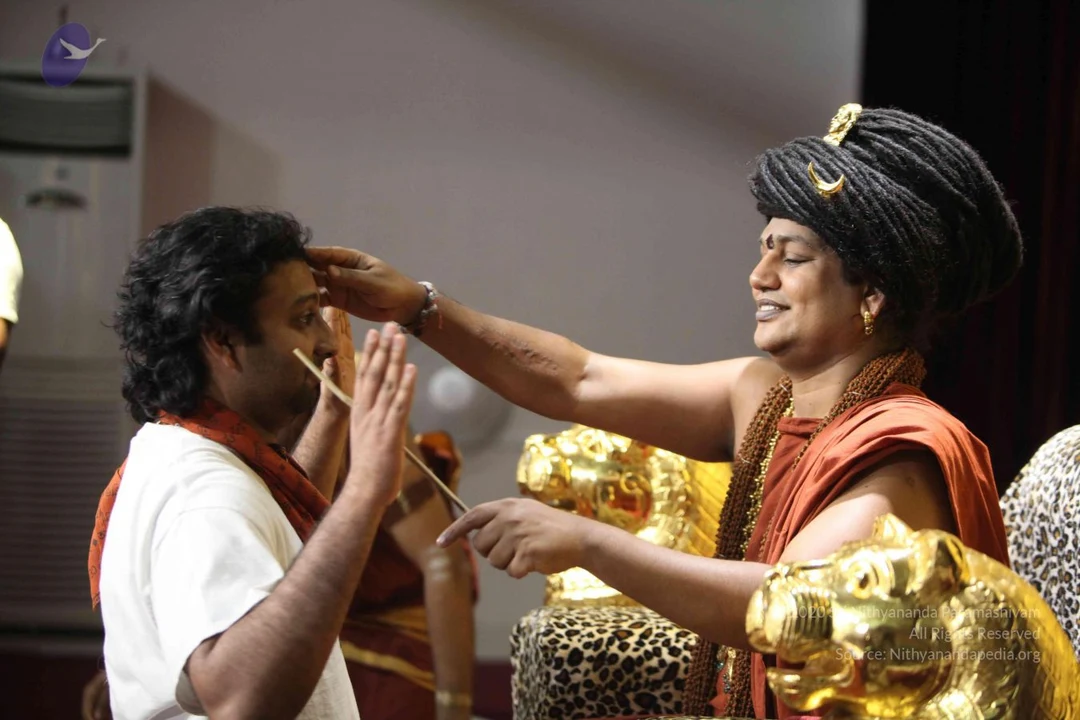
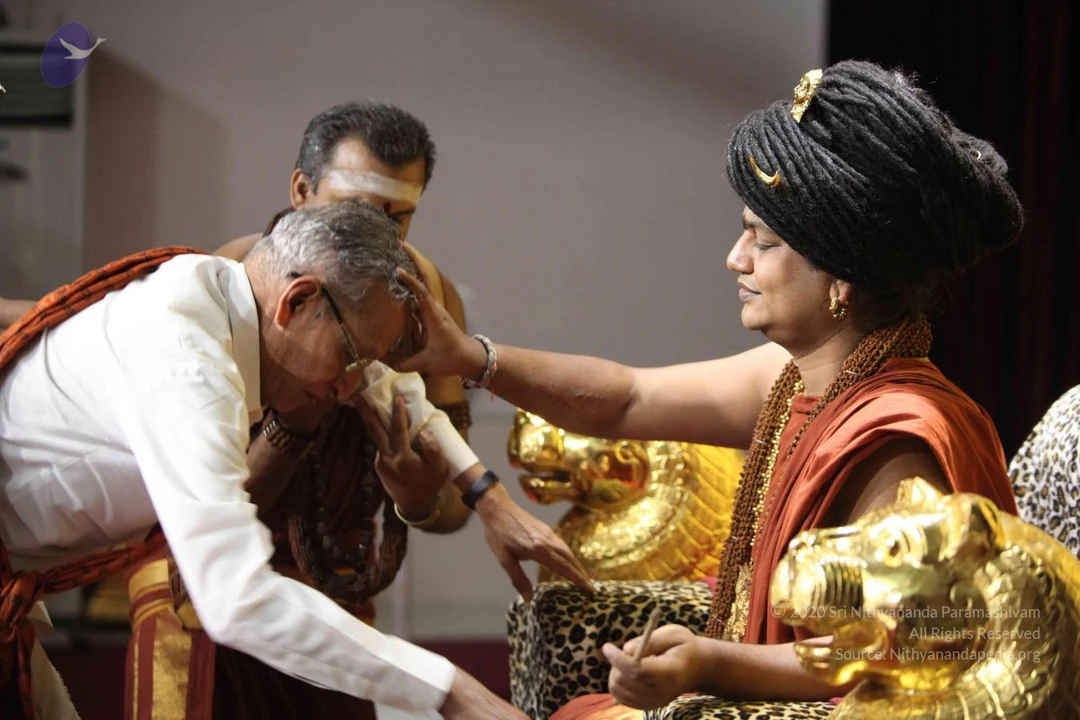
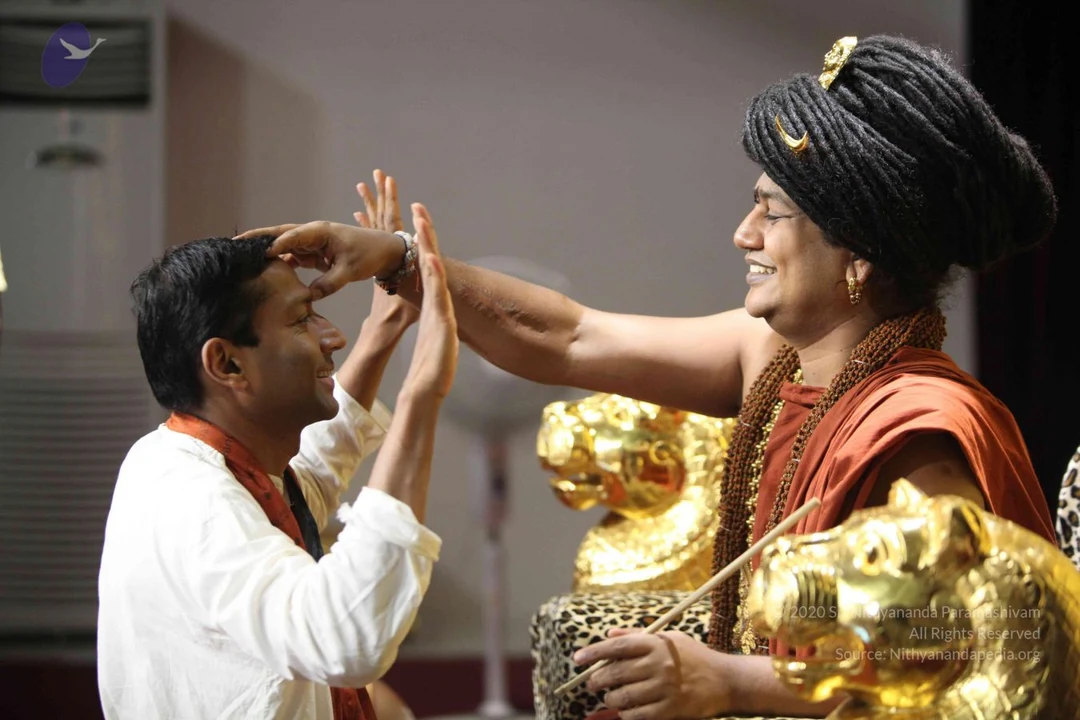
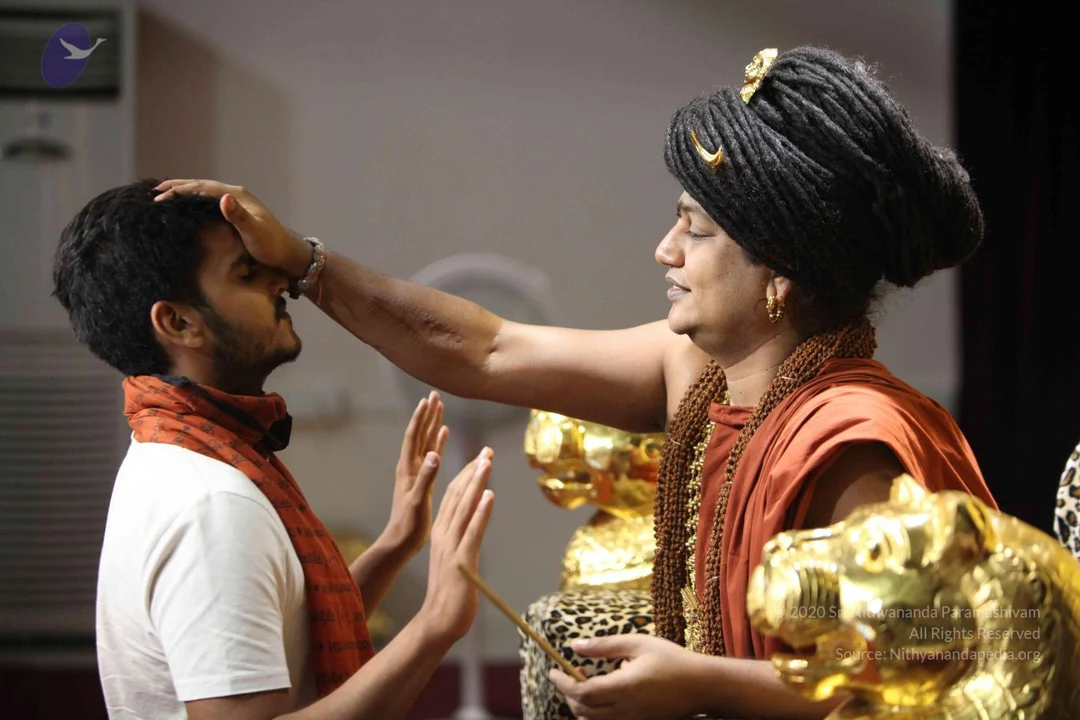
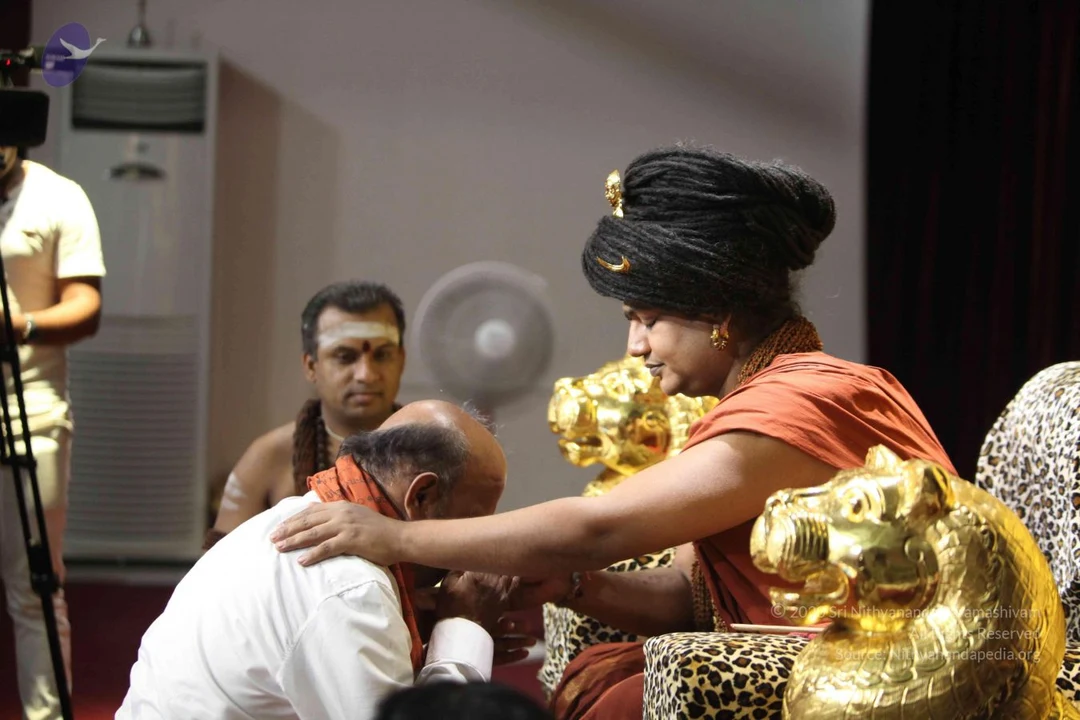
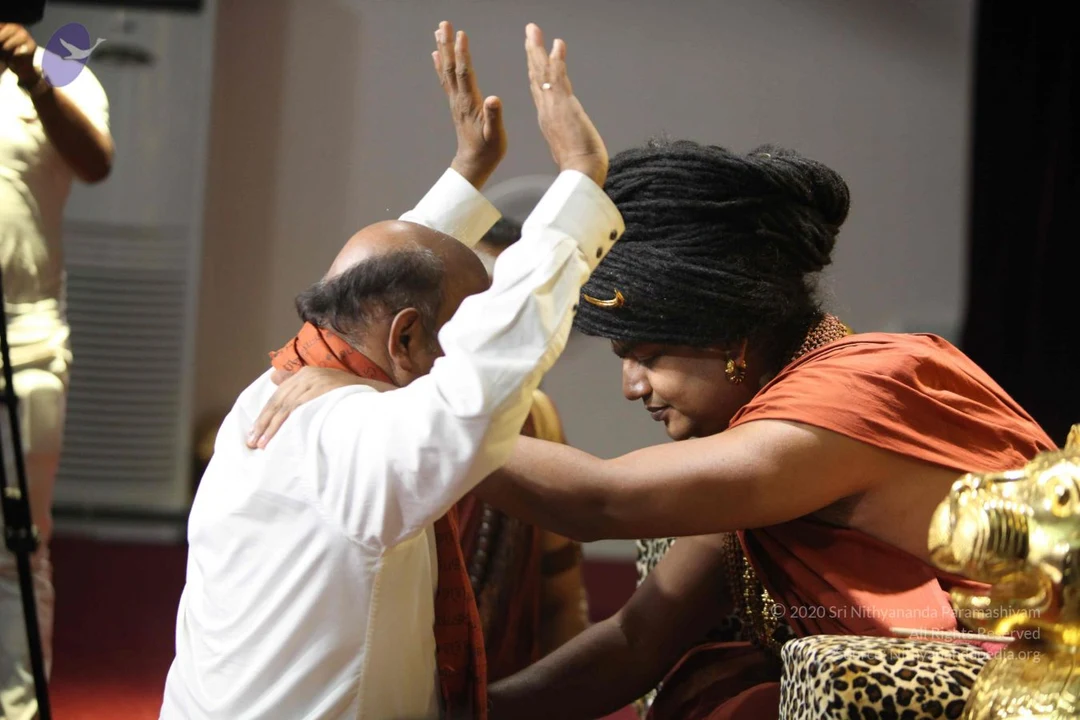
Healers Initiation

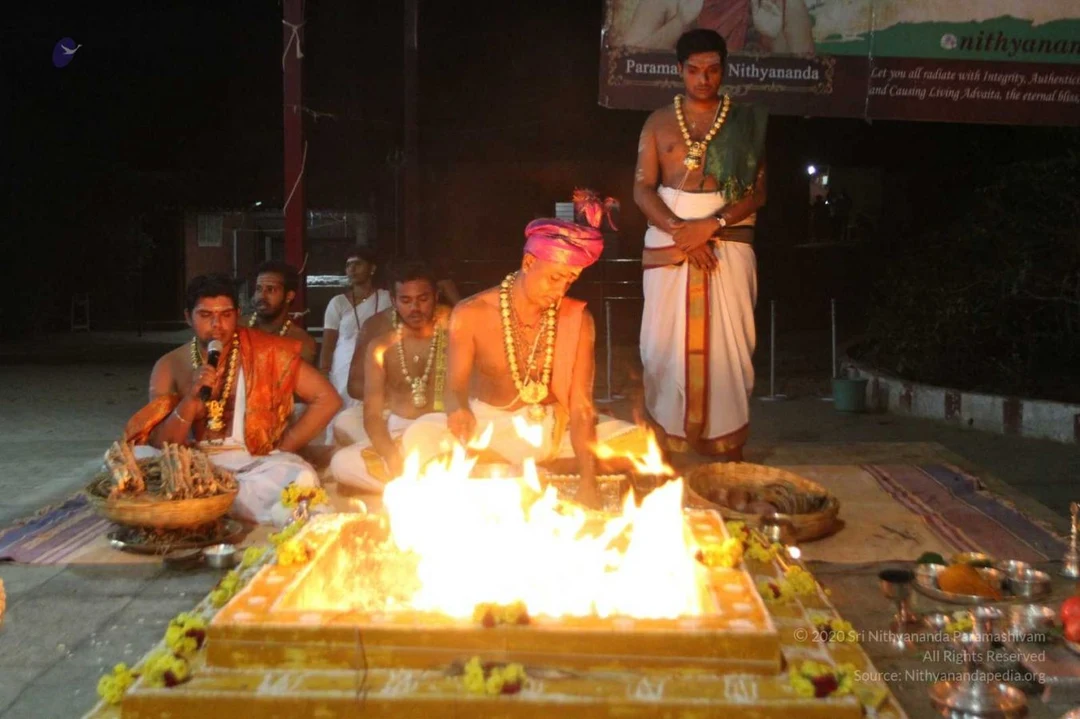
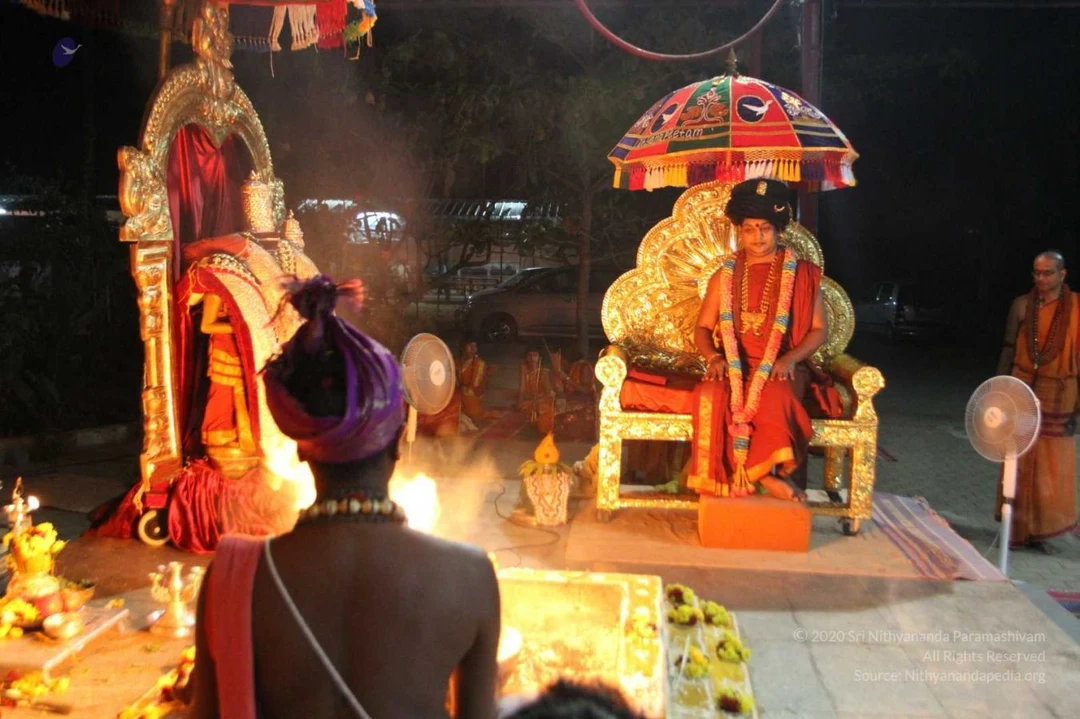
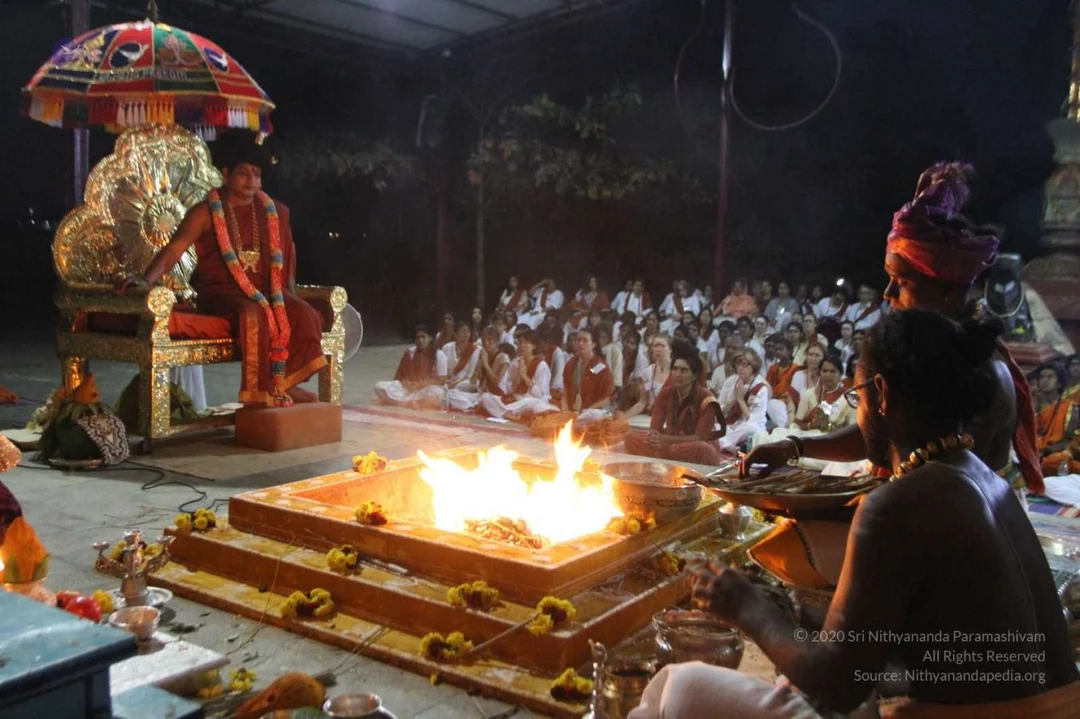
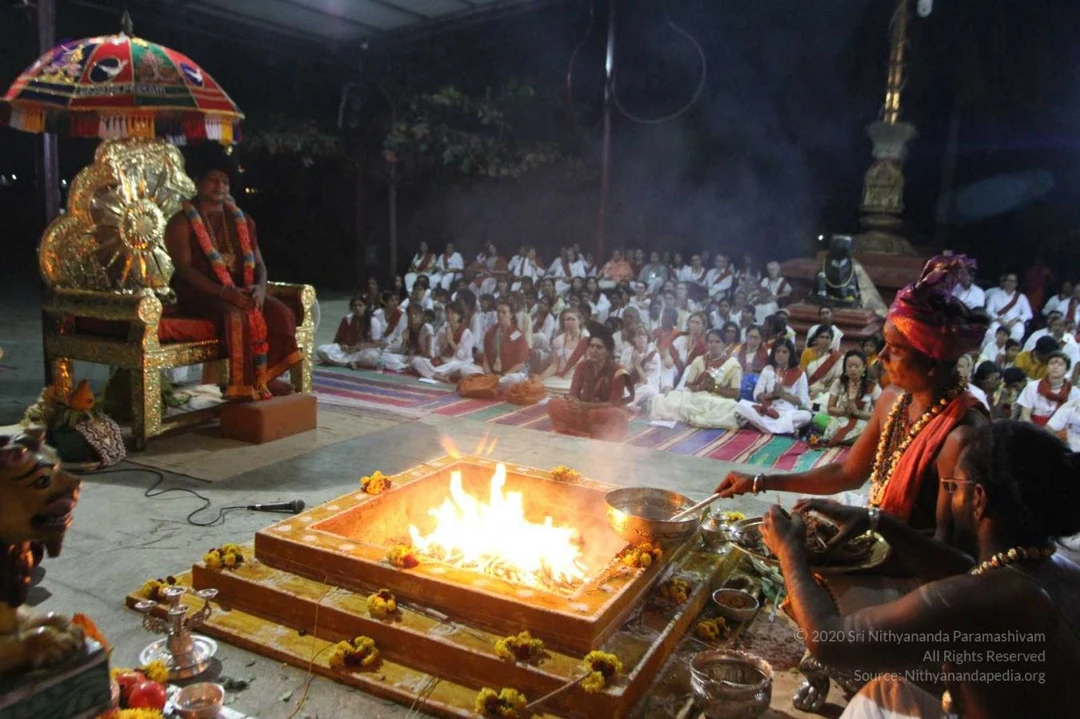
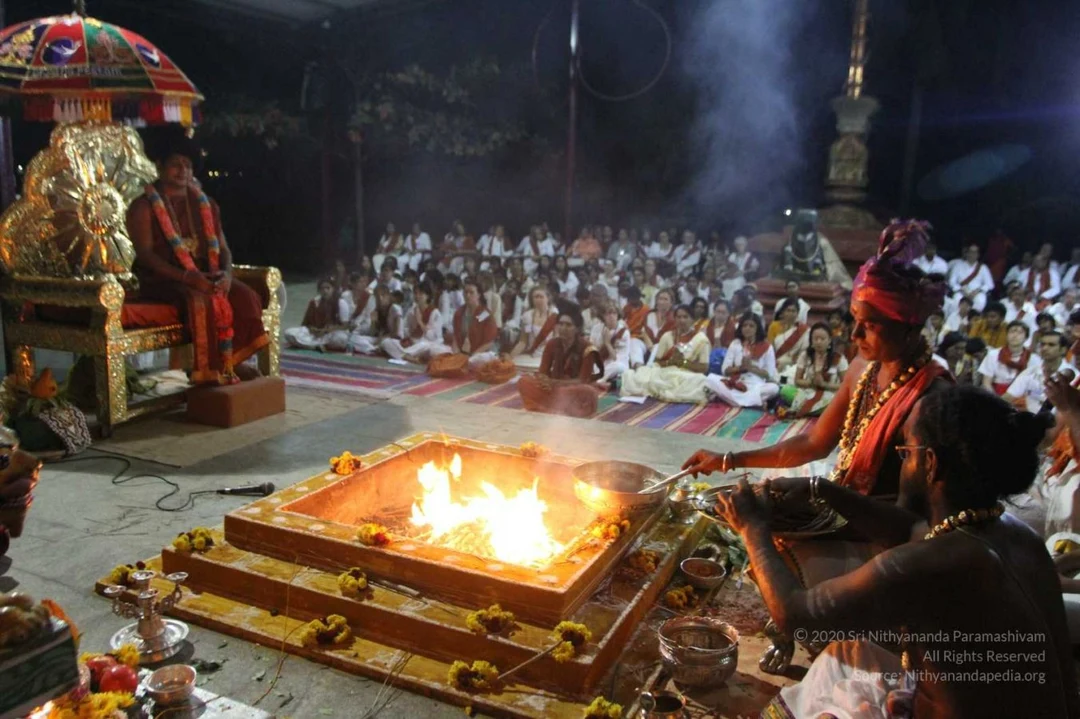
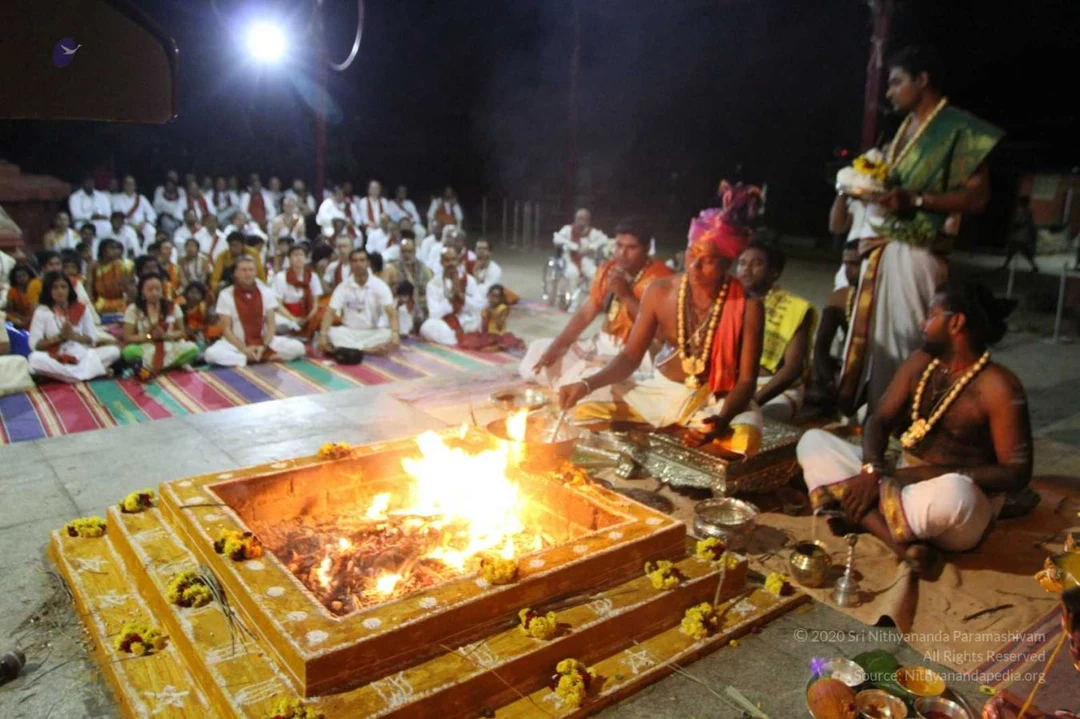
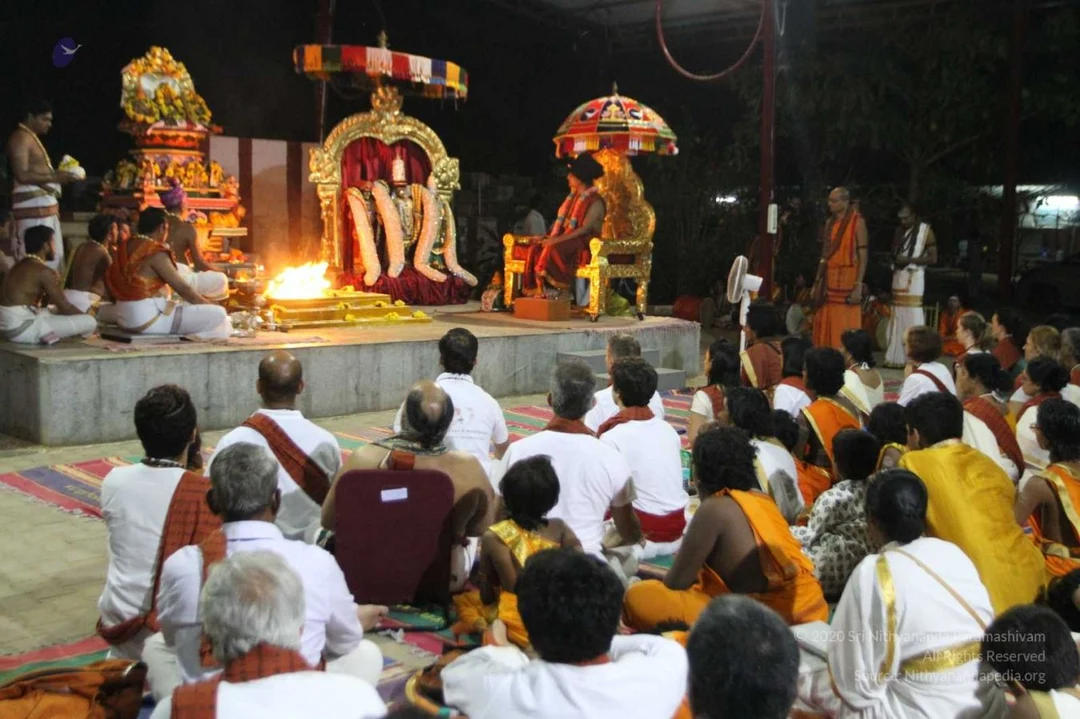
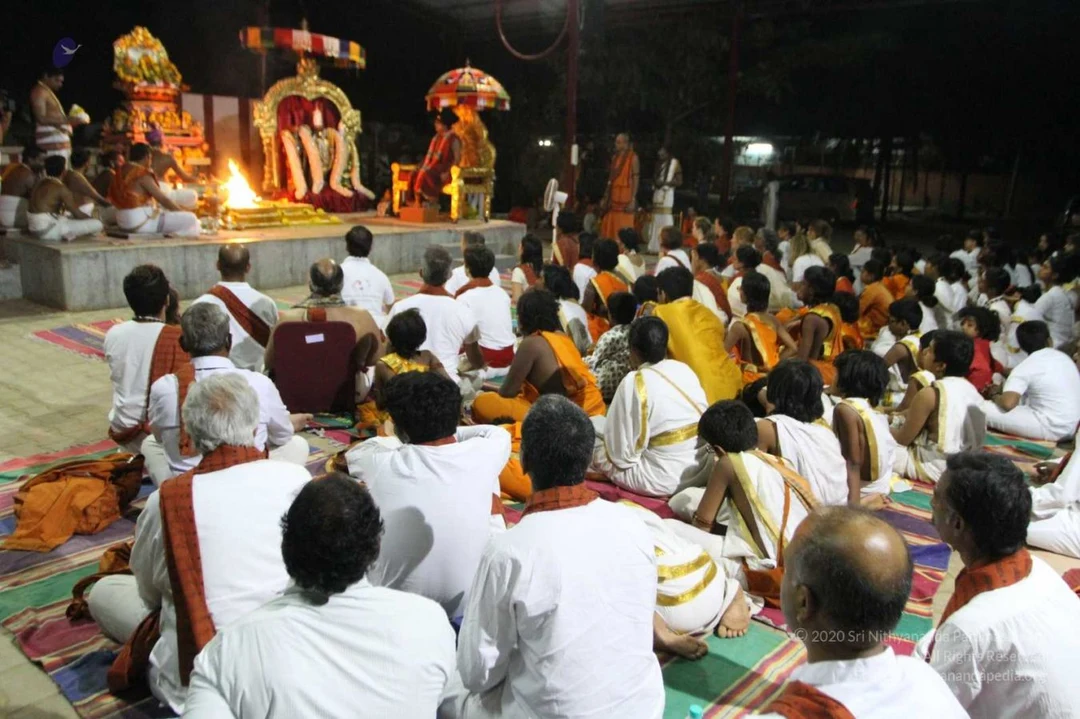
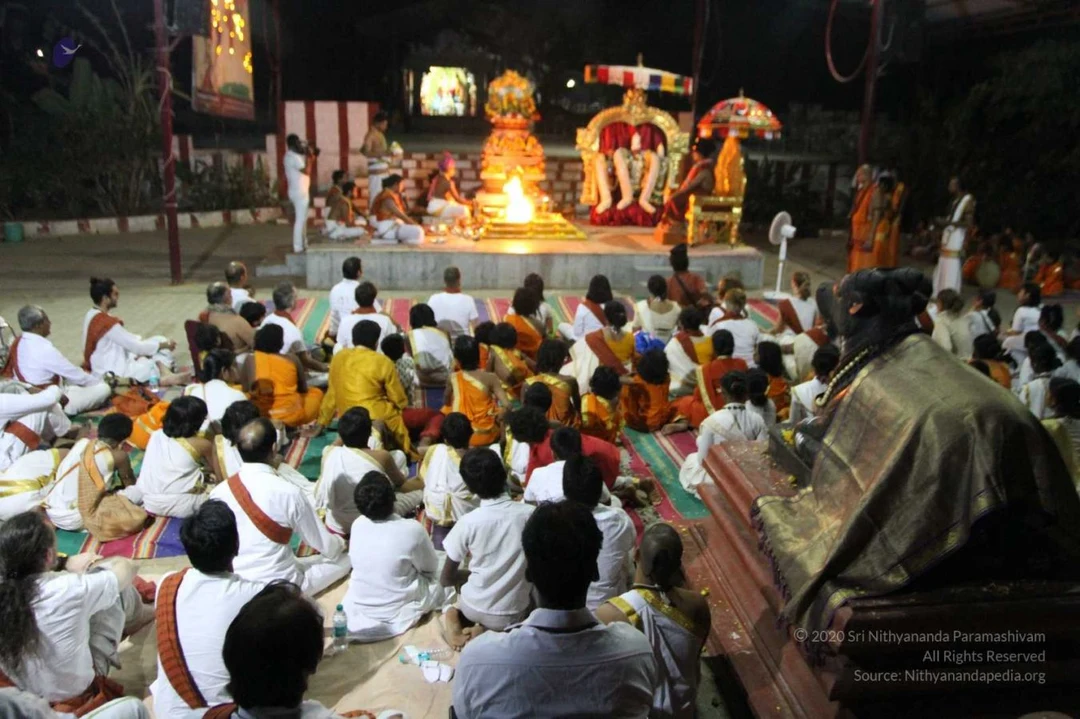
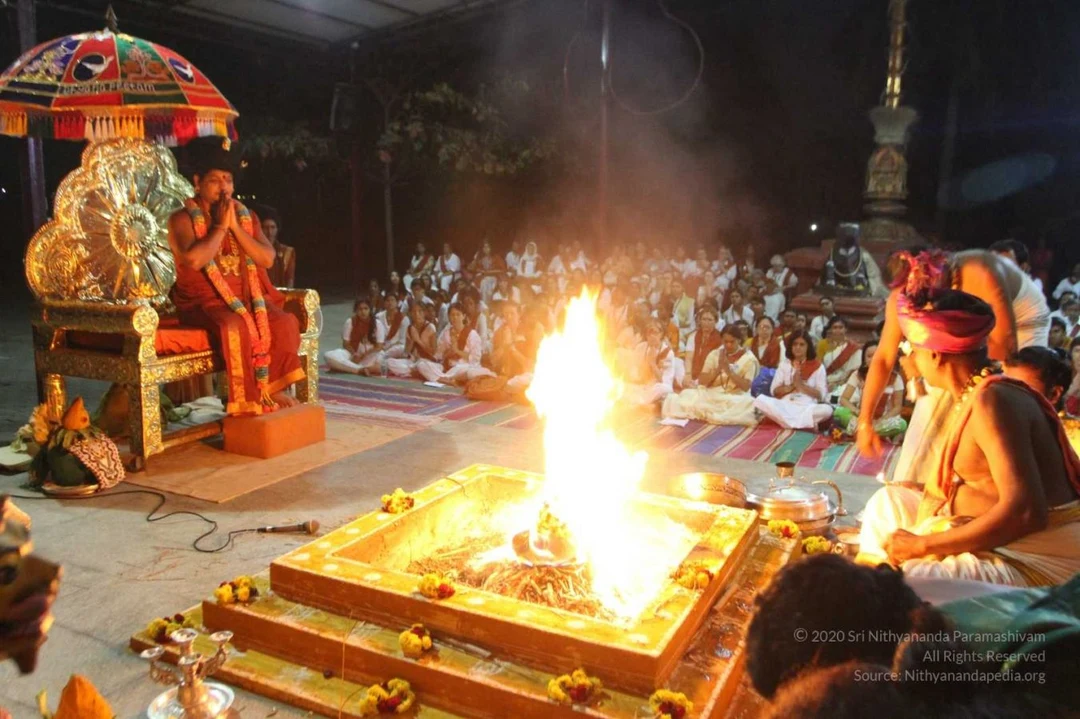
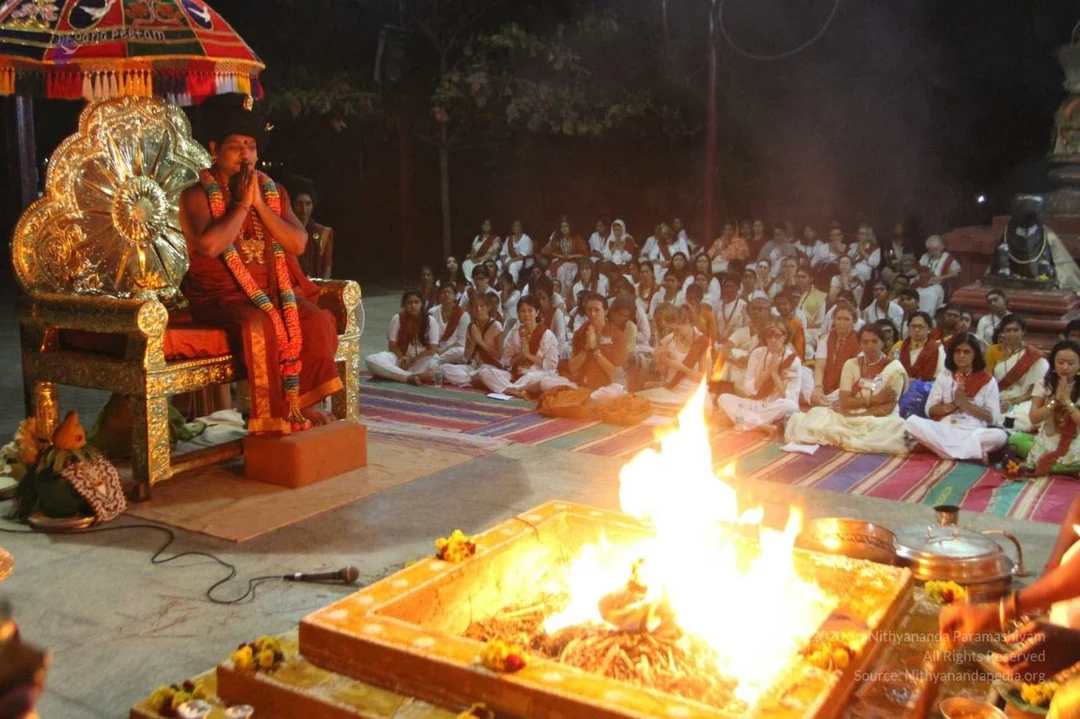
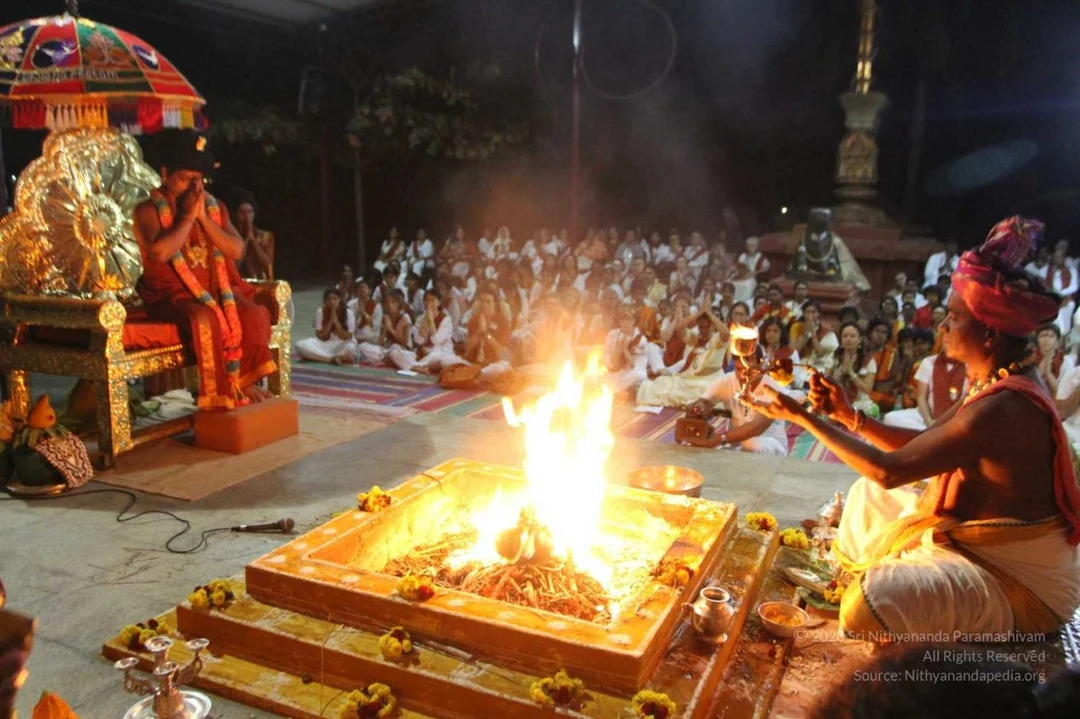
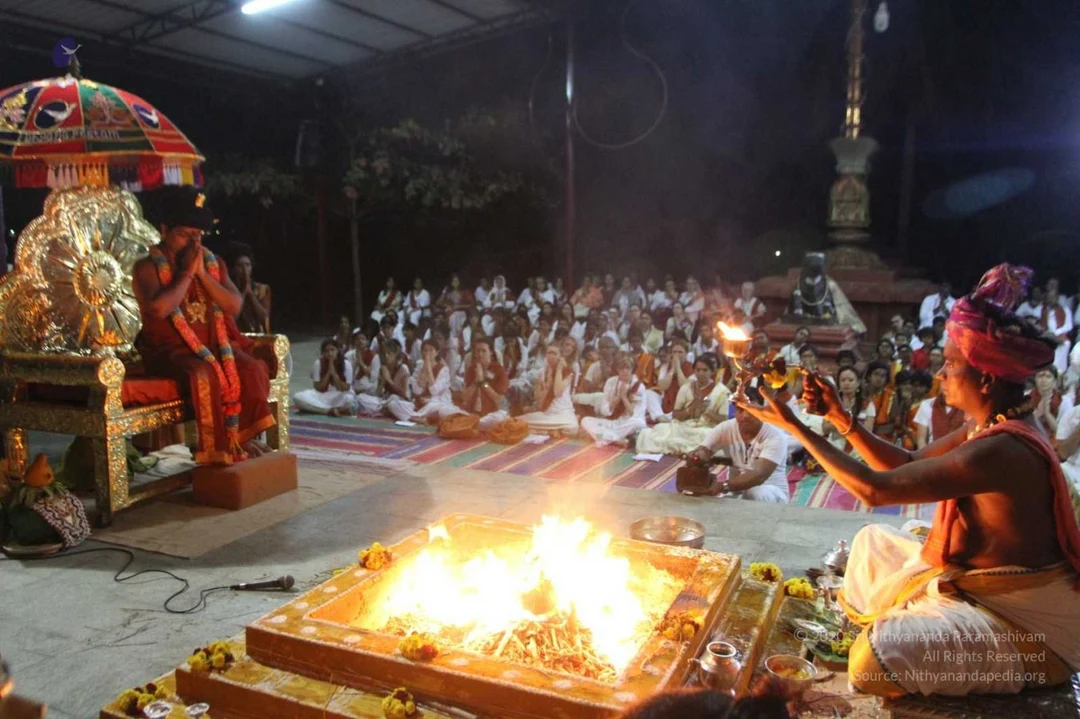
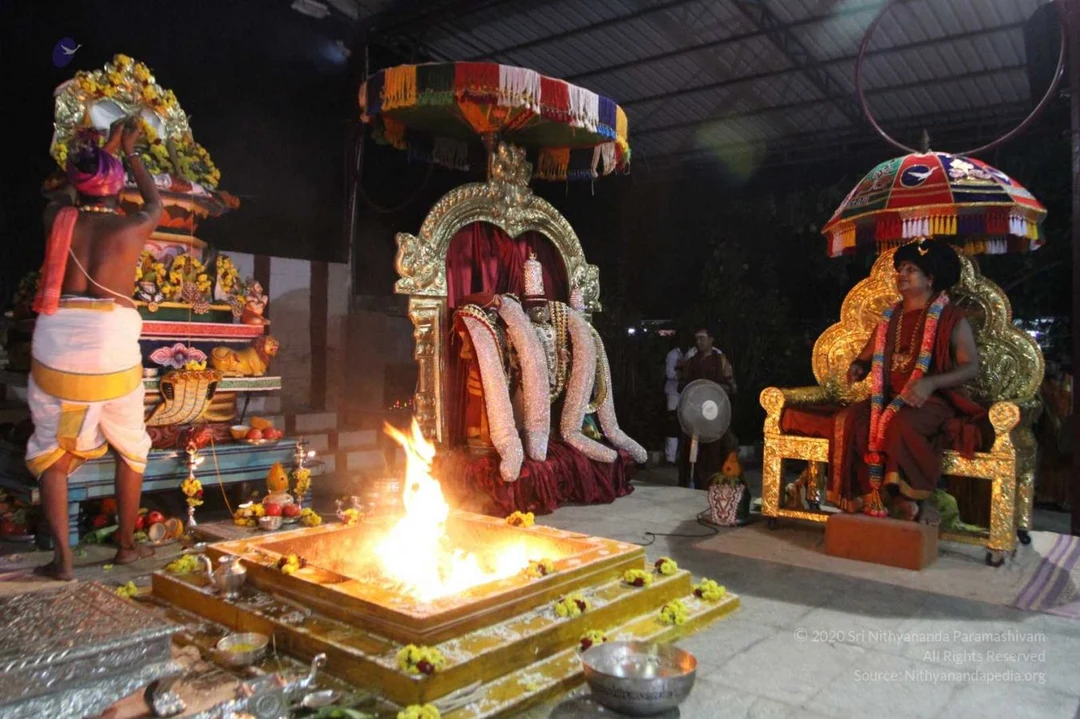
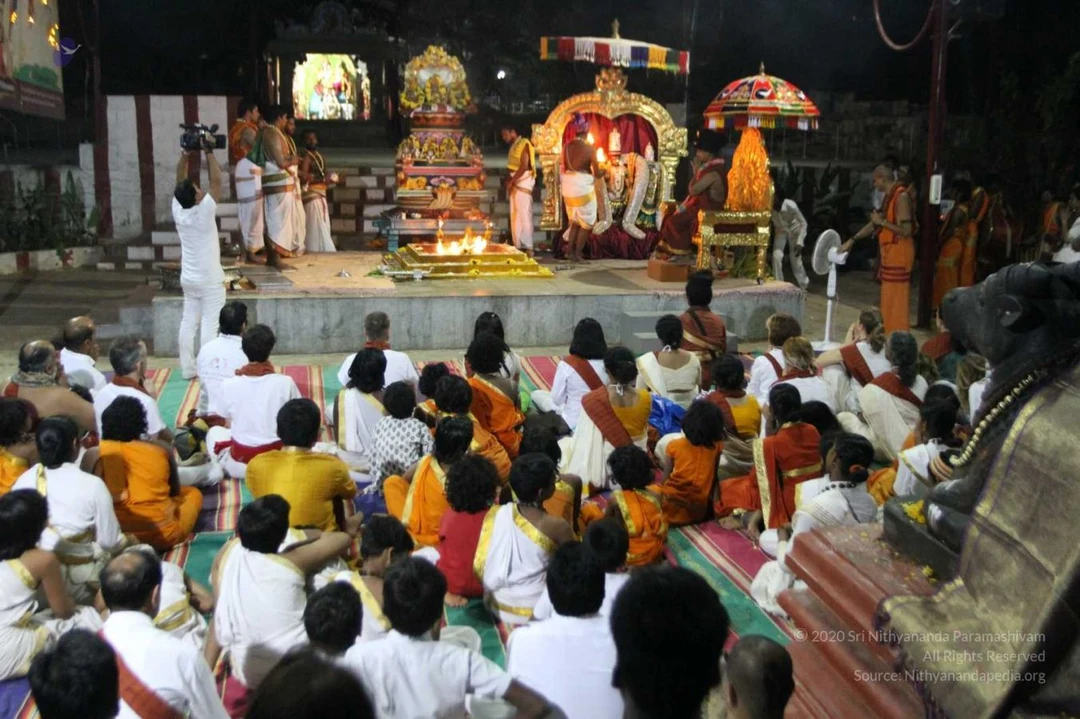
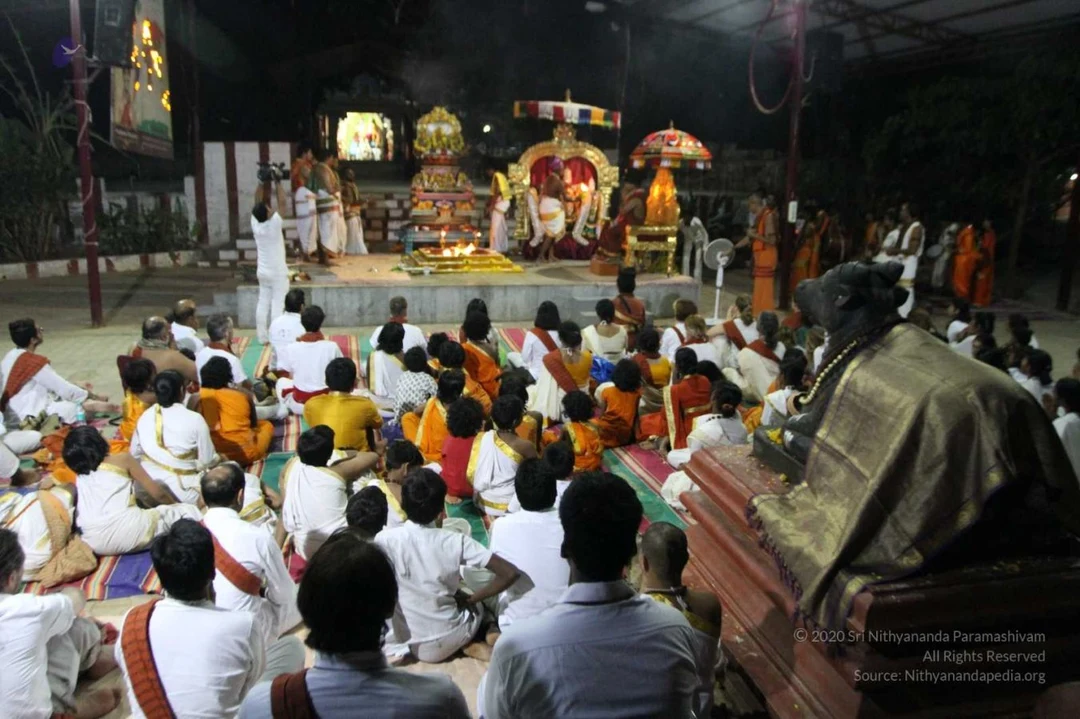
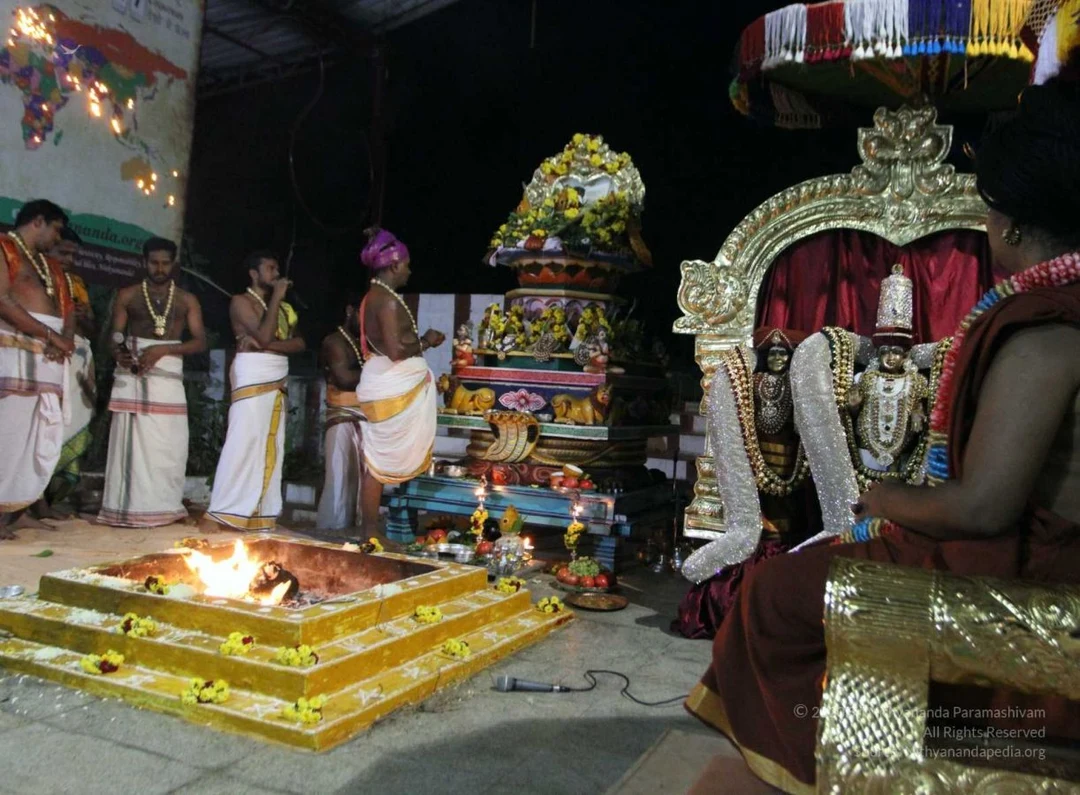
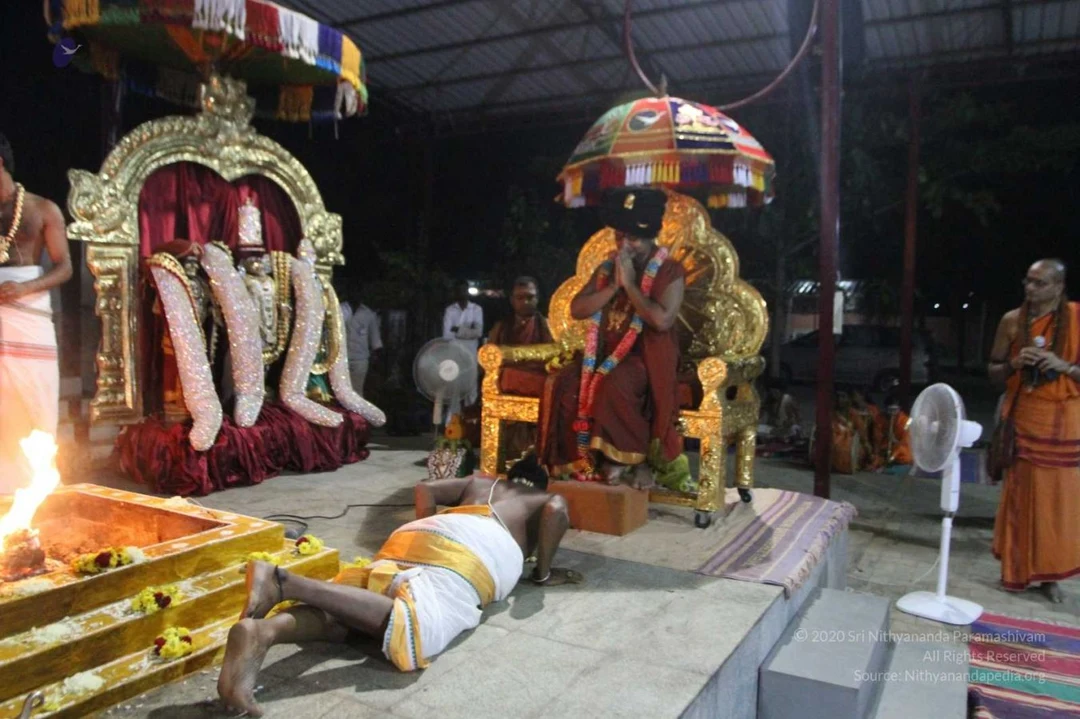
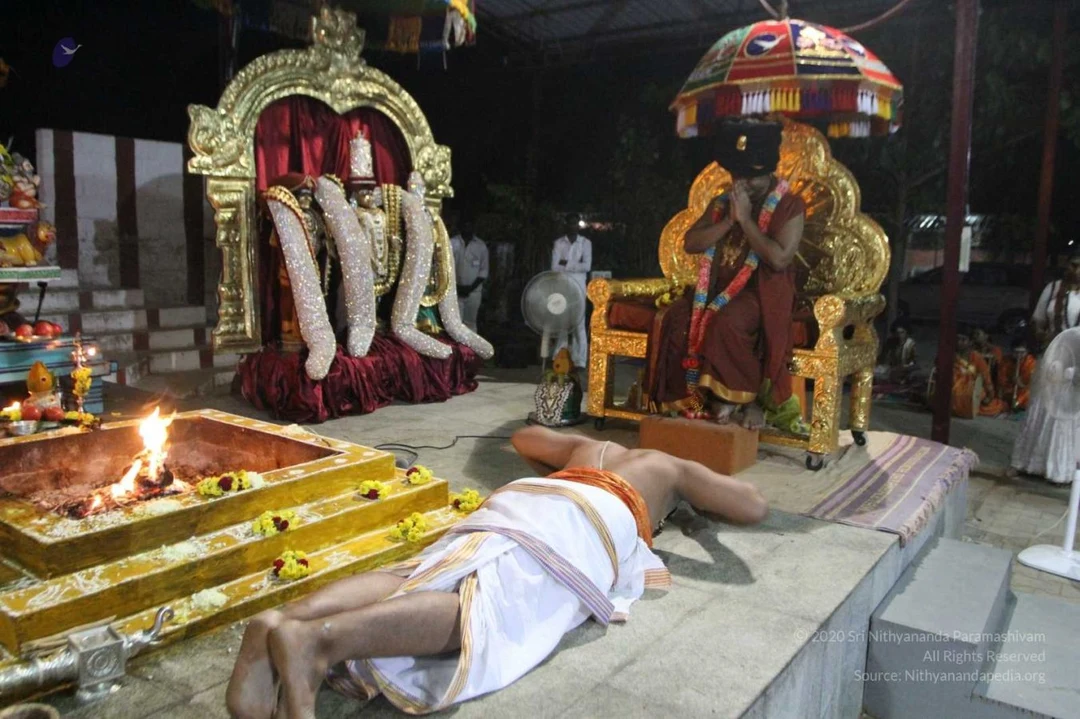
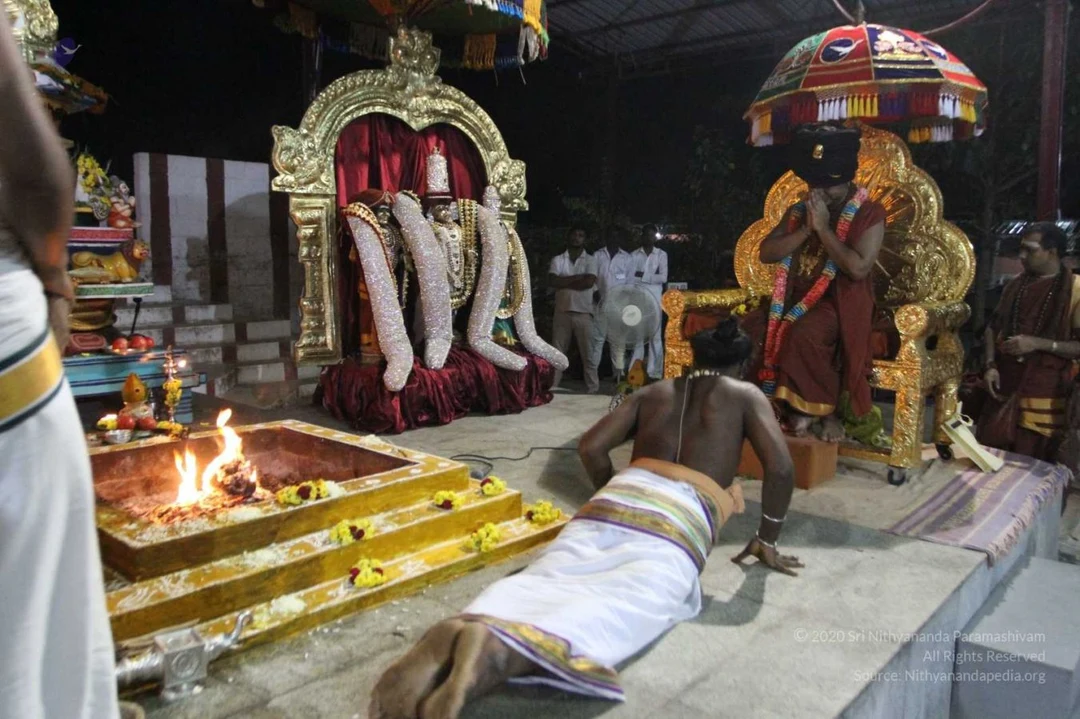
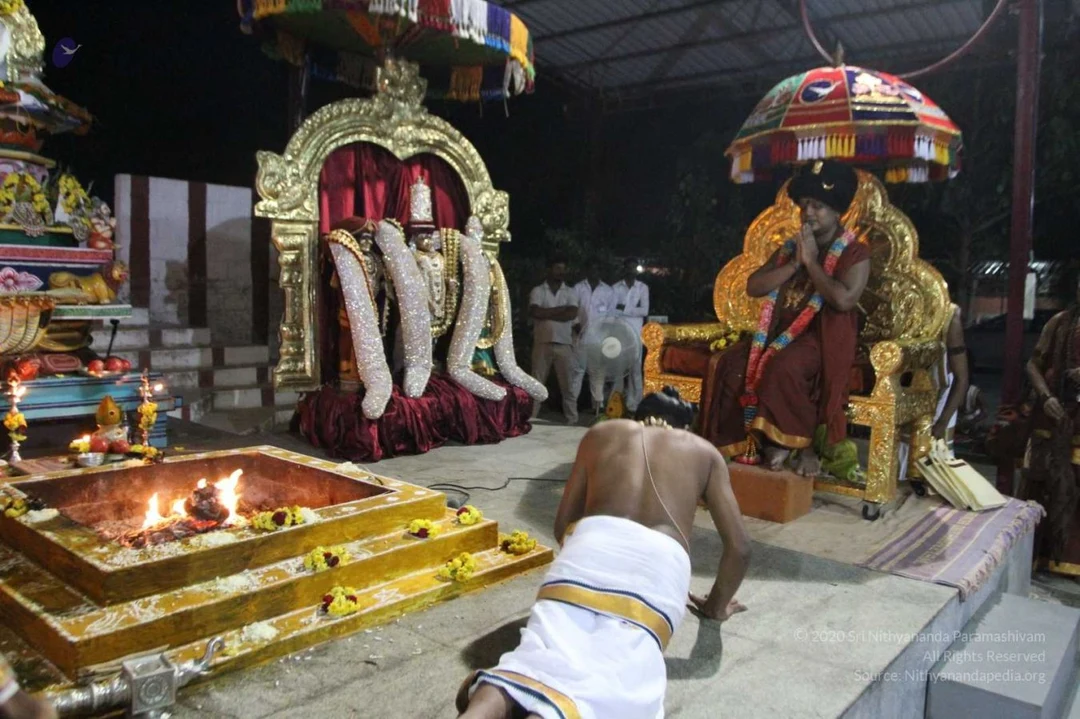
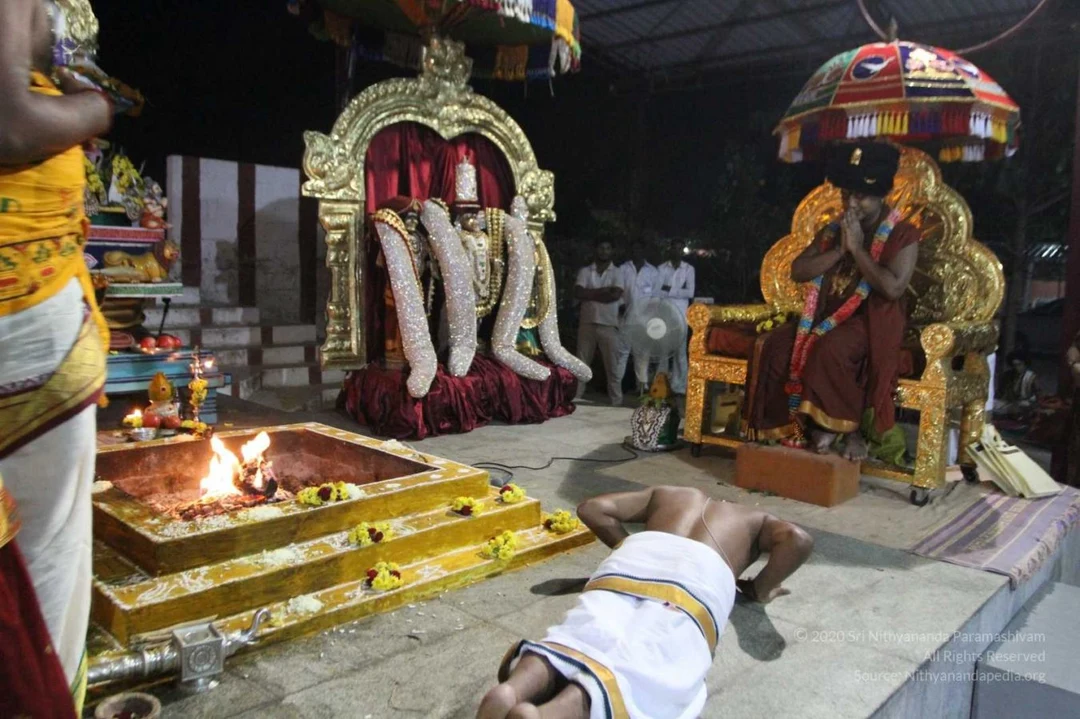
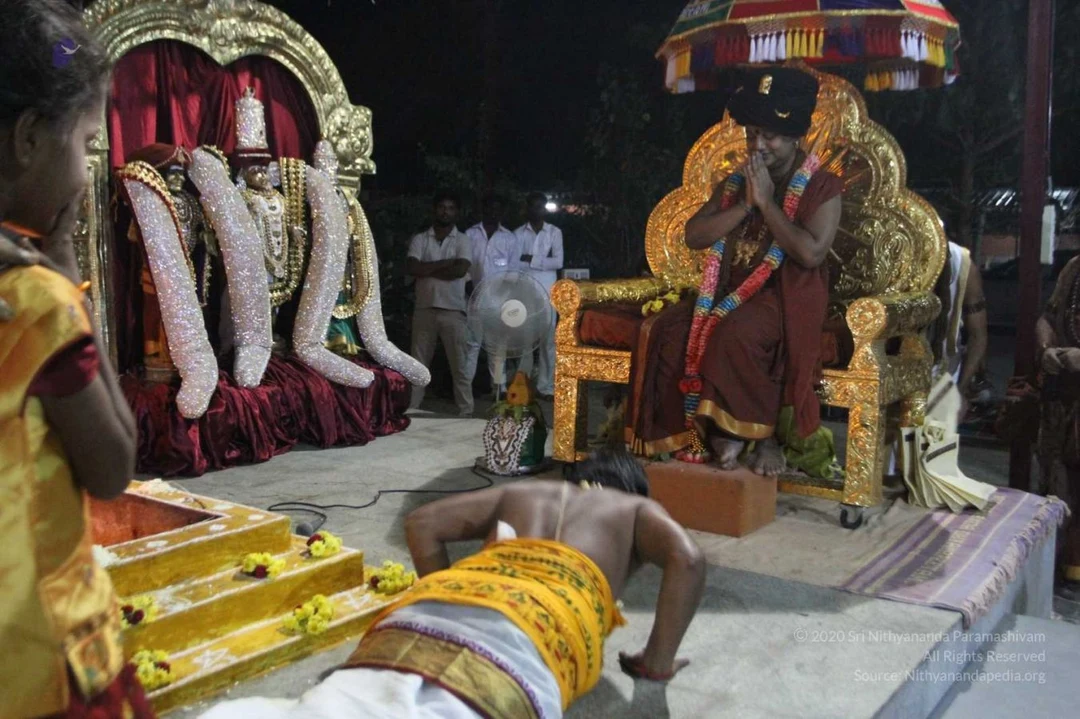
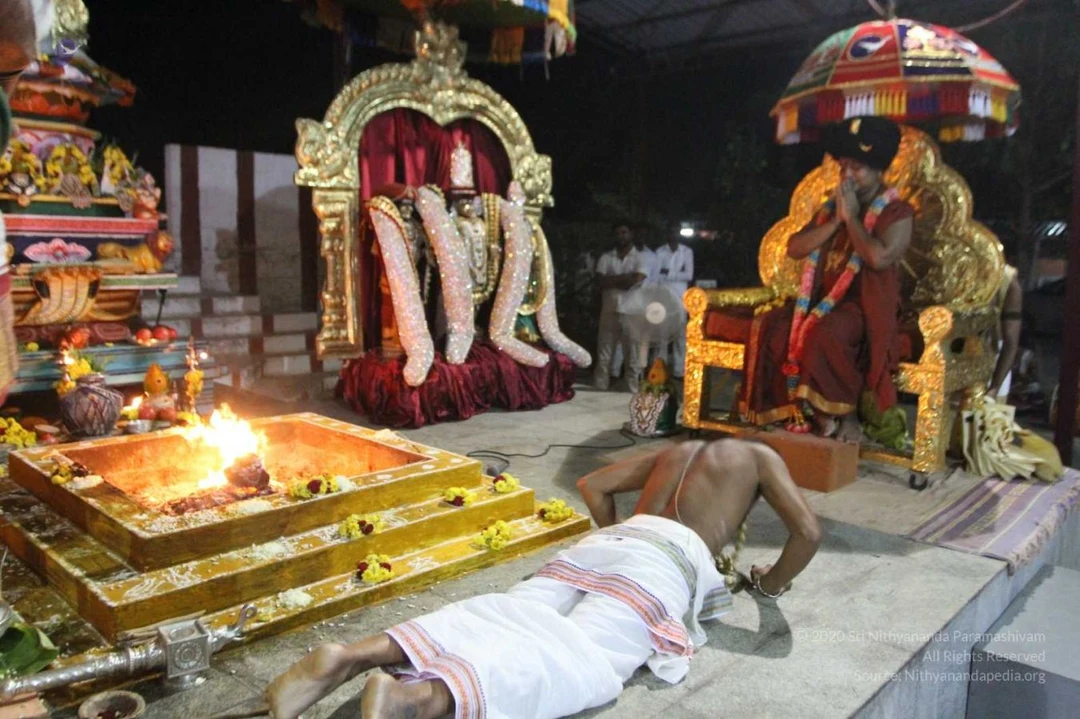
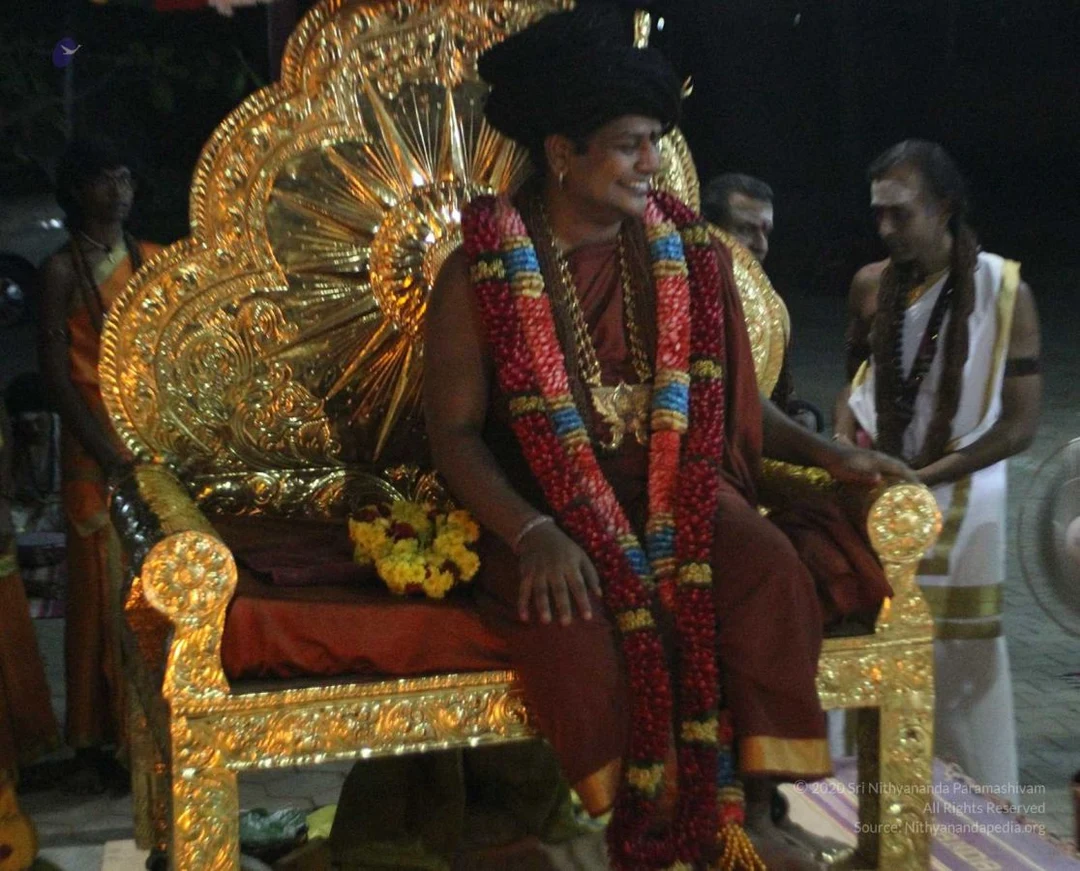
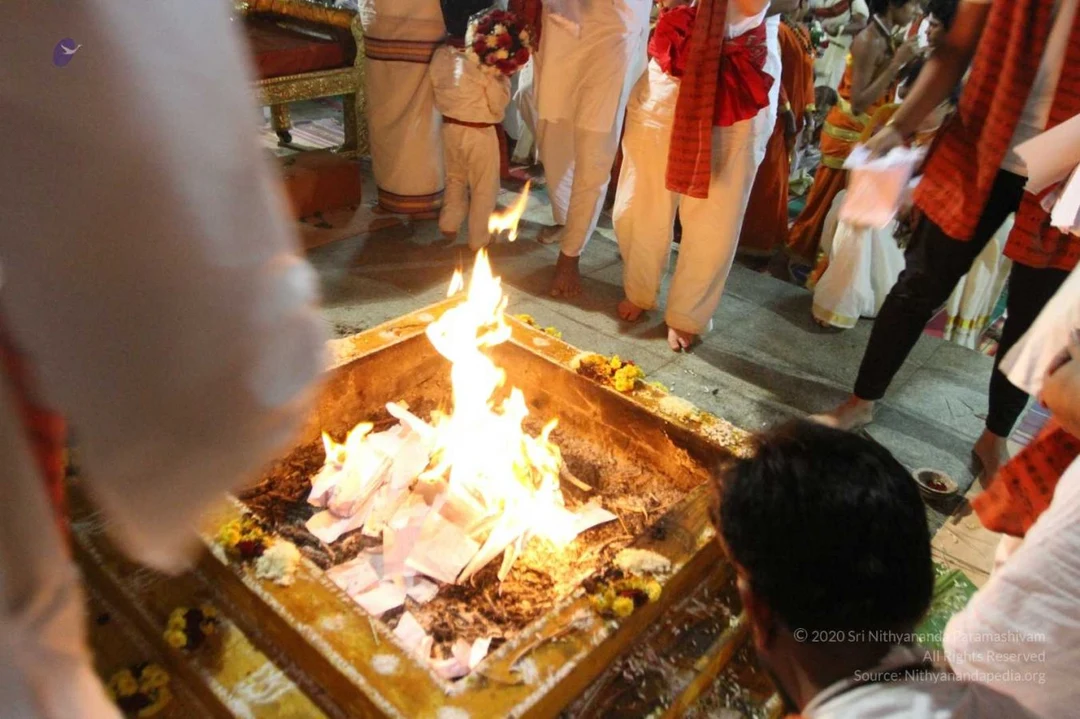
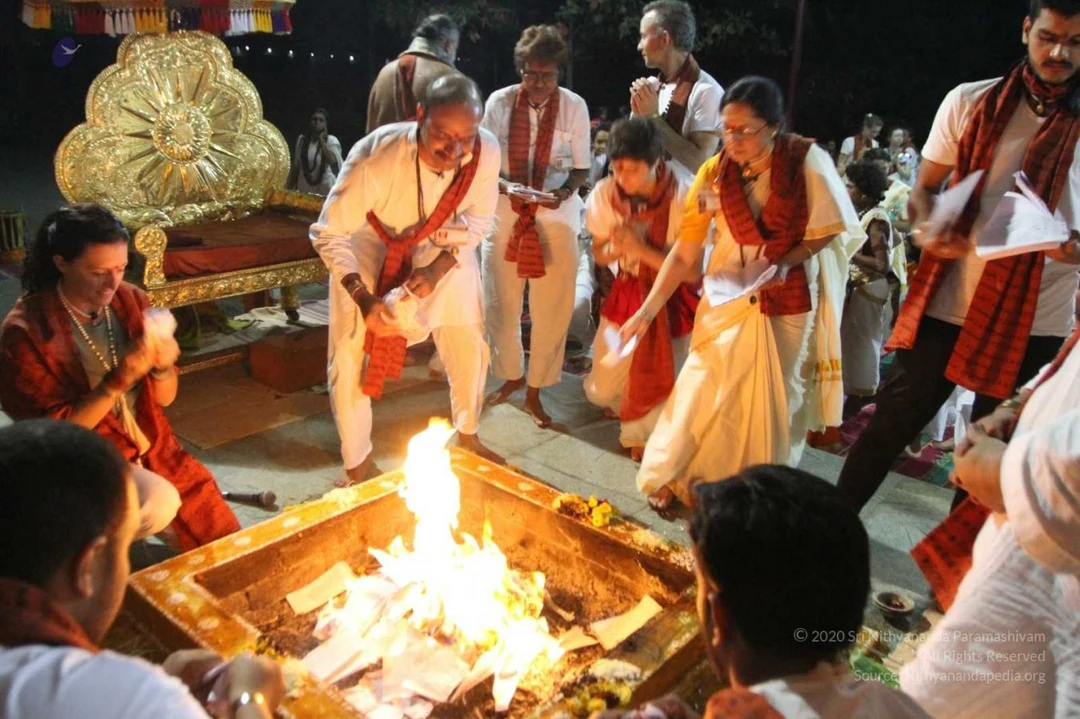
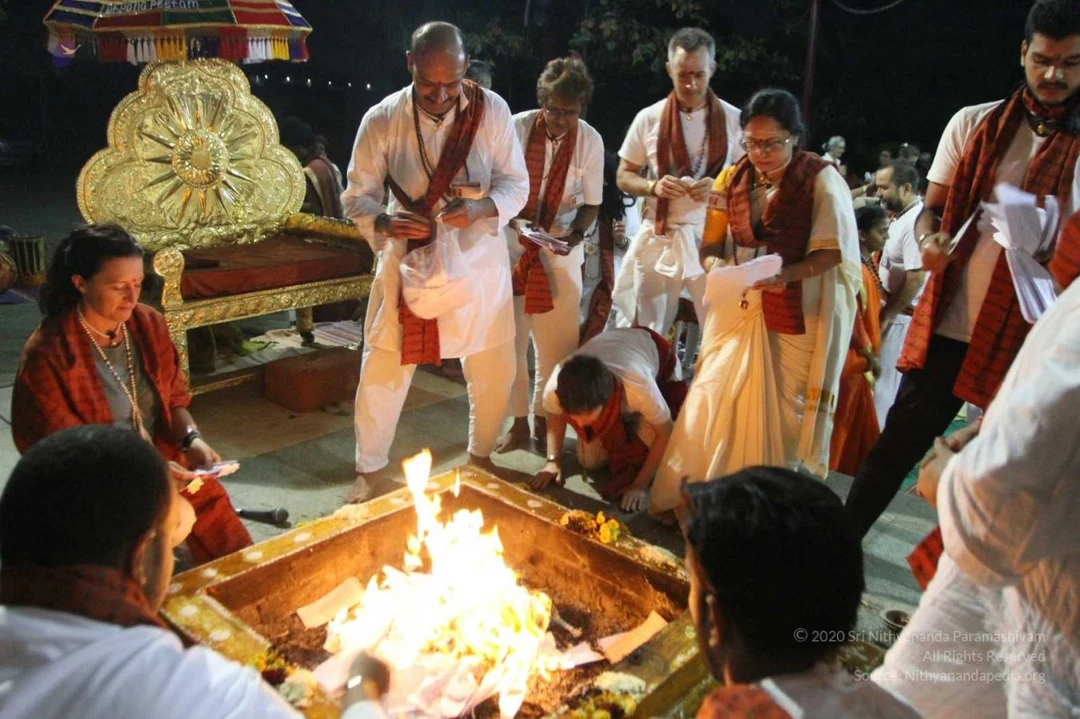
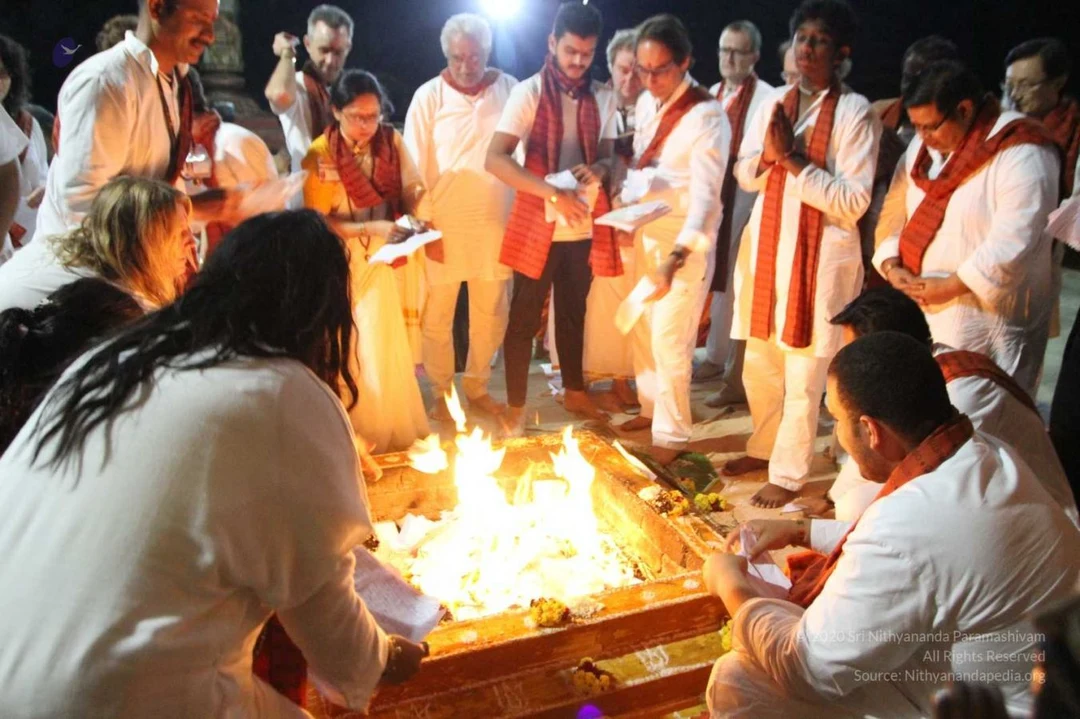
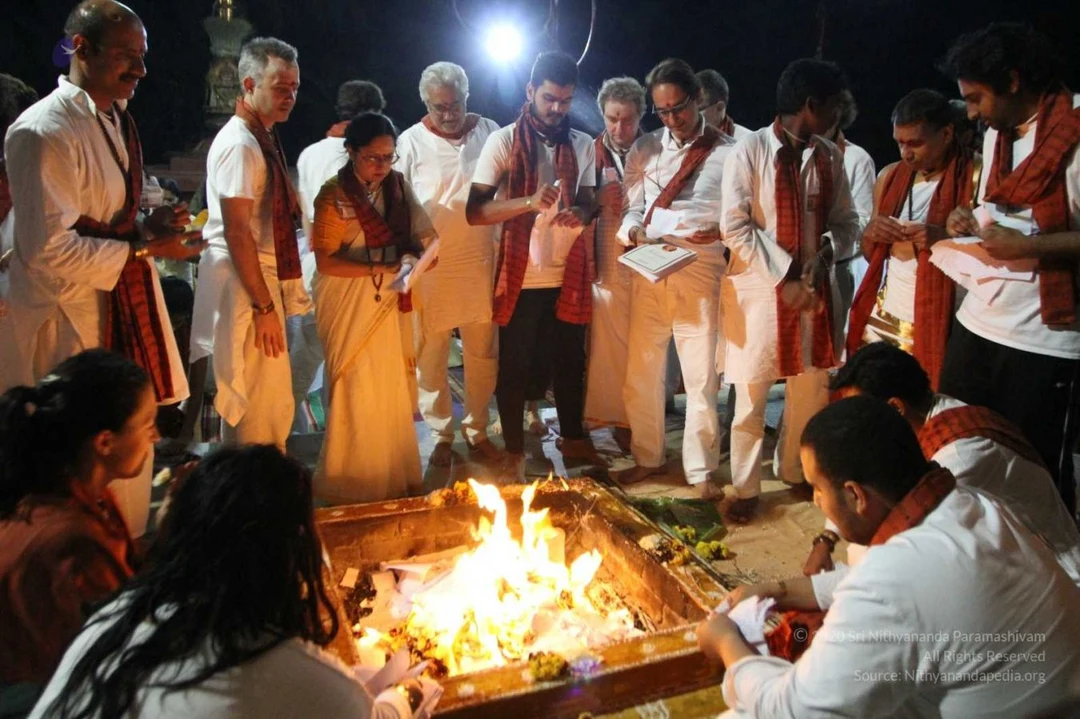
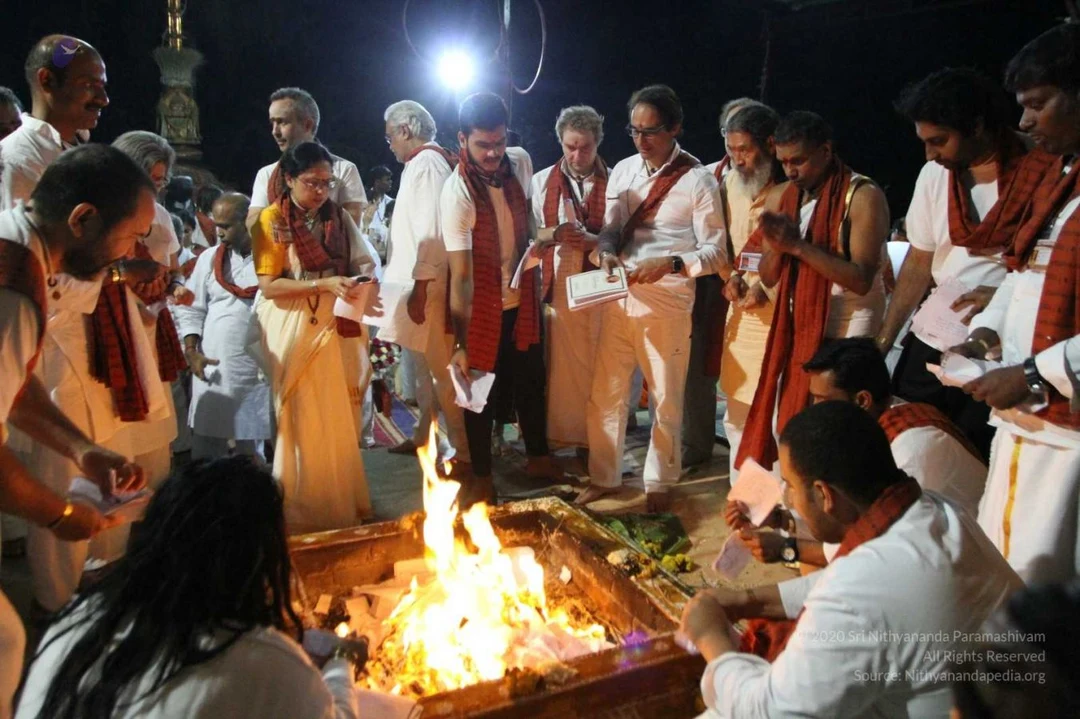
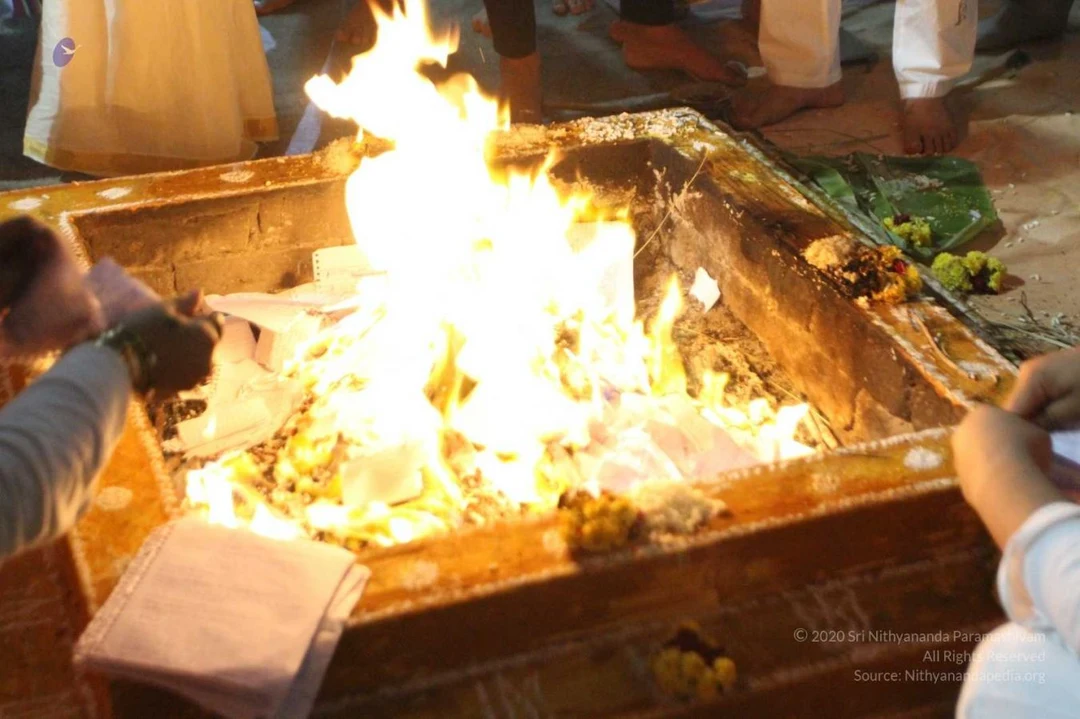
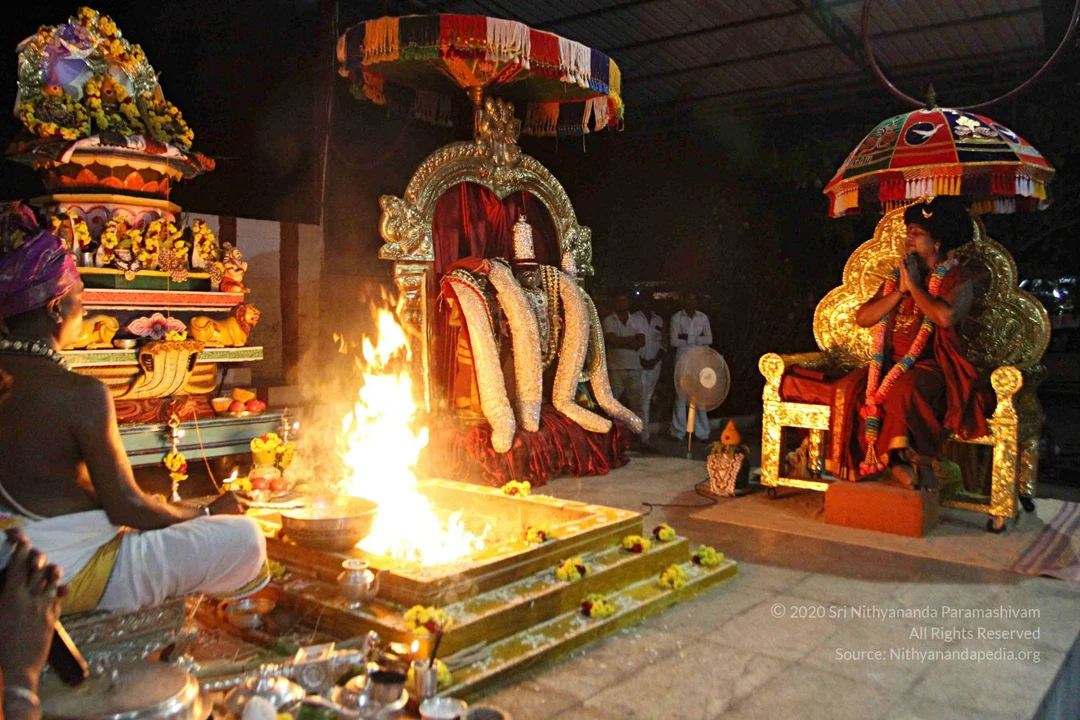
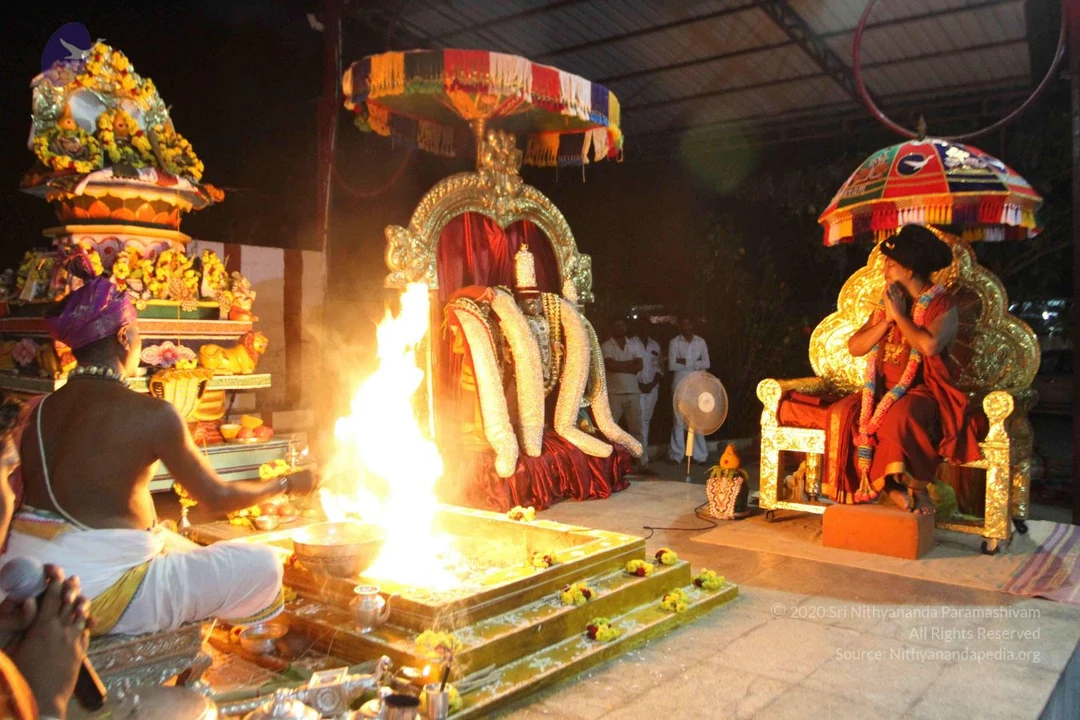
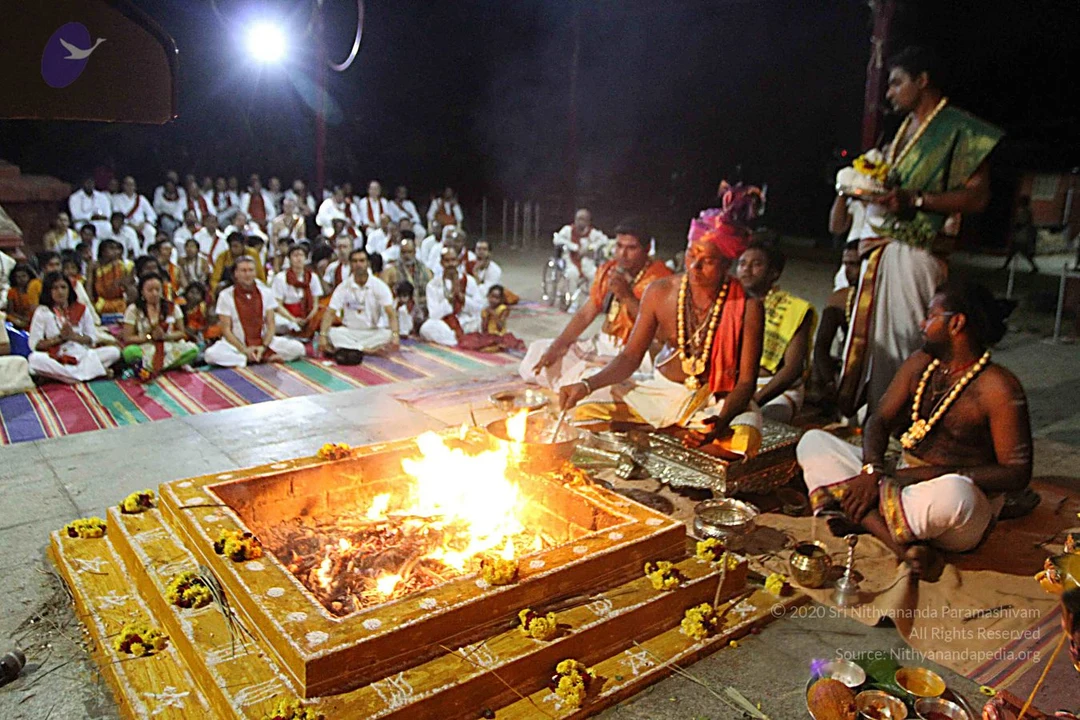
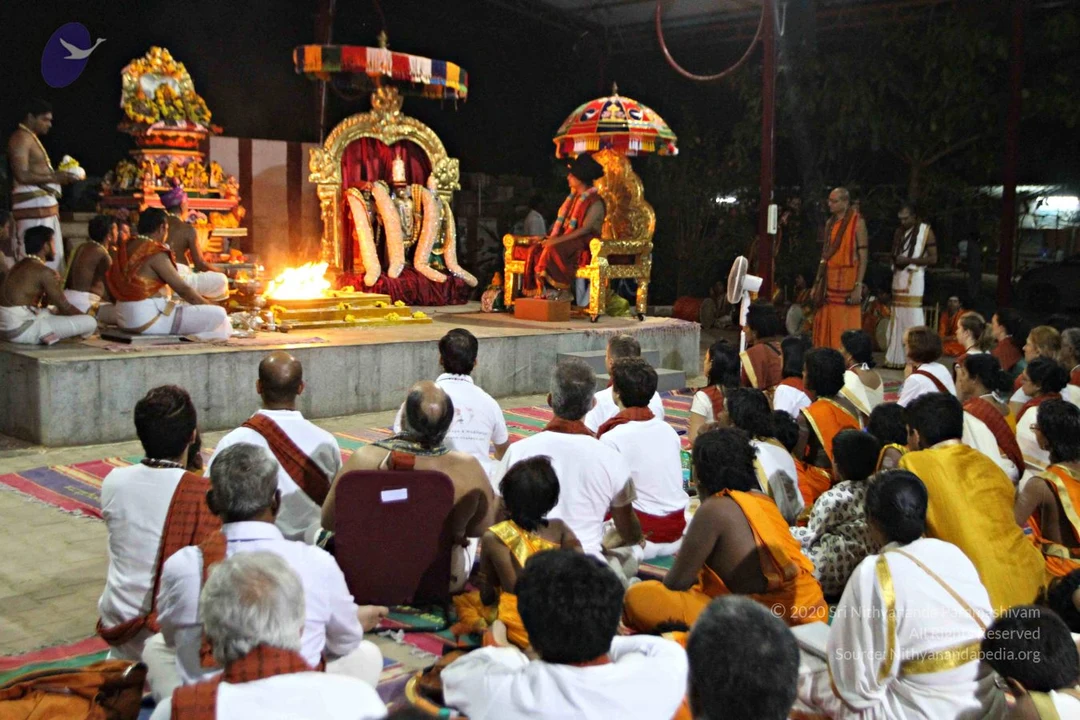
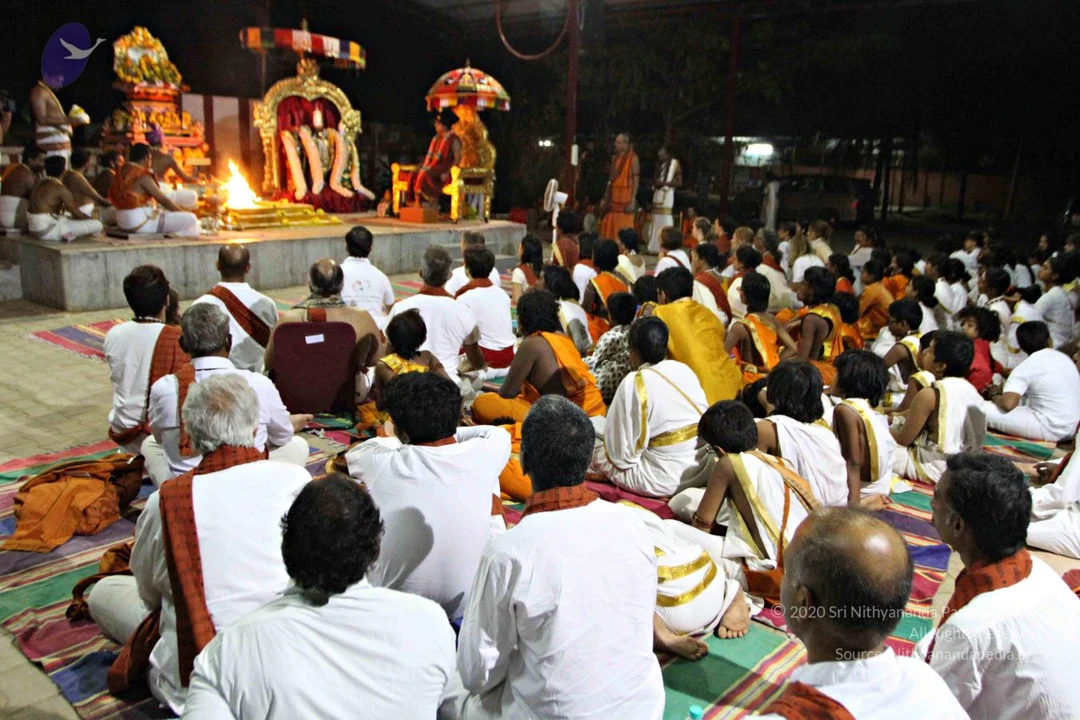
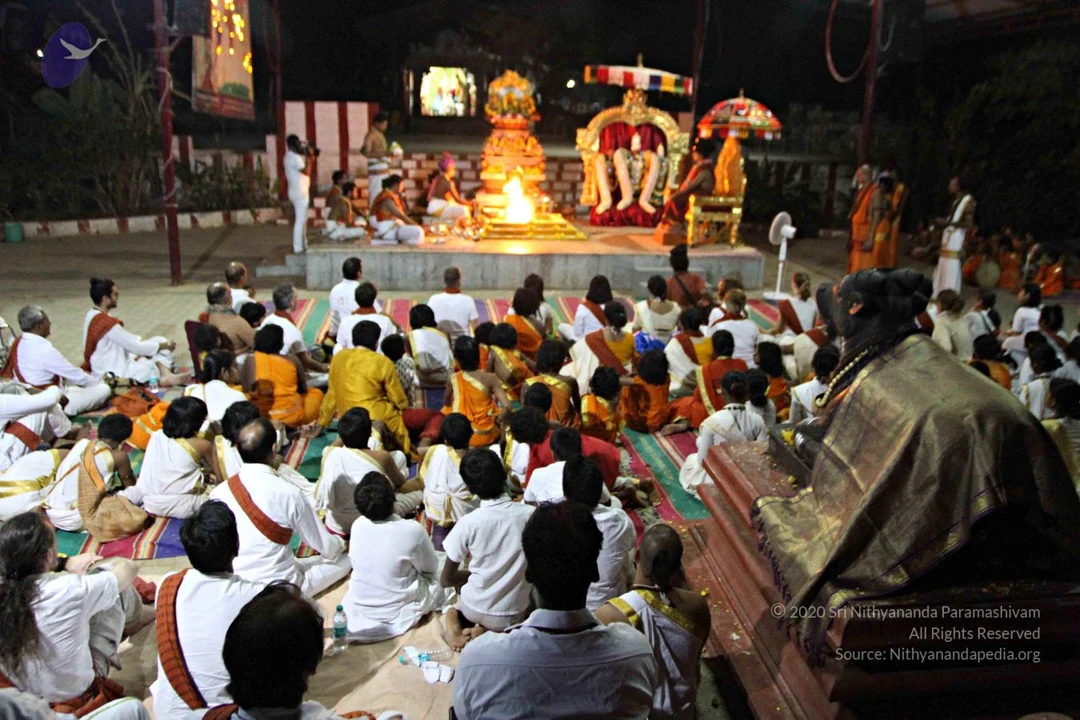
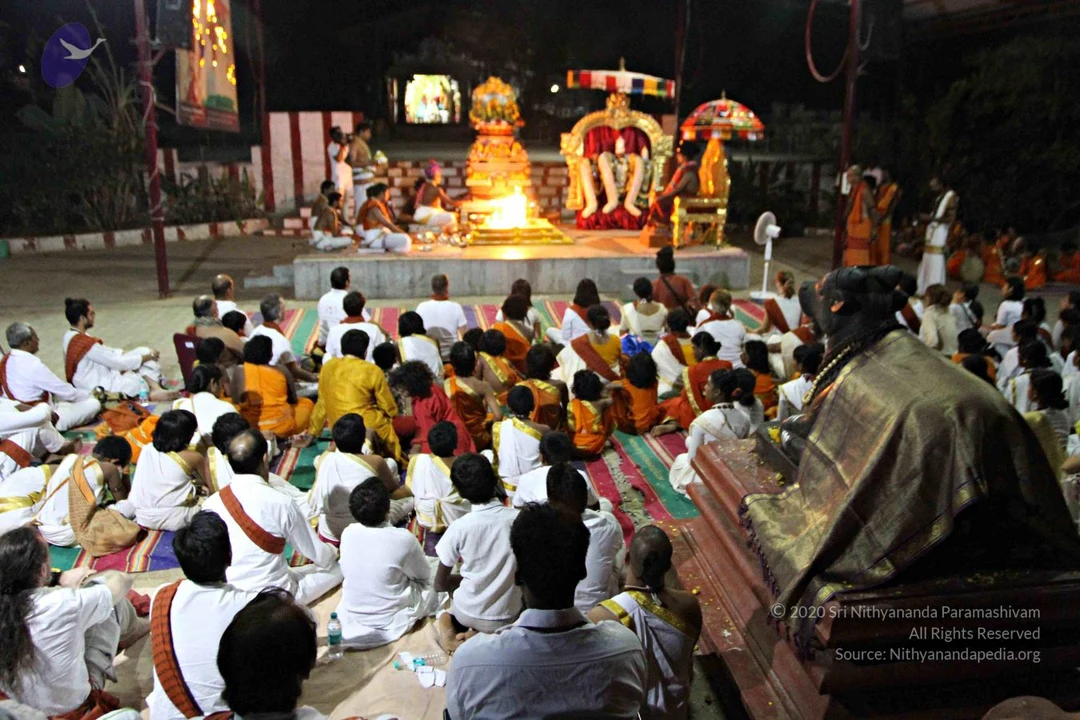
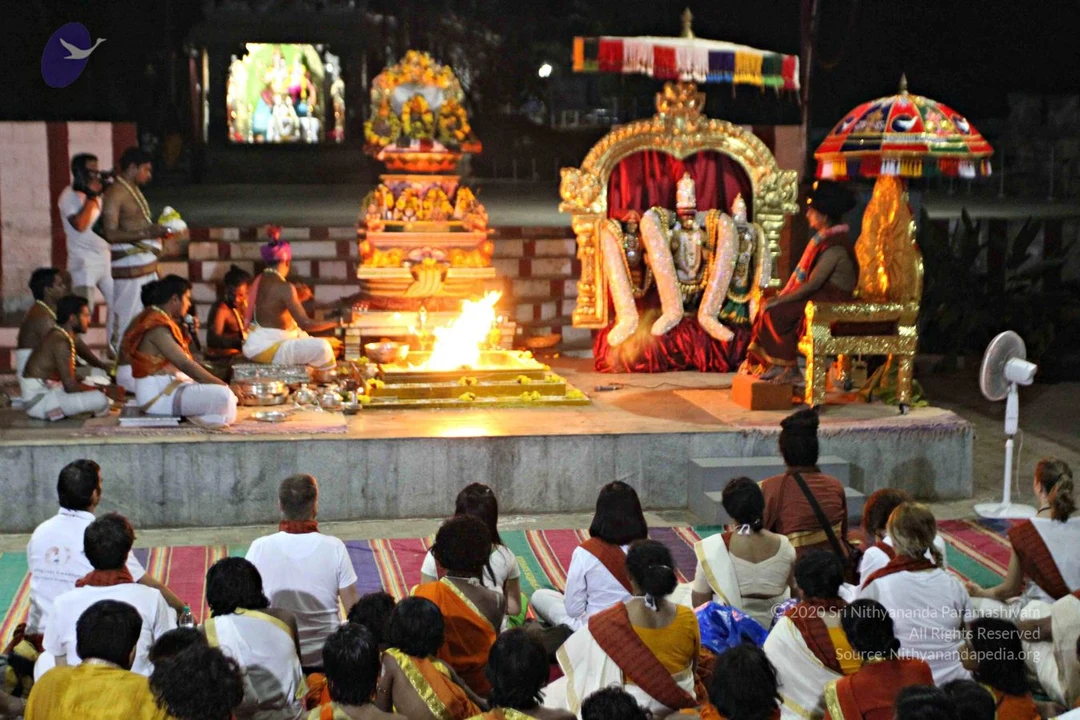
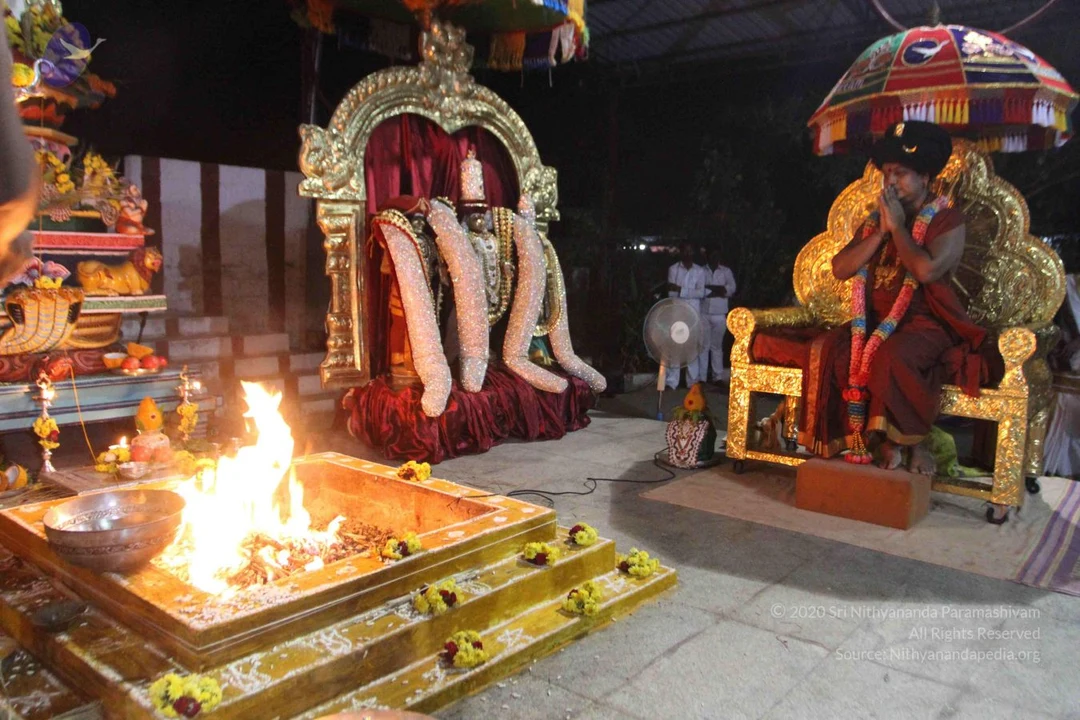
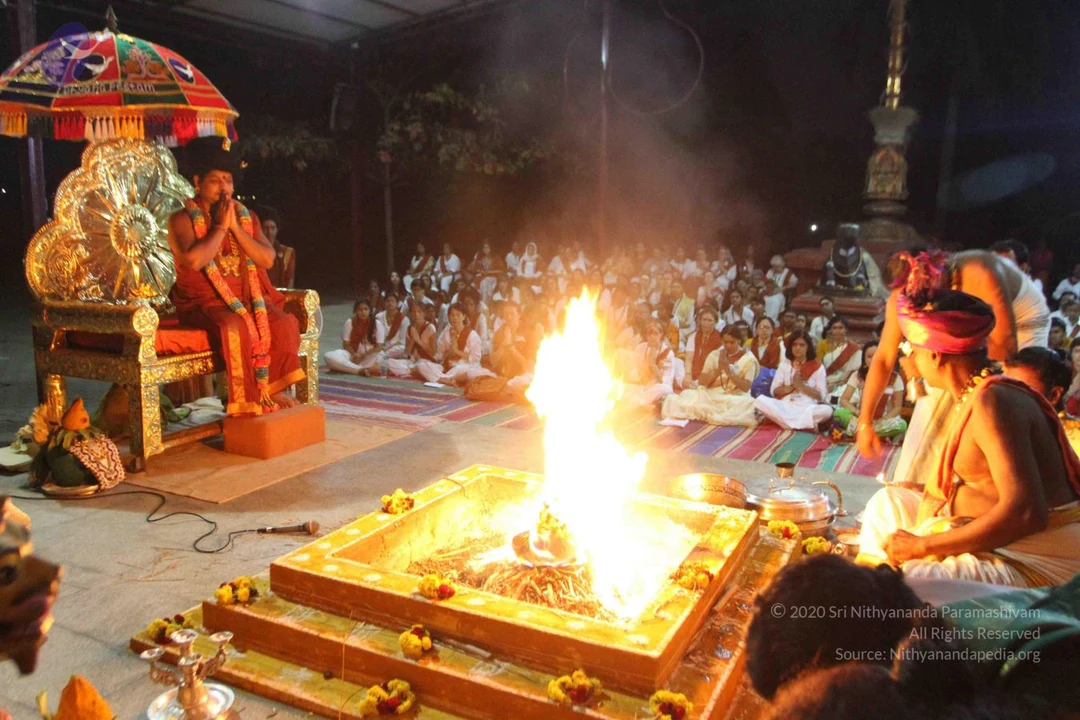
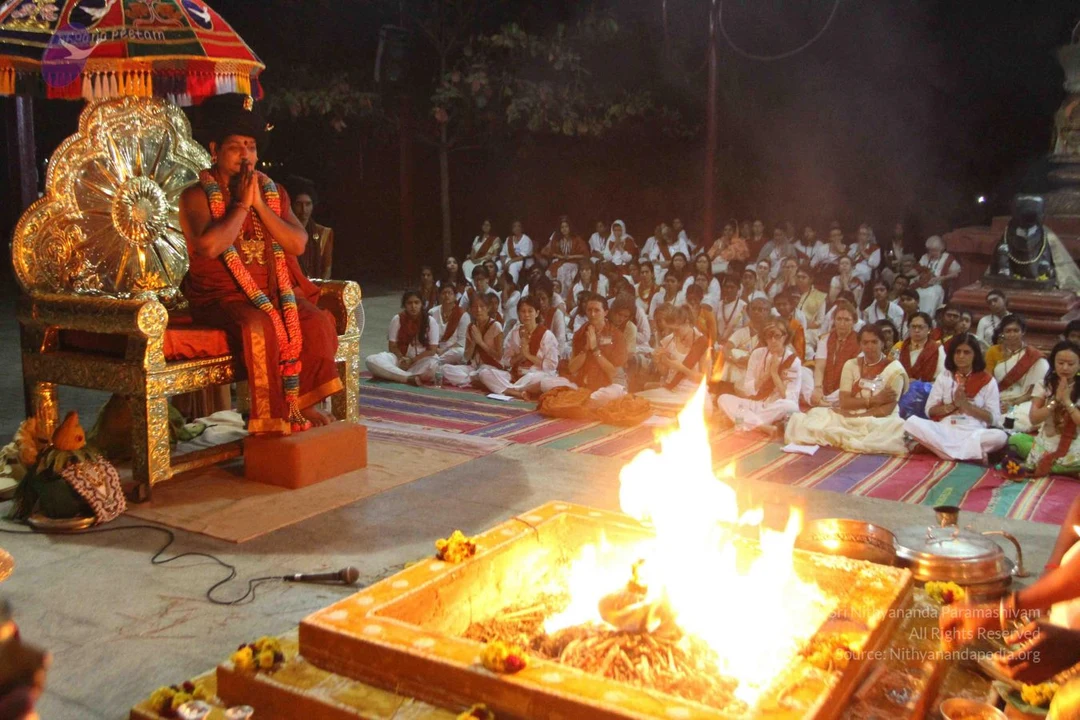
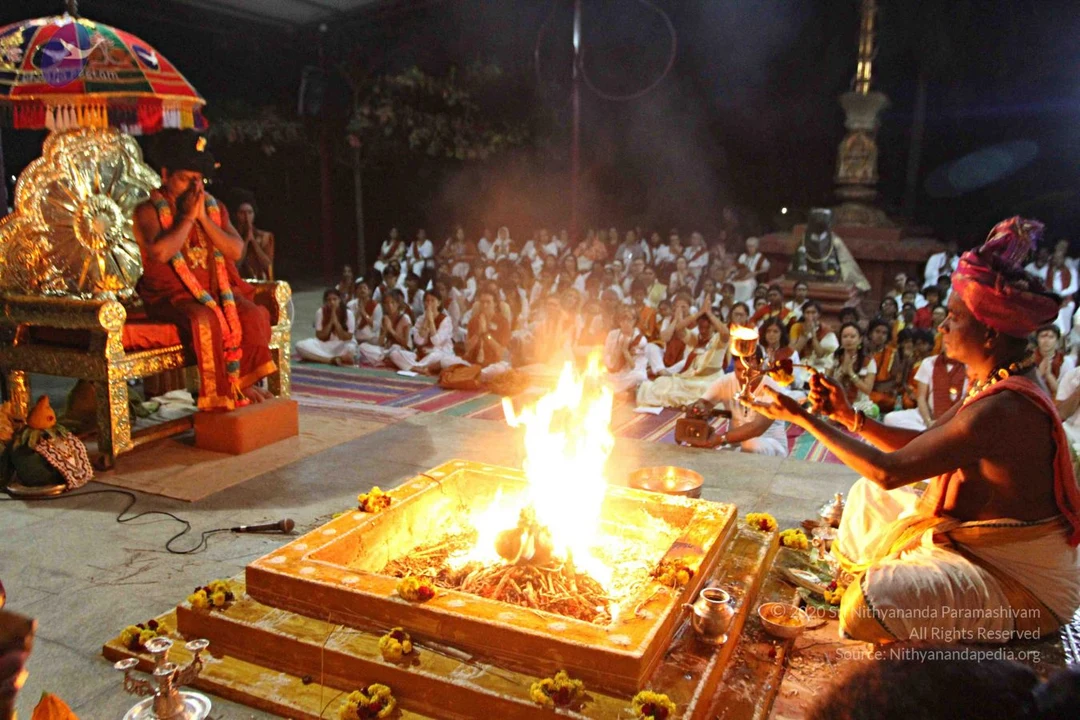
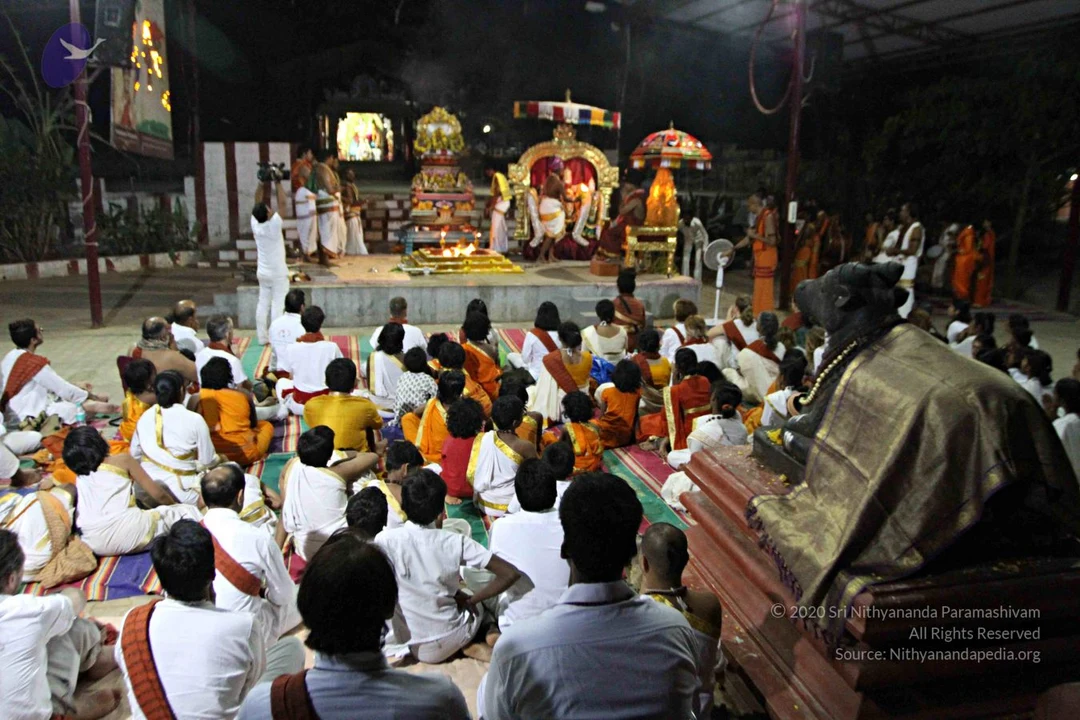
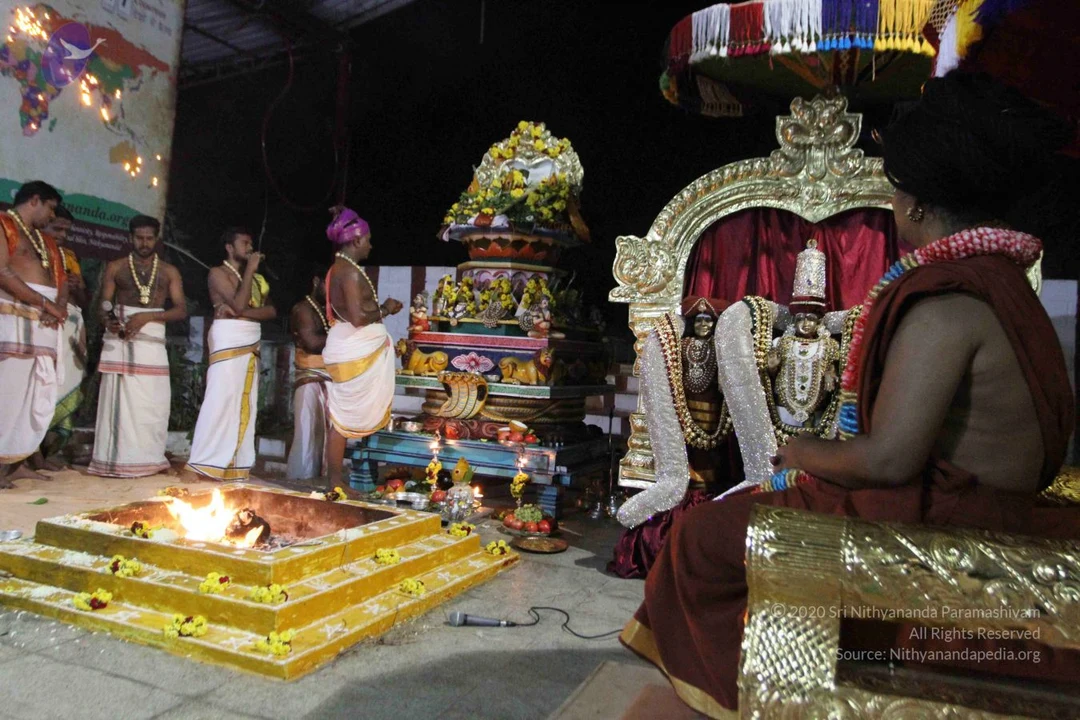
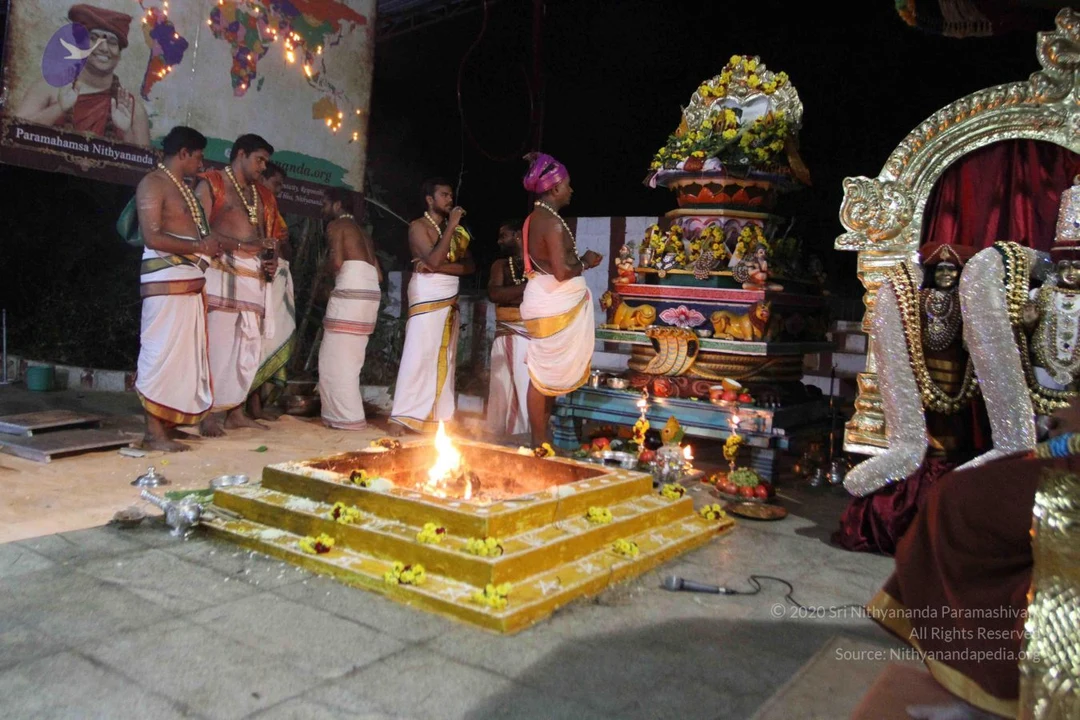
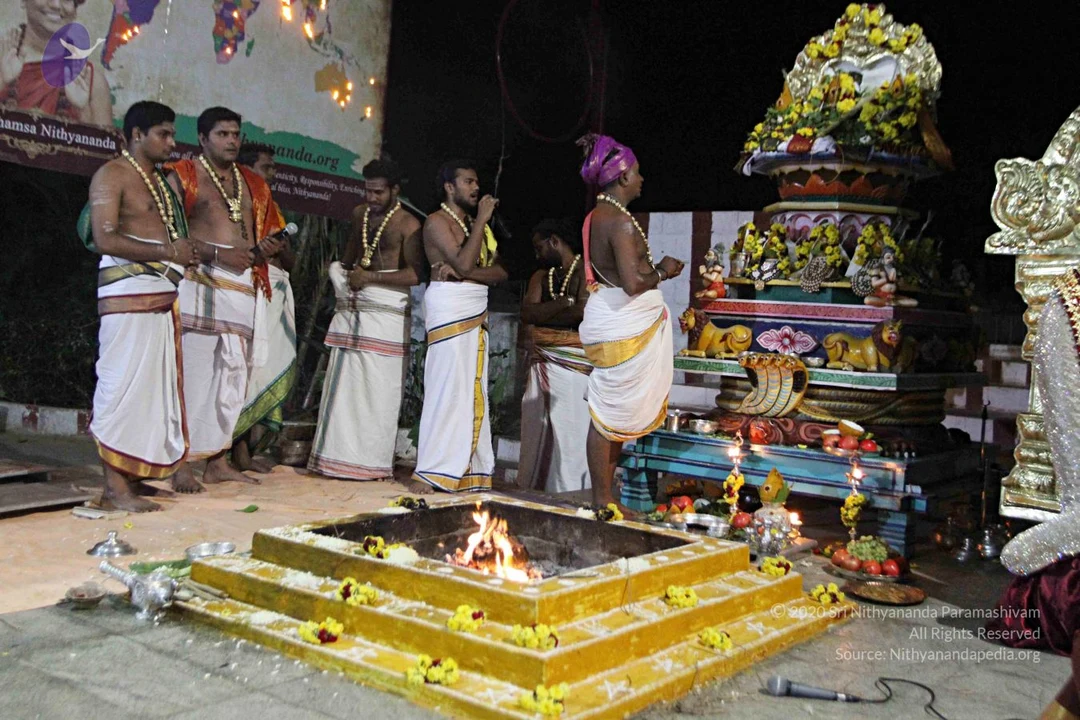
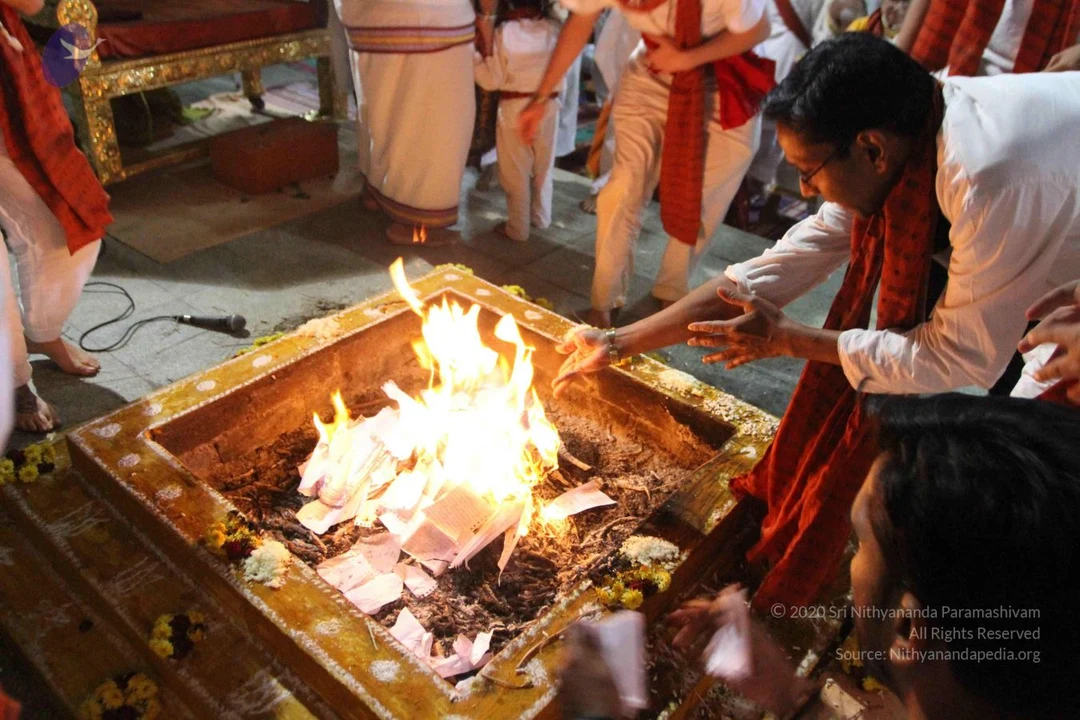
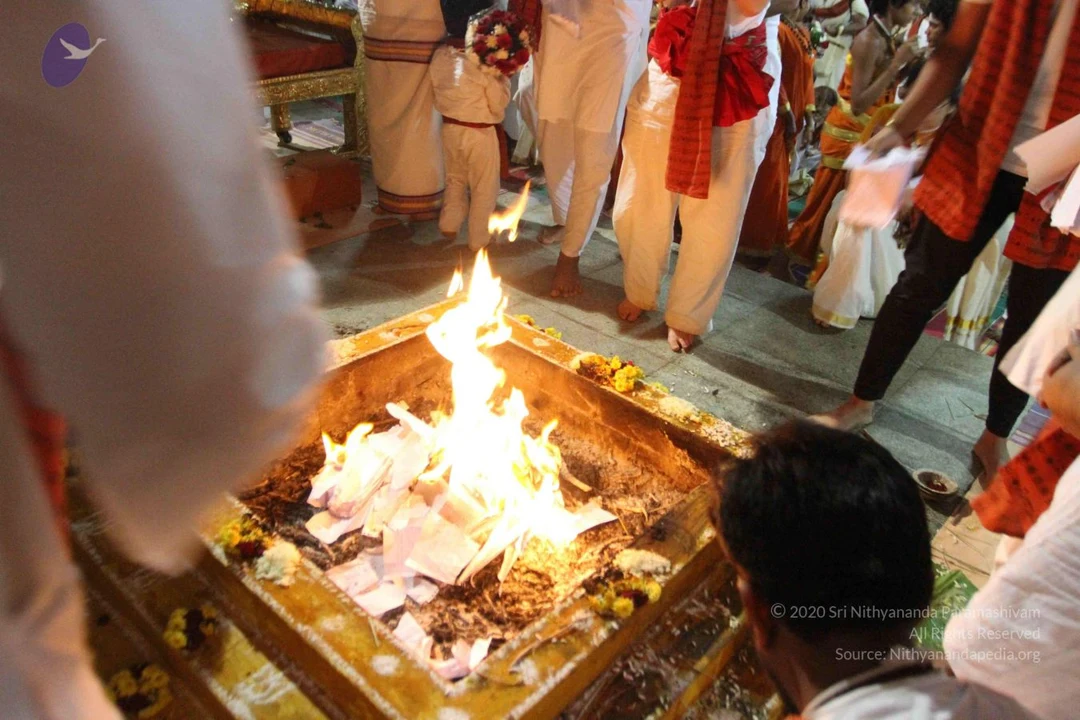
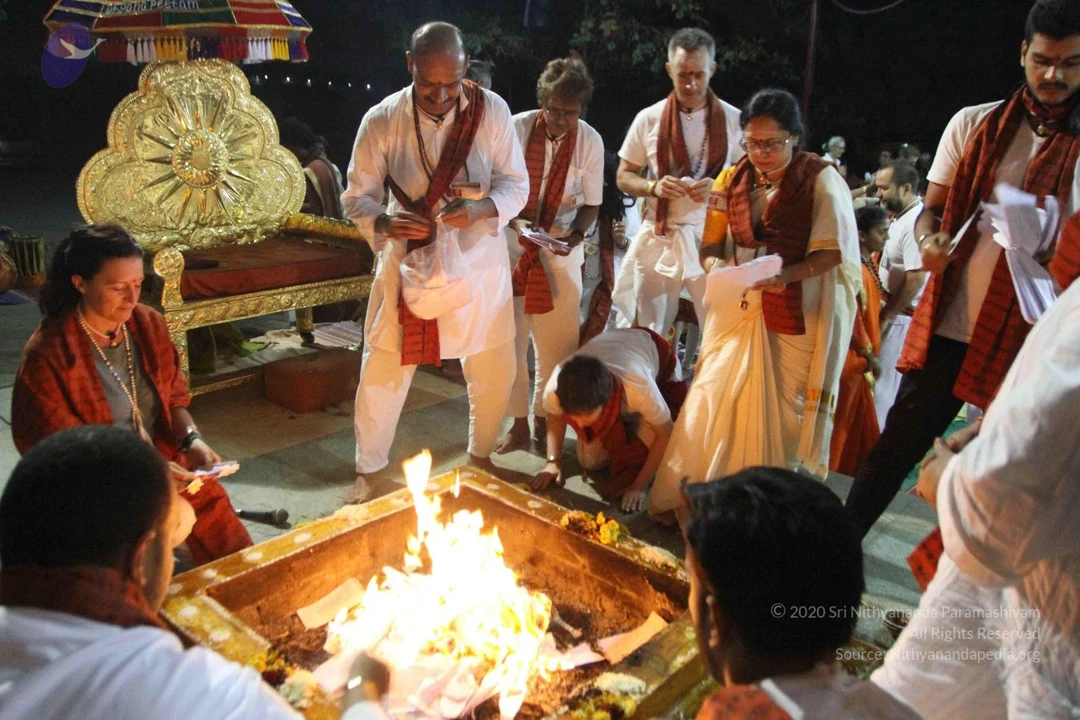
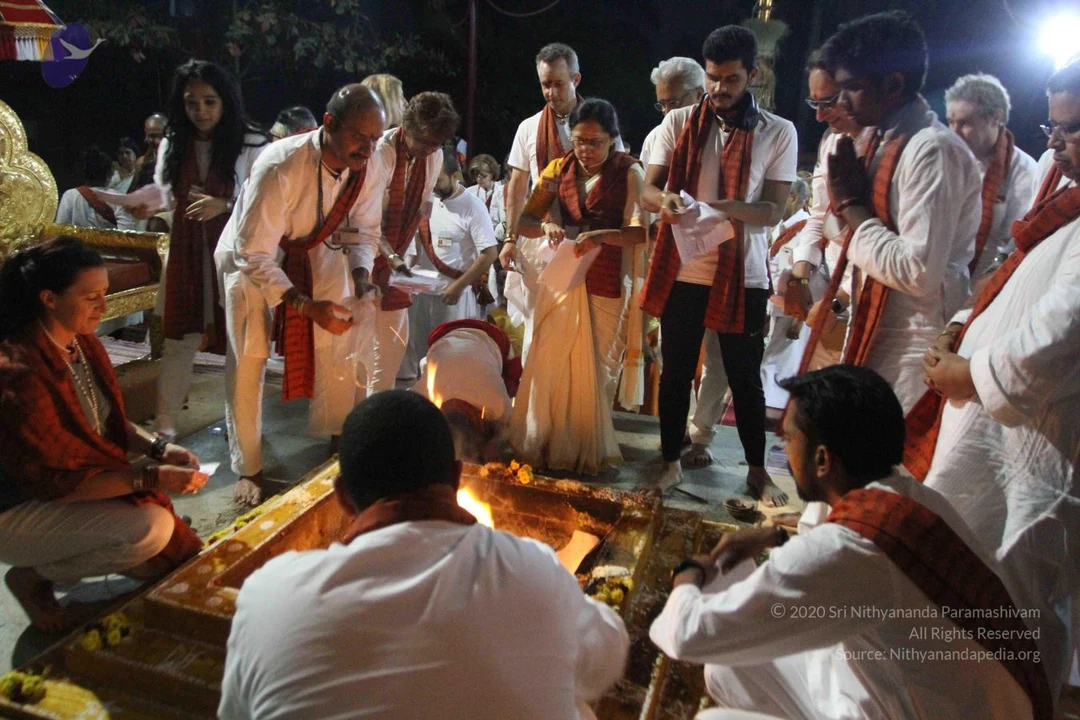
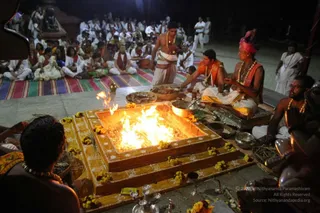
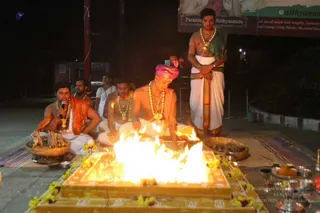
Rudra Homa

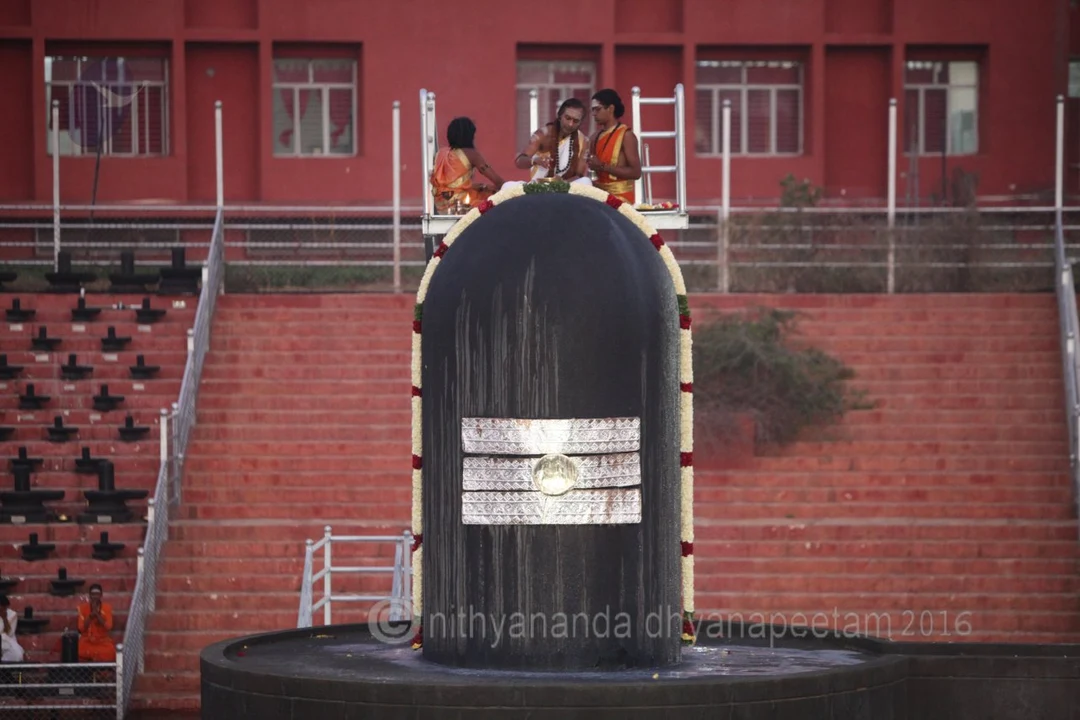
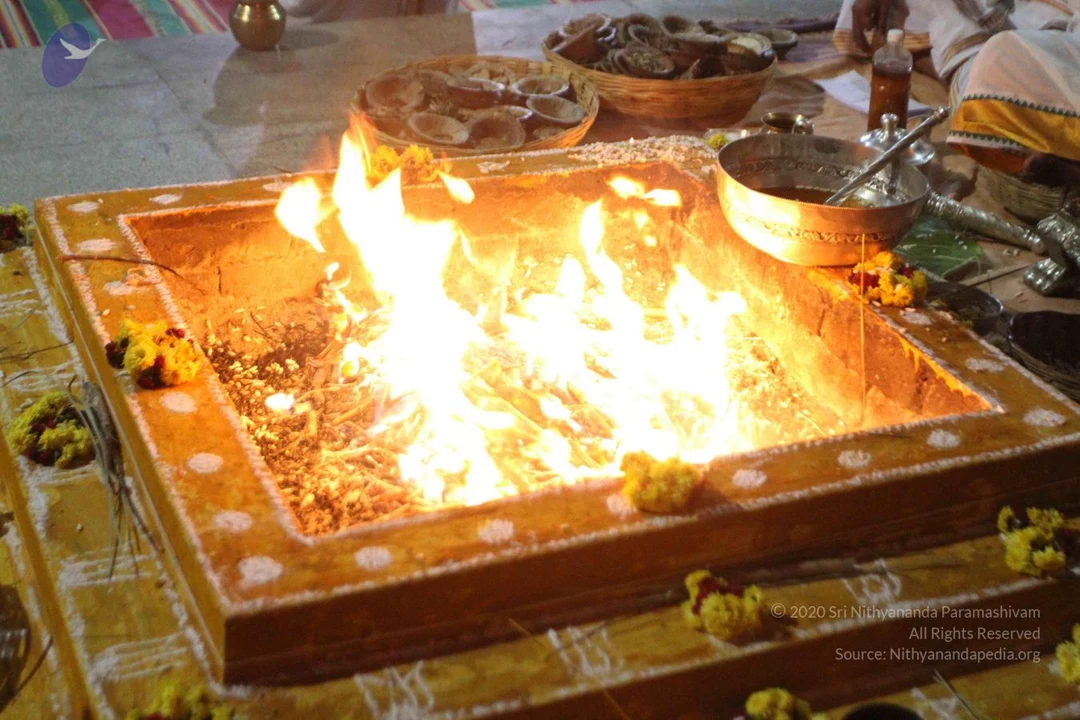
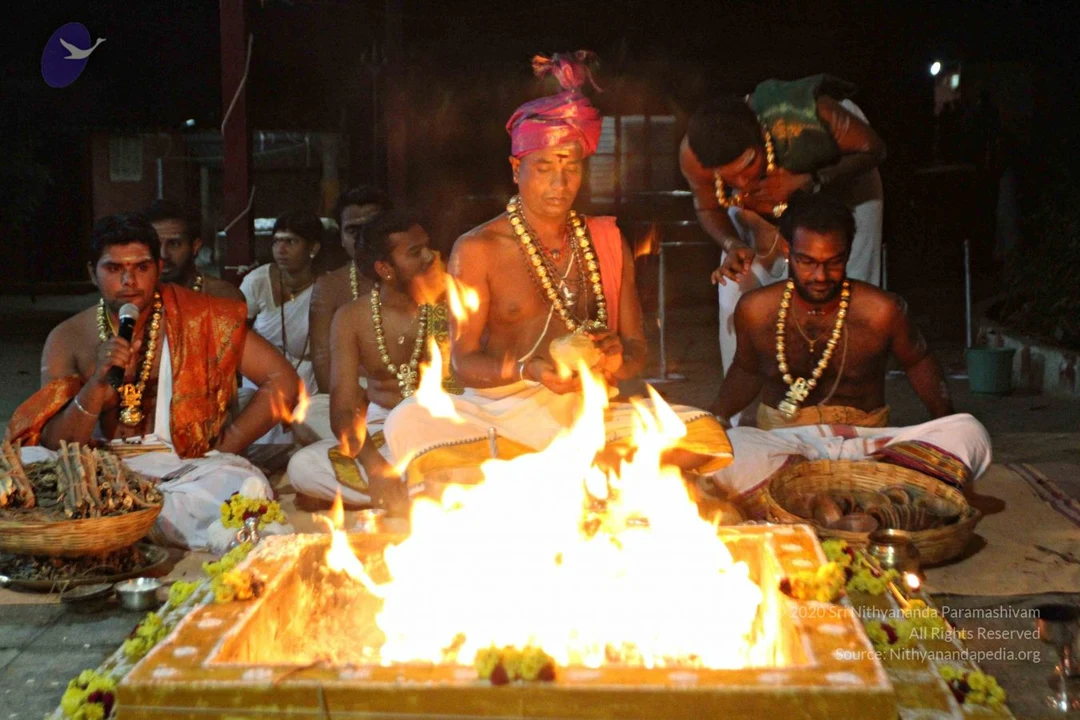
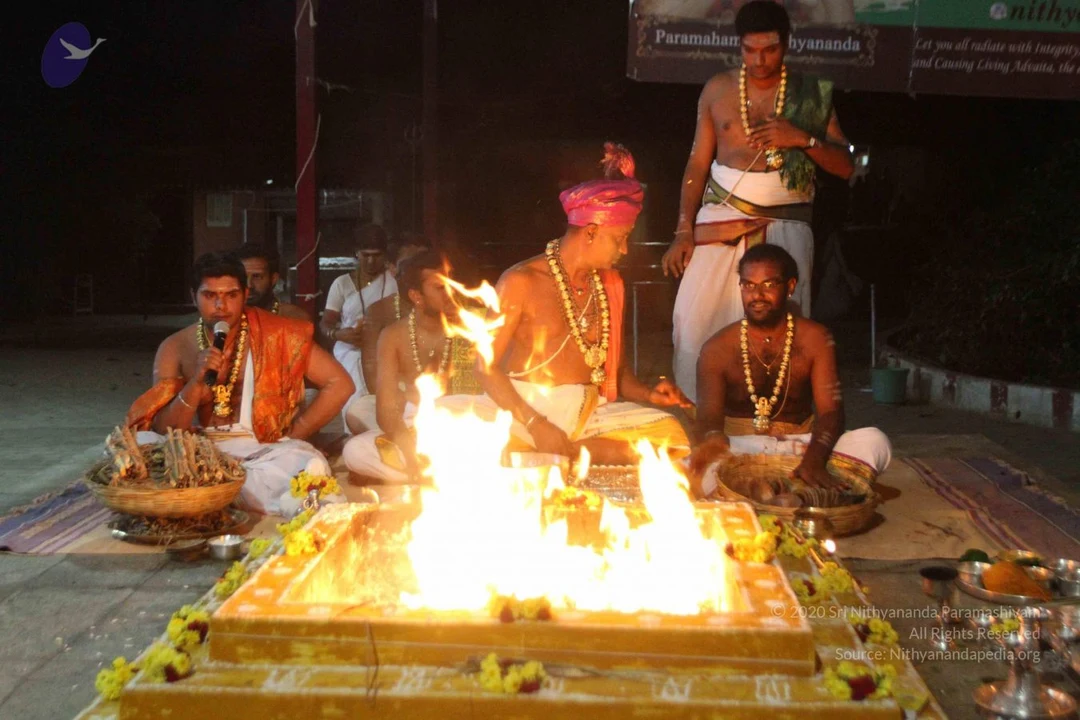
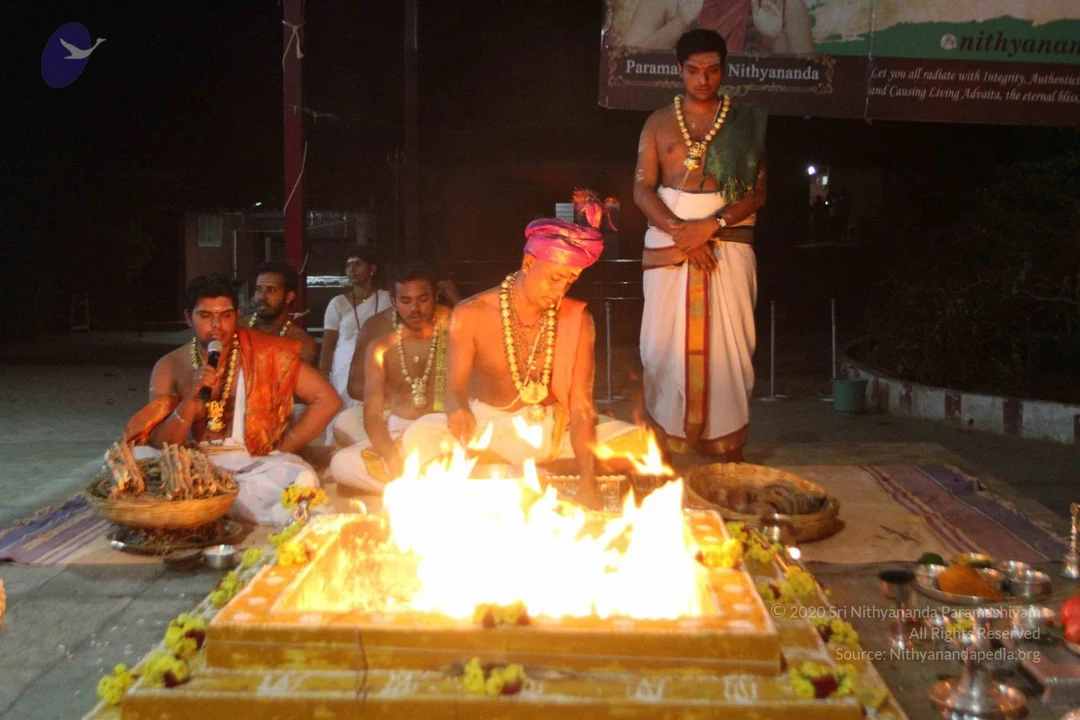
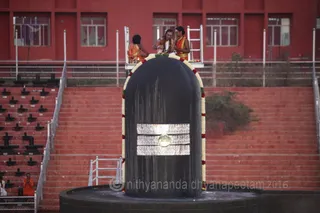
Rudra Abishekam

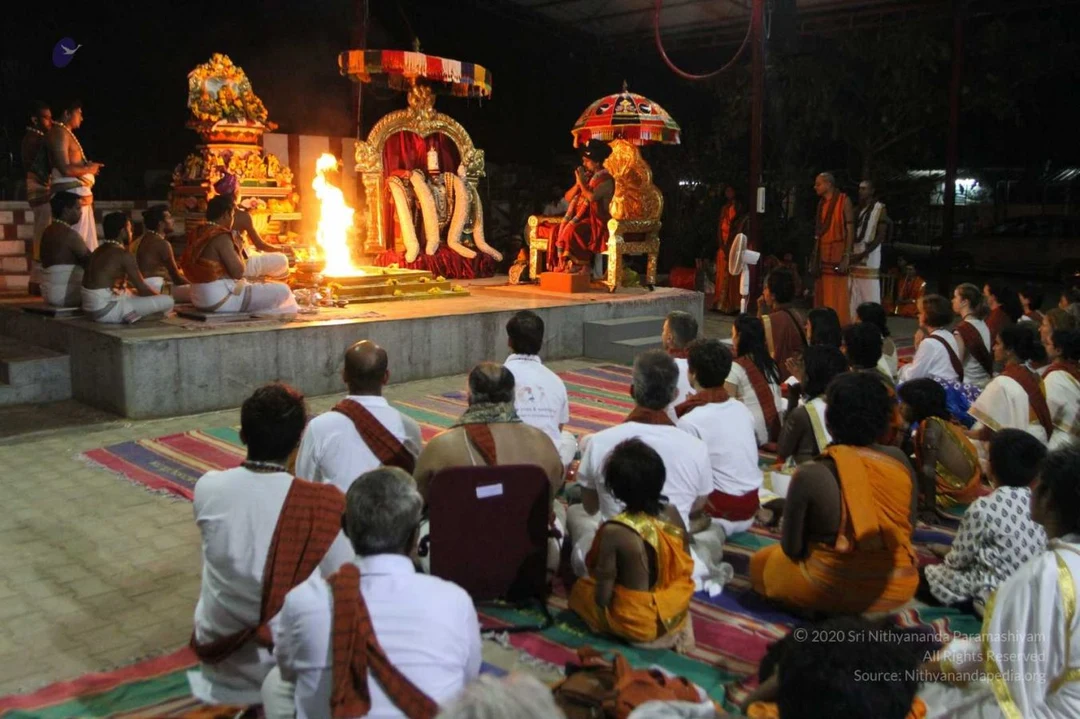
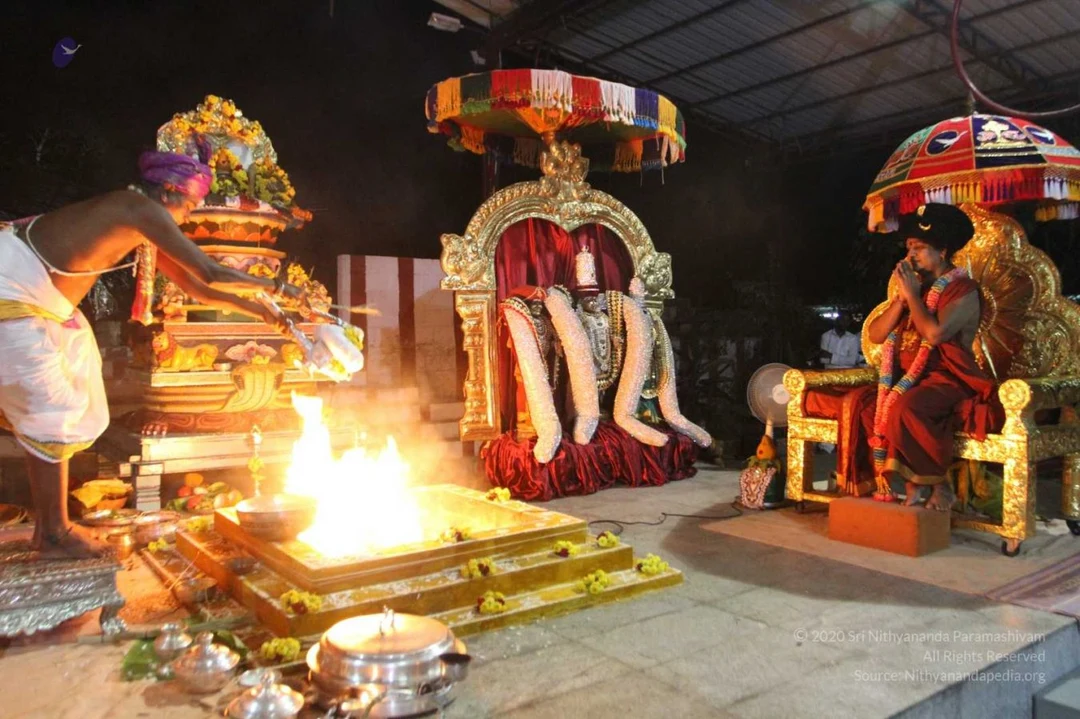
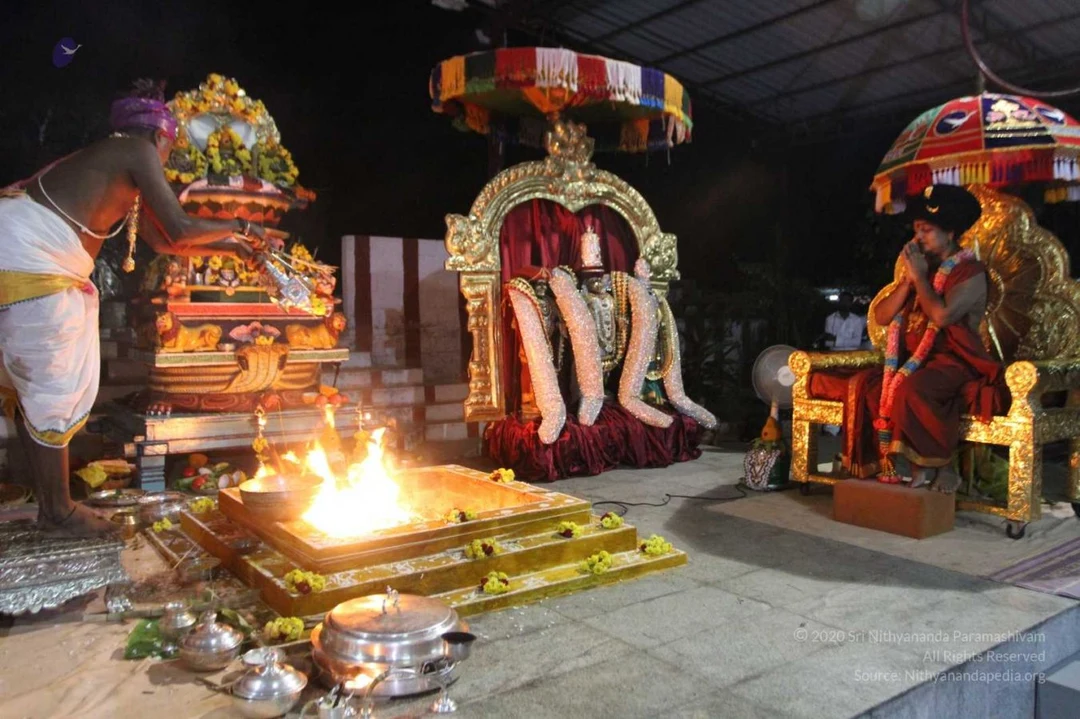
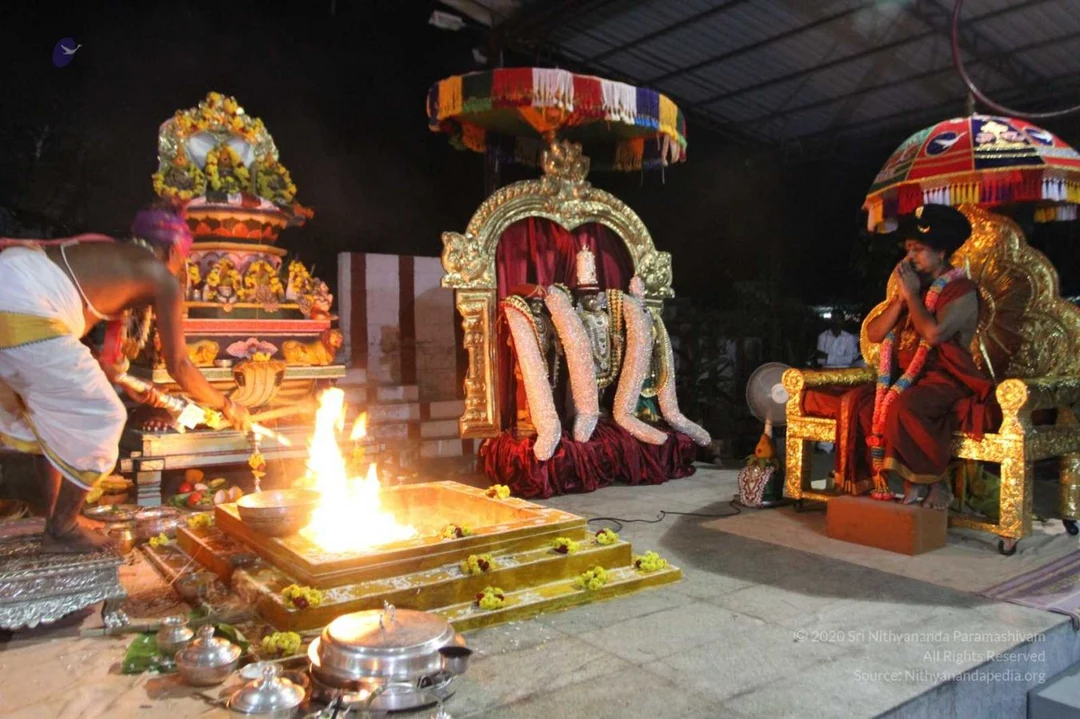
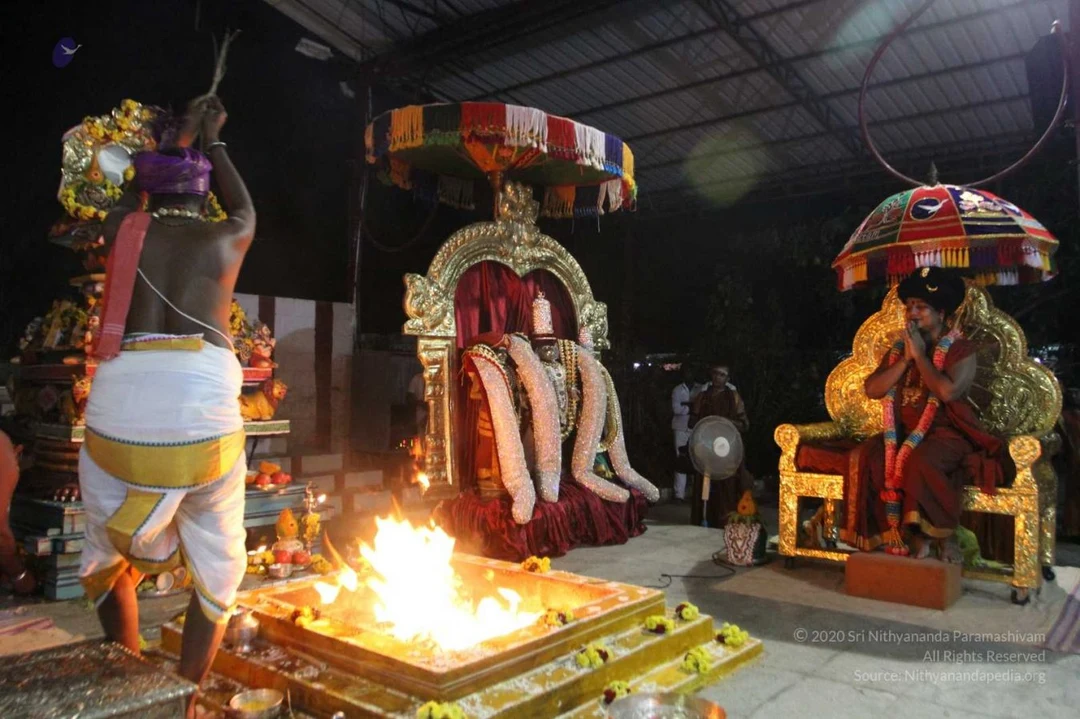
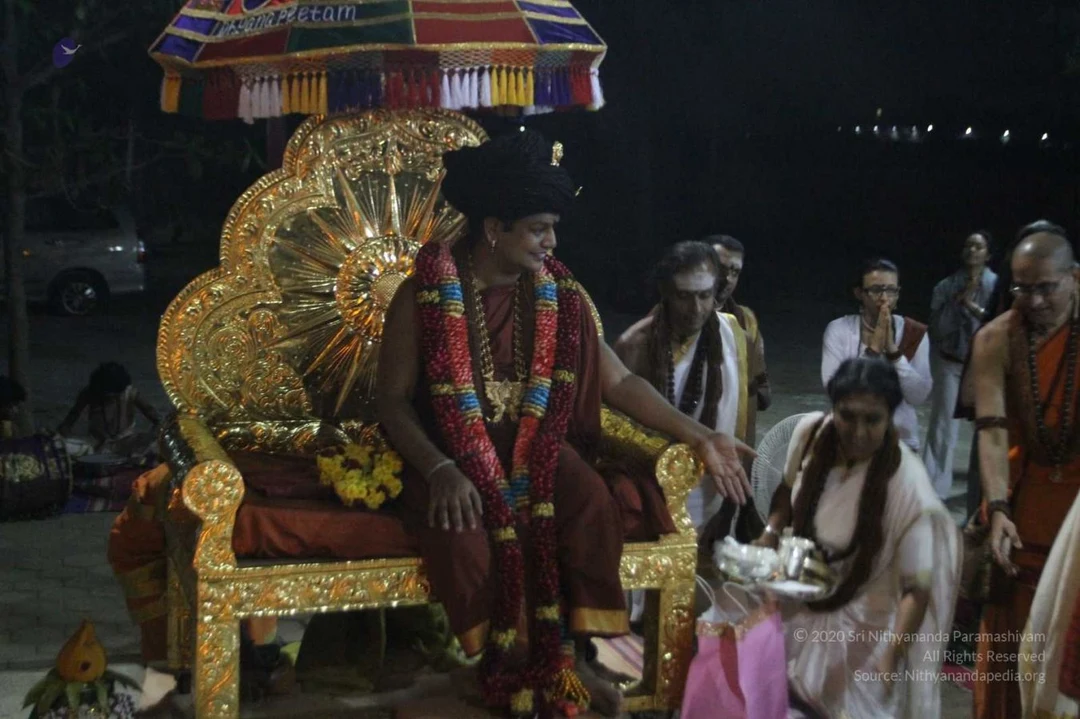
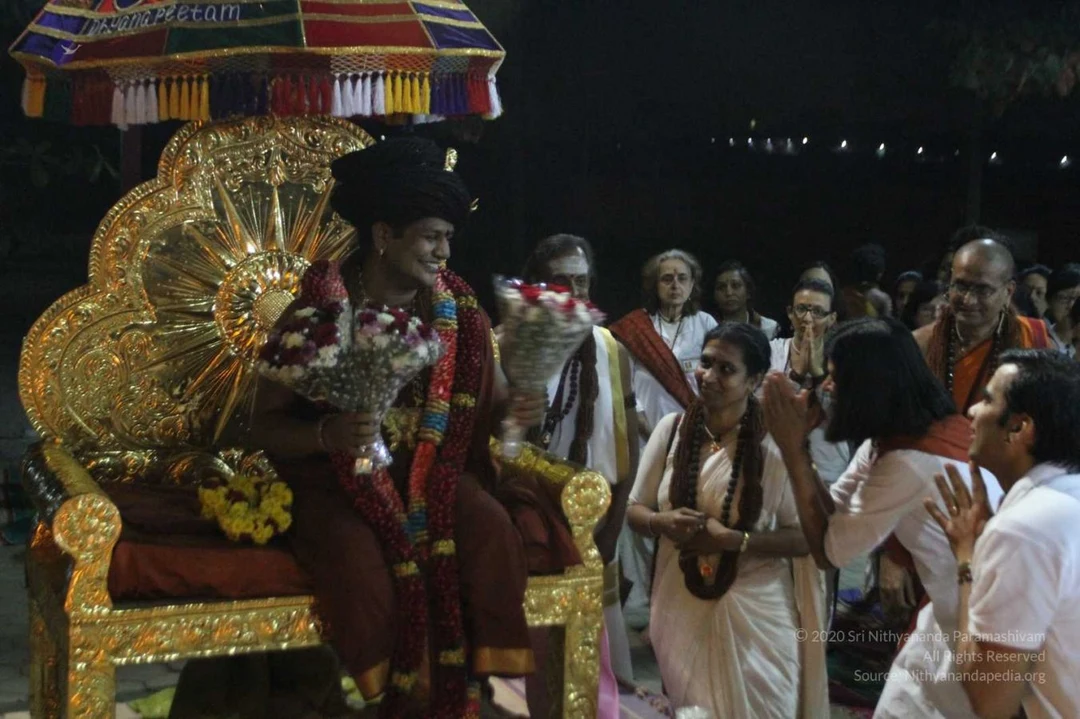
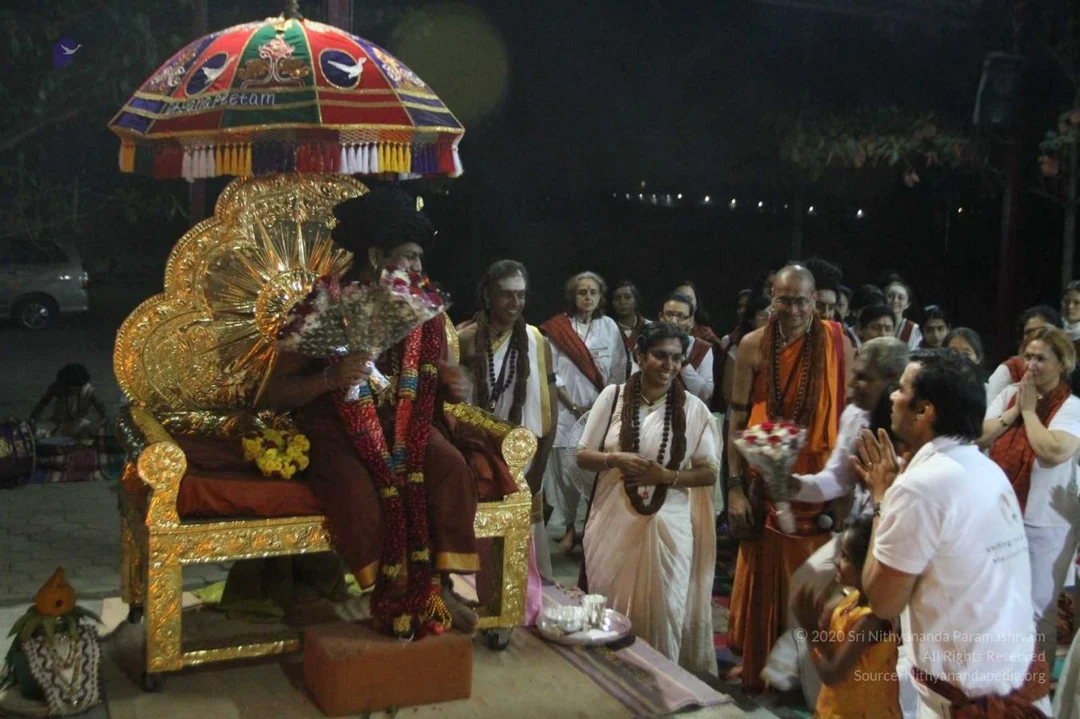
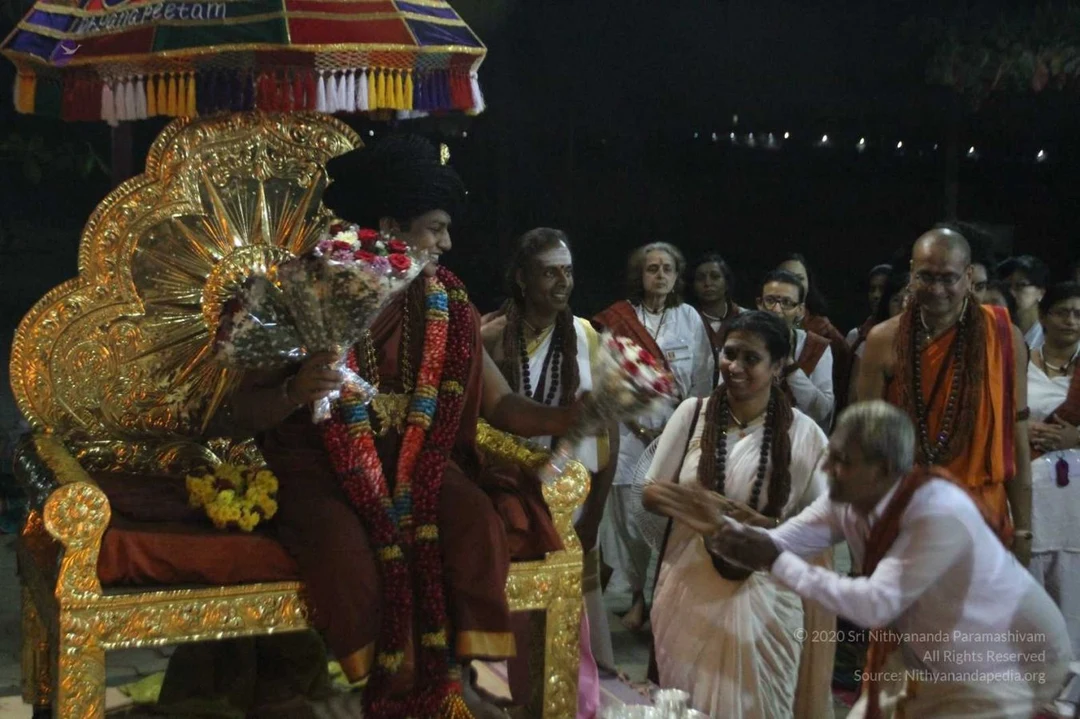
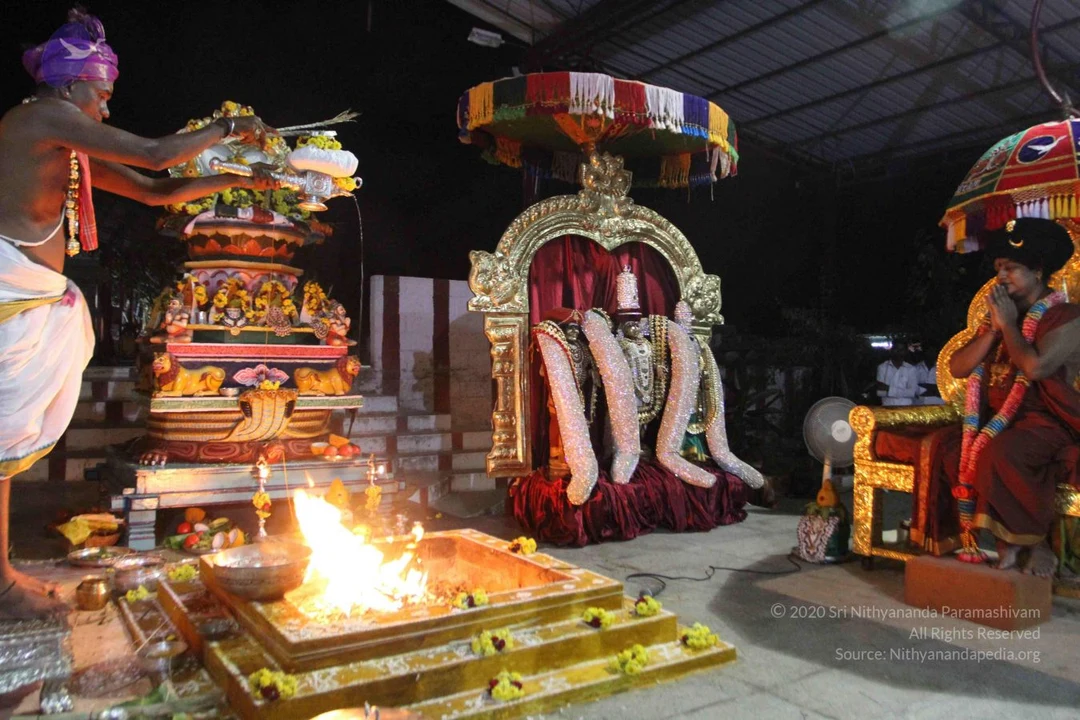
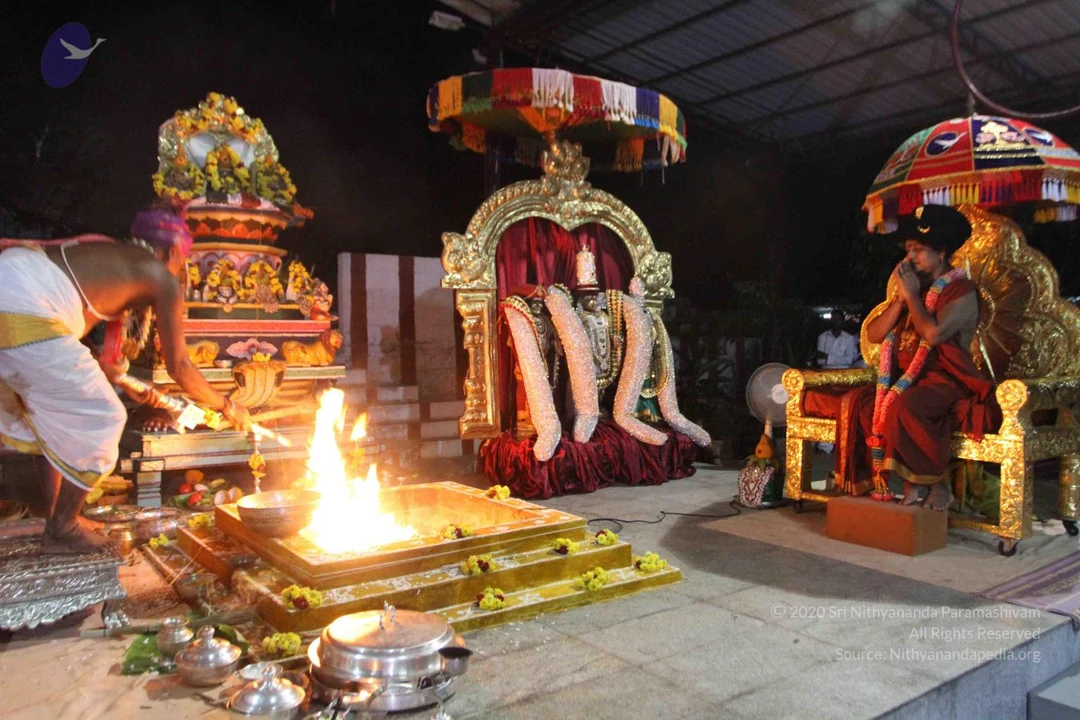
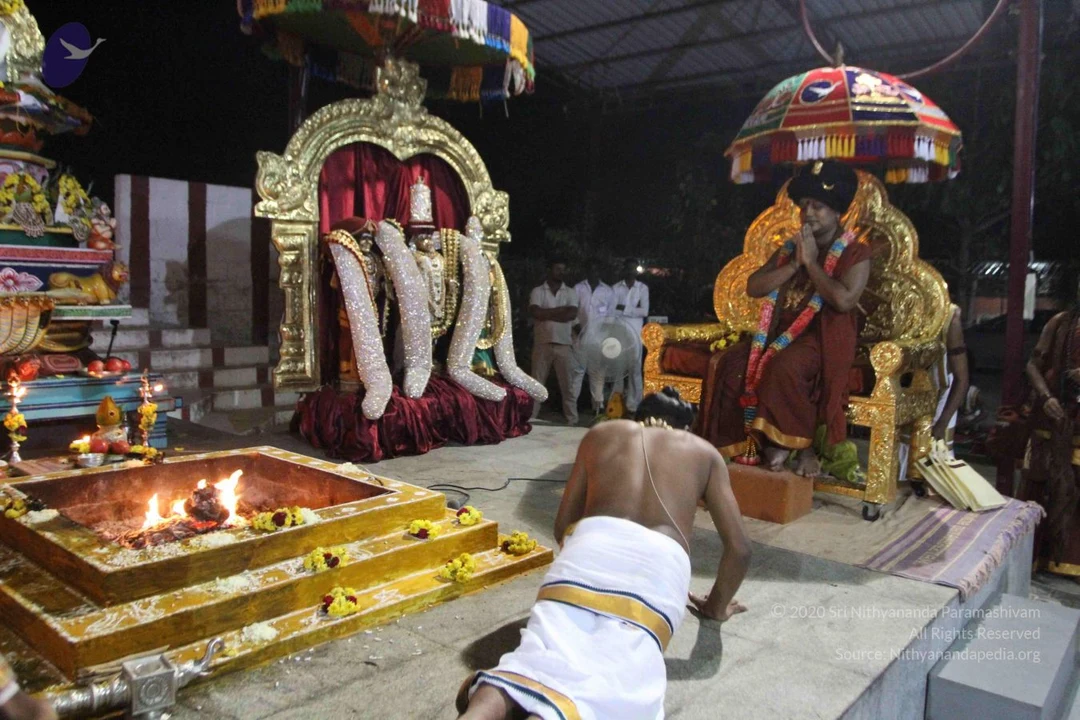
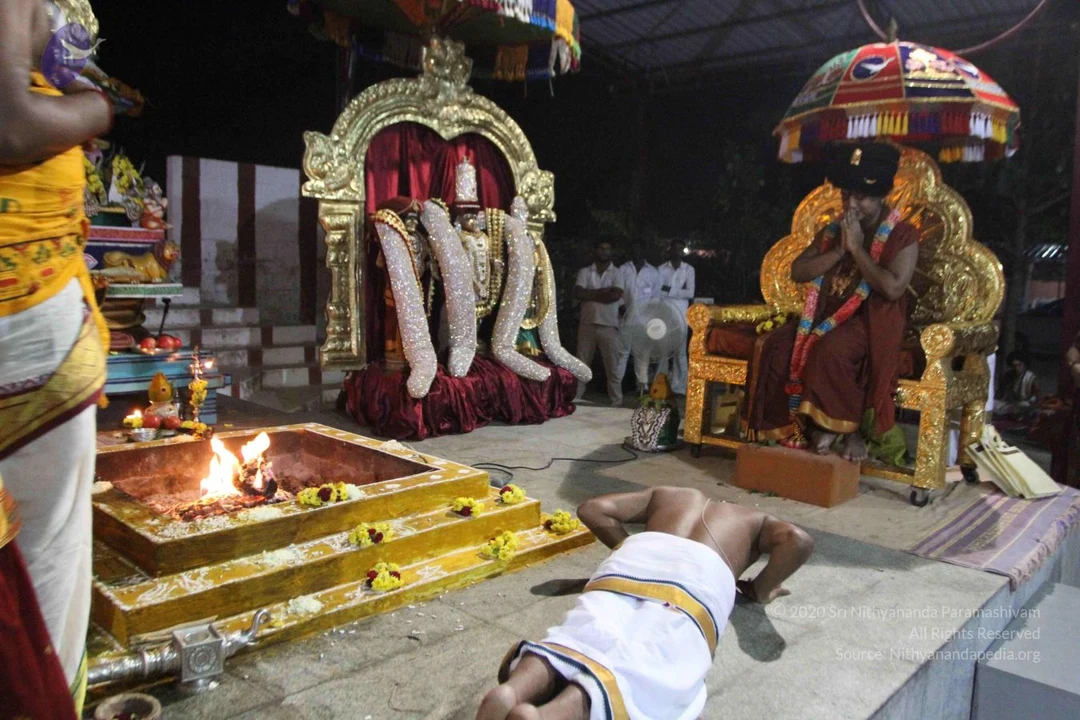
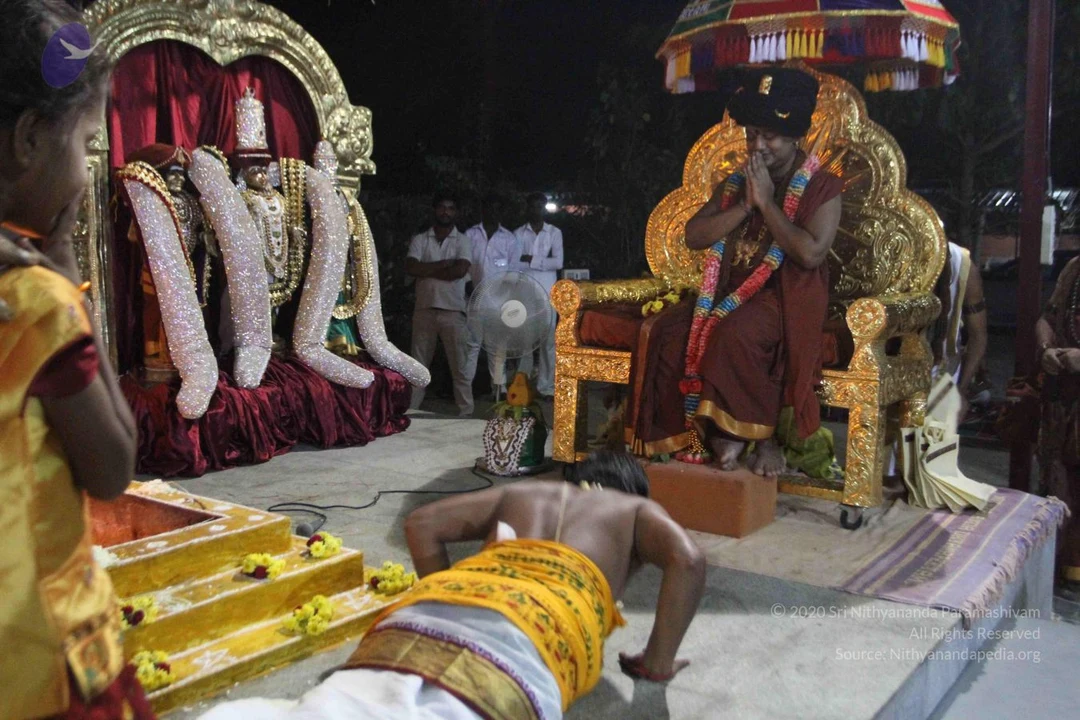
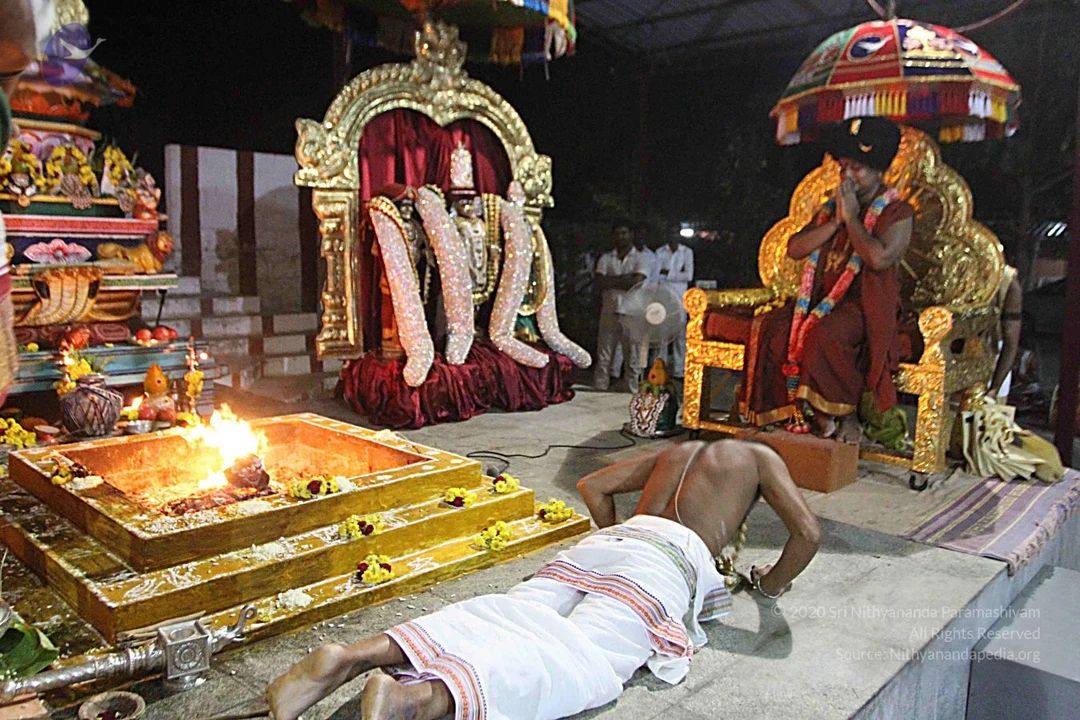
Rajarajeshwari Brahmotsavam - Aarti

Photos Of The Day:

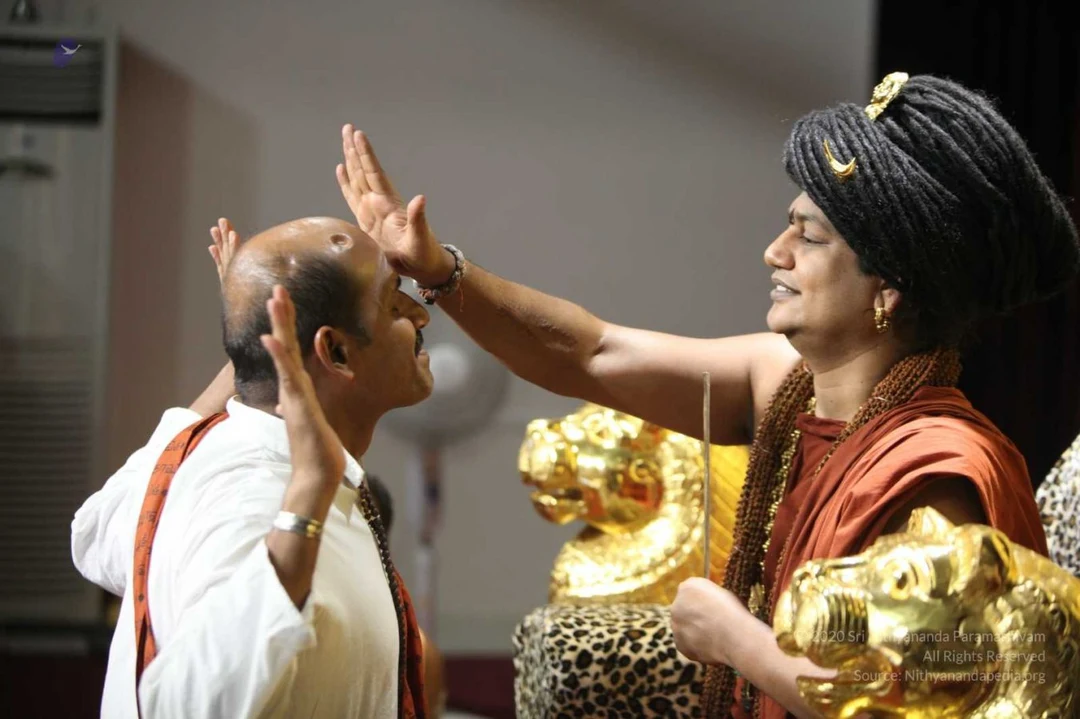
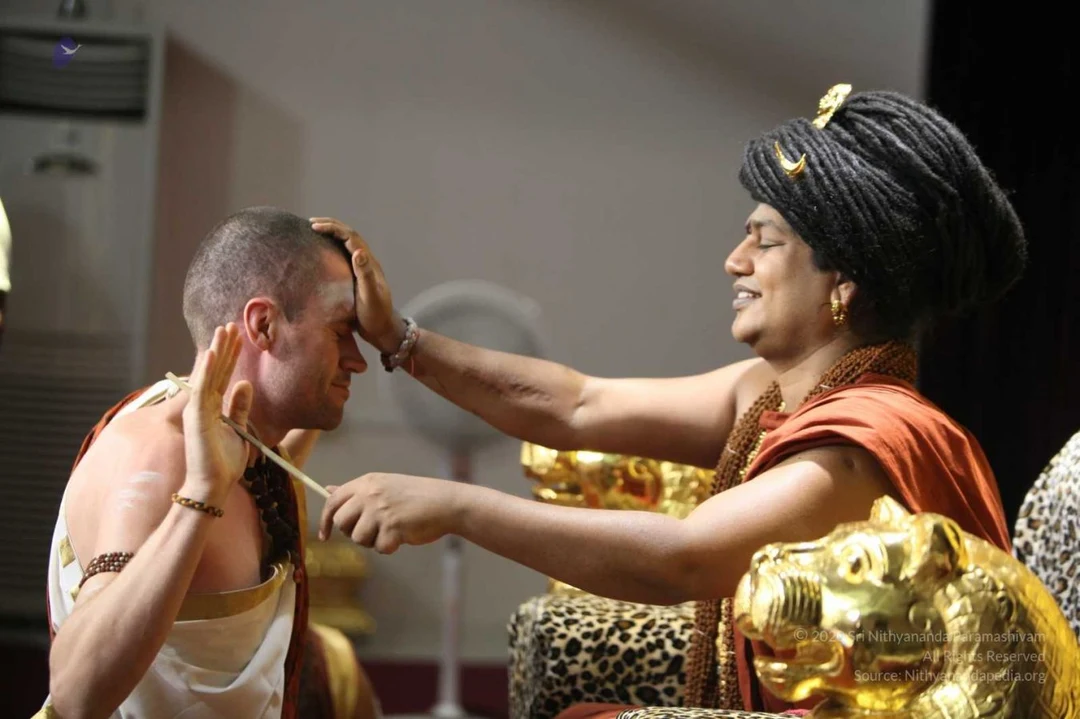
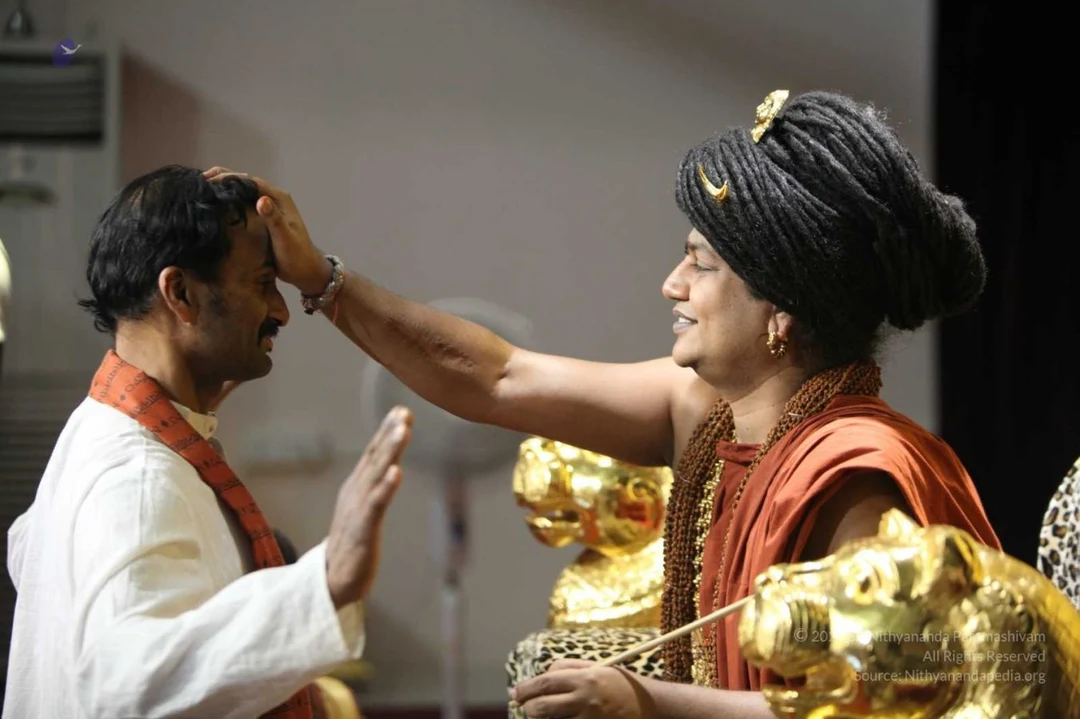
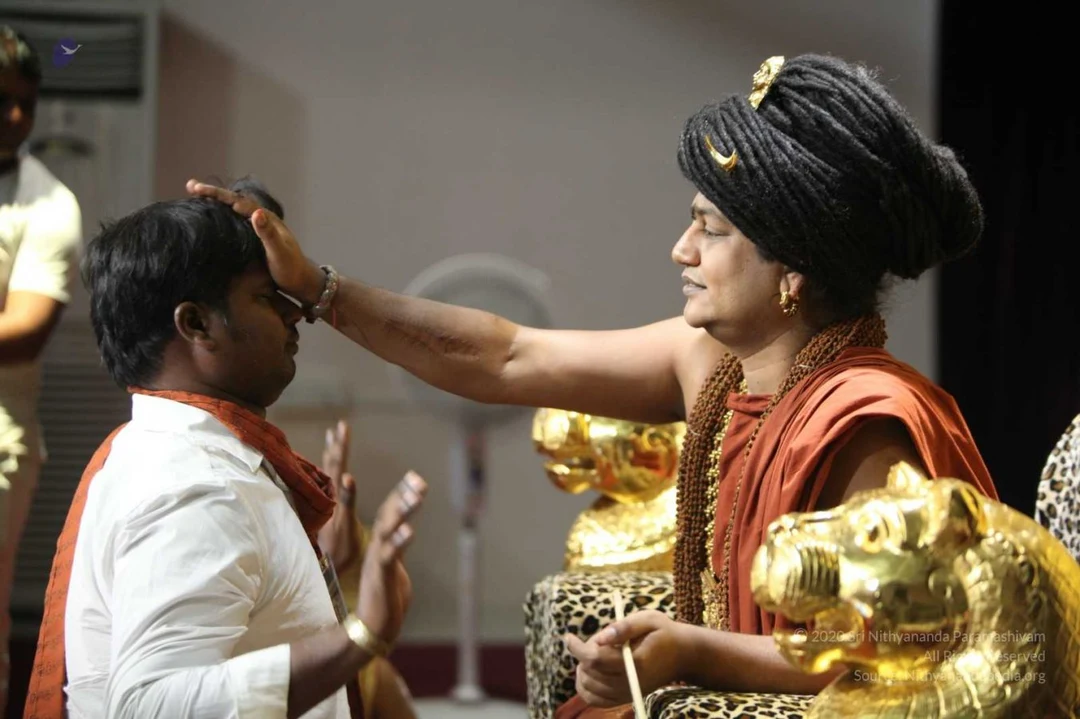
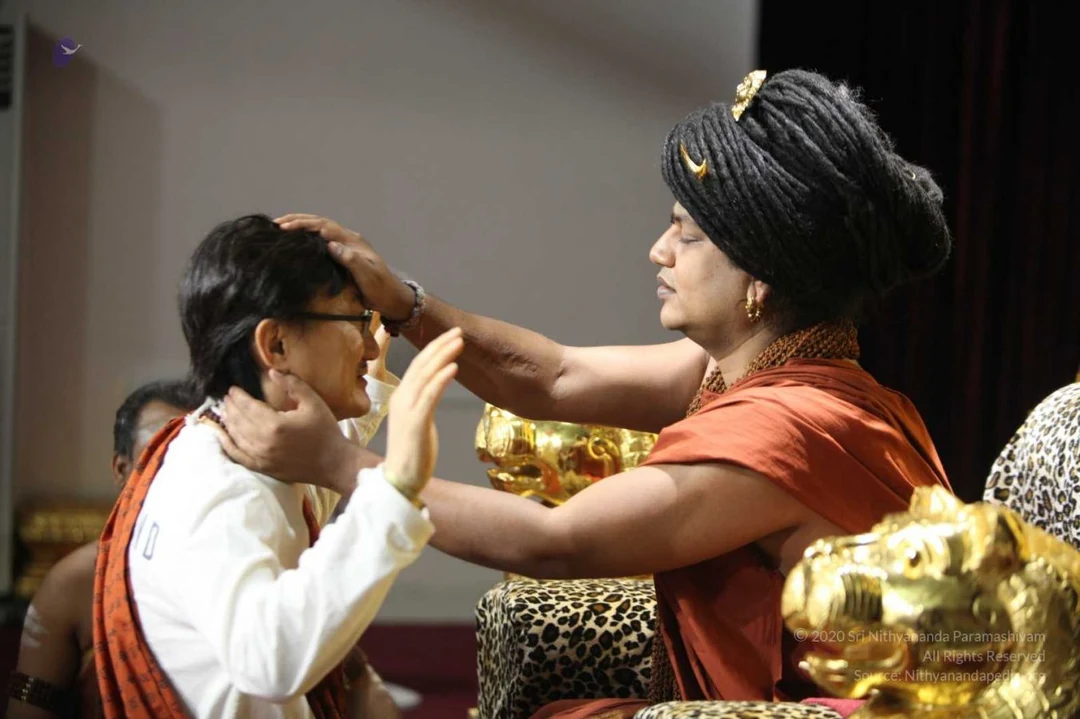
Healers-Initiation

Rudra-Homa

Photos Of The Day:

IA-mandalaprocess

1-IA-Mandala-Process

Photos from this day

View all 307 photos

Mandala Process
83 photosSource gallery
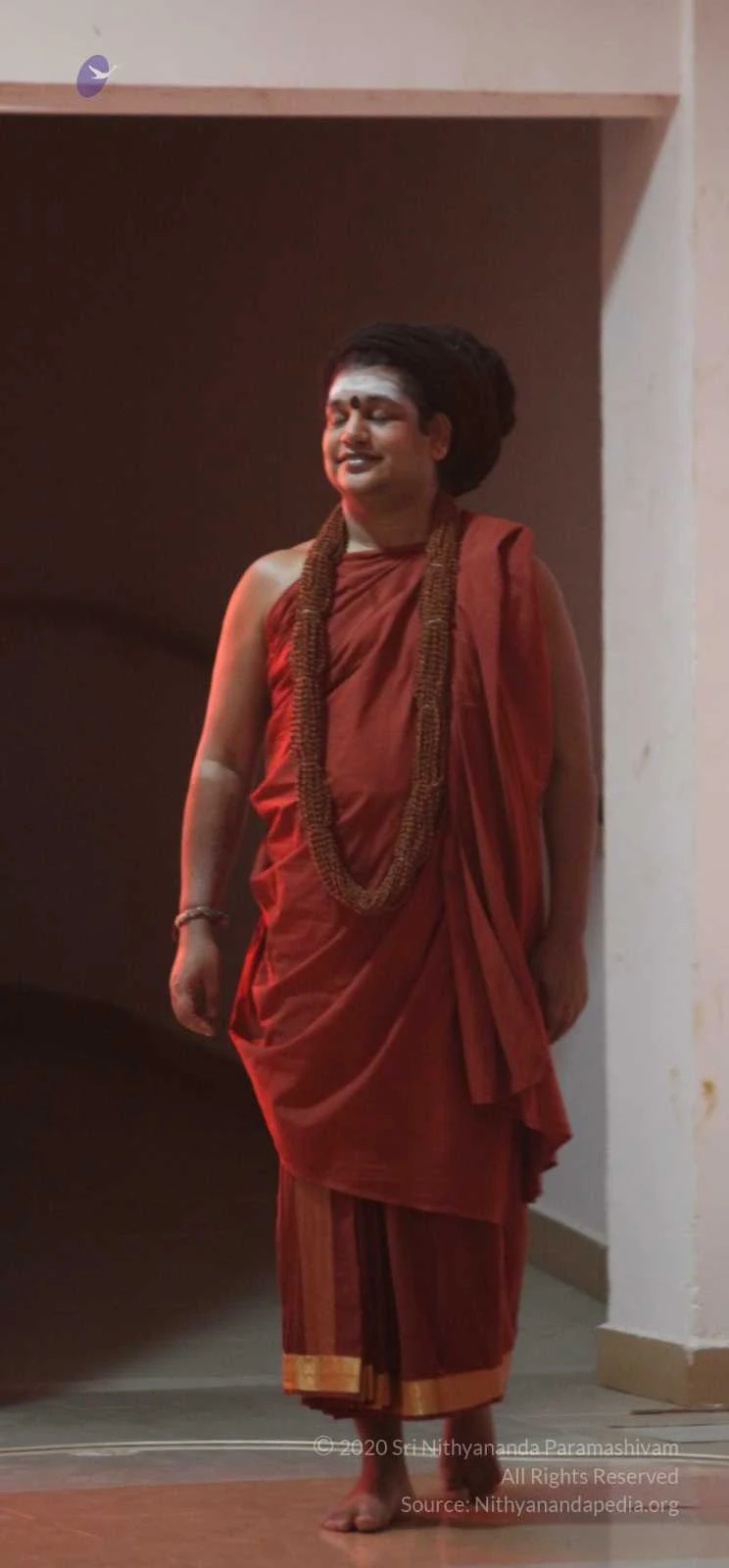
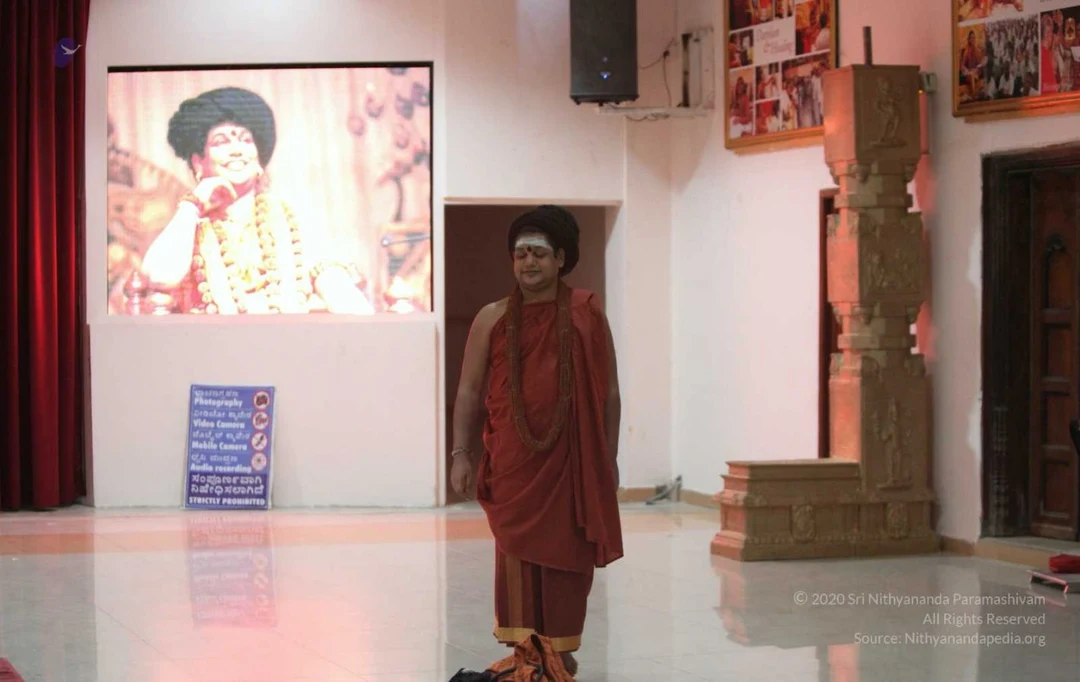
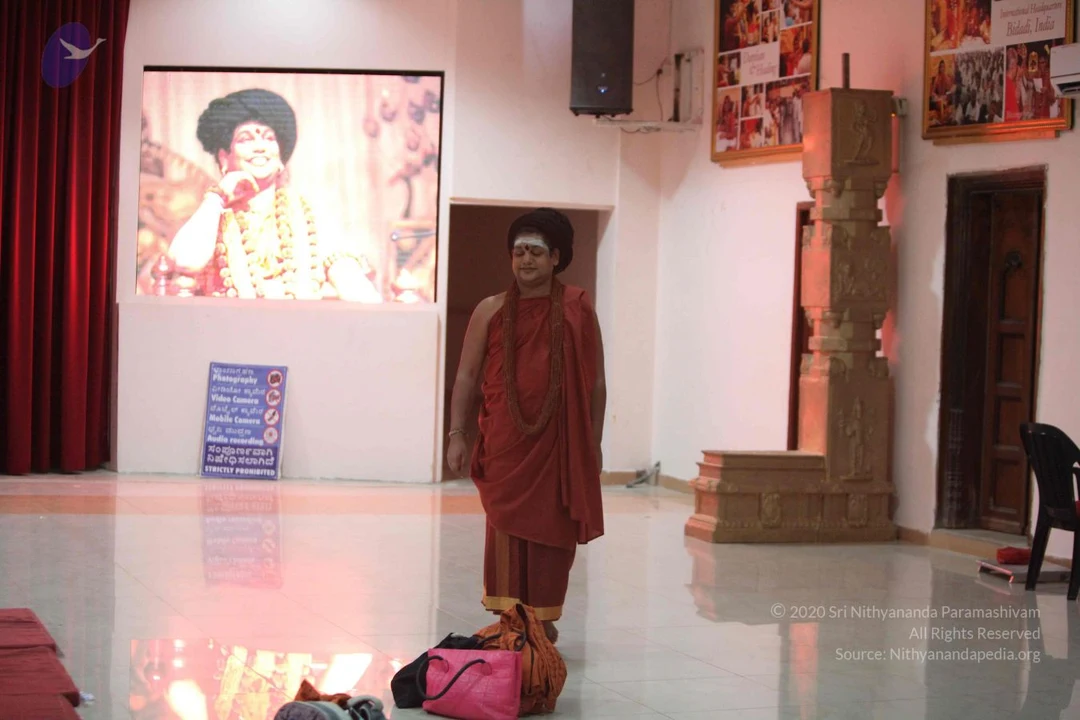
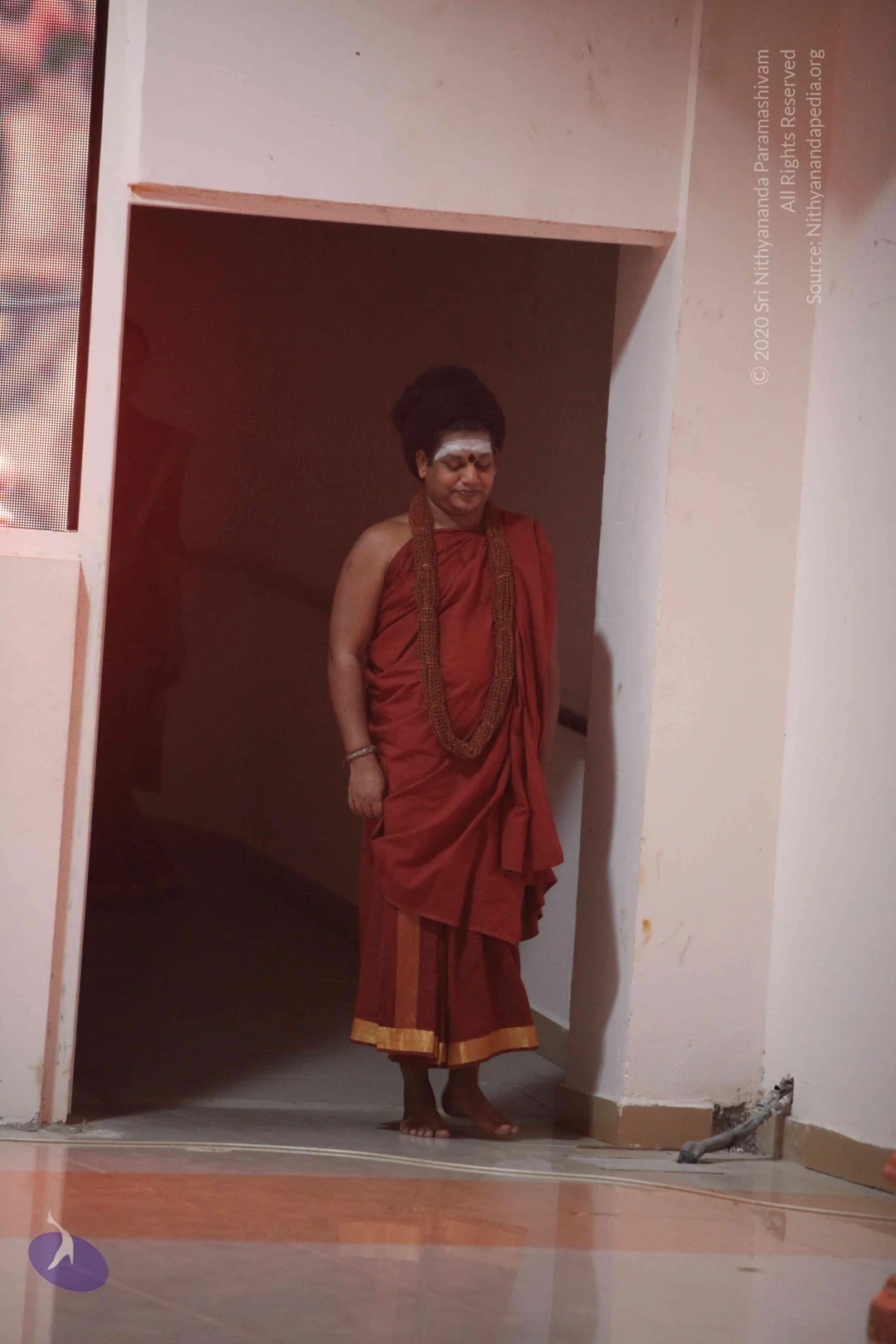
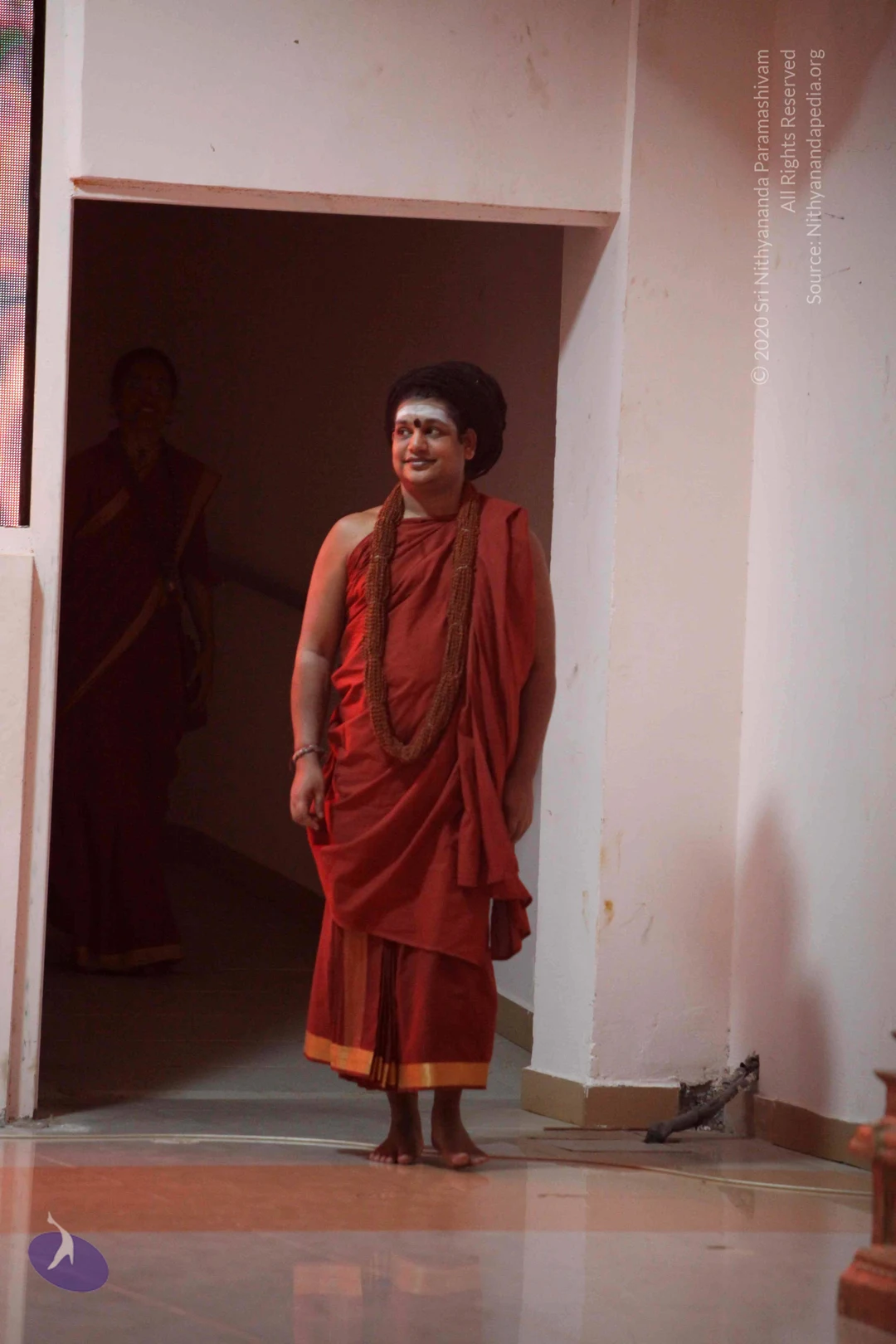
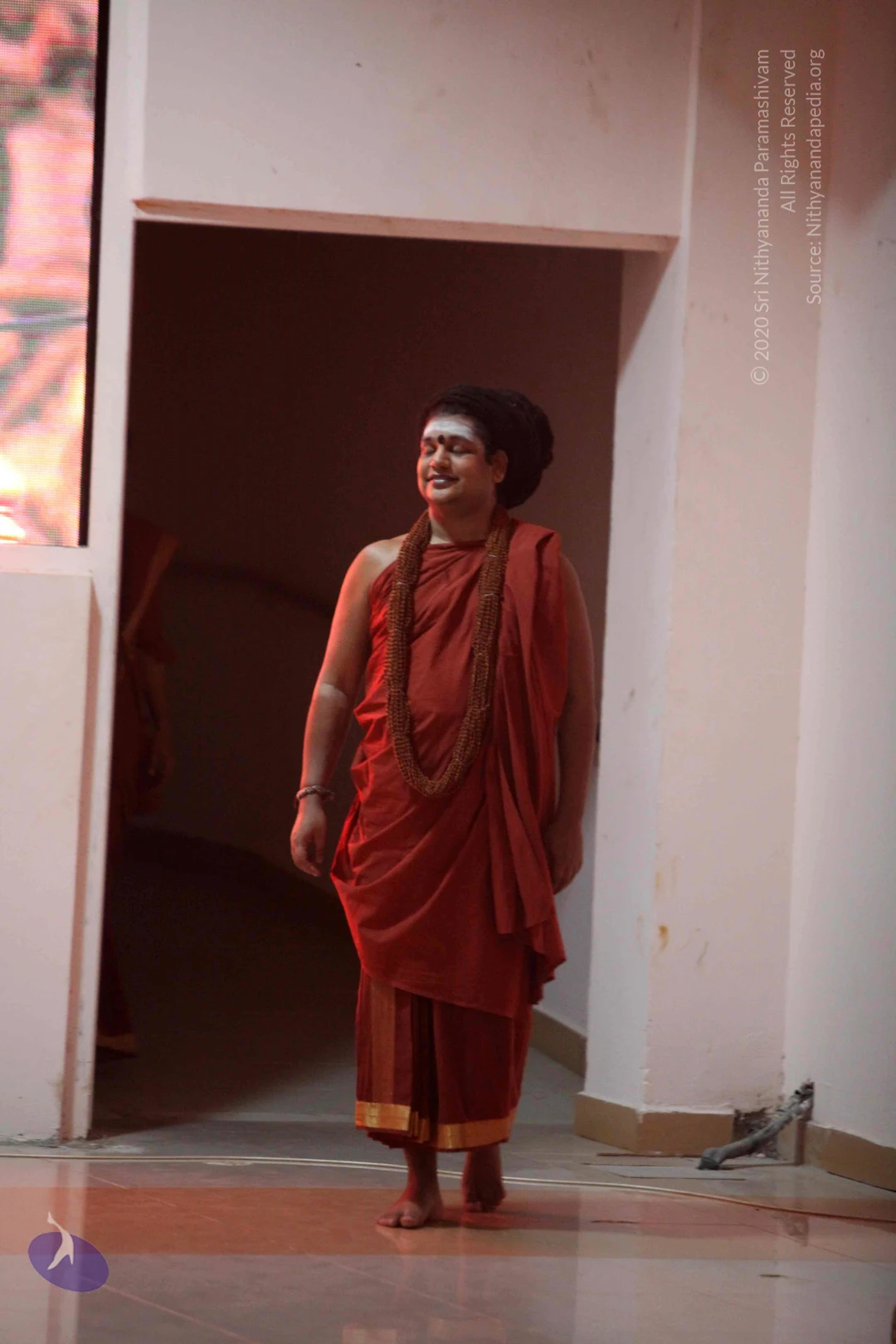
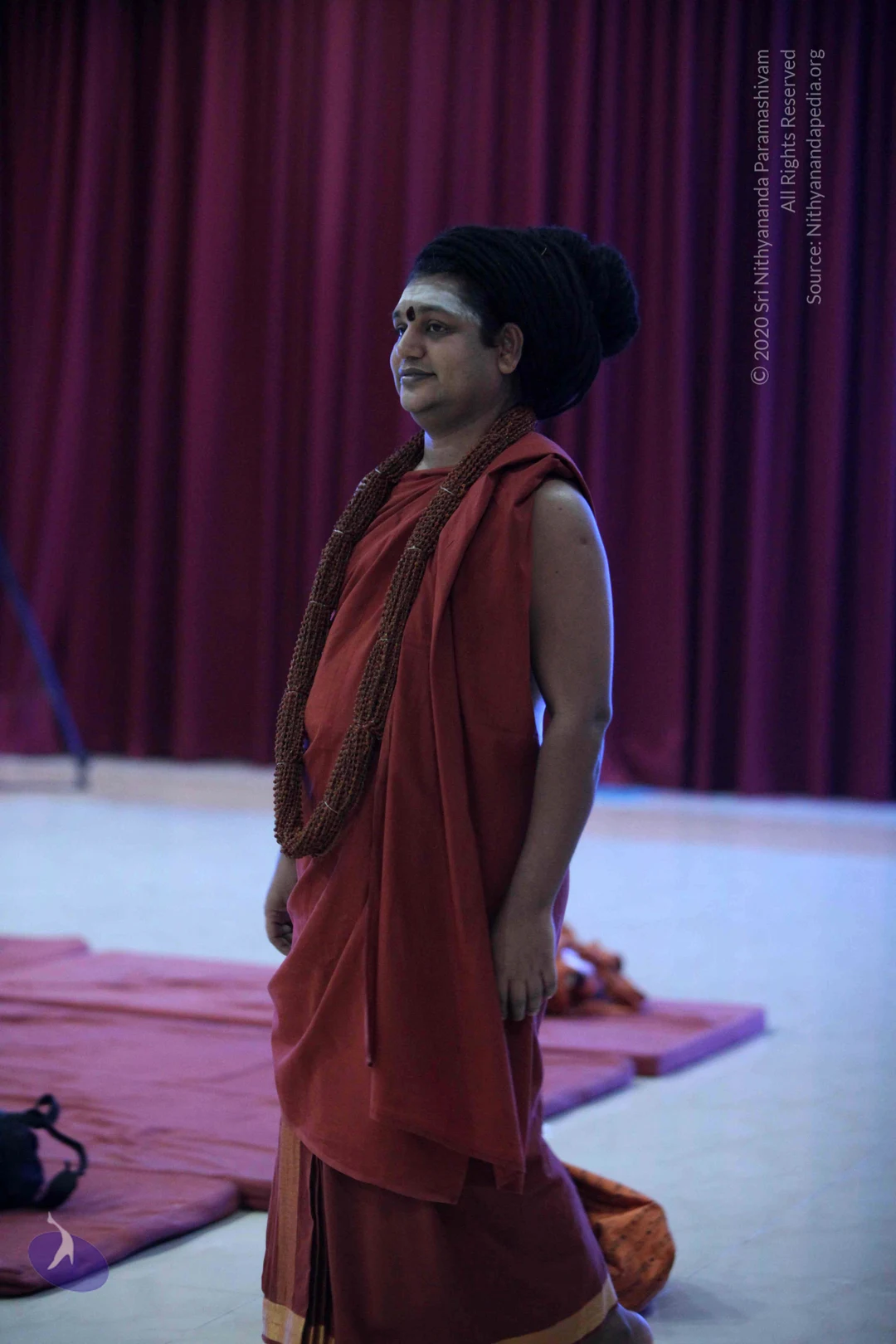
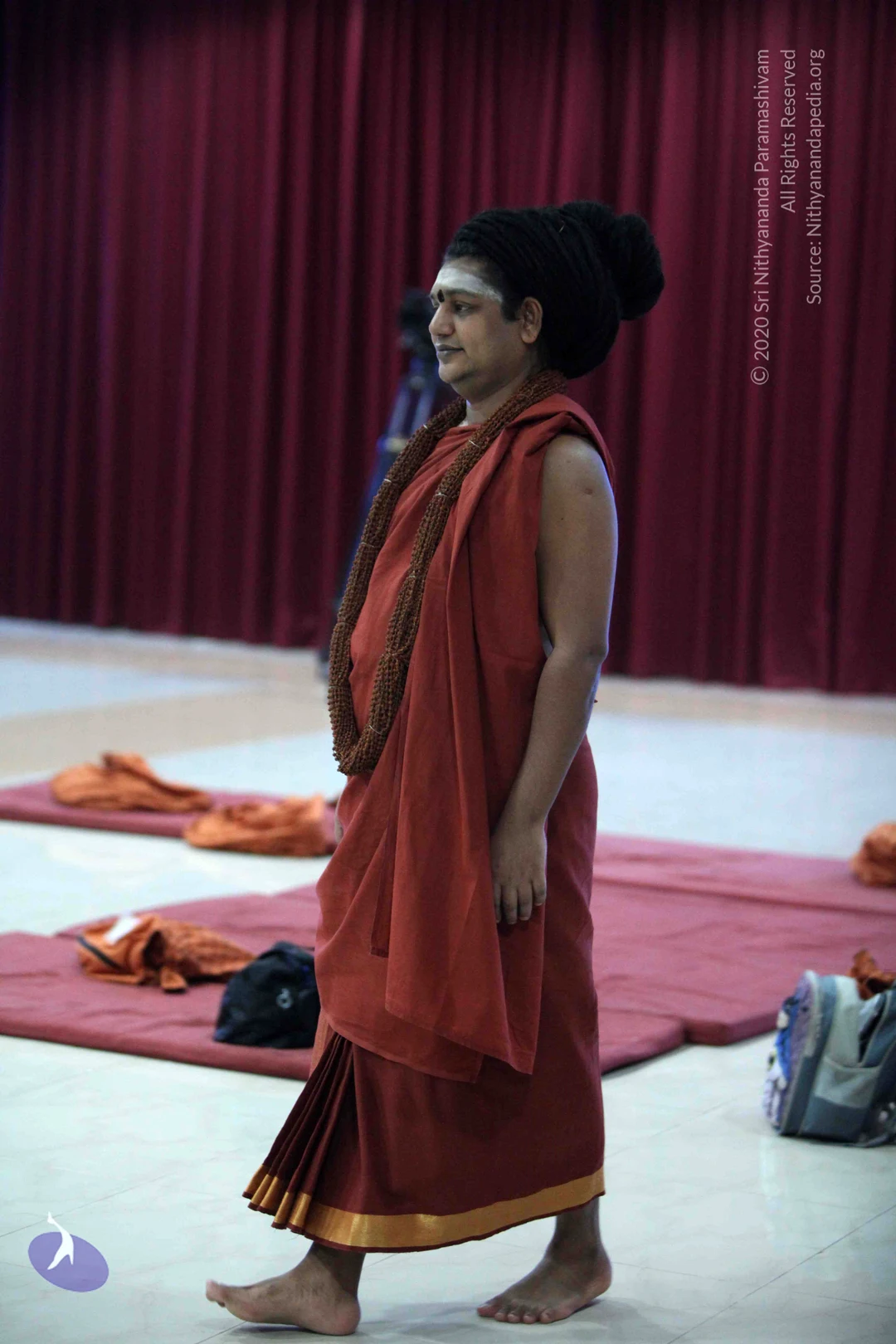
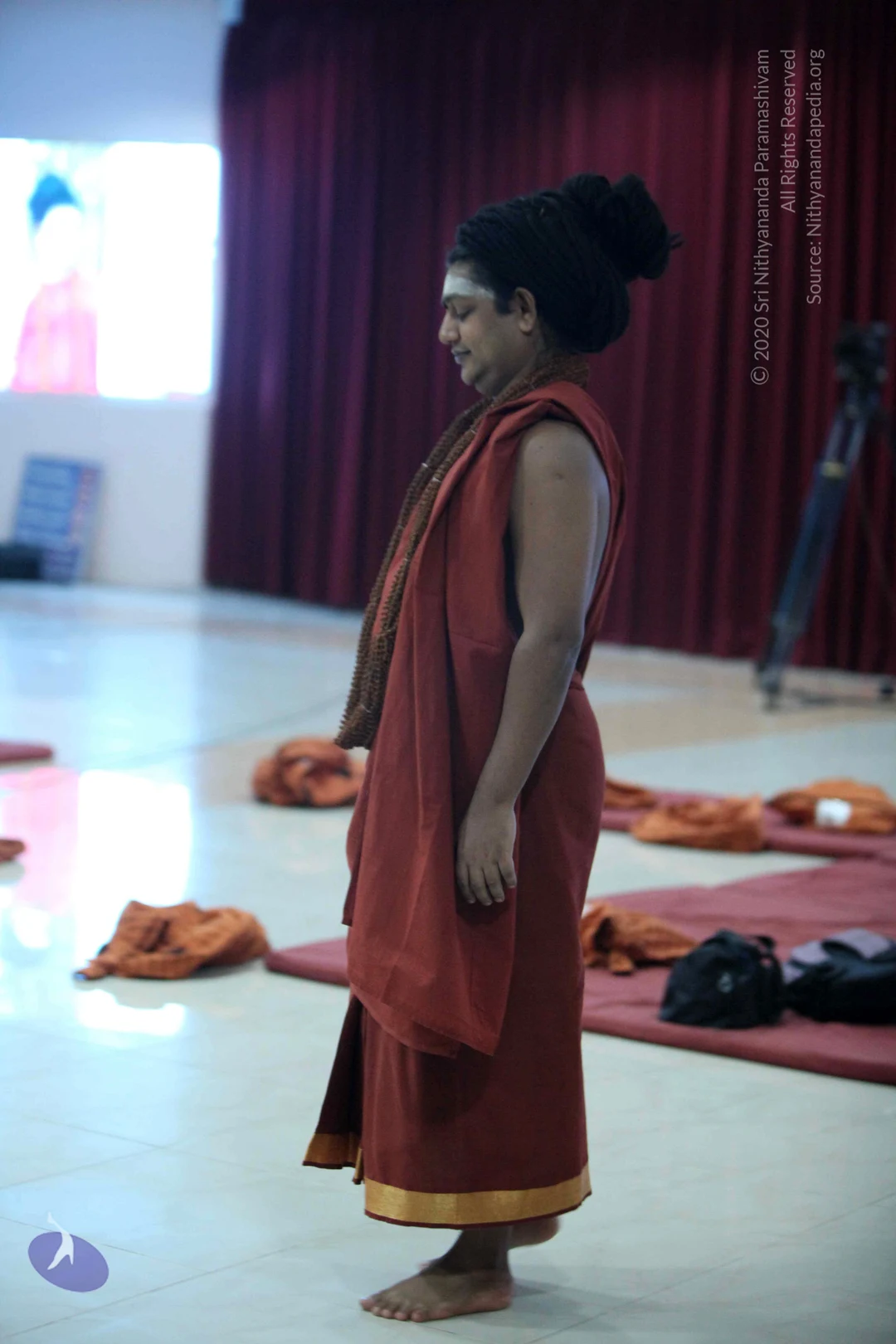
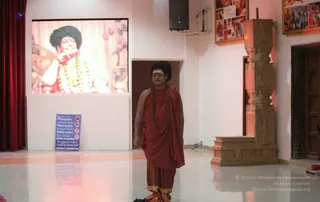
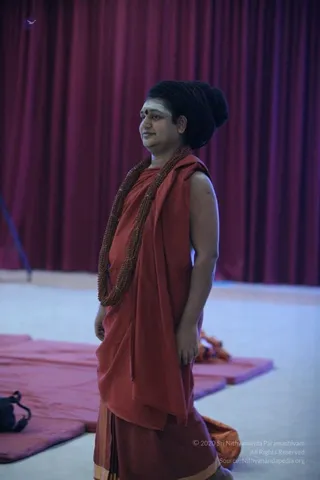
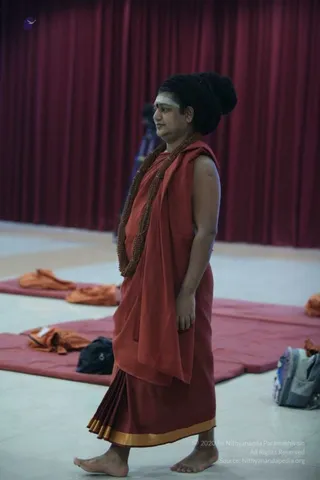
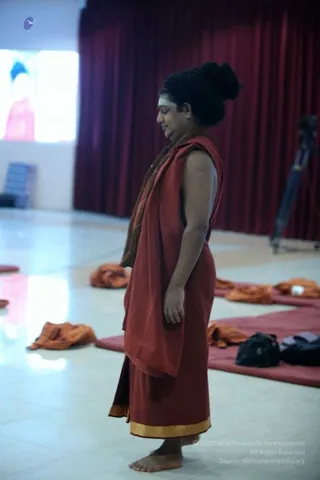
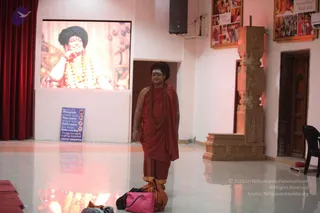
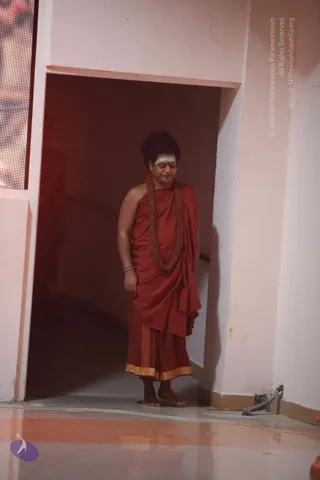
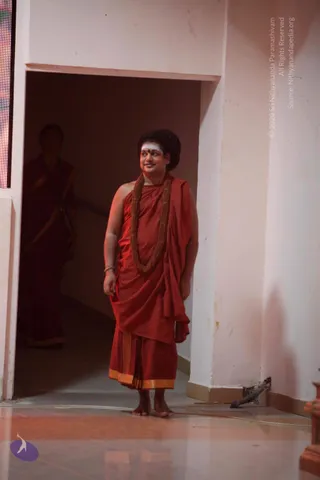
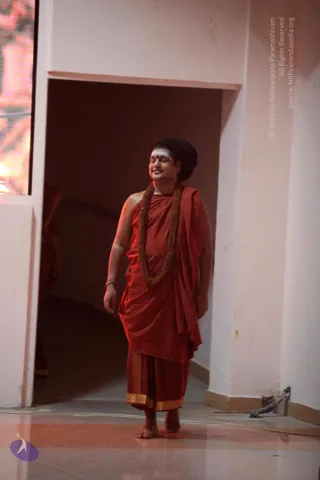
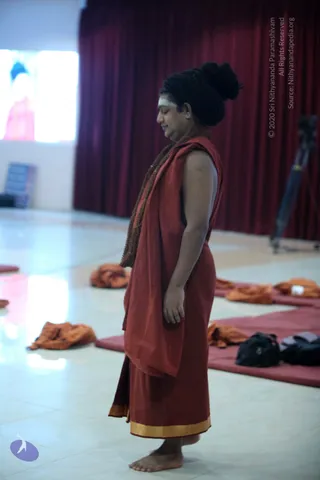
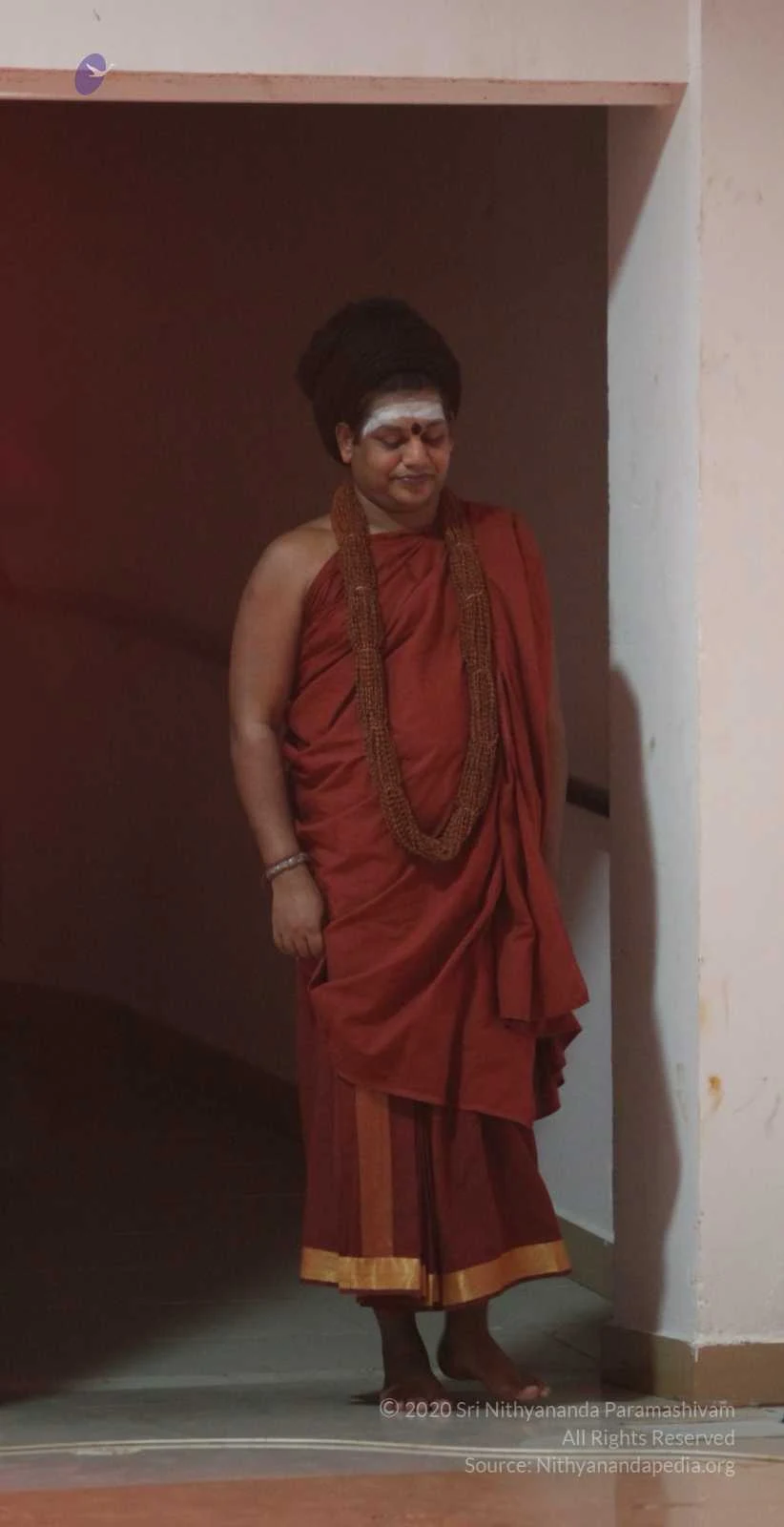
A photograph of a single standing man in a doorway with a dark interior behind him. He wears a rust-red draped robe with a gold-bordered dhoti, a long brown rudraksha-style bead necklace, a silver bangle on his left wrist, and a white vibhuti marking with a red kumkum dot on his forehead. His hair is piled high on his head, his eyes are closed and he looks slightly downward. He is barefoot on a tiled floor. The lower right corner carries a pedia, which is excluded from the text listA single man stands barefoot on a pale tiled floor beside a white pillar, in an interior doorway with a dark wall behind him. He wears a rust-red draped robe over one shoulder, with a golden-bordered dhoti below, and a dense rudraksha mala hangs around his neck. His hair is tied up, he has a white vibhuti marking on his forehead with a red bindi, and a beaded bracelet is on his wrist. He smiles with eyes lowered.A monk in a red-orange saffron robe stands barefoot on a polished white tiled floor in a hall with cream walls and a red curtain at left. He wears a rudraksha mala necklace, a vertical tilak on his forehead, and has a dark bun of hair. A large screen behind him shows a man with a dark bun, ornate bead necklaces and a hand raised near his face. A blue sign beside the screen shows photography, video camera, mobile camera and audio recording prohibited. A carved stone pillar and a wooden door stand at right, with framed photos on the wall above.Photograph of a person standing barefoot in profile on a polished floor in a hall with a deep red curtain behind. The person wears a rust-red sleeveless garment with a golden-yellow border and a draped red shawl, a brown rudraksha-style bead necklace, and a white forehead mark, with dark hair tied in a high bun. Eyes are lowered and the hands rest at the front. Orange cloths and dark red mats lie on the floor nearby, and a blurred projected image is visible at the left. A tripod stands at the right edge.

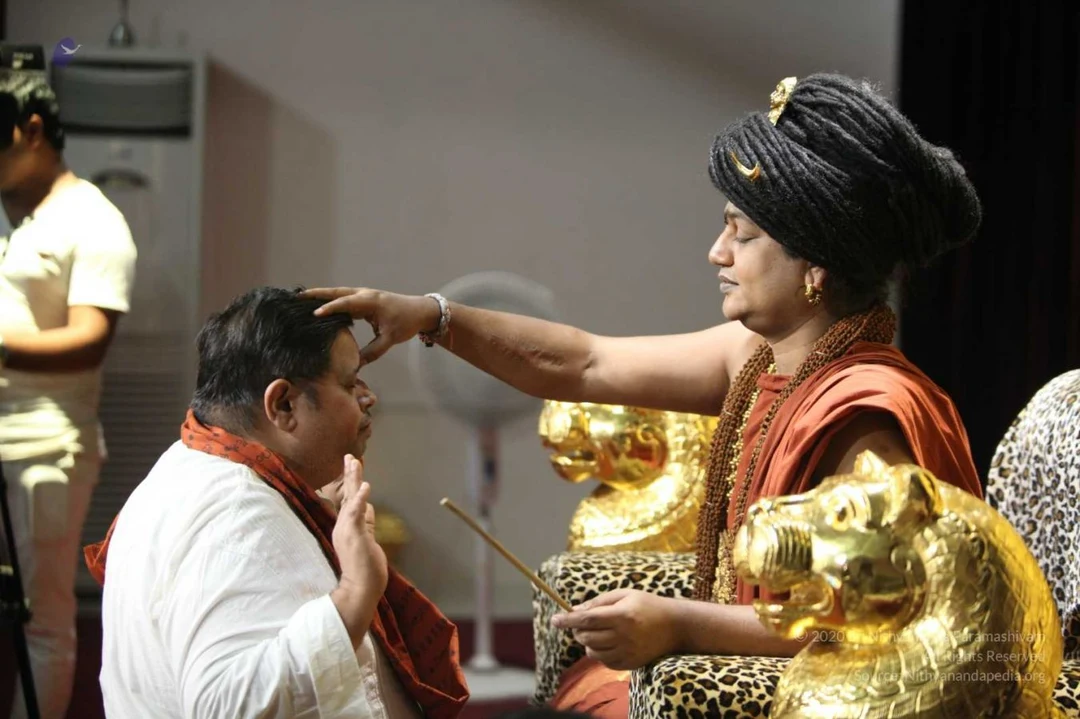
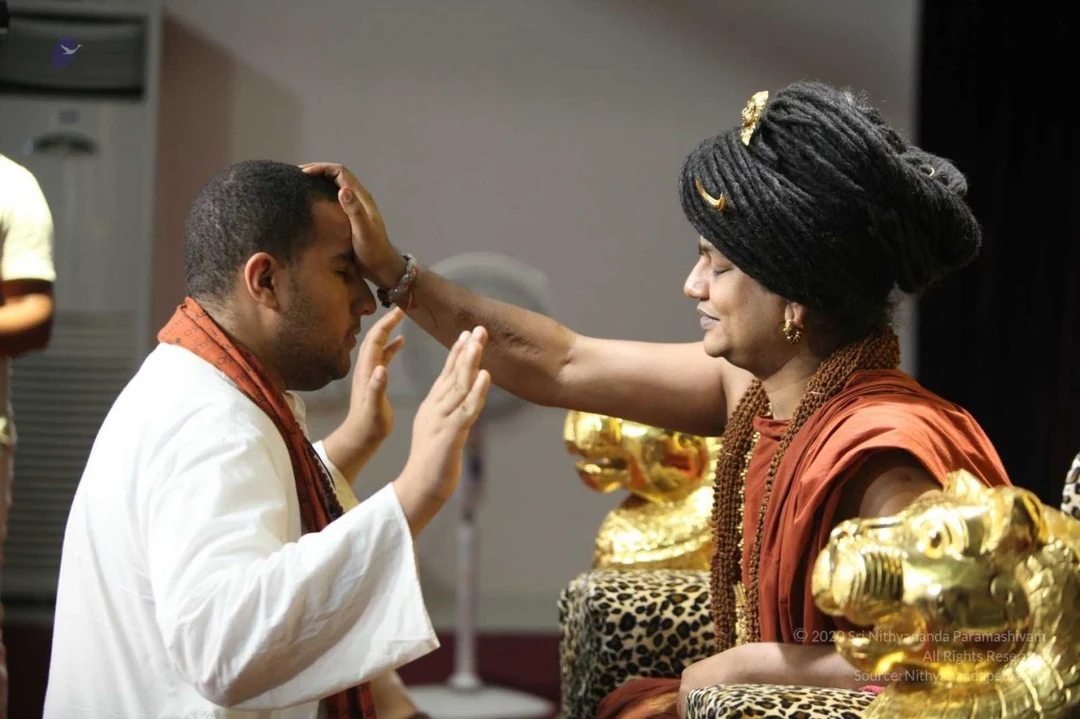
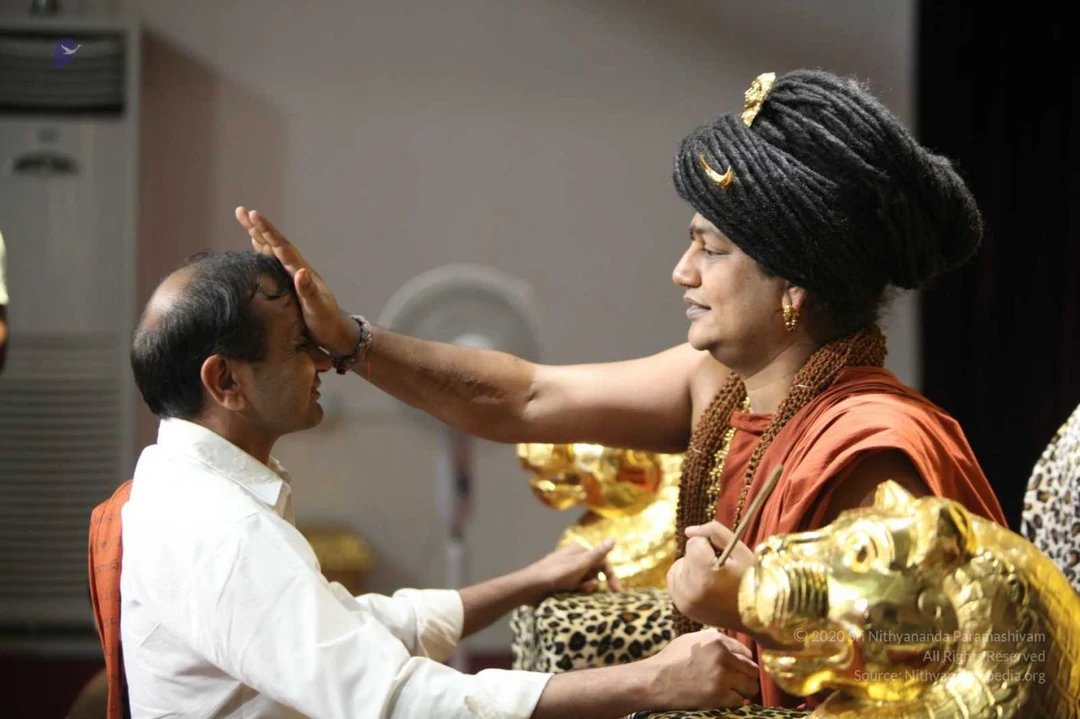
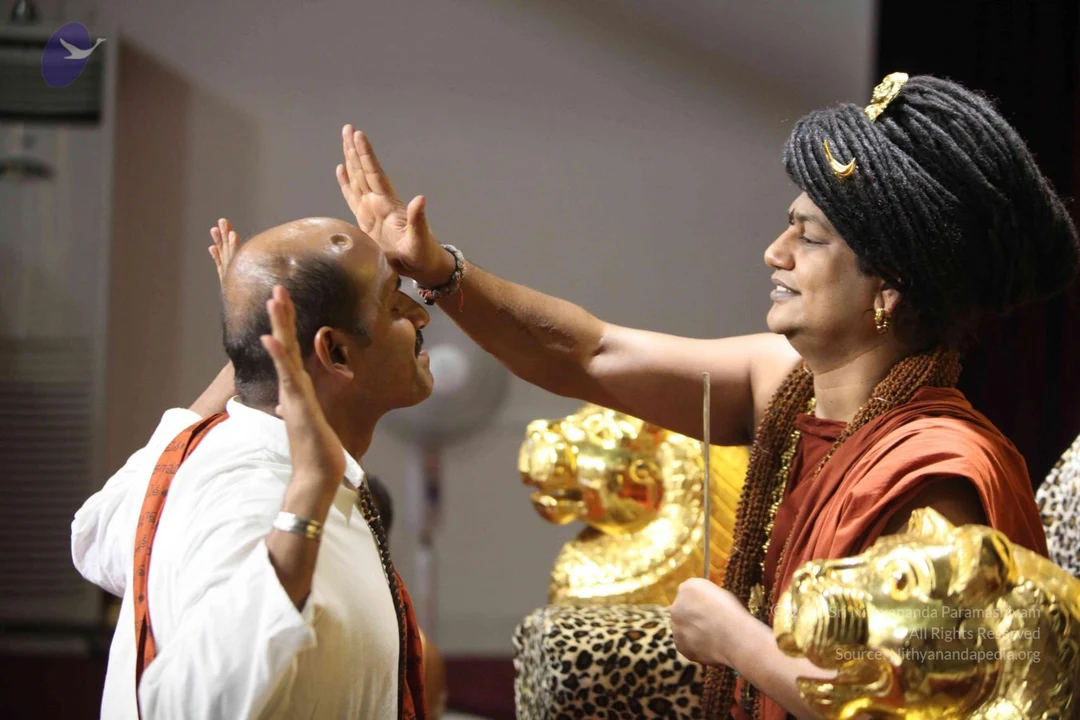
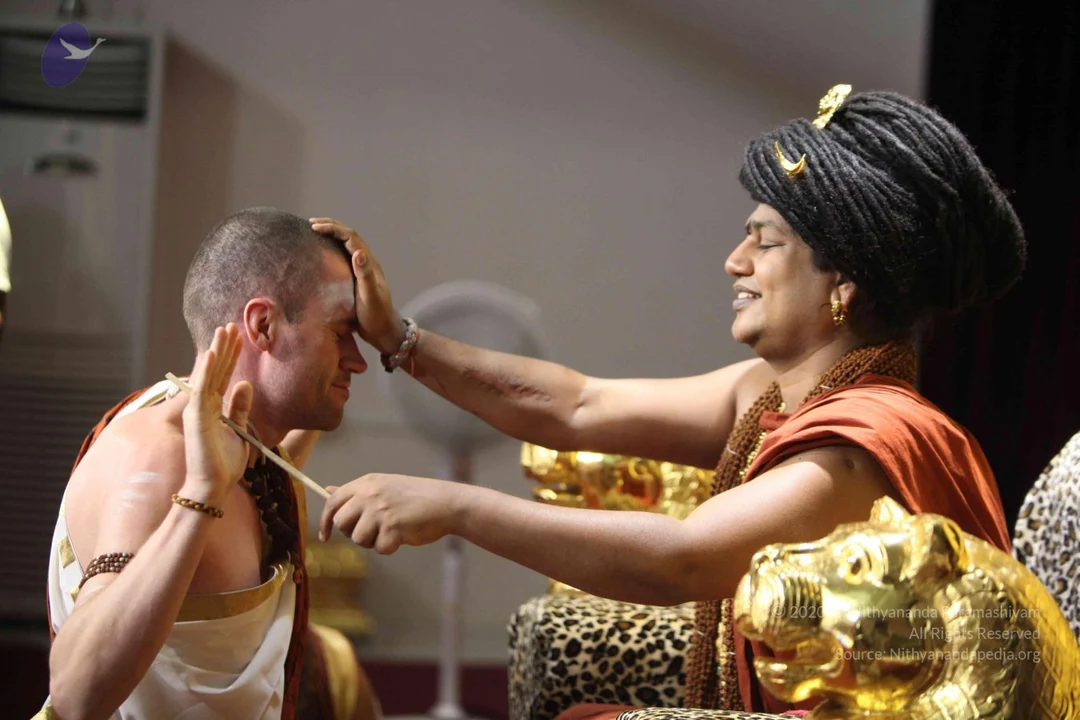
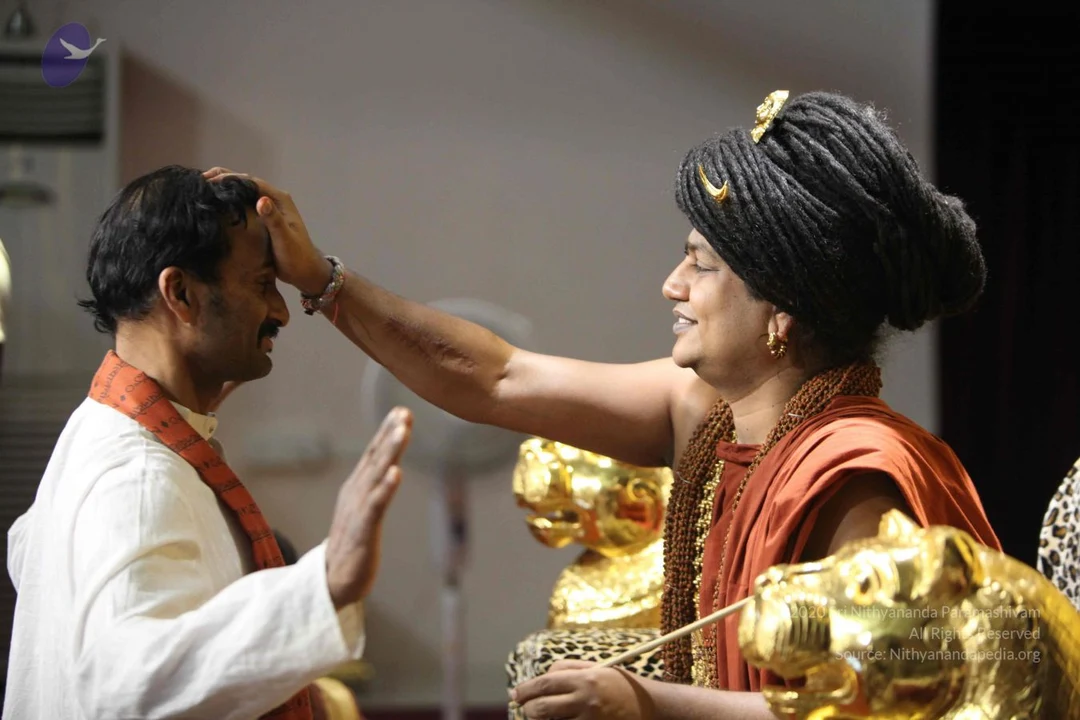
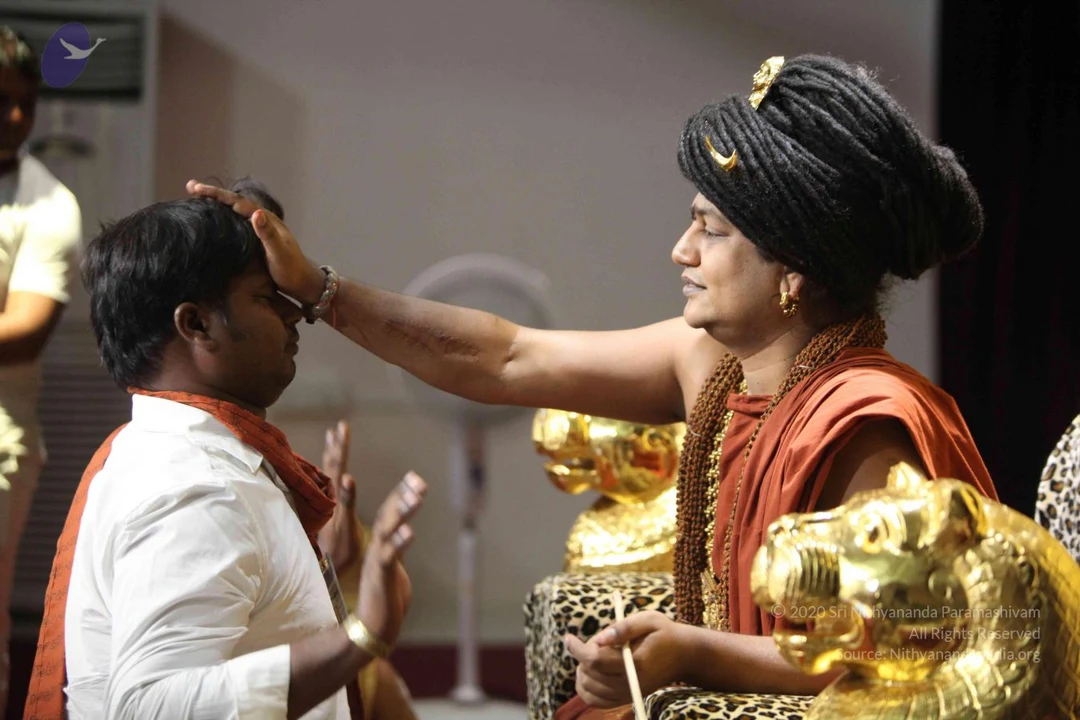
Healers Initiation

37 photosSource gallery
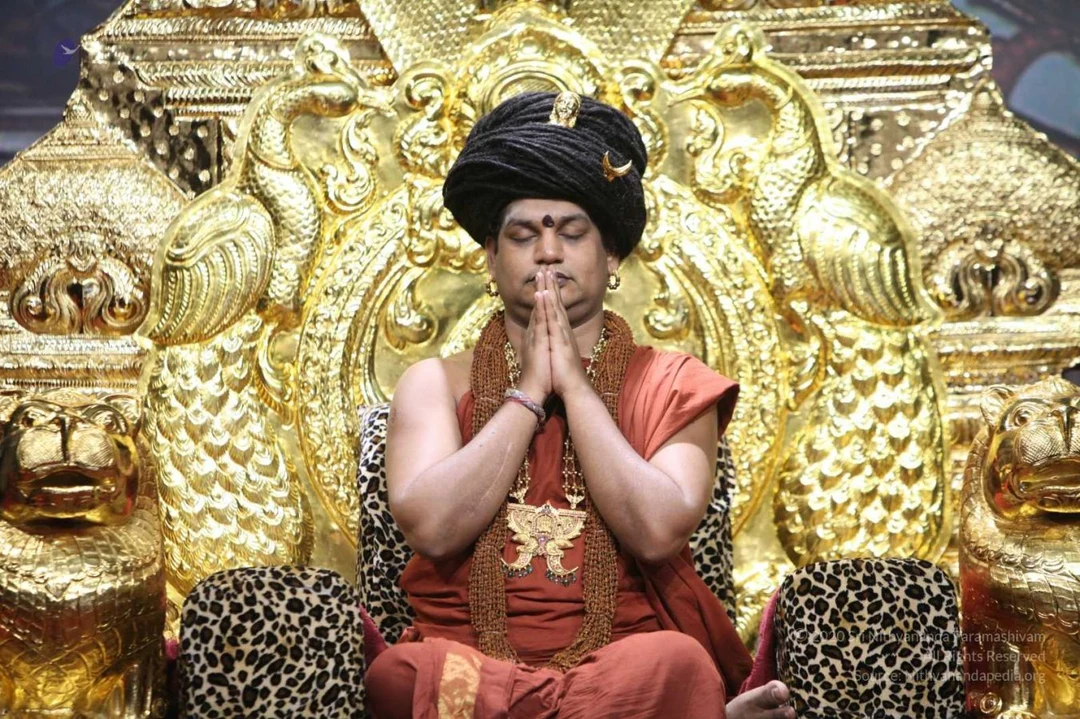
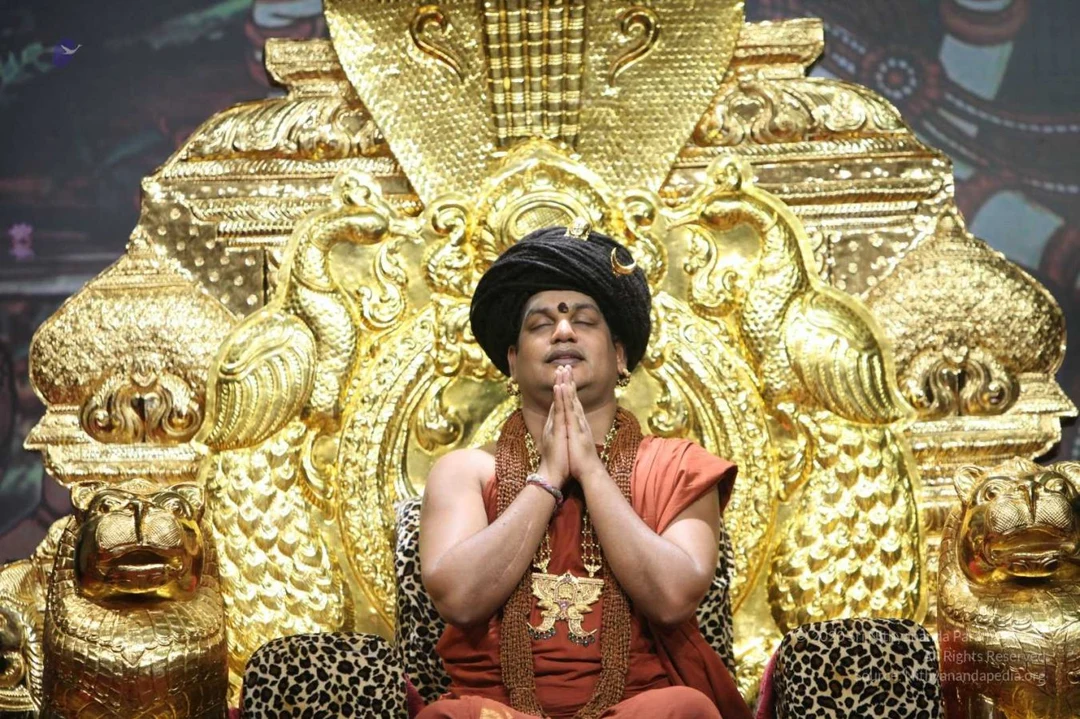
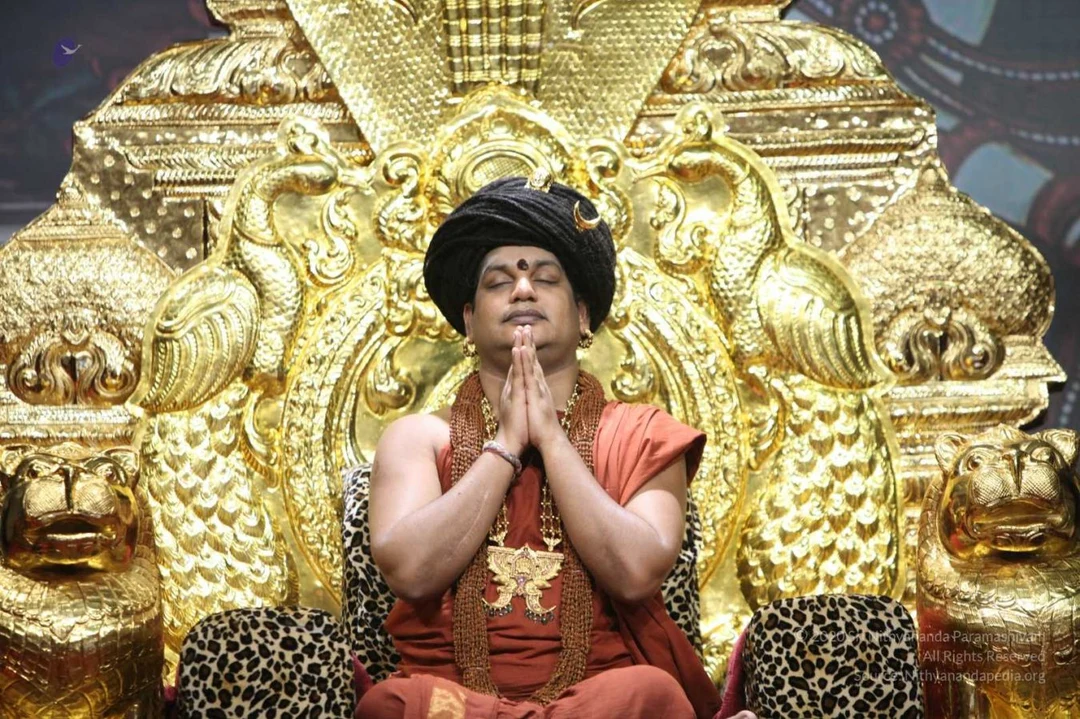
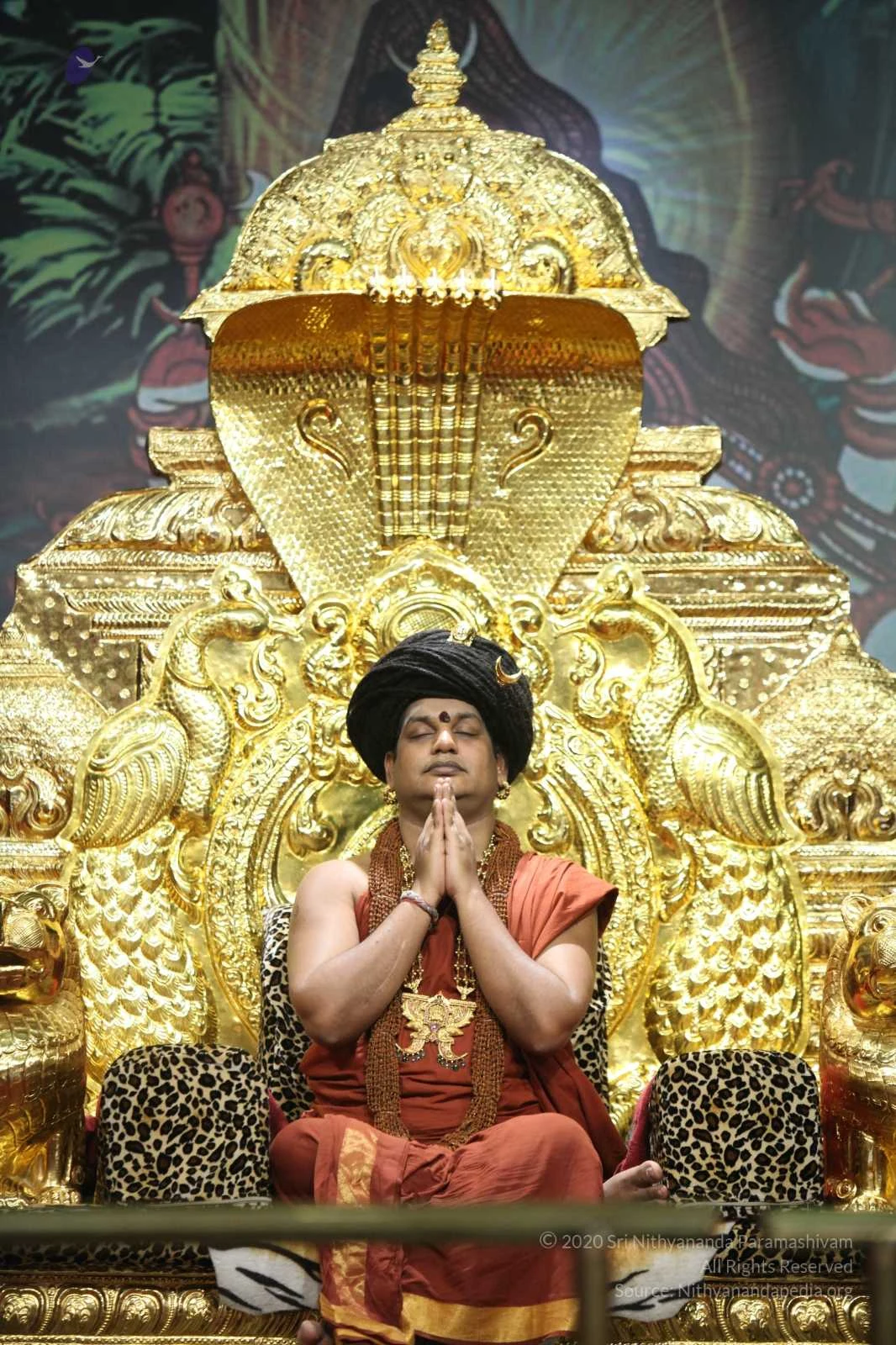
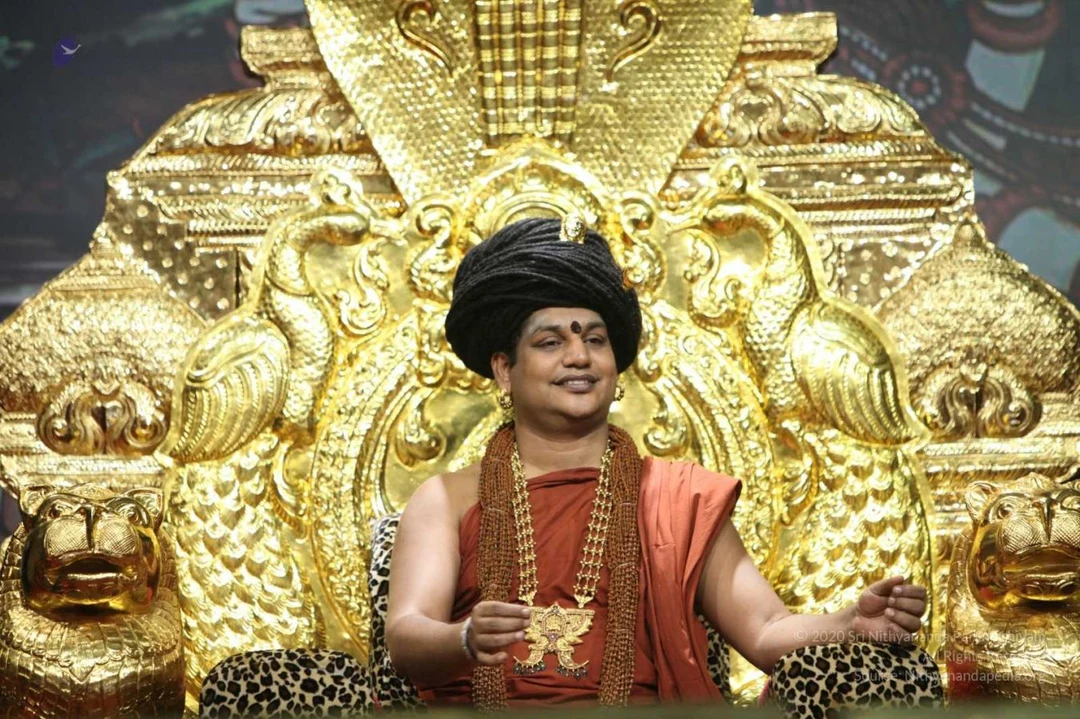
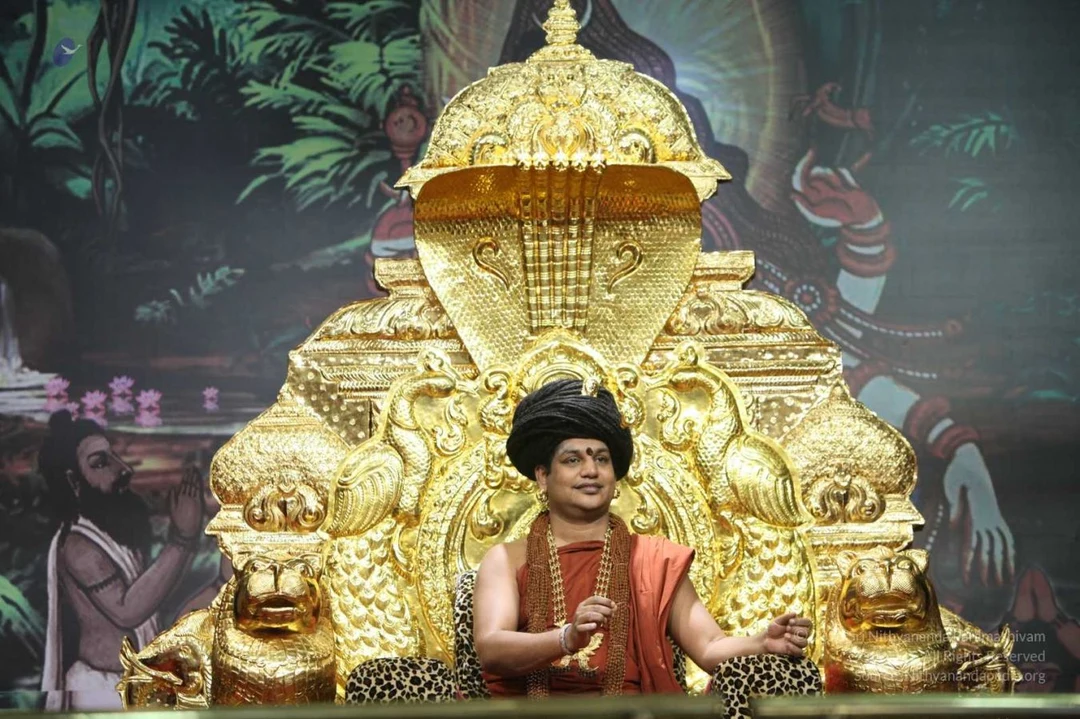
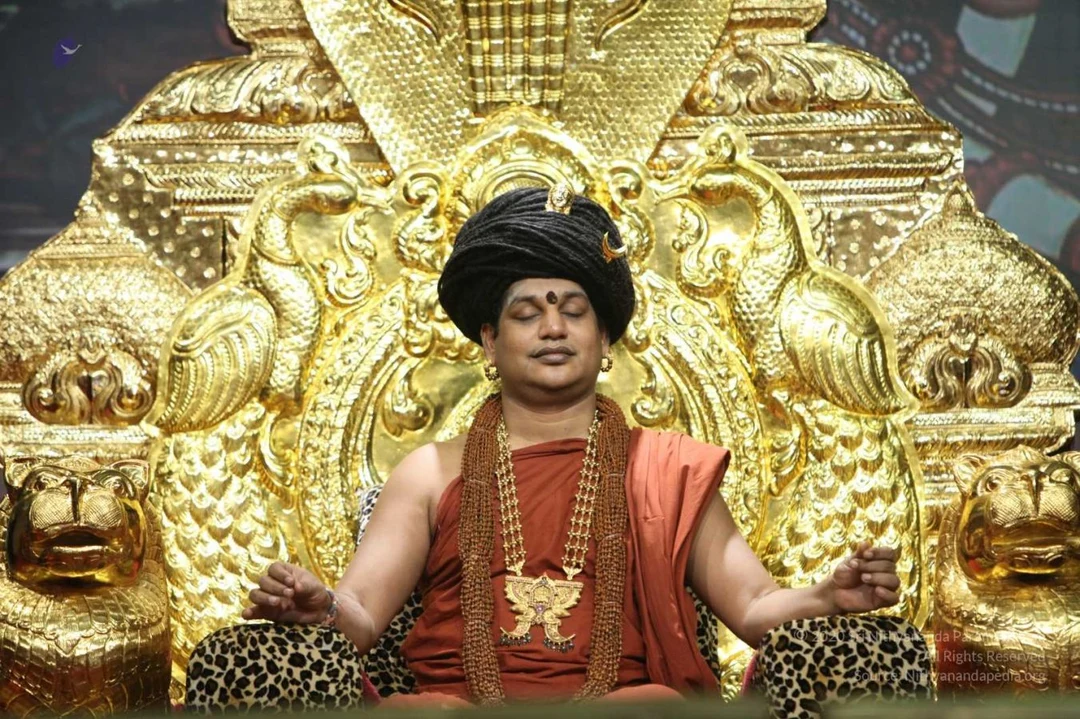
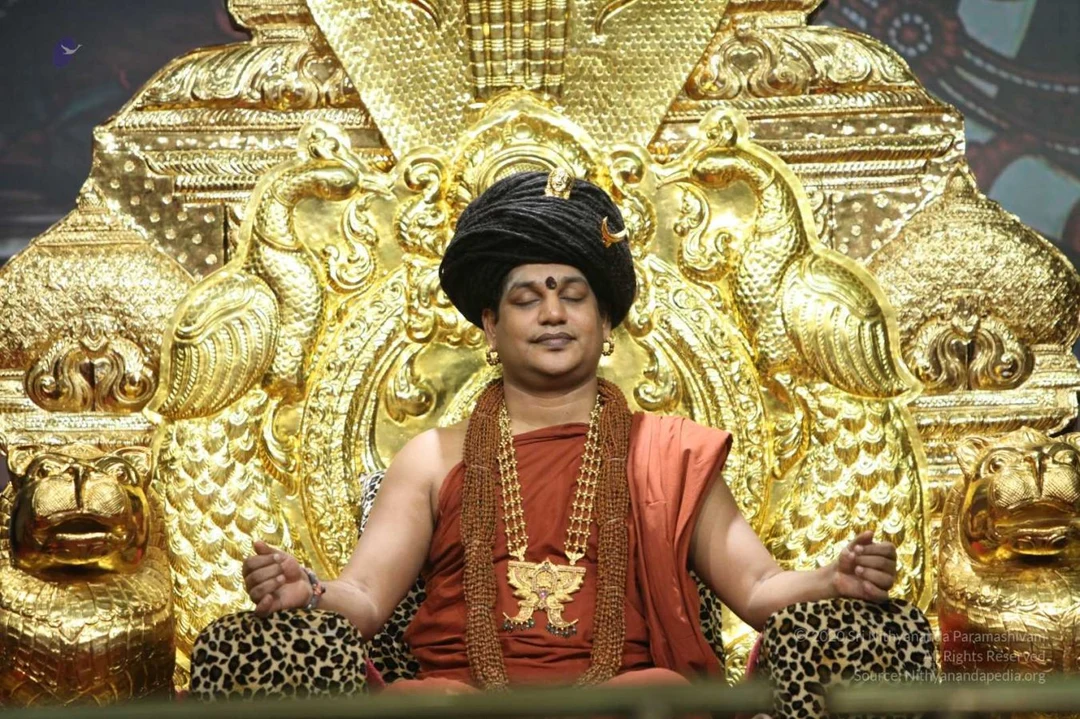
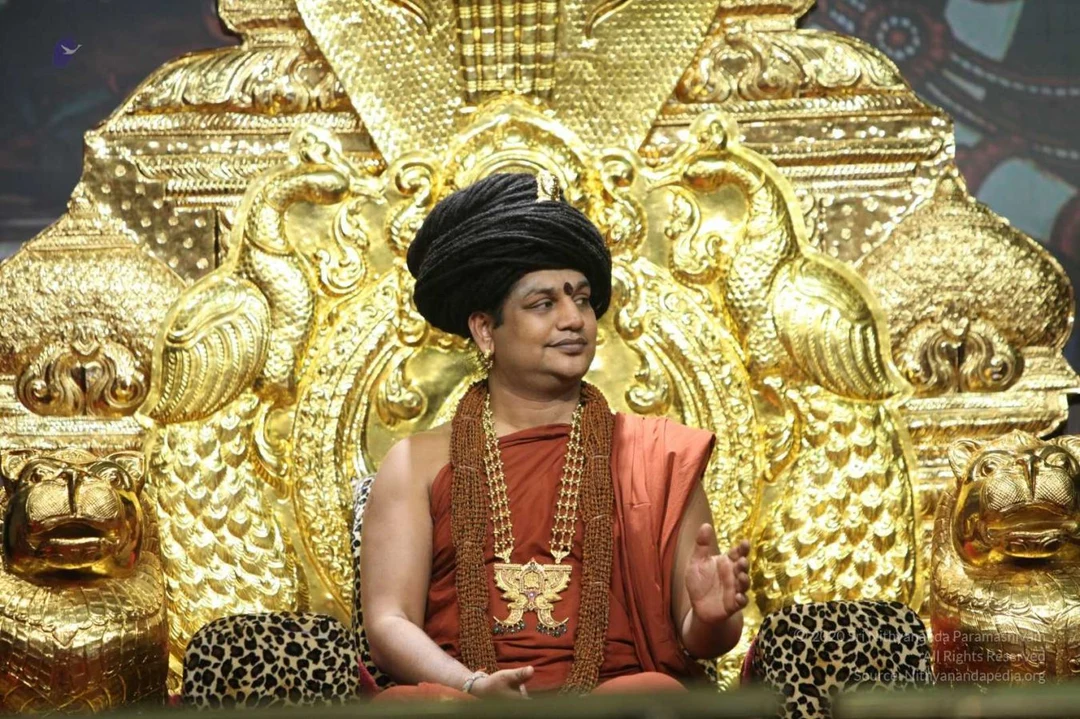
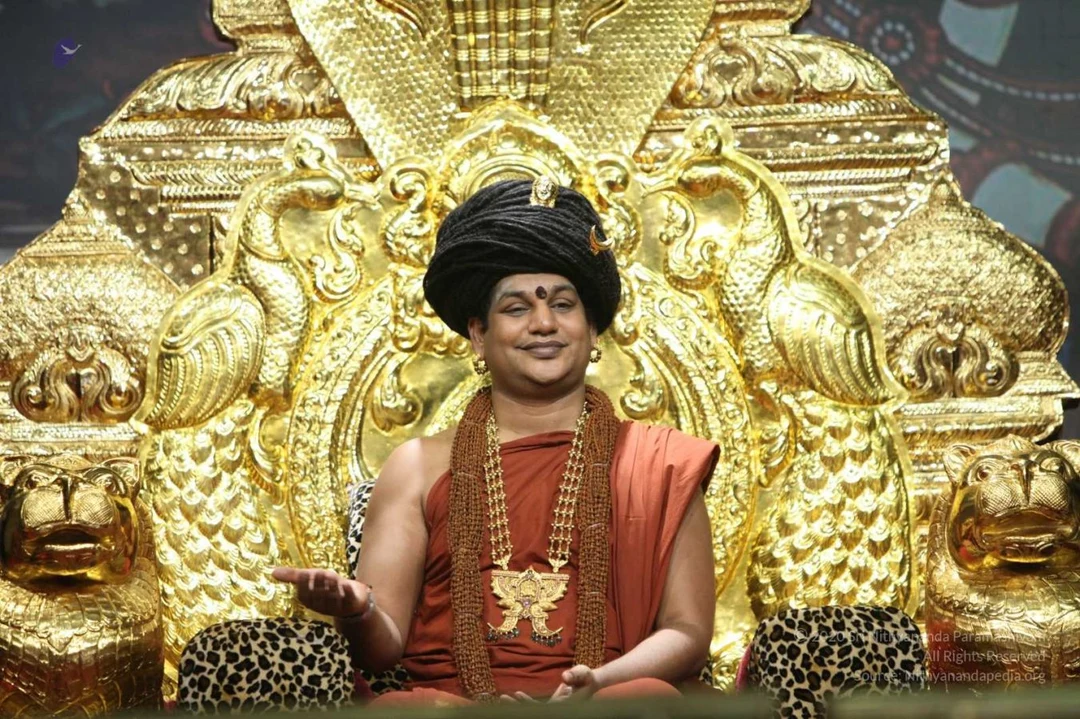
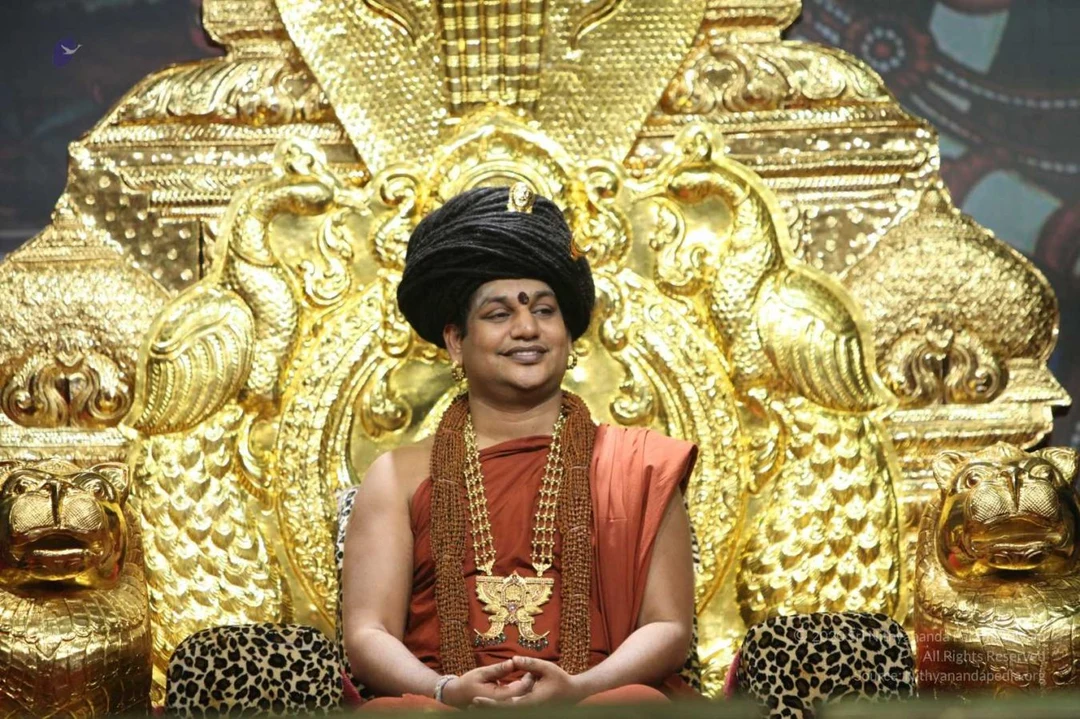
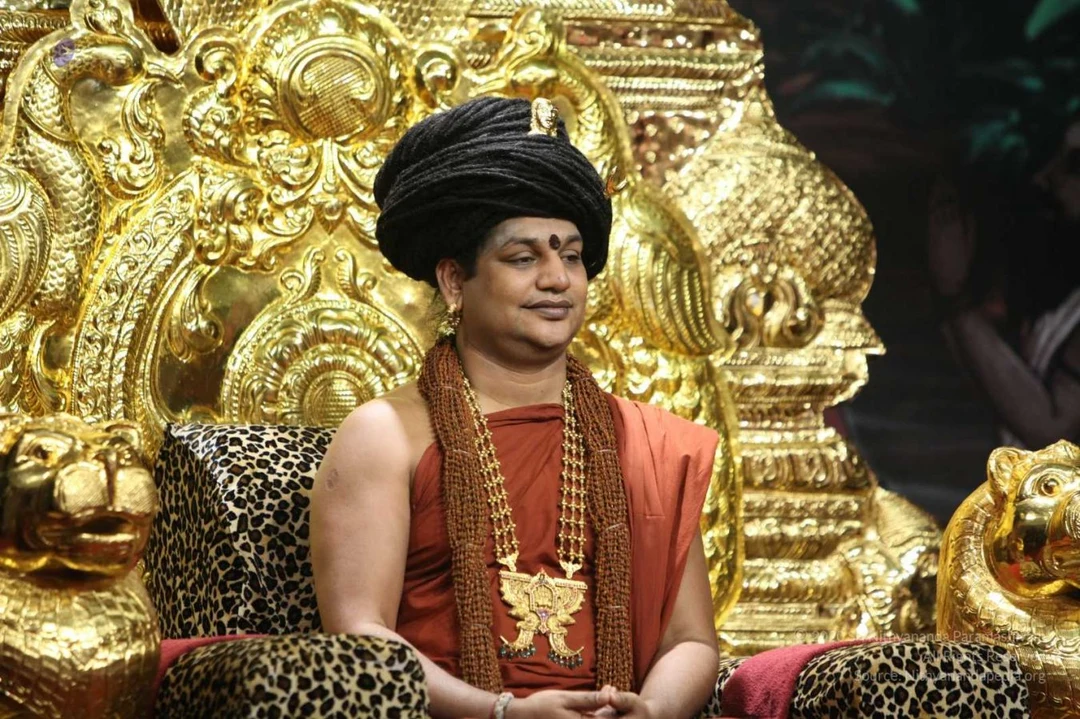
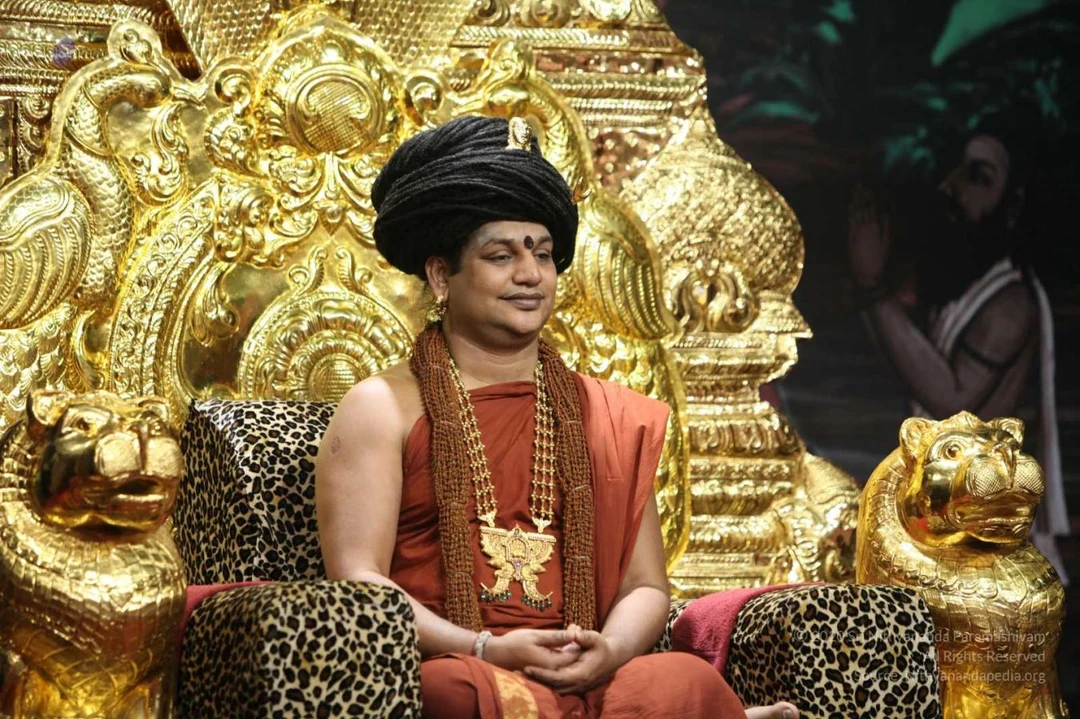
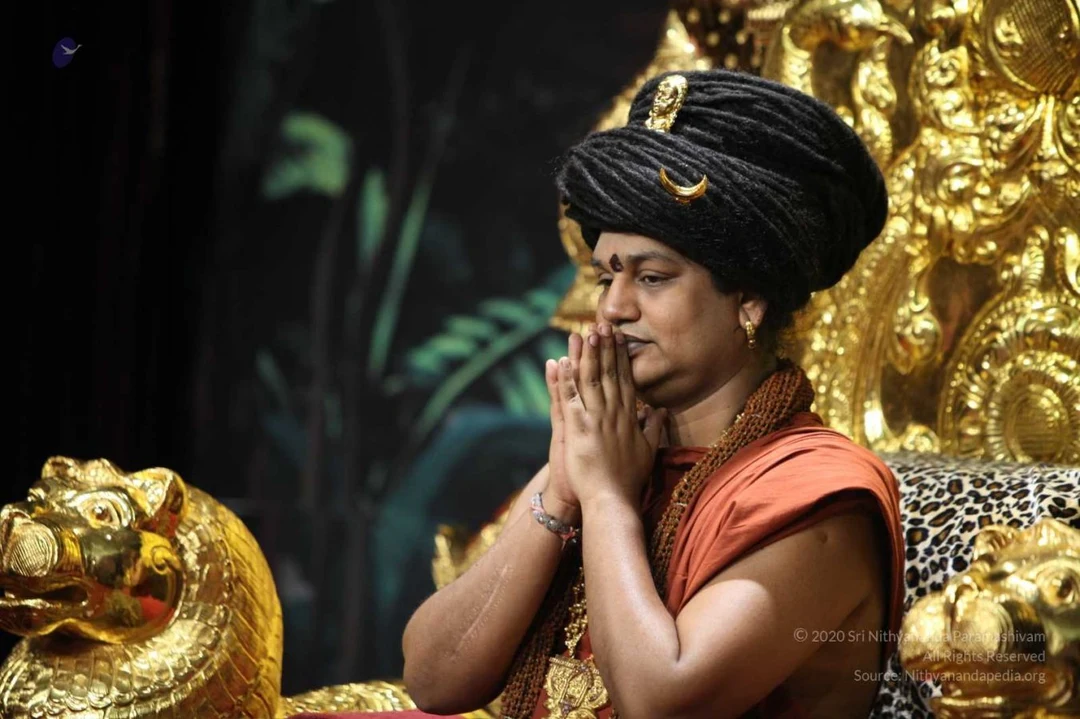
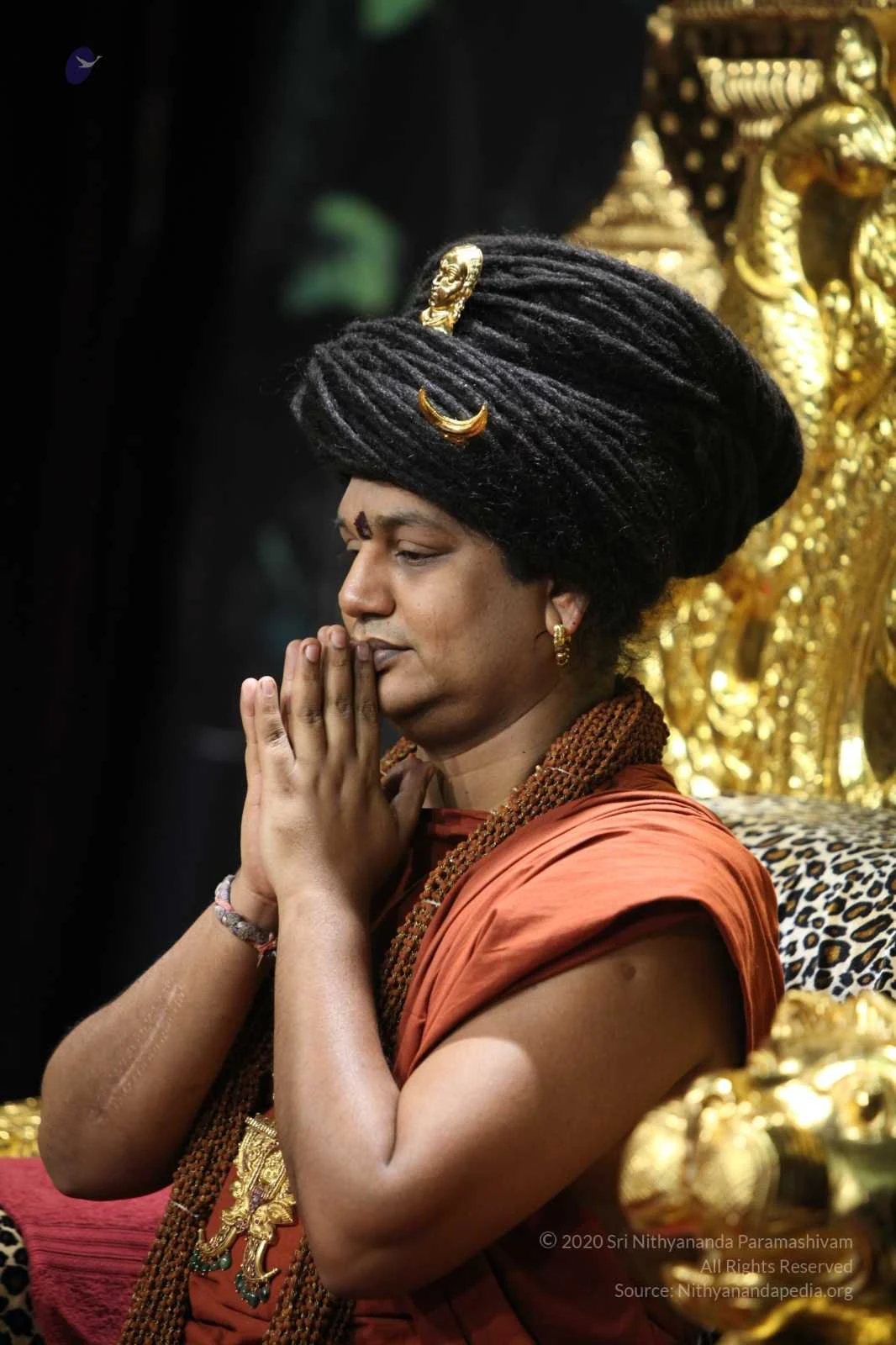
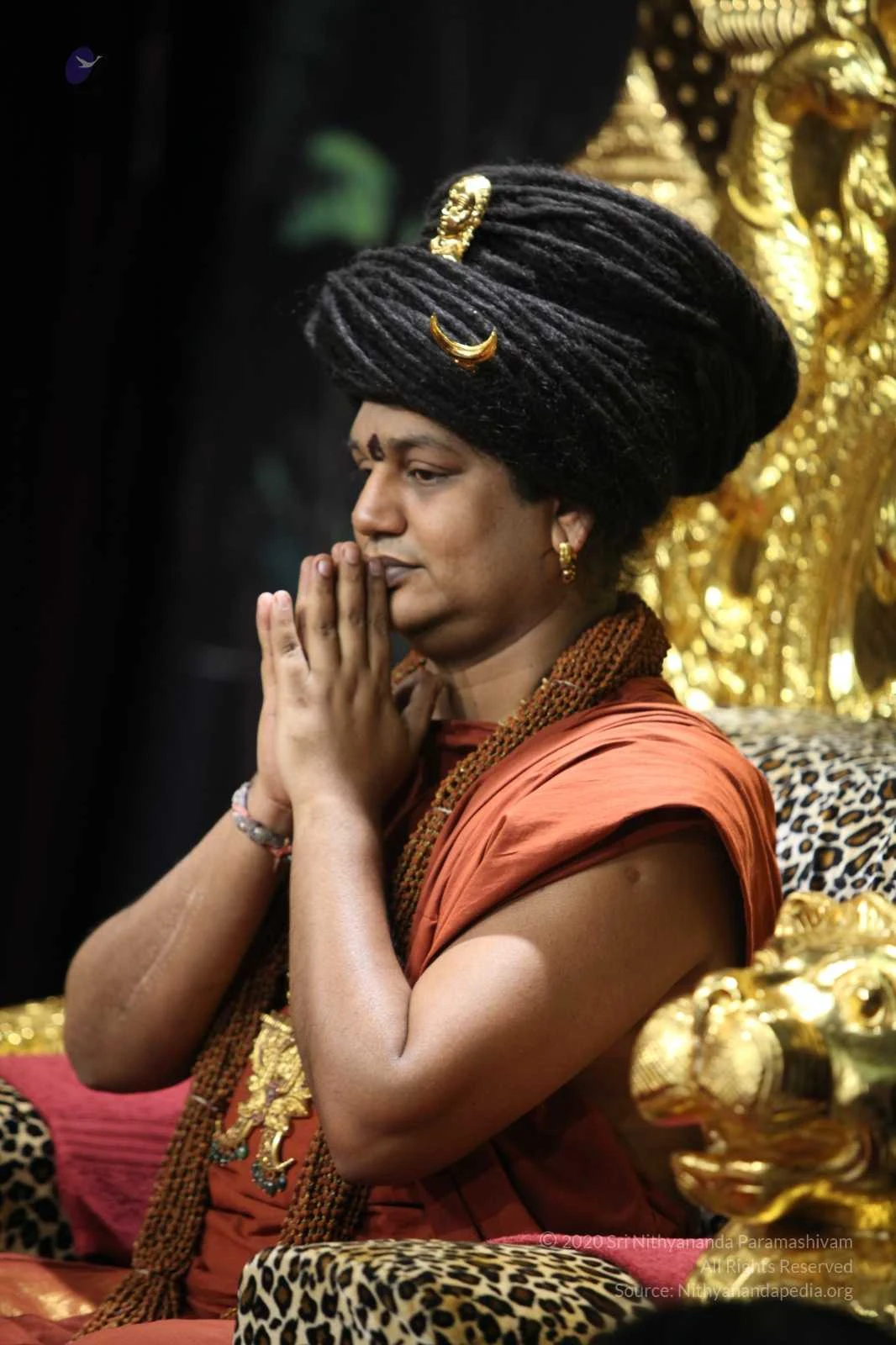
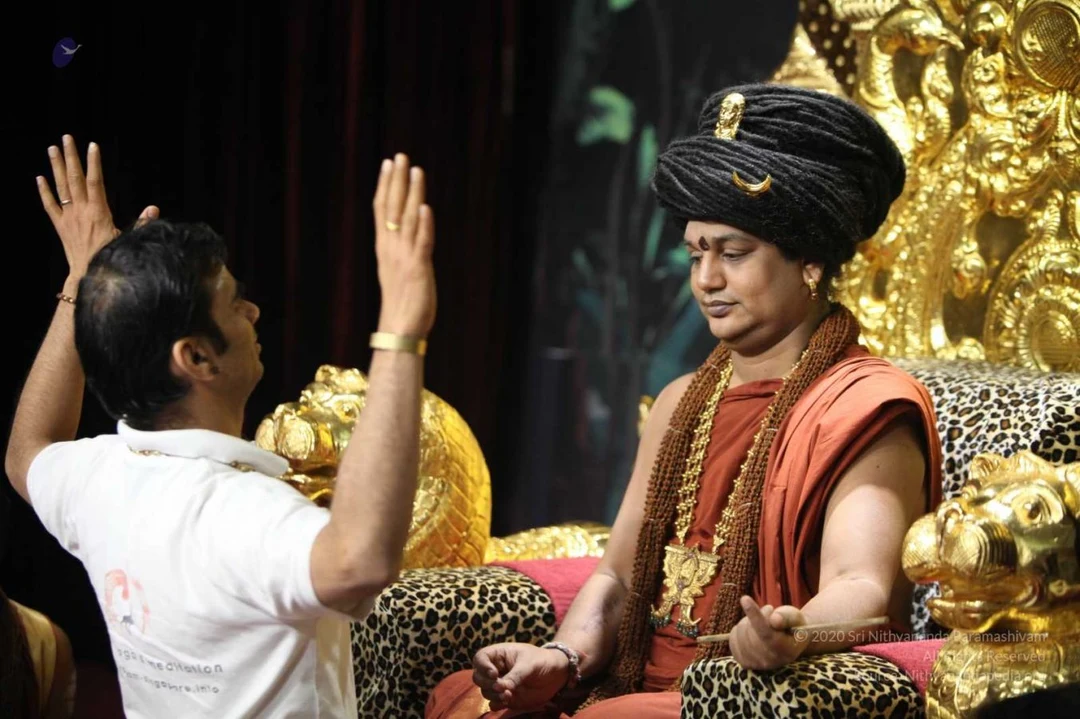
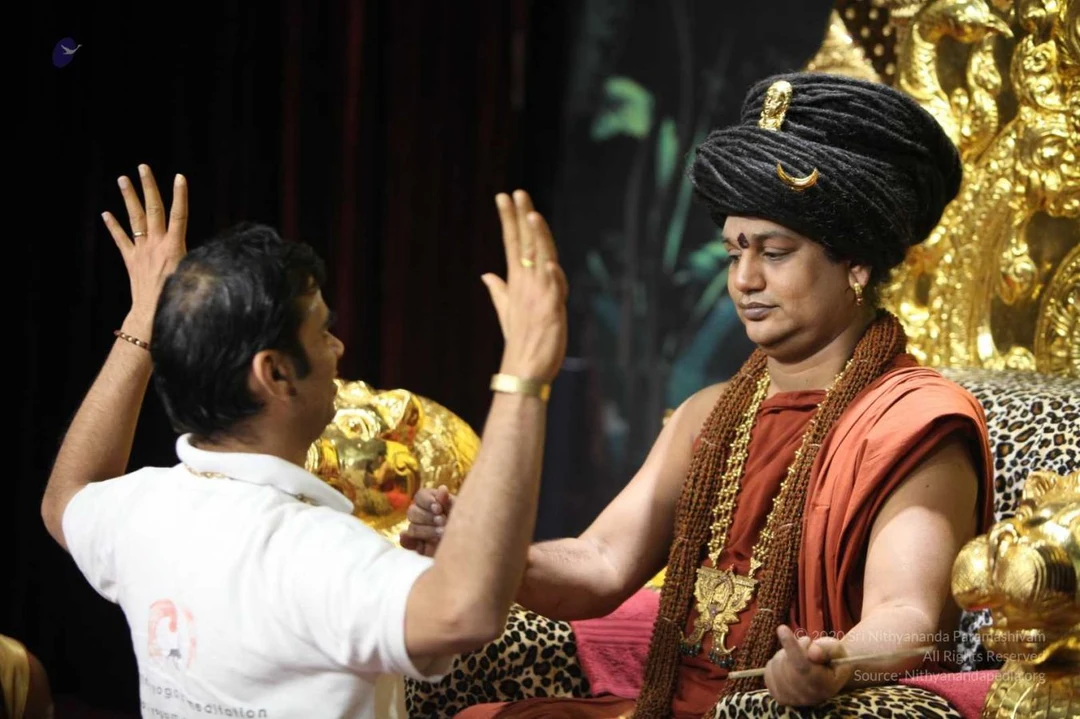
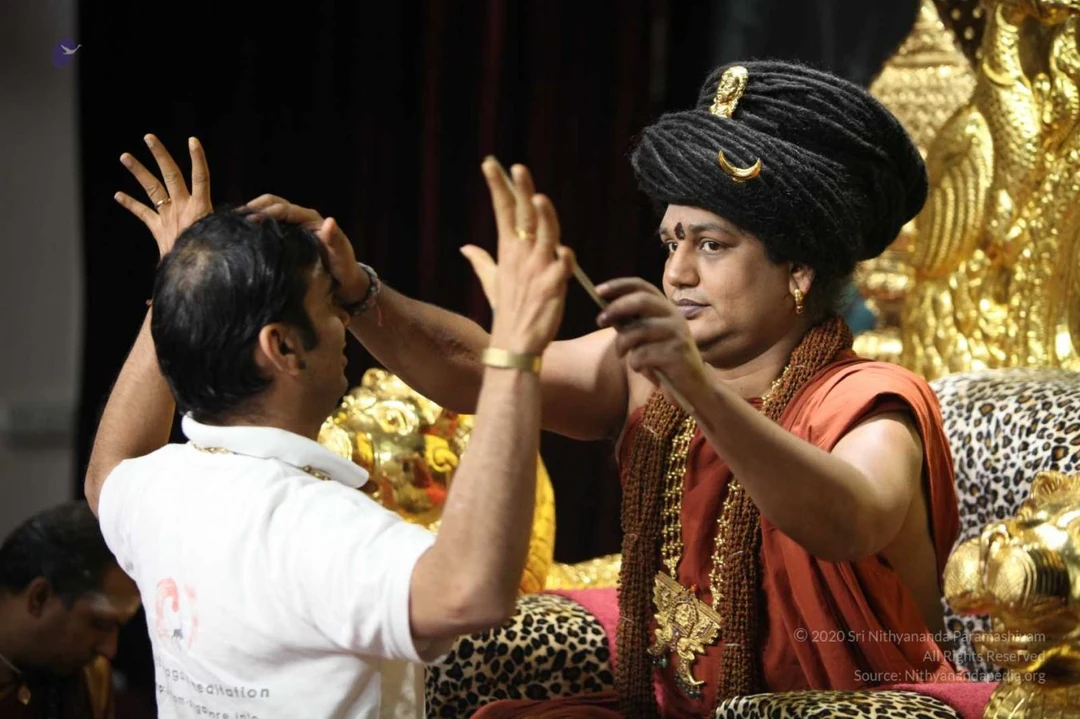
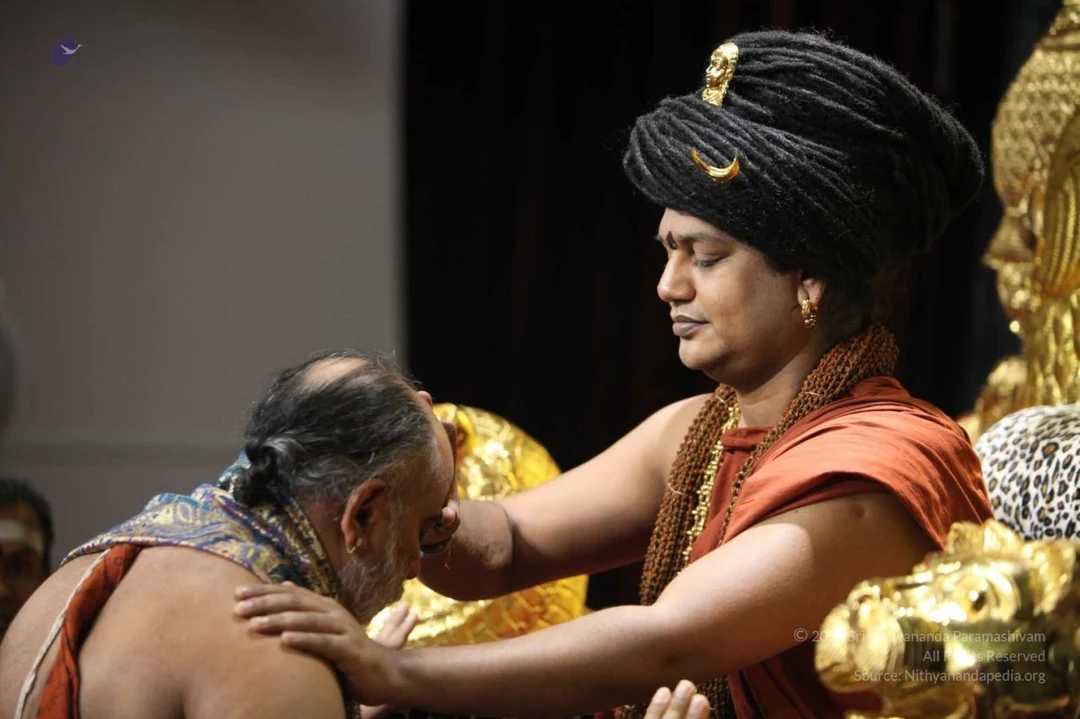
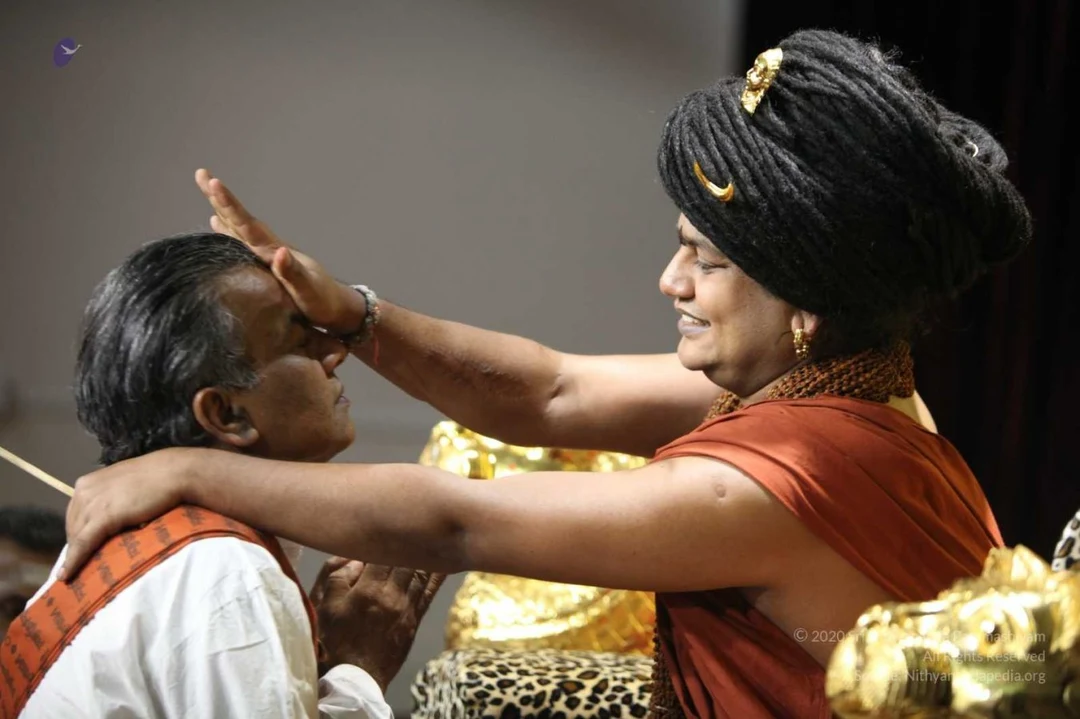
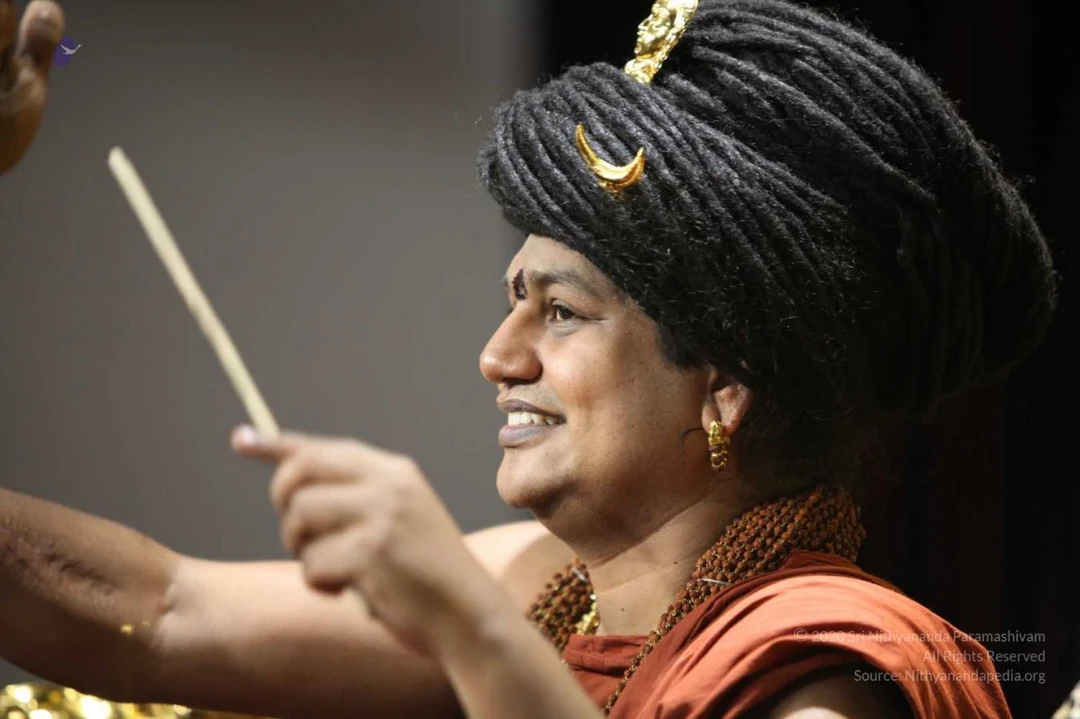
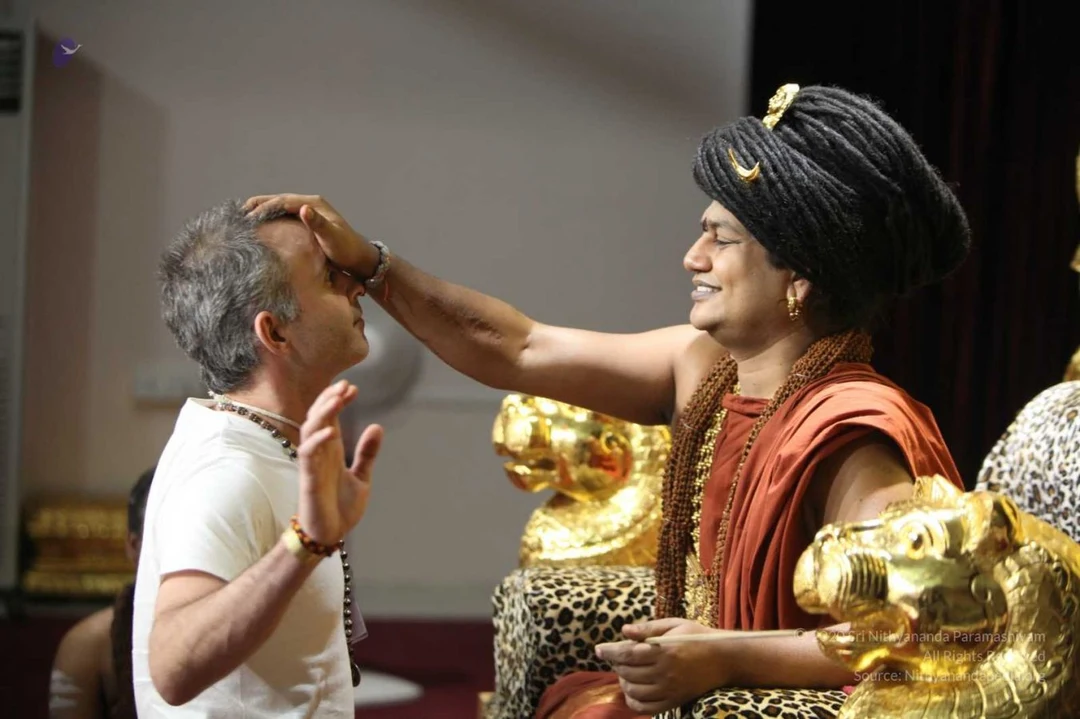
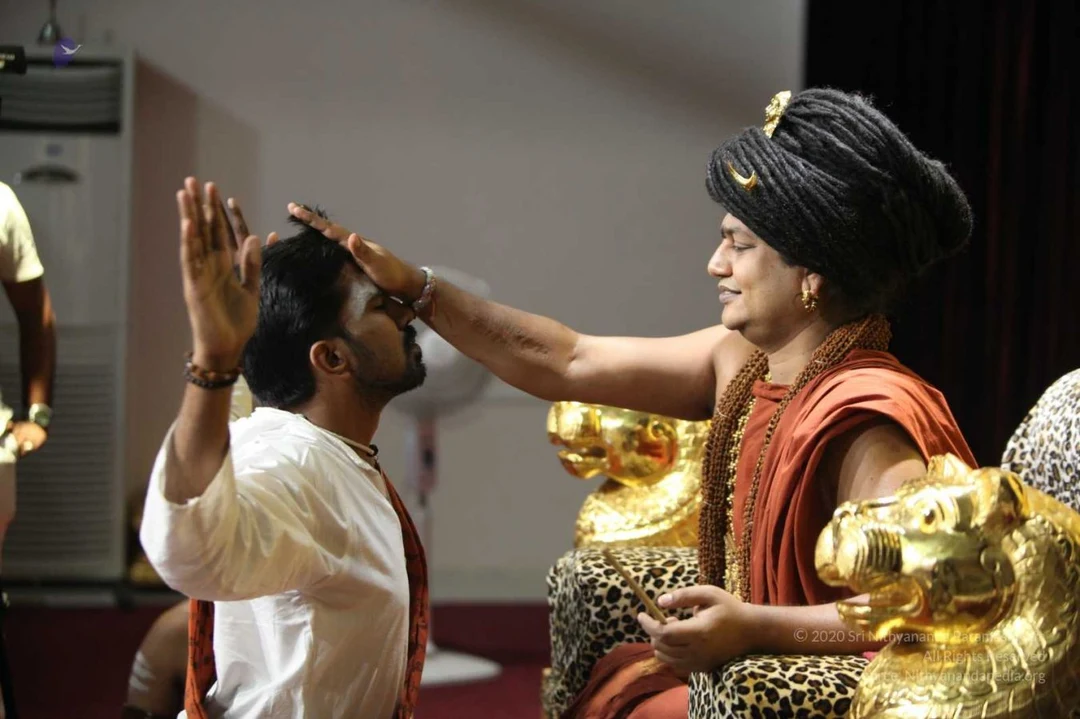
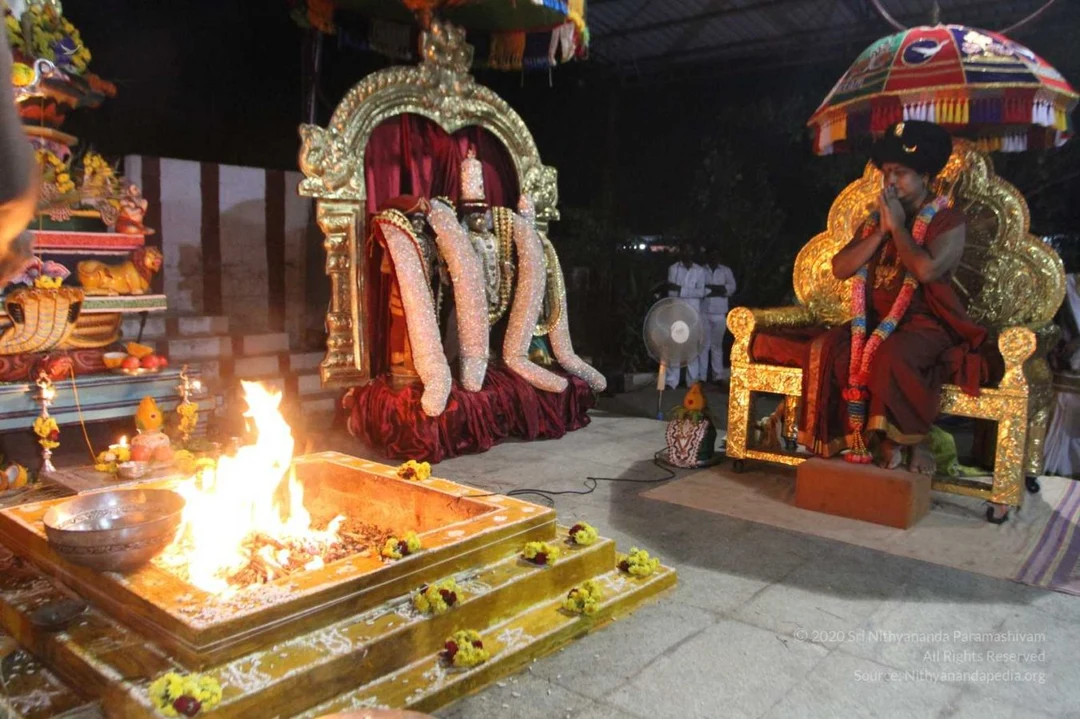
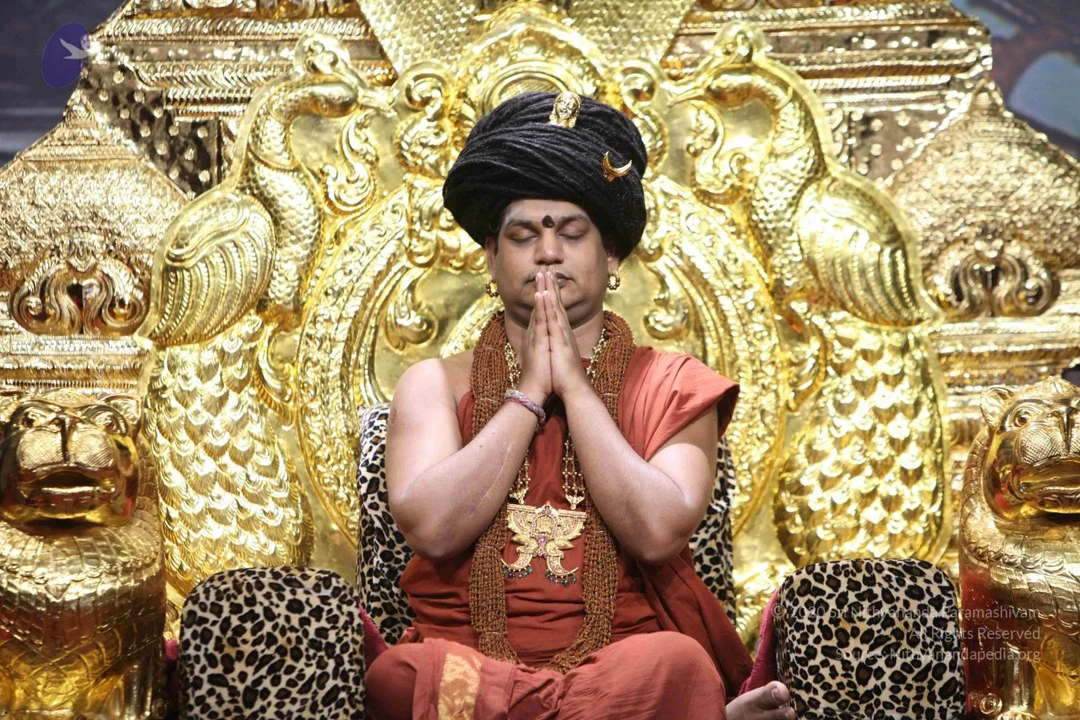
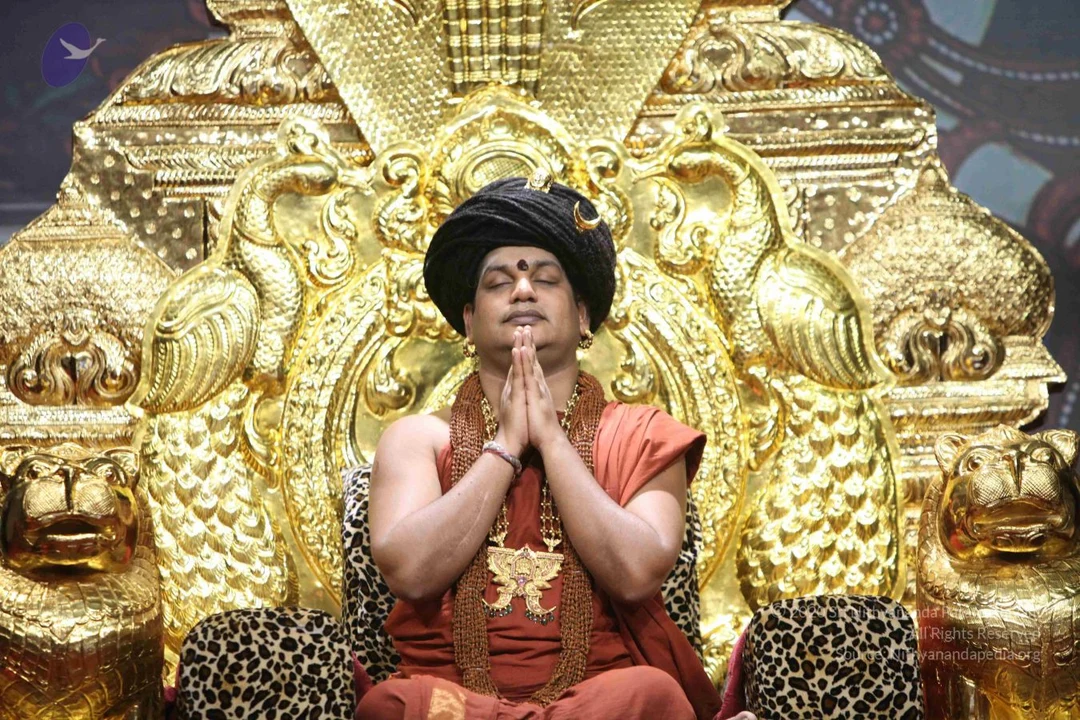
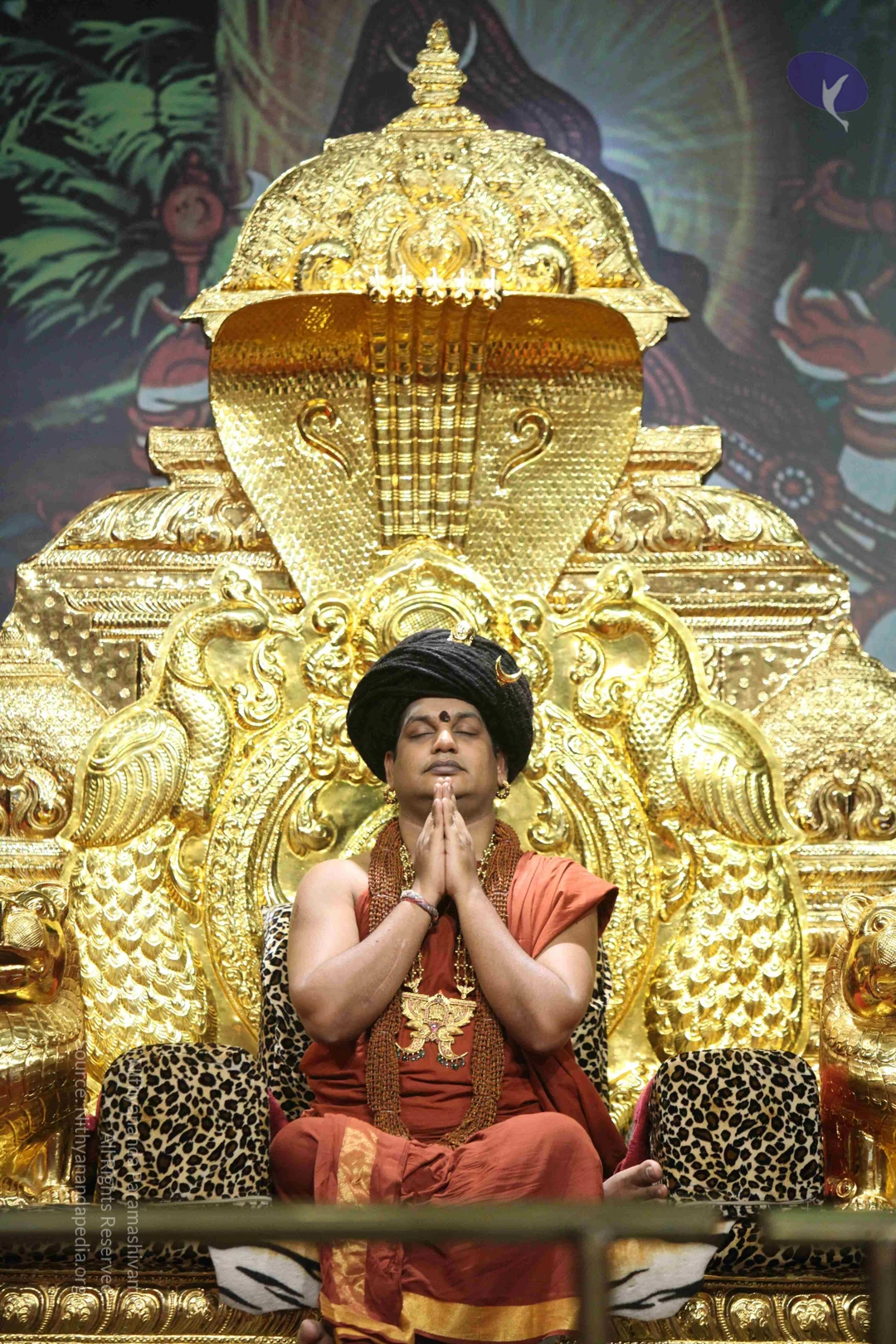
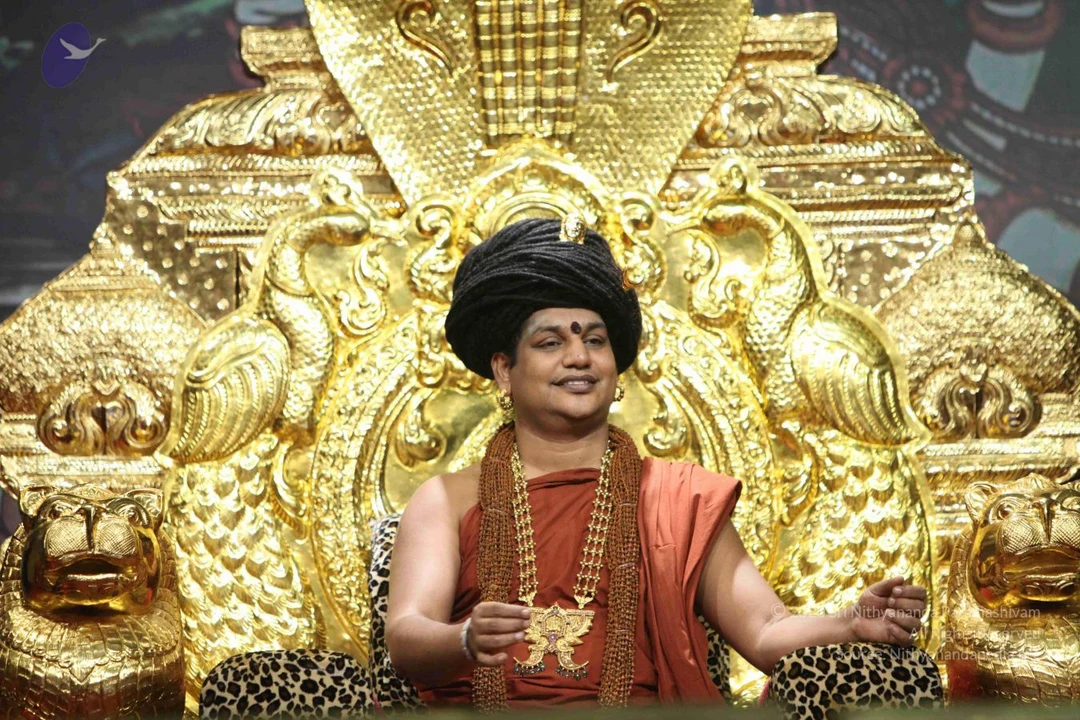
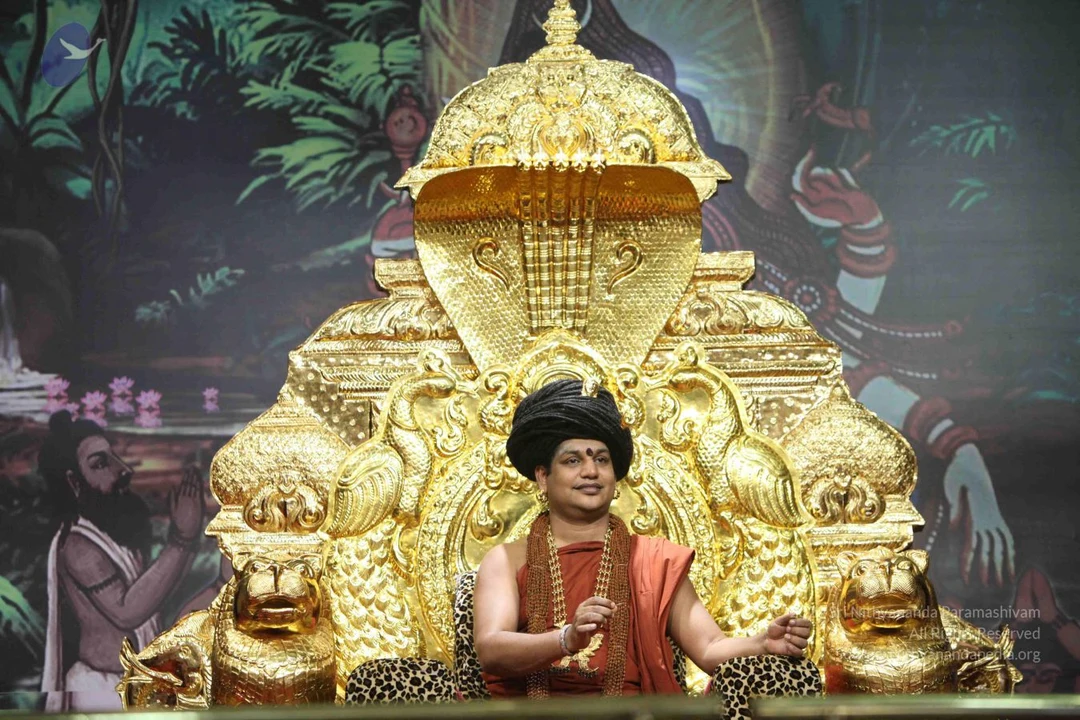
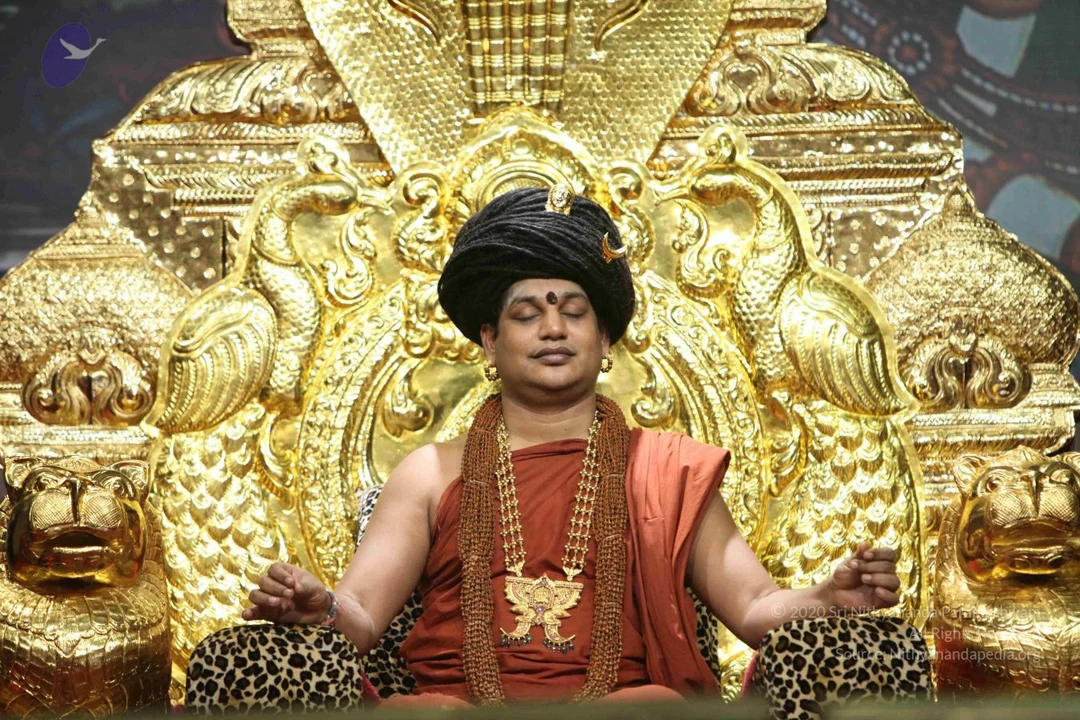
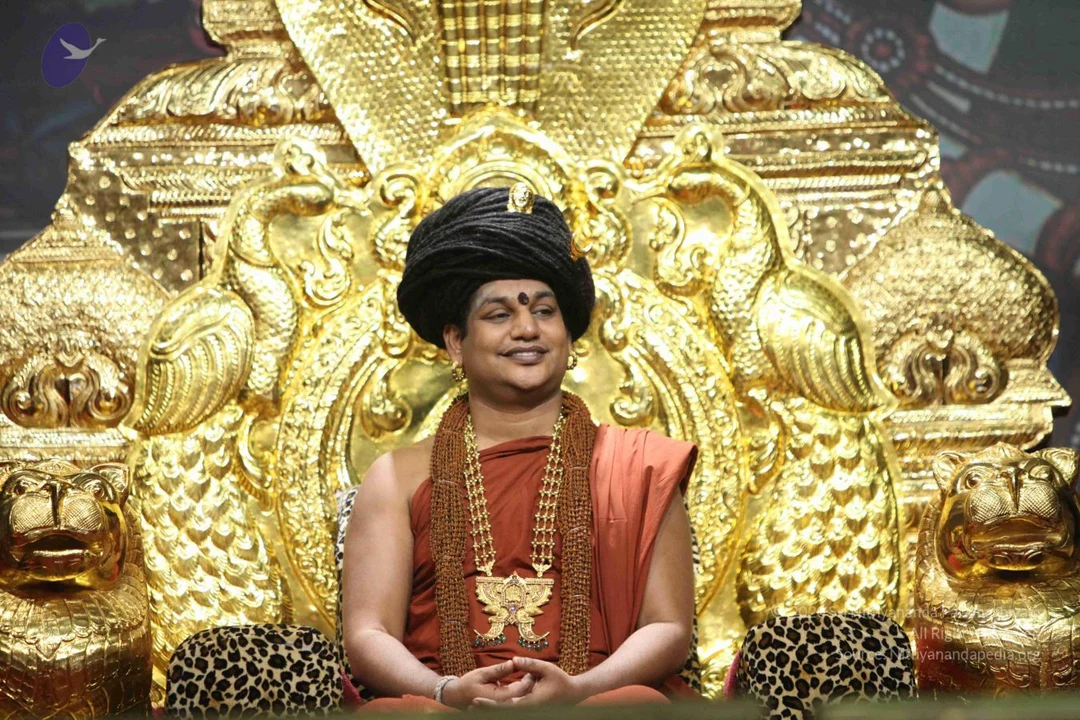
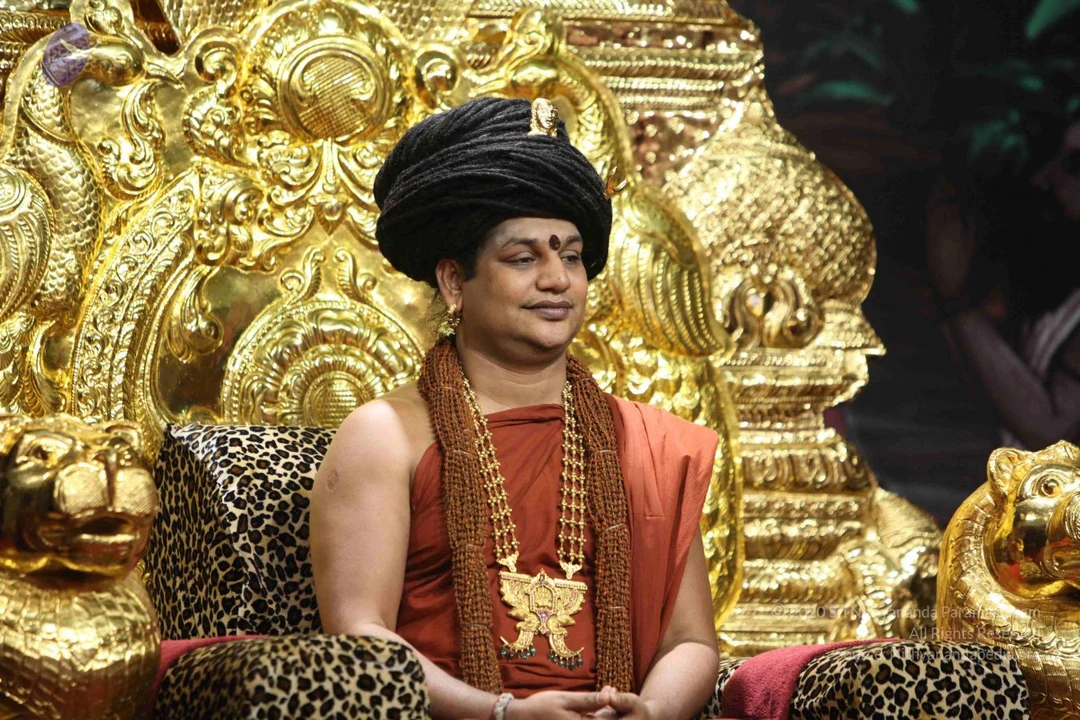
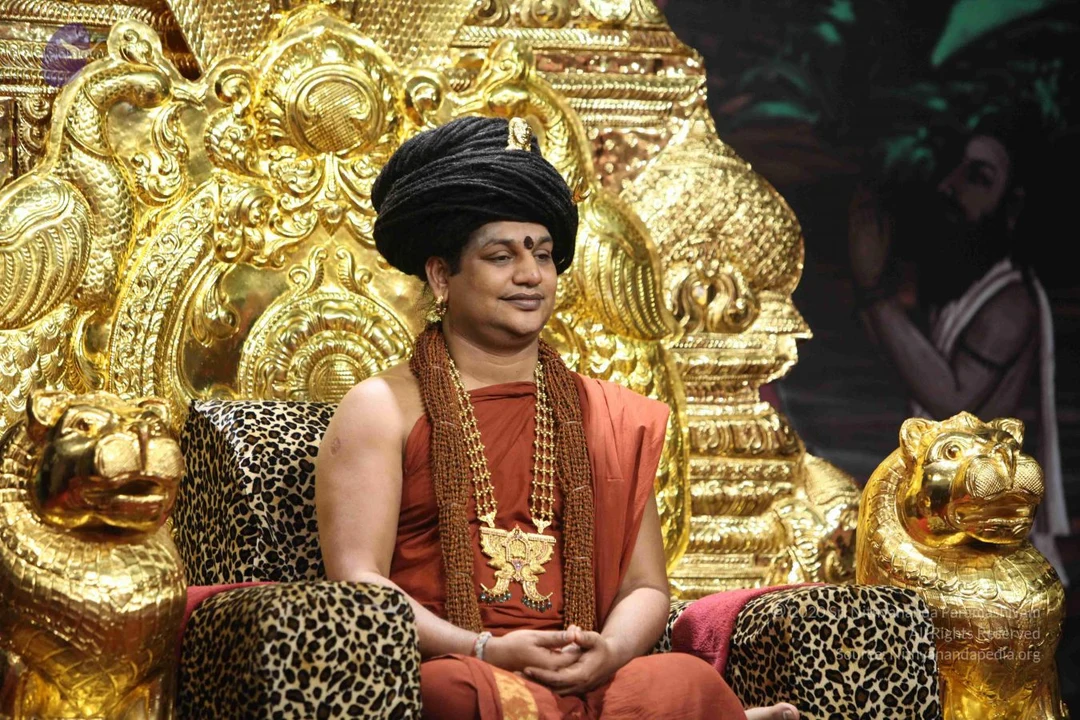
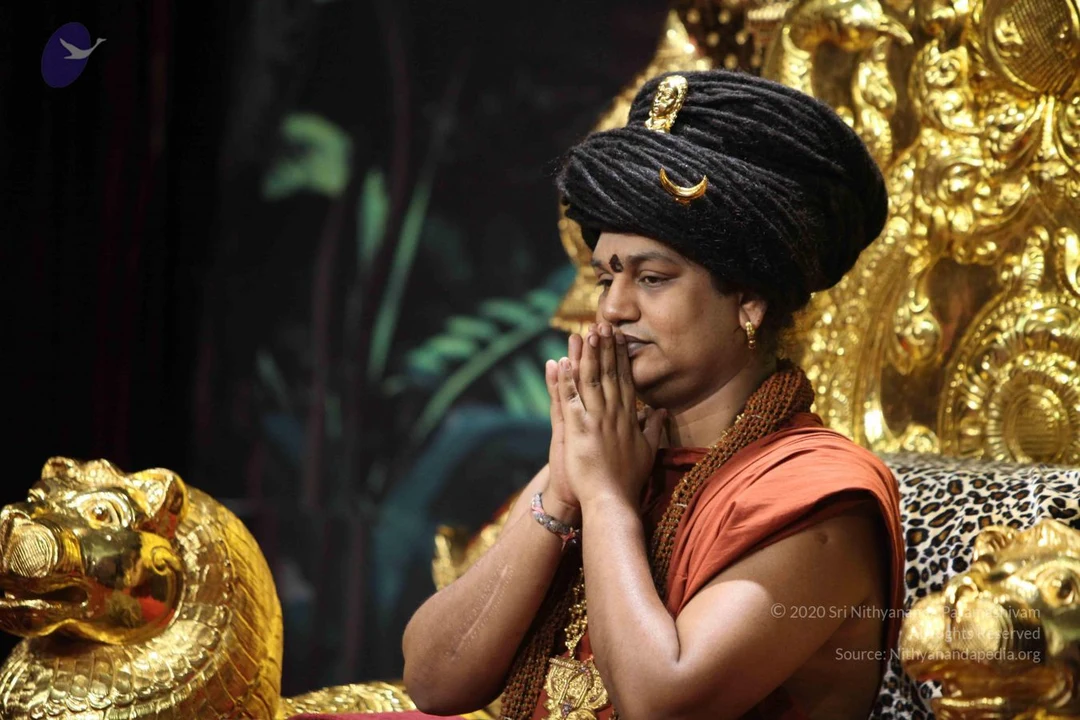
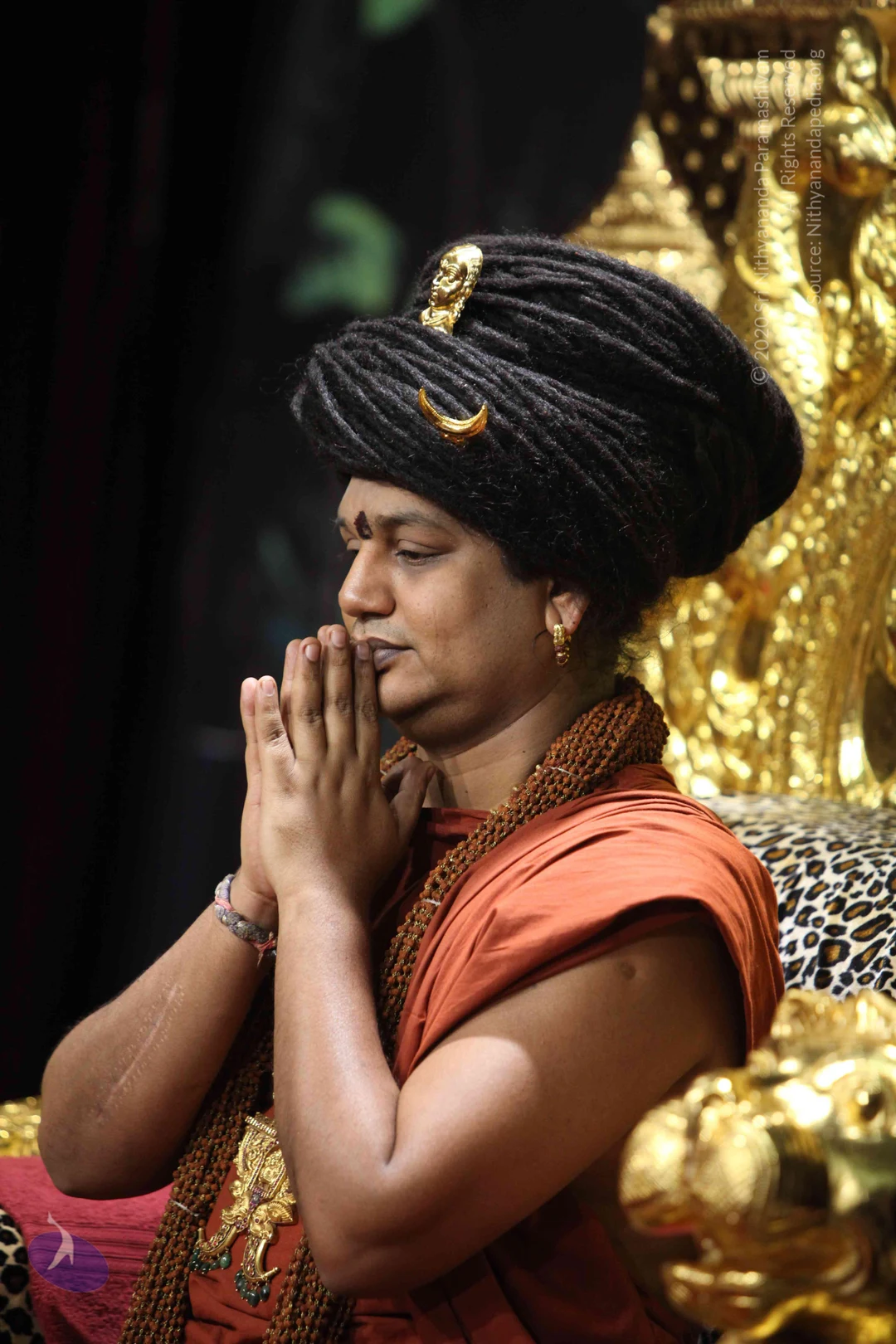
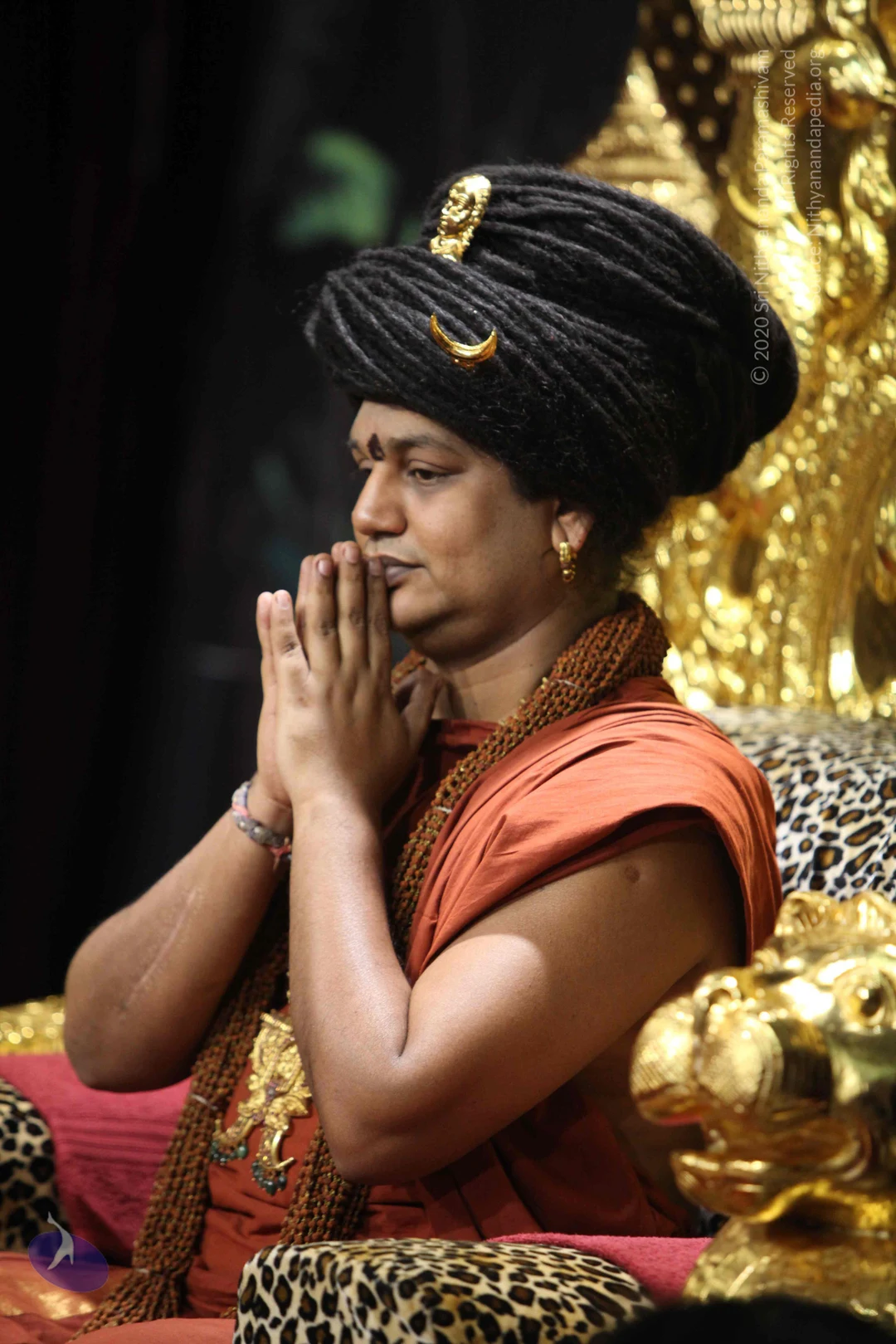
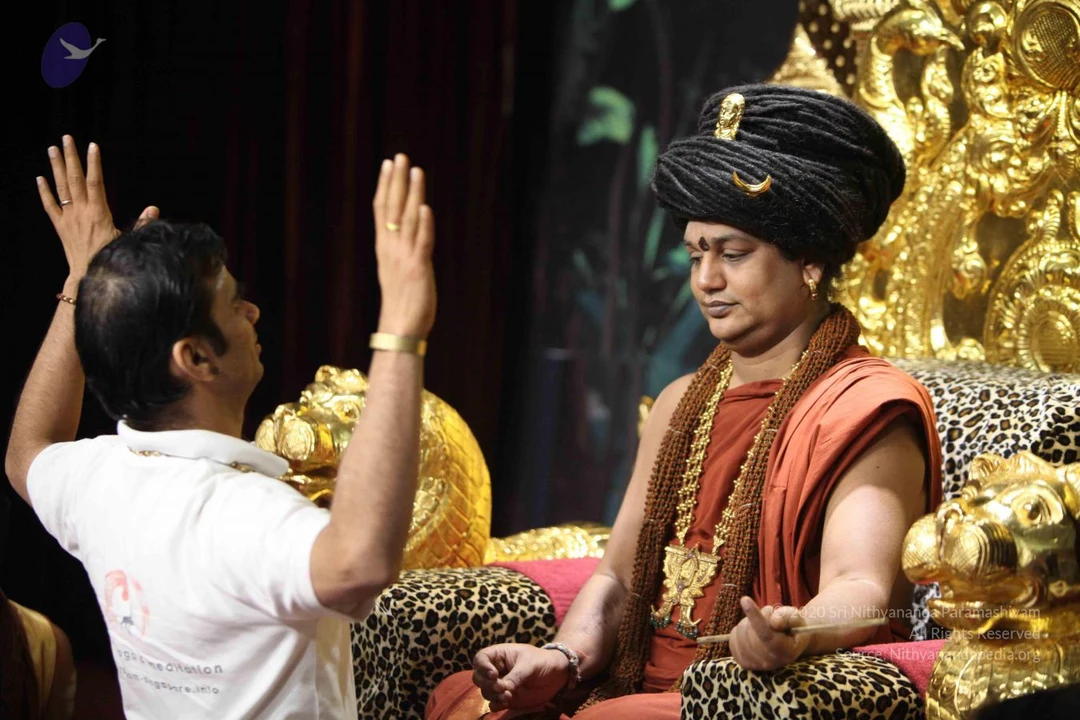
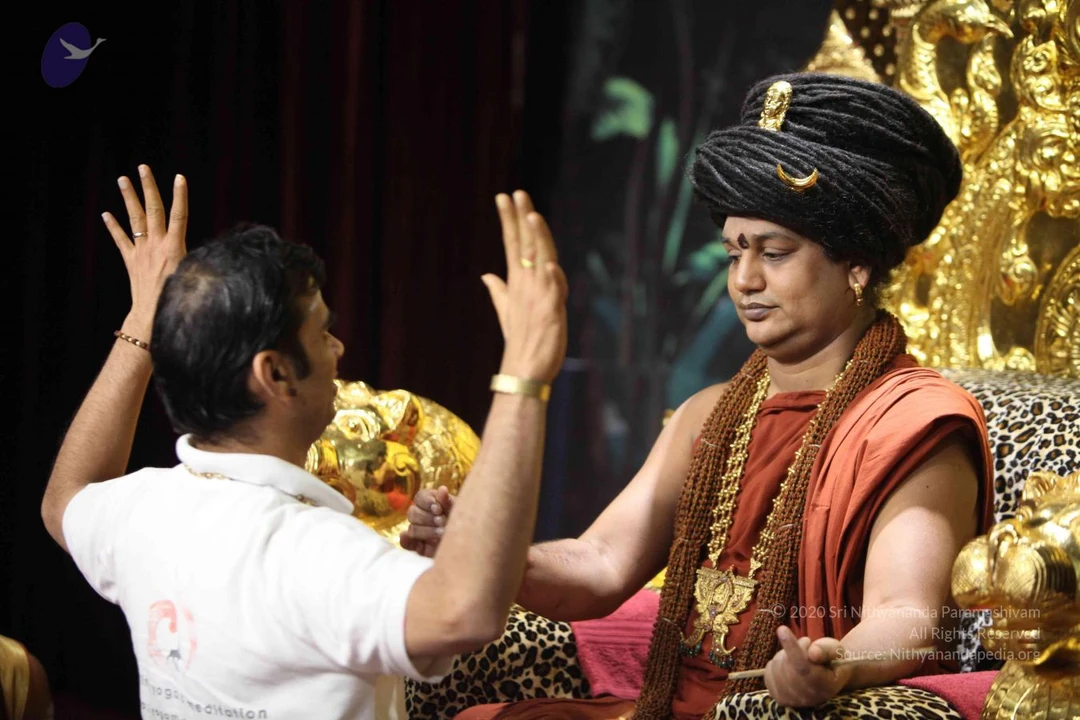
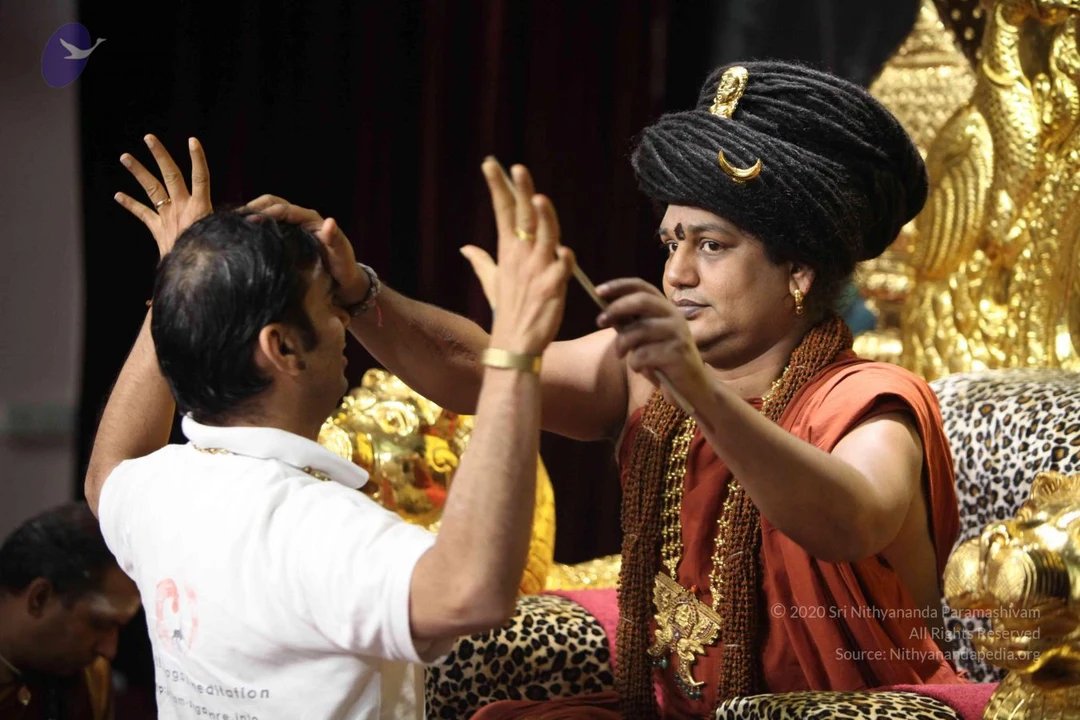
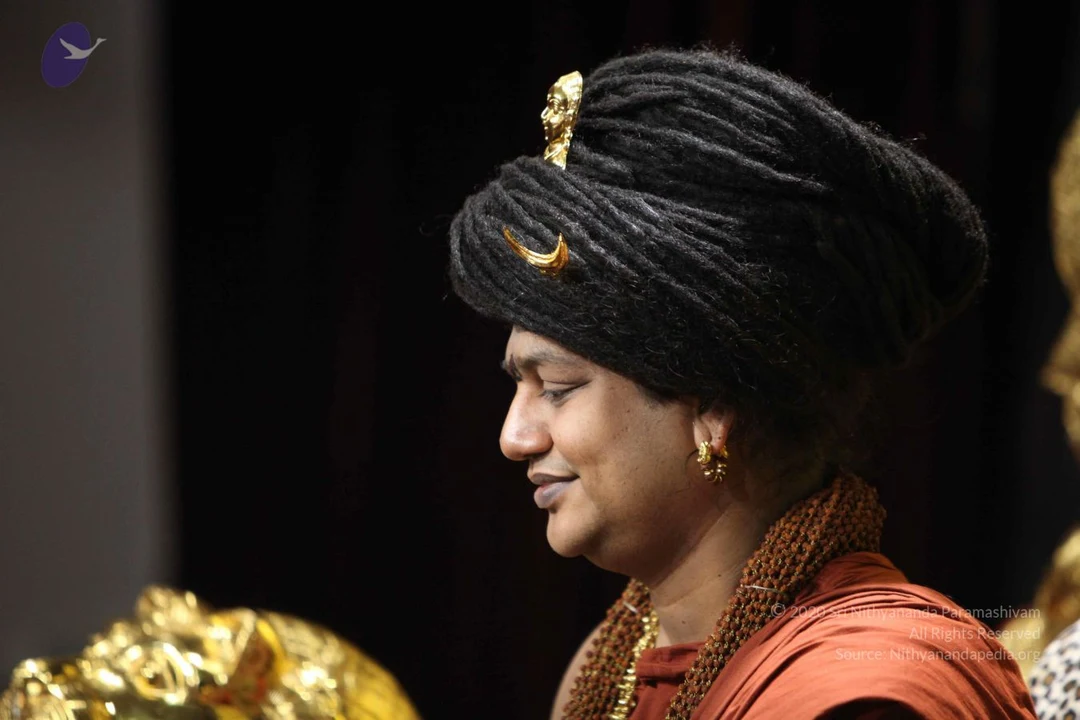
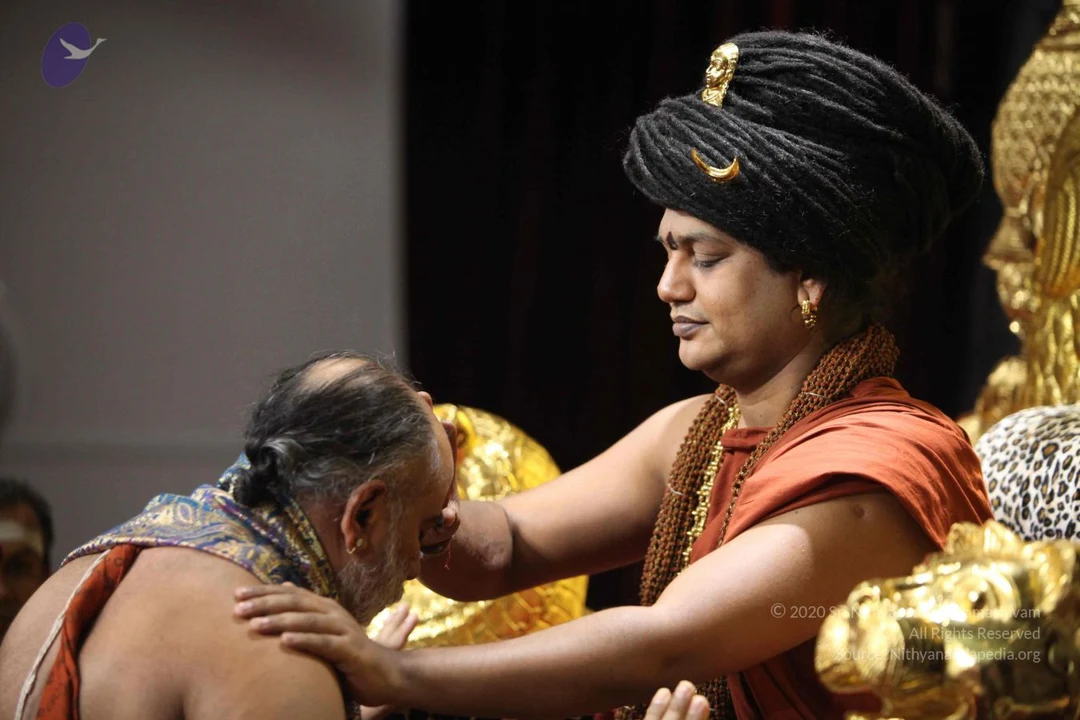
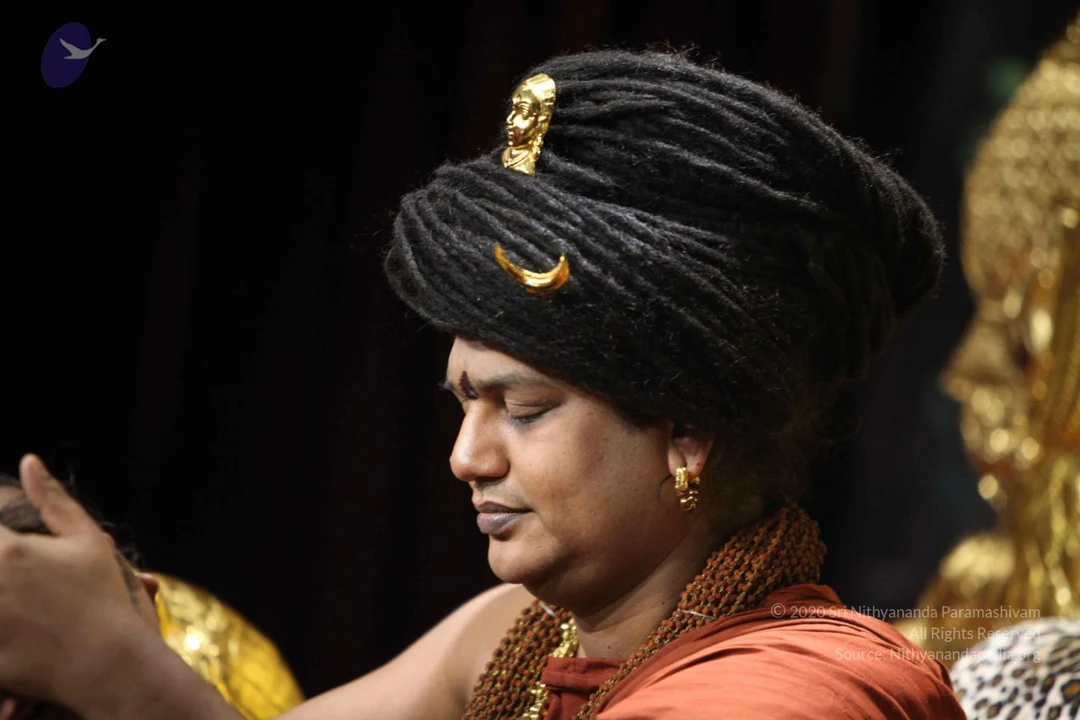
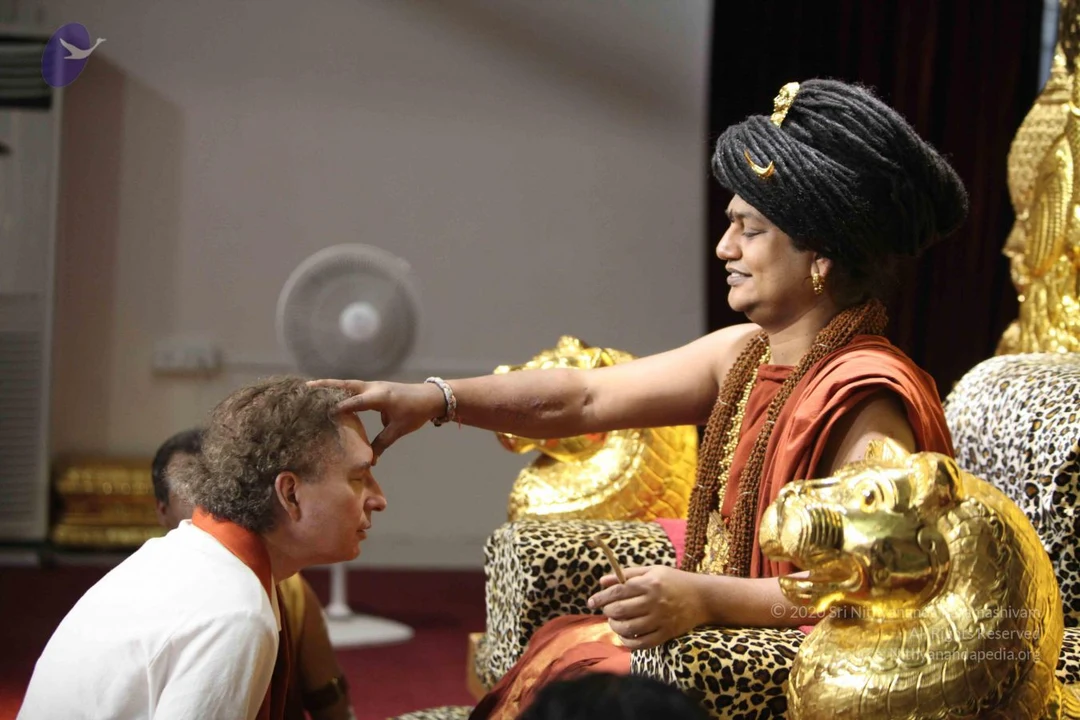
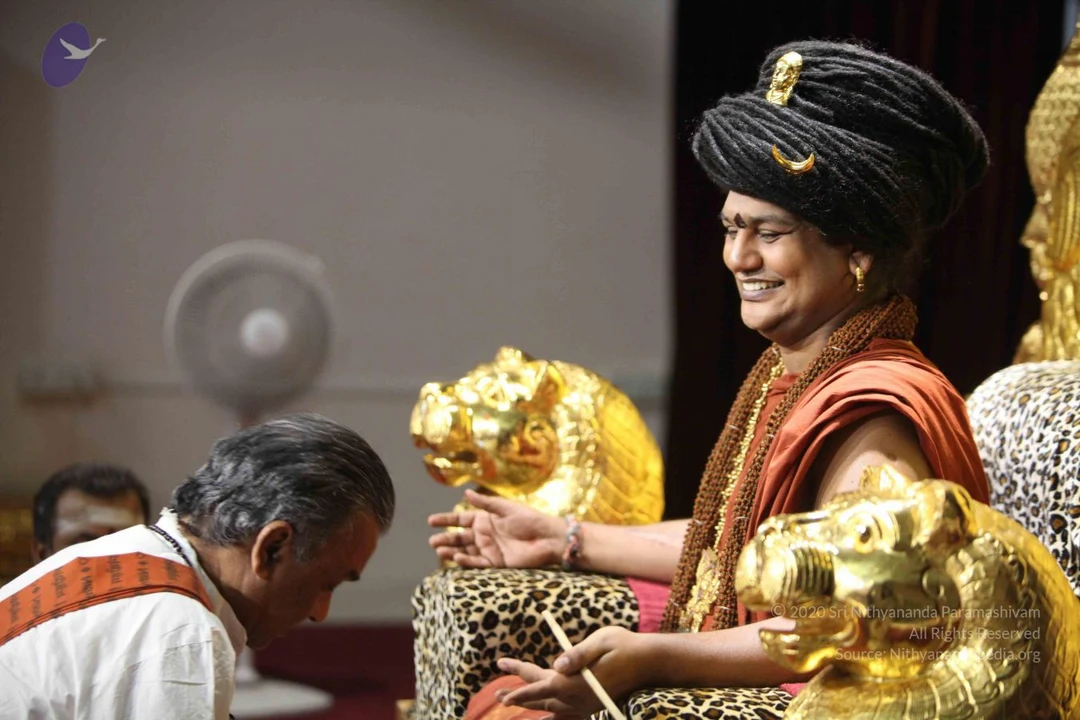
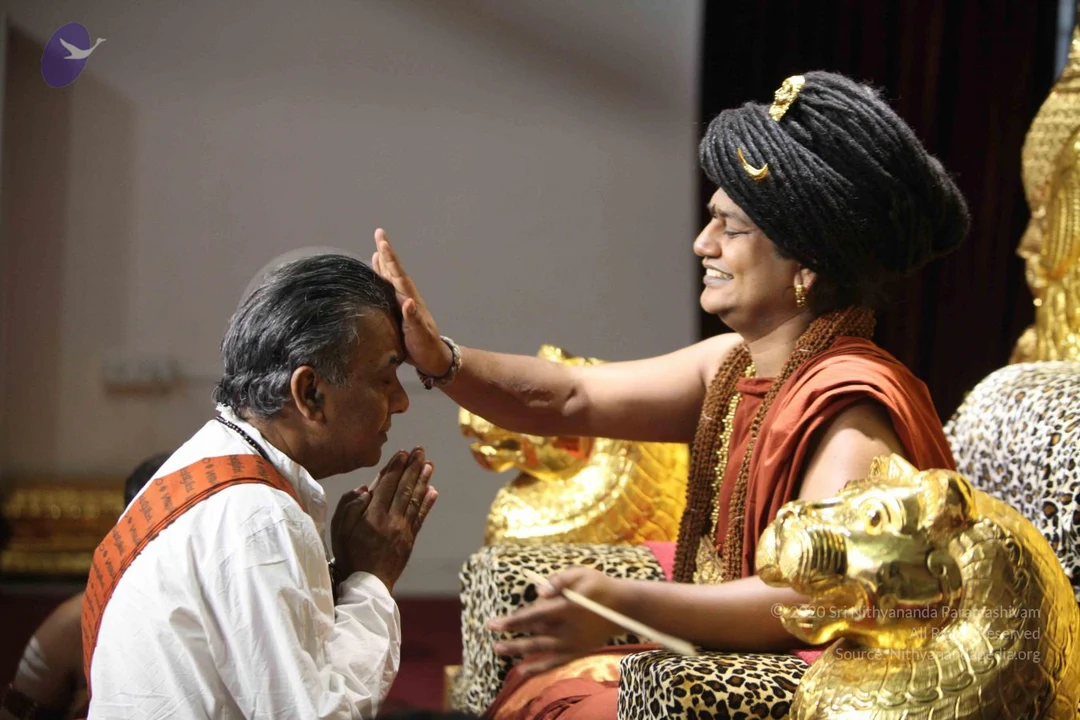
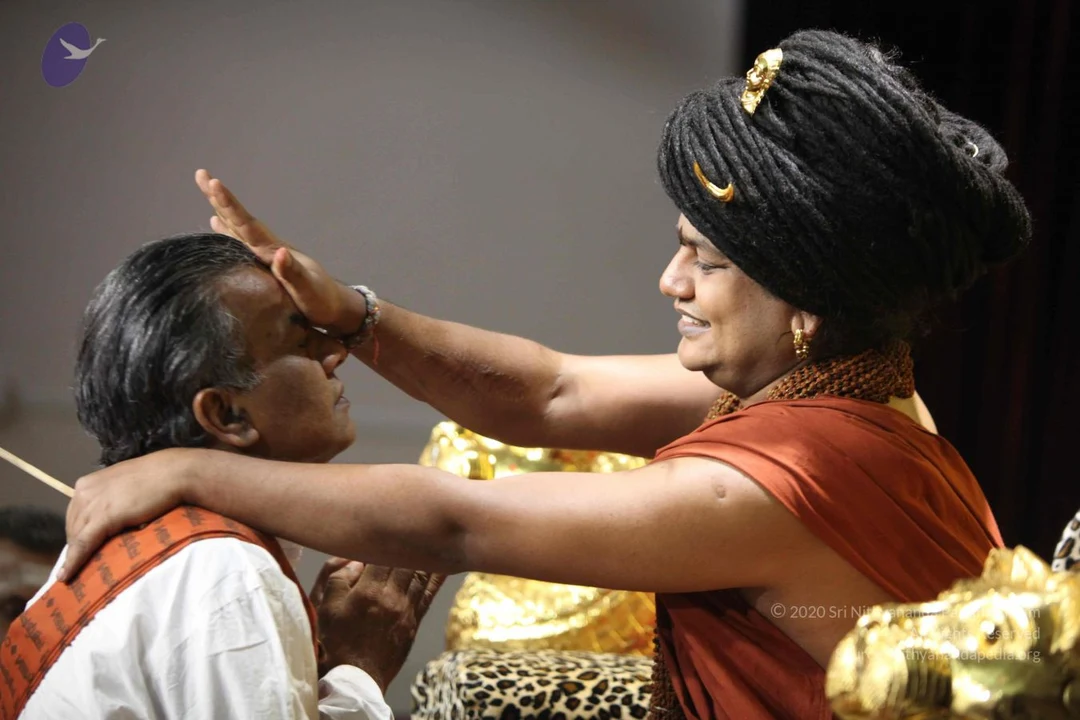
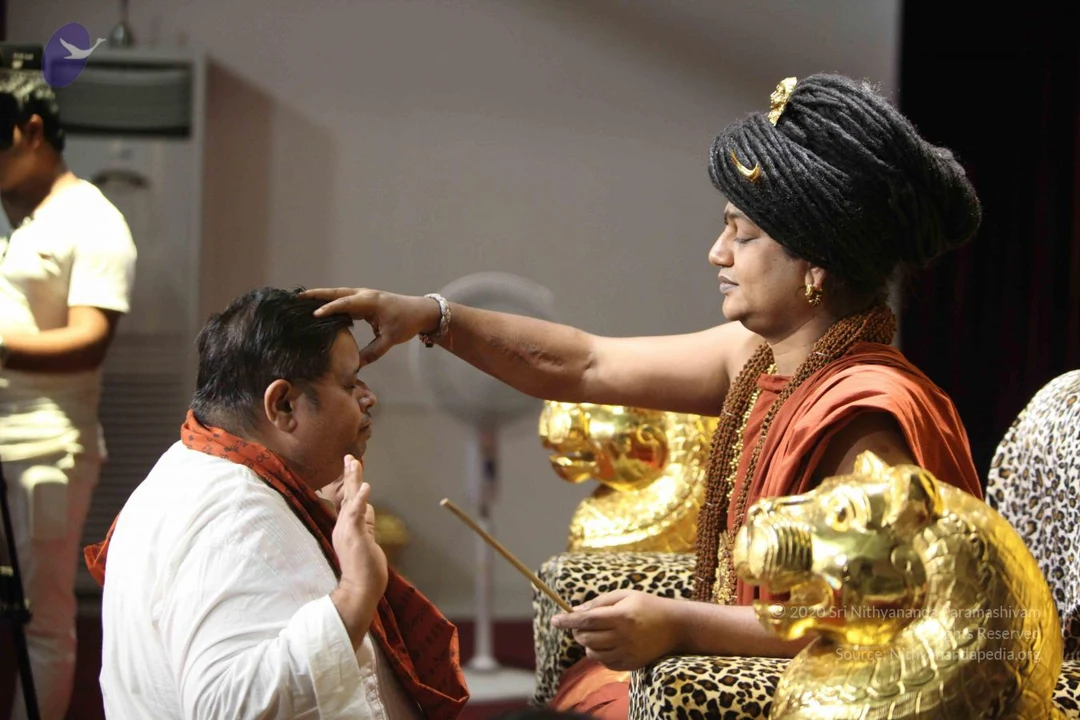
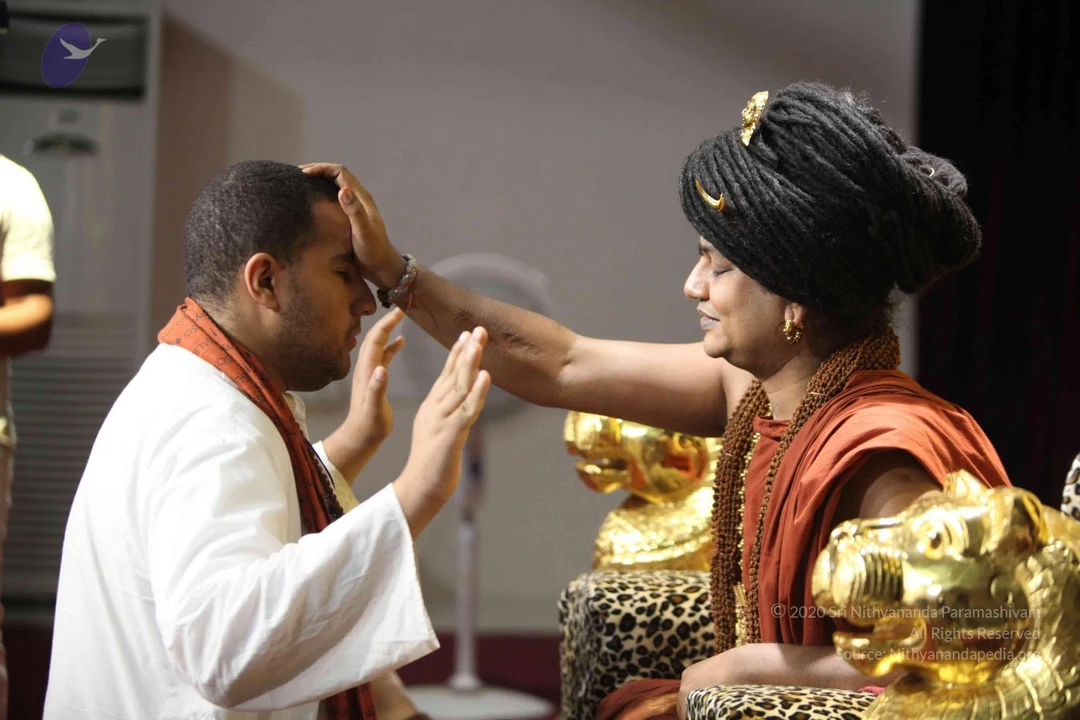
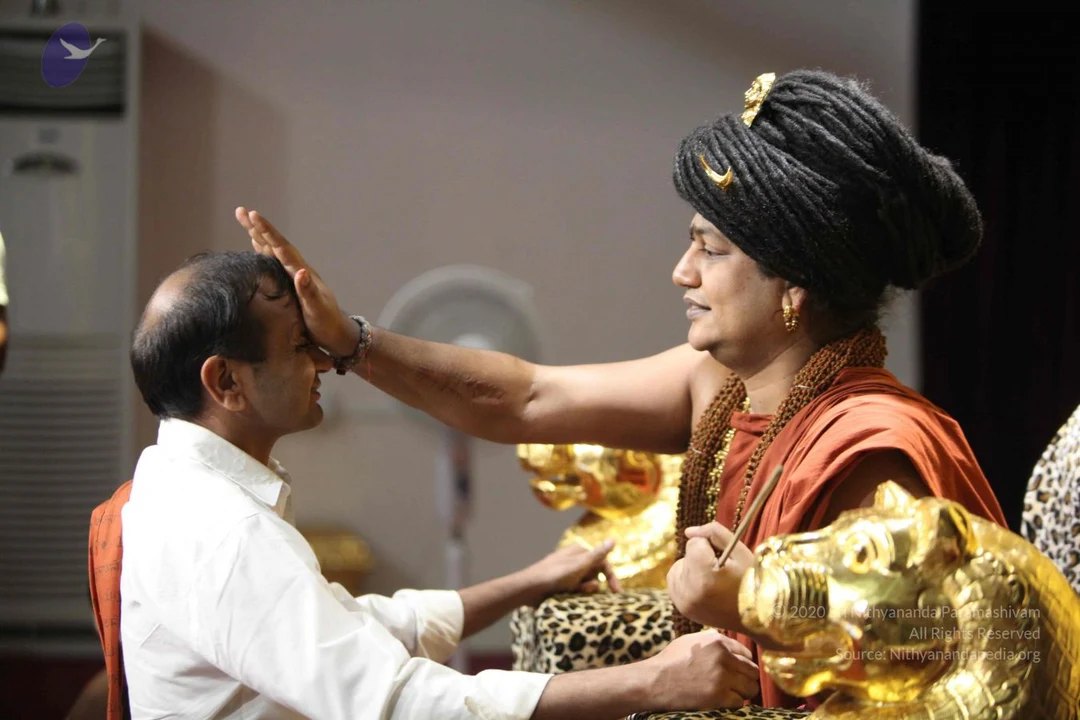
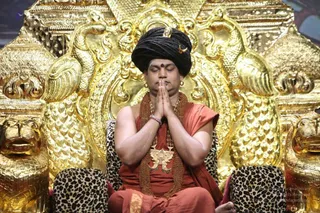
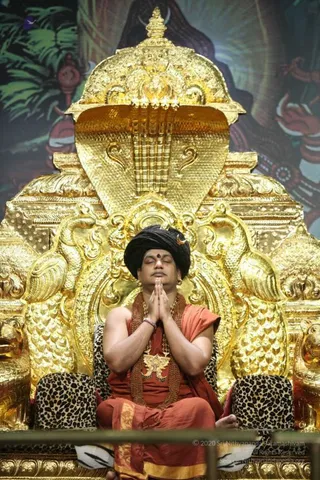
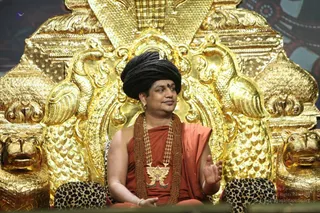
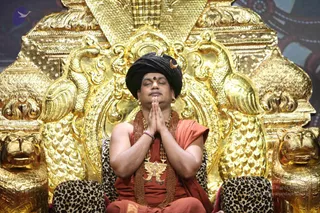
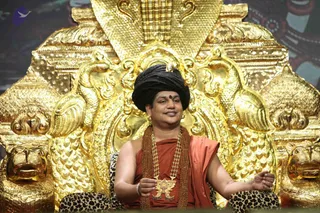
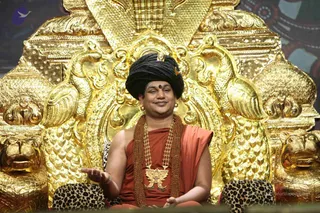
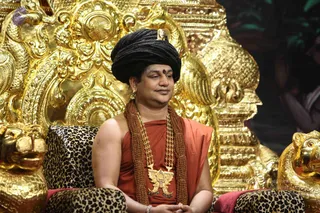
A seated man with eyes closed and palms pressed together in anjali mudra sits before an ornate golden throne carved with serpent heads and lion-like figures. He wears a black turban, an orange-red shawl over a saffron-red top, layered beaded necklaces and a large pendant. Behind him is a painted backdrop. Two leopard-print cushions cover the seat, and gold lion statues flank the throne.A seated man in an ornate golden throne with lion-head armrests and carved gold scrollwork, wearing a black turban, saffron-orange robe and a long rudraksha mala with a gold pendant. He has a red bindi on his forehead and gestures with one hand while seated on a leopard-print cushion. The large gold throne fills the background, with a dark stage backdrop behind it.

Rudra Homa

47 photosSource gallery
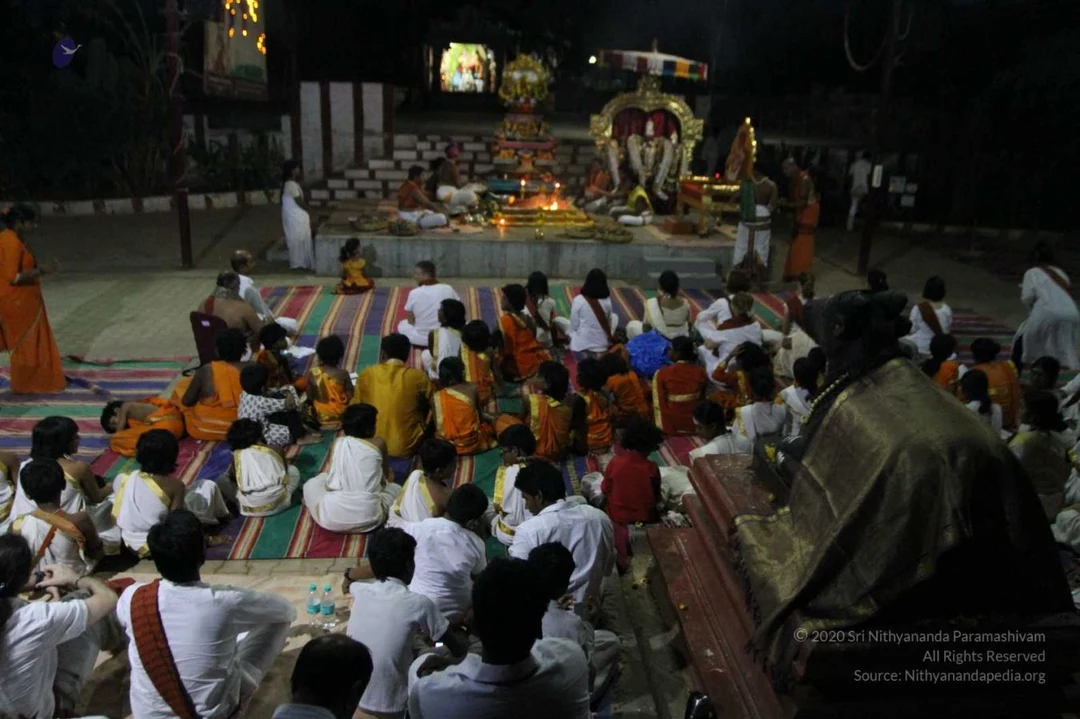
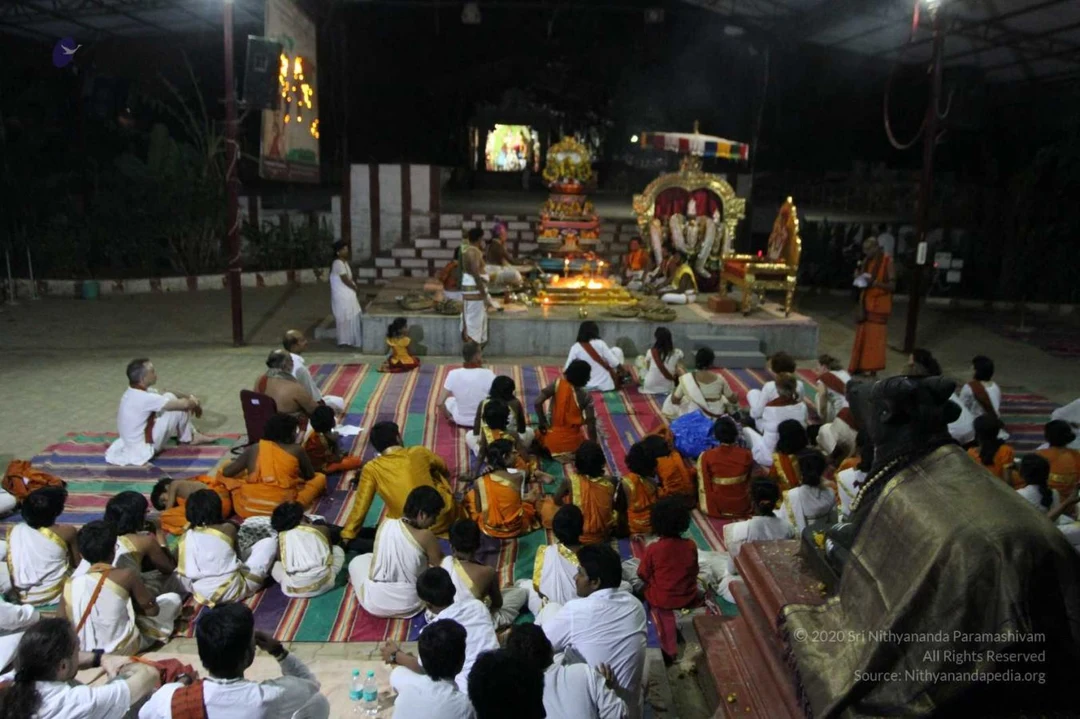
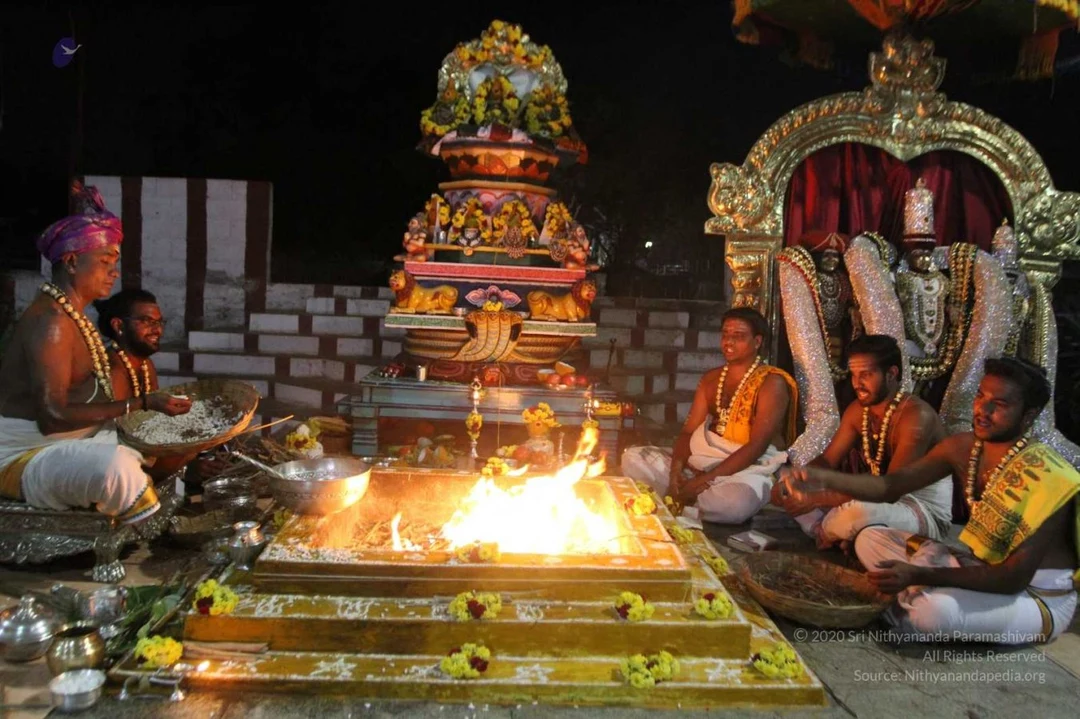
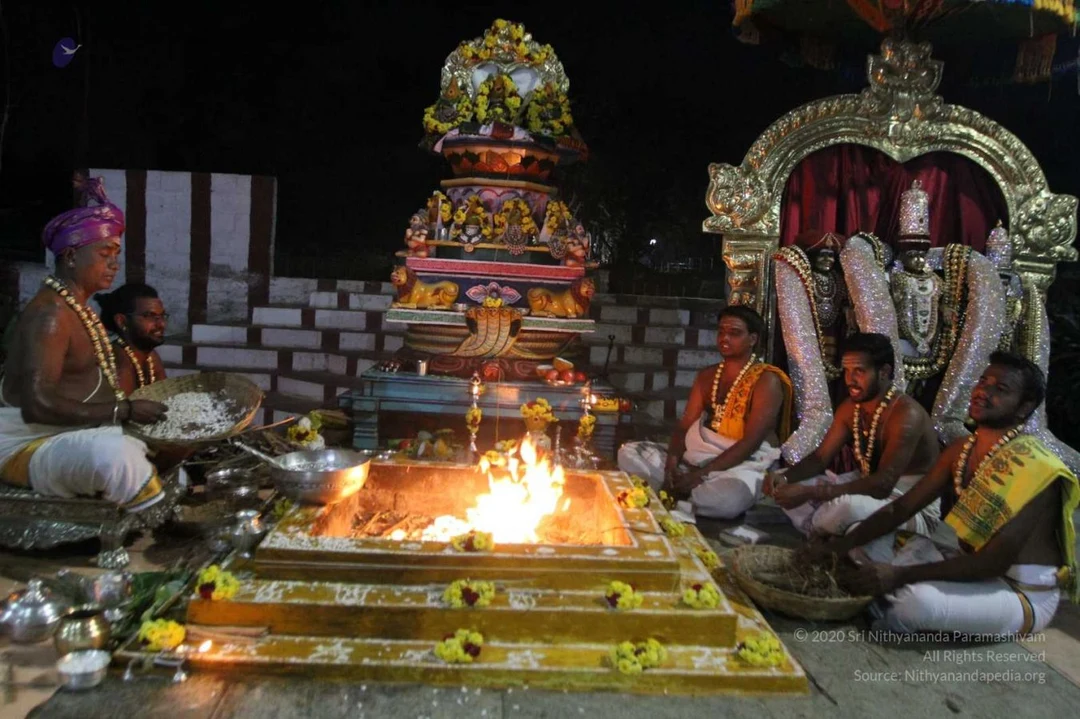
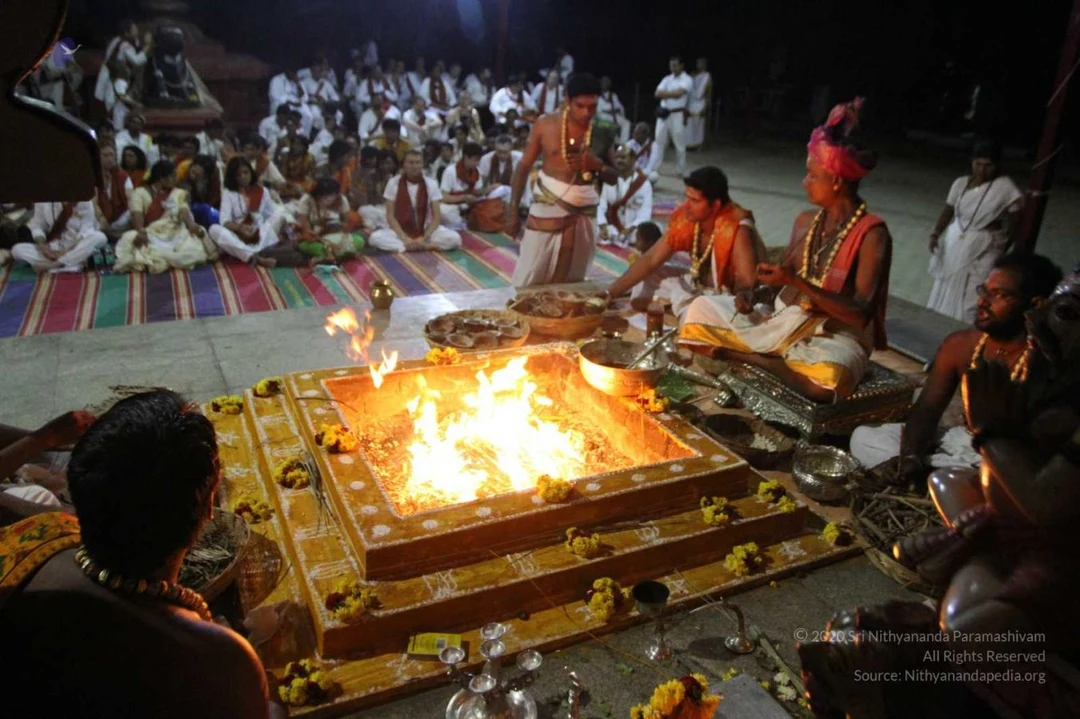
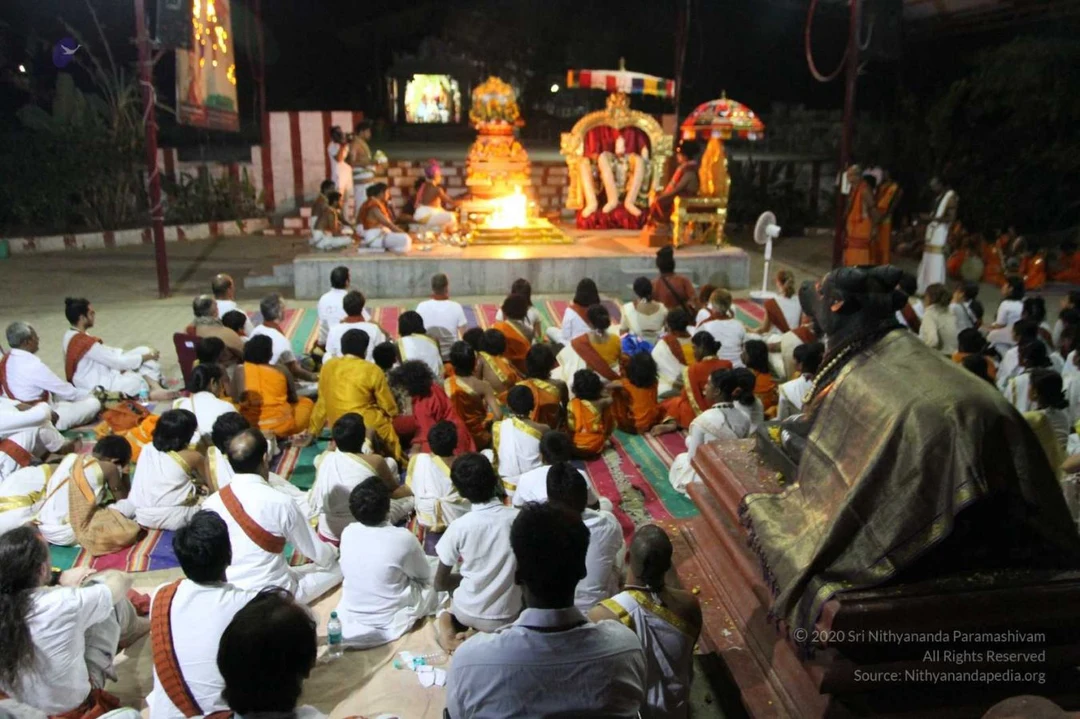
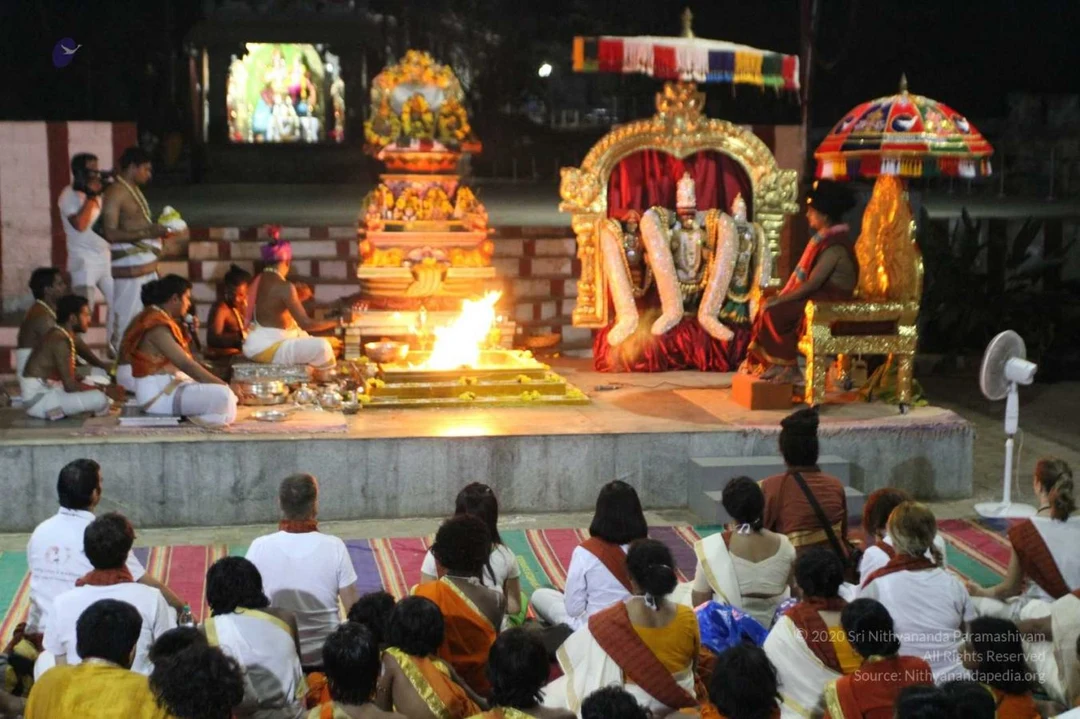
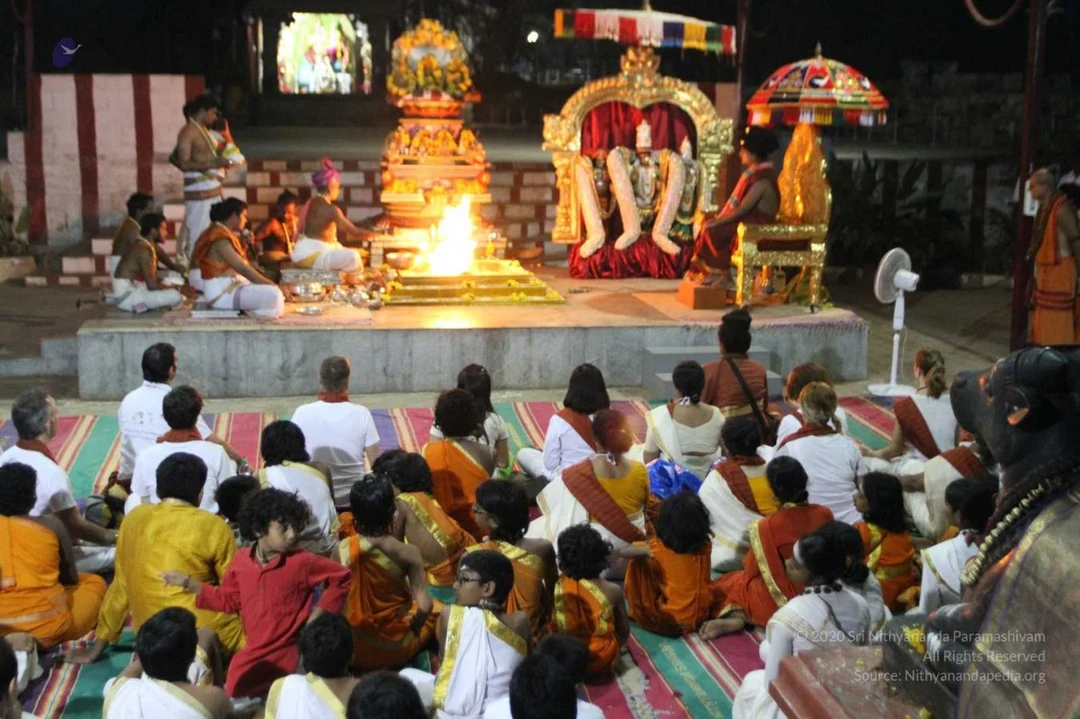
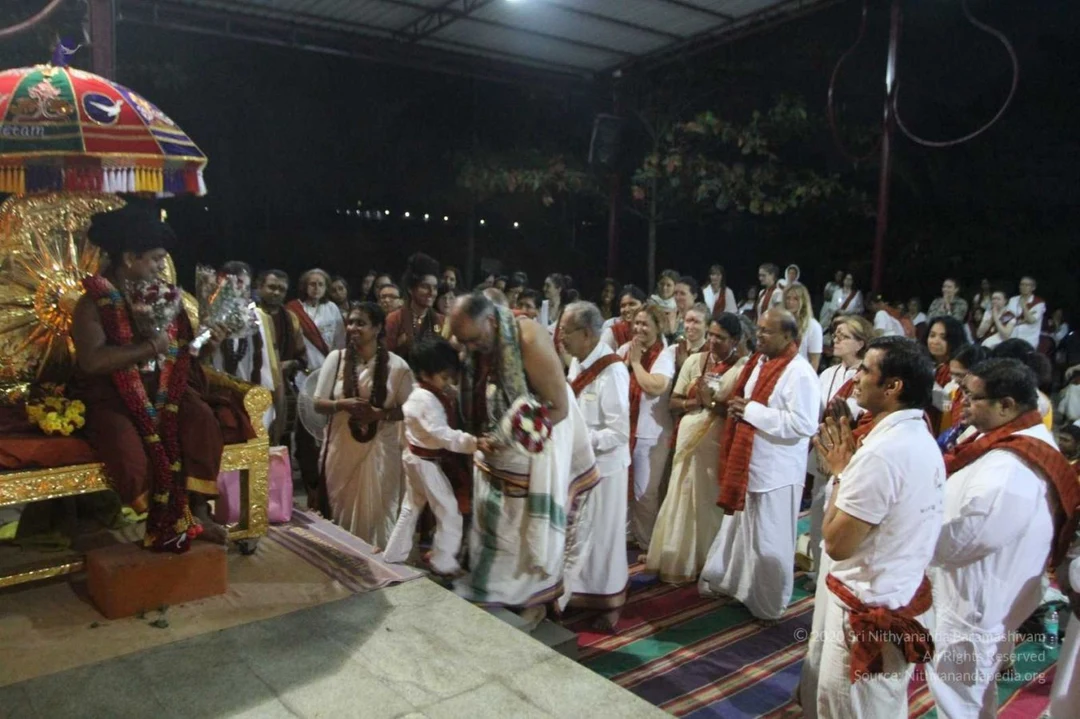
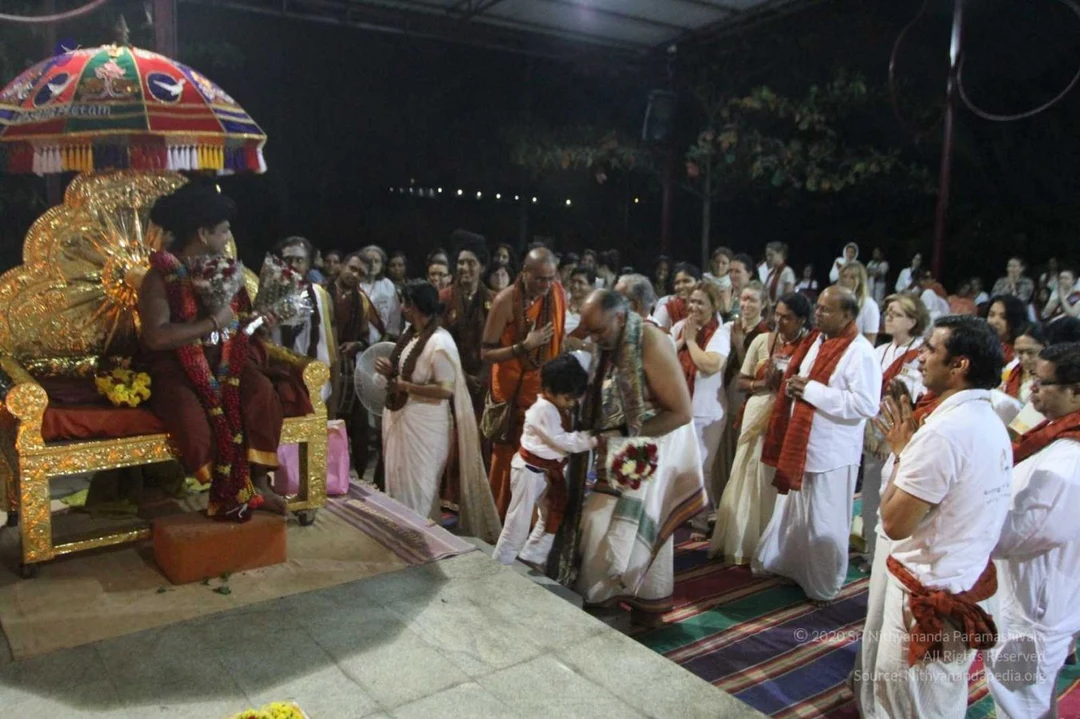
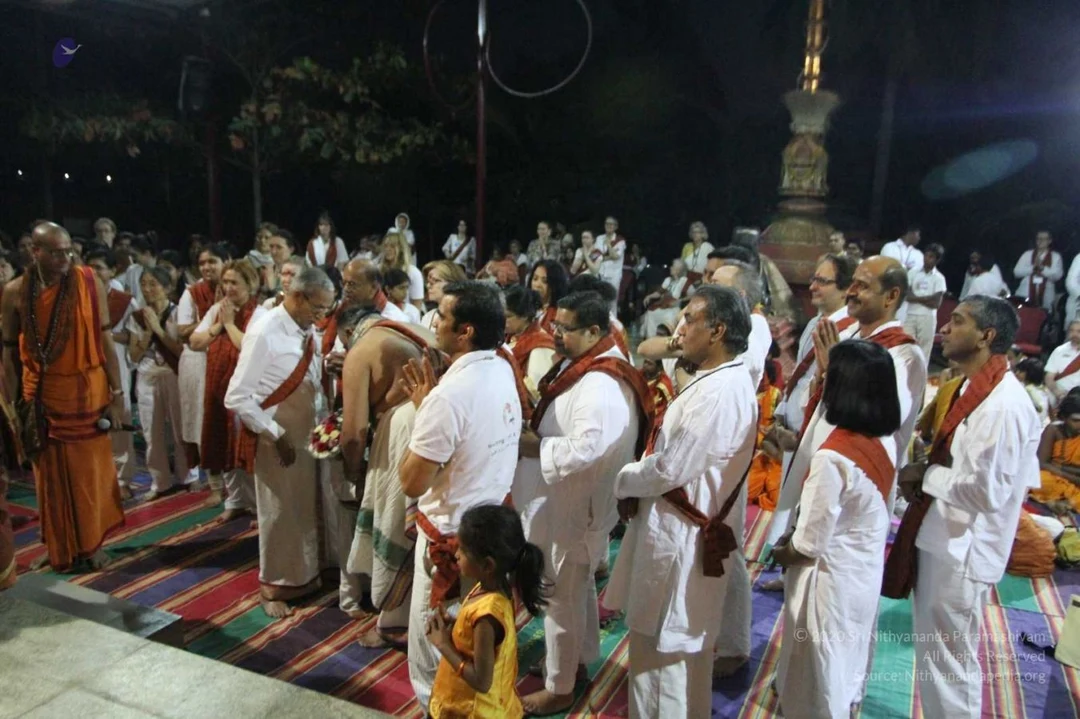
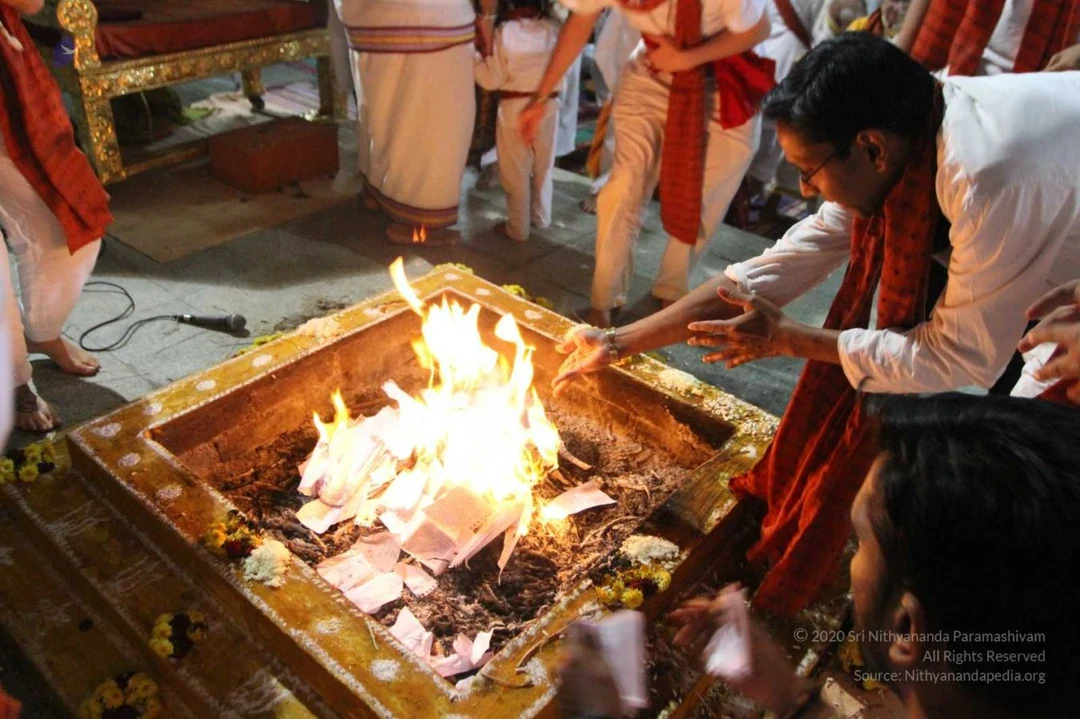
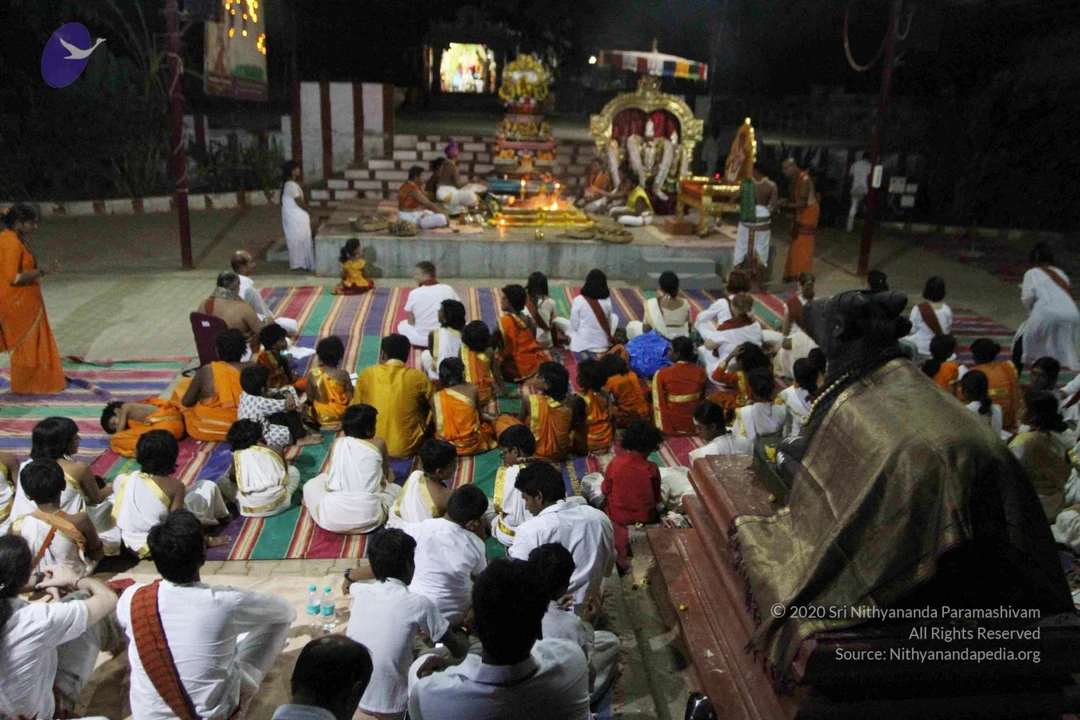
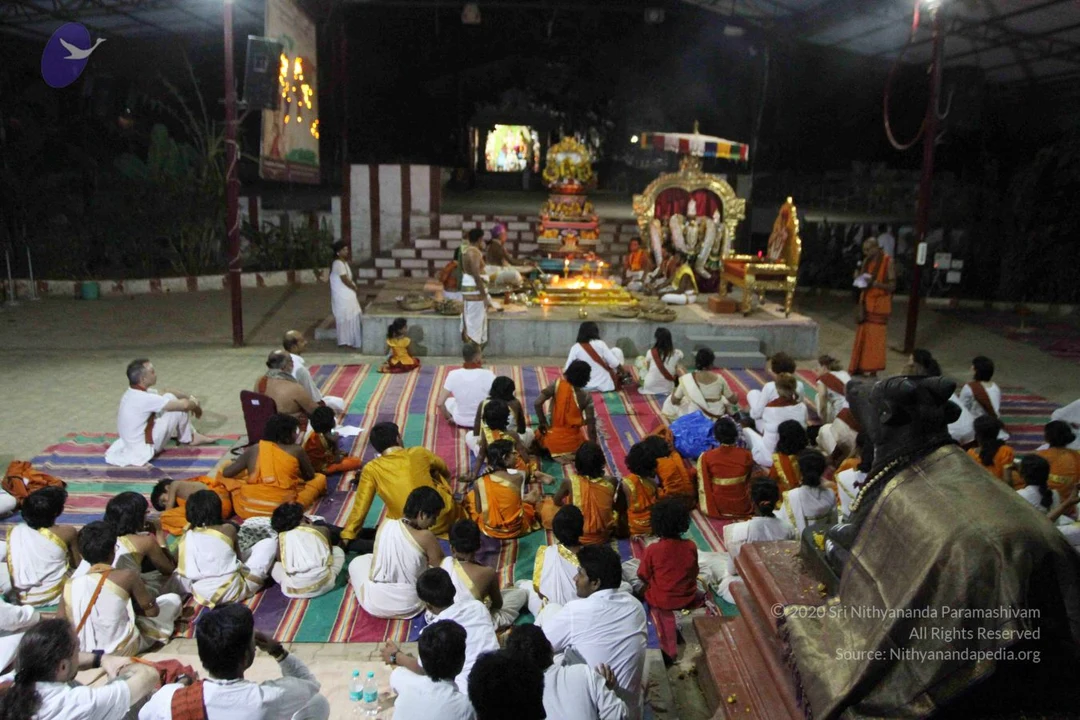
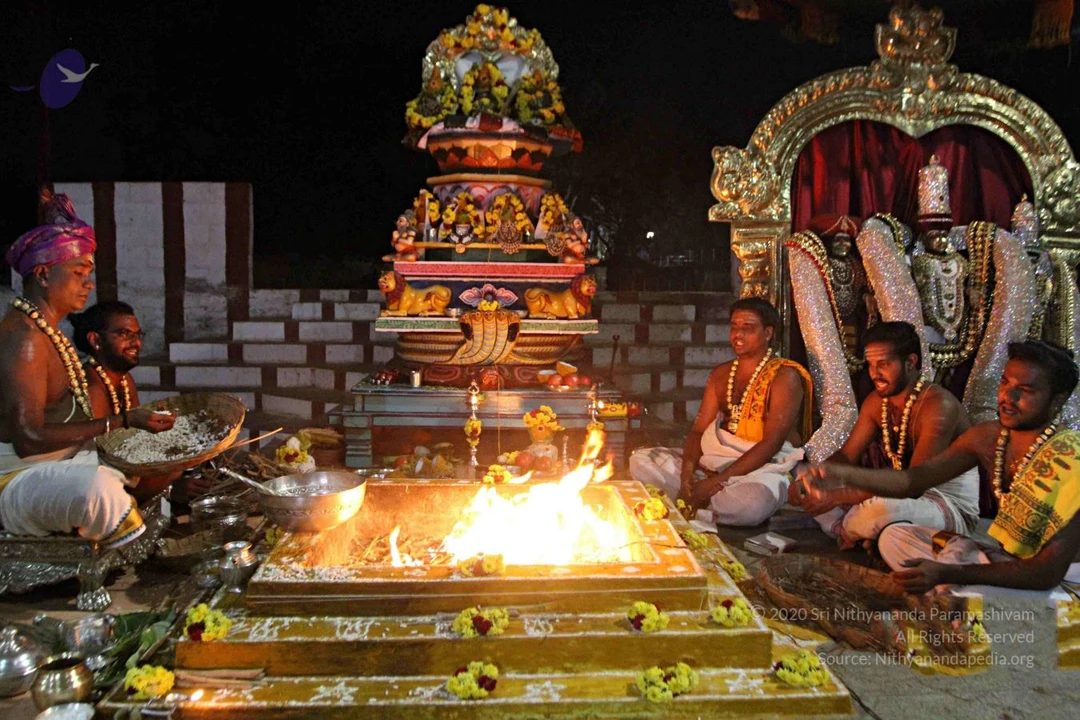
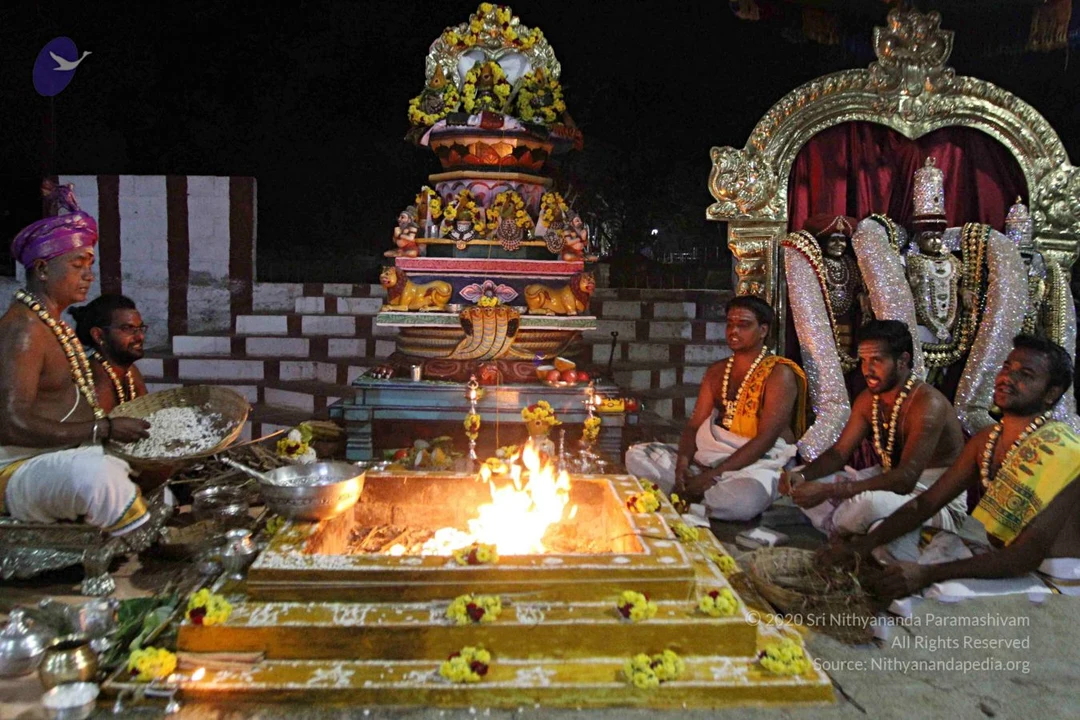
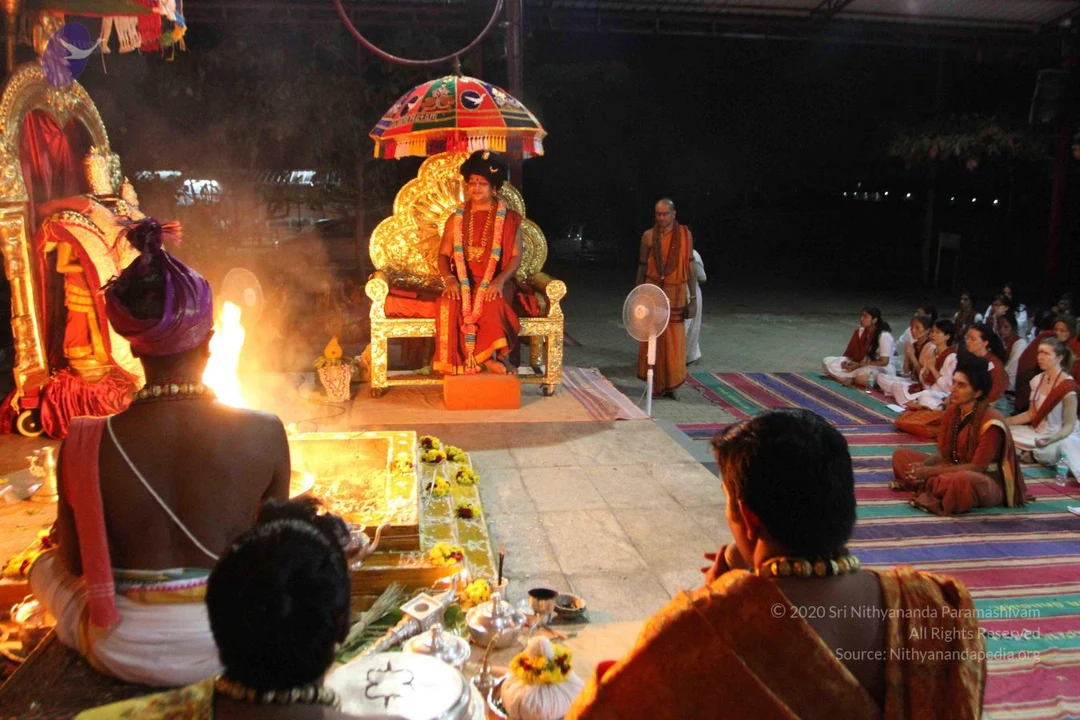
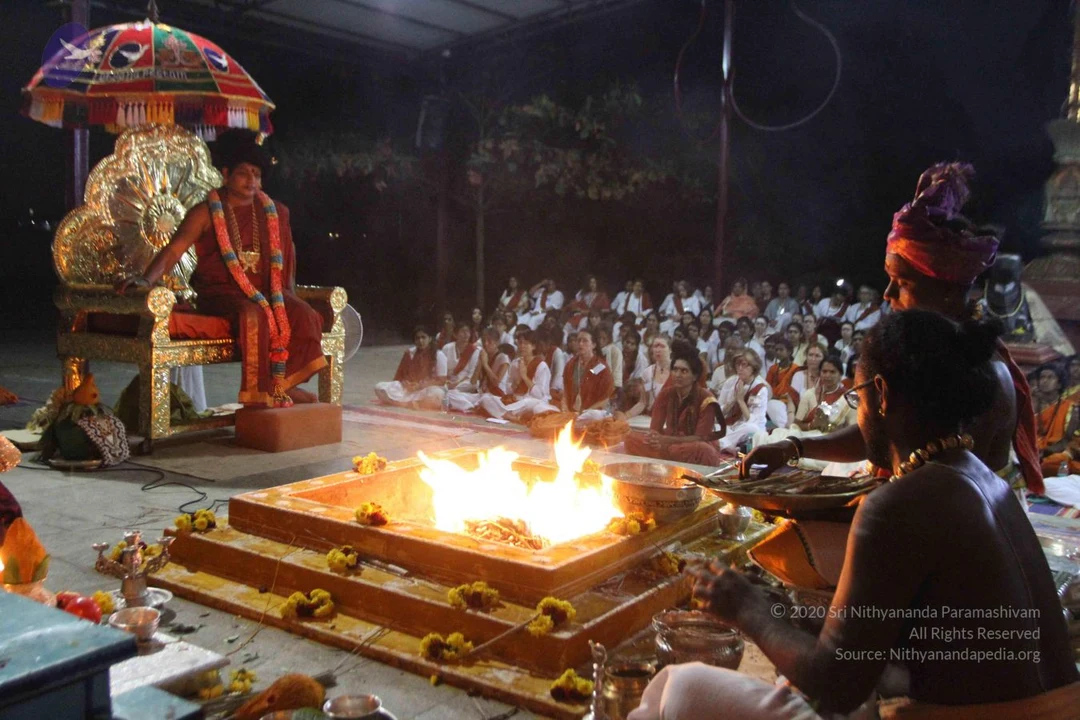
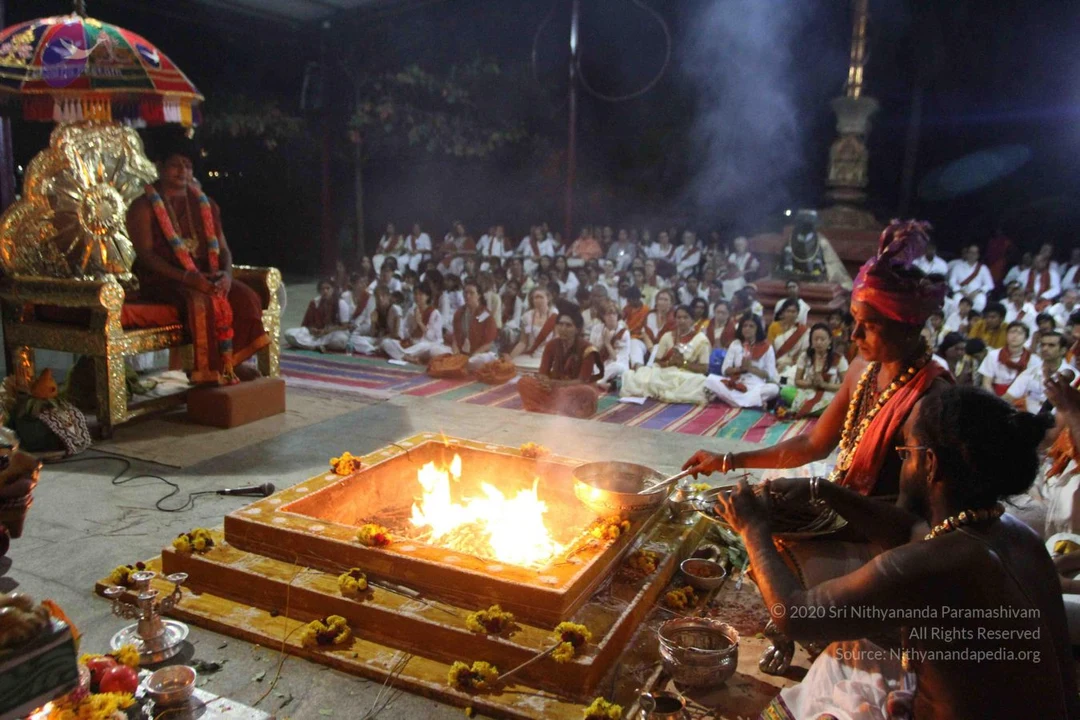
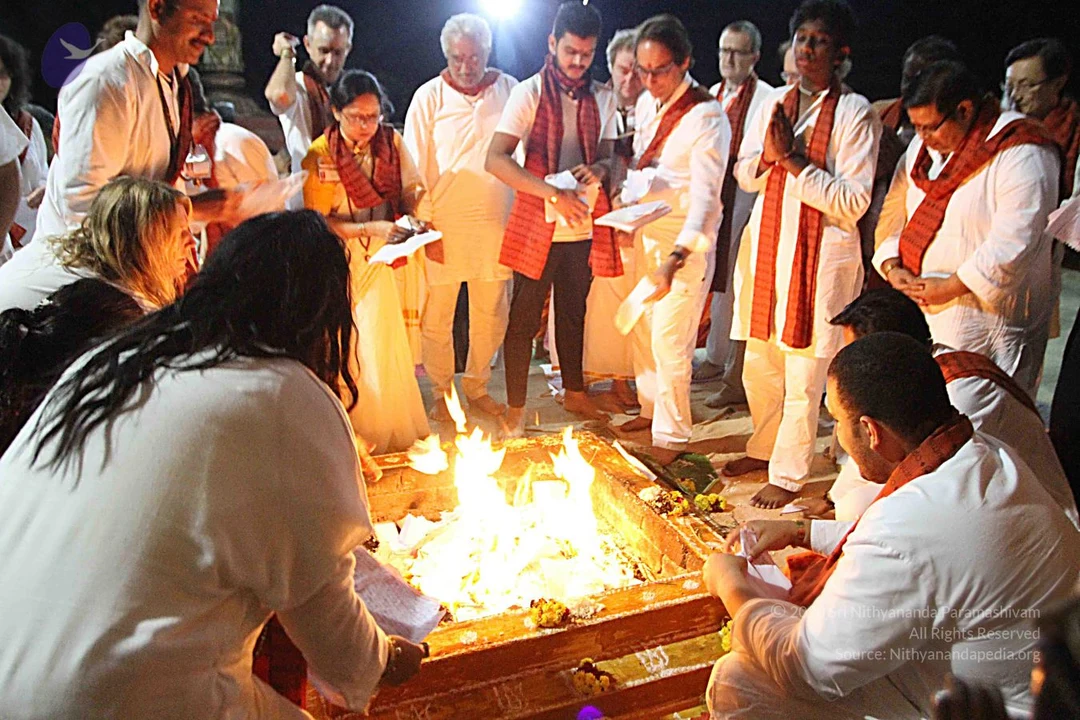
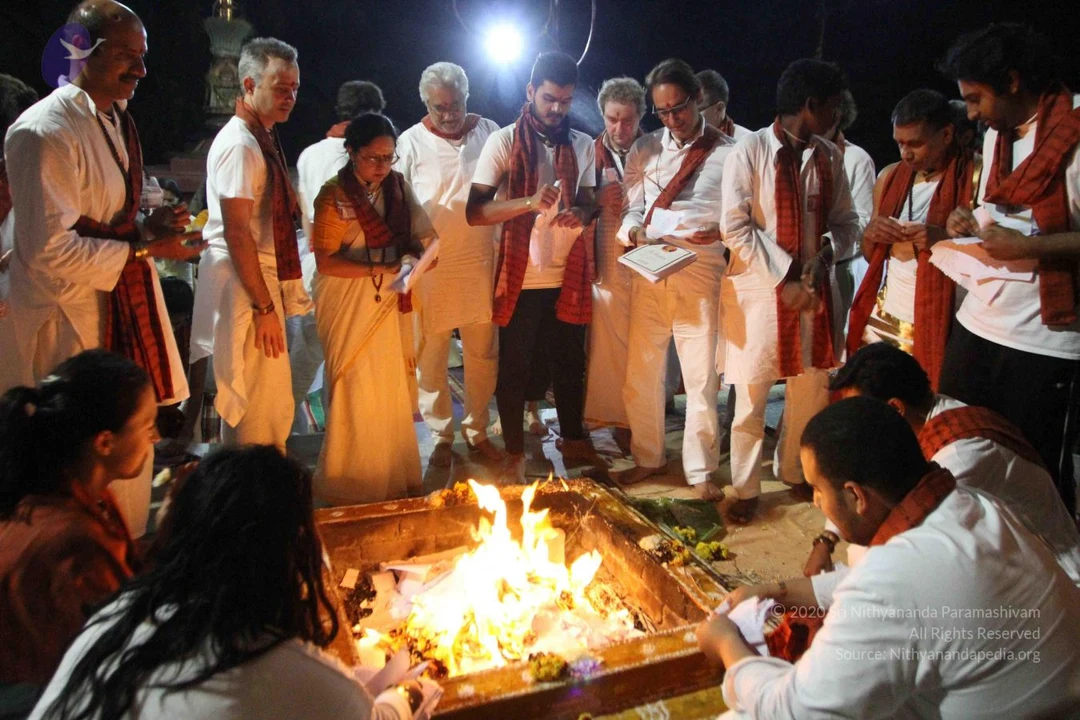
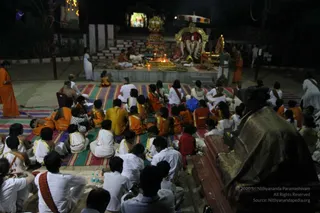
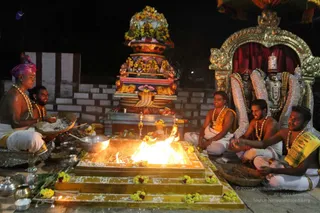
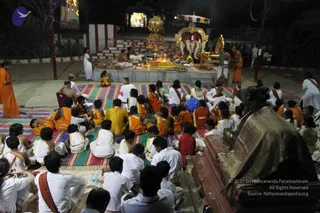
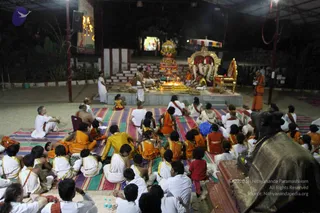
Night-time outdoor ritual with a large crowd seated on colourful striped mats facing a raised stone platform. A brass kalasha-style altar and a golden throne-like seat draped with white garlands sit at the centre, with a lit oil lamp and a small flame on the platform. Many devotees wear white dhotis and shirts, some with orange or saffron shawls, and a few wear yellow and red. In the right foreground, a large figure in a dark gold-embroidered shawl sits with his back to the camera beside a wooden bench. A priest in orange stands at the right edge, and a woman in white stands at the left. A lit screen shows an image in the background and string lights hang overhead.Night-time photograph of a homa fire ritual at an outdoor temple-like setting. A square fire pit with a bright flame sits in the foreground, decorated with yellow marigold flowers, with brass pots and bowls around it. Four men in white dhotis sit around it; the man on the left wears a purple turban and holds a leaf bowl of grains, while the others wear garlands and two wear orange-yellow shawls. Behind them stands a tall tiered kalasha-like offering structure decorated with flowers, lion figures and deity figures, and to the right an ornate silver-and-gold palanquin-style seat holds small deity murtis draped in garlands. White-and-red striped walls form the background.Night outdoor fire ritual at a temple-like setting. A fire blazes in a golden tiered homa pit decorated with yellow and orange flower garlands. Four men sit on the ground in white dhotis, bare-chested, wearing rudraksha-style beaded garlands; three have orange or yellow shawls. The man at left wears a purple turban and holds a brass plate of grains, while others feed offerings into the fire. Behind the pit stands a tiered decorated murti shrine with painted figures and lions, and at right an ornate silver-framed throne with red drapery holds a seated deity murti adorned with garlands. Brass vessels and flowers sit on the platform.A night-time homa fire ceremony in an open courtyard. A large wooden fire pit with a tiered, white-patterned base is ablaze, decorated with marigold flowers. A shirtless priest stands behind it, wearing a white dhoti and a long beaded necklace. Seated on a silver-edged platform to the right is a woman in a pink head wrap, a white sari with orange border and a long beaded garland, offering into the fire. Beside her a man in an orange shawl and orange-trimmed garland sits near brass vessels and offering bowls. Rows of seated devotees in white and saffron clothing fill a colourful striped mat behind them, and a dark deity murti stands in the background. Brass lamps and bowls rest on the foreground ground.

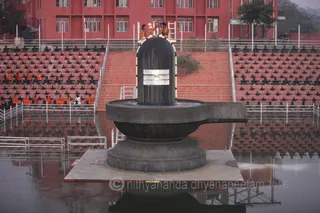
Rudra Abishekam

2 photosSource gallery
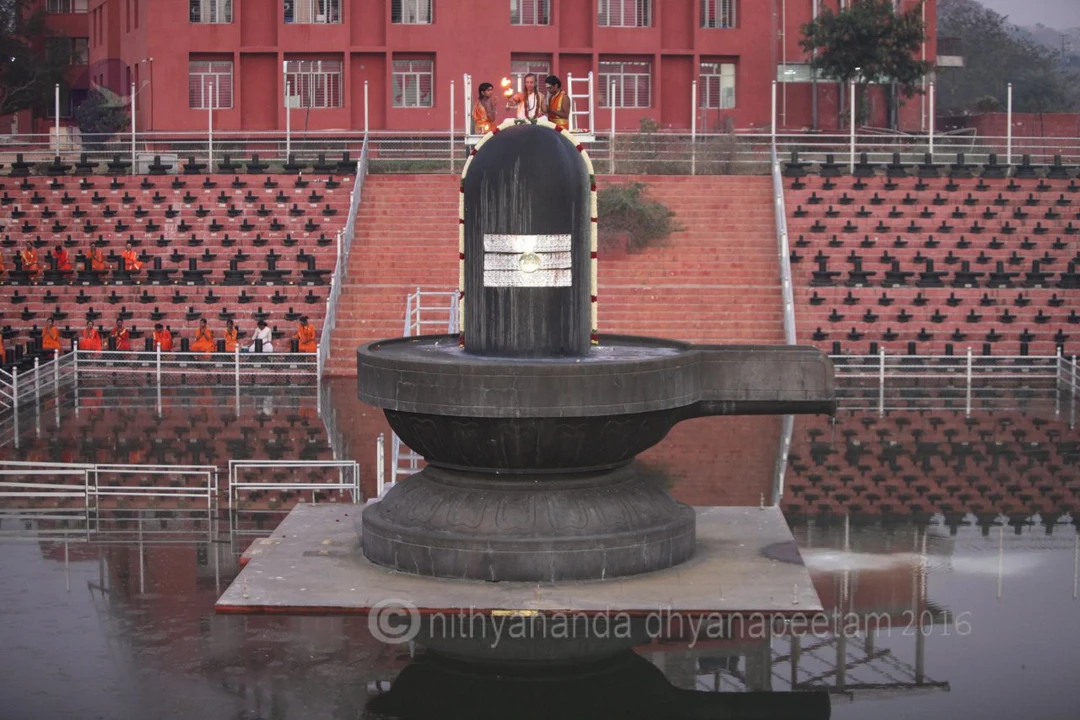
A large black stone lingam, dressed with a silver-coloured front panel with three horizontal bands and a central round emblem, is garlanded with white flower strings and red beads around its arched top. Three people stand on a raised platform above it: two in orange and saffron clothing and one bare-chested man with a white sacred thread, performing an abhishekam ritual. Behind them stand tiers of red brick steps and a red building with many windows, and a few people in orange sit on the lower steps at left. The dhyanapeetam 2016 appears across the lower areaA large black stone Shivalingam stands in shallow water on a raised stone platform with a spout-shaped yoni base, its surface streaked with water. Behind it, tiered red brick steps lined with rows of black seats rise toward a red multi-storey building. On a raised dais at the top of the steps, three people in orange and saffron clothing stand around a small flame, with a dark-clothed figure at the centre. Rows of seated people in orange garments fill the left side of the seating area. Scene suggests an early-morning abhishekam at the Shivalingam with a lamp offering.

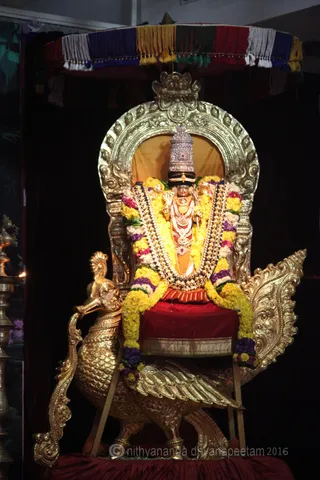
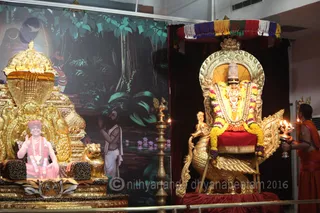
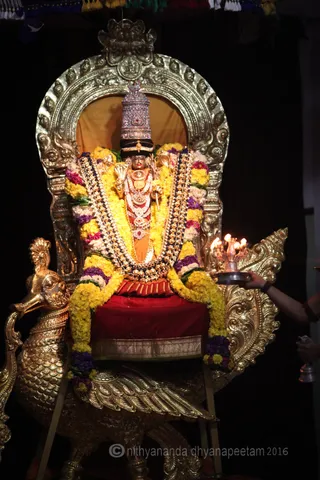
Rajarajeshwari Brahmotsavam - Aarti

3 photosSource gallery
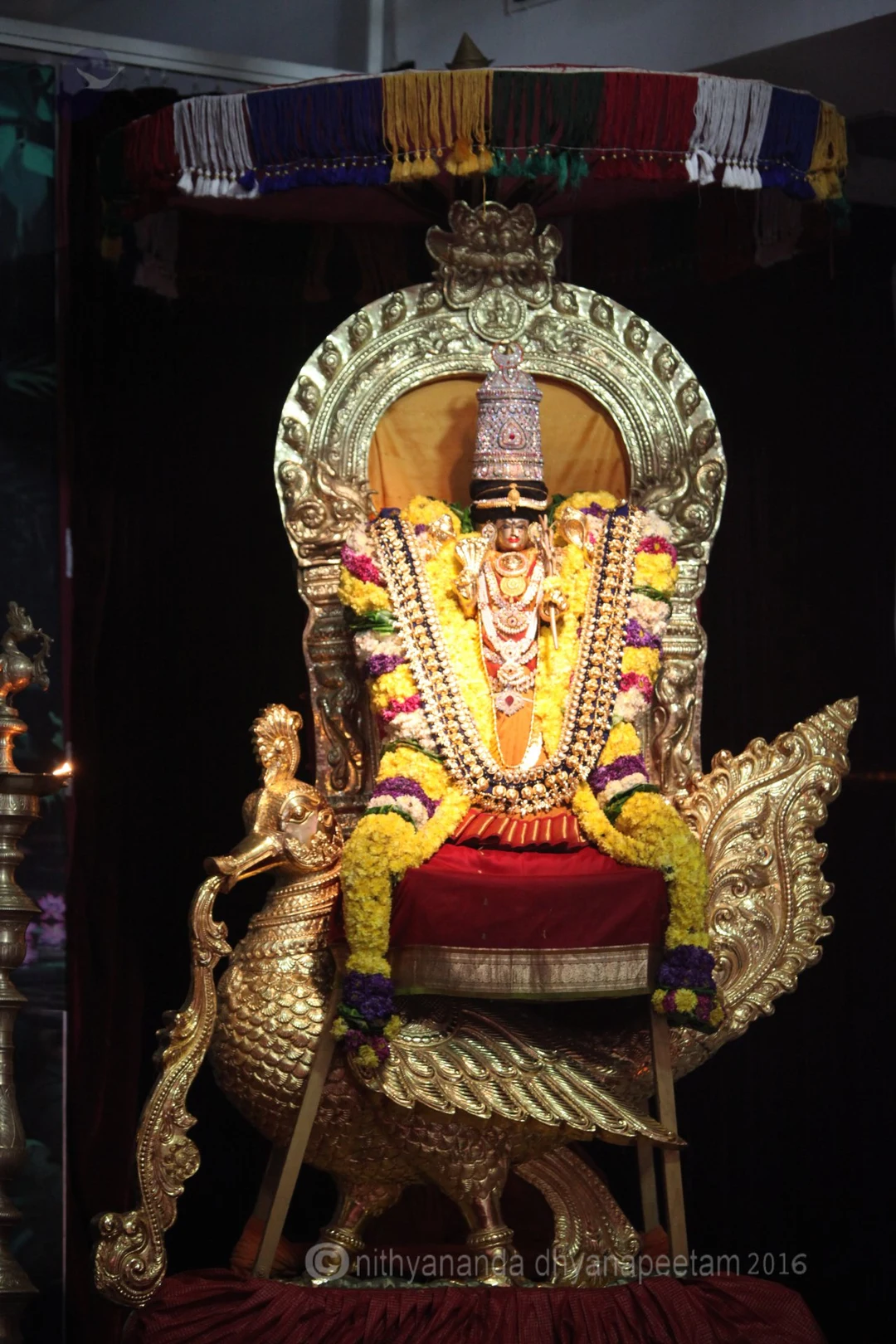
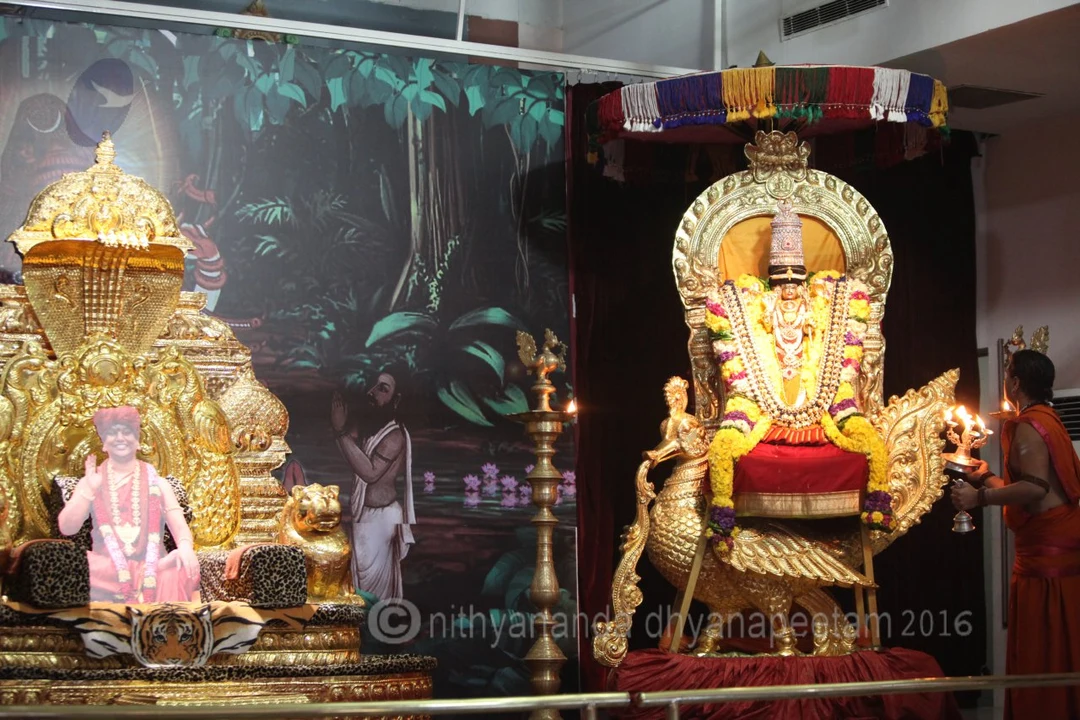
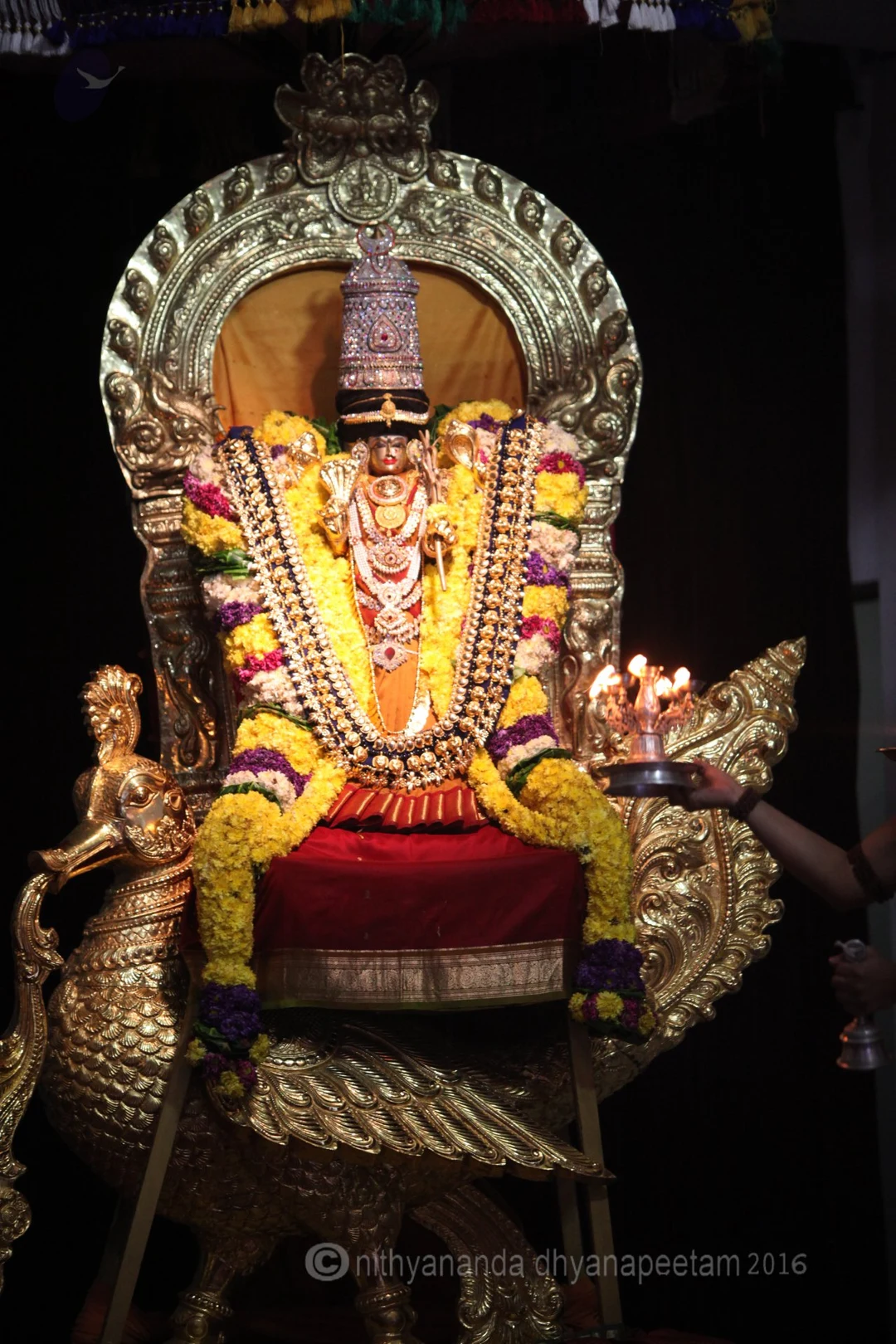
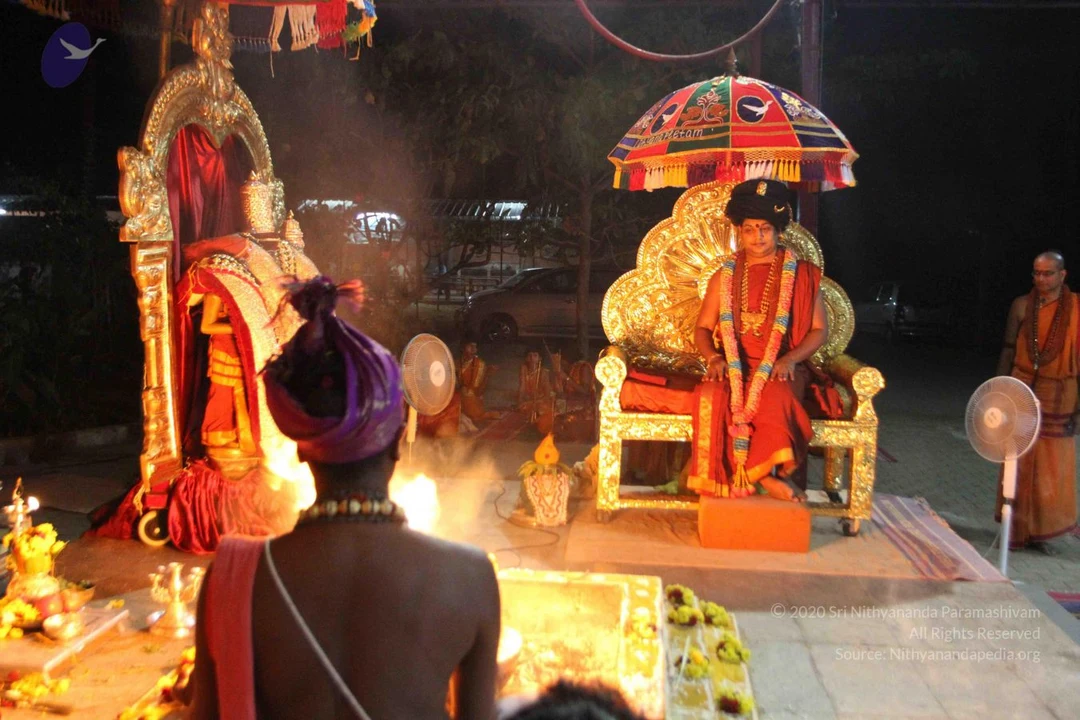
A decorated deity murti of Murugan sits on a golden peacock-shaped throne with an ornate silver-gold arched backrest and a striped fringed canopy above. The figure wears a tall jewelled crown, layered gold necklaces, and is draped with yellow and purple flower garlands and a beaded necklace. A brass oil lamp stands at the left edge. No physical people are visible, and no a person candidate appears in this image.Indoor temple-hall scene with a golden deity murti seated on an ornate gold peetha with a swan-like vahana base, decorated with marigold and multicoloured garlands and a golden crown. A priest in orange robes stands at right holding a lit oil lamp and bell, performing aarti. At left, a gilded throne with a cobra-hood canopy holds a painted cutout or portrait figure of a seated saint in pink robes and pink head cloth with garlands, resting on a leopard and tiger-skin cloth. A painted forest backdrop shows a bearded figure with folded hands beside a pond with lotuses. Oil lamps and a brass lamp stand are on the floor.A photograph of a deity murti seated on an ornate gilded peacock throne with an arched silver-gold backrest. The murti wears a tall jewelled crown, a long layered garland of gold and pearl necklaces, and a thick yellow and purple flower garland draped over its shoulders and body, with a red cloth seat beneath. A hand at the right edge holds a lit multi-wick oil lamp (aarti), flames visible against a dark background. No people are clearly visible in the scene apart from the partial hand.

Healers-Initiation

31 photosSource gallery
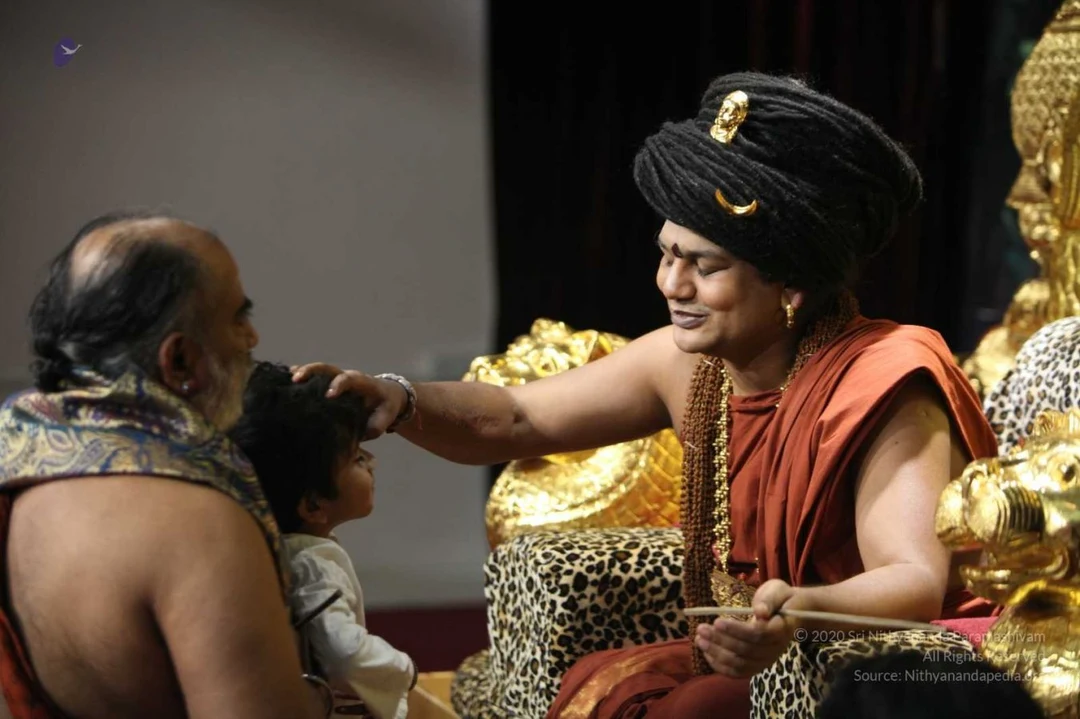
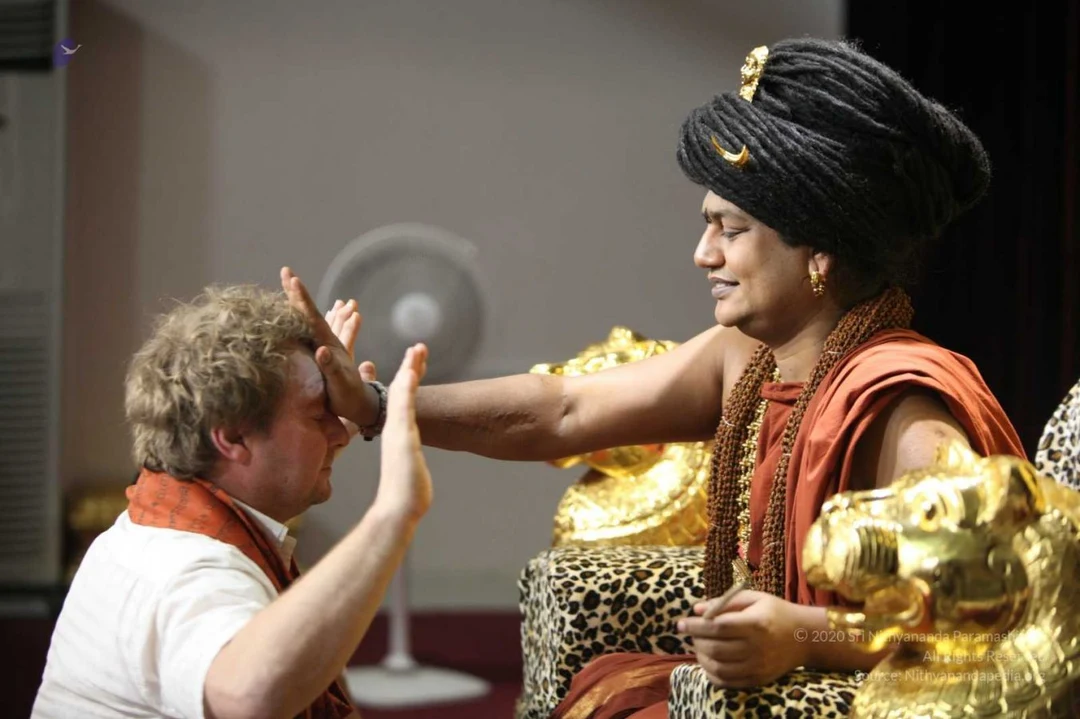
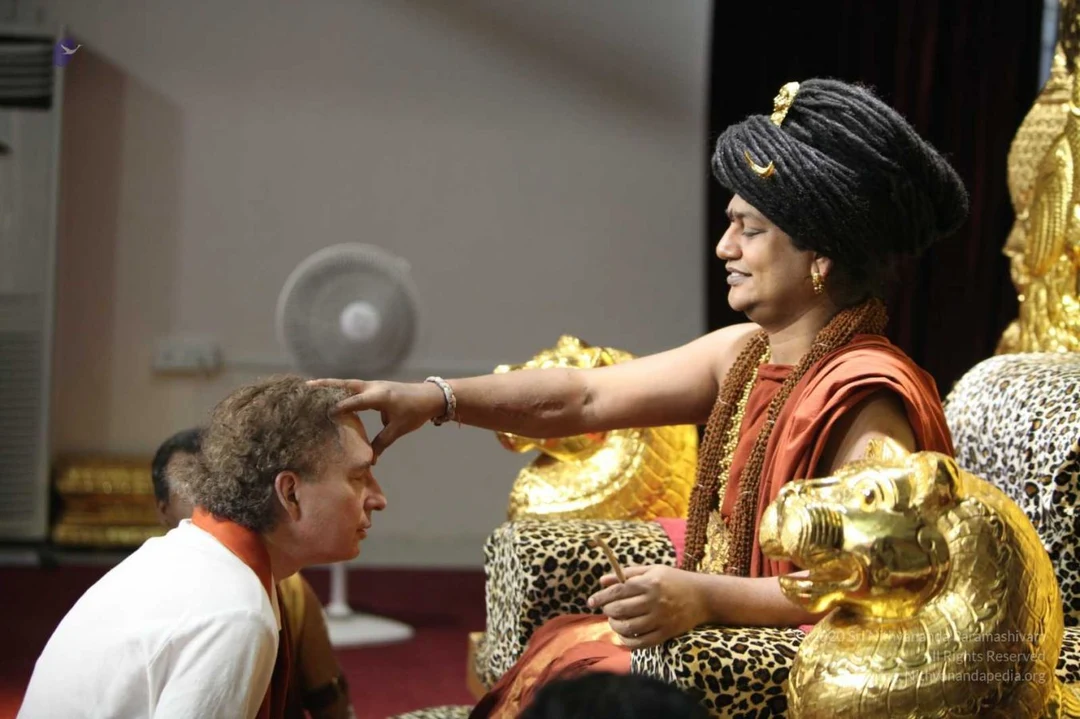
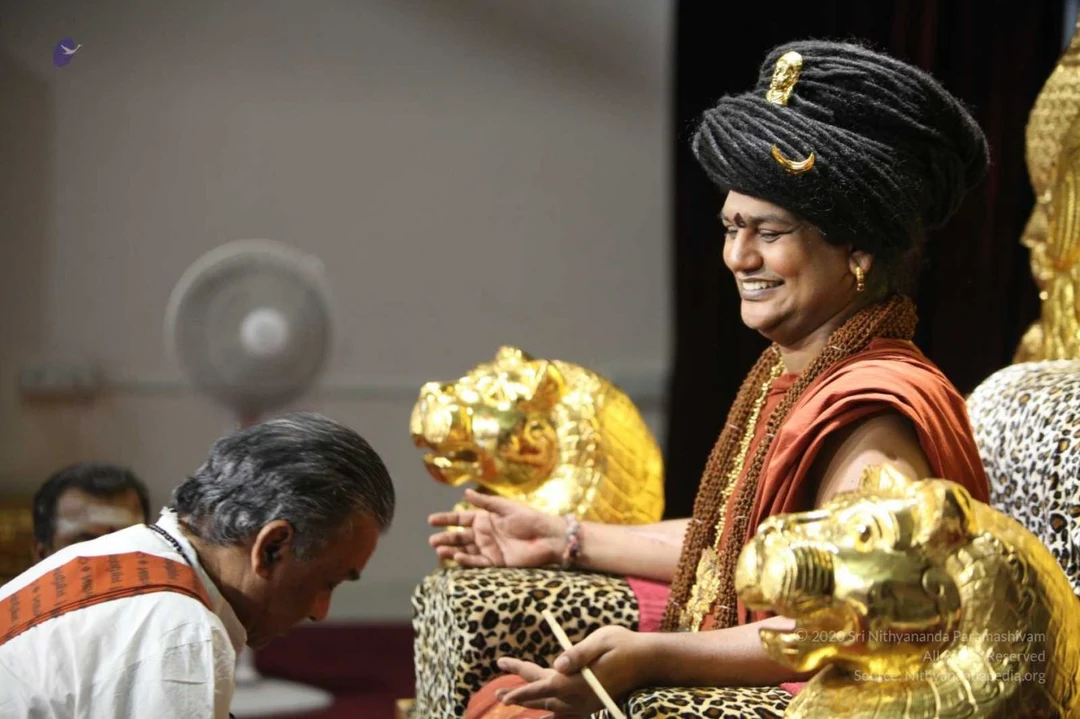
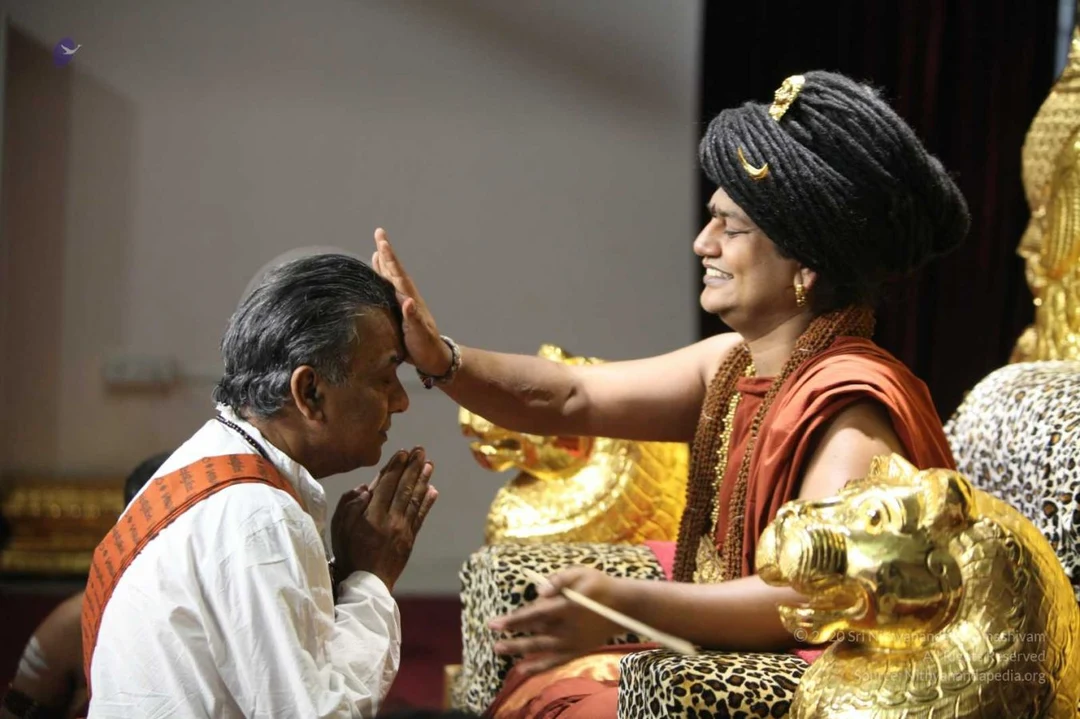
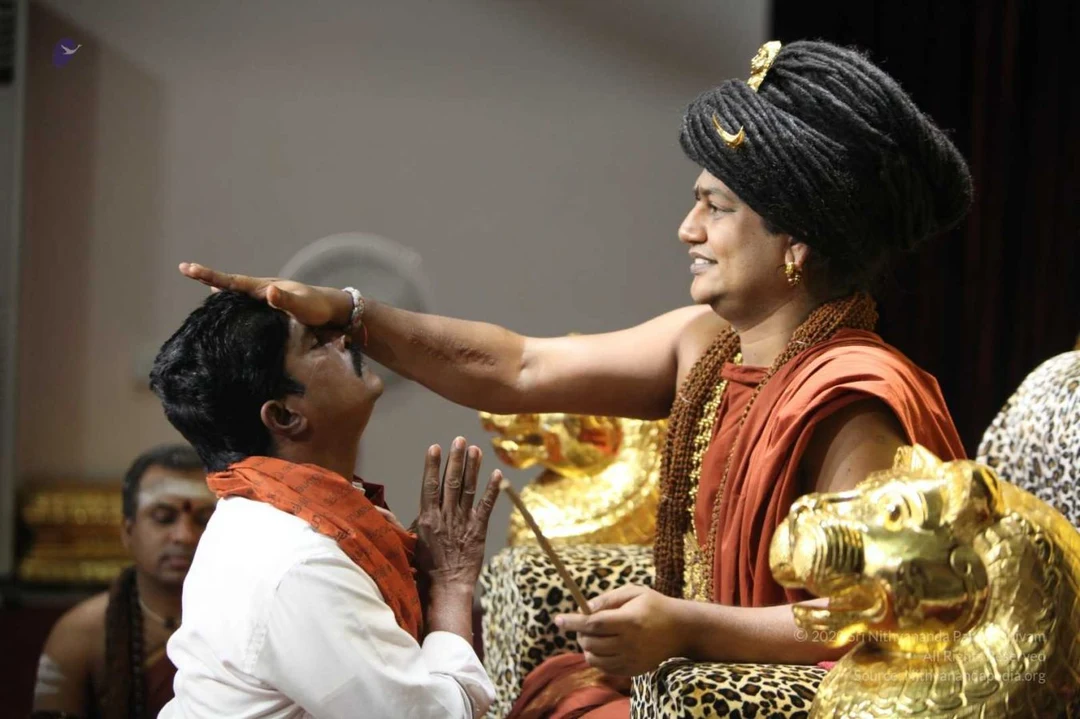
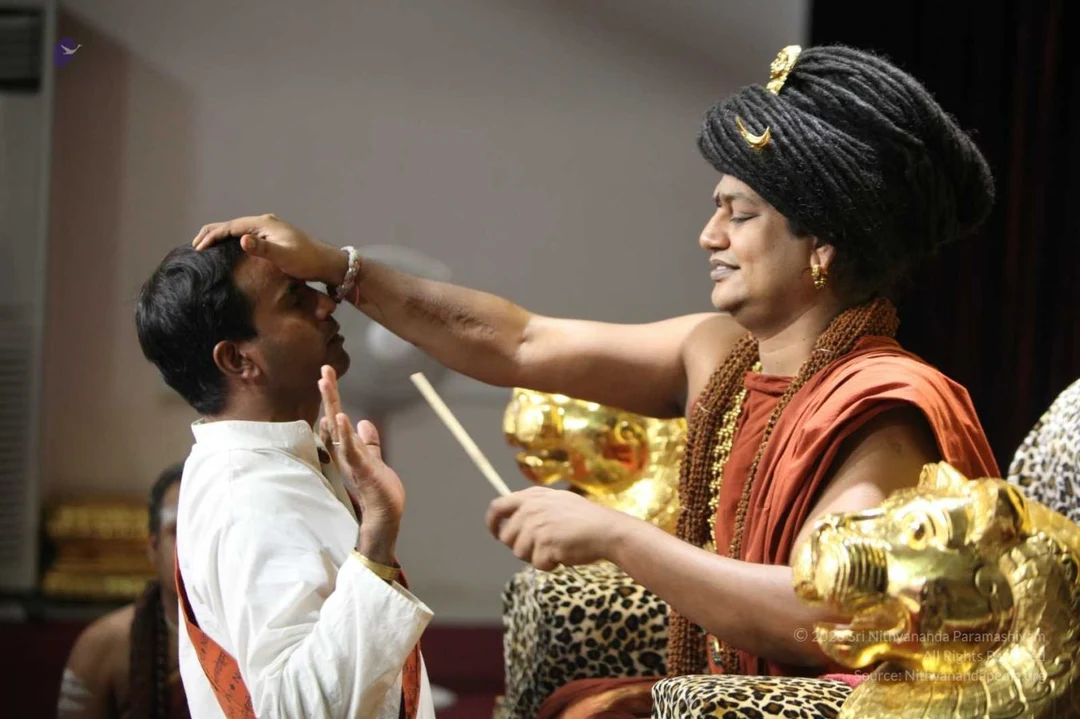
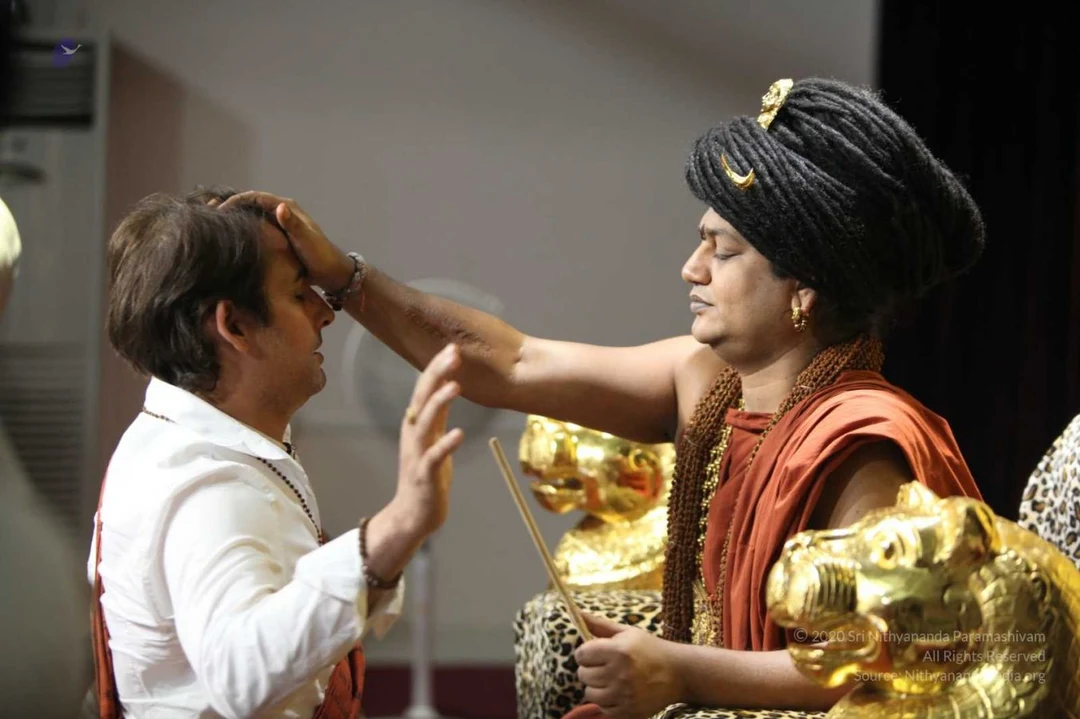
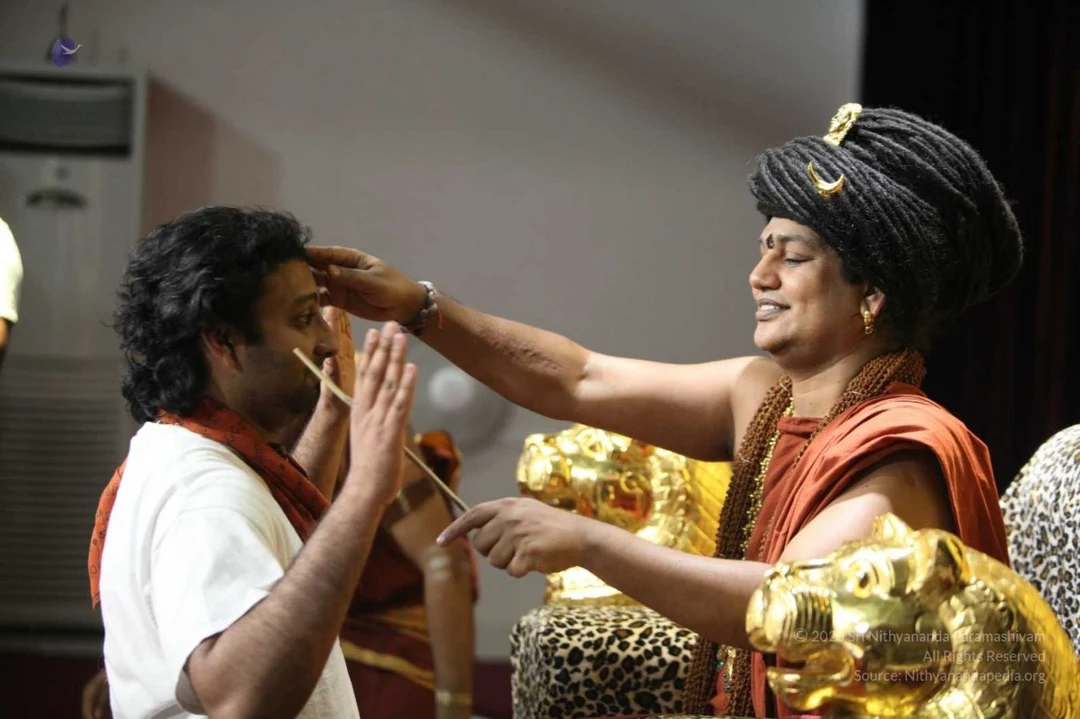
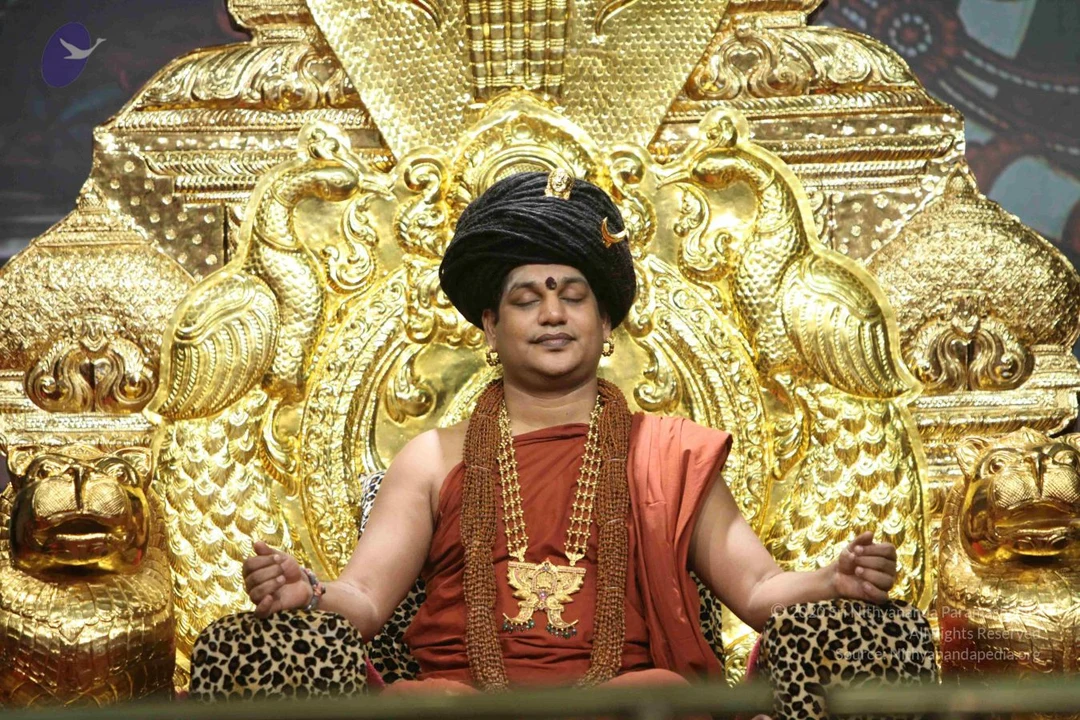
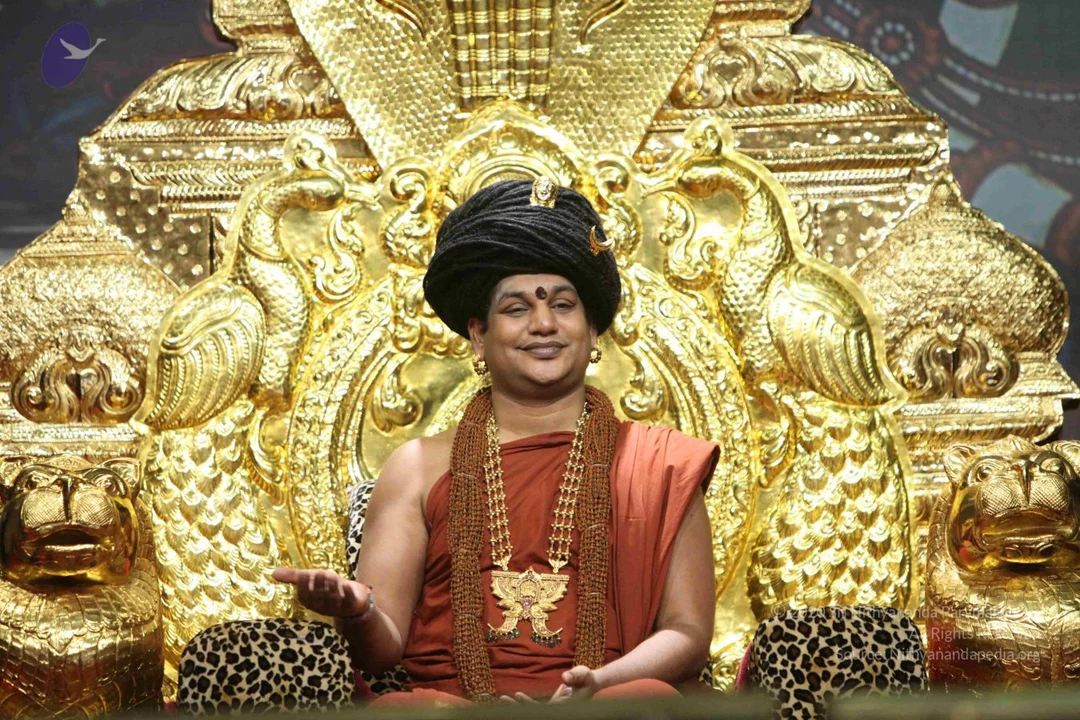
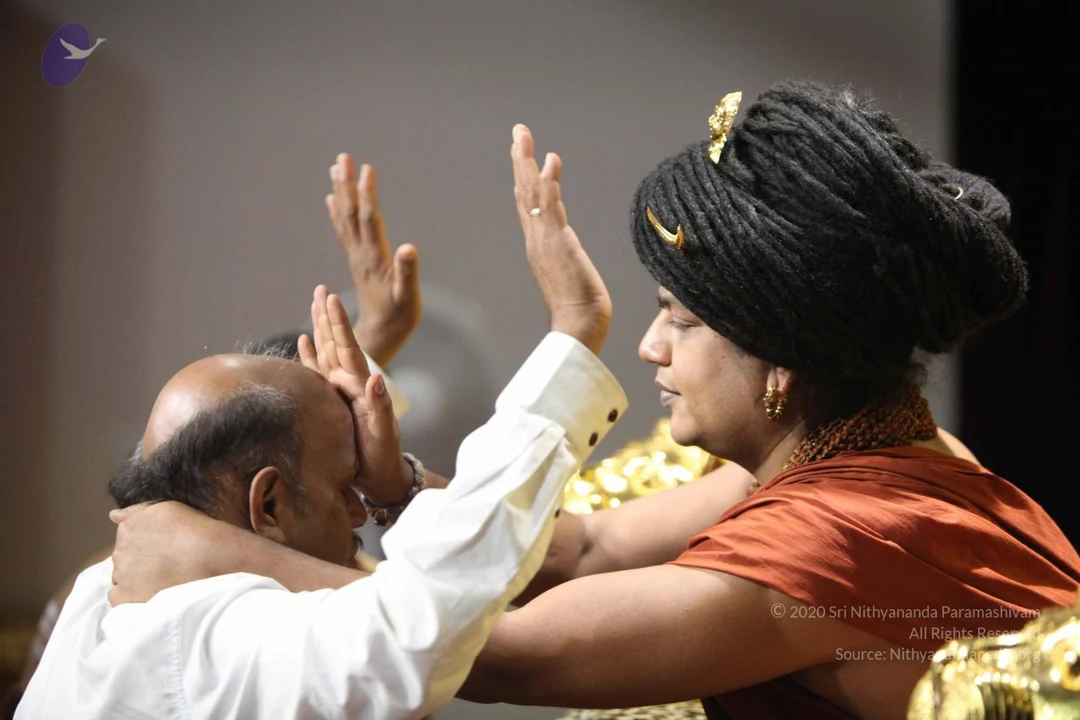
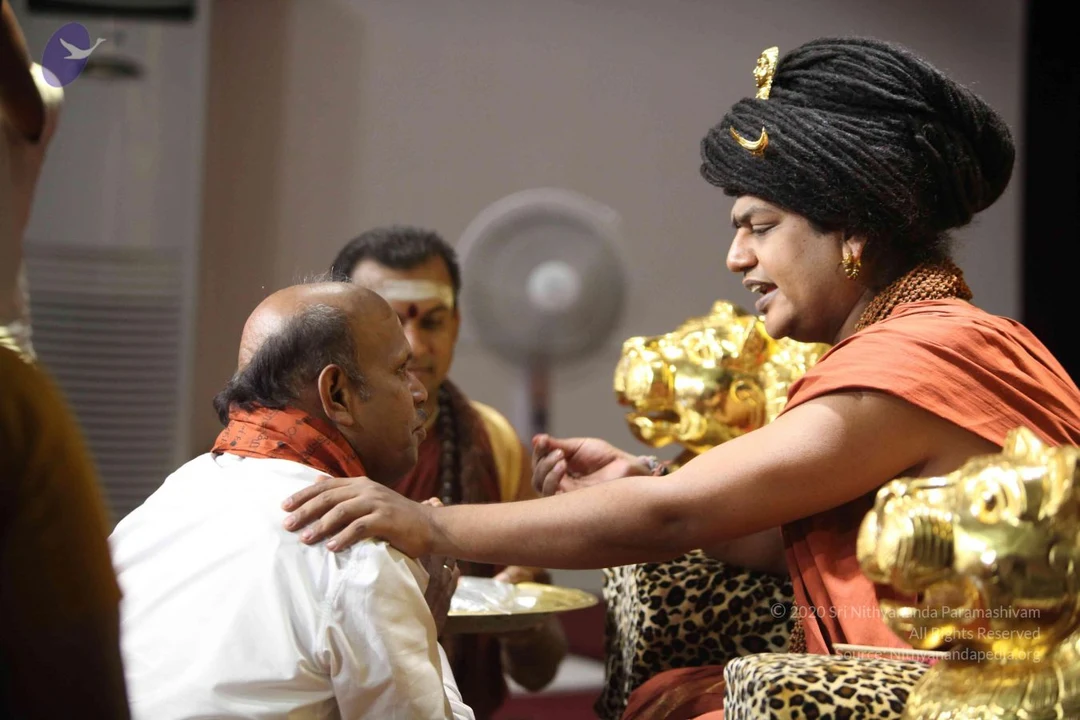
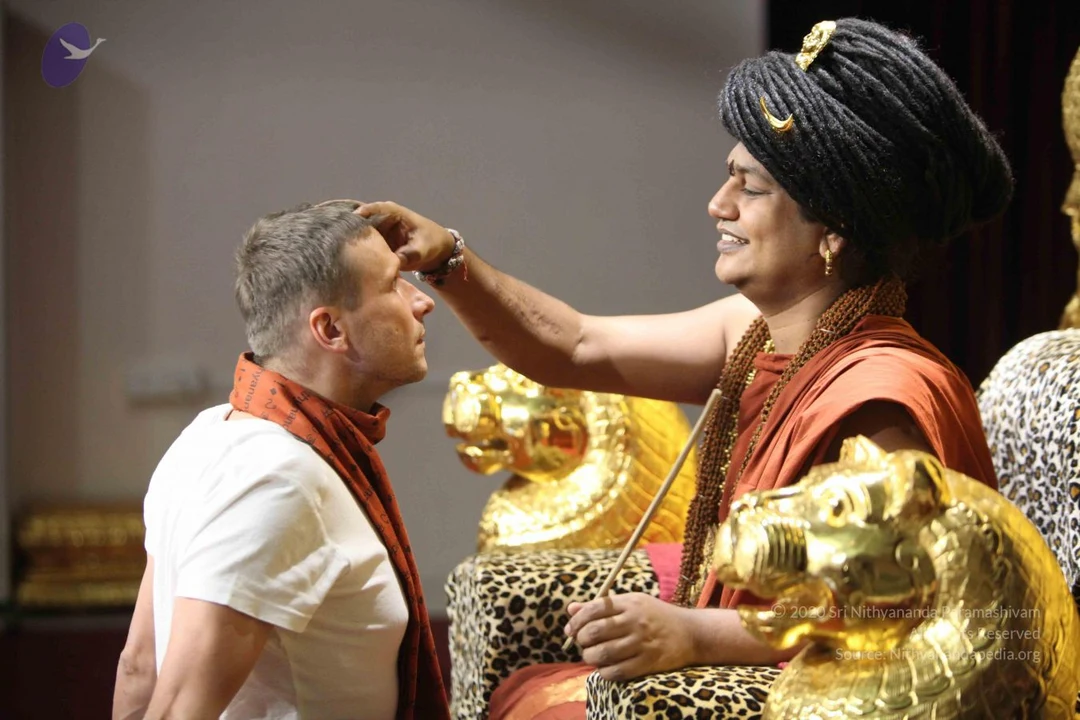
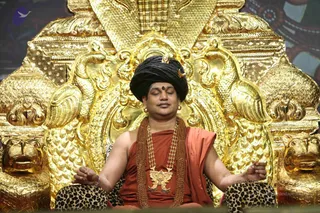
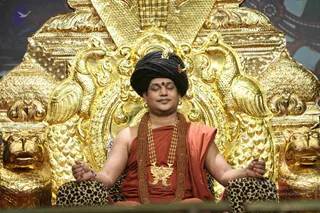
A seated man with eyes closed and palms pressed together in anjali mudra sits on an ornate golden throne carved with lion heads and serpent motifs. He wears a black turban with a crescent ornament, an orange-red robe, a rudraksha mala and a large gold ceremonial necklace with a pendant. Leopard-print cushions frame the throne, and a red bindi marks his forehead. The setting suggests a formal satsang or darshan on a raised peetha.A seated man in a black turban and saffron-orange robe sits on an ornate gold throne carved with serpents and lion heads, with leopard-print cushions beneath him. He wears layered rudraksha malas and a gold pendant necklace, and holds his hands open in front of him while speaking. A small red bindi marks his forehead. The throne's golden kirtimukha-style carvings fill the background, and a decorative backdrop is partly visible. Appearance cues are consistent with the a person candidate, though the page does not state his presence at this event, so identity is uncertain.A man seated cross-legged in meditation on an ornate gold throne carved with serpent heads and lion-faced armrests, draped with leopard-print cushions. He wears a black turban with a small gold crescent ornament, an orange-saffron robe, layered rudraksha malas and a gold pendant. His eyes are closed and his hands rest in mudra gestures. A small red bindi marks his forehead. Behind him is a gold carved backdrop and a painted panel. Appearance is consistent with a person seated on his throne, but the page does not confirm his presence, so identity is uncertain.A seated figure with eyes closed sits in meditation on an ornate golden throne carved with lions, serpent-like scrollwork and floral motifs. He wears a black turban with gold ornaments, an orange-red robe, multiple strands of rudraksha-style beads, and a gold pendant of a bird-like deity figure. His hands rest open on the knees, which are covered by leopard-print cushions. The figure is one physical person seated centrally in front of the throne.A man seated on an ornate gold throne with carved serpent-like arms and lion-head armrests, wearing a black turban with a small gold ornament, a red-orange robe, layered rudraksha mala beads and a long gold necklace with a pendant. He has a red bindi, gestures with one open hand, and sits on leopard-print cushions. The backdrop is a gold-decorated throne with a colourful painted panel.Photo of a seated man on an ornate gilded throne carved with lion heads and floral scrollwork. He wears a black turban with a small gold ornament, a red-orange robe draped over one shoulder, a rudraksha mala and a long gold pendant necklace, and a red bindi on his forehead. He sits on a leopard-print cushion with his hands folded in his lap. One physical person is visible.

Rudra-Homa

43 photosSource gallery
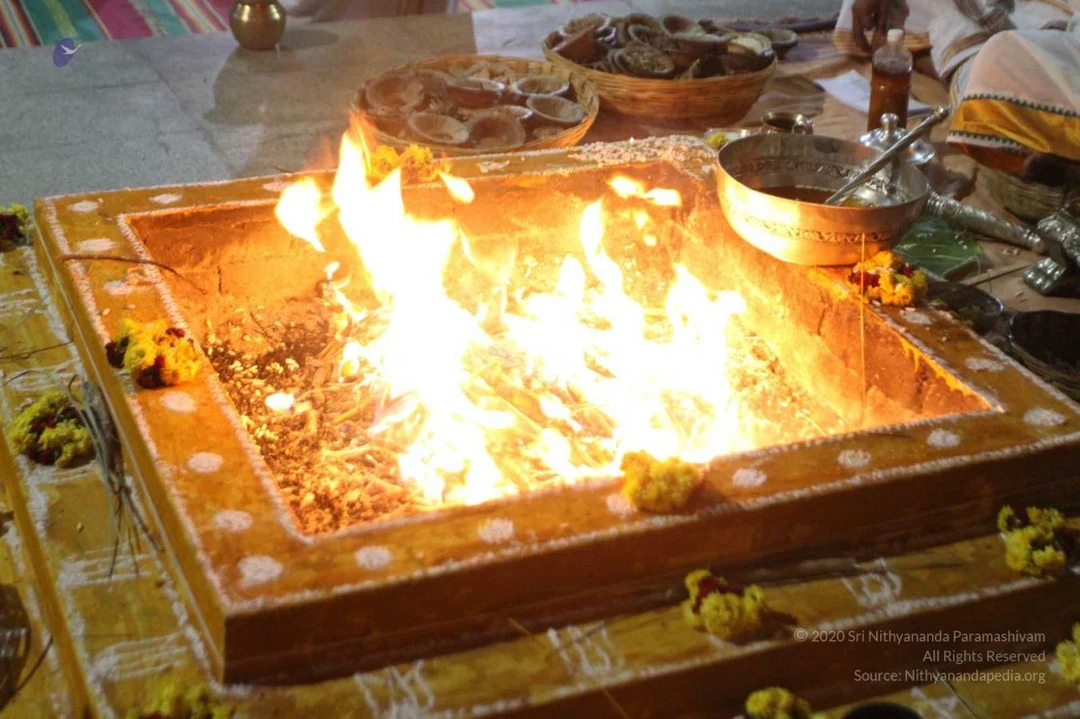
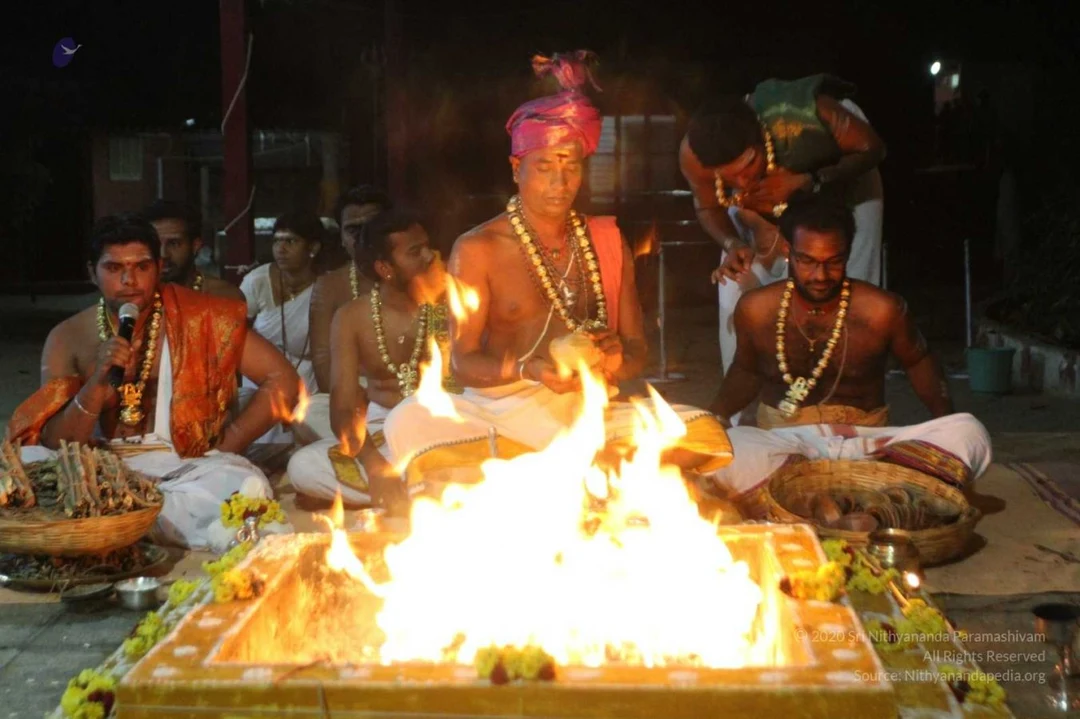
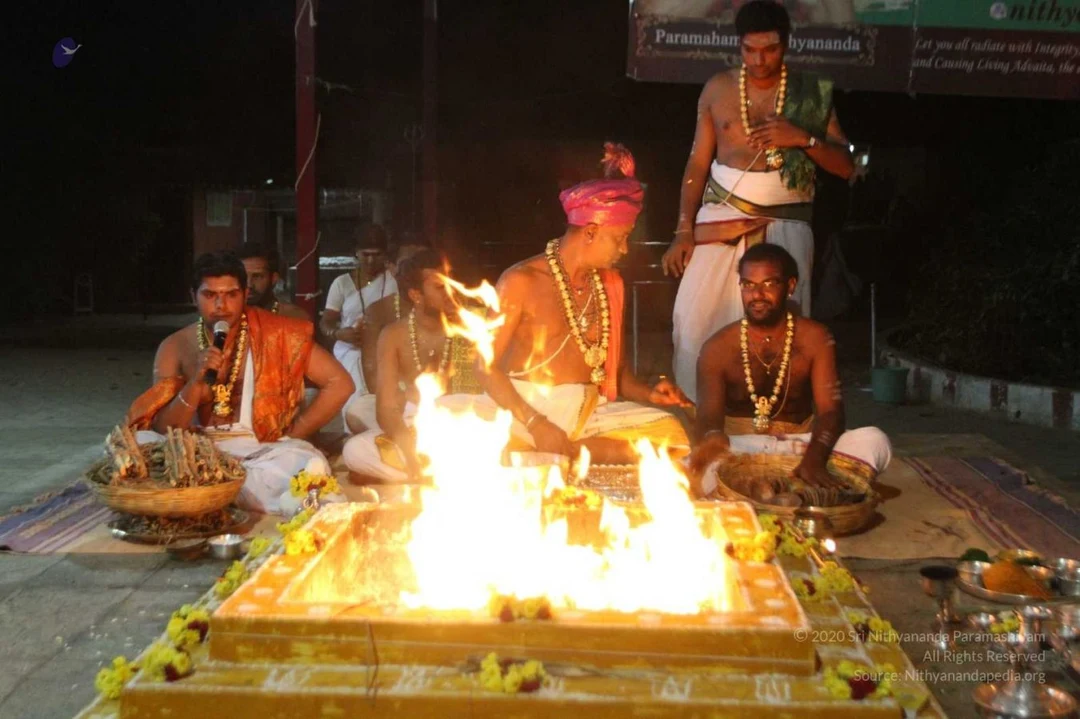
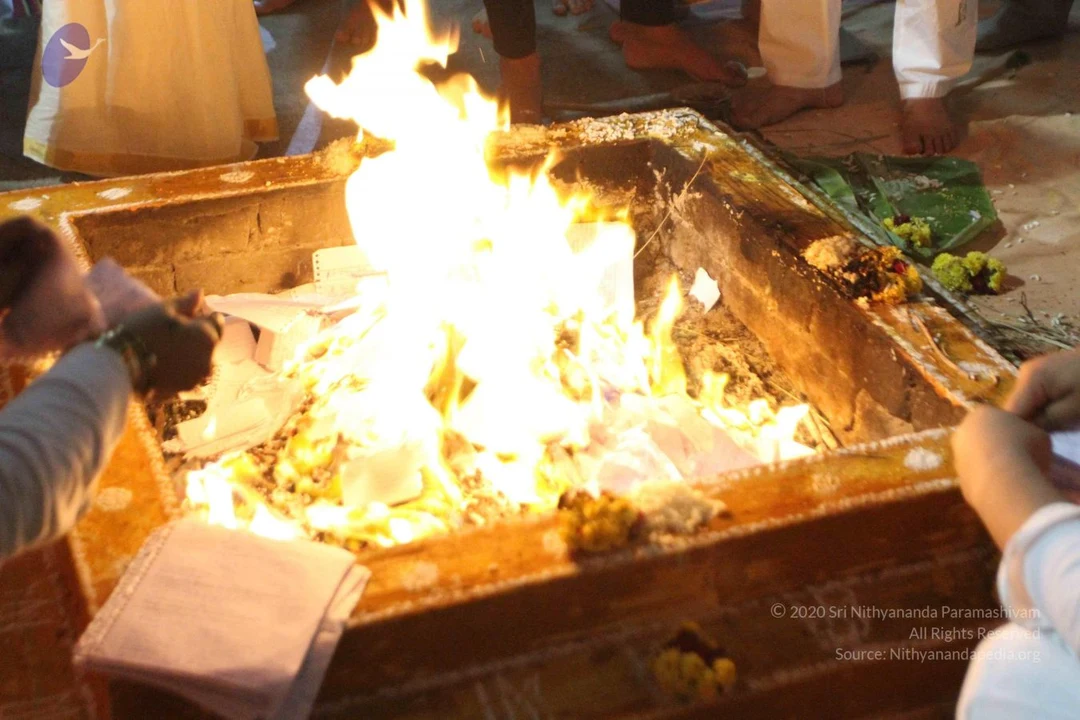
A night-time outdoor ritual at an open courtyard temple, with an ornate golden palanquin-style altar holding a deity murti decorated with flower garlands. A tall lit oil lamp stands before it, and a lit kalasha-like vessel sits nearby. Many people sit on a striped multicoloured mat in rows: some in saffron and orange robes, others in white dhotis and shawls, and several children. In the foreground, a dark-stoned seated figure in a gold-bordered shawl faces the scene. Priests in orange and white stand near the altar, and a woman in white stands at left, appearing to conduct the puja or aarti. No readable name or event title is visible in the scene.Night-time ritual gathering in an open pavilion, with a central fire pit or homa altar glowing in the foreground. Dozens of seated participants on striped mats wear white dhotis, saffron and orange robes, and some have bare upper bodies with sacred threads. A priest in saffron robes stands at the right beside an ornate golden throne draped with garlands and a red cloth. Behind the altar, a decorated deity murti stands on a raised dais, with brass lamps and offerings. Hanging oil lamps light the back of the pavilion, and a large dark stone or metal figure with a patterned shawl sits in the right foreground.Night-time homa at a temple-style outdoor setting. A golden fire pit with a large open flame sits in the foreground, surrounded by yellow and red flower garlands. Behind it stands a tiered, ornately decorated pedestal with lion figures and flower garlands, and to the right a silver-framed canopied palanquin or peetha holds a silver-clad deity murti draped in garlands. Four men sit on the ground: at left a man in a pink-and-purple turban and white dhoti holds a bowl of offerings beside a plate, another in white with a rudraksha-style garland assists; at right, two men in orange and white dhotis wear flower garlands and sit near the fire. Silver vessels and plates of fruit and flowers are arranged at the front.Night outdoor fire ritual (homa/yagna) at a temple-style courtyard. A raised golden square fire pit with a large open flame sits in the foreground, decorated with yellow flower petals. Behind it stands a tiered shrine of lion-supported pillars, painted red, pink and blue and draped with yellow marigold garlands. At right, an ornate gold arch frames a silver-decorated deity murti with garlands. Four men sit on the ground in white dhotis, bare-chested, wearing marigold garlands; one in a purple turban at left tosses offerings into a bowl beside metal vessels and brass pots; another at right, in a yellow shawl, feeds the fire. Five people are visible.A photograph of a homa fire pit in a rectangular brick-and-clay altar bordered with white dot patterns and strewn with yellow marigold flowers. Flames rise from burning wood and offerings inside the pit. Behind it, a woven basket holds small clay lamps, a brass bowl with a ladle sits on the altar, and a bottle and a person's white-and-yellow cloth are partly visible at the top right. No people are clearly visible in the frame except partially seen limbs at the edge. Dark photo, outdoor or open hall setting.A night-time homa in progress at a square fire pit lined with yellow and orange marigold garlands. A central priest, bare-chested with a pink turban and many marigold garlands, sits cross-legged before a tall flame and tosses offerings into it. Beside him, a man in an orange shawl and white dhoti speaks into a handheld microphone and holds a basket of wood sticks. Other bare-chested men in white dhotis and garlands sit around the fire, and a man in a green cloth bends forward at the back. Baskets of offerings and small brass vessels rest on the ground.

IA-mandalaprocess

56 photosSource gallery
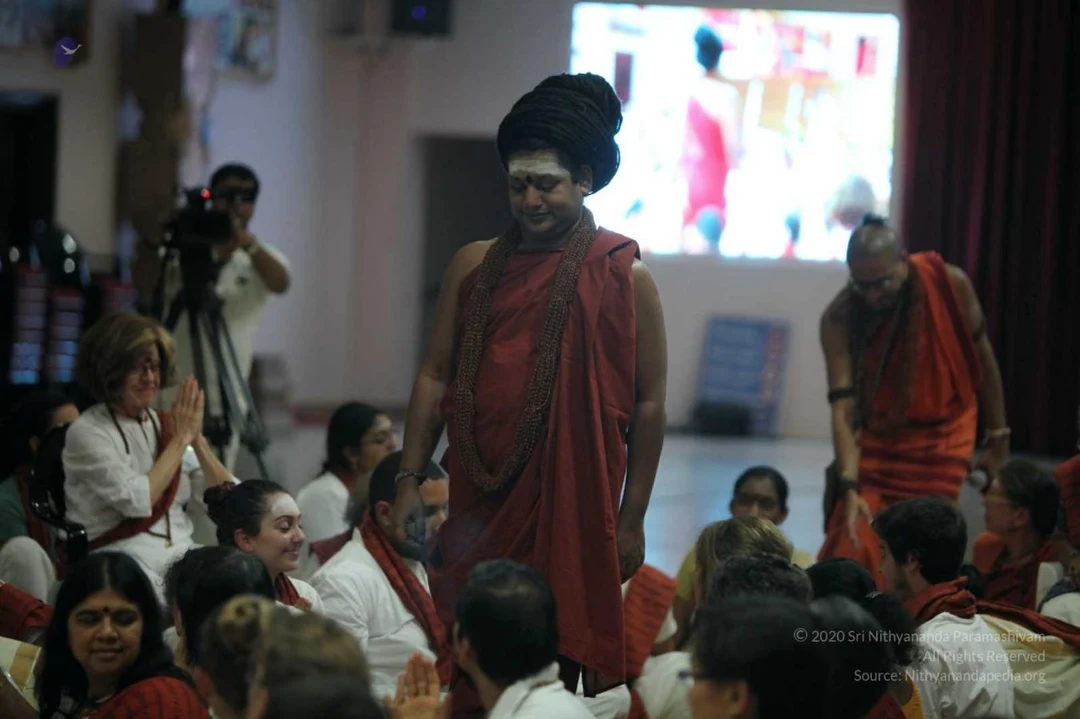
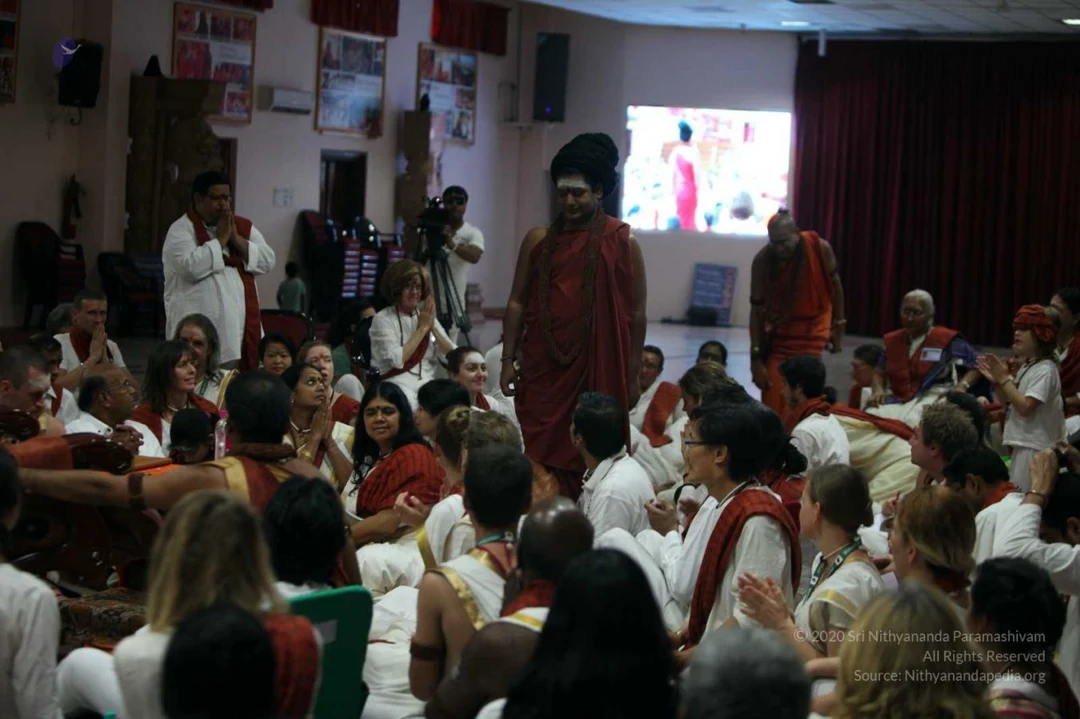
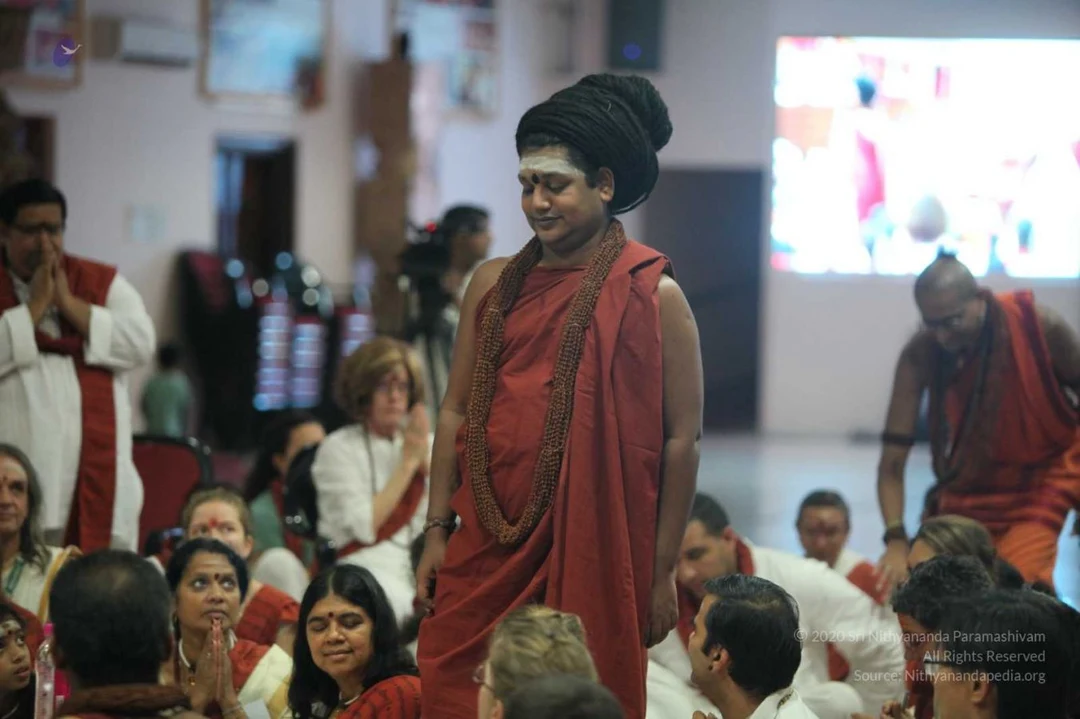
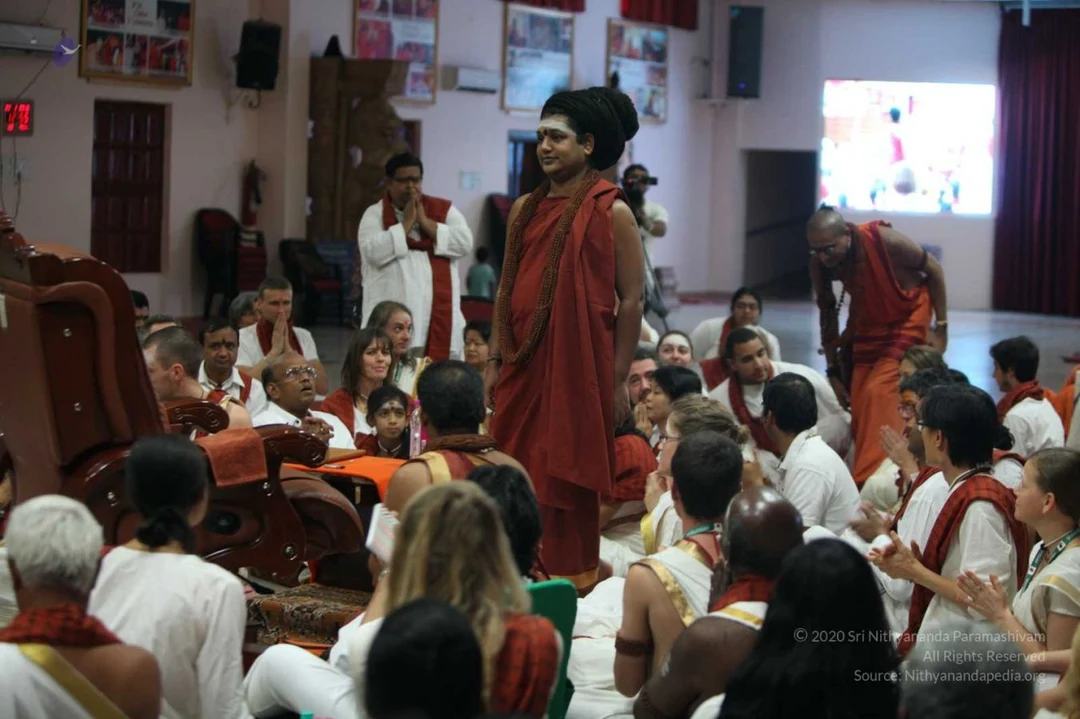
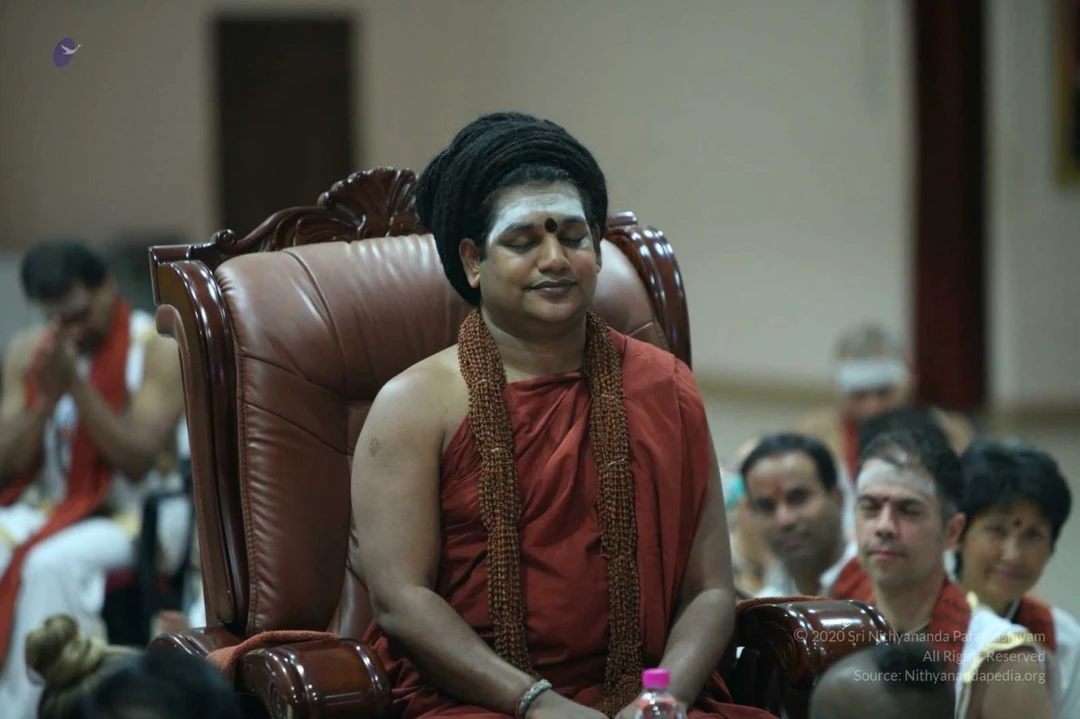
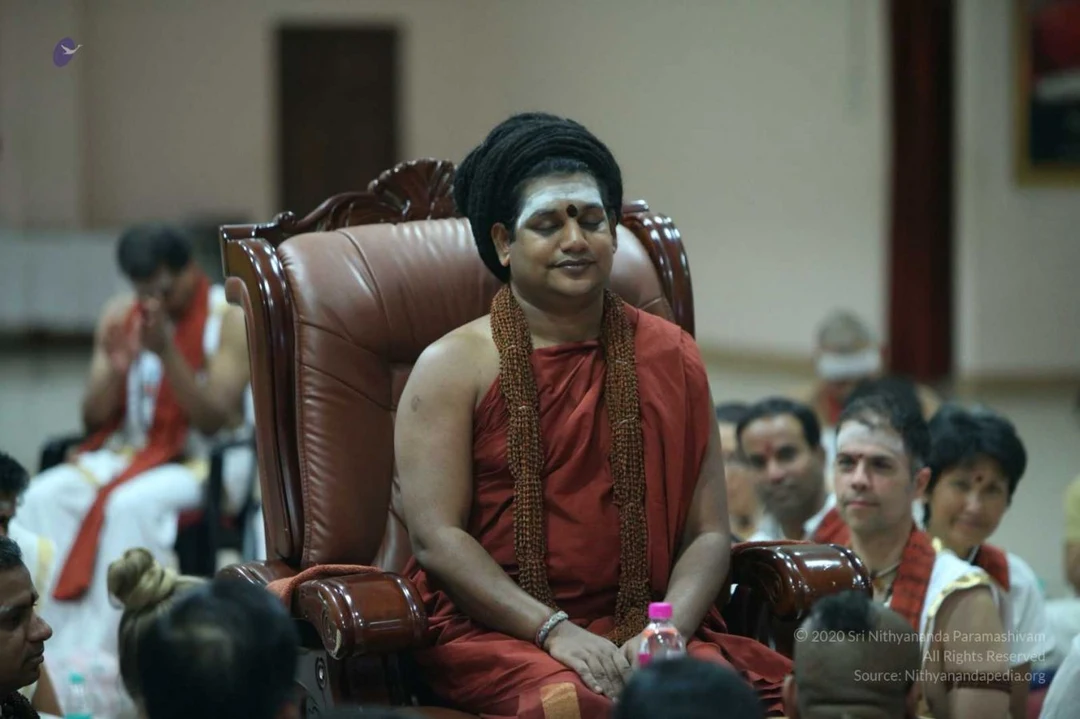
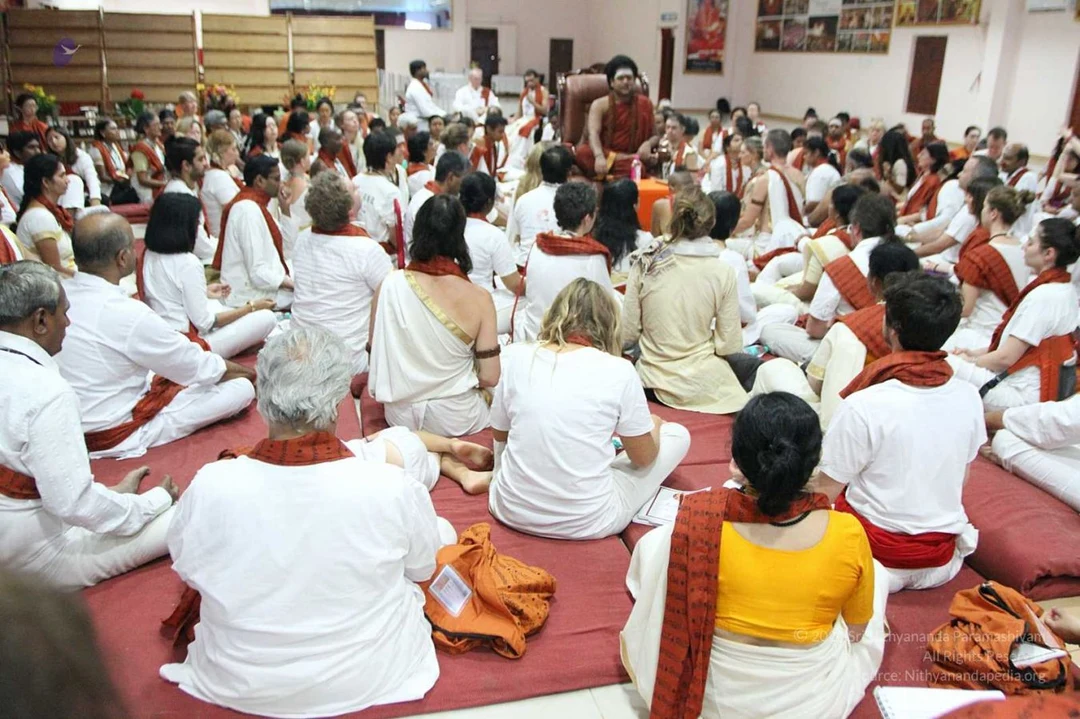
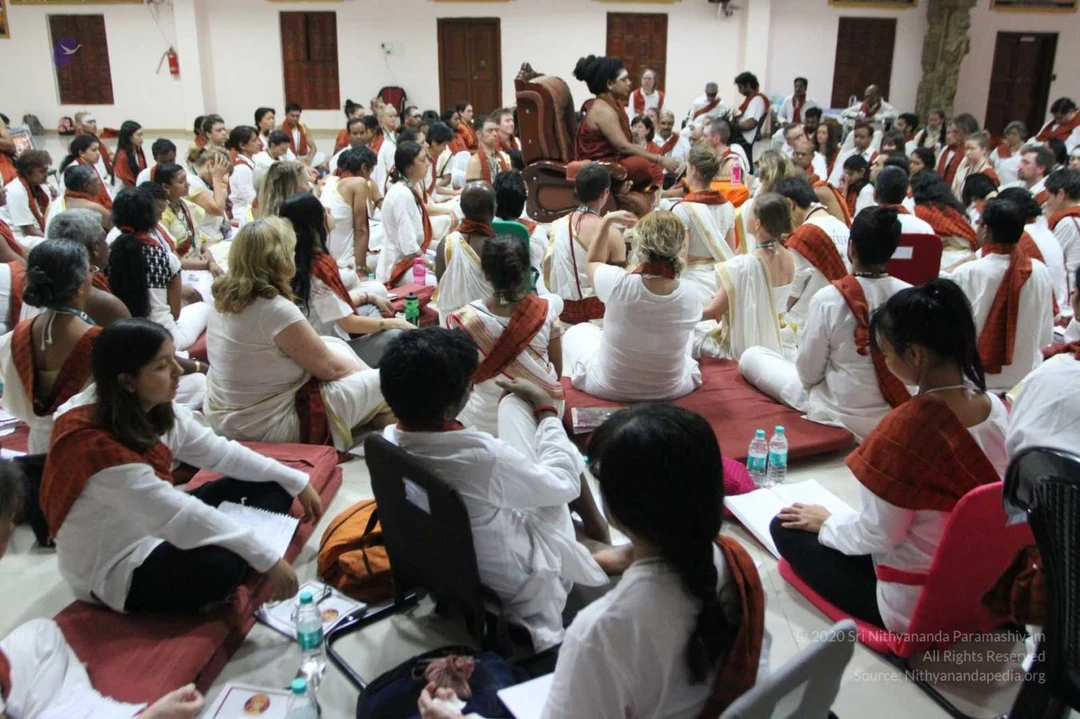
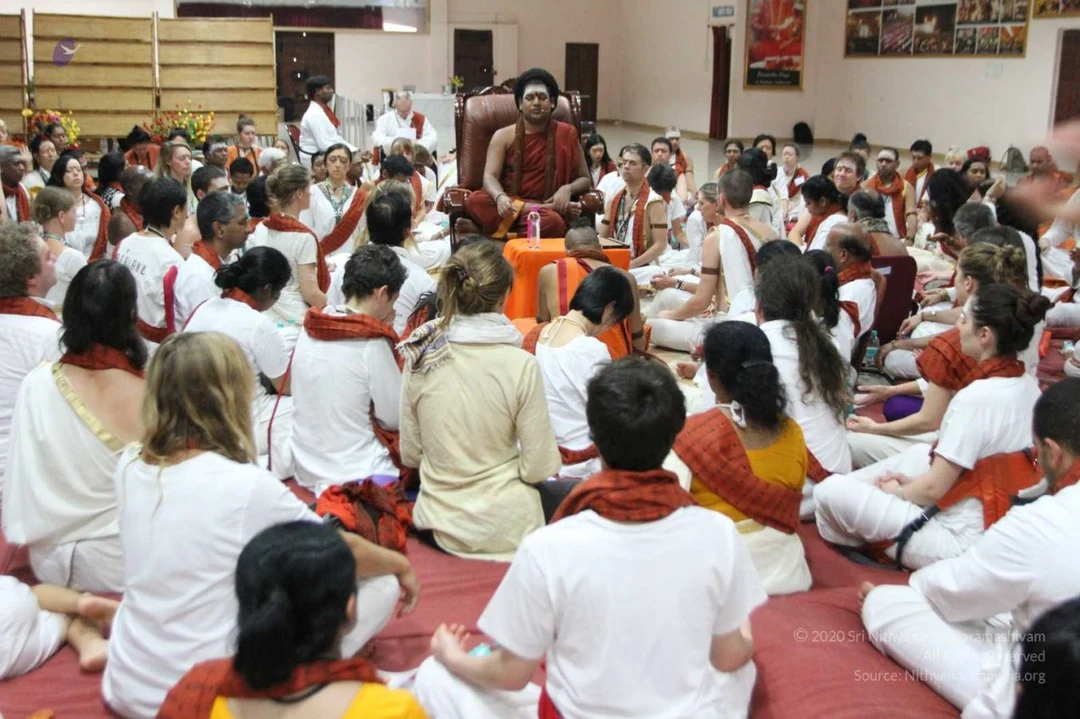
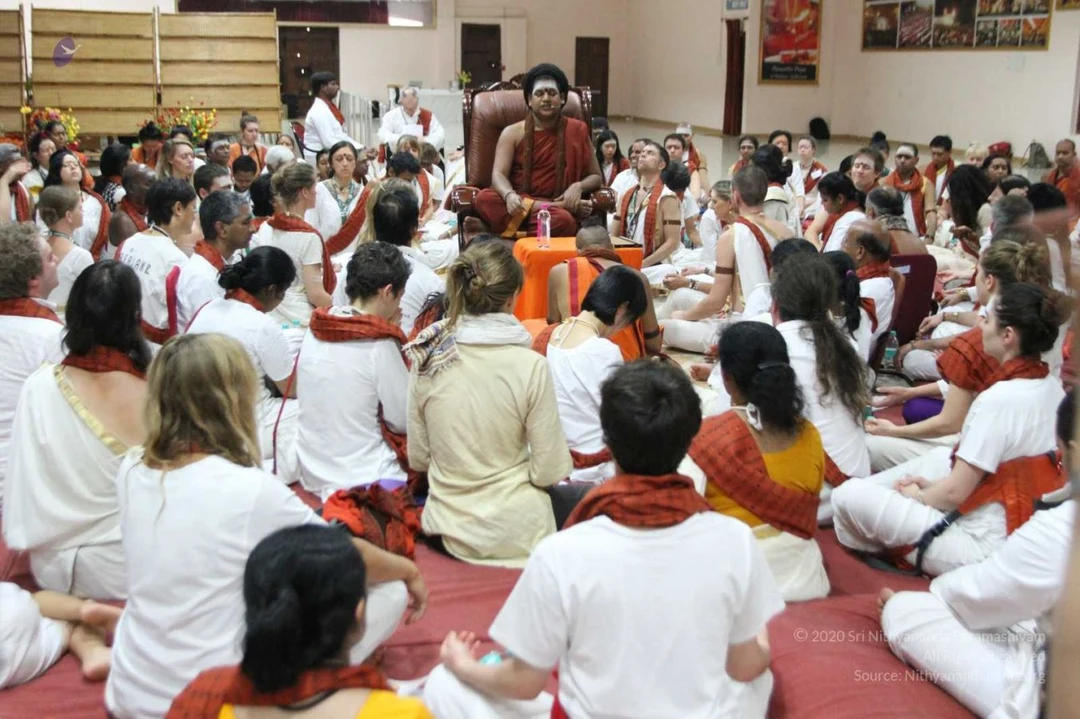
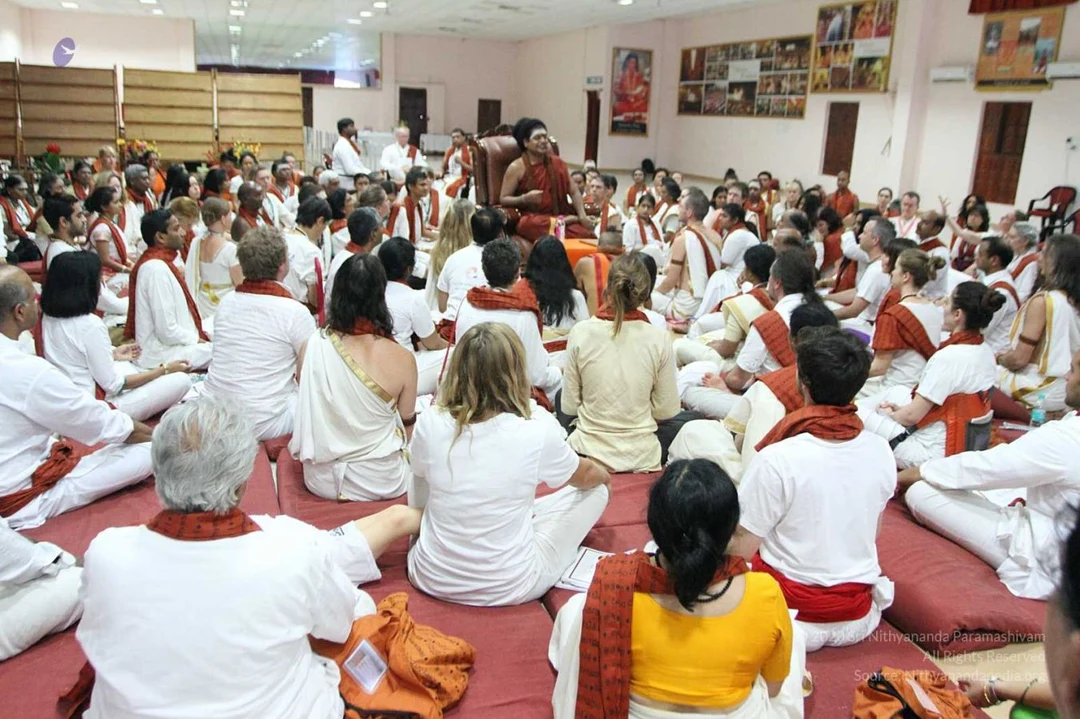
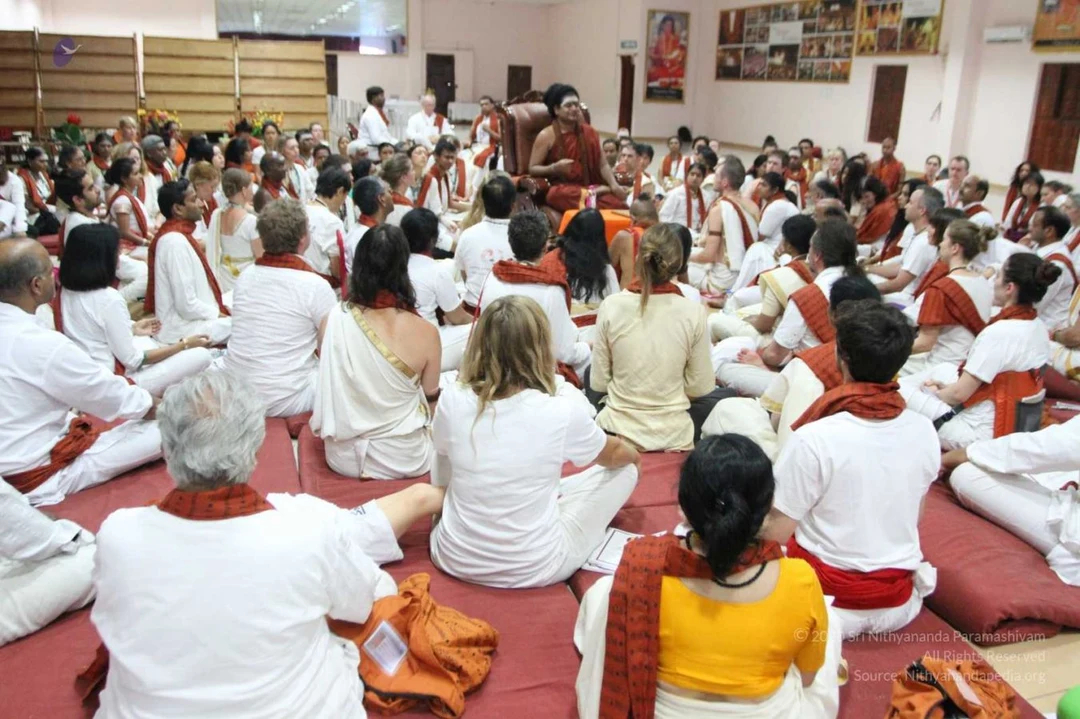
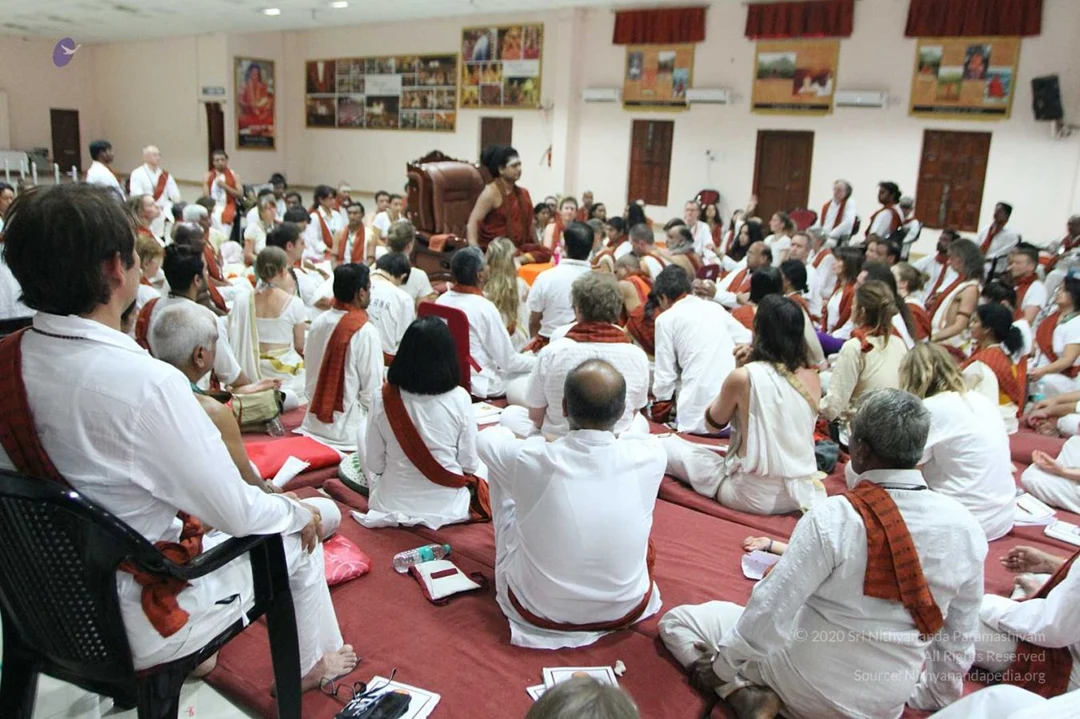
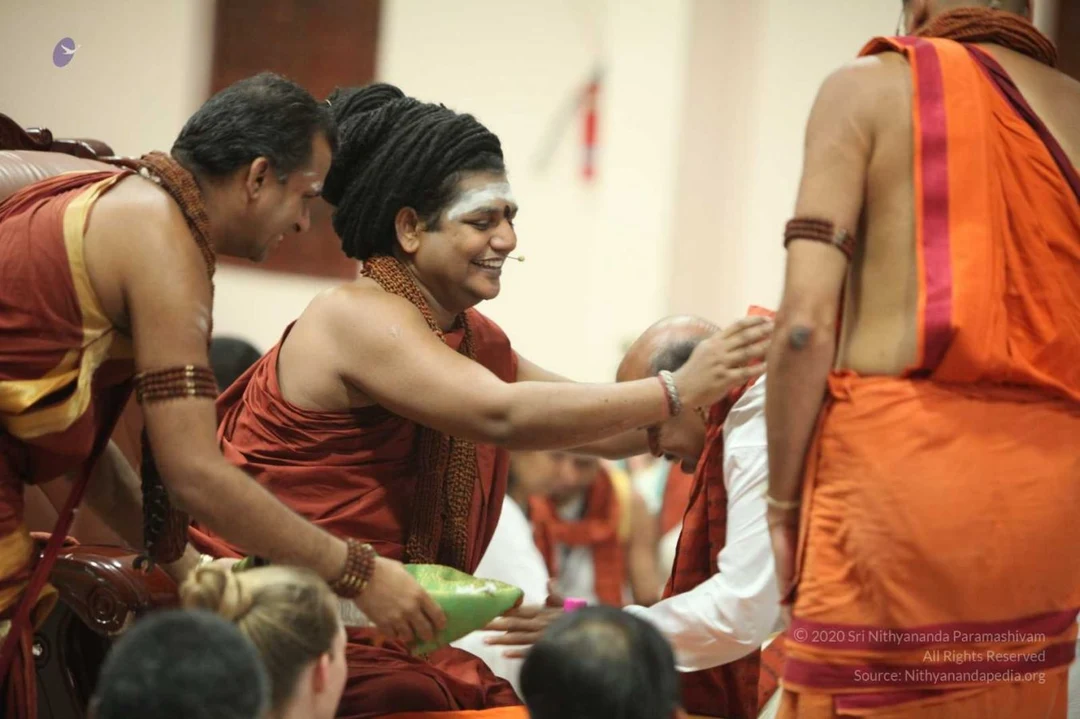
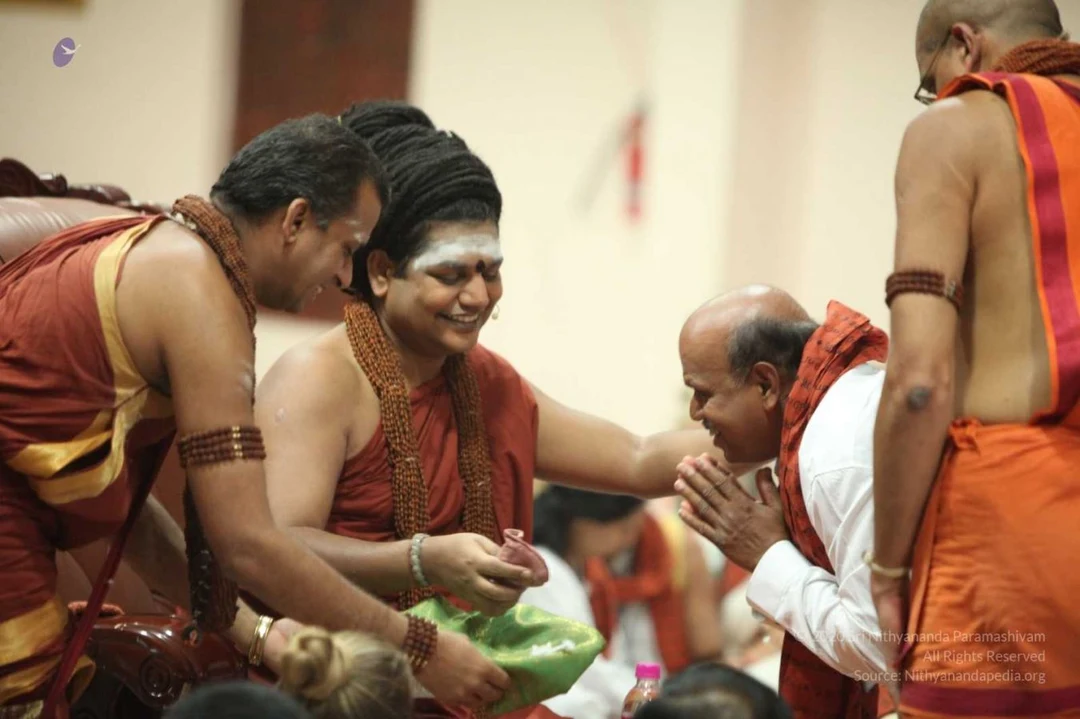
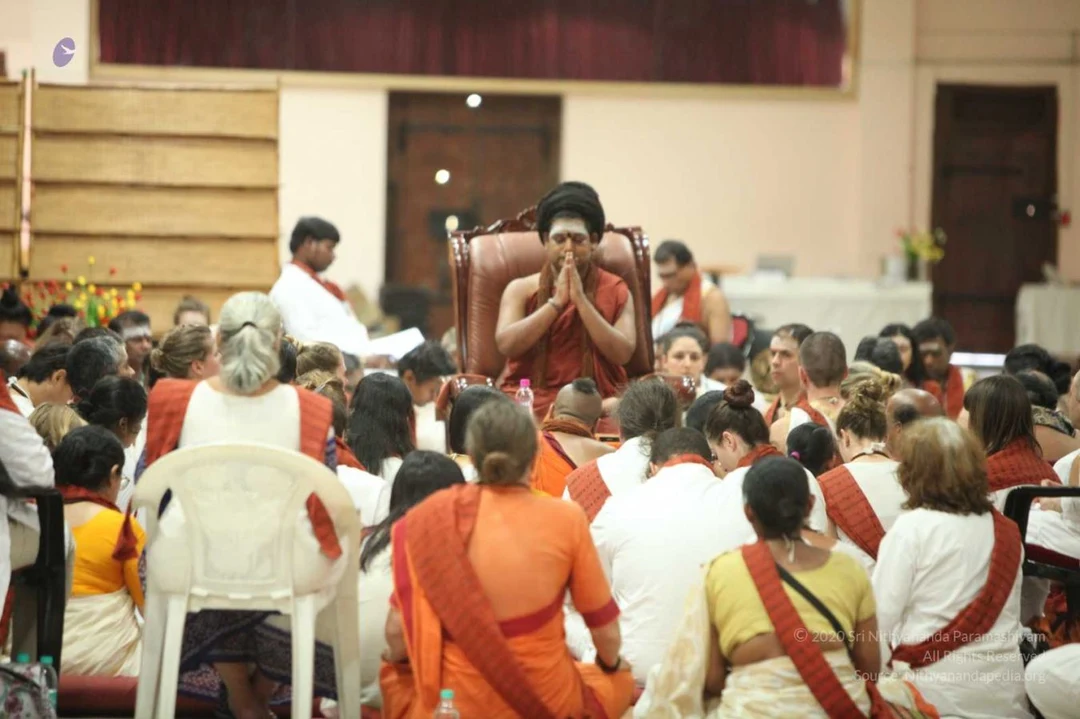
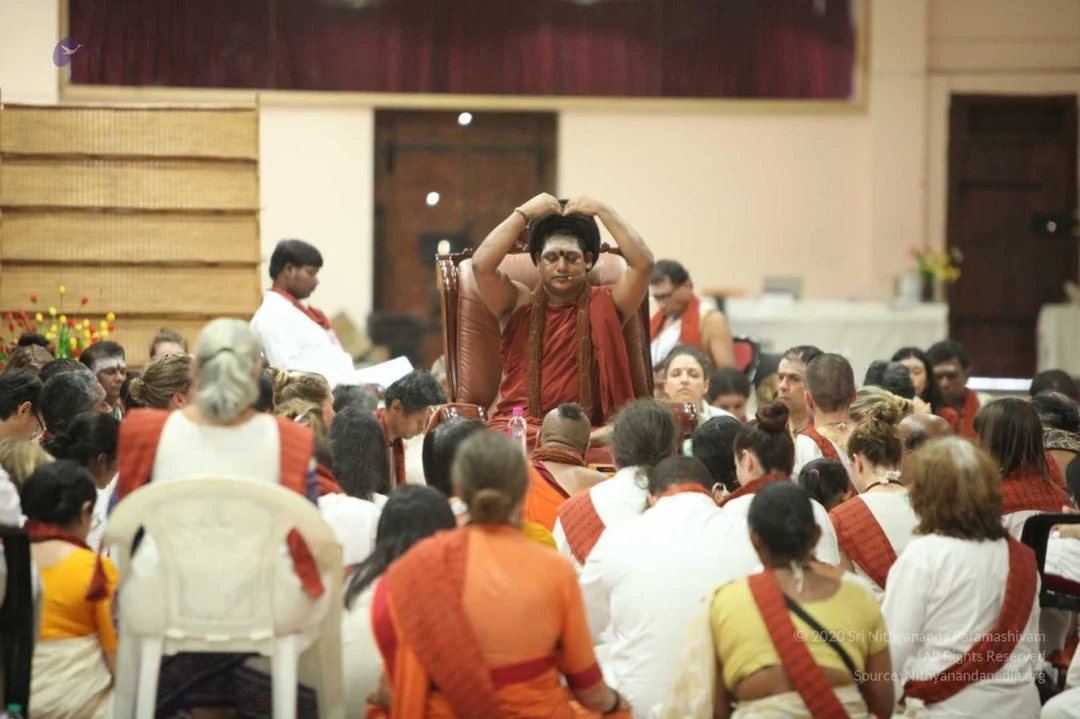
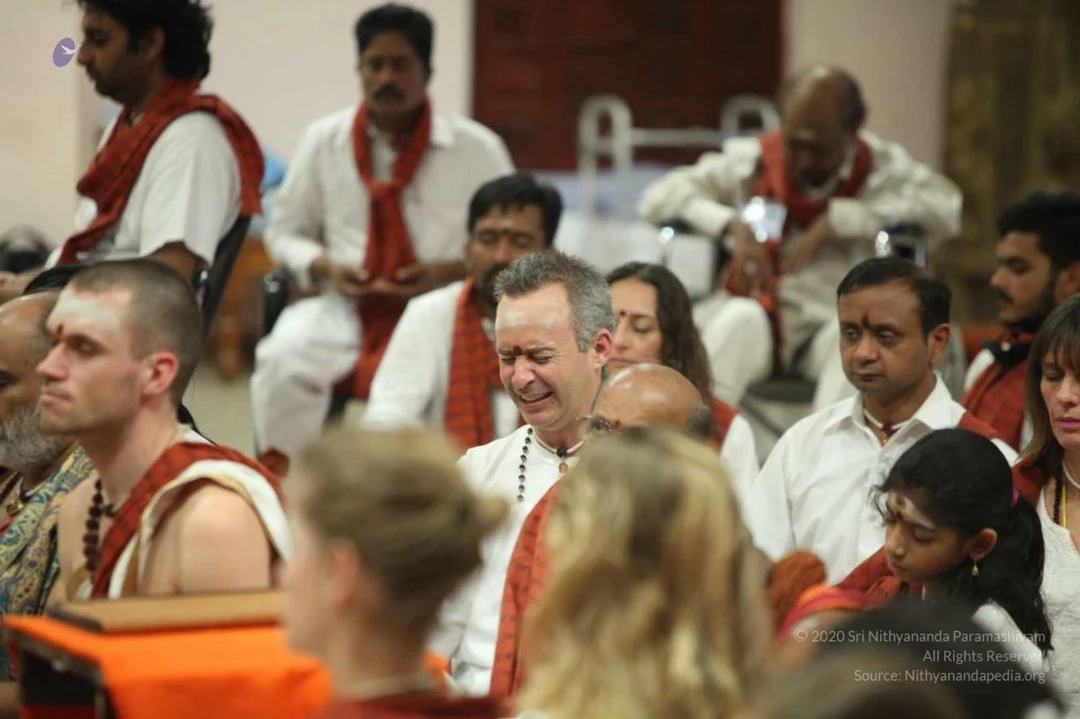
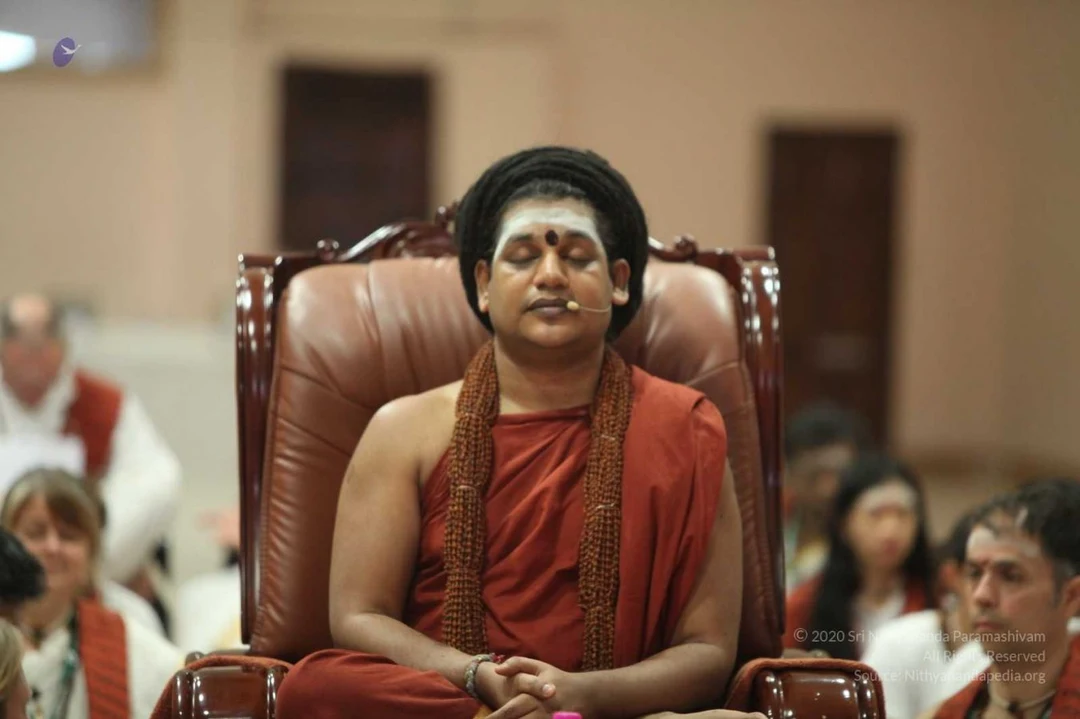
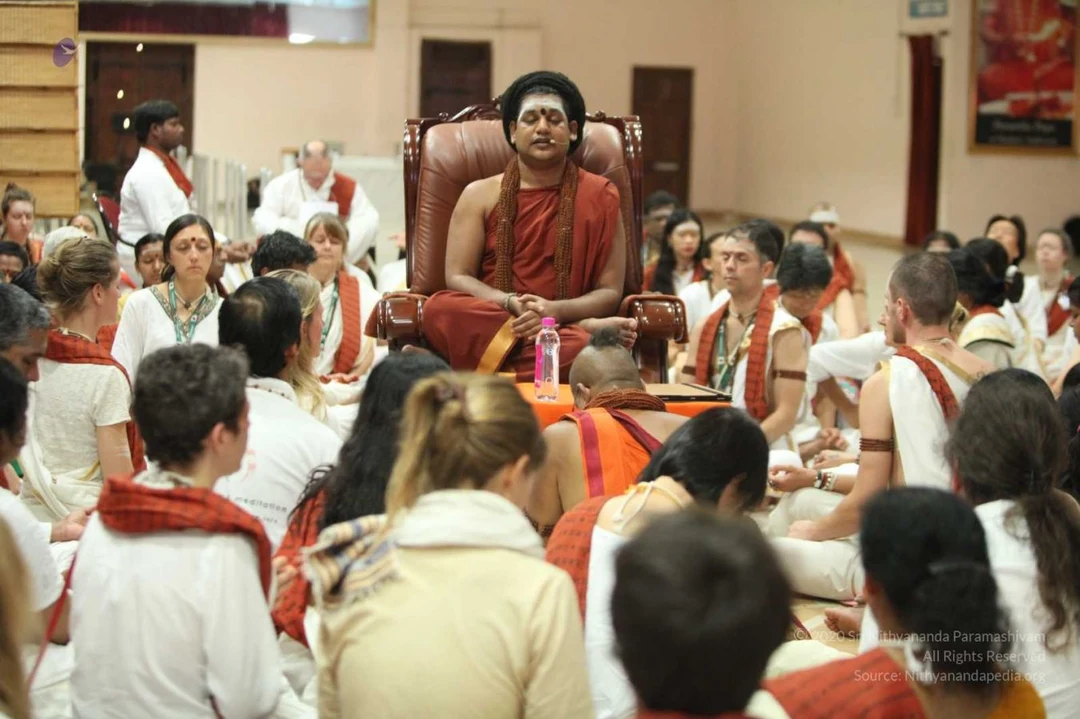
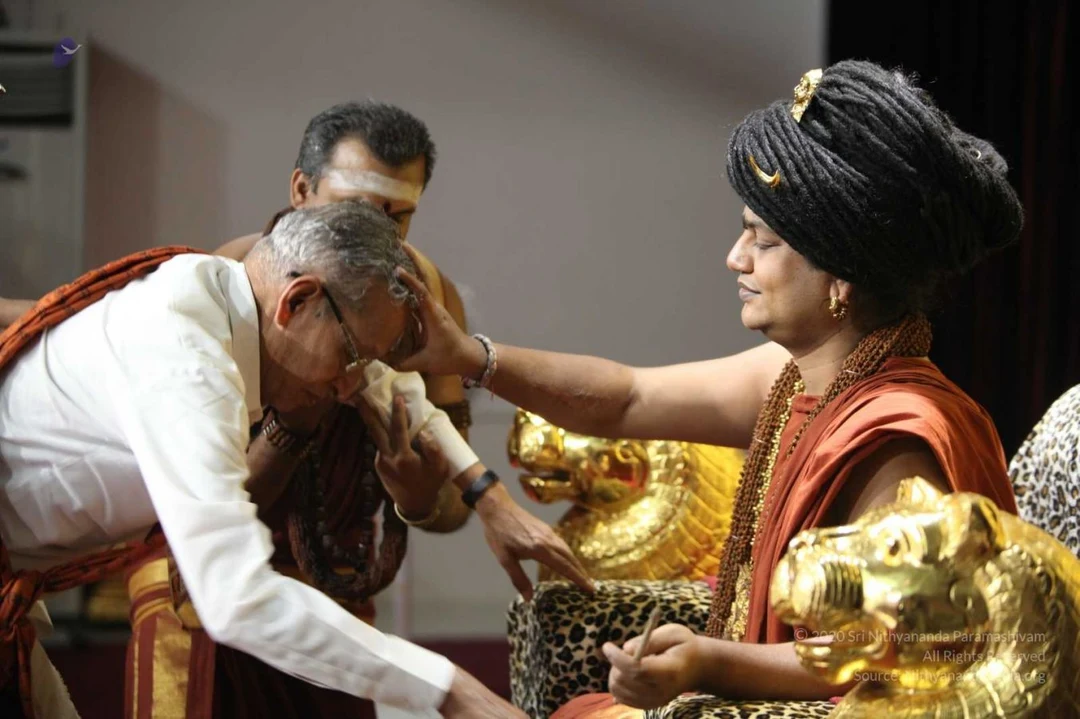
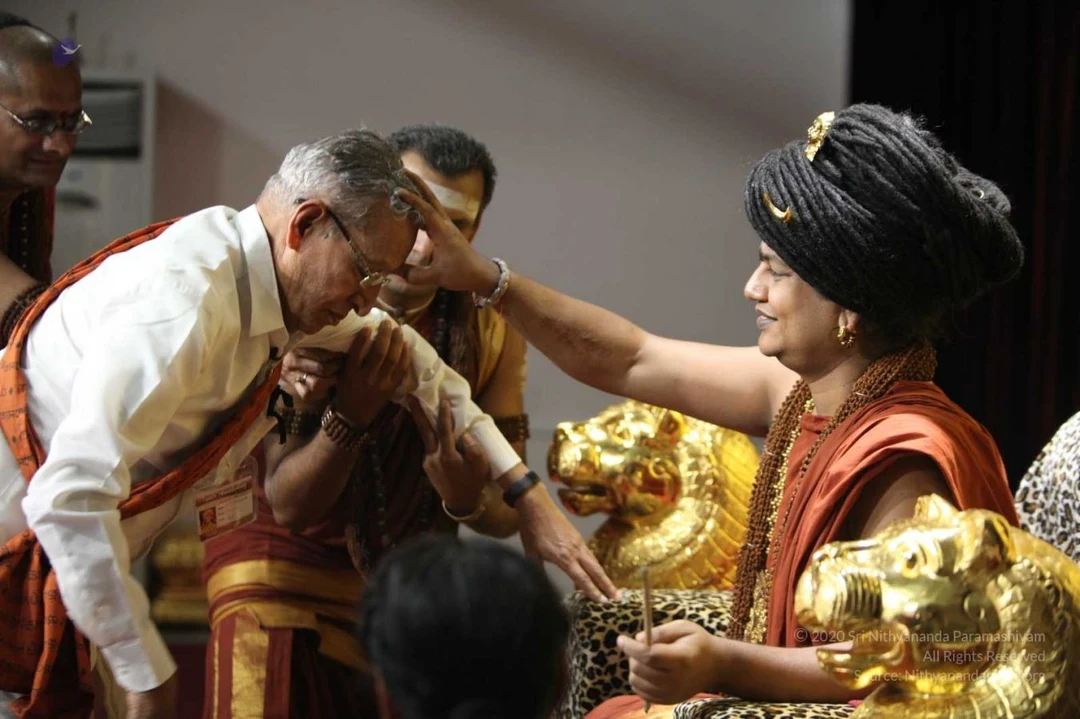
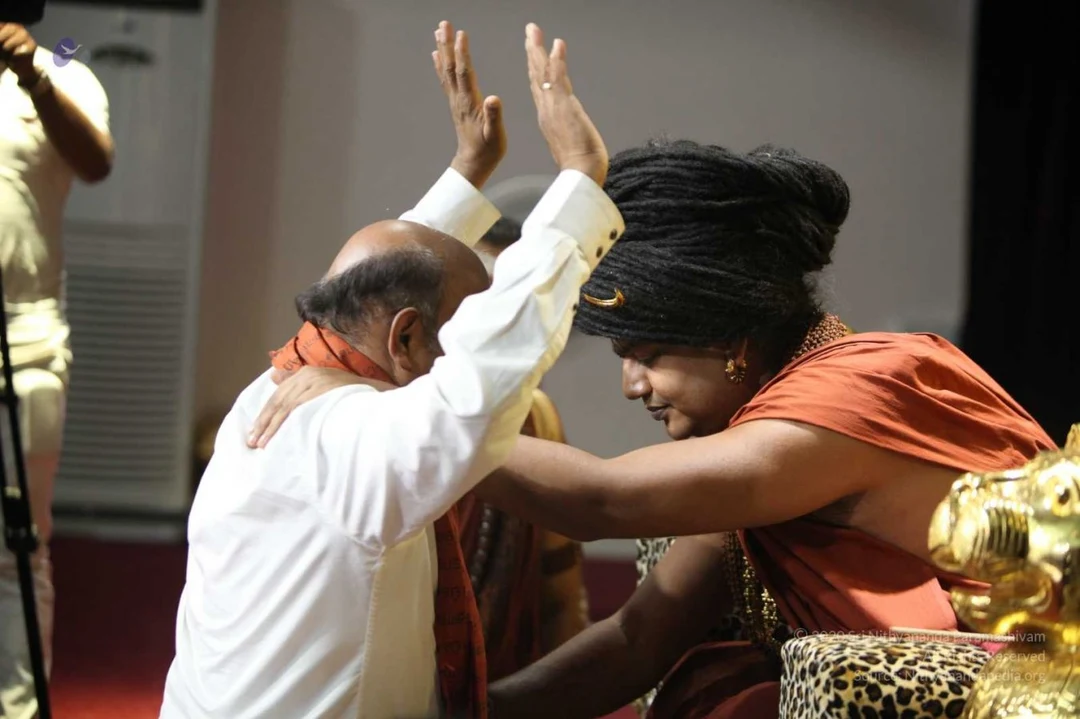
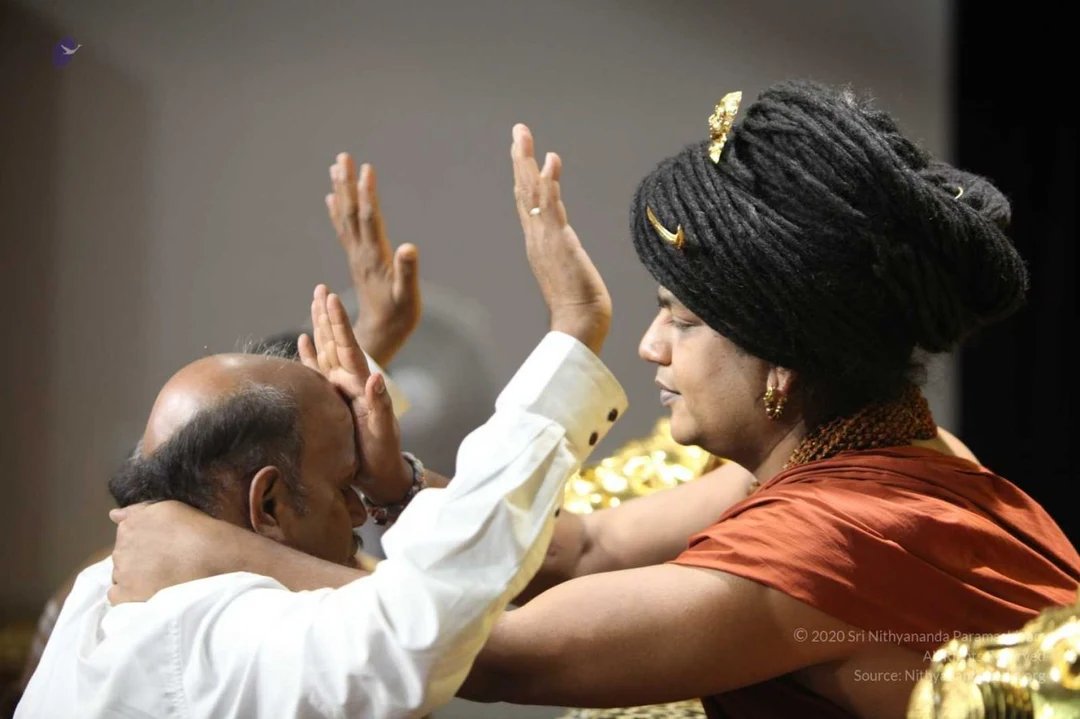
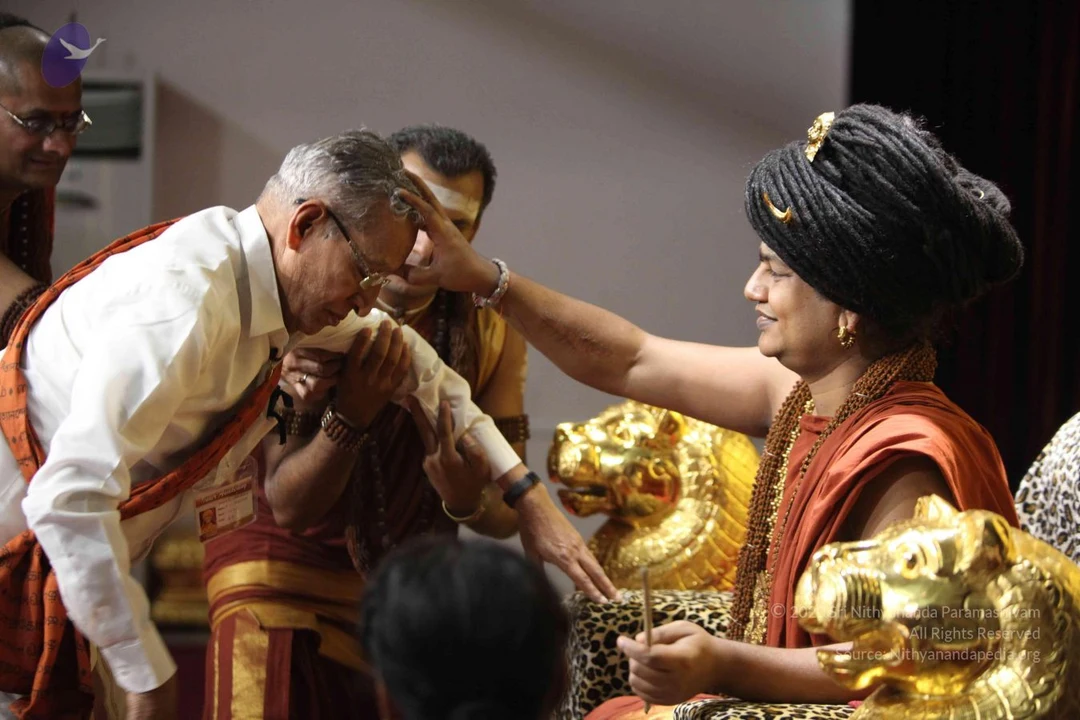
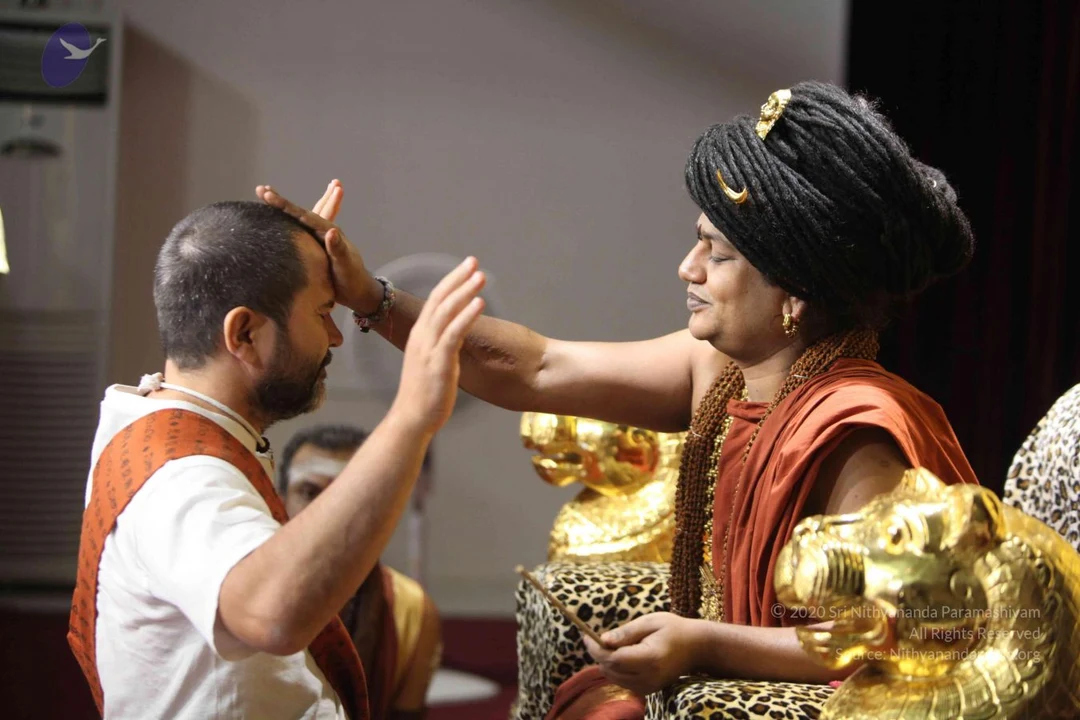
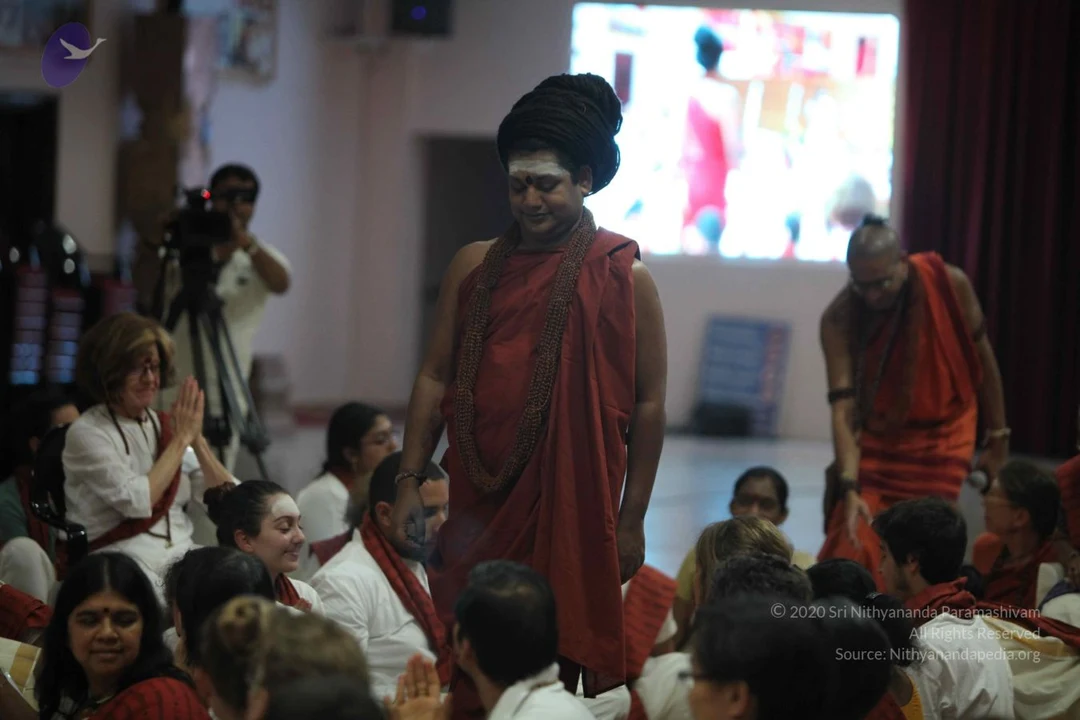
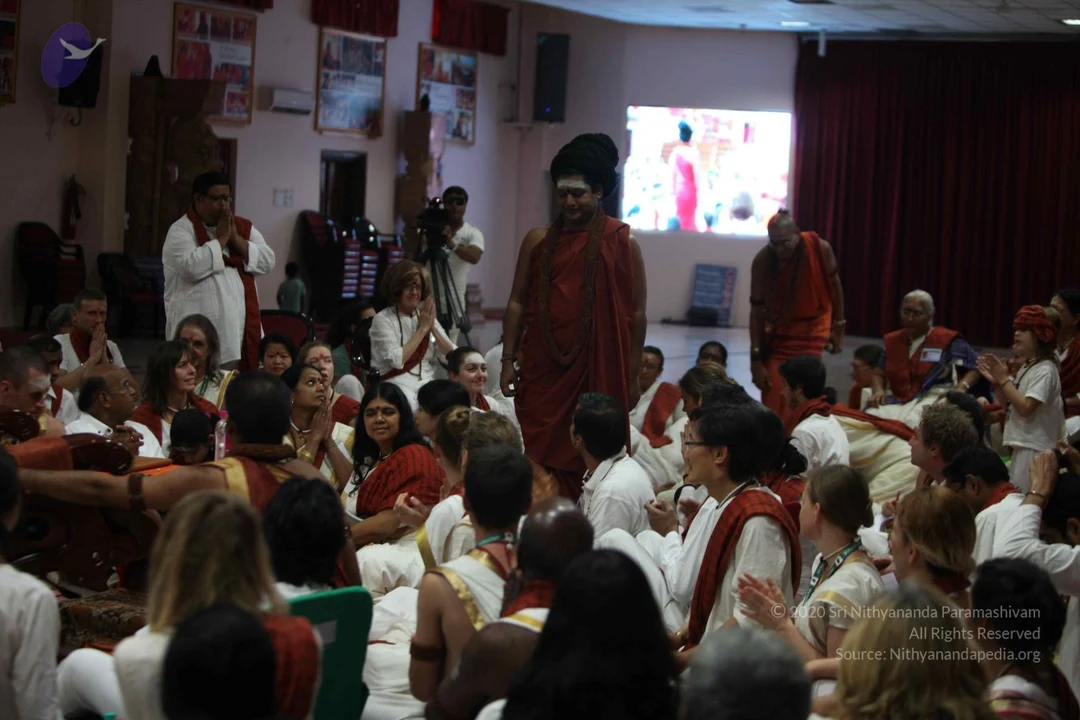
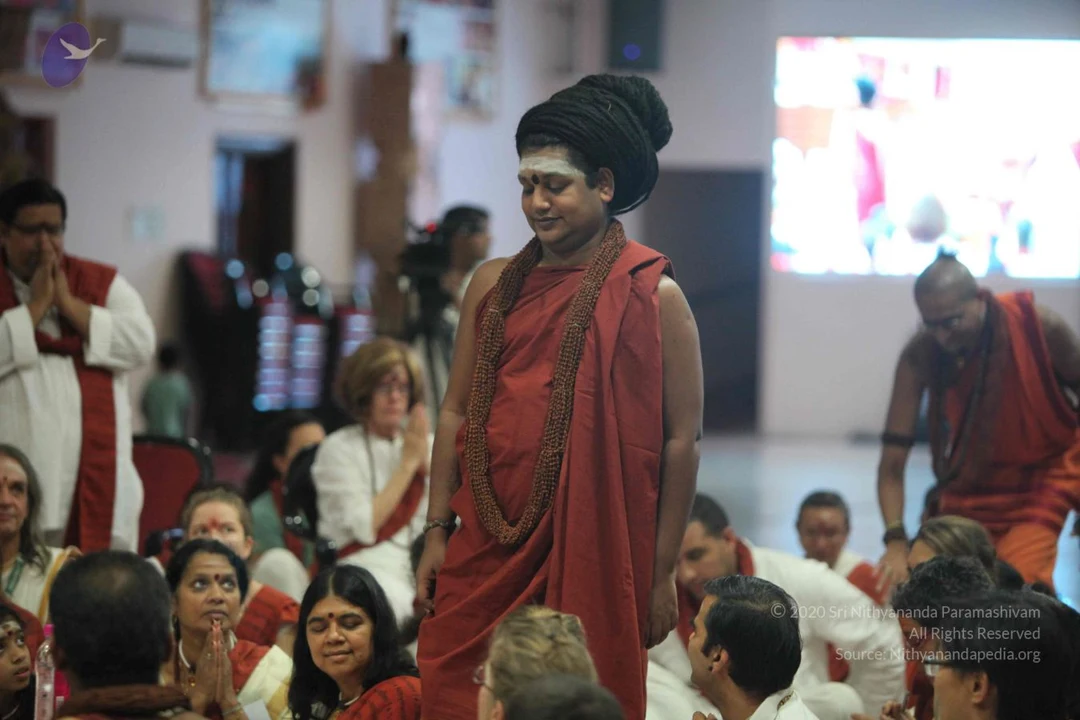
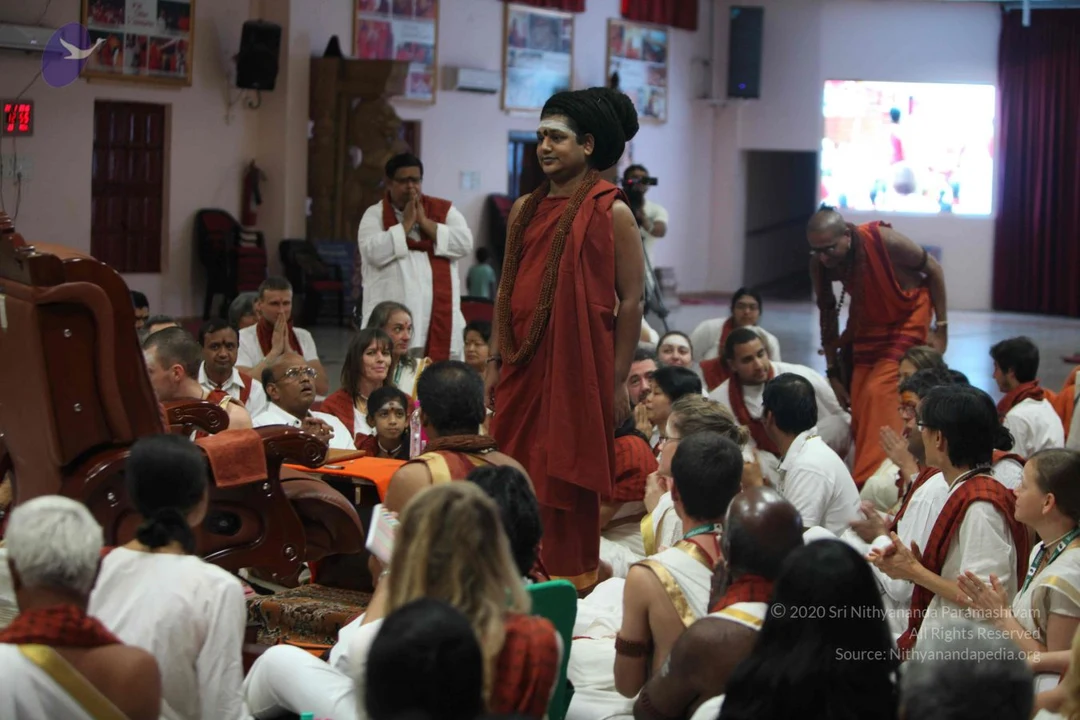
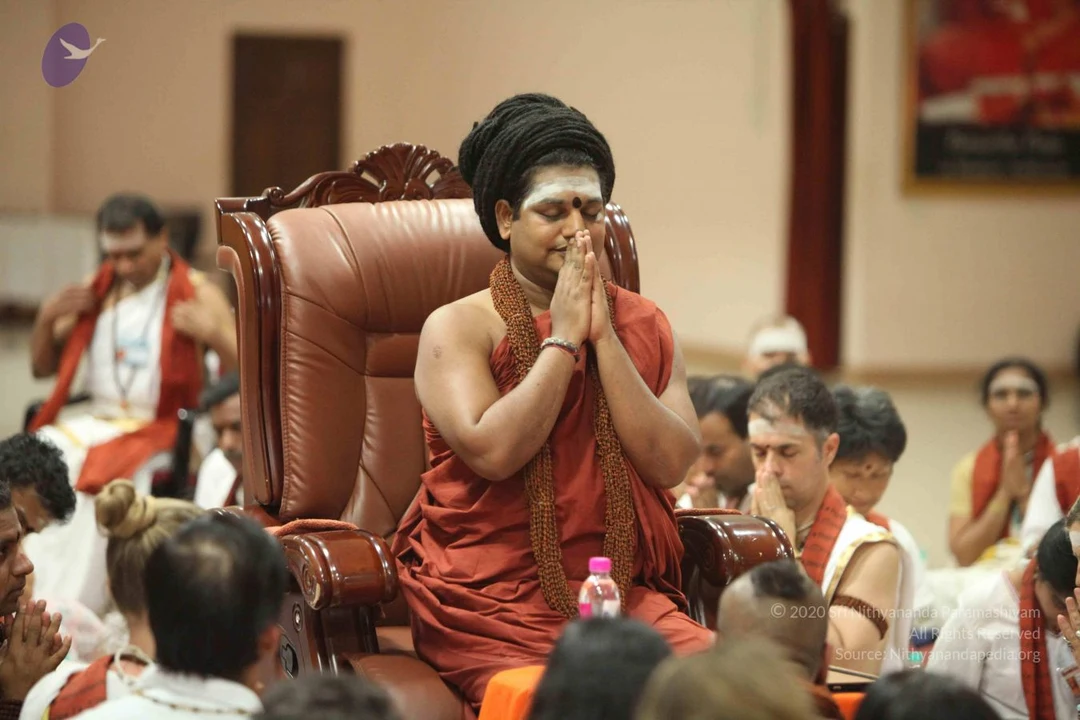
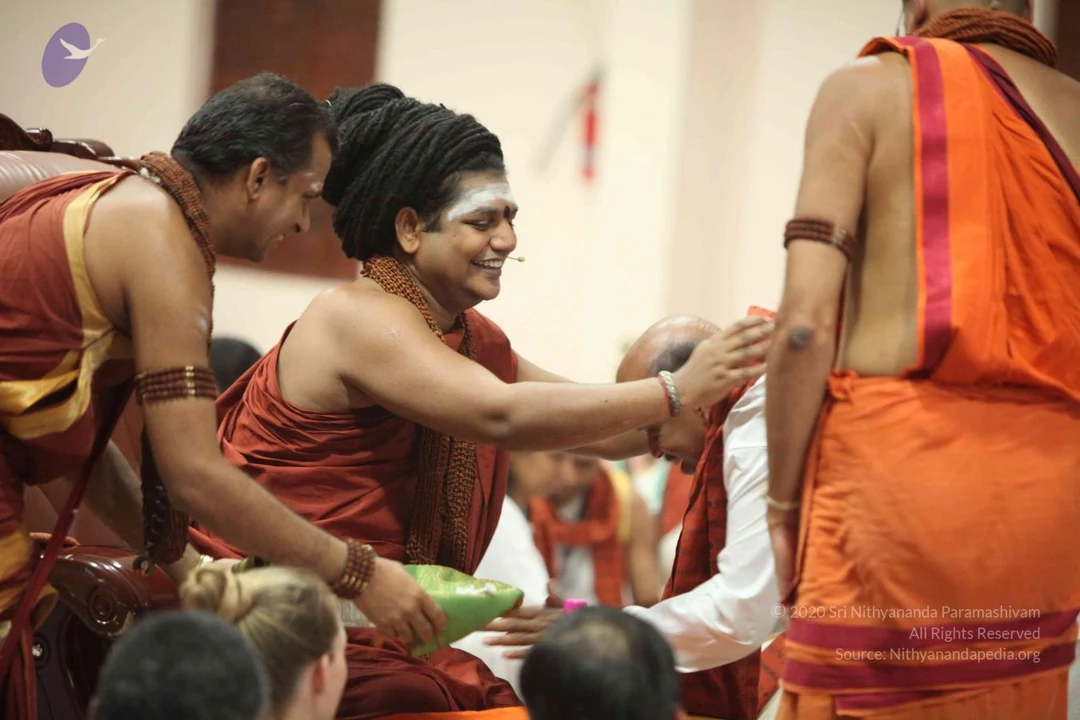
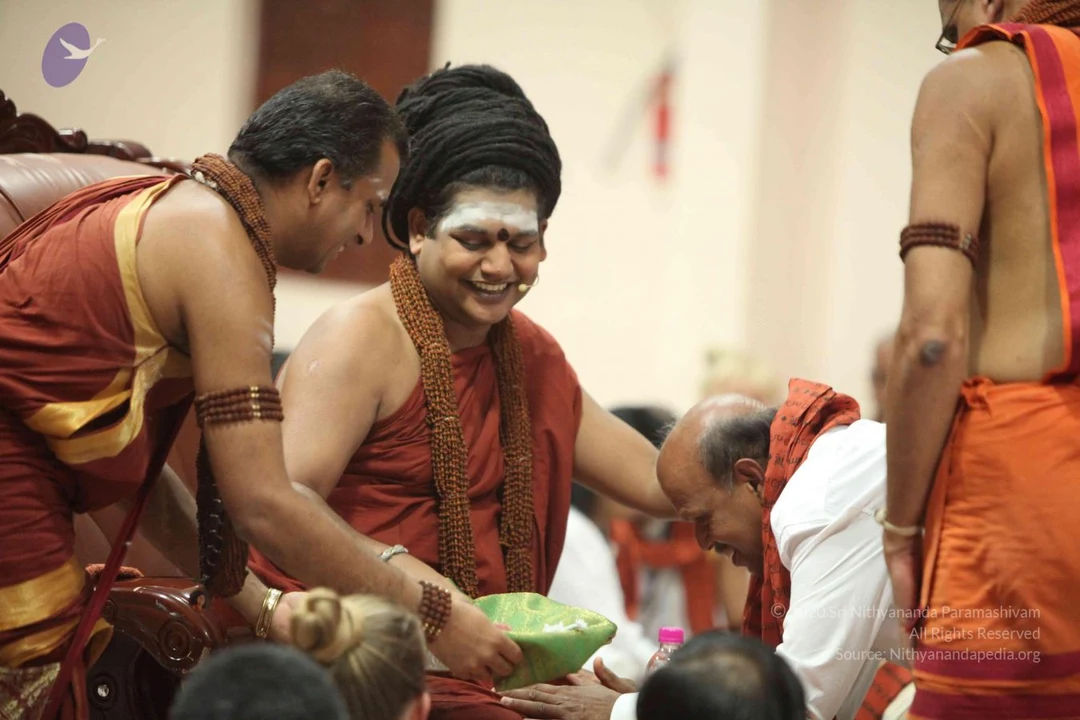
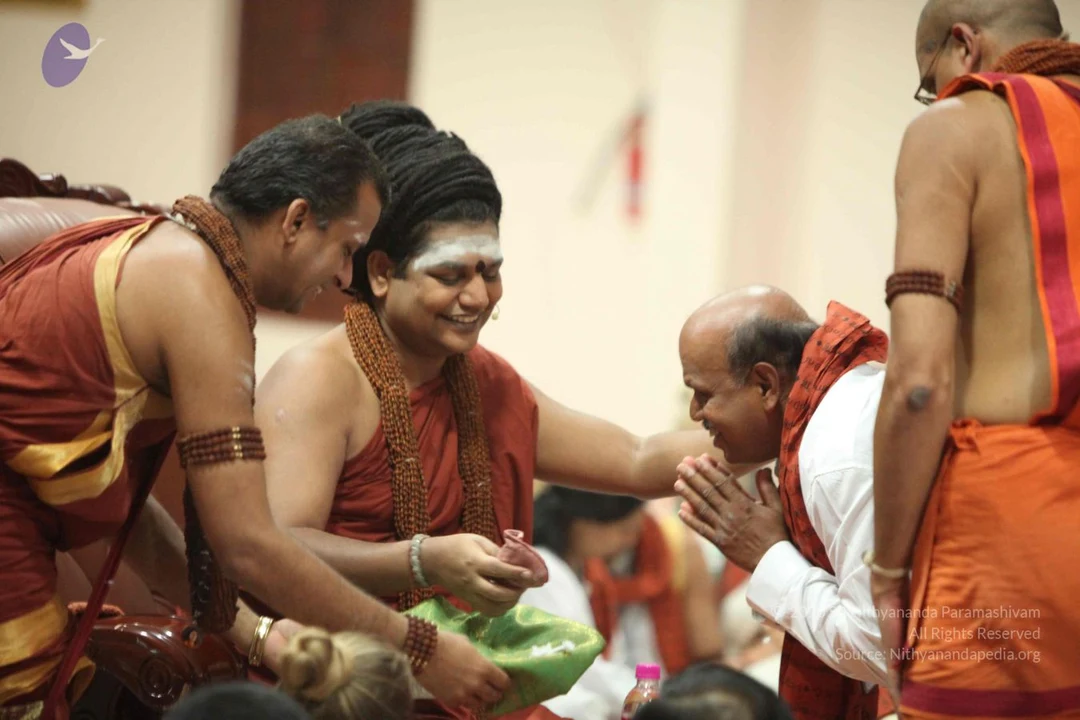
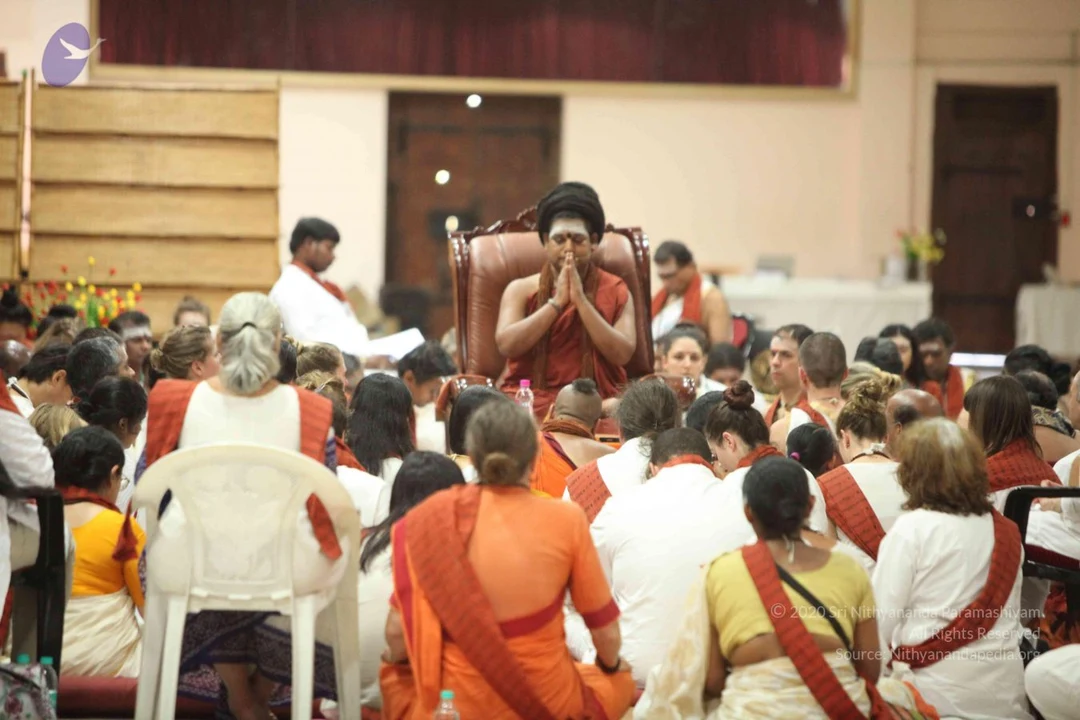
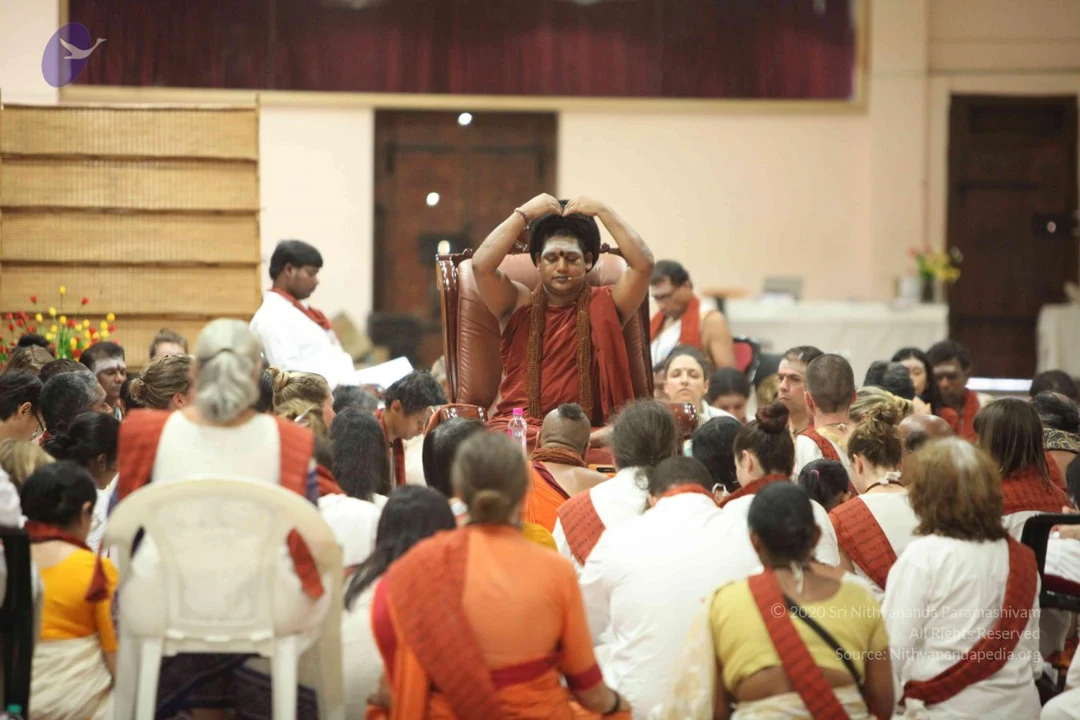
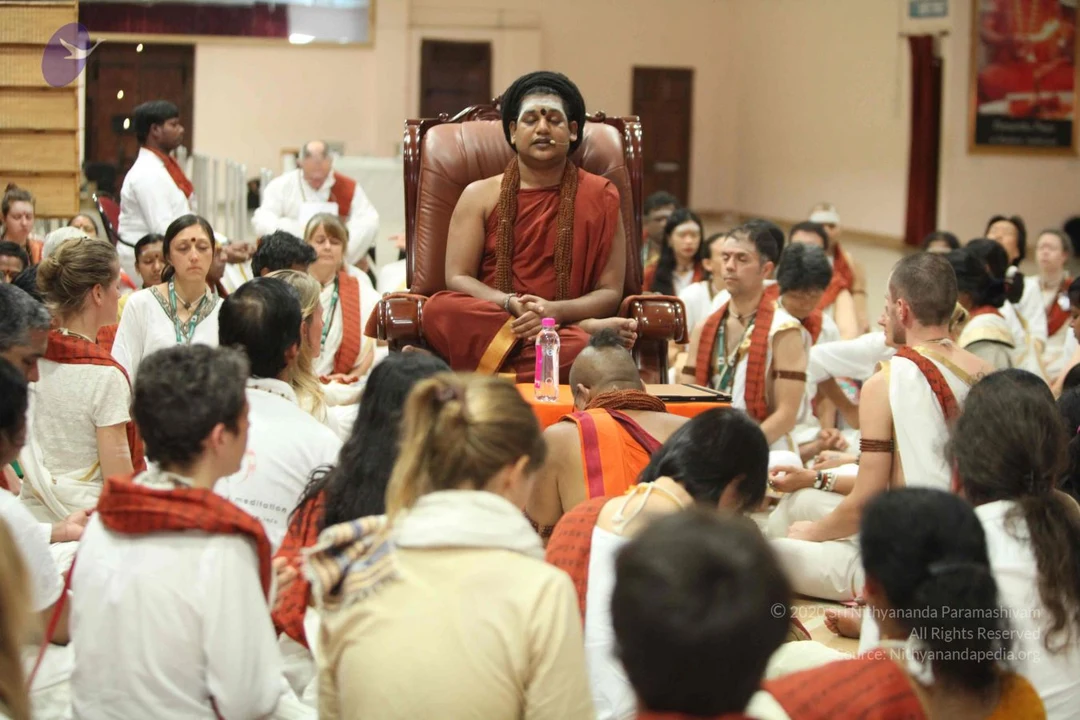
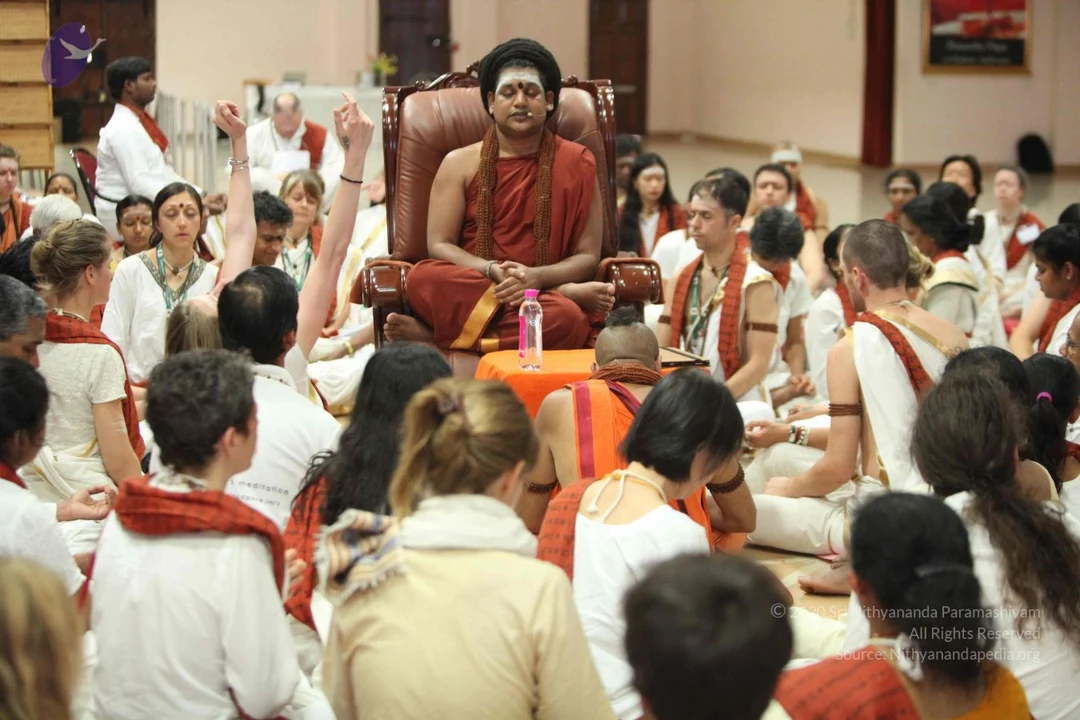
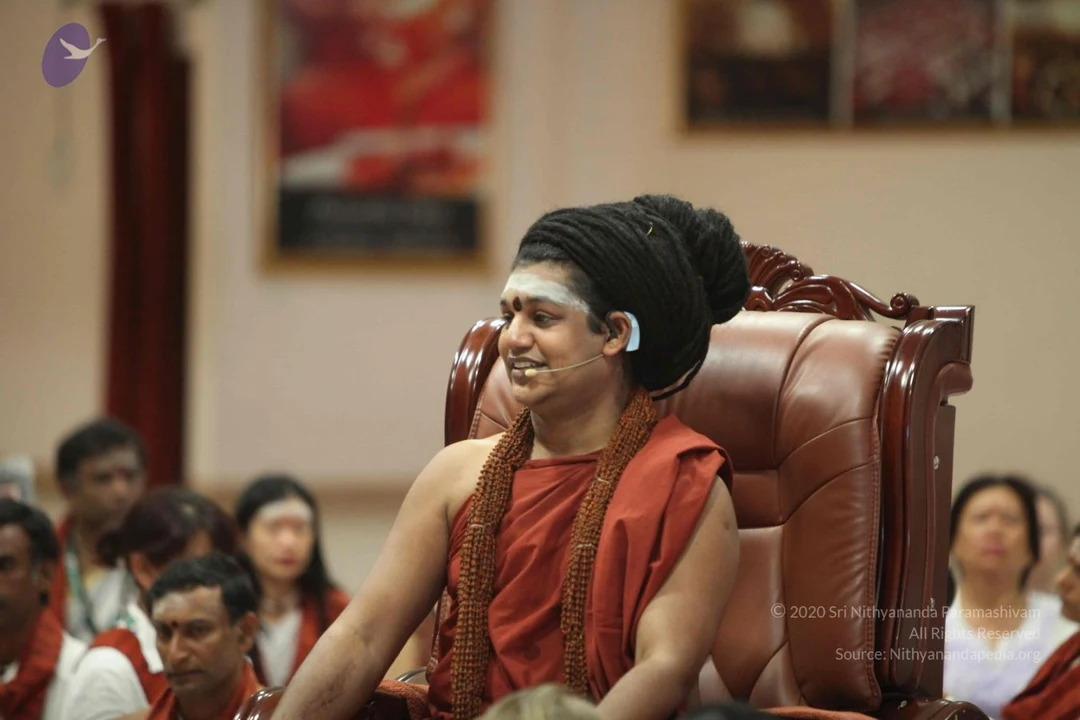
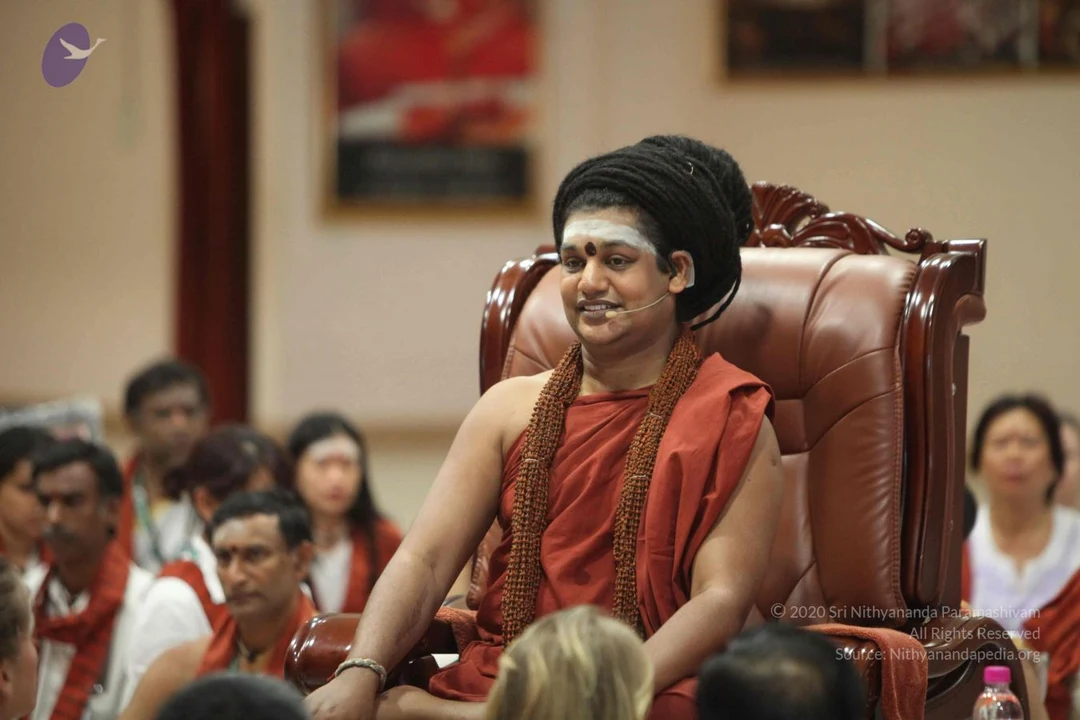
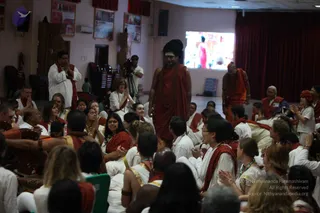
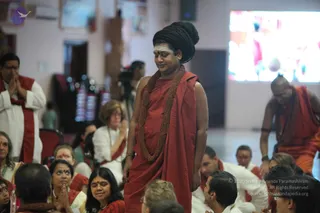
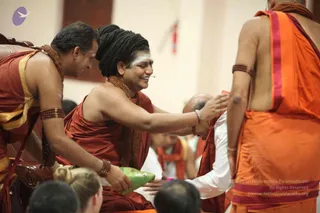
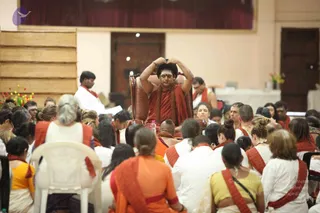
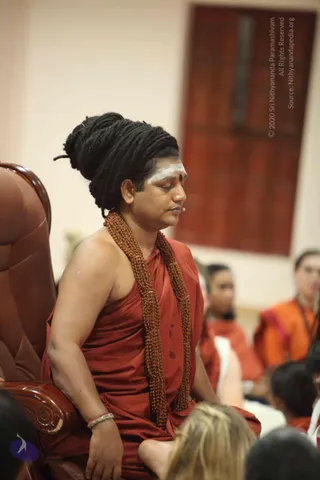
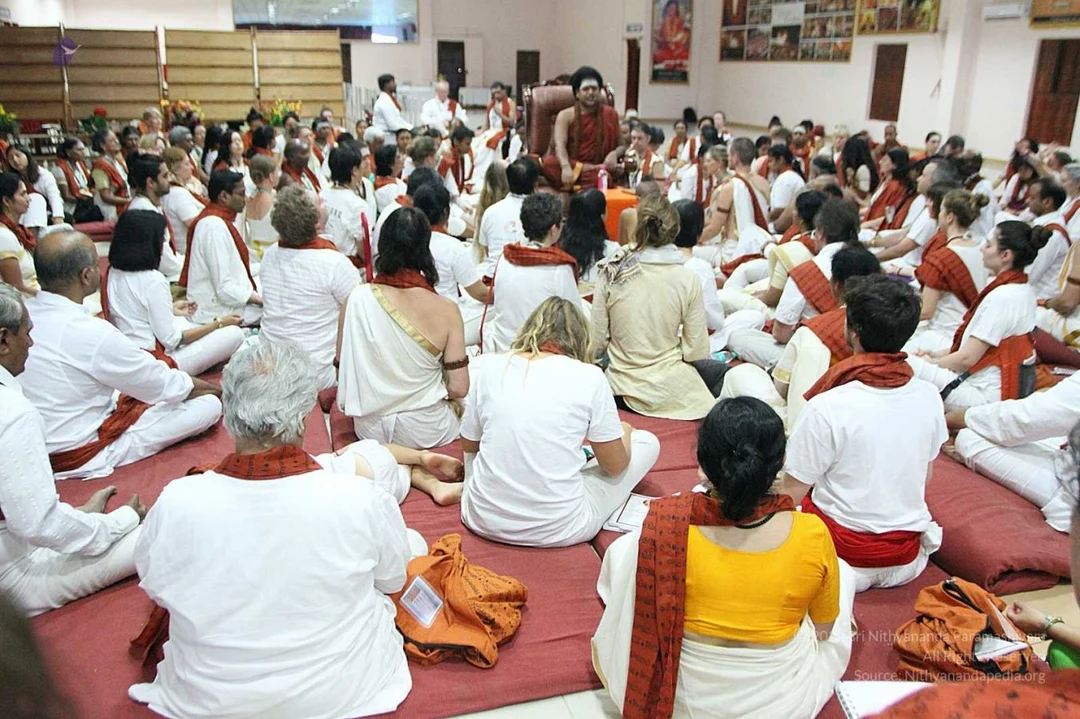
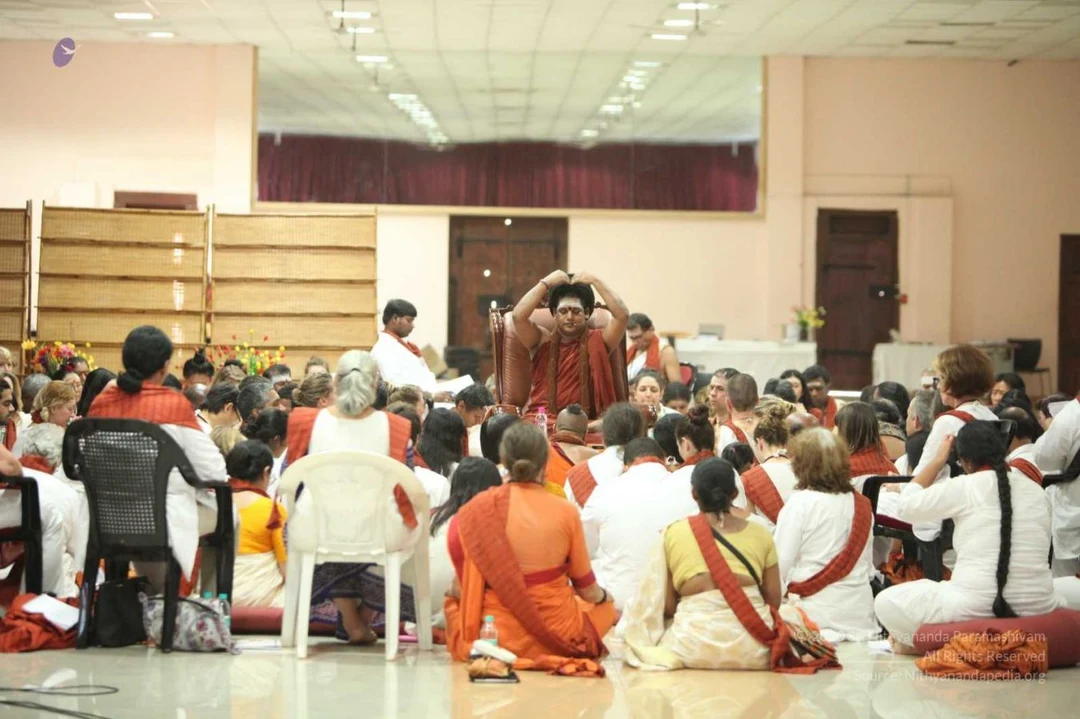
Indoor hall with white walls and a polished tiled floor. A man in a rust-red robe with an orange-red shawl over one shoulder, a rudraksha mala around his neck, and a white vibhuti mark on his forehead stands on the floor in front of a stone-carved pillar with relief figures. A large screen behind him shows an older woman with a dark hairdo wearing a red-and-gold garland and rudraksha beads, smiling with a hand near her face. Beside the man on the floor are a pink bag, a black bag and an orange cloth. A blue sign on a stand lists prohibitions including photography, video camera and audio recording. Framed photos of a crowd hang on the wall at top right. Red curtains are at the left edge.A large indoor hall with cream walls, framed photographs, and a red curtain. In the centre, a standing figure in a long red-orange robe with a rudraksha-style mala and a tall dark hair bun walks forward between seated devotees. Many seated people in white clothes with red-orange shawls press their palms together in anjali. Behind him, another person in orange robes stands at right, and a cameraman films at left. A wall screen shows a red-clad scene. The mood is a satsang or darshan gathering.A photograph of a large indoor satsang hall with a central standing figure wearing a rust-red robe and a long rudraksha mala, a tall dark topknot, and a horizontal white forehead mark. Around him, many seated devotees in white and red clothing sit on the floor, several with hands pressed together in namaste. A man in a red shawl with a bald head stands at right, and a screen at the top right shows another scene. Cameras and a video crew are visible in the background. The a person candidate is a probable appearance-based match: a tall dark topknot, a rudraksha mala and a red robe are present, but the figure is standing among devotees rather than seated on a throne, so identity remains uncertain.A photograph inside a plain hall shows a man seated in an ornate brown leather throne-style armchair with carved wooden arms, eyes closed in meditation. He wears a red-orange saffron robe, a long multi-strand rudraksha mala around his neck, a beaded bracelet, white vertical tilak markings and a red bindi on his forehead, with his hair in a high bun. His hands rest in his lap. Around him, seated devotees in red-orange and white clothing sit on the floor and in chairs, and a man at left with folded hands wears a red-orange shawl over white dhoti-style garments. Plastic water bottles and a pink bottle sit near the front. a person is shown seated in meditation, with the rudraksha mala and saffron robe as the qualifying cues.A photograph of a seated man with long dreadlocks coiled on top of his head, white vertical tilak on his forehead, rudraksha mala necklace and rust-red robe, smiling as he places his right hand on the bald head of a kneeling man in a white shirt. Beside him, a man in red-orange robe with gold-edged border and a rudraksha bracelet holds a green cloth bundle. In the foreground, a woman's hair bun and other seated heads are visible, and at right a monk in orange robes with a pink-edged shawl stands with his back to the camera. The setting is an indoor hall with cream walls and a wooden panel. a person is the seated dreadlocked figure, who is blessing the kneeling devotee.A seated figure in a deep red-orange robe with a red shawl sits in a carved wooden chair on a low dais, both hands raised to the top of his head with fingers in his hair, eyes closed. Dark hair, a tilak-marked forehead and a beaded necklace are visible. Around him, a large seated audience in white, orange and yellow clothes, many wearing red-orange sashes, faces away from the camera toward him. A white-clad attendant stands at left beside a vase of yellow and orange flowers. Background shows a maroon curtain, wooden doors and a white table. Appearance suggests a possible a person candidate, but cues are not sufficient for a confident match.

1-IA-Mandala-Process
5 photosSource gallery
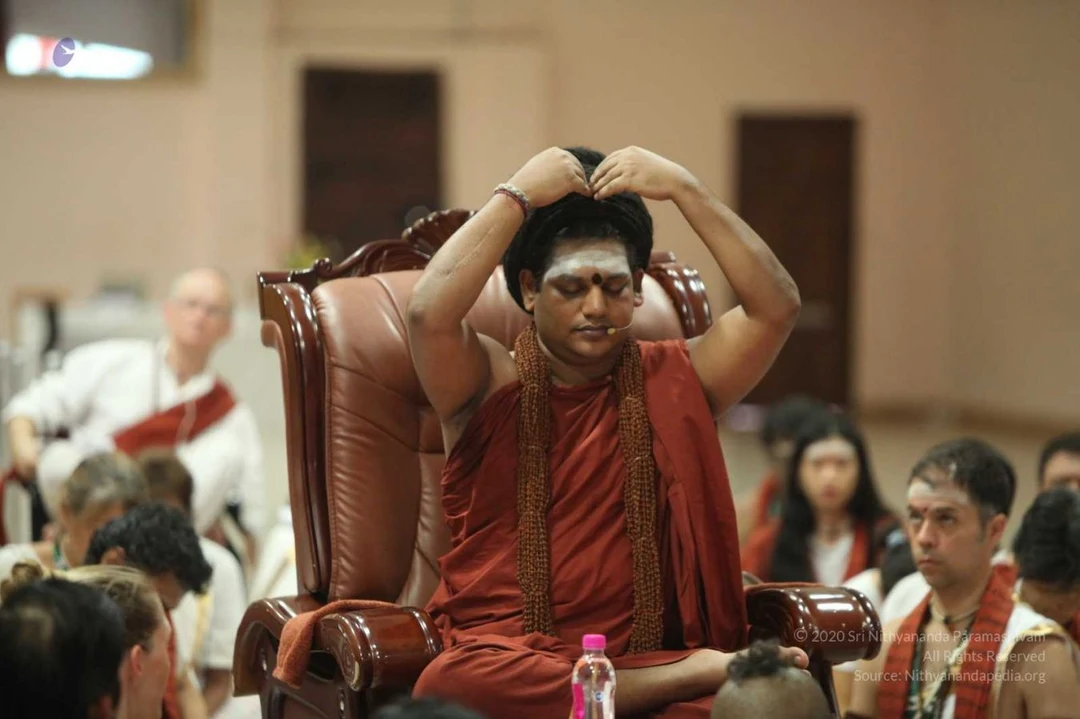
A barefoot man in a deep red-orange robe with a gold-bordered lower cloth stands in a doorway with downcast eyes. He wears a thick rust-brown beaded mala around his neck and a silver bracelet, and has a white horizontal forehead mark with a red dot. His hair is piled high on his head. The pale walls and tiled floor frame the scene.A photograph of a man standing barefoot on a polished tiled floor beside a doorway in a plain white-walled room. He wears a red-orange unstitched cloth draped over one shoulder and wrapped at the waist with a gold border, and a long brown rudraksha mala hangs around his neck. He has a white vibhuti line and a red kumkum dot on his forehead, and his hair is gathered up. He looks off to the side with a slight smile. A second person in a similar dark red robe stands further back in the dim doorway. The white wall and tiles give the scene a plain ashram setting.A barefoot man in a deep red-orange sannyasi robe with a gold-bordered dhoti stands on a polished floor in a doorway, smiling with eyes closed. He wears a long rudraksha mala around his neck, a red bindi and white vibhuti marks on his forehead, a beaded bracelet on one wrist, and his hair is tied up in a bun. Behind him a warm-lit hall opens to a dim inner room, and a bright screen glows at the left edge. A small logo appears in the lower left corner. Presentation cues are a single person in saffron-red robes with a rudraksha mala, which the page does not name; no identity is claimed from appearance.A photograph of a person standing barefoot in profile on a polished light tile floor in a hall with a deep maroon curtain behind. The person has hair gathered in a high bun, wears a rust-red sleeveless robe with a gold border and a brown beaded necklace, and stands with eyes closed and hands loosely at the sides. Scattered orange and maroon cloths and folded mats lie on the floor, with dark bags nearby. A blurred tripod and a pinkish figure in a background window are visible.A seated man with eyes closed sits in a brown leather armchair in a light-walled hall with a wooden door behind him. He wears a rust-red draped cloth over one shoulder and a long rudraksha mala of brown beads around his neck, plus a white horizontal vibhuti mark with a red dot on his forehead. His dark hair is bound in a high topknot with long locks. A thin lapel microphone is visible near his mouth. A red-orange robed person sits in the blurred background and a woman with light hair appears in the lower foreground.