Skip to content
Friday

25 July 2014

What is Advaitic Enthusiasm

Dated photos
309
Source pages
1
Media
2
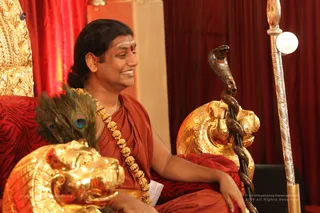
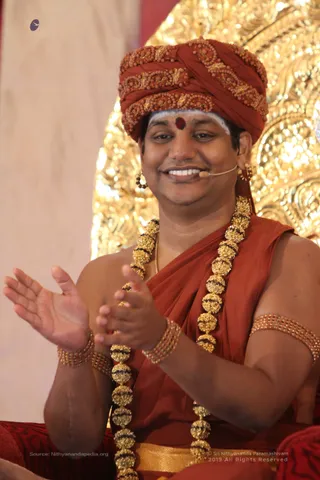
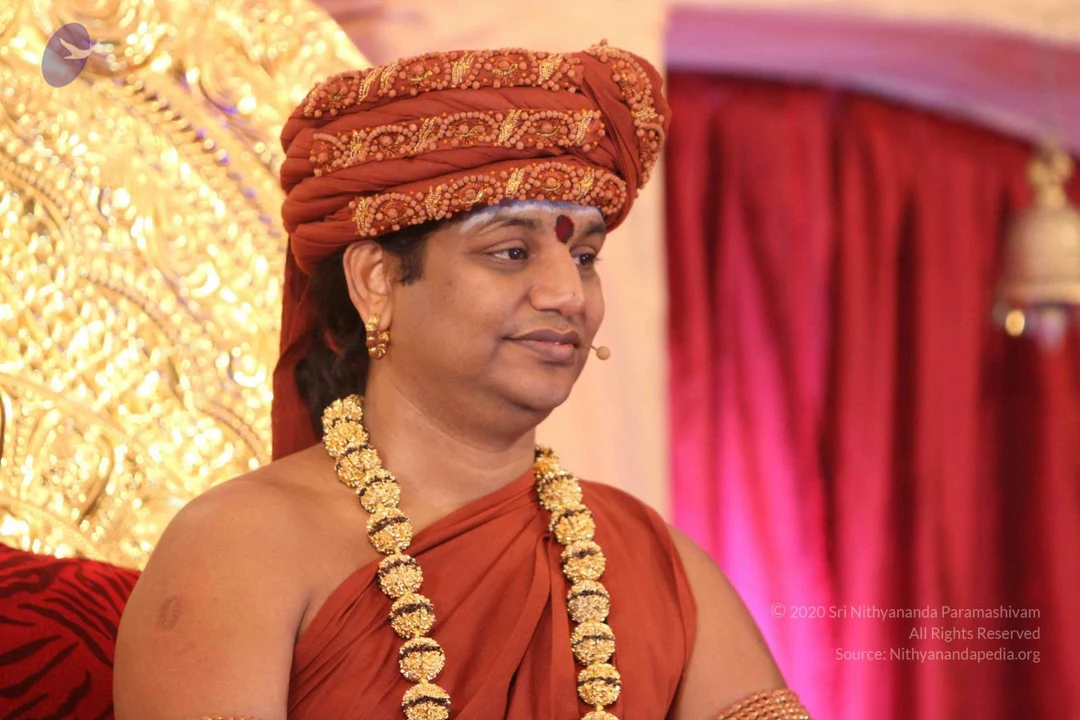
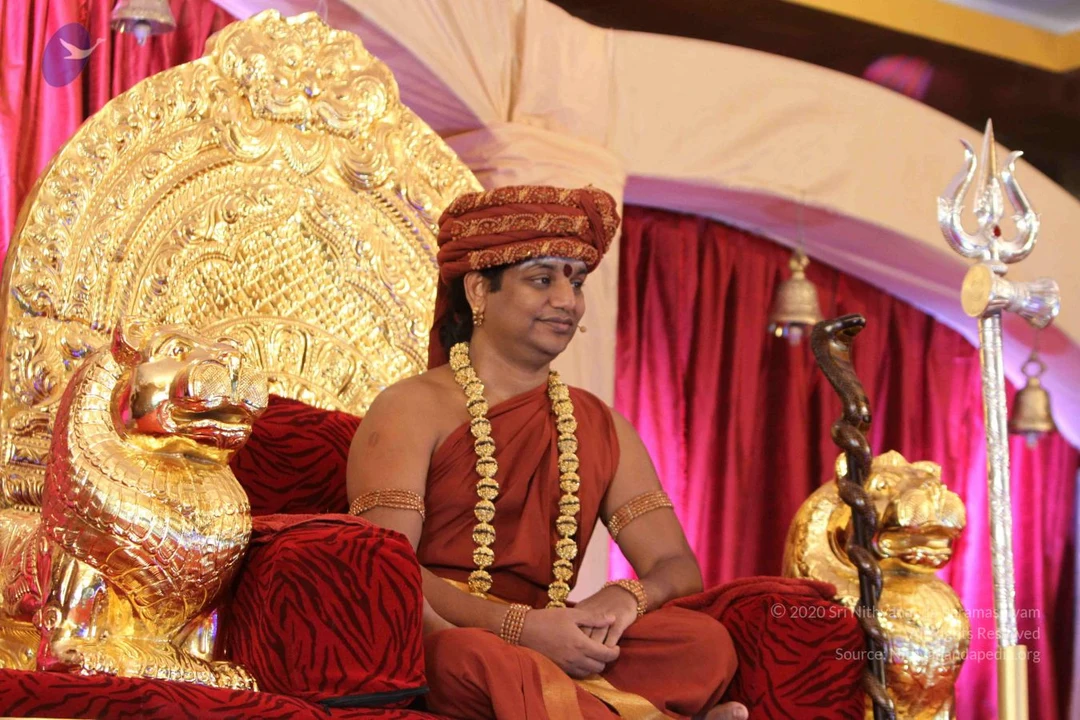
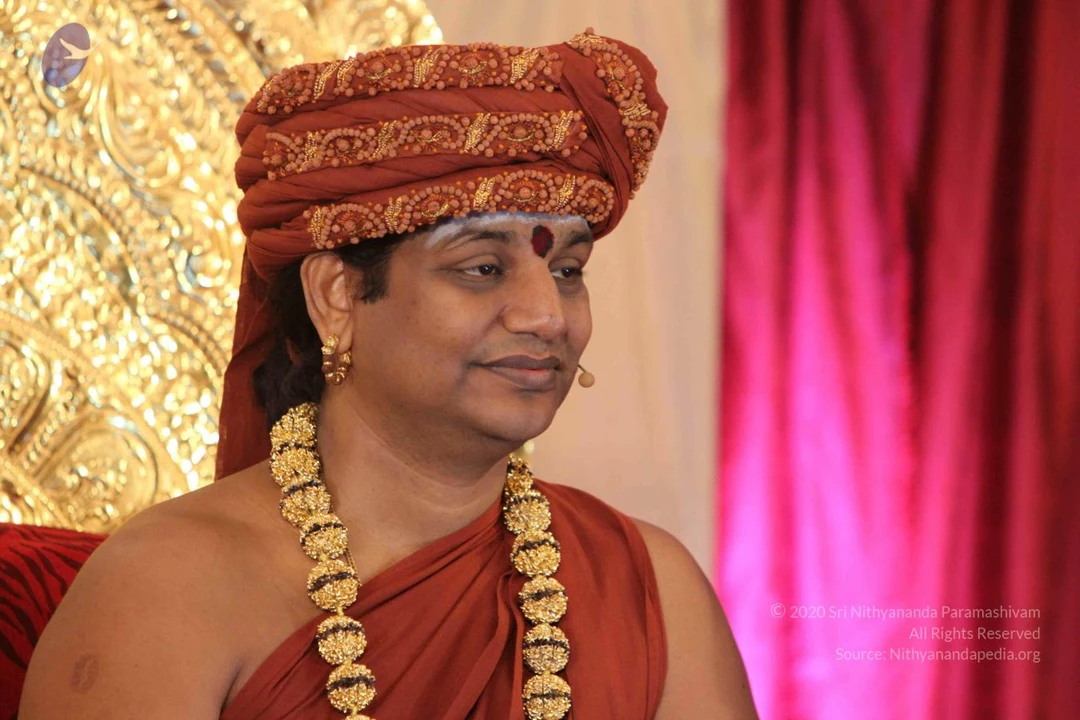
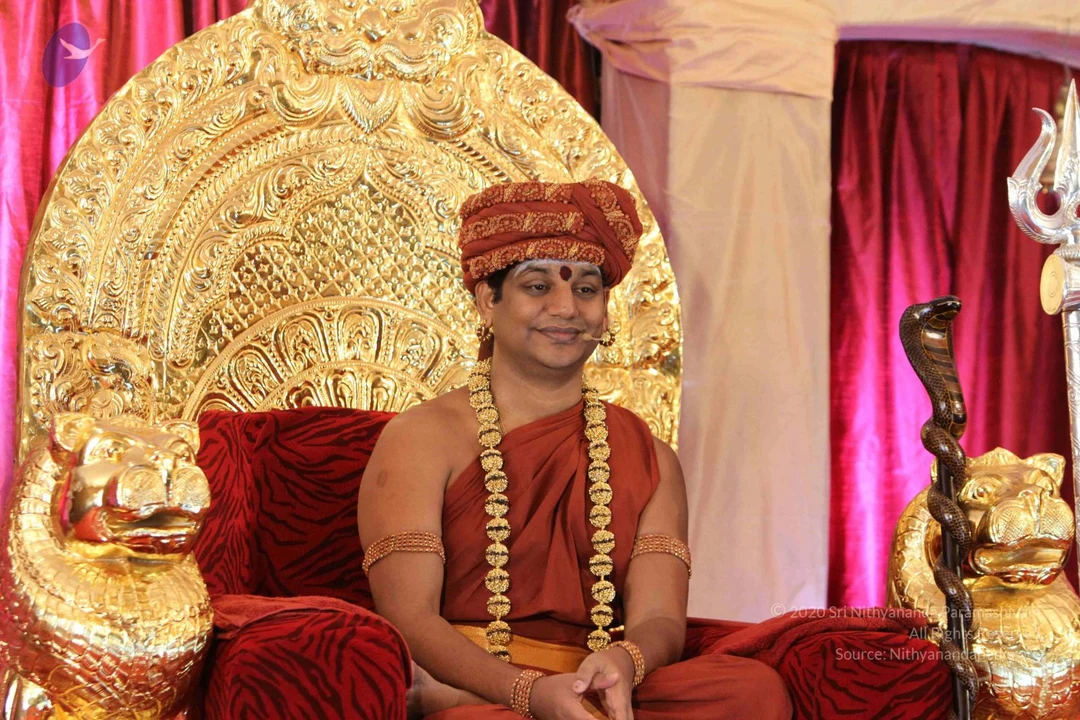
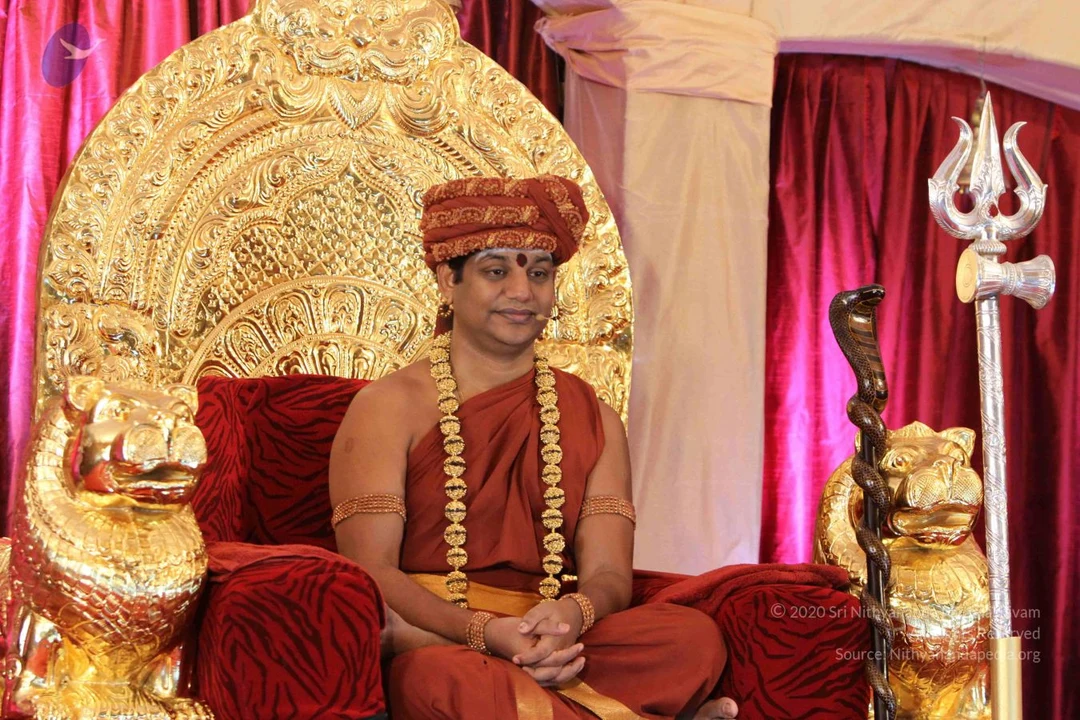
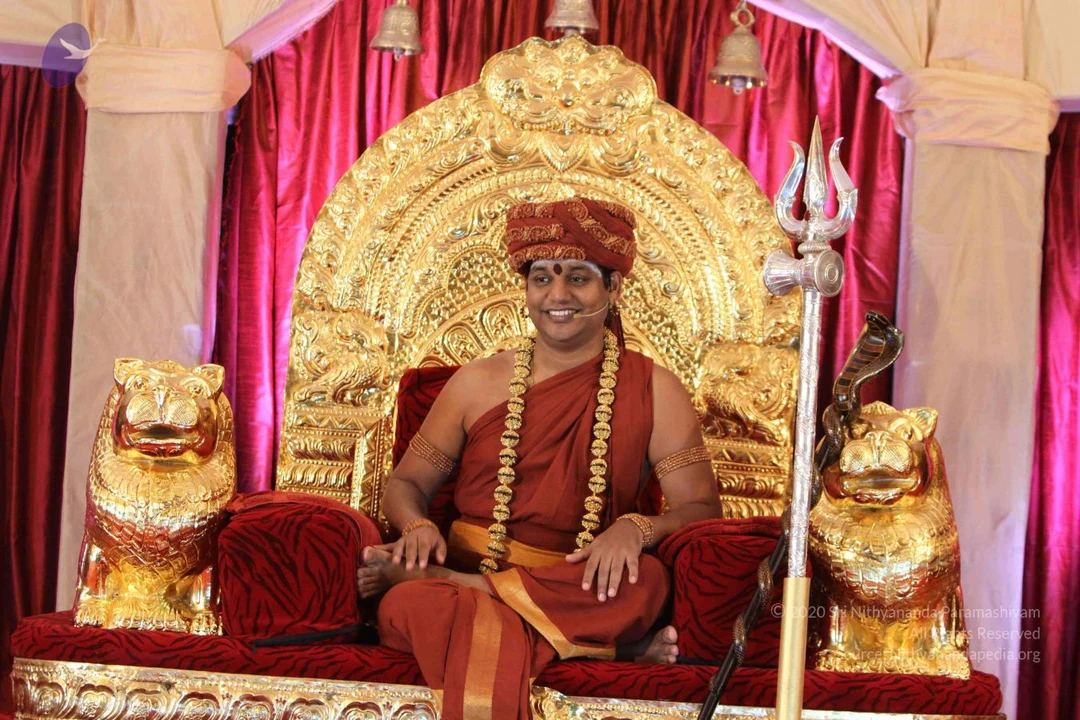
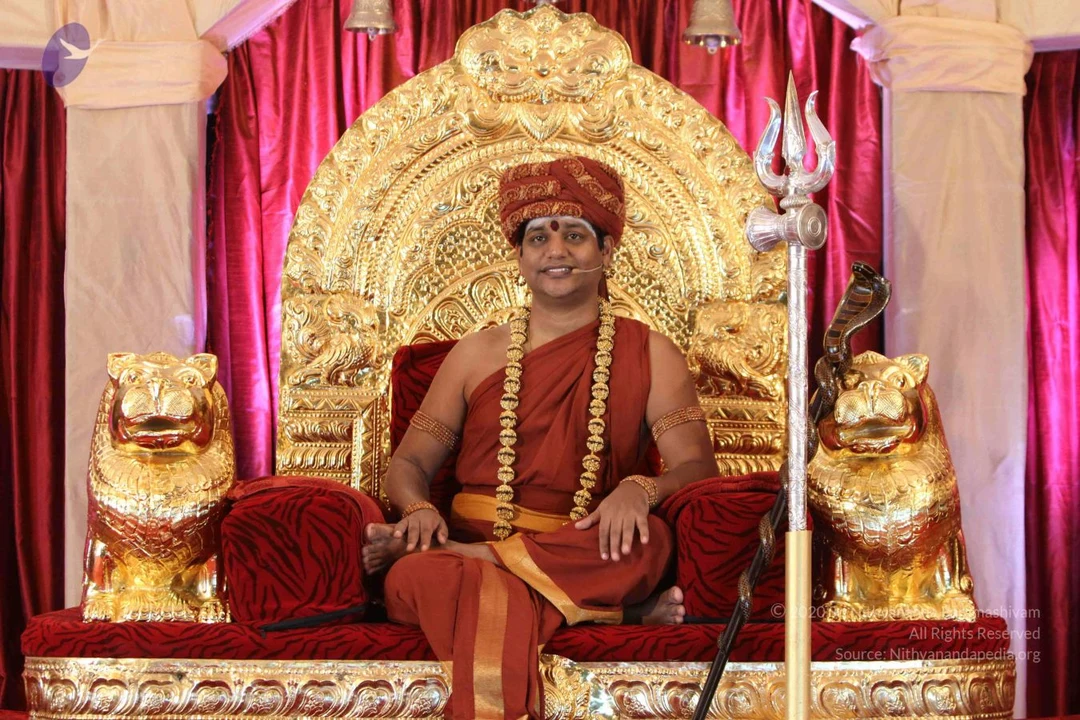
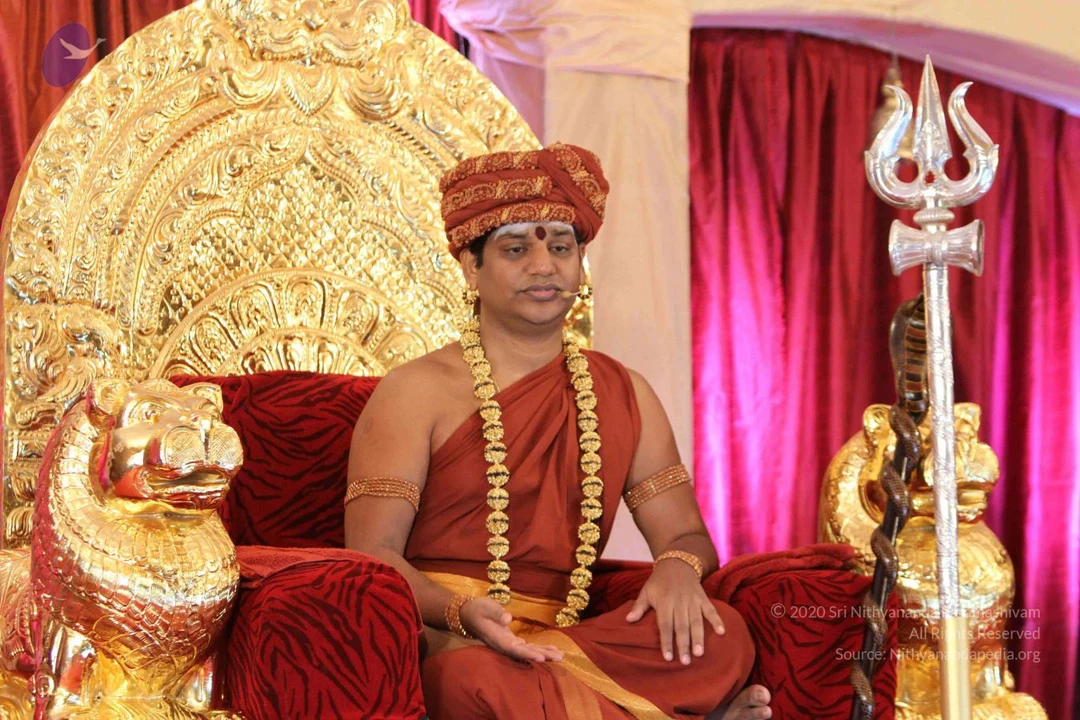
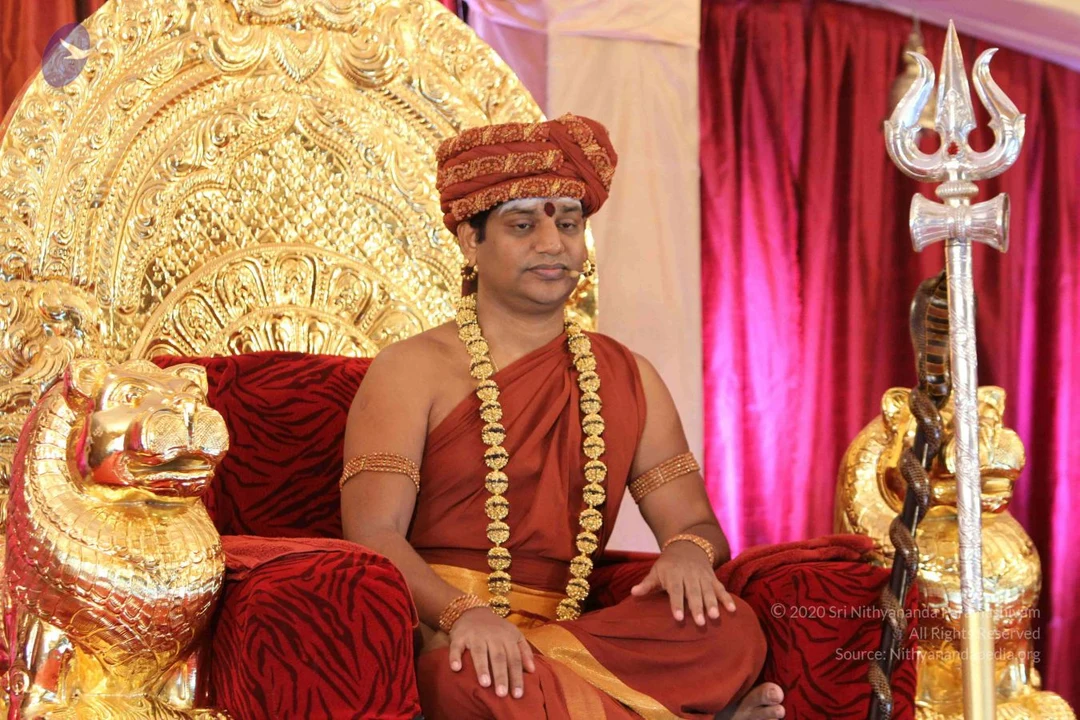
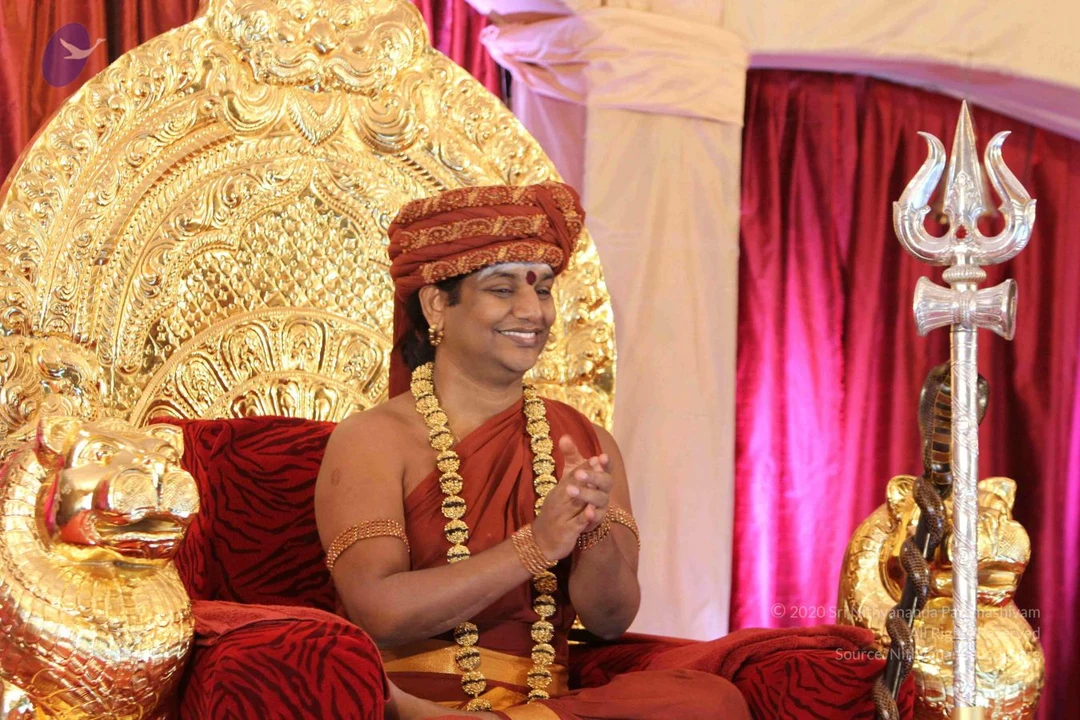
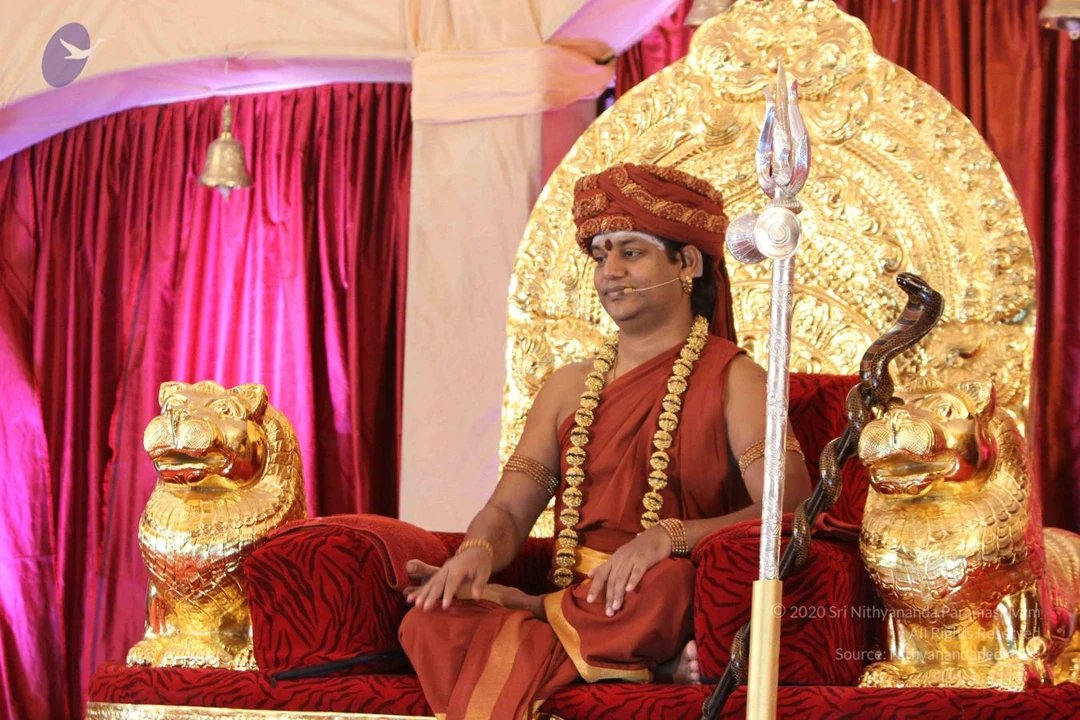
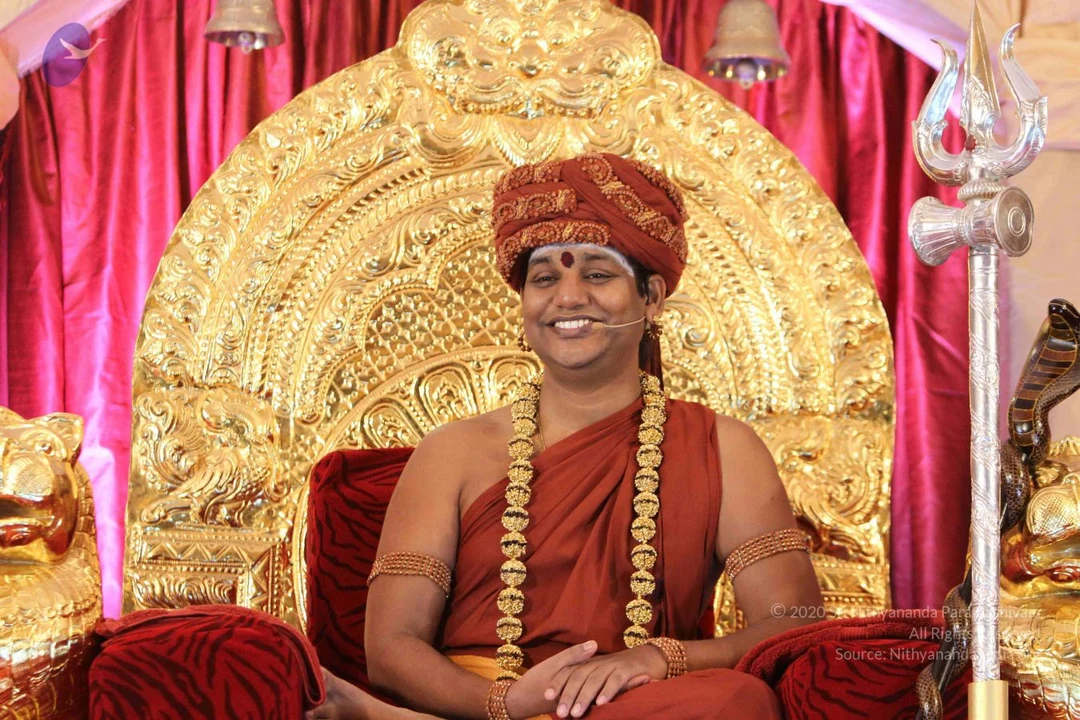
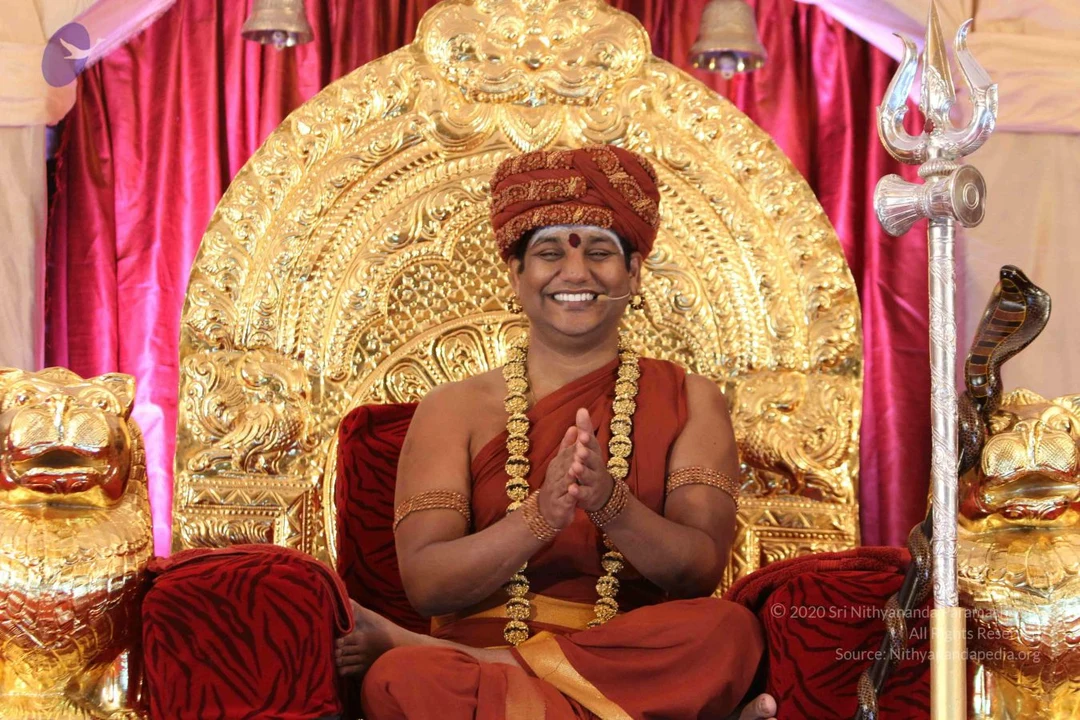
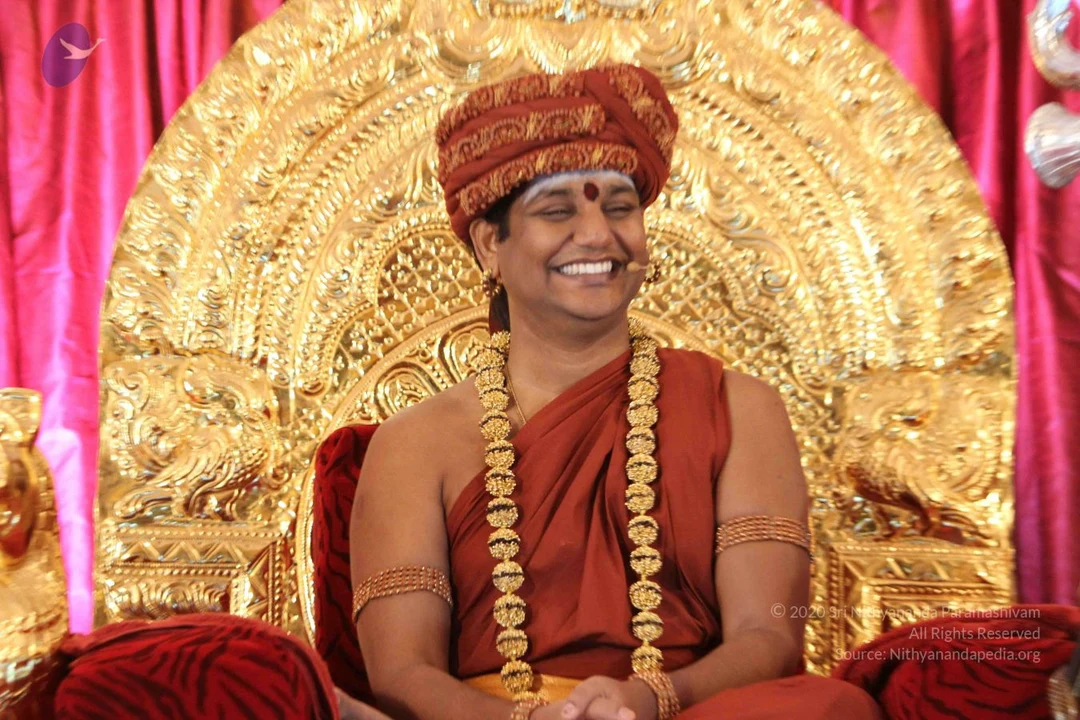
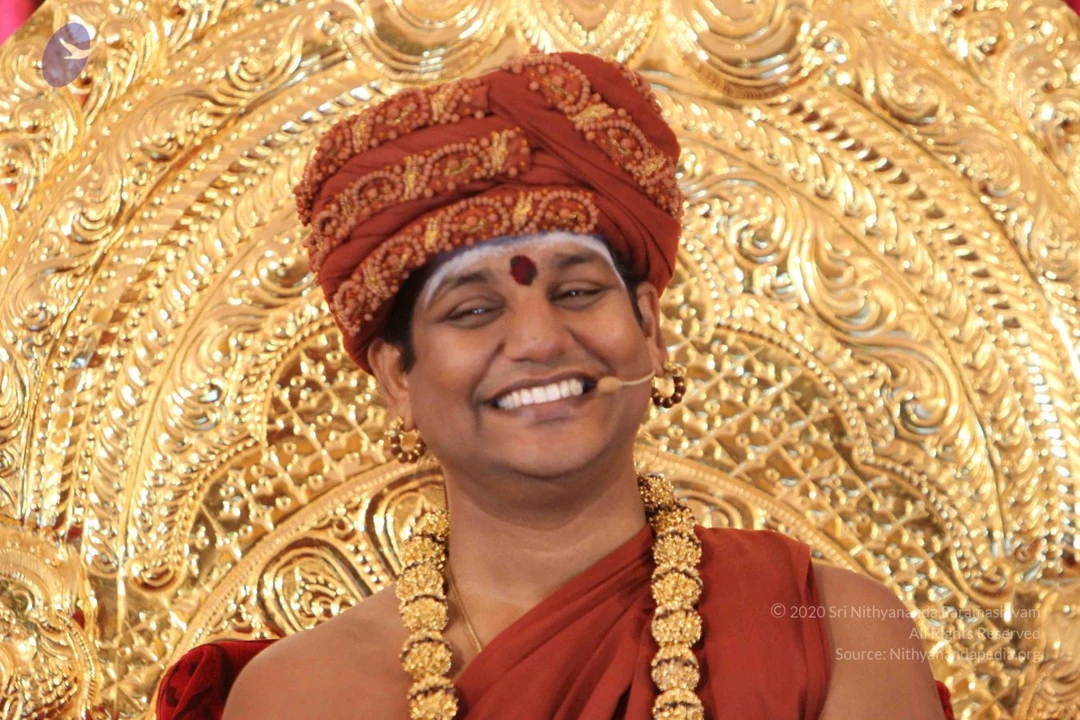
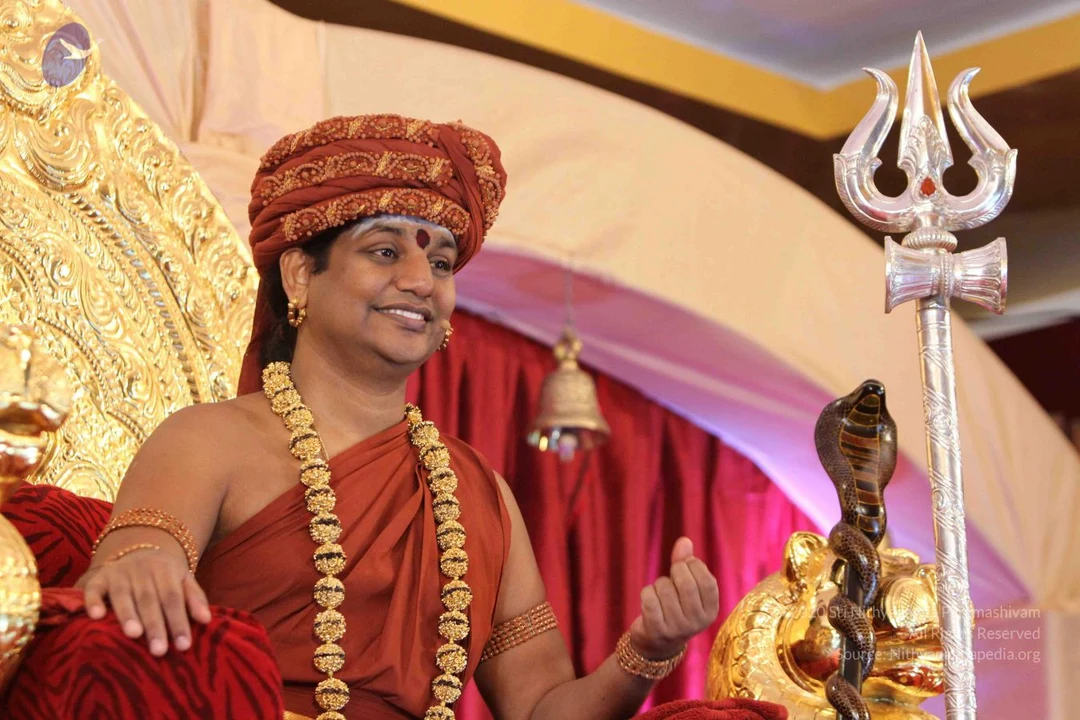
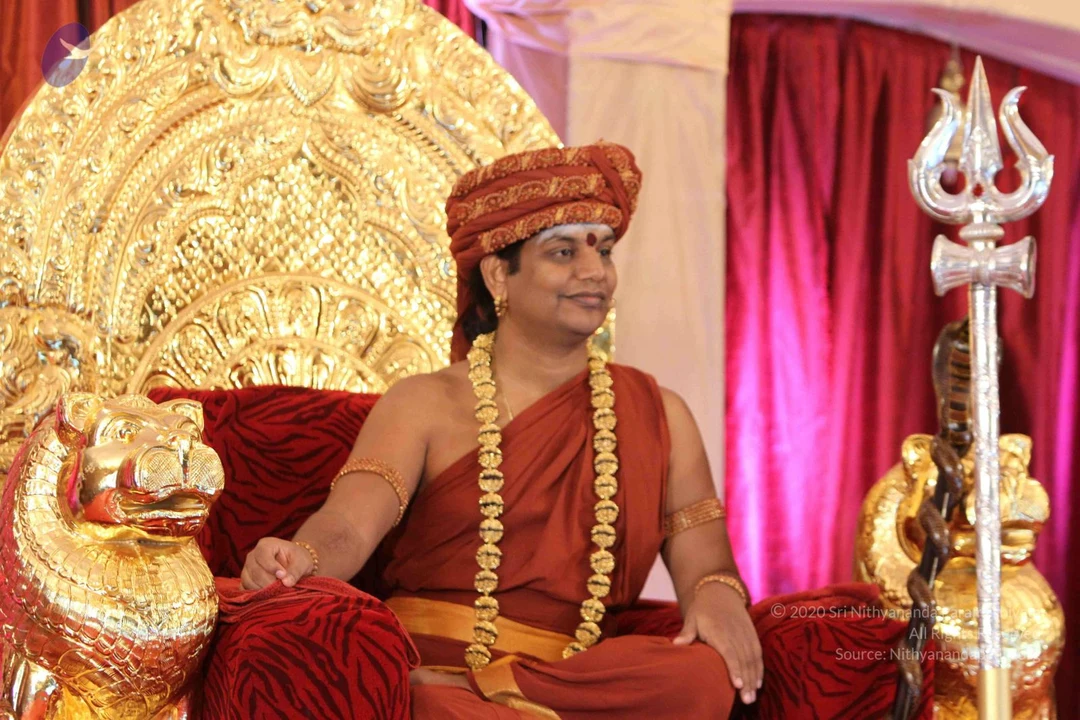
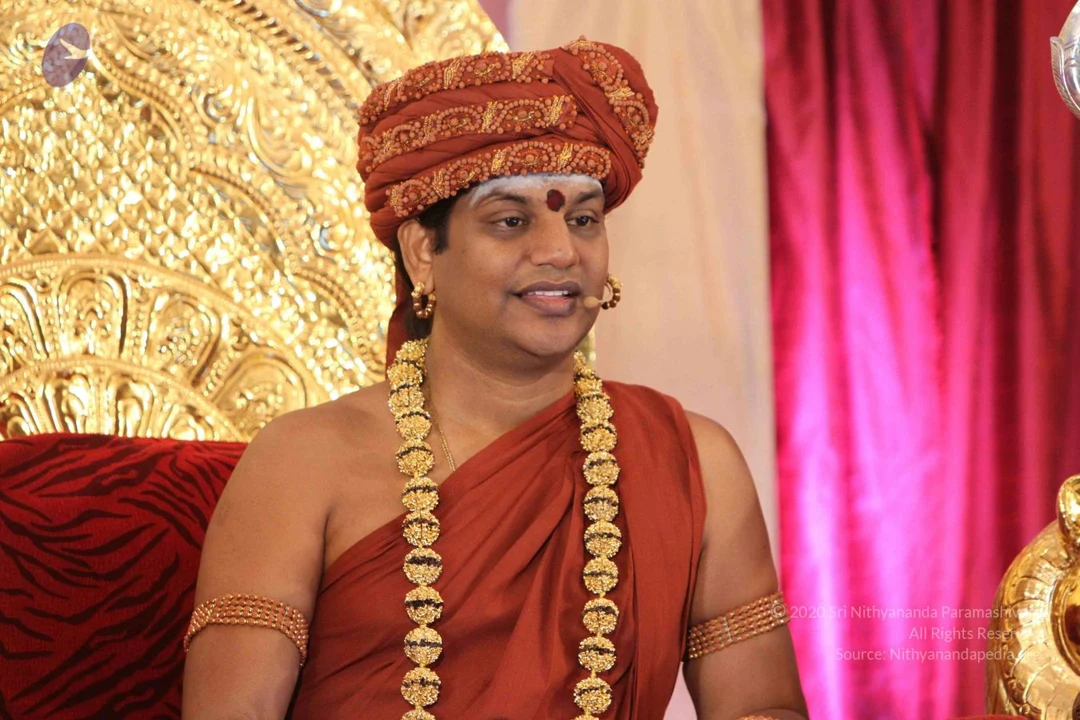
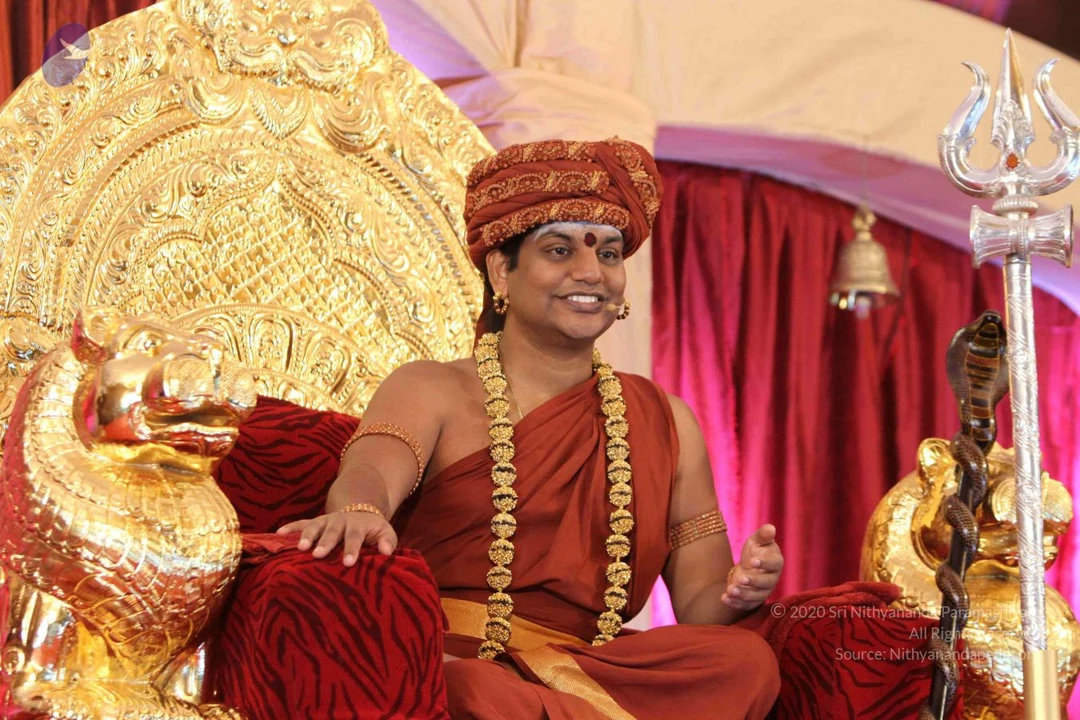
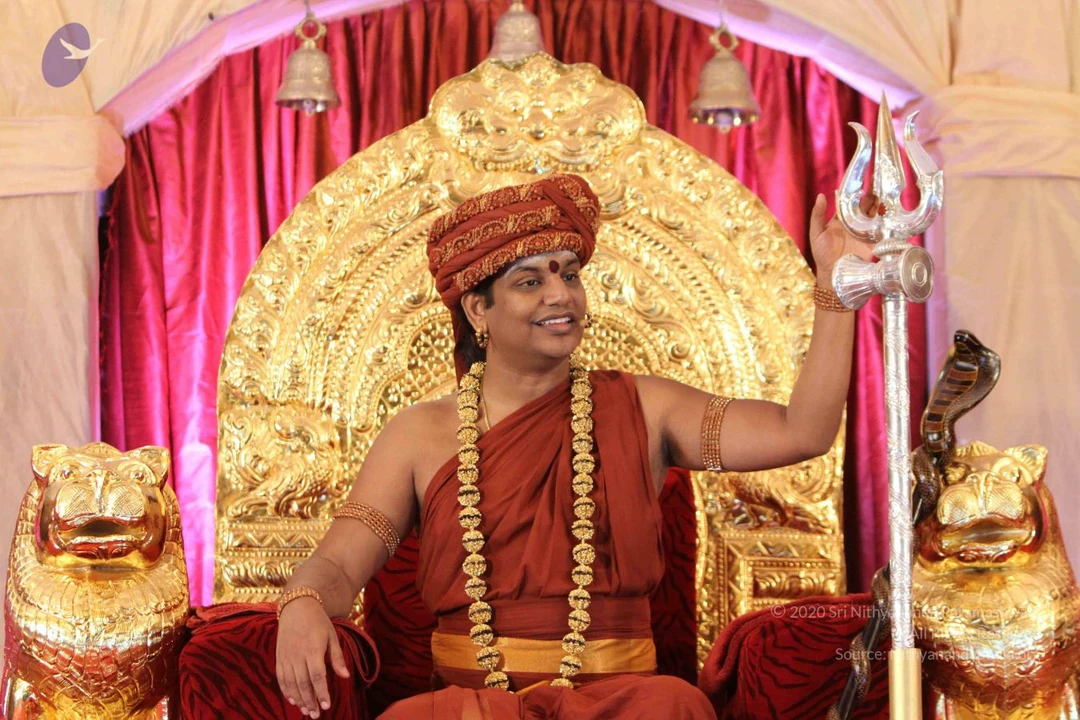
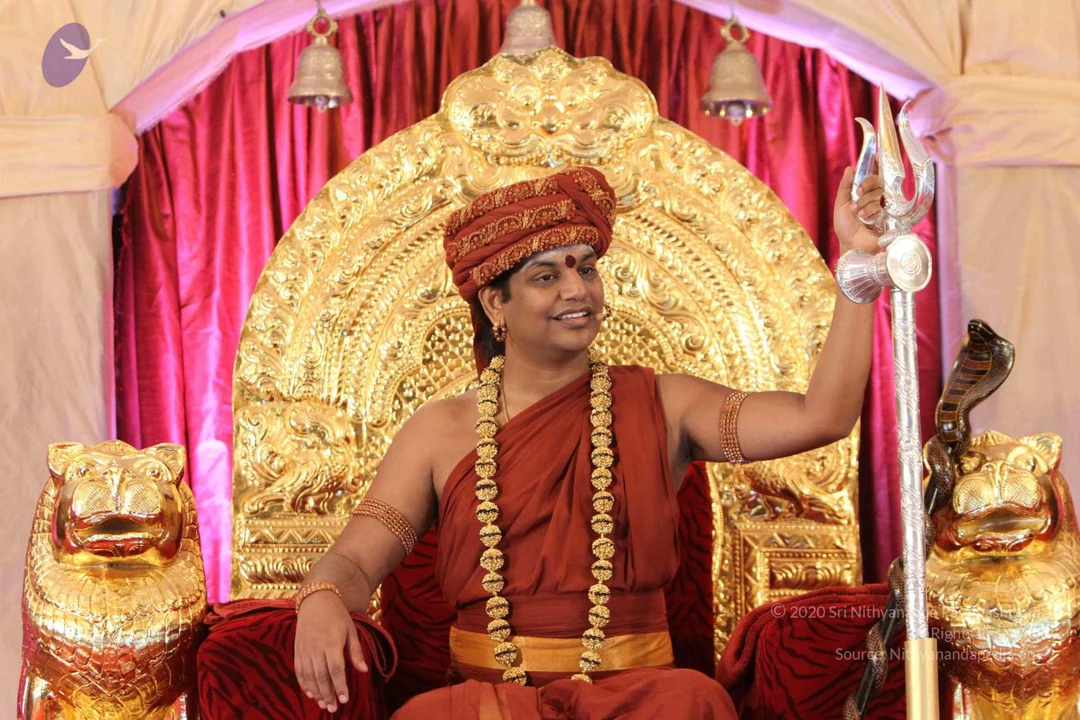
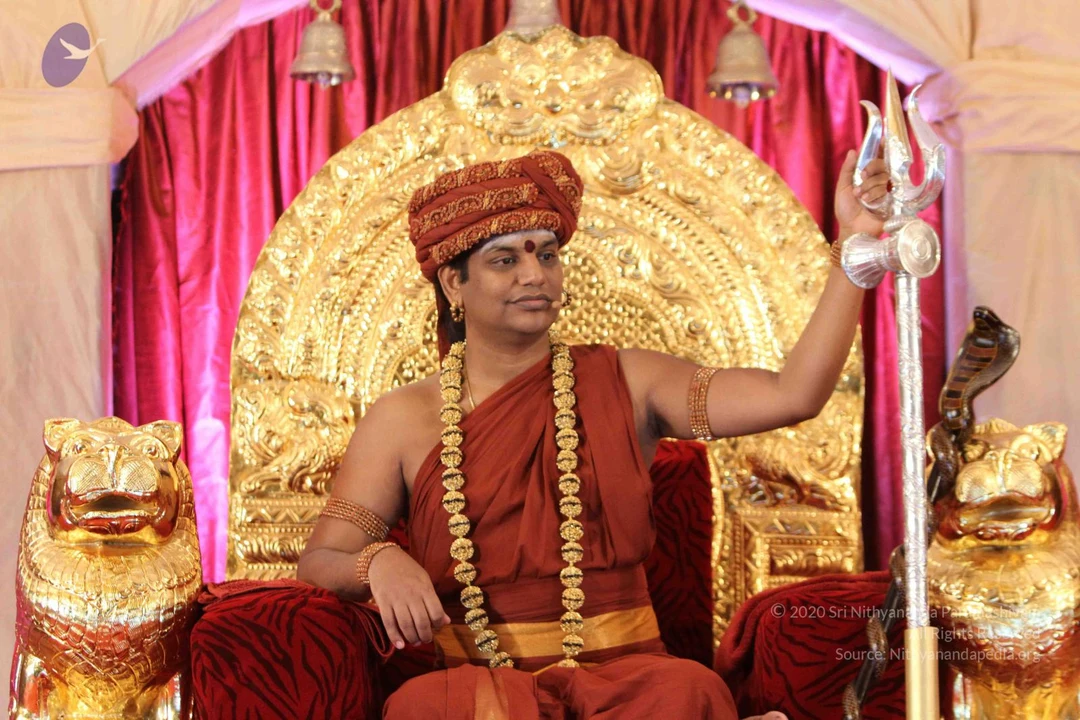
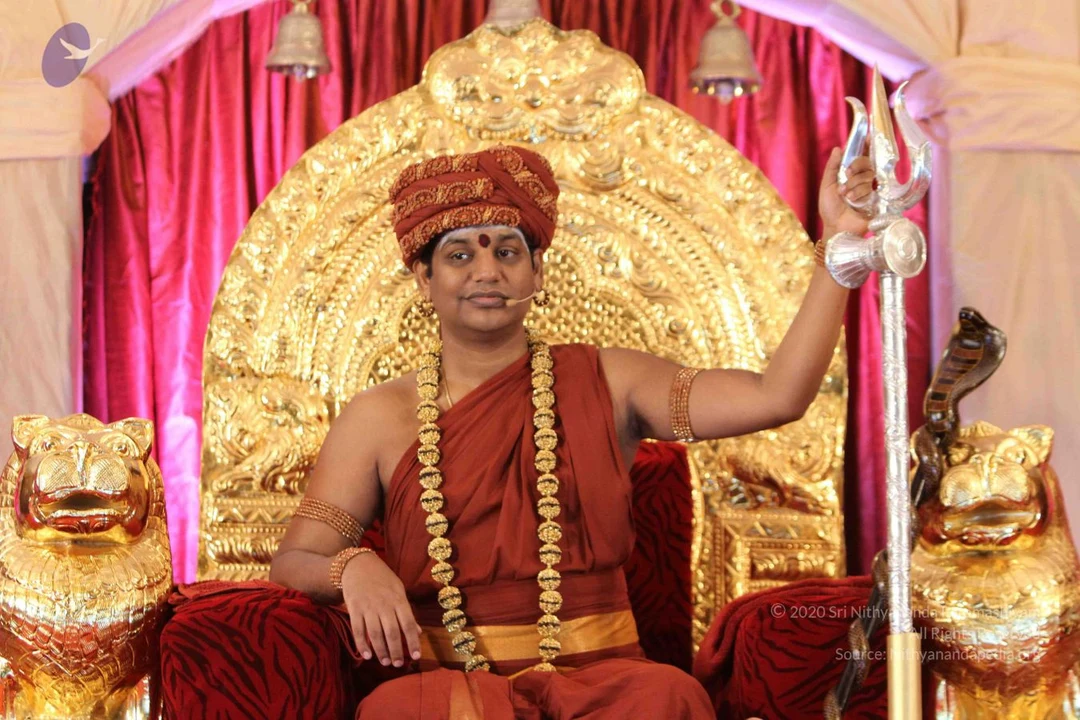
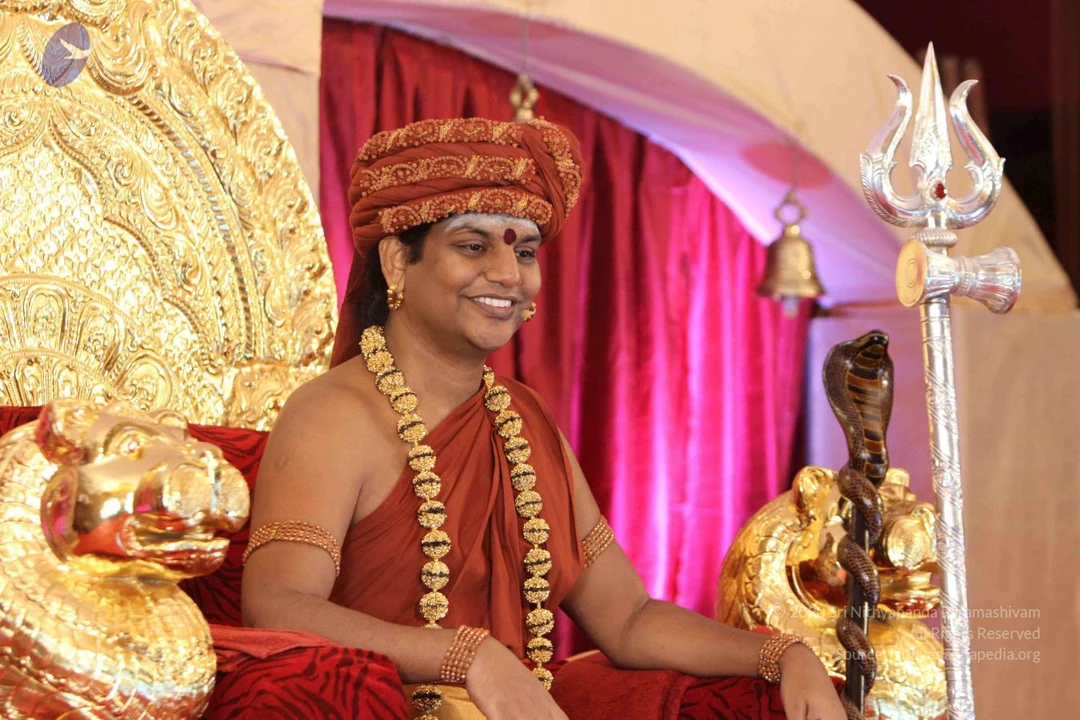
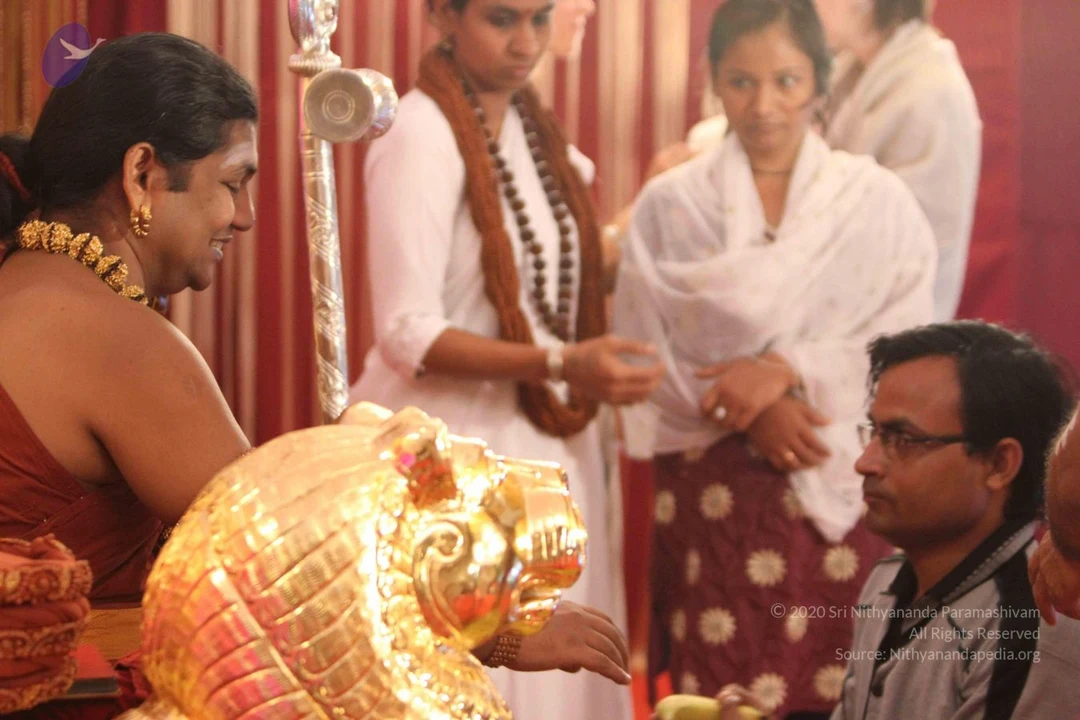
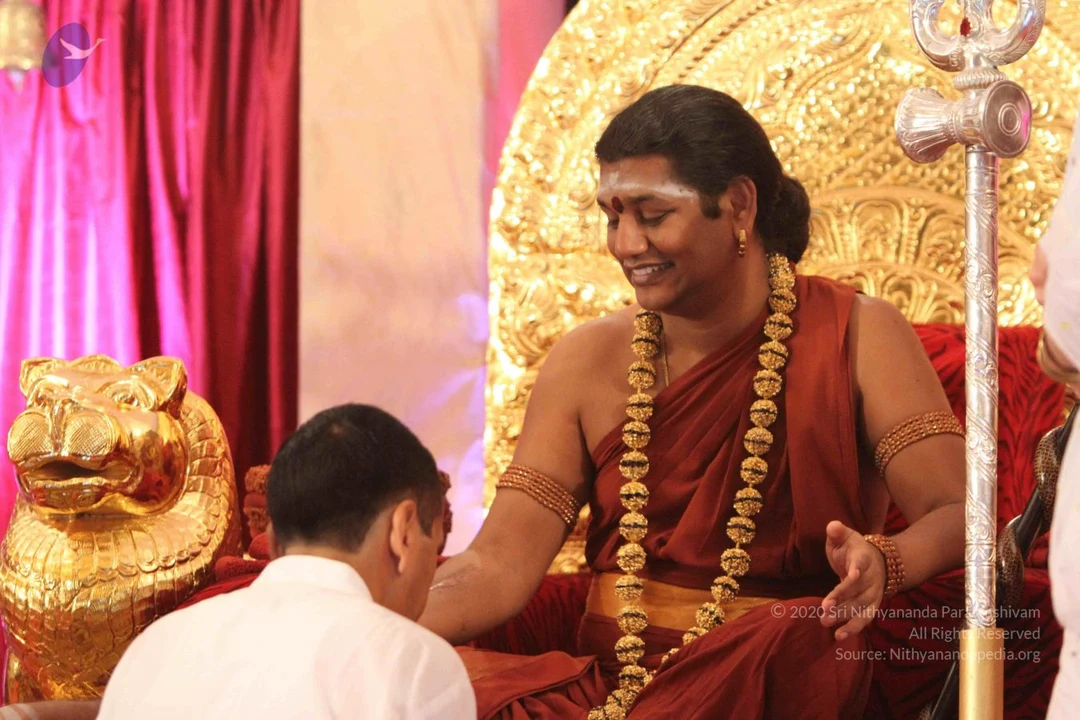
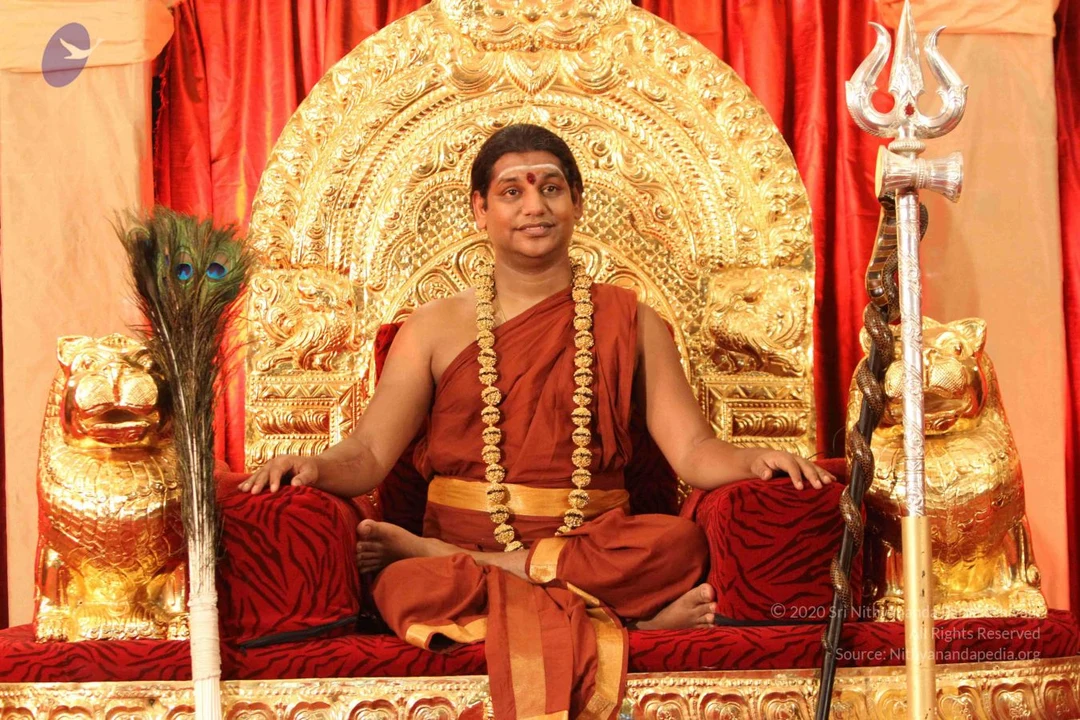
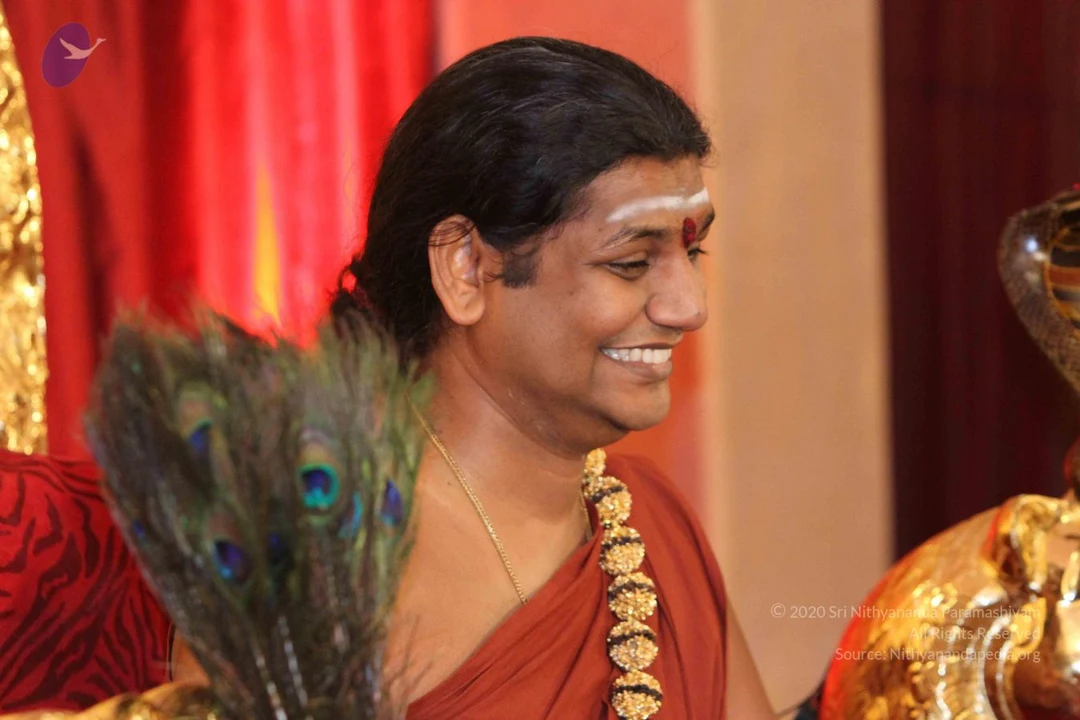
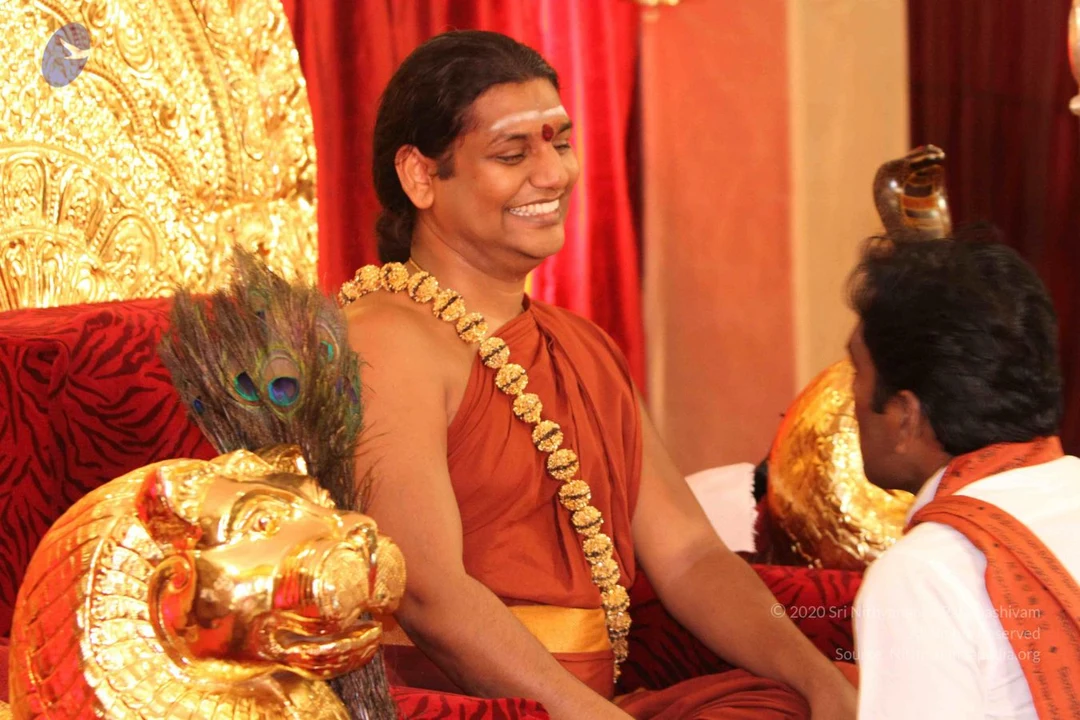
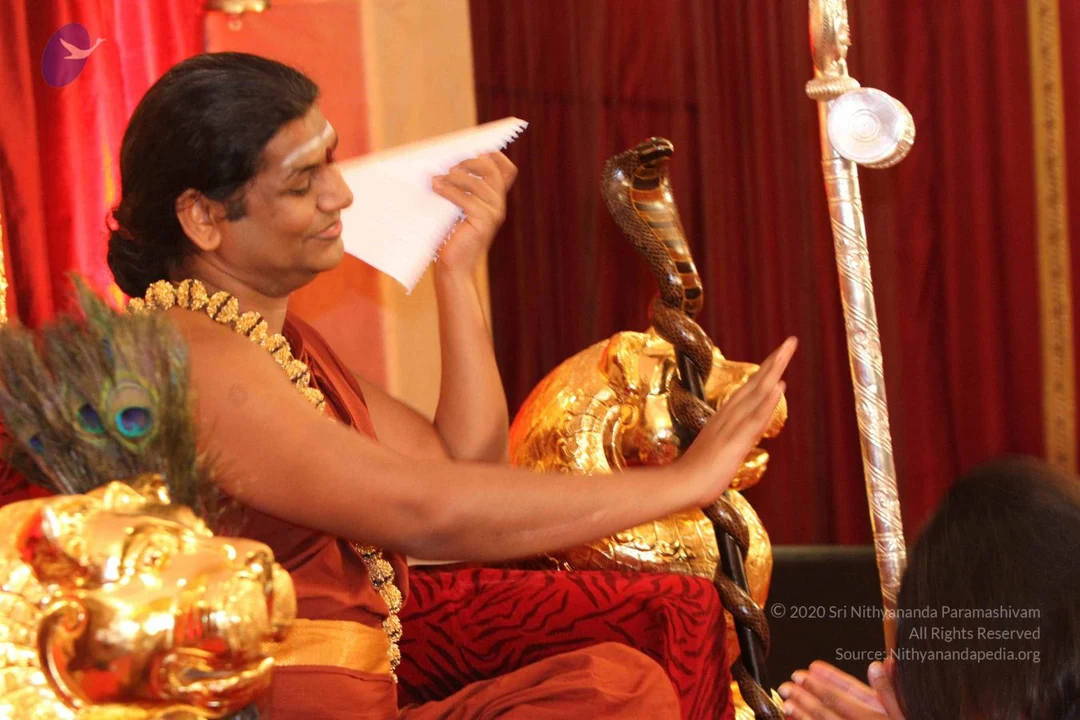
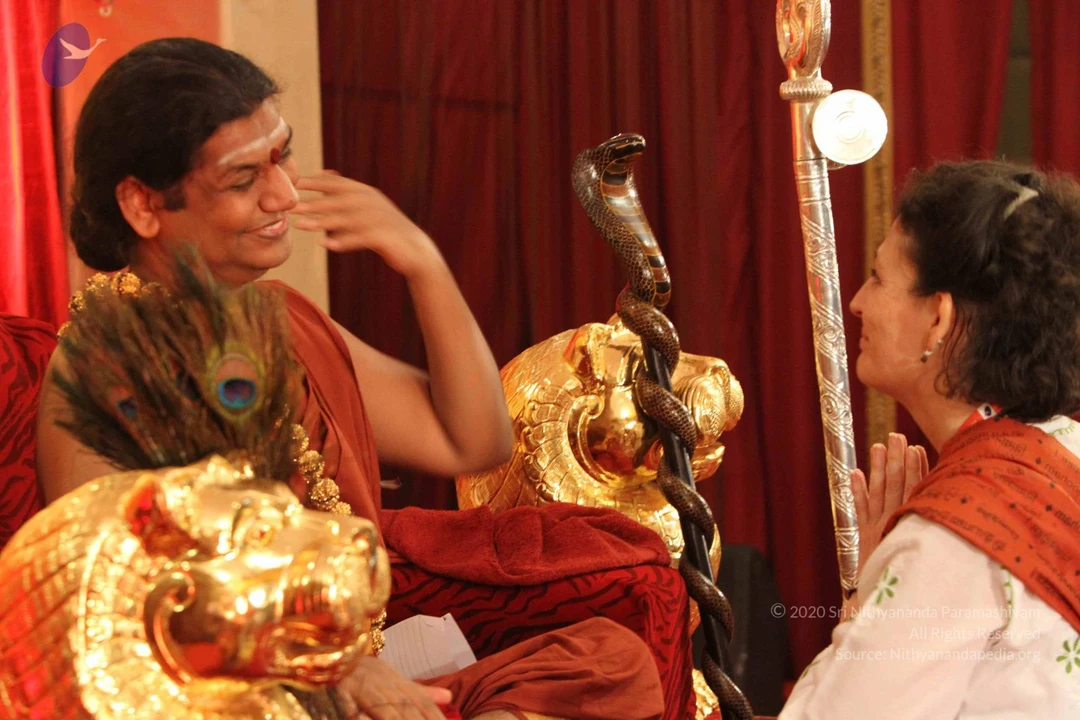
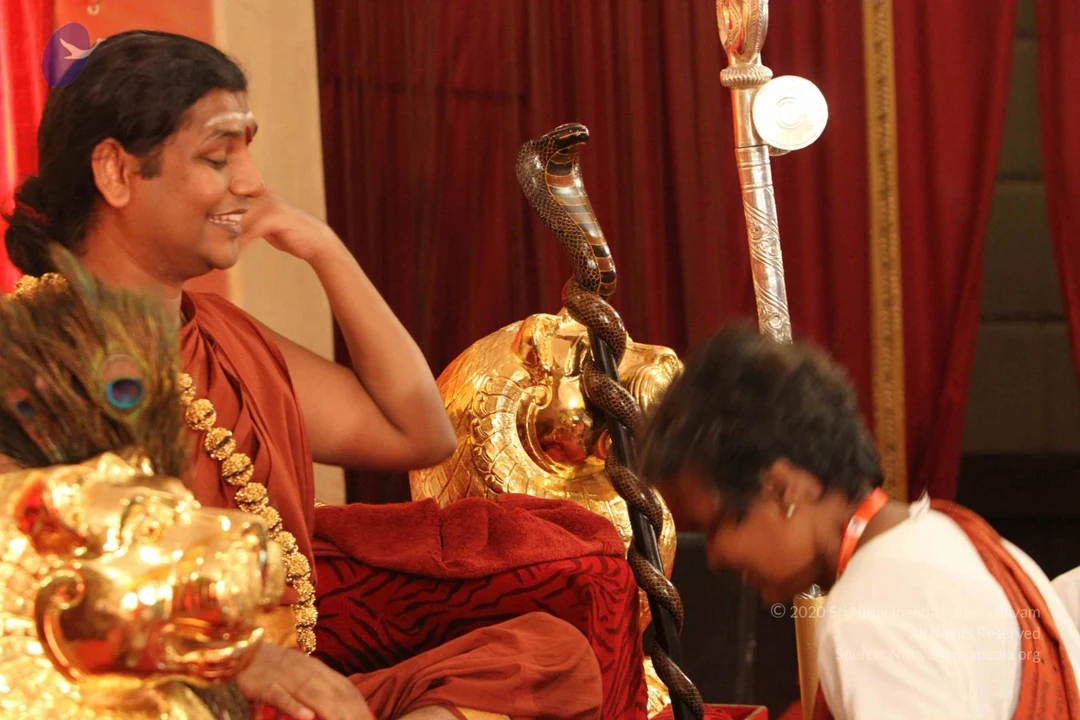
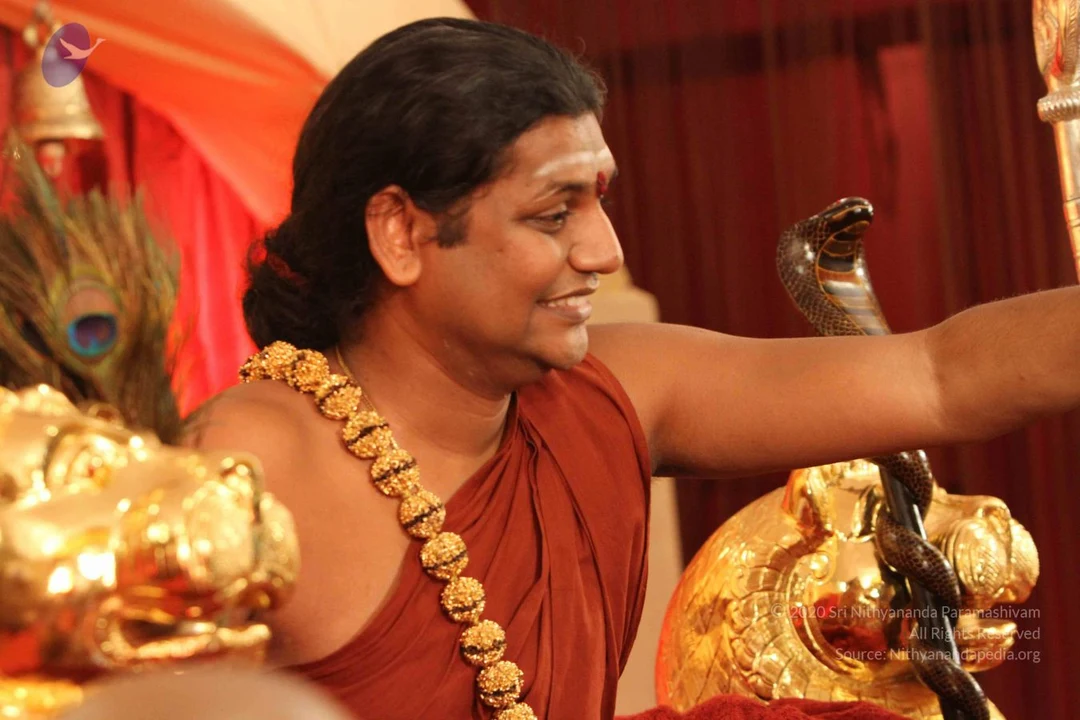
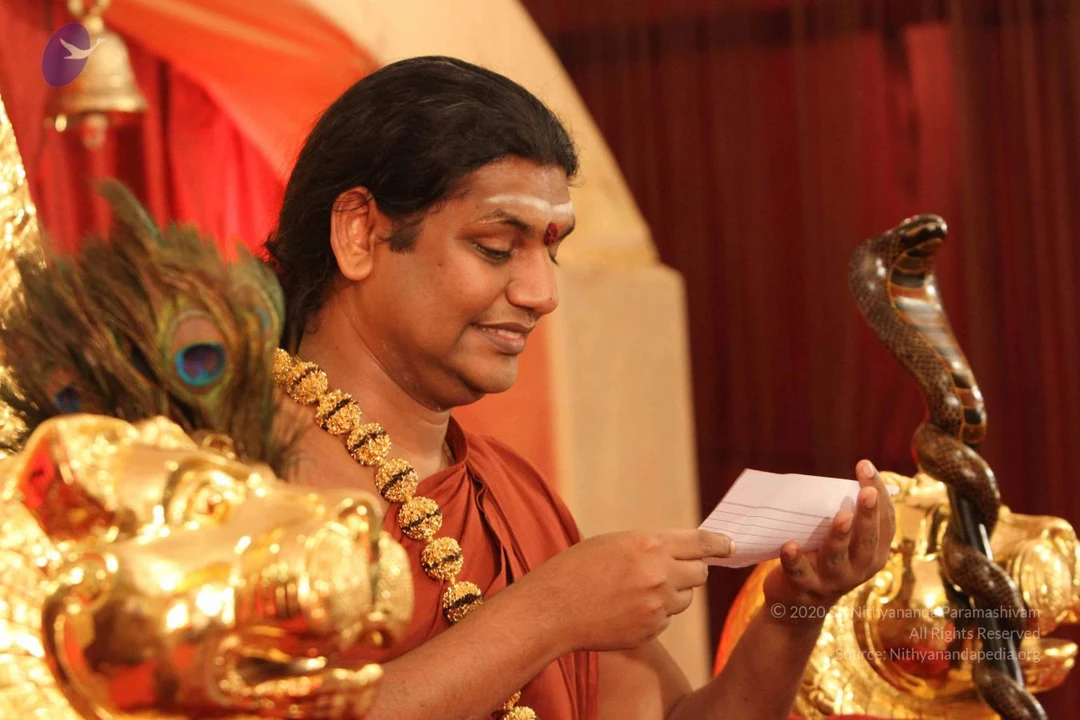
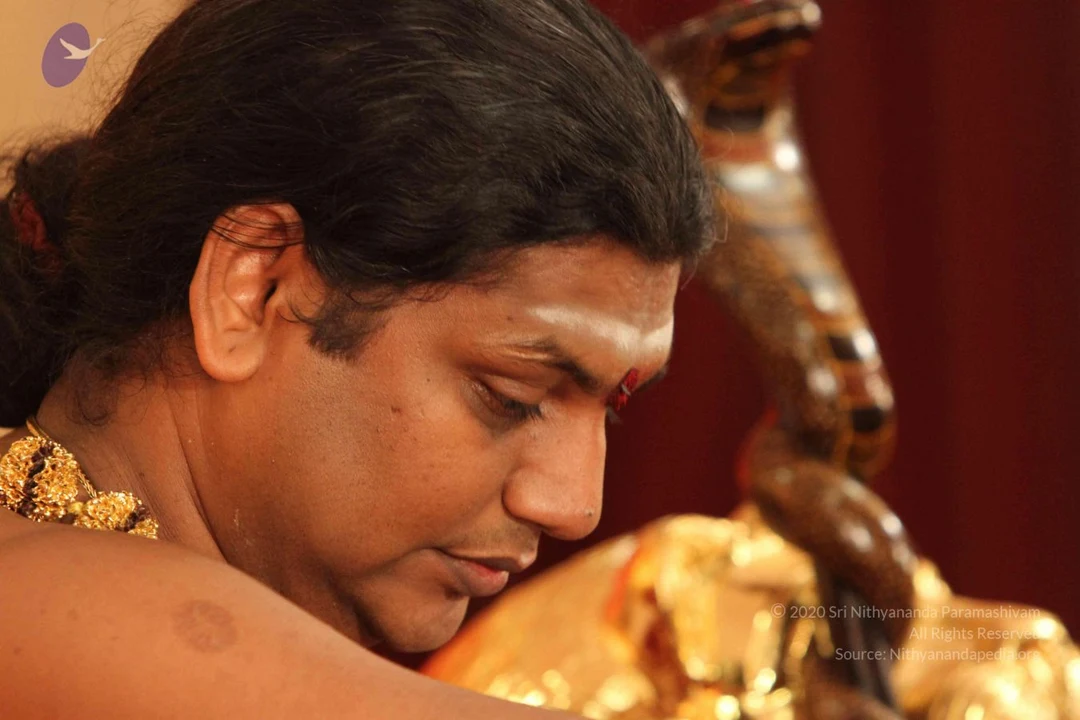
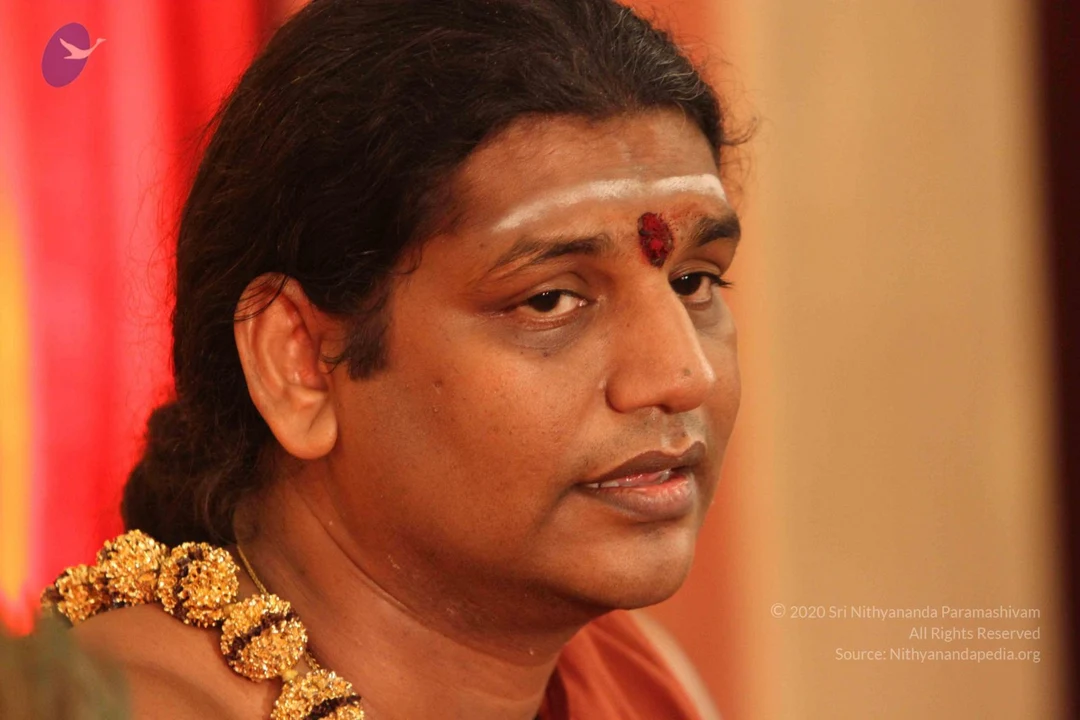
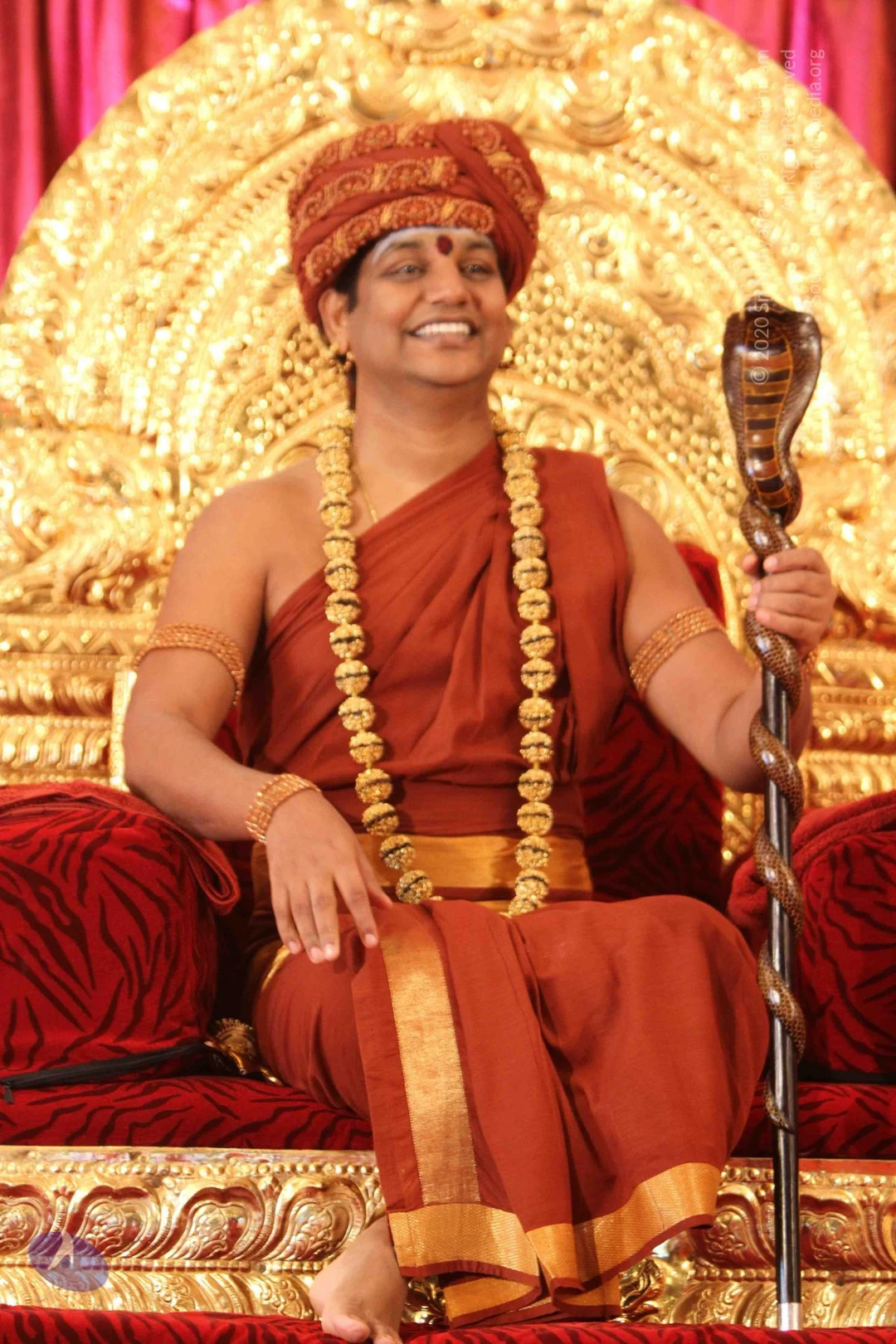
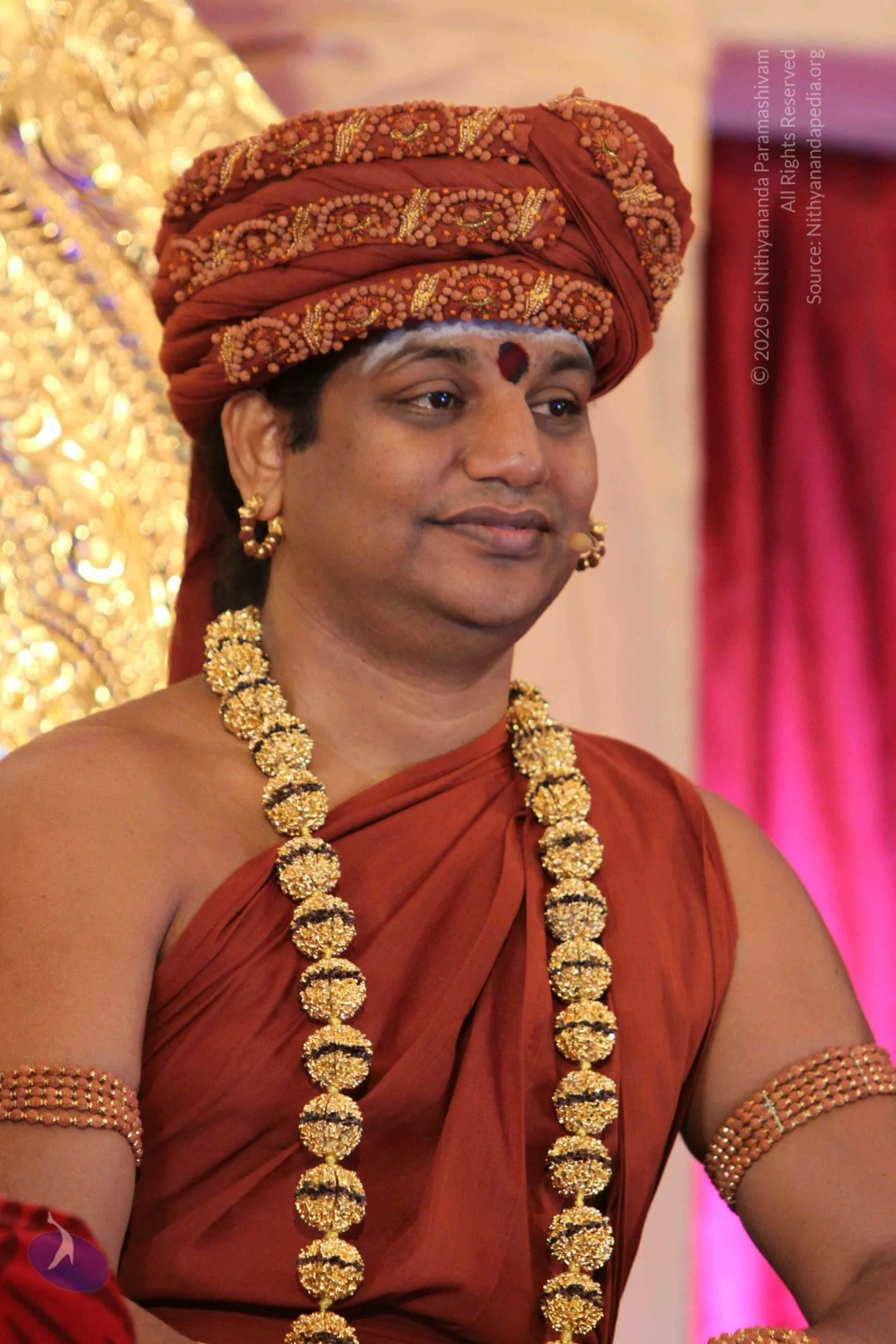
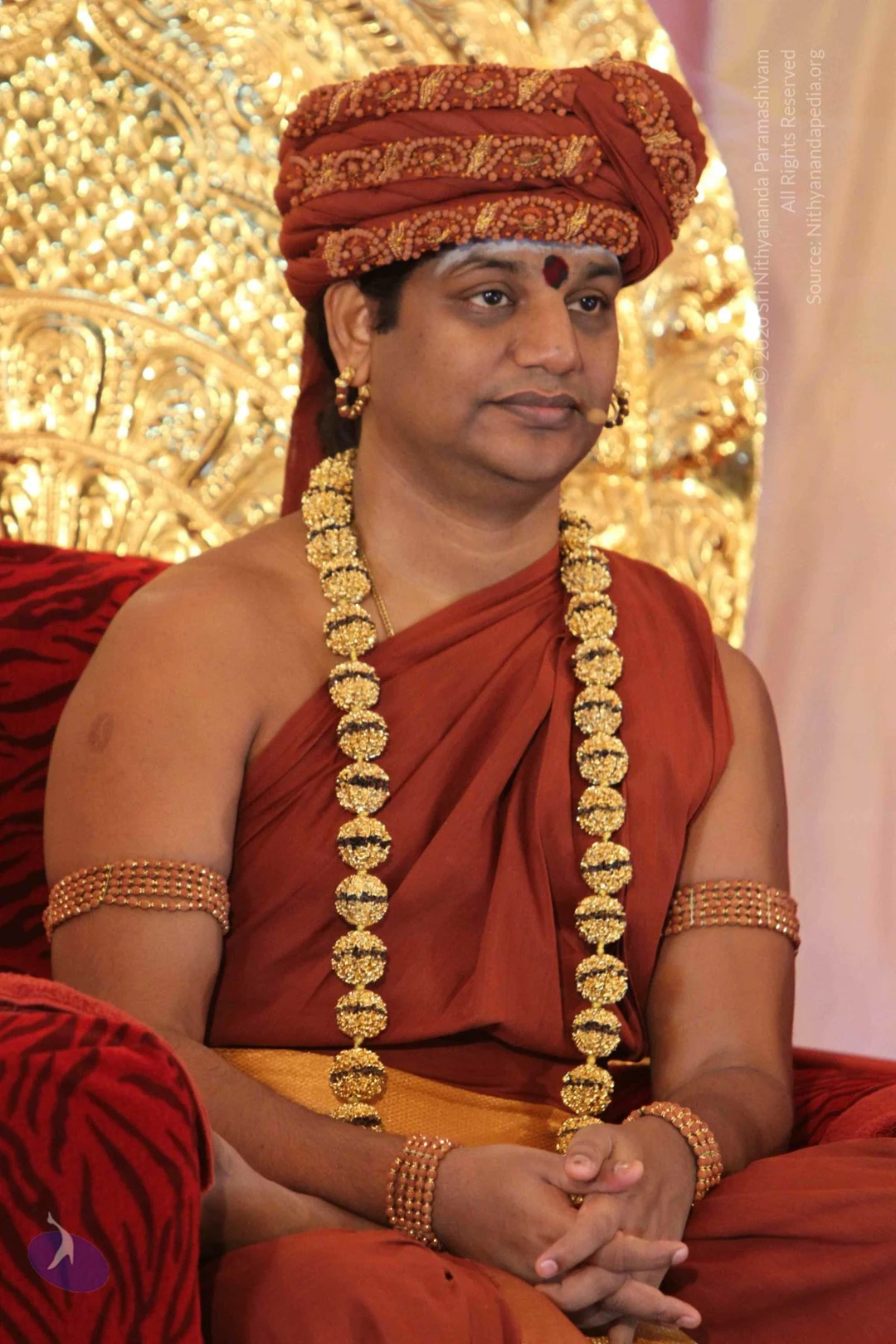
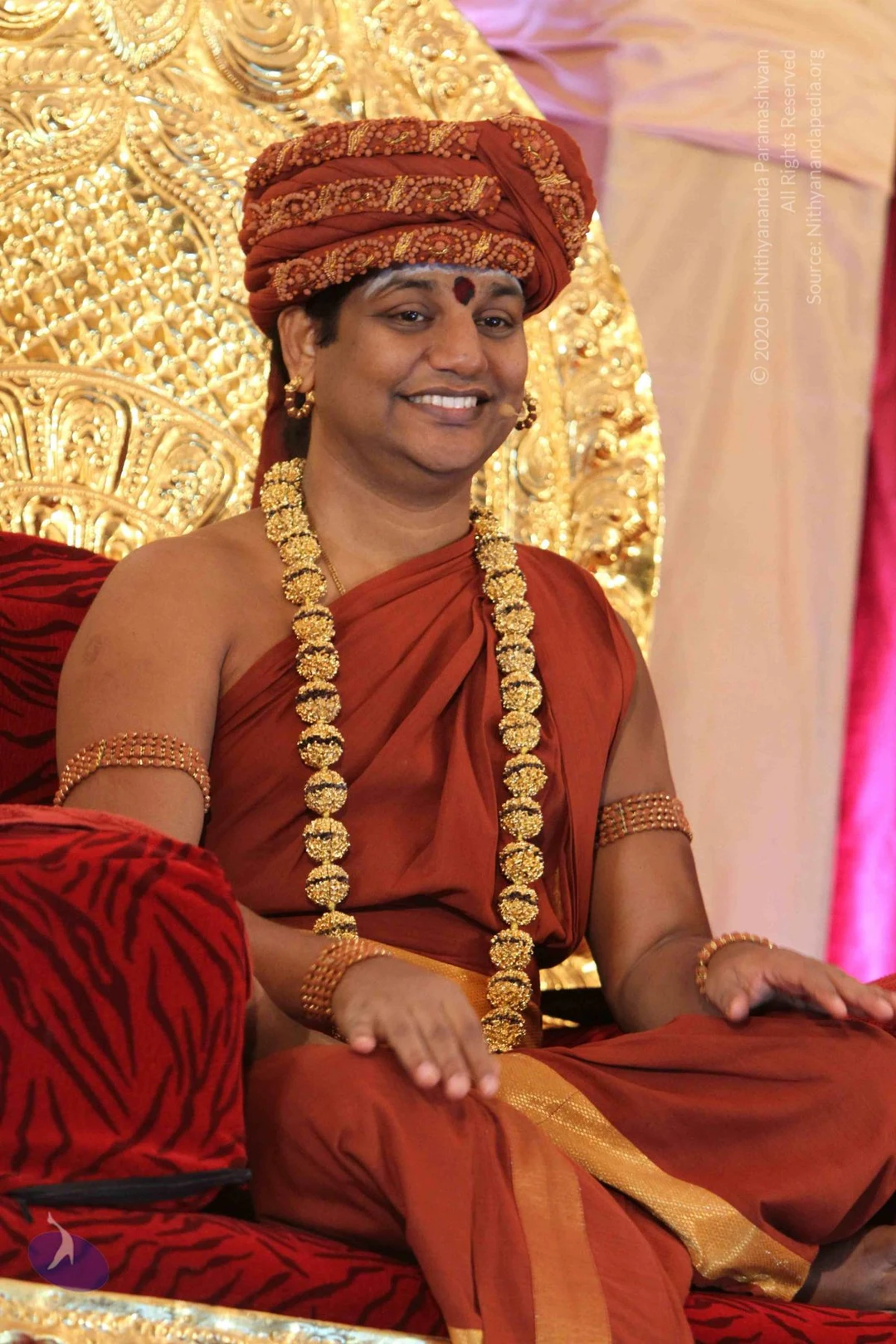
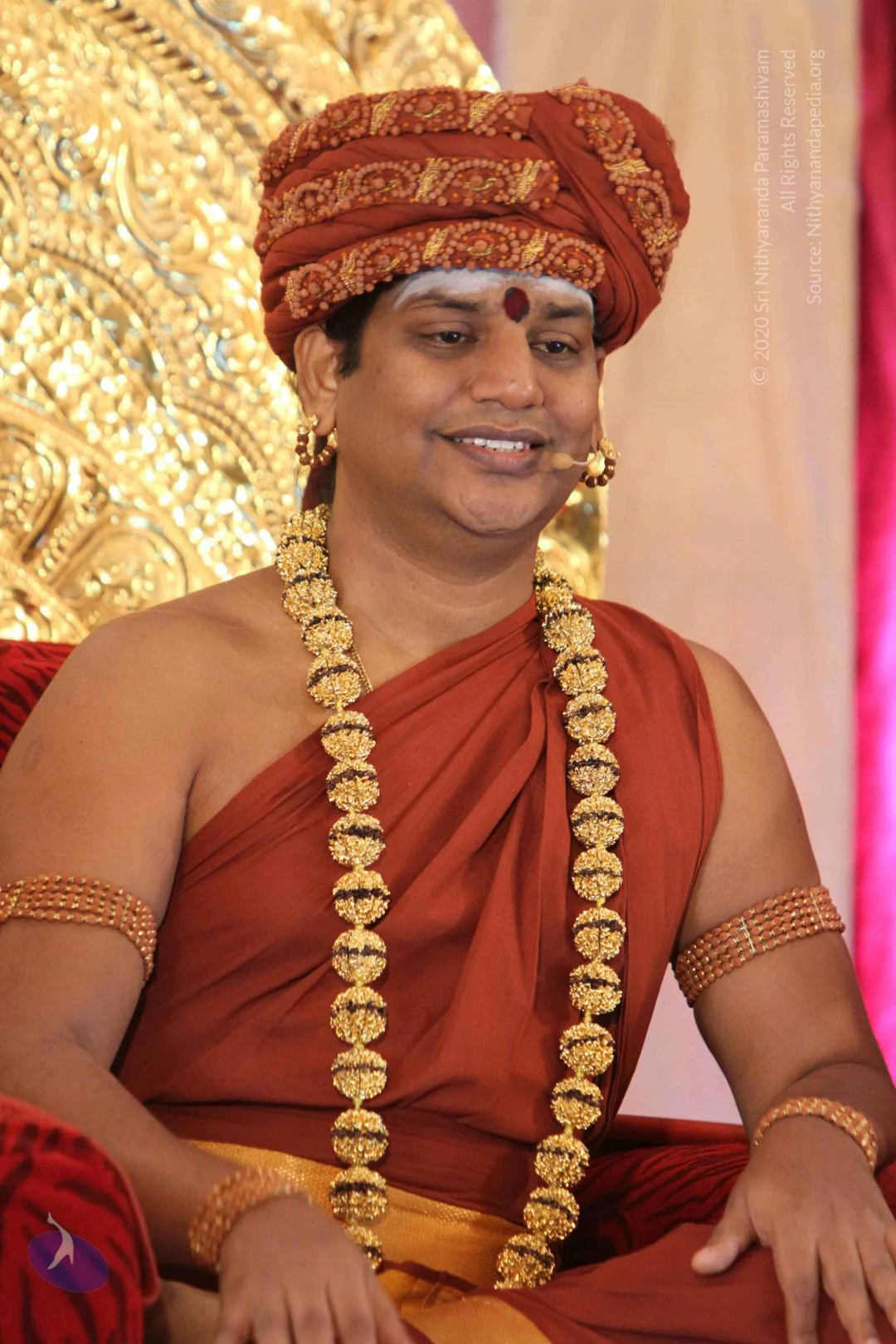
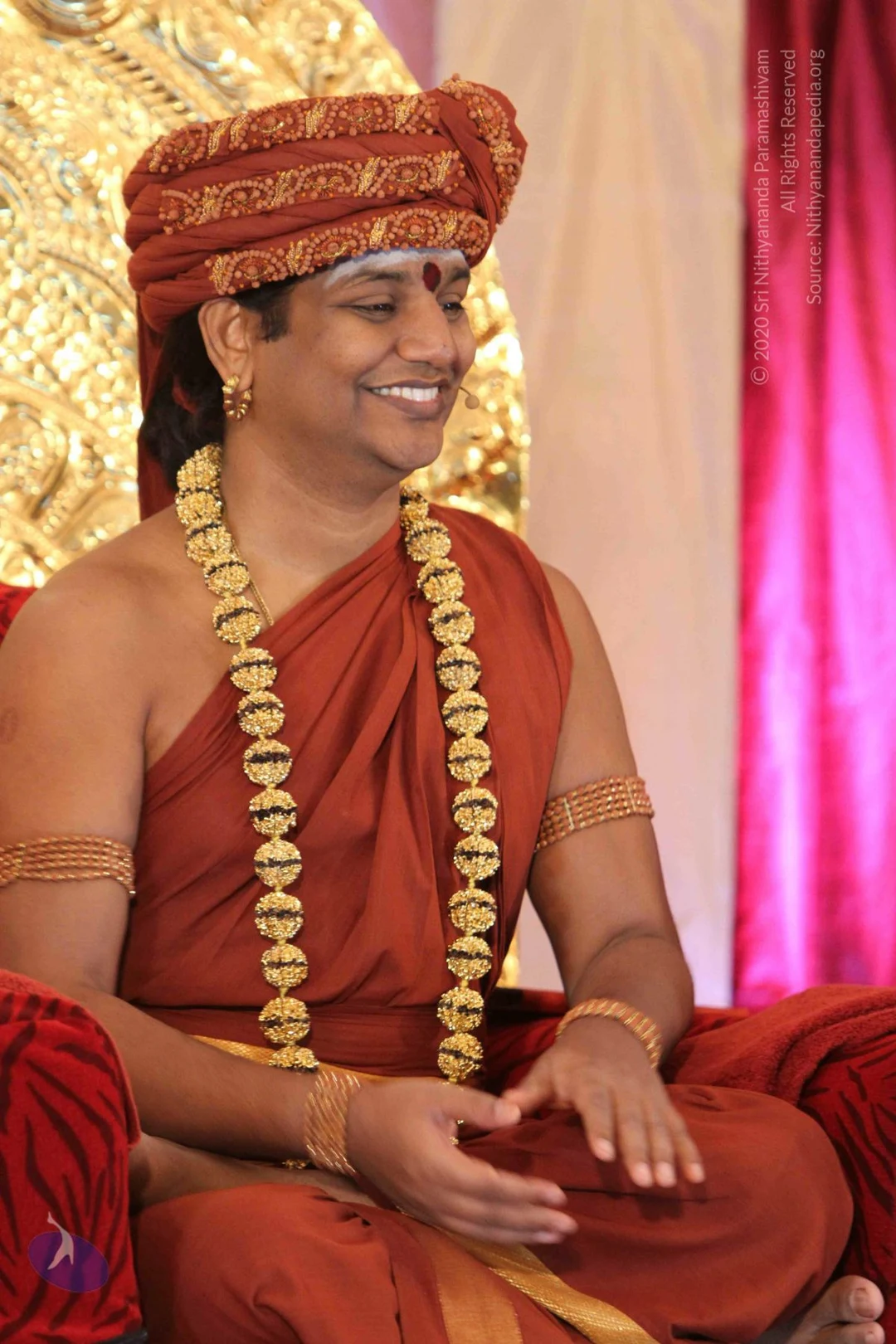
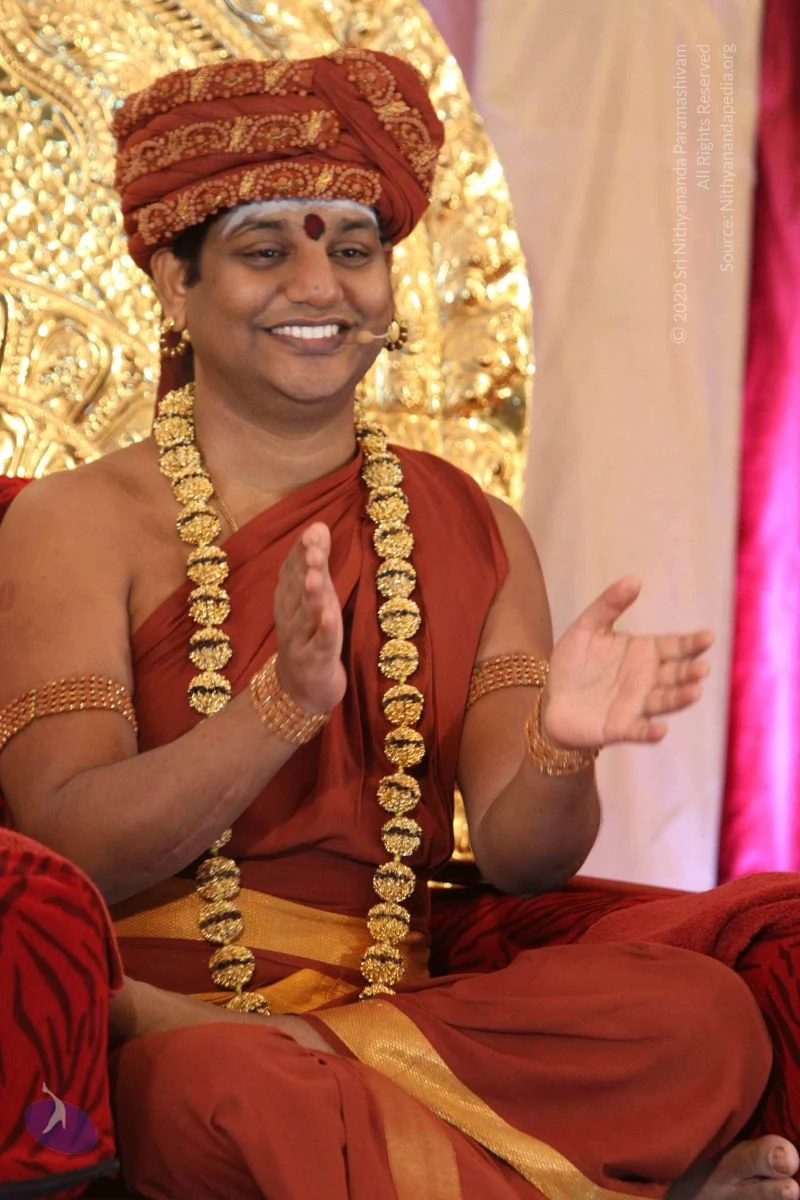
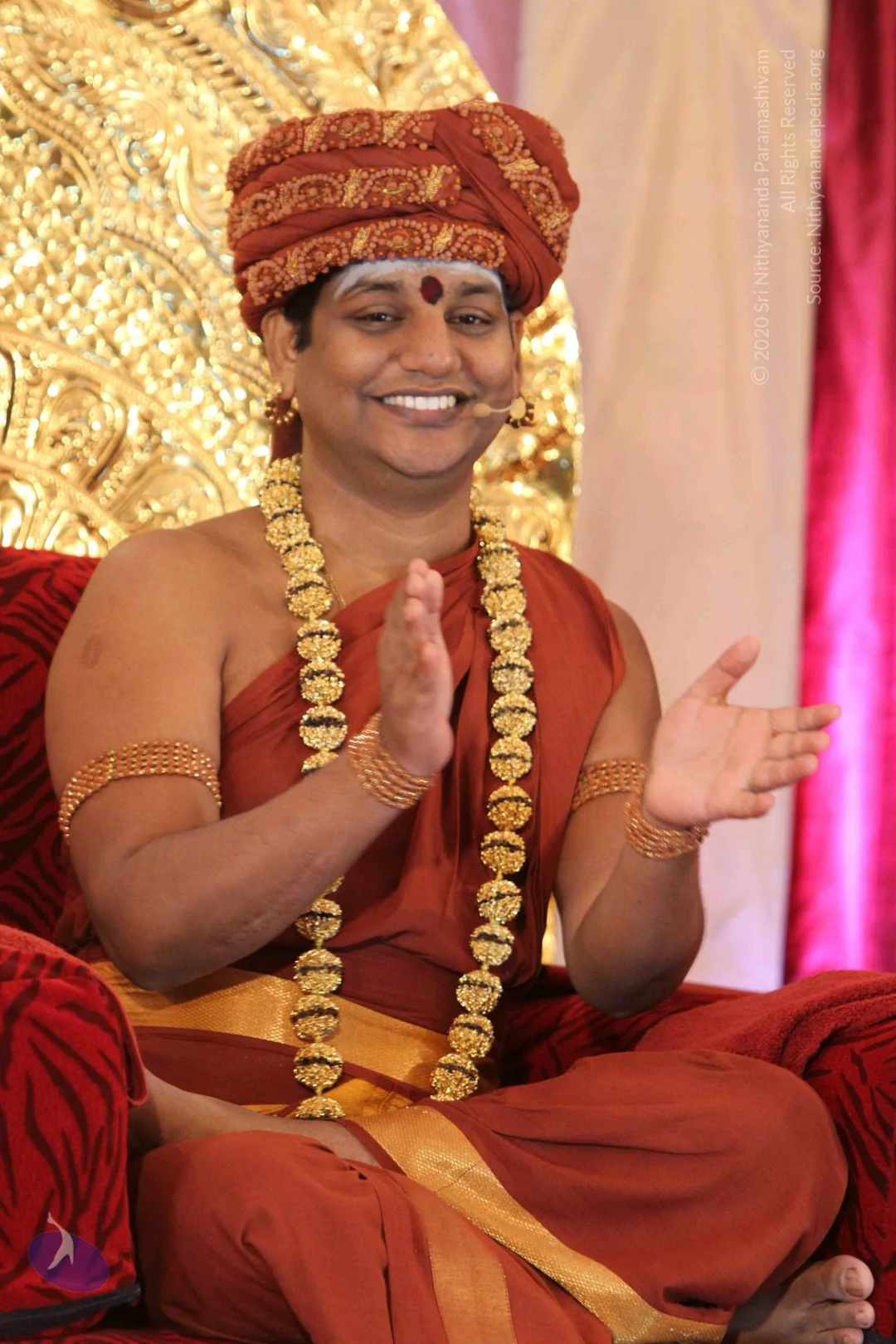
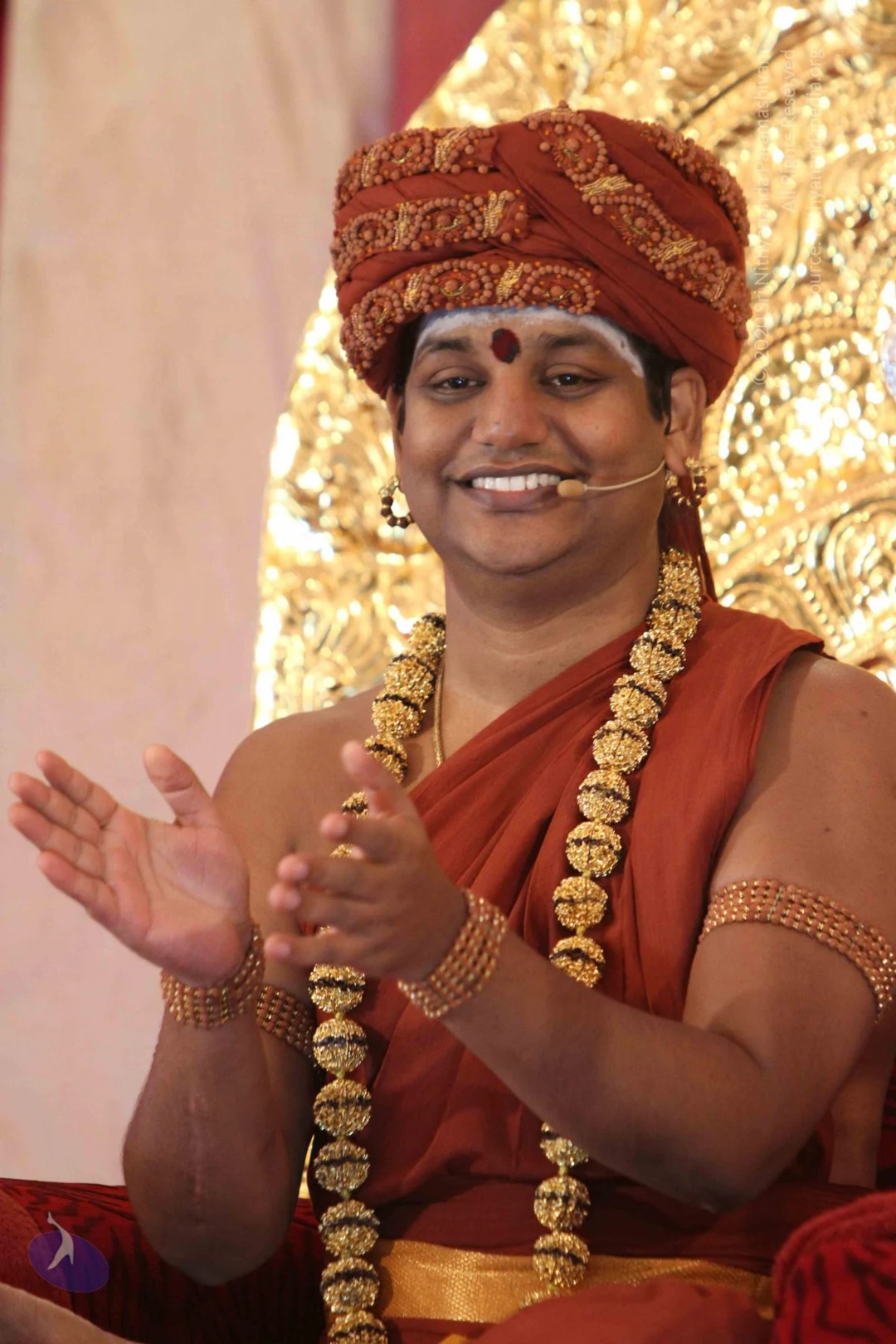
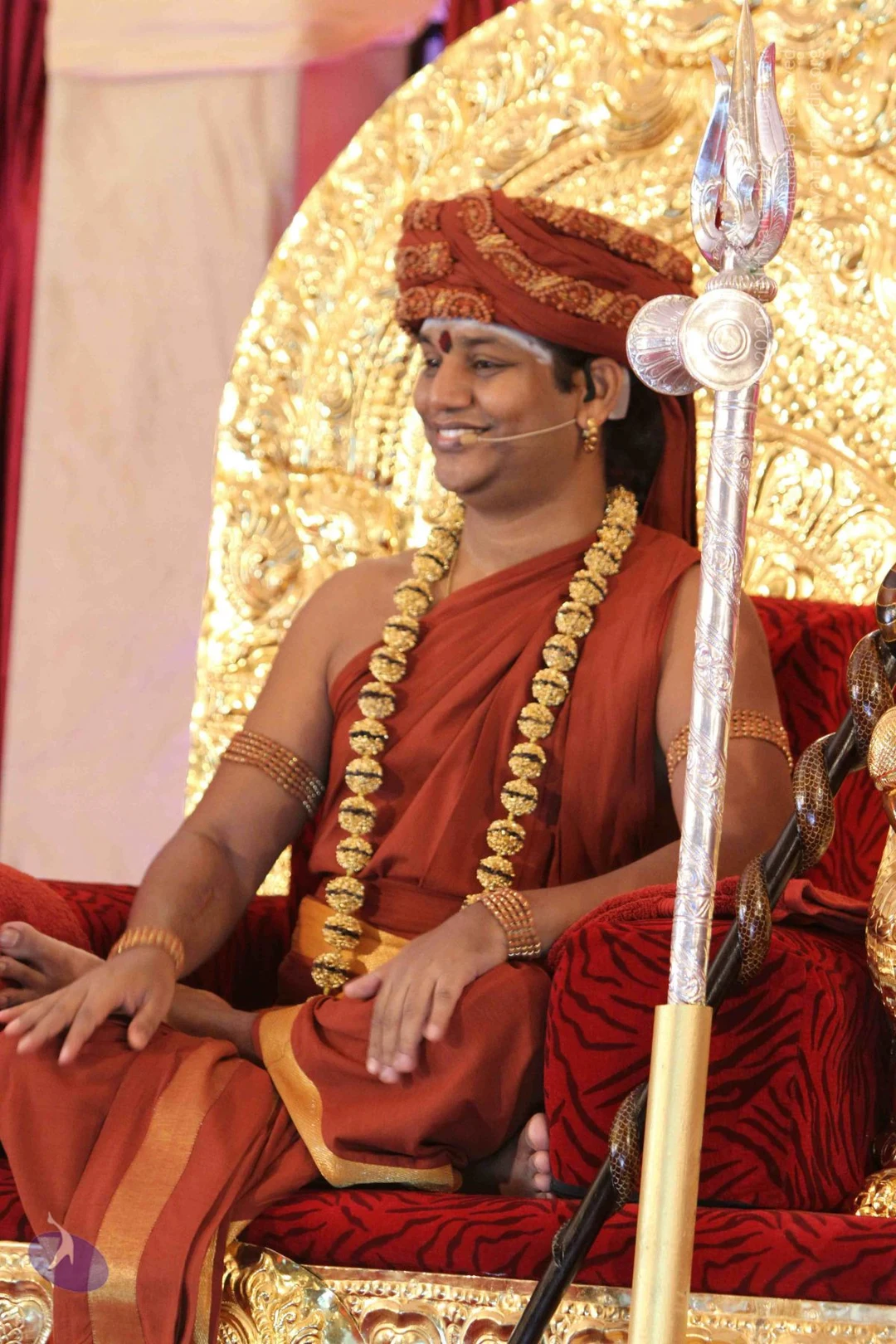
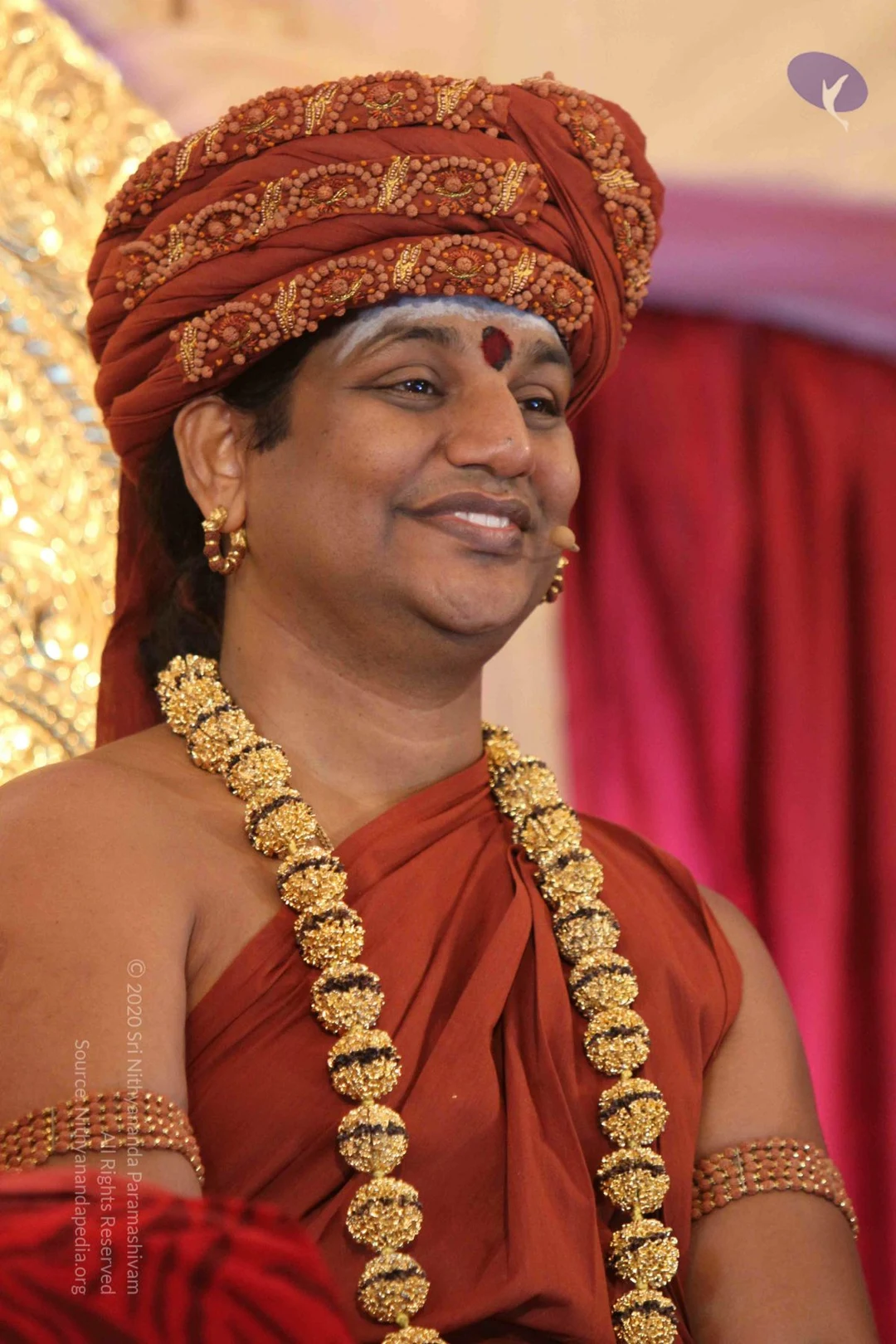
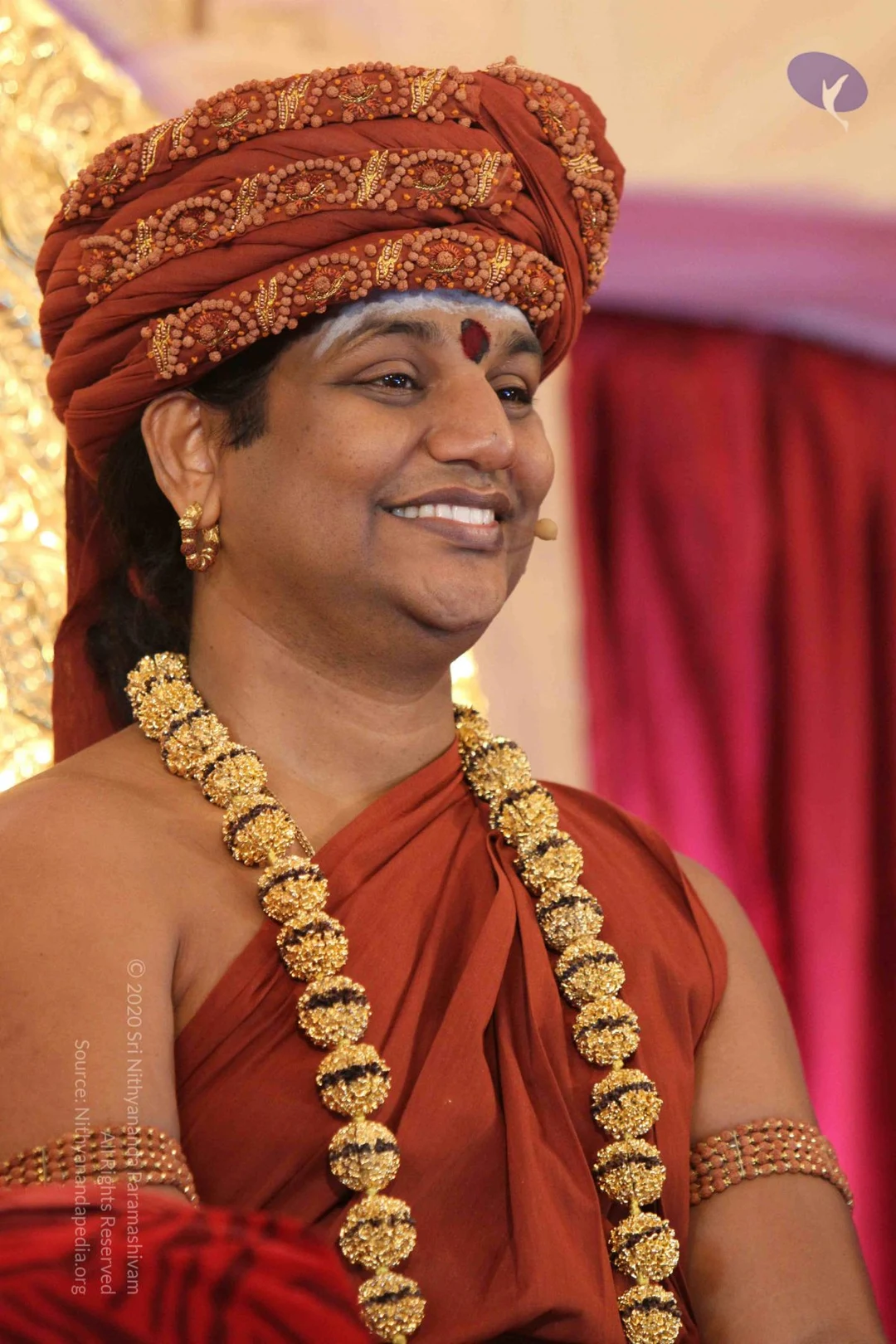
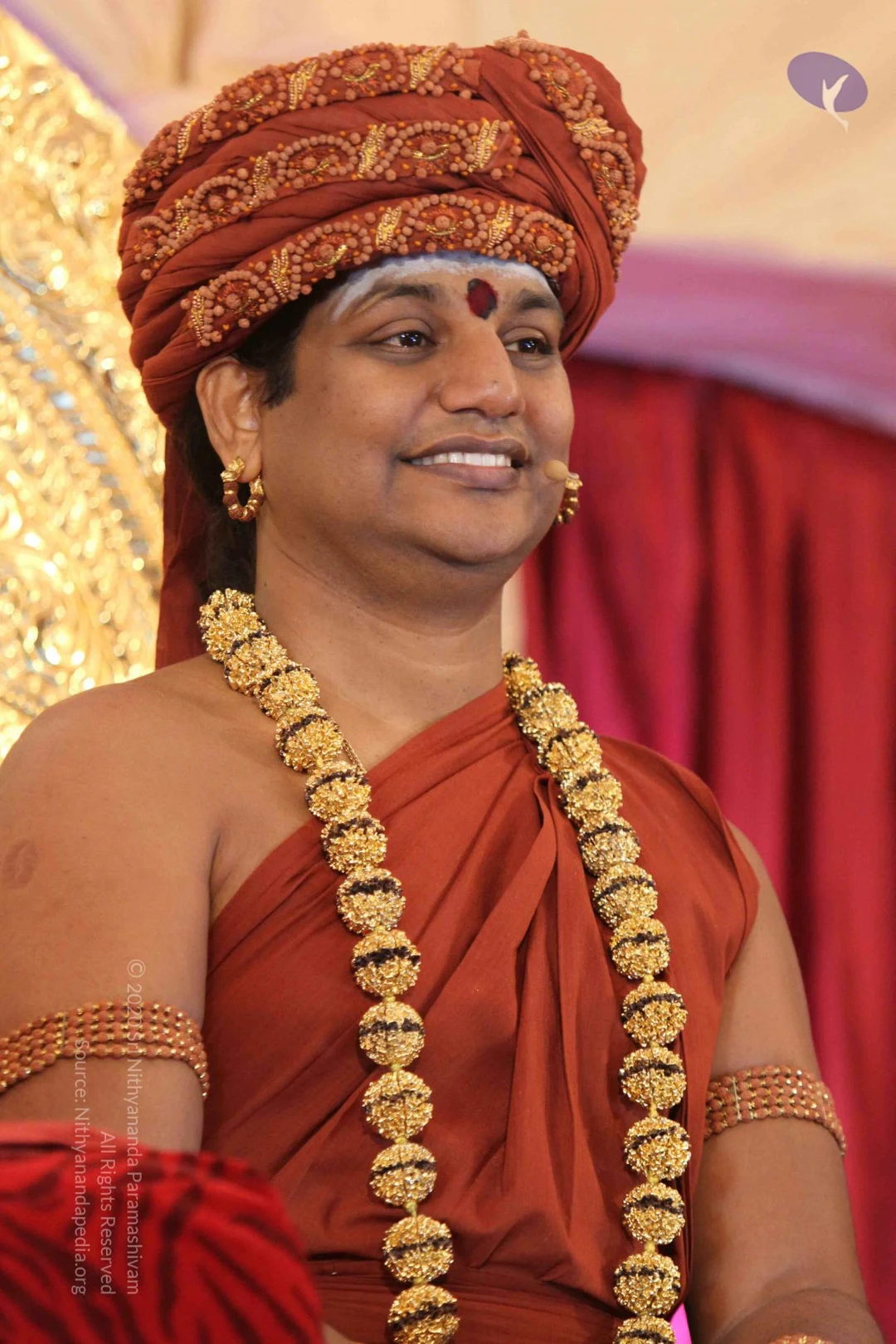
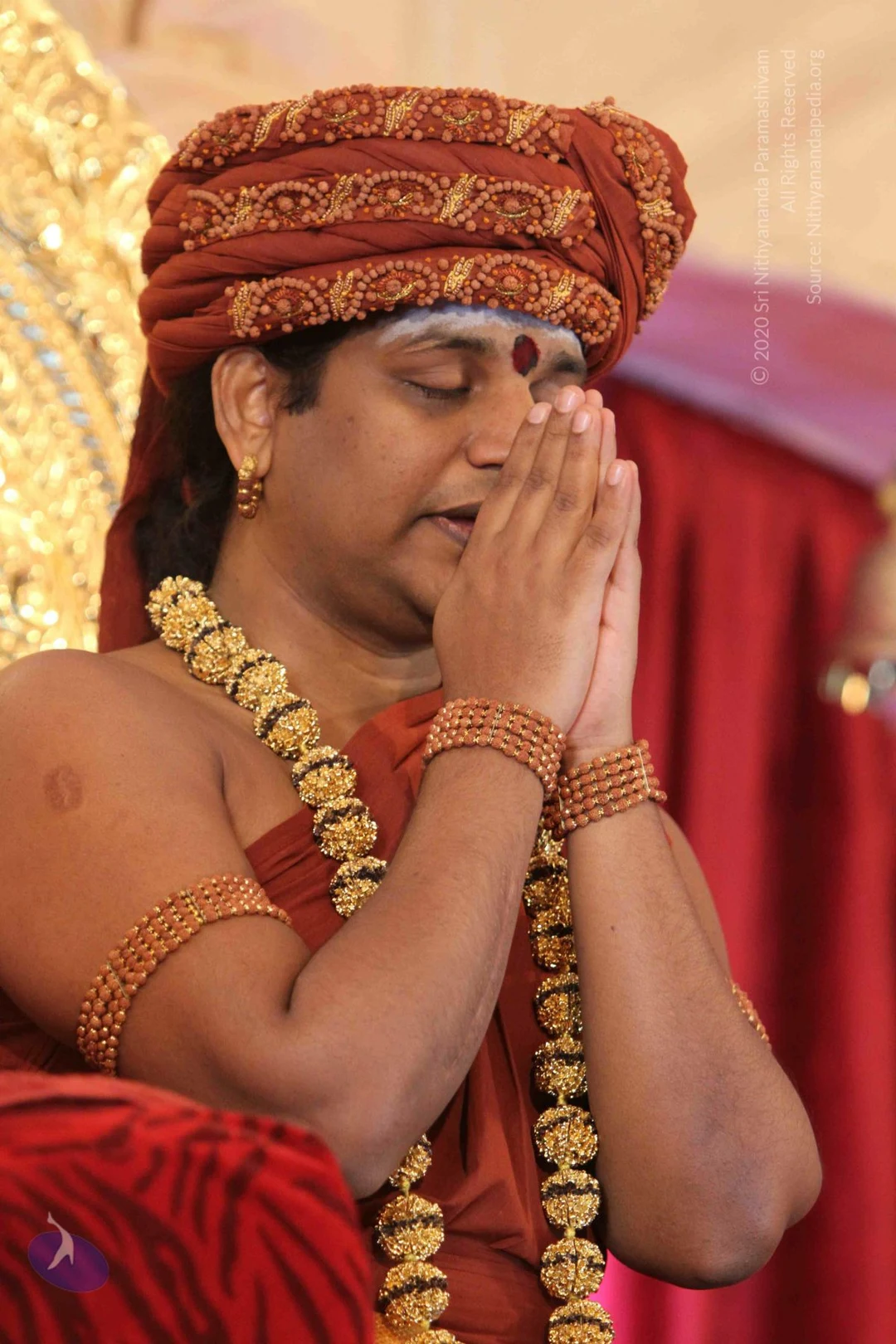
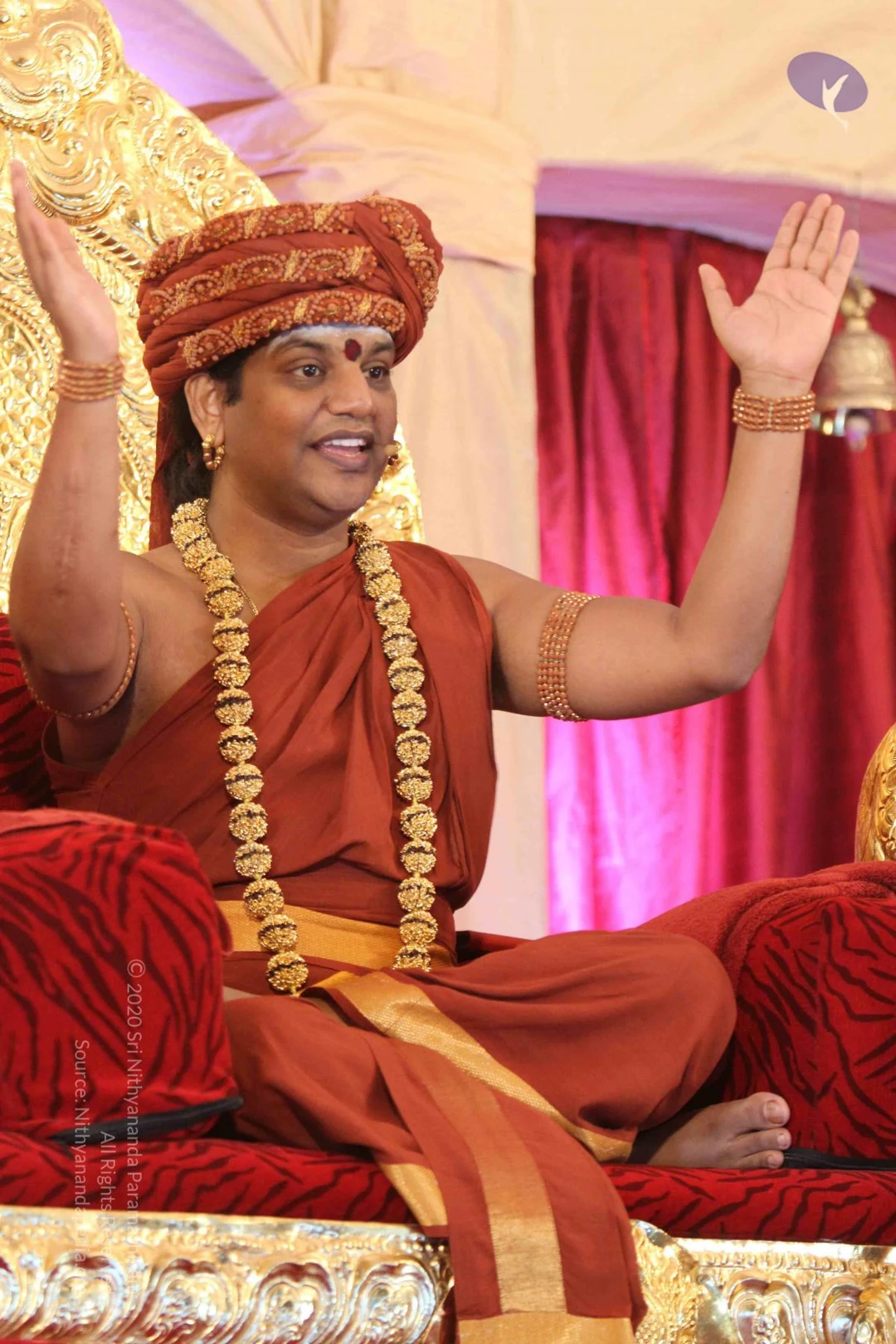
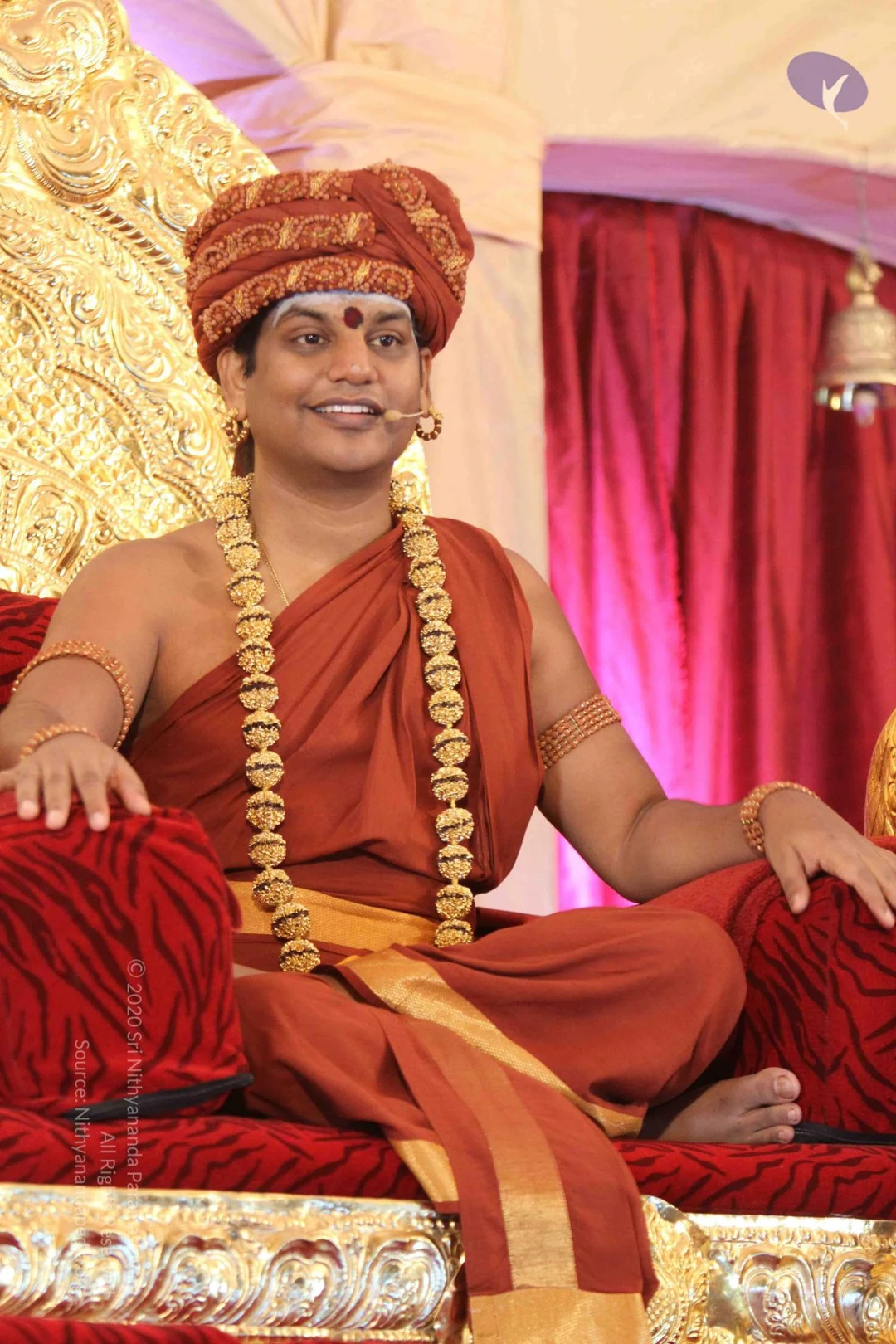
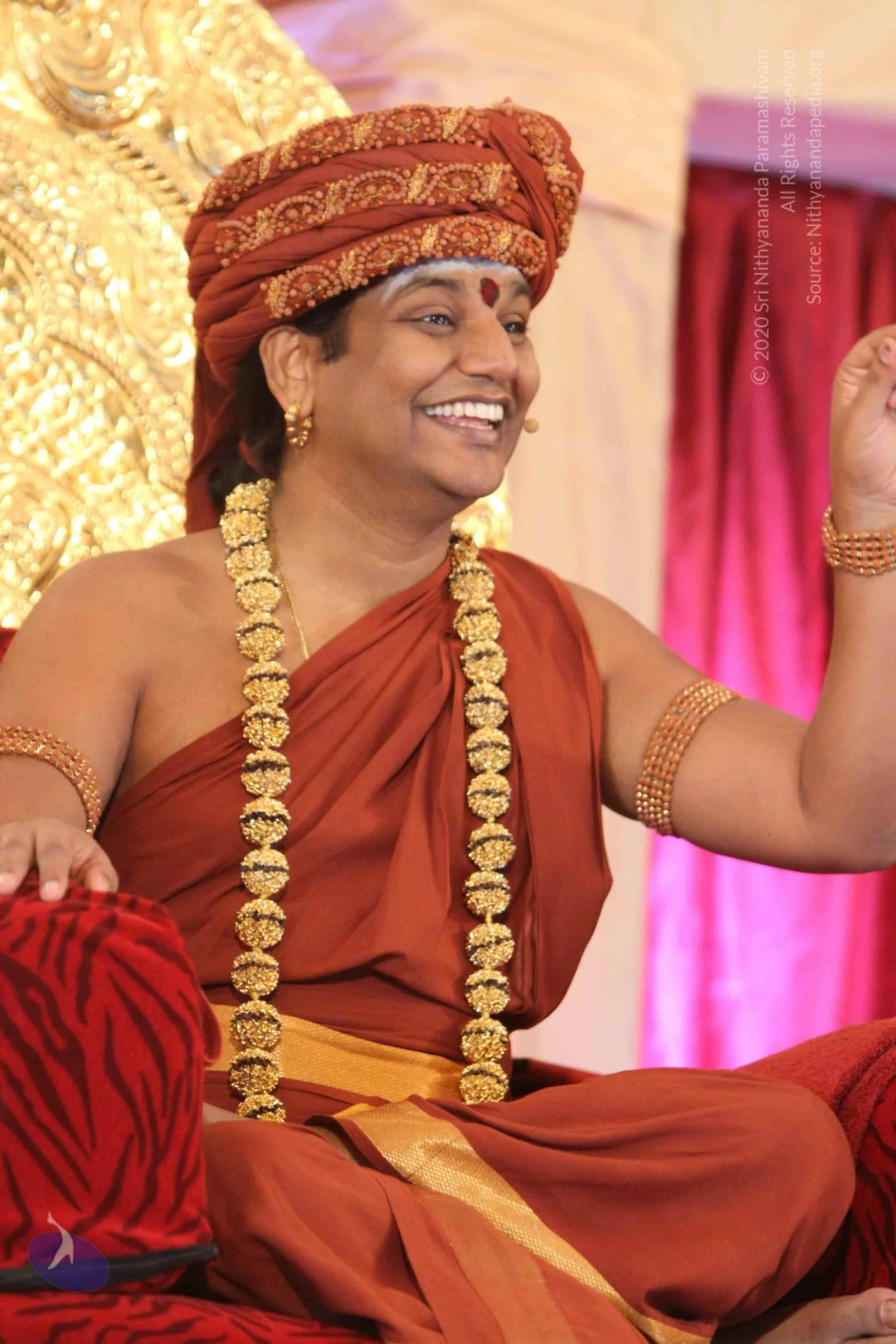
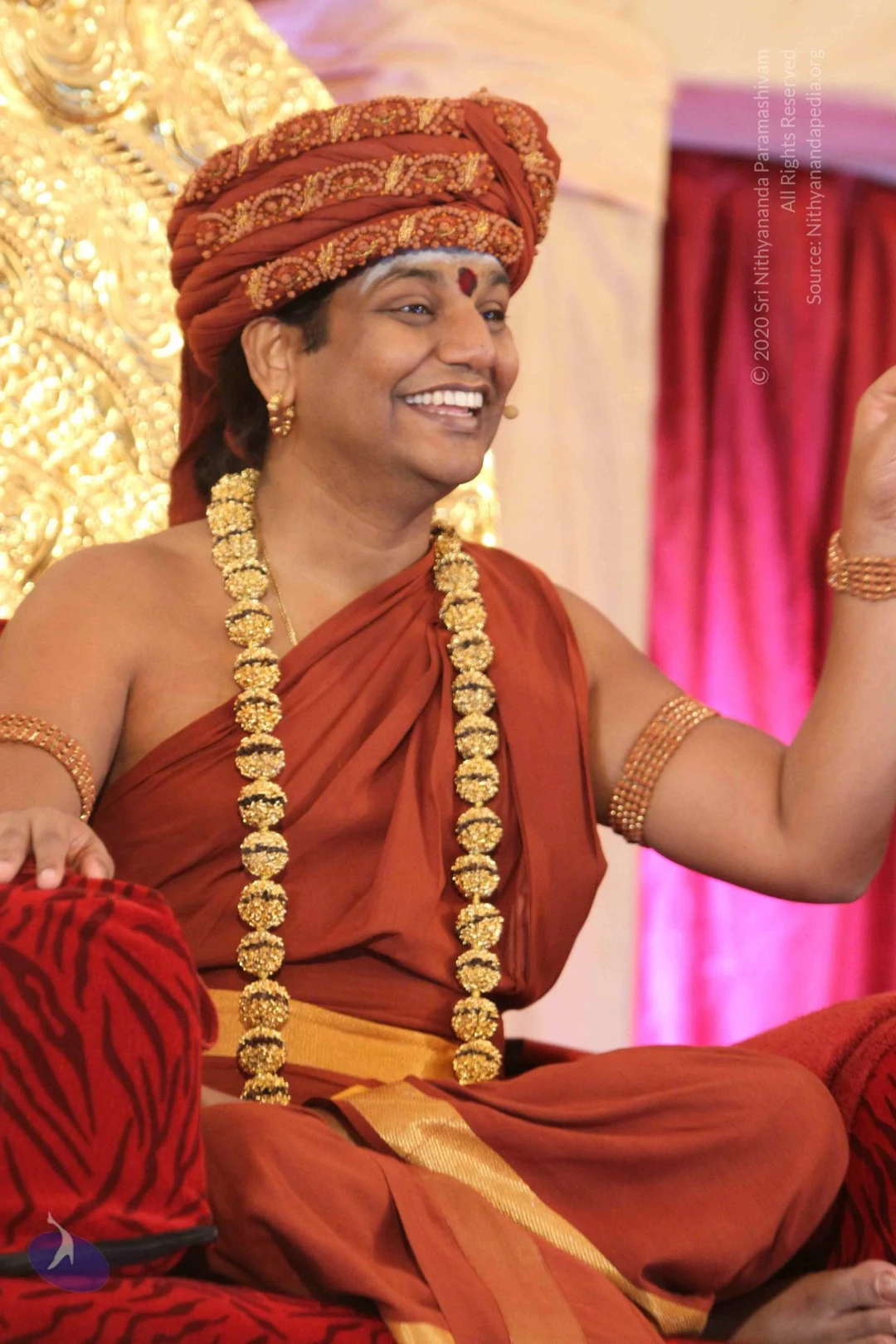
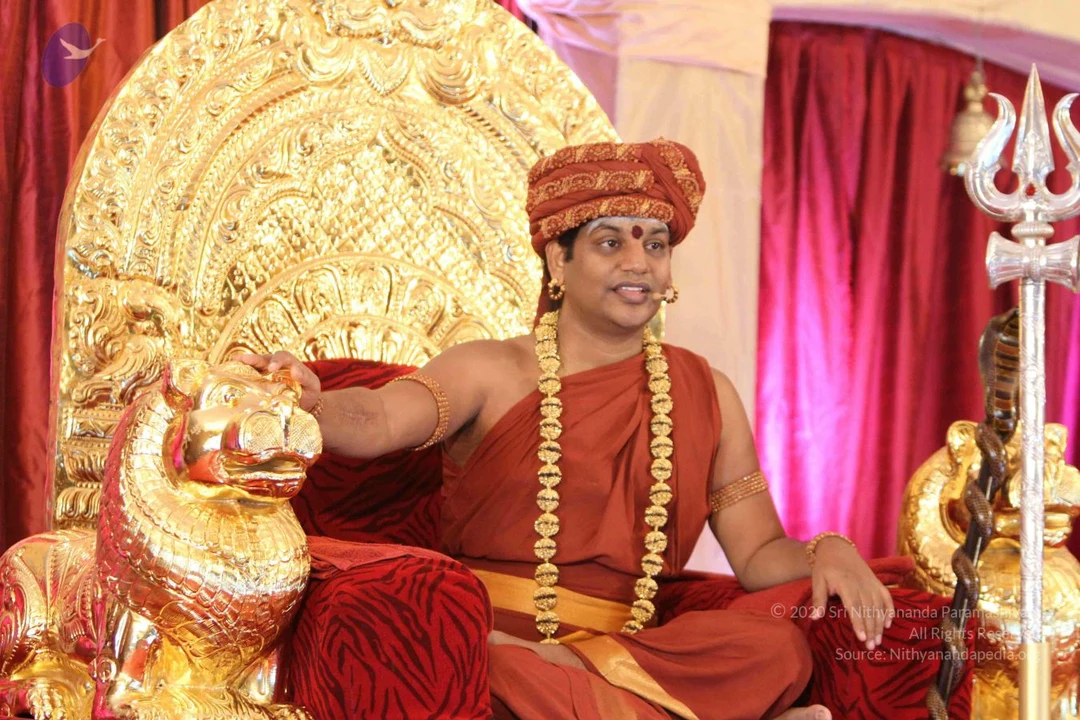
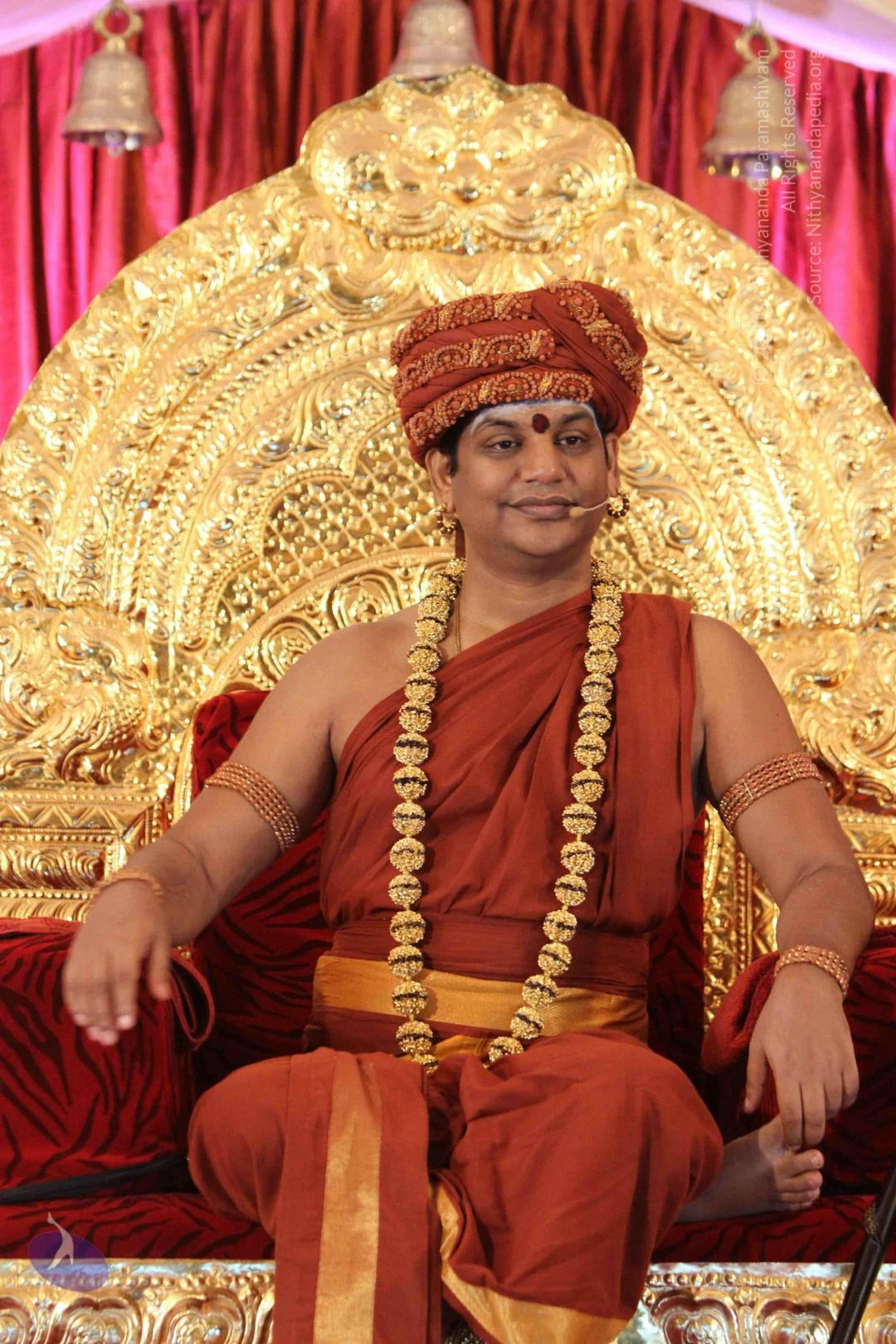
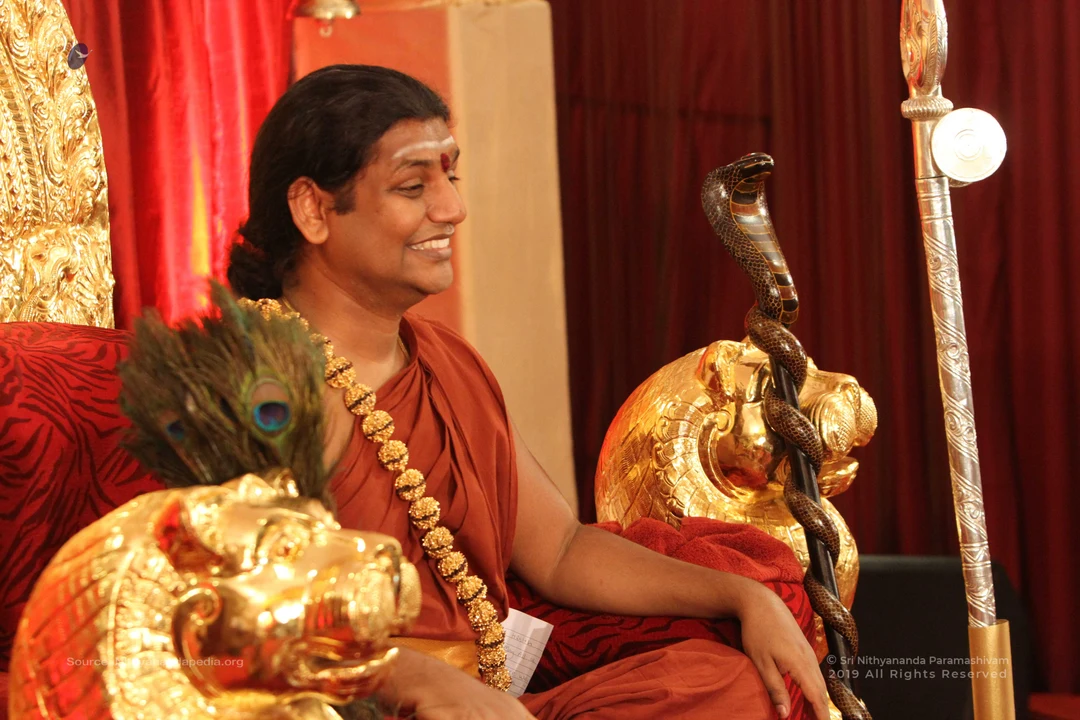
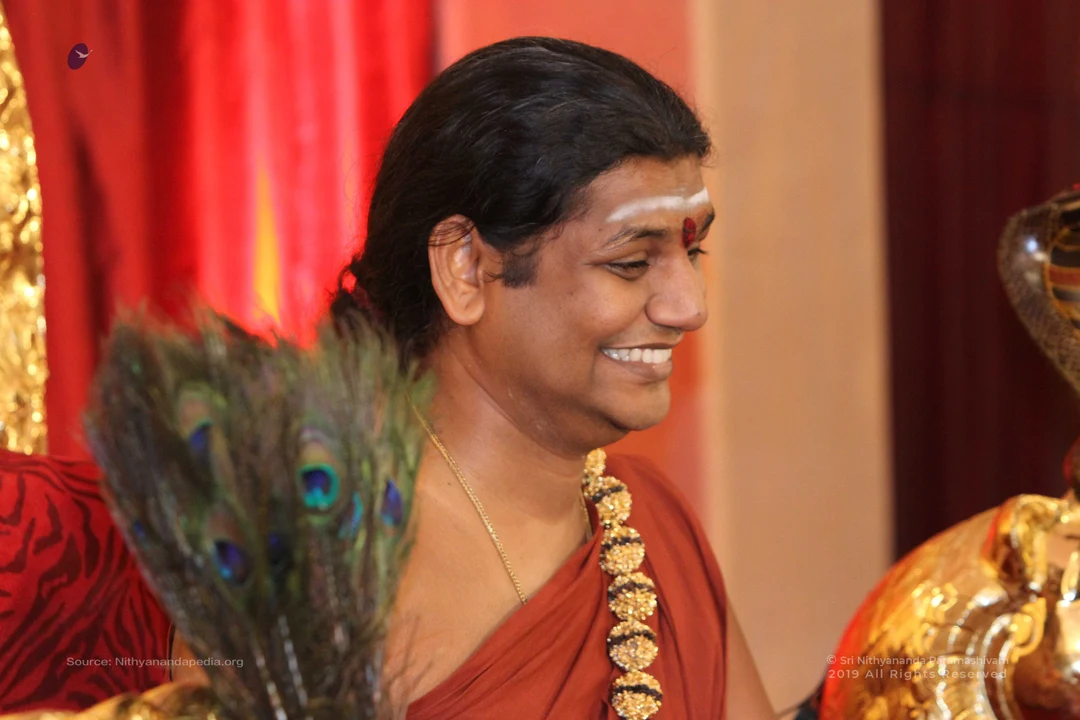
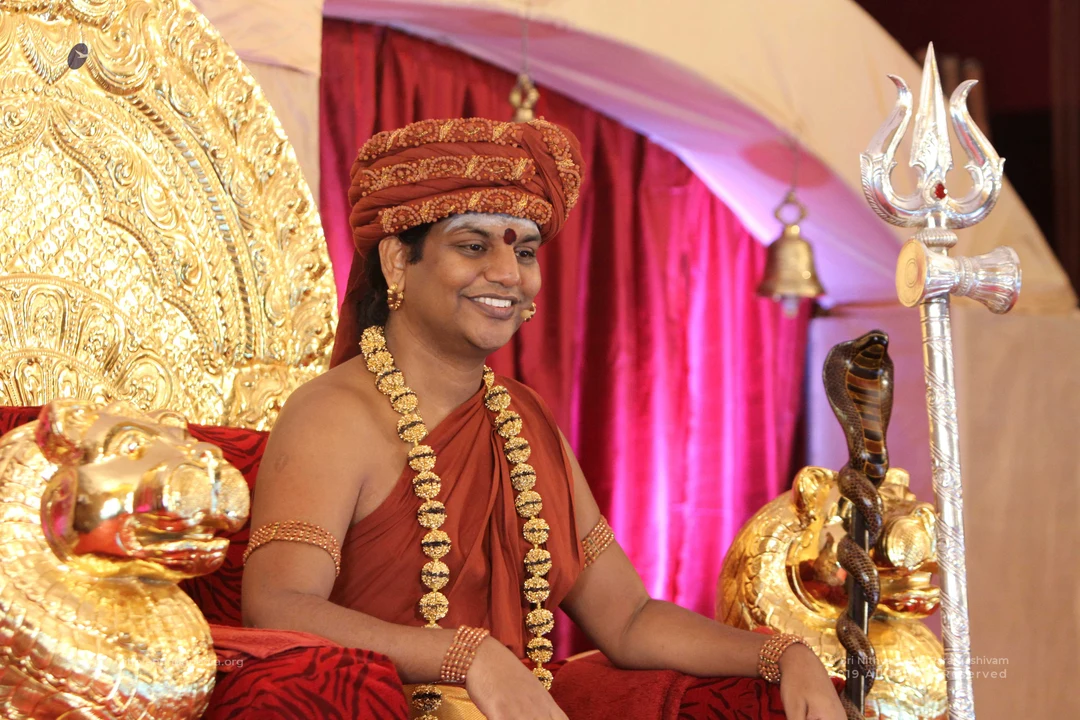
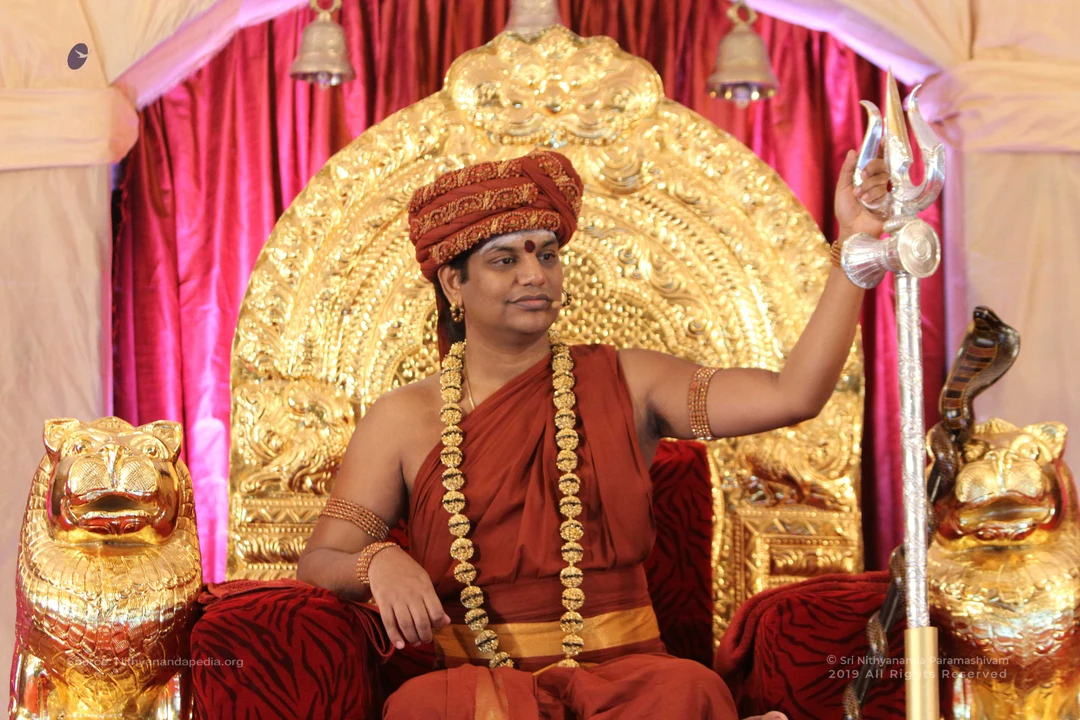
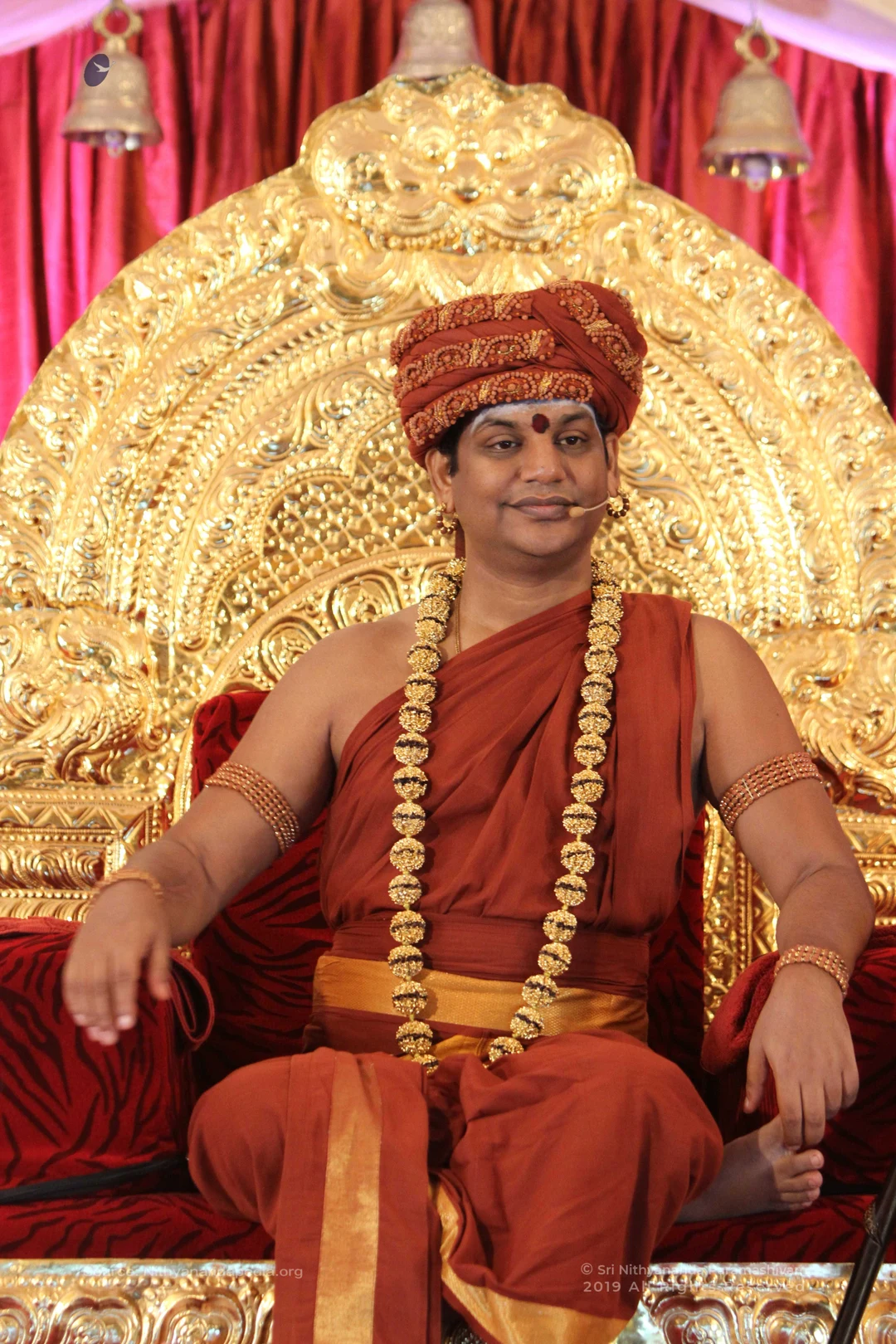
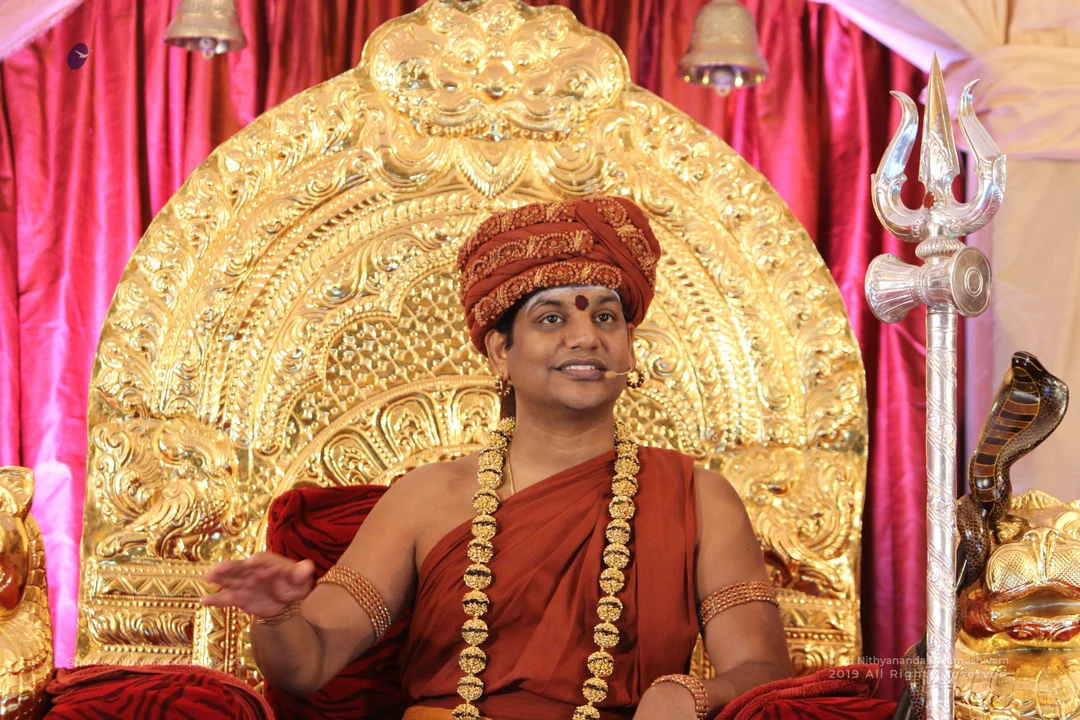
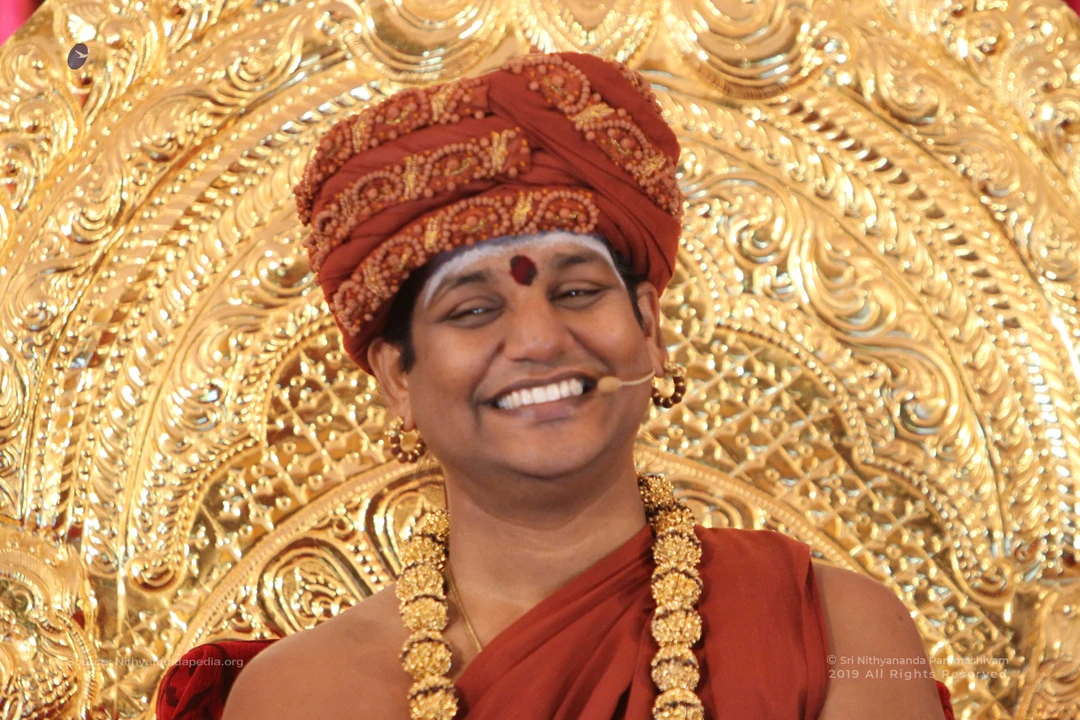
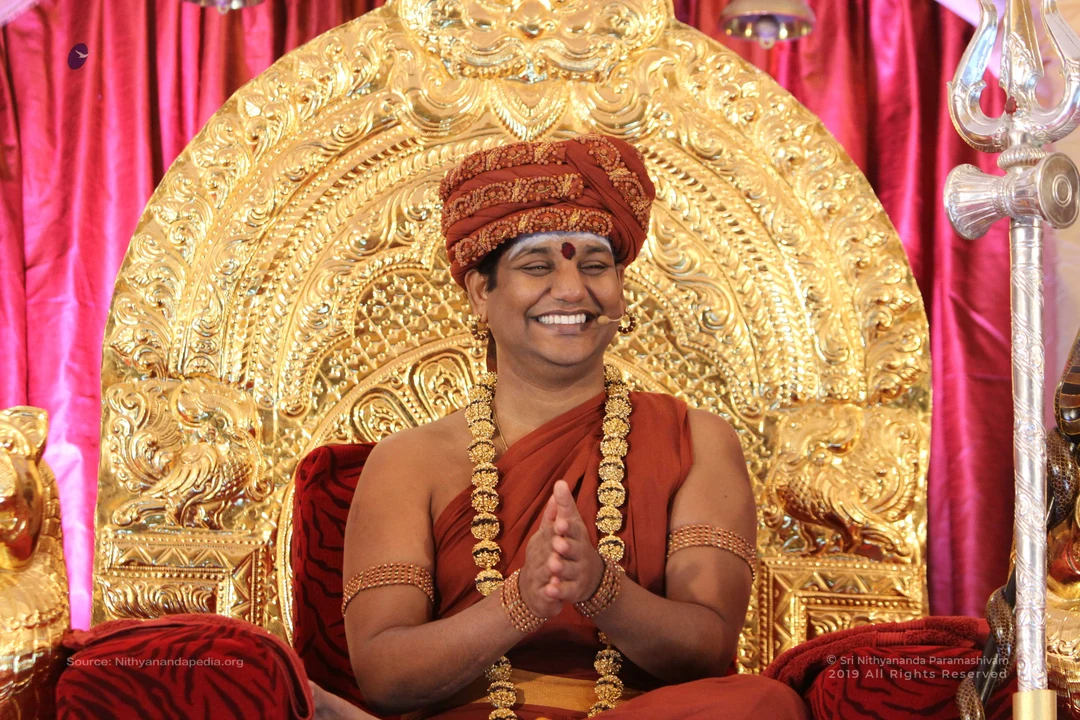
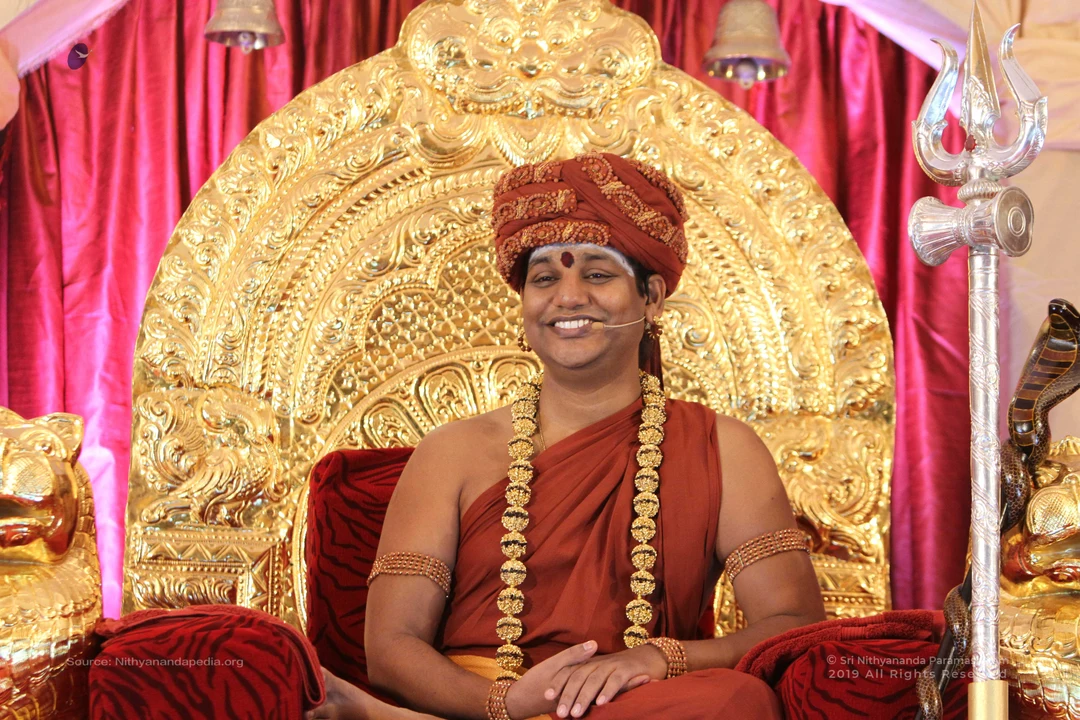
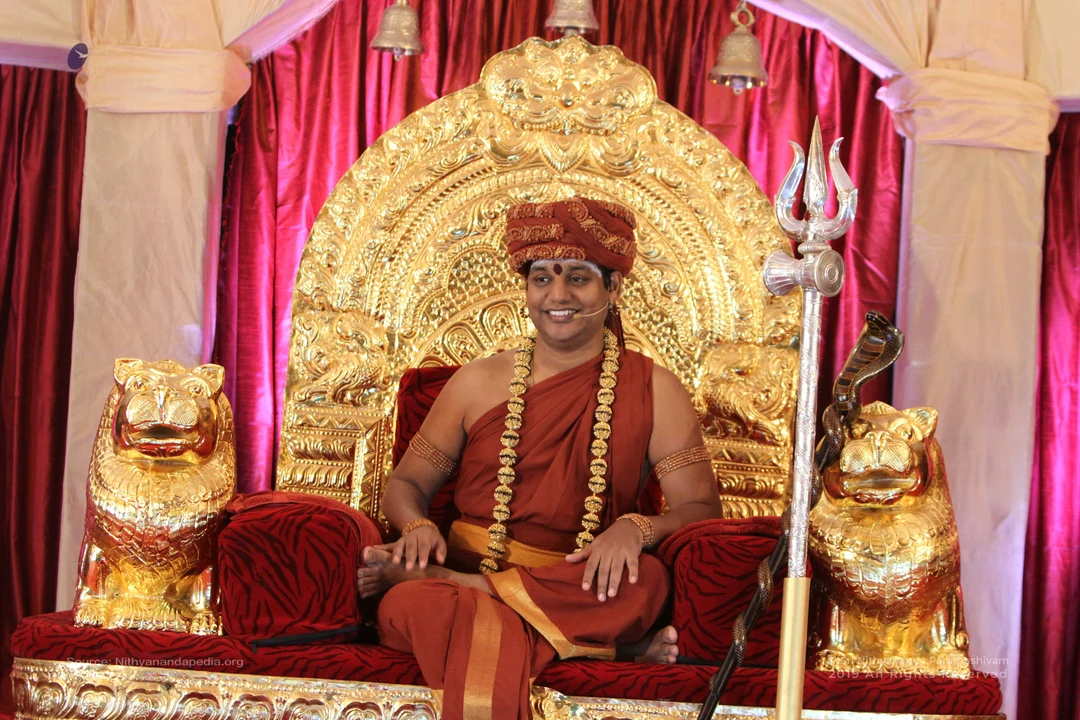
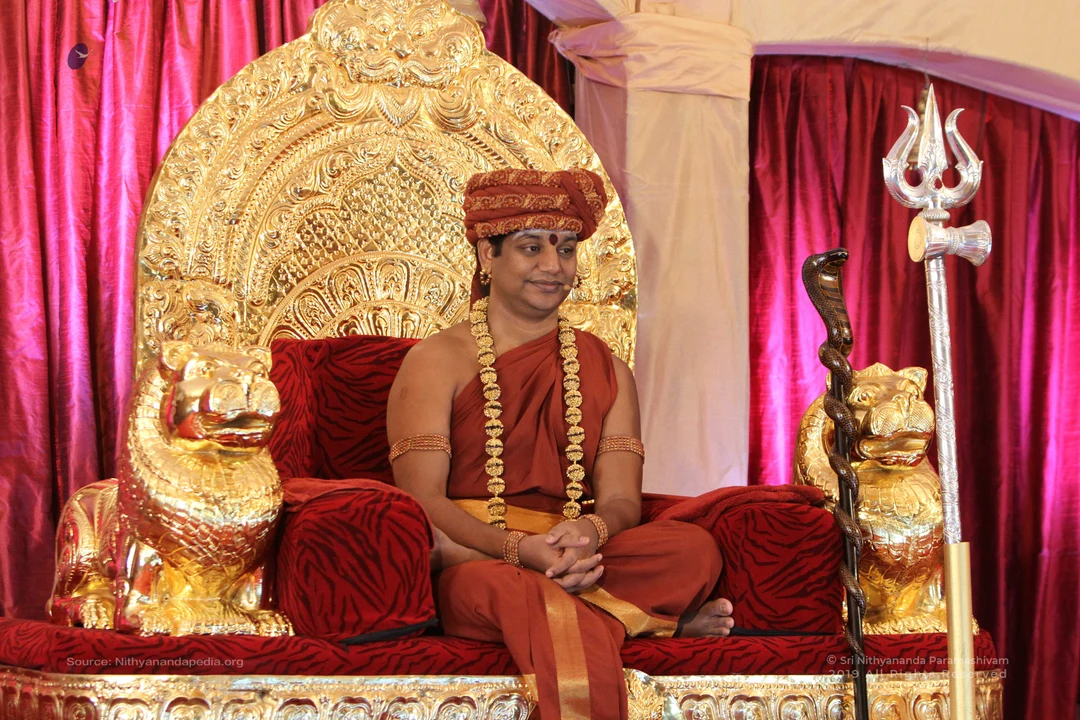
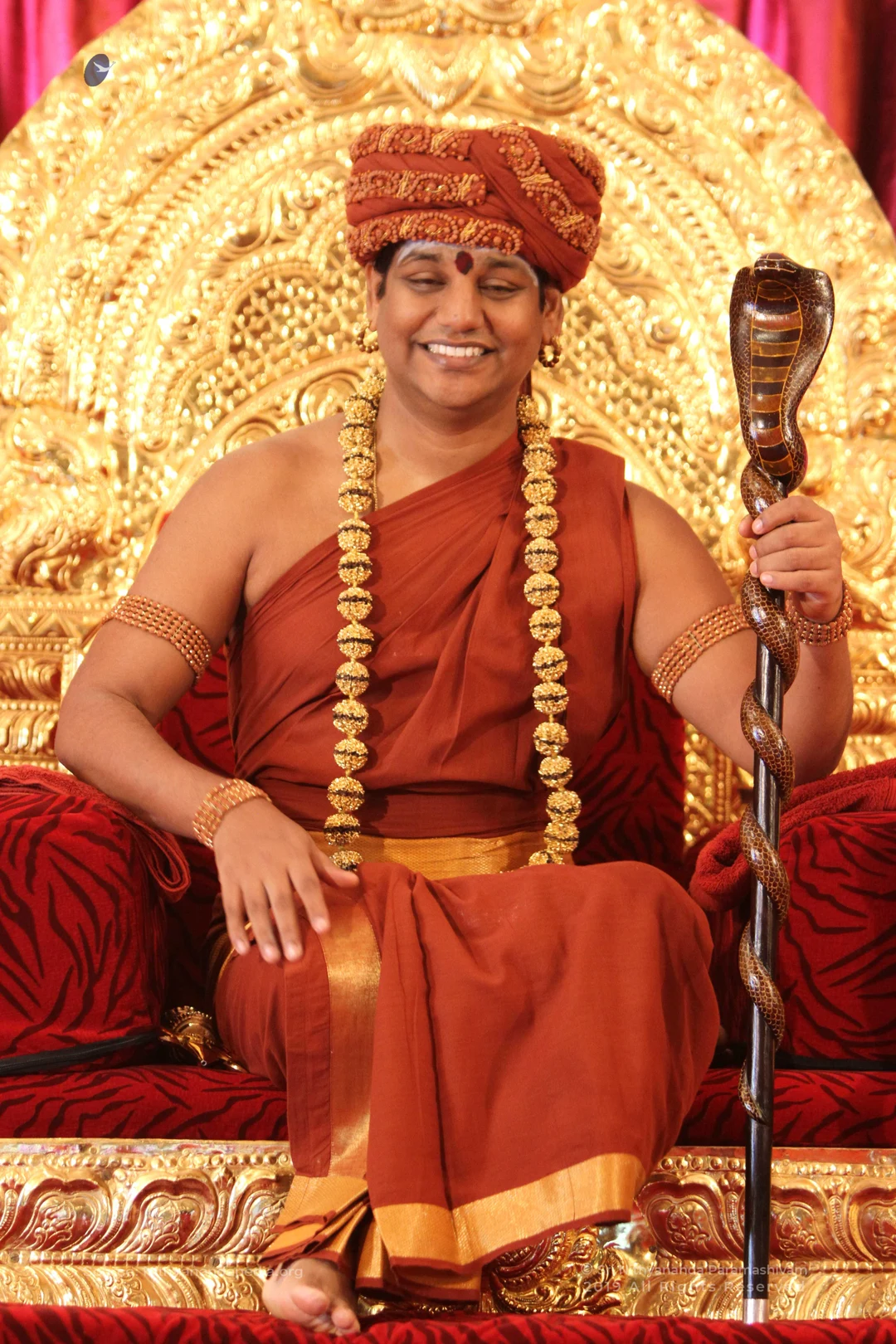
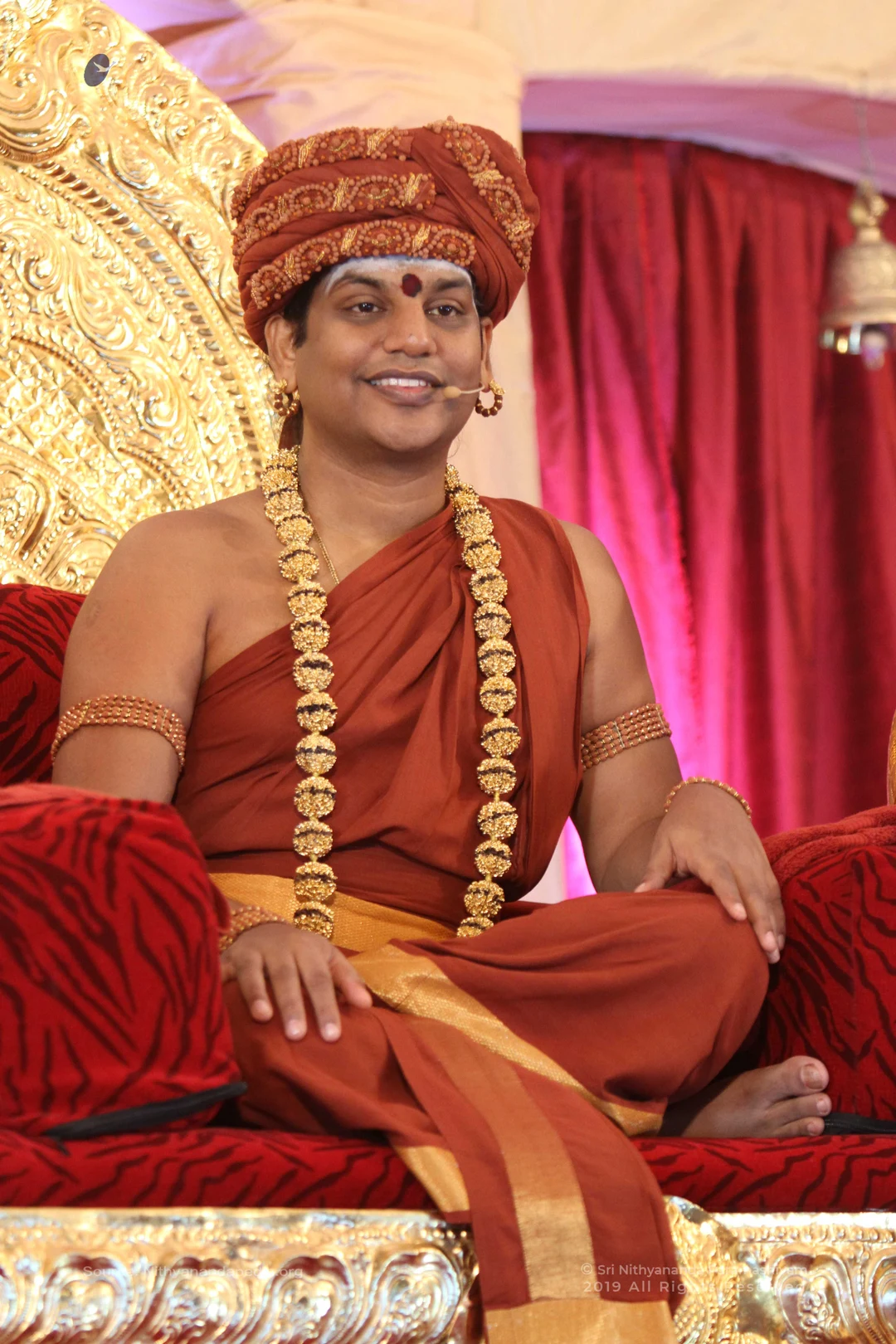
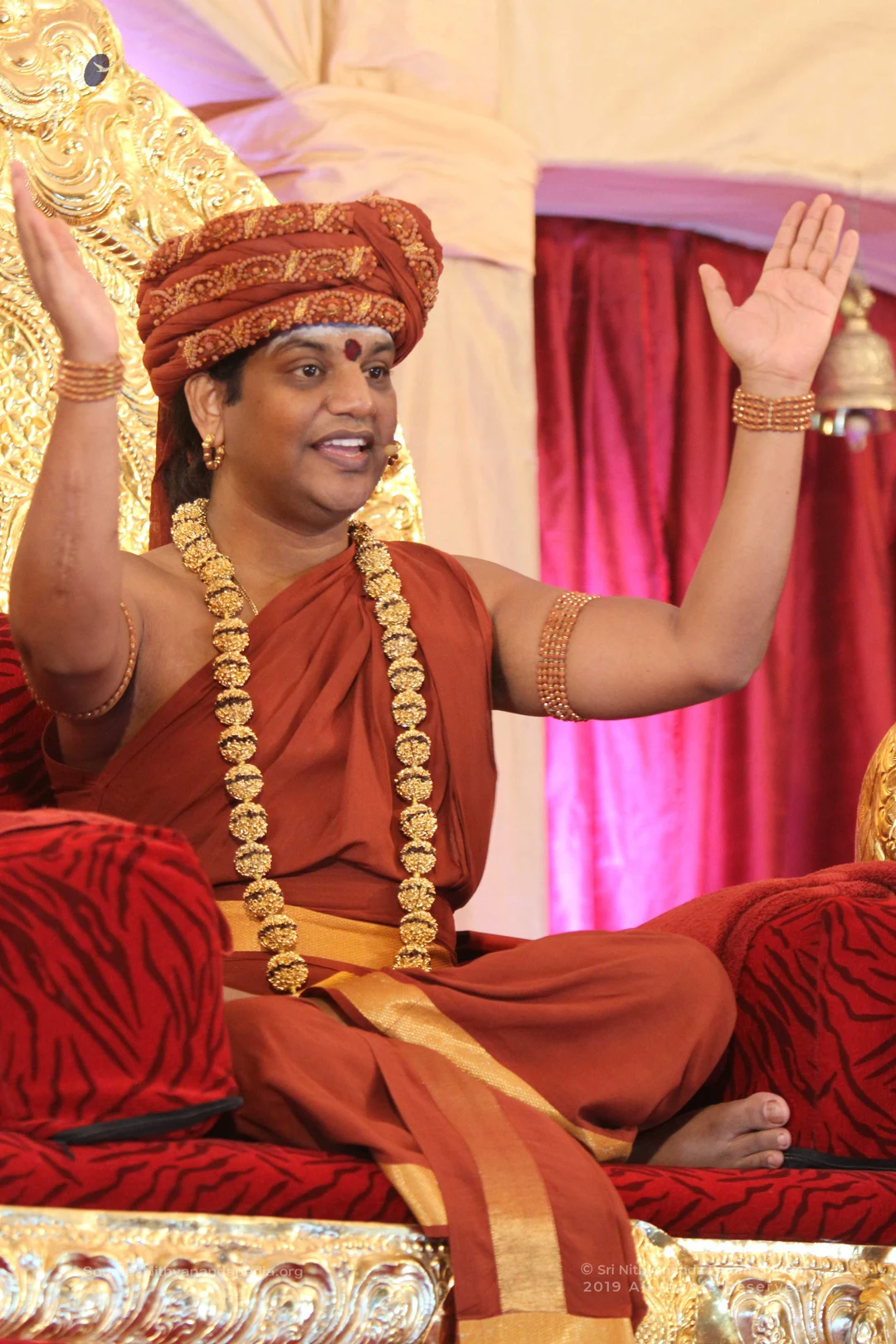
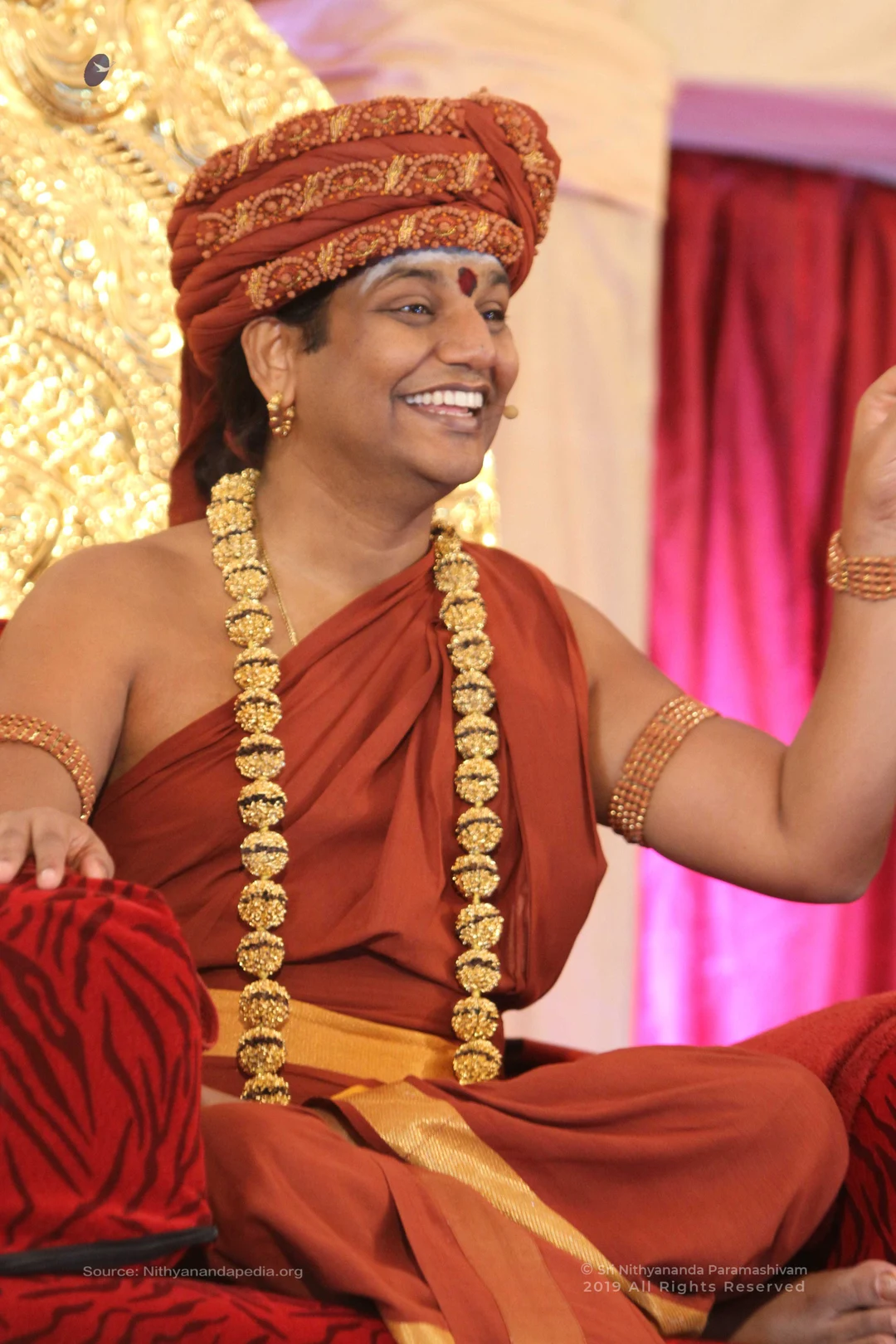
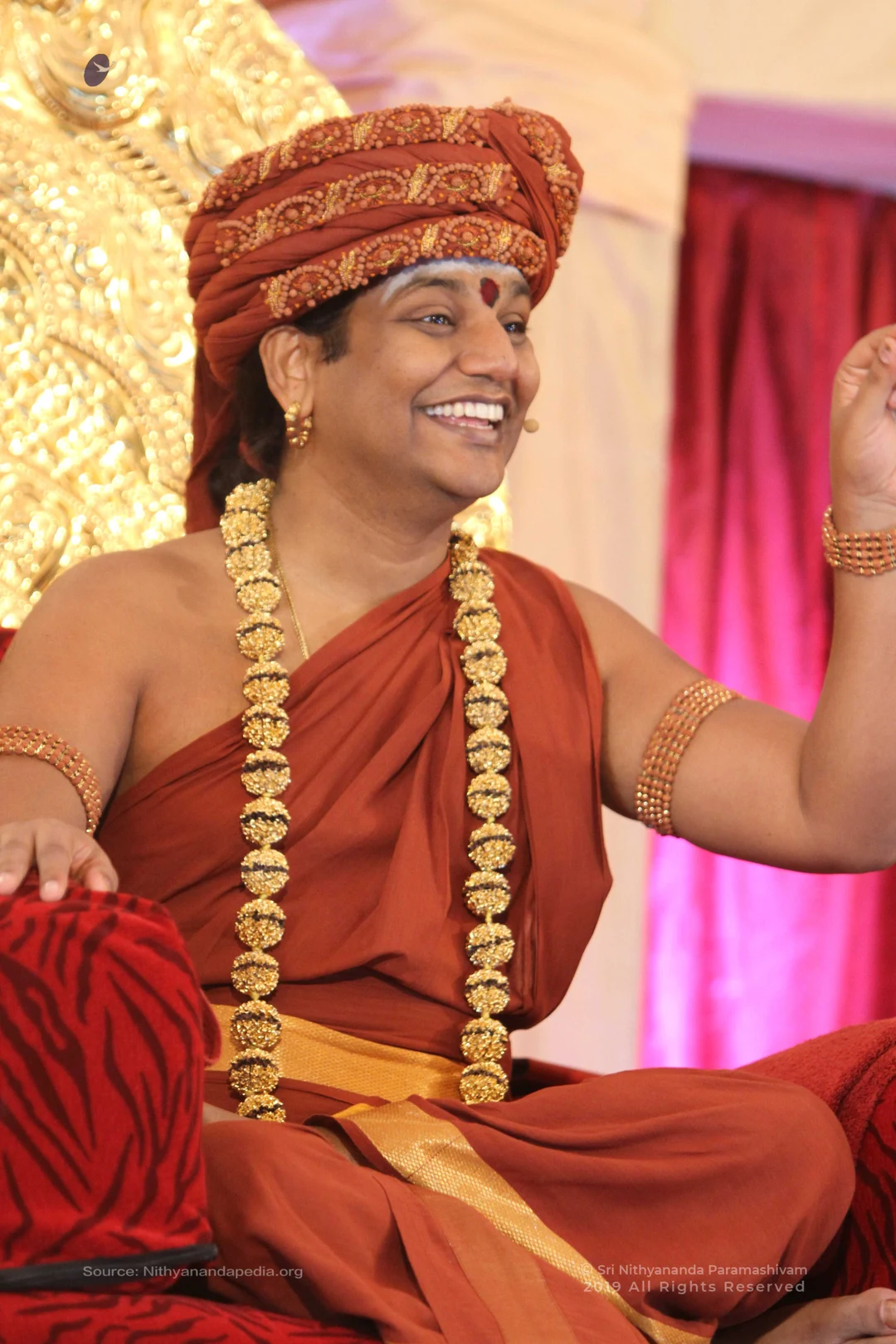
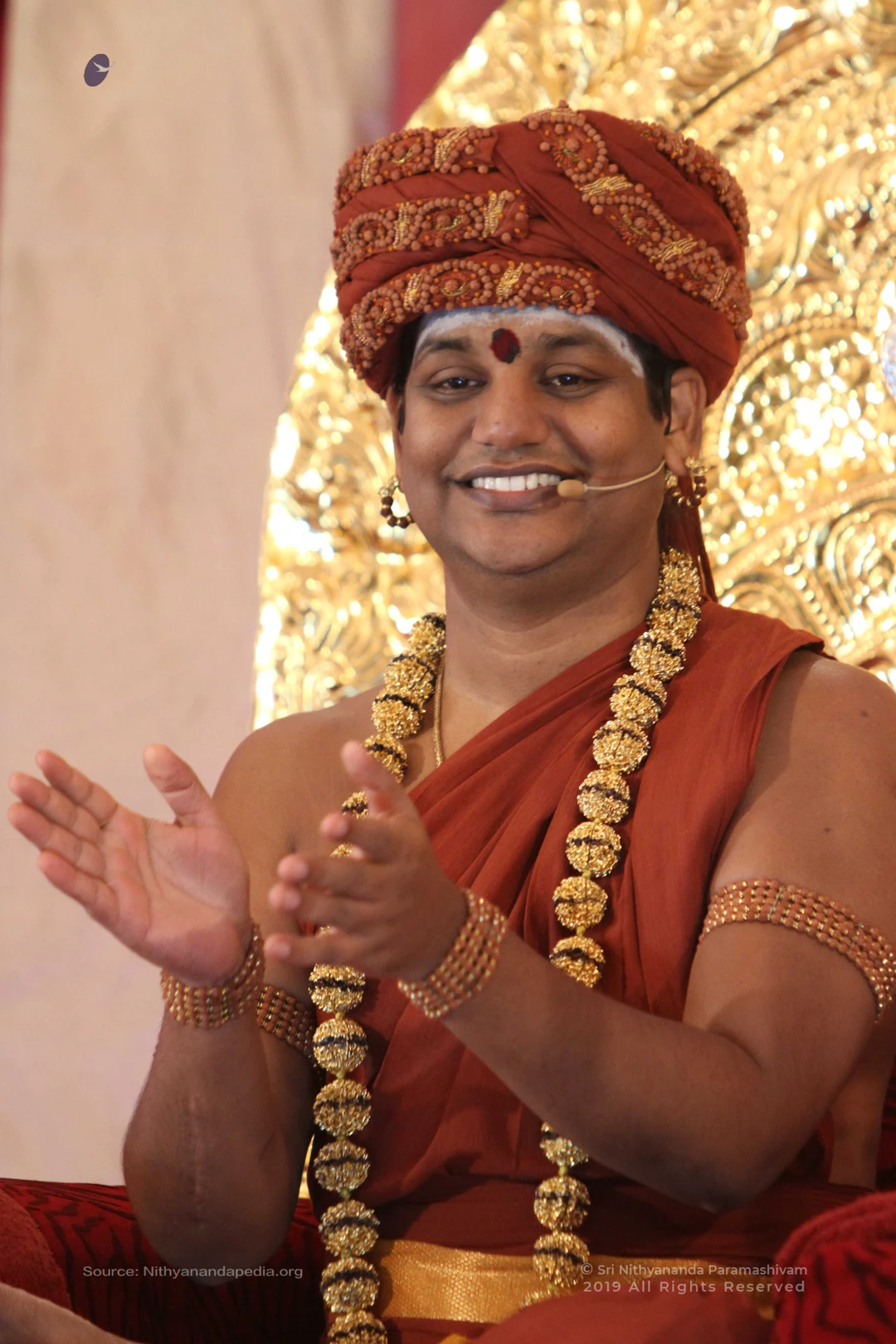
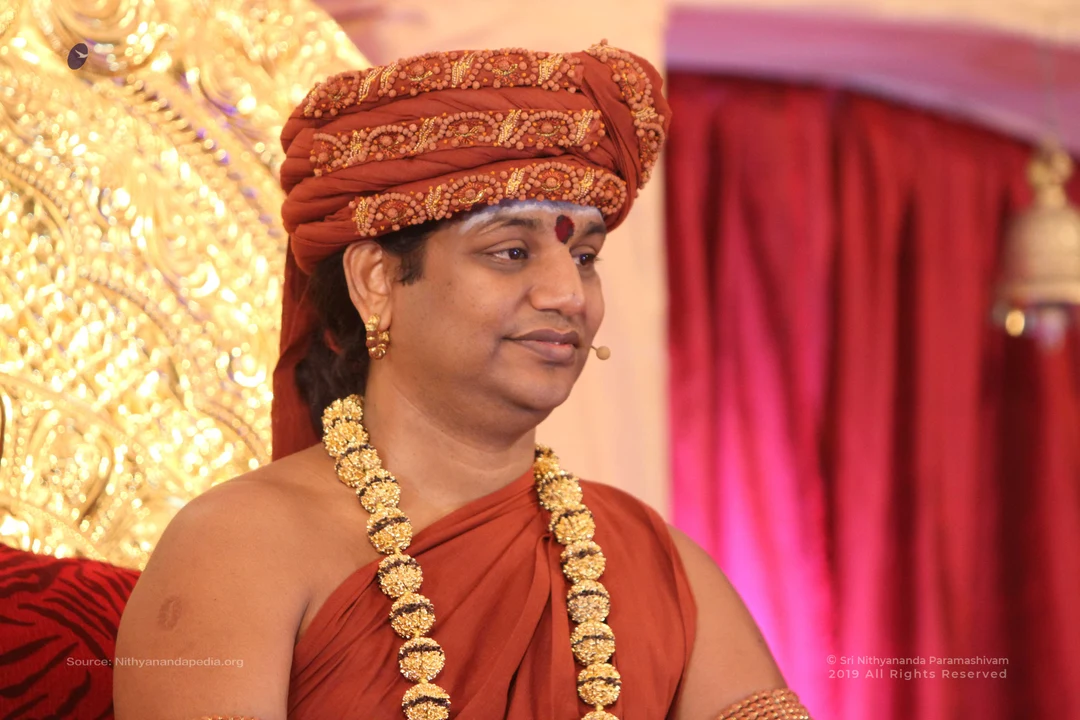
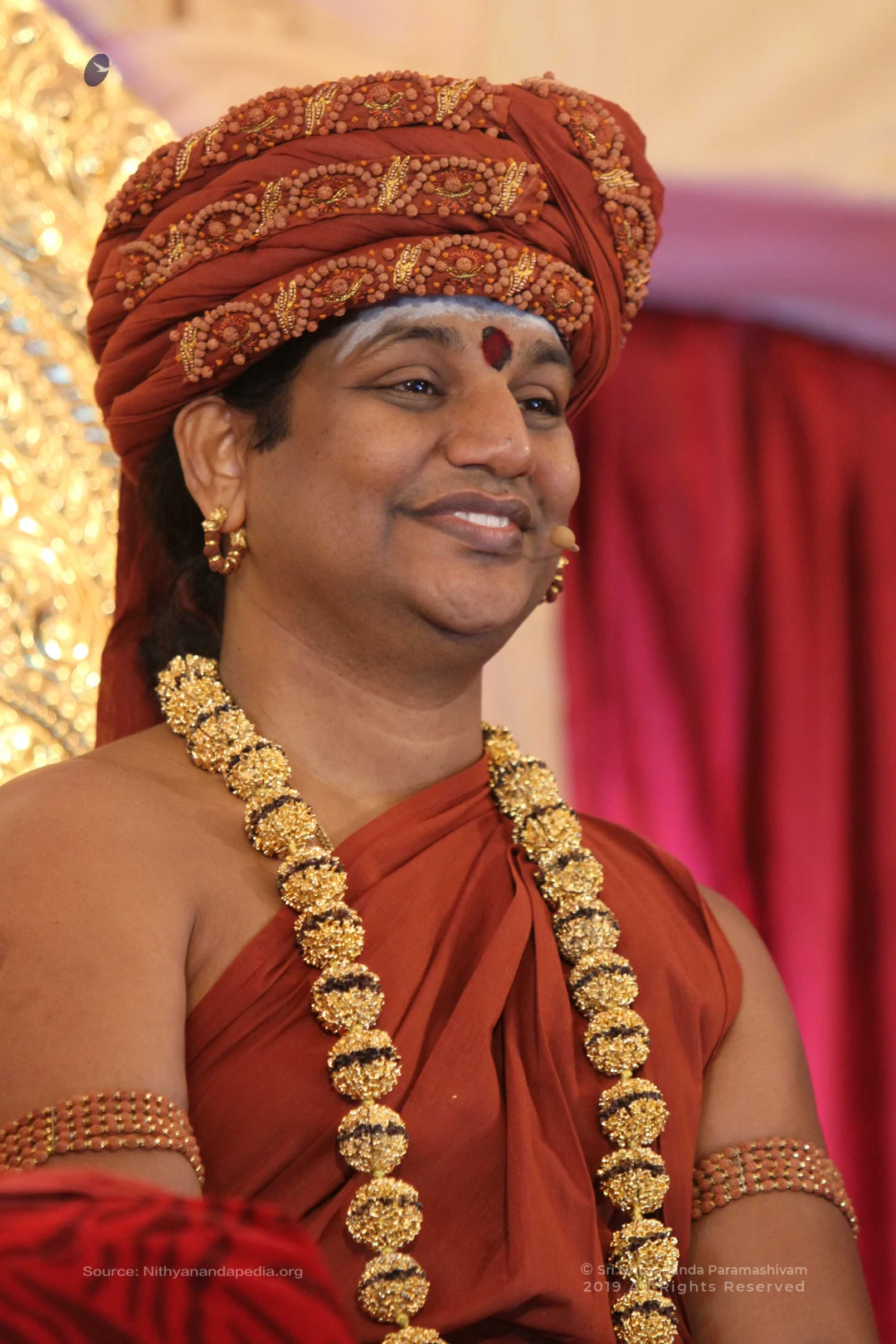
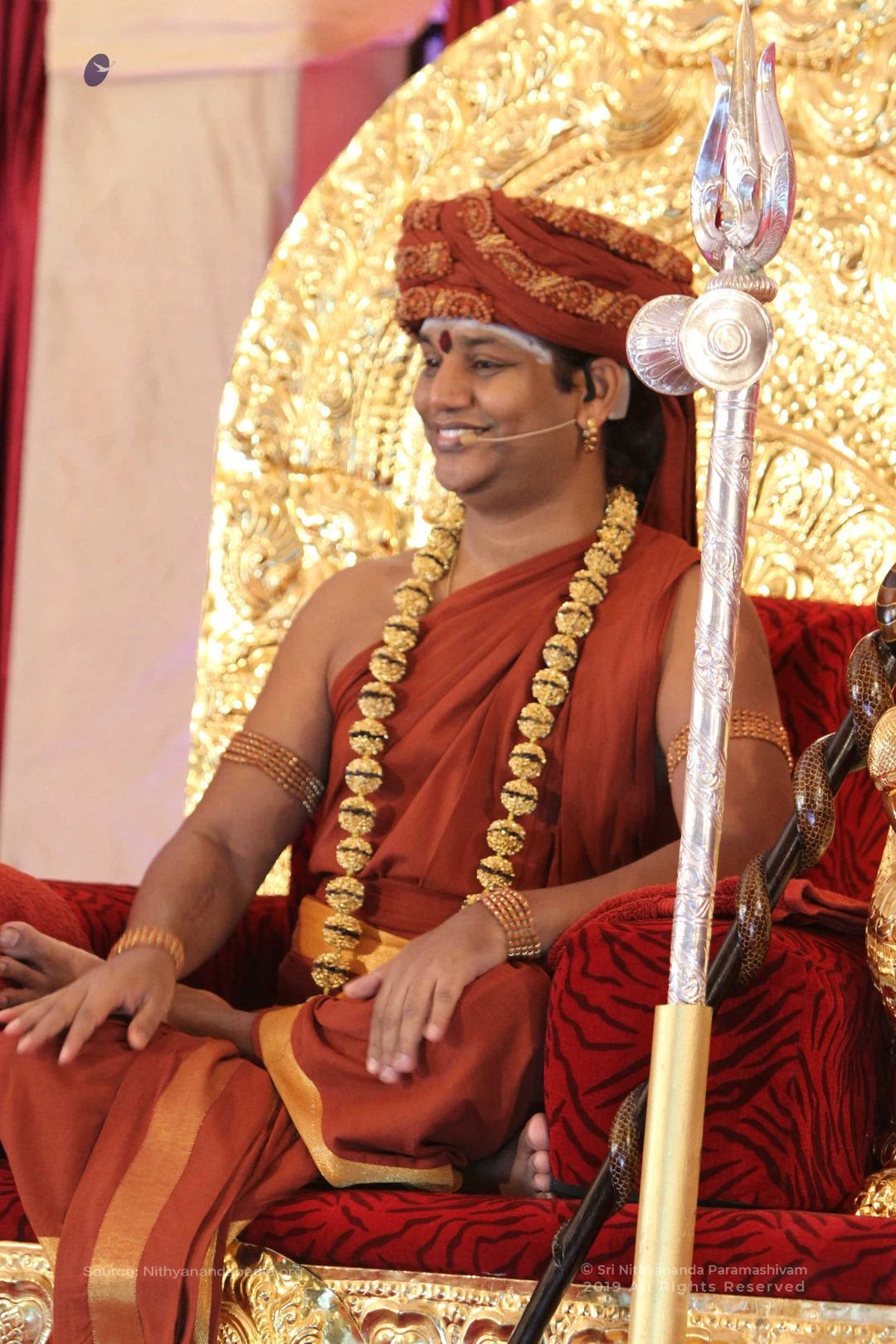
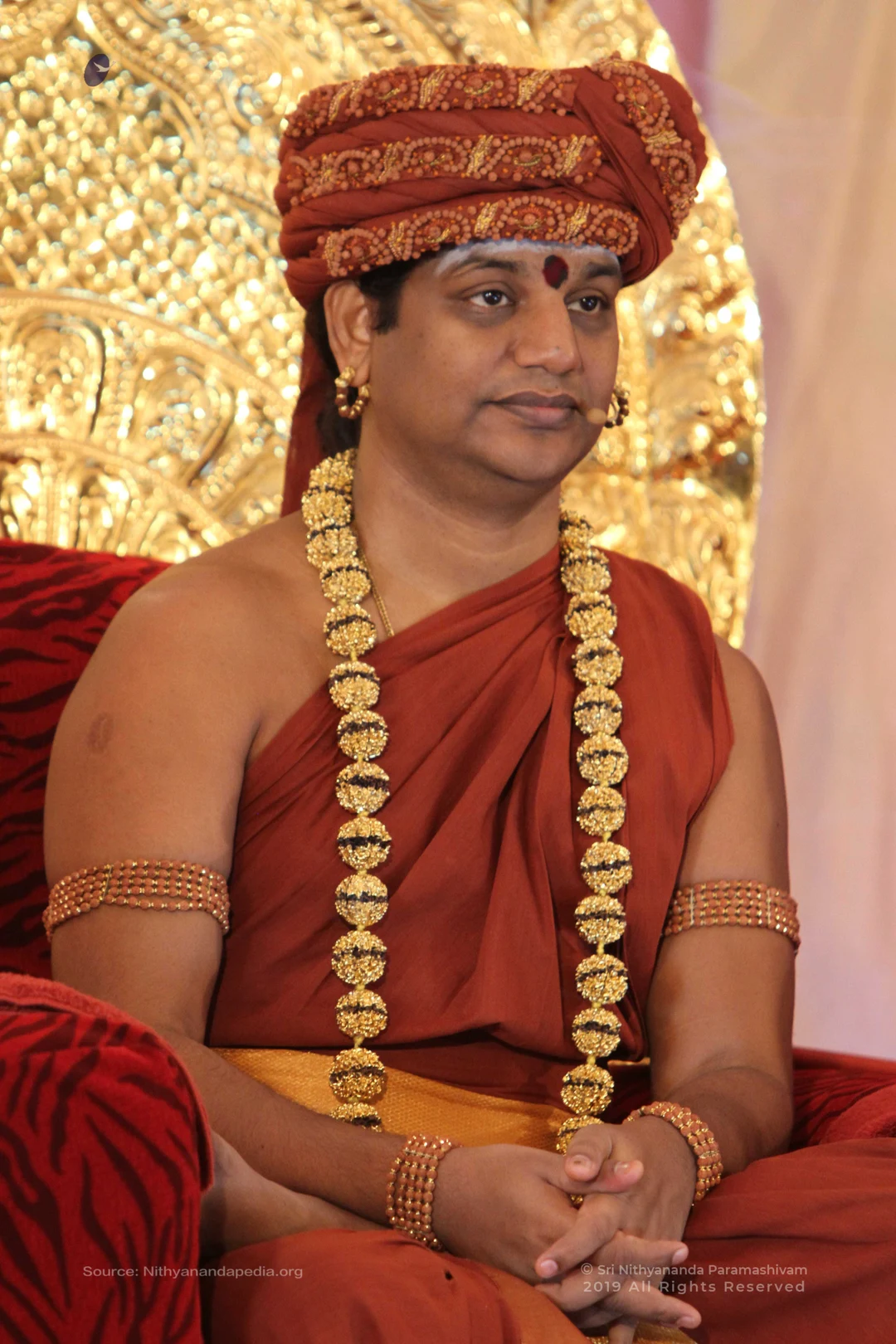
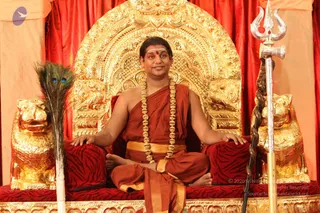
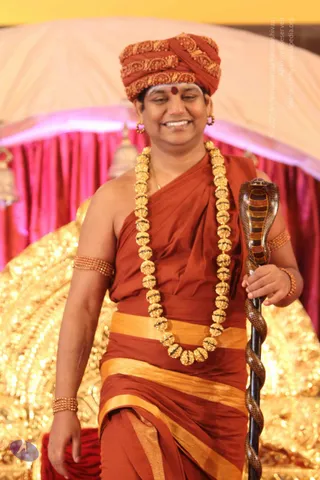
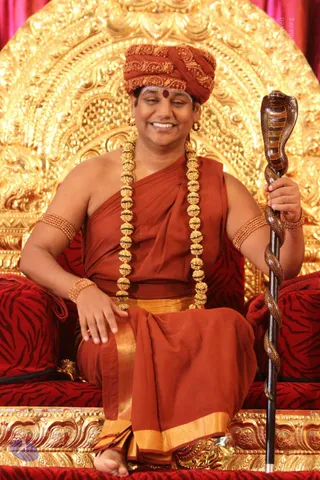
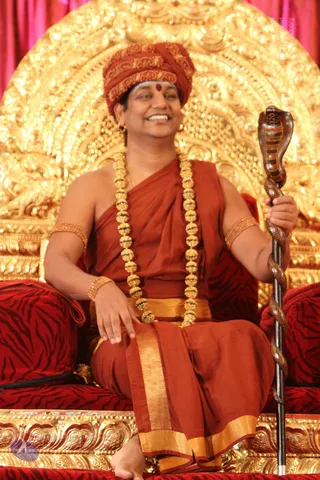
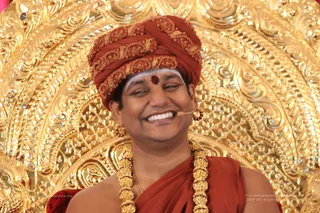
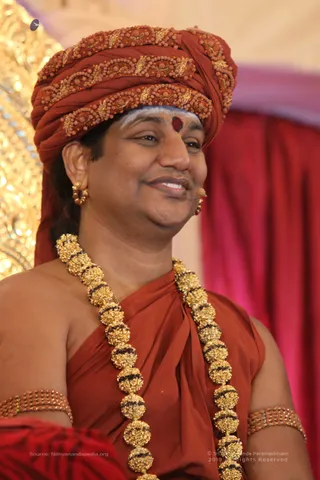
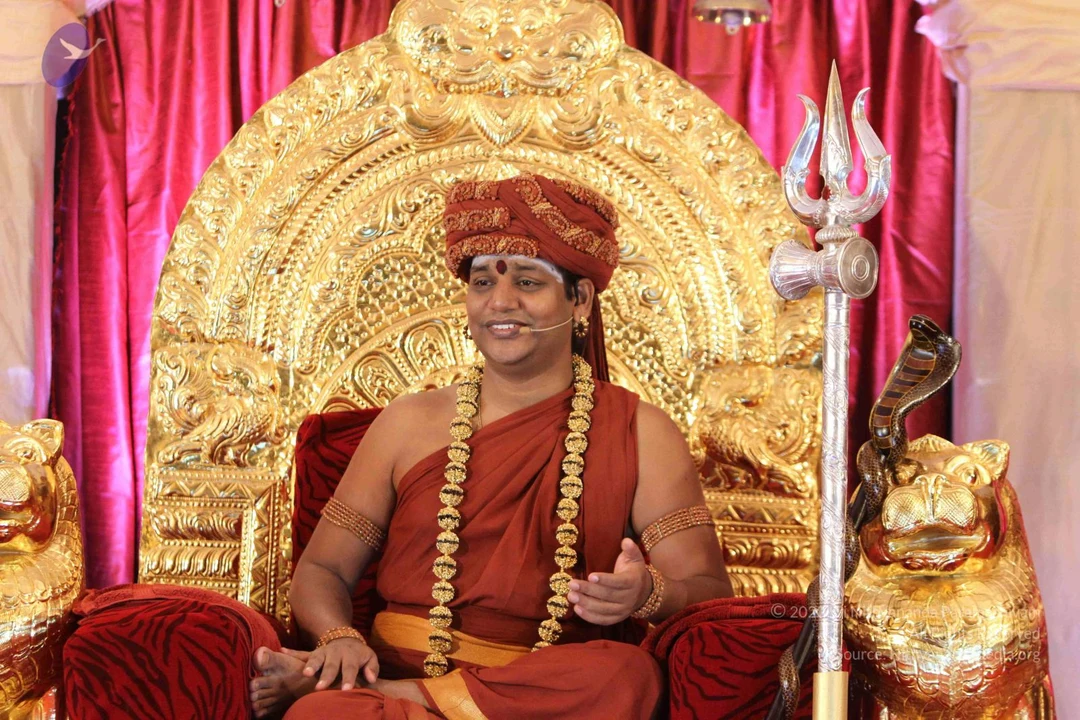
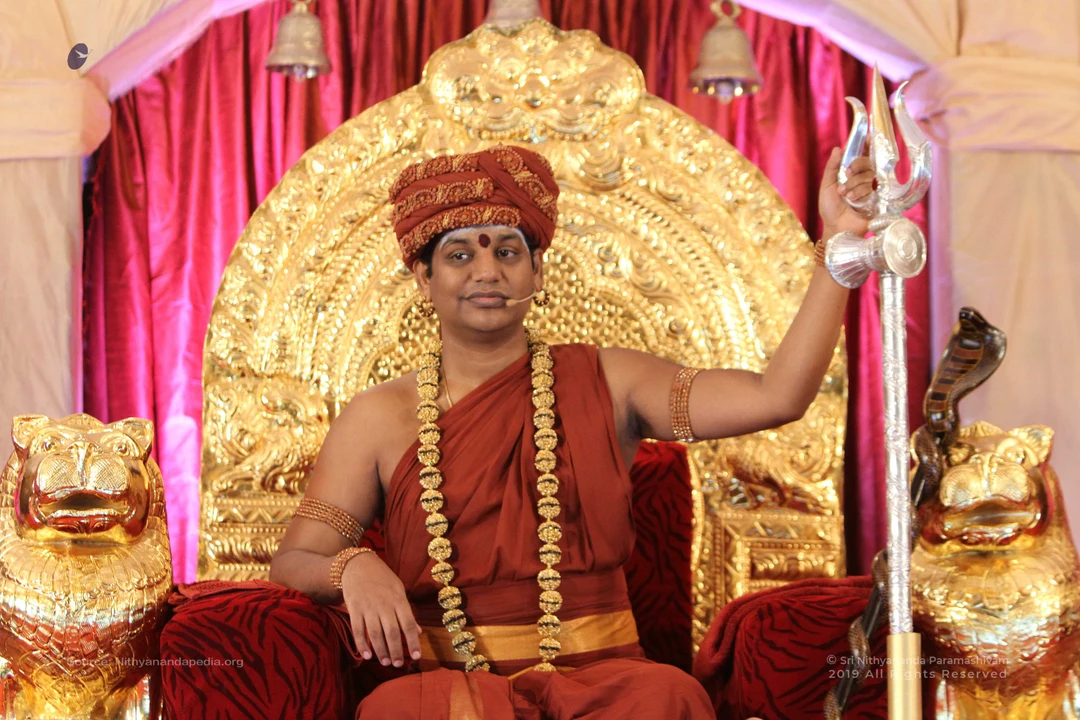
A man in a rust-orange robe sits on an ornate golden throne with lion-head armrests, smiling and looking to his right. He wears a gold bead garland, a white and red forehead mark, and a peacock-feather fan rests behind the left armrest. Beside him a silver staff is entwined with a dark cobra carved in gold and dark tones. Red velvet drapes frame the background. Swamiji (probable): a long-haired figure in saffron-orange robes with a gold bead garland, seated on a golden throne, matching the page's Swamiji reference.A seated man in a rust-orange turban embroidered with beads and gold thread, with a red bindi and white forehead markings, smiles while clapping his hands in front of him. He wears an orange-red shawl over his shoulder, heavy gold beaded necklaces, gold armlets and bangles, and a small wired microphone near his mouth. Behind him a large gold, ornately embossed backdrop shines. Swamiji (probable): the appearance-based cues are the swept turban and ceremonial gold necklaces with saffron clothing, consistent with the page reference to a satsang. Only one person is visible.A smiling man with swept-back black hair and a white sandalwood tilak with a red dot on his forehead wears a saffron-orange garment and a gold chain with a beaded gold necklace. A peacock-feather fan with blue-green eyes is held at left, and a gilded cobra figure with a raised hood appears at right, beside red and gold drapes.

July 25 2014

Original wiki page
Contents

Title:

What is Advaitic Enthusiasm

Description:

In today’s morning satsang from Hairdwar, Paramahamsa Nithyananda spoke about advaithic enthusiasm. Only when you re-write your future with advaithic enthusiasm your past becomes irrelevant. Enriching gives you the new possibility, the new future and all the dirt of your past disappears. Thinking that you are right or wrong is an irrelevant waste of time. Enthusiasm arising from advaitha is Jeevan Muktha.

Link to Video:

VideoAudio

Transcript:

Nithyanandeshwara Samaarambhaam Nithyanandeshwari Madhyamaam | Asmath Aachaarya Paryanthaam Vandhey Guru Paramparaam ||

I welcome all the devotees, disciples, samajis, satsanghis, Shrimahants, Mahants, Kotharis, Thanedars, sitting with us all over the world through Nithyananda TV, Sadhna TV, and two-way video-conferencing having Nayana Deeksha.

Cities sitting with us in two-way video-conferencing having Nayana Deeksha: Belgium-Dhyanapeetam, Hebbal-Bangalore, Kuala Lumpur-Palani, Sherman Oaks, New York-Varanasi, Guadeloupe-Rameshwaram, Abu Dhabi, Gyaneshwar-Nepal, Port Washington-New York, Philadelphia, San Jose-Madurai, Wellington-North Carolina, Hyderabad-Gupta Kashi, Netherlands, High Point-North Carolina, Dhyanapeetam-Hosur, Singapore-Singapuram, Mukthananda-Seattle, Surat-Gujarat, Toronto-Kailasam, Houston-Kalahasti, Nithyananda University-Los Angeles, Phoenix-Kanchipuram, Indrani-New Jersey, Oklahoma-Somanatham, Vancouver-Canada, Seattle-Chidambaram, Nithyananda Nagara-Bidadi, St. Louis-Texas, Ohio-Prayag, Dakota Dunes, Colombo-Sri Lanka, Dubai-Vaidyanatham, Oman-Sivagangai...........

I welcome all of you with my love and blessings.

Chidambarananda, Dubai! Birthday blessings! With all the auspiciousness, you will be with me, I will be with you! Blessings!

Today I wanted to expand on “ADVAITHIC ENTHUSIASM”.

Understand this important truth: ONLY WHEN YOU REWRITE YOUR FUTURE, THE PAST WILL BE FINALLY ERASED. Ultimately, the impact of the past on your life can disappear only when you consciously rewrite your future. You can do all types of Completion – standing up, standing down, sitting up, sitting down, standing upside down, you can re-live, re-live, re-live – you can do any type of Completion, you can have life-size mirror, mirror-size life, you can sit any number of hours in front of yourself, in front of mirror, but, listen, ultimately, the final dirt of the past, final dirt of the past incompletions leave your system only when you rewrite your future with Advaithic enthusiasm.

Listen! Only when you start creating the future with Advaithic enthusiasm, the past disappears. You have to make past irrelevant, only then it disappears once for all. You have to make your past irrelevant. Understand, only when you rewrite your future, your past becomes irrelevant. Only then your past becomes irrelevant. Your past can never become irrelevant if you don’t rewrite your future with tremendous enthusiasm. As long as you live the life, ‘I told him, he did not do.’, ‘I told her, she did not do.’, means, as long as you don’t stand up to the Whole around you, you will not be living Advaitha, you will not be creating your life, rewriting the future may be theory.

Listen! Listen! Only when you rewrite your future, the past impact disappears. There is a beautiful example we read in the young age; or, I can say during “childhood days”. I should not use the word “young age”, after all I am still young! “Childhood days”! In the school, there will be storybooks, so in one storybook I read. One boy was very naughty, mischievous, will do all sorts of things to torture others. The family was not able to control him at all. So, finally, father has decided there is only one way to teach him a lesson. Whenever this fellow does something mischievous, hurting others, the father will put one nail on the door-frame. First ten days okay; the nails were only some thirty, forty! But when the nails started growing to eighty, ninety, hundred, everyone in the street started asking, ‘What is this’, ‘Why so many nails on the door?’ Father started saying, ‘Whenever my son does some mischievous thing, I put one nail here.’ Now it is getting too much!

Suddenly, the son saw the whole street is looking at him in a different way. See, whatever said and done, earlier also he is known for his mischievousness, but not so much together! They will always call him and scold him and forget about it. But, now, it is almost like all the files put together! Everyone sees his house door-frame, started laughing at this boy. When the nails have grown up to two-hundred, now this fellow felt, ‘It is too much. I can’t handle this anymore.’ He goes and cries to his father. Father says, ‘If you promise me you will never do these mischievous things to hurt others, I will remove all the nails.’ So, this fellow also promised to transform himself and not to hurt others and do mischievous things. The father removed all the nails. This fellow thought he is completely free, relaxed, happy. But next day when he came and saw, he saw the dents of the nails are there! The holes where the nails were inserted, those two-hundred holes are there! Still people continued to see the holes, they were laughing. He goes and asks his dad. His father says, ‘It will take a little time for the marks to disappear; then I will clean the wood and make the nail dents also go away, the nail marks also go away.’

Understand, only when you clean the very wood and do something else on it, the old dents can go completely. Understand, that is why Enriching! Enriching gives you new possibility. It is not for me, it is for you. But, unfortunately, your self-centred mind looks at everything with a selfish scale – ‘Why should I do this?’ If you are asked to harm somebody, you never ask any question; you straightaway go and harm. But if you are asked to do something good to somebody or do something enriching, you ask thousand-and-one questions, thousand-and-one questions – ‘Why should I enrich?’ That is why the harming religions are very flourishing, enriching religions are very slow progressing. Because, human-beings out of their sheer stupidity, harm more easily than enrich. Building a school and giving knowledge to kids, educating them to live their lives responsibly will be more difficult. But creating a terrorist camp and teaching them to go and do some terrorist activities seems to be very easy. Because, human-beings are prone to hurting others without asking any logical questions.

Understand, Enriching is the strength of new life happening to you, understand? When you enrich, it literally creates a new future, you rewrite the new future, and the old future just disappears, it becomes irrelevant to you. The more you are into Enriching, the more your past becomes distant from you. If you want the joy and excitement and bliss and enthusiasm of Inner Awakening to continue in you, the Completion of the Inner Awakening to continue in you, take up the lifestyle of Enriching.

People ask me again and again, the last few days this is one of the important questions, the moment people feel the breakthrough, joy, Completion, Fulfillment ‘How can I retain this?’ Because, they know, this is the most difficult thing they got in their life. Now I am giving you the straight answer. That time I was not giving the answer because you were not ready to receive the answer. Now I am giving you the straight answer: ENRICHING LIFESTYLE!

You may ask, ‘What is Enriching?’ AGAIN AND AGAIN MAKING YOURSELF AUTHENTIC, INTEGRATED, RESPONSIBLE, AND MAKING OTHERS EXPERIENCE AUTHENTICITY, INTEGRITY, AND RESPONSIBILITY. If you can do it better than me, you yourself do it, making them live. If you think I can do much better than you, bring them to Inner Awakening; that’s all! Simple logic! Enriching is, making every human-being live Integrity, Authenticity, Responsibility, and helping them to achieve Complete Completion, Perpetual Completion, initiating them into Unclutching. If you think you can do much better than me, my blessings! Please do it! If you think I can do it better than you, bring them to Inner Awakening. It is simple logic! Enriching is nothing but making more and more lives, live Advaitha. You also live Advaitha. You living it more and more, making others live it more and more, is Enriching. Don’t ever think, just because you finished Inner Awakening, you started living. You are expected to start living, but it has to become life.

Enthusiasm of enlightenment, activism of Advaitha, should become really real in you! Not giving up on yourself, not giving up on others, completing with all the tremendous pain and impossibility which always pushes you down. Understand, it is because of that pain and impossibility you even assumed the human body! Don’t ask why it came. First of all, that question you should not ask me, I should ask you, ‘Why did you do this to you?’ People come and ask me, ‘Why did this depression come to me, Swamiji?’ I should ask you, ‘Why did you get so depressed?’ Don’t ask me. By asking me don’t try to escape from what you did to you!

Make Advaithic Activism as lifestyle. This tremendous impossibilities and pain which goes on pushing you down, burn it away! Re-live and relieve them! Complete and get rid of it! The best thing I saw in these devotees of Mahadeva, Shiva bhaktas, going around and doing Kawadia Yatra, is the tremendous excitement and enthusiasm. God! Every break where do you think I am? We are feeding lakhs of devotees with a huge tent. Thanks to Uttarakhand Police for giving us permission and allotting us a huge place. It is going on even now. I can tell them to get you the photographs of the service activity. We are giving good drinking water, food, twenty-four hours. All our ashramites and volunteers are standing and giving. Especially, yesterday, the huge crowd, and huge Shiva bhaktas!

Please understand, Hats off to their sincerity and enthusiasm, The police is not able to give permission for our vehicles to go there otherwise I really wanted to take all you guys and show you all. Not oinly police is not giving permission, we can’t, all the vehicle cannot go, it is such thick traffic.

You need to understand, don’t even imagine people are walking. I can literally say, the whole two-hundred kilometres, people are running! The amount of enthusiasm! All the way from Nepal, people have come carrying Ganga water from here! All the way from Nepal they came by walk, understand! Of course, Nepal is not too long from here, but surely more than two-hundred kilometres; that much I know. All the way from Nepal people come here, do this Kawadiya Yatra, and then take one more Ganga-water pot to Pashupathinath! What an amount of enthusiasm! God! I really wanted to make this as a compulsory for all my sannyasis. You have to do at least three Kawadiya Yatras. No, really! The amount of enthusiasm and excitement! See, excitement in the name of Mahadeva, not for anything else! When I saw that excitement, I was just so happy! I saw, in one post, where some juice is being served, and then, after some seven, eight kilometres, our camp where food is being served. I saw, there also people are running, here also people are running! It is not that they run for two kilometres, then they stop and slowly walk. No! Literally, with the “Bam Bam Bole! Bam Bam Bole! Bam Bam Bole!” sound they run throughout the two-hundred kilometres! It is almost like two-hundred kilometres marathon, Shiv Marathon, Shiva Marathon!

Understand, the enthusiasm, excitement they brought in the name of Mahadeva, whatever they understand as Mahadeva! They may not have a complete understanding of Mahadeva; they may think Mahadeva is only a person who gives them health or wealth, whatever. There are many whom I saw. There are sincerely interested even in Sannyas! We were giving Sannyas pamphlets and flyers. People were very interested. So there are many evolved seekers, there are some simple devotees. Whatever they understand as Mahadeva, out of that truth, they created excitement and enthusiasm. The same enthusiasm and excitement if you can create out of Advaitha, living enlightenment, you are a Jeevan Muktha!

Understand, more and more Advaithic knowledge, more and more the science of enlightenment makes you more and more excited, enthusiastic, active, alive, enriching, then you are travelling in the right path. If you become more and more dull, more and more dead, more and more depressed, you are travelling in the path of arrogance, abusing yourself and others, abusing yourself and the Advaitha Sathyas. Once you are initiated into Unclutching and Living Enlightenment, Nirvikalpa Samadhi, Advaitha, your living hours should become at least eighteen hours! Means, it should multiply by a few times! The depth of your mental activity, physical activity, emotional activity, the conscious activity, all should multiply. Only the depth of your incompletion should reduce. When the depth of your incompletions reduce, your whole being becomes active.

Understand, if anybody’s lip is looking down, he is not my sannyasi, not my disciple; I disown you! At any time your lip should be only up. That is where the life starts. Only then you are my disciple! If you put your lips down, you are only getting more and more infused with arrogance. Let your lip be always up, smiling, alive, living Advaitha. If it is down, then there is something seriously wrong. Look in. Complete with it. After all there is a great Kalpataru process available to you. If you start developing the pattern – ‘Completion is not working for me’ – complete with that pattern also. Because you are so cunning, you create new-new problems. Till the time you find the solution for your problems, you go on creating more and more problems, because you think that is the way you can prove, establish you are right! I don’t want to say you are wrong, but I don’t want to say you are right! Neither waste time thinking you are wrong, nor waste time thinking you are right, nor go in the directions your incompletions have built for you, and neither waste time thinking you are wrong. Just make your past irrelevant by the tremendous enthusiasm, activism, excitement you bring to your life, you bring to your declarations, you bring to your intelligence.

Let Advaitha become your atma. Let Unclutching become your atma. Let Advaitha become your atma, soul. Let Jnana become your atma. Let Dhyana become your atma. Let Prema become your atma. Let Vairagya become your atma. Let Advaitha become your atma. Let bliss become your atma. Let excitement become your atma. Advaithic Activism become your atma. Let enthusiasm become your thinking style. Let excitement become your thinking style. Let enlightenment become your thinking style. All the incompletions stops your brain thinking, stops your emotions feeling, let all those incompletions be burnt! Let you all be the high, powerful energy spaces where you move yourself and the world to live Advaitha!

I tell you, make Enriching as lifestyle; your past will become irrelevant. That is why always I tell people, if you build one temple, your heart will become a temple! Because, to build one temple, the amount of work you need to do, the way you need to enrich people, inspire people, everything, by the time you do all this work, your heart is enriched, these great truths are become part of your bio-memory, these become your being! I tell you, anybody who builds one temple, their heart will become a temple, they will be living Advaitha! Because one temple building it takes for you to go on enriching at least few thousand people, making all of them live Advaitha, making all of them live Completion, Integrity, Authenticity, Responsibility.

The essence of today’s satsang:

Bring yourself to the highest responsibility and highest enthusiasm, highest enlightenment, highest Authenticity and Integrity, and highest Enriching. Live enlightenment. Live Guru Vaak!

I bless you all! Let you all radiate with Integrity, Authenticity, Responsibility, Enriching and Causing eternal bliss, Nithyananda! Thank you!

Photos Of The Day:

Paduka-Puja-Nithya-Satsang
IA-Session

Arjunpuris-Disciple-Akkada-Kameshwarpuri-Swamis-Visit

IA-Darshan

Photos Of The Day:

TEMPLE

Photos Of The Day:

Inner-Awakening

Photos

Tags:

Haridwar, Paramahamsa Nithyananda, advaithic enthusiasm, re-write your future, past, irrelevant, enriching, possibility, new future, thinking, right or wrong, waste of time, Jeevan Muktha.

Photos from this day

View all 309 photos

Paduka-Puja-Nithya-Satsang
79 photosSource gallery
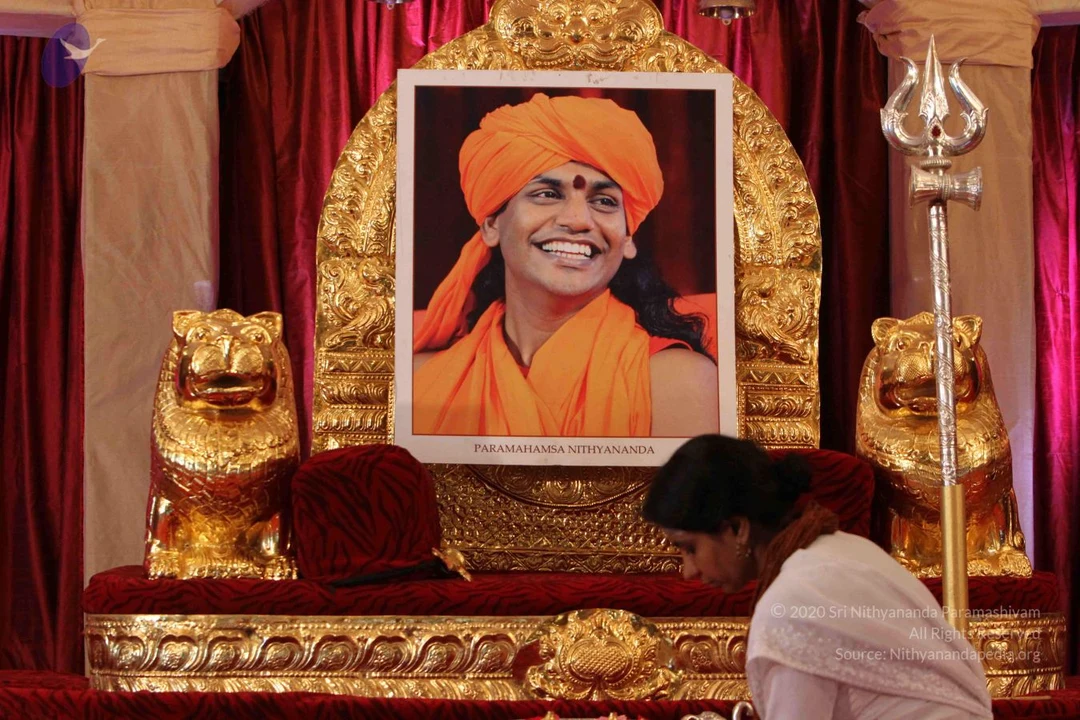
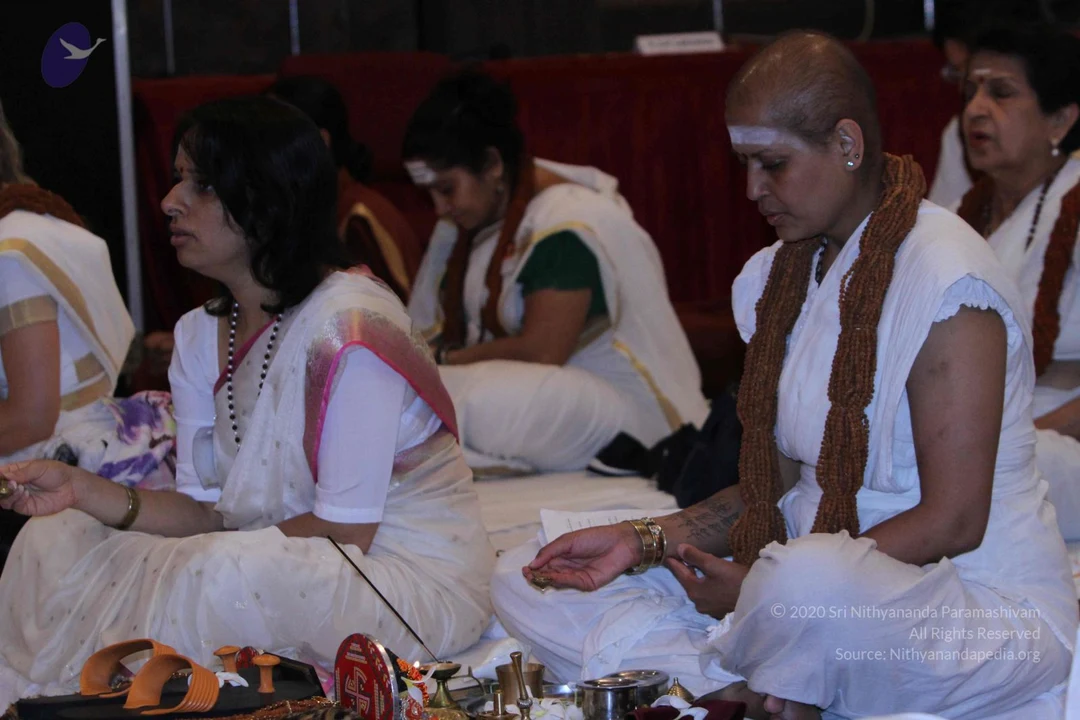
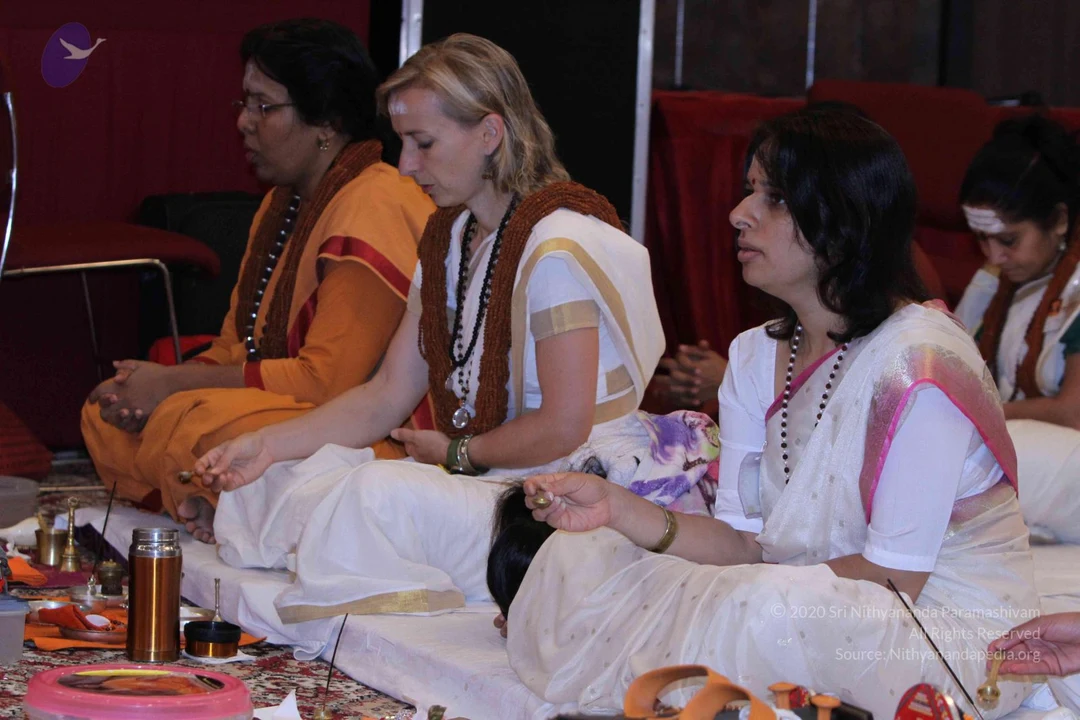
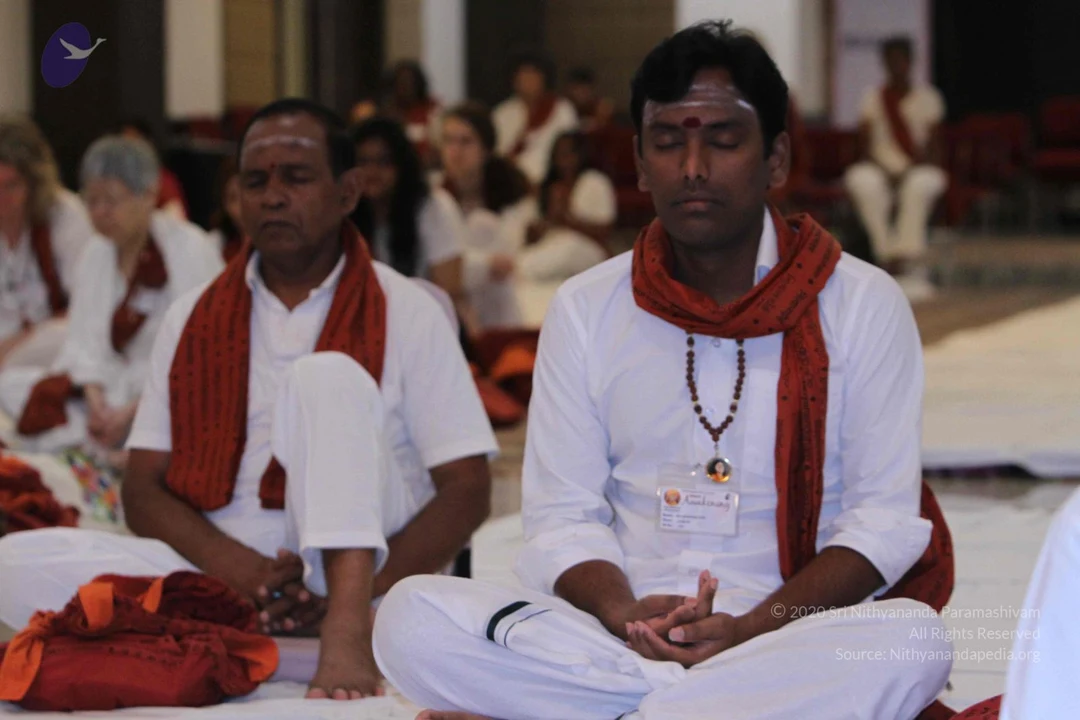
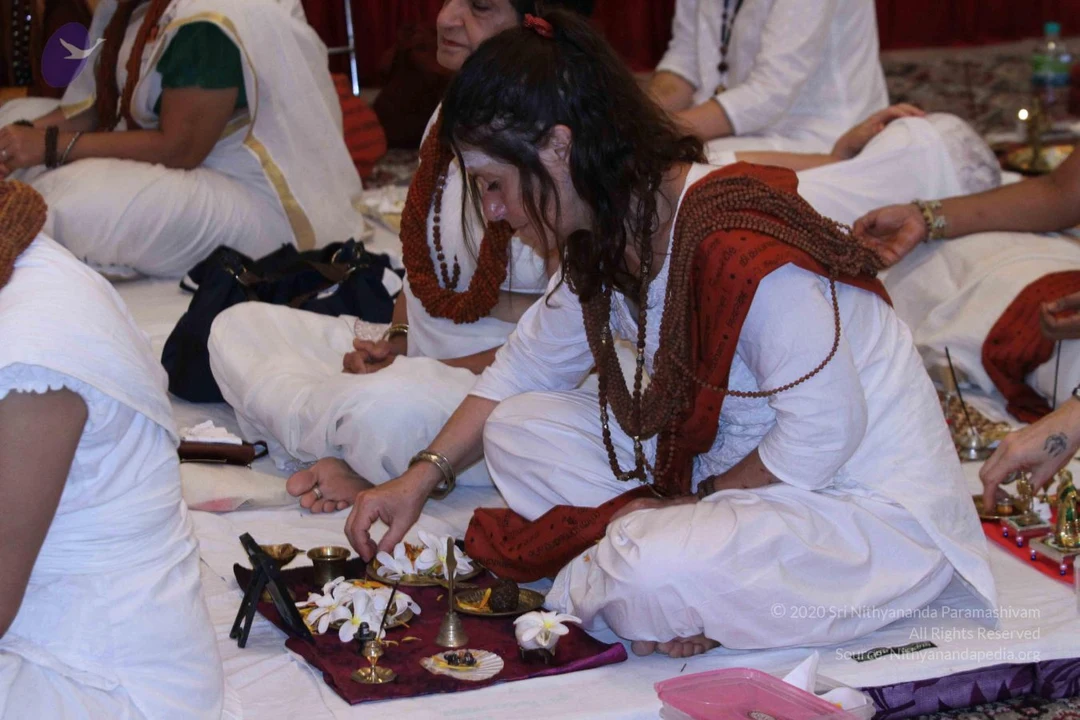
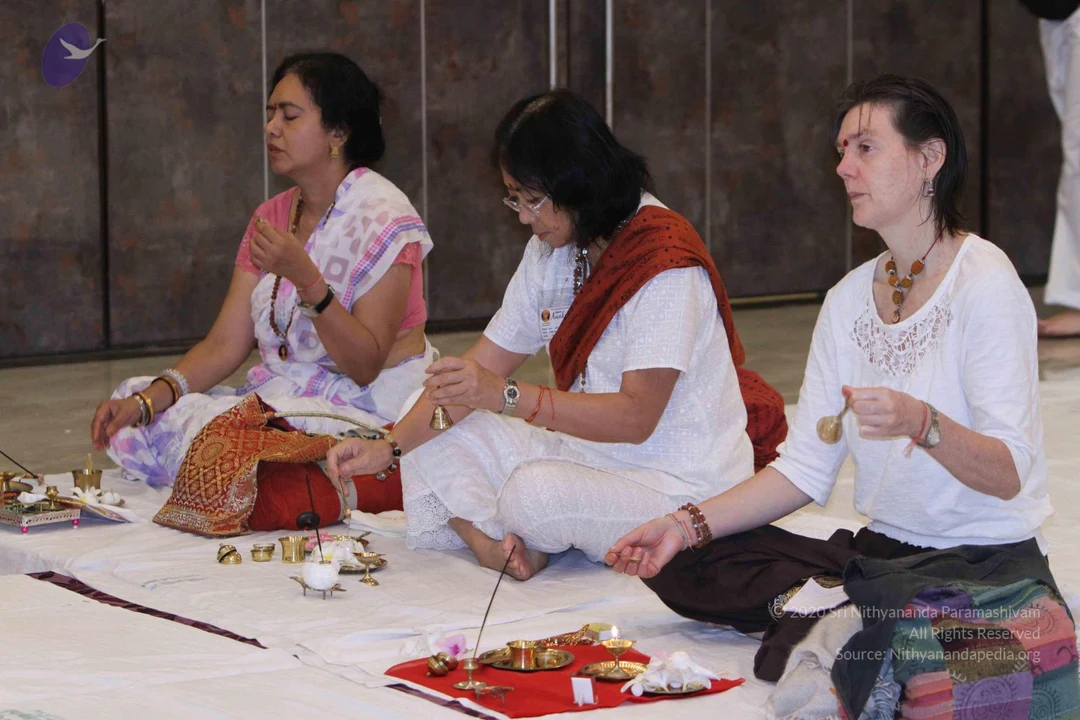
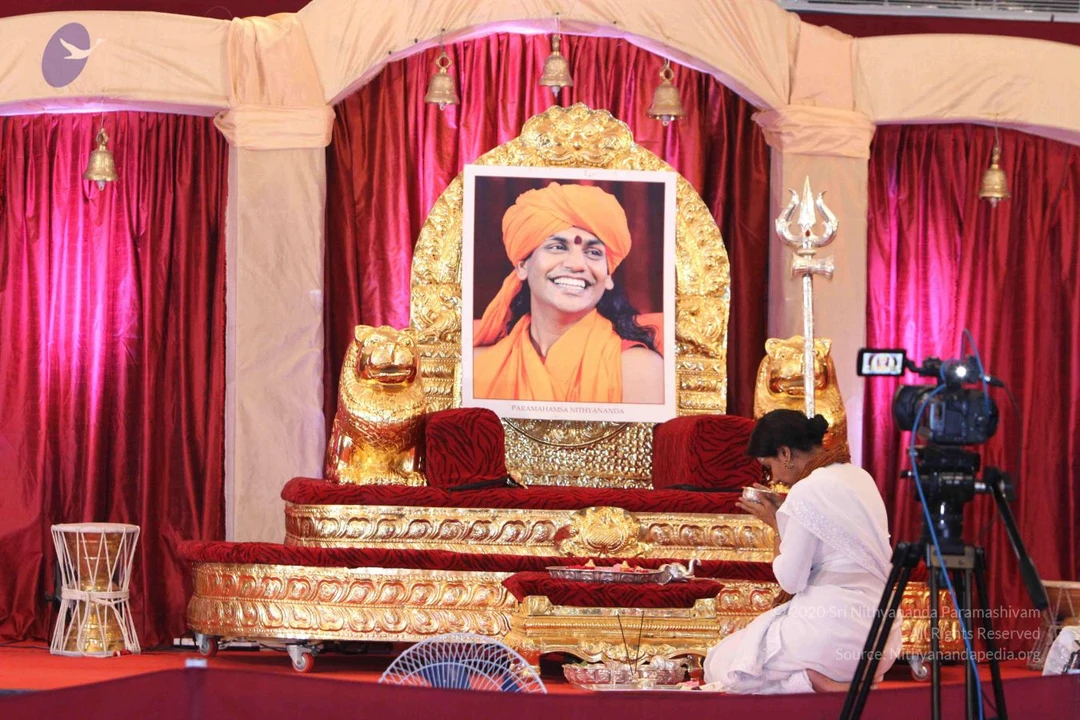
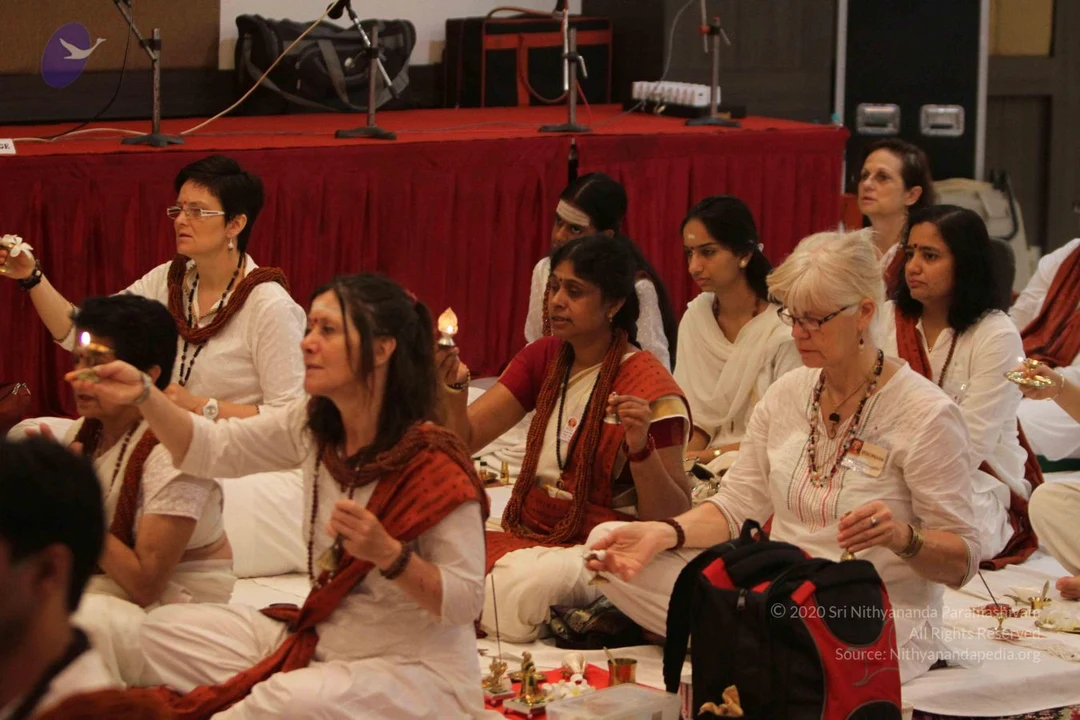
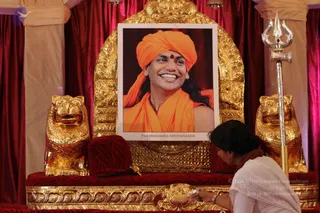
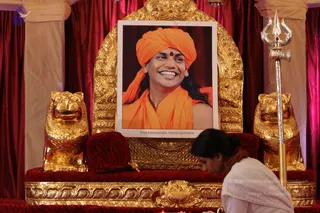
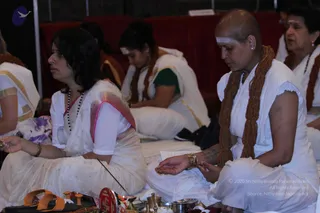
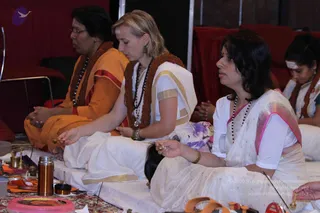
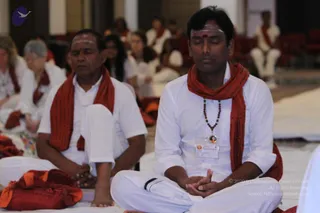
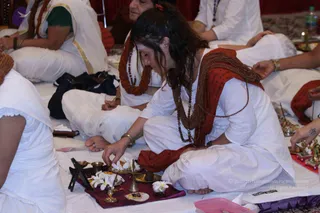
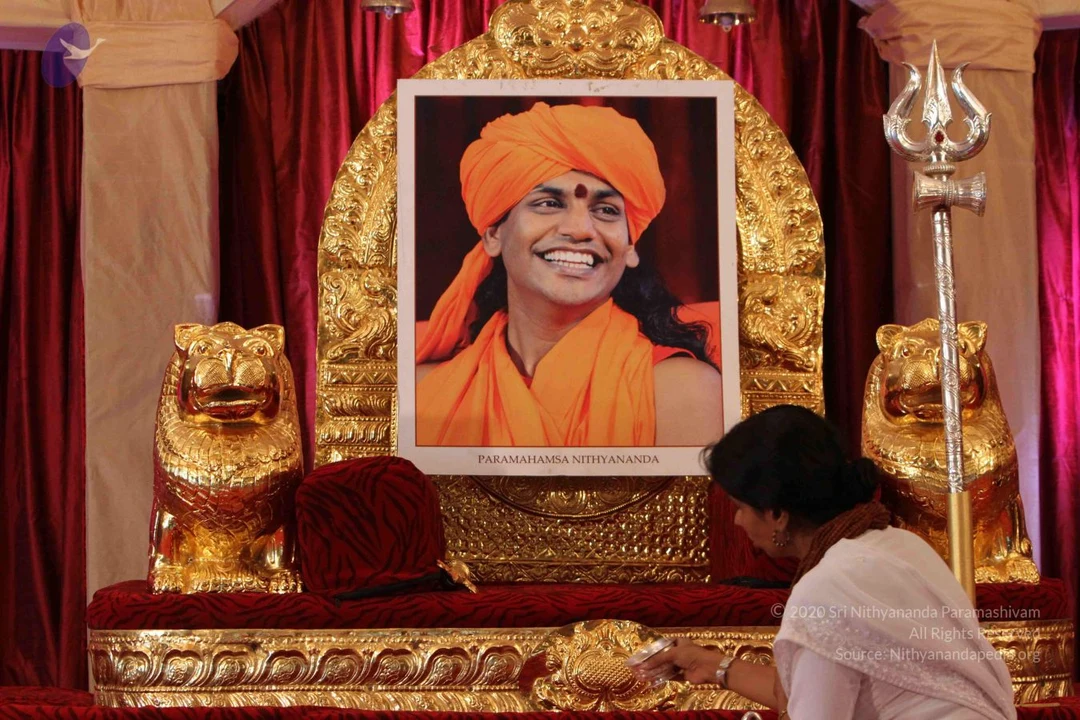
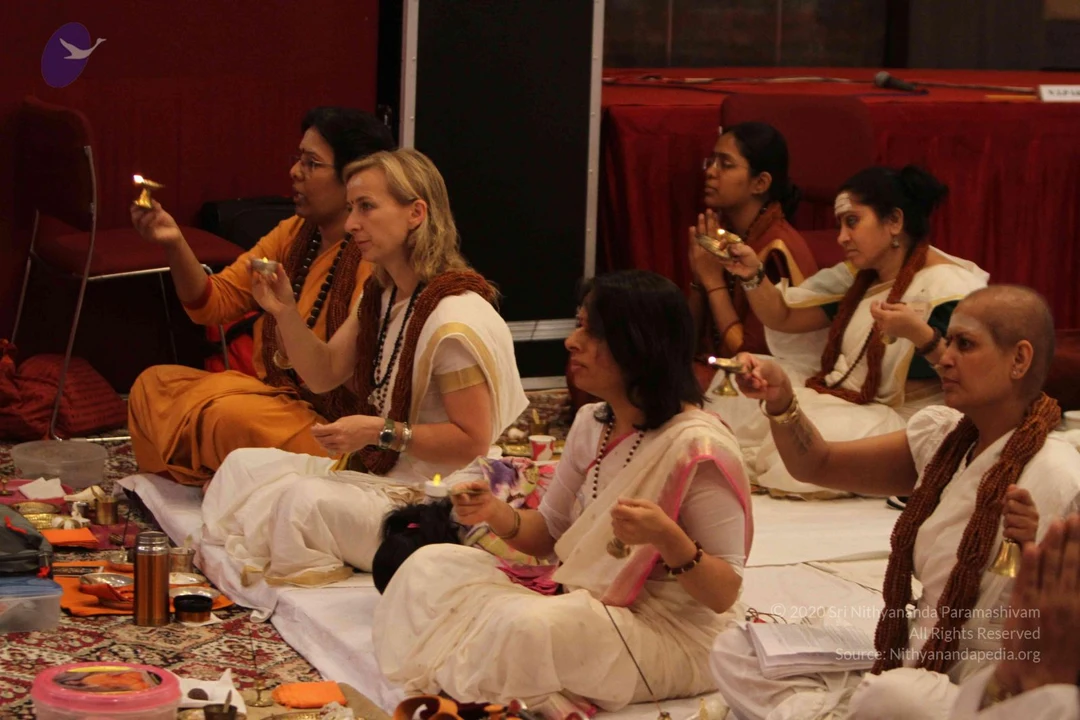
A woman in a white garment with a light border kneels at a golden throne draped in red velvet. On the throne stands a printed portrait labelled "Paramahamsa Nithyananda", showing a smiling man with a saffron-orange turban, a red bindi and an orange wrap. Golden lion-head armrests flank the seat, a silver trident rises on the right, and red drapes frame the scene. The woman's hand rests near the throne's gilded base, and a light bracelet is visible on her wrist. Only the kneeling woman is a physical person in the scene; the portrait is printed.A framed photograph of a smiling man with a bright orange turban, red bindi and orange shawl is displayed on an ornate gold throne-like seat flanked by two golden lion figures and a silver trident. A portrait captioned "PARAMAHAMSA NITHYANANDA" sits at the centre of the gold peetha, with red velvet drapes behind. In the foreground, a woman in a white sari with her hair tied back bows toward the seat, appearing to make an offering. The portrait is a printed depiction on the throne, not a physical person.Women in white ritual clothing sit on a white cloth at a satsang or puja, with a brass and copper setting of small bowls, a kalasha-style vessel and a red-and-gold ceremonial item in front. The woman in the foreground right has a shaved head, white tilak on her forehead, a long rudraksha mala draped around her neck and shoulders, and gold bangles; she holds a small object in her hand. Beside her a woman in a white sari with a pink-edged border wears a black bead necklace, and others in white with orange-brown malas sit behind. Red curtains form the background. No person here is identified as a person.Several women sit cross-legged on a white mat in a meditation or puja setting with a red backdrop. The woman at left wears an orange saree with a brown shawl and a rudraksha mala, eyes closed, hands folded. The central woman in a white saree with gold border and brown shawl wears beads and holds a small object in her hand, eyes lowered. The woman at right in a white saree with pink and gold border holds a small item and a mala while seated in meditation. At far right another woman with a white tilak on her forehead sits in white. Before them lie a brass lamp, a steel flask, incense sticks, an orange cloth and a pink-lidded container.A seated group meditation in a large hall with white floor mats. In the foreground, a man in white kurta and dhoti sits cross-legged with eyes closed, hands in a mudra, wearing a red-and-black patterned shawl, a rudraksha mala, a white tilak and a red bindi, and a name badge on his chest. Beside him, an older man in white with a red shawl sits with eyes closed and hands clasped. Behind them, devotees in white clothes and red shawls sit in meditation, and a few more figures are visible in the background.A seated woman in white ritual clothing with a rust-red shawl and multiple strands of rudraksha beads places white frangipani flowers on a dark maroon cloth. Brass puja vessels, a small brass oil lamp, a cowrie-like shell and a dish of offerings sit before her. Several other people in white sit on a white sheet around her, and a brass lamp and small brass items are visible at the right edge. The scene looks like a group puja or satsang ritual setting.
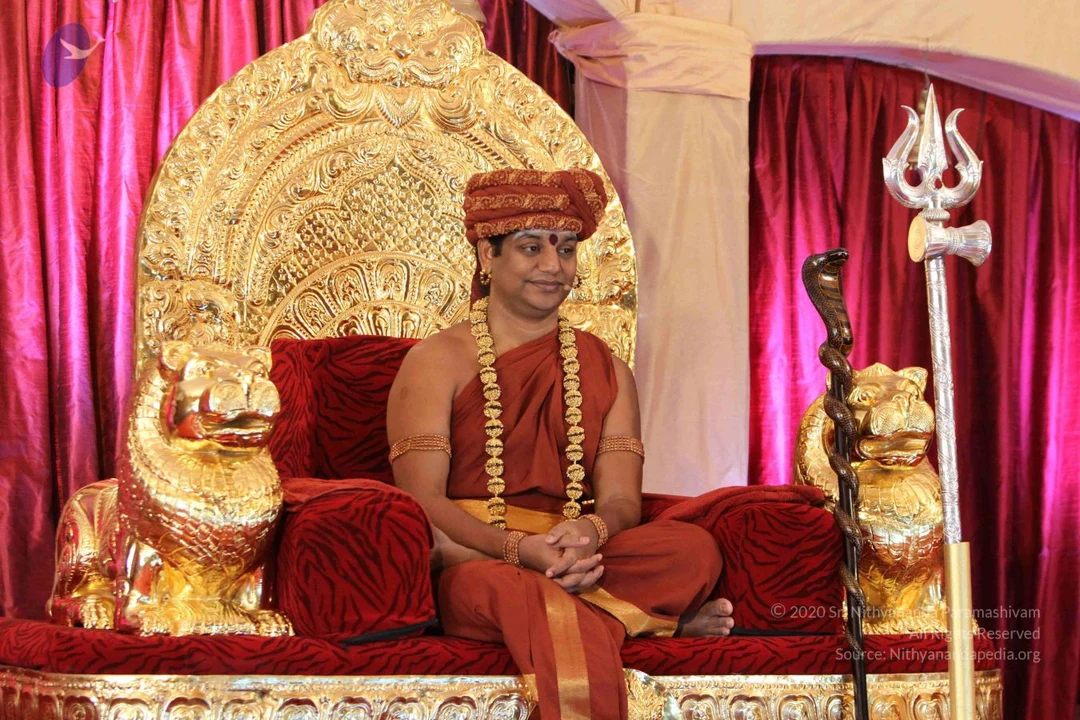
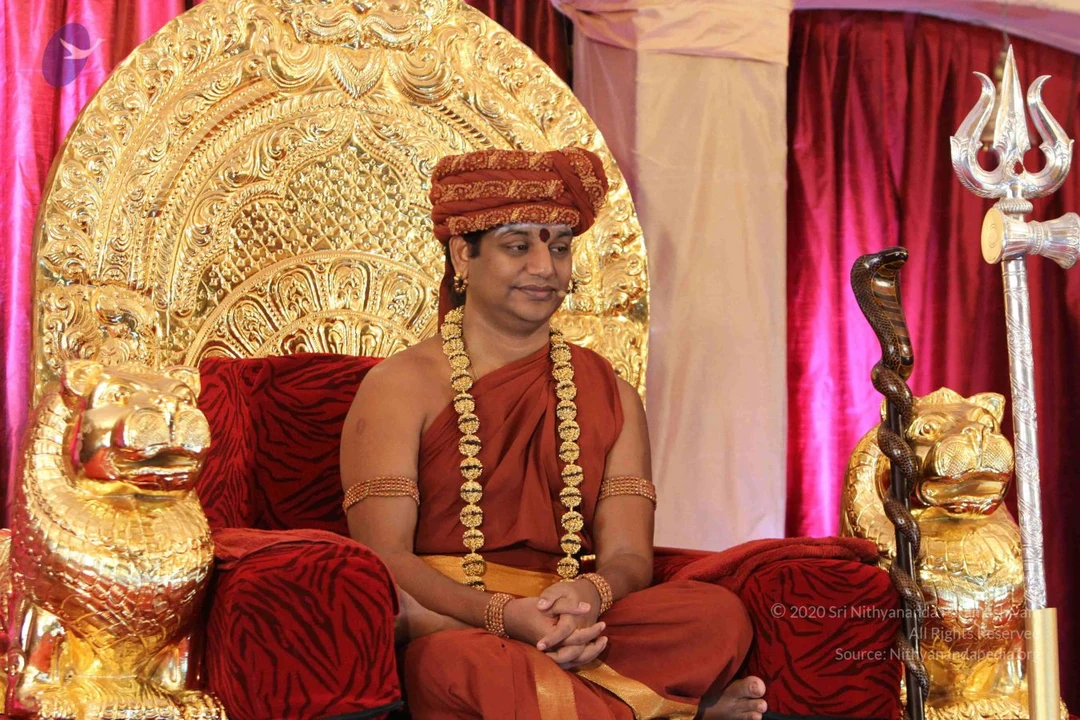
IA-Session

17 photosSource gallery
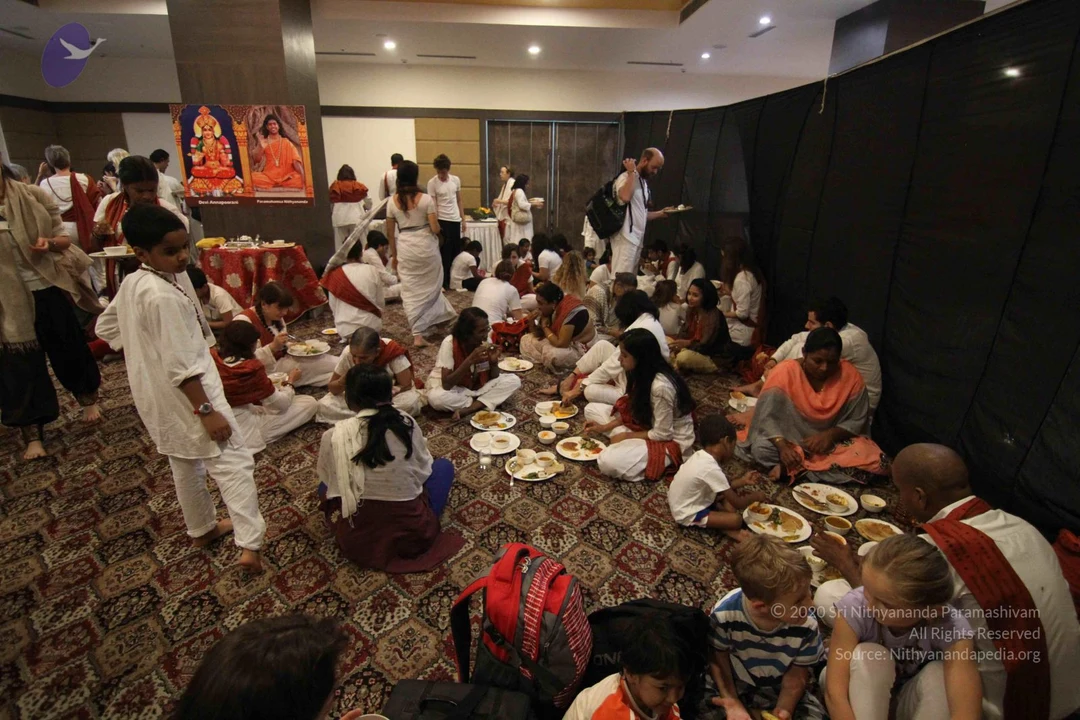
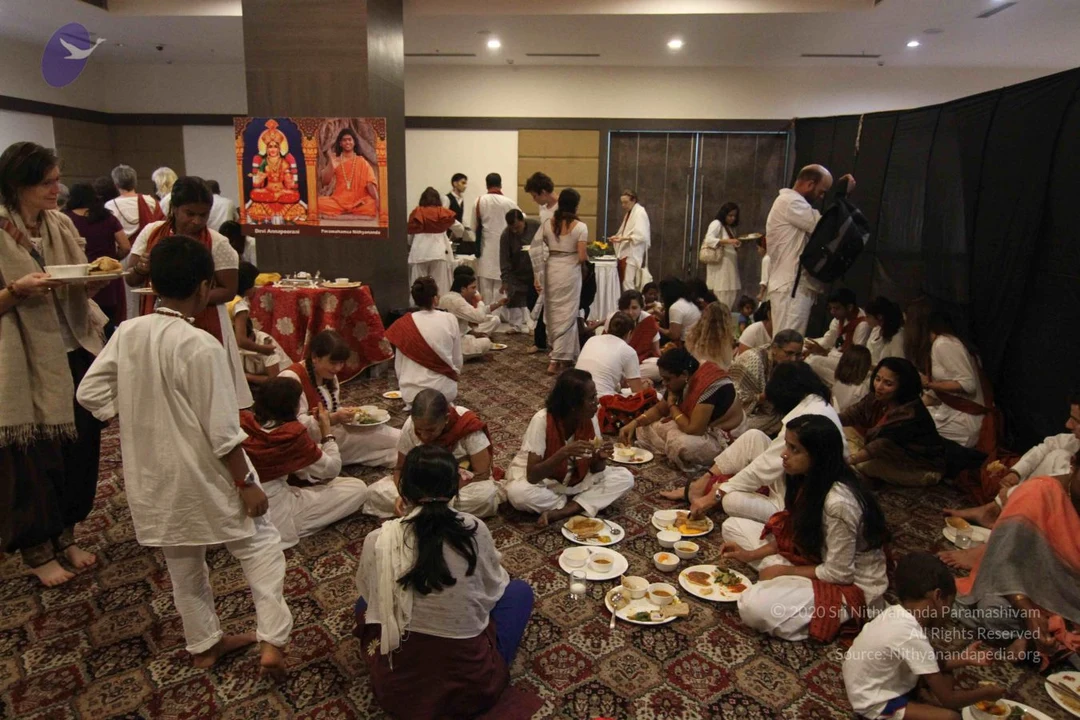
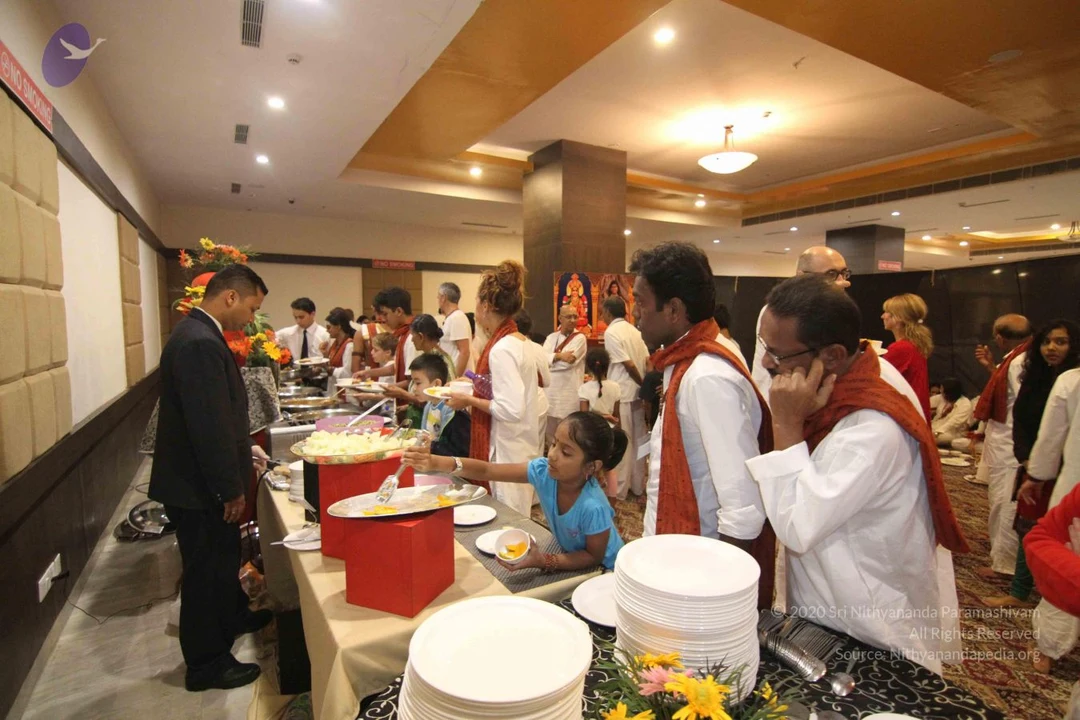
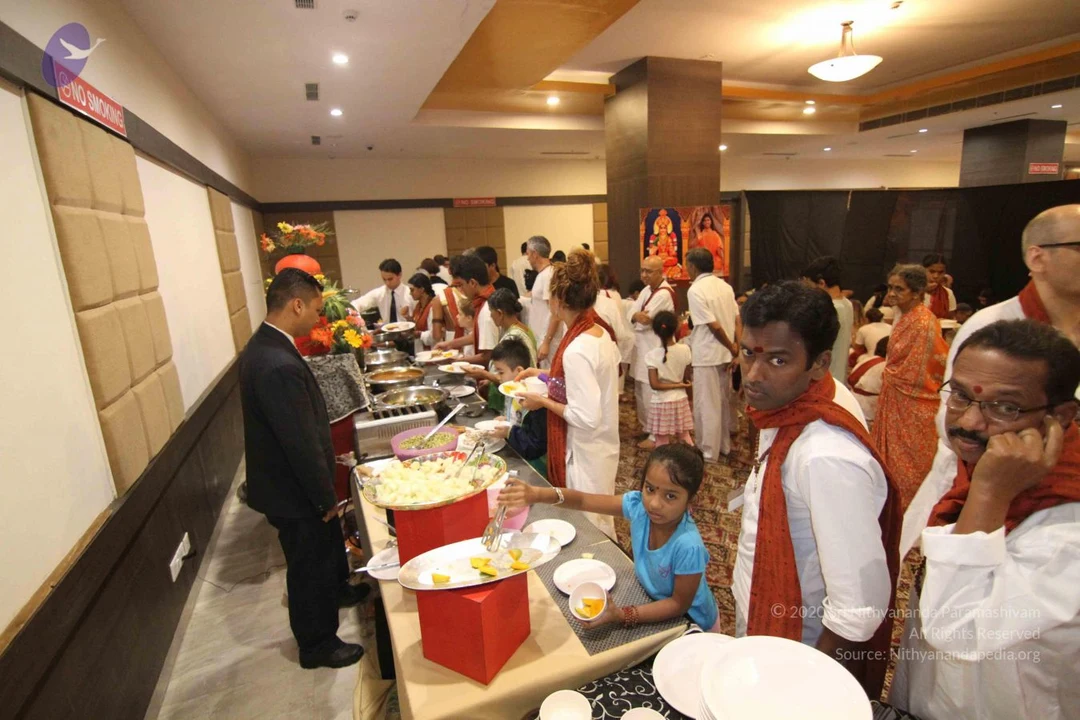
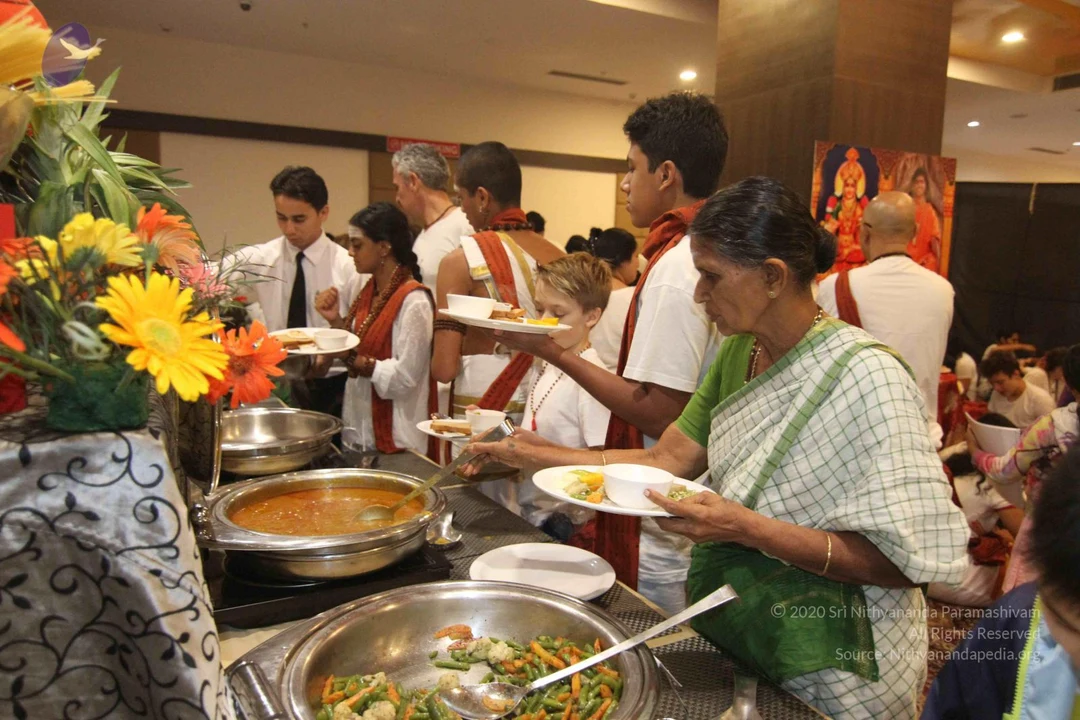
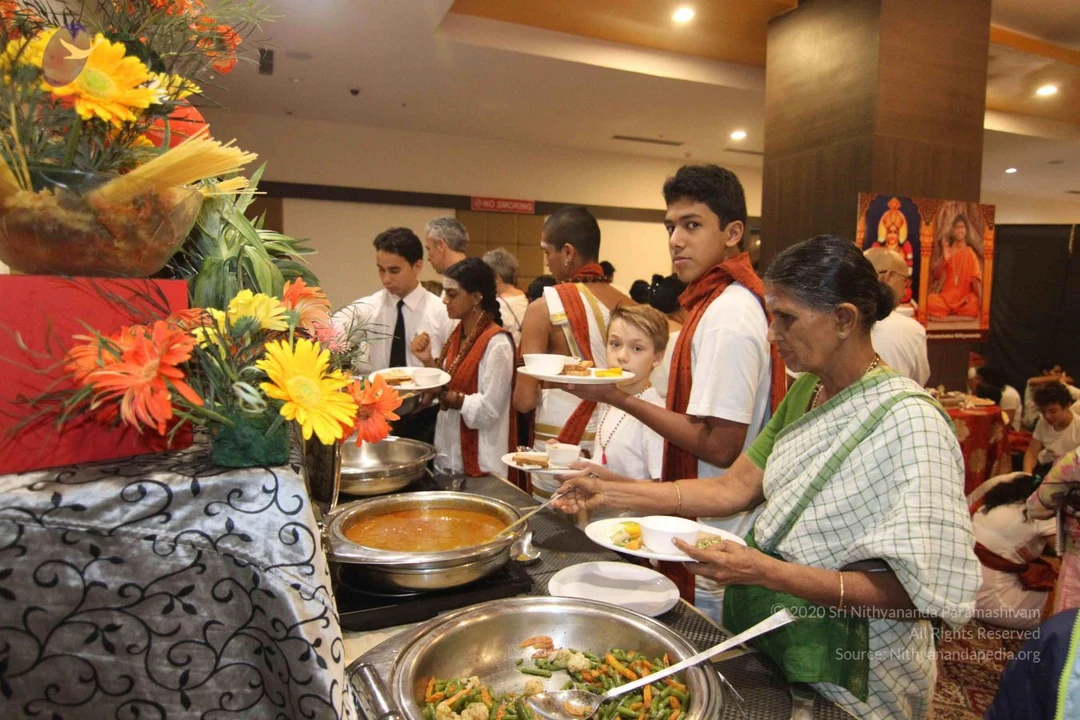
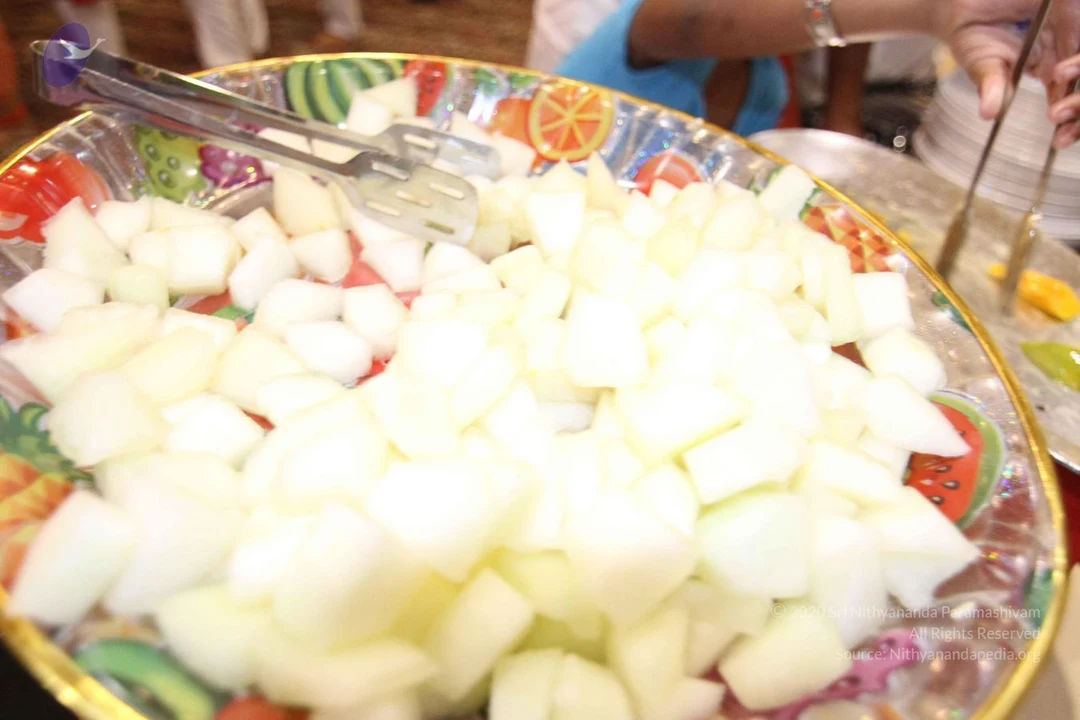
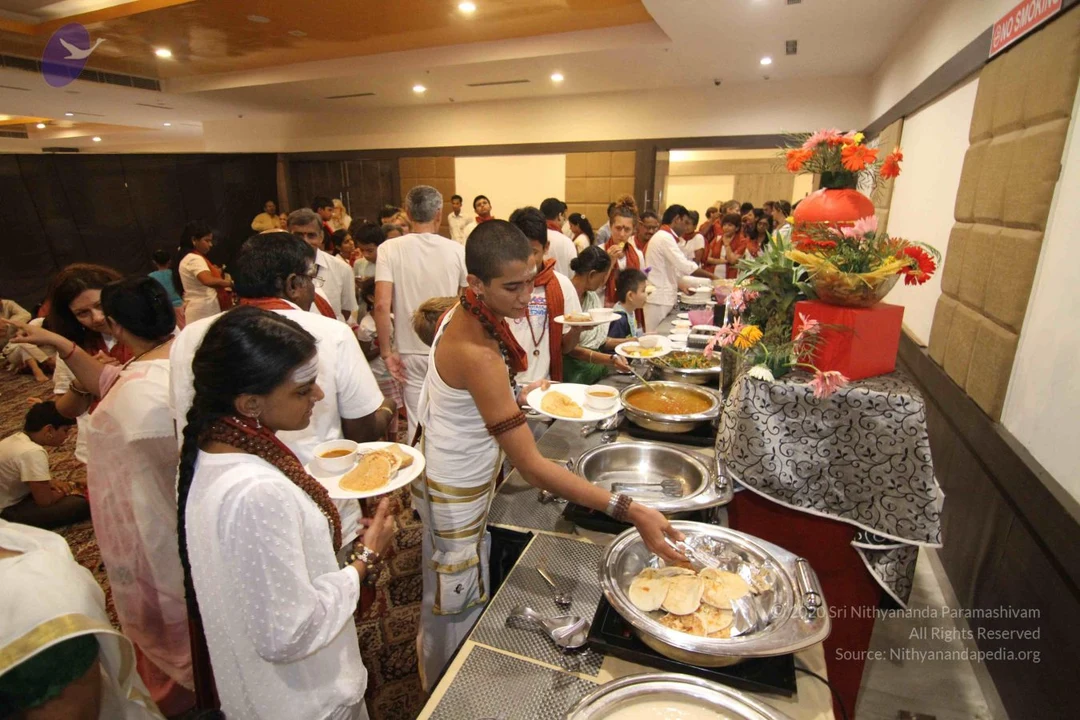
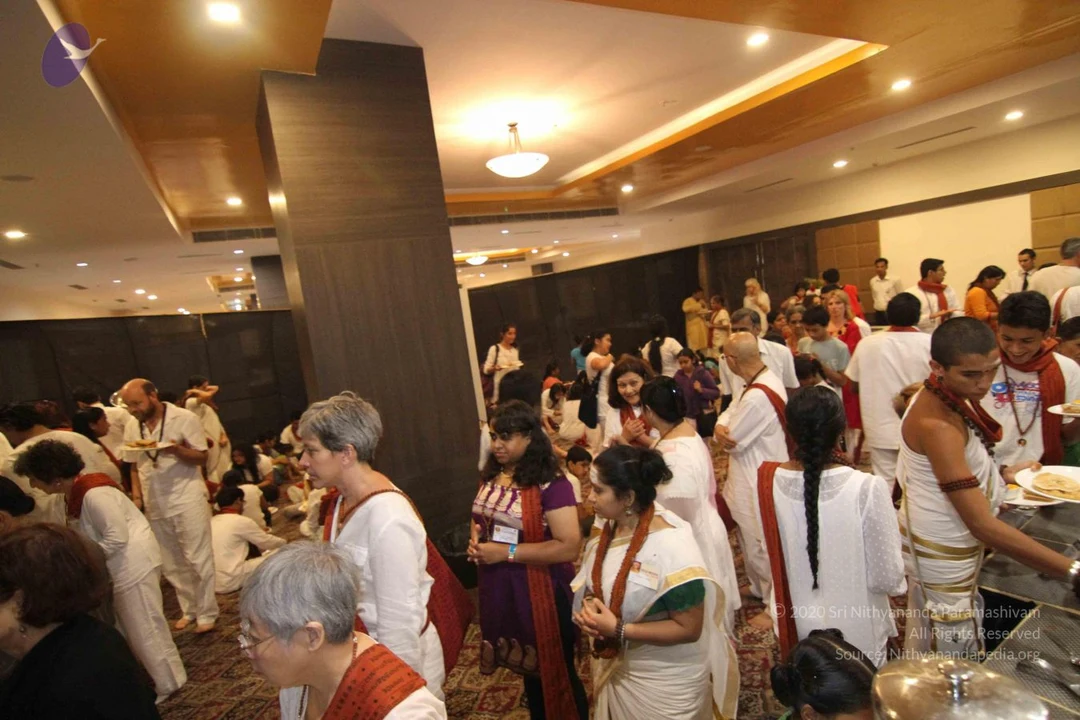
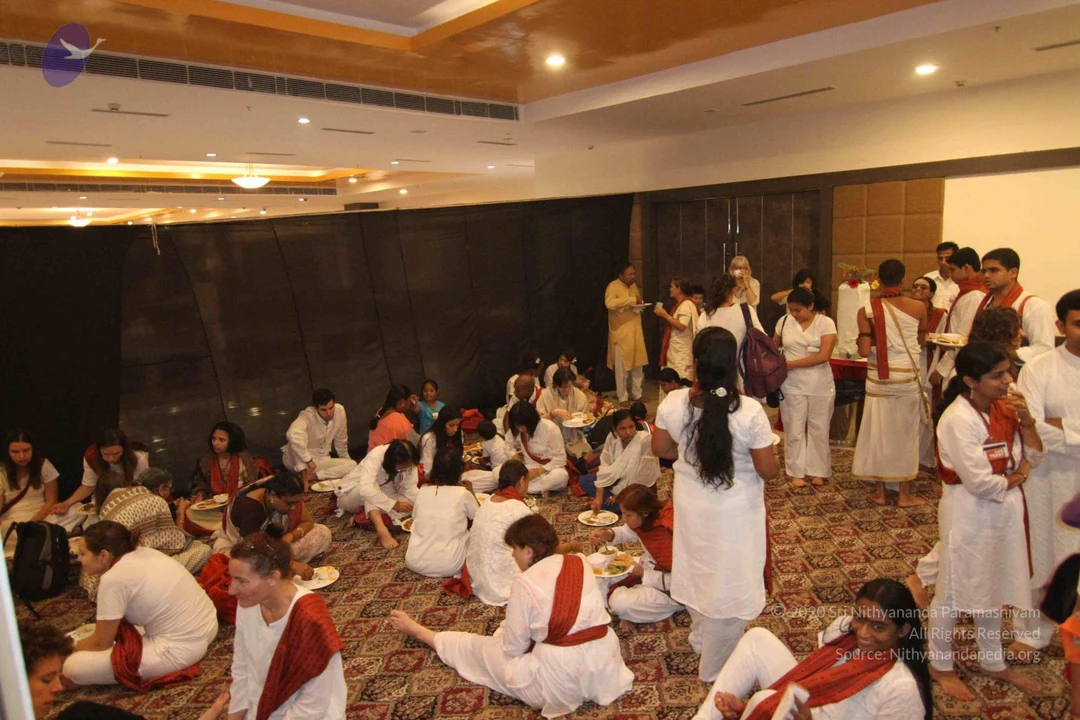
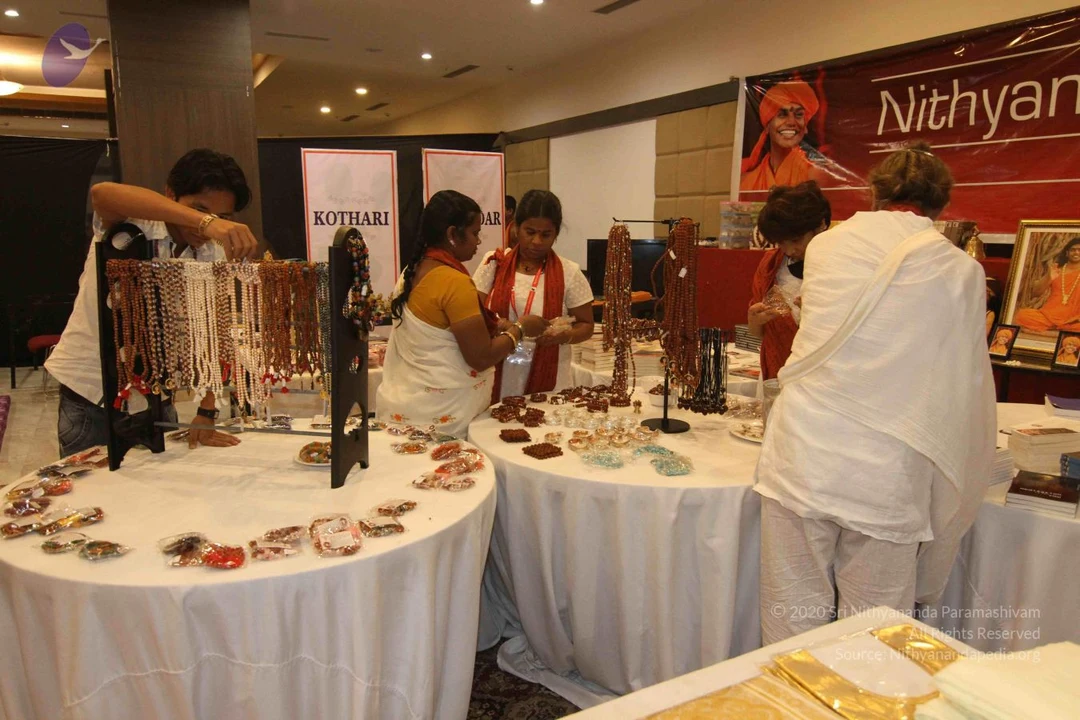
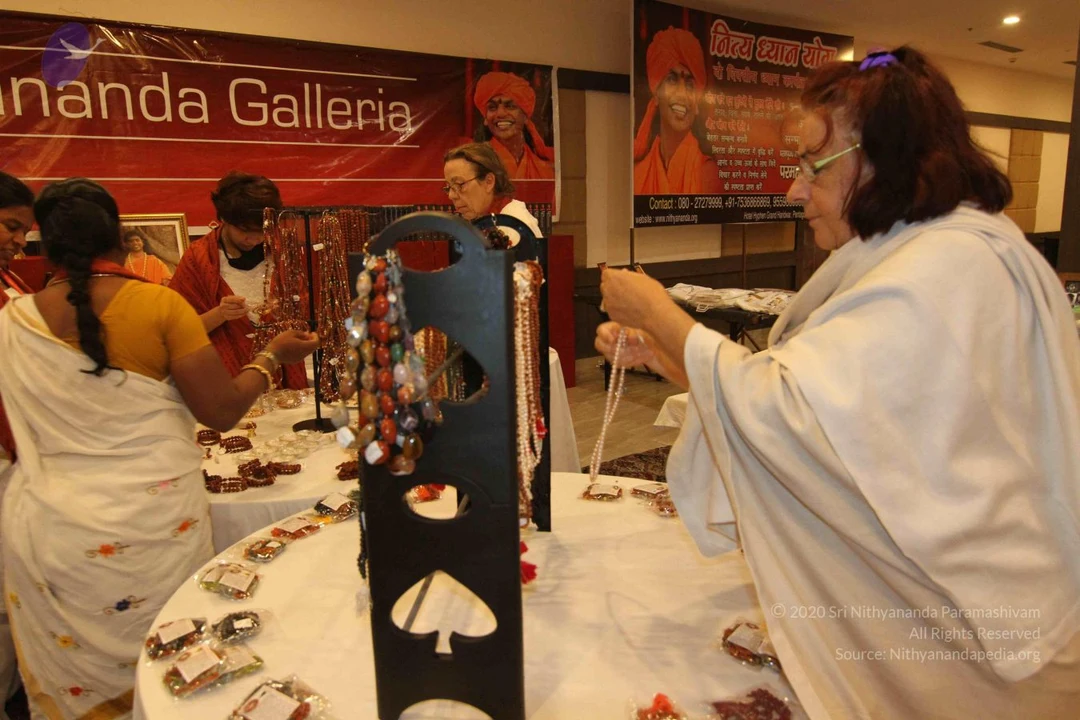
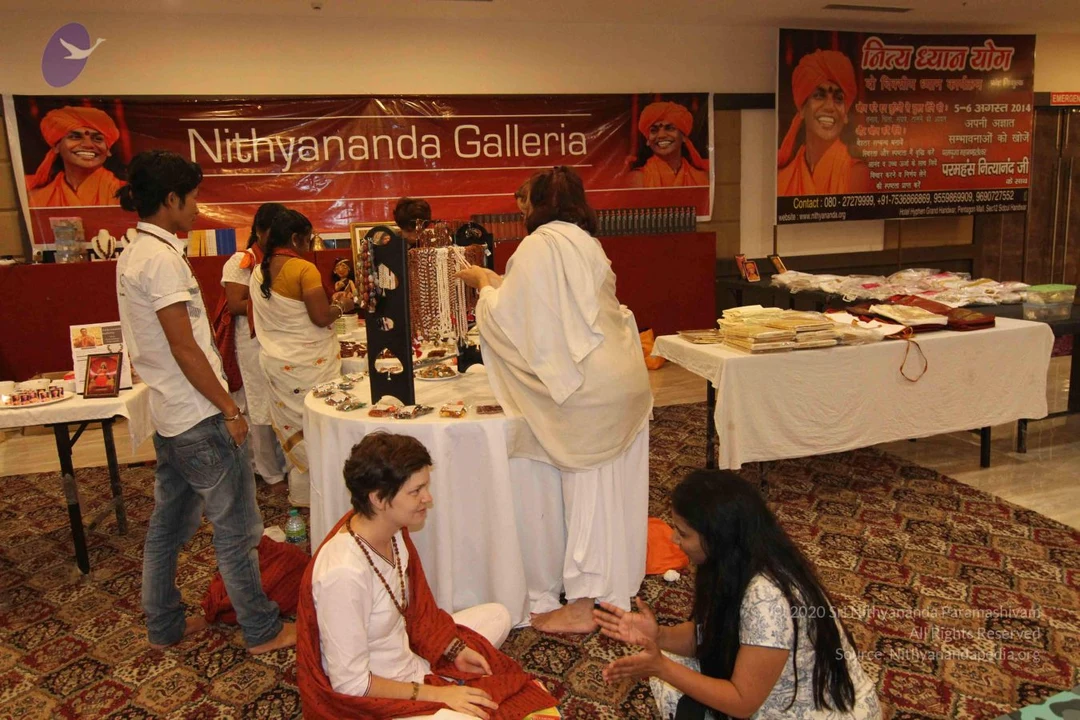
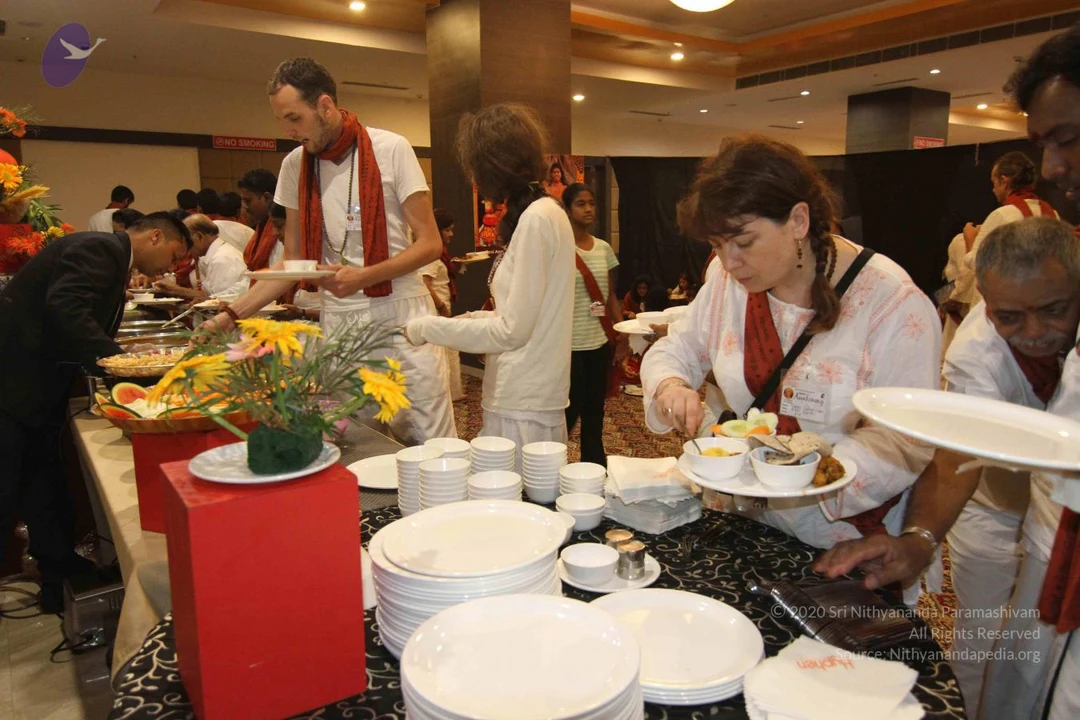
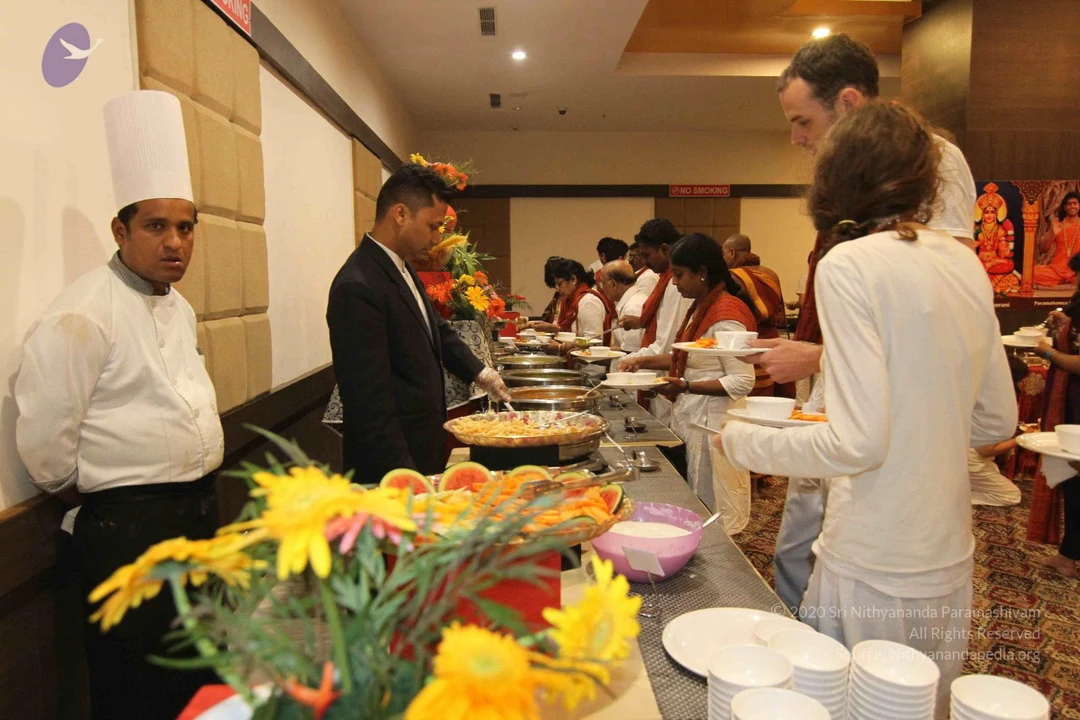
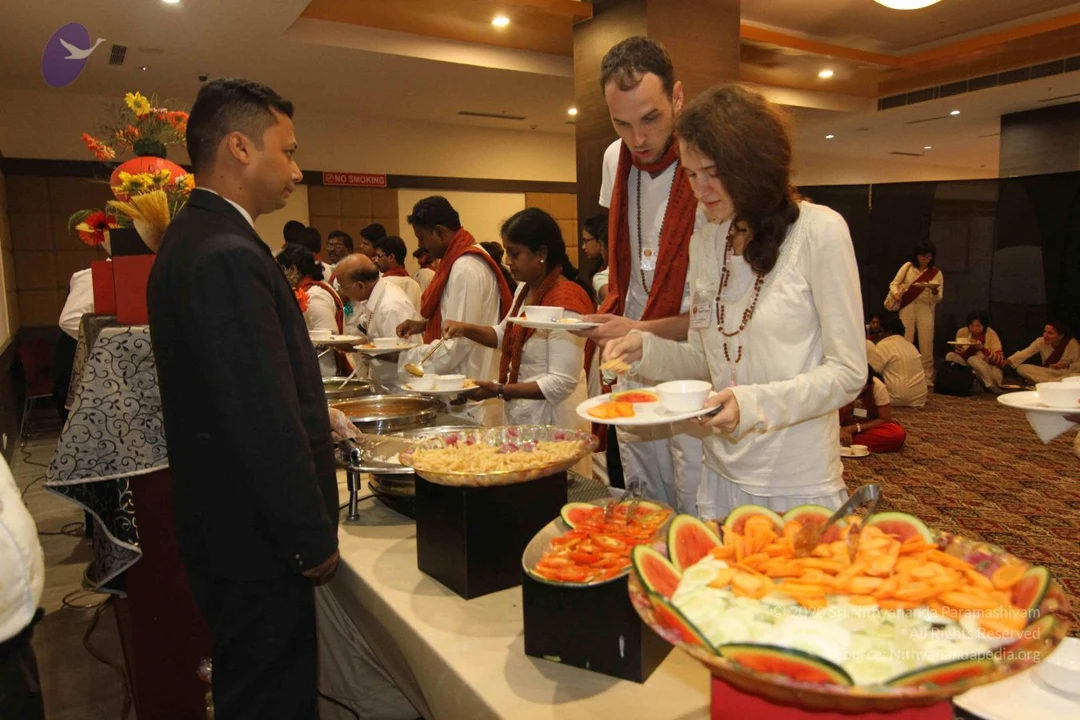
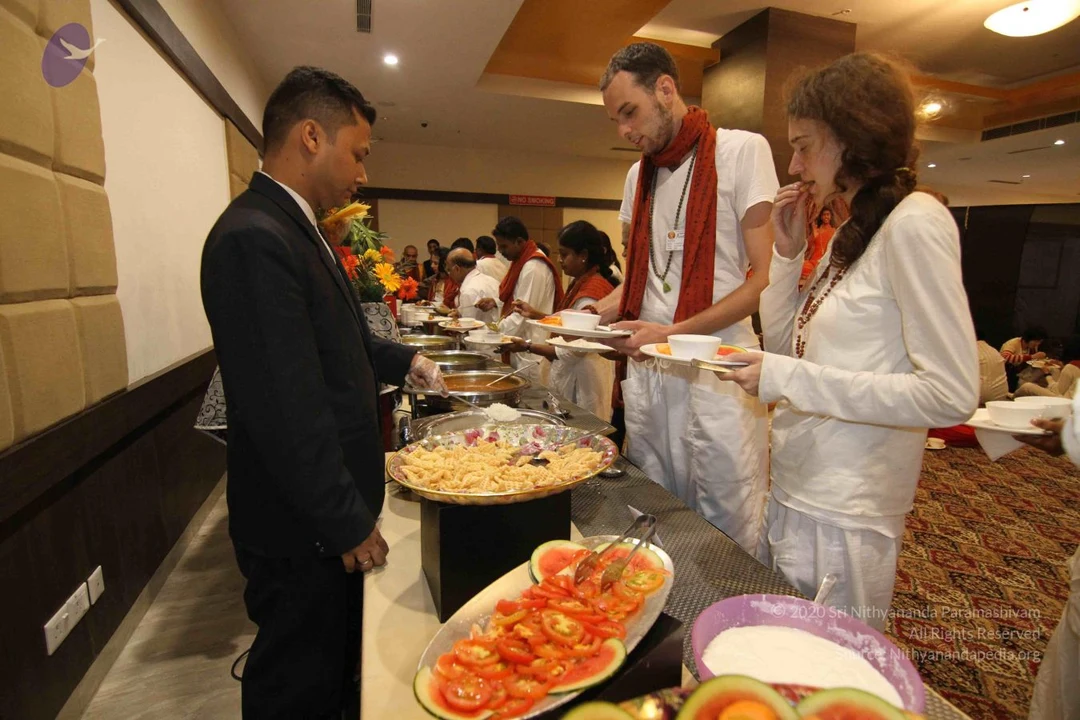
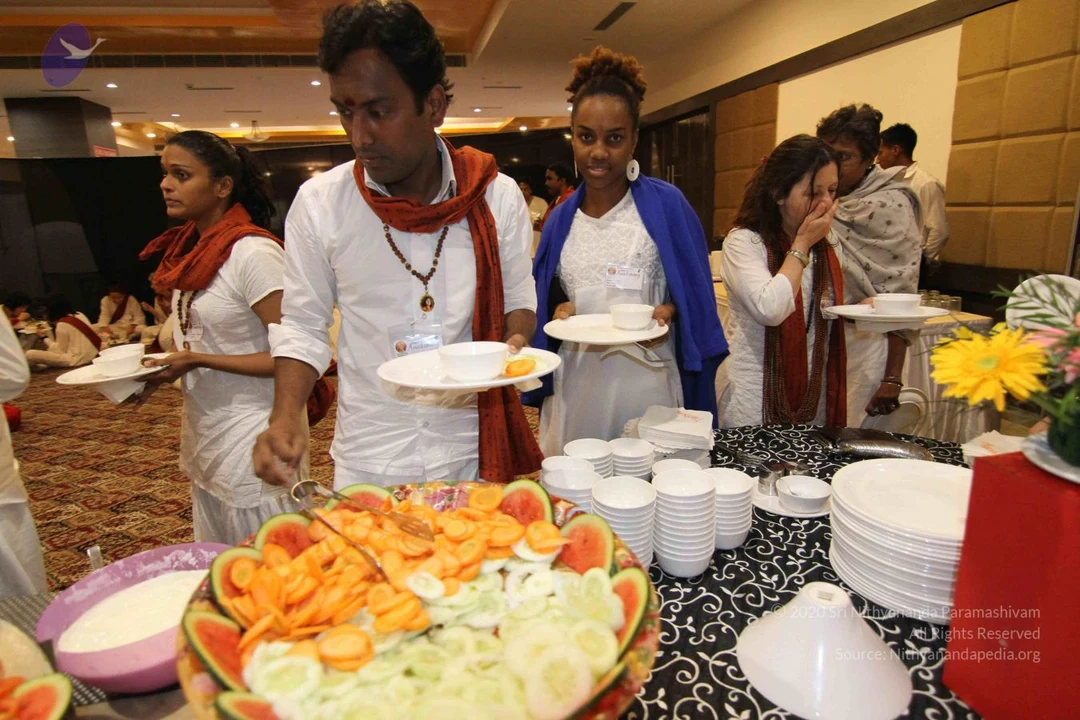
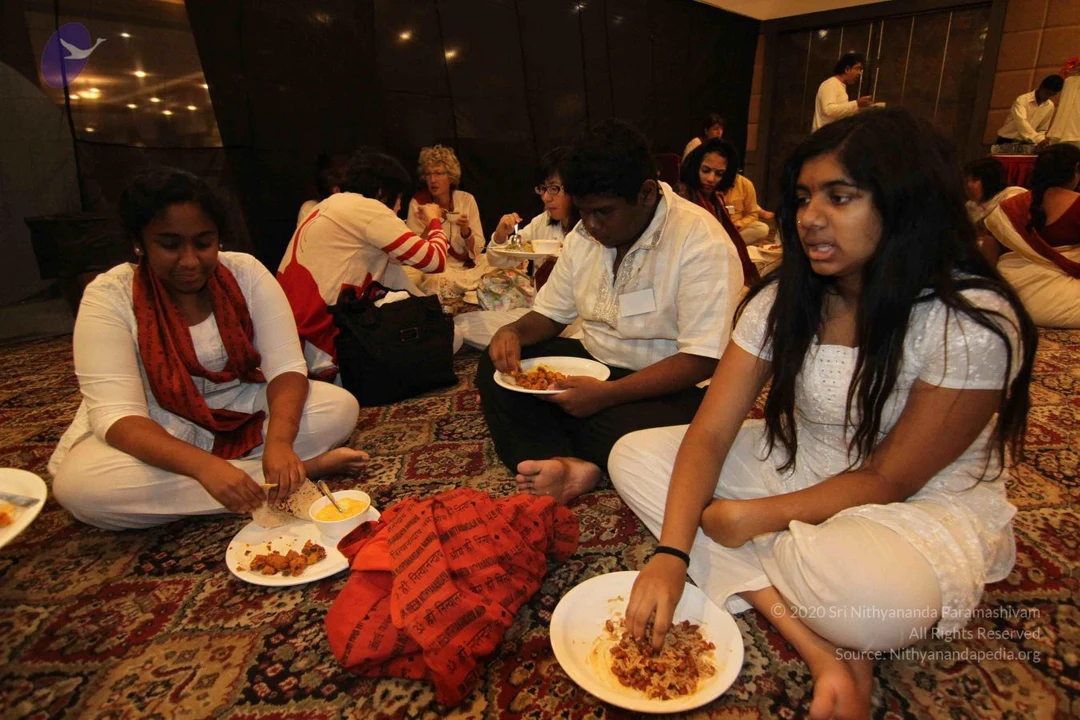
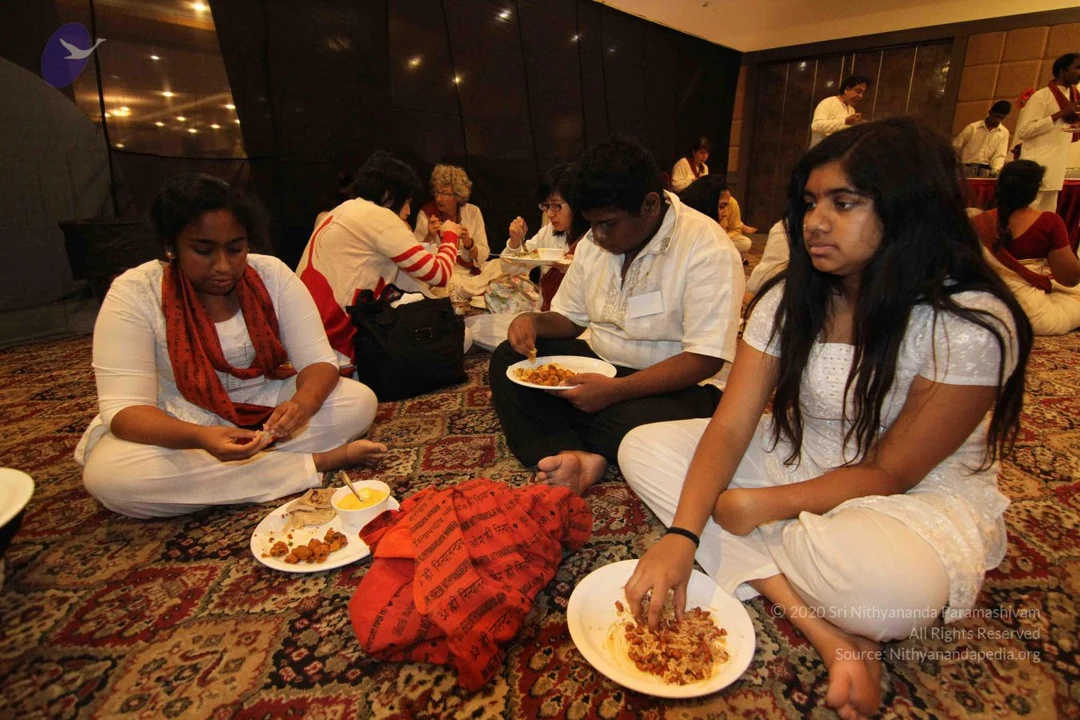
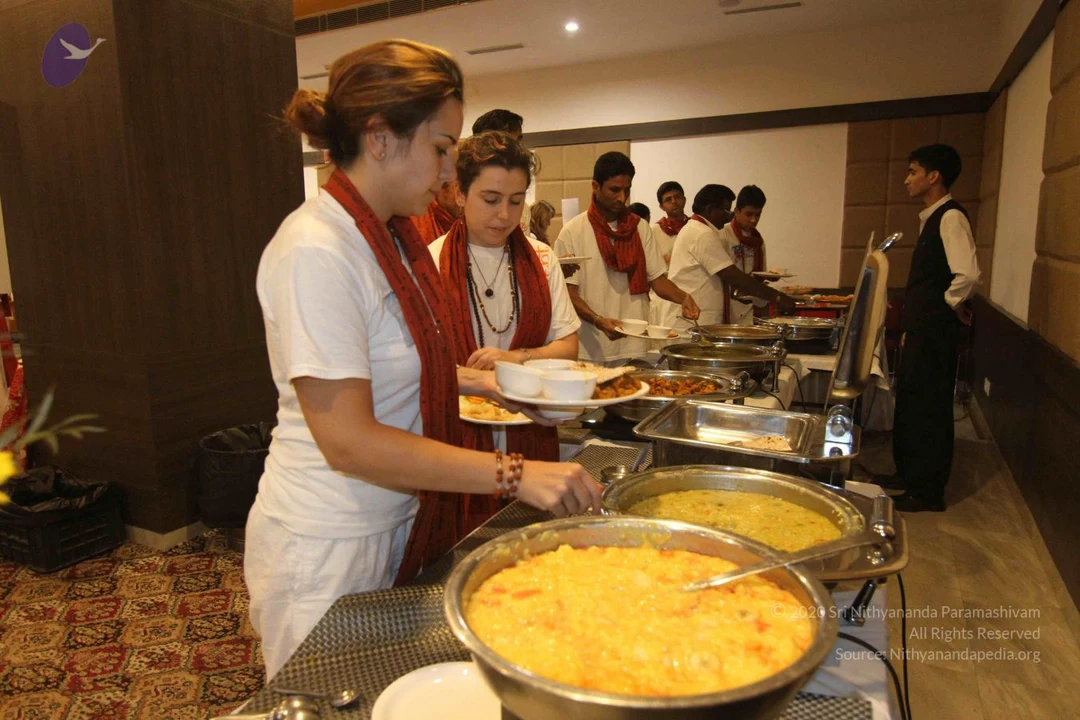
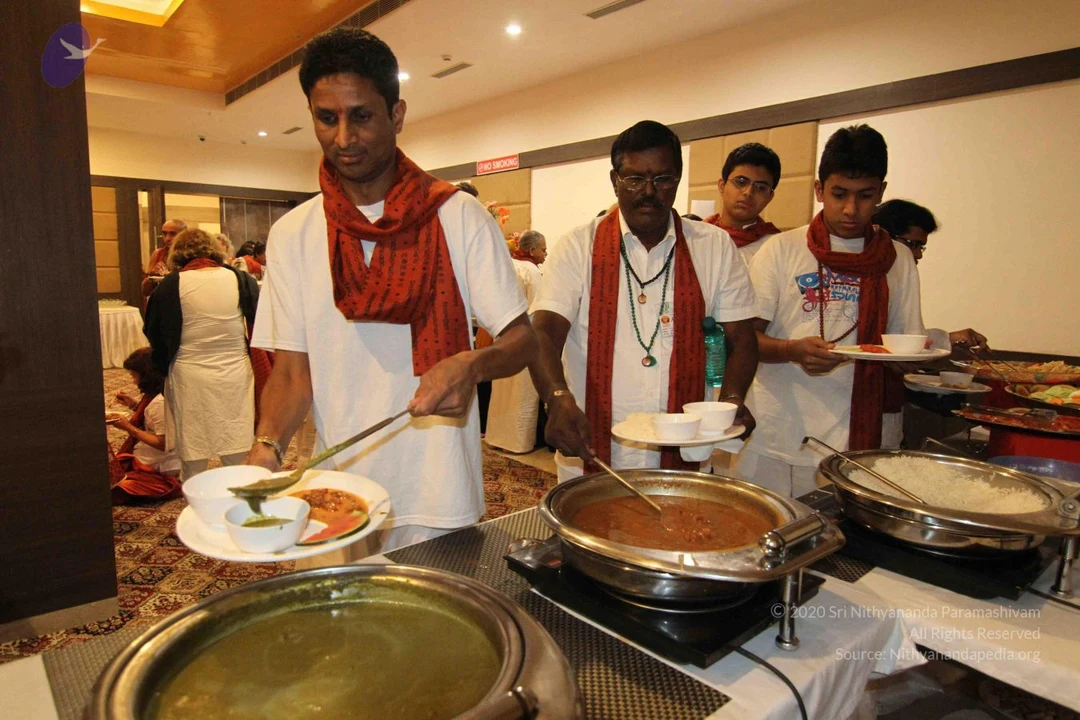
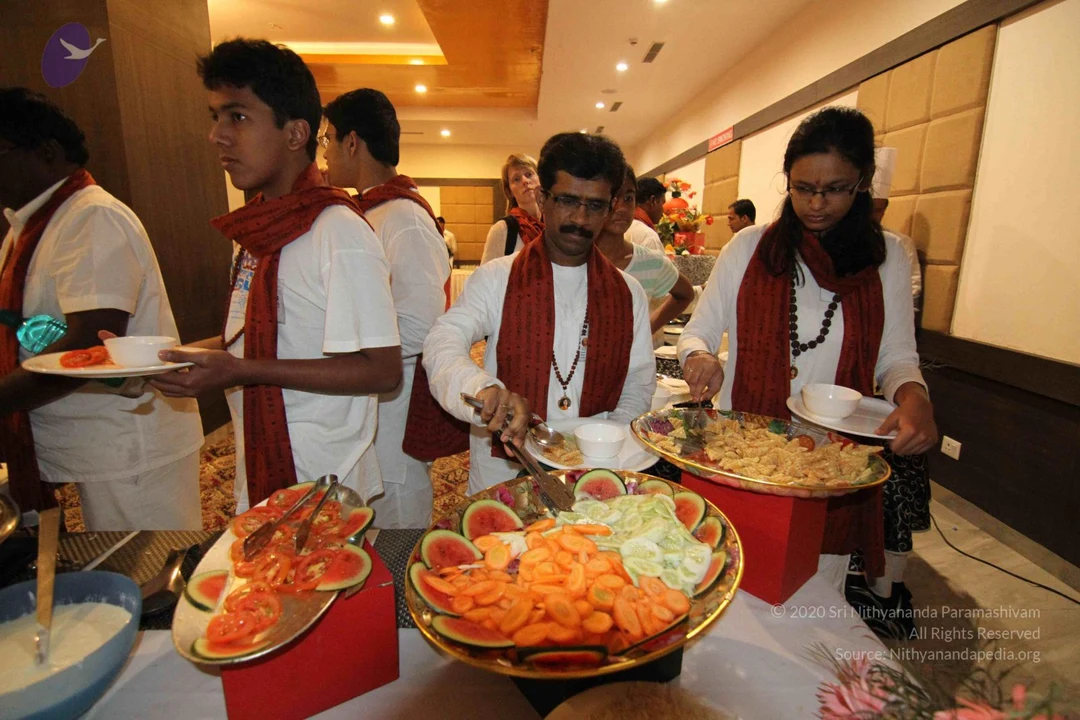
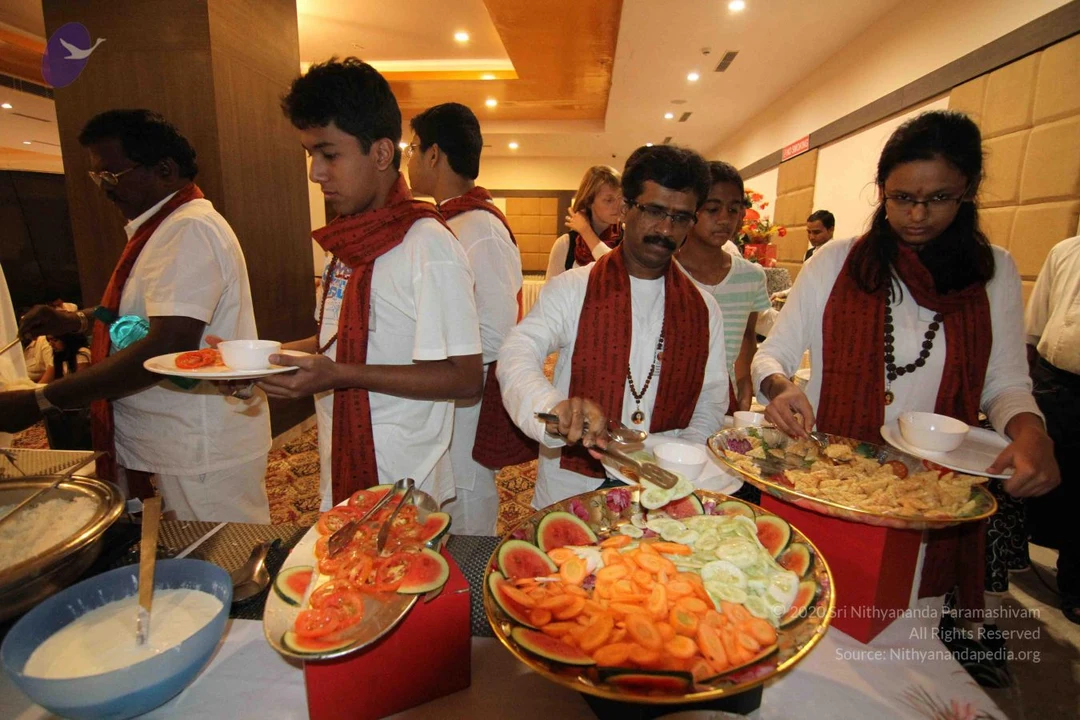
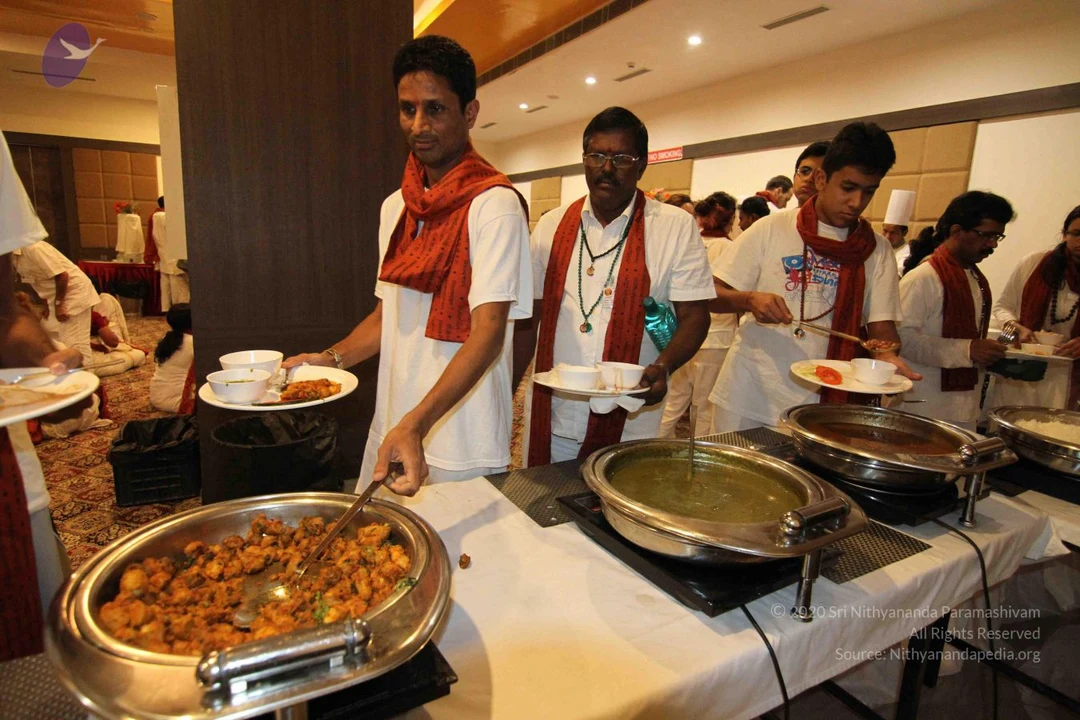
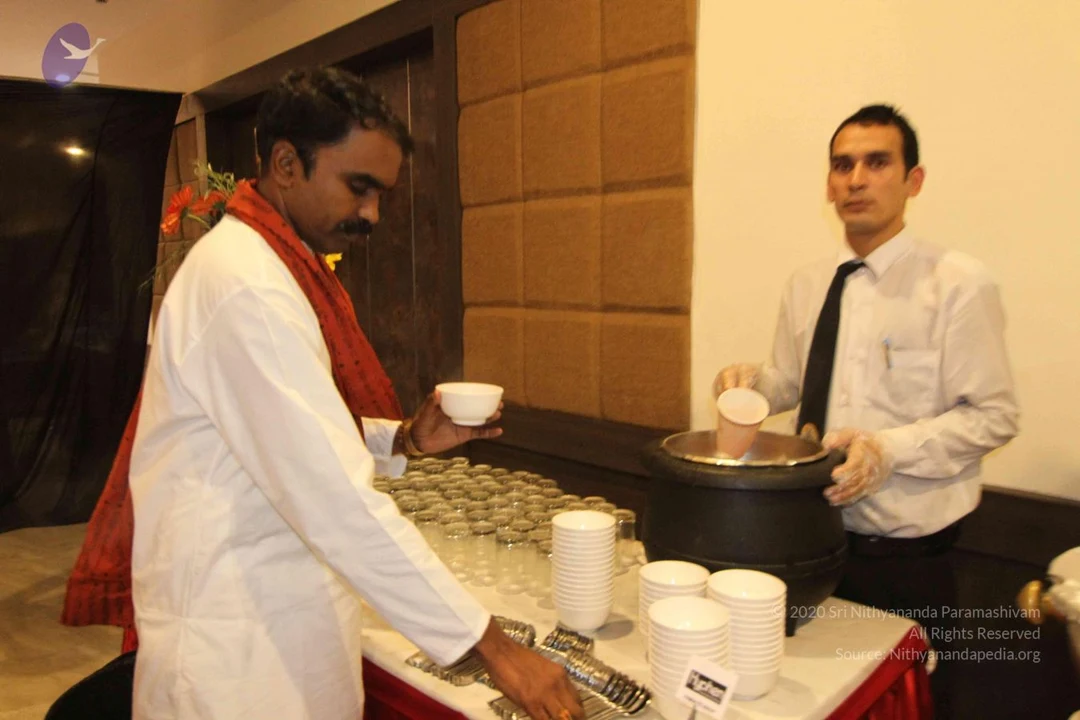
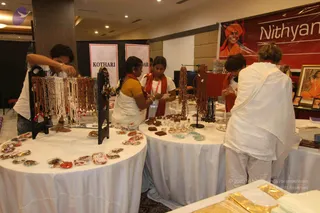
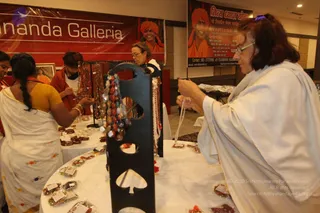
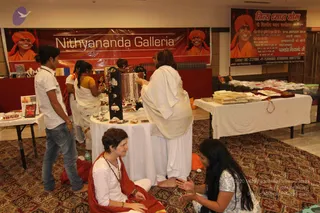
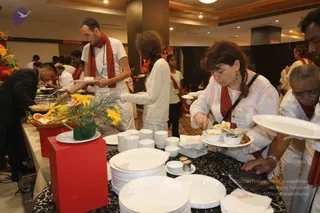
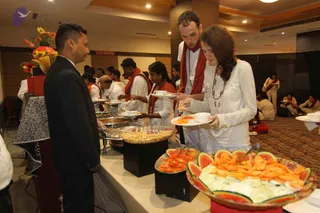
A photograph of a merchandise stall at an ashram event with white-draped round tables displaying rudraksha and beaded malas, bracelets and small packaged items. Four people are visible: a man in a white shirt at the left table sorting malas, a woman in a yellow blouse and white sari, a woman in a white top with a red shawl and lanyard, and a woman in white with a grey-streaked bun at the right, shown from behind. A large red banner reads Nithyan... and shows a smiling man in an orange turban and saffron robes, a portrait labelled Nithyananda-style; this is a depiction on a banner, and a framed portrait of a saffron-clad figure with a rudraksha mala appears at the right edge. Black stands hold necklaces, and KOTHARI and a partially visible second sign hang behind the stall.A photograph of a person Galleria stall at an indoor event. A woman with short reddish hair and glasses, wearing a white robe, handles a strand of pearl beads at a round table covered with a white cloth. Bracelets with small rectangular tags sit on the table, and a black display stand holds colourful beaded malas. Behind her, a woman in a white sari with a yellow blouse and a long braid faces the stall, and another woman in a white outfit with a red shawl stands at a second table. A red banner reads Nithyananda Galleria and a poster beside it shows a figure in saffron with Hindi text and a phone number. Six people are visible.A photograph inside a hotel hall at a person Galleria stall selling religious items. A large banner reads "Nithyananda Galleria" above a table of jewellery, rudraksha malas and small framed pictures. Behind it, a poster labelled "Nitya Dhyan Yog" shows a smiling man in an orange turban and saffron robe, with Hindi text and dates. A woman in white robes stands at the table arranging malas, another woman in a yellow top is at the left, and a man in a white shirt and jeans stands near the left edge. In the foreground, a woman in white with a saffron shawl and rudraksha mala sits on the carpet beside a woman in a grey top with long dark hair. Tables to the right hold folded cloths and products under a red-and-white banner. Visible people are about seven, including partially visible ones.A buffet line in a hotel banquet hall with cream walls, recessed ceiling lights and a red no-smoking sign. Several people in white clothes with red shawls queue at the food tables. A man in a white shirt with a red scarf and beaded necklace holds a white plate near a flower arrangement of yellow sunflowers and pink blooms. A woman in a white embroidered top and red scarf, with a braid and a name badge, fills her plate with fruit, rice and curry. Stacks of white plates and bowls sit on a black patterned tablecloth in the foreground. A man in a black jacket serves food at the left, and an older man in white with a red scarf stands at the right edge.A buffet line in a hotel-style dining room serving a communal meal. A chef in a tall white toque stands at left. A man in a dark suit and white gloves serves food from steaming chafing dishes, with a bowl of white yogurt and a platter of sliced watermelon and fruit in front. Several people in white clothes, some with orange-red shawls, queue with plates, and a bald man in orange robes is visible in the background. Yellow and orange flowers decorate the counter. A tall wall banner shows a painted deity figure and a woman in orange. About six people are visible, including partially visible figures.A buffet serving line in a hotel banquet hall with cream tablecloths and chafing dishes. A man in a dark suit stands at left beside a flower arrangement. A young man in a white shirt with a red shawl and a rudraksha mala serves food onto a plate, next to a woman in white with a red shawl and a beaded necklace who holds a plate and cup. Platters of sliced watermelon, mango, cucumber and carrot sit on the table, and seated attendees in white and red shawls are visible in the background.
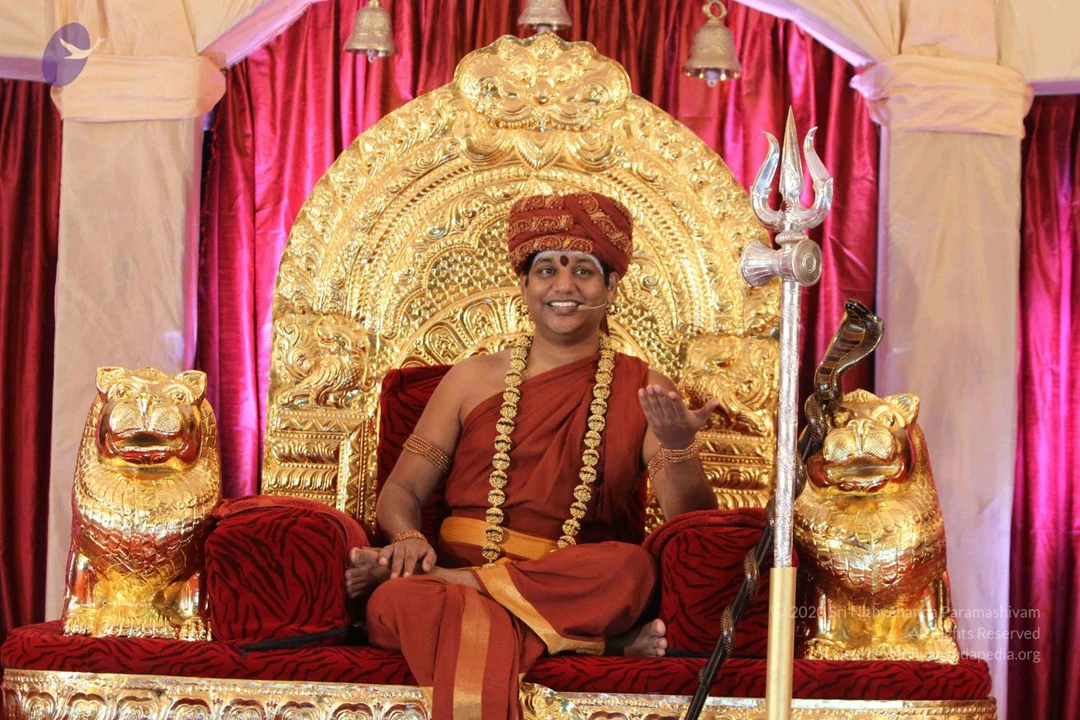
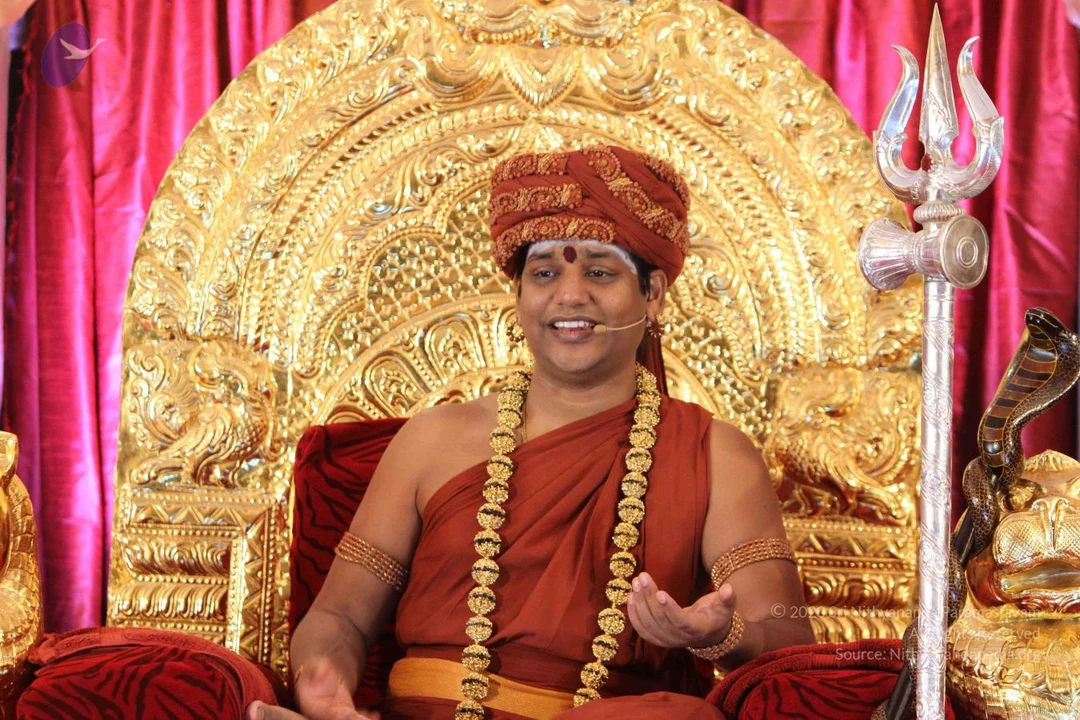
Arjunpuris-Disciple-Akkada-Kameshwarpuri-Swamis-Visit
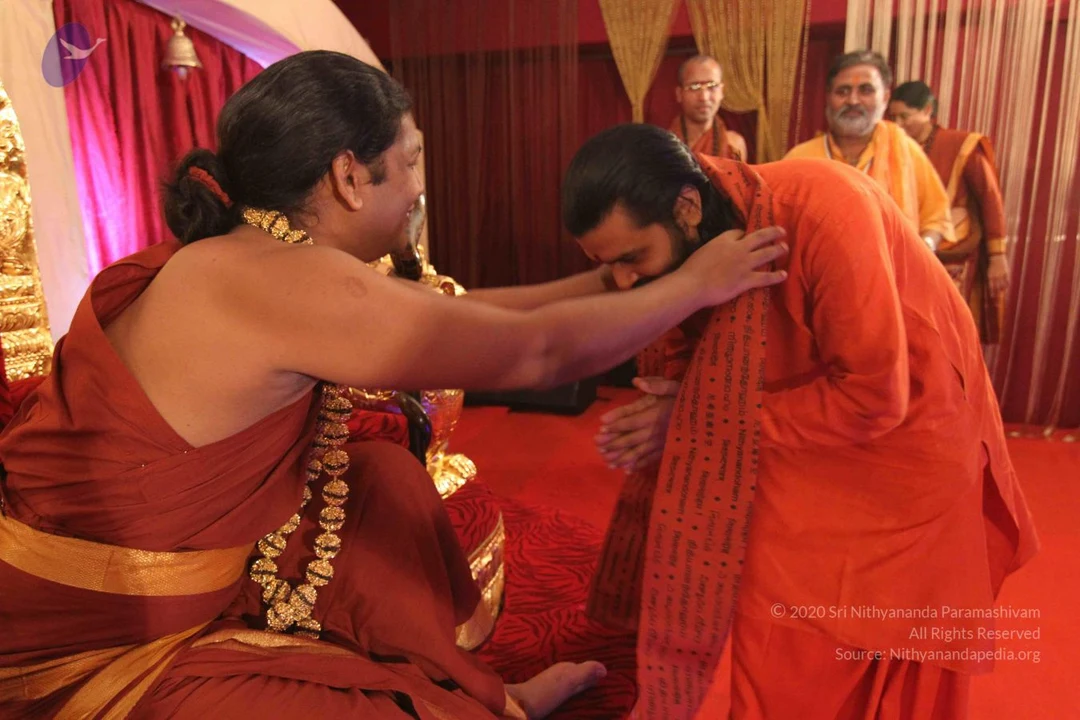
15 photosSource gallery
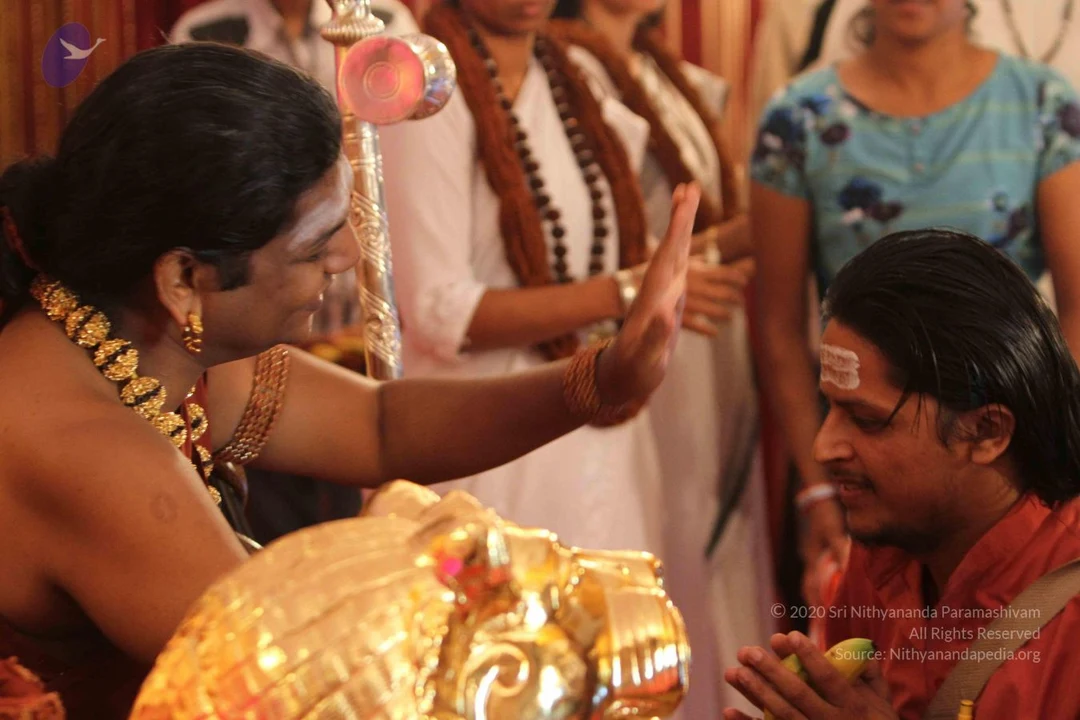
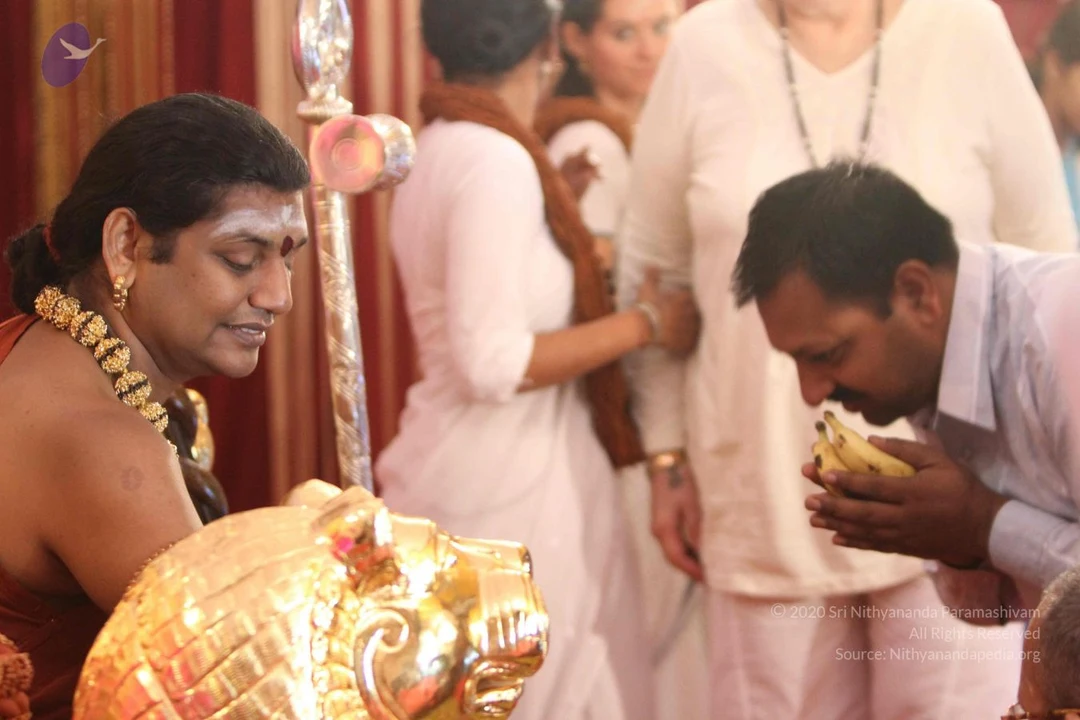
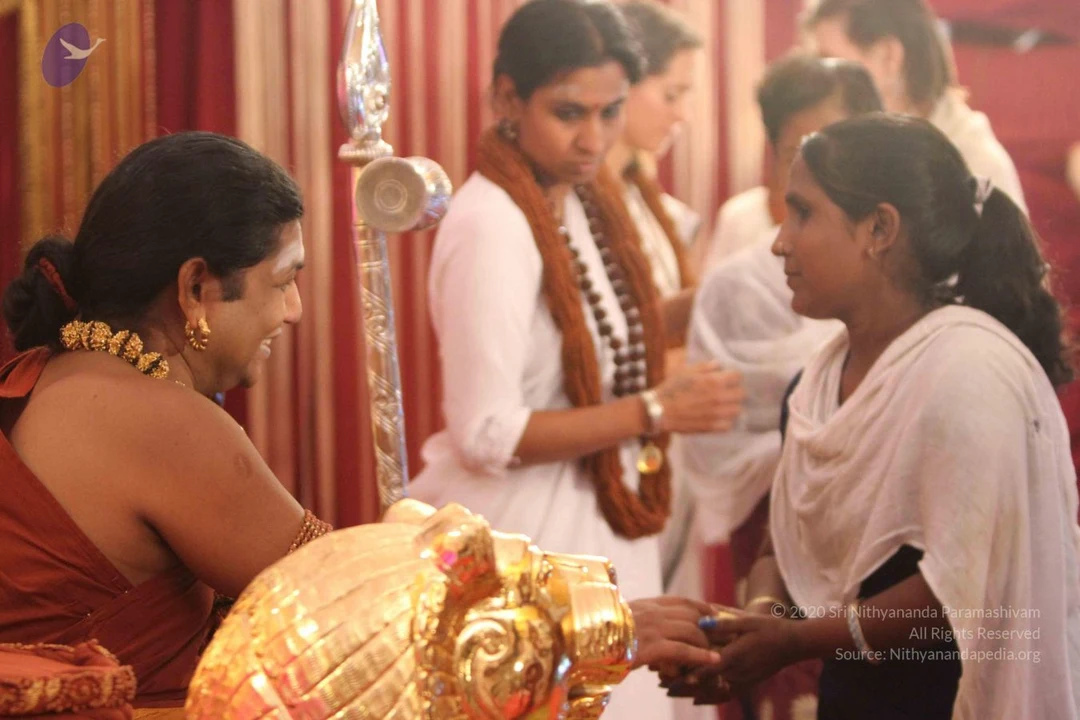
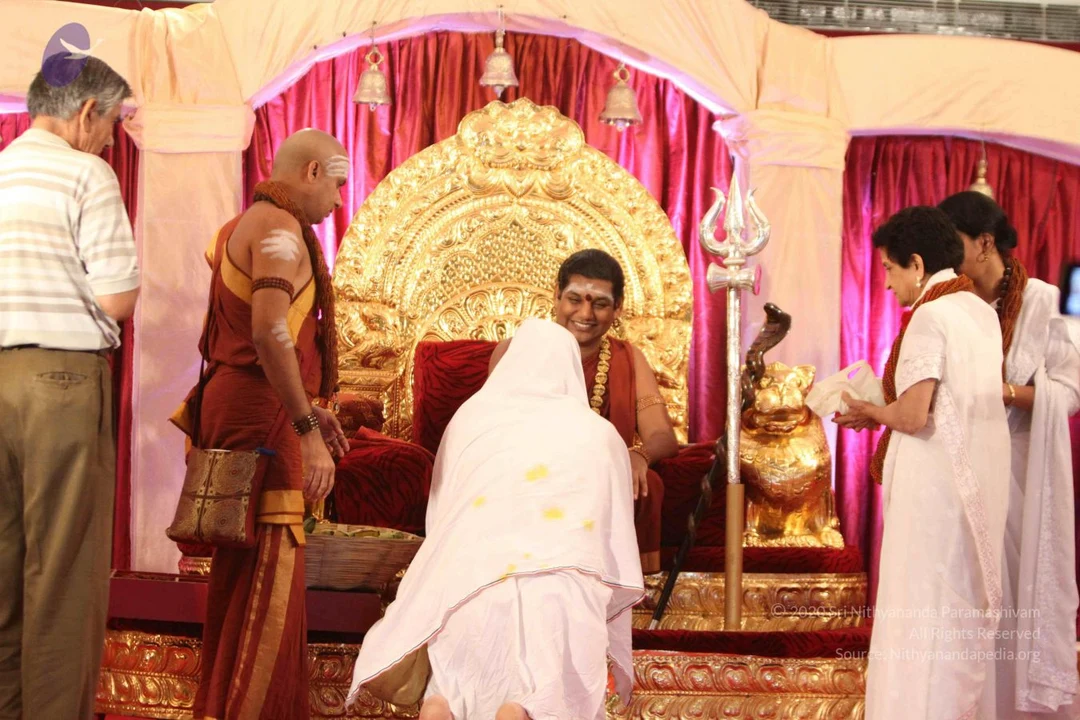
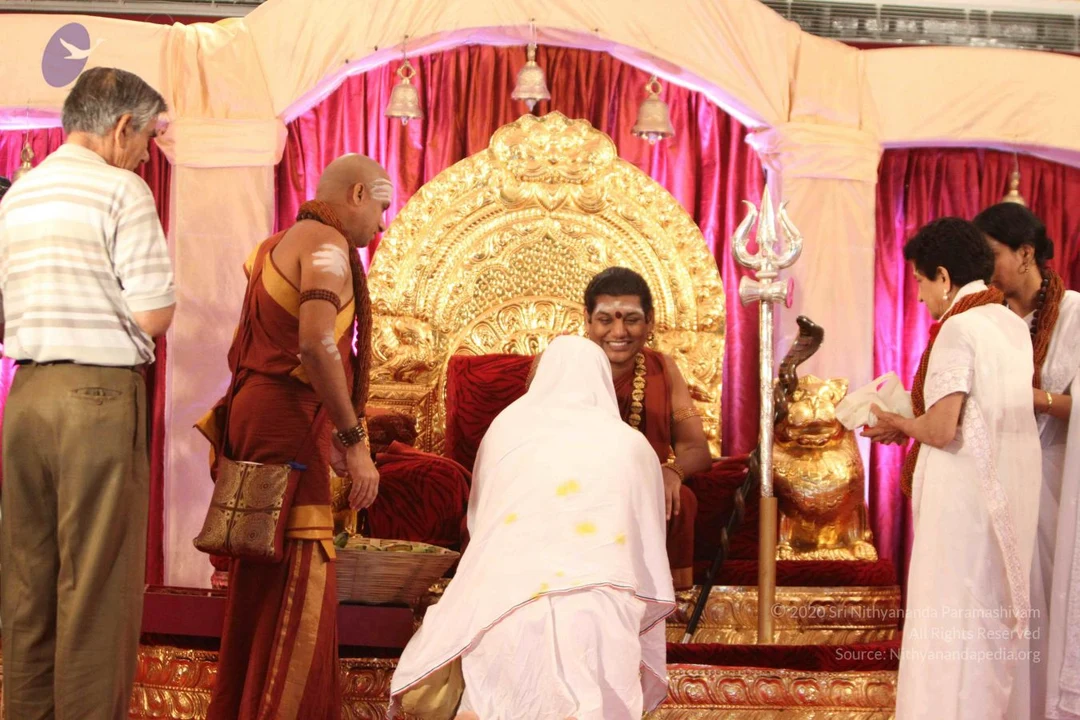
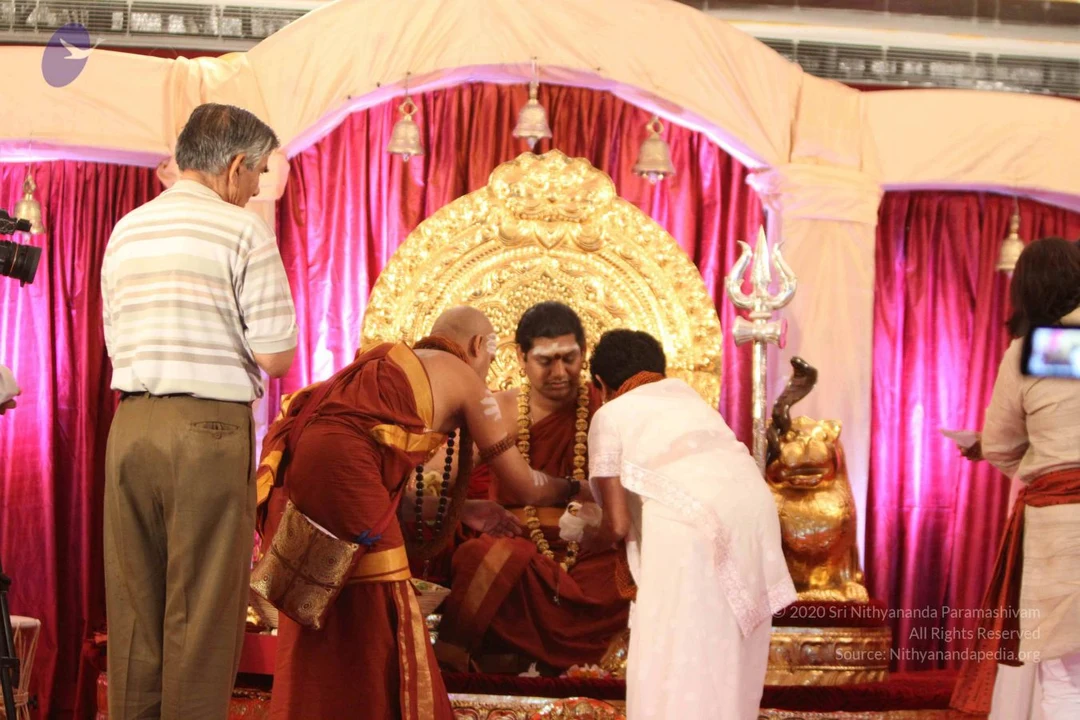
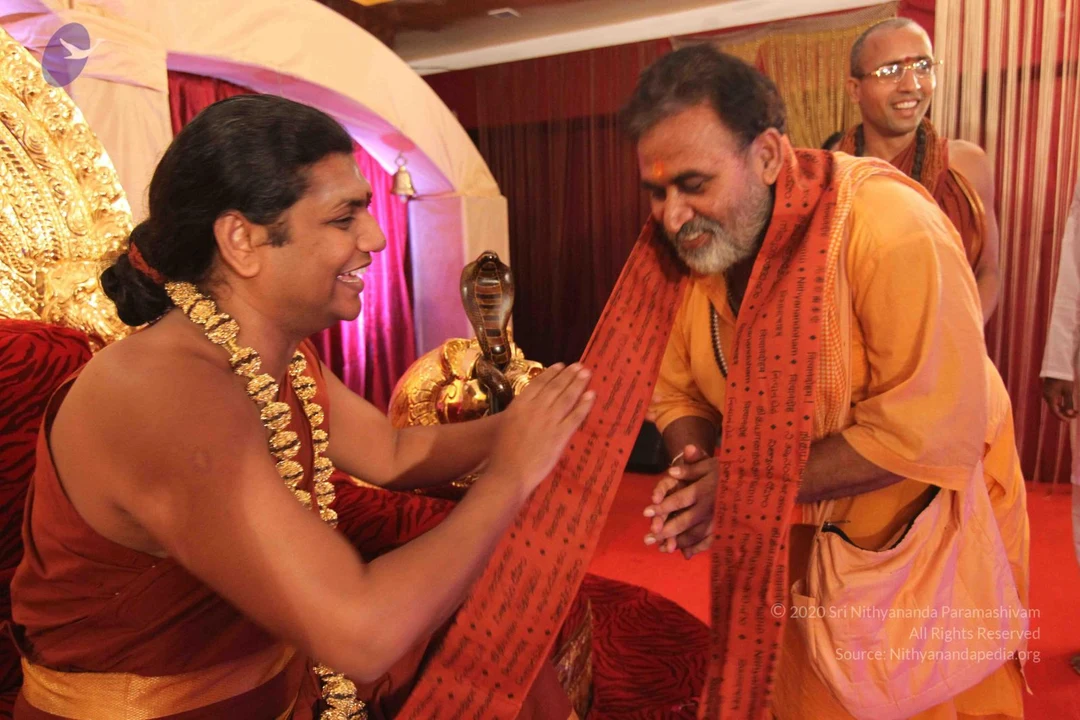
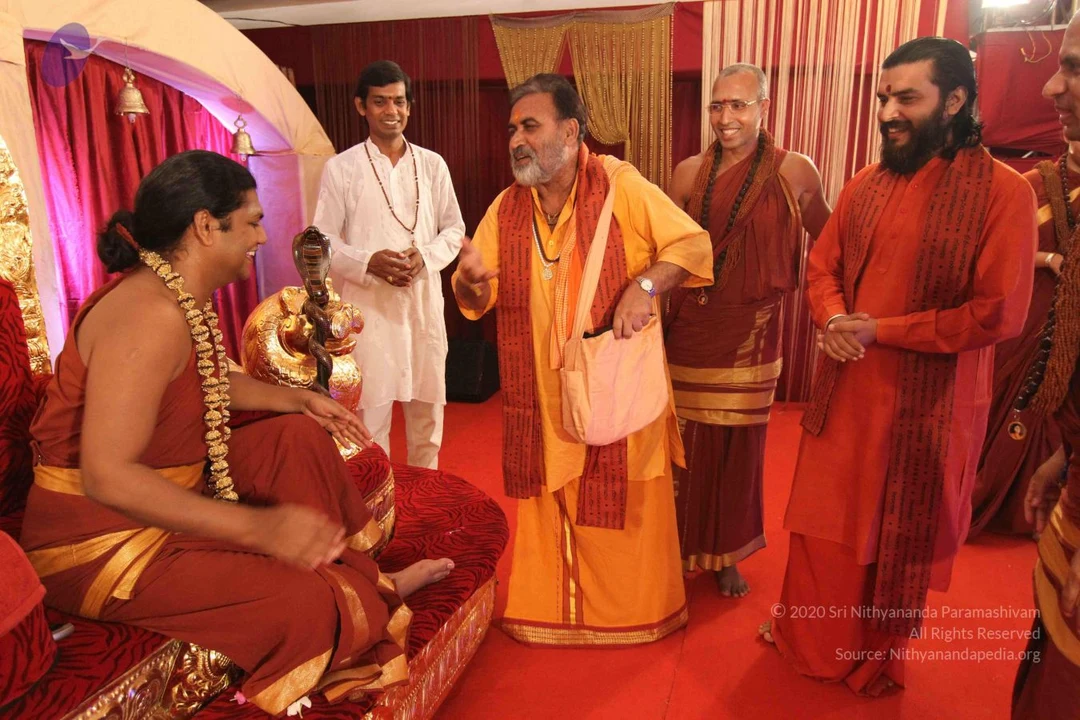
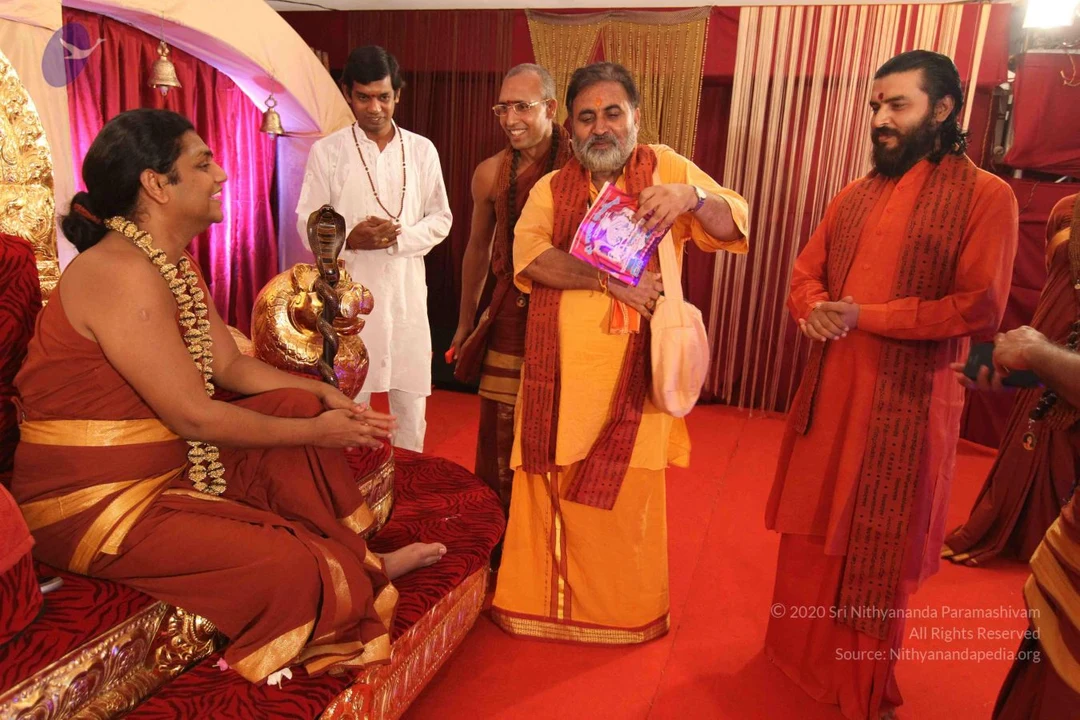
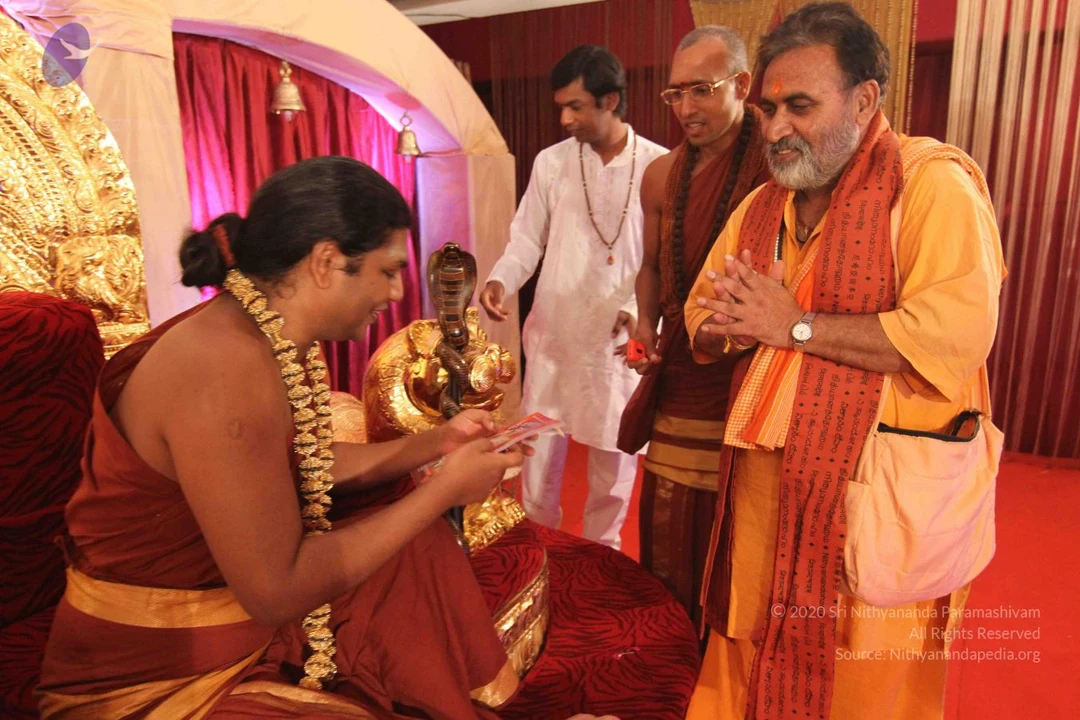
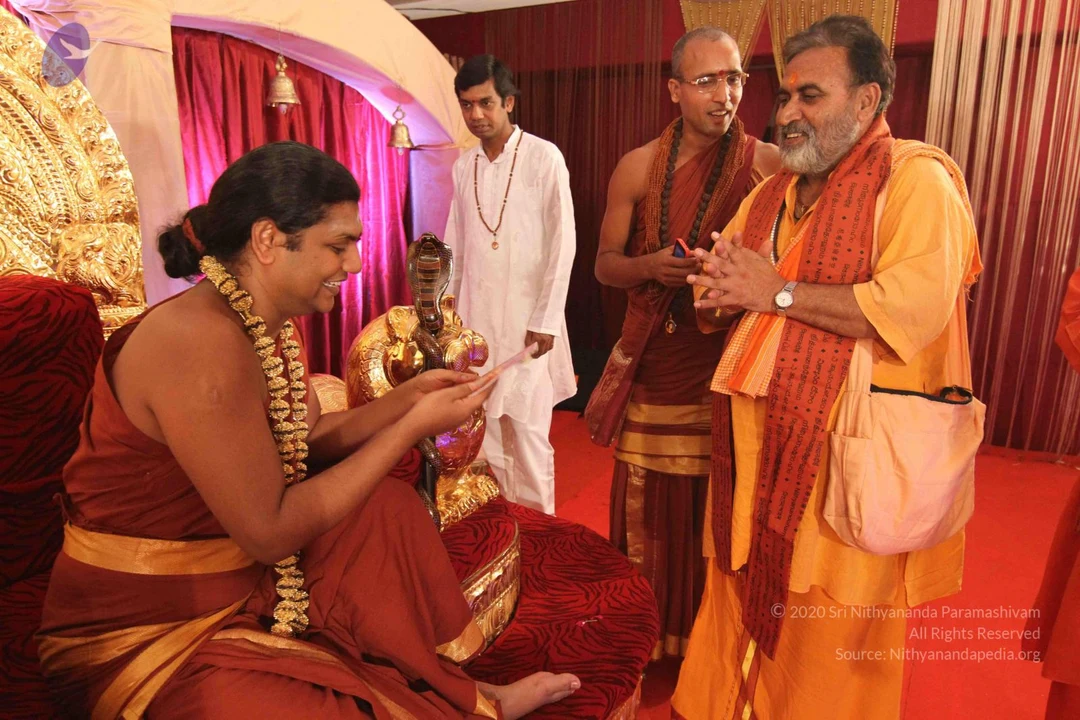
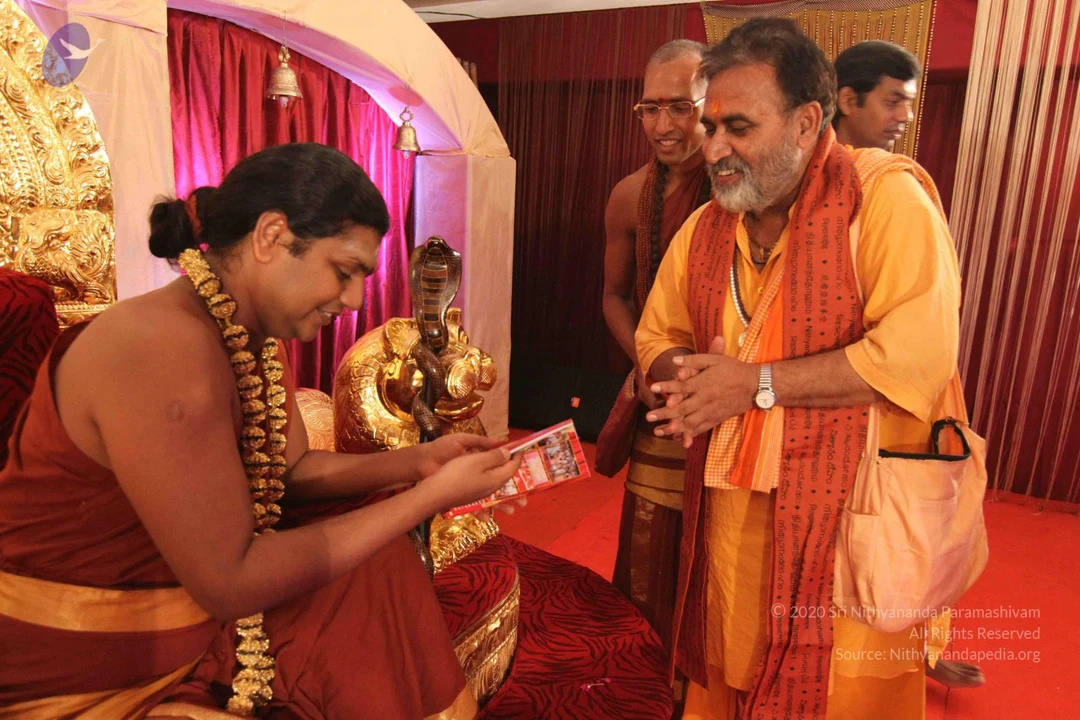
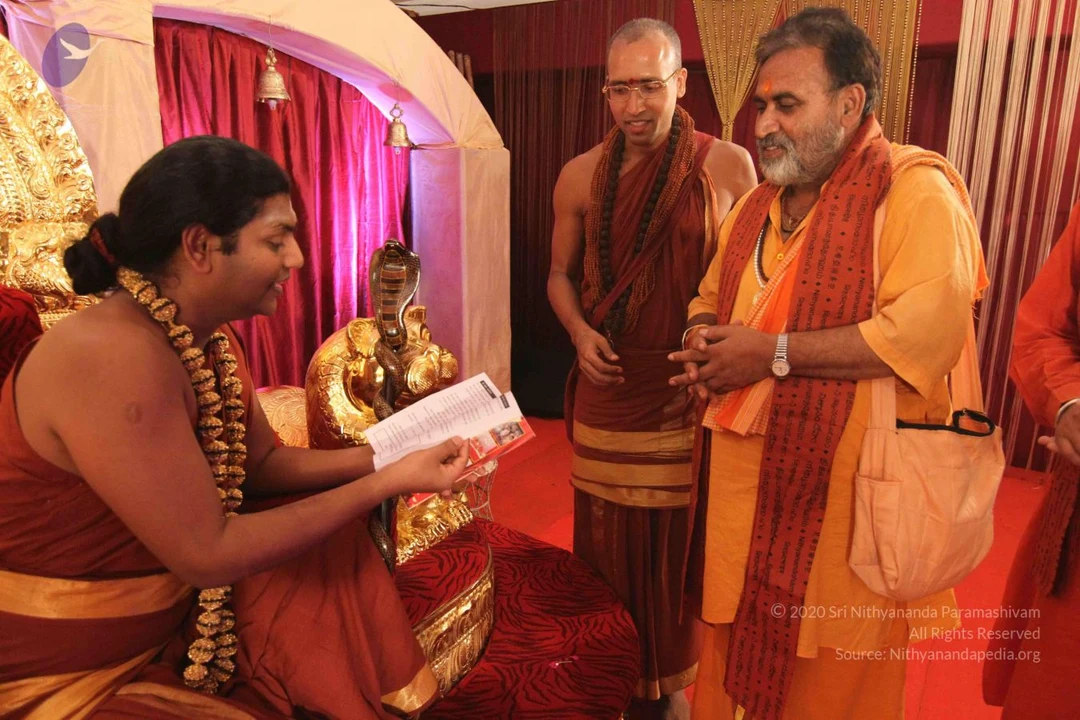
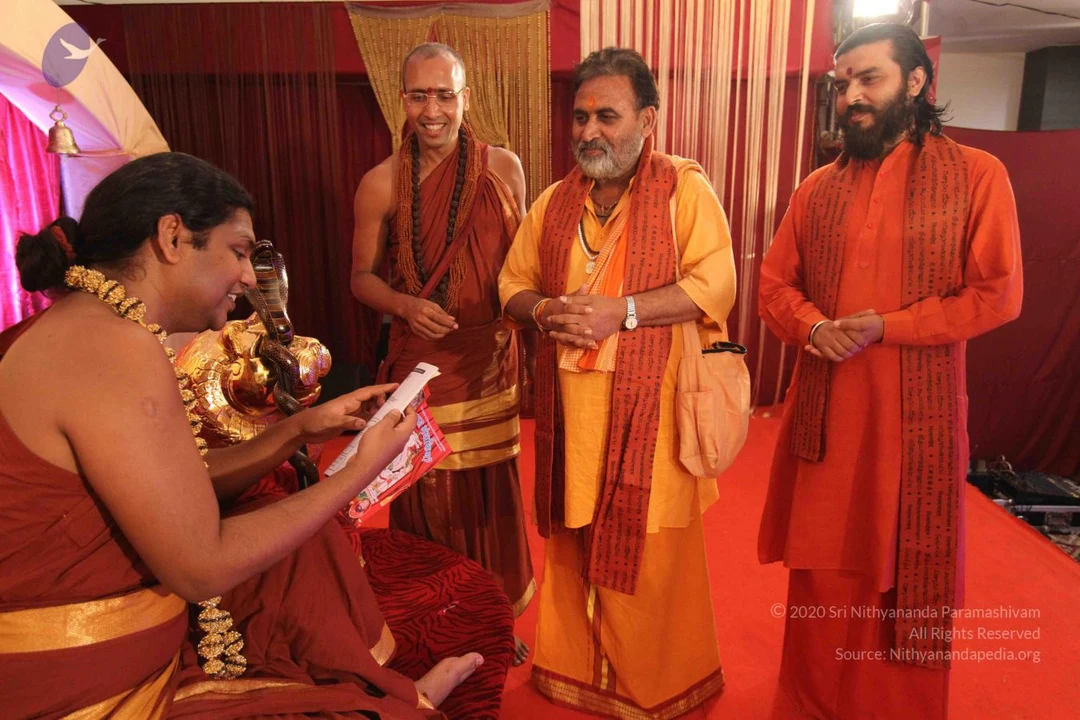
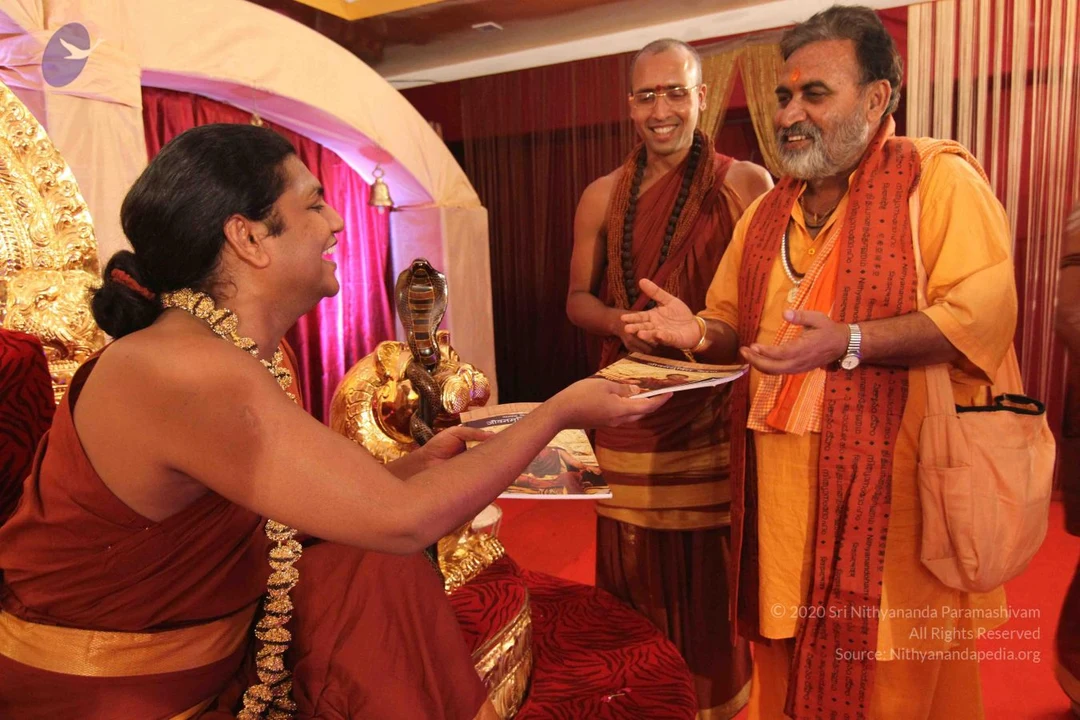
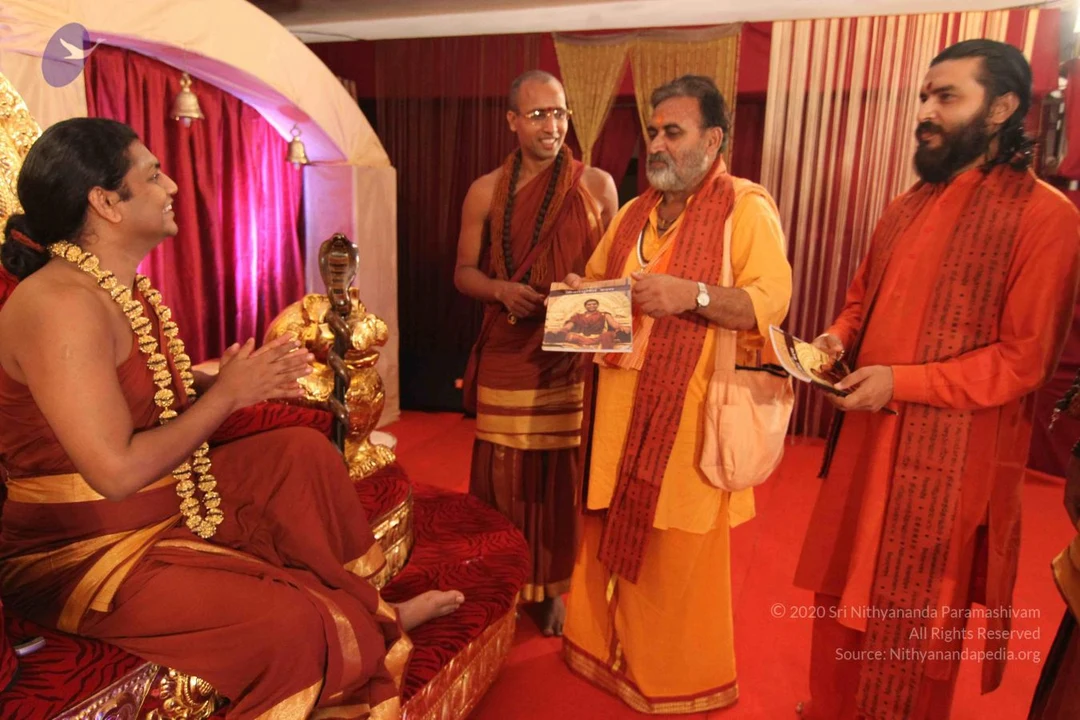
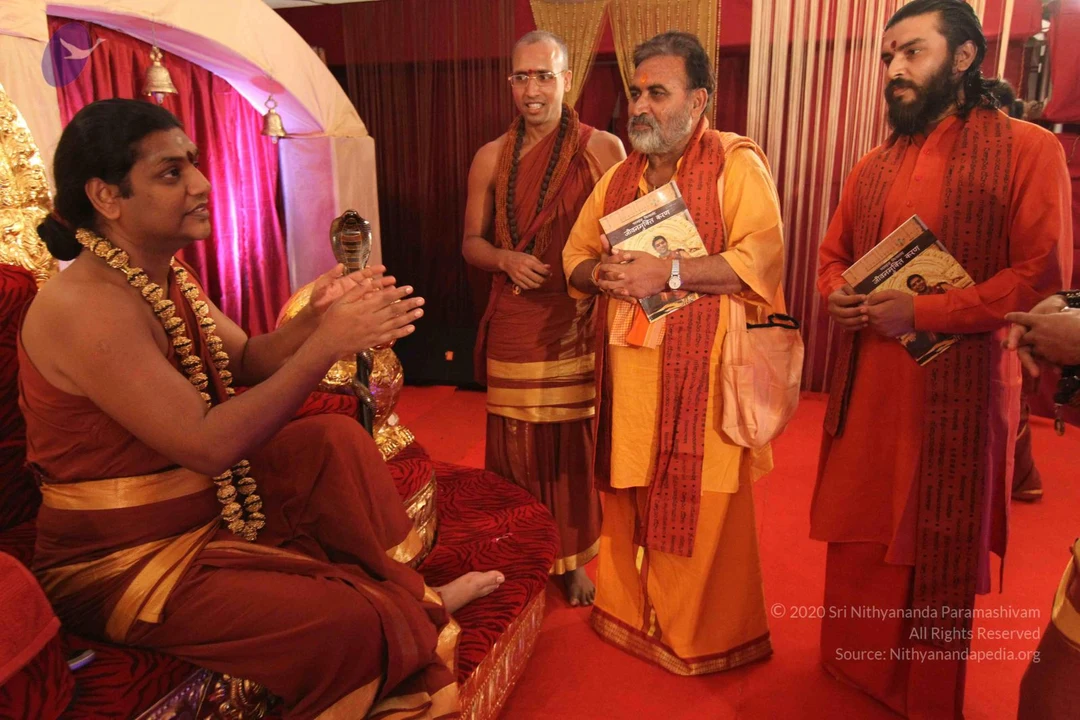
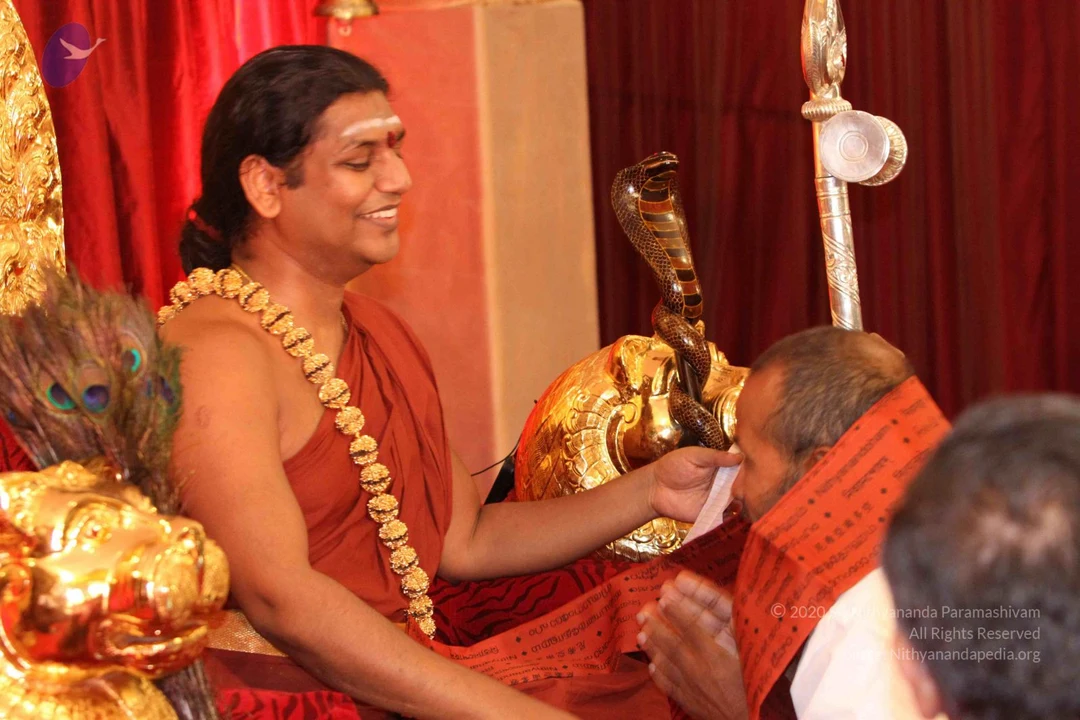
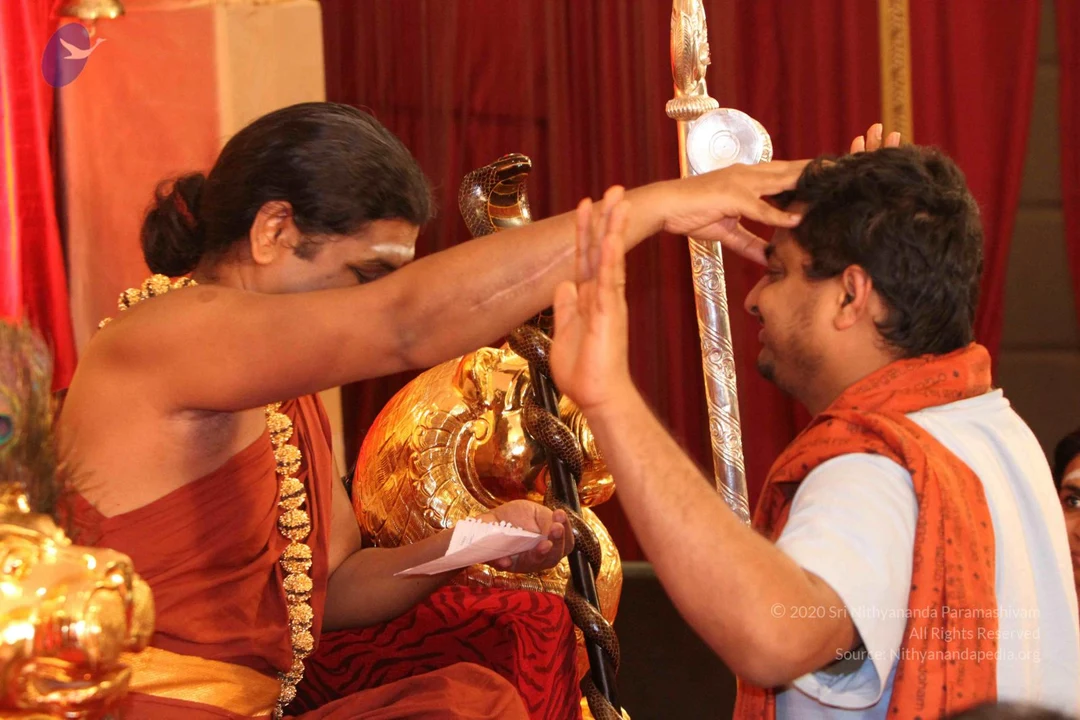
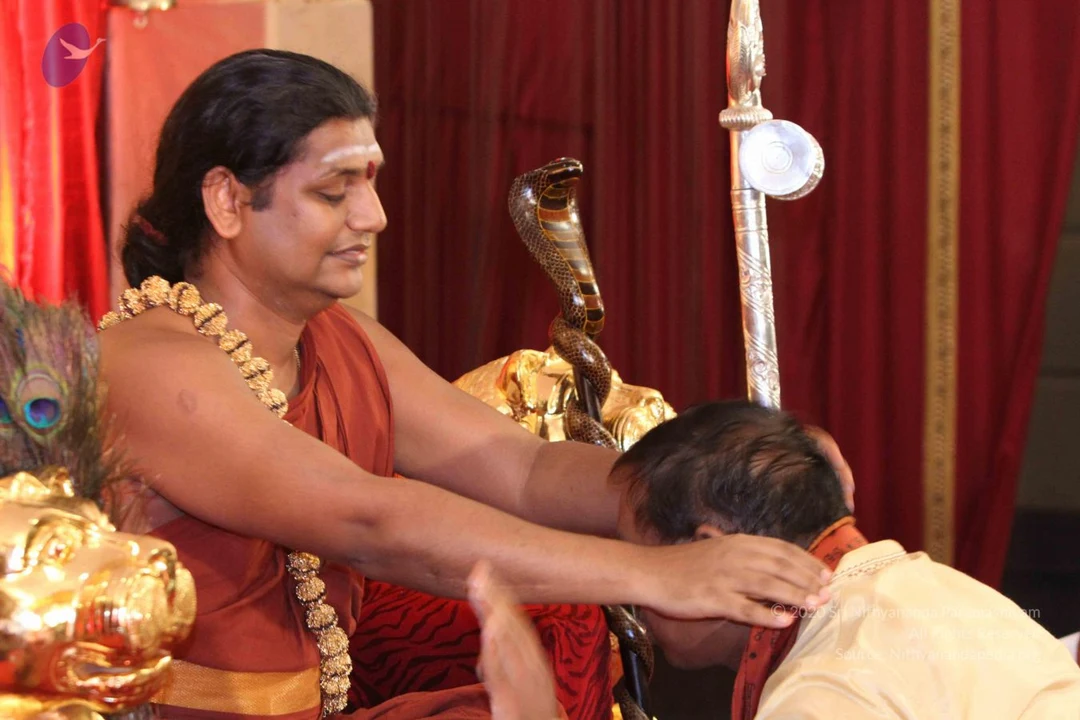
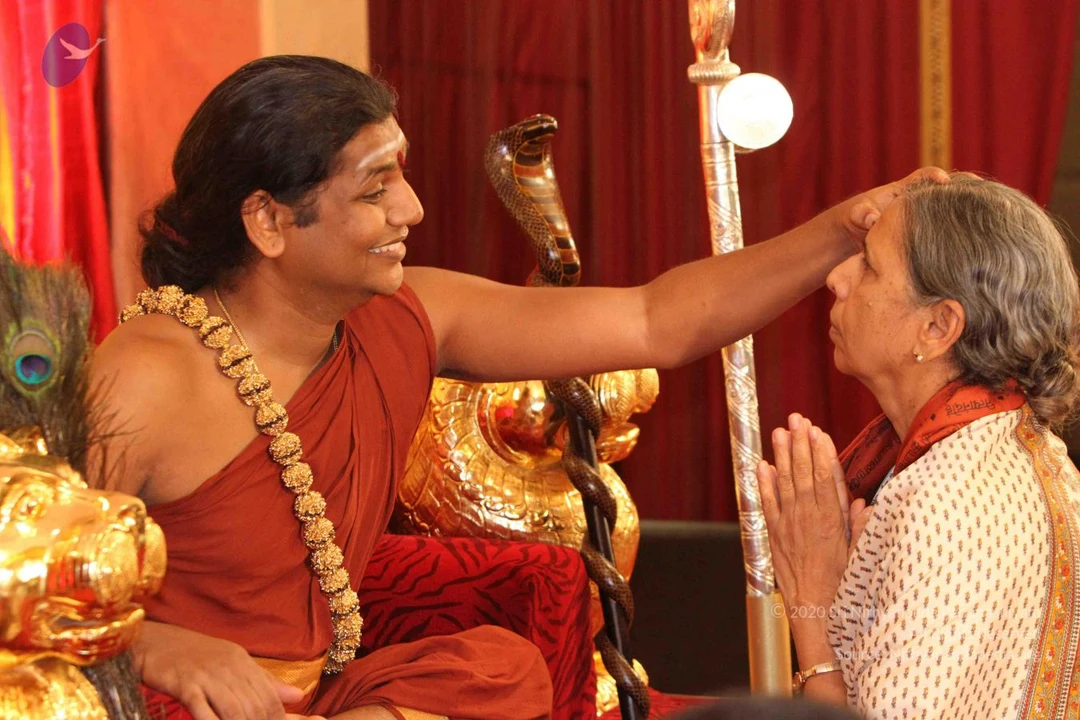
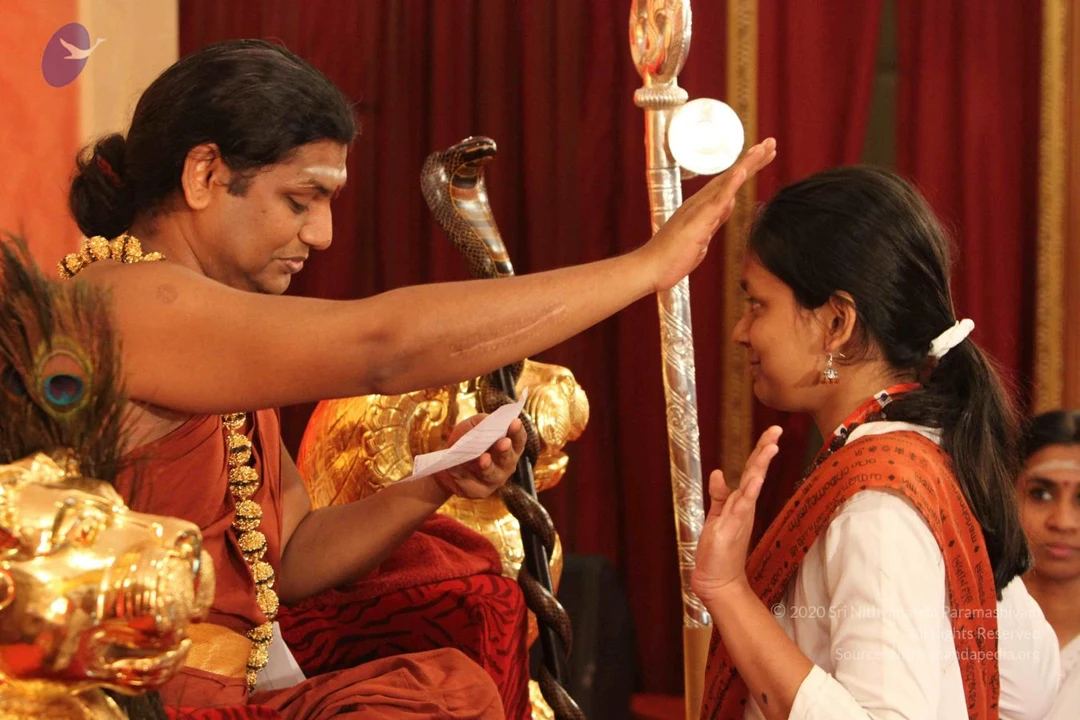
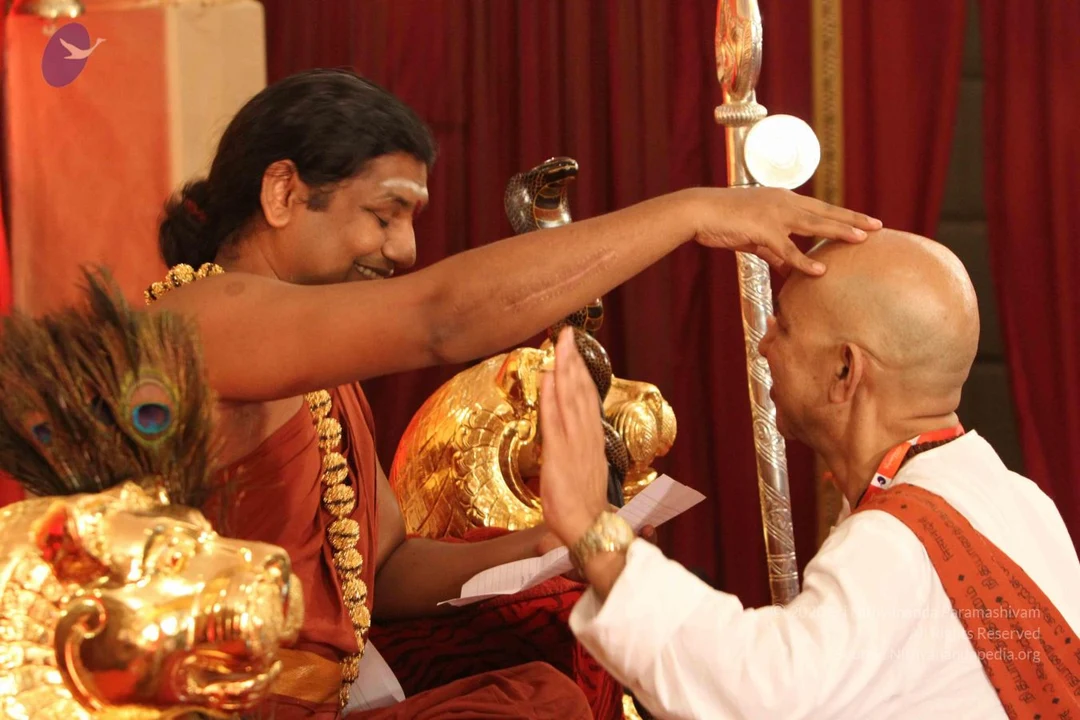
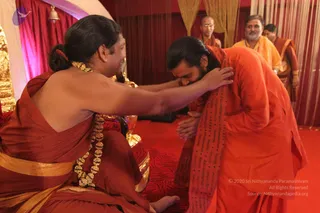
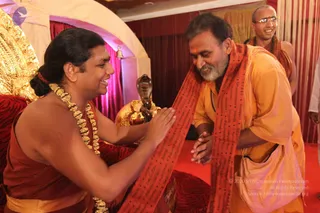
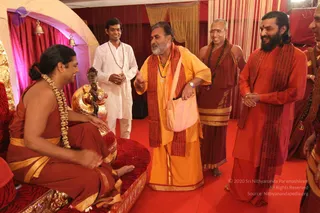
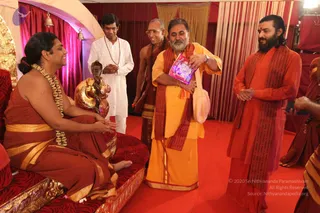
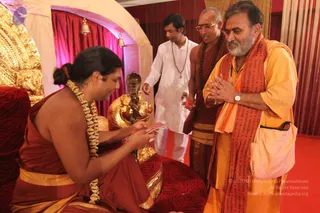
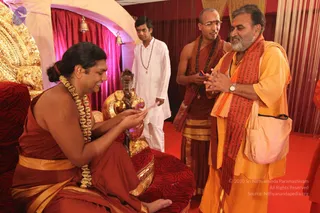
Photograph of a ceremonial moment in a red-draped hall. A seated figure with long dark hair in a topknot, wearing a rust-red shawl and a large gold beaded necklace, places his hand on the shoulder of a standing devotee in orange robes who bows his head. The devotee wears an orange stole printed with Sanskrit-style text. Behind them, two more orange-robed men and a woman in red stand near red curtains and a gilded deity murti, while a bell hangs at the upper left.A photograph of a bearded man in saffron-orange robes and an orange-red shawl printed with black text, bowing with his hands together toward a seated man in a rust-red garment and a long gold garland of beads. The seated man, smiling, extends his palm toward the shawl draped over the bowing man's arms. Behind them stands a golden throne with carved gold filigree, and a dark metal cobra-shaped ornament sits near the seated man. A third man in orange with glasses smiles in the background at right, and red curtains fill the setting.A photograph inside a red-draped tent with gold curtains and a bell hanging at left. A man with long hair tied in a knot and a garland of white flowers sits on a red cushioned throne with a gold cobra-shaped armrest, dressed in rust-orange robes with a gold-bordered cloth. Around him, five men stand on a red carpet: a young man in white with a rudraksha mala, a bearded man in saffron-yellow robes with a red shawl and a satchel, a smiling bald man in maroon dhoti with a mala, a bearded man in orange robes and shawl with hands folded, and a partly visible man at right in maroon. The seated man smiles and gestures while the standing men look on and talk.A seated figure in a rust-red robe with a gold border and a long garland of white flowers sits on a gold-and-red throne with a golden cobra-headed rest, smiling toward visitors on a red-carpeted floor. Standing before him, a man in a bright saffron-orange dhoti and shawl with a brown patterned stole holds a pink-covered book or booklet in both hands and turns toward the seated figure. Beside him, a man in a white kurta wears a rudraksha mala and presses his palms together. Another man with glasses wears a brown-and-gold shawl, and a bearded man in an orange kurta with a patterned stole stands at right with hands clasped. The backdrop features red drapes, a bell hanging from a white arch, and a golden curtain. Several people are visible at the edges, and a camera or phone is partially visible at right. A copyright overlay is in the lower right.A photograph in a red-draped hall with a gold throne at left. A figure with hair tied in a bun and a long gold-and-tulsi-style garland sits on a red-and-gold seat, bare-shouldered in a rust-red cloth, holding a small stack of cards or papers and looking down at them. Beside a golden ceremonial object with a serpent-like form, a bell hangs from the canopy above. Behind, a man in a white kurta with a rudraksha-style mala stands leaning in, and a bald man in brown robes with glasses and a rudraksha mala smiles. At right, a bearded man in saffron-orange robes with an orange-and-brown printed shawl holds his palms together in namaste, with a wristwatch and a cross-body cloth bag. a person appearance-based candidate: the seated figure has a bun and garland; the identification is uncertain given the printed-name absence.A seated figure in a reddish-brown robe with a gold-thread border and a long gold-bead garland sits on a red zebra-striped cushion beside a gold cobra-hooded seat, holding a small card or paper with both hands and smiling down at it. Beside him a man in a white kurta with a rudraksha mala stands at the back, and a man in rust-coloured robes with a brown shawl and mala holds a phone. At right, an older bearded man in saffron-orange robes and a red patterned shawl with a shoulder bag presses his palms together and smiles. Red drapes and a gold cushioned throne frame the scene. a person: the seated figure with long swept-back hair, a gold garland and an ornate gold seat fits the page description, but the appearance is not conclusive, so this label is uncertain.

IA-Darshan
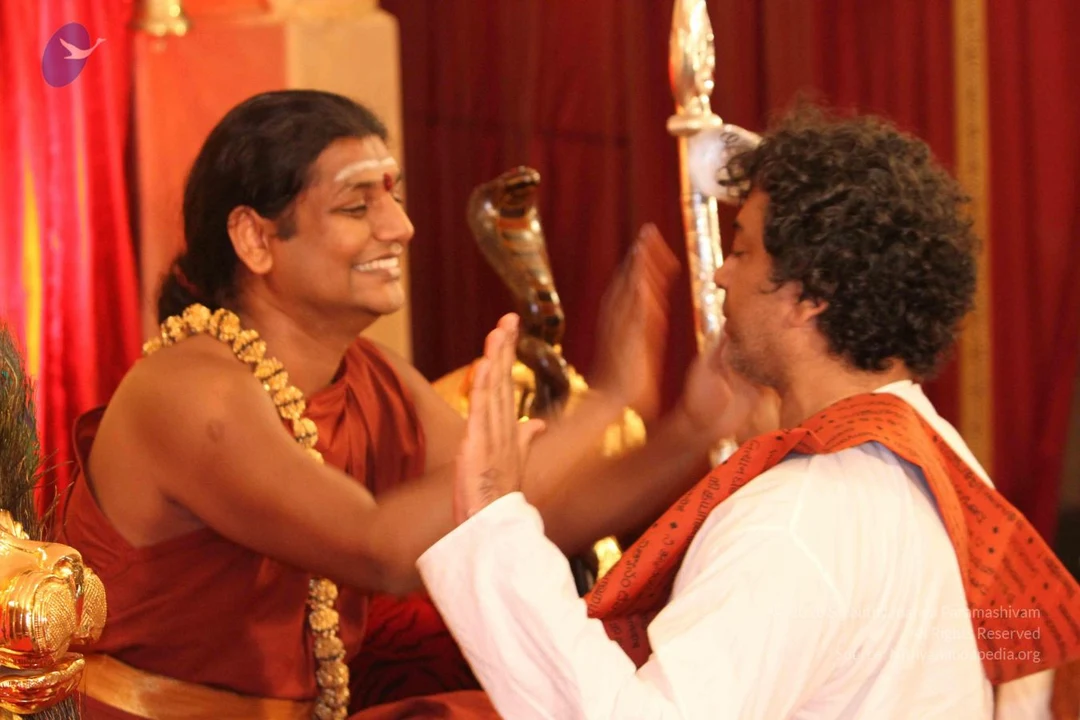
138 photosSource gallery
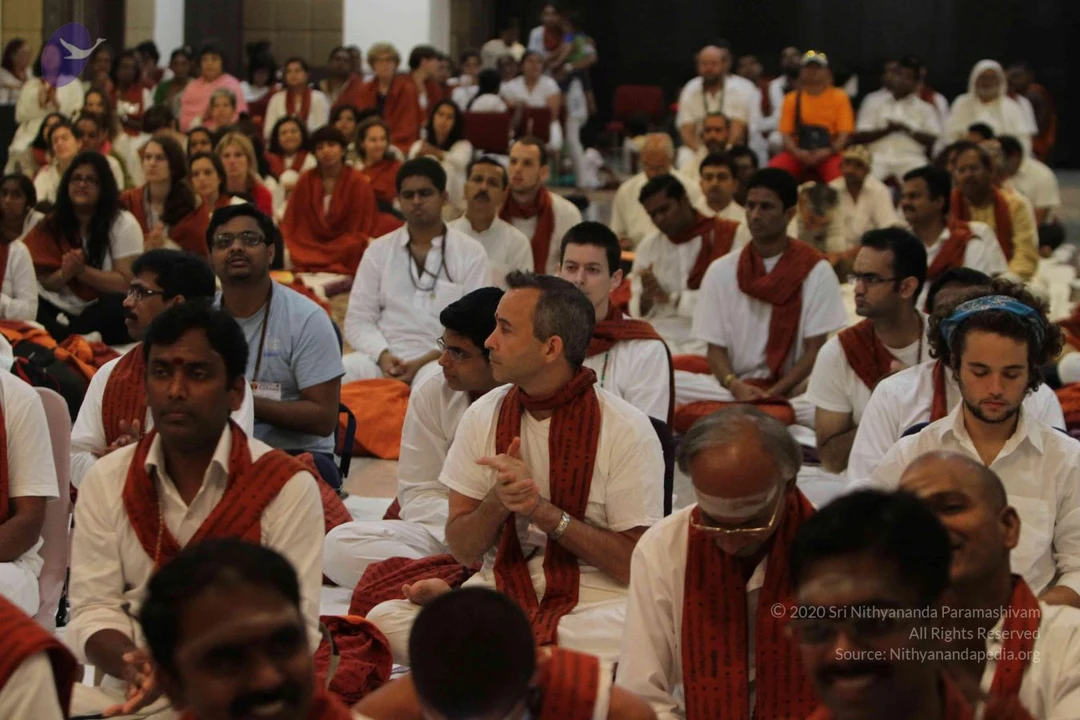
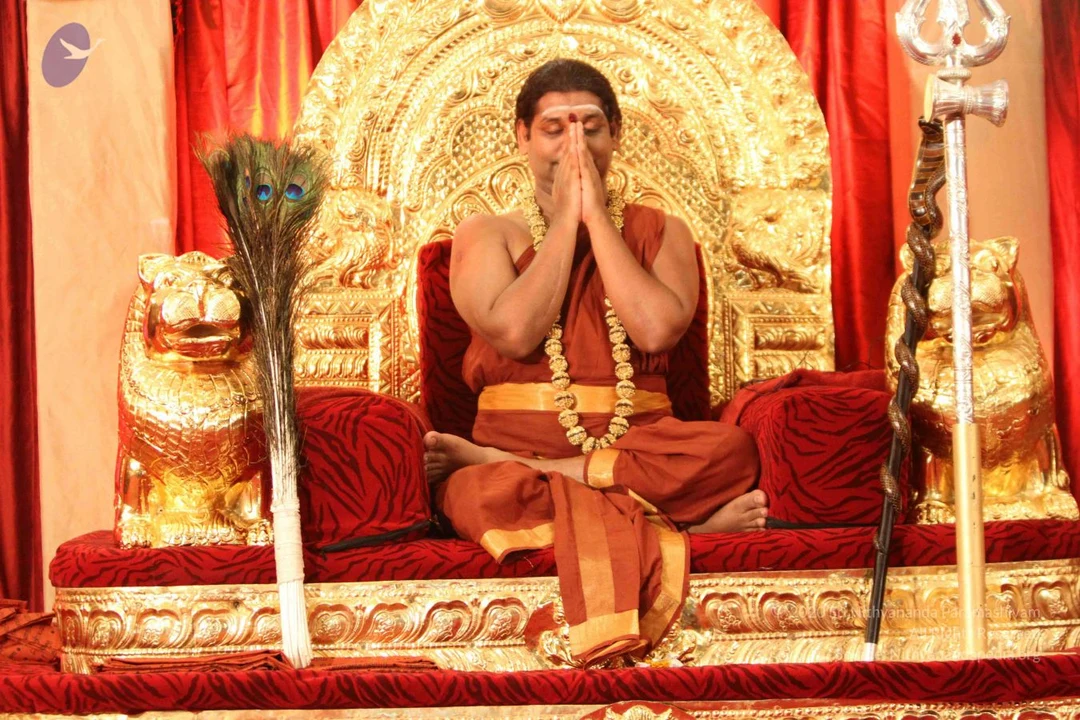
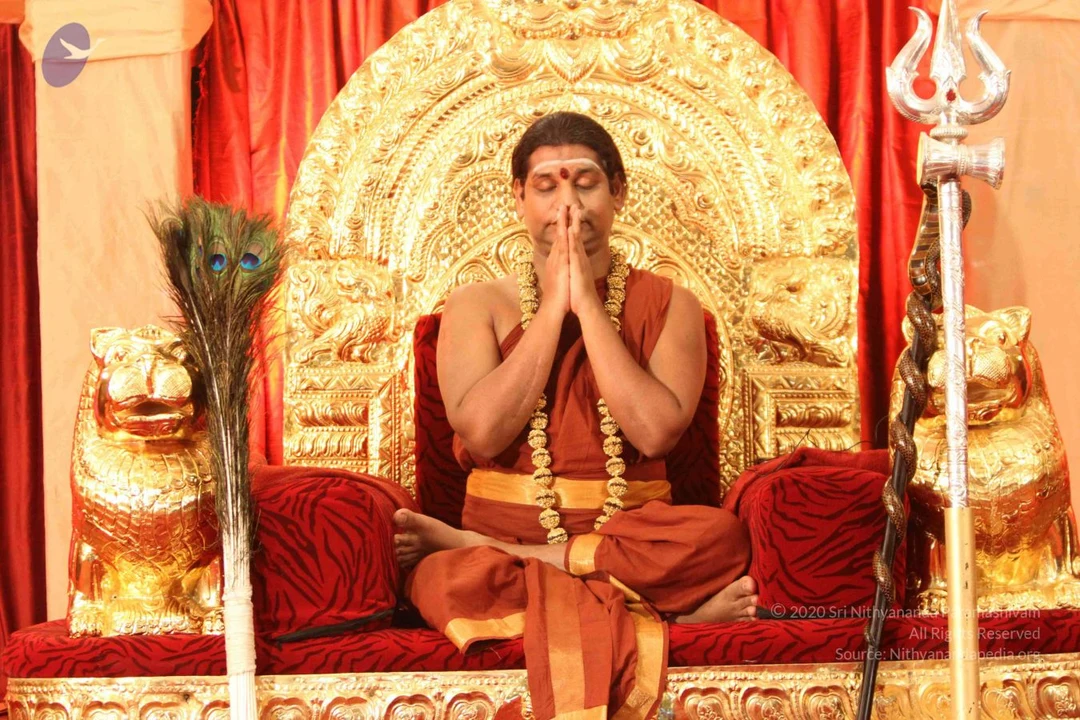
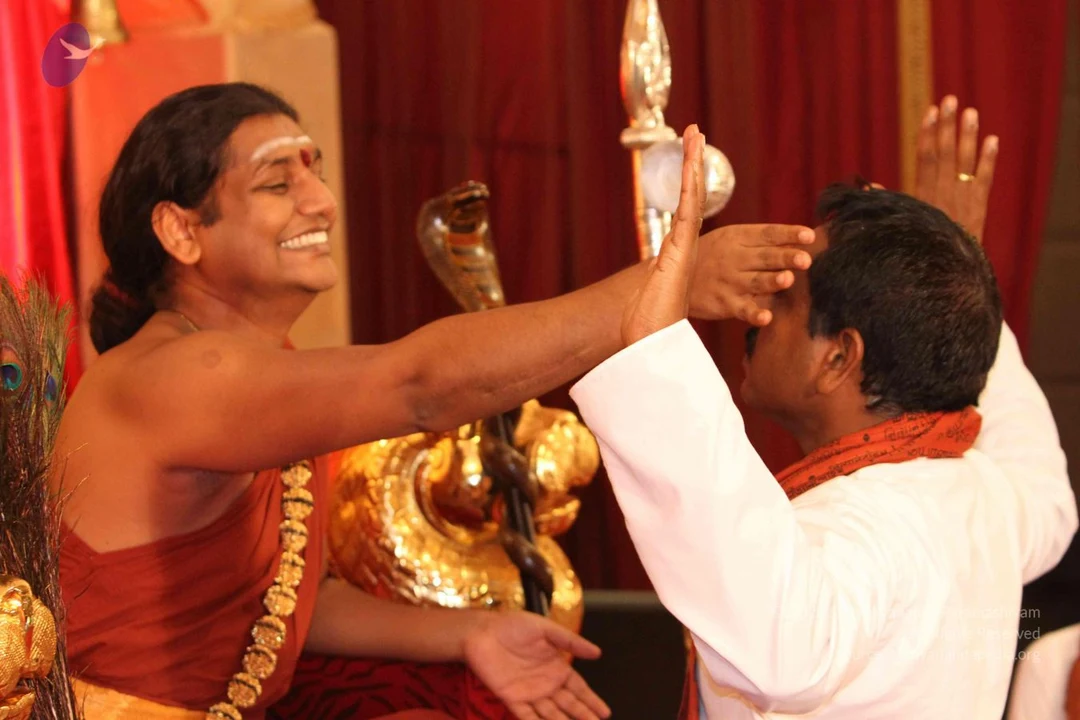
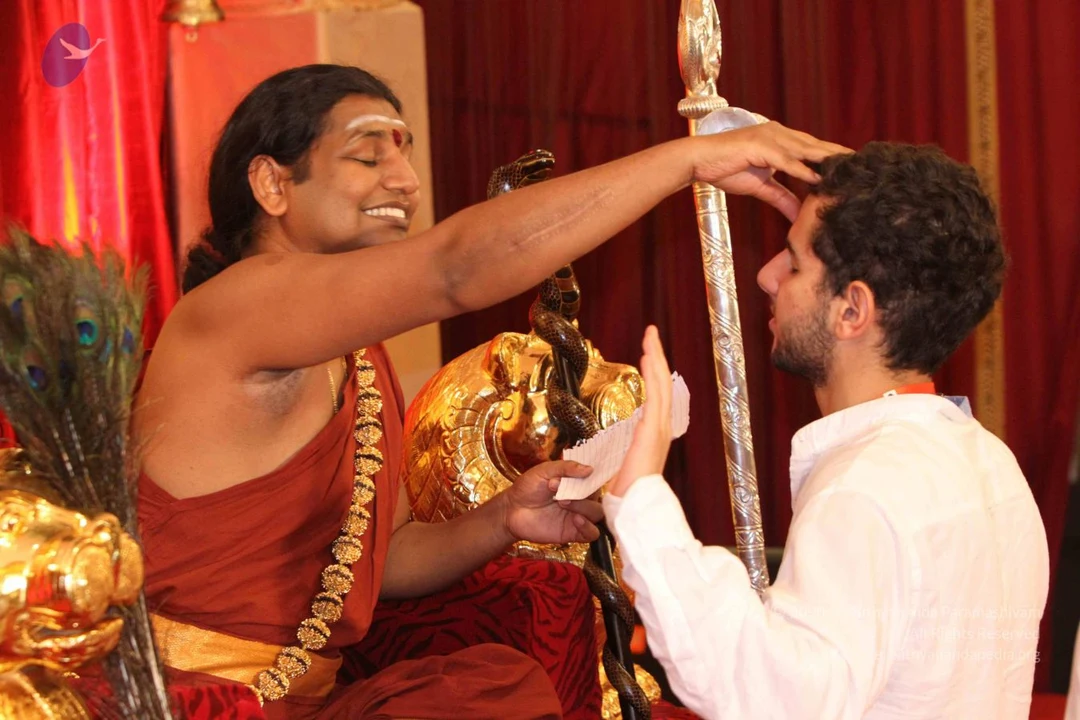
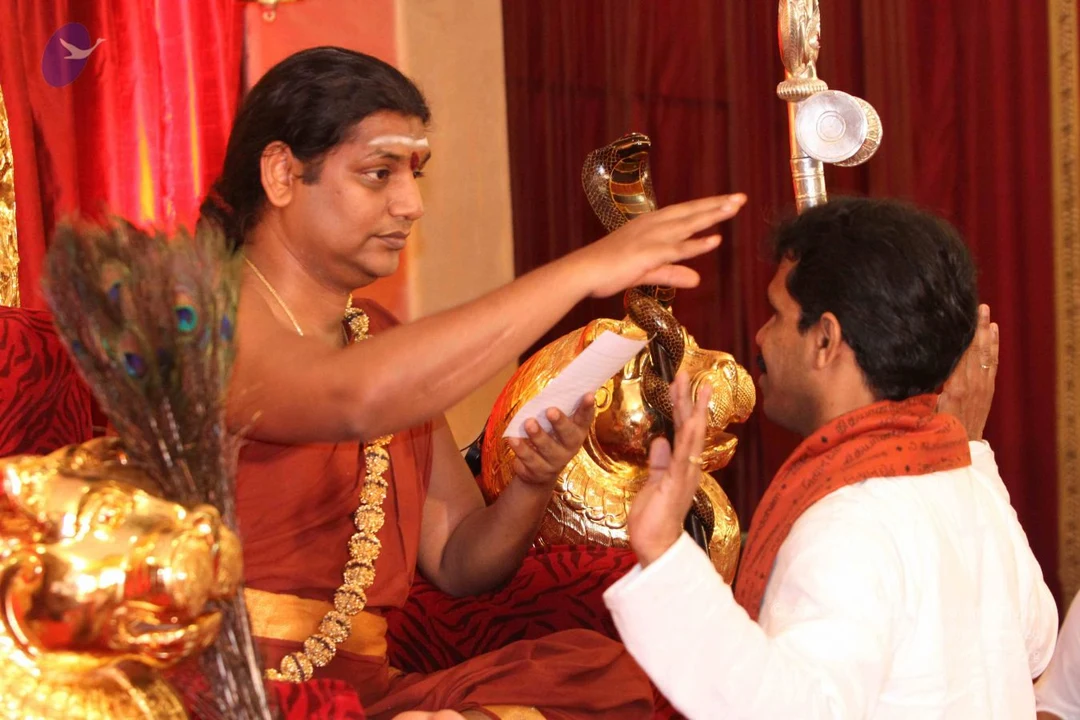
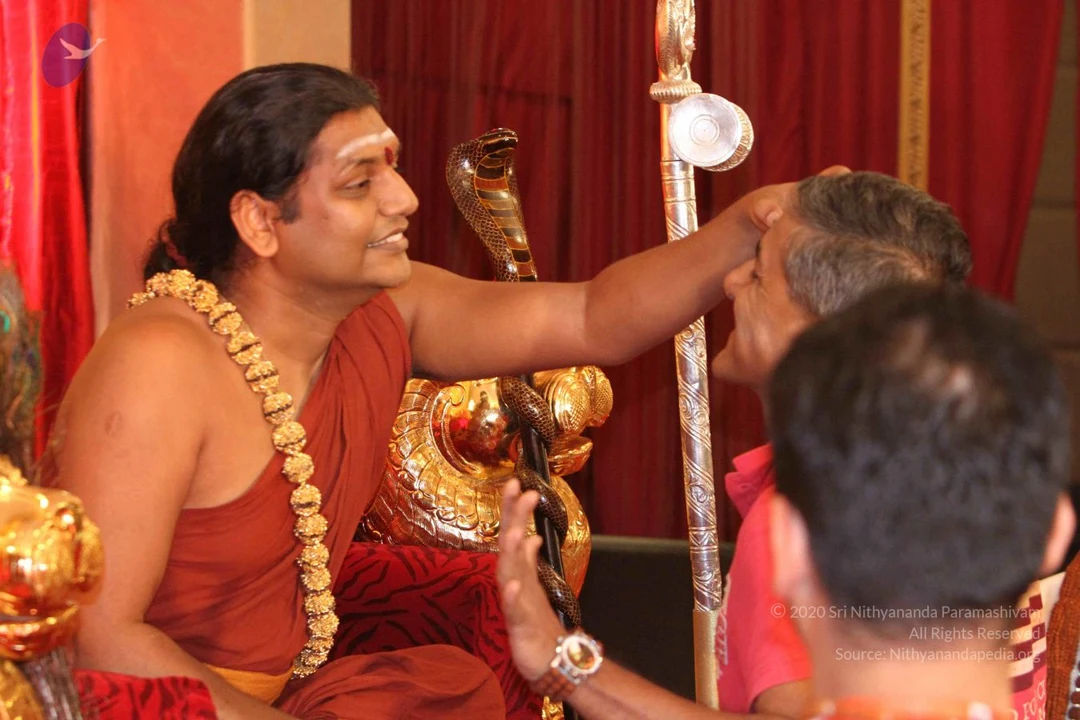
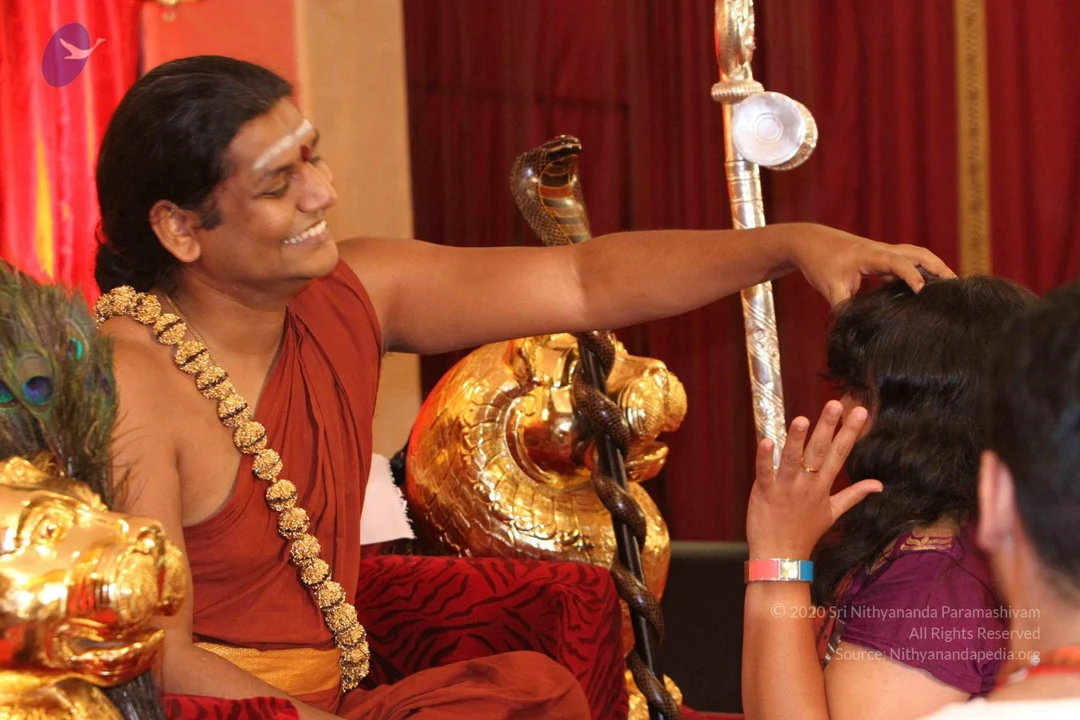
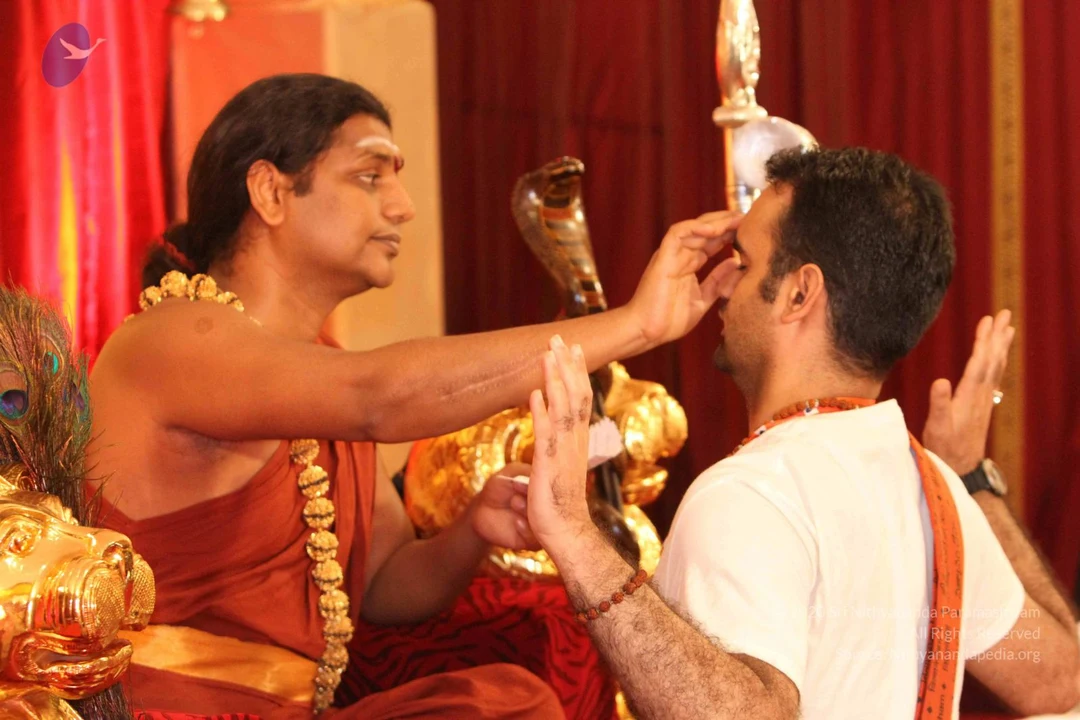
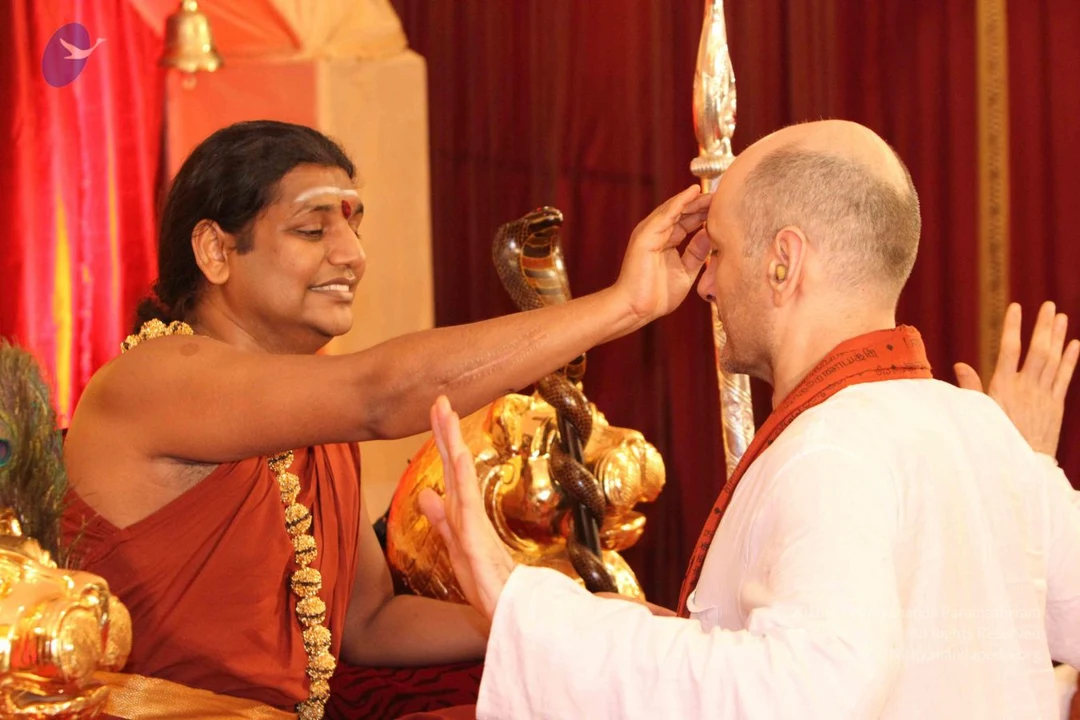
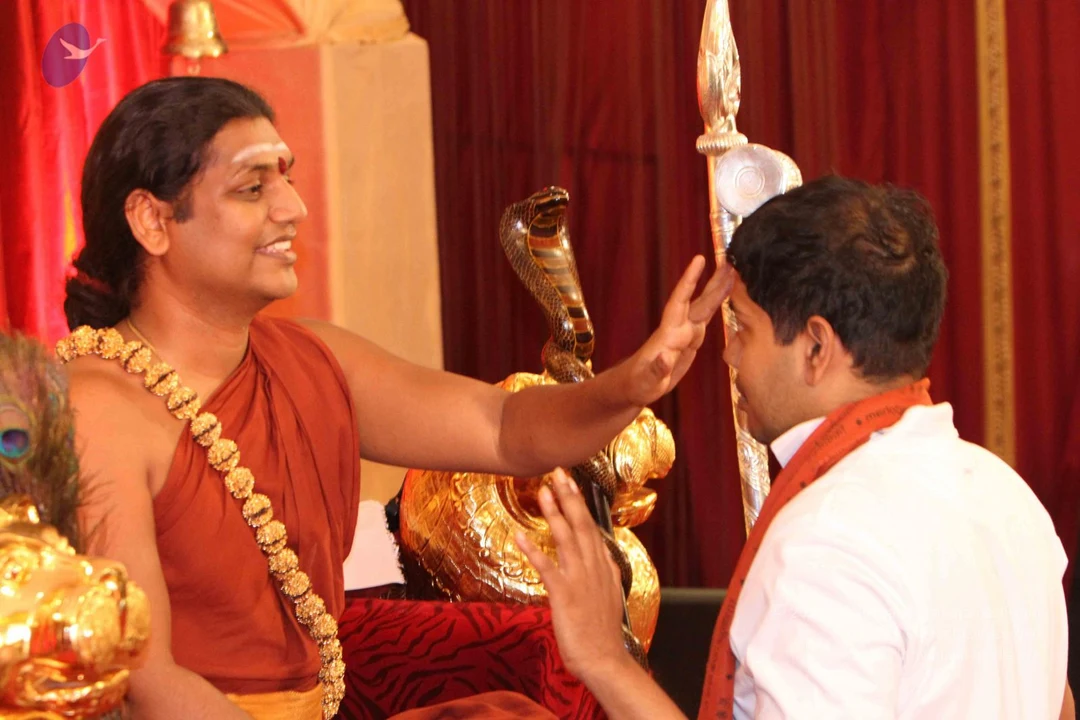
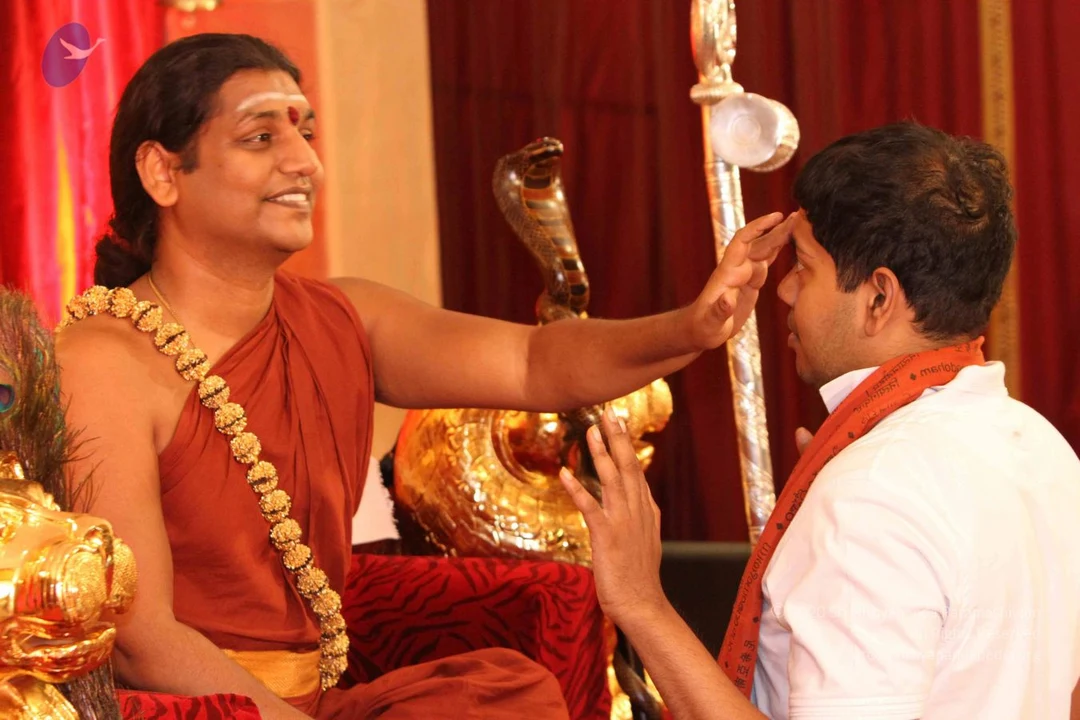
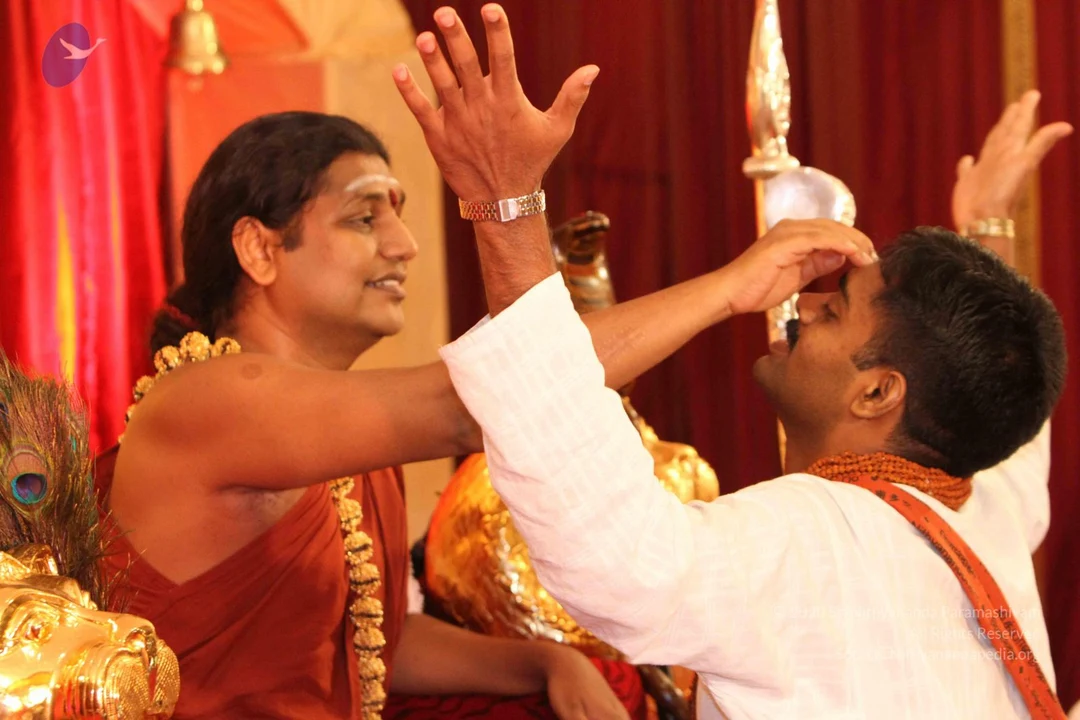
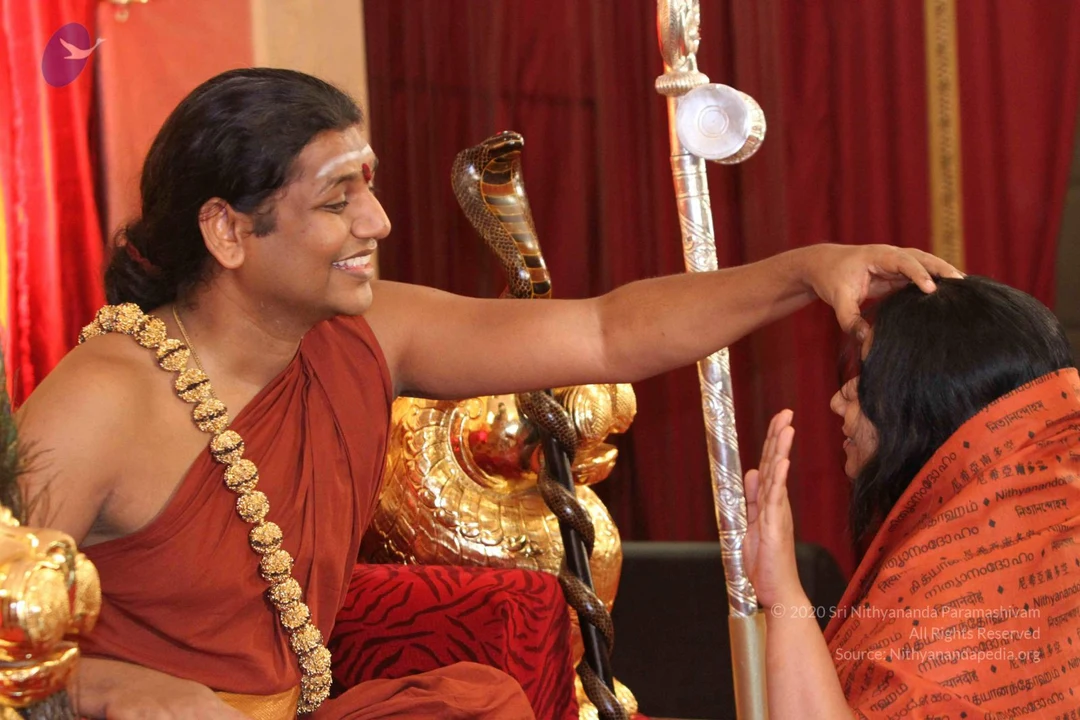
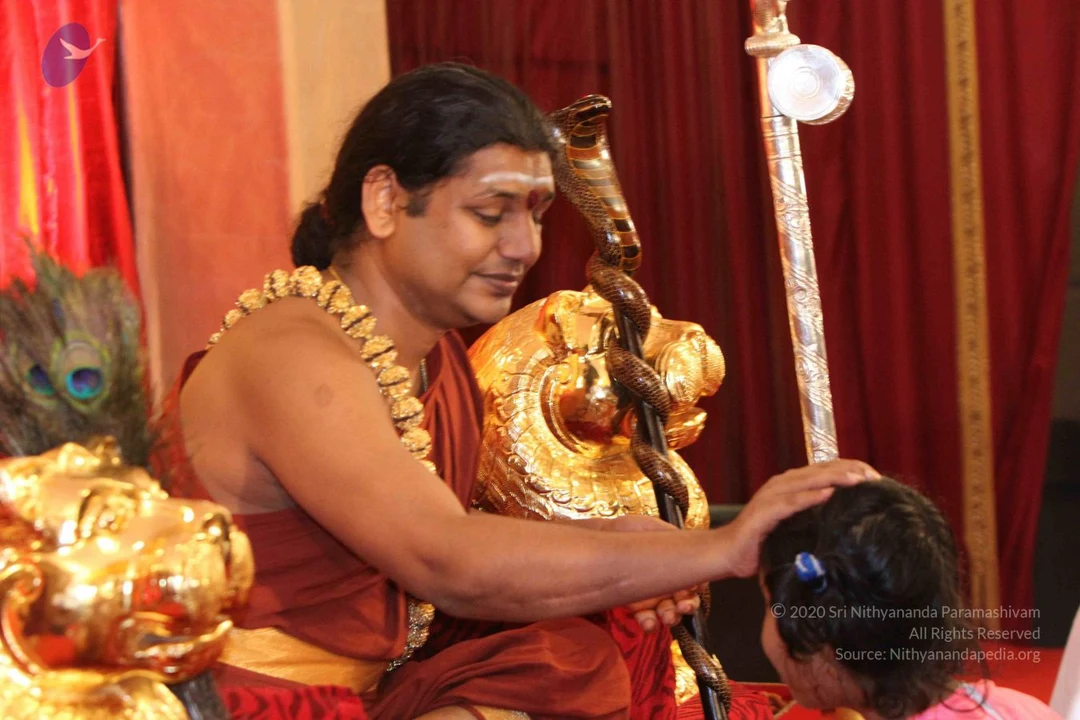
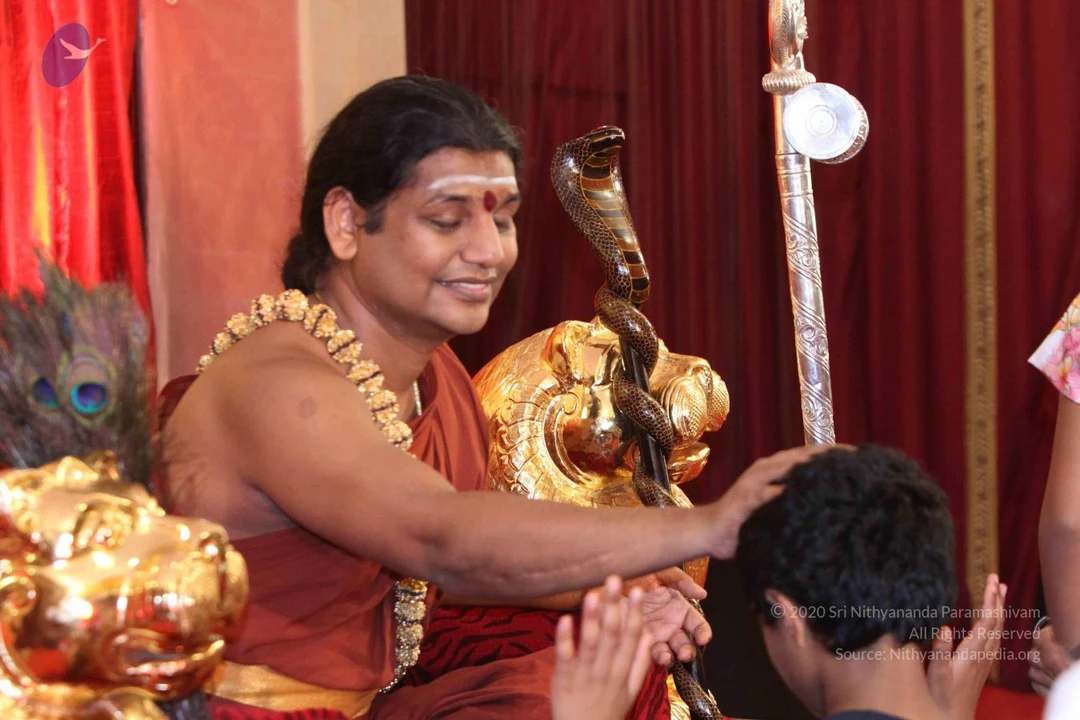
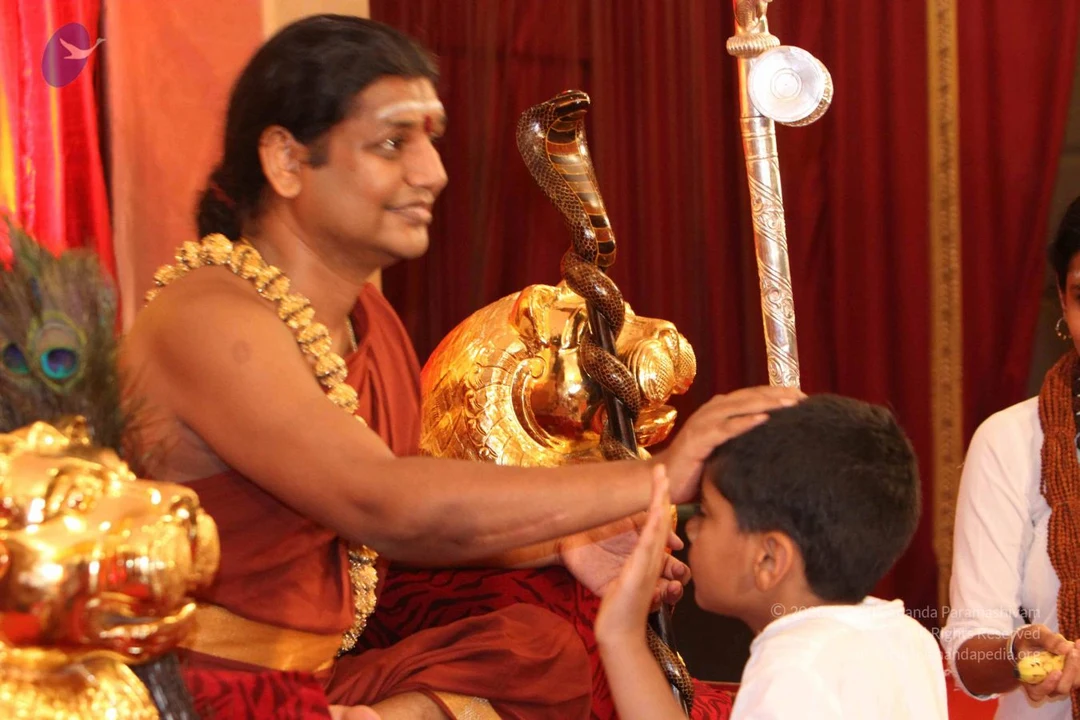
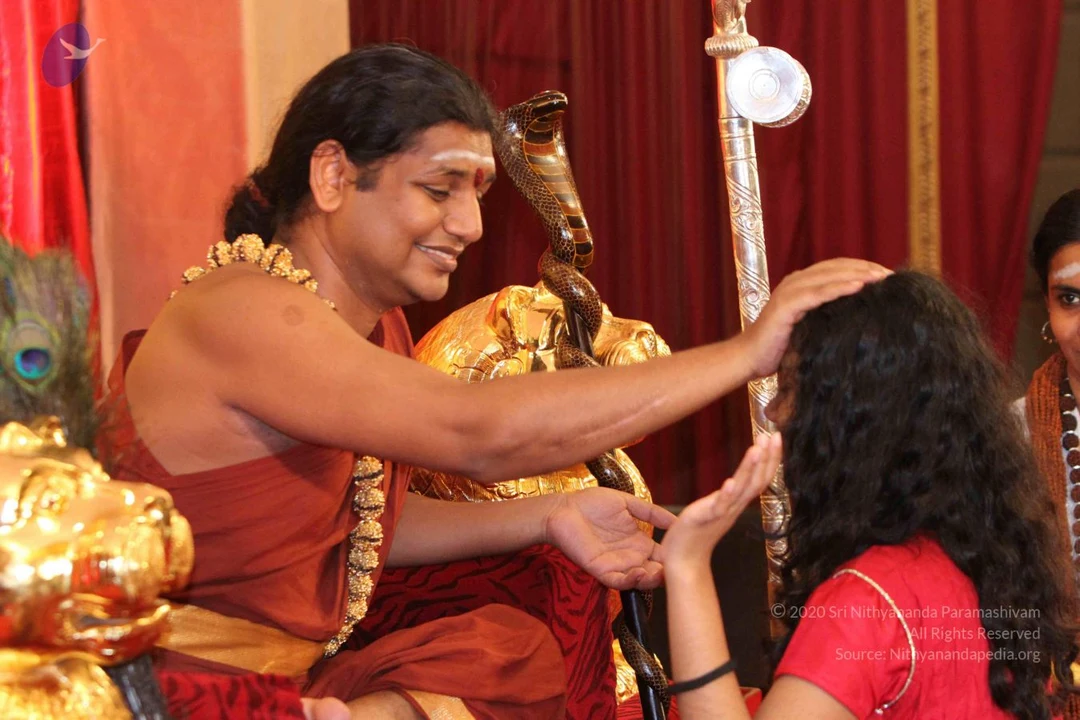
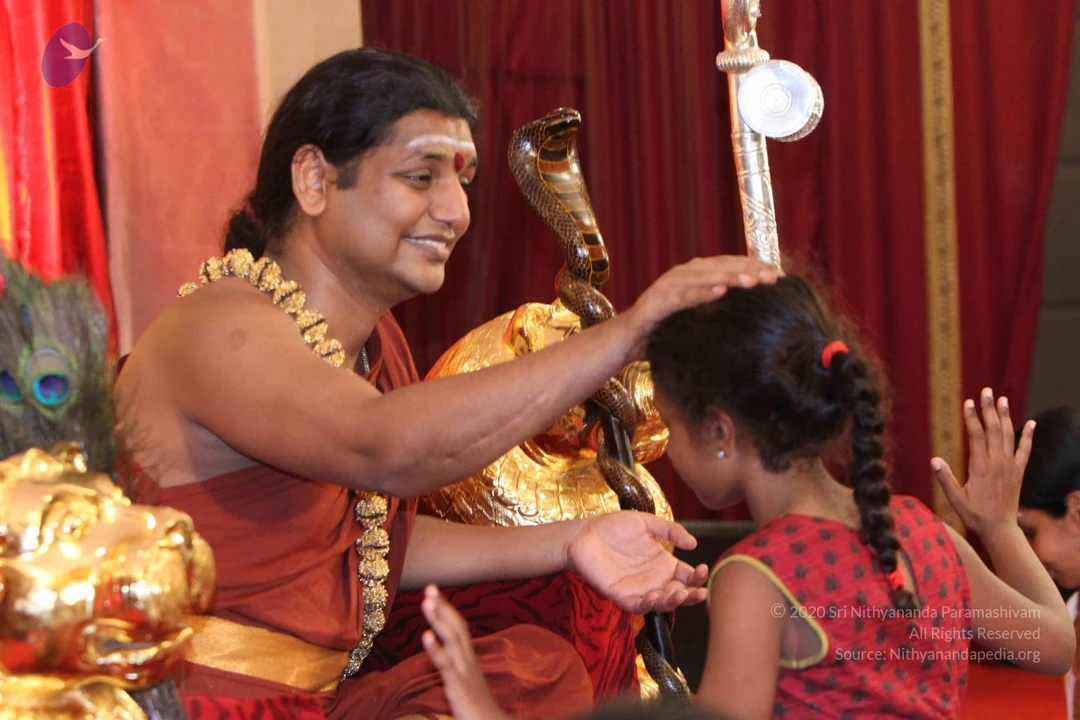
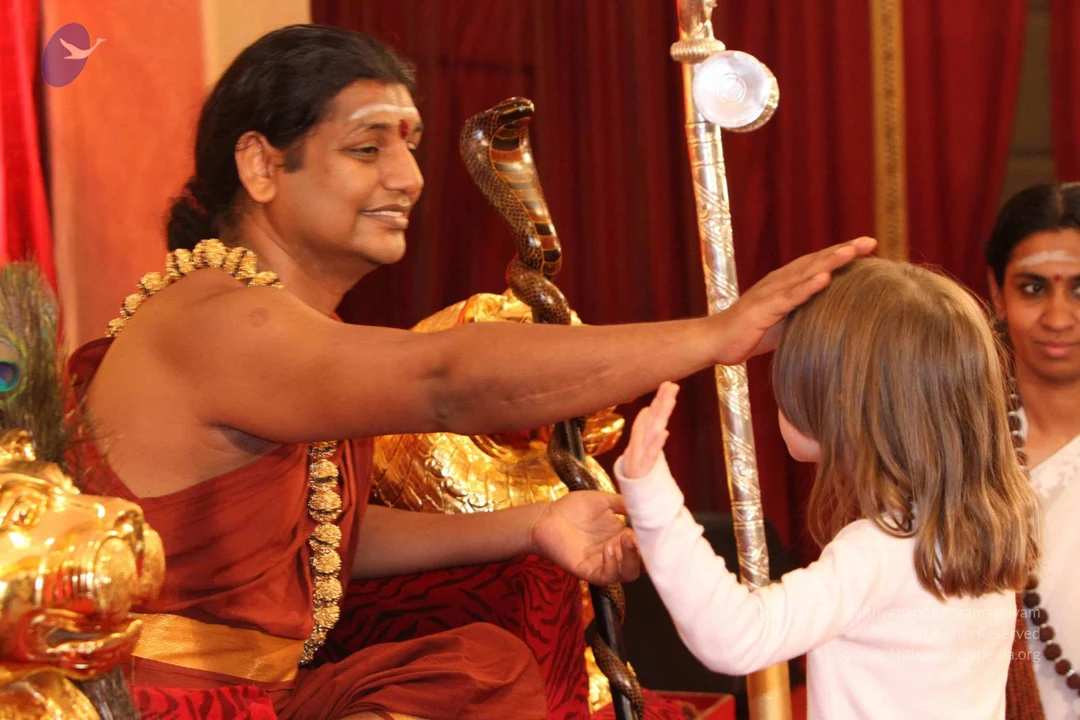
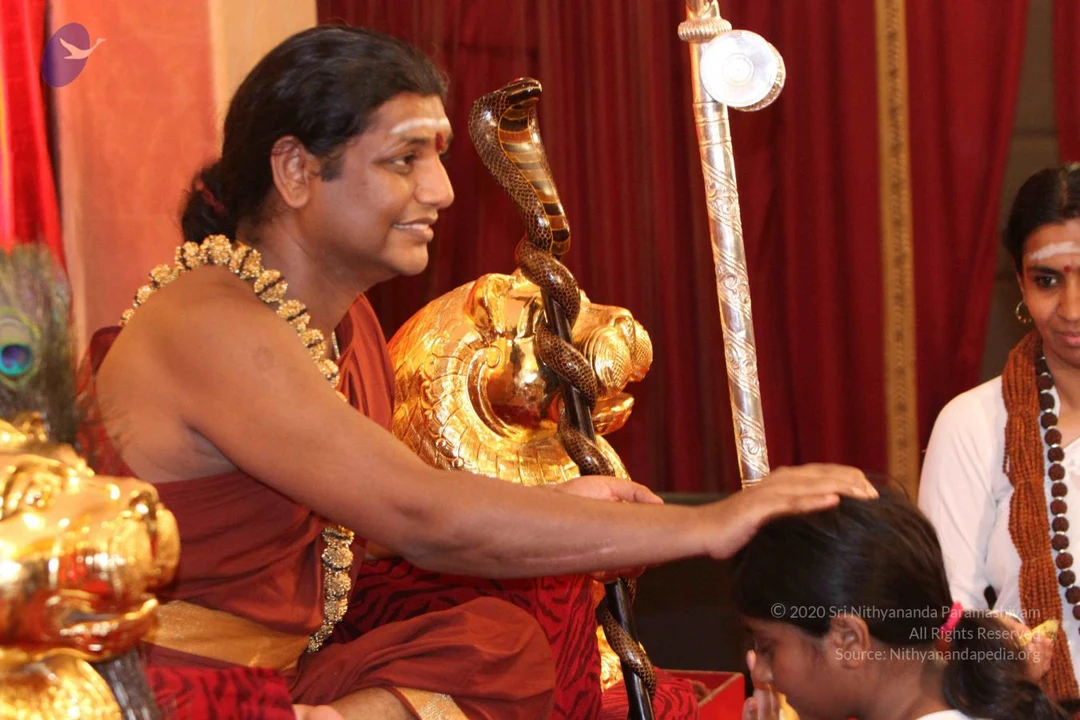
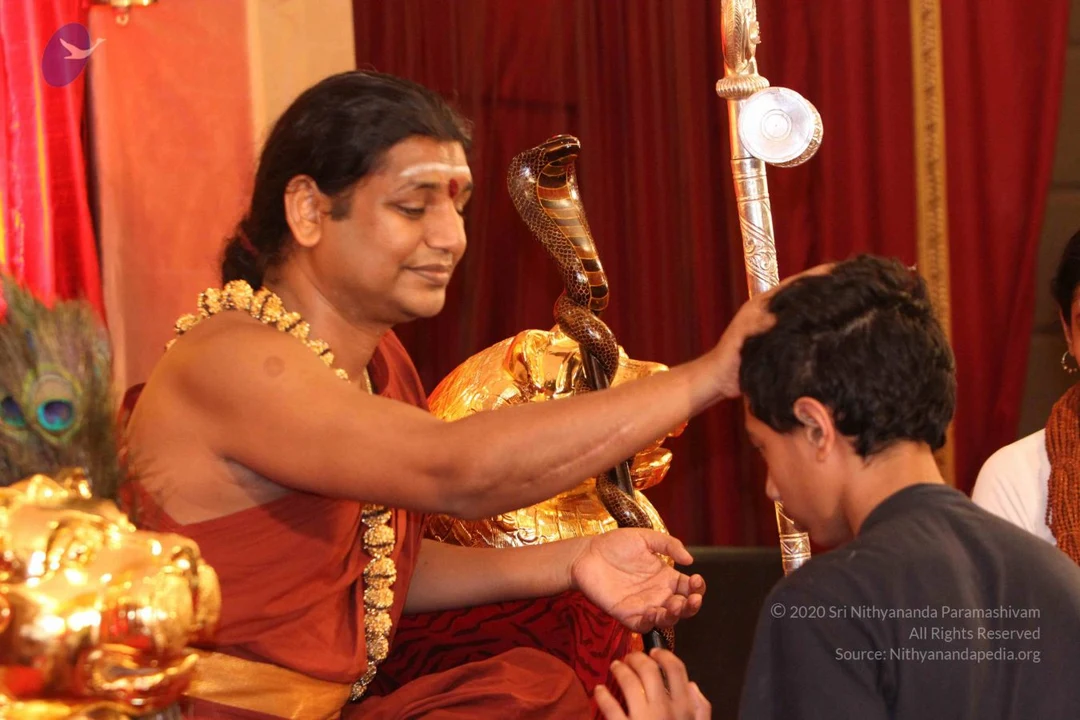
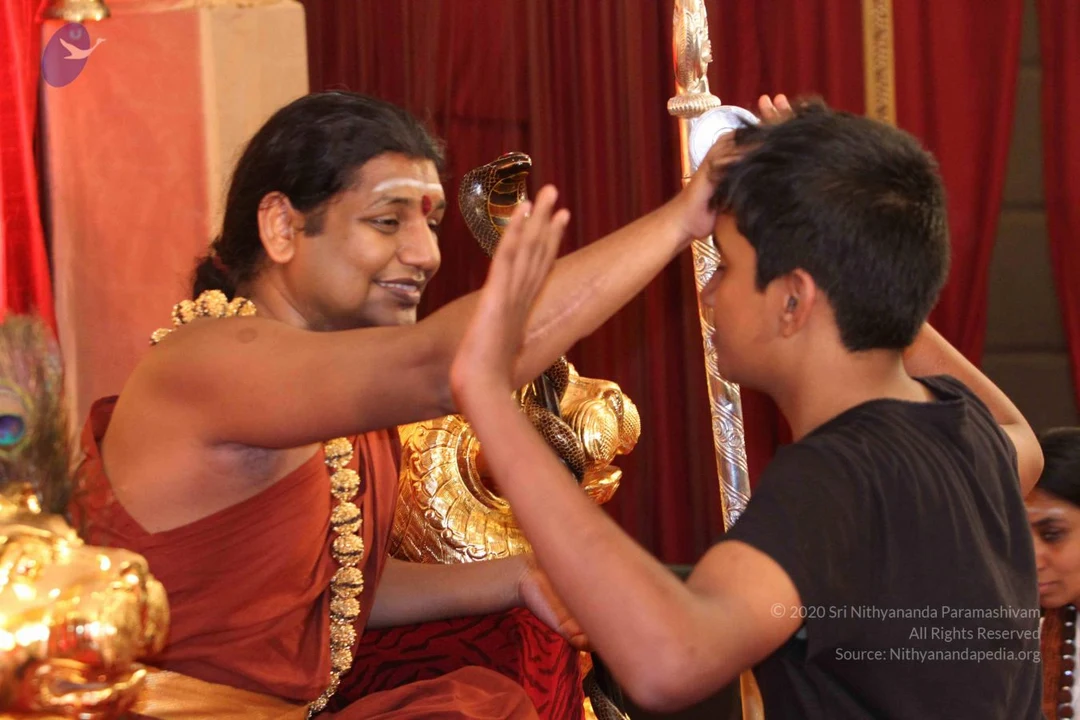
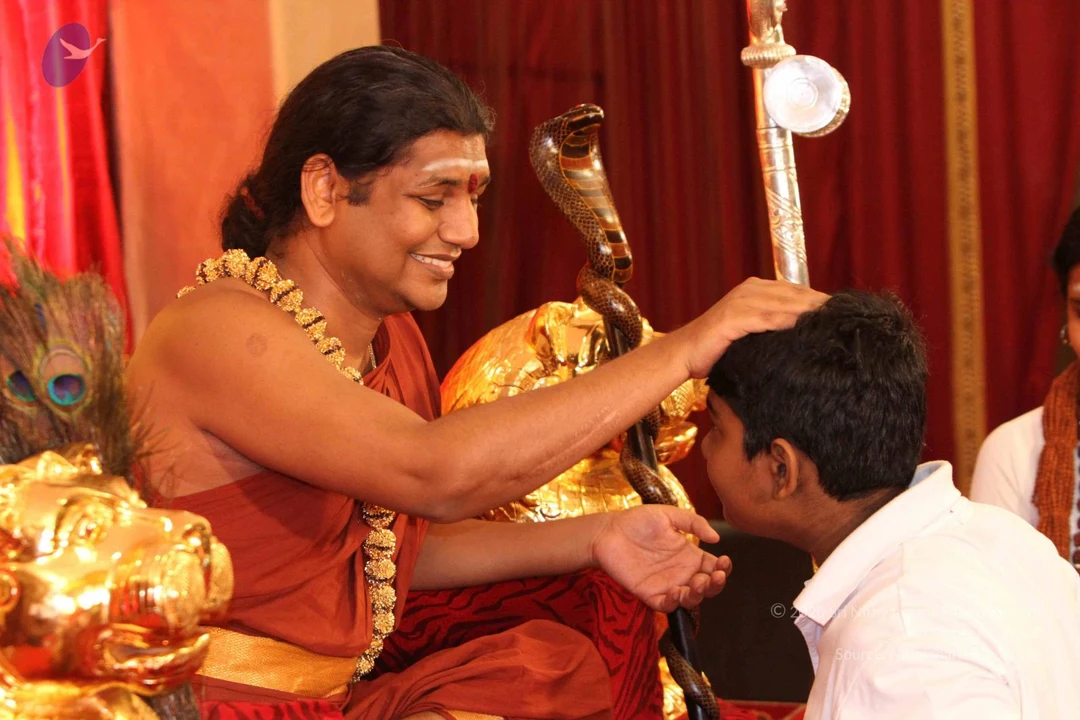
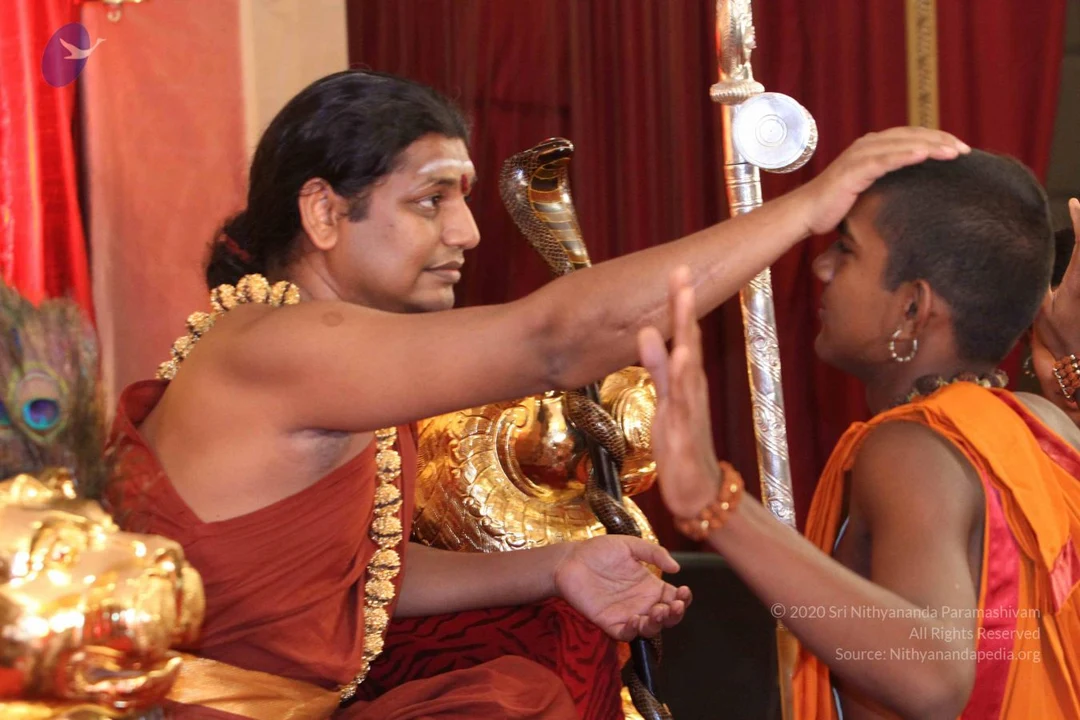
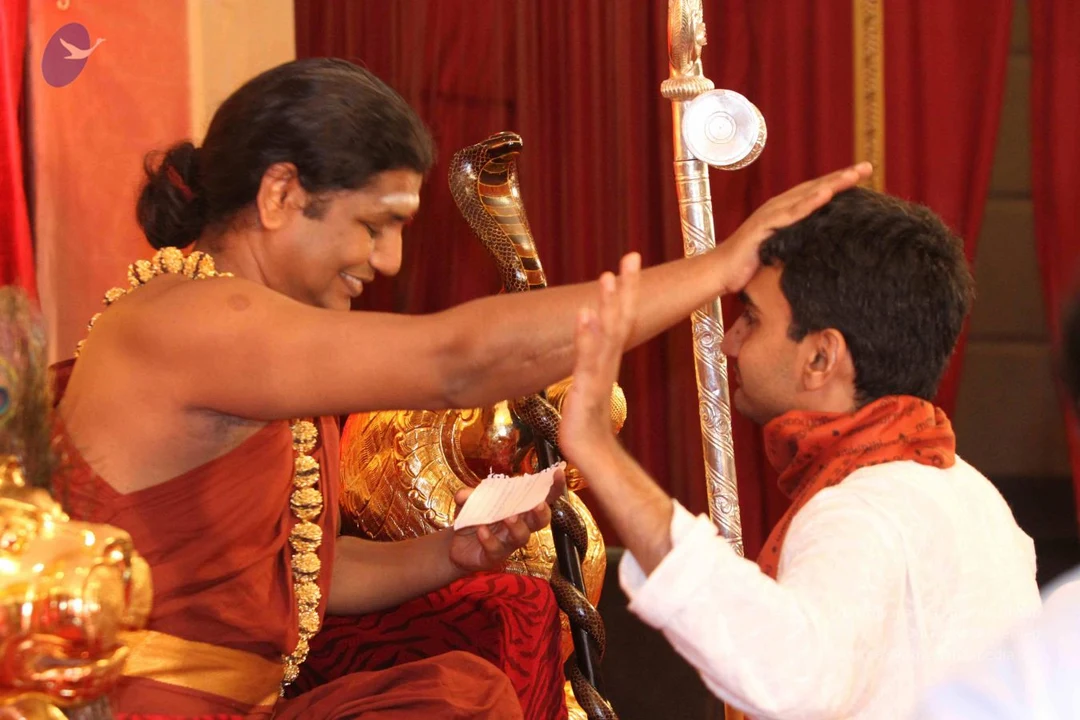
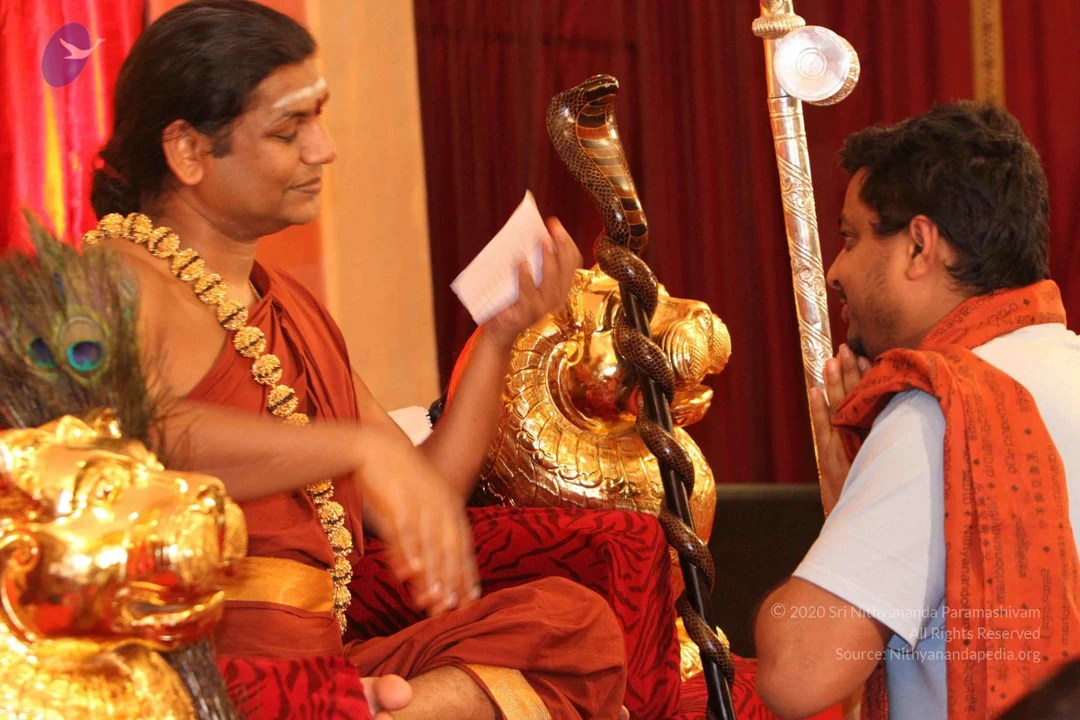
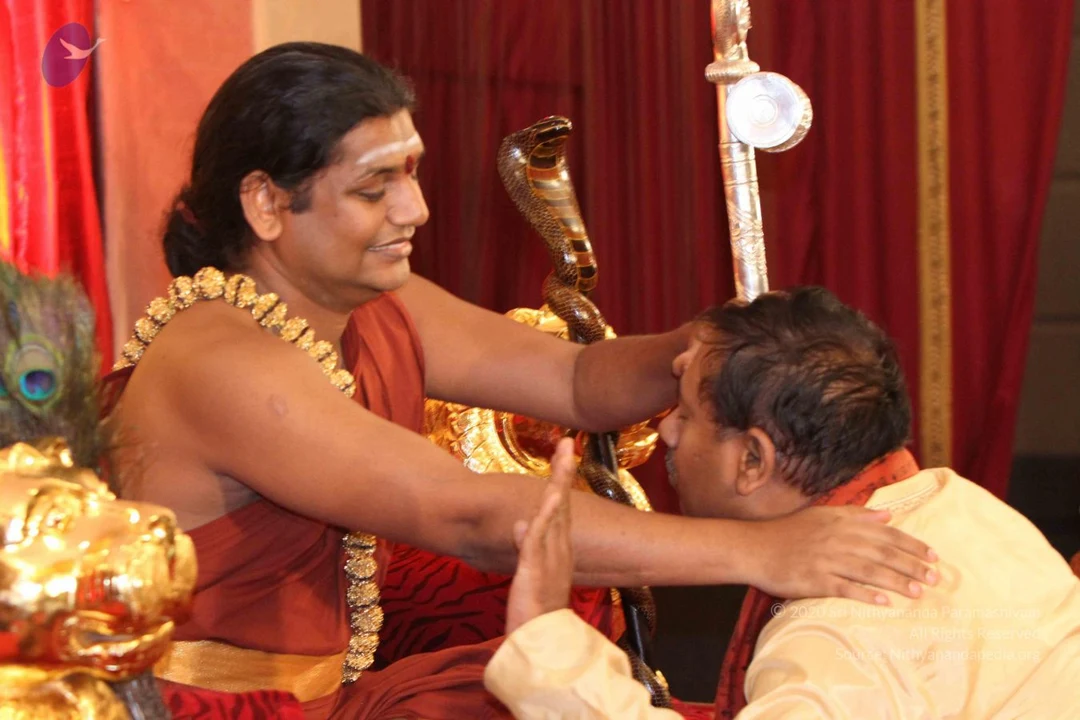
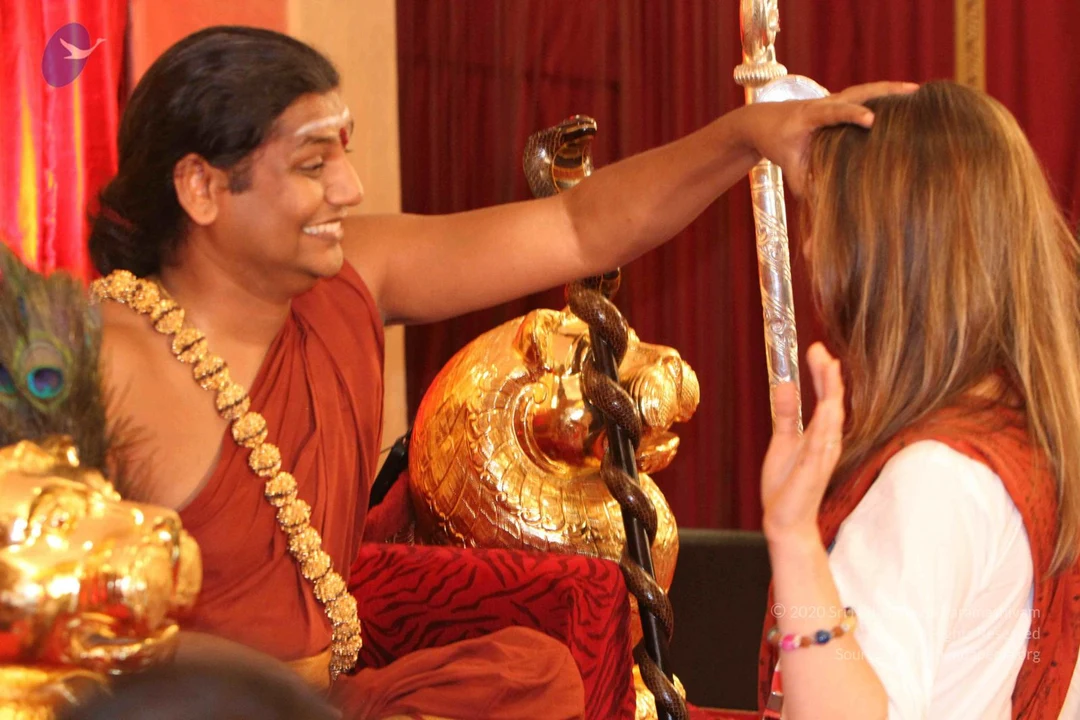
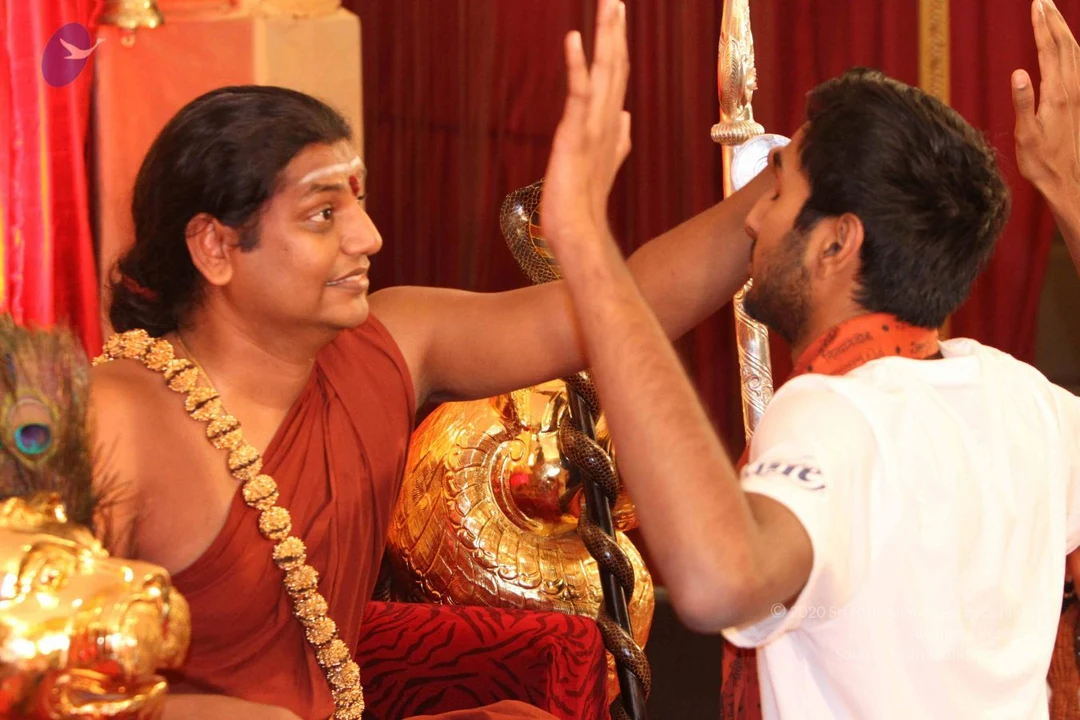
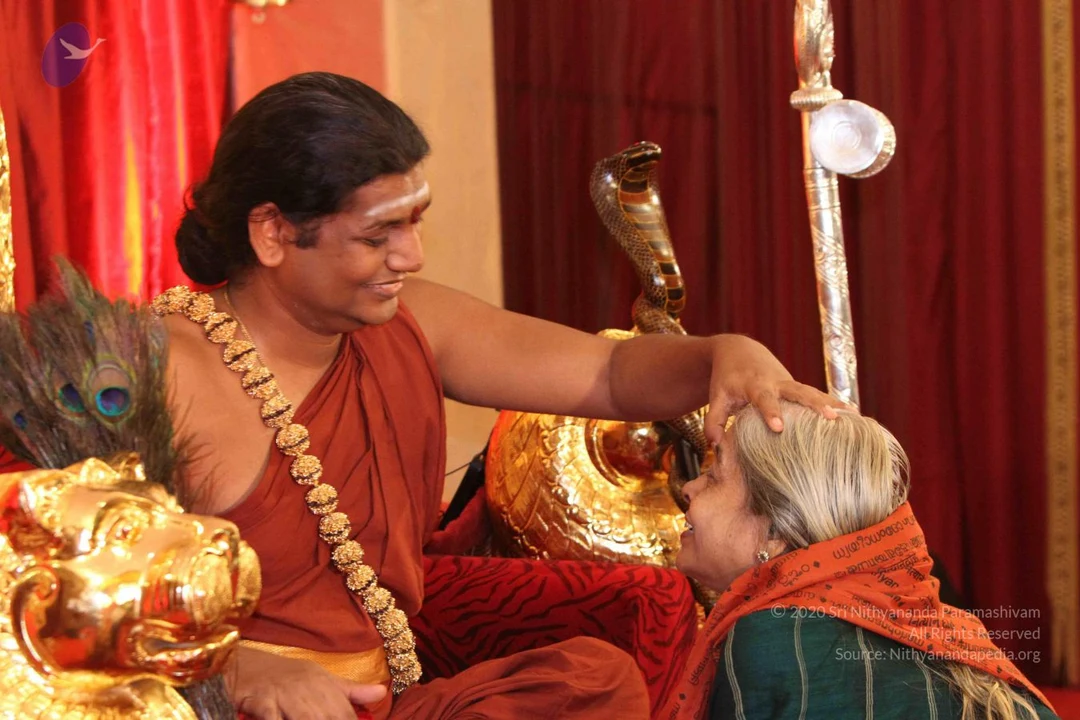
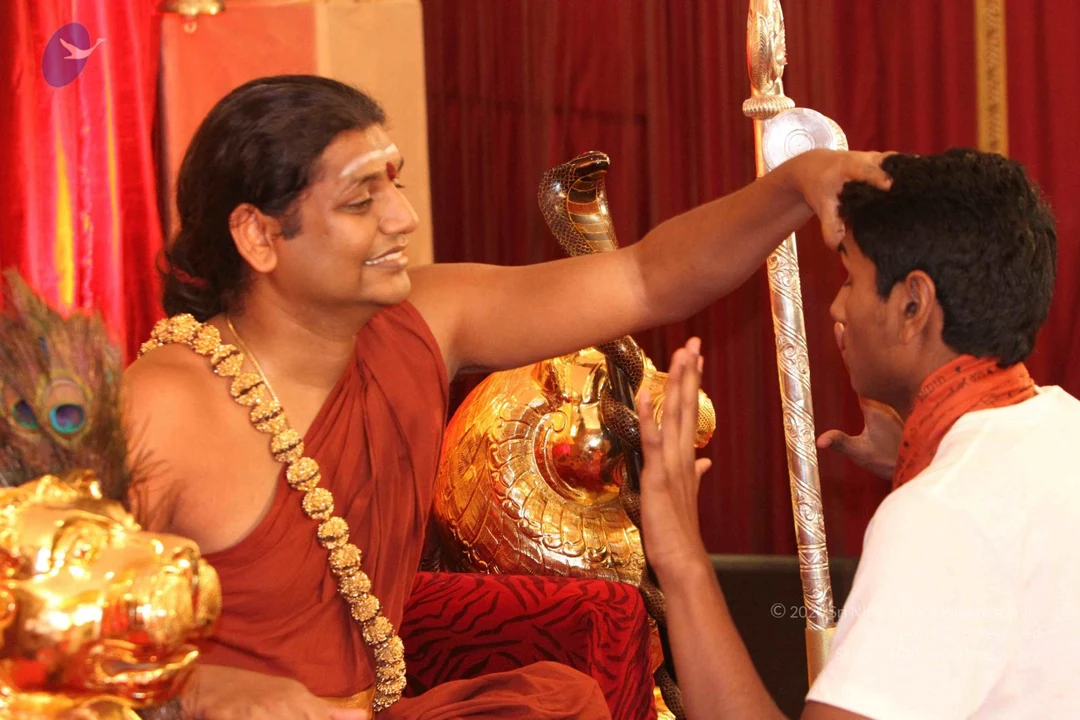
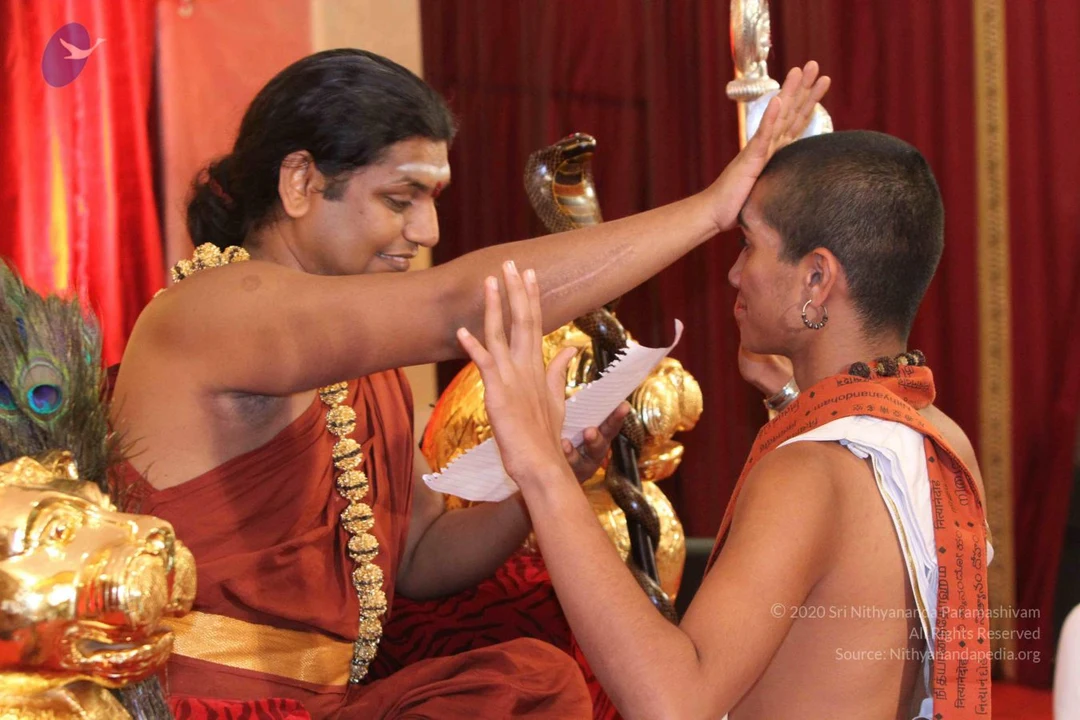
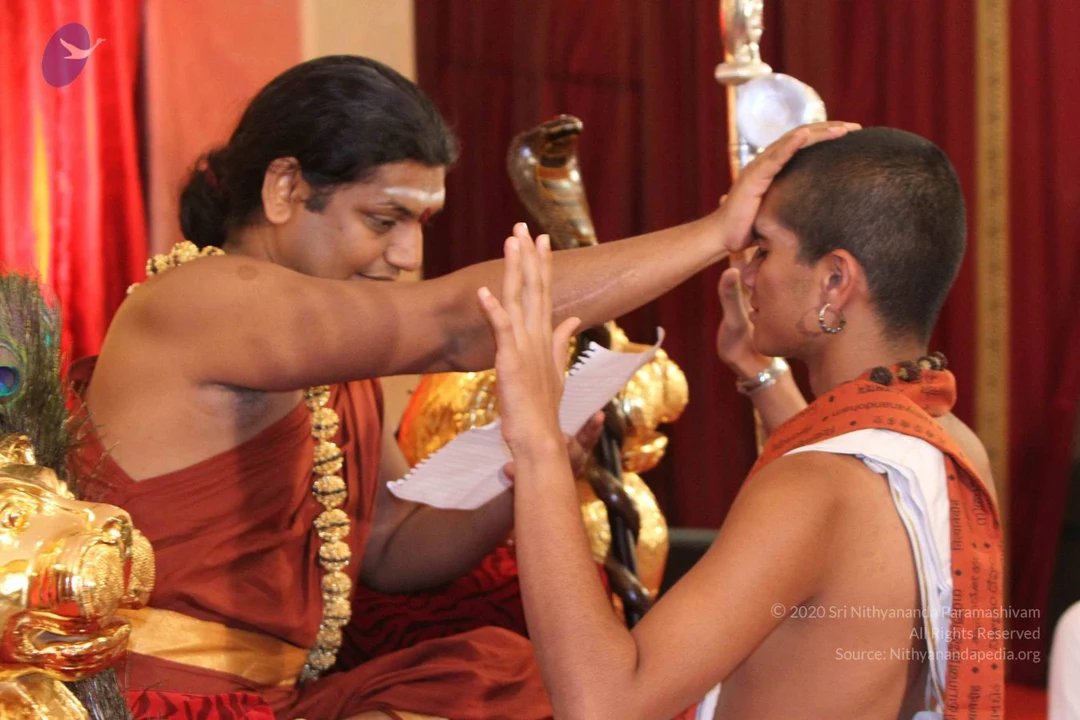
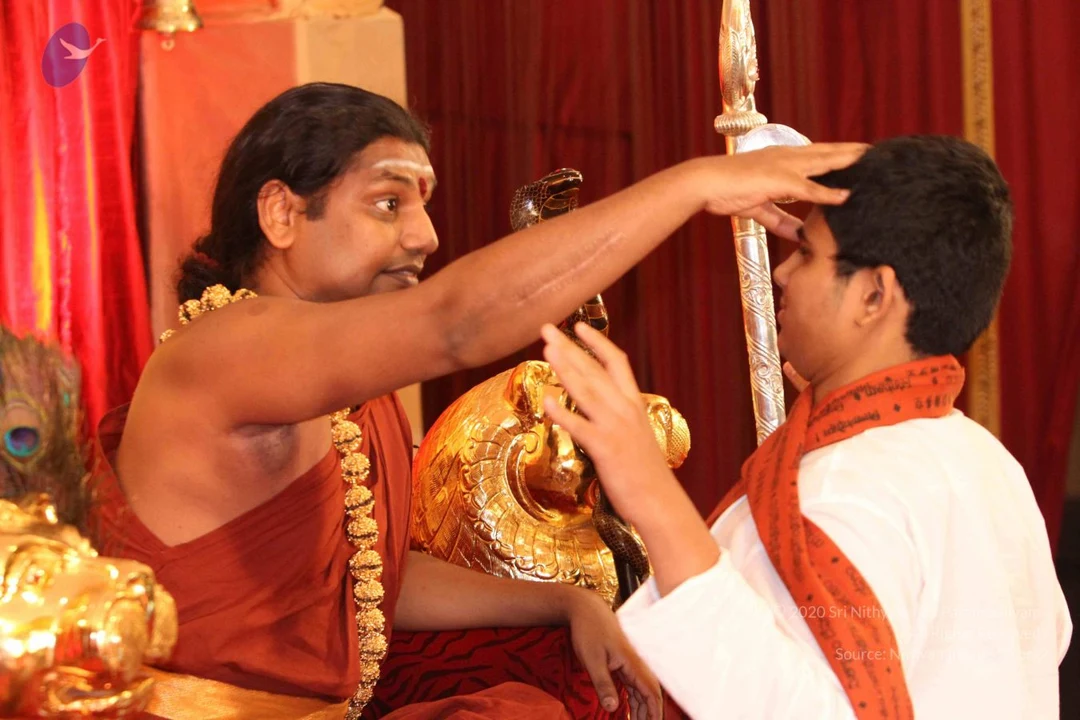
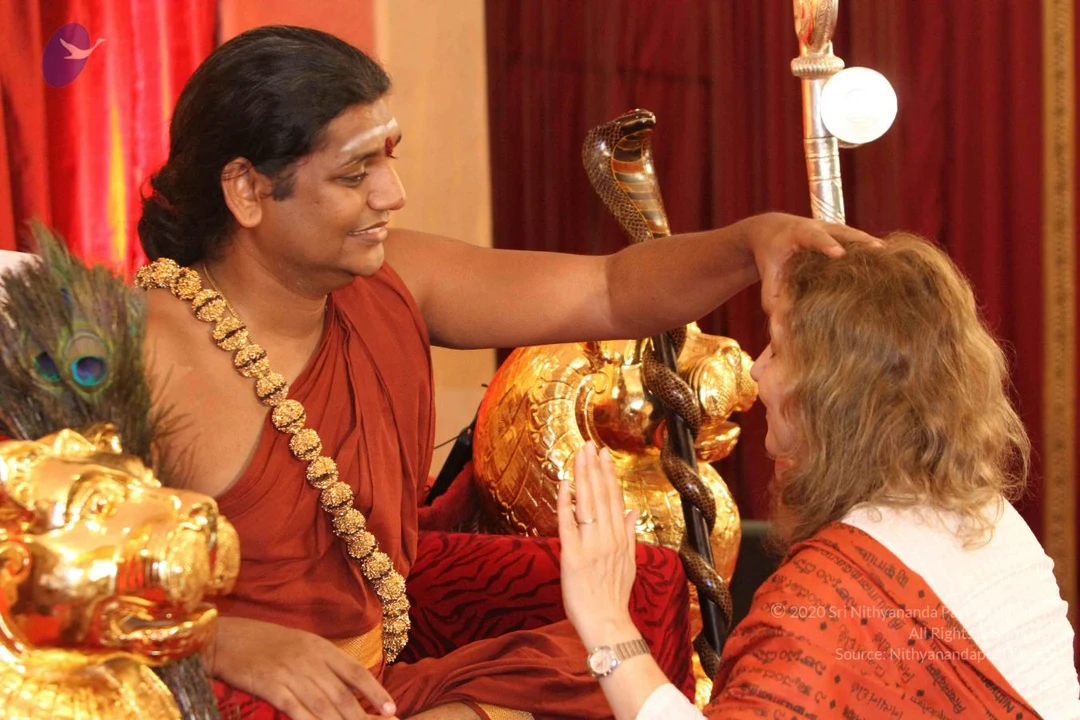
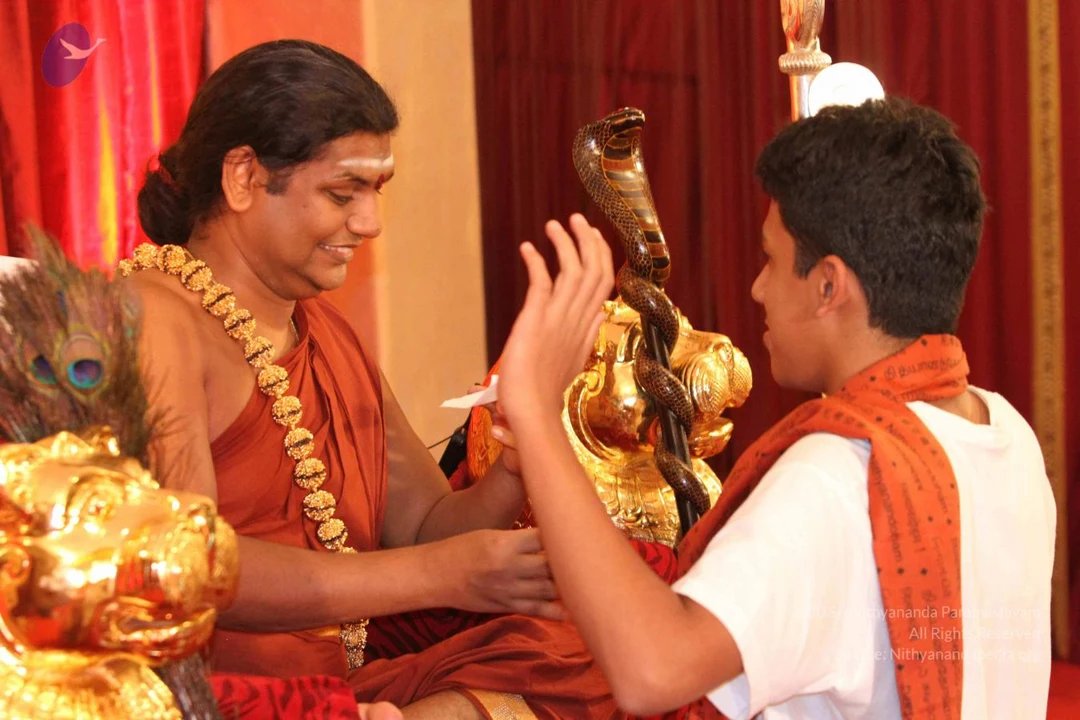
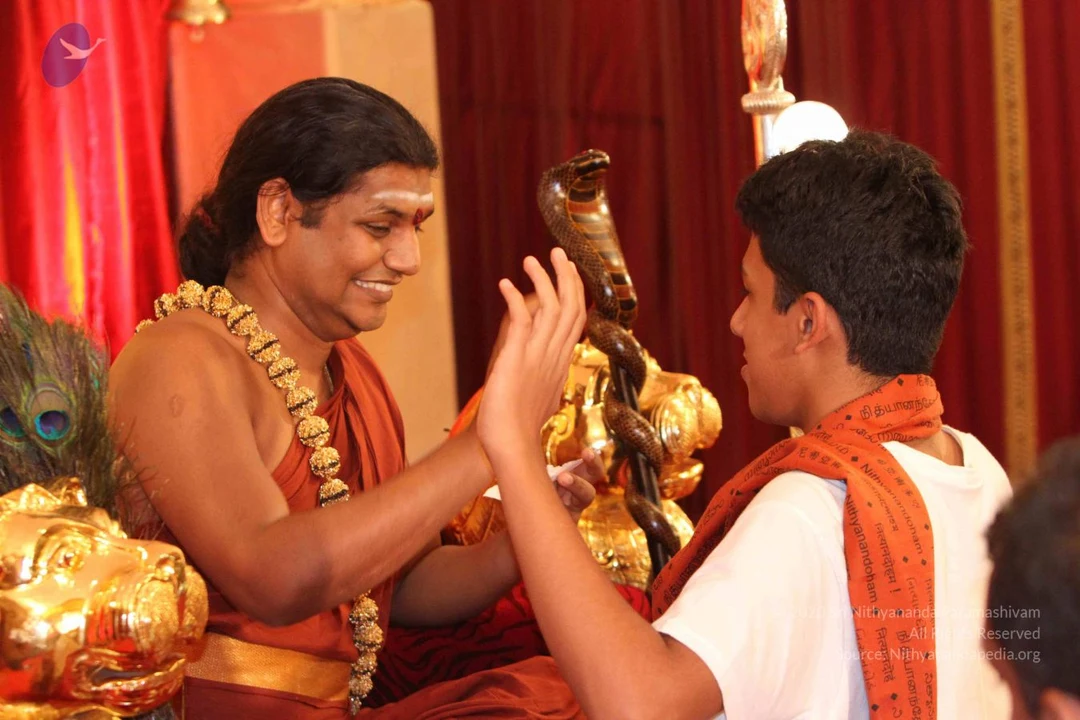
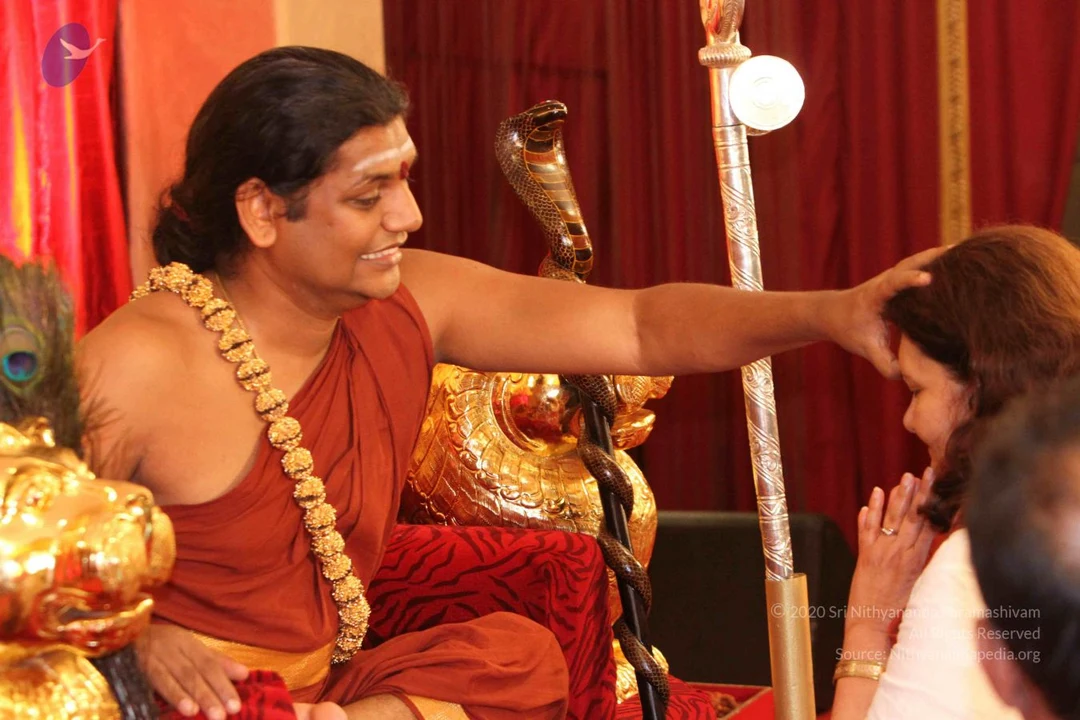
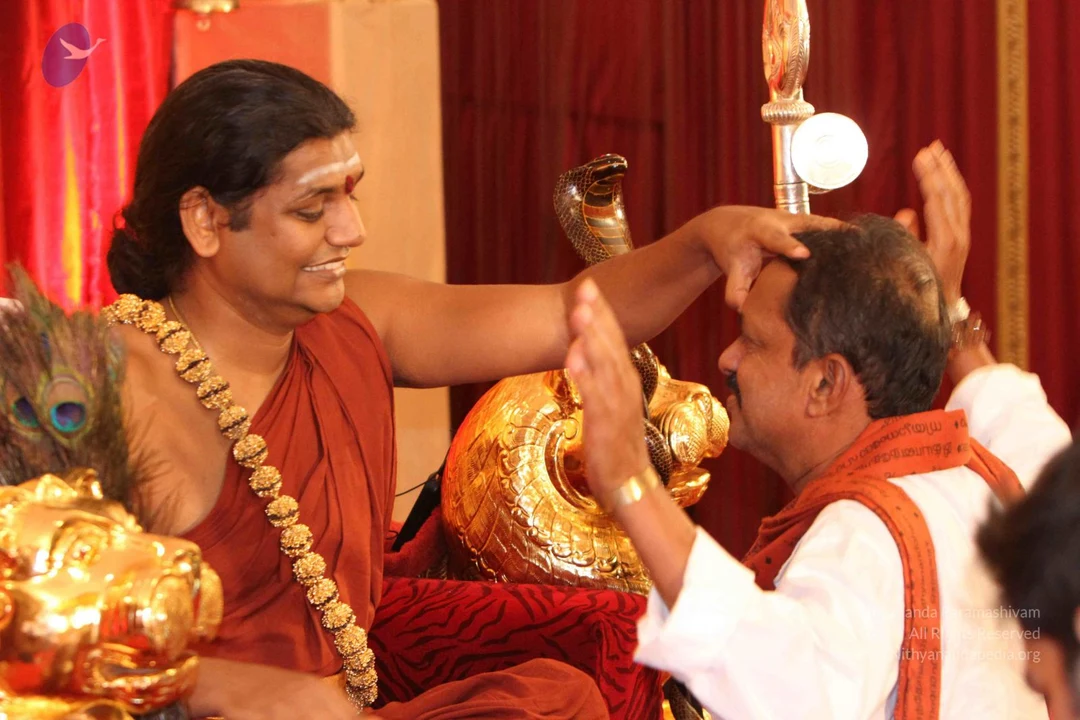
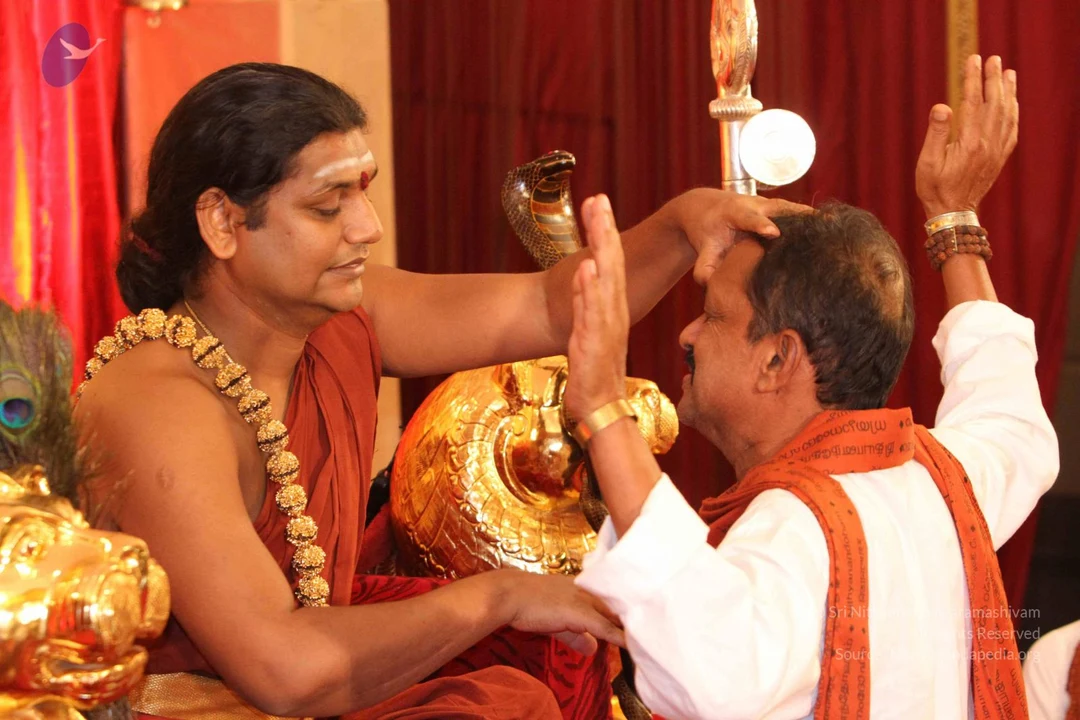
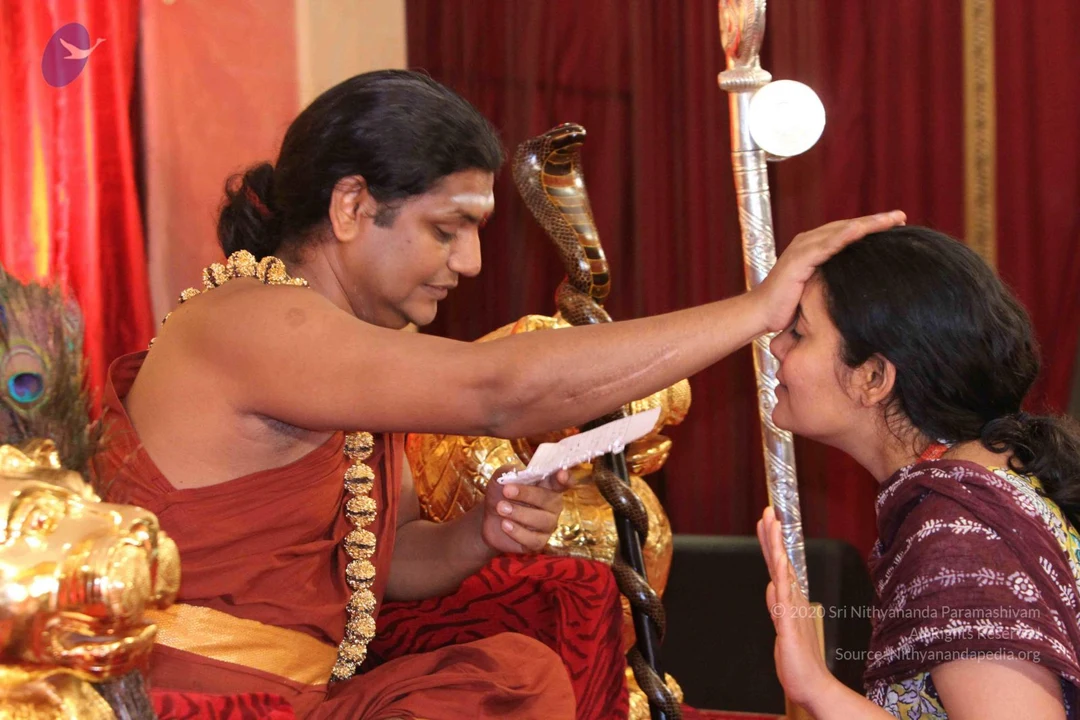
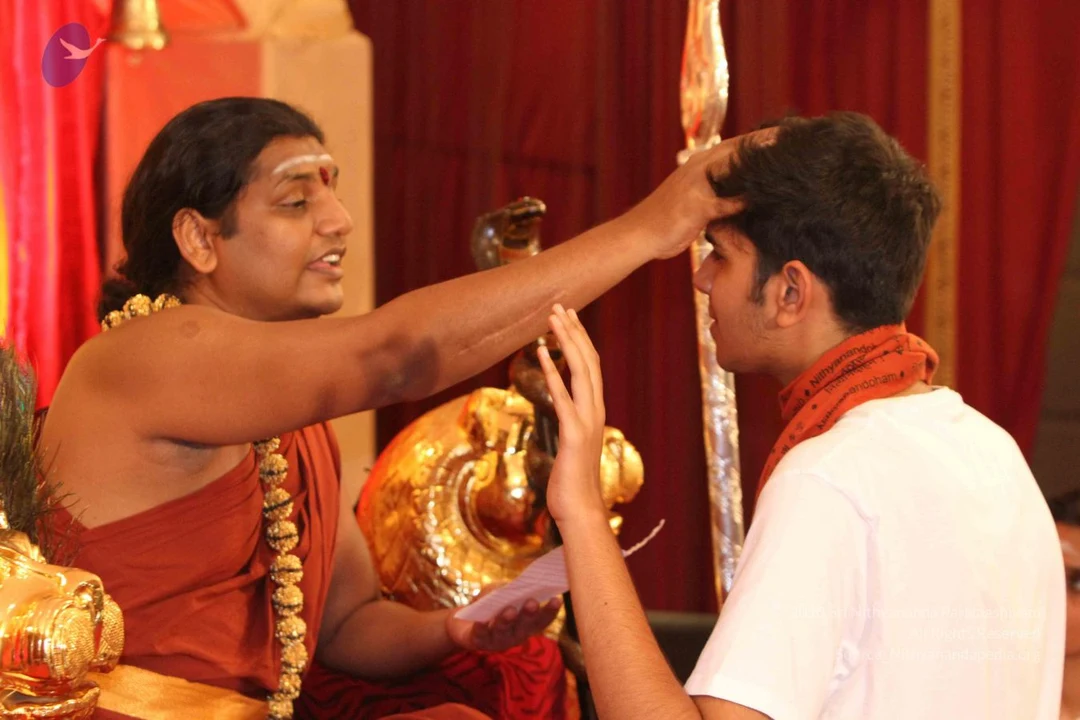
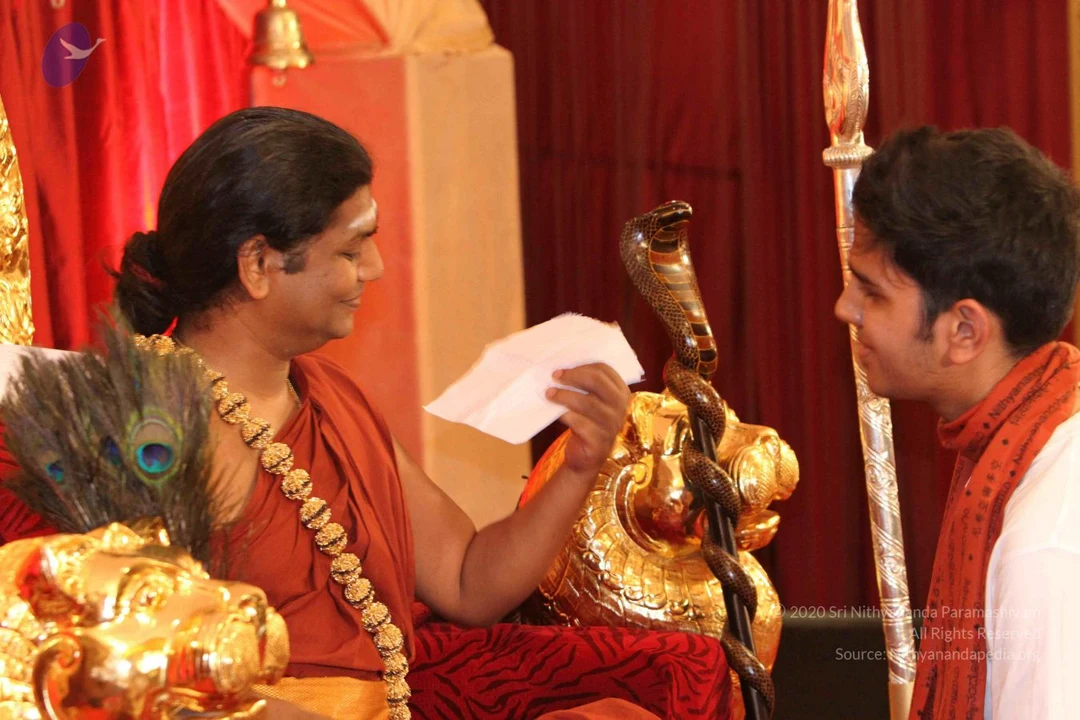
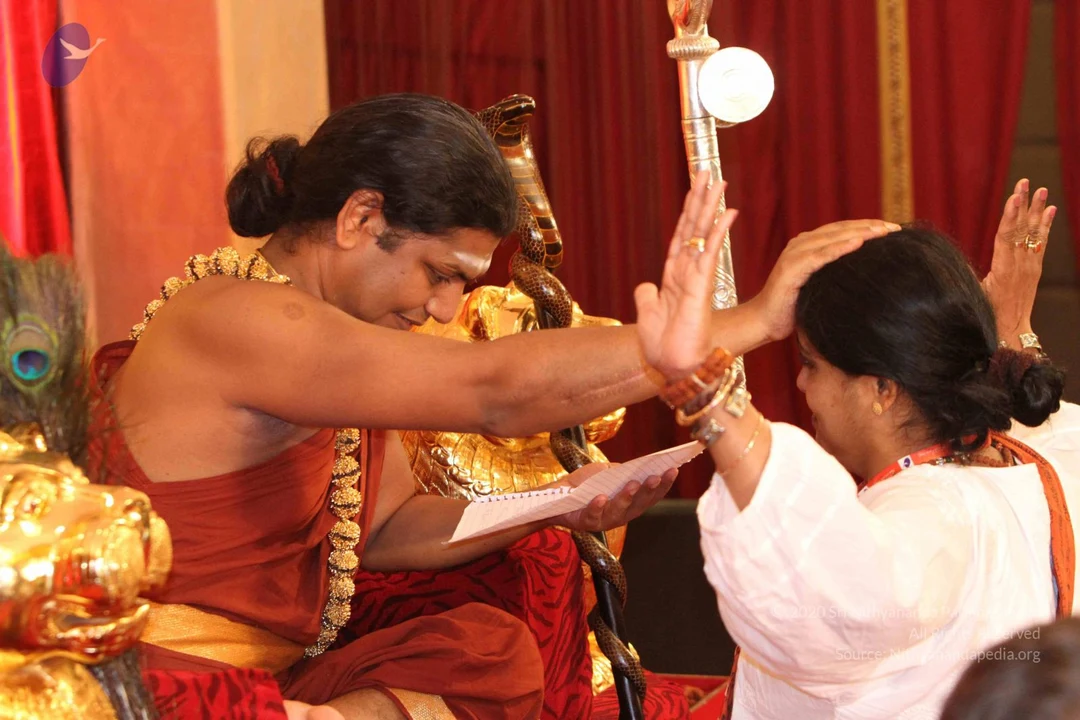
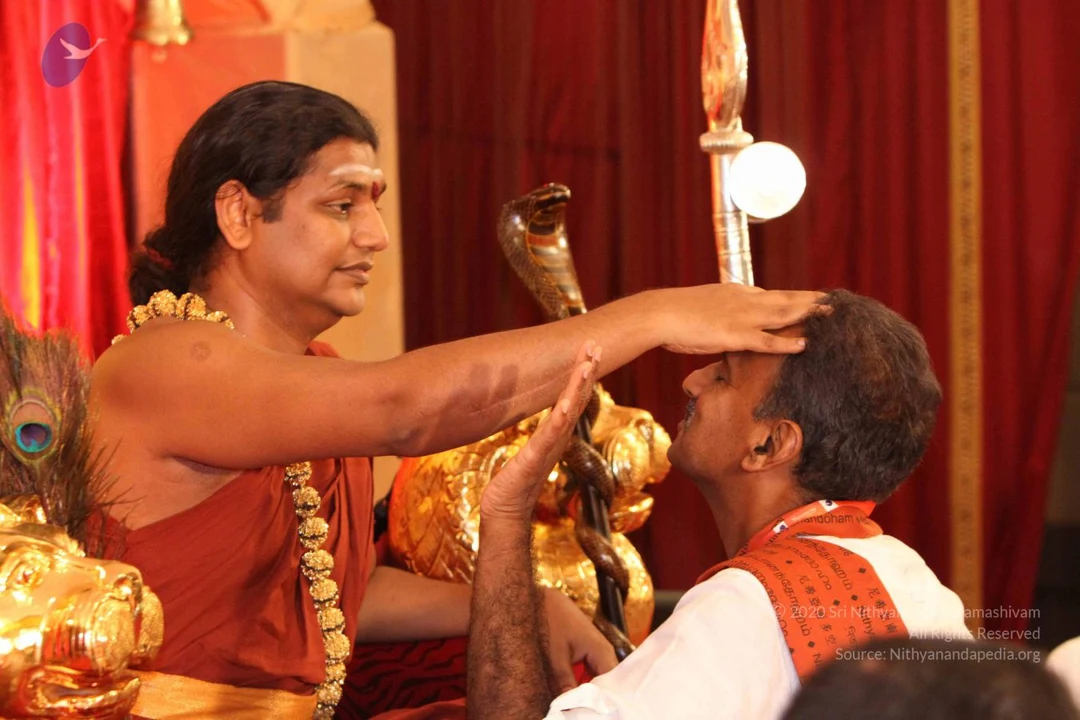
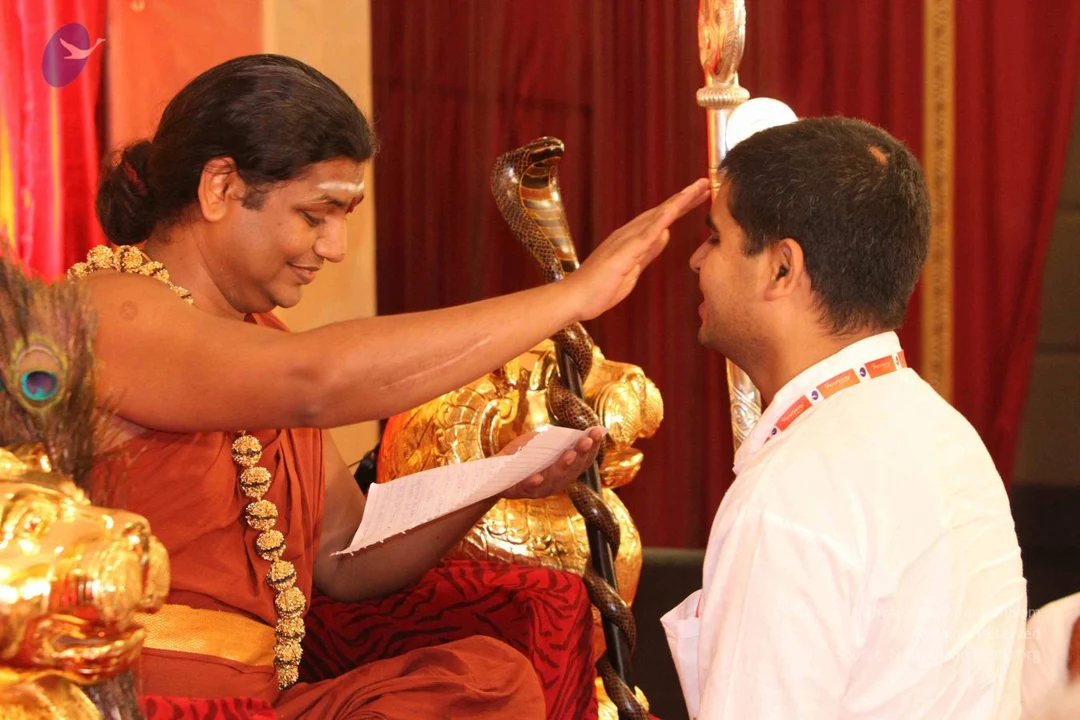
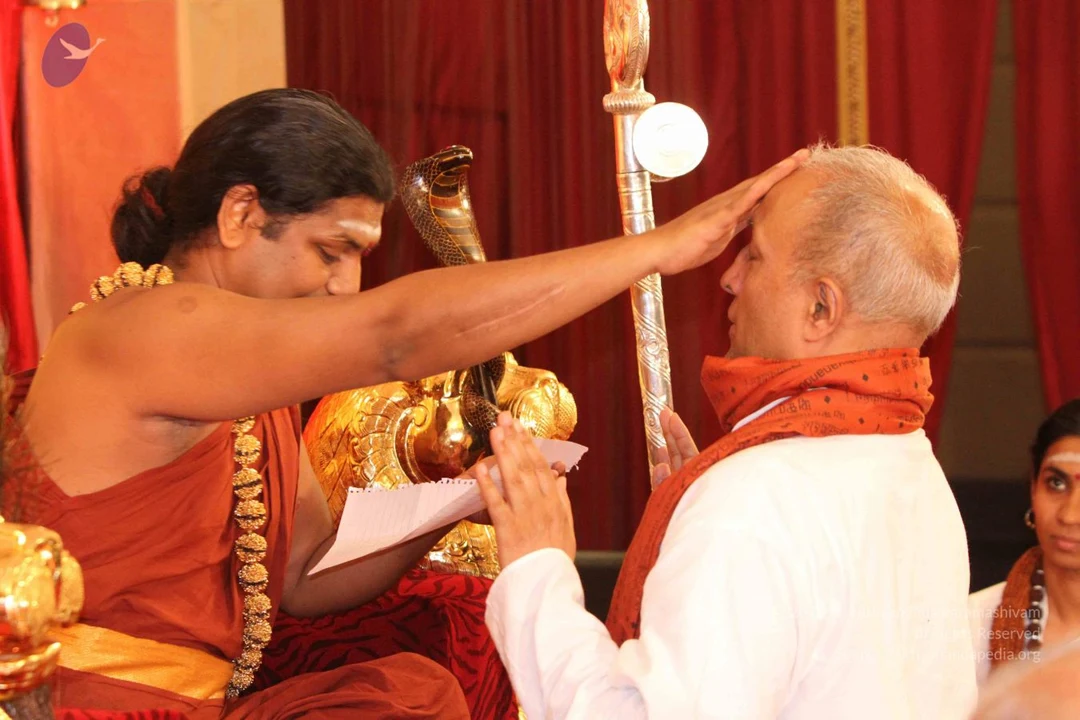
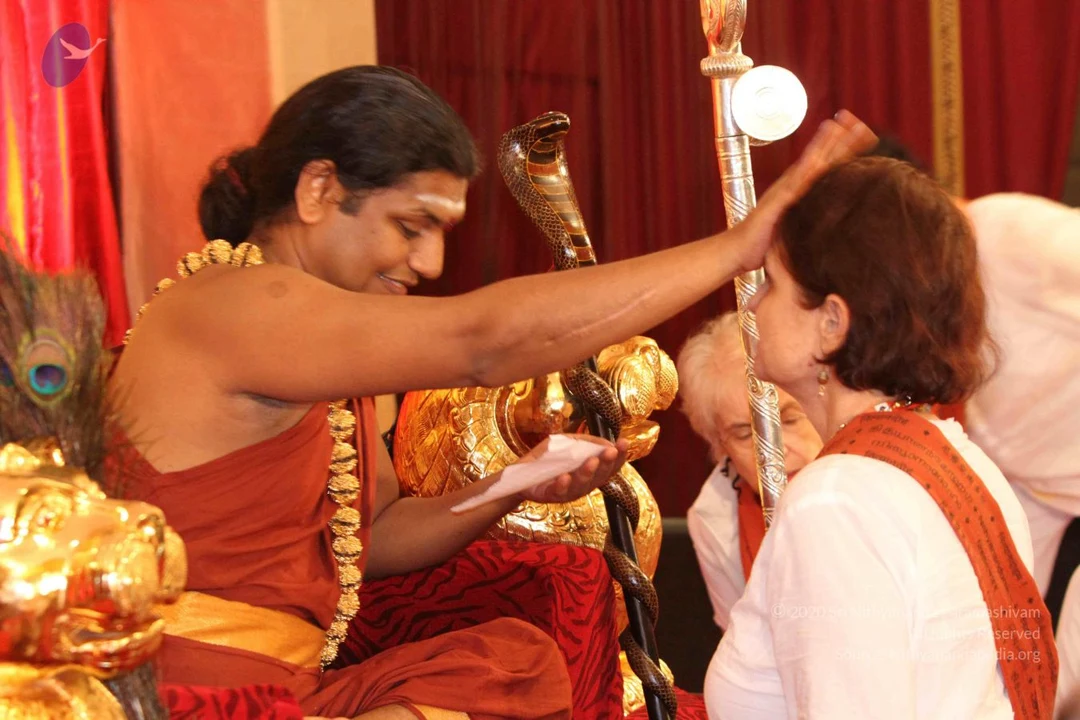
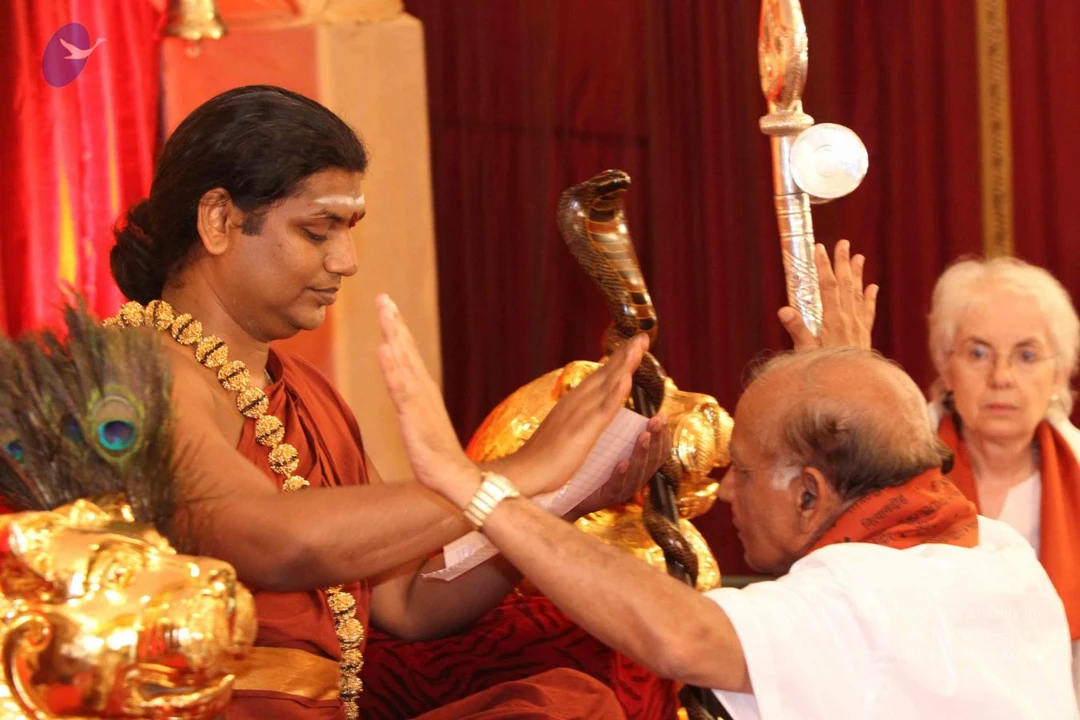
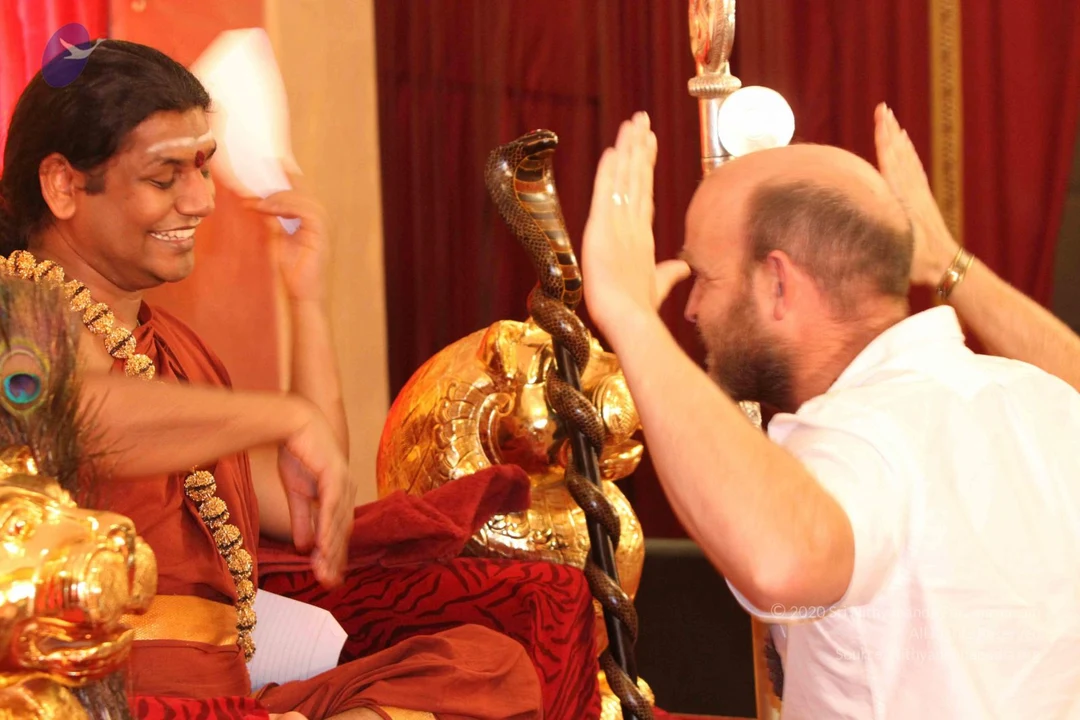
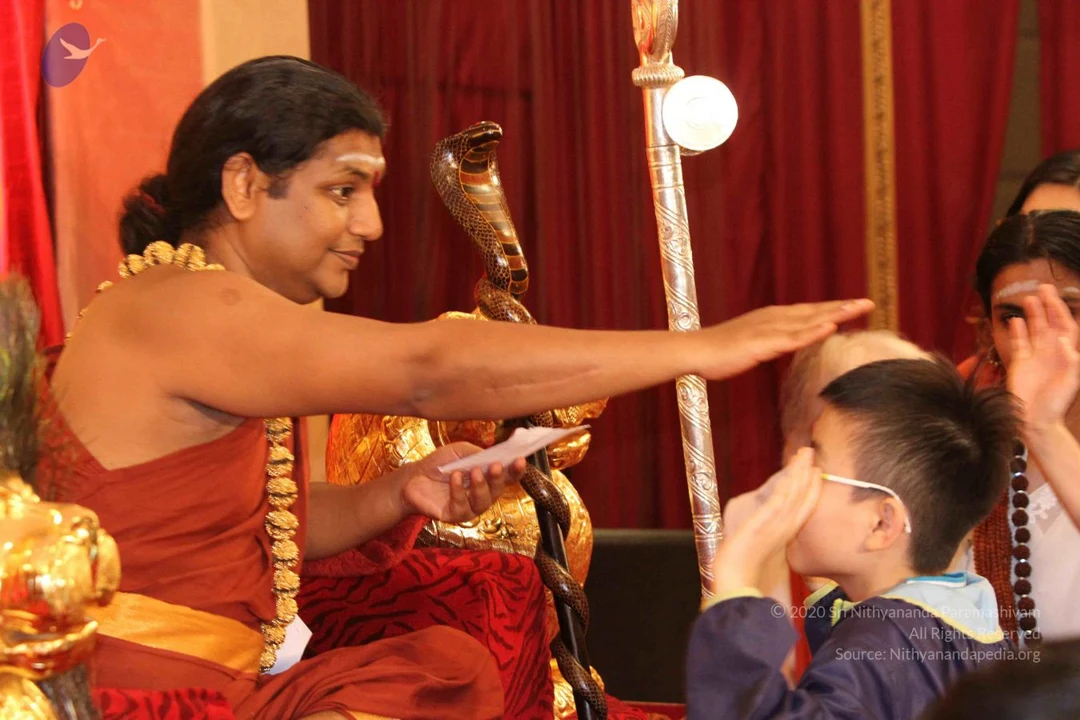
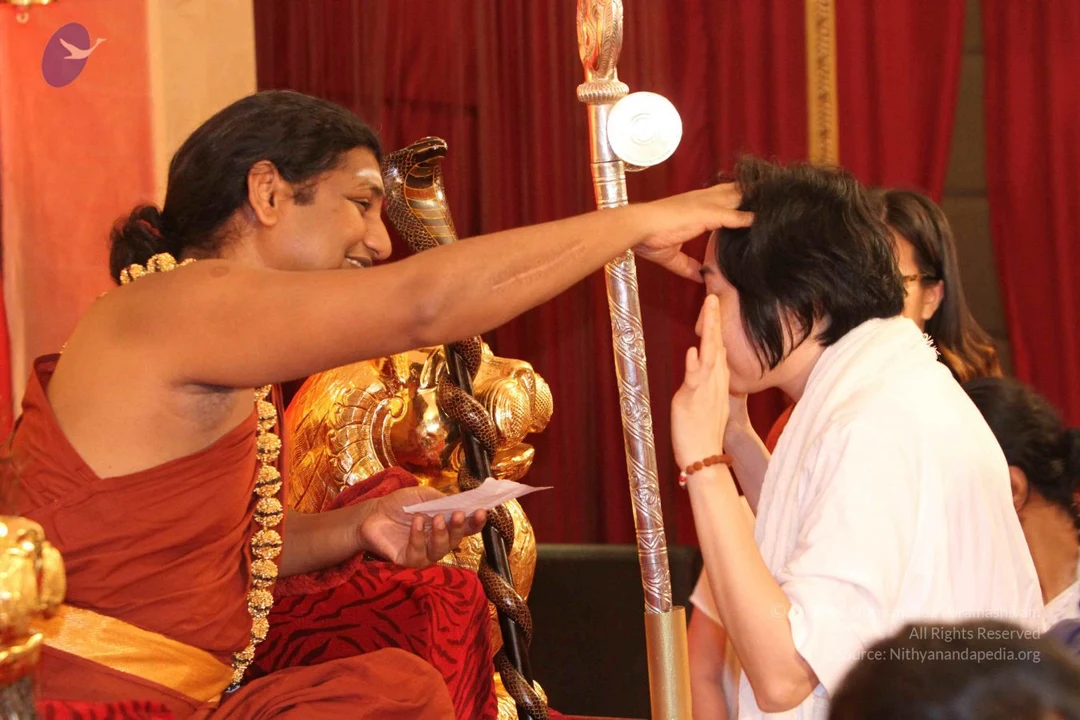
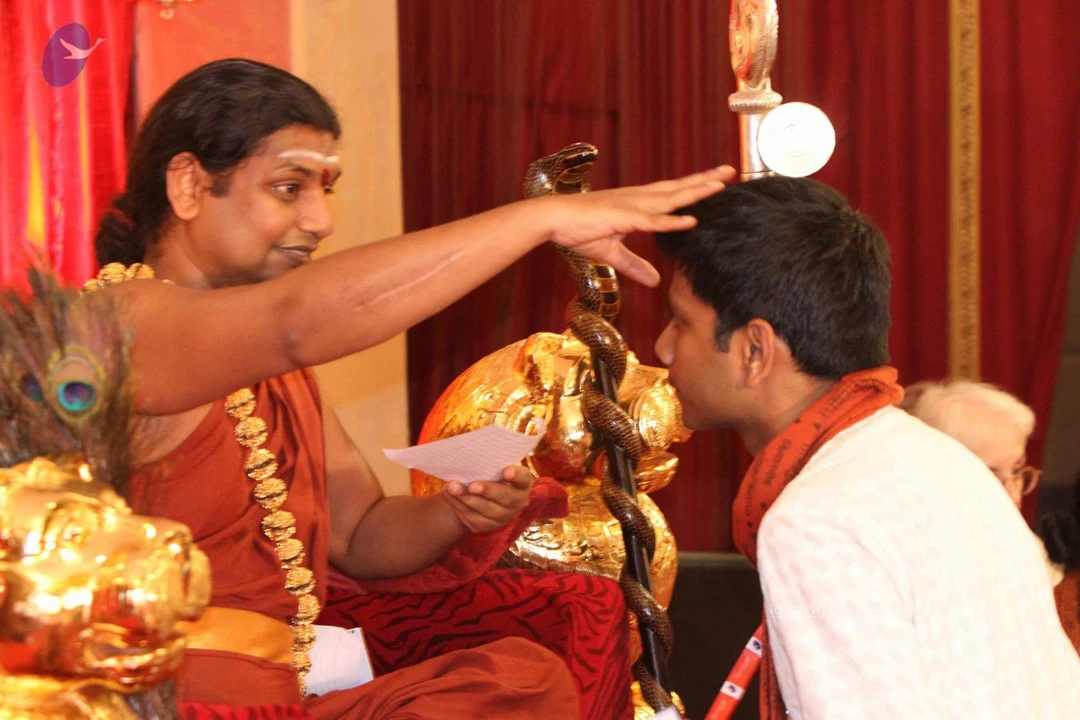
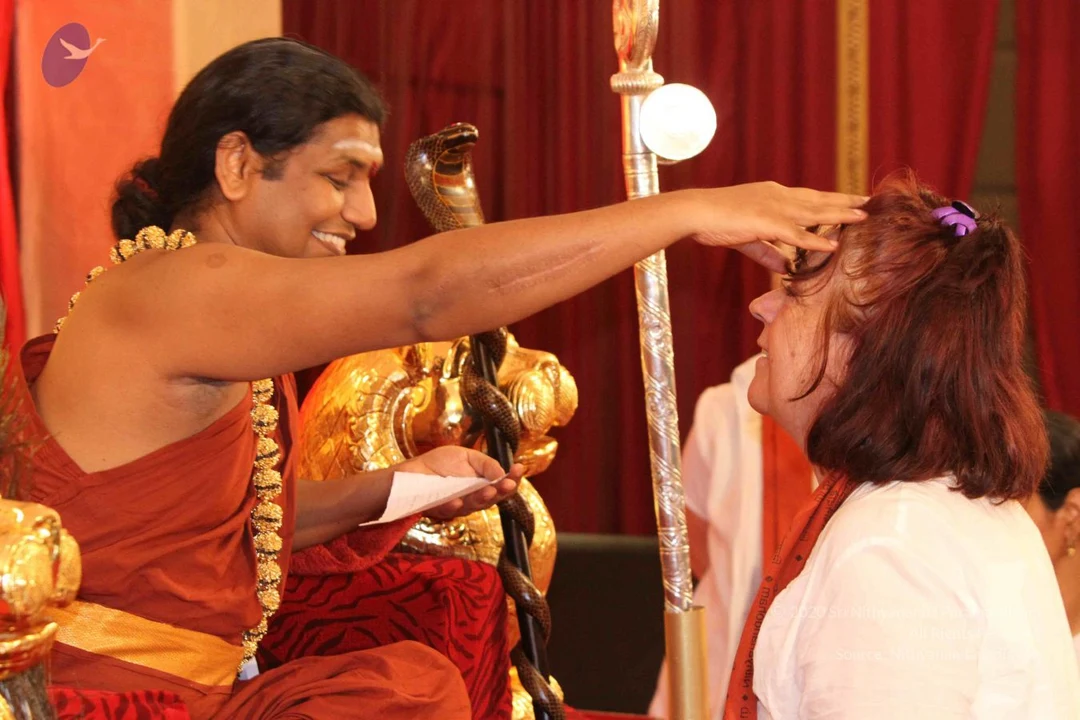
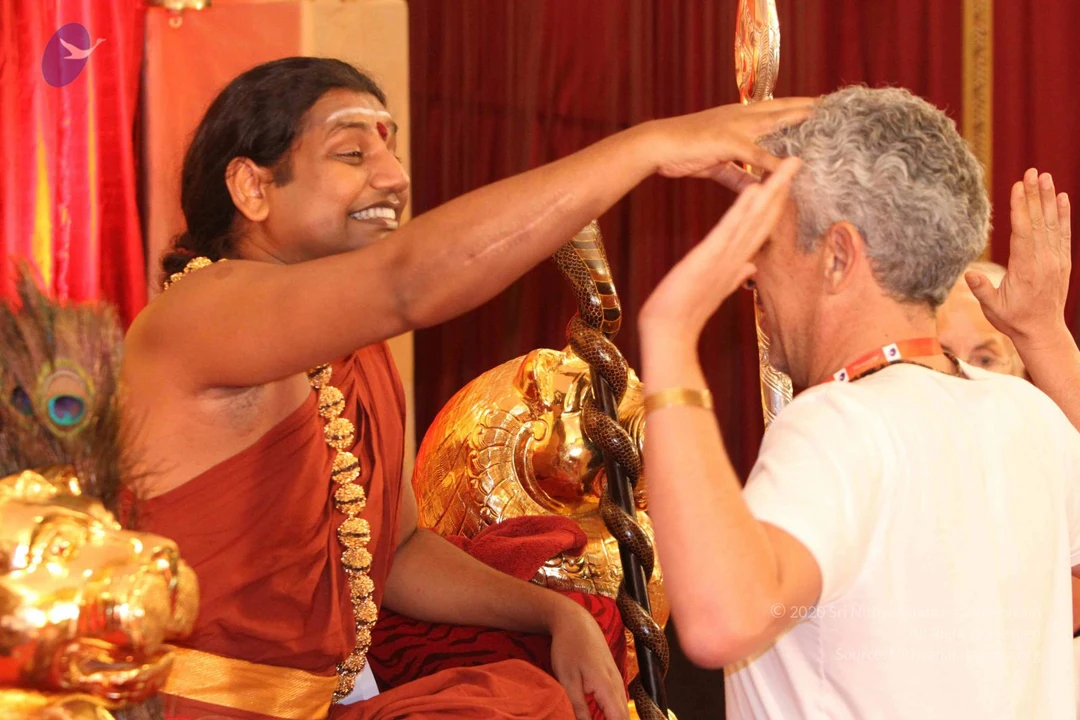
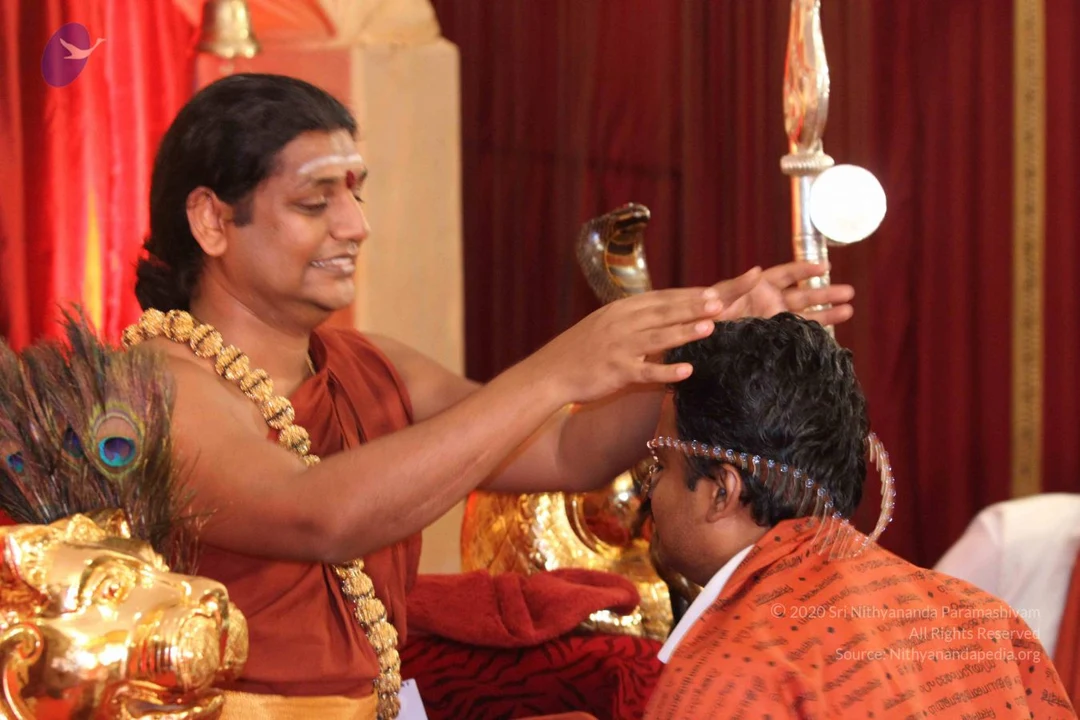
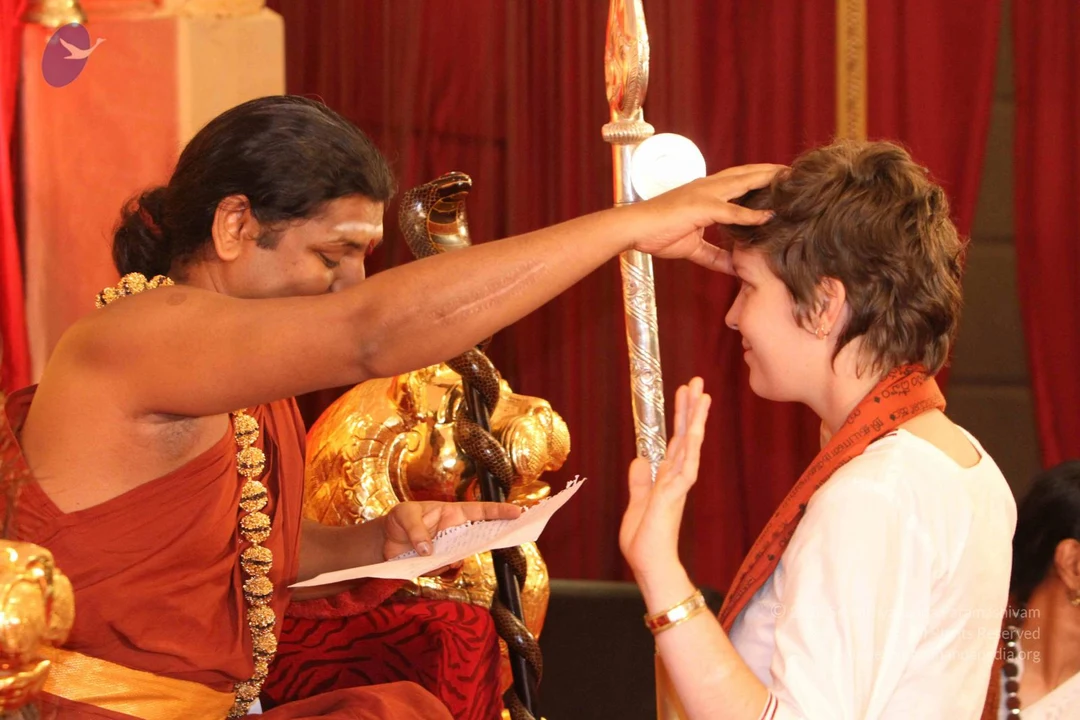
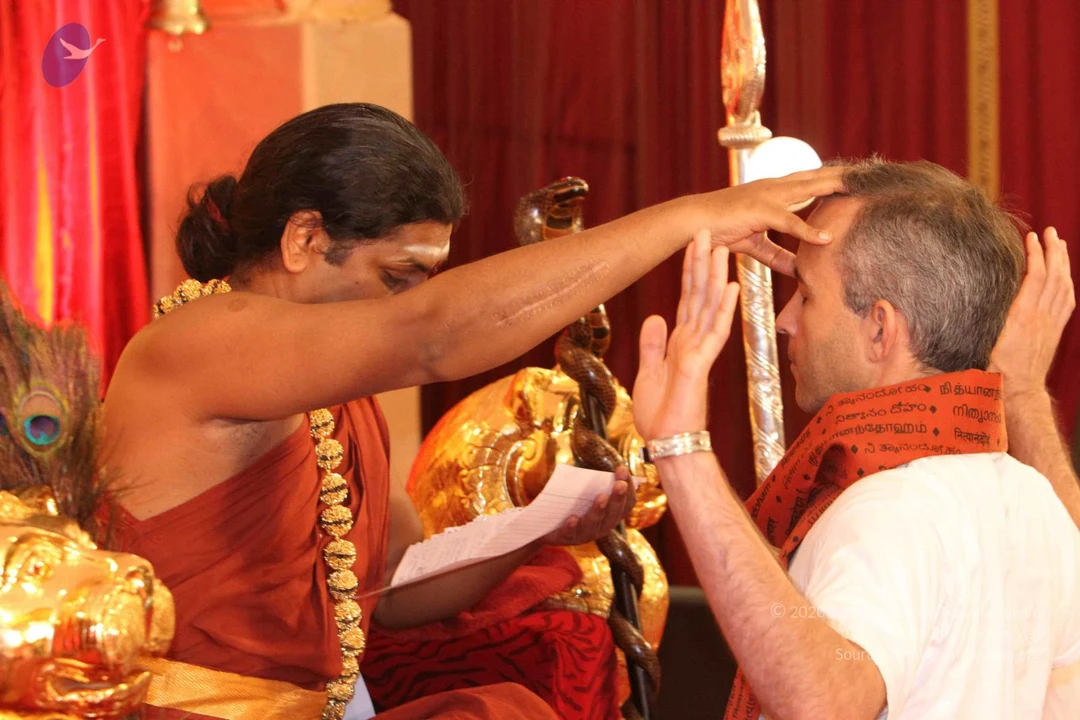
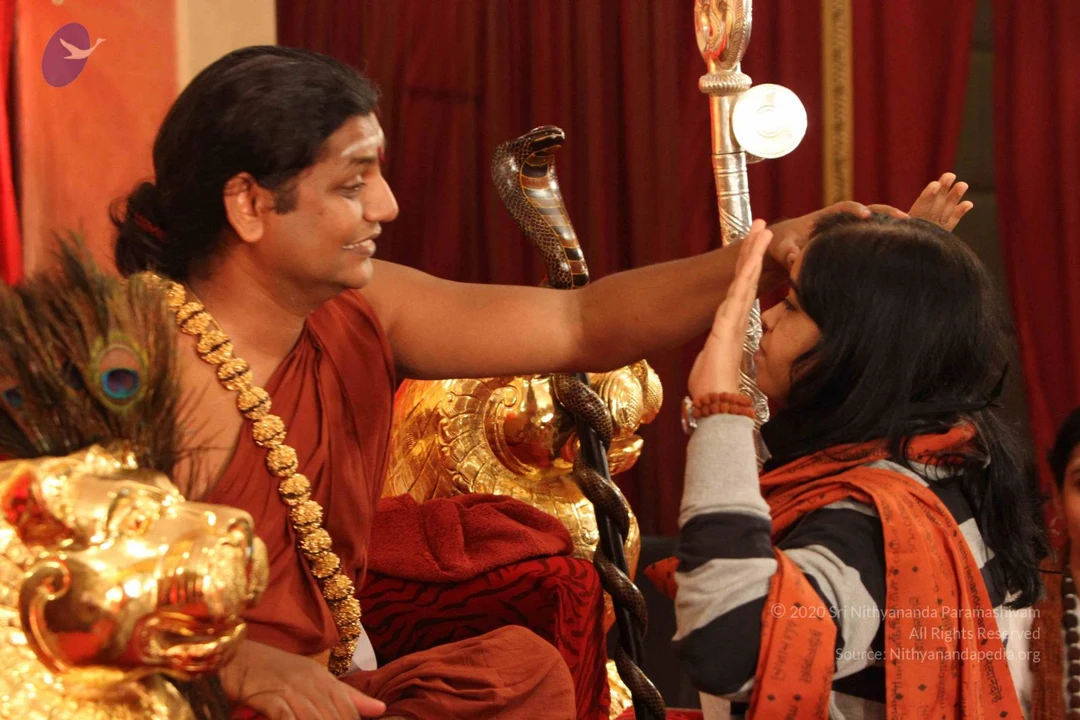
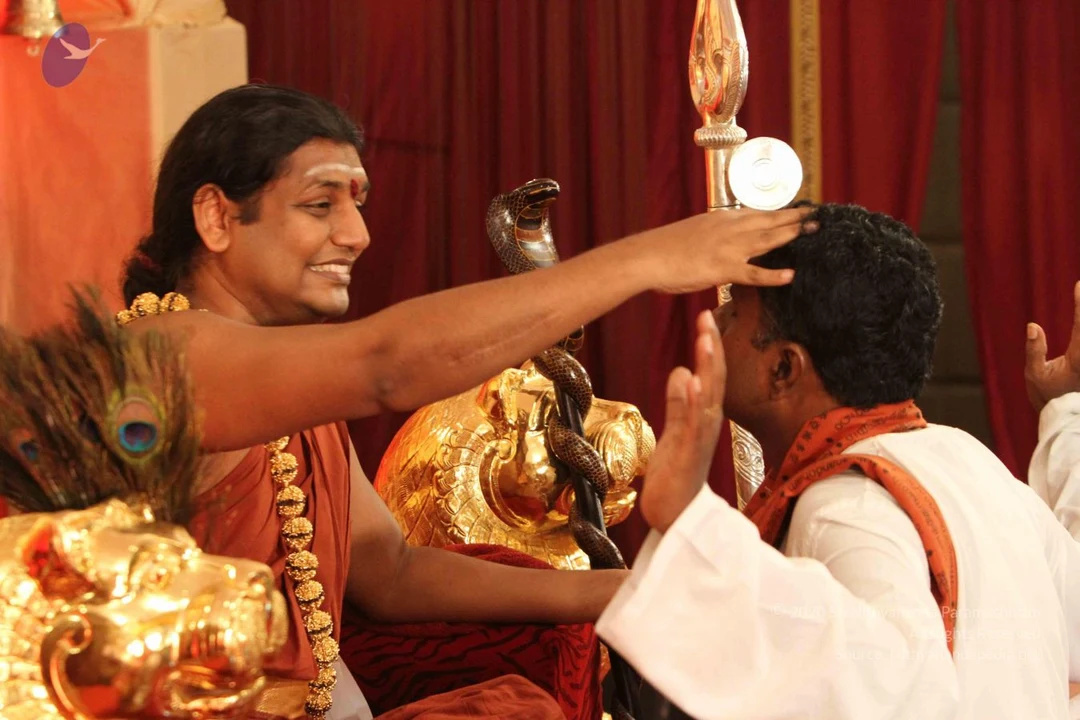
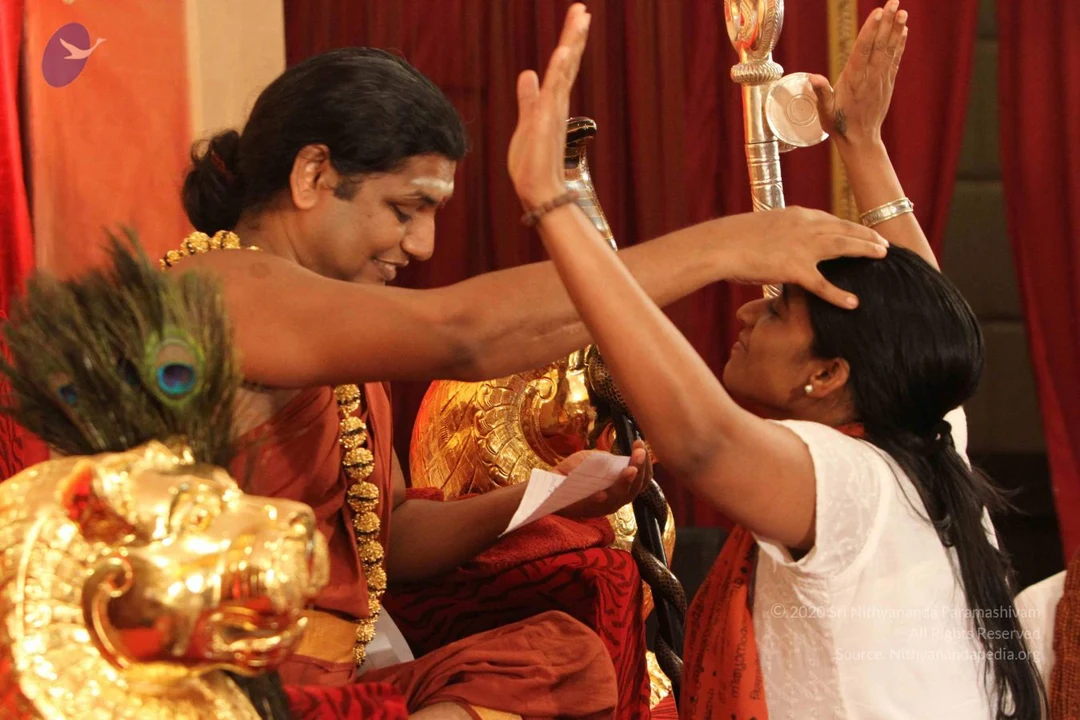
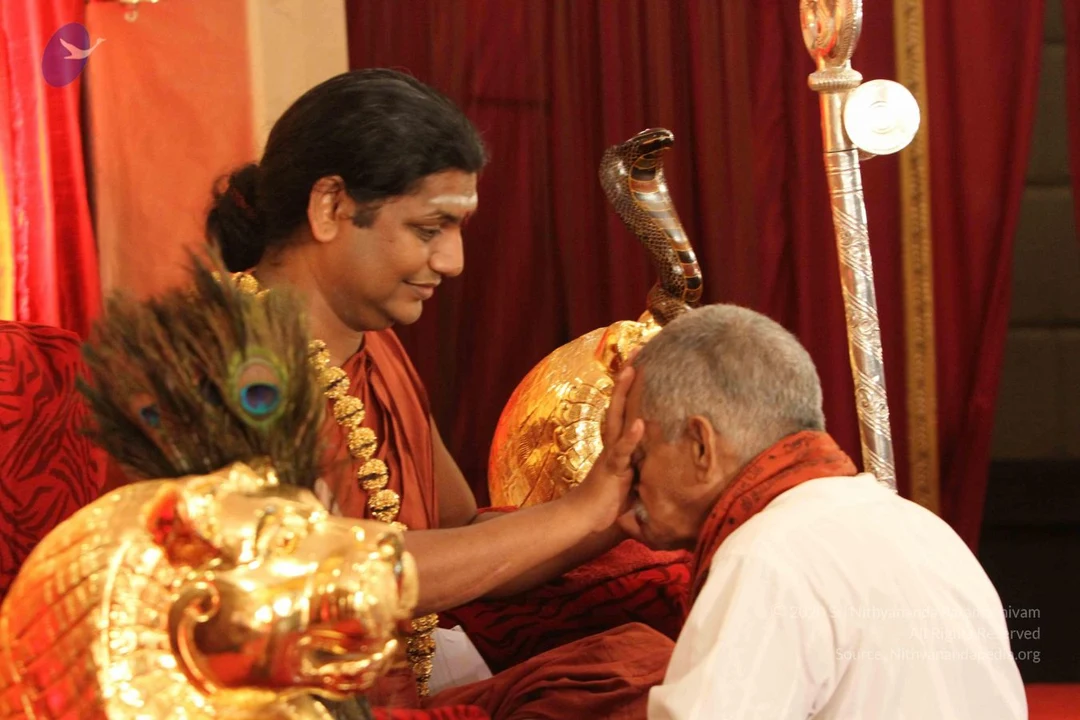
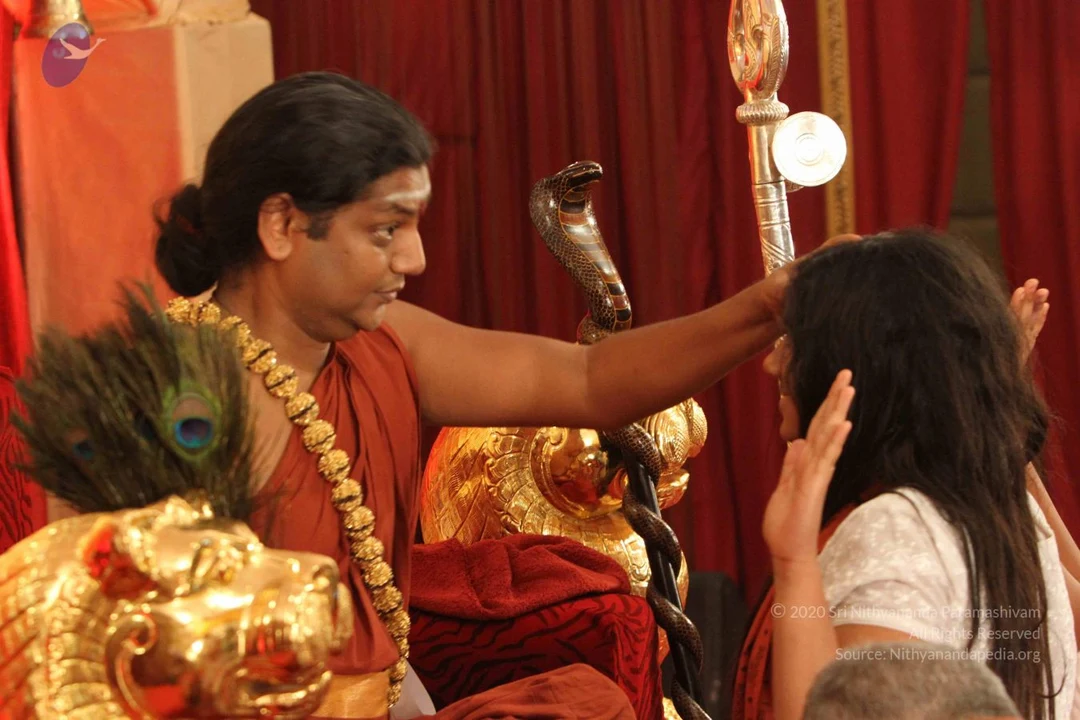
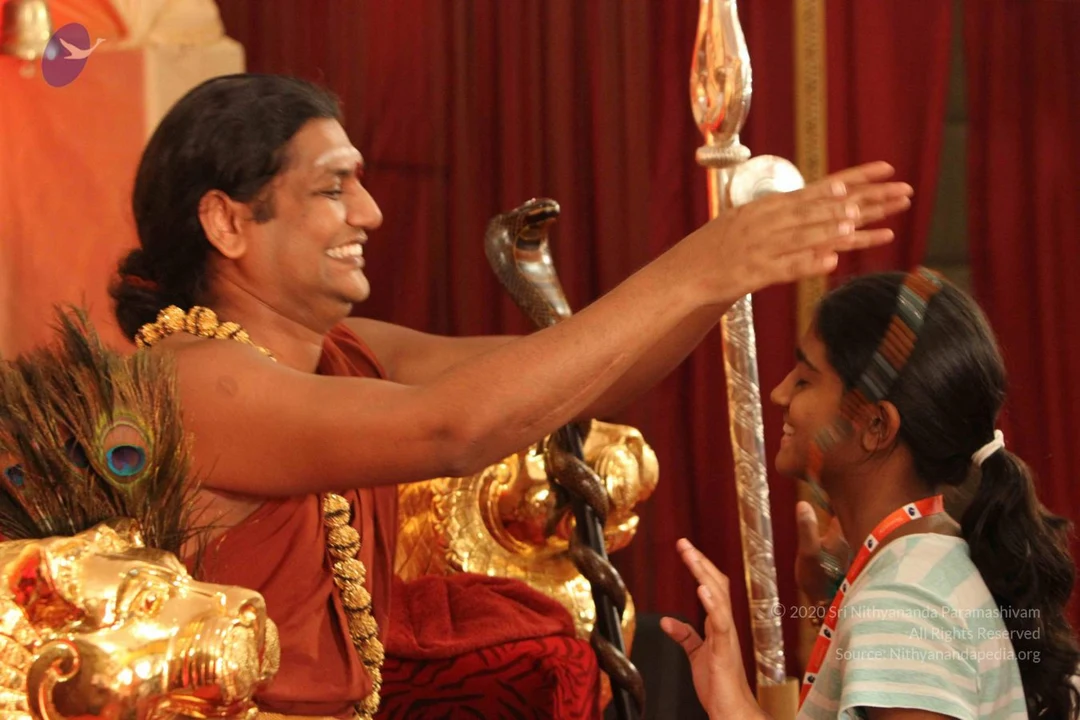
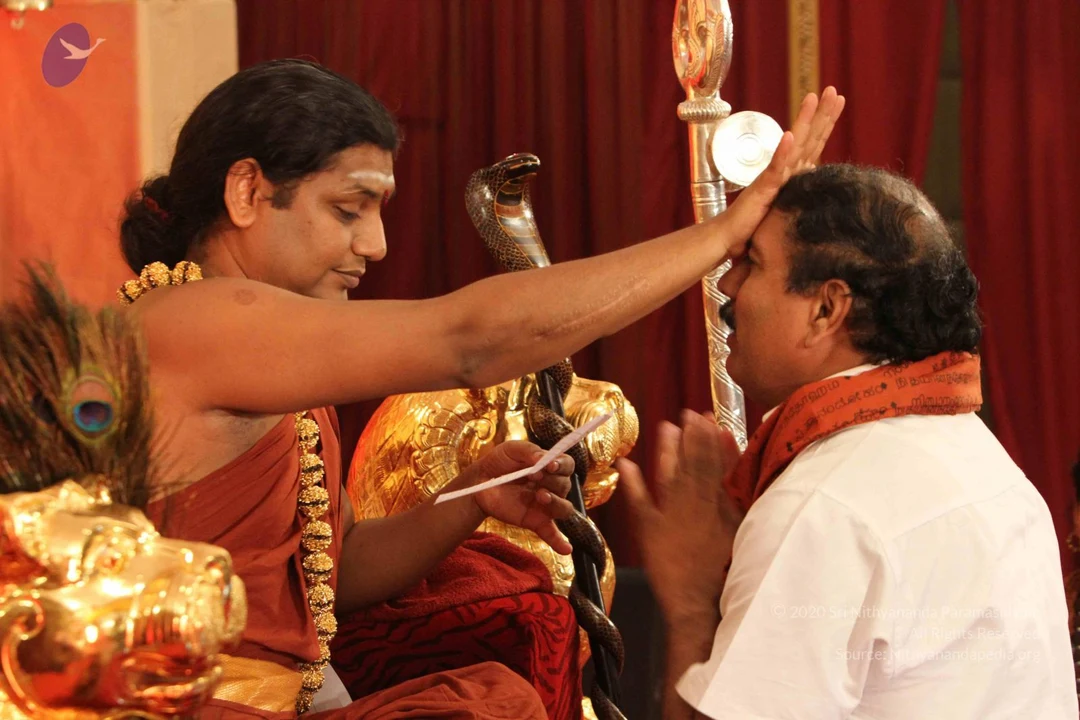
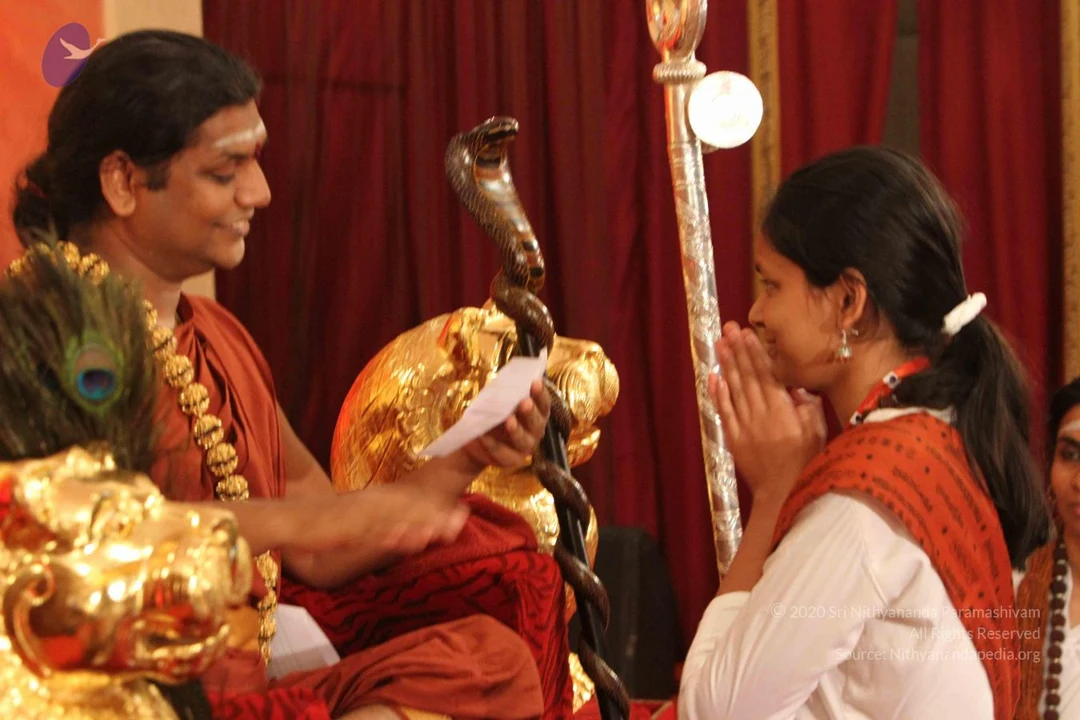
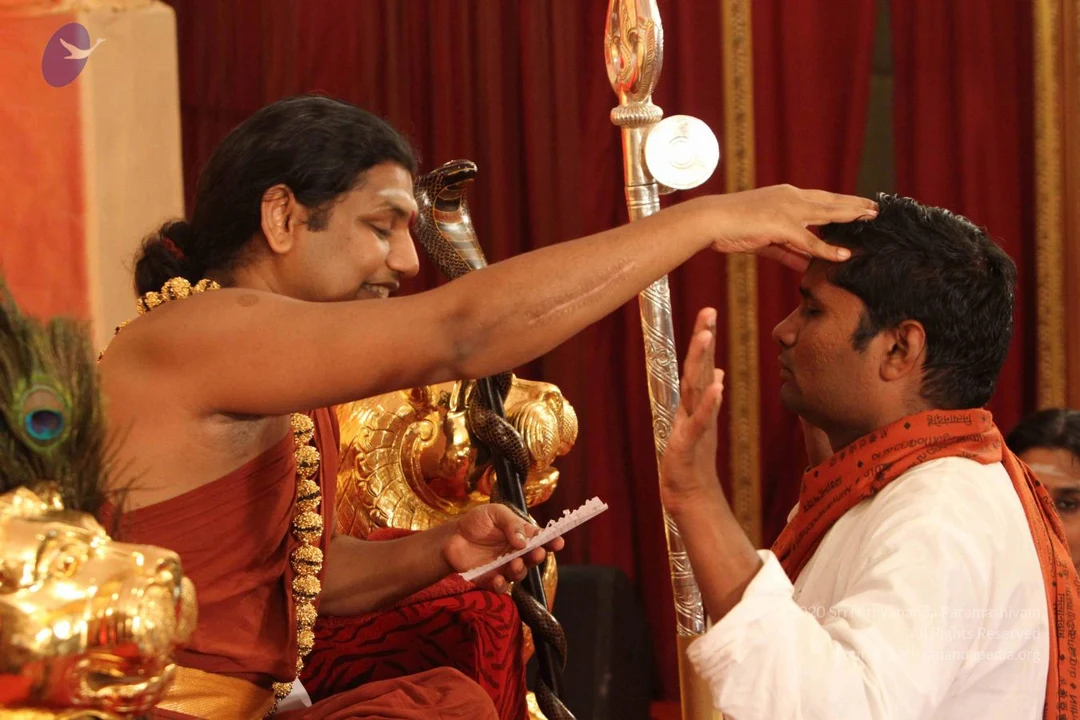
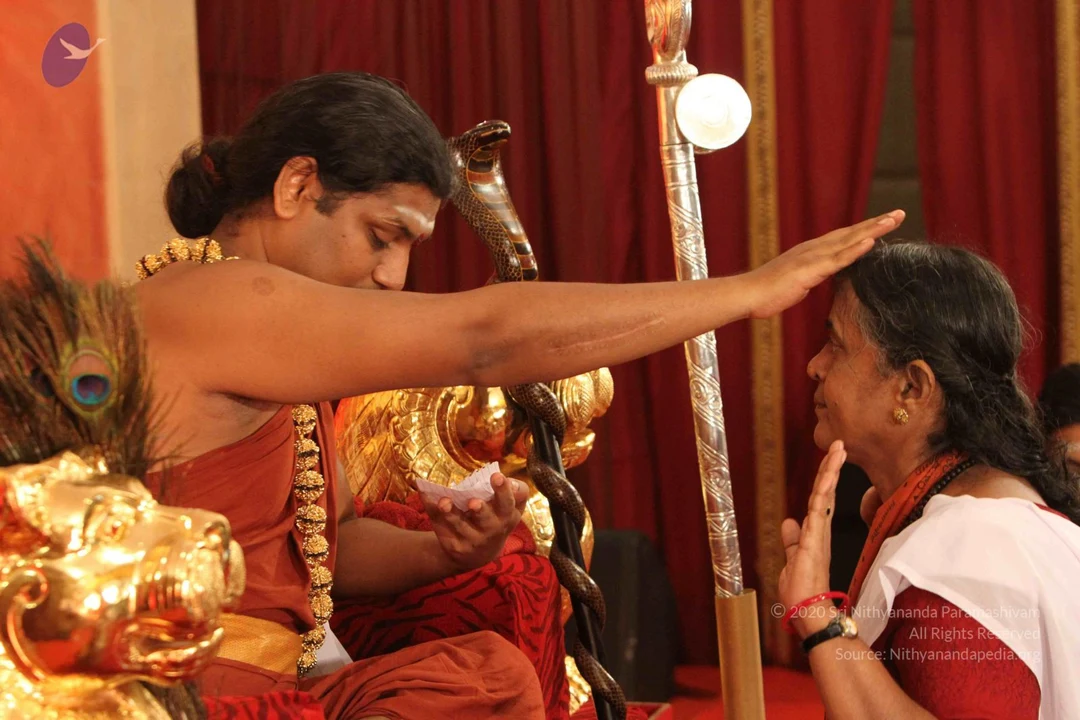
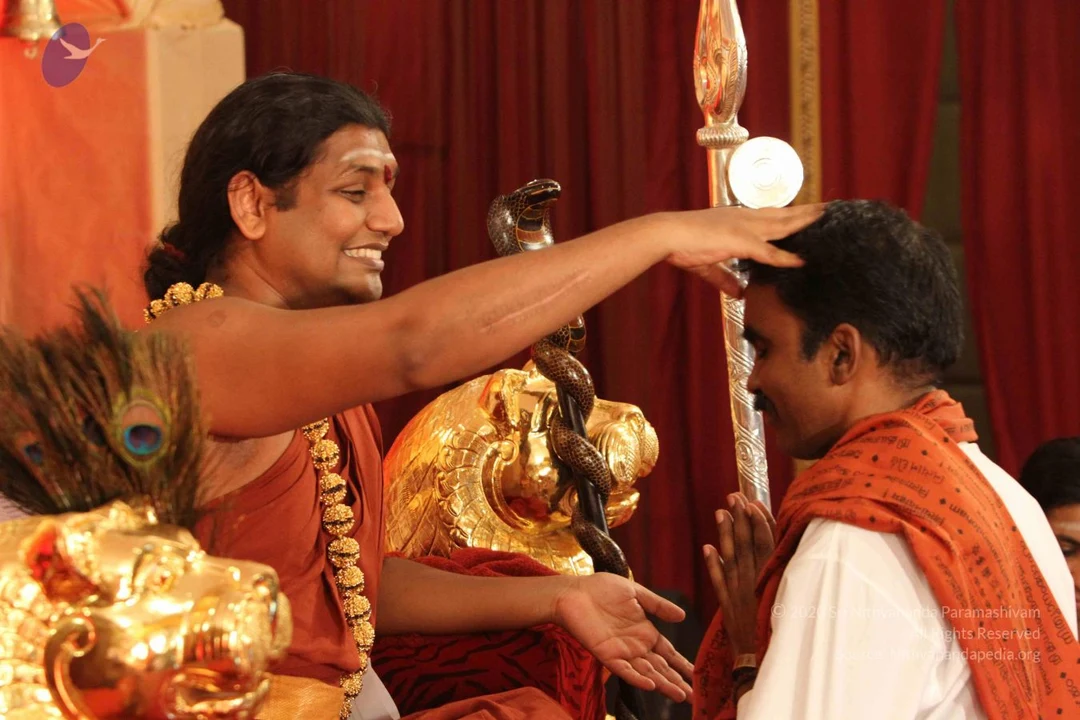
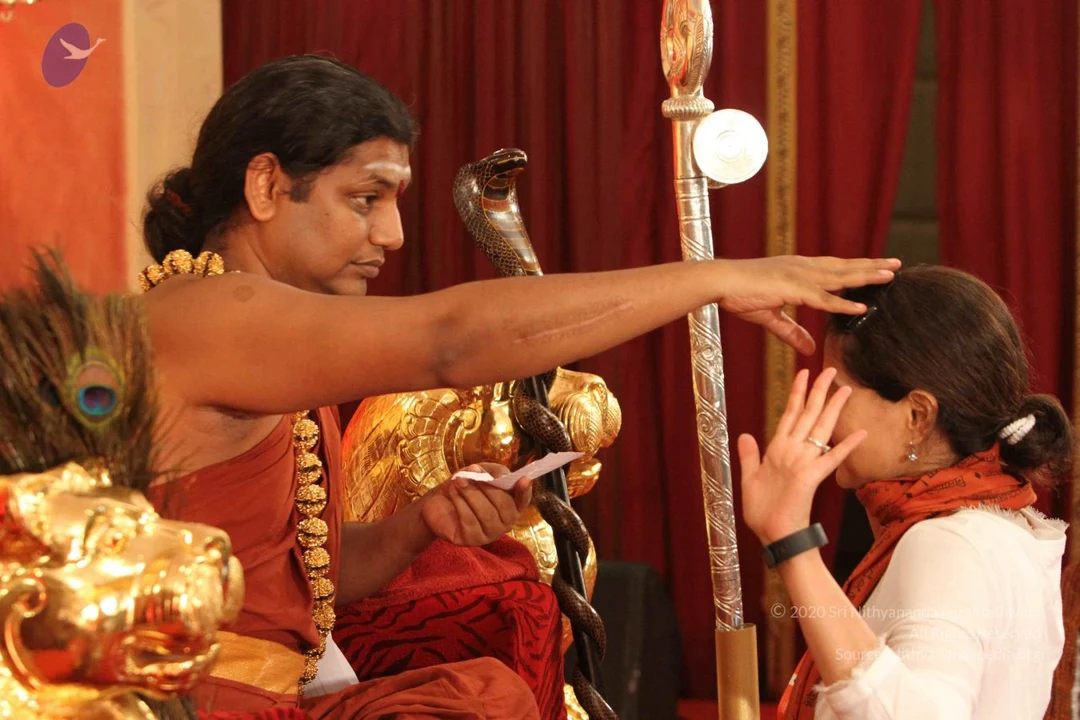
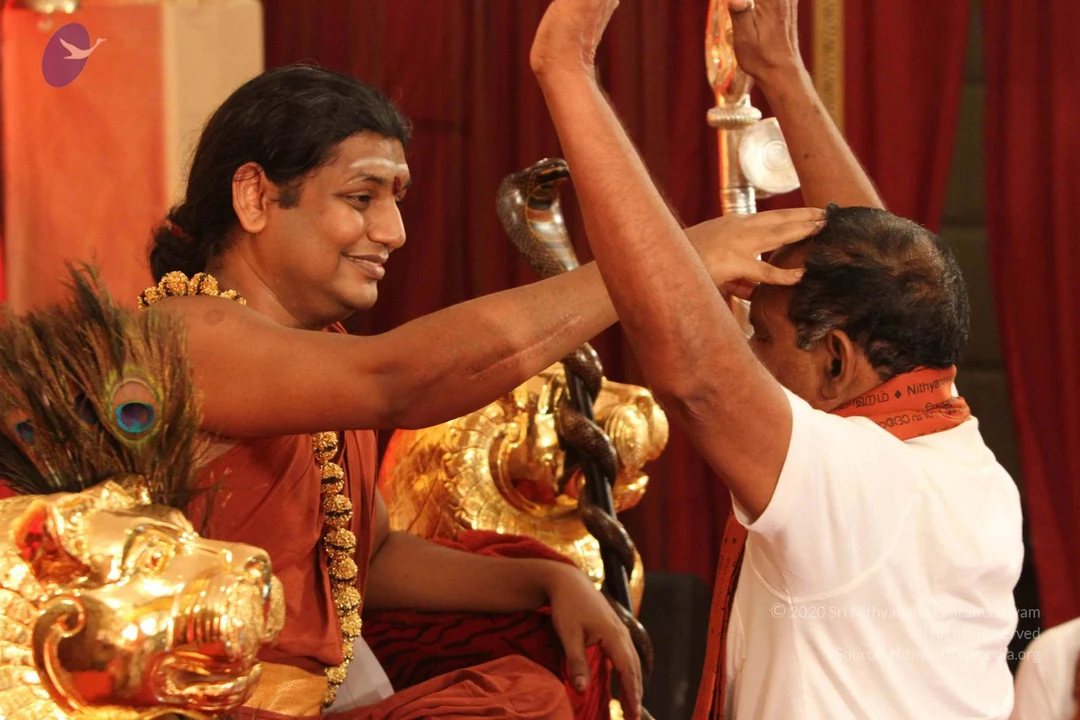
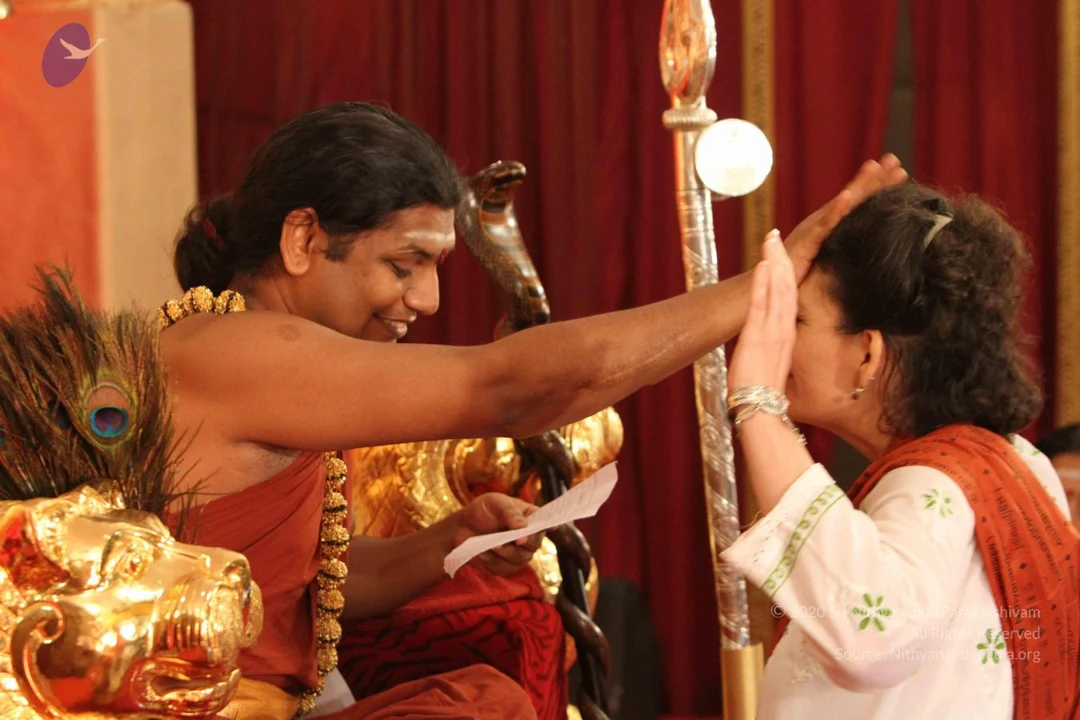
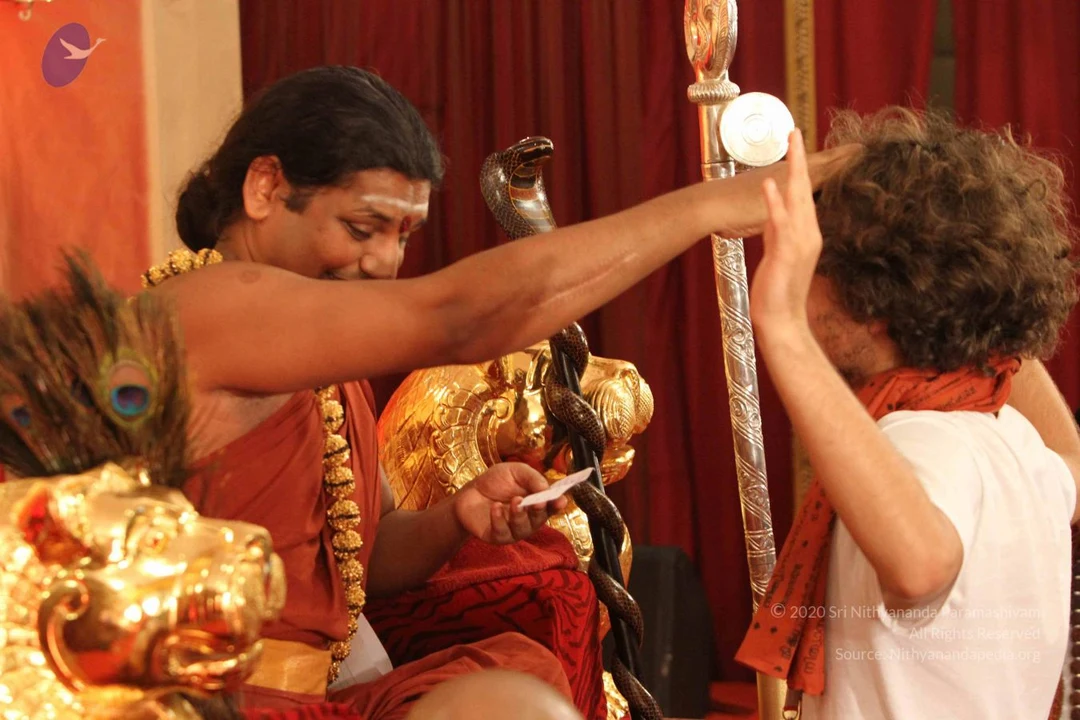
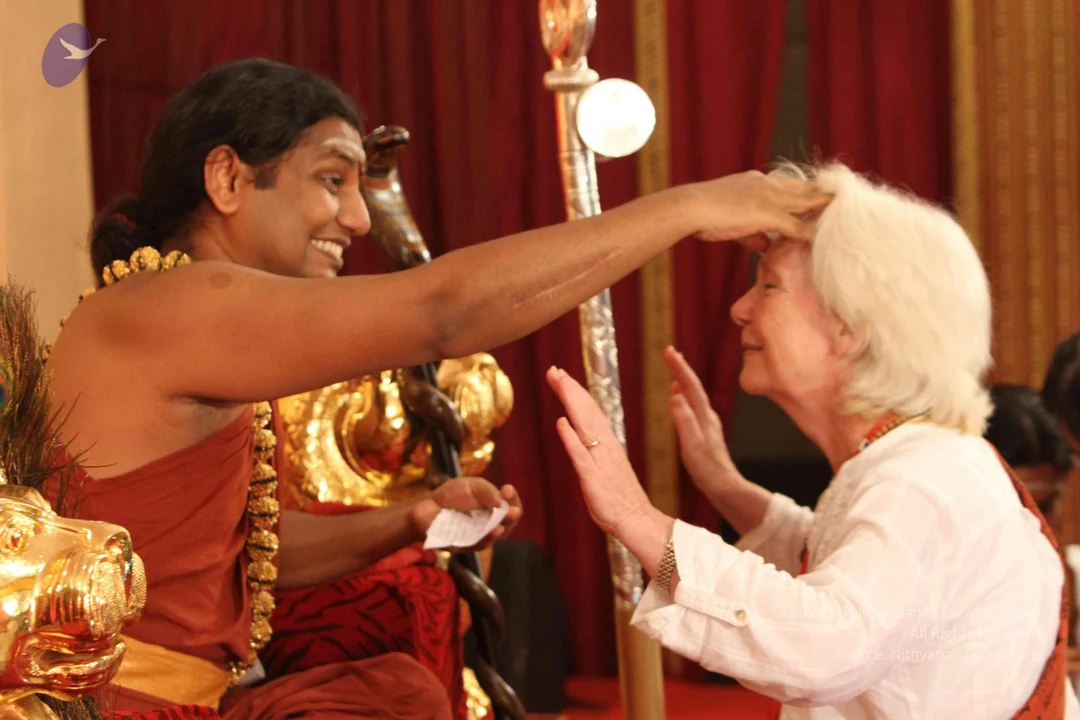
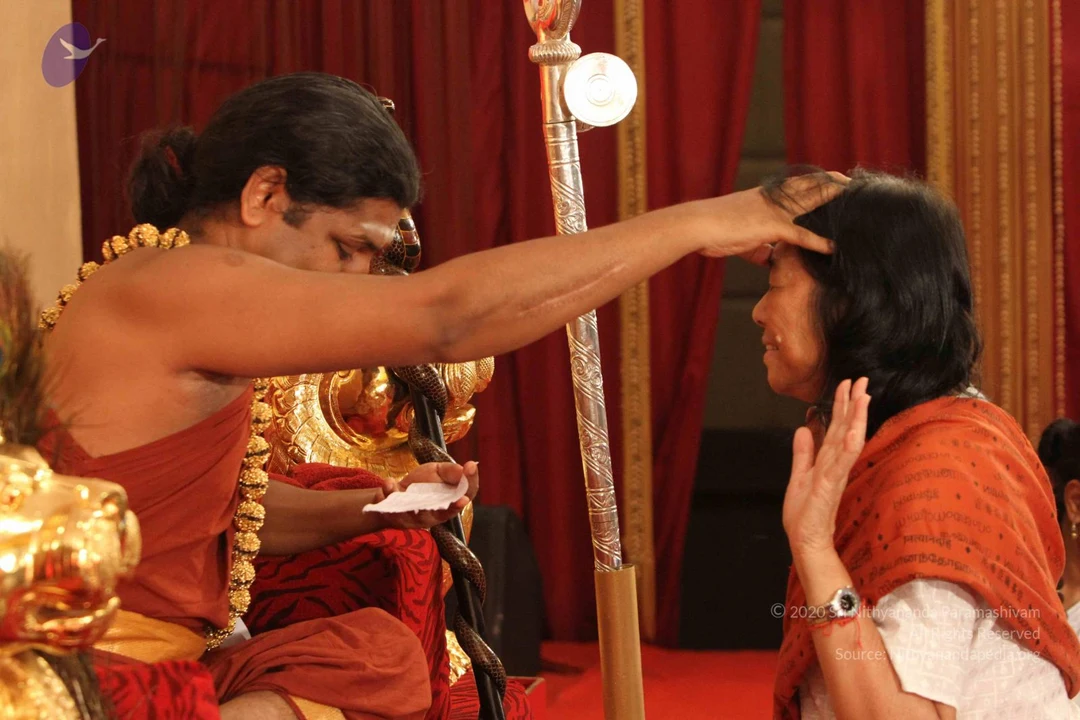
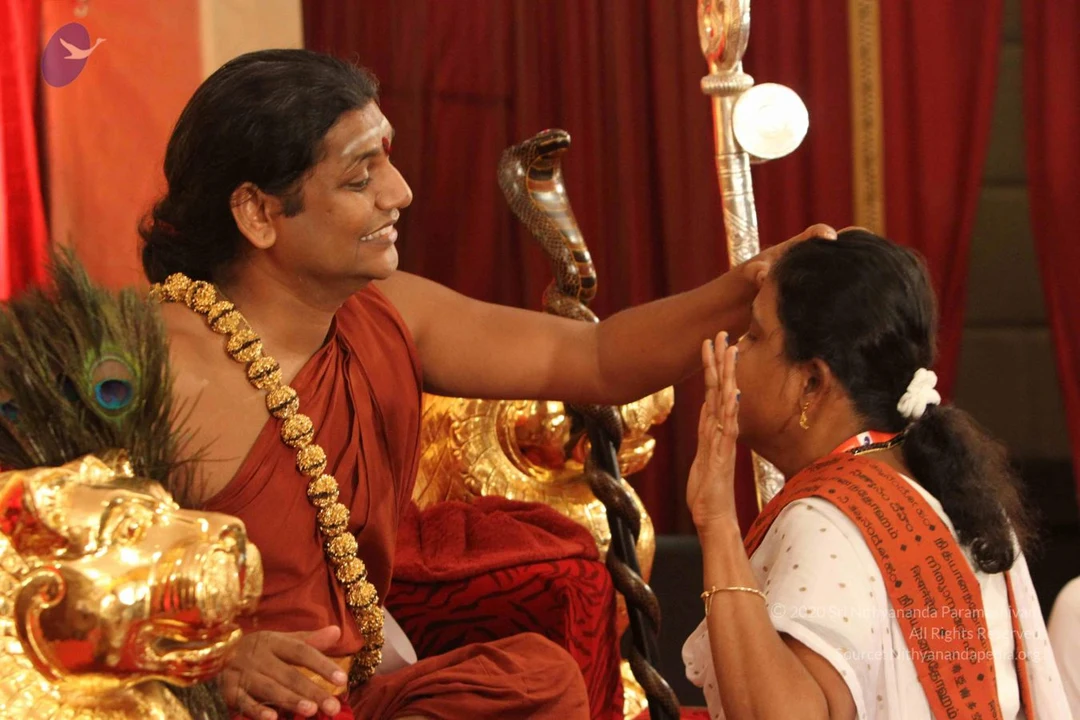
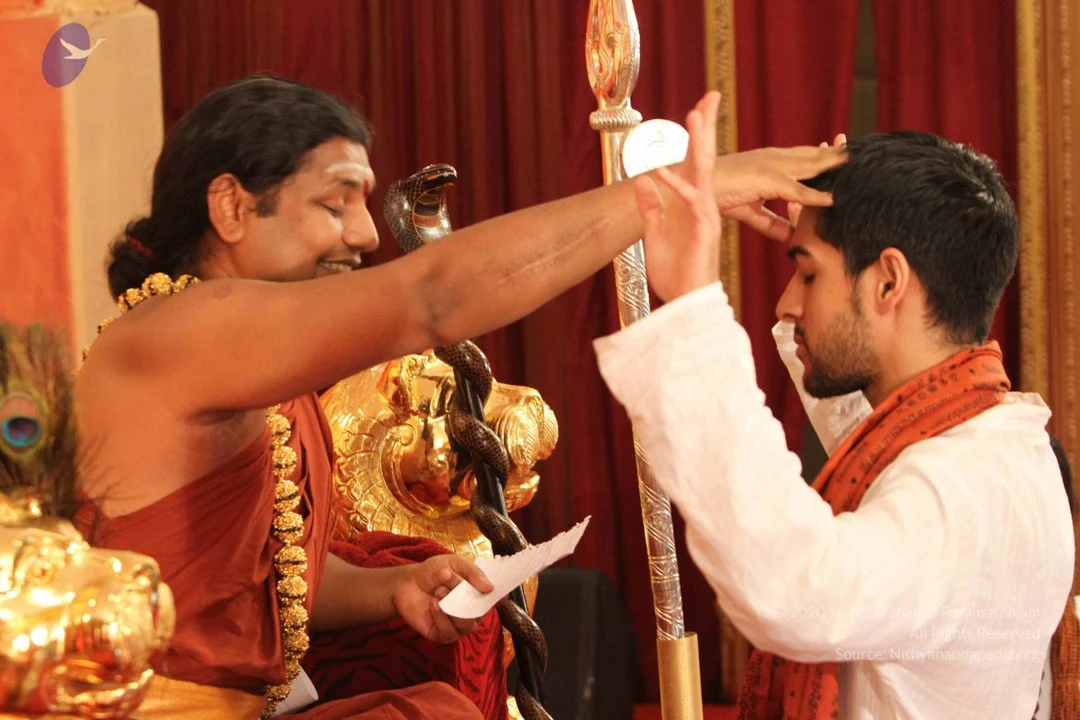
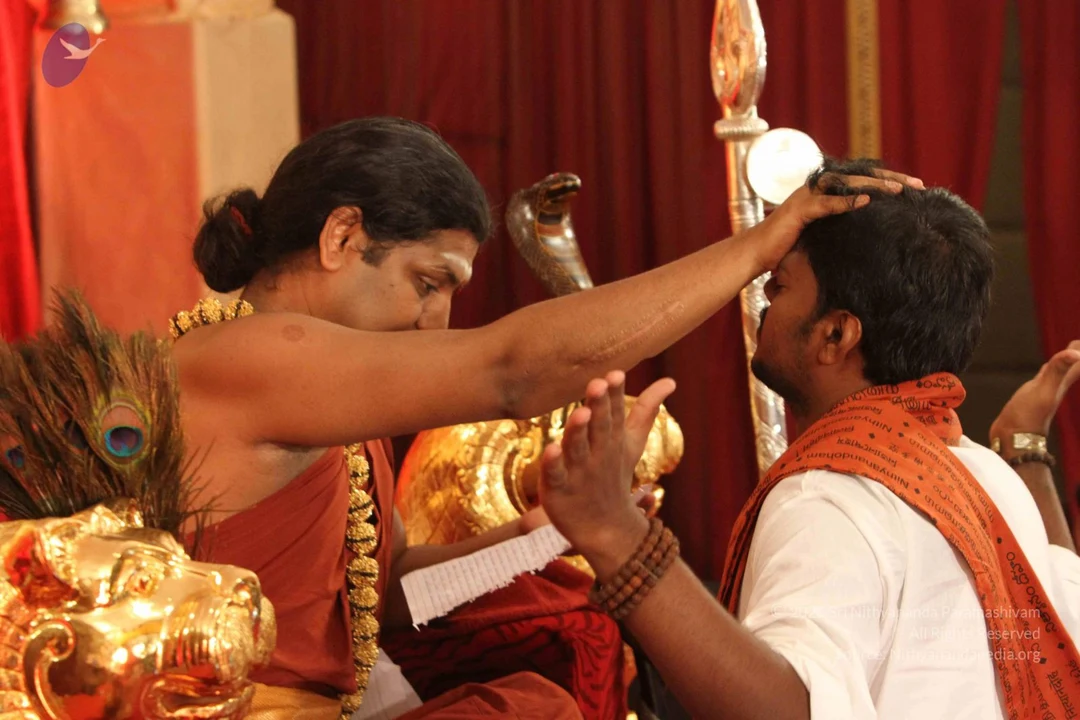
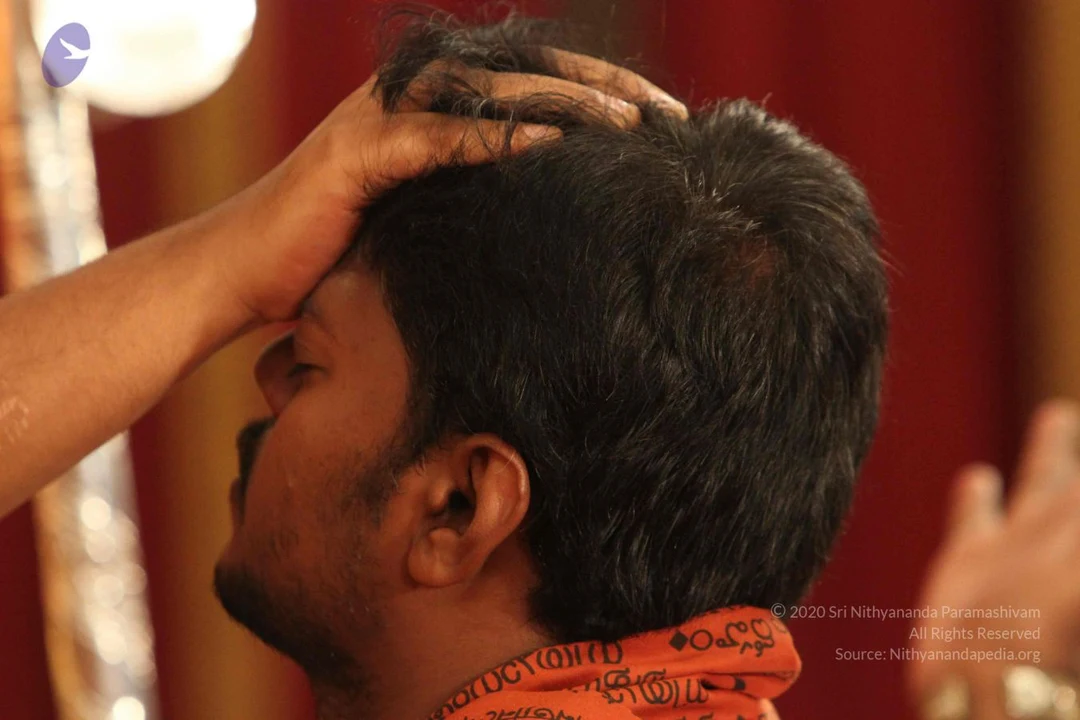
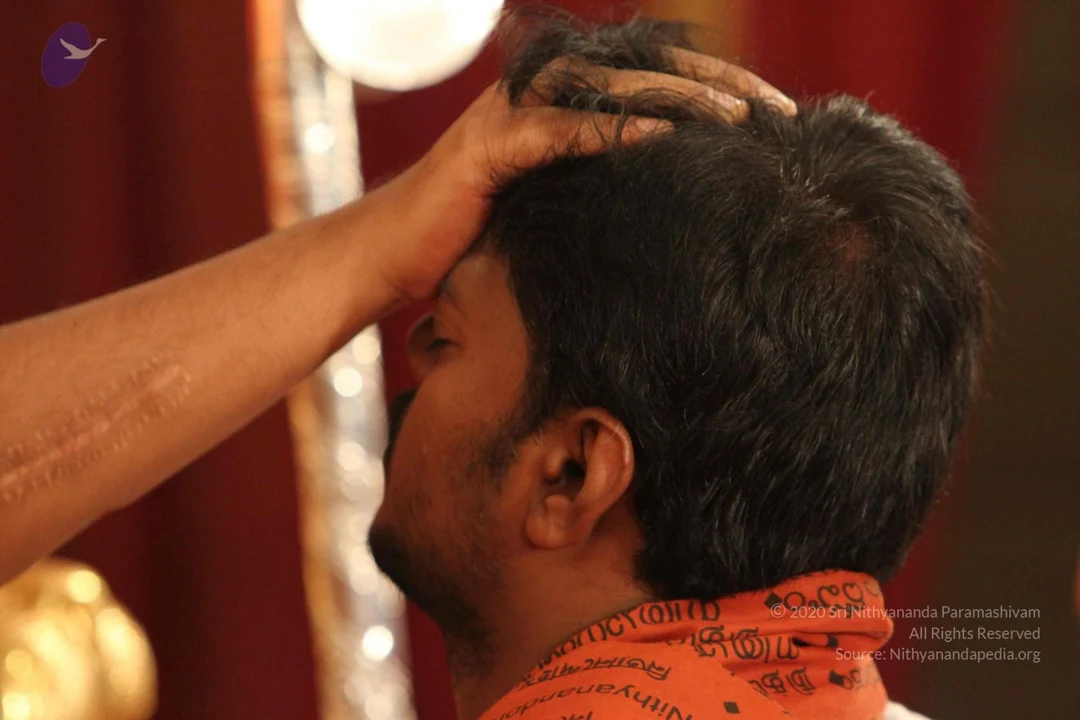
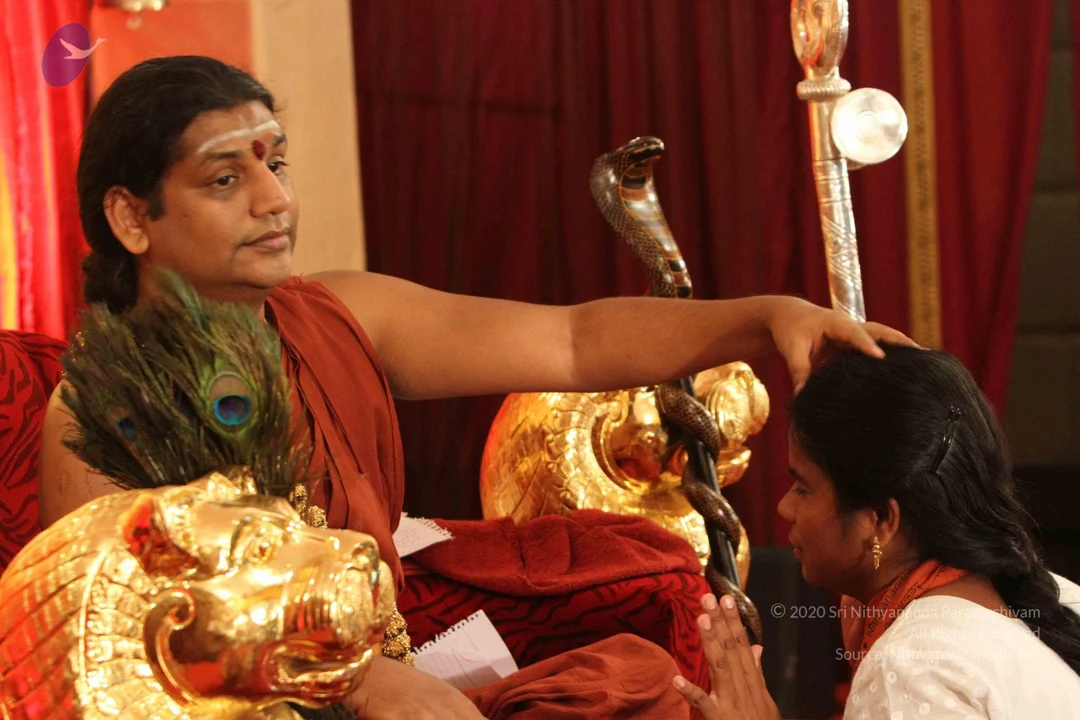
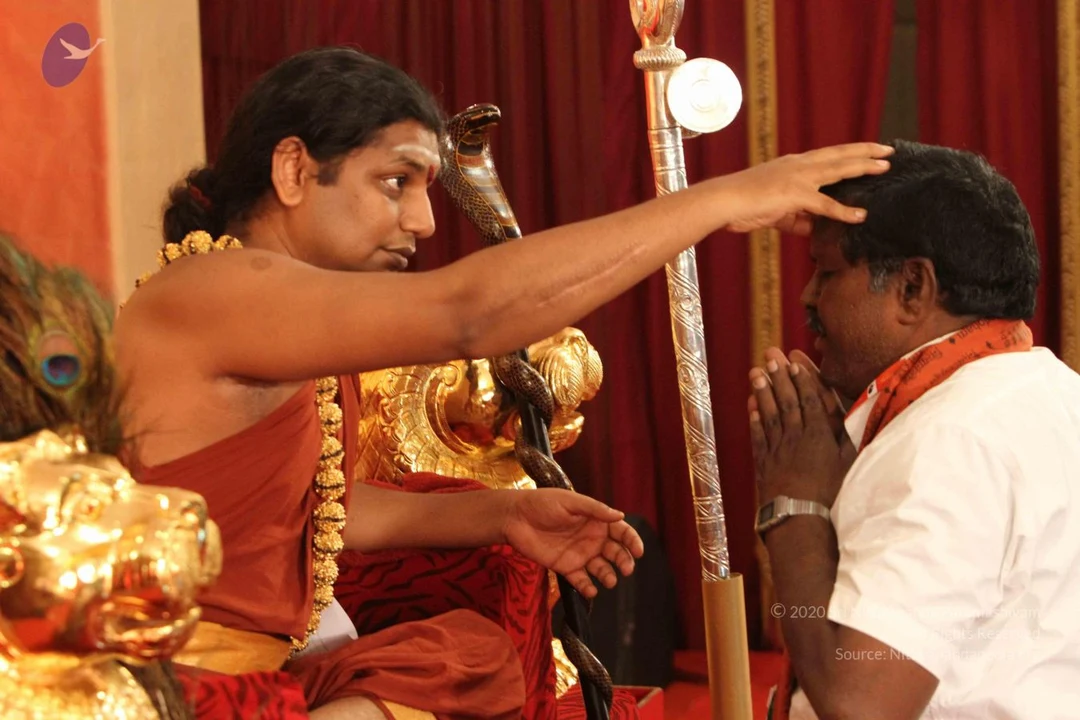
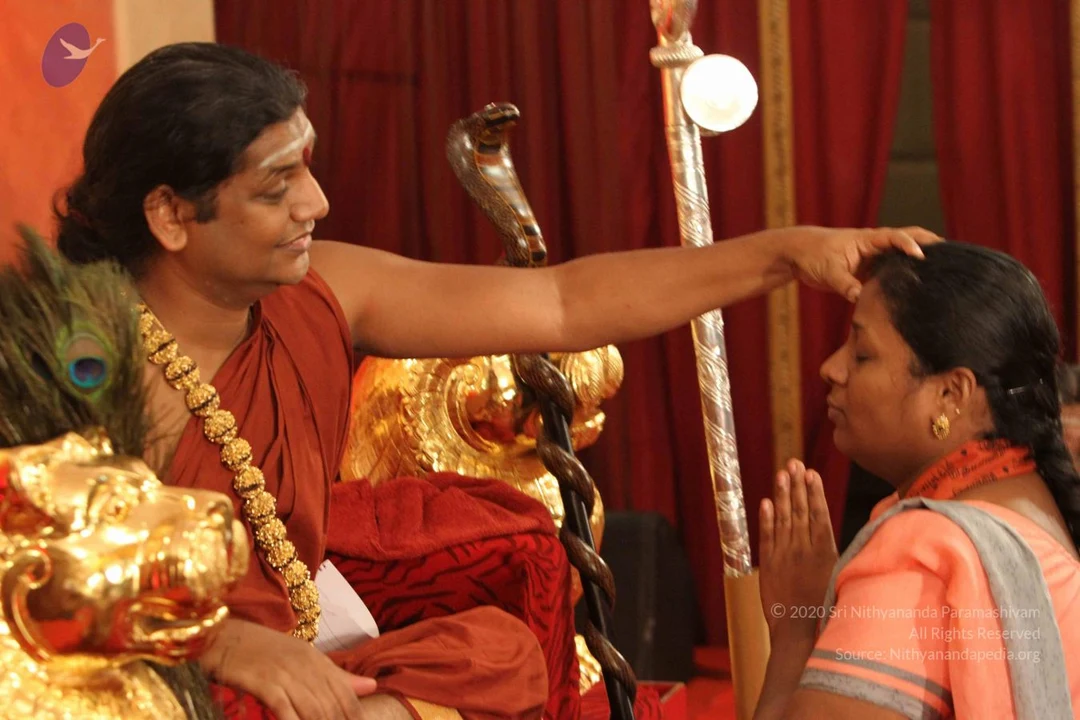
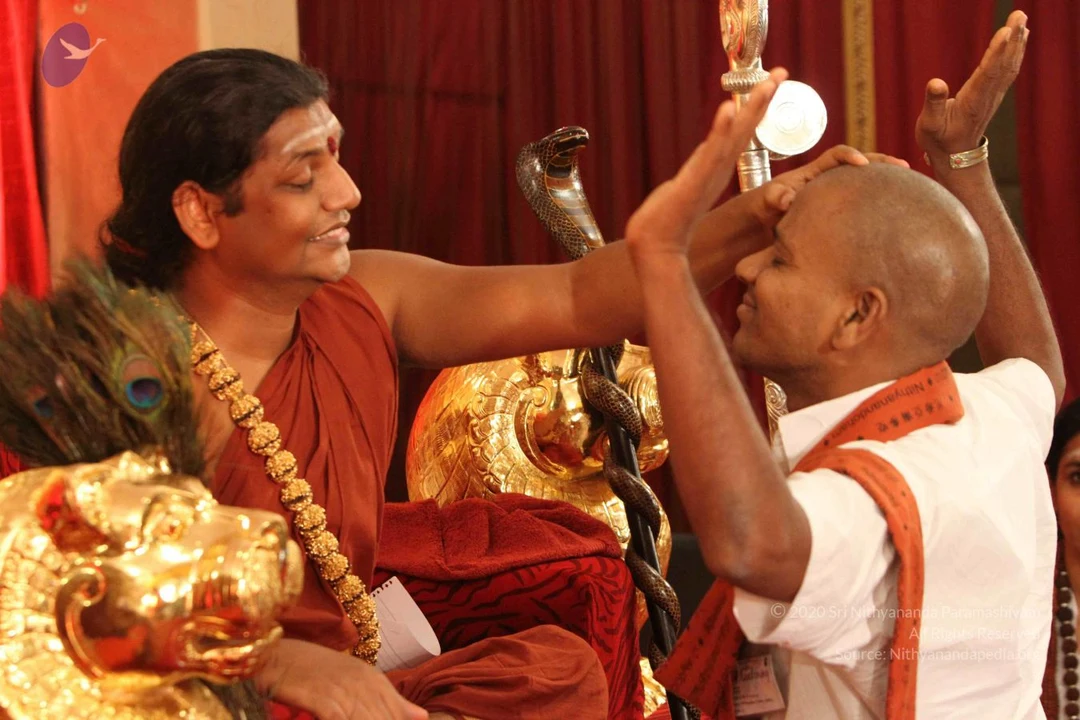
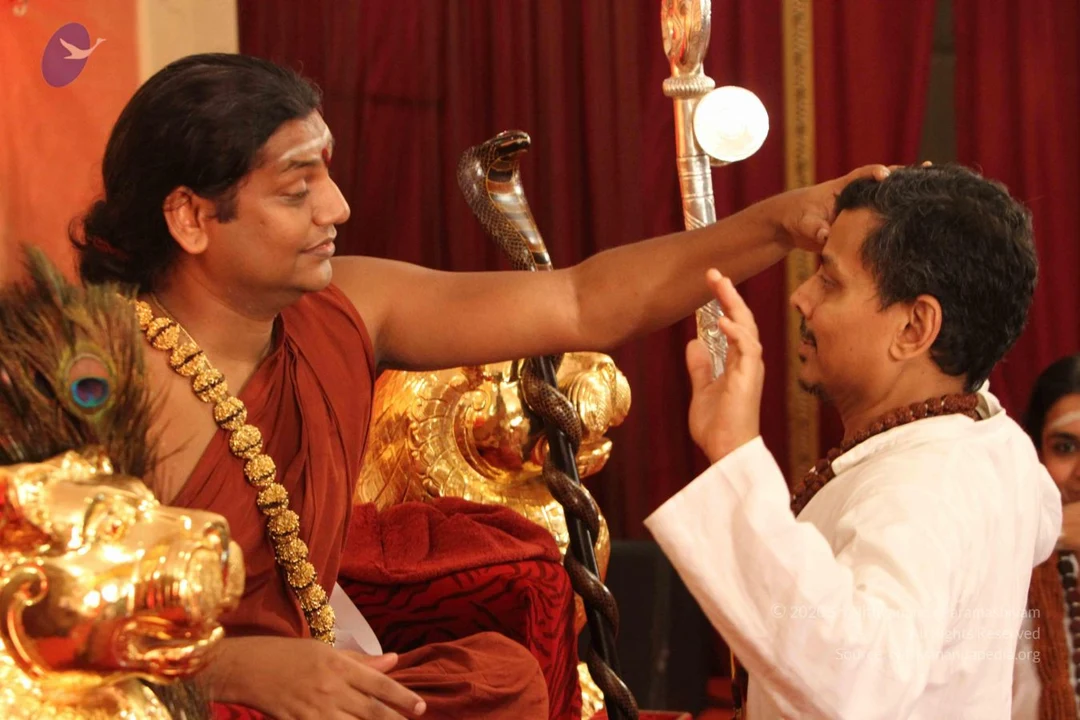
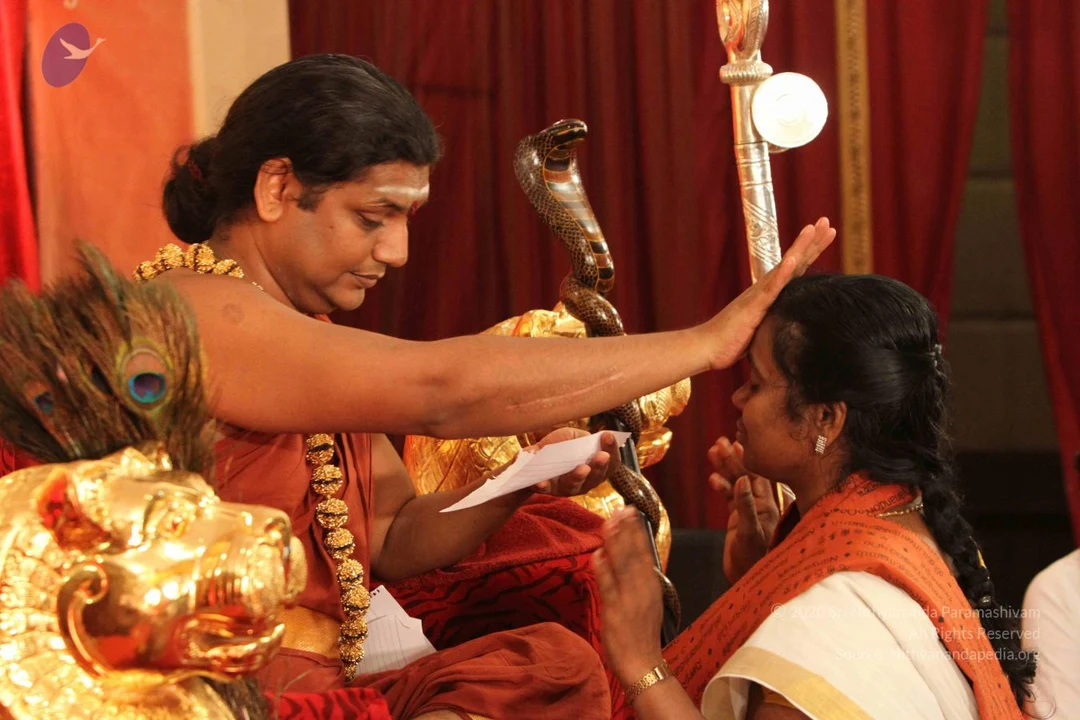
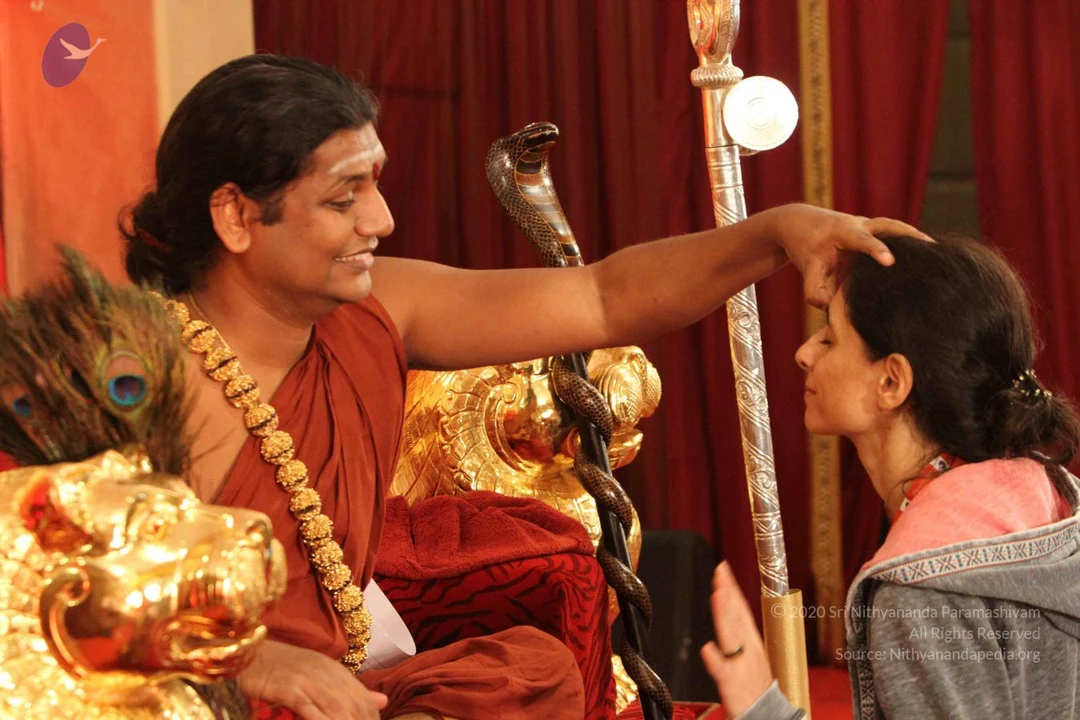
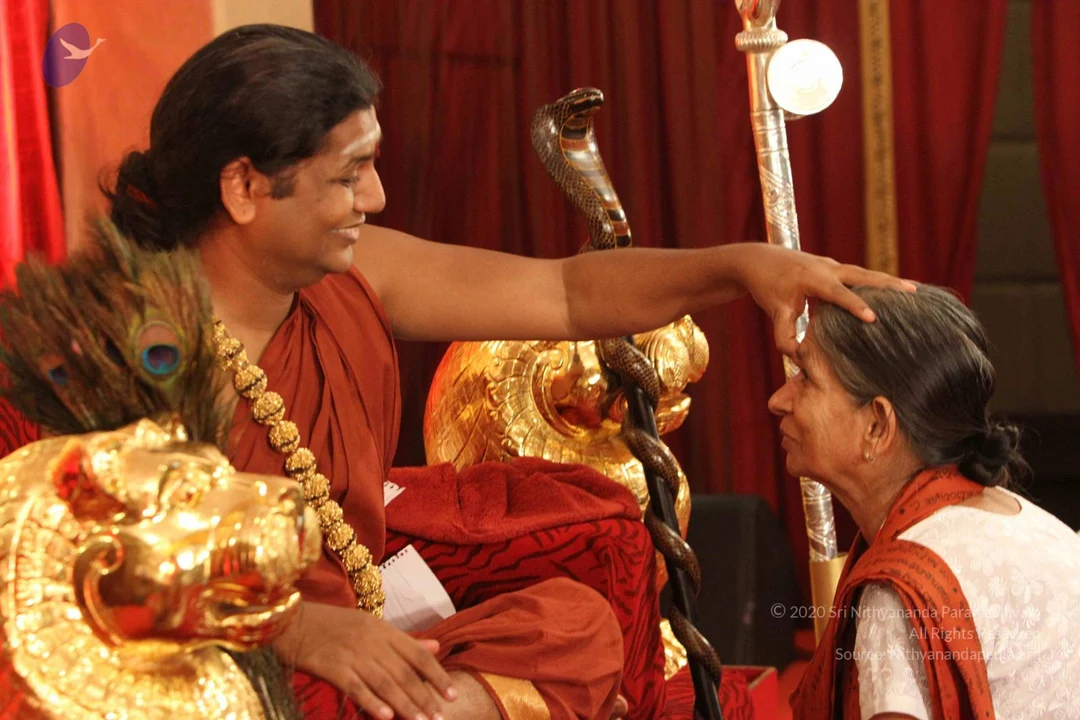
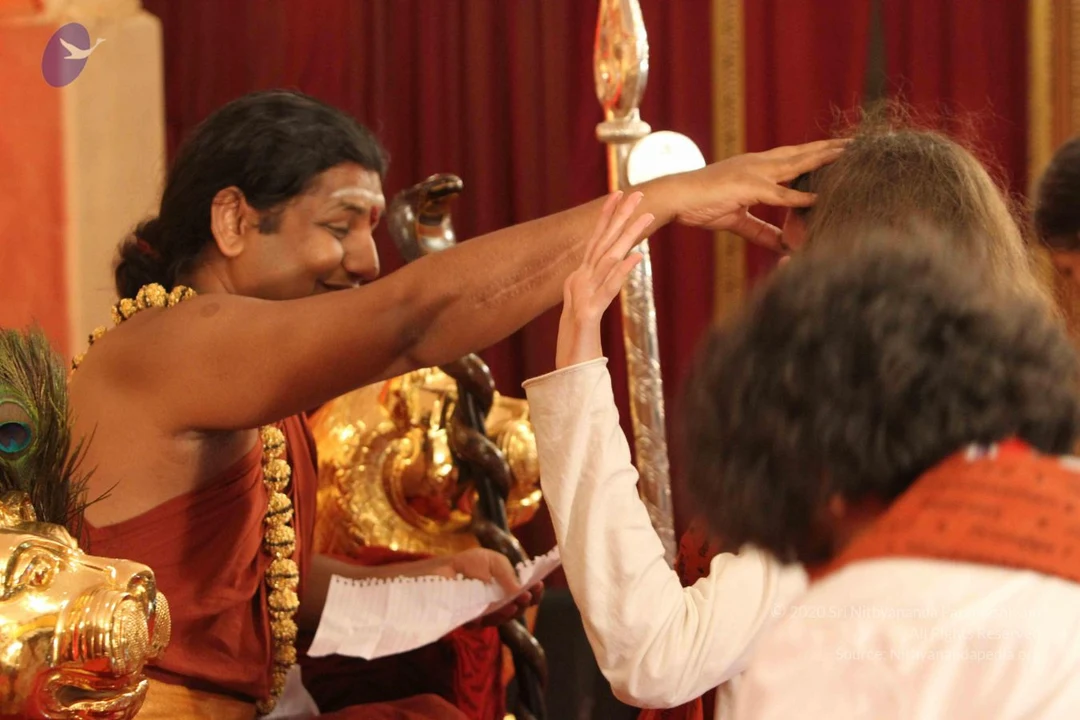
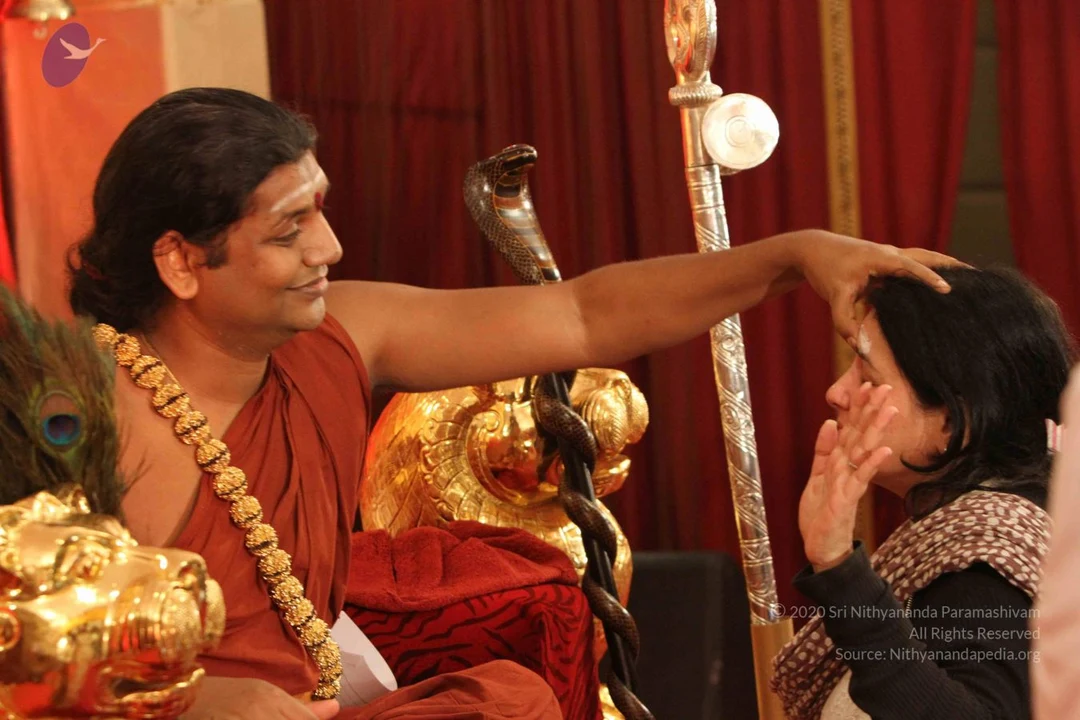
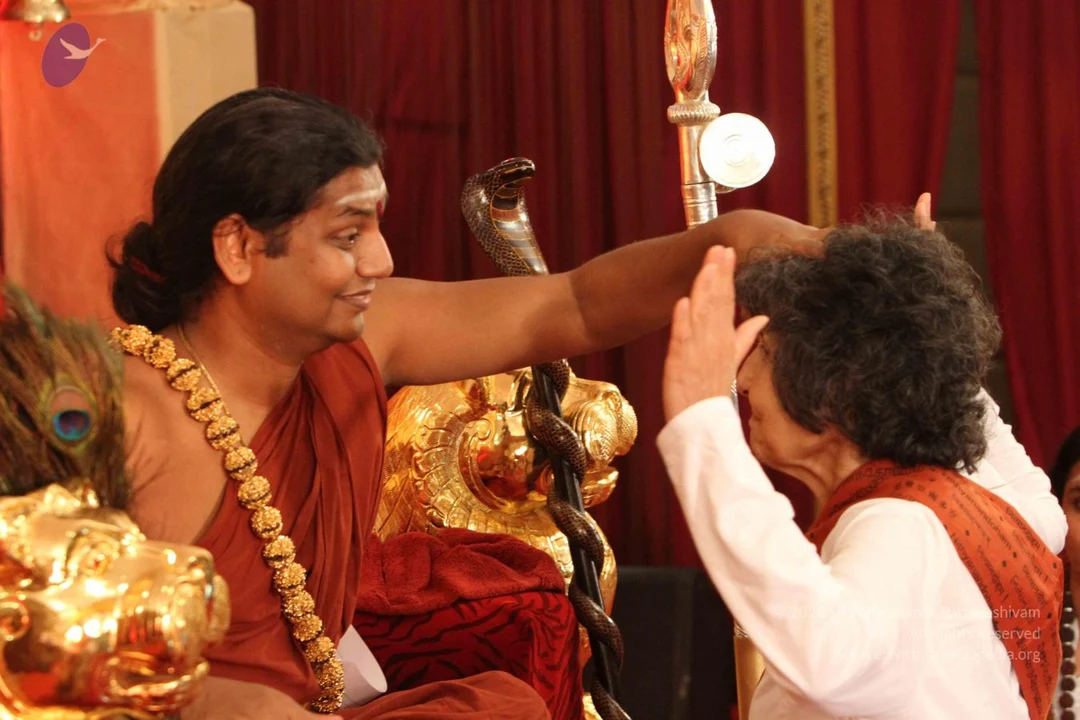
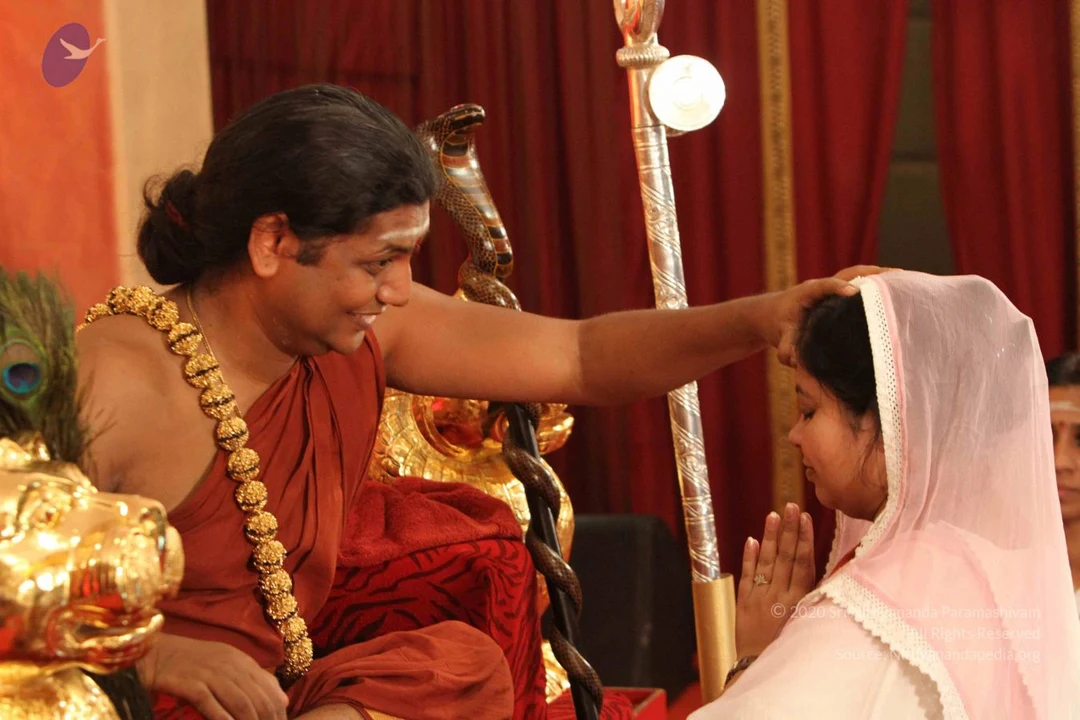
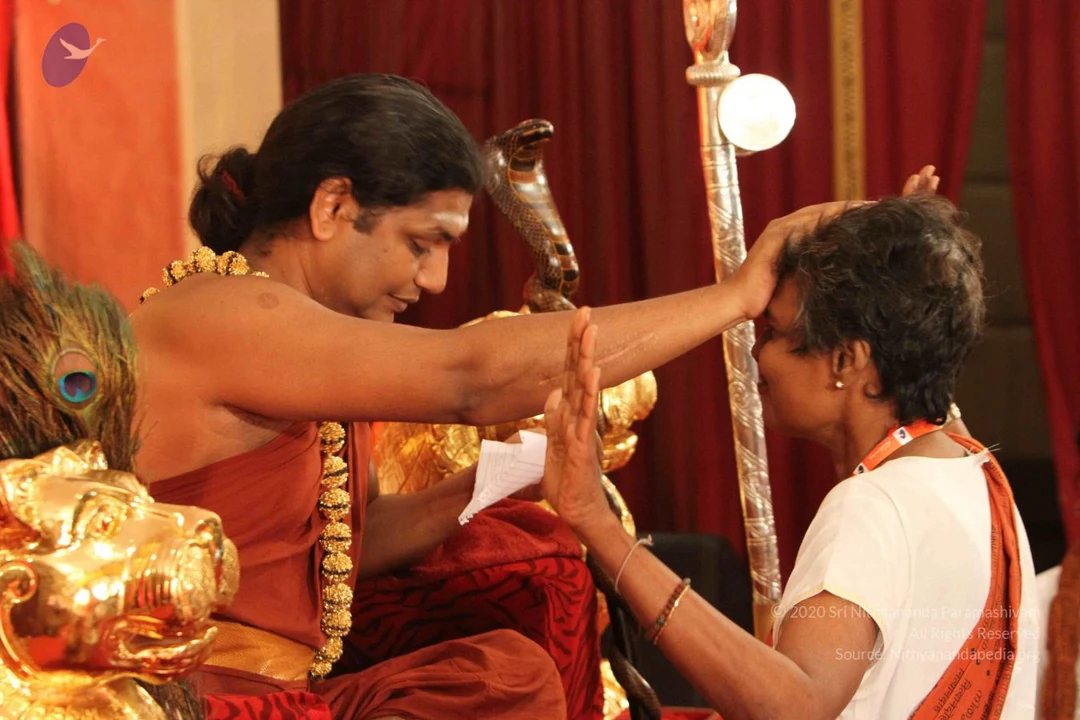
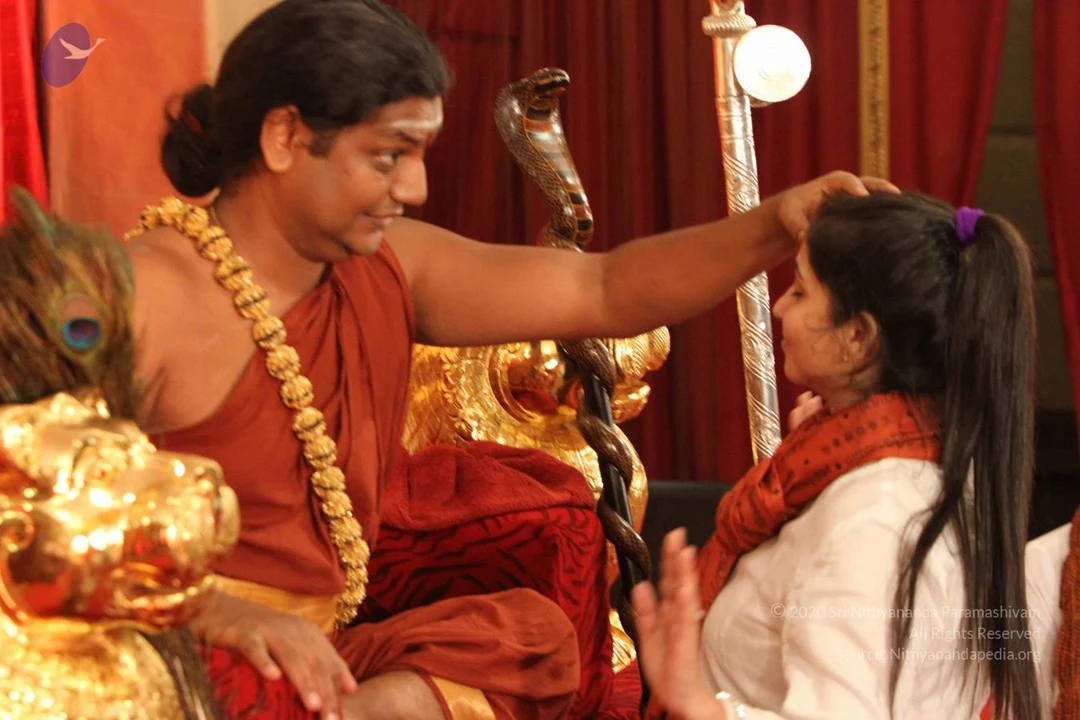
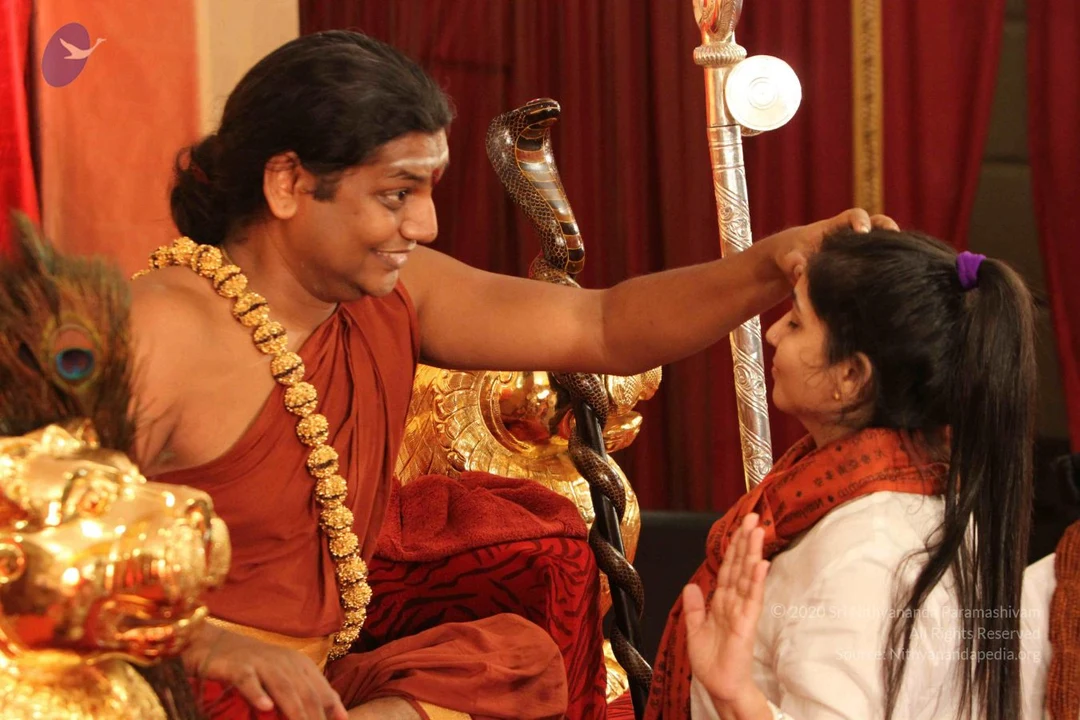
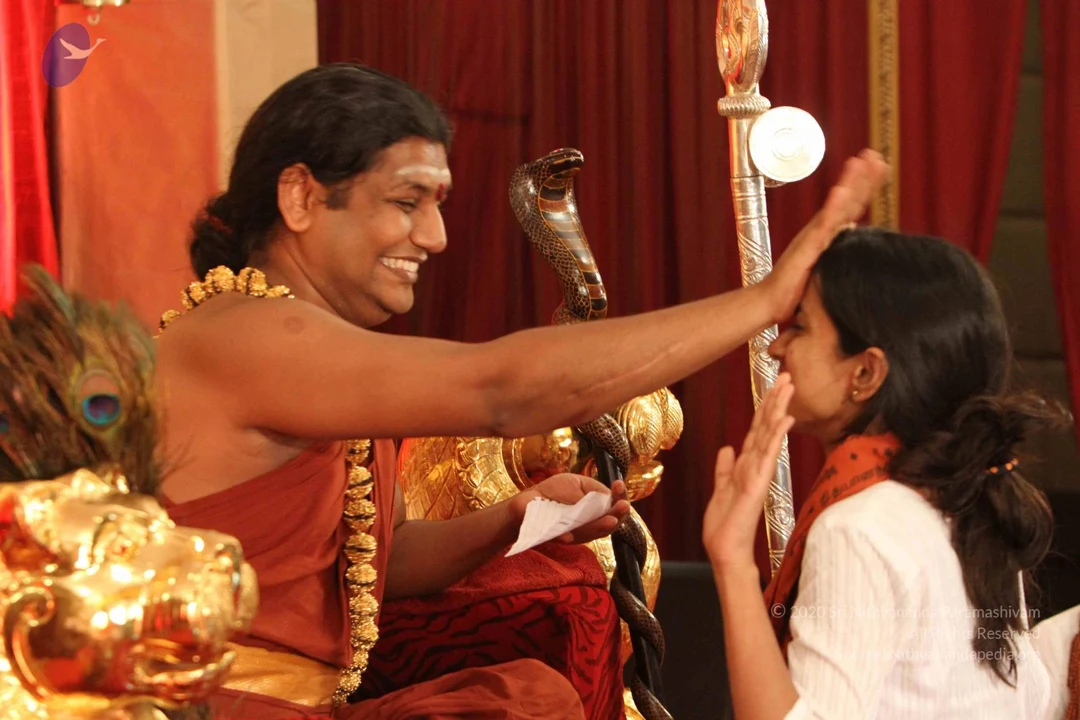
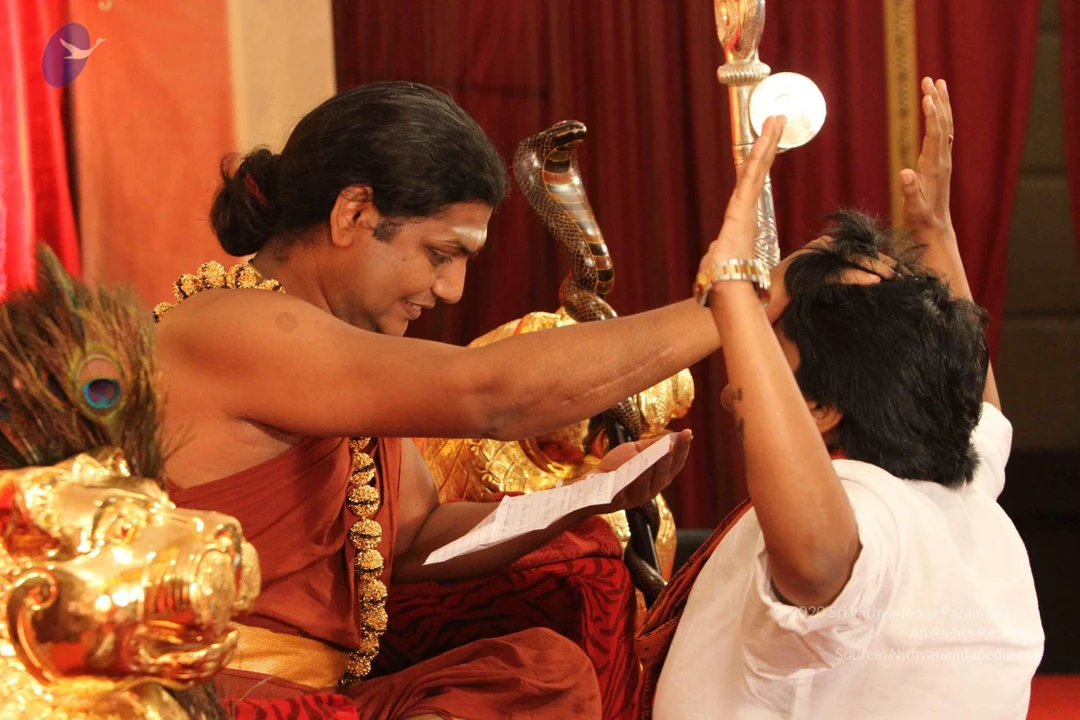
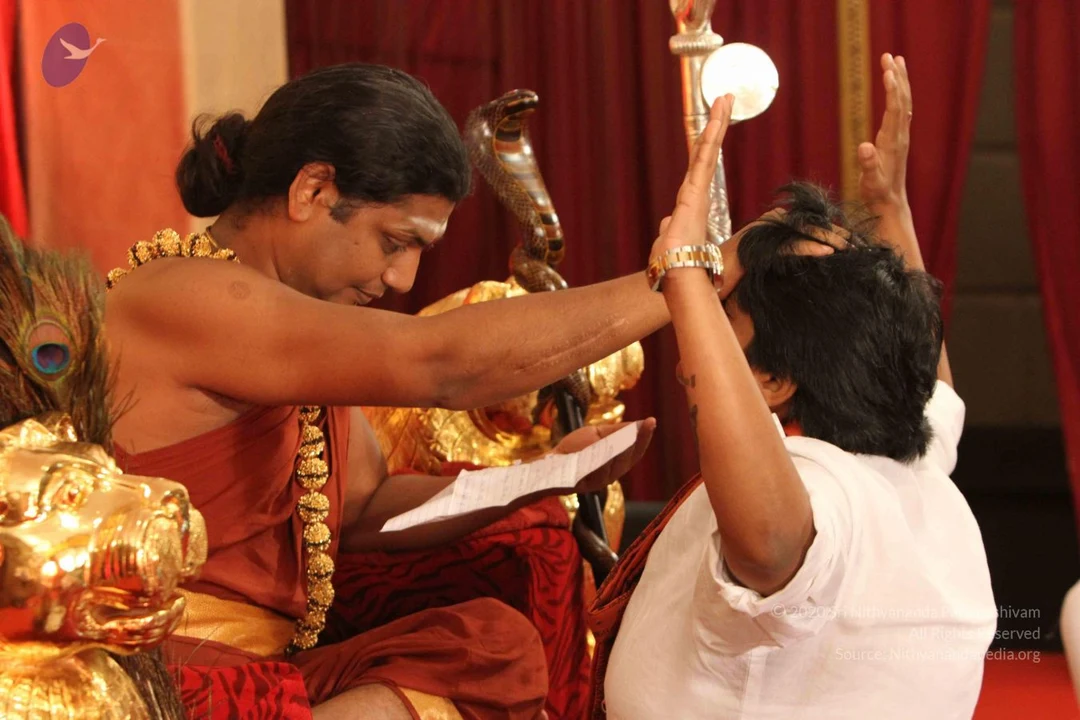
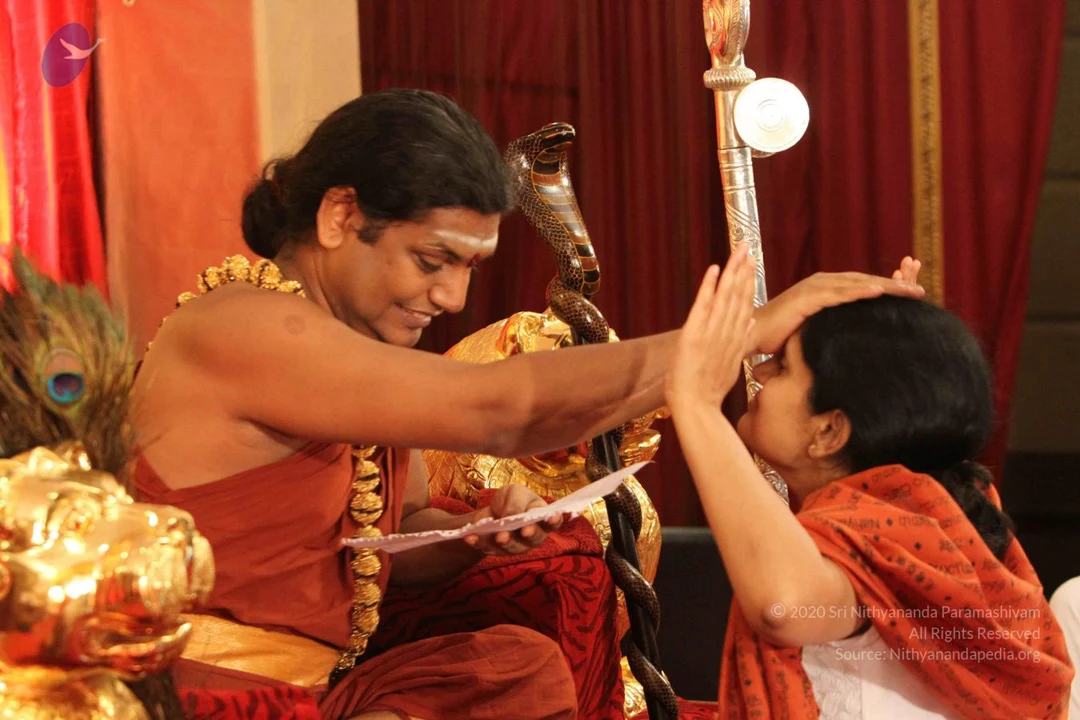
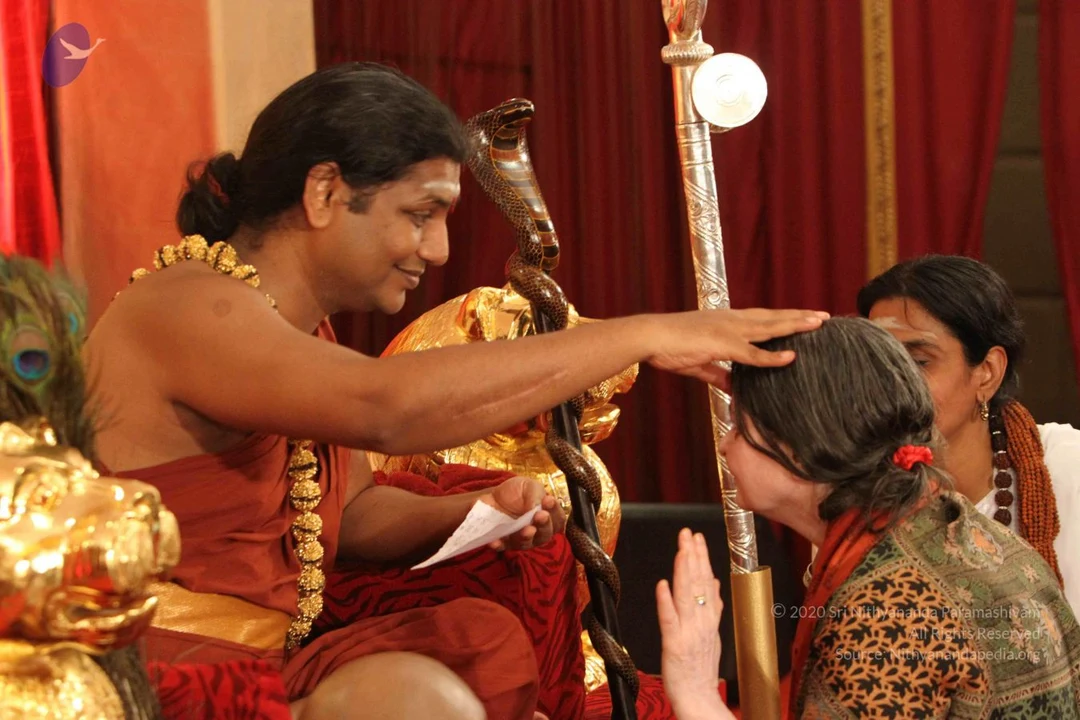
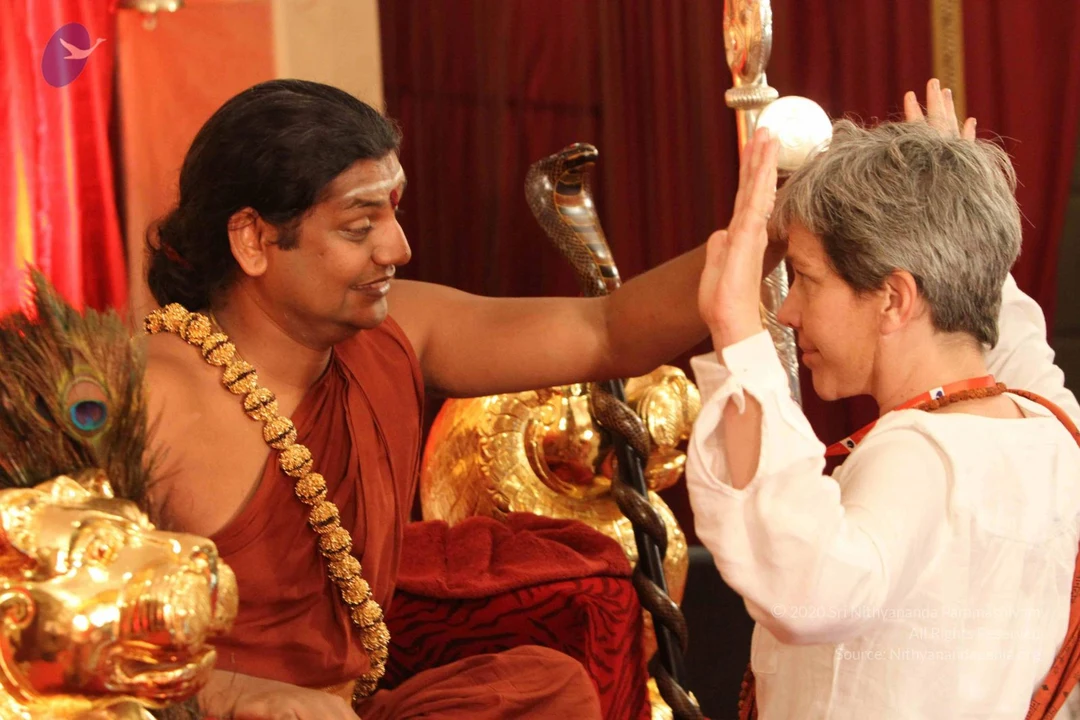
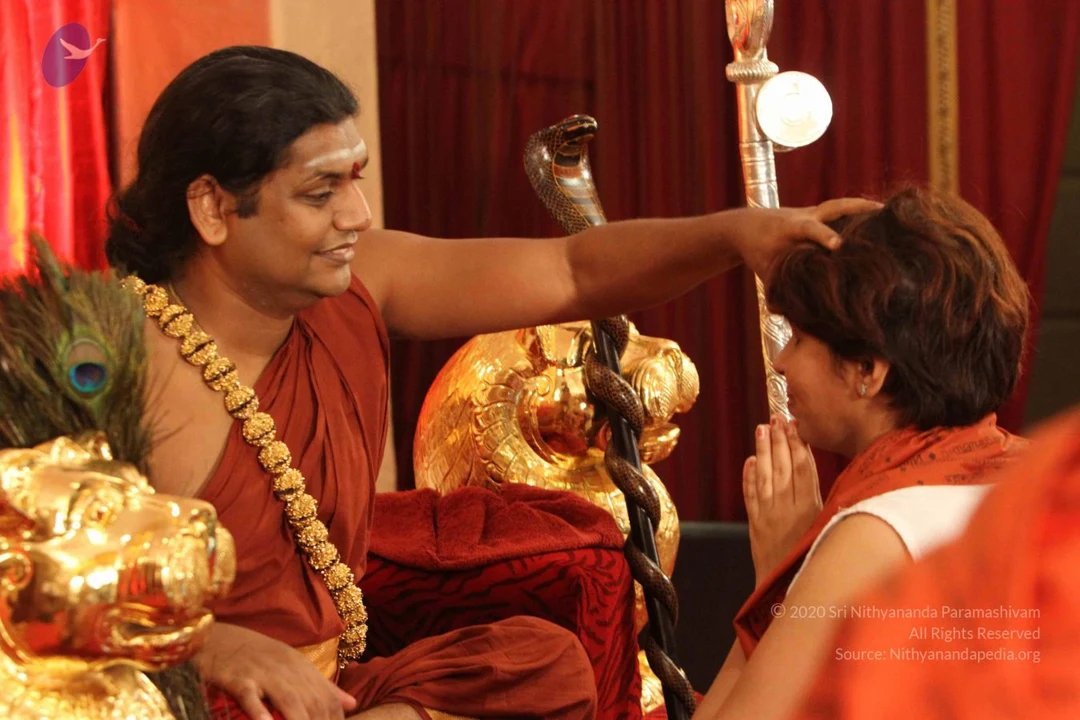
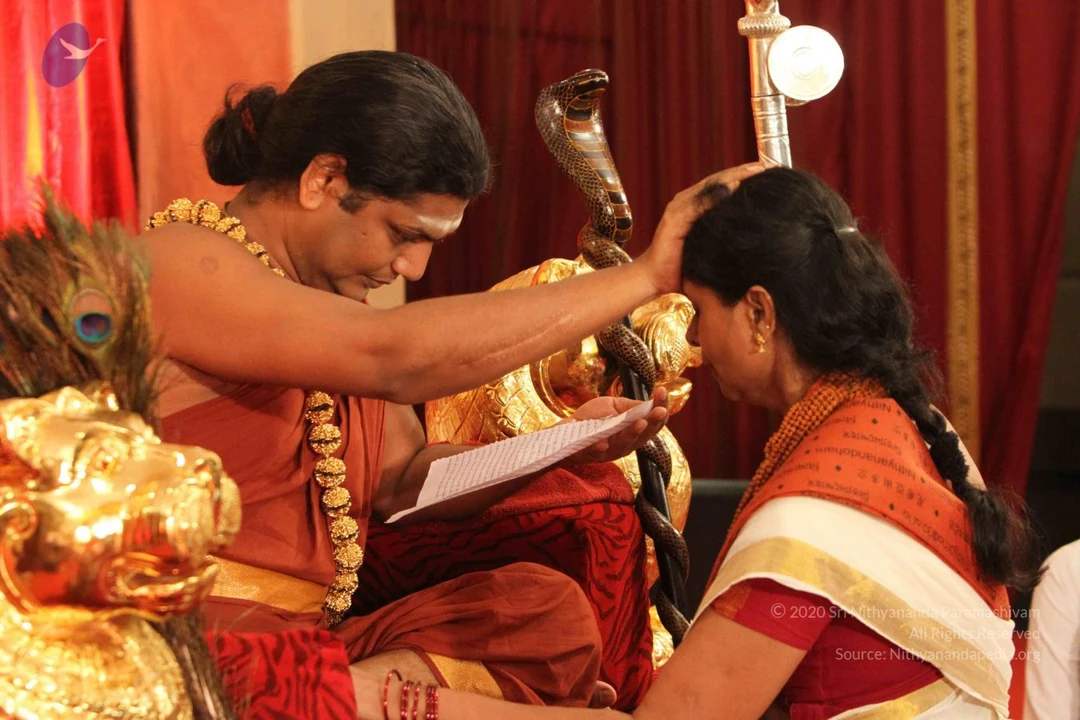
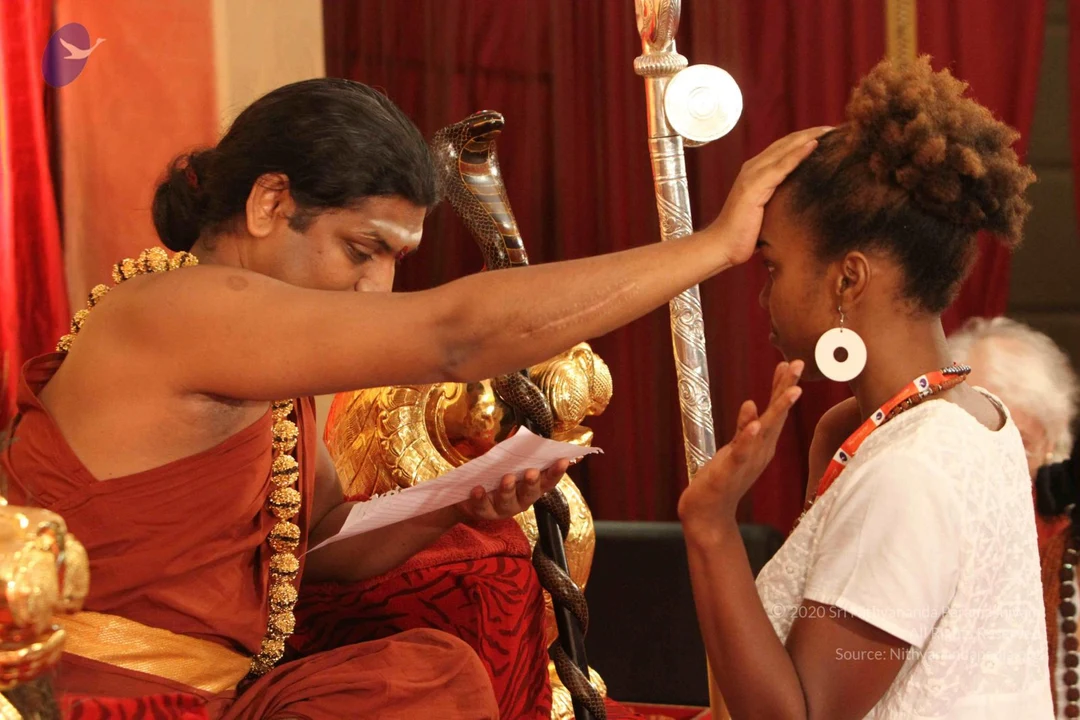
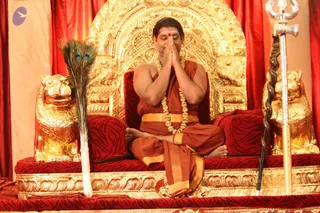
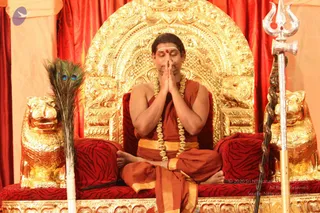
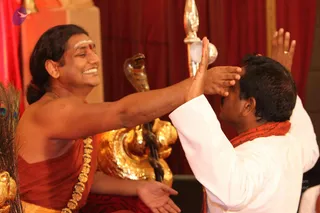
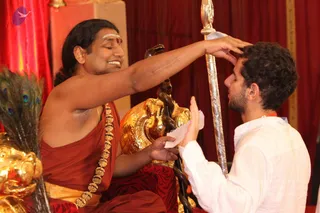
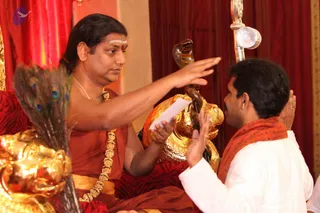
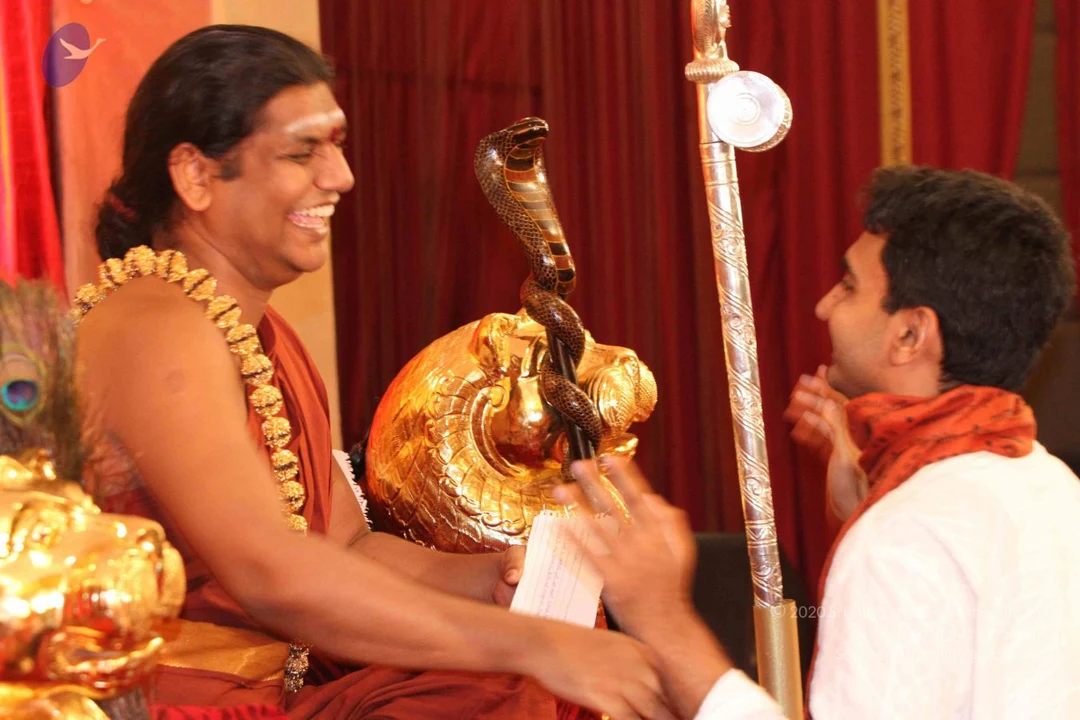
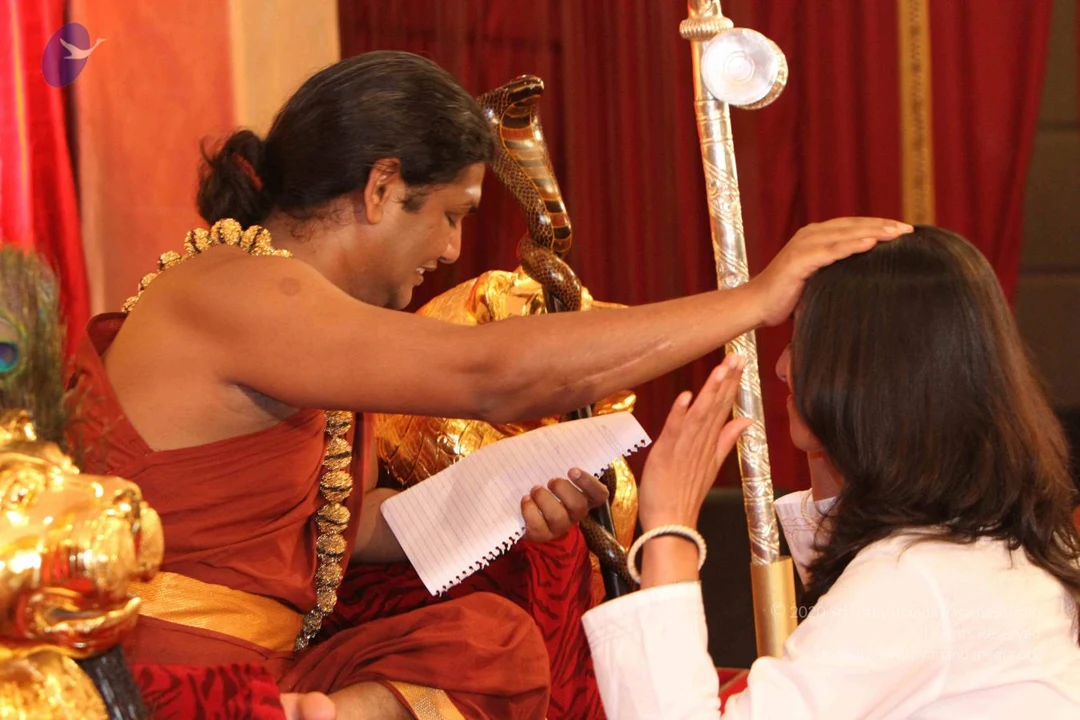
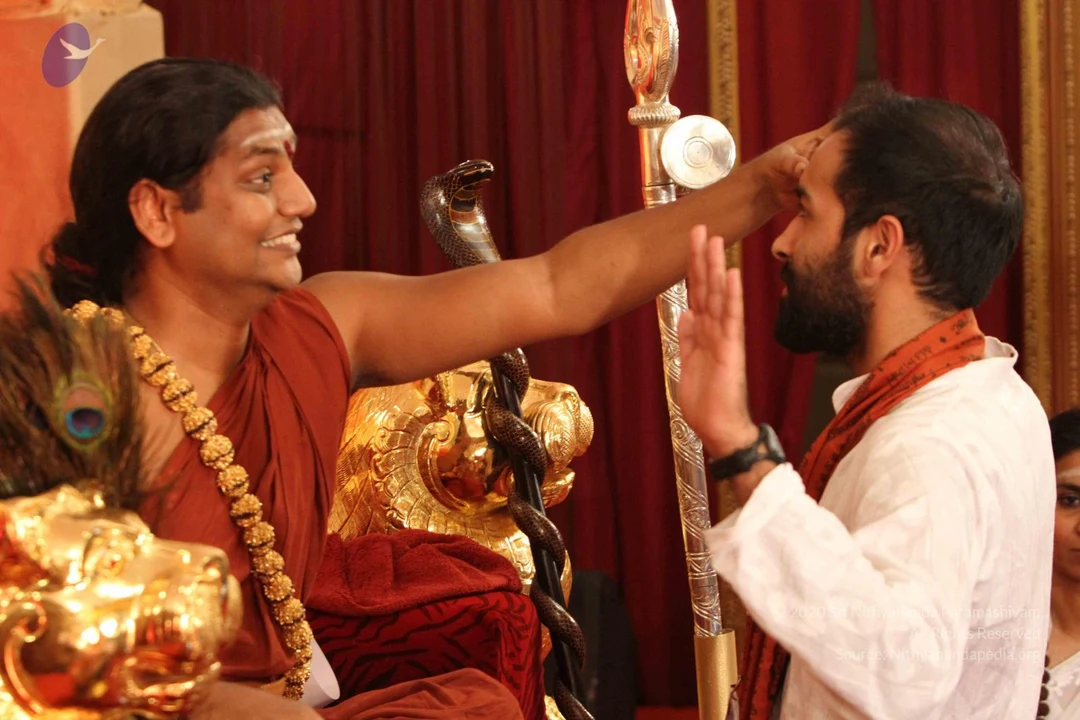
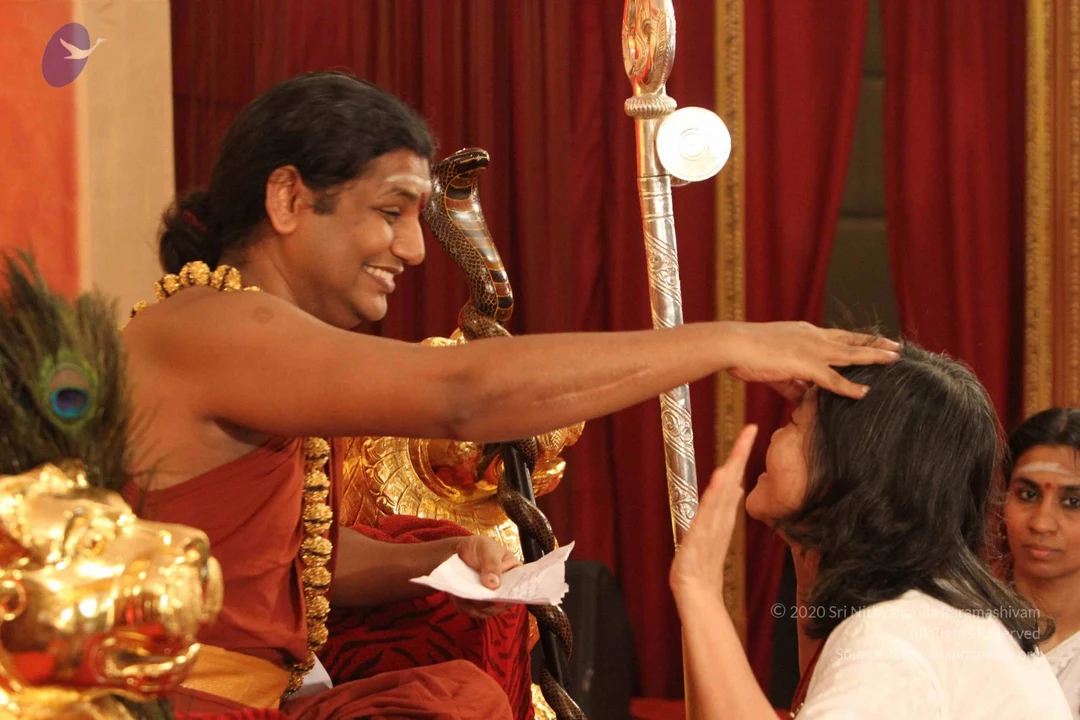
A man seated cross-legged on a gilded throne with a tiger-motif red cushion, palms pressed together in namaste with eyes closed. He wears a saffron-orange dhoti and shawl with a gold border, a long white-and-gold garland, and a horizontal white tilak with a red dot on his forehead. Golden lion figures flank the throne. To his left stands a peacock-feather fan; to his right a silver trident with a dark snake-entwined staff. Red drapes frame the stage.A man seated cross-legged on an ornate gold throne with a large gold arched backrest and gold lion-shaped armrests, upholstered in red tiger-striped cushions. He sits with palms pressed together in namaste, eyes closed, wearing a saffron-orange dhoti and shawl, a gold-coloured waist sash, and a long ornate gold necklace with beaded strands. A red-and-white tilak/bindi marks his forehead. A silver trident stands on the right and a peacock feather fan on the left, with red drapes behind. Appearance-based cues including ceremonial gold necklace, saffron clothing and throne setting suggest the a person in person, seated in meditative devotion.A seated man in ochre-saffron robes sits cross-legged on an ornate golden throne with a gilded arched backrest, flanked by golden lion-shaped armrests and red tiger-striped cushions. He wears a rudraksha-style gold necklace, a gold waist sash, a red tilak on his forehead, and has his hands resting on the cushions. To his left stands a peacock-feather fan, and to his right a silver trident and a dark serpent coiled around its shaft. Red drapes frame the background. a person: the seated figure shows a rudraksha-style gold necklace and ceremonial saffron robes on a throne, a presentation consistent with the page's reference.A photograph of a seated man in saffron-orange robes with a white and red forehead mark, wearing a gold beaded ceremonial necklace and a long dark ponytail, smiling as he extends his right hand toward the forehead of a shorter man in a white shirt with a red-orange shawl. The shorter man has his hands raised and head bowed in devotion. Behind them stand a golden cobra-hooded figure, a silver and gold ceremonial staff, and red drapes. A peacock-feather fan is visible at the left edge.A seated bare-chested man in saffron-orange dhoti and shawl, with a white tripundra and a gold-bead necklace, reaches out to touch the head of a kneeling young man in a white shirt. The seated man has long swept-back hair and a gold-decorated throne-like seat with a golden lion-head armrest, a wooden staff with a silver handle, and a black snake wrapped around the staff. A peacock-feather fan and gold vessel are at left, with red drapes behind. The kneeling man holds a folded white paper in his hand. Appearance-based label: a person, seated in a red-draped ceremonial setting, offering blessing to a devotee.A seated man in rust-orange robes with a gold waist sash and a gold chain necklace raises his right hand over the head of a devotee while holding a small folded paper in his left hand. A gold cobra with raised hood rises behind the devotee's head, beside a gold ornamental vessel and a silver-topped staff. A peacock-feather fan stands at left against red drapery. The devotee, in a white shirt with a saffron-red shawl and a ring, kneels with hands joined. The seated figure has a white forehead mark with a red dot, and the appearance is consistent with the page's reference to a person, presented with saffron robes and ornate gold adornments. Two people are visible.
TEMPLE

29 photosSource gallery
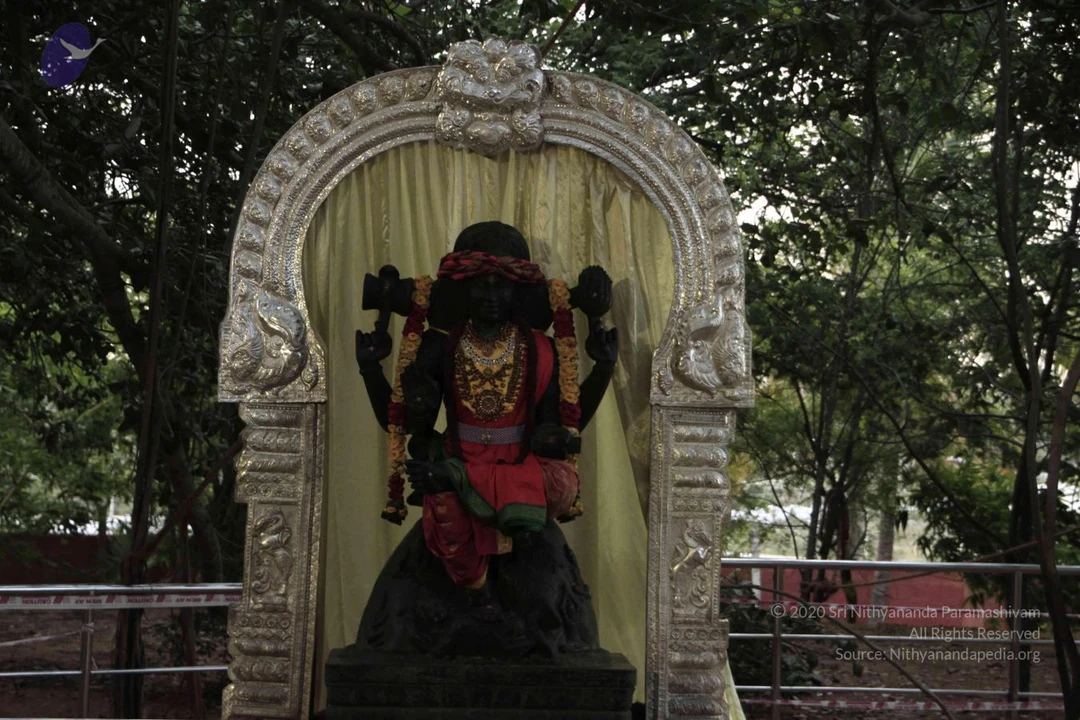
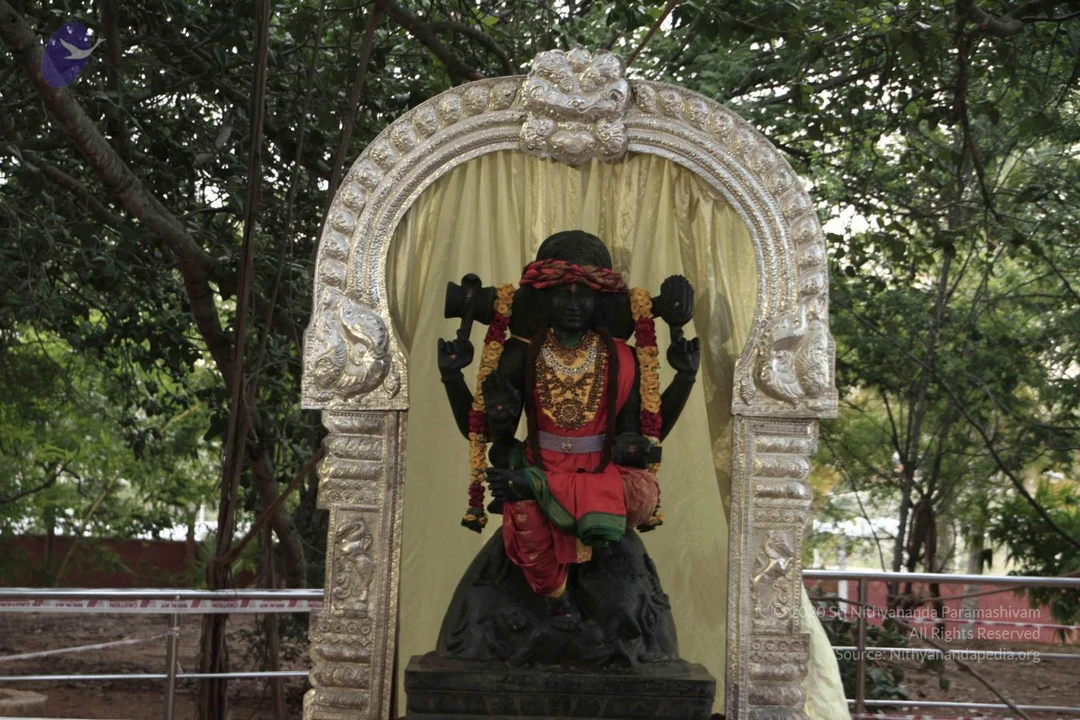
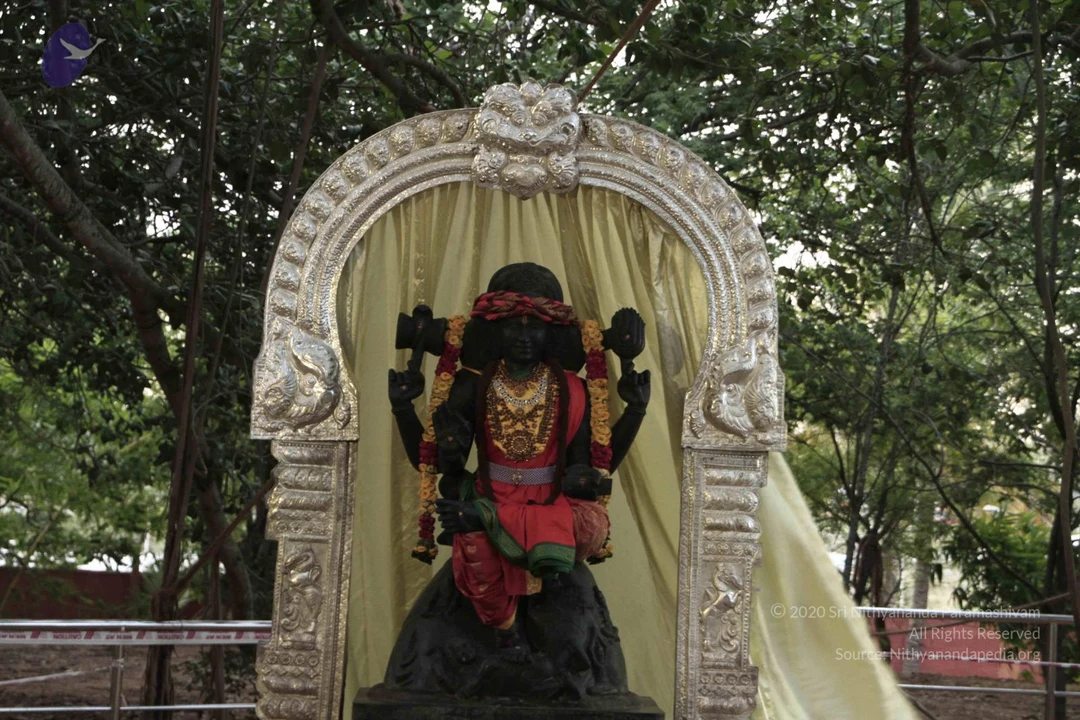
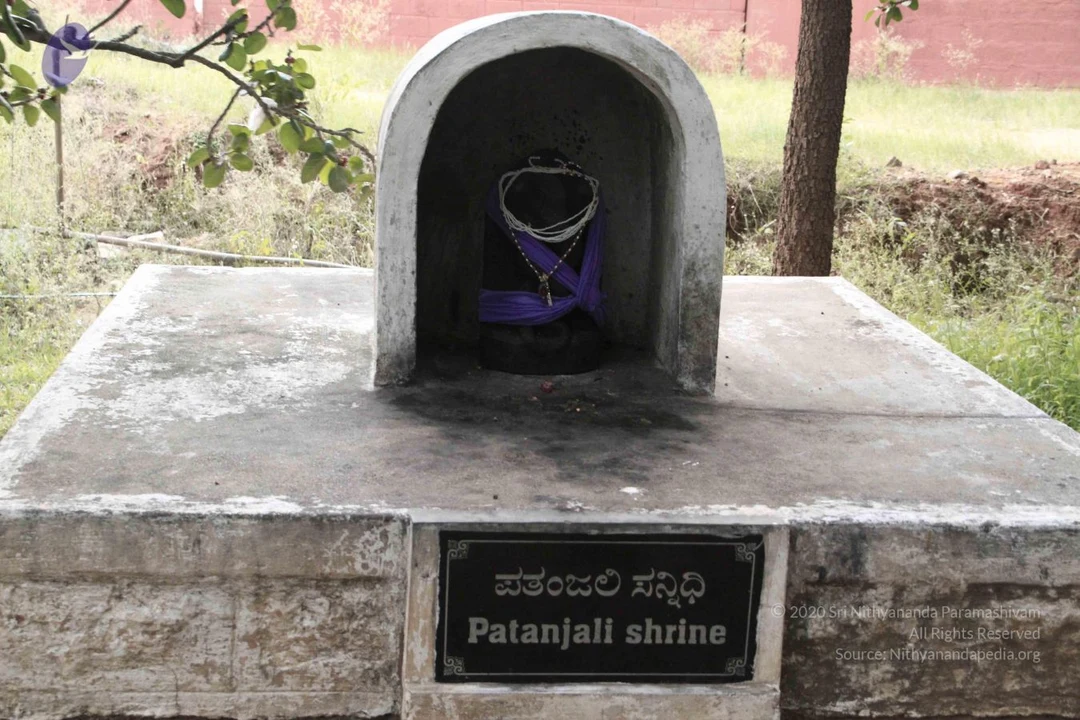
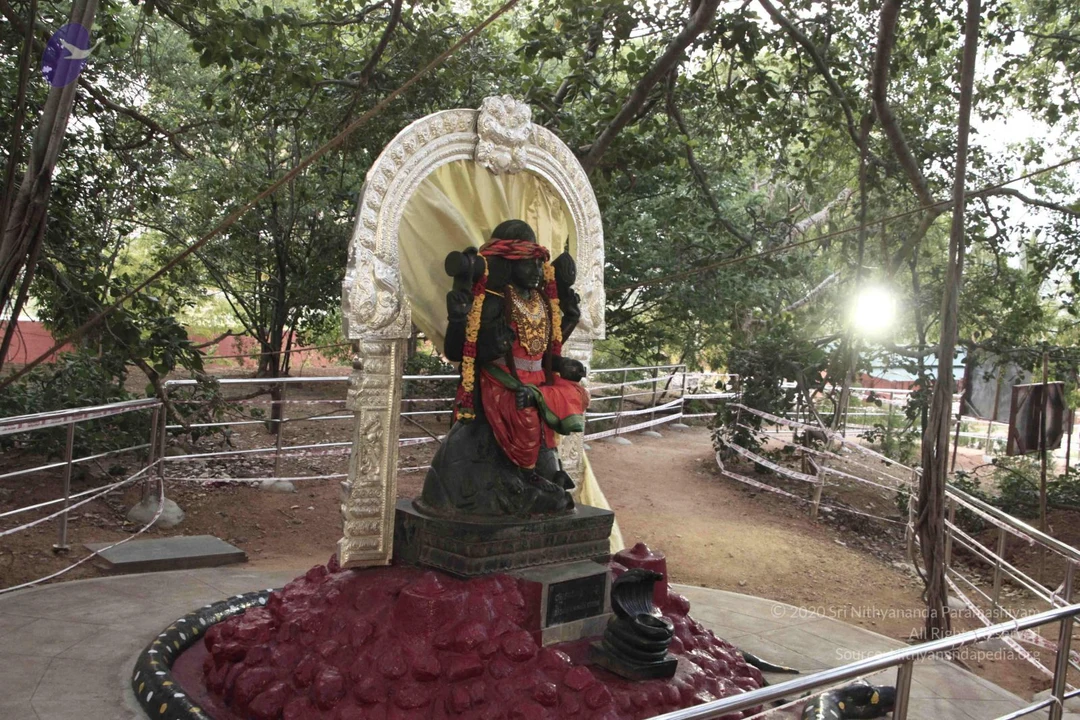
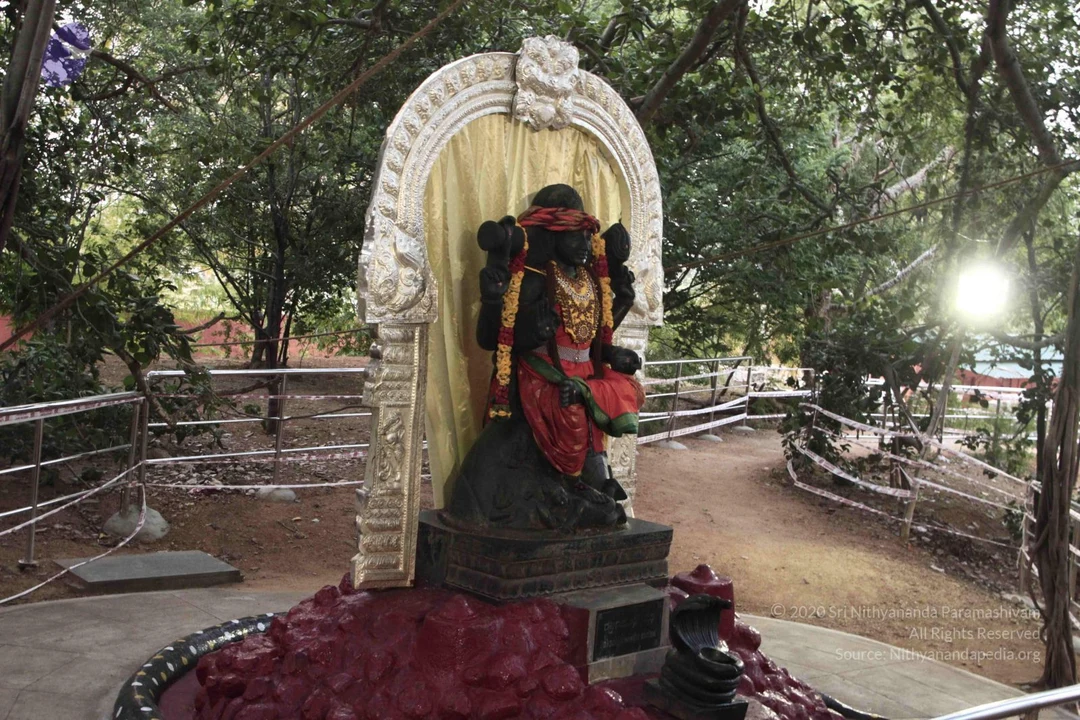
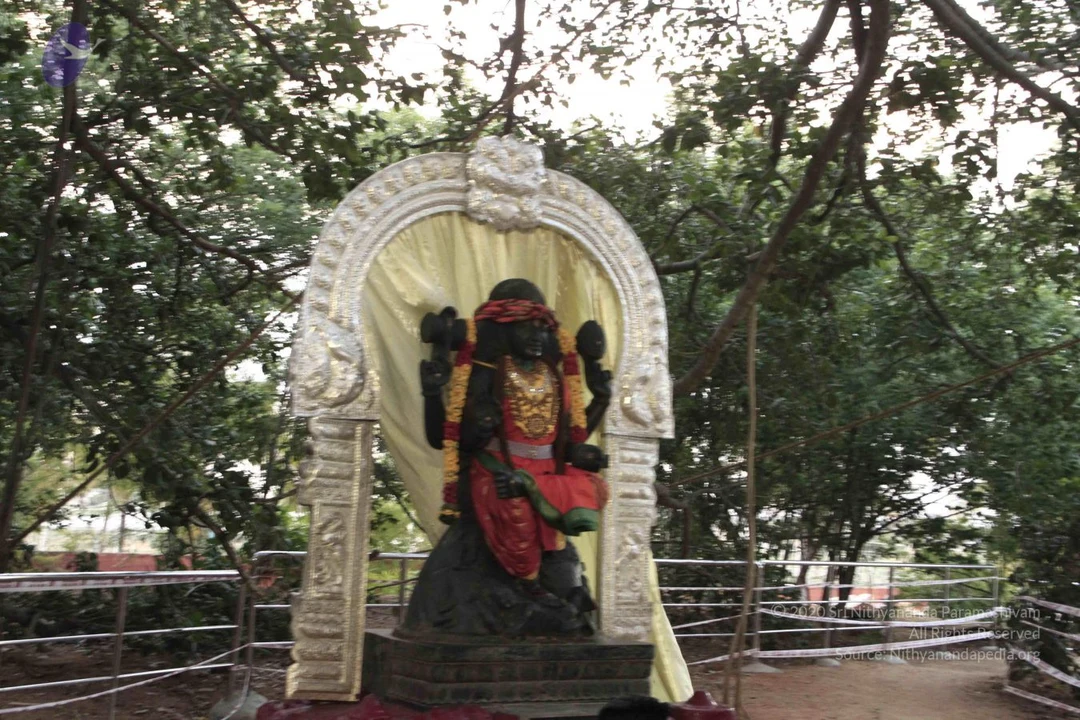
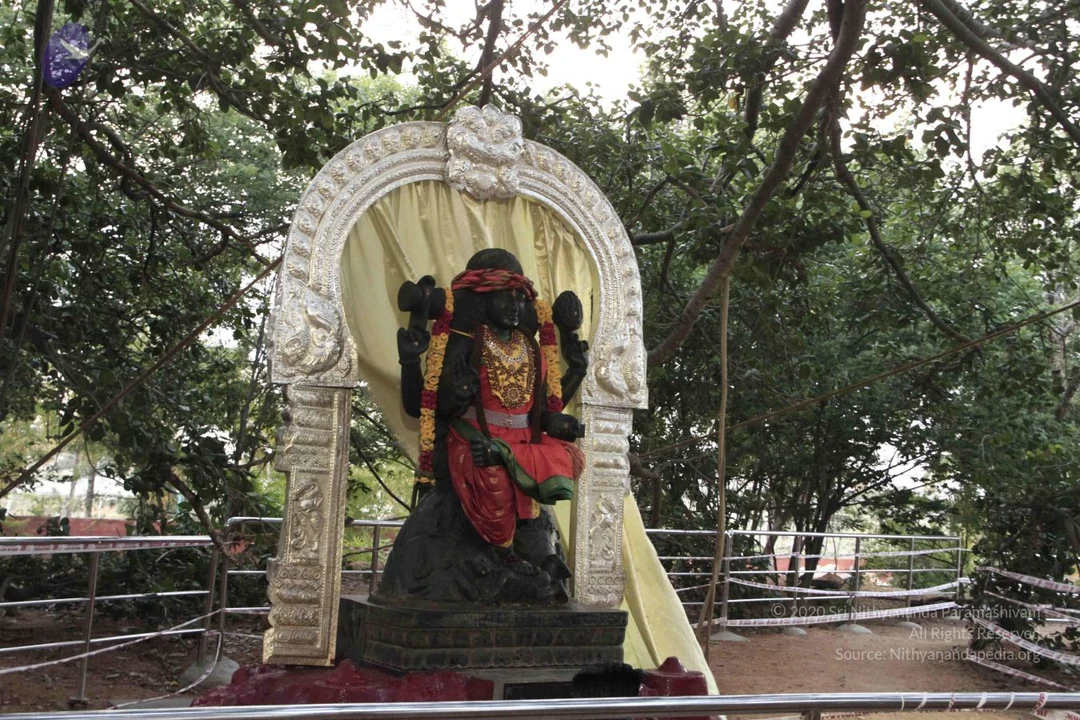
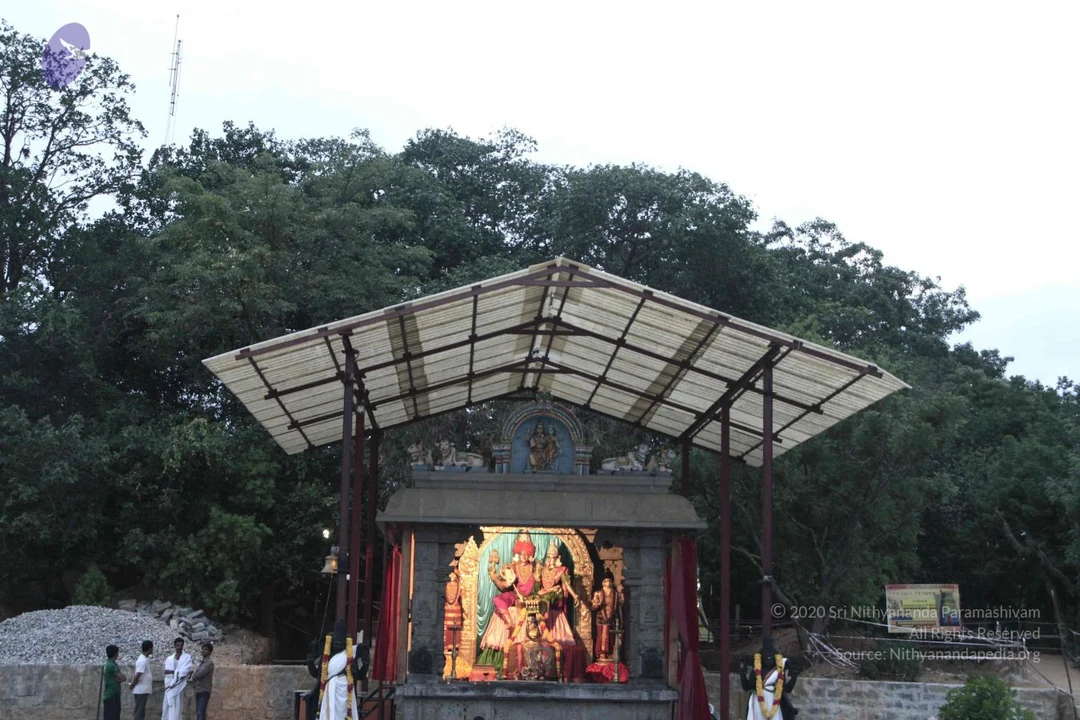
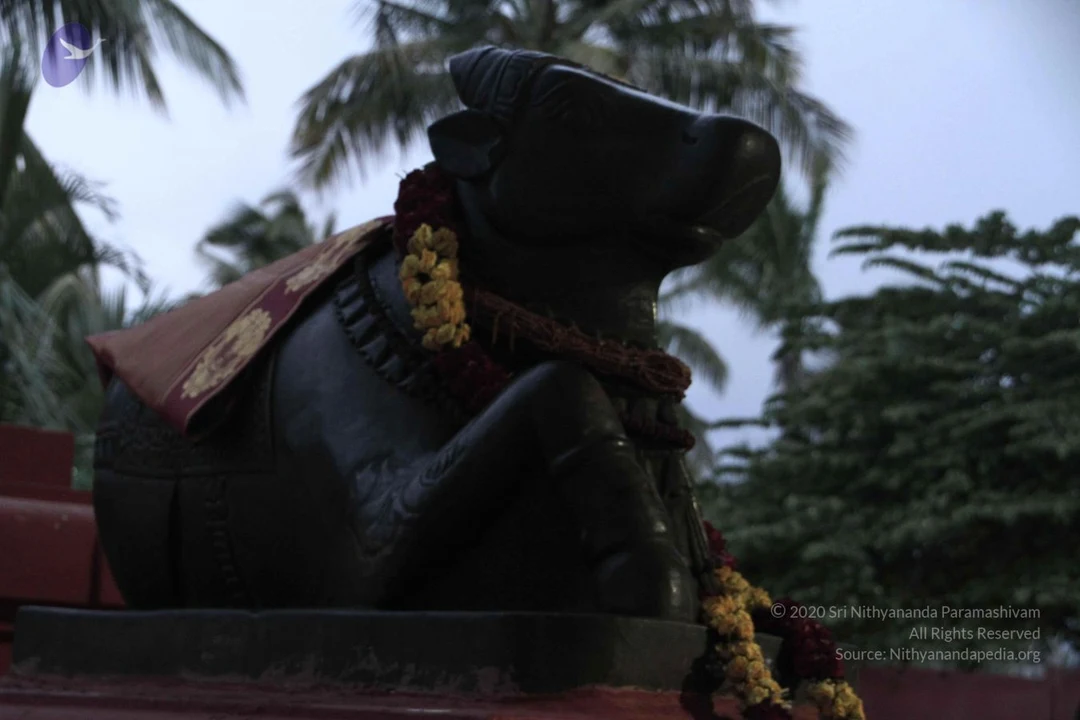
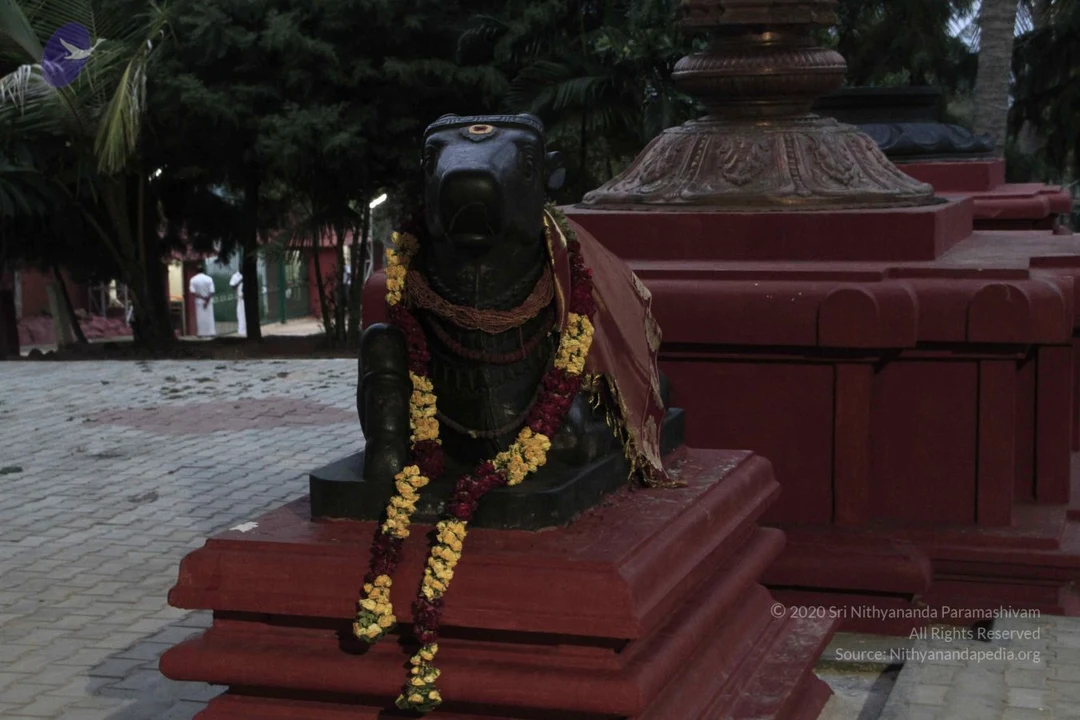
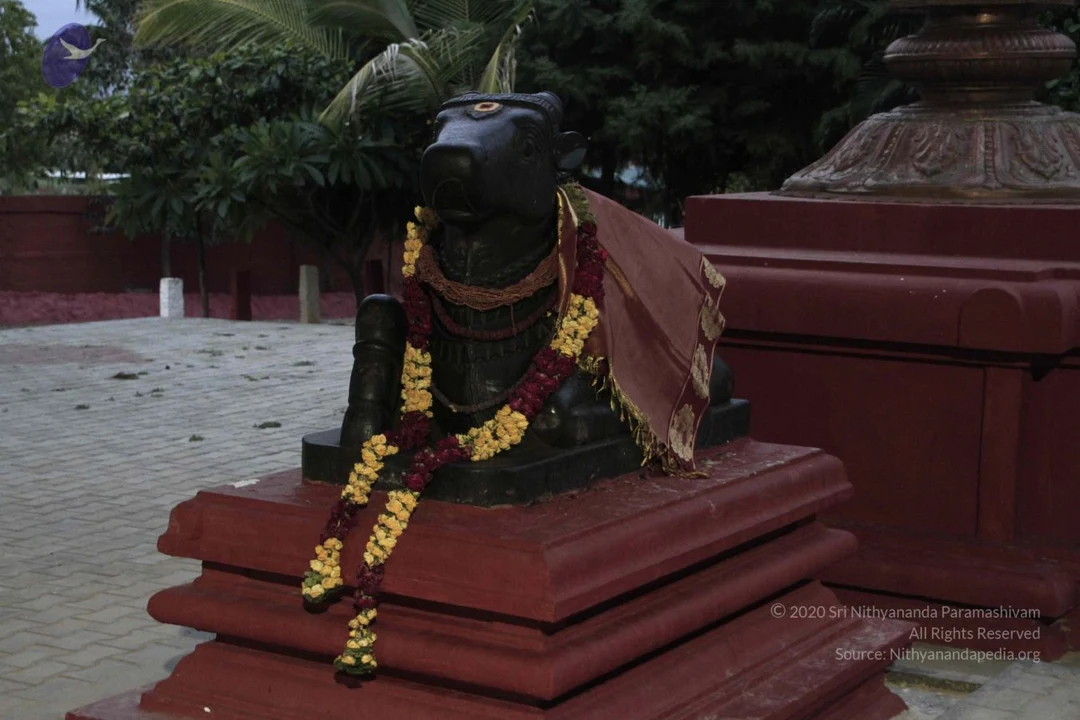
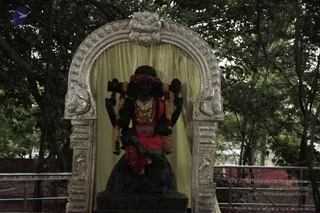
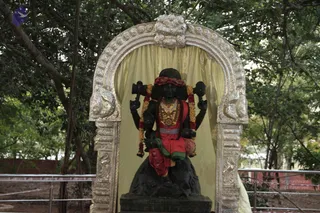
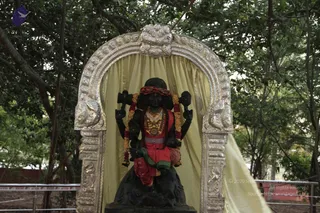
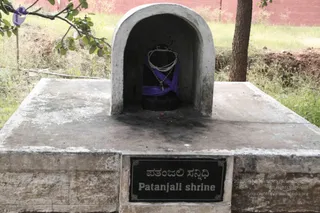
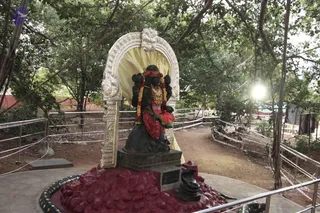
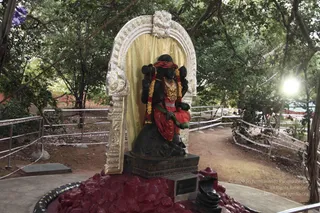
A dark stone deity murti stands within an ornate silver-coloured arched niche against a pale yellow curtain, outdoors among trees. The figure has multiple arms holding a trident-like staff and other implements, wears a red garment with a green sash, a gold necklace and a red and white cloth draped over the head, and is garlanded with orange marigold strands. A metal railing and tape barrier are visible in the foreground. The image is a photograph of a statue with no physical people present.A dark stone statue of a multi-armed deity seated on a black pedestal in an outdoor setting, framed by an ornate silver arch with lion-head motif at the top. The murti wears a red headcloth, a red dhoti-style garment with a green border, a gold and beaded necklace, and garlands of orange and red flowers draped over its arms. Multiple hands hold ritual objects. A pale yellow cloth backdrop sits behind the figure, with green trees and a metal railing in the background. No people are visible.A dark stone deity murti seated on a pedestal inside an ornate silver-coloured arch, draped with pale yellow-green cloth. The figure has multiple arms holding a trident-like staff and other objects, wears a red dhoti or skirt with a green sash, a red headband, a gold necklace and a long garland of orange and yellow flowers. Tall trees and a rope-railing barrier surround the outdoor shrine. No people are visible.A small outdoor shrine built as an arched concrete niche set on a raised concrete plinth. Inside the niche sits a dark stone murti draped with a purple cloth and adorned with a white thread garland and a rudraksha-style bead mala. A black sign with white lettering is mounted on the front of the plinth, and grass, a tree branch and a red wall are visible behind. No people are present.A black stone murti of a seated deity stands in an outdoor grove under a silver arch with a gold backdrop, the figure wearing a red cloth, a gold necklace and a garland of orange marigolds, with a red headband and a snake coiled at its base. The shrine sits on a pile of red-painted stones within metal railings, surrounded by tall shade trees and a bright lamp fixture. No people are visible.A black stone statue of a multi-armed deity murti sits in a gilded arched niche with a yellow cloth backdrop, set outdoors among trees. The figure wears a red headband, a gold necklace, red and orange flower garlands, and a red and green draped garment. Its base is covered with red-painted stones and a small shivalinga-like object sits at the front corner, with a black snake-form carving curling near the base. Metal railings and white-painted posts surround the shrine area, and the figure is lit by a bright light on the right.

Inner-Awakening
28 photosSource gallery
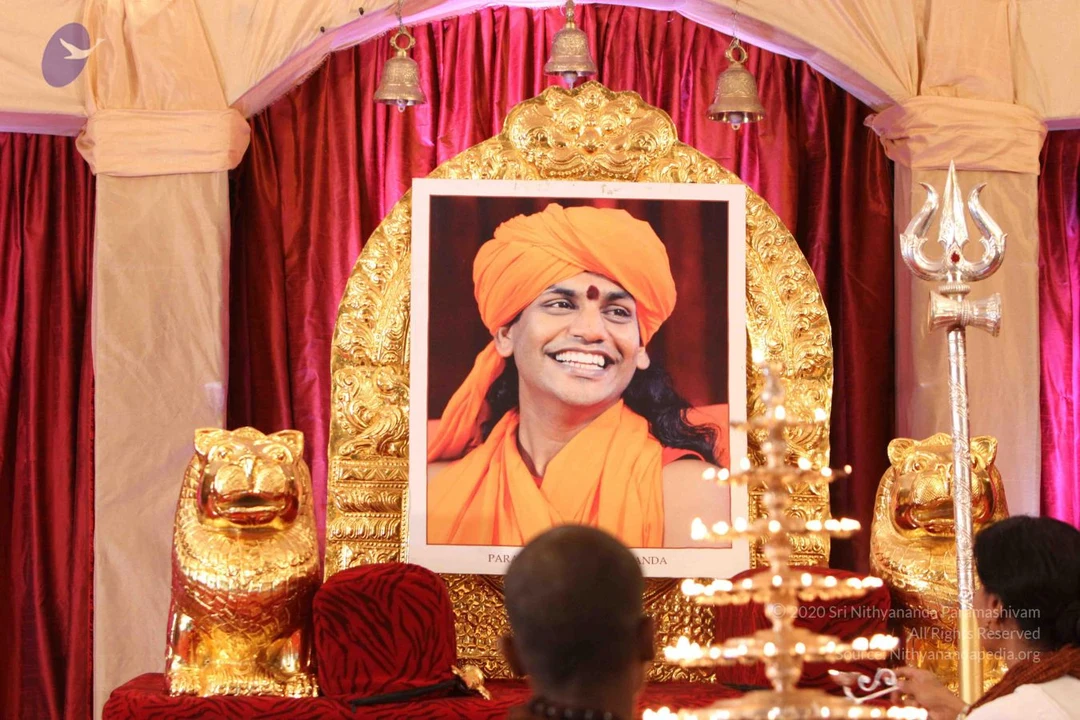
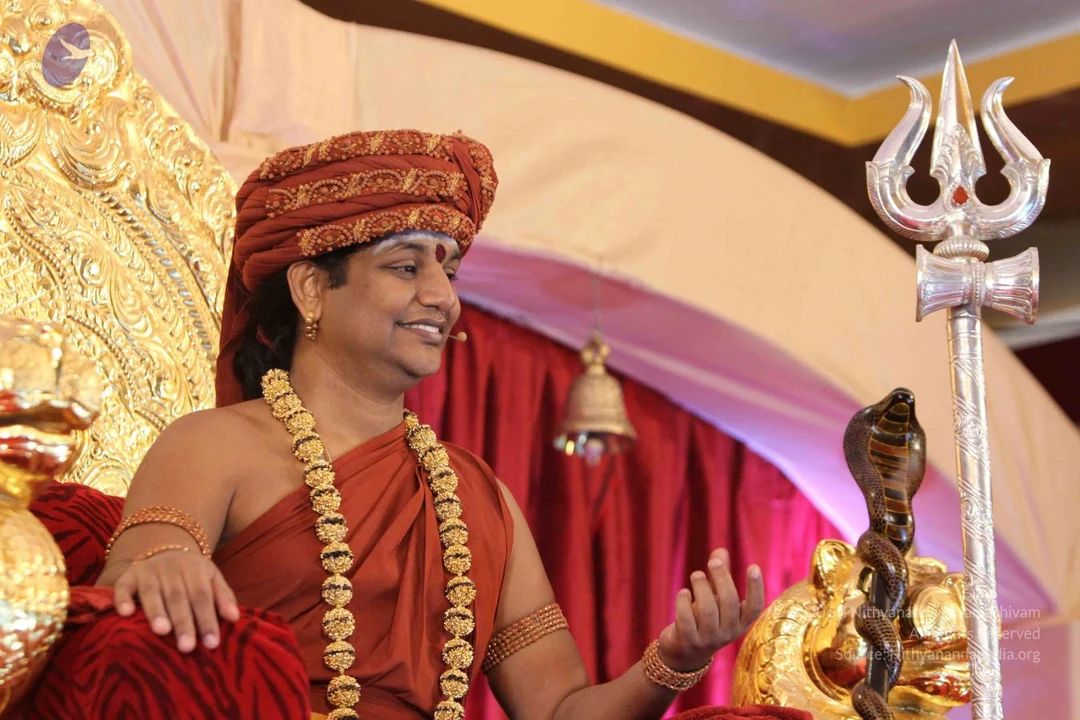
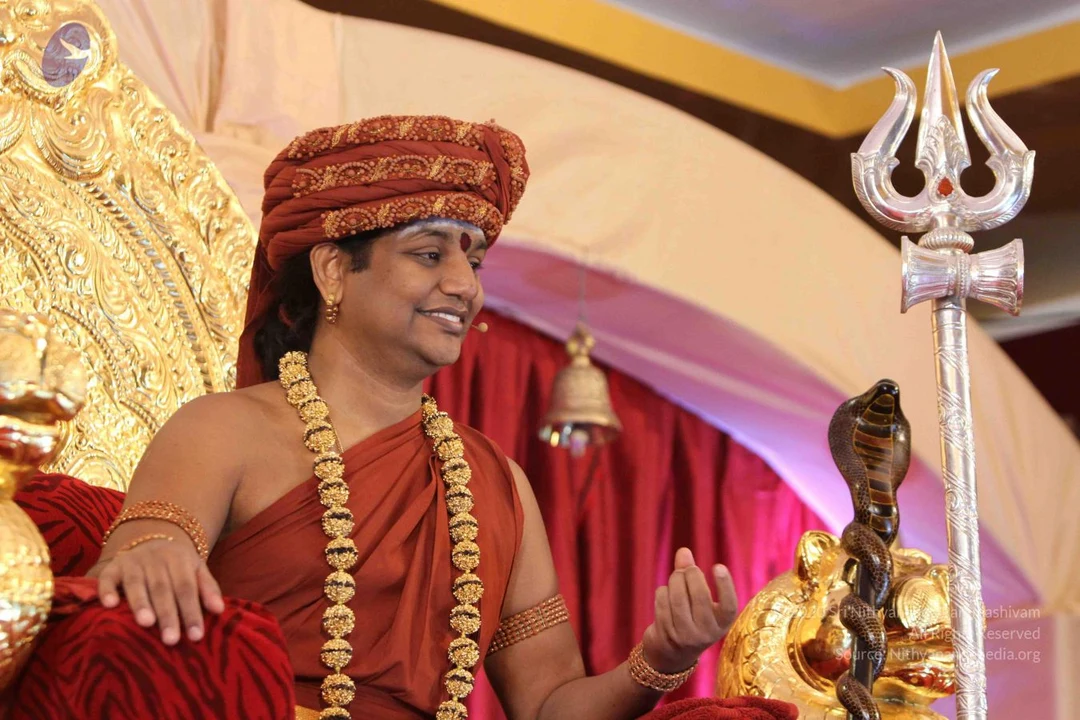
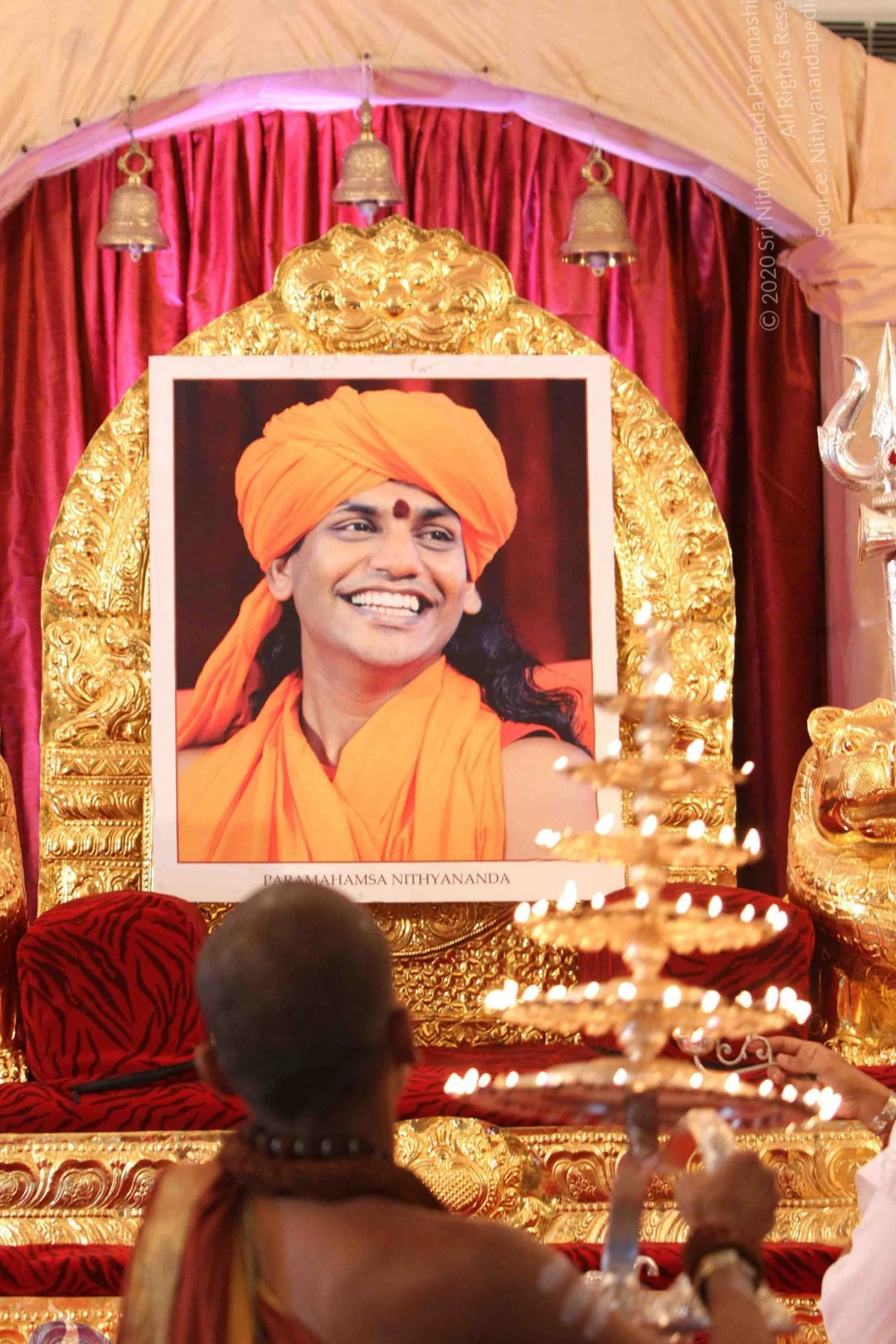
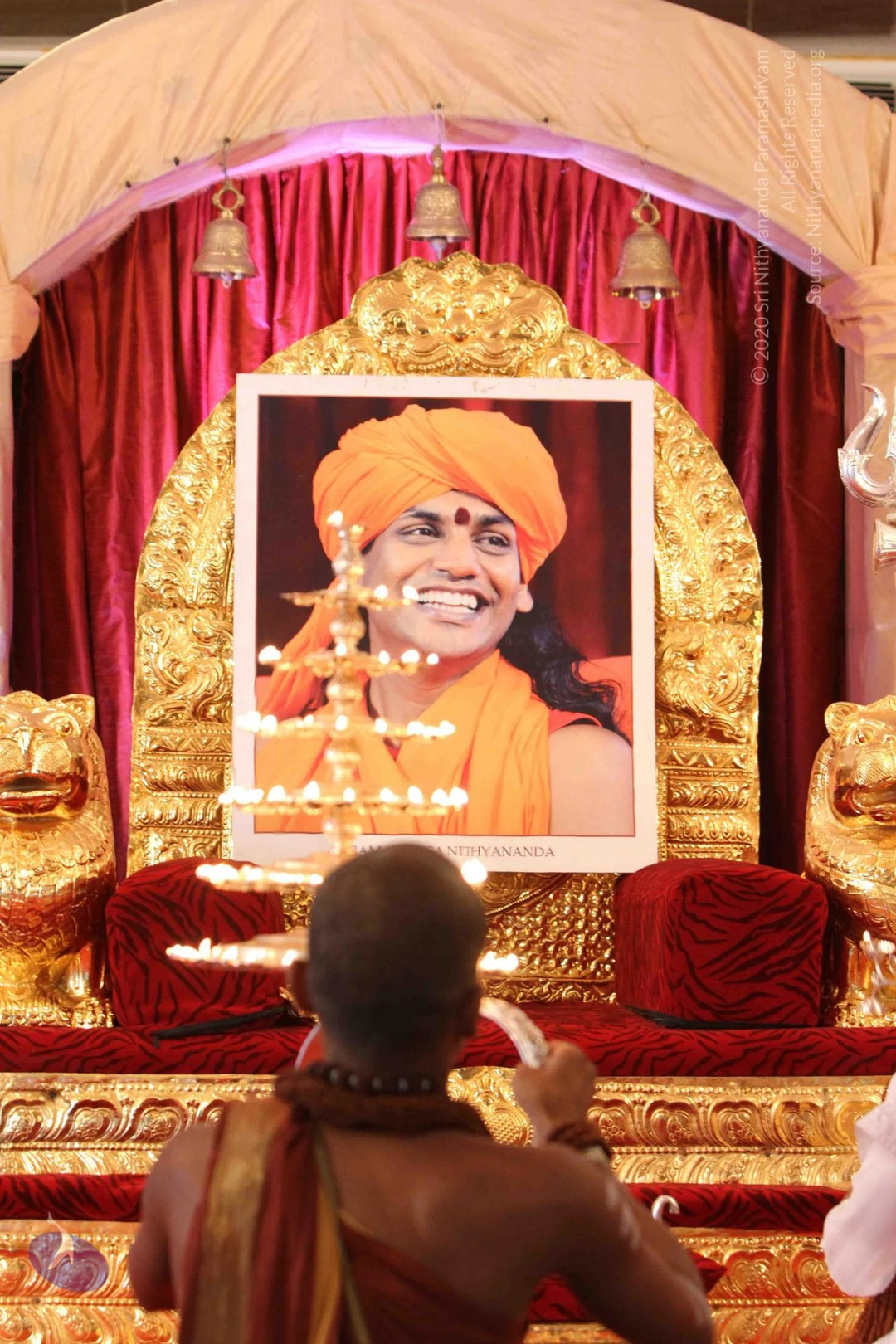
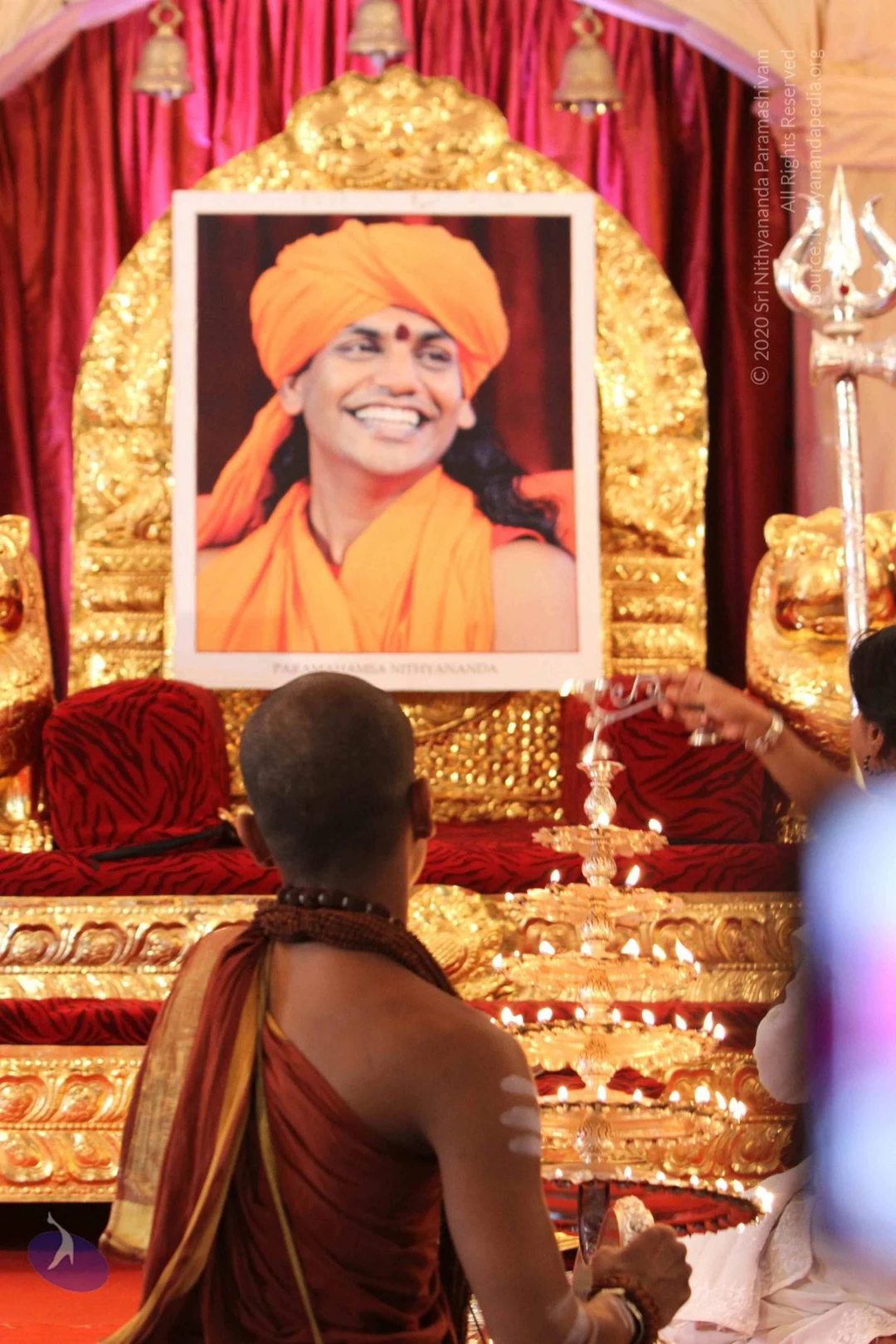
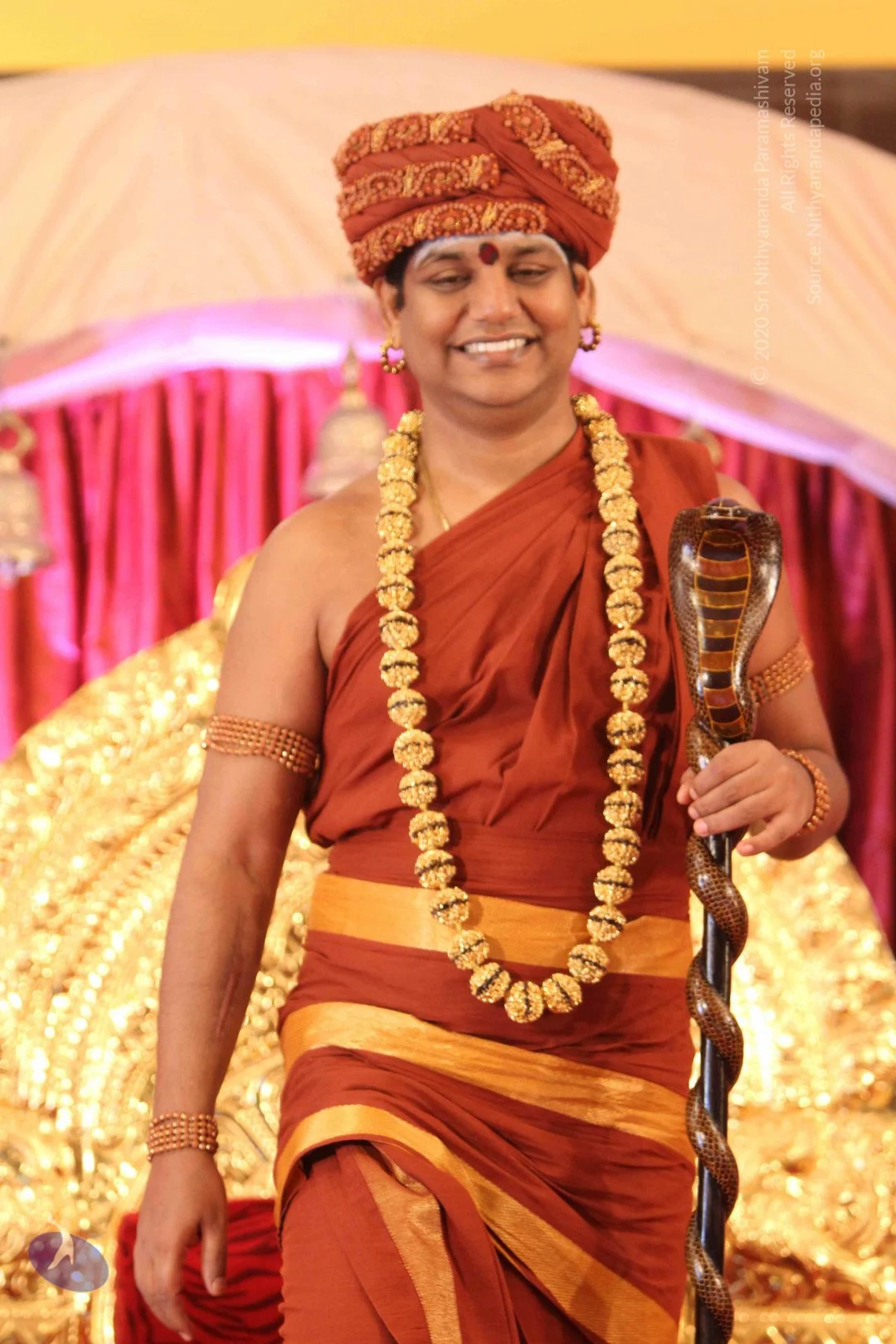
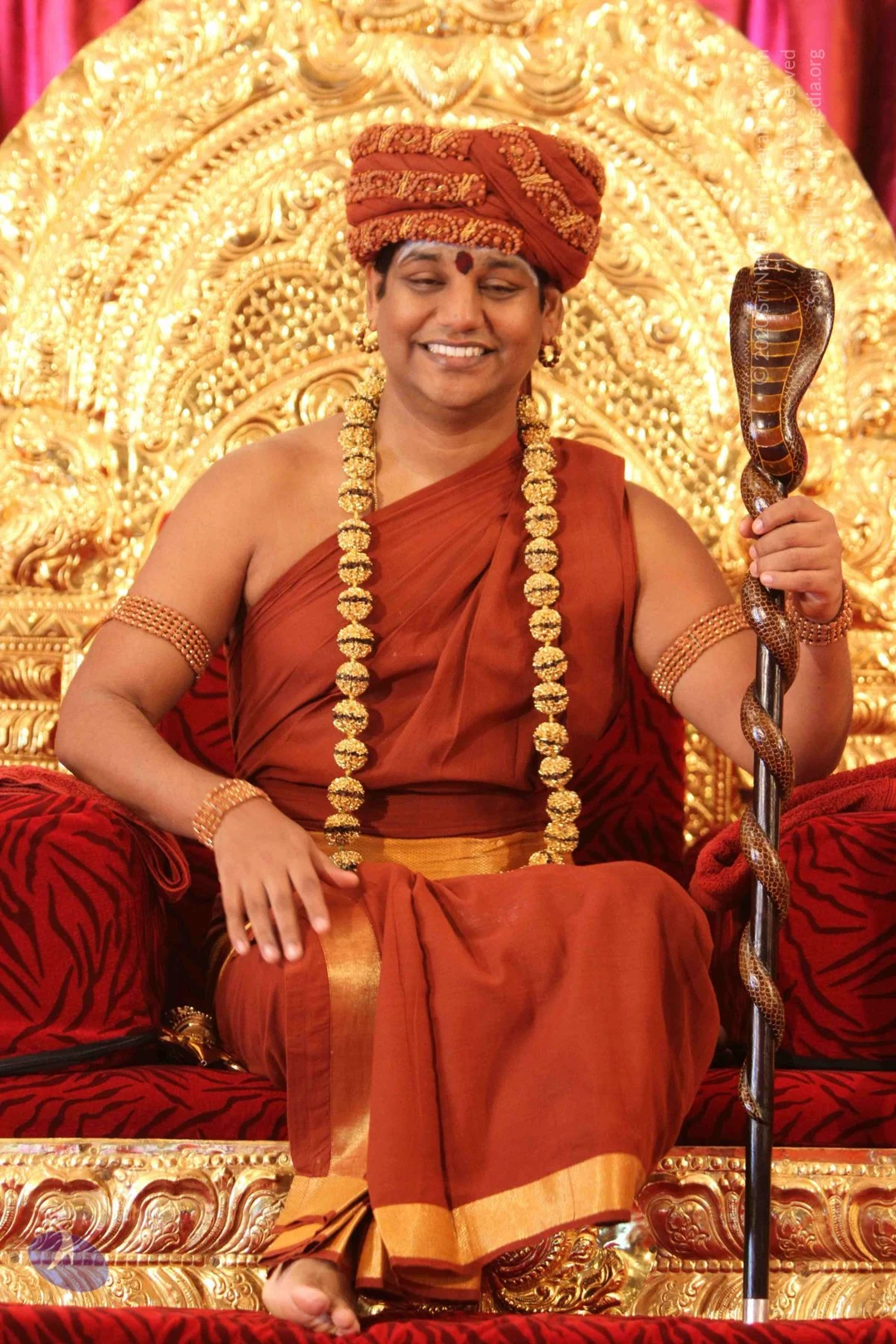
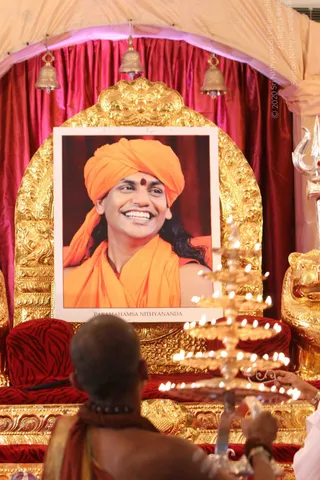
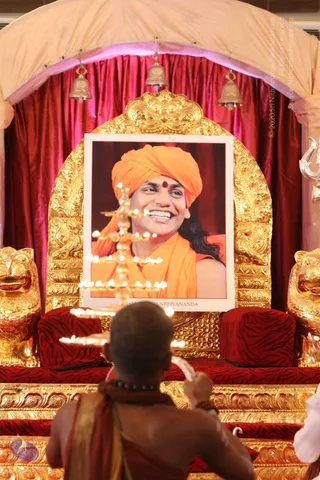
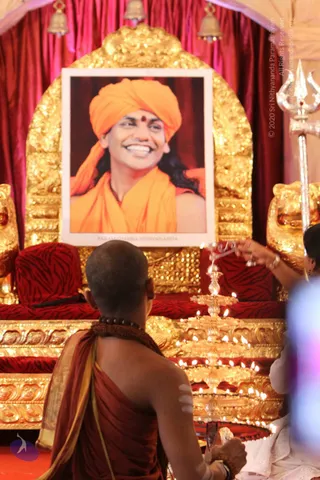
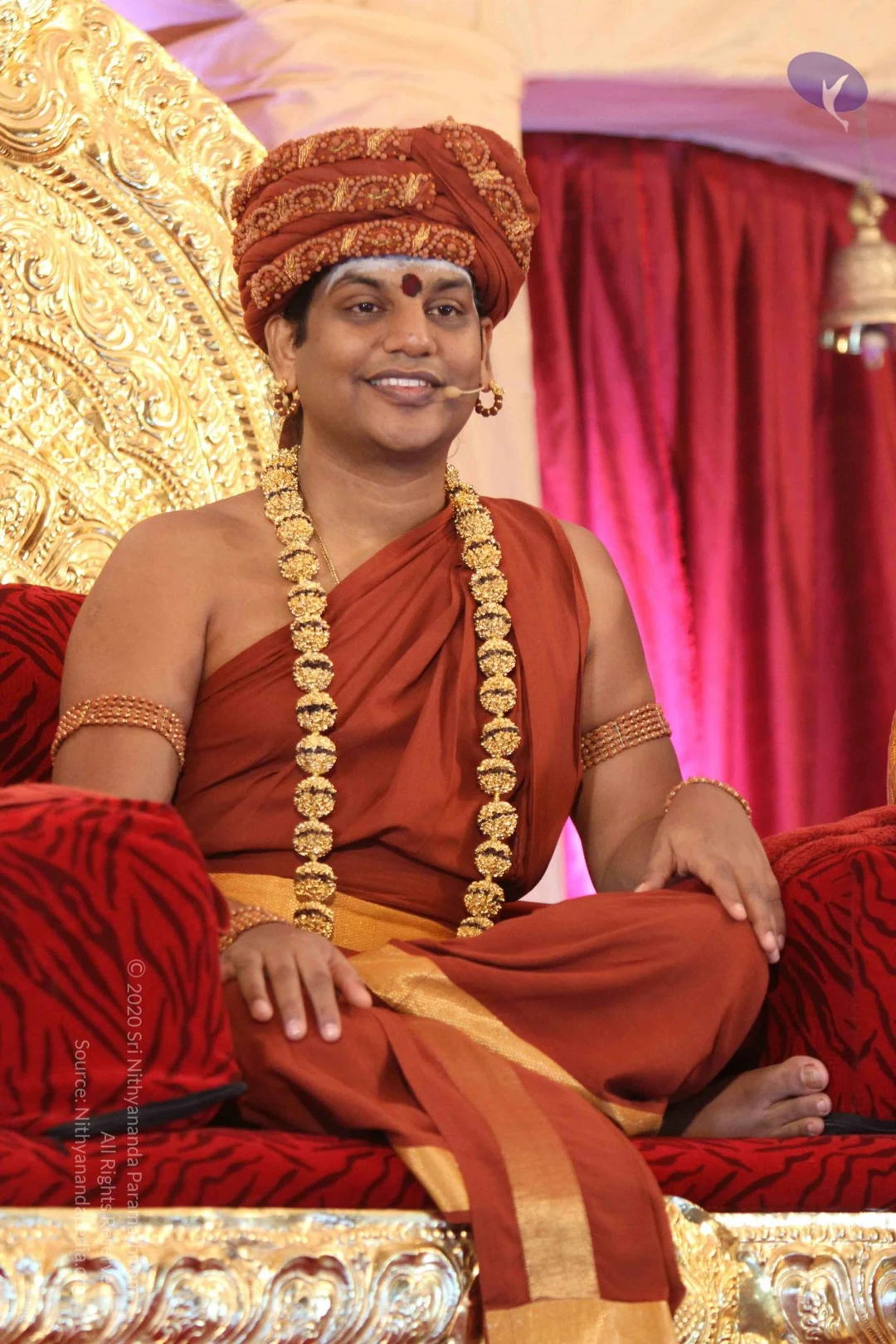
Photograph of a gilded ornate throne backed by red silk drapes and hanging brass bells. Centered on the throne is a large printed portrait labelled "PARAMAHAMSA NITHYANANDA" of a smiling man in orange turban and orange robes with a red bindi, and a robed priest with shaved head in the foreground facing it. A multi-tiered silver oil lamp with many lit wicks is held up in the foreground, and a silver trident stands at right beside a golden lion figure. The printed portrait is a depiction, not a physical person; the only physical people are the priest in the foreground and a hand holding the lamp at right. a person appears only in the printed portrait, identified by its caption.A photograph of a golden ornate throne draped with red velvet and flanked by golden lion figures, with a large framed portrait at its centre showing a smiling man in an orange turban, orange garment and red bindi, labelled "Paramahamsa Nithyananda" on the printed caption. A brass multi-tiered oil lamp with lit wicks is held in front of the portrait. In the foreground, a bare-shouldered priest with a shaved head and a rudraksha mala around his neck faces the throne, holding a lamp-related ritual object, in a puja setting beneath a cream canopy with hanging bells. The portrait is a depiction on print, not a physical person present.A shaved-headed man in a rust-brown robe with a rudraksha mala, seen from behind, sits before a golden throne with red tiger-striped cushions and gold lion-head armrests. Above the throne hangs a framed printed portrait of a smiling man in an orange turban and orange shawl, bearing a red bindi; its caption reads "PARAMAHAMSA NITHYANANDA". A tiered silver oil lamp with many lit wicks stands before the throne, and a woman's arm extends from the right holding a lamp. A silver trident stands at the right side. Pink draped fabric and hanging bells frame the scene.A smiling man in an ornate red-orange turban with gold embroidery and a red bindi stands in front of a gold and pink draped backdrop. He wears a rust-orange sannyasi-style wrap with a gold-bordered sash, a long necklace of large gold beads, gold bangles and earrings. He holds a dark wooden staff carved as a coiled cobra.A seated man in saffron-orange robes and a matching embroidered turban sits on an ornate gold throne with a repeating floral and scroll pattern, a red tiger-striped cushion beneath him. He wears a long gold-bead garland and gold bangles and armlets, a red bindi and white tilak on his forehead, and gold earrings. He smiles with his eyes lowered and holds a black staff entwined with a carved cobra. The photo is a candid, close portrait. Appearance suggests a probable Swamiji (Nithyananda), based on the swept-back ornate turban, saffron robes, rudraksha-style gold beads, and throne seating, with the page noting Swamiji at this event.A seated man in rust-red saffron robes and a matching turban sits on an ornate gold throne with red tiger-striped cushions. He wears a red bindi, multiple gold-toned rudraksha malas, gold armbands and bangles, and holds a long wooden staff topped with a carved cobra. He smiles and looks to the side. Behind him is a gold repoussé backrest.

Photos
6 photosSource gallery
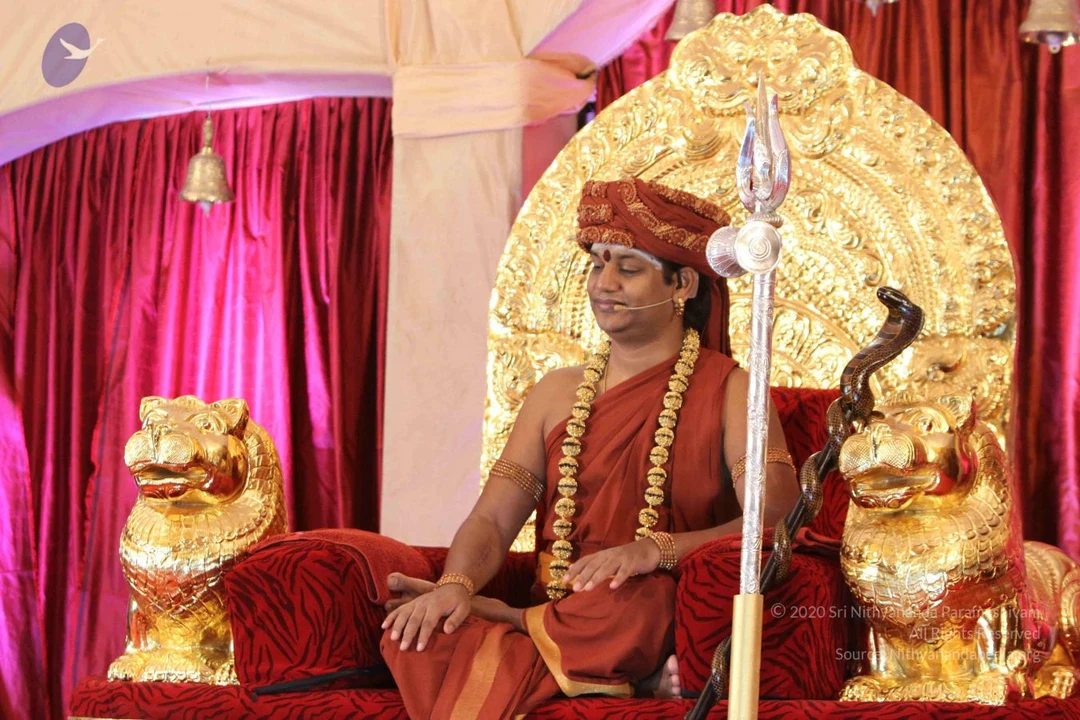
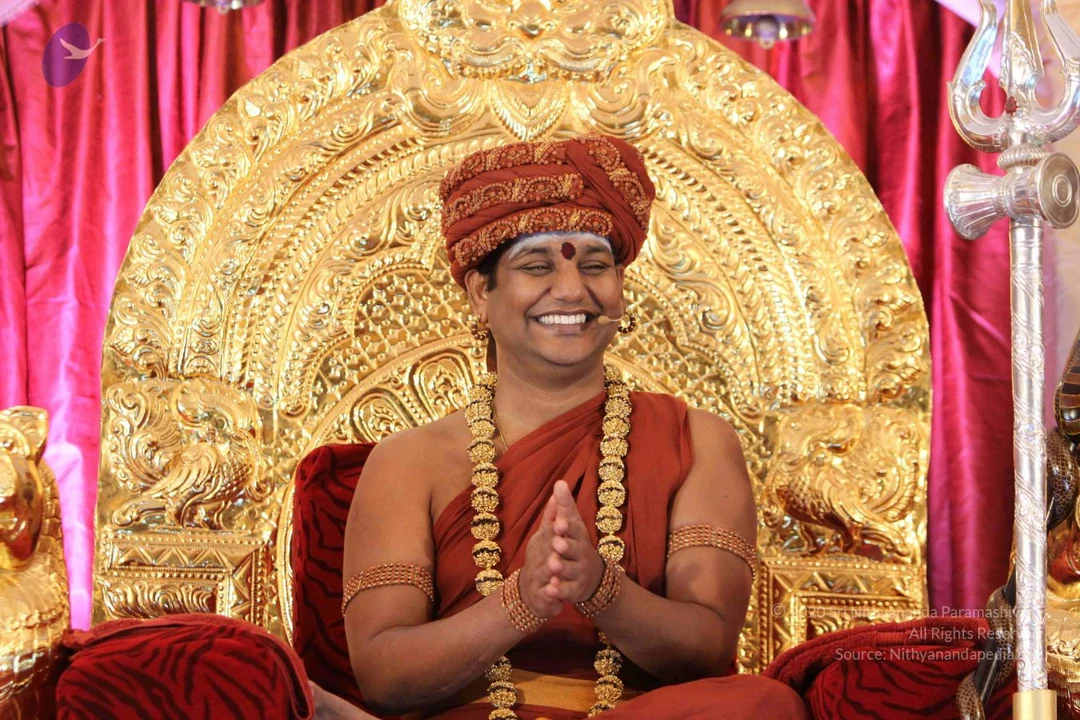
A man in a rust-orange robe sits on an ornate golden throne with lion-head armrests, smiling and looking to his right. He wears a gold bead garland, a white and red forehead mark, and a peacock-feather fan rests behind the left armrest. Beside him a silver staff is entwined with a dark cobra carved in gold and dark tones. Red velvet drapes frame the background. Swamiji (probable): a long-haired figure in saffron-orange robes with a gold bead garland, seated on a golden throne, matching the page's Swamiji reference.A smiling man with swept-back black hair and a white sandalwood tilak with a red dot on his forehead wears a saffron-orange garment and a gold chain with a beaded gold necklace. A peacock-feather fan with blue-green eyes is held at left, and a gilded cobra figure with a raised hood appears at right, beside red and gold drapes.A person seated on an ornate gold throne with a repoussé backrest against pink draped fabric, wearing an orange-red turban with gold border, a red bindi, an orange-red robe, multiple gold bead necklaces, gold bangles and a small microphone near the mouth. The seated person gestures with the right hand while speaking. A silver trident stands to the right beside a gold cobra figure, and a gold lion-like carving appears at the left edge. Two brass bells hang from the top. Swamiji (probable): the seated figure has a turban, saffron-orange robe, rudraksha-style gold beads and a throne setting, matching the page's Swamiji reference.A smiling man in a red-orange turban decorated with beaded gold trim sits before an ornate gold repoussé backdrop, resembling a throne. He wears a red-orange shawl over the shoulder, a red kumkum dot and white vibhuti on the forehead, small gold earrings, and a long gold-bead necklace. A small clip-on headset microphone is visible near his cheek. Swamiji (probable) based on the turban, saffron-orange robes, ornate gold necklace and the page's attribution.A seated man in a rust-orange turban embroidered with beads and gold thread, with a red bindi and white forehead markings, smiles while clapping his hands in front of him. He wears an orange-red shawl over his shoulder, heavy gold beaded necklaces, gold armlets and bangles, and a small wired microphone near his mouth. Behind him a large gold, ornately embossed backdrop shines. Swamiji (probable): the appearance-based cues are the swept turban and ceremonial gold necklaces with saffron clothing, consistent with the page reference to a satsang. Only one person is visible.Close photo of a smiling man in a rust-red embroidered turban with beaded and gold trim, a red kumkum dot and white vibhuti on his forehead, and a red-orange shawl draped over his shoulders. He wears a long gold necklace of large beaded rudraksha-style pieces with dark bands, gold-beaded armlets, gold hoop earrings and a small headset microphone at his cheek. Behind him are a gold ornamental panel on the left and a red draped curtain on the right. Seen as a single physical person on stage.