Skip to content
Sunday

27 April 2014

Dated photos
399
Source pages
1
Media
2
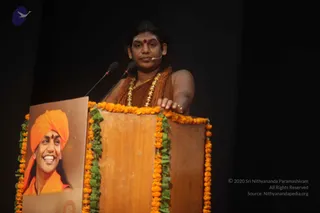
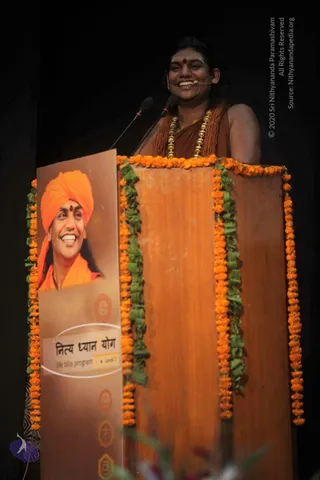
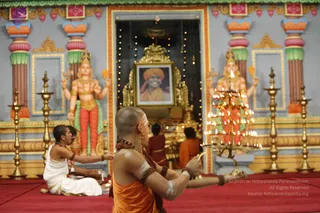
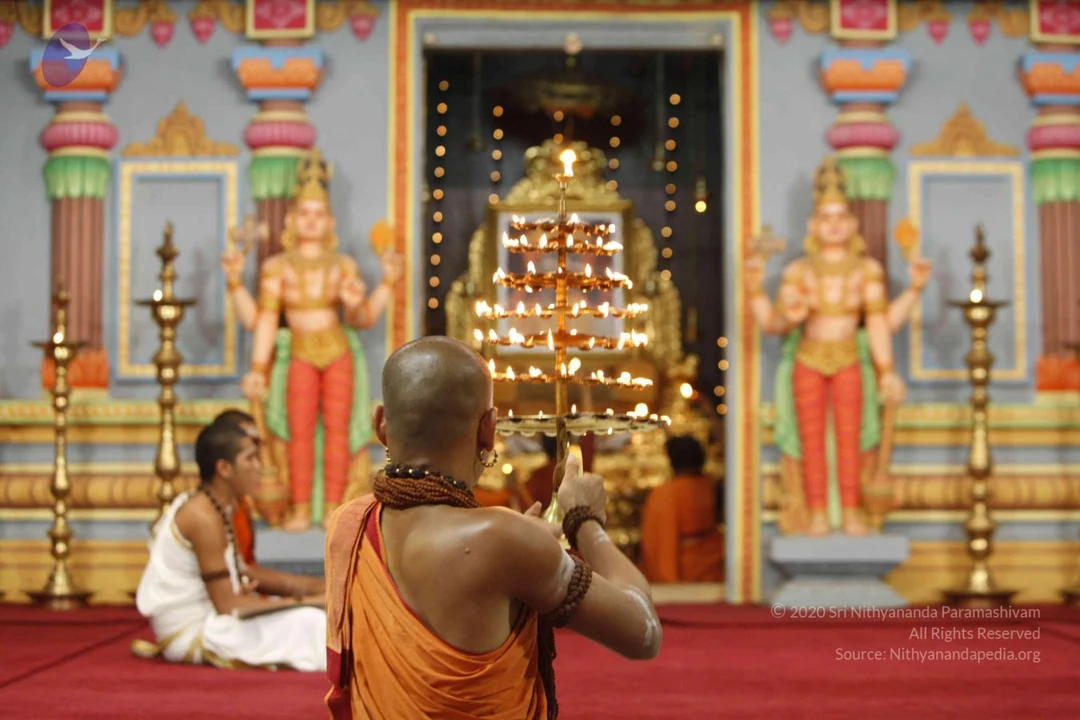
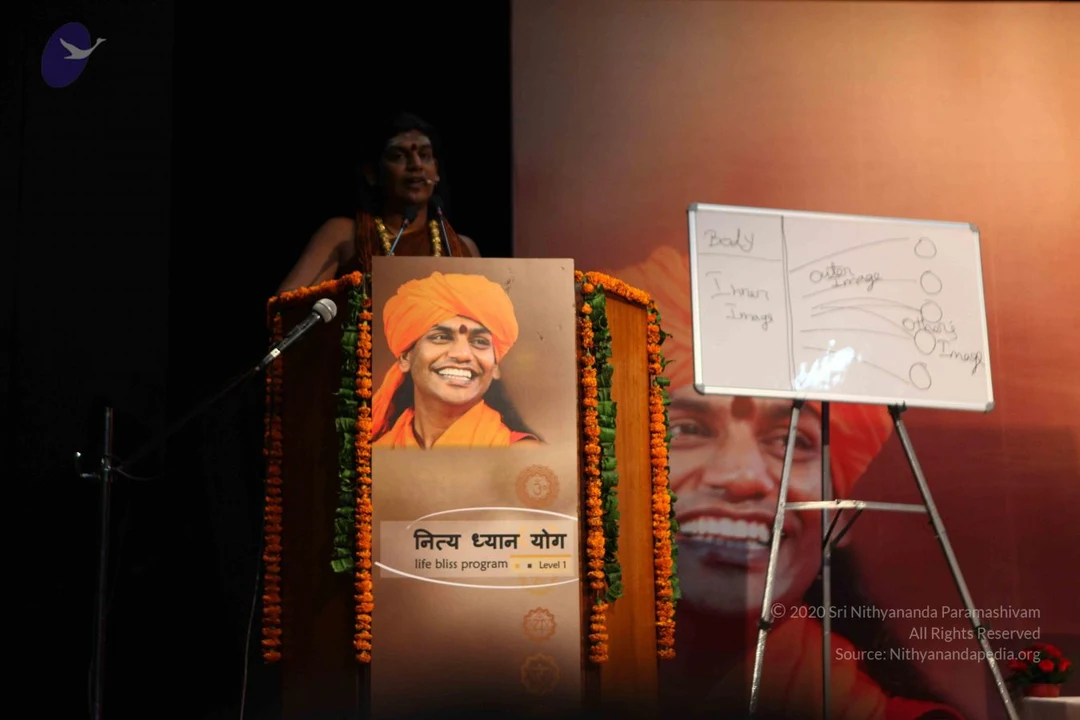
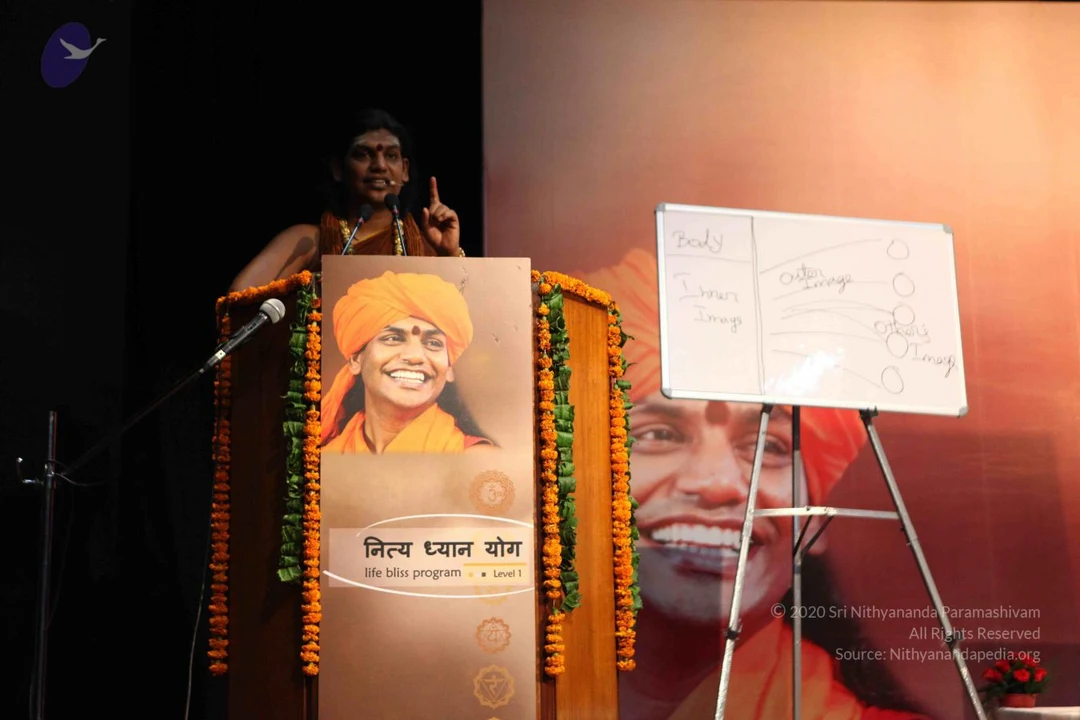
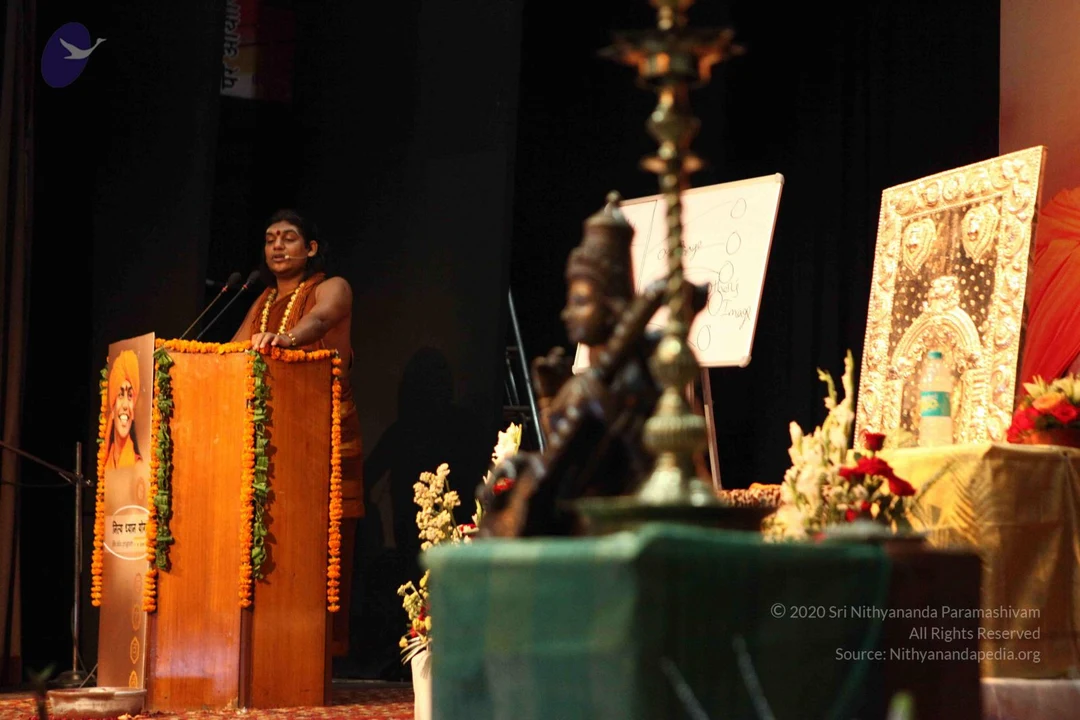
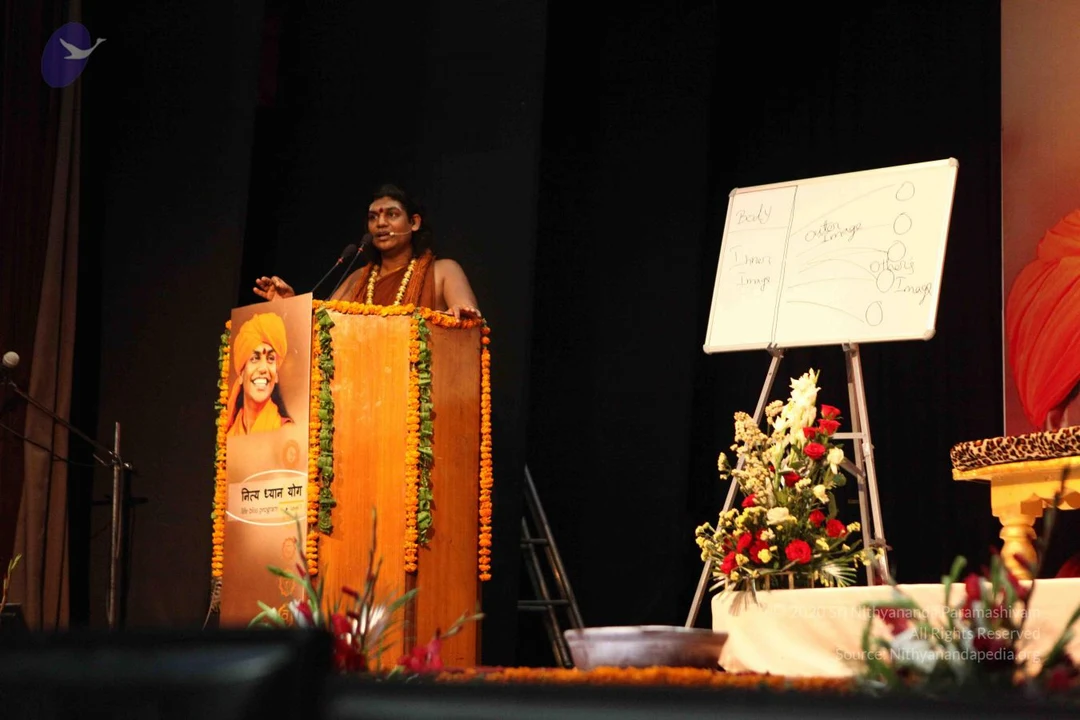
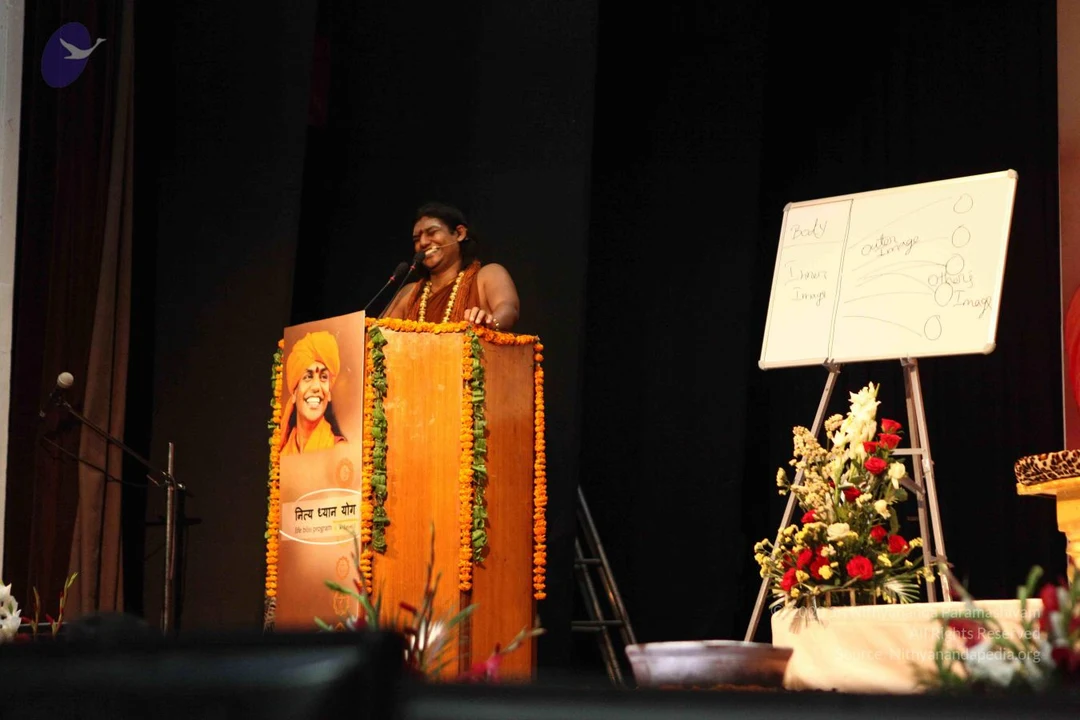
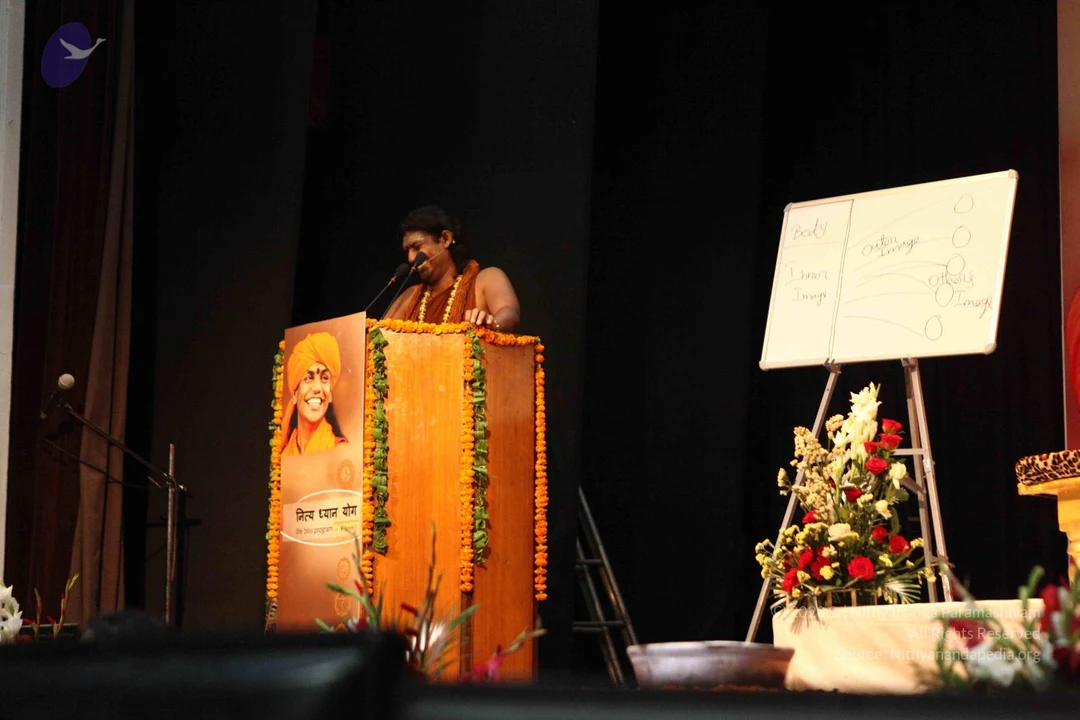
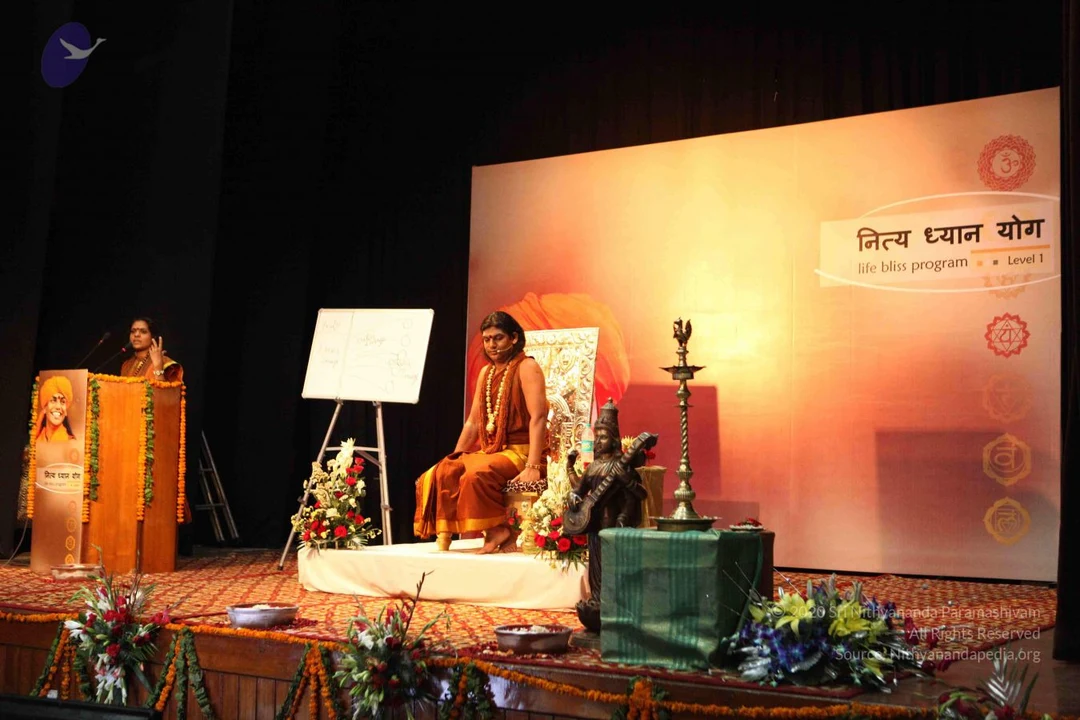
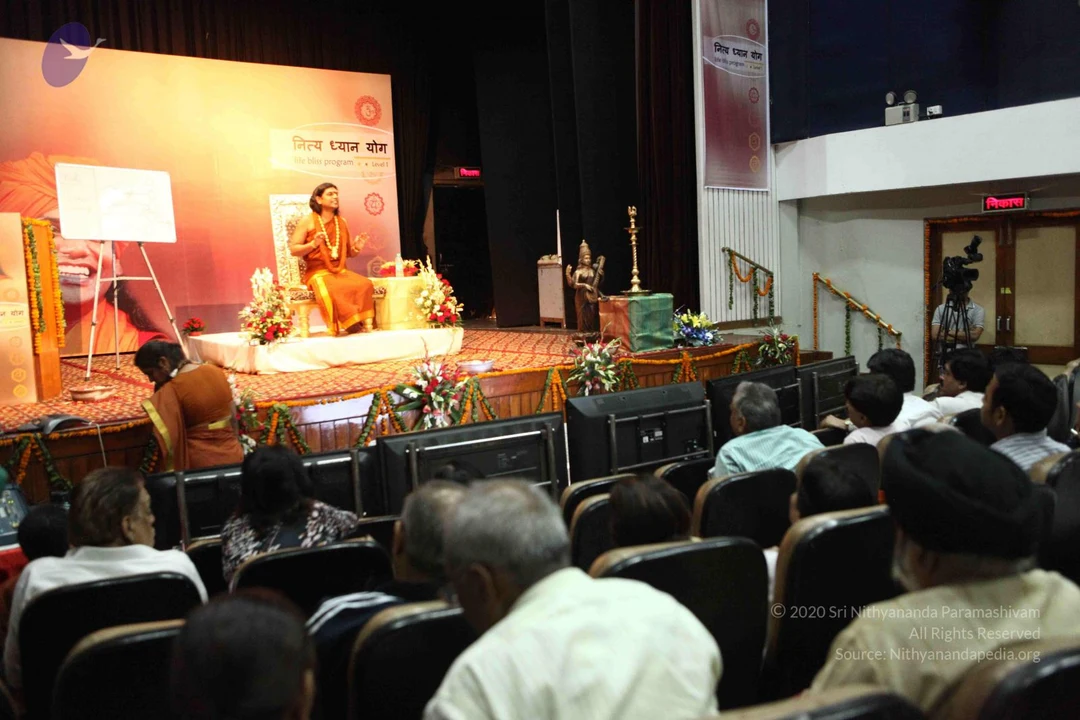
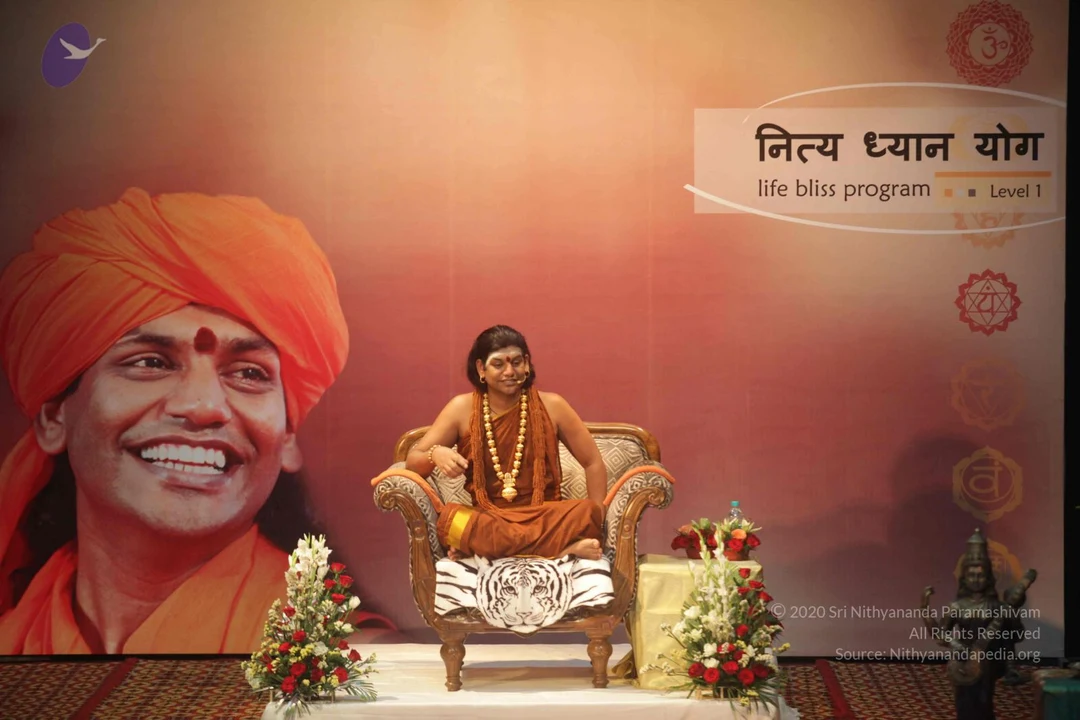
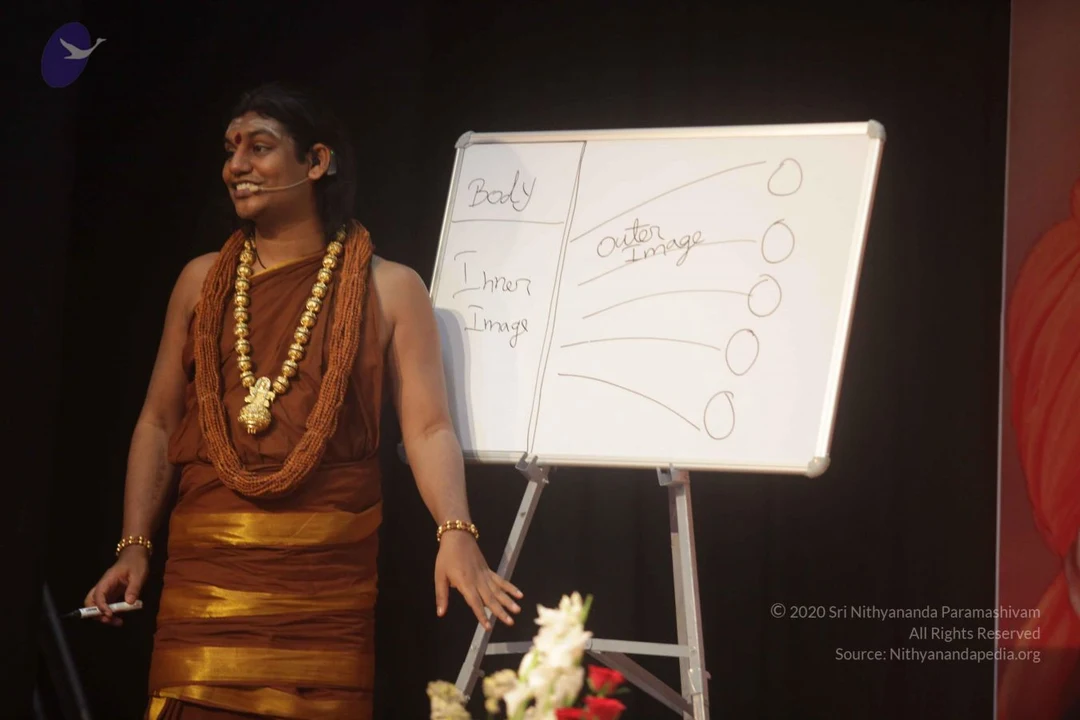
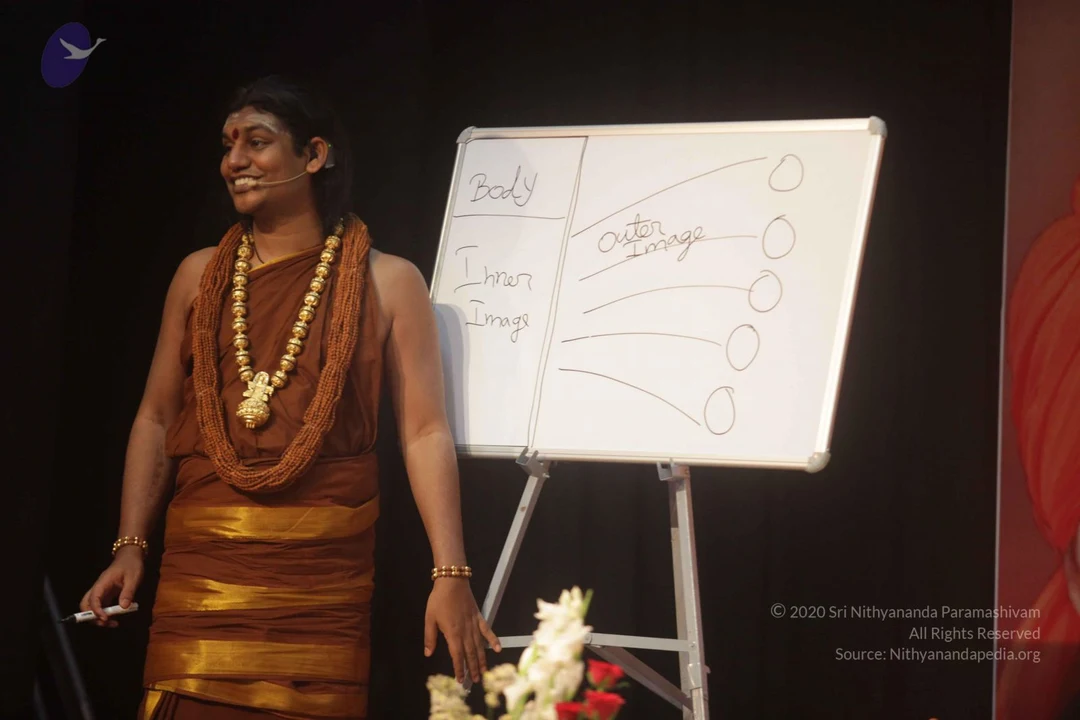
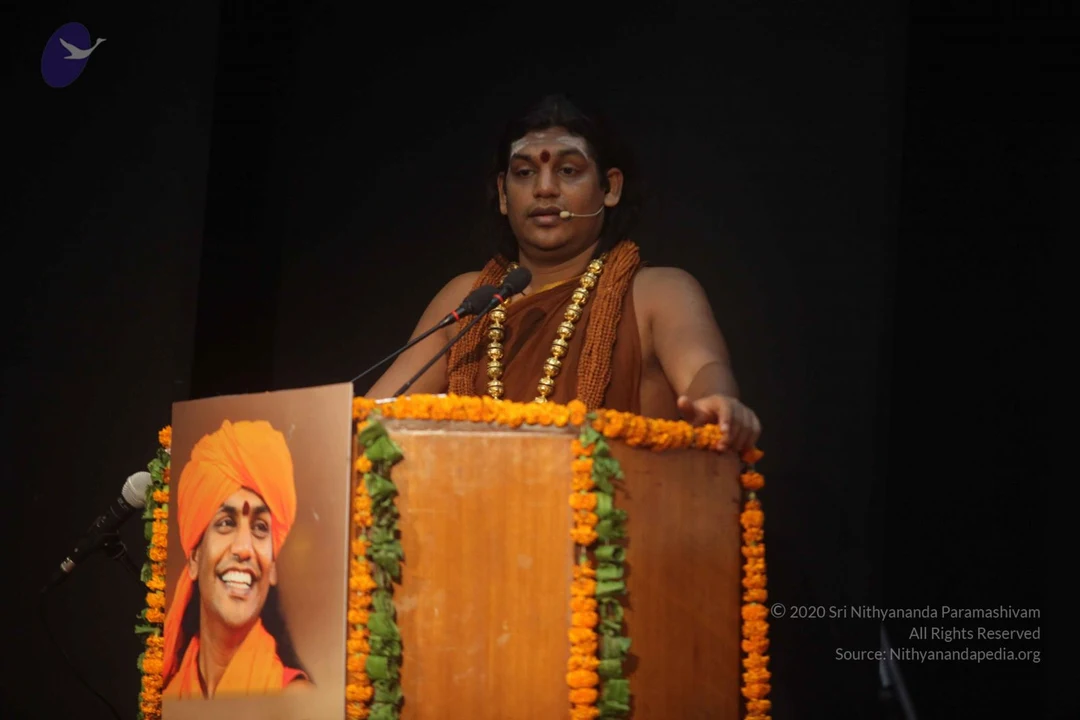
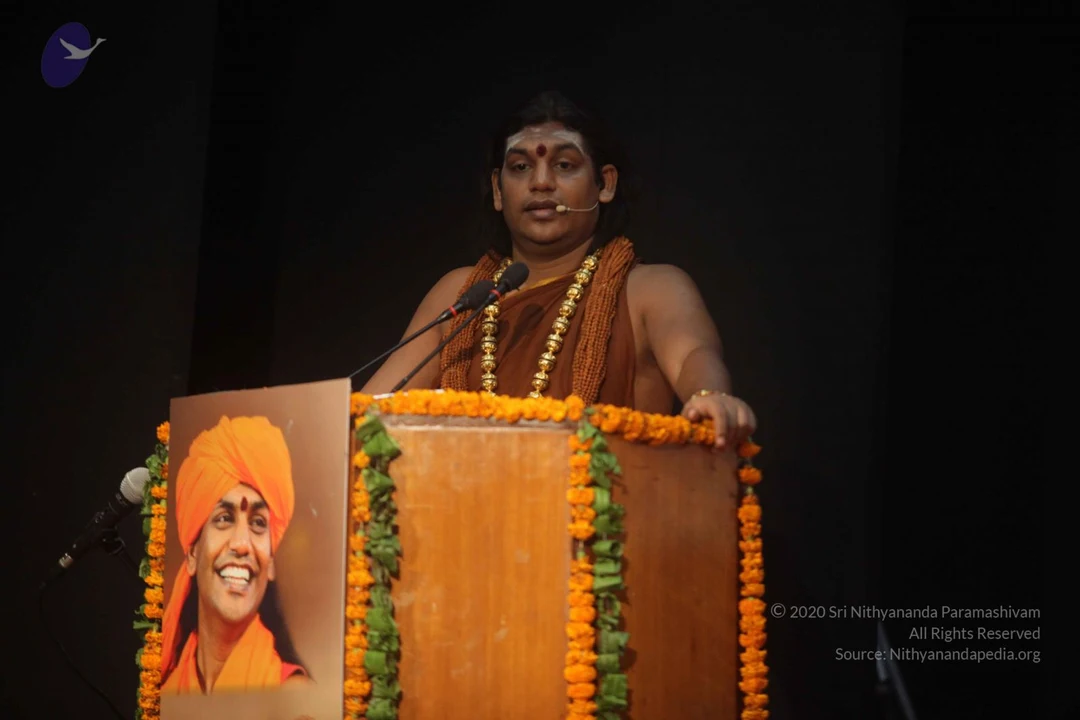
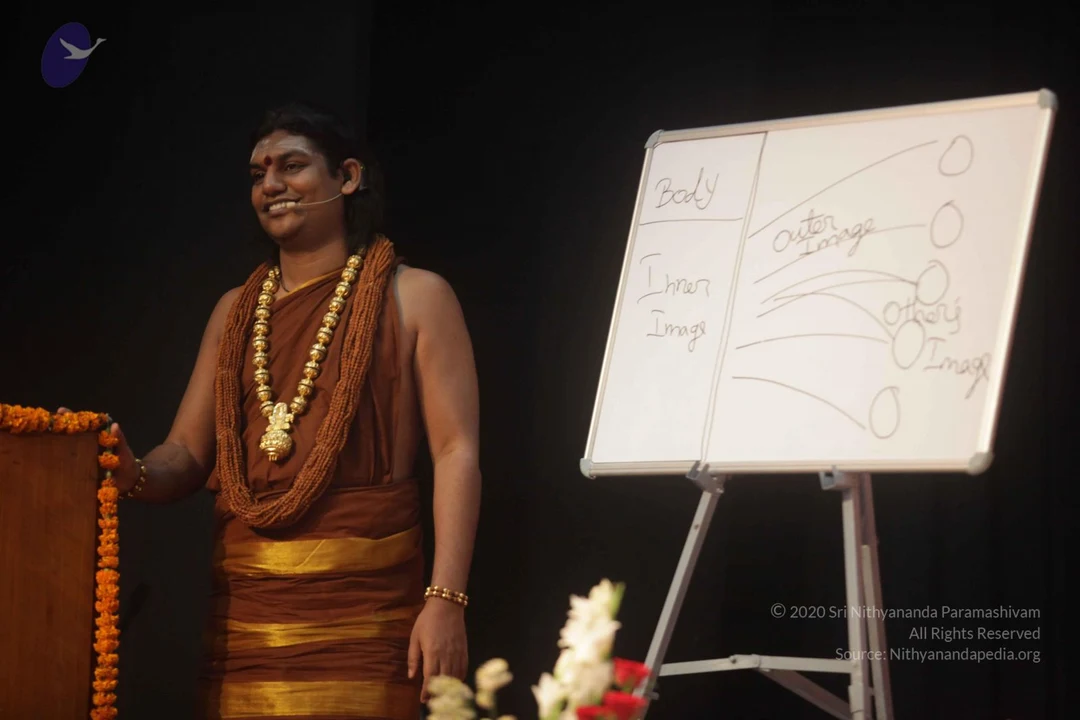
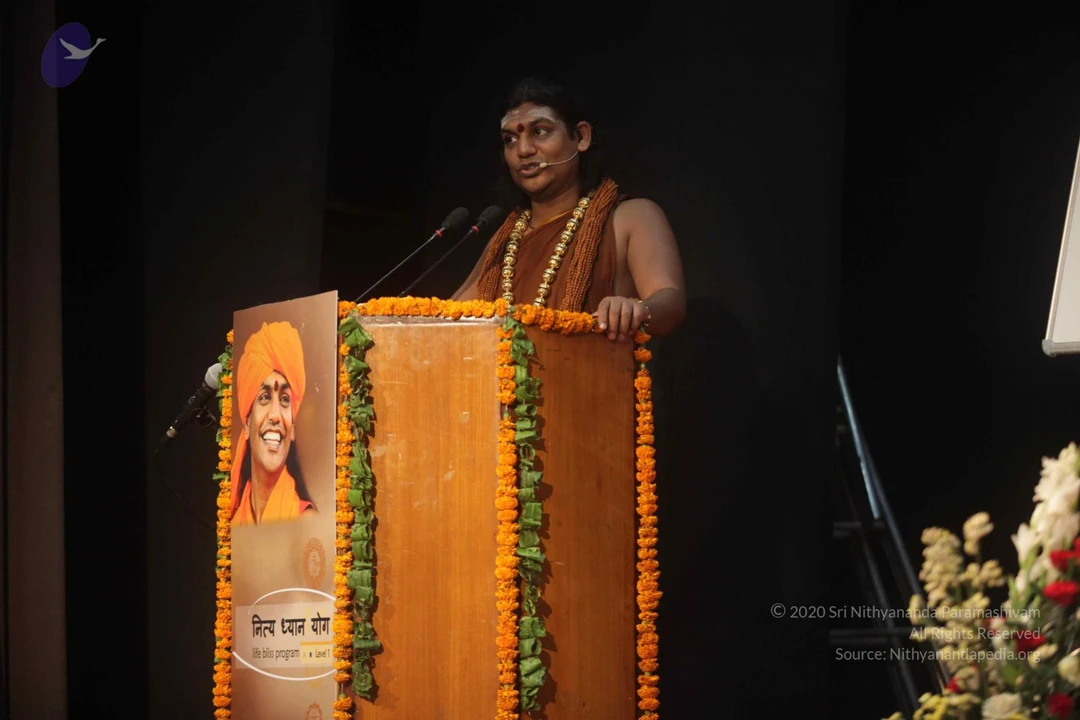
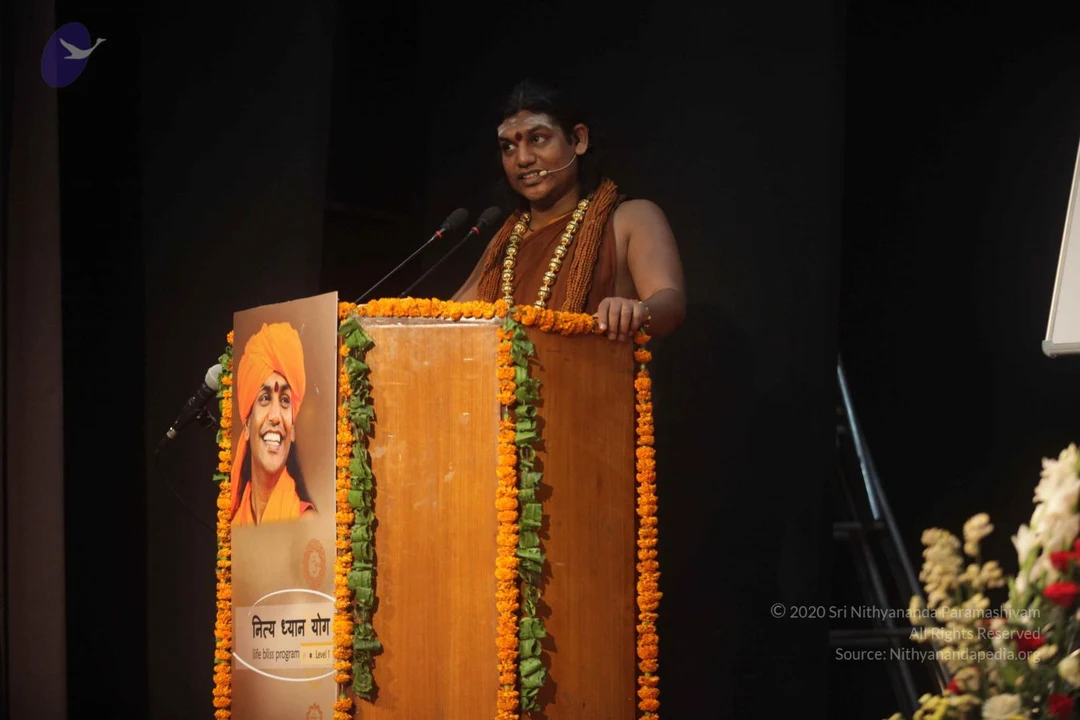
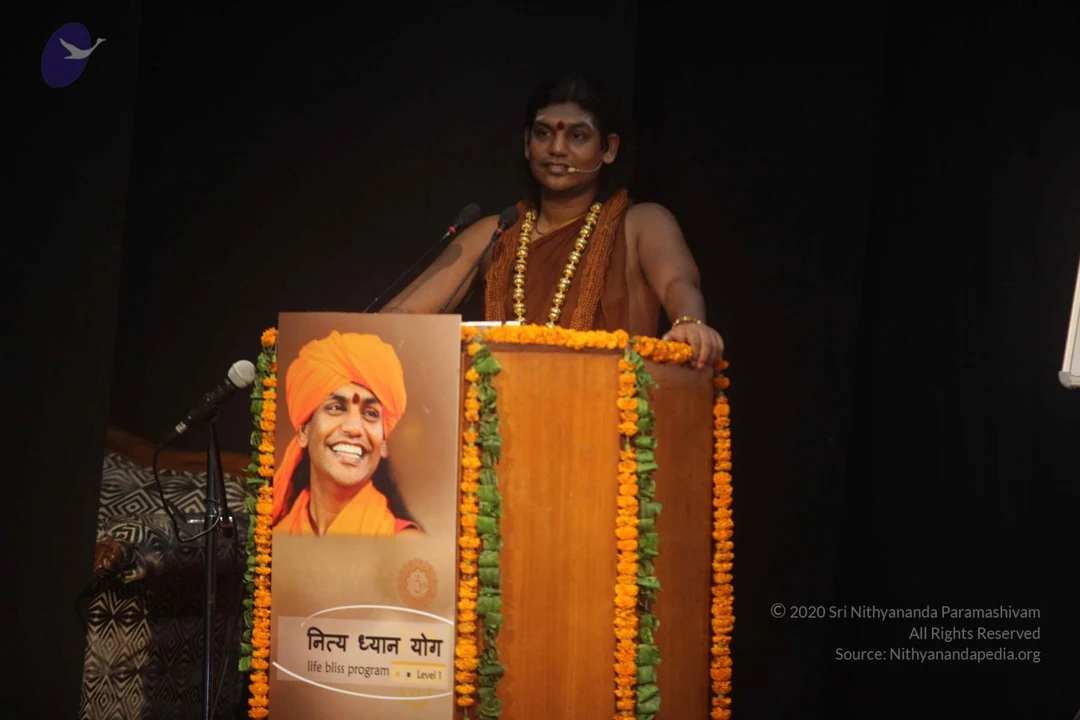
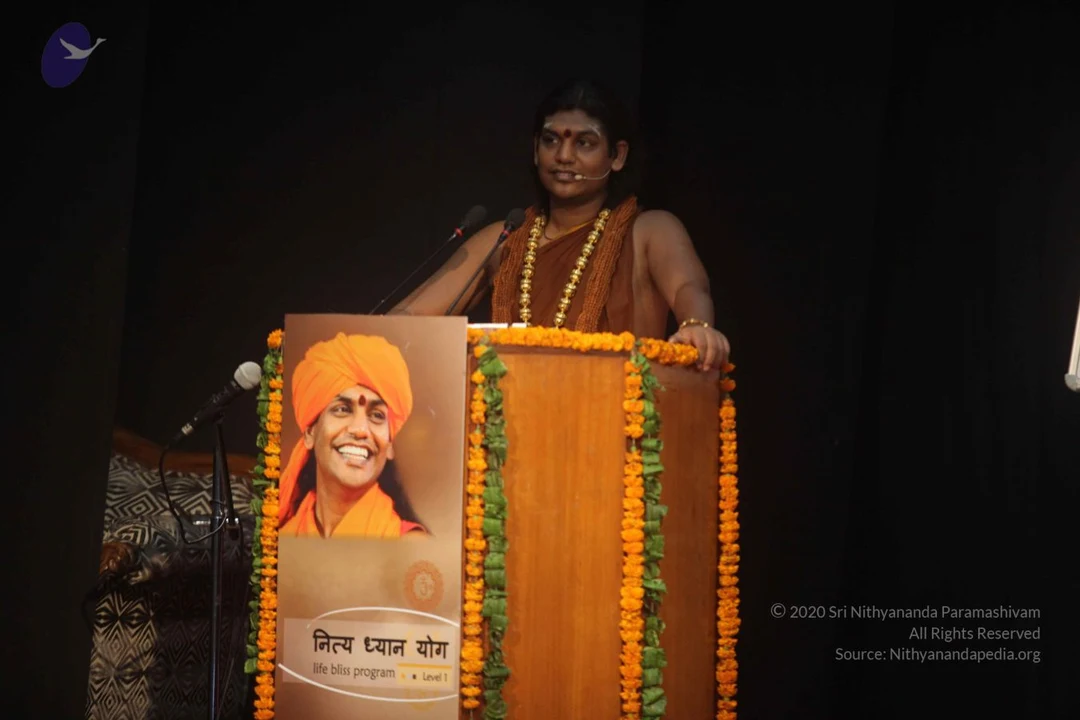
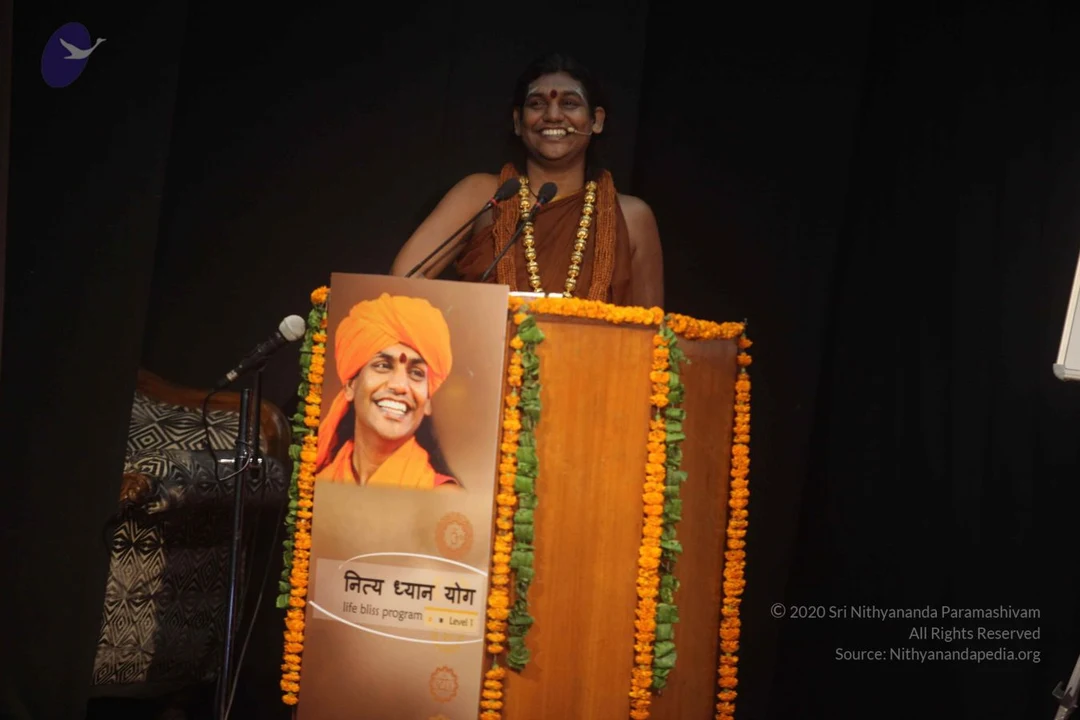
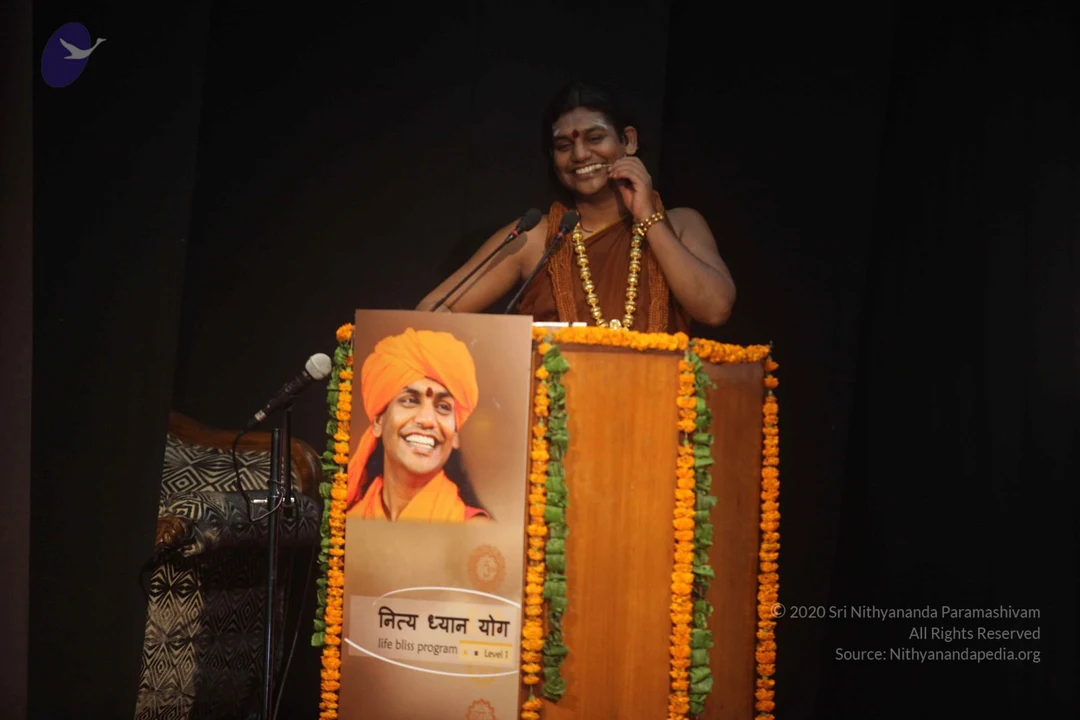
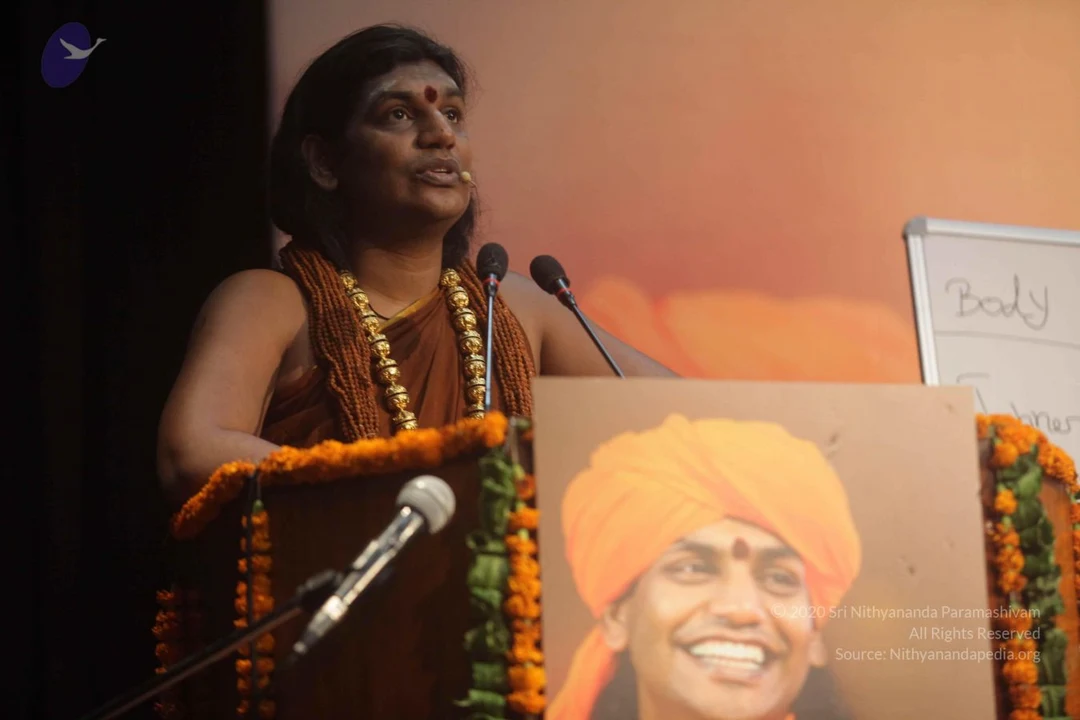
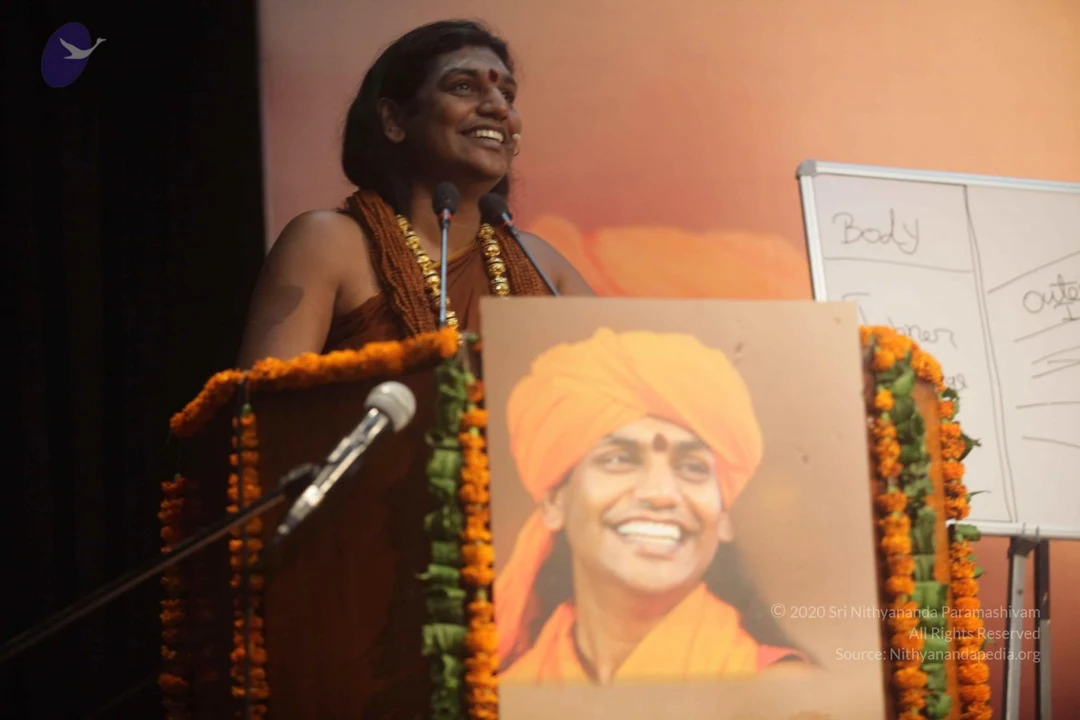
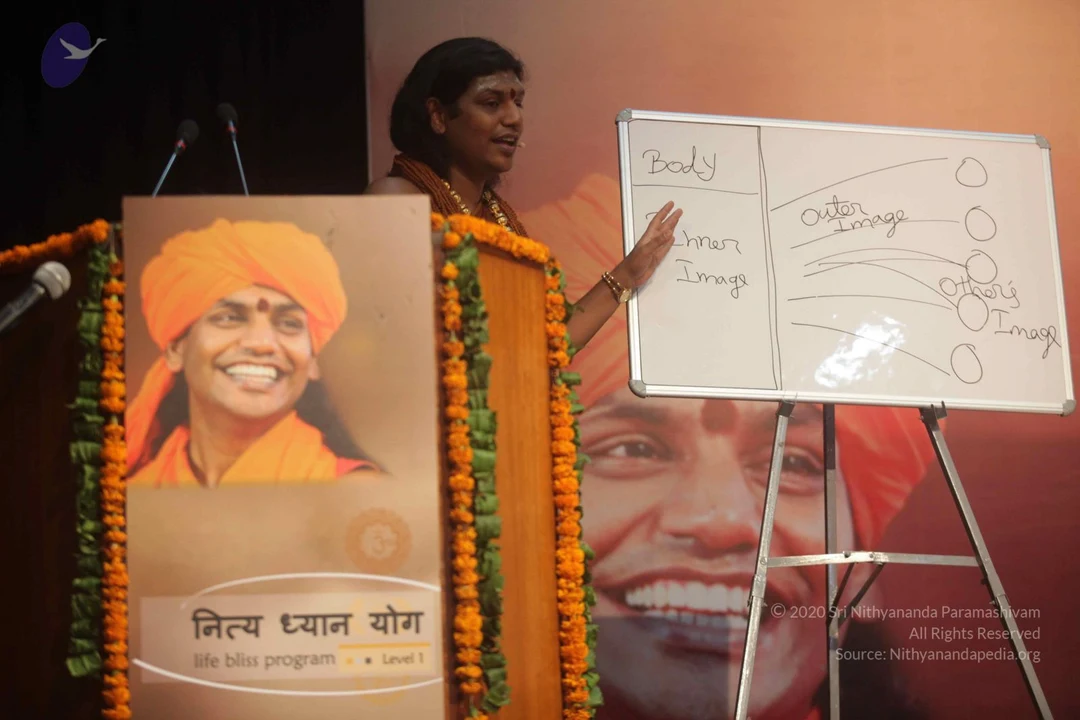
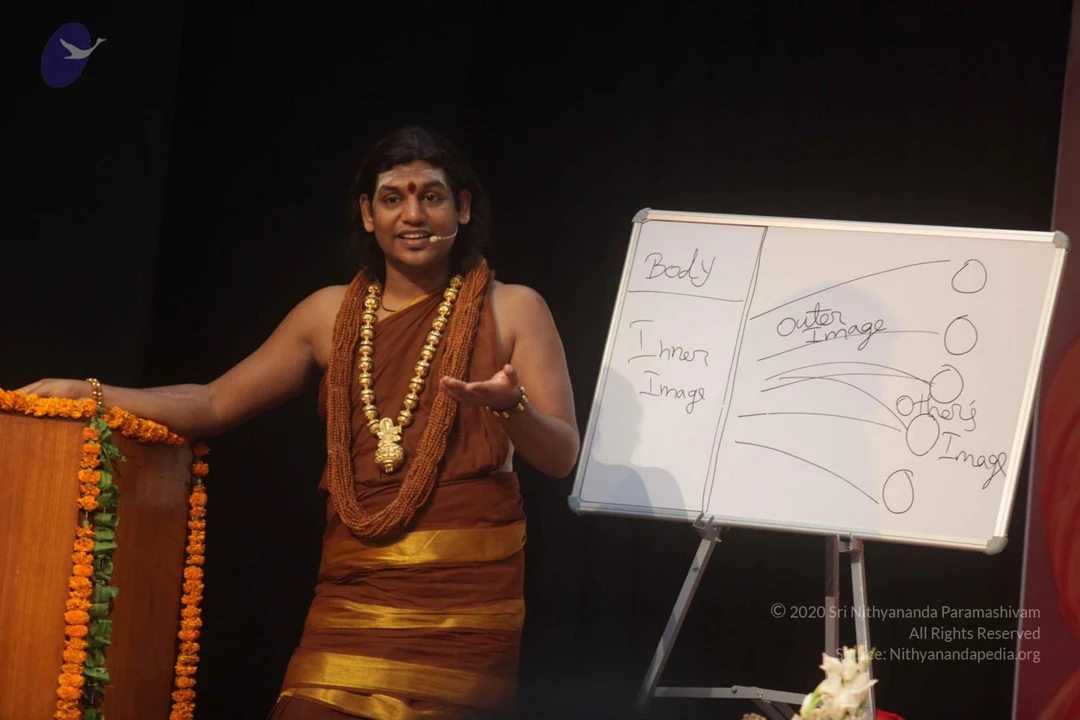
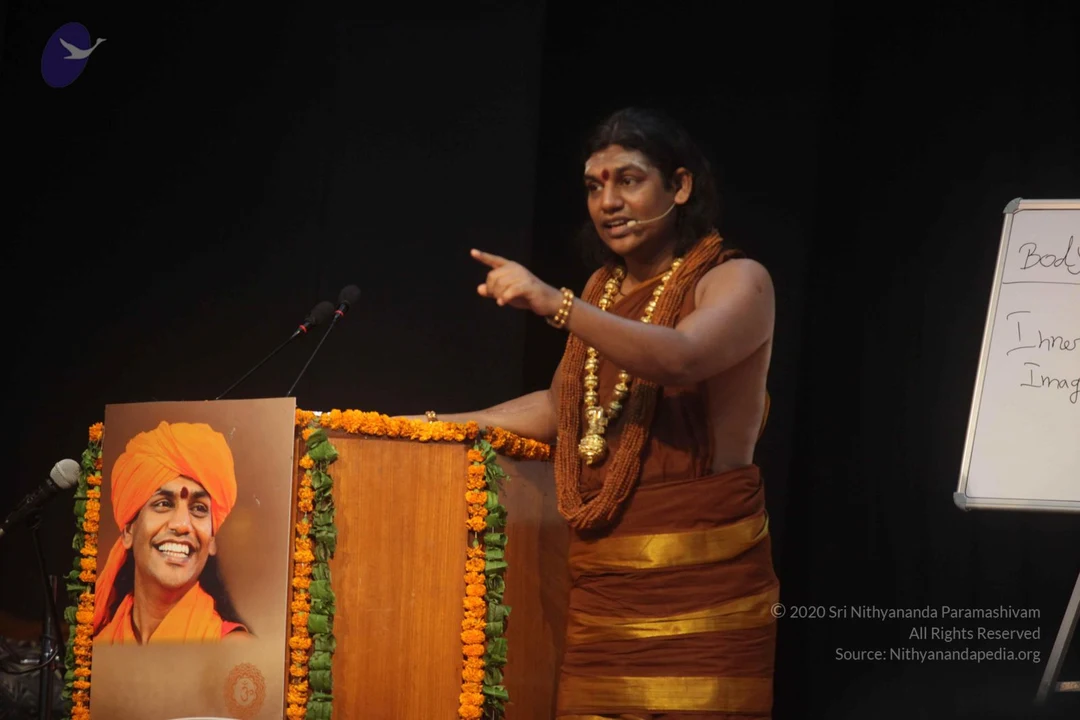
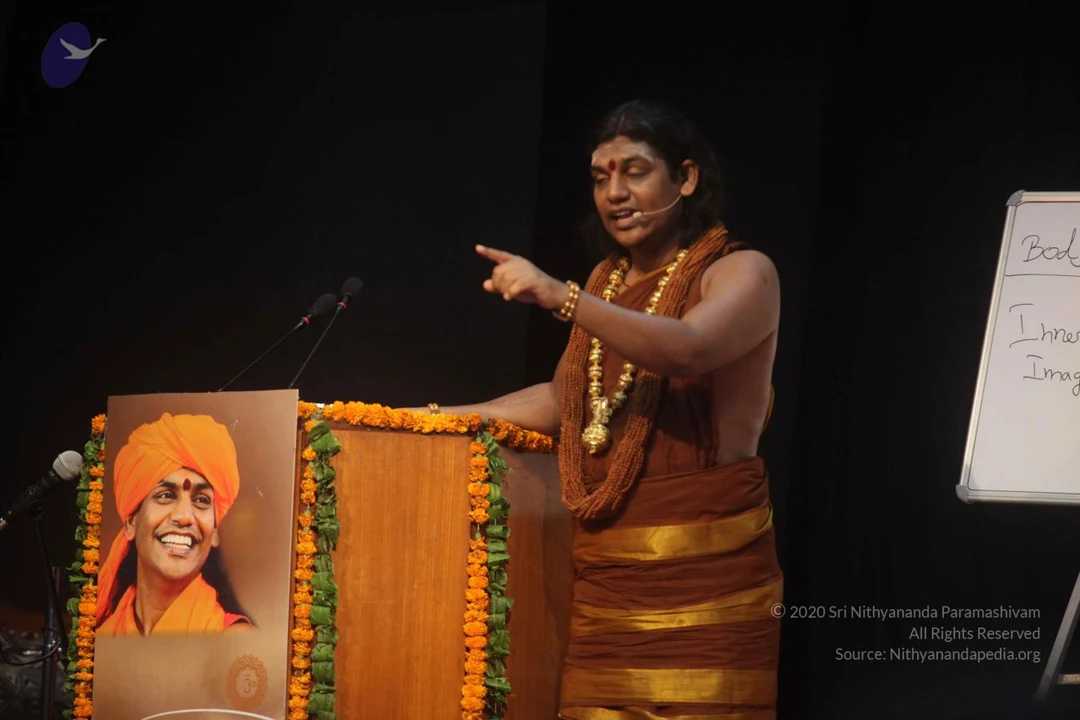
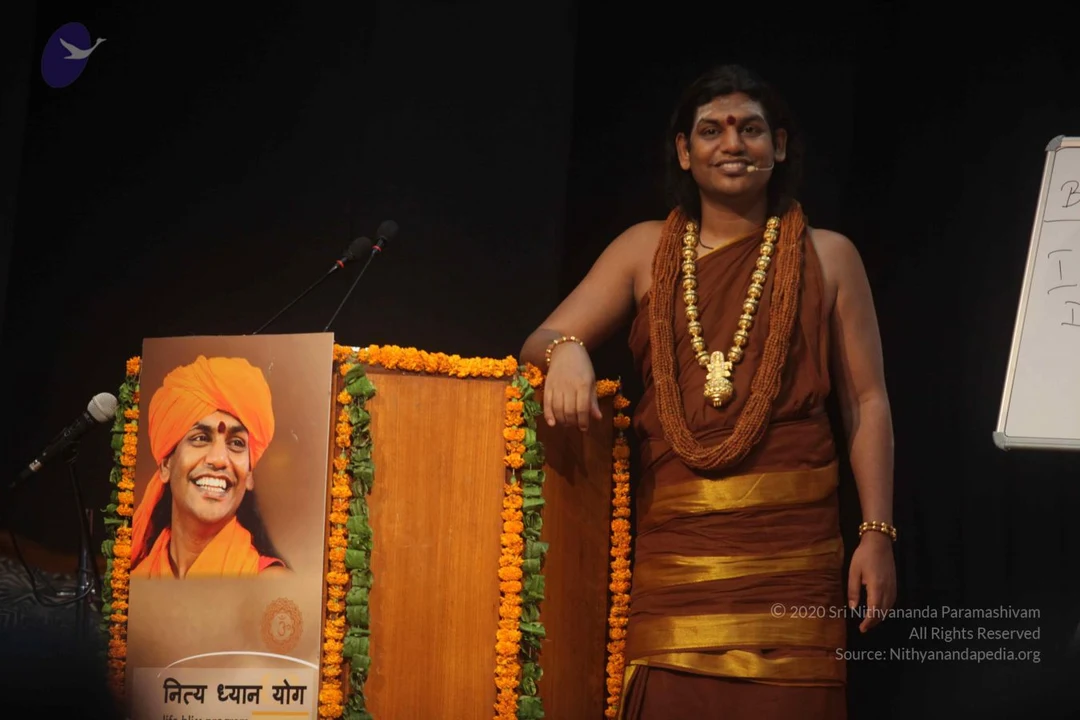
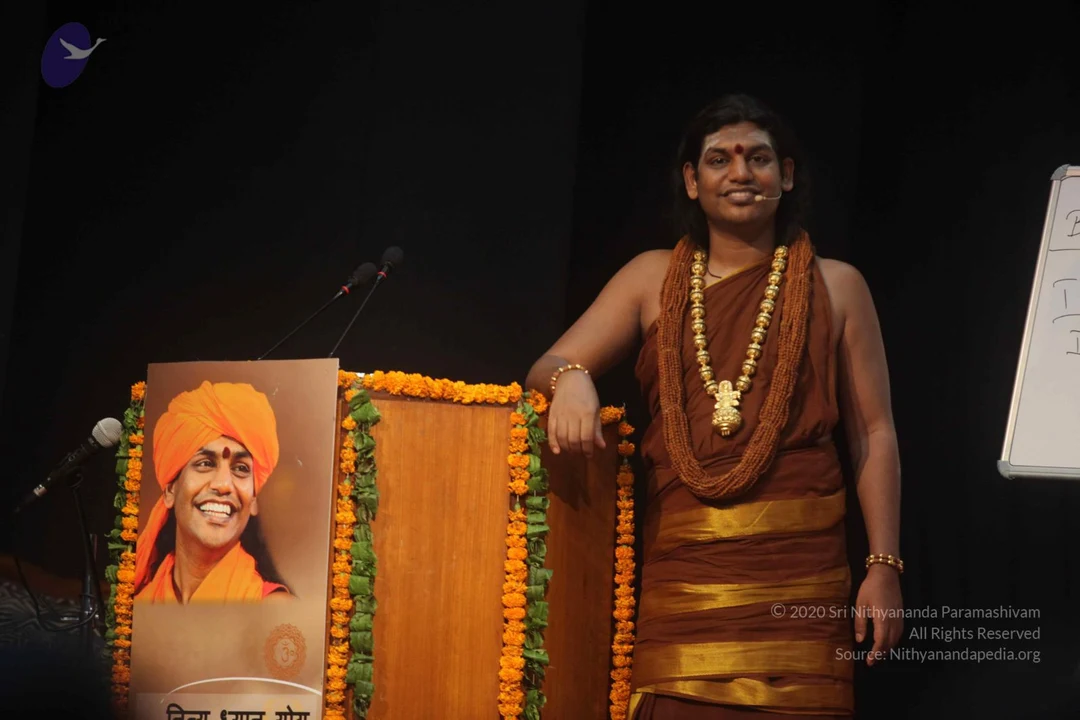
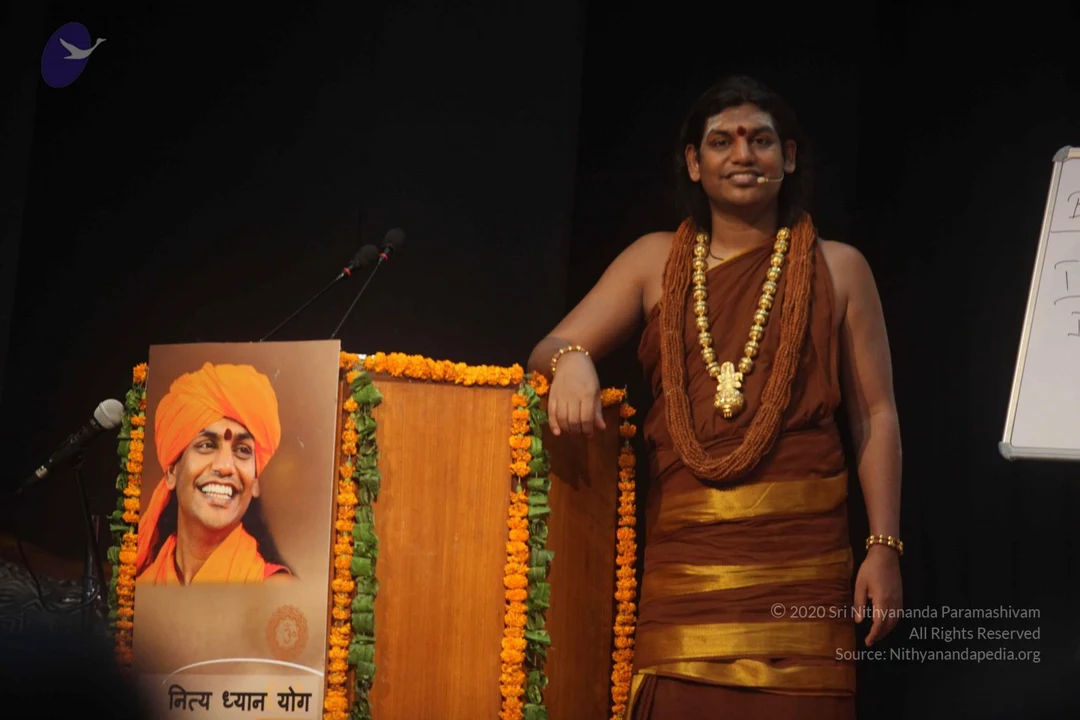
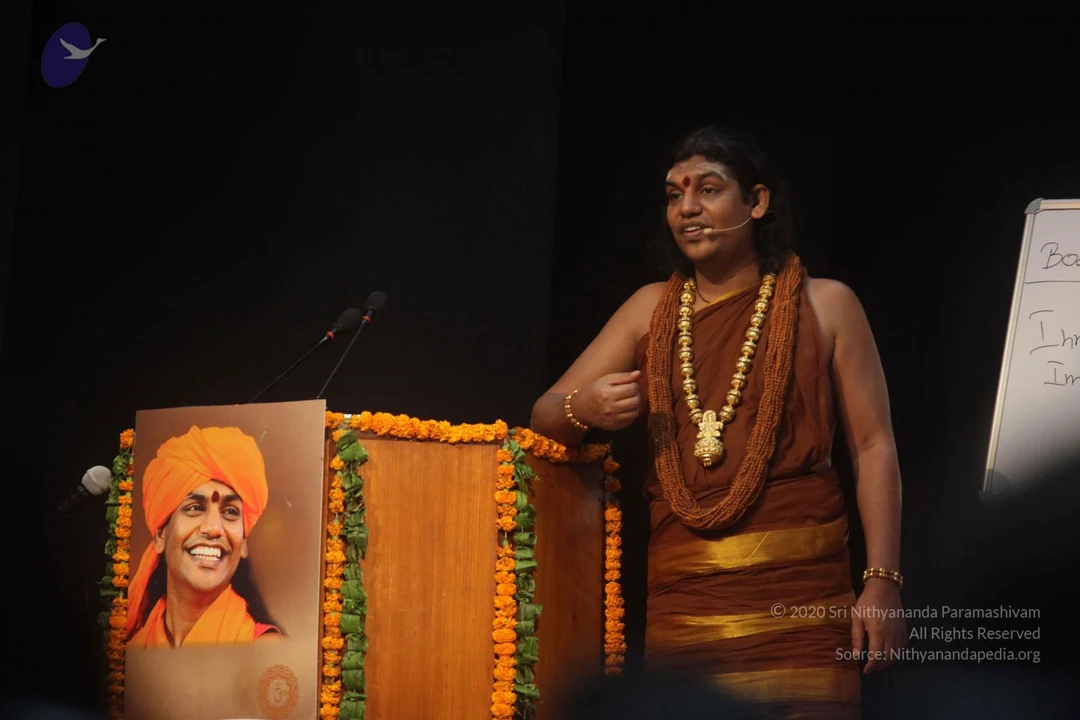
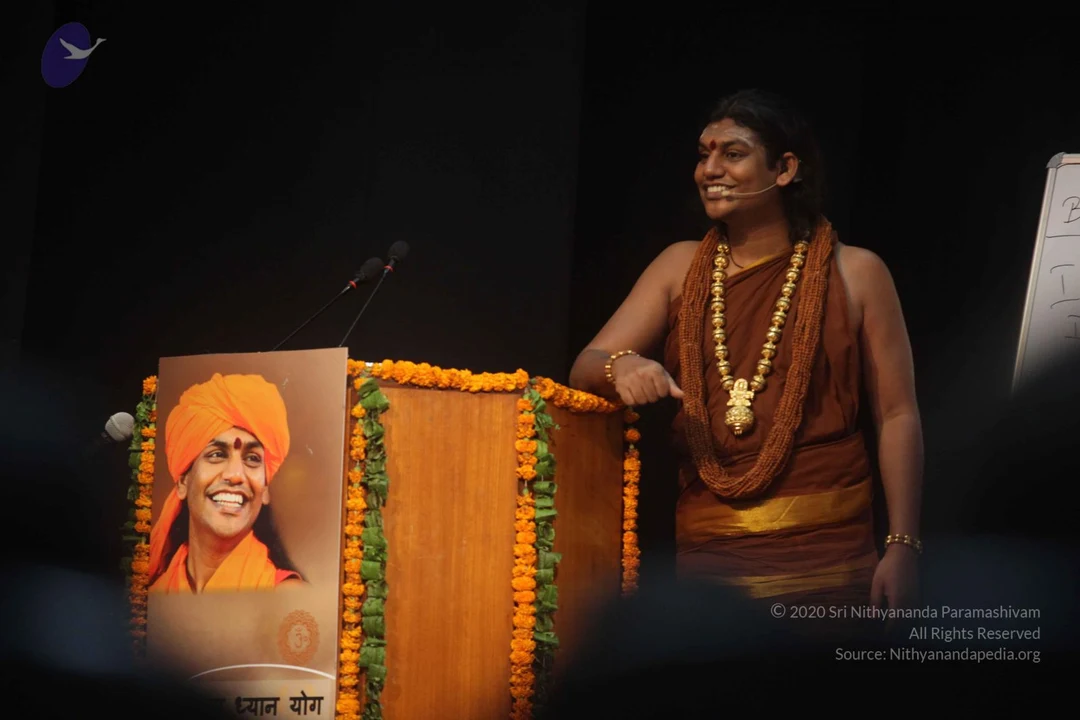
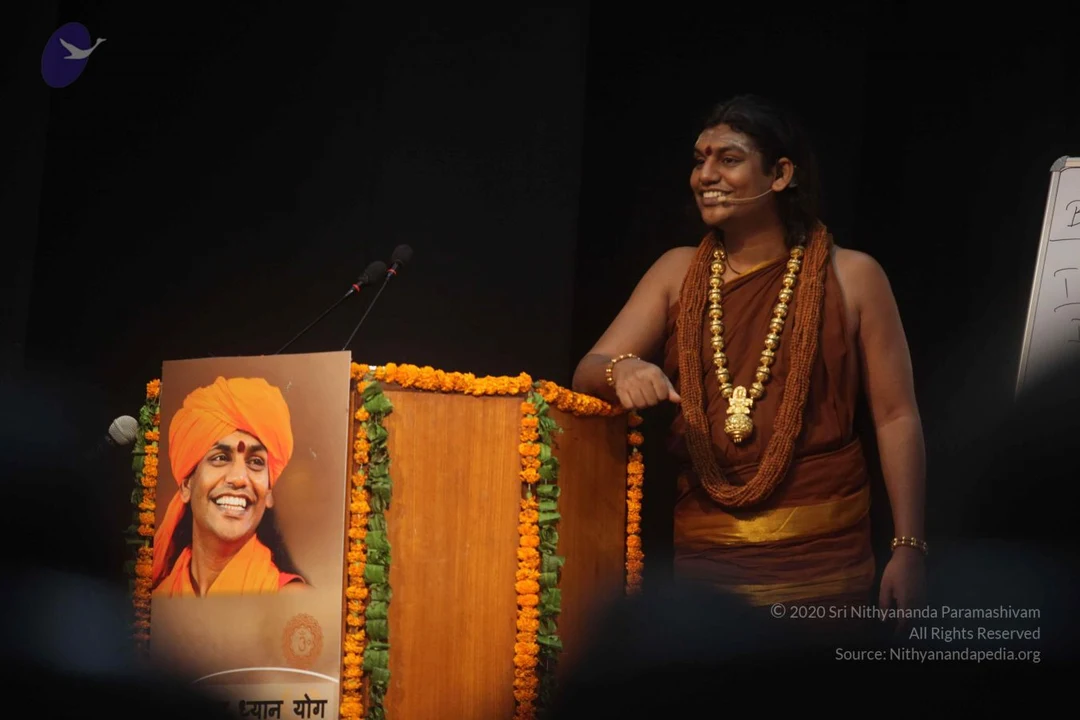
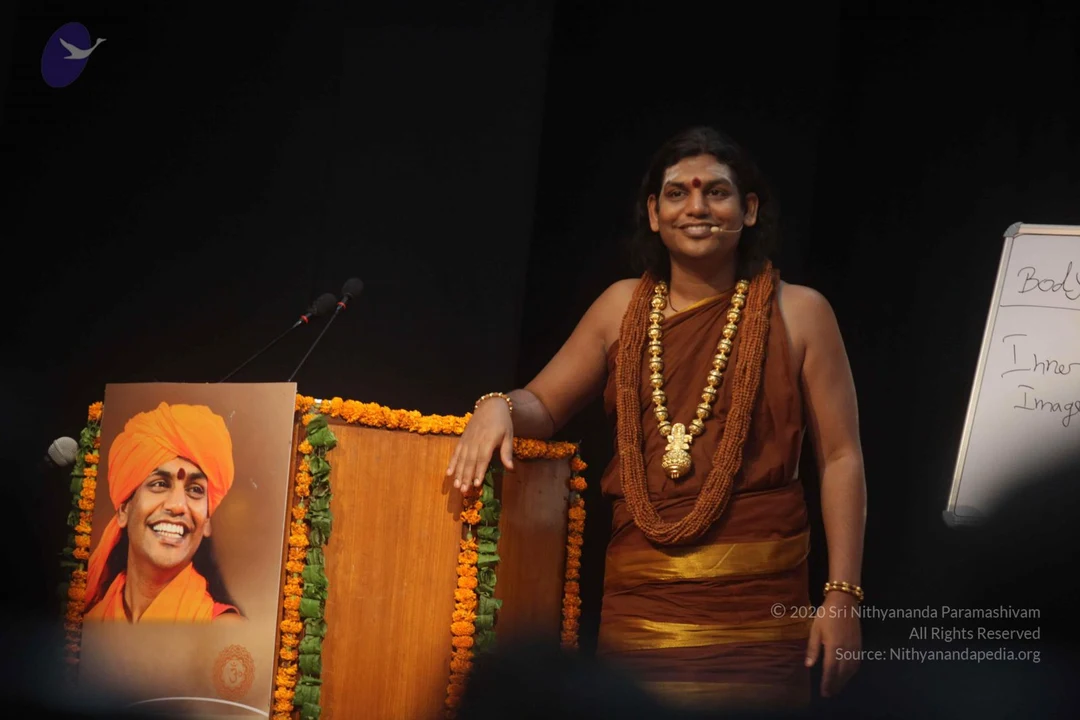
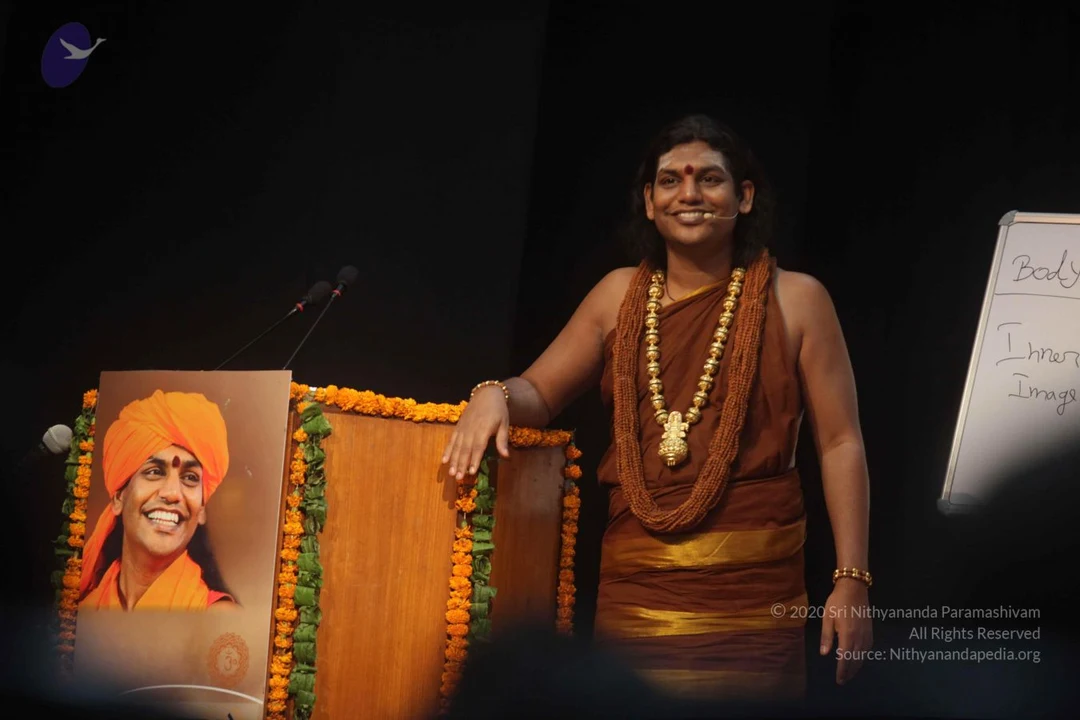
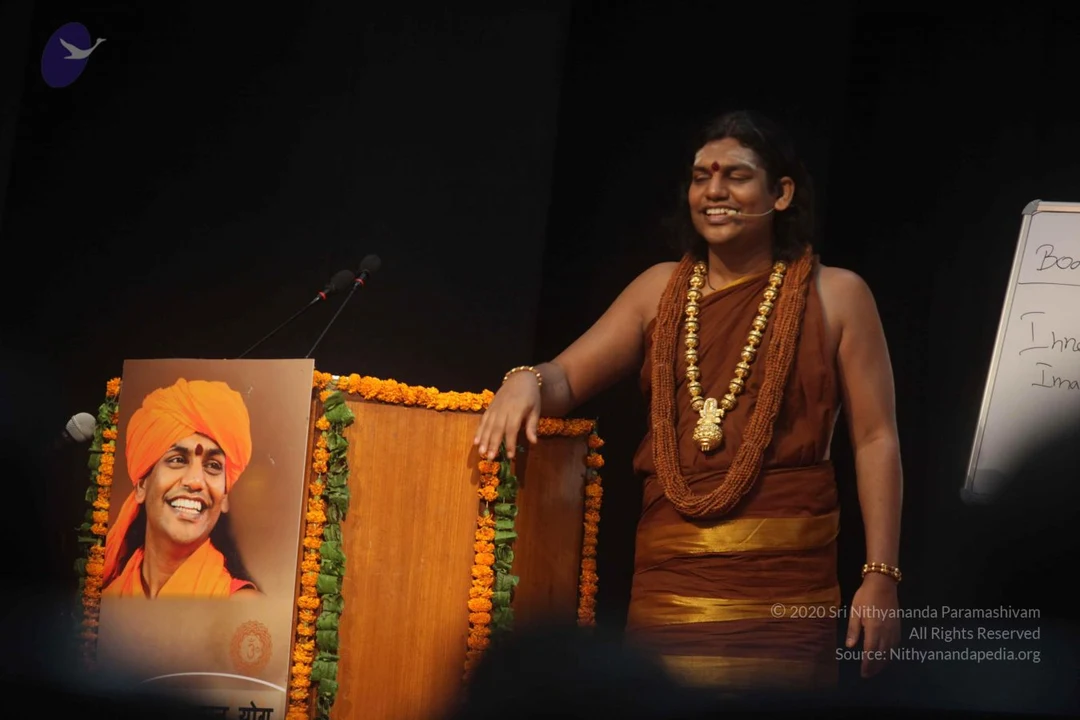
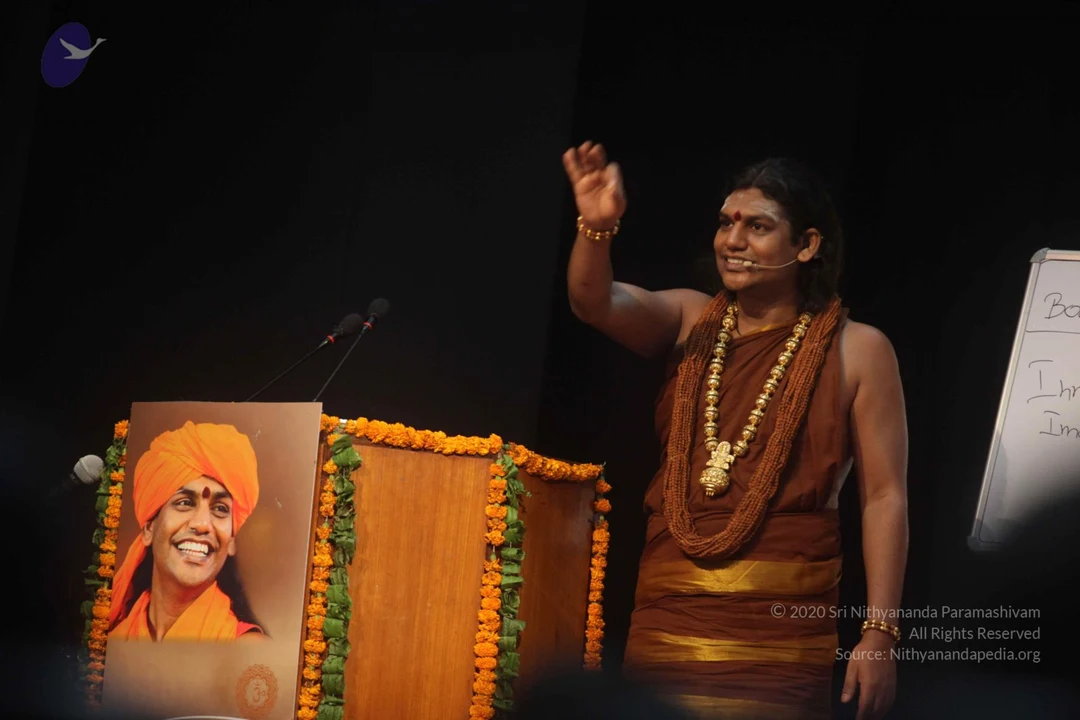
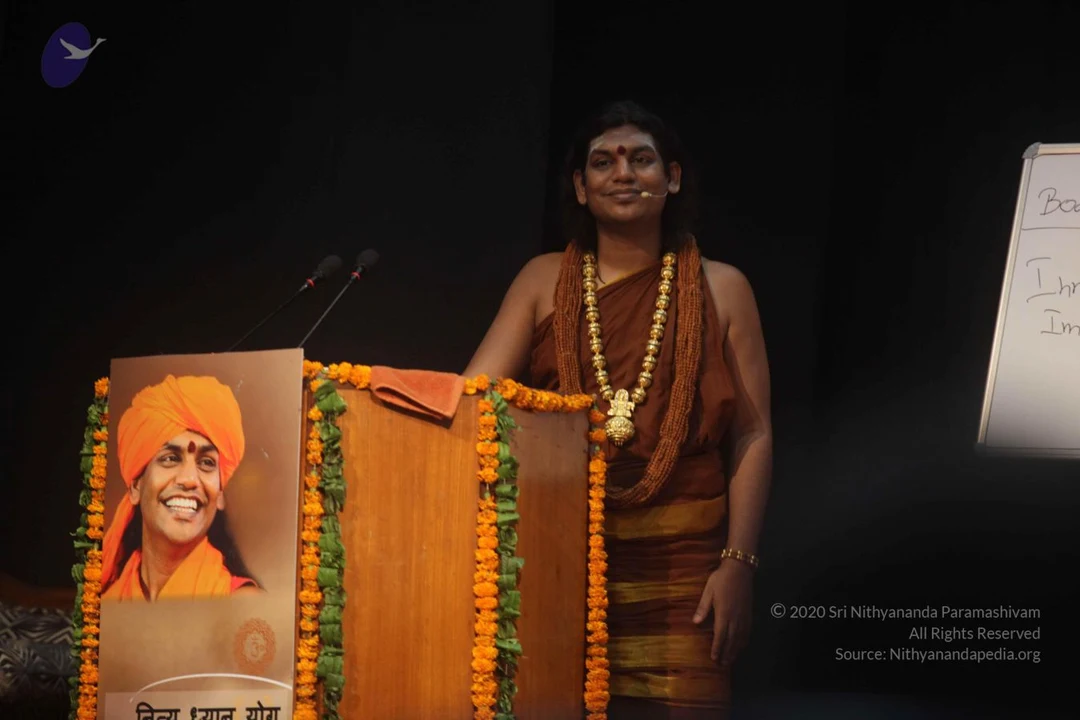
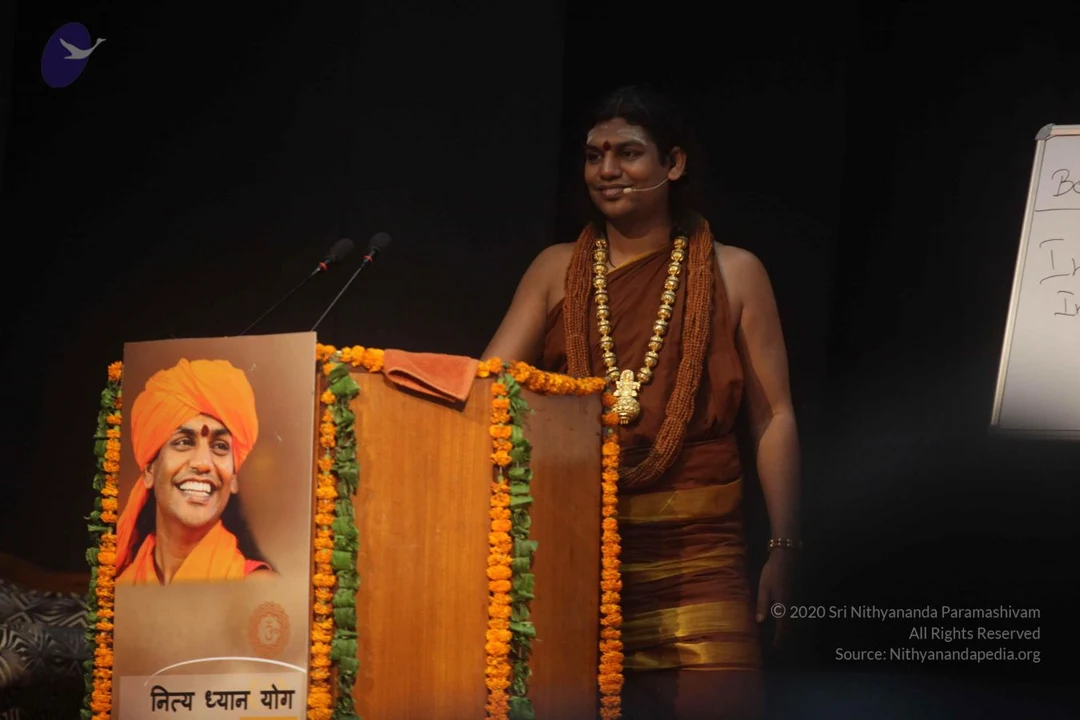
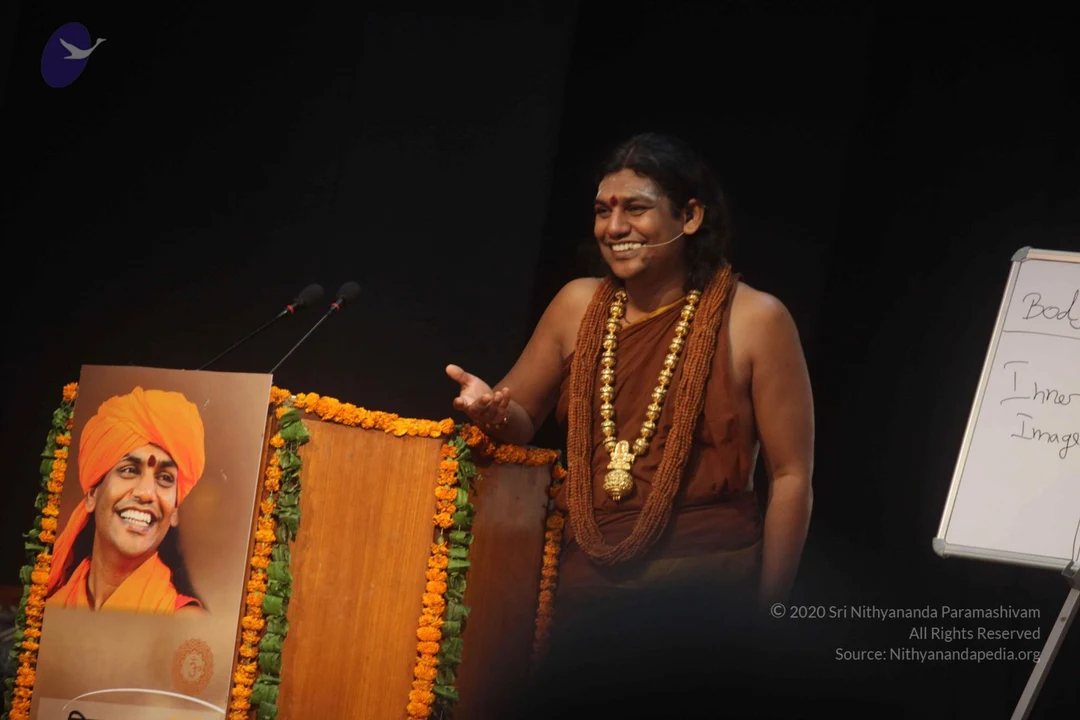
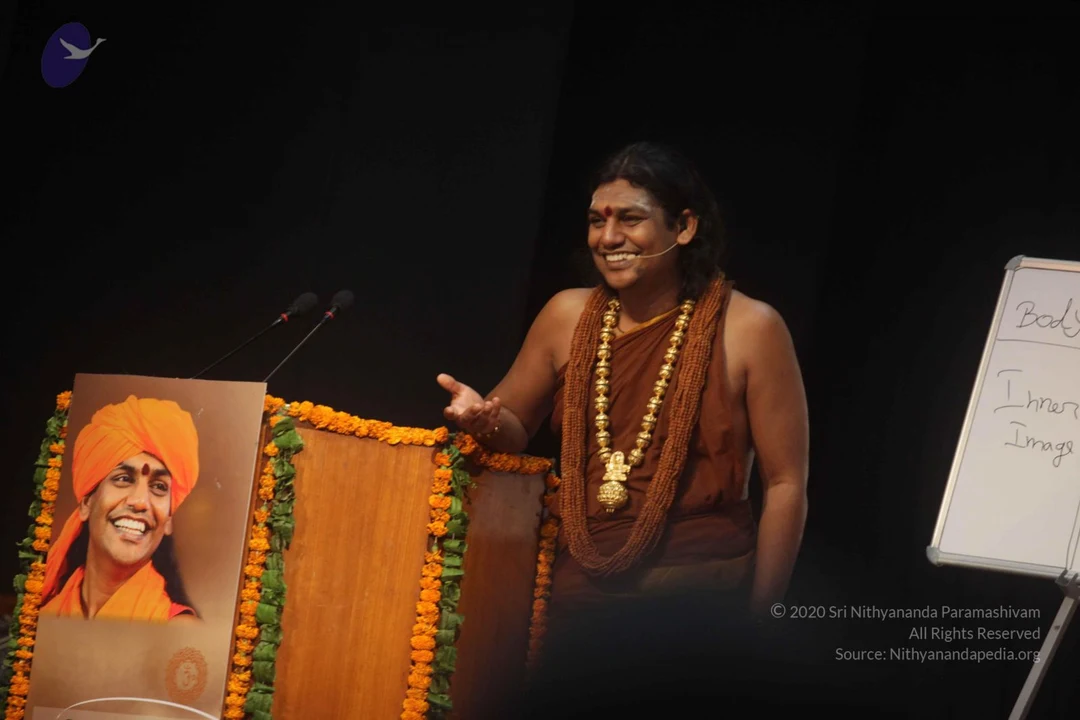
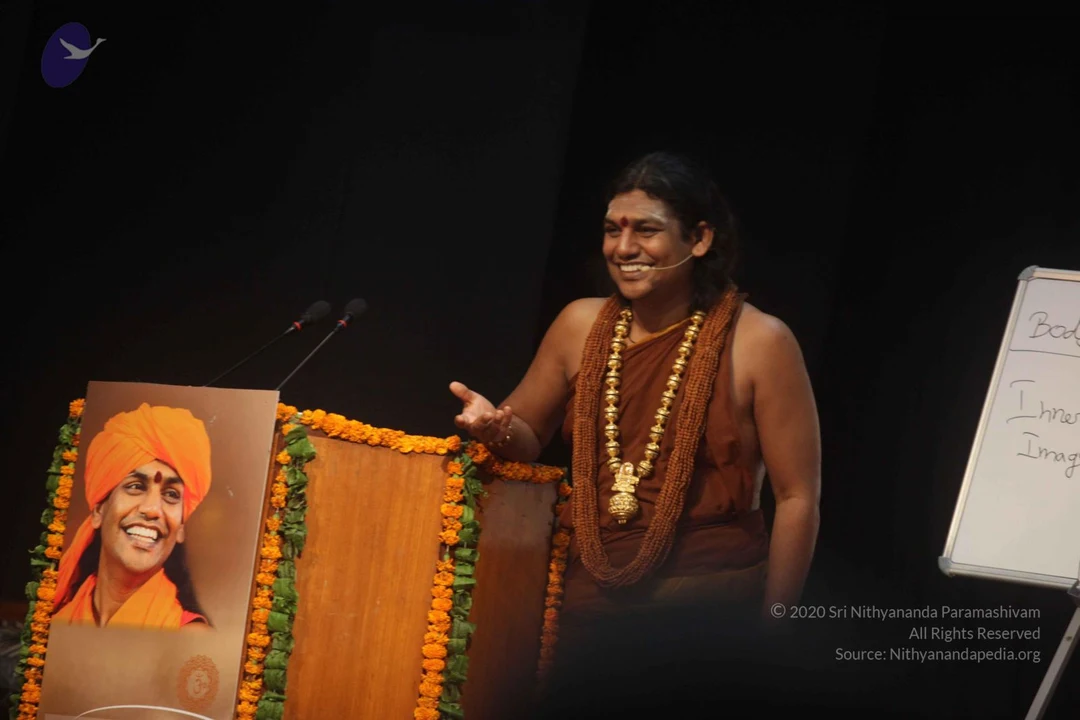
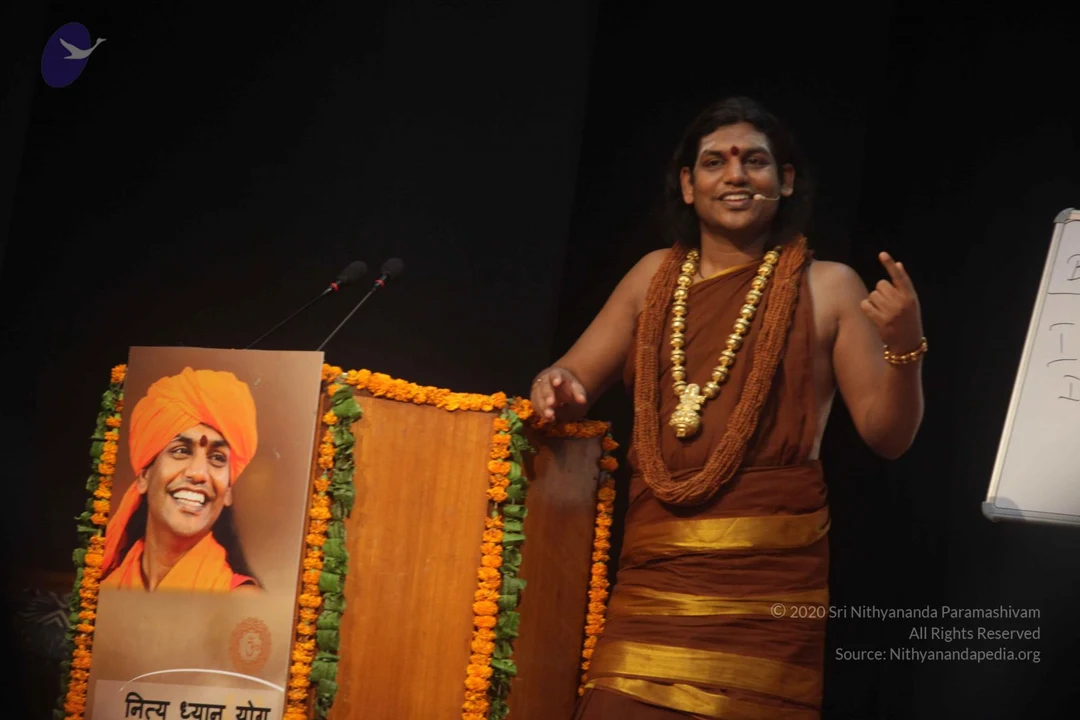
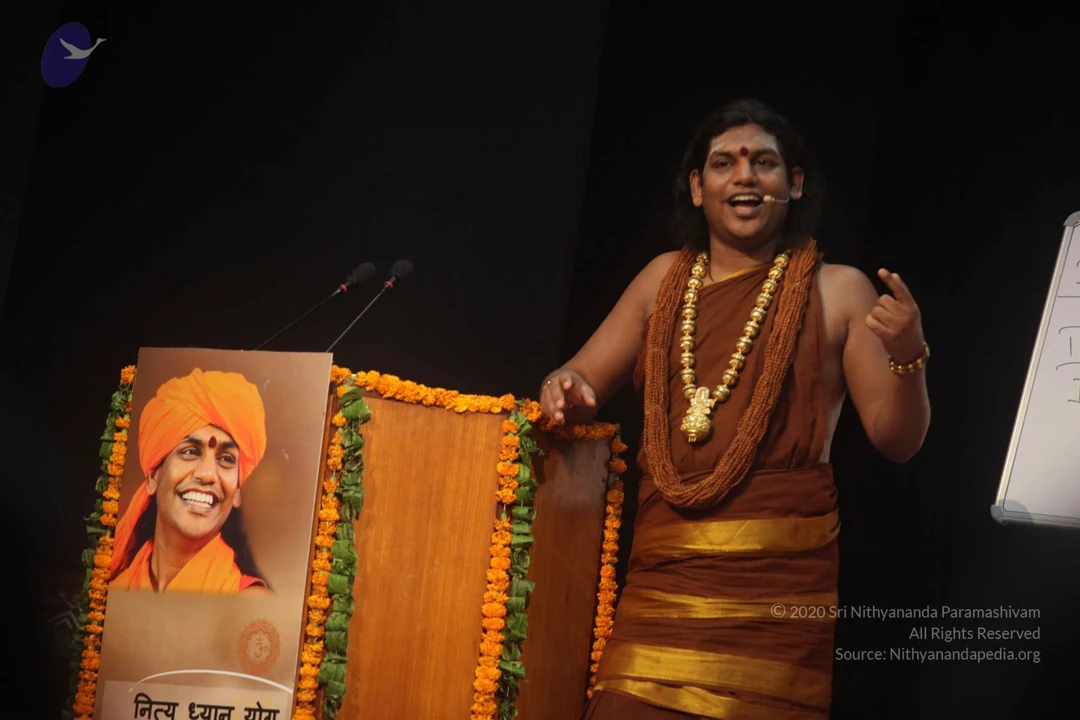
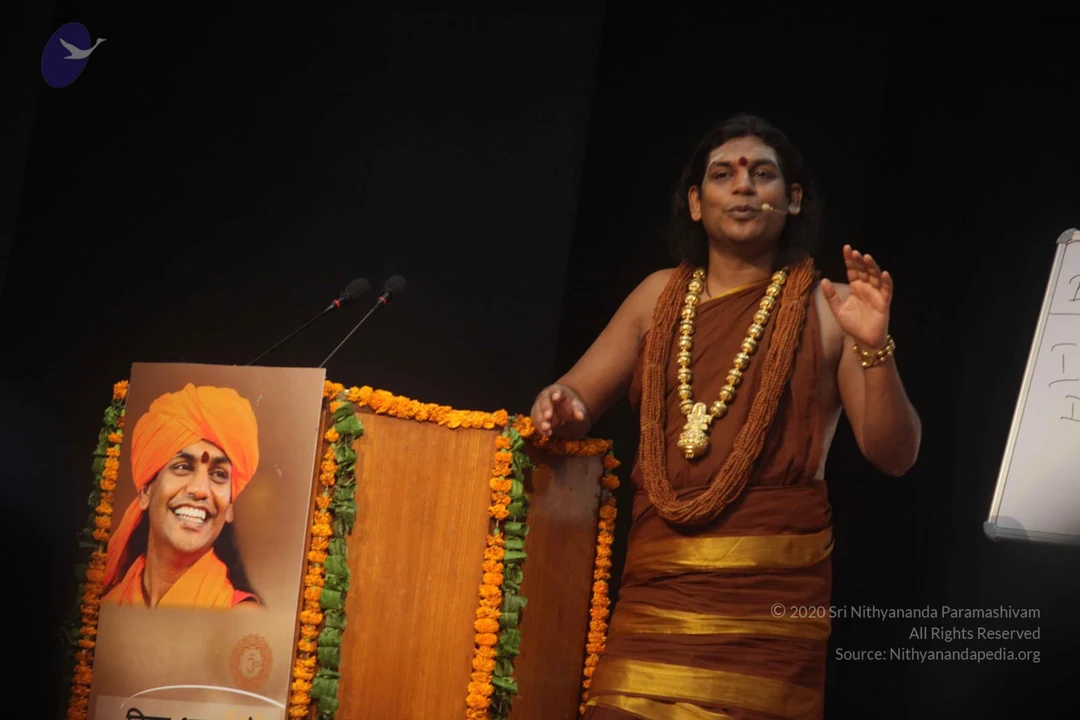
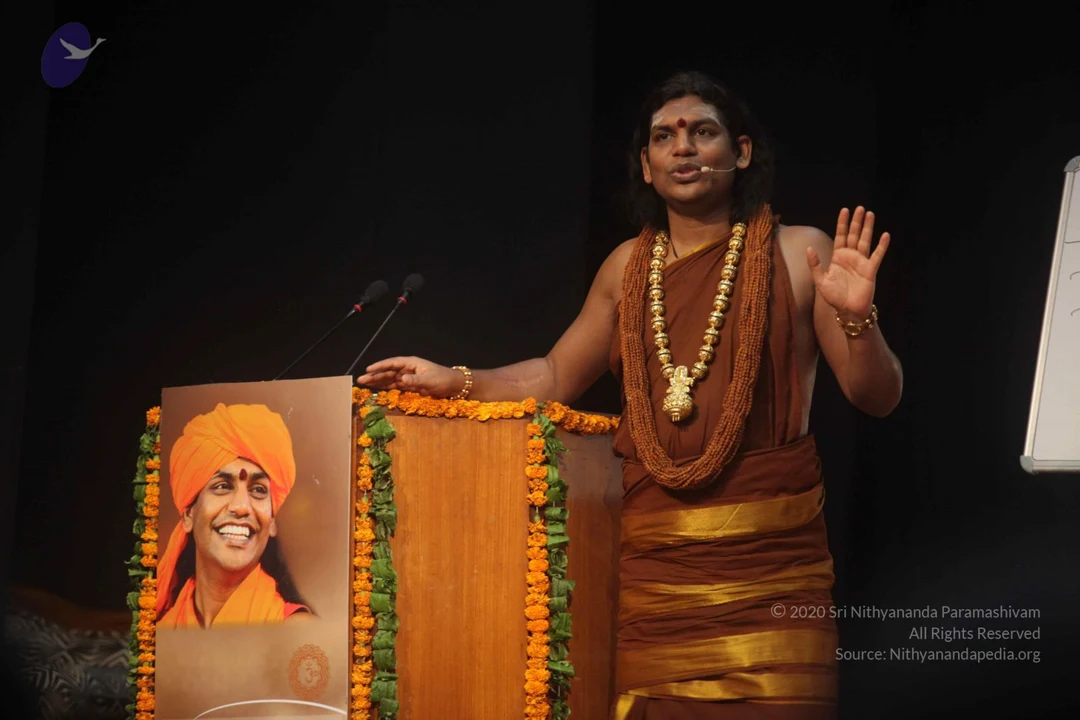
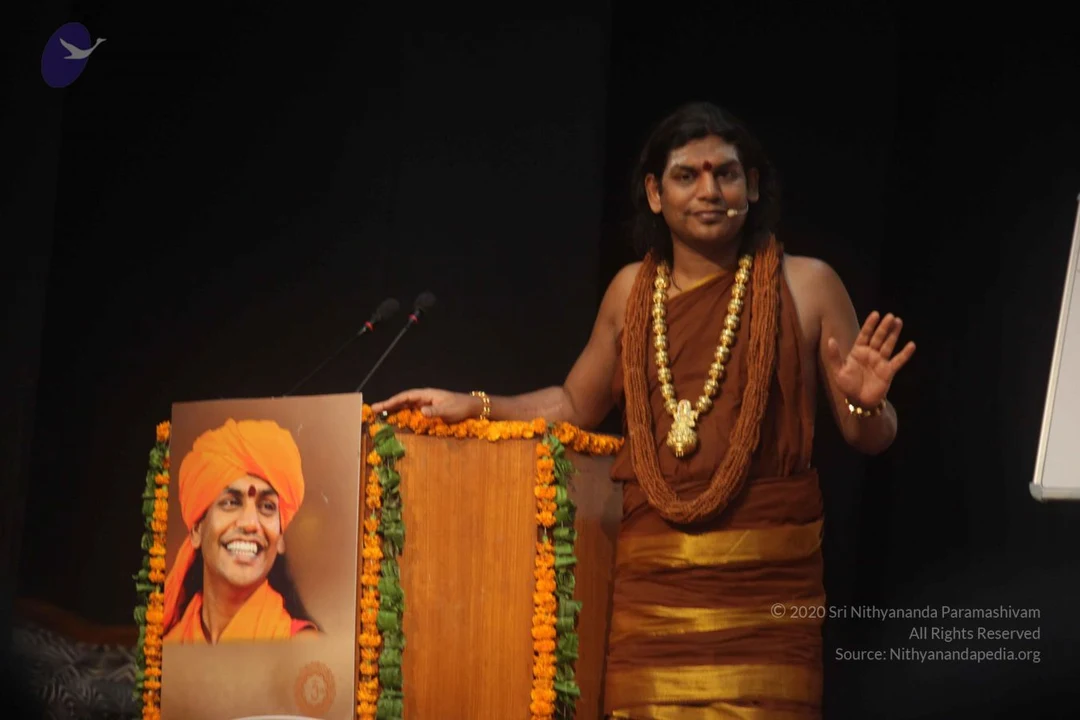
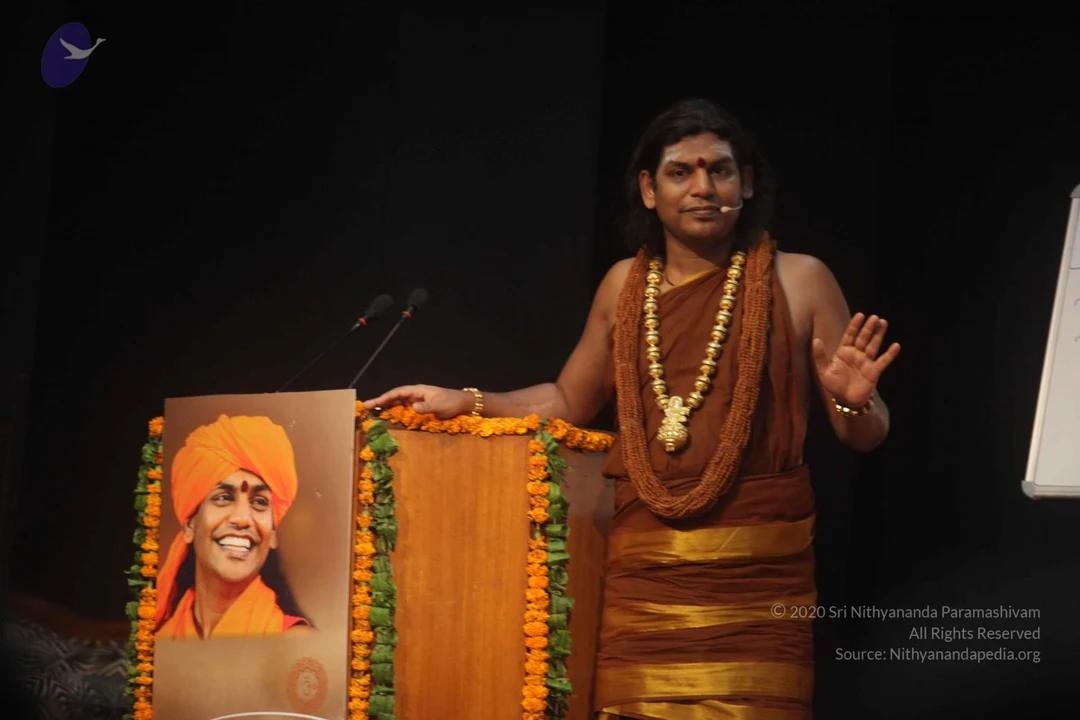
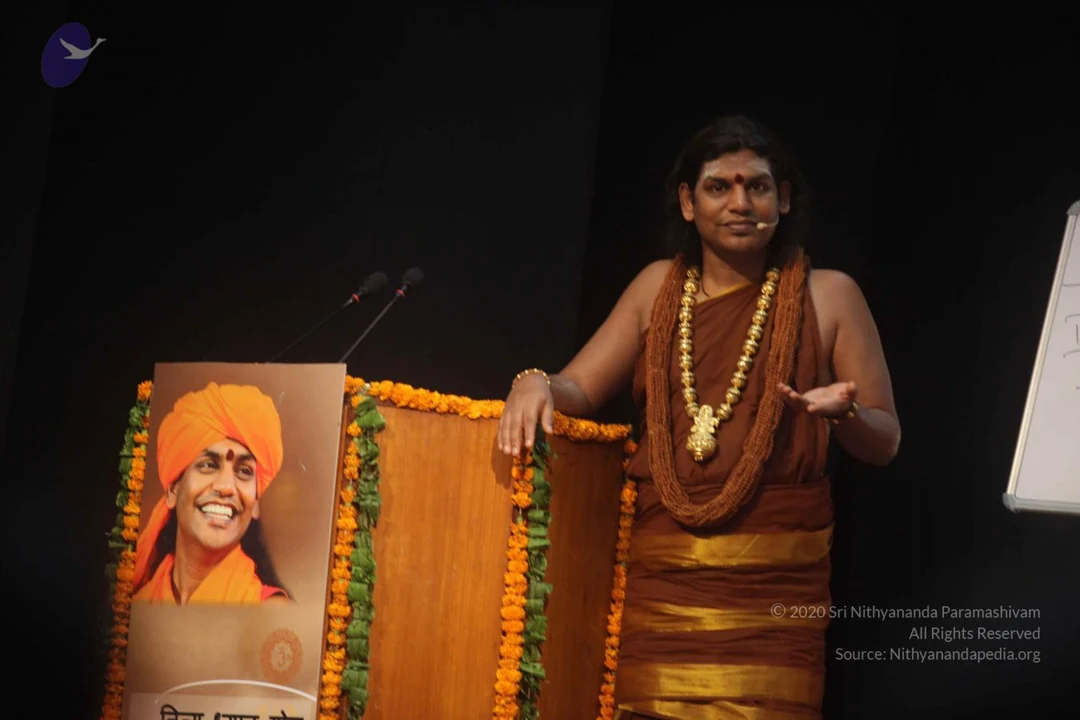
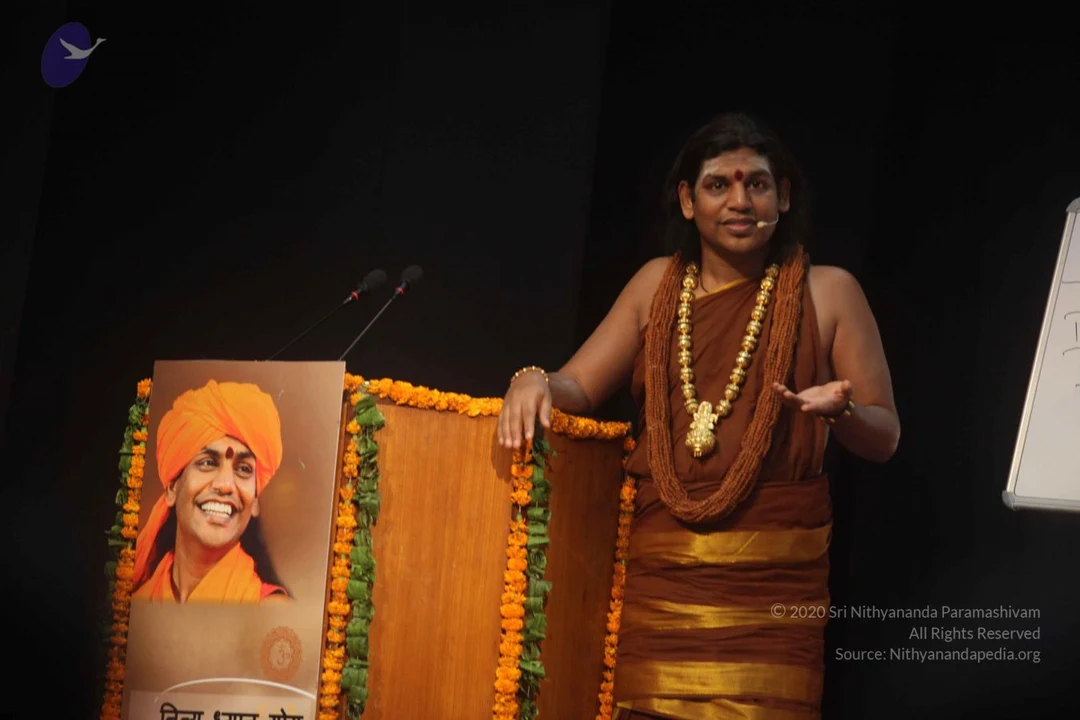
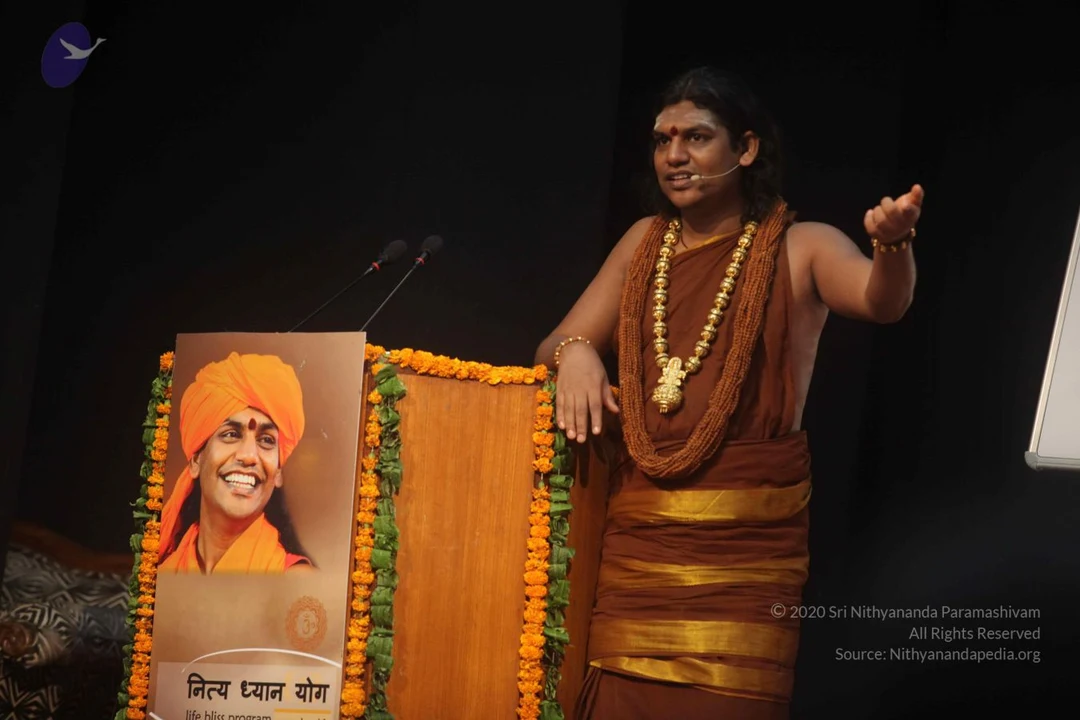
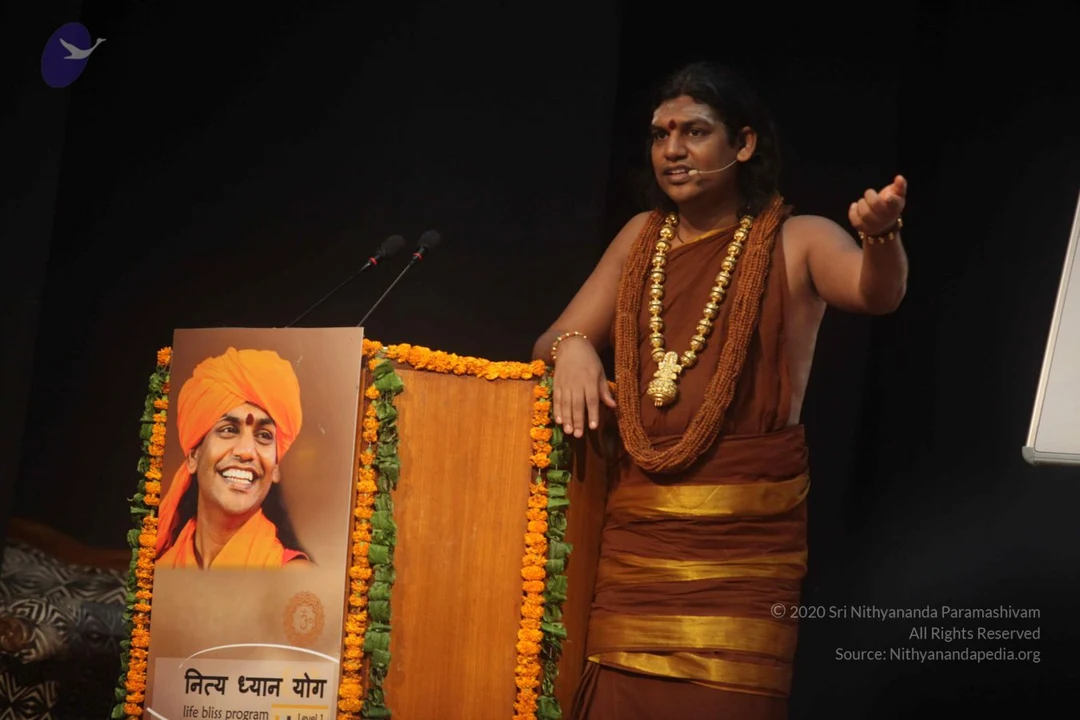
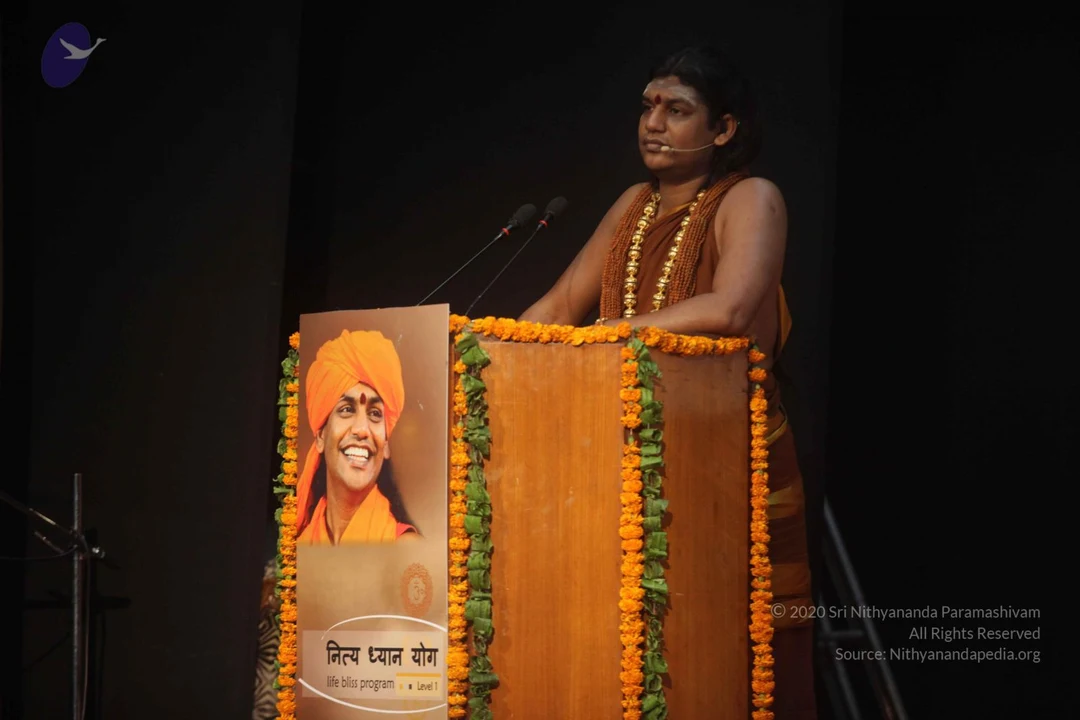
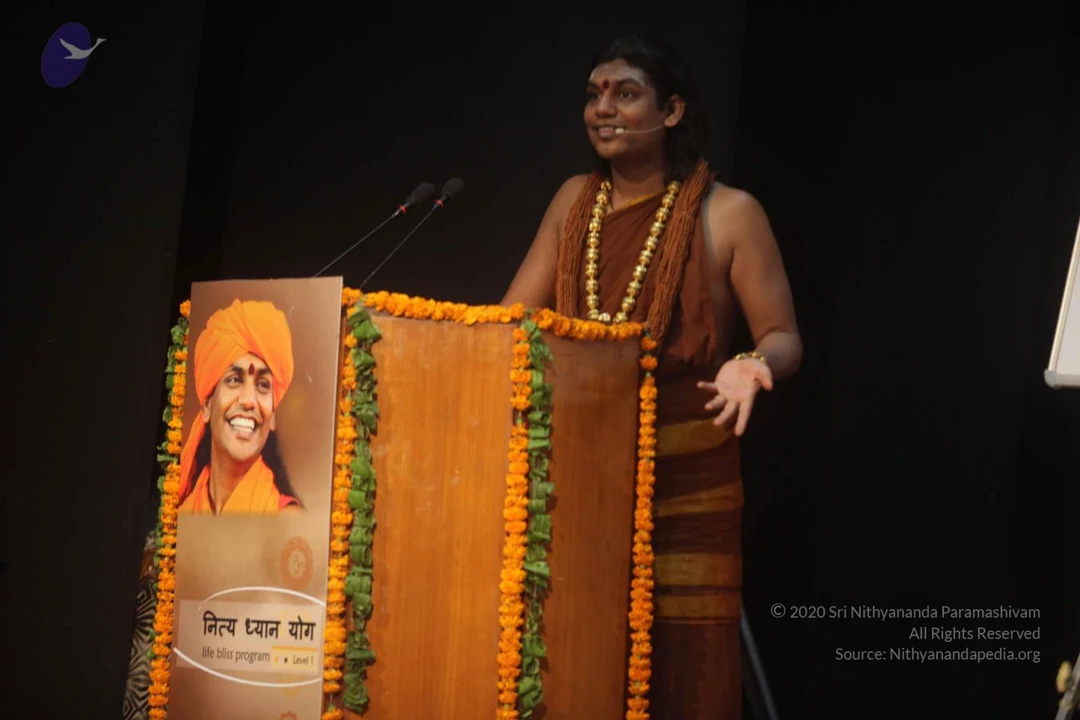
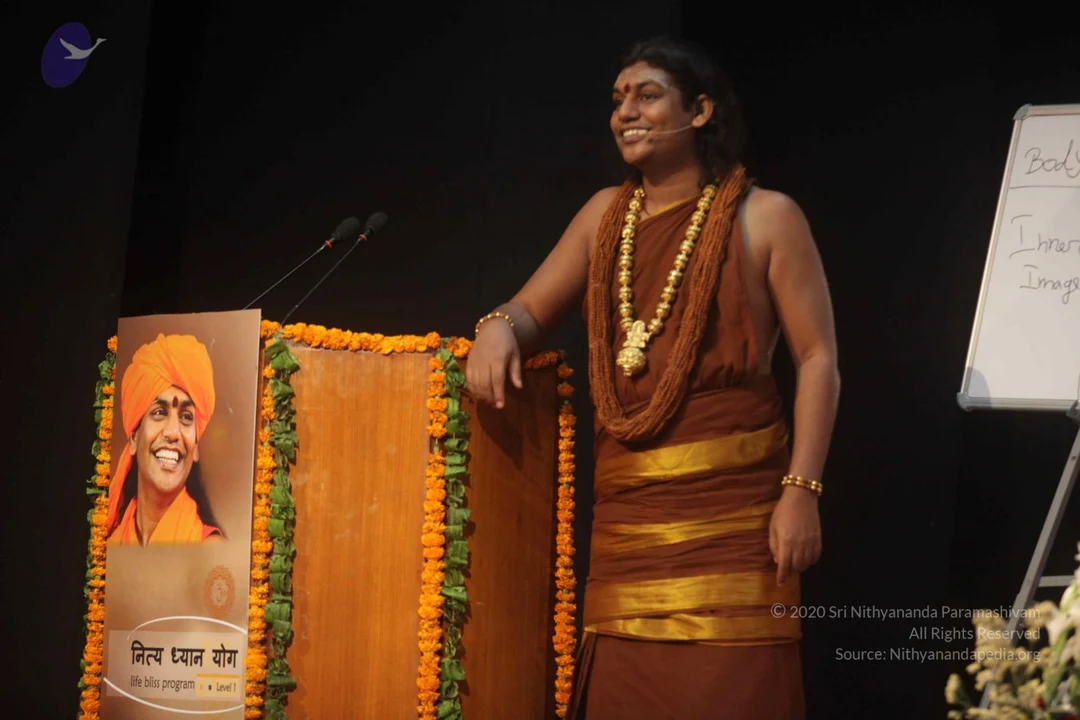
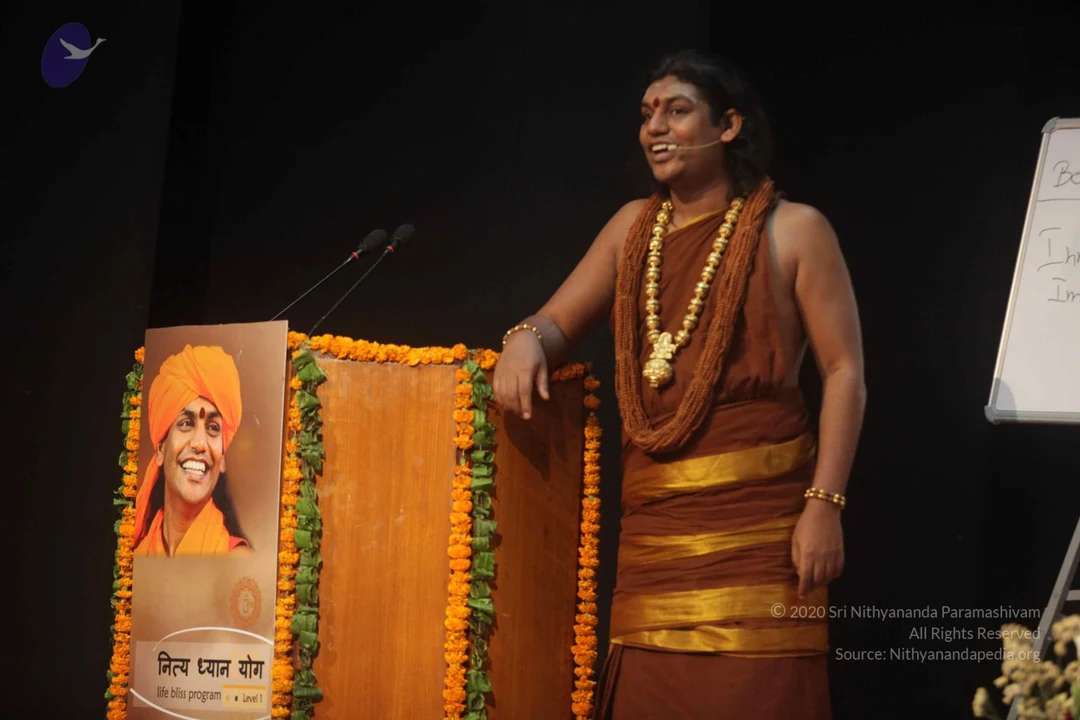
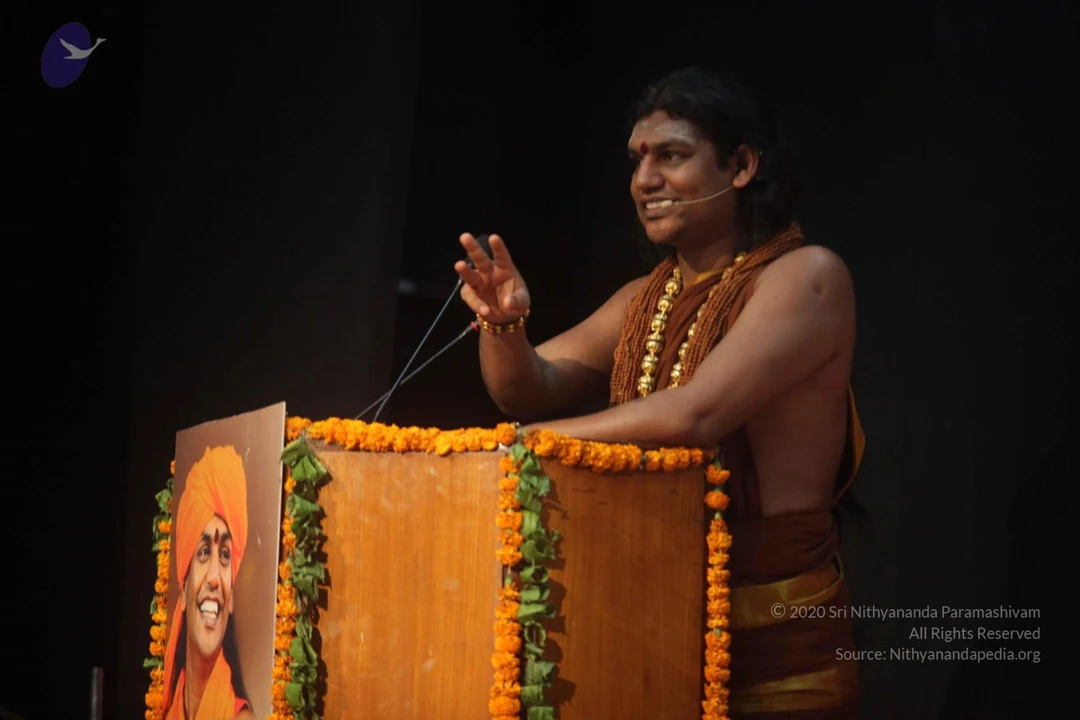
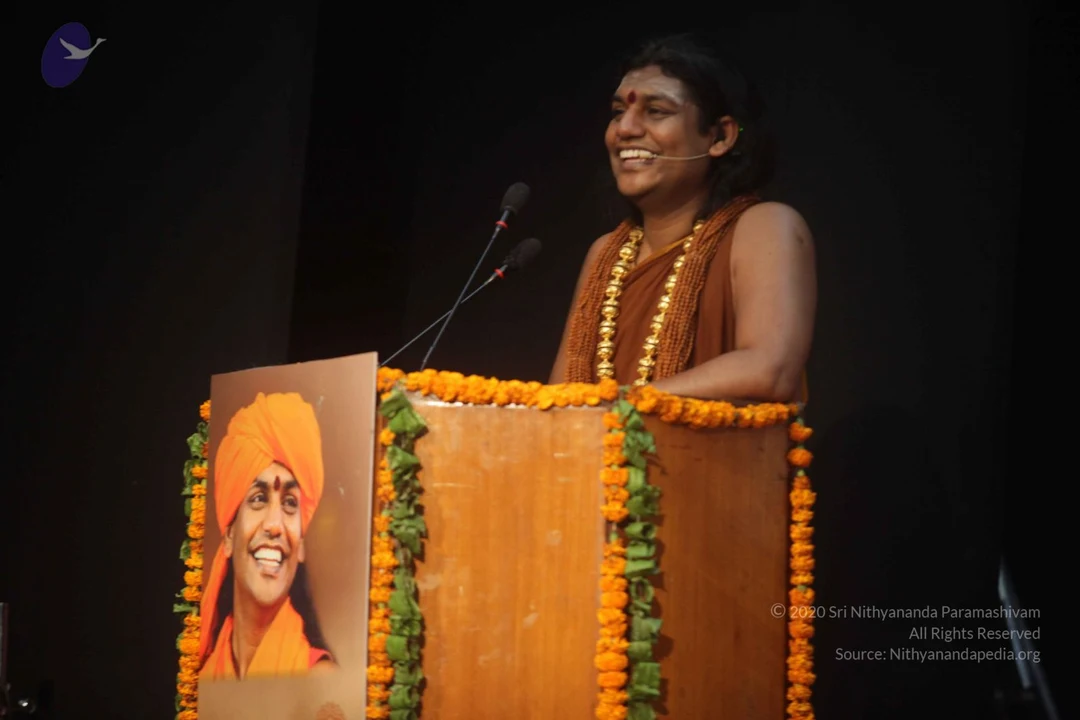
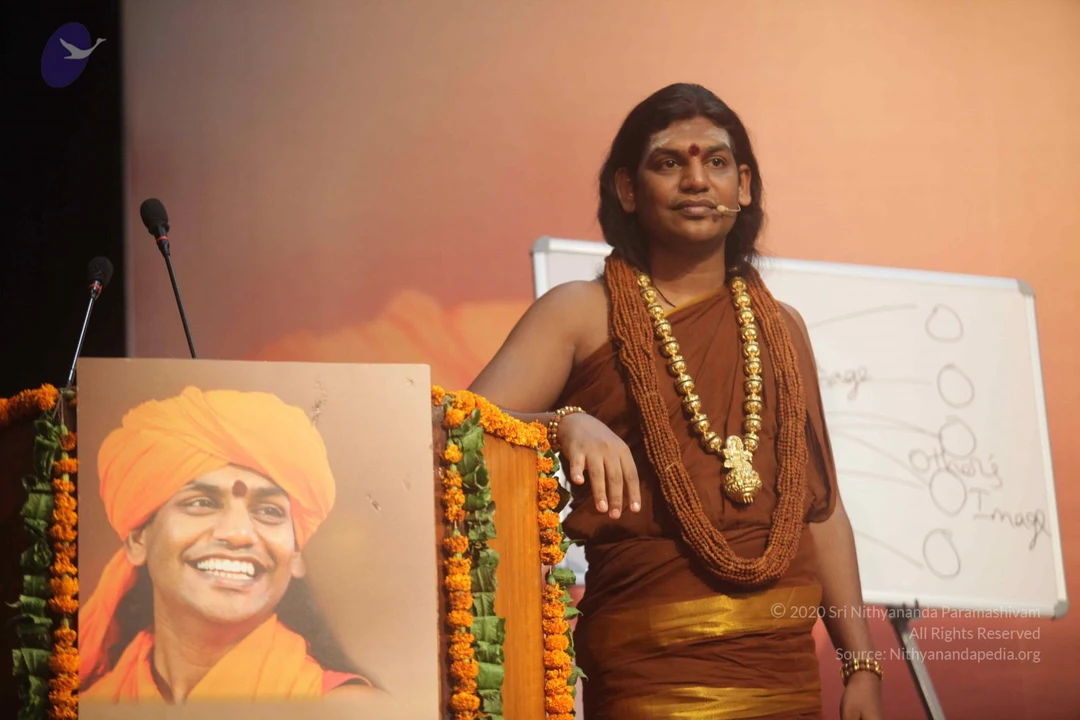
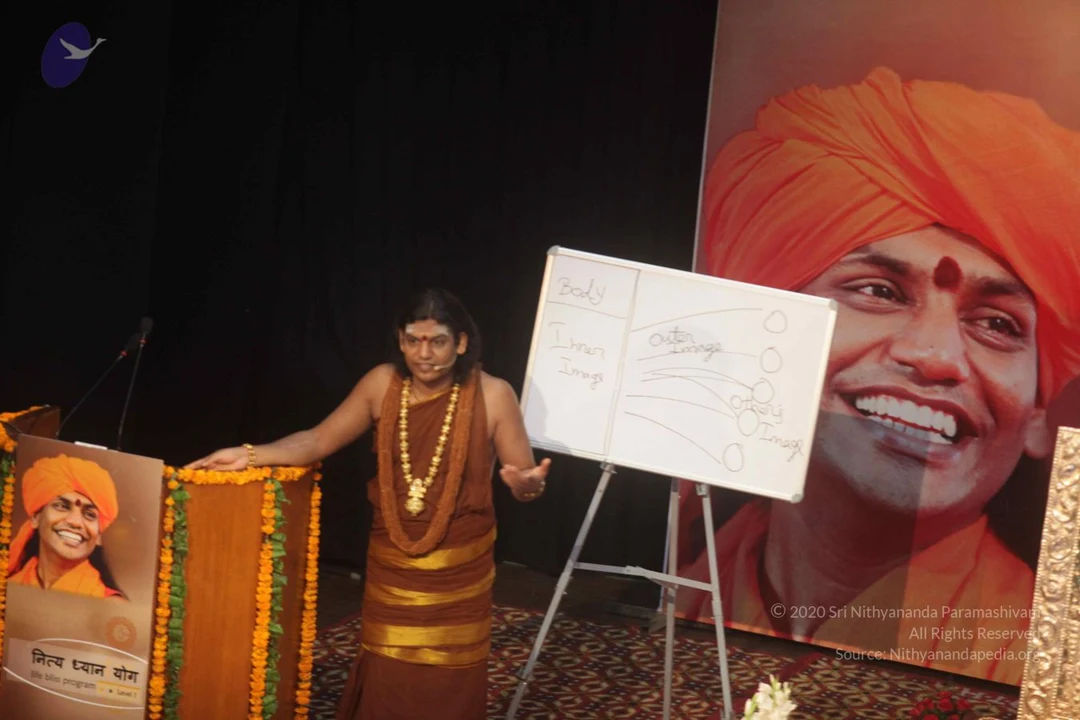
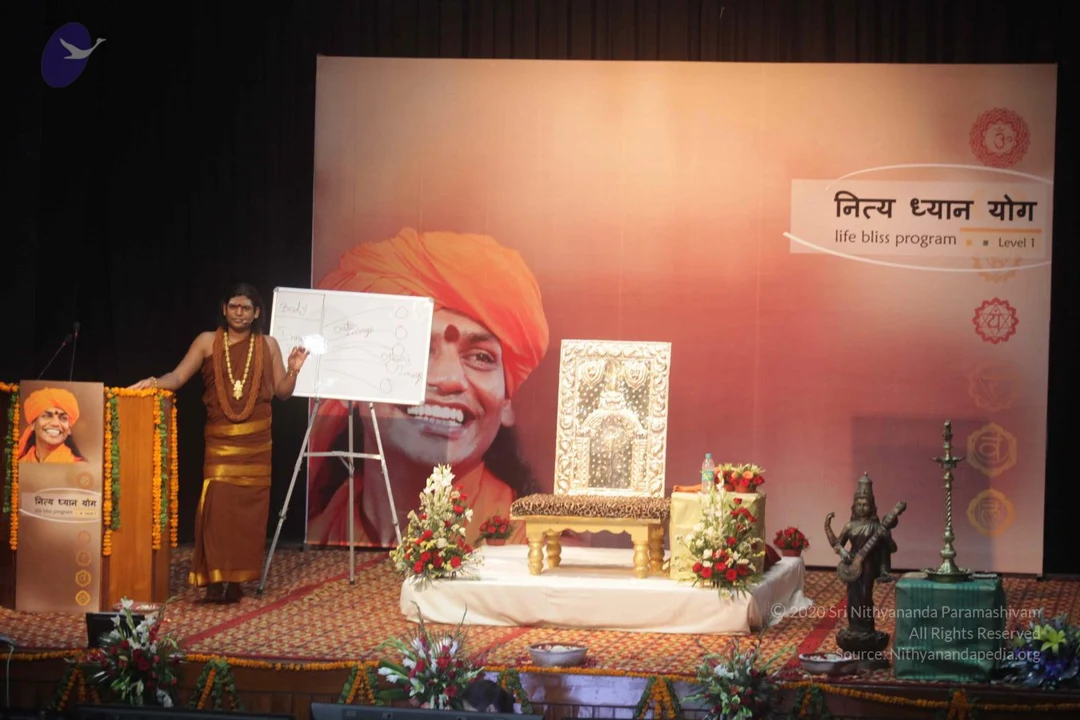
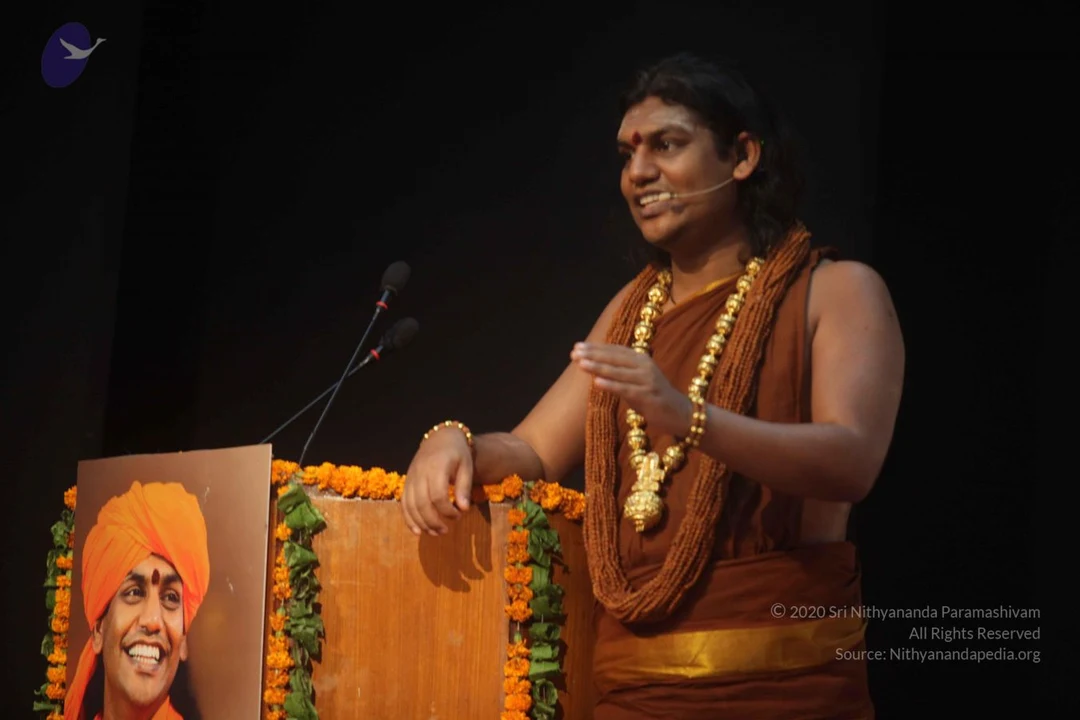
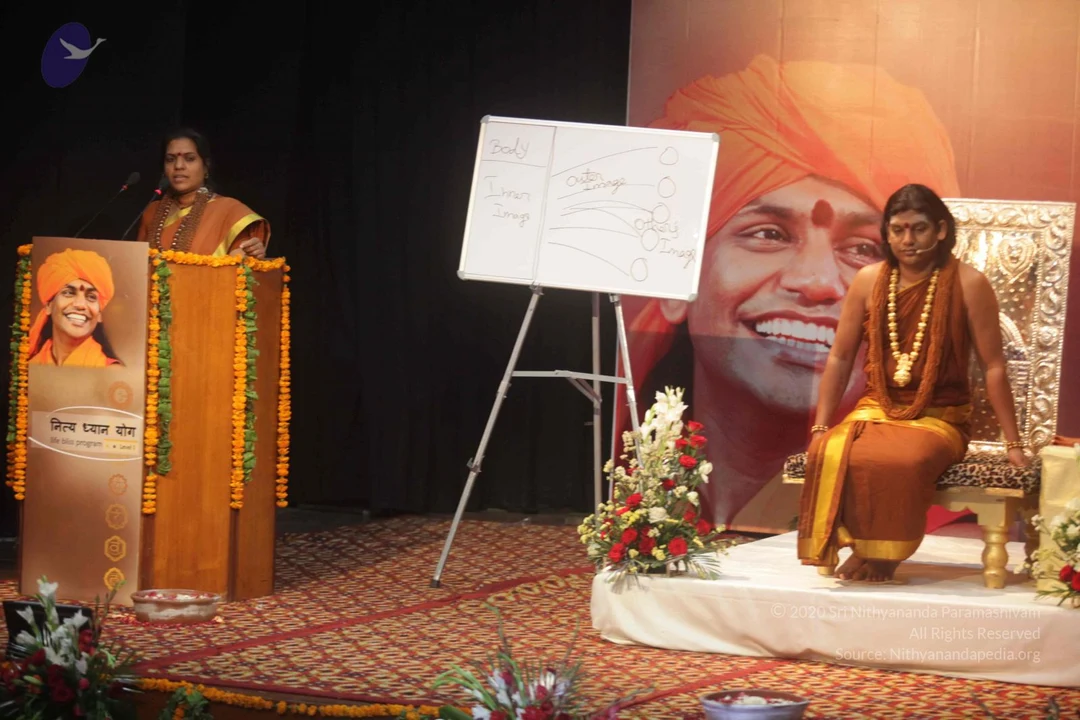
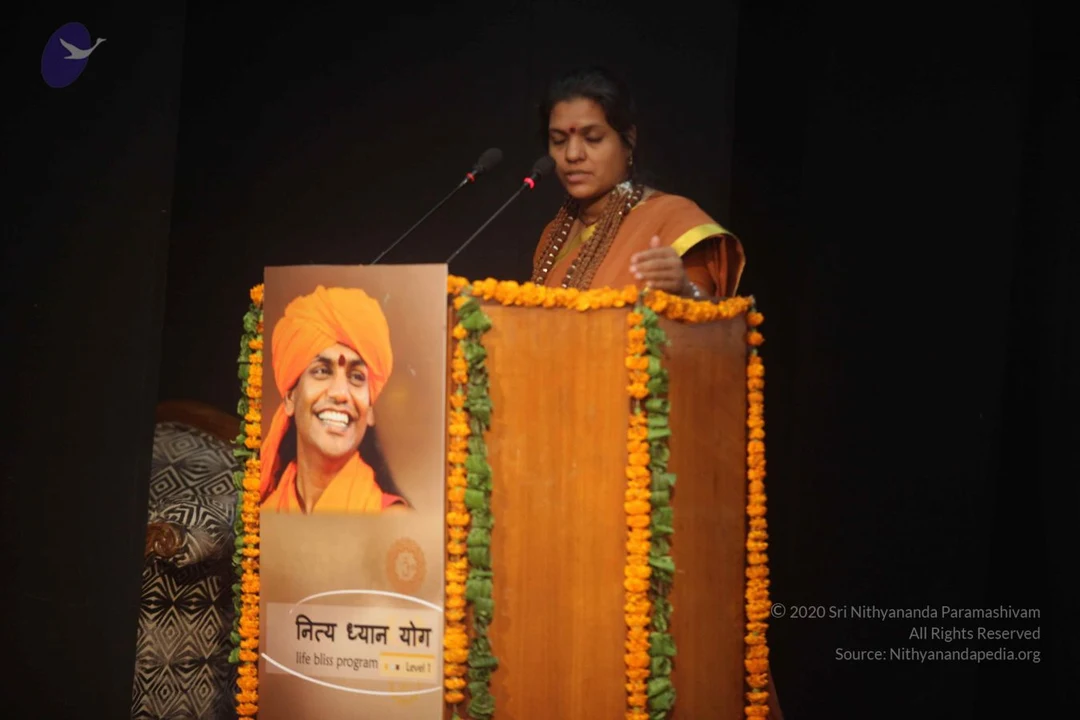
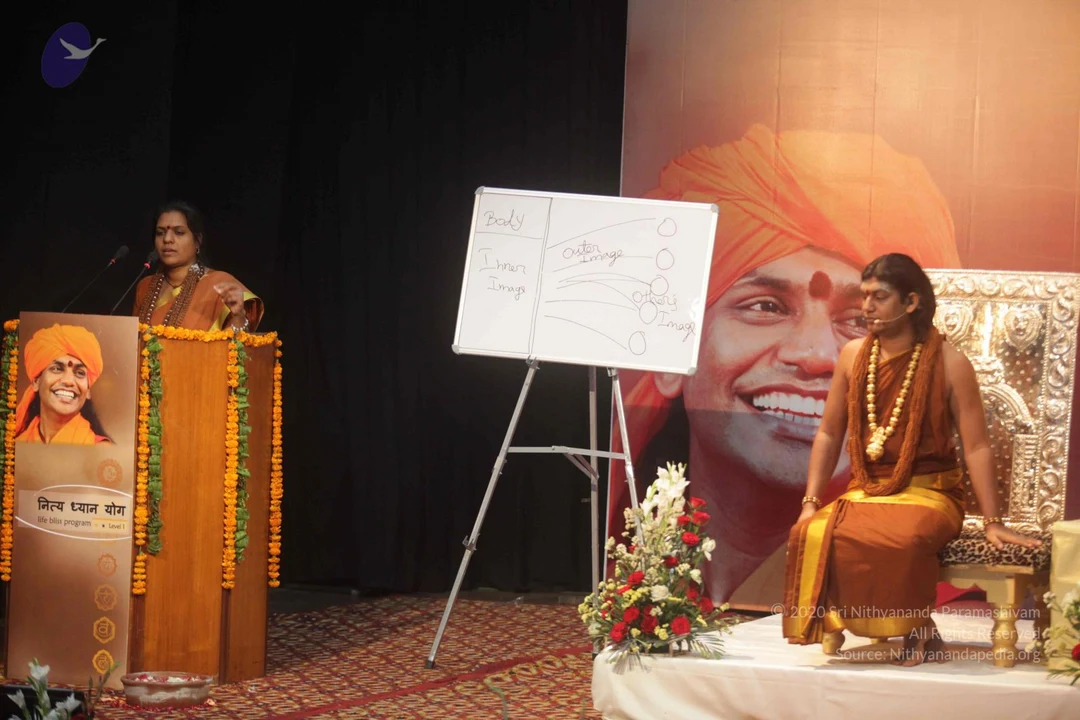
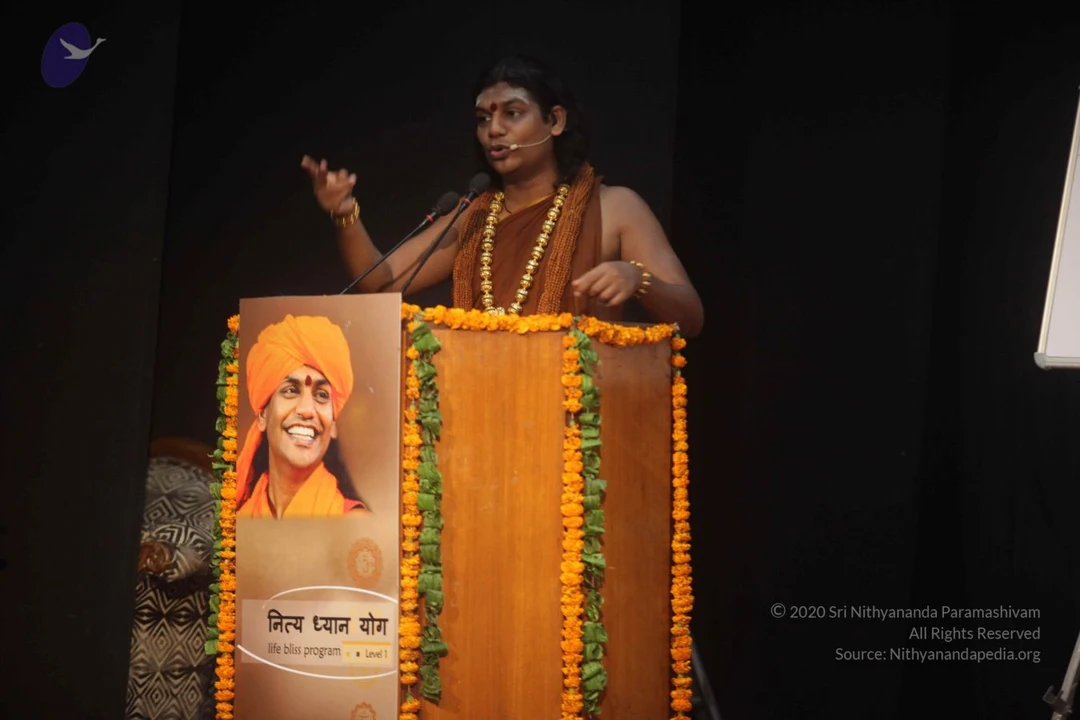
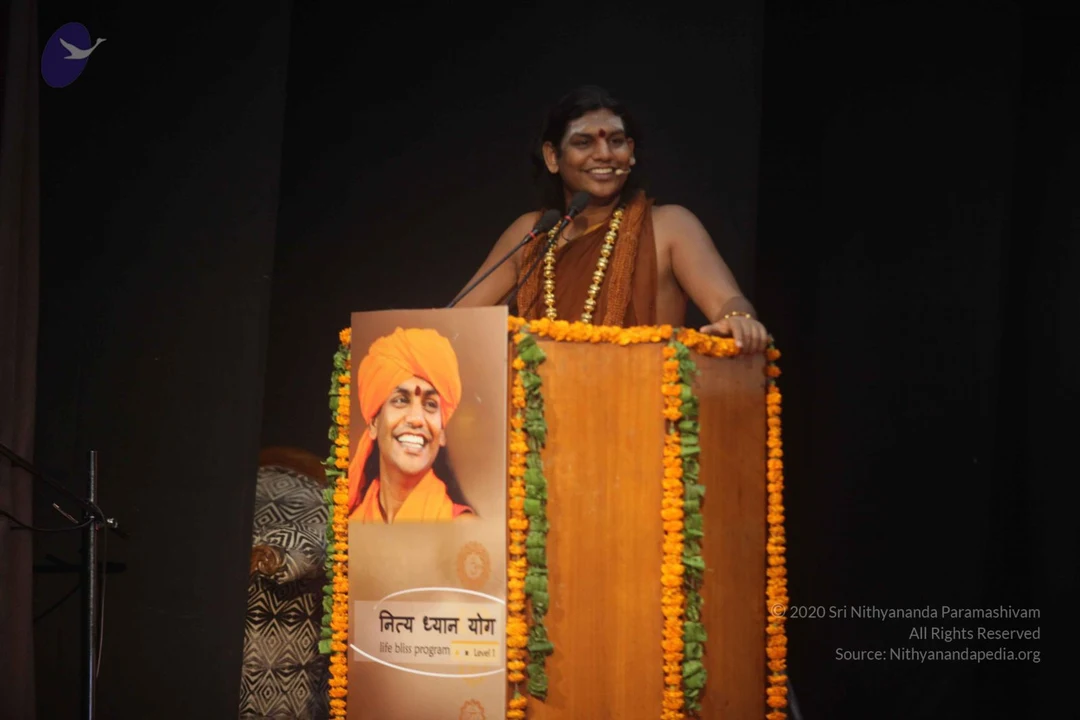
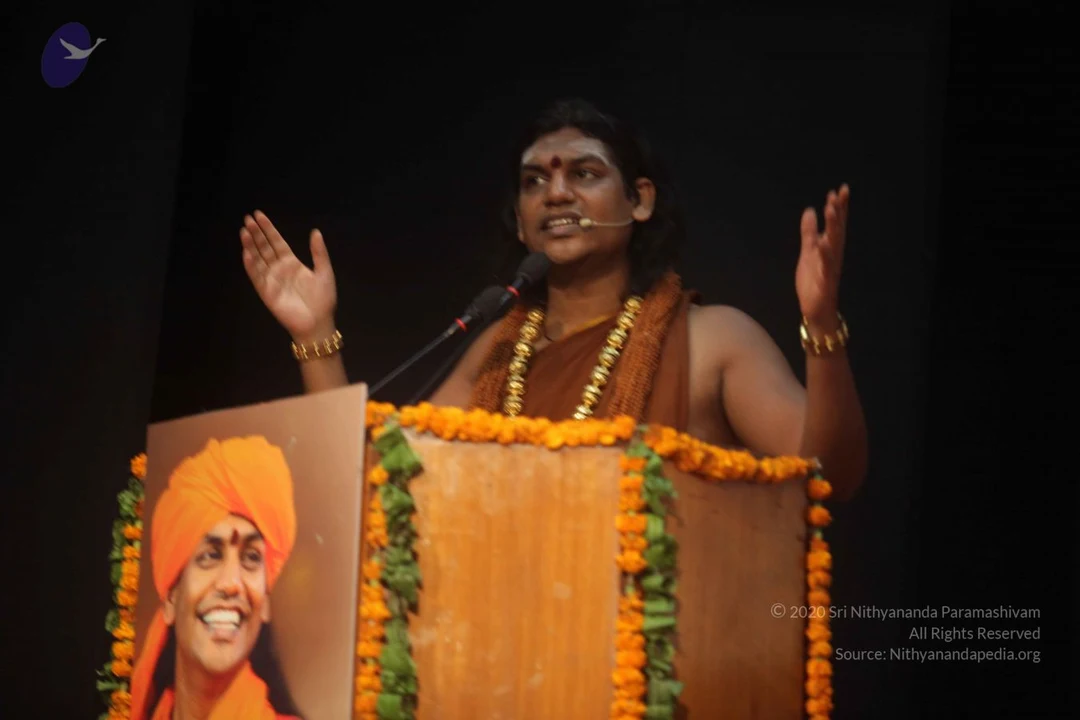
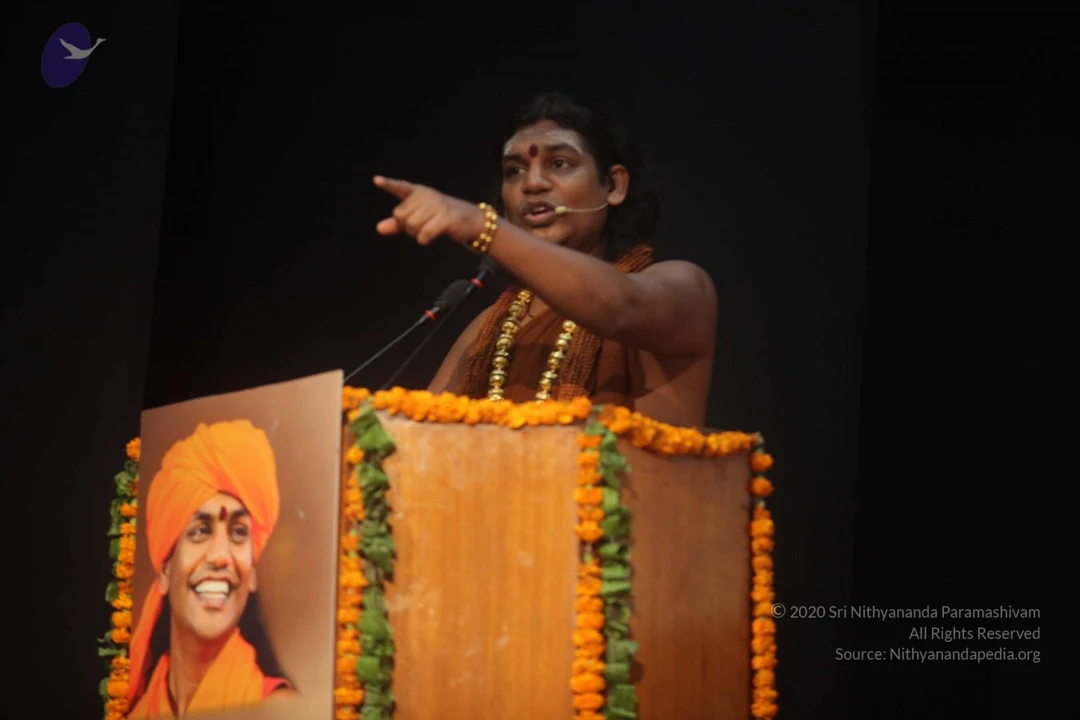
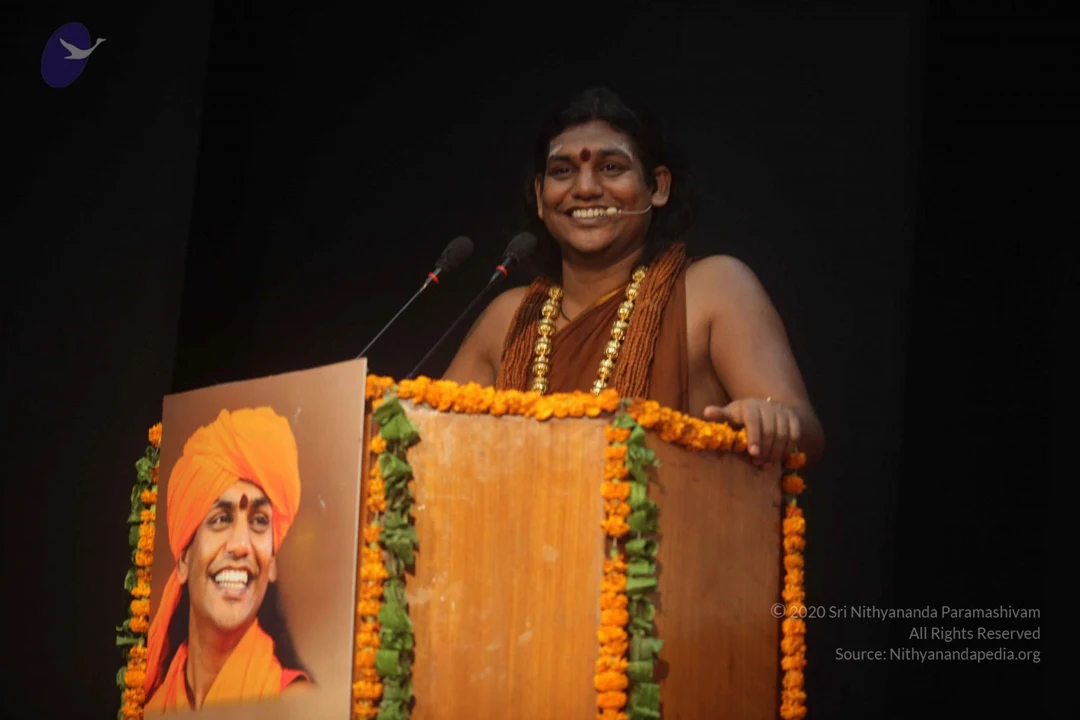
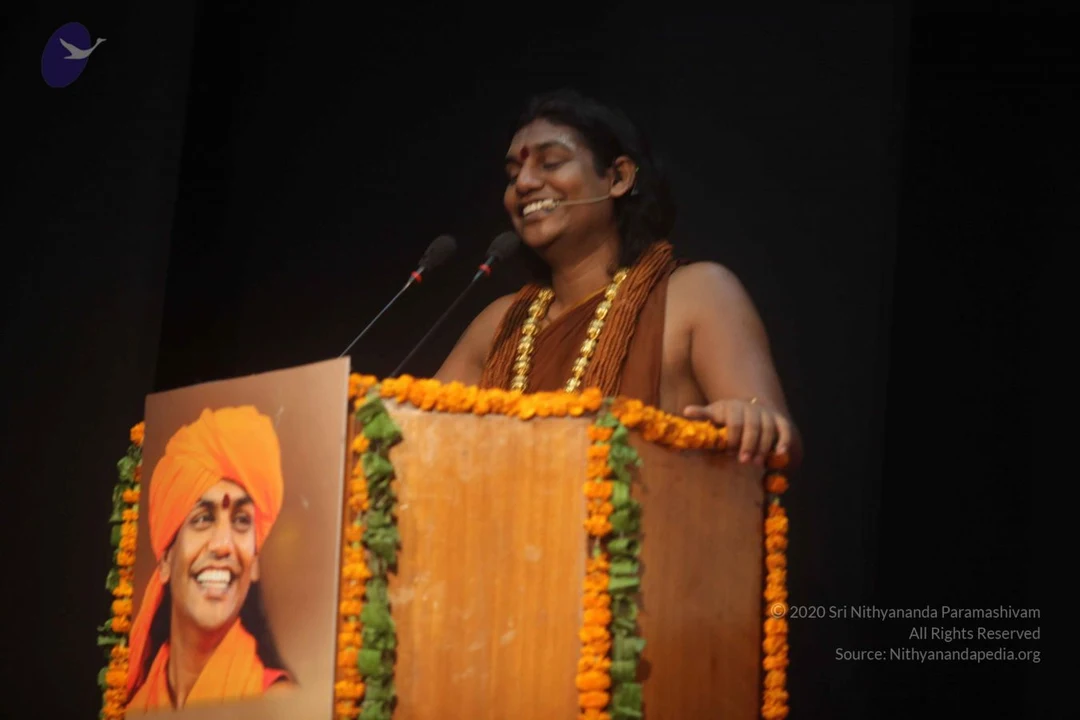
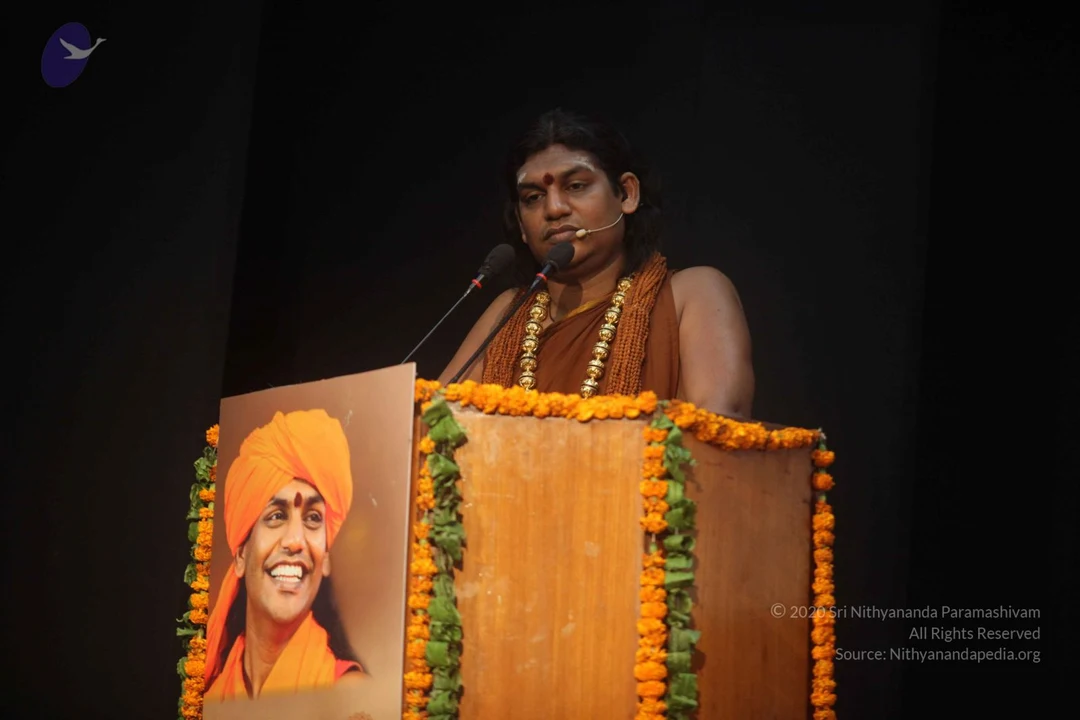
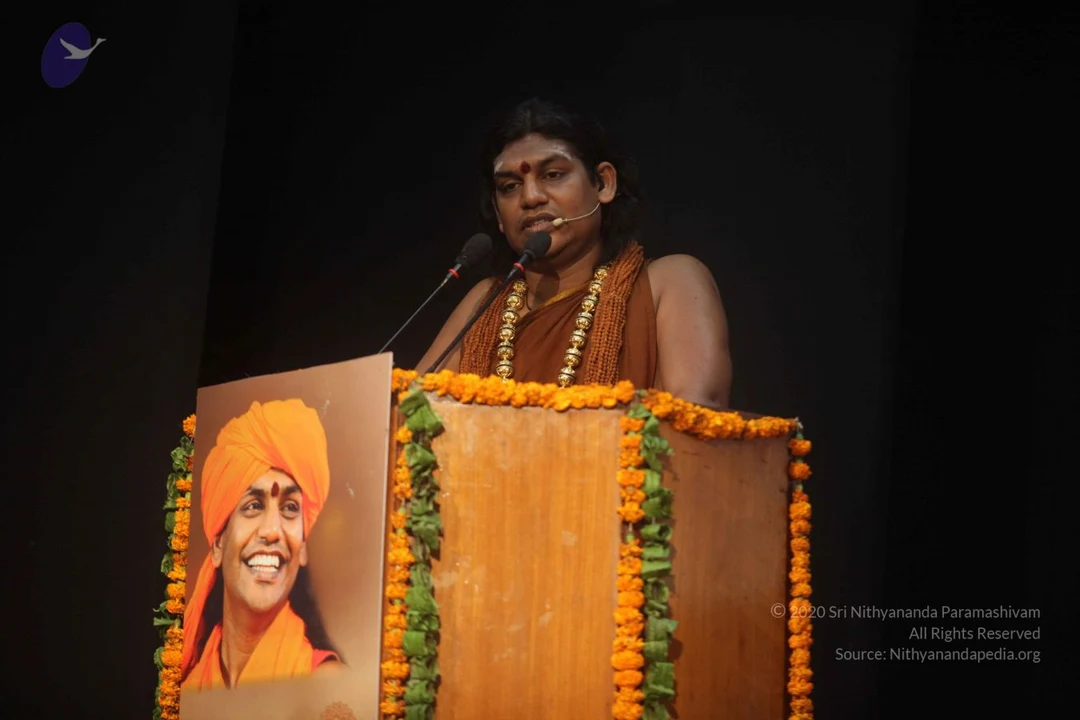
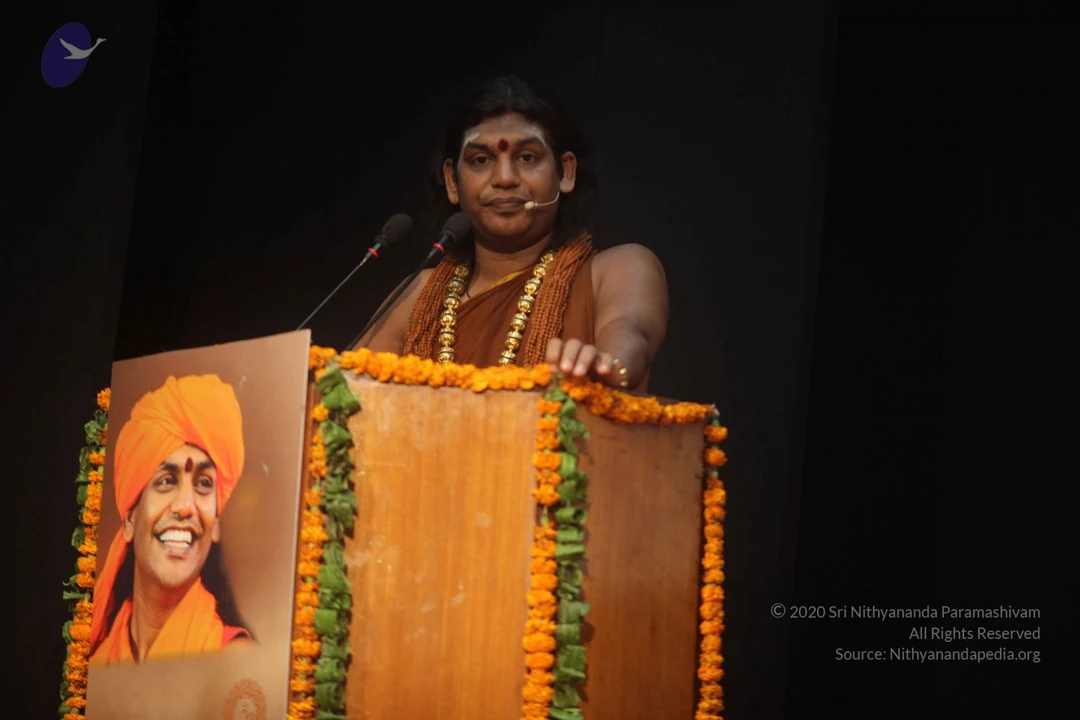
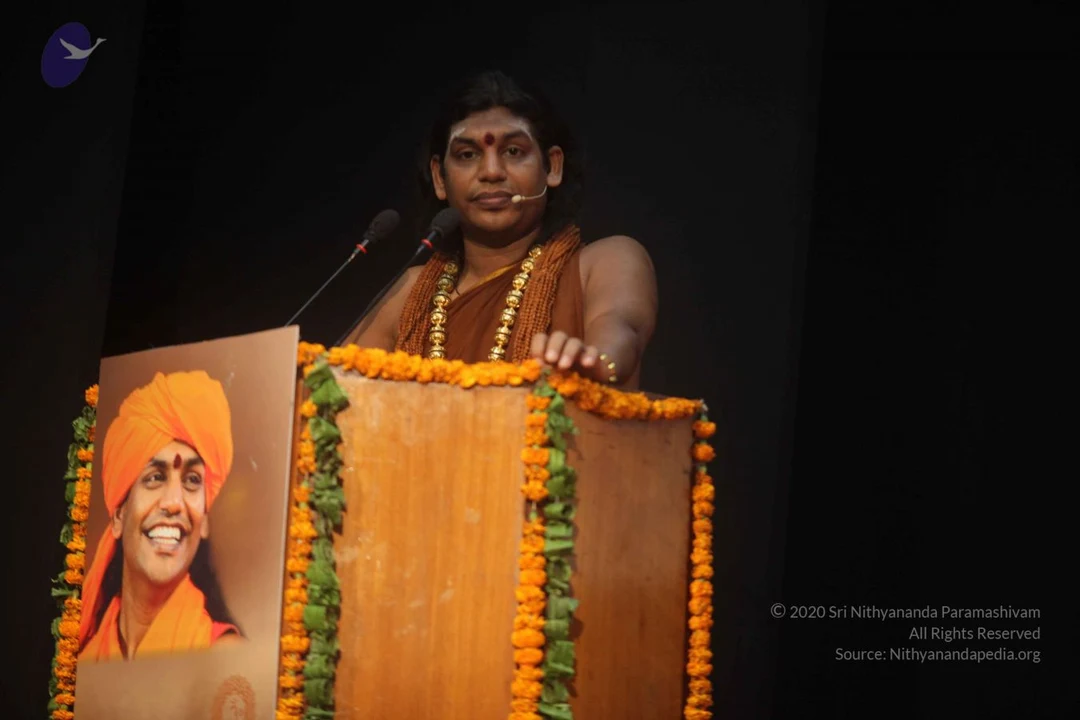
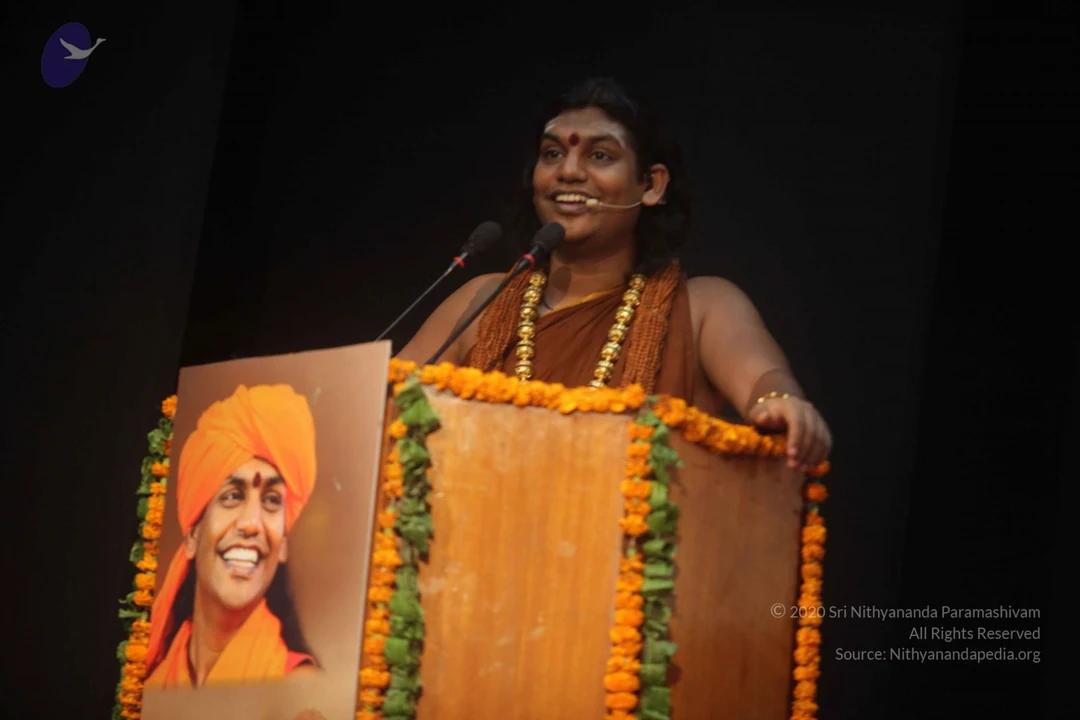
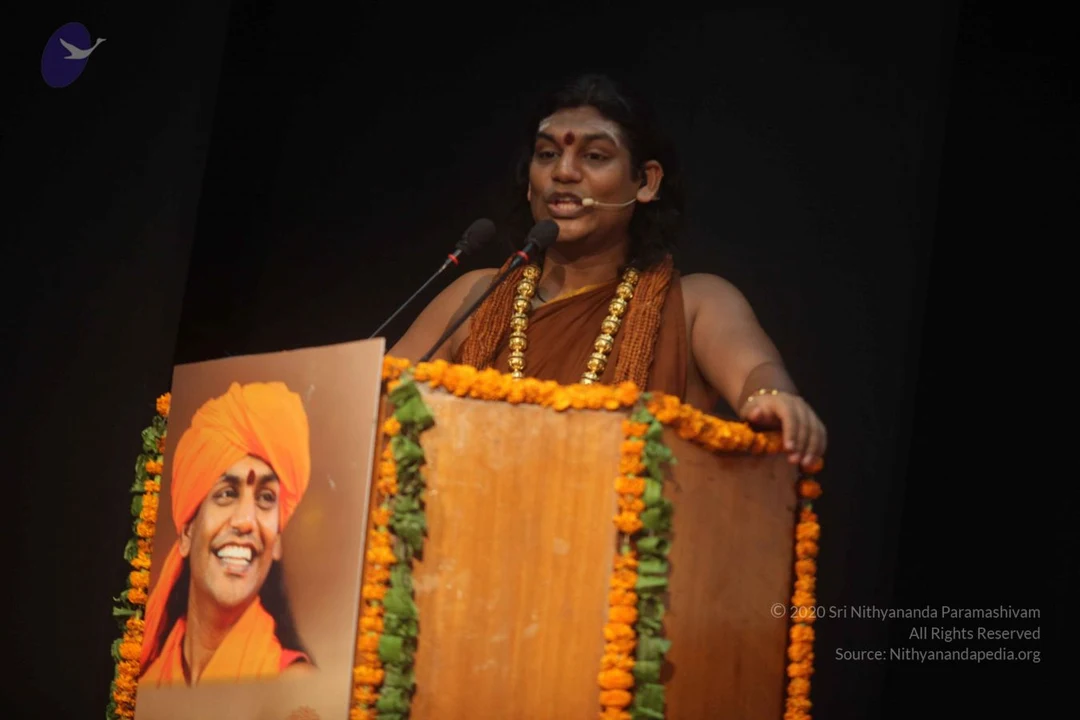
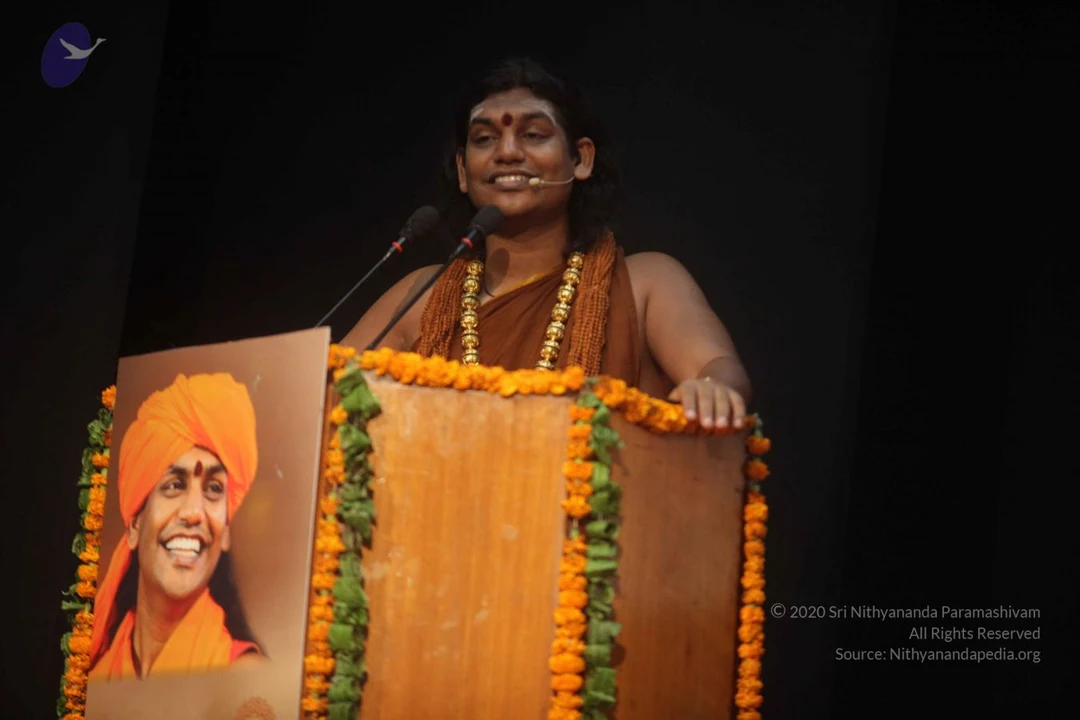
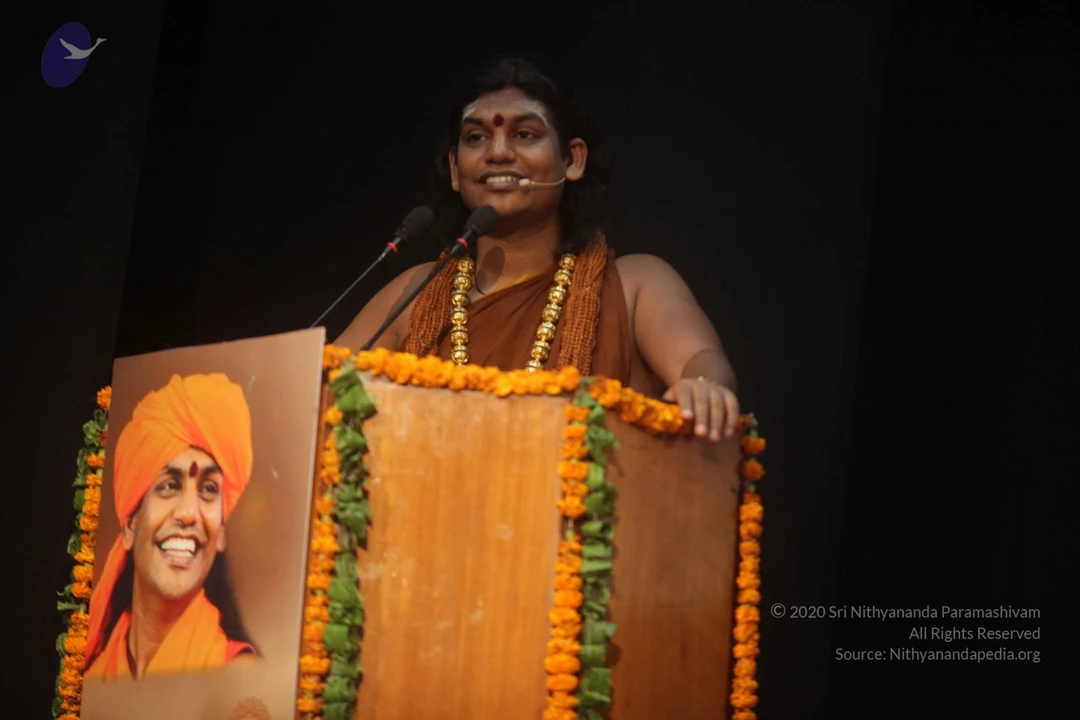
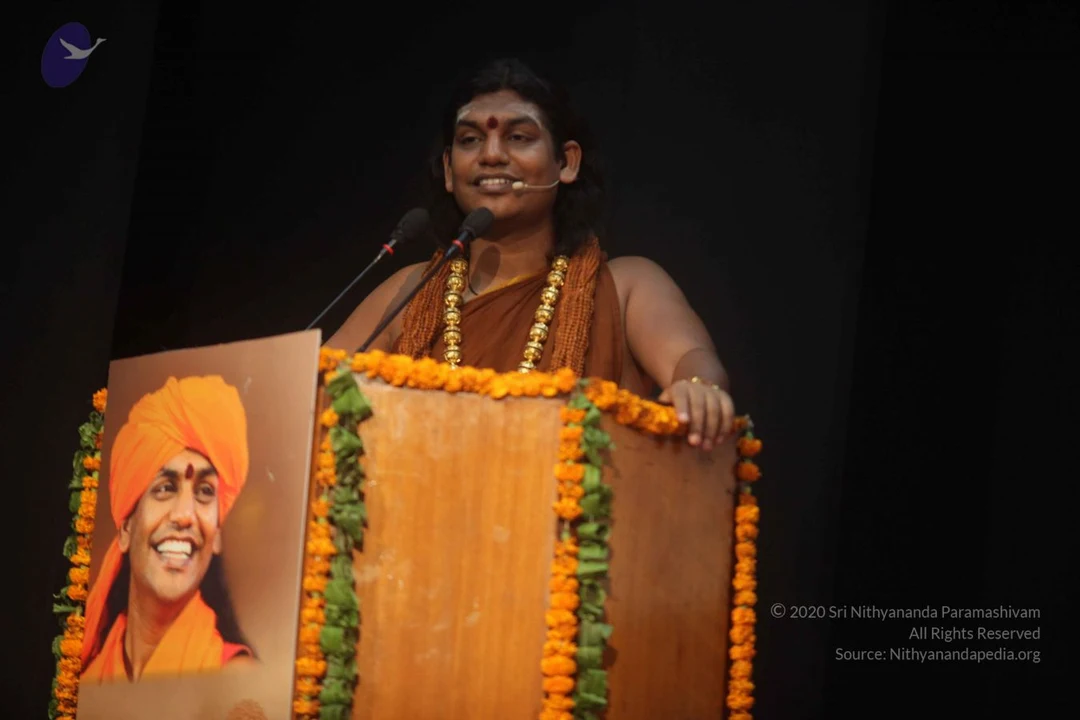
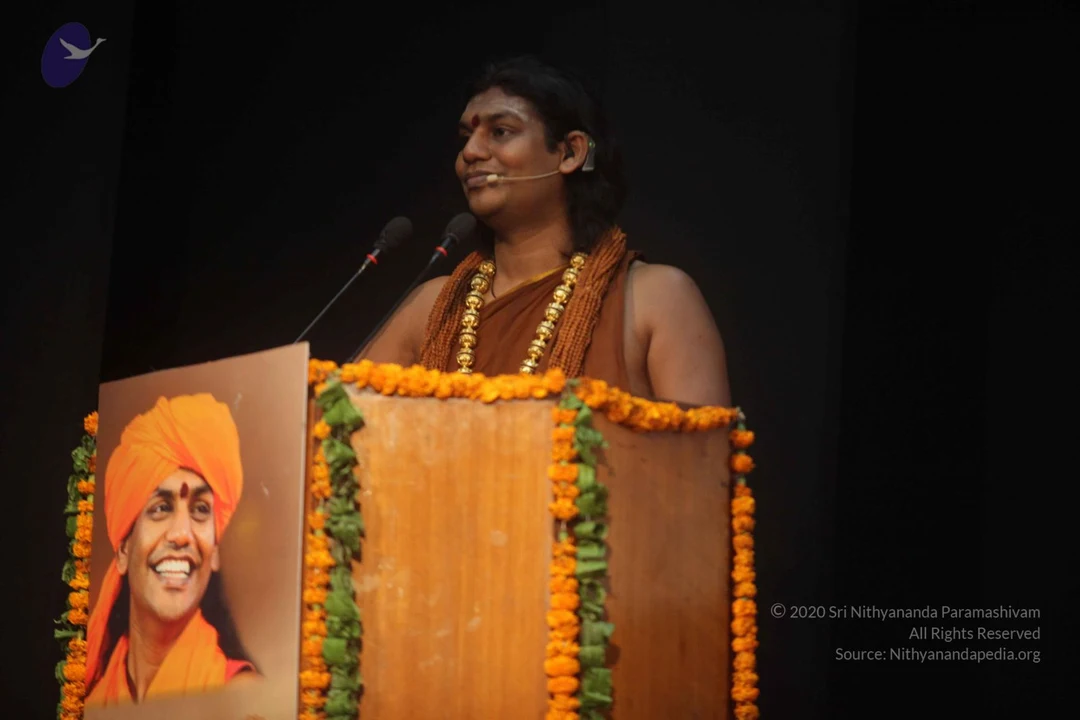
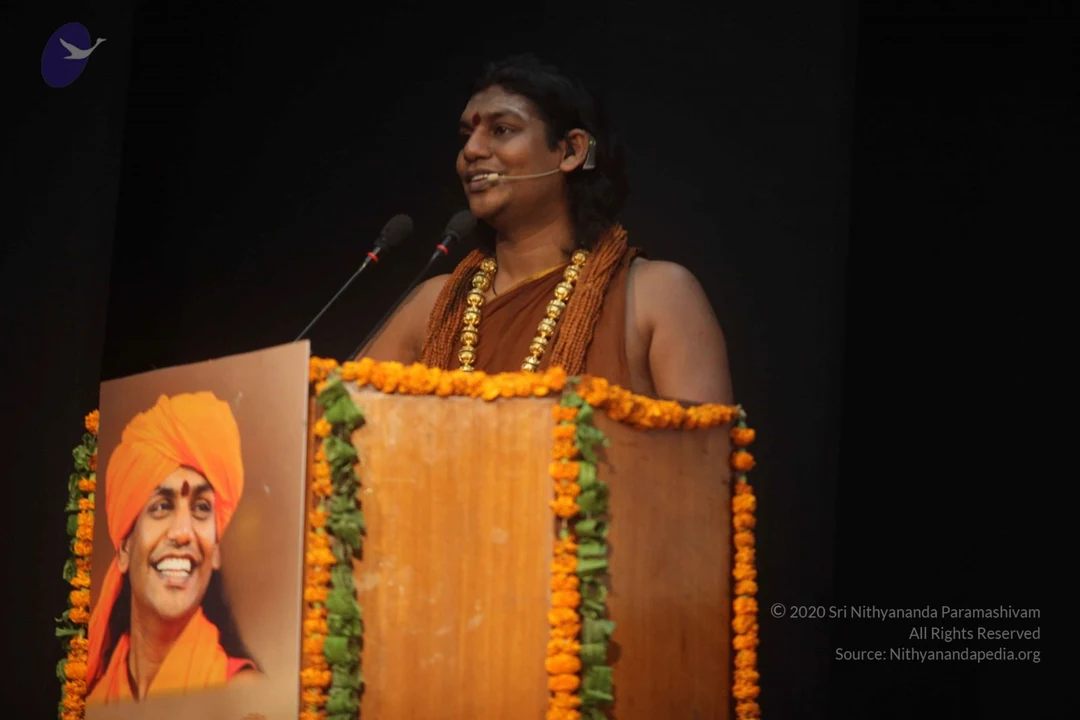
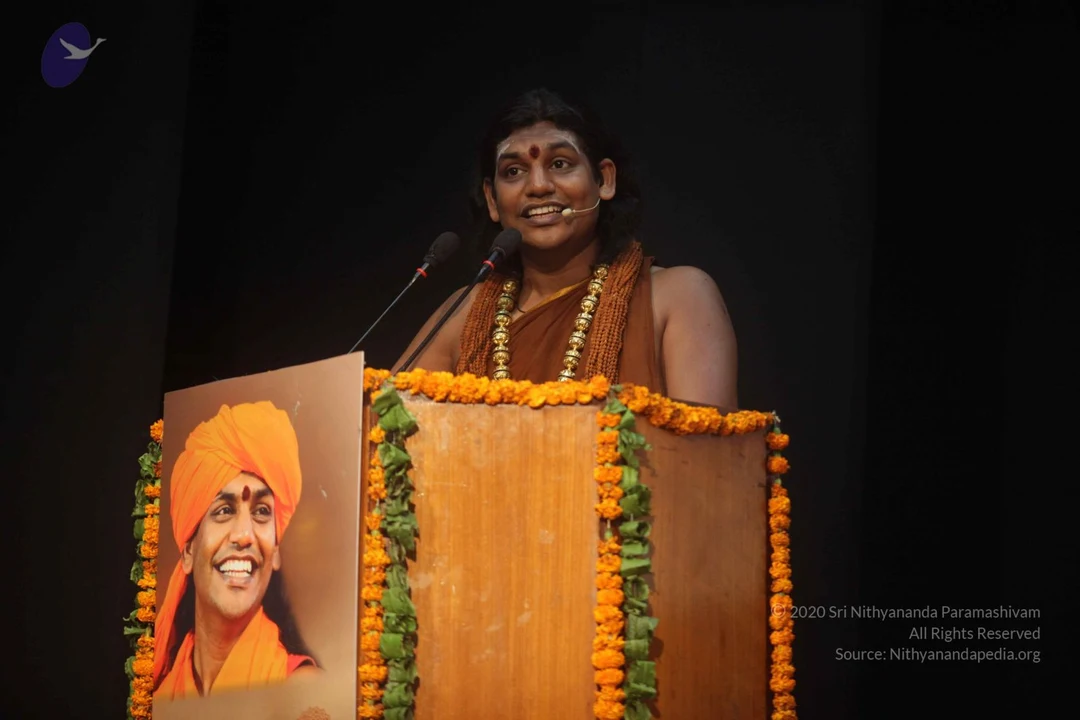
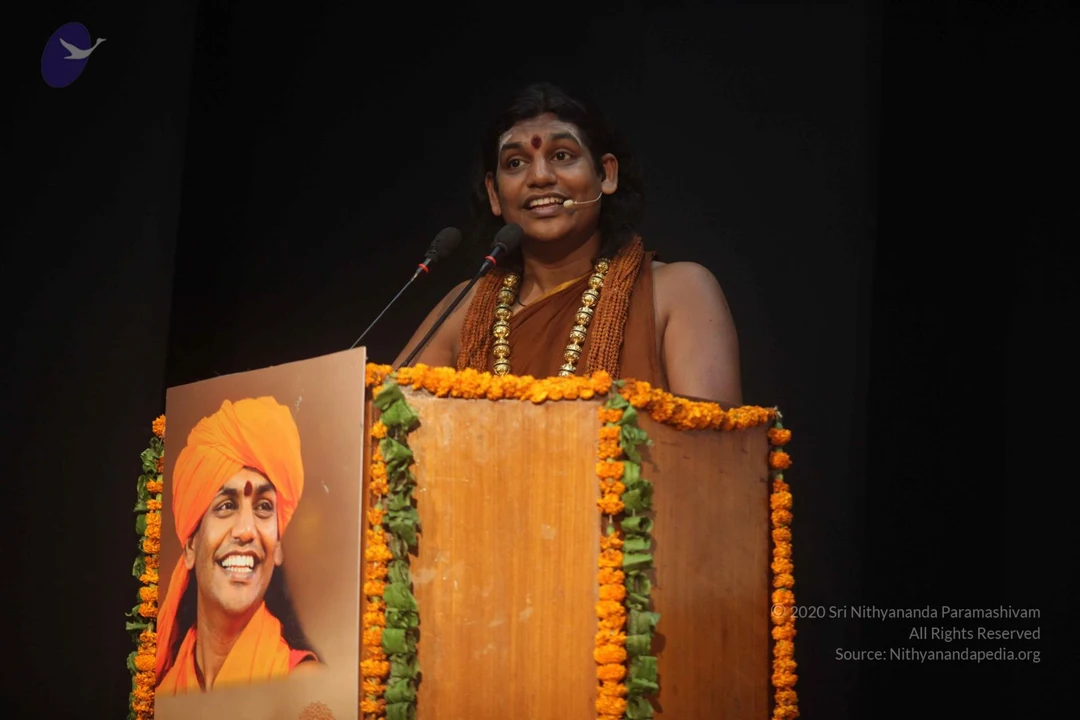
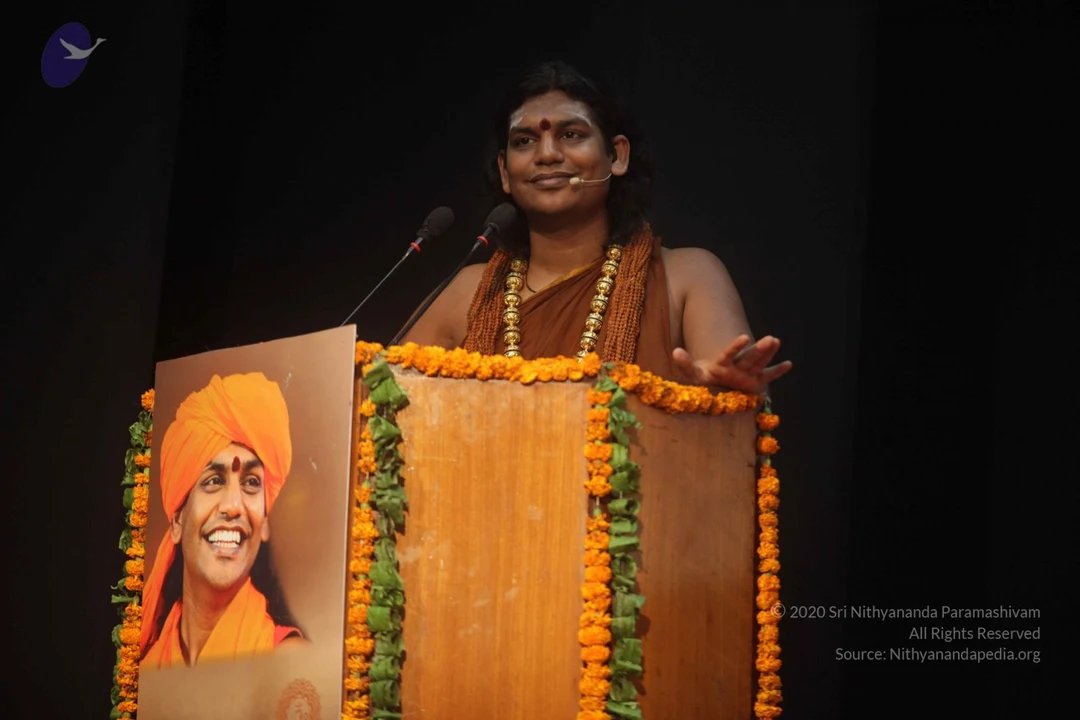
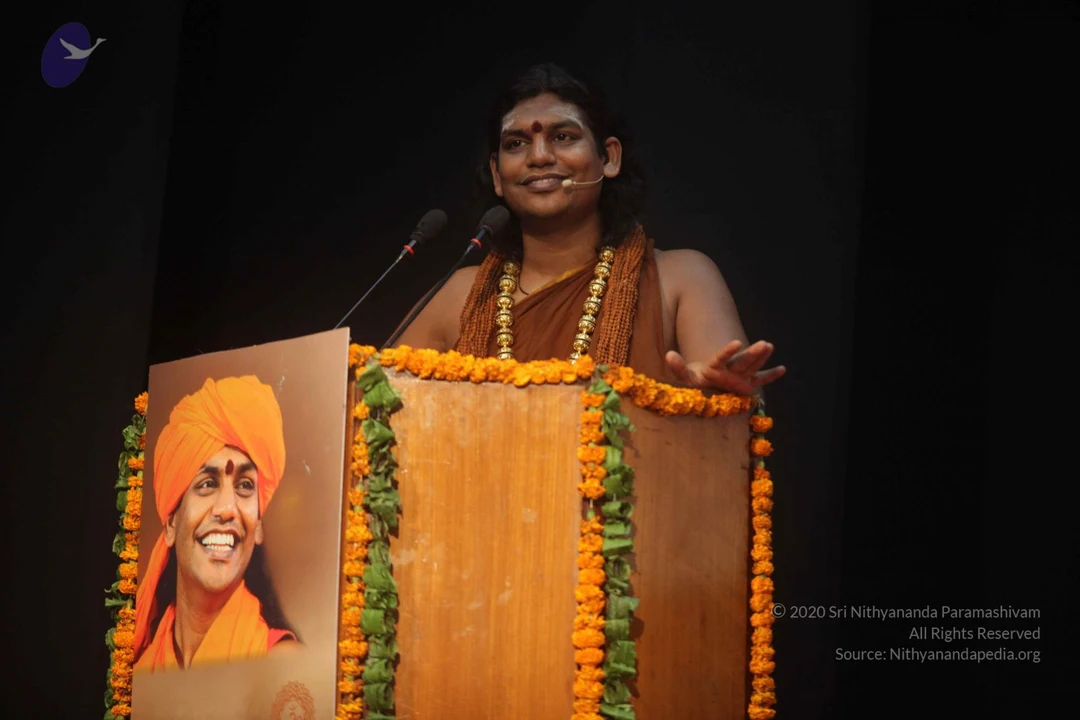
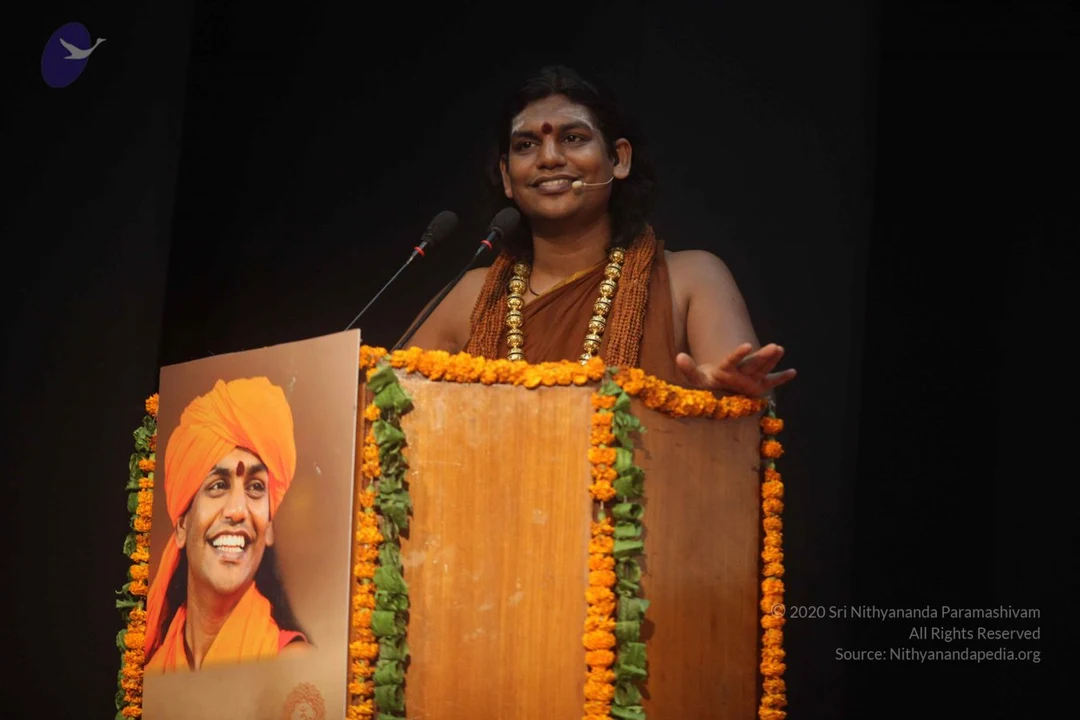
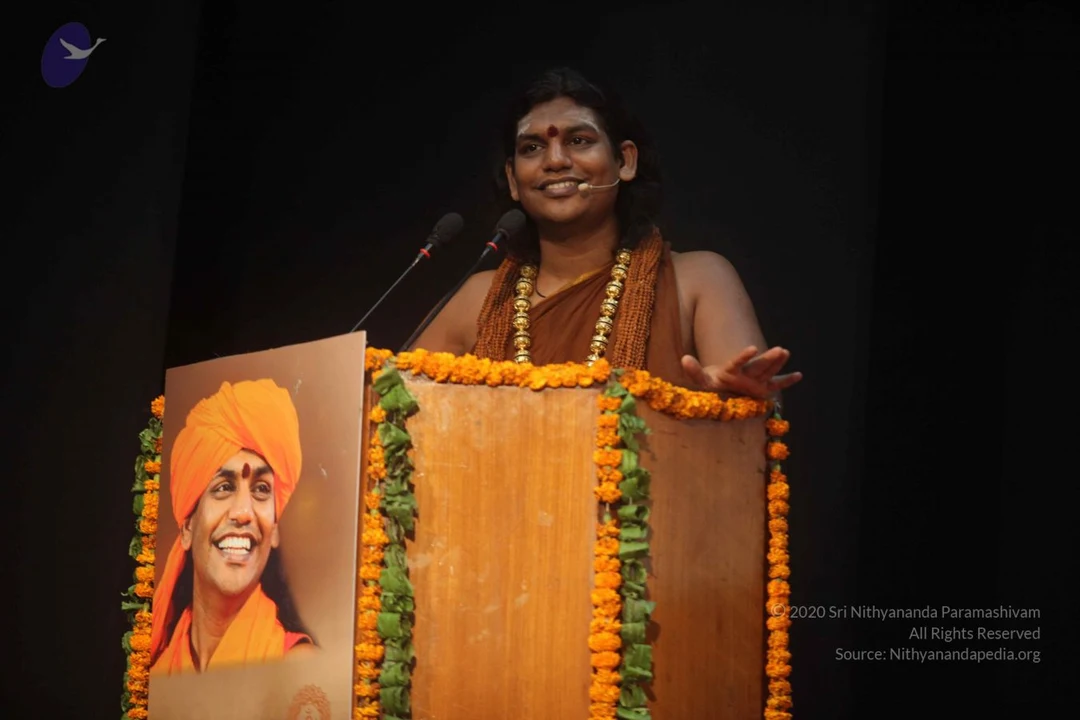
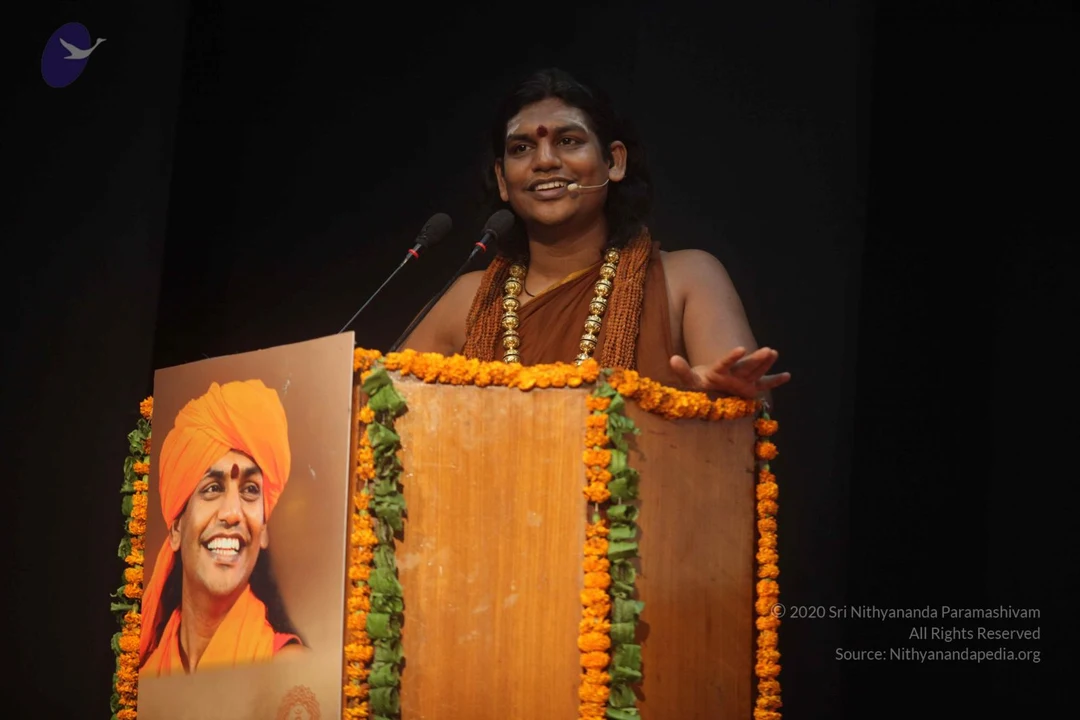
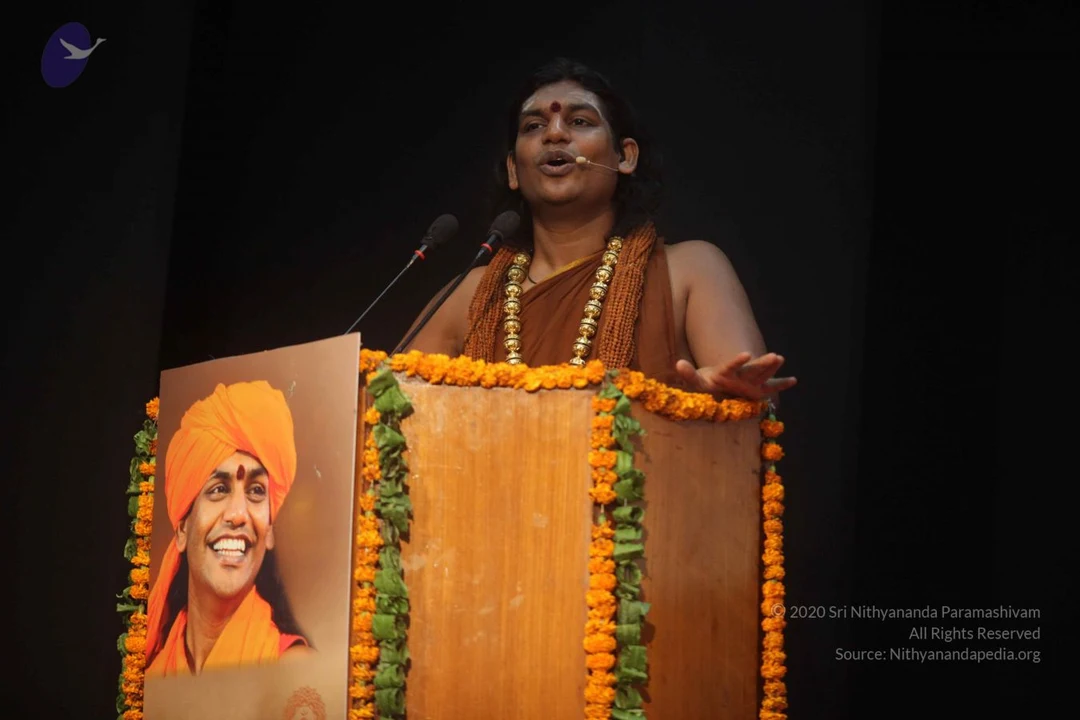
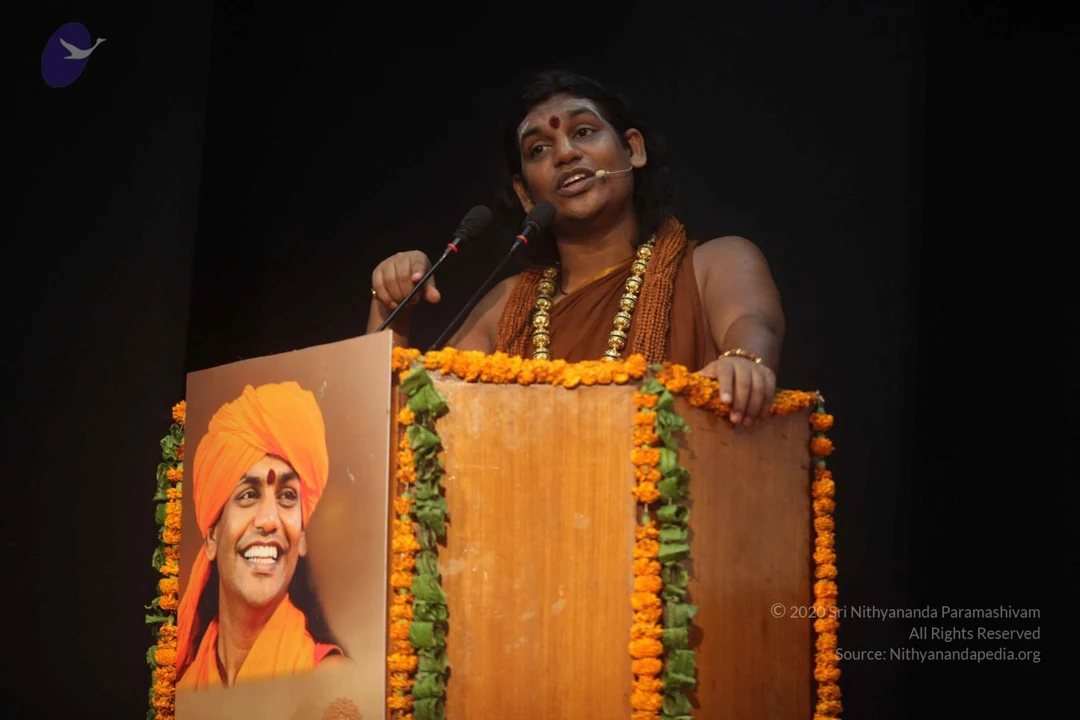
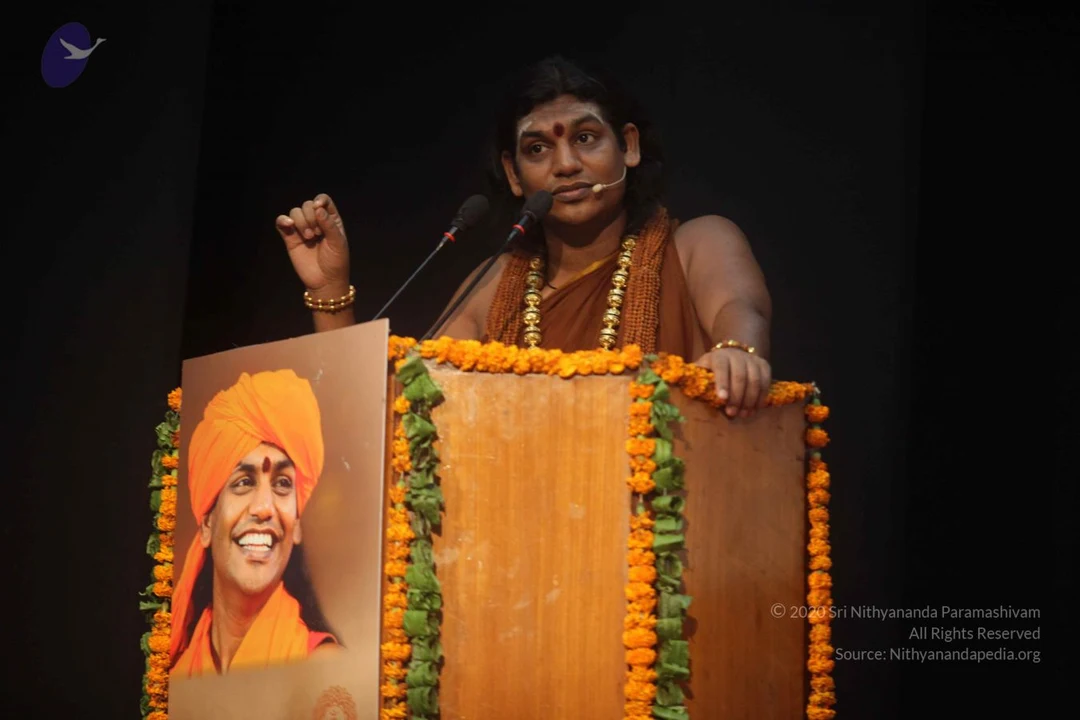
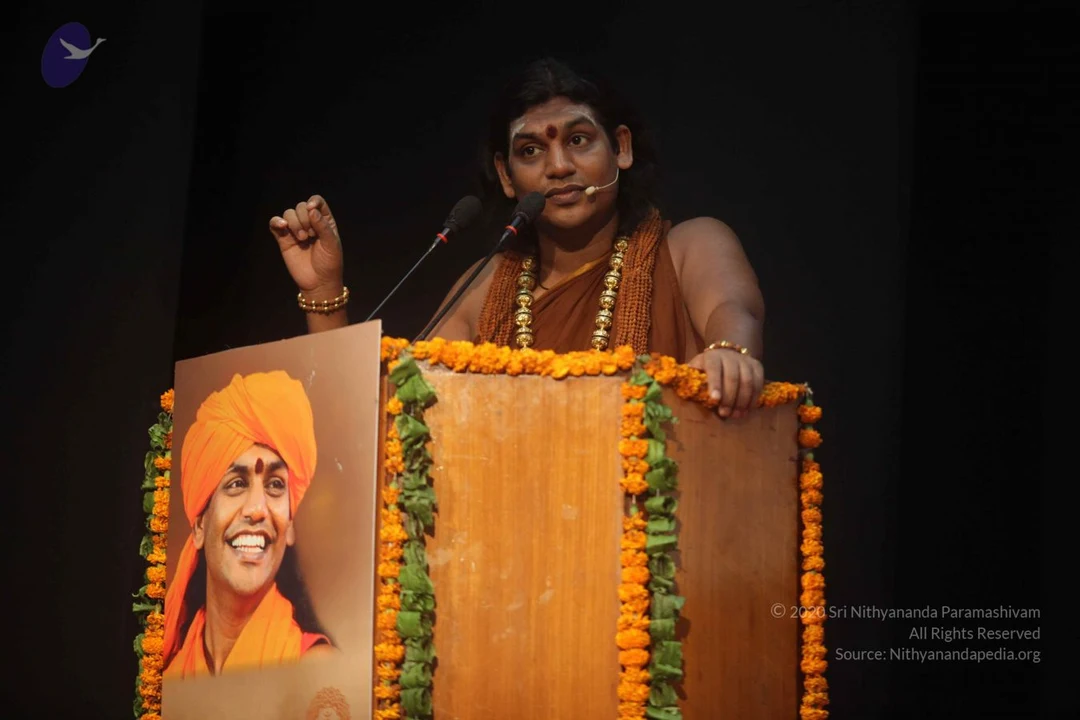
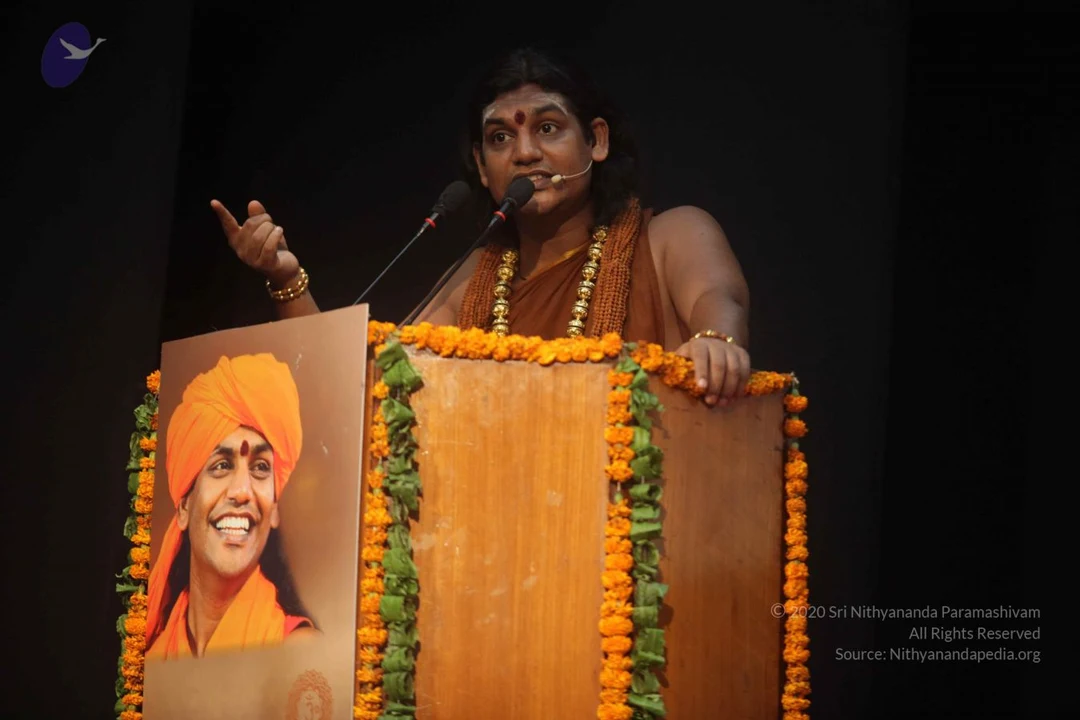
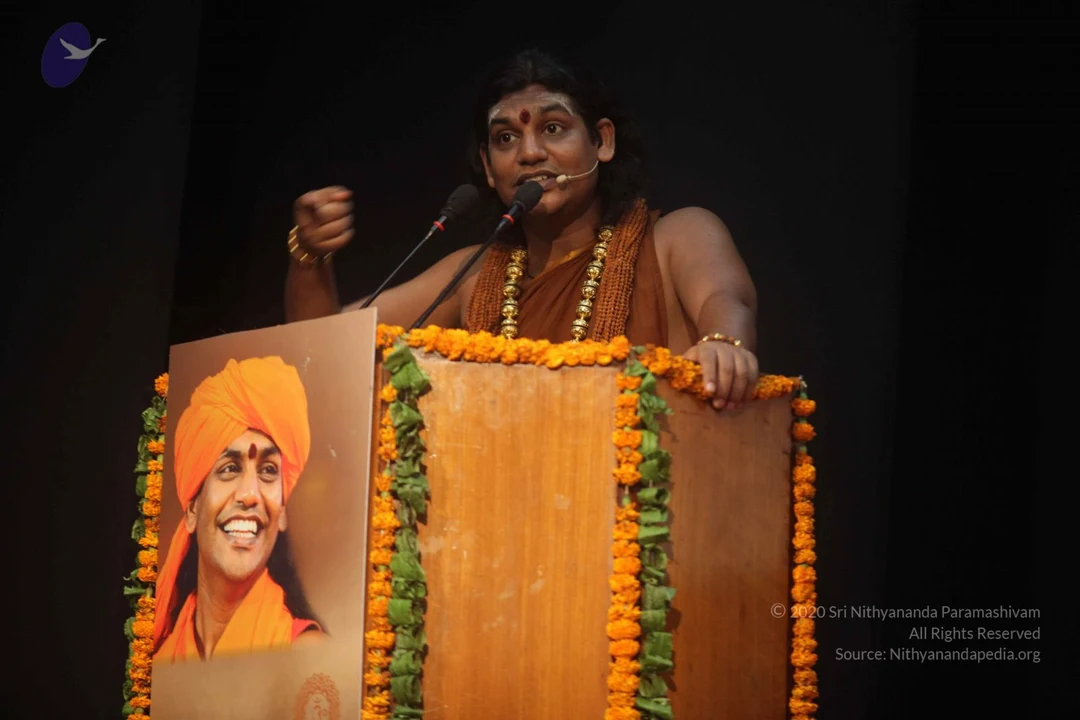
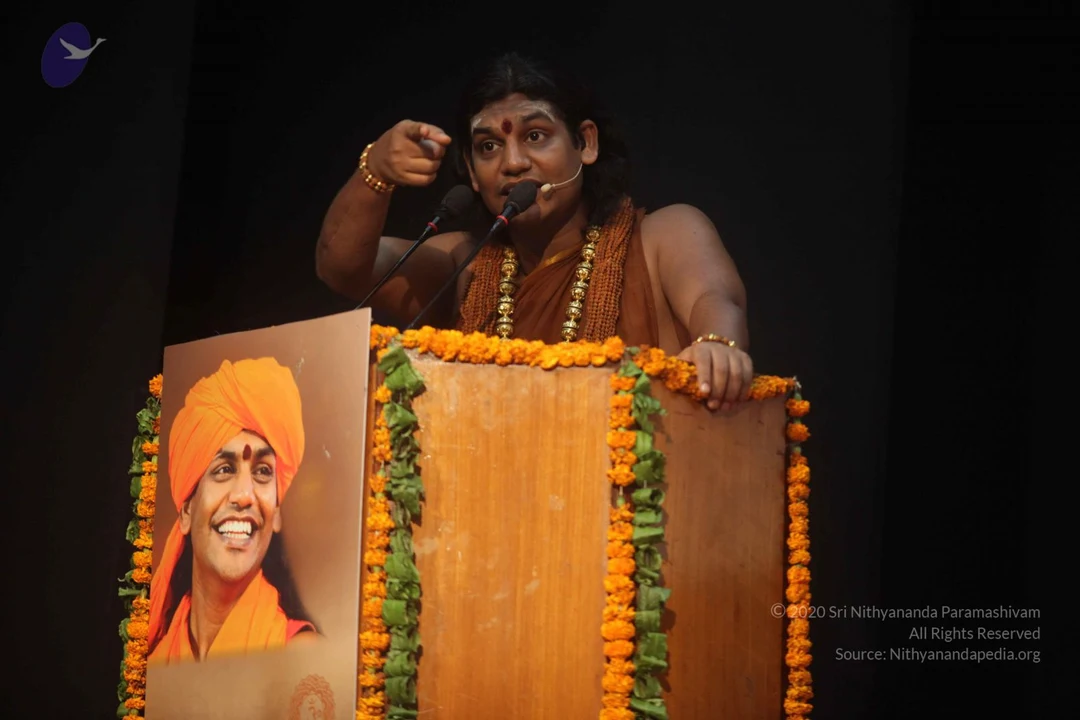
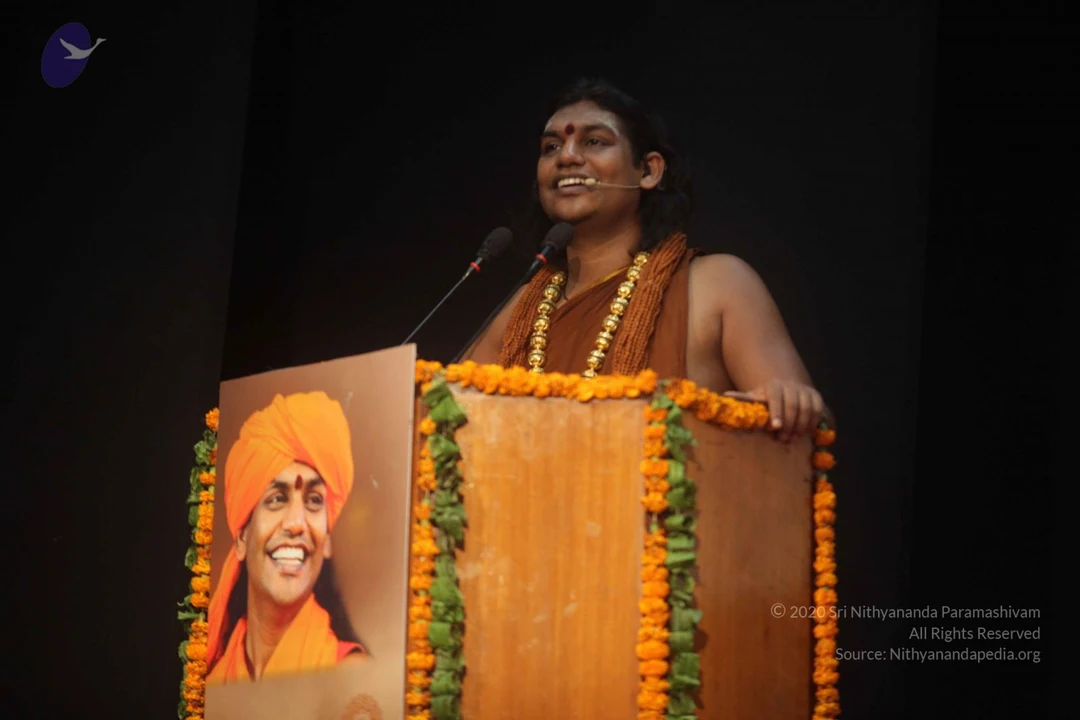
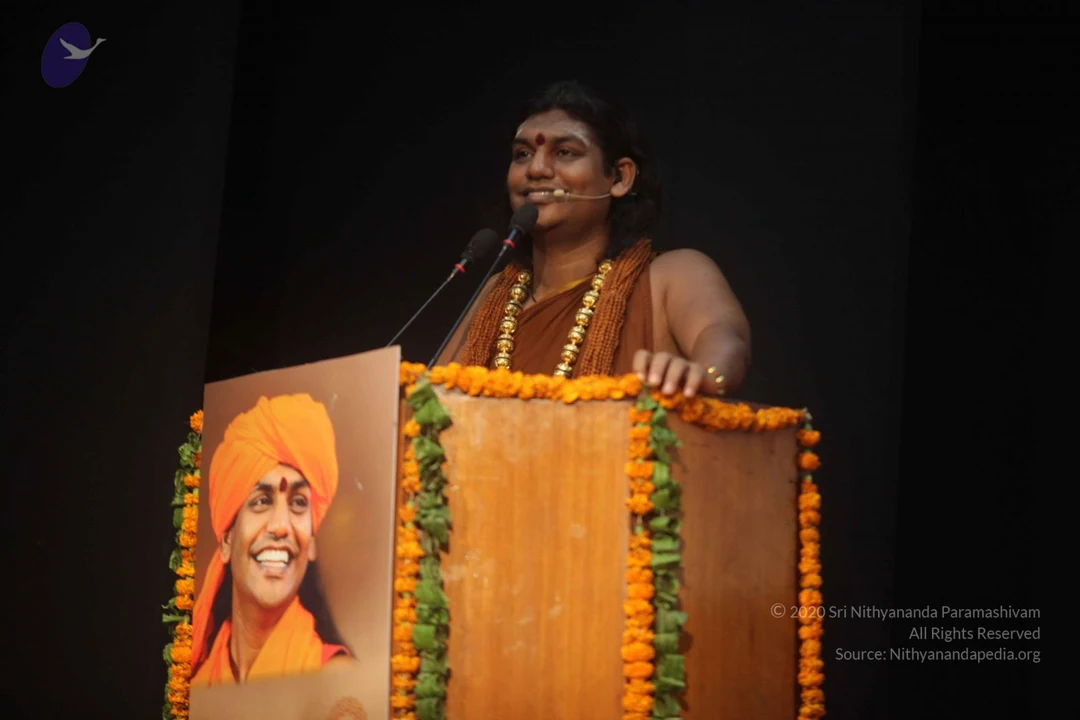
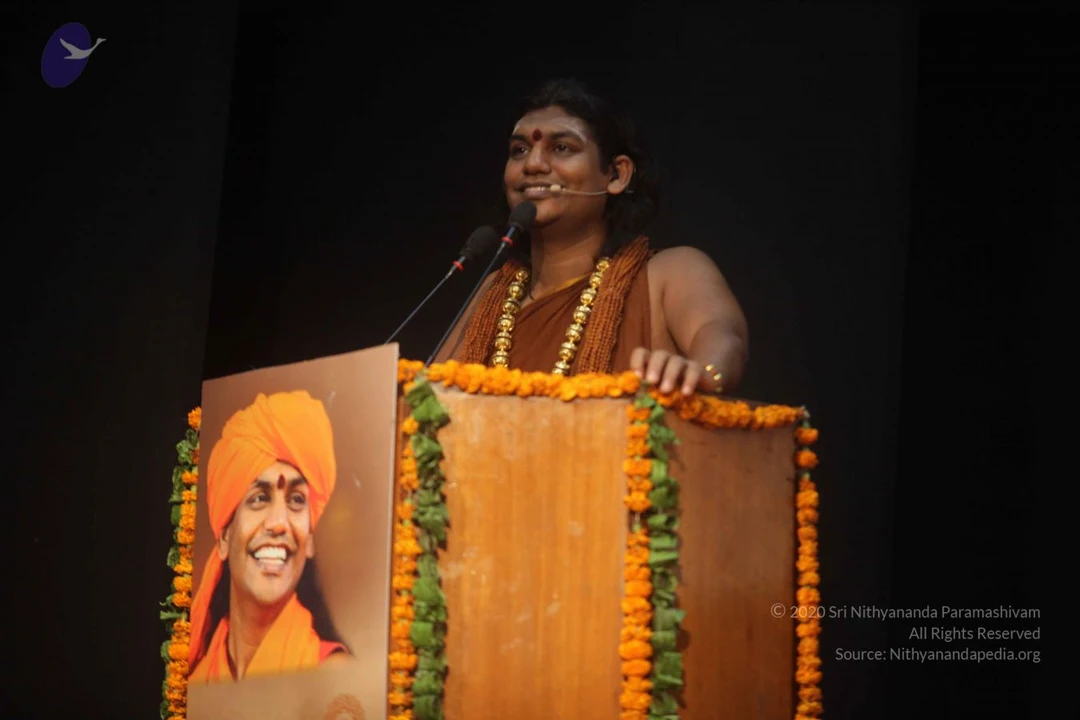
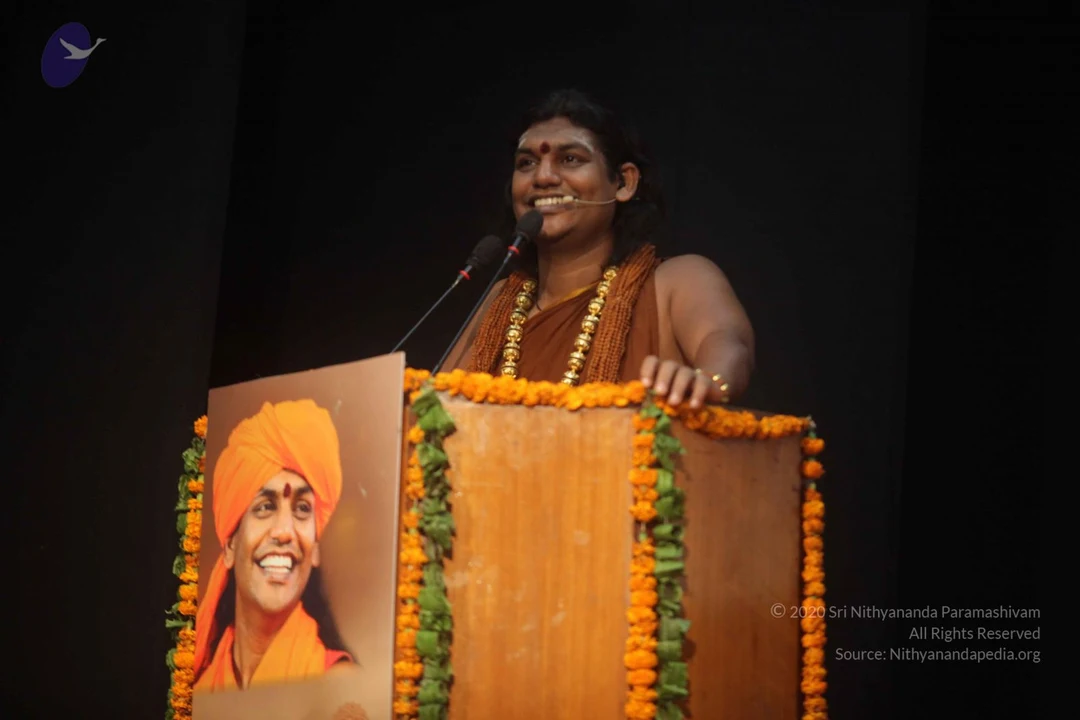
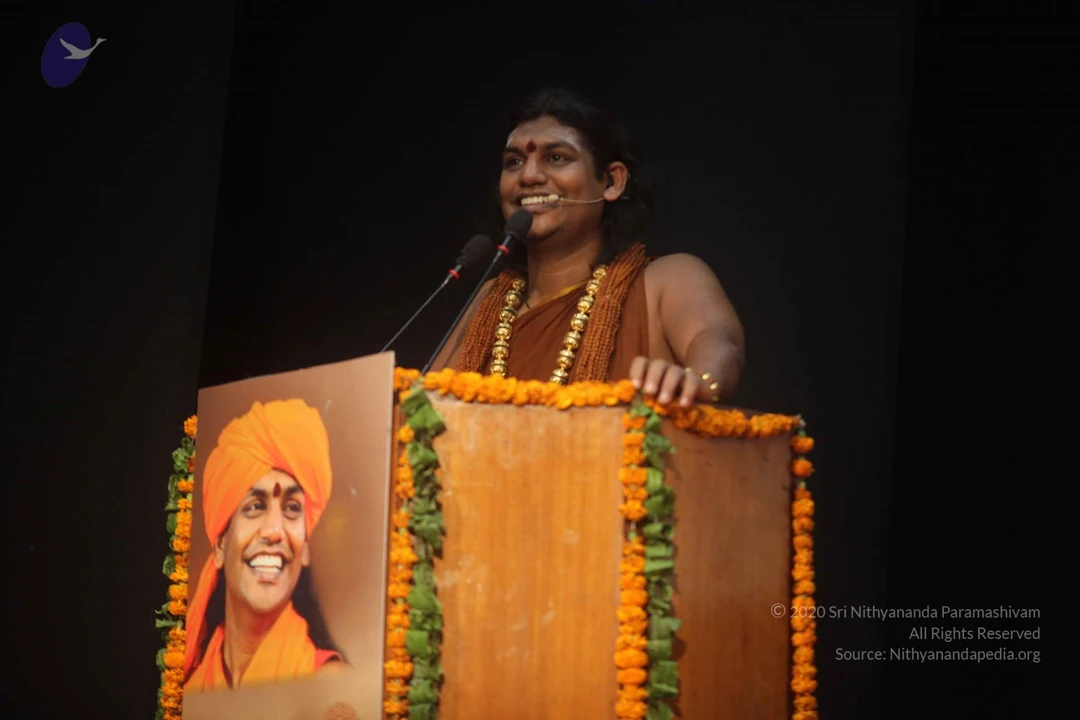
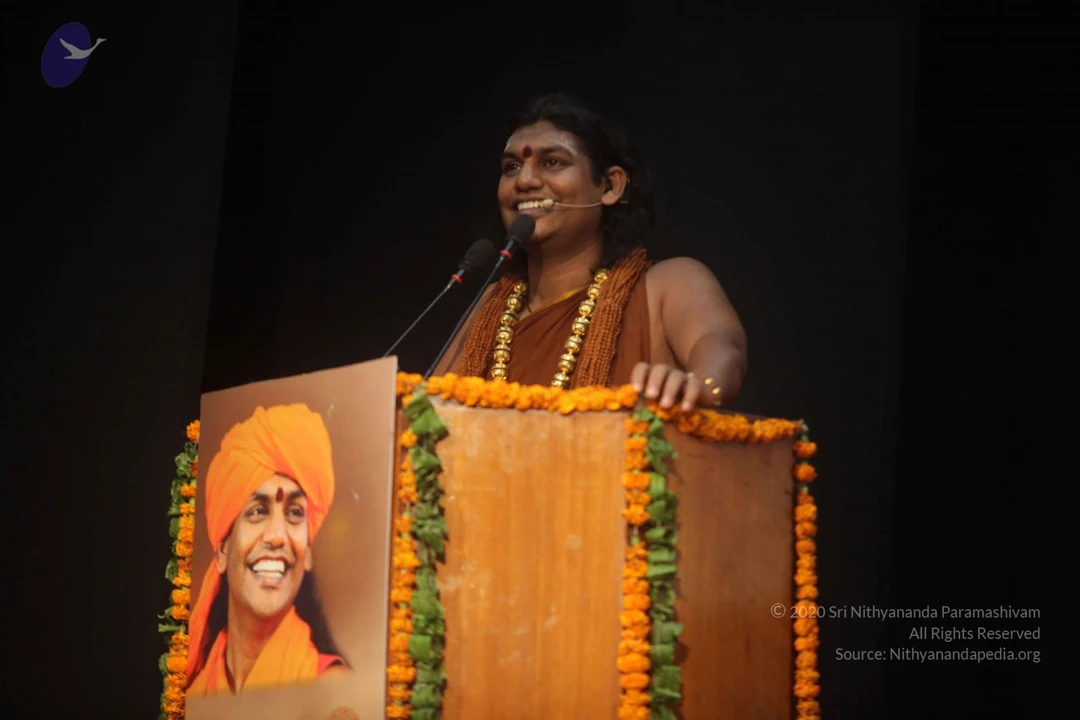
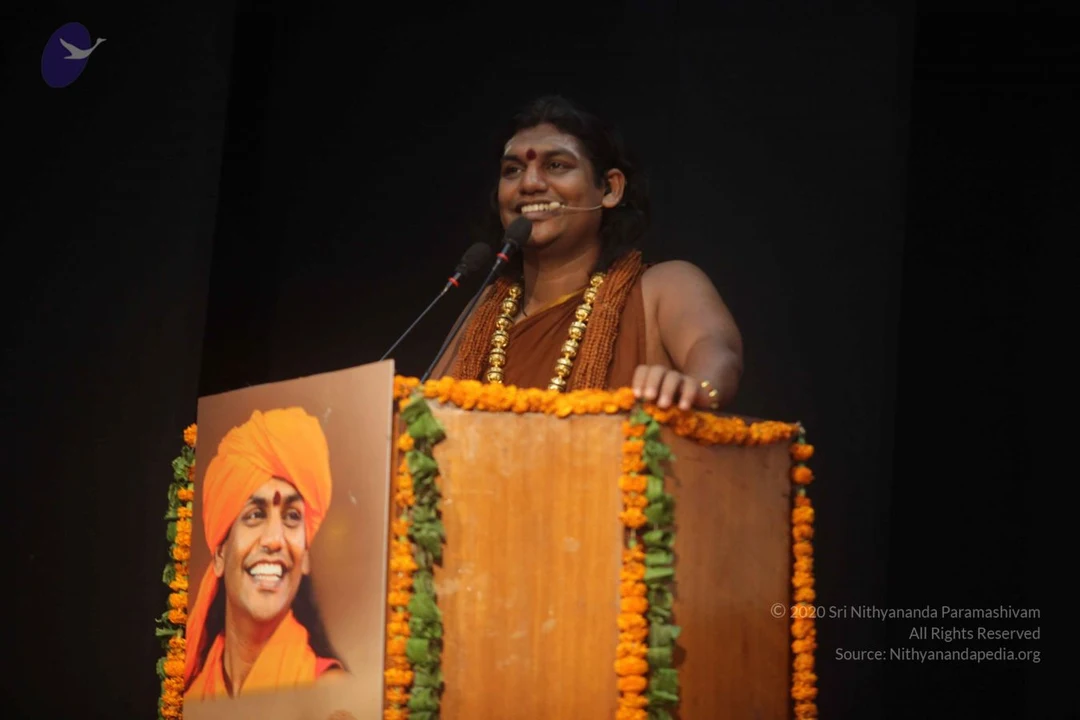
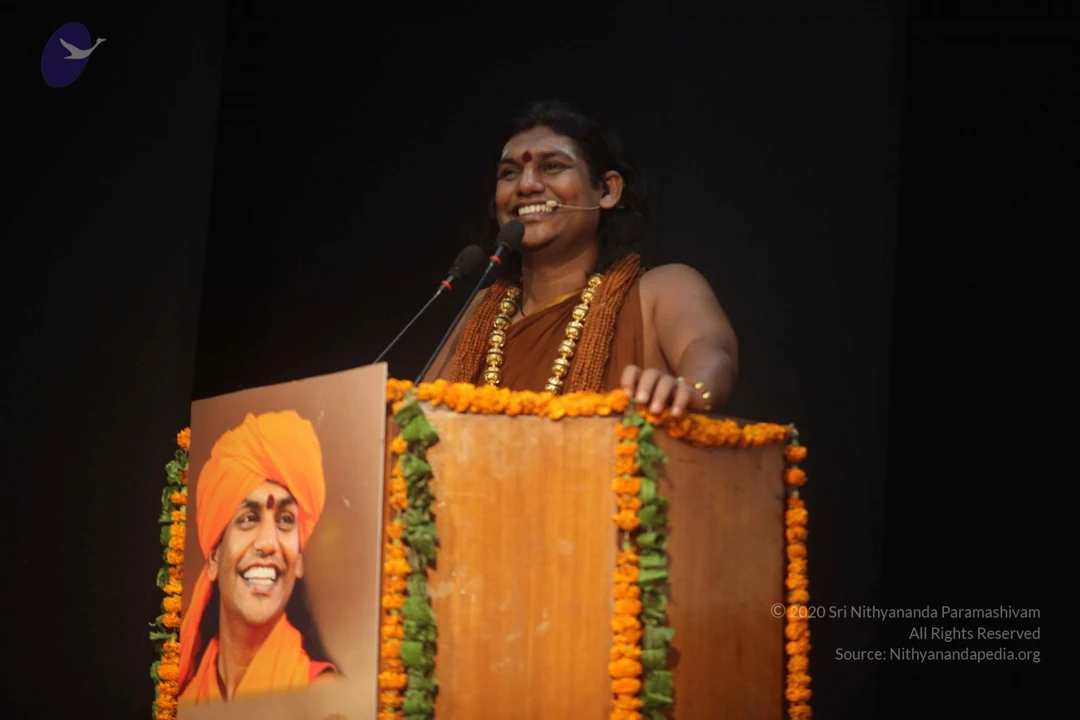
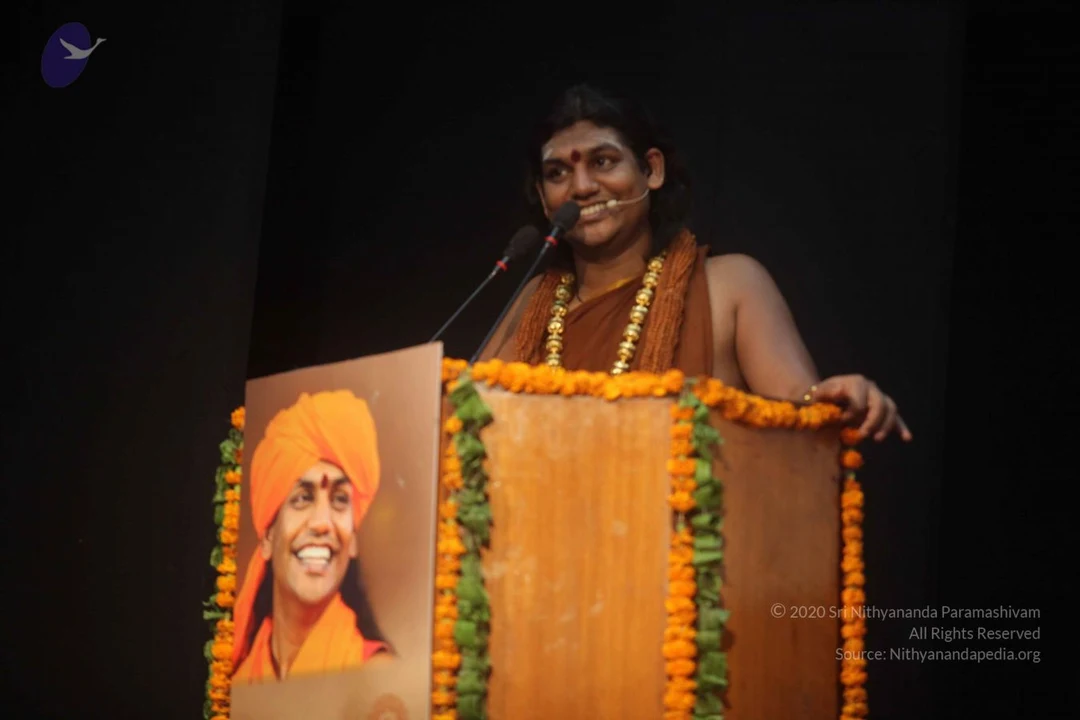
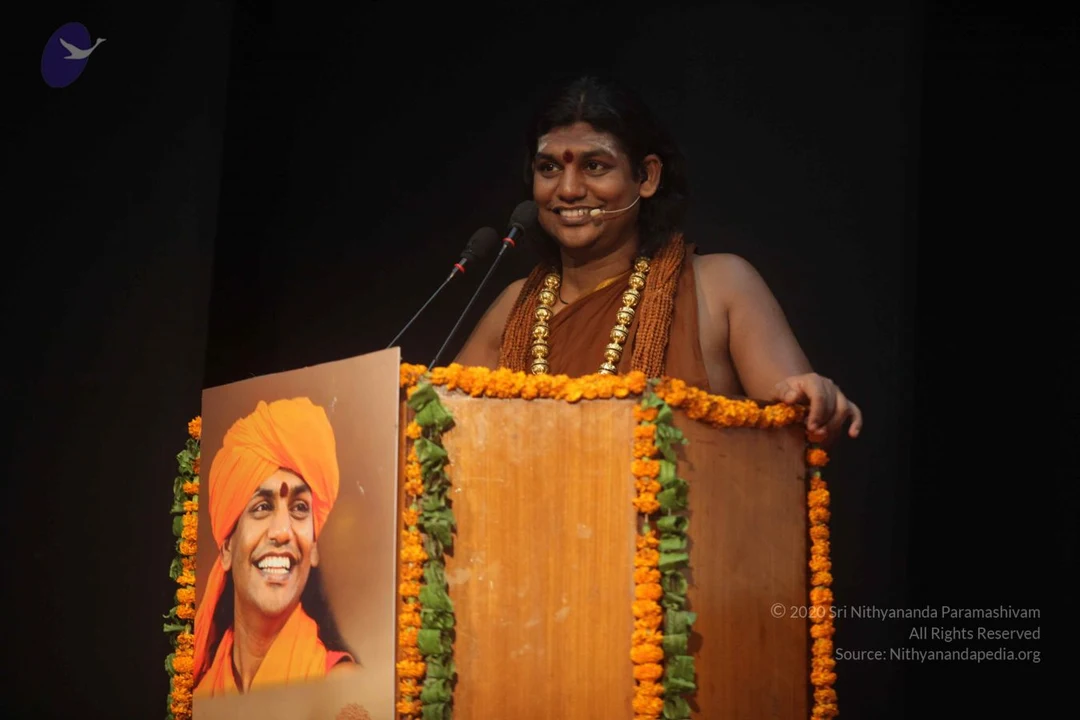
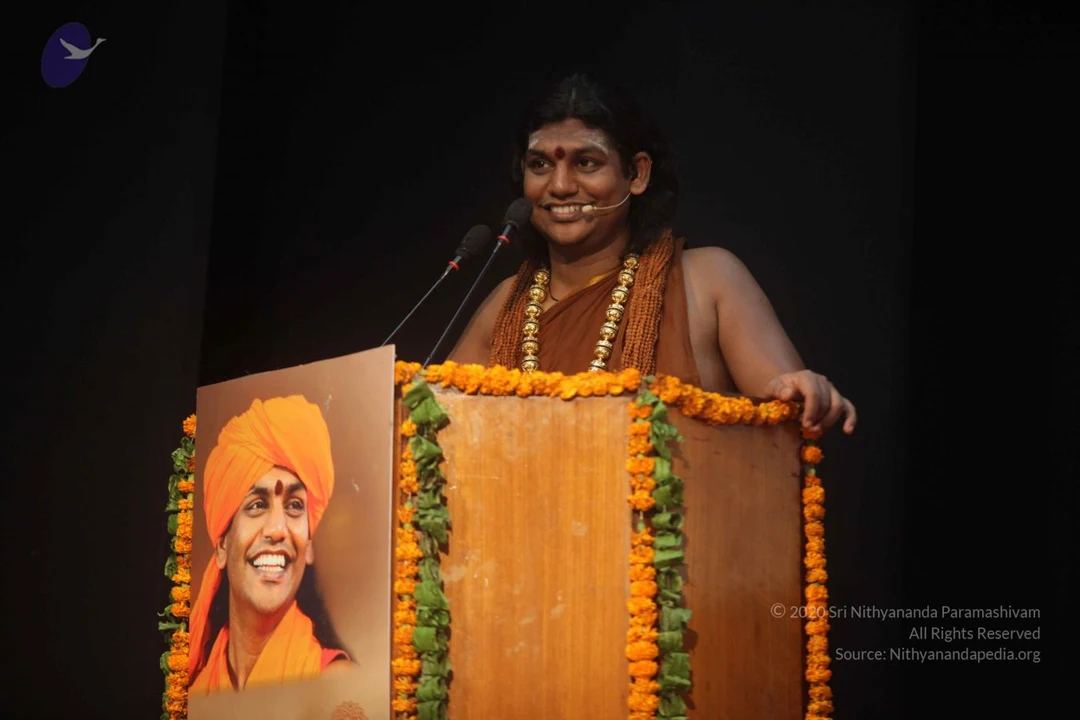
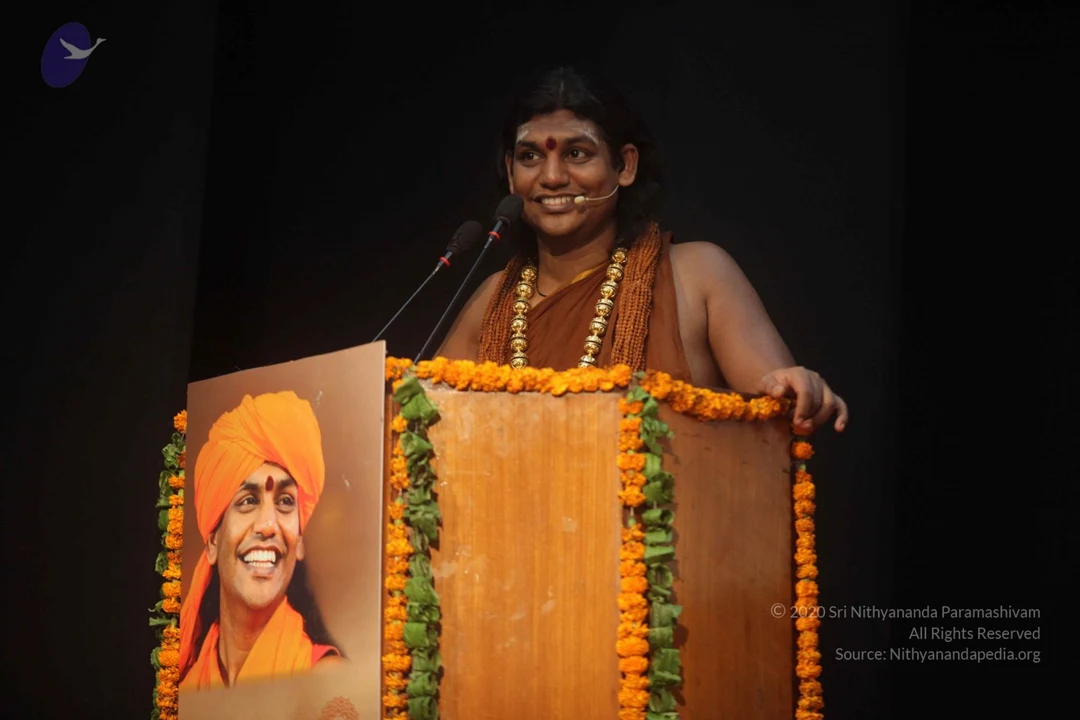
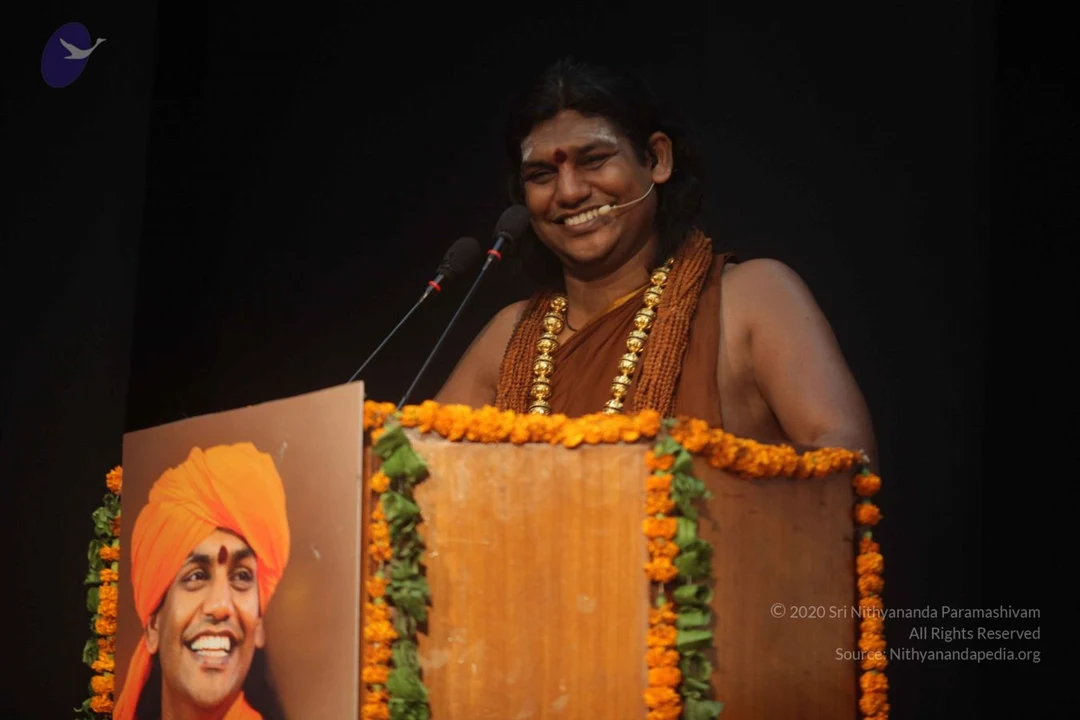
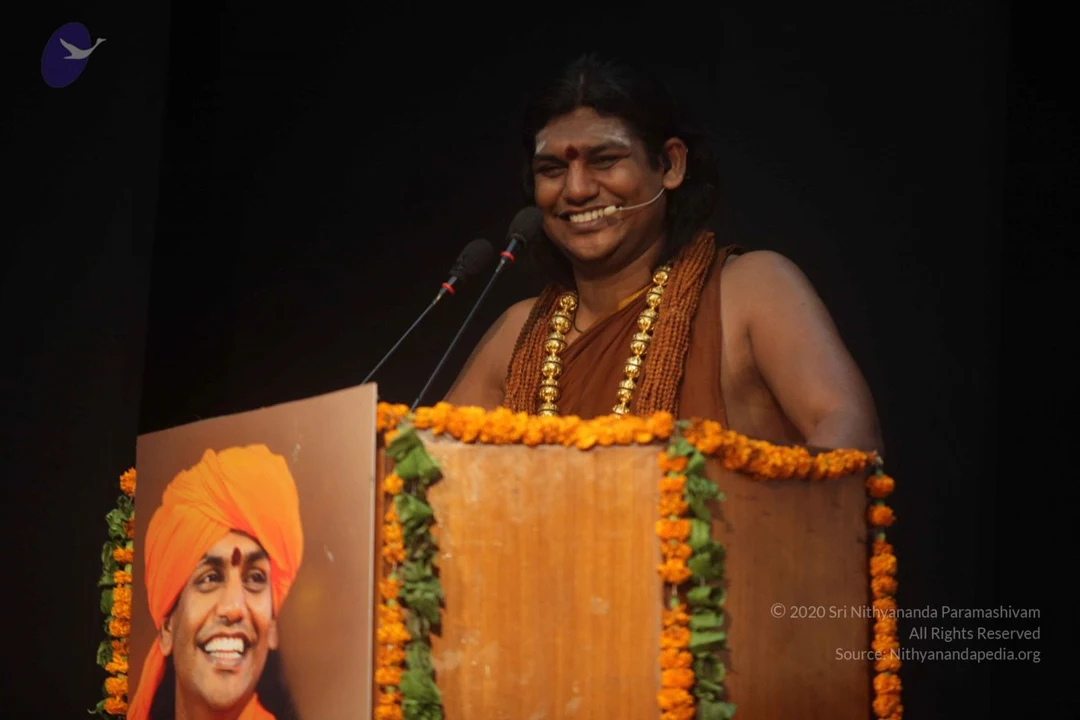
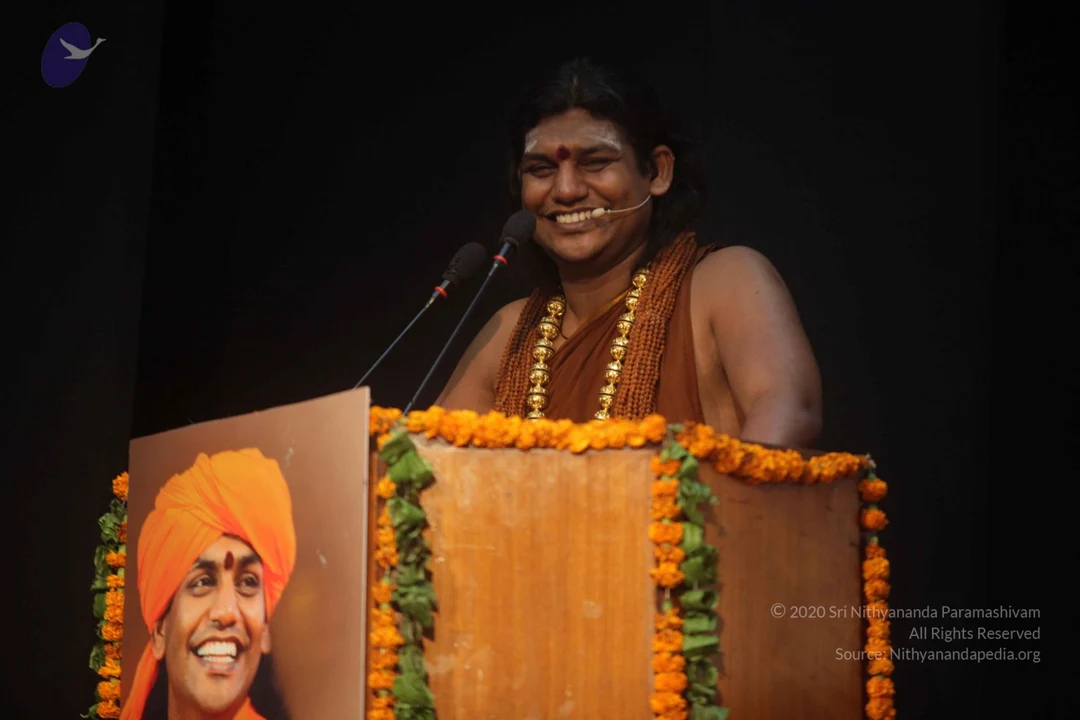
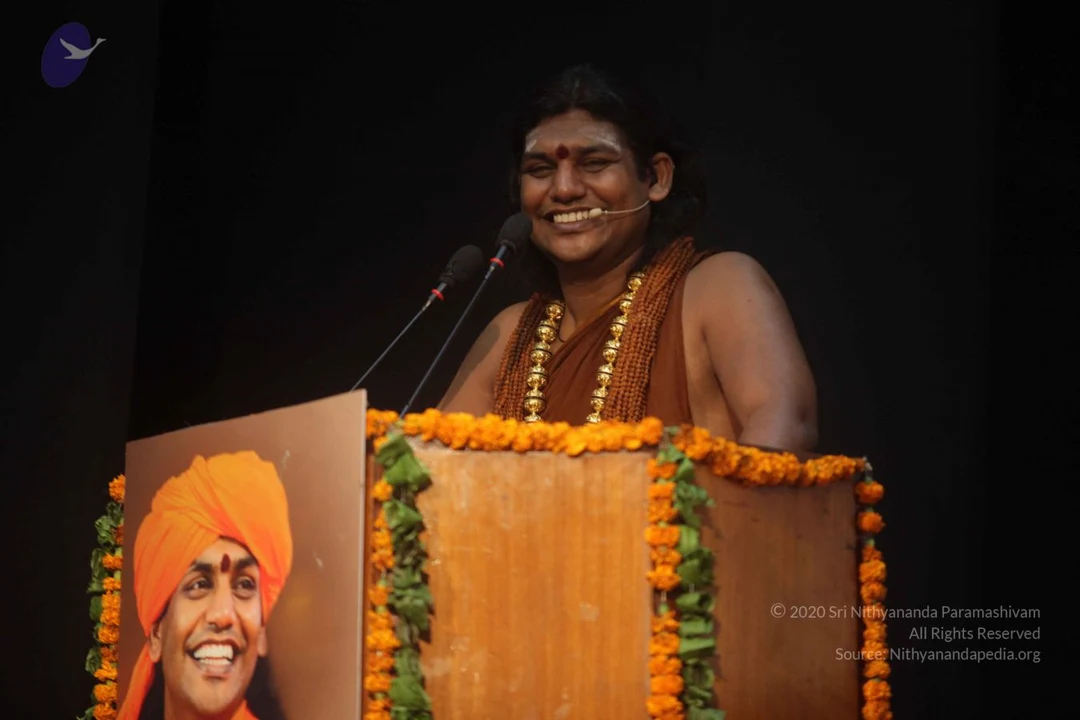
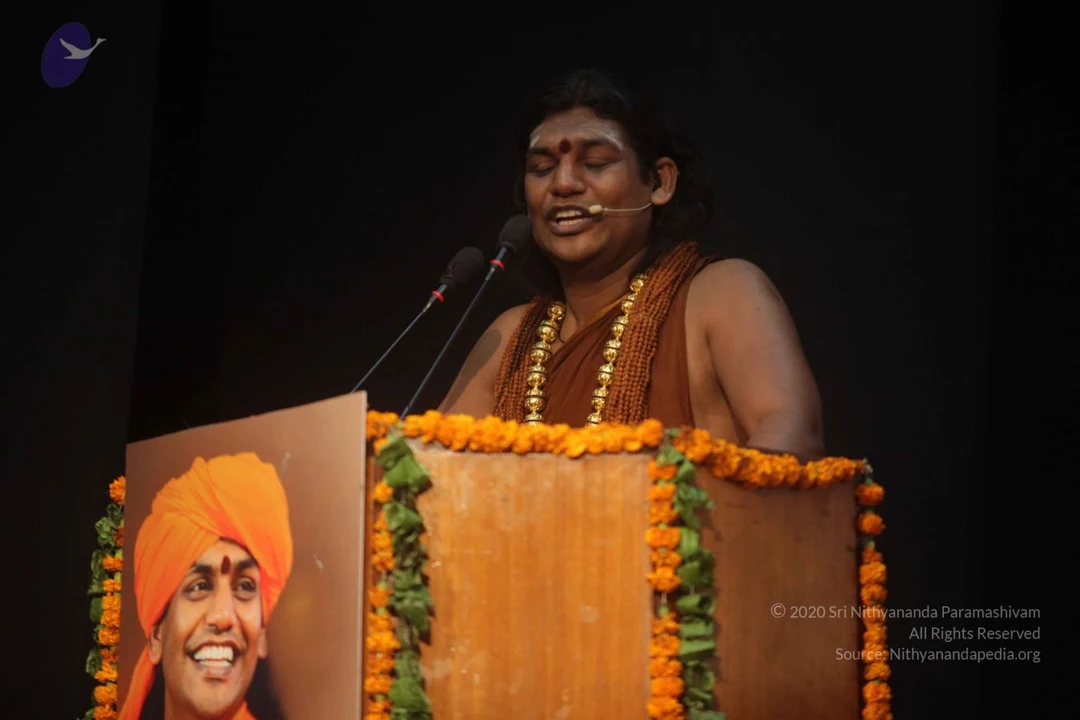
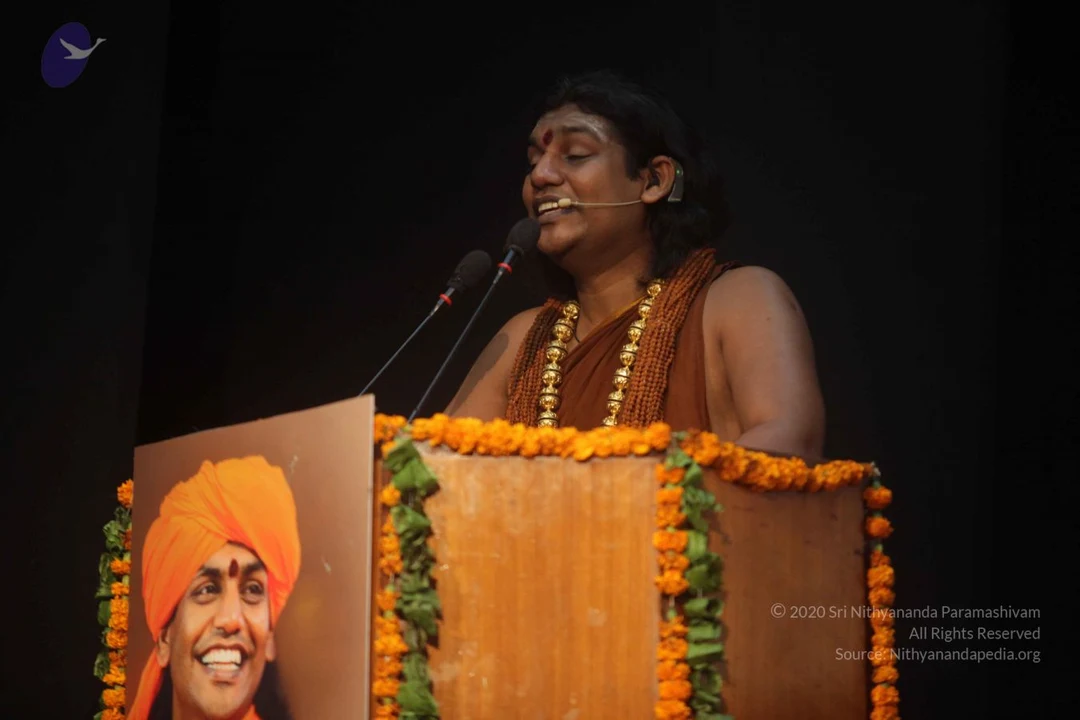
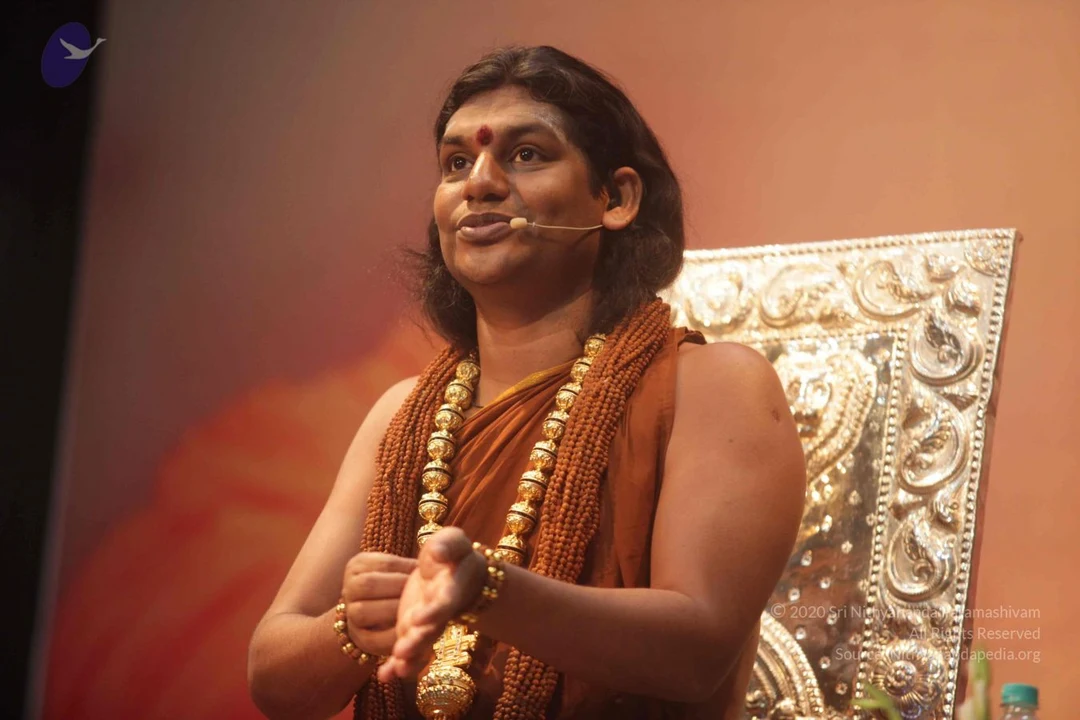
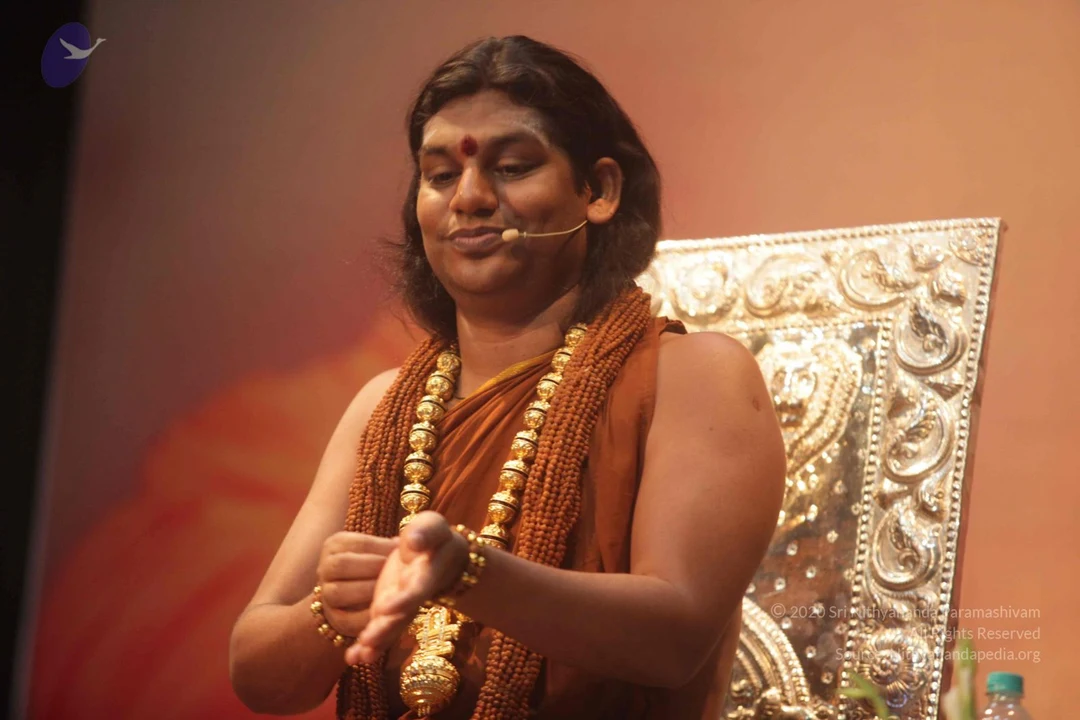
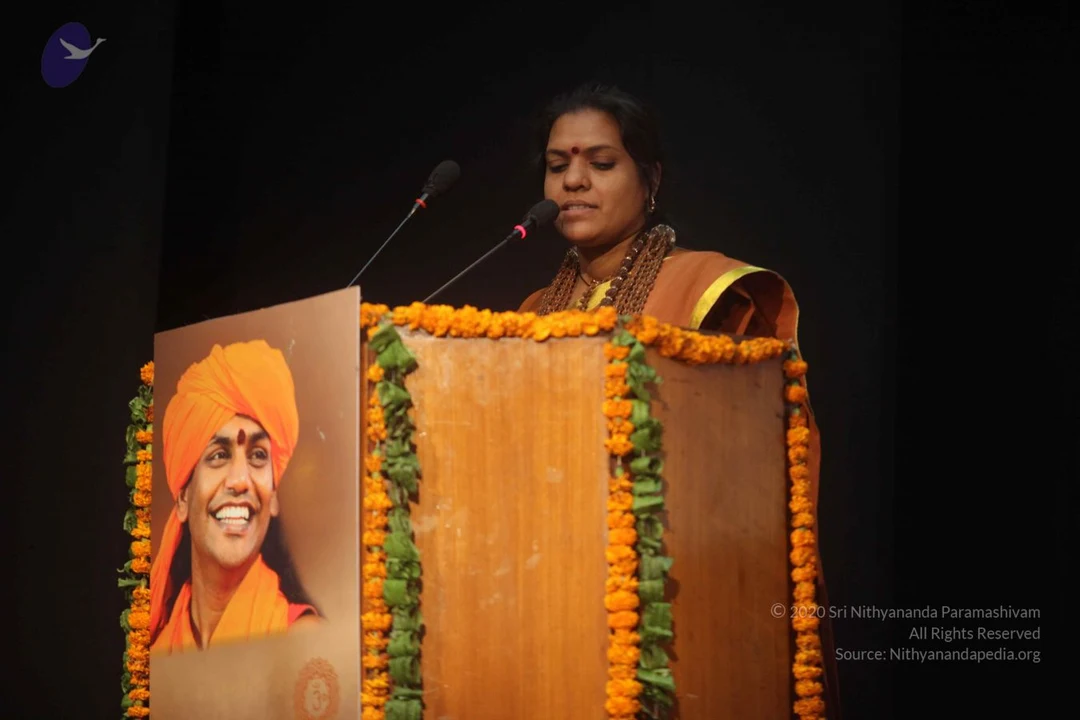
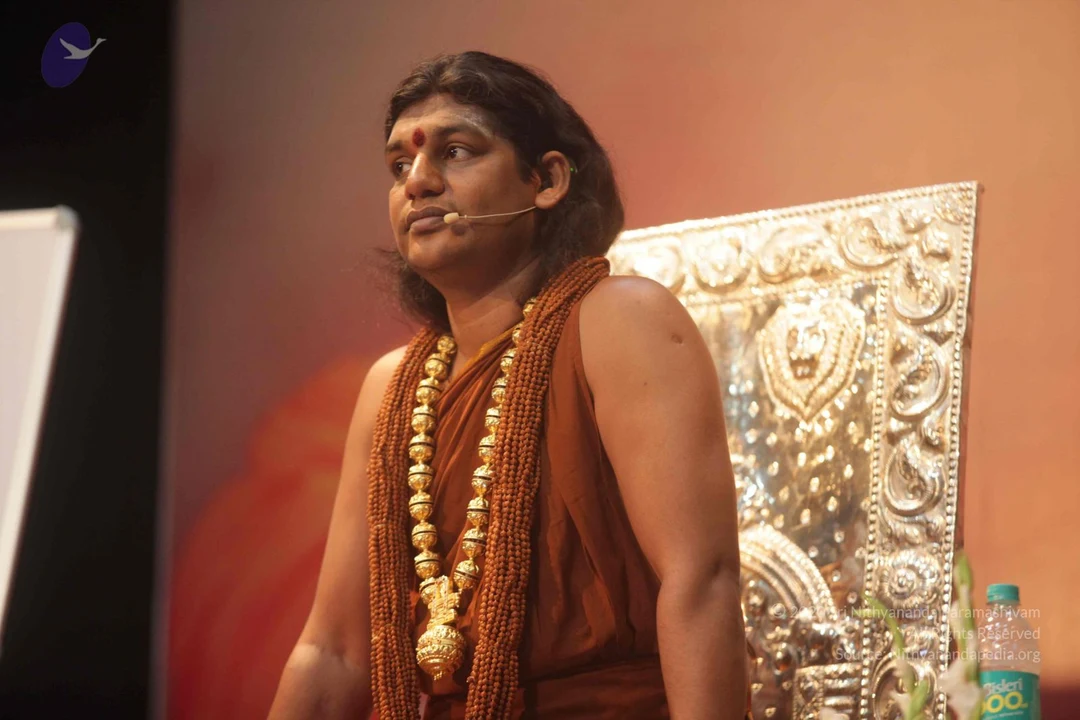
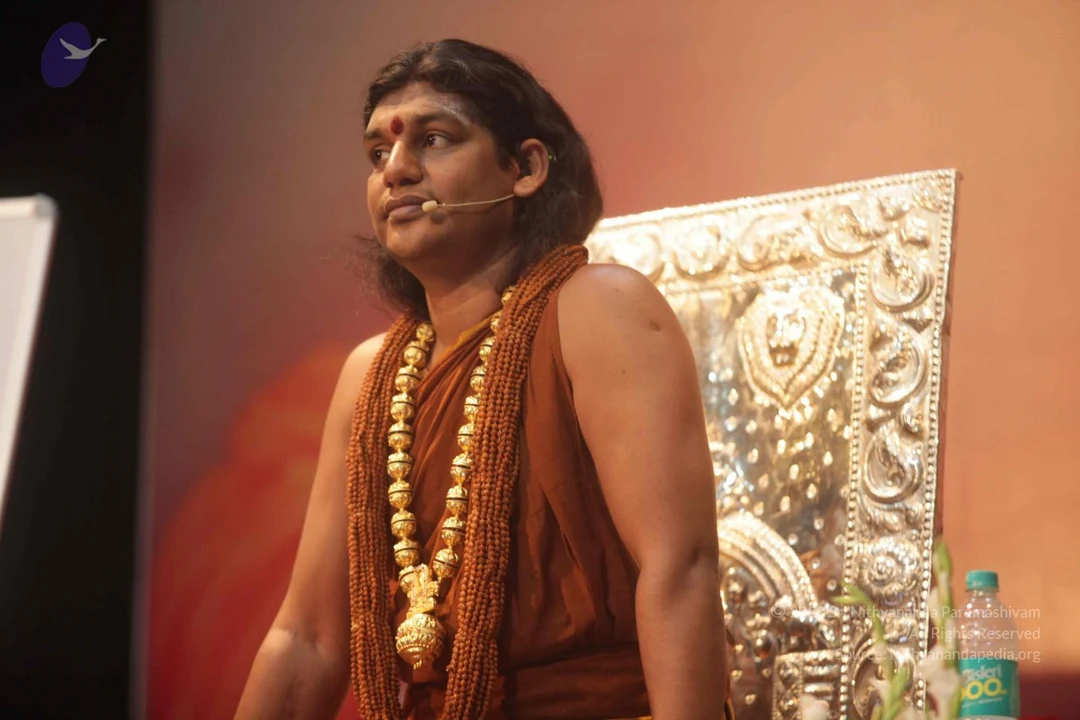
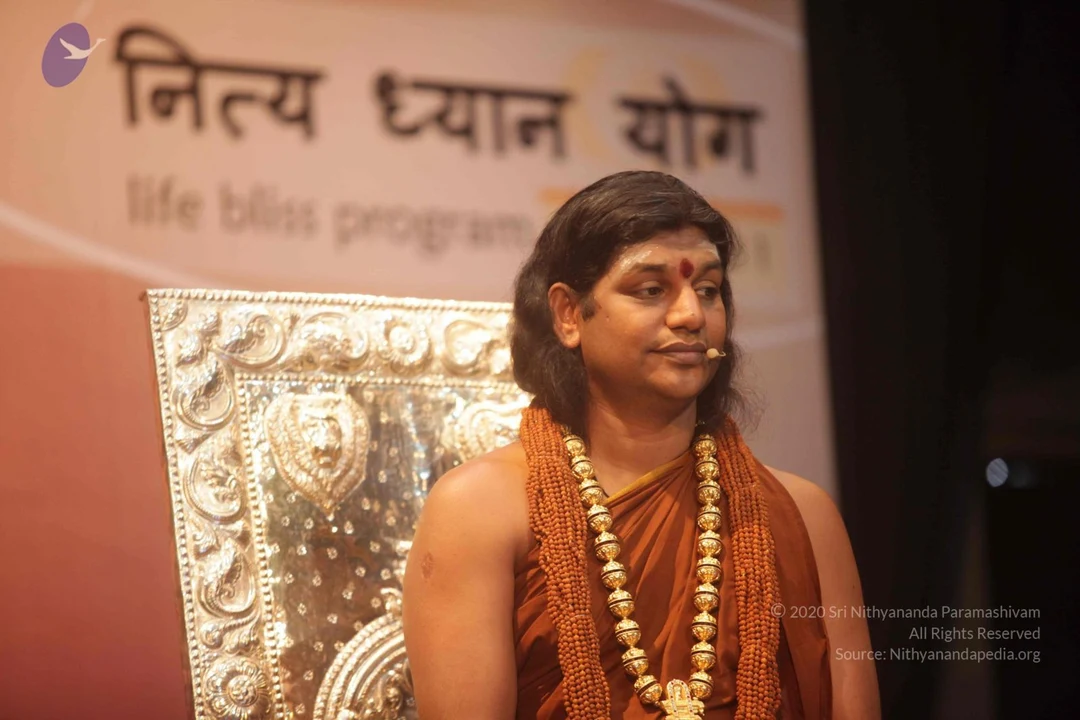
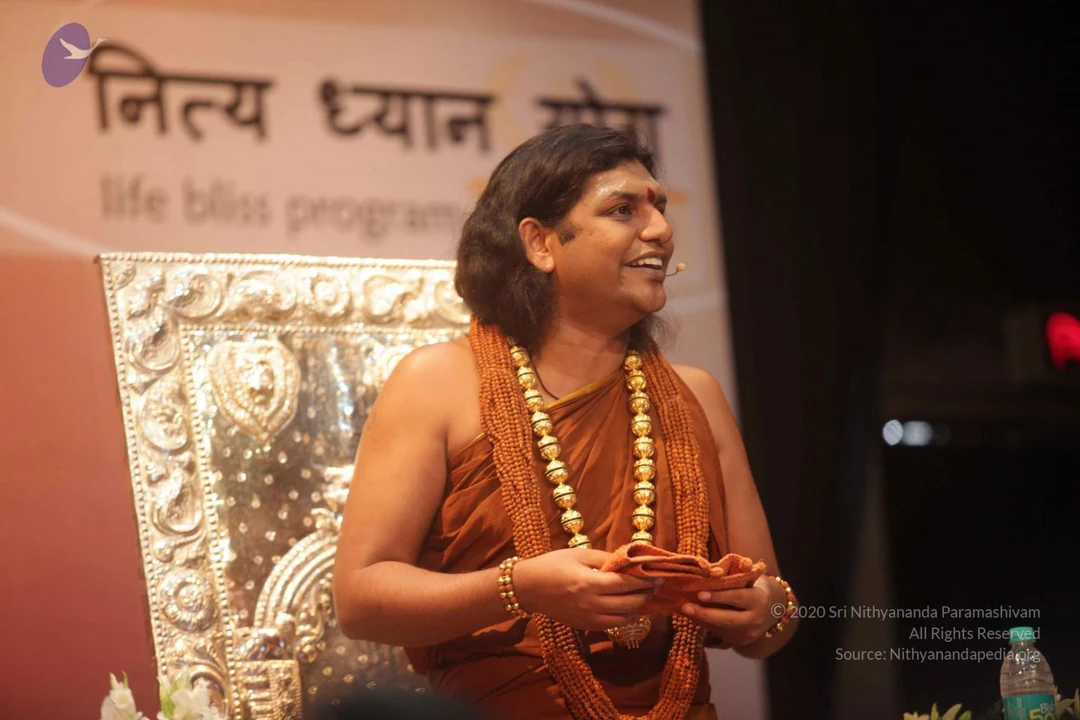
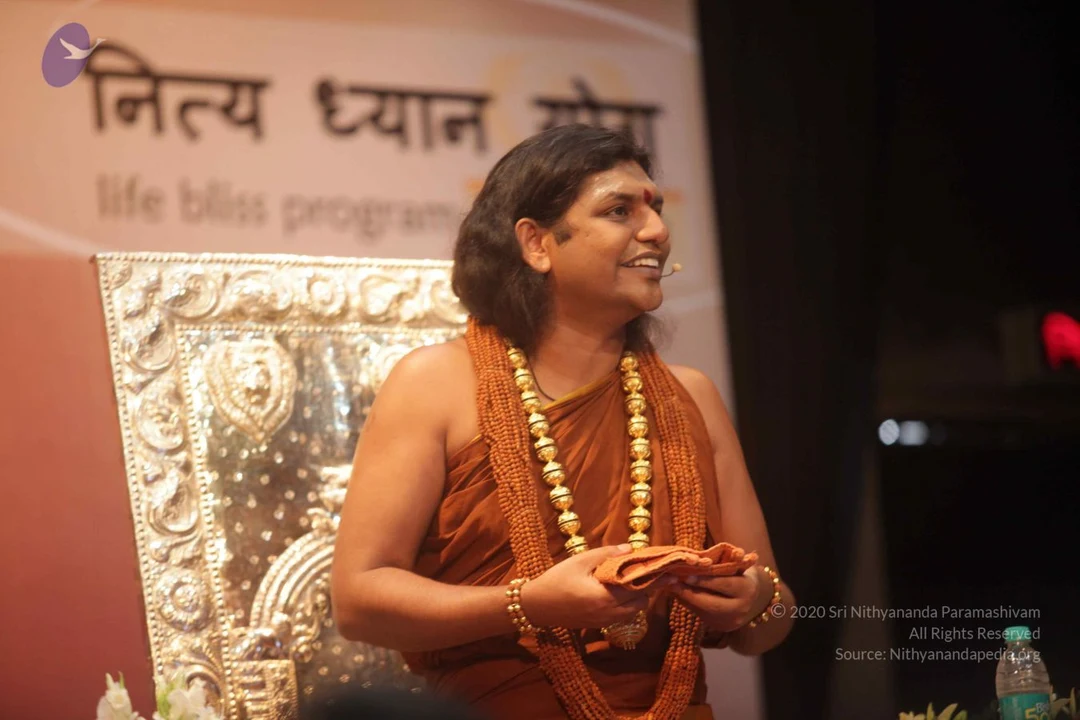
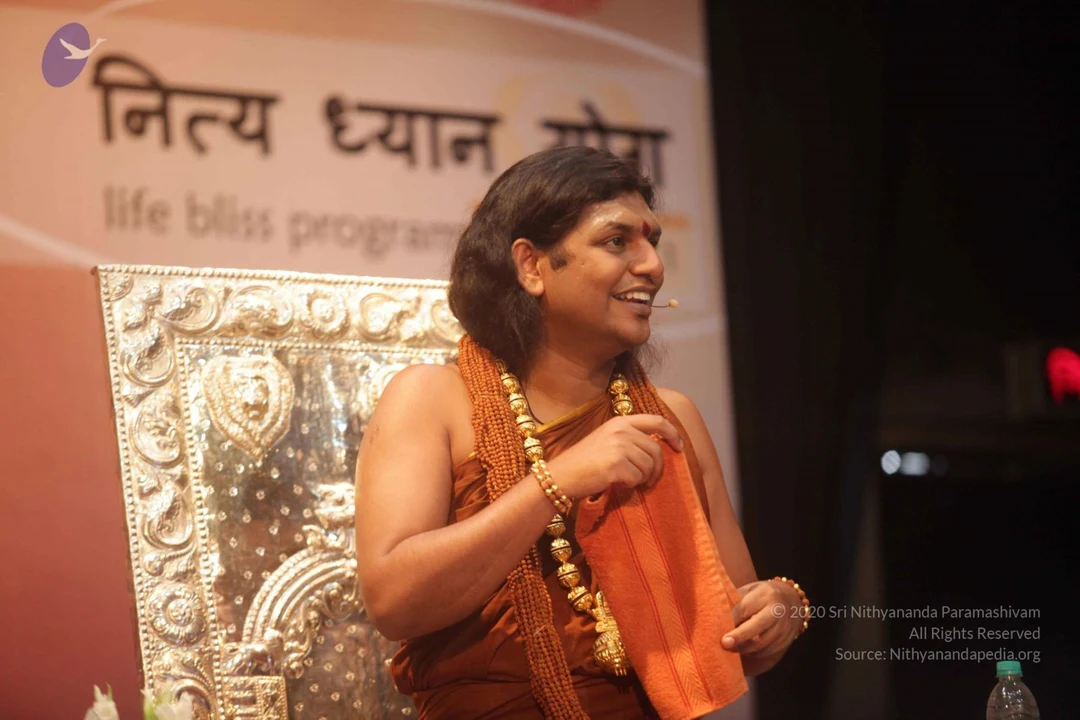
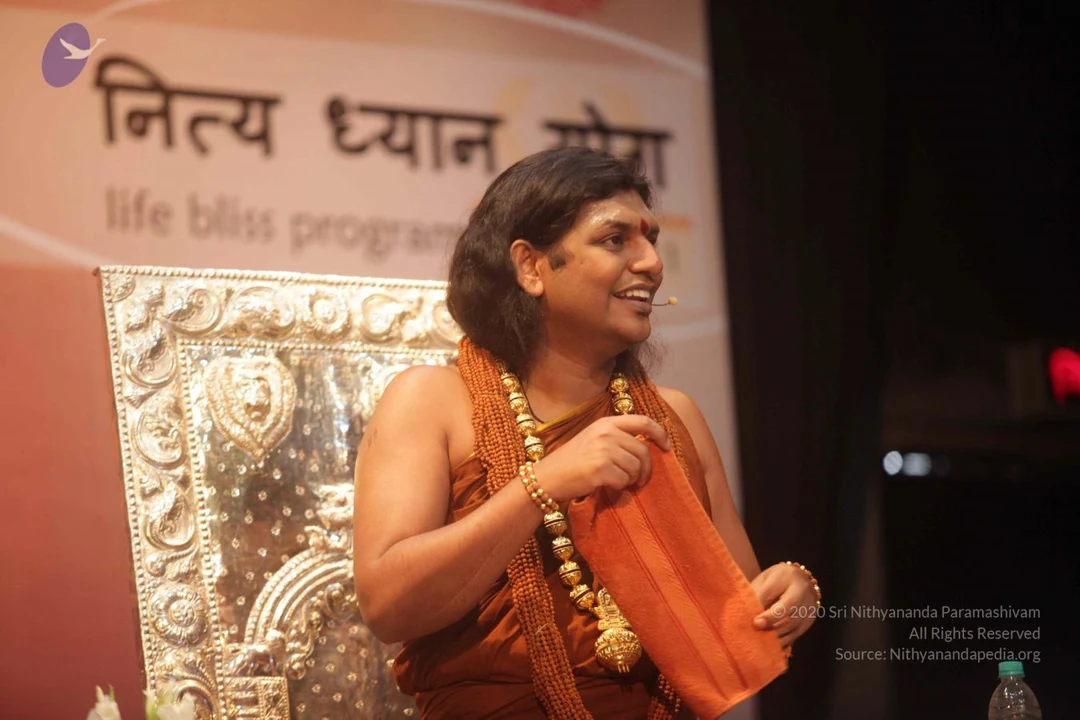
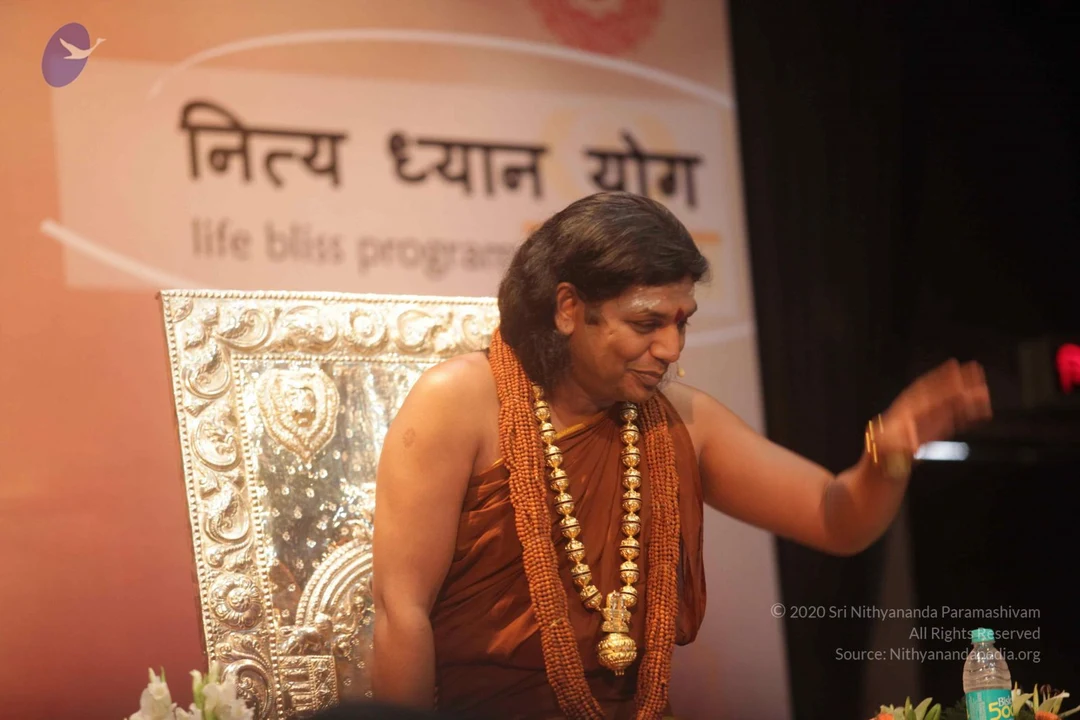
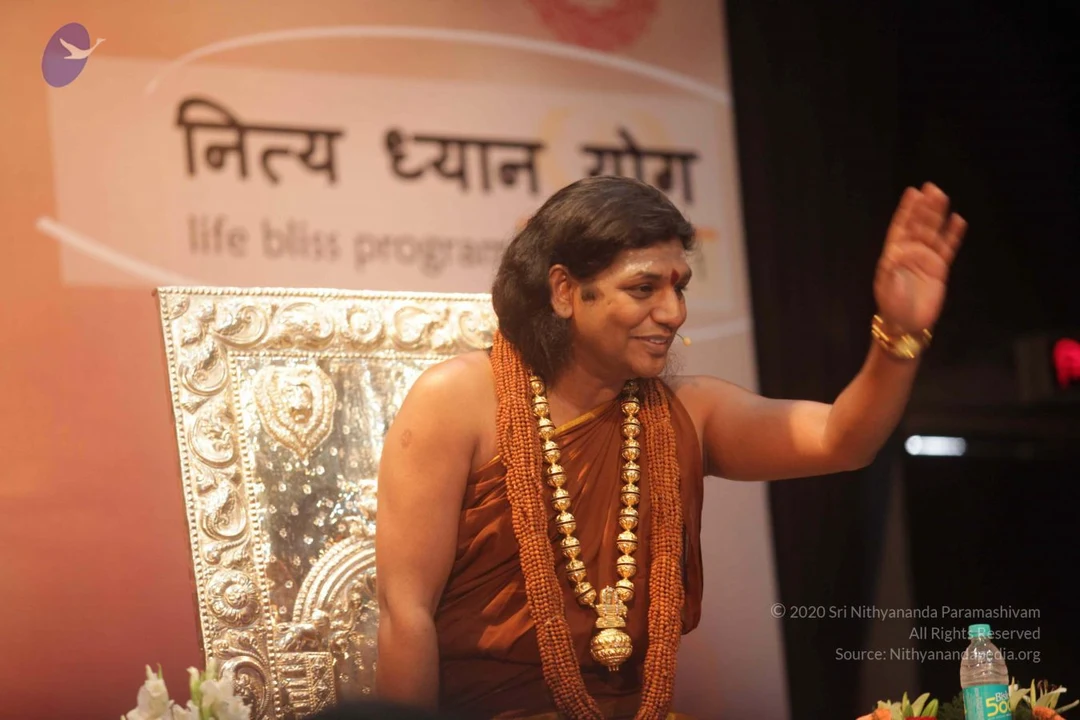
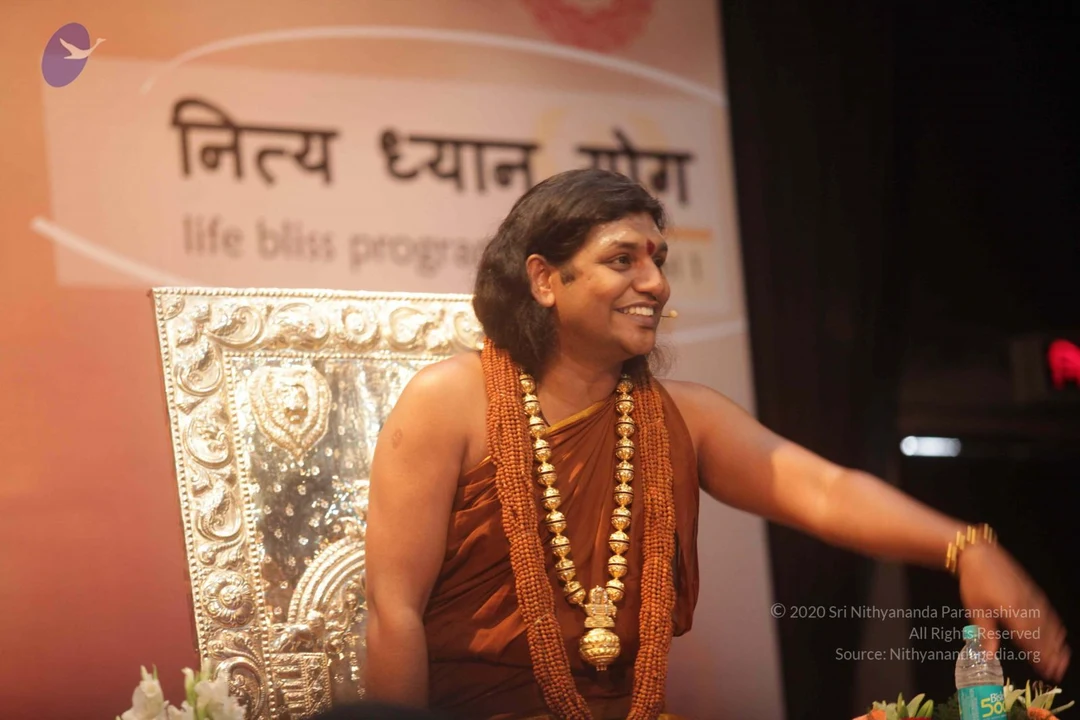
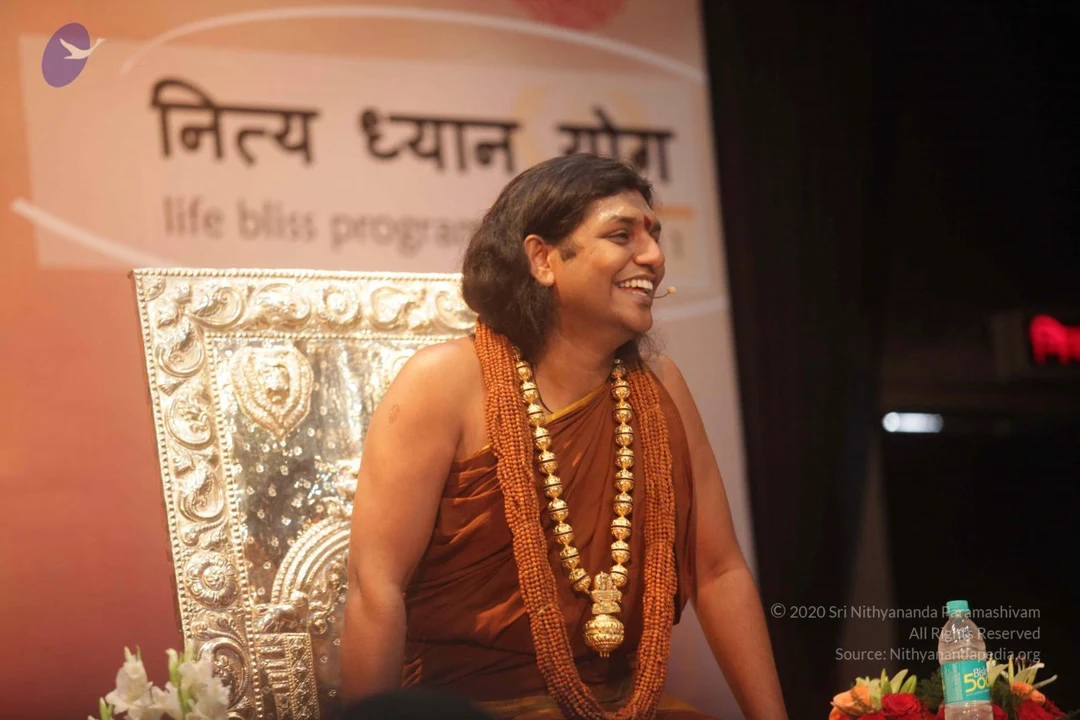
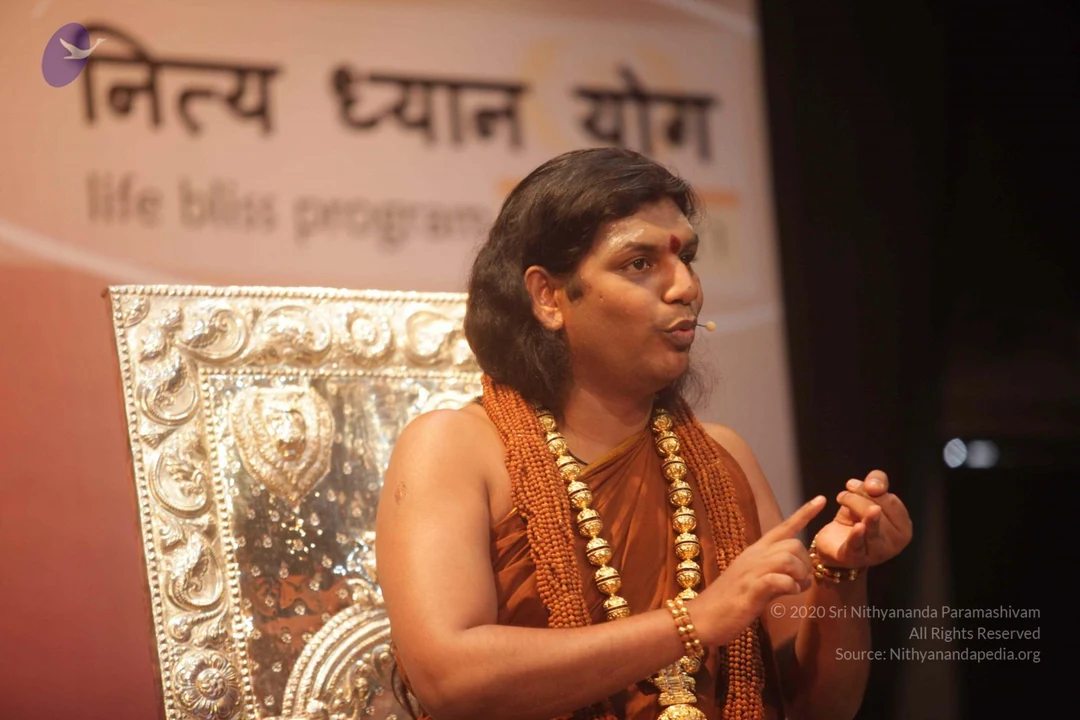
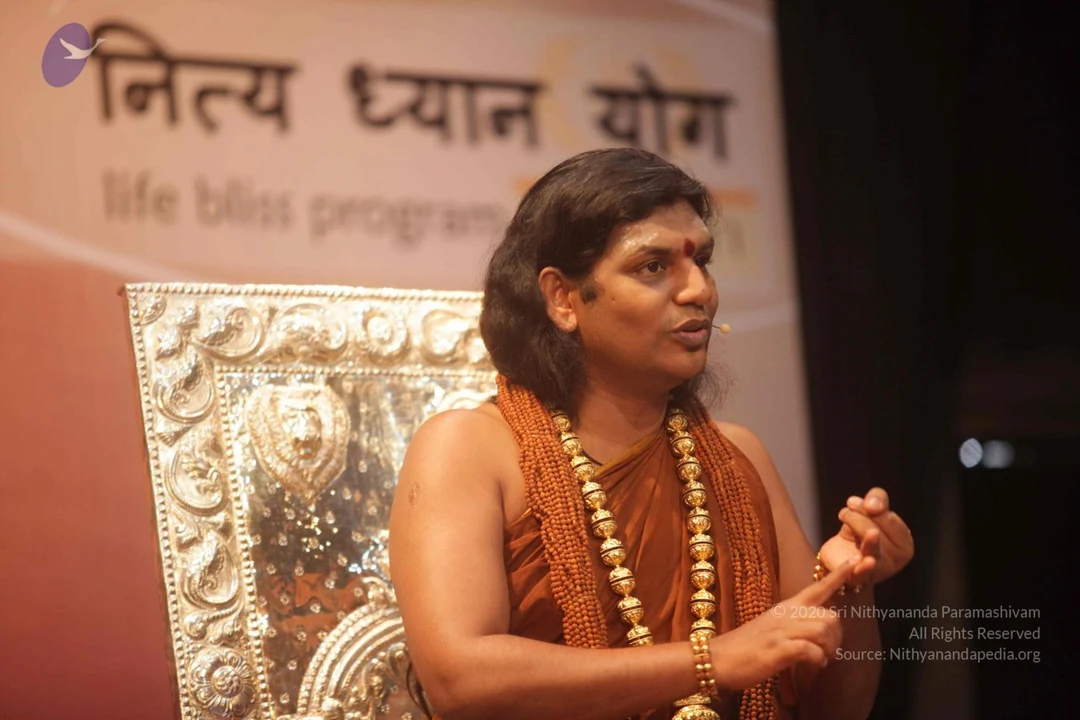
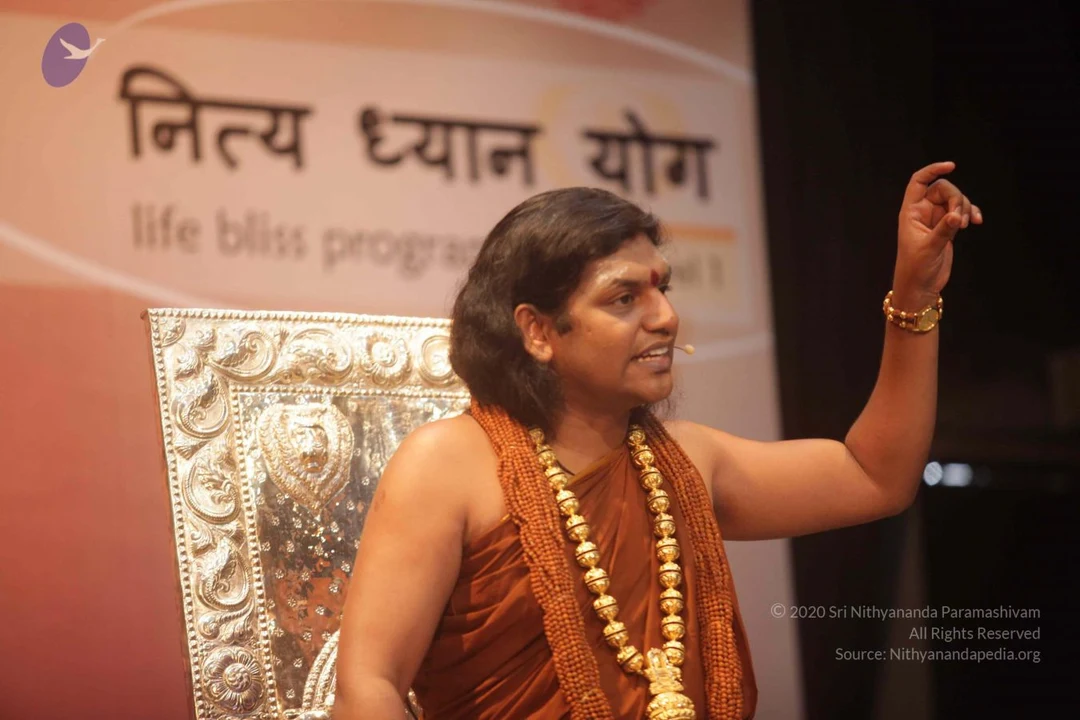
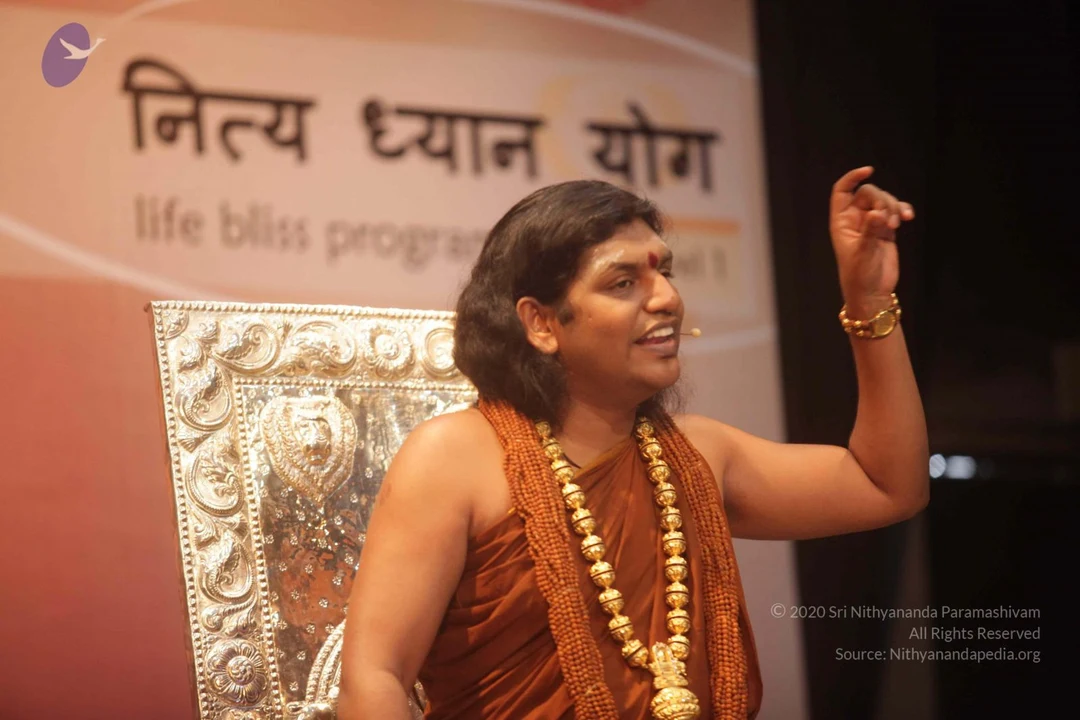
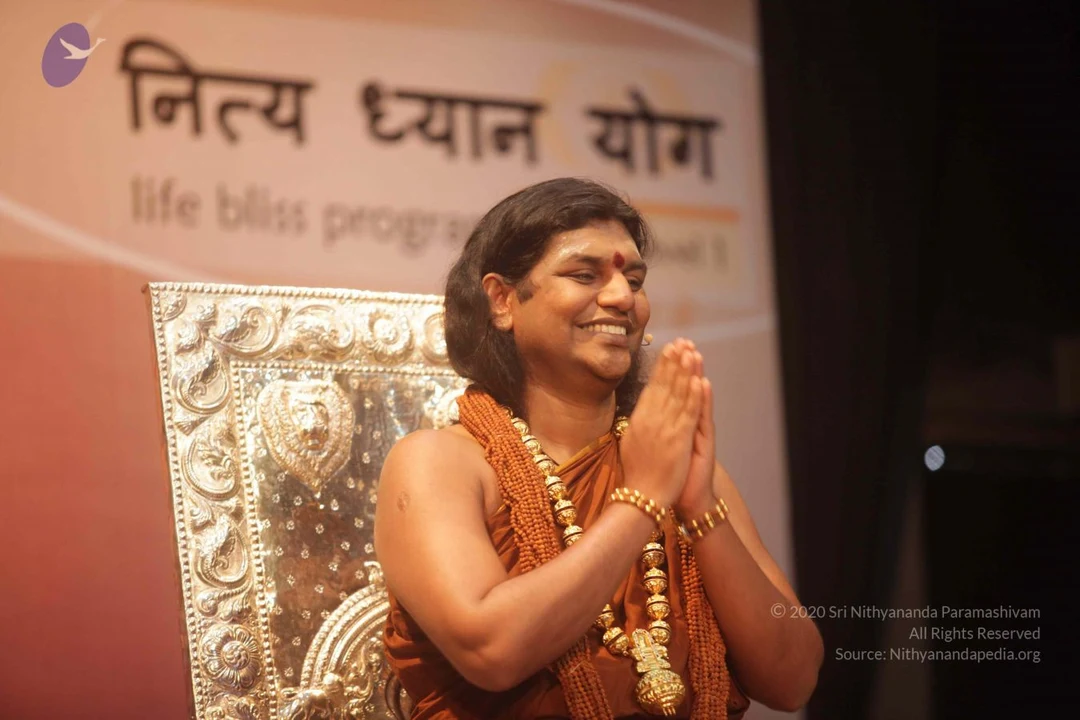
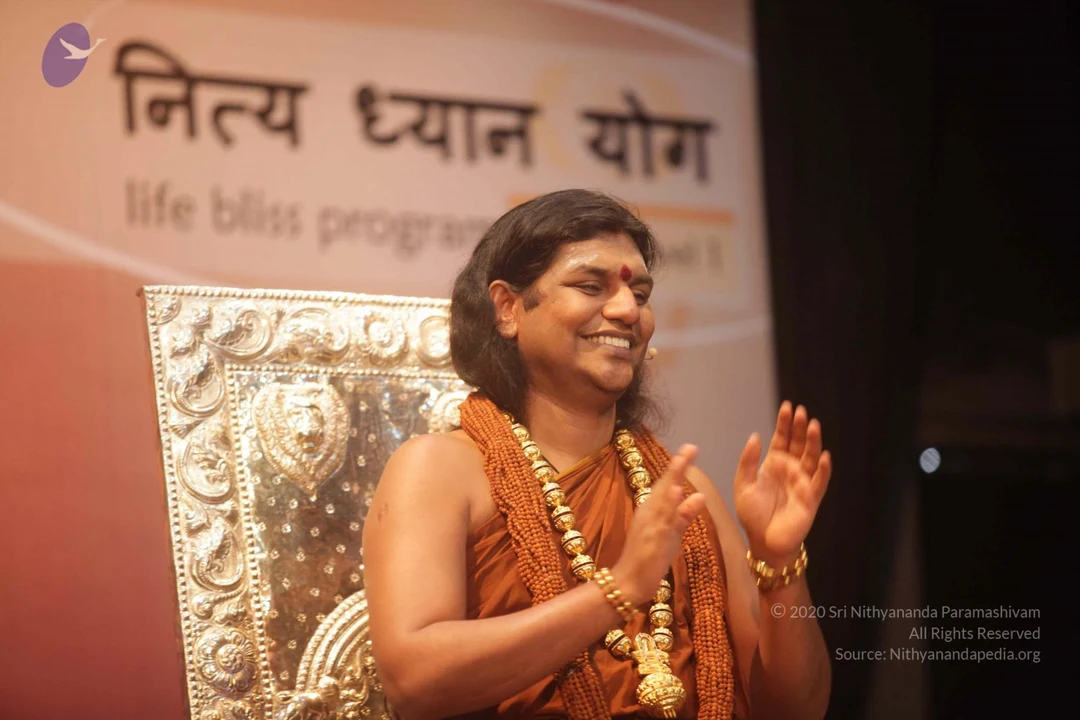
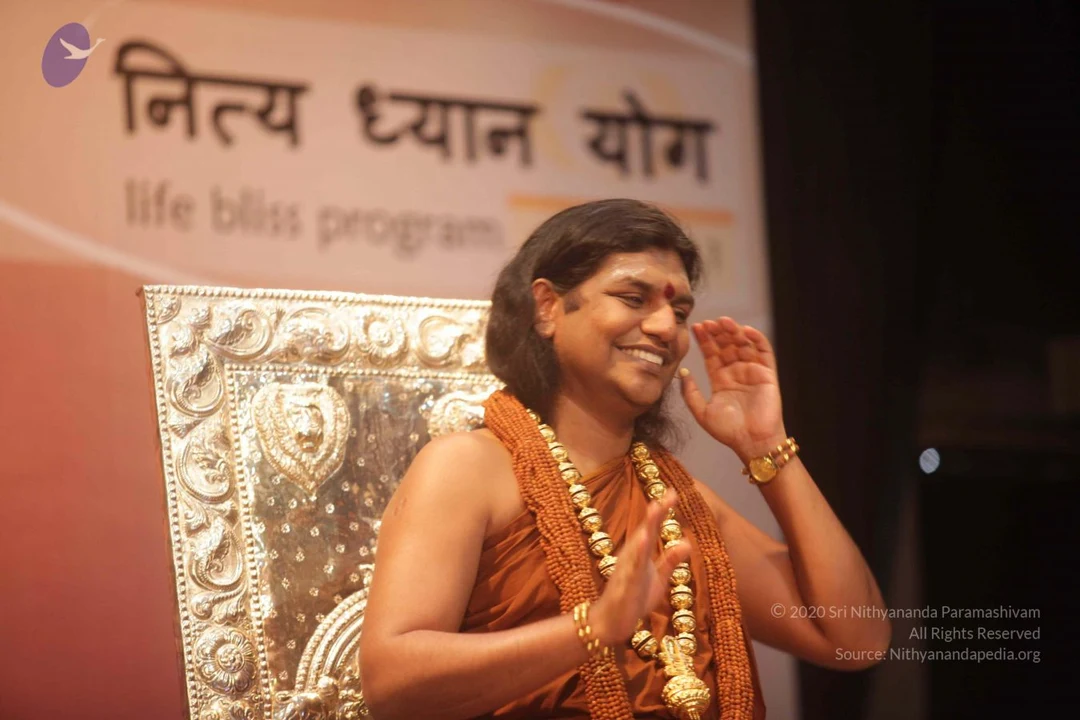
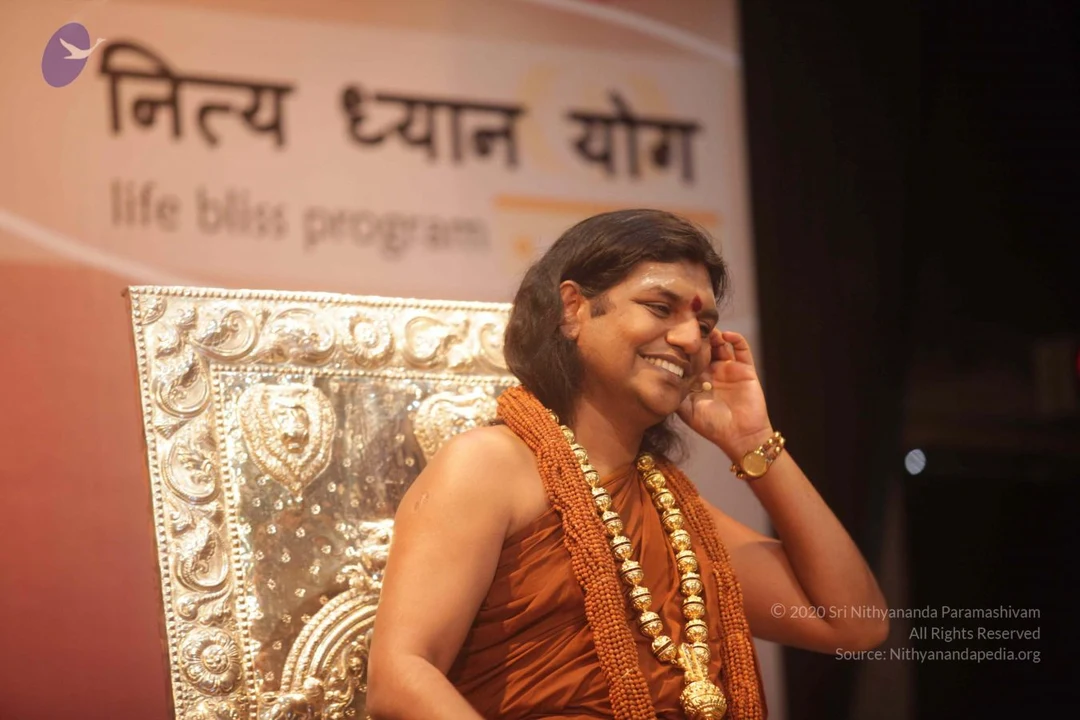
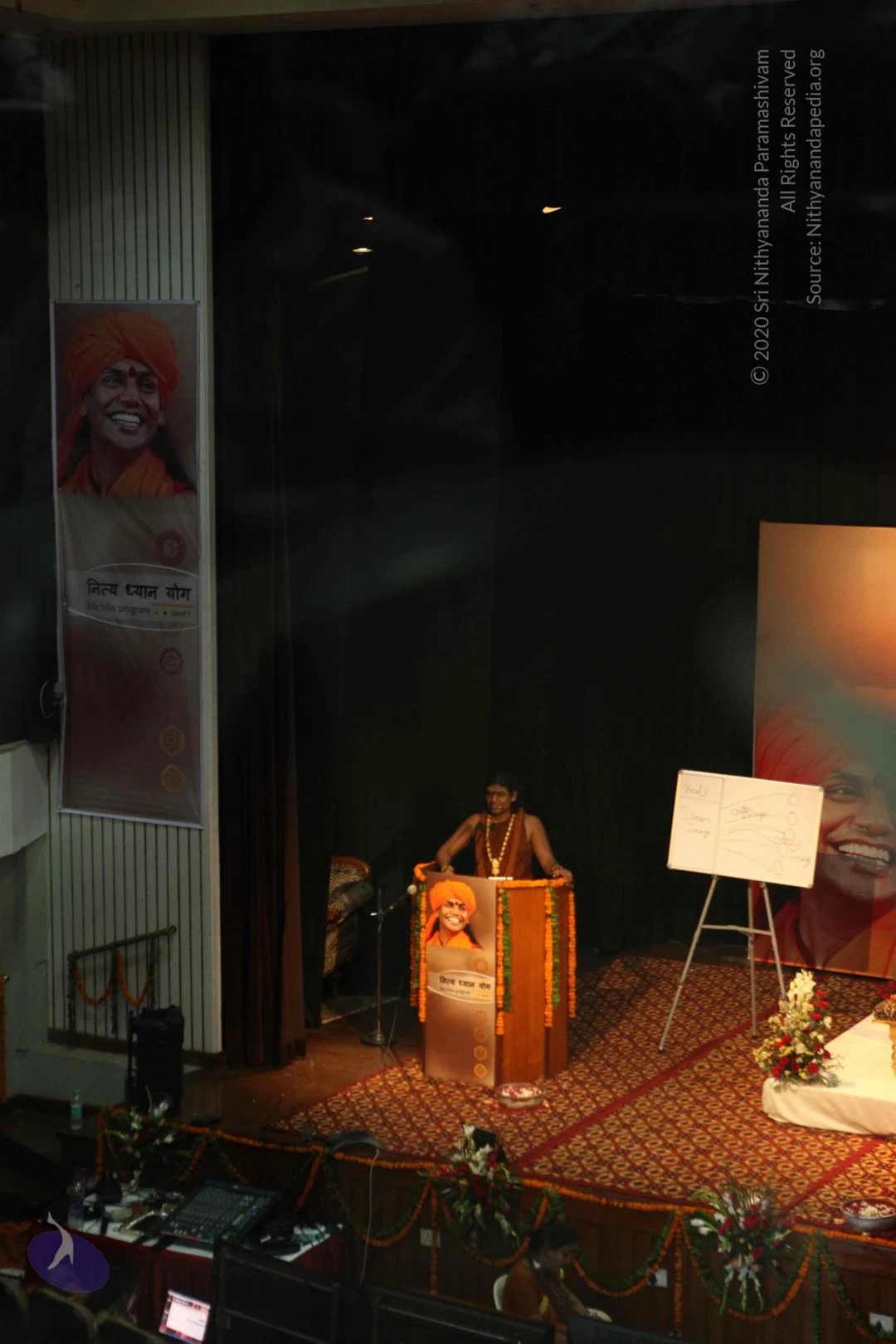
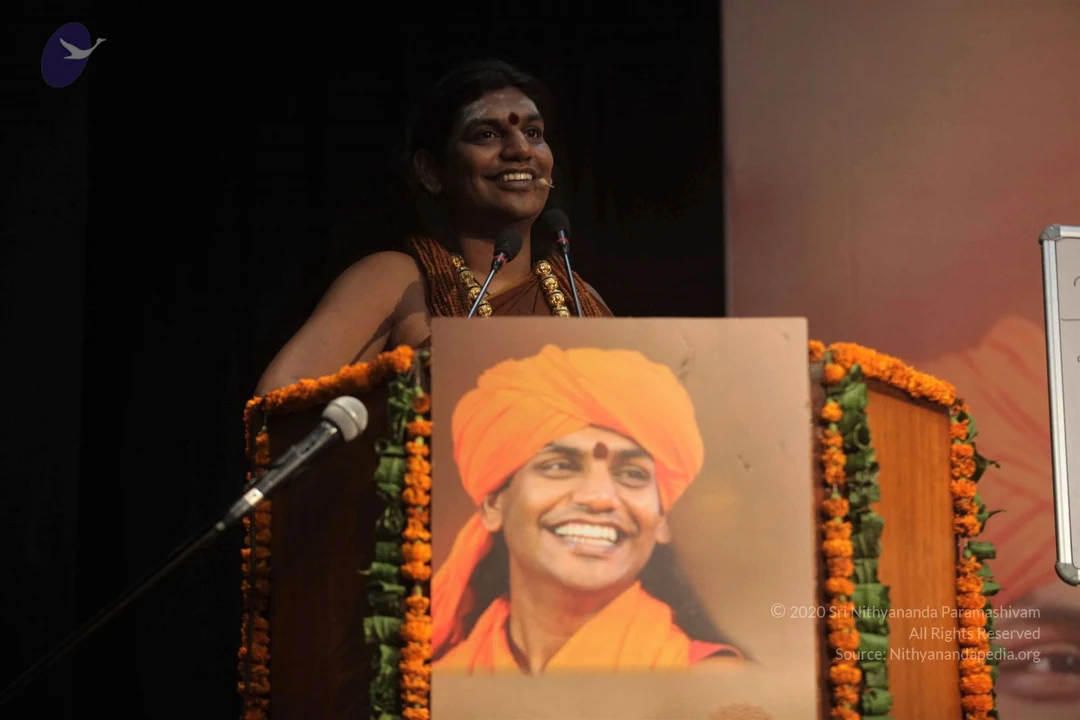
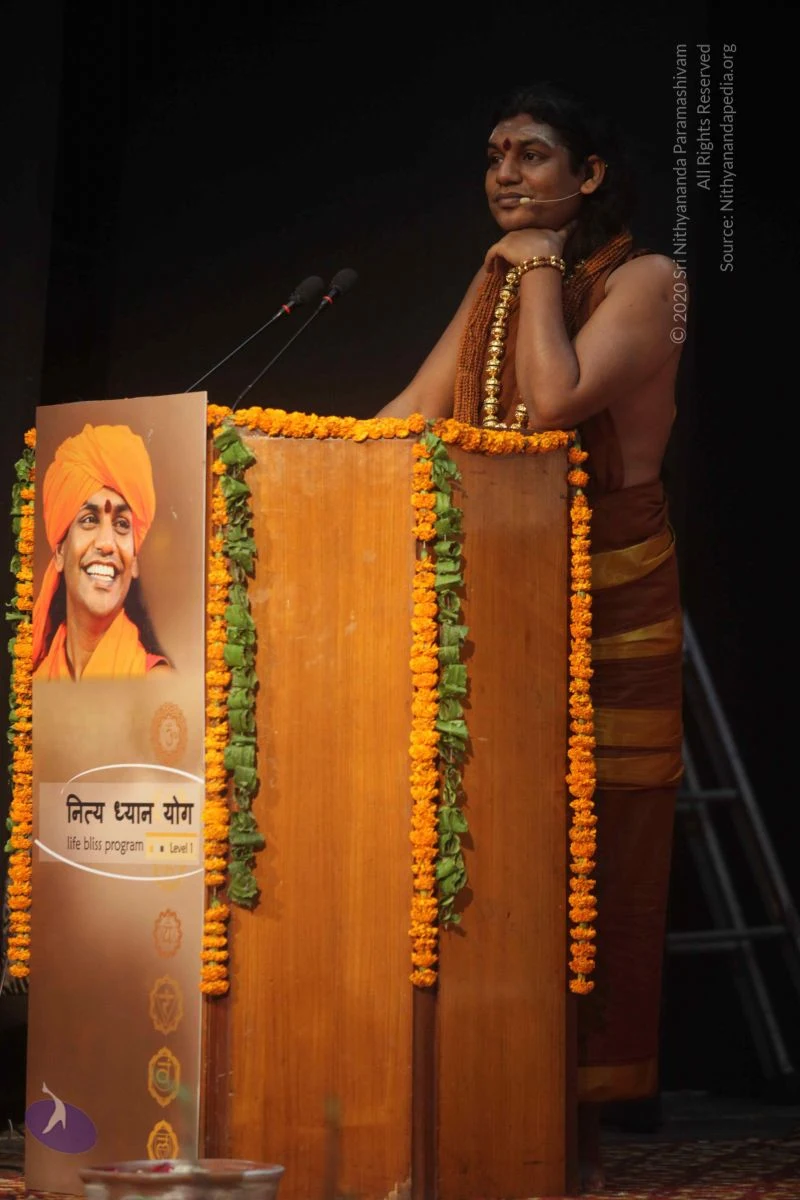
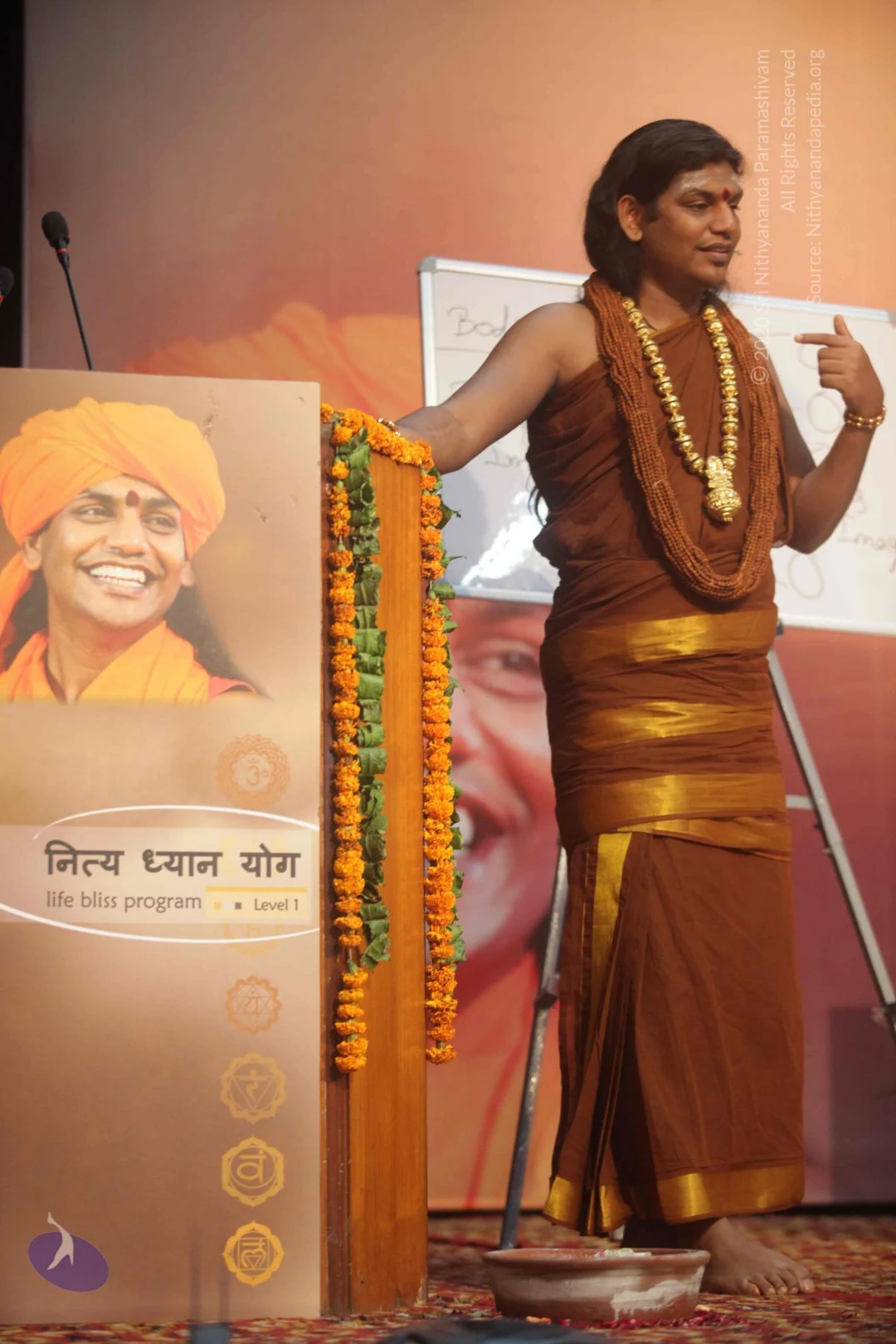
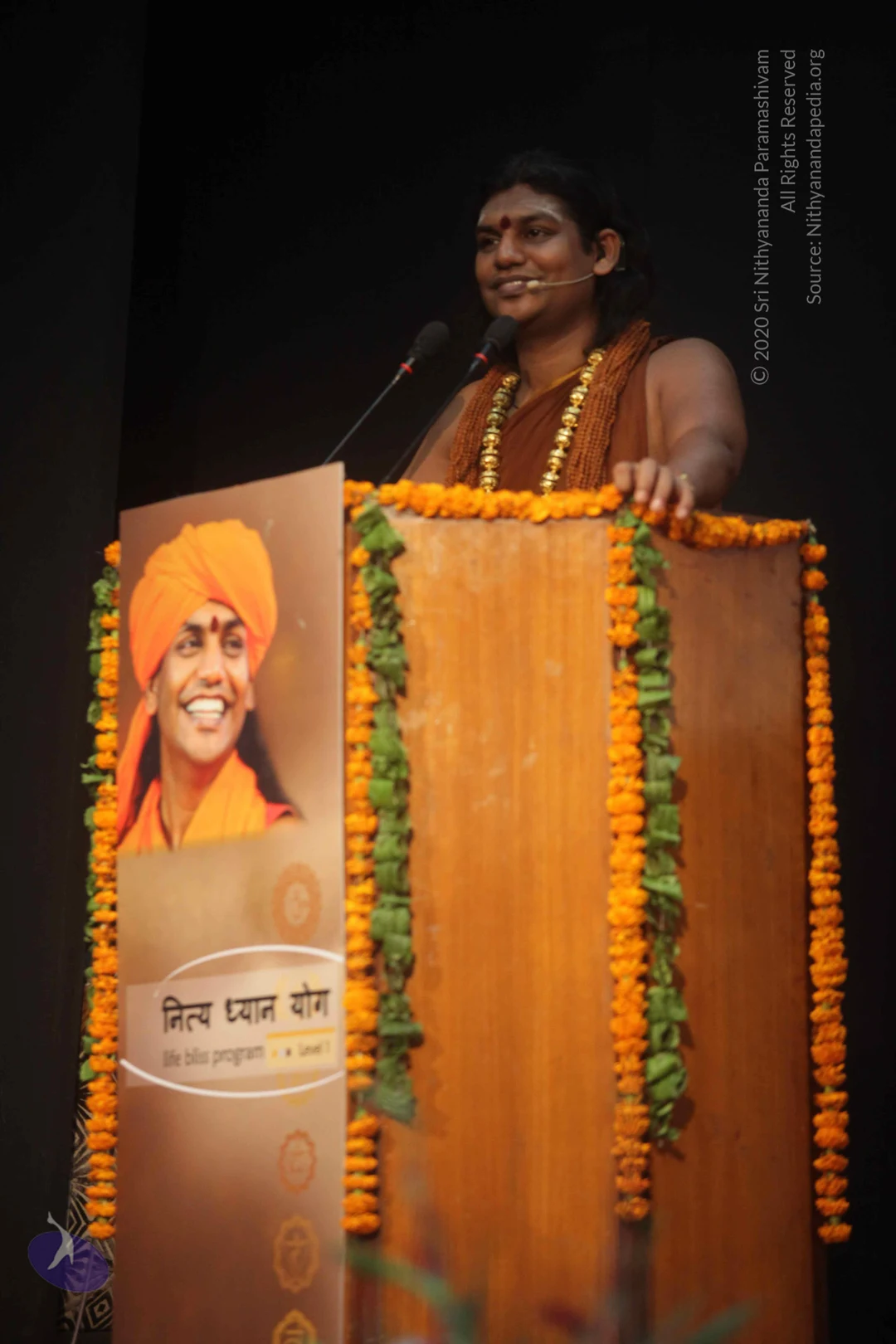
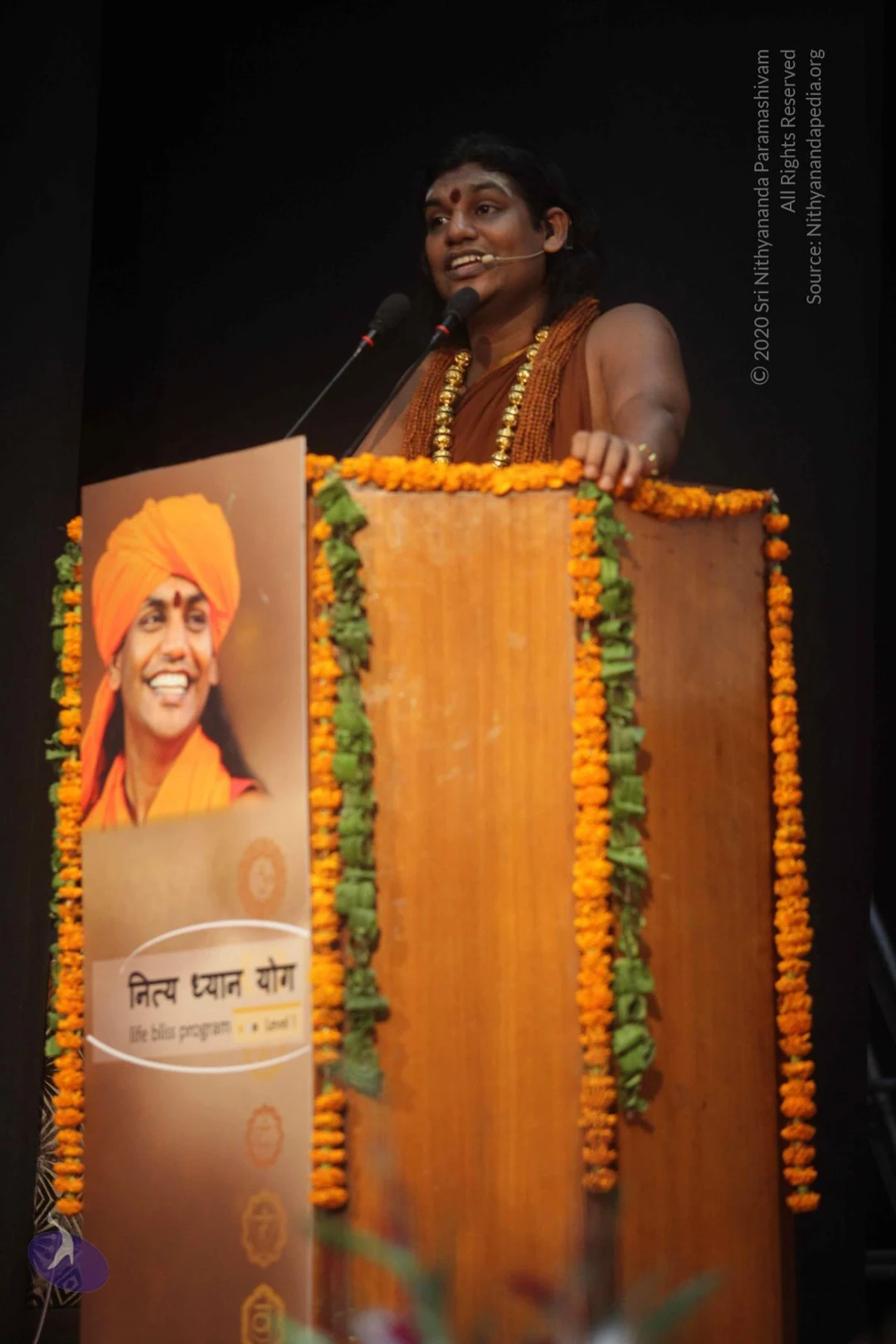
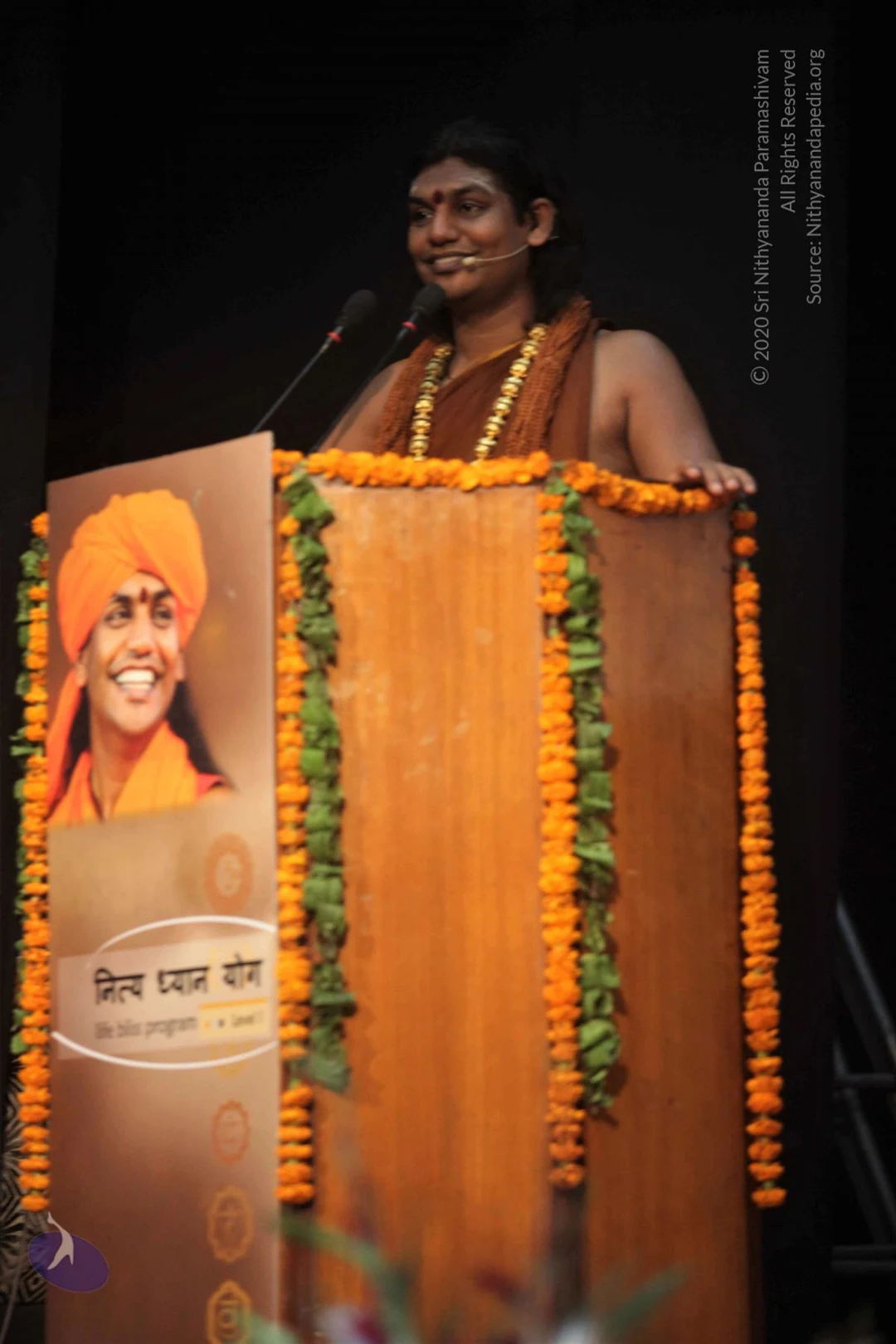
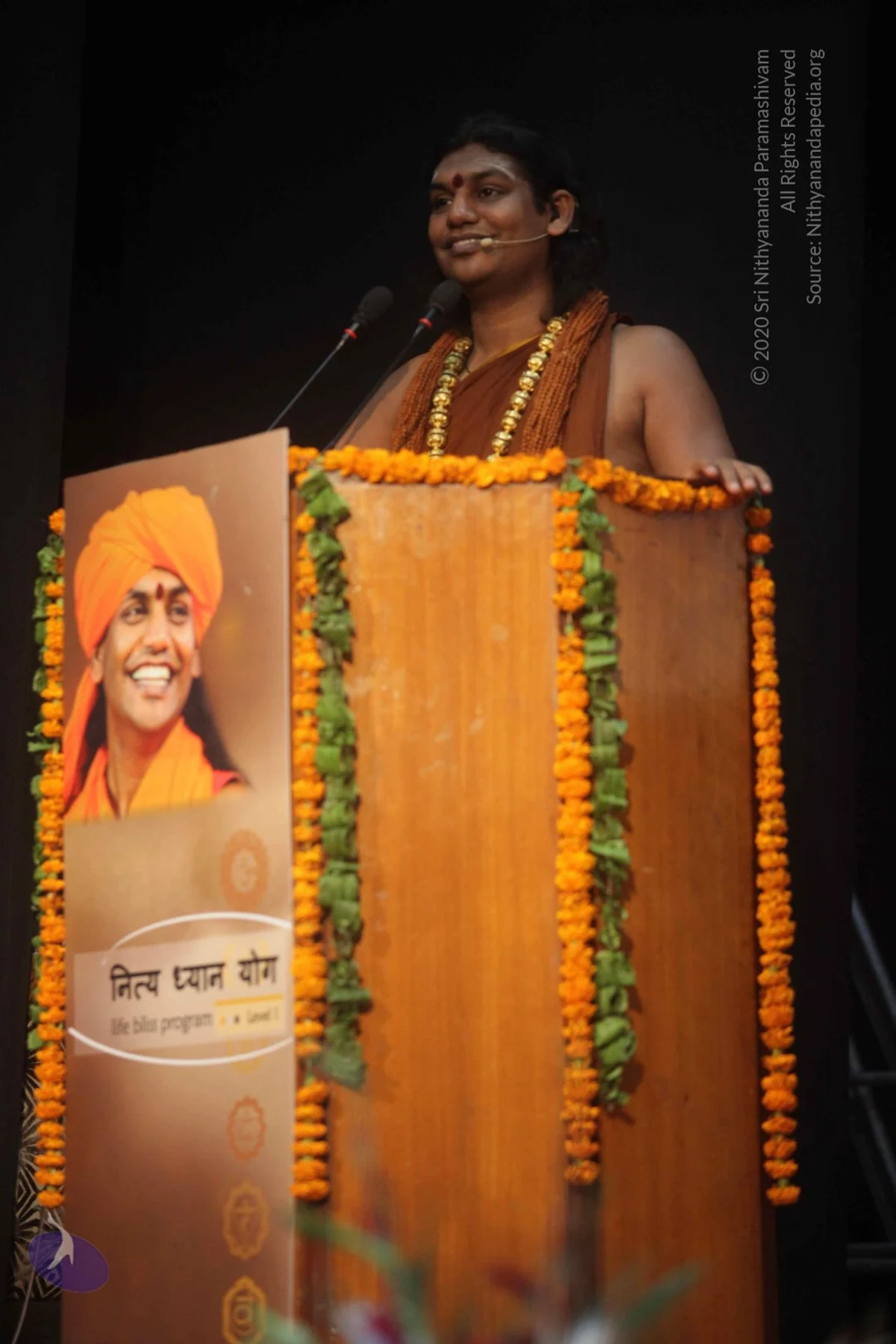
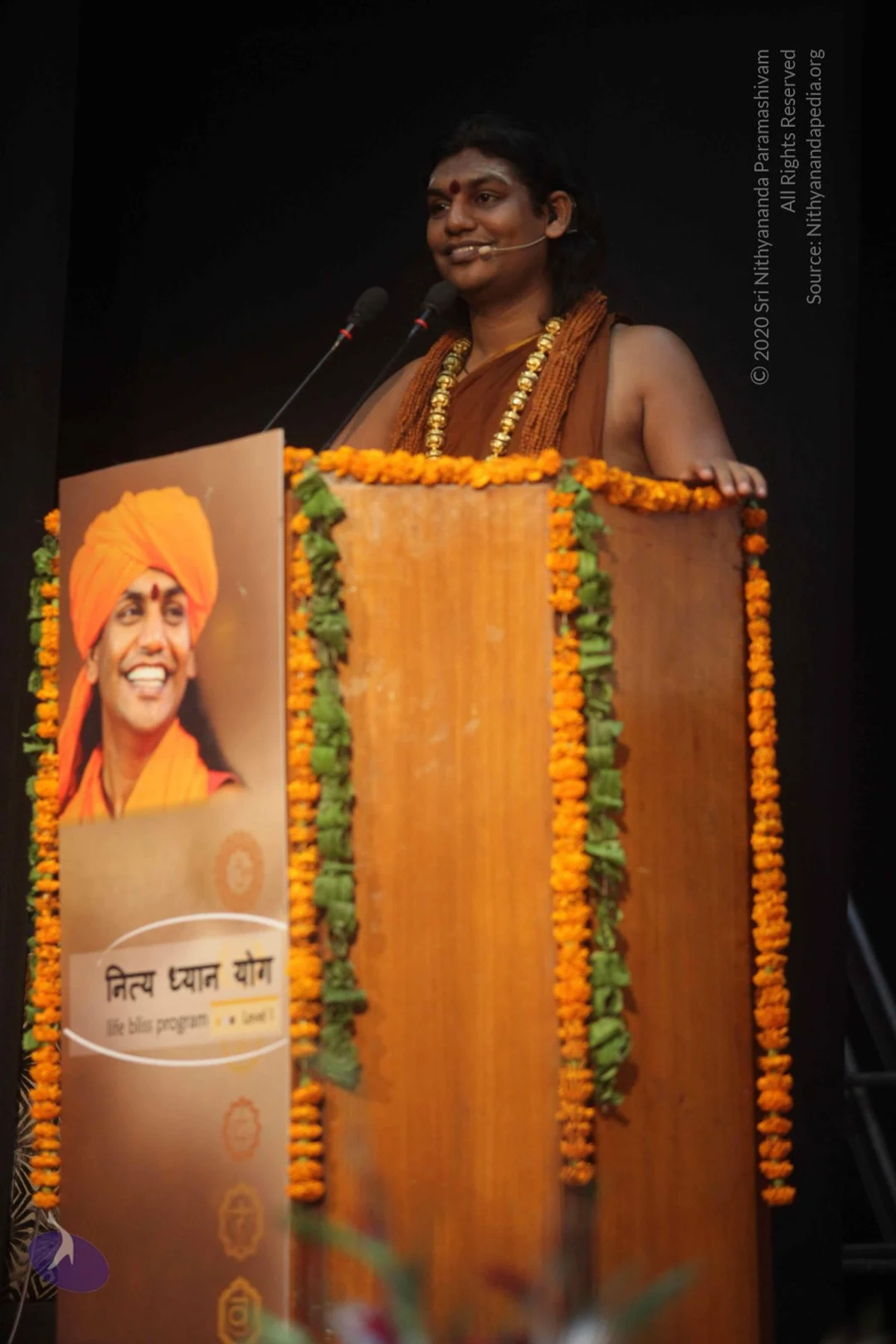
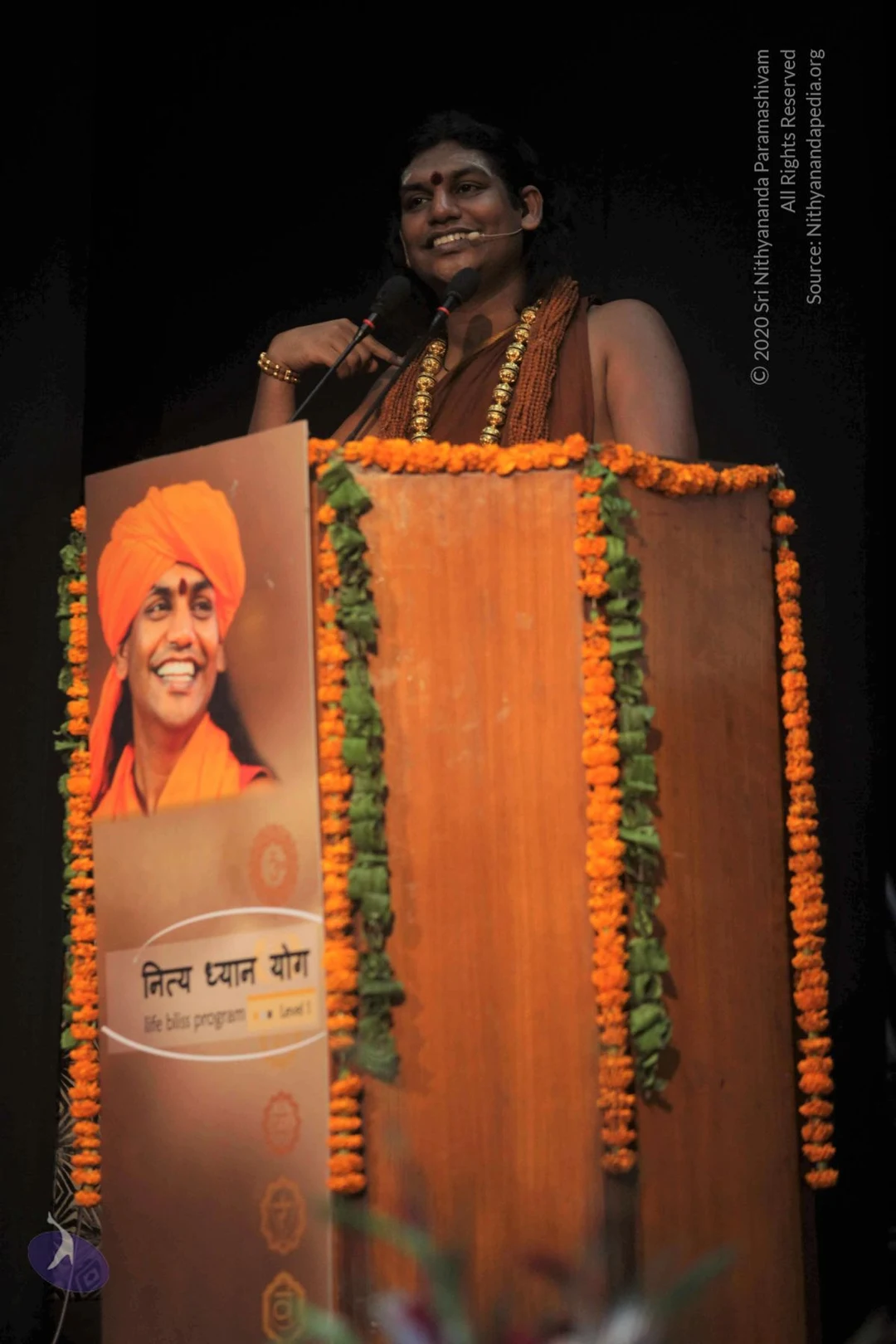
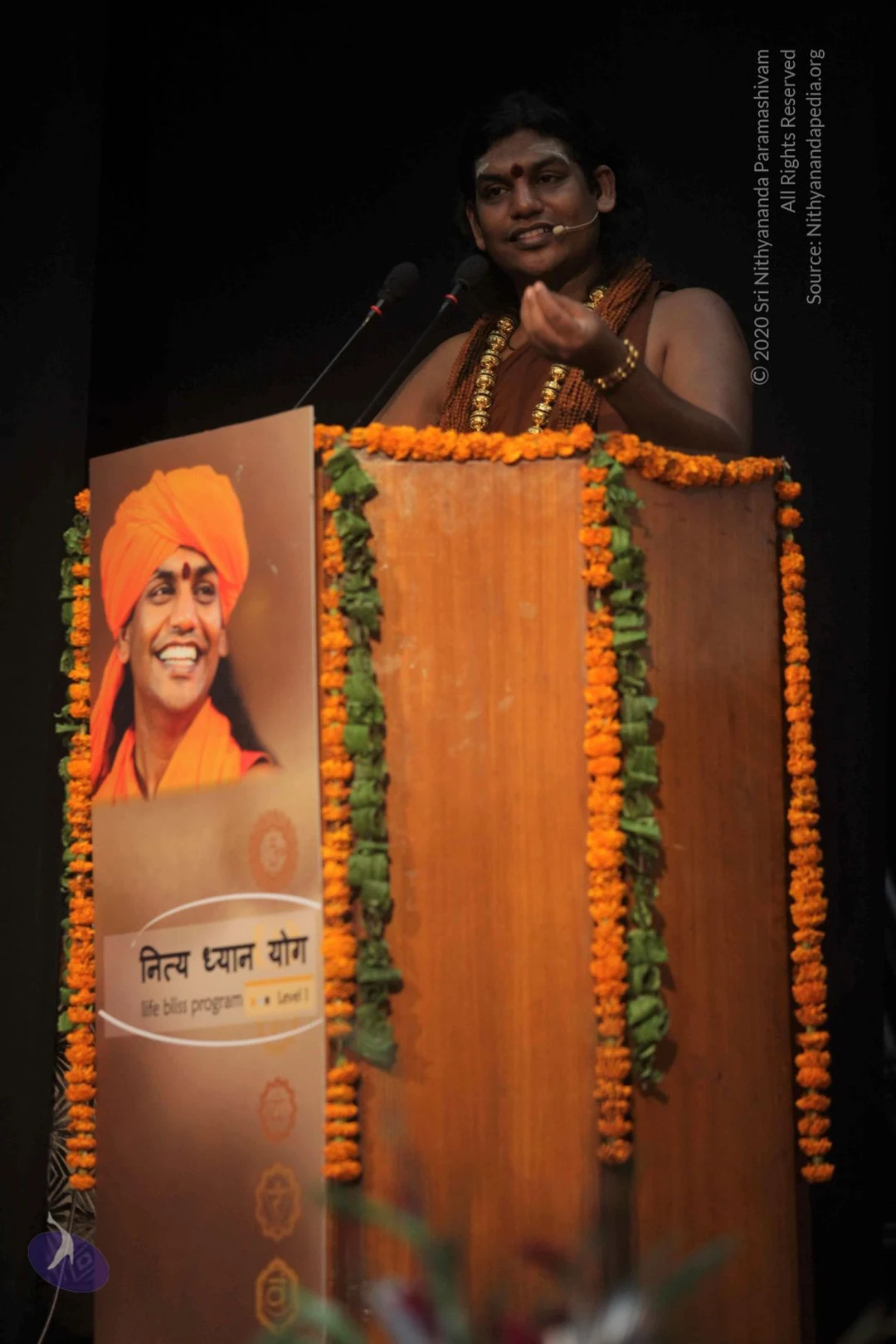
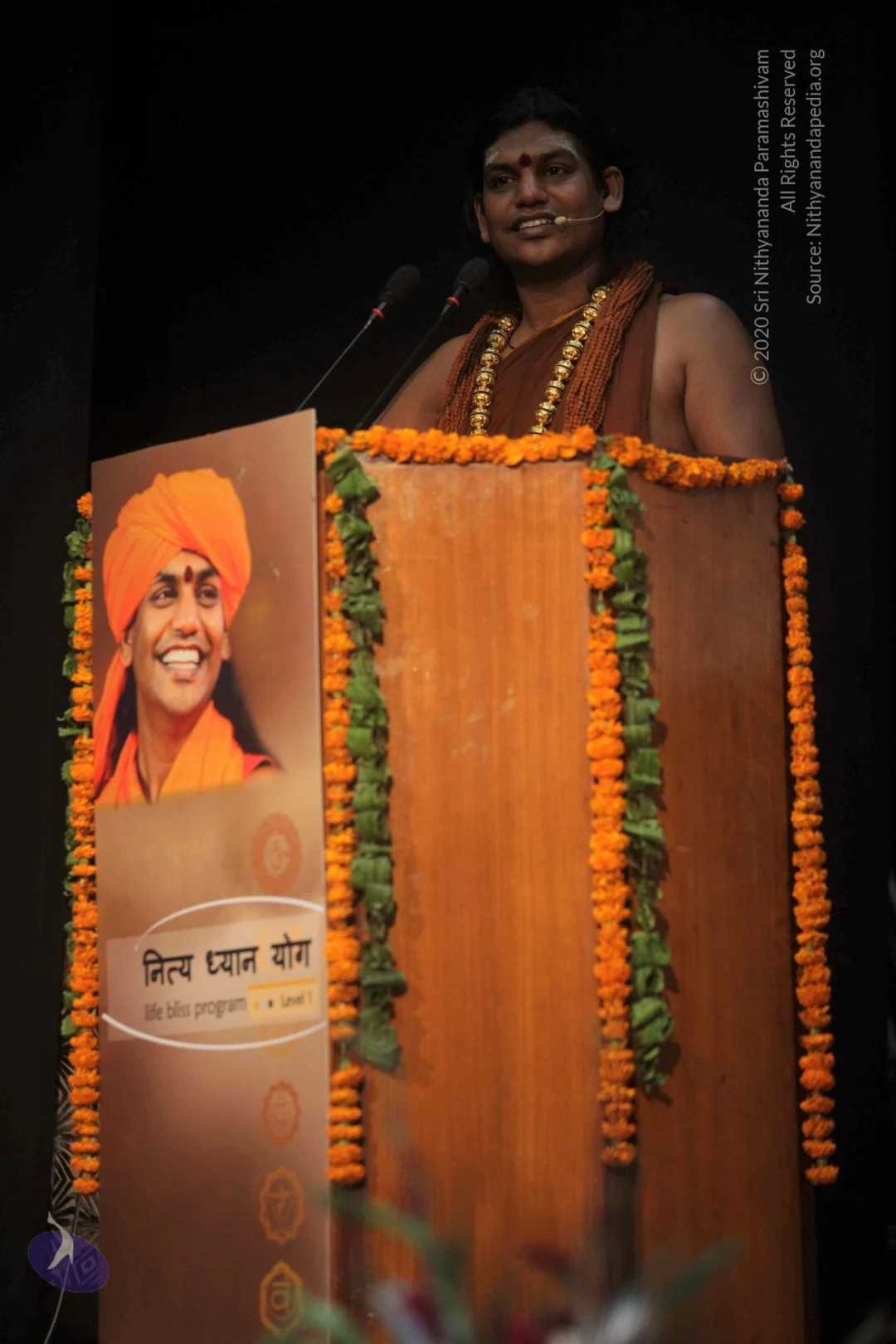
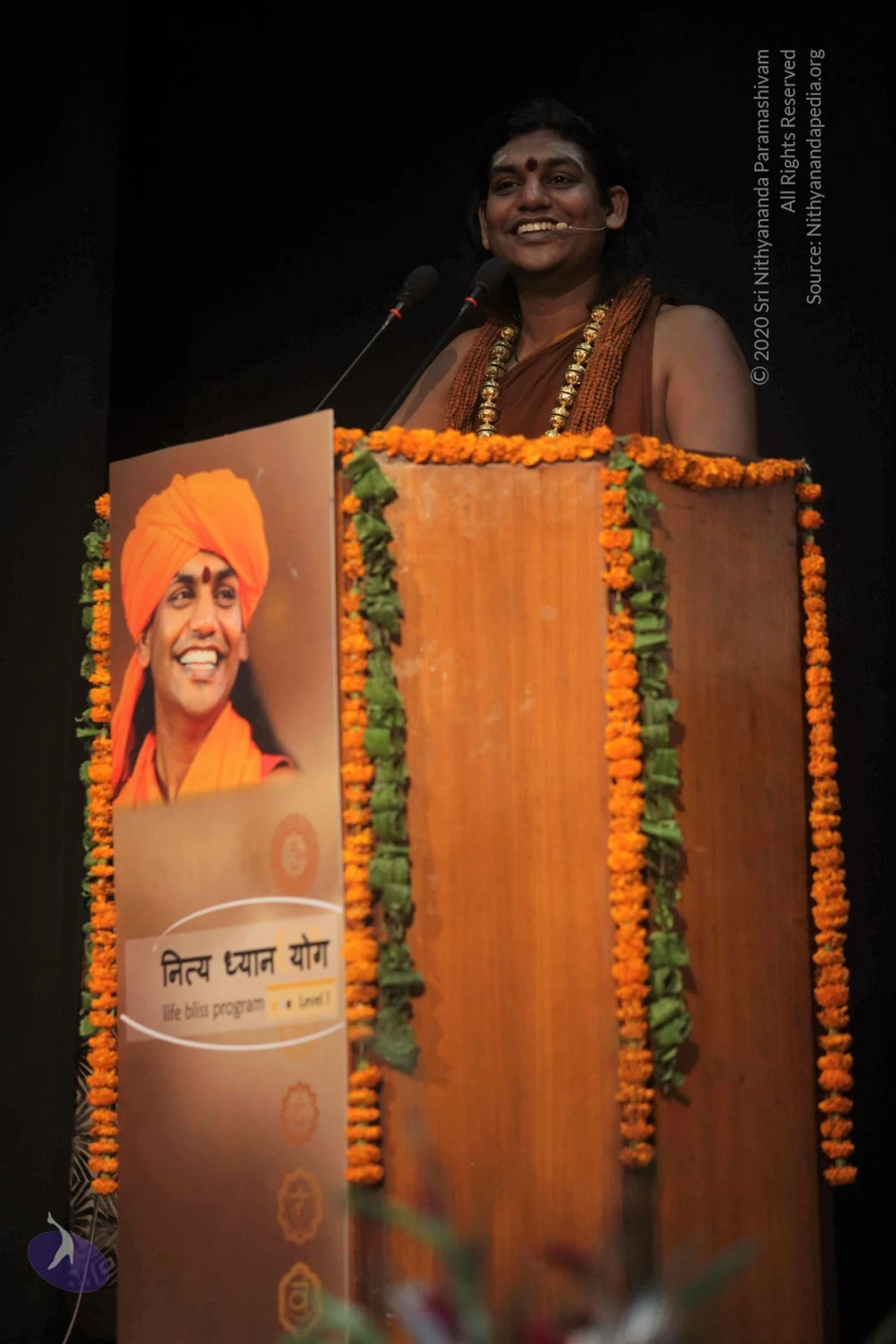
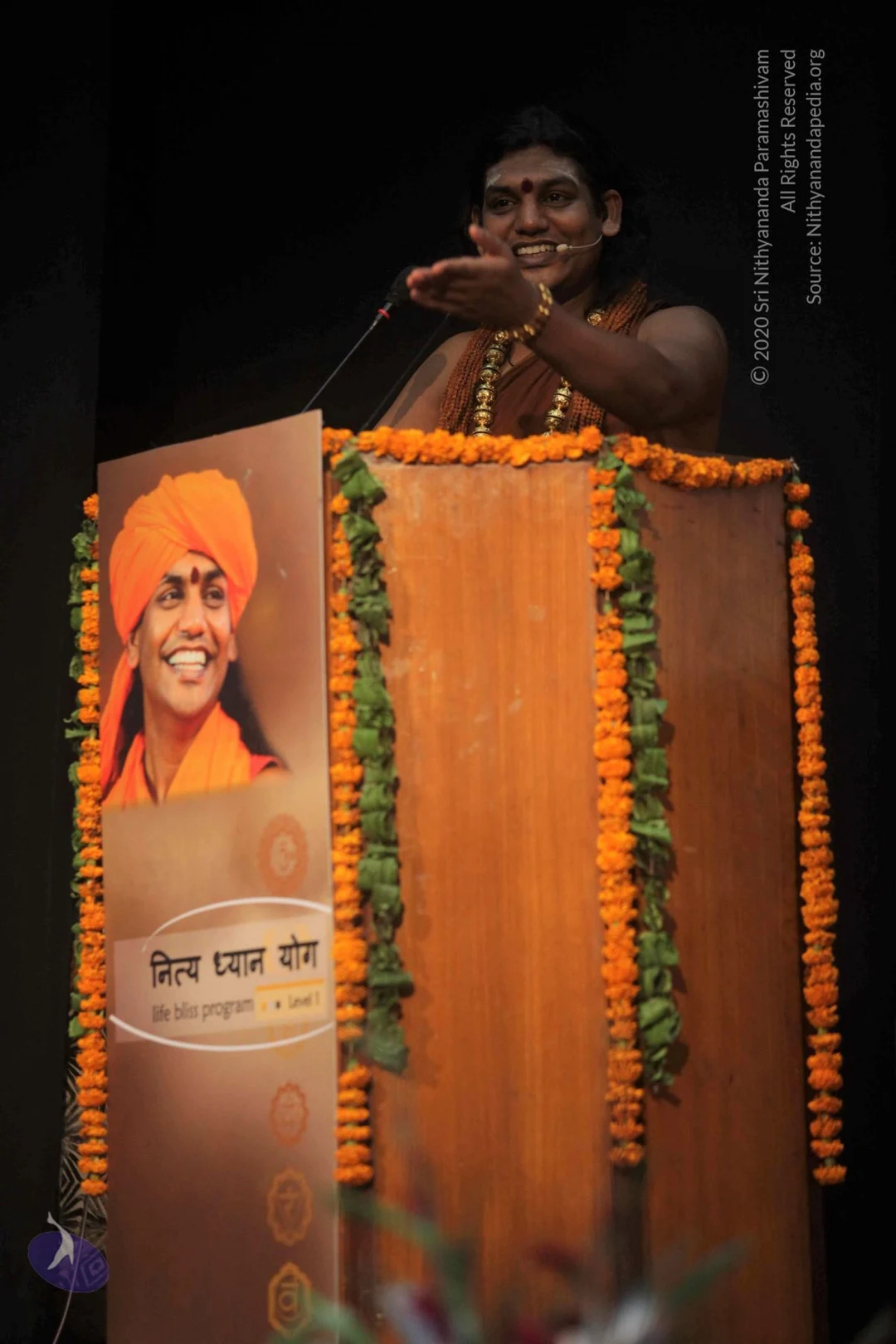
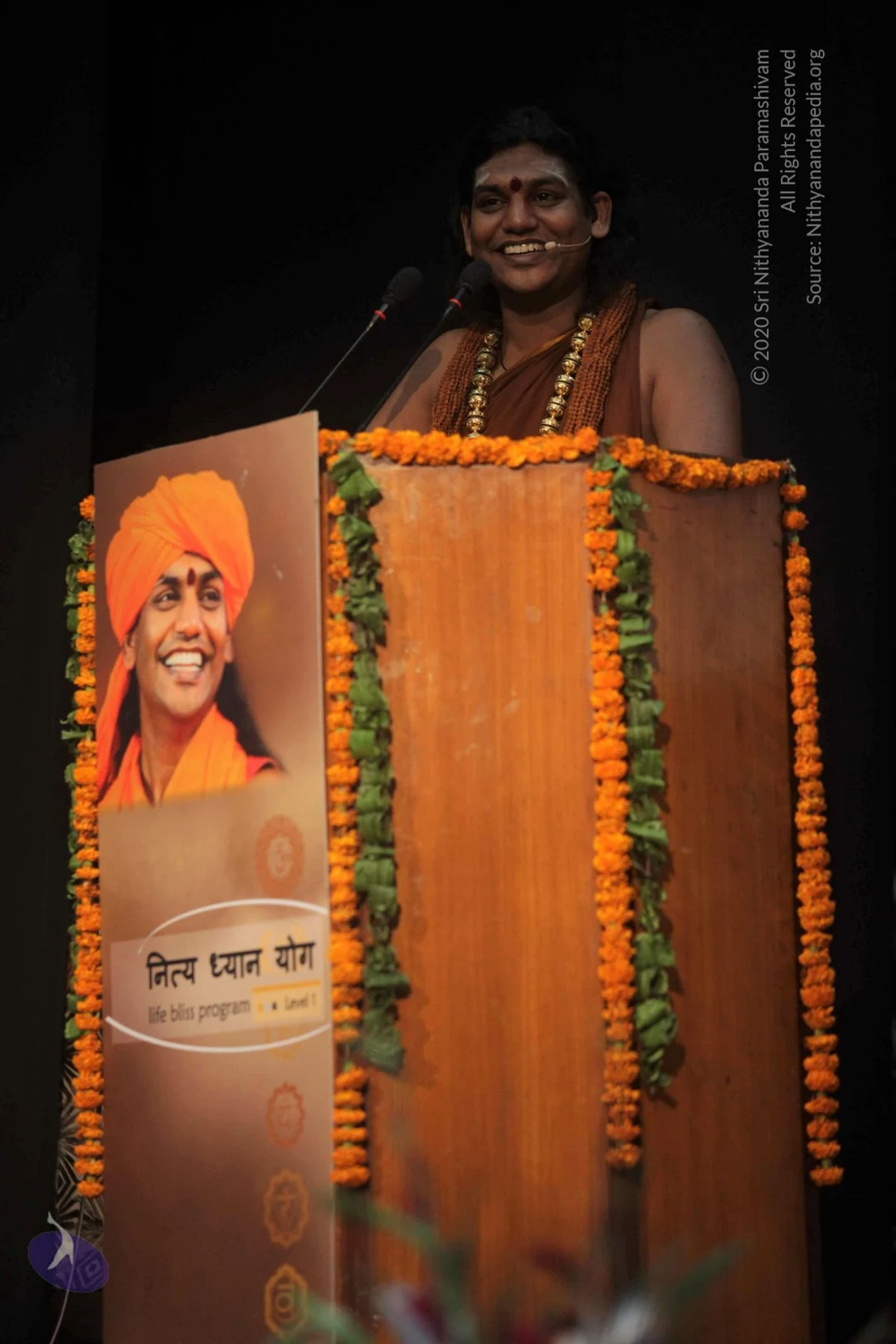
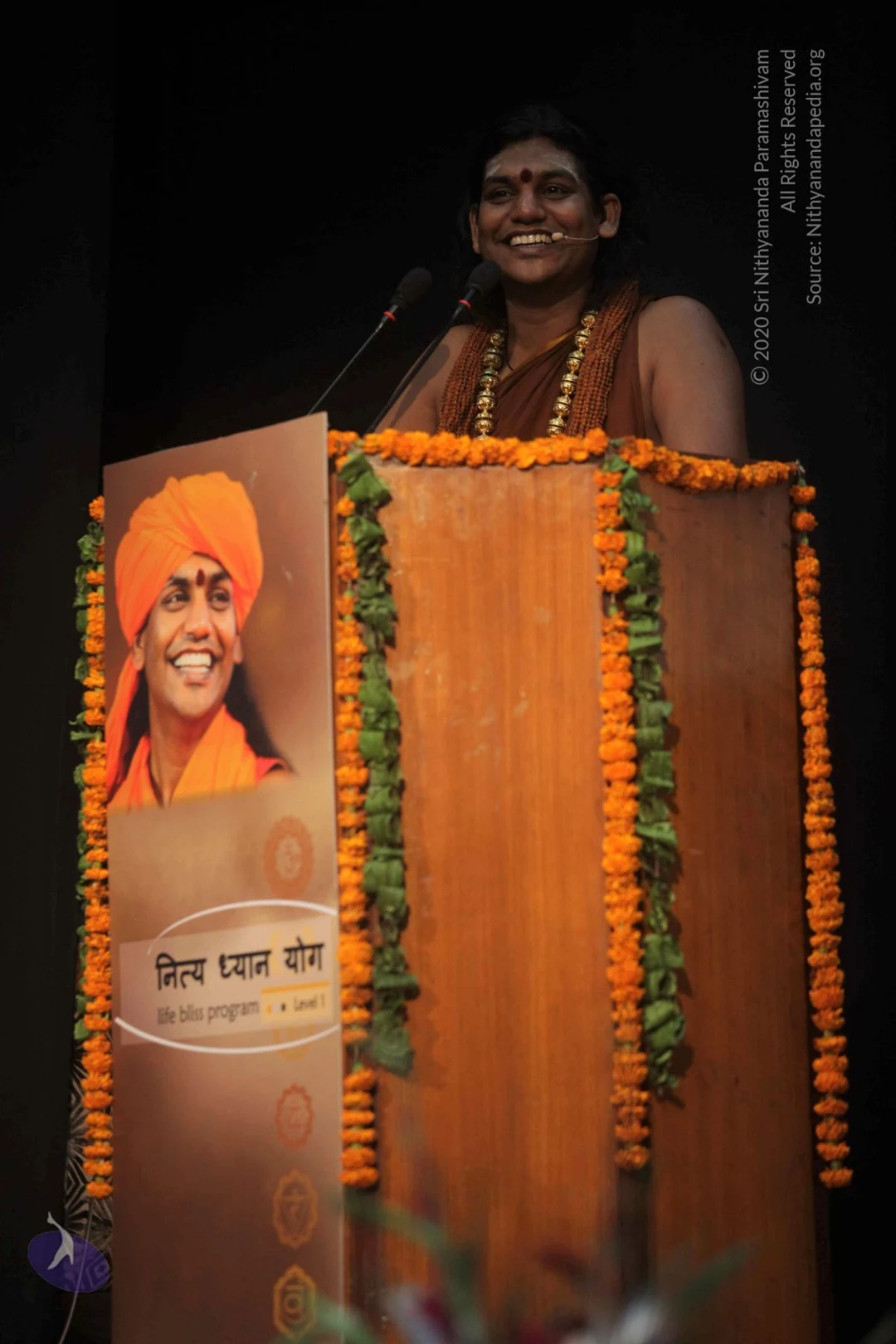
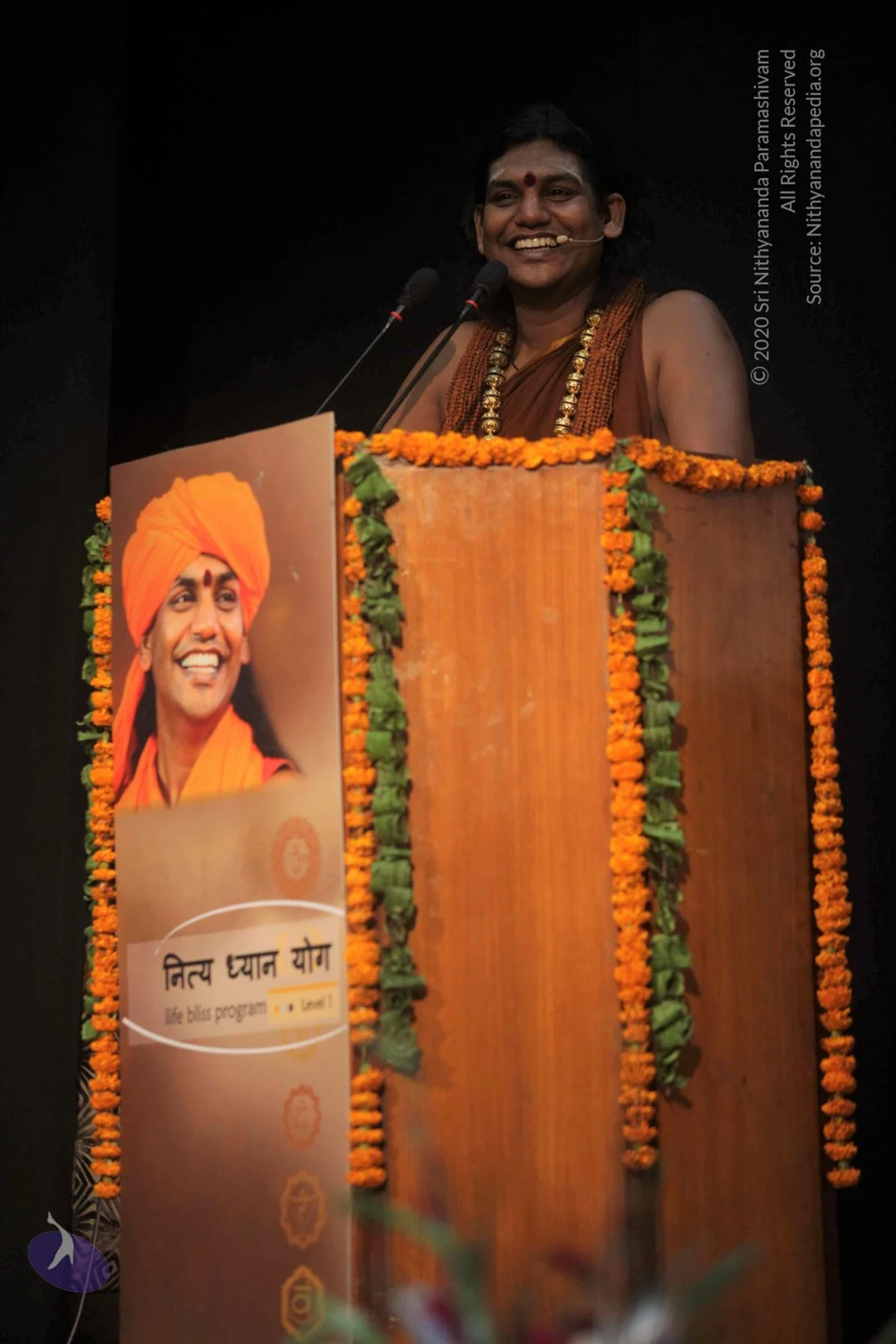
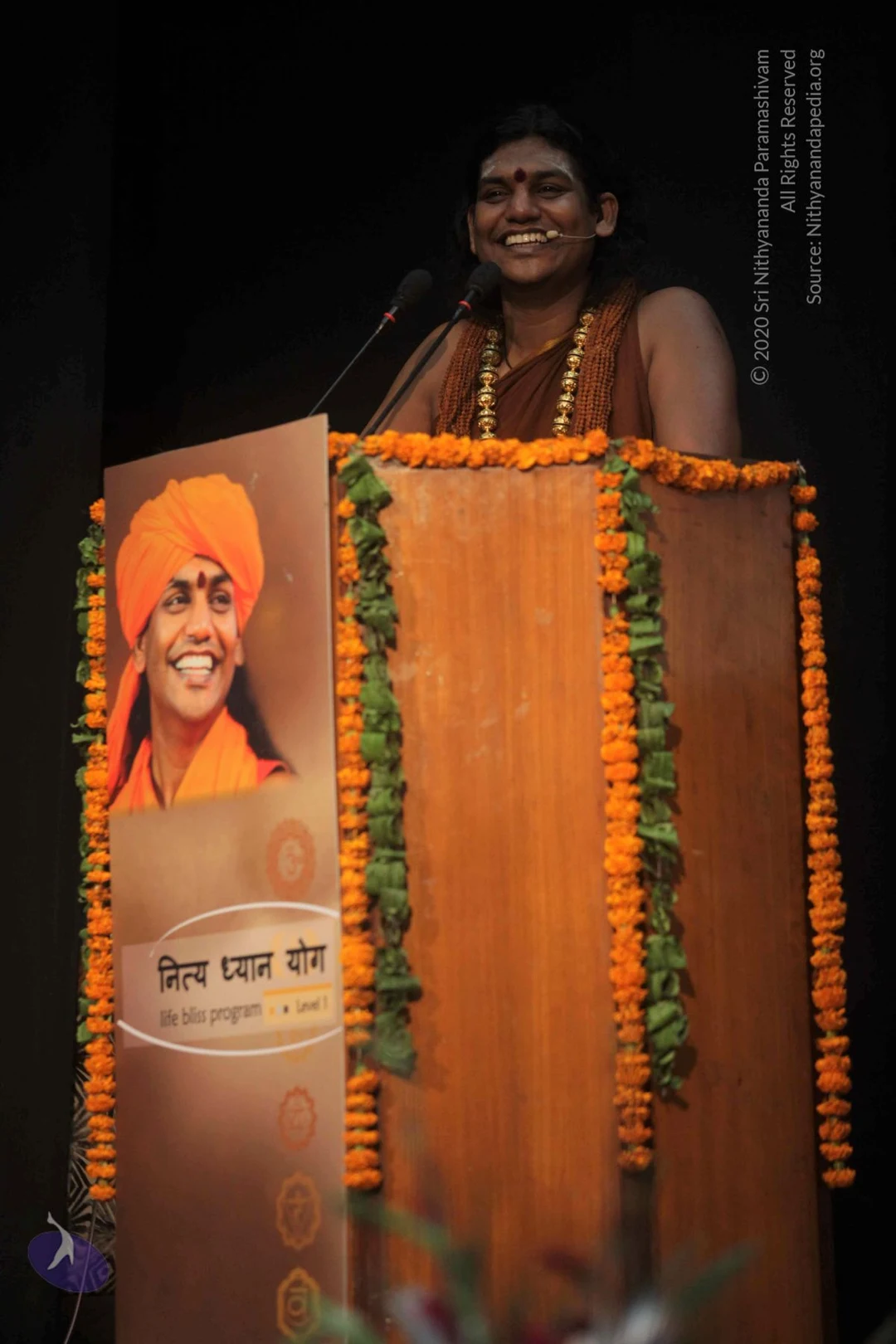
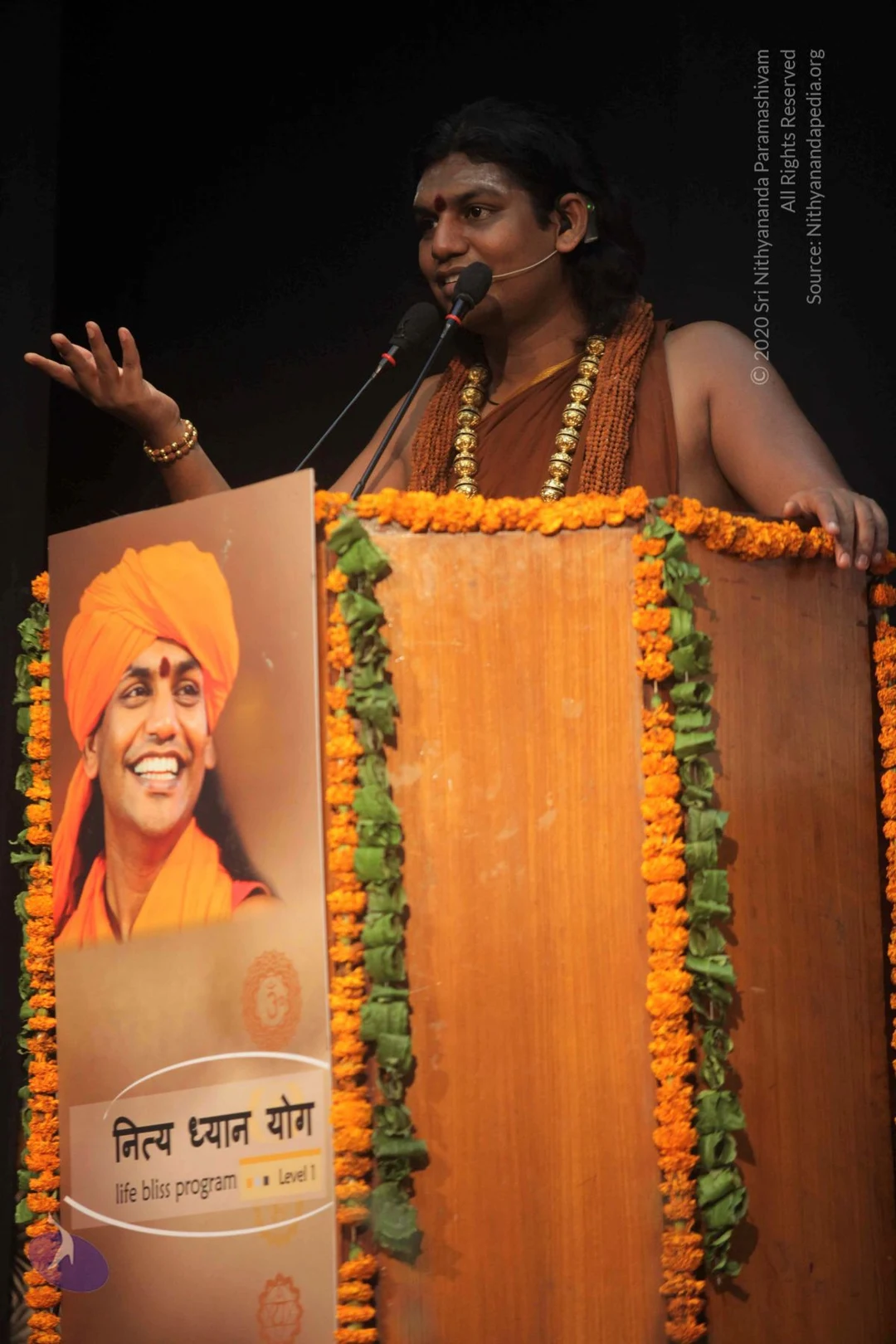
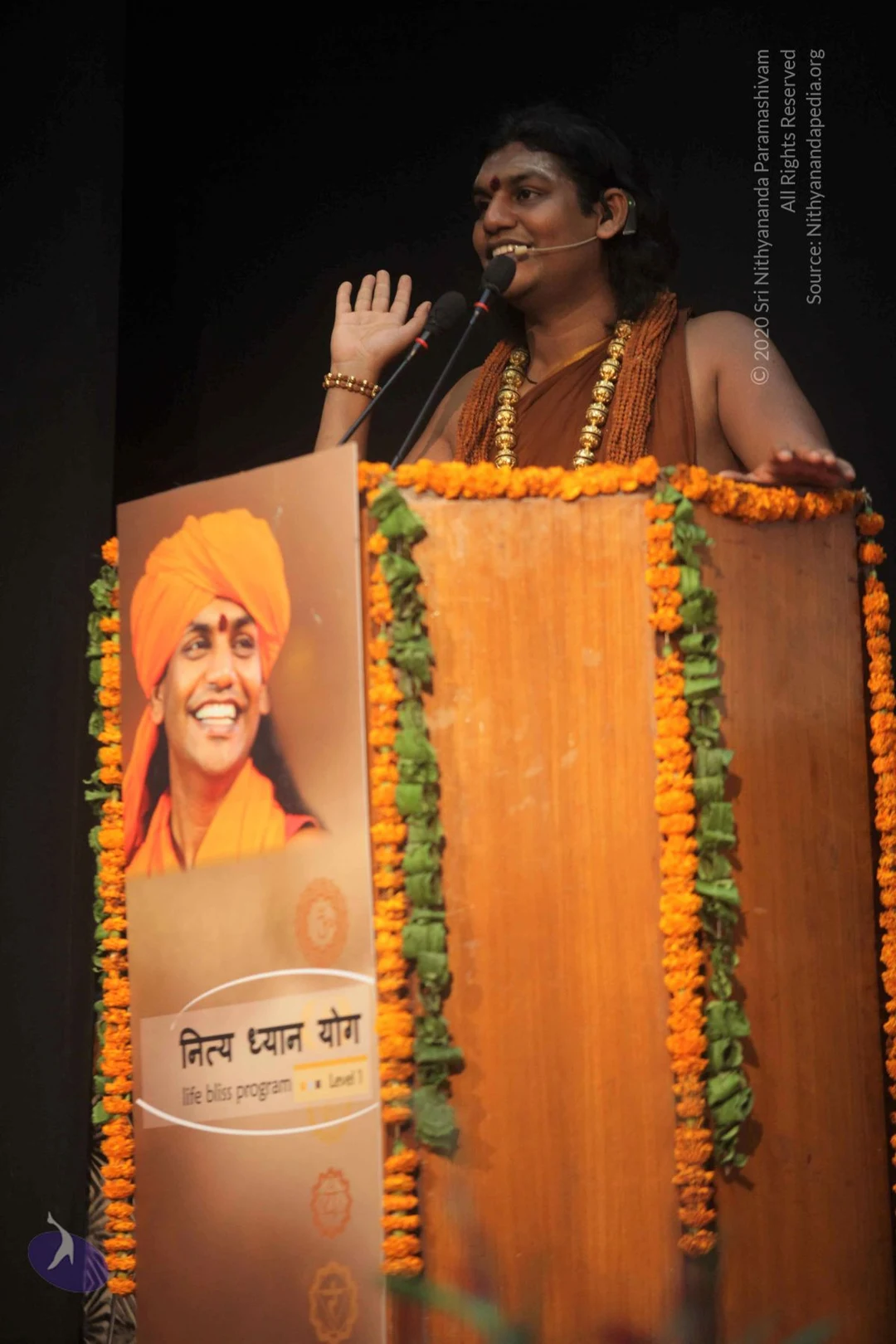
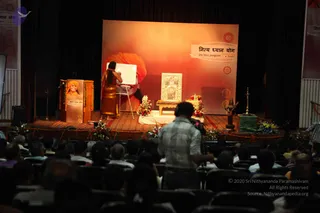
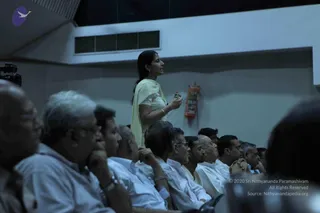
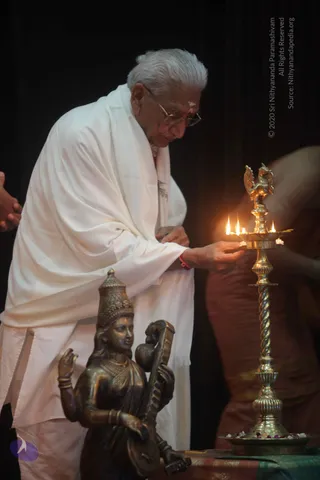
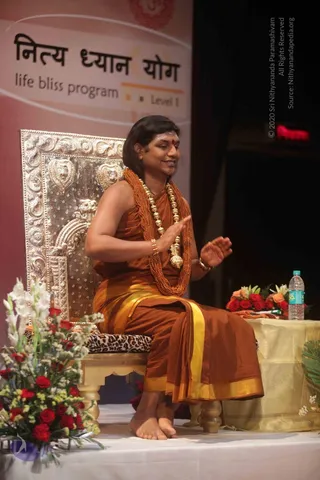
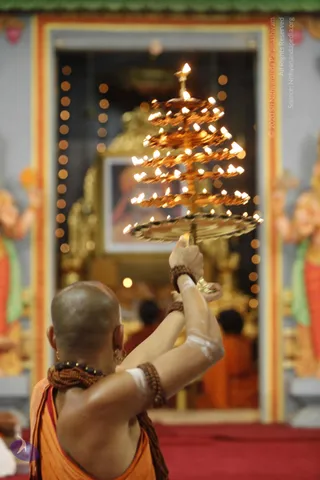
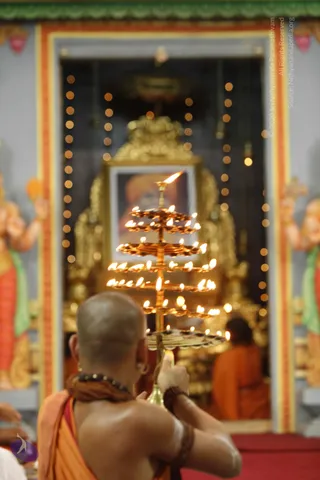
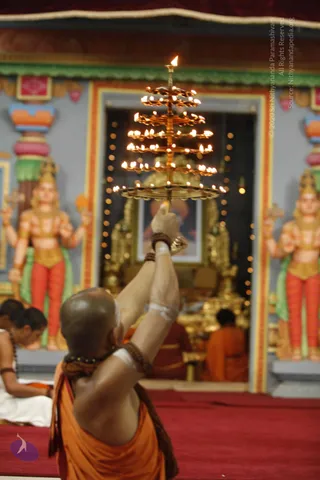
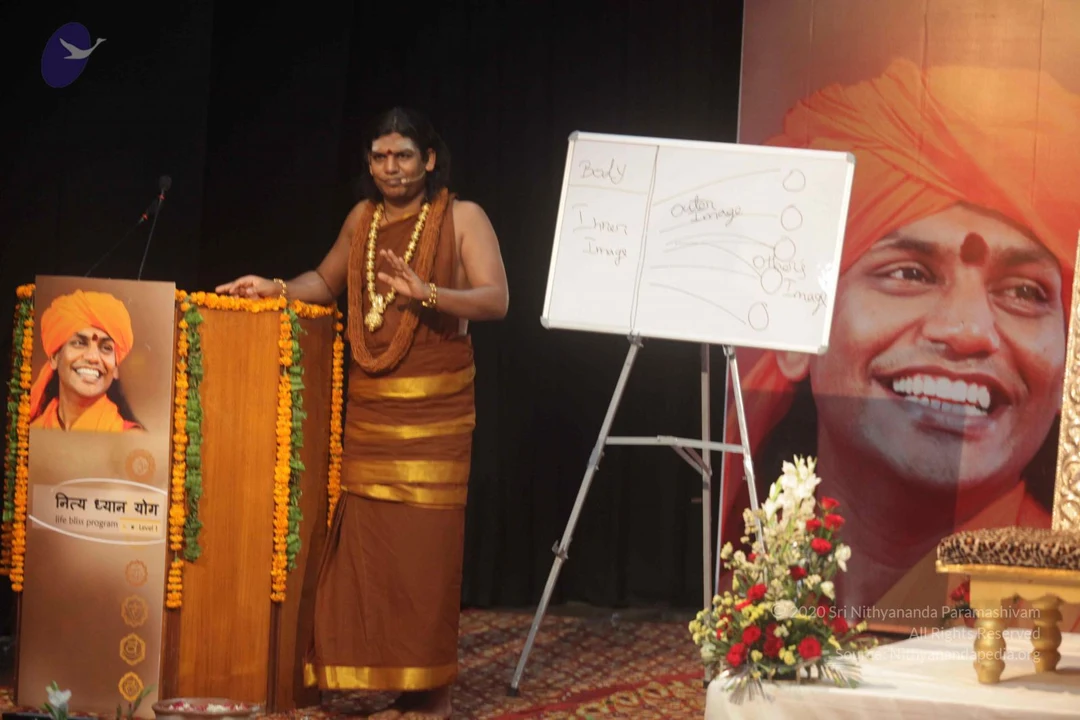
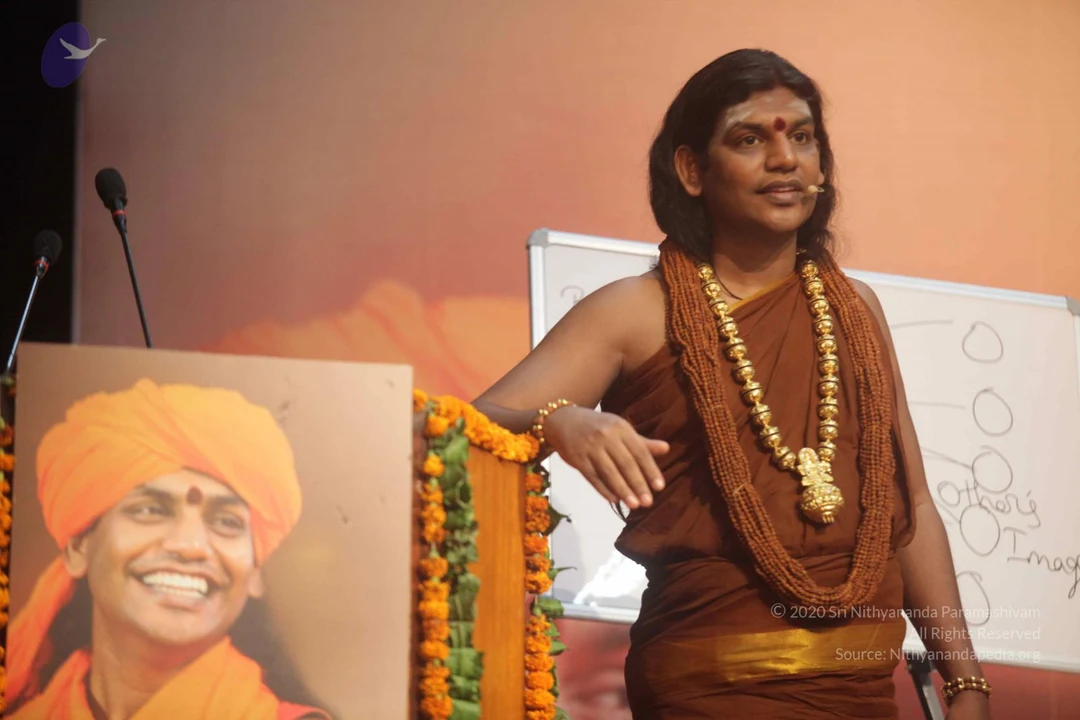
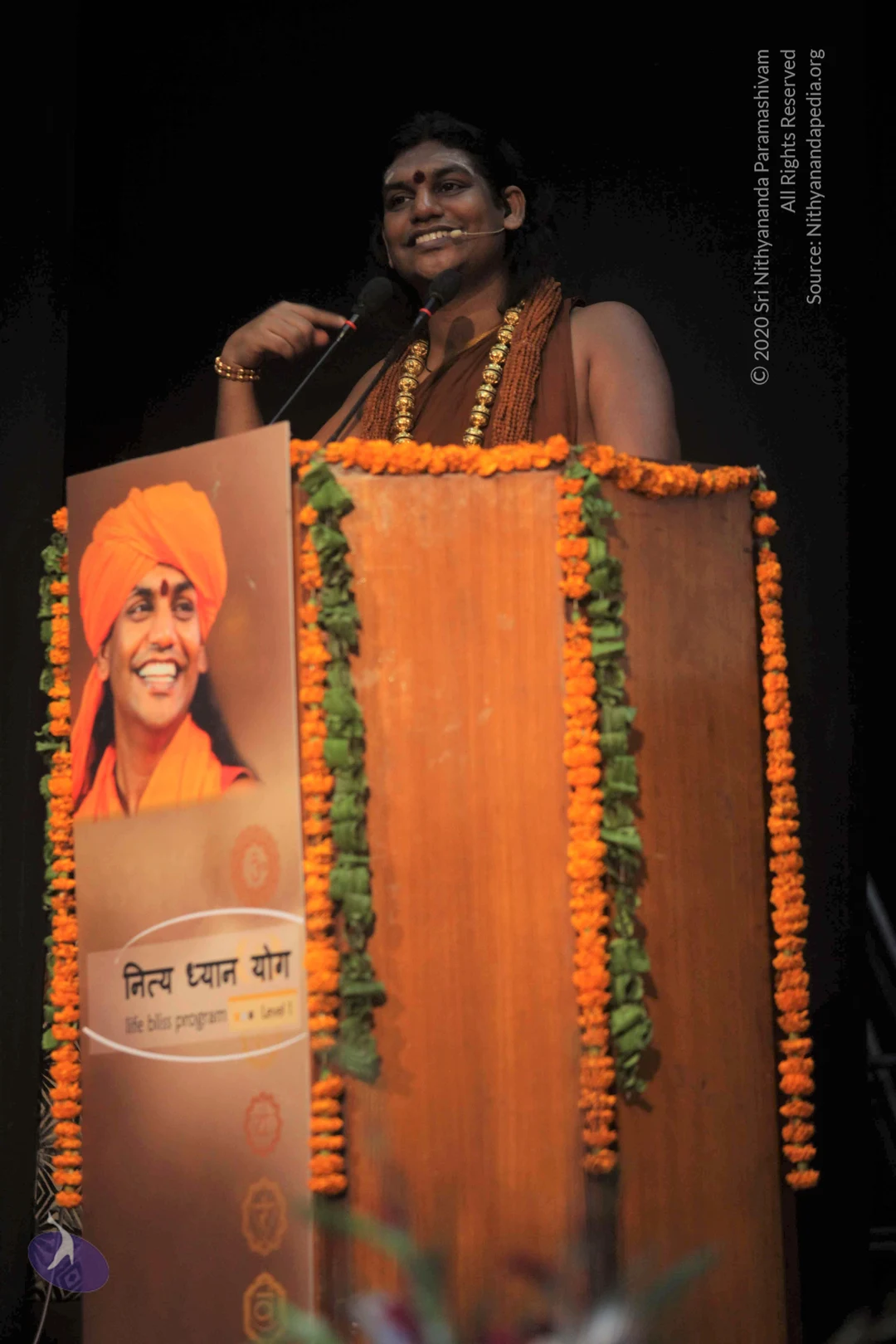
A person in saffron-orange clothing stands behind a wooden podium decorated with marigold garlands and green leaf strands, speaking into microphones. He wears a red bindi, a rudraksha mala and a gold ceremonial necklace, and has one hand resting on the podium. Beside the podium stands a large printed portrait of a smiling man wearing an orange turban and orange robes, its base also edged with marigold garlands. The background is dark. The speaker's appearance is consistent with a person, giving a talk as a teacher on stage, while the portrait on the left is a printed depiction of a man in an orange turban.A smiling woman in a saffron-brown top and a rudraksha mala with gold beads stands behind a wooden podium draped with marigold garlands and green leaves, speaking into microphones on a dark stage. A red bindi marks her forehead and a headset mic is clipped near her face. Beside the podium is a banner showing a smiling man in an orange turban and orange robe, with the label "नित्य ध्यान योग" and "life bliss program · Level 1" below, plus chakra symbols. A vertical side caption reads the copyright and source notice. A second figure is not visible. a person: the speaker's appearance is ambiguous and the banner portrait is a depiction, so identity is uncertain.A photograph inside a temple-style hall with a red carpet. In the foreground a shaved-headed priest in an orange robe with white sacred markings on his forehead and arms holds a multi-tiered brass oil lamp with lit flames, and wears rudraksha beads and bangles. Two seated men in white dhotis perform rites beside him. Behind them stand two painted deity murti figures with multiple arms holding ritual objects, flanking a gilded shrine. A framed portrait on the shrine shows a smiling man in an orange turban and robe. Several brass oil lamps stand along the floor, and another orange-robed figure sits in the background.

April 27 2014

Original wiki page
Contents

Description:

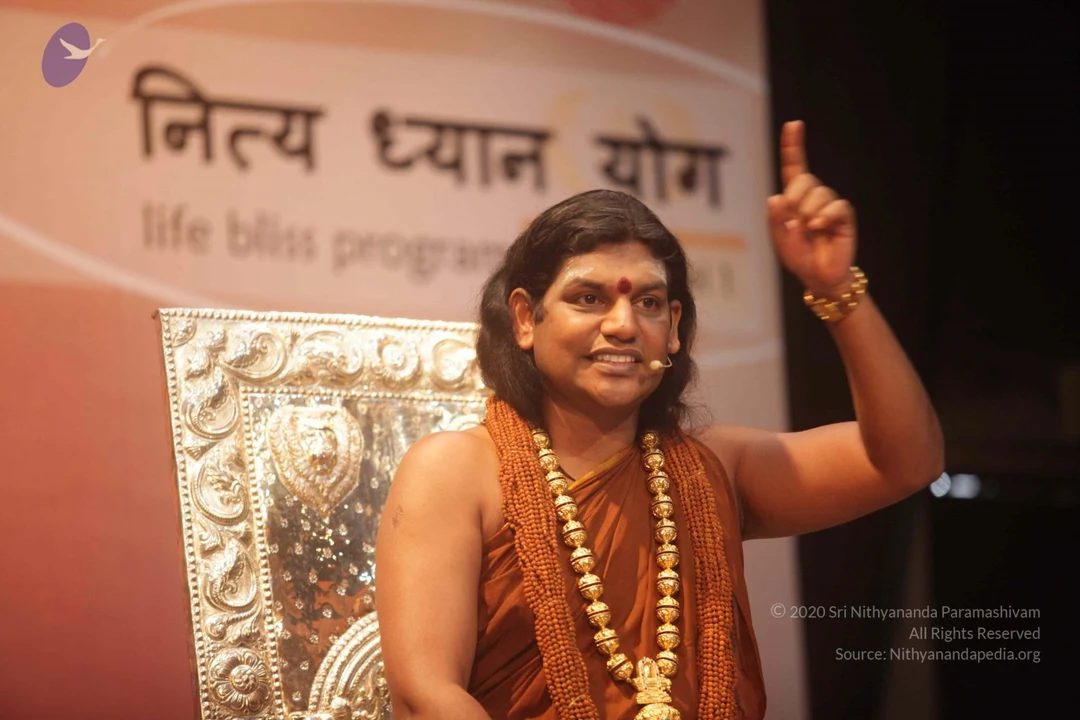
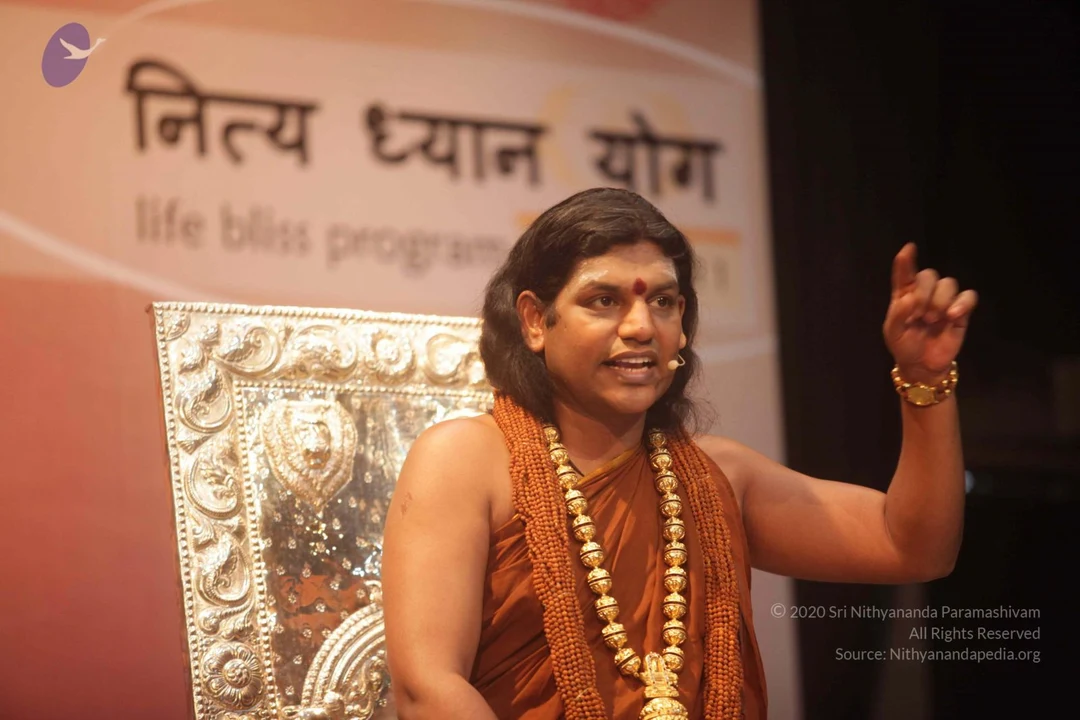
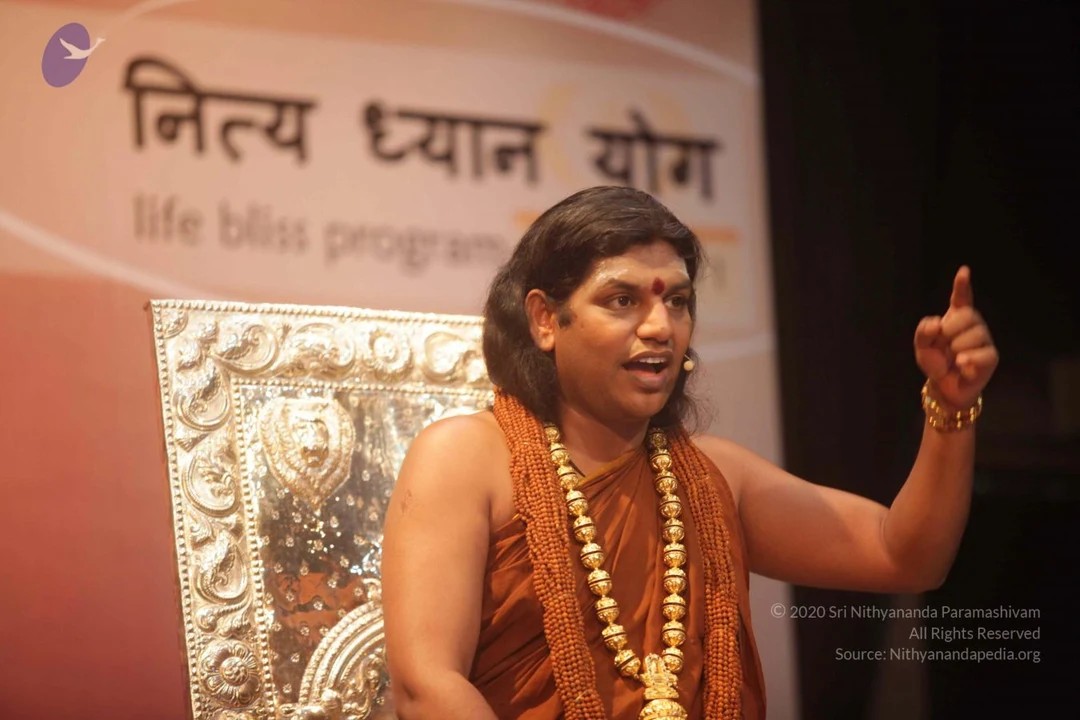
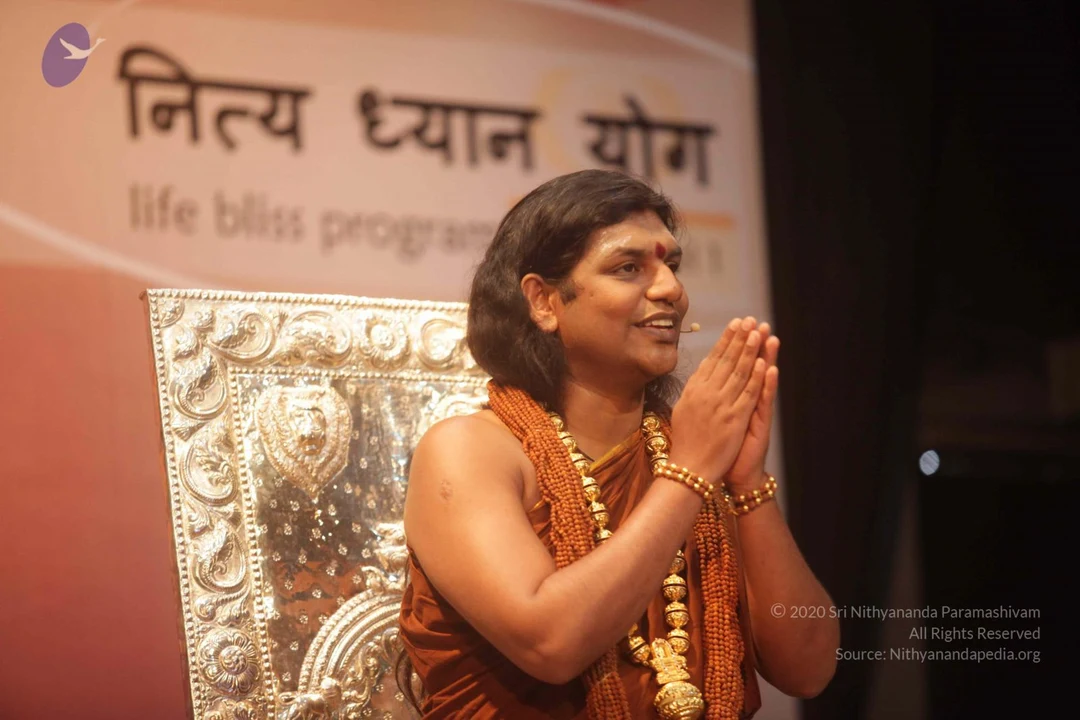
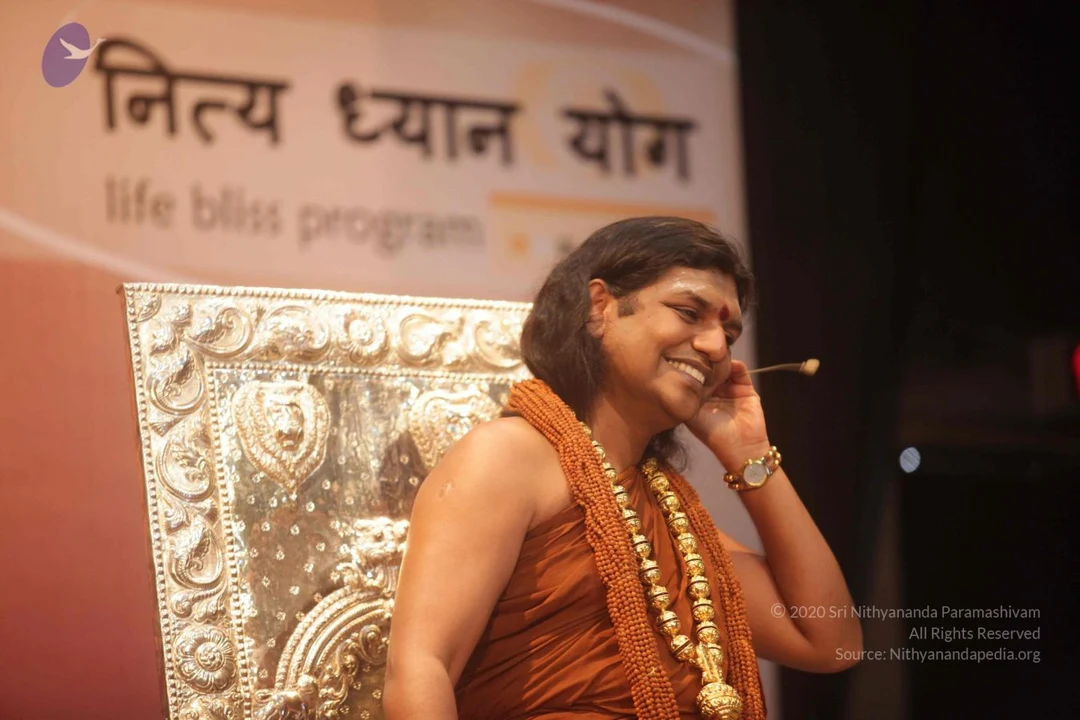
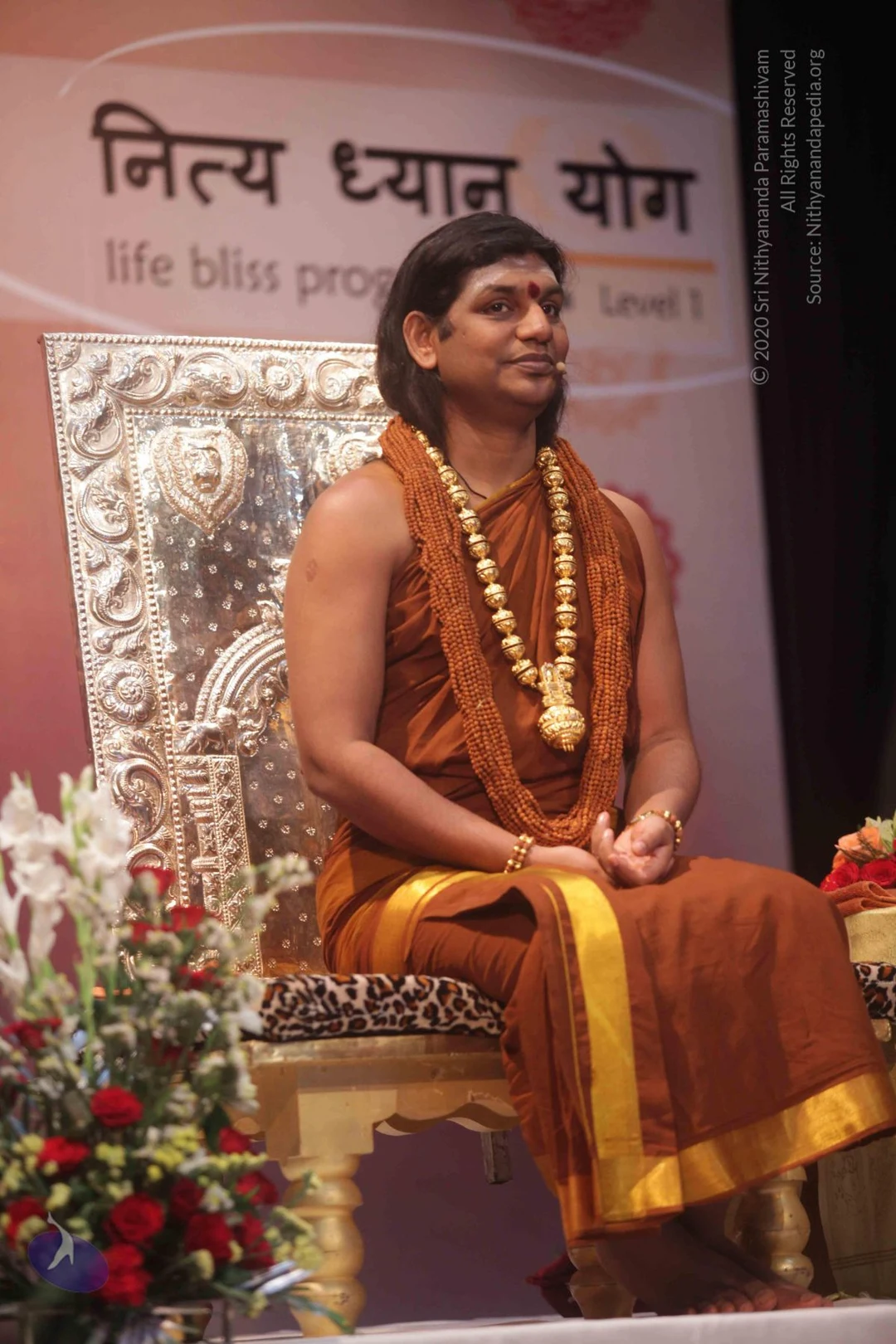
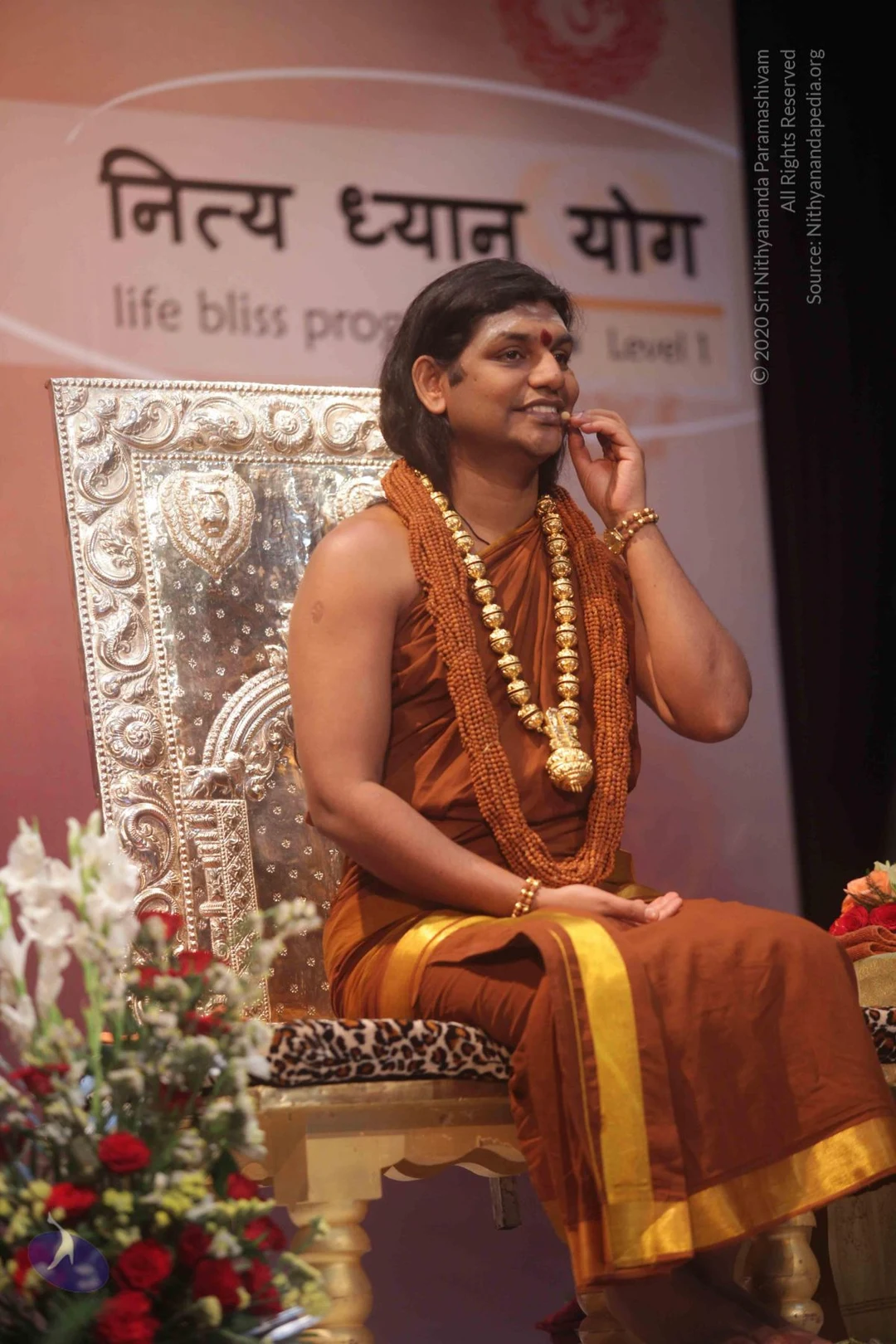
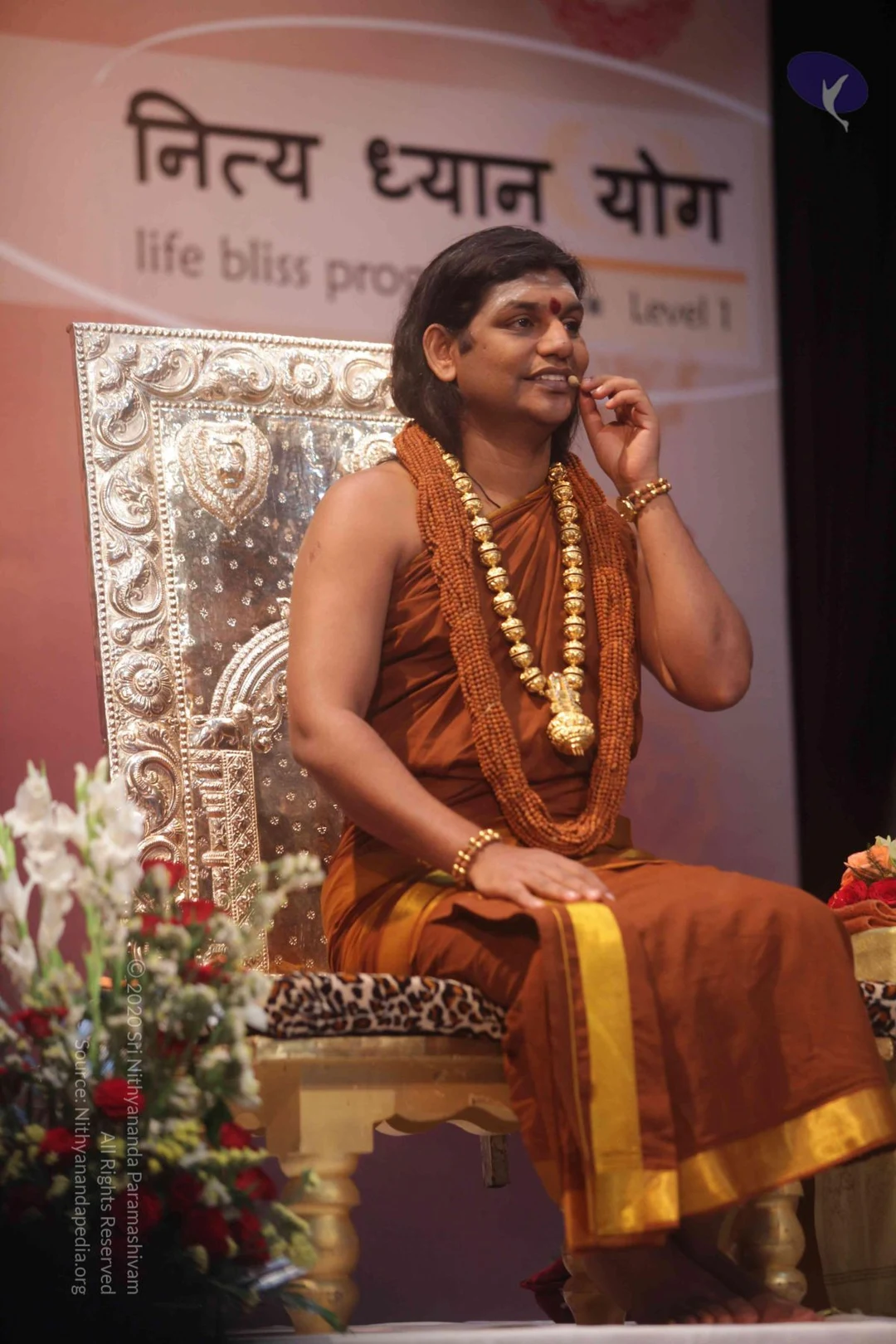
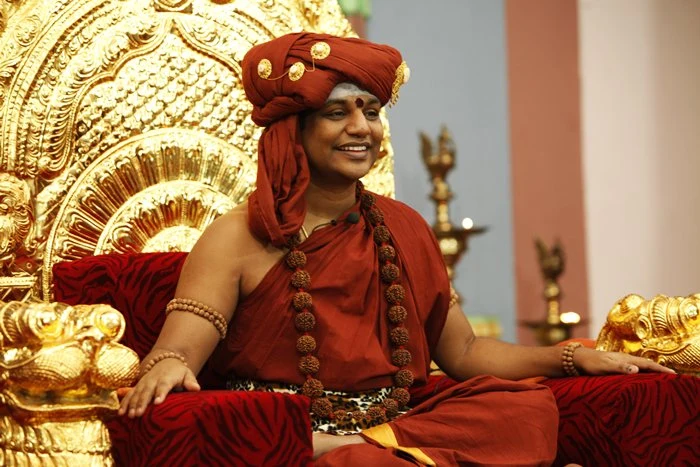
In today’s morning Satsang, Paramahamsa Nithyananda gave the gist of the whole Living Advaitha Practice. He reassured us that there are thousands of ways to Advaitha and advised us not to worry about the path; Advaitha is the goal. Then he explained in detail the steps he had taken us through of forming the teamily, deciding to live in a state of completion; forming our Authentic Identity, getting feedback from the teamily and completing.

Link to Video:

VideoAudio

Transcript:

Nithyanandeshwara Samaarambhaam

Nithyanandeshwari Madhyamaam |

Asmath Aachaarya Paryanthaam

Vandhey Guru Paramparaam ||

I welcome all the devotees, disciples, samajis, satsanghis, Shrimahants, Mahants, Kotharis, Thanedars, sitting with us through Nithyananda TV, Lotus TV, Sadhna TV, and two-way video-conferencing having Nayana Deeksha all over the world.

Cities sitting with us through two-way video-conferencing having Nayana Deeksha all over the world: Washington DC-Sripuram, Vancouver-Bhubaneshwar, Singapore-Singapuram, Ohio-Prayag, Kuala Lumpur-Palani, Mattakalappu-Ilangai, Toronto-Kailasam, New York-Varanasi, San Jose-Madurai, Dhyanapeetam-Madurai, Klang-Malaysia, Varanasi, St. Louis-Tirumala, Porterville-California, Nithyananda Nagaramu-Hyderabad, Nithyananda Nagara-Bidadi, Nithyananda Nagar-Tiruvannamalai, Melbourne-Australia, Tuen Mun-Hong Kong, Rajaji Nagar-Bangalore, Oman-Sivagangai, Guadeloupe-Rameshwaram, Hyderabad-Gupta Kashi, Mulund-Mumbai, High Point-North Carolina, Houston-Kalahasti, Tallahassee-Florida, Bangalore-North, Jorpati-Nepal, Abu Dhabi, Dubai-Vaidyanatham, Devon-UK, China, Selang-Malaysia, Delhi Bazaar-Nepal, Doncaster-UK, Colorado Springs-USA.

I welcome all of you with my love and blessings.

Yes next few days we will be concluding this Living Advaitha practice. So today, I wanted to give the gist of the whole process. Today’s Sunday for devotees from US and Europe. Saturday evening. Naturally many devotees will be logging in. Maybe, by May 1st, I will be completing this process in which I am guiding you all in the last few satsanghs – Living Advaitha.

First – listen – to achieve the Advaithic experience, there are thousands of methods. I can say all methods reach you there only. It can be as simple as pouring water on a stone, to as deeper as finding your source of thoughts. It can be as simple as this and as difficult as that. Sometime I can say, finding the source of thought is too simple than remembering the right context and pouring water on a stone. Anyhow whether you start with this or with that, always you end up in Advaitha. That is the goal. That is the goal. So, don’t worry at all what path you do. Advaitha is the goal. But I want to tell you one thing. Please listen.

This practice which I am leading all of you, the Teamily practice for living Advaitha, it makes you experience Advaitha in all its dimensions. Please understand, you get not just the oneness experience, the non-dual,

Again I apologize. “Non-dual” cannot be translated as “oneness”. Because no other word, I am using the word “oneness”.

The non-dual experience, this process of Teamily, Living Advaitha, not only leads you to the non-dual experience, it also makes you experience all the best things of life like health, wealth, beautiful relationships, Completion in your every moment, above all the extraordinary miracle powers.

Listen. Please listen. There are tons of methods to achieve Advaitha. For example, Zen. Zen also leads you to Advaitha but a very dry way. You just sit and stare at the wall for ten years in Zen; you will achieve Advaitha. True, but ten years.

So there are many paths leads you to Advaitha. There are many ideas leads you to Advaitha. Even Shaiva Siddhanta leads you to Advaitha. I know by making this statement I will agitate many people who don’t know anything about Shaiva Siddhanta, and claim themselves as Shaiva Siddhantis! Whether it is a Kashmiri Shaivism, or Shaiva Siddhanta, or the Veera Shaivism, or Dwaitha, Visisthadvaitha, whatever may be the philosophy or name, methodology, you may call it, finally everything leads to Advaitha, everything leads to Advaithic experience.

So please understand, but because of the time the process takes, during the process the different powers it awakens, based on that, the processes can be classified 1st level, 2nd level, 3rd level, 4th level, like that. I tell you I have travelled almost all alive paths for enlightenment. Please understand, not just through one or two, I have consciously scanned, went through, researched, almost all the paths still alive and available on the Planet Earth. I am telling you, I have put the best of everything and created this Teamily process. And my own experience, it is like I myself defeat my own achievements. First what I contributed, the Science of Chakras; then the Science of Unclutching; then the Science of Completion. I myself expand or I can say, lead you to the essence. That is the reason I am telling you, the process of Teamily, this Teamily process, living Advaitha, Teamily Process, living Advaitha, not just it awakens the experience of non-duality in you in a very short time, it also awakens the extraordinary powers in you.

I tell you, nothing wrong in living and having extraordinary powers. These fools who can’t handle little responsibility of money, little responsibility of name and fame, recognition, because of their fear pattern, they hate powers also. Listen, stopping with powers is something seriously wrong, but hating powers is also some deep incompletion. You neither need to stop nor need to hate. Hating again is incompletion. I’ll demonstrate through my Gurukul kids how the power and non-dual experience so beautifully goes hand in hand without any fear or incompletion. I am so happy in twenty-four hours my kids came back to Advaithic space and made the heavens shower yesterday.

I told them, ‘One day no school!’ See in the regular schools and colleges, if there is some fight among the kids; if they beat each other in groups, or throw stones at each other’s in groups, they give one day holiday. In our school if our kids miss the Advaithic space I stop school one day. One day I told, ‘Shut down the classes. No classes today. All of you sit and work on Completion. You have to come back to the space of Completion. Anything can be lost, not Advaithic space! Come back to your Advaithic space, oneness with the Nature. Make the heavens shower.’ And it did not rain anywhere, just that few acre. Not even in the Mysore Road! I told them, ‘Bring yourself to the Advaithic space, Completion space. Give the aahuthi to Mahadeva and request him, “Please accept this and show us by the drizzle, heavens showering, that you accepted”.’ I told them, ‘Finish this, only then you start the classes.’ They did it!

Powers are not wrong. This system which I am teaching all of you, the Teamily process, experience of Advaitha, living Advaitha, not only awakens the non-dual experience in you as short as within twenty-one days, it is also as deep as great process of Hatha Yoga; it awakens the Ashta Maha Siddhis.

So, I am giving you the essence of the whole process today.

The first step: Form a Teamily. Teamily means, family plus team together. Persons with whom you are sharing your whole day, the person may be your senior officer or junior officer, he may be your employee or employer, he may be your subordinate or boss, the persons with whom you are sharing your home, it may be your kid, your father, your mother, your daughter, your spouse, husband or wife, even your maid, driver, whoever is living in and around you, whoever is living with you, around you.

Unfortunately all the English words are too small. The word “bandhu mithra”, what it means in Sanskrit can never mean “friends and relatives” in English. In Sanskrit the depth of the word “bandhu mithra” can never be translated by the word “friends and relatives”. That is why I am struggling; I am using so many words – people who live around you, with whom you share your life and all that. In Sanskrit just these two words is enough: “bandhu mithra” – your Teamily, your team and family.

Make a list of your team and family. Decide you will live in the space of Completion with all of them.

First: Form a Teamily.

Second: Decide you will live in the space of Completion with all of them.

Please understand for each of these instruction, “why” I already spoke last one month. “How”, “Why”, all that I have spoken last one month. Today I am just specifically going to only give the instructions, like a capturing the gist.

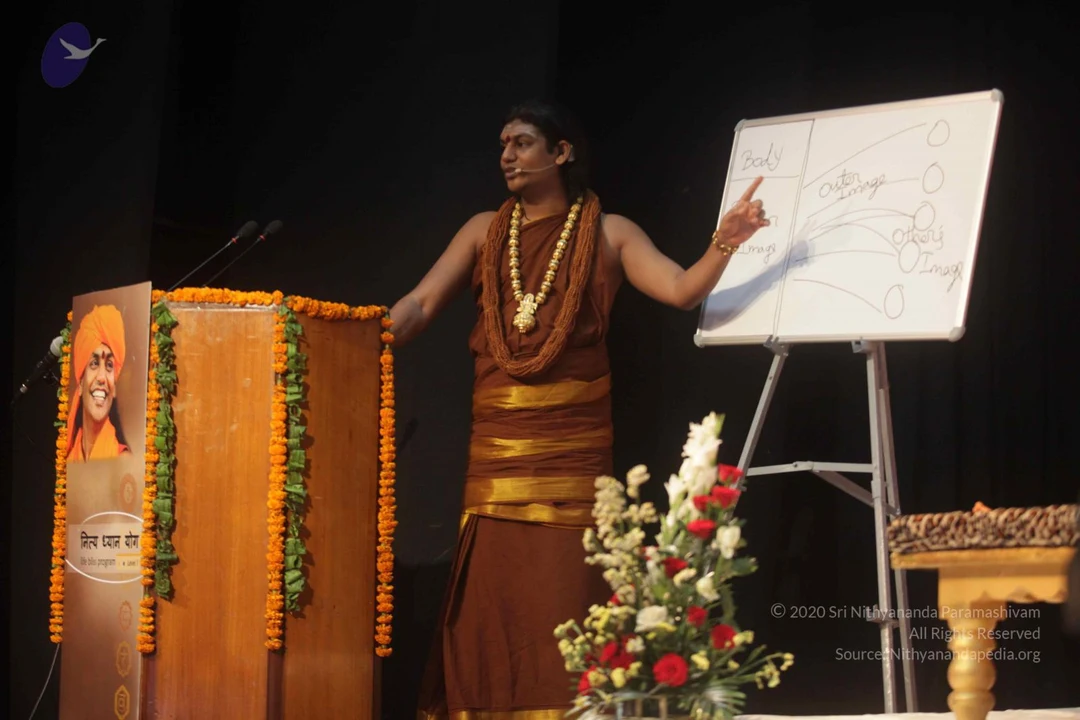
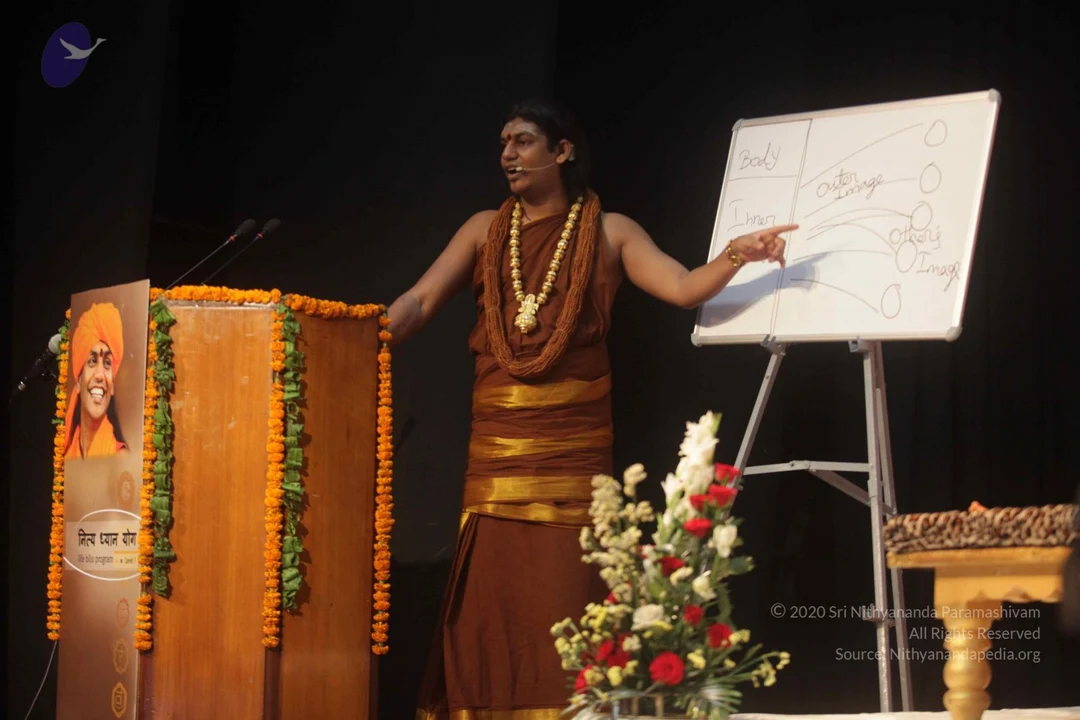
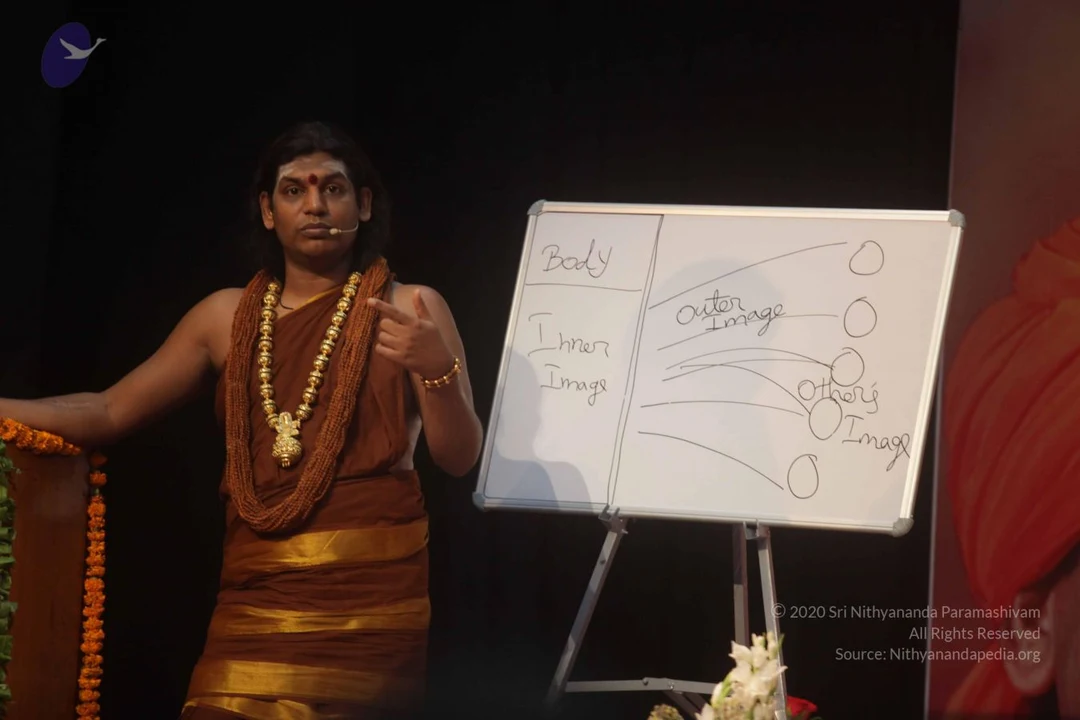
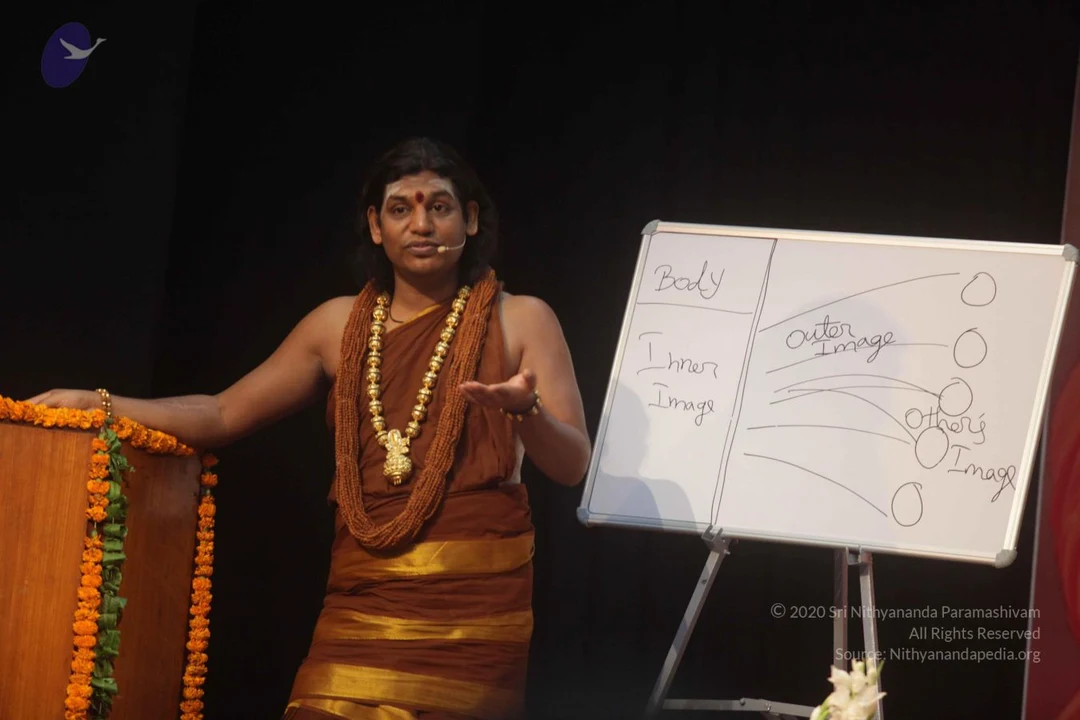
Third: Form a clear identity which you want to live –

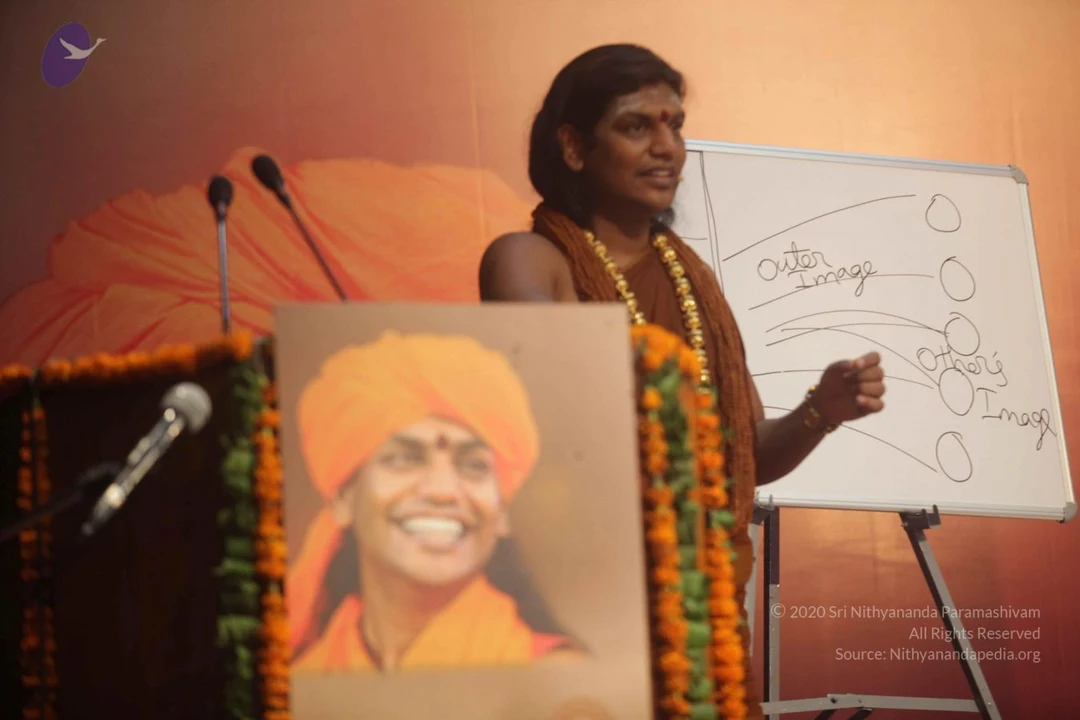
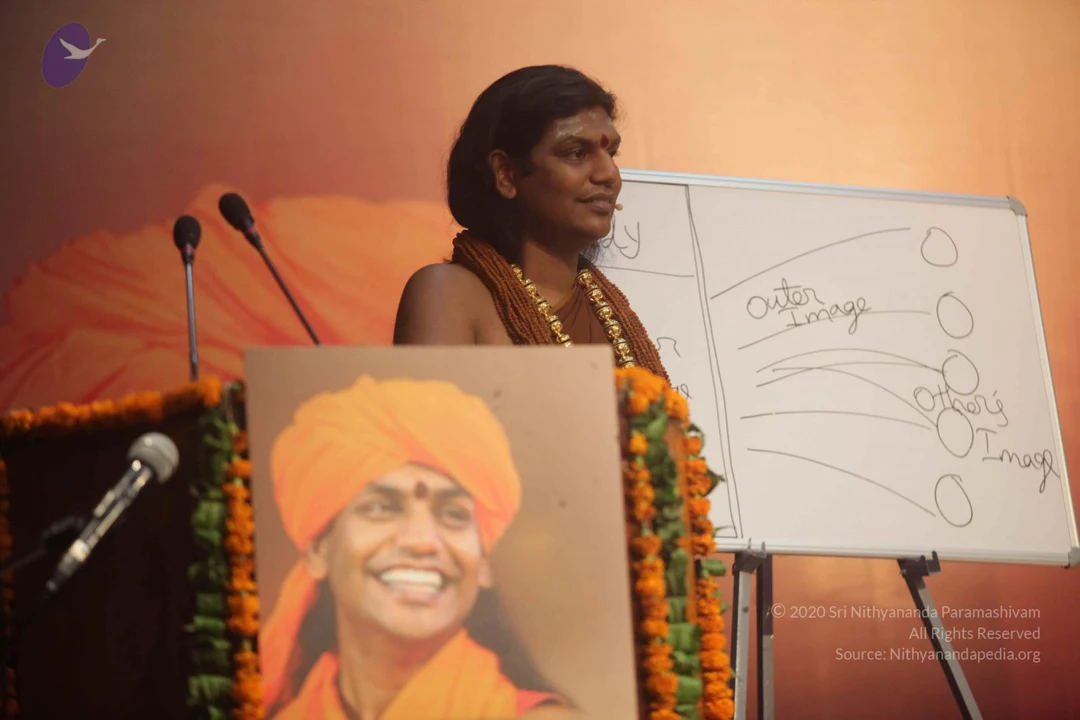
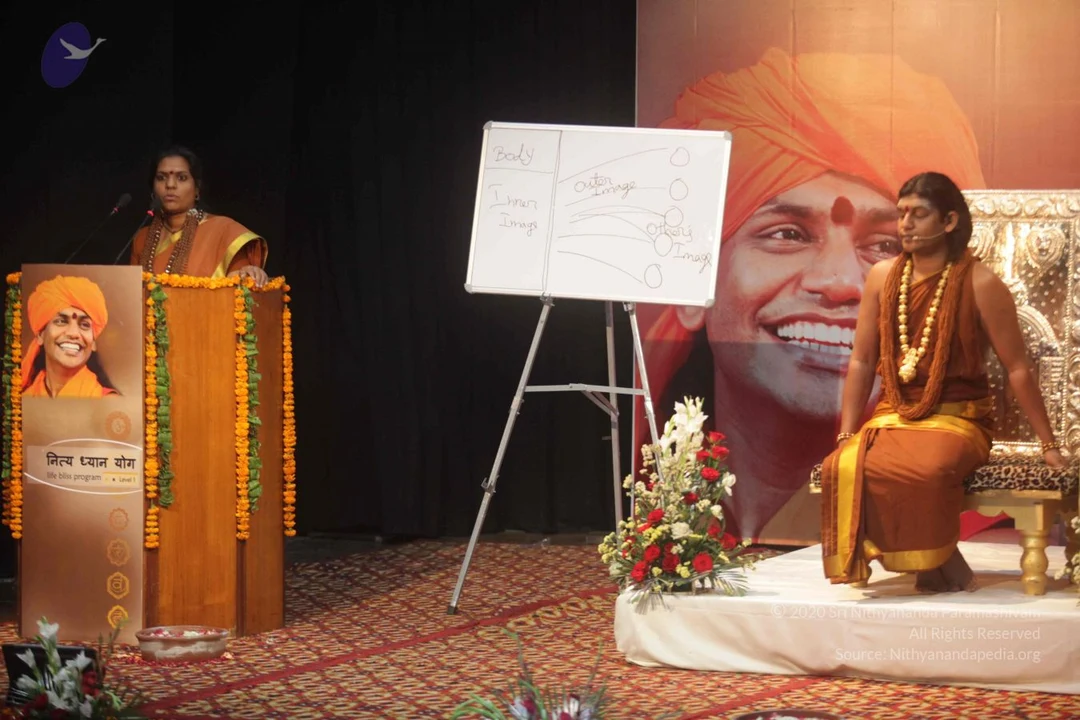
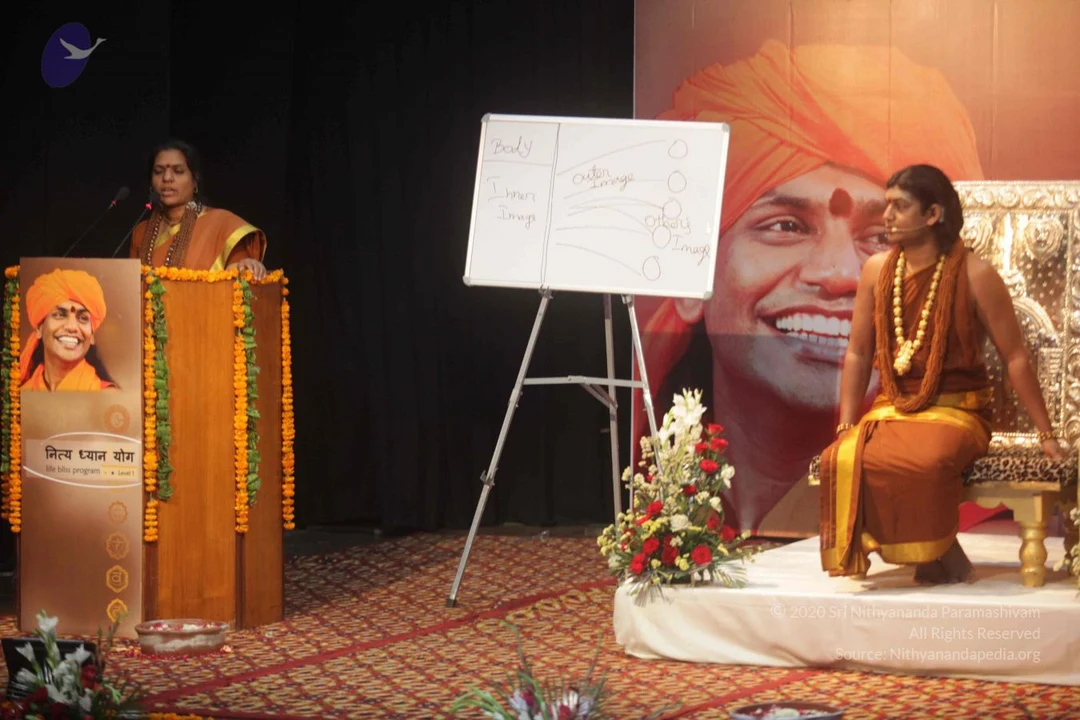
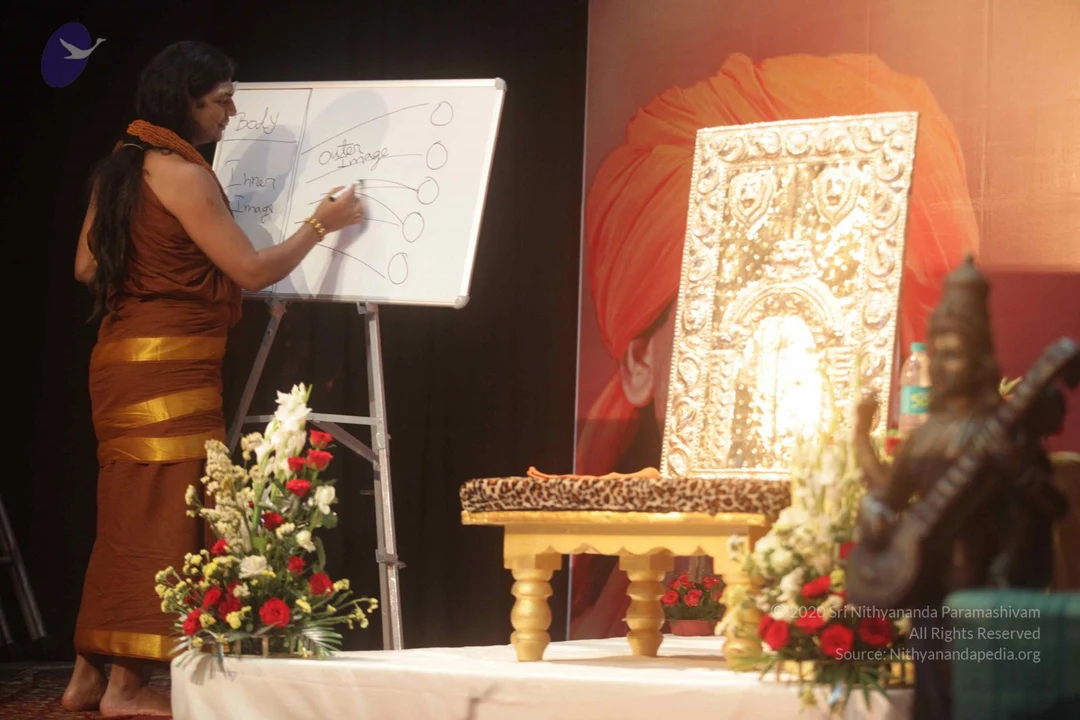
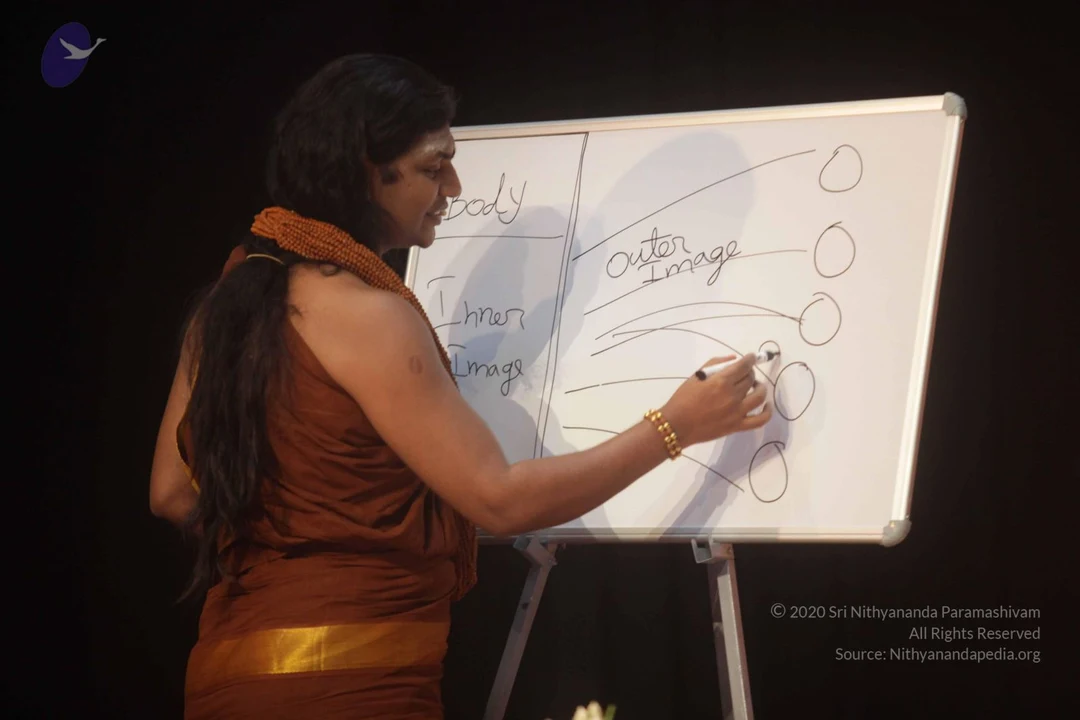
authentic Inner Identity which you want to live,
authentic Outer Identity which you want to live,

authentic Others’ Image, means the image which others want to feel about you, the image, what is the image you want others should experience about you, and,

Life Image, what is the image you want to experience about life.

Pen down all these four elaborate, detailed way.

And ask the support of your Teamily. Tell them, ‘This is the way I am going to build myself. Can you all support me, help me by giving the feedback, what all the incompletions I have to complete, what all the way I have to transform myself to be this authentic personality?’ Asking the feedback of your Teamily.

When your Teamily gives the feedback, you need to sit and contemplate to track back, trace back all those incompletions in you, how the patterns developed in you and became those incompletions which your Teamily is pointing it out. This is the tricky area - if you tell your Teamily, ‘I want to be remembered by all of you as a loving, caring person, your Teamily says, ‘Then you need to develop more trust on us. As on now the trust is not enough.’ Then look back when this distrust pattern started Then you make a list of all the incompletions you need to complete.

Your Teamily’s feedback is like a raw understanding. You tracking back and tracing back to the source of patterns, root incidents from when you developed those incompletions. I gave you one example. If you declare your Others’ Image – ‘I want everyone of you to perceive me as loving, caring person’ – your Teamily gives you the feedback – ‘You may have to raise your trust on us more. That’s the incompletion we find’ – then you need to sit and trace back when you started developing this distrusting pattern. Those incidents pen down.

Now, all the feedback your teamily gave and the tracking back, tracing back you did which is available in front of you, is the incompletions you need to complete. That is the incompletions you need to complete.

So, listen, please listen. Once you list all the root incidents, root patterns, incompletions, now it is time for you to complete. I tell you, the moment you pen them down and identify your incompletions, they lose power over you, they lose power over you.

Sometimes people ask me, ‘How to know Teamily’s feedback is right?’ Be very clear, anything Teamily gives as feedback, take it as right. Don’t even have the problem whether Teamily is right or wrong. Anything Teamily gives as feedback, take it as right, and trace back, track back. If it is not right, don’t worry; naturally those incompletions will not be there. If it is there, complete it. If it is not there enjoy. That’s all.

Describe all your incompletions in detail, just by understanding; most of them will lose power over you. And the remaining, if there are few sitting like a small wound, like a pus, just few days complete them and drop it. It will disappear. Nothing to be worried, nothing to be bothered.

So I give you next few days to do this Completion.

Completion can be done in two ways:

One, reliving and relieving. Or, using your intelligence and just discarding.

When you know it is incompletion, you can just discard; that’s all. If you feeling so attached, you are not that sure it is only incompletion, then sit and brood over, relive them and relieve.

Next few days you have time to do the Completion. May be from the May 1st, May 1st to almost whole May, we will be having satsanghs from Varanasi, other than few days. Because few days we may be have to, we are planning for the early morning boating in Ganga and early morning Vishwanatha’s darshan; for the darshan of Vishwanatha, we are planning for early morning Vishwanatha darshan where we will be doing Rudrabhishekam. We are also planning, but the space is not yet confirmed if we want to do our Rudrabhishekam inside Vishwanatha Temple. So other than those few days, we may have almost the whole May satsangh as long as till I am there I think last few days I may be going to Haridwar or coming back. Anyhow many days we will be having satsangh from Varanasi. I’ll guide you to the next level of Advaitha; means, next level of experiencing Advaitha after the Completion.

After the Completion, it is Co-creation, Co-creation with your Teamily. But before that I wanted you to finish the Completion process. There are a few people who have not done it. Especially if you want to be a Thanedar or Kothari or Mahant or Shri Mahant, please listen, you have to form your teamily, you have to declare your authentic identity – only to your Teamily; you don’t need to tell everyone; and you have to get their feedback, your Teamily feedback, and you have to trace back all your incompletions, and you have to complete with them. And the Teamily does not need to know the root incident. Even your patterns Teamily does not need to know. You have to complete with it by May 1st, before May 1st, because May 1st itself, from May 1st any day I may start the next step of the Living Advaitha – Co-creation, being a Co-creator.

Please listen. So, if you are doing this process, you have a few days’ time to complete. If you are half way, you have a few days to complete. If you have not even started, you have a few days to complete. If you are doing, you have a few days to complete. If you are half way, you have a few days to complete. If you have not even started, you have a few days to complete.

I bless you all. Let you all radiate with Integrity, Authenticity, Responsibility, Enriching and Causing eternal bliss, Nithyananda. Thank you.

Photos

Nithya Satsang
Tags:

Paramahamsa Nithyananda, Living Advaitha Practice, Advaitha, path, goal, teamily, completion, Authentic Identity.

Photos Of The Day:

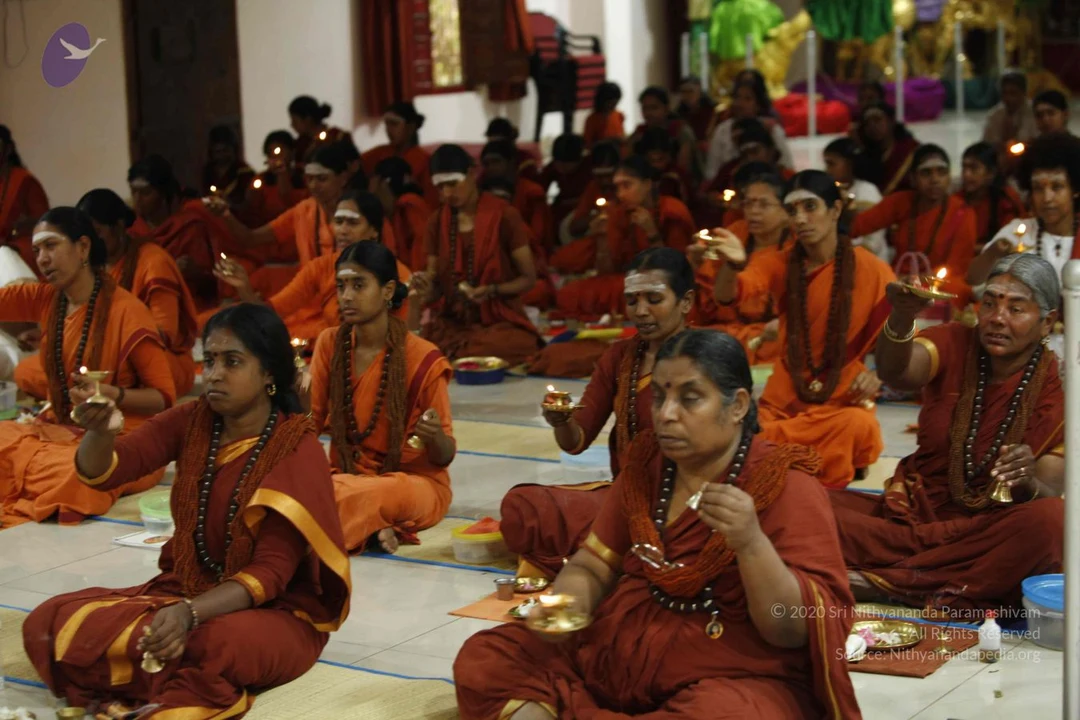
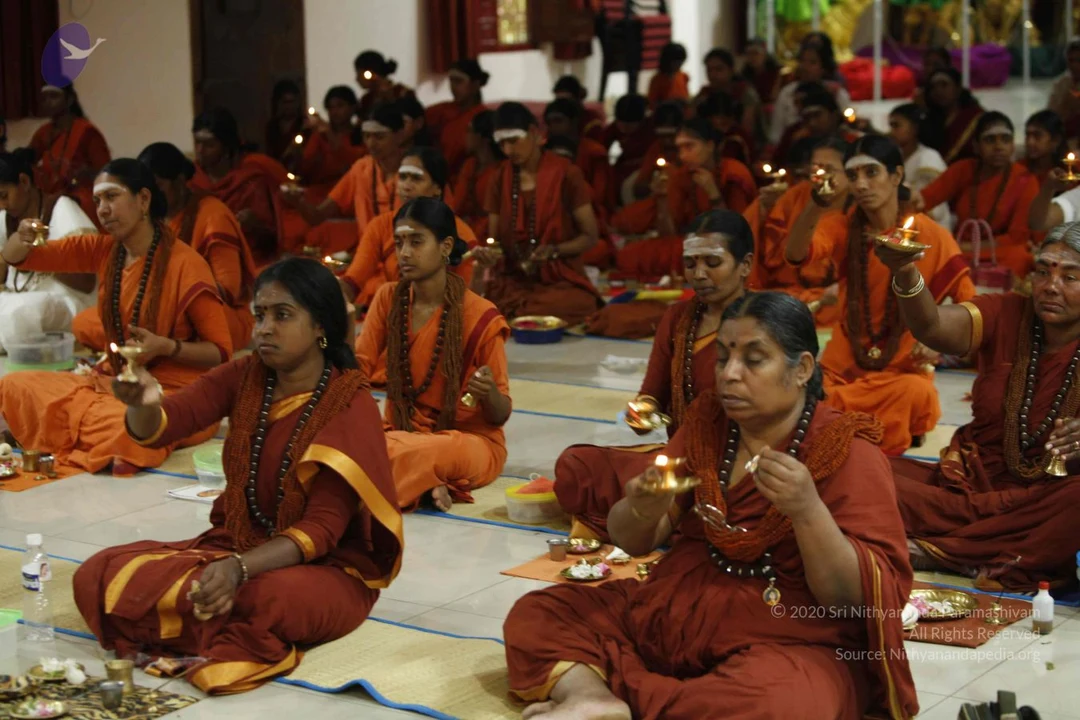
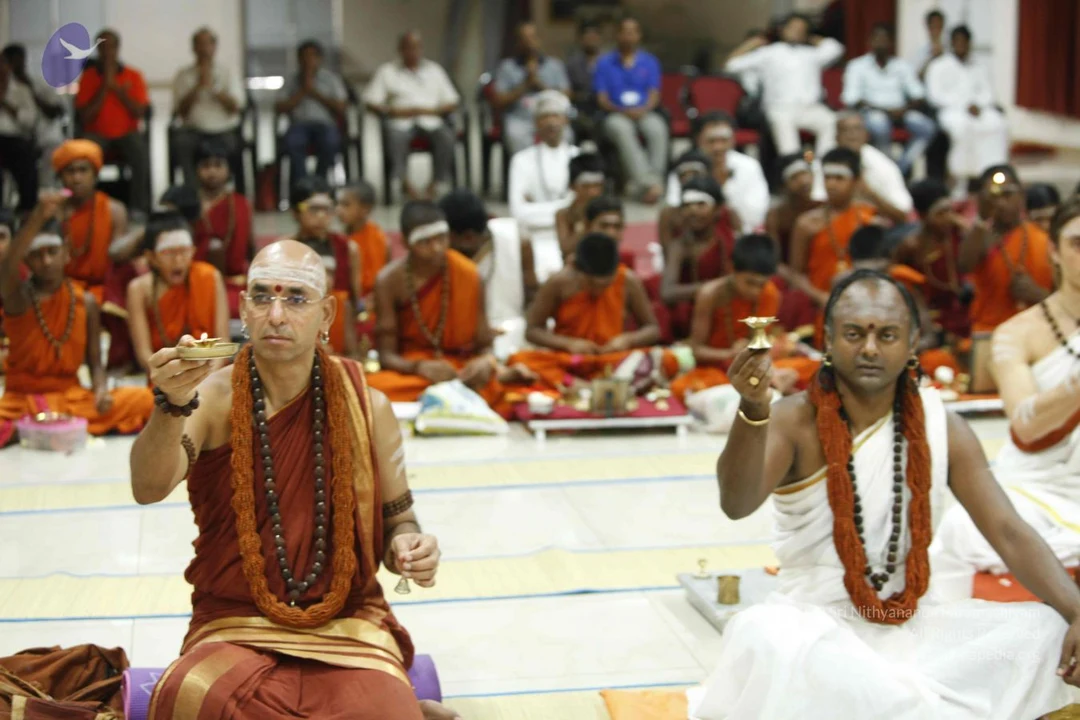
Satsang-Puja
Darshan

Photos Of The Day:

NDY-Session

Photos Of The Day:

NDY-Session

Darshan

Puja-Satsang

Photos from this day

View all 399 photos

Satsang-Puja
33 photosSource gallery
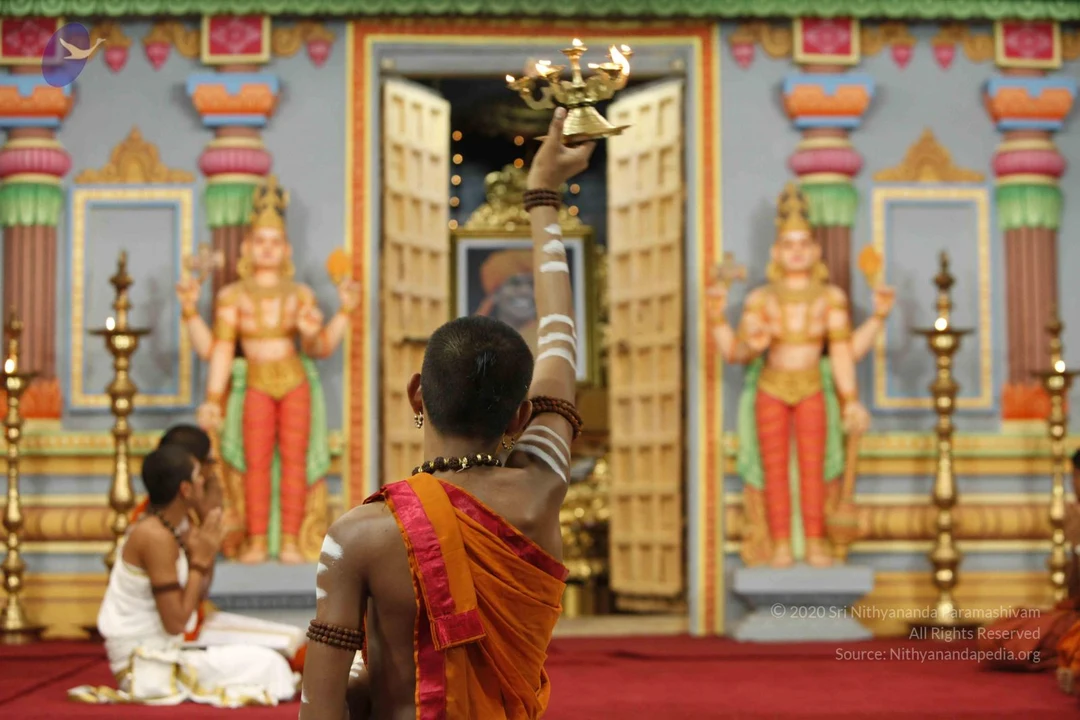
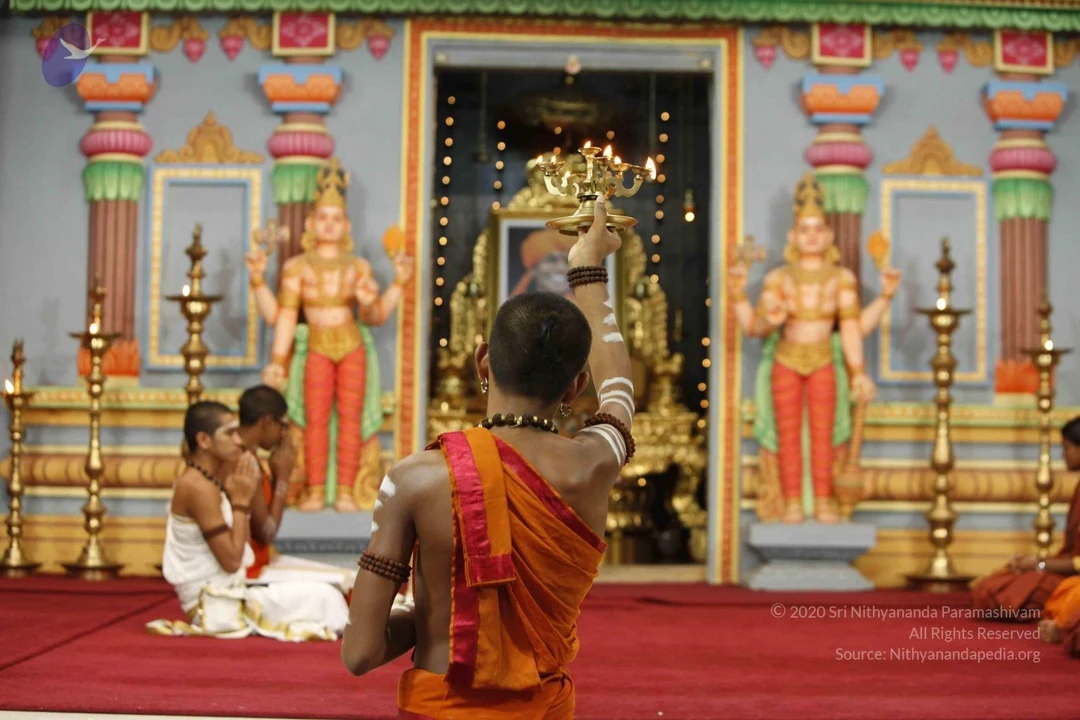
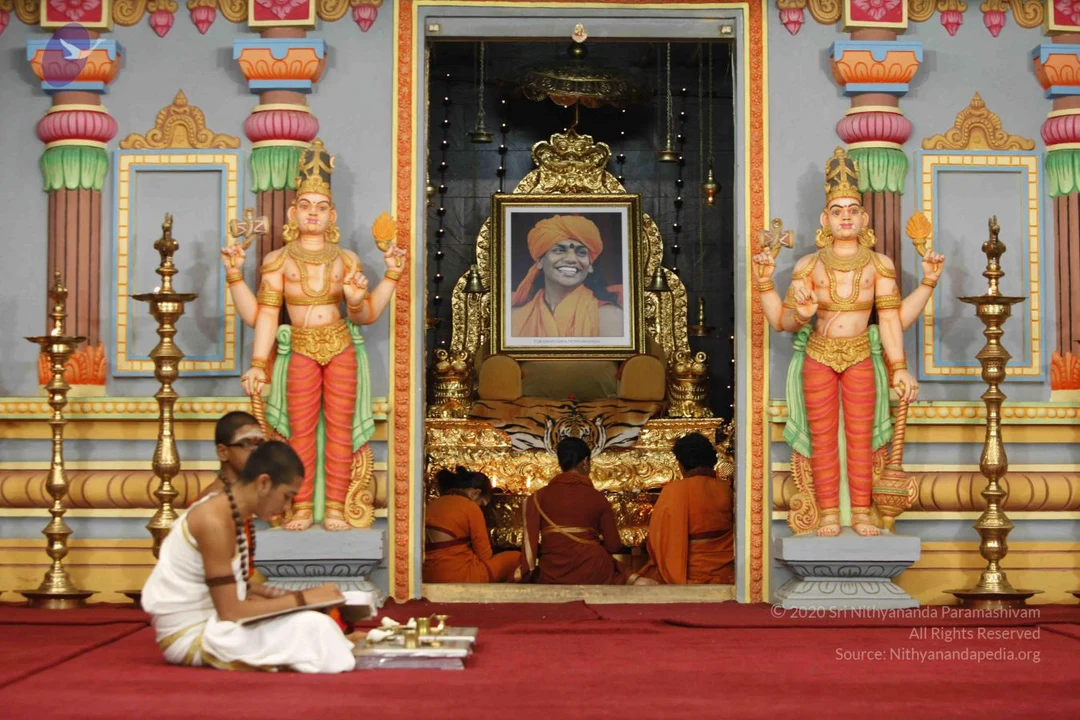
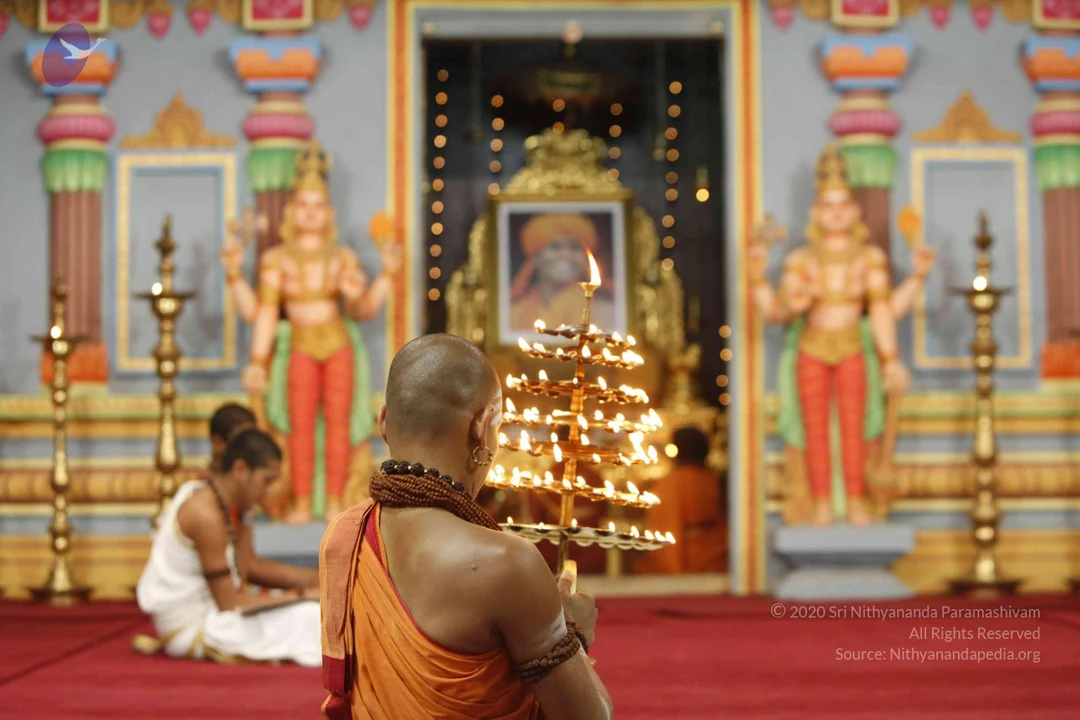
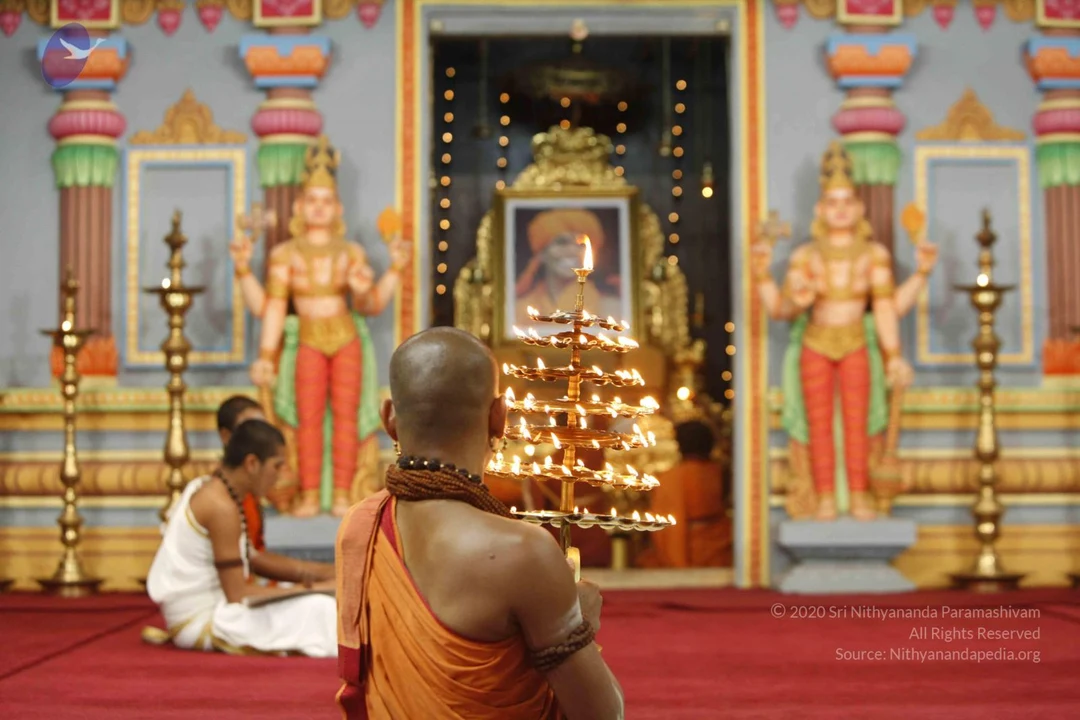
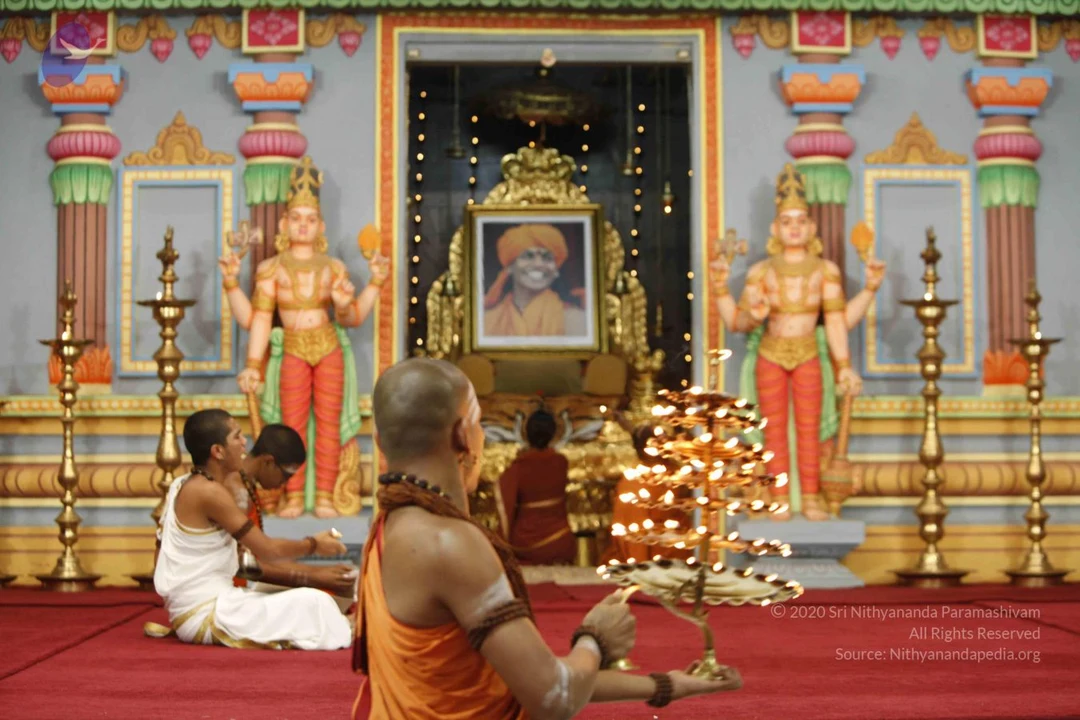
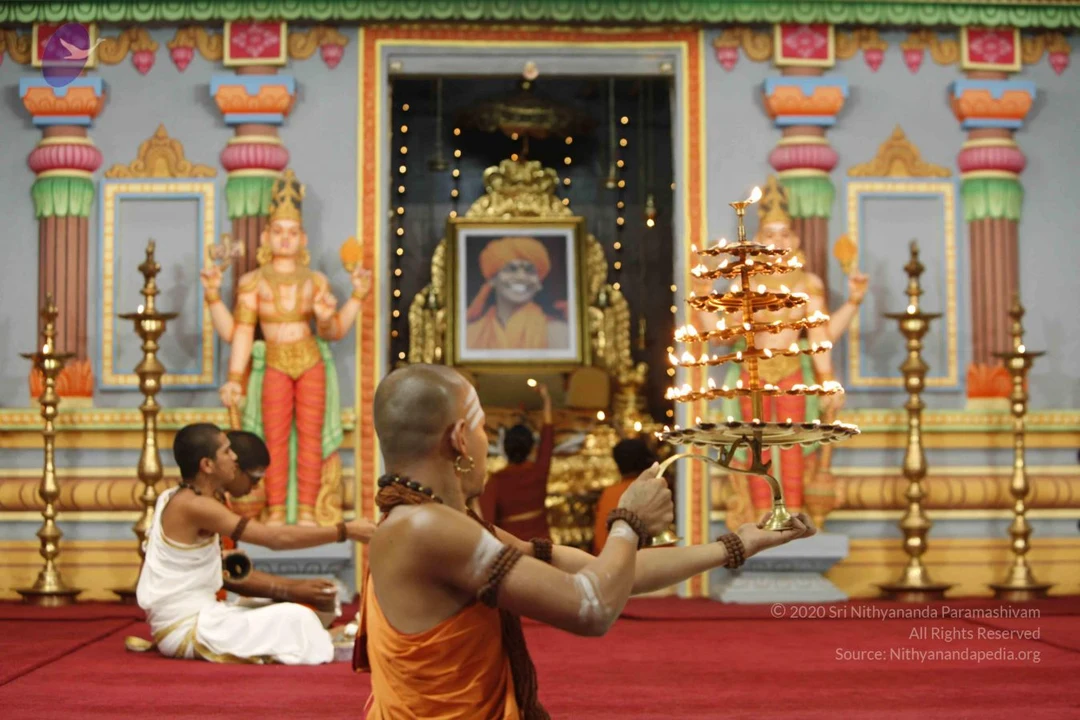
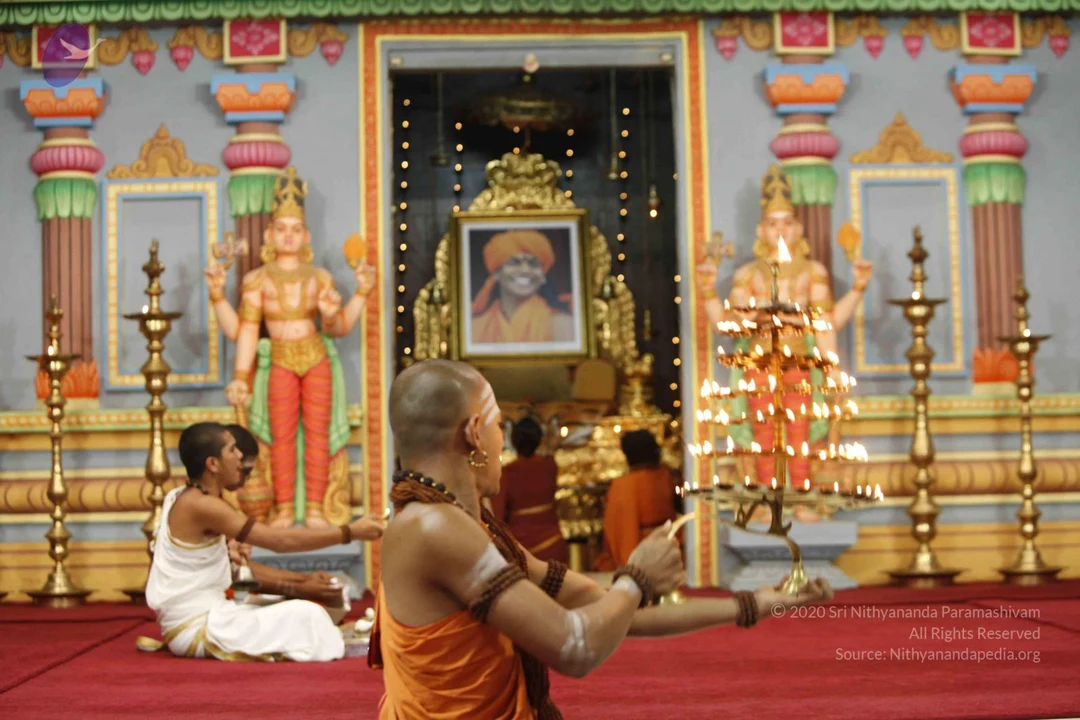
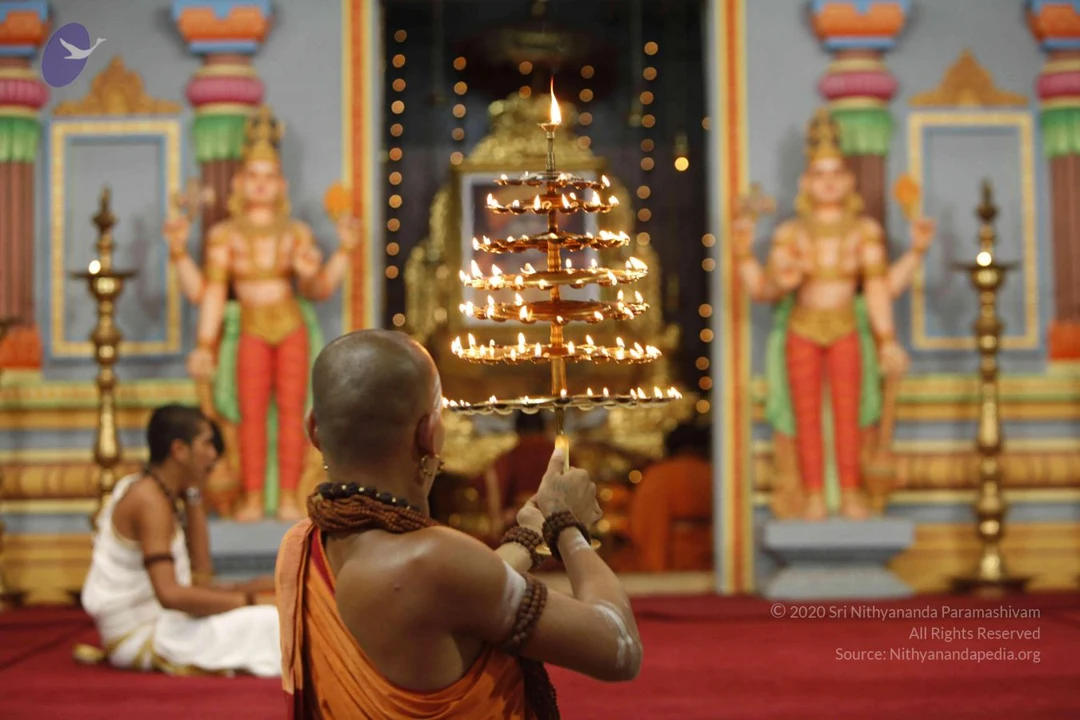
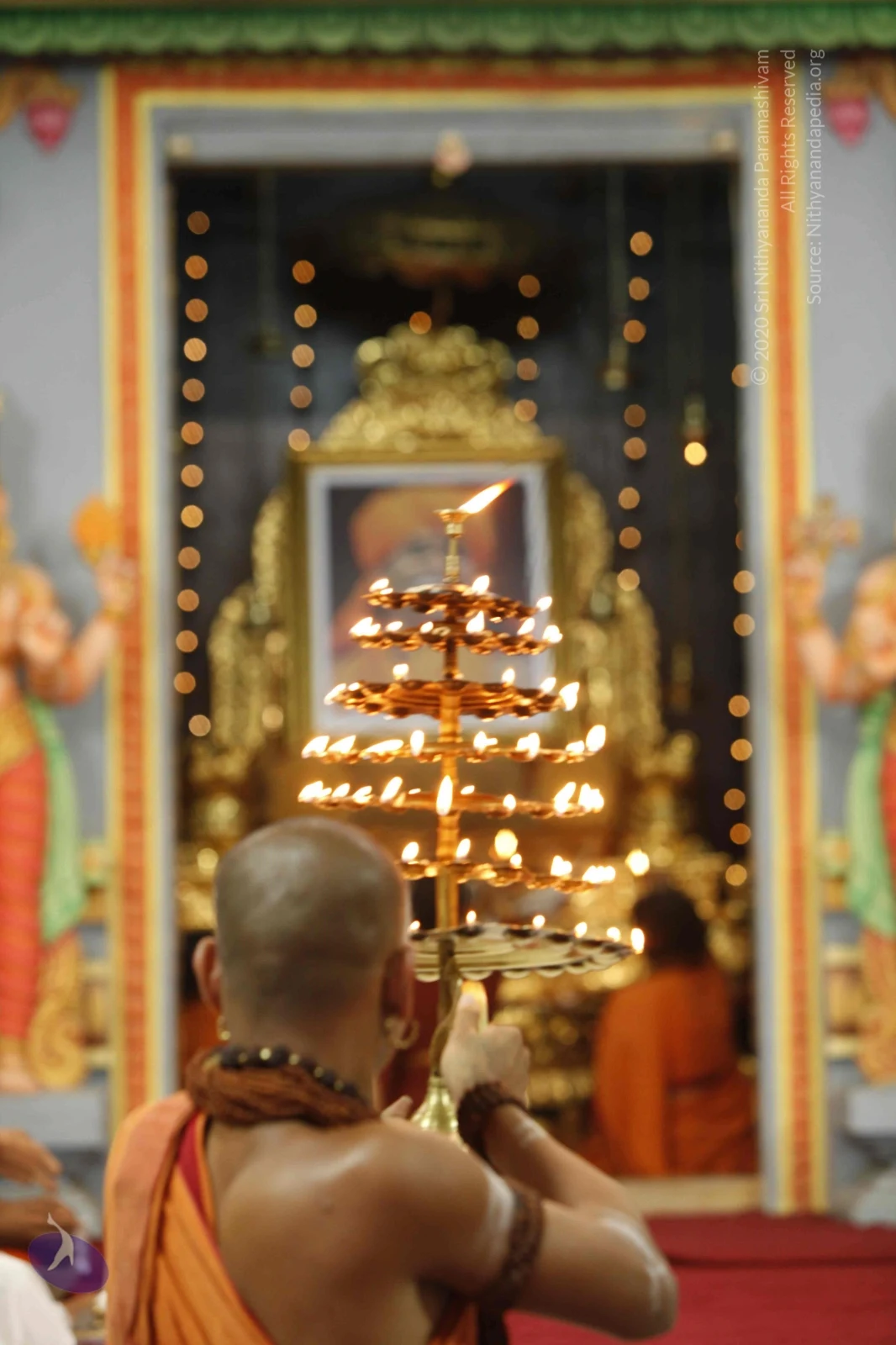
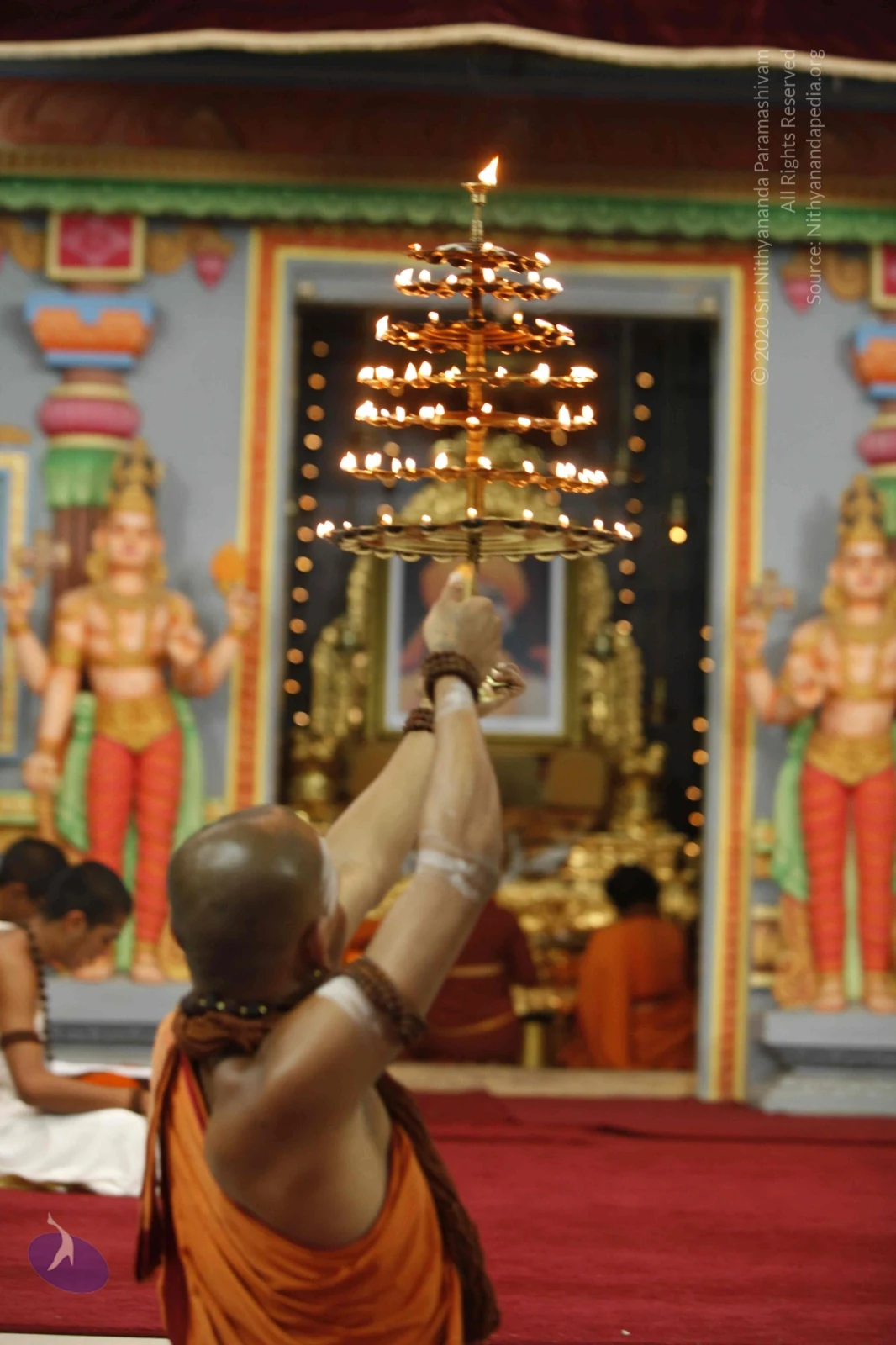
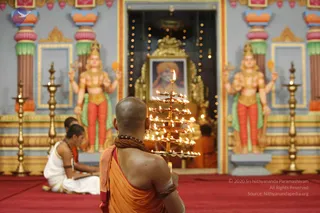
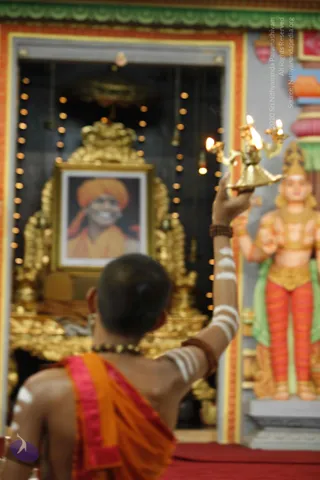
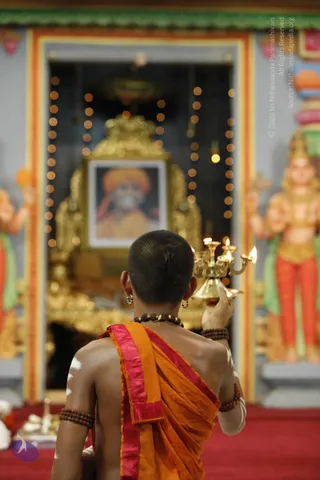
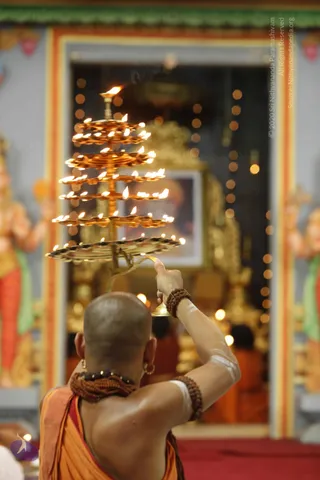
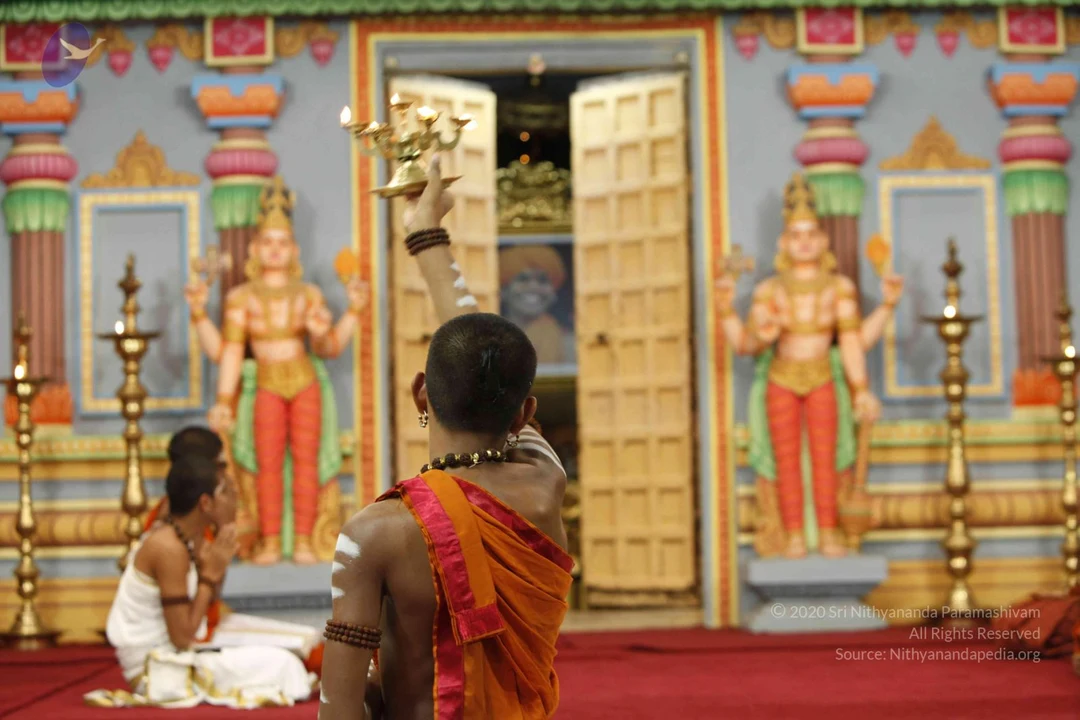
A temple-hall ritual scene with a priest standing in the foreground, seen from behind, wearing an orange cloth over the shoulder with a red border, a rudraksha mala around the neck and wrists, and white markings on the arms and back. He raises a brass lamp with multiple flames toward a doorway flanked by two tall painted deity murti with four arms, crowns and green dhoti drapes against a blue-and-orange pillared wall. A second seated figure in white cloth, with a rudraksha mala, sits to the left with hands folded. Brass standing lamps line the red carpeted floor. A framed portrait is visible through the open wooden doors.A photograph inside a temple sanctum with ornate painted walls and a red carpet. In the foreground a young priest with a shaved head, bare-chested and wearing an orange and red shawl, raises a brass aarti lamp with a burning flame toward the open doors. Two tall painted dvarapala guardian figures in gold and red stand on either side, holding ritual objects. Beside the priest, a seated figure in white ritual cloth with bead bracelets presses palms together in prayer. A framed portrait labelled with a name is visible through the doorway, showing a figure in saffron. Brass lamp stands line the walls. This is aarti with a deity shrine setting.A temple aarti scene in a shrine hall with a red carpet. A young priest seen from behind, shaved head, wearing an orange cloth over the shoulder with a red border and rudraksha beads, raises a brass multi-wick oil lamp toward a golden deity shrine. White sacred markings are on his arms and back. Two seated devotees in white dhotis with folded hands sit to the left, and a figure in orange sits at the right edge. Colourful painted guardian figures with raised hands and crowns flank the doorway, and brass lamp stands line the walls. No candidate for a person is clearly identifiable from appearance.Inside a temple shrine, a framed portrait of a smiling man in an orange-saffron head wrap and robe sits on a gold throne draped with a tiger-striped cloth, flanked by two painted multi-armed deity murtis with gold crowns, necklaces and green-and-red dhotis. Four people in saffron robes sit in devotion before the throne, while a young priest in white dhoti with a rudraksha mala sits on the red carpet in the foreground beside brass puja vessels, reading or writing in a book. Tall brass oil lamps stand on either side. The portrait is a depiction, not a person physically present in the scene.A photograph of a temple sanctum. In the foreground a bald man in an orange saffron robe with a rudraksha mala around his neck and a bead bracelet on his wrist holds a tiered brass aarti lamp with many lit wicks, seen from behind. Two standing guardian figures with golden crowns and red-and-green sashes flank the entrance. A framed portrait with a gold frame sits within the shrine, and a seated person in white dhoti and shawl with a red thread sits at left, reading or chanting. Brass lamp stands line the walls and a red carpet covers the floor, with a string of small lights around the shrine doorway.A photograph of a temple shrine room with red carpeting and painted deity statues flanking the central doorway. A shaved-headed priest in an orange cloth and a rudraksha mala seen from behind holds a tiered brass lamp with many lit oil lamps, facing the shrine. Two boys in white dhotis and orange shawls sit on the floor to the left. A framed portrait showing a figure in orange robes sits on a gold-trimmed altar within the doorway, surrounded by small string lights. Brass oil lamps stand along the walls.

Darshan
65 photosSource gallery
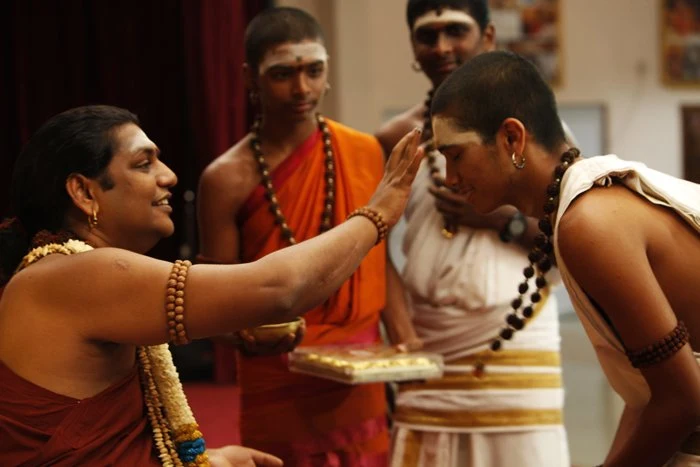
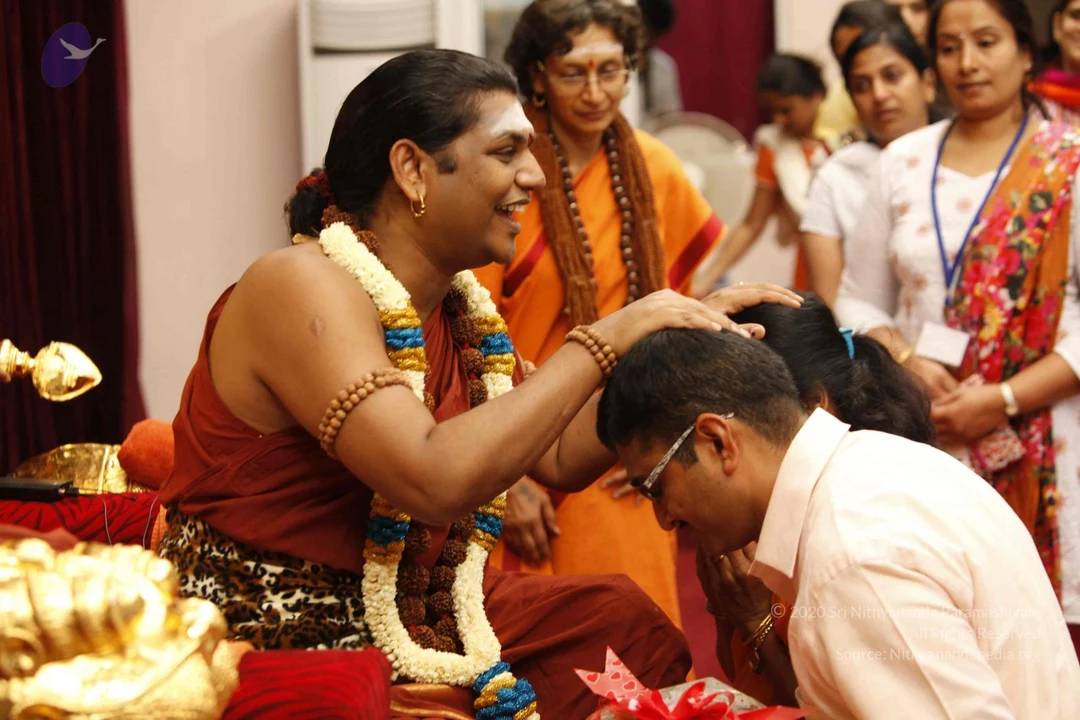
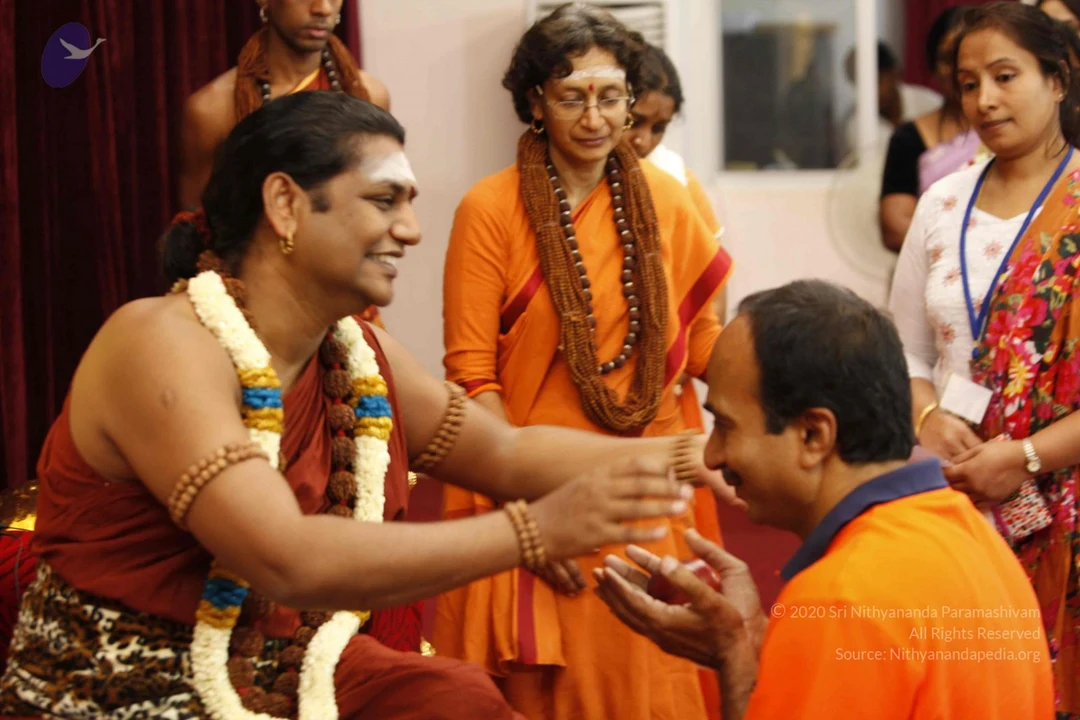
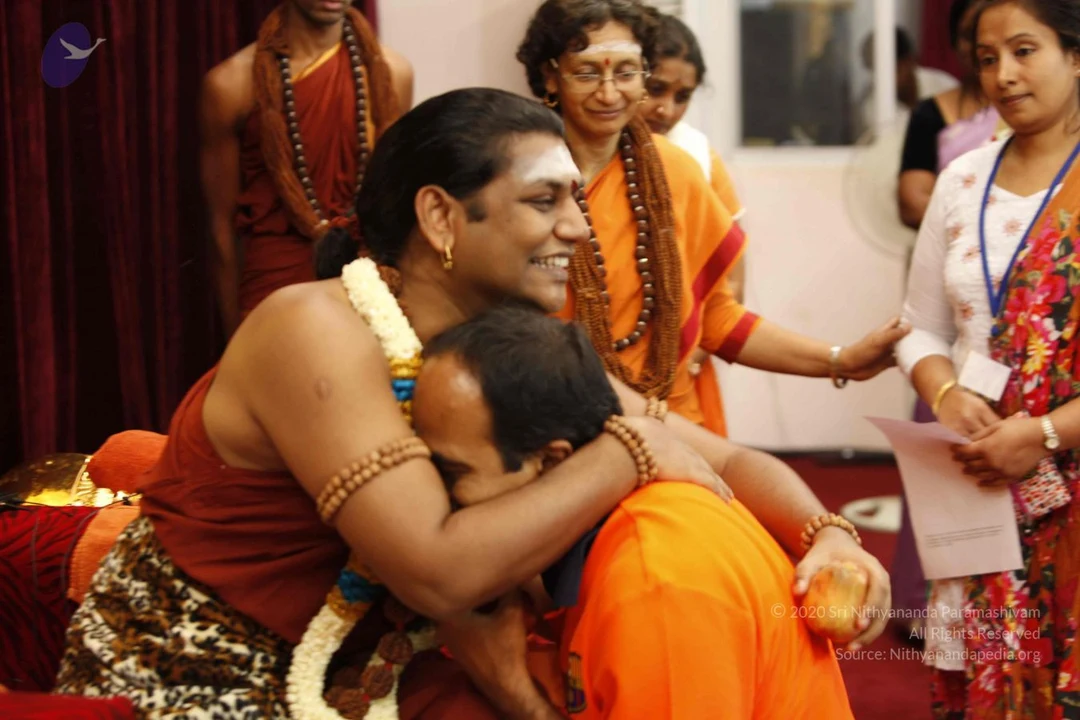
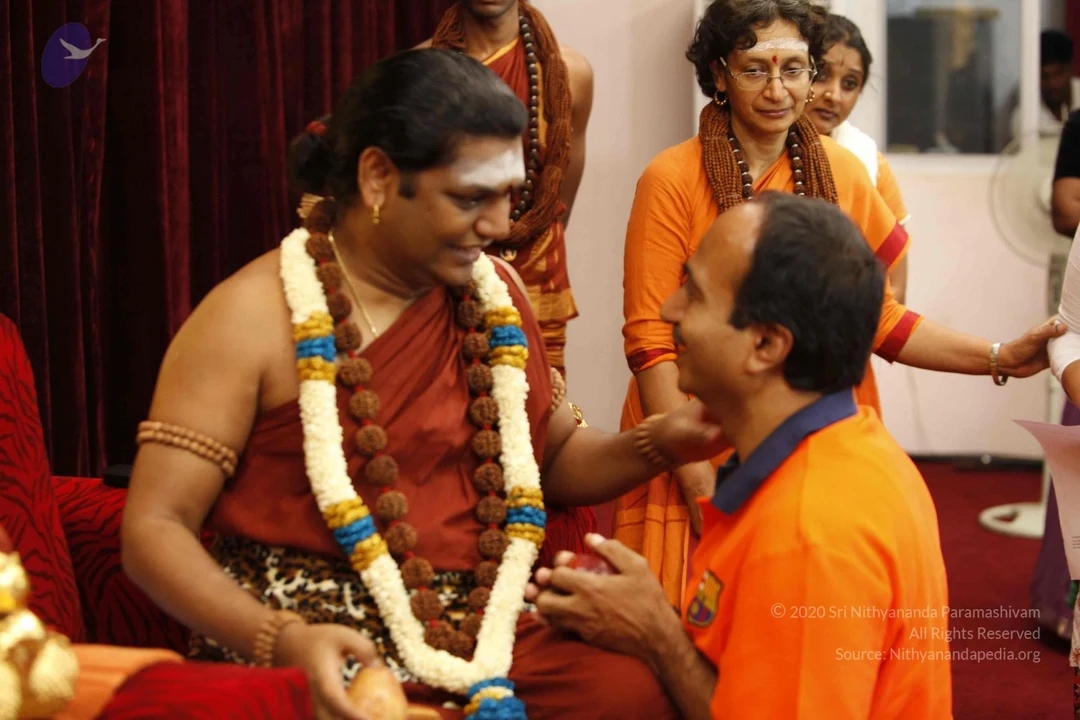
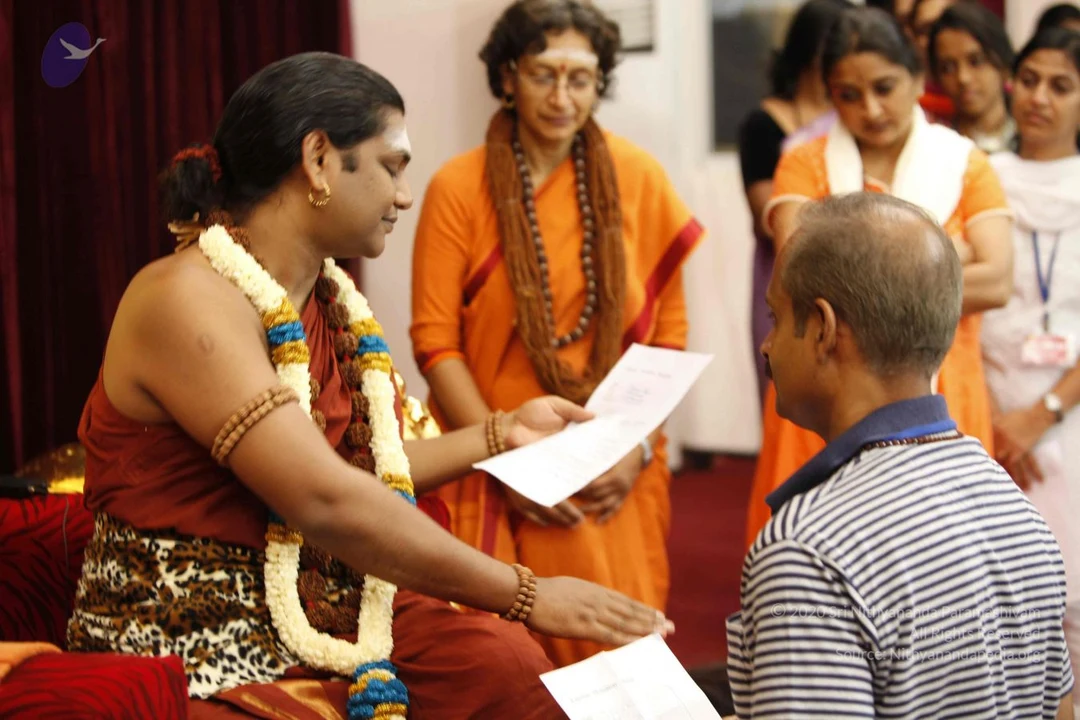
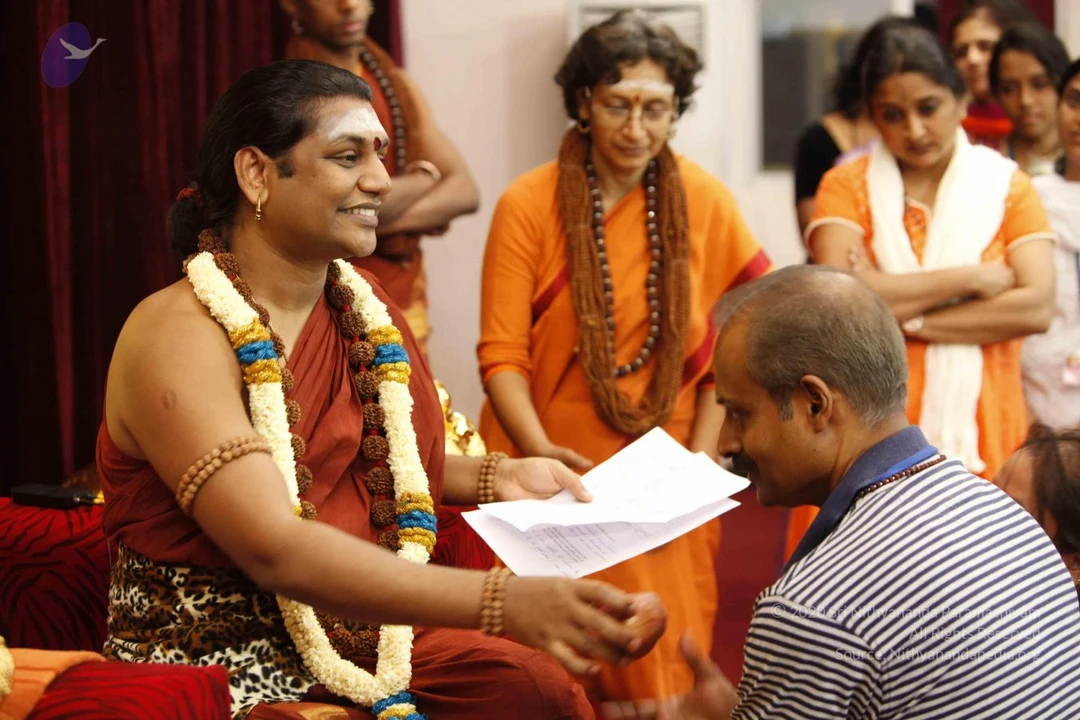
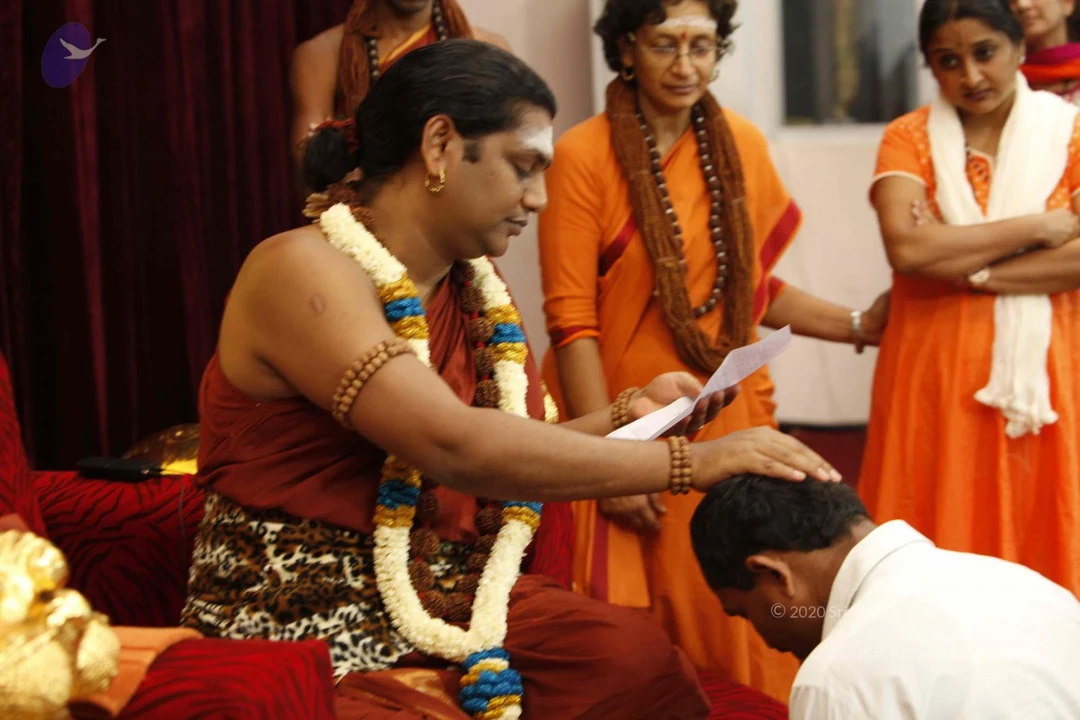
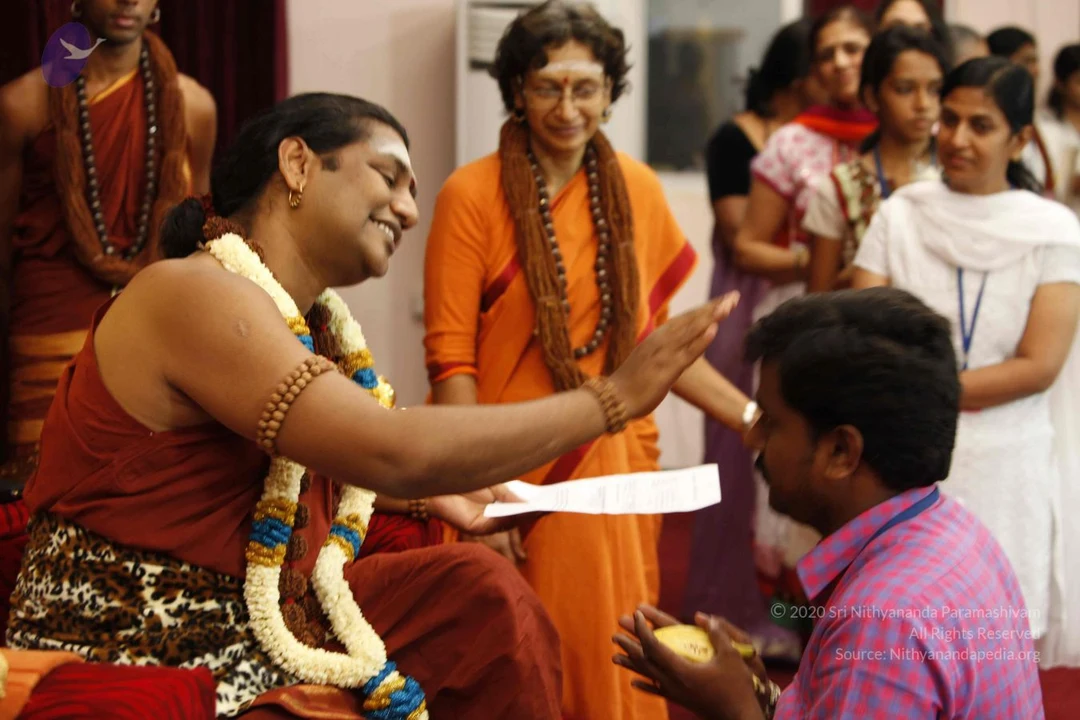
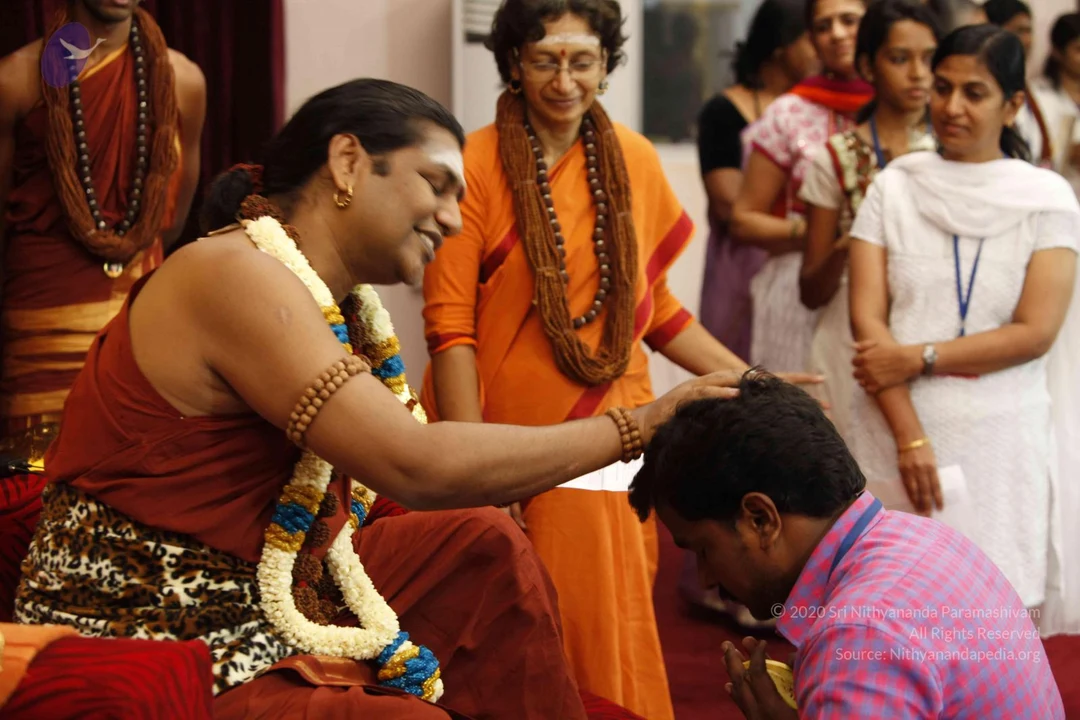
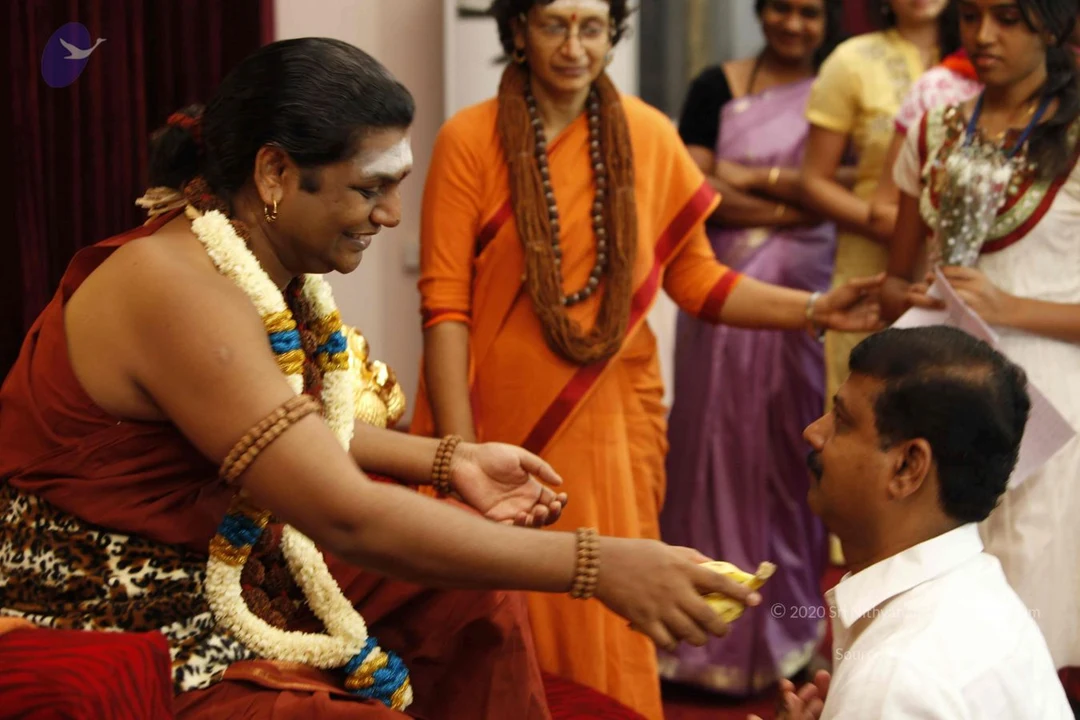
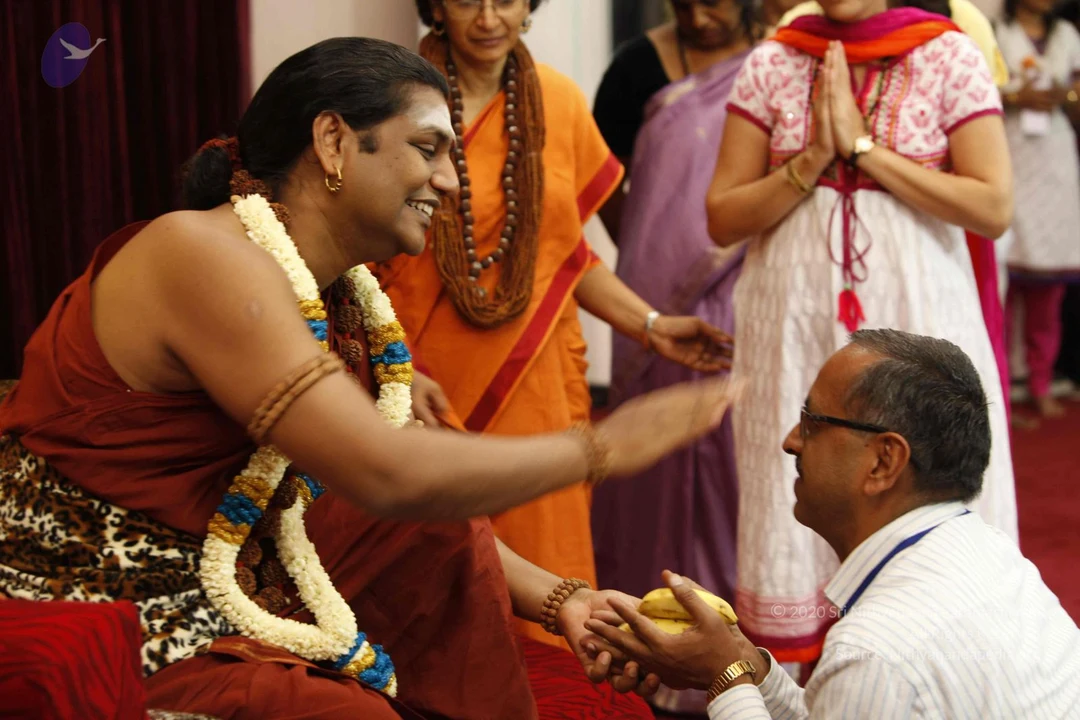
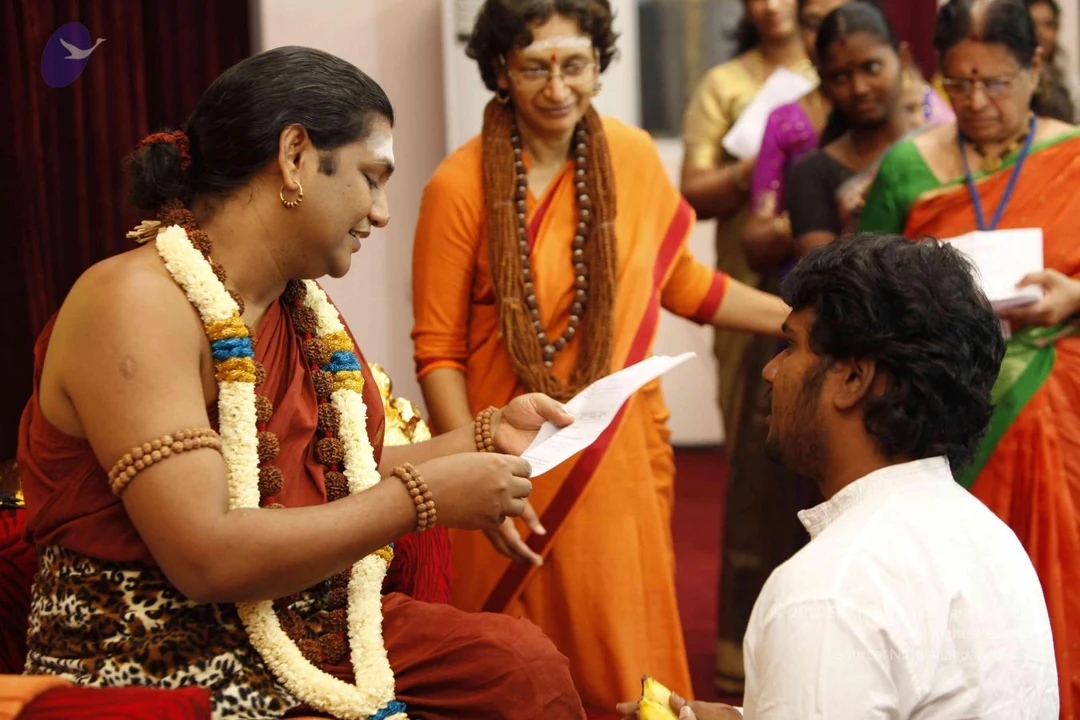
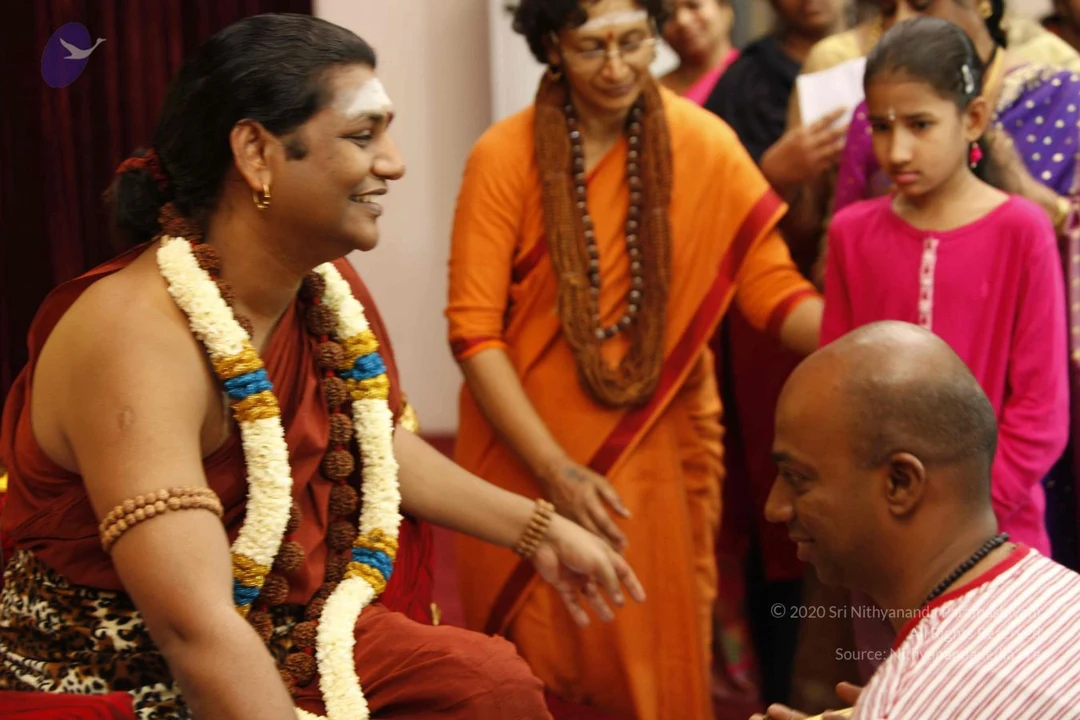
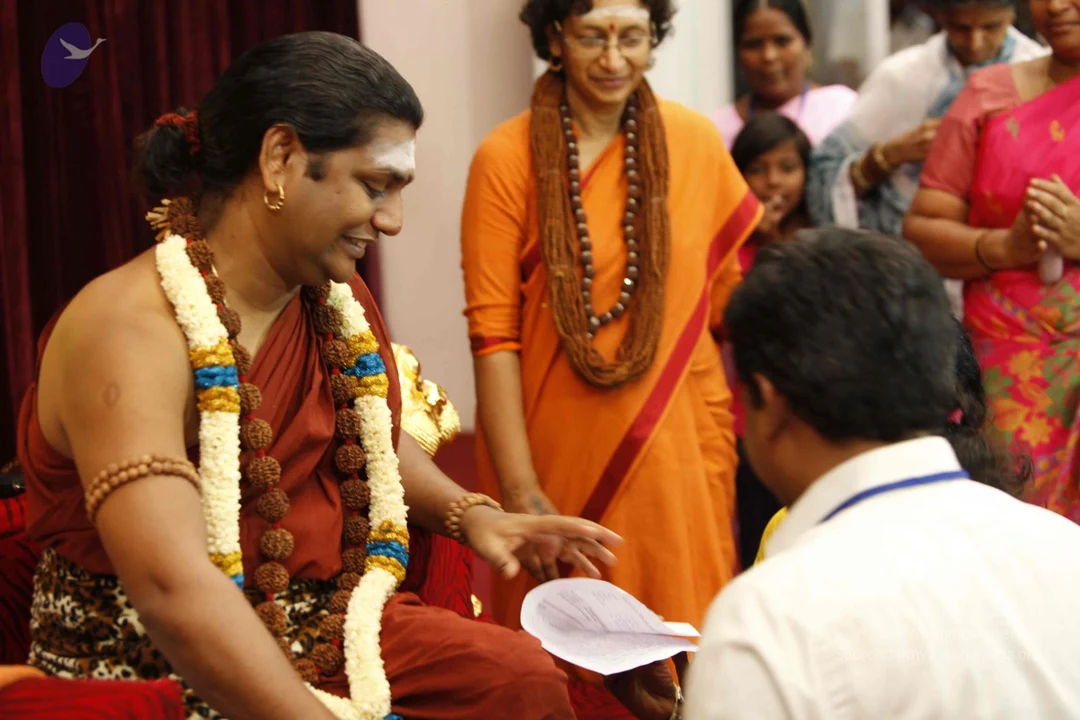
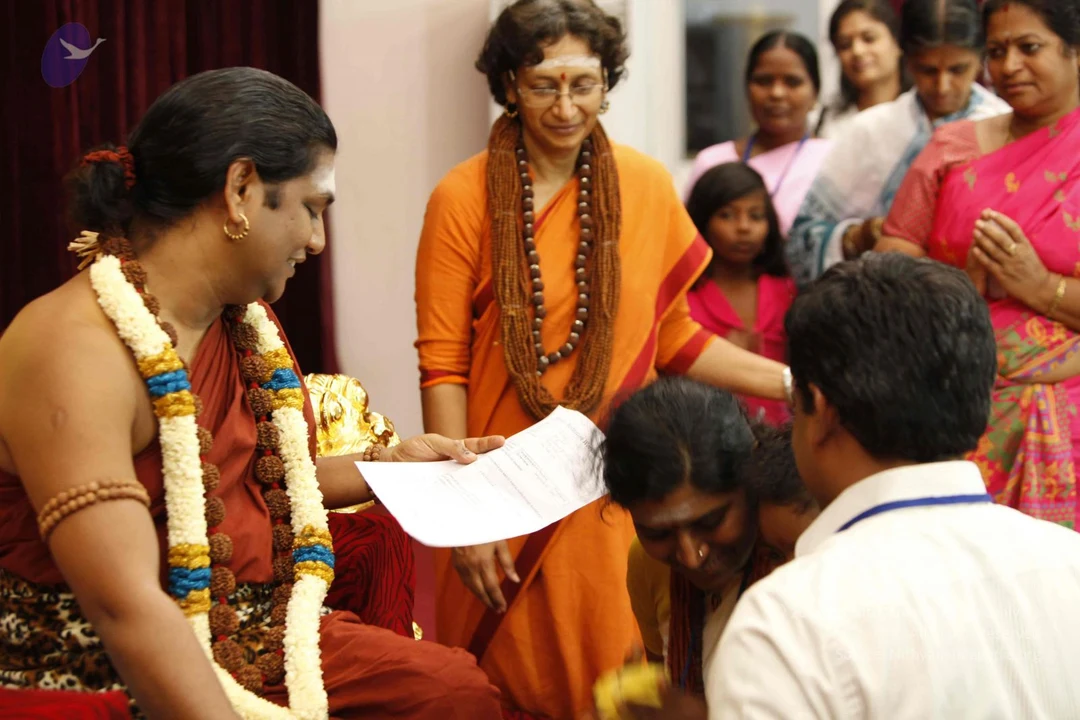
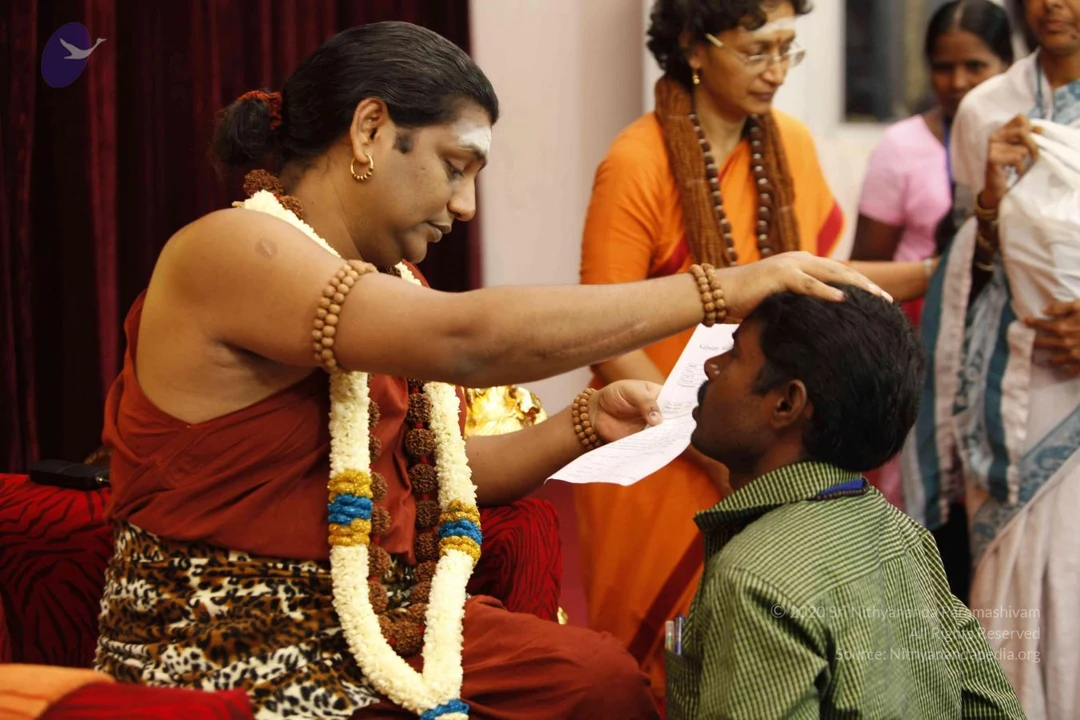
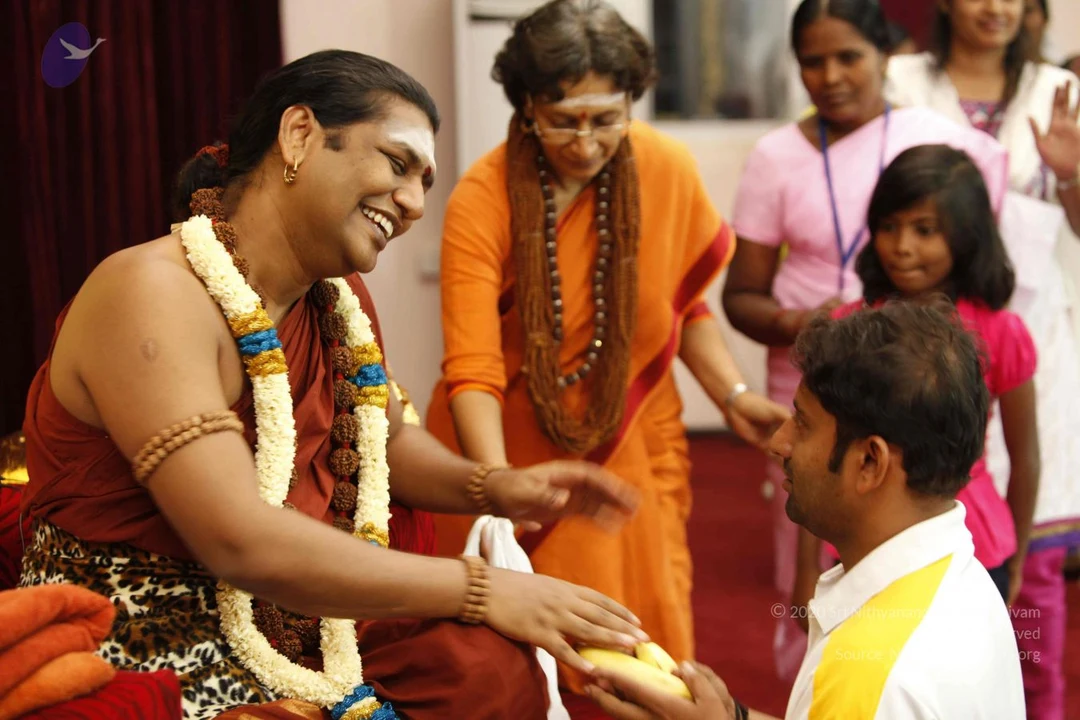
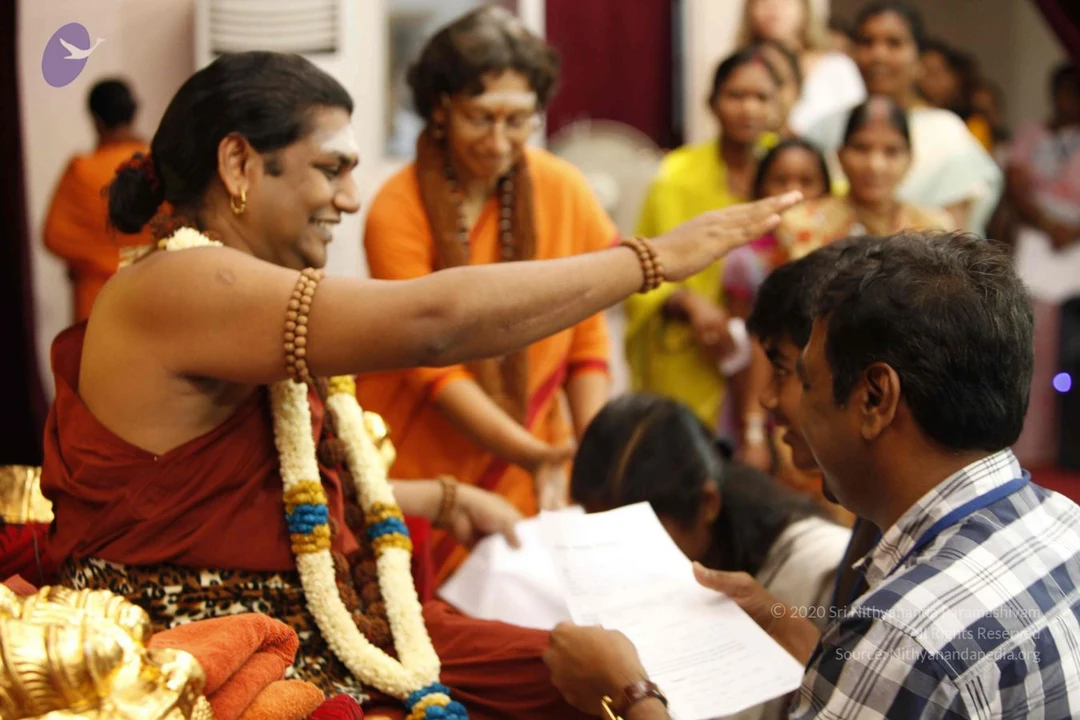
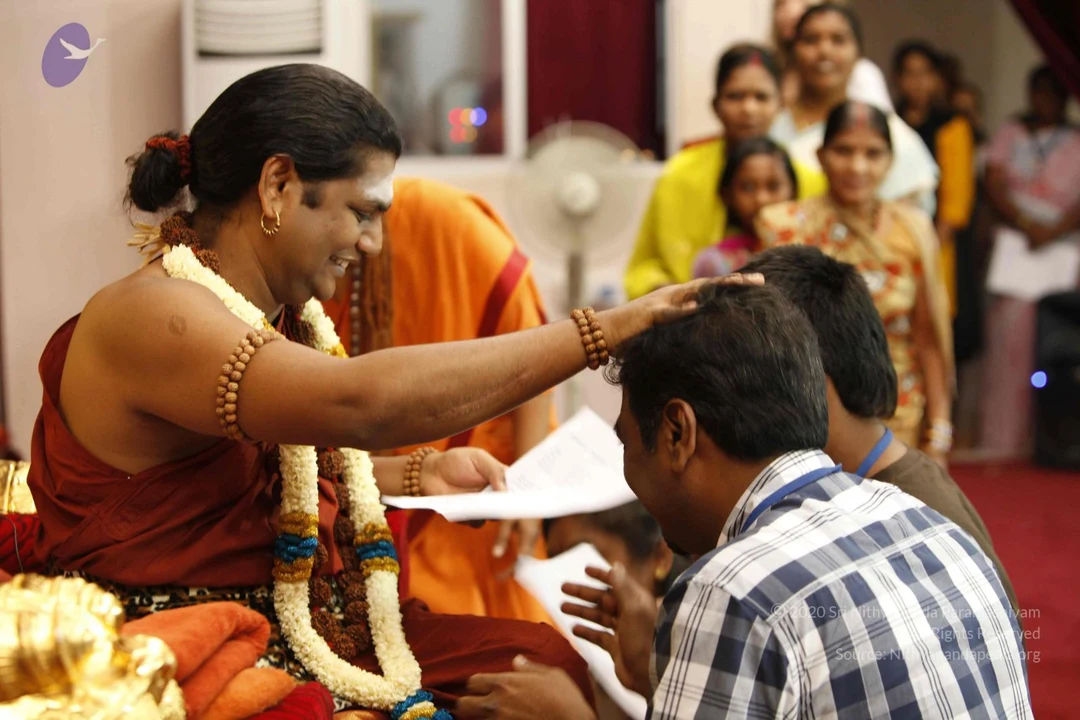
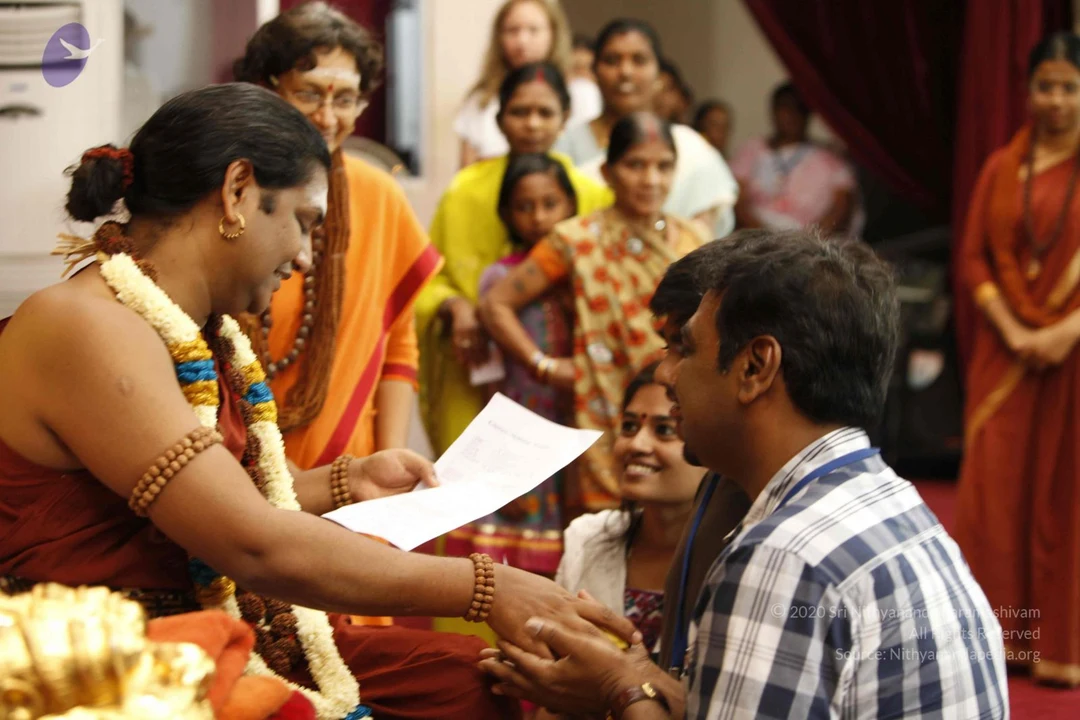
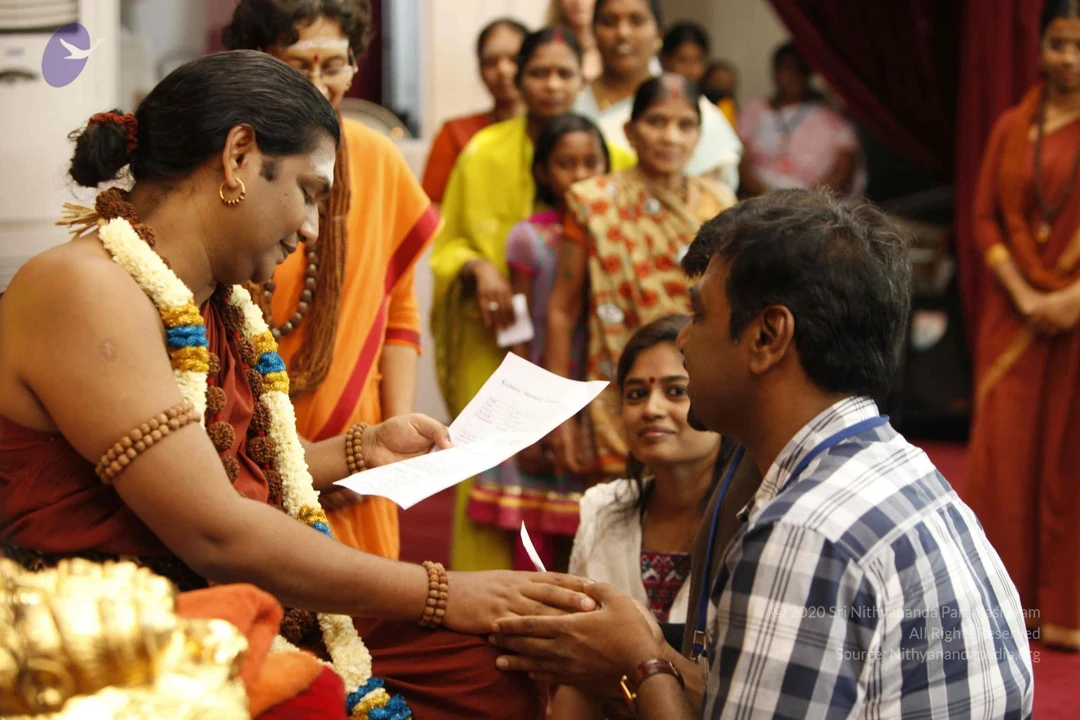
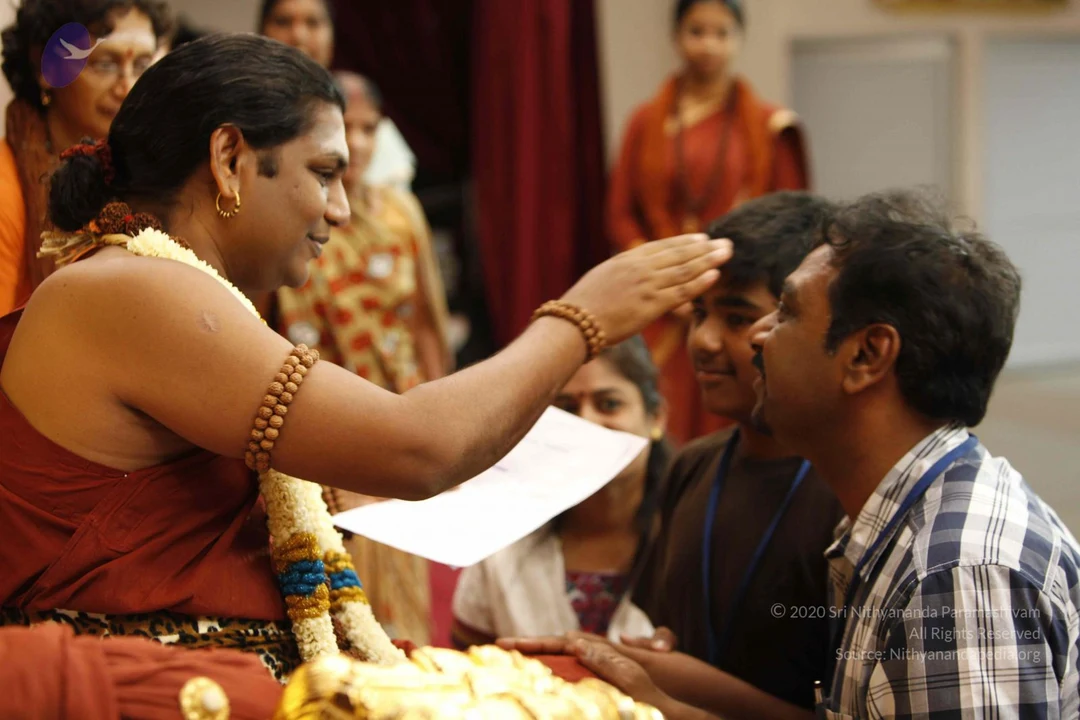
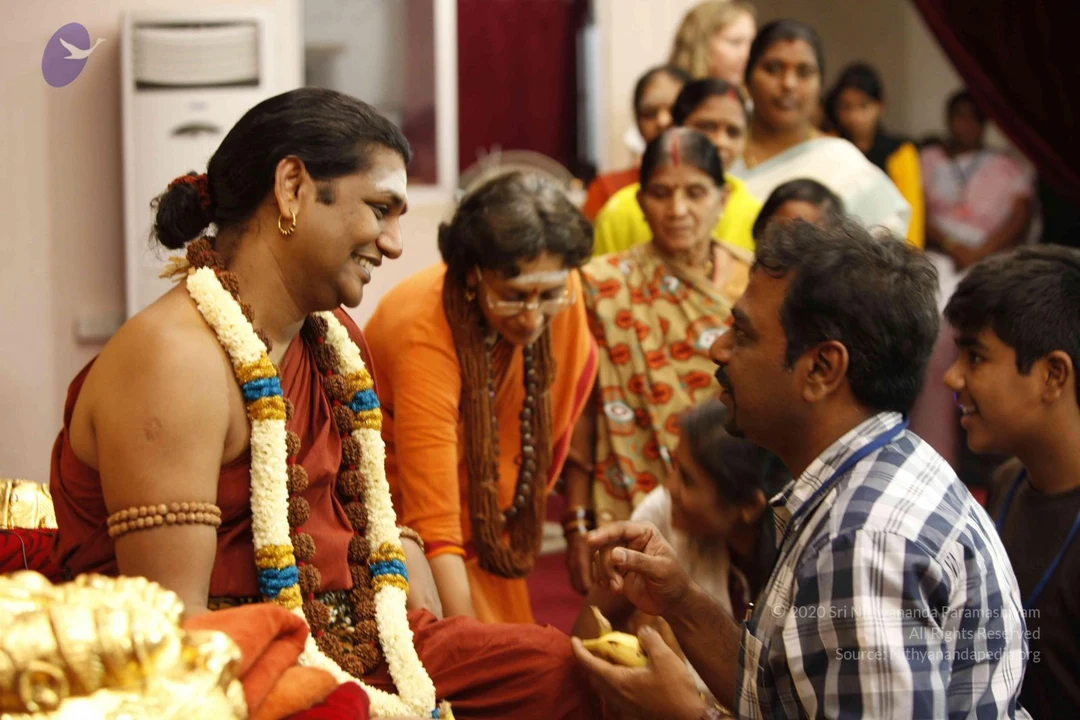
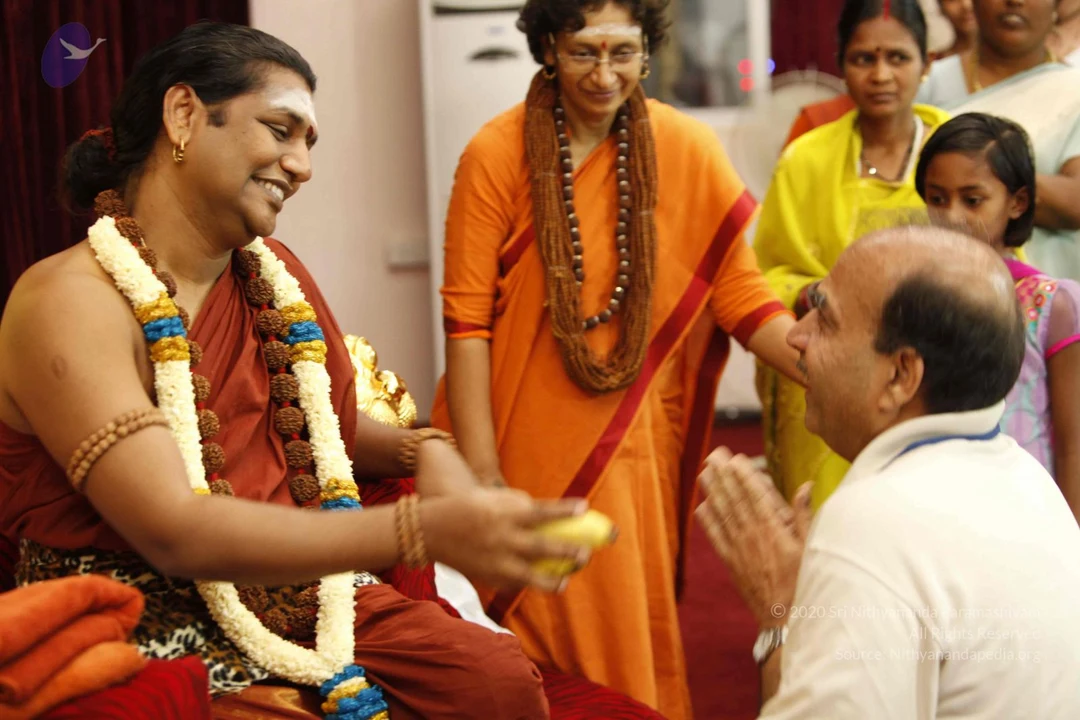
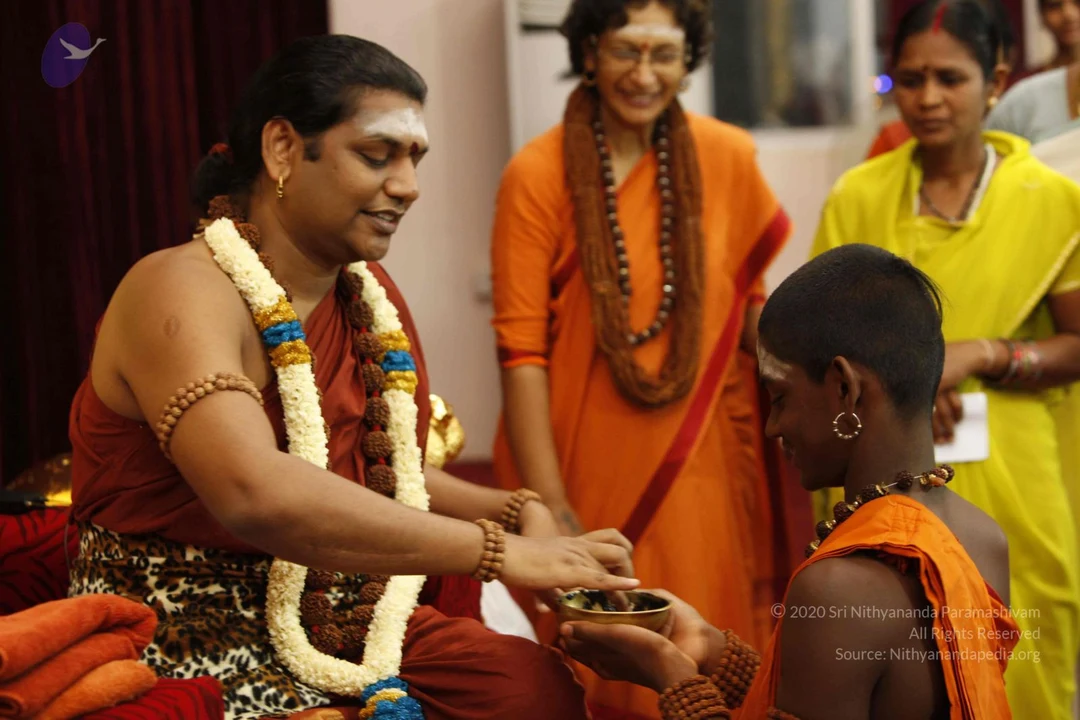
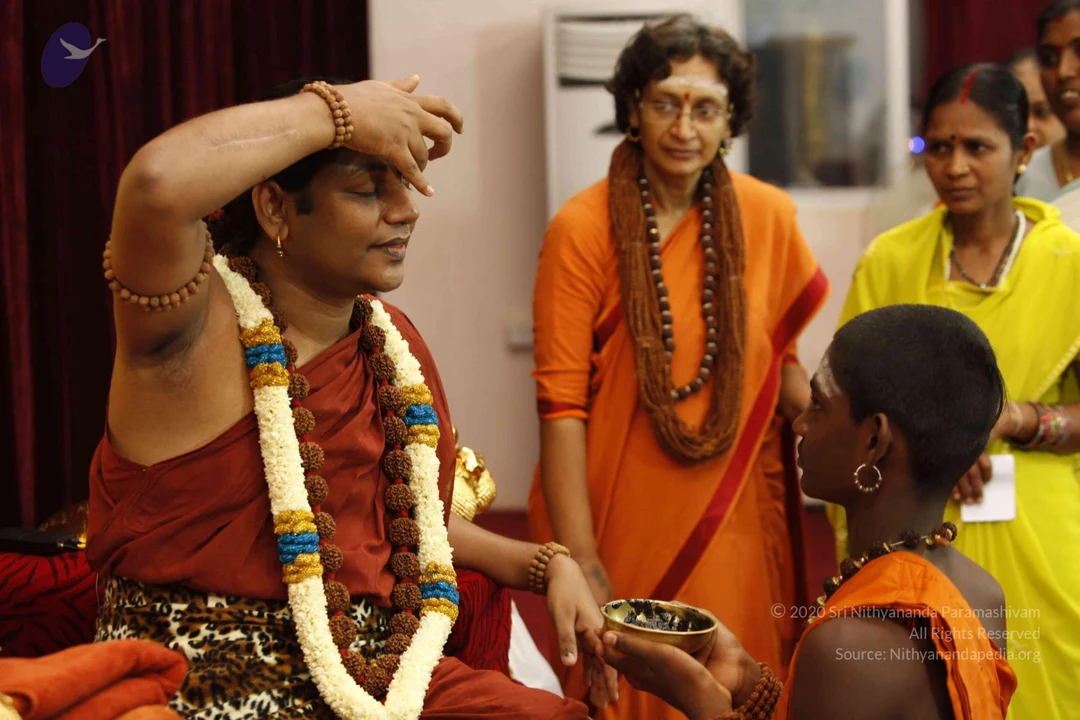
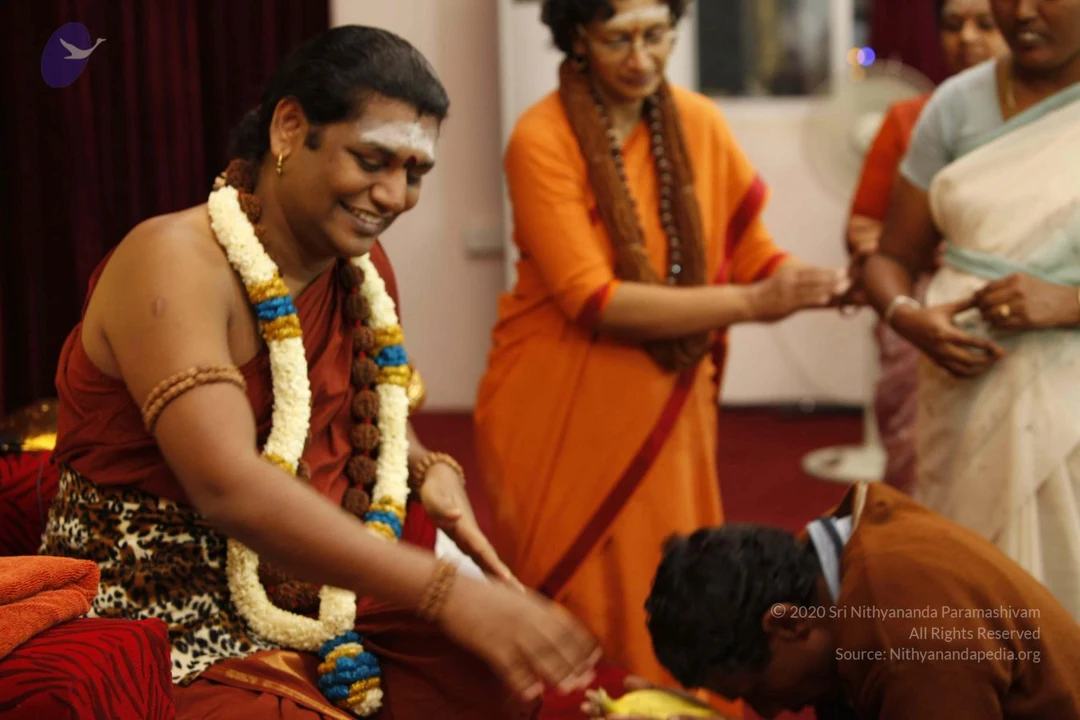
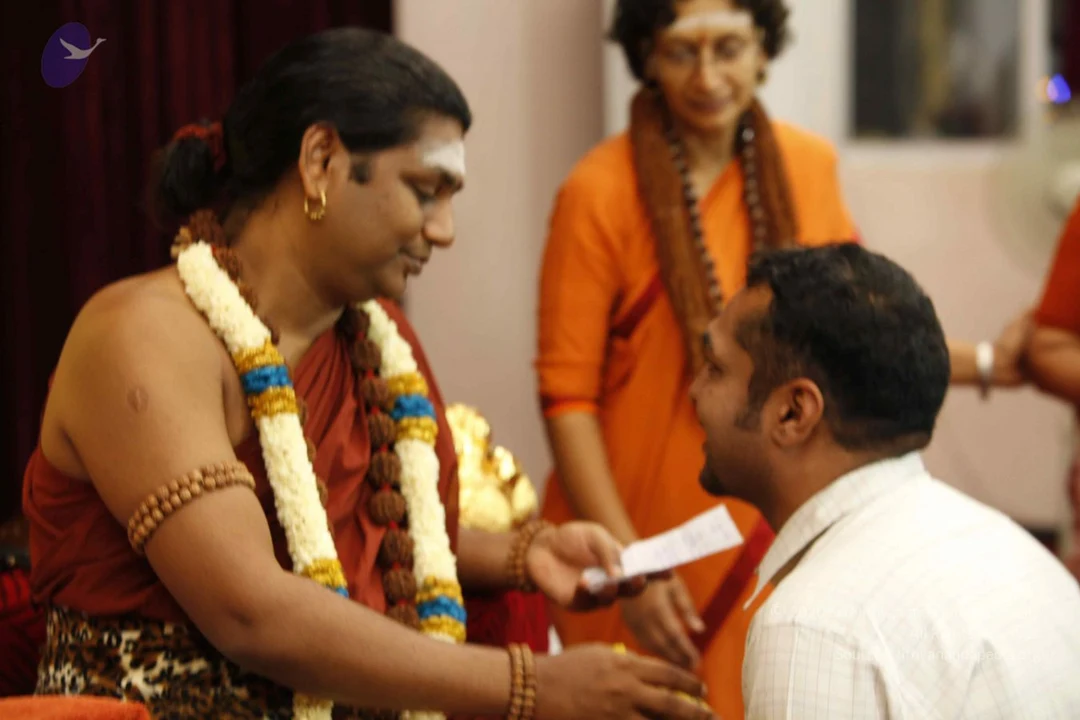
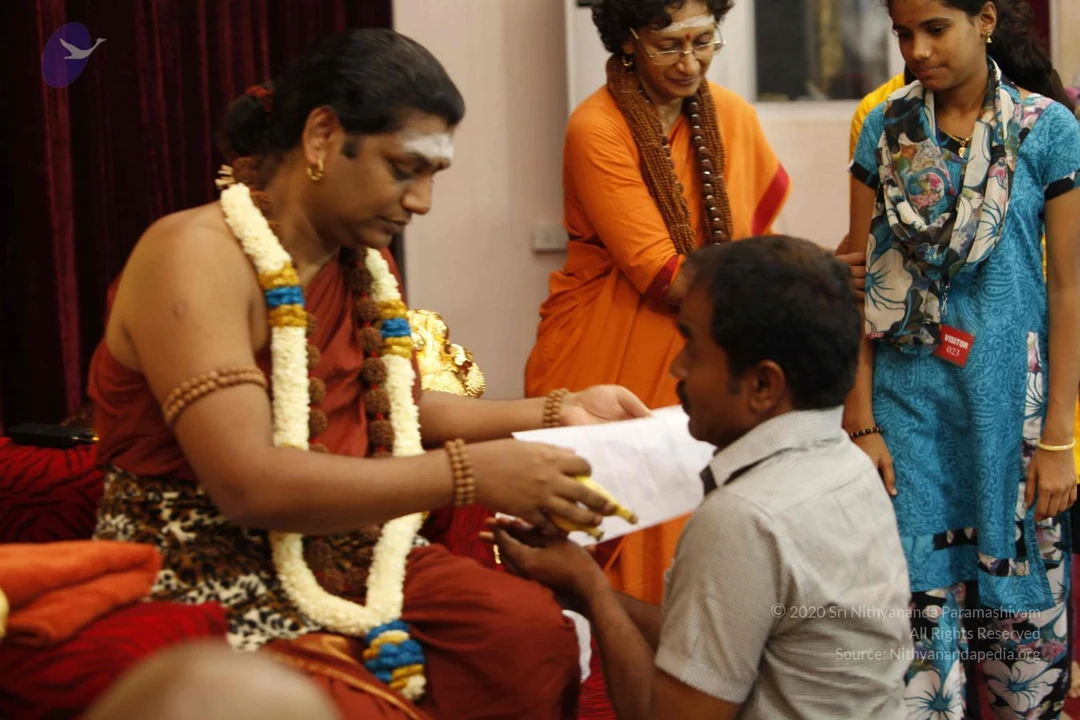
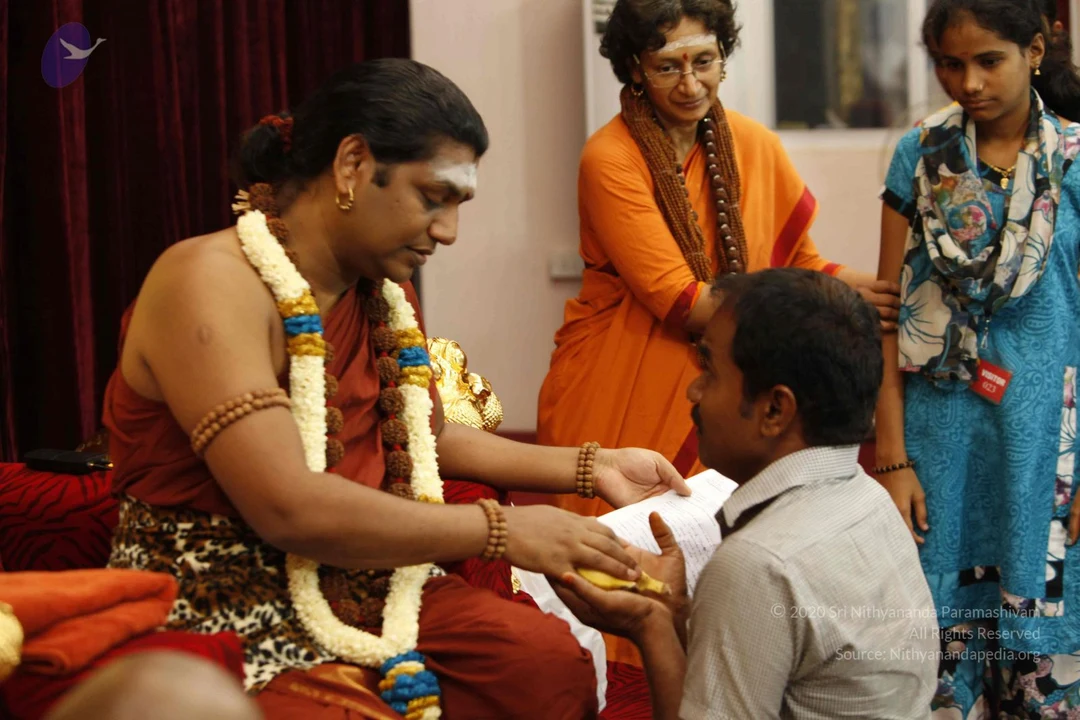
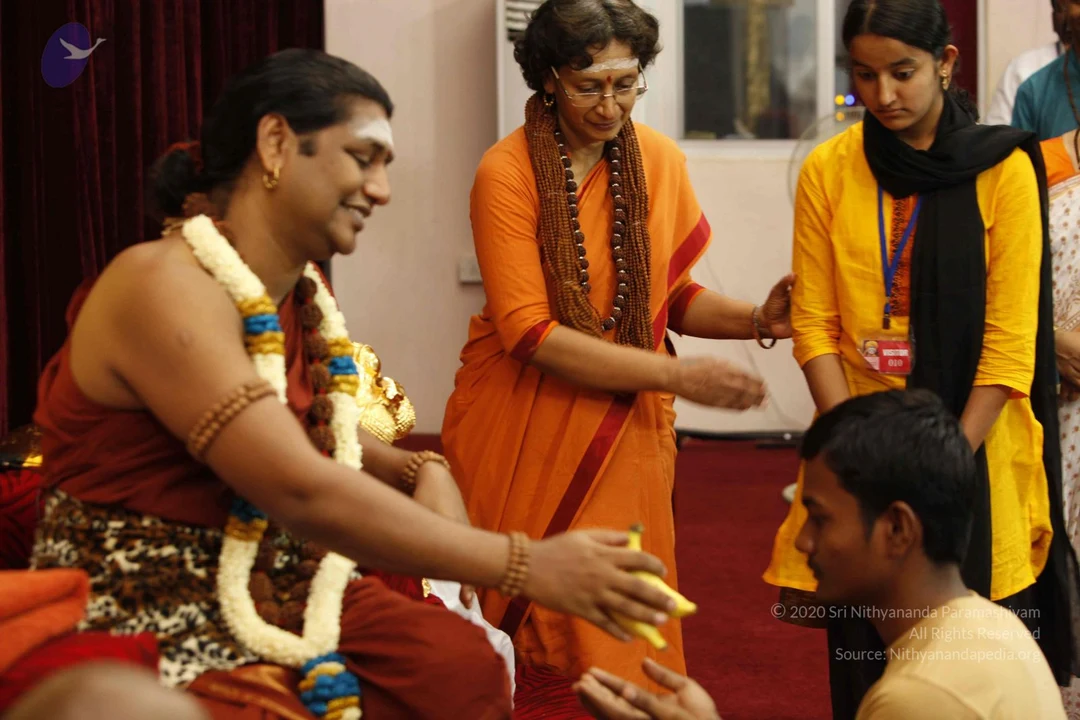
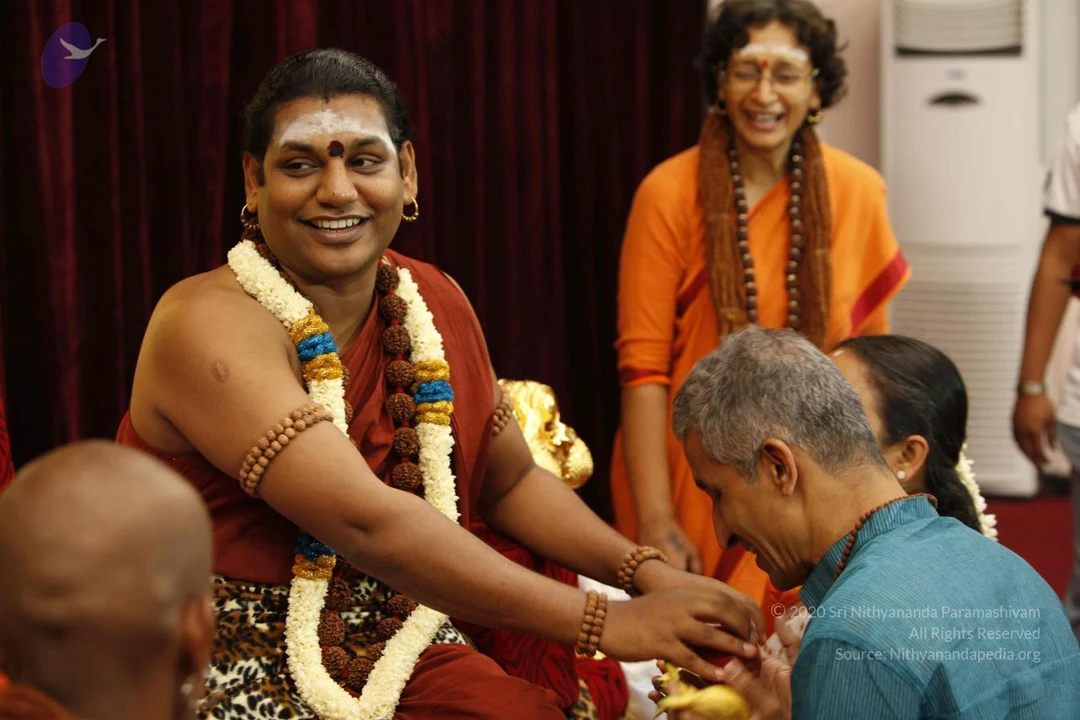
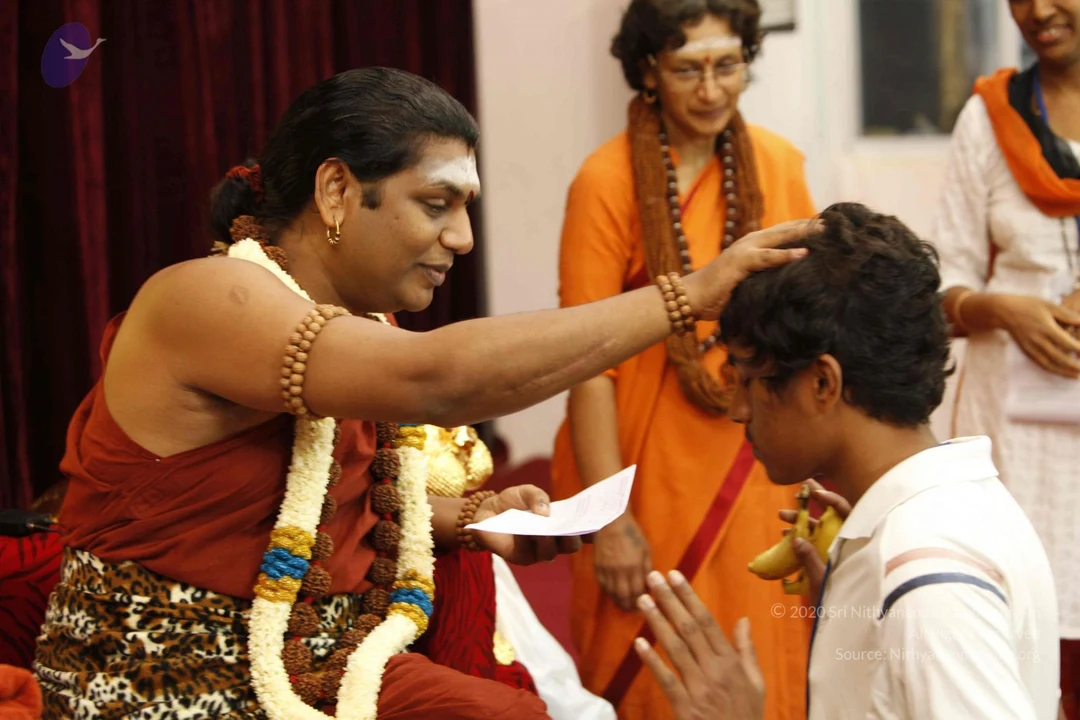
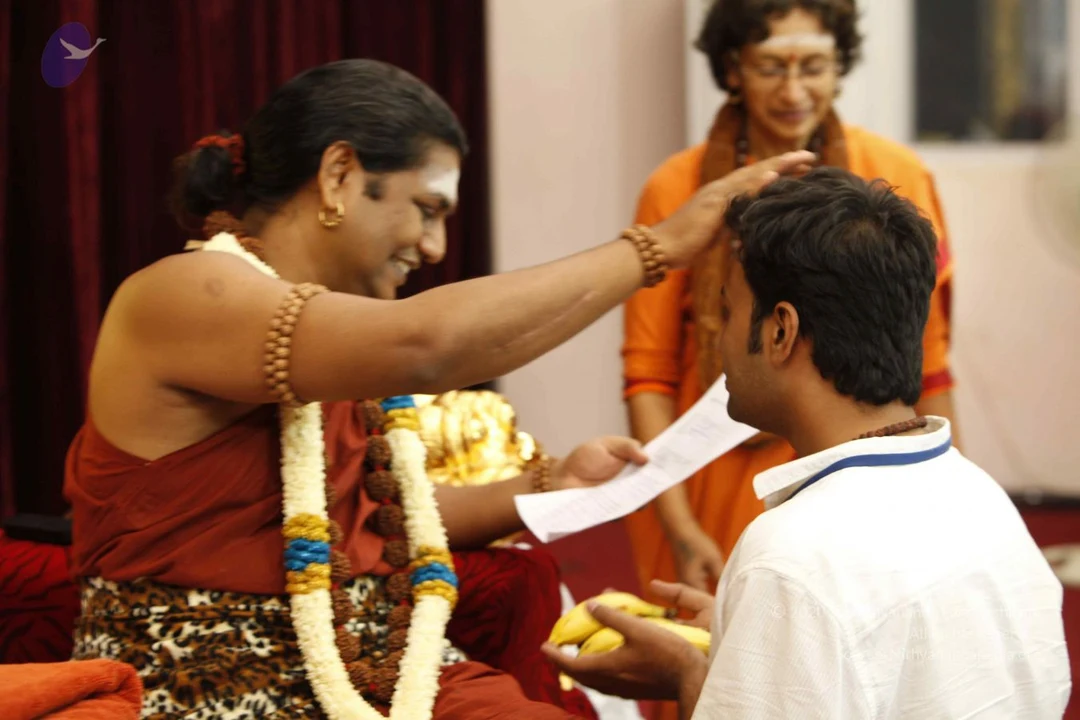
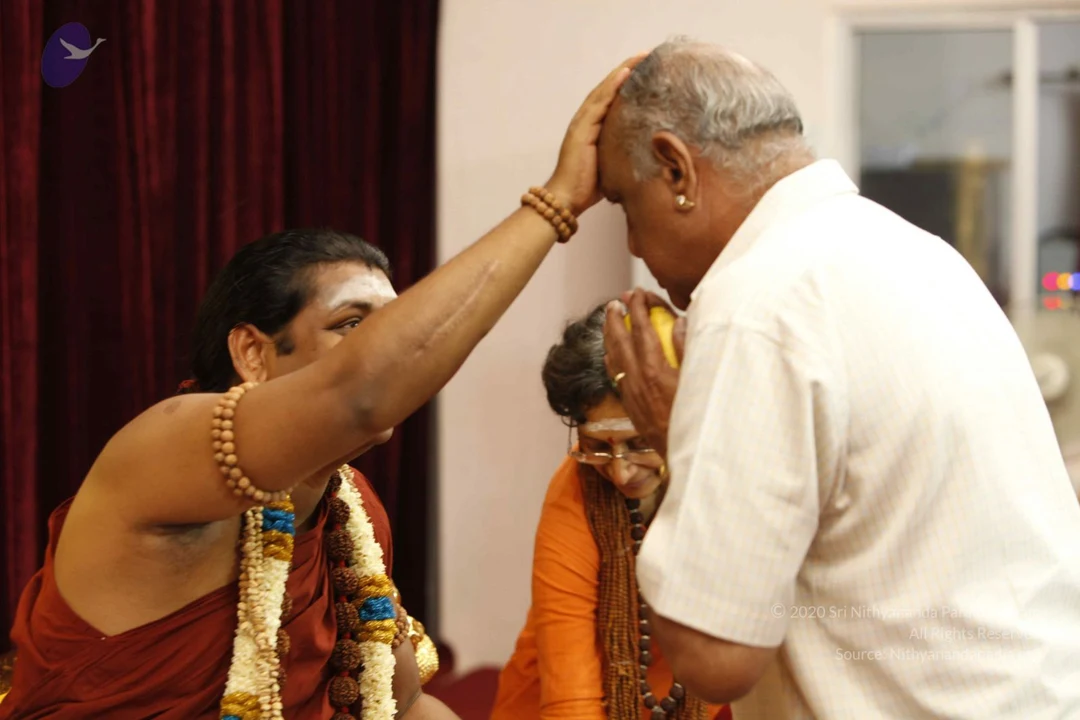
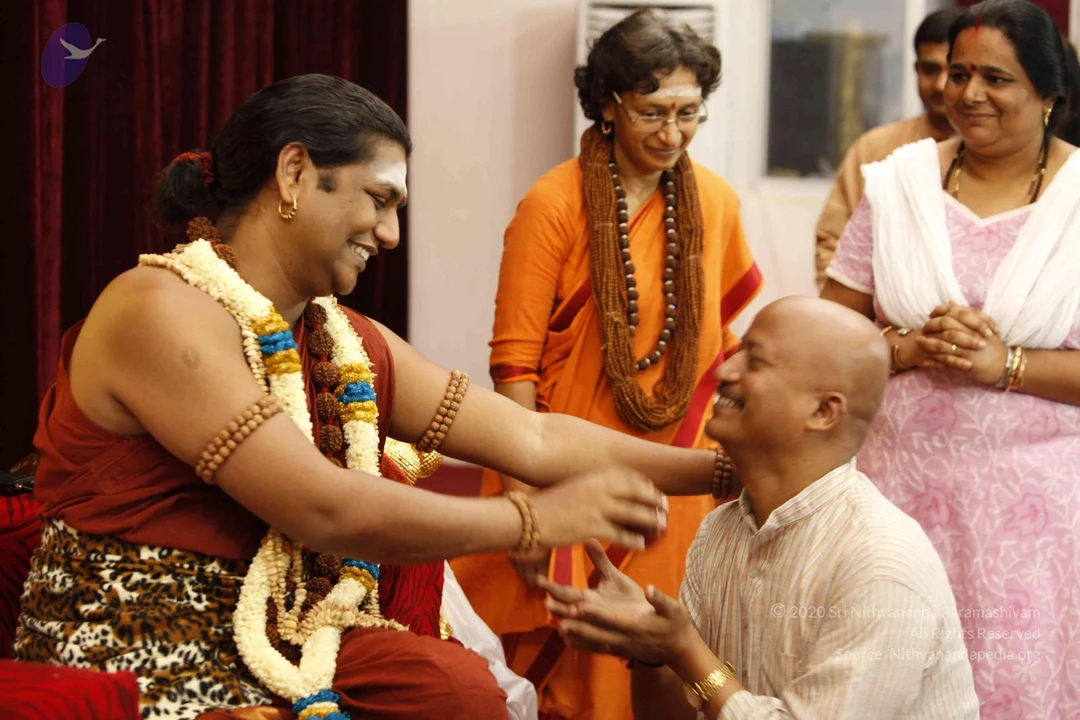
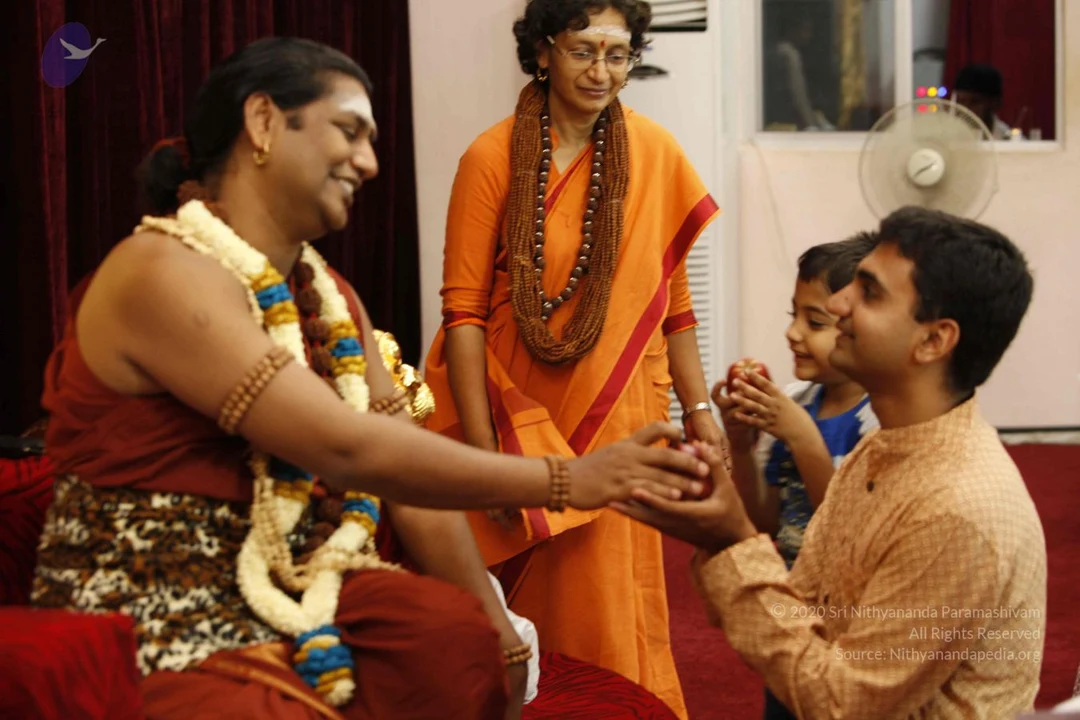
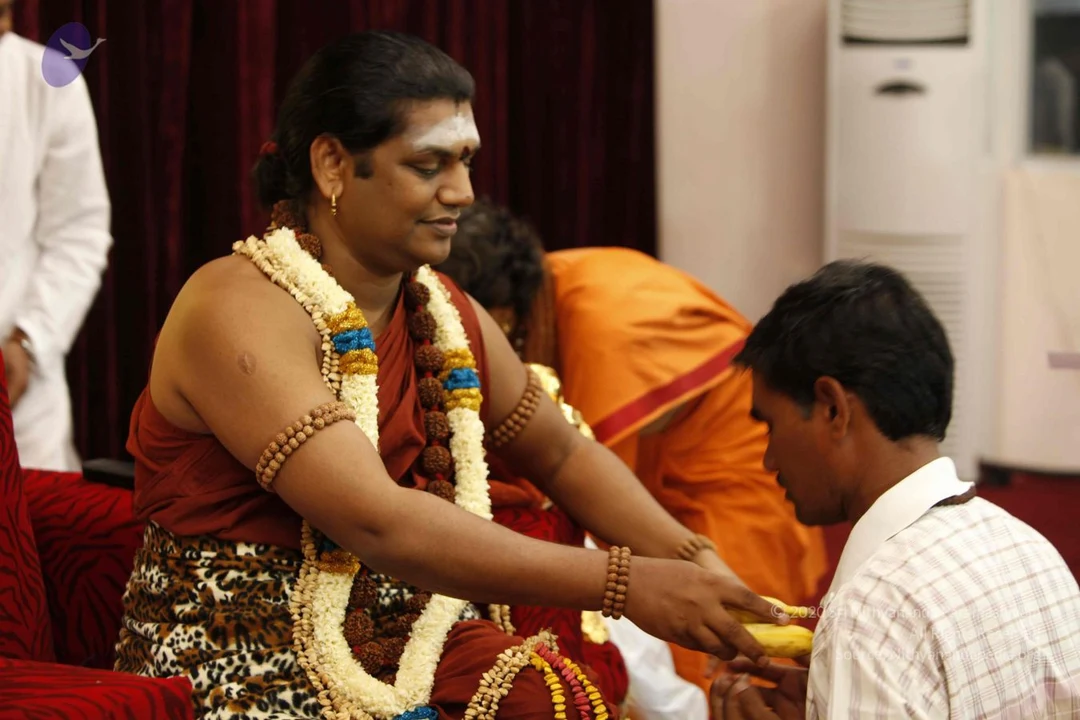
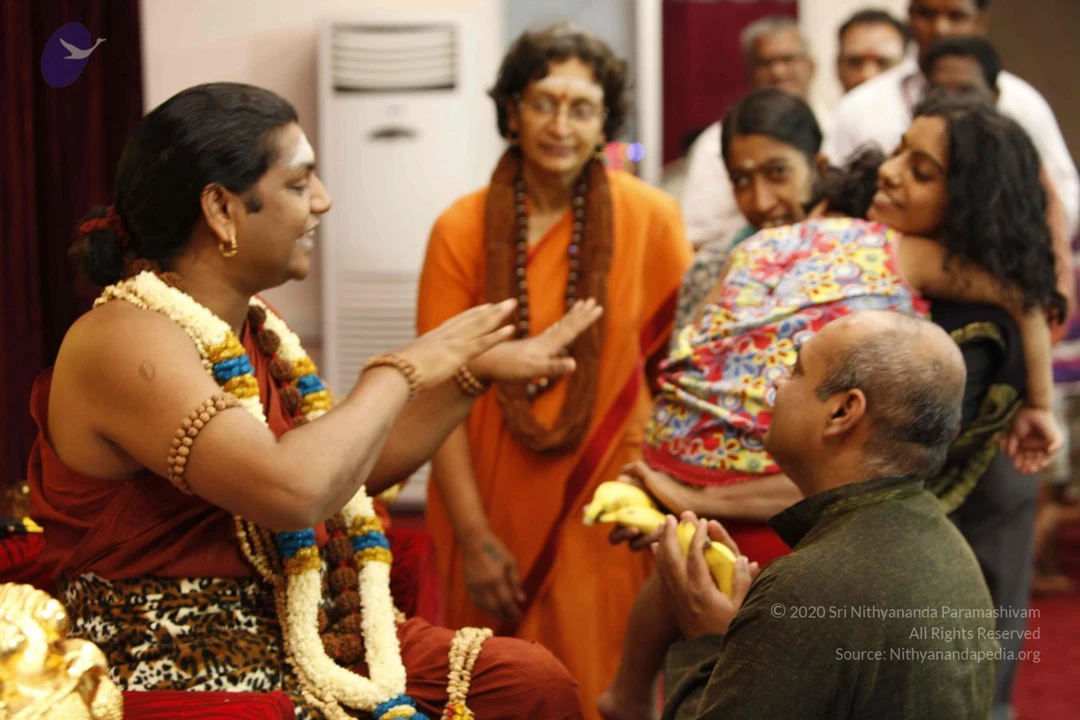
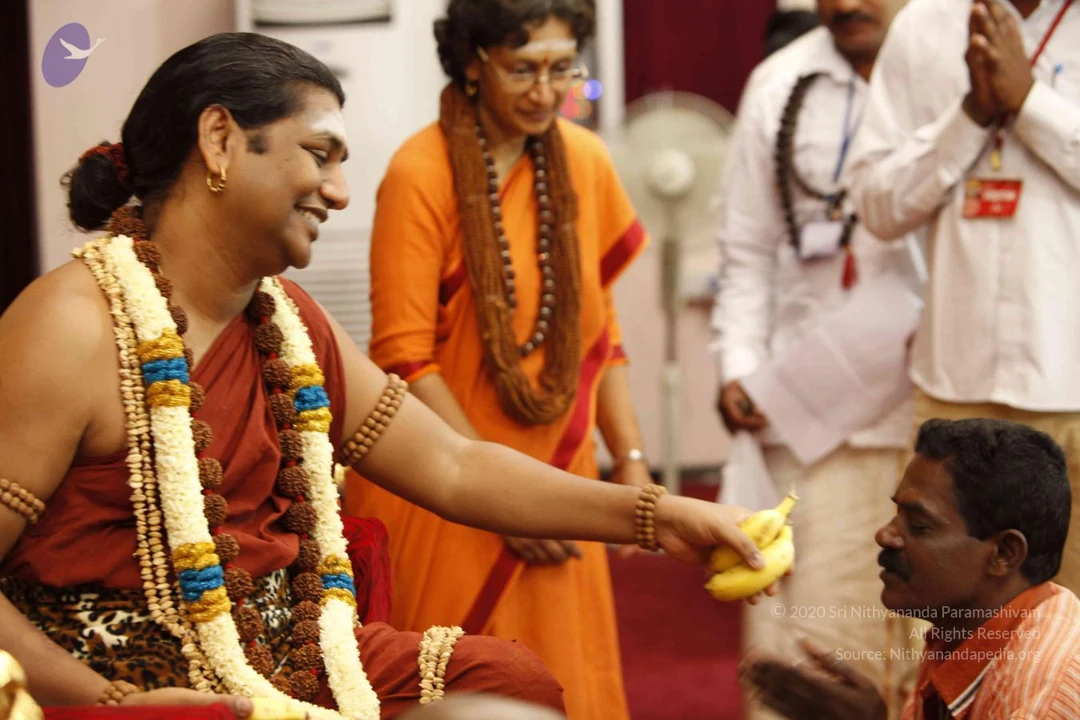
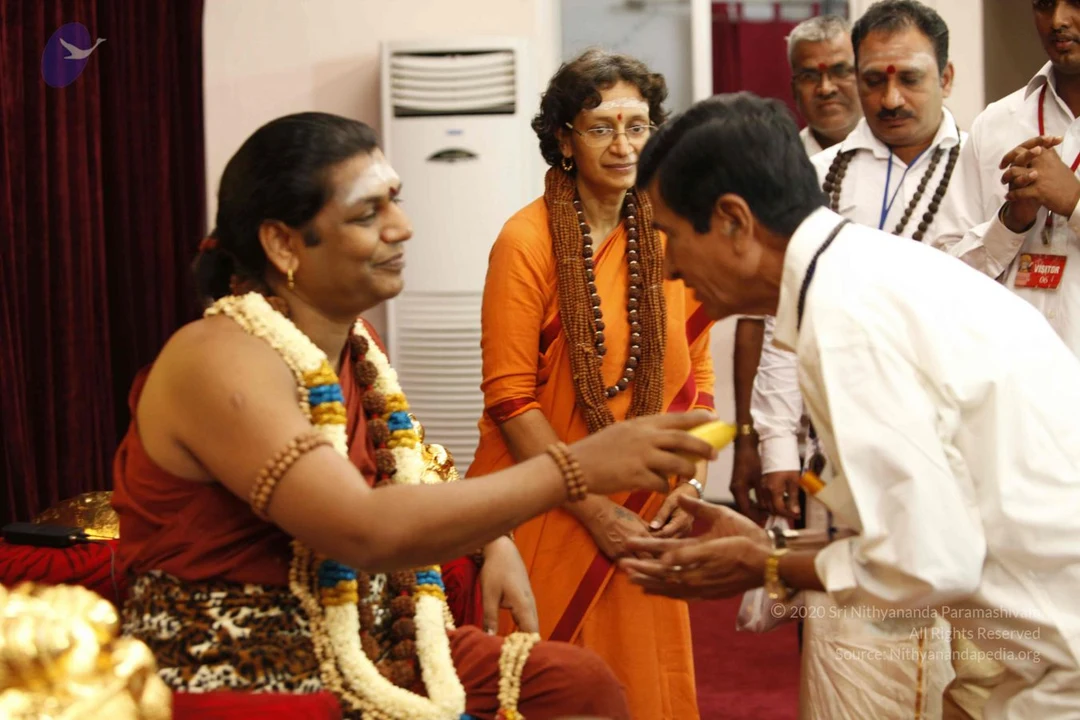
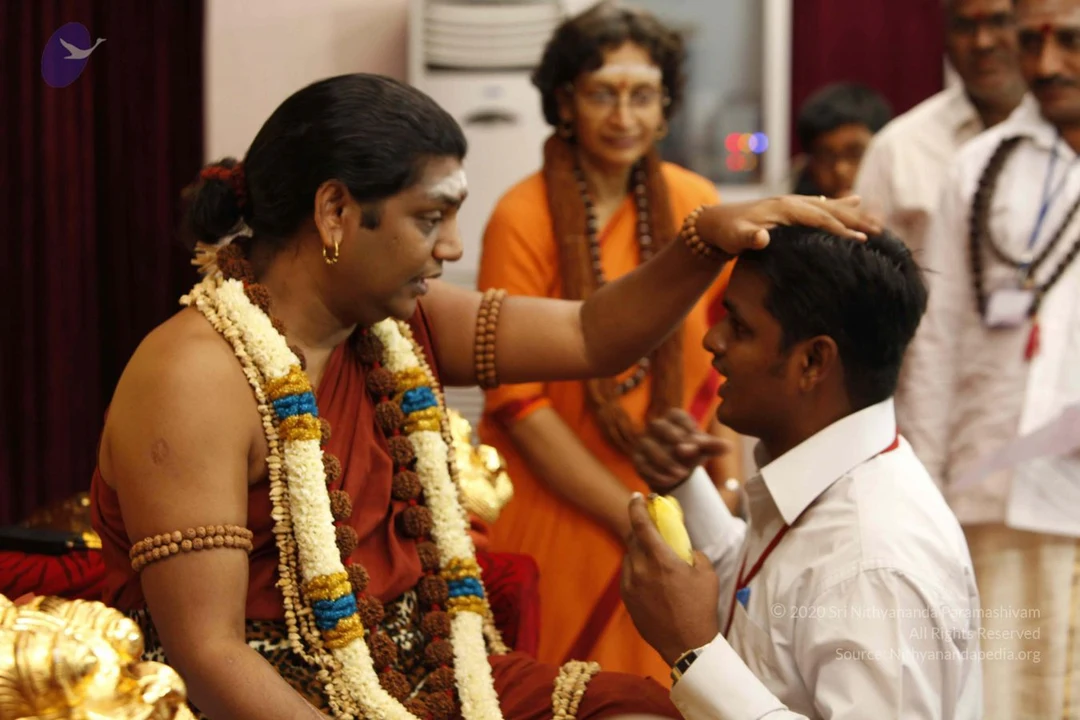
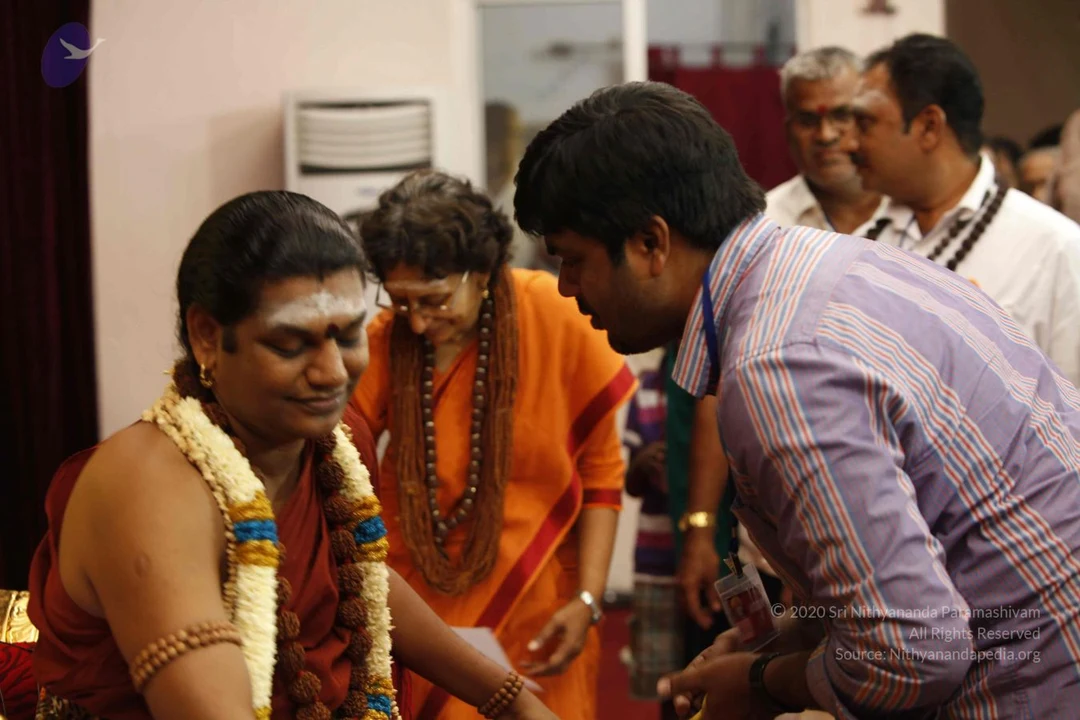
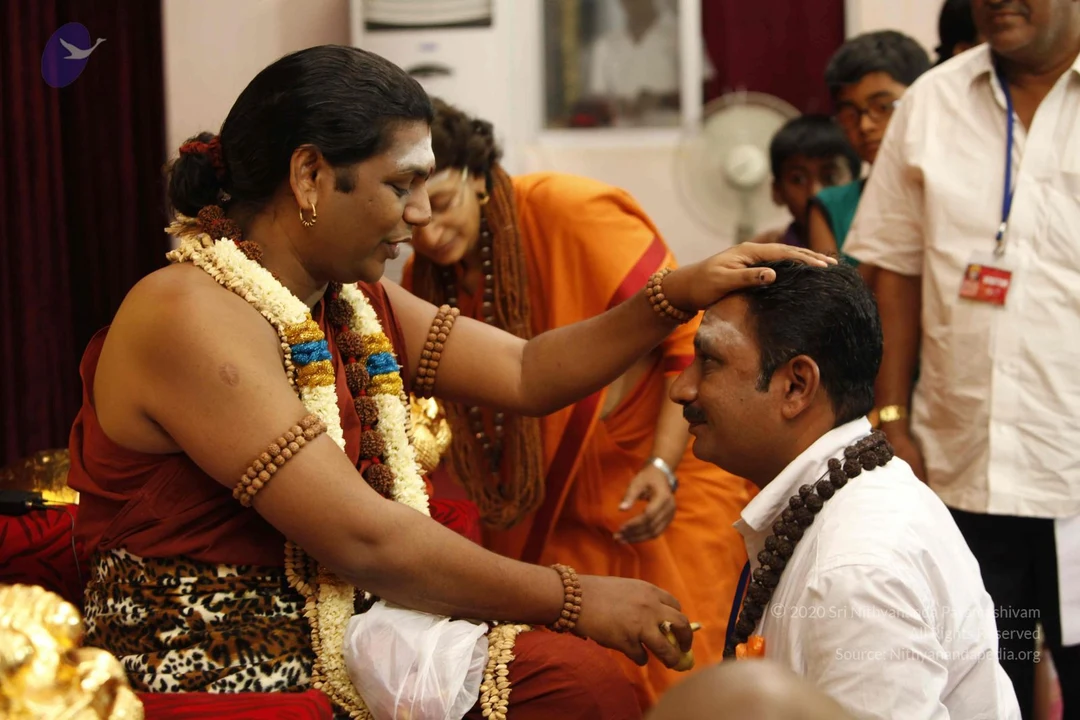
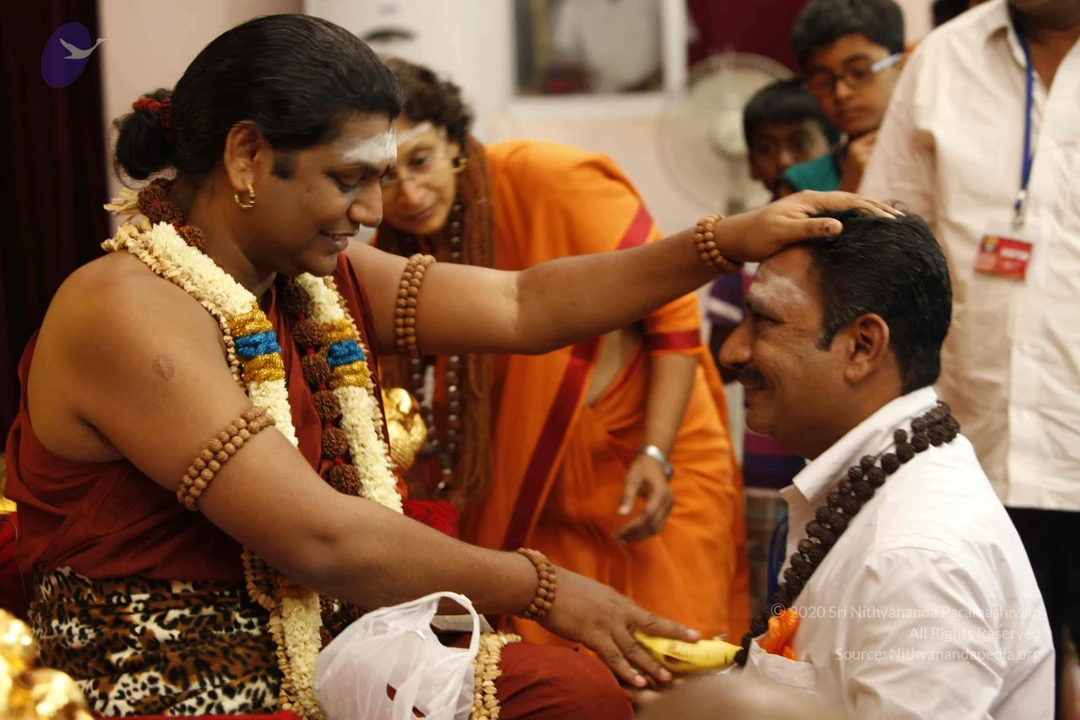
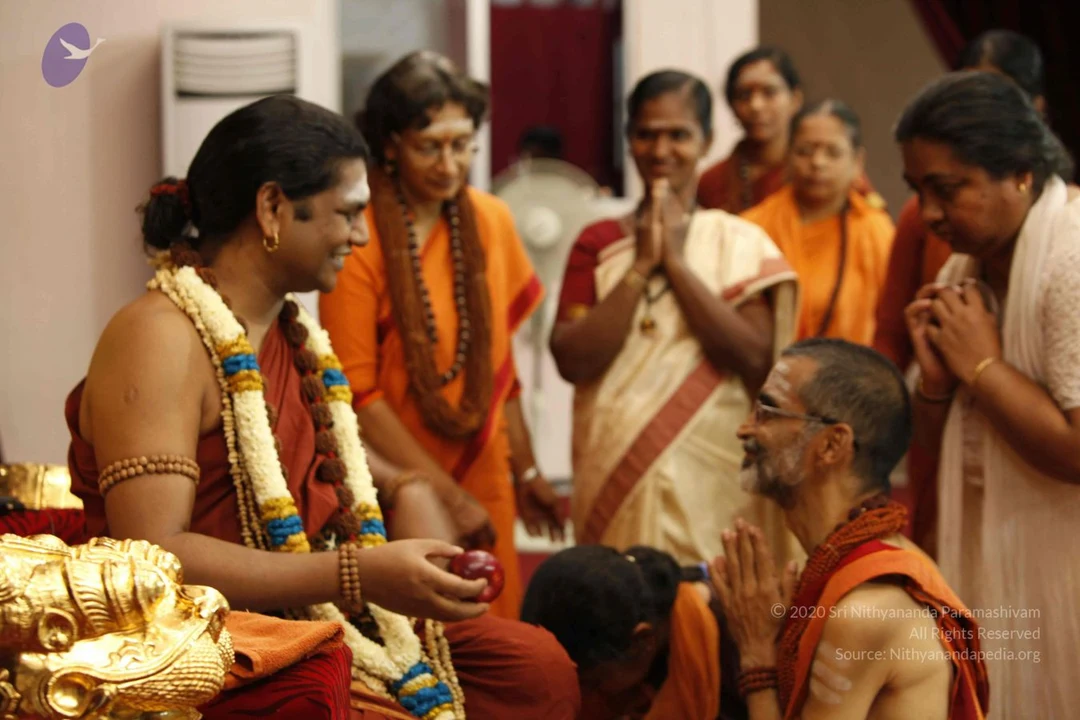
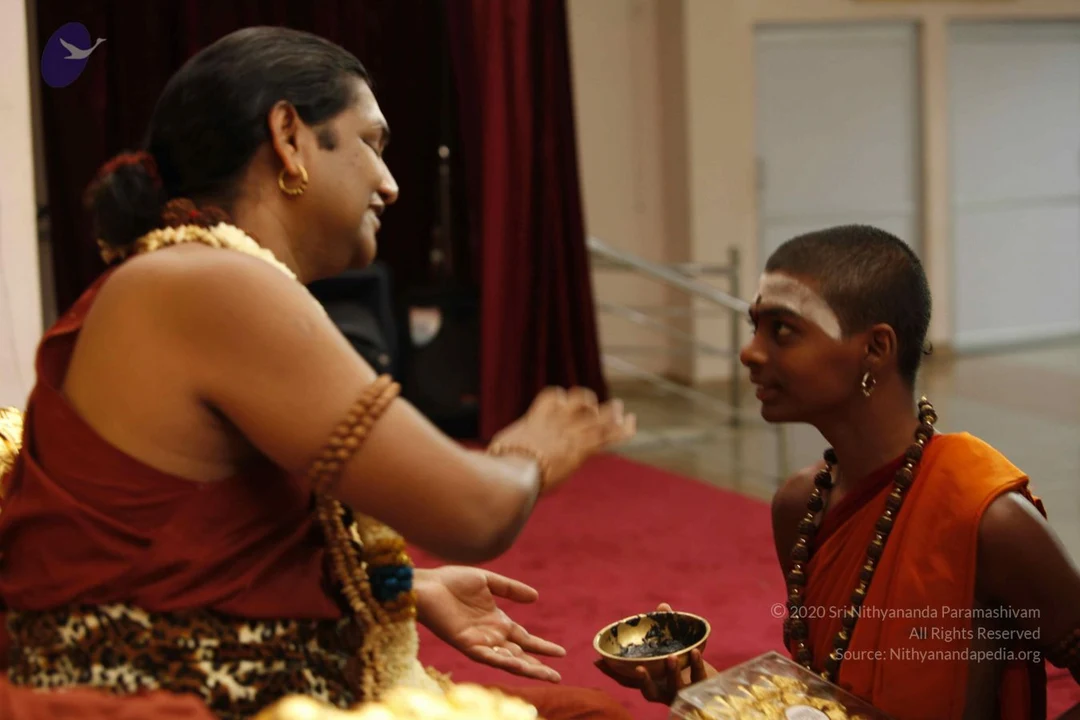
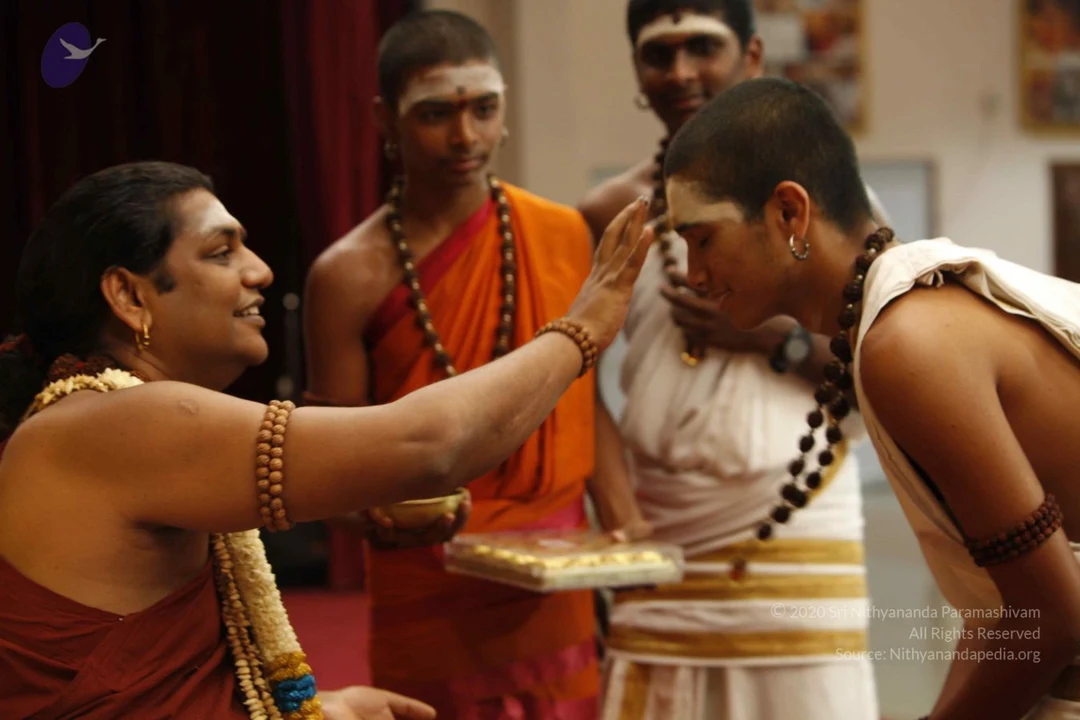
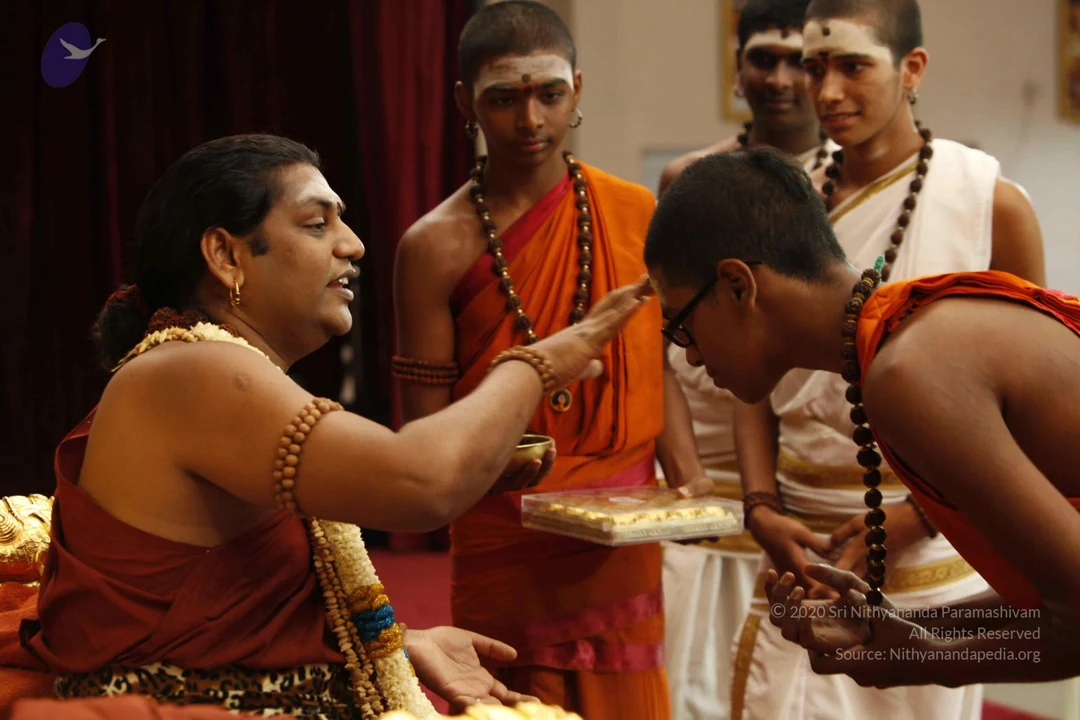
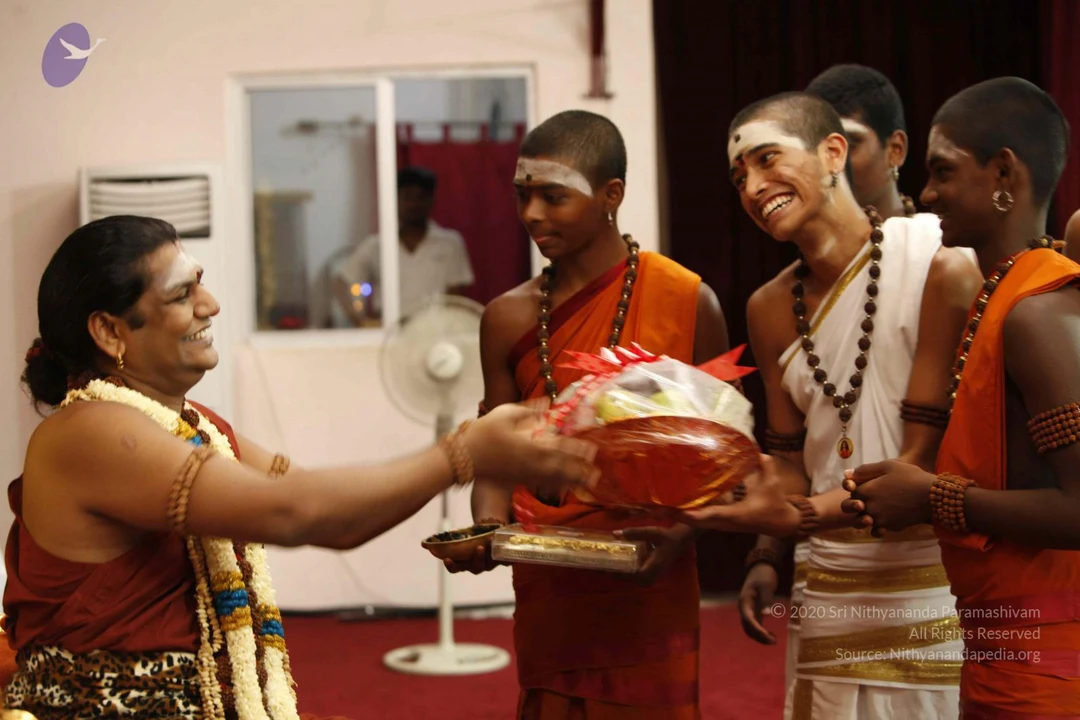
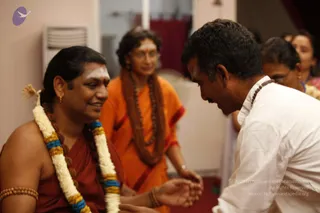
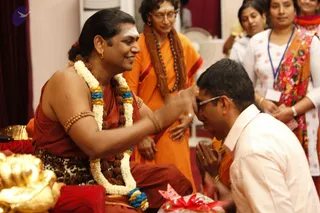
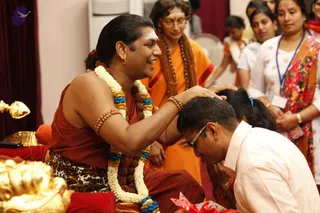
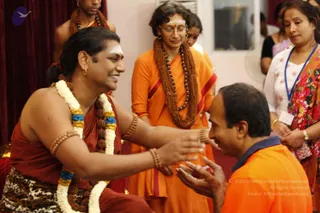
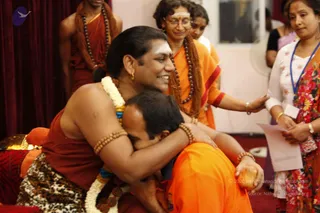
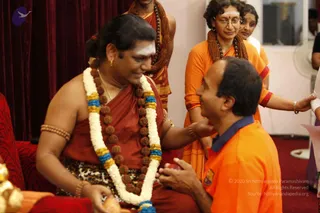
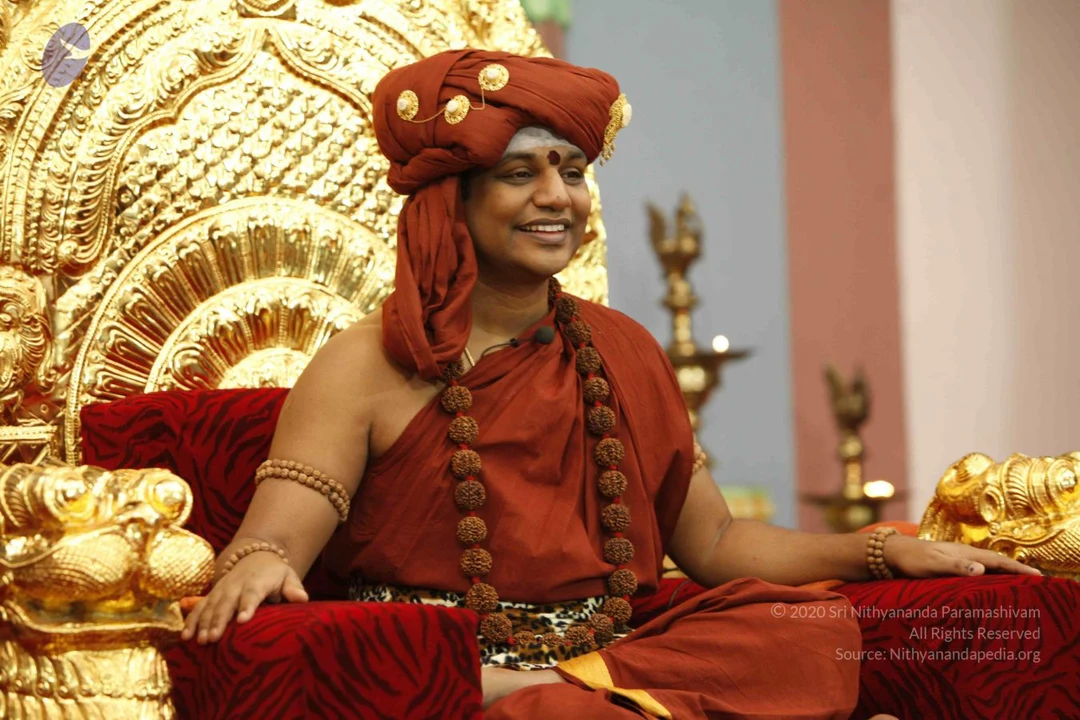
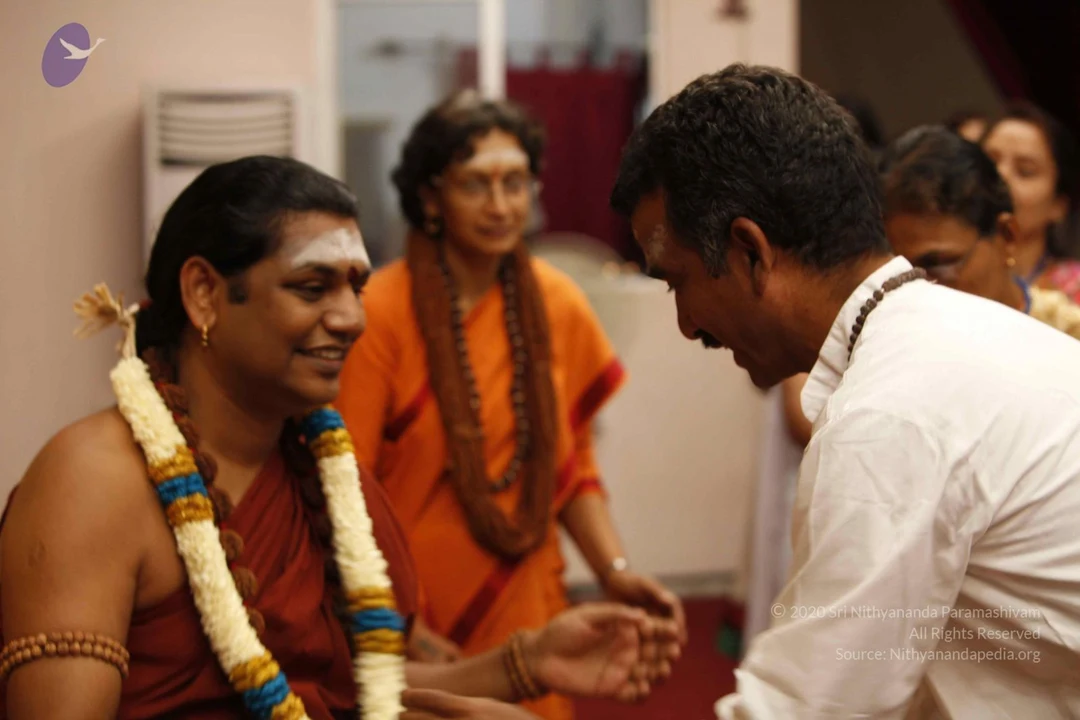
A seated man with swept-back dark hair, white forehead markings, a multi-strand flower garland with blue and yellow accents, and a deep red-brown shawl is smiling warmly and receiving a gesture from a man in a white shirt and rudraksha mala, who leans forward with hands extended. Behind them a woman in an orange sari and long brown rudraksha mala stands watching, with other people partly visible at the right edge. The room has pale walls, a wall-mounted air conditioner and a red curtain. The seated man is a person candidate by appearance: swept-back hair, a garland and a red-brown shawl, with the page indicating his presence at this satsang. The white-shirted man is a devotee greeting him.A seated man in a rust-red shawl and dhoti, with white forehead paste, a garland of white and multicoloured flowers, rudraksha malas and bangles, touches the forehead of a kneeling man in a pink shirt and glasses who presses his palms together. Behind them a woman in orange-saffron robes with long rudraksha malas stands, and women in white and floral saffron saris with blue event lbadges look on. A golden vessel and a small gift wrapped in pink paper sit at lower left and lower centre. a person is the seated man in the rust-red shawl, garlanded and wearing rudraksha malas, giving blessing to the kneeling devotee.A seated man with long swept-back hair, a white forehead mark, a white and multicolour flower garland, and a rudraksha mala with a rust-red wrap and leopard-print cloth conducts a blessing, placing his right hand on the head of a man in a pale pink shirt and glasses who bows forward. Behind them a woman in saffron with a rudraksha mala and tilak stands, and several women in floral and white outfits watch; a gold ritual vessel rests at the lower left and a small gift box with pink ribbon sits at the bottom right. a person is seated centrally giving a blessing, identified by long swept-back hair, rudraksha malas, a ceremonial garland and ornate wrap; the appearance cues are reasonably distinctive but the seated figure's identity remains uncertain from the image alone.A photograph of a seated man with a shaved head, white forehead markings, a multicolored flower garland and a rudraksha mala, bare-shouldered in a dark red wrap, extending his hand toward a kneeling devotee in an orange polo shirt who holds a small red object in his cupped hands. Behind them a woman in an orange sari with a long rudraksha necklace and glasses stands watching, a second woman in a floral sari wearing a visitor badge stands at right, and another person stands at top left in an orange shawl. Maroon curtains frame the background.A photograph of an embrace during a satsang. A bare-chested man with a white forehead mark, a white and multicoloured flower garland, rudraksha bracelets and a patterned leopard-print lower cloth hugs a kneeling devotee in orange robes who bows his head to his chest. Behind them a woman in orange robes with a rudraksha mala and white forehead marking smiles and reaches out, and a woman in a white top with a lanyard and floral sari holds papers. A saffron-clad attendant with a rudraksha mala stands in the background beside red drapes.Indoors, a man with a shaved head and white tripundra markings sits on a red upholstered seat, wearing a rust-red robe, a garland of white flowers with blue and yellow ribbons, and a long rudraksha mala across his chest. He smiles and reaches toward a man in a bright orange polo shirt kneeling before him, who holds a small red object in his hands. Behind them, a woman in an orange sari with a long rudraksha mala and a white forehead mark watches, with another woman and a man in orange robes standing nearby against a deep red curtain. Four people are visible in the scene.

NDY-Session

246 photosSource gallery
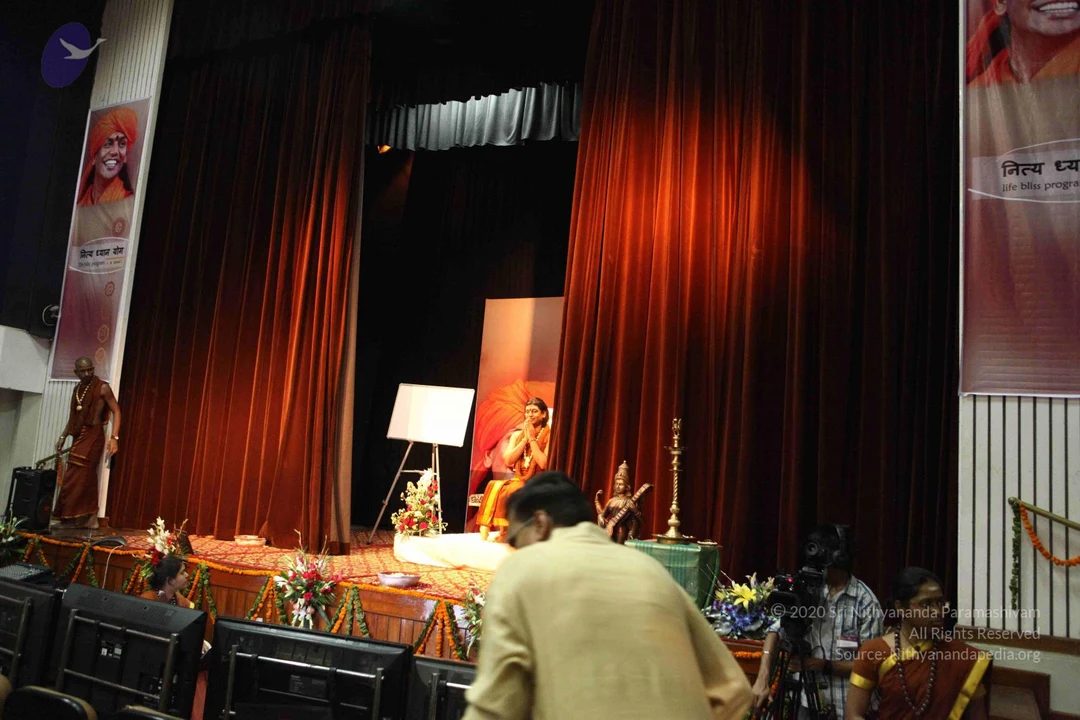
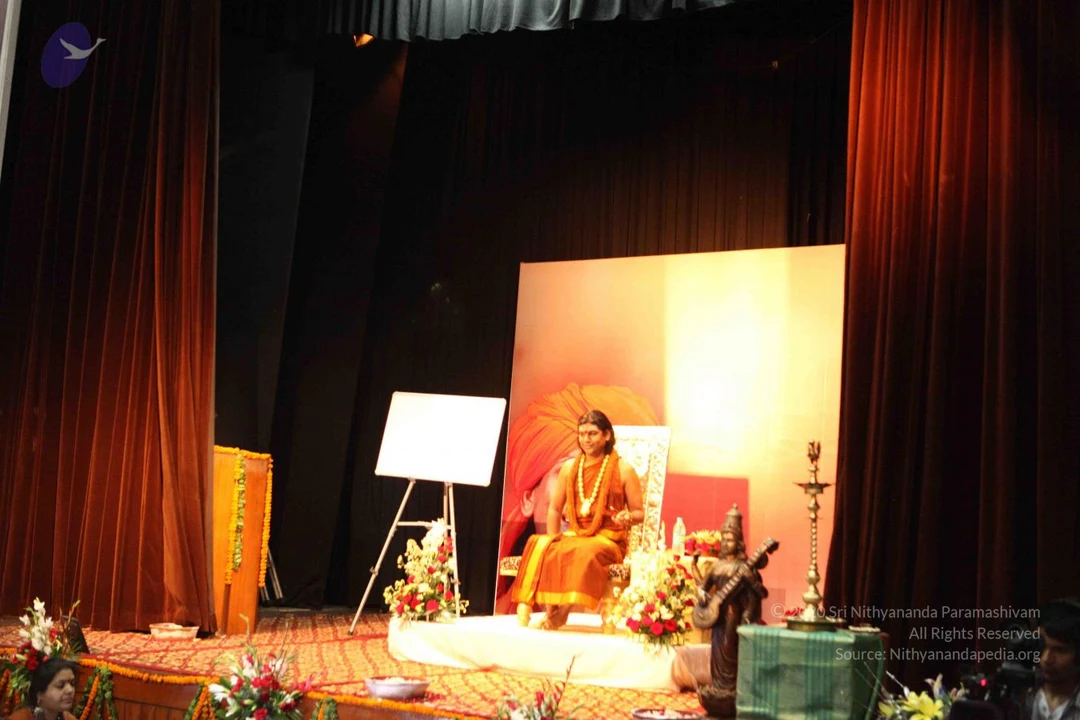
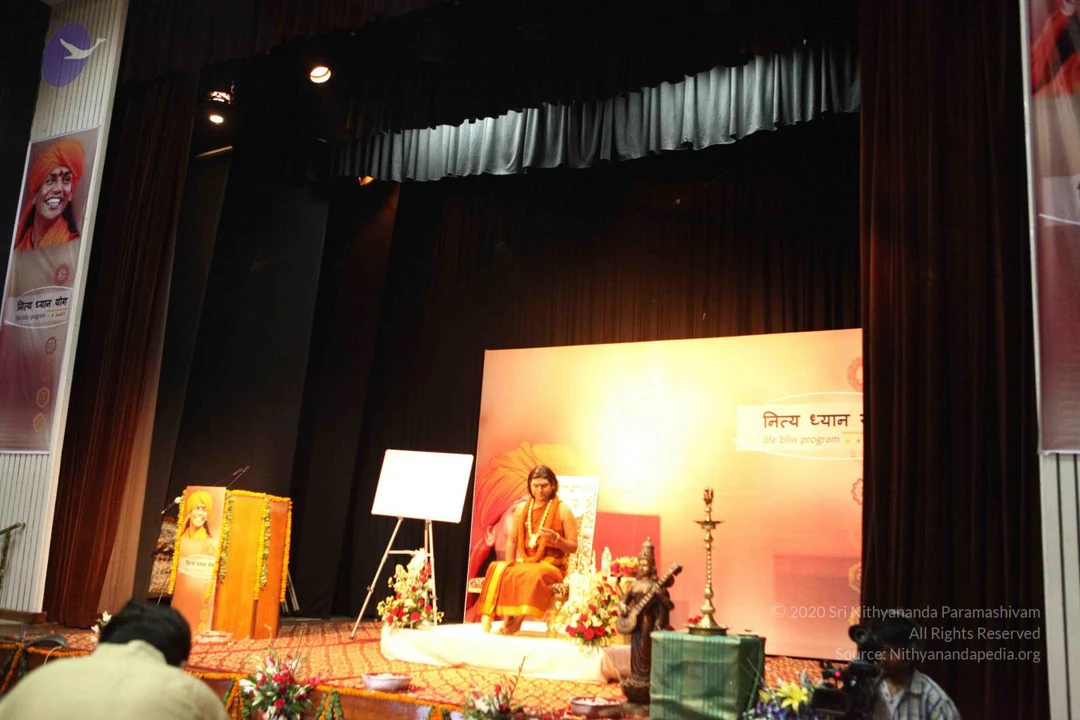
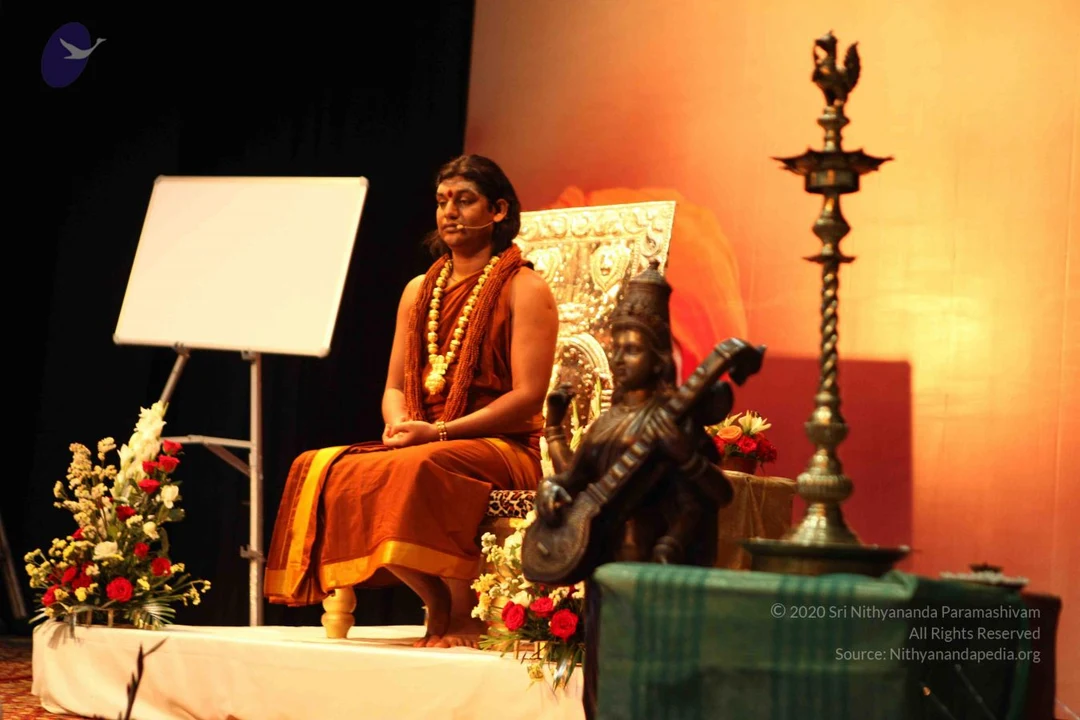
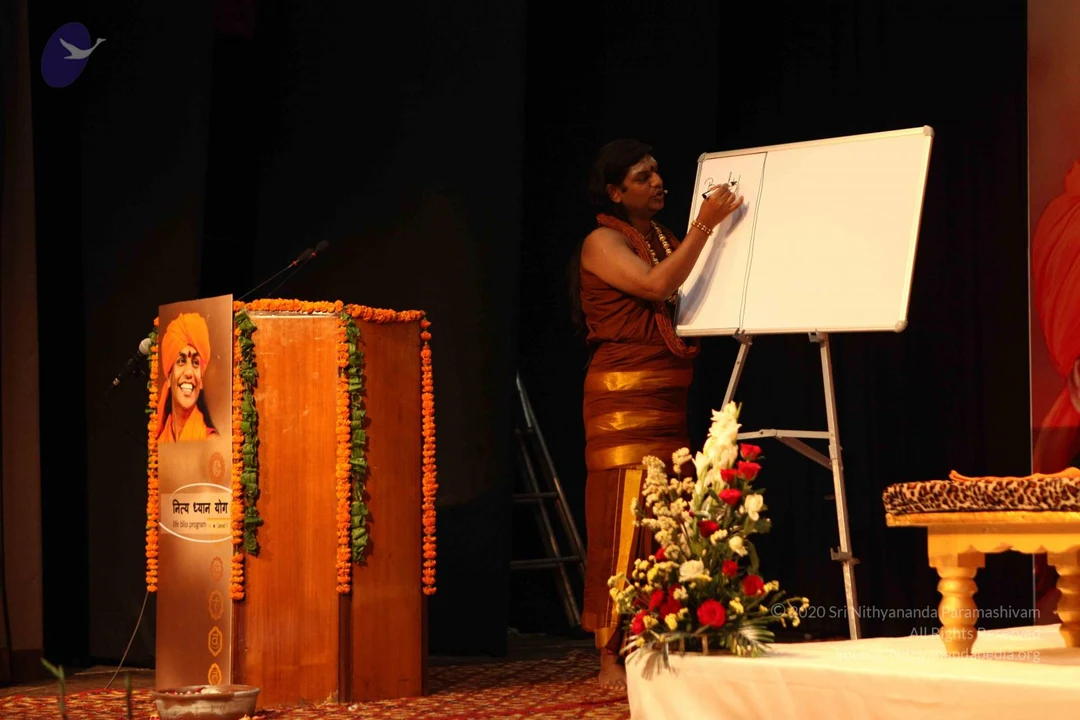
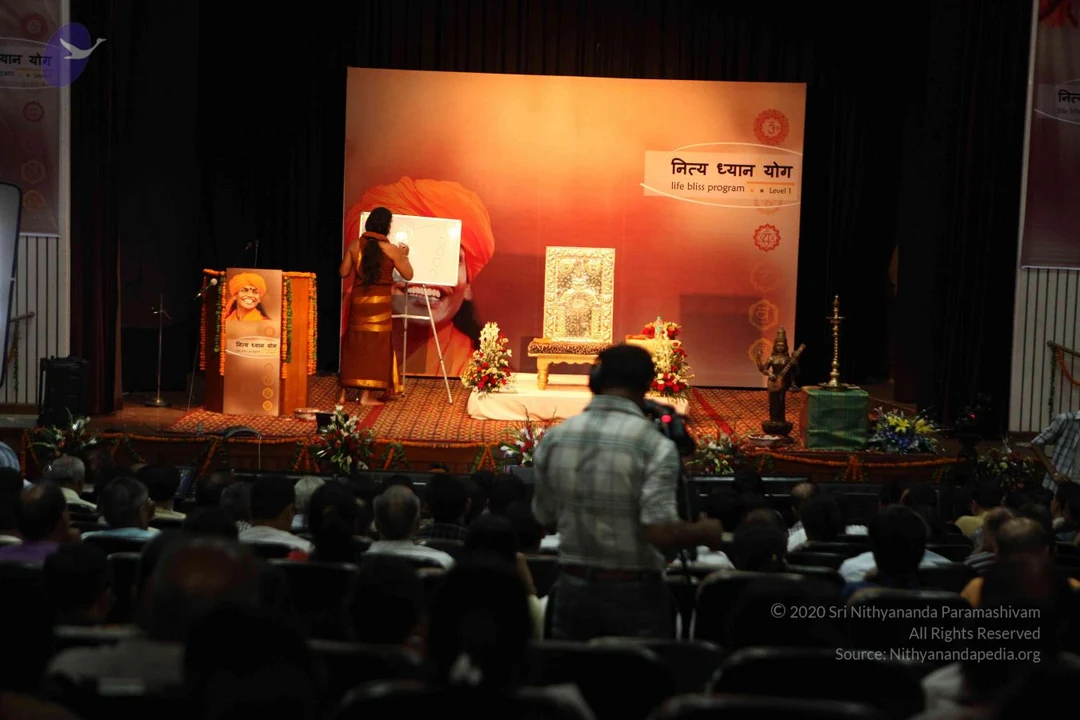
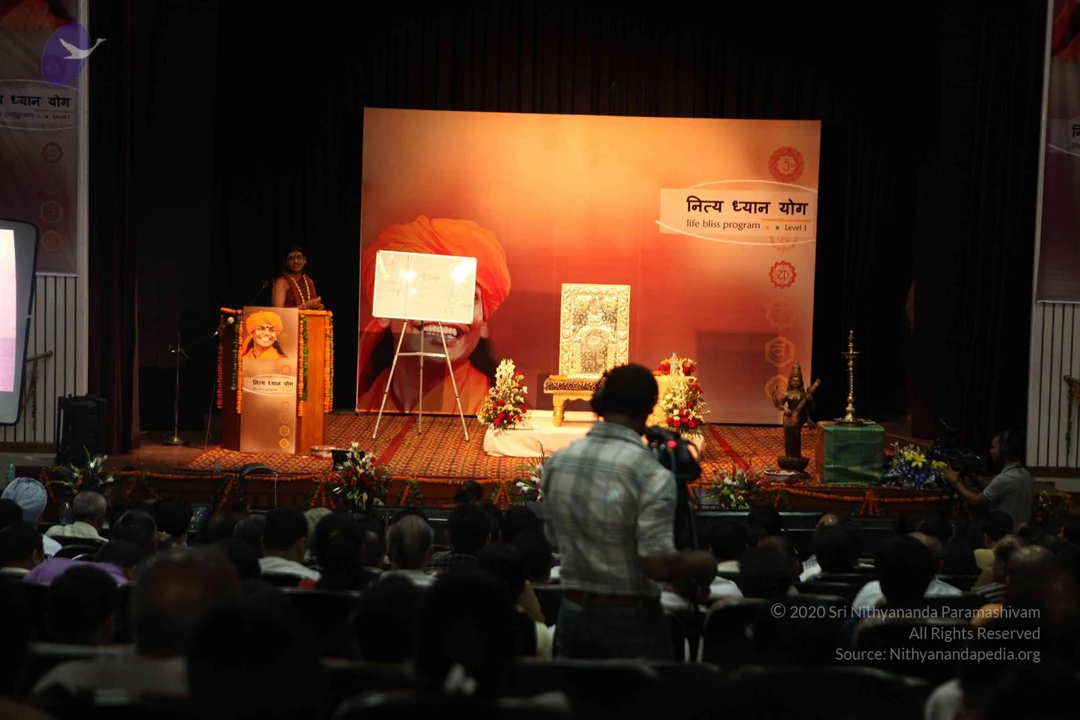
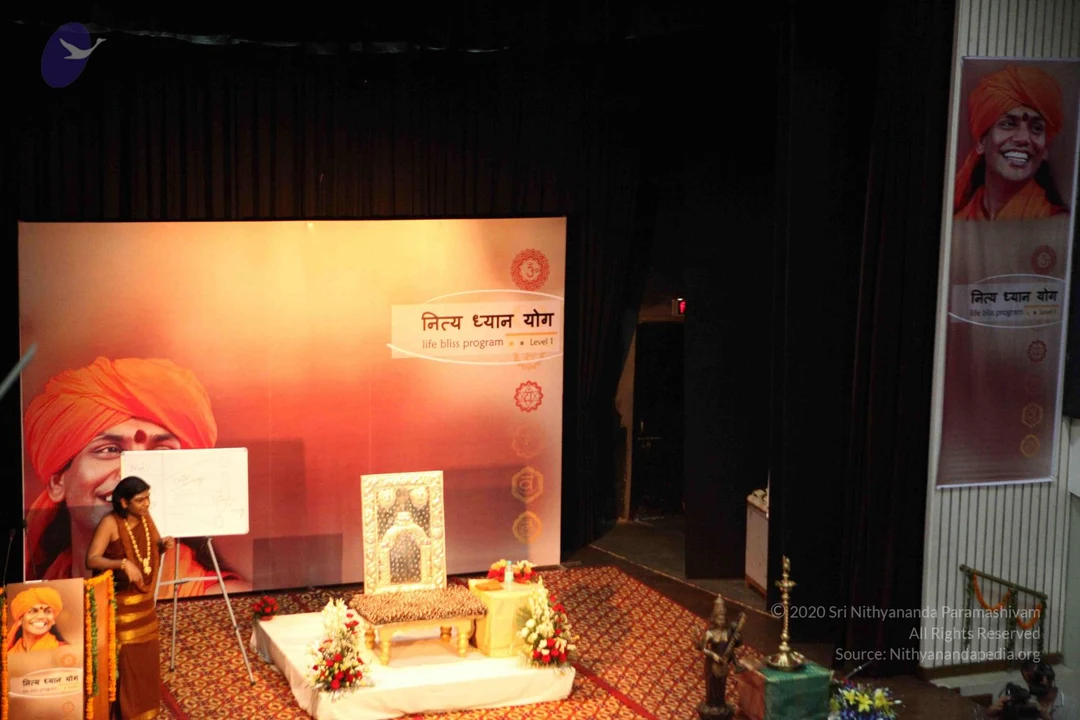
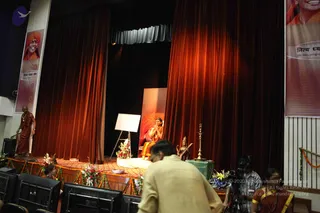
Stage event in an auditorium with heavy maroon-orange drapes behind a raised stage. A seated figure in orange and gold clothing, with hands pressed together in namaskar, sits on a white cushioned seat beside a brass oil lamp and a small deity murti, with flower arrangements and marigold garlands along the stage edge. Large banners on each side show a smiling man in an orange turban and saffron robes beside the printed words for Nithya Dhyana Yoga and life bliss programme. A standing statue of a robed figure stands at left. Cameras and camera operators in the foreground film the stage, and a man in cream clothing bends over the monitors. Several people in the foreground wear orange and gold, but the figure on the stage is the main subject.A stage at an indoor satsang event with dark maroon curtains on both sides. A seated figure in saffron-orange robes and a long orange-and-gold garland sits on a white-draped platform in front of a large backdrop printed with a red-orange sunrise graphic. Flower arrangements in red and white surround the platform. Nearby stand a bronze veena statue, a brass oil lamp, a tall wooden lectern draped with marigold garlands, and a white easel board. A woman in dark clothing sits at the lower left edge, and a cameraman with equipment is at the lower right. a person is the seated figure, identified by saffron robes, orange-gold garland and seated dais position; the presence of a candidate is uncertain.Wide view of an indoor stage with dark drapes, set for a satsang. A seated robed figure in orange clothing and a long garland sits on a raised white-draped platform in front of a large backdrop with Hindi text reading the Nithya Dhyan program (life bliss program). Flower arrangements, a brass oil lamp, a tanpura-style instrument and a small table surround the platform. A saffron-coloured banner with a portrait of a smiling figure in orange turban hangs at the left edge beside a wooden podium draped with marigold garlands. Two people are partly visible at the bottom edge, one in the foreground left and one camera operator at right, with a video camera on a tripod.A seated man in saffron-orange robes sits cross-legged on a white-draped stage, hands folded in his lap, with a rudraksha-style beaded garland and a gold-toned ceremonial necklace over his shoulders and a saffron shawl. A small red bindi marks his forehead and a microphone is clipped near his face. Behind him stands a gilded ornate chair with a warm orange backdrop. On the right, a brass oil lamp with a bird finial stands beside a bronze statue of a deity seated with a veena. Red and white flower arrangements decorate the stage, and a blank white easel board stands to the left. Probable Swamiji (saffron robes, long swept-back hair, ceremonial necklace, shawl) seated in a satsang discourse setting.A man in a brown and gold draped garment with a red-orange shawl and a rudraksha-style beaded necklace stands on a stage writing on a whiteboard on an easel with a marker. A wooden podium draped with marigold garlands and green leaves stands at left, with a banner showing a smiling man in an orange turban and the Hindi text नित्य ध्यान योग. A white-clothed table holds red roses, white flowers and a leopard-print cushion on a gold stool. Dark curtains form the backdrop. Only one person is visible.Photograph of an auditorium event with a large audience seated in rows, viewed from behind. On stage, a woman in an orange-gold sari stands at an easel with a white board, drawing or writing on it. A large orange backdrop shows a bearded figure in an orange turban and a cream-and-gold ornate throne with flower arrangements in front. A wooden lectern draped with marigold garlands stands at left, with a portrait showing a smiling person in orange. A brass oil lamp, a small dark statue and vases of flowers decorate the stage. A cameraman in a checked shirt stands in the aisle filming. Printed signage on the side panels reads the programme name.

NDY-Session

35 photosSource gallery
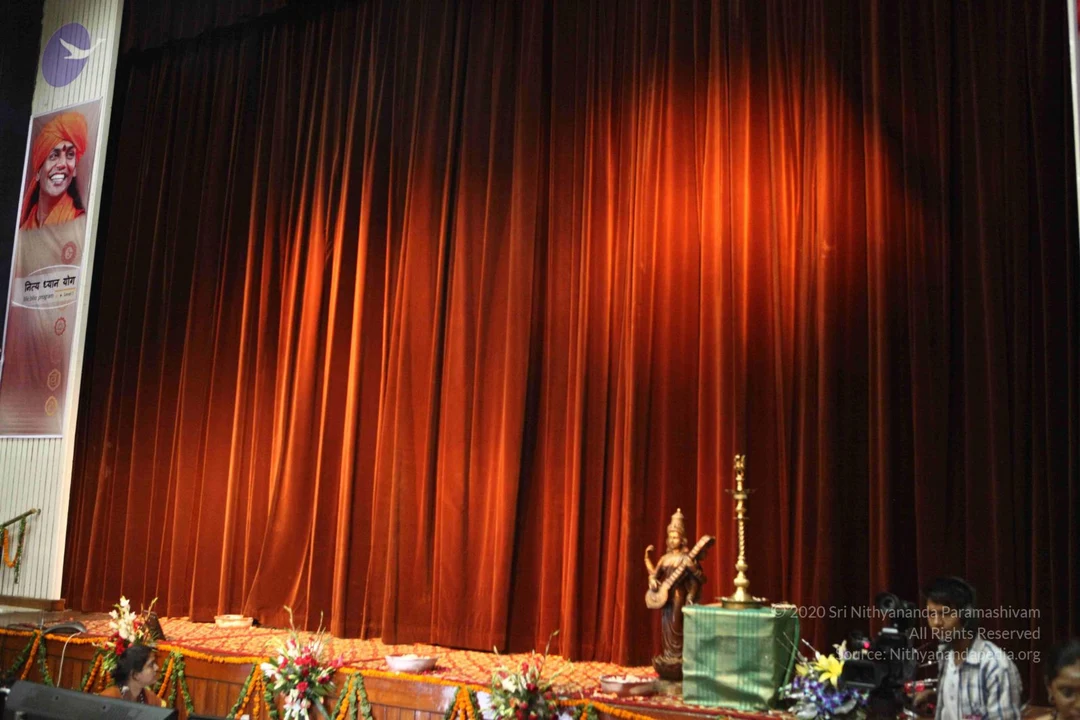
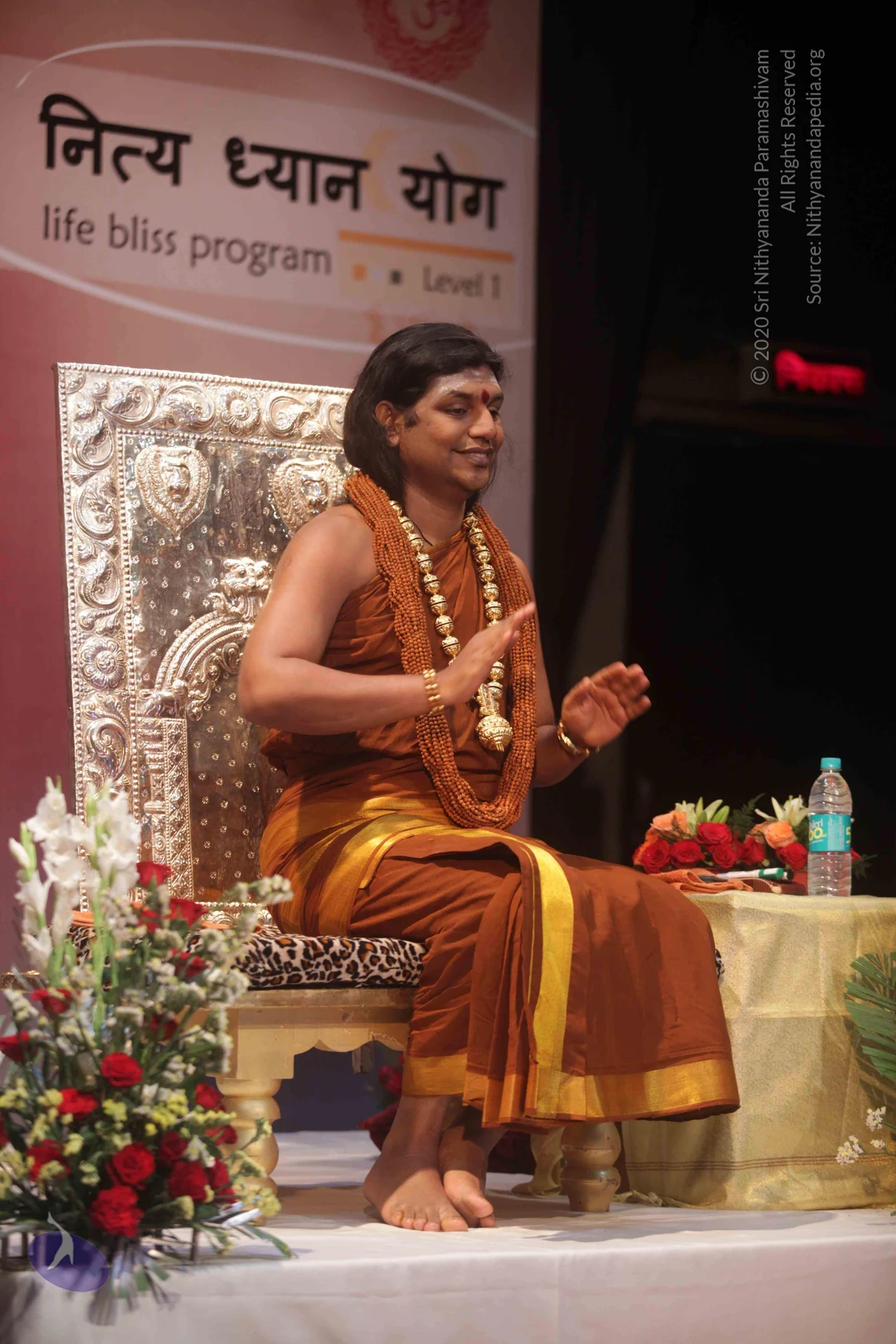
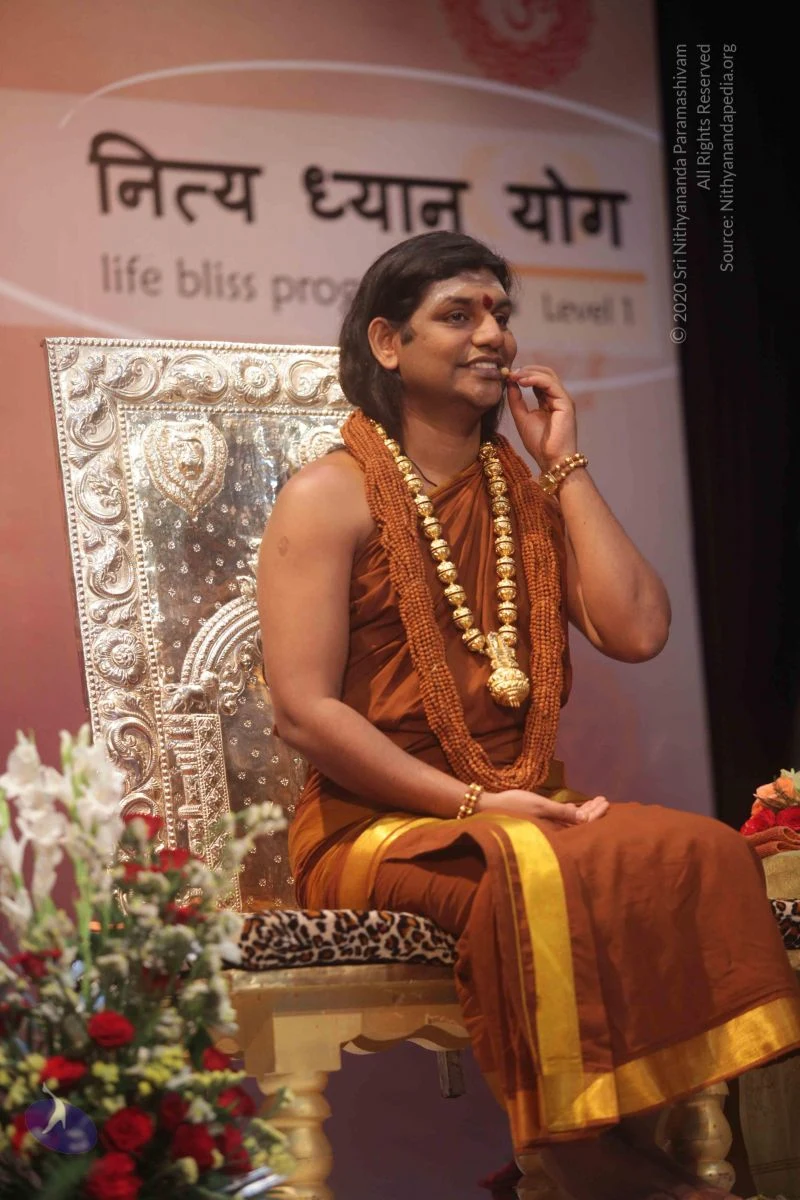
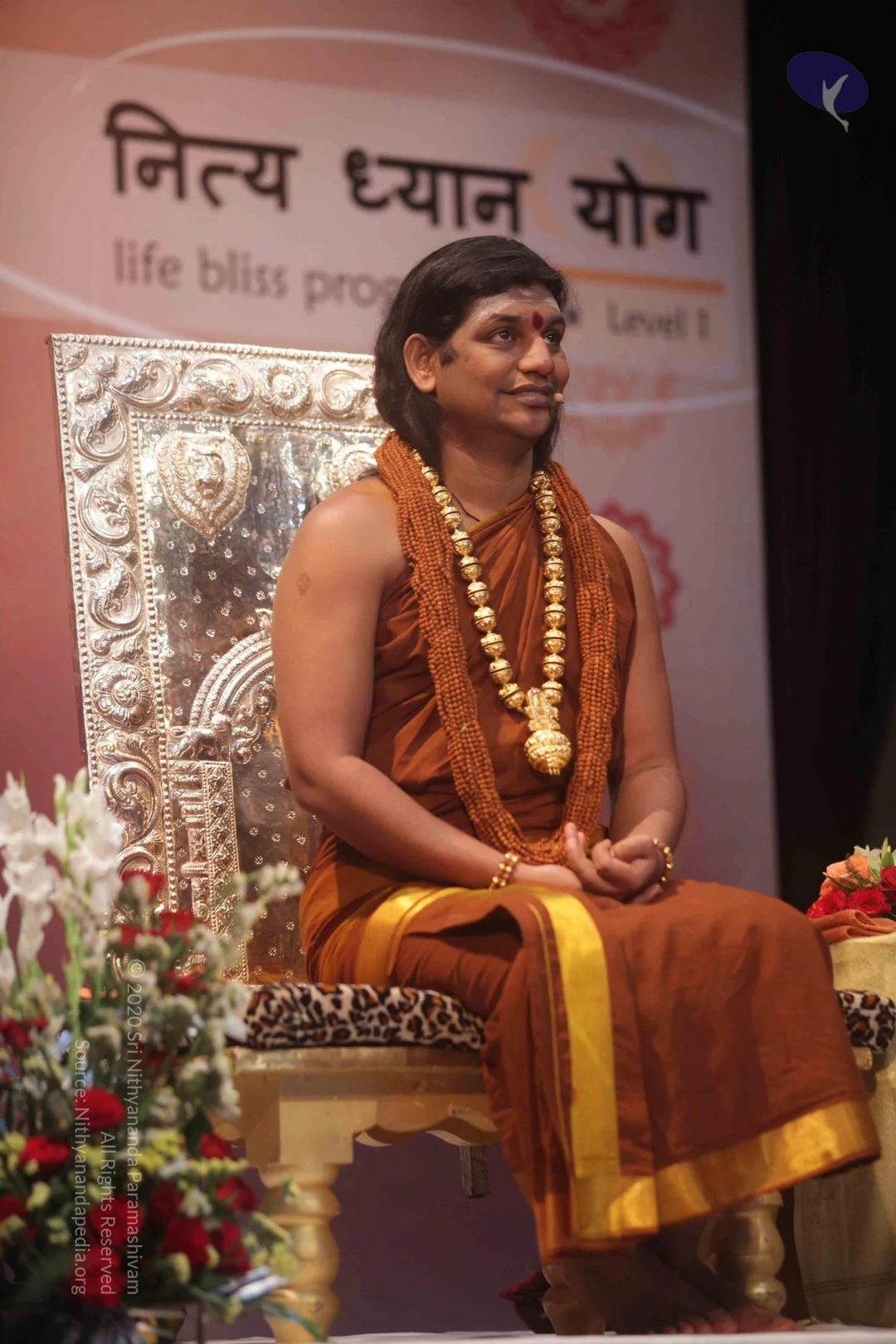
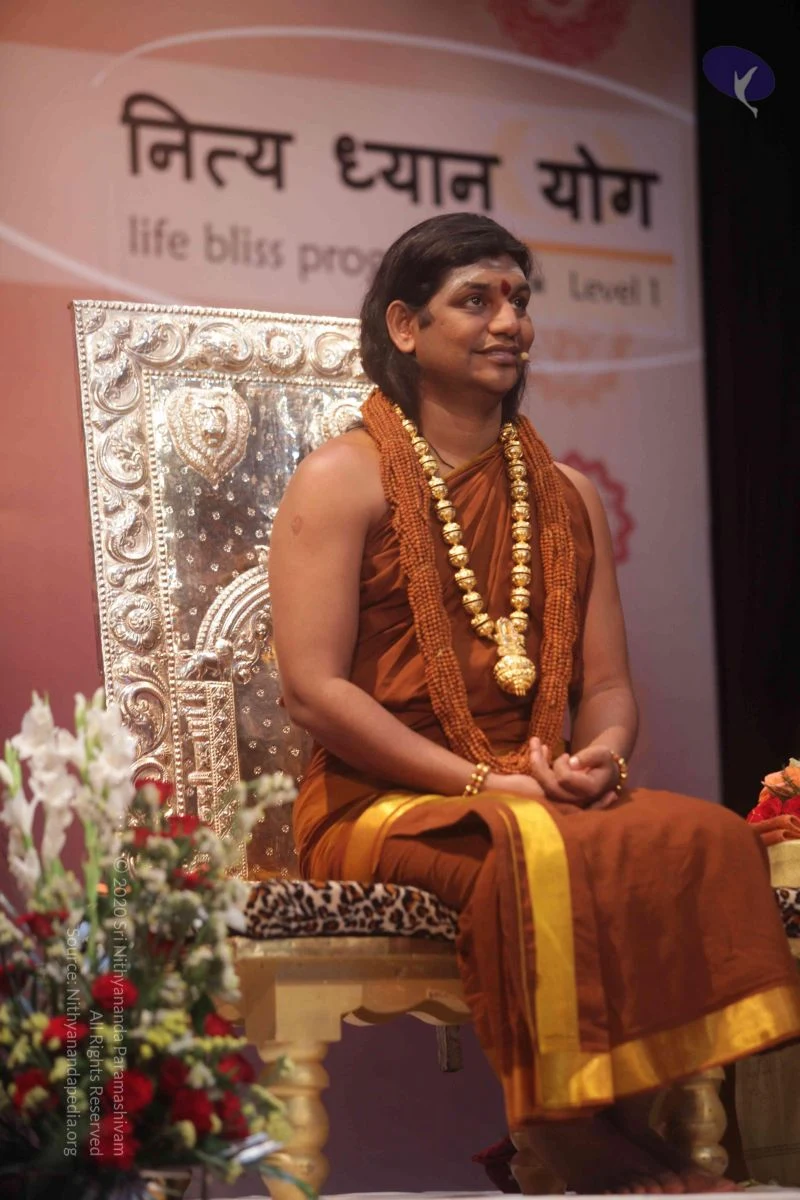
A photograph of an empty stage with a deep orange-red velvet curtain hanging behind it. A banner on the left edge shows a smiling man in an orange turban and saffron robe, captioned in Hindi with a printed name for the Dhyan Yoga programme. On the stage a brass-and-bronze deity murti of a seated goddess holding a veena stands beside a tall brass oil lamp, and marigold garlands and flower arrangements line the platform edge. Two people sit at the lower edge of the stage, partly visible, and a camera operator in a checked shirt works at the right.Photo of a stage event in a darkened hall. A standing man in orange-brown clothing with a beaded necklace stands behind a wooden lectern draped with marigold garlands, with a portrait banner on its front. To the left a tall vertical banner shows a smiling man in an orange turban and labelled "नित्य ध्यान योग" beneath him. To the right a large backdrop portrait and an easel with a whiteboard showing diagrams. Marigold garlands line the stage edge, a table with flower arrangements sits at right, and a person seated at a sound desk is visible at the bottom. Overall the scene is dimly lit with the stage lights concentrated on the lectern.A photograph of a seated audience in a dimly lit hall with white walls and a wall-mounted air vent. In the foreground, rows of men in white shirts sit listening, several with hands raised to their chins. Standing in the centre is a woman in a pale yellow saree with a white blouse, holding a small green object in her hands and speaking, apparently addressing the gathering. A bright orange and white item hangs on the wall behind her, and a camera is partly visible at the left edge. No a person candidate is clearly visible in the frame.A dimly lit indoor hall with a seated audience of men in white shirts. A woman in a pale yellow saree with a white blouse stands in the middle of the rows, holding a small object in her raised hand and speaking. A video camera is visible at the left edge. A small orange and white banner hangs on the wall behind her. No speaker identifiable as a person is visible in this frame.A white-haired elderly man in a white shawl and white dhoti, wearing glasses and a white forehead mark, bends forward to light a brass oil lamp (deepa) with a bird finial, its flames burning. Beside him stands a bronze statue of a deity. A person in a reddish-brown garment stands partly visible behind the lamp. Dark background, warm lamp light.A person with short dark hair and a red bindi sits on an ornate silver throne with a leopard-print cushion on a stage, gesturing with both hands during a talk. They wear an orange-brown robe with gold-trimmed edges, a rudraksha mala and a gold ceremonial necklace. A table draped in gold cloth holds a water bottle and a bouquet of roses; white gladioli and red roses fill a flower arrangement at left. A banner behind reads a Life Bliss Program title. a person: the seated speaker wears a rudraksha mala, gold necklace and saffron-orange robe on a ceremonial throne, which are distinctive ceremonial cues, though the face alone is not used for identification.

Darshan
2 photosSource gallery
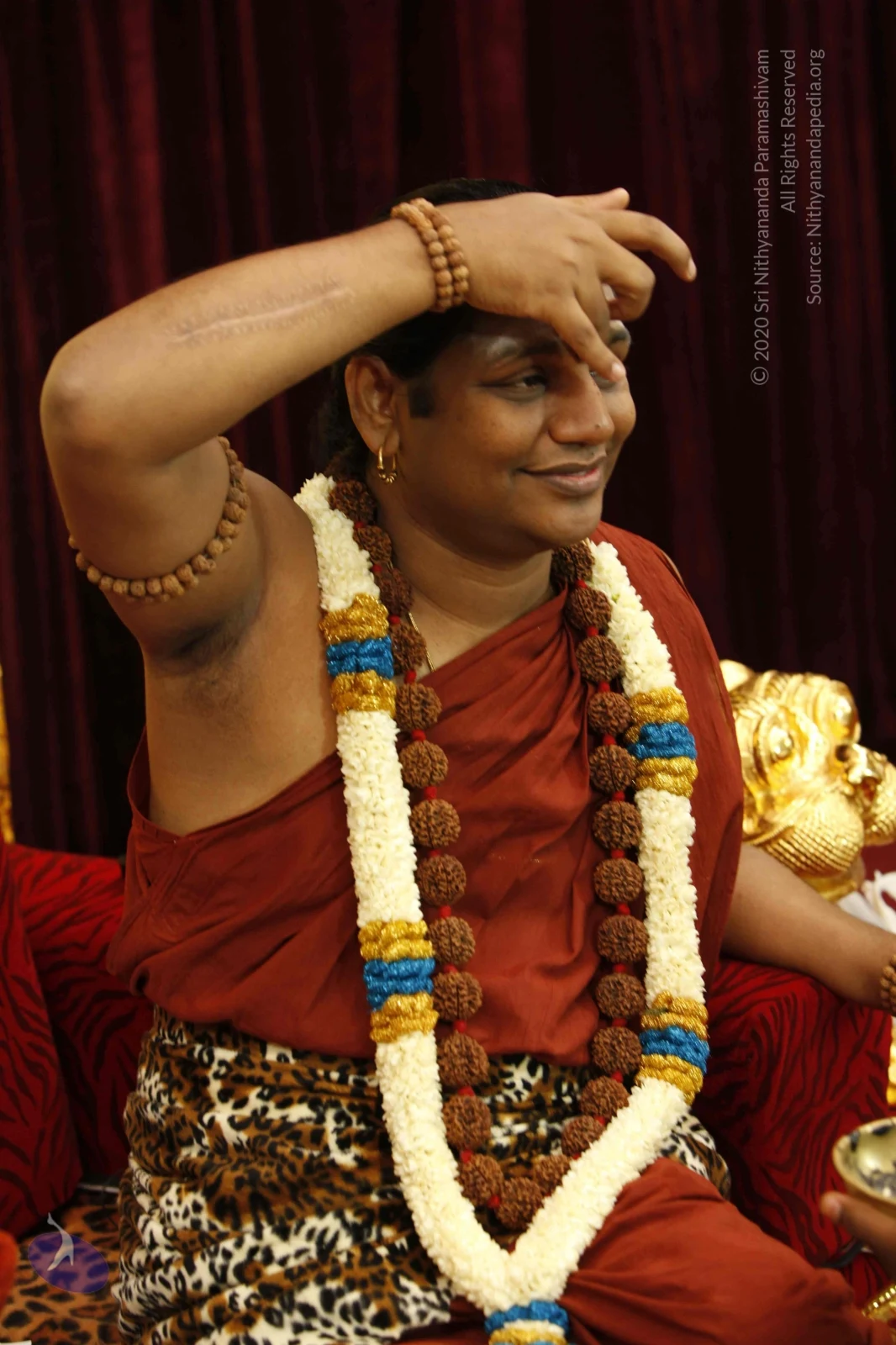
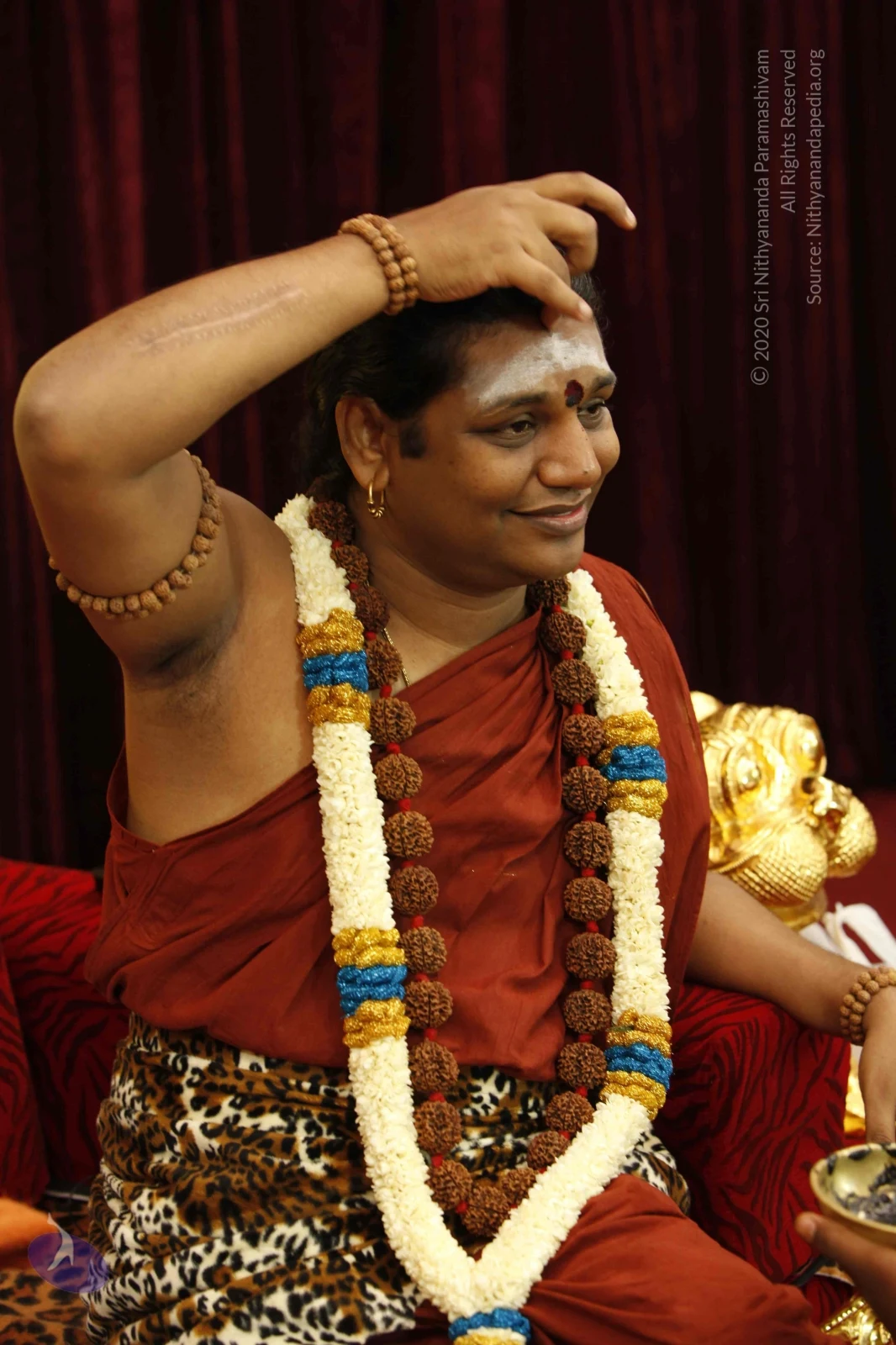
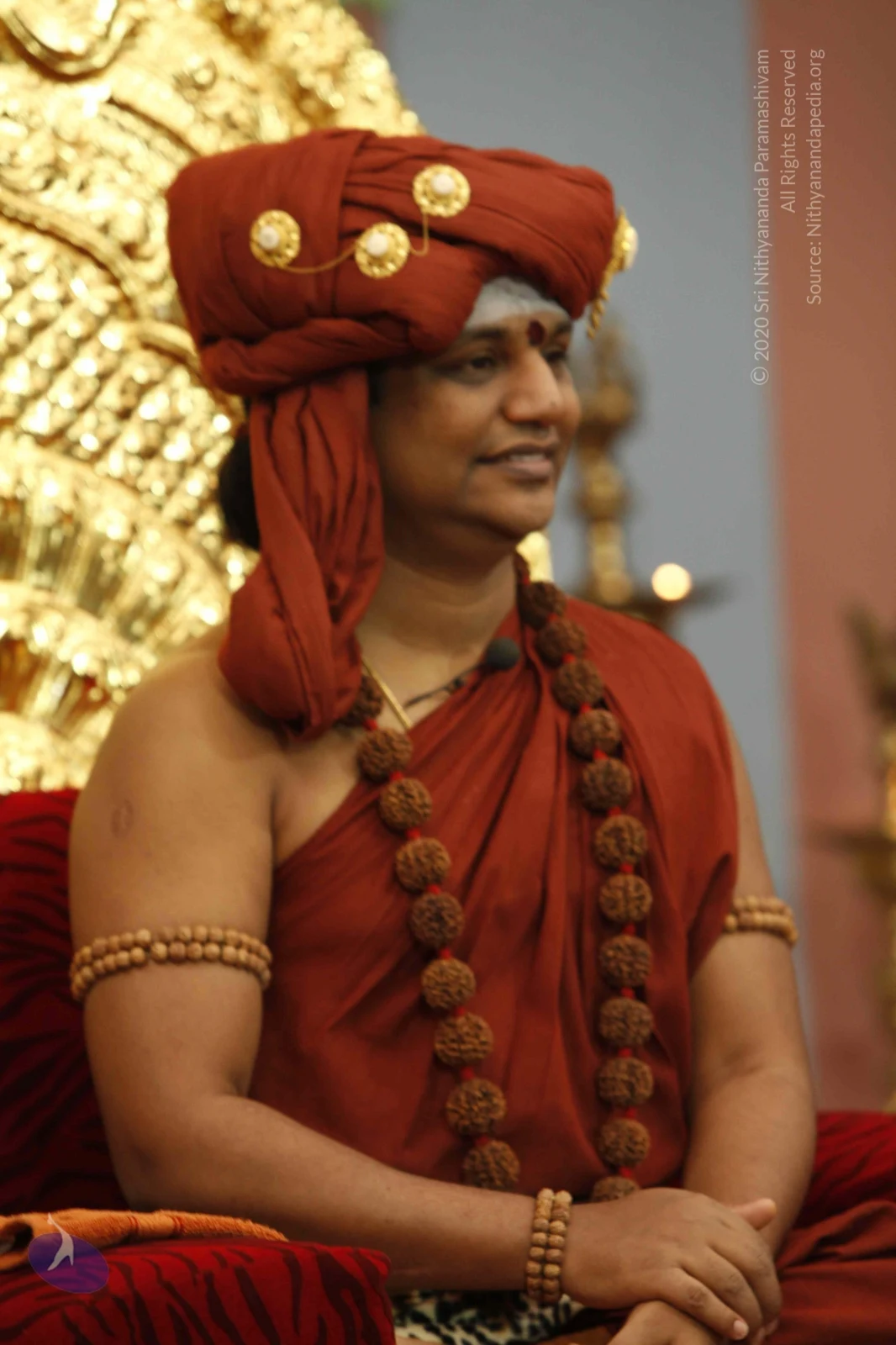
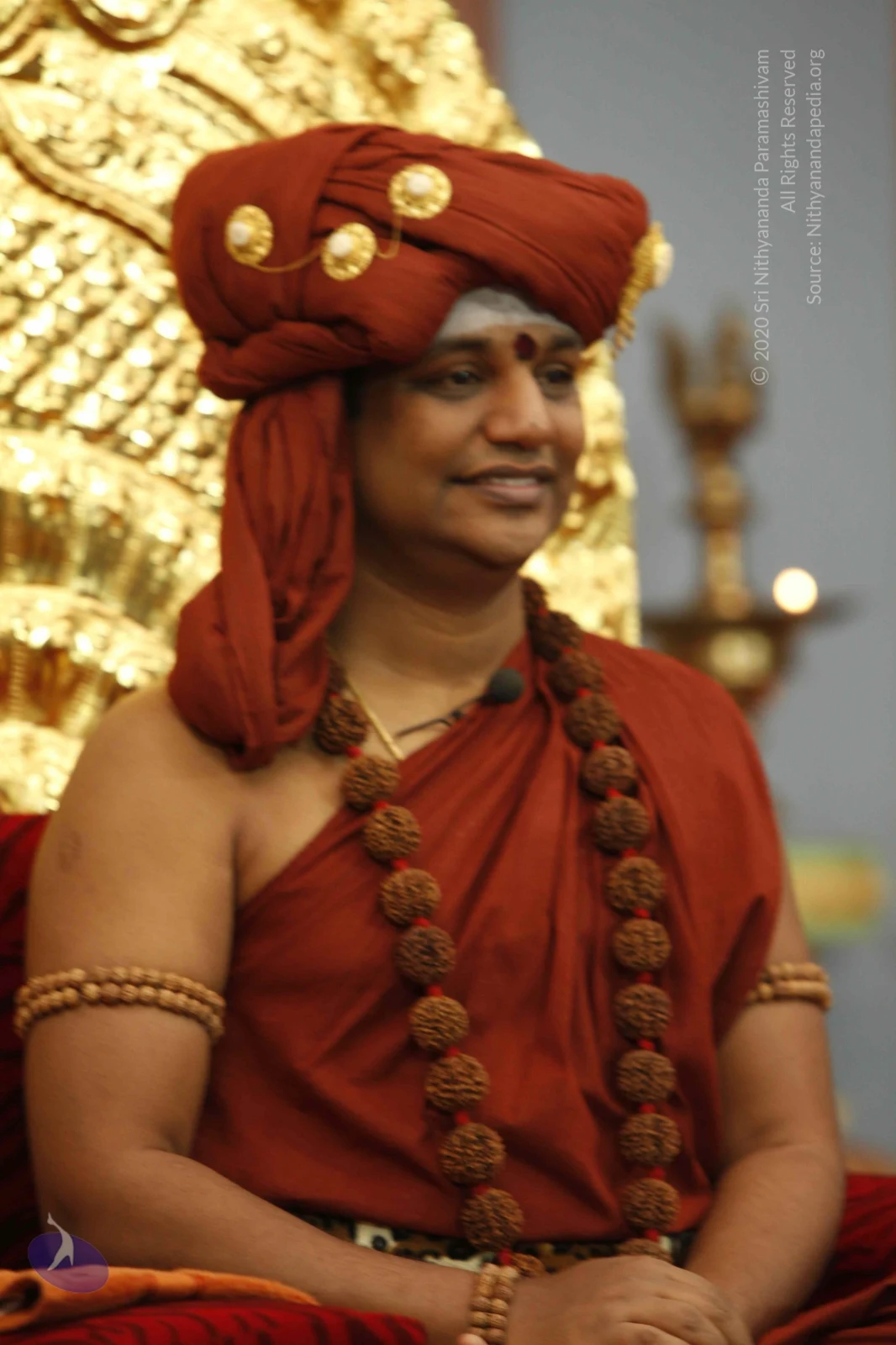
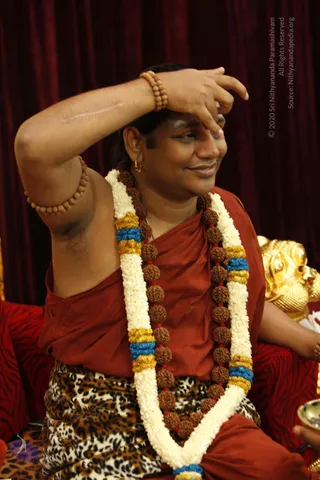
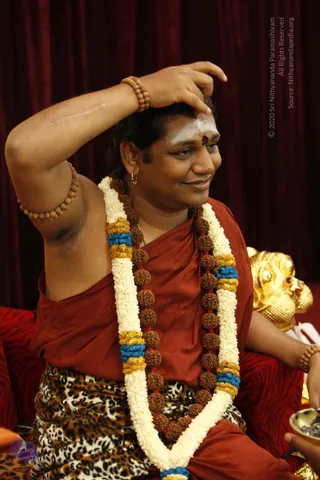
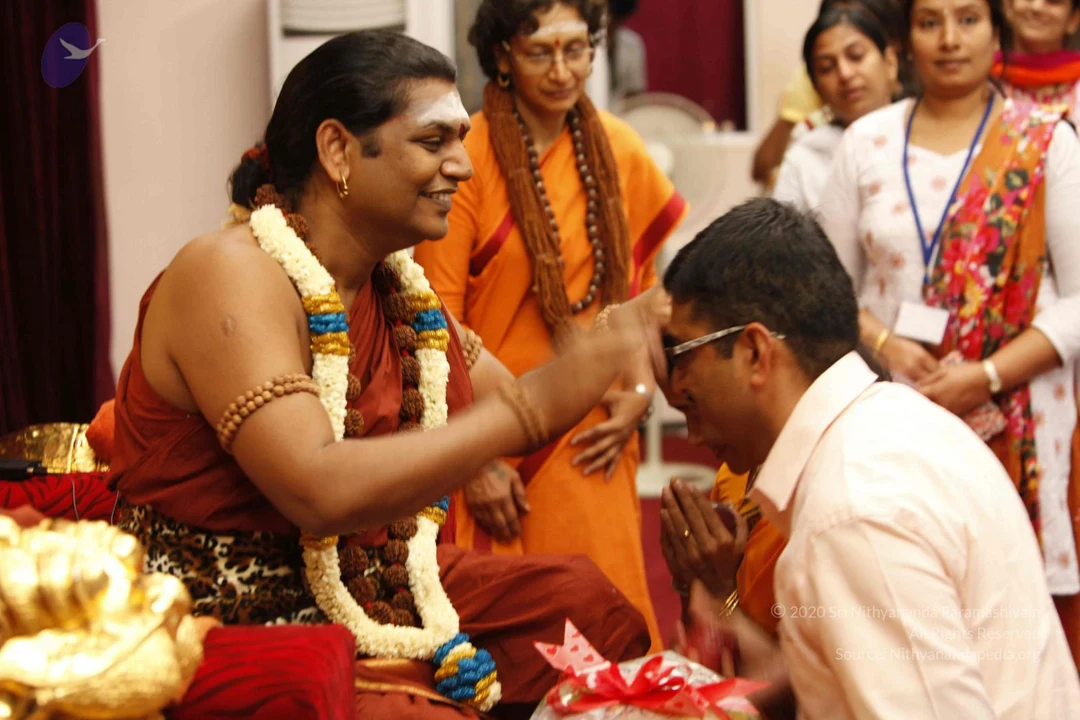
A man seated on a red velvet backdrop, smiling and resting one hand on his forehead while looking to the side. He wears a rust-red shawl over his shoulder, a leopard-print lower garment, and a long garland of white flowers interspersed with blue and gold beads and large rudraksha beads. He also wears rudraksha bracelets on his wrist and upper arm and a small gold earring. Beside him, a gold ornamental figure and a brass bowl are partly visible.A seated man in a rust-red shawl and leopard-print cloth sits before a deep red drape, one arm raised with his hand resting on his head. He wears a long white and gold-blue garland over several rudraksha malas, rudraksha bracelets on his wrists and upper arm, a small gold earring, and white and red forehead markings. A gold deity murti and a brass vessel appear at the edges. a person: the candidate has distinctive rudraksha malas, ceremonial garlands and gold ornaments, and the page links him to the event, though his face and build are not used for identification. One person is visible.
Puja-Satsang

18 photosSource gallery
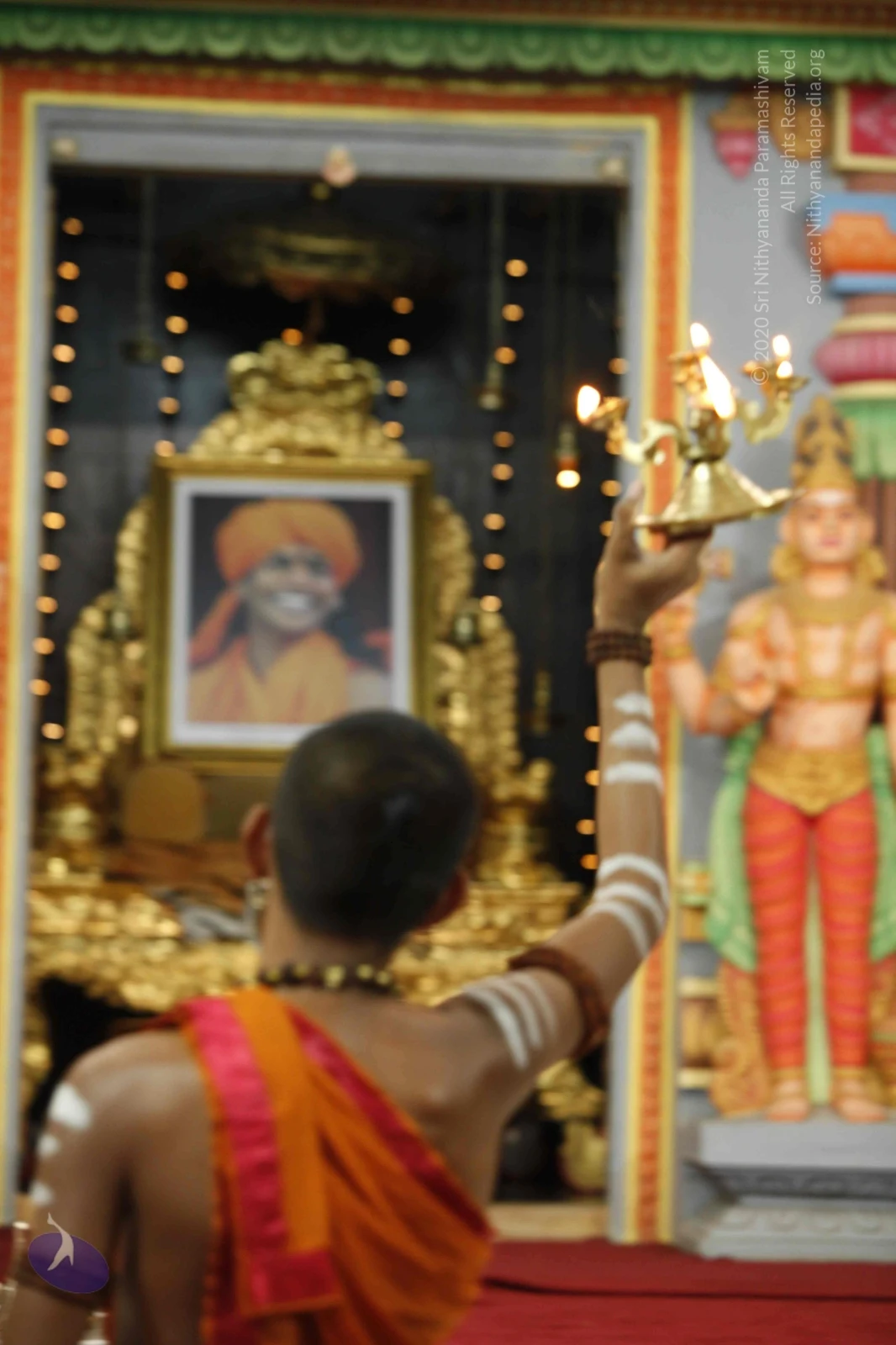
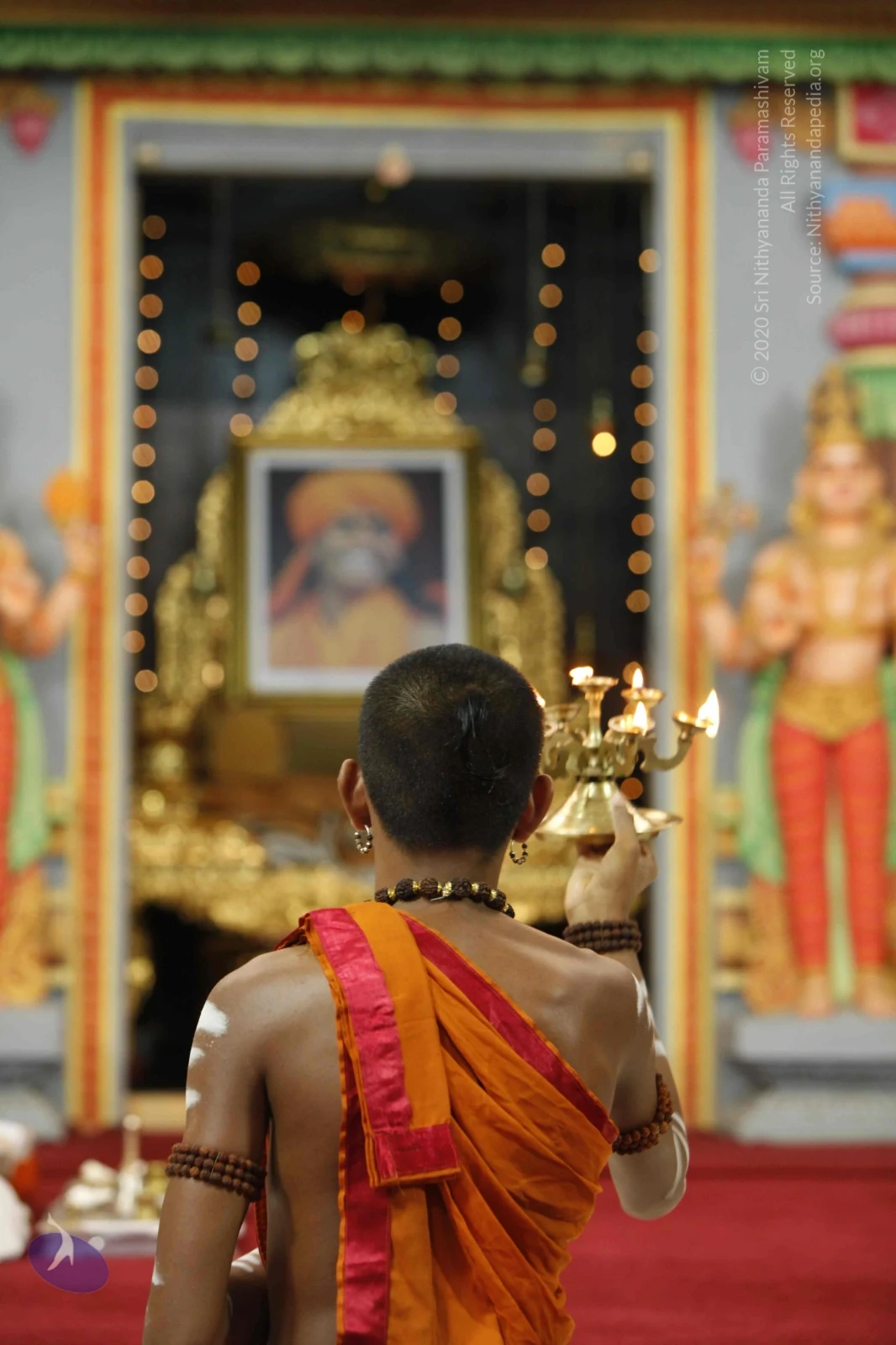
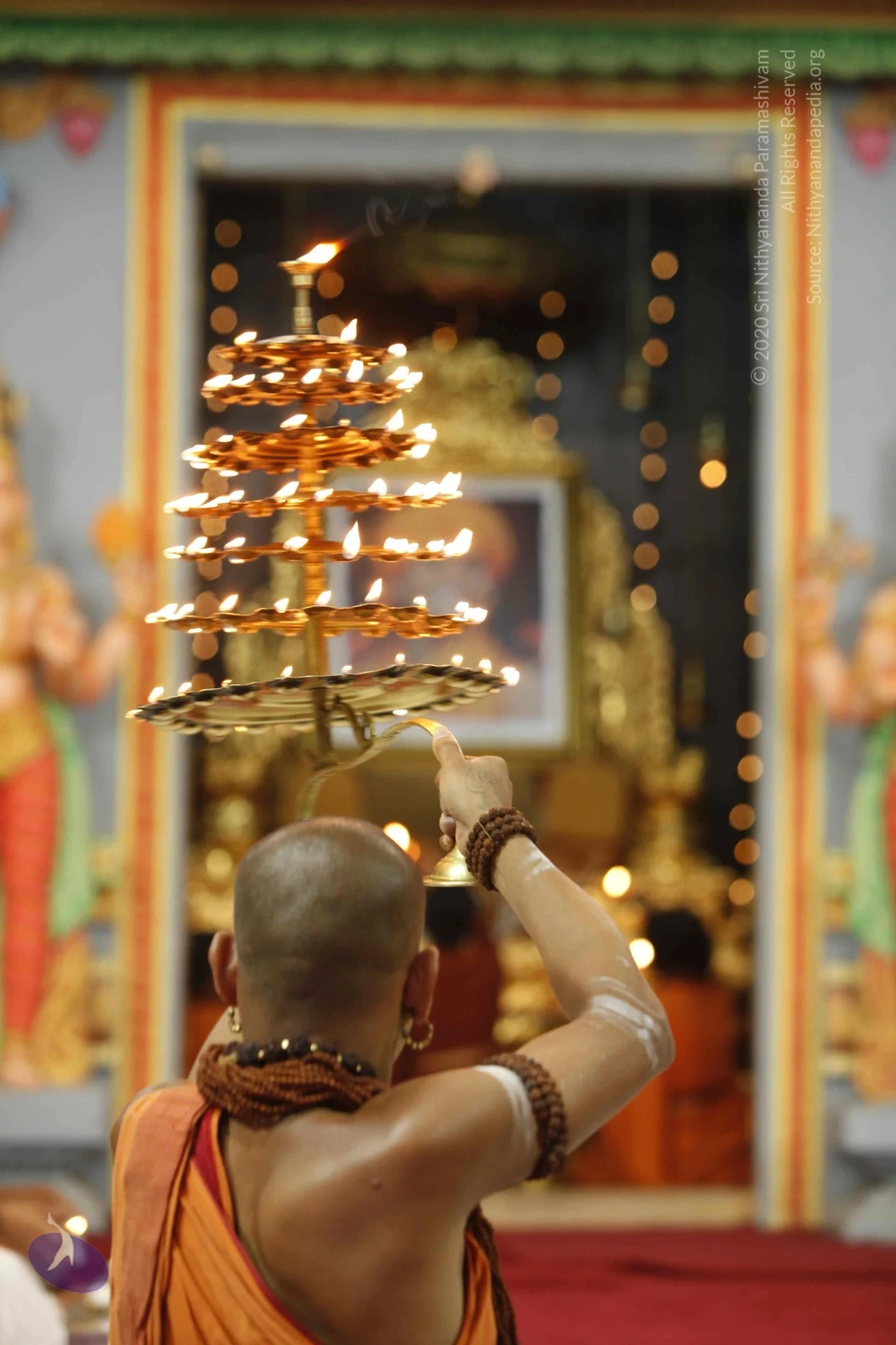
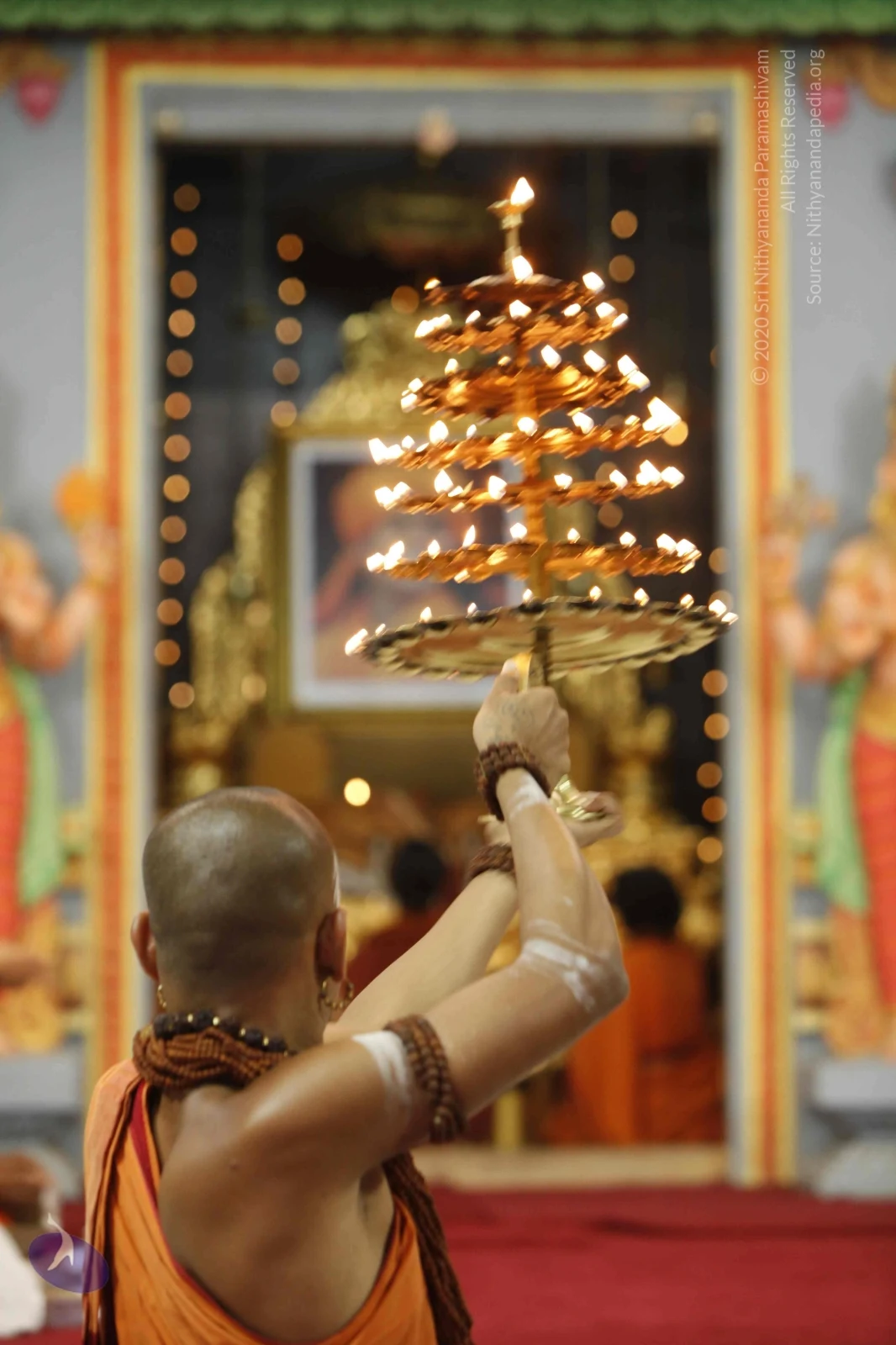
A priest with a shaved head, bare-backed and wearing an orange and red cloth over one shoulder and a rudraksha mala, raises a brass multi-flame aarti lamp toward a shrine. Before him, a framed portrait labelled Paramahamsa Nithyananda shows a smiling man in an orange turban and orange robe, set within an ornate gold frame and surrounded by golden decorations and string lights. To the right stands a painted deity statue in red and green garments with a golden crown. The priest's arms bear white ritual markings. The setting is a temple shrine with orange and green painted borders.A shaved-headed young priest seen from behind, bare-shouldered, wearing an orange and red-bordered cloth and rudraksha malas on his neck and wrists, holds a brass multi-wick oil lamp aloft with lit flames before a shrine. Inside the arched doorway, a portrait in a gold frame shows a figure in an orange turban and saffron garments on a gold-ornate altar. Painted deity figures flank the doorway on red carpet, with string lights glowing around the entrance. This is an aarti offering in a temple shrine.A shaved-headed priest seen from behind, wearing an orange-saffron unstitched cloth and multiple rudraksha malas around the neck and wrist, holds a tiered brass aarti lamp with many lit oil lamps raised high in his right hand during a ritual. He is performing aarti before a shrine with a framed portrait and golden decorations, flanked by painted deity figures with red and green garments. Bokeh string lights glow in the background, and other orange-robed attendants stand in the room.A photograph from behind of a shaved-headed man in an orange saffron cloth performing aarti, raising a tiered brass lamp with many lit oil lamps overhead. He wears a dark beaded rudraksha mala around his neck and beaded bracelets, and white ash markings are visible on his arms. Beyond him stands a temple doorway flanked by painted deity figures in red and green, a gold-framed picture hangs inside, and two other orange-robed devotees stand in the background. The setting is a temple with a red floor covering and warm bokeh lights.A shaved-headed priest in an orange wrap, seen from behind and bare-shouldered, raises a tiered brass aarti lamp with many lit oil lamps toward a shrine. Behind him, a framed portrait labelled "Paramahamsa Nithyananda" sits within a golden canopy and throne-like frame, with a red-bordered doorway, painted dvarapala-style guardian figures on either side, and string lights. A second robed figure in orange sits in the background. A rudraksha mala hangs at the priest's neck.Photograph of a shaven-headed priest seen from behind in a saffron-orange dhoti and shawl with a rudraksha mala, raising a tiered brass aarti lamp with many lit oil lamps toward a temple shrine. Two carved multi-armed deity statues flank the doorway, which opens onto a gold-ornate shrine with a framed portrait. Red carpet covers the floor. Another priest in orange sits inside, and a seated attendant in white is at the left edge. The ritual is an aarti with oil lamps.