Skip to content
Tuesday

22 April 2014

Taste the joy of completion.

Dated photos
101
Source pages
1
Media
2
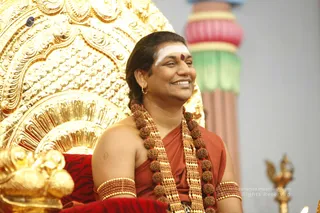
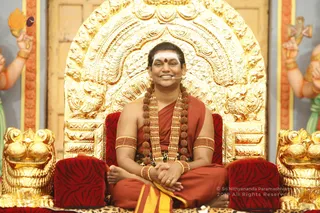
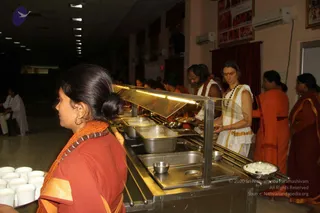
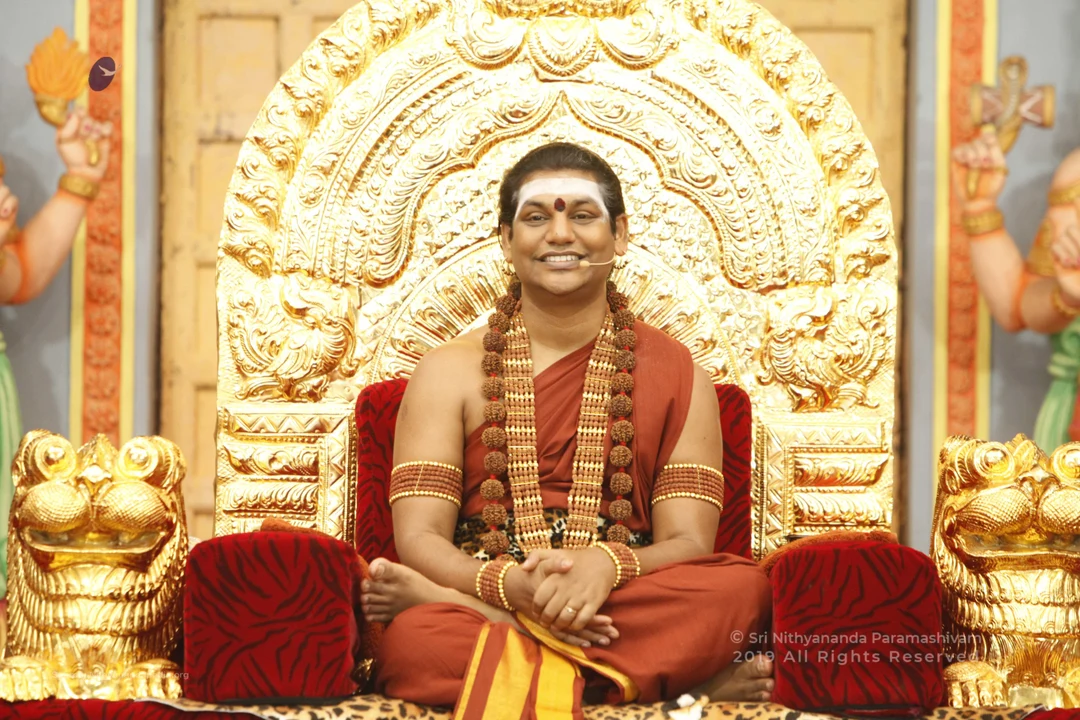
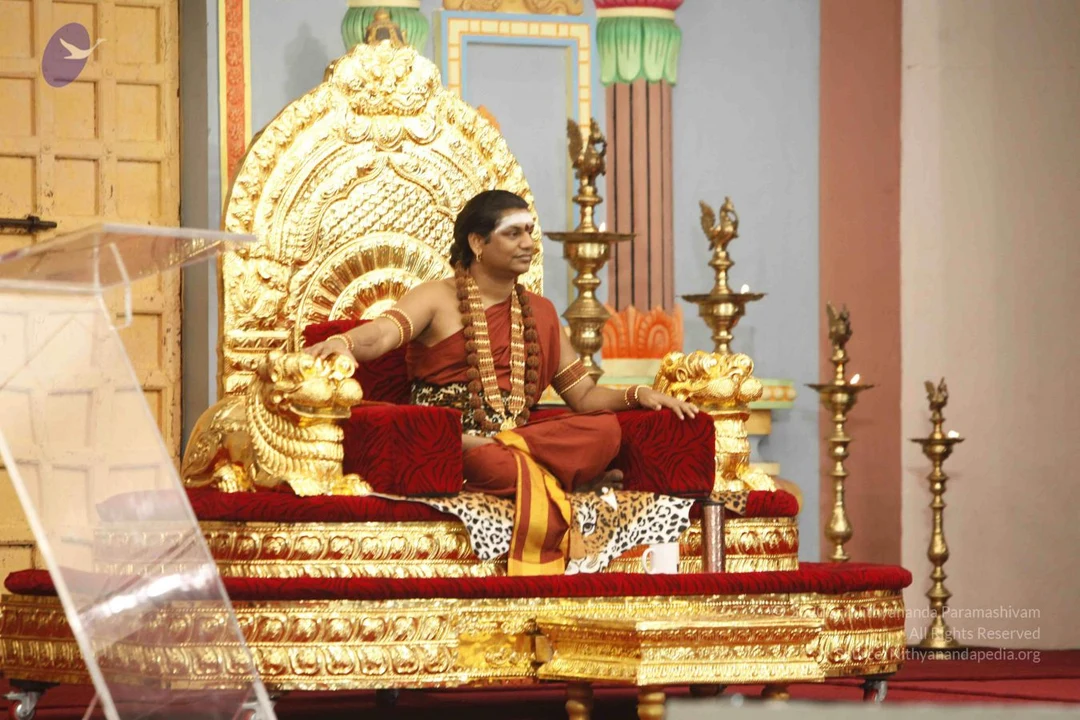
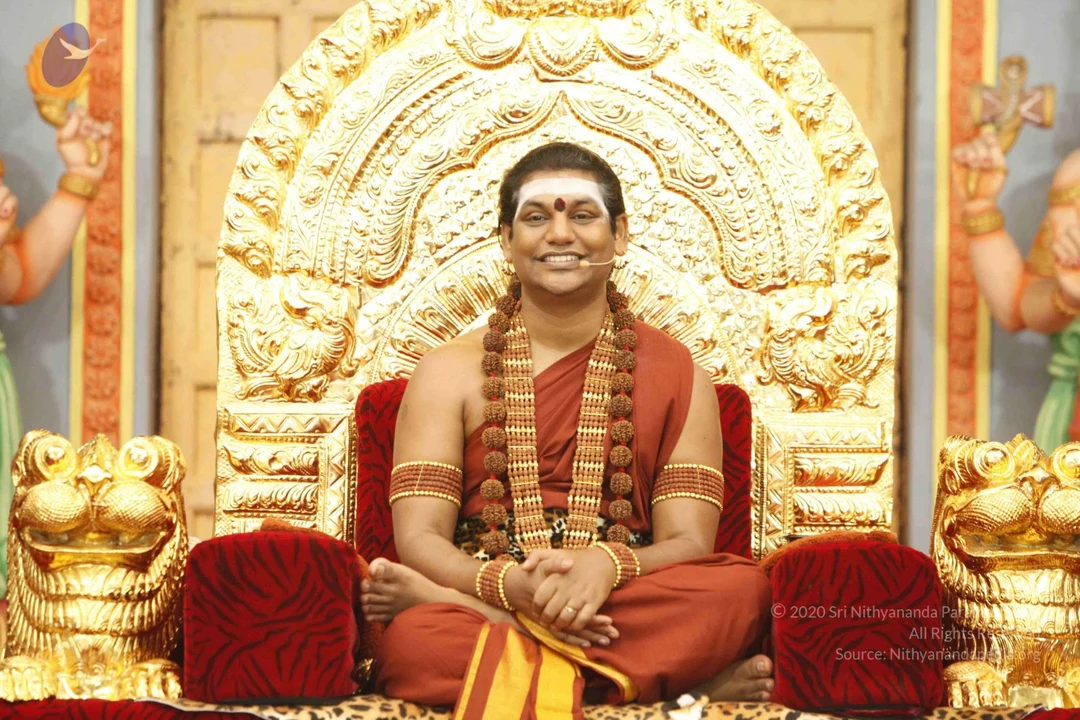
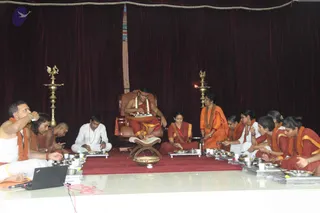
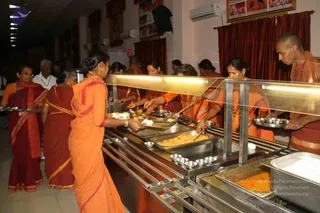
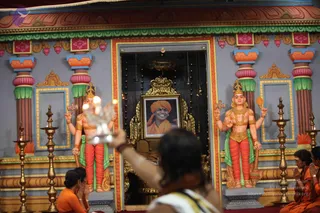
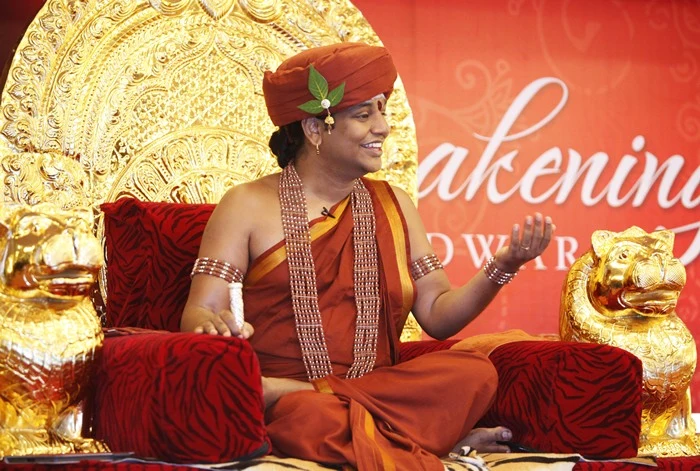
A smiling man seated on an ornate gold throne with a red cushion, wearing a rust-orange unstitched wrap over a bare upper torso, multiple rudraksha mala necklaces with gold beads, layered rudraksha and gold armbands, a gold earring, a white vertical tilak with a red bindi on the forehead, and dark hair swept back.A smiling man with a headset microphone sits cross-legged on a red velvet-cushioned golden throne with an ornate gilded arched back and carved lion-form armrests. He wears a saffron-orange shawl and dhoti with a yellow border, a multi-strand gold necklace and a long rudraksha mala, gold armlets and bangles, and a white vibhuti stripe with a red kumkum dot on his forehead. His hands rest folded in his lap. Flanking the throne are painted figures with raised arms holding a flaming torch and a trident-like staff. a person (in_person cues: saffron clothing, rudraksha mala, gold ornaments, seated on a throne). The ' is visible in the cornerA photograph of a serving line at a dining hall, with a steel food warmer and chafing trays holding rice and dishes under a sneeze guard. In the foreground a woman in a rust-orange sari with a beaded orange necklace holds a stack of white paper cups. Behind the counter, a man in a white dhoti and white shawl with a rudraksha mala and a woman in orange sari serve food, and a shaved-headed devotee in white stands nearby. Other women in orange and maroon saris stand in line. A framed poster and a portrait hang on the wall, and a maroon curtain is visible. The person in the white shawl with long hair and ornaments may be a person, with a rudraksha mala and white ceremonial attire, serving food as a volunteer.

April 22 2014

Original wiki page
Contents

Title:

Taste the joy of completion.

Description:

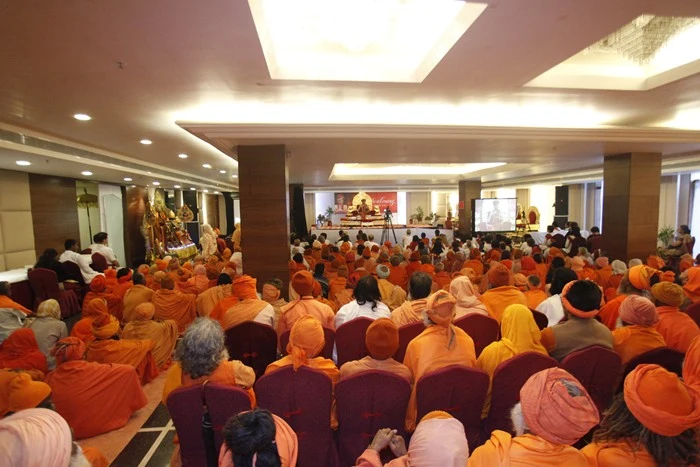
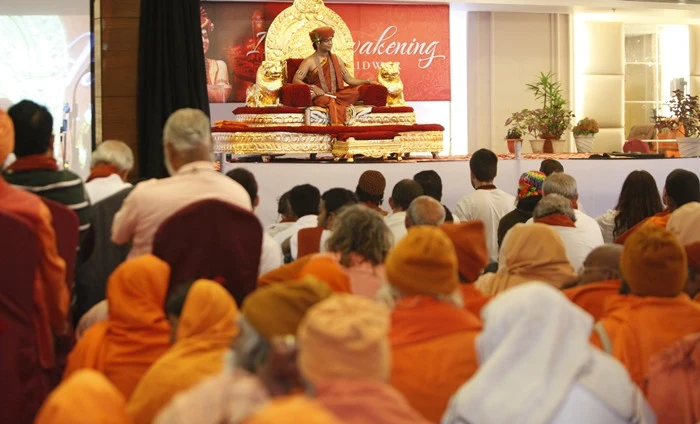
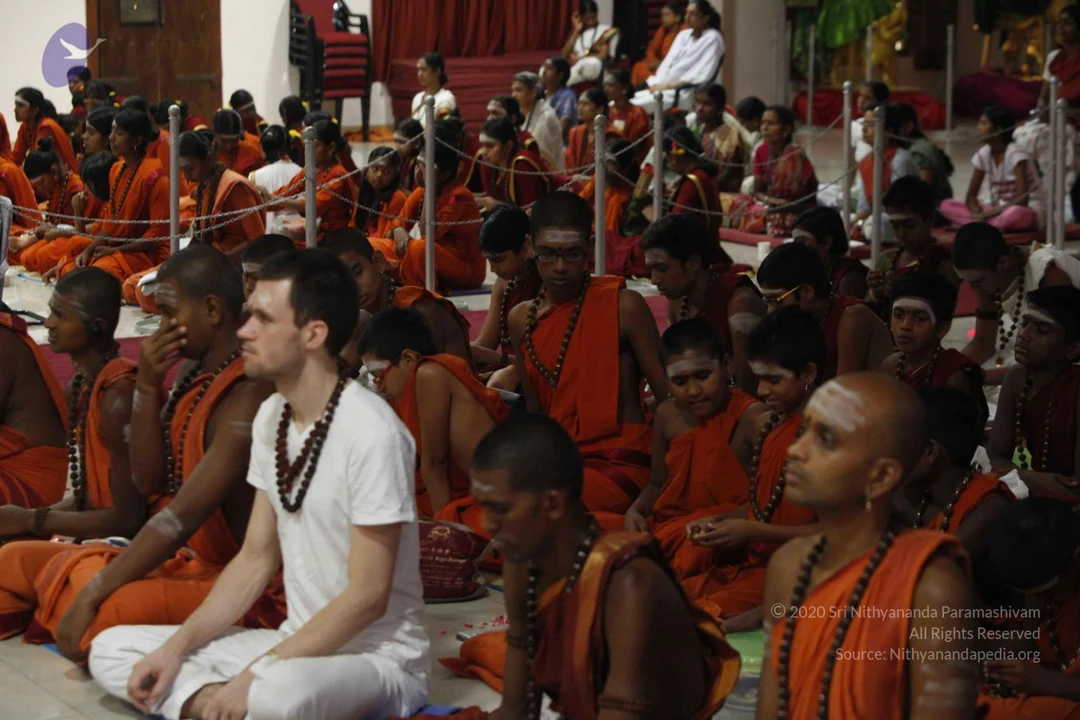
Today’s (22nd April, 2014) Morning Satsang was All About Doing. Paramahamsa Nithyananda gave the instructions for us to bring in and experience the Authentic Advaithic Experience. He told us to pin up our Inner, Outer Life and Others Image beside the bed and pin up all the incompletions we need to complete beside it. Every morning we are to declare completion; which has more to do with decision than technique.

Link to Video:

VideoAudio

Transcript:

Nithyanandeshwara Samaarambhaam

Nithyanandeshwari Madhayamaam |

Asmath Aachaarya Paryanthaam

Vandhey Guru Paramparaam ||

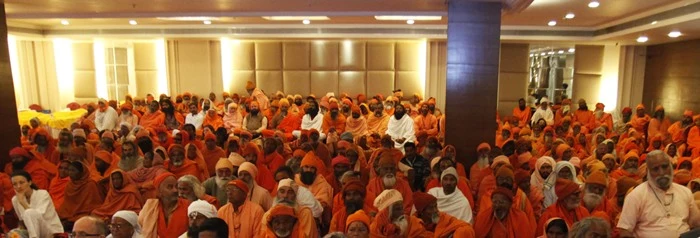
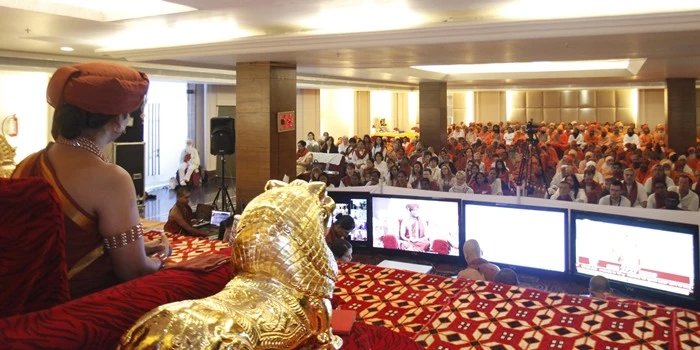
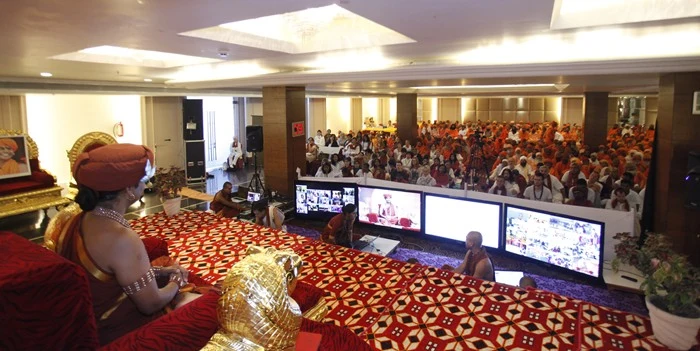
I welcome all the devotees, disciples, samajis, satsanghis, Mahants, Shrimahants, Kotharis, Thanedars, sitting with us all over the world through Nithyananda TV, Lotus TV, Janashree TV, Eshwar TV, Sadhna TV, two-way video-conferencing having Nayana Deeksha in so many cities in so many countries around the world.

The cities sitting with us through two-way video-conferencing having Nayana Deeksha: Toronto-Kailasam, Washington DC-Sripuram, Ohio-Prayag, Singapore-Singapuram, Kuala Lumpur-Palani, Nithyananda University-Los Angeles, Nithyananda University-Paris, Nithyananda Nagaramu-Hyderabad, Nithyananda Nagar-Tiruvannamalai, Nithyananda Nagara-Bidadi, Oklahoma-Somanatham, St. Louis, Tiruvanmiyur-Chennai, Varanasi, Seattle-Chidambaram, Bangalore-Malleshwaram, Jorpati-Nepal, London-Kashi, Adi Nithyananda Dhyanapeetam-Avathipalayam, Dubai-Vaidyanatham, Houston-Kalahasti, Dakota Dunes, San Jose-Madurai, Hyderabad-Gupta Kashi, Guadeloupe-Rameshwaram, High Point-North Carolina, Scottsdale, Port Washington-New York, Grasse-France, Abu Dhabi, San Antonio, Hong Kong, Oman-Sivagangai, Scottsdale, Doncaster-UK, Anne Marie-Paris.

I welcome all of you with my love and respects. Yes!

Listen! Today’s satsangh is all about “DOING”. Yes! You had enough time and time extension, both, to complete the homework of discovering incompletions. Please understand, first I gave time. Then, by the order of few devotees, I extended it. Even asking for more time to discover your incompletions is one more incompletion. But I tolerated, because you should not be using that as a reason for why you did not discover all your incompletions. Now you know. You know. You got time. Now it’s time! We can’t afford to wait any more.

Listen, from today, we will start moving towards Completion. The first step you should take is, listen, now you wrote all the incompletions. It can be as less as twenty-five, thirty, or as huge as one-thousand, two-thousand. Now decide from this moment this incompletions will not have power over your decision or cognition. Listen. Understand the meaning of this word. Even till you complete, these incompletions cannot have power over your cognition, your decision-making. You can sit and complete all these day by day, one by one.

See it’s like a elephants; I have seen temple elephants eating. They will catch hold of a huge bunch of sugarcanes. They will eat the sugarcane one by one, or two-three. But, till they complete eating, till they eat also they will not allow anybody else to come and touch the sugarcanes. Once they declare it is theirs, it is theirs! They may be slowly eating, or not eating, they may eat even tomorrow, day-after-tomorrow, but no one can touch it! Same way, you may complete tomorrow or day-after-tomorrow, but those incompletions cannot have power over you, be very clear!

Declare Completion NOW! You know all this is incompletions. Understand, Completion works more with your conscious decision. Completion works more with your conscious decision. Completion is more a conscious decision, less a technique. Pranayama, Yoga, all of them are more a technique, less a conscious decision. Completion more conscious decision, less technique. Means, your decision plays a major role in completing than actual technique. You just decide now you are complete....over!

I never did in my life sitting and reliving, going through or looking at the mirror twenty-four hours. I never did all these things. Simply my Masters showed me, ‘Hey, this is incompletion! Drop it.’ Over!

So, it is your decision that plays major role. See this penning down is like a identification. Now what you penned down, even if it is twenty-five page, you should paste it next to your bed. And every day for next few days, you should read that and tell yourself, ‘I am complete with all these.’ After a few days, you will be bored to read them, because they have no more power over you. Then you can tear them and put it in the dustbin. You should feel bored to read your incompletions; then you are COMPLETE. You should feel, ‘What is this? This looks like somebody else had all this! Why am I reading?’

See when I speak to some of the people come to me for healing. Recently, some people came to me for healing, psychological suffering. They came to India from both side Muslim countries after being tortured. And you know worst thing, it is not that only Hindus are tortured in Bangladesh and Pakistan; many Muslims are tortured and they run away to India for a peaceful life. So some of them came to attend the satsangh and have the blessing. When I listened to their problems and the deep - I am honestly telling you, with all my compassion and love for that soul, I put my hand on them and attended to them, healed them, but for a moment I thought, ‘Oh God! Thank God I was born in Bharat. Let us keep this Bharat alive!’ Because I can’t even imagine this amount of suffering can be put into people. I was so shocked!

Same way, I have seen some of the Sri Lankan Tamils who moved to Toronto and Malaysia, even in Tamil Nadu, when they come for healing, ask for healing, Oh God, when I put my hand on them and try to heal, the amount of pain! Only then you will understand all your incompletions are foolishness! Because you don’t have suffering, you just create suffering. If you have gone through the real torture in the life, you will not torture yourself, because you are too busy in handling the real torture. Most of the time, the torture we create for ourselves is just because no work, like entertainment you start creating!

Understand all the incompletions you wrote should look like meaningless. Till then go on reading it every day and declare Completion. When you feel some of them you don’t even remember them anymore, you can scratch them. I wanted all of you to do this very sincerely. One side, the authentic inner-image, outer-image, life-image, others-image; the other side, all the incompletions you are supposed to complete to achieve that authenticity. This is the process for Authenticity.

Integrity to Advaitha, Authenticity to Advaitha, Responsibility from Advaitha – responding from Advaitha is Responsibility; Enriching the world with Advaita; Causing everyone to experience Advaita; is the goal of me and our Sangha, understand? Integrity all of you know; it is very easy and simple. For practicing how it is I don’t know; that is up to you. But, for understanding, it is very easy. Authenticity is what we are doing now. The whole process is about Authenticity. To bring authentic Advaithic experience into you, this whole teamily exercise.

Every day I wanted you to read all the incompletions and declare Completion. ‘These incompletions will not have any more power over me’. And there are a few incompletions, may be like a pain point in you, they will be the pain factor. Complete with them. Complete with them. Complete with them.

Because today’s satsangh is all about the technique, all about the process. So, listen. Even you understanding Completion is more a decision, less a technique, is very important for you to do it. Even you understanding Completion is not much to do with DOING, it is less to do with DOING, much to do with understanding, deciding. Even you clearly understanding which part is tumour and which part is your body, which is your organ and which is the tumour, that understanding itself makes the tumour powerless, understand? Tumour also gets power from you. The moment you understand it is not part of you, it loses power over you, the energy supply towards it is stopped.

I wanted all of you to understand today’s whole satsangh is just these two words:

One: Place all your incompletions and the authentic identity you have to achieve, both, next to your bed. That is the first instruction.

Second: Every day read these incompletions and declare, decide you will be complete and you will not allow these incompletions to be in your cognition or decision-making. You will go on be completing it. Even till you complete, just because you understood they are incompletions, you will not allow them to be part of your cognition any more.

Just these two is what I want you to do today. I’ll give further instructions tomorrow.

I bless you all. Let you all radiate with Integrity, Authenticity, Responsibility, Enriching and Causing eternal bliss, Nithyananda. Thank you.

Photos

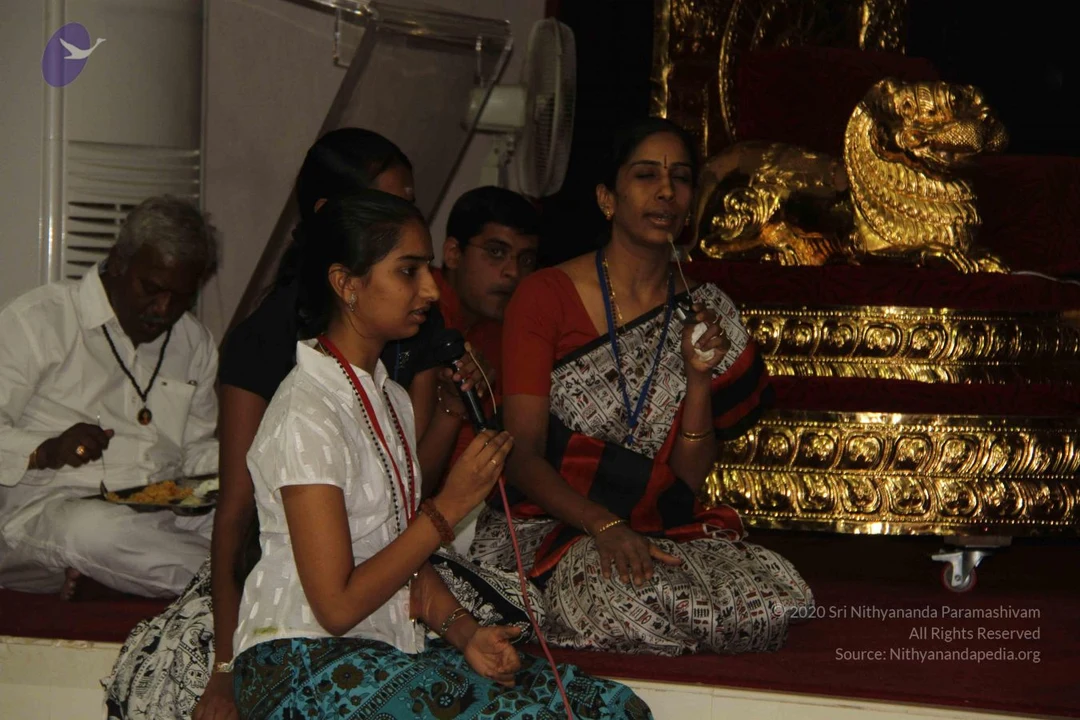
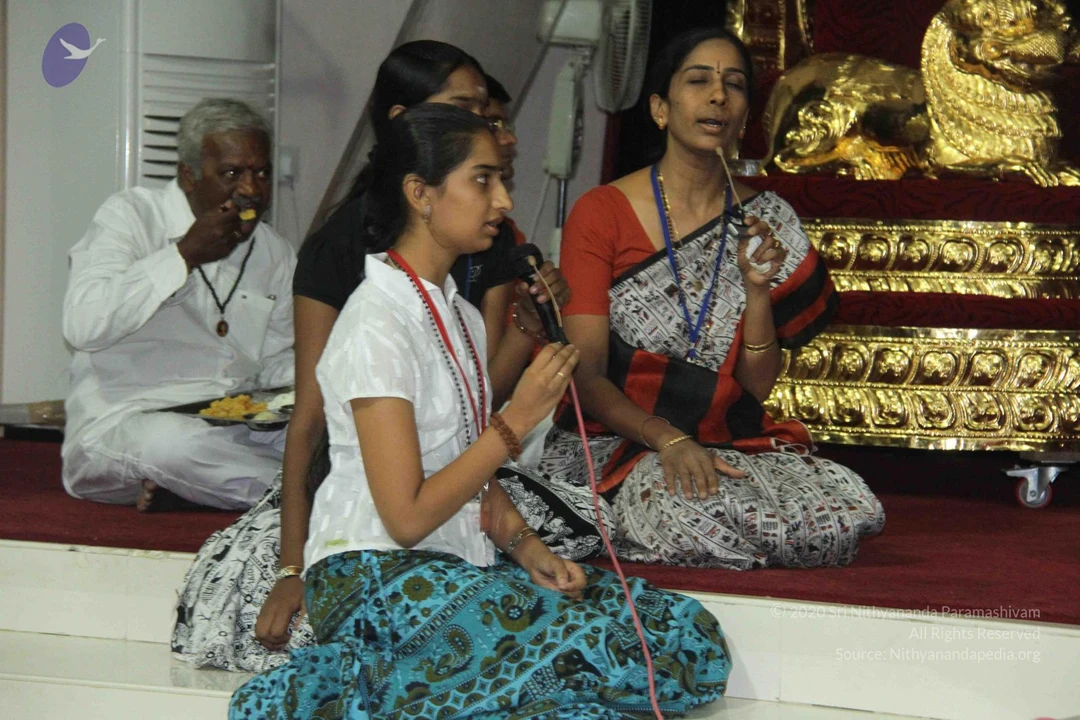
Nithya Satsang
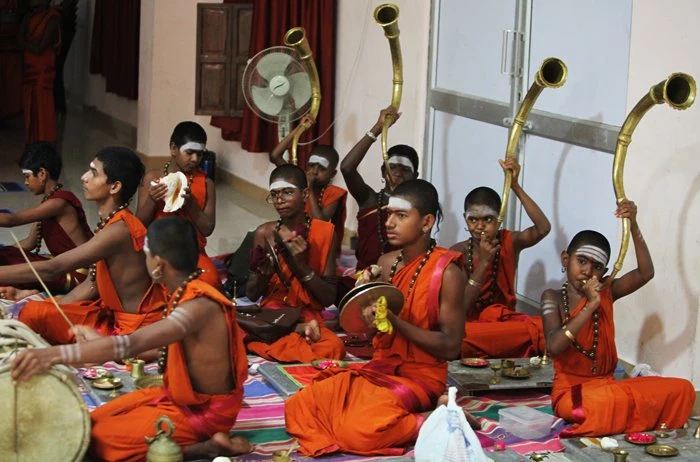
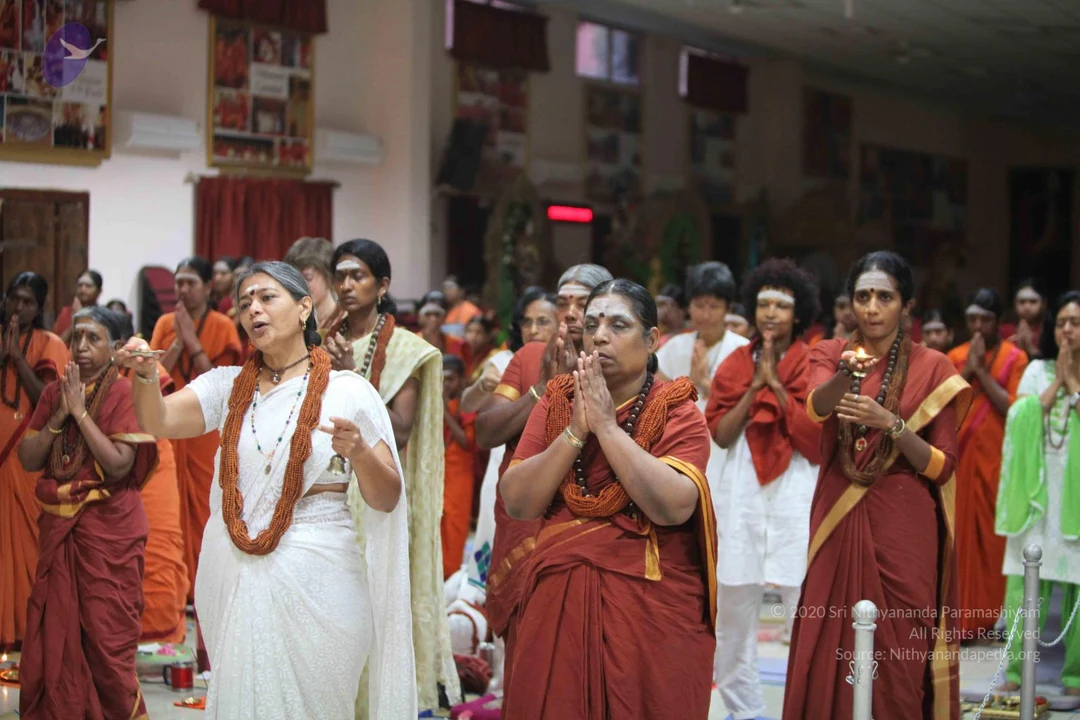
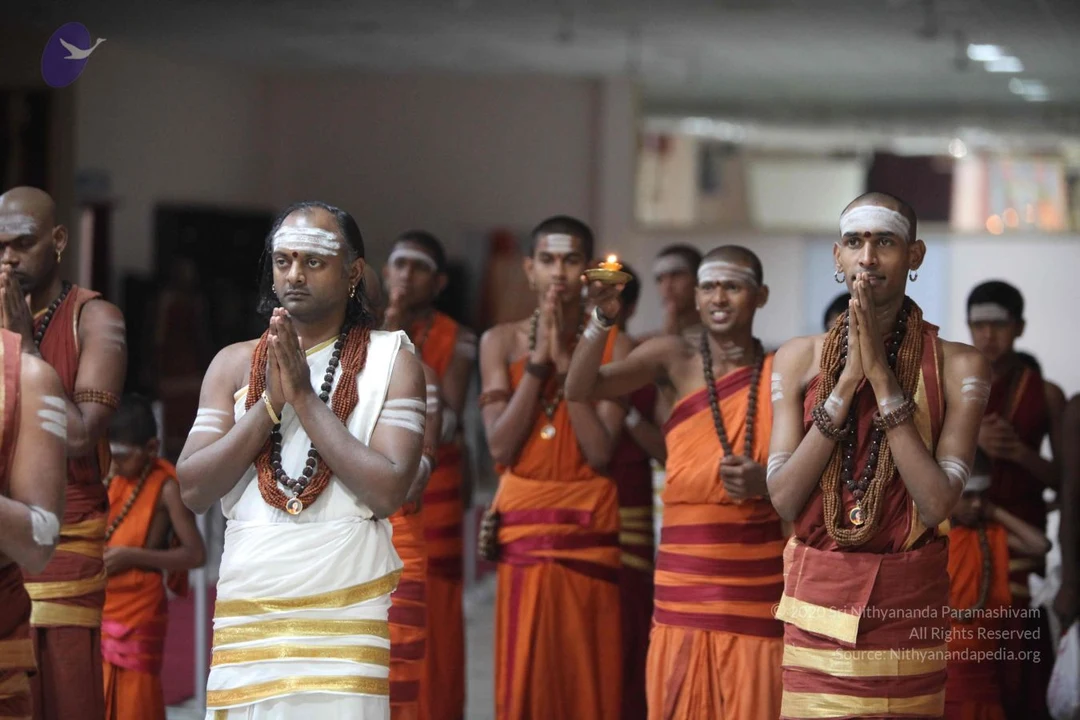
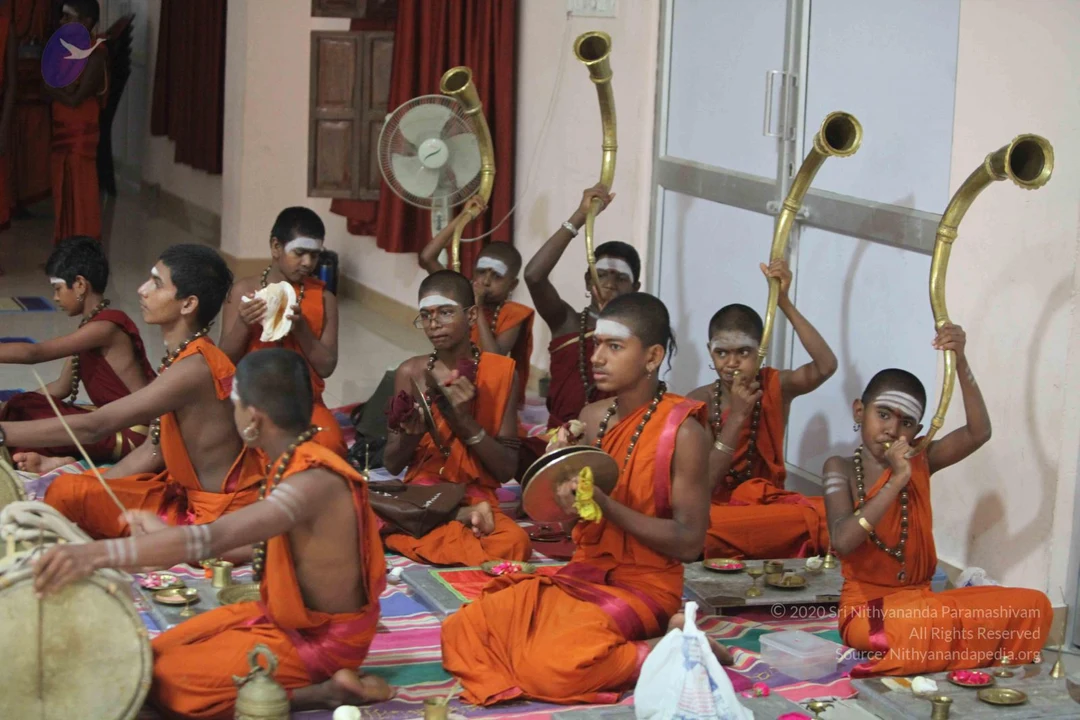
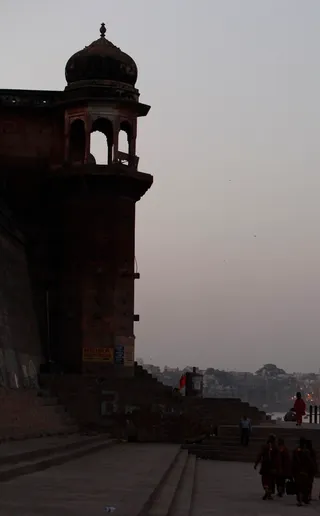
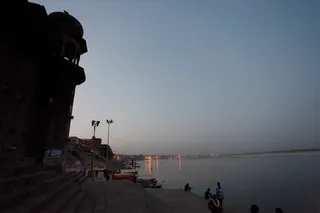
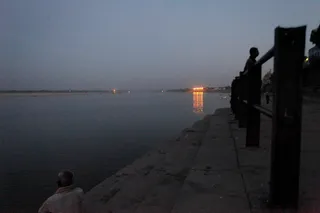
Nithyananda Diary 22nd April 2014 | Padukapuja | Nithya Satsang | Visit to Ganga Ghats
Tags:

All About Doing, Paramahamsa Nithyananda, Authentic Advaithic Experience, Inner, Outer, Life and Others’ Image, incompletions, declare completion, Decision,technique. All About Doing, Paramahamsa Nithyananda, Authentic Advaithic Experience, Inner, Outer, Life and Others’ Image, incompletions, declare completion, Decision,technique.

Photos Of The Day:

PadukaPuja-NithyaSatsang-Kalpatharu

Vaidyasarovar

PadukaPuja

NithyaSatsang

KalpatharuDarshan

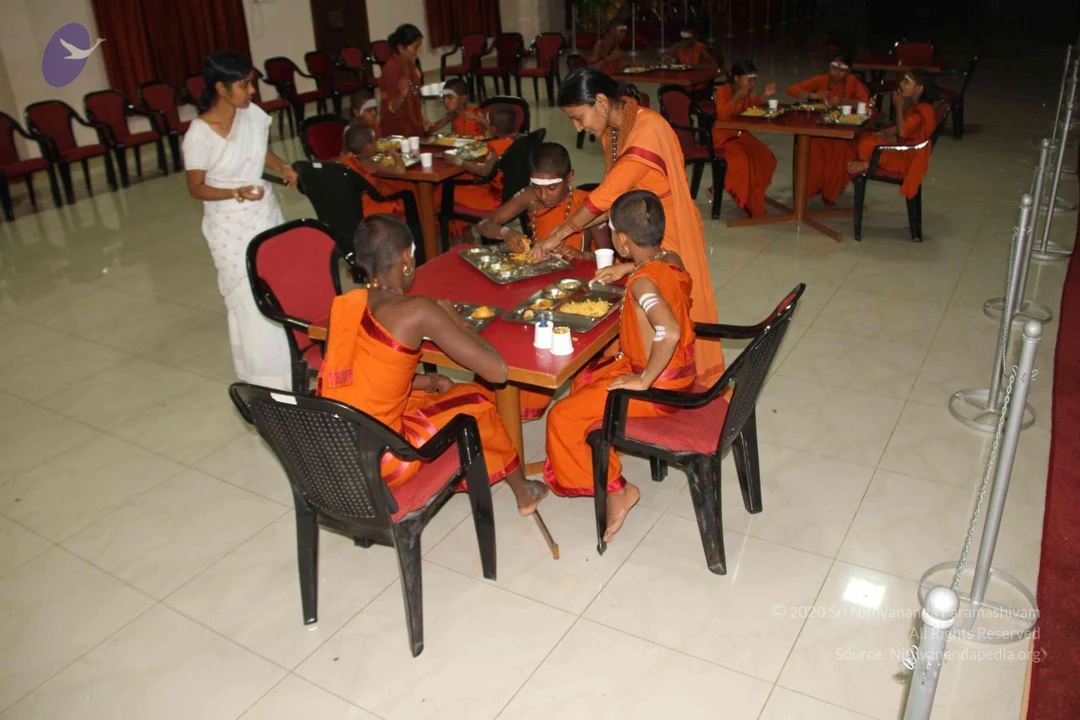
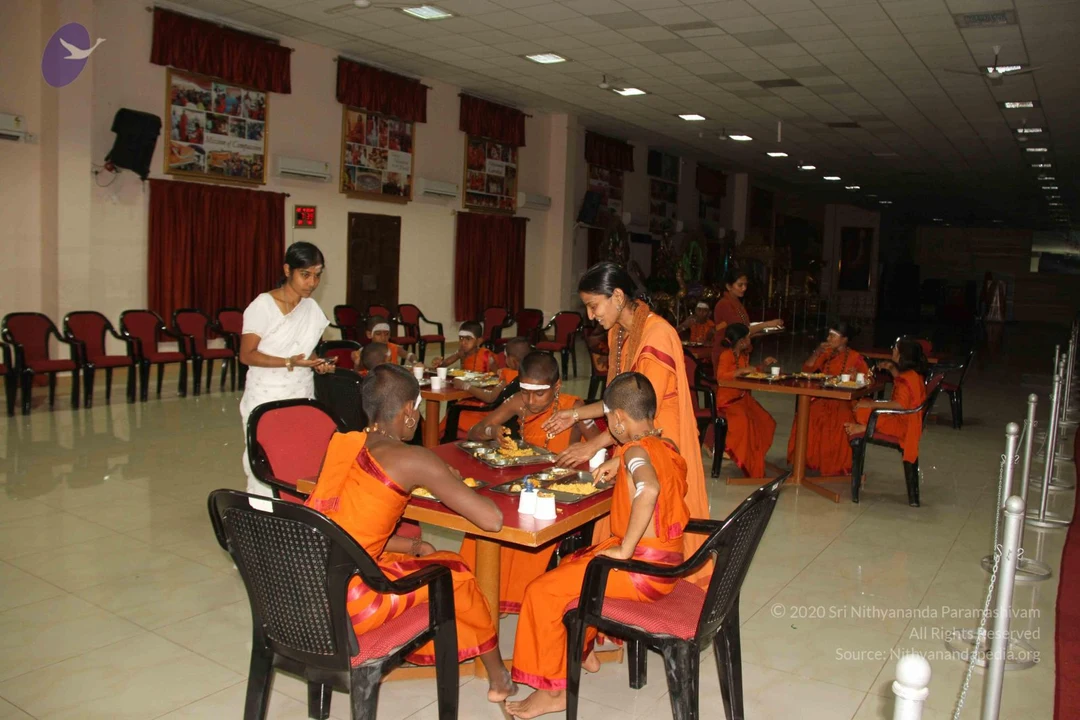
TeamilyDinner-Mahant-Dinner

Photos Of The Day:

PadukaPuja-NithyaSatsang-Kalpatharu

Kalpatharu-Darshan

Teamily-Dinner-Mahant-Dinner

Photos from this day

View all 101 photos

Nithya Satsang

6 photosSource gallery
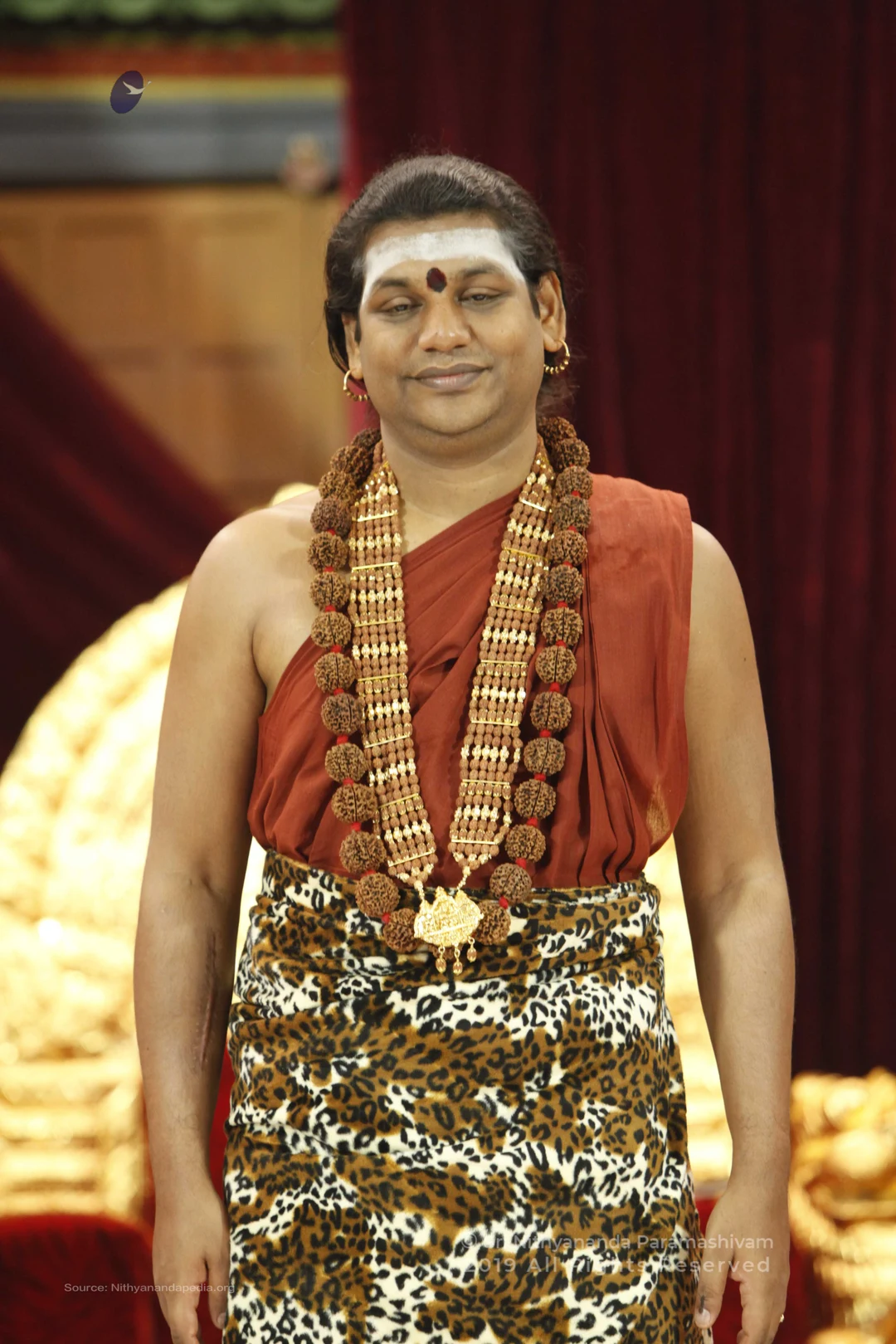
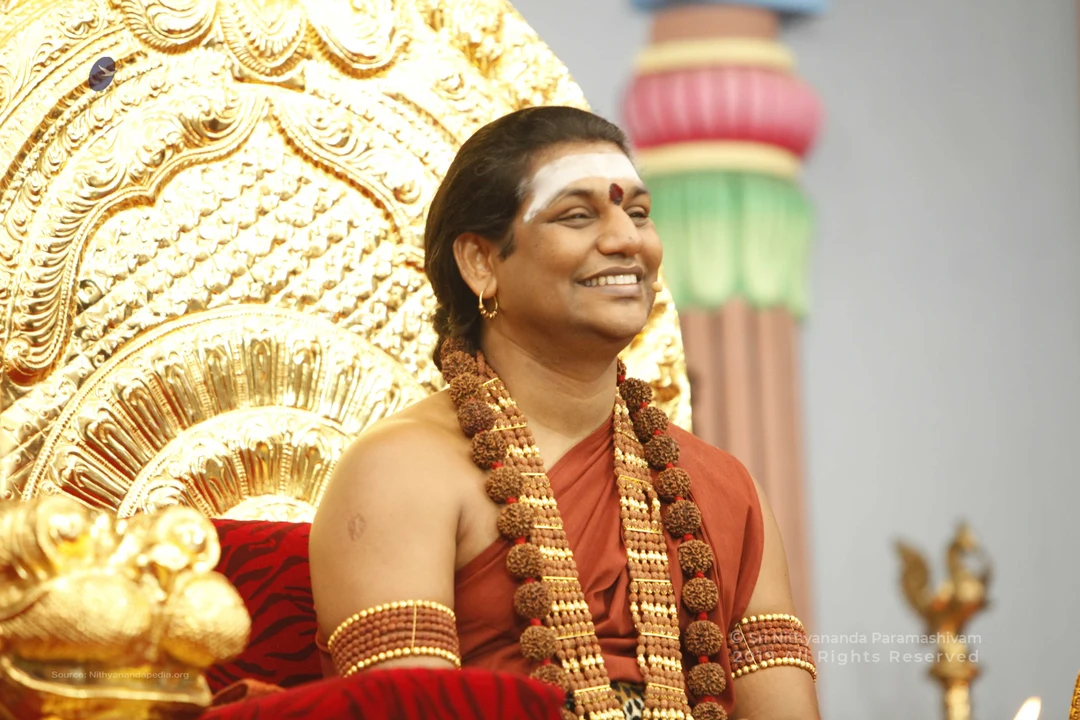
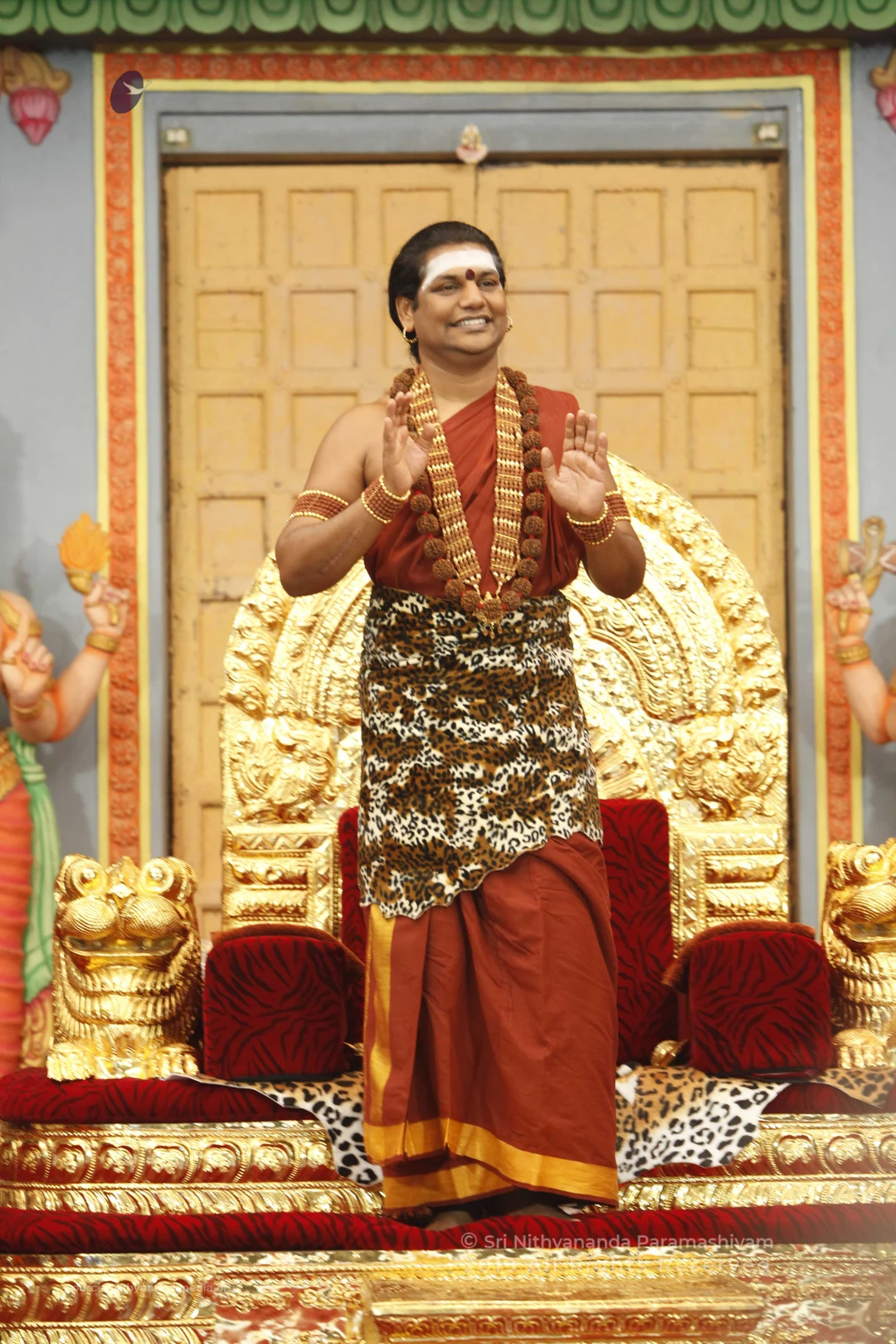
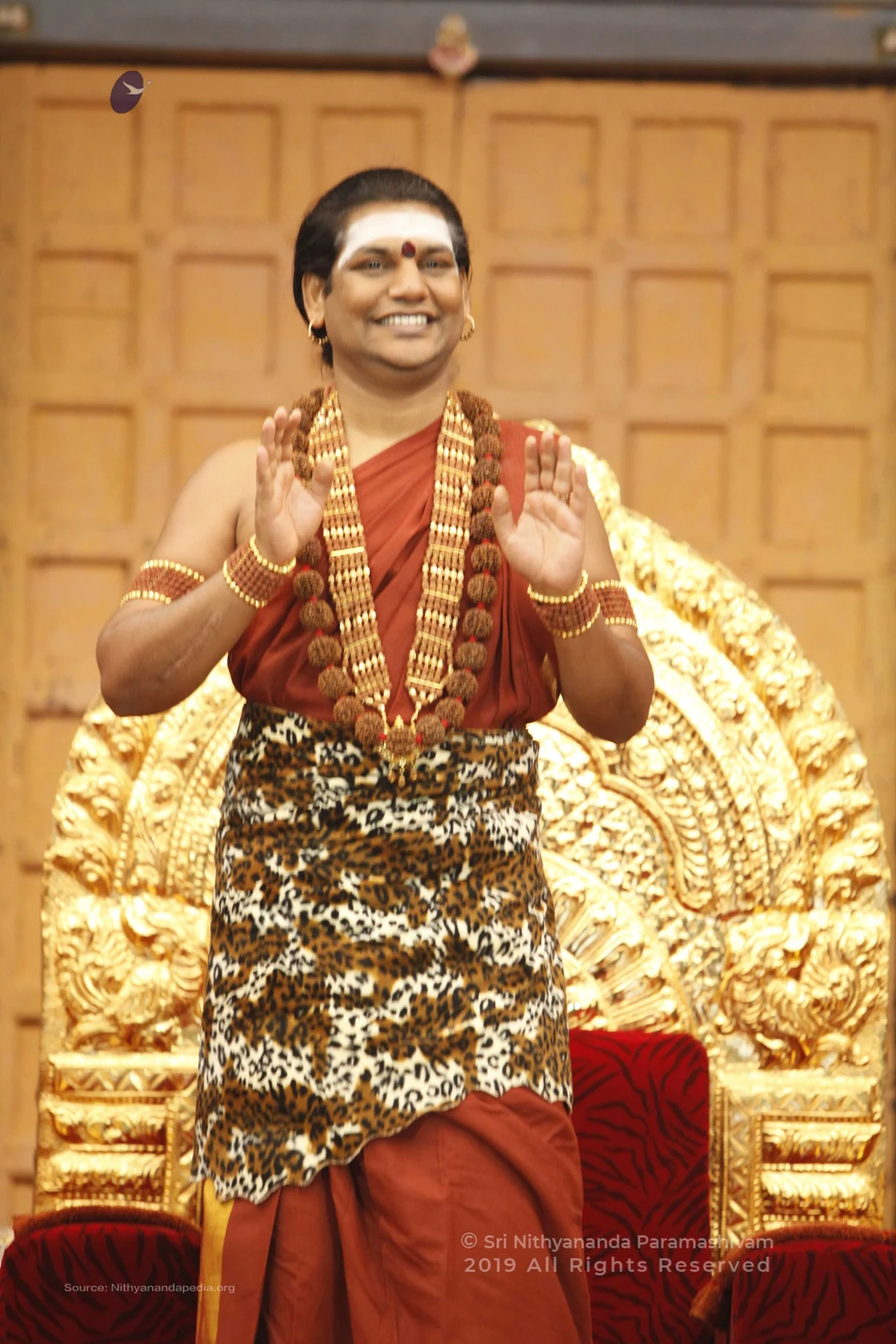
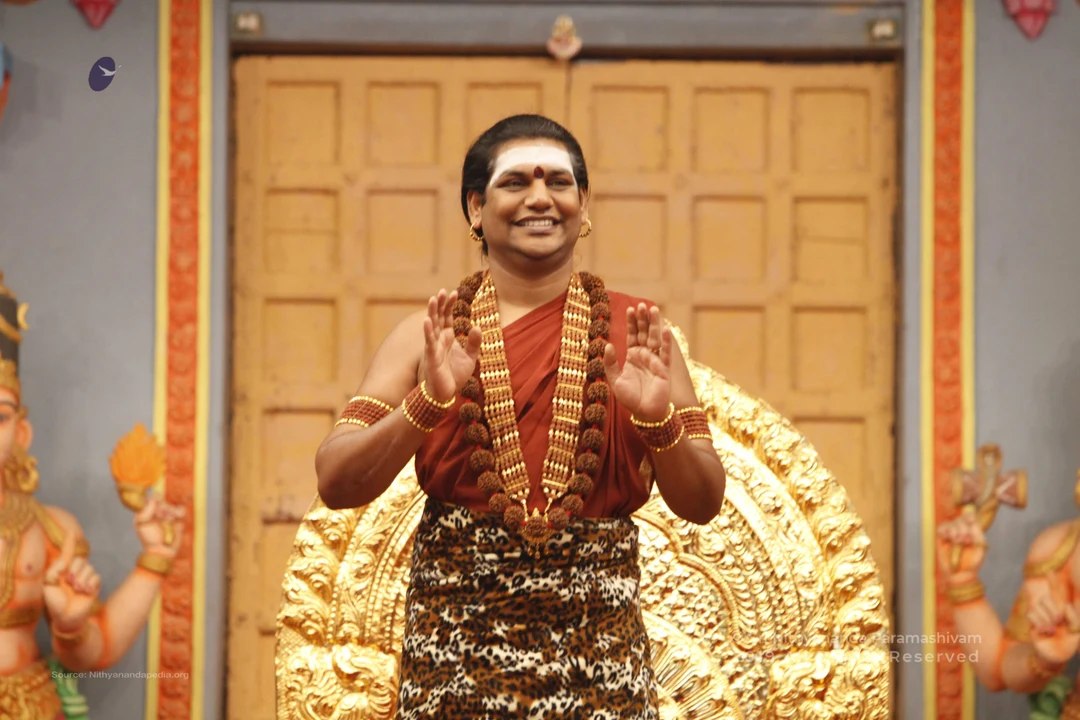
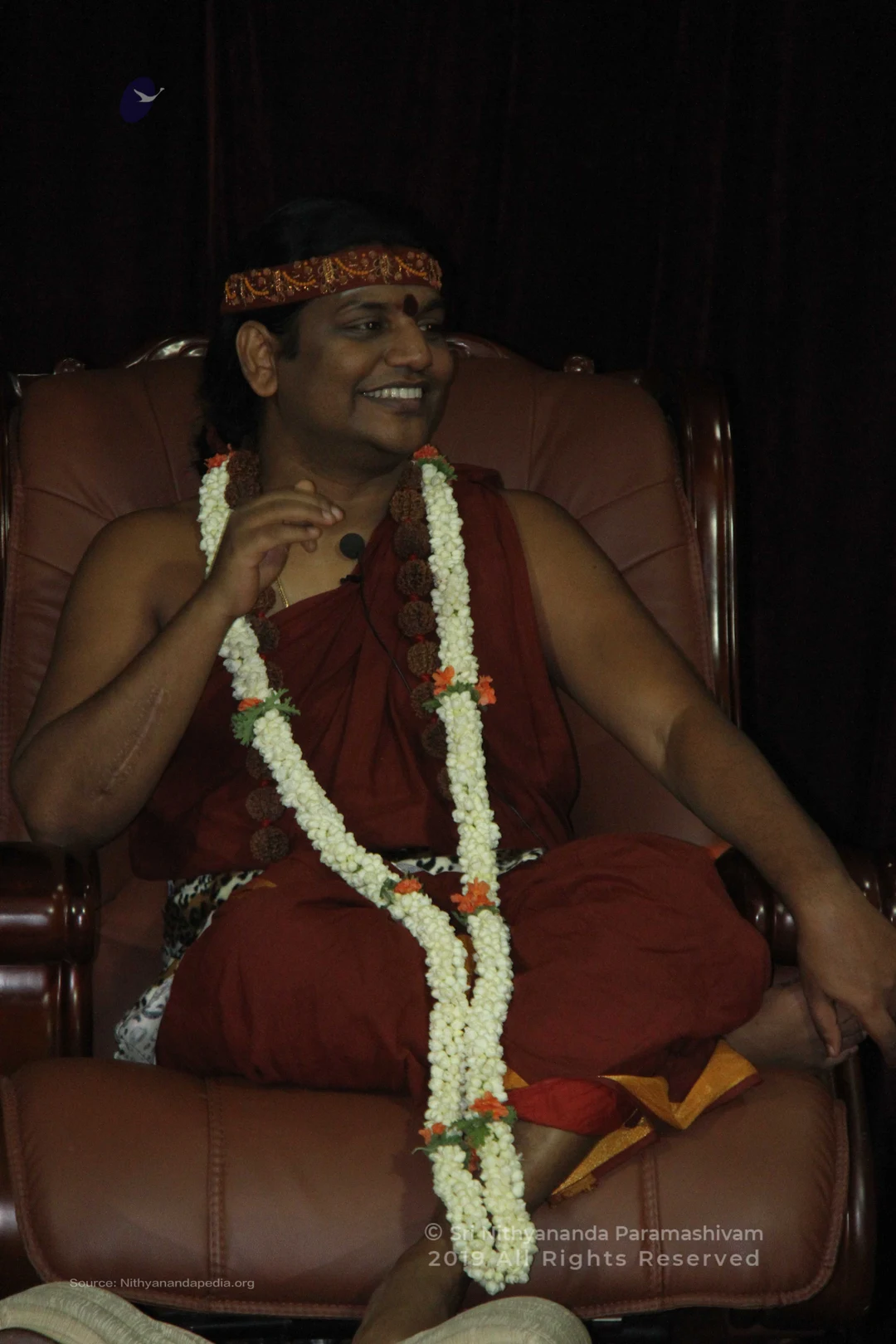
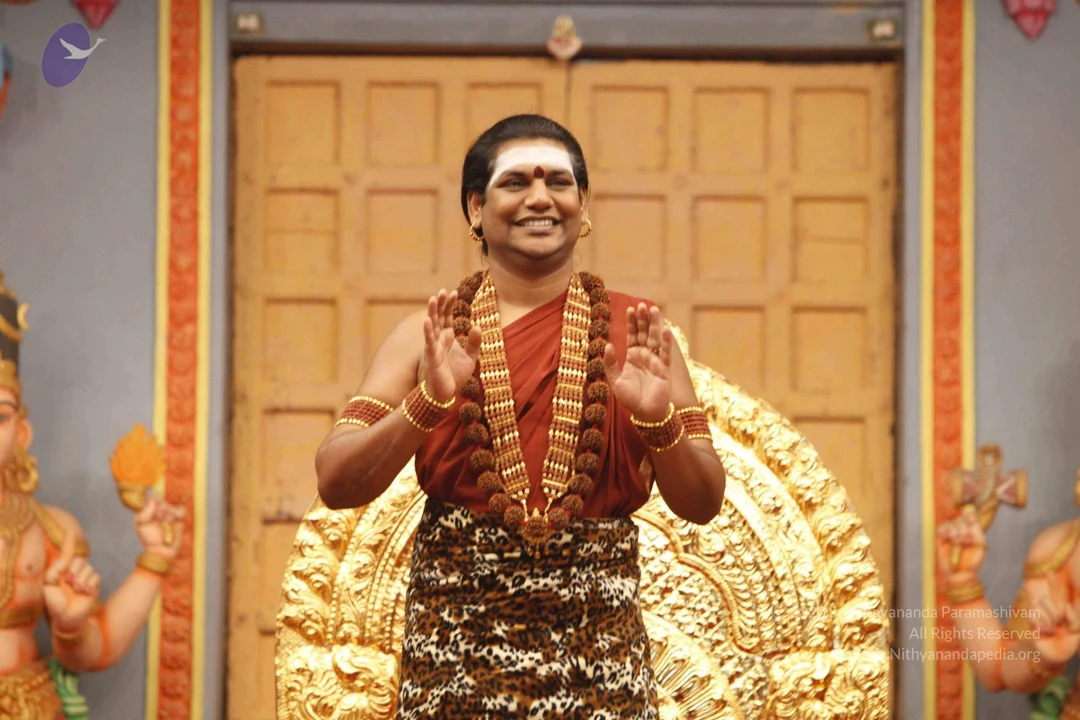
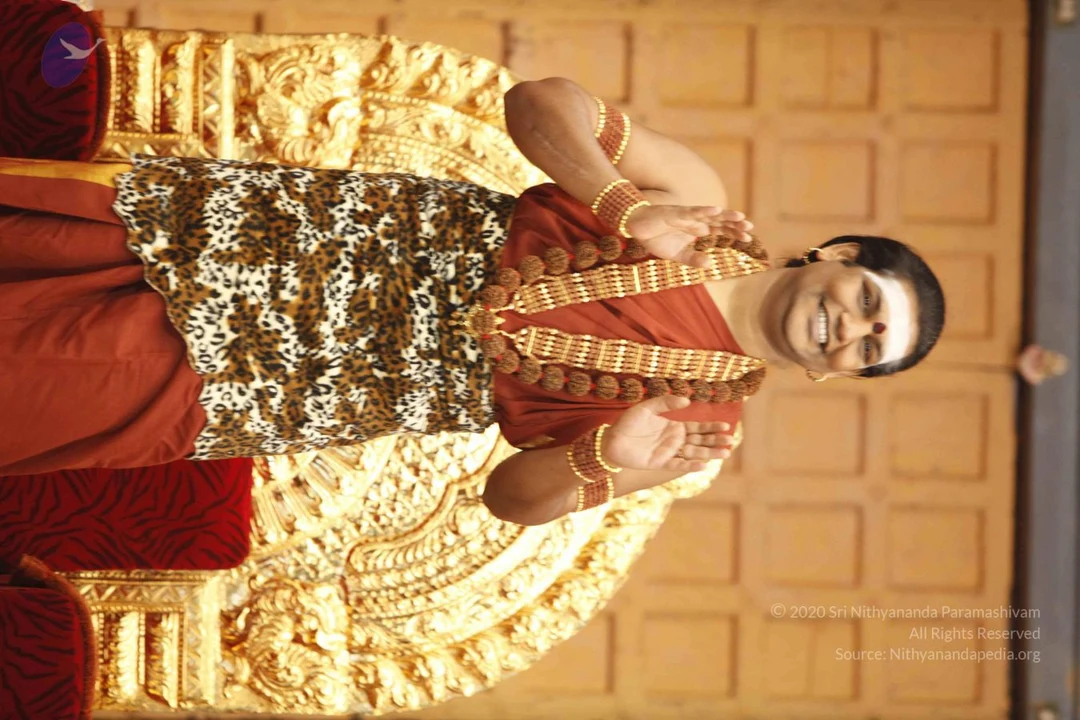
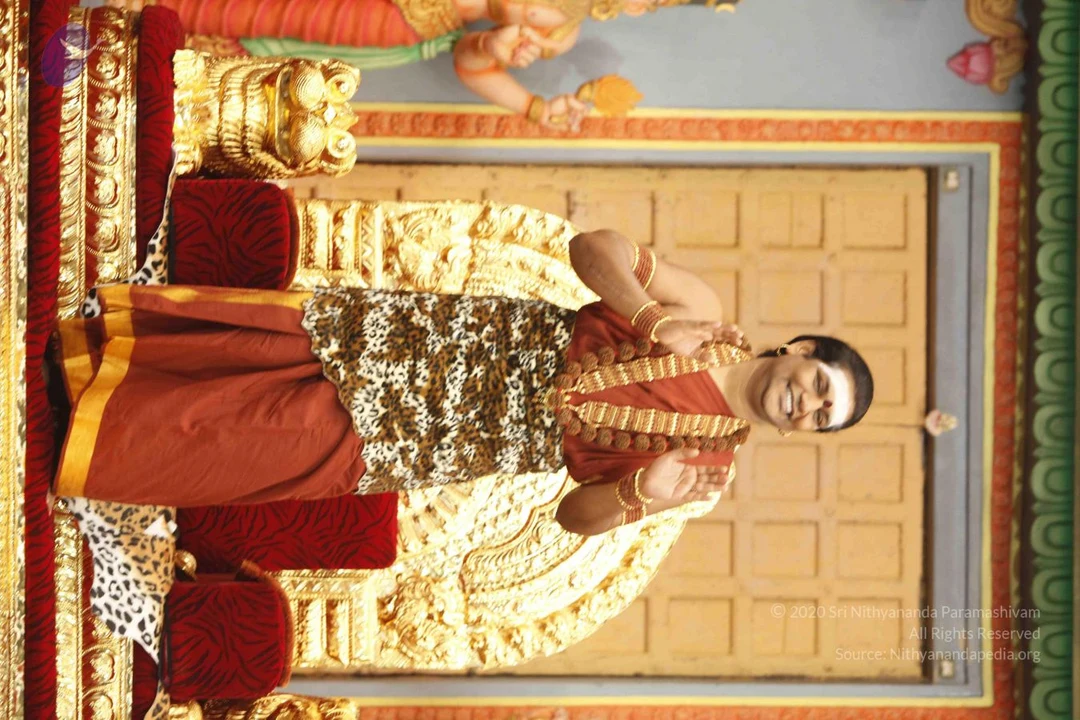
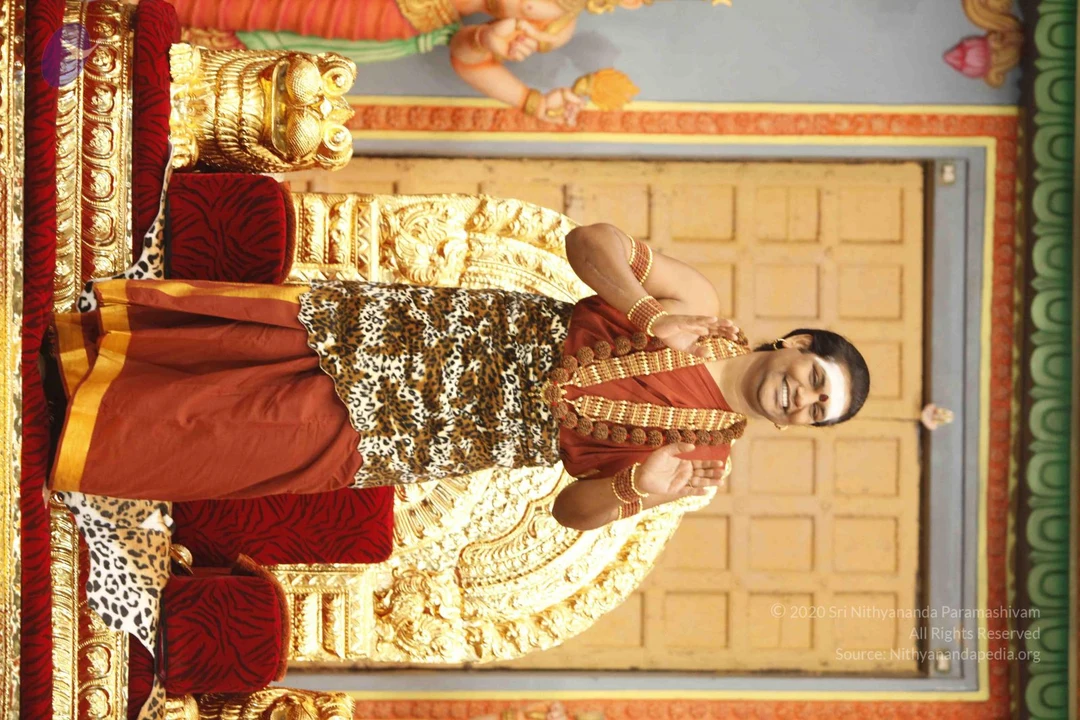
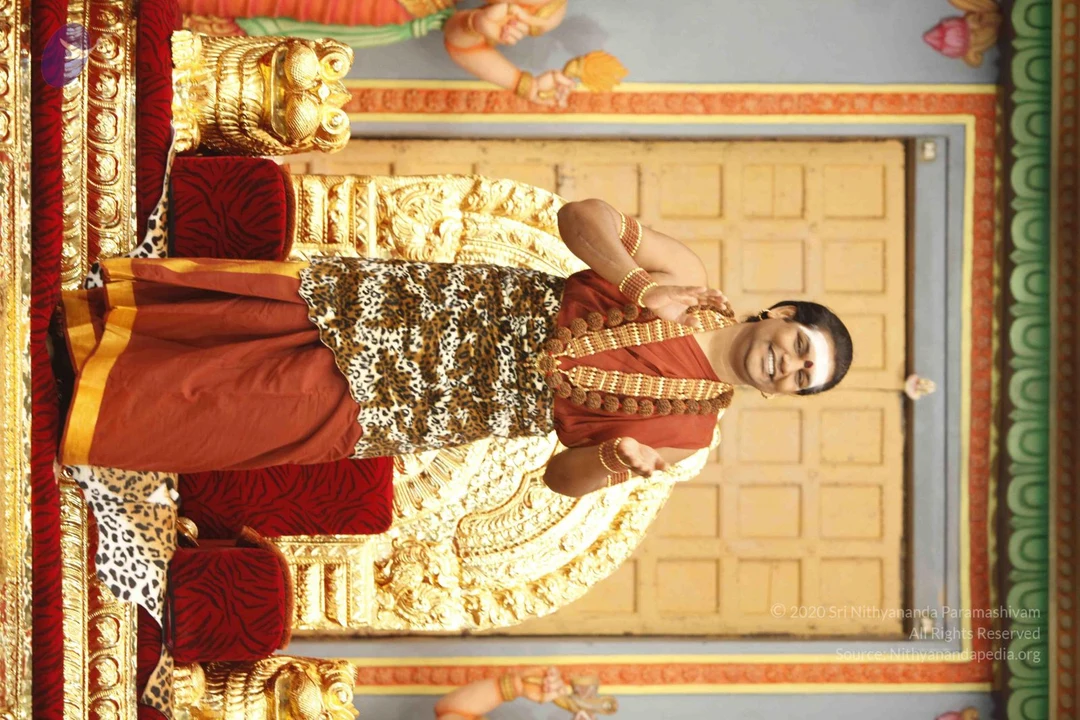
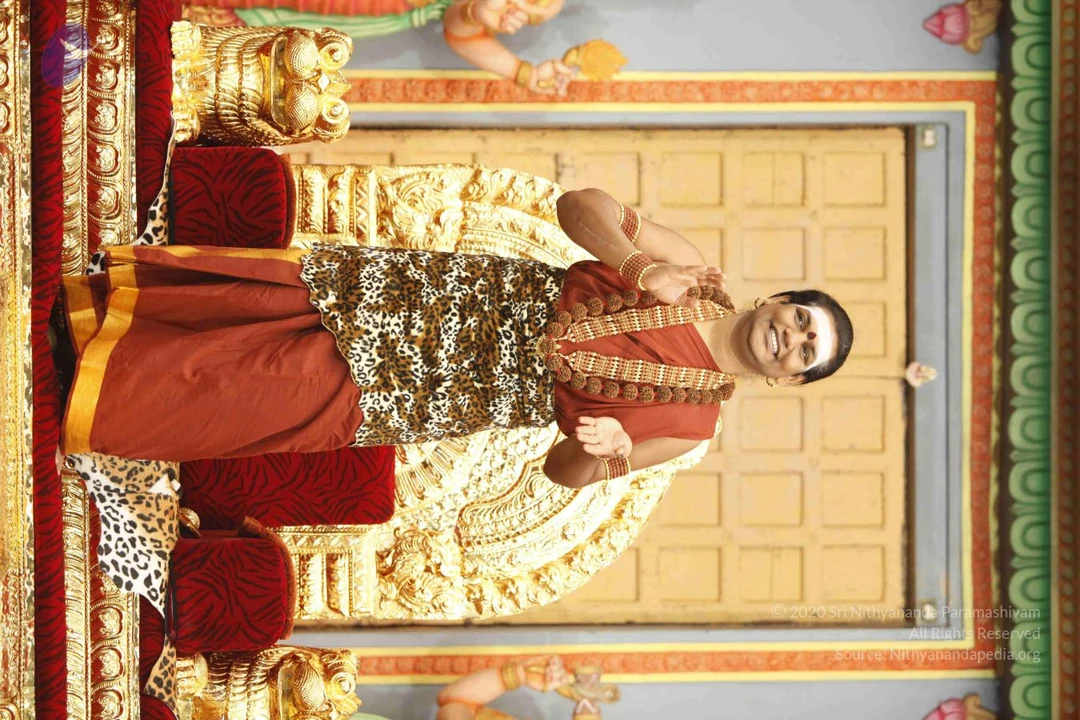
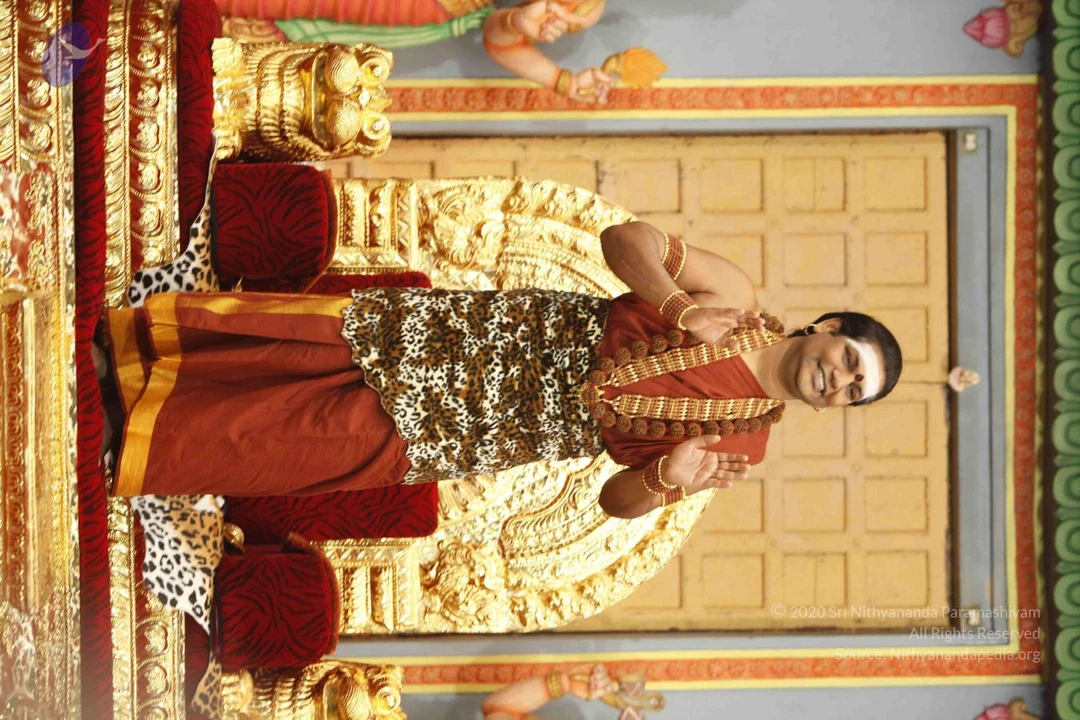
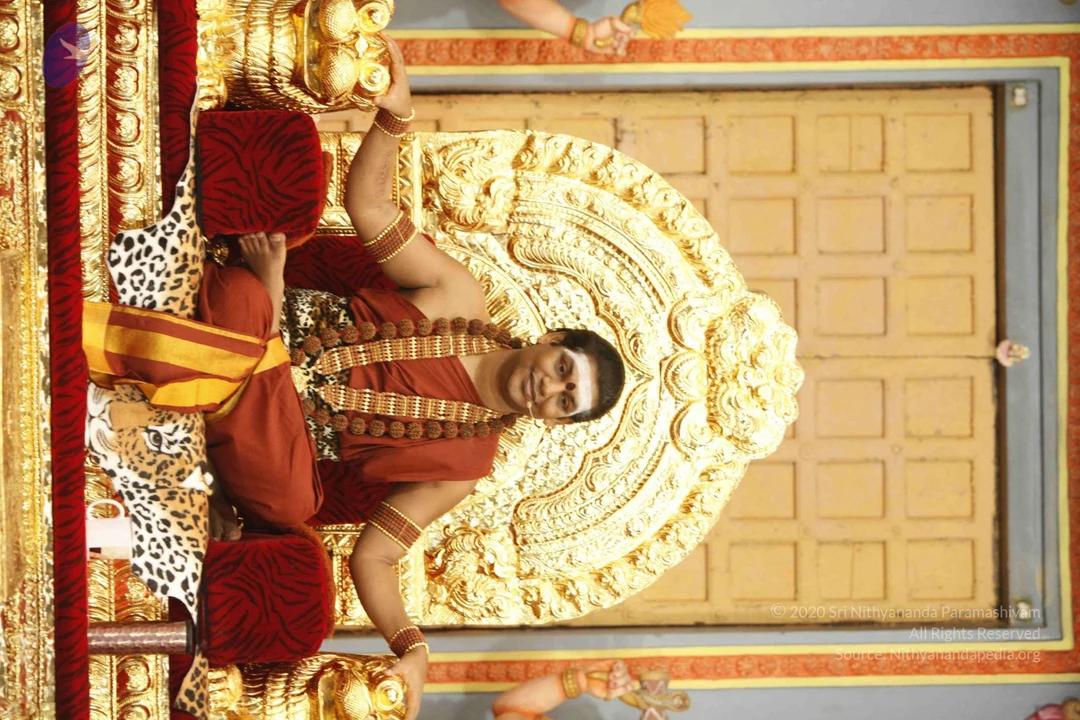
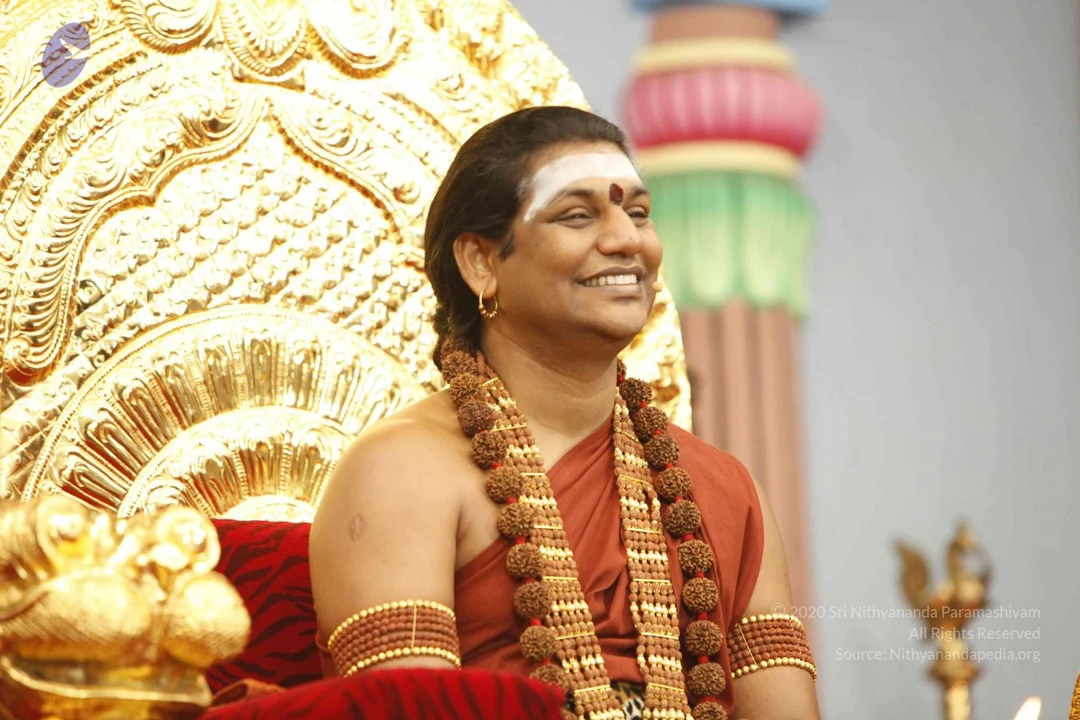
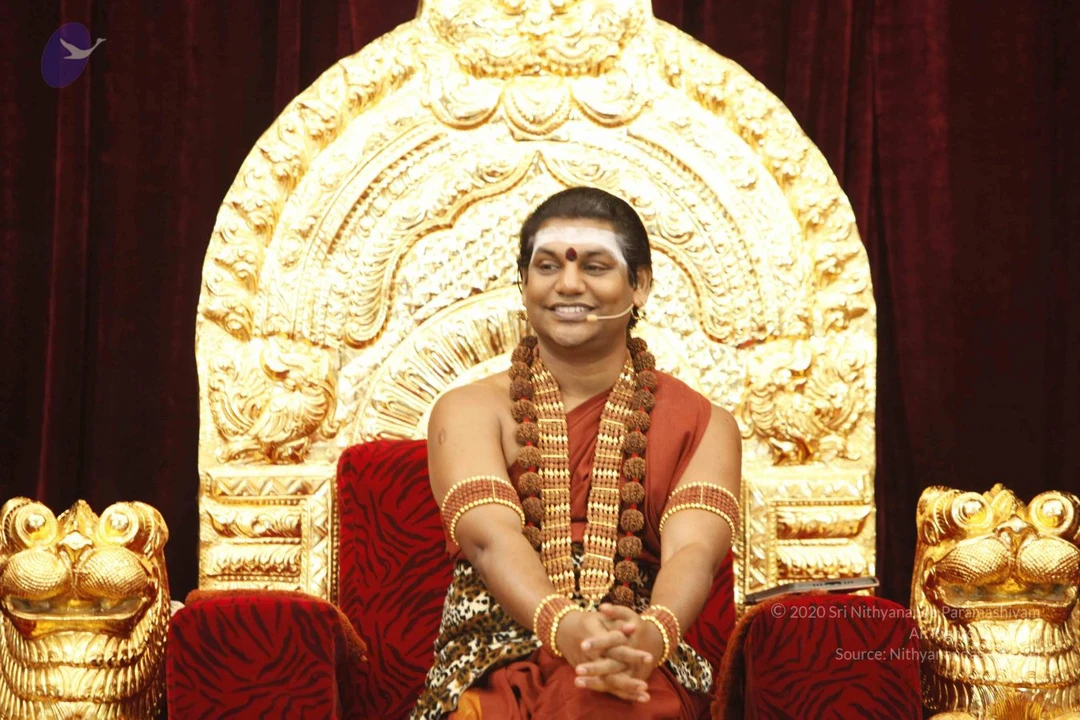
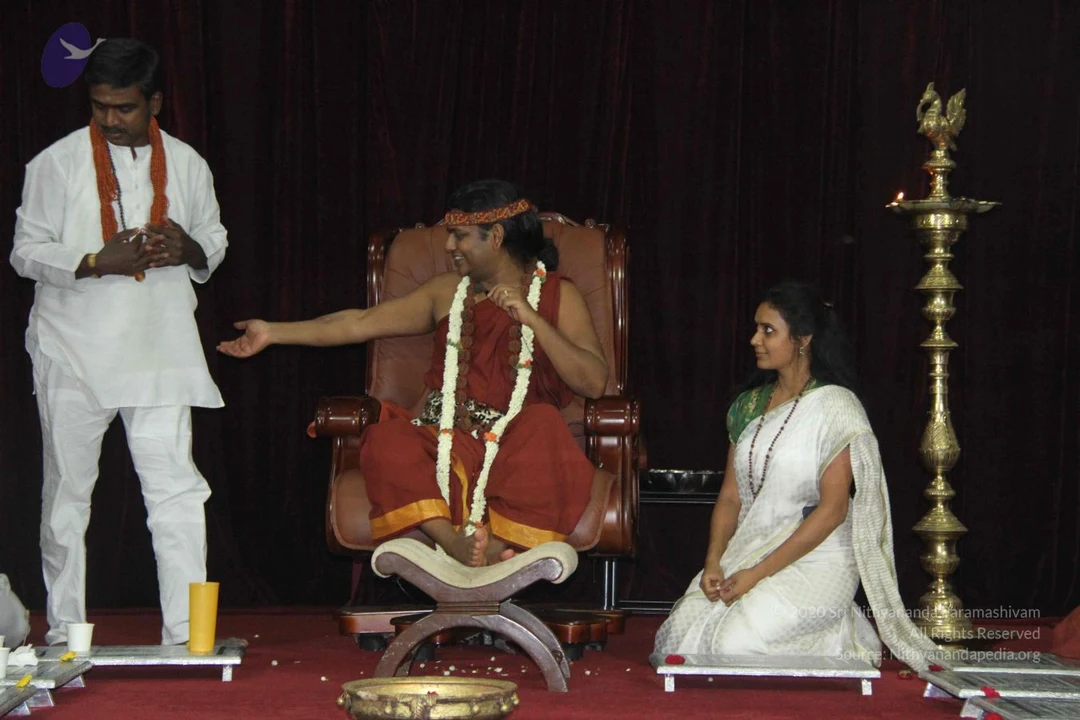
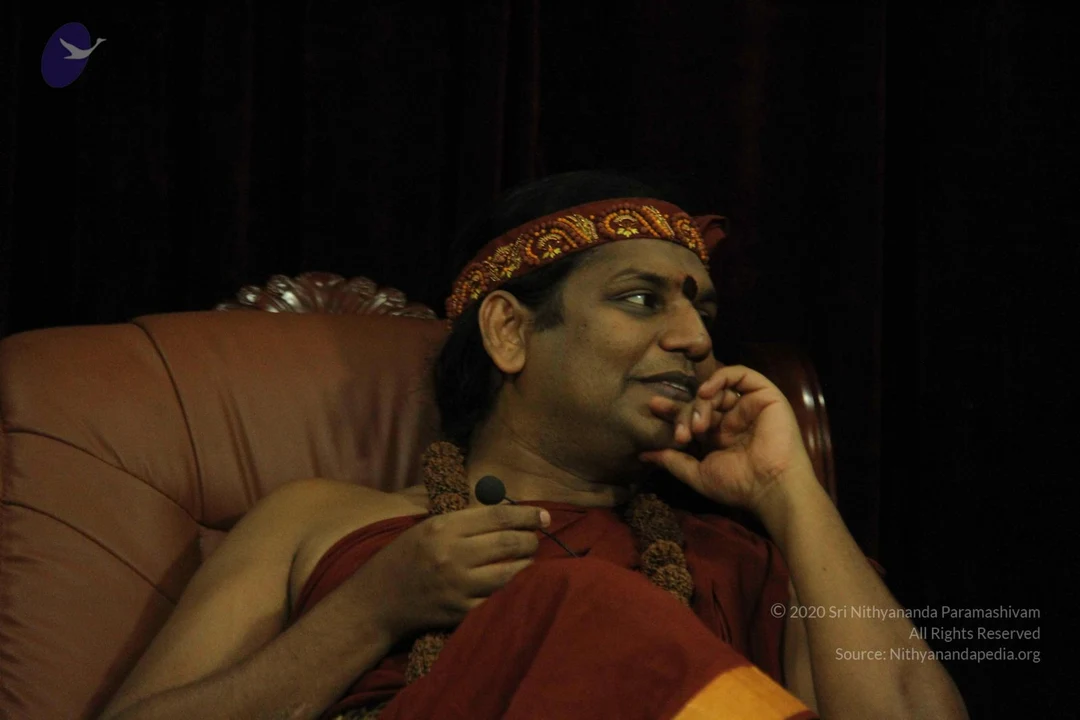
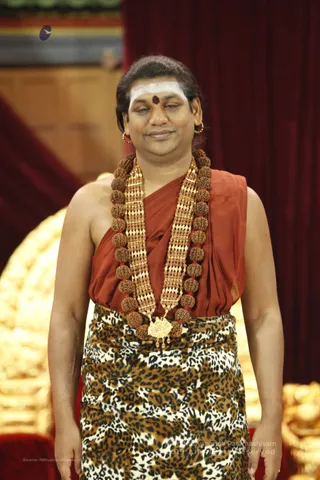
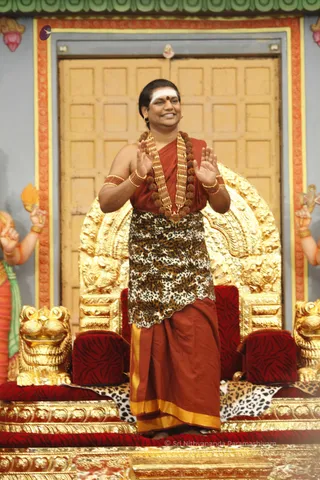
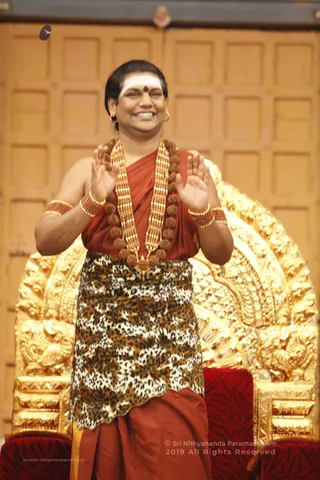
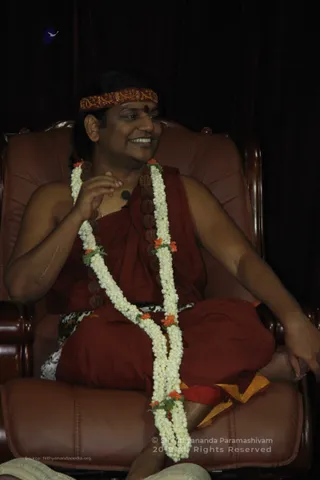
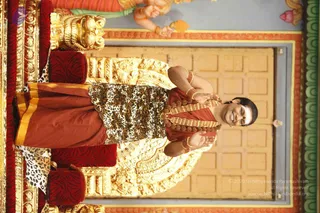
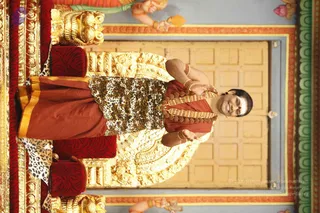
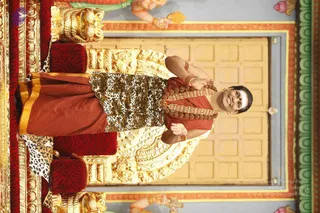
A standing man in a rust-red sleeveless garment draped over one shoulder and a leopard-print lower wrap, wearing layered rudraksha malas with gold bead strands and a gold pendant. He has a white forehead band with a red dot, gold earrings and an upright hairstyle, and stands before a red curtain and a gold-toned backdrop. Kind is photo with one physical person.A smiling man seated on an ornate gold throne with a red cushion, wearing a rust-orange unstitched wrap over a bare upper torso, multiple rudraksha mala necklaces with gold beads, layered rudraksha and gold armbands, a gold earring, a white vertical tilak with a red bindi on the forehead, and dark hair swept back.A smiling man with a headset microphone sits cross-legged on a red velvet-cushioned golden throne with an ornate gilded arched back and carved lion-form armrests. He wears a saffron-orange shawl and dhoti with a yellow border, a multi-strand gold necklace and a long rudraksha mala, gold armlets and bangles, and a white vibhuti stripe with a red kumkum dot on his forehead. His hands rest folded in his lap. Flanking the throne are painted figures with raised arms holding a flaming torch and a trident-like staff. a person (in_person cues: saffron clothing, rudraksha mala, gold ornaments, seated on a throne). The ' is visible in the cornerA photograph of a smiling man standing on a red-cushioned golden throne platform, palms raised in a greeting gesture. He wears a rust-red garment with a leopard-print wrap at the waist, a gold-edged dhoti-style lower cloth, a white forehead mark with a red bindi, a multi-strand gold and rudraksha bead necklace, and gold bangles with red bands on his arms. Behind him stands a large gold-leaf arched backrest, flanked by golden lion-head armrests with tiger-striped red velvet cushions. A yellow wooden panelled door and colourful deity statues with raised arms frame the scene. Cues consistent with the page's claim include long swept-back hair, rudraksha and gold ceremonial adornments, and a throne setting, so the candidate is marked as a probable Swamiji in person.A man stands centre stage in front of an ornate gold throne-back with carved floral and lotus motifs and red velvet seating. He wears a rust-red garment, a leopard-print shawl wrapped at the waist, a long gold and rudraksha mala with a central pendant, and gold armlets with rudraksha bands. He has a white vertical forehead mark with a red dot, gold earrings, and smiles while raising both palms outward. A wooden panelled wall forms the backdrop. Kind is photo; one physical person is visible.A man seated in a brown leather armchair against a dark curtain, smiling and gesturing with one hand near his chest. He wears a red-maroon unstitched robe draped over one shoulder, a red-and-gold embroidered headband with a red forehead dot, and long necklaces of rudraksha beads and white flower garlands with orange blossoms. A small clip-on microphone is visible on his chest.

Nithyananda Diary 22nd April 2014 | Padukapuja | Nithya Satsang | Visit to Ganga Ghats
4 photosSource gallery
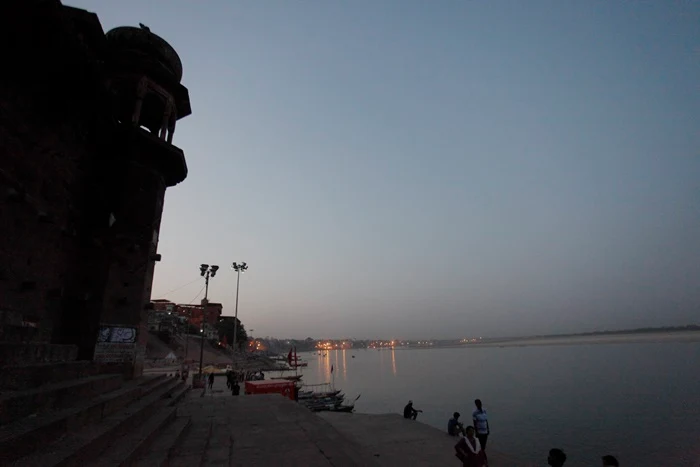
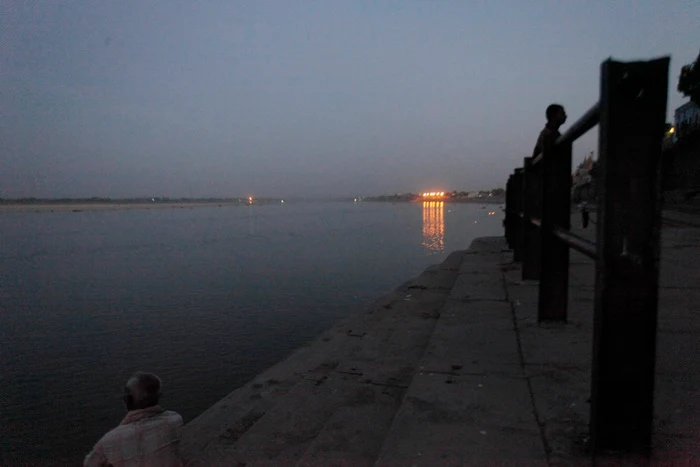
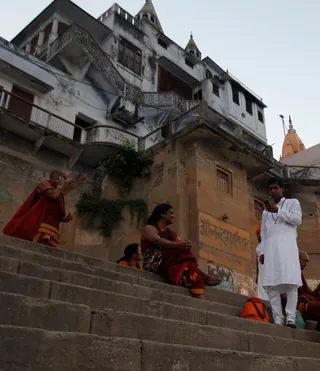
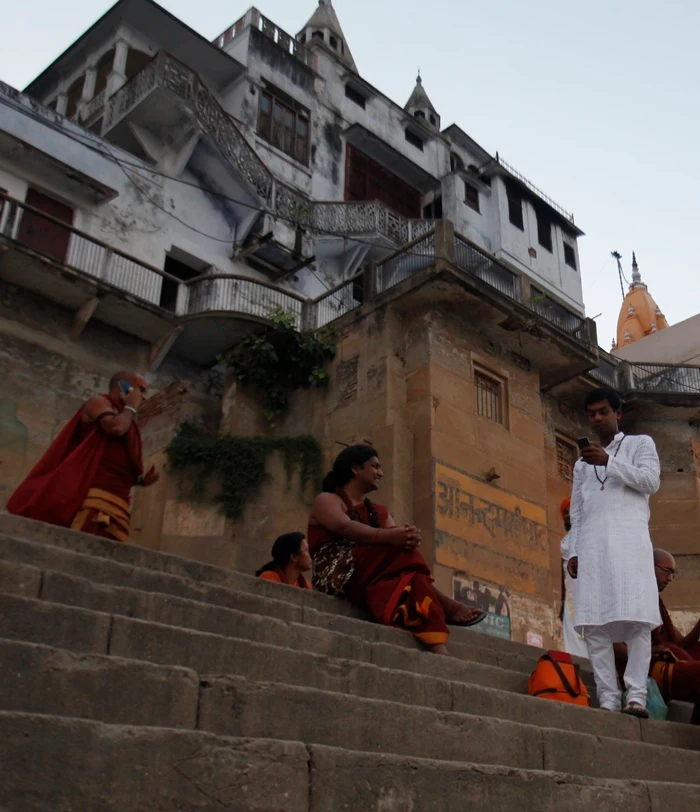
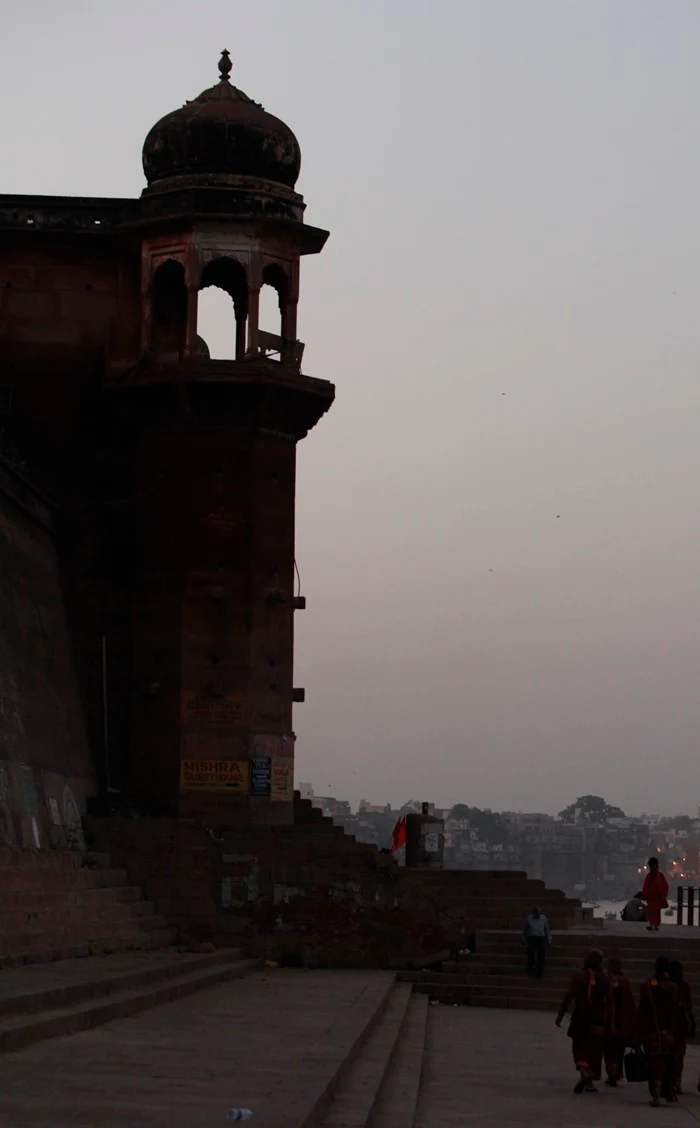
Photograph of a riverside ghat in Varanasi with weathered stone steps in the foreground and old multi-storey buildings with balconies and railings behind. A bald man in a red-orange shawl stands at left, gesturing with a hand. A seated figure with long dark hair wears a red-orange garment and sits on the steps, smiling. A man in a white kurta with a rudraksha-style necklace stands at right, holding a mobile phone. A partly visible person in orange sits at far left, and another man in red-orange clothing sits at right edge. An orange domed shrine spire rises at right. A devanagari sign is painted on the building wall. Five to six people are visible.Dusk view of a red sandstone ghat building with a small domed kiosk and arched balcony on the left, its lower wall marked with yellow and red signboards reading MISHRA and QUETIGUNS. Stone steps lead down toward a river with a distant city skyline and faint lamps. In the lower right, four people in dark red or maroon robes walk down the steps carrying a small black bag, and a single figure in a bright red garment stands further right near the water. No a person candidate is visible.Dusk view of a river ghat with stone steps leading down to calm water. A tall stone tower with a domed cupola stands at the left edge, its walls in shadow. Several small groups of people sit and stand on the lower steps and the riverbank near the water, their figures dark against the pale sky. Lights glow along the far shoreline, and a few boats are moored at the water's edge. The scene has no visible ritual activity, deity or ceremonial object in focus.Dusk view over a wide, calm river from a concrete ghat with stone steps in the foreground. A metal railing runs along the embankment, with a silhouetted standing figure at the right edge. A seated man in a light-coloured checked shirt sits at the lower left on the steps, his back to the camera. Distant riverbank lights and a glowing lit structure reflect on the water under a pale blue evening sky.

PadukaPuja-NithyaSatsang-Kalpatharu
23 photosSource gallery
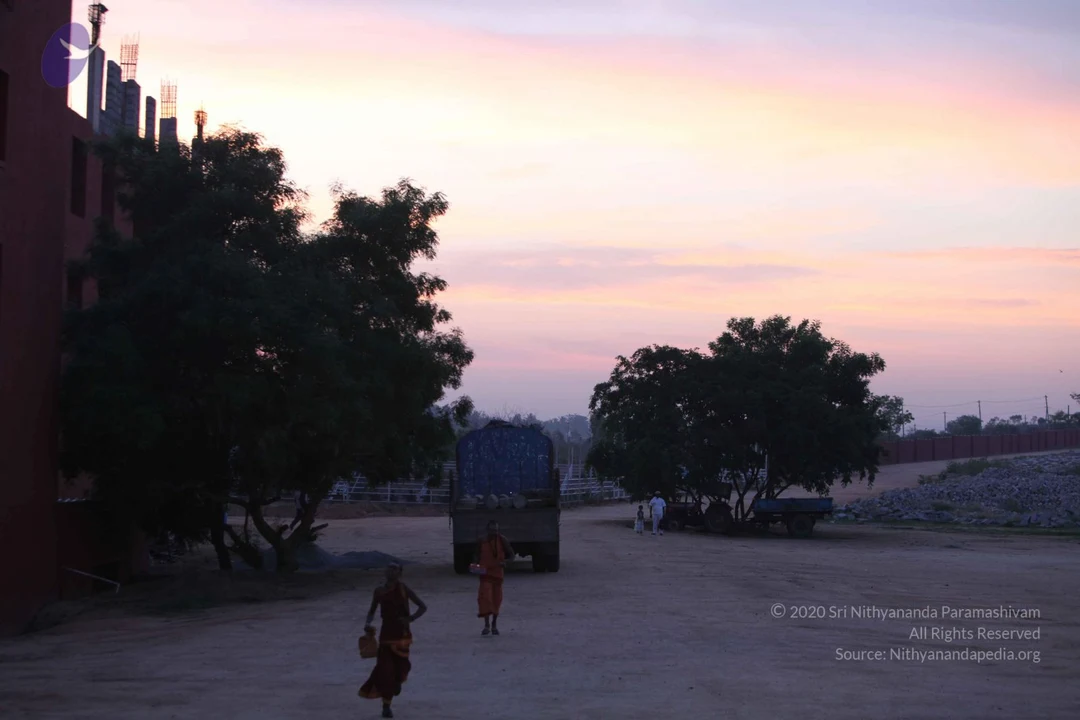
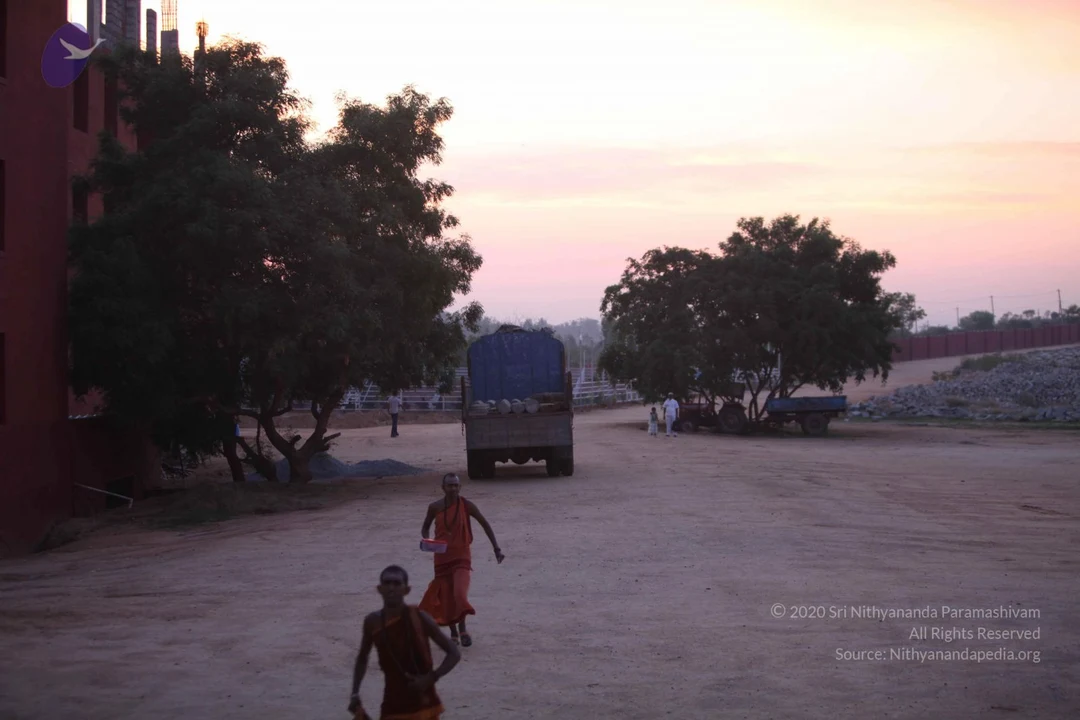
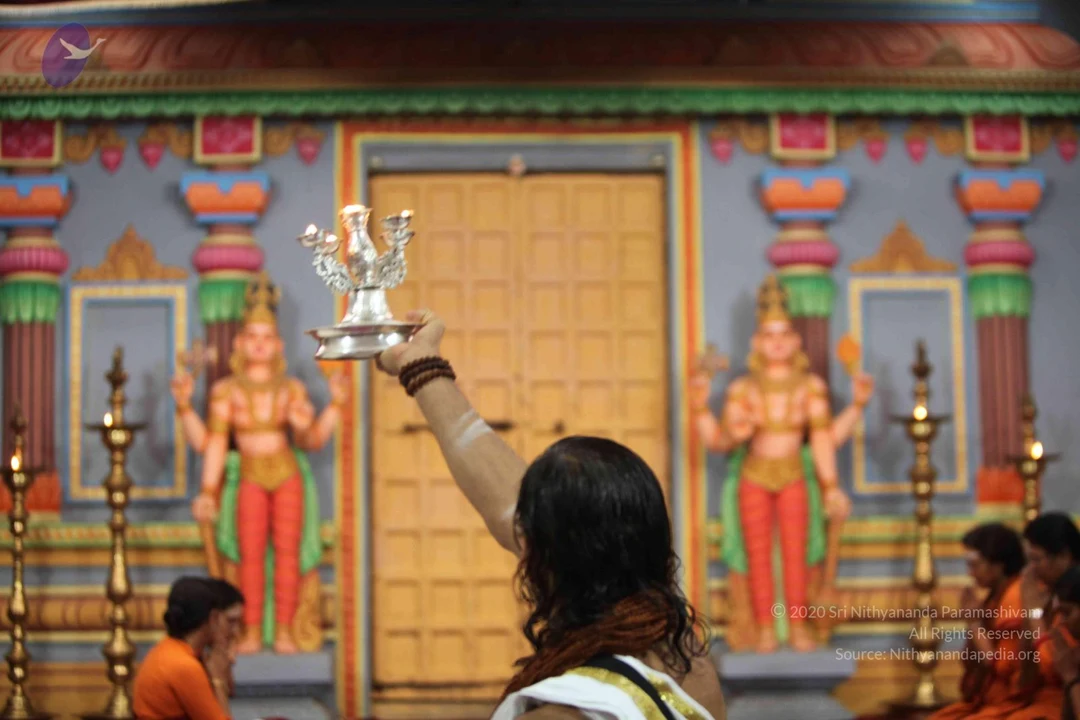
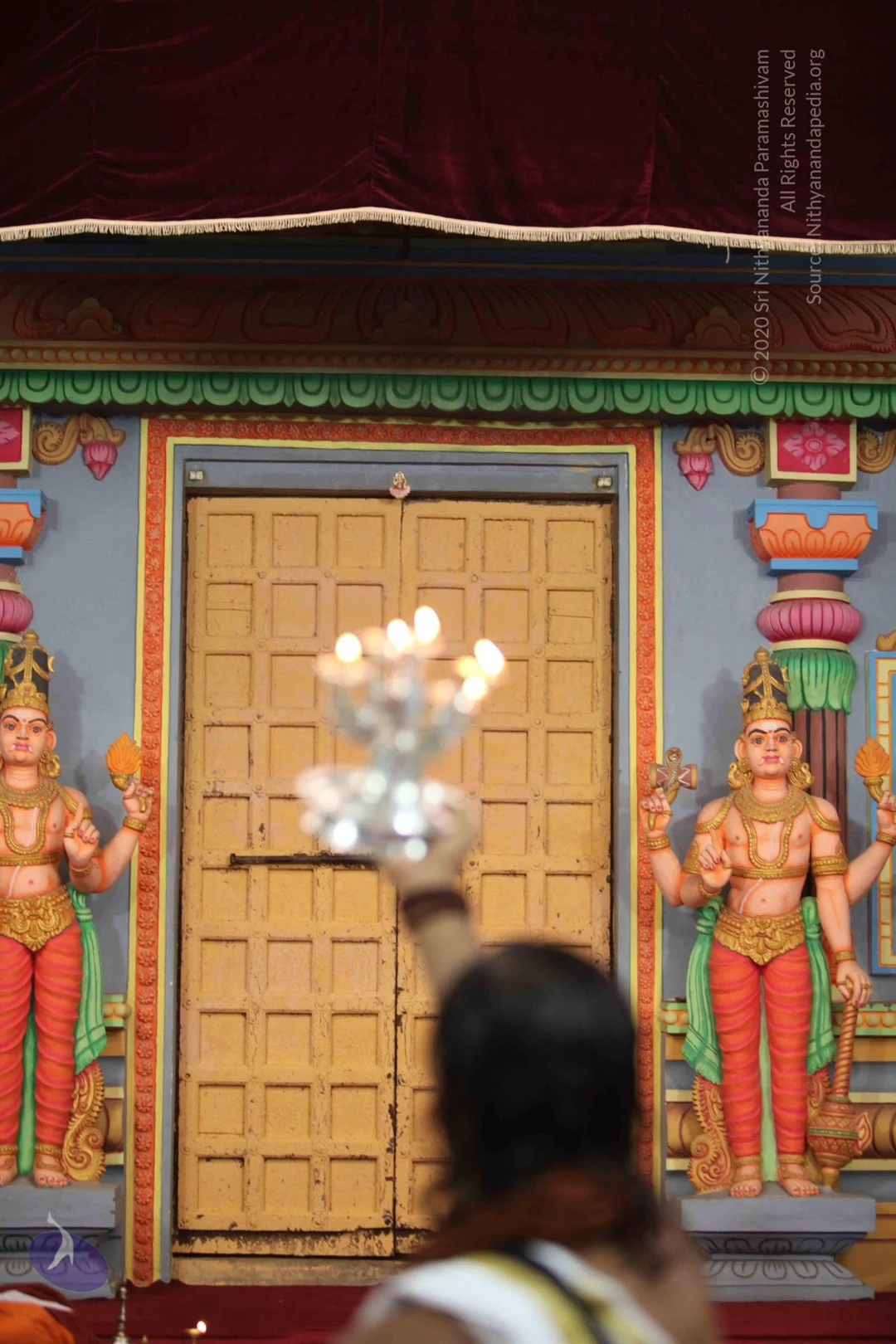
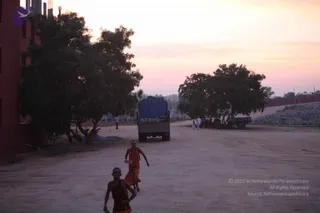
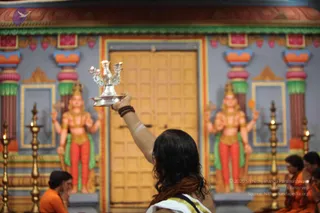
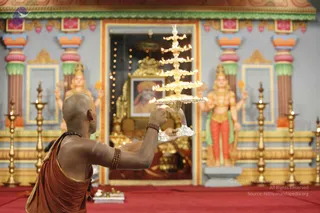
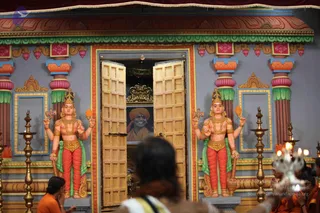
A dusk photograph of an open dirt yard at an ashram-like compound, with a pink and lavender sky above. Two figures in orange robes walk across the ground; one carries a small bag or vessel at the front. A blue-tarpaulin-covered truck stands in the middle distance, and two small figures in white stand near a tree on the right beside a tractor-trailer. A reddish building wall edges the left, with trees in silhouette. a person's appearance is not clearly visible among the figures, so no candidate is identified.Dusk scene on a dirt courtyard beside a red-brick building, with a pink and peach sky above. In the foreground a young man in saffron-orange robes walks toward the camera, and behind him a monk in a long orange robe carries a small white item. A blue-tarpaulin truck loaded with sacks is parked in the middle distance, and two people in white clothes stand near a tractor and trailer on the right. Trees frame the scene and a stone pile lies at the far right.A photograph of a pink and orange sunset sky above a dark silhouetted tree on the left and a row of utility poles with power lines along the right horizon. No people are visible. The sky shows streaky clouds in pastel tones, fading to violet near the horizon.A photograph of a muted blue-grey dusk sky with three small birds in flight, two on the left and one slightly right of centre, seen in silhouette with pale underwings. No people, buildings or ritual objects are visible.Three small birds. The sky is empty of clouds and fades to a soft haze toward the edges. No people, buildings or ritual activity are visible. A small purple circular logo with a white bird appears in the upper-left corner.A photograph inside a temple shrine. A figure seen from behind, with long dark hair, raises a silver aarti lamp with multiple flames in one hand; the wrist wears a rudraksha mala and a white cloth is draped over the shoulder. Ahead stands a wooden double door flanked by two painted guardian dvarapala figures in red and green dhoti and sash with raised arms. Brass oil lamps stand on both sides, and orange-robed devotees sit on the right, while a seated figure in orange sits at lower left. The figure raising the lamp shows no clear a person cues, so the identity remains uncertain; this is an aarti being performed in front of a temple door.

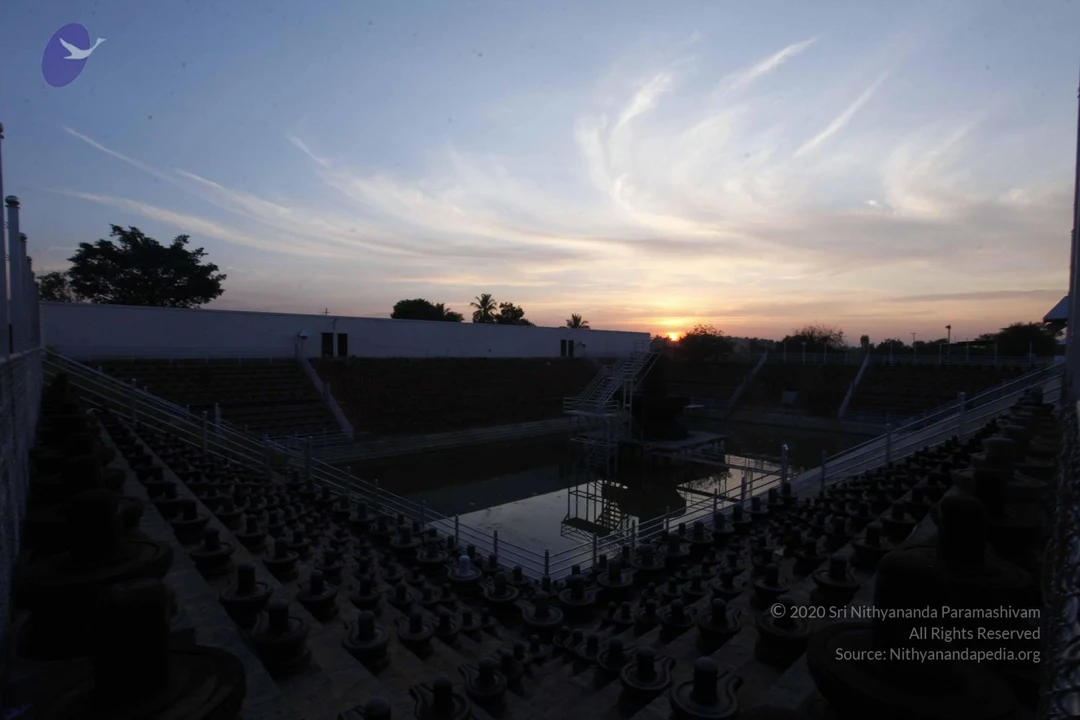
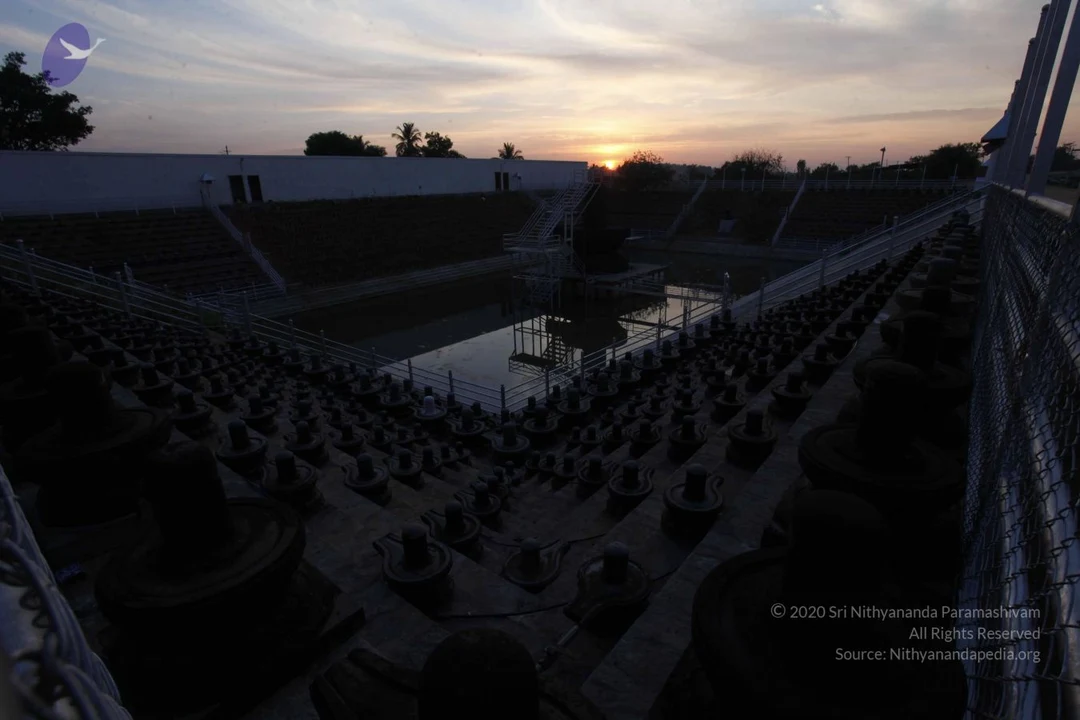
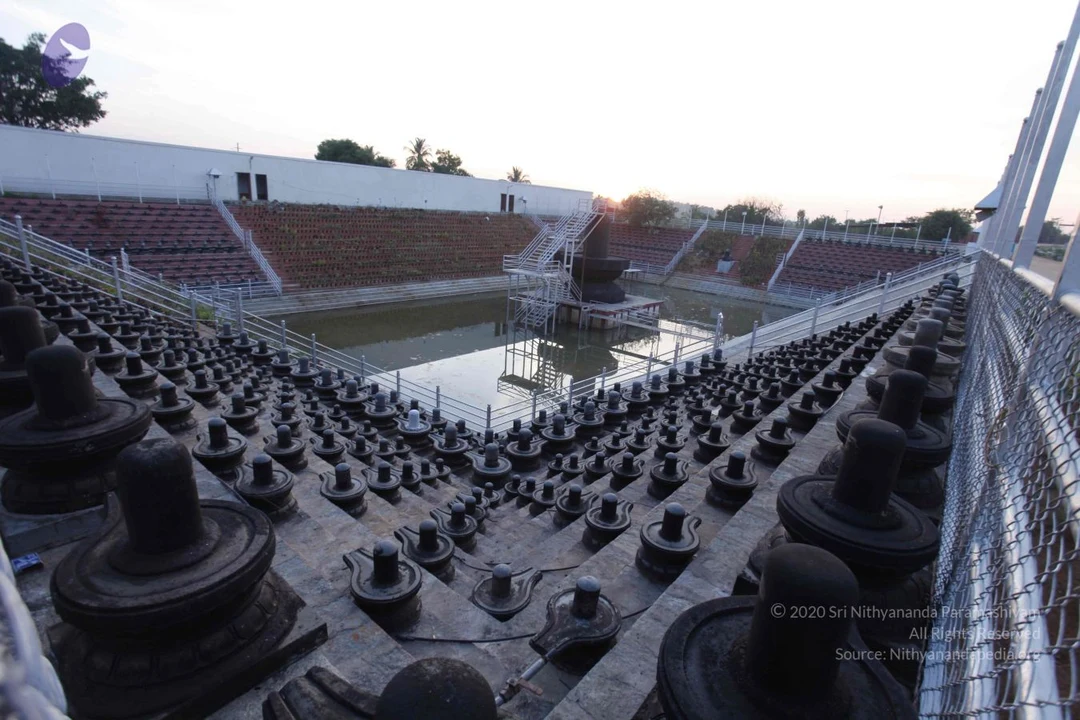
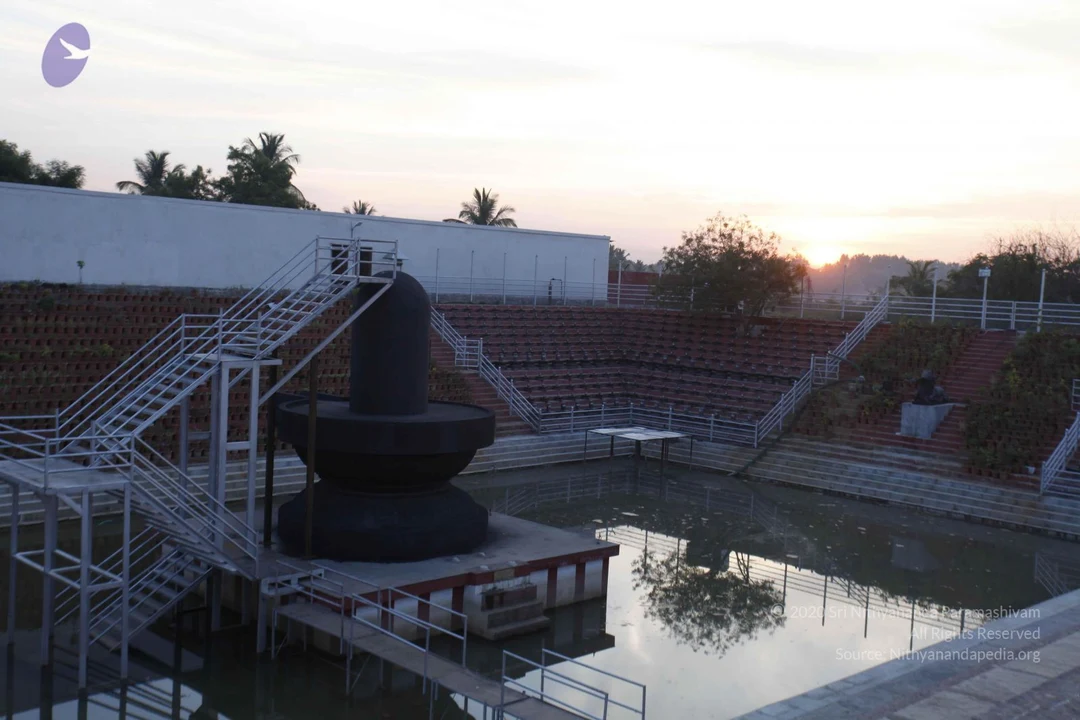
Vaidyasarovar

13 photosSource gallery
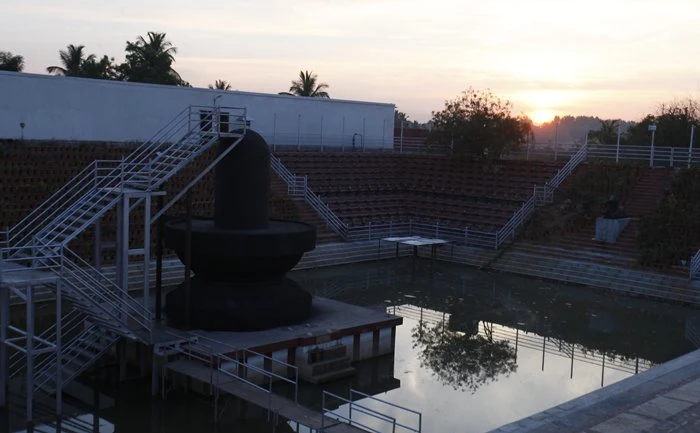
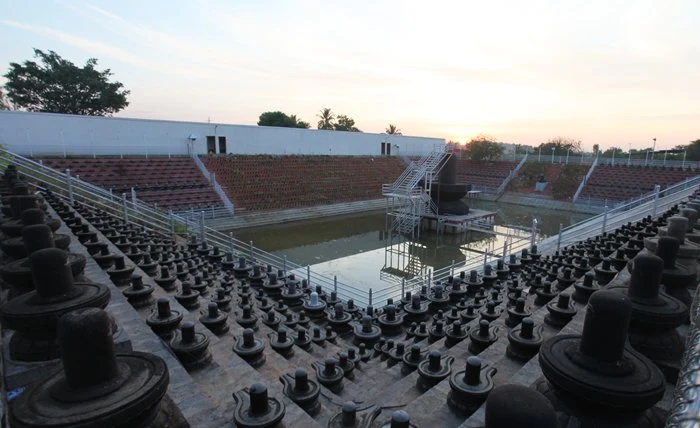
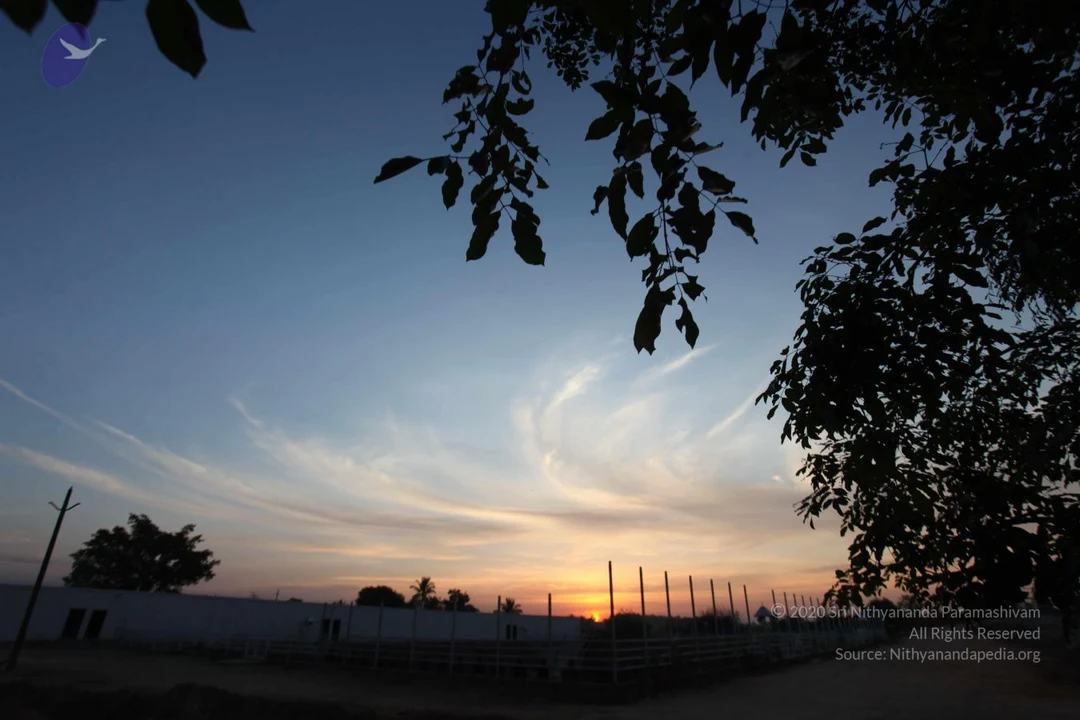
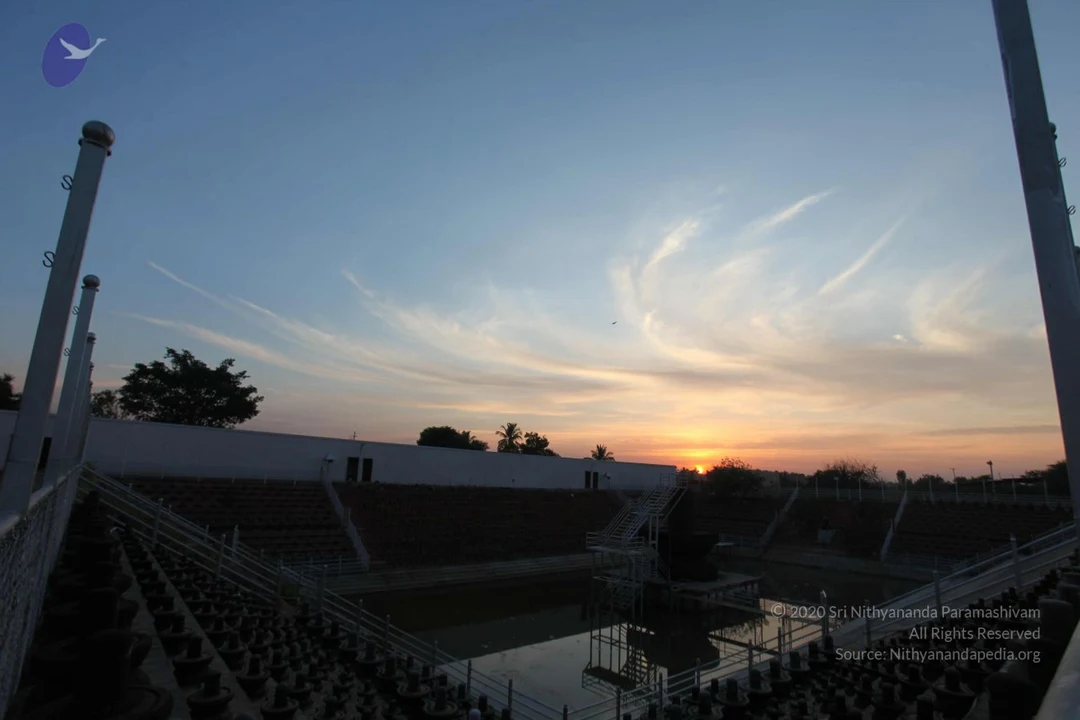
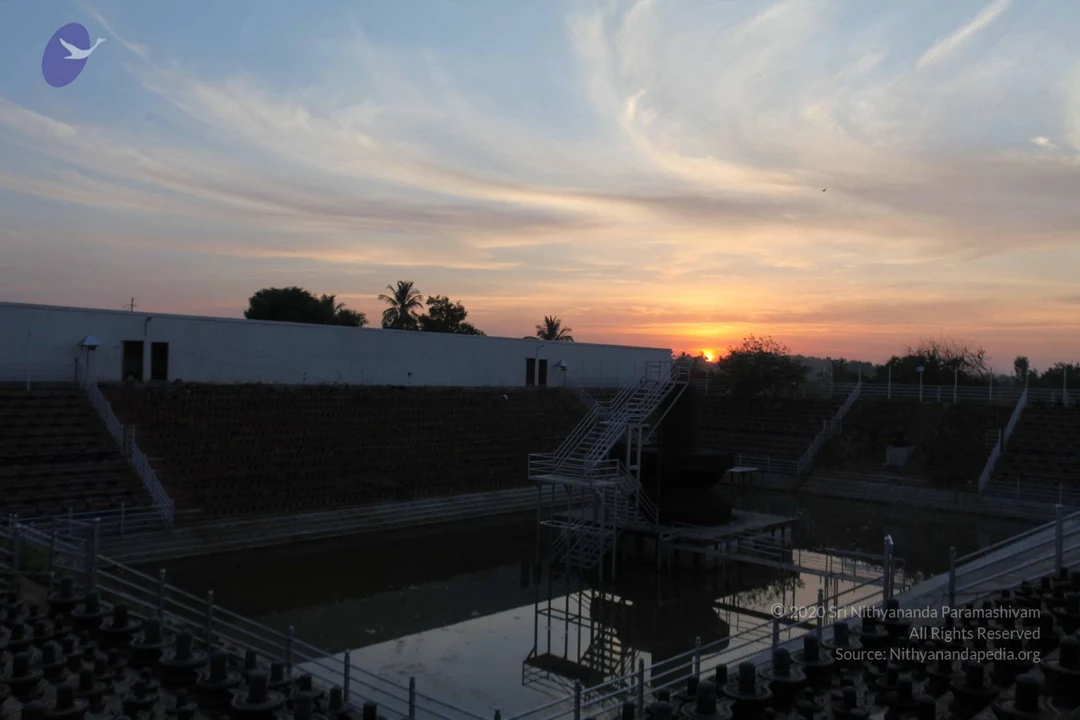
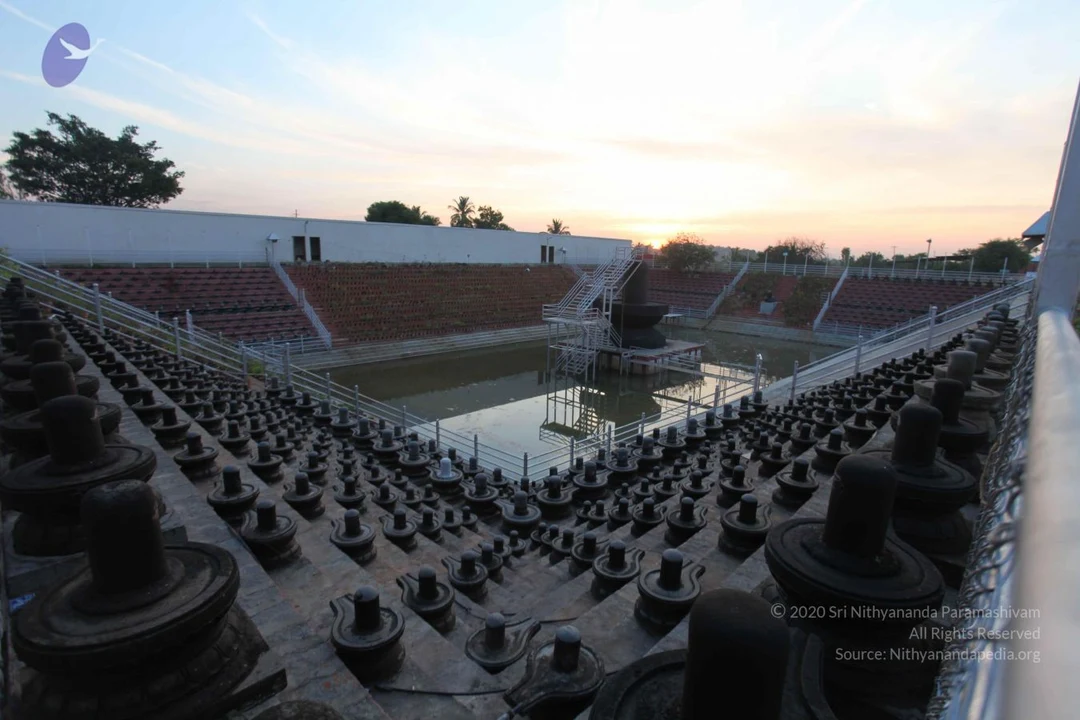
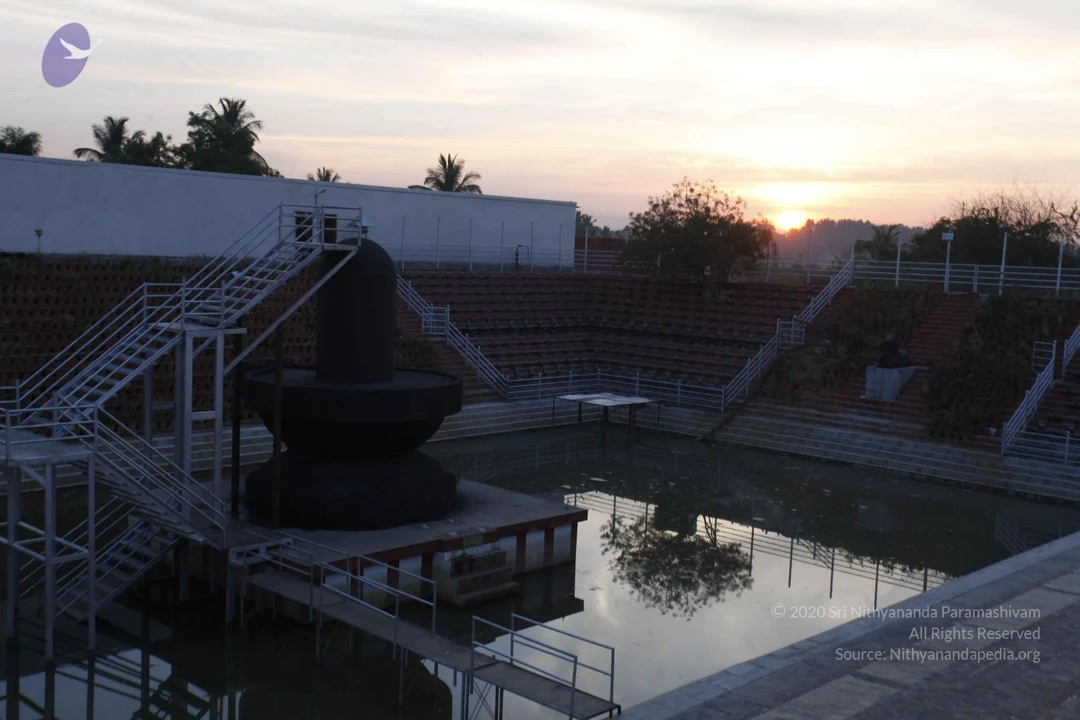
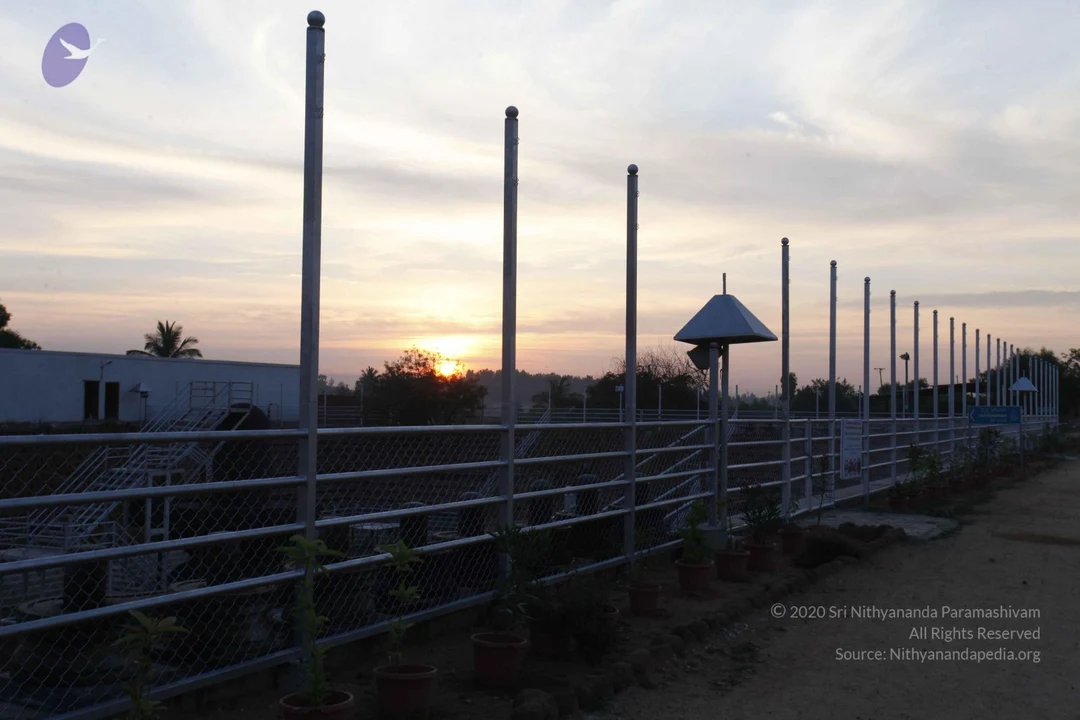
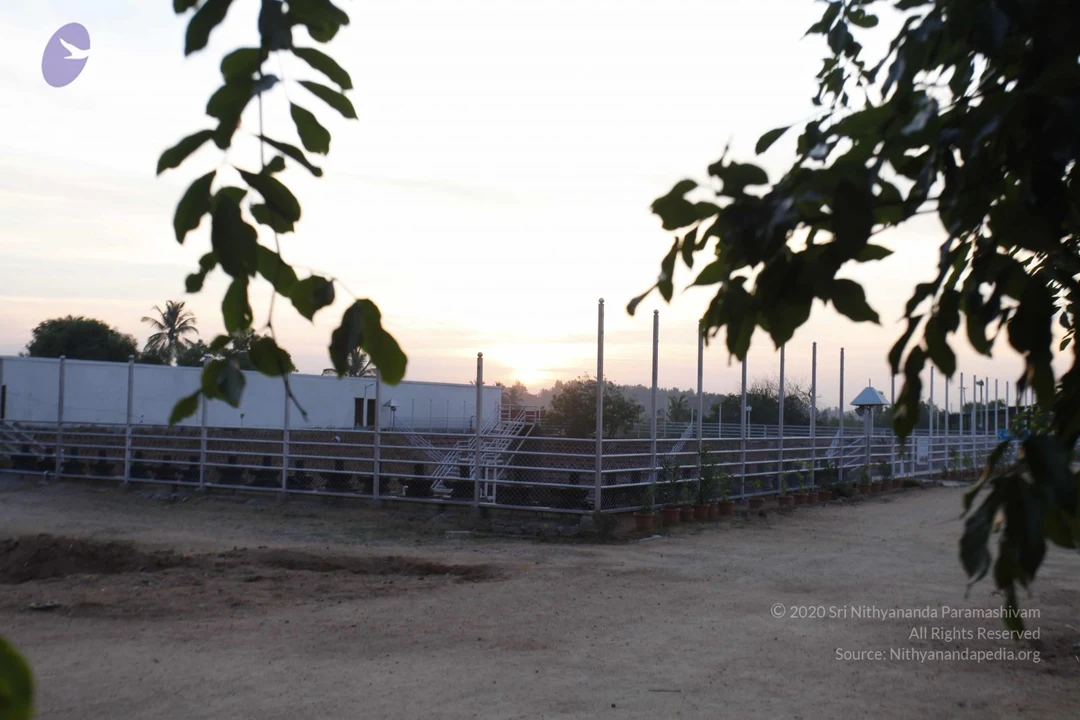
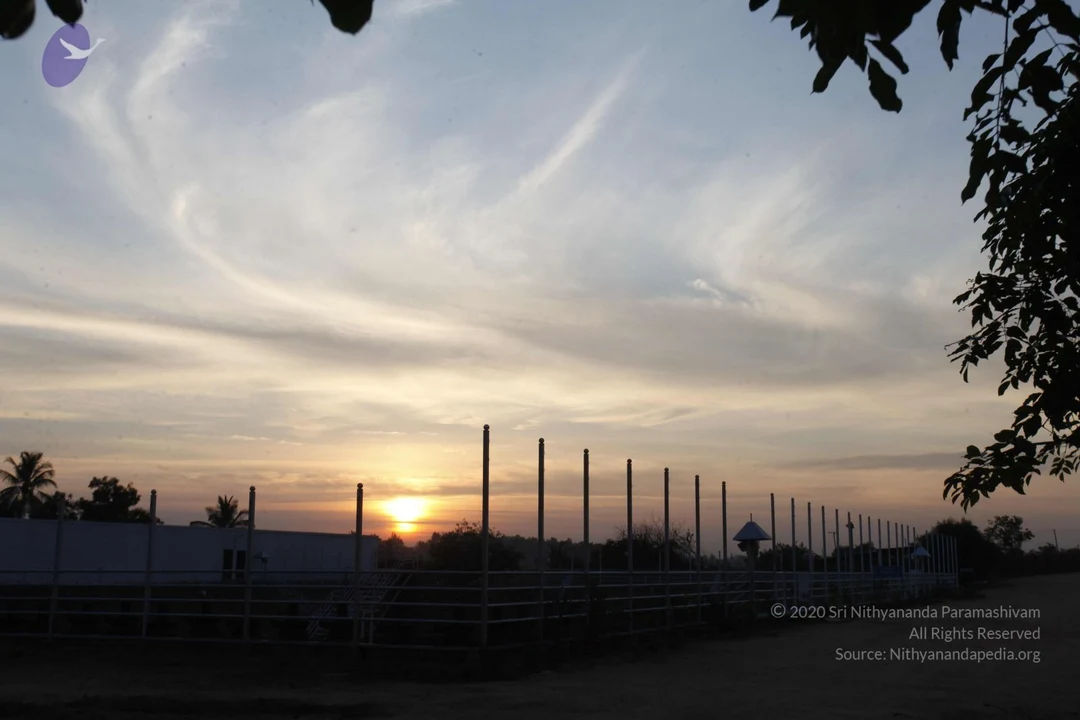
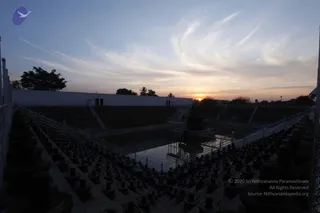
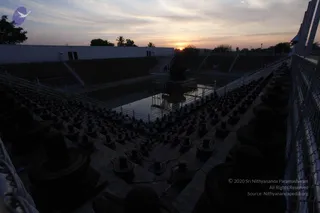
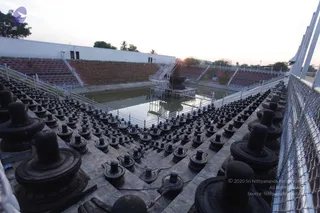
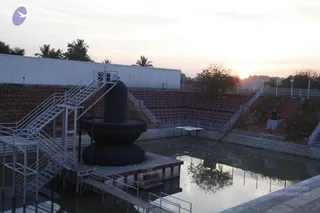
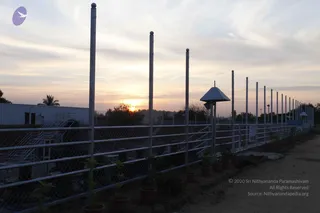
Wide photograph at sunset of an outdoor amphitheatre-style complex at a person's ashram grounds. Rows of dark stone Shiva lingams in shallow niches line the stepped tiers on both sides, with metal railings along the walkways. Across a central water-filled channel, a low white wall, palm trees and a metal scaffold-like structure stand against a pale orange and blue dusk sky. No people are visible in the scene.A photograph at sunset of a large outdoor amphitheater-style ashram site with tiered rows of dark stone Shiva lingams set on square bases arranged across the foreground steps. A central stepped stage or platform with metal scaffolding stands in a shallow reflecting pool. Sky glows orange and purple behind white walls, palm trees and a metal railing at right. No people are visible.A photograph of a large open-air arena with rows of dark stone Shivalingams arranged on tiered concrete steps in the foreground, leading down to a rectangular water pool. A metal staircase and railing rise beside the pool, with red-tiered seating stands behind the water and a white boundary wall at the top. The sky is pale at sunset and palm trees are visible in the distance. No people are visible in the scene.A large black stone Shivalingam rises from a circular base on a water-filled pond at sunset. A metal staircase and railing lead up to the lingam platform, and tiered red-brown seating rises in the background beside a white boundary wall. Palm trees and a small tree stand against a pale pink-orange sky, and a small statue sits on a raised ledge at right. No people are visible.Dusk view of an outdoor stepped amphitheatre-style pond complex at sunset. A large black Shiva lingam stands on a circular black yoni-shaped pedestal in the water at left, reached by a metal railing staircase. Tiered brick seating rises on the far side, reflected in still water, with palm trees and a white boundary wall behind. A small figure sits on a stepped platform at right, too small to be clearly identified. The sky glows orange and pale yellow with the sun low on the horizon. A purple bird logo appears at upper left.A sunset view along a long row of tall metal poles beside a chain-link and pipe fence on a dirt path. Potted saplings and small plants sit along the fence base. A low white building and palm trees stand at left, and the sun glows low on the horizon through pale clouds. A small conical-roofed lamp fixture stands among the poles. No people are visible.

PadukaPuja

11 photosSource gallery
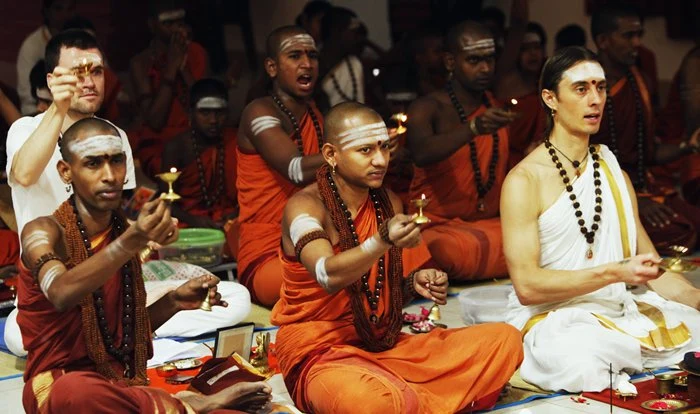
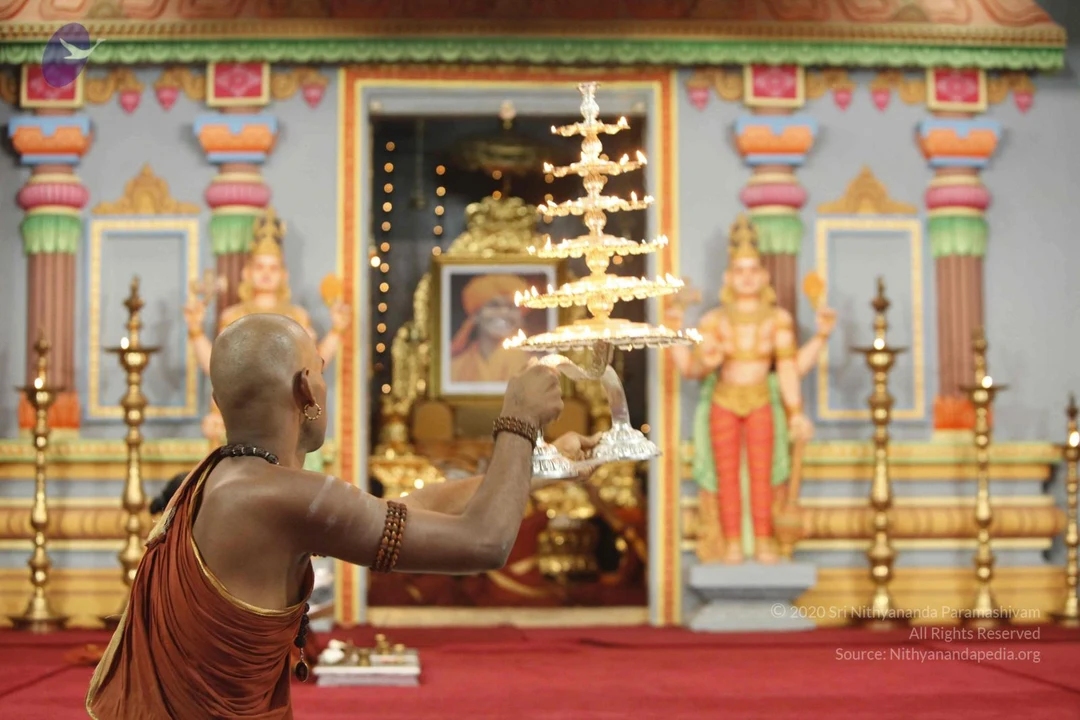
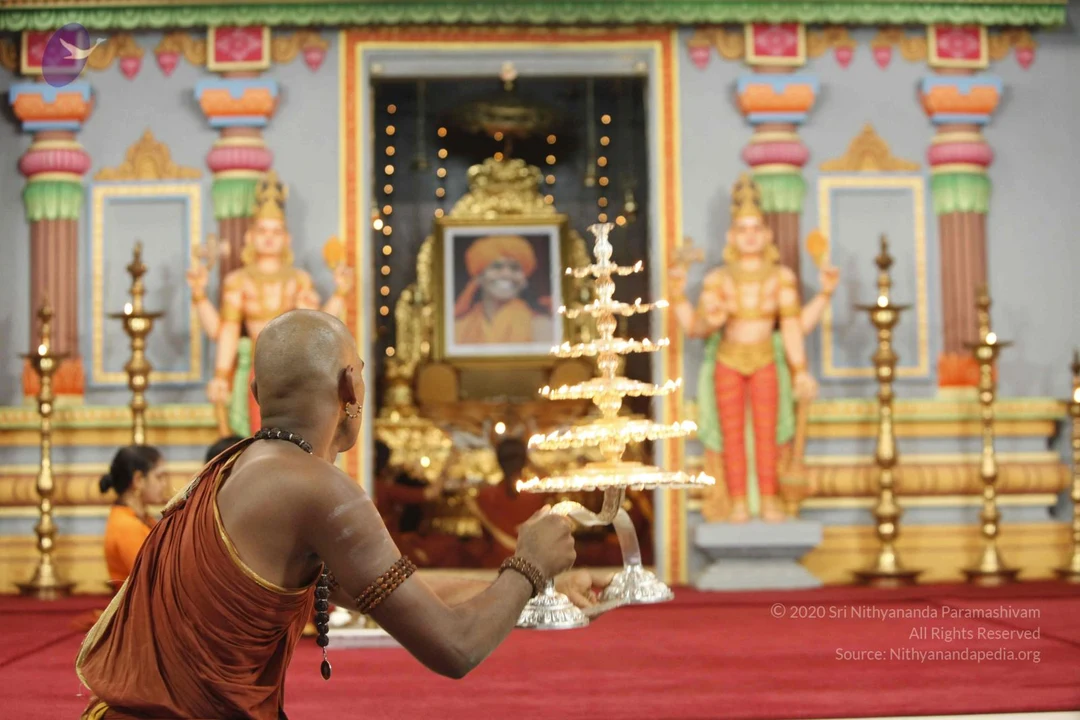
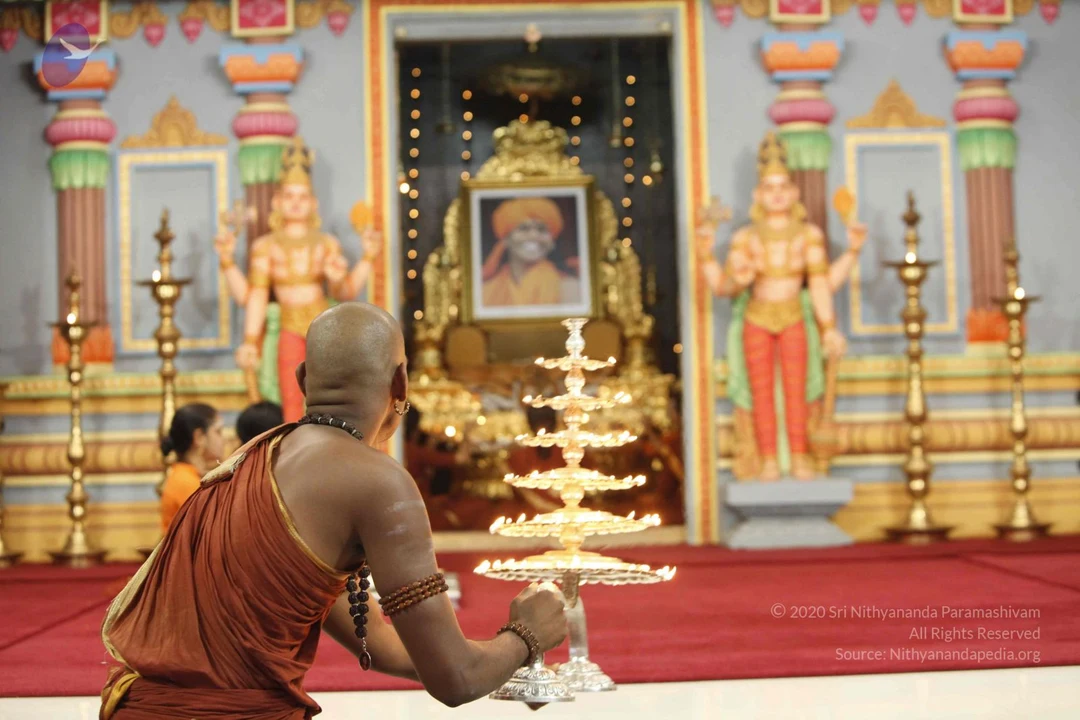
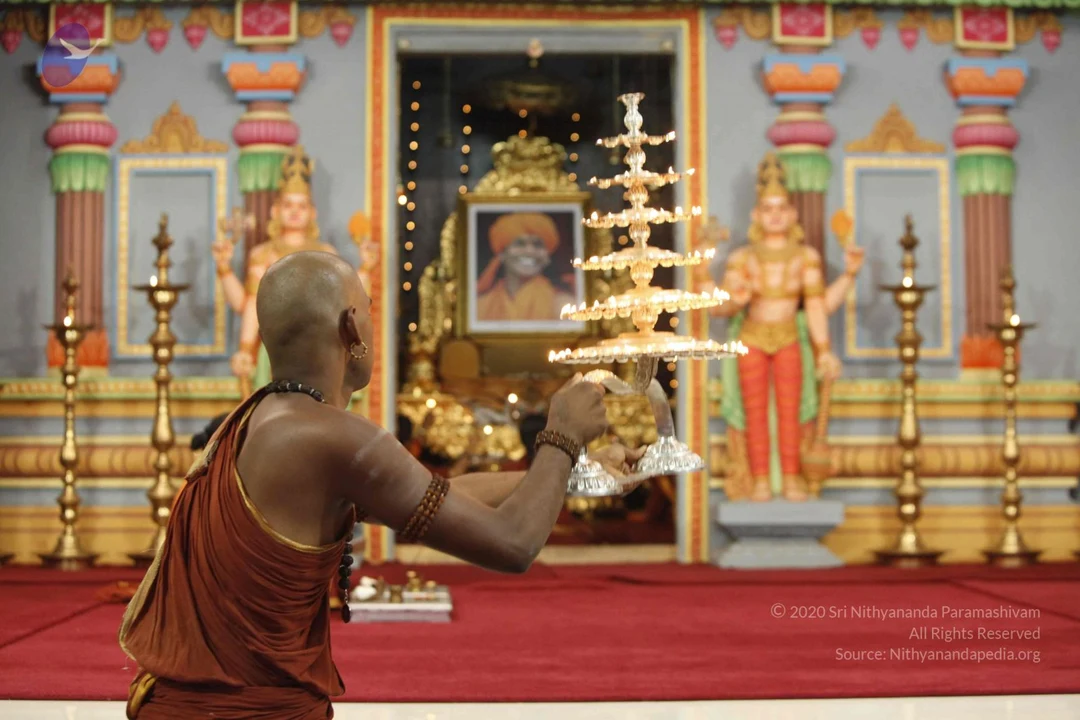
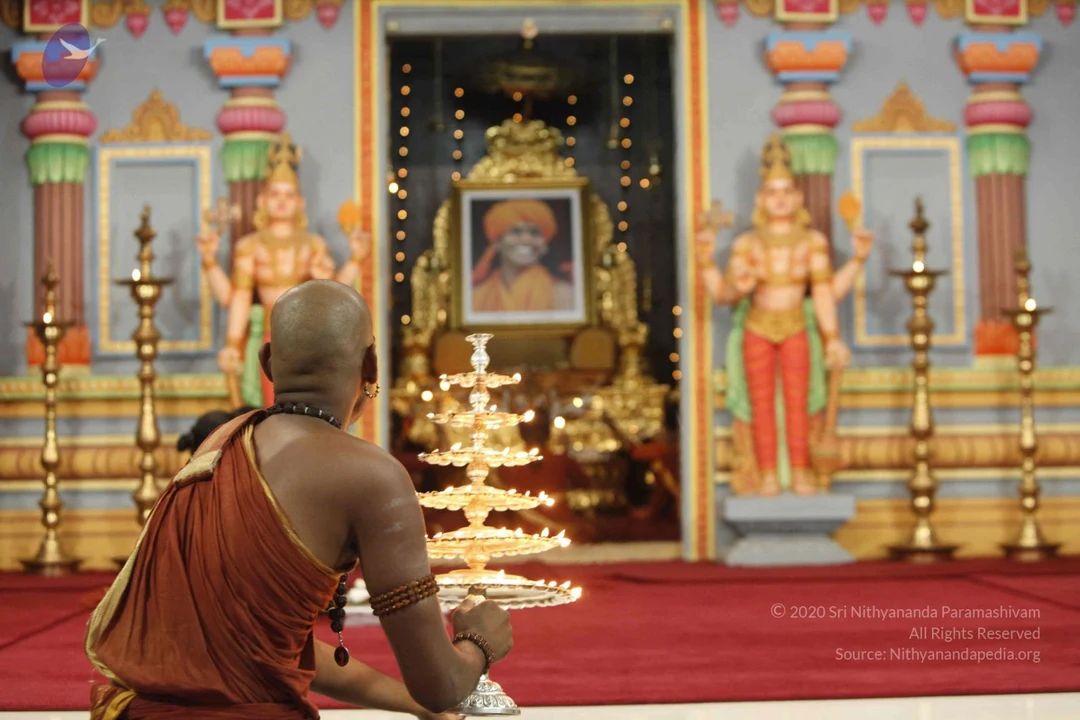
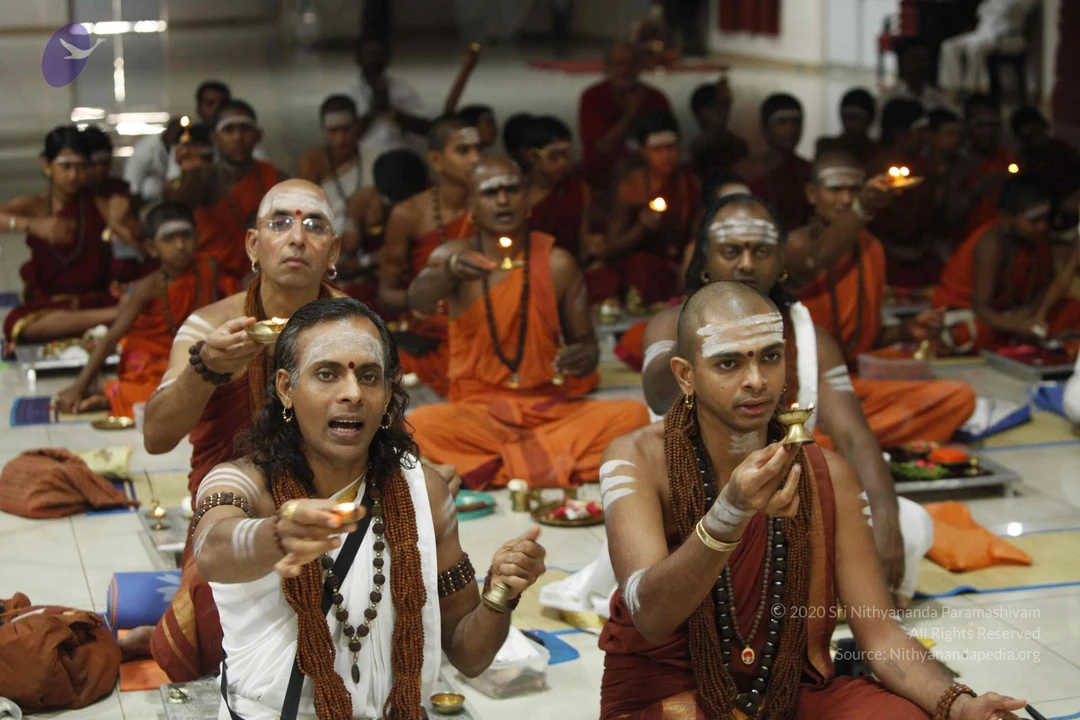
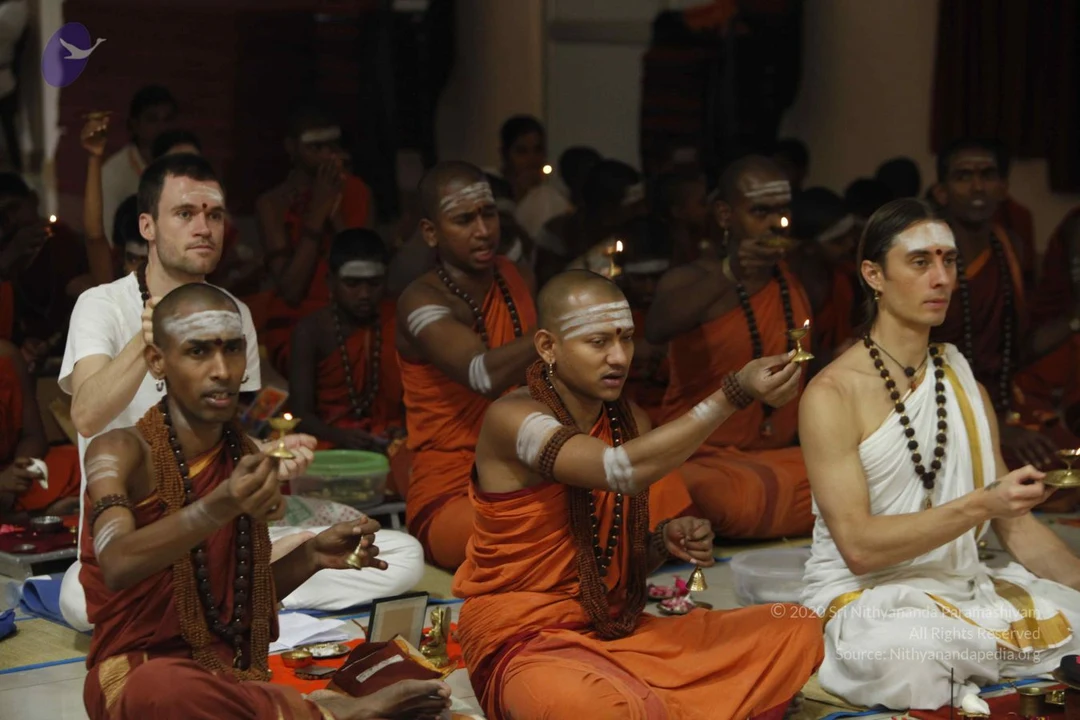
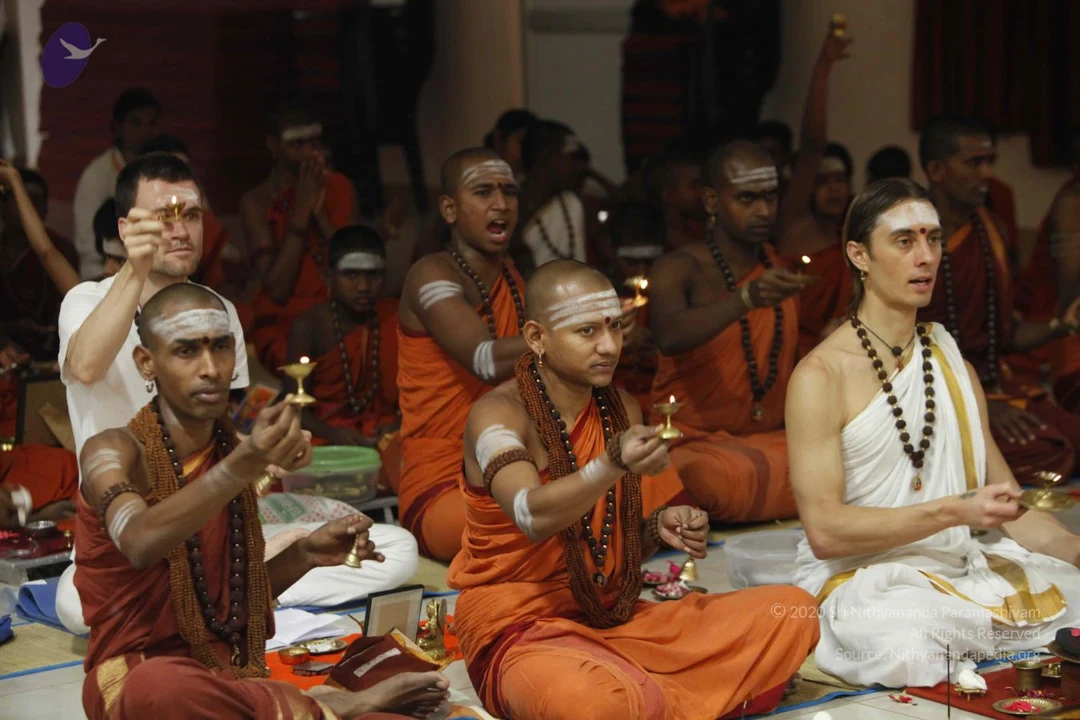
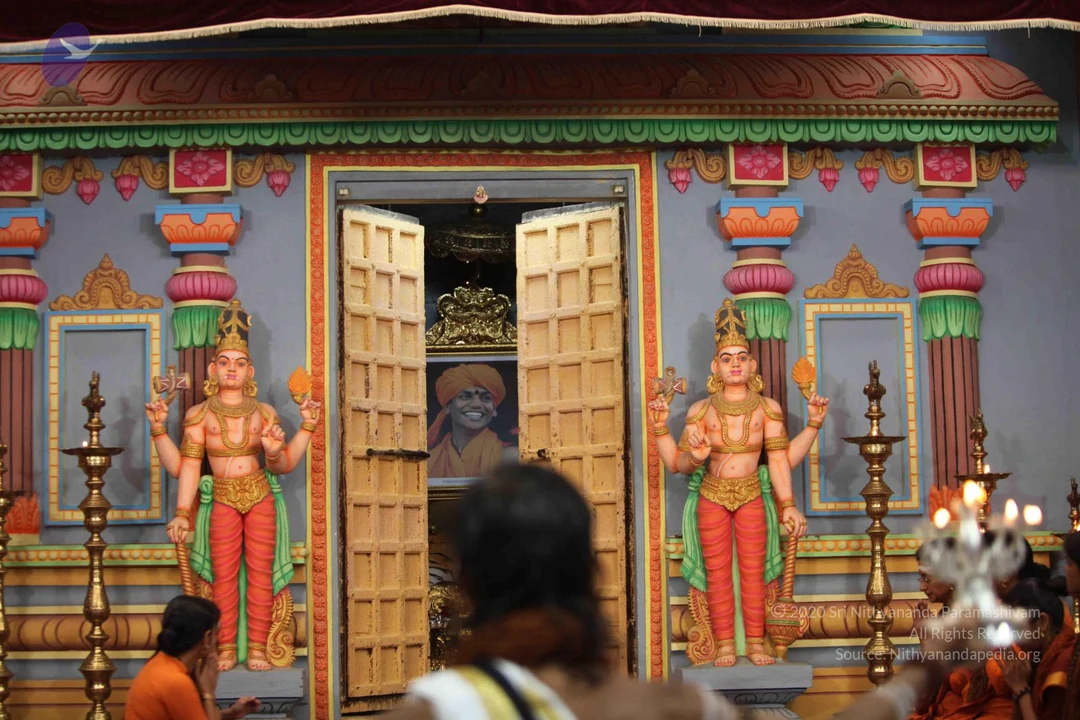
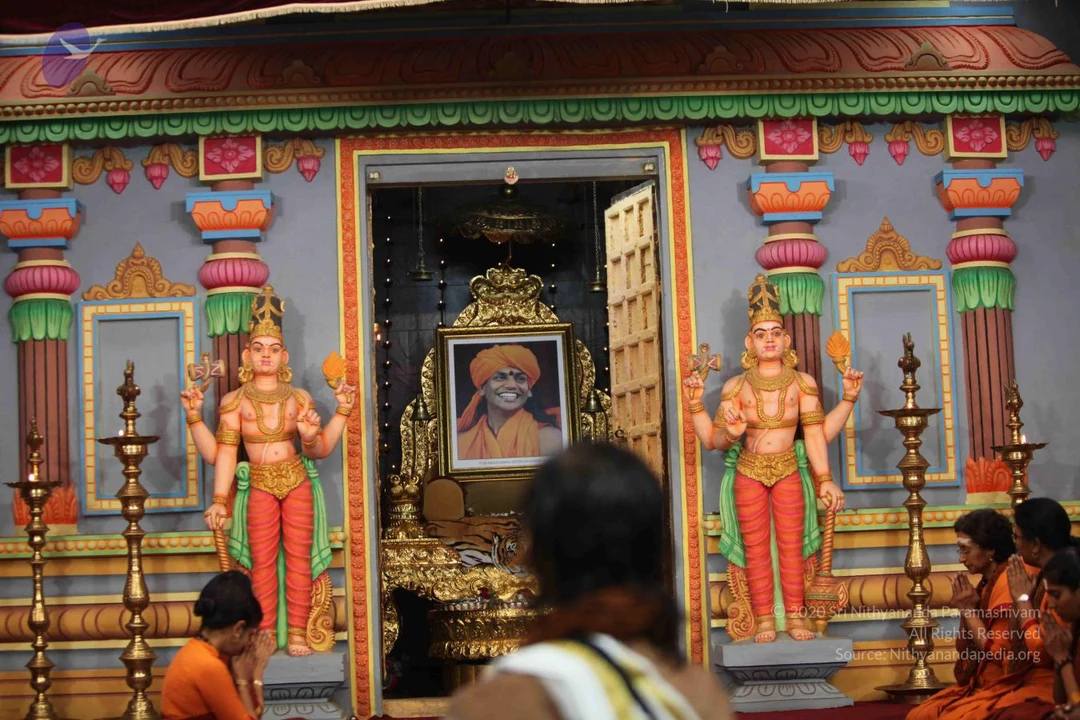
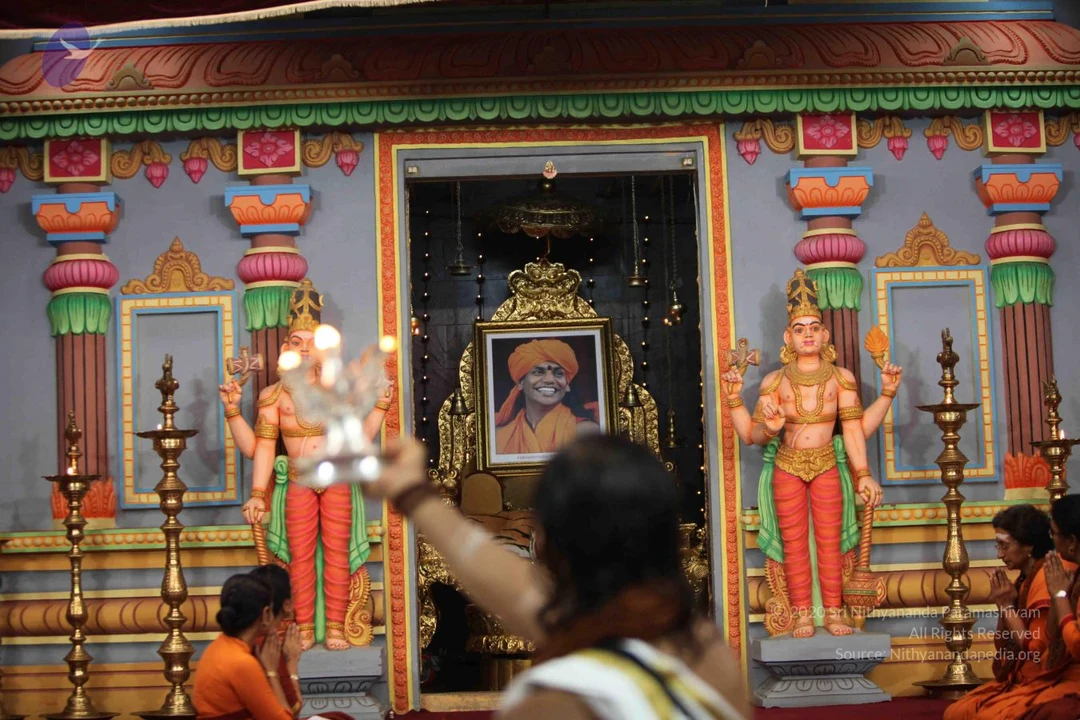
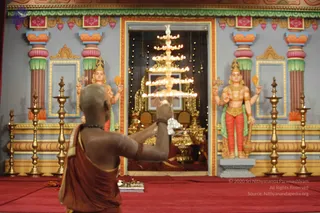
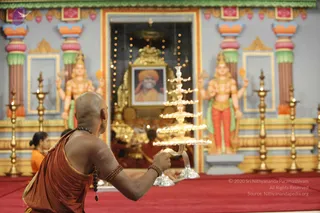
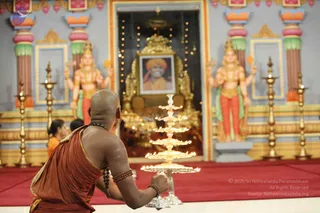
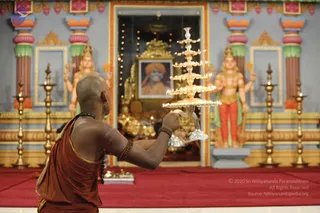
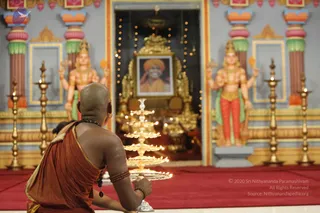
A shaved-headed priest in an orange-brown shawl and dhoti, seen from behind, raises a tiered brass aarti lamp with many lit flames toward an altar. Flanking him are two painted deity statues with gold crowns, multiple arms and green-and-orange garments, one holding a trident. Tall brass oil lamps stand along the red-carpeted dais, and a gilded throne with a framed portrait sits in the shrine doorway behind. The scene is an aarti ritual in a temple hall.A shaven-headed priest in an orange-red sannyasi cloth and rudraksha bracelets performs aarti with a tiered silver lamp holding many flames in a temple shrine room. He stands with his back to the camera, facing a portrait of a saint in saffron on a gilded throne, flanked by two painted standing deity statues and tall brass lamps on a red carpet.A temple interior with a bald priest seen from behind, wearing an orange-brown cloth draped over his bare upper body and a rudraksha mala around his neck and arm. He holds a tiered silver aarti lamp with lit flames toward a shrine. Behind him, a framed portrait labelled "Paramahamsa Nithyananda" sits within an ornate gold frame, showing a figure in orange clothing and a saffron head covering. Two painted deity murti figures with multiple arms stand flanking the shrine, and brass lamps line the red-carpeted floor. A woman in orange clothes stands at the left edge, with other devotees in saffron behind the priest near the shrine.A photograph of a shaven-headed priest in an orange-brown dhoti and shawl, seen from behind, holding a tiered silver aarti lamp with lit wicks toward a shrine. Behind him stands a framed portrait of a bearded man in an orange turban against a golden throne-like backdrop, flanked by two multi-armed deity murti in orange and red dhotis with gold ornaments. Red carpet, golden standing lamps and pastel pillars frame the shrine. Only the priest is a physical person in the foreground, with a partial figure in orange behind him. Mala beads hang from his neck and bangles adorn his wrist.A photo of a shaved-headed priest in an orange-brown dhoti-style garment seen from behind, holding a multi-tiered silver aarti lamp lit with flames toward a shrine. The shrine is decorated with painted pillars in pink, green and gold, with two standing deity murtis flanking a framed portrait of a smiling man in orange cloth set within a golden canopy. Brass oil lamps stand on a red carpeted floor. The priest appears to be performing aarti.A photograph of a shaved-headed man in an orange-red robe seen from behind, kneeling on a red carpet and holding a tiered silver aarti lamp with lit flames toward a shrine. Behind him, two painted deity murtis with multiple arms flank the doorway, standing on colourful pillars. Beyond, a framed portrait of a smiling figure in saffron/orange headwear and clothing sits on a gold throne-like seat amid string lights. Gold standing lamps line the sides. The priest's posture suggests aarti performed at a shrine.

NithyaSatsang

12 photosSource gallery
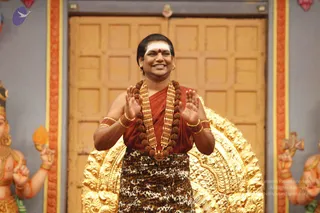
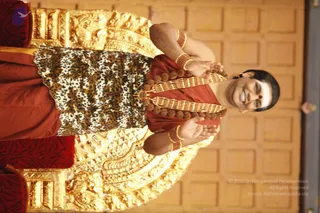
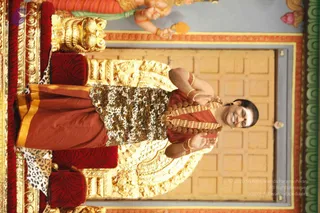
A smiling man stands centrally in front of a large wooden panelled door, raising both palms toward the camera in a welcoming gesture. He wears a red-orange draped upper garment, a long rudraksha mala with gold beads, layered gold bangles and armbands, a leopard-print lower cloth, and a white sacred ash band with a red dot on his forehead. Gold ornamental arches frame him, with painted deity statues with gold ornaments and a flaming lamp visible at the left and right edges. A purple bird logo sits in the upper left corner.A photograph, rotated on its side, of a seated figure on an ornate gold throne with red-and-black tiger-striped cushions. The figure wears a red garment with a leopard-print wrap, multiple rudraksha mala necklaces with gold beads, gold bangles and a gold-trimmed red shawl, with white forehead markings and a red bindi. Hands are pressed together in a greeting gesture before a wooden panelled door. a person by appearance cues of distinctive ceremonial adornment and rudraksha malas, presented on a throne.A photograph of a person seated on an ornate gold throne with carved lion-head armrests and red velvet cushions upholstered in tiger-stripe and leopard-print fabric. The seated person wears a rust-red garment with a leopard-print wrap, gold-banded red cloth, layered gold bangles and a gold collar necklace, with a white forehead mark. Both hands are joined at the chest in a gesture of greeting. Behind is a painted wall with a gold deity figure above and a wooden panel door.A photograph of a single woman standing in front of an ornate golden throne-like seat with red and leopard-print upholstery, her palms joined together at chest level in namaskar with eyes closed. She wears a rust-red sari edged with gold border and a leopard-print blouse-panel, with gold bangles and a gold waist ornament. Behind her is a carved golden wooden door and a painted wall with a deity figure in the upper corner. The image is rotated sideways.A photograph, rotated sideways, of one person standing before an ornate gold-and-red throne with a leopard-print cloth draped over the seat. The person wears a rust-red garment with a leopard-print panel, a gold-bordered shawl, and gold bangles on the arms, with hands raised in a gesture before a golden doorway with wooden panels. Golden lion figures and a carved gold throne frame the scene, and a painted deity figure appears at the top edge. The person's face has white markings and hair pulled back. The a person candidate is shown in a throne setting with distinctive ornate red-and-gold attire, but the visible cues are insufficient to confirm identity.A photograph, rotated sideways, of a single standing person in front of an ornate gold throne with red velvet cushions and carved lion-head arms. The person wears a rust-orange sari-style garment with a leopard-print blouse or wrap, a gold border, and a thick rudraksha-style bead necklace with gold ornaments, bangles on both arms, and a white mark on the forehead. Their hands are raised in a blessing gesture. Behind them is a yellow panelled door on a grey-blue wall with painted red and orange borders, and a deity figure appears at the top edge. Swamiji (probable): the person has long dark hair, a rudraksha-bead necklace and ornate ceremonial gold adornments, and stands before a throne.

KalpatharuDarshan

7 photosSource gallery
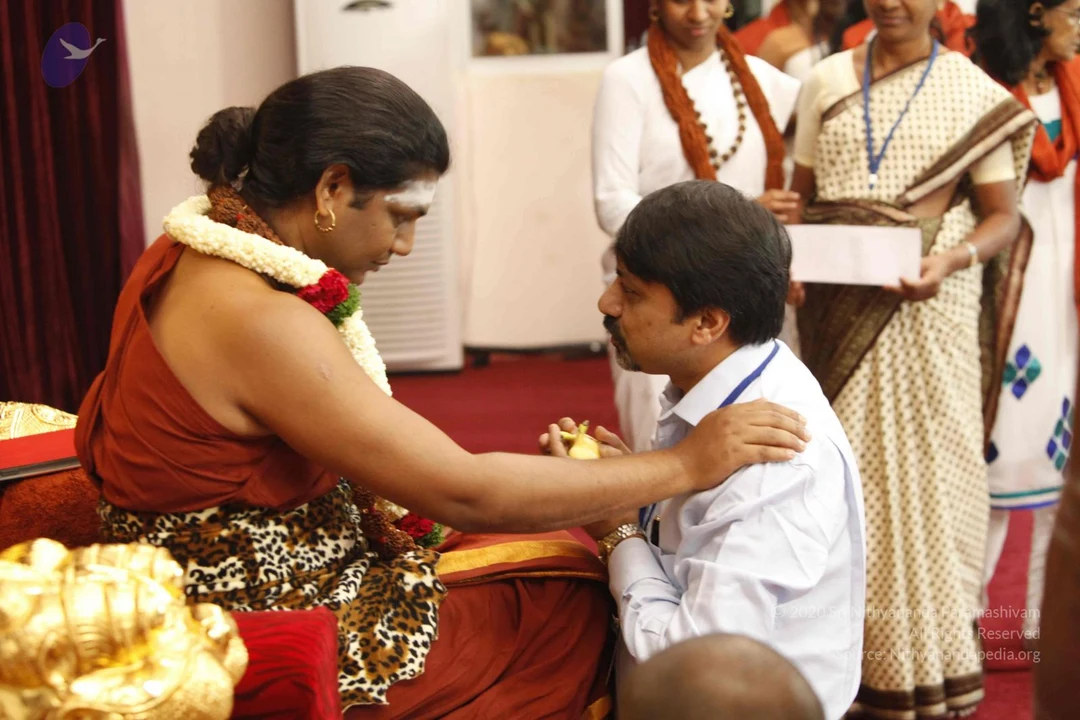
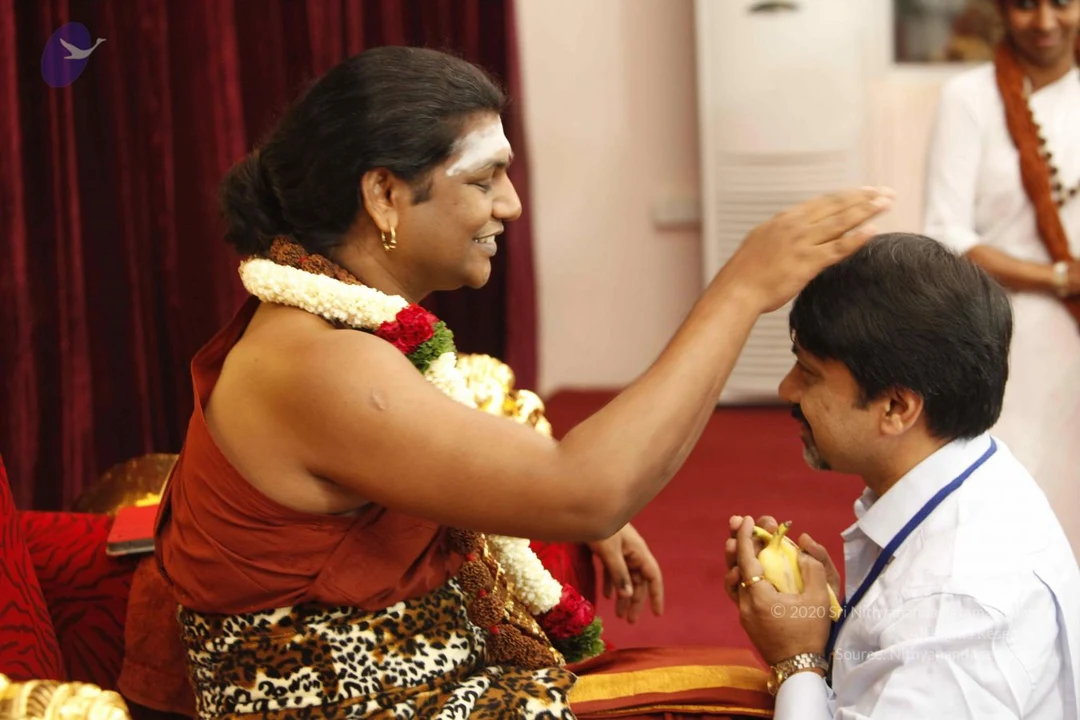
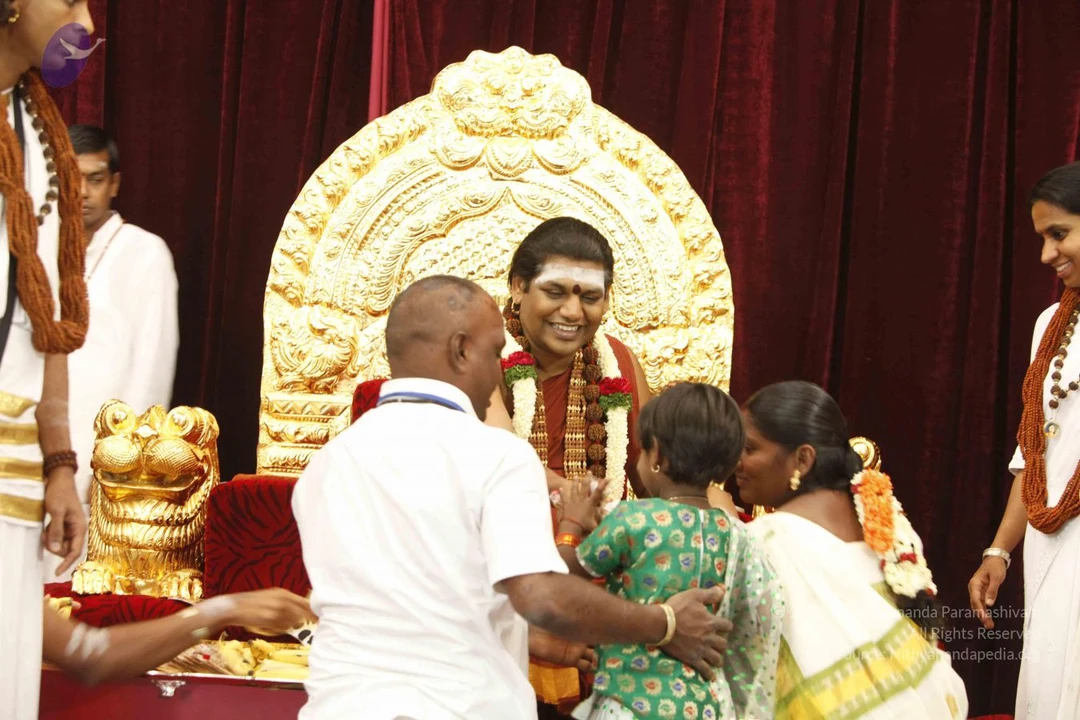
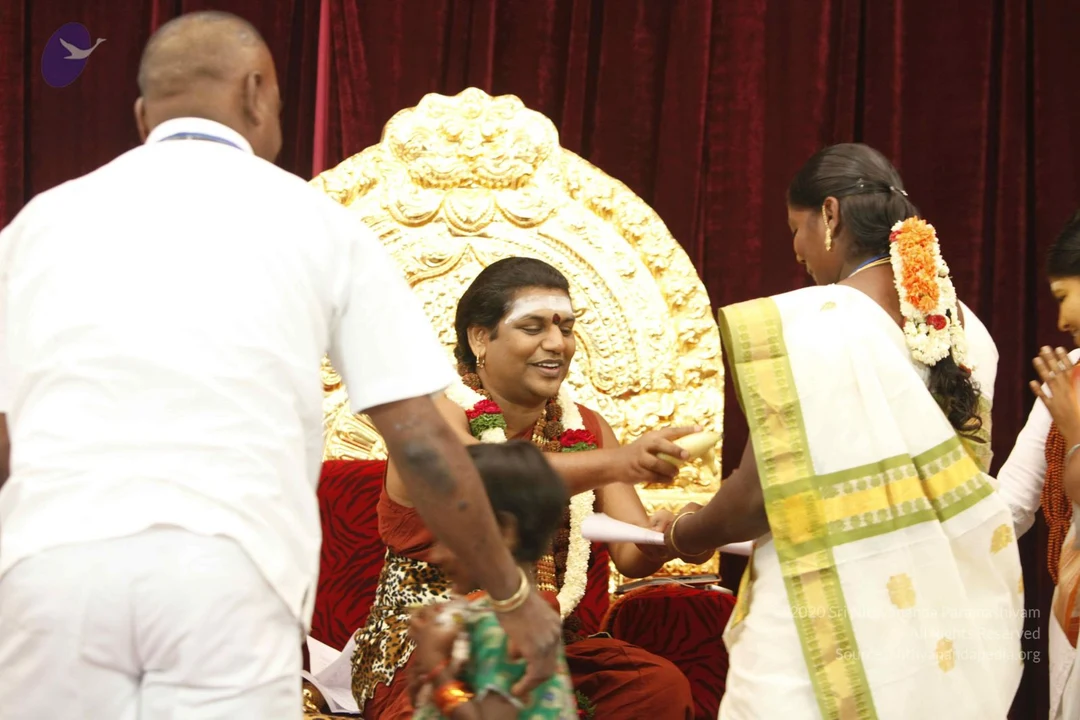
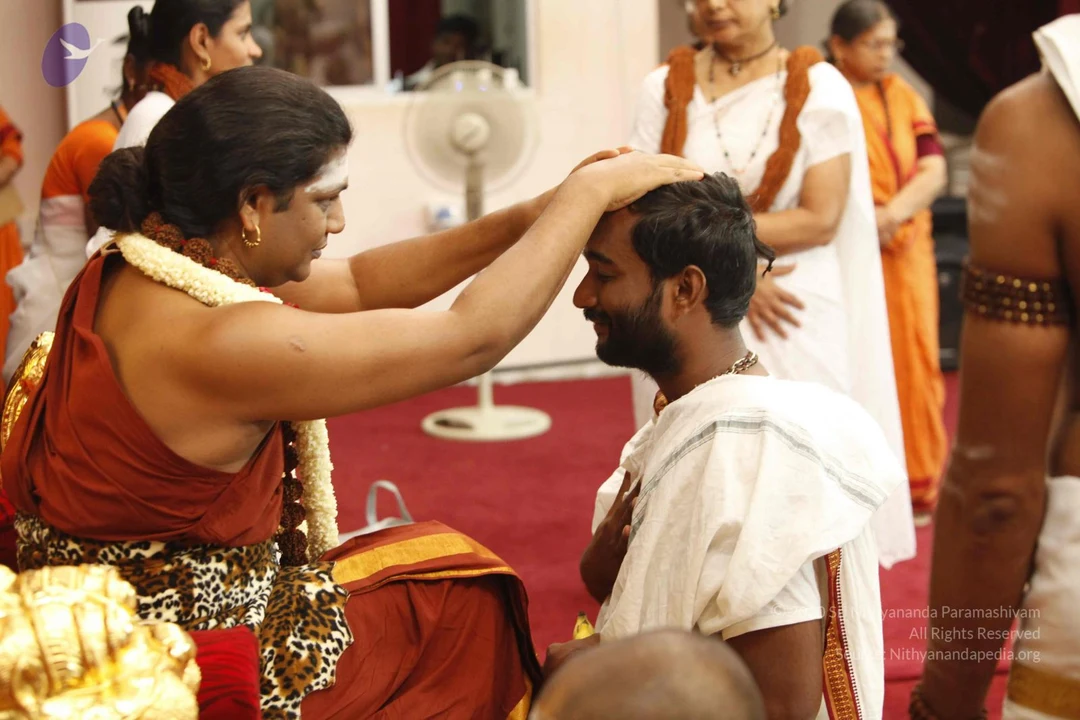
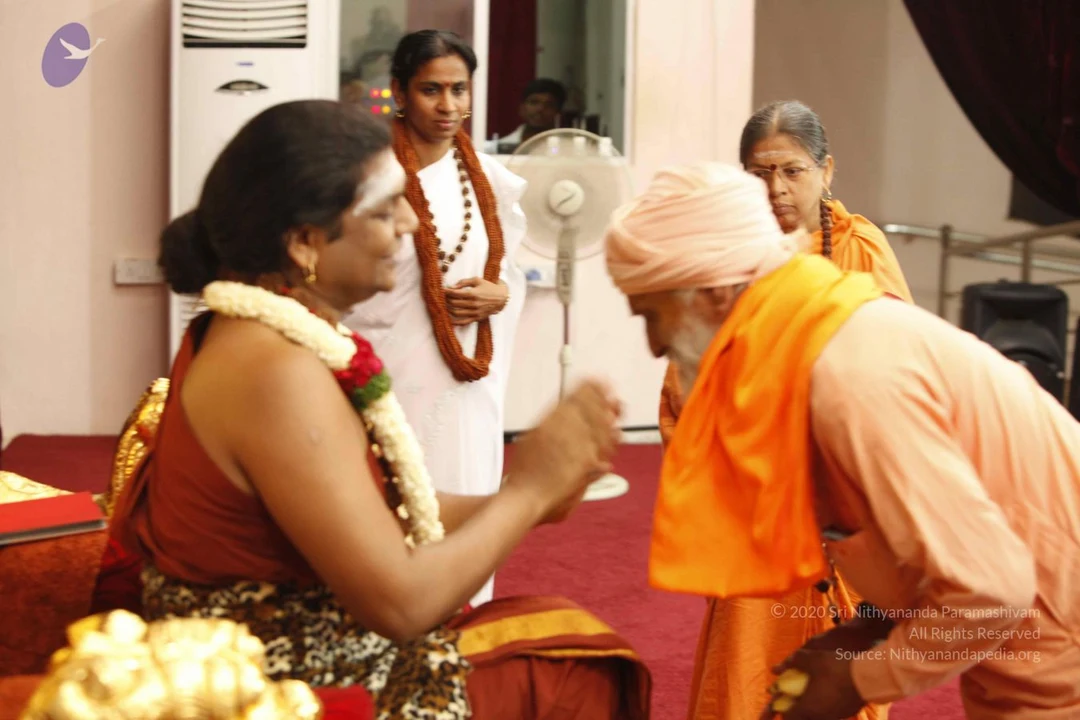
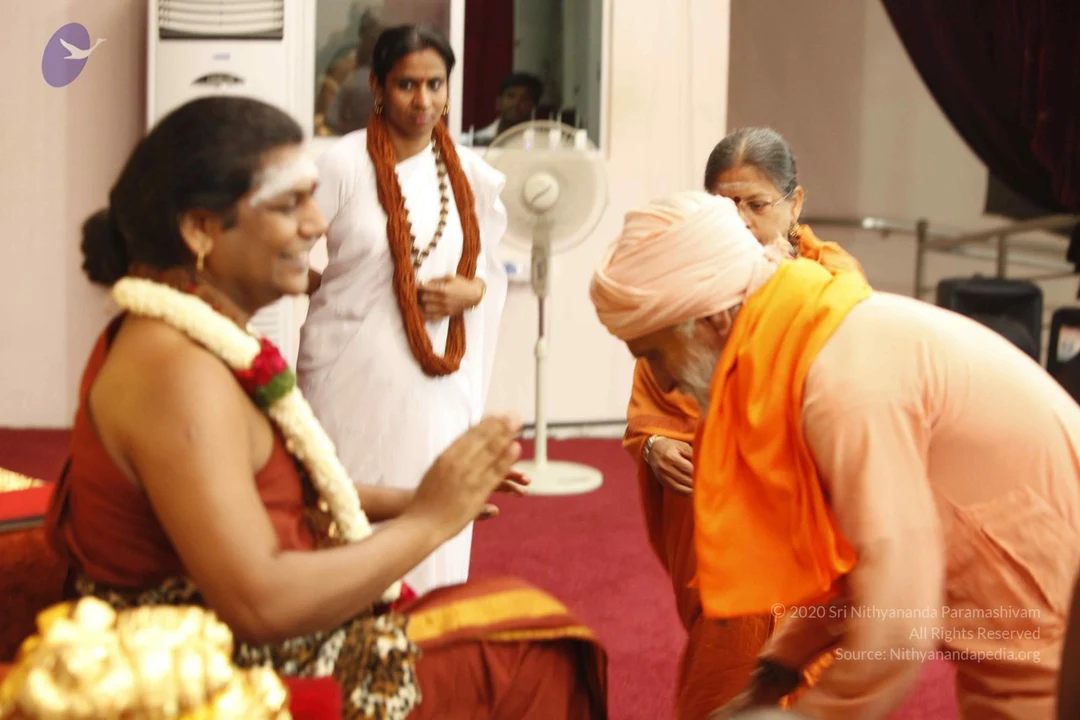
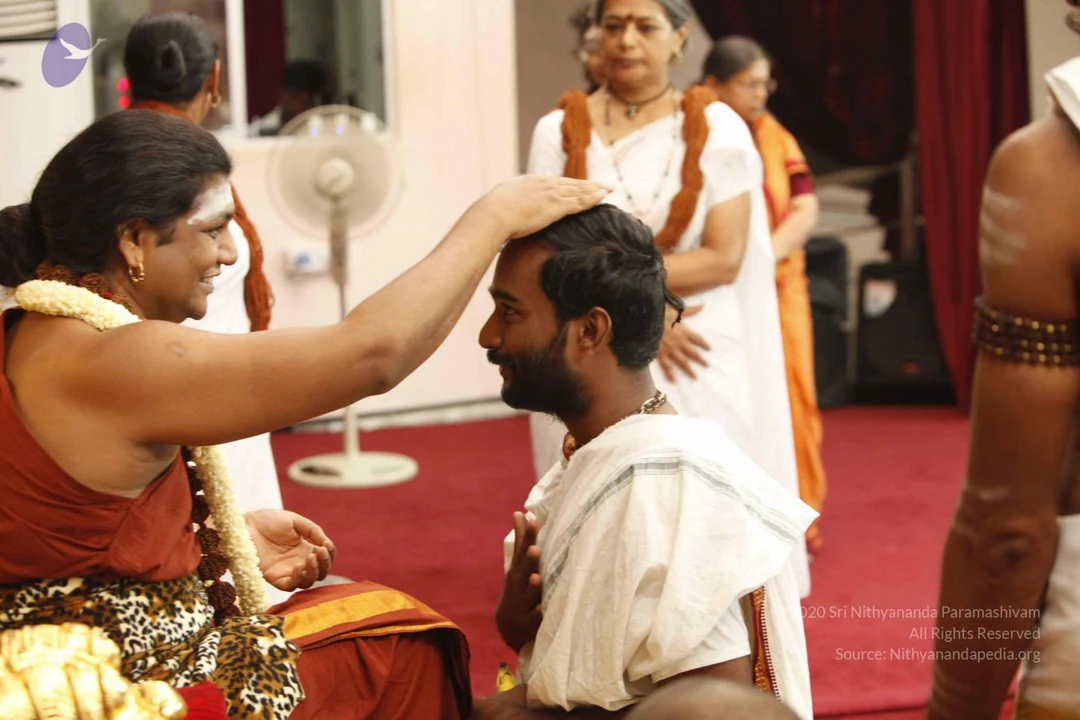
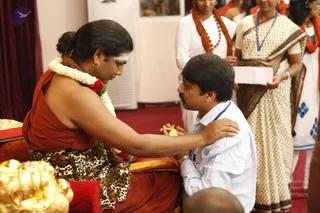
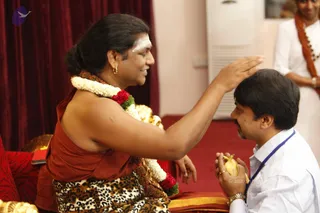
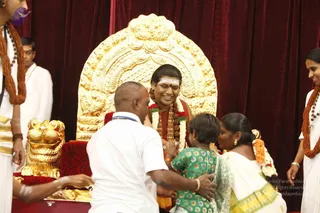
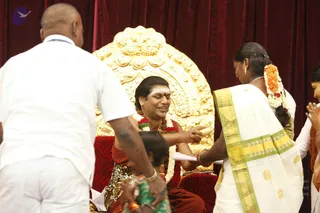
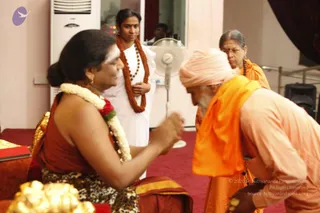
A seated woman in a rust-orange robe with a white jasmine garland and red flower garland, with white vibhuti marks on her forehead, leans forward on a red-cushioned seat to bless a kneeling man in a white shirt with a blue lanyard. She holds a small object in his hands, and her left hand rests on his shoulder. Behind them, a woman in a white dress with an orange shawl and a woman in a cream sari with a blue lanyard stand on a red carpet, and a gold ceremonial vessel is in the lower left corner. a person: the seated figure has short-cropped hair and ceremonial orange robes with garlands, appearance-based only.A seated figure in a rust-orange sleeveless top and leopard-print wrap, wearing a white-and-red flower garland with rudraksha beads and a white horizontal forehead mark, extends a hand to bless the crown of a kneeling man in a white shirt with a blue lanyard, who holds a yellow fruit in both hands. A red carpet and red curtain form the background, and a standing woman in white with an orange shawl stands at the upper right.A photograph of a seated man on a large ornate gold throne against deep red velvet drapes. He has a white vertical tilak on his forehead, wears an orange-red shawl over a saffron-coloured garment, and has layered gold and rudraksha-style necklaces with white and red flower garlands. A golden lion-head armrest is at left. In front, a man in a white shirt and a girl in a green floral dress are bending close, and a woman in a white and gold-bordered sari with an orange flower garland at her hair leans in. Two attendants in white with rudraksha malas stand at the edges.A photograph of a satsang stage with deep red velvet drapes and an ornate gold throne-like seat. A man with a shaved head and white shirt stands at left, bending forward. Seated on the throne-like seat is a figure with swept-back hair, a crimson robe, a leopard-print cloth, a mala of rudraksha beads and a white garland with red and green flowers, smiling as he extends a hand holding a small rolled document or pen. To right, a woman in a white sari with a green and gold border and a flower-decorated braid receives the item with her hands. Another woman in a white garment stands at far right, and a child in green is partly visible in the lower centre. Probable Swamiji (probable) is seated on the throne, identified by swept-back hair, crimson robe, rudraksha mala and ceremonial garland.A photograph of a seated woman in a rust-red garment with a leopard-print shawl and a white flower garland, placing her palm on the head of a bearded man in a white dhoti and shawl who sits with hands folded over his chest. Her forehead bears white tilak markings. Behind them, women in white and orange saris stand on a red carpet, and a standing fan is visible. A golden ritual object appears at the lower left. The scene suggests a blessing or initiation moment.Photograph of a satsang setting on a red carpet. A seated woman in a dark red sari with a white floral garland and white vibhuti marks on her forehead clasps hands with an elderly man in a pale peach turban and peach kurta with a deep orange shawl draped over his shoulders, who leans forward toward her. Behind them stands a woman in a white outfit with a long rudraksha mala, and another woman in orange sari with a red-and-white vibhuti mark watches. A white floor fan and a standing air conditioner stand in the background, with a maroon curtain at right. The man's distinctive presentation (pale turban, orange shawl, bearded elderly figure) is consistent with the page's a person reference, but the appearance cues are not sufficiently distinctive, so identity remains uncertain.

TeamilyDinner-Mahant-Dinner

17 photosSource gallery
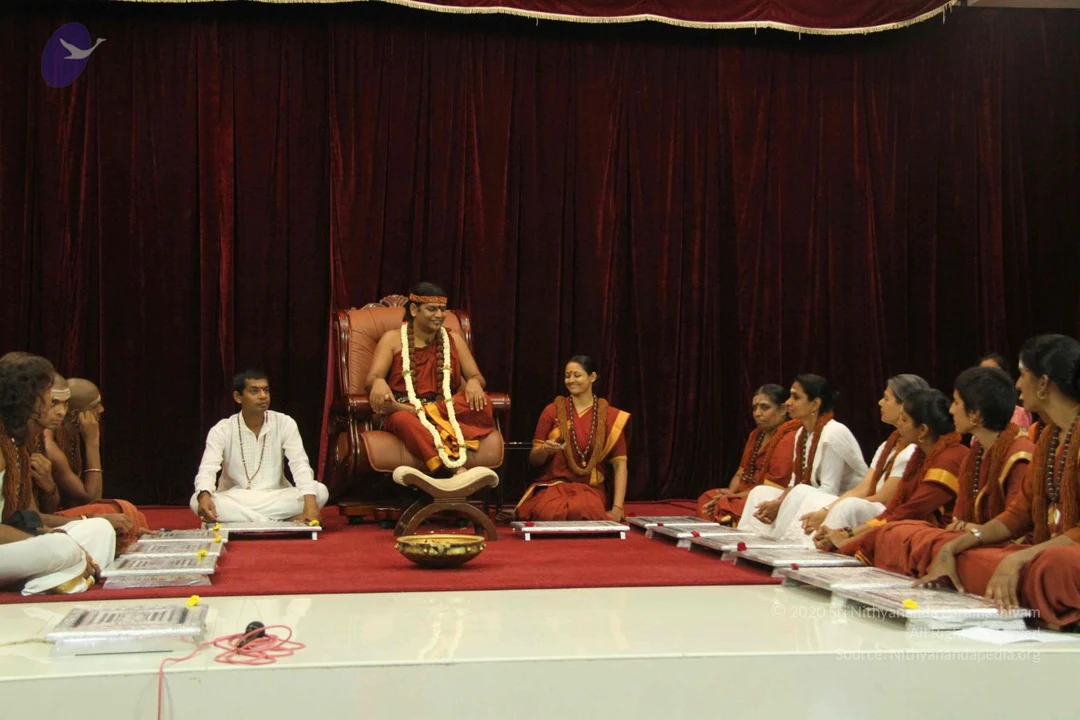
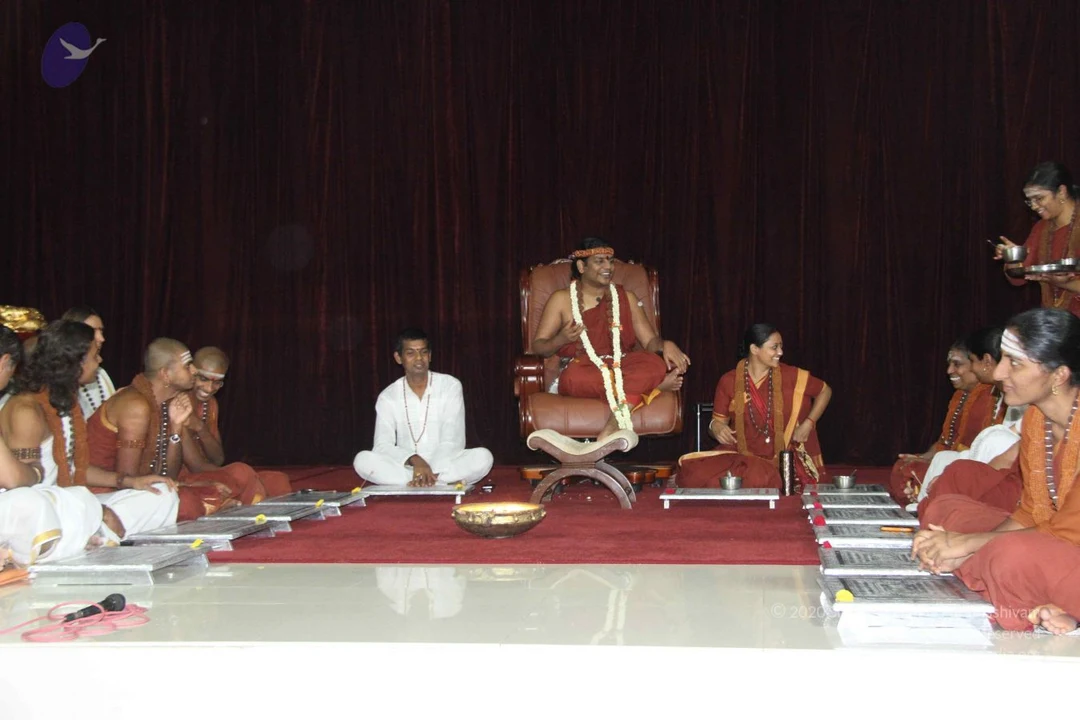
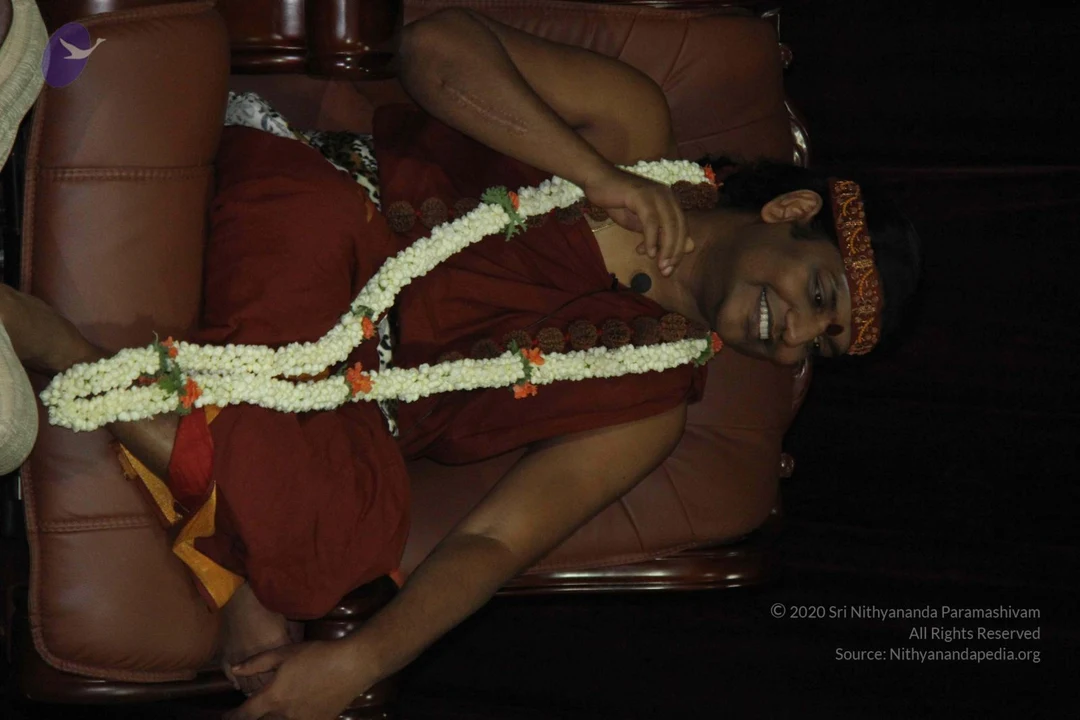
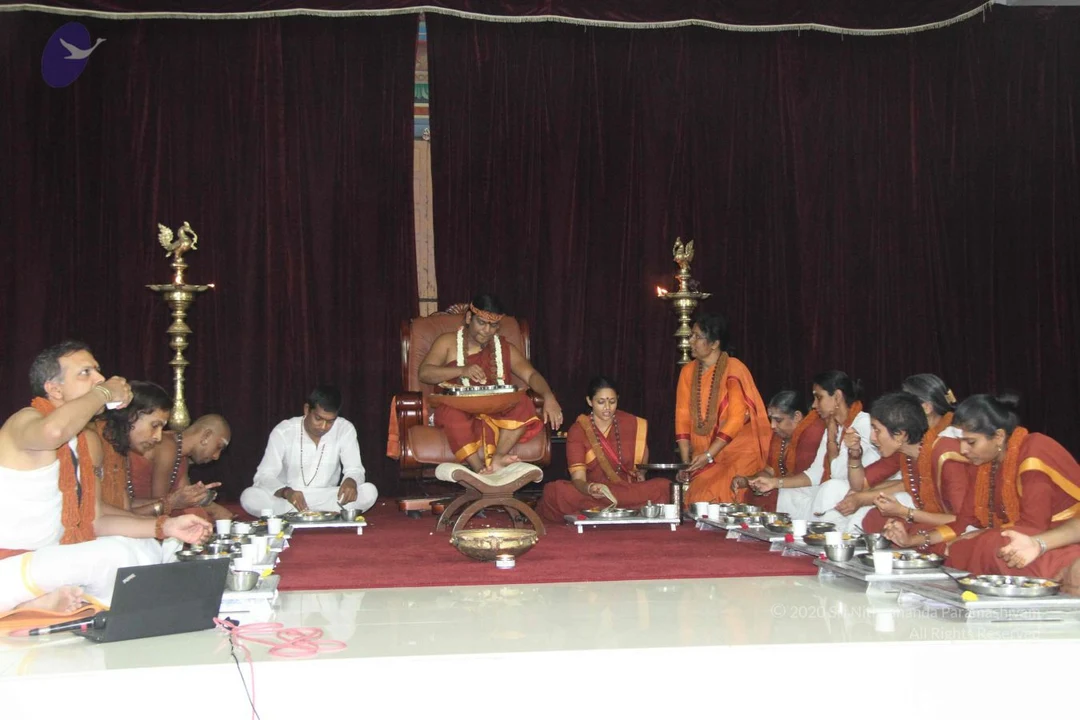
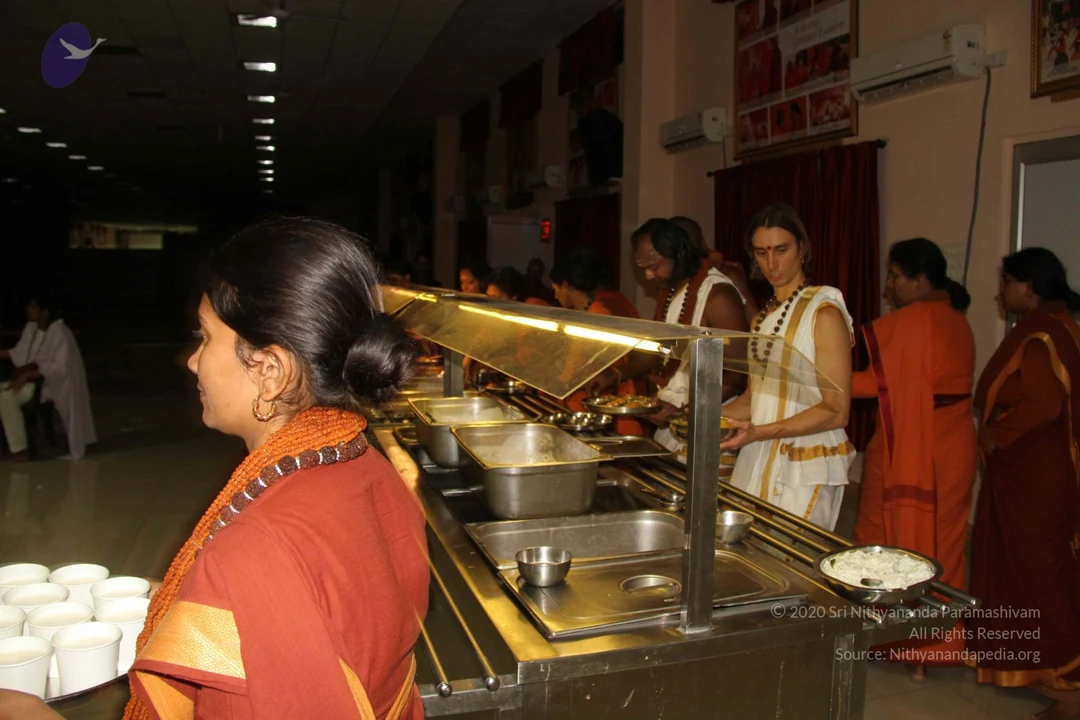
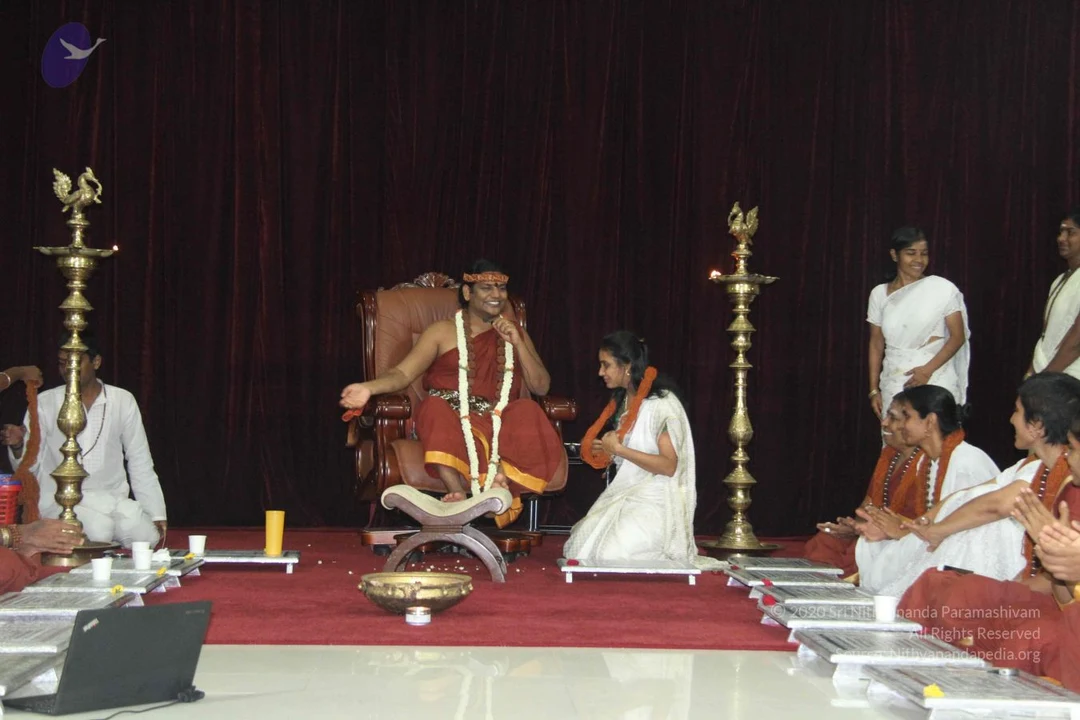
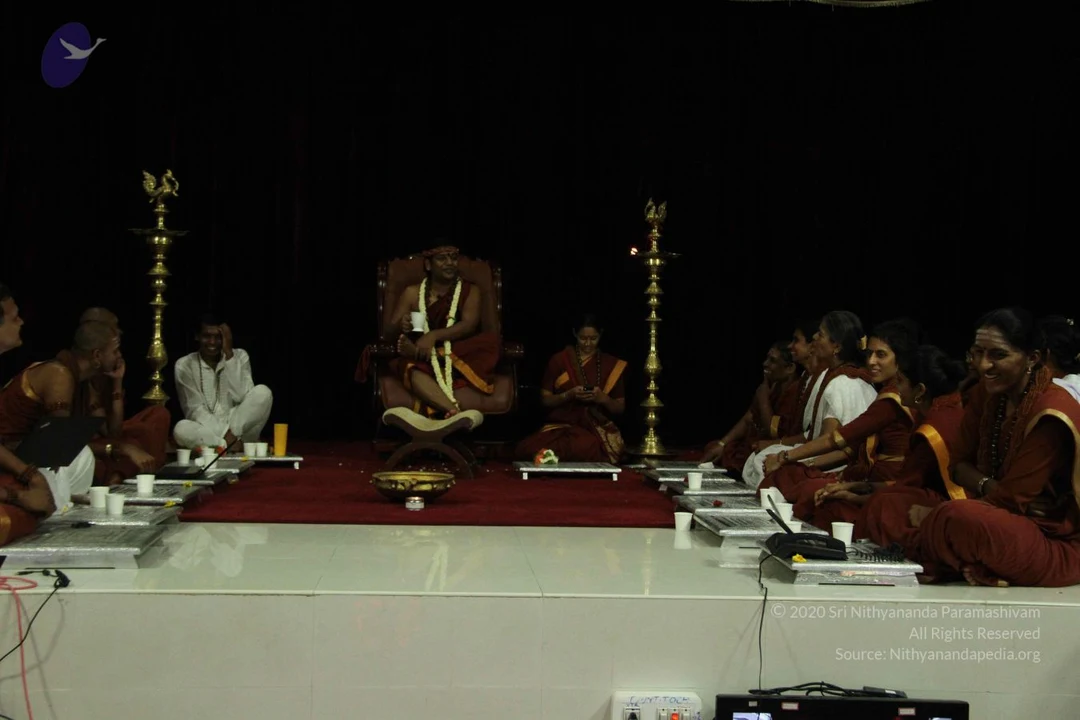
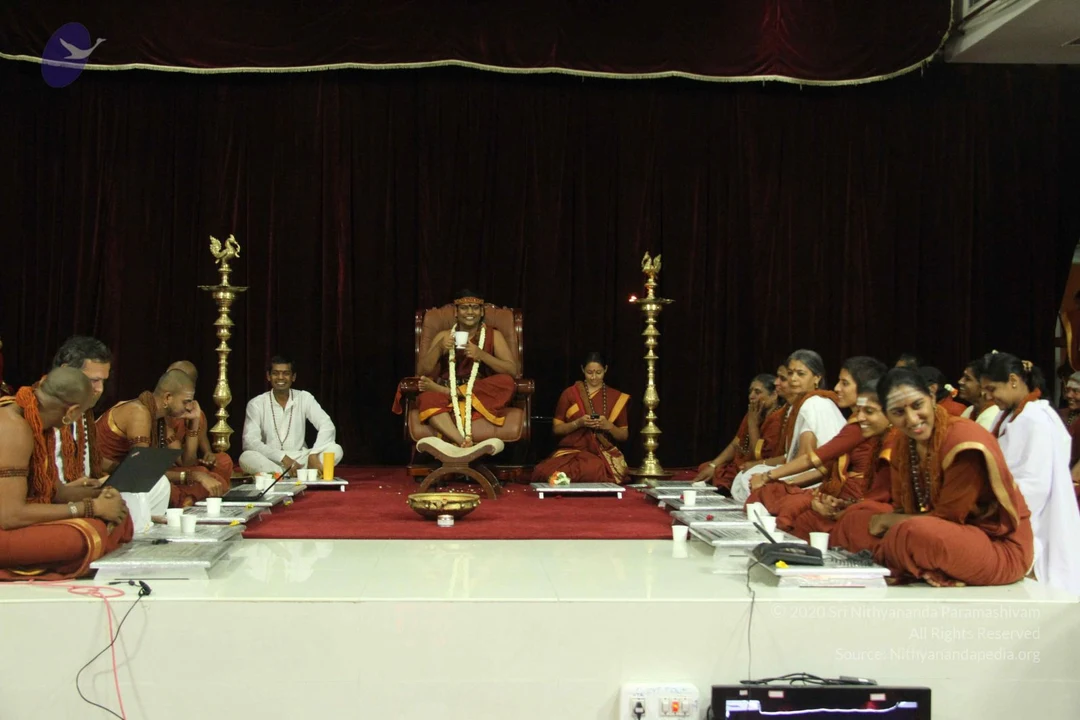
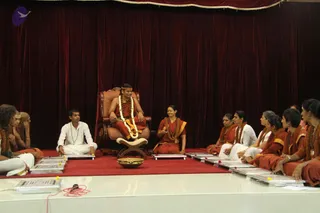
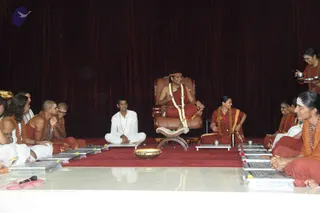
A satsang in a hall with deep red velvet drapes. A man seated in a brown leather armchair wears a saffron-orange dhoti and shawl, a garland of white flowers, a saffron headband, and a rudraksha mala; he is the a person and is the central figure. Beside him a woman in an orange sari with a red-and-gold border sits on a low wooden stool. Devotees in saffron and orange robes sit cross-legged on red carpet with small instrument-like boards in front of them, while a man in white dhoti and white shirt sits near the left. A brass bowl stands on the carpet before the chair. The scene is a seated gathering on the floor facing the chair.A seated teacher sits in a brown leather armchair on a red carpeted dais in front of dark red drapery. He wears an orange-red robe, a saffron headband and a white and orange flower garland, and he sits with one leg crossed. Around him devotees sit in rows on red mats with small brass plates and a shallow brass bowl in front. Several women and men wear orange and red robes, rudraksha malas and tilak; one man in white sits cross-legged on the right, and a woman at the top right holds a metal tray.A photograph, rotated sideways, of a bare-chested man in a maroon-red cloth reclining in a brown leather armchair. A long white jasmine garland with orange flowers and green leaves drapes across his chest, and rudraksha beads show on his wrap. He wears an ornate gold-and-red crown, is smiling, and rests one hand on his chest. The background is dark.Indoor ritual gathering before deep burgundy drapes, with two brass oil lamps topped by bird finials flanking the scene. A man in a red-orange dhoti and shawl, with a white garland and an orange head wrap, sits on a carved wooden chair holding a tray, while a woman in red sits on a low wooden stool with a bowl beside her. Around a red carpet, a row of devotees in orange and saffron saris and shawls, many wearing rudraksha-style beads, sit before metal plates and steel cups, with a man in white on the left holding a leaf plate. A brass bowl sits on the floor. This appears to be a food or offering ceremony with devotees seated in a line.A photograph of a serving line at a dining hall, with a steel food warmer and chafing trays holding rice and dishes under a sneeze guard. In the foreground a woman in a rust-orange sari with a beaded orange necklace holds a stack of white paper cups. Behind the counter, a man in a white dhoti and white shawl with a rudraksha mala and a woman in orange sari serve food, and a shaved-headed devotee in white stands nearby. Other women in orange and maroon saris stand in line. A framed poster and a portrait hang on the wall, and a maroon curtain is visible. The person in the white shawl with long hair and ornaments may be a person, with a rudraksha mala and white ceremonial attire, serving food as a volunteer.A photograph of a buffet serving line in an ashram dining hall. Several women in orange and saffron saris serve food from steel chafing dishes behind a glass sneeze guard, using ladles to fill steel plates held by guests. A bald man in orange clothing with a gold necklace and orange shawl stands at the right end of the counter holding a steel plate. On the left, a woman in a red sari with an orange shawl and a lanyard, and an older woman in a maroon sari, wait in line with plates. Trays hold rice, curry and small steel bowls. Red curtains and framed photographs hang on the wall behind, with a wall air conditioner above.

PadukaPuja-NithyaSatsang-Kalpatharu
5 photosSource gallery
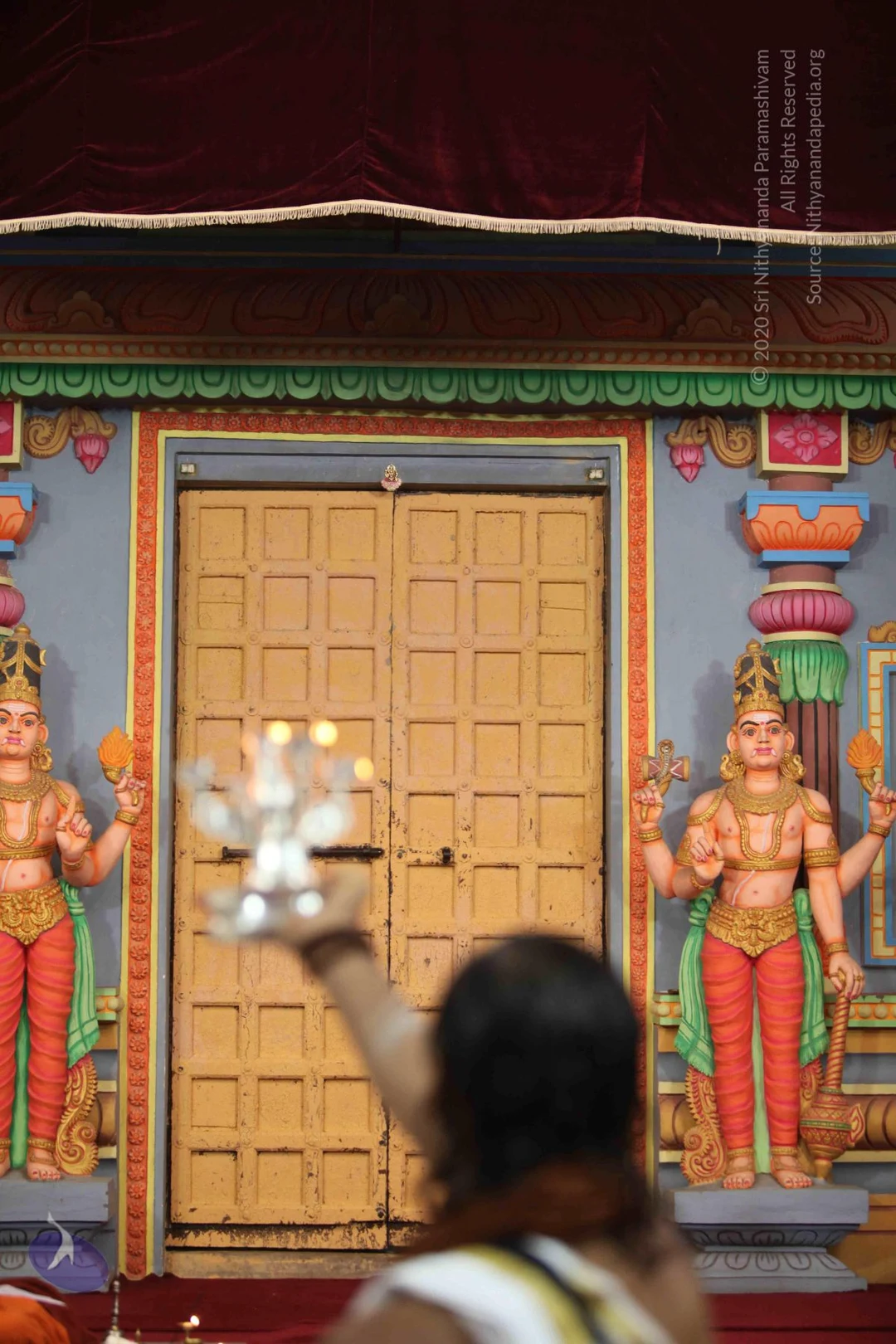
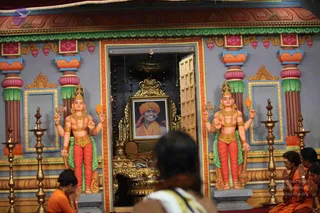
A temple-style photograph of a closed wooden double door with brass fittings, flanked by two painted guardian statues with four arms, gold crowns, gold necklaces and orange-red dhoti with green sashes, holding a trident-like staff and flame. In the foreground, a blurred person with long dark hair and white clothing raises a lit multi-wick oil lamp (aarti) toward the shrine, with small flames visible. A red velvet canopy and painted pillars with pink lotus motifs frame the scene. Lower corners show a few small lamps on the floor.A temple doorway flanked by two colourful painted dvarapala guardian statues with crowns, gold necklaces, orange dhotis and green sashes, each holding a flaming torch and a staff. In the foreground, a blurred devotee with dark hair raises a silver multi-flame aarti lamp toward the golden double doors. Only the back of the arm and head of the person performing aarti is visible.A photograph of an ornate temple-style shrine entrance with painted pink, green and orange pillars and a red and gold cornice. Two large painted dvarapala guardian figures stand on either side, each with four arms, gold crowns, gold necklaces and armlets, red dhoti-like garments and green shawls, holding ritual objects. Wooden double doors are open at the centre, revealing a gold-framed alcove. Inside the shrine, a framed portrait shows a smiling man wearing an orange turban and orange clothing, labelled as a portrait of a devotee-style figure; a gold lamp stand and brass oil lamps flank the doorway. In the foreground, blurred devotees in orange and saffron clothing, including a woman with long dark hair, stand before the shrine, and a lit candelabra with flames is at right.A temple shrine interior with a golden throne-like seat flanked by two painted dvarapala guardian statues holding attributes. Centered in the doorway is a framed photograph of a smiling man with a saffron-orange turban and saffron clothing, shown as a depiction on the wall, placed above a golden peetha. Brass oil lamps stand on both sides. In the foreground, several devotees in saffron and orange robes sit with hands folded in namaskar, one person in a white garment with a saffron-edged cloth seen from behind, the others facing the shrine. A tiger-skin motif appears on the seat.Aarti performed before a shrine with two tall painted guardian statues flanking a golden throne on which a framed portrait is placed. The portrait labelled with a printed caption shows a smiling man in an orange turban and saffron garment, displayed as a depiction on a screen-free wall frame. Two standing statues with multiple arms, crowns and gold jewellery stand beside the throne, wearing orange and green dhotis. In the foreground a blurred figure in white lifts a lit oil lamp or aarti plate, while brass oil lamps stand along the platform. Two women in orange garments with folded hands sit at the right and left edges, observing the ritual.

Kalpatharu-Darshan

1 photoSource gallery
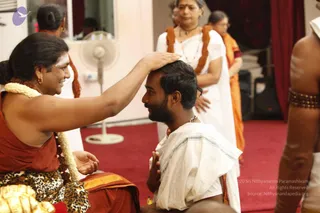
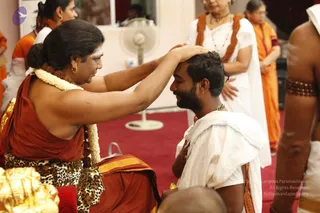
A seated woman in a rust-red garment with a cream and rust leopard-print shawl and a white flower garland places her right hand on the head of a young bearded man in a white dhoti and shawl, who sits with palms joined in anjali. The woman wears a white vibhuti mark on her forehead and a rudraksha mala. Behind them, women in white saris with orange shawls stand on a red carpet near a standing fan and speakers, in what appears to be a blessing or initiation moment.

Teamily-Dinner-Mahant-Dinner

2 photosSource gallery
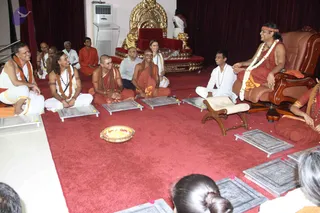
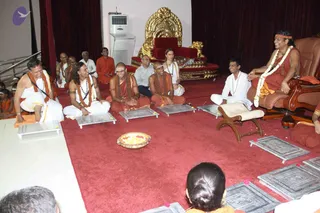
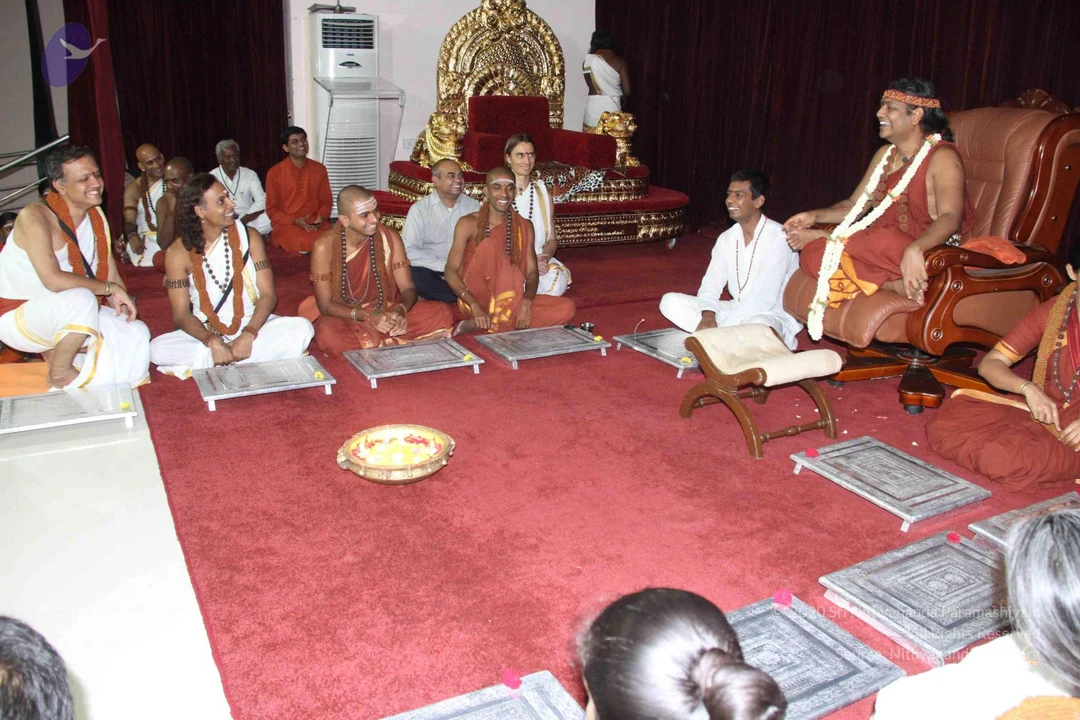
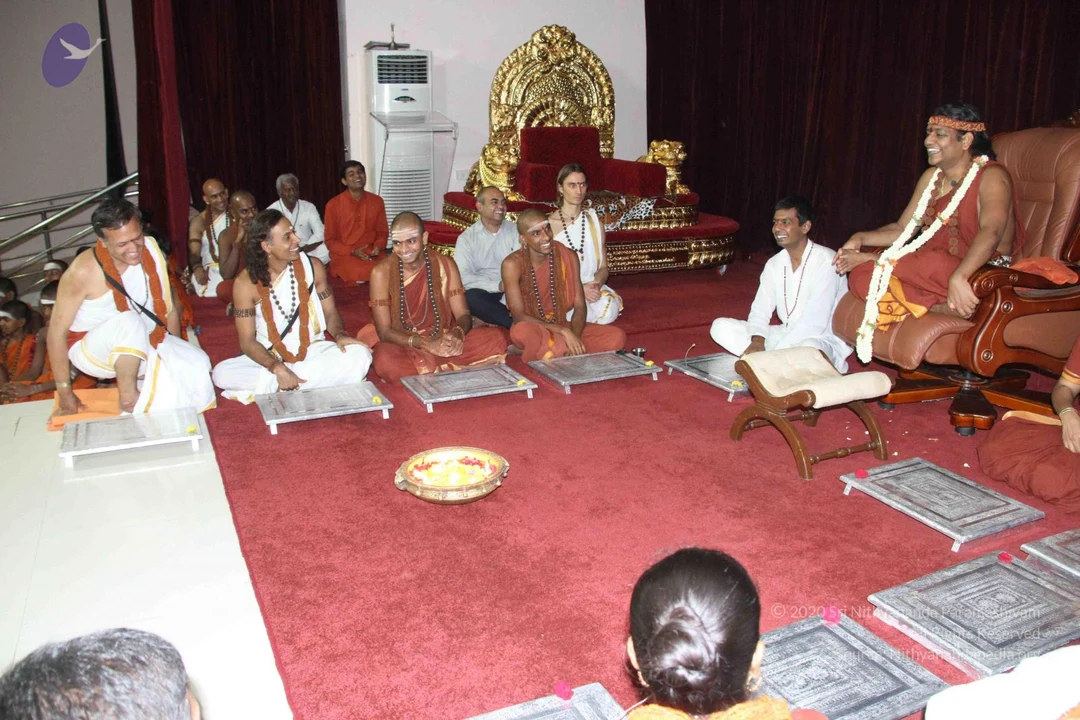
A satsang gathering in a hall with a red carpet and a large ornate golden throne with red cushions in the background. A man in a brown-orange wooden armchair on the right wears a white garland, an orange headband and an orange-saffron robe, smiling as he speaks. Around him, devotees sit cross-legged on grey square mats: men in saffron robes with rudraksha malas, and men in white dhotis with orange shawls. A brass plate with offerings sits on the carpet in the centre. Ceiling-mounted air conditioner and a dark red curtain complete the setting.Indoor satsang scene on a red carpet before a gold-and-red throne. At right, a man in an orange-brown robe, a white floral garland and a red-and-white headband sits in a brown leather armchair, smiling. Seated on the carpet in front of him are several men in orange robes and rudraksha malas, some with shaved heads and white sandal marks, and men in white dhotis with orange shawls. A brass tray with flowers sits on the carpet, and grey-framed mats are arranged around the room. A woman's bun is visible at the lower edge, and a white air conditioner stands by the backdrop.