Skip to content
Monday

22 April 2013

Create The Space for your Chosen Reality

Dated photos
197
Source pages
1
Media
2
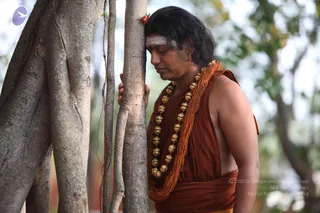
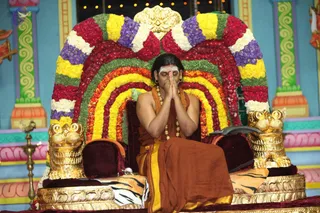
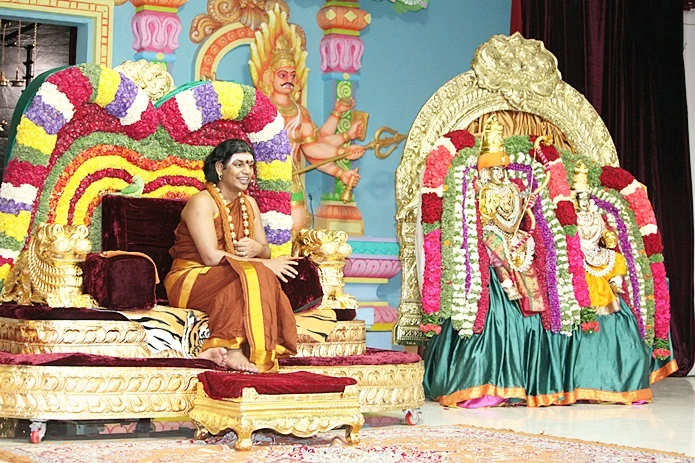
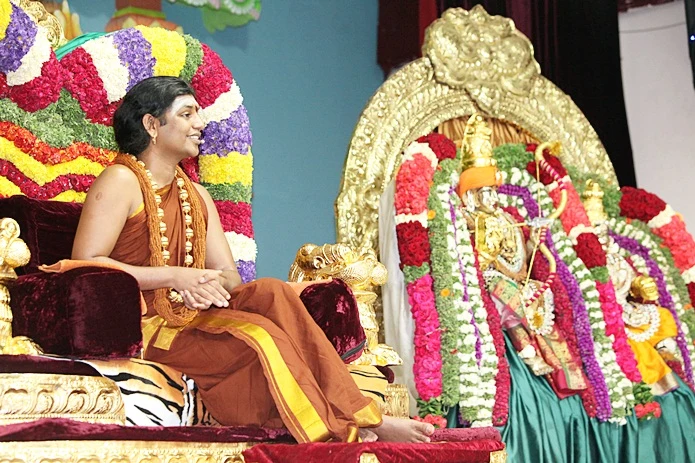
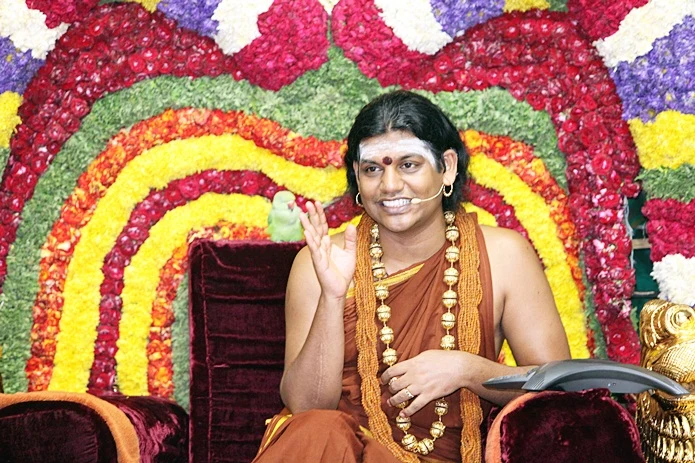
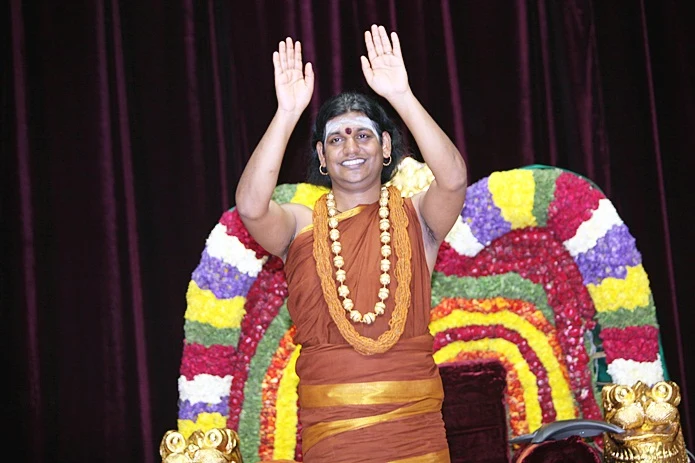
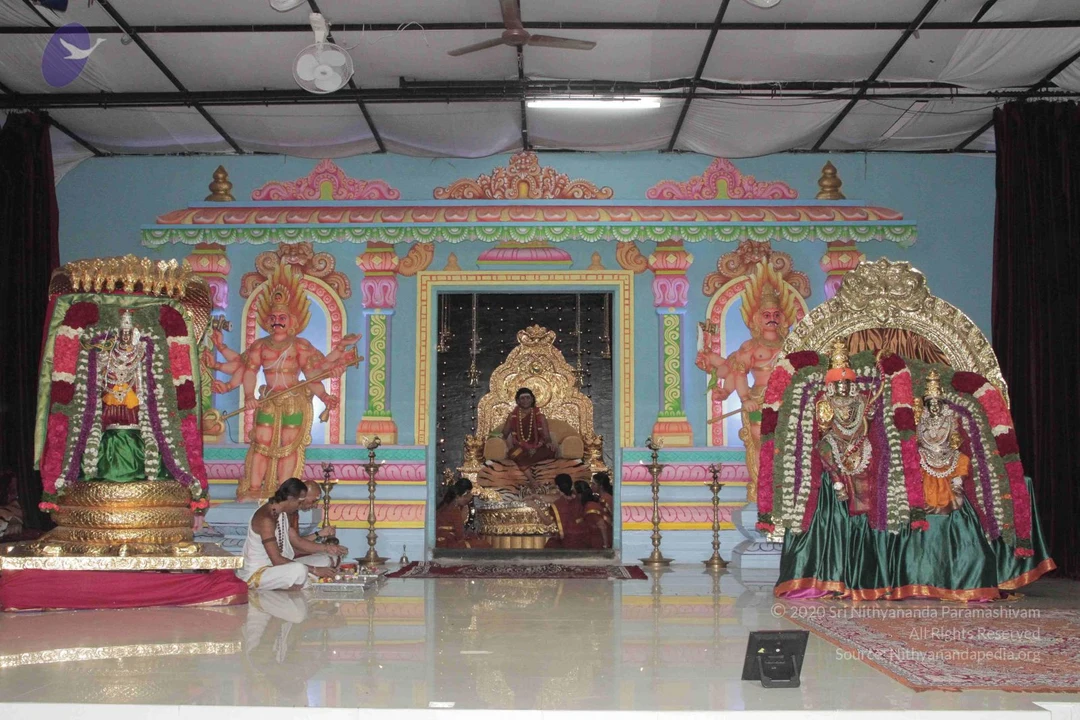
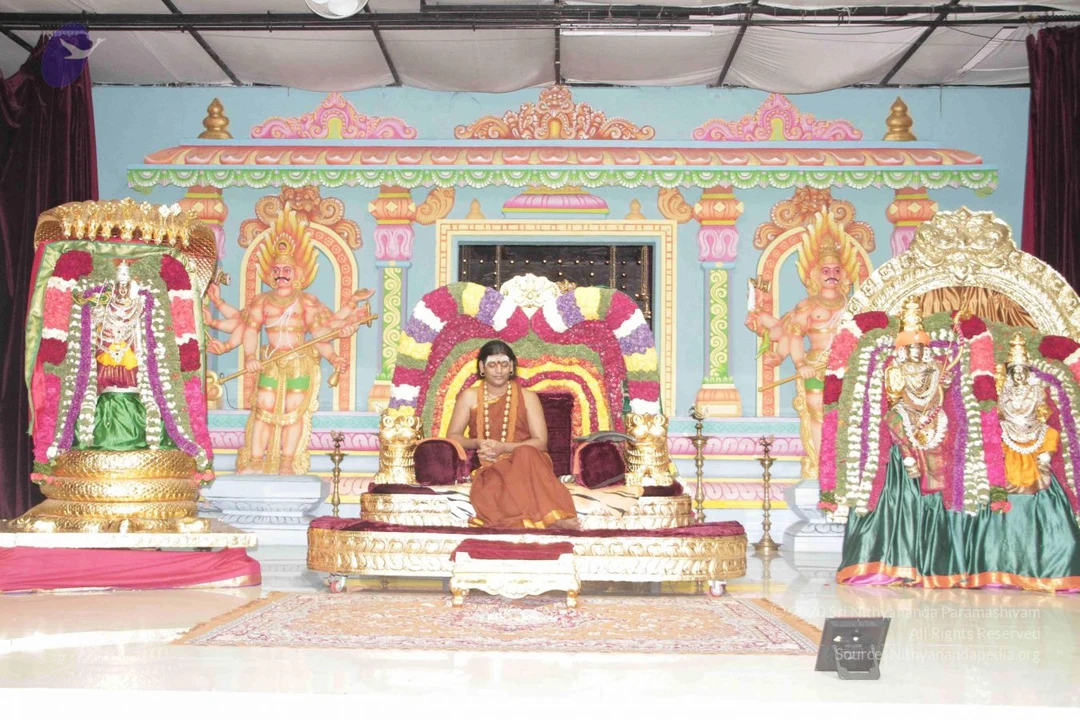
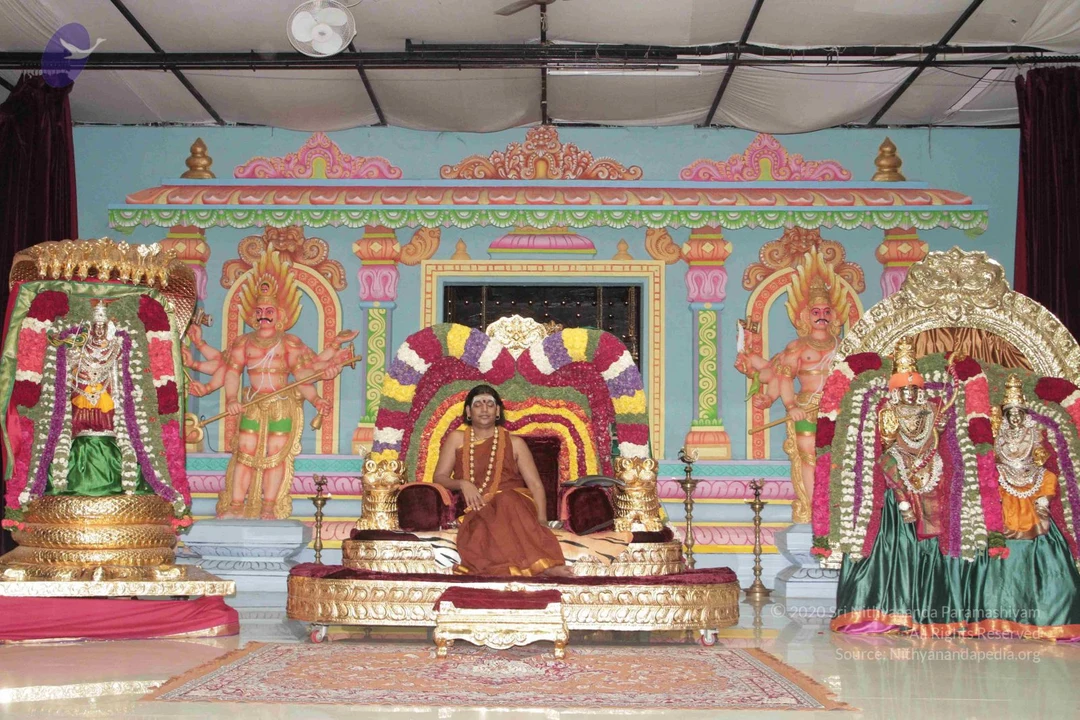
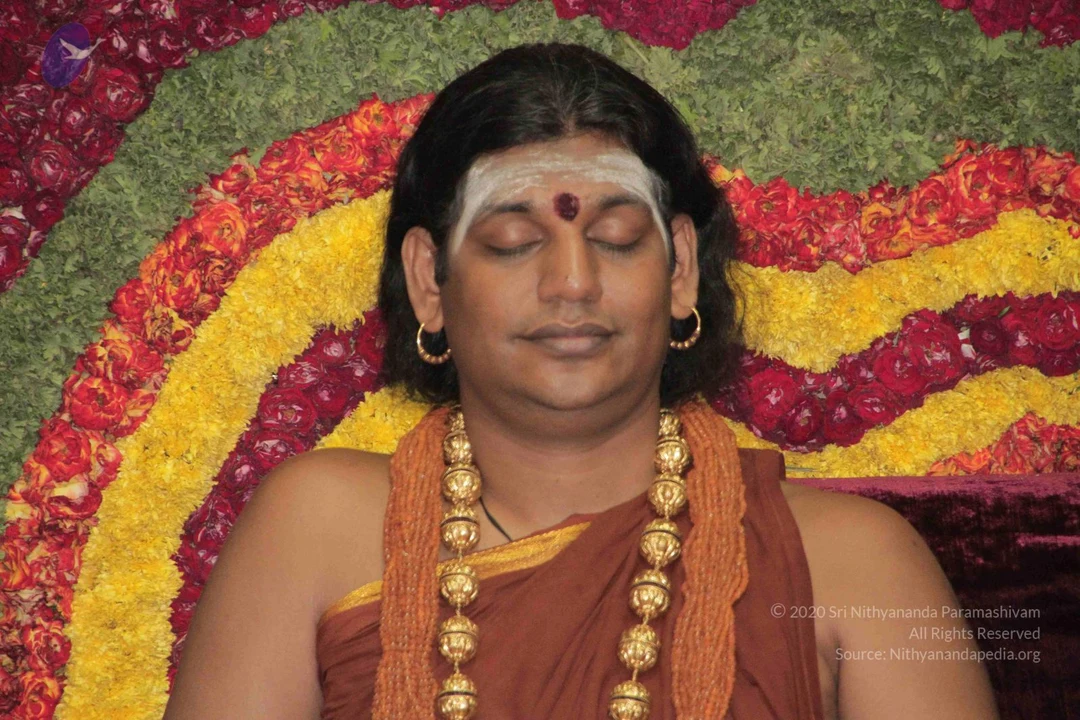
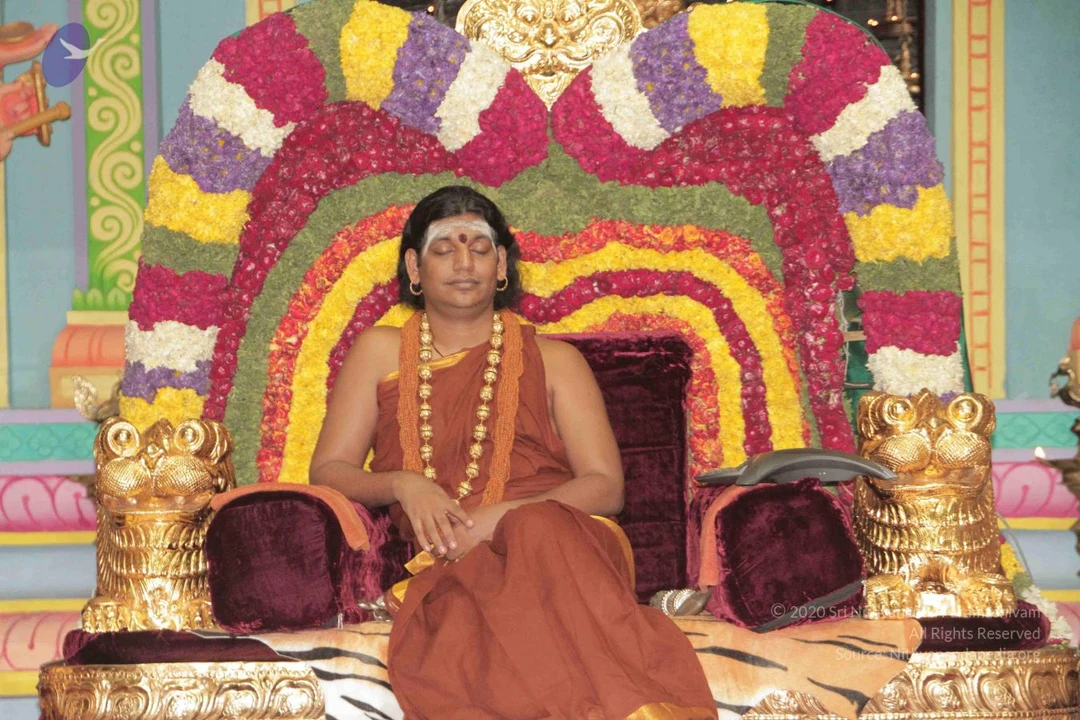
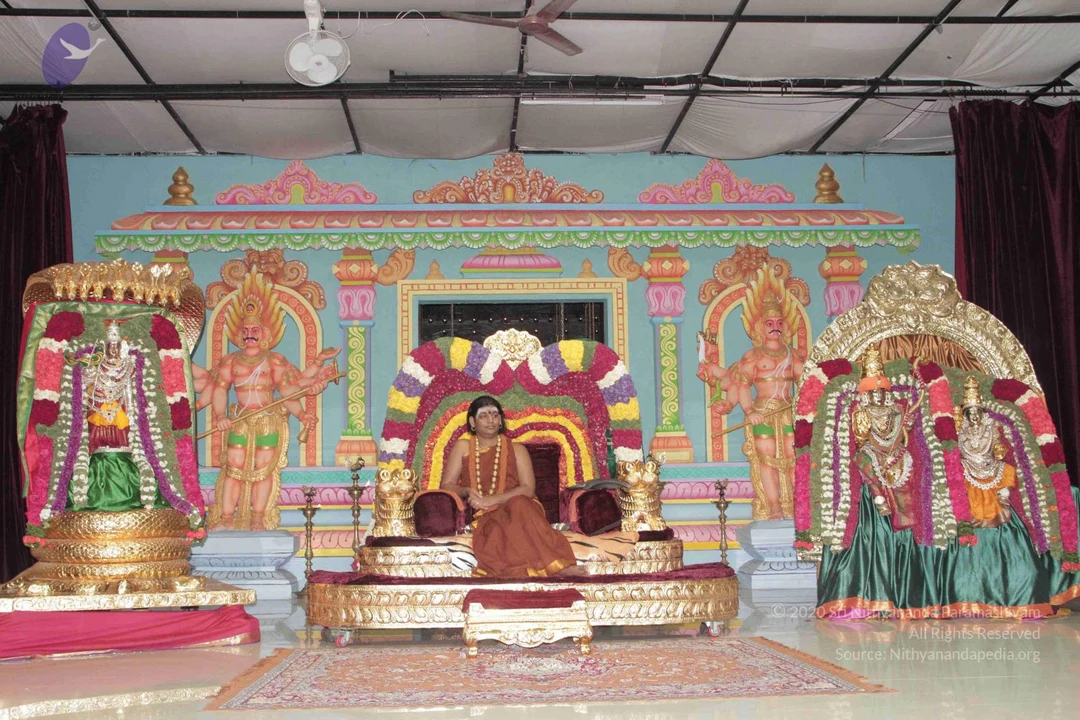
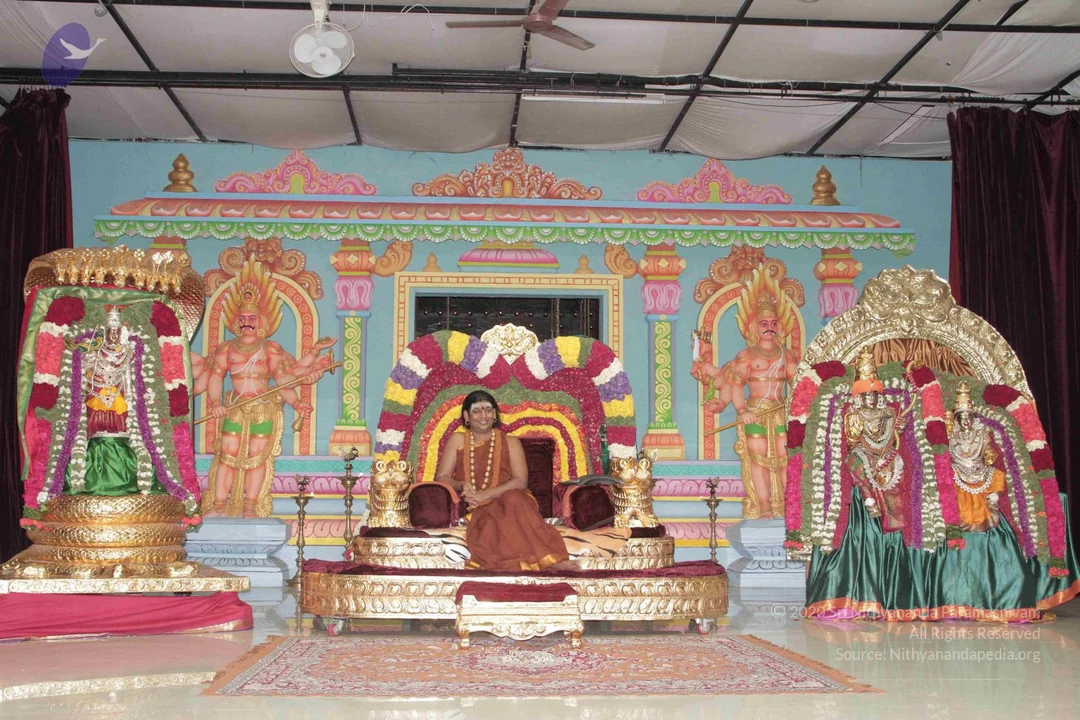
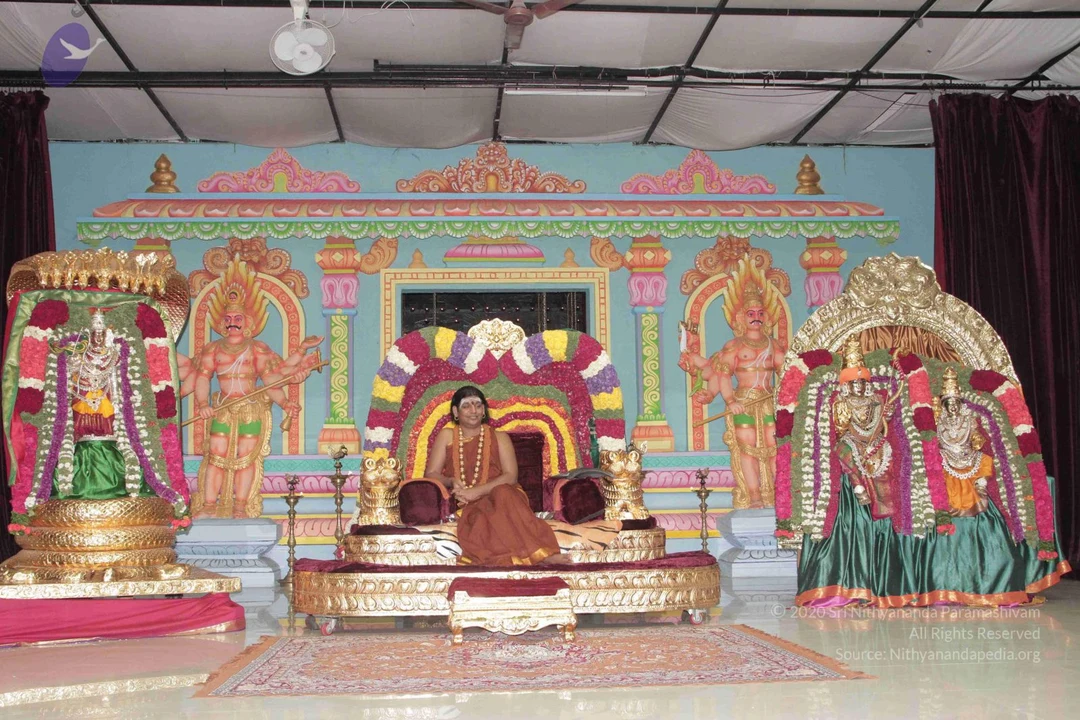
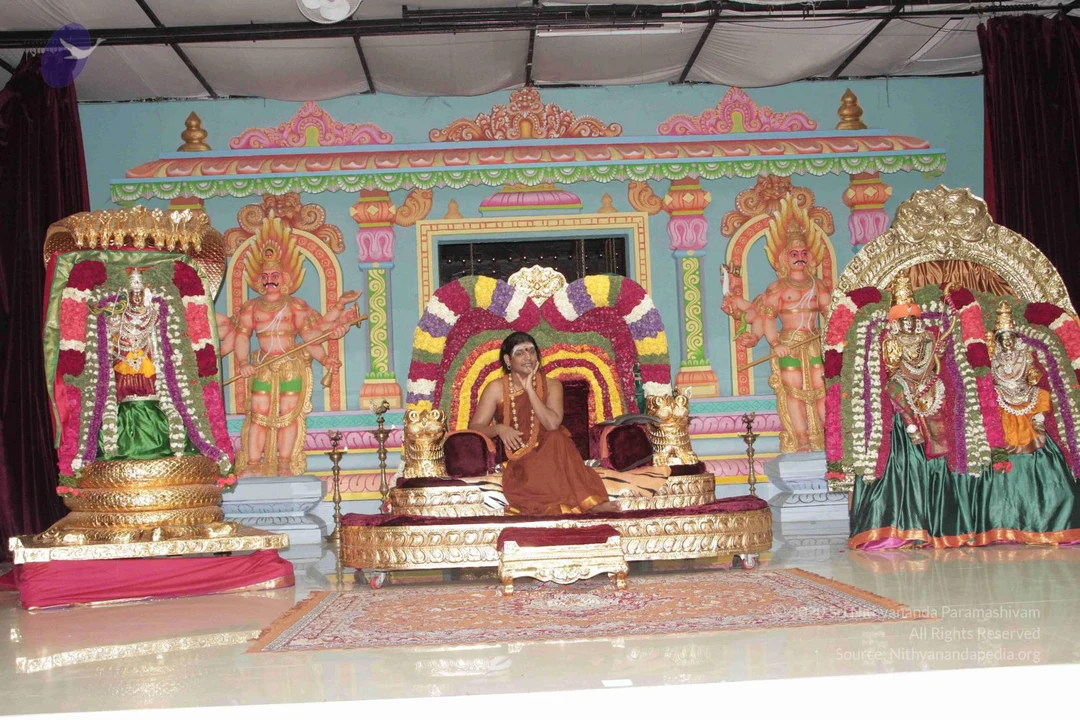
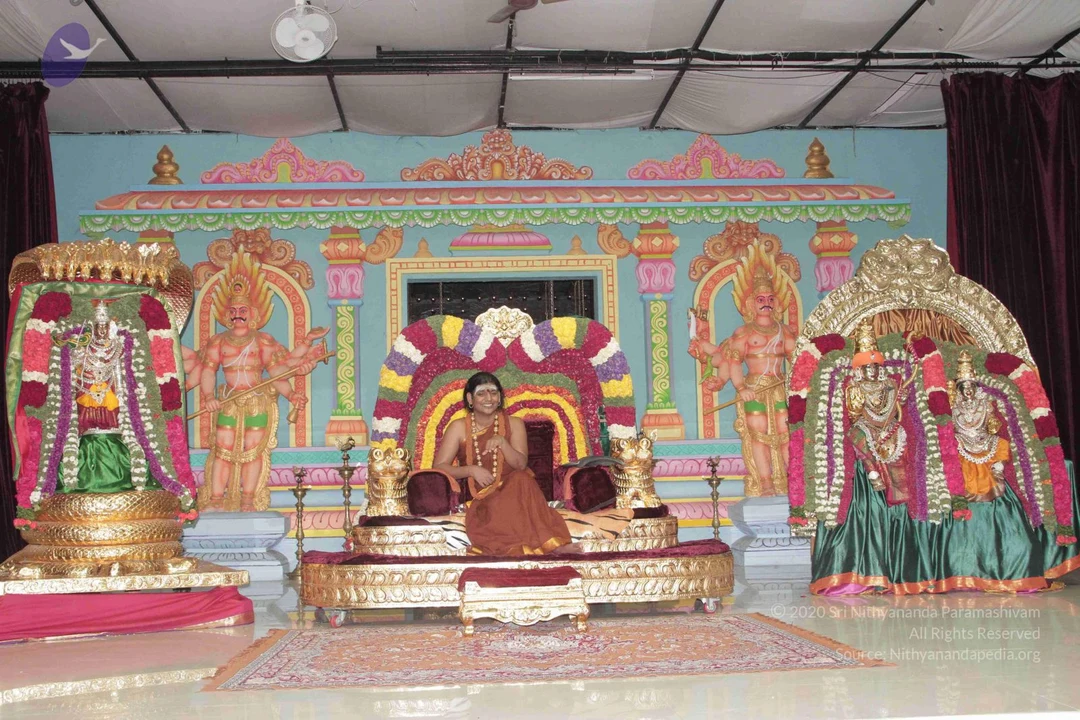
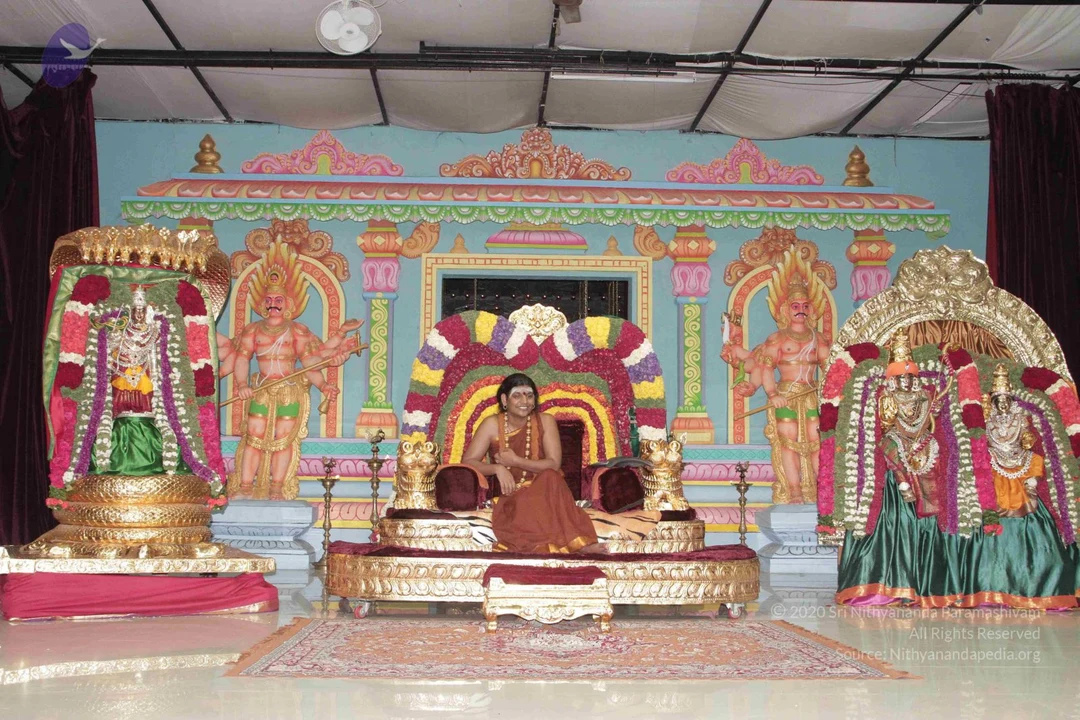
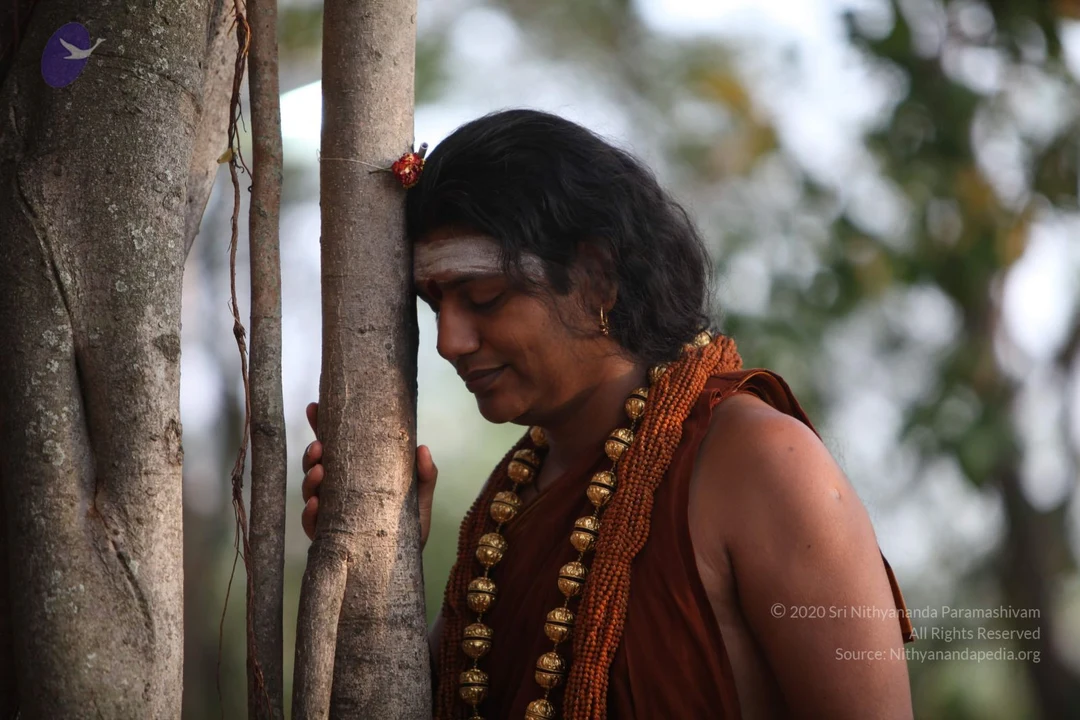
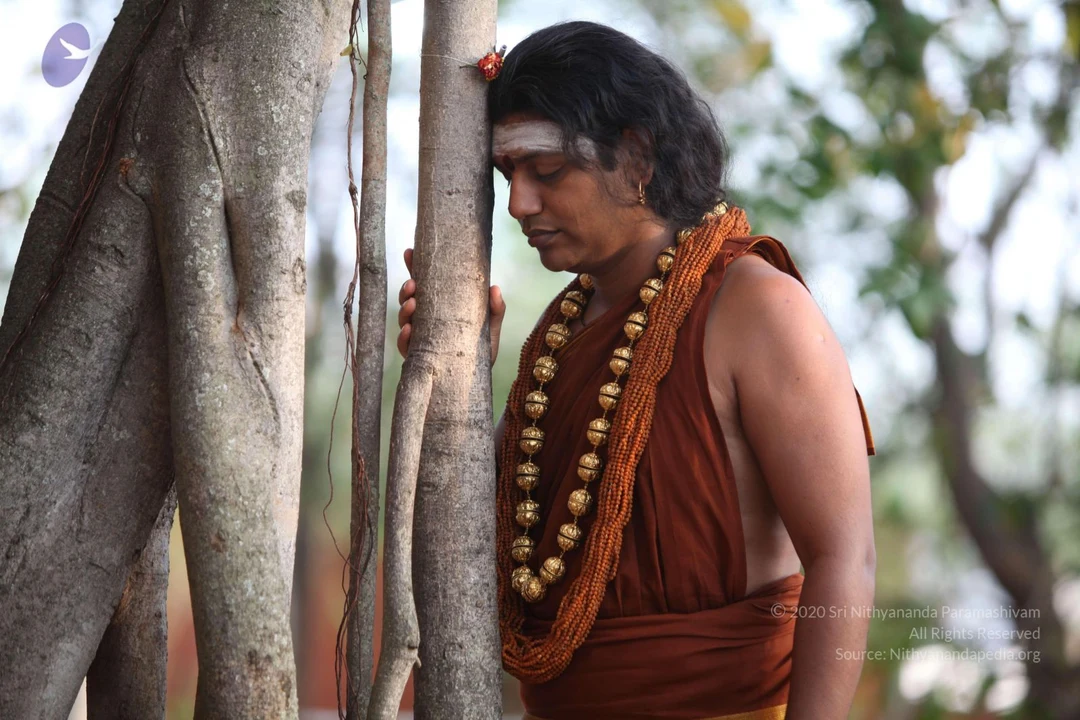
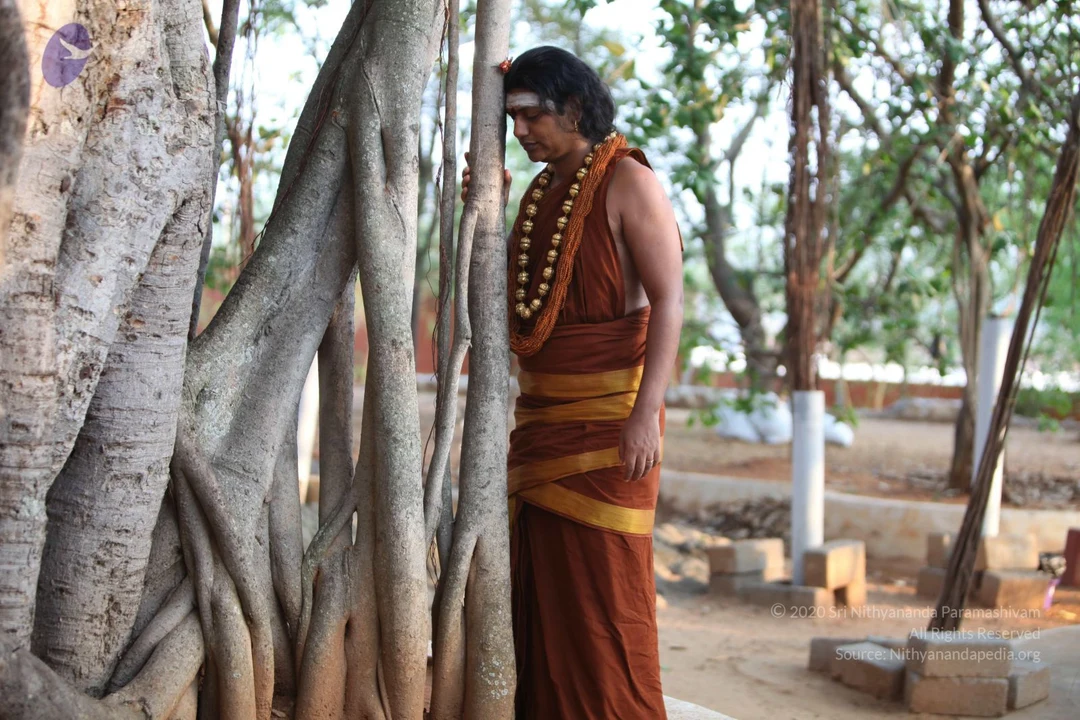
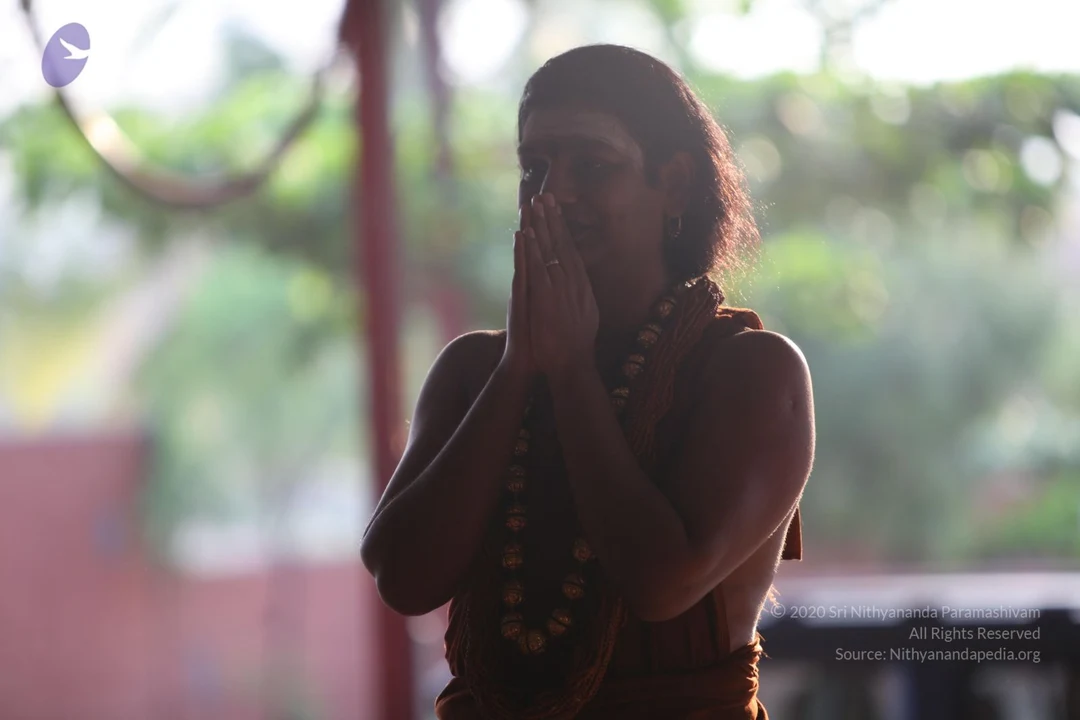
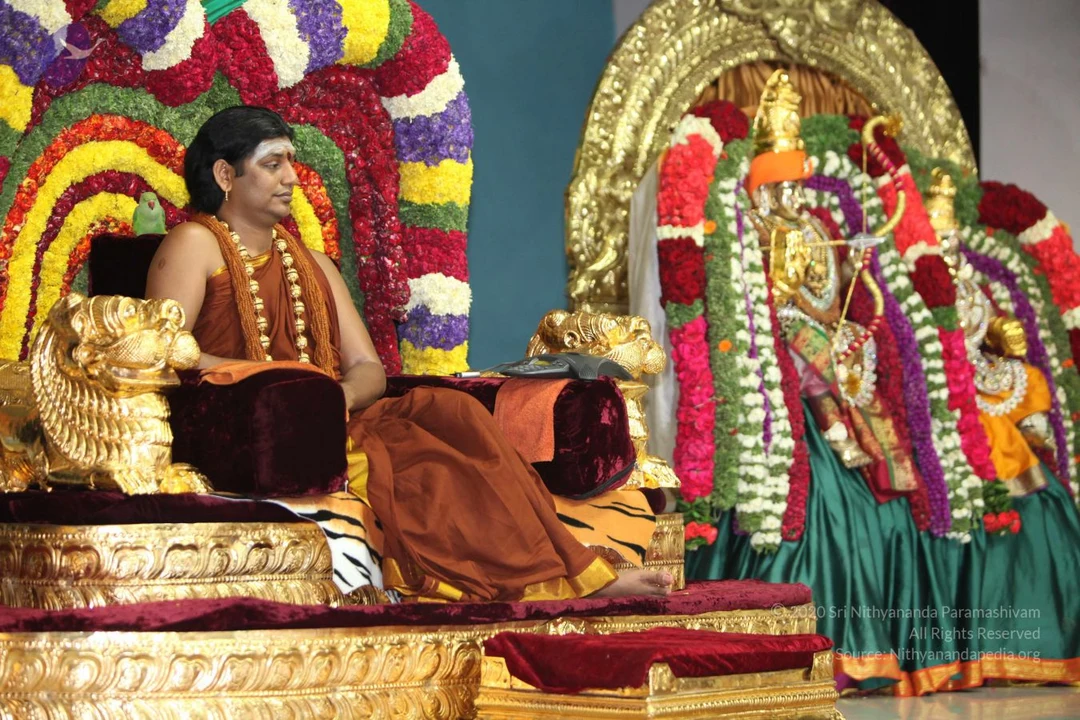
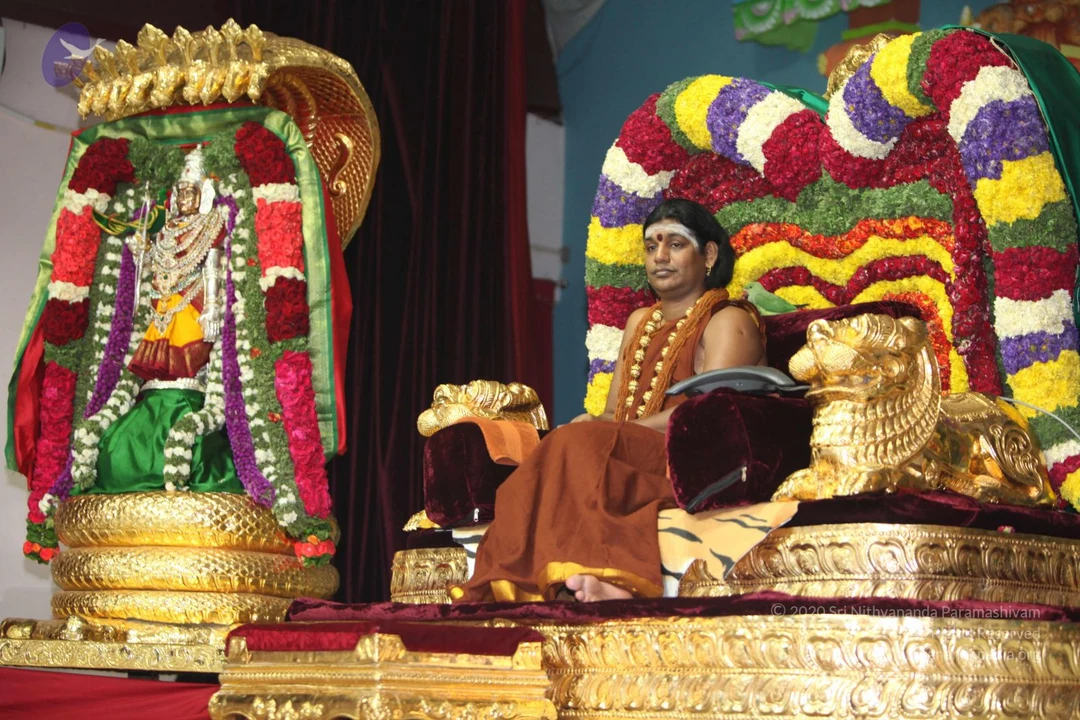
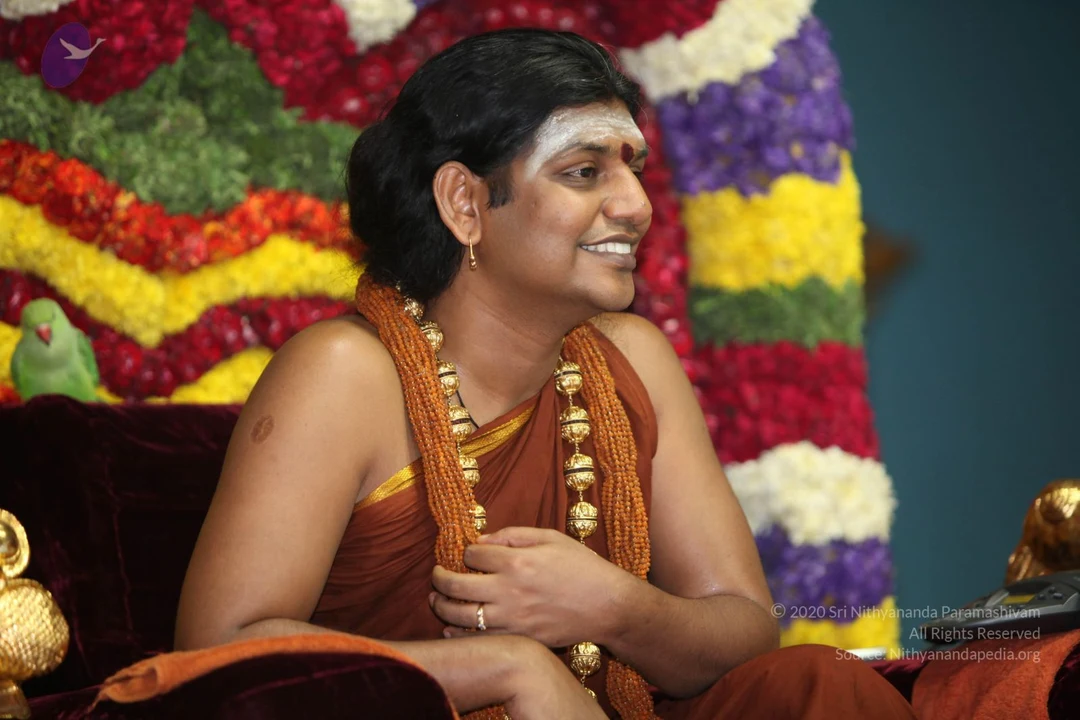
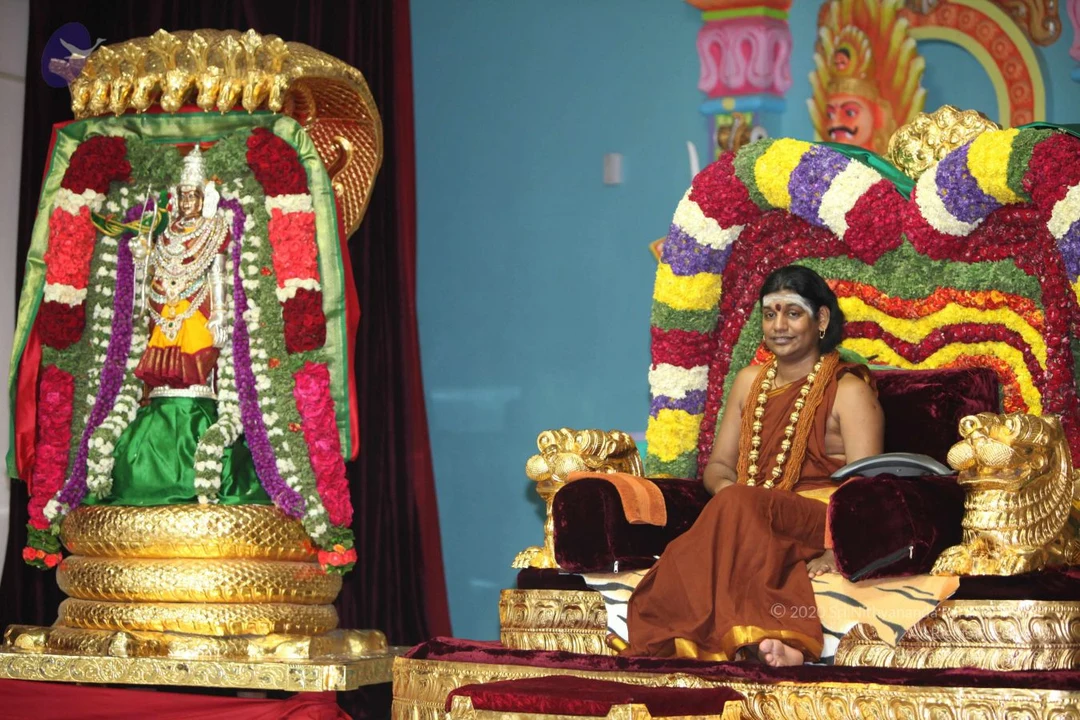
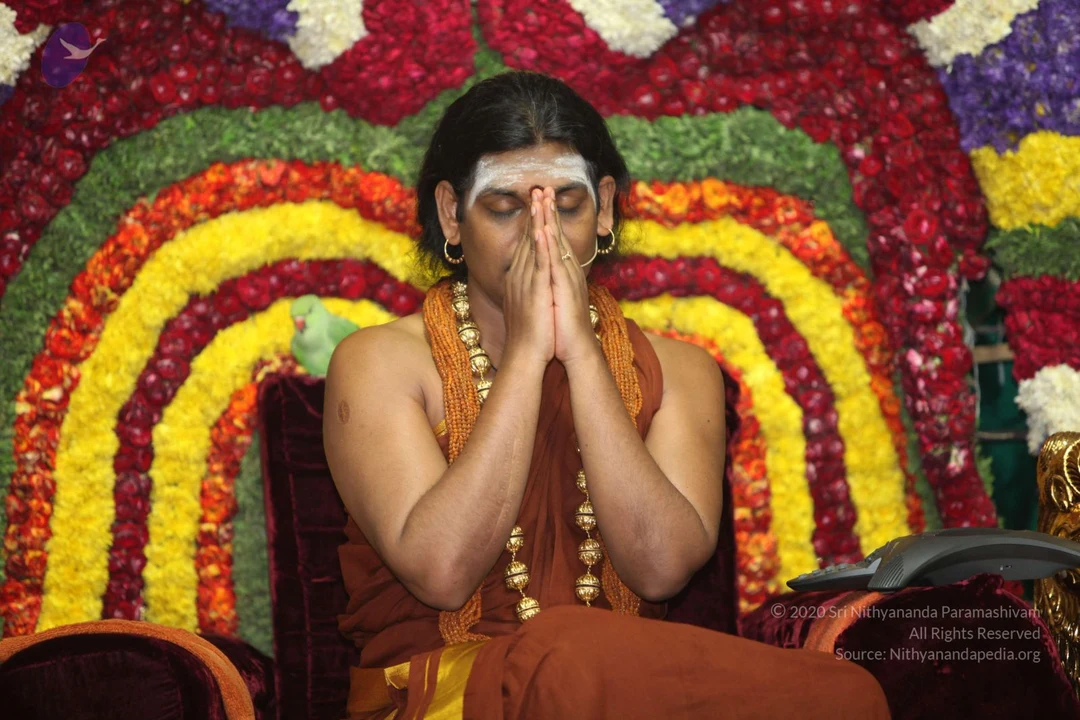
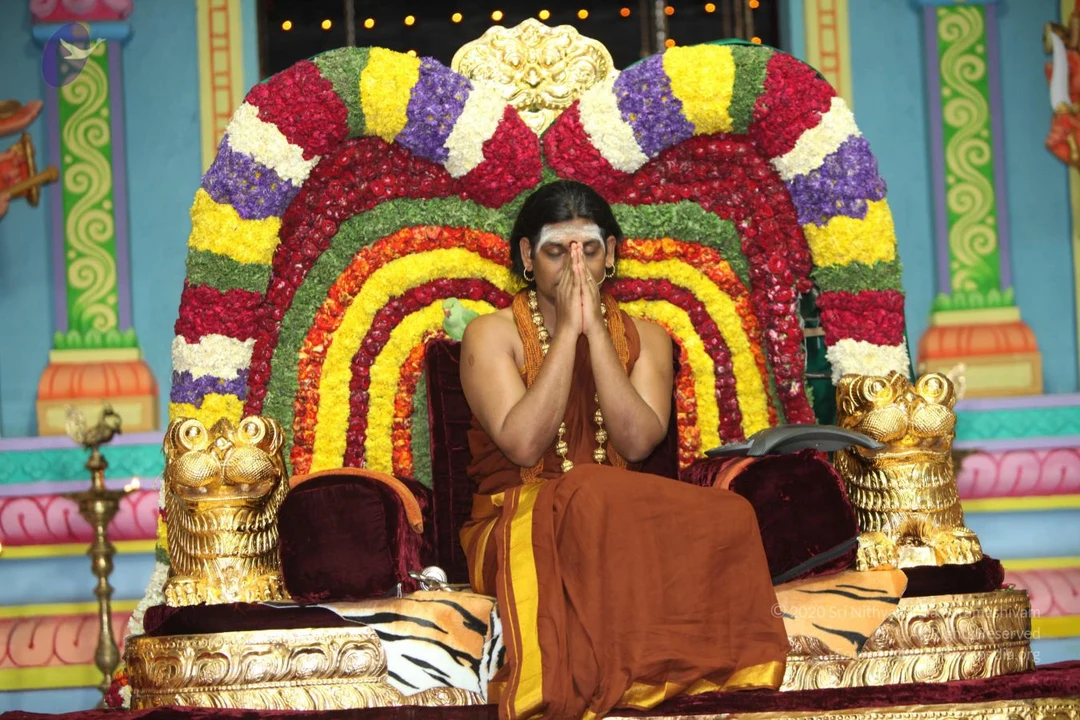
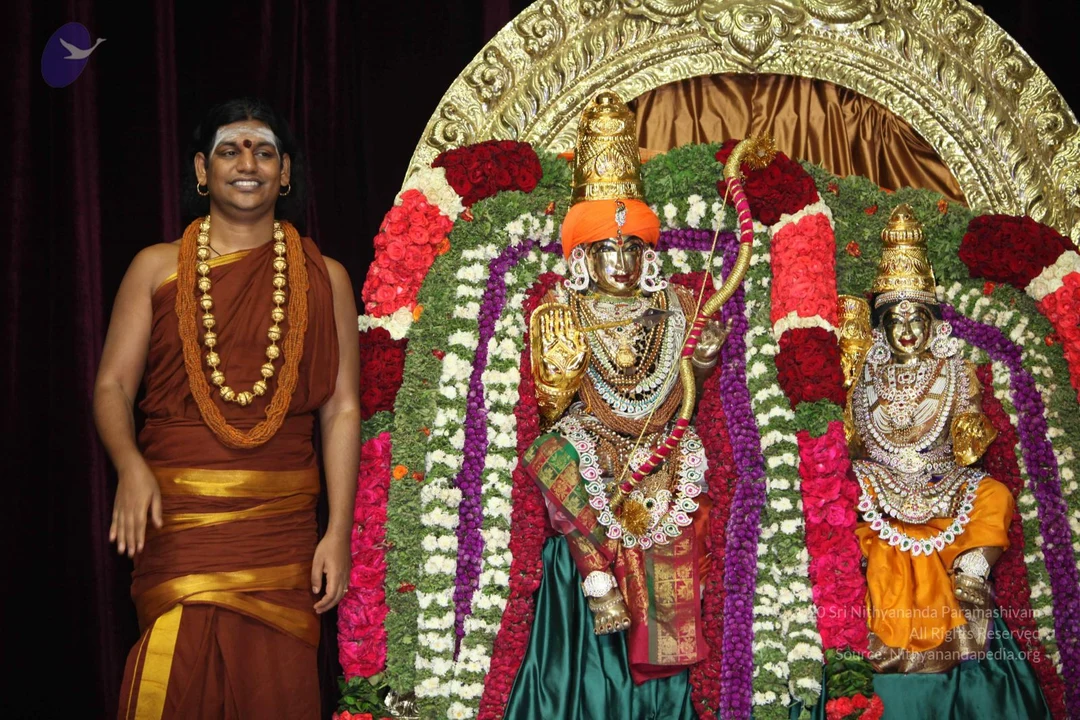
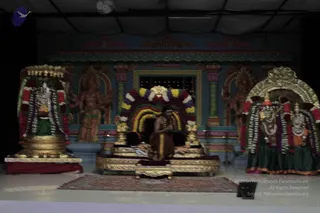
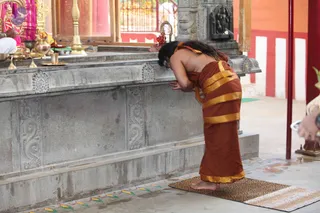
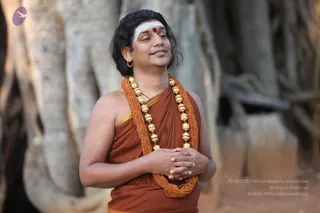
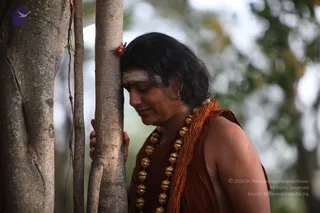
A photo of one person leaning forehead-first against a tree trunk, eyes closed, in an outdoor setting with blurred green foliage. The person wears a rust-brown saffron-toned wrap over the shoulder and torso, with a long orange-brown rudraksha mala and large gold-toned beads around the neck, a white sacred-ash marking on the forehead, and a small red flower tucked in the hair near the trunk. The posture suggests prayer or meditation. The person appears to be a probable Swamiji (probable) with long swept-back hair, rudraksha malas and ceremonial gold beads, shown in an appearance-based candidate pose.A photograph of a man seated on an ornate golden throne (peetha) with gold lion-head armrests and tiger-striped cushions, in front of a semicircular arch of densely packed marigold-style flowers in bands of red, yellow, purple, white and green. He wears a saffron-orange robe, a rudraksha mala and a gold necklace, has white tilak on his forehead and long dark hair, and sits with palms pressed together in namaste with eyes closed. Behind him are painted pillars in green, orange and pink, and a tiered oil lamp stands at the left edge. Probable Swamiji cues: long swept-back hair, saffron clothing, rudraksha mala and ceremonial gold necklace on a throne, consistent with the page's claim that he is present. One person is visible.Interior of a temple-style hall with a pastel blue back wall decorated with pink and gold arches and two painted guardian figures holding staffs. In the centre, a seated figure in a golden throne with a dark red garment and rudraksha-style beads sits before a gold-framed shrine doorway, with devotees in red seated on the floor in front. To the left, a deity murti is garlanded with purple and red flower garlands on a gold pedestal, and to the right, a pair of deity murtis in green and orange silk with garlands sit under a gold canopy. A priest in white dhoti kneels at the front, tending a puja tray and brass lamps on a glossy floor. Brass oil lamps stand along the platform.

April 22 2013

Original wiki page
Contents

Title:

Create The Space for your Chosen Reality

Description:

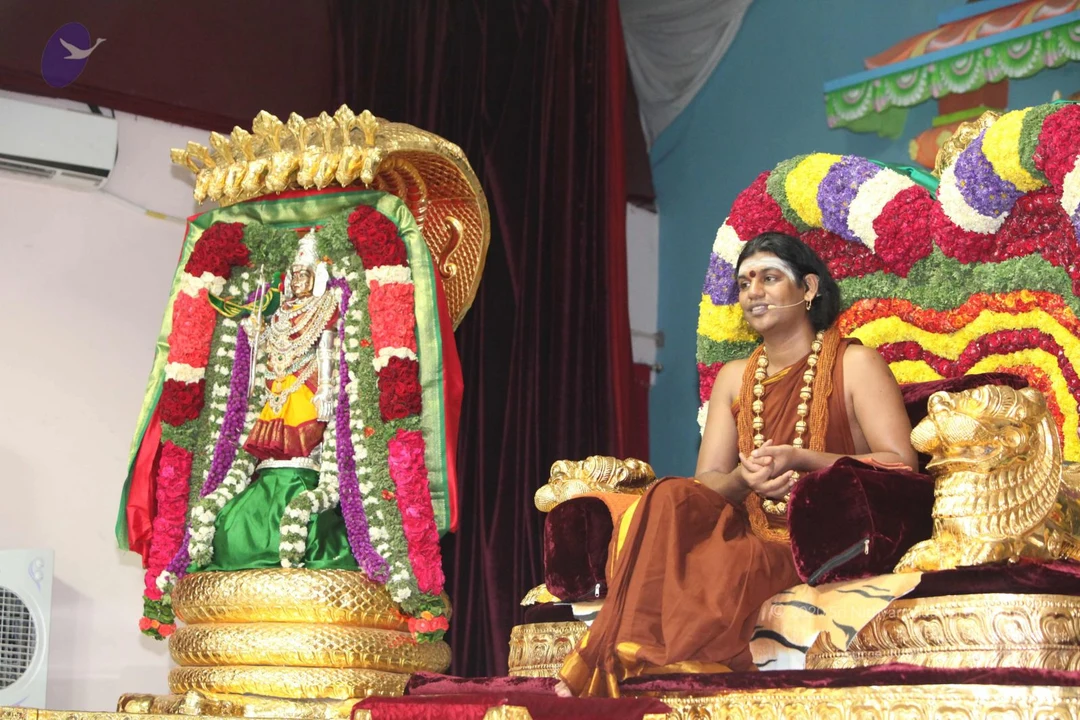
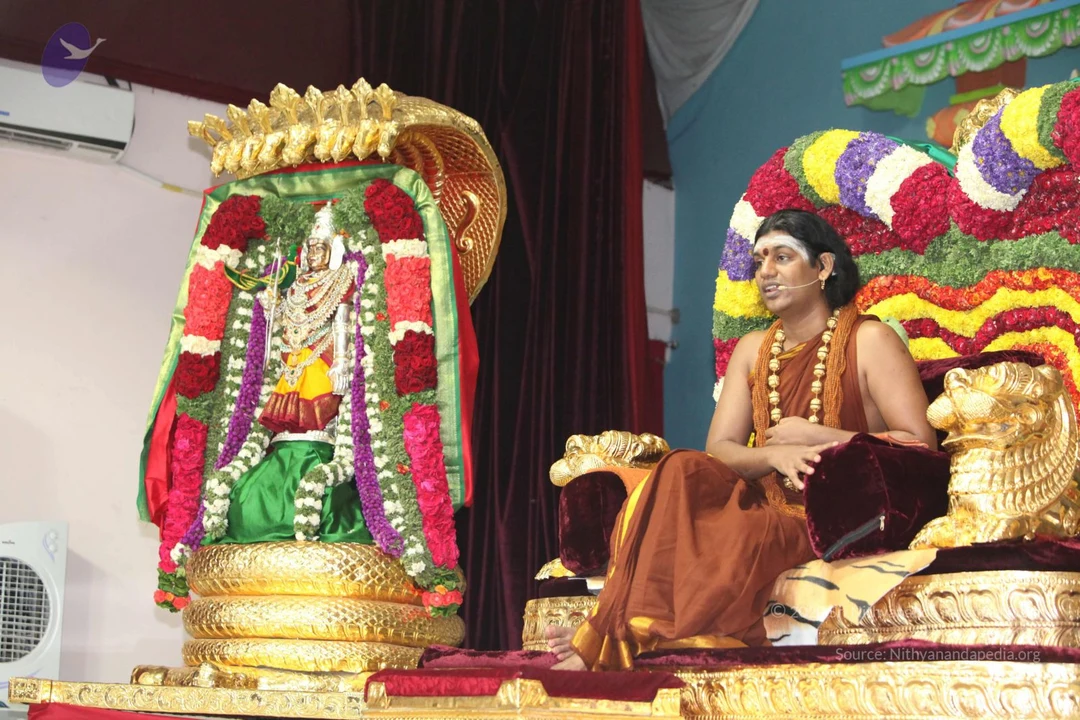
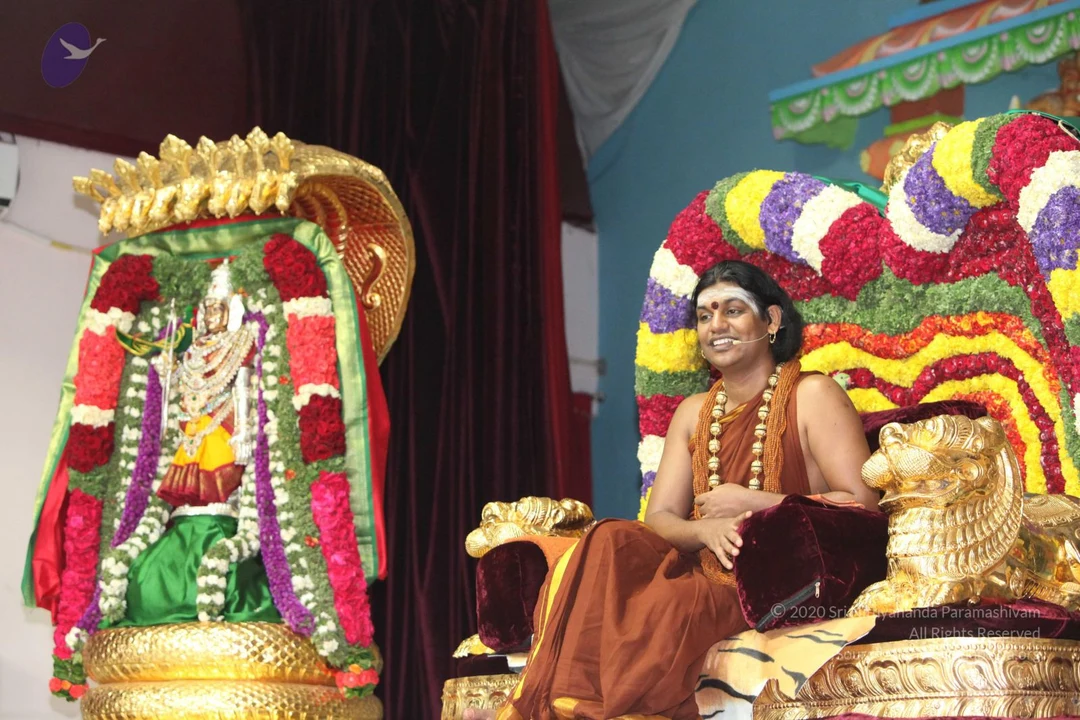
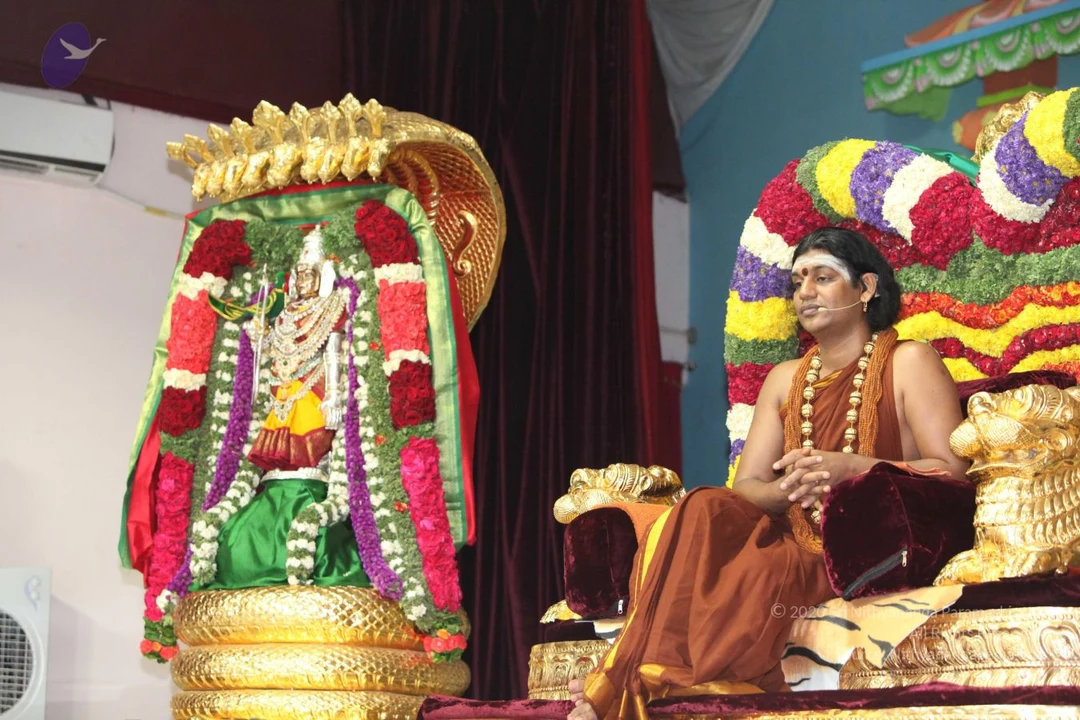
In today’s morning satsang, Paramahamsa Nithyananda reminds us that once we complete our negative patterns, our negative beliefs about life, we can create reality to be as we want. “Just like that”, He says “You can win.” When we resolve our inner conflict resulting from unfinished commitments we made with ourselves, we discover our true power through integrity. Our inner space centers on enlightenment and the entire world is attracted toward us.

Link to Video:

VideoAudio

Transcript:

0:20

Listen!

Everything – your reality of God, reality of yourself, reality of Society and reality of Universe, everything is experienced by you as per the space you carry.

Listen!

If you carry the space you have many births, you will have many births!

If you carry the space you have only one birth, you will have only one birth!

If you carry the space you have Soul, you will have Soul!

If you carry the space you don’t have Soul, you will NOT have Soul!

If you carry the space you have Soul but still you will have to express all those powers, same will happen to you!

Universe is a huge “TATHAASTHU”!

Listen, Universe is a huge wave of “TATHAASTHU” – “So Be It”! So, everything you coin, you create, you organize, you arrange!

Listen, Dhyan se suniye,………hindi

That is why I am telling you; put little intelligence, time and energy in creating right space in you.

Literally, whatever you dream in the night when you are unconscious, is the method to check what space you are in. You need to work and create the right space till you experience that space in your dream state.

3:17

Whether it is the great realities of Cosmos or the realities of life or the realities of mind, the space you create, creates the reality. That is why, there is no such thing as Ultimate Truth. Whether Shankara is true or Ramanuja is true, Madhva is true, Buddha is true, you only have to decide! They can’t decide! All these masters are true ultimately because they tried their best to explain to the disciples who were sitting in front of them. So, it was dependent, the level of the truth they expressed is dependent on the disciples who were listening! Or sitting without listening!

HINDI.

When a person carries the space he will have only one birth, he will have only ONE birth. If a person carries the space he will have many birth, he will have many birth! When a person carries the space he has a Soul, he is yet to realize the Soul, he will be experiencing same!

That is why I tell you; decide now to create the space for the best possibility. You have the soul; it can do anything you want! This is the best space. Create it! That will be your reality! I don’t want to say that will BECOME your reality; that WILL BE your reality!

HINDI.

7:01

The inner space you entertain becomes your reality. The inner space you entertain becomes your reality. Inner space you entertain becomes your life. Dhyan se suniye, Listen! Your decision to create the space decides your life. If you create the space sannyas is possible, it IS possible! If you create the space No, No, No, No, No! I cannot control my mind, I cannot control my lust, sannyas is not possible! then sannyas is NOT possible!

When Ramakrishna says sannyas is possible and brahmacharya is the best lifestyle, he is true!

When Osho says sannyas is not possible, celibacy is impossible, he is true!

If you ask me, ‘What is this, Swamiji? How can both be true?’ I will say both are true! Because the space you create creates the reality.

If you have a strong feeling connection with Ramakrishna and feel Ramakrishna is true in your space, Ramakrishna will become true!

If you create the strong space Osho is true in your inner space, you will make Osho as true!

In everything about your life, the inner space you create; don’t think never train crosses the track. Just because you have not experienced consciousness few times when you looked inside, don’t think it is not there. Create the best inner space I tell you from my experience. You are the consciousness, all powerful, all knowing. Before your mind brings the negative arguments and denies, bring positive completions and encourage. Listen to the truth.

HINDI.

10:19

Your mind is mirror of your reality. This is the greatest liberation you can receive. The moment I say your mind is the mirror of your reality don’t feel powerless.

Most of the time, you feel powerless. ‘Oh God! My mind! Then what can I do to change my reality?’

When you listen to the word - your mind is the mirror of your reality, feel, ‘Oh God! What a liberation! I can change it now! I can change it now.’

HINDI

This is the greatest liberation!

Now spend time with yourself, complete all the negative patterns you are carrying, drop them. Rebuild your mind, your inner space. You are the Consciousness! You ARE the Consciousness; all-powerful, all-knowing, always blissful, Sat-Chit-Ananda!

Each sannyas name I give you, each spiritual name I give you is the space you are supposed to create within you.

HINDI.

13:08

Today and tomorrow, spend your energy in building the space in you to remove all the obstacles to experience this truth inside you. If you think, ‘I cannot make it for Inner Awakening! I don’t have money! I don’t have time! I don’t have mind! I don’t have people who will allow me and co-operate for me! People who are around me don’t co-operate. They don’t support me!’, now create the space, create the space, “I am the Consciousness! It is possible for me! I can create what I want! I can do what I want! I can, I am creating the time I need, mind I need, support I need around me, and money I need, to do what I want! And I am doing it!”

HINDI.

Don’t bring the past record to deny your highest possibility. When you failed in the past, you did not have the intelligence, right space. That is why you failed. So, the problem is, “not having the right space”; not with “the Truth”. So, now try with the right space. You will be successful.

It is like if the Central Government has failed, you put the blame on State Government! If the State Government has failed, you put the blame on Central Government! Because of not having the right space, you failed. So, don’t put the blame on the space itself, on the truth itself. Truth has not failed. Not applying the truth has failed.

You say, ‘No, No! How many times I applied! It is not working!’

No! No! Not applying the truth has failed! Truth has not failed! So, if one Government fails, don’t put the blame on the other Government.

HINDI.

17:49

When you have that mood constantly, “Main Nahin! Main Nahin!” (Not me! Not me!), you will experience only that! It is your inner space, which creates your life, reality. It is what do you think of you and others creates your reality; up to you allowing this reality to function in your life, take over your life.

HINDI.

19:24

Create the space. You will see the world responds with responsibility and responsibly. Your inner space is so powerful you can just make anything happen!

HINDI

Create the space ‘you are going to win; you are winning’, in everything happening in your life. Create the space ‘you are doing it, you are winning’, you will just see the world responds to you! Create the space you are the Consciousness. Simply all the consciousness of all the people is connected to you and it expresses itself! Only if you have some inauthenticity you will feel you are different from others. If you are completely authentic, you will understand all the consciousness of all the people and you are one and the same!

HINDI.

22:03

You have to create the right space. You can win in any dimension of your life. Whether it is health, whether it is mental health, confidence, social problems, family problems, any problem in the life, create the right understanding and the right space. Just like that you will win!

It is so unfortunate, it is so unfortunate we continue to enjoy and cherish self-destructive thoughts, sometimes unconsciously without even knowing, sometimes consciously knowing. It is time we create highly positive inner space with possibility.

HINDI.

25:04

You can create the inner space. You can live that inner space. You can experience that same in the outer world, everywhere. You can make what you want as reality! What you want as reality!

HINDI.

This is the essence of what I wanted to say in today’s satsang.

Listen! Experiment with this truth with sincerity, Authenticity. This will become reality in your life.

HINDI.

27:29

It is very important you create the right inner space and you create the space for enlightenment, you create the space for fulfillment.

HINDI.

Today and tomorrow, take this as your responsibility.

HINDI

Sit with yourself. Complete with all the negative patterns. Create the right inner space by completing again and again with you with the Swapoornathva, self-completion. Create the right space, right mood, right experience.

29:43

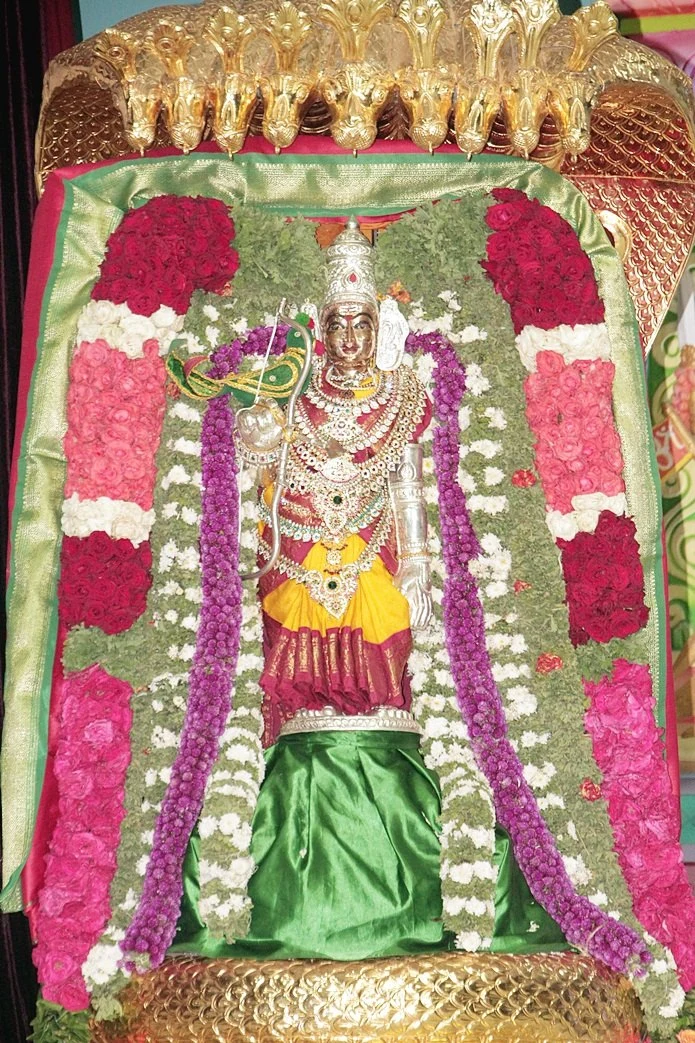
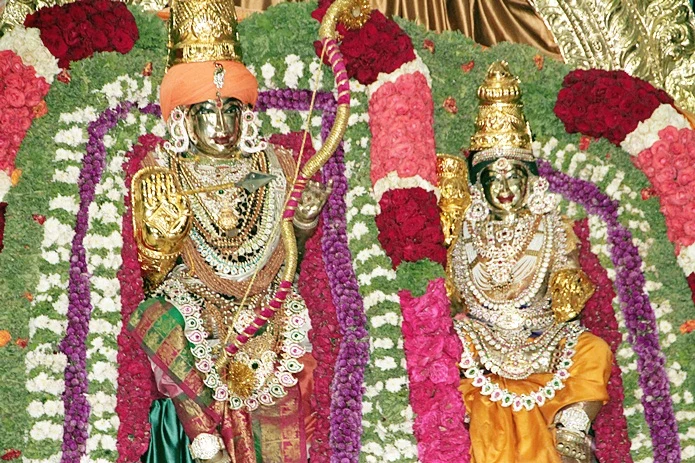
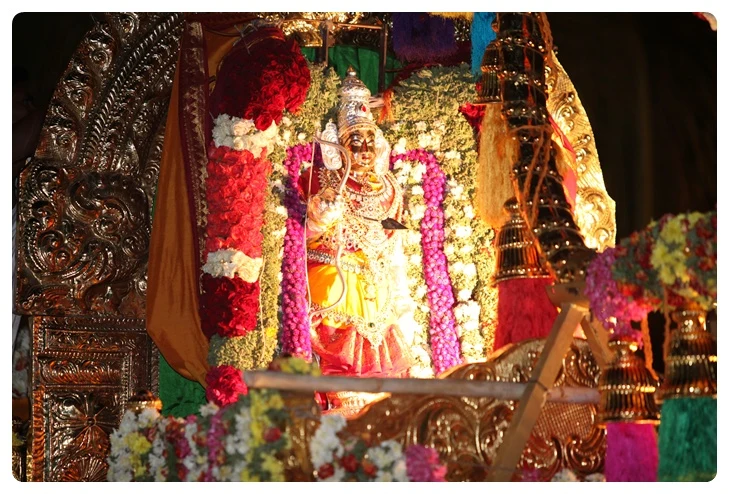
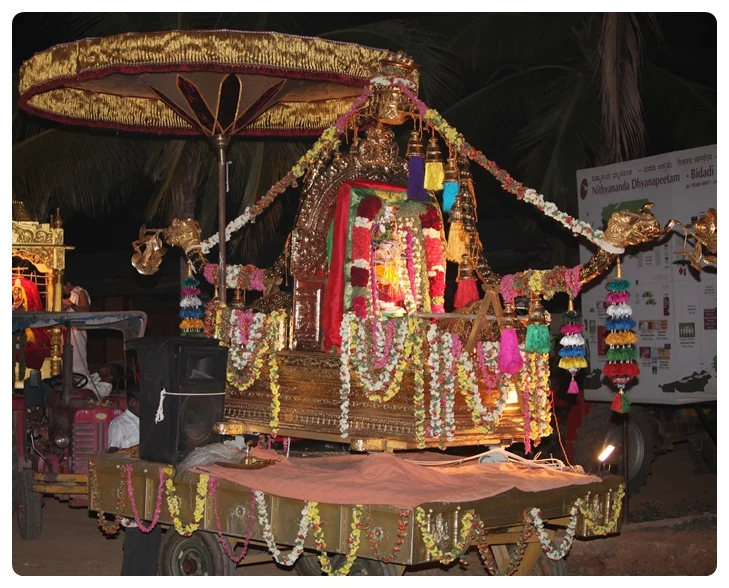
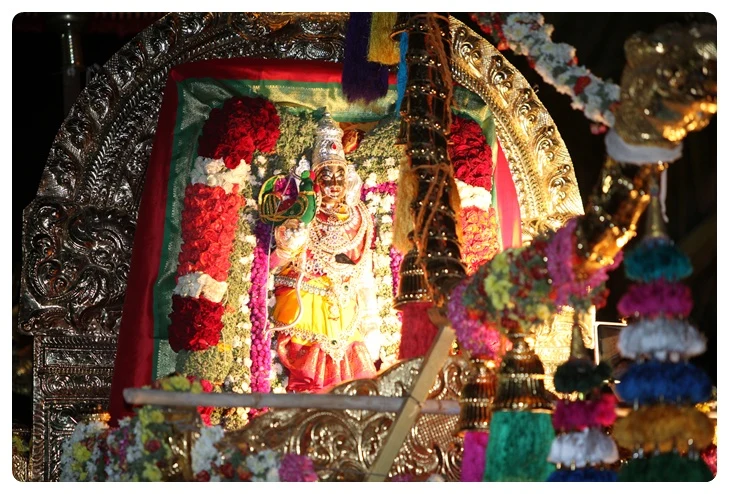
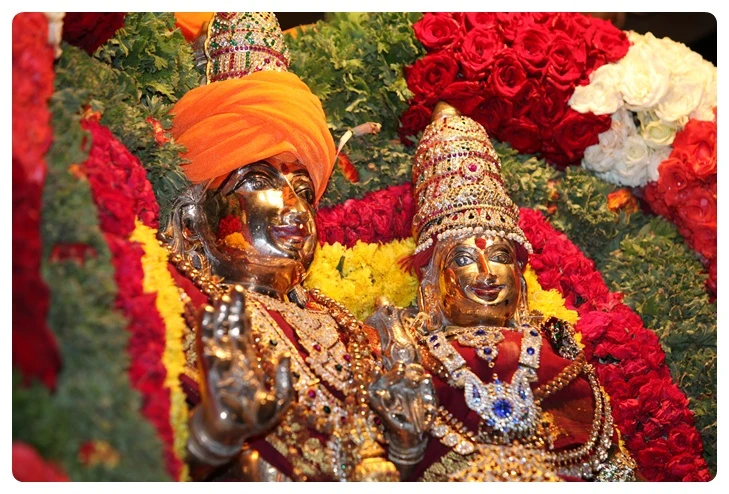
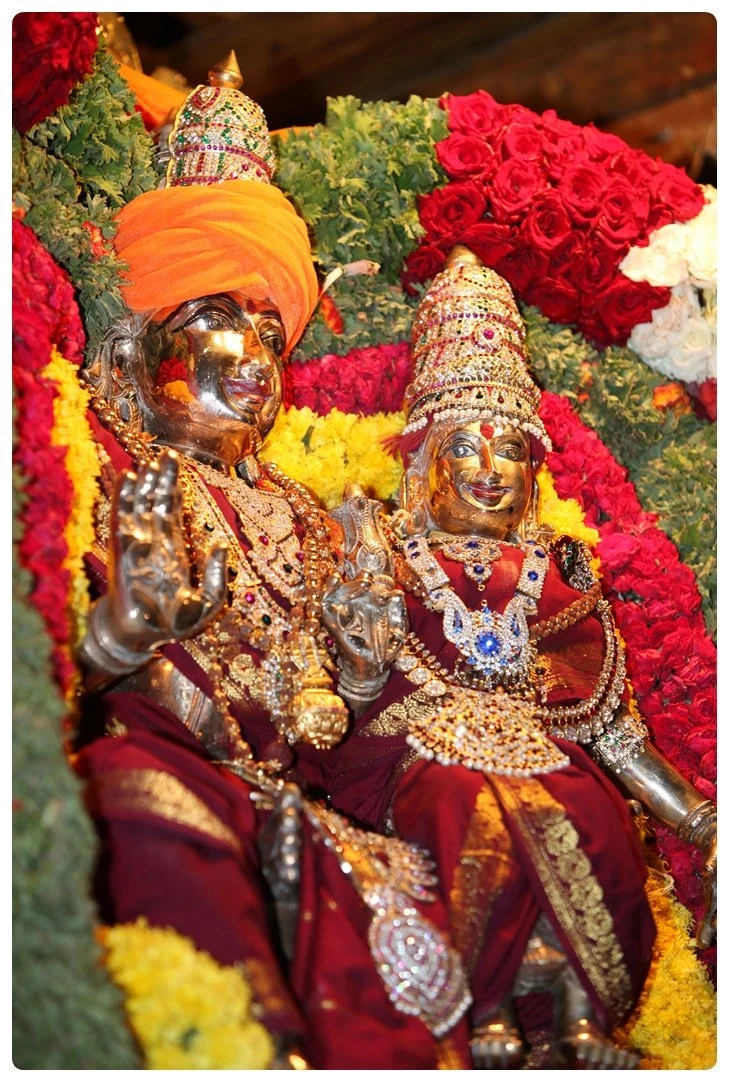
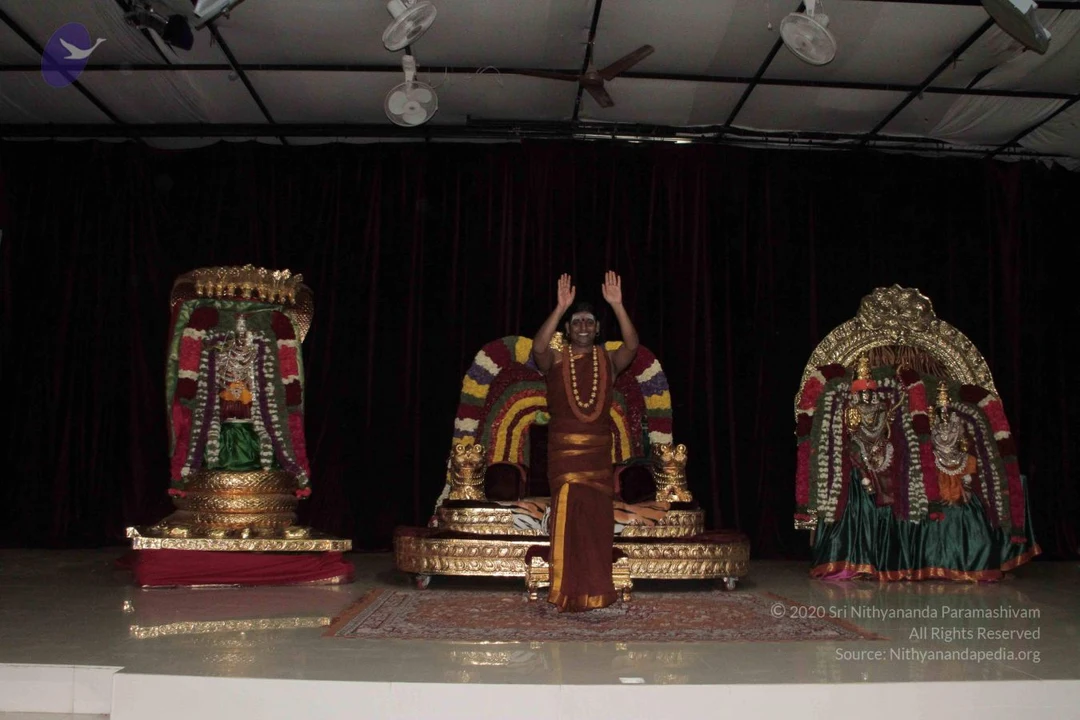
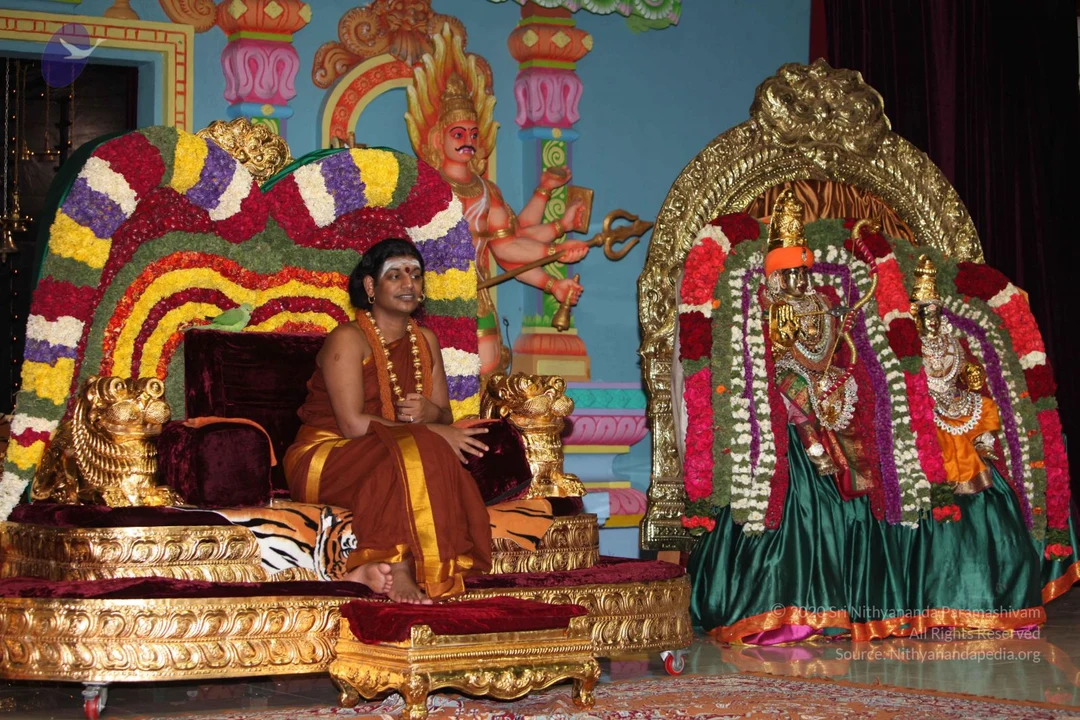
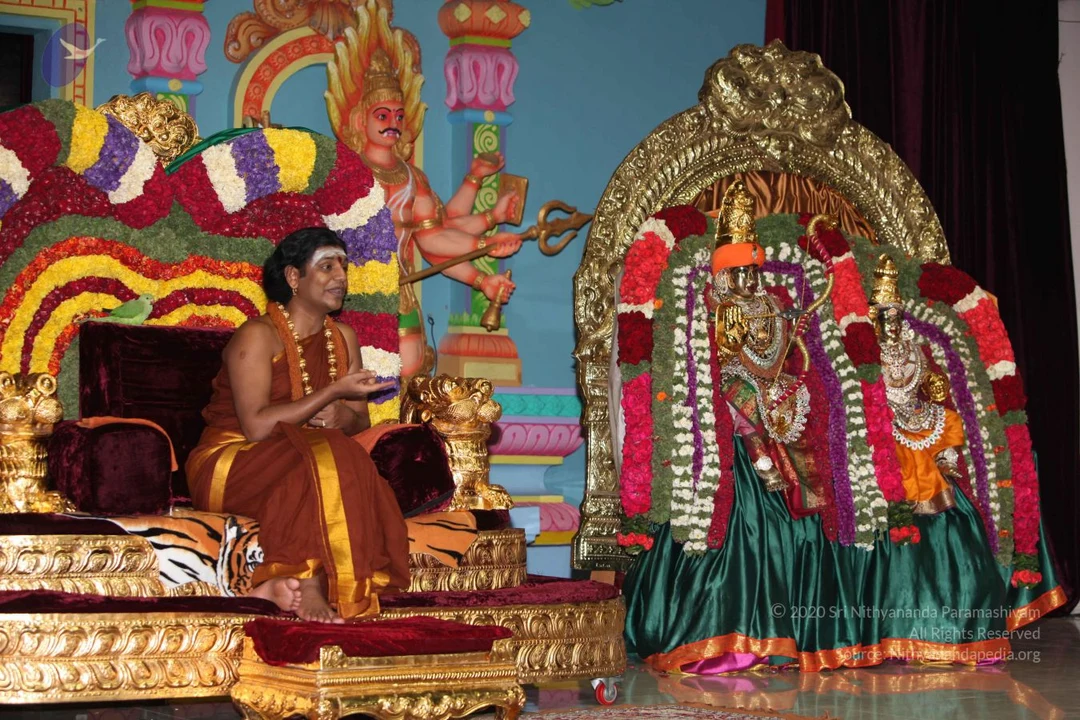
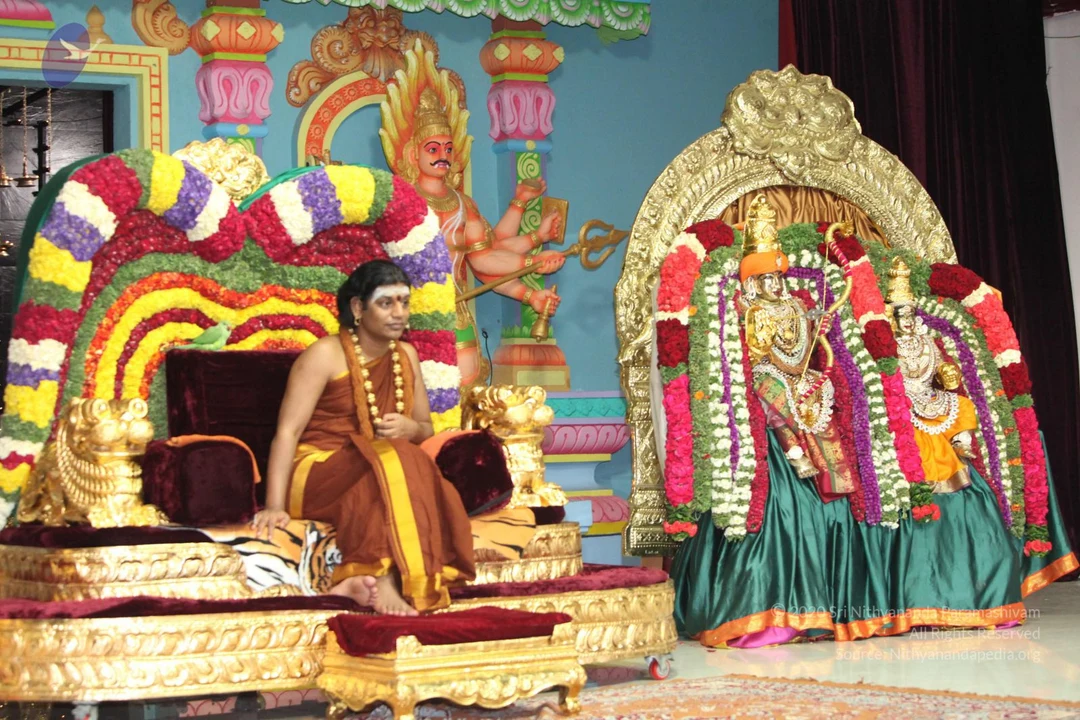
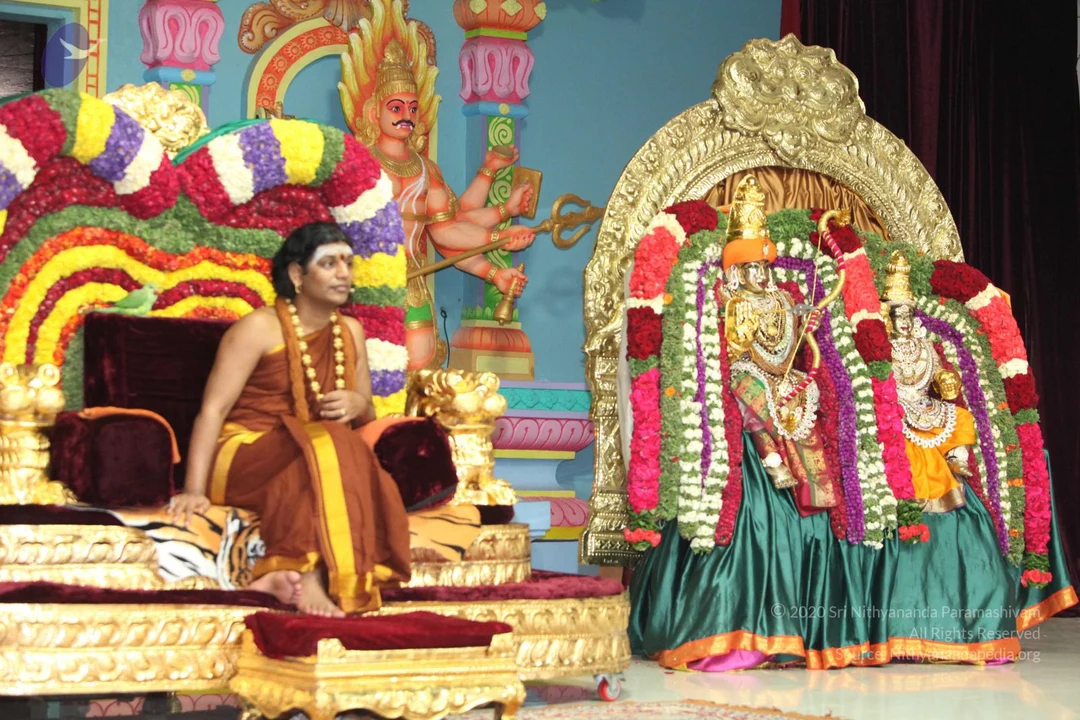
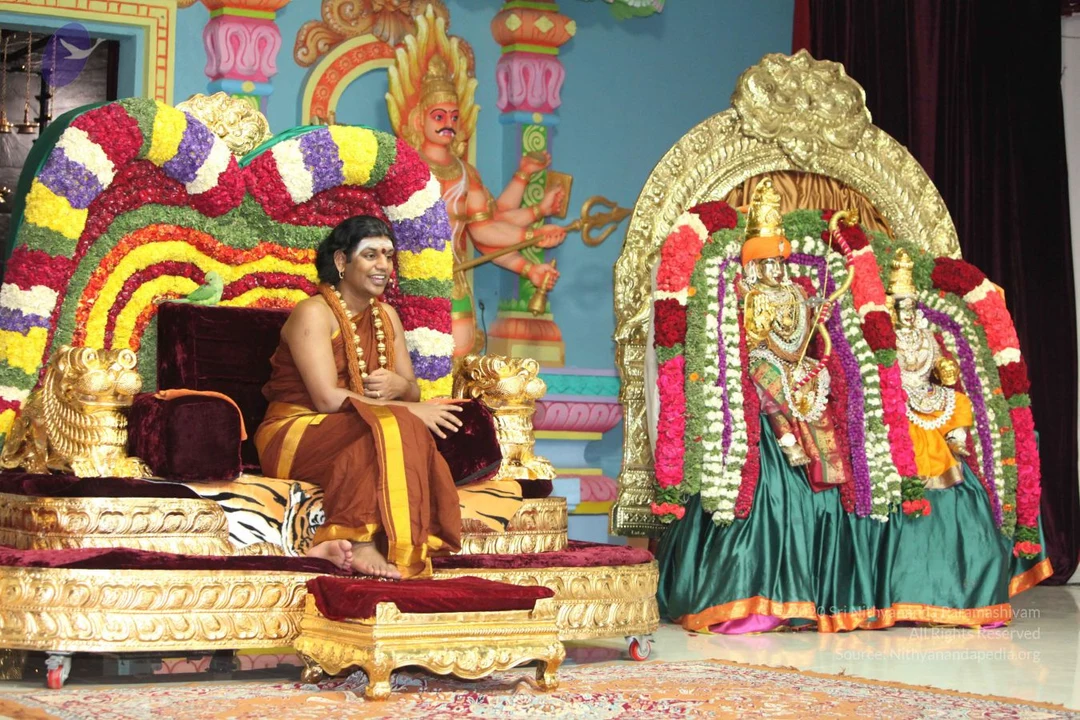
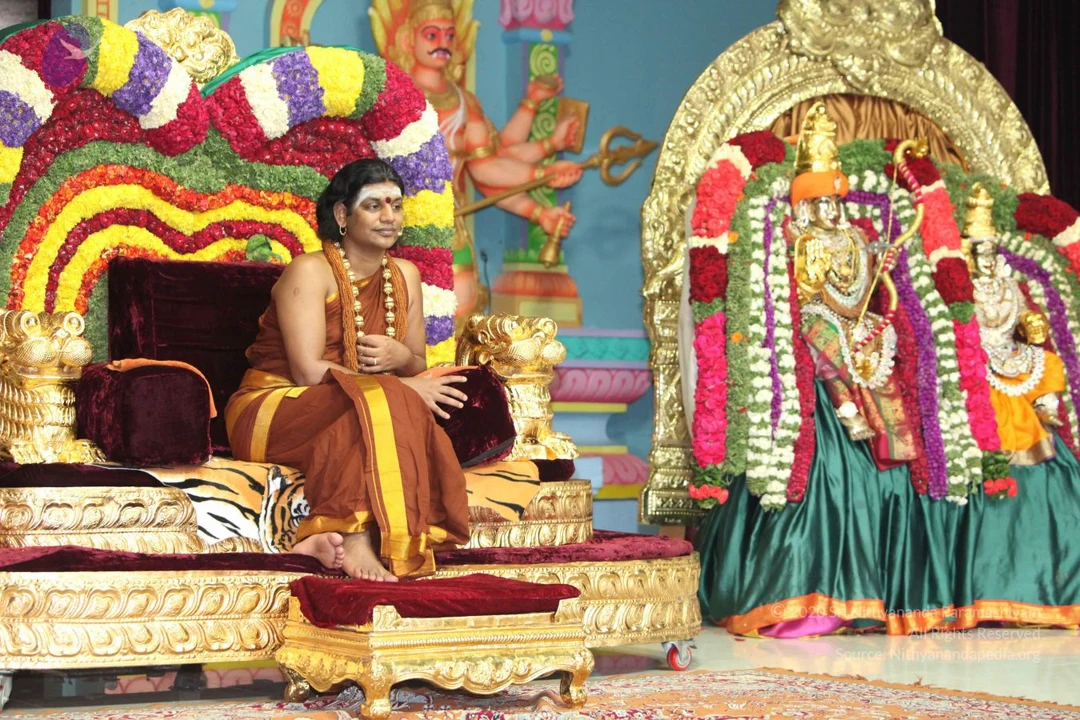
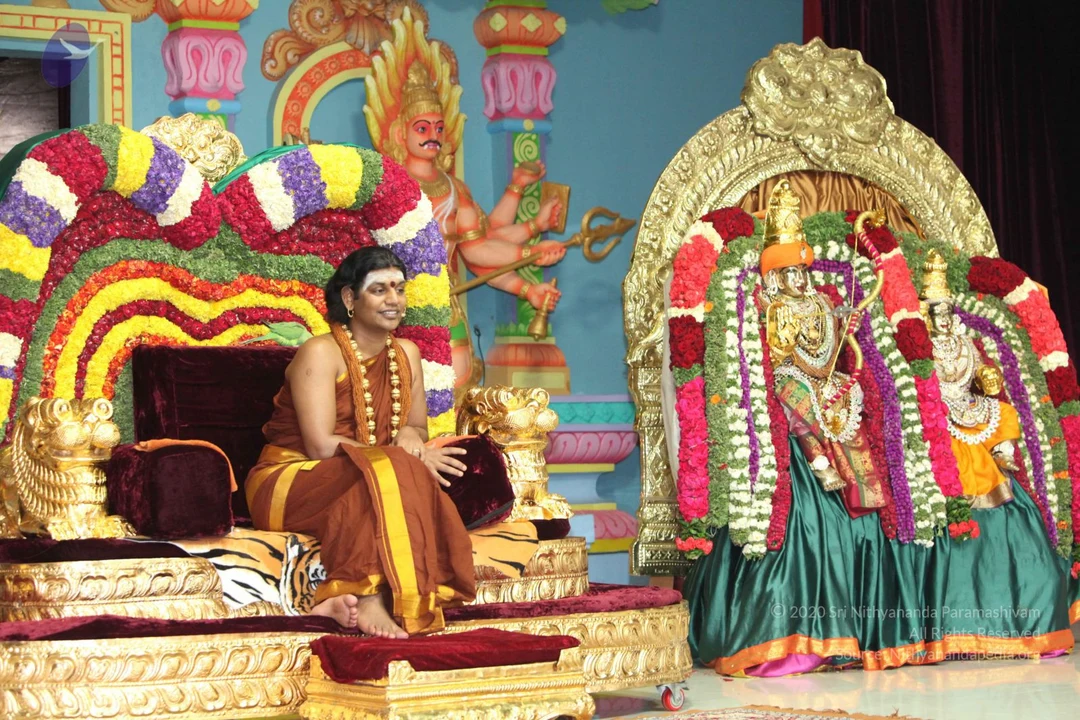
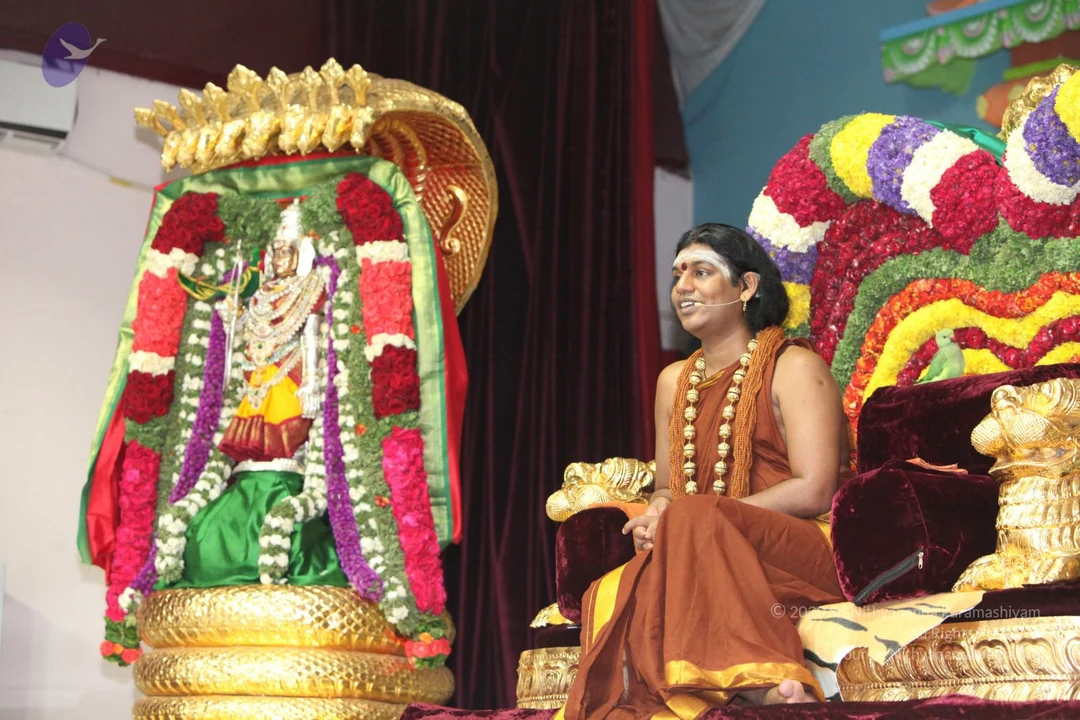
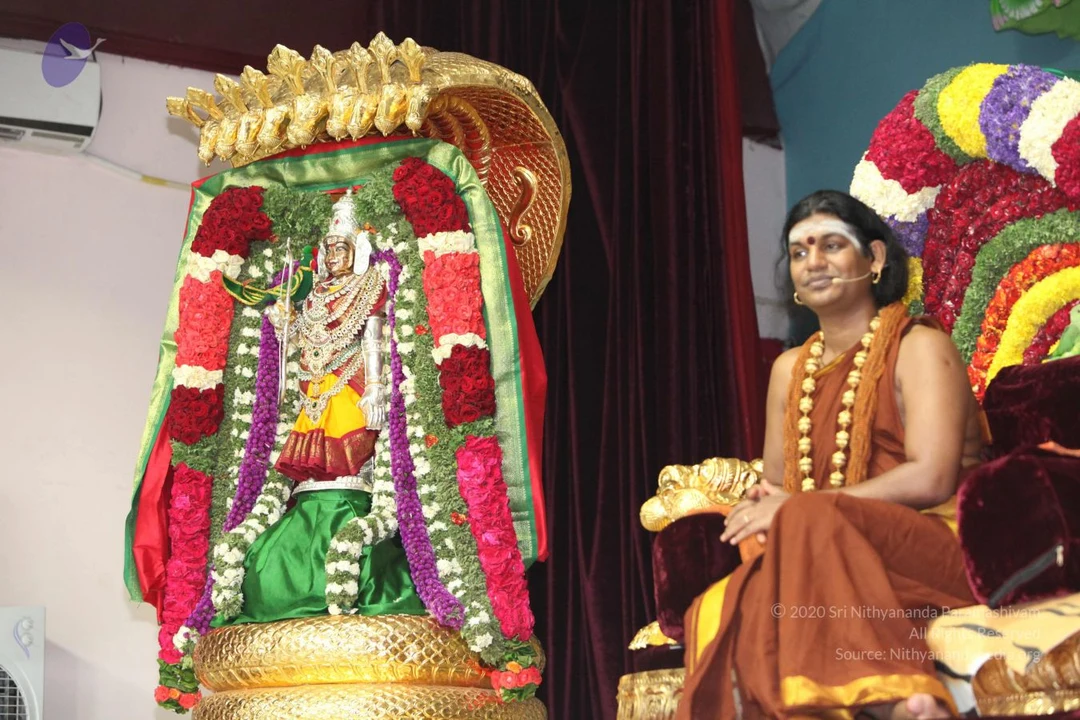
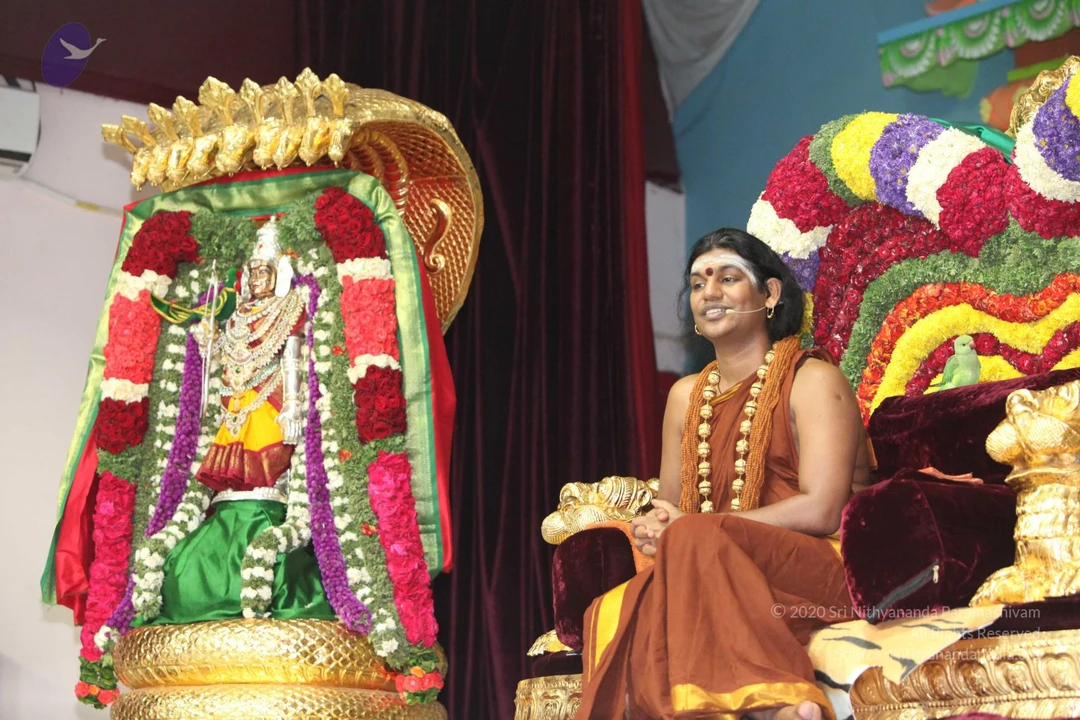
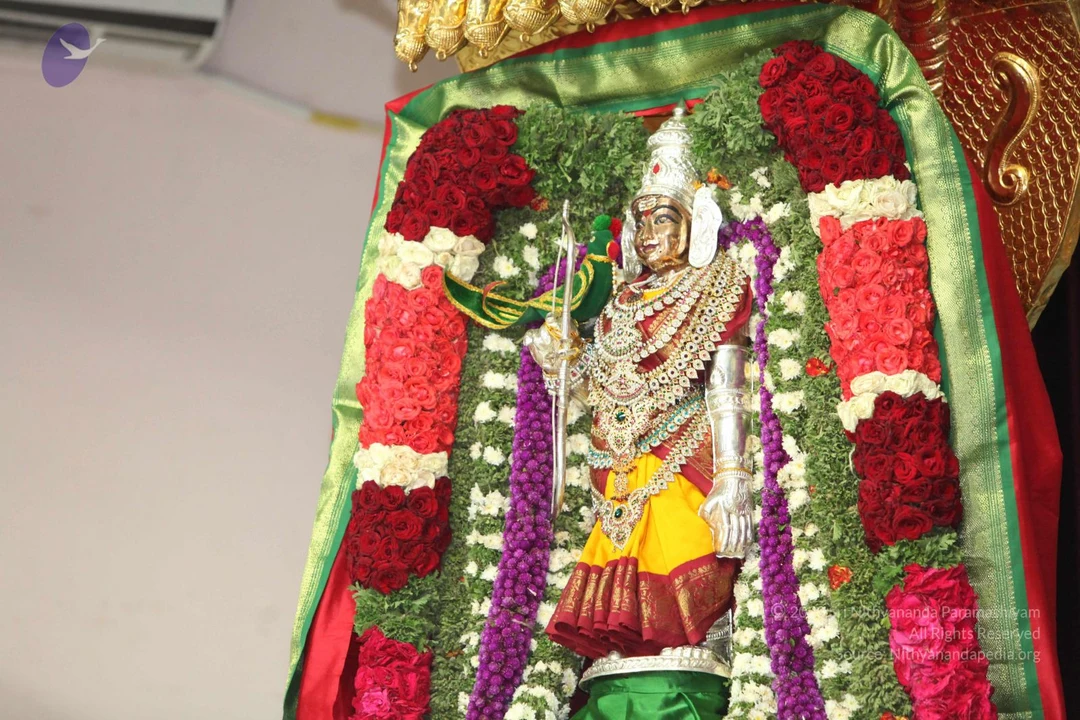
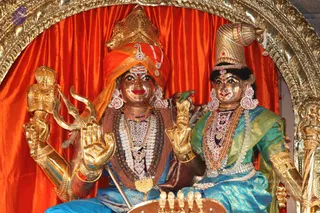
Meenakshi was successful in her Digvijaya which we are celebrating today, because of right space. Otherwise, the army she had is such a small army! But she is able to conquer that directions – Indra, Agni, Yama, Nairuthi, Varuna, Vayu, Kubera, Eeshaana, Athala, Suthala, Thalaathala, Paathaala, Bhur, Bhuva, Suva, Thapa, Jana, Sathya lokas, Vaikunta Loka, then enters even Kailaasa where nobody is trained for fighting, a space of enlightenment! She is able to enter into the space of enlightenment itself by winning, by conquering! It is literally like a through war she achieved enlightenment! And she demands enlightenment through war! She says, ‘Come on, either give enlightenment otherwise I am coming to fight with you, having a war with you!’ But her inner space was so strong, even Shiva has to bend, and he says, ‘Alright! You will have the experience you wanted. I am coming! Go! Don’t create a mess here.’ Because Nandi was defeated! And then Shiva comes, not only gives enlightenment to Mahadevi Meenakshi, marries her and gives the half as Ardha Nareeshwara!

HINDI.

Photos From The Day:
Tags:

Paramahamsa Nithyananda, negative, belief, life, create, reality, conflict, commitment, power, integrity, enlightenment, world, attract.

Photos Of The Day:

PADAPUJA

PUJA

NITHYA-SATSANG

SARVADARSHAN

Temple-Swamiji-Pratyaksha-Padapooja

Photos from this day

View all 197 photos

Photos From The Day:
45 photosSource gallery
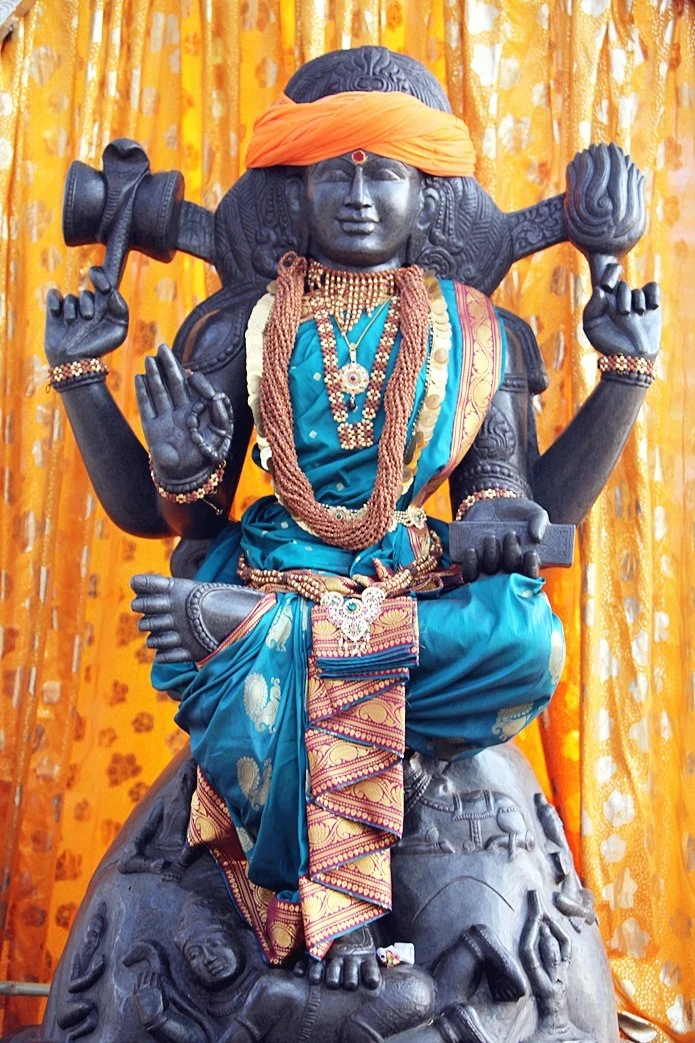
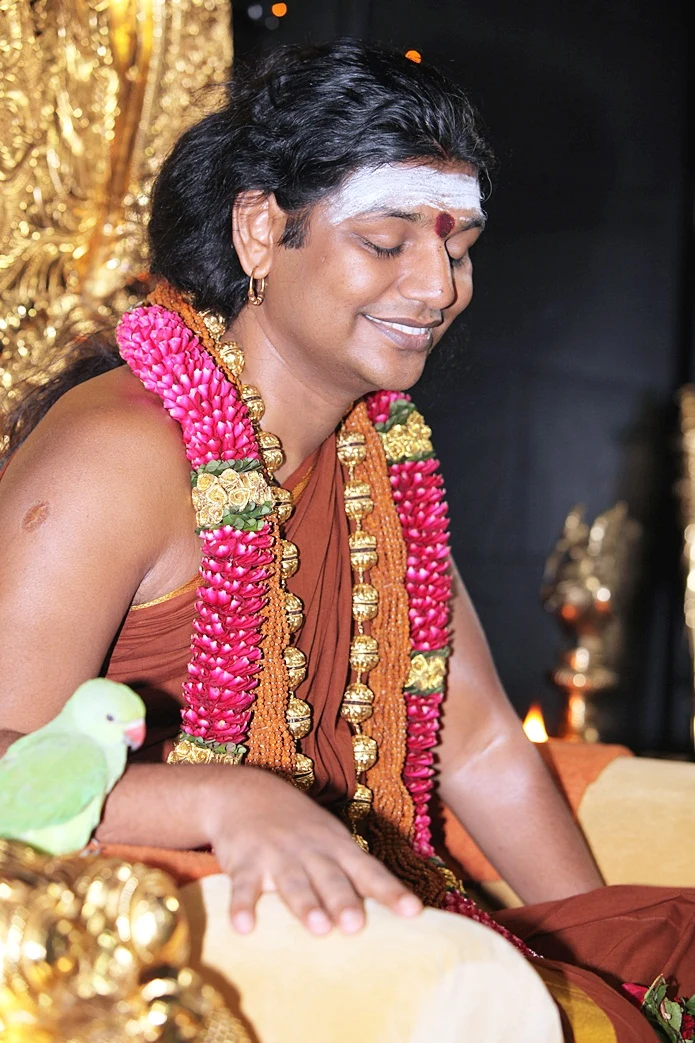
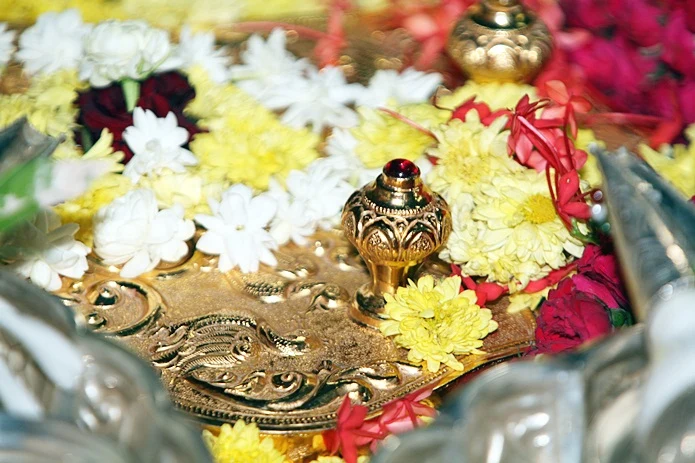
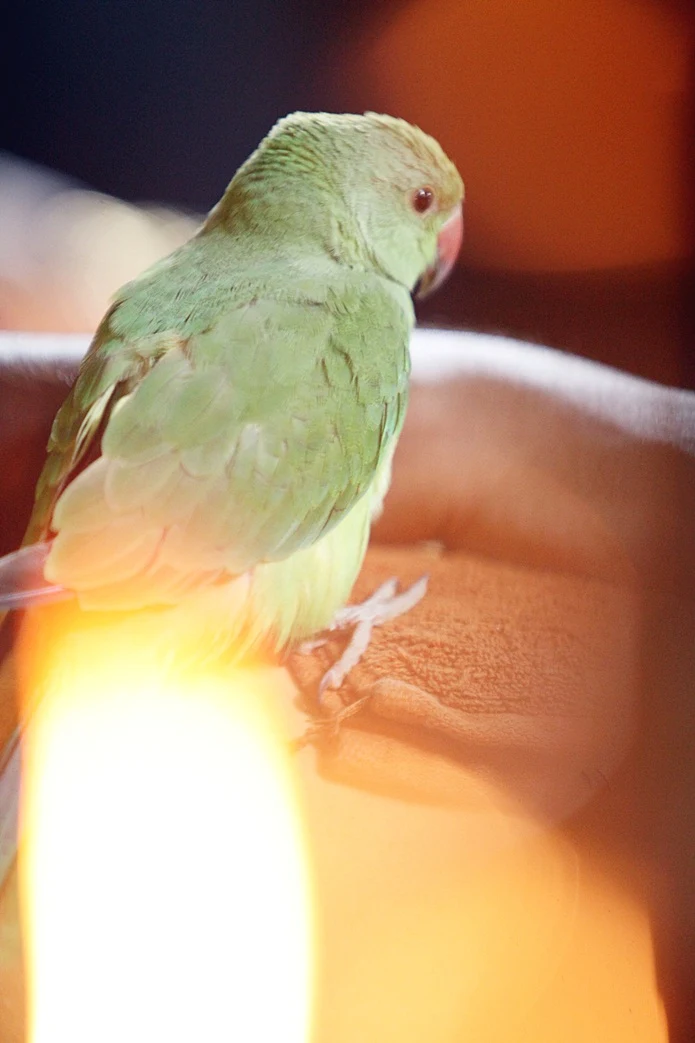
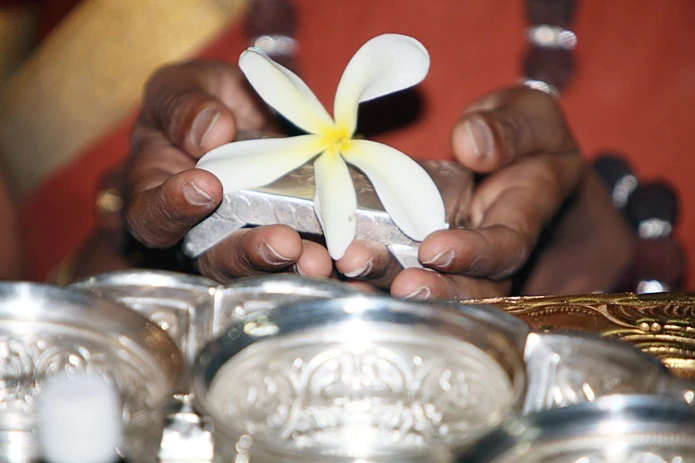
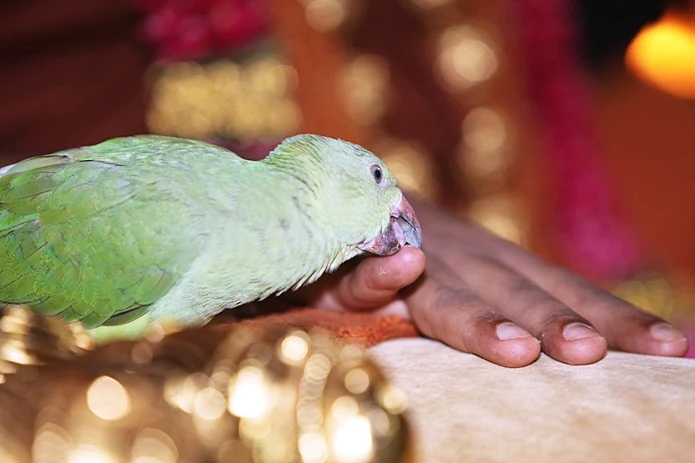
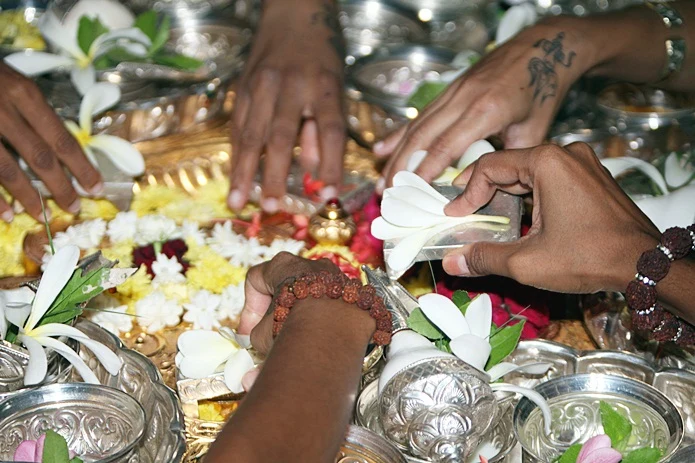
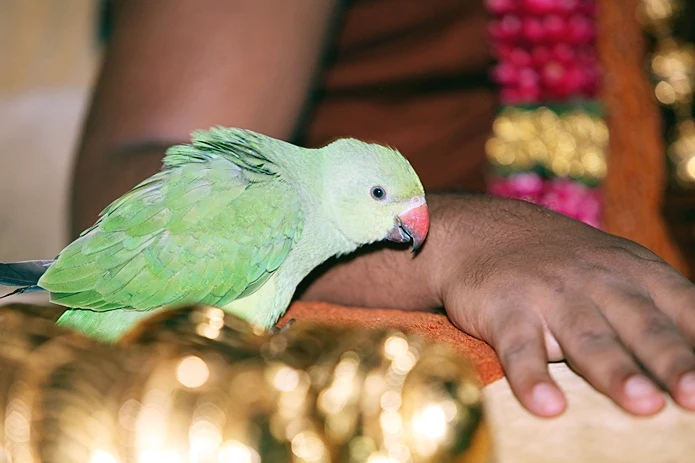
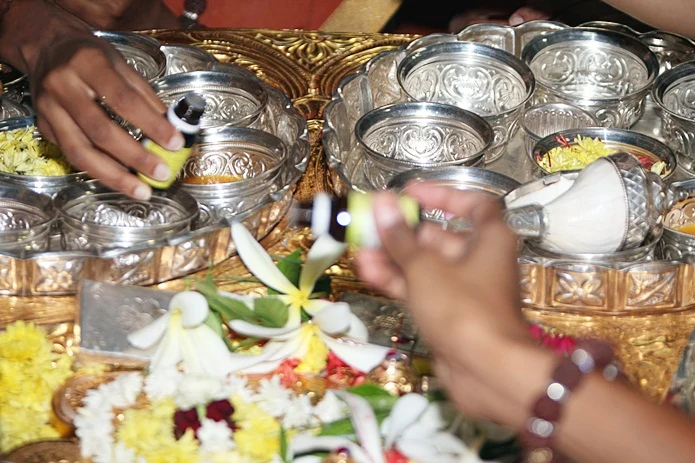
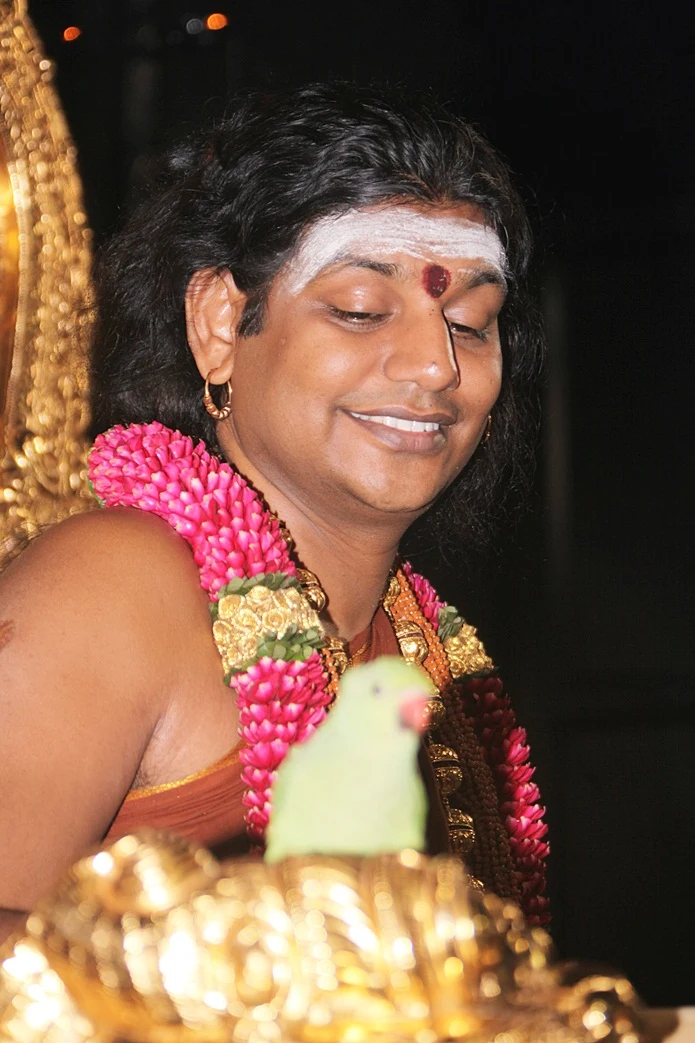
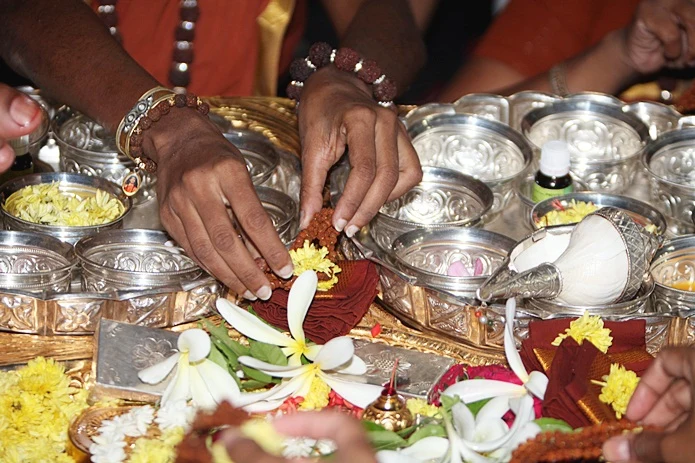
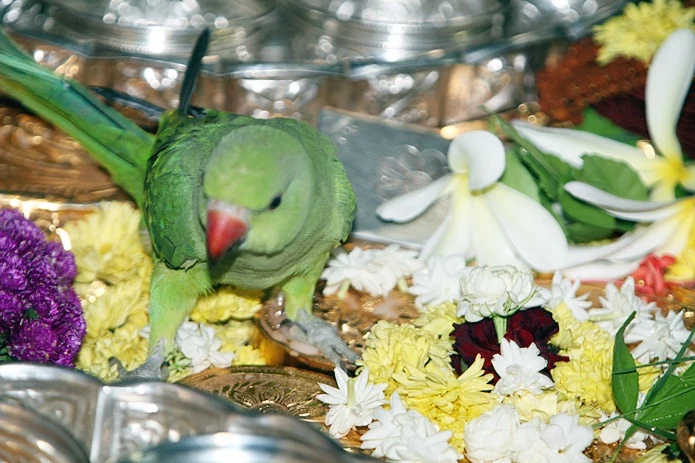
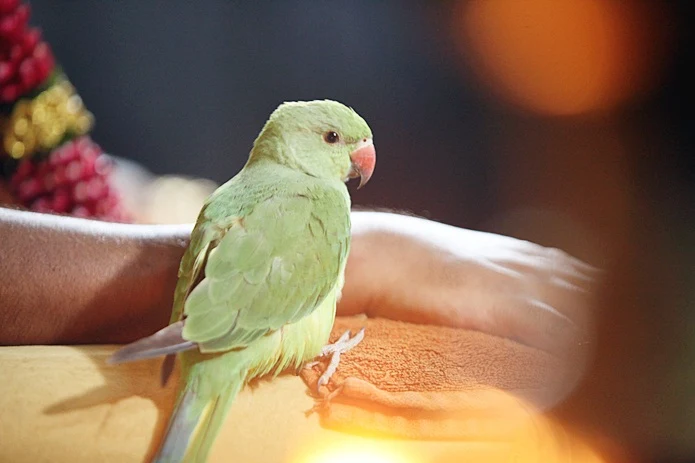
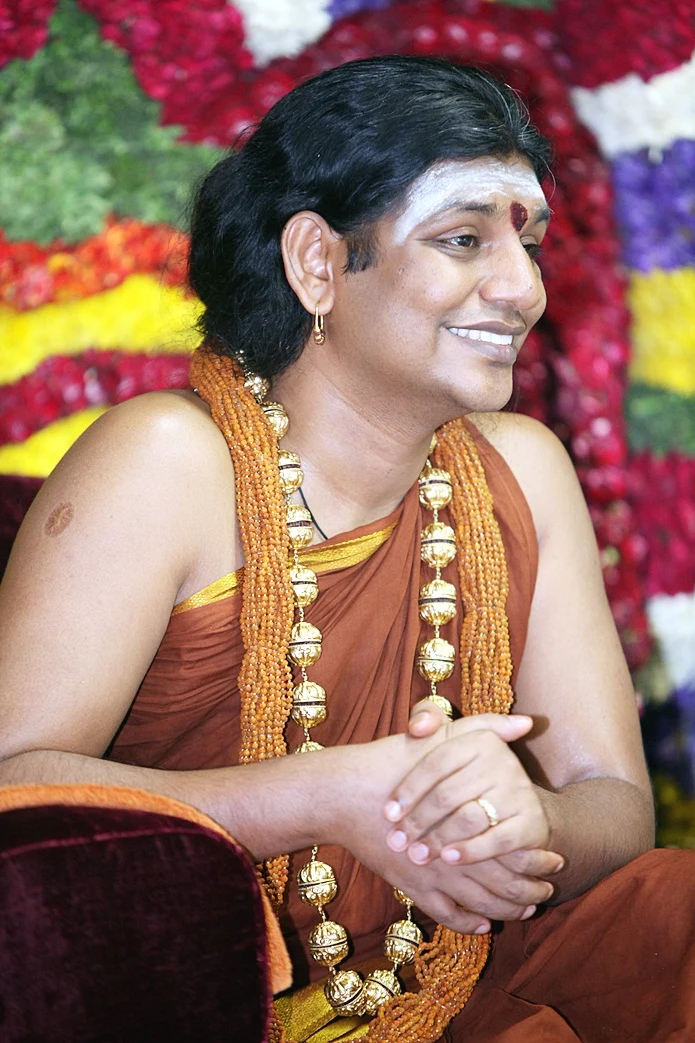
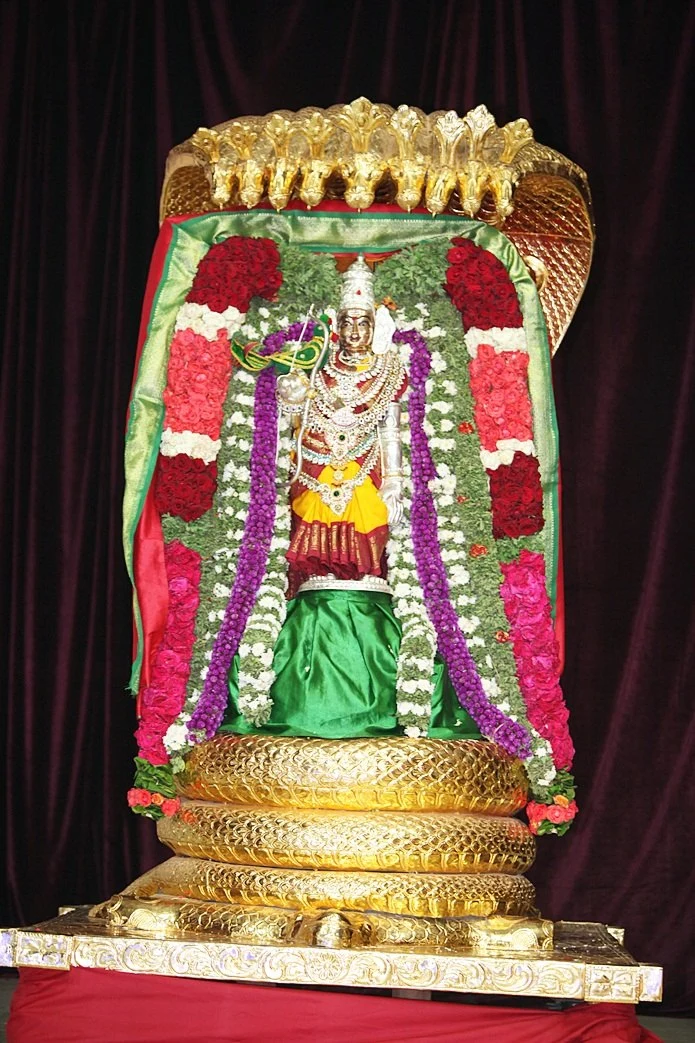
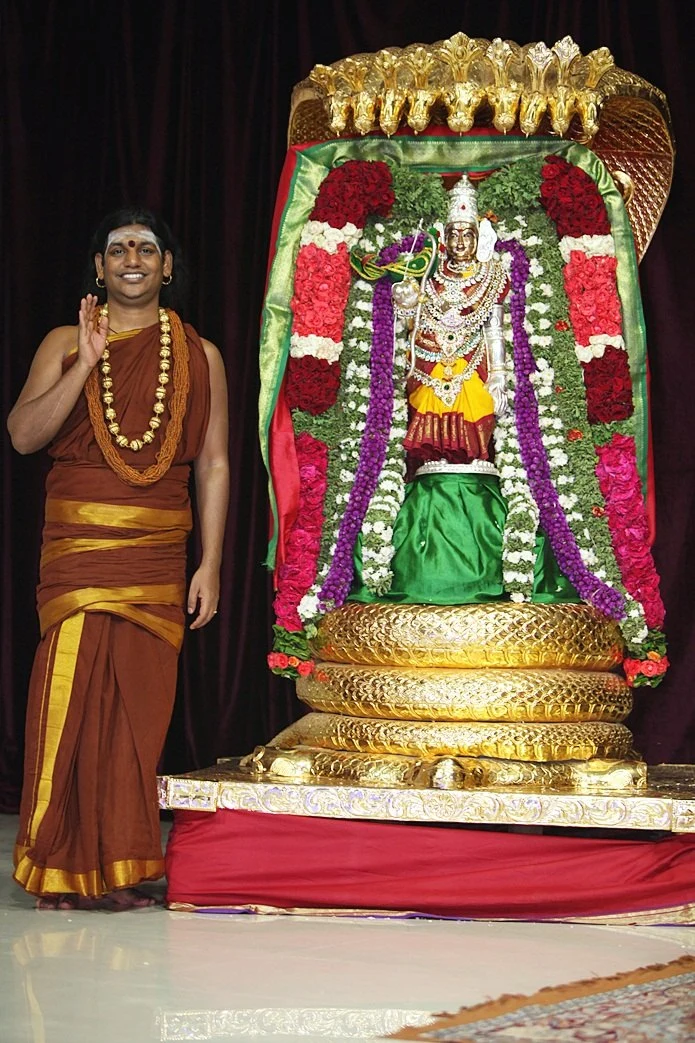
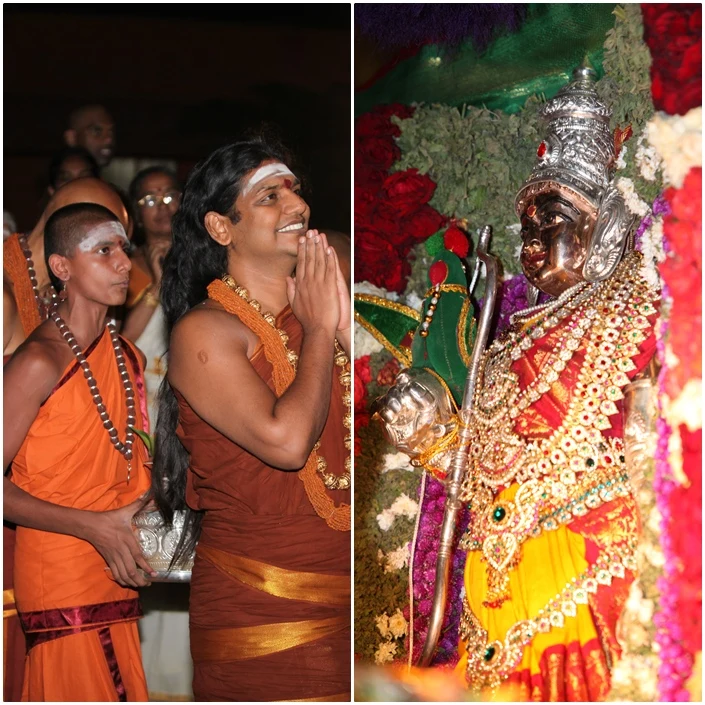
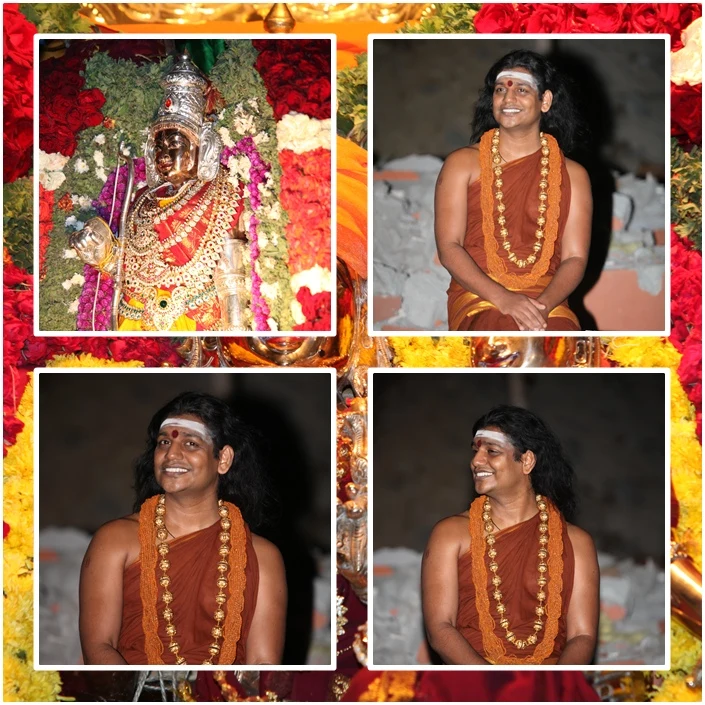
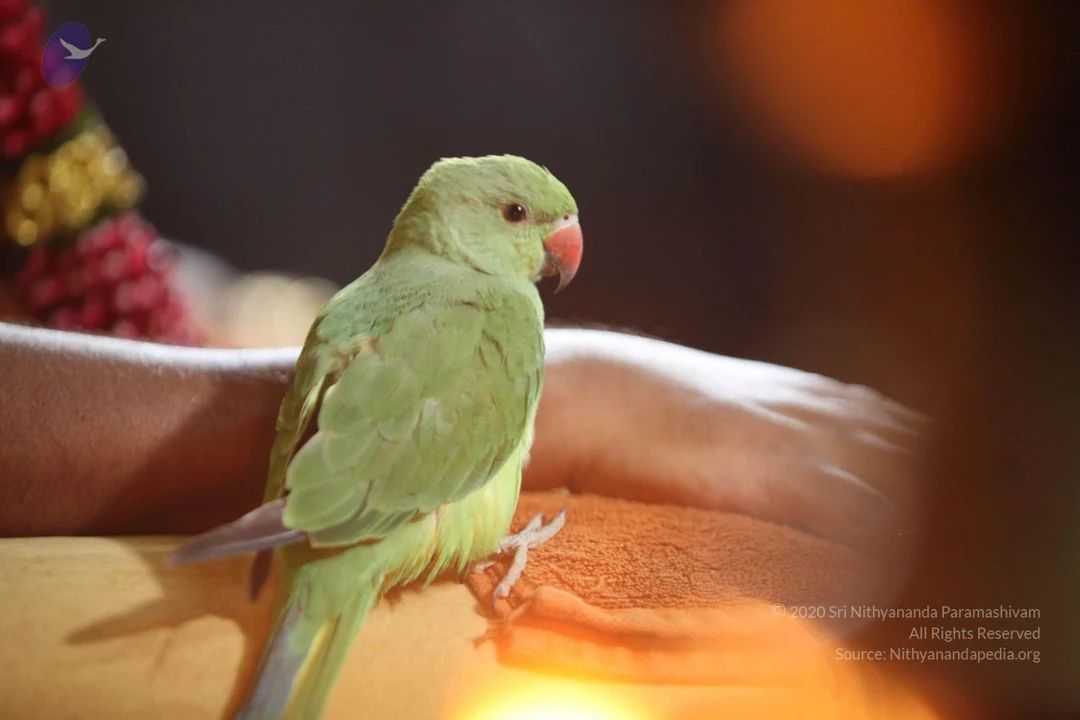
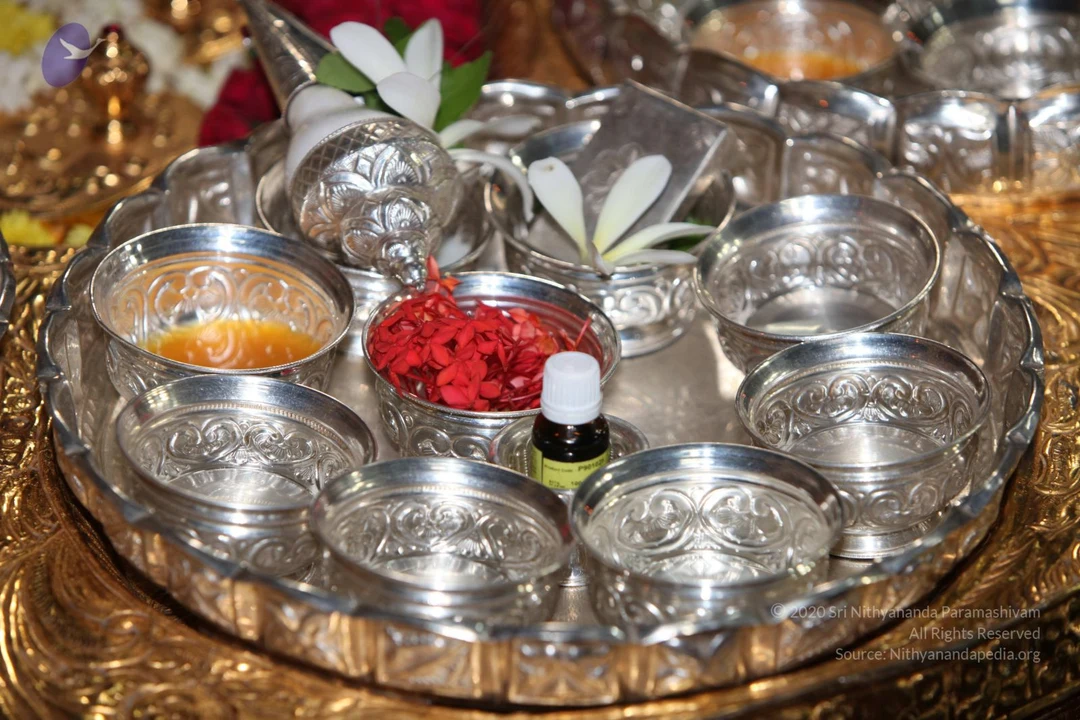
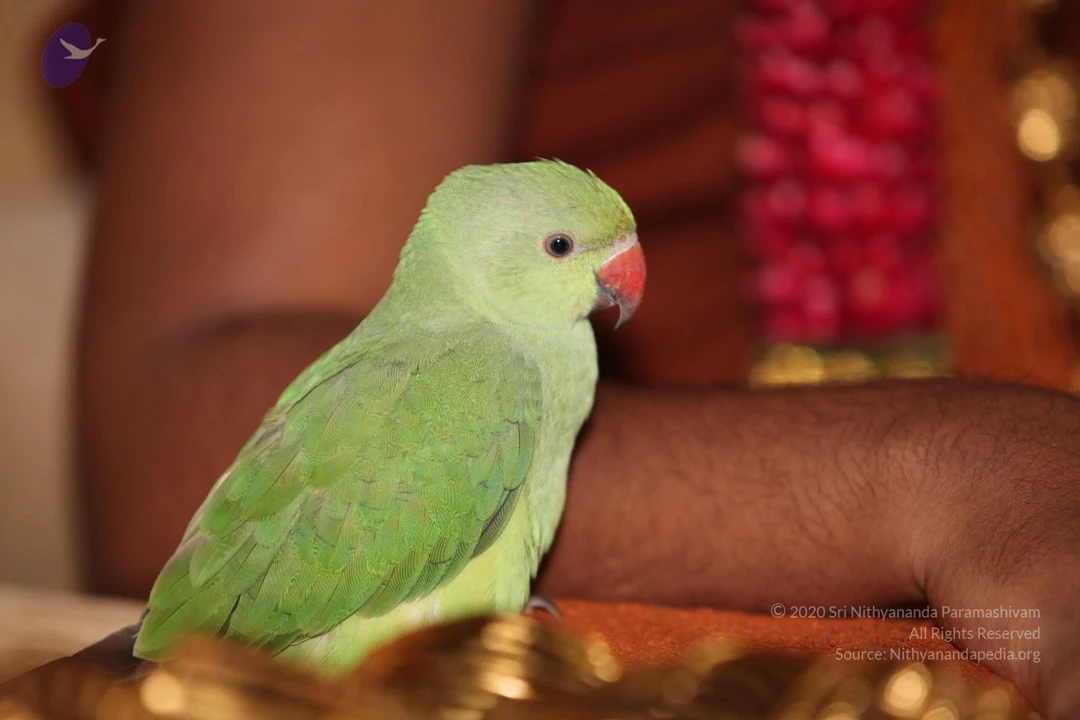
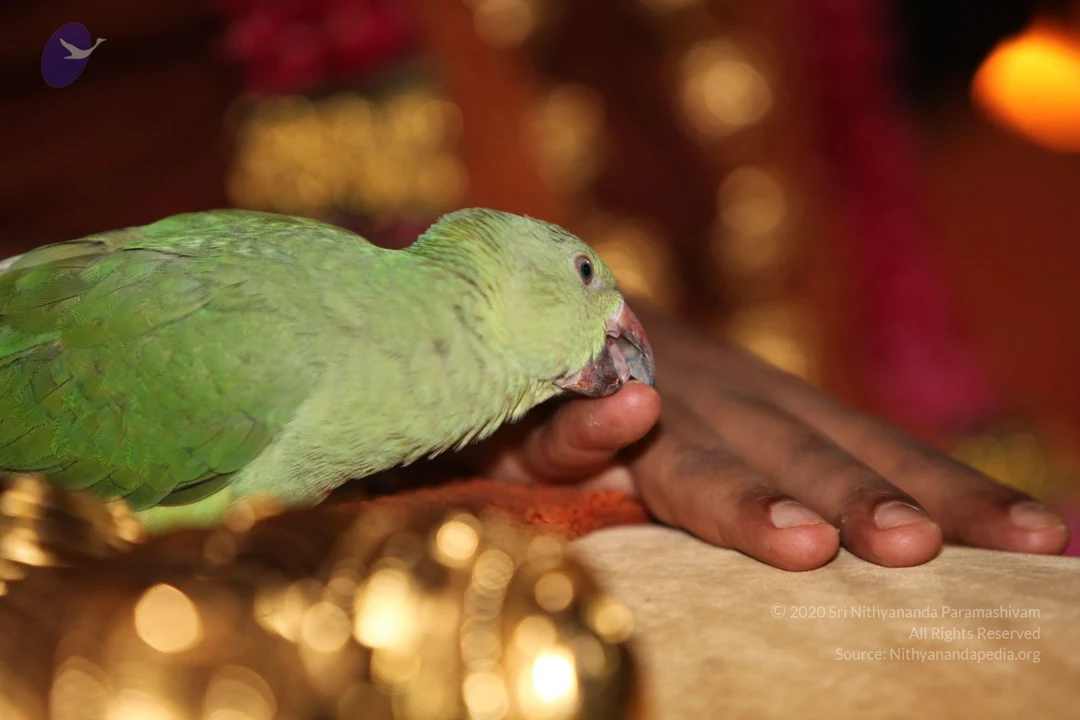
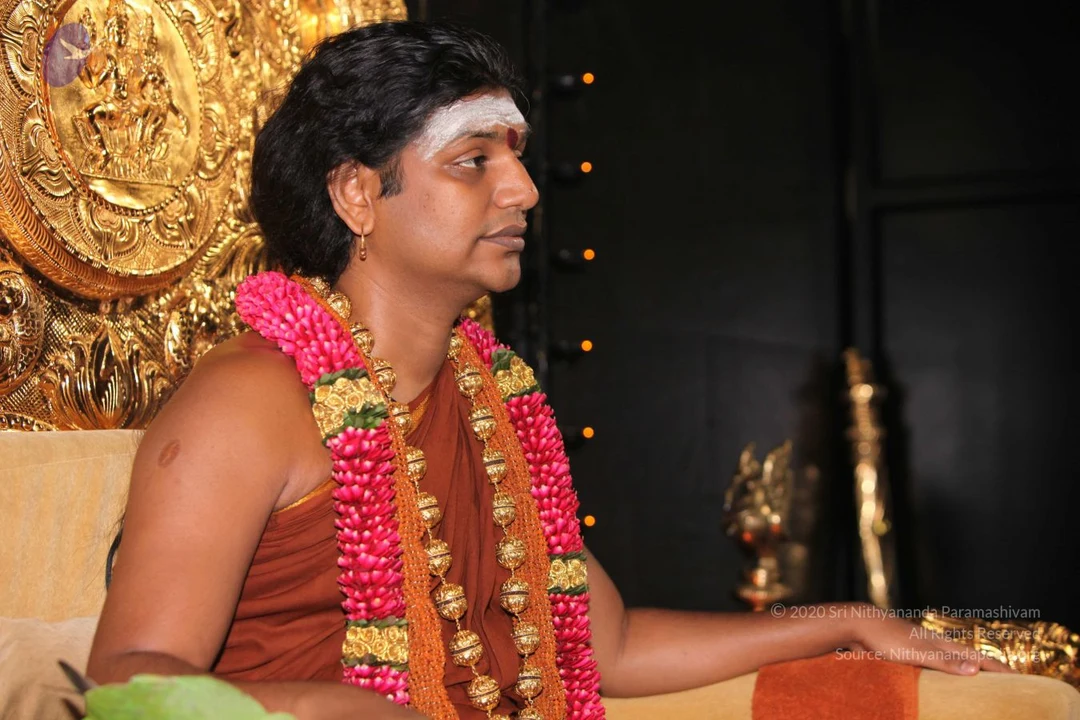
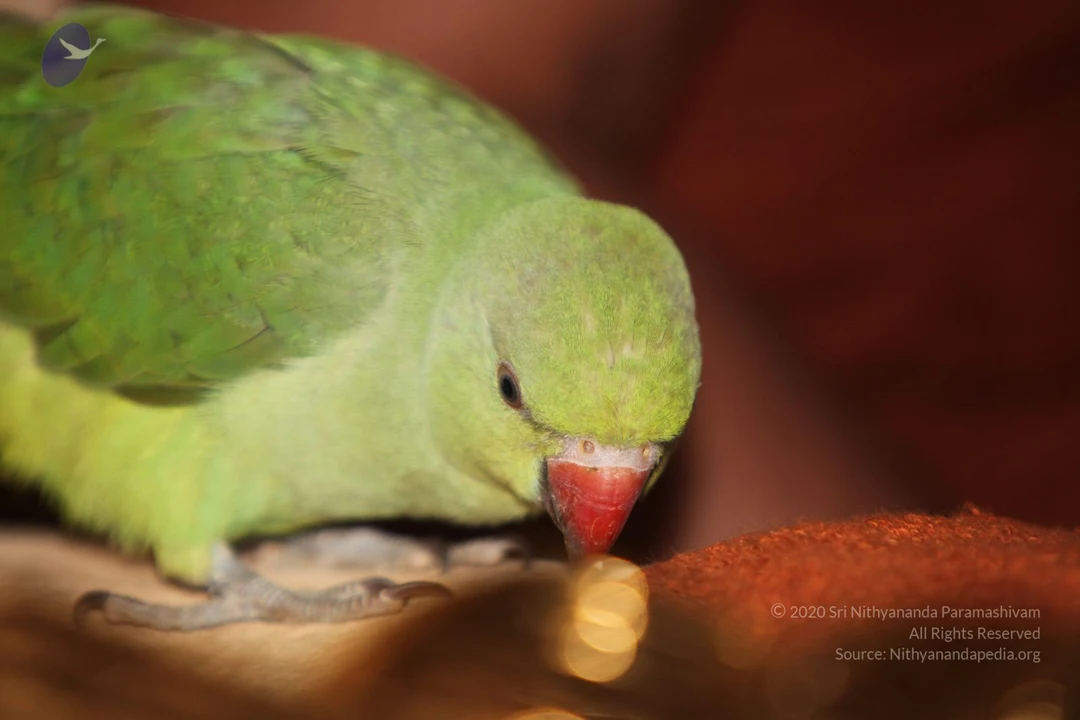
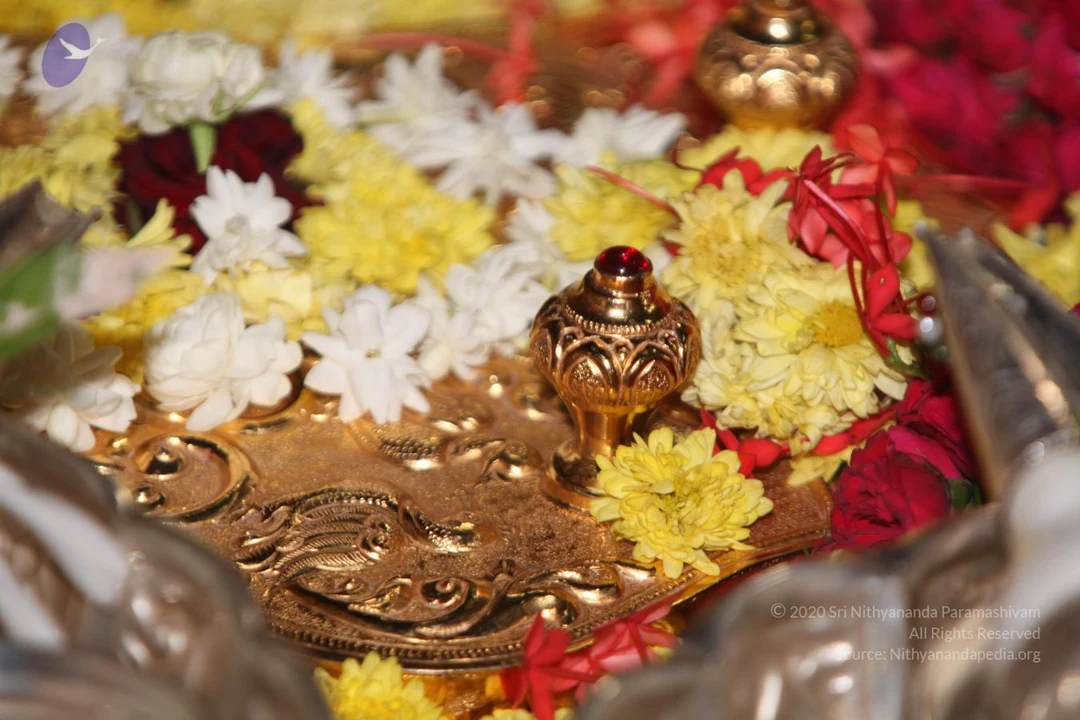
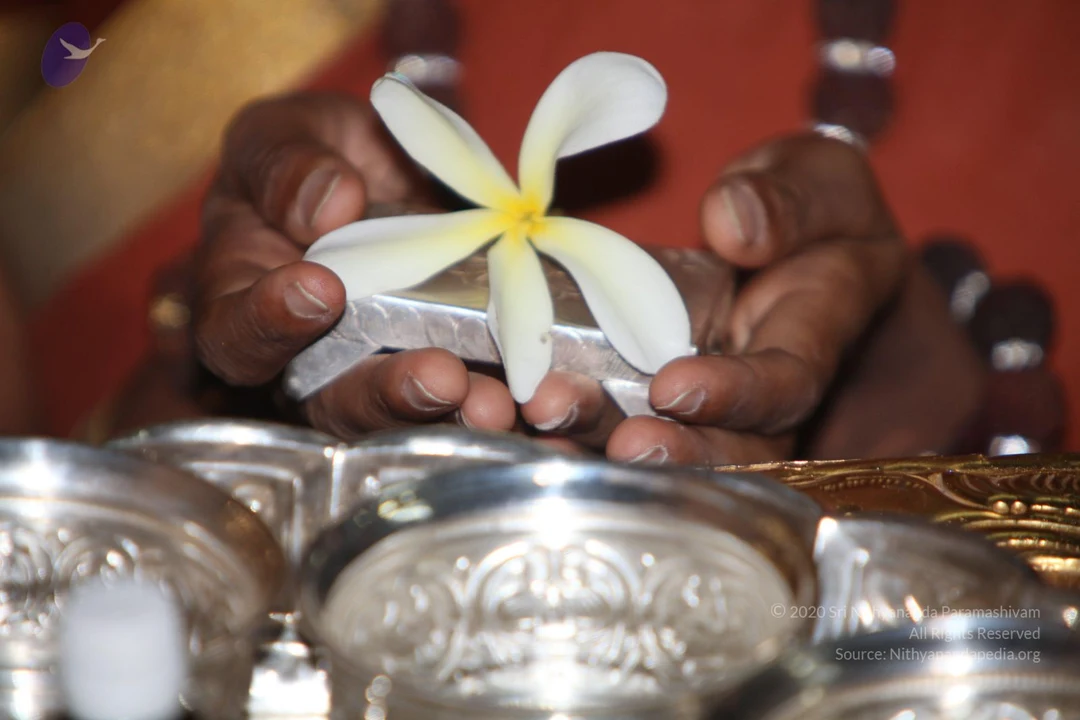
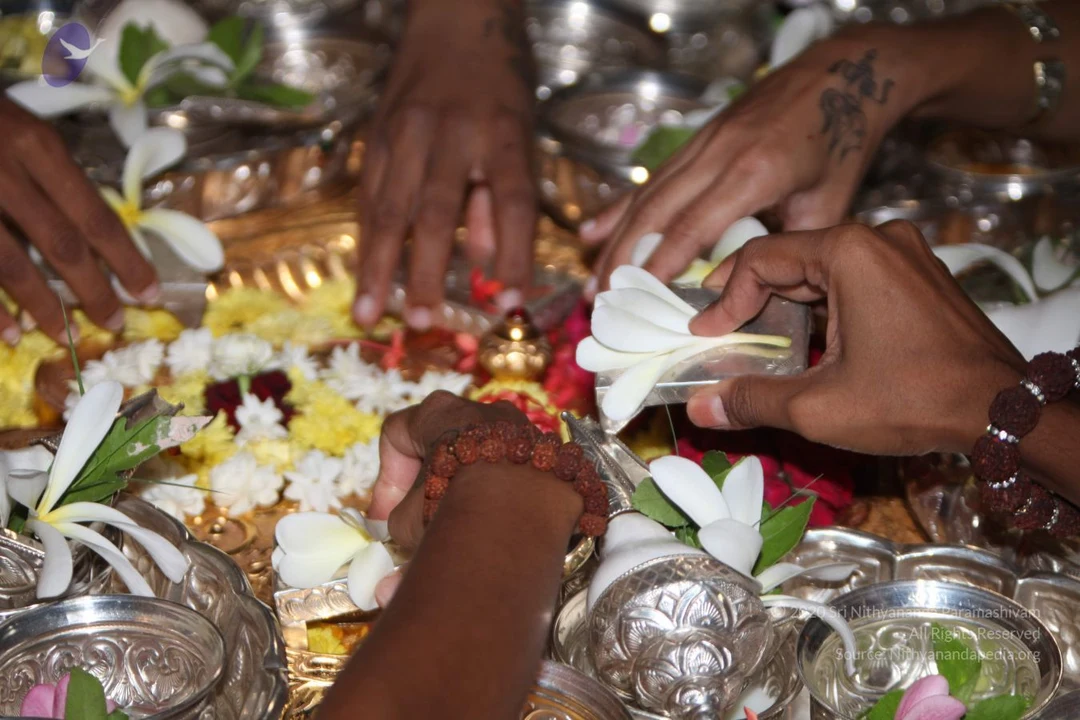
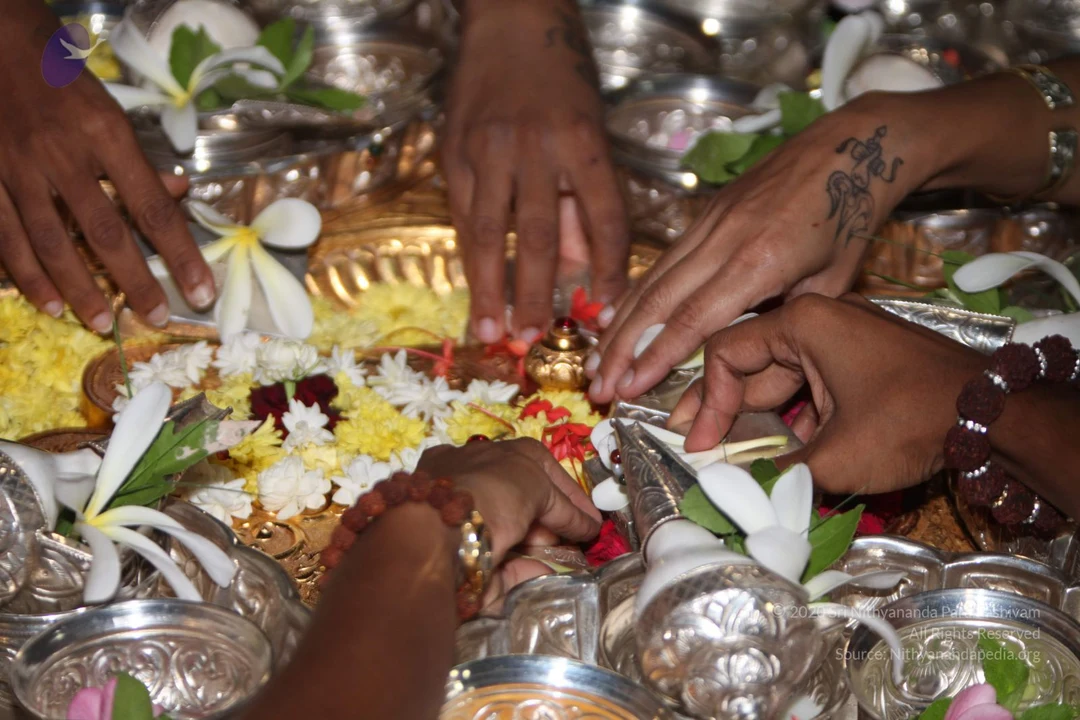
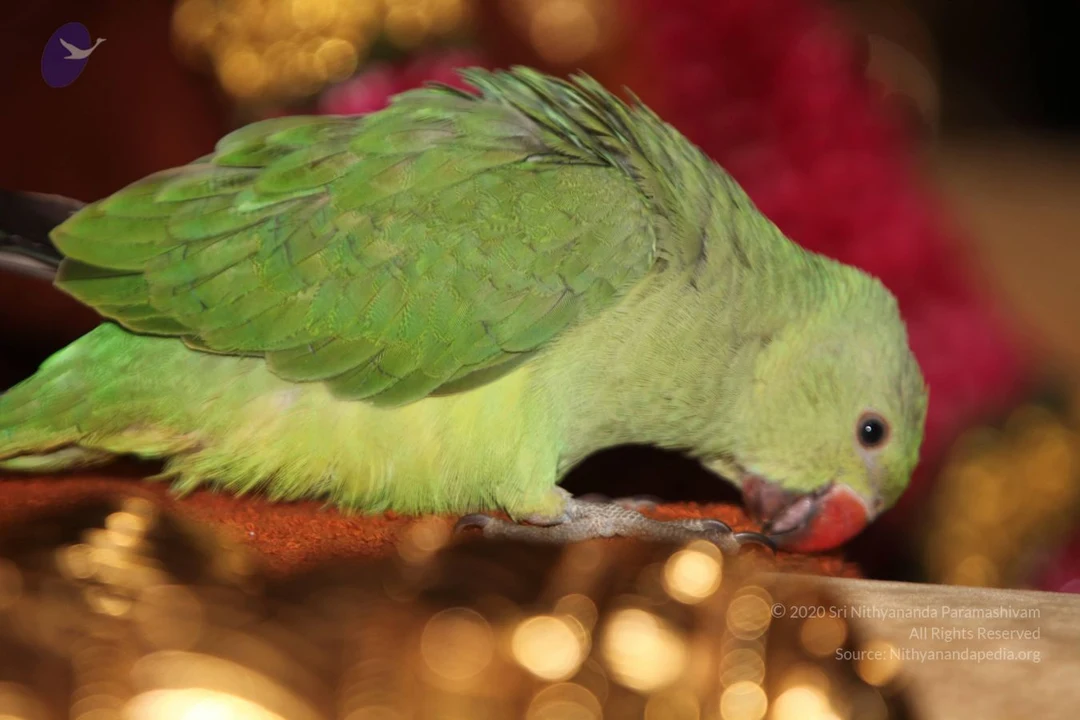
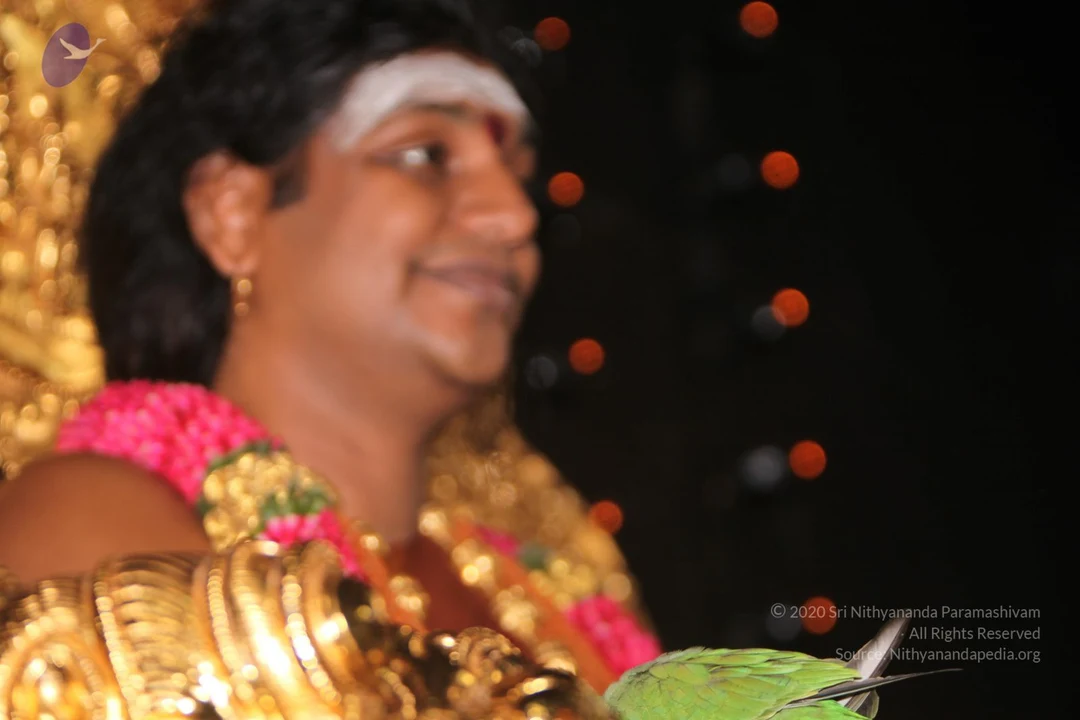
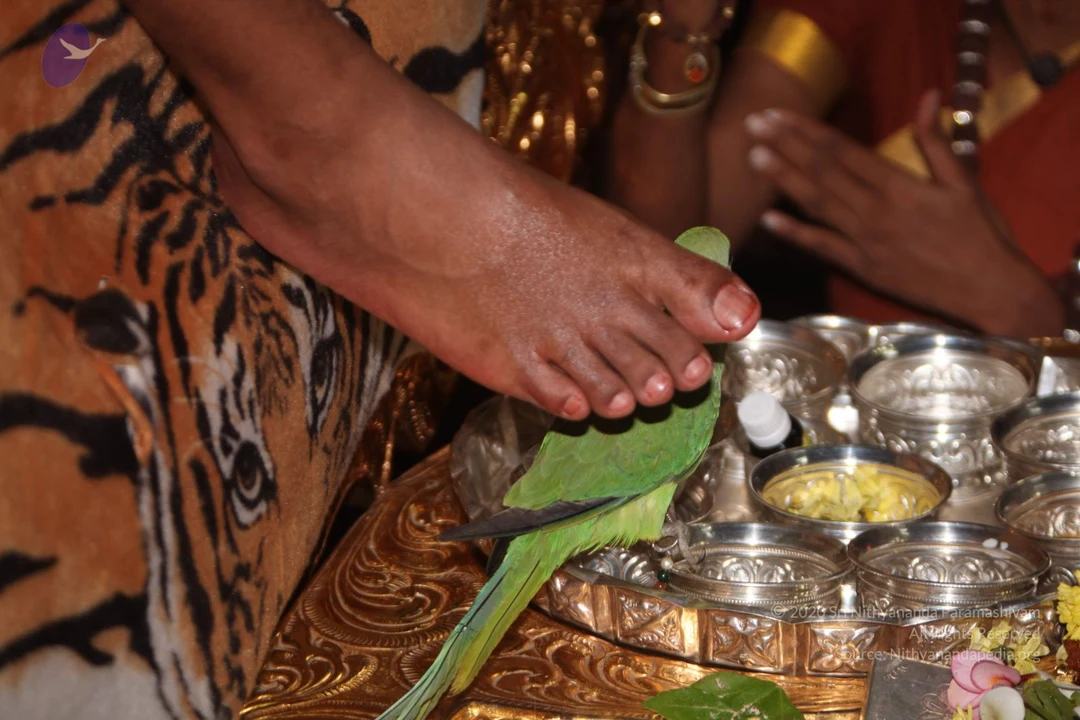
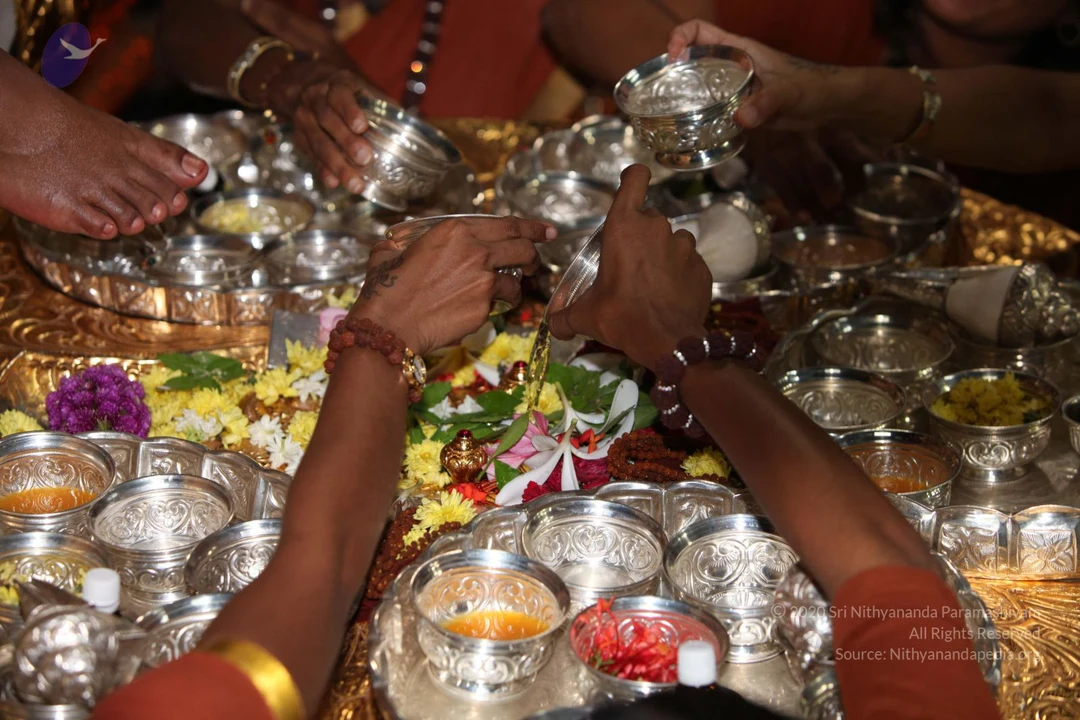
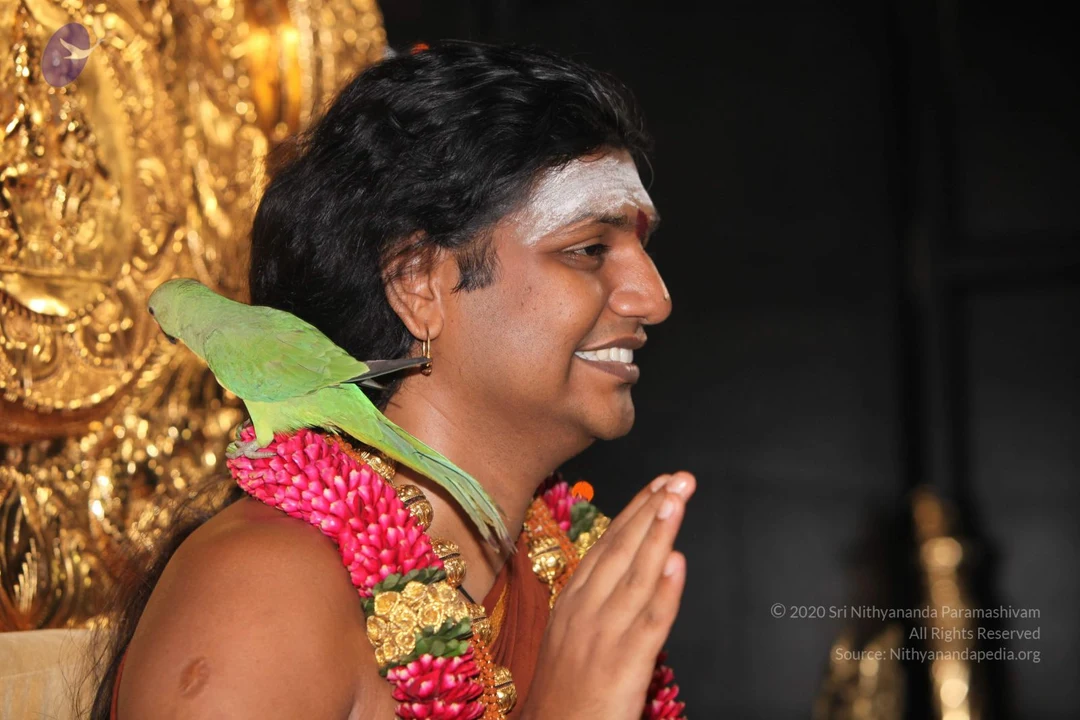
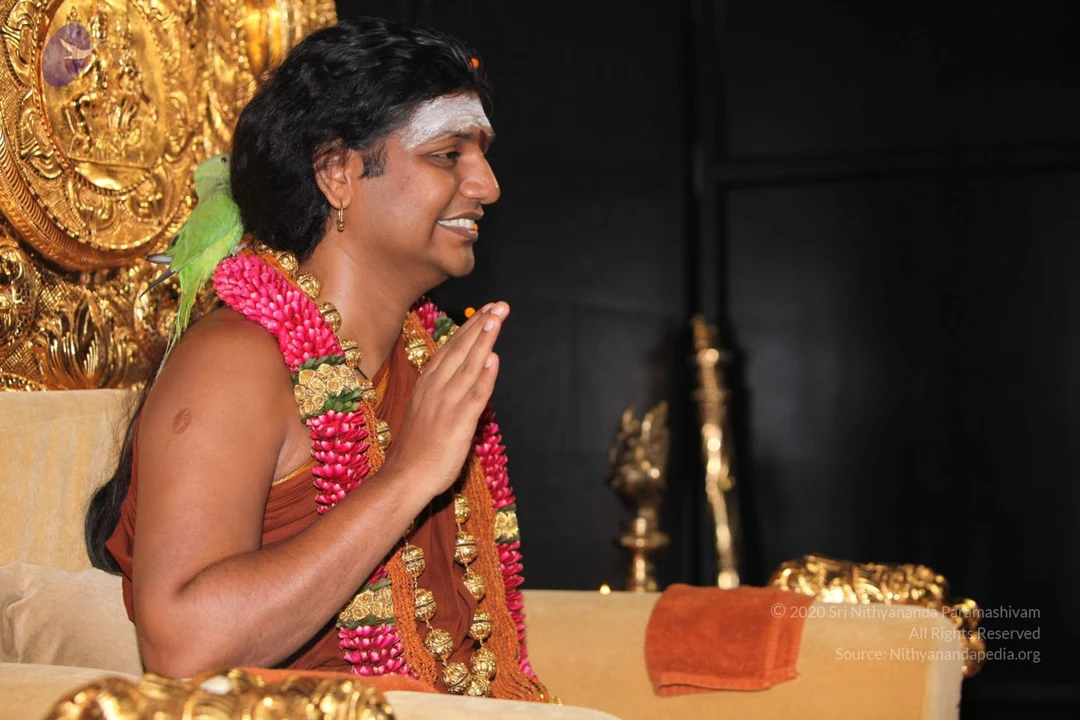
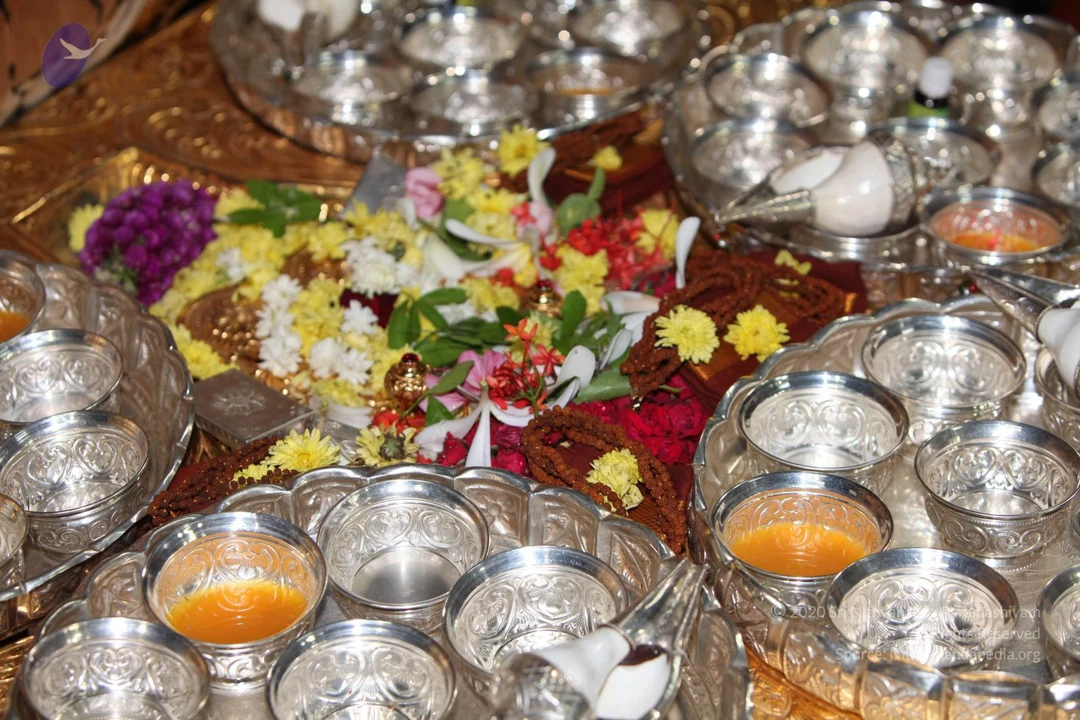
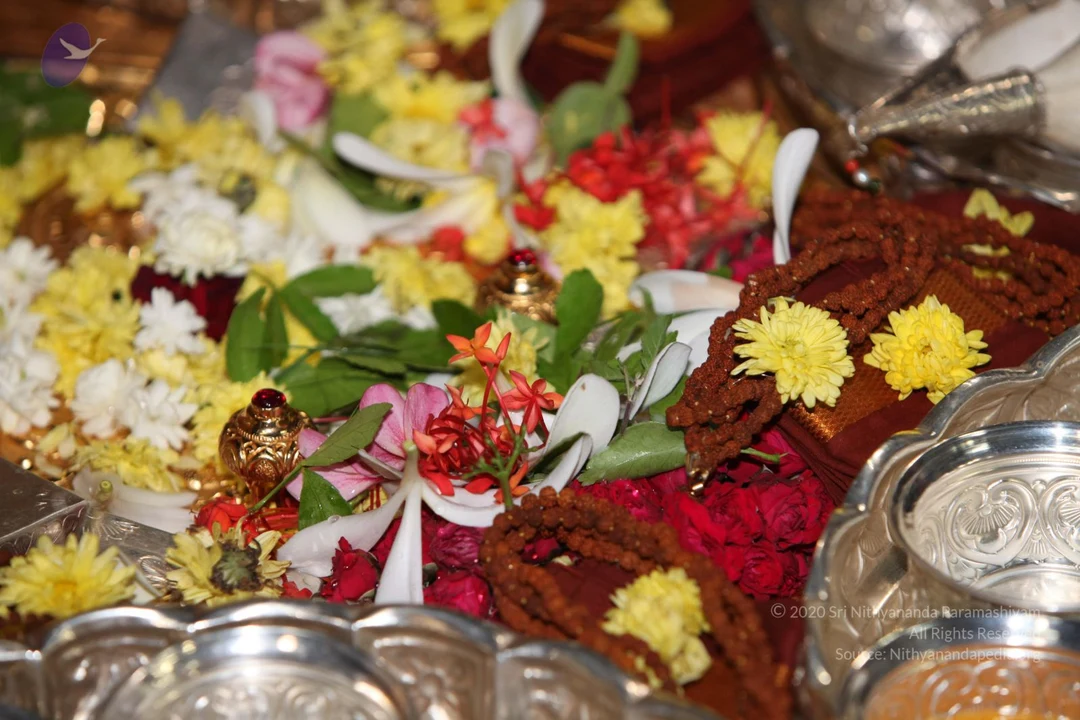
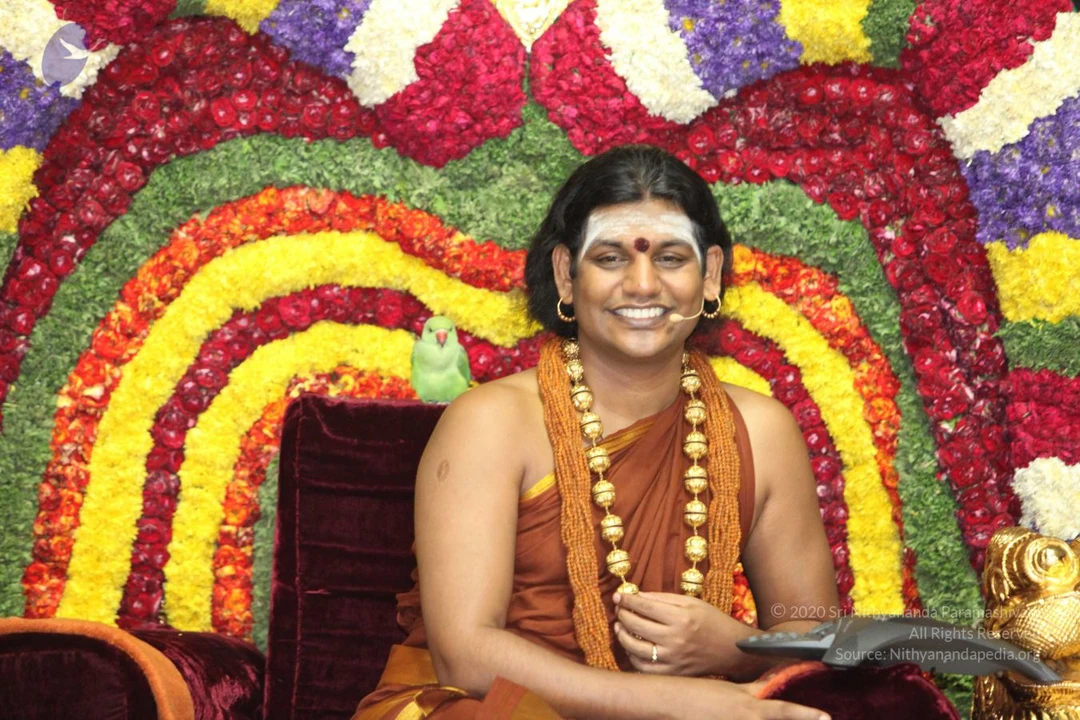
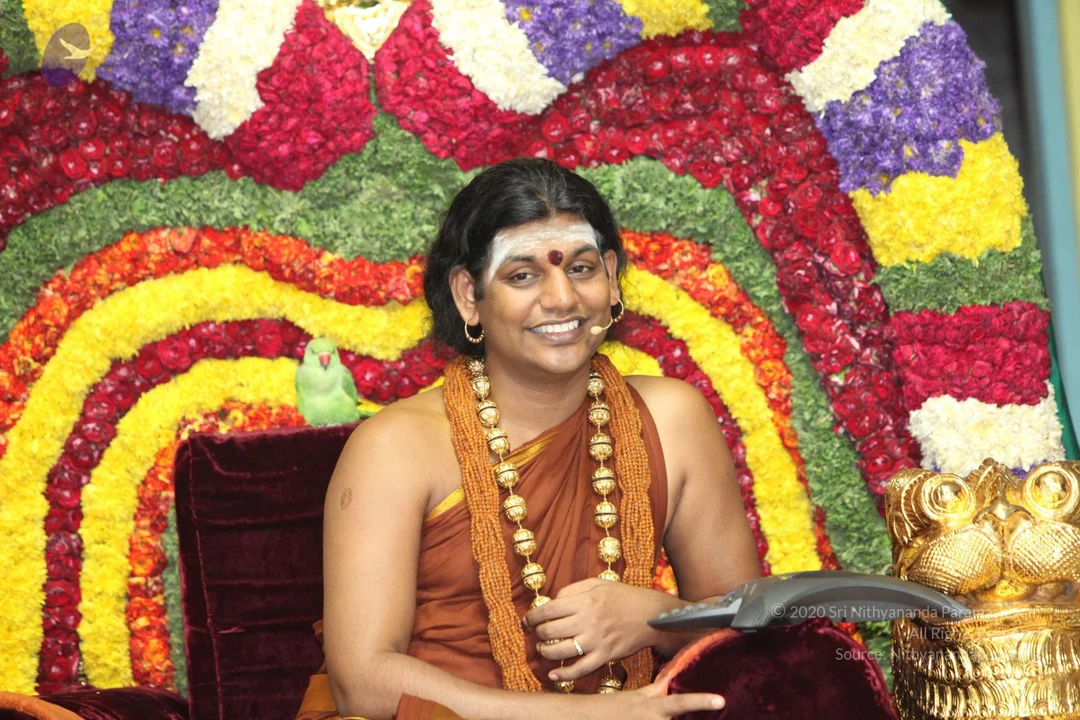
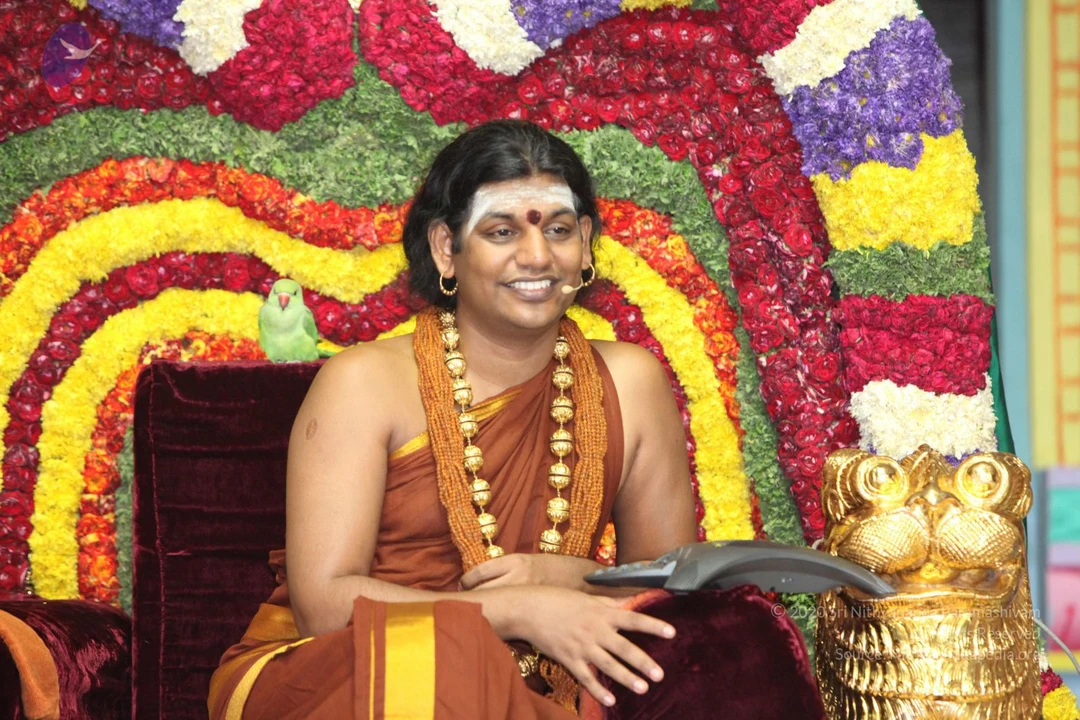
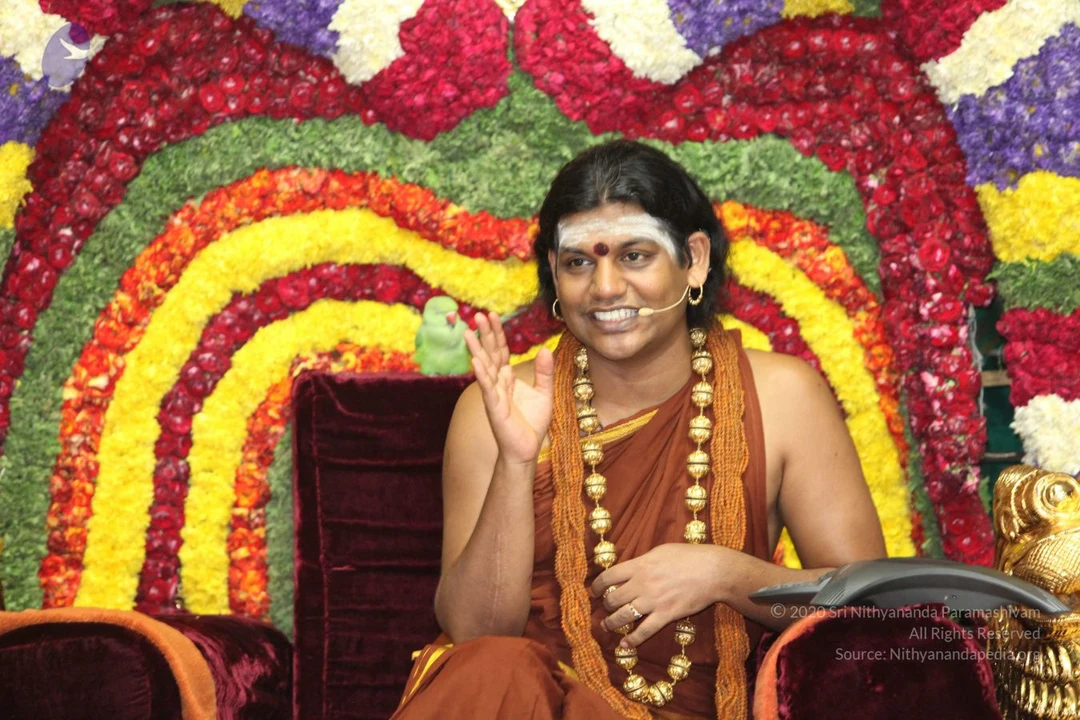
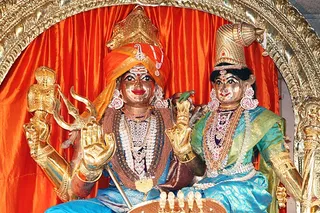
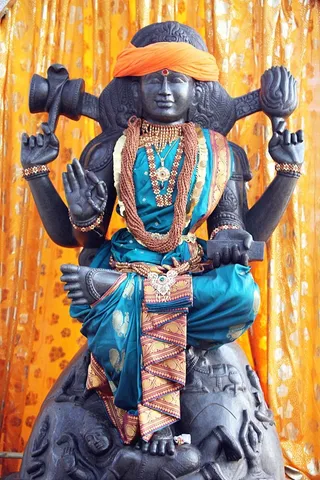
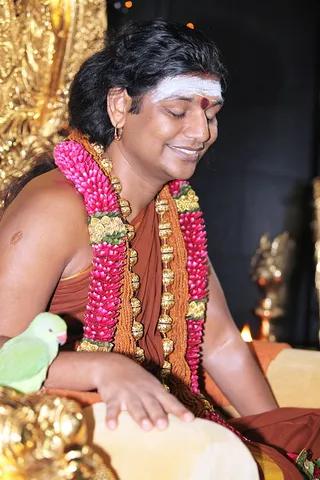
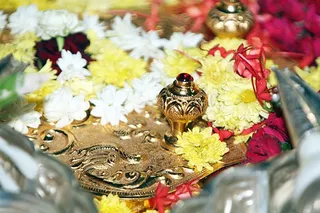
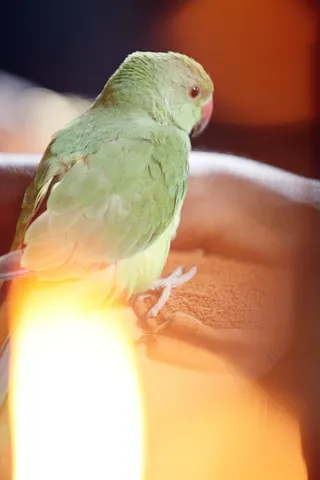
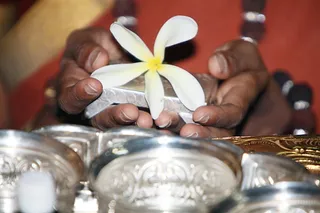
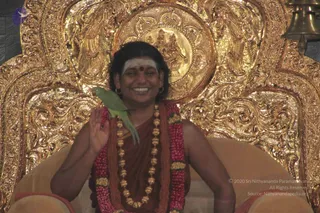
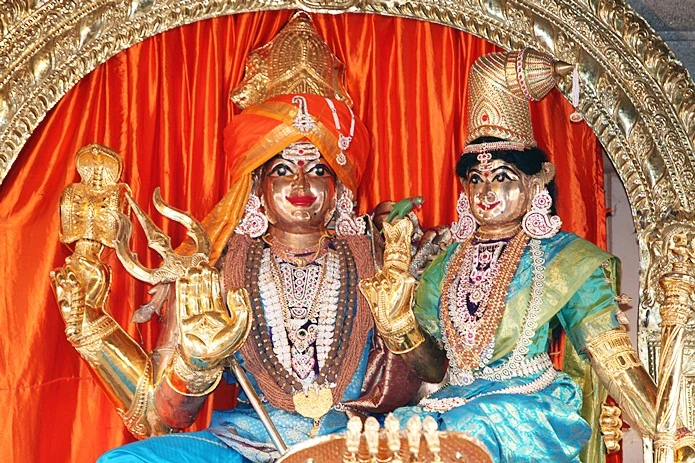
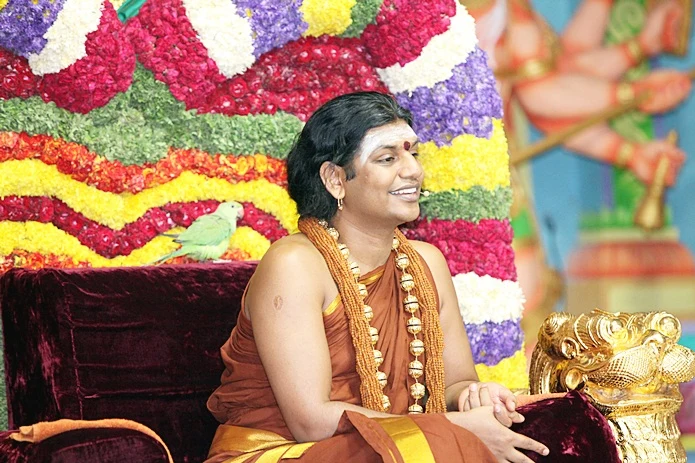
Two gilded deity murti are seated side by side against a bright orange draped backdrop framed by an ornate gold arch. The figure on the left, a male form, has a tall orange and gold turban, a trident held in one hand, and a rudraksha-style necklace over a bluish garment. The figure on the right, a female form, wears a green and blue silk sari, a tall gold crown, large earrings, and layered pearl and bead necklaces. Both have painted faces with red markings and sit on a decorated seat with a brass offering vessel in the foreground. No living people are visible.A dark stone murti of a four-armed deity seated in lotus-style pose on a carved rock base, with an orange turban and red tilak on the forehead. It wears layered rudraksha-style beaded malas, gold necklaces and bangles, and a teal silk dhoti with gold brocade borders and a jeweled waist ornament. Its hands hold a trident-like staff and other ritual objects. Behind it hang shimmering orange and gold draped fabric. No physical people are visible; the figure is a statue.A seated man with closed eyes and a faint smile sits on a gold-covered throne-like seat in front of a gilded backdrop. He wears a rust-brown dhoti-style garment with a shawl, a long pink and white flower garland, and a gold-bead necklace of ornate ball pendants with orange rudraksha-style beads. A white vibhuti line and red kumkum mark decorate his forehead, and small gold earrings are visible. A small green parrot perches on the golden armrest beside his hand. A lit oil lamp flame glows at the lower right beside a gold figurine. Wearing the saffron-brown robes, mala and ornamental adornments, he matches the appearance-based candidate, so this is a person in person.Close-up photograph of a ritual arrangement of flowers. Yellow chrysanthemums, white jasmine-like blossoms, red and magenta blooms and red flower sprigs are heaped around an ornate gold-toned metal tray with embossed floral and scrollwork designs. A gold pot-shaped vessel with a red gemstone-like top sits at the centre, with a second gold vessel at the upper edge. Silver-toned metal objects are partly visible in the foreground. No people are visible.A close photograph of a green parakeet perched on a cupped hand draped in a light cream cloth, with a bright warm light source glowing in the lower left foreground and an orange blurred background. The bird has a pink-red beak, a pale head, a small dark eye and green wings with lighter tail feathers. No people are visible apart from the hand holding the bird.Close-up photograph of a person's hands holding a small silver vessel with a single white frangipani (plumeria) flower with a yellow centre resting on top. In the foreground are several ornate silver bowls with repoussé floral engraving. Red cloth and a beaded mala are visible at the upper edge.

PADAPUJA

7 photosSource gallery
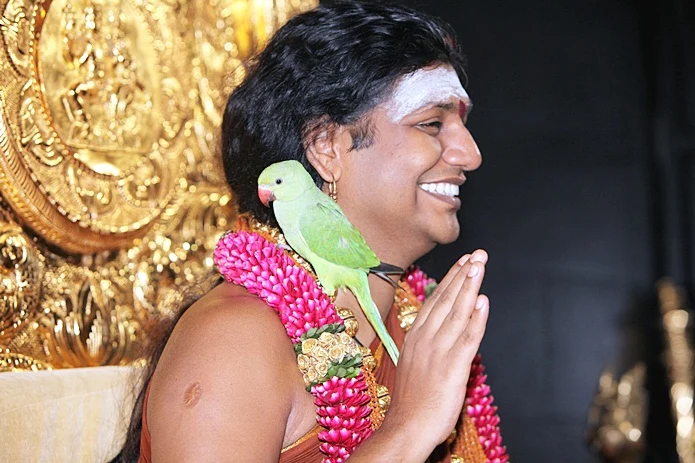
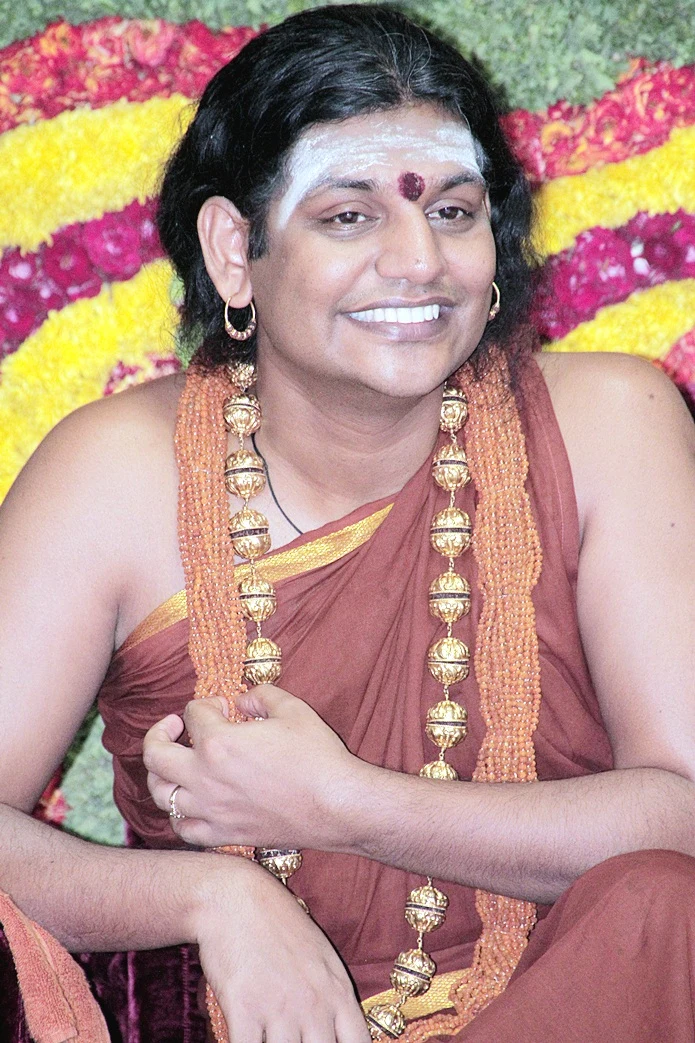
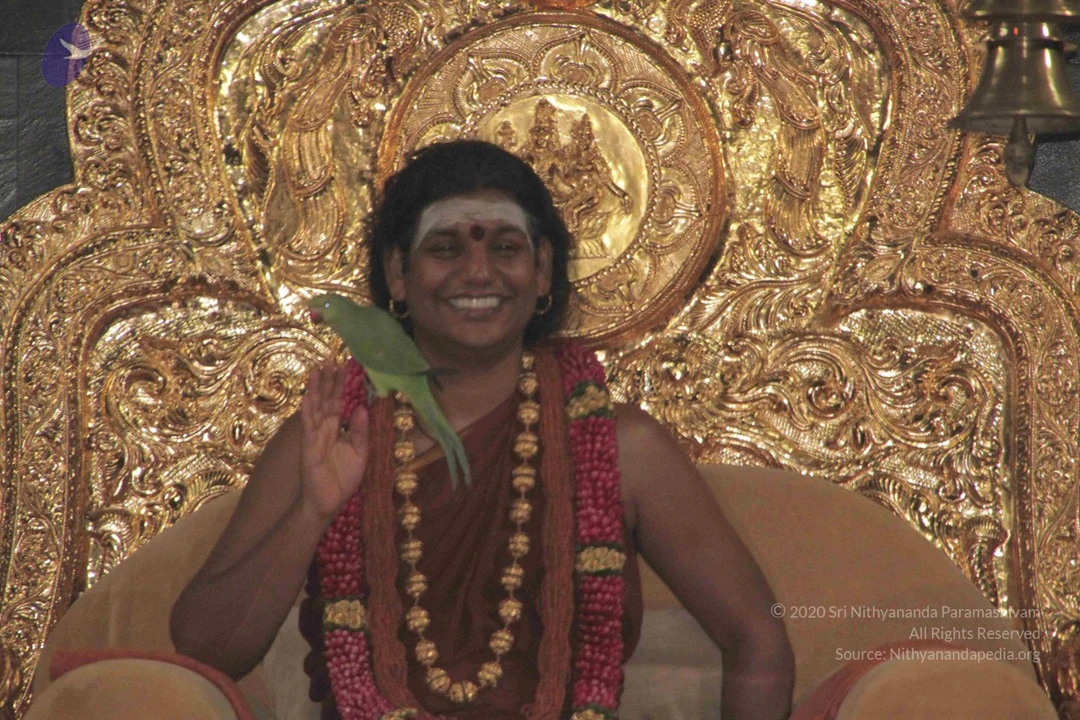
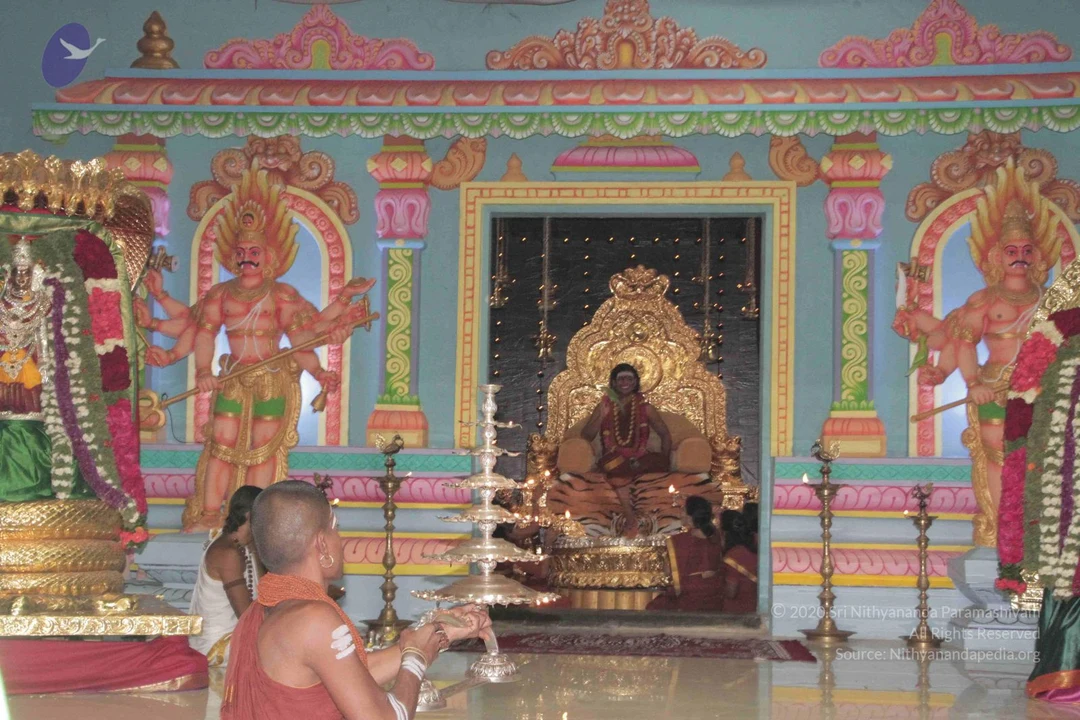
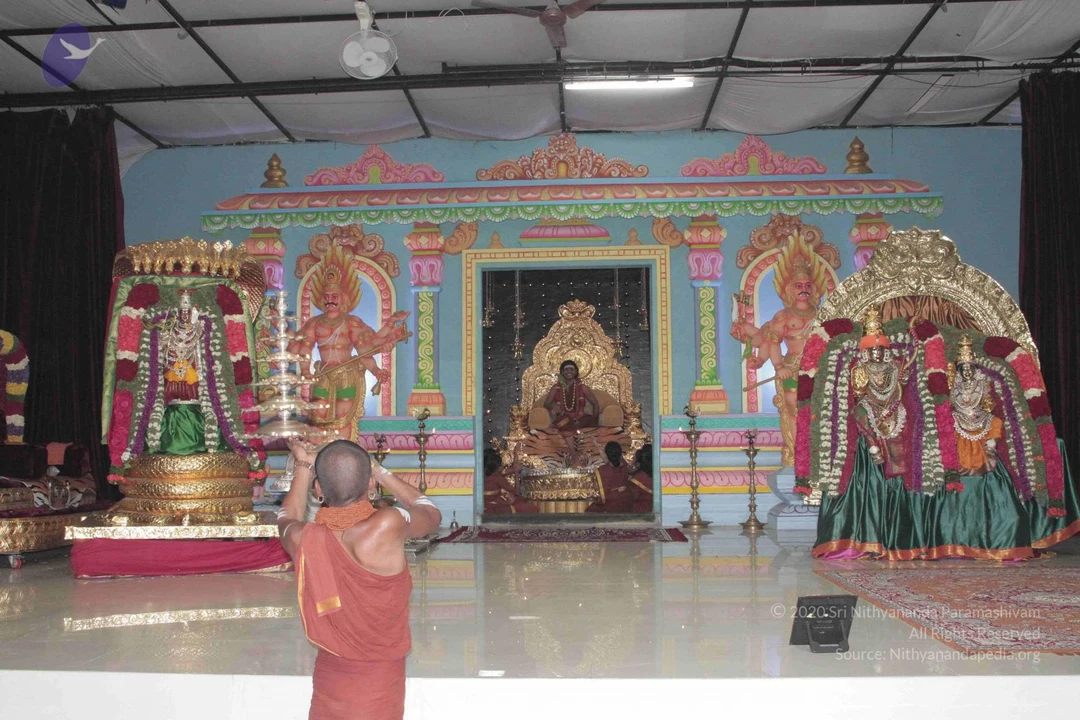
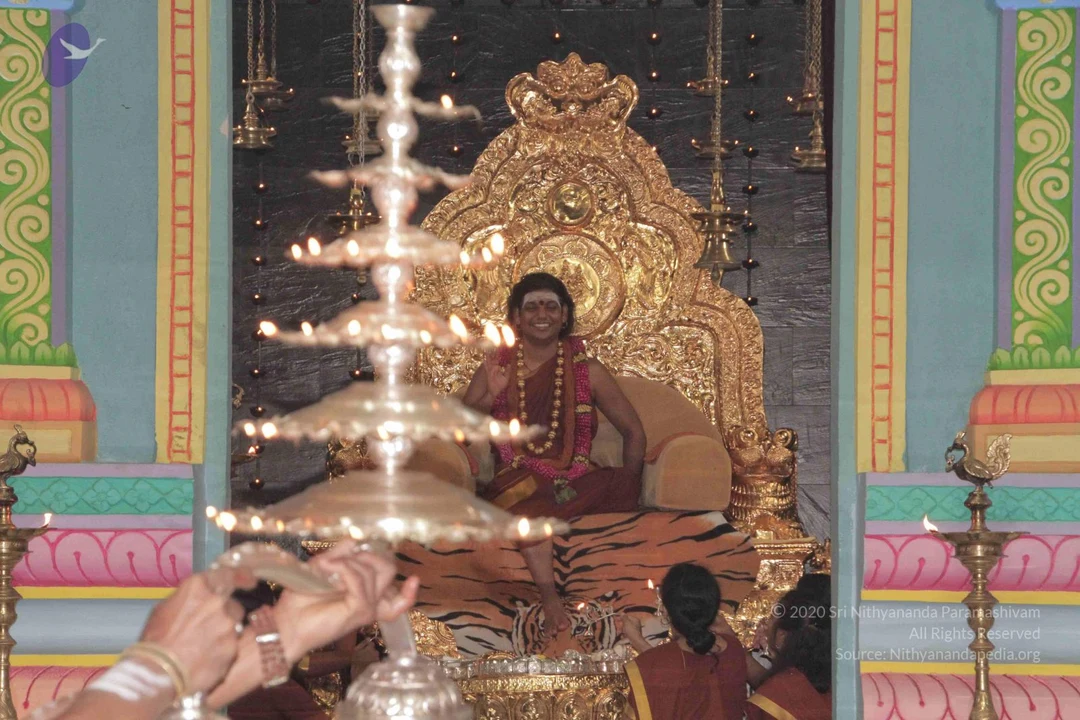
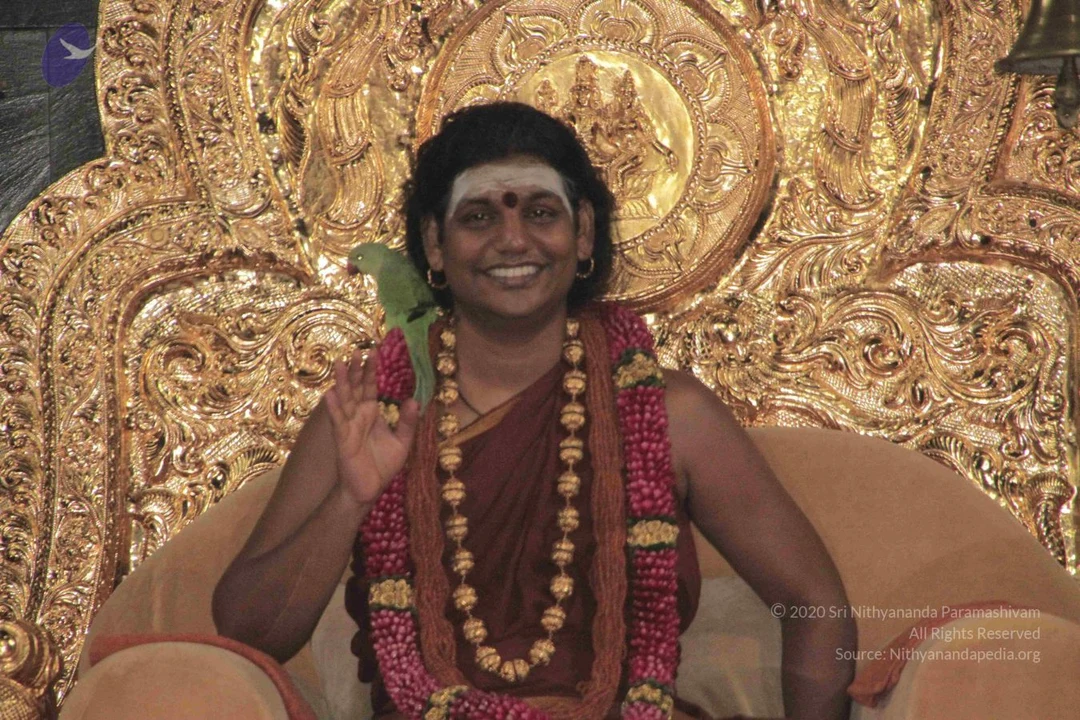
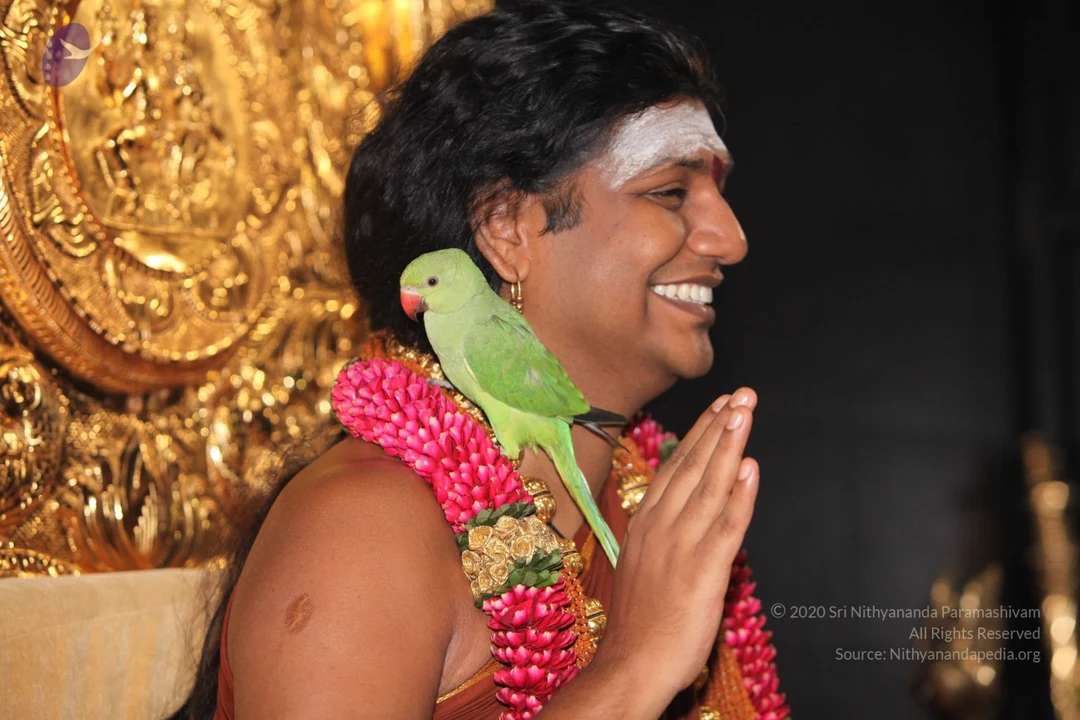
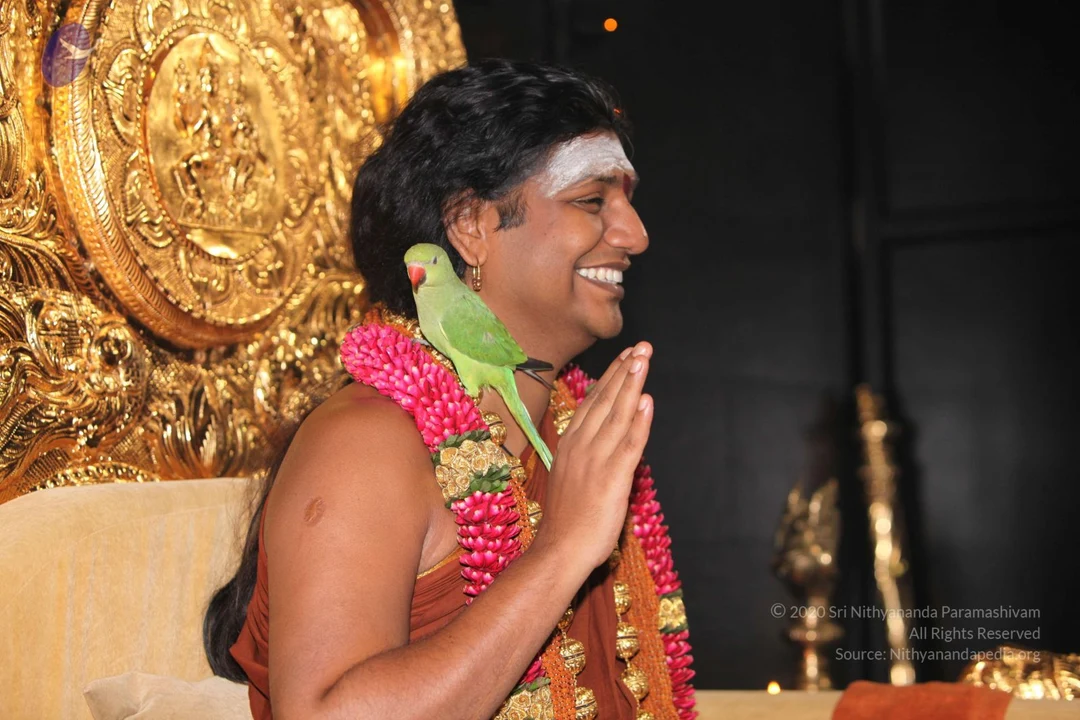
Interior of a temple-style hall with a pastel blue back wall decorated with pink and gold arches and two painted guardian figures holding staffs. In the centre, a seated figure in a golden throne with a dark red garment and rudraksha-style beads sits before a gold-framed shrine doorway, with devotees in red seated on the floor in front. To the left, a deity murti is garlanded with purple and red flower garlands on a gold pedestal, and to the right, a pair of deity murtis in green and orange silk with garlands sit under a gold canopy. A priest in white dhoti kneels at the front, tending a puja tray and brass lamps on a glossy floor. Brass oil lamps stand along the platform.A smiling man seated on an ornate gold throne with intricate carved and embossed relief panels, one panel showing a deity figure. He wears a reddish-brown ochre wrap over bare shoulders, a long gold bead necklace, and a thick pink and white garland. He has a white ash marking with a red dot on his forehead and a raised right hand. A small green parakeet perches on his shoulder. A brass bell hangs at the upper right. Appearance-based label: a person, seated in a devotional darshan setting.A photo inside a temple shrine with painted pink, green and yellow walls. Two painted dvarapala guardian figures with raised weapons flank a central golden throne draped with a tiger skin, where a seated figure in red and white garments with a red beaded necklace is seated. A shaven-headed priest in orange robe with white markings on his forehead and arms, stands at the lower left holding a tall silver lamp stand with lit flame during an aarti. Other attendants in red and white clothing are near the throne steps, and brass oil lamps stand on the floor. Garlands of red and white flowers decorate the side deity figure at left and the right edge.A photograph inside a temple-style hall with a painted blue backdrop, pink and green arches, and two painted dvarapala guardian figures with orange-red skin holding weapons. At the centre, a seated figure in orange and red robes sits on an ornate golden throne with a small altar before it. To the left, a deity murti is garlanded with red and white flowers and decorated in a green cloth. To the right, another deity murti in a green silk drape and gold jewellery is garlanded with flowers. In the foreground, a shaven-headed man in an orange robe with an orange shawl stands with his back to the camera, raising a tall brass lamp or kalasha-like vessel in ritual worship. Brass oil lamps stand on the floor, and a garland-draped stage holds the murtis.Photograph of a seated figure on an ornate gold throne with a tiger-skin cover, set against a dark backdrop with hanging brass lamps. The seated person wears saffron-orange robes, a red-and-pink flower garland and a beaded necklace, with a red tilak on the forehead, and raises one hand in greeting. In the foreground a tall multi-tiered silver lamp with several lit flames is held by a hand adorned with bangles, and a brass oil lamp burns on the right beside painted green, pink and yellow pillars. Two people in saffron clothing sit at the lower right near the throne. a person: the seated figure has a shaved head with a red tilak, saffron robes and a rudraksha-style beaded necklace, seated on a throne in a ritual setting.A seated man smiles broadly and raises his right hand in a blessing gesture while a small green parrot perches on his left shoulder. He wears a white vertical tilak on his forehead with a red dot, gold hoop earrings, a maroon-red robe, a gold bead necklace and a thick garland of pink and white flowers. Behind him is an ornate gold throne with intricate repoussé scrollwork and a circular gold panel showing a deity murti. The photo is taken indoors at a satsang-style setting. Appearance cues: the figure has a shaved-style tilak, rudraksha-style gold beads and a garland but no visible long hair or crown; identity is uncertain from appearance alone, so only the role of a seated teacher on a gilded throne is described.
PUJA

3 photosSource gallery
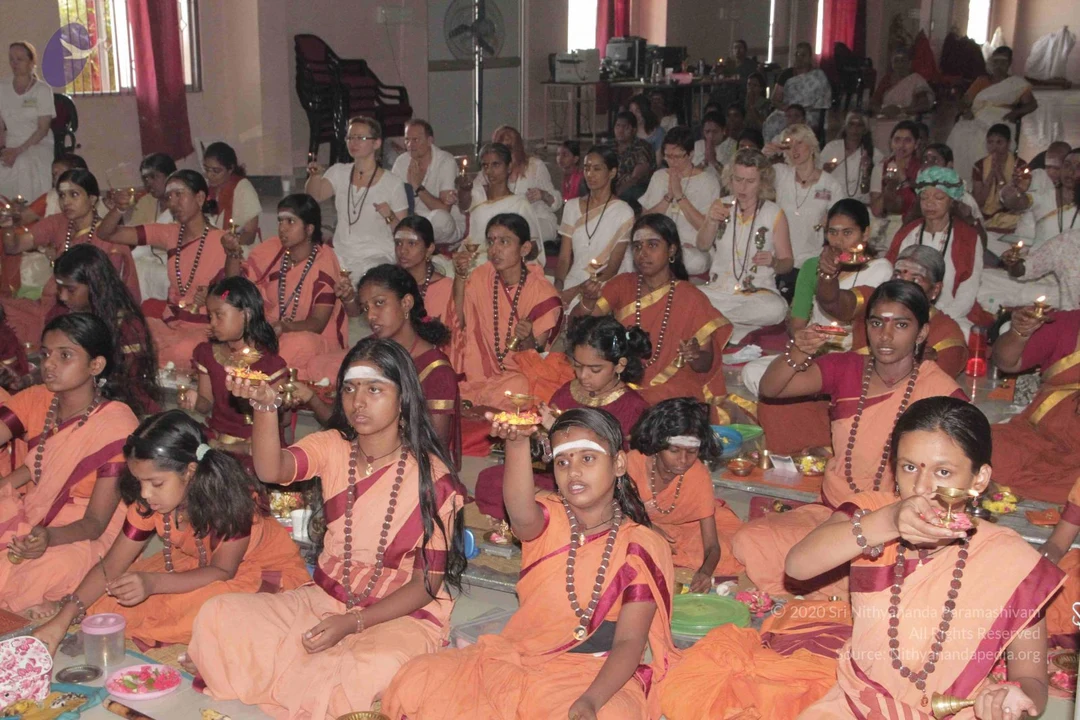
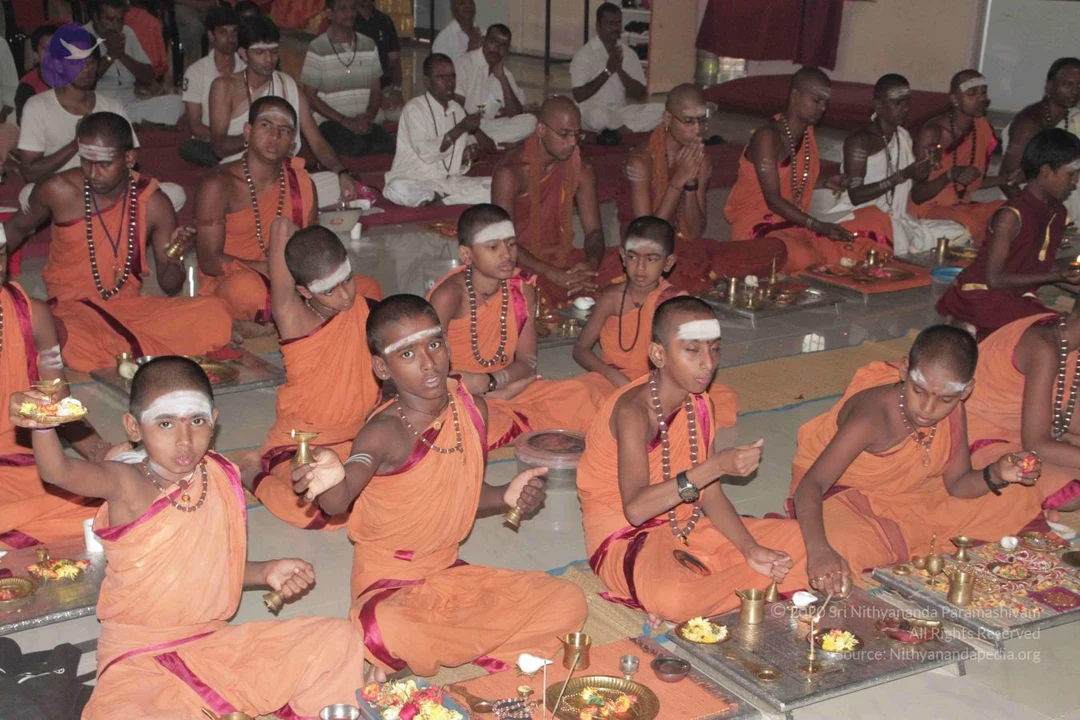
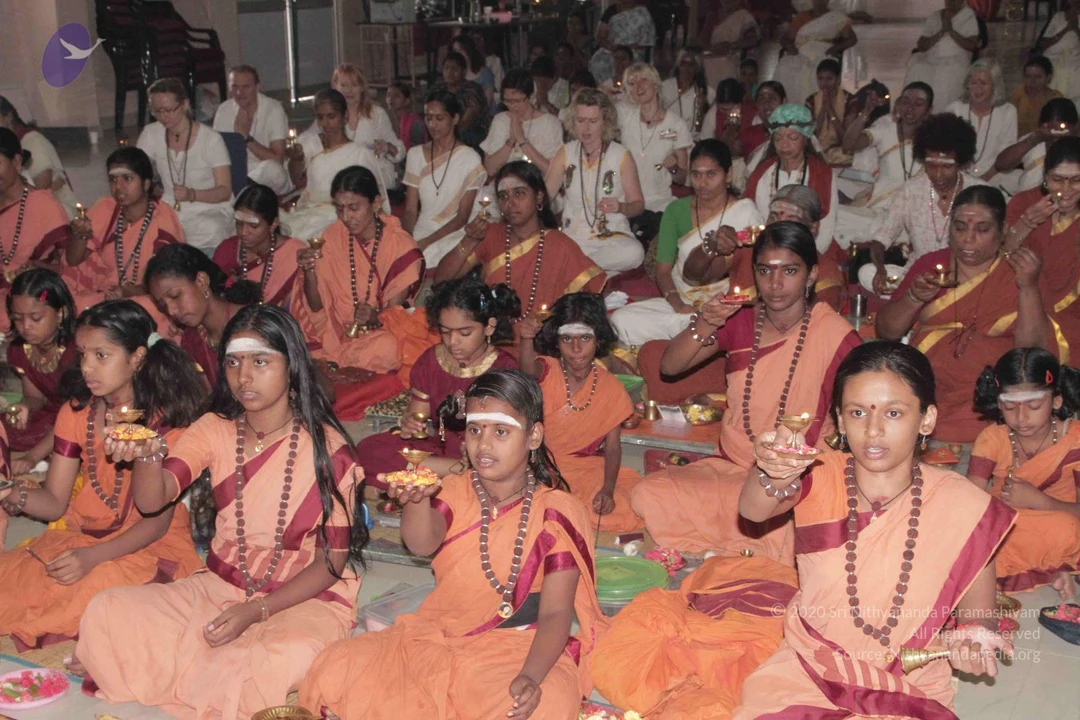
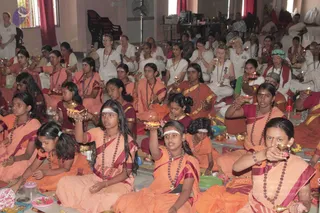
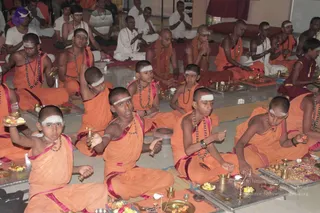
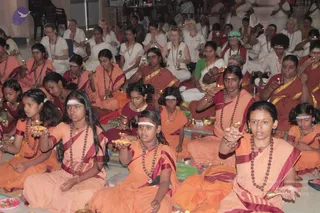
A large indoor gathering of devotees seated on the floor during a ritual, many holding small oil lamps and offering plates. In the foreground, young girls wear orange and maroon saris with rudraksha malas and white forehead markings, lifting lit oil lamps. Behind them, rows of women and men in white and orange garments continue the ceremony, with pink curtains and a few chairs visible in the background.A seated group of young boys and some adult men perform a ritual puja in an indoor hall. Front-row boys wear saffron-orange dhotis and garlands of rudraksha beads, with white tilak marks across their foreheads, and they hold small brass vessels and offerings on brass plates. Behind them, older monastic men in saffron robes and beads sit on red mats, and white-clad devotees sit at the back with hands joined. Several brass plates hold sweets, flowers and oil lamps.A photograph of a large seated group during an evening devotional ceremony in a bright hall. In the foreground, young girls and teenagers wear saffron-orange saris with maroon borders, rudraksha malas, and white forehead markings; several hold small brass oil lamps and offering plates with flowers and fruit. Behind them, women in white and orange clothing sit with hands folded or holding lamps, and a few people in white stand or sit toward the back. Overall the scene reads as an aarti or puja with oil lamps and flower offerings.

NITHYA-SATSANG

20 photosSource gallery
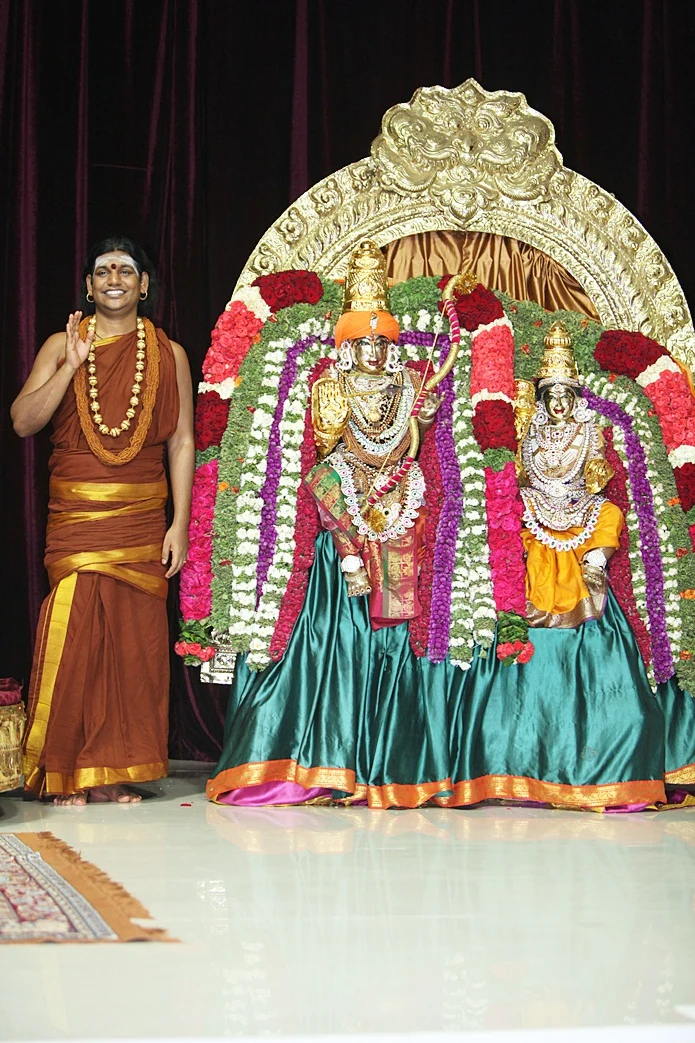
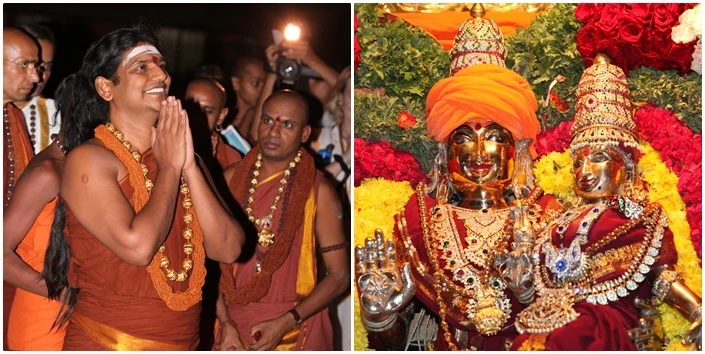
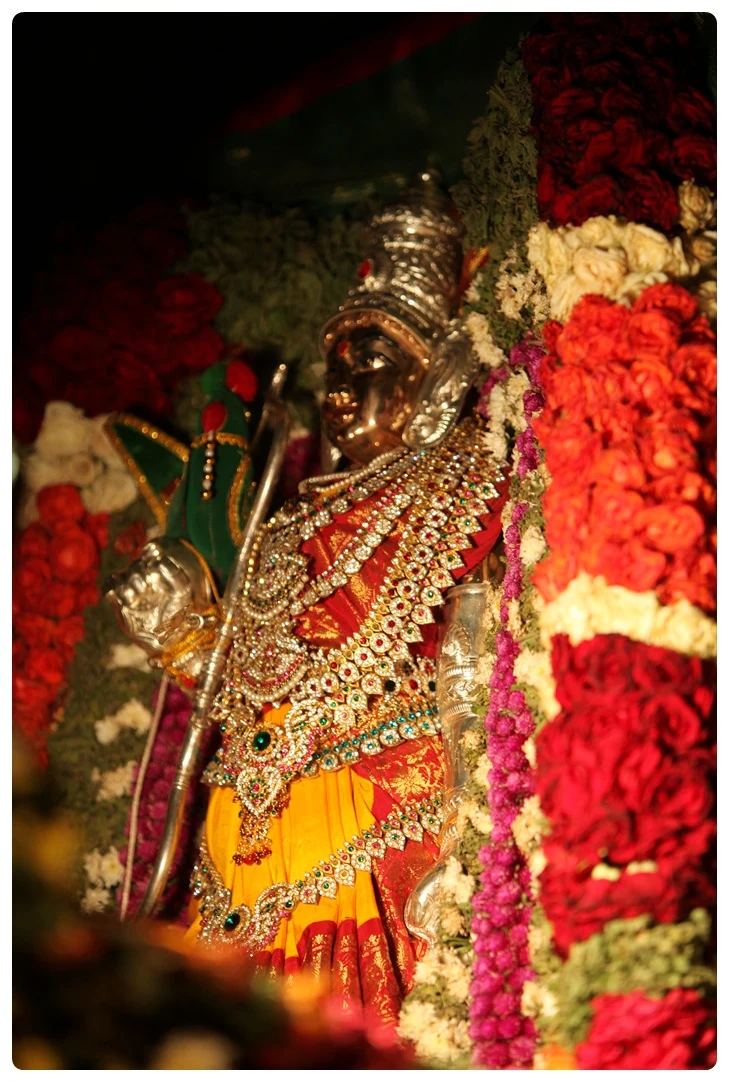
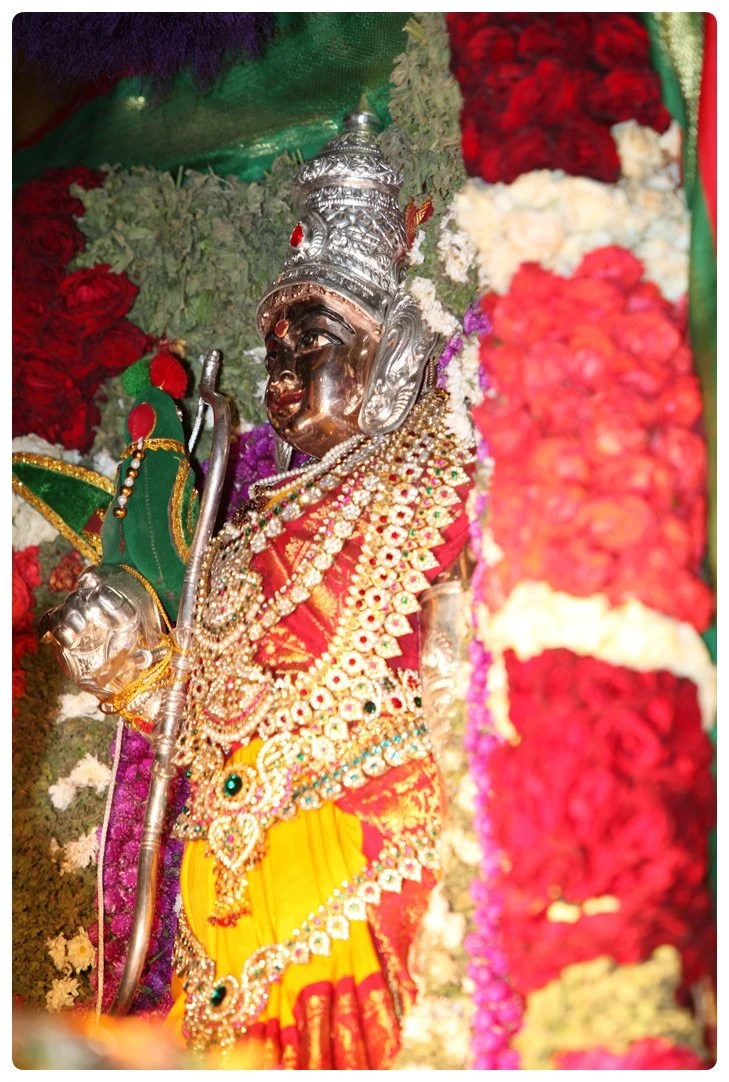
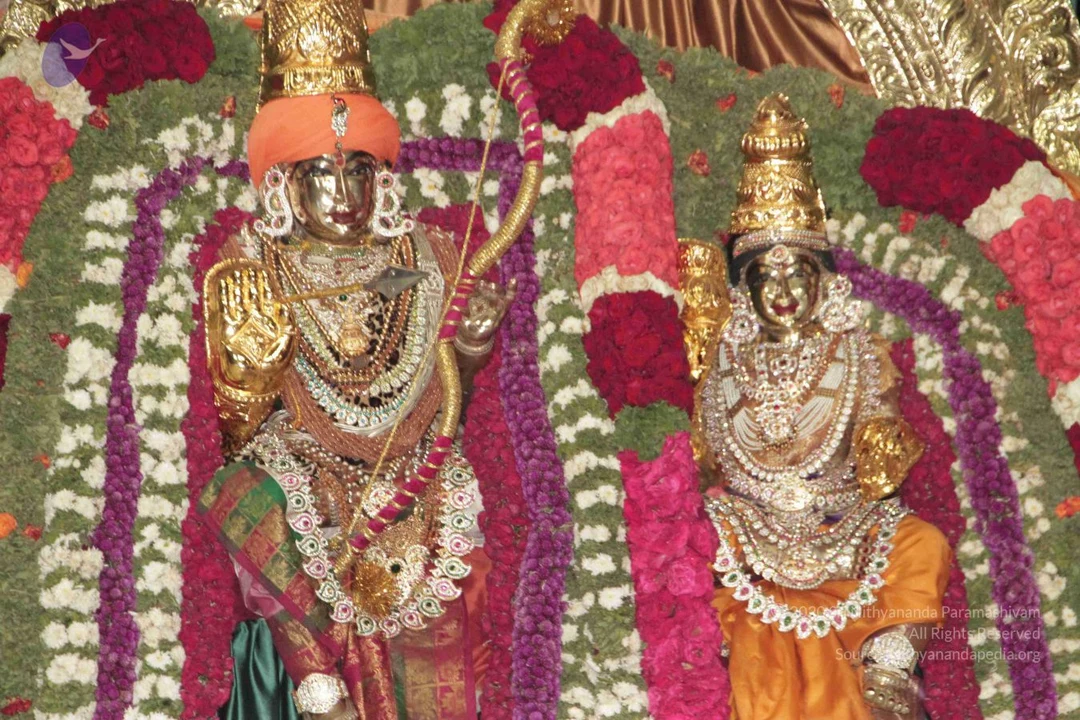
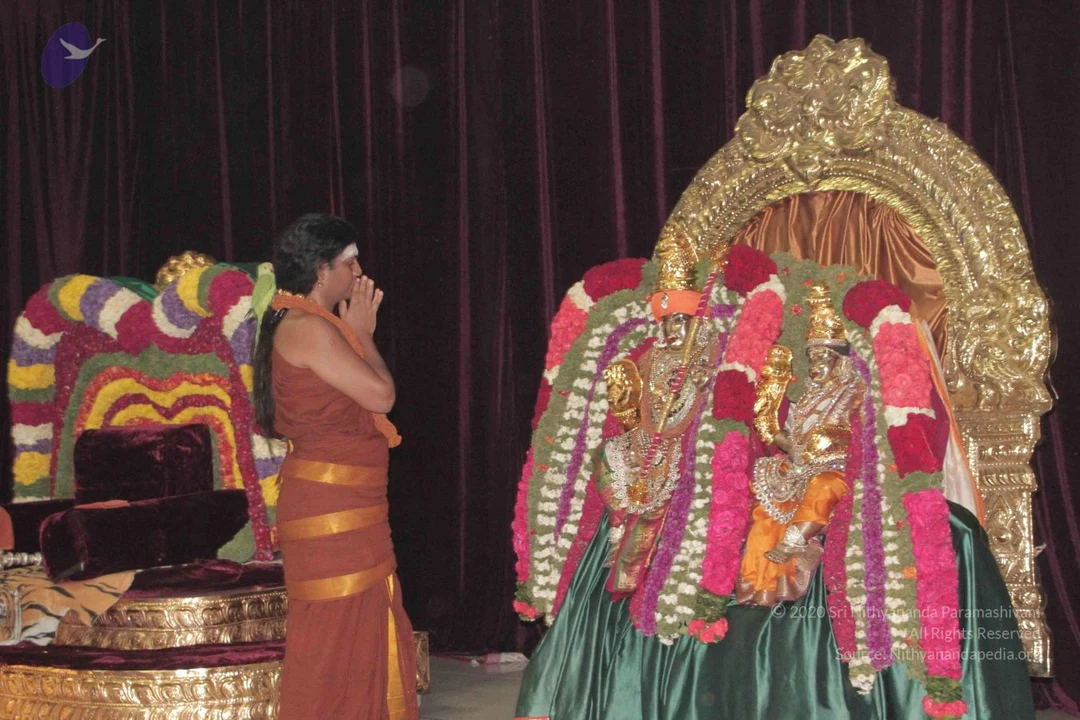
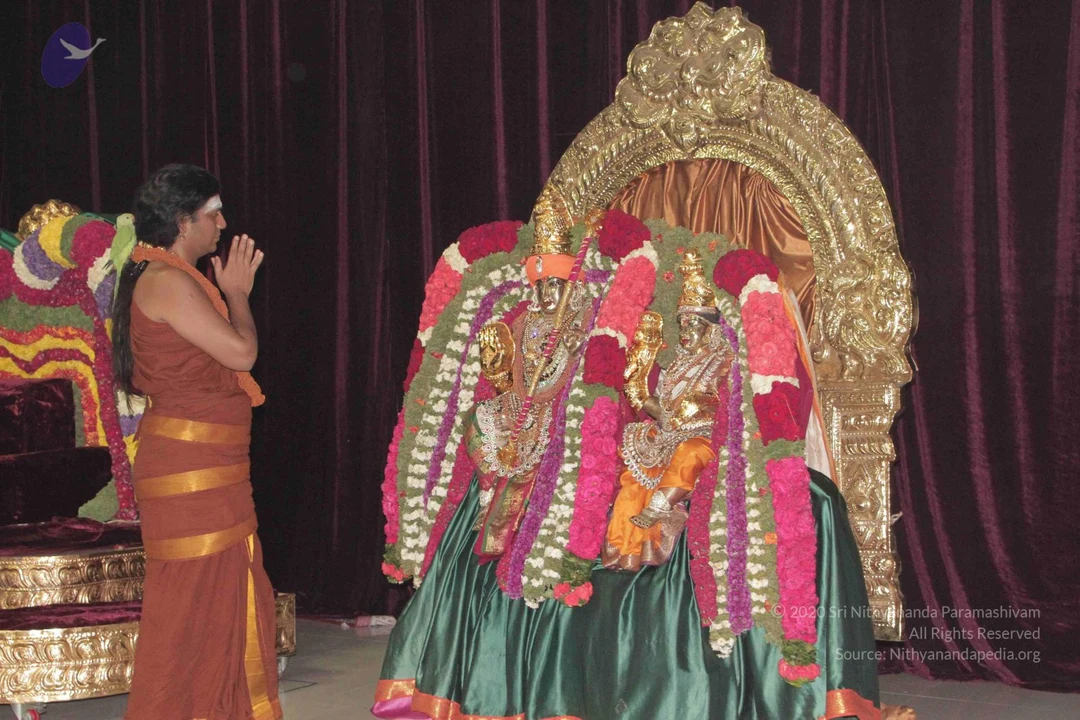
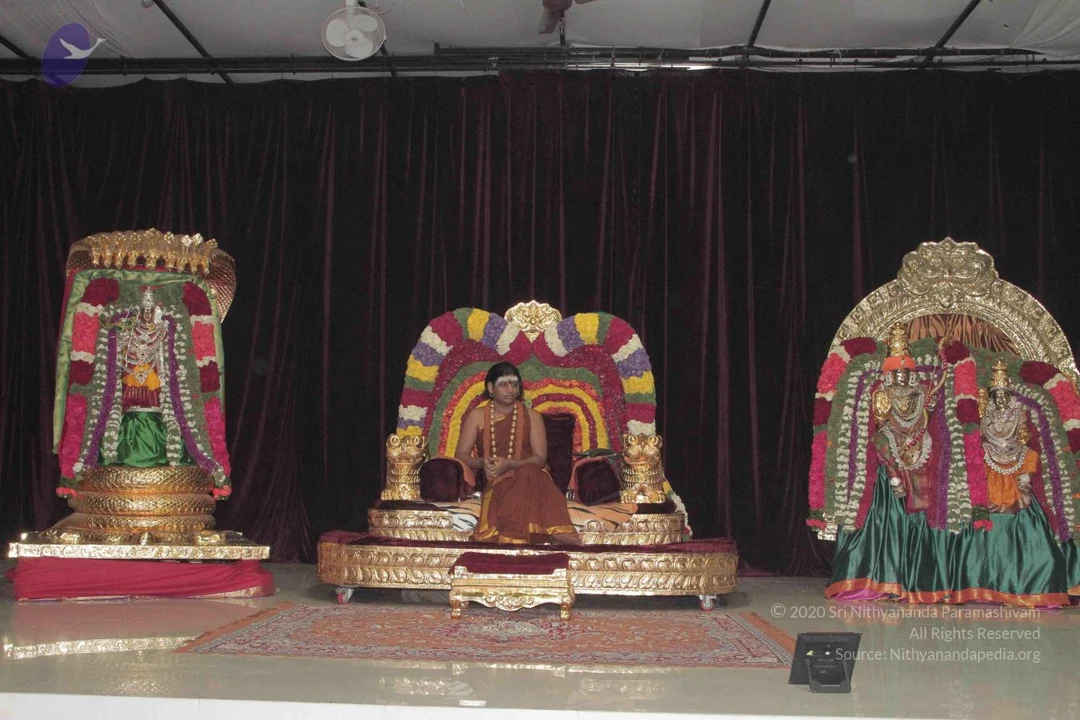
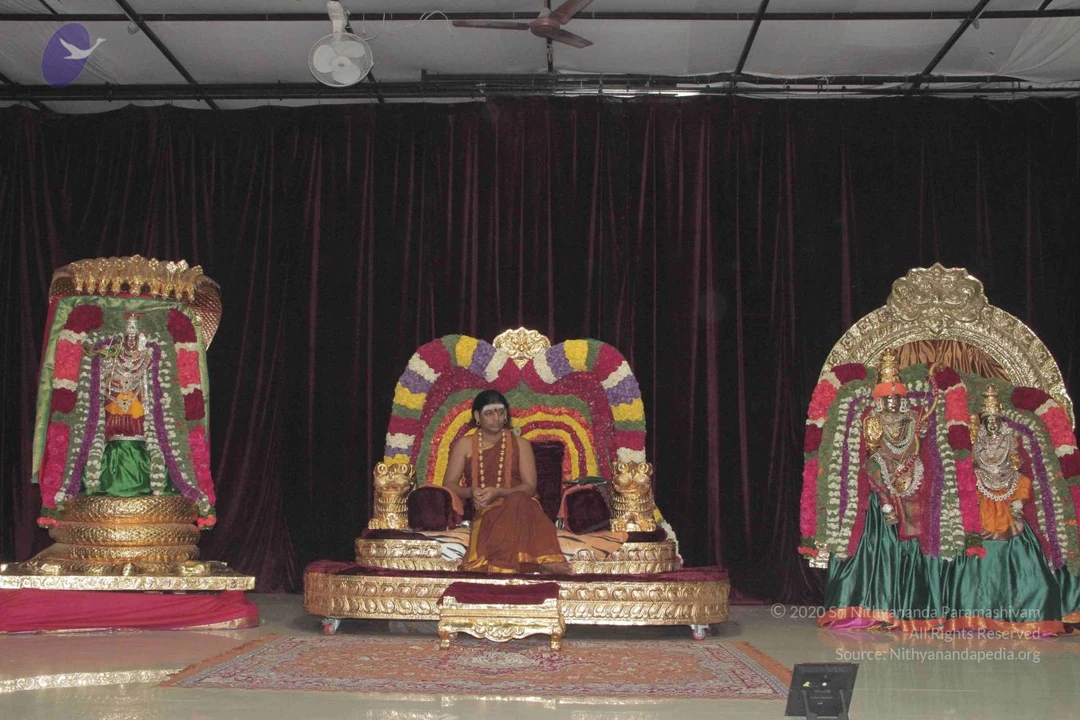
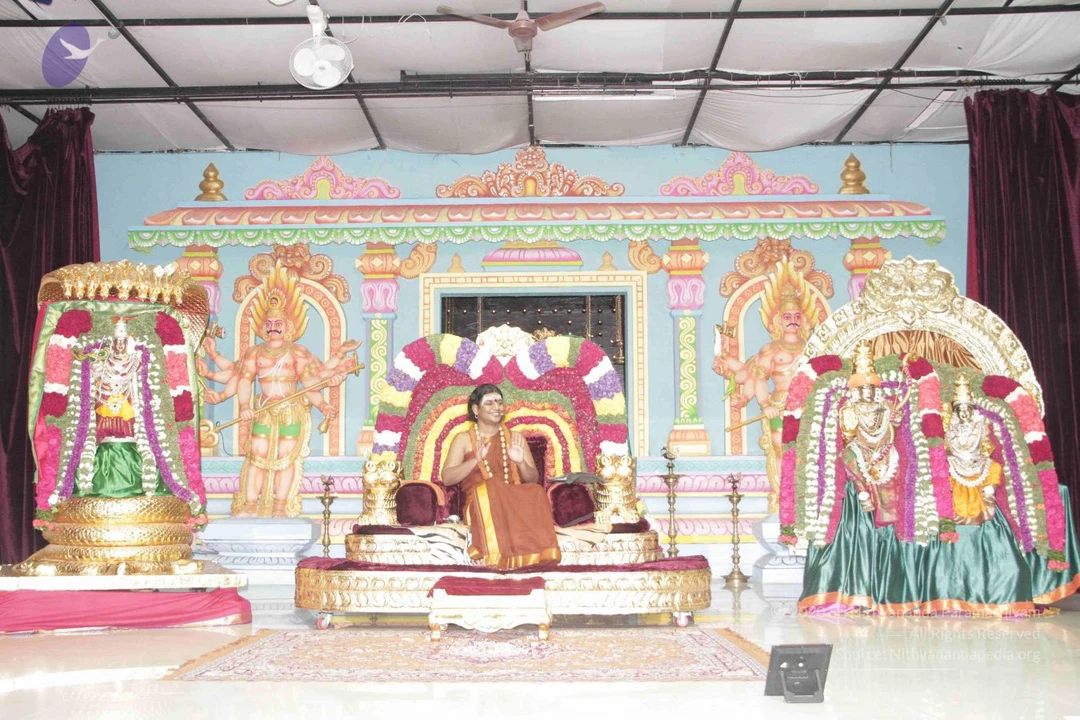
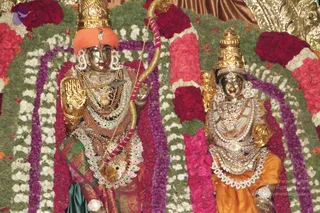
Photograph of two metal deity murtis, a male figure with a bow and an arrow and a female figure, both decorated for worship. The male murti wears an orange turban topped by a gold crown, silver jewelry, a bow in one hand and an arrow held at the chest. The female murti wears a gold crown, layered silver necklaces and orange garments. Both stand against a backdrop densely covered with red, pink, purple and white flower garlands and green leaves, with gold ornamental framing above.A man in a saffron-orange dhoti and matching shawl stands in profile with palms pressed together in namaste before a shrine. Two deity murtis stand under a large gold arch, both draped in garlands of red roses, white jasmine and green leaves, with a purple garland across them; one wears a gold crown and the other a pointed gold crown. Behind them hangs a green satin skirt and a deep maroon velvet curtain. To the left a throne-like seat is decorated with multicolored garlands of yellow, pink, purple and white flowers, and a cushion rests on a gold base. The man has long dark hair and a tilak on his forehead. The scene reads as a puja or darshan in a temple-style stage setting.A man in a saffron-orange dhoti and matching upper wrap stands at left with palms pressed together in namaste before two deity murtis seated under a golden arched canopy. The murtis are dressed in green silk, with garlands of pink, red, white and purple flowers draped across them and gold ornaments and crowns. A gold-and-brown throne or seat is visible at left, and deep maroon velvet drapes line the back wall.A photograph of a stage at an indoor event with dark maroon velvet drapes behind it. A central golden throne with lion-head armrests, draped in red and framed by a flower garland arch in green, pink, yellow, purple and orange, holds a seated figure in a saffron-orange robe with a rudraksha mala around the neck. To the left, a deity murti in green silk and a flower garland stands on a gold pedestal. To the right, a pair of deity murtis wear green silk, gold jewellery and garlands under a gold arch. A small golden stool and a red-and-cream rug sit in front of the throne, with a tent ceiling above.A photograph of a stage set for a satsang. A man in orange-saffron robes with a rudraksha mala sits cross-legged on a gold-trimmed throne (peetha) framed by a rainbow arch of red, yellow, purple and white flower garlands. Flanking him on the left and right are two decorated deity murti on pedestals, one dressed in green and wrapped in green and red garlands and the other with gold ornaments and a green silk skirt, both adorned with flower garlands. A maroon velvet curtain forms the backdrop, with a gold-trimmed low table and a patterned rug in front. A plain fan hangs from the ceiling. The only physical person is the seated man; the murti are statues.Photo of a stage set for a satsang, with a seated figure on a gold-and-maroon throne at centre. The seated person wears a brown-orange cloth and a beaded necklace and sits before a floral-garlanded backdrop. Flanking the throne are two decorated deity murti: on the left a figure garlanded with red, purple and white flowers, on the right a larger gilded arch framing two standing deity murti in green and orange garments with floral garlands. A painted multi-coloured temple-style backdrop with carved pillars and a central doorway fills the rear. A red-and-cream carpet lies on the floor, and oil lamps stand on brass stands. The stage is dimly lit and the seated figure is small in frame, so no other people are visible.

SARVADARSHAN

17 photosSource gallery
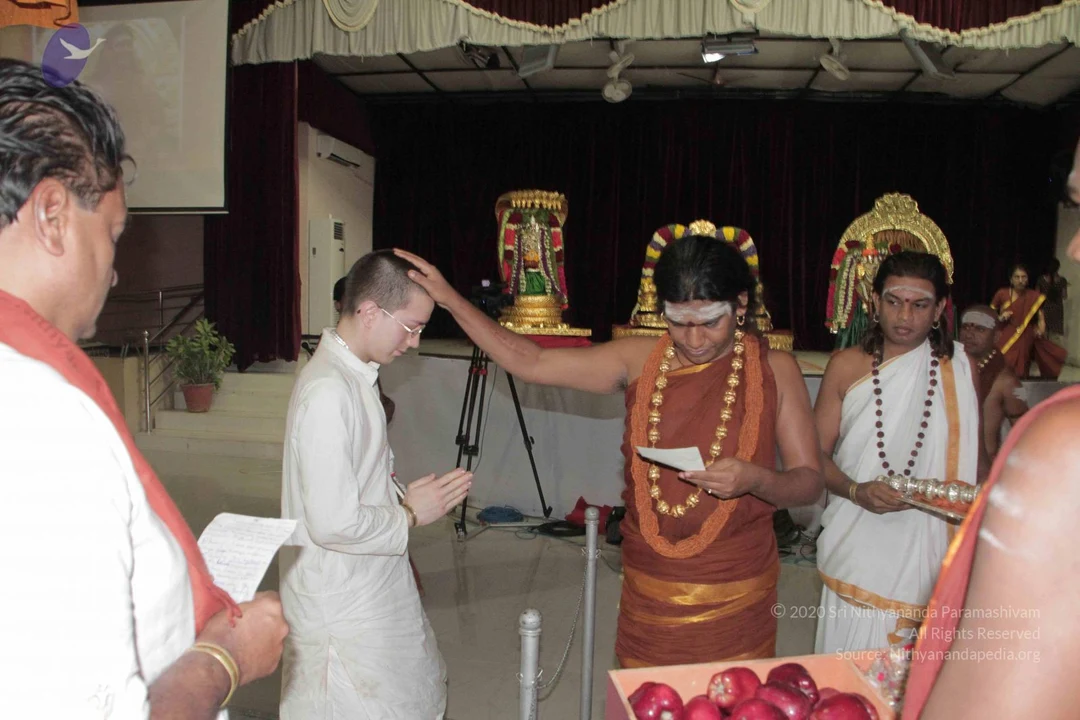
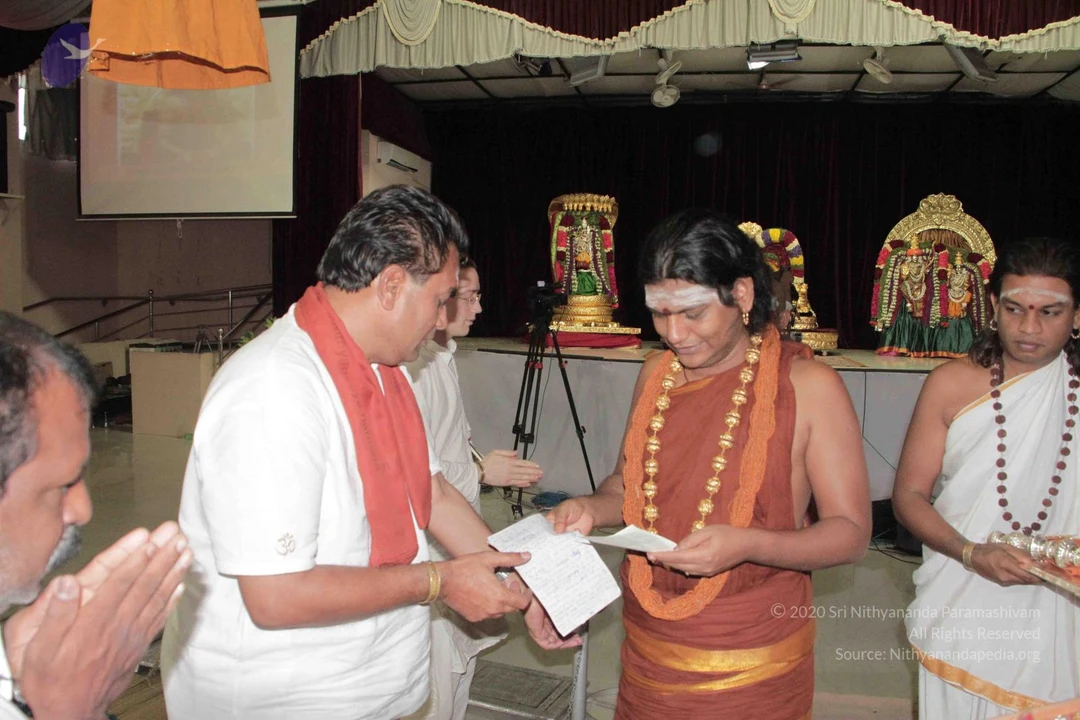
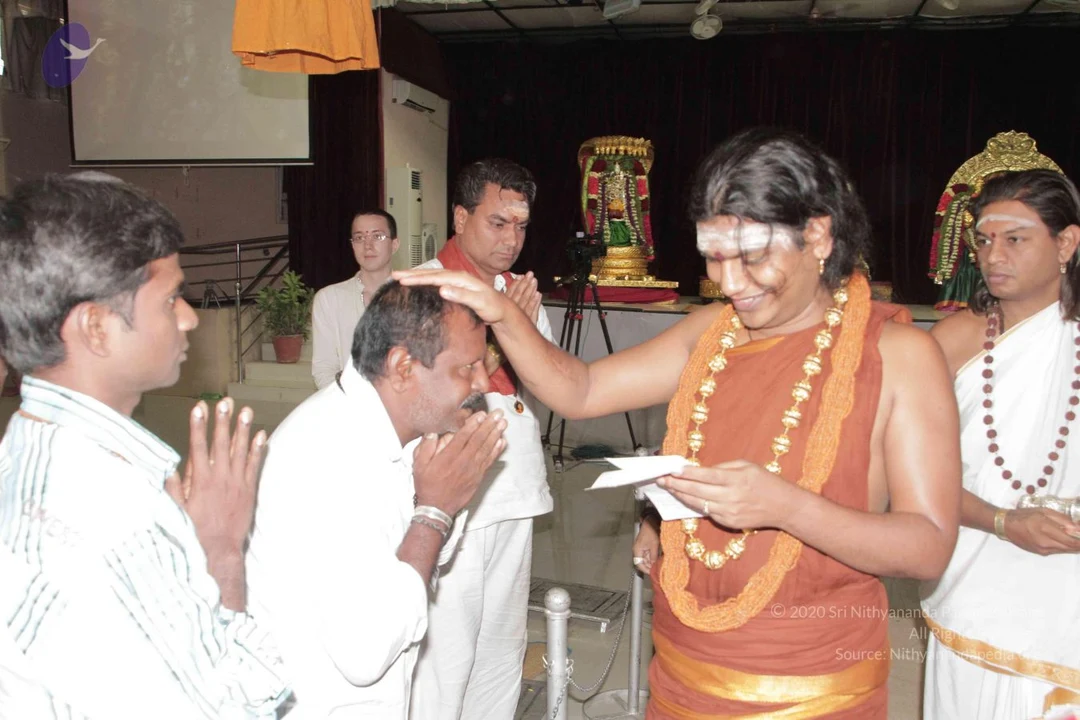
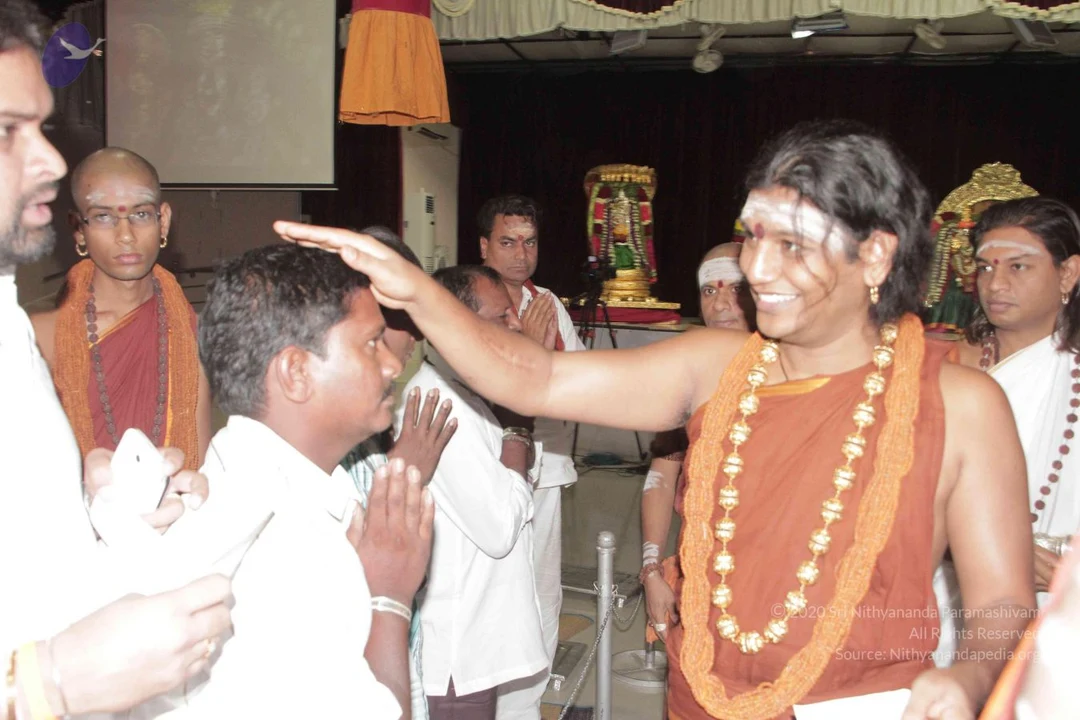
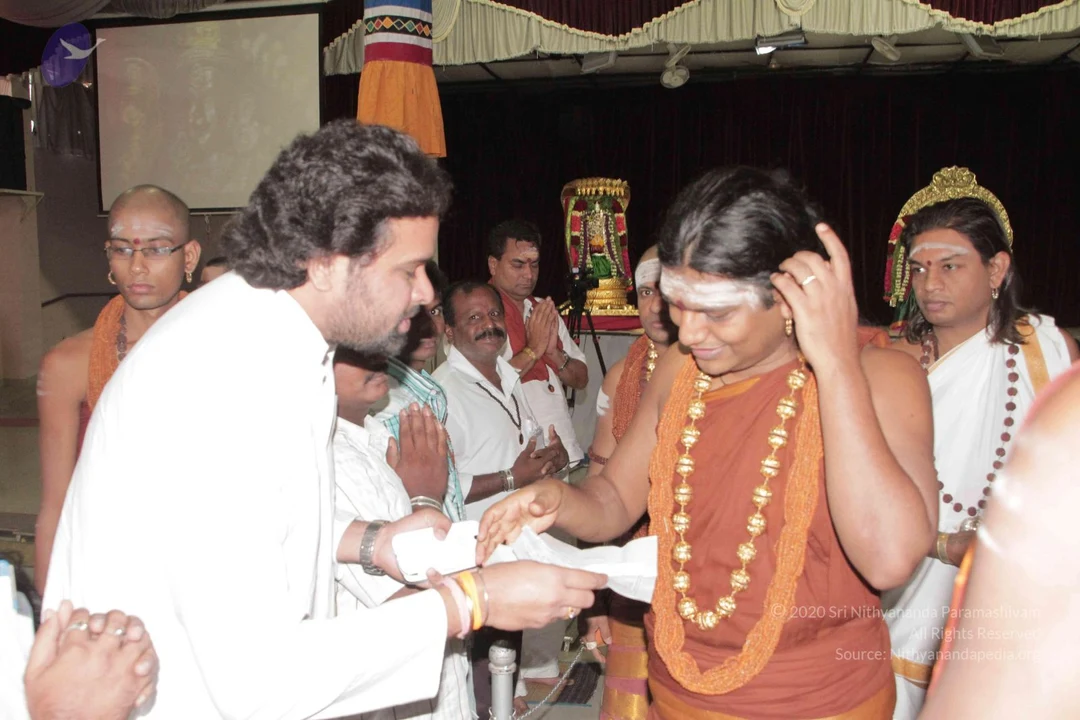
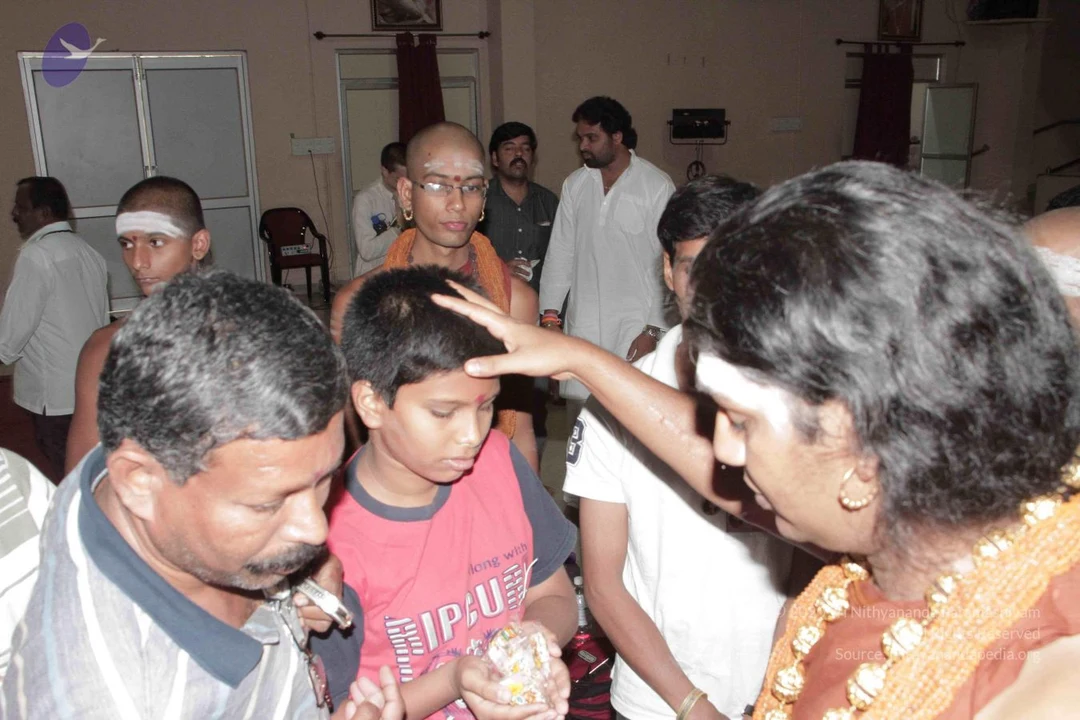
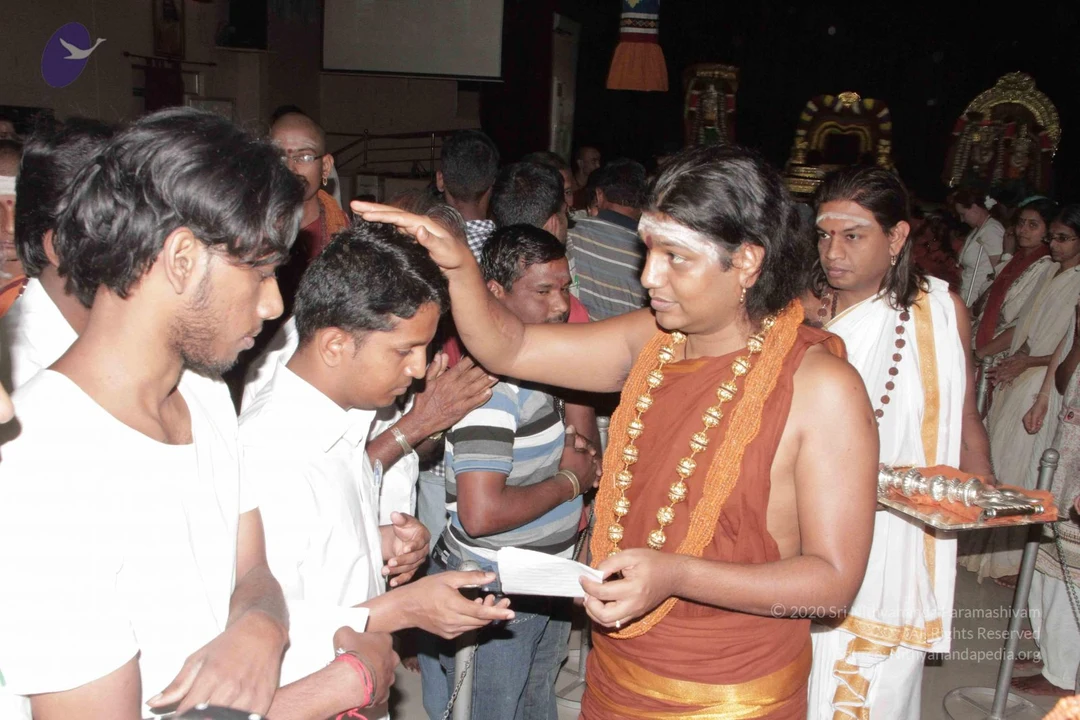
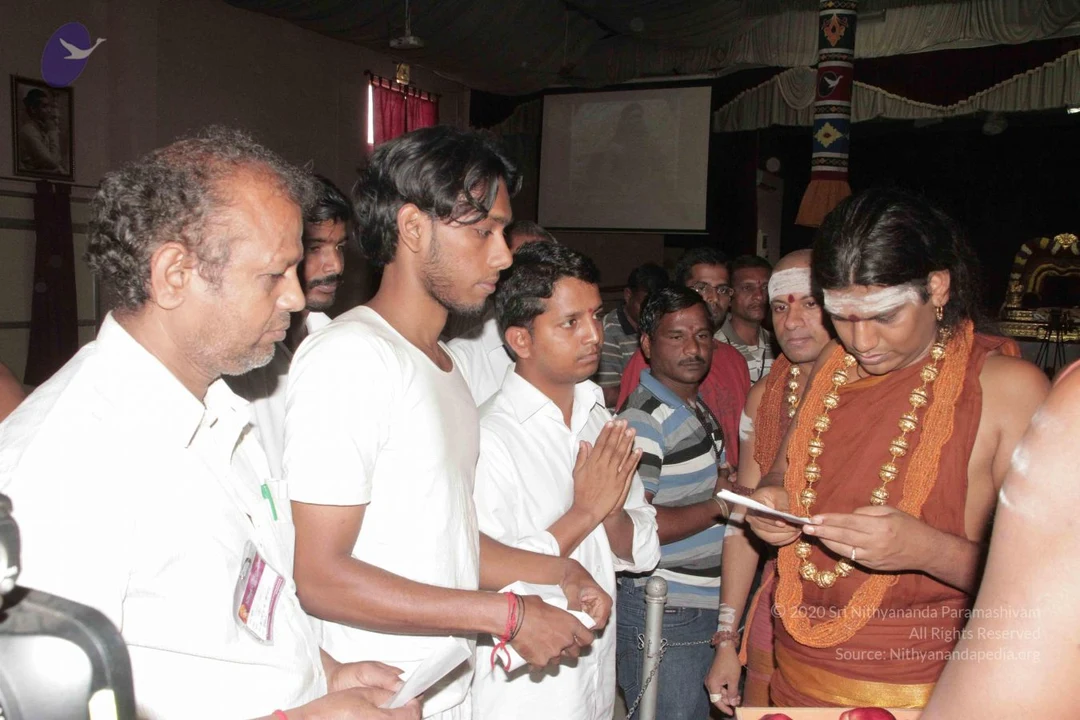
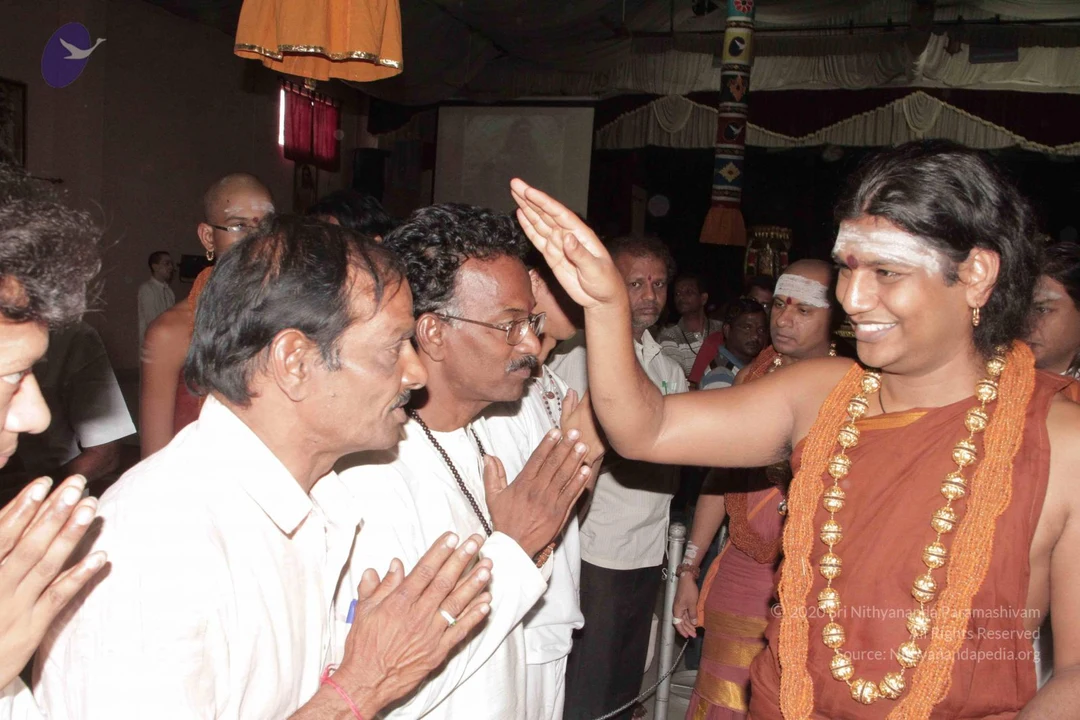
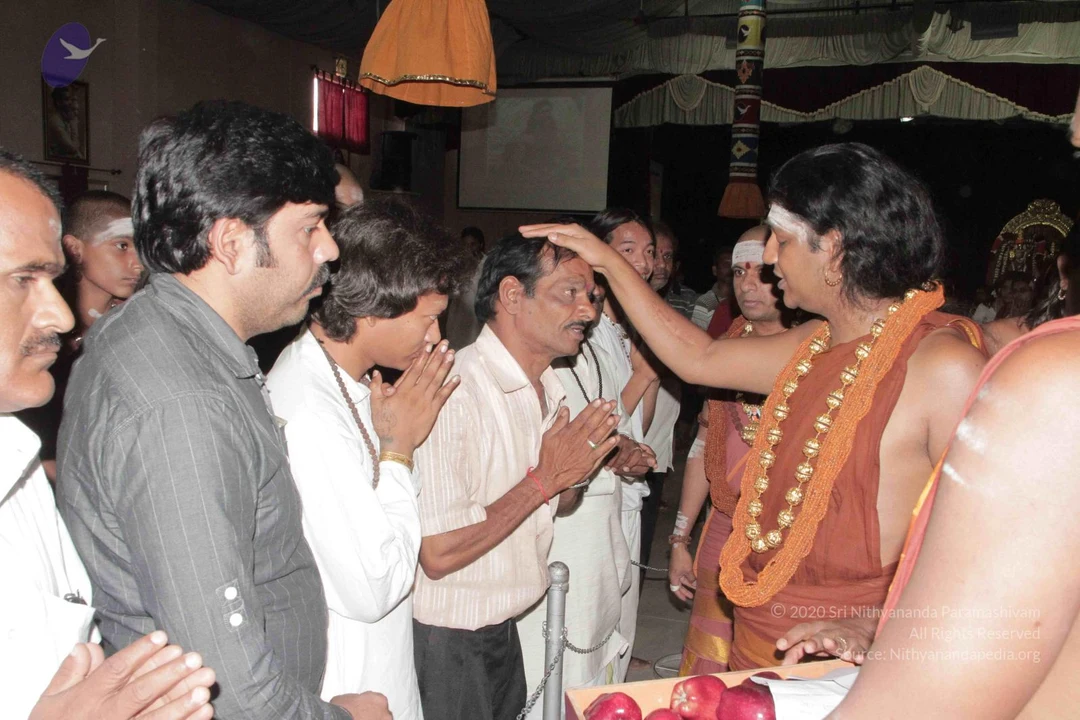
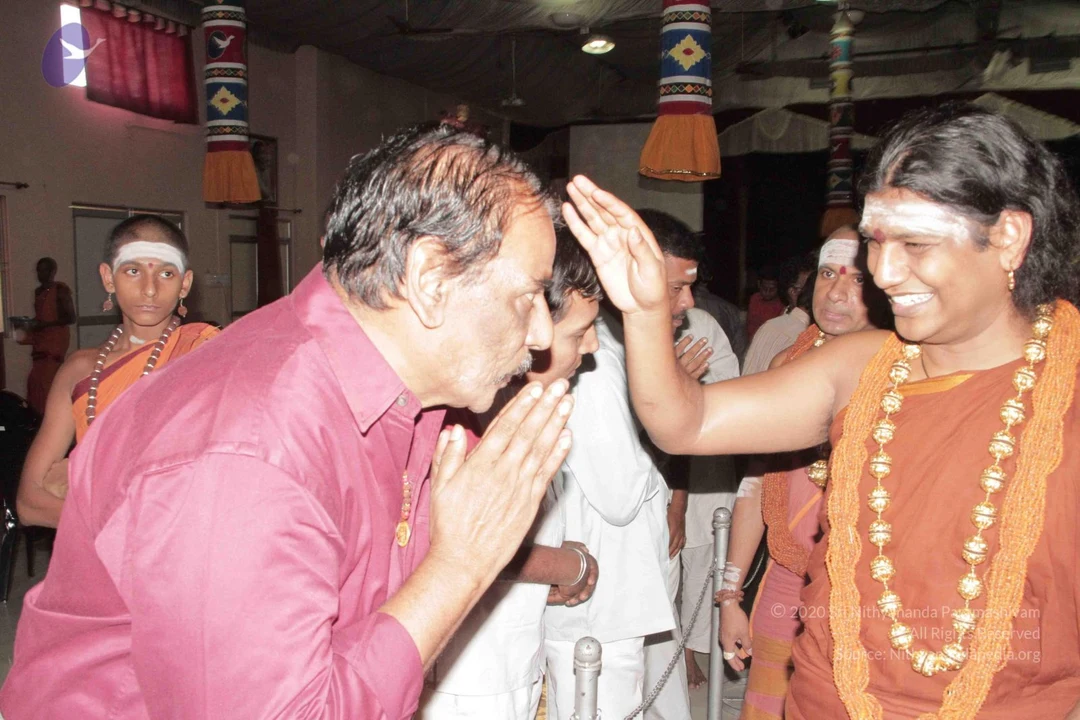
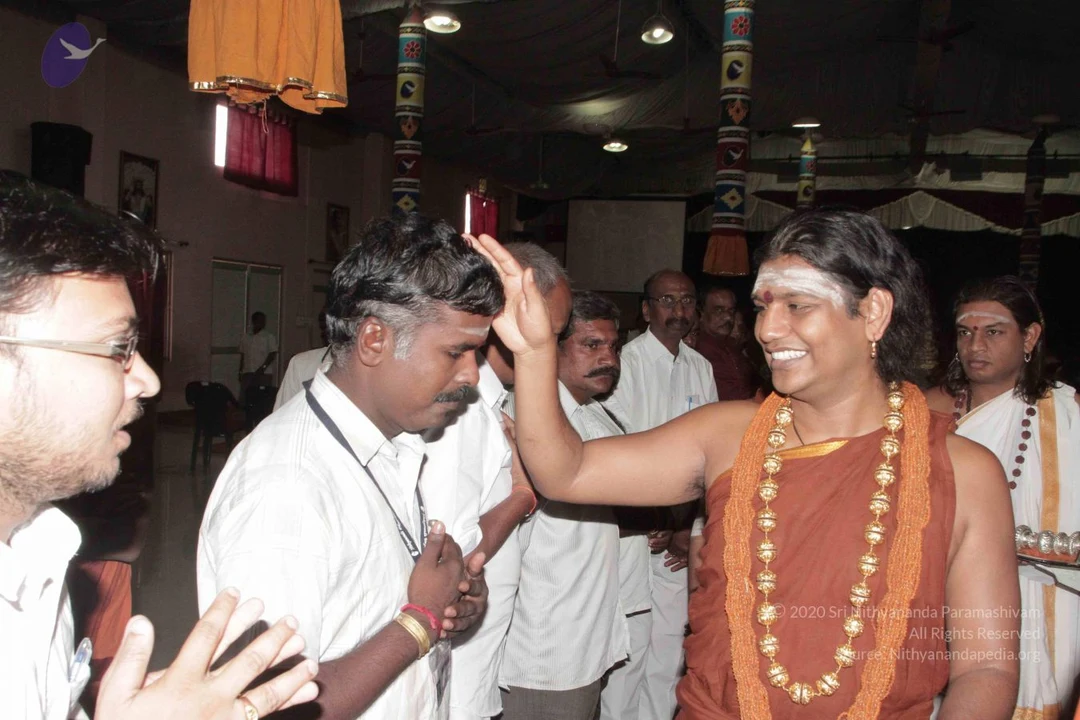
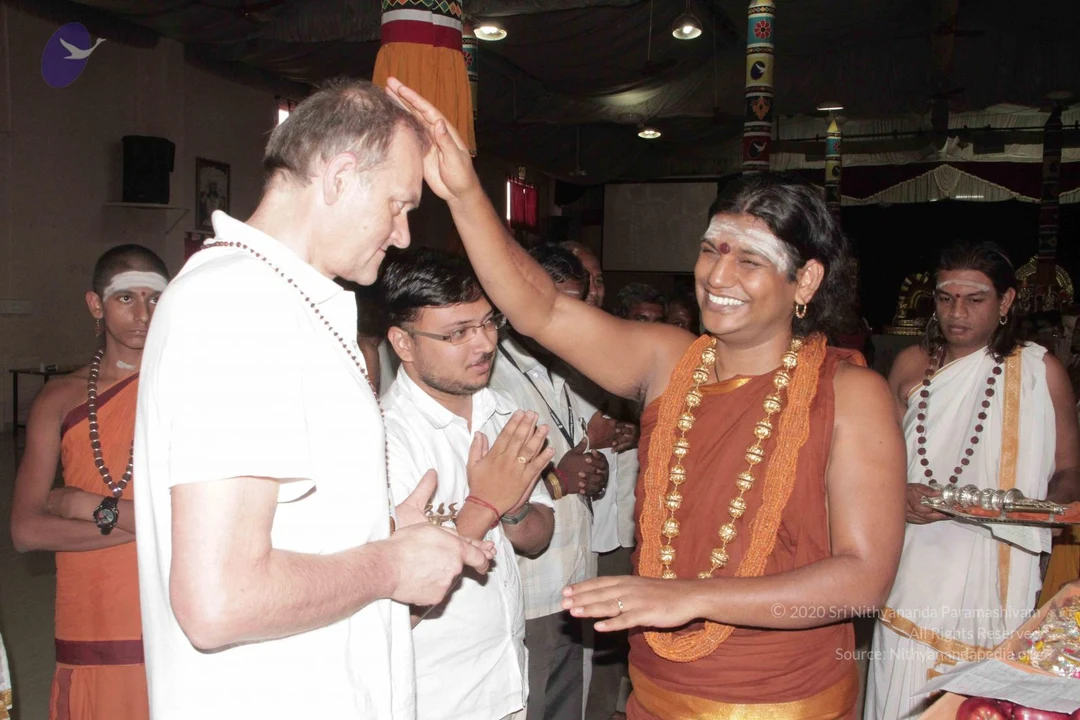
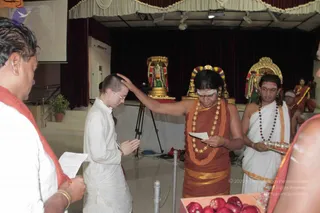
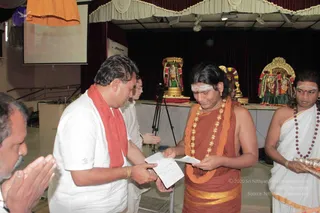
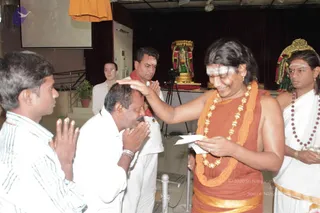
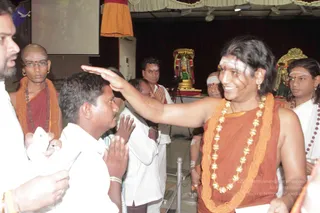
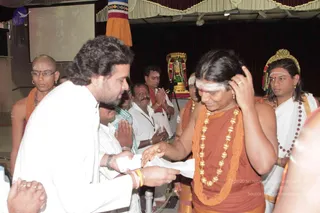
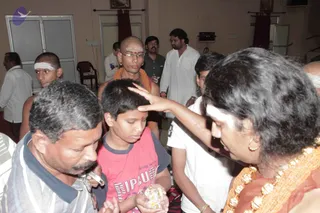
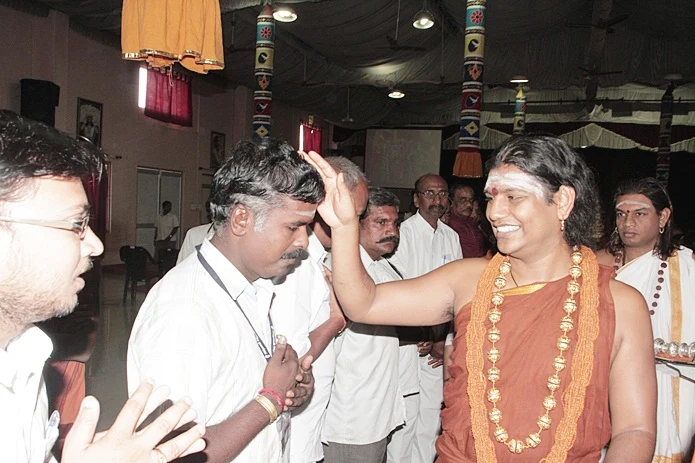
A photograph of a ritual in an indoor hall with a stage backdrop of dark red curtains and a projection screen at left. A bald man in white dhoti and white shirt stands with palms pressed together while a robed figure in saffron-orange cloth and a gold-bead necklace places his hand on the man's head. The robed figure has a white forehead mark, a gold garland, and a ribbon-like sash. Behind them, two attendants in white dhotis stand; one holds a metal vessel and wears a rudraksha mala, and another wears a white garment with a red-orange border. Two ornate gold and red-flowered thrones or decorated seats stand on the stage, and red fruits sit in a tray at lower right. A man in an orange shawl at left holds a sheet of paper. A gold-colored bowl with red fruit fills the lower right corner.A photograph of an indoor hall event with a stage backdrop of dark maroon curtains and a projection screen at left. A man in a white shirt with a red shawl and a bracelet holds up a handwritten paper to a man in a saffron-orange dhoti with gold waistband and a heavy gold-bead necklace over an orange cloth, who is reading it with bare upper body and white sandalwood forehead marks. At right, a man in white garments with a rudraksha mala holds a silver tray. Two golden deity murti shrines with floral decorations stand on the stage, and a partially visible person is at far left with hands in anjali. The mood is a devotional exchange of a written petition or note.A photograph of an indoor satsang or blessing scene. A long-haired man in an orange-brown sleeveless garment with a gold-beaded necklace and orange-gold waist cloth stands on the right, his right hand raised in a blessing over the head of a kneeling man in a white shirt with palms pressed together in namaste. He holds a folded white paper in his left hand. Beside him a man in white dhoti and shawl with a red-and-white bead mala and a white forehead mark stands at the far right. On the left, a man in a striped shirt presses his palms together, and behind them a man in a white shirt stands with a red-marked forehead. In the background, a golden deity murti decorated with flowers and a garland stands on a draped table, with a projector screen on the wall and a potted plant nearby. Light hanging orange cloth decorates the upper left.A photo of a satsang gathering in a hall. On the right, a man with long swept-back dark hair, a red bindi and white forehead markings wears a saffron-orange shawl over a dark-orange garment and a heavy gold bead necklace, and is extending his right hand in blessing toward a man in a white shirt with his palms joined. Behind them, other men in white dhotis and orange-red robes stand, one with a shaved head and white markings, another with a rudraksha mala. In the background, a gold and red decorated deity murti sits on a table, and a projector screen hangs on the left. a person appears in person, identified only by these appearance cues, with his blessing gesture and orange clothing.A photograph of a ceremonial exchange in a hall. In the centre, a figure in an orange-brown robe with a thick gold bead necklace and a white horizontal tilak on the forehead adjusts their hair while accepting a folded white cloth from a man in a white shirt and white dhoti on the left. Behind them, a priest in white with a white forehead mark stands near a golden deity murti decorated with flowers. Devotees with folded hands stand nearby. On the right, a figure in white with a gold crown-like headpiece and a rudraksha mala stands beside them. A projector screen hangs in the background. a person: the centre figure wears an orange-brown robe, a gold bead necklace and a white tilak, but the face and build are not distinct enough to confirm identity.Indoor photo of a devotee-filled hall. In the foreground, a woman in an orange sari with gold-bead garland and an orange-saffron shawl reaches out to press her hand against a young boy's forehead, with a red mark visible on it. The boy wears a red t-shirt and holds a small packet. Beside him, a man in a striped grey polo holds a small object. Behind them, a shaved-headed young man in an orange shawl with a red tilak and glasses stands in the crowd, along with a bald man with a white forehead band and several men in white or grey shirts. Walls, cabinets and framed pictures form the background.

Temple-Swamiji-Pratyaksha-Padapooja
105 photosSource gallery
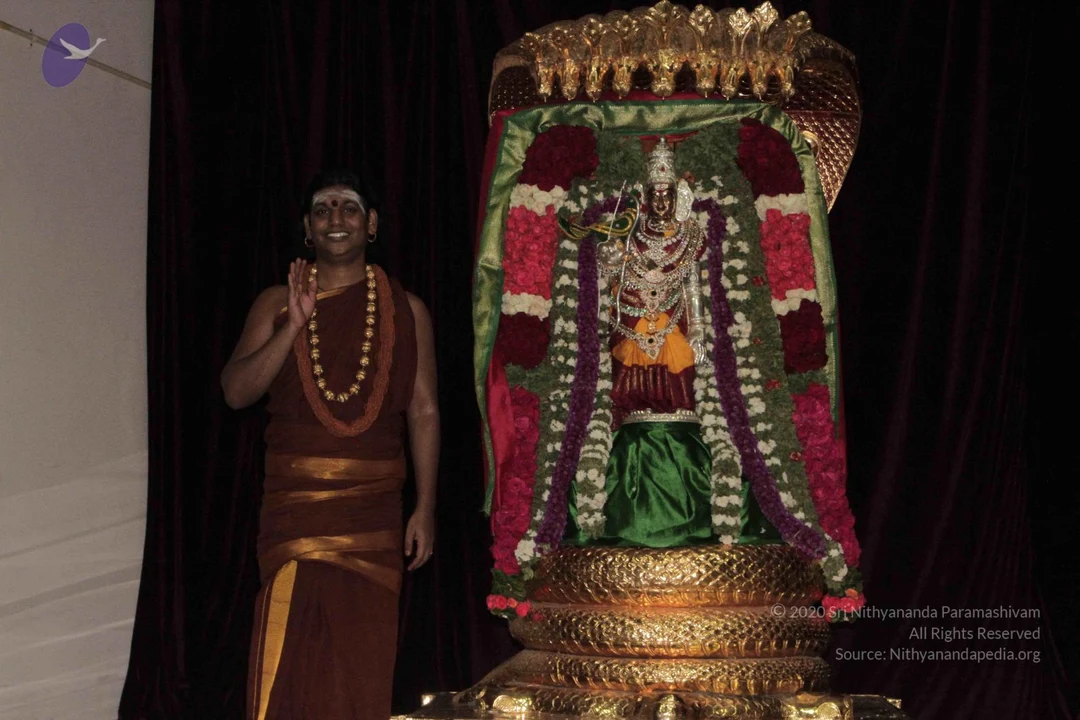
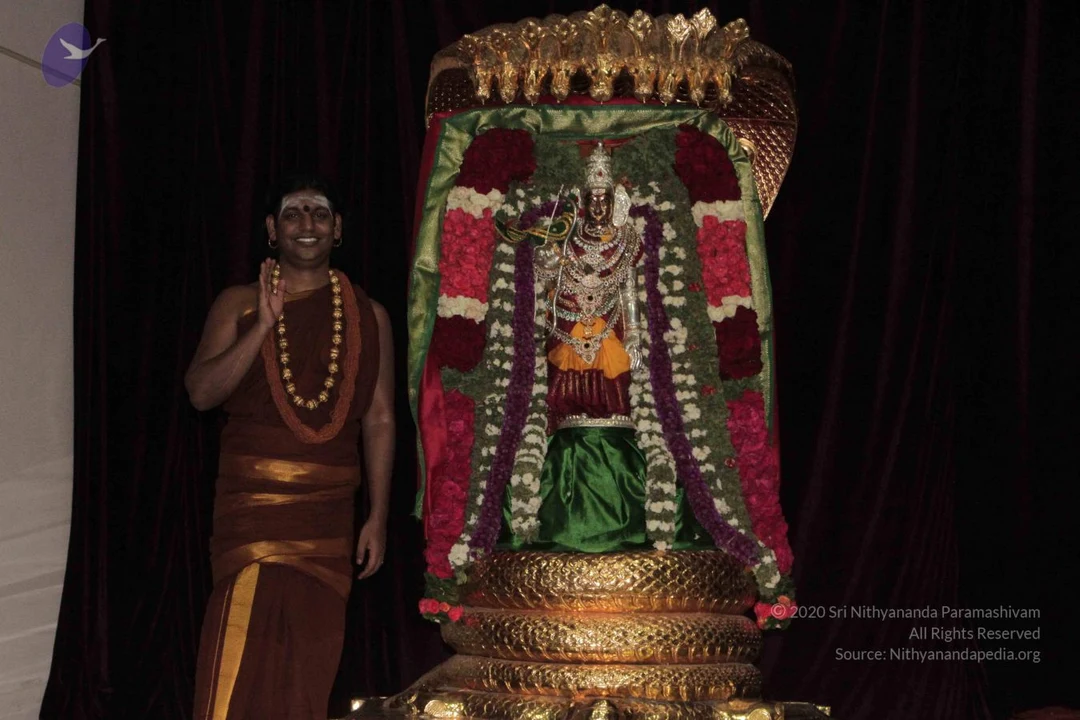
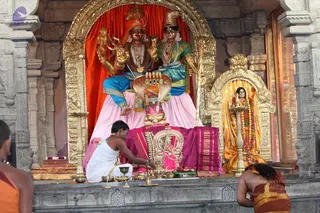
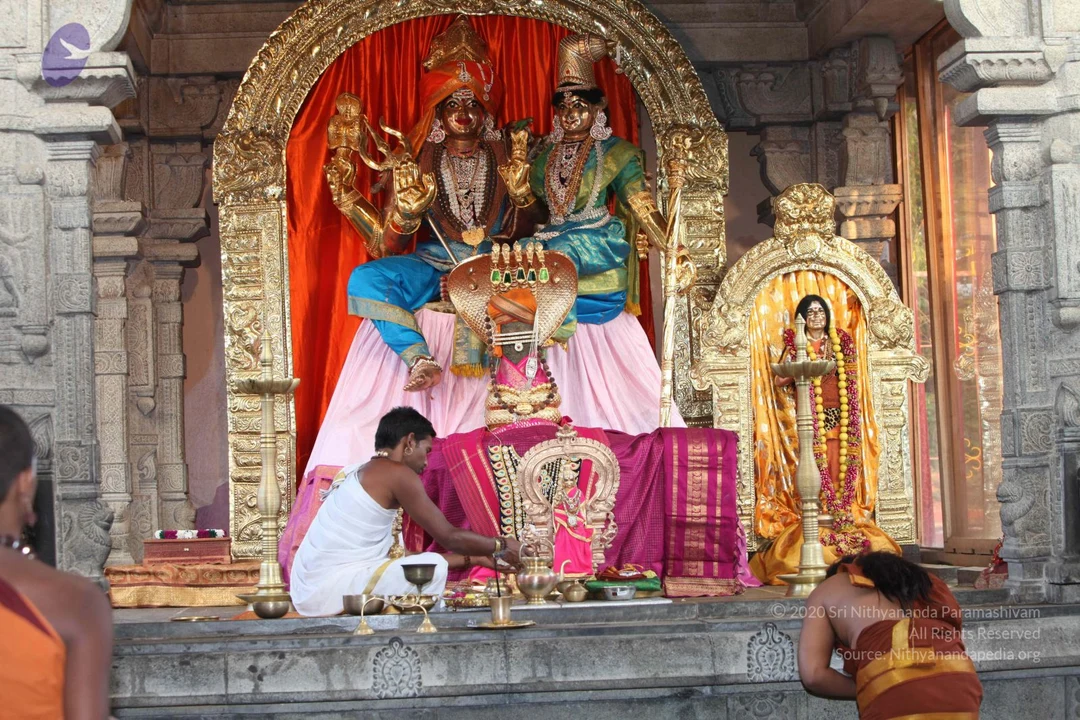
A temple shrine scene with a large golden-framed dais holding a multi-armed deity murti in blue and pink garments seated atop a hooded serpent-form shivalinga-like base; to the right stands a smaller seated figure in an orange saffron cloth draped with a red-and-white flower garland. A bare-chested priest in a white dhoti kneels at the front pouring or offering from a brass vessel over a decorated pedestal, while a second devotee in an orange cloth bows at the lower right. Brass oil lamps and ritual vessels stand on the stone platform, and a red curtain hangs behind the shrine, indicating an abhishekam or puja.A person in an orange-brown sari with wide gold borders bends forward at a grey stone altar, pressing their forehead and hands against its carved ledge. Behind the altar stand brass lamps, a small brass kalasha and a golden vessel, with a shrine painted in red, pink and white. The person is barefoot on a woven mat, in a temple setting with stone carvings and a reddish pillar beside them.Two gilded deity murti figures are seated side by side on a golden throne-like seat before a bright orange draped backdrop, framed by an ornate gold arch. The figure on the left, a male deity, wears an orange turban, a large rudraksha mala and layered white and gold ornamental necklaces, and holds a trident and a snake-topped staff in raised hands. The figure on the right, a female deity, wears a tall gold crown, teal and gold sari, ornate pearl-style necklaces and large earrings. Bronze-toned faces and jewelled ornaments dominate the frame. A small brass lamp stand sits in the lower right foreground.A man stands outdoors before a large banyan tree with thick aerial roots, his hands clasped at waist level. He wears a rust-orange sleeveless wrap over one shoulder with a golden border, a multi-strand orange rudraksha mala with large gold bead spacers, and a white vertical tilak with a red dot on his forehead. Small gold hoop earrings and a faintly smiling, eyes-lowered expression complete the scene.A photograph of one man standing outdoors beside a tree trunk, leaning his forehead against the bark with eyes closed and a calm expression. He wears a rust-orange cloth wrapped over his bare shoulder and a long rust-orange rudraksha bead mala with ornate gold bead accents draped across his chest. A white and reddish sacred marking is on his forehead, and a small red flower is tucked into the bark near his head. Blurred green foliage fills the background. Swamiji (probable): the man has long, swept-back dark hair, saffron-orange clothing, rudraksha malas and ceremonial gold beads, a presentation consistent with the page's reference to Swamiji, so the appearance is only a probable match.A photo of one person leaning forehead-first against a tree trunk, eyes closed, in an outdoor setting with blurred green foliage. The person wears a rust-brown saffron-toned wrap over the shoulder and torso, with a long orange-brown rudraksha mala and large gold-toned beads around the neck, a white sacred-ash marking on the forehead, and a small red flower tucked in the hair near the trunk. The posture suggests prayer or meditation. The person appears to be a probable Swamiji (probable) with long swept-back hair, rudraksha malas and ceremonial gold beads, shown in an appearance-based candidate pose.