Skip to content
Wednesday

22 April 2015

SEEK EXPERIENCE NOT EXPERTISE

Dated photos
161
Source pages
1
Media
4
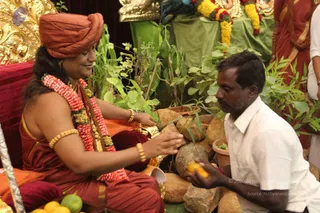
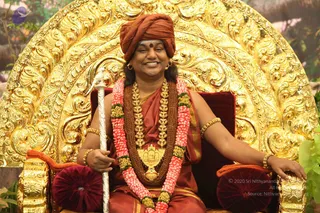
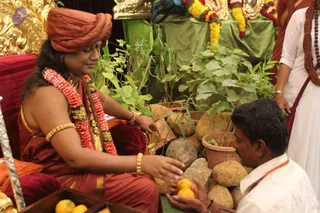
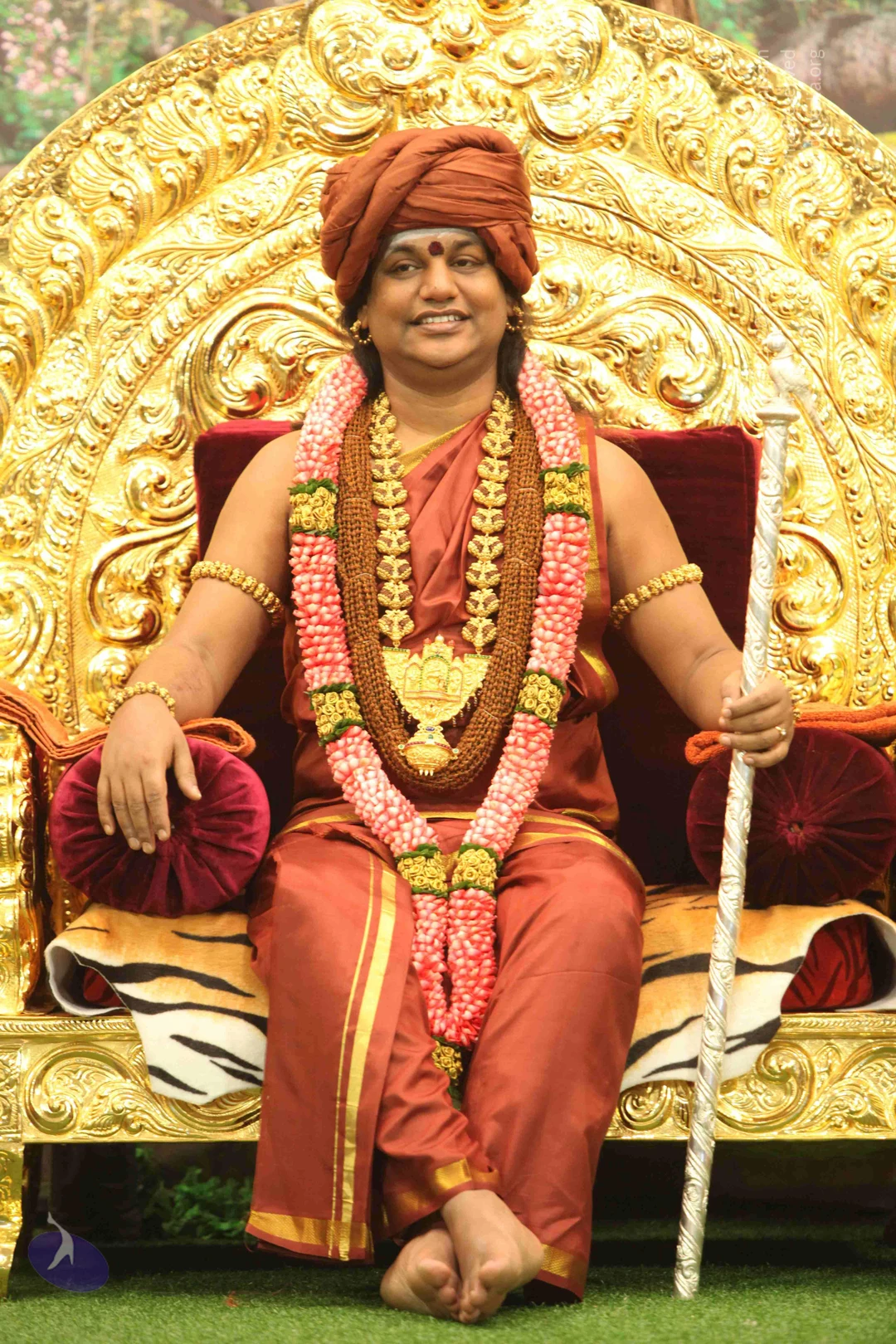
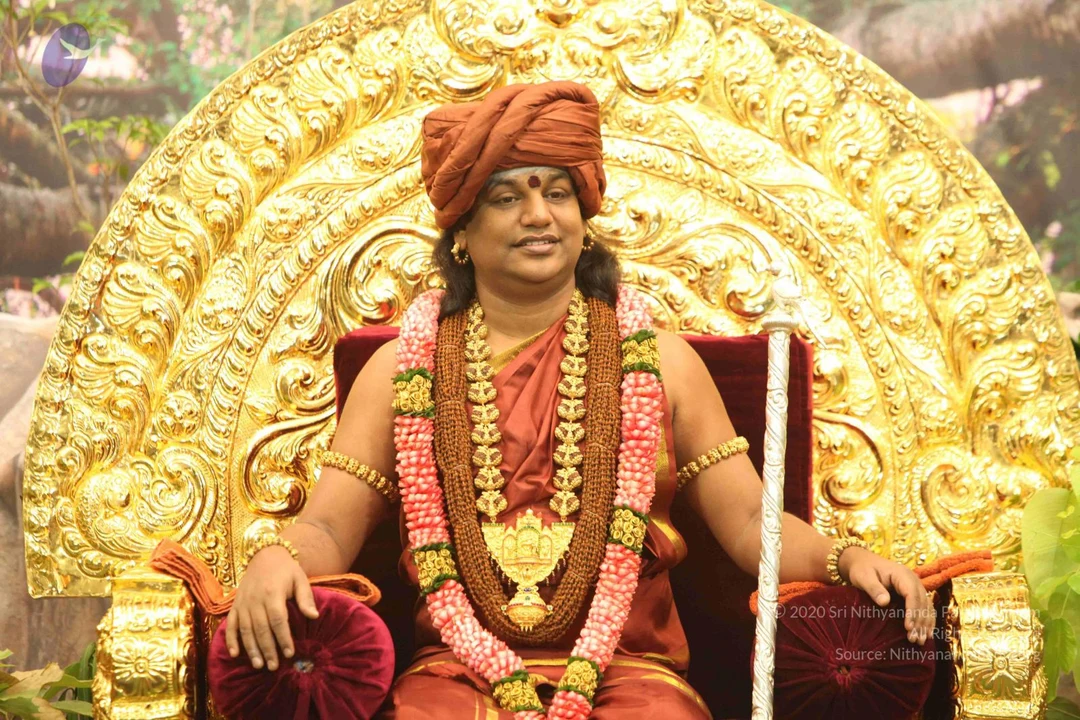
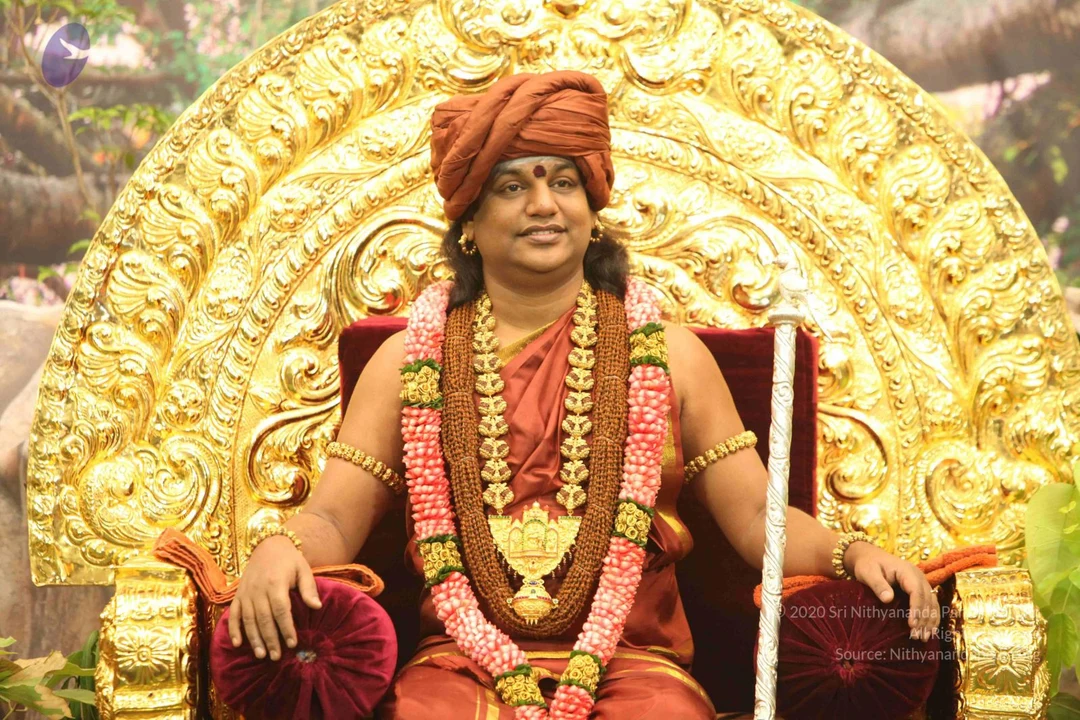
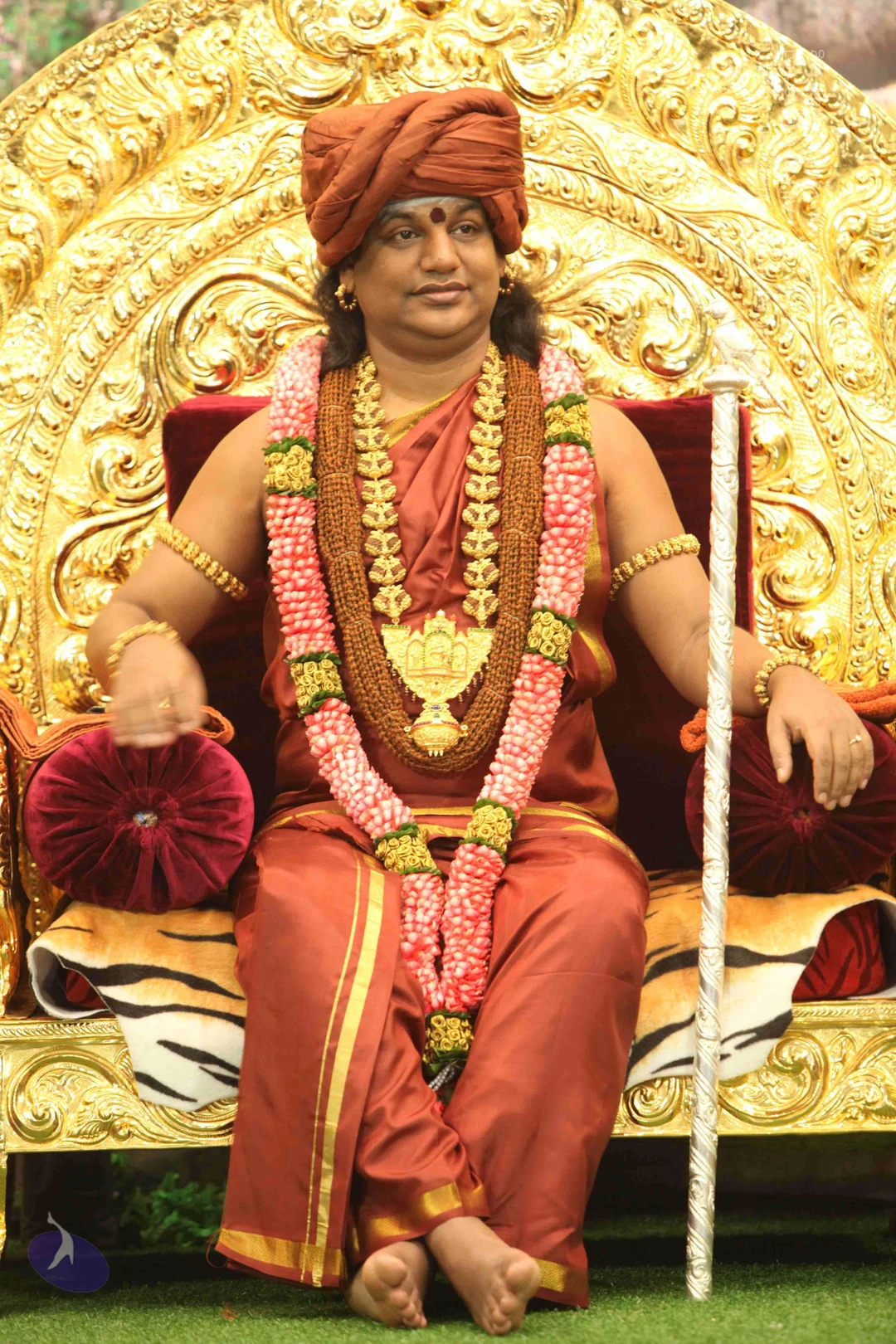
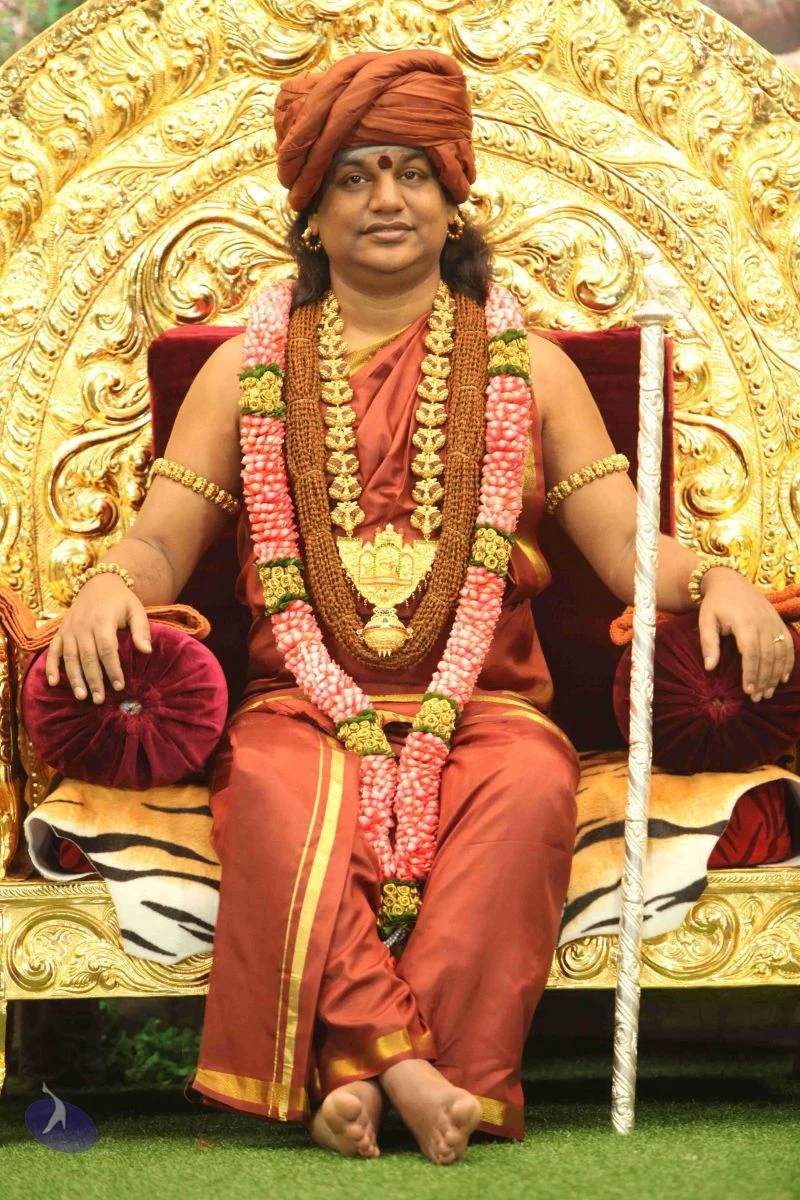
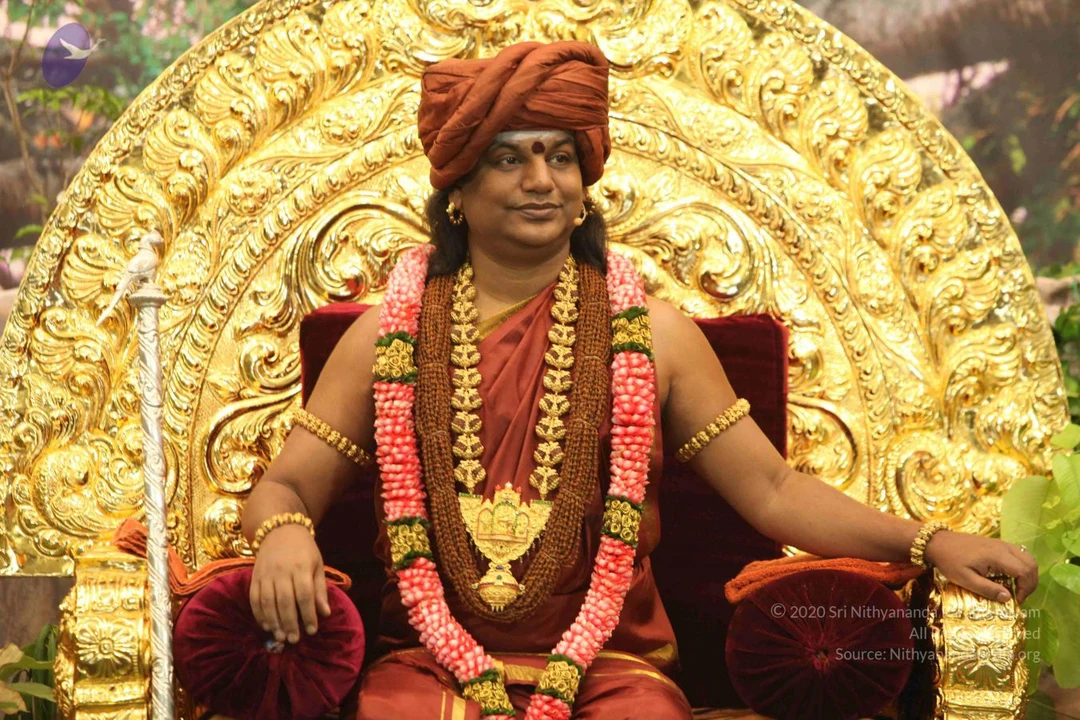
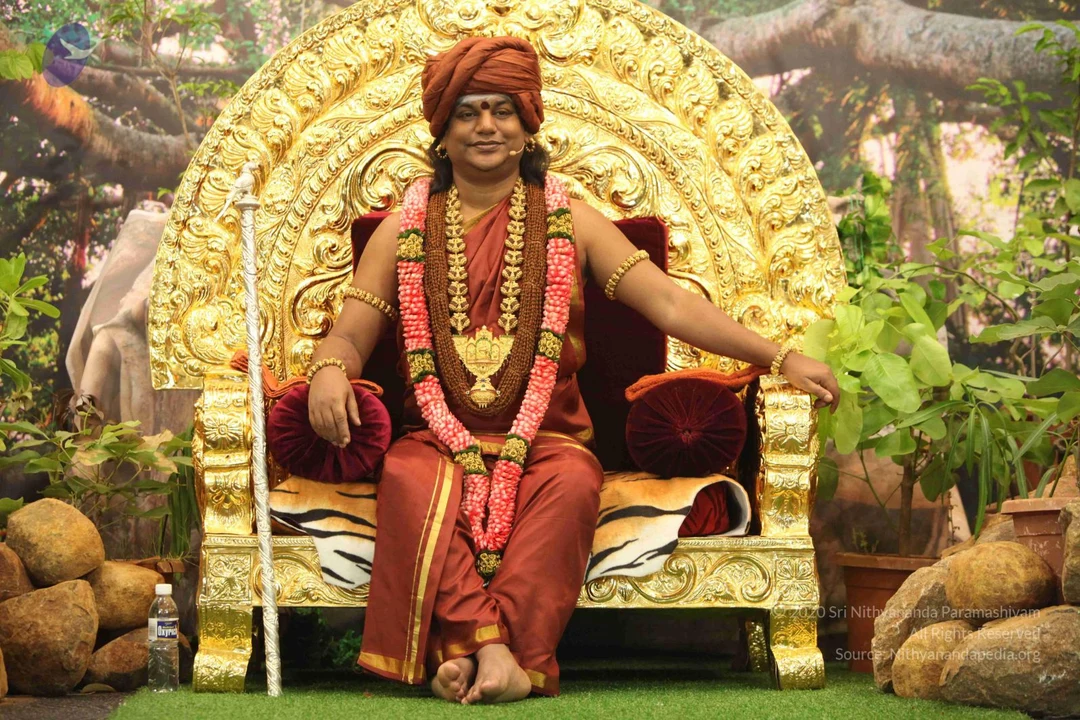
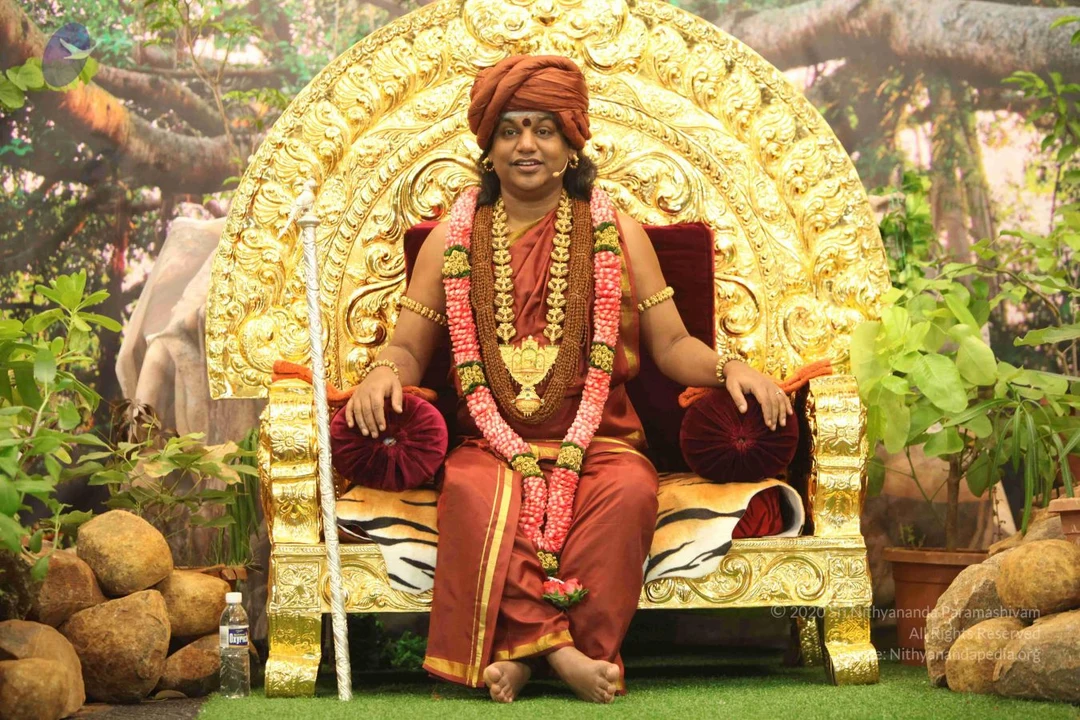
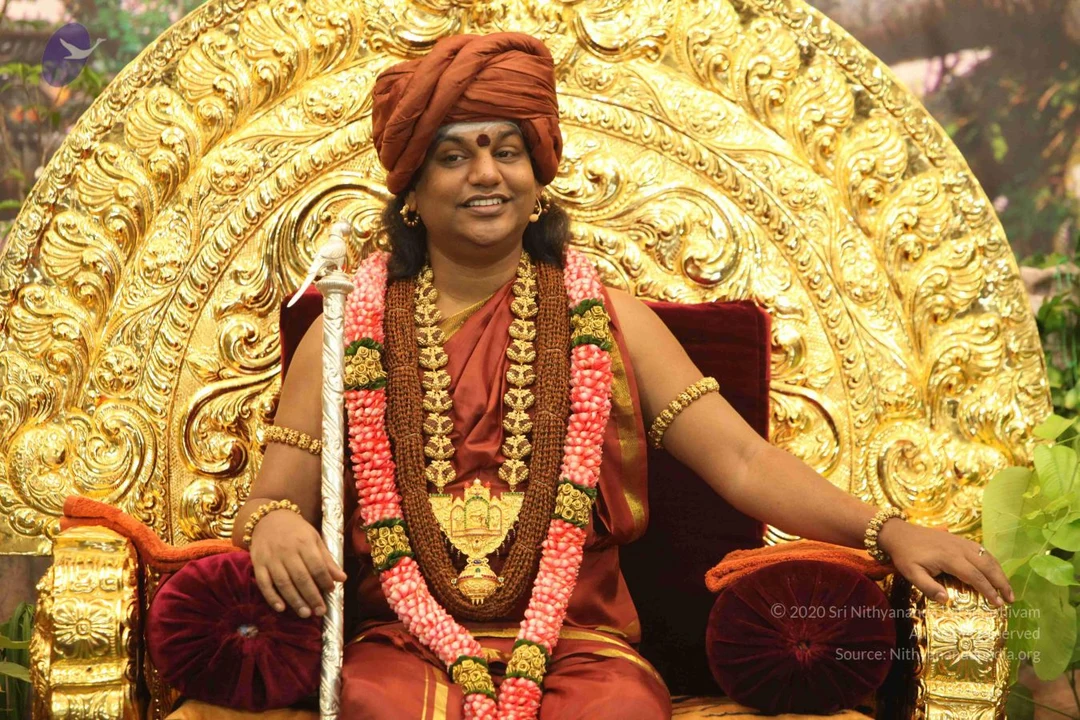
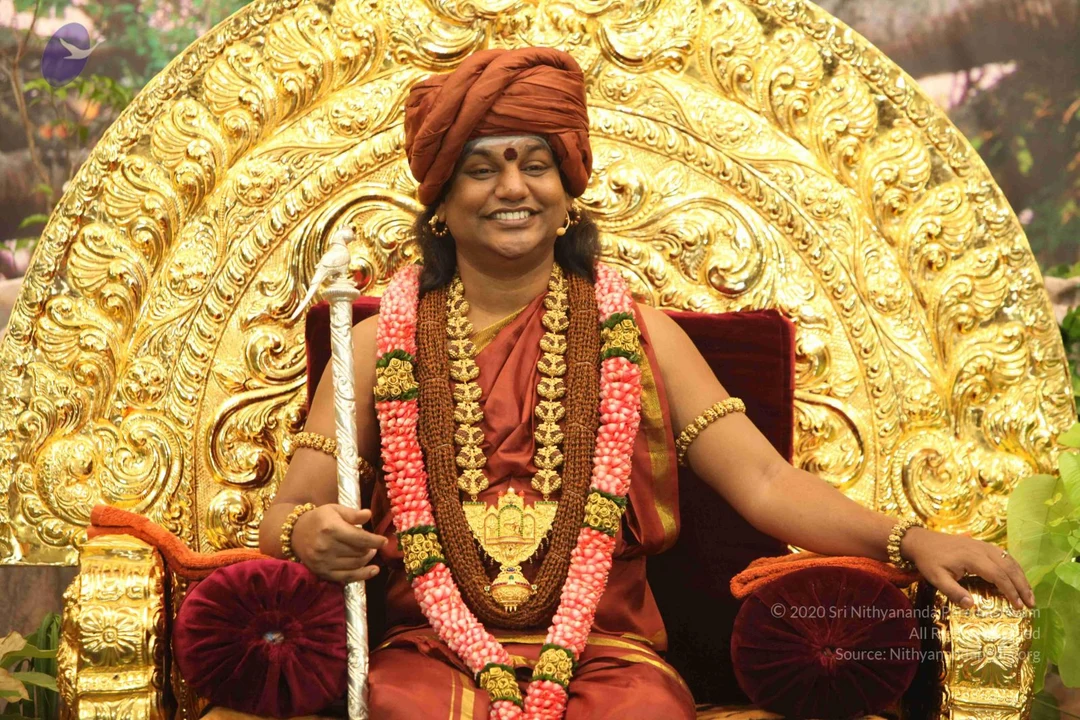
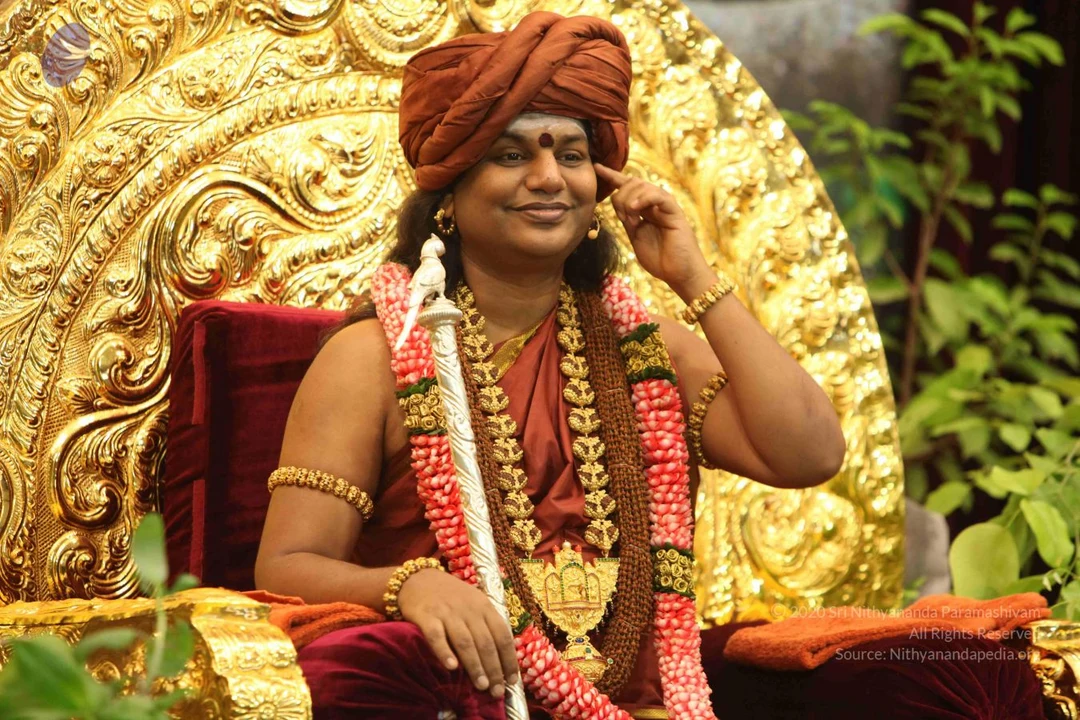
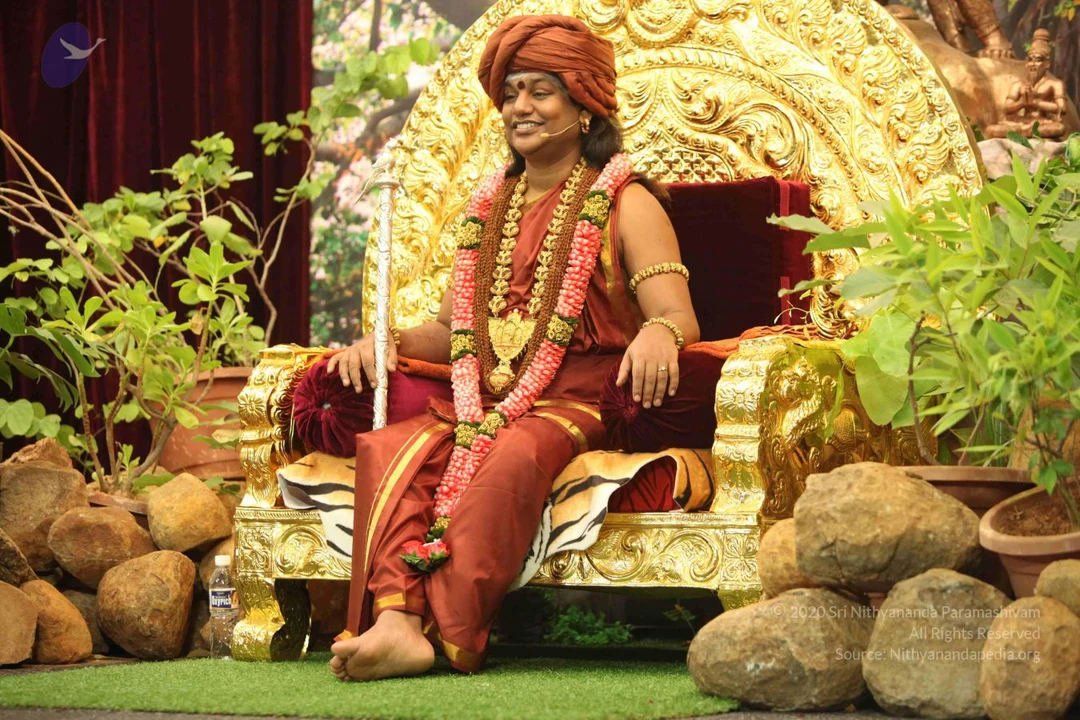
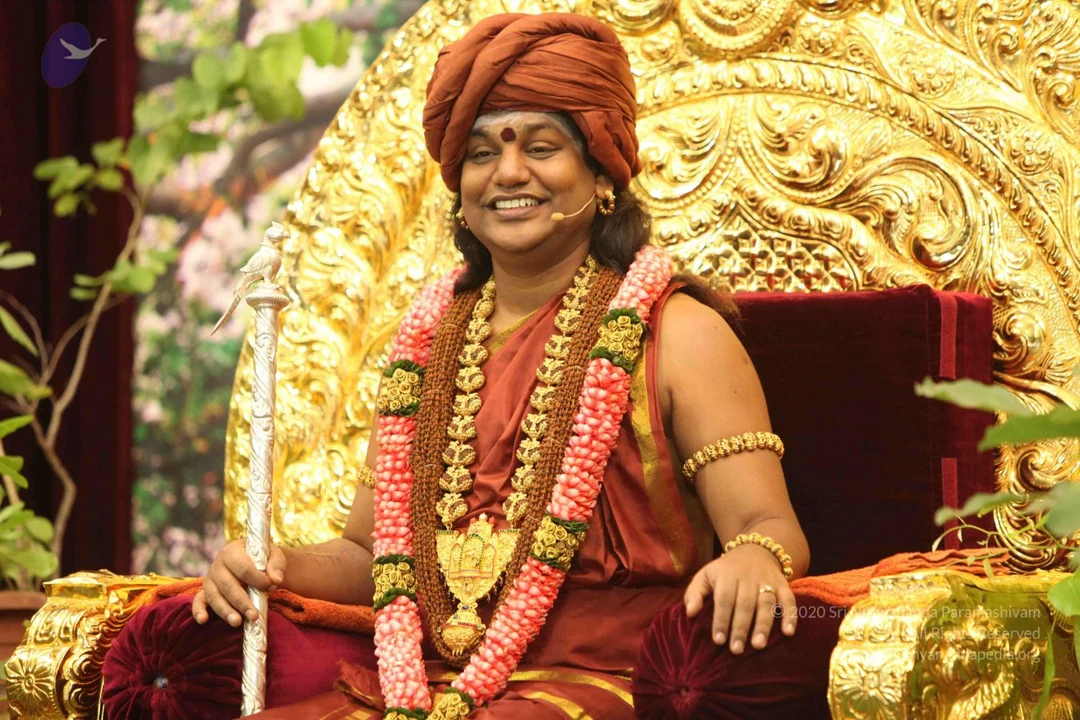
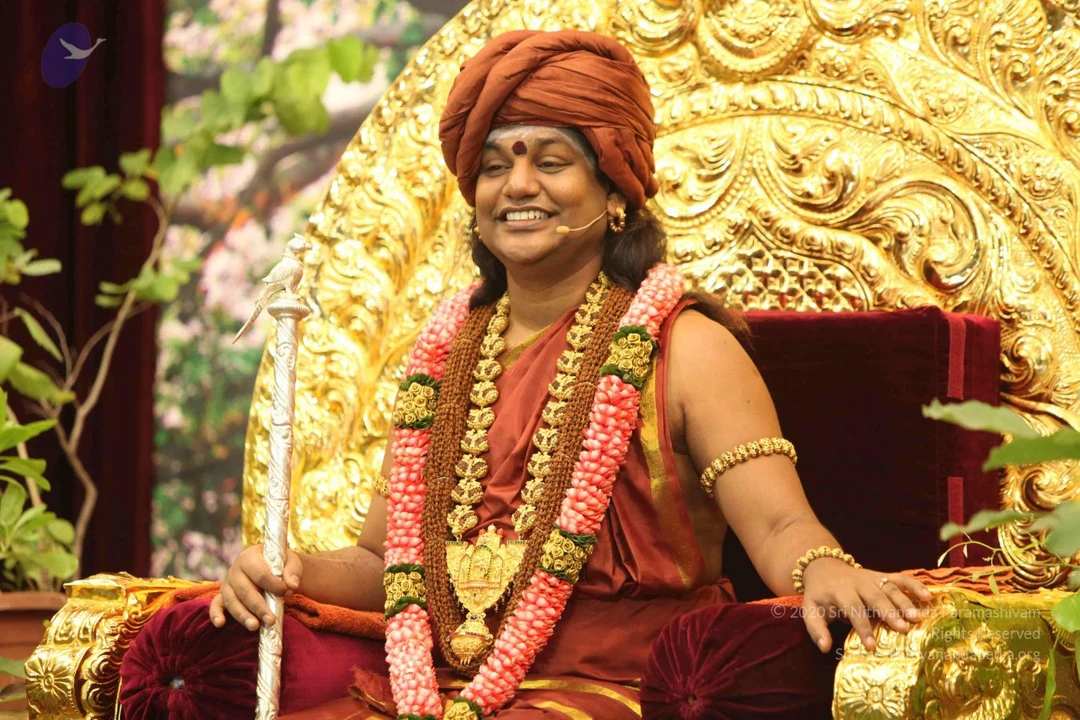
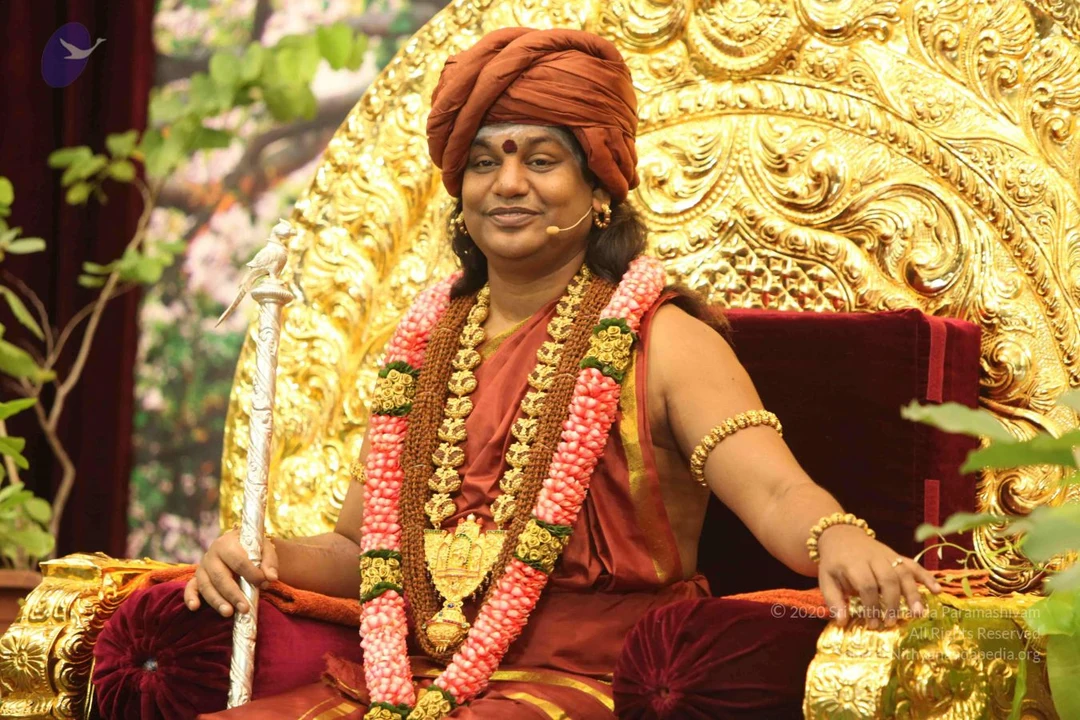
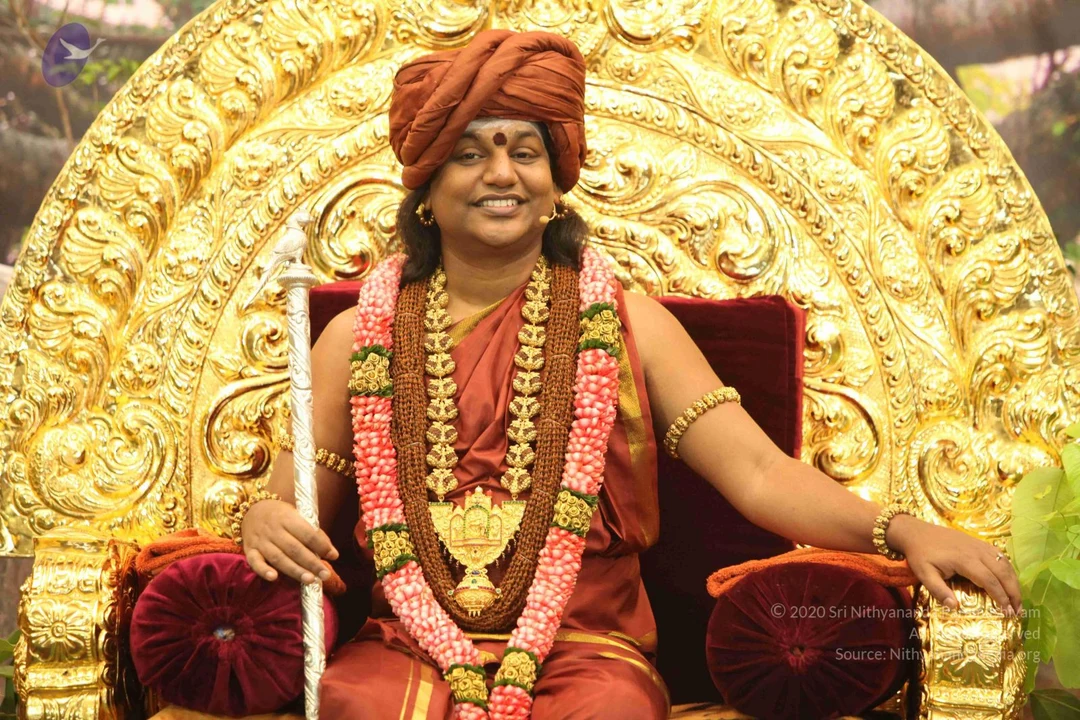
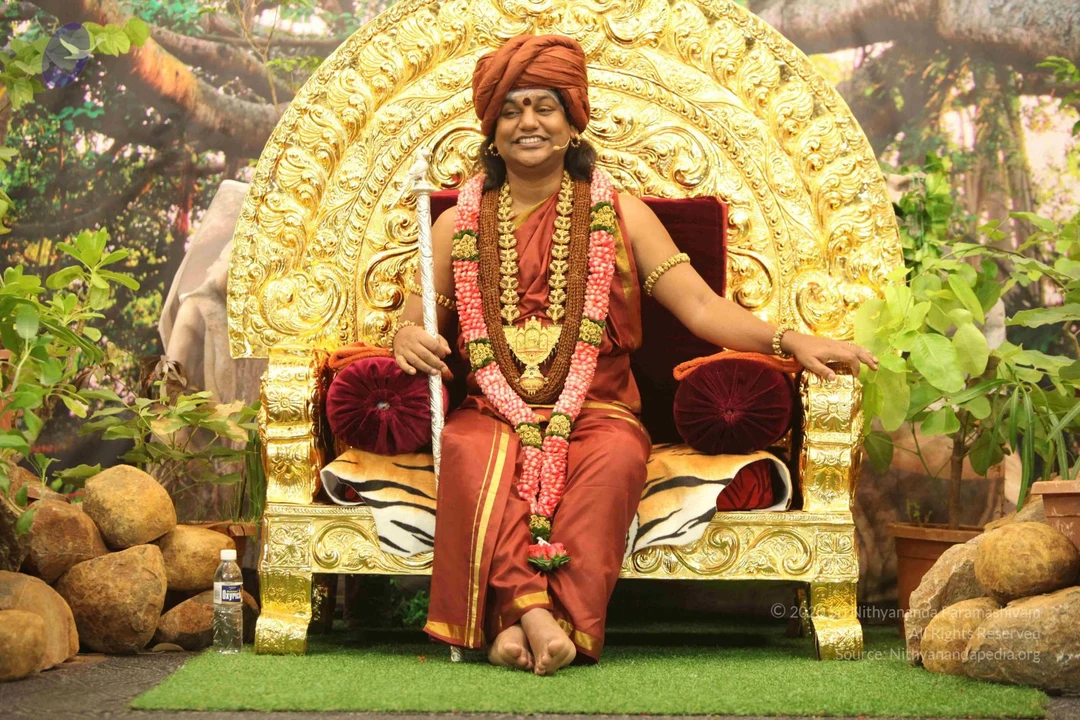
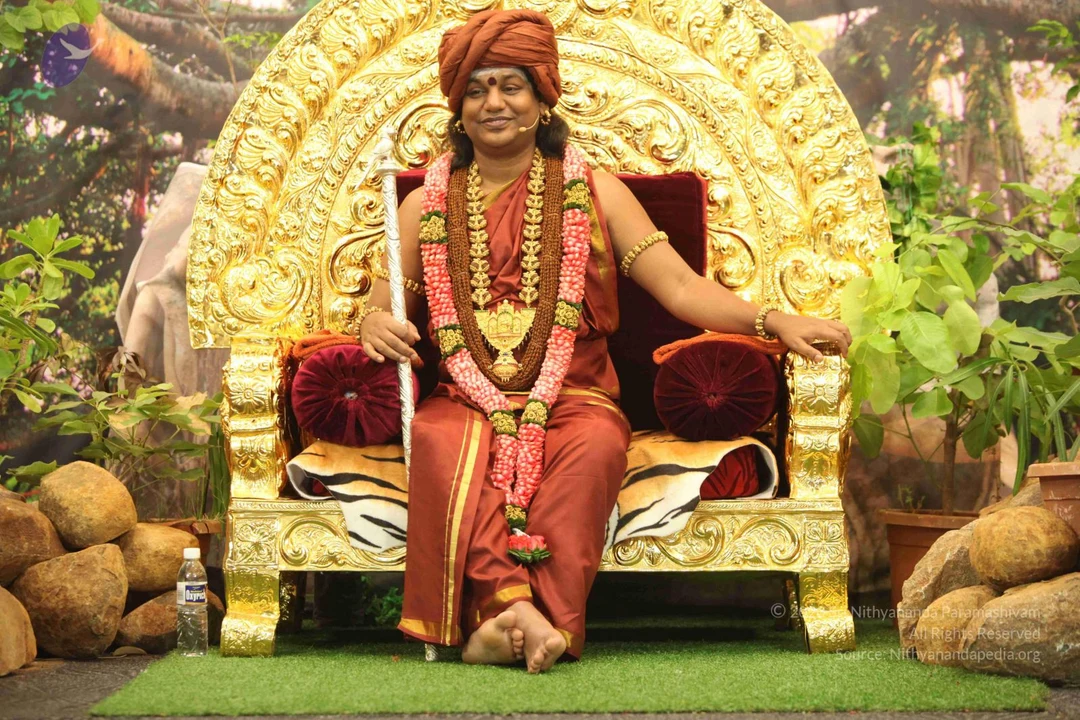
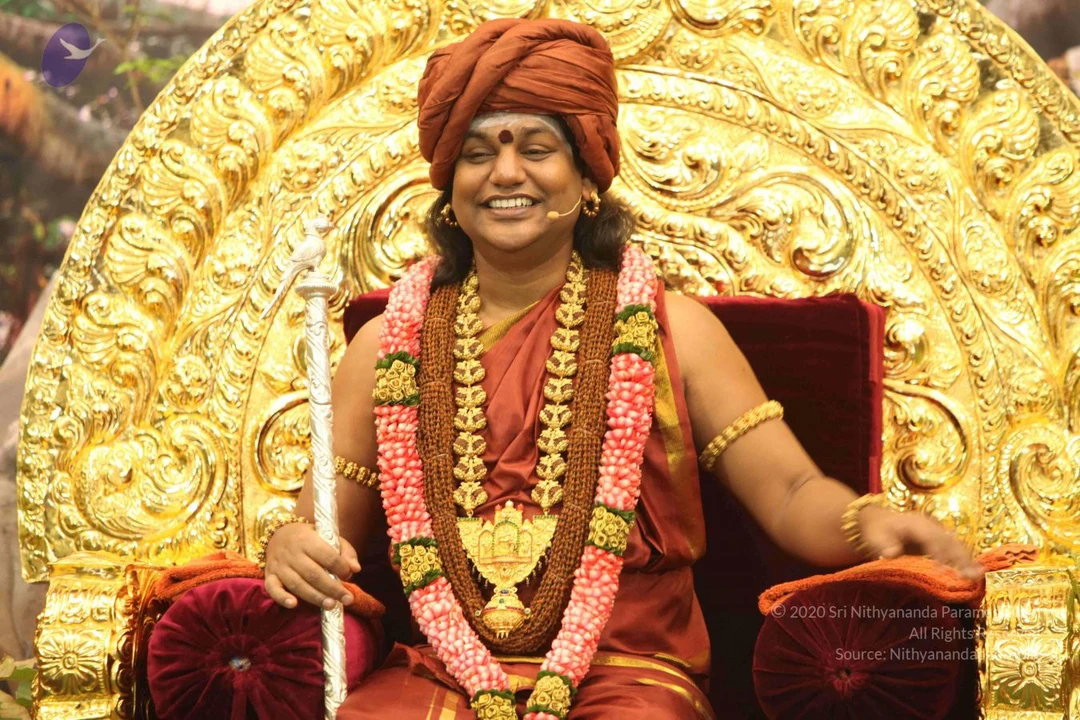
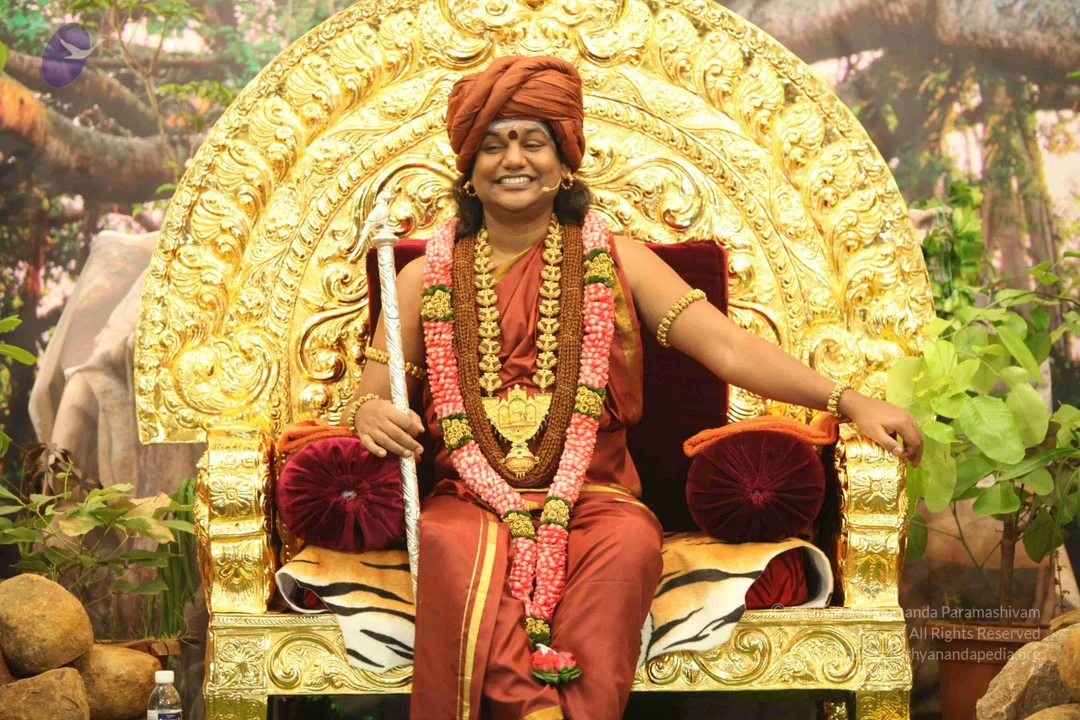
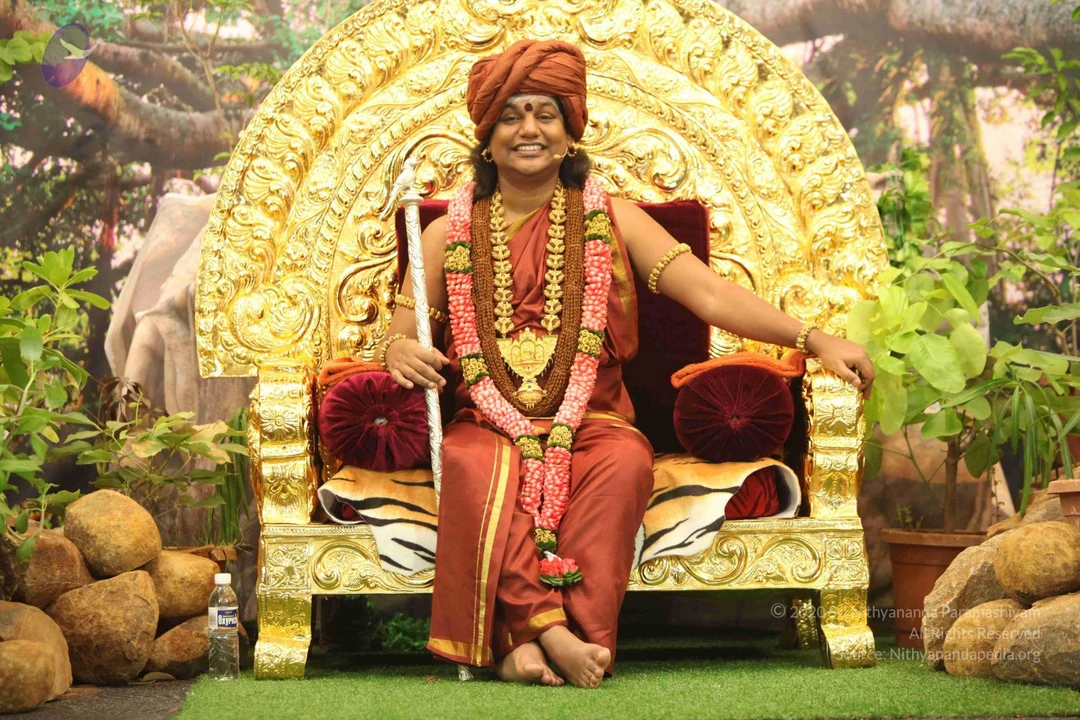
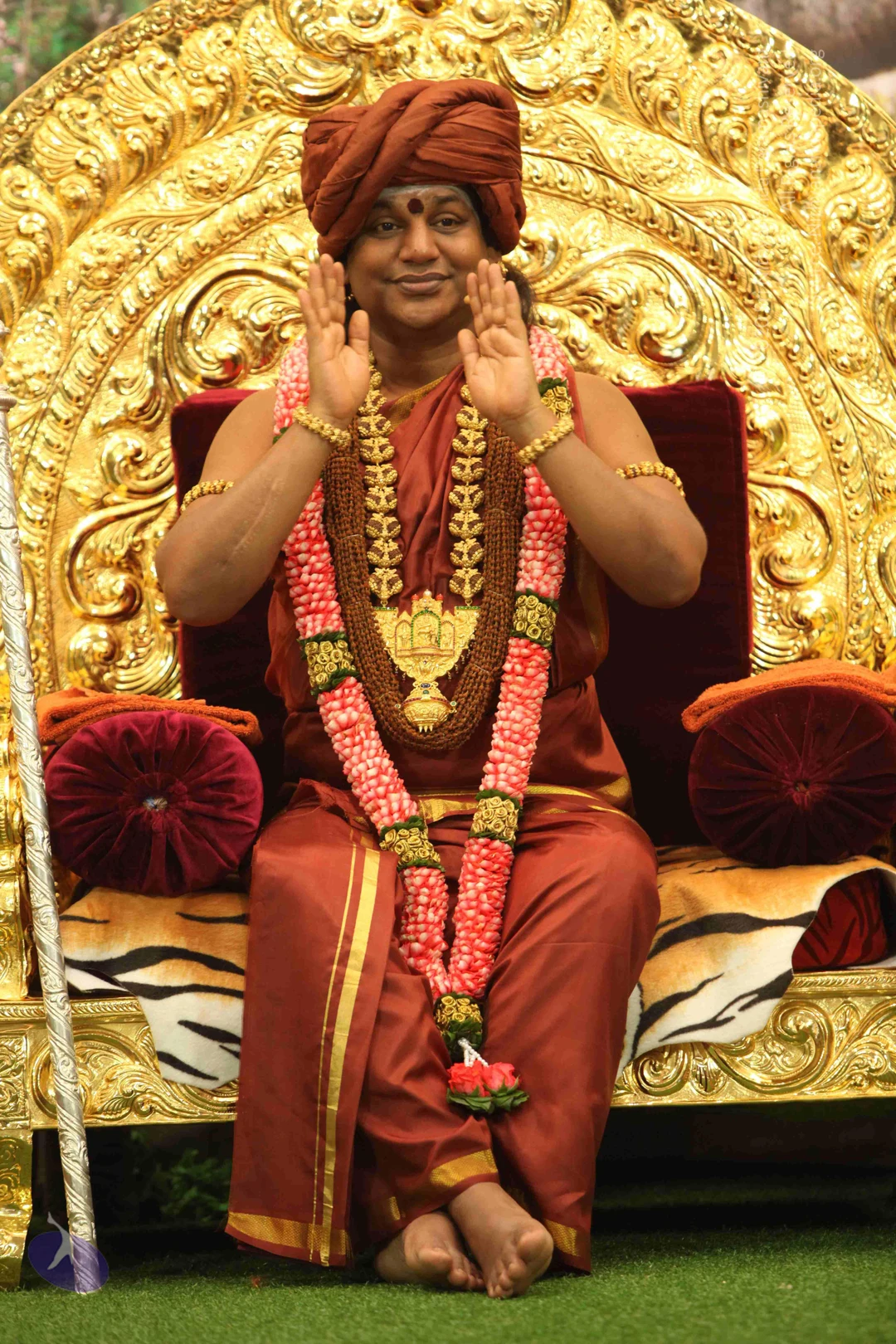
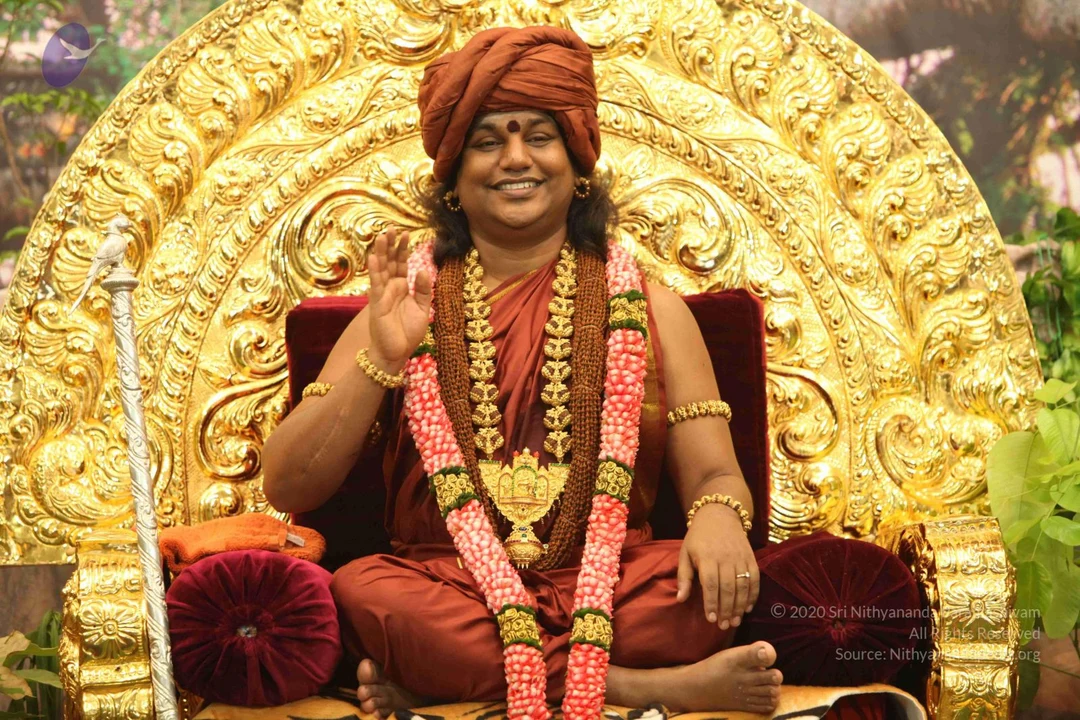
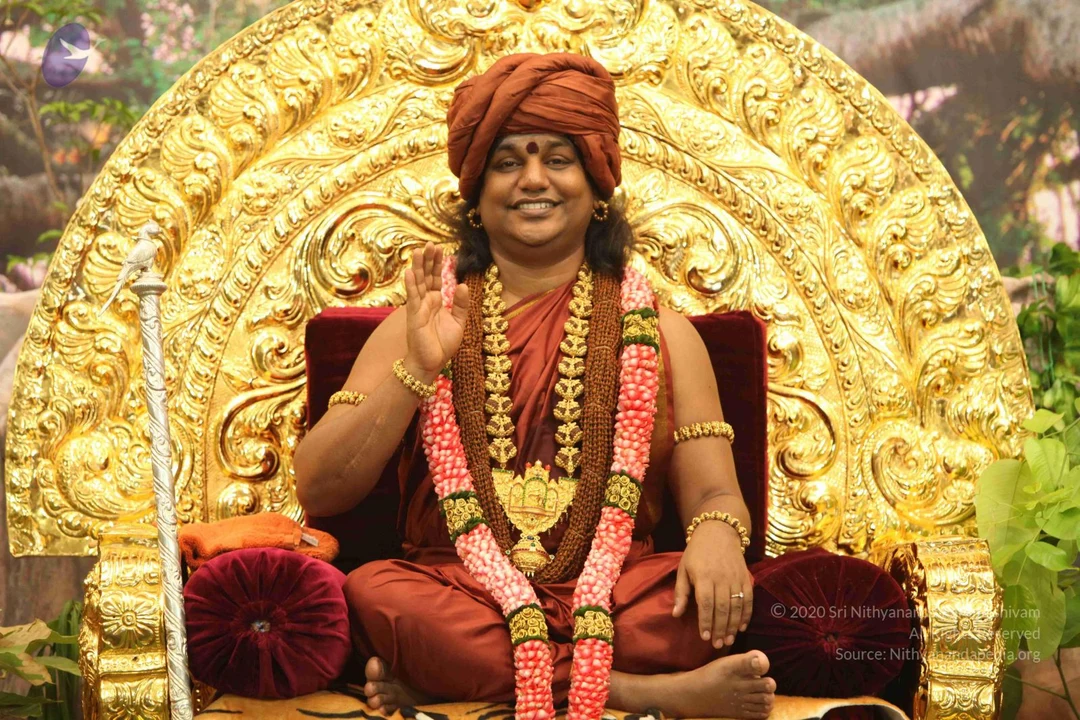
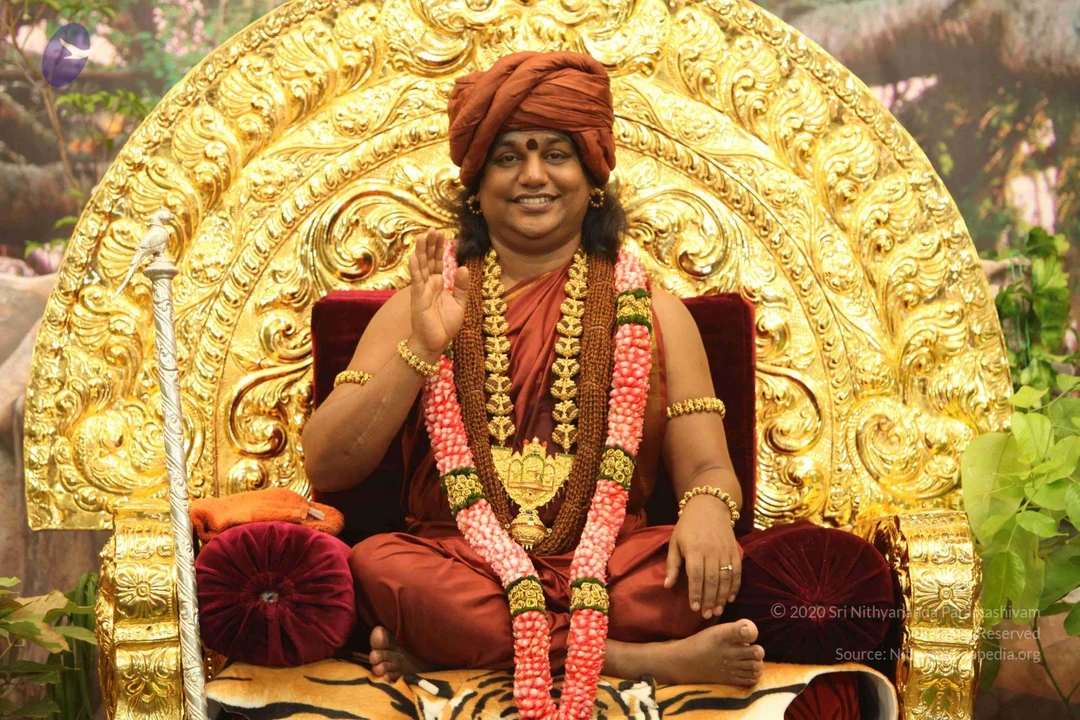
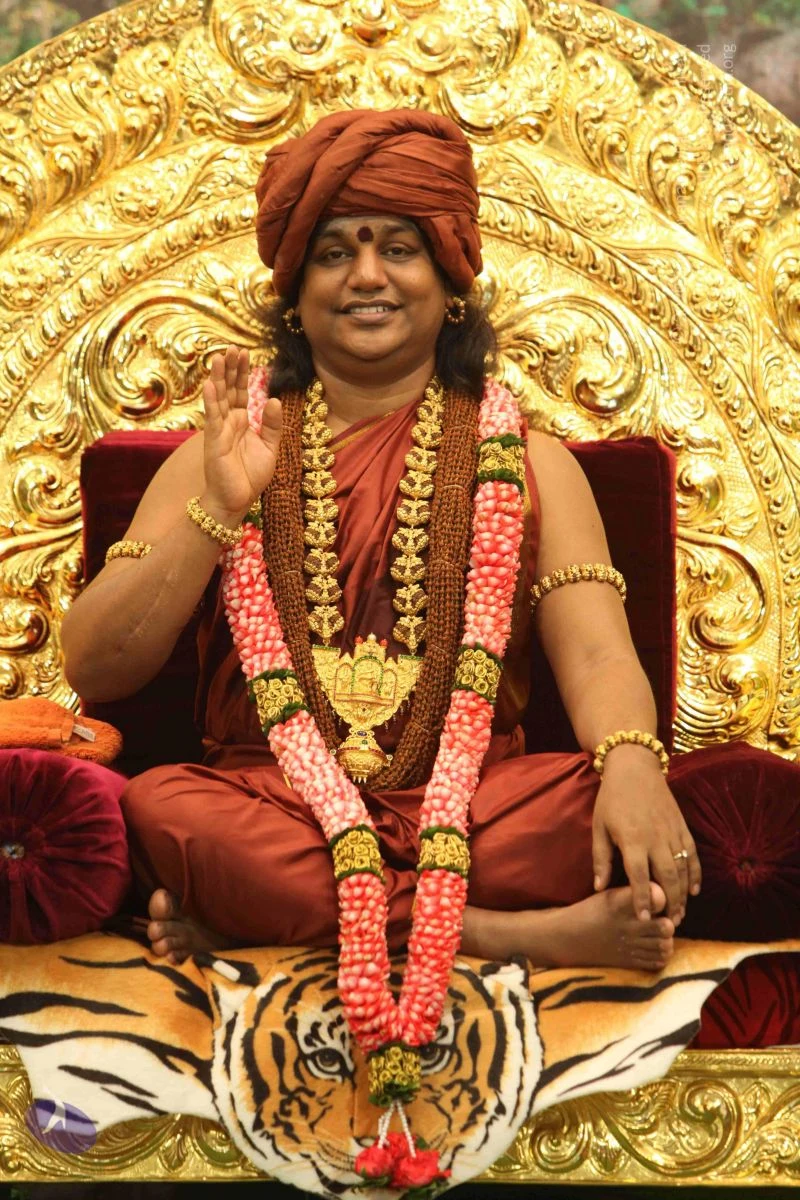
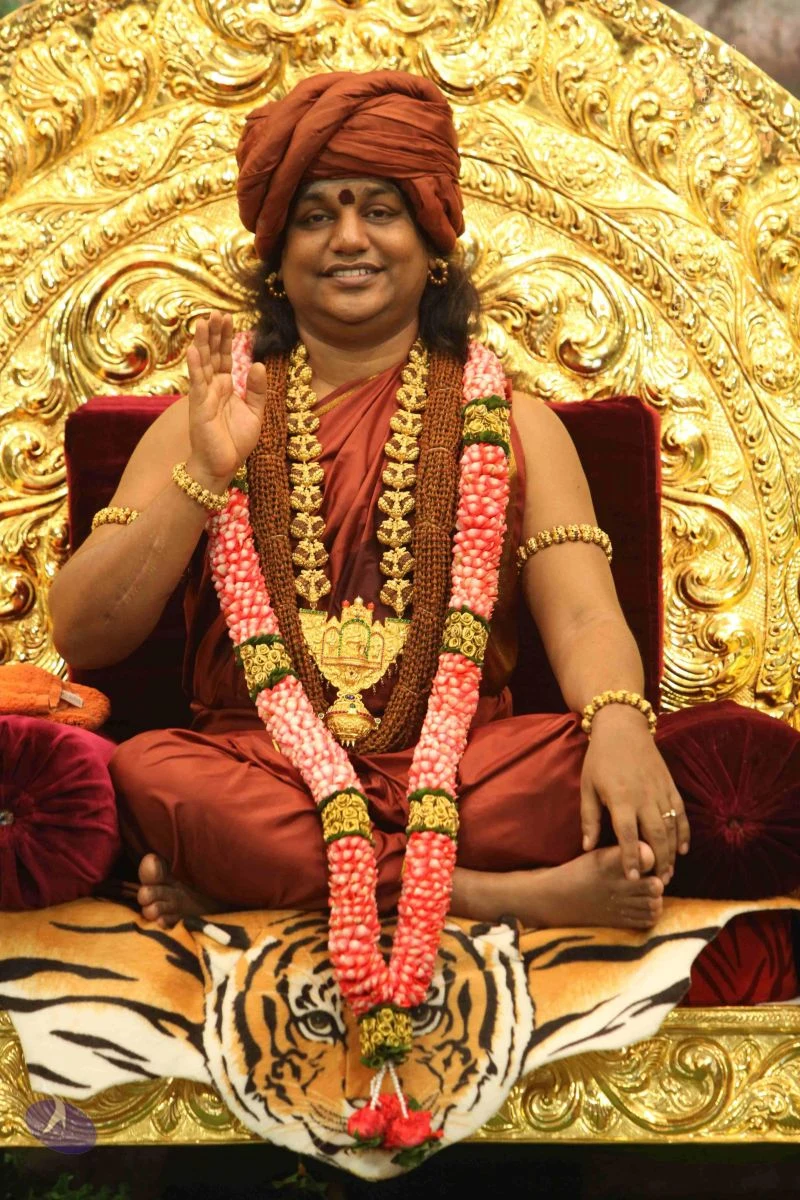
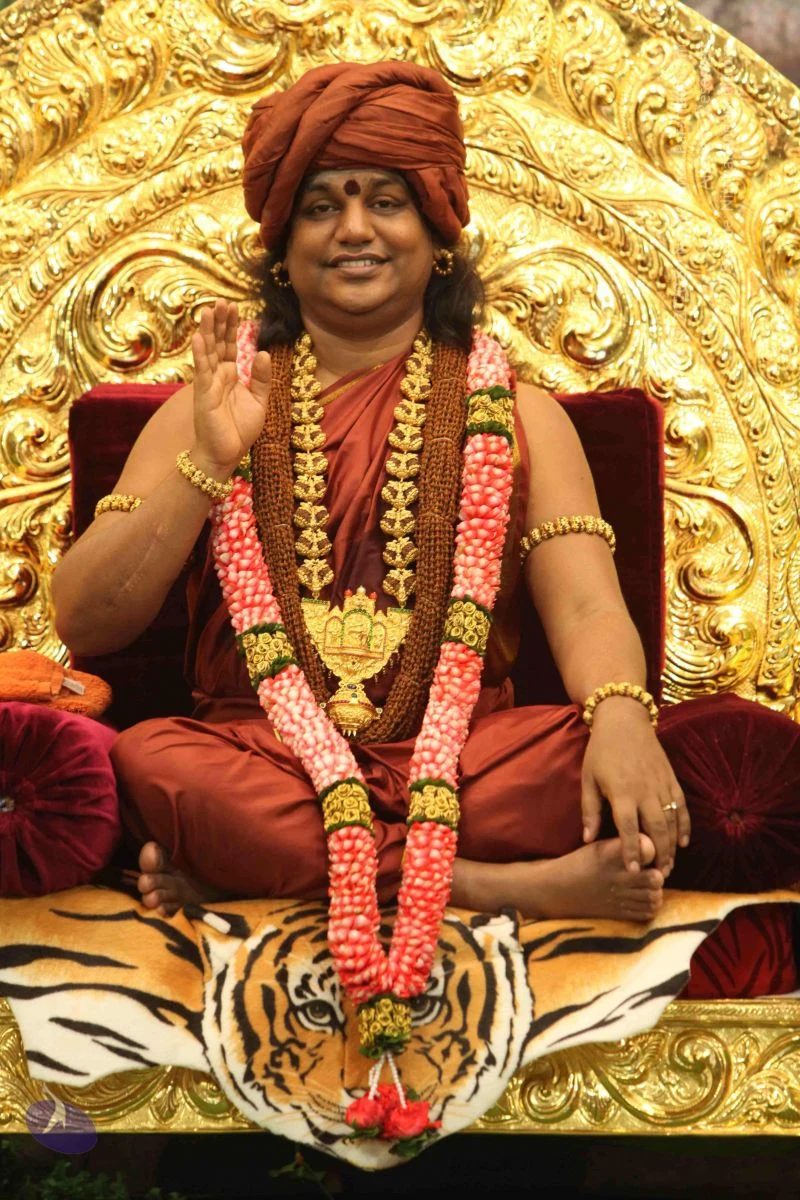
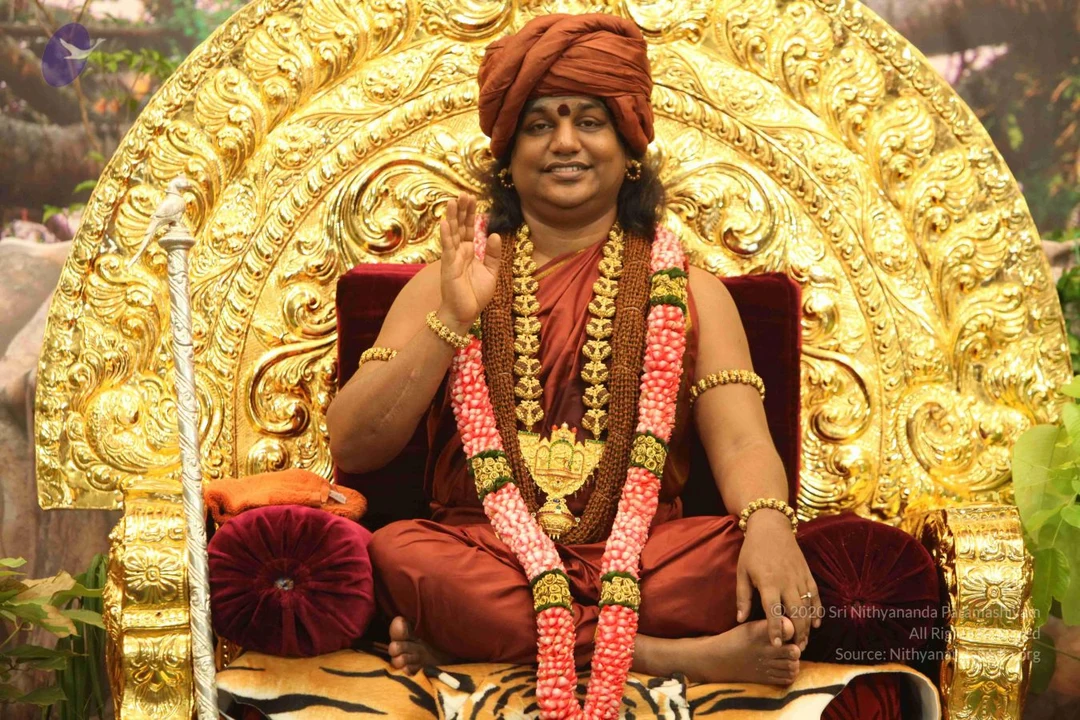
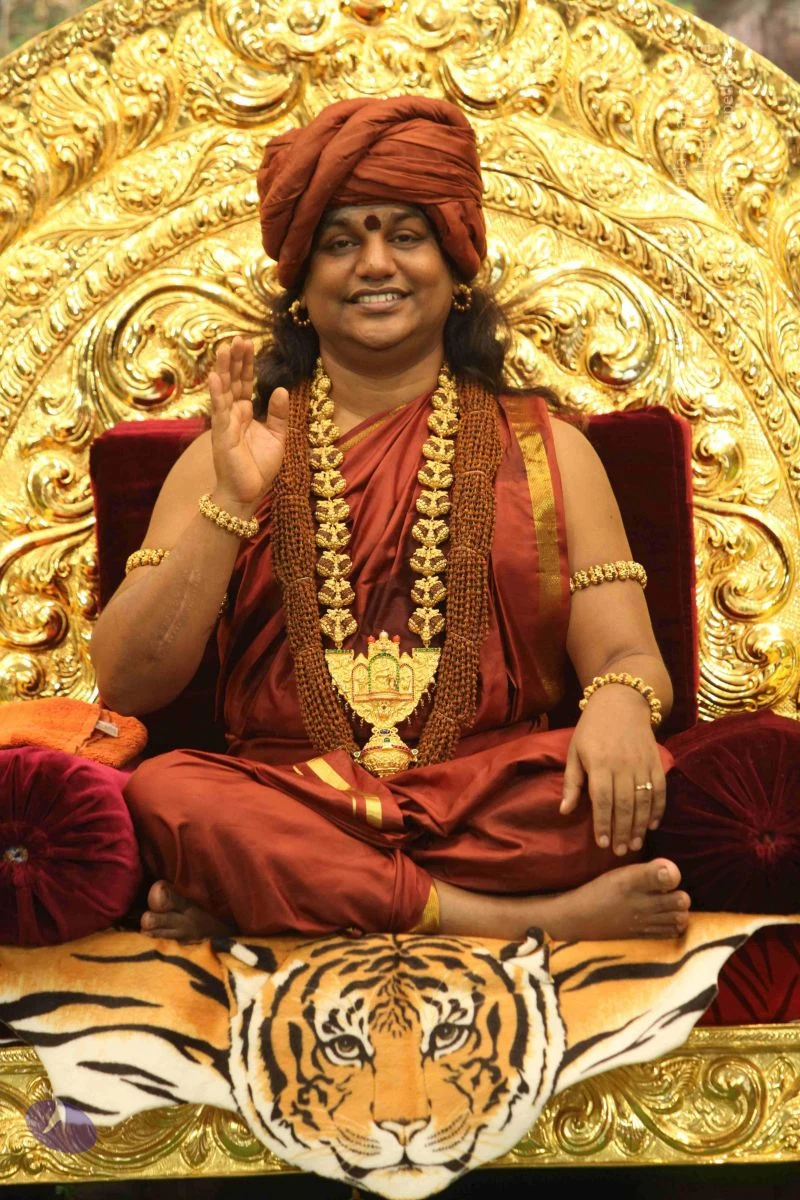
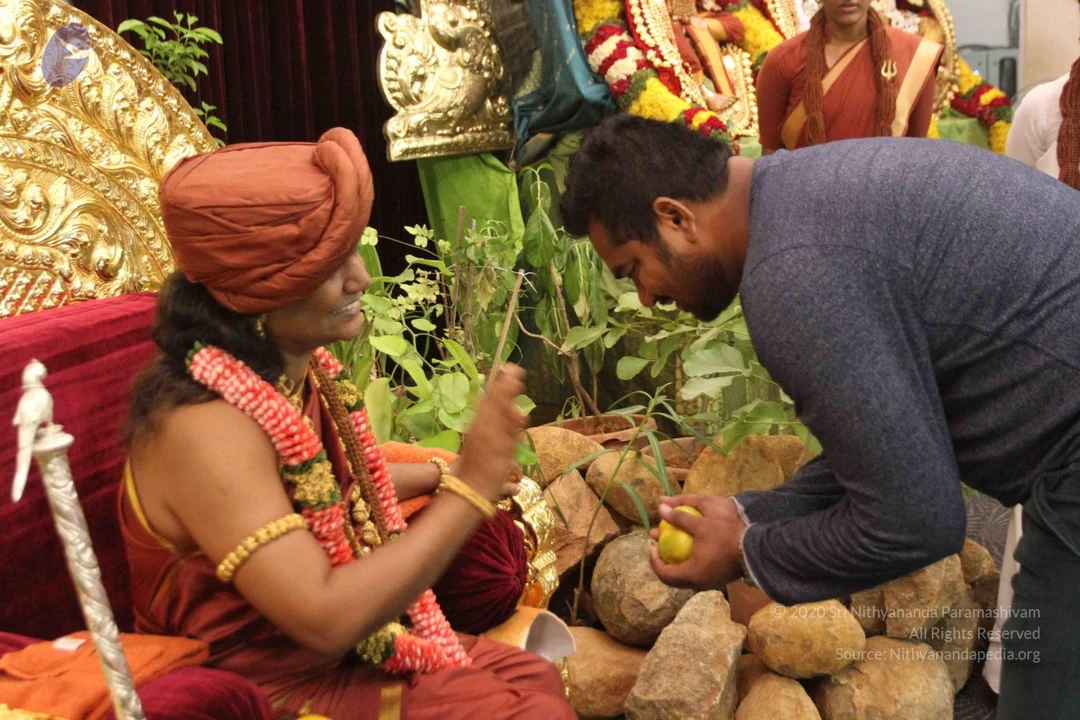
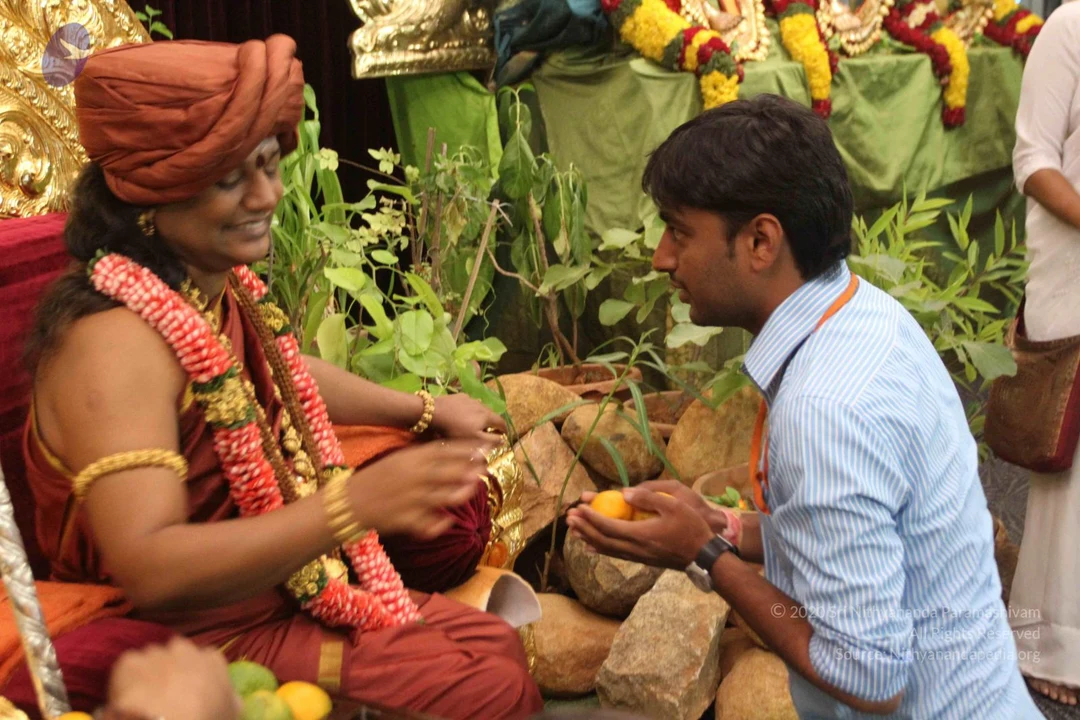
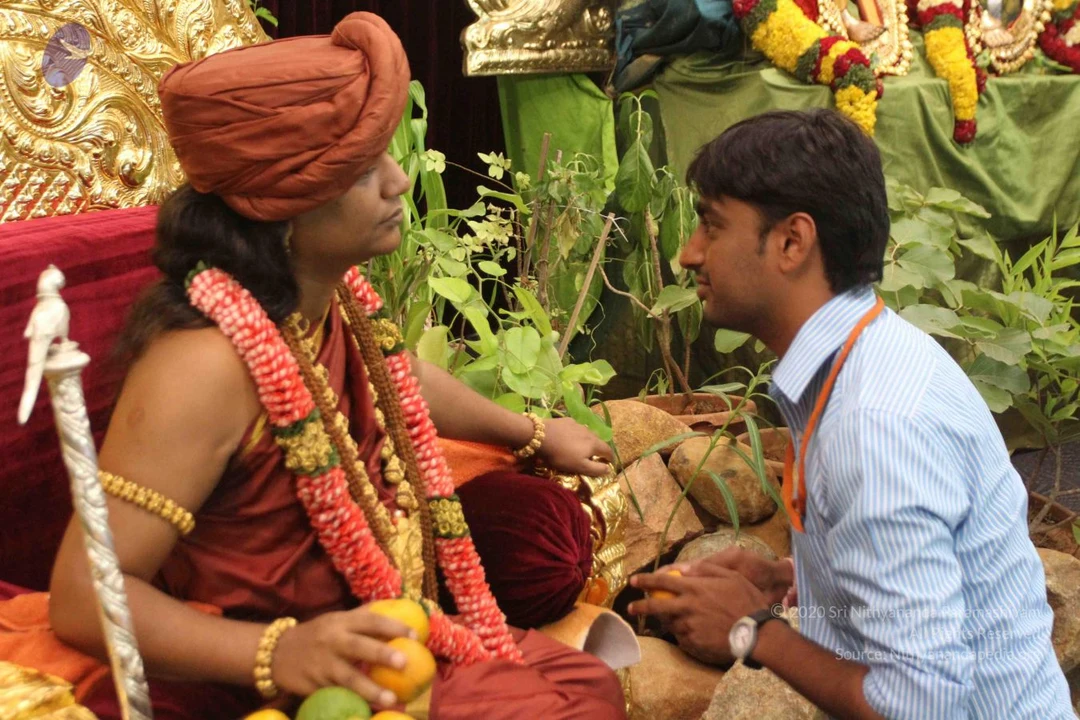
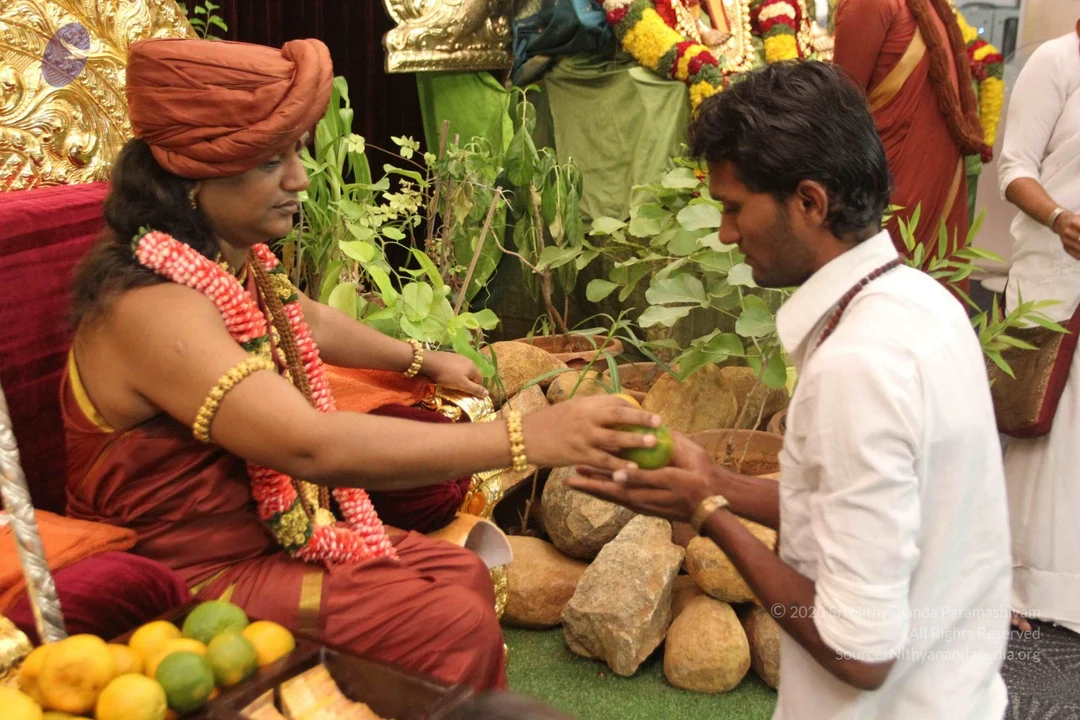
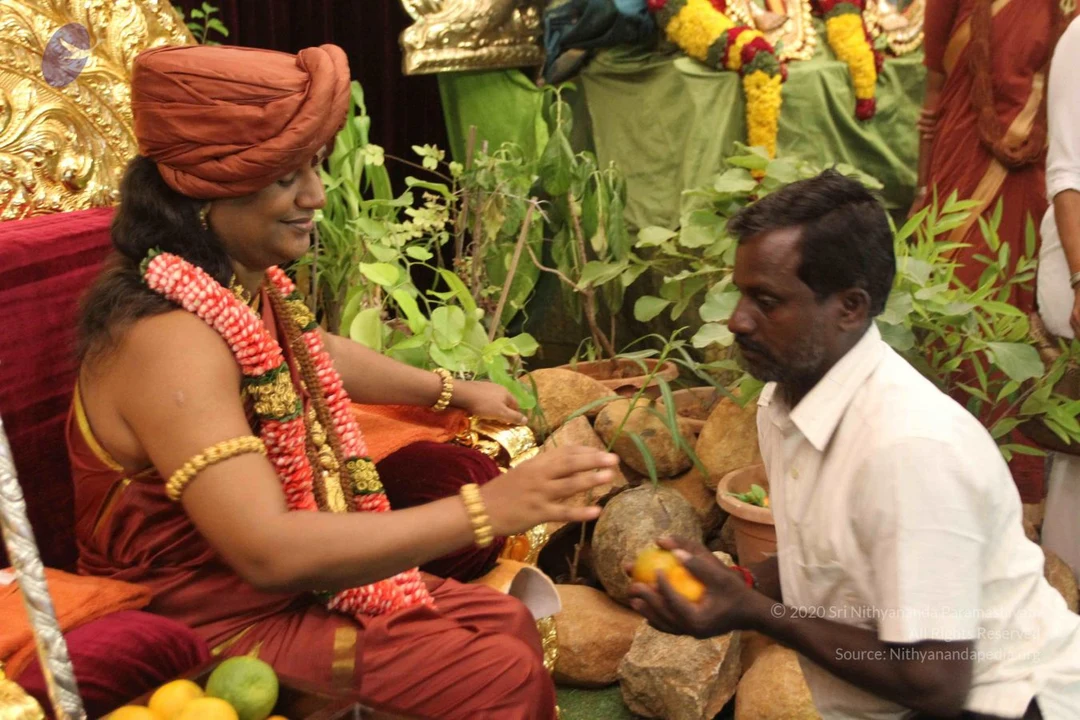
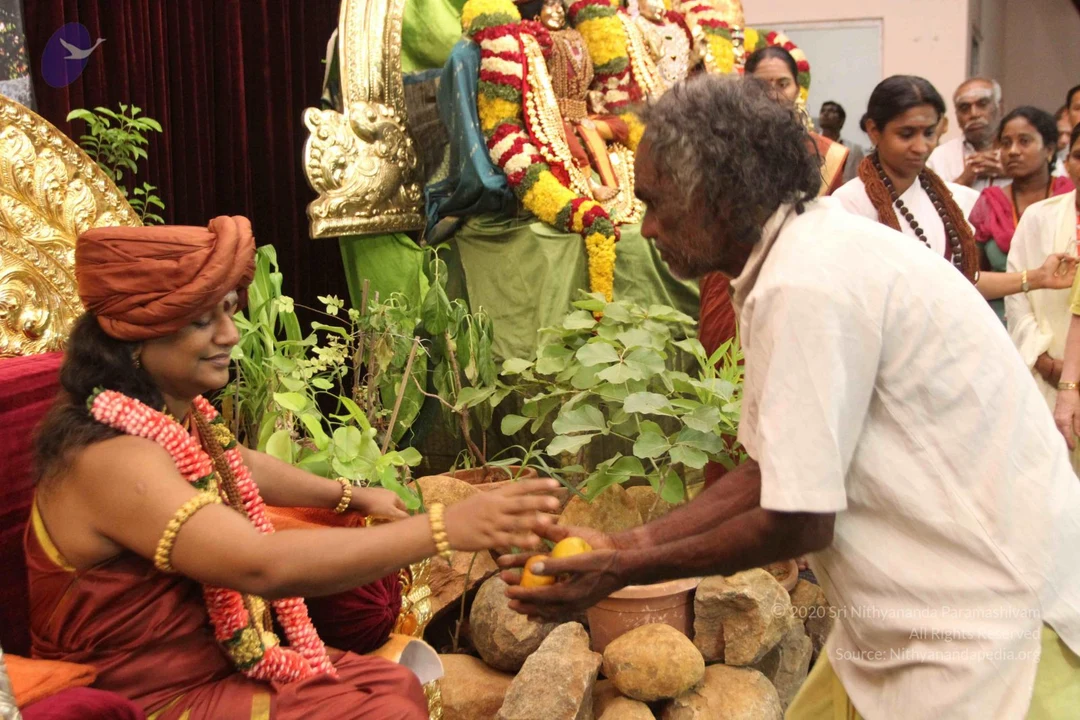
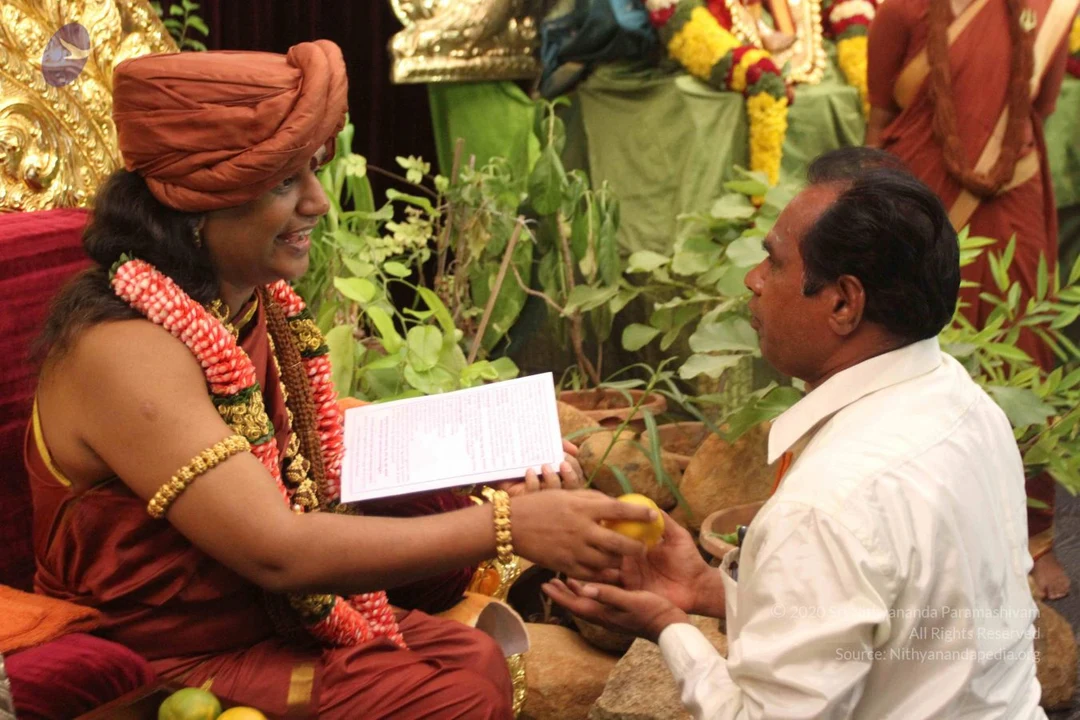
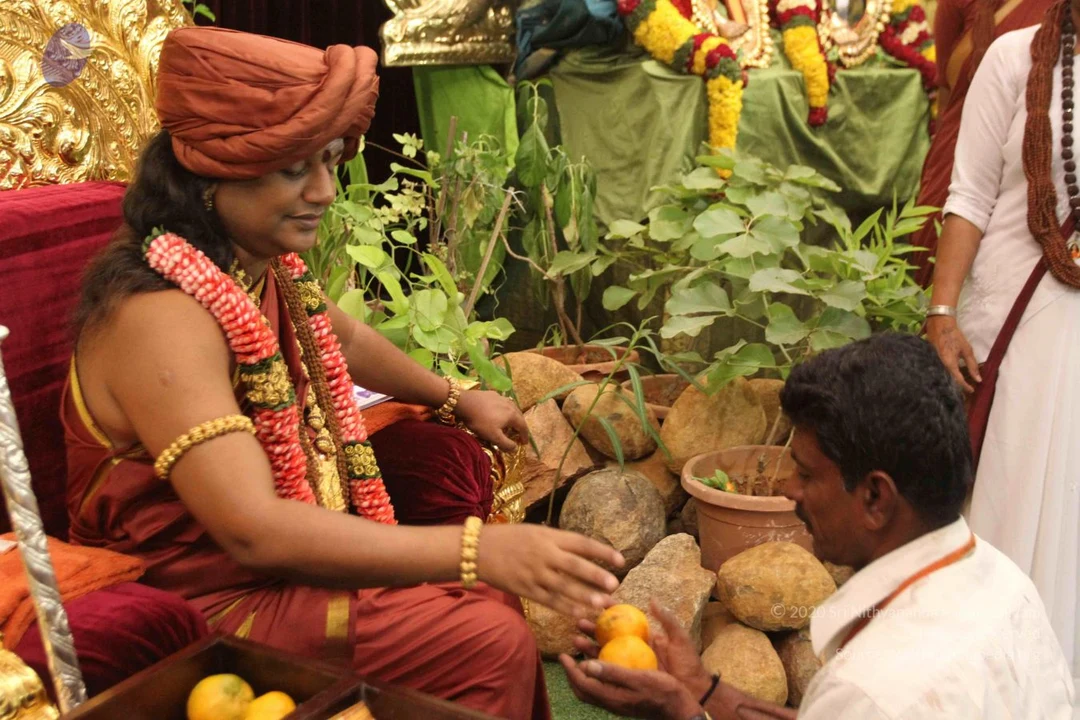
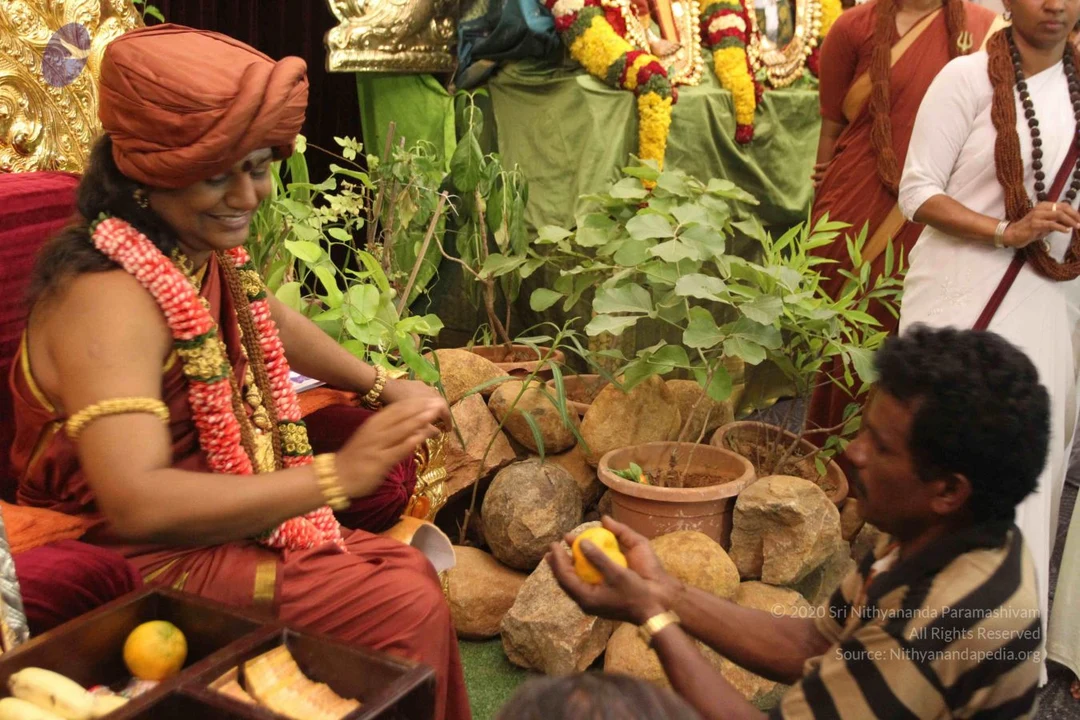
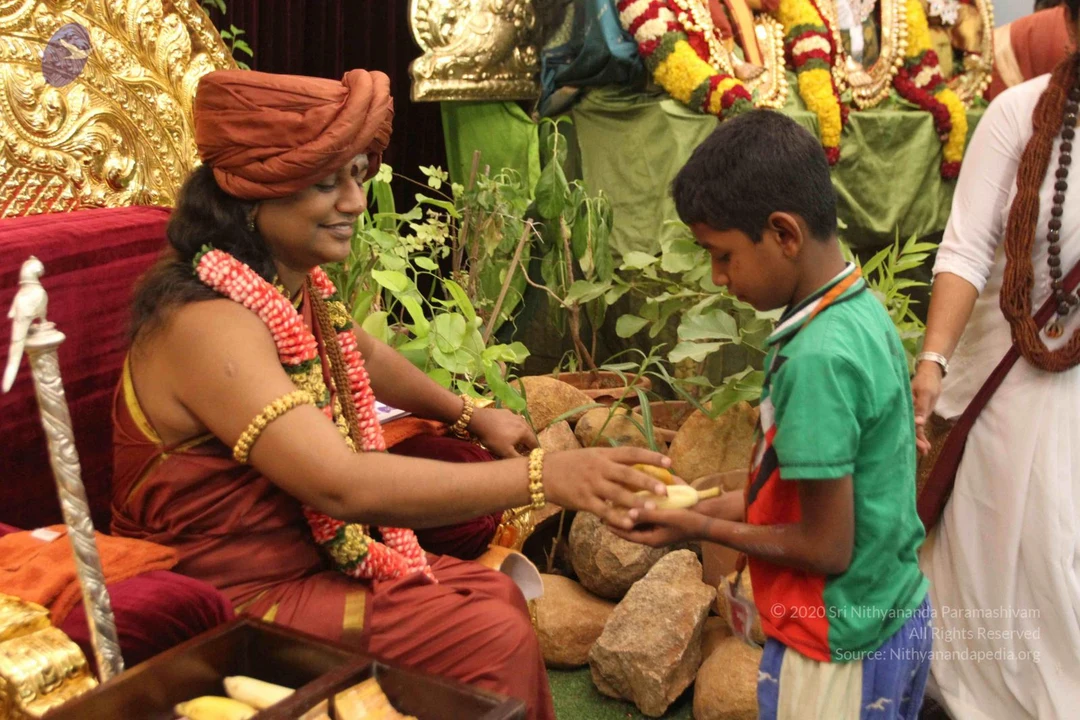
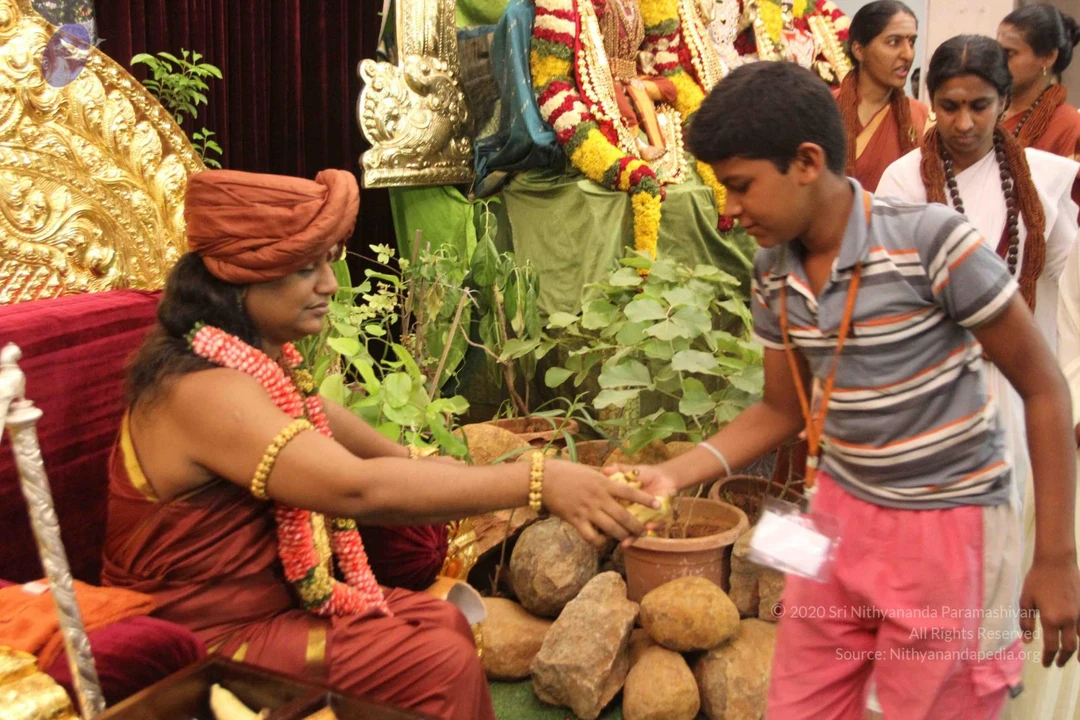
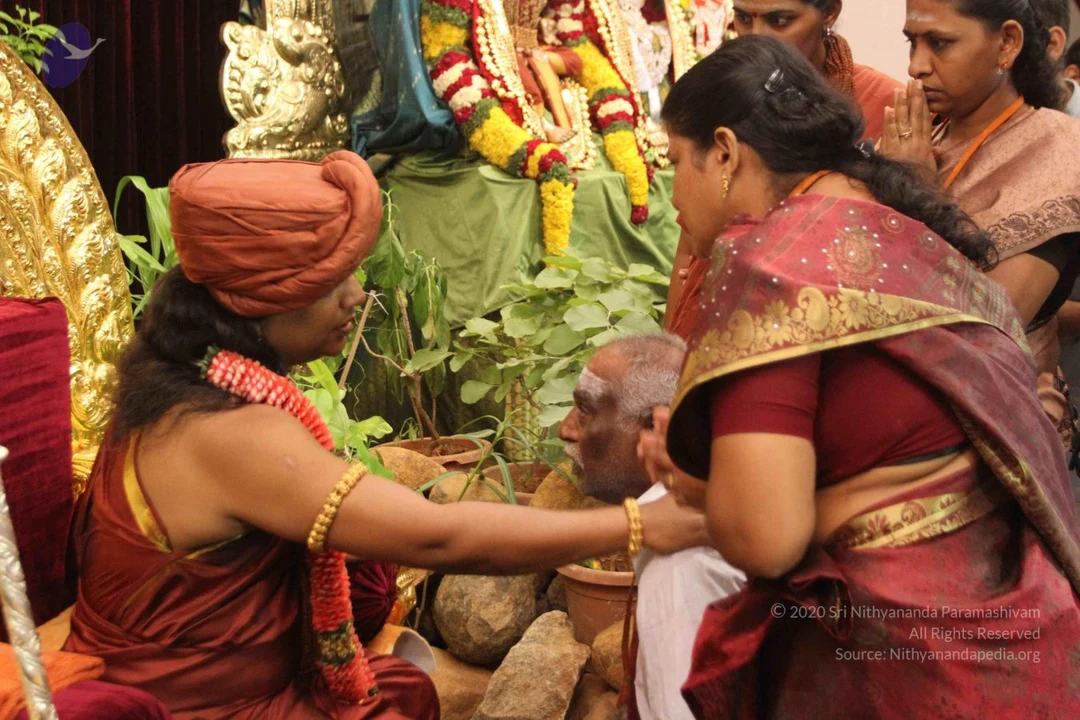
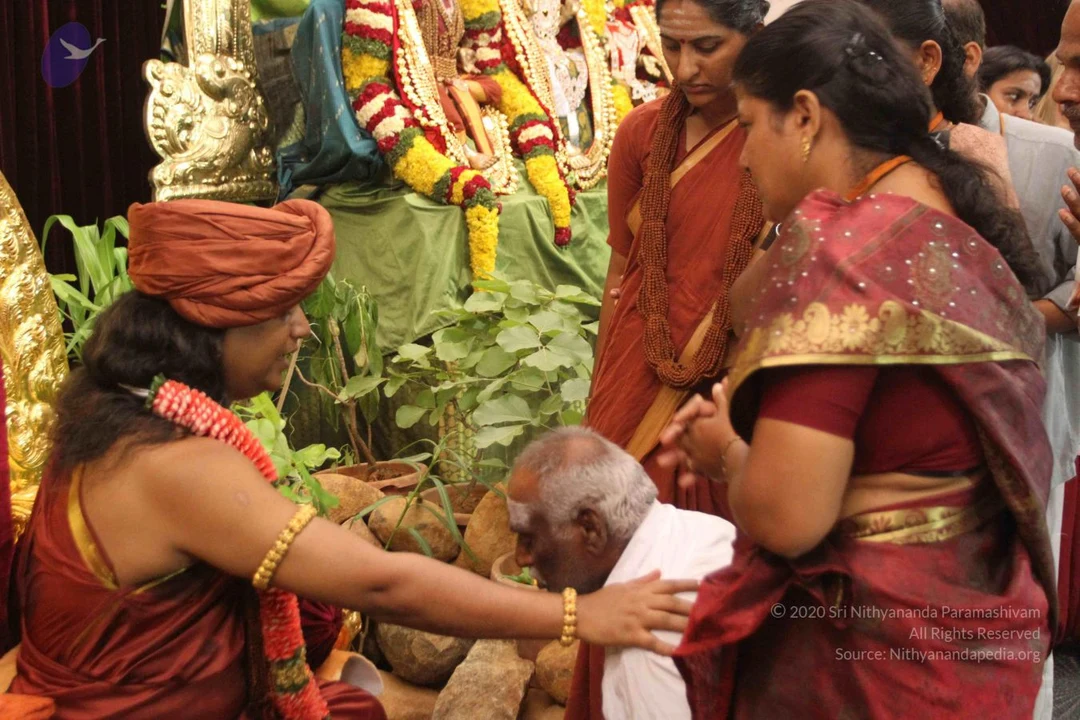
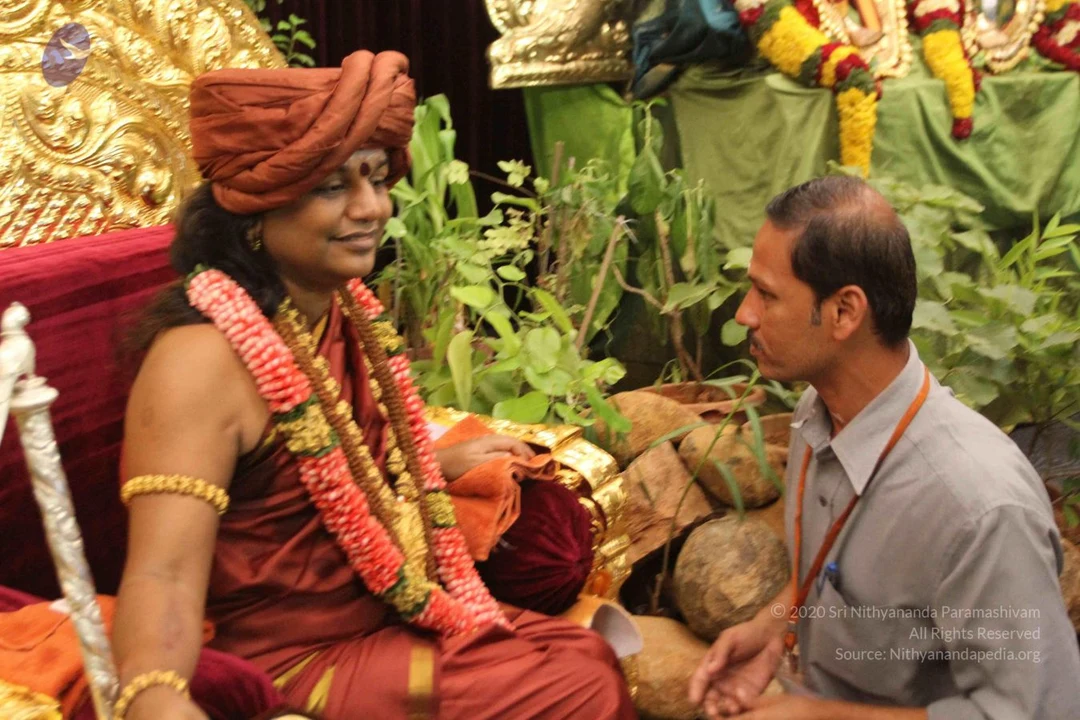
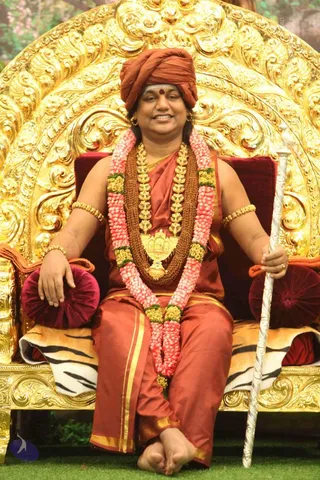
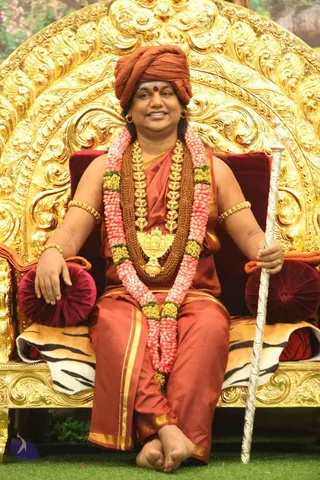
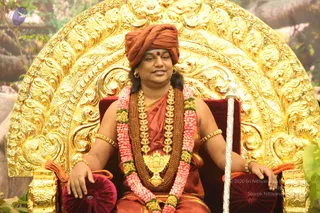
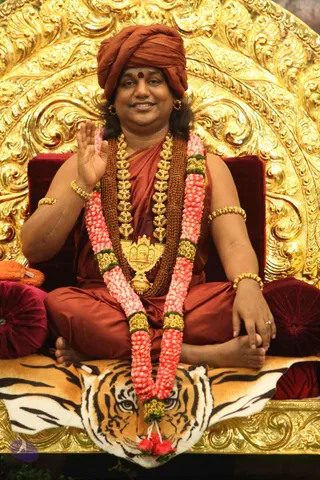
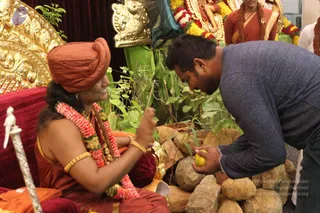
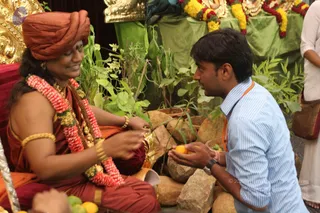
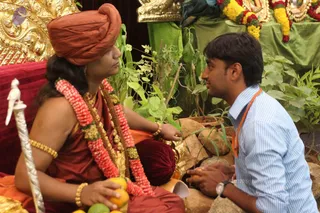
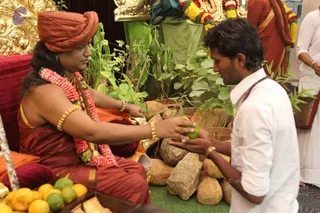
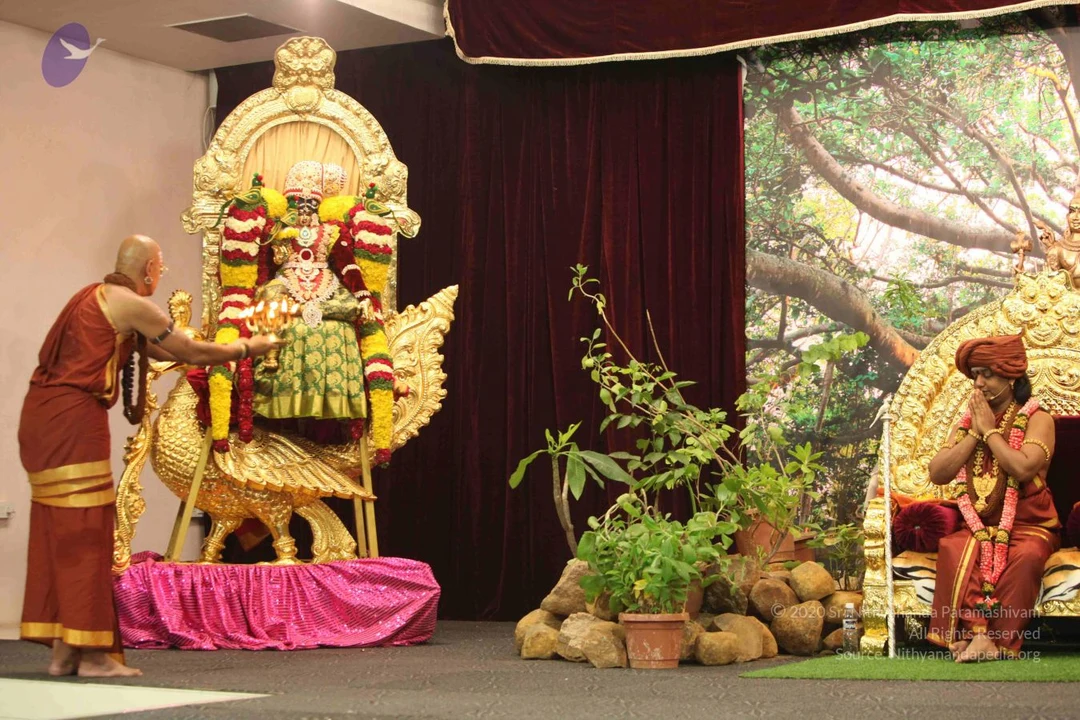
A photograph of a seated figure in a rust-orange turban and maroon-red robes, wearing a red and white flower garland, gold armlets and bangles, and gold ornaments. The figure sits on a red cushioned throne with gold carved panels behind. A man in a white shirt and white trousers kneels on the right, holding an orange fruit over a row of rounded stones, with a small clay pot nearby. Green leafy plants, a green draped cloth and yellow marigold garlands fill the background, and citrus fruits lie in the lower left. The figure is a candidate for the a person depiction, but the face and build are not clearly enough established to confirm identity.A smiling person sits on an ornate golden throne with a carved gold backrest and red velvet cushions. He wears a rust-orange turban, orange-red silk robes with gold border, a dark rudraksha mala with a large gold ceremonial pendant, and a pink and white flower garland. He holds a silver staff in his left hand and rests his right arm on the gold armrest. A red tilak mark is on his forehead. Behind him is a painted garden backdrop. Swamiji (probable): the orange turban, rudraksha mala, gold ceremonial necklace and ornate throne setting match the page's reference to Swamiji at this event.A photograph of a ritual scene. A seated figure on an ornate gold throne wears a rust-orange turban, red-maroon robe with gold border, a garland of white and red beads, and gold ornaments and bangles. The figure extends a hand toward a kneeling man in a white shirt with an orange cord, who holds out his palms over two oranges. Between them stand a cluster of rounded stones and a small clay pot with a green seedling. Behind them a green cloth draped altar holds marigold garlands and a golden deity murti. A standing attendant in white with a rudraksha mala is at the right edge. Oranges are on a tray at lower left.

April 22 2015

Original wiki page
Contents

Title

SEEK EXPERIENCE NOT EXPERTISE

Description:

Today’s (22th April, 2015) Nithya Satsang starts on a celebratory note with Meenakshi Brahmotsavam, the 10-day cosmic festival of Devi Meenakshi’s marriage with Mahadeva – which is manifesting divine energies on the energy-field of Nithyananda Adheenam. Continuing on Ishavasya Upanishad in Living Advaita Series, Paramahamsa Nithyananda expands on verse 9, which describes the obstacles people face in seeking. There are two types of people–initial level seeker who worship ignorance and advanced level seeker who worship half-truth. The advanced seeker, who has incomplete knowledge, has more danger of entering into deeper darkness (andham tamah) than the initial seeker. But, whose who worship knowledge for the sake of knowledge, become embodiment of Vidyā. Enlightenment comes an experience not as an expertise. Isha Upanishad – Verse 9 andhaṁ tamaḥ praviśanti ye’avidyām upāsate | tato bhūya iva te tamo yau vidyāyāṁ ratāḥ || 9 || Today’s Vakyartha Sadas, topic for spiritual explorations on meaning of truth is – how the incomplete knowledge makes you arrogant and makes you lose your seeking, and makes you egoistic; and how the growth gets stopped by the incomplete knowledge. Watch, Share and Subscribe to our channel to be notified of the next upload click http://www.youtube.com/subscription_center?add_user=lifeblissfoundation to subscribe. visit: http://www.nithyananda.org http://www.nithyananda.tv http://www.innerawakening.org https://www.youtube.com/user/LifeBlissFoundation https://twitter.com/SriNithyananda https://www.facebook.com/ParamahamsaNithyananda https://plus.google.com/104086565286265959836/posts

Link to Video:

VideoAudio

Transcript:

nithyānandeśvara samārambhām

nithyānandeśvari madhyamām |

asmat āchārya paryantām

vande guru paramparām ||

I welcome all the devotees, disciples, samajis, satsangis, SriMahants, Mahants, Thanedars, Kotharis, visitors, viewers sitting with us all over the world through Nithyananda TV, Sadhana TV, Arra TV and two-way video conferencing having Nayana Deeksha.

Cities sitting with us in two-way video-conferencing having Nayana Deeksha:

Trinadad-Tobago, Hongkong-Sirkali, Bangalore North, Singapore-Singapuram, Vancouver-Bhuvaneshwar, Warrington-UK, Uduvai Aadhenam, Houston Aadhenam, Hosur Aadhenam, Oklahoma, Hyderabad-Gupta Kashi, Toronto Aadhenam, Oklahama Aadhenam, Los Angeles Aadhenam, Seattle Aadhenam, China, Australia, Sanjose Aadhenam, St. Loius Aadhenam, Kaula lumpur Aadhenam, Ohio Aadhenam, Chennai Aadhenam and some more cities.

I welcome all of you with my love and respects.

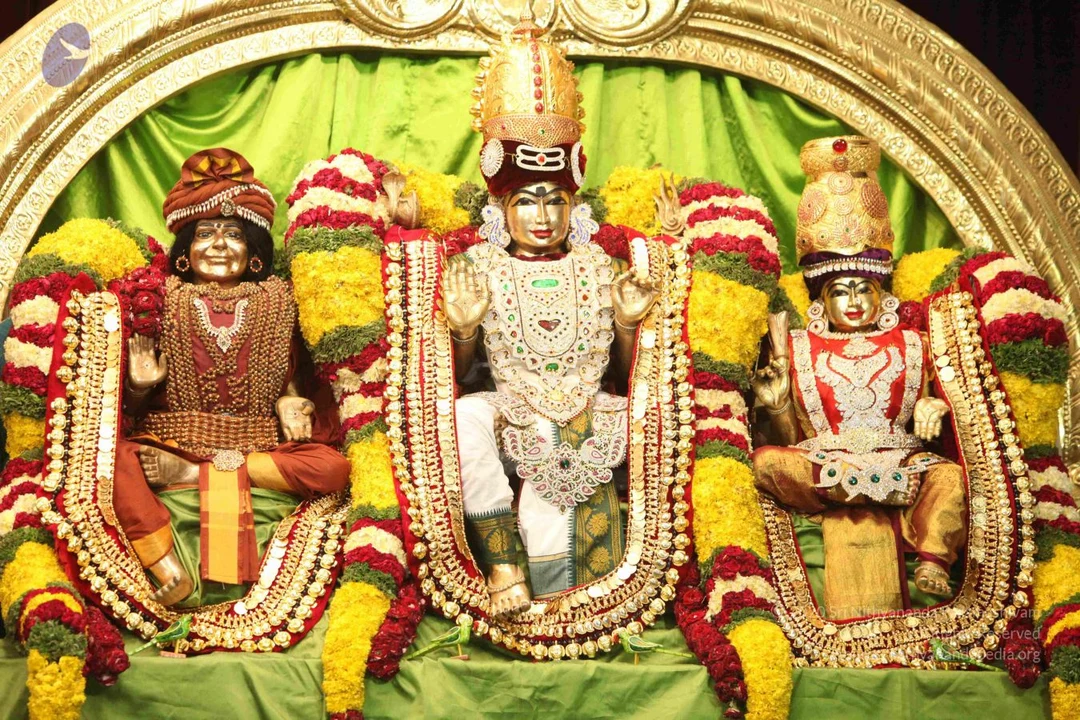
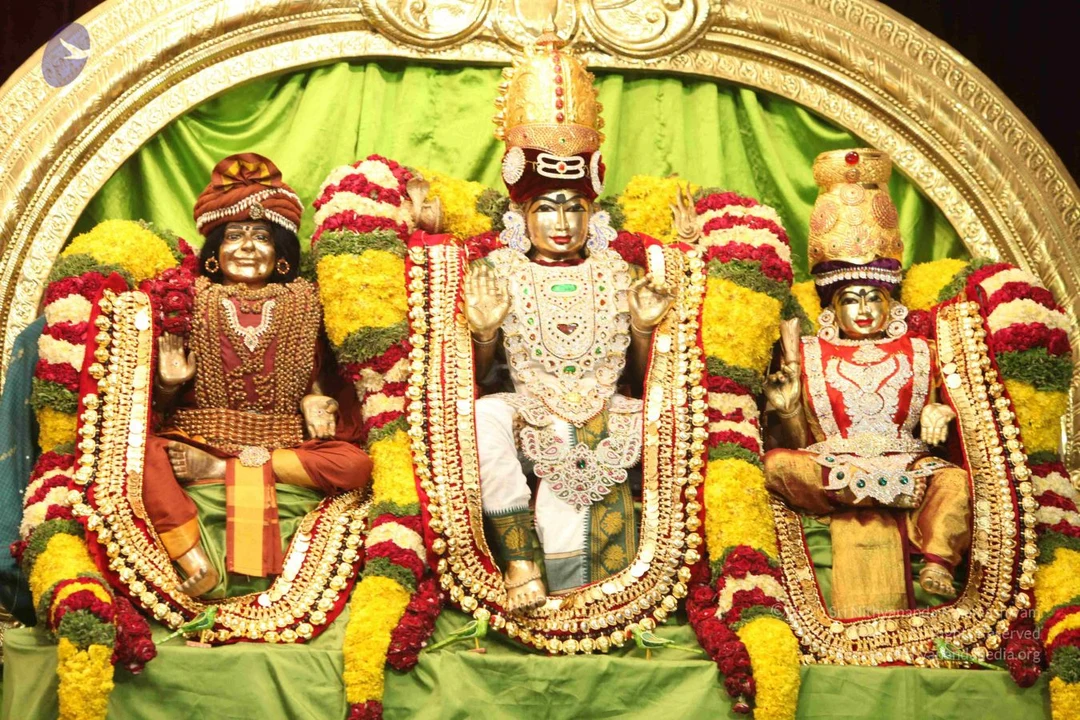
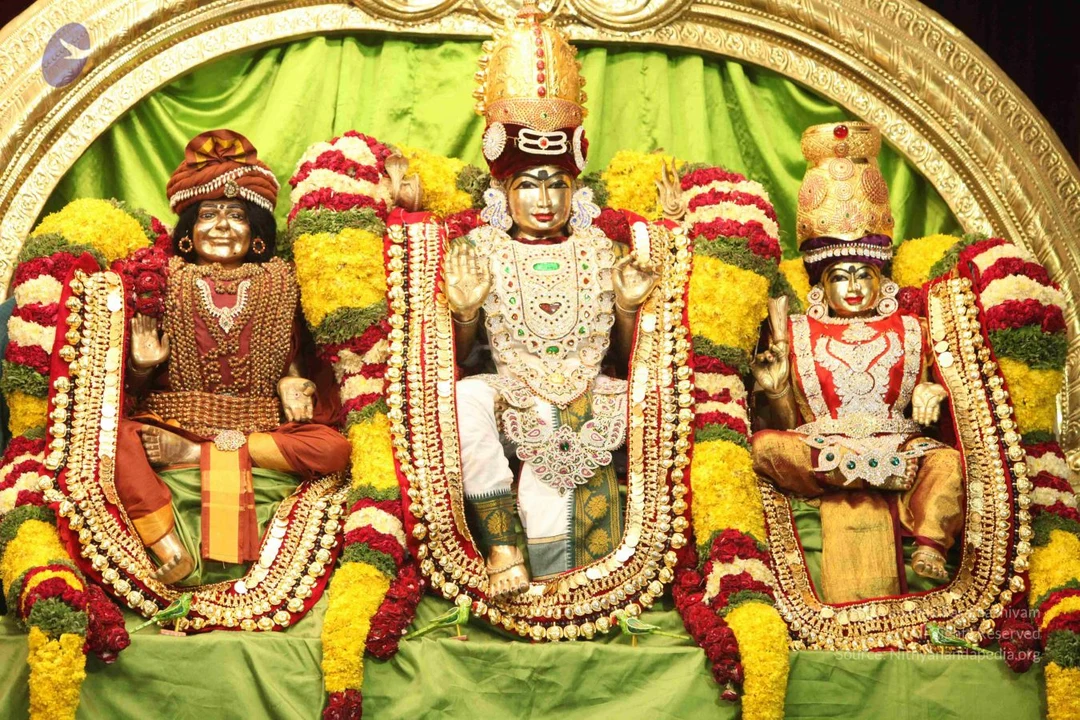
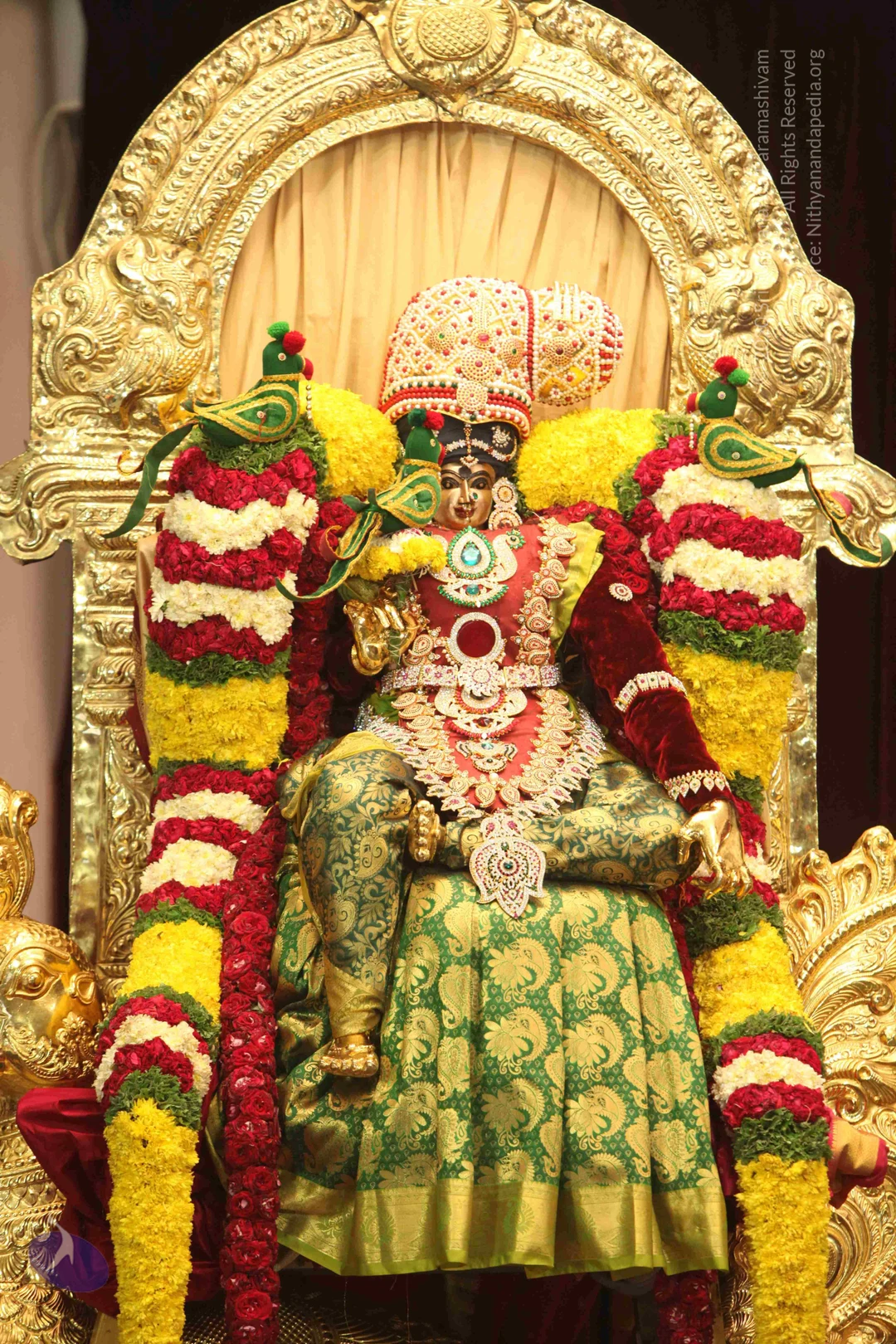
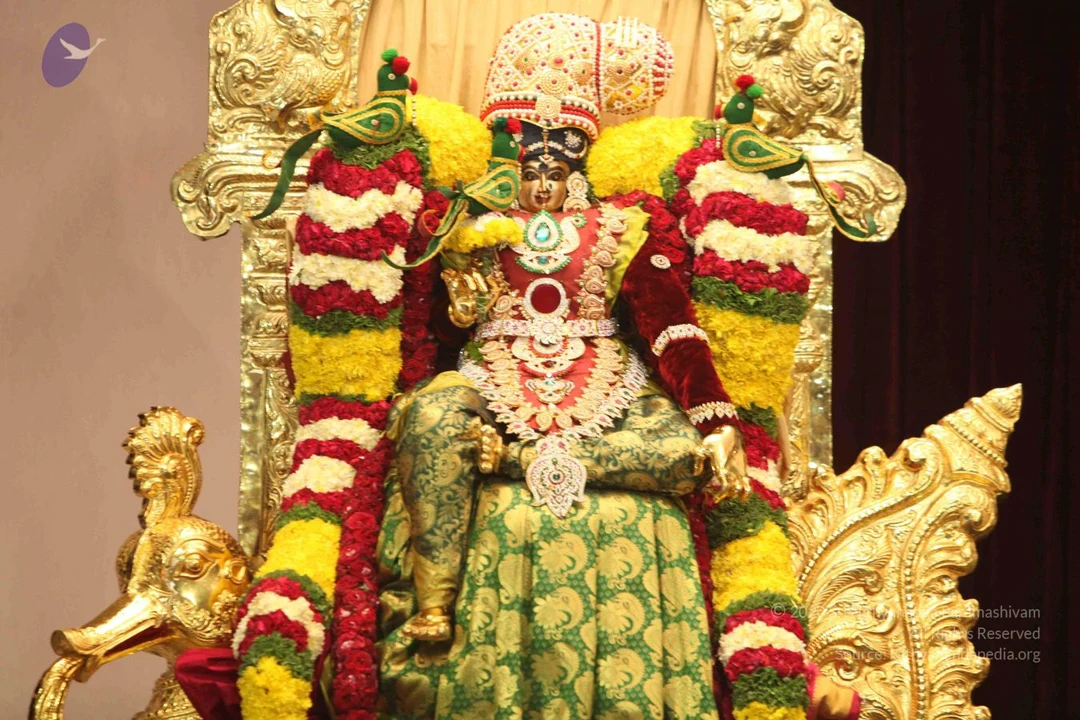
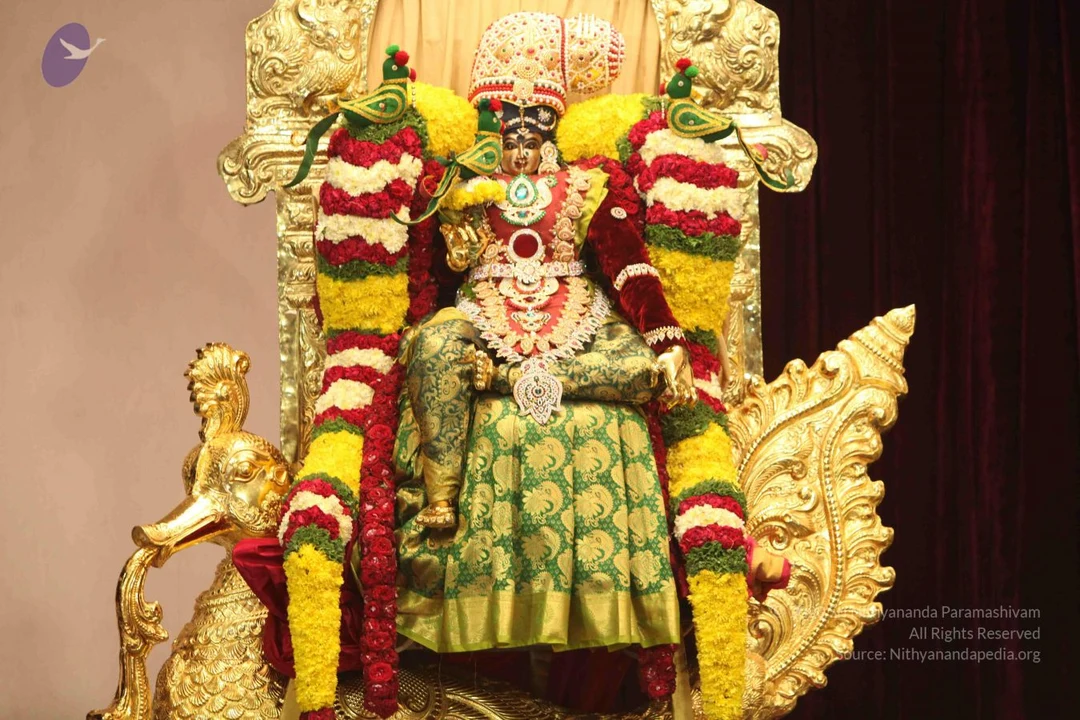
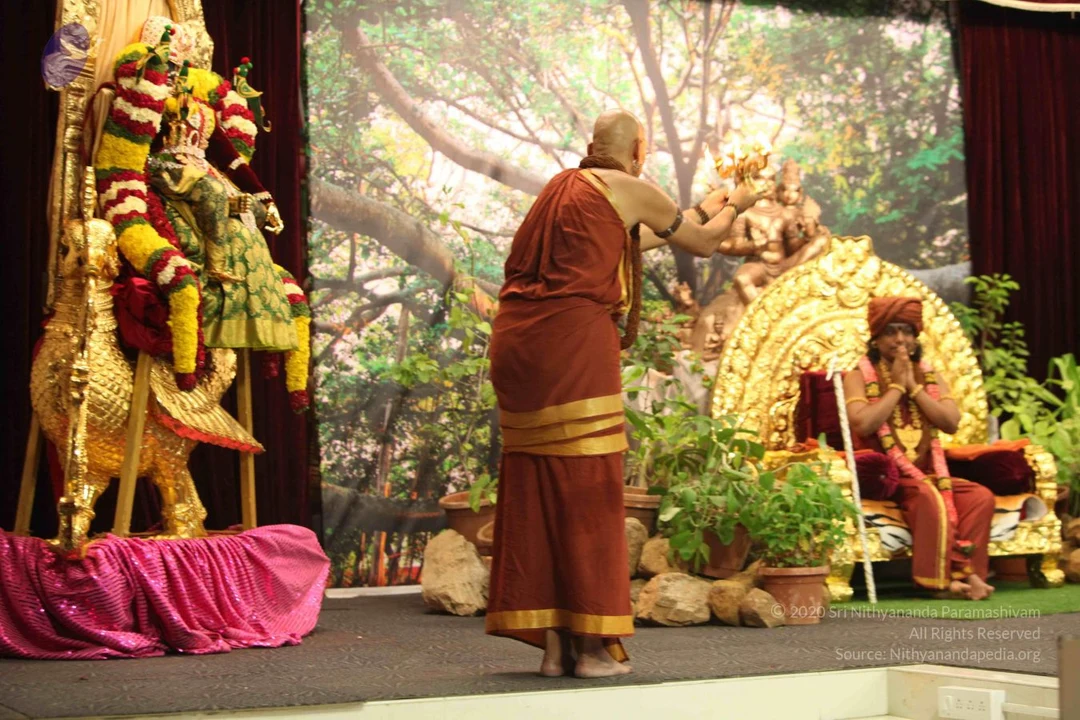
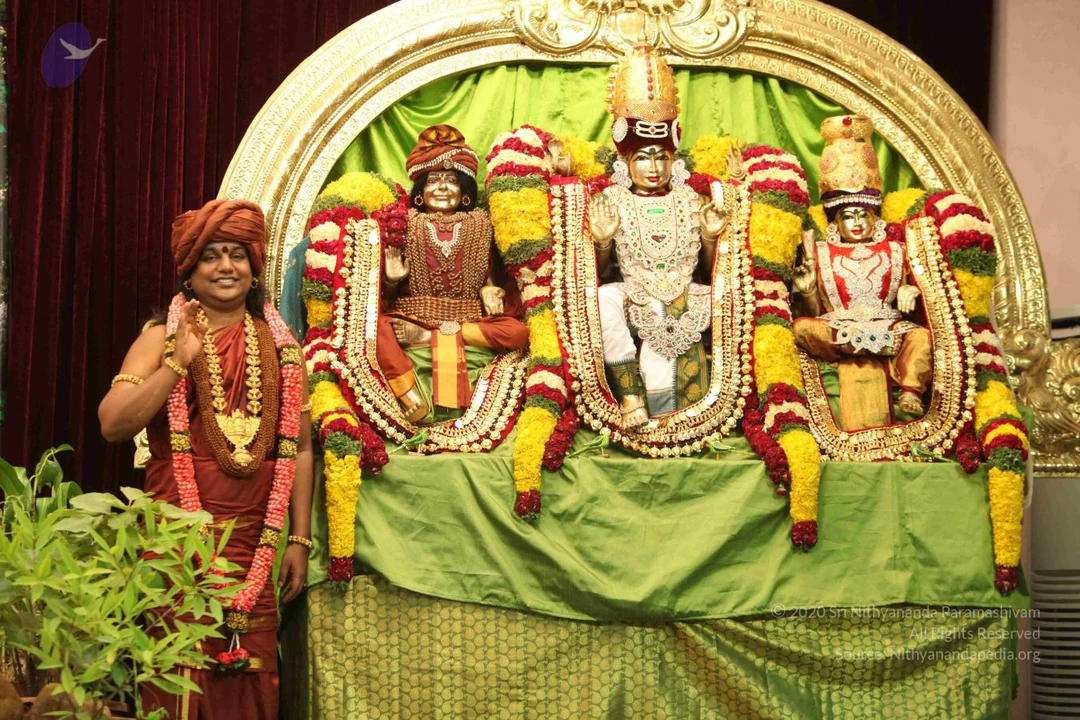
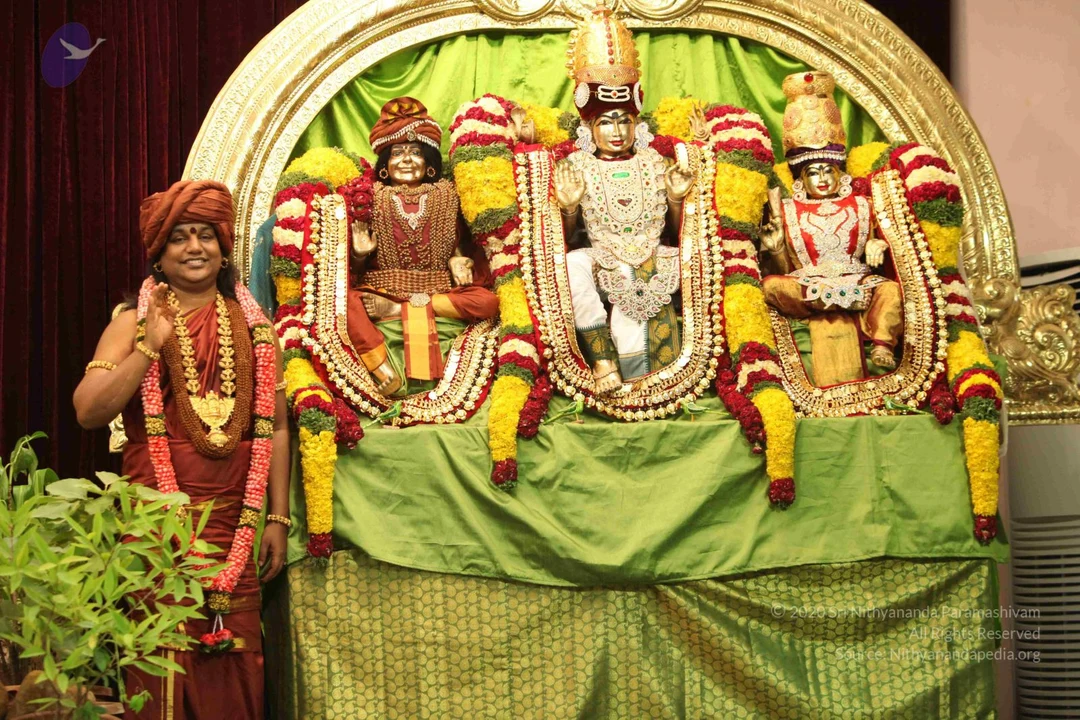
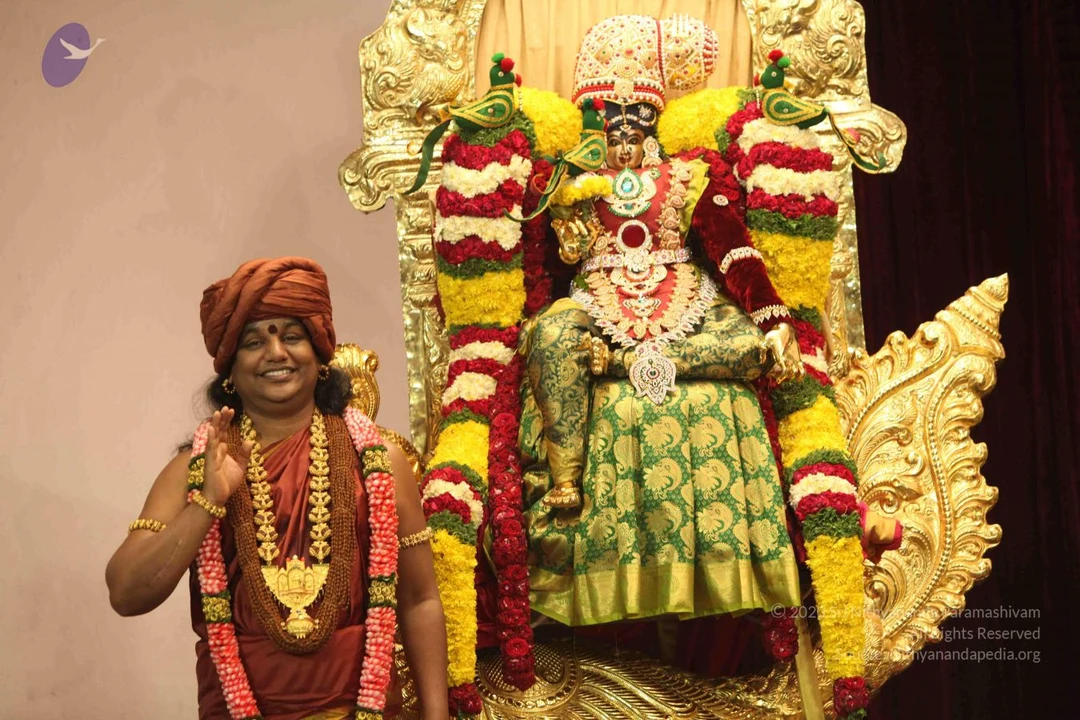
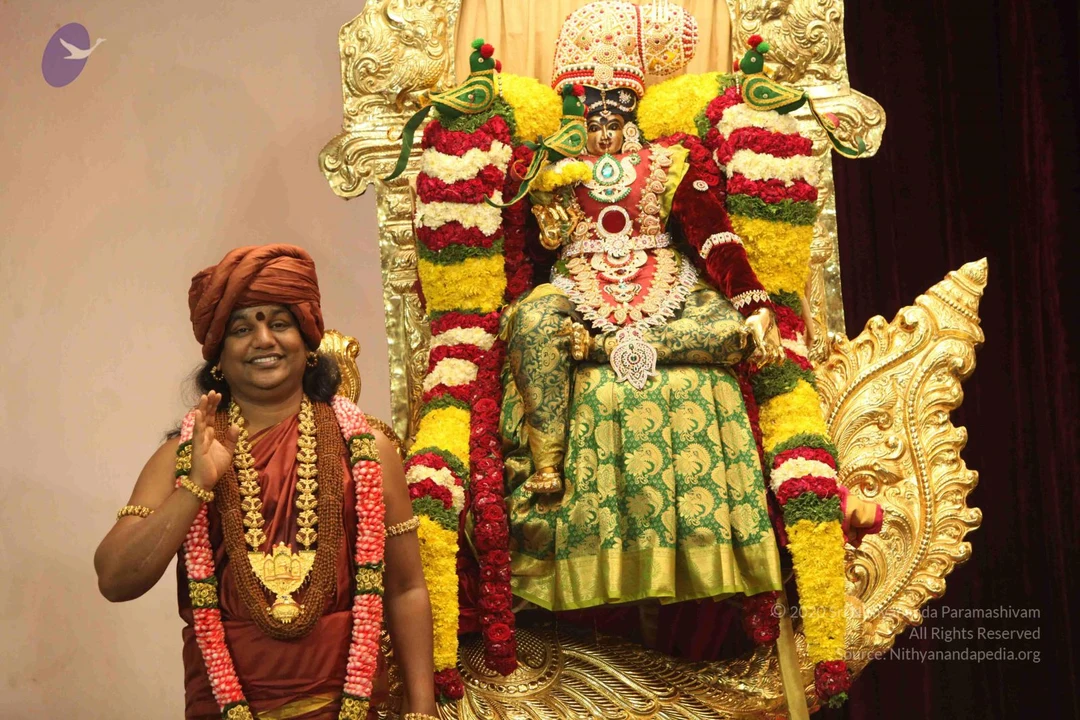
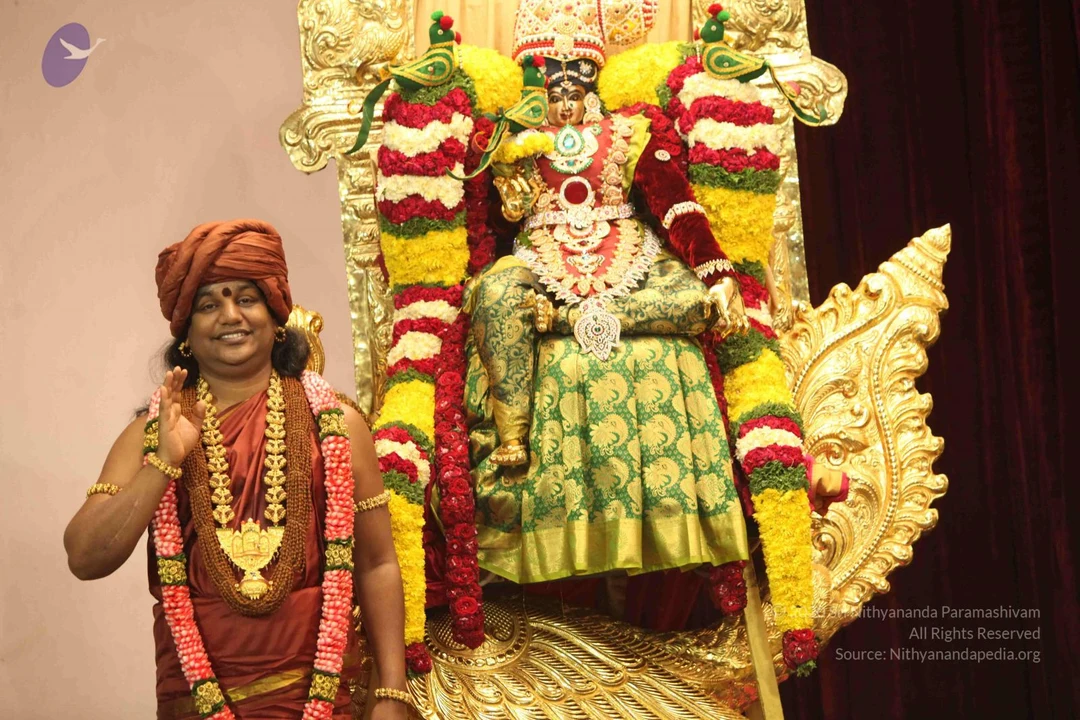
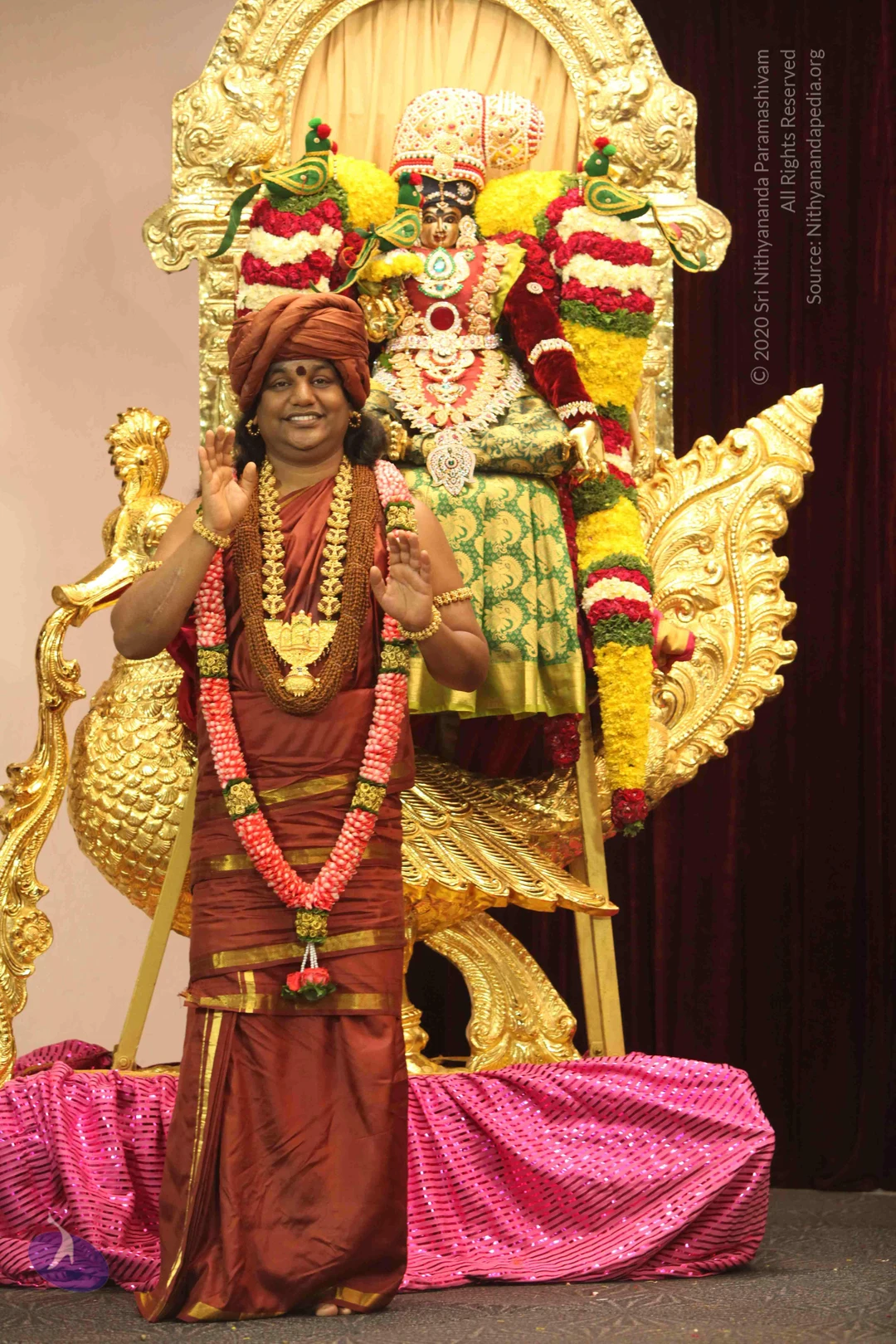
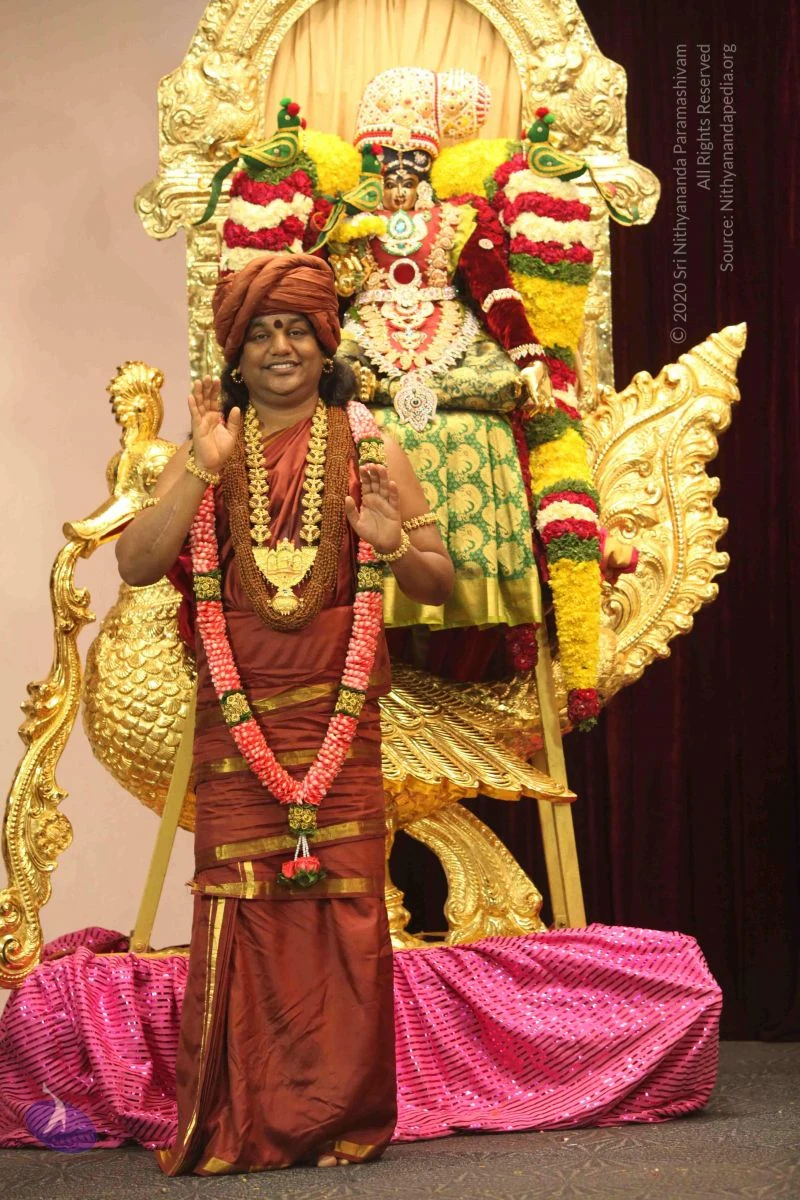
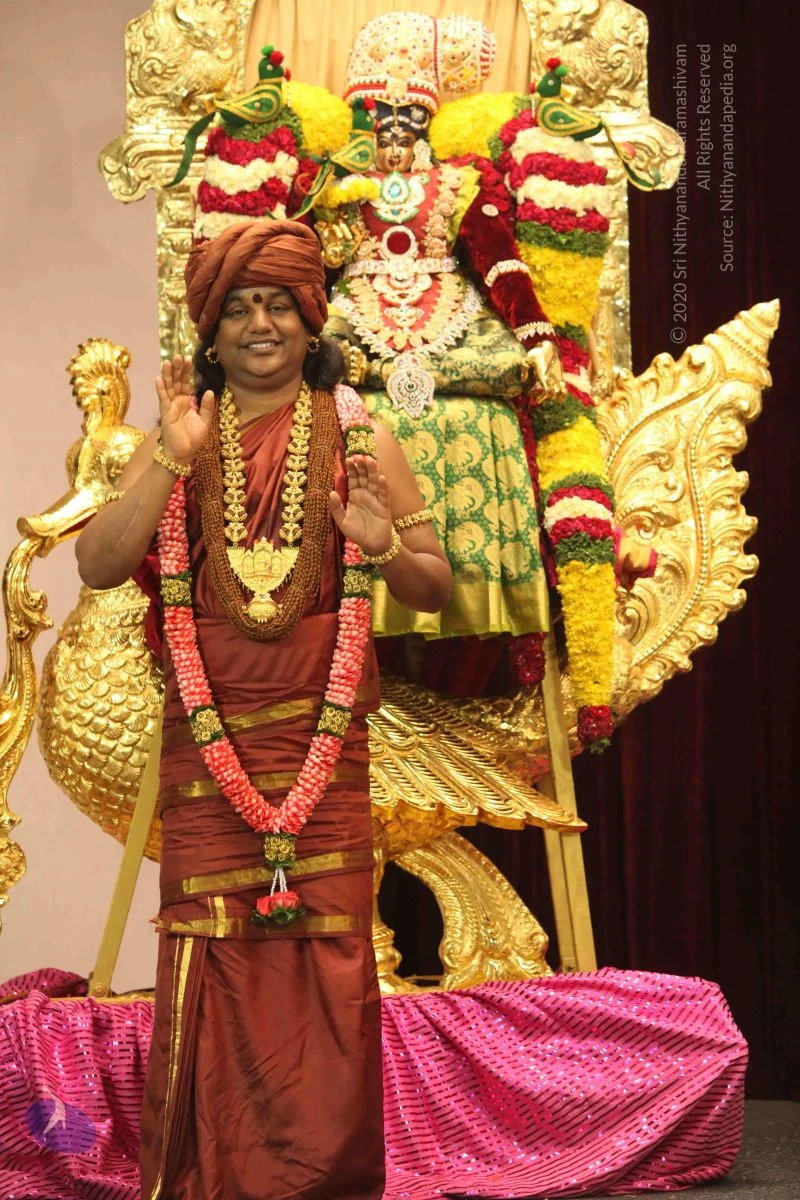
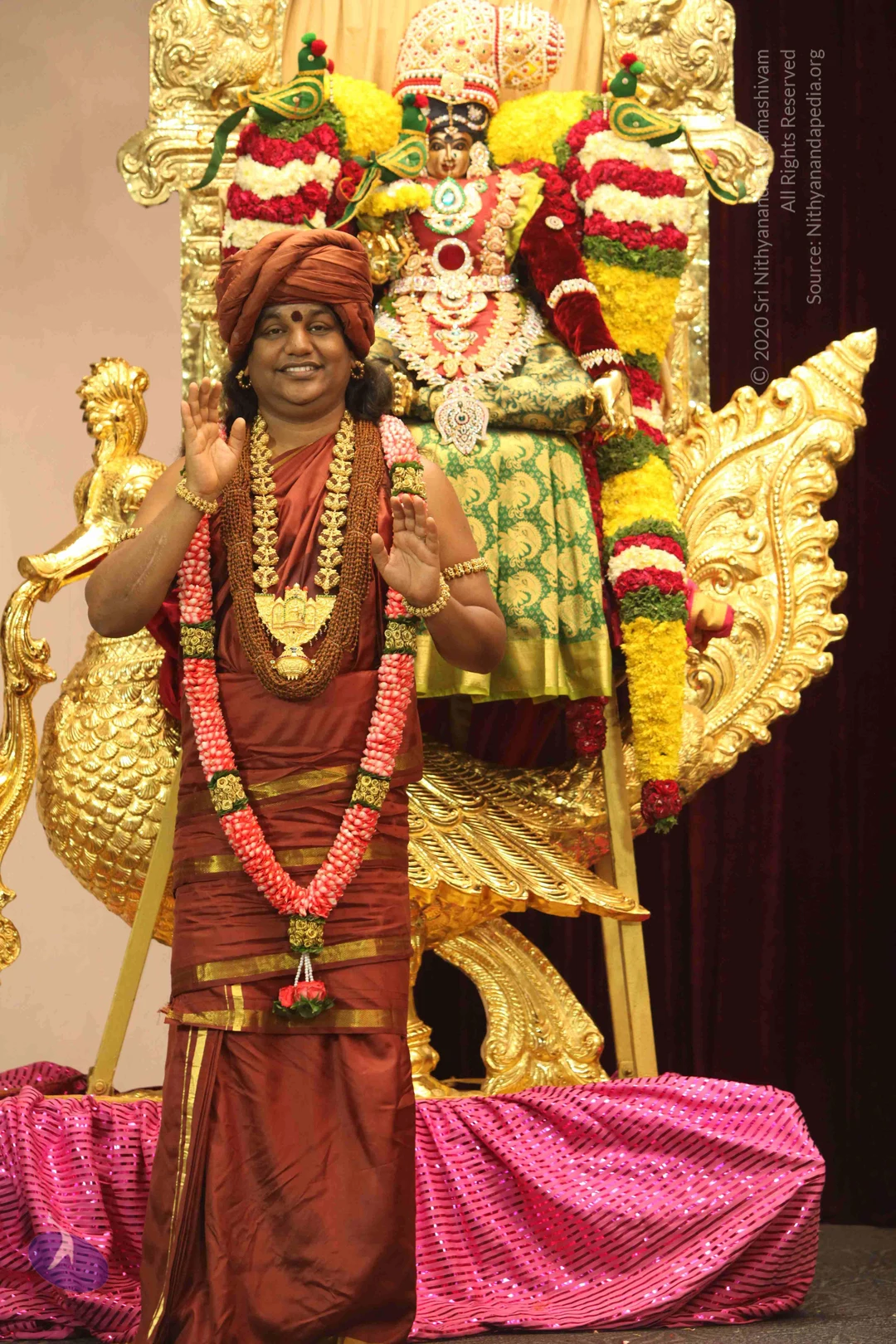
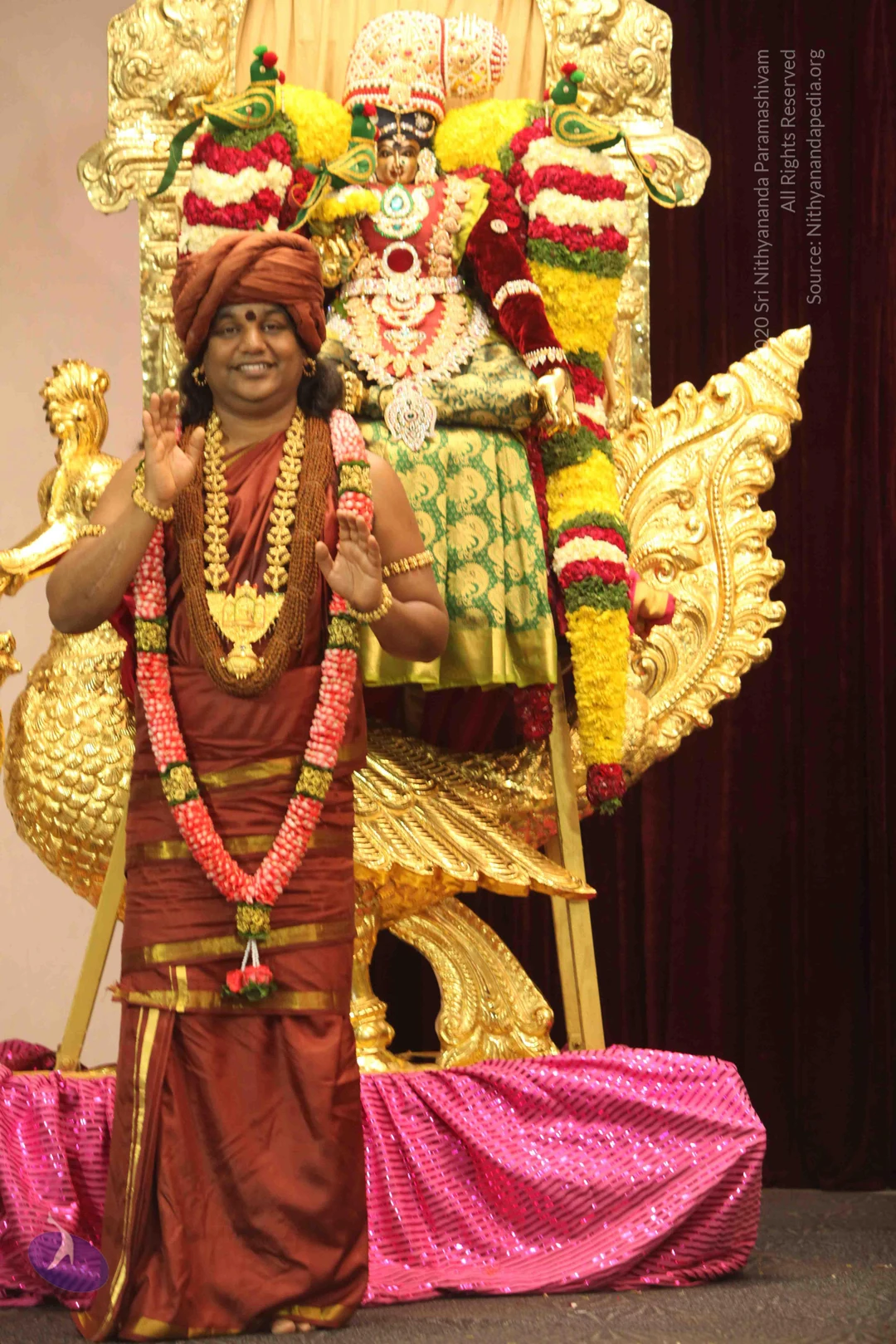
Today, Meenakshi Brahmotsavam, second day. Mahadeva is gracing in Sarvālankara and Meenakshi is gracing on Swarna Mayura Vahana – the golden peacock vehicle, wearing the pearl crown, crown made of pearls which is the official ratna (jewel) of Pandya Nadu (Pandiadeśa). She is gracing on Svarayanamayura Vahana. Let’s receive her blessings first. Yesterday, we had a Dhvajarohanam, official flag hoisting, to celebrate to start the Meenakshi’s Brahmotsava. From the time the flag was raised, I know, the energy is totally different. I was wondering, I used to think that eh, not think, used to, there is something called so-called thinking process, I used to wonder how can energy become different in energy field itself, its already the high energy field, even then, the energy which can be perceived normally, that drastically increases when these Brahmotsavams start and all divine energies start manifesting themselves here. So, the time for the leela started from yesterday. So again you will see, from today, all these Brahmotsavam days, all these Brahmotsavam days, everywhere, from my Padukas the vibhuti and kumkum will start materializing. Wherever we have Meenakshi deity, vibhuti and kumkum will start materializing on Meenakshi deity. It’s time for Meenakshi’s leelas. All the temples where you have Devi, Meenakshi’s deity, Devi’s deity, you should start decorating her, giving her the special offerings and start celebrating the Devi’s Brahmotsavam as much as you can. San Jose should celebrate, because you have a beautiful Meenakshi, and you represent Madurai.

Let us enter into today’s Satsang. I will continue to expand on 9th verse of the Isavasya Upanishad. Please recite along with Me:

andhaṁ tamaḥ praviśanti ye’avidyām upāsate |

tato bhūya iva te tamo yau vidyāyāṁ ratāḥ || 9 ||

Those who worship avidyā, ignorance that veils the true knowledge of Truth, Consciousness, enter into blinding darkness characterized by the absence of perception; but into greater darkness of ignorance than that, enter they who, considering themselves as scholarly and learned, are engaged in vidyā, the incomplete knowledge acquired for vested interests, characterized by the impure perception of Truth and Consciousness.

See, this verse talks about two types of people—one, who worship ignorance, second, who worship half-truth. Knowledge for the sake of vested interest, not for the sake of knowledge itself. Understand, knowledge for the sake of vested interest, not for the knowledge itself.

When you start worshipping the knowledge for the sake of knowledge, you become embodiment of vidyā, knowledge.

But if you are worshipping the knowledge for some other vested interests, as I was describing few days before, for the sake of luxury or for the sake of any other comforts, if you stop seeking, you’ll be suffering with the half-knowledge, the incomplete knowledge, the impure perception of Truth, Consciousness. I am telling you, please understand, when you enter into the search of spiritual knowledge, seeking, you will have such liberating truths about freedom. All powerfulness! All these great truths will be told, but be very clear, unless they become experience, don’t try to mess up with the concepts of freedom. Please understand, most of the time, giving in to your patterns, you will start declaring as freedom. You will say, “after all I am enlightened, I am a soul, I am free,” then finally go and eat the beef. Ramakrishna says beautifully, in one example, “the crow may try to boast about itself, but finally end up in eating what it eats from the dustbin, dirt.”

So understand, most of the time, these so-called knowledgeable people also, with the incomplete knowledge, they give in to their patterns and declare they are free. Please listen, I will give you a more clear example. Without becoming Paramahamsa, try to live like a Paramahamsa, really without getting to the space of non-attachment, trying to live as if unattached. Listen, this is a most dangerous game people will play. But of course, nobody else need to punish them, they themself will be punishing themself. They will be punishing themself.

Giving in to your patterns cannot be freedom. Here, what Upanishads are trying to tell, I will expand. Listen, step by step. These incomplete knowledge people, people with incomplete knowledge, before even achieving Enlightenment, due to their vested interests, because of their impure perception of Truth and Consciousness, even though they claim they are unattached, wise, they get completely distracted and destroyed, with the incomplete knowledge.

Actually Upanishads are trying to very boldly describe the obstacles you will face in the initial level seeker and advanced level seeker. For an initial level seeker, the biggest problem is boredom due to which you don’t break whenever you hit the block, you just develop a ‘don’t care attitude’ towards your ignorance. Second, as an advanced seekers, I have seen even in our Sangha people behaving like this, they try to behave without taking the responsibility of Enlightenment, all the powers of Enlightenment. I have so many fellows who are waiting to grab the powers of Enlightenment without taking the responsibility of Enlightenment and without having the experience of Enlightenment. Understand, Enlightenment is not expertise, it is experience. People start thinking, if they learn how I behave, how I live, and expertise my behavior, they can become enlightened or they can show themselves as enlightened. (laughs moves head from side to side). Enlightenment comes as experience, not out of being expertised. It is not from expertise, its from experience.

Listen.

The second level obstacles are more dangerous; there, you start behaving almost like enlightened, but with incomplete knowledge, without the expertise. I tell you, an Enlightened Being, the definition of Enlightened Being, his level of seeking will be totally different from your level, but he will continue to be seeking because seeking is the only way he will be alive, that’s the only way he even makes you understand he is alive, that’s only qualification of his existence. See, you can prove you are alive by so many things; eating a sweet, having physical pleasures, through all you prove that you are alive to yourself and to others. But an Enlightened Being is alive only in his seeking, that is the only way he reminds himself he is alive and he proves he is alive to others. To that level, his very core will be seeking; his very core will be seeking!

andhaṁ tamaḥ praviśanti ye’avidyām upāsate |

tato bhūya iva te tamo yau vidyāyāṁ ratāḥ || 9 ||

So today, I wanted the subject for Vaakyartha Sadas should be: how the incomplete knowledge makes you arrogant and makes you lose your seeking, makes you egoistic, and how the growth is, growth gets stopped by the incomplete knowledge. Have Vaakyartha Sadas on this.

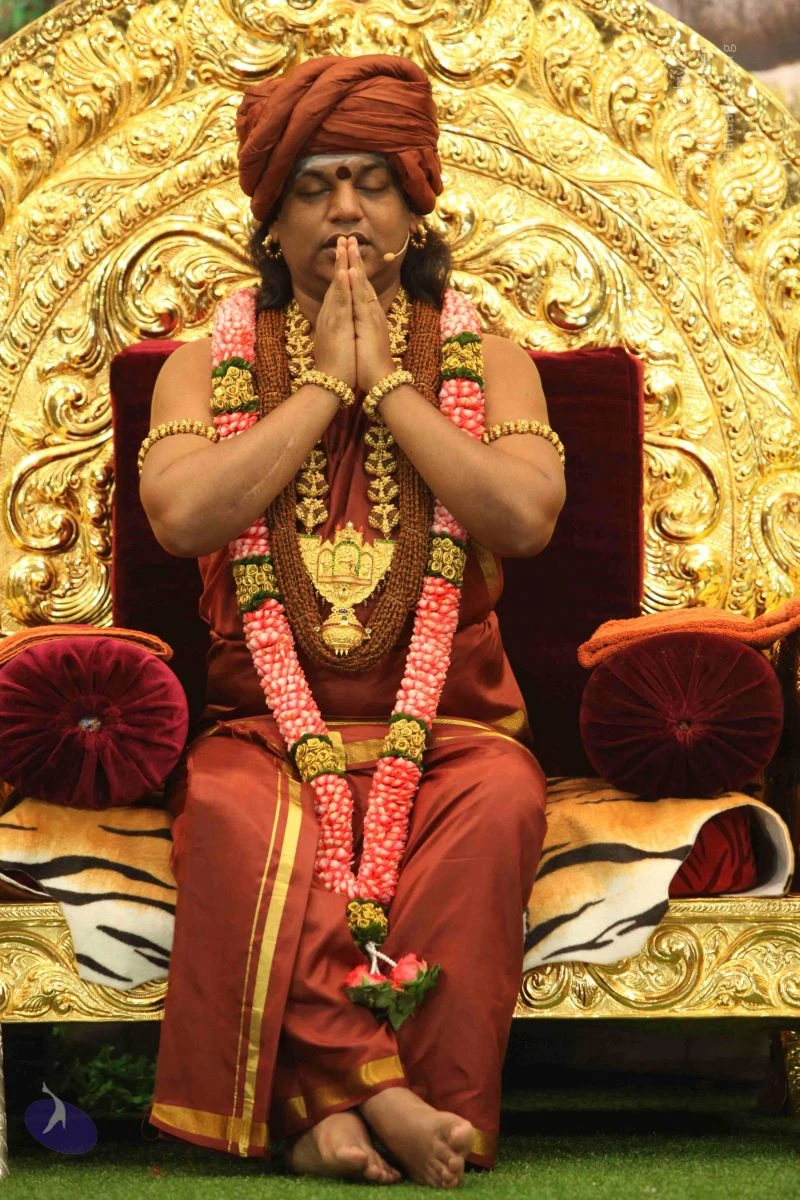
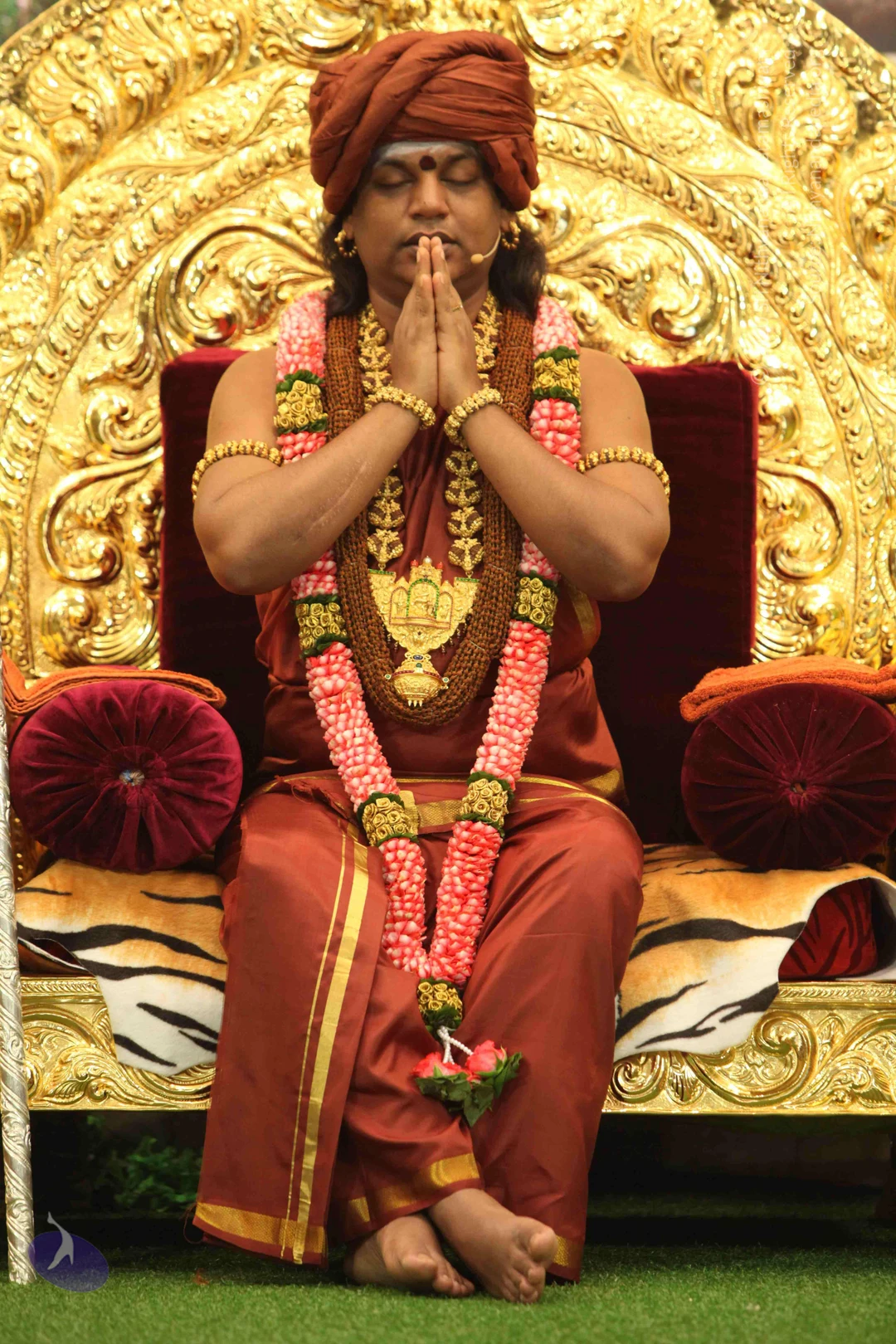
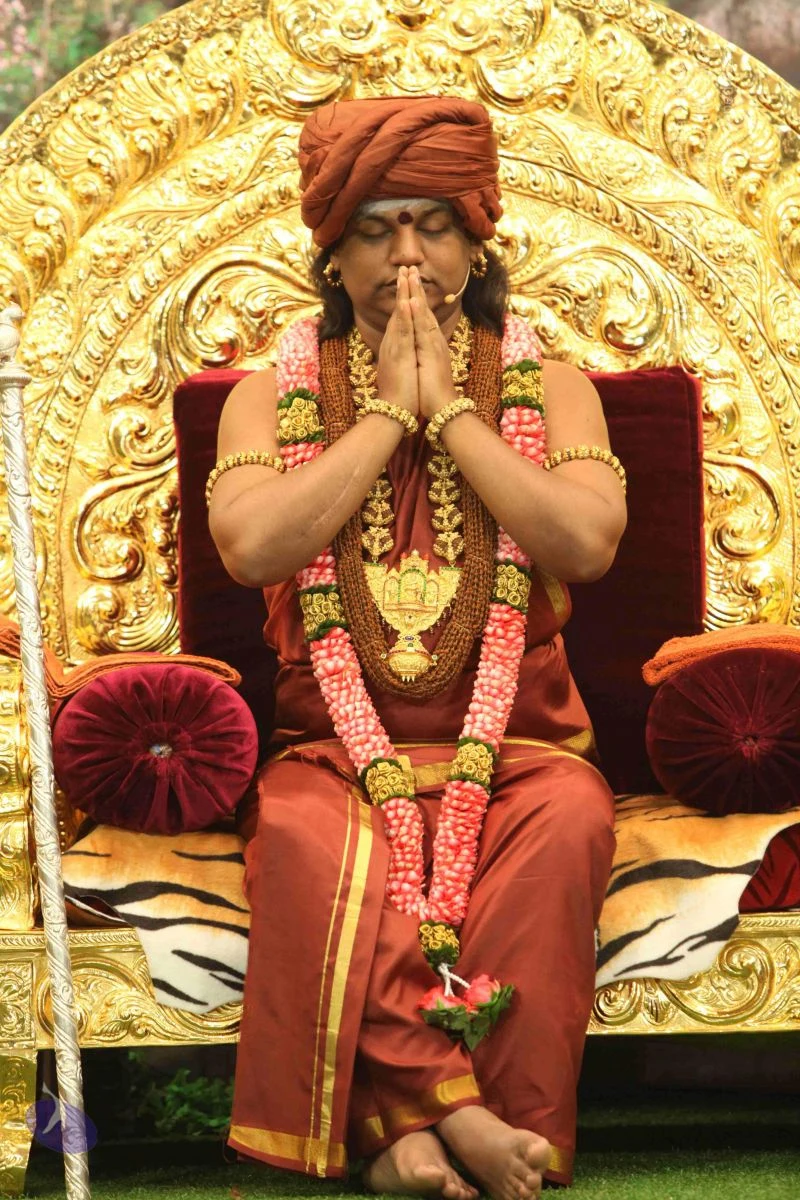
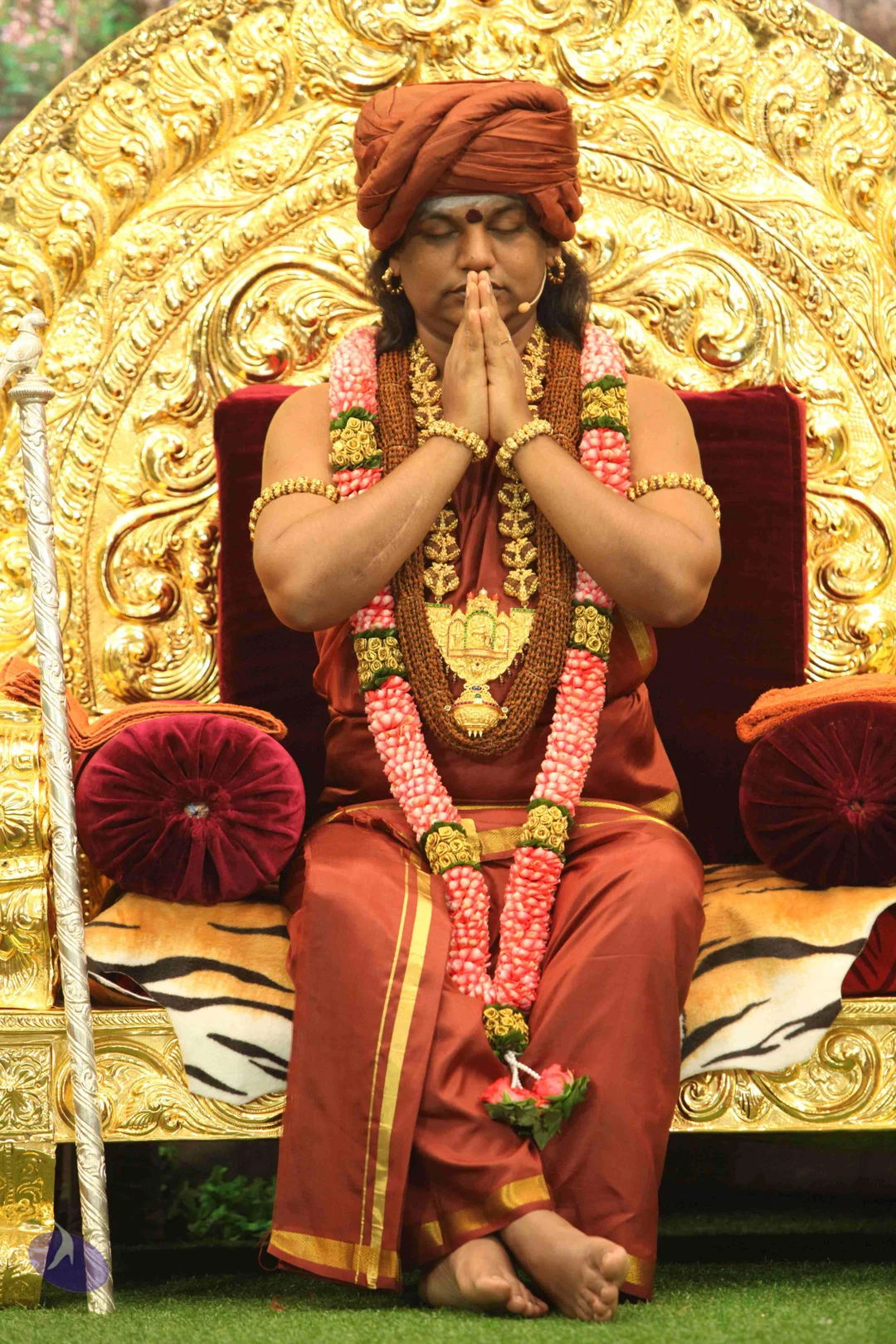
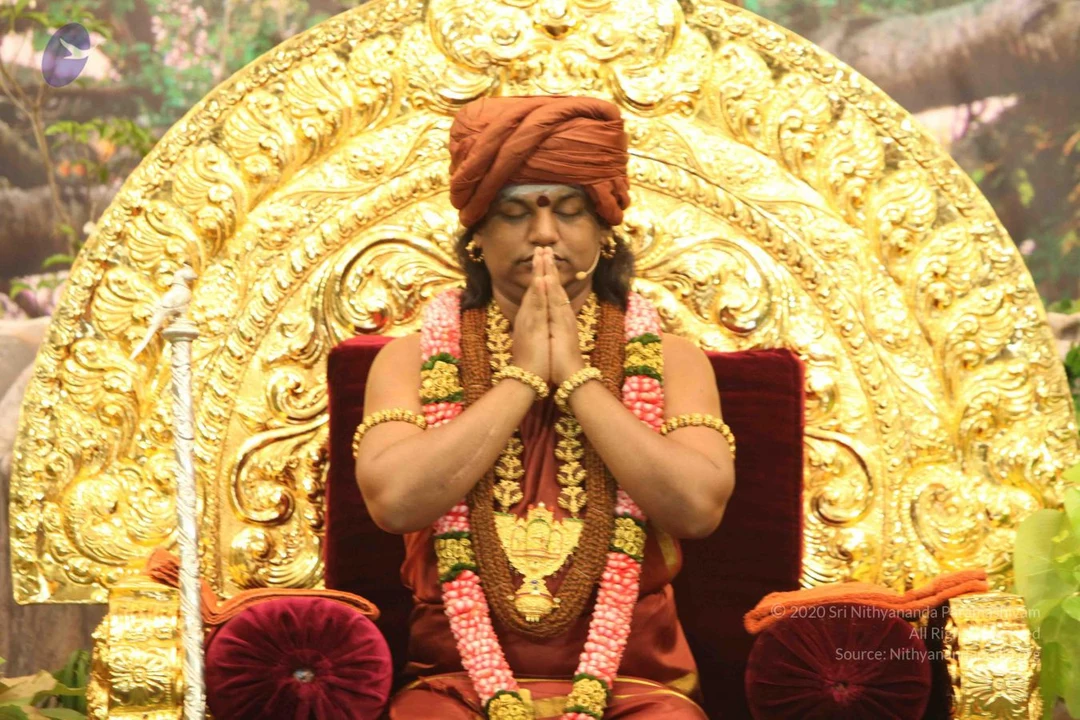
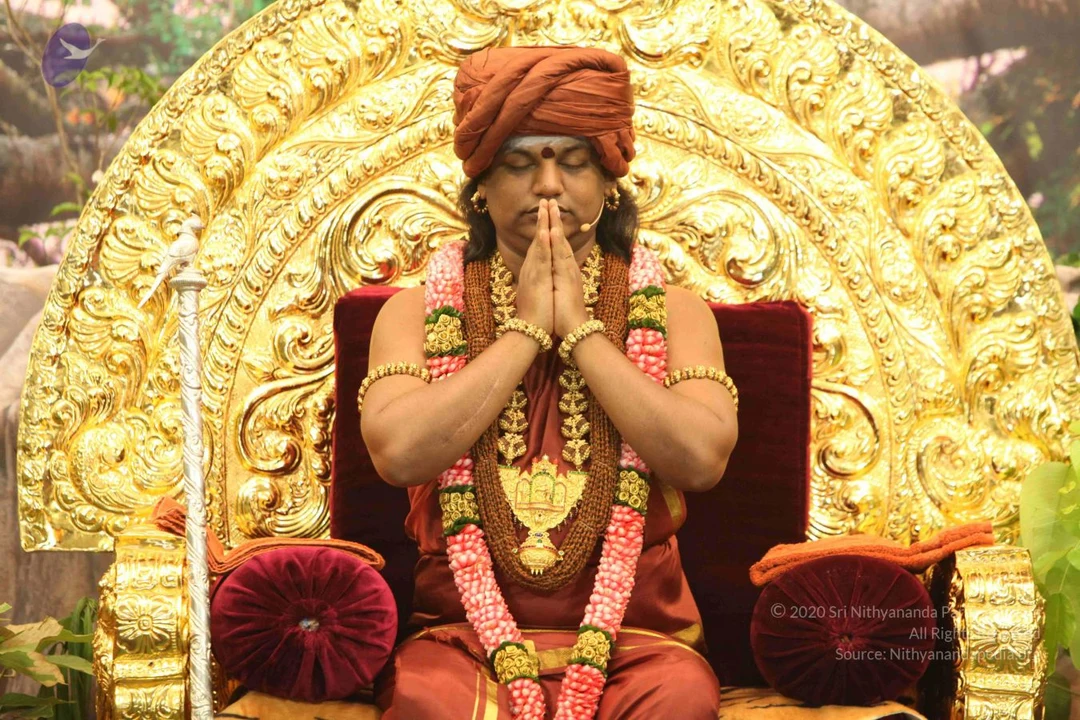
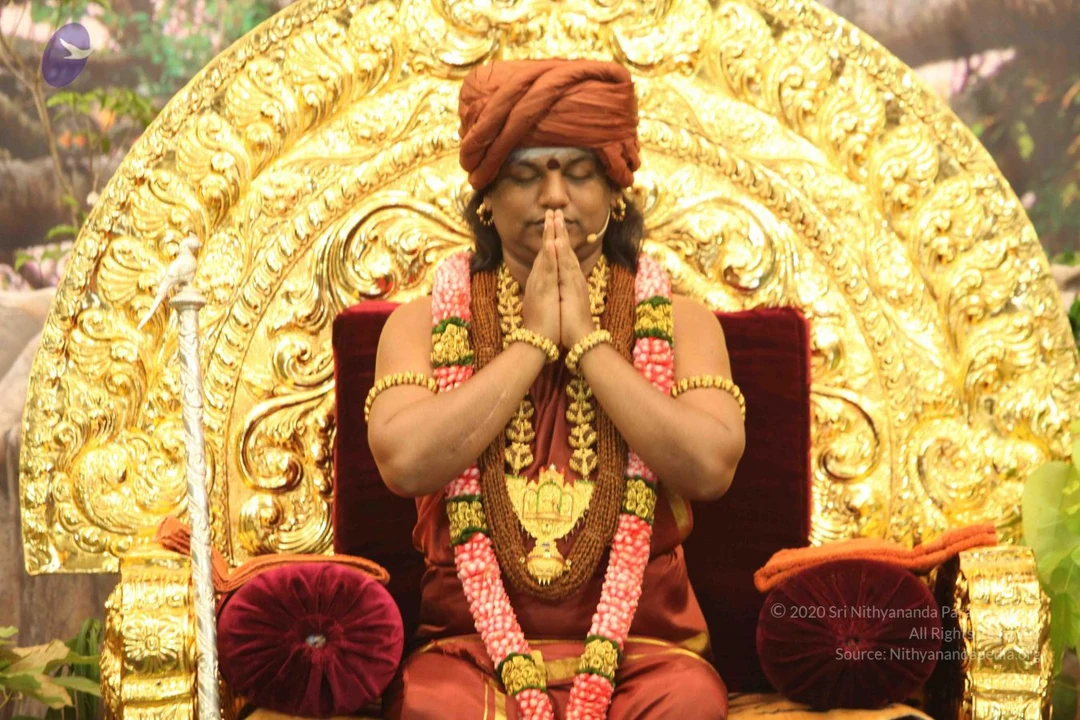
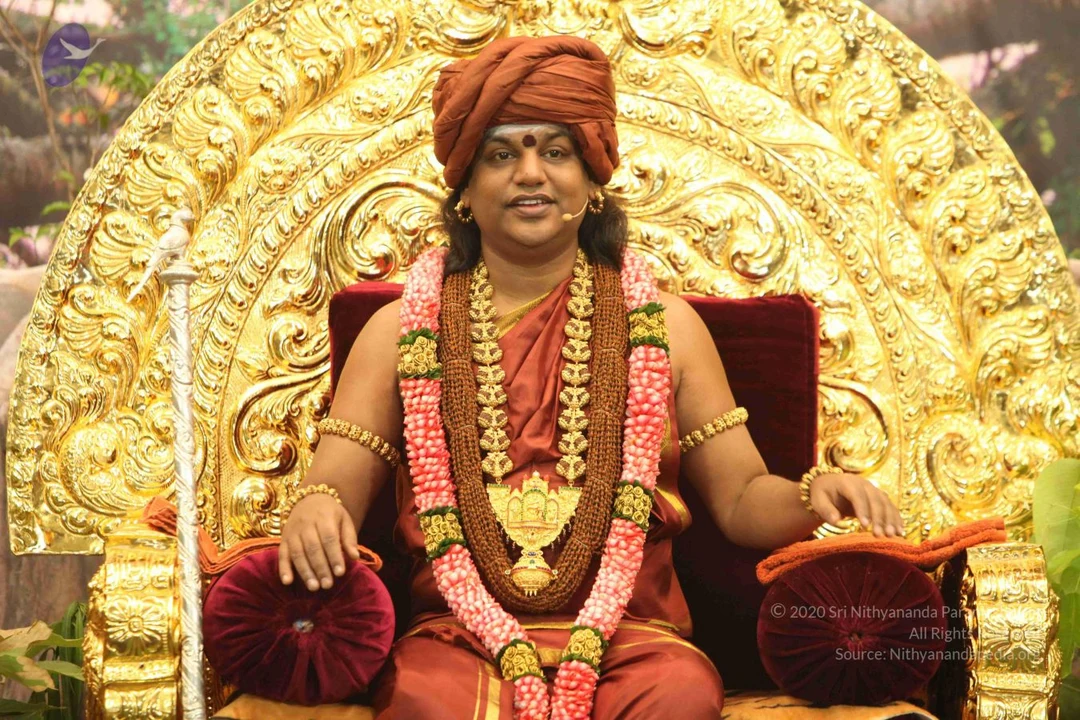
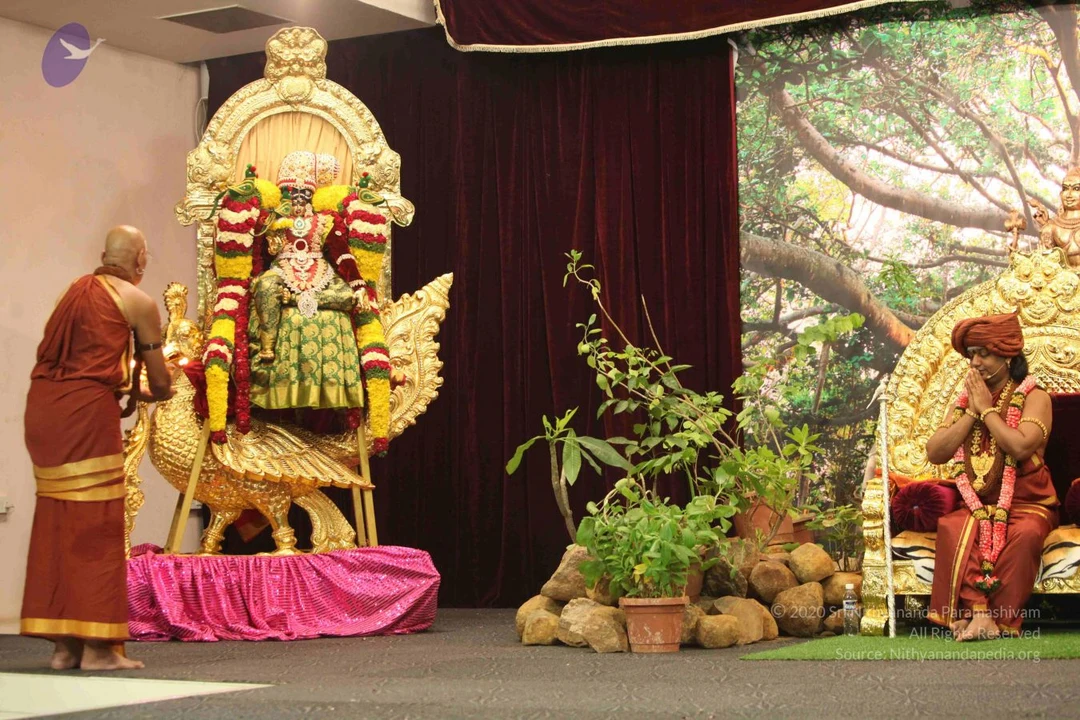
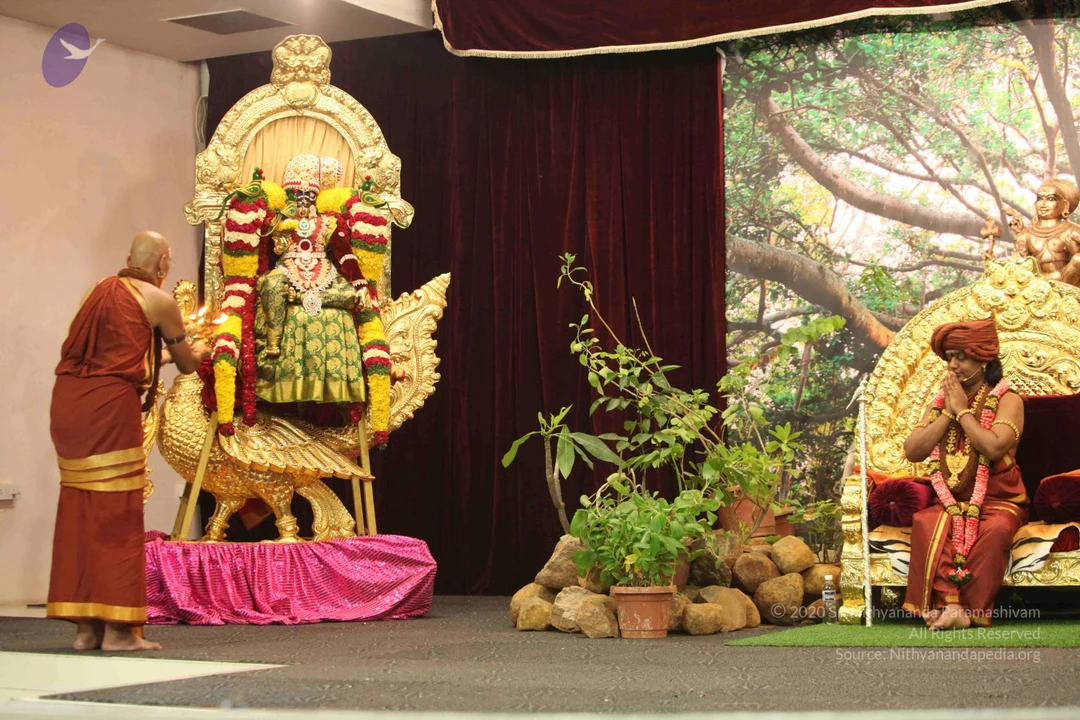
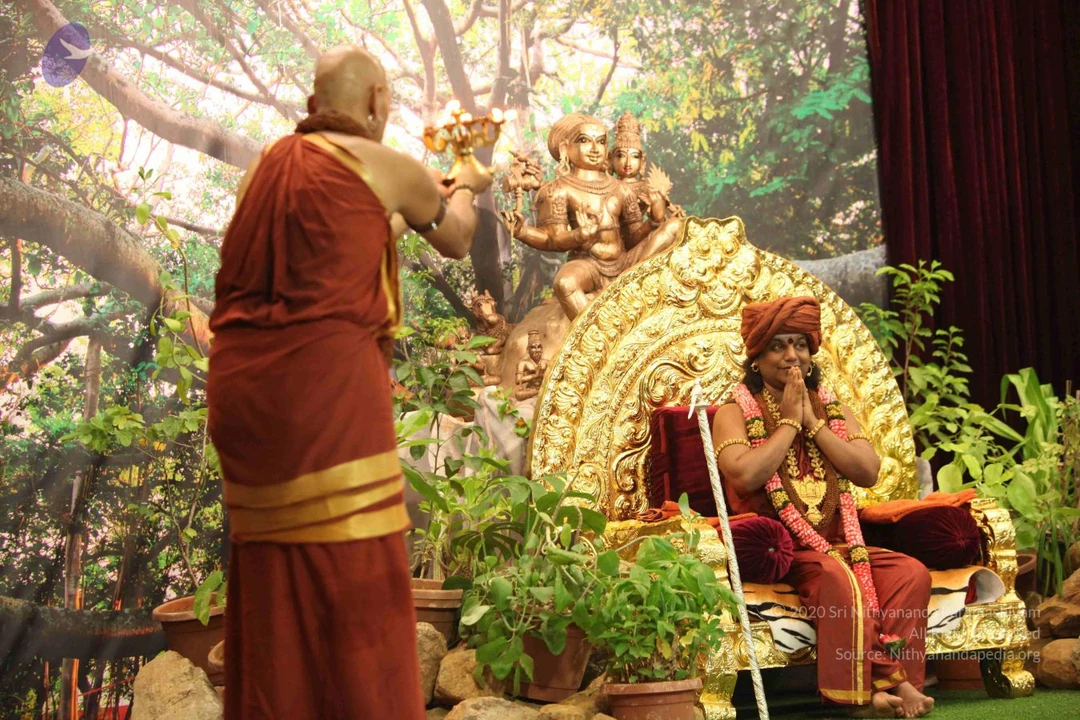
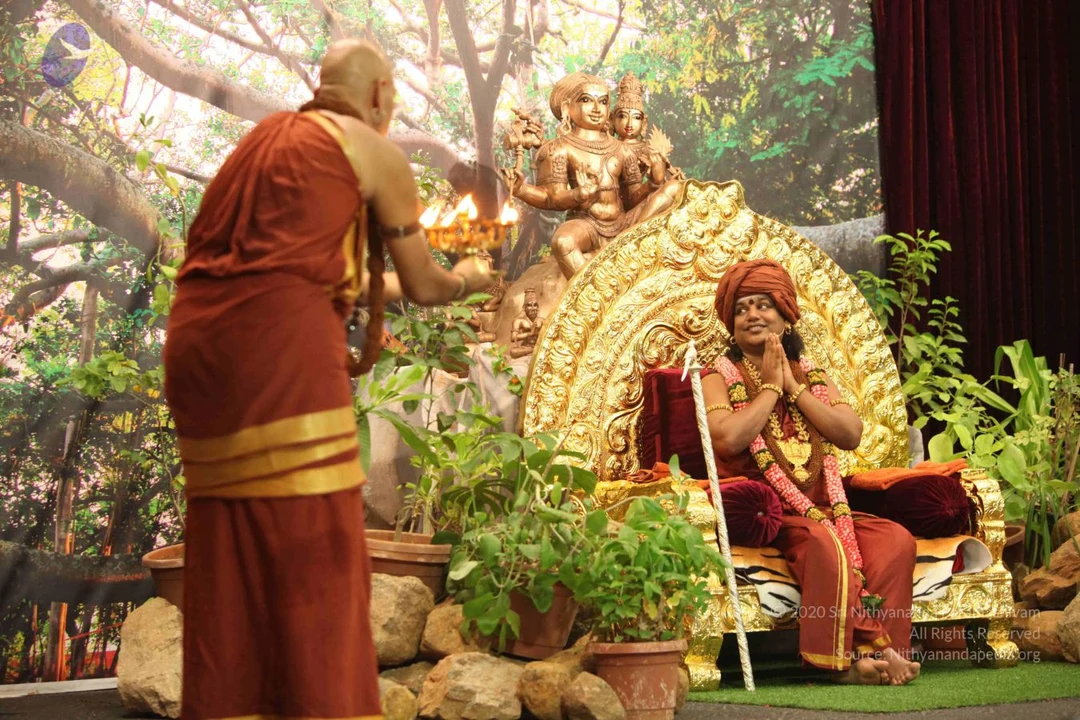
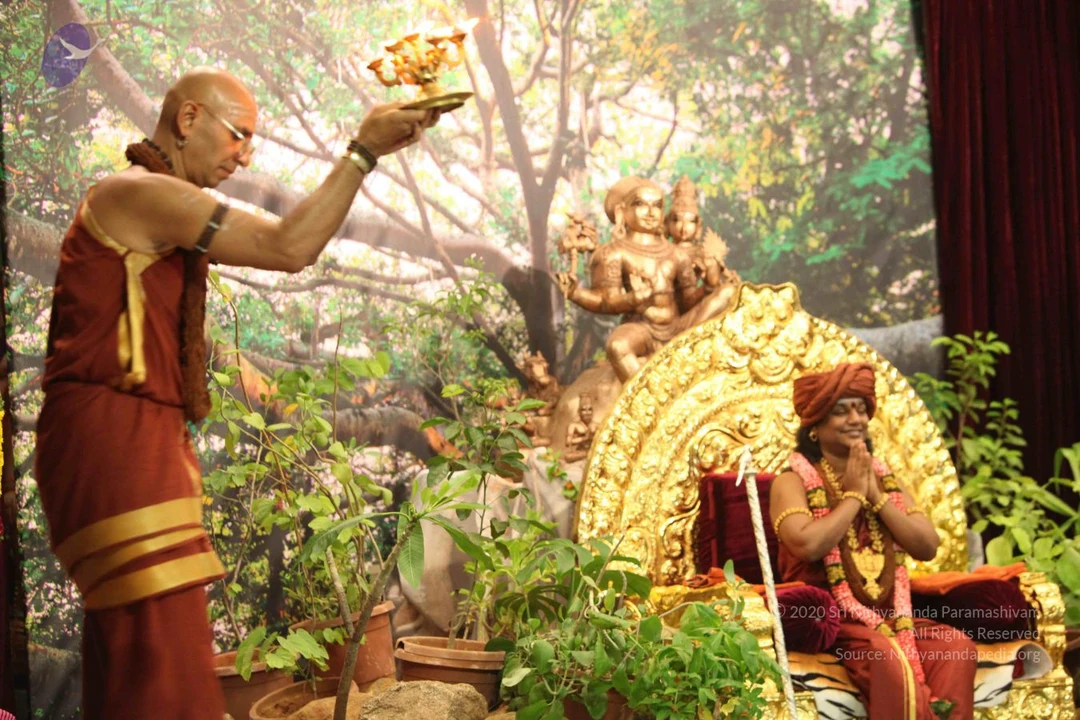
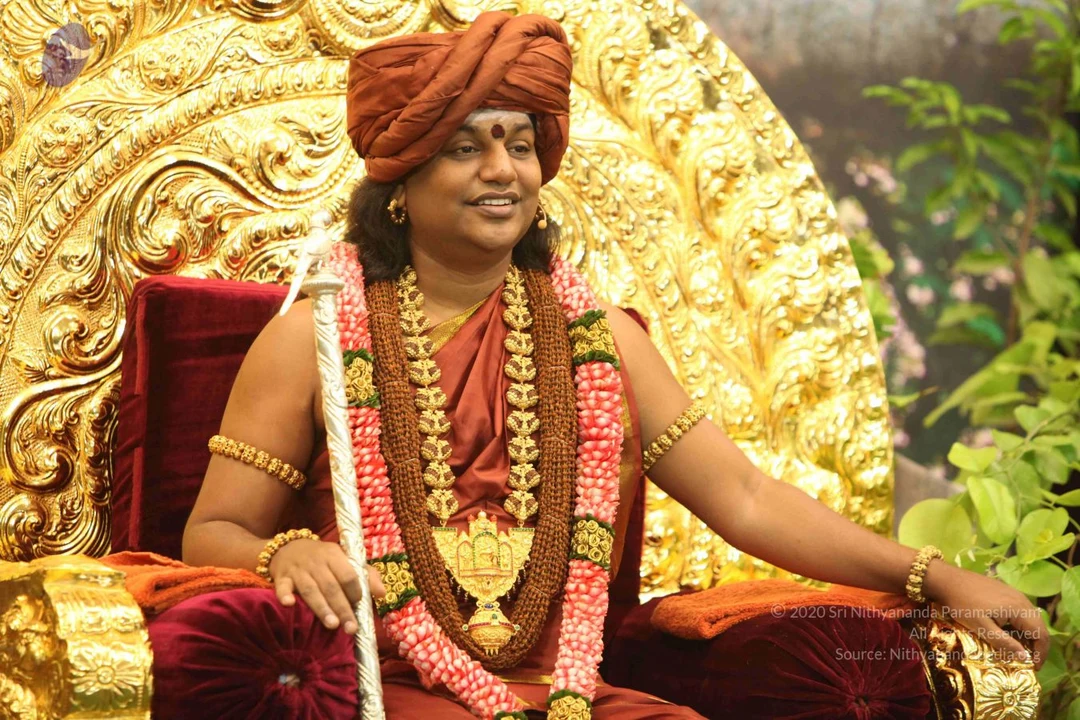
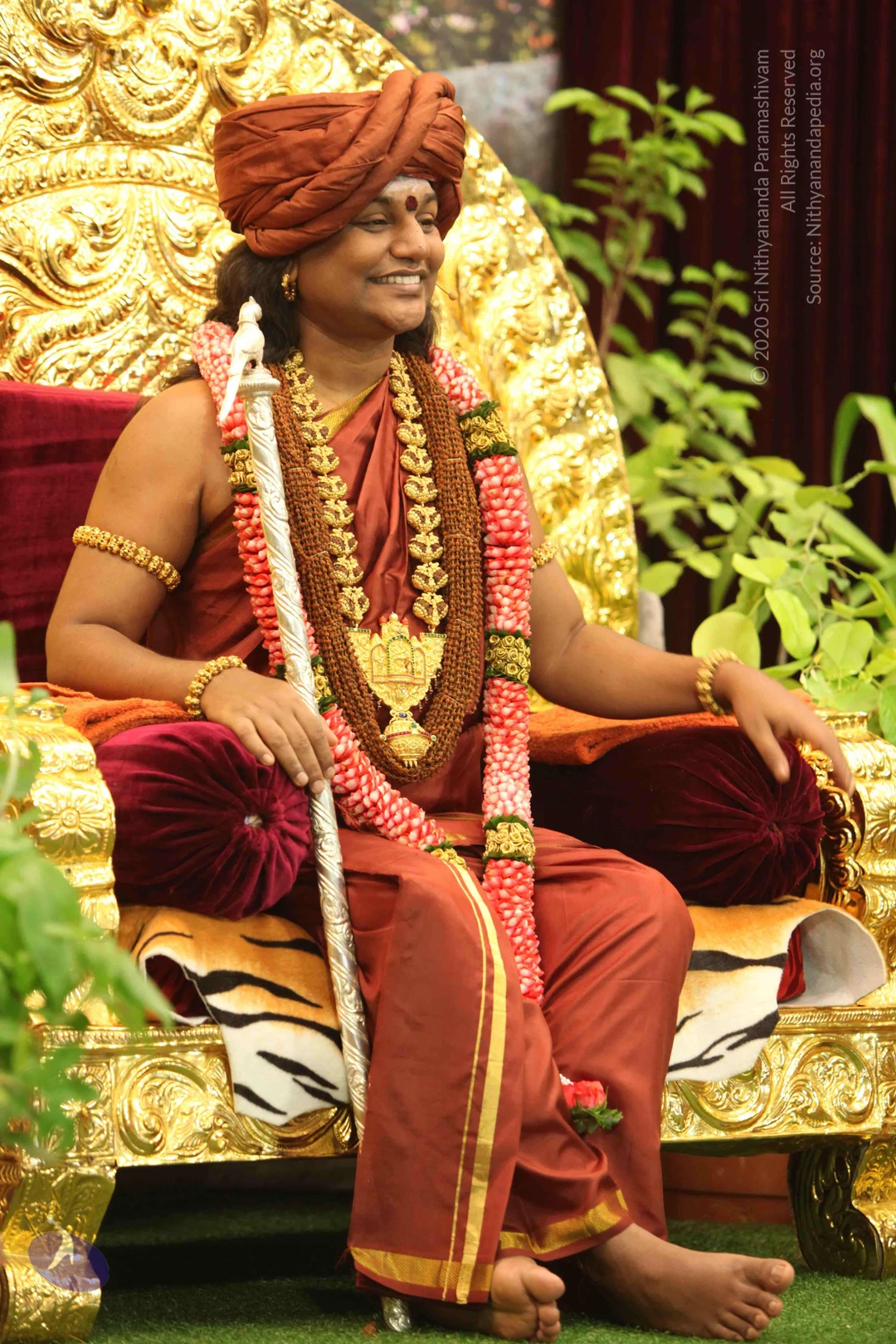
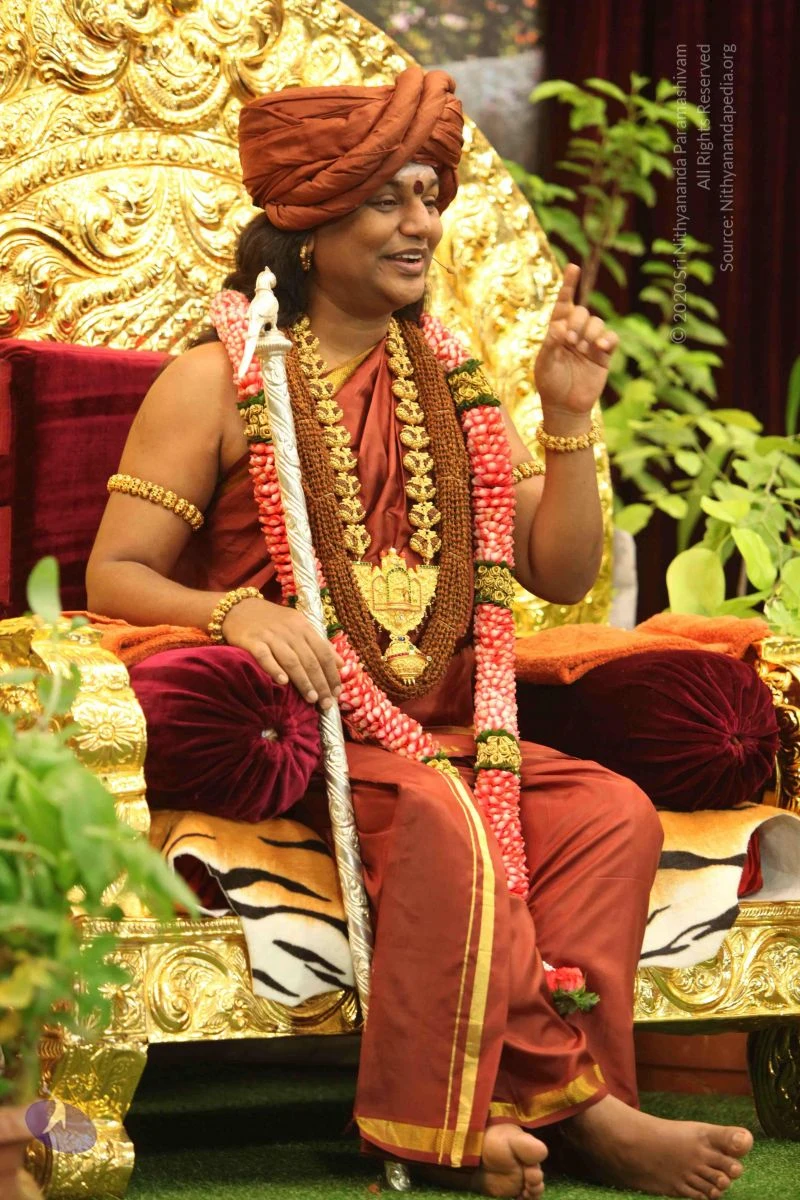
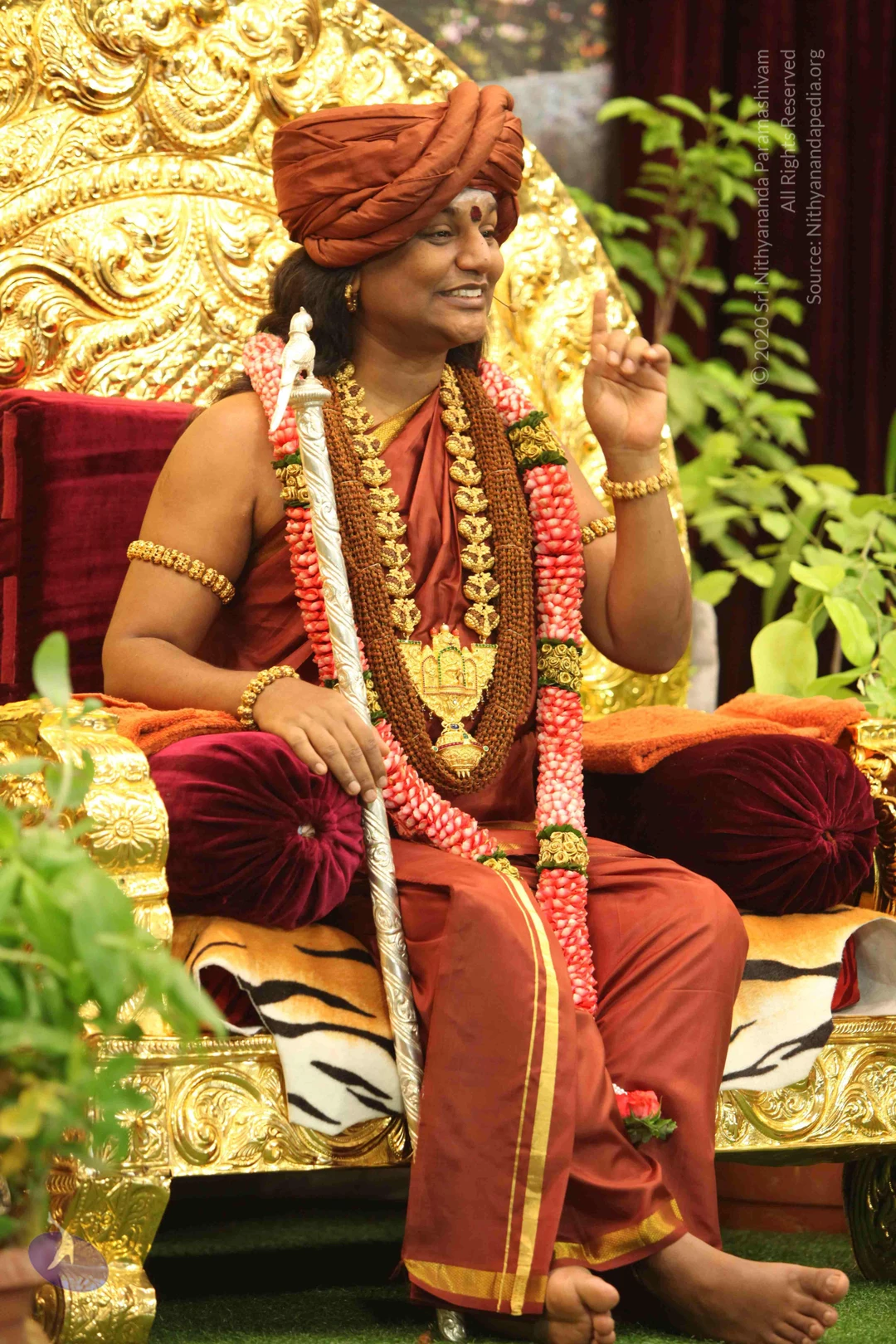
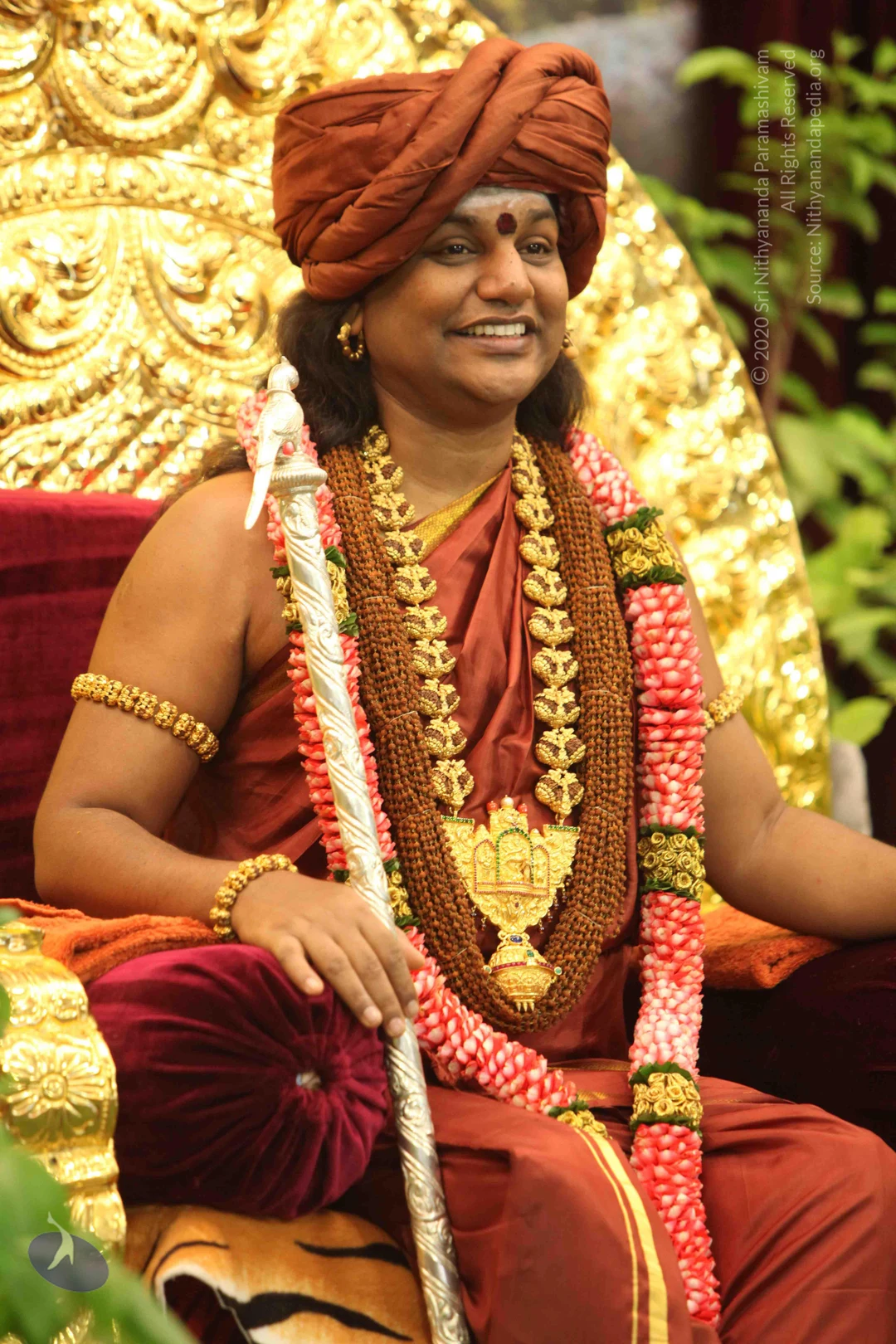
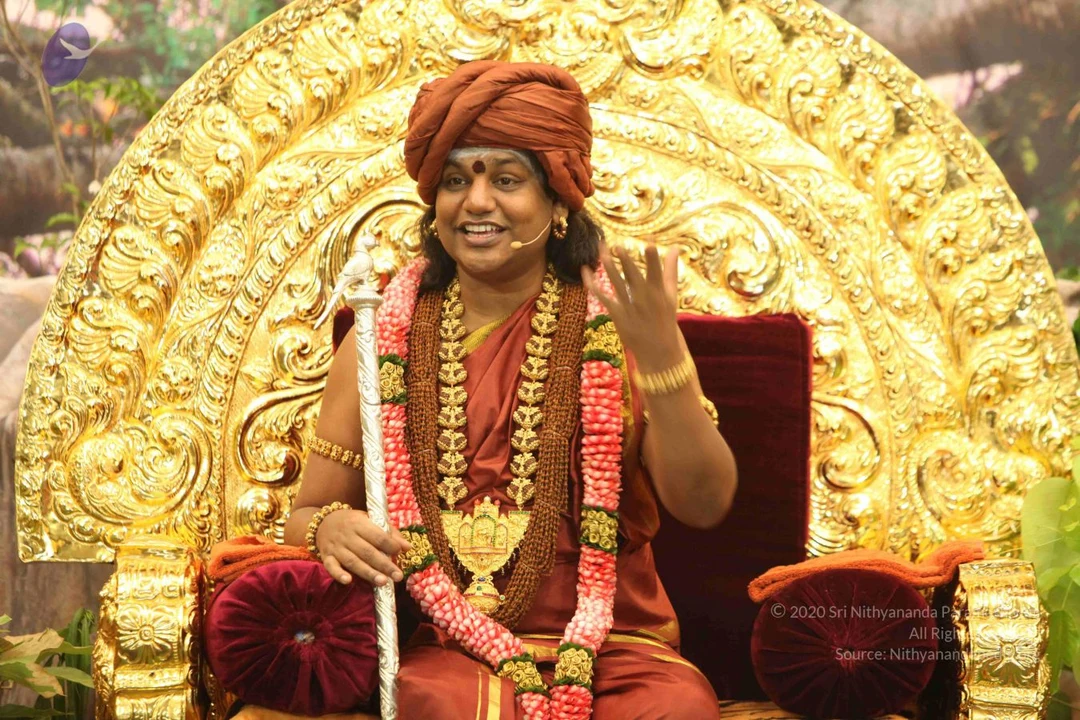
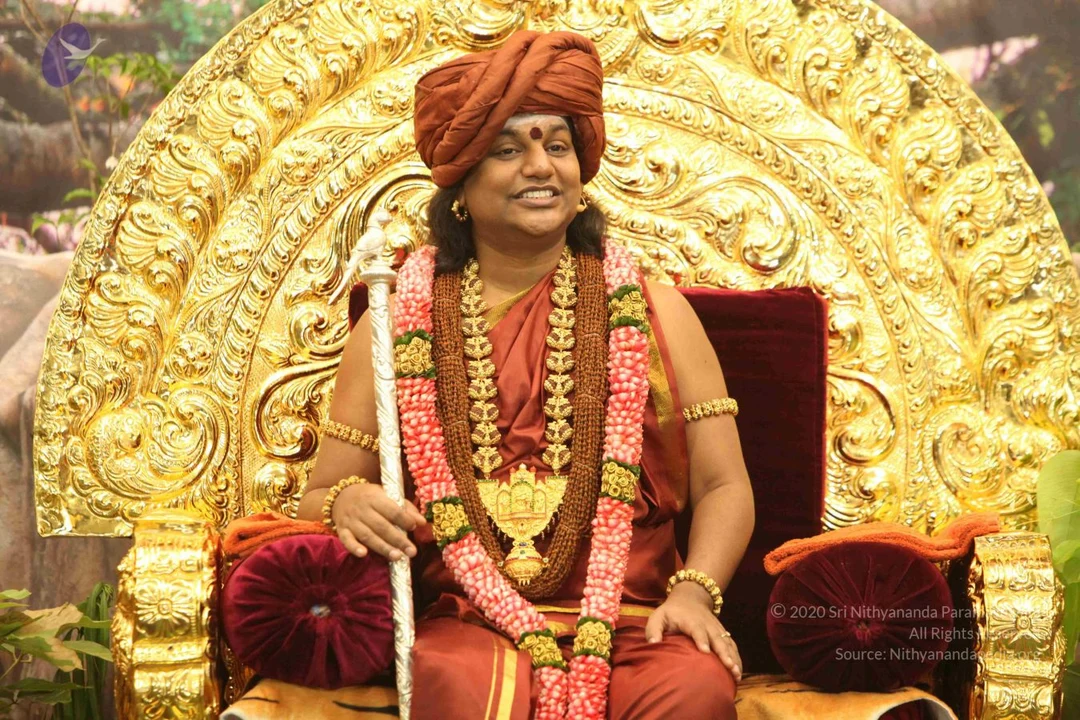
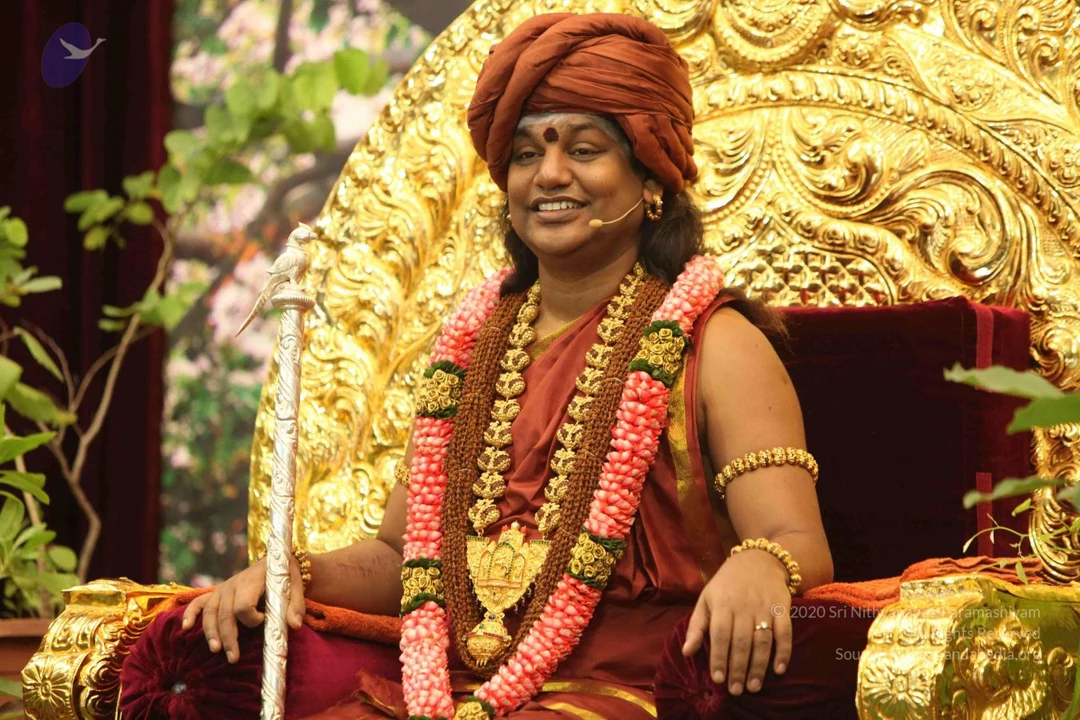
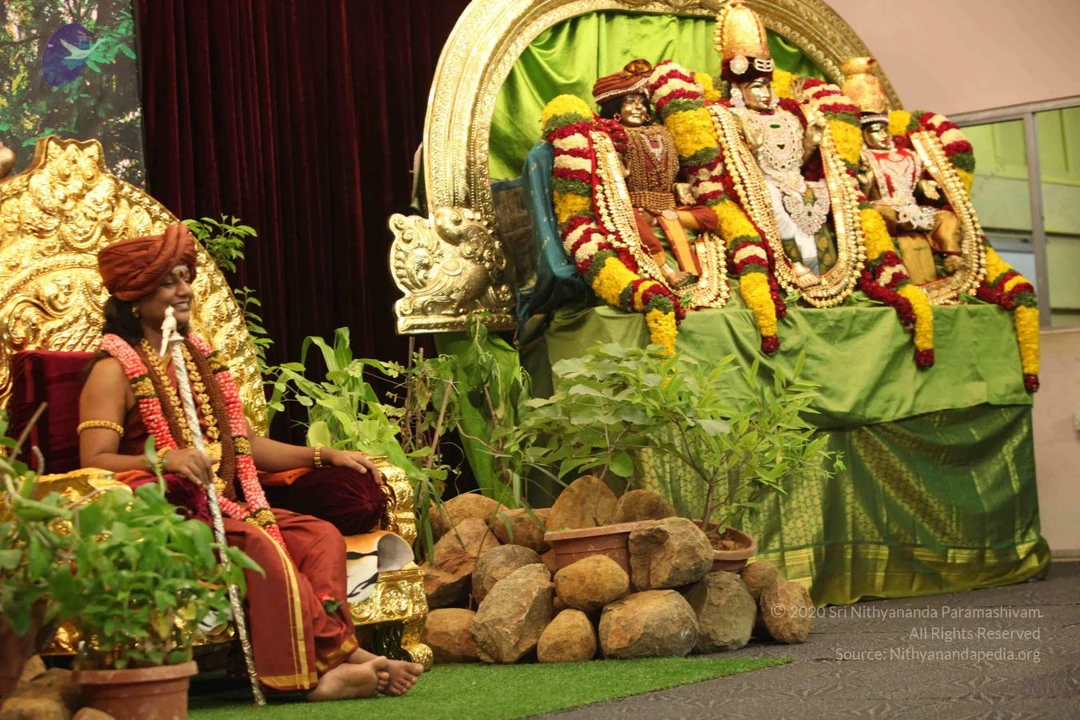
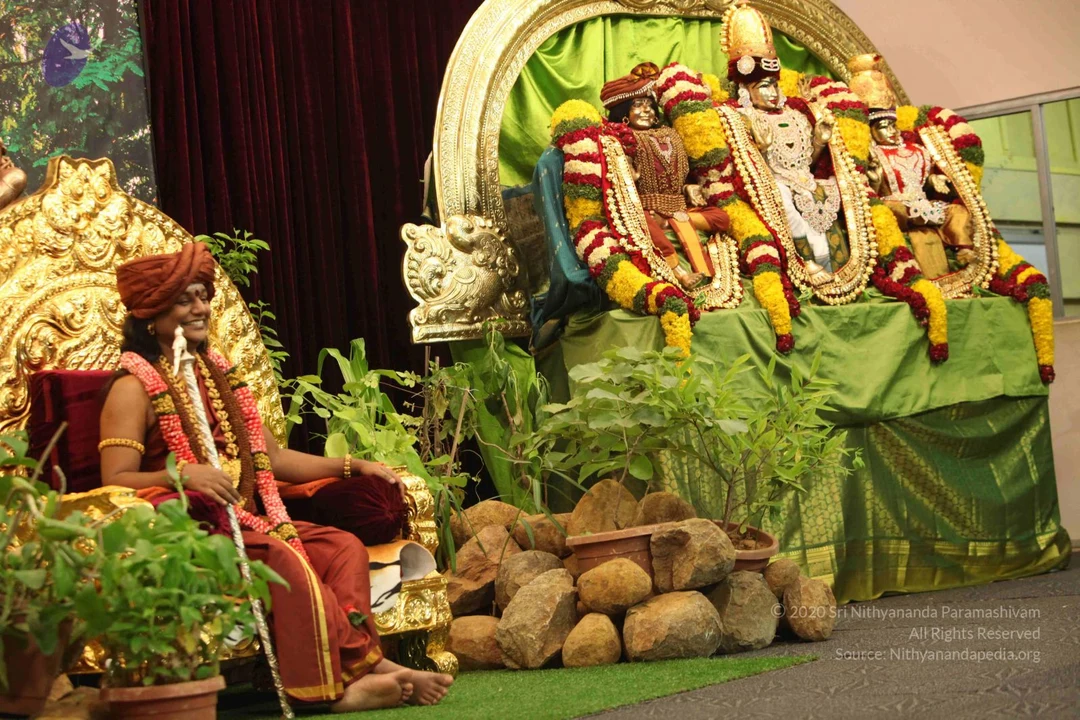
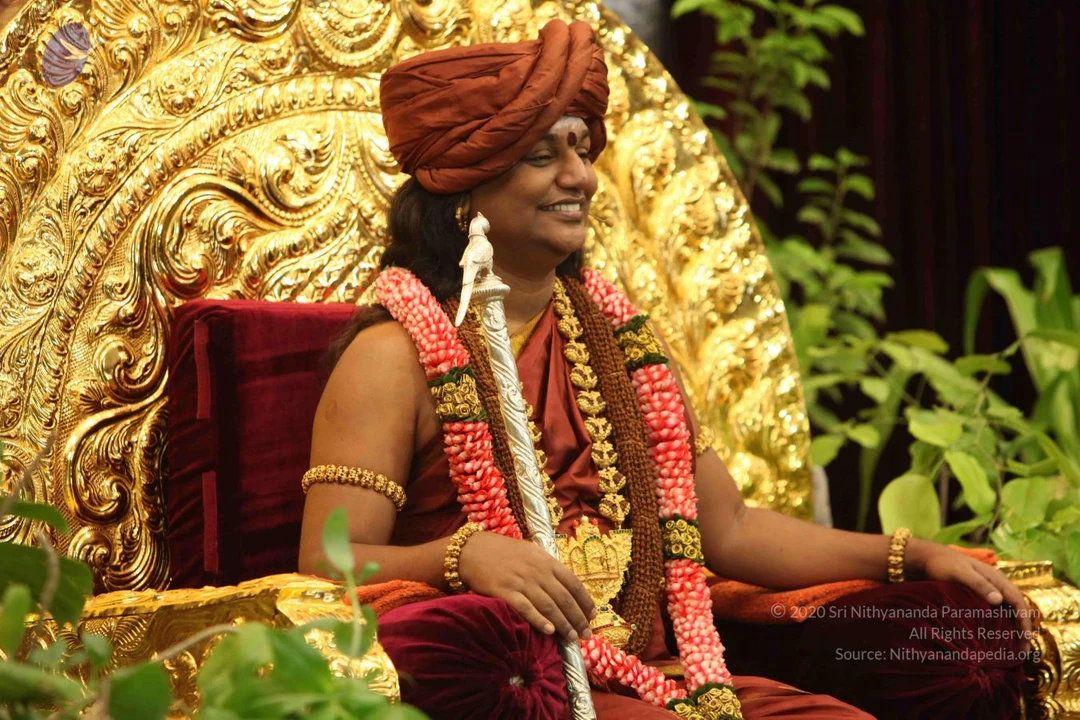
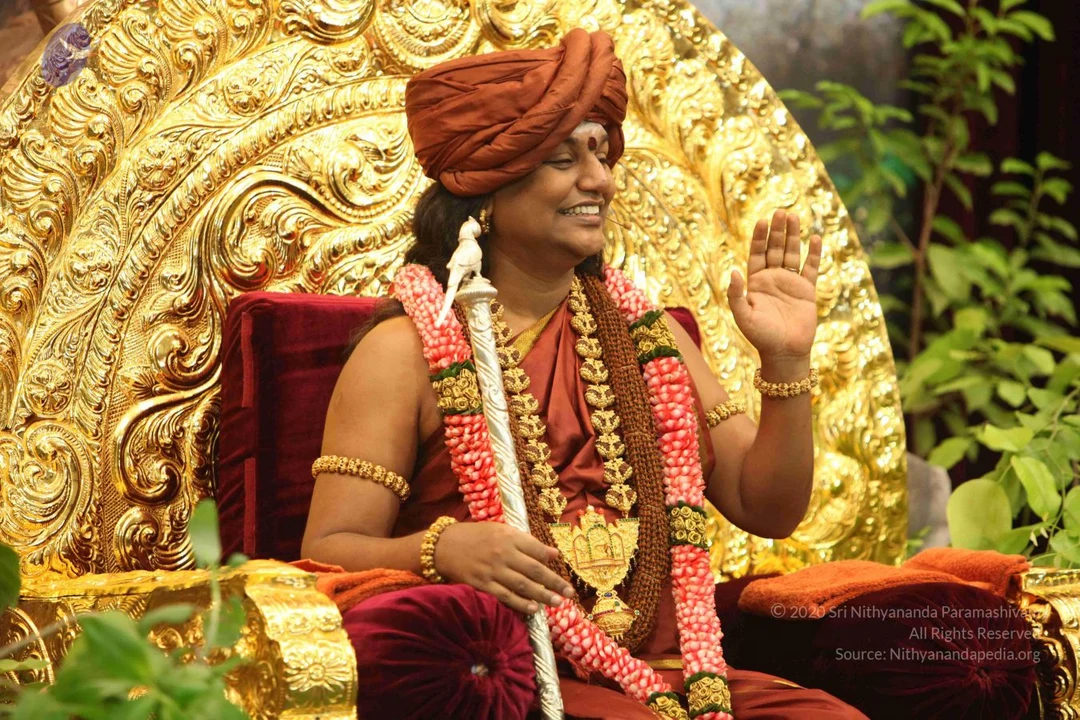
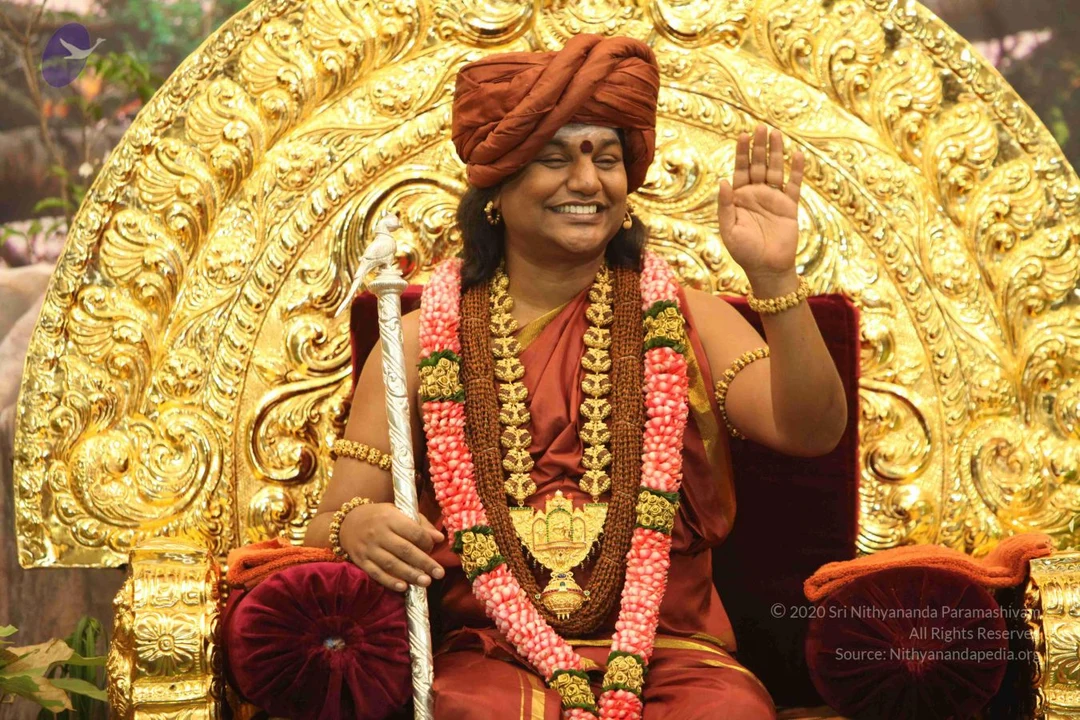
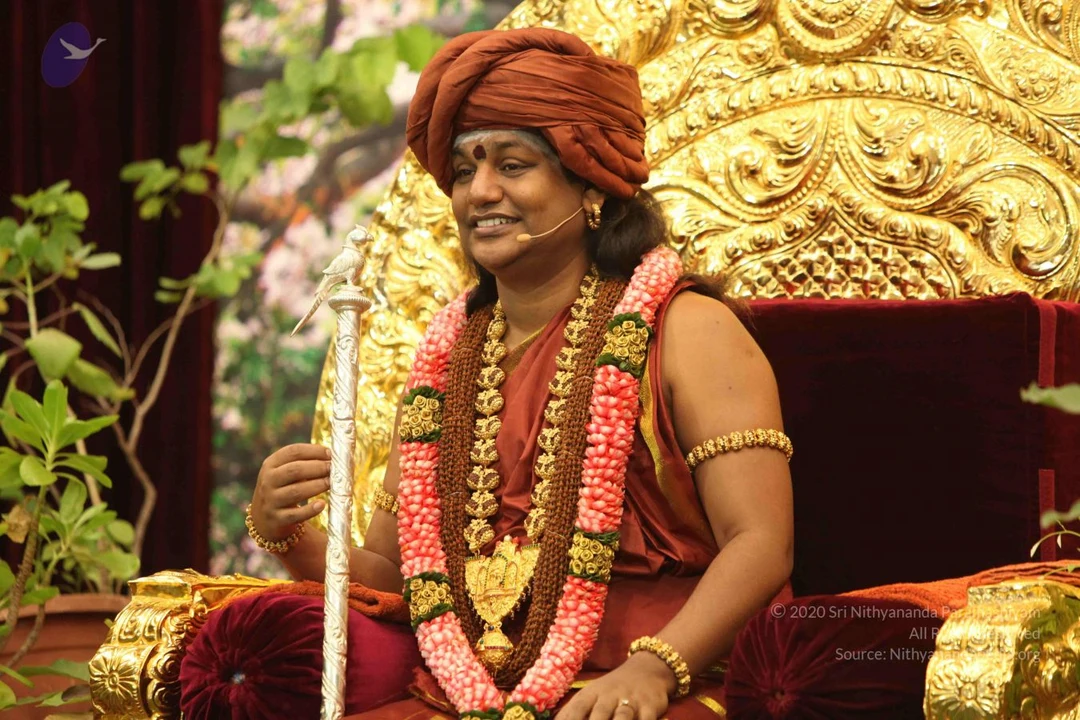
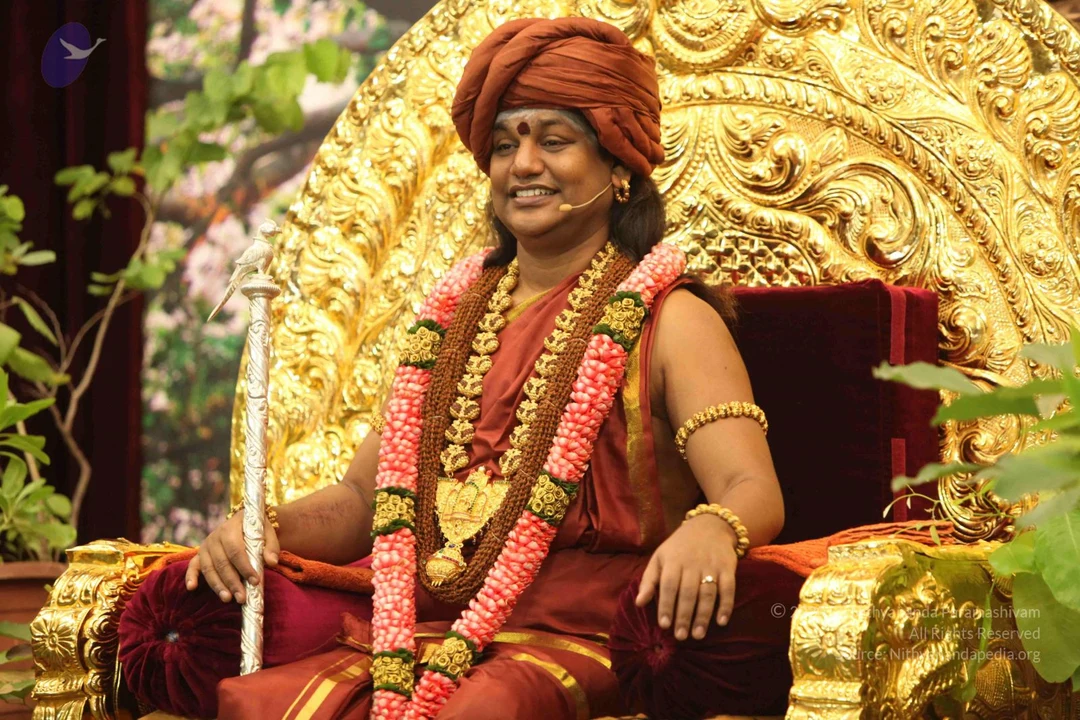
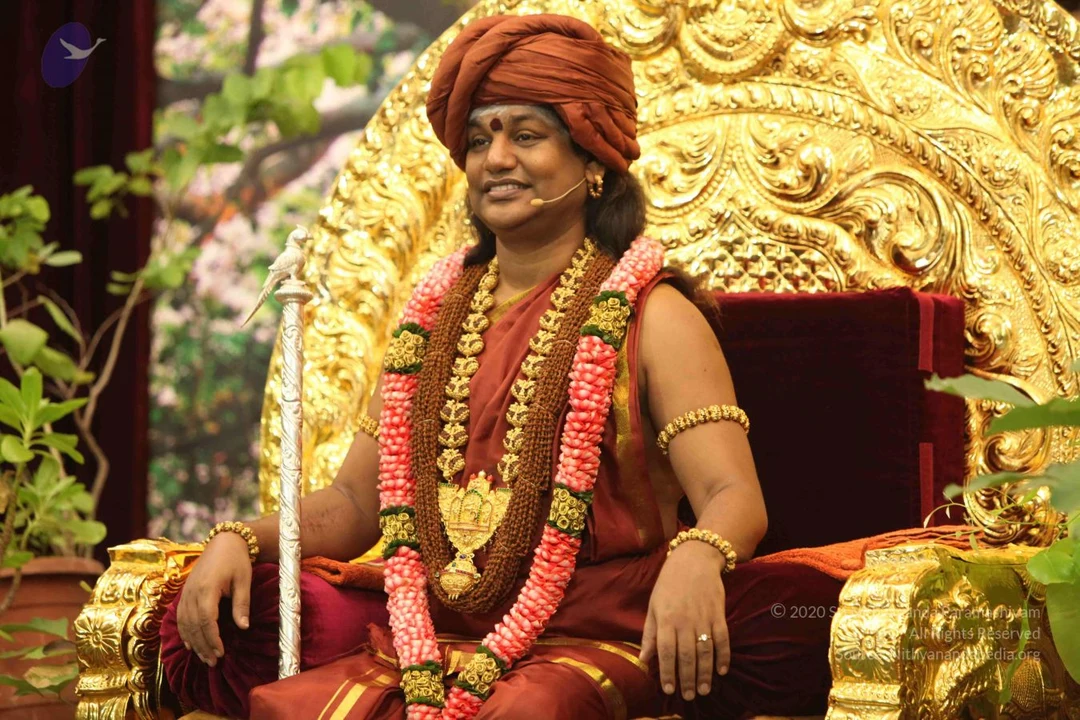
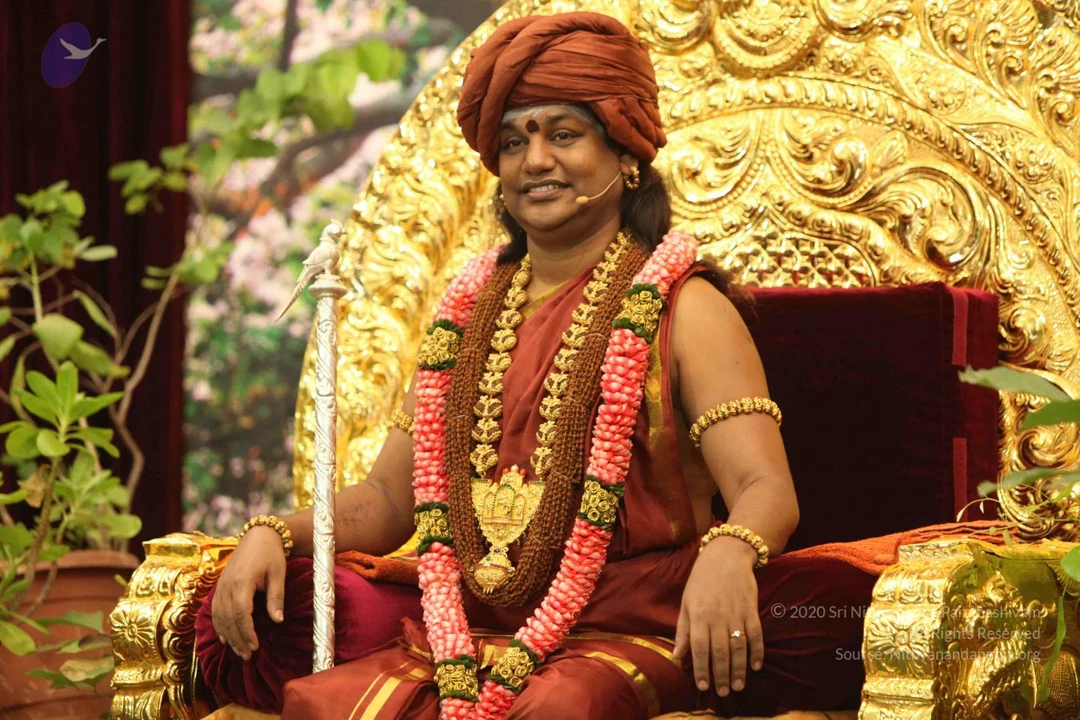
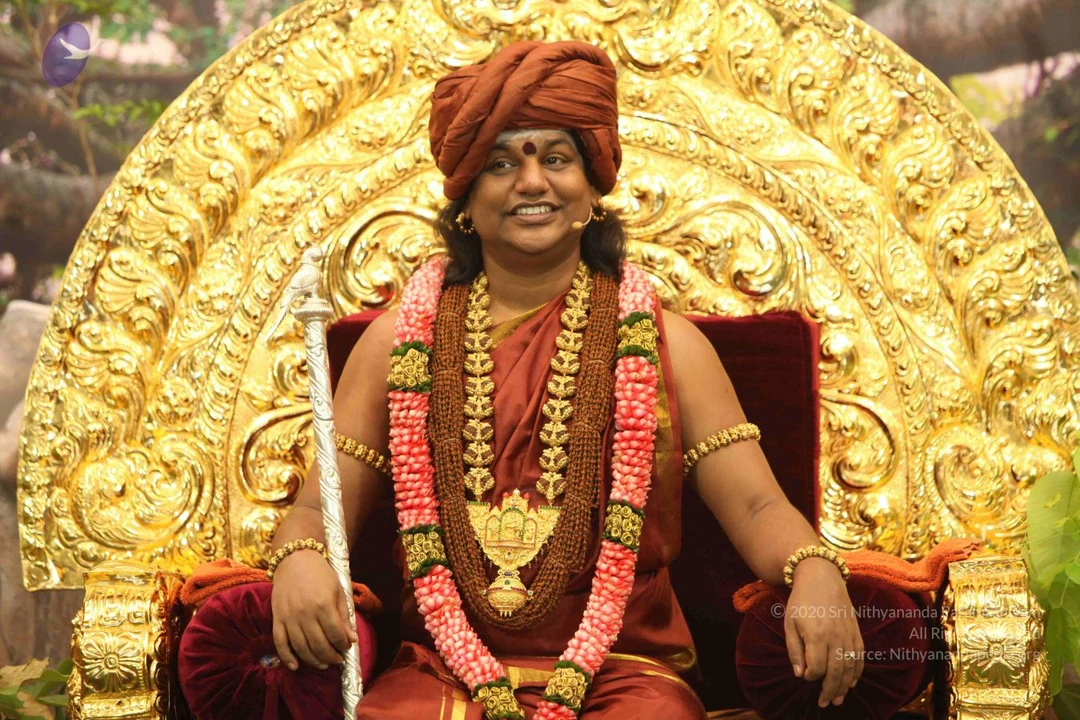
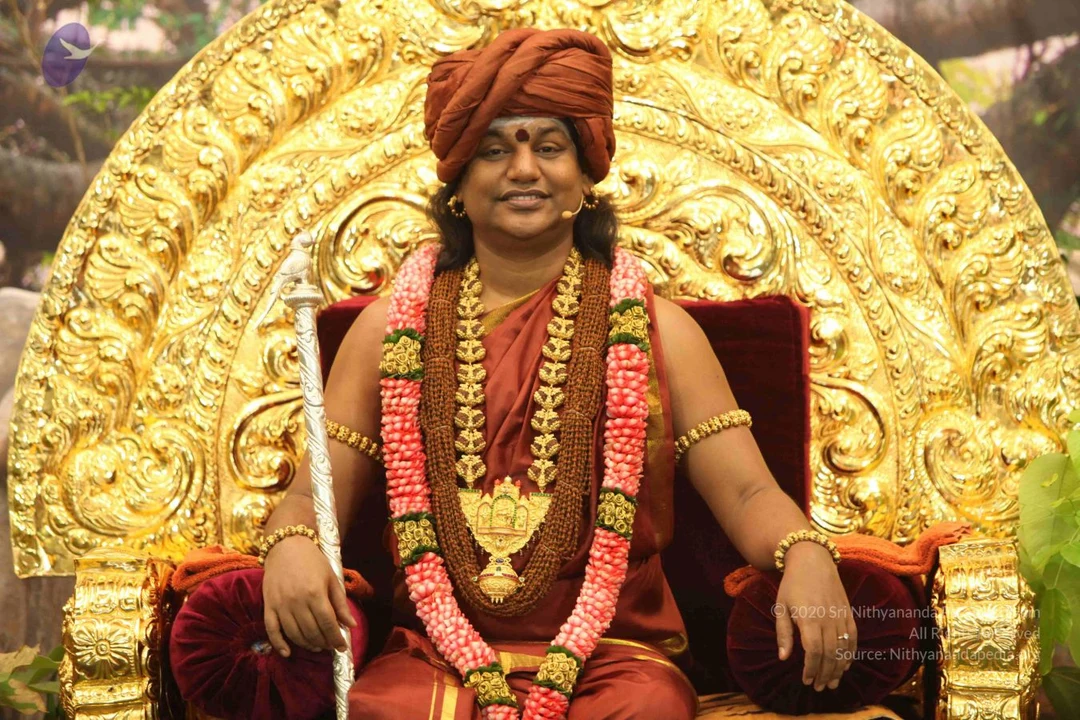
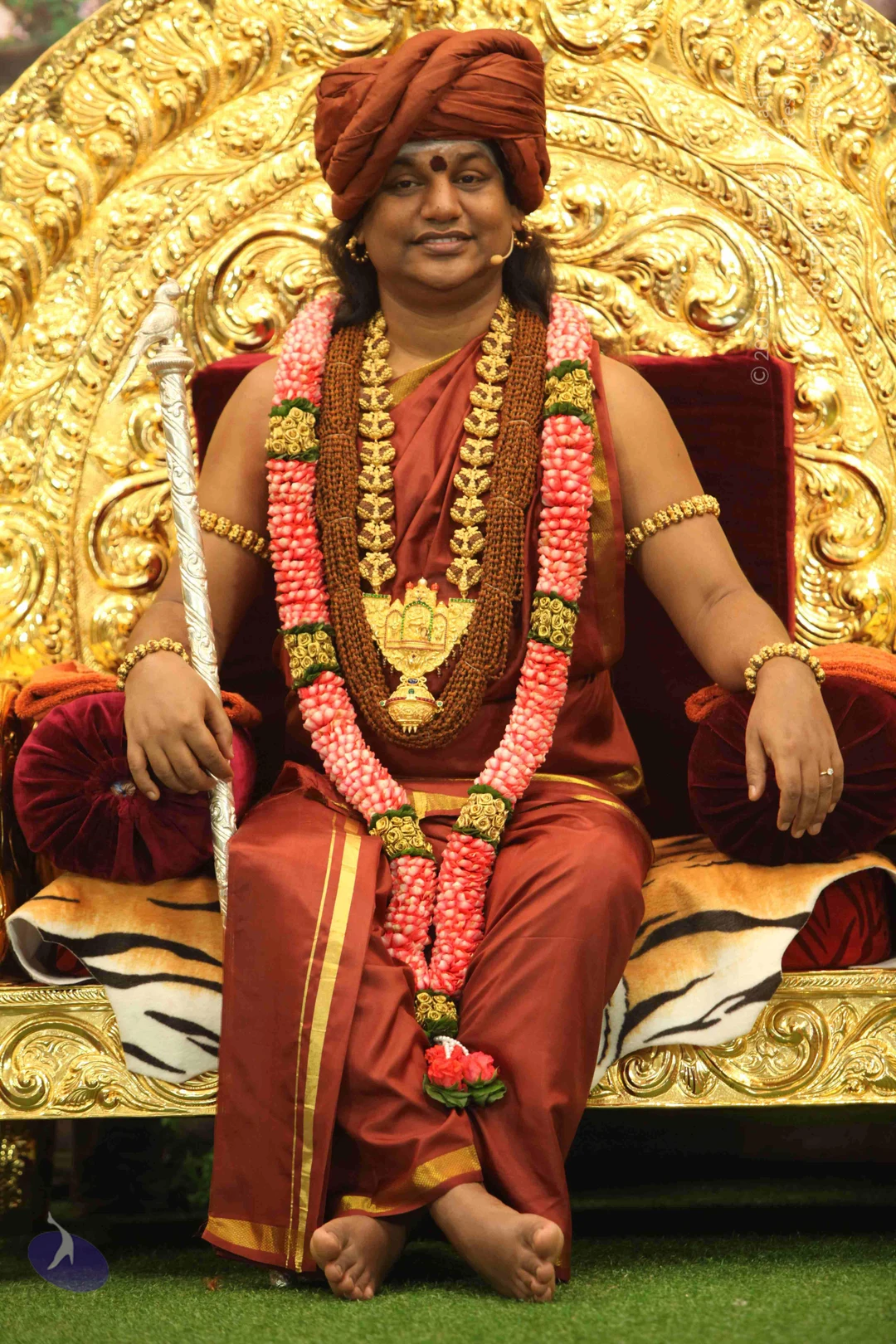
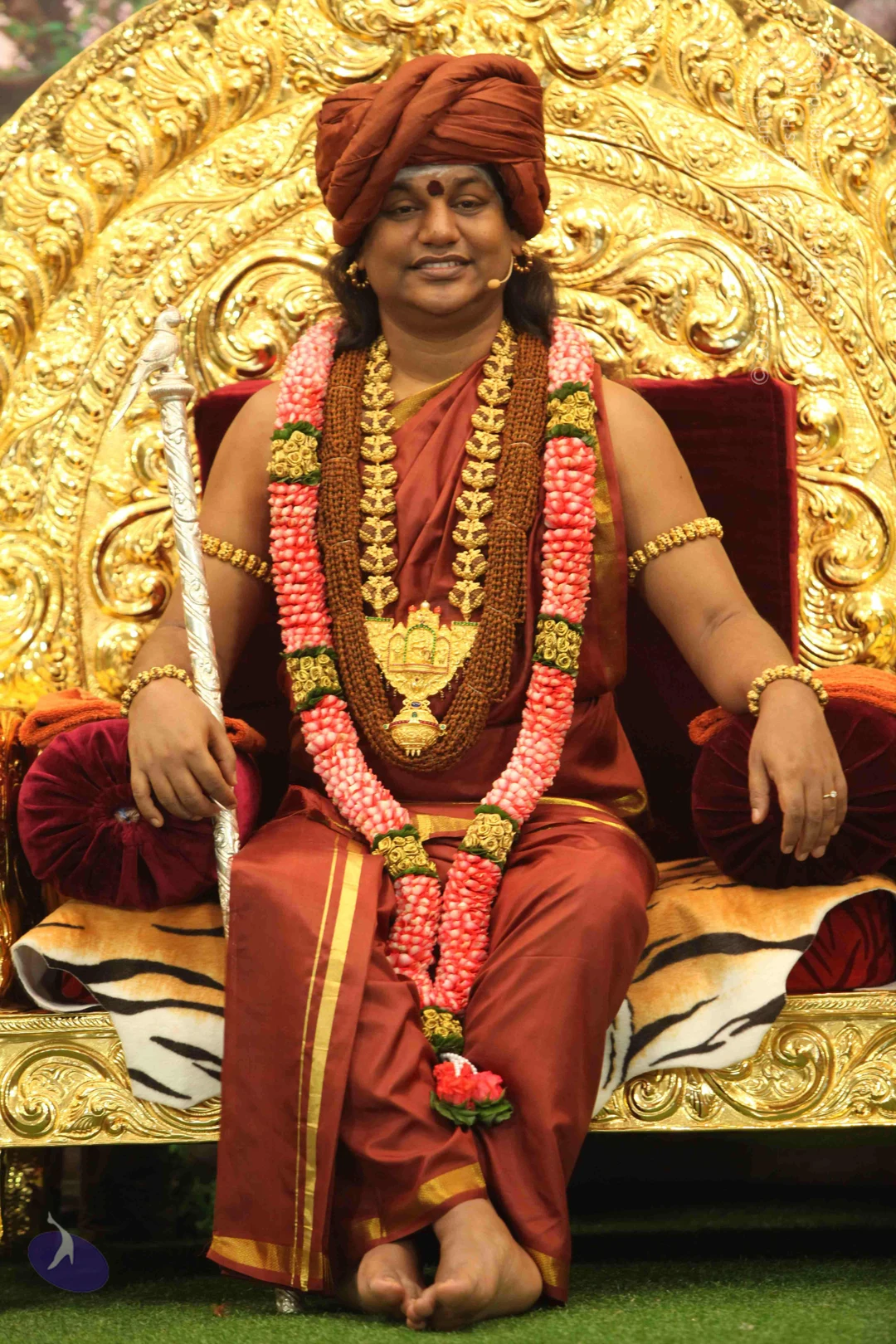
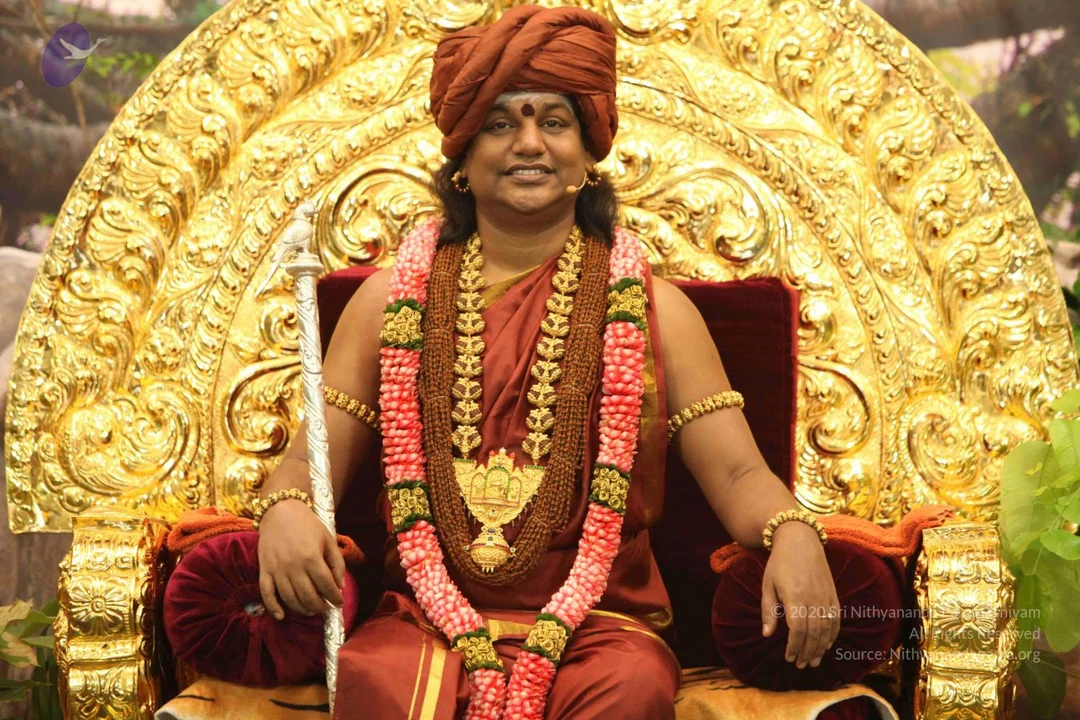
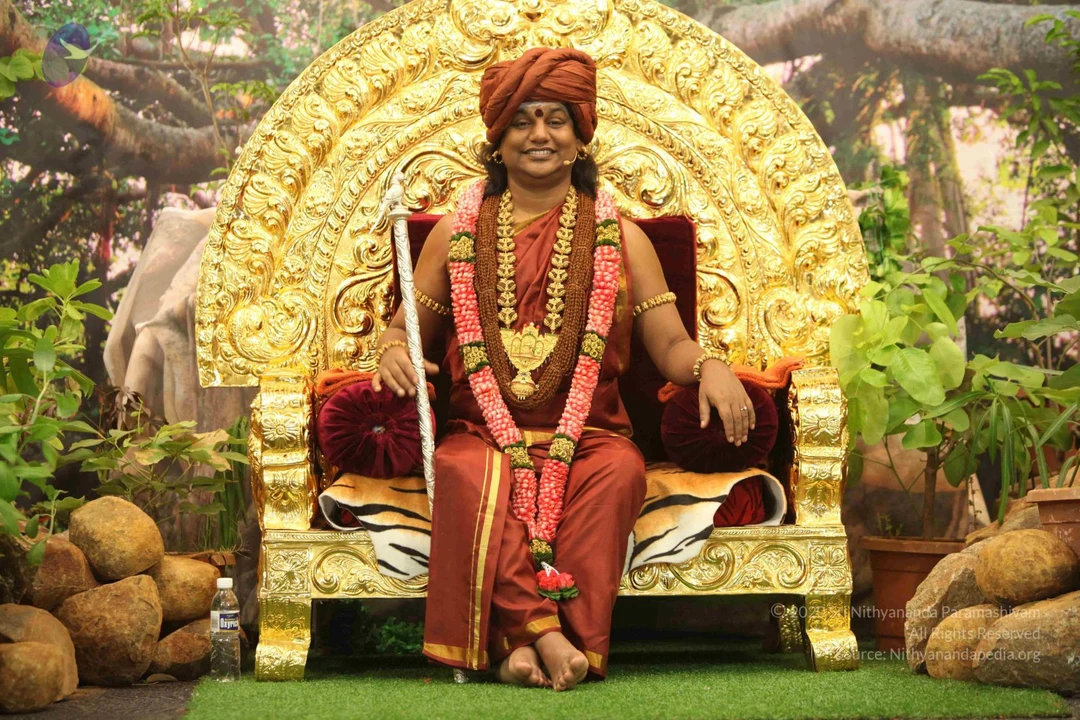
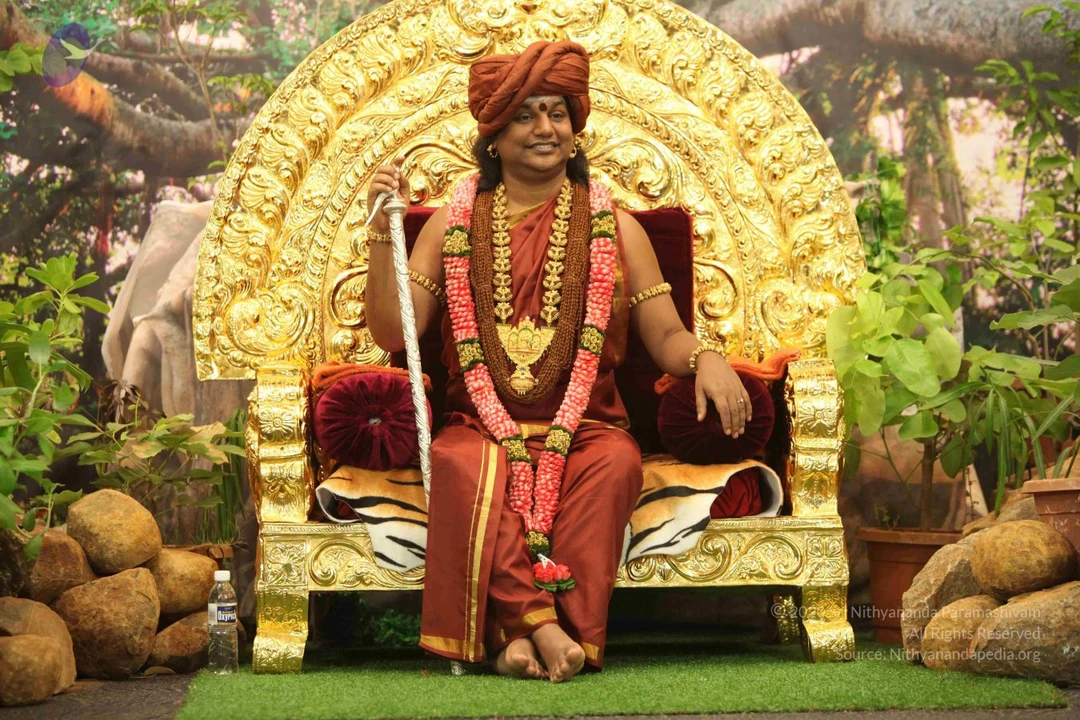
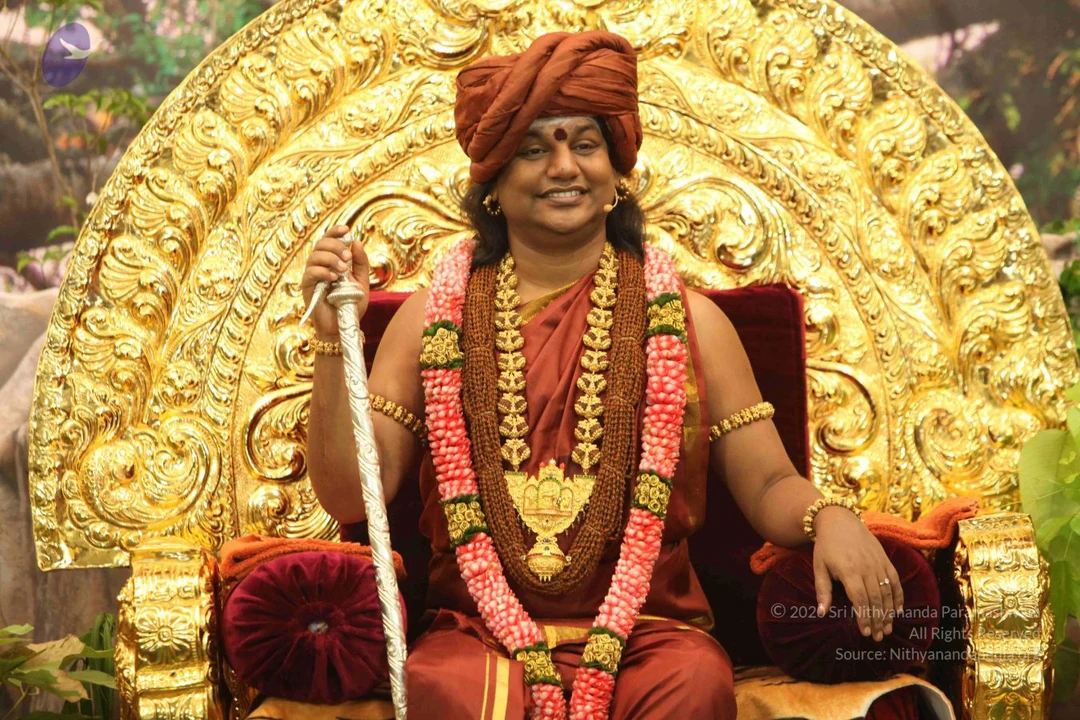
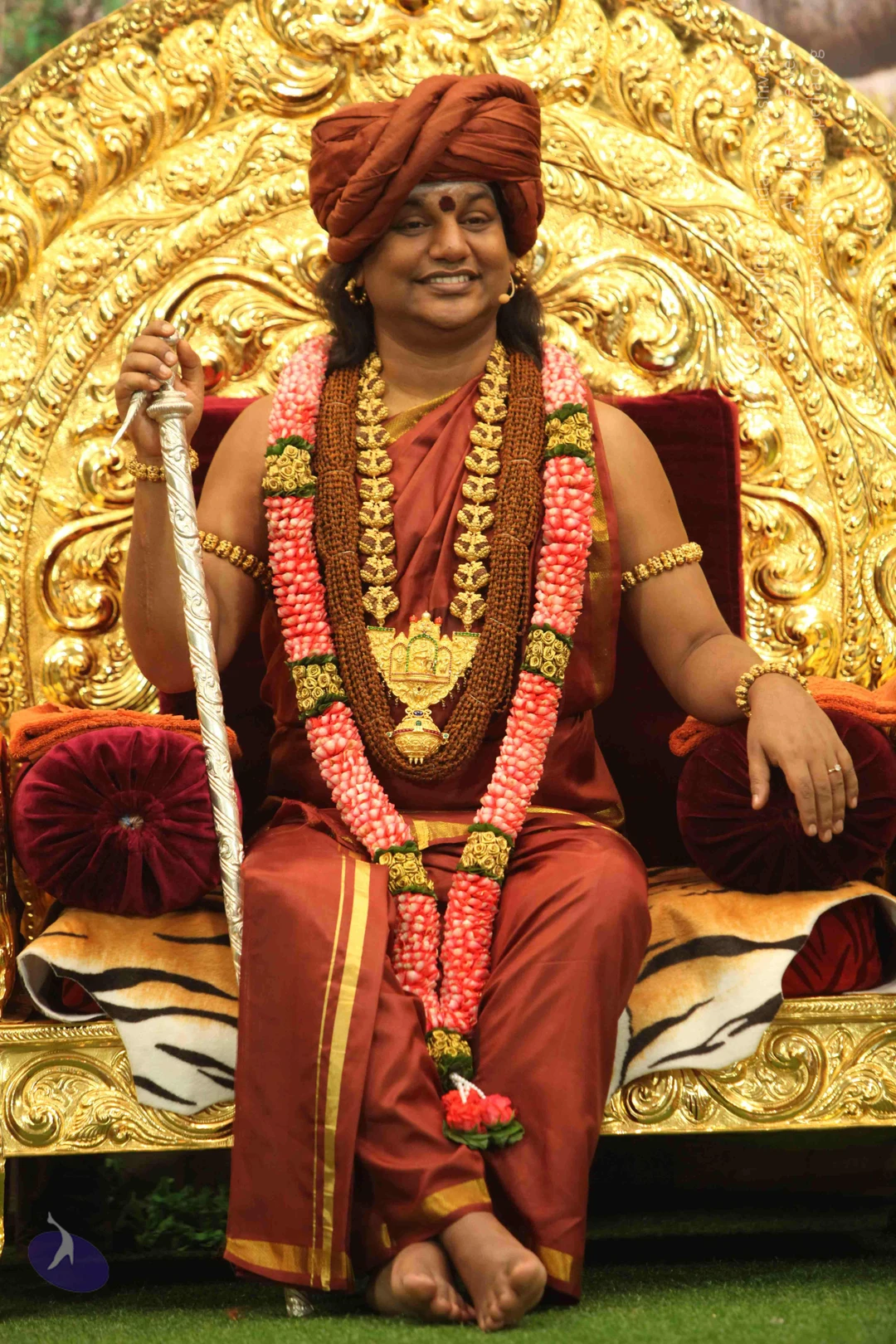
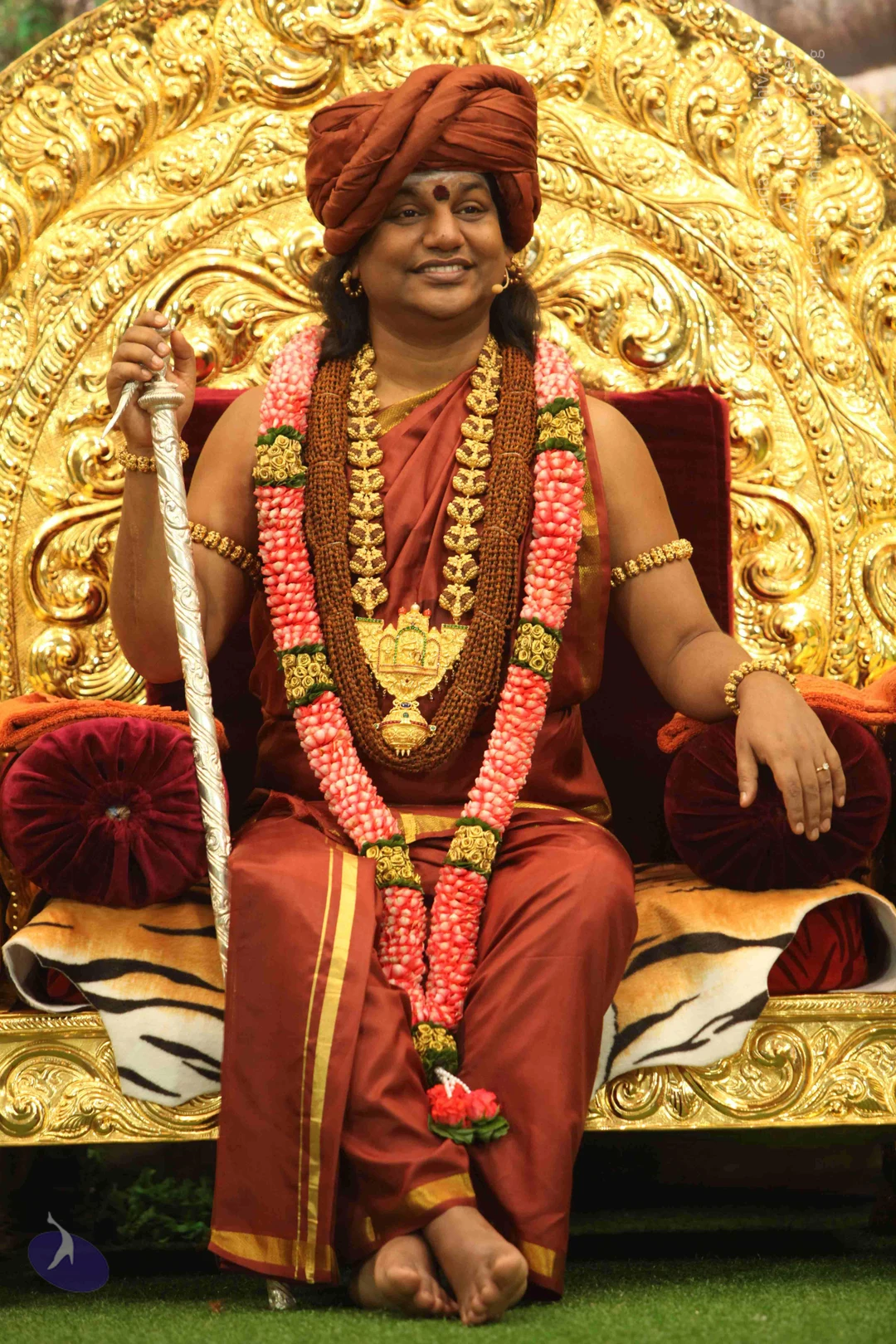
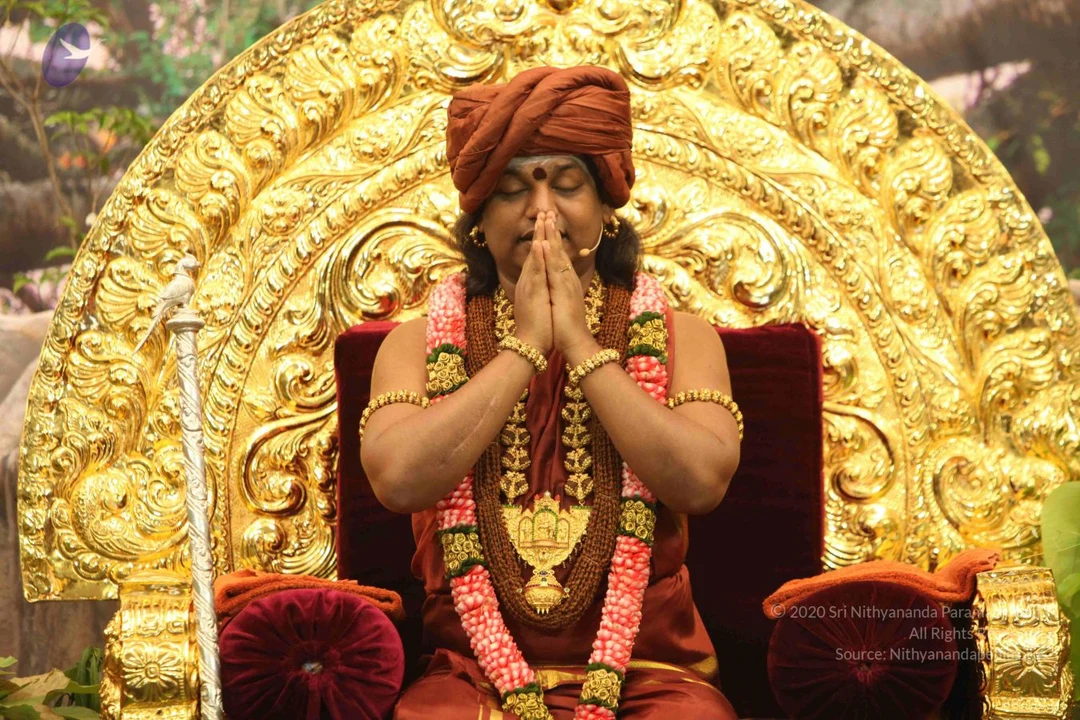
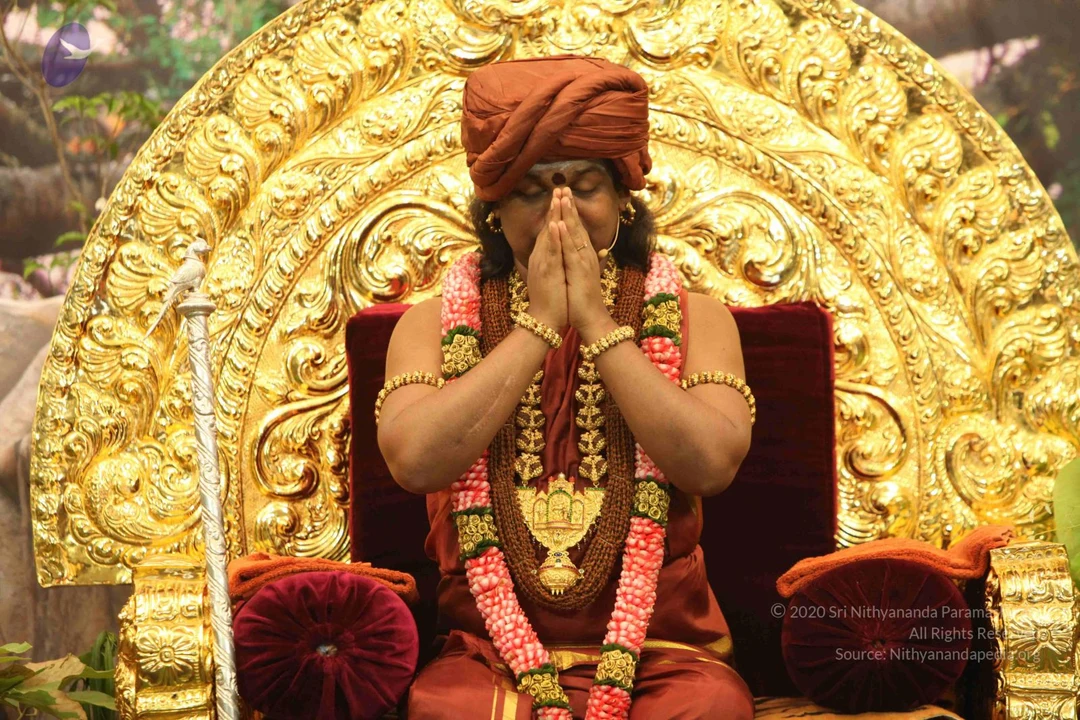
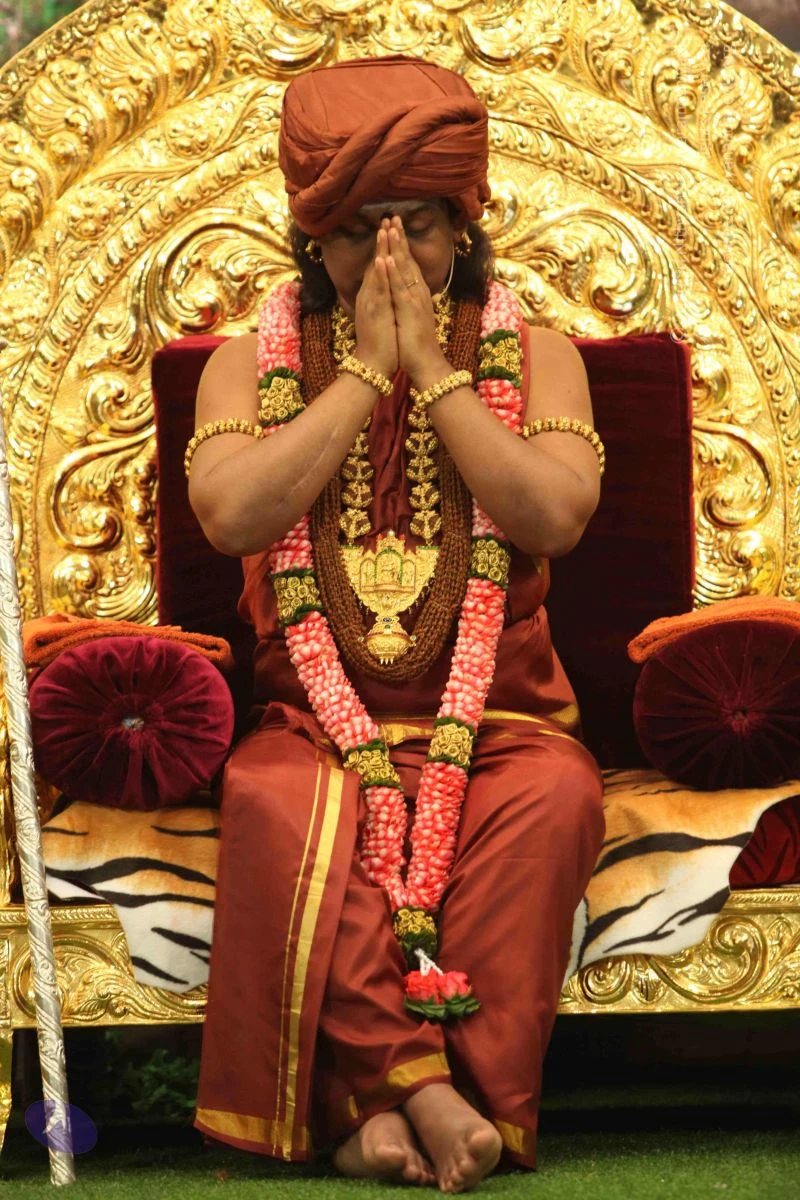
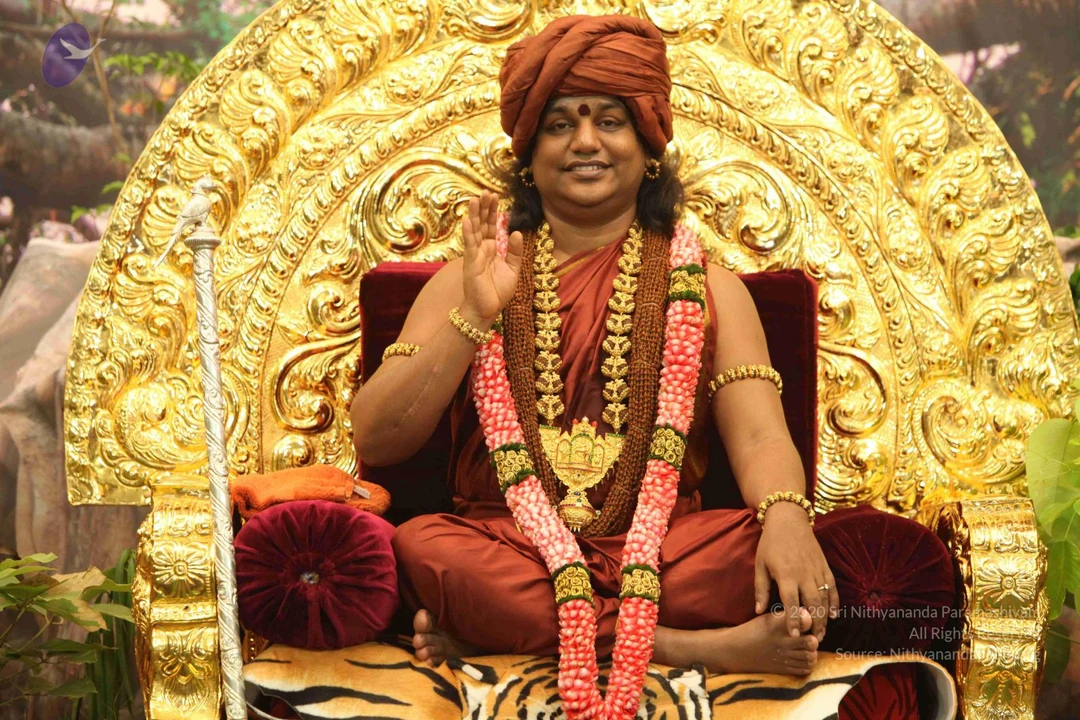
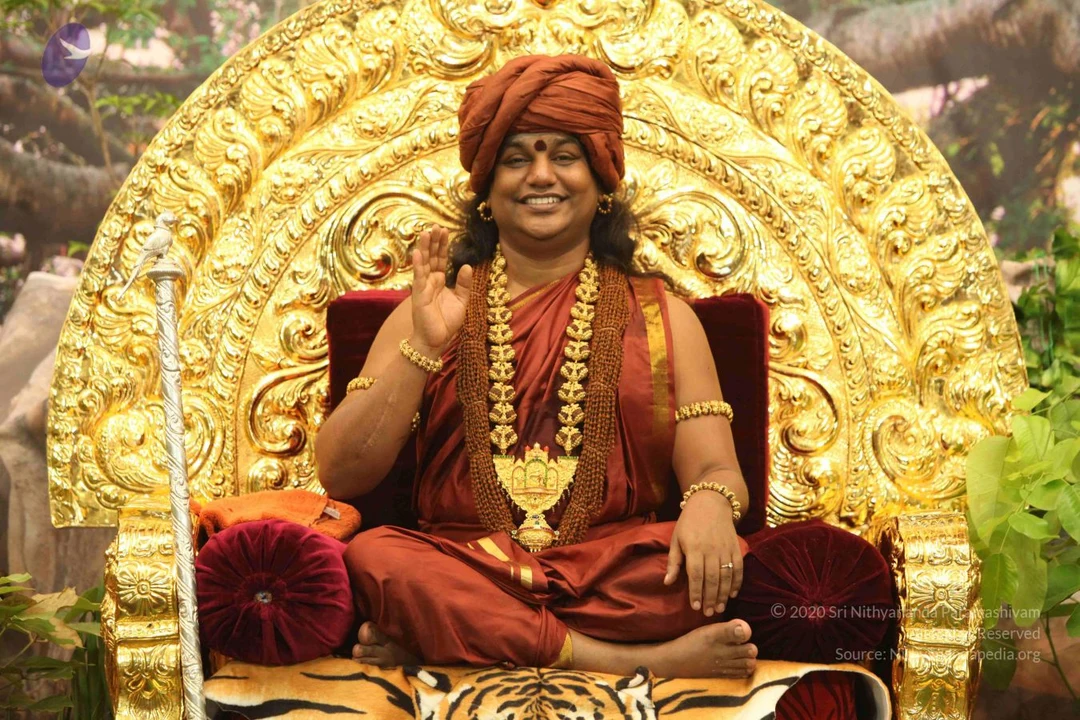
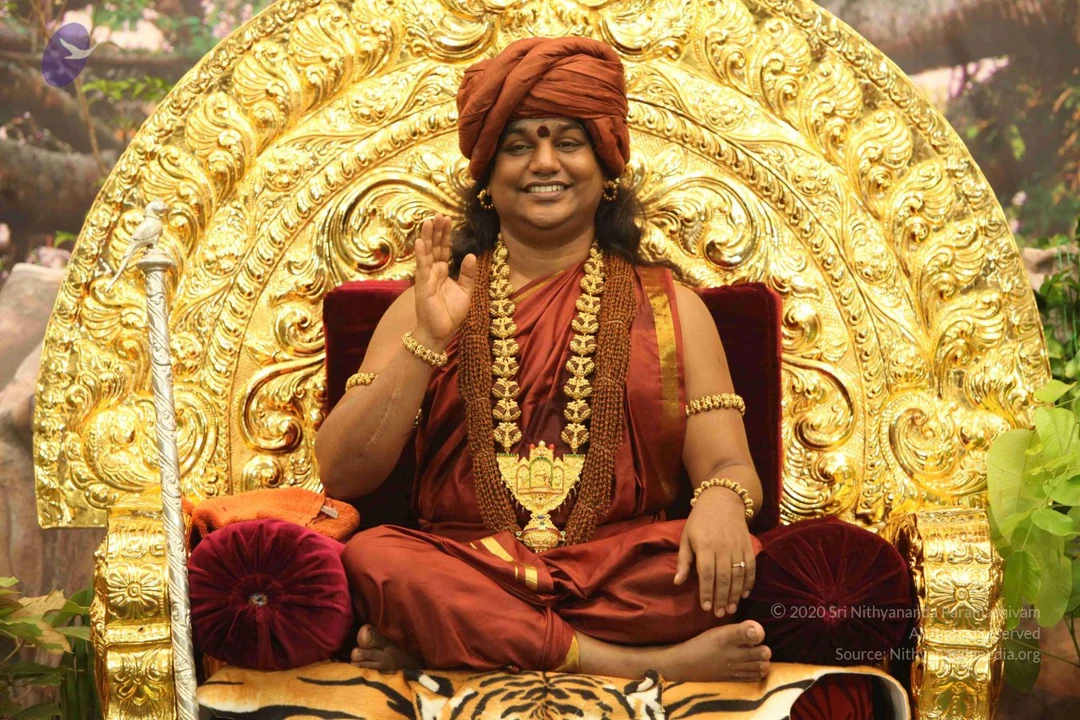
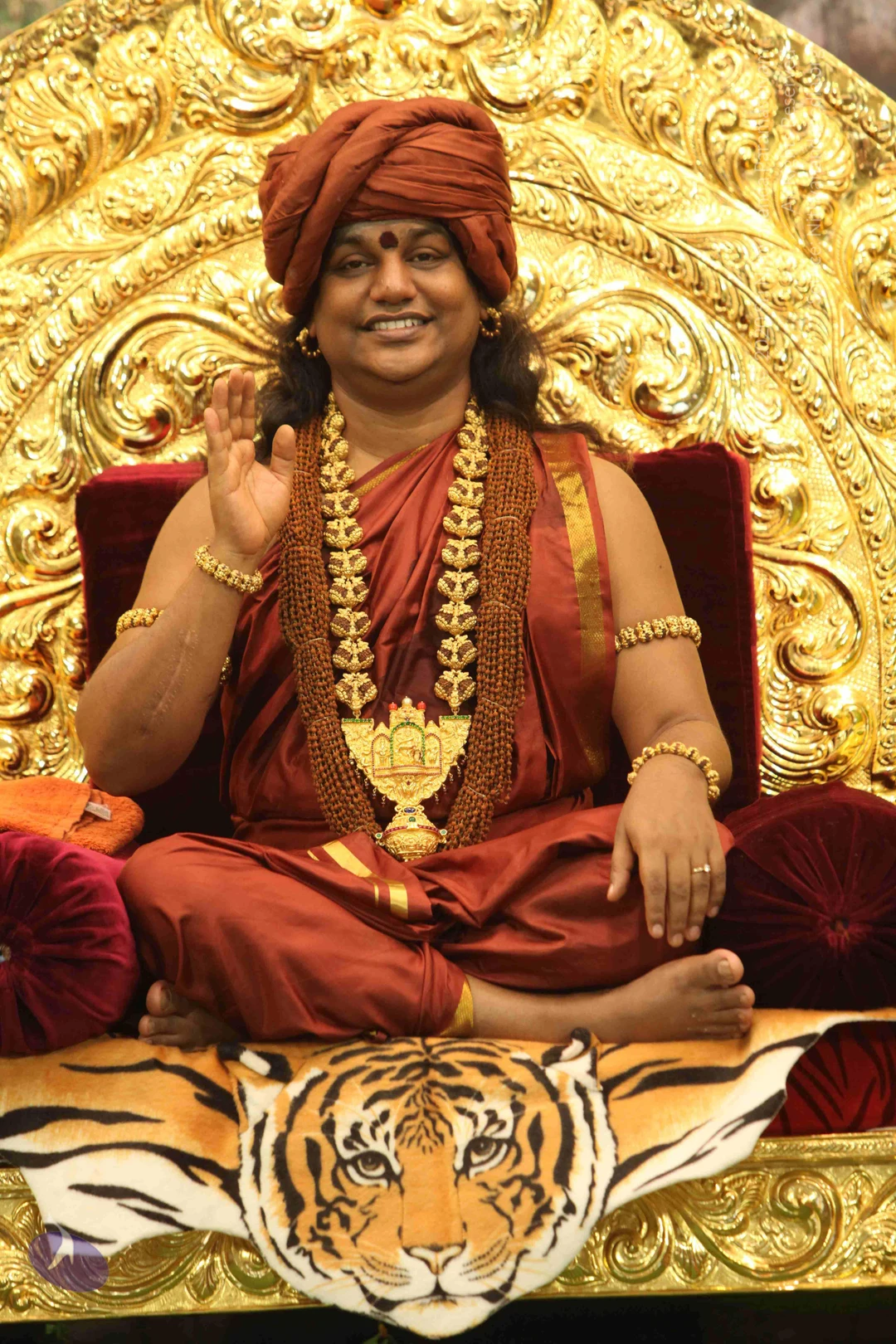
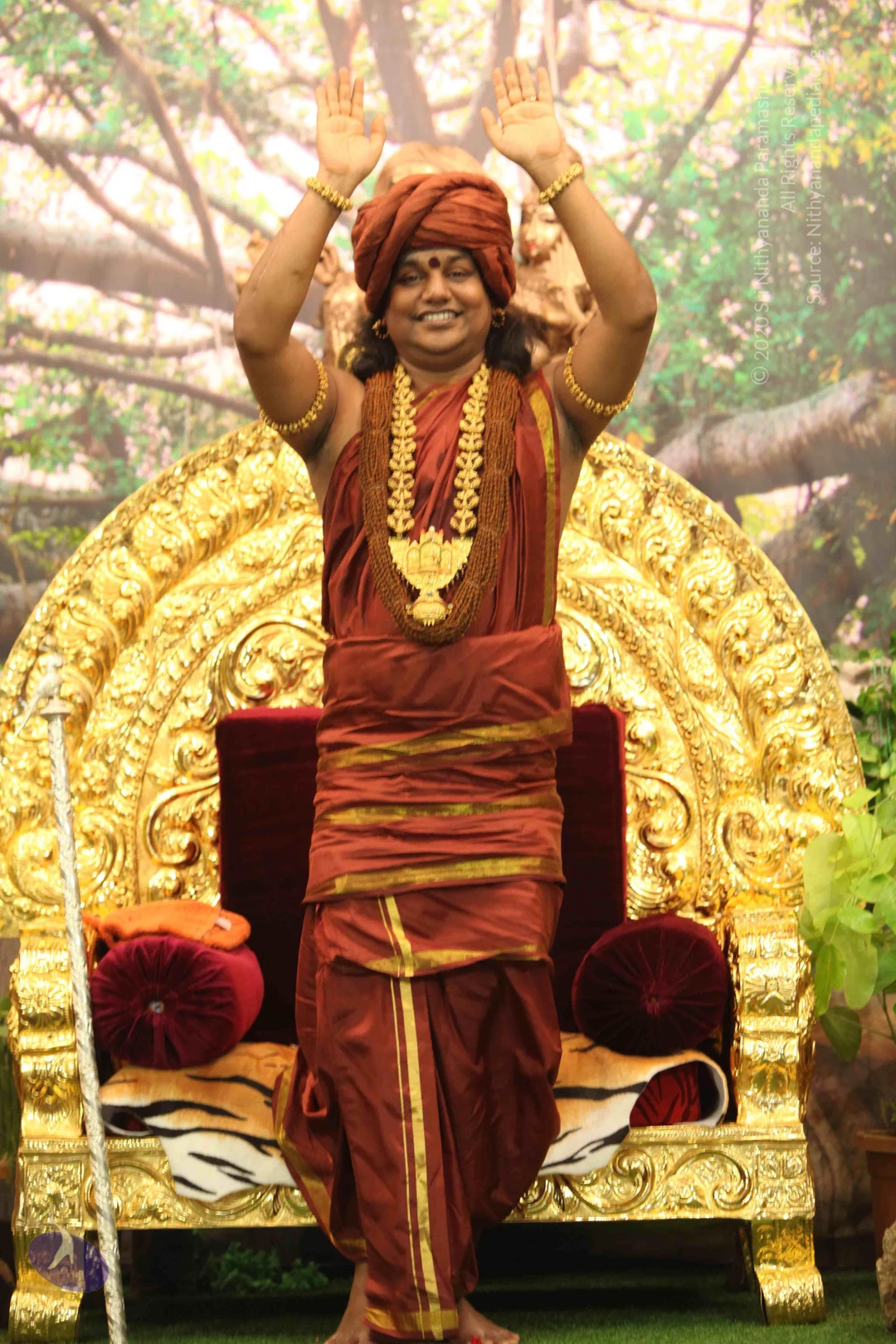
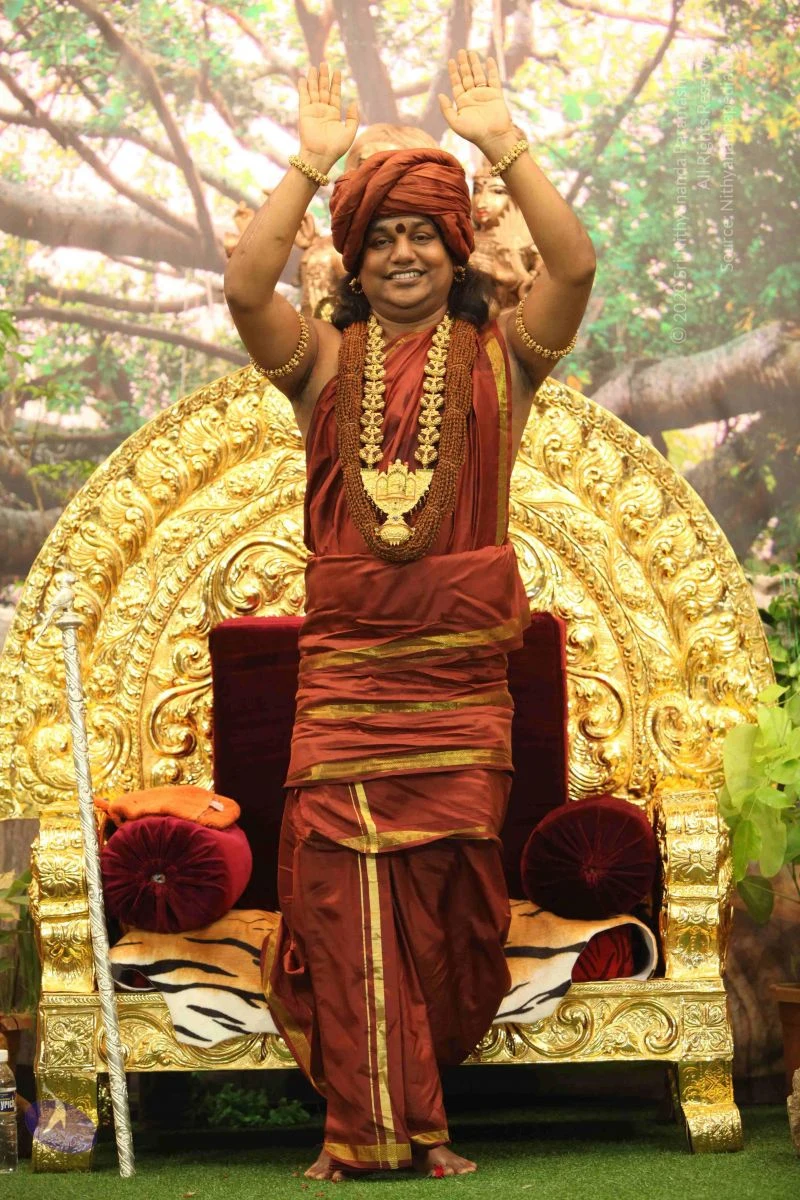
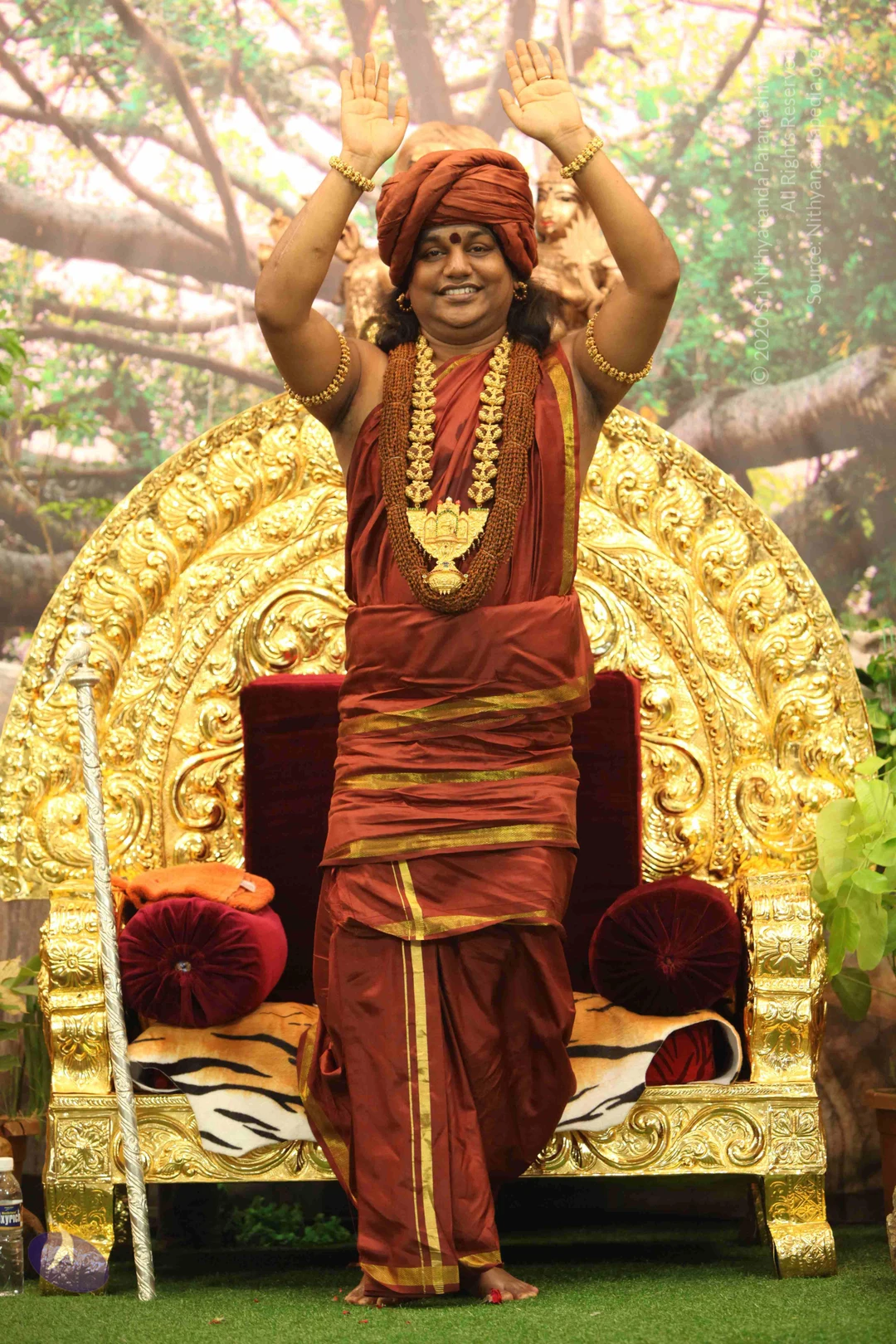
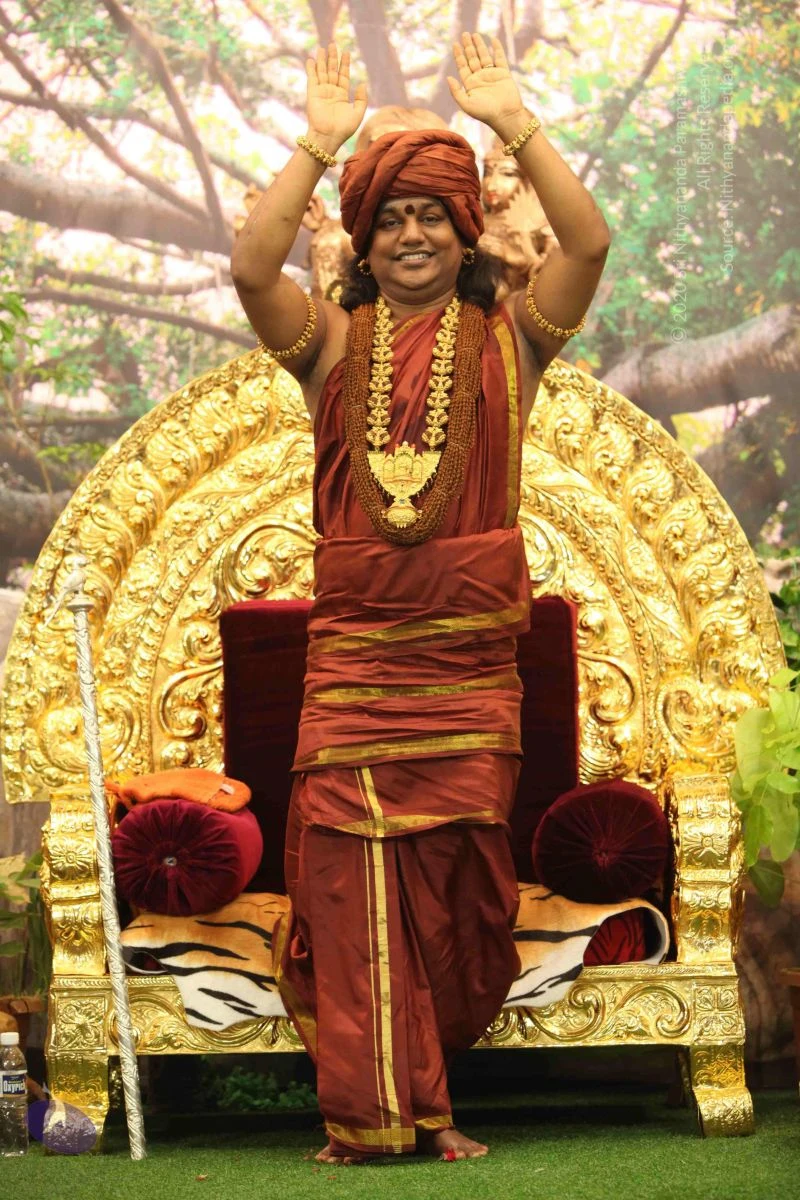
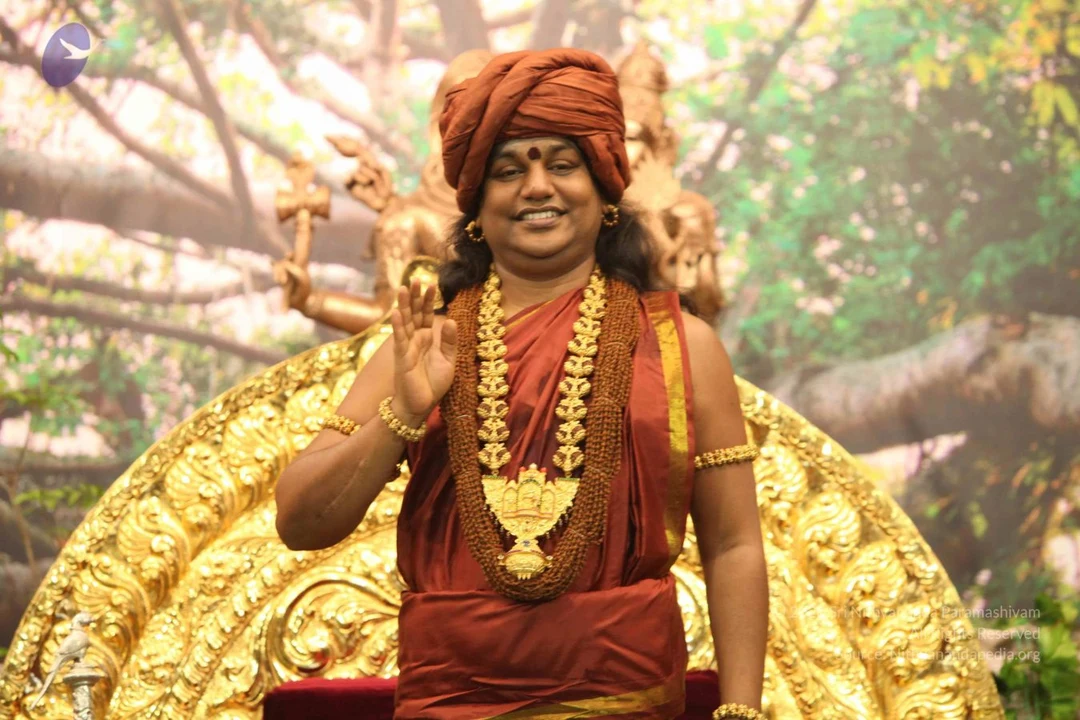
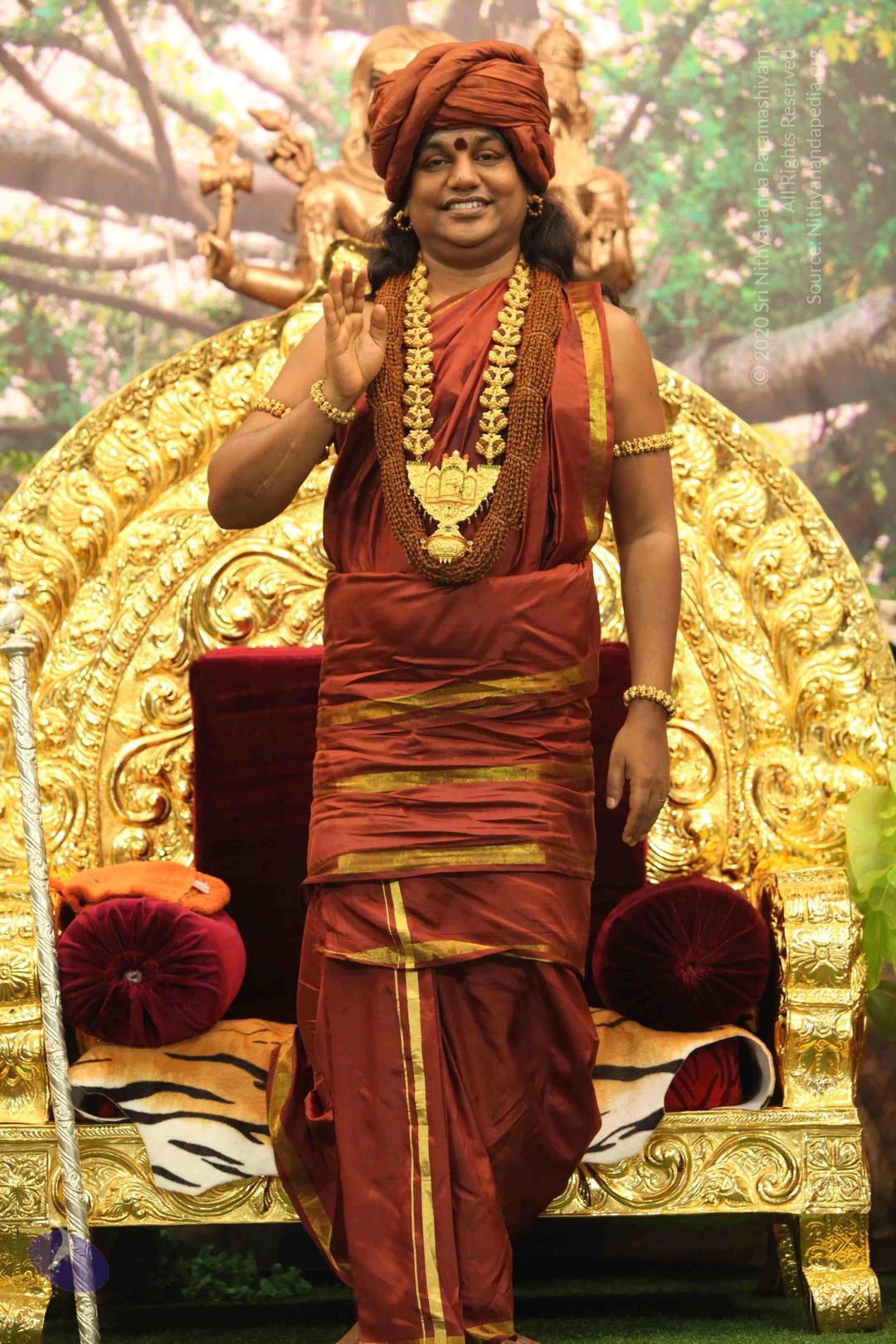
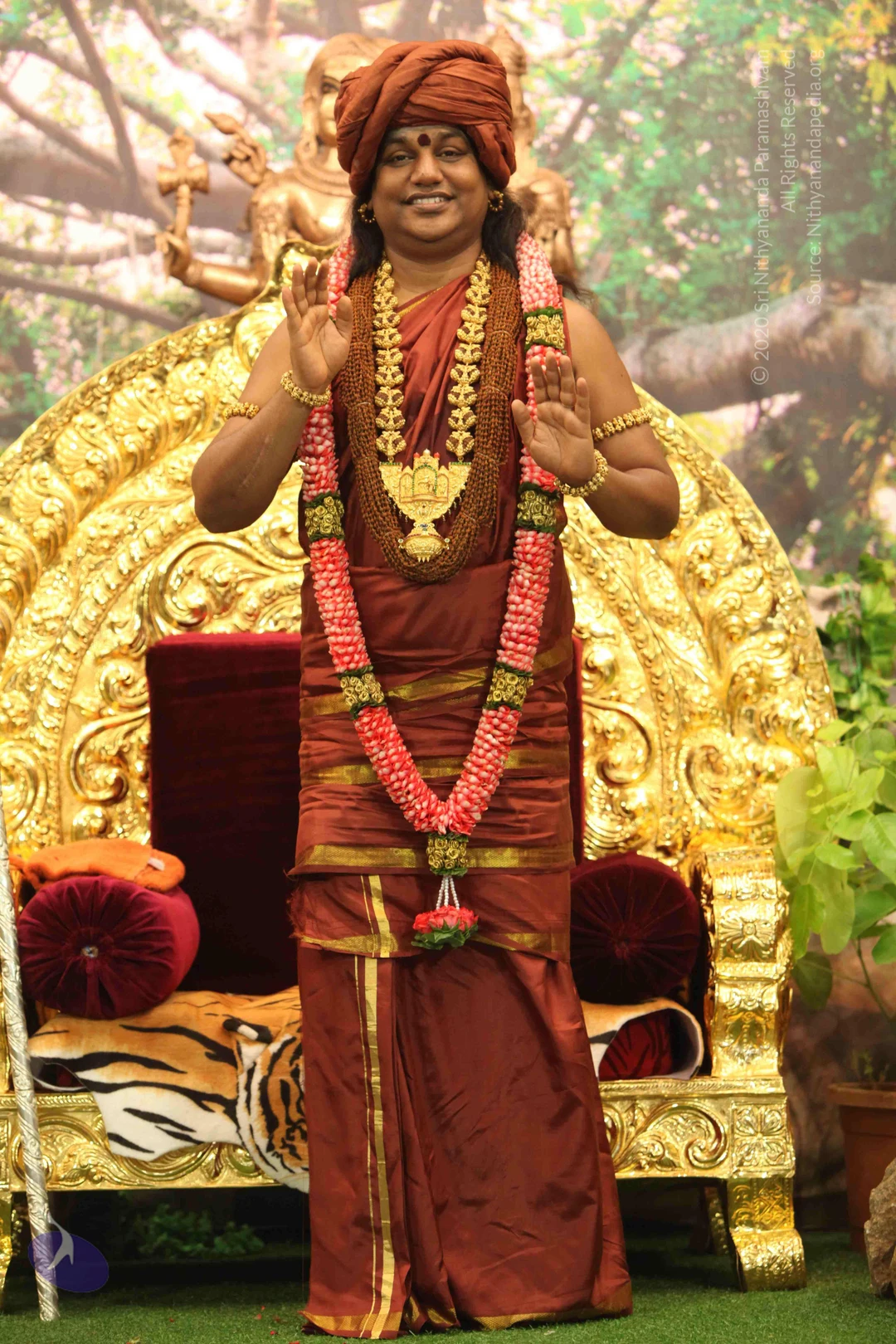
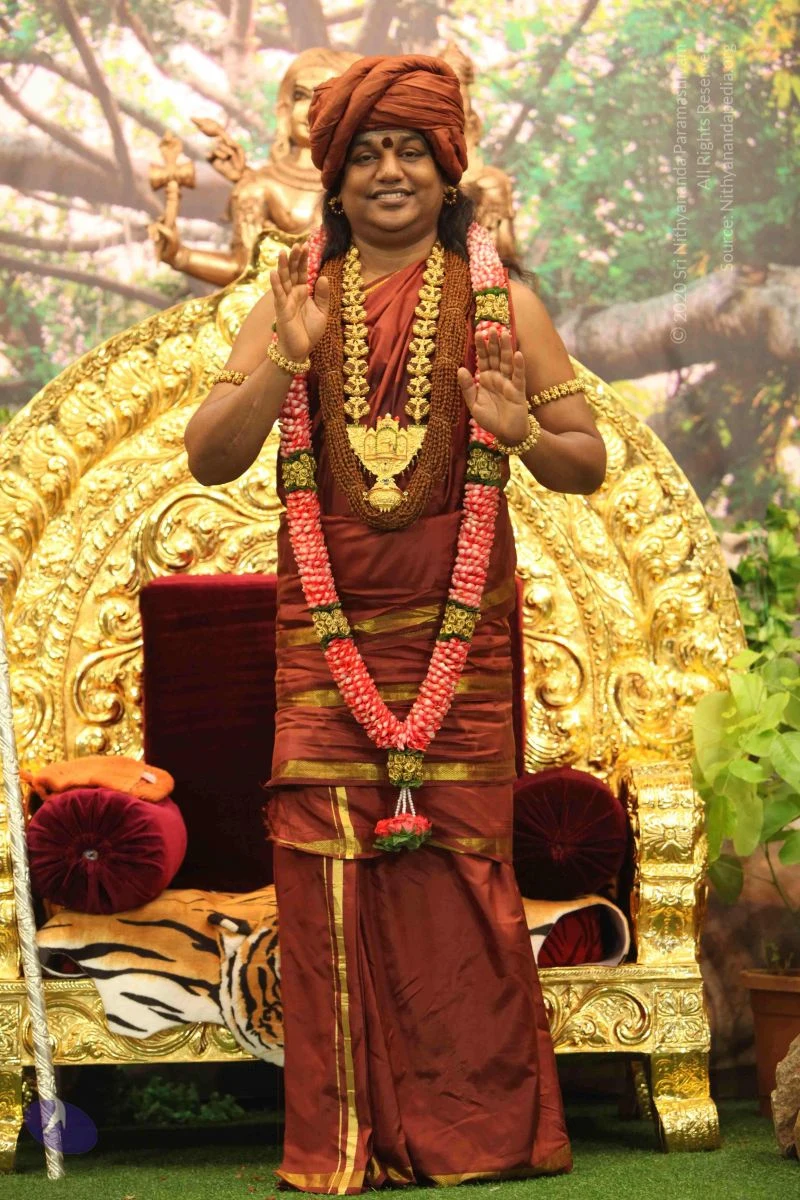
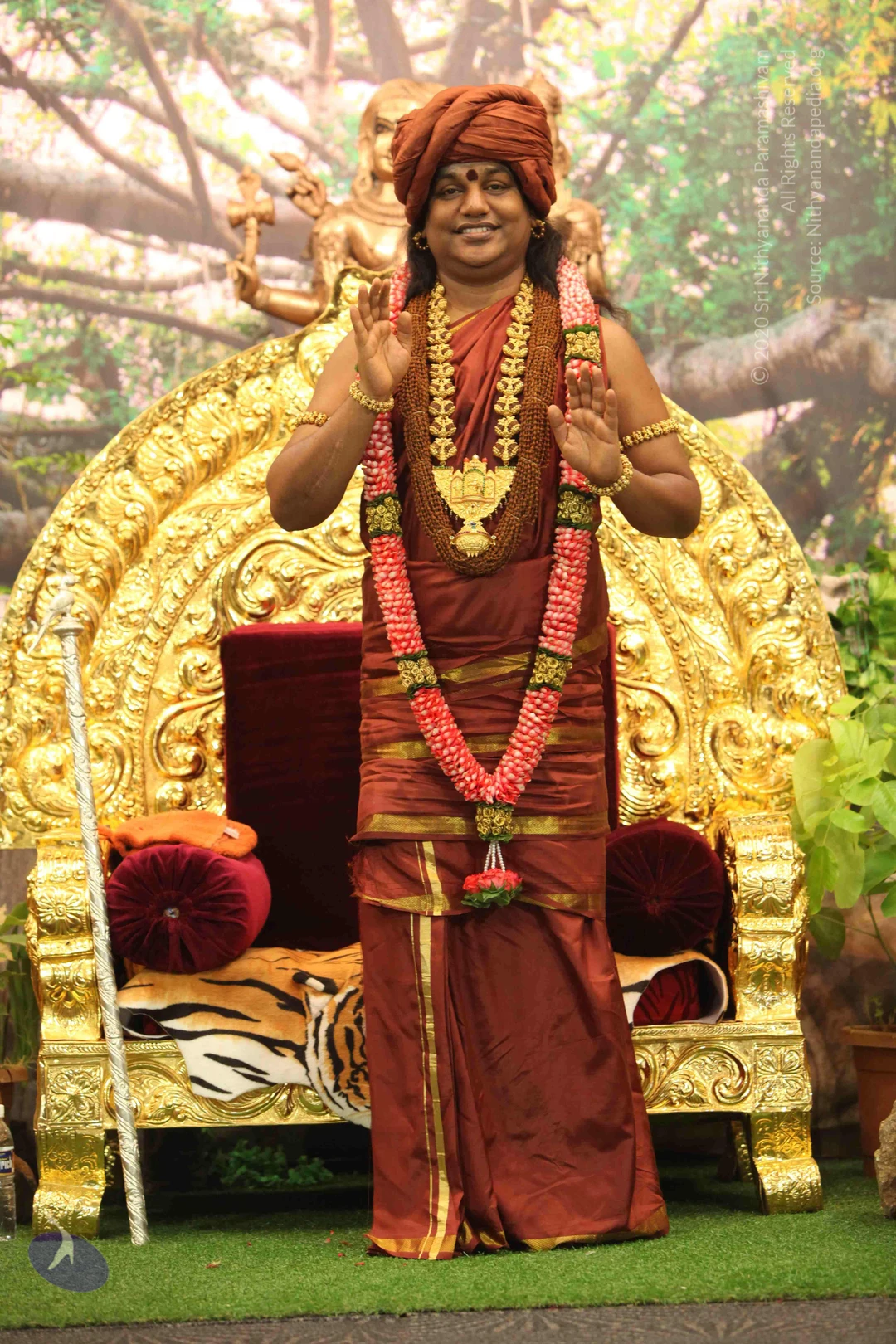
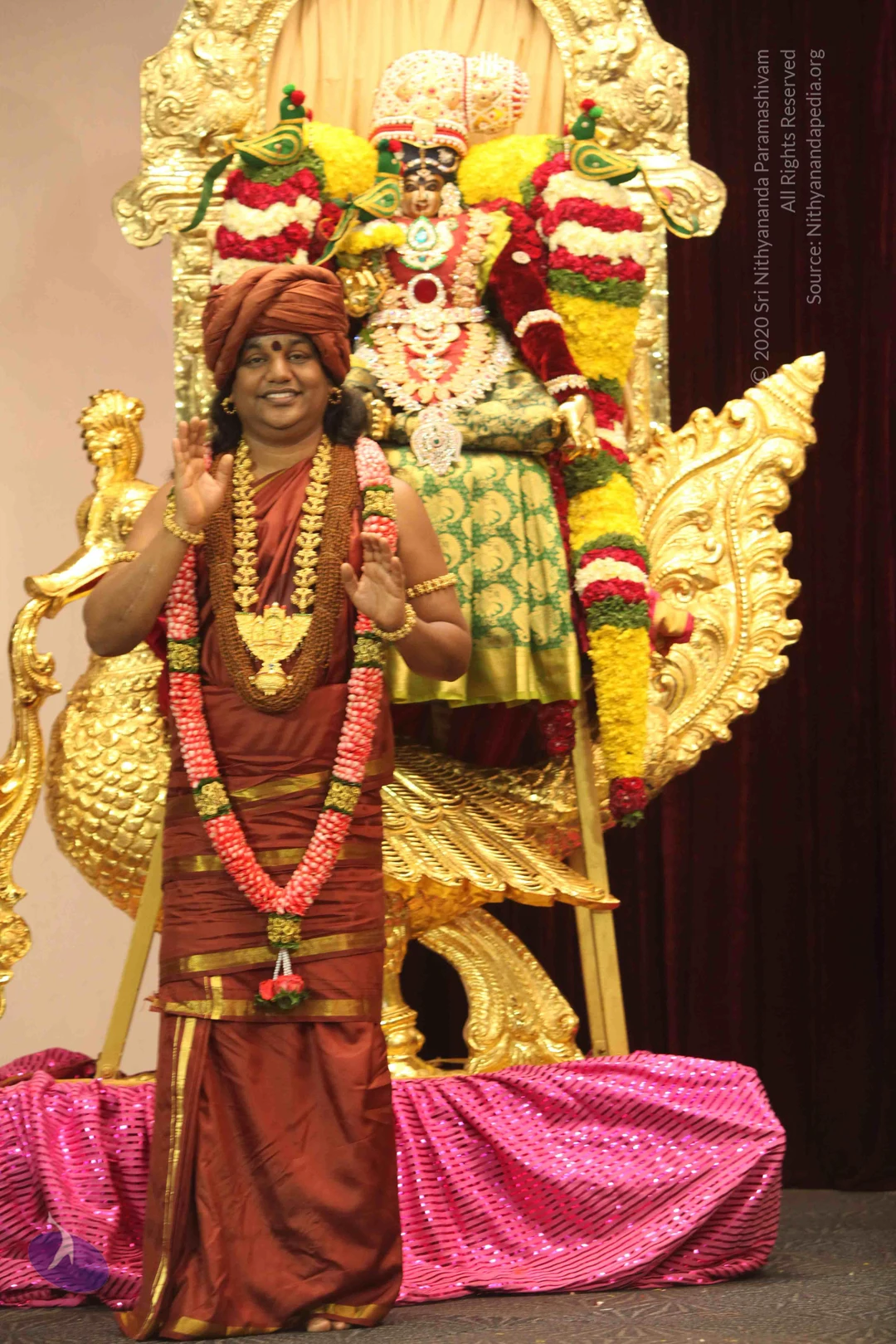
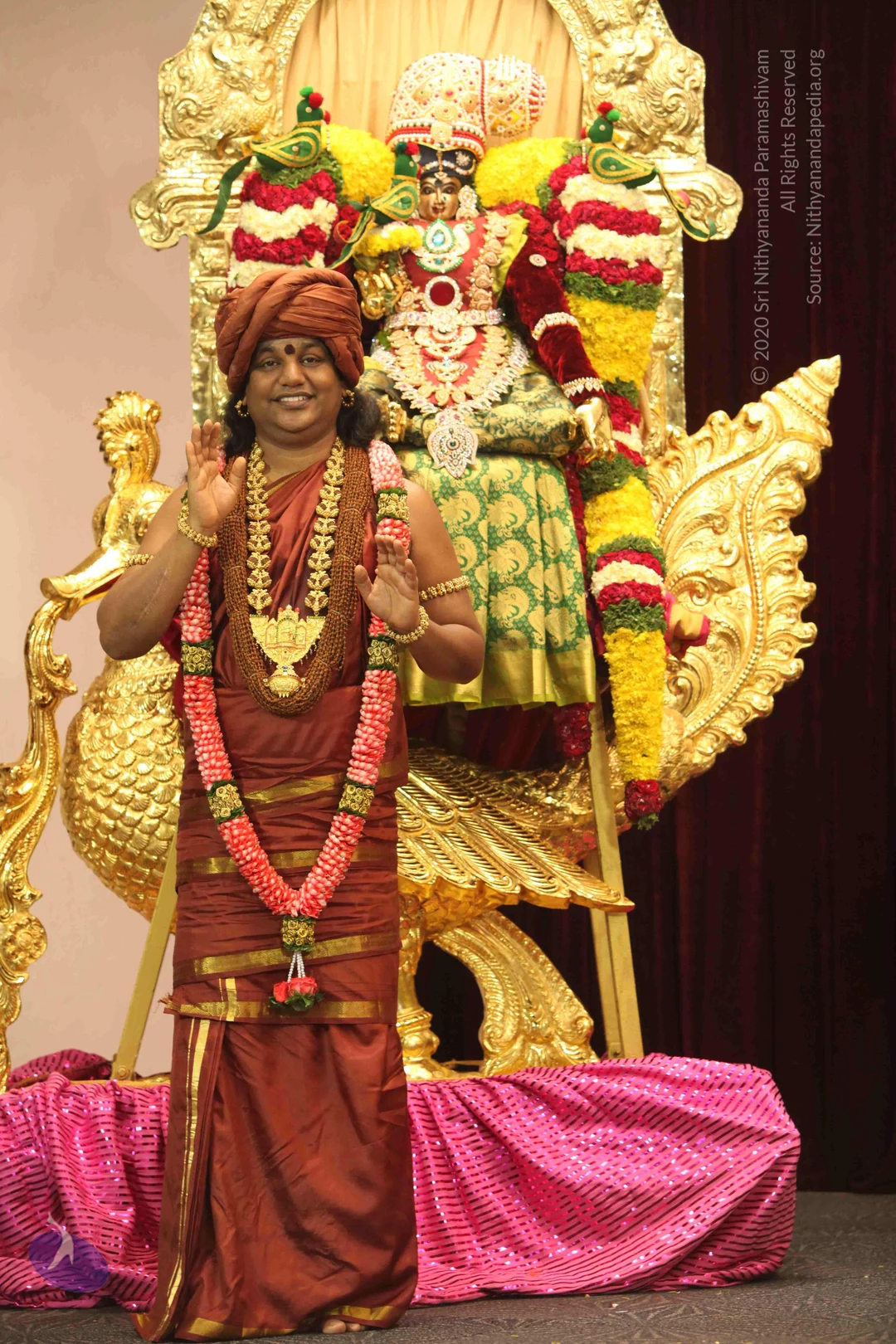
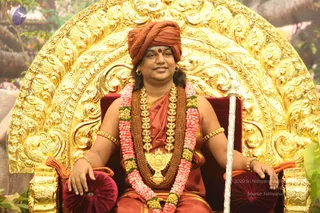
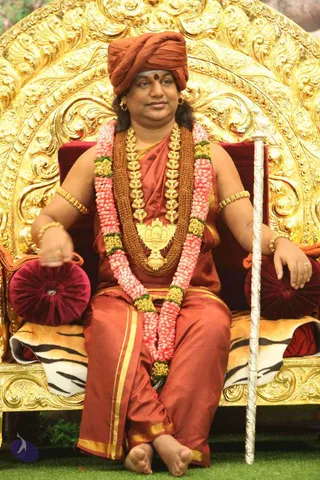
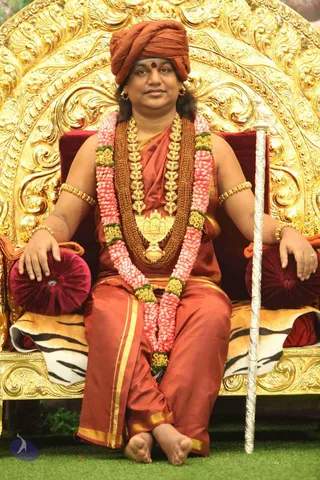
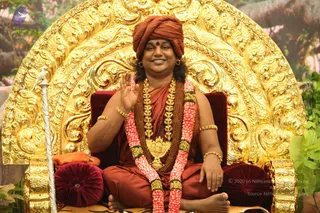
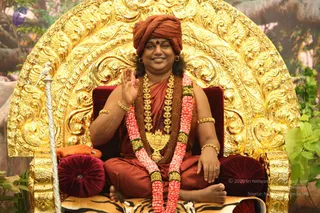
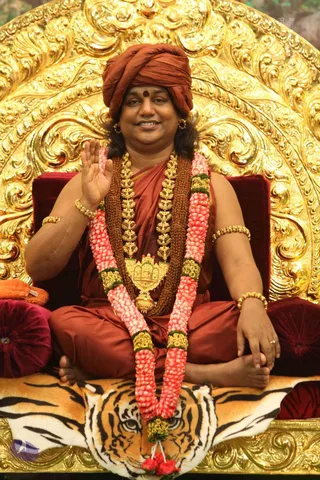
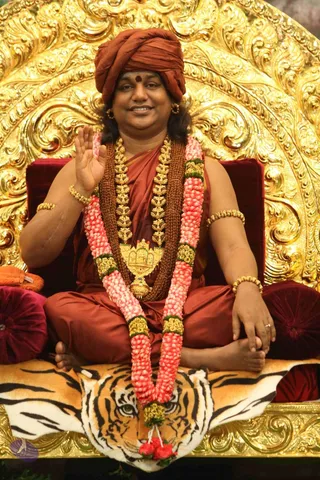
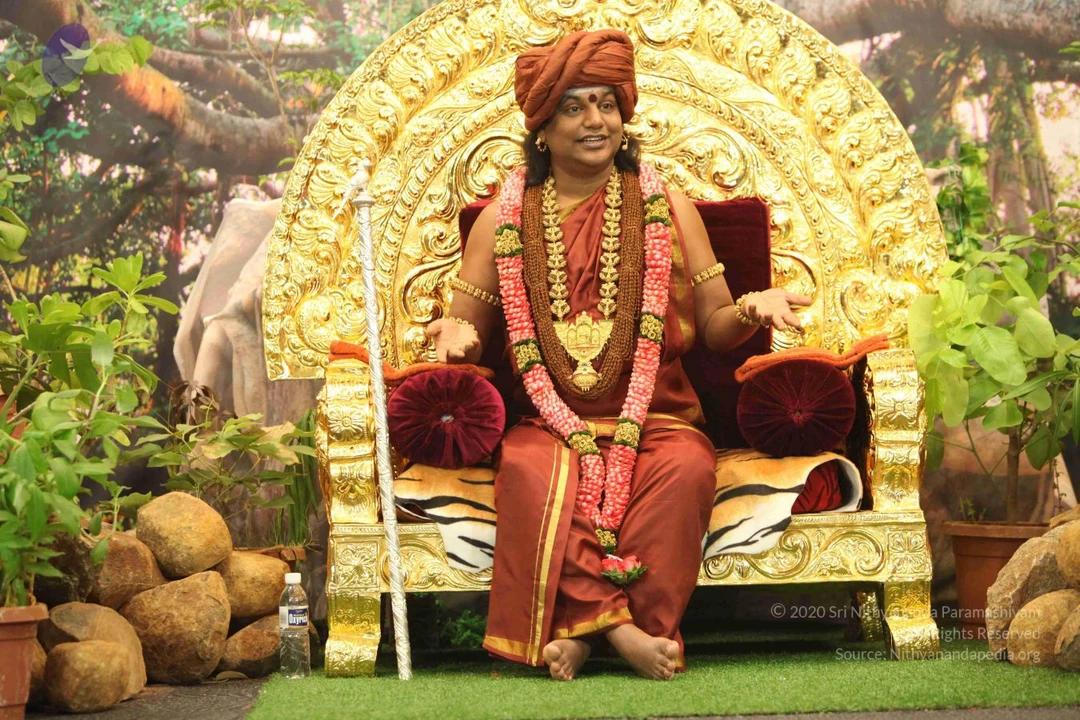
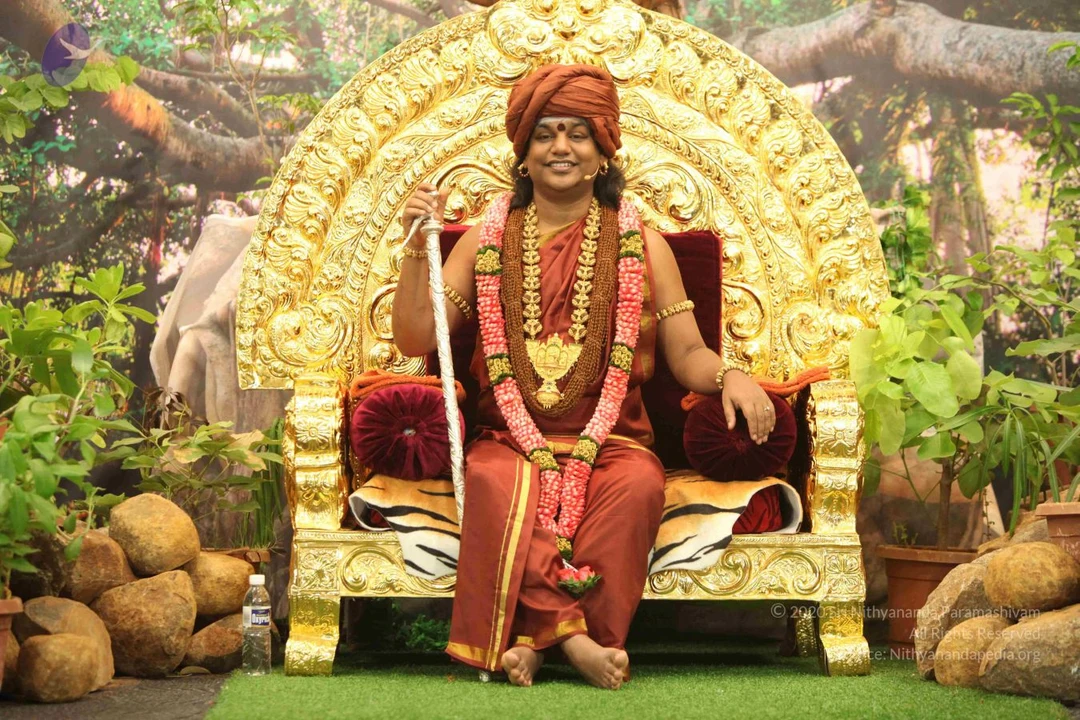
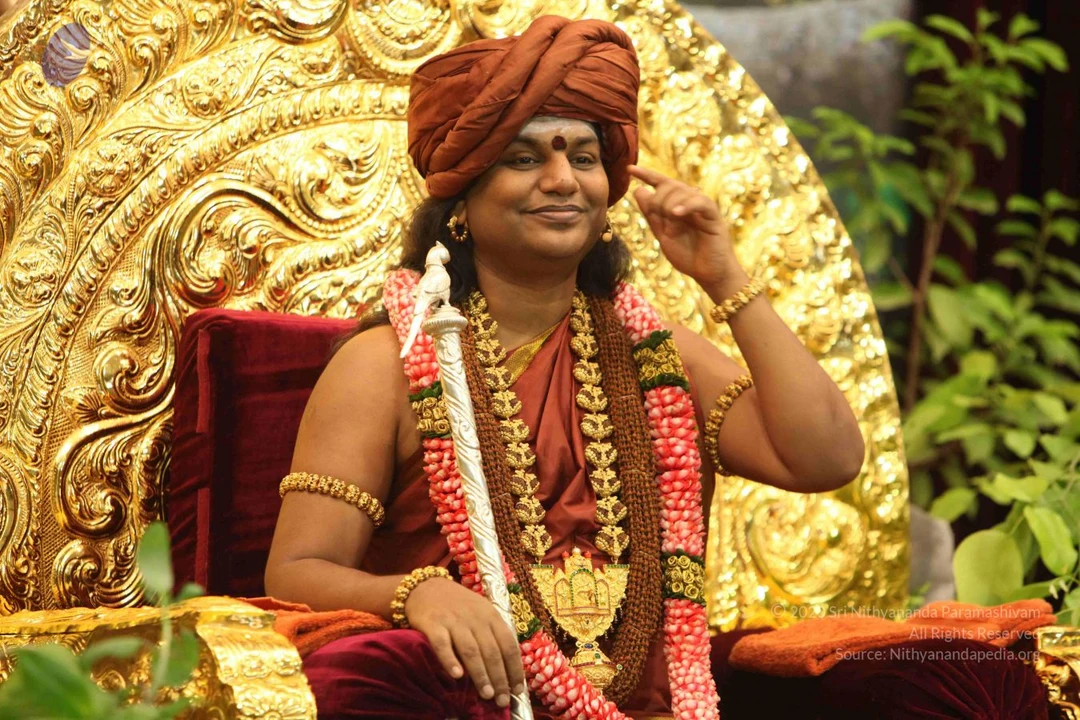
I will continue to expand on these verses in the near future. Tomorrow, day after tomorrow and the next day satsang, and I also want to tell you all, because of Brahmotsavam, all the next 10 days there will be unbroken satsangs, means live Nithya Satsang, where I will be physically coming. And after long time, I am also wearing all the Abharanas (scared jewels) and sitting in the golden throne, as the mark of Brahmotsavam celebrations. After I started speaking on Upanishads, almost I stopped wearing gold and using golden throne, I just wanted to give you the taste of the rishis, ancient Rishi’s lifestyle in the forest. Now, I am back to Madurai to celebrate the coronation and the Meenakshi’s marriage celebration and ceremonies. I don’t know how many of you remember, My coronation also happened in the same Brahmotsavam period, Chitirai Bhrahmotsavam period only, the fourth day of the Brahmotsavam. So every year, we will be celebrating this Brahmotsavam.

So with this, I will move to the next segment of the morning satsang, Dial the Avatar. Now I’m available for all your questions, requests, prayers, or Vaakyartha Sadas, you can call.

Title

Vaakyaartha Sadhas 22nd April 2015

Link to Video:

VideoAudio

Photos

Rudra Abhishekam

Paduka Puja and Nithya Satsang
Link To Facebook Post

https://www.facebook.com/ParamahamsaNithyananda/photos/a.321615927926264/824552477632604

Tags:

Upanishads, Advaita, Living Advaita, Isha Upanishad, Ishavasya, Isha Upanishad Verse 9, Paramahamsa Nithyananda, Isha, Satsang, Mahadeva, AdiShankara Anniversary, AdiShankara, Consiousness, Super-Consciousness, Dharma, Karma, Reinvent You, Spiritual Strategy, Life Strategy, Seeker, Shiva, Varanasi, Shivoham

Photos Of The Day:

nithya-satsang

final-blessings-HDH-deities

kalpataru-darshan

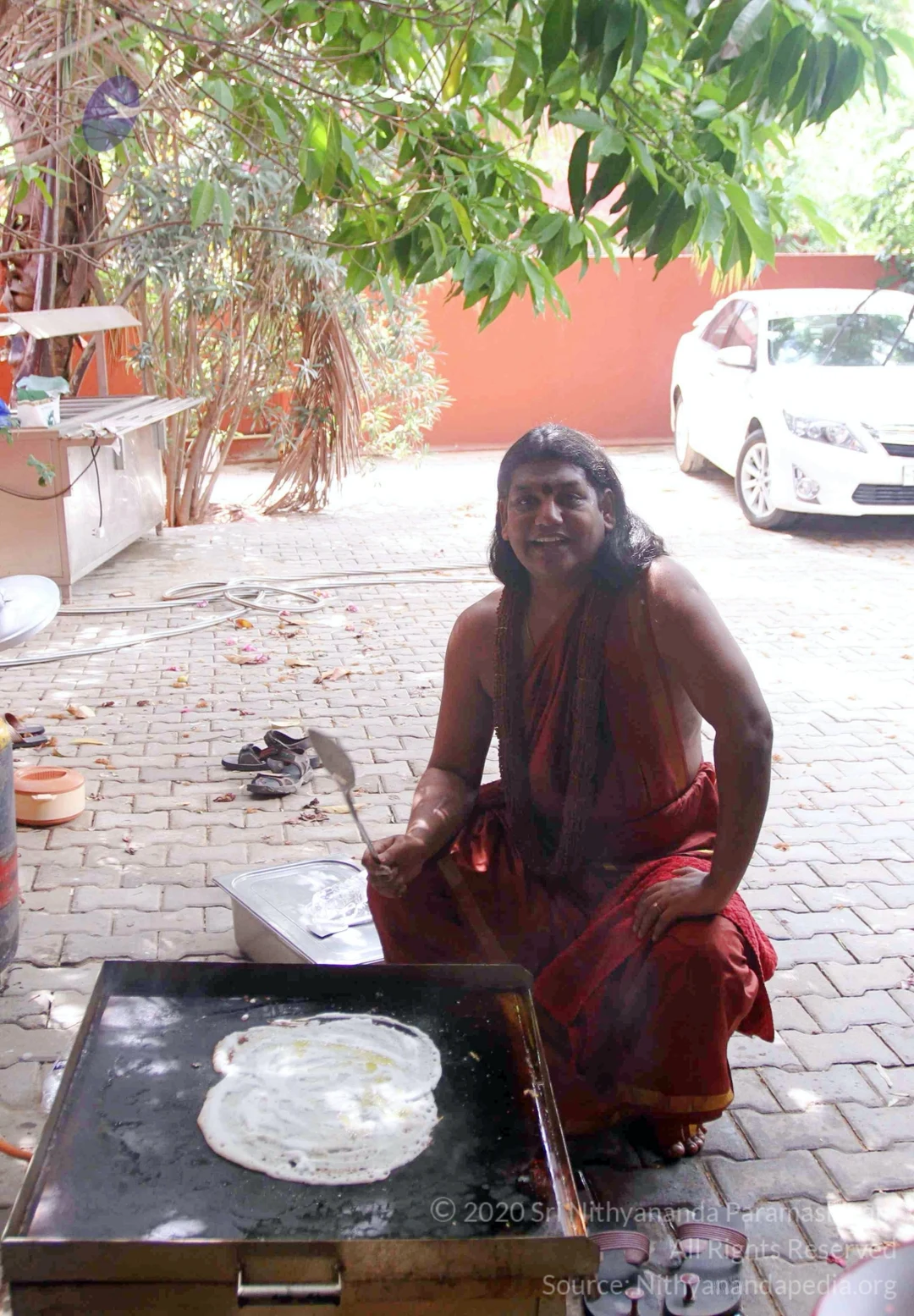
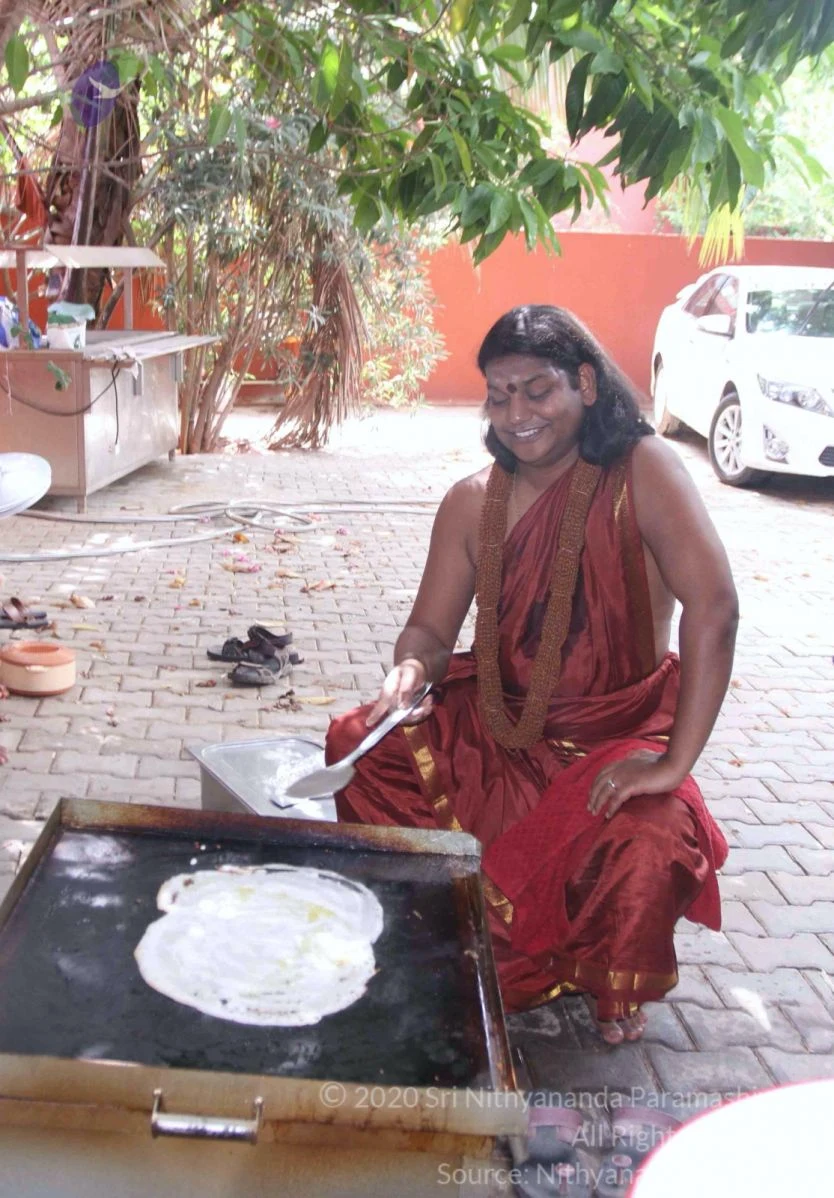
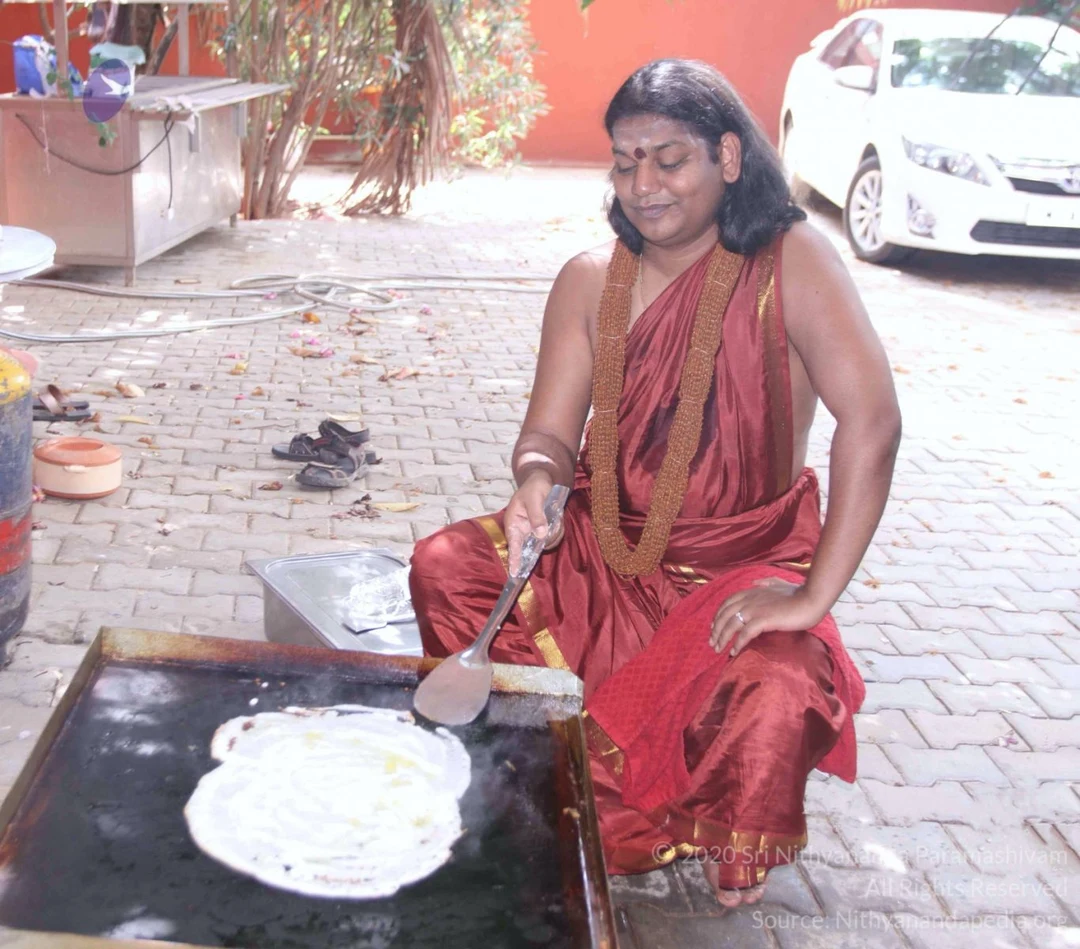
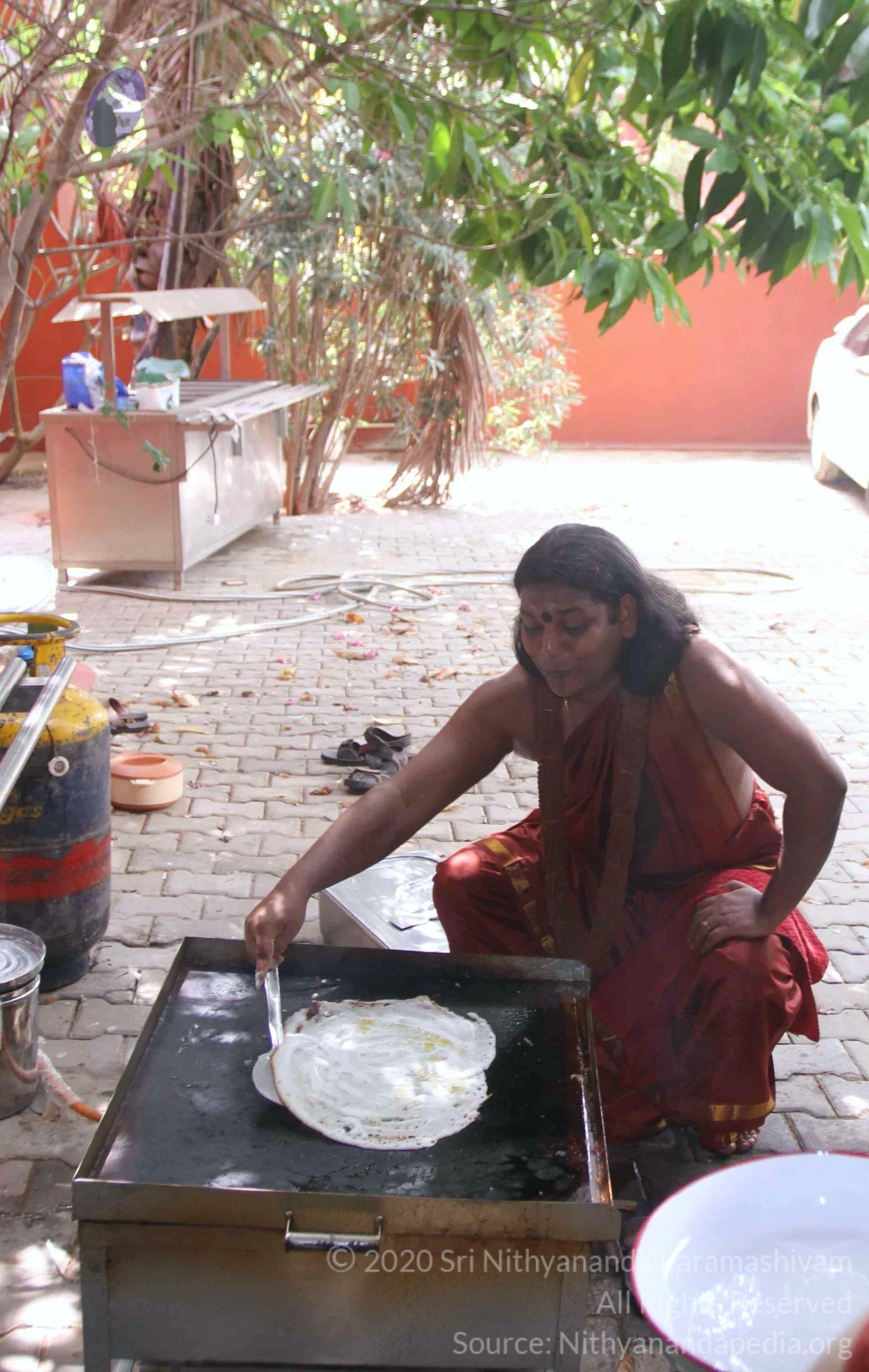
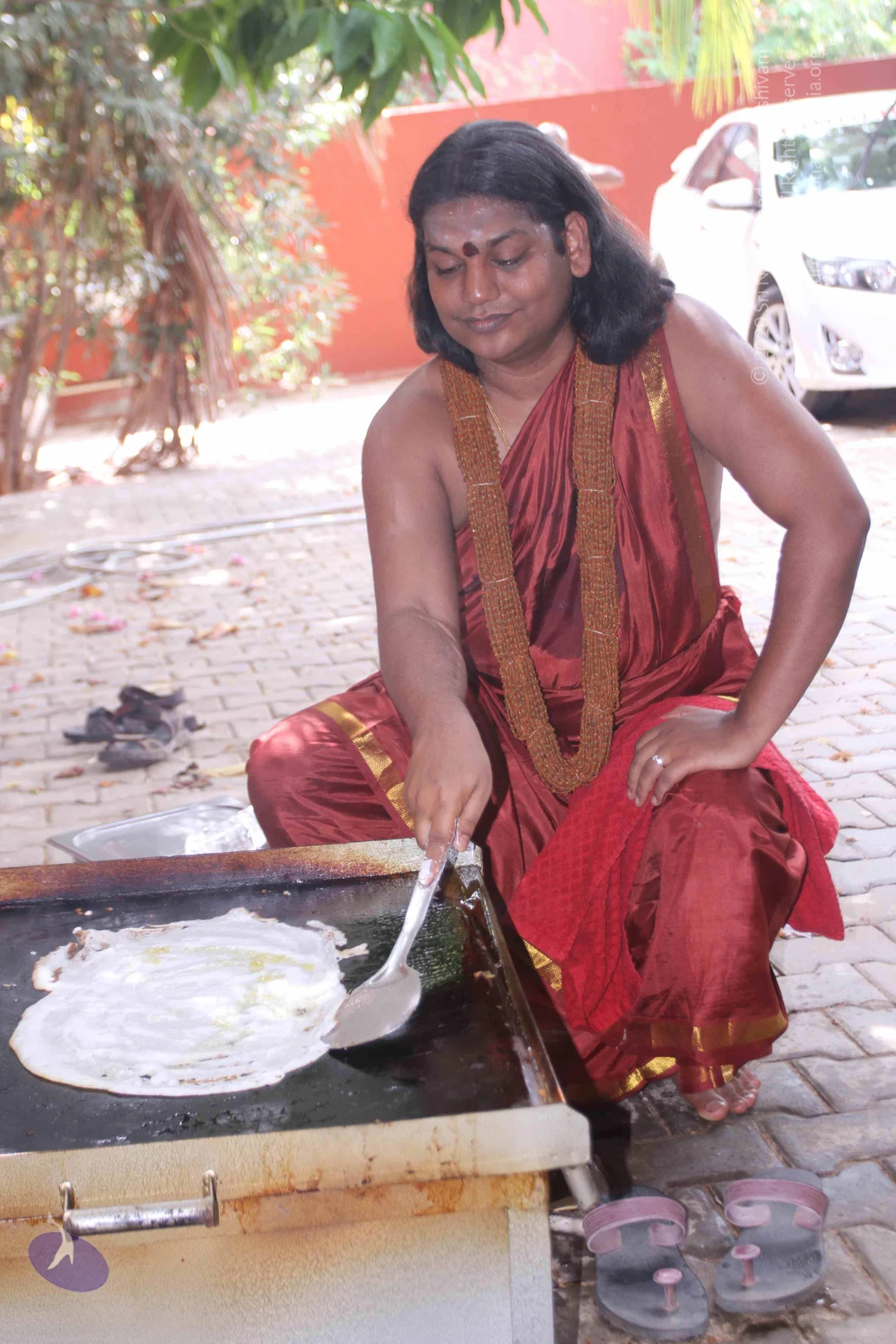
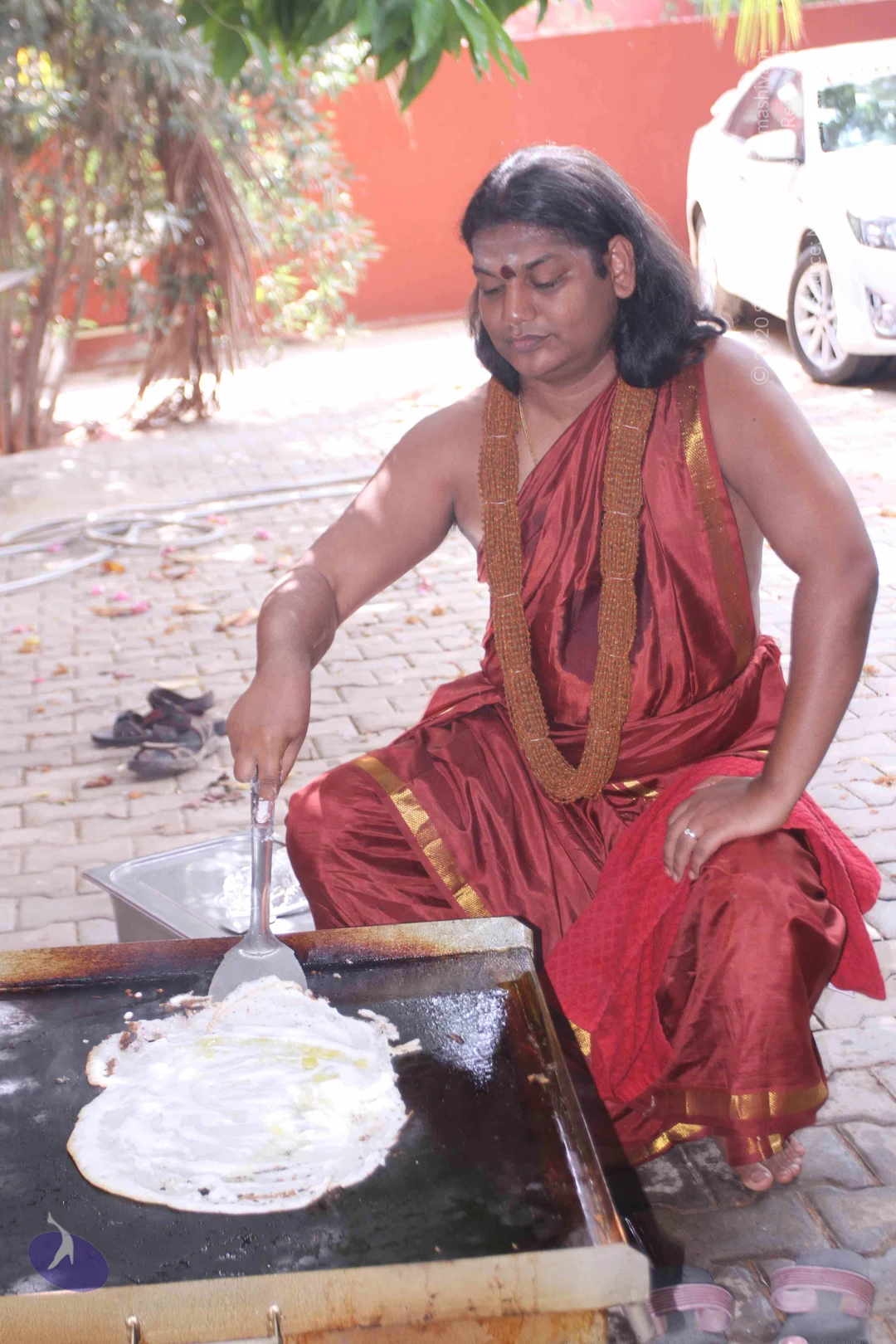
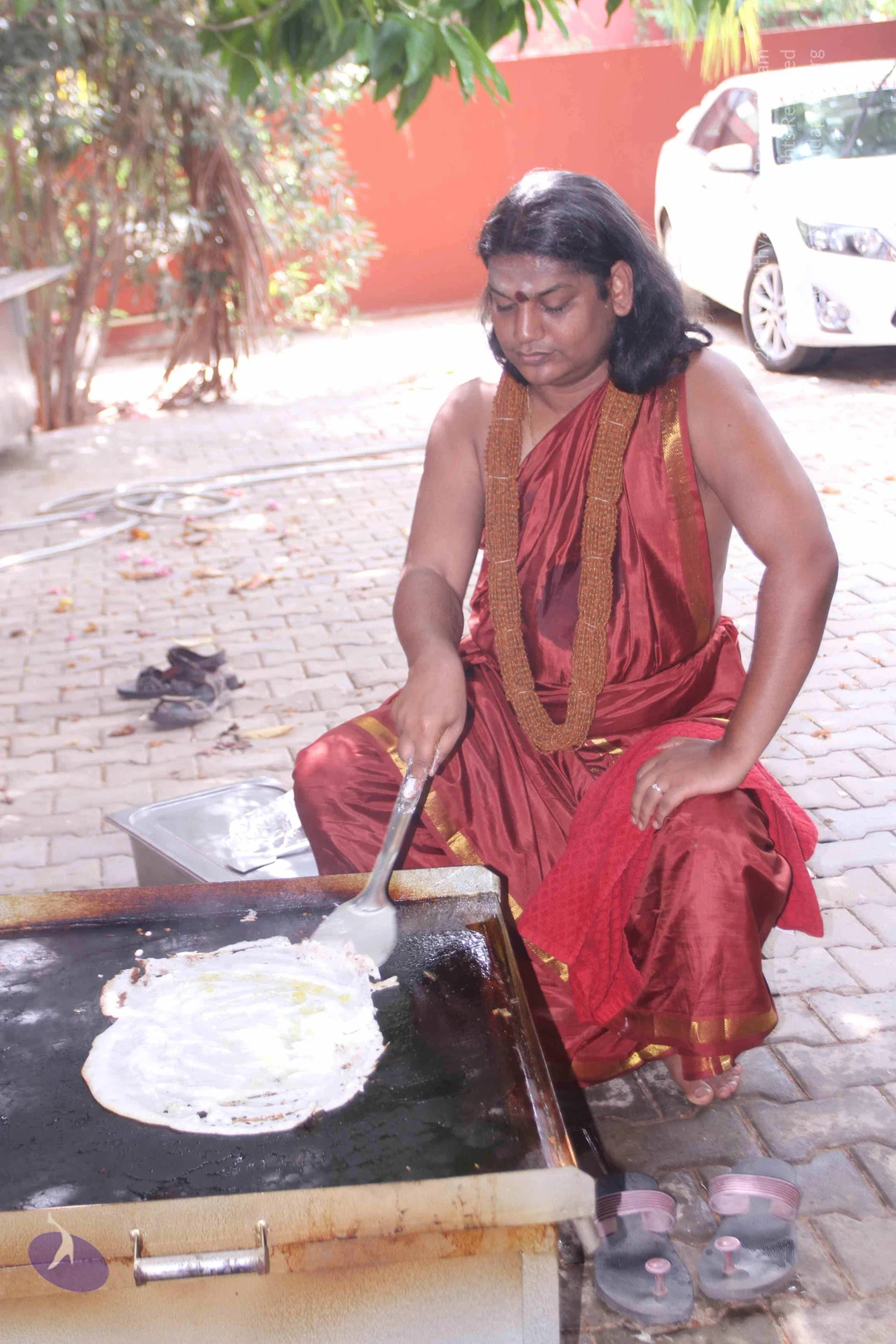
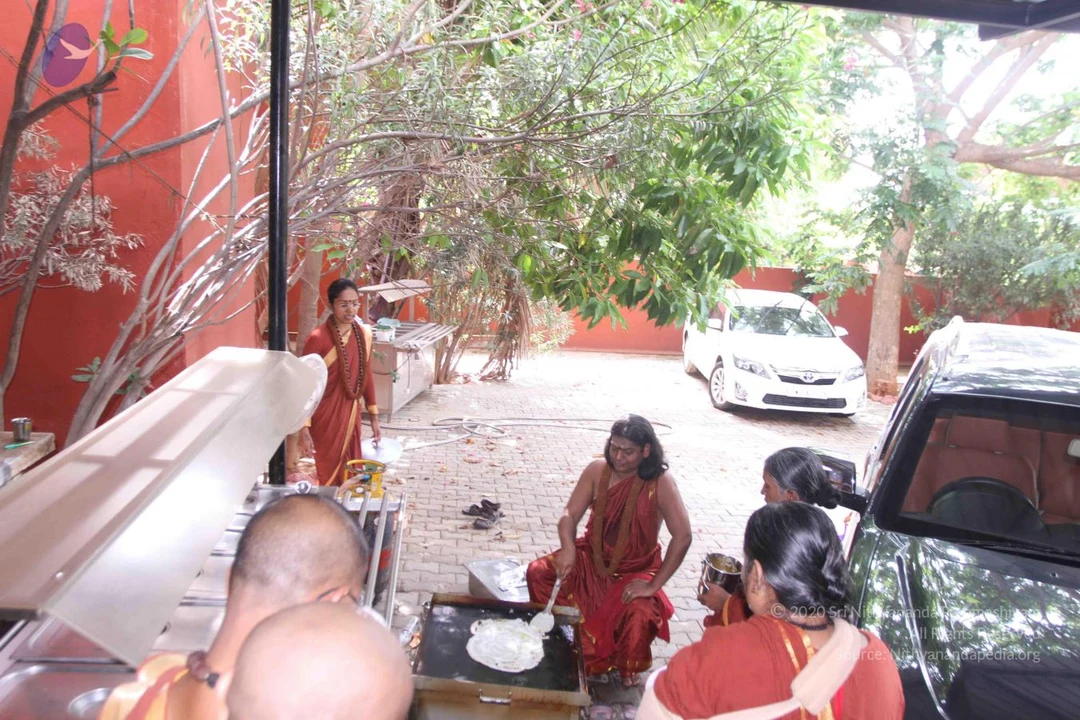
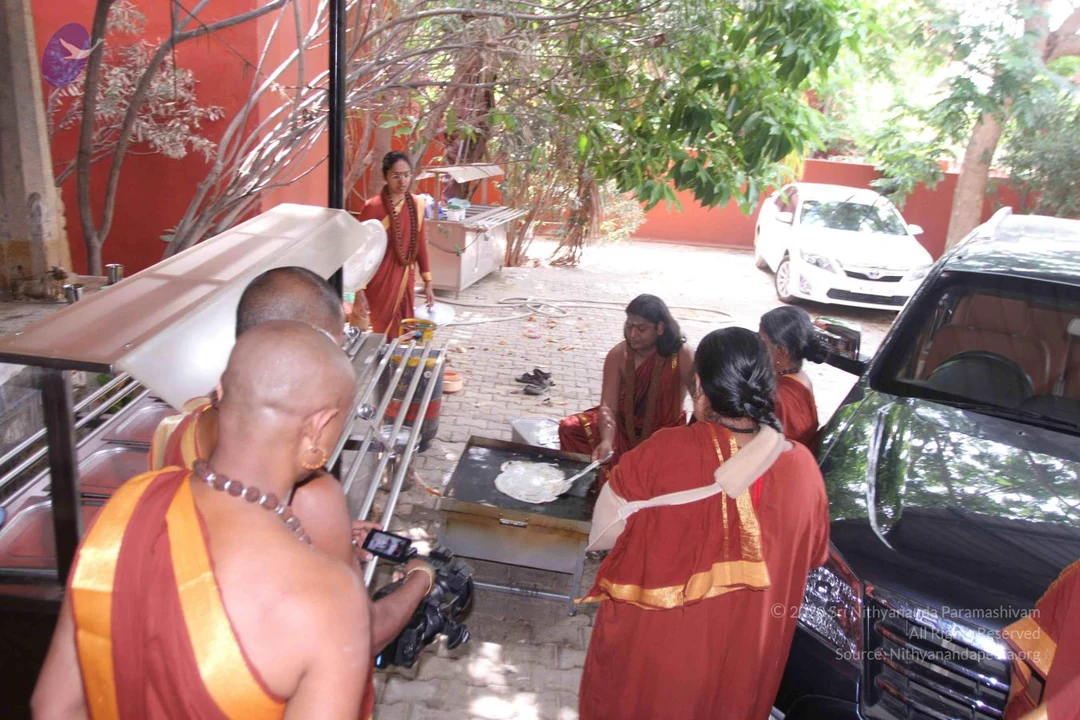
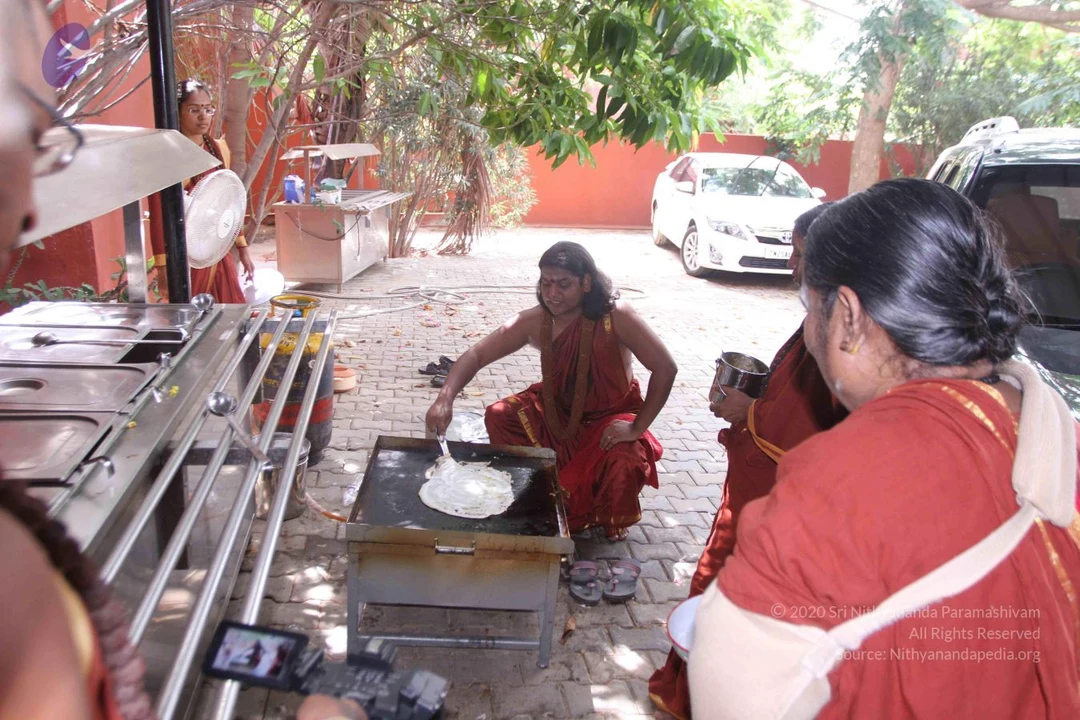
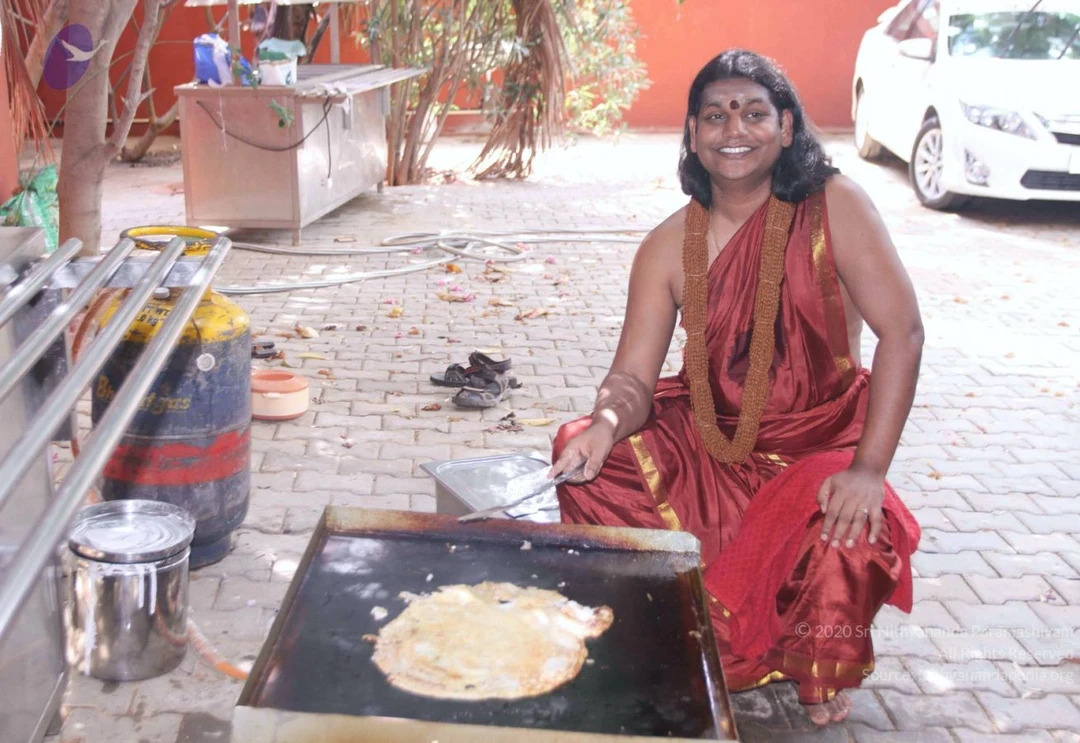
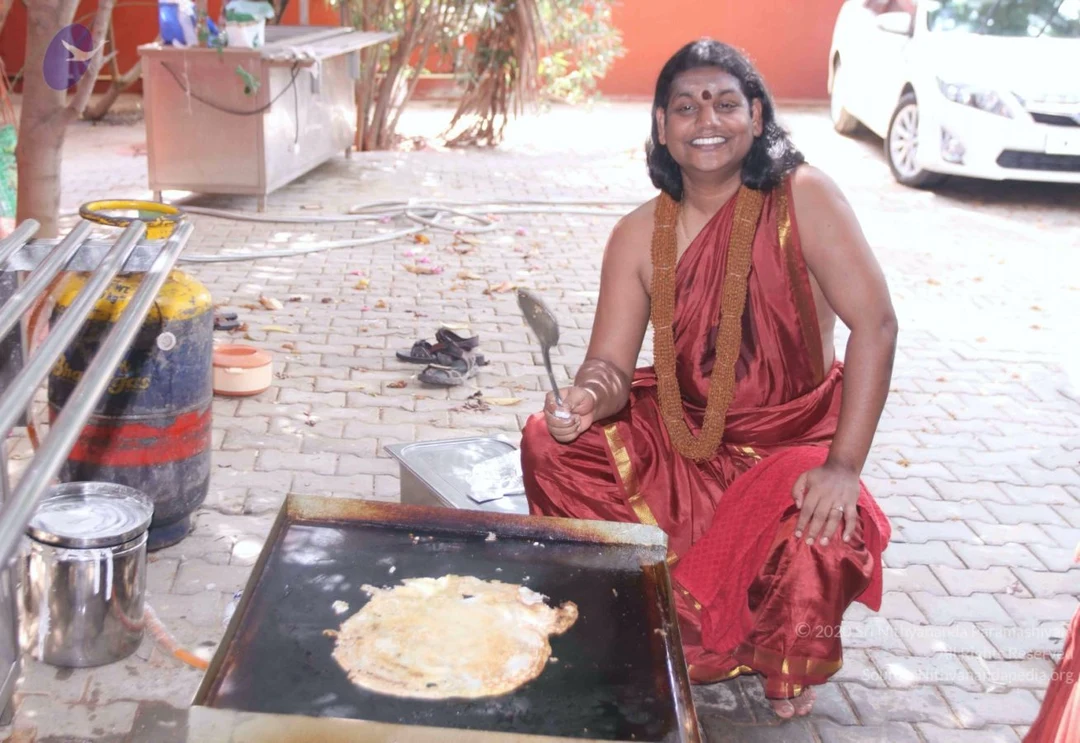
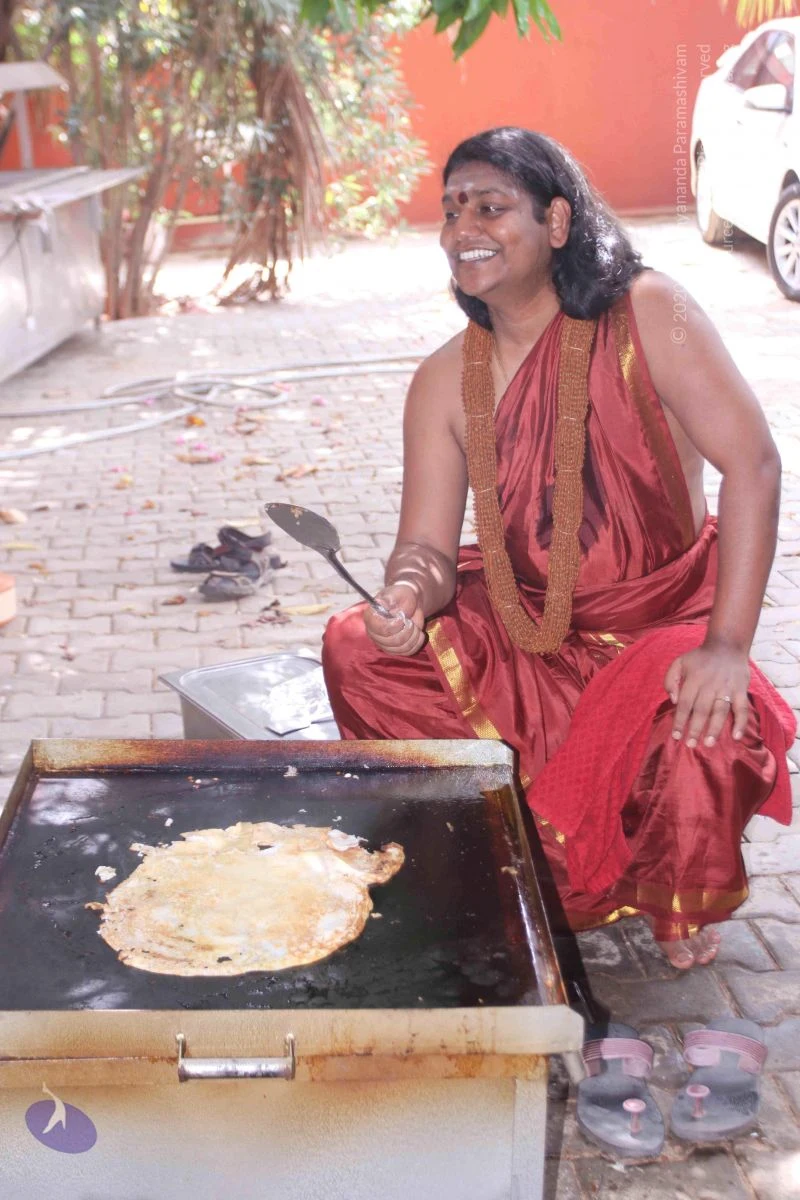
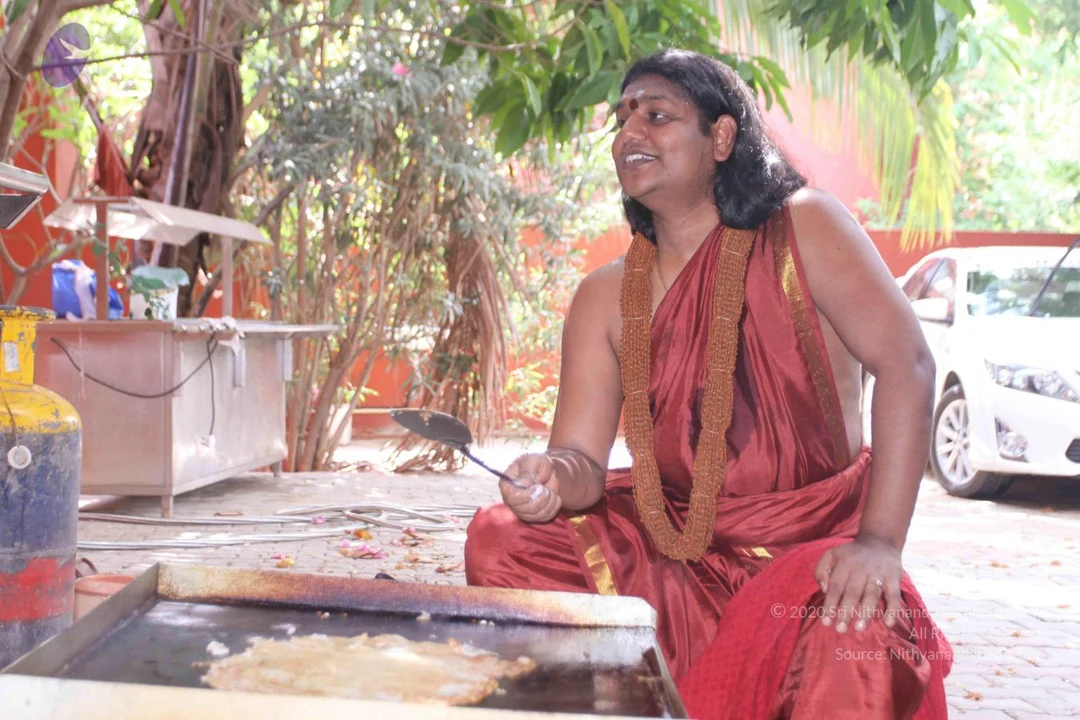
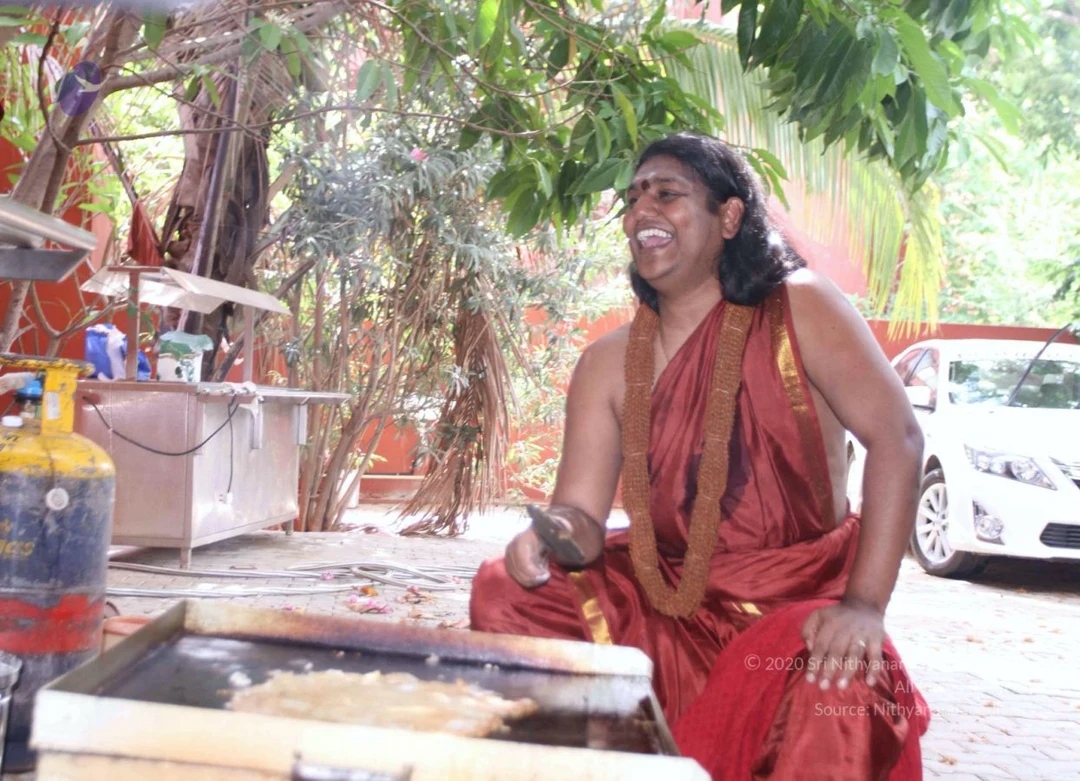
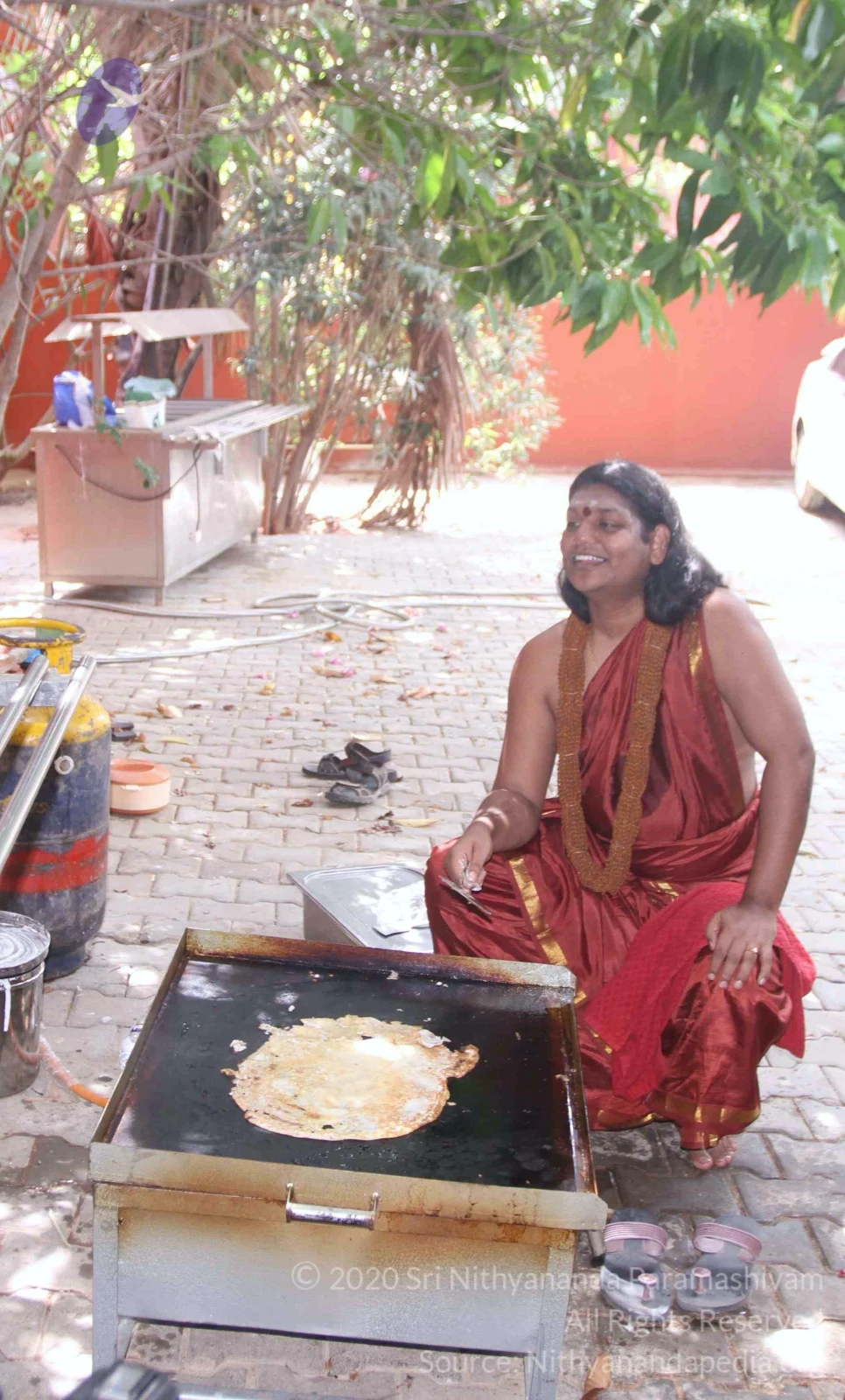
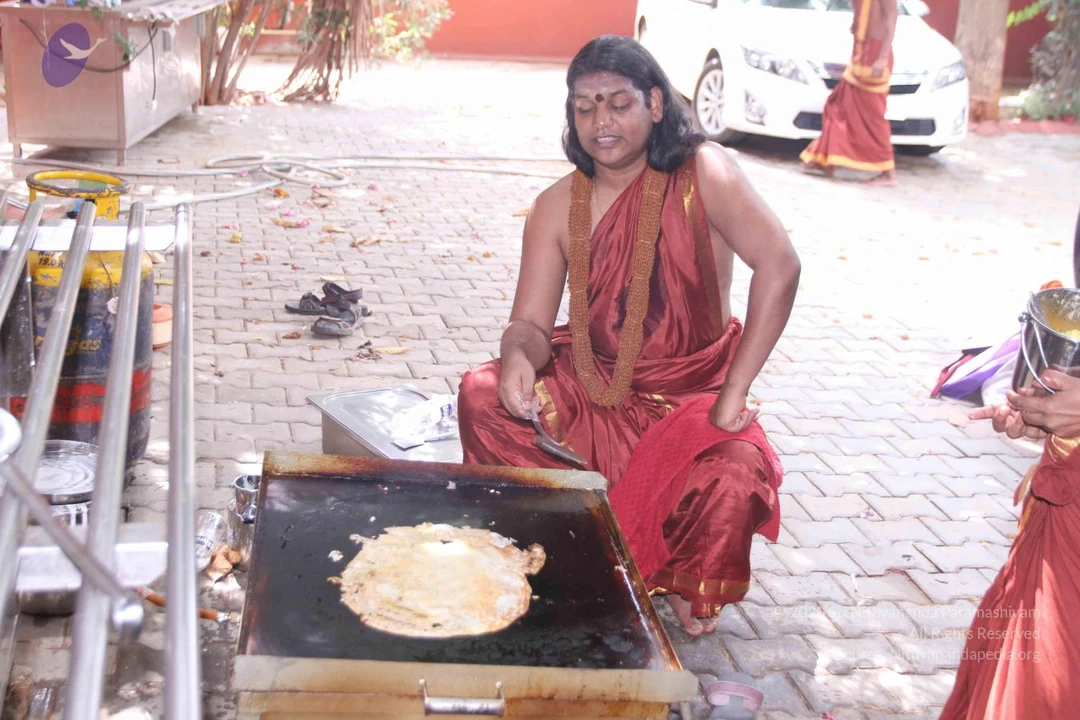
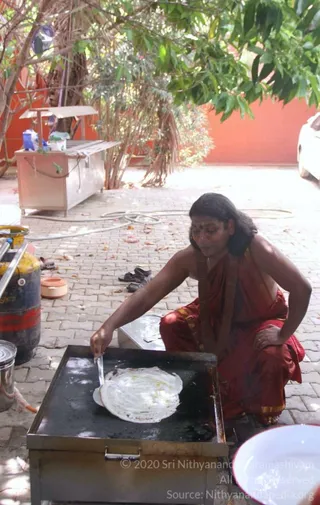
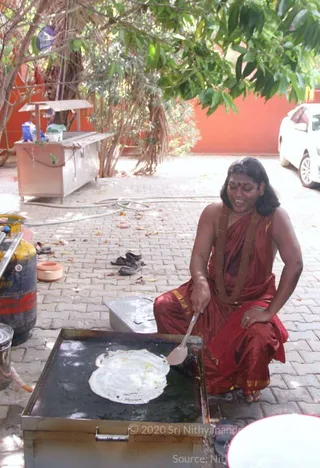
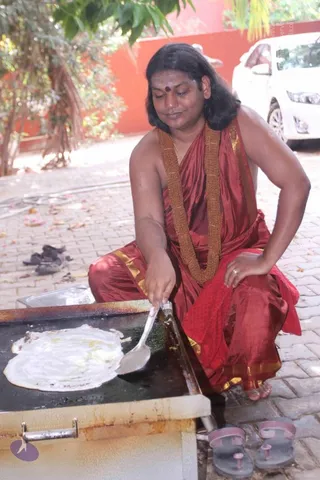
HDH-making-dosas

Photos Of The Day:

FB-photo-of-the-day

Photos from this day

View all 161 photos

Rudra Abhishekam

4 photosSource gallery
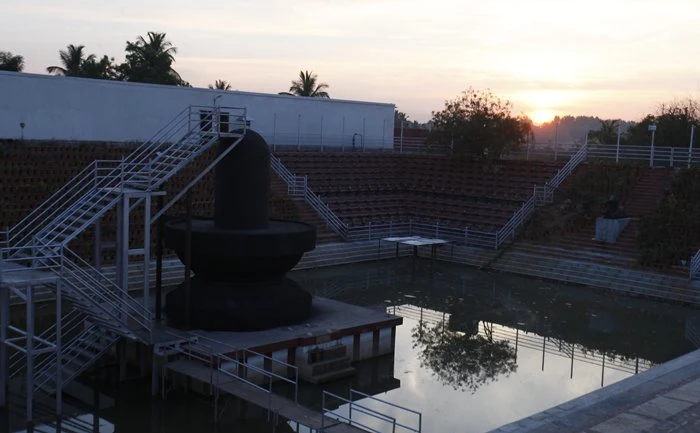
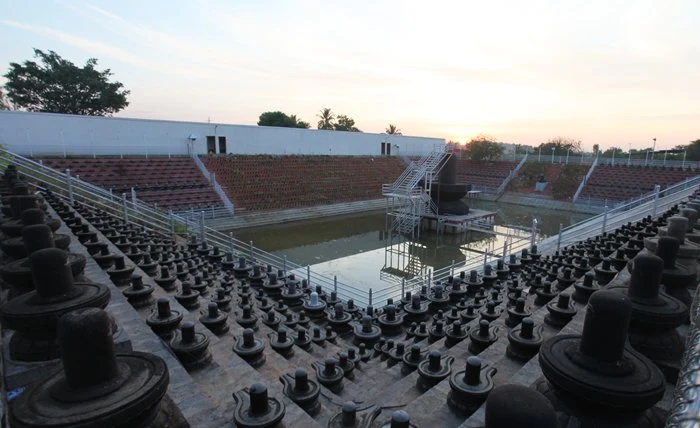
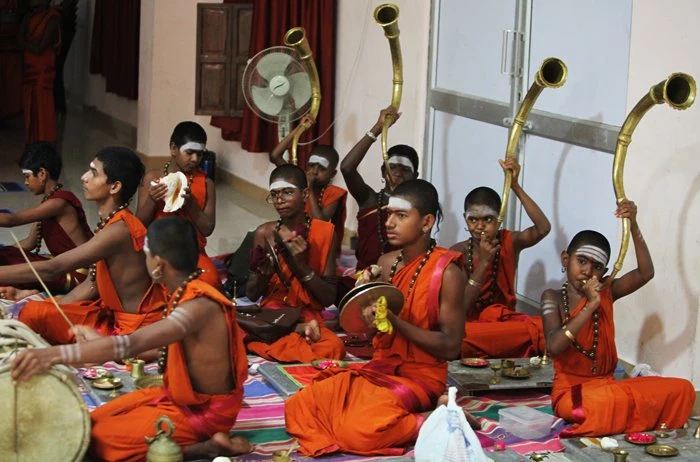
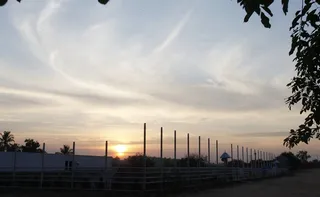
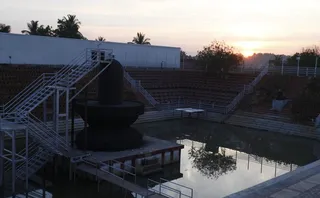
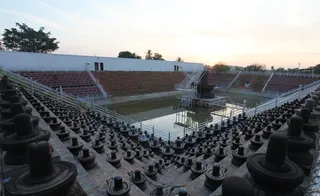
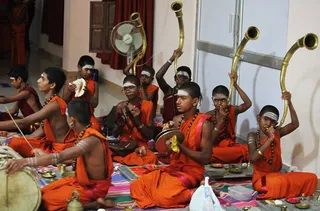
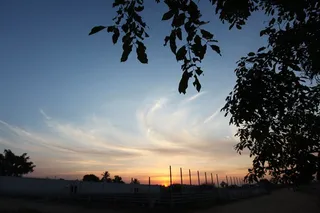
A wide outdoor photograph taken at sunset or sunrise, with the sun low on the horizon glowing orange through thin wispy clouds across a pale blue and cream sky. In the foreground a row of tall metal posts stands beside a long low white building and a fenced area, with a small gazebo-like shelter and a dirt path running alongside. Palm trees and dark silhouetted leaves frame the upper corners. No people are visible in the scene.A large black stone Shivalinga rises from a shallow water-filled tank at sunset, set within a stepped open-air amphitheatre of terraced red-brown seating. Metal railings and staircases frame the linga platform, and a white boundary wall and palm trees sit behind. The sky glows pale orange as the sun sets. No people are visible in the scene.Wide view at dusk of an open-air stepped amphitheatre with rows of black stone Shivalingams lining the tiered steps on both sides of a central water basin. A tall black lingam stands on a platform in the middle of the still water, with a metal staircase rising beside it. Empty red seating tiers sit behind a white perimeter wall under a pale sky with palm trees at left. No people are visible.A photo of a group of young boys seated cross-legged on a striped woven mat in a plain room with a ceiling fan and white walls. They wear orange-saffron cloth wraps, rudraksha bead necklaces and white vertical forehead markings, and many have bare chests and arm bangles. Several raise long curved brass horns, one plays a hand drum at the left, and another holds a small cymbal-like brass disc. Brass bowls, small oil lamps and offerings such as flowers and sweets sit on the floor before them.

Paduka Puja and Nithya Satsang
6 photosSource gallery
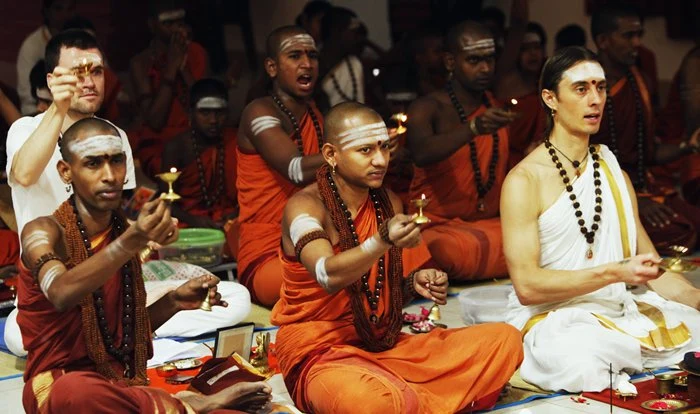
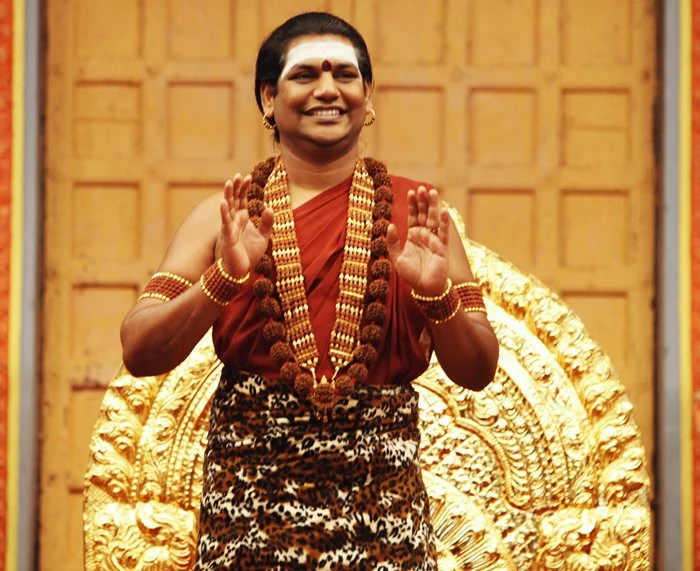
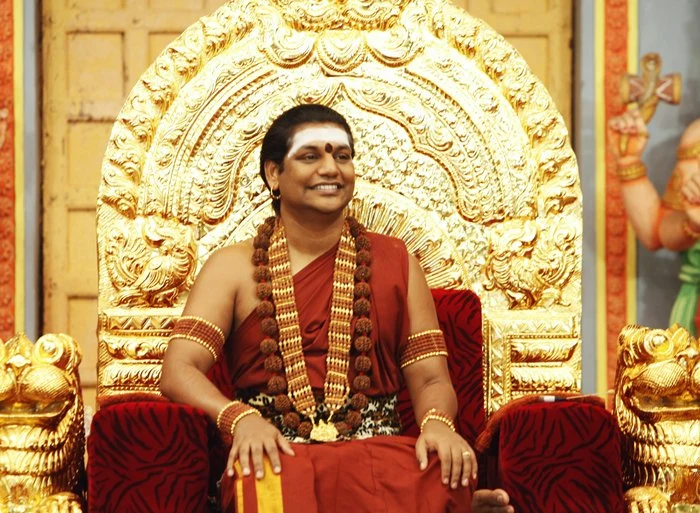
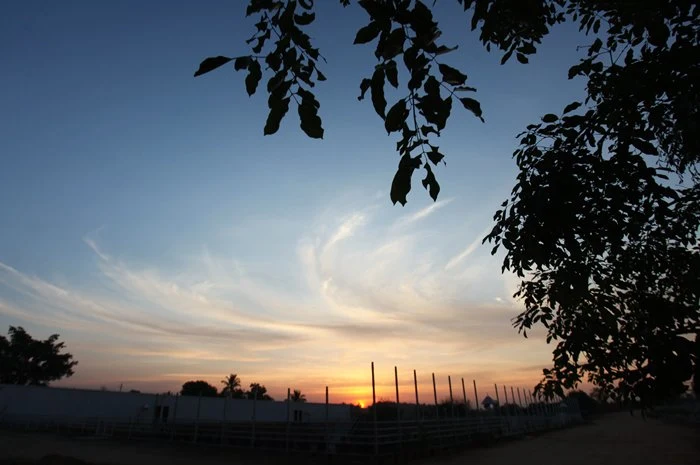
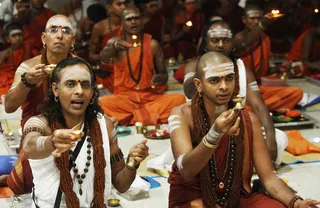
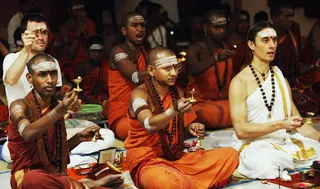
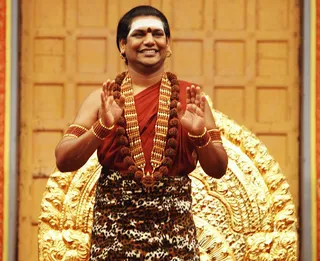
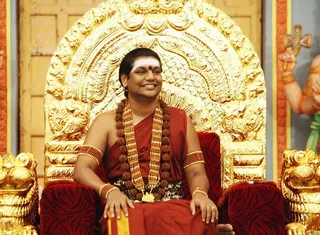
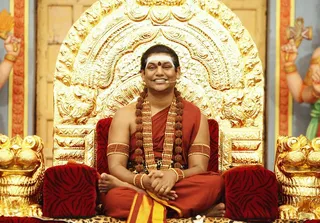
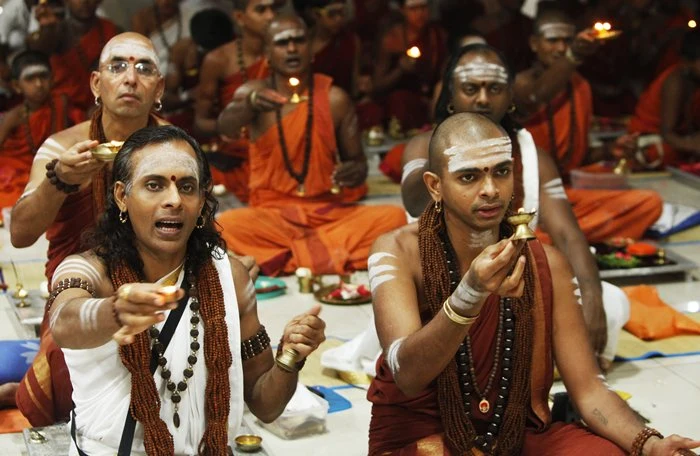
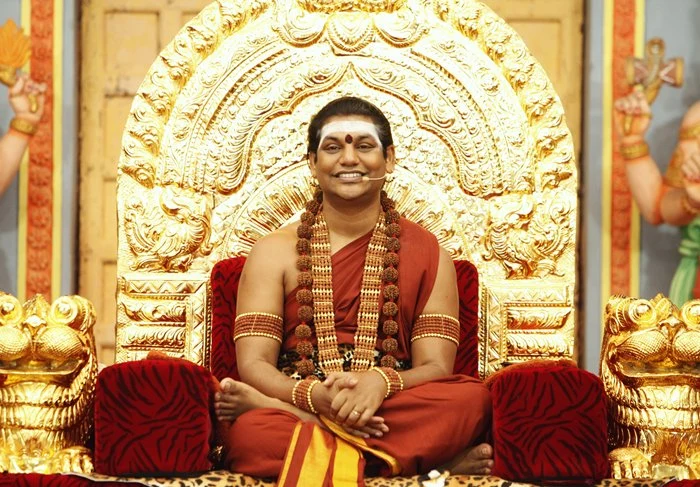
Dozens of men in saffron and orange robes sit closely packed on a floor, performing a ritual with brass oil lamps (diyas) held in their hands. Several seated men in the foreground wear white and red robes with long rudraksha malas, and their foreheads and arms are marked with white ash lines. A man at left wears a white dhoti and shawl with dark beads and a long rudraksha mala. Lit lamps and metal plates with offerings sit on the floor around them. The scene suggests a group puja or aarti.A seated group of ritual participants performs a puja in a hall. Several men in saffron-orange robes wear rudraksha malas and white horizontal tilak markings on their foreheads, holding small brass oil lamps and offering dishes. In the foreground, a shaved-headed man in orange holds a lit lamp, and a man at right wears white dhoti and shawl with a gold border and rudraksha beads, holding a brass lamp. Behind them, more participants in orange sit on mats, and a few devotees in white stand at the back. Brass vessels, flower petals and small offerings lie on the floor mats.A smiling man stands centrally with both palms raised and open at chest height, in a gesture of blessing or address. He wears a dark red-maroon top draped over one shoulder, a leopard-print wrap-skirt, a long multi-strand rudraksha mala with dark brown beads, a ceremonial gold necklace, gold bangles and a white vertical forehead mark with a red bindi. Behind him is an ornate gold-leaf carved arch and a wooden panelled door. Swamiji (probable): long swept-back hair and the rudraksha mala and gold necklace cues match the page's description of an in-person appearance at this satsang.A smiling man sits on an ornate gilded throne with carved lion-face armrests and a red velvet seat. He wears a red-orange sleeveless garment with a long saffron-yellow drape, a multi-strand rudraksha mala with a large gold pendant, and red-orange wrist bands, with a white tilak on his forehead. His hands rest on his knees. Behind him, a painted deity figure with raised arms and red bangles is partly visible. The setting is a satsang-style stage.a person sits cross-legged on an ornate gold throne with a large arched backrest carved with floral and scroll motifs, flanked by gold lion-headed armrests and red tiger-striped cushions. He wears a rust-orange dhoti and shawl, a long rudraksha mala with ceremonial gold beads, and gold armbands, with a red bindi and white forehead markings. He smiles, hands folded in his lap, a headset microphone at his cheek. Gold-painted deity figures with raised arms stand at the edges of the frame.A photograph of a sunset sky at dusk, shot from low angle with dark silhouetted tree branches and leaves framing the upper left and right. Wispy cirrus clouds streak across a deep blue sky that fades to warm orange and yellow near the horizon where the sun sits low. Below, a row of tall thin metal poles stands in front of a white boundary wall, with palm trees and scattered trees on the flat landscape beyond. No people or ritual activity are visible.

nithya-satsang
82 photosSource gallery
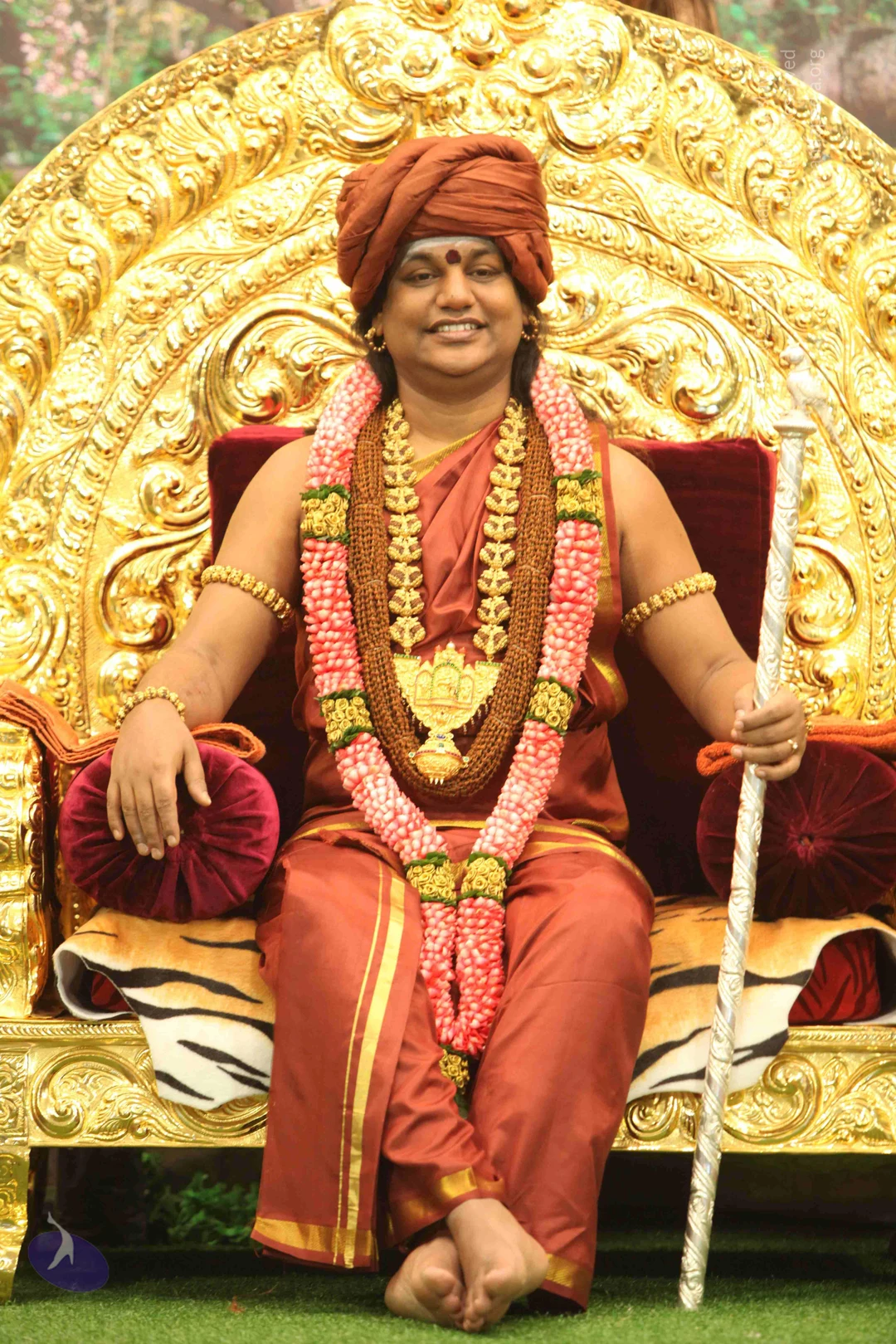
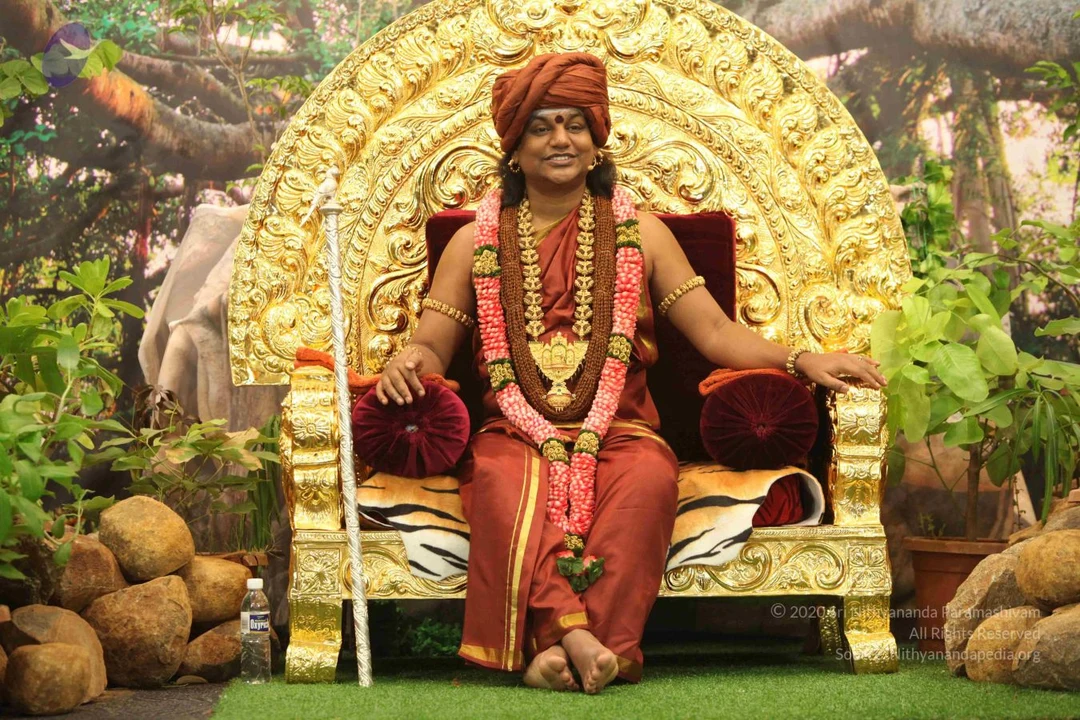
A seated figure on an ornate gilded throne with a red velvet cushion and a tiger-striped throne cloth, smiling. He wears a rust-orange turban with a red bindi and white vibhuti, a rust-orange silk garment with gold borders, a rudraksha mala with gold-toned ornaments and a gold pendant, pink and white flower garlands, gold armlets and bangles, and holds a silver staff in his right hand. a person by visible cues of ceremonial saffron-toned clothing, rudraksha mala and gold adornments, seated as a seated honoured guest on the throne. Green carpet at the base of the throne.A seated man in an ornate gold throne with a carved, scrolled back, draped in a red tiger-striped cushion and velvet pillows. He wears a rust-orange turban with a red mark on his forehead, saffron-red silk robes with gold borders, a large rudraksha mala, a gold ceremonial pendant, gold armlets and bangles, and a pink-and-white flower garland. He holds a silver staff and smiles while sitting with crossed feet on green carpet. The page excerpt is about the Nithya Satsang of 22 April 2015 and Isha Upanishad teaching.A seated man on an ornate gold throne with a large golden arch carved in scrolling floral patterns, set against a painted forest backdrop. He wears a rust-orange turban, a rust-orange shawl over a red-orange garment, a rudraksha mala with gold beads, a long gold necklace with a gold pendant, pink and white flower garlands with green leaves, gold armlets and gold bangles. A silver staff rests beside the throne, and he rests his hands on red velvet cushions. Swamiji (probable): the orange turban, rudraksha mala, ornate gold ceremonial jewellery and throne cues match the page's stated Swamiji presence.A seated man in an ornate gold throne with a large embossed gold backrest and red velvet cushions. He wears a rust-orange turban, an orange-red shawl over orange robes, a rudraksha mala with a gold pendant, multiple gold necklaces, gold bangles and a long pink-and-white flower garland. He holds a silver staff and has a red bindi on his forehead. Swamiji (probable): the seated figure has a turban, orange-red robes, rudraksha mala and ceremonial gold necklaces, consistent with the page's reference to Swamiji at this event. No other people are visible.A seated man in rust-orange silk clothing sits on an ornate gold throne with a red velvet back and cushions, draped with a tiger-stripe cloth. He wears an orange turban, a red bindi, and a long pink-and-white flower garland with gold-tone ornaments. Multiple brown rudraksha mala strands and a gold pendant hang on his chest, and gold bangles circle his wrists and upper arms. He holds a tall silver staff upright beside the throne, and his bare feet rest on green carpet. The image is a photograph, with no other people visible. Swamiji (probable): the person shows a turban, rudraksha malas and ceremonial gold necklaces on a throne, consistent with the page's claim.A seated man in rust-orange and maroon robes sits on an ornate gold throne with a red velvet cushion and tiger-striped throw. He wears a rust-orange turban with a red tilak, a rudraksha mala with a large gold pendant, layered garlands of pink and white flowers, gold armbands and bangles, and holds a silver staff upright beside him. Green carpet lies below. A small logo appears in the lower left corner. Swamiji (probable): the person shows long hair beneath the turban, a saffron turban, ornate gold ceremonial necklaces and rudraksha malas, but the appearance is not certain enough to confirm identity.

final-blessings-HDH-deities

33 photosSource gallery
A seated figure on an ornate gold throne with carved scrollwork raises one hand in a blessing gesture while smiling. He wears a rust-red turban with a small red bindi, rust-red robes, a long rudraksha mala with a gold pendant, and a pink and white flower garland. A gold bangle and gold bracelets adorn his arms, and his feet are bare on a patterned cushion. Red velvet cushions and green foliage surround the throne.A seated man in a rust-red turban and matching rust-red robe sits on an ornate gold throne with a carved gold backrest. He waves his right hand in greeting and smiles, wearing layered gold necklaces, a rudraksha mala, a pink and green flower garland, gold bangles and a red bindi. Red velvet cushions and a silver staff rest beside the throne, with green foliage at the right edge. Swamiji (probable): the rust-red turban, rudraksha mala, gold necklaces and flower garland are the cues for the seated figure, who is shown in a satsang-style seated address.A smiling man with long dark hair and a rust-red turban sits cross-legged on an ornate gold throne with a red velvet cushion, raising his right hand in a blessing gesture. He wears a rust-orange robe, a long rudraksha mala, a gold ceremonial necklace with a central pendant, a pink and white flower garland, and gold armlets. A silver staff rests beside the throne, and a tiger-skin rug covers the seat base. Behind him is a gold-carved backdrop with a painted forest scene. a person is seated on the throne in a ceremonial setting.A seated figure in a rust-red turban and matching rust-red robes sits cross-legged on a tiger-skin rug in front of an ornate gold throne with floral carving. He wears a rudraksha mala, a heavy gold necklace with a gold pendant, gold bangles and armlets, and pink-and-white flower garlands with green-gold bead accents. He raises one hand in blessing and smiles. A small bindi is visible on his forehead. Red flower petals rest at the base of the garland.A seated figure in rust-red saffron robes and a matching turban, with a red bindi on the forehead, raises one hand in blessing against an ornate gilded throne backrest. Multiple strands of pink and white flower garlands with gold-embroidered borders hang across the chest, along with a long rudraksha mala and gold ceremonial necklaces with a large gold pendant. Gold bangles adorn the wrists and gold ornaments decorate the arms. The figure sits cross-legged on a tiger-striped cloth over a gold platform with maroon cushions. The figure has long swept-back hair, ornate gold jewelry, saffron clothing and a rudraksha mala, matching the page's Swamiji reference, so this is a probable appearance-based candidate seated in a ceremonial setting. Only one physical person is visible.A seated figure in a rust-red turban and matching saffron-red robe sits cross-legged on a tiger-skin rug before an ornate gold-leaf throne with a red velvet seat. He raises his right hand in blessing, wearing a long rudraksha mala with gold ceremonial pendant, a layered gold necklace, a pink and green flower garland, gold bangles and an armlet. A small red bindi marks his forehead. Two red velvet cushions flank him. Swamiji (probable) is shown in this scene; the figure has long hair under the turban and distinctive gold and rudraksha adornments.

kalpataru-darshan

17 photosSource gallery
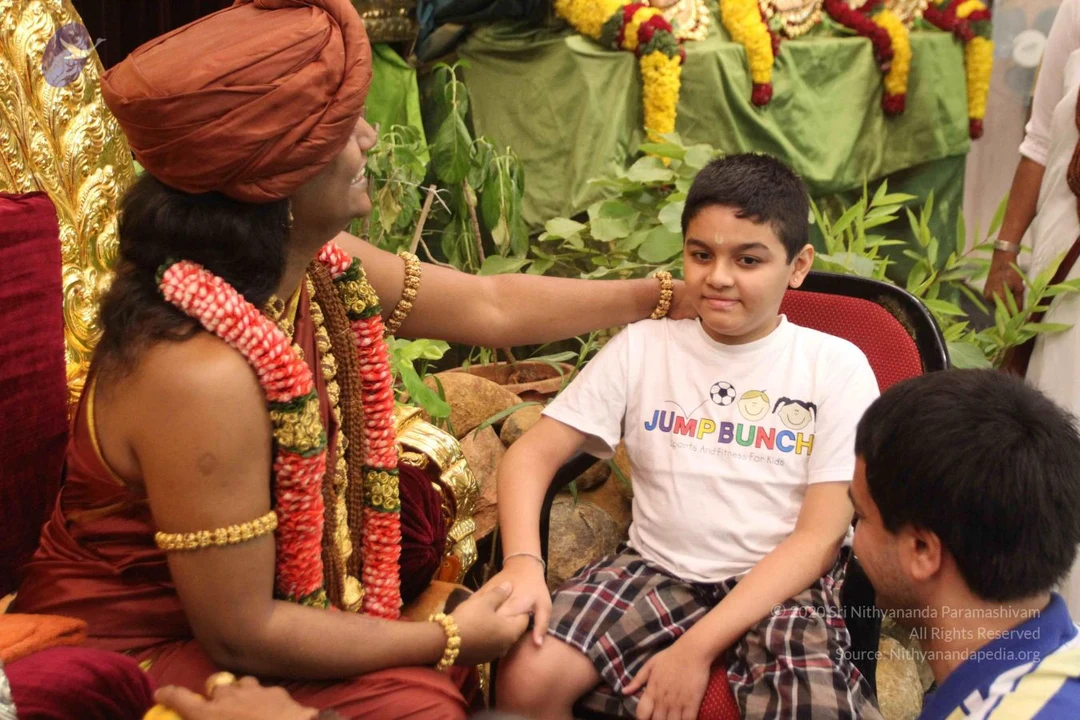
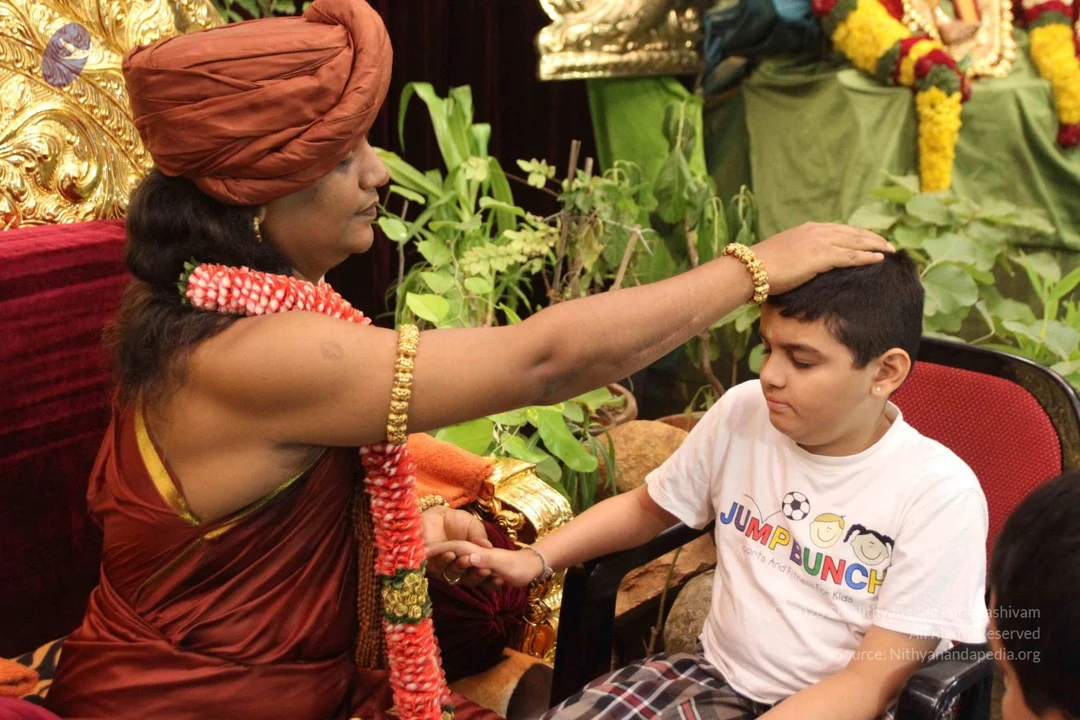
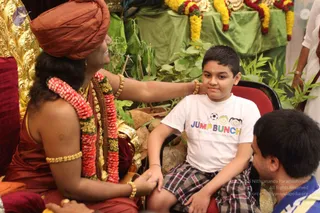
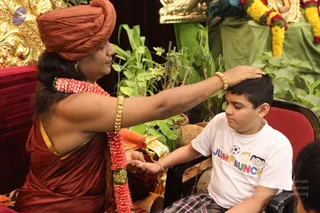
Photo from a satsang on a golden throne. A seated figure in a rust-orange turban, orange robe, red and white garland and gold necklaces rests one hand on a smiling boy's shoulder while holding his hand. The boy sits on a red-cushioned chair, wearing a white T-shirt printed JUMP BUNCH with a football motif and plaid shorts. Behind them are green cloth draping, potted leafy plants and marigold garlands, and a standing person in white on the right. A man in a blue shirt is partly visible at the lower right. Swamiji (probable): the seated figure has a turban and orange robes with gold ornaments and a garland, matching the page's satsang setting.A photograph of a seated saffron-robed figure wearing a rust-orange turban and a red-and-white flower garland, resting one hand on the head of a seated boy in a white JUMP BUNCH t-shirt and plaid shorts. The robed figure's other hand holds the boy's hand. Behind them are a gold throne-like chair, green foliage, and a green-draped altar with yellow and white marigold garlands. The boy looks down with eyes closed, receiving a blessing. A candidate matching the page's Swamiji reference is visible, with a turban, saffron robes and a rudraksha-style garland, so the identification is appearance-based and probable. A second partly visible person appears at the lower right edge.A photograph of a seated figure in an orange-red turban and orange-red robe with red-and-white flower garlands, gold bangles and a gold necklace, holding a long thin stick toward a small heap of rocks. A man in a grey long-sleeved top and dark lungi bends forward, holding a yellow fruit or lime over the rocks. Potted green plants and a gold-carved throne frame the scene, and a garlanded deity murti stands in the background behind an orange-clad attendant. Two physical people are visible. Identity cannot be confirmed from appearance; the seated figure is described by role and clothing only.A photograph of a ritual scene at a temple-like setting. A figure seated on a golden throne-like seat wears an orange-red turban, a red-orange cloth wrap, gold armlets and bangles, and layered red-and-white flower garlands. The seated figure smiles and handles an offering, with a golden vessel and rocks in front. A young man in a light blue striped shirt with an orange lanyard kneels beside, holding an orange fruit in his hands. Potted green leaves, plantain-like foliage, citrus fruits and a green draped altar with yellow and red marigold garlands and a gold deity image are behind them. A standing person in white clothing is partly visible at the right edge.A photograph of a seated figure in a rust-orange turban and rust-orange robes, wearing layered red and white flower garlands, gold armlets and a gold waist ornament, holding a bright orange fruit. Beside him, a young man in a light blue striped shirt with an orange lanyard kneels on a stone platform, offering a fruit of his own. Behind them stand green leafy plants, a gold-embroidered throne and a green draped backdrop with yellow and red marigold garlands. The seated figure has distinctive ceremonial adornments and a swept-back styling consistent with the page's description of the event, but his appearance is not sufficiently distinctive to confirm identity. Two people are visible.A seated figure in an orange-red turban, rust-coloured robe, red and white beaded garland and gold armlets sits on a red-cushioned throne and hands a green lime to a man in a white shirt with a red beaded necklace. Between them is a ring of rounded grey stones on green turf, with leafy plants and a kalasha-style offering area behind. Oranges and limes are piled in the foreground, and a gold-decorated deity murti with flower garlands stands in the background. The scene resembles a ritual offering or prasad exchange.
HDH-making-dosas
18 photosSource gallery
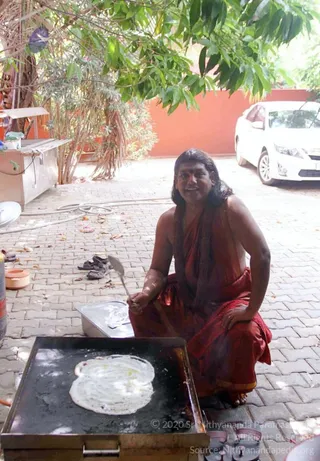
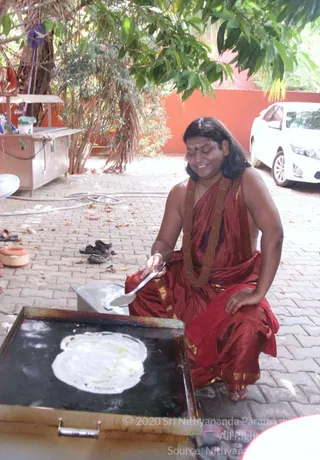
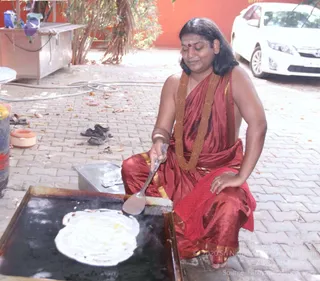
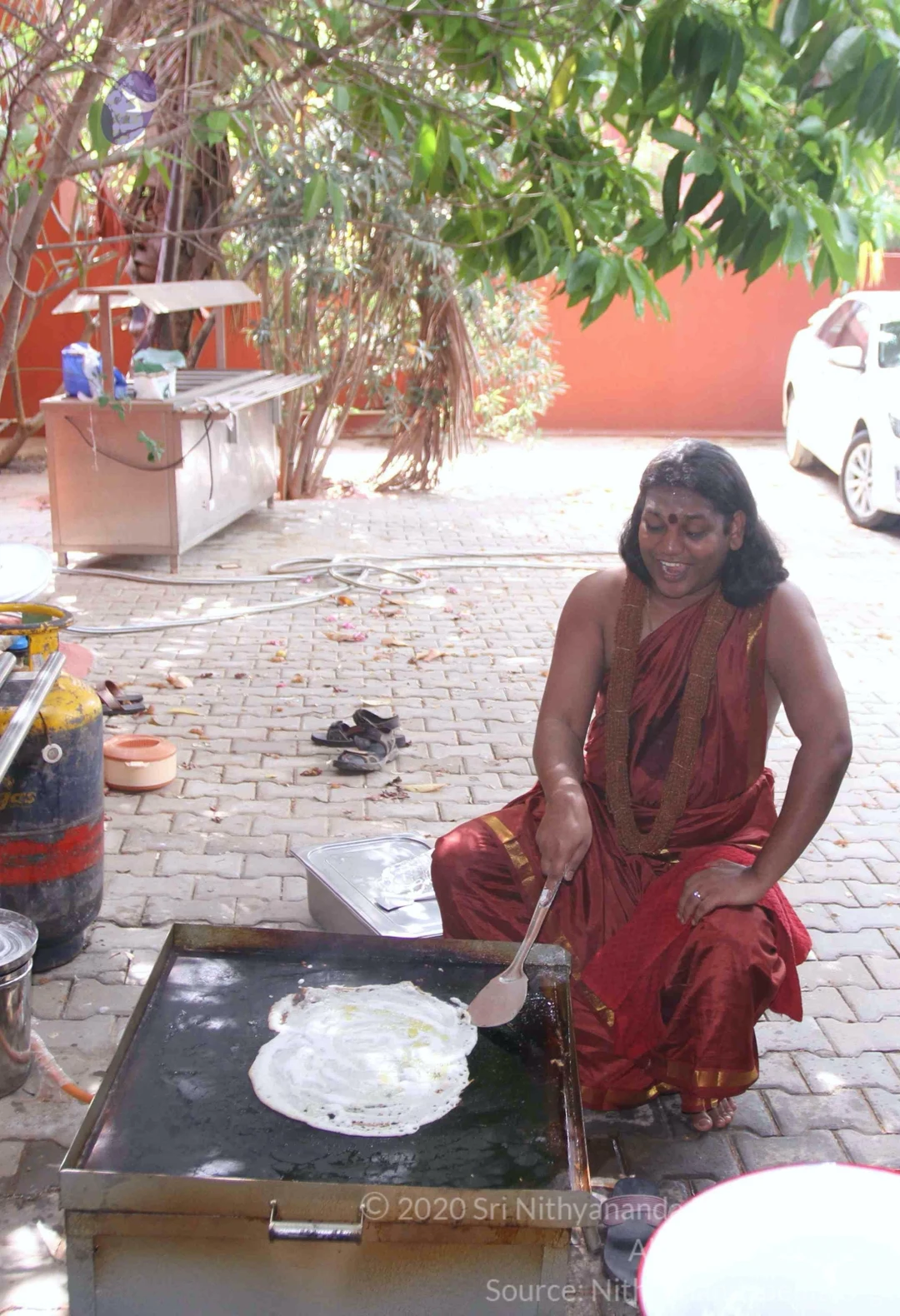
A photograph of a man with long dark hair wearing a rust-red saffron-toned garment and a rudraksha-style mala around his neck, kneeling on a paved courtyard while cooking a thin dosa on a flat griddle with a metal spatula. A small steel tray of batter sits beside the griddle, with sandals and scattered flower petals on the pavement. A white car is parked near an orange wall and green trees. The man appears to be the subject of the photo, with long hair, a rudraksha mala, and saffron-red clothing, though identity is uncertain from appearance alone. Only one physical person is visible.A woman kneels on a paved courtyard beside a large flat griddle, spreading a white batter dosa with a steel spatula. She wears a deep red silk sari with gold borders, a long beaded brown rudraksha-style necklace, and a red bindi, and smiles while cooking. Behind her are a white car, potted green plants, a small serving cart, and a sandal pair on the ground. The scene suggests ashram kitchen service in an outdoor setting.A person with long dark hair and a red bindi sits cross-legged outdoors on a paved brick courtyard, cooking a thin dosa on a large flat black griddle. They wear a deep red silk garment with gold borders and a wide necklace of beads, holding a metal spatula with the right hand. Behind them are a white car, an orange wall and greenery, and sandals rest on the bricks. A kalasha-like container and a steel tray are nearby. The scene is a single person preparing food, with a water-hose and scattered petals on the ground.A photo of a person kneeling outdoors on a paved courtyard, spreading a thin white dosa batter with a flat spatula on a large flat griddle. The person wears a rust-red garment draped over the shoulders with a gold-bordered end, and a small red bindi on the forehead, with long dark hair swept back. Behind them stand a stainless steel prep counter, a yellow gas cylinder, a stainless steel pot, scattered flower petals and leaves, and a red wall with trees above. A large white bowl sits at the lower right edge.A woman in a deep red silk sari with gold border sits crouched on the paved courtyard, smiling as she spreads a thin white dosa batter on a large flat iron griddle with a long metal spatula. She wears a dark rudraksha-style brown bead garland and a red bindi on her forehead, and her bare feet rest on the stones. Behind her a stainless steel food counter stands under leafy trees beside an orange wall, a white car is parked at right, and a gas cylinder, sandals and scattered flower petals lie on the ground.A person with long dark hair and a red bindi kneels on a paved courtyard, cooking a thin dosa on a flat iron griddle with a metal spatula. They wear a deep red silk garment with gold borders and a long beaded brown-gold garland around the neck. A red towel rests on the knee, a white car and leafy trees stand behind, and pairs of slippers lie on the pavement. The scene suggests ashram kitchen service.

FB-photo-of-the-day

1 photoSource gallery