Skip to content
Thursday

23 April 2015

Re-Strategize Your Life, Re-Invent Yourself

Dated photos
300
Source pages
1
Media
12
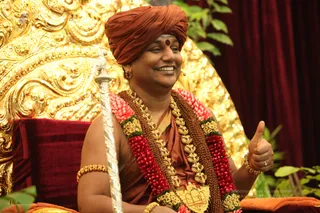
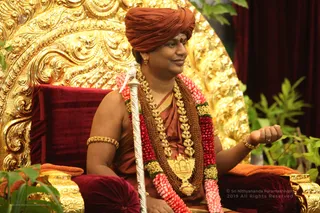
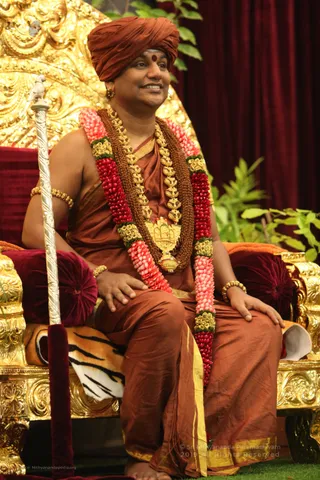
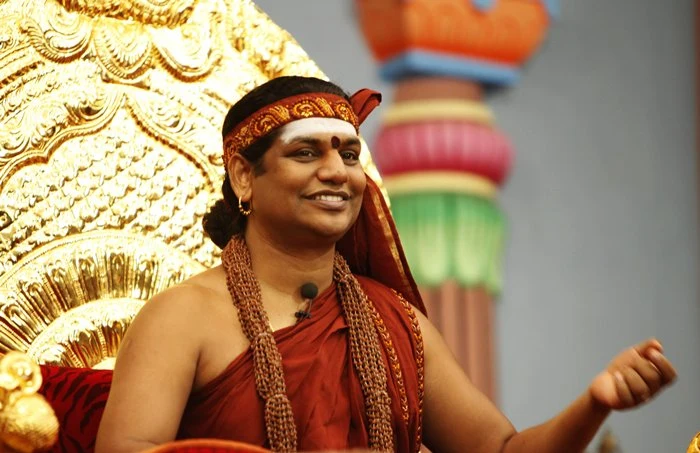
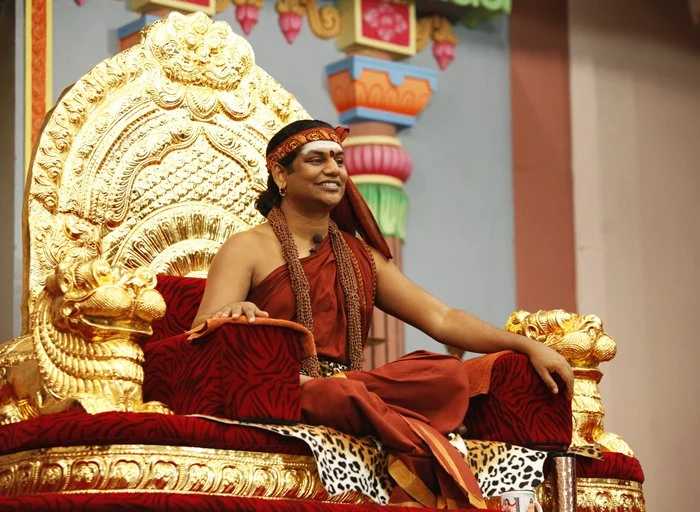
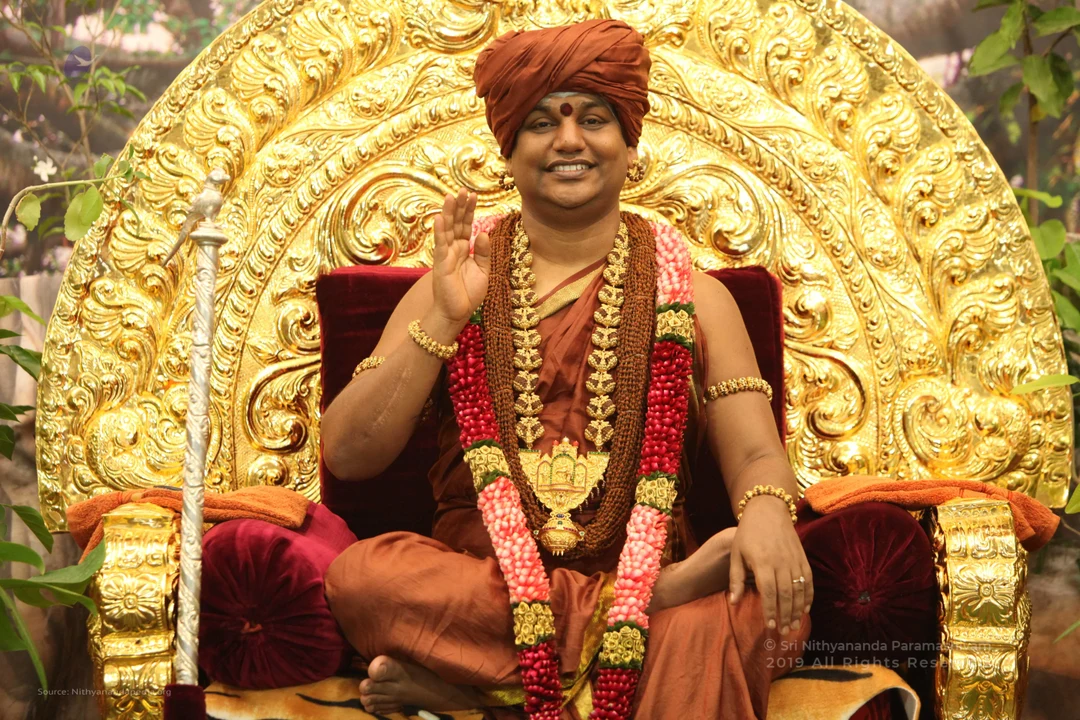
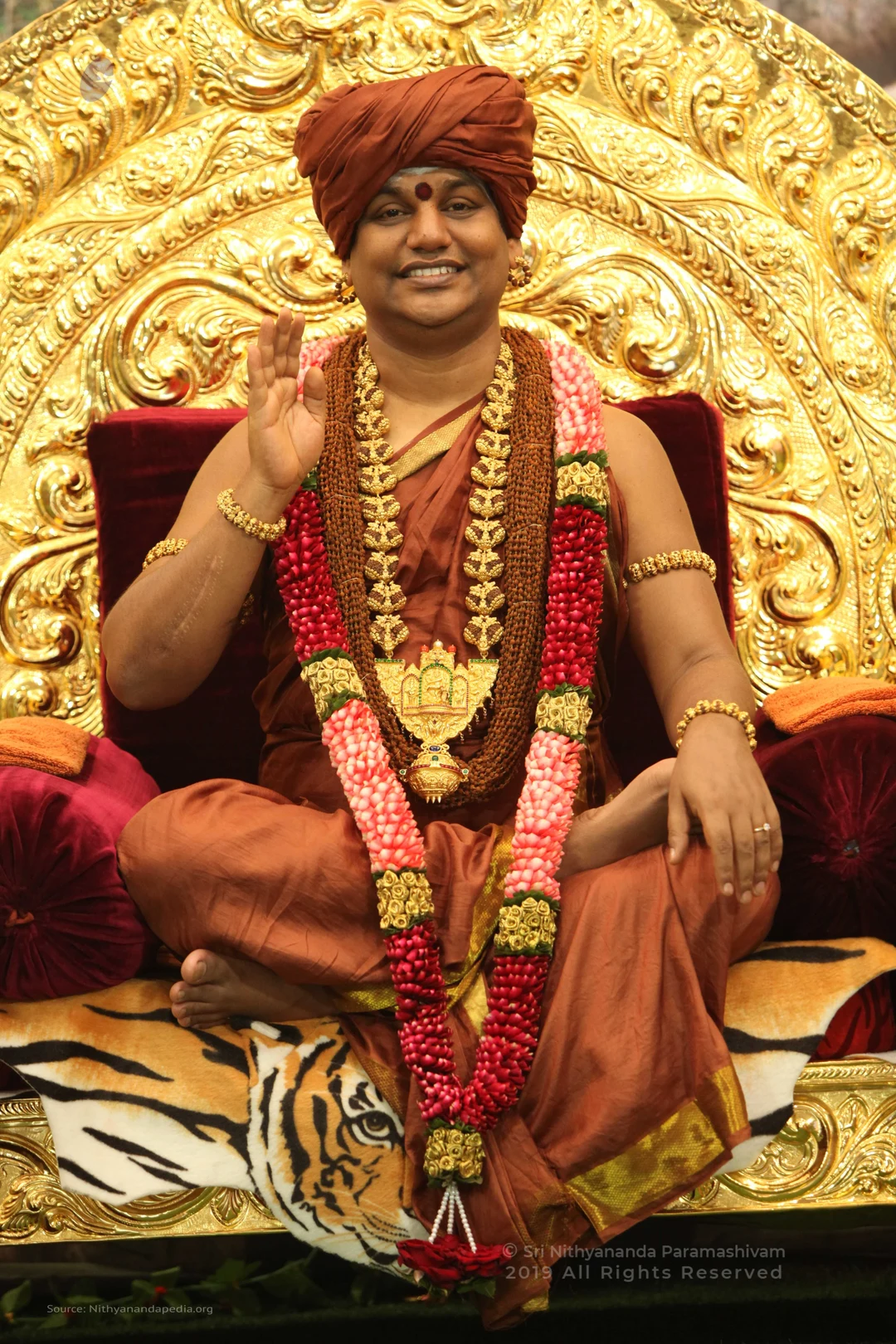
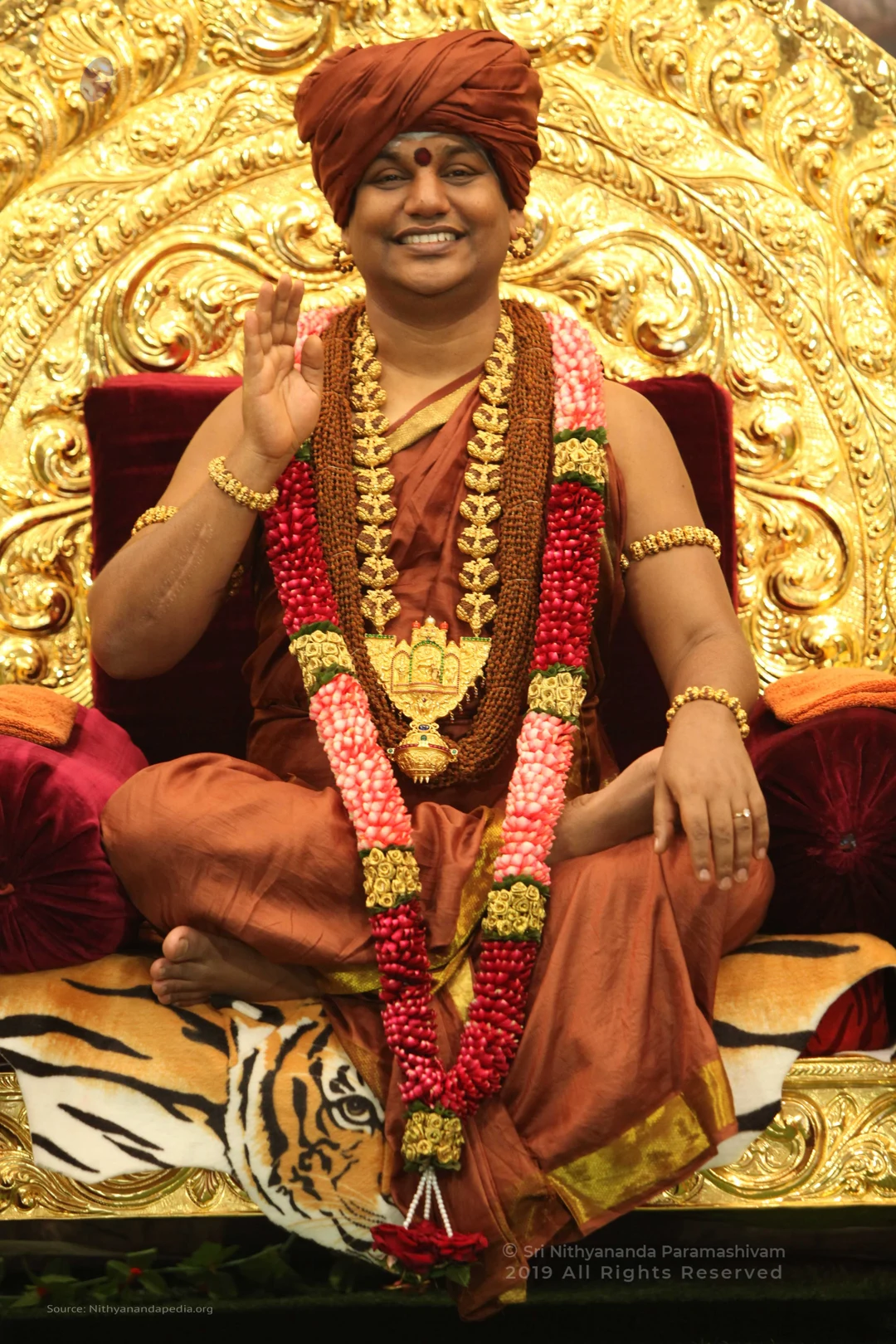
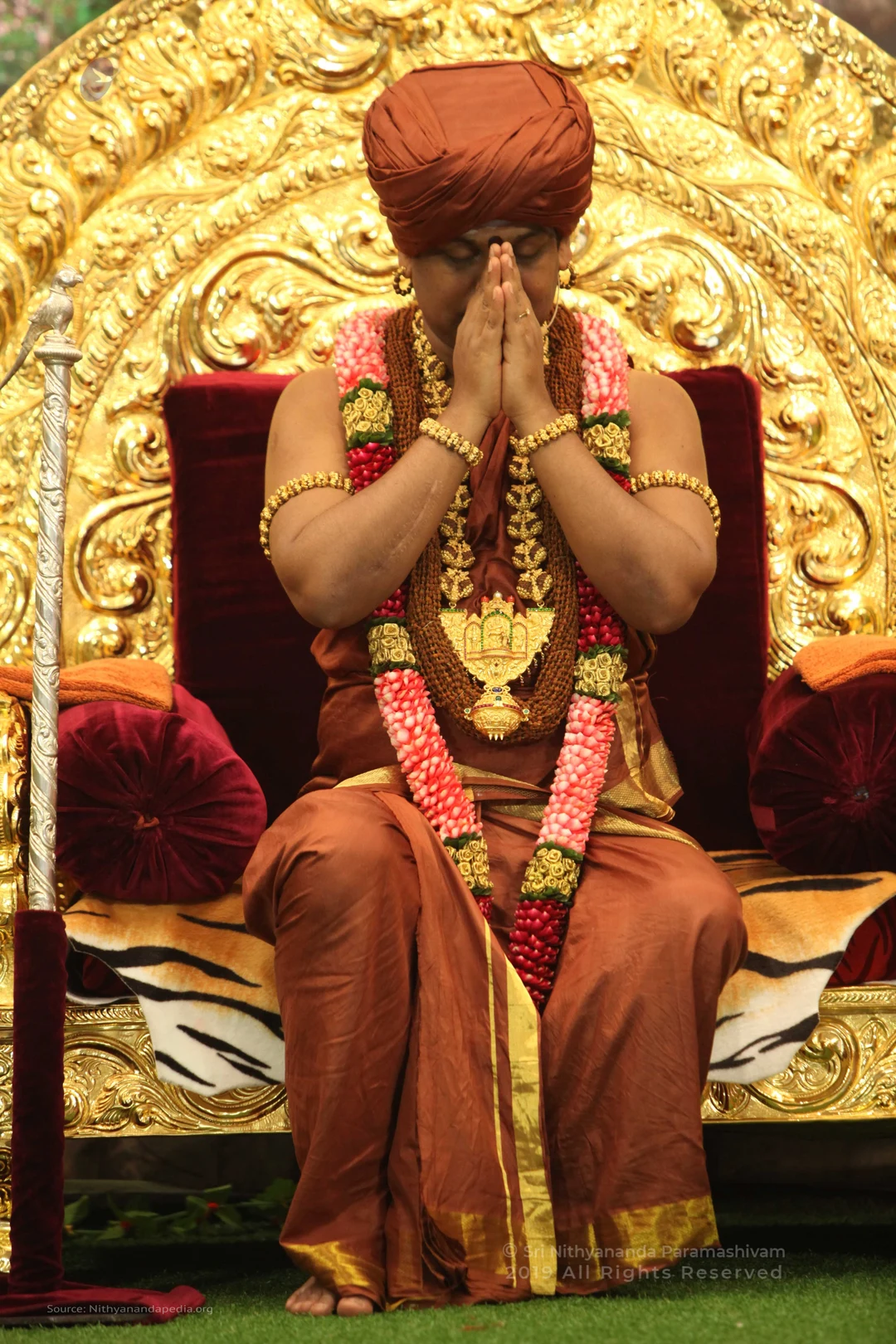
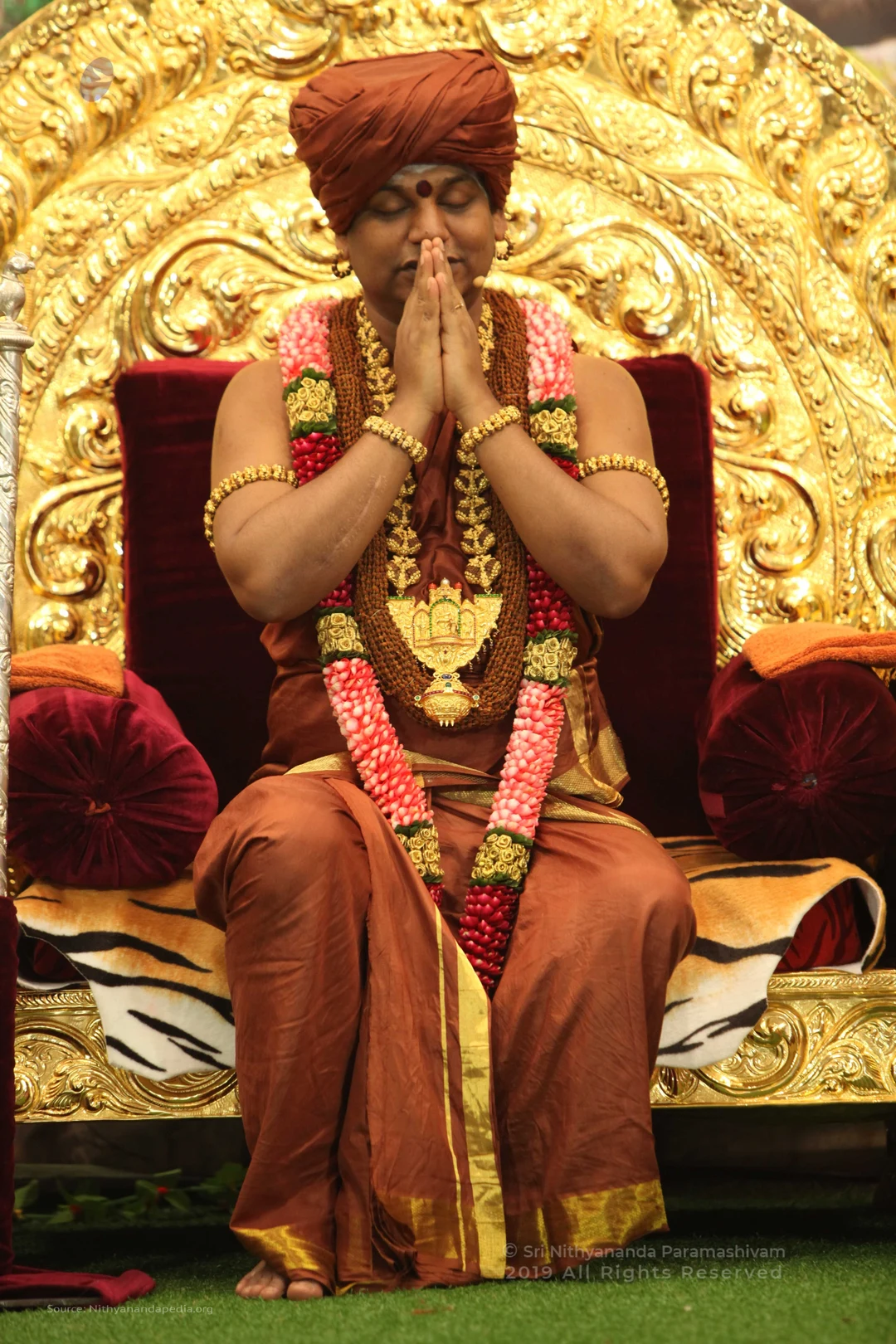
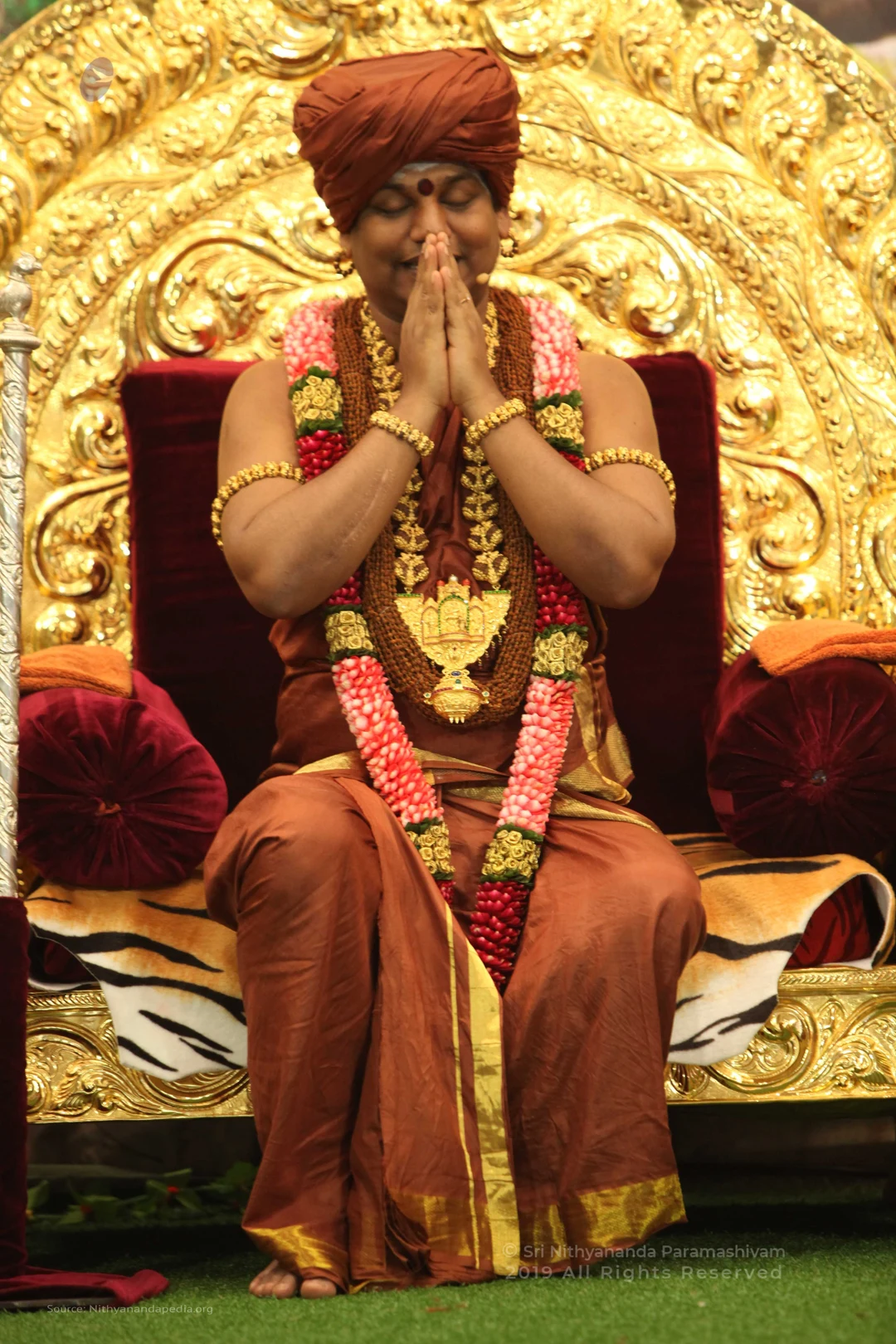
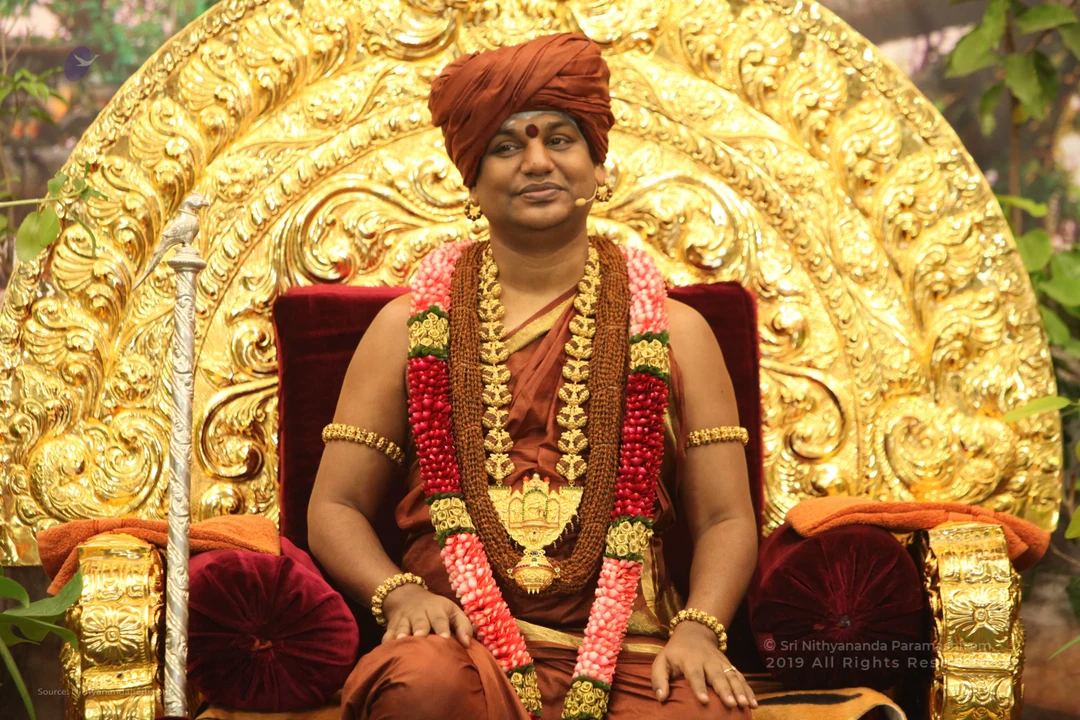
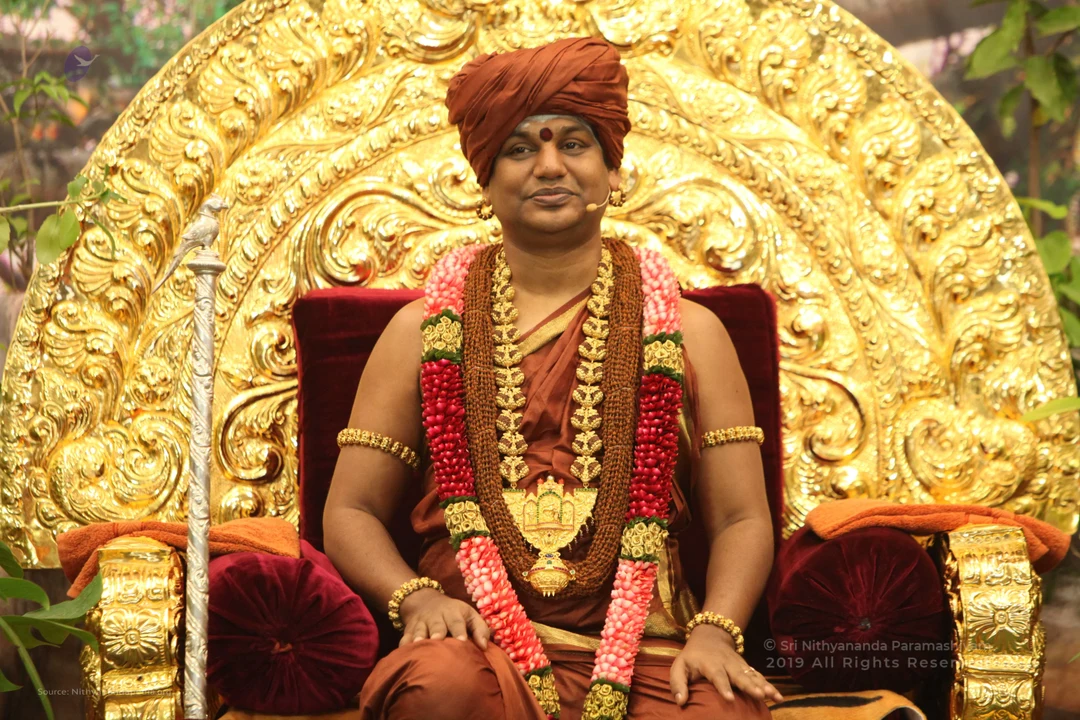
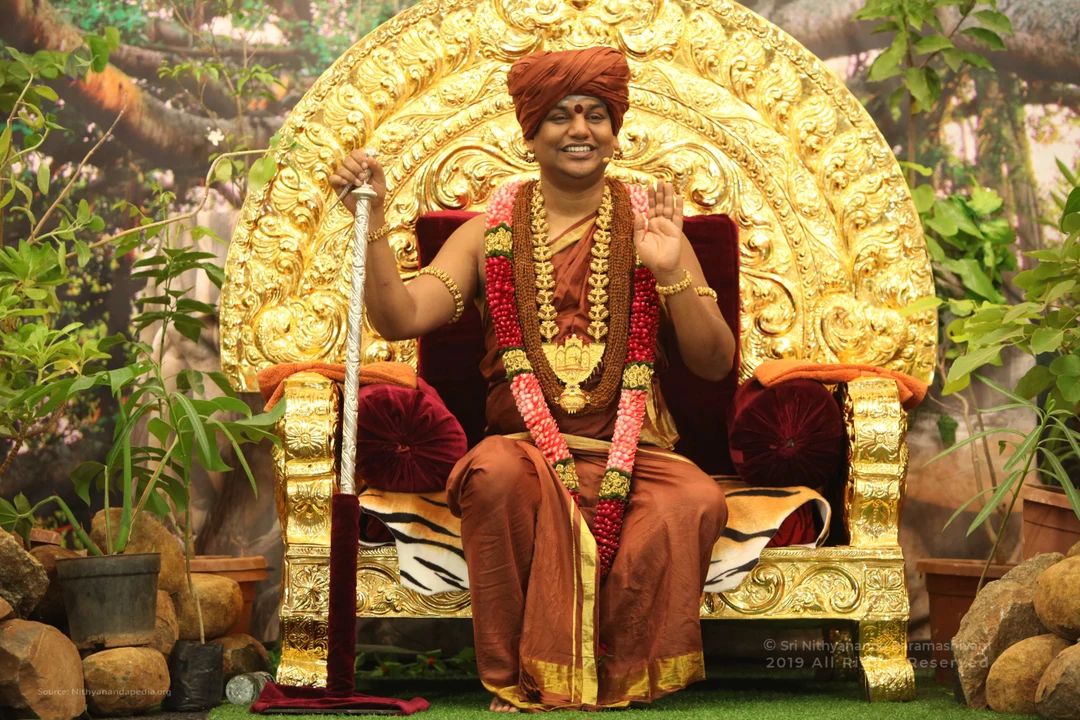
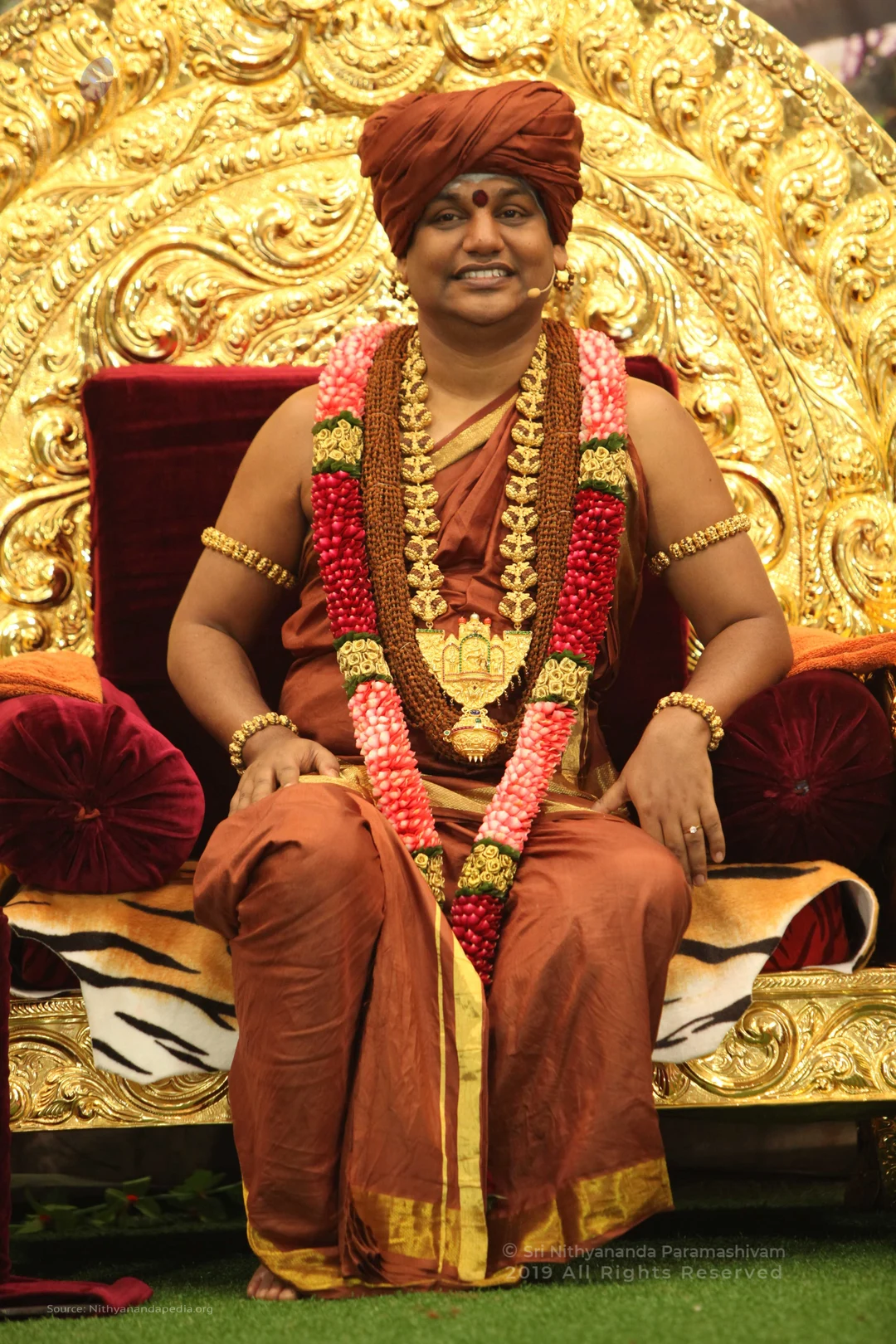
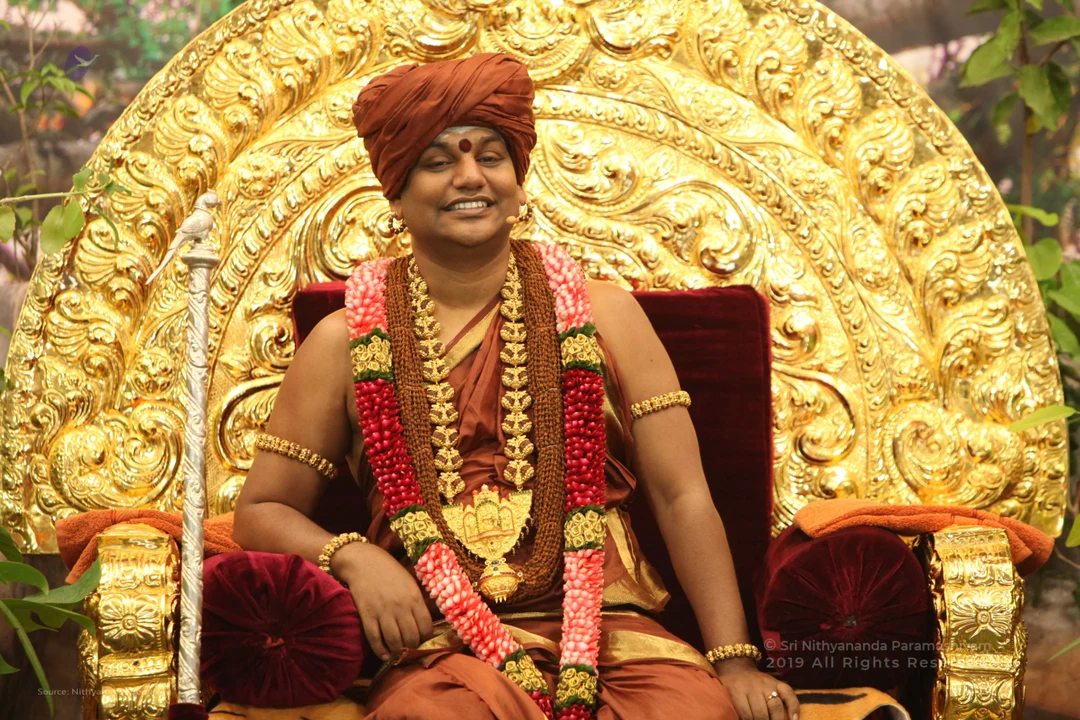
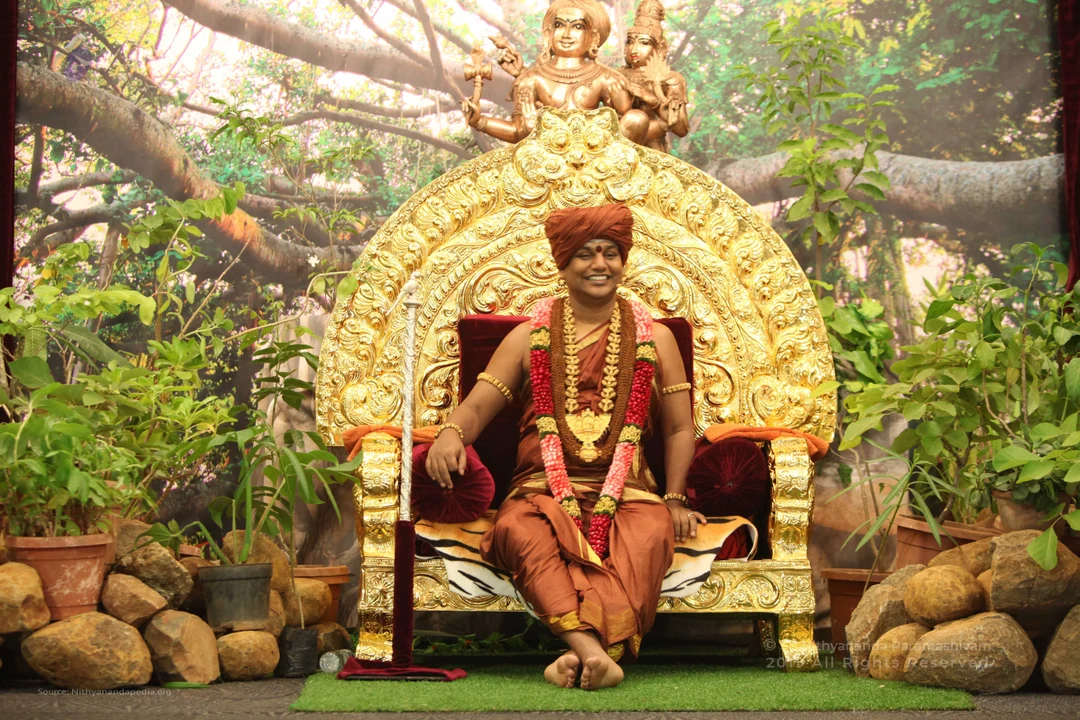
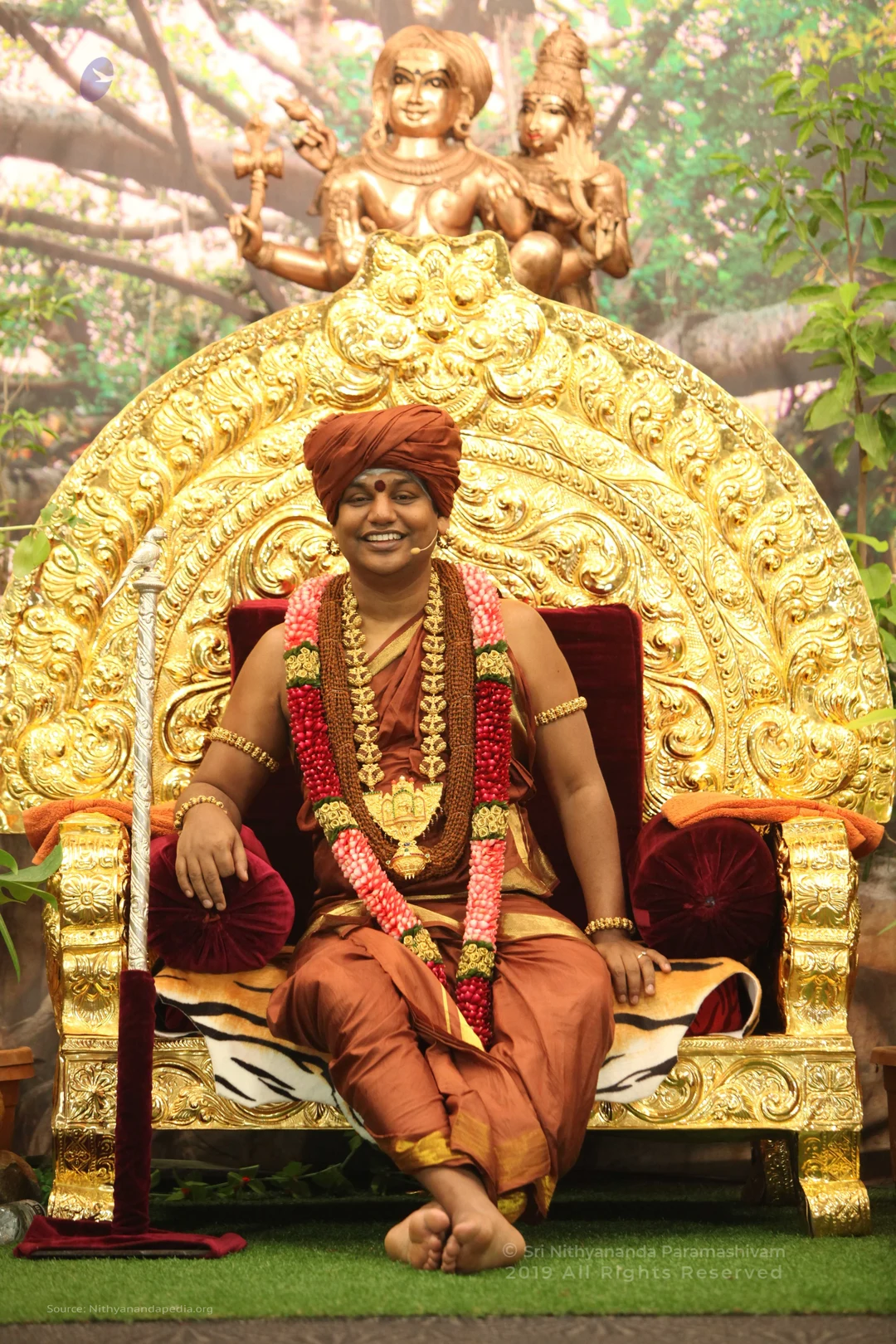
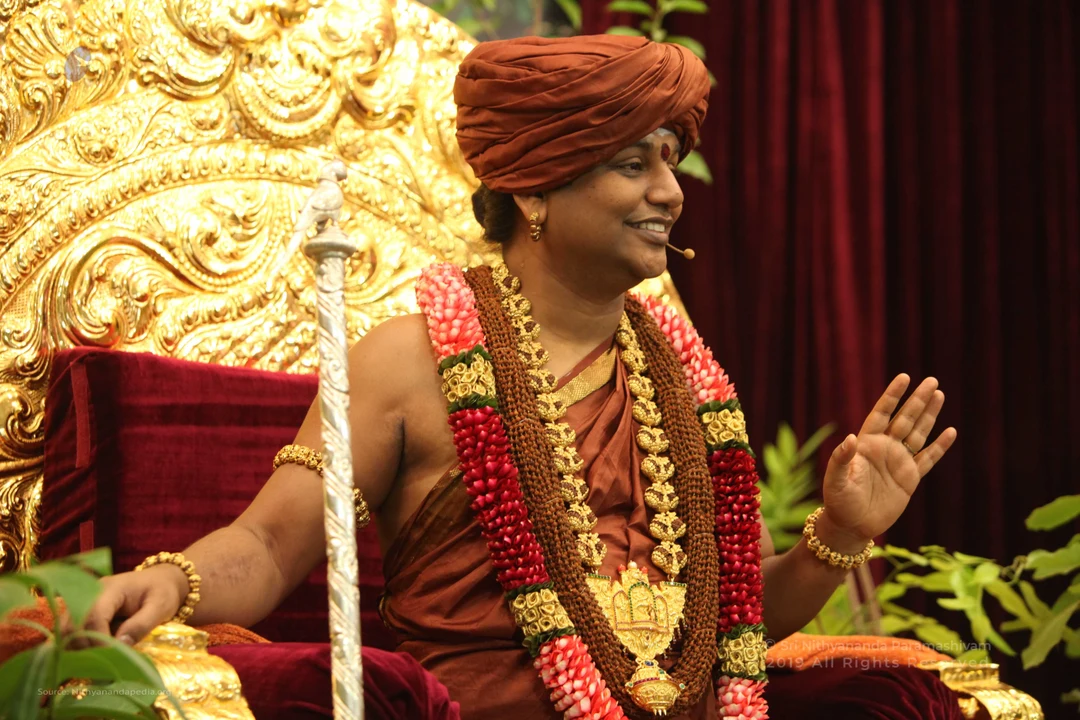
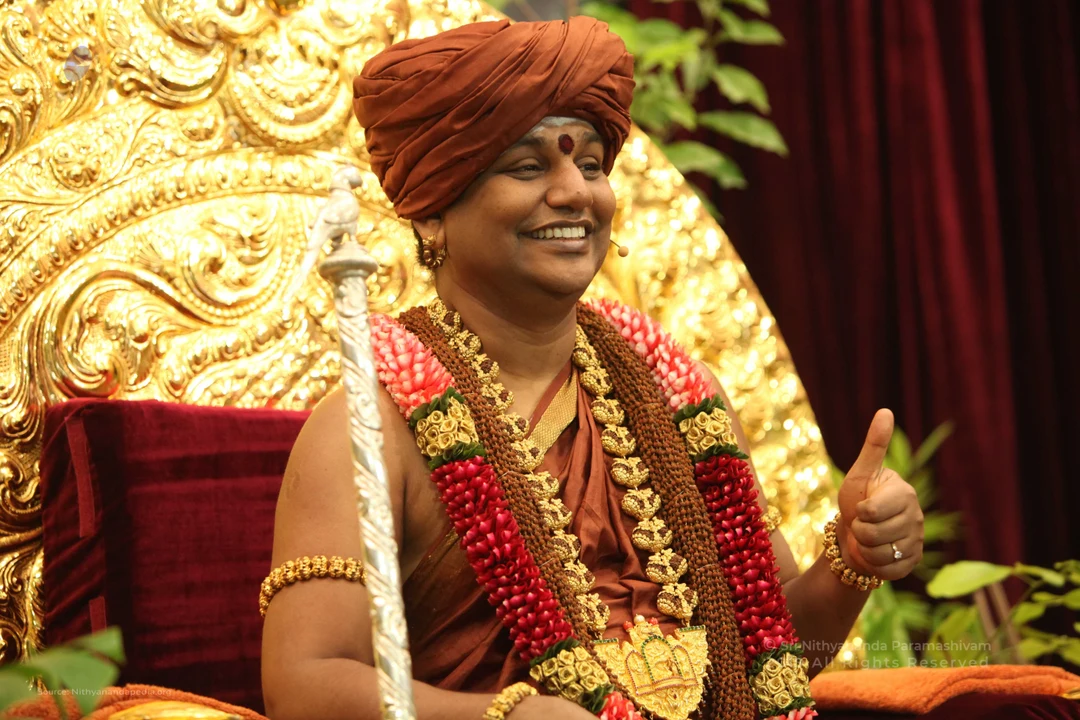
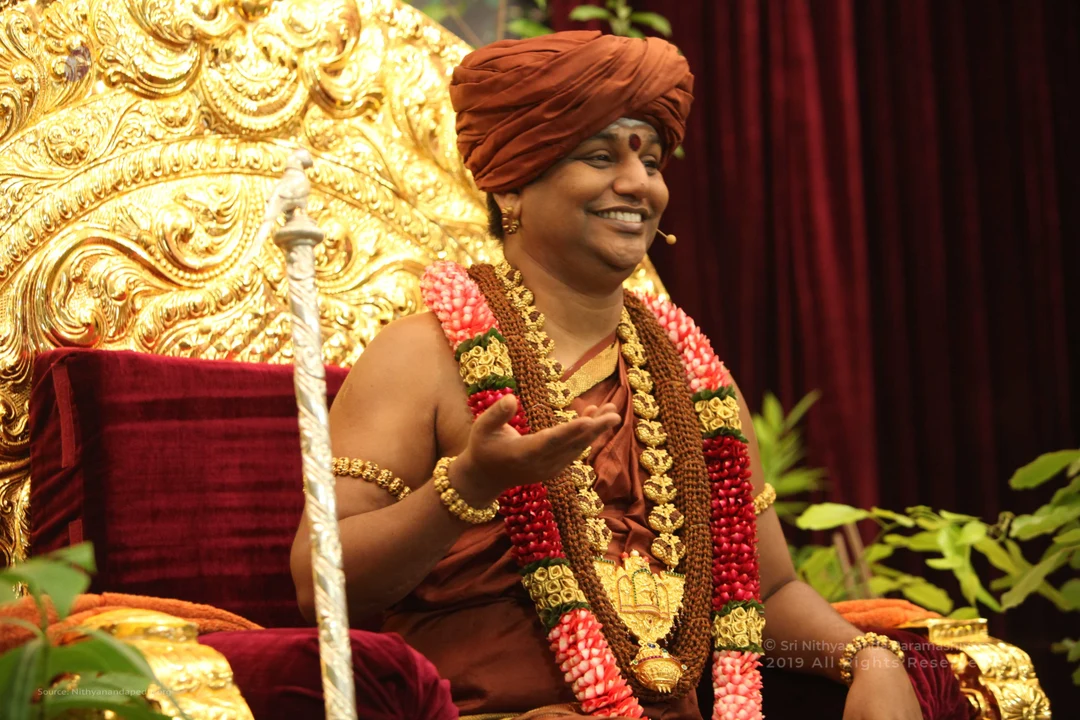
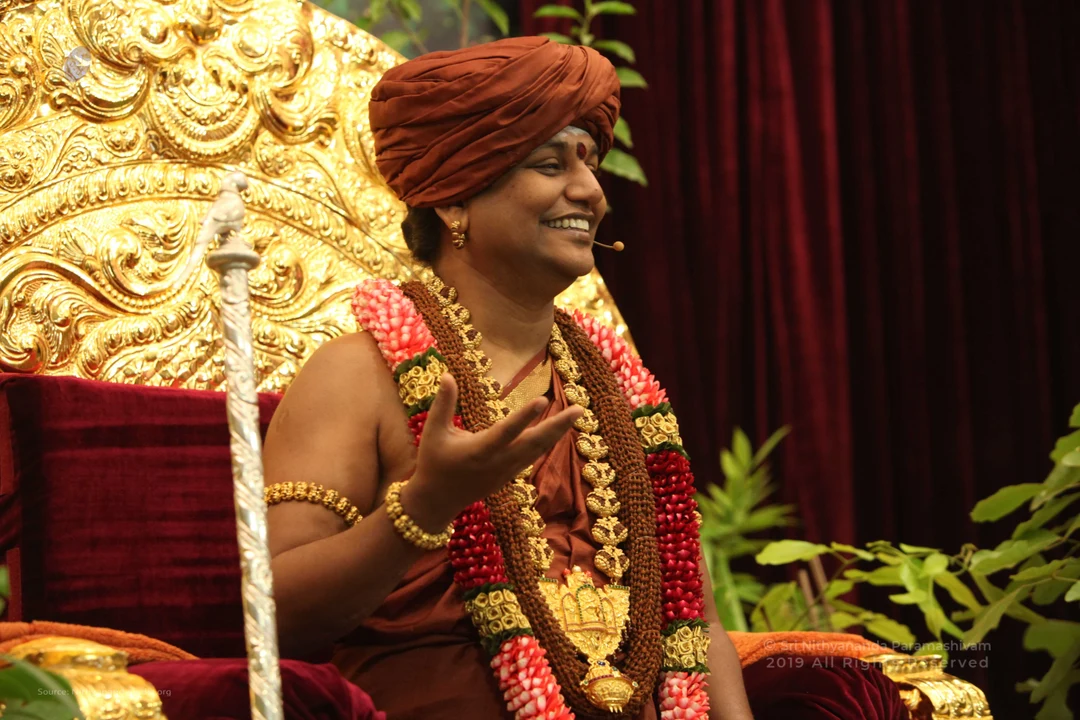
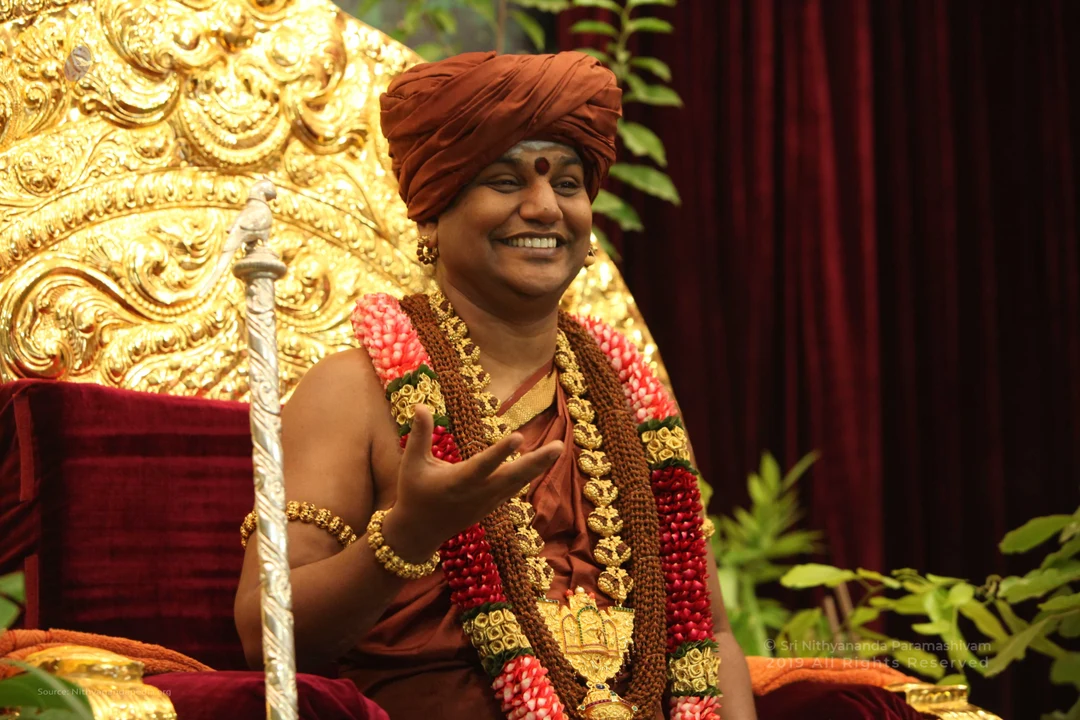
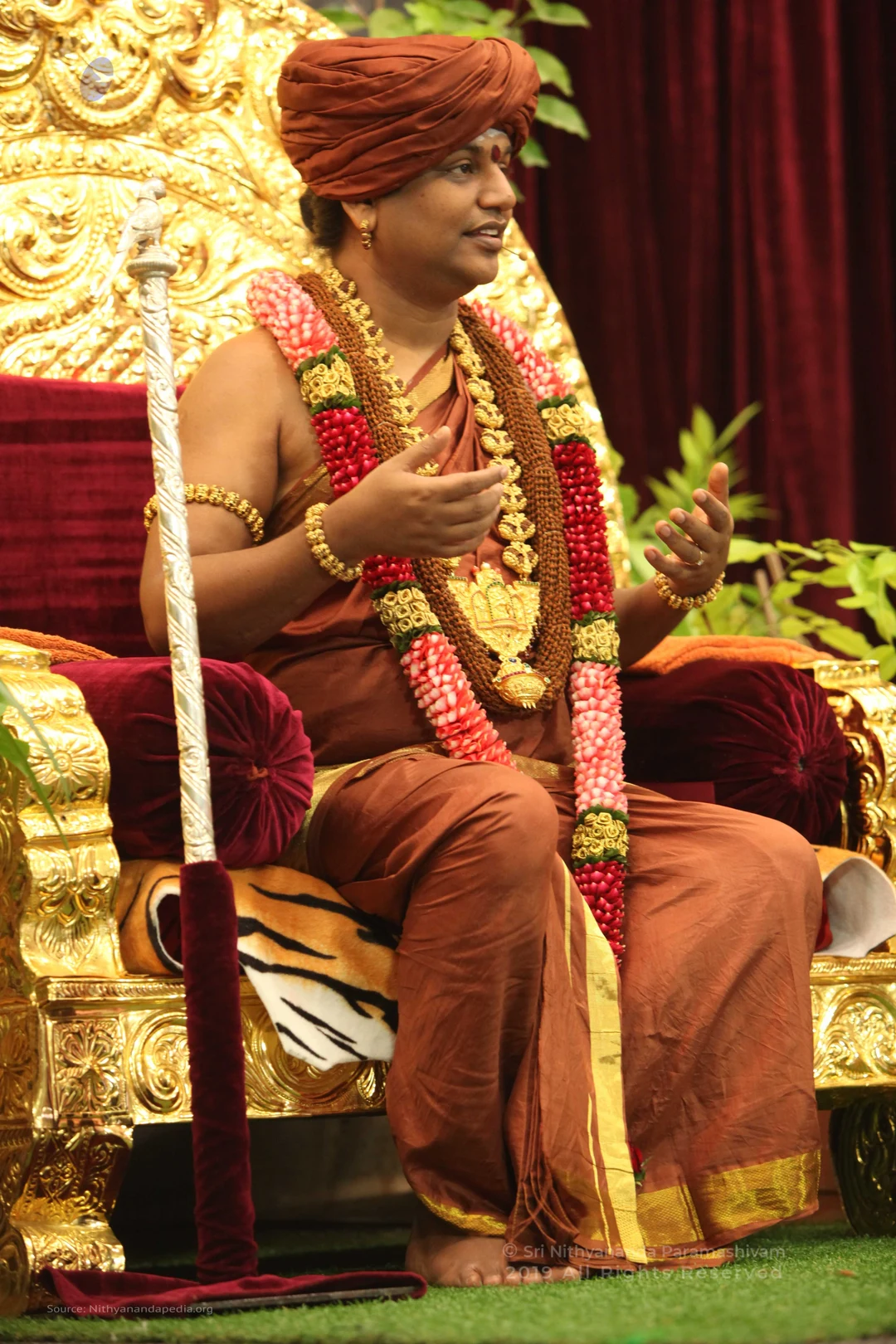
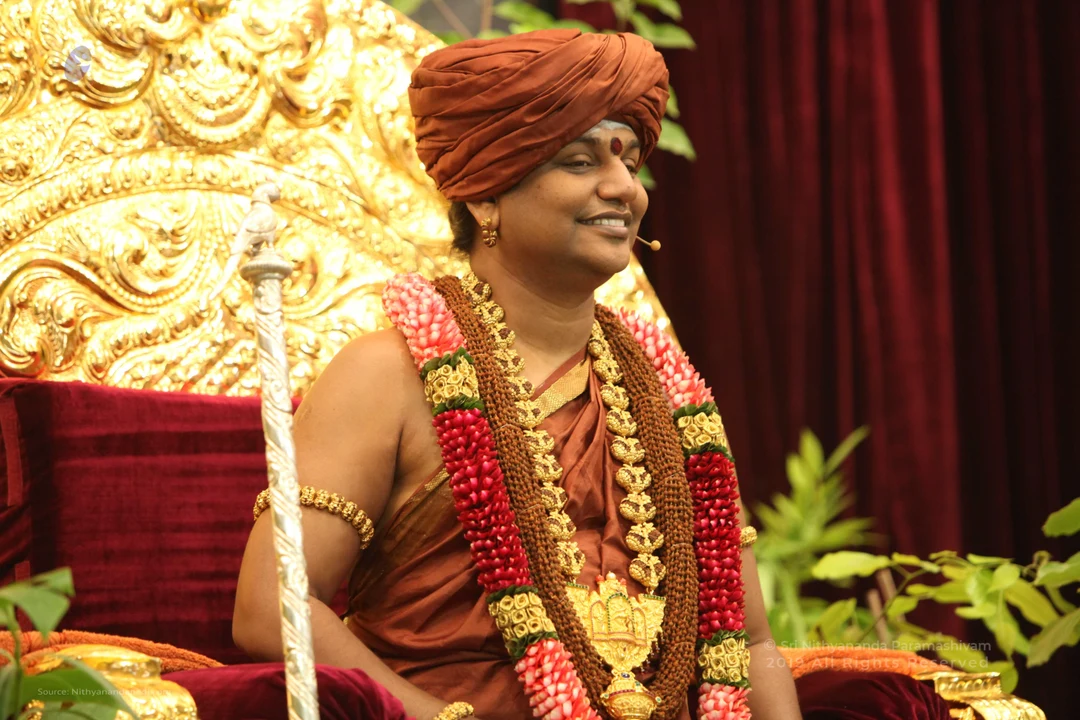
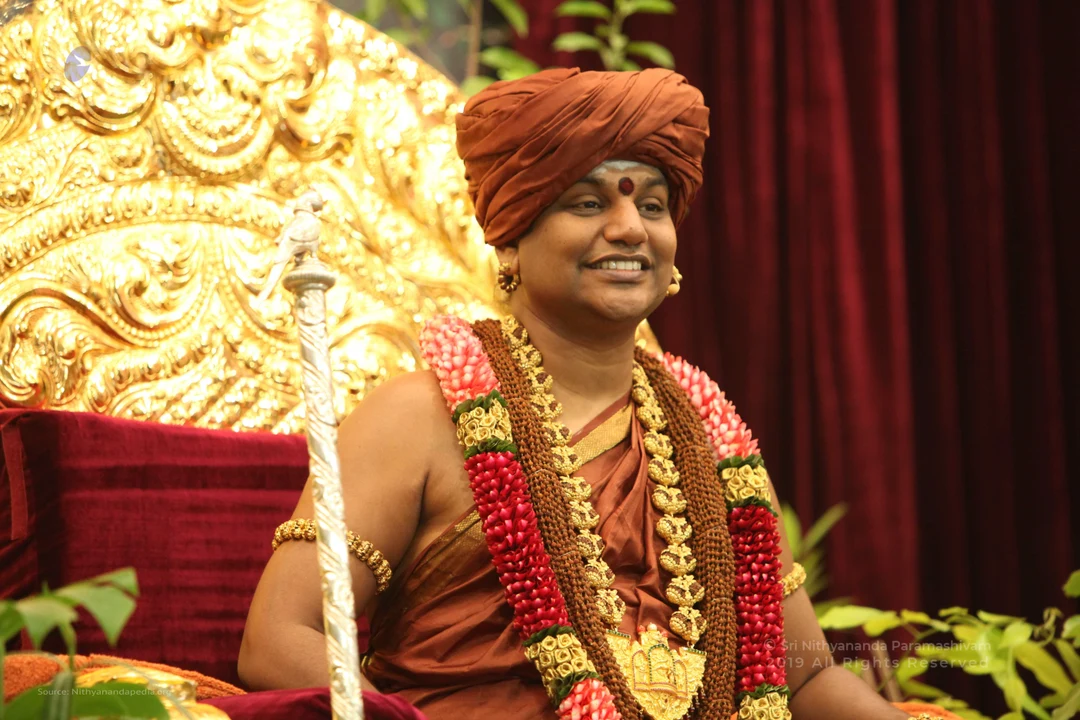
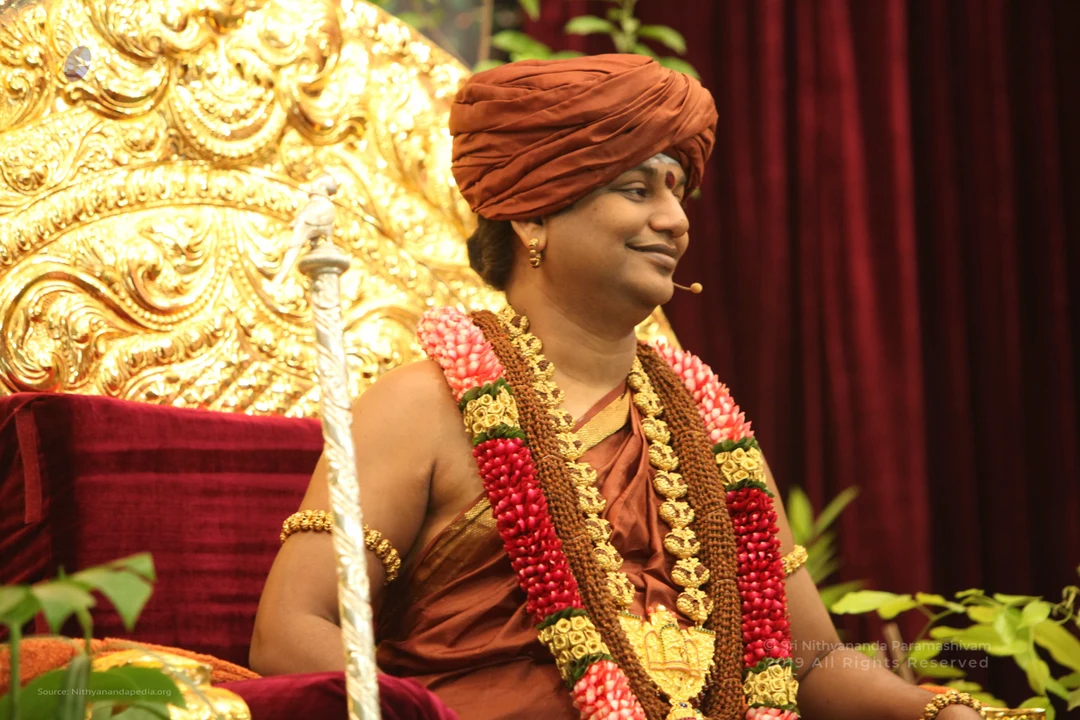
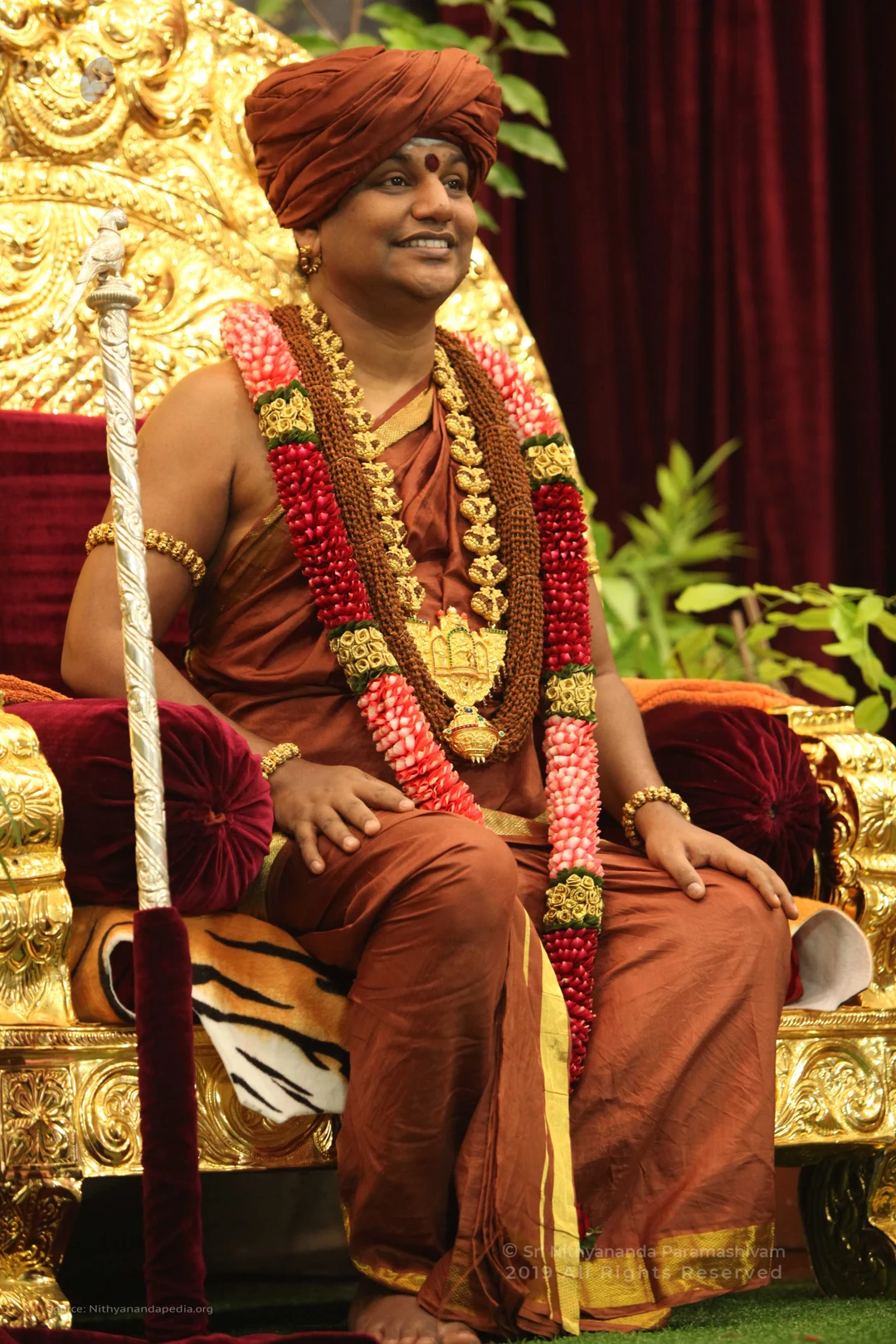
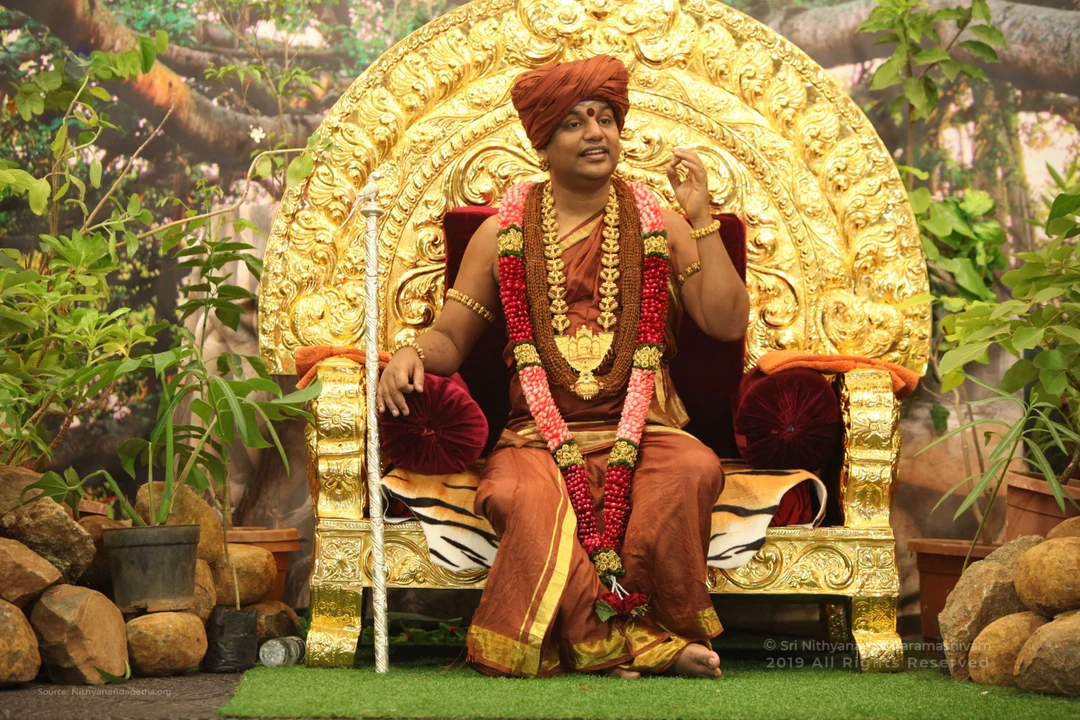
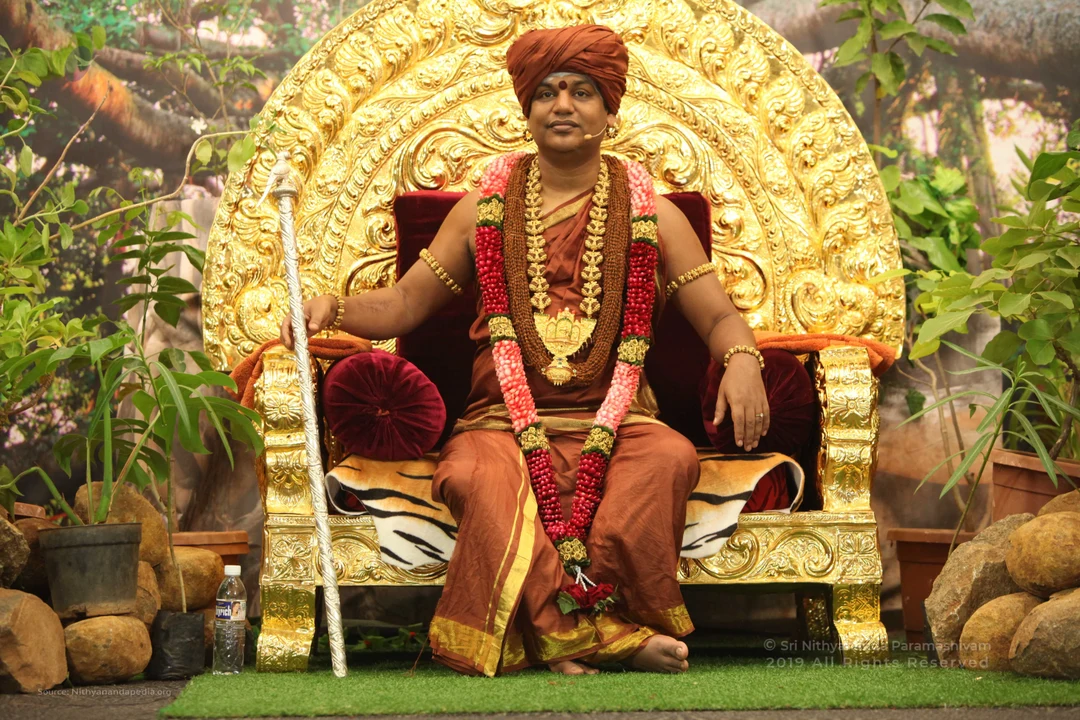
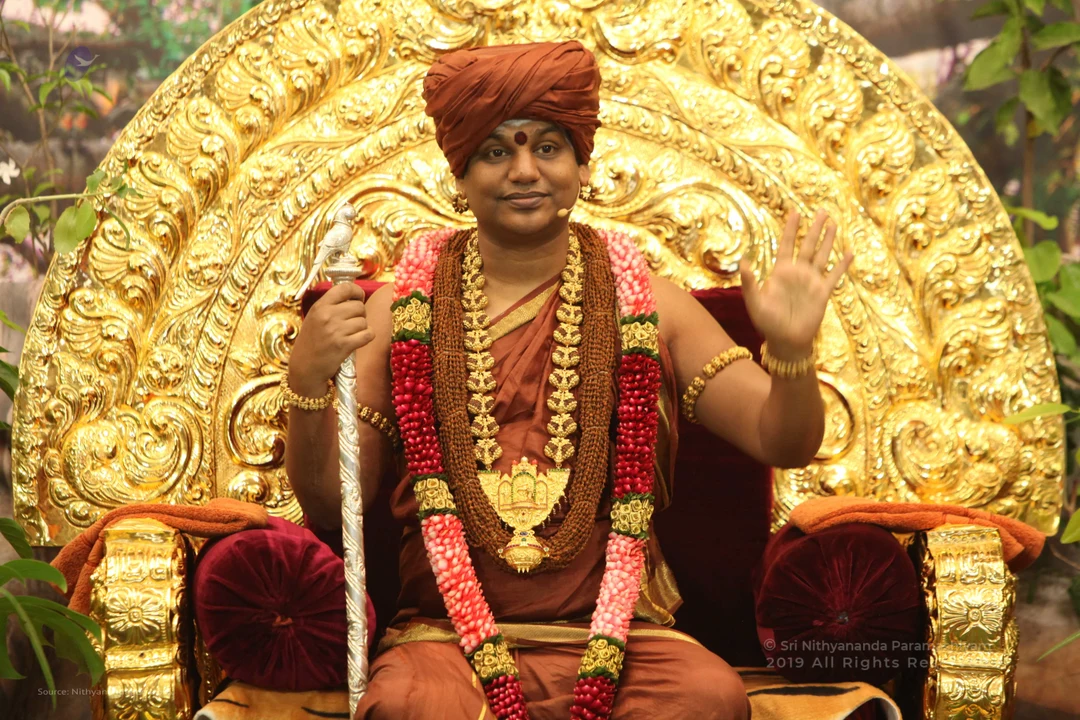
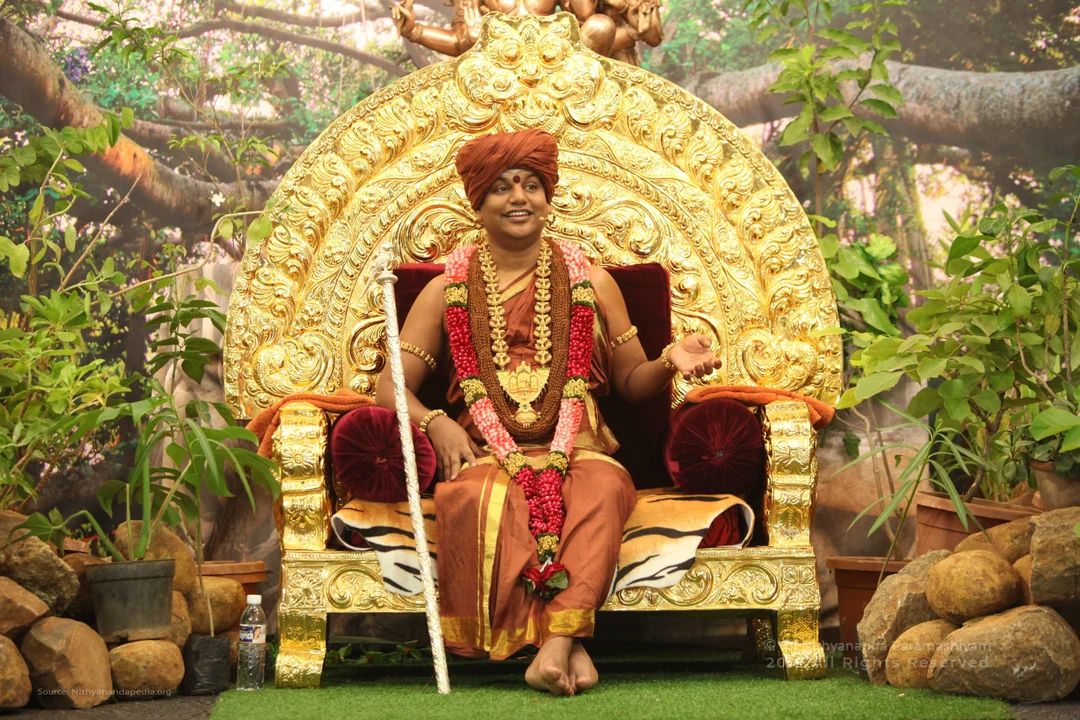
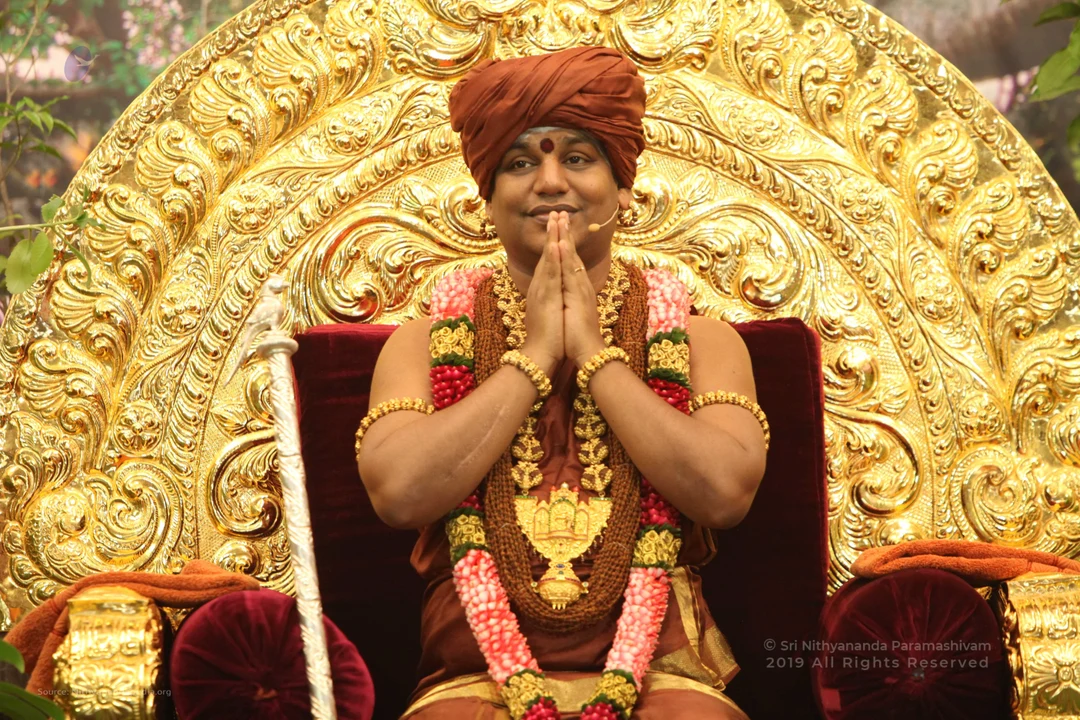
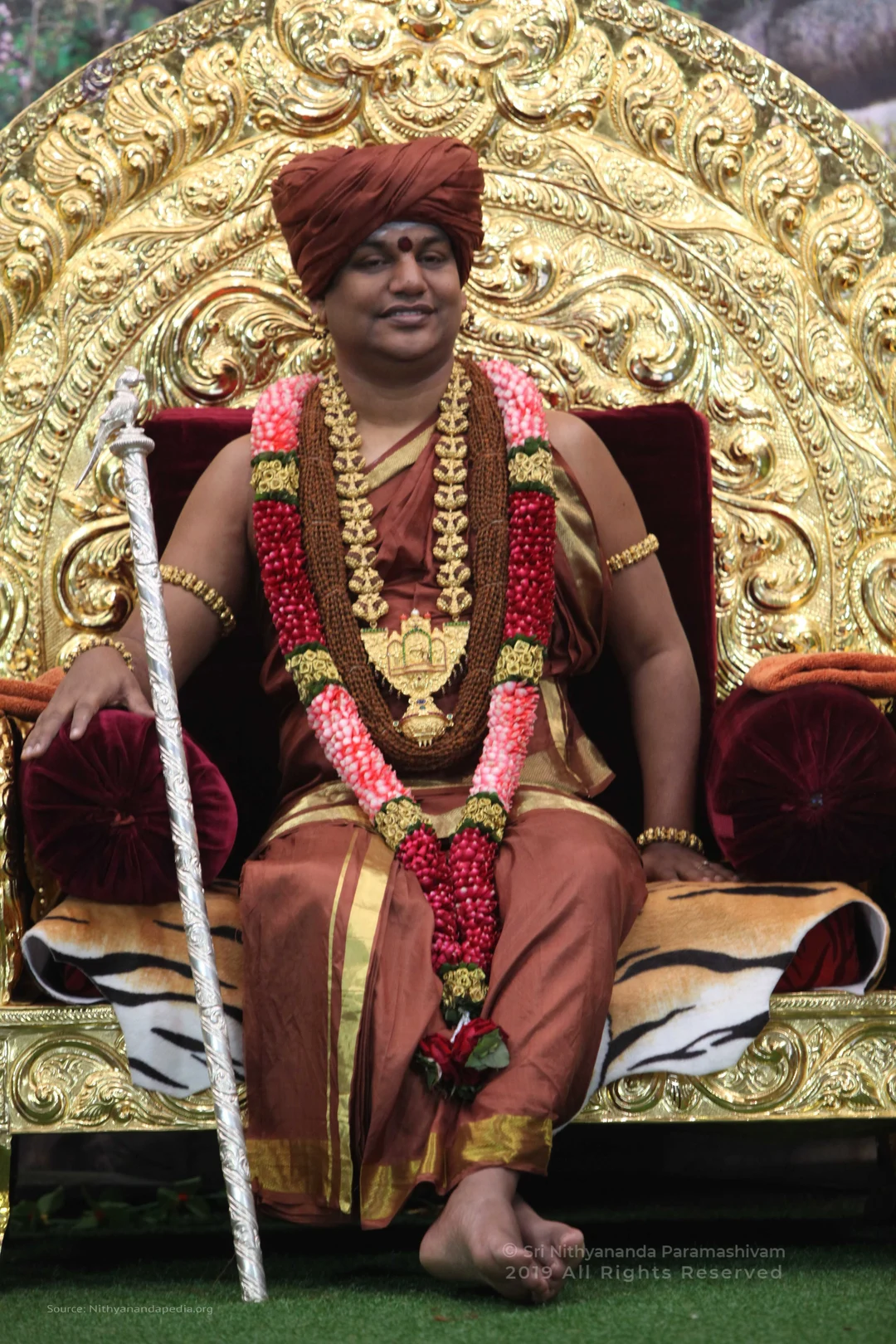
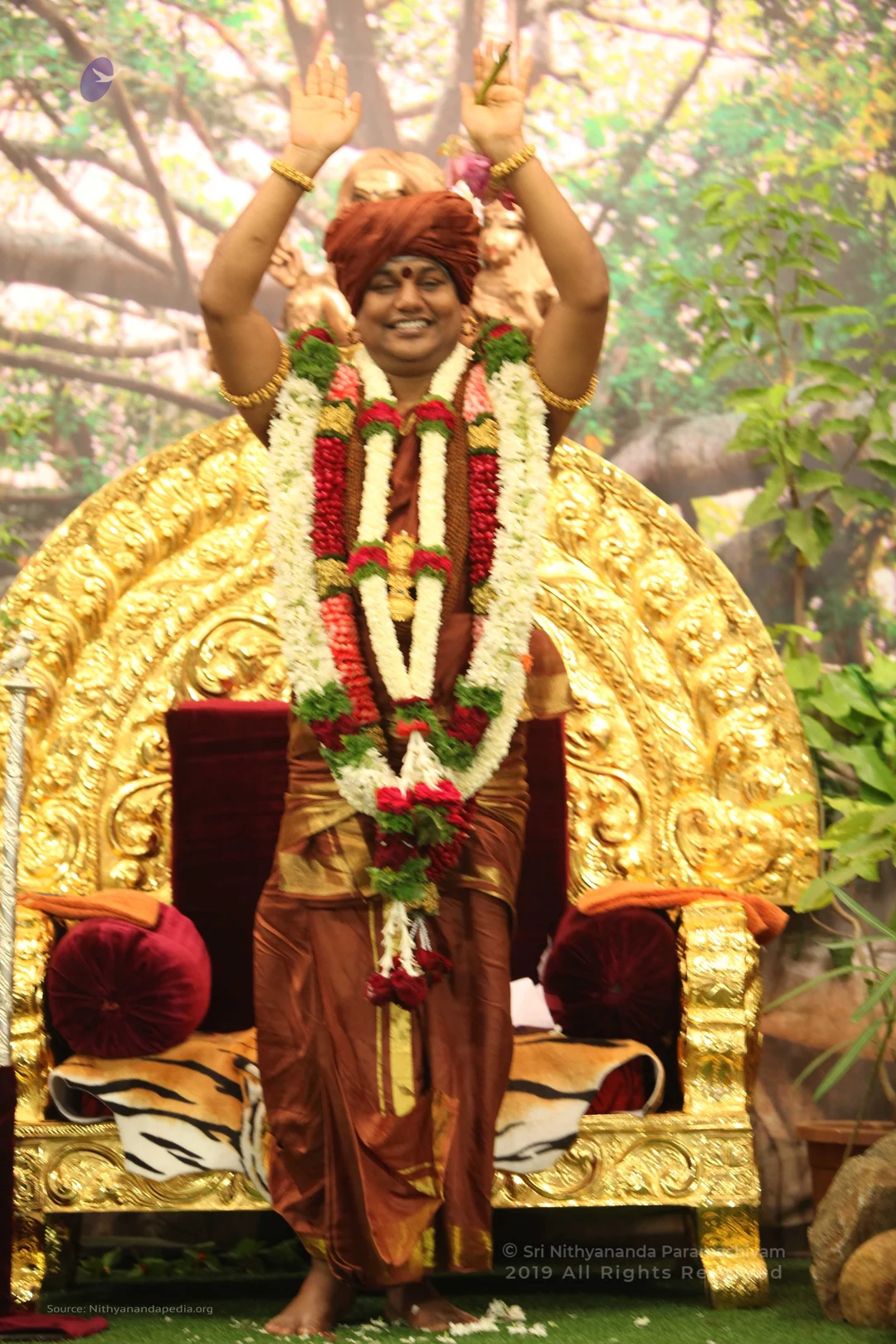
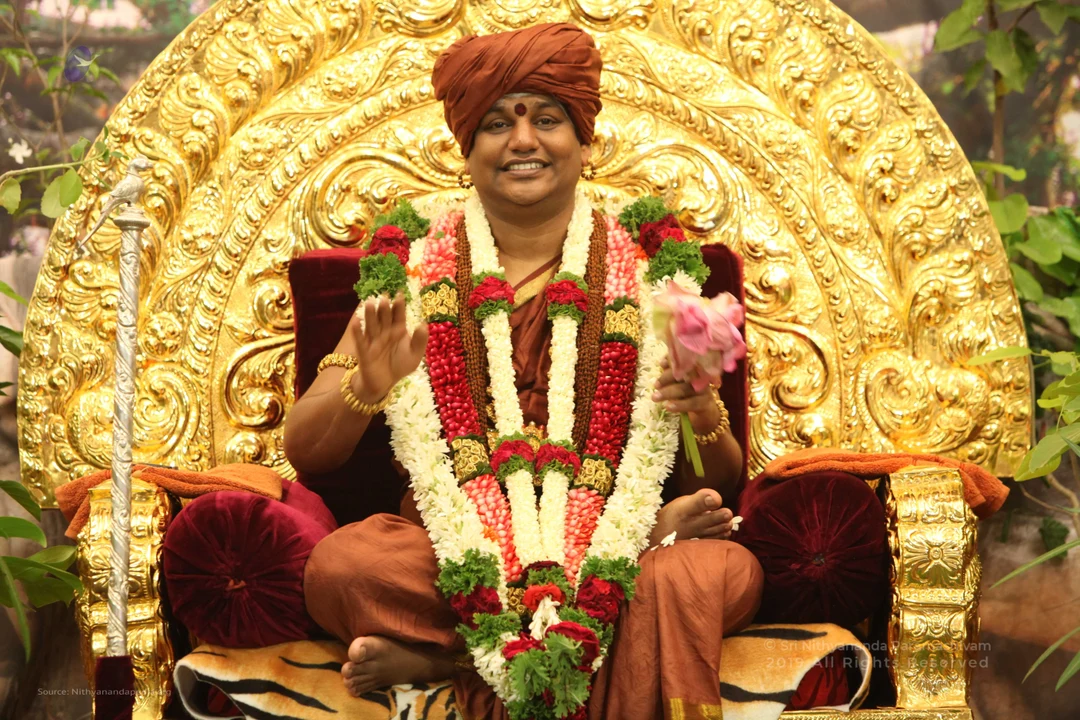
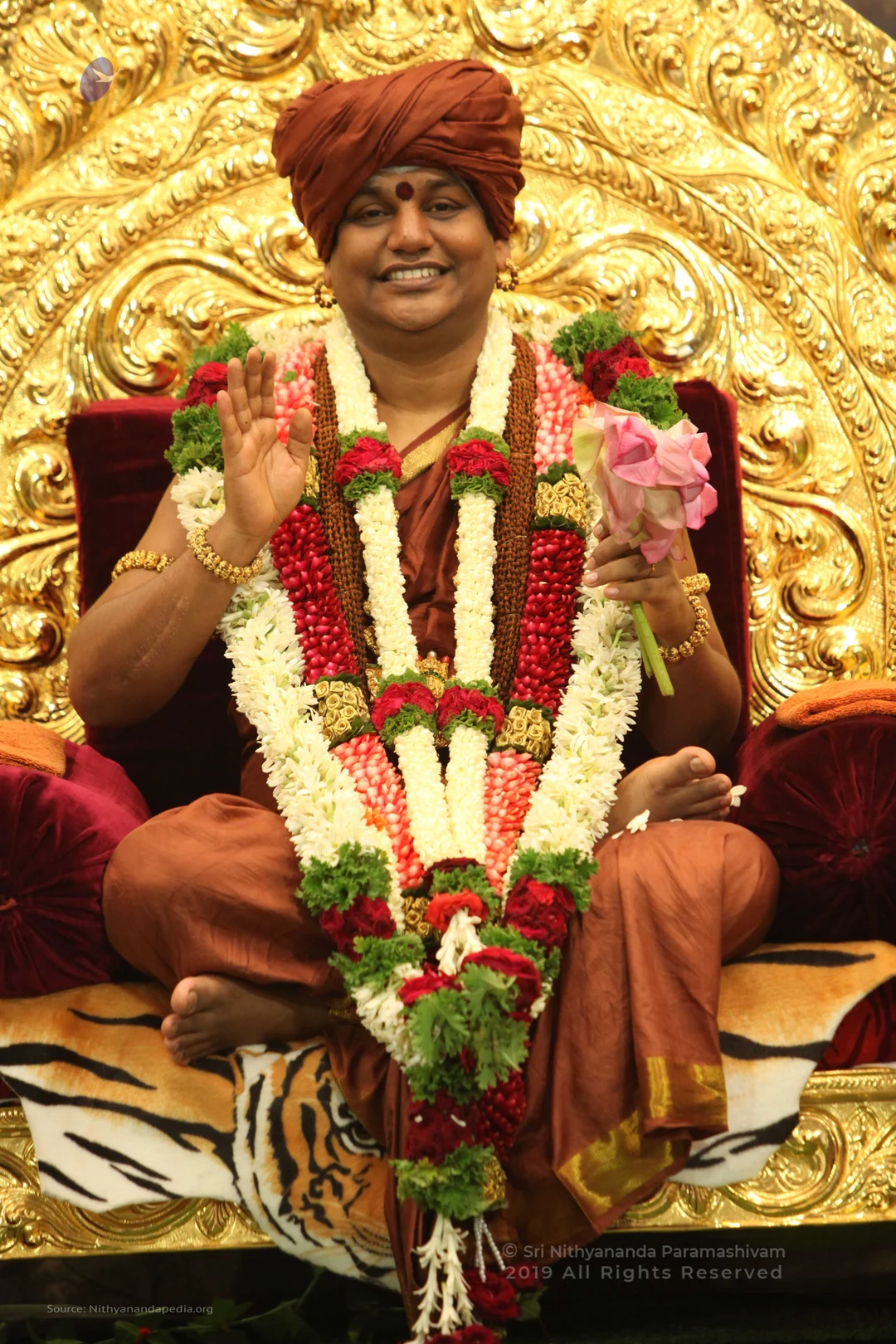
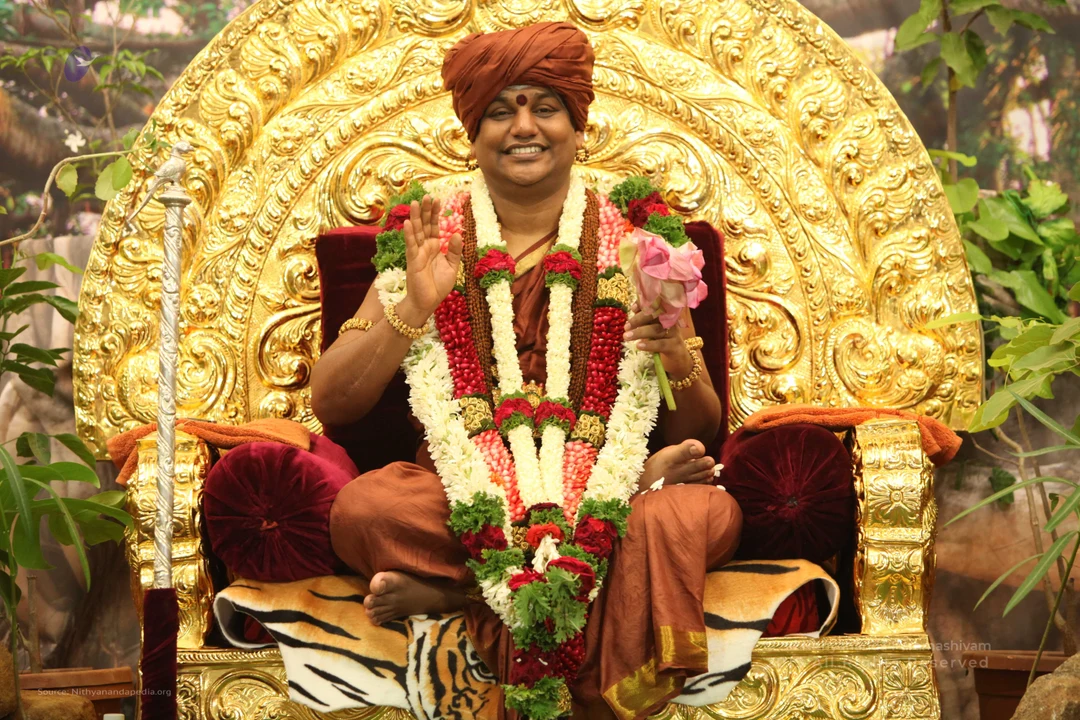
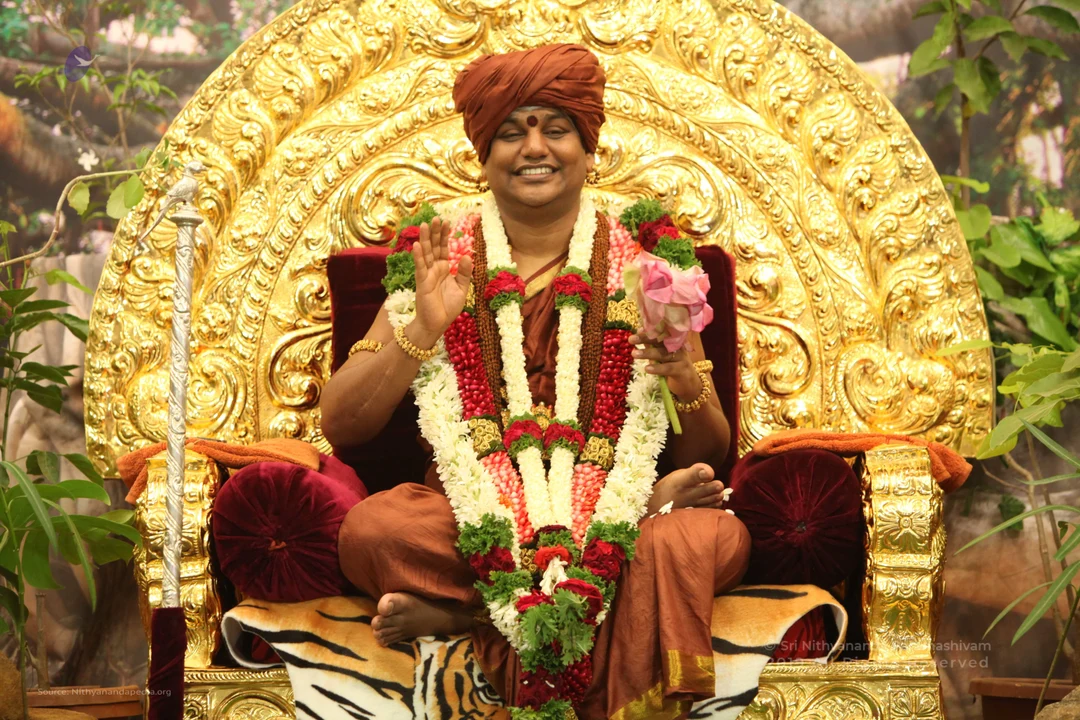
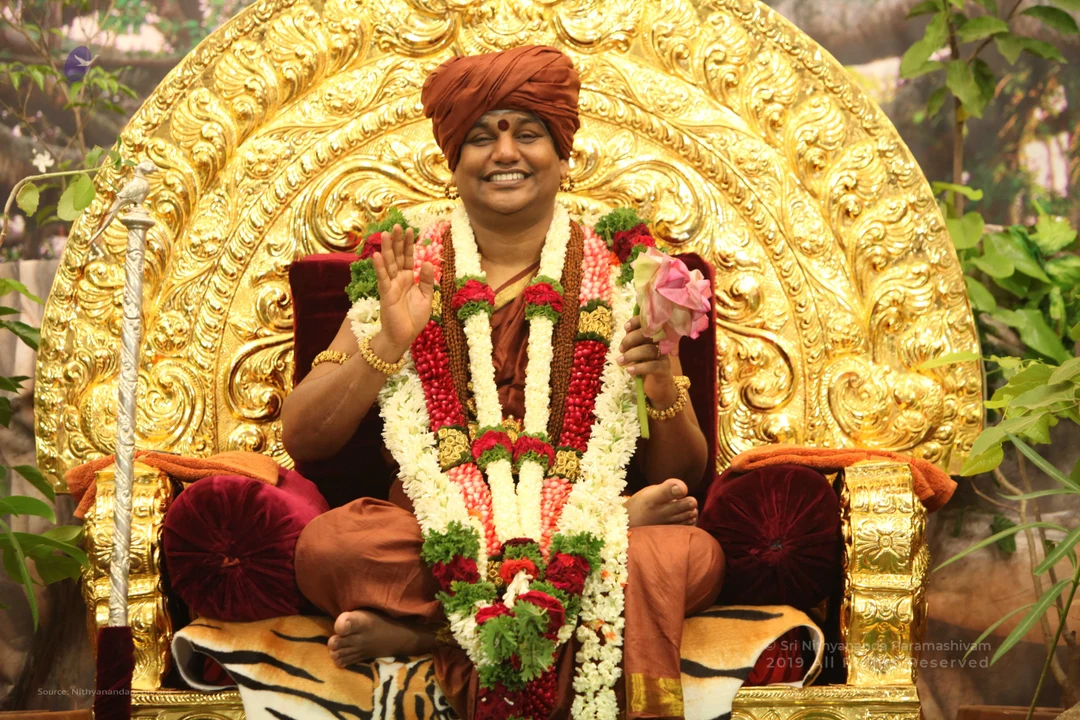
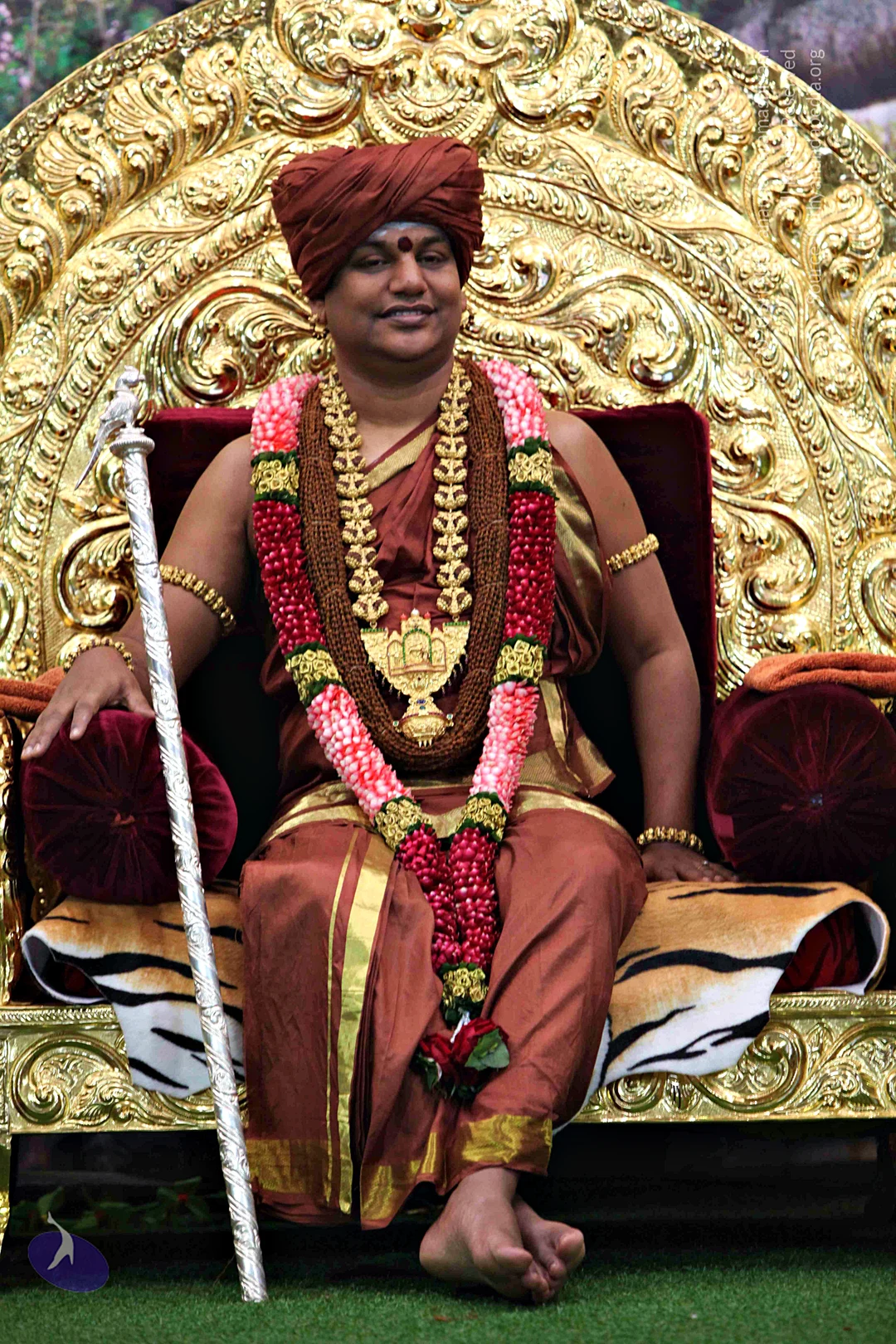
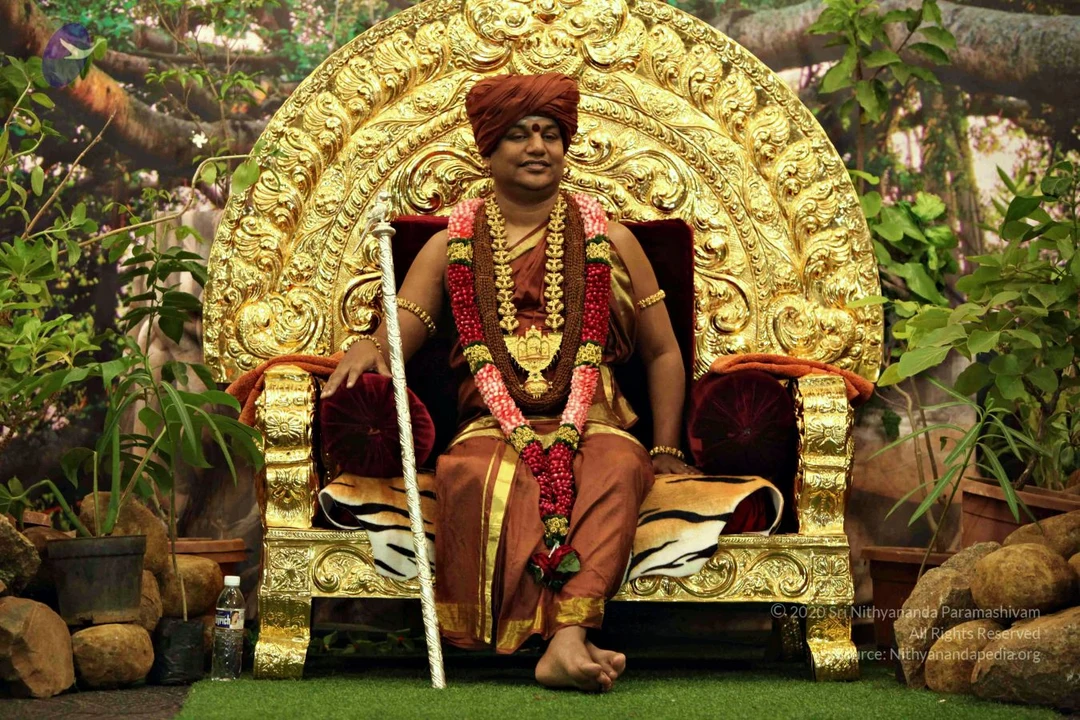
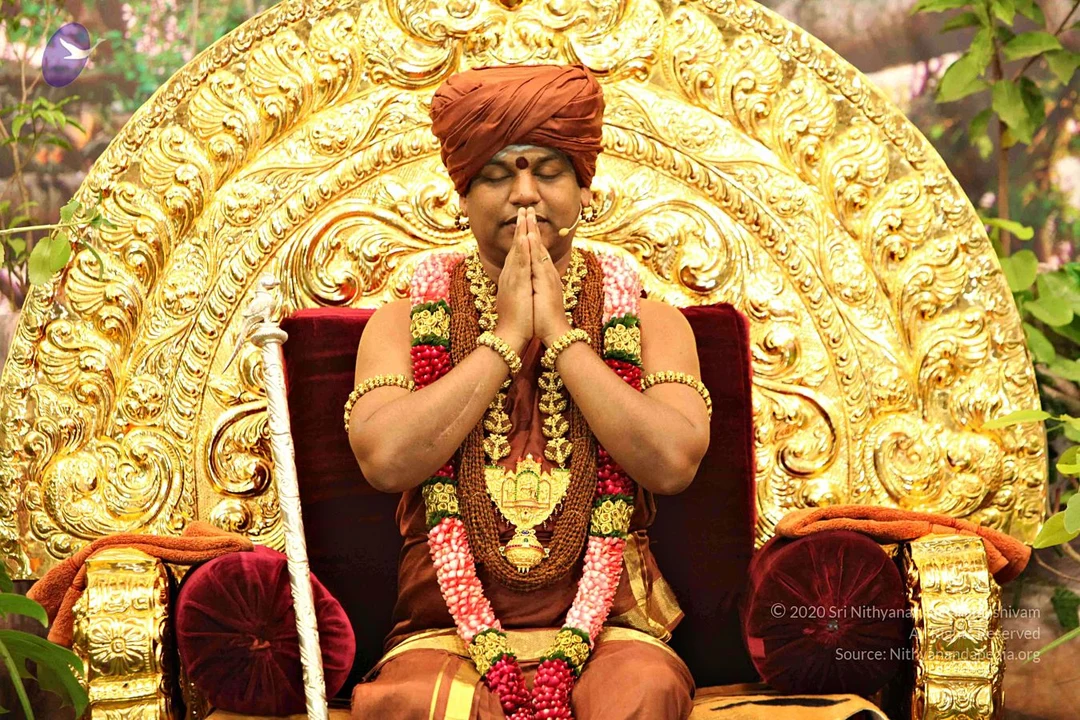
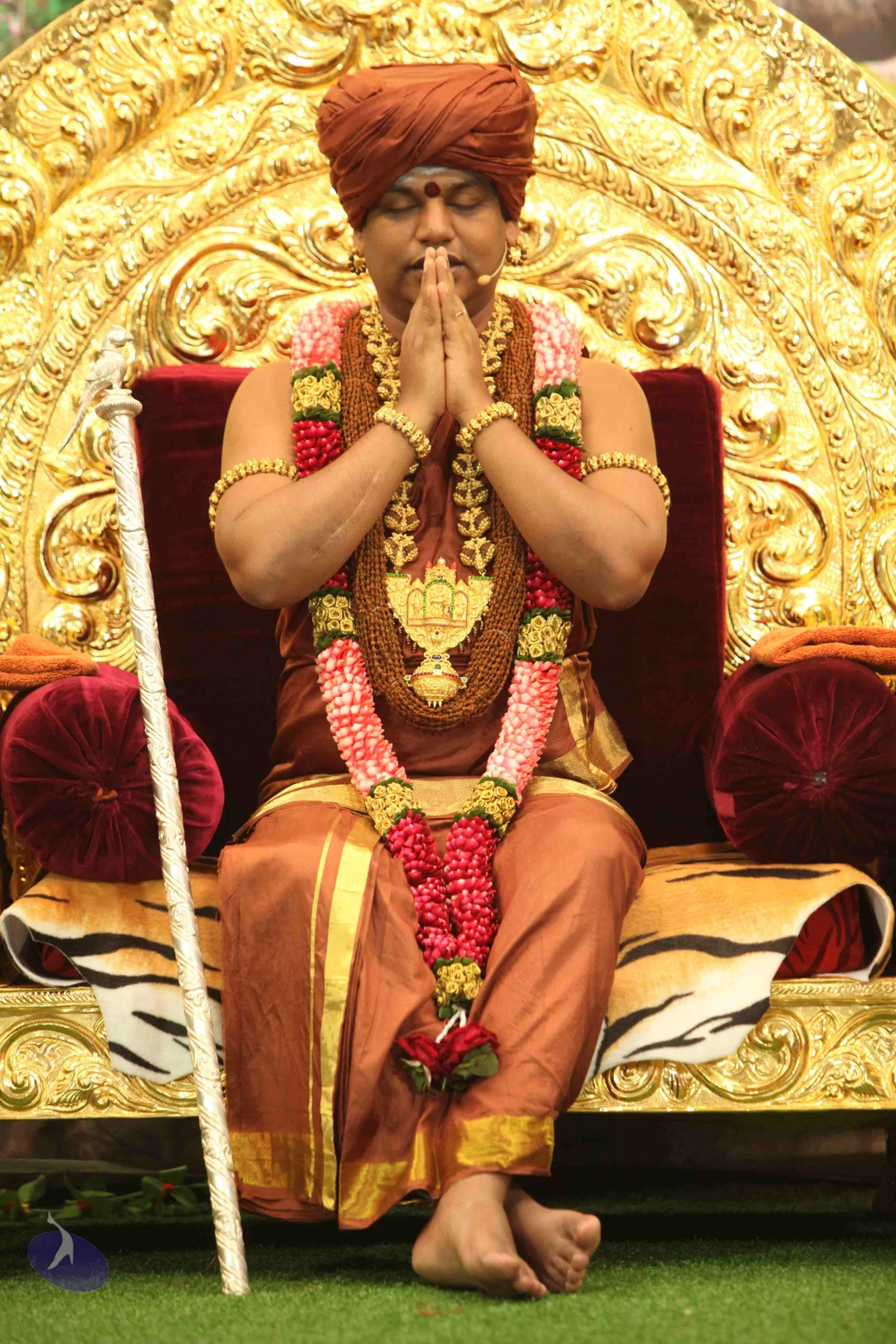
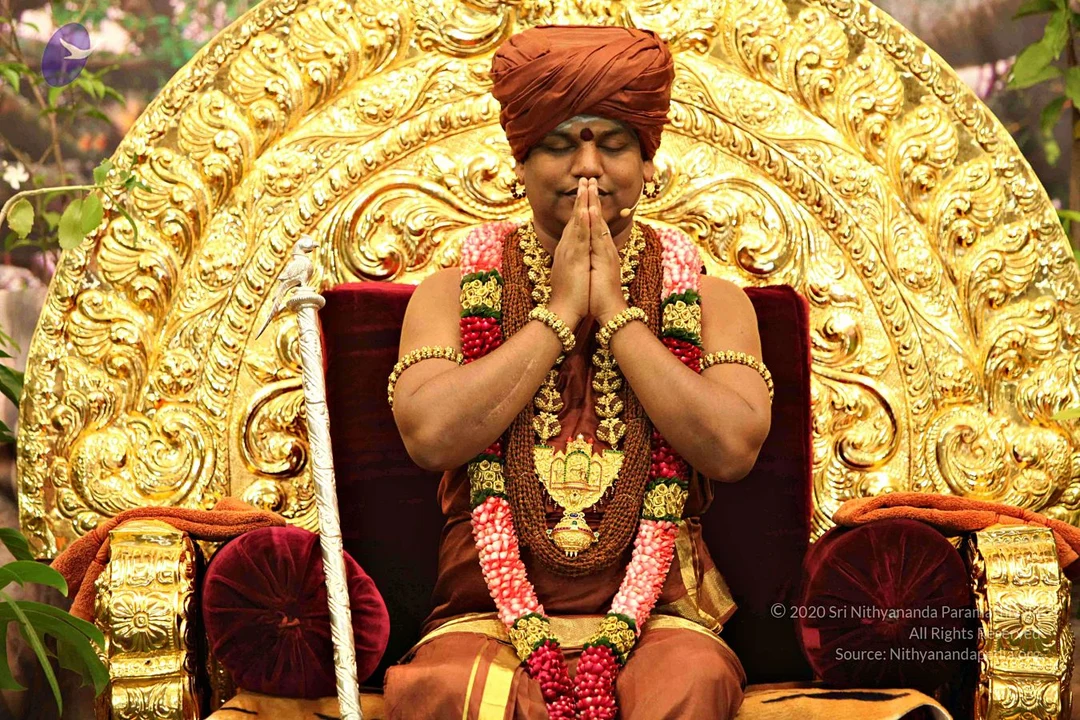
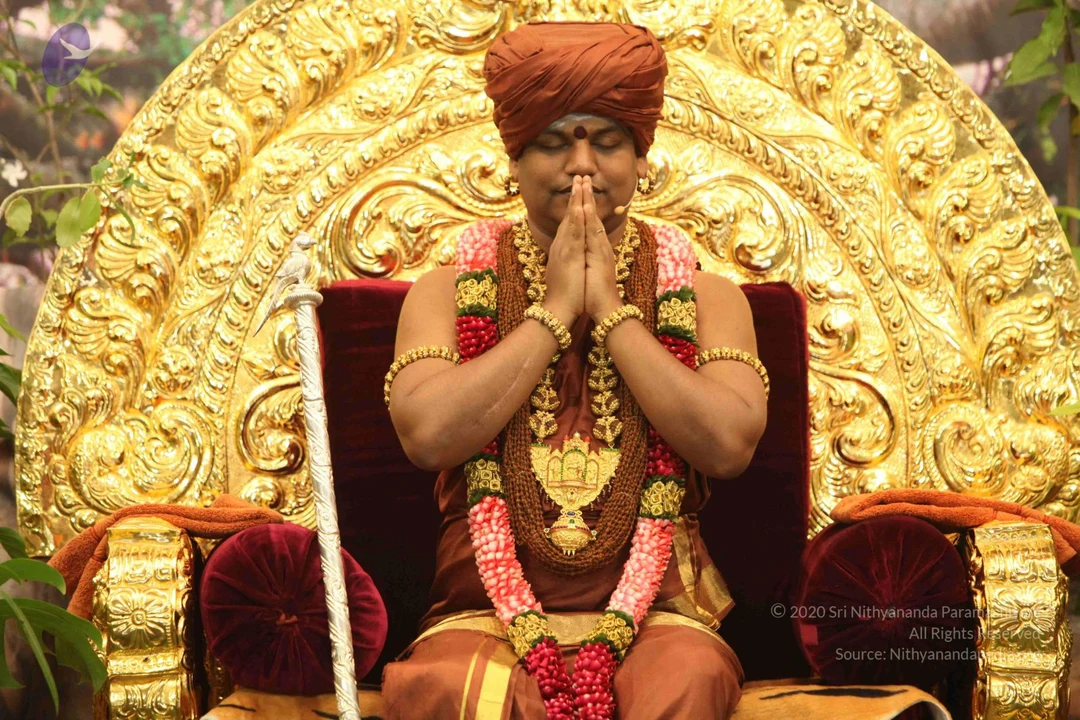
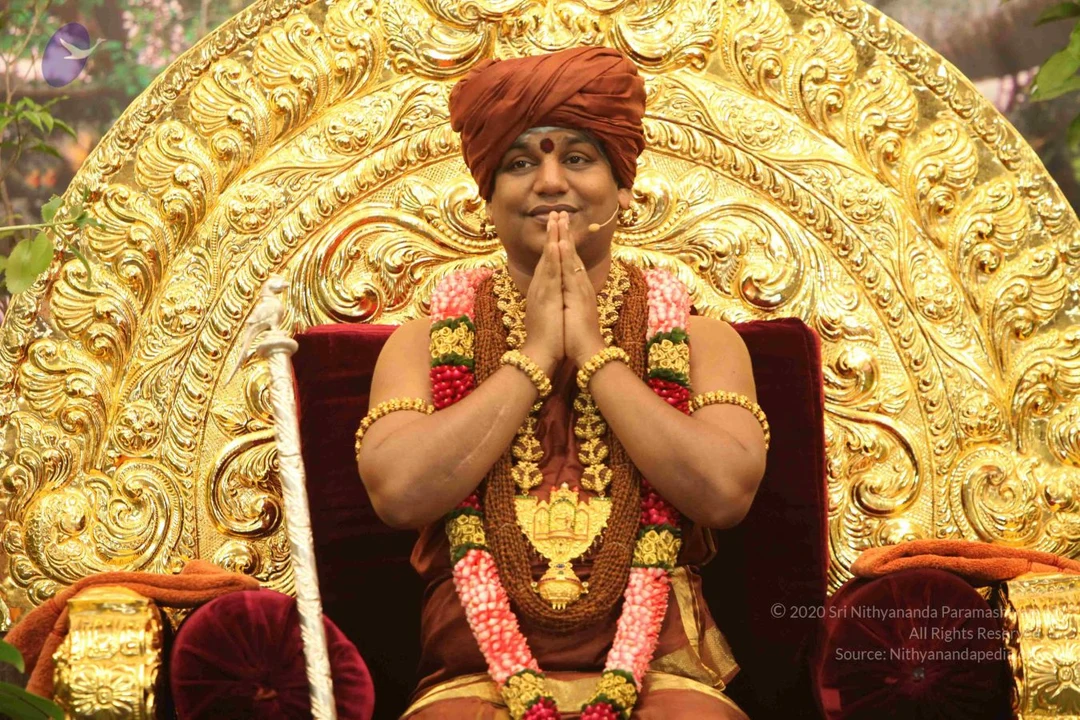
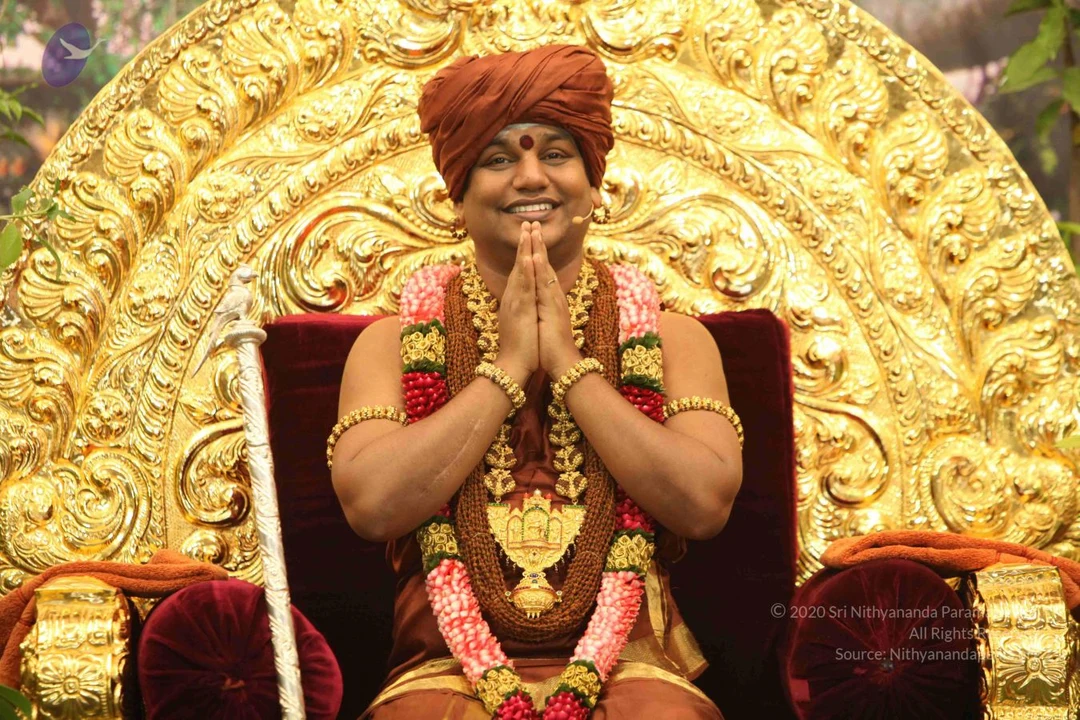
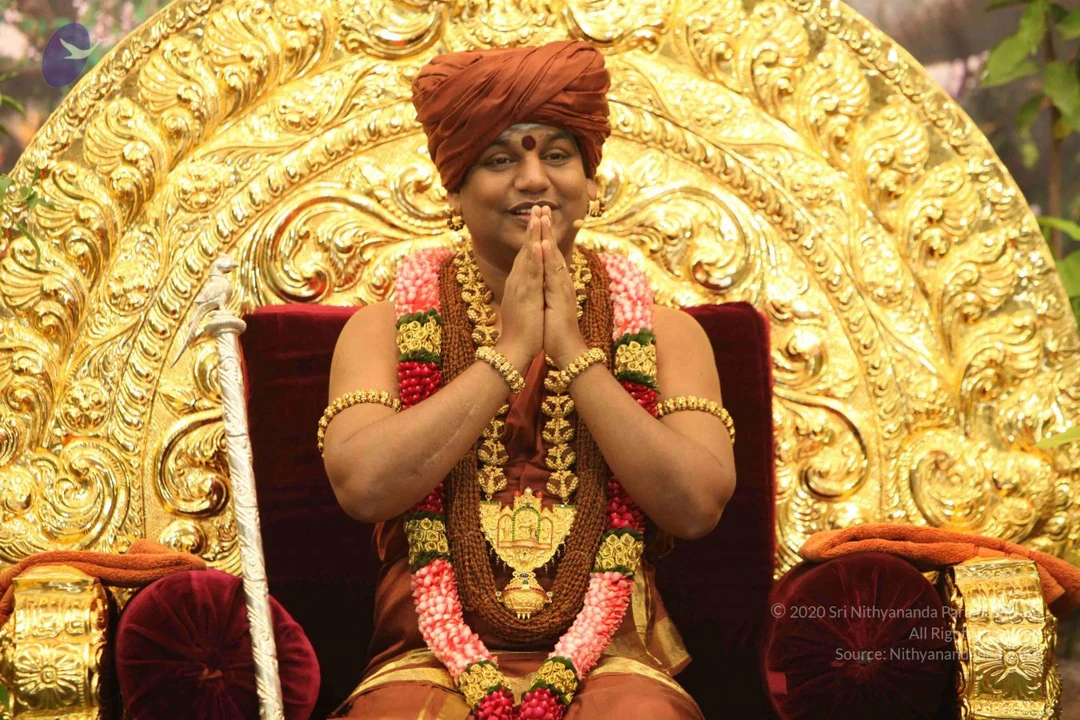
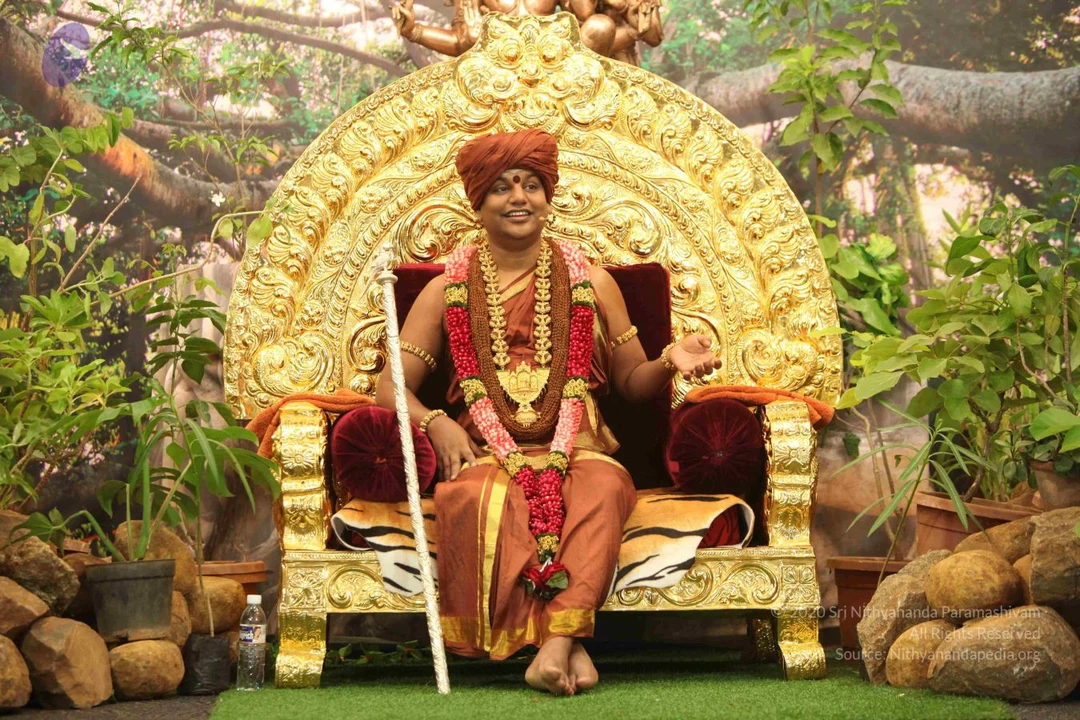
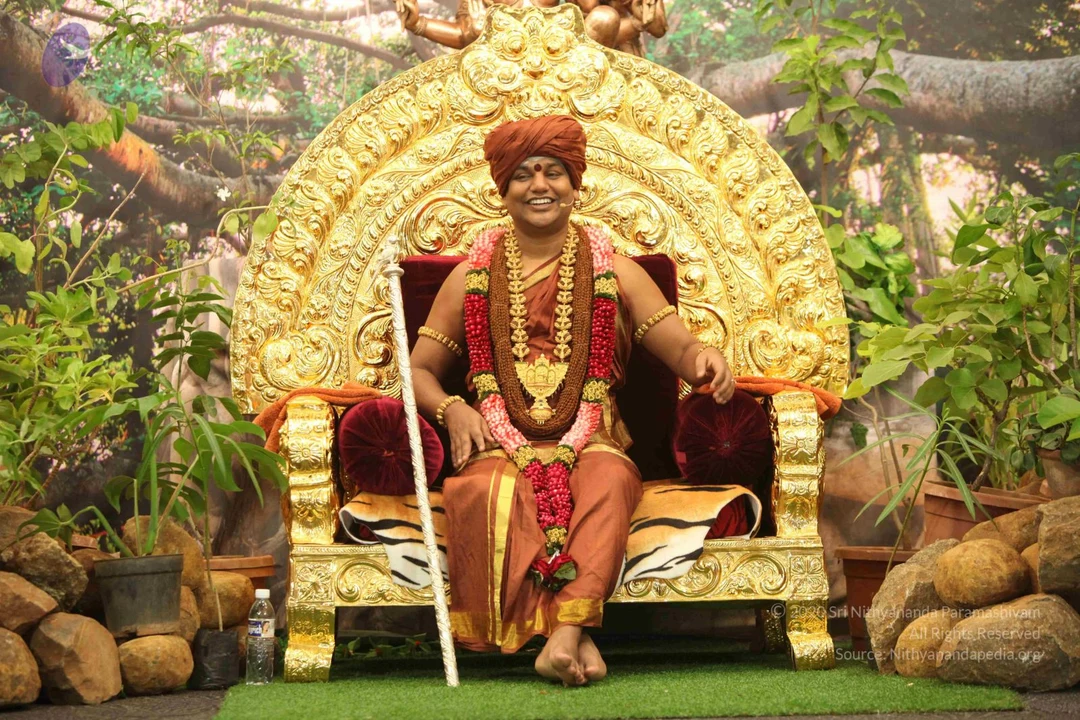
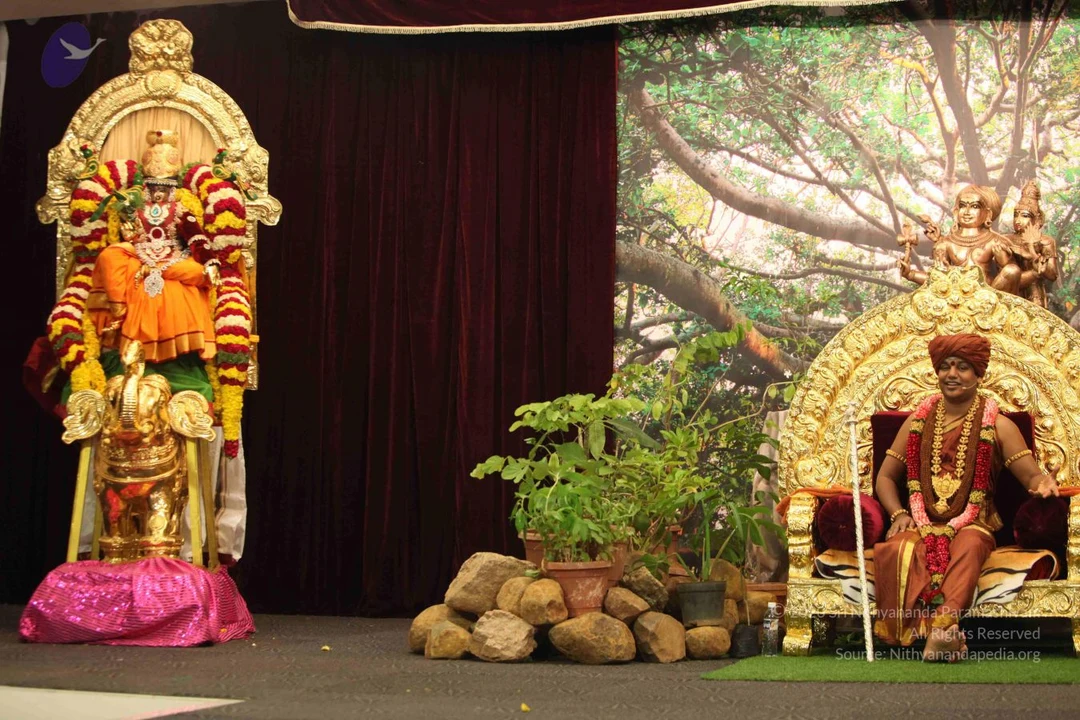
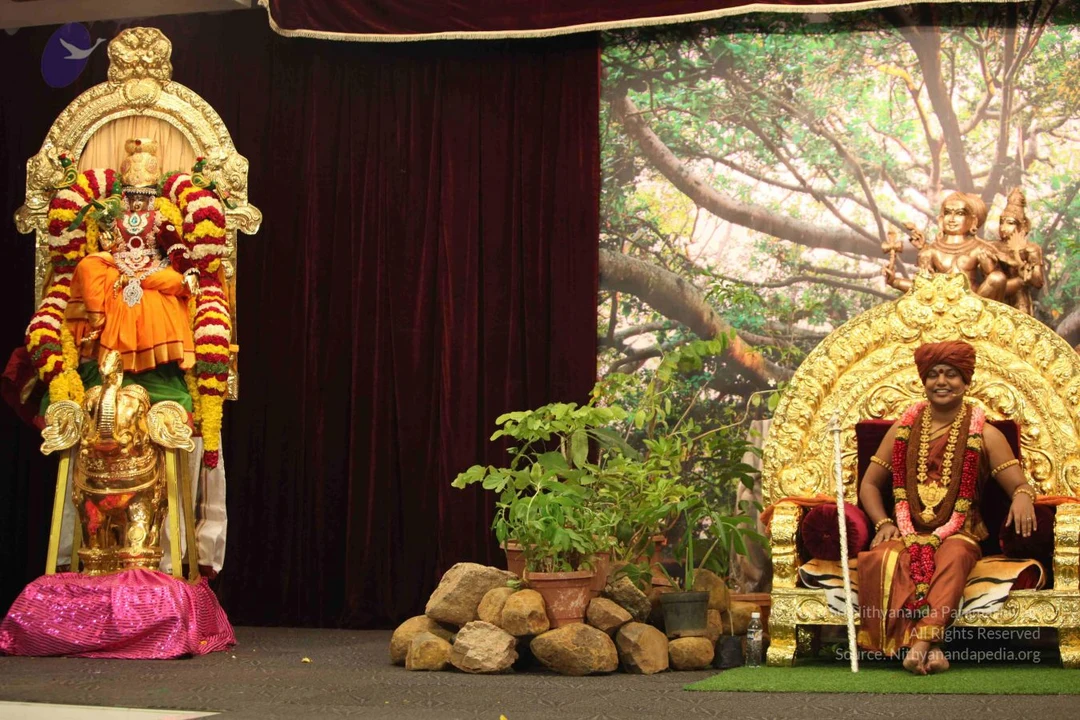
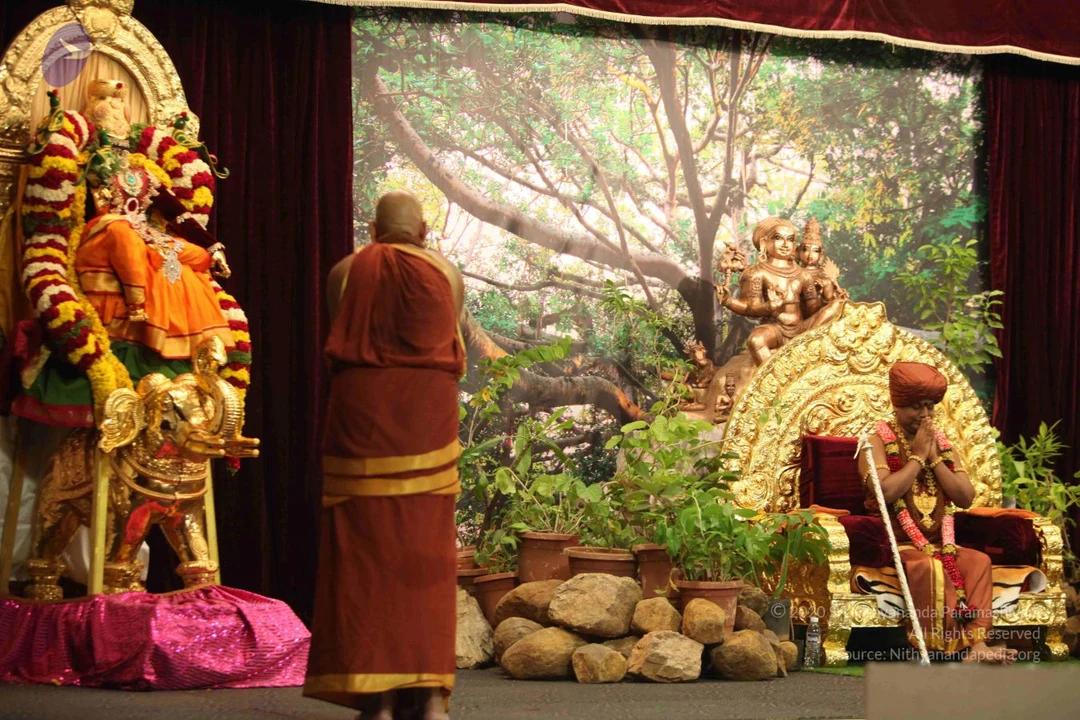
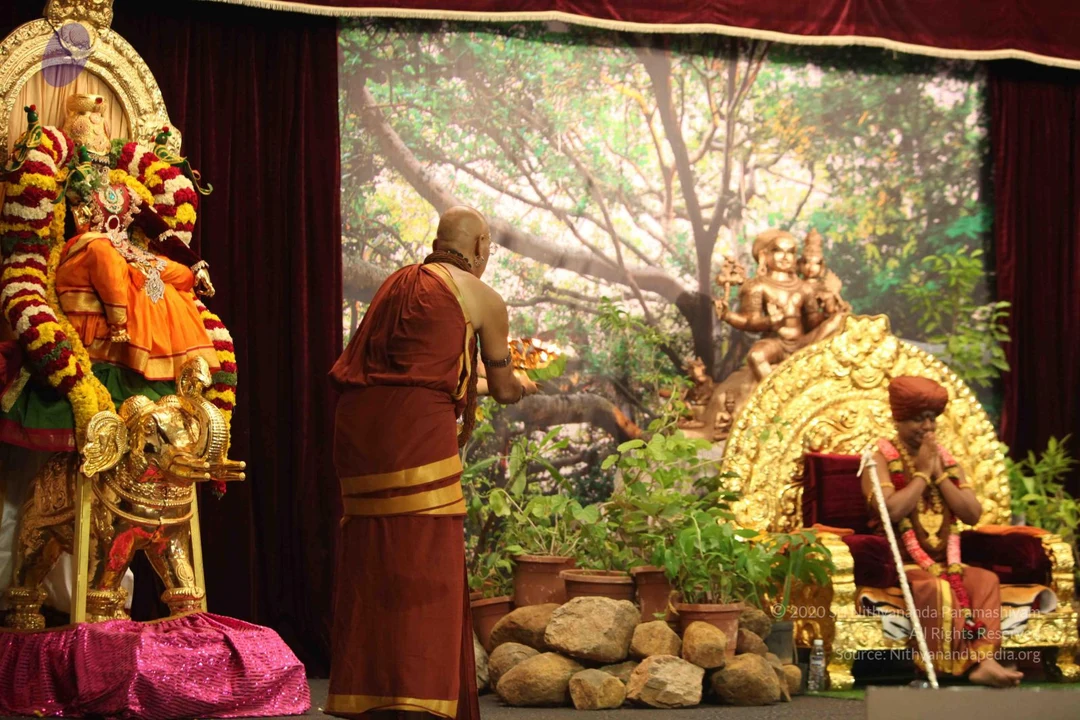
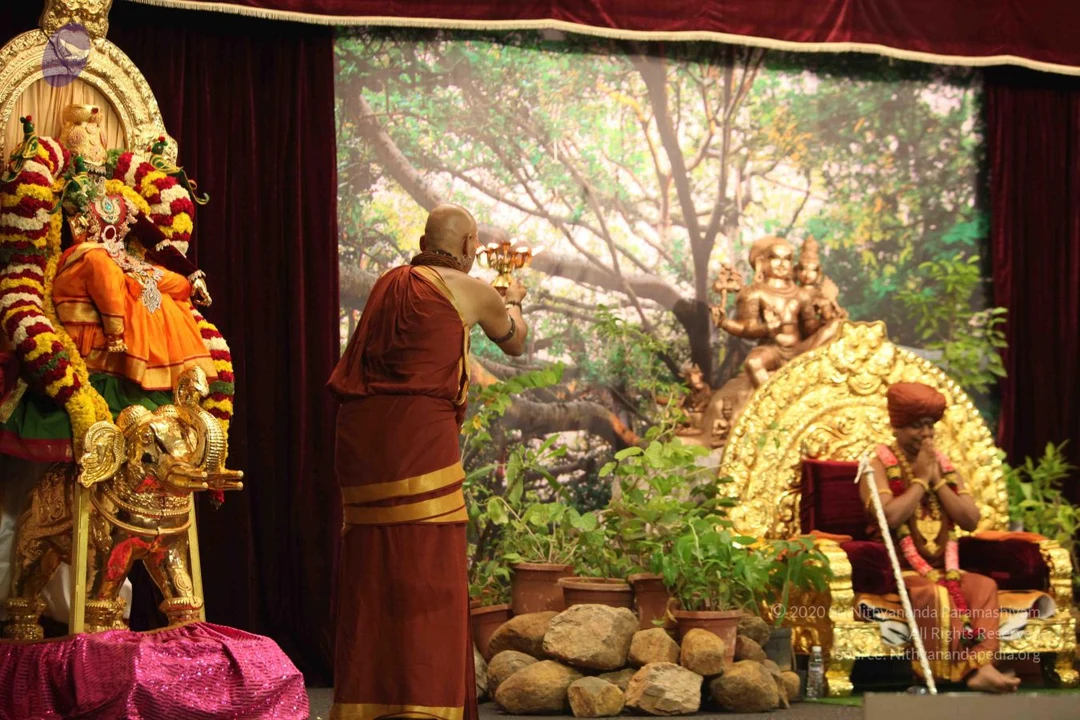
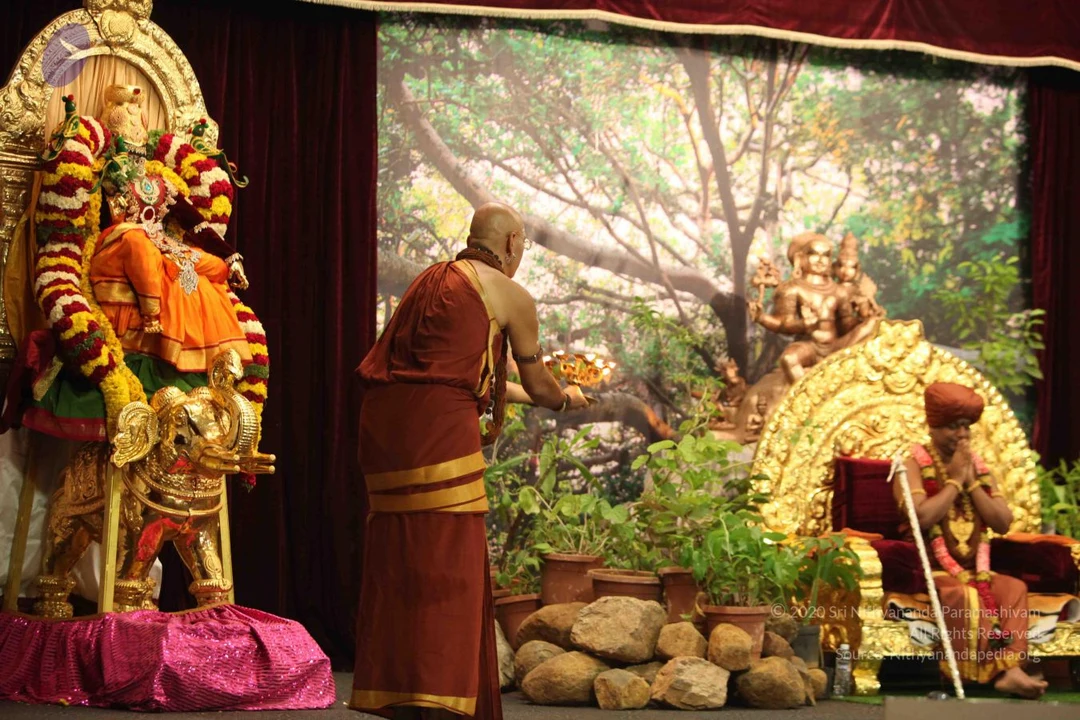
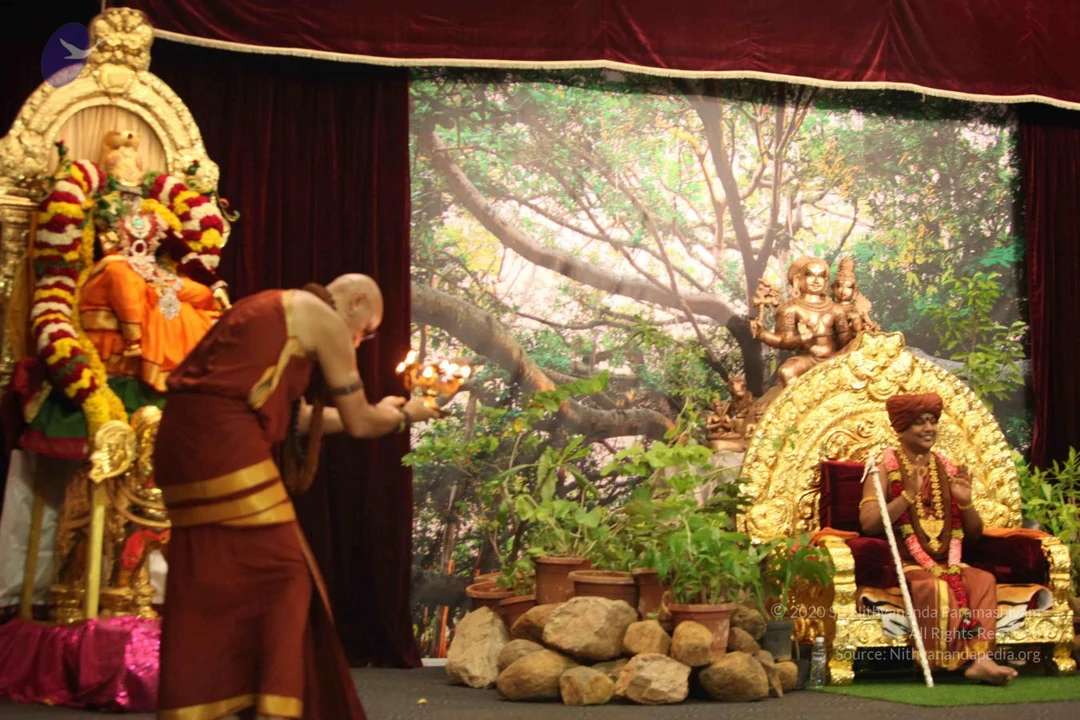
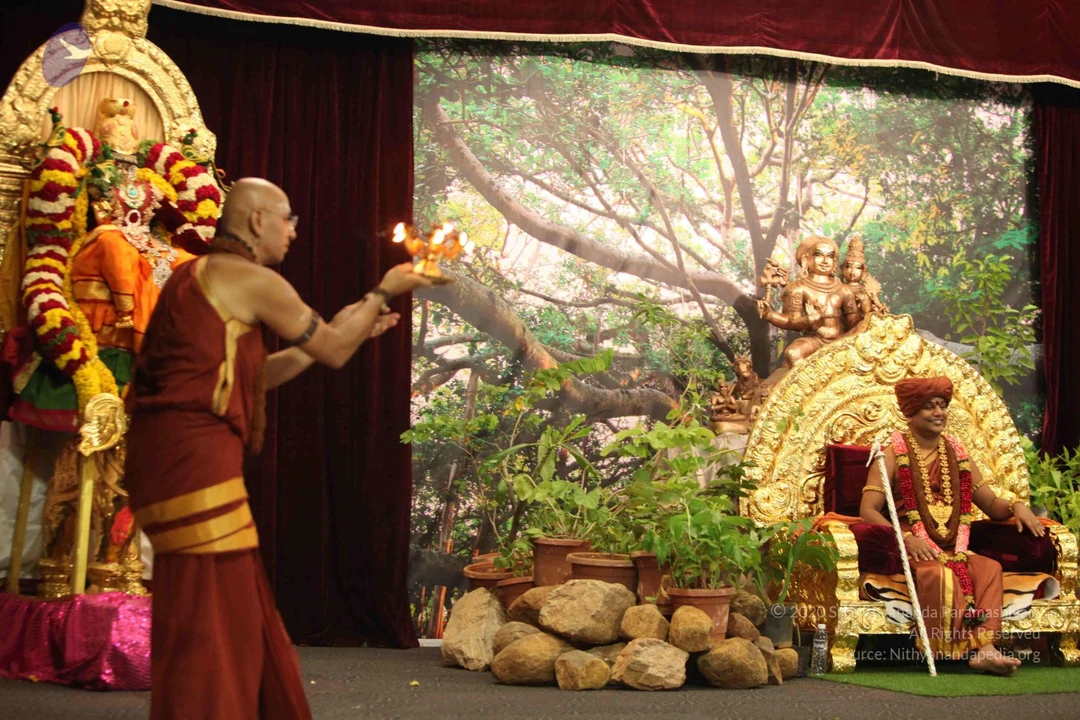
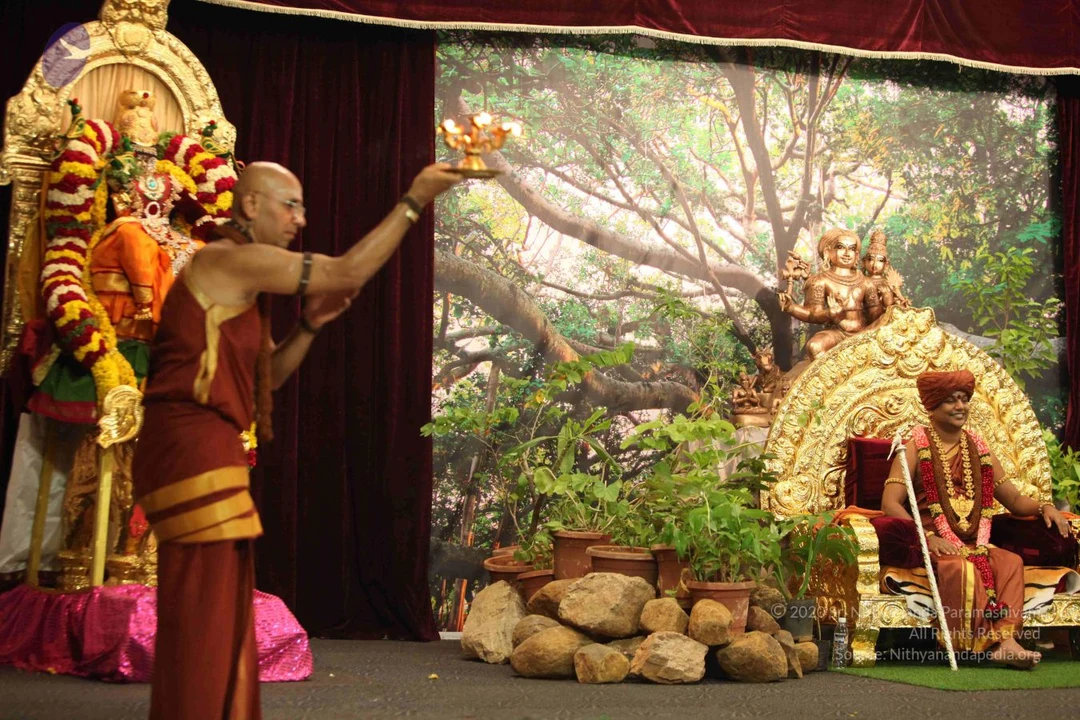
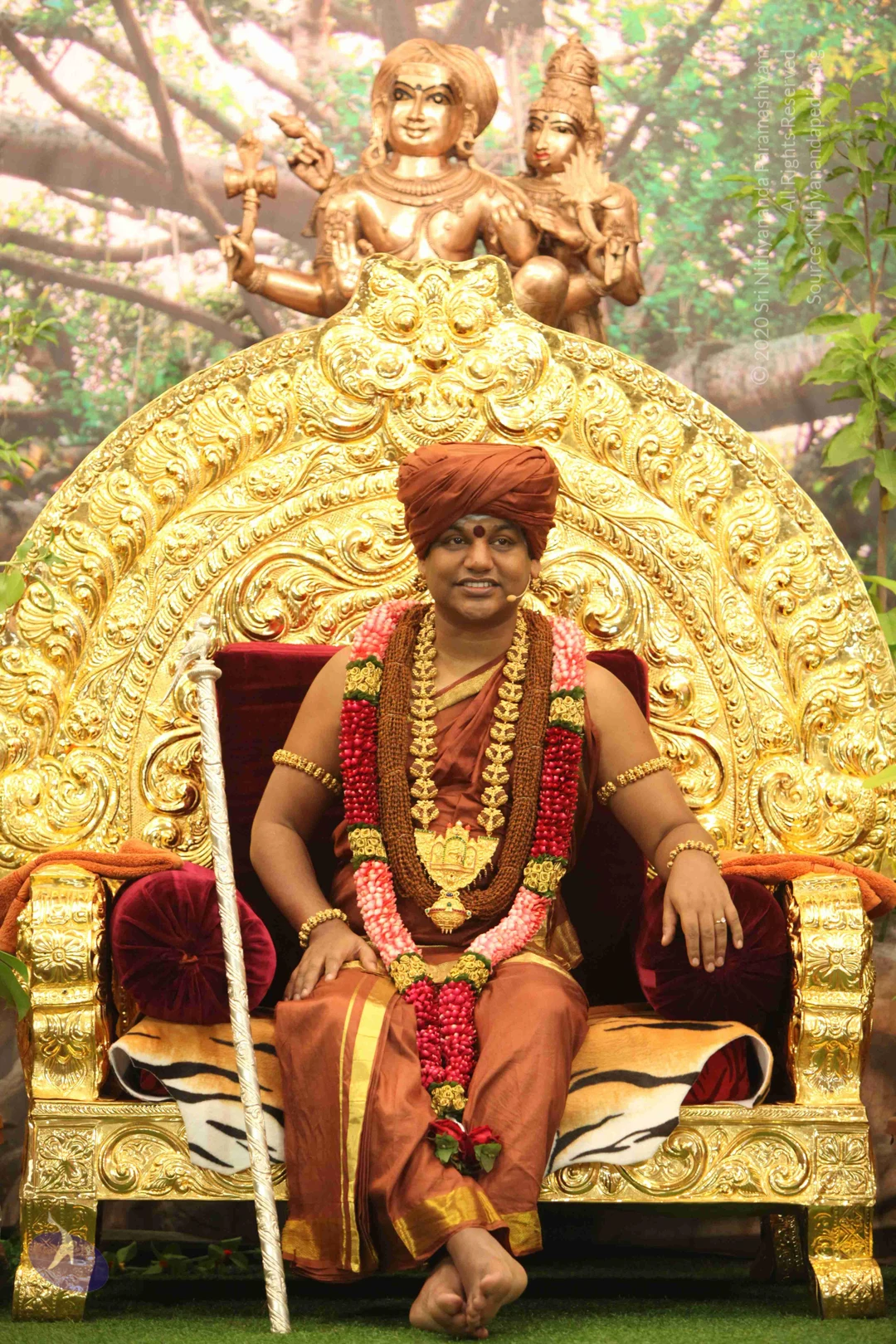
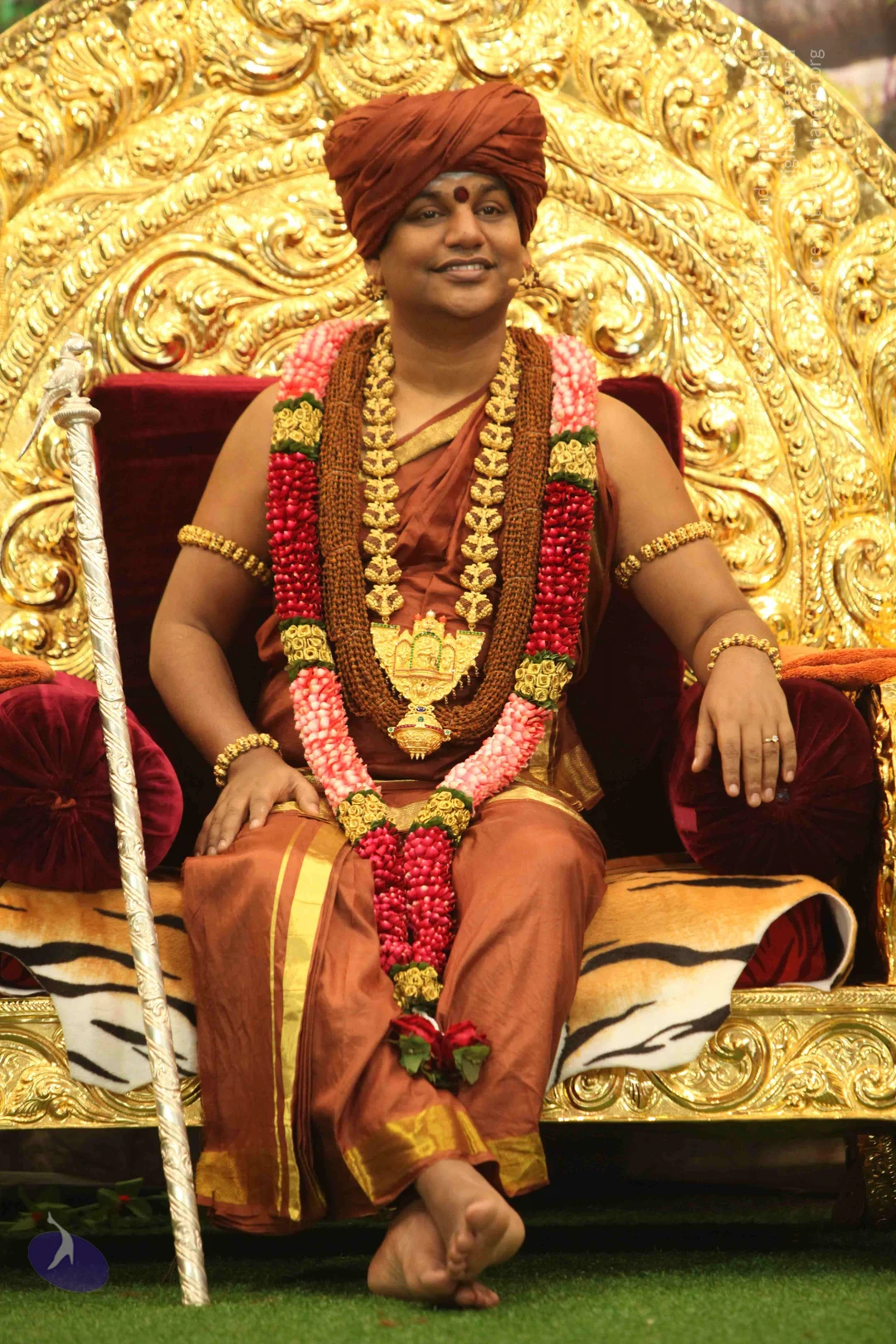
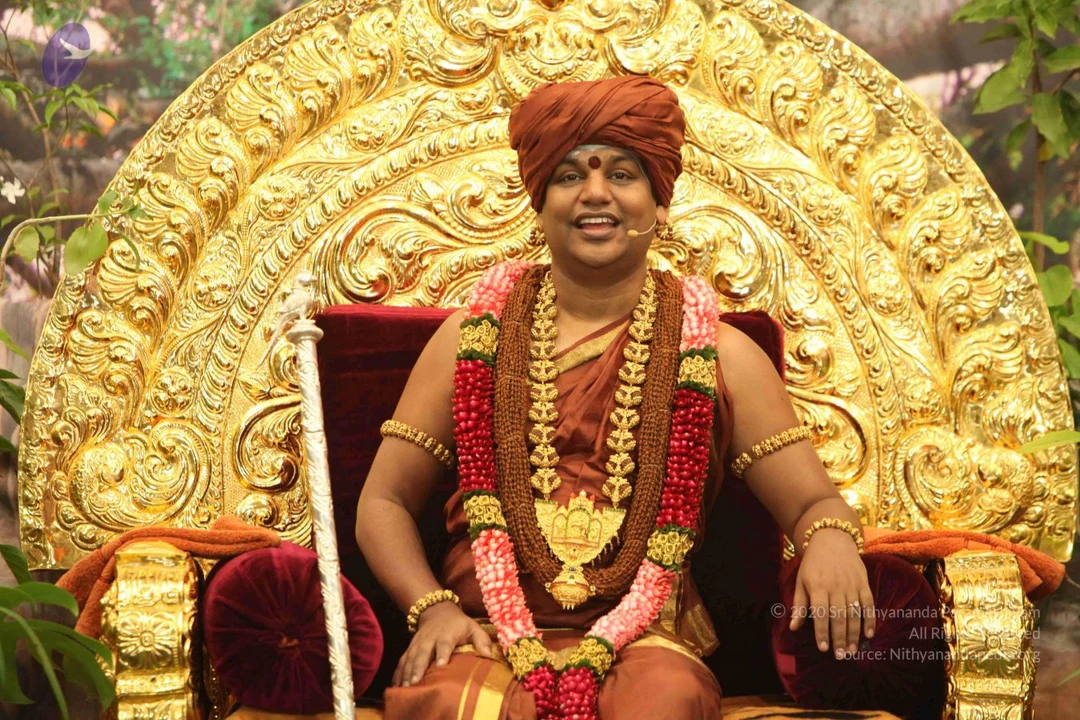
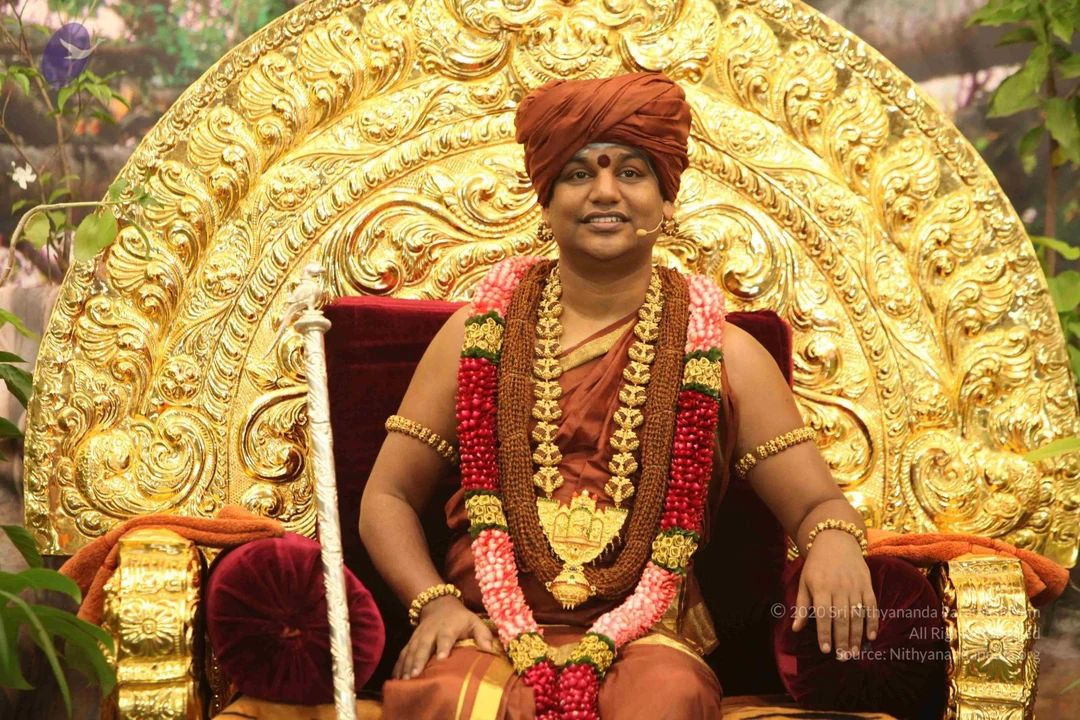
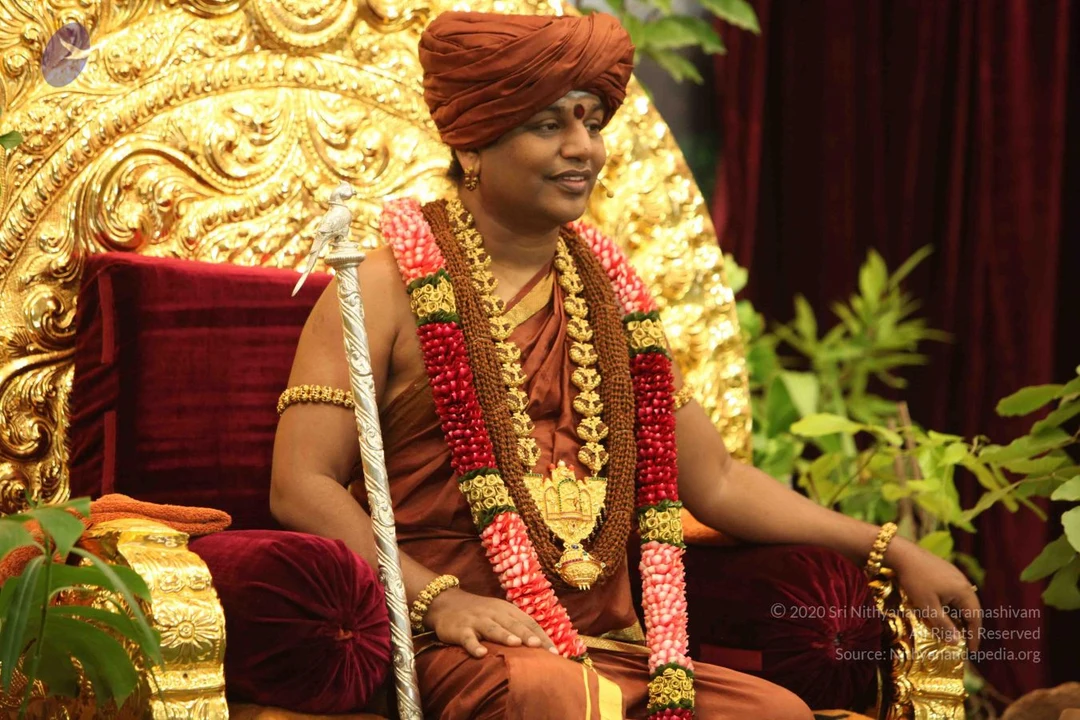
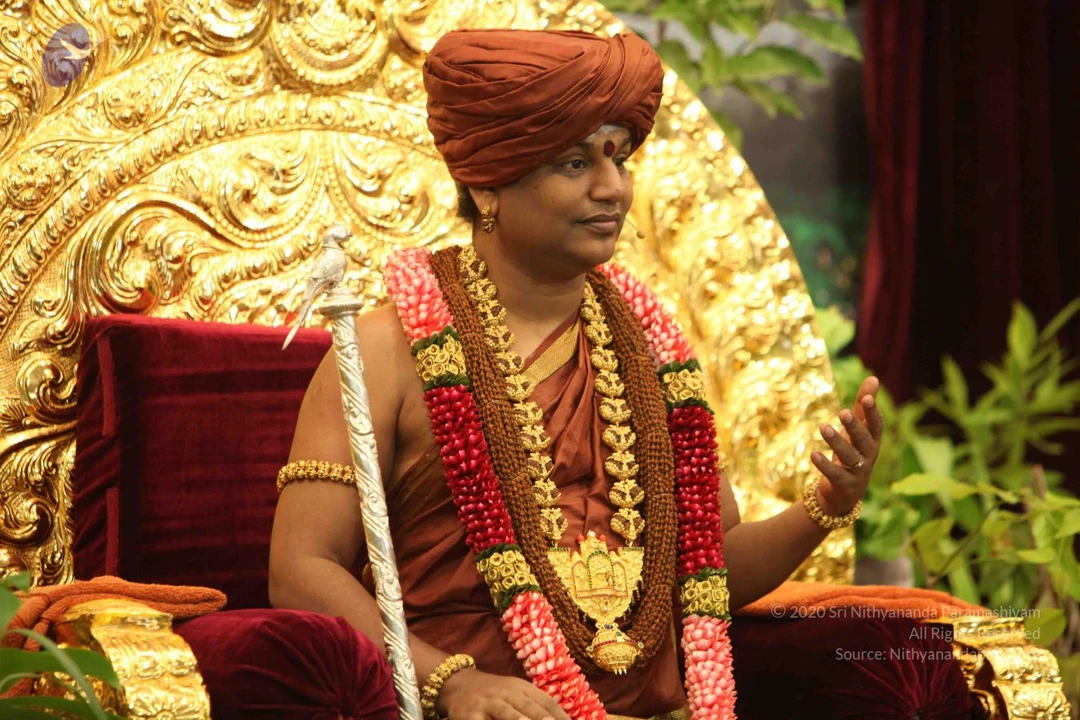
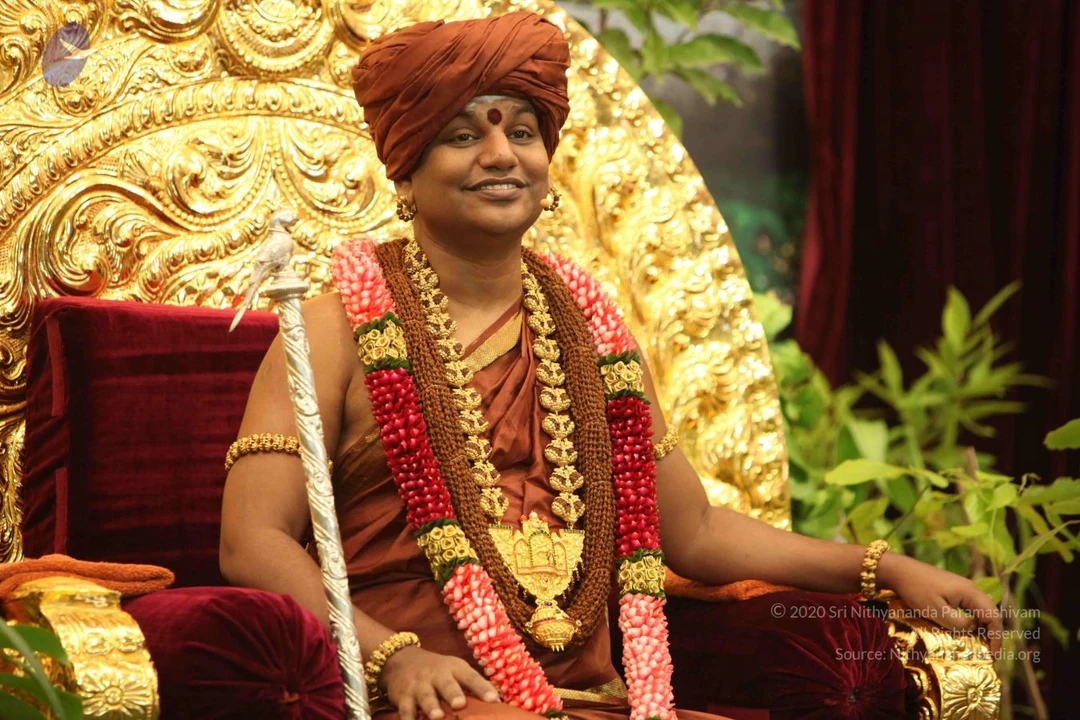
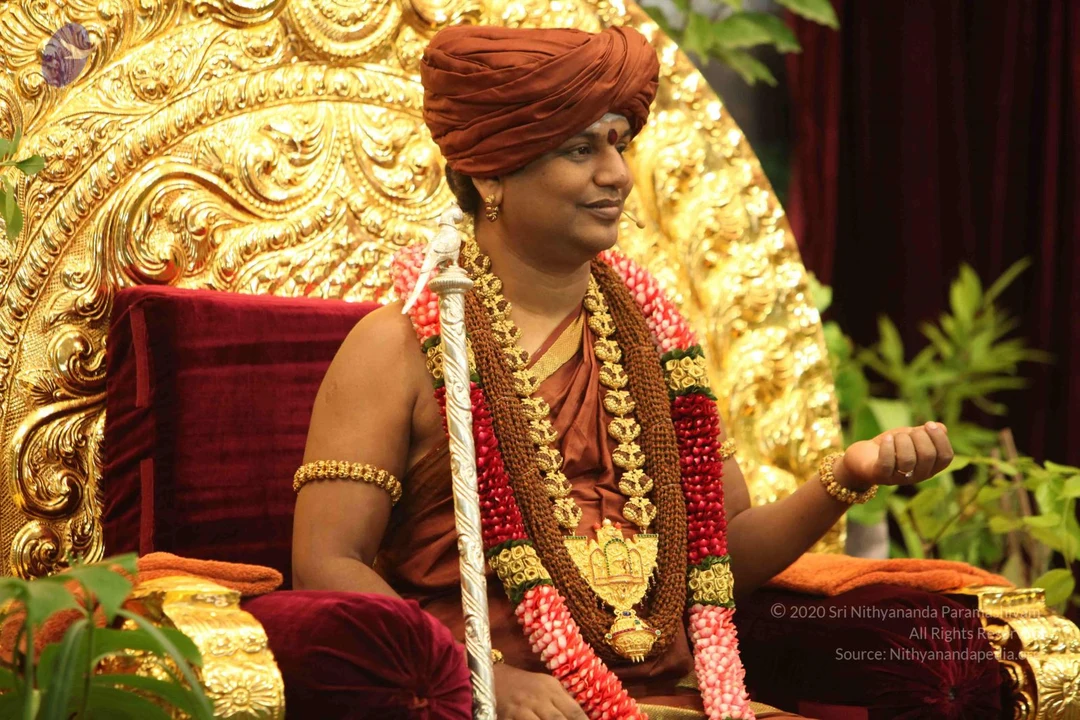
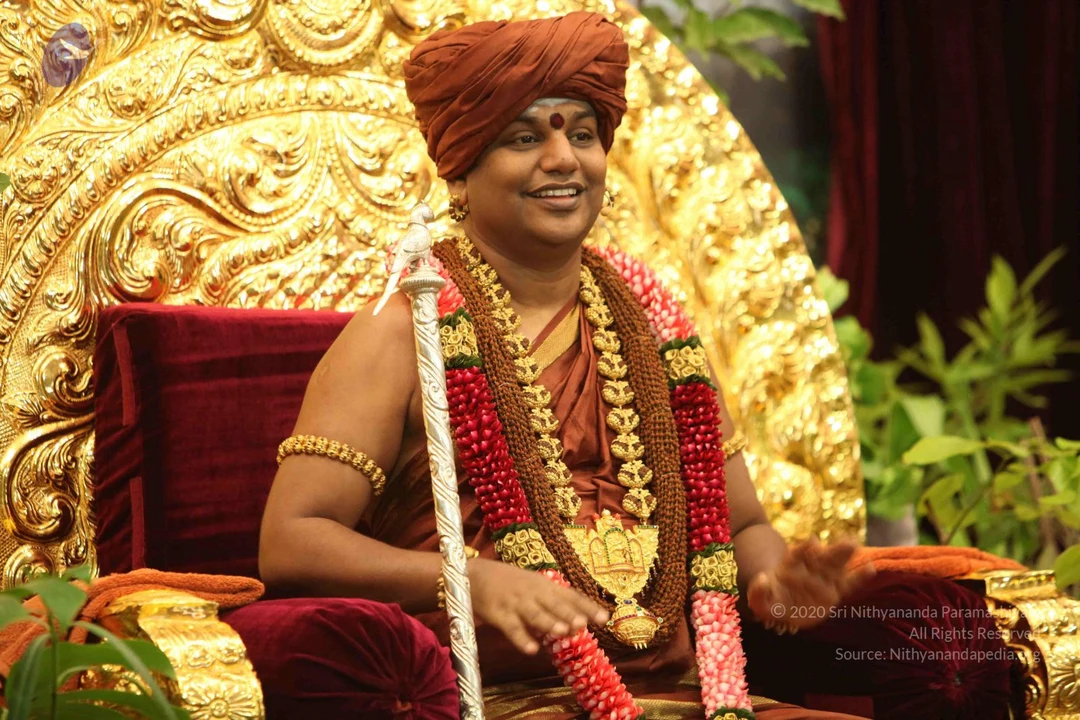
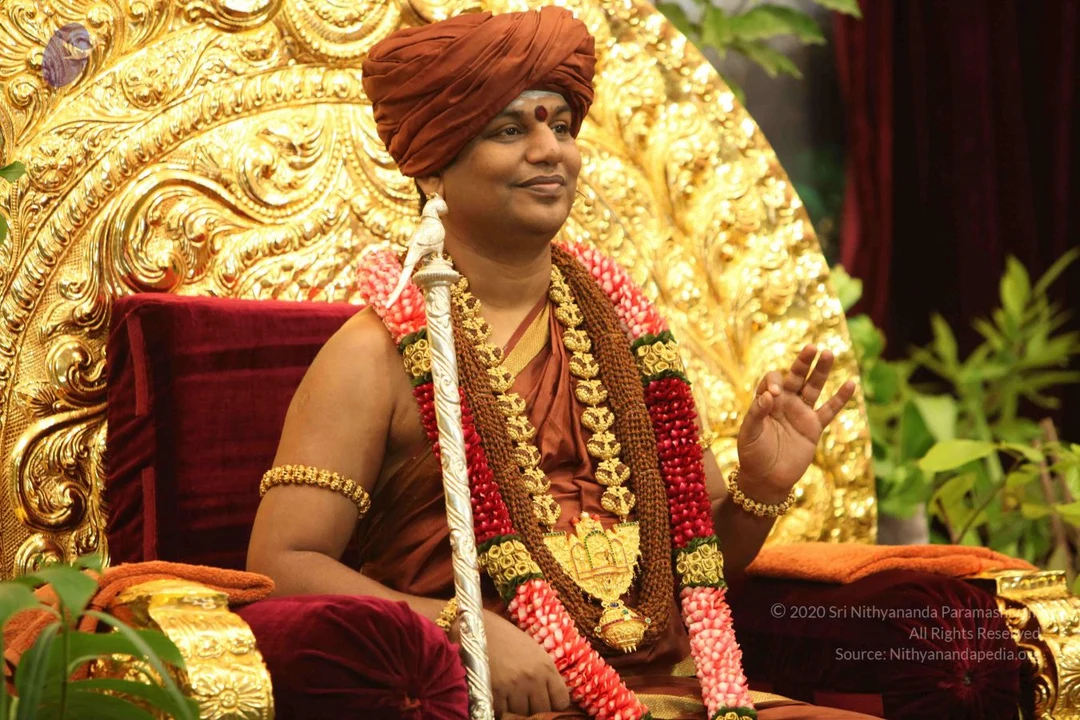
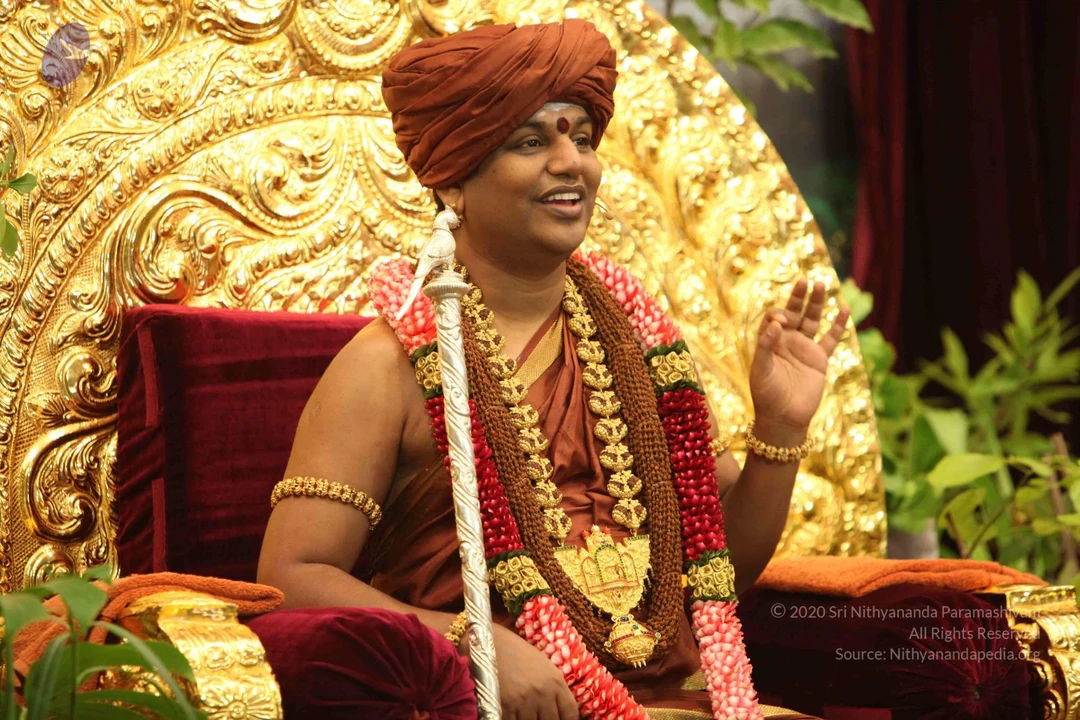
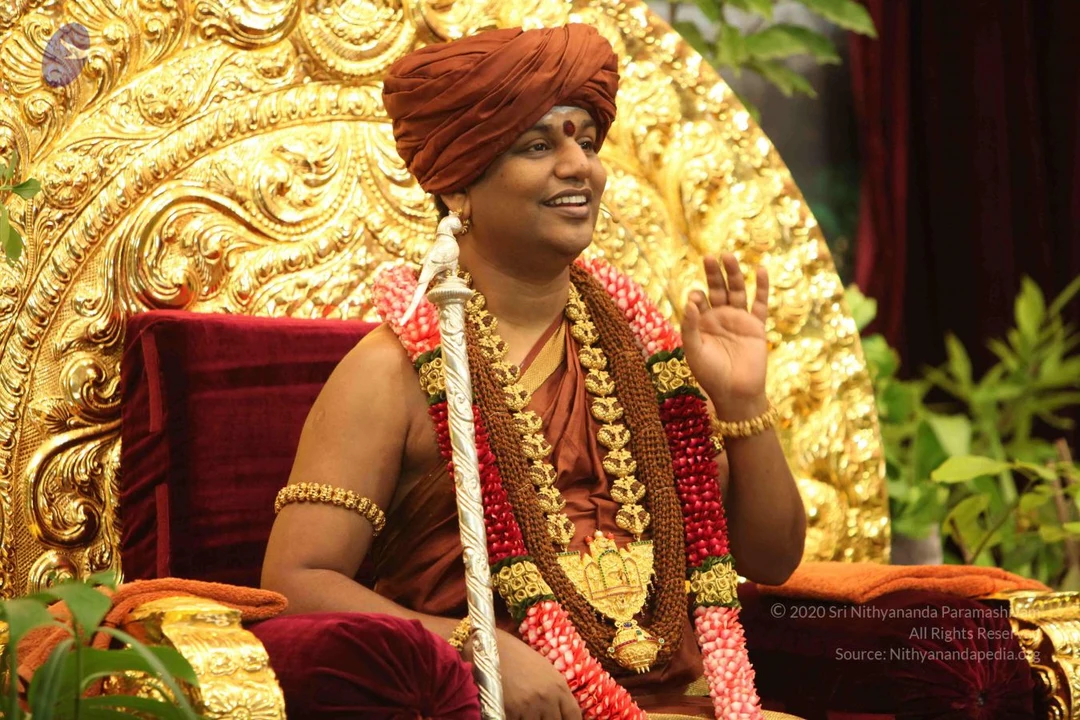
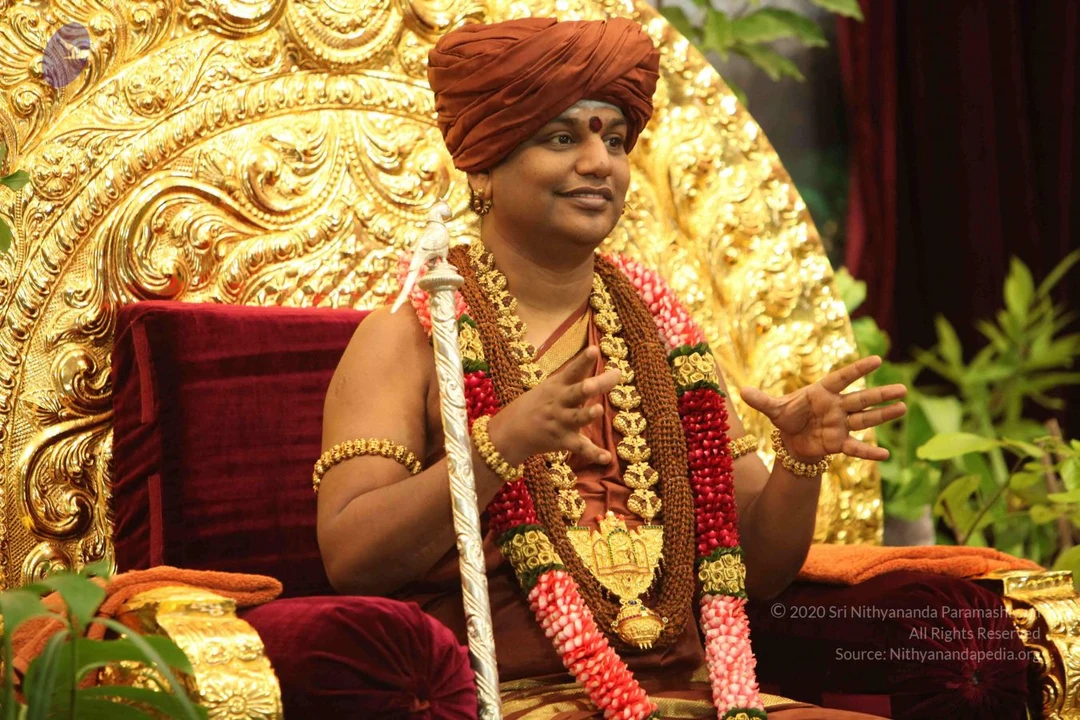
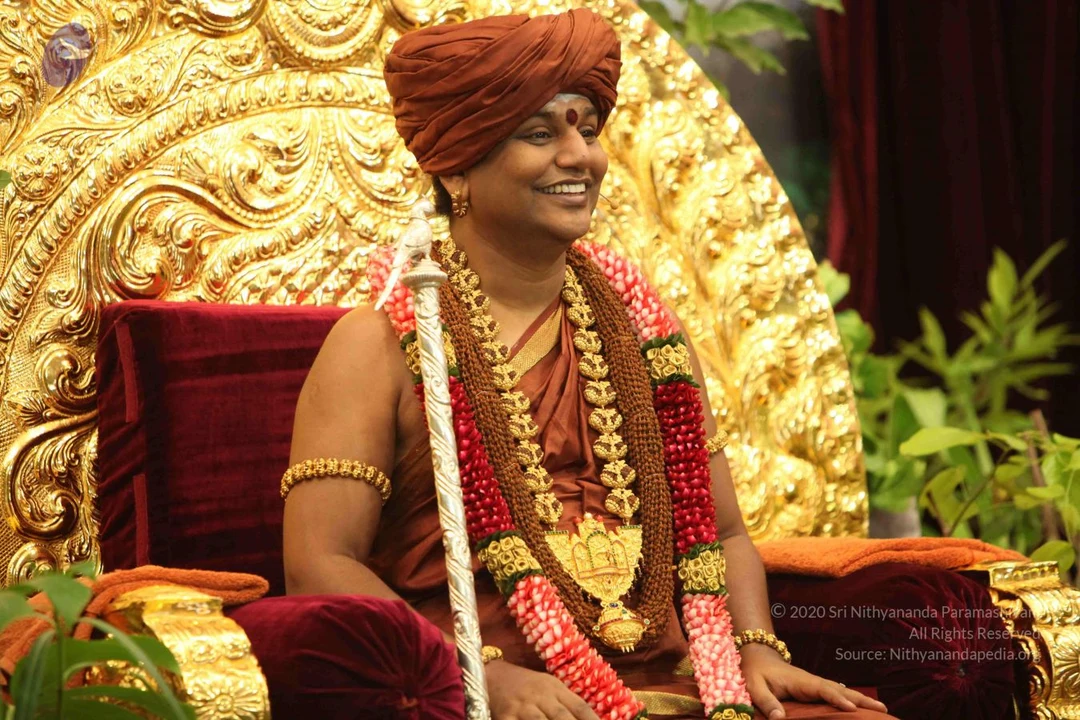
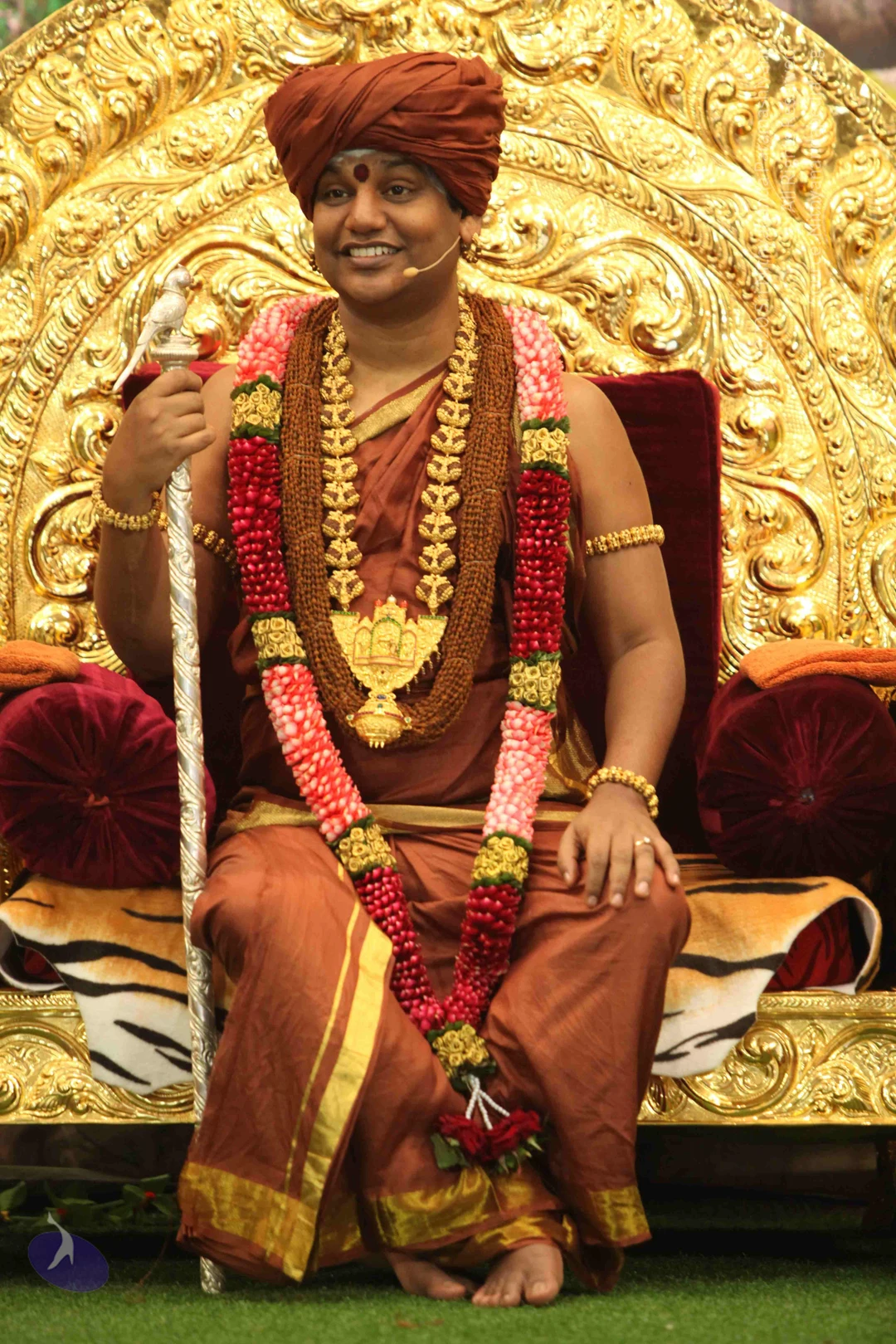
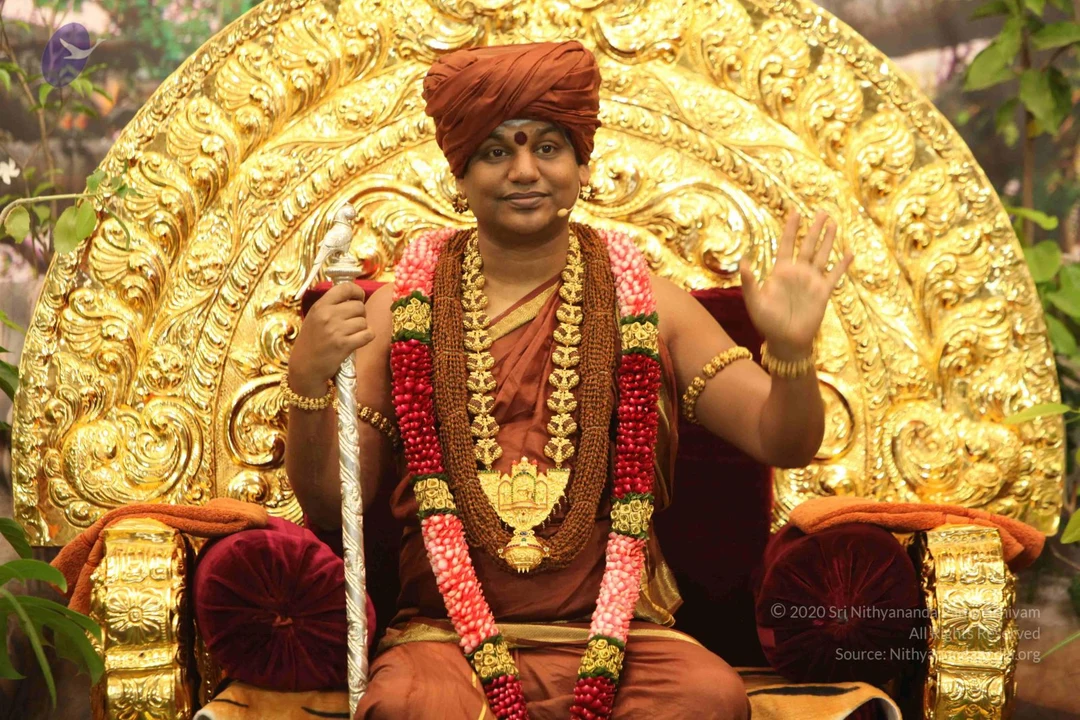
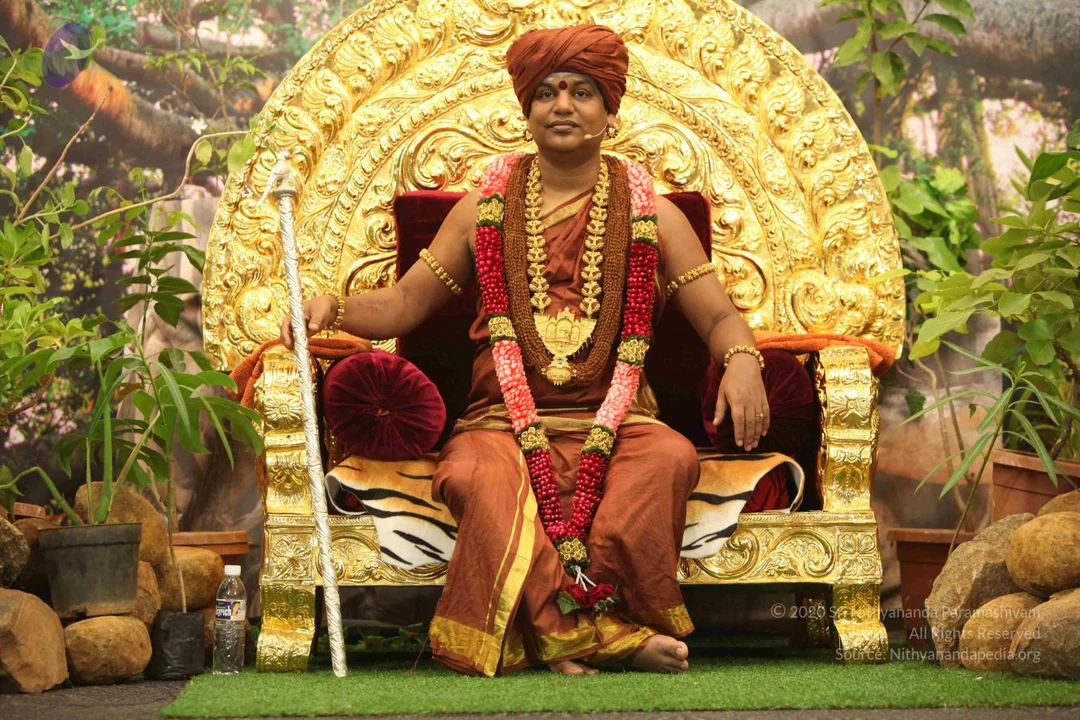
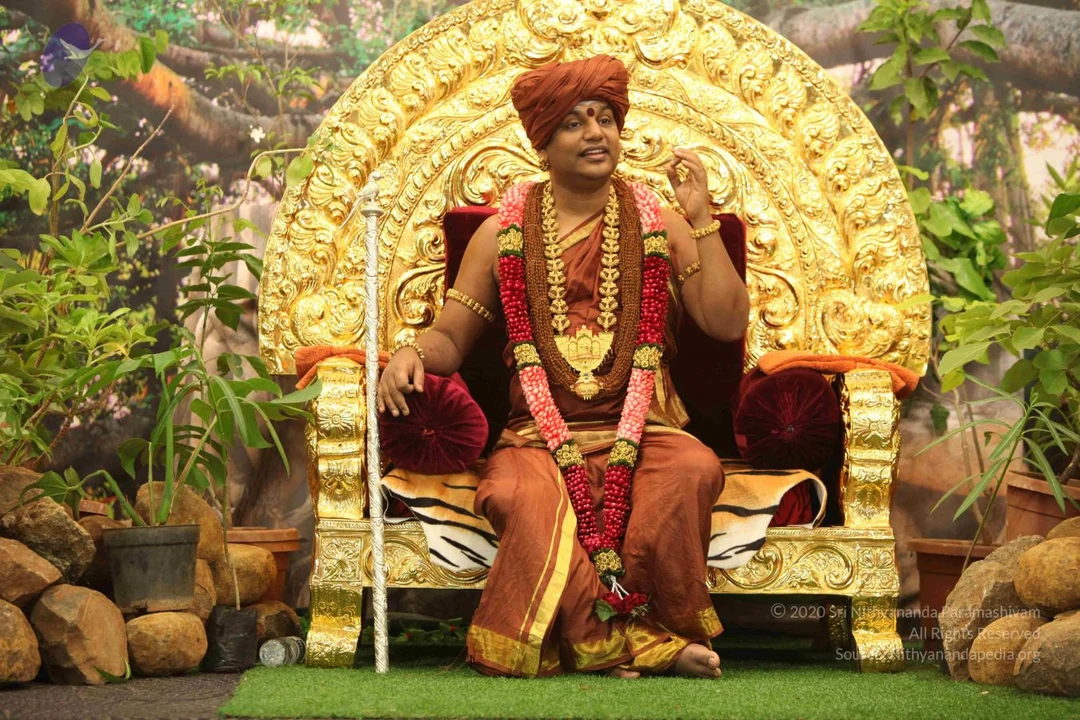
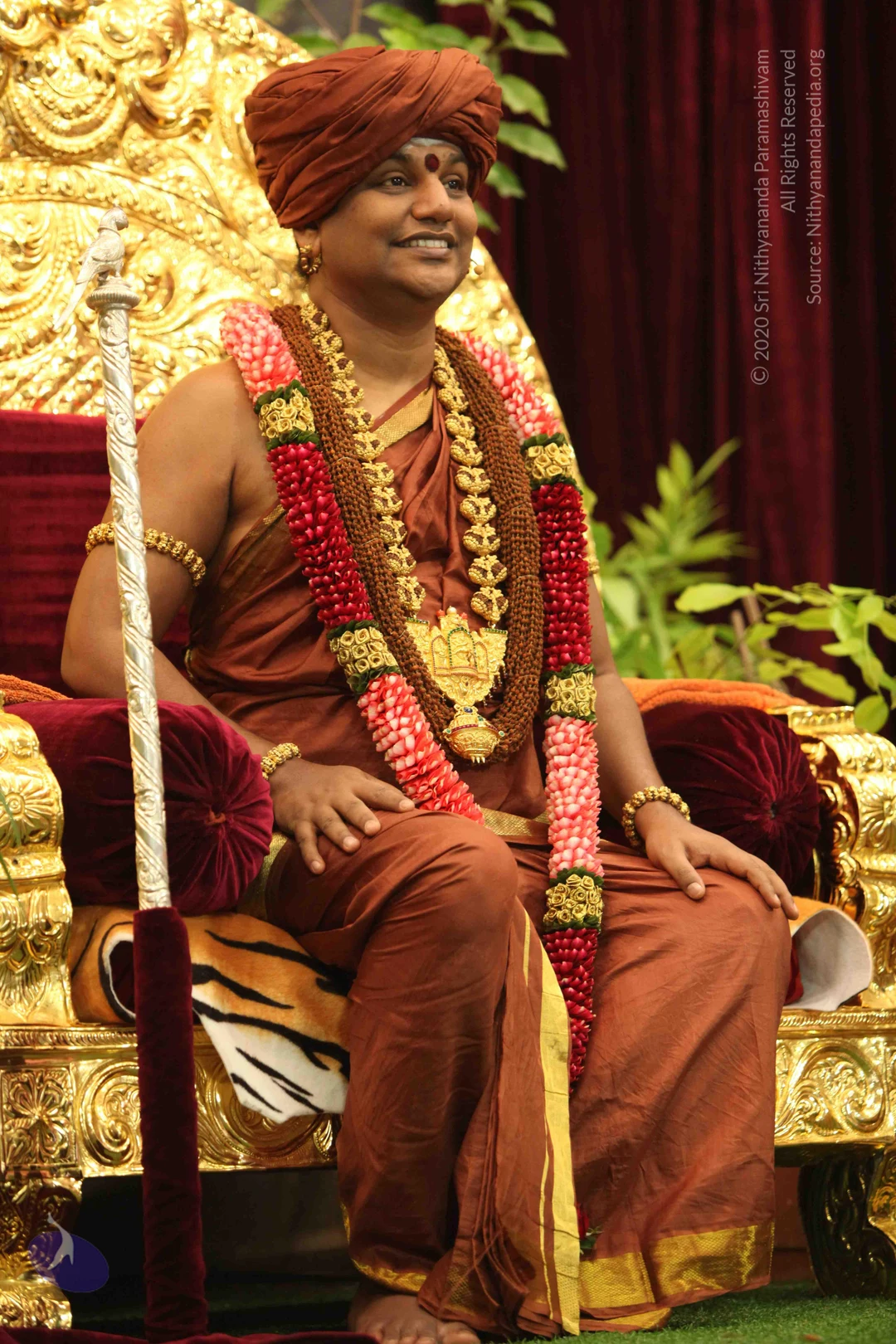
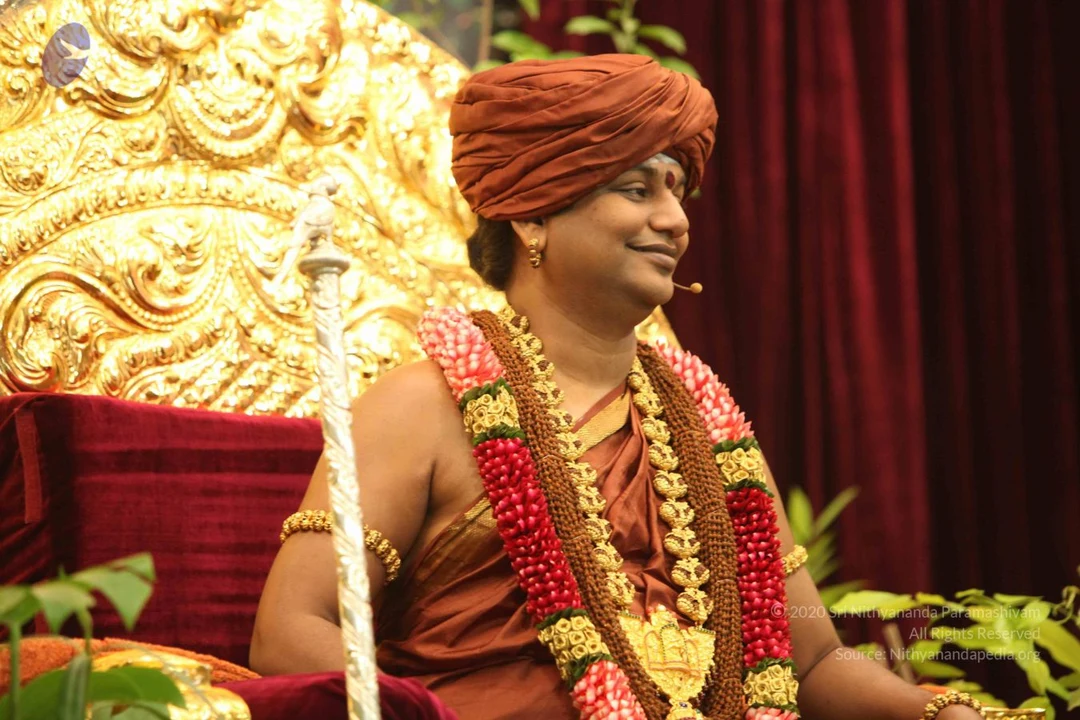
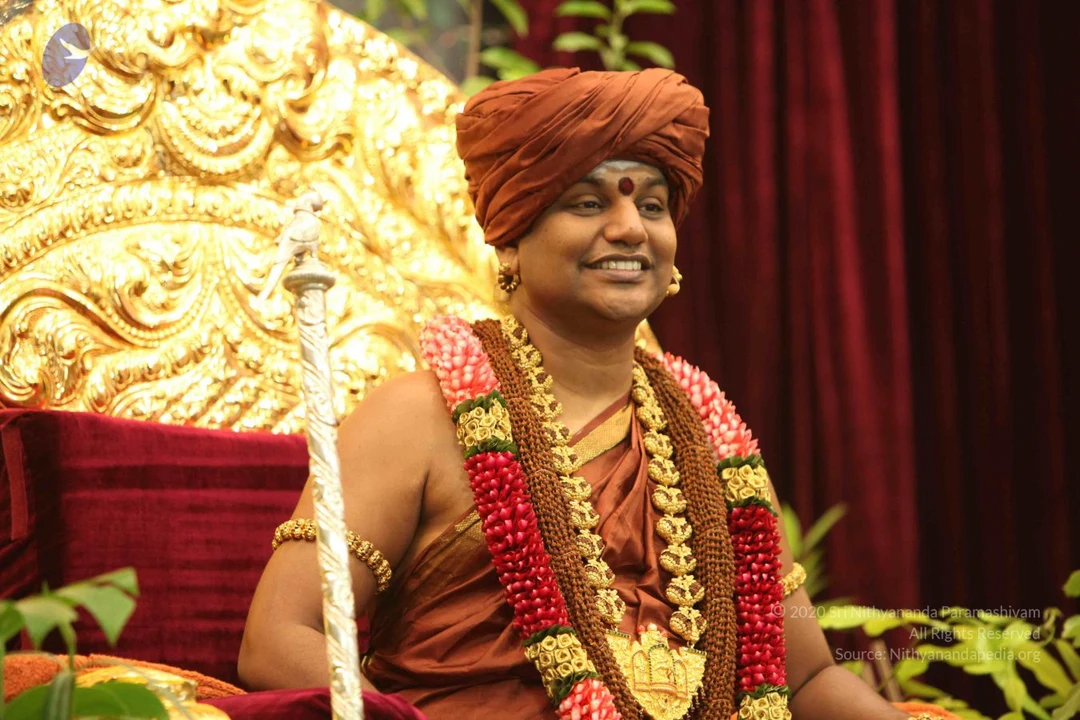
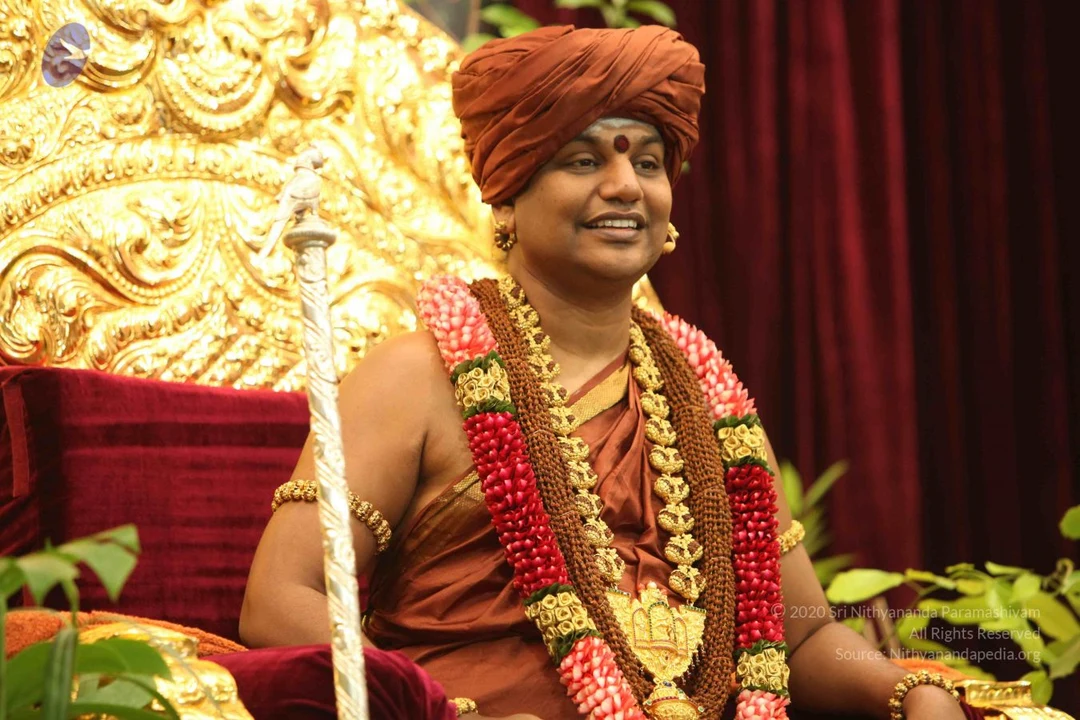
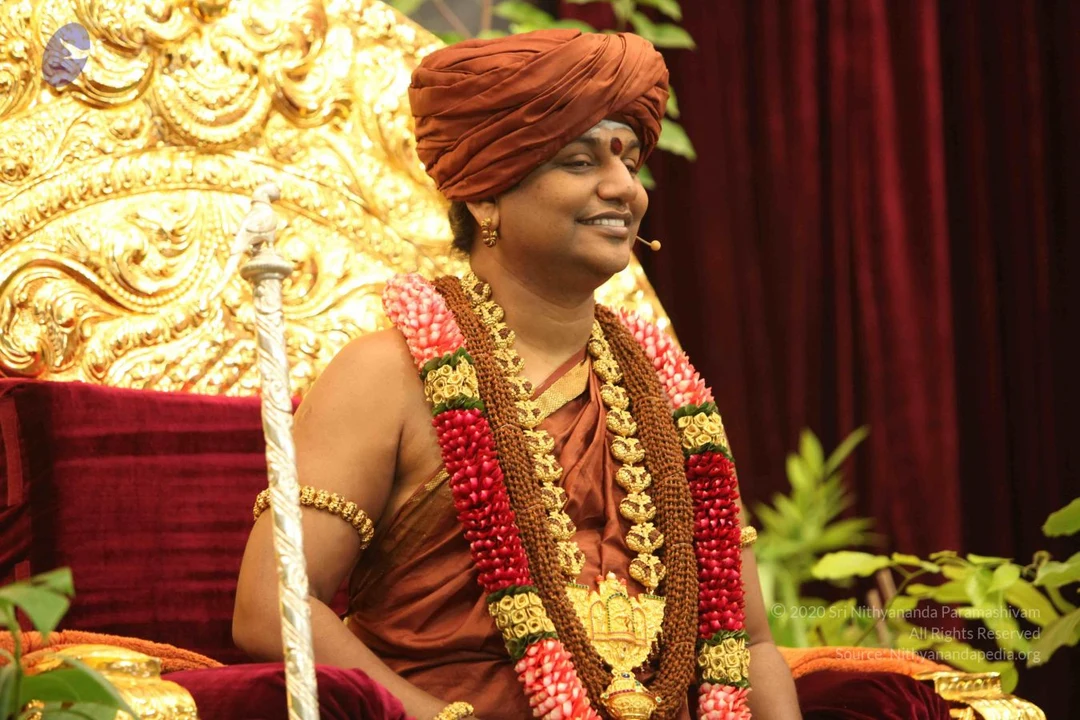
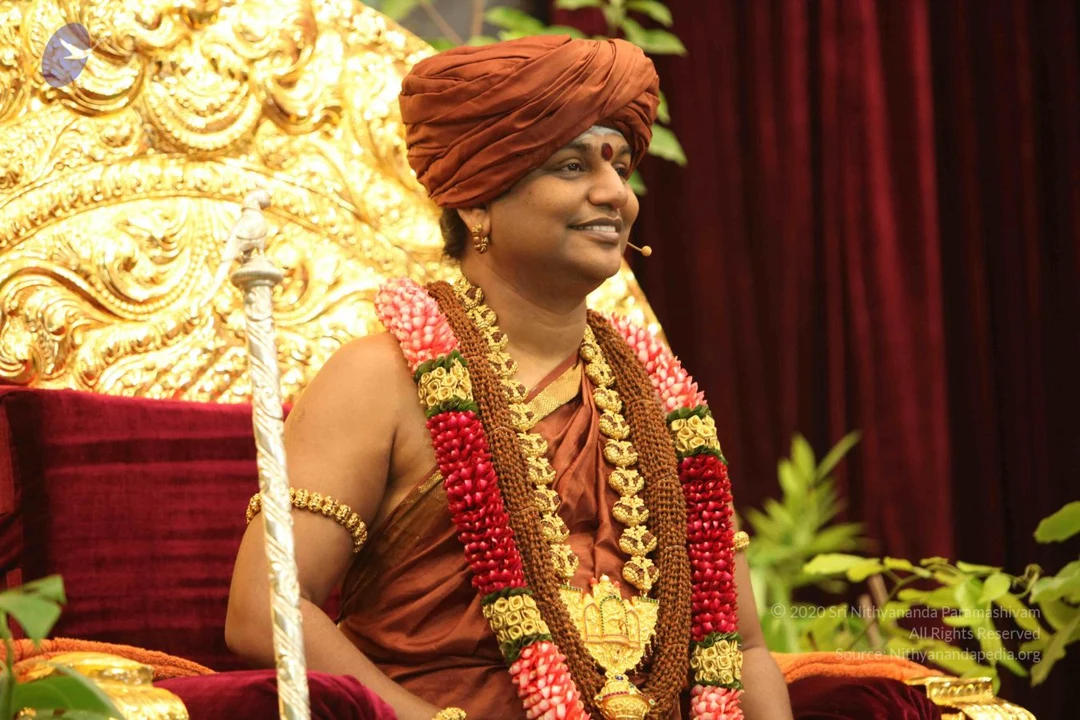
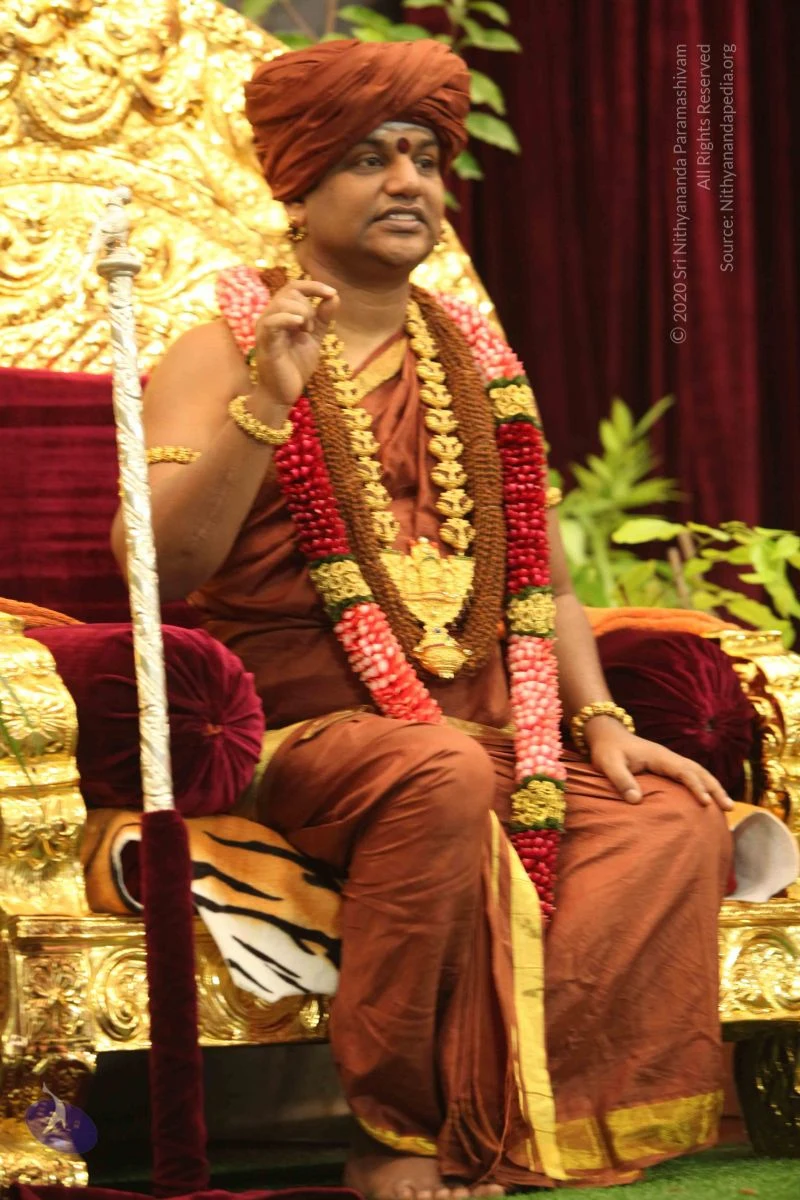
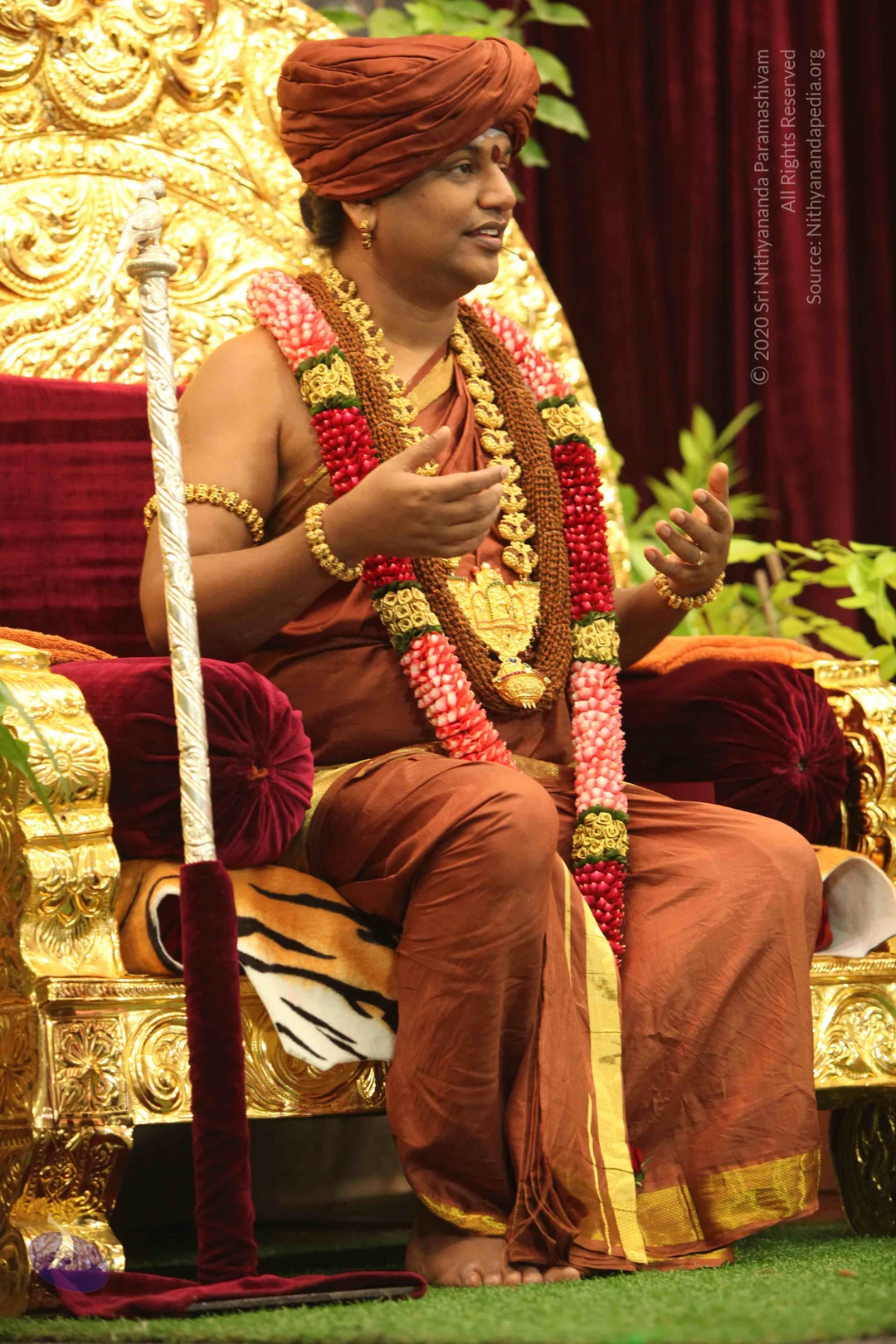
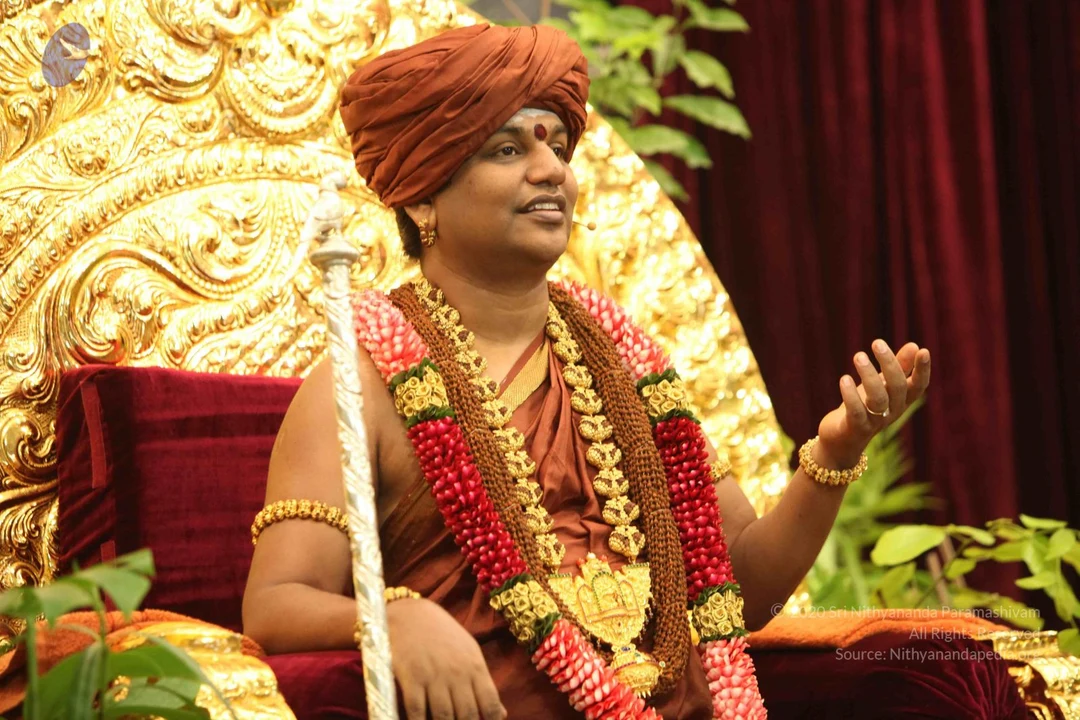
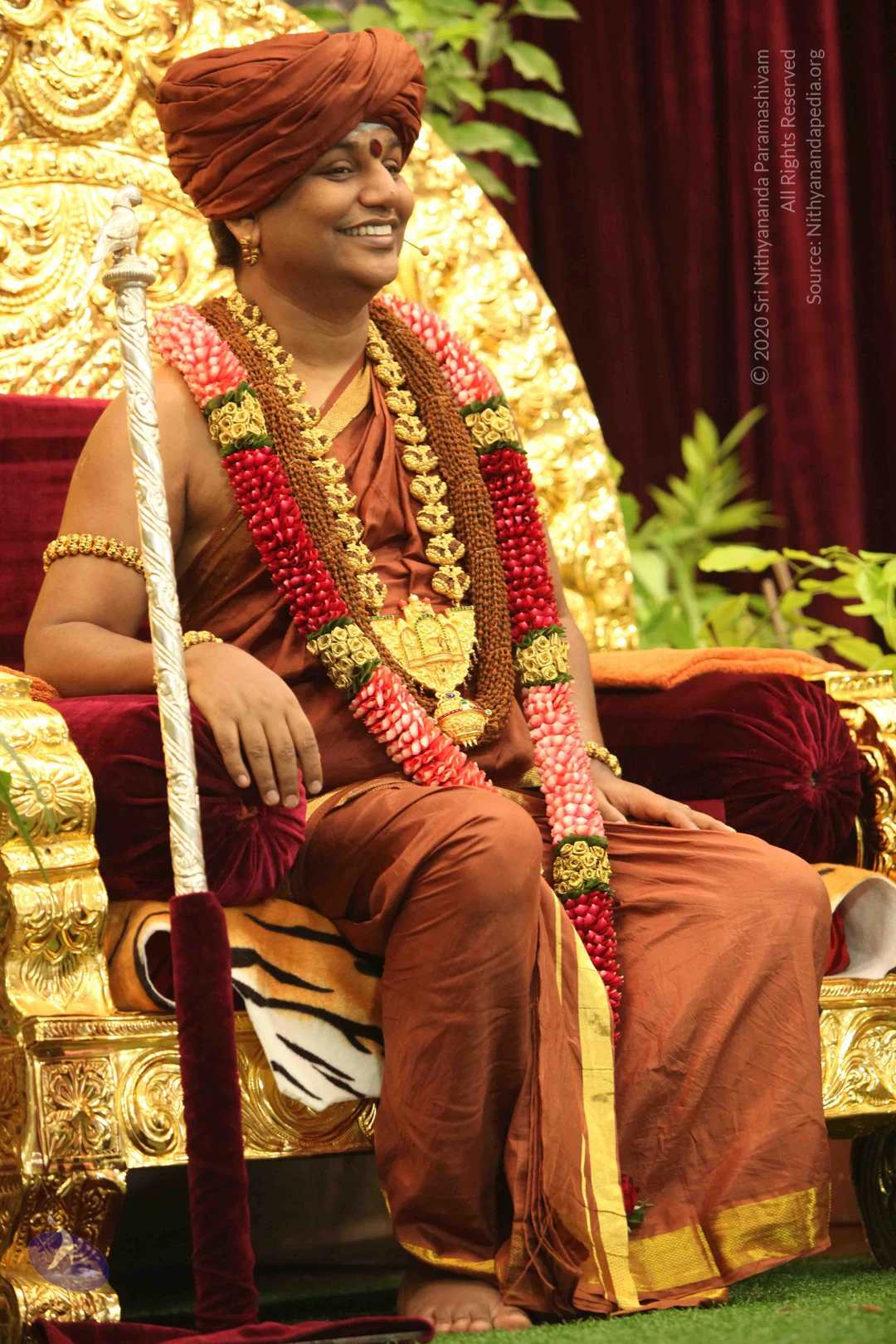
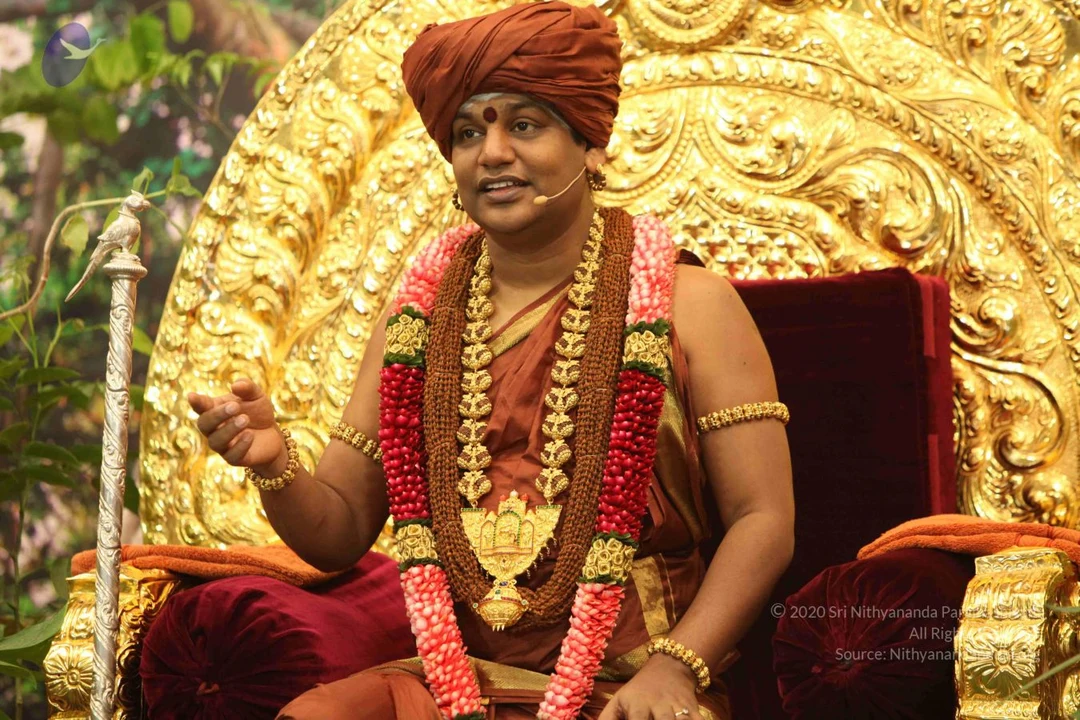
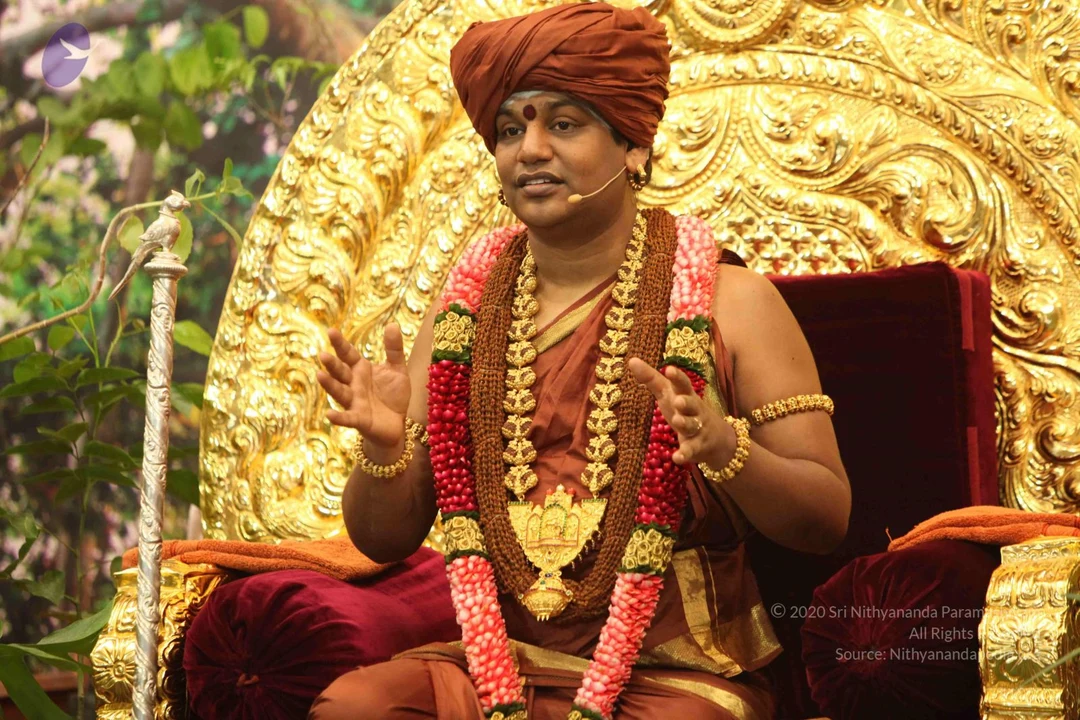
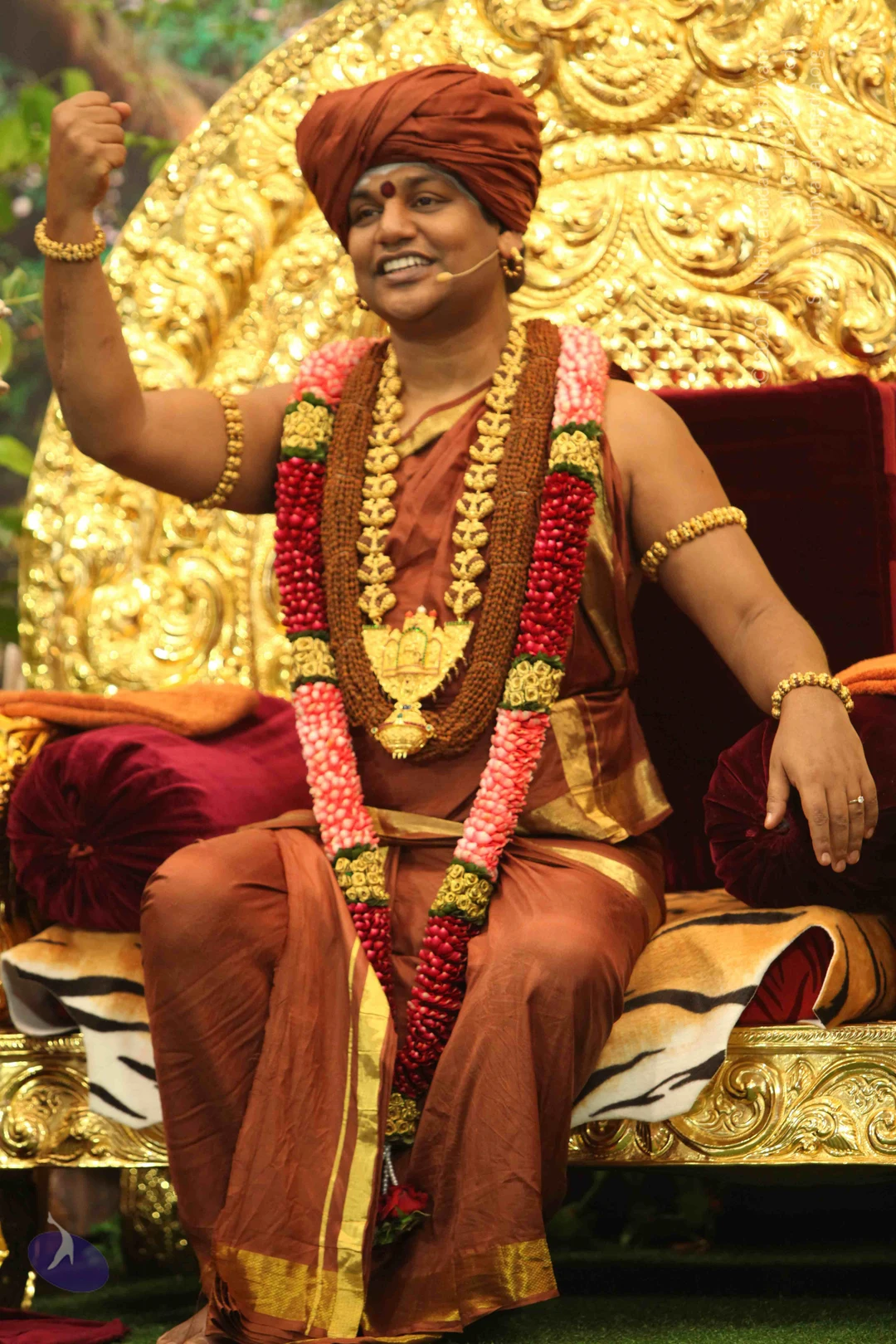
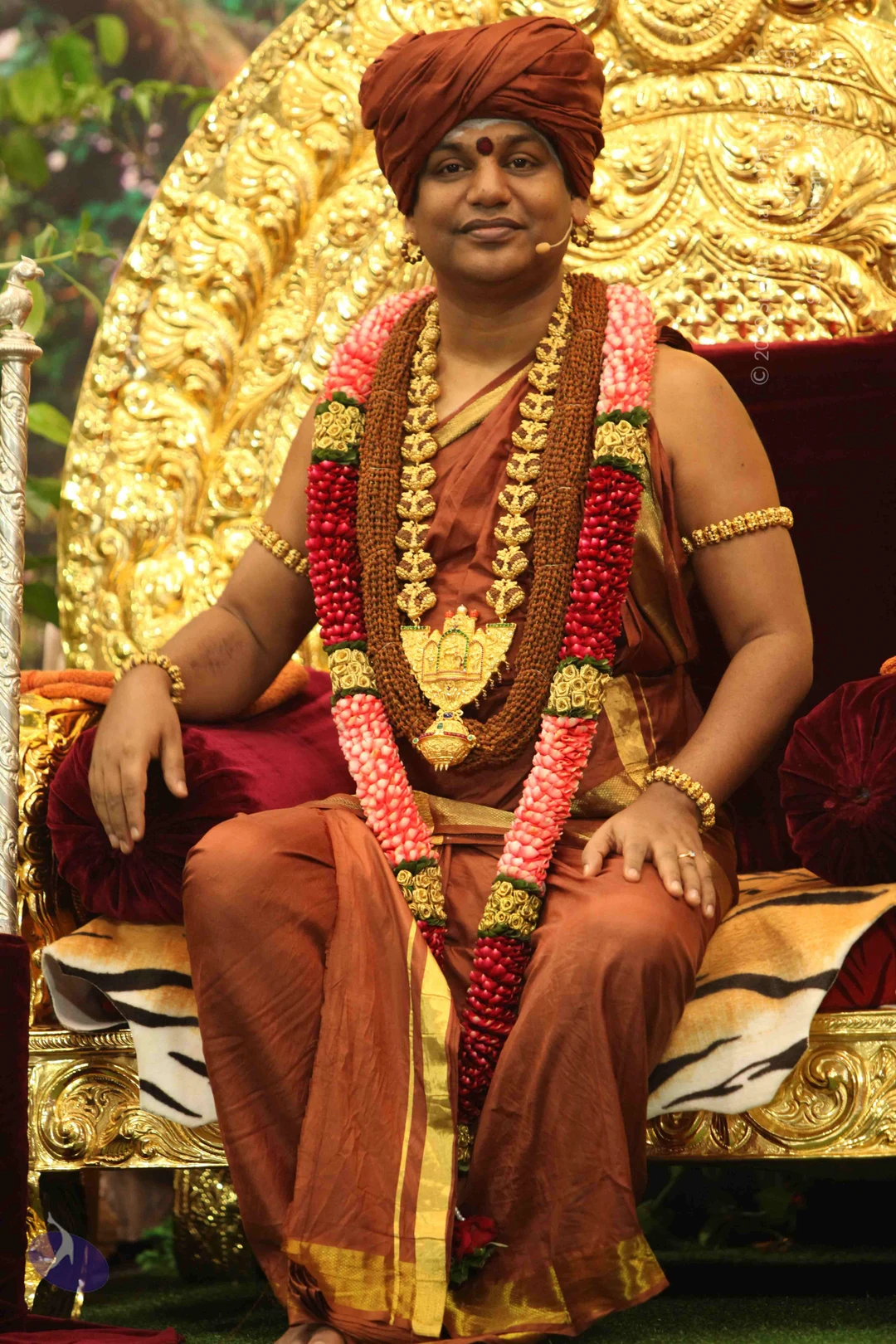
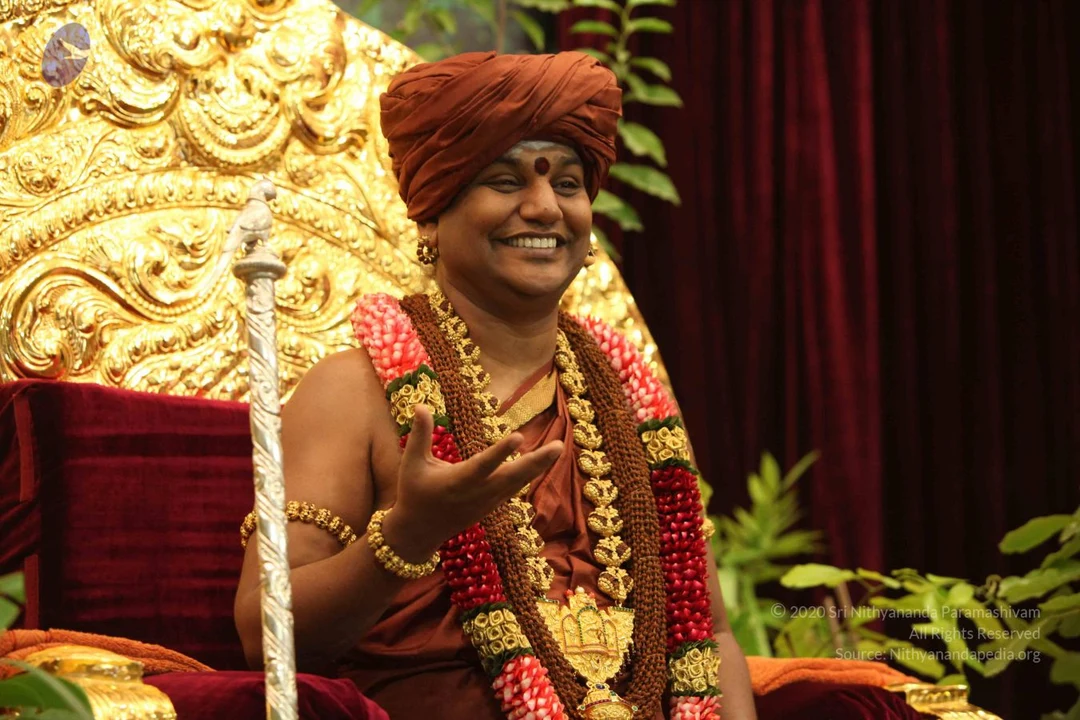
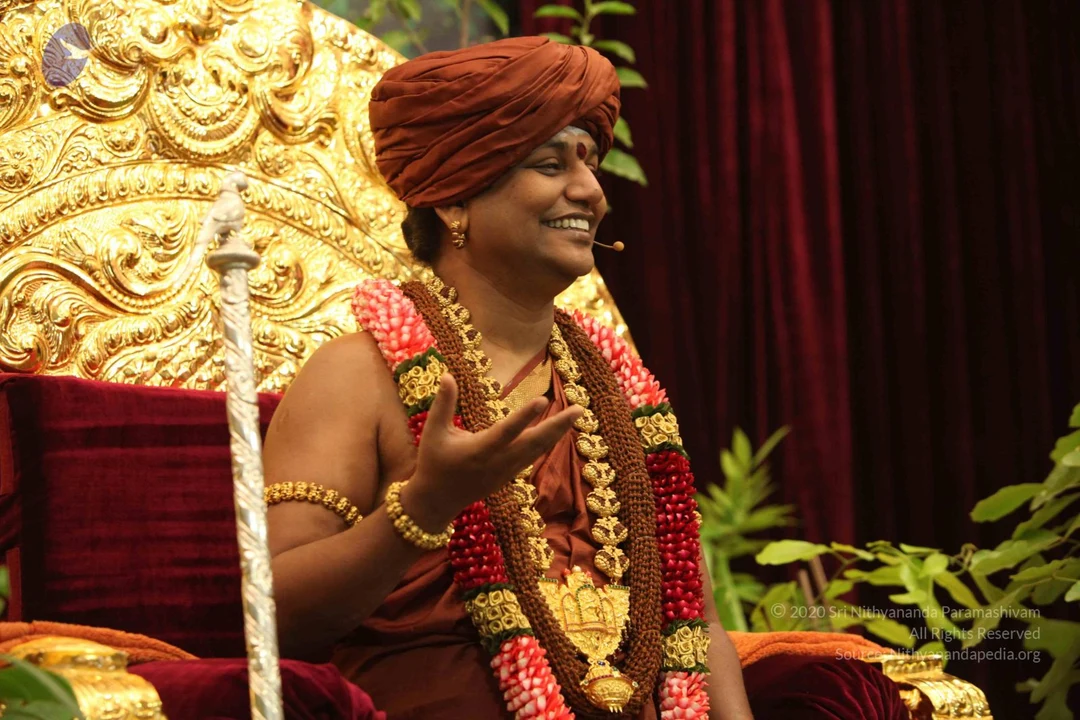
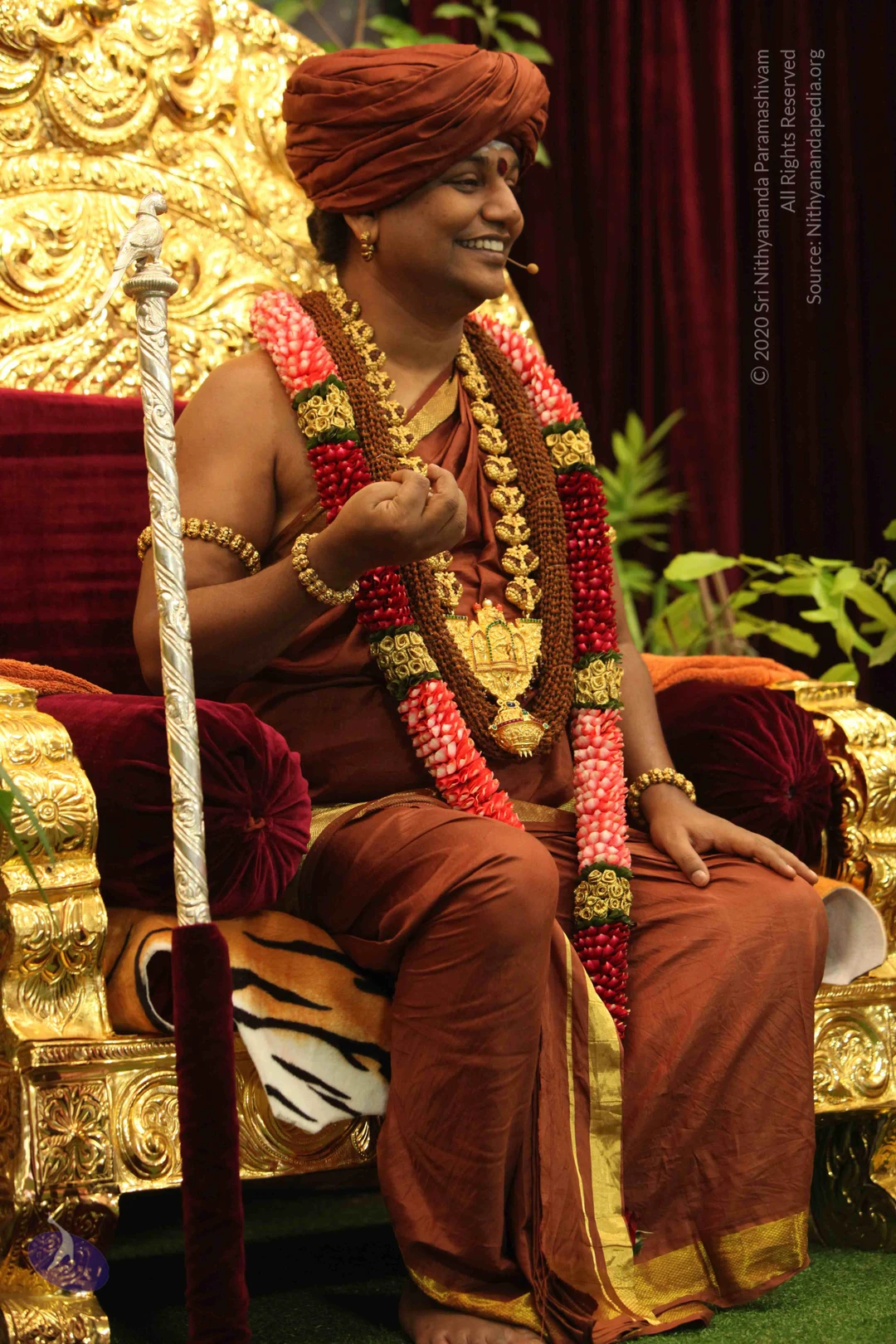
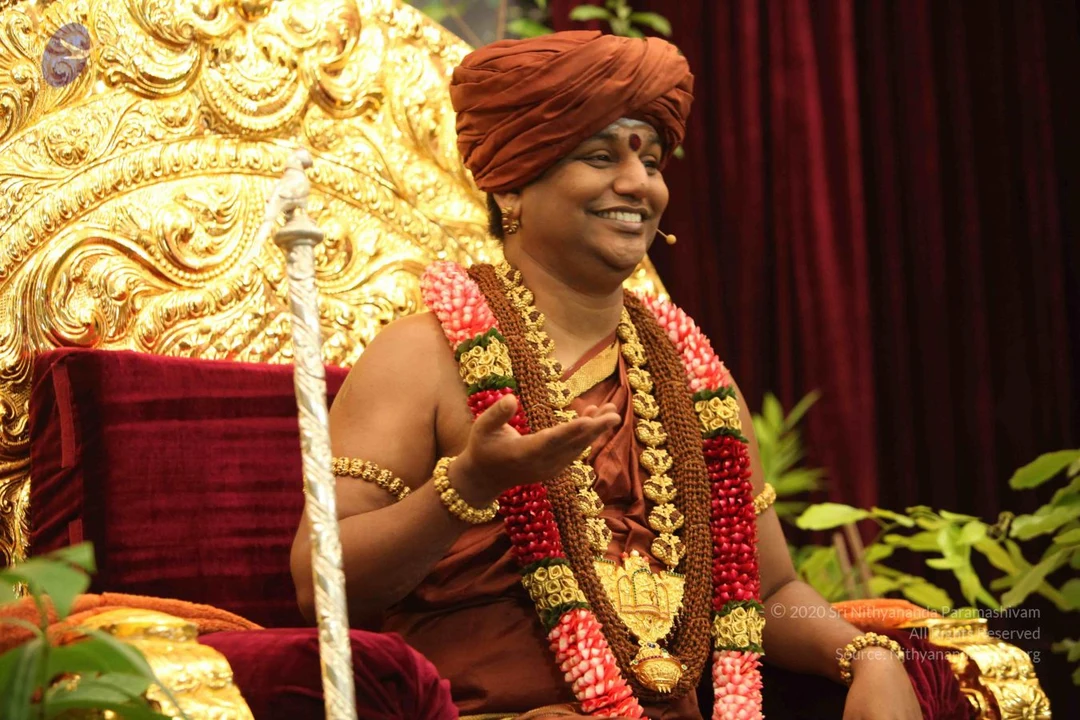
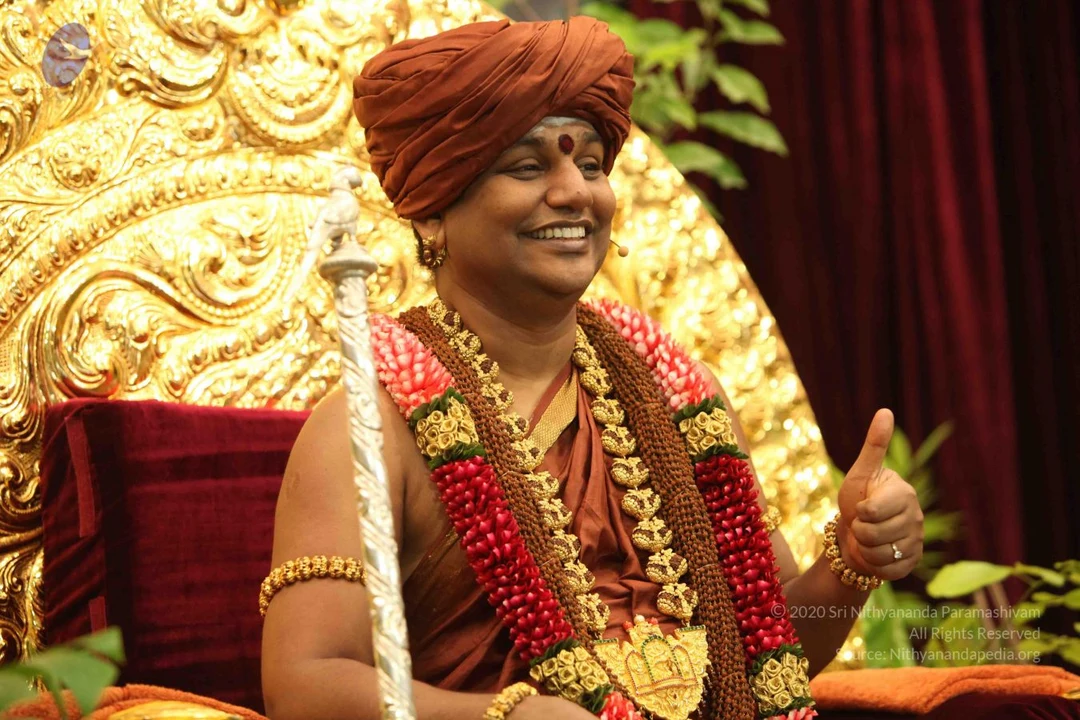
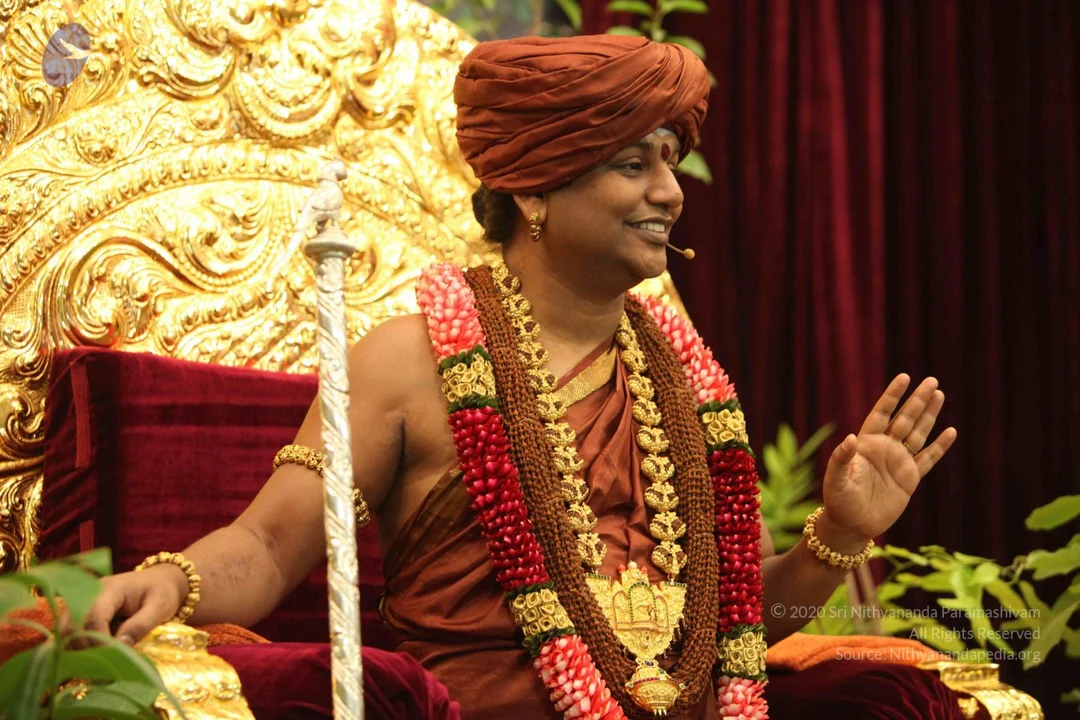
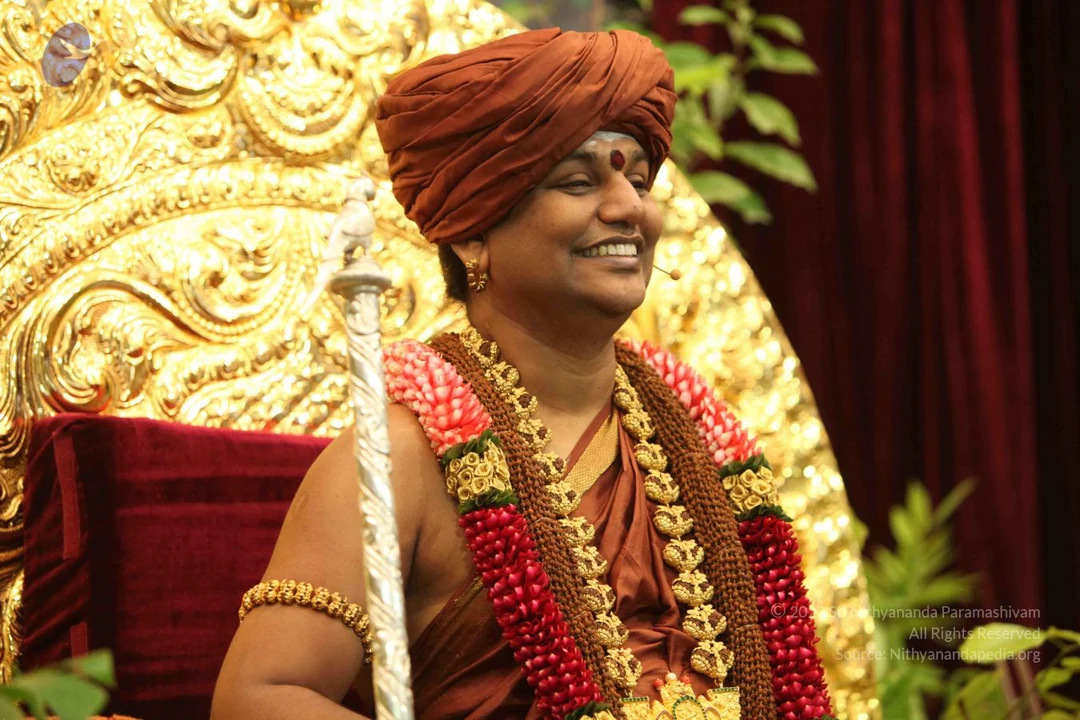
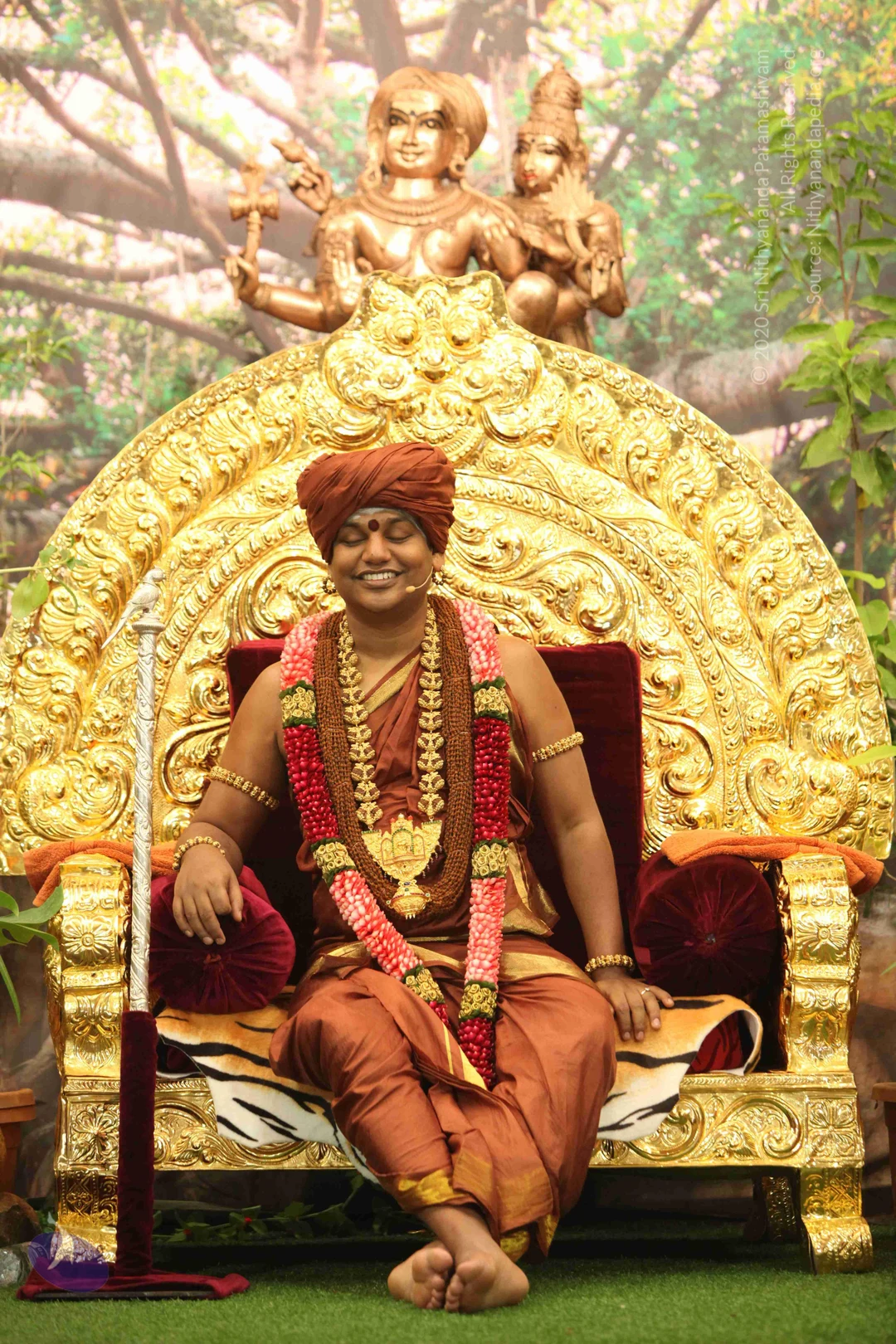
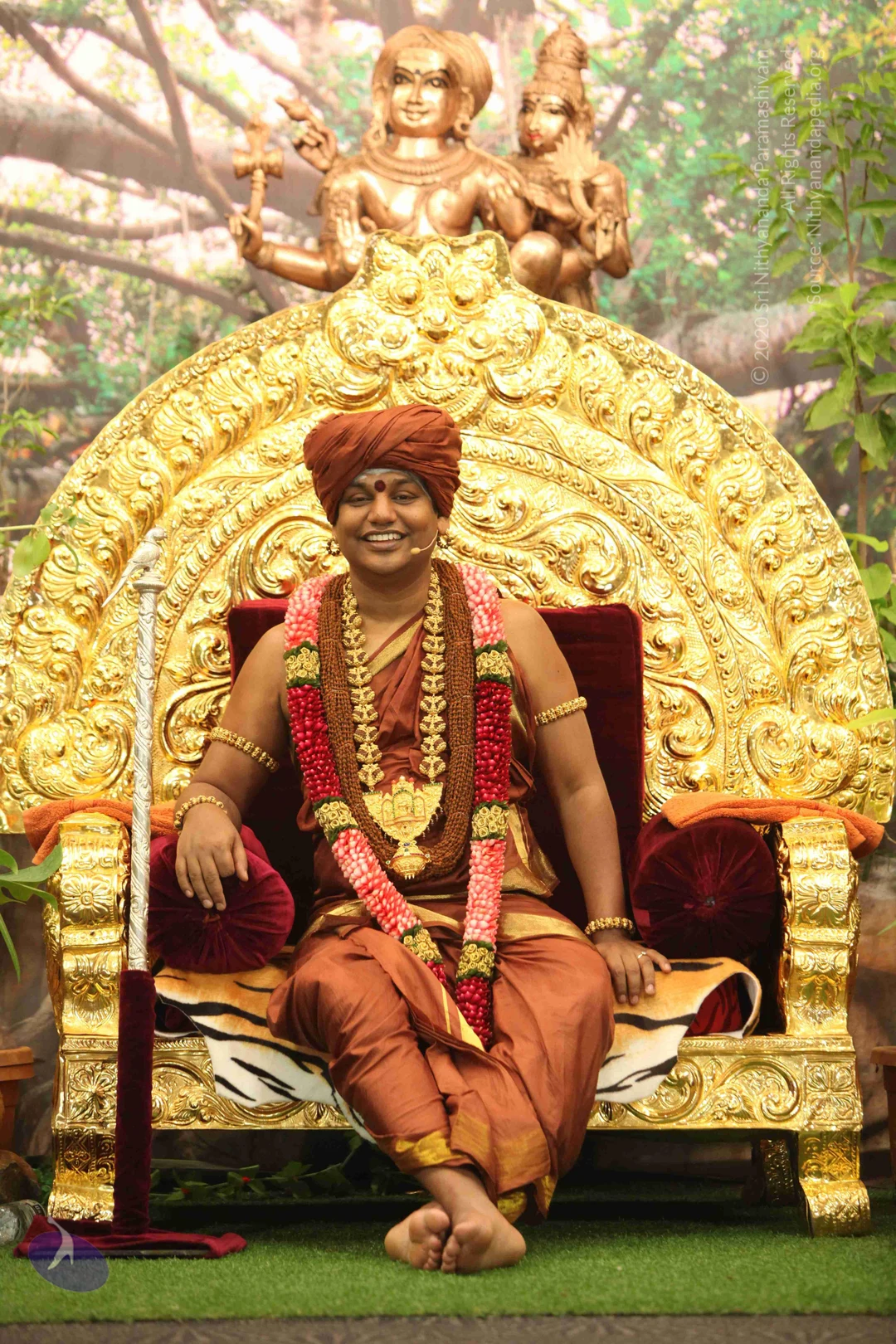
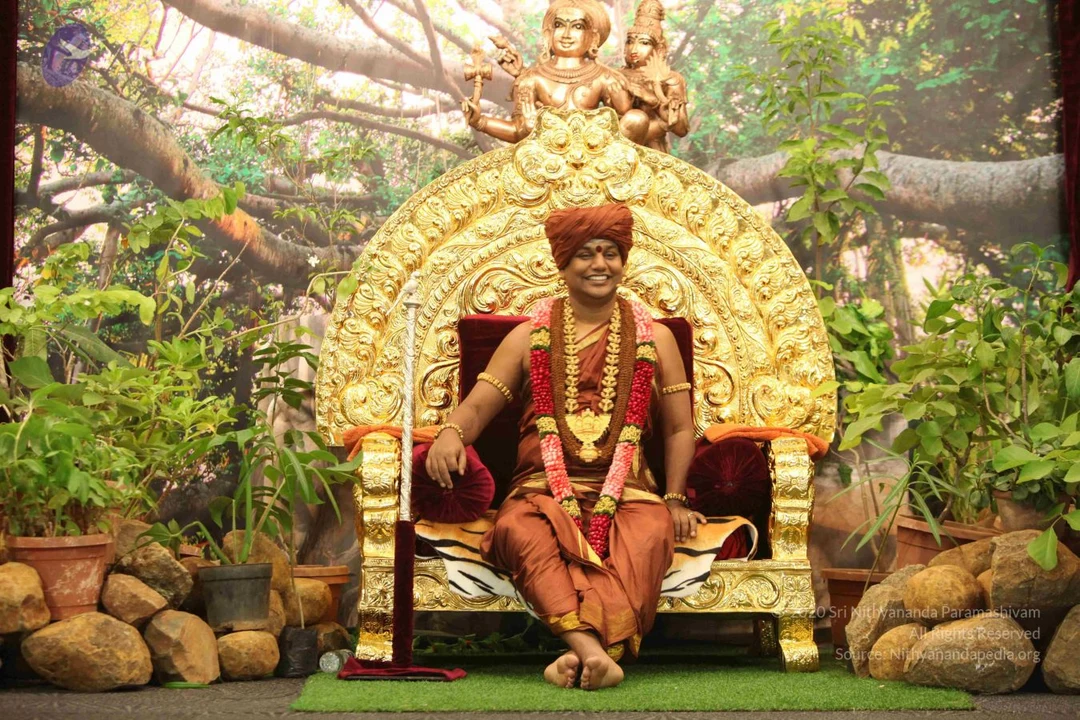
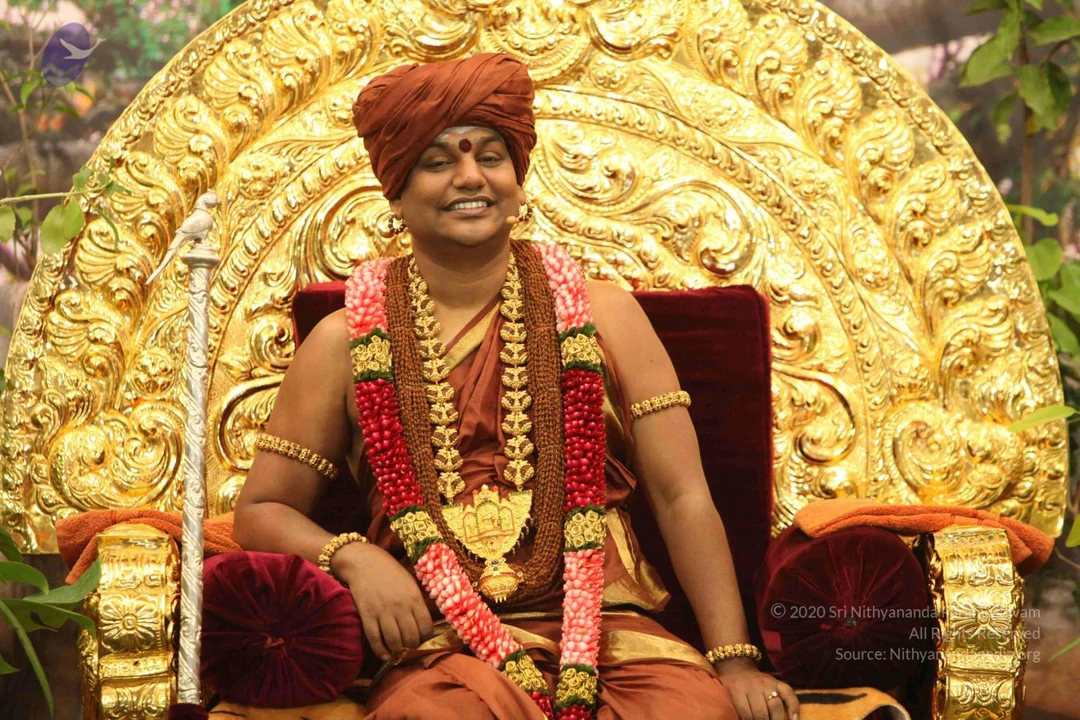
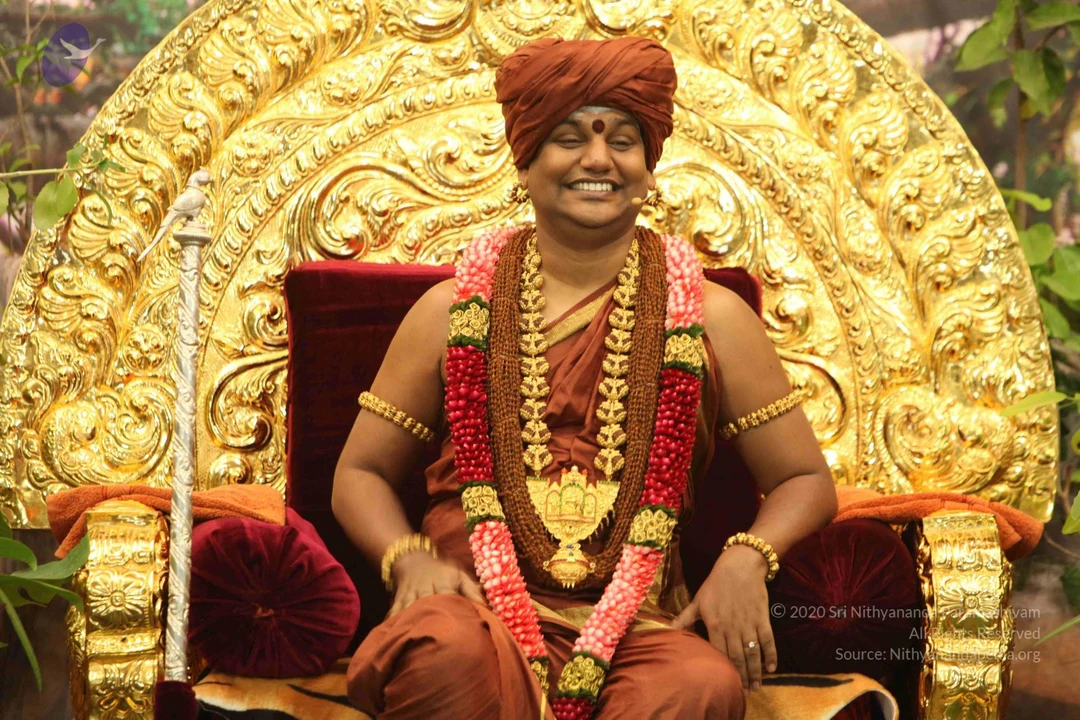
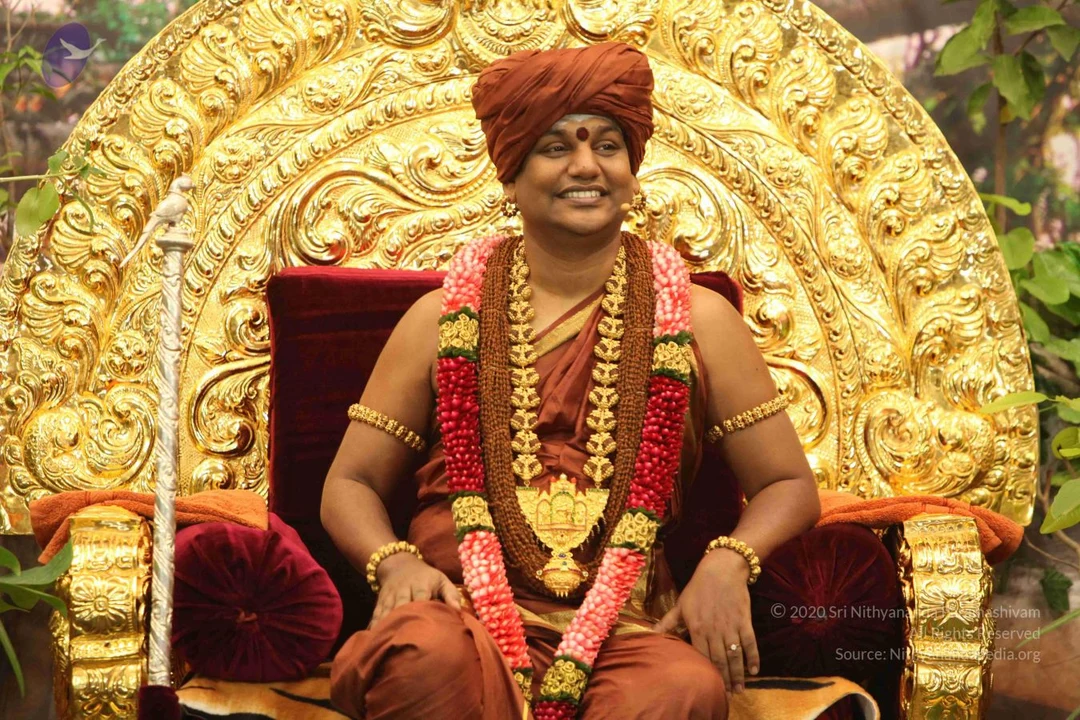
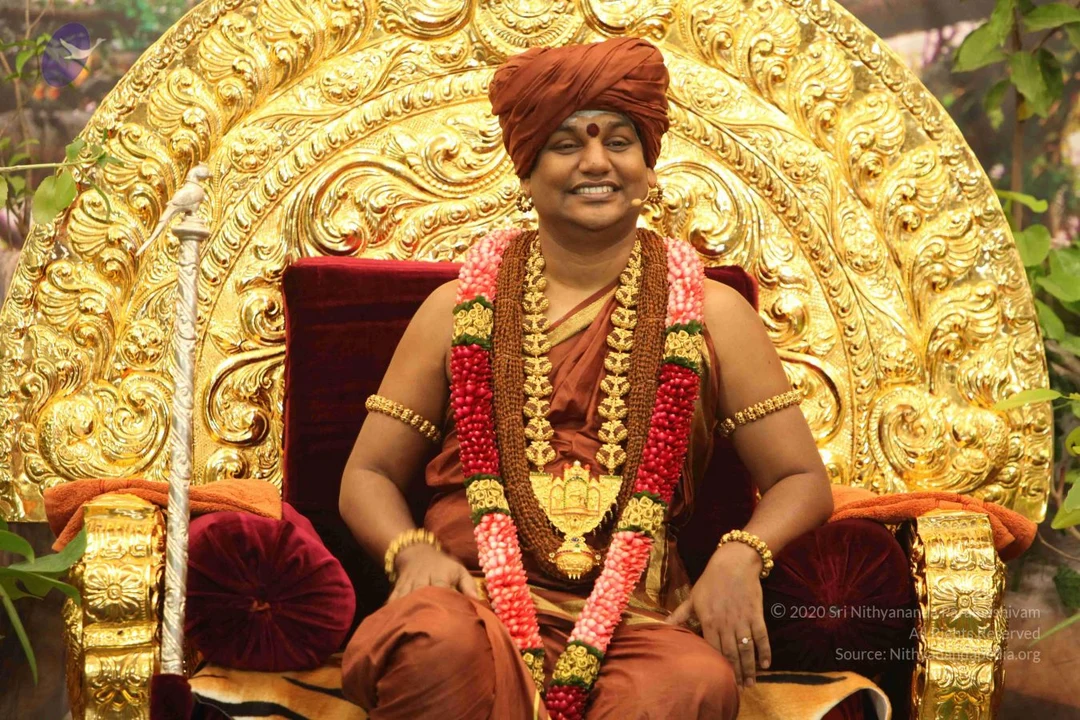
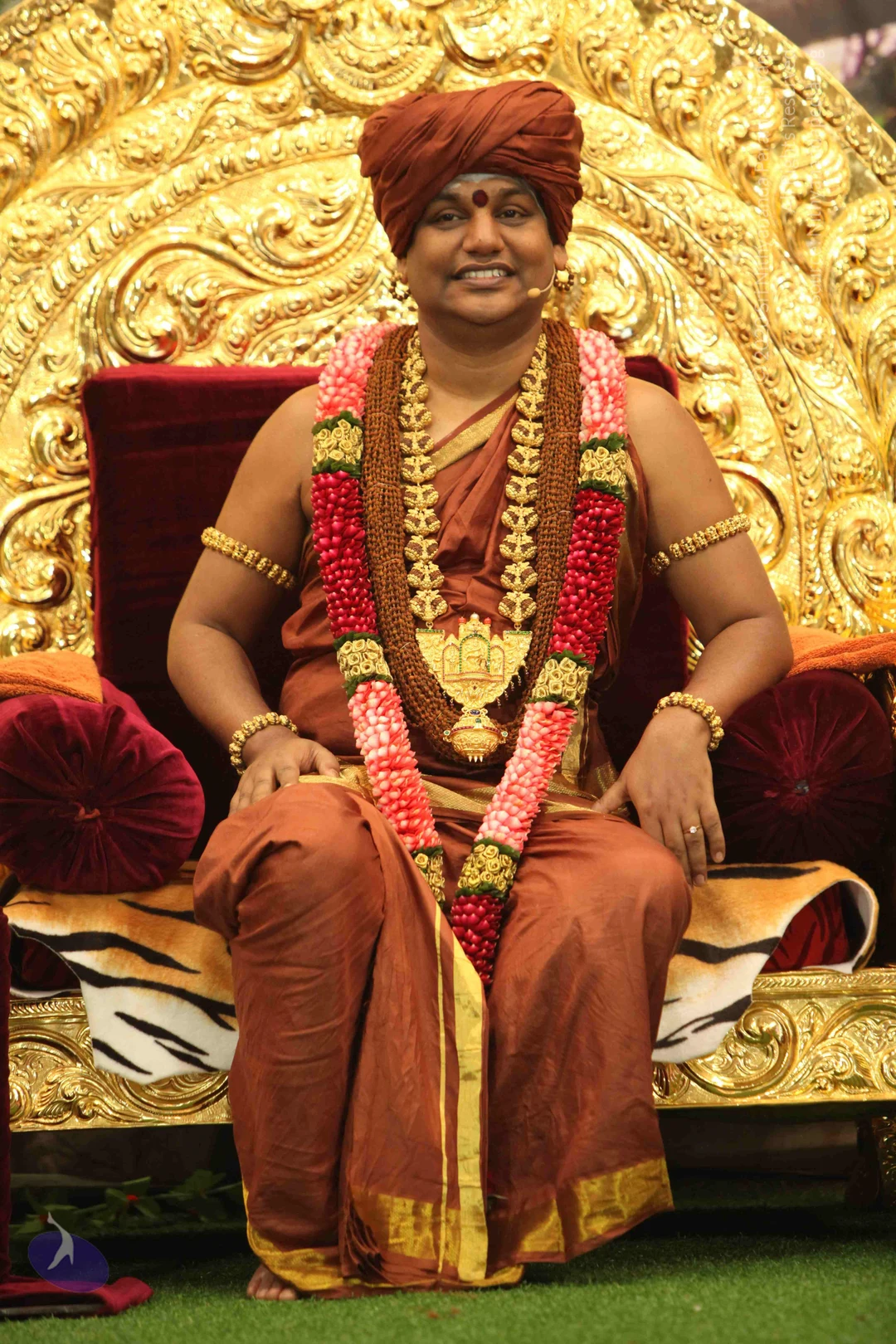
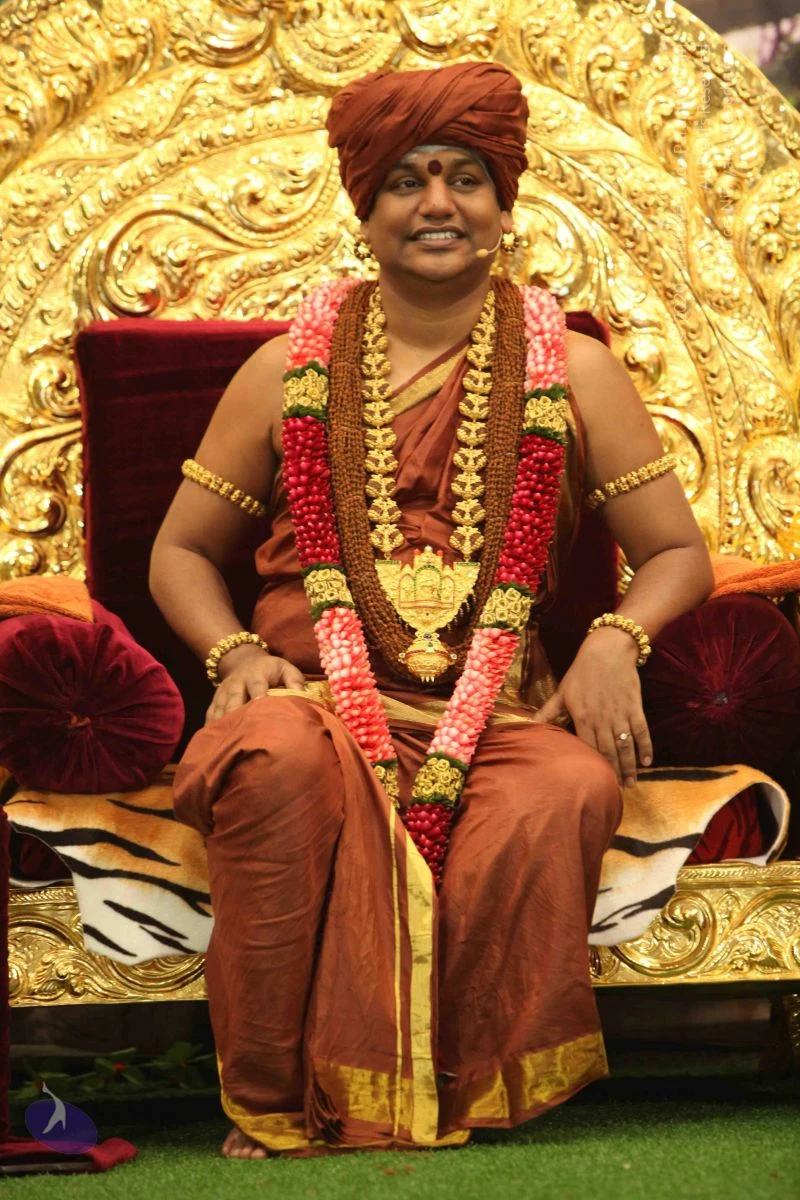
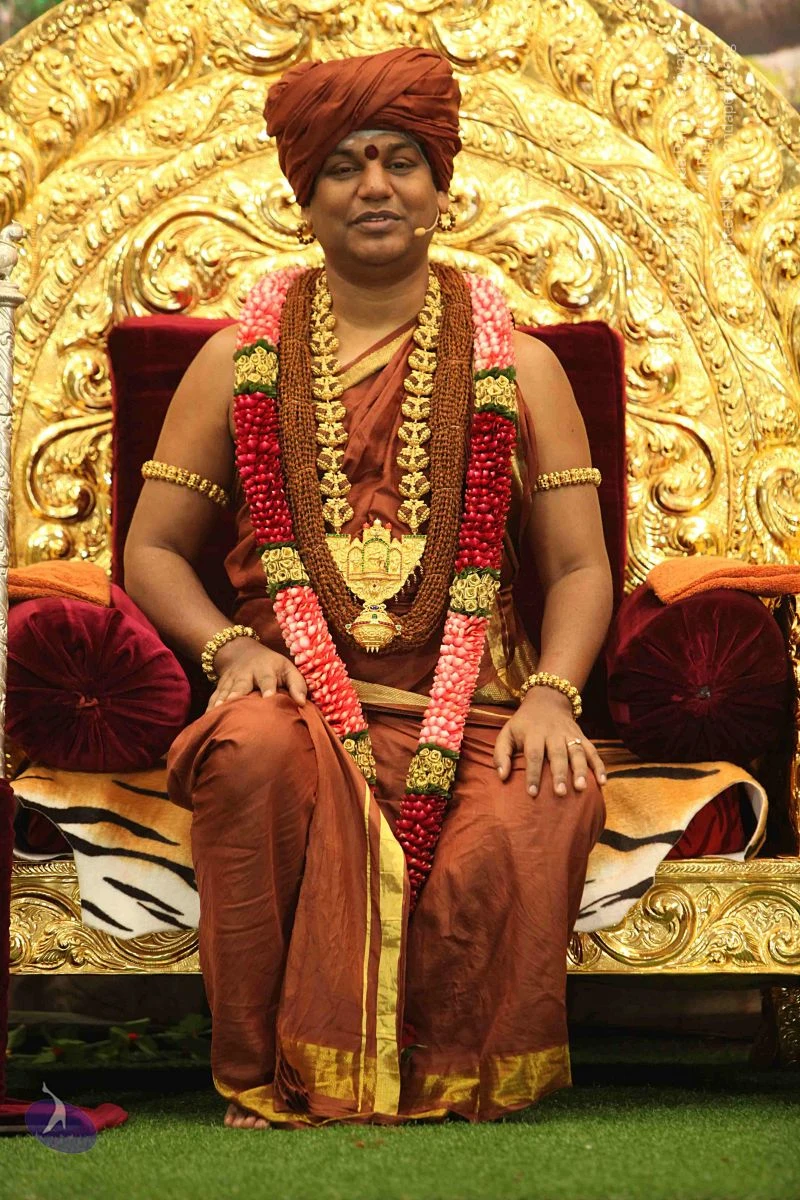
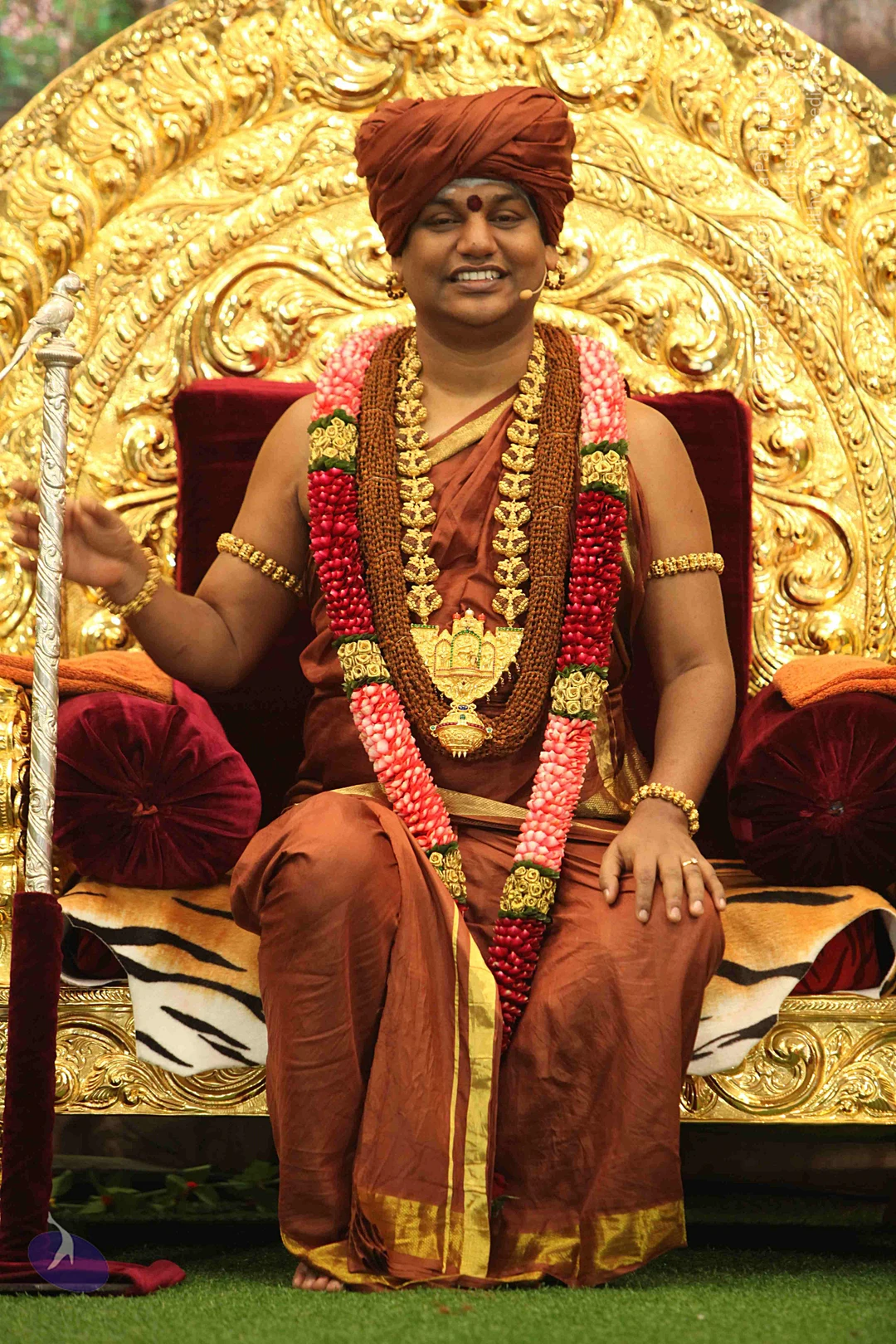
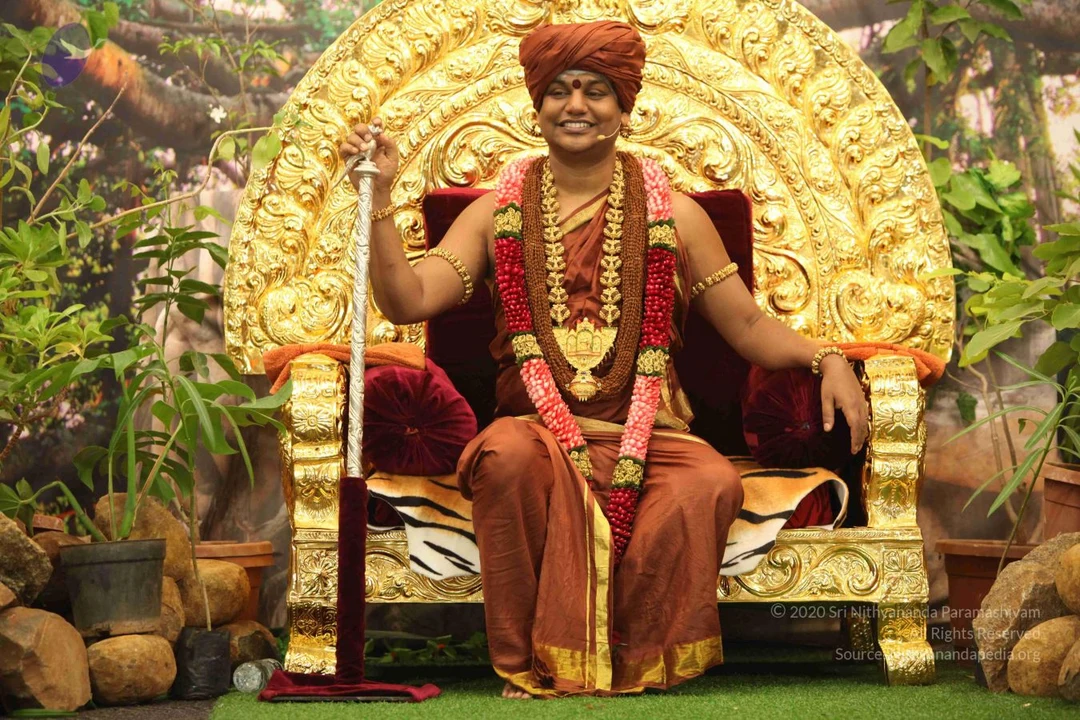
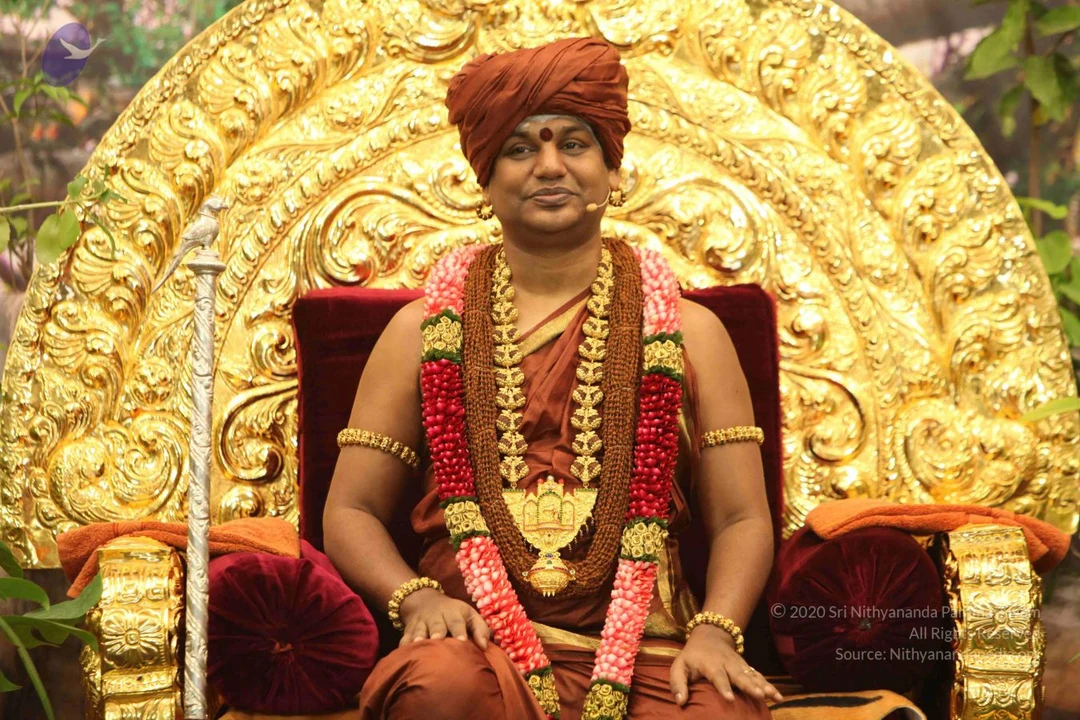
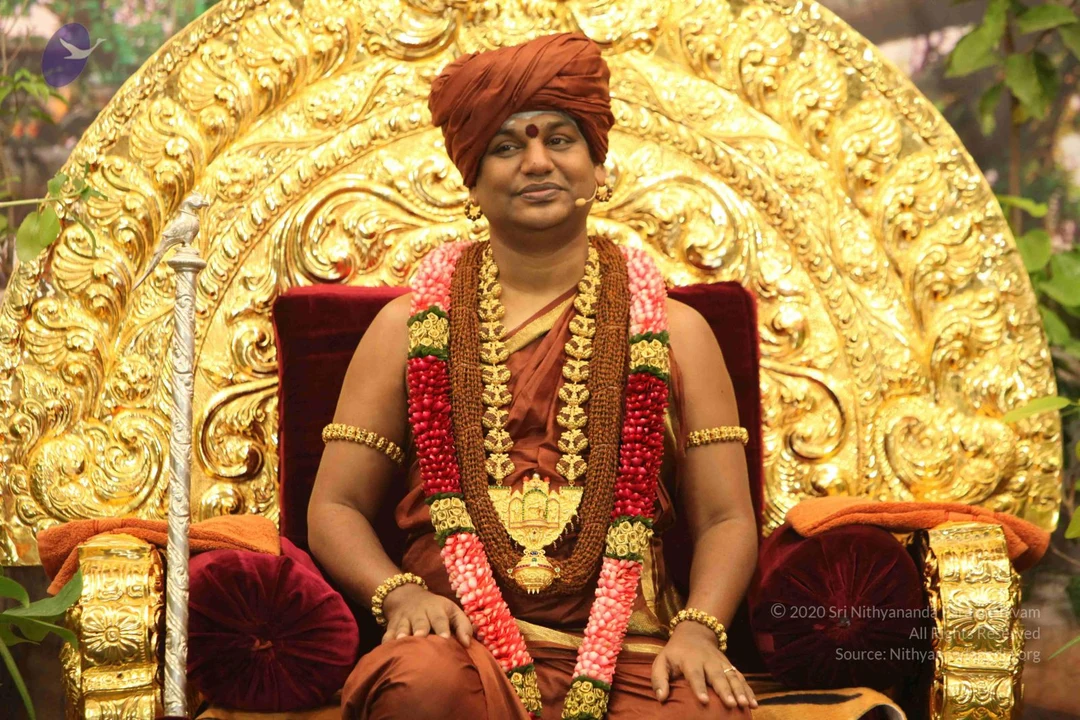
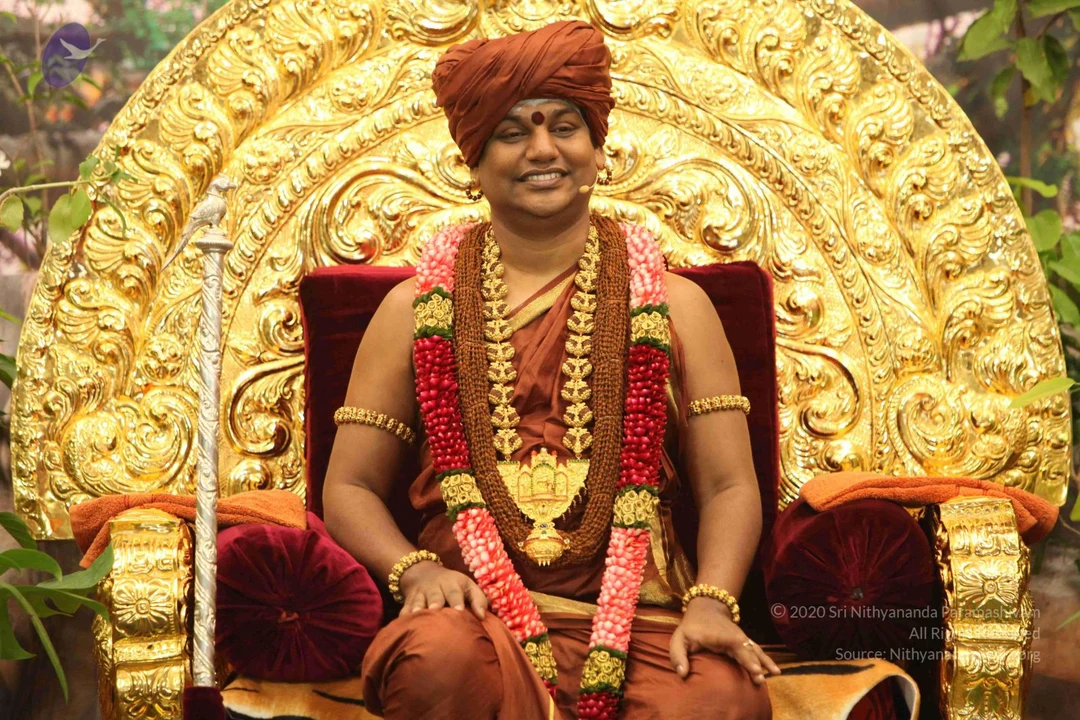
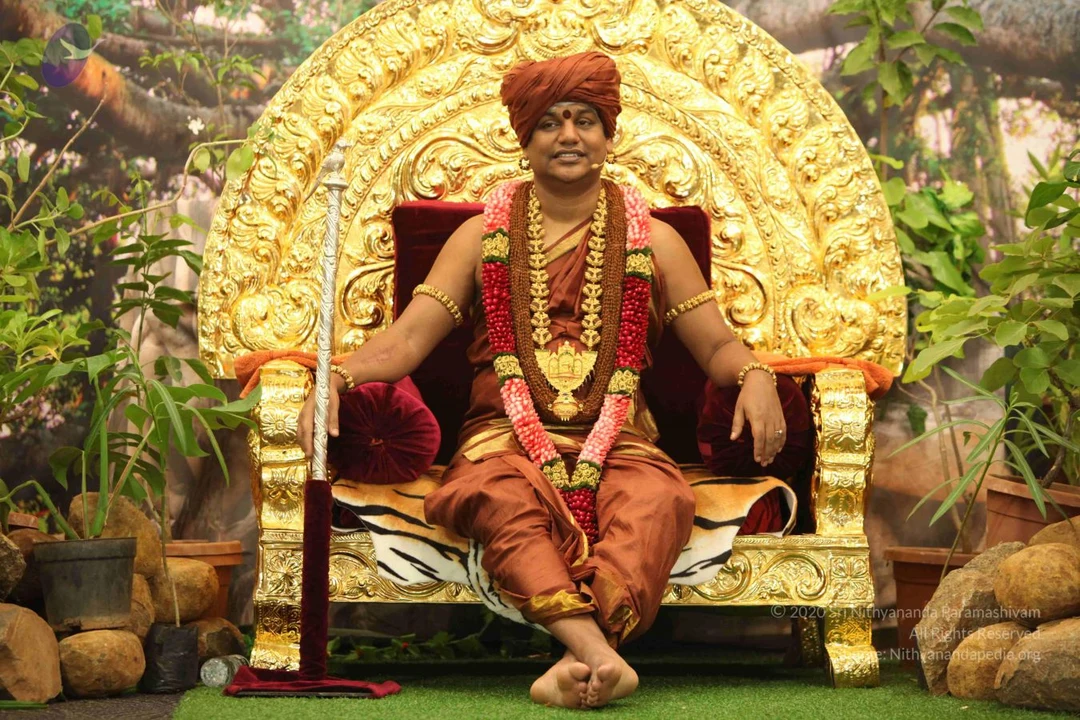
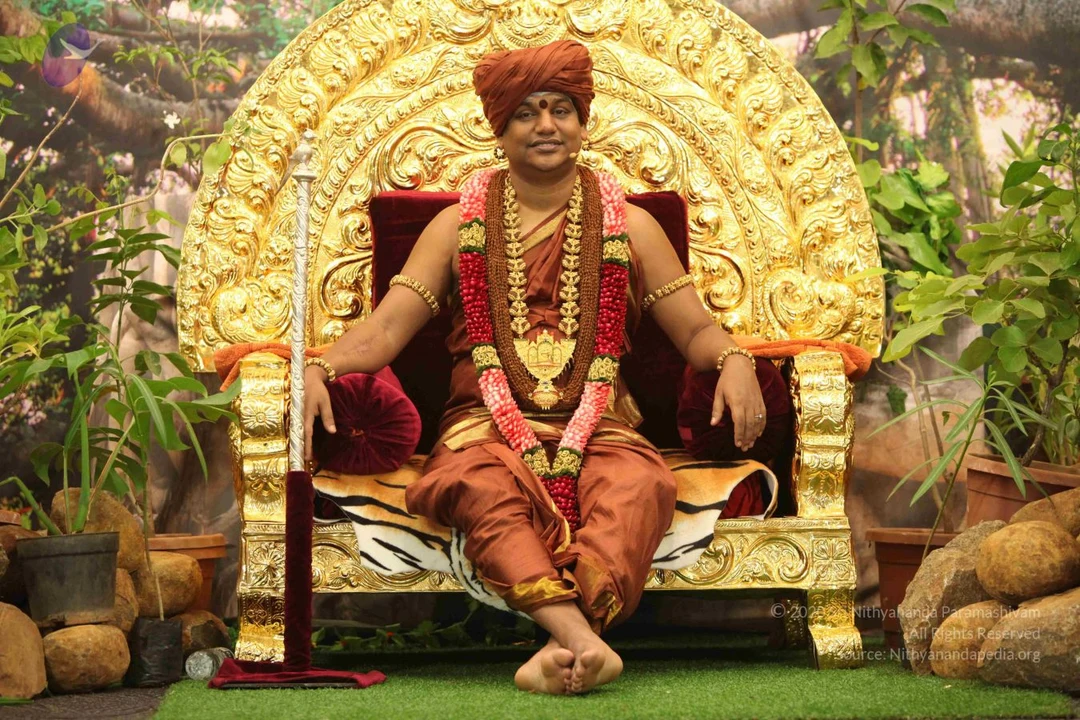
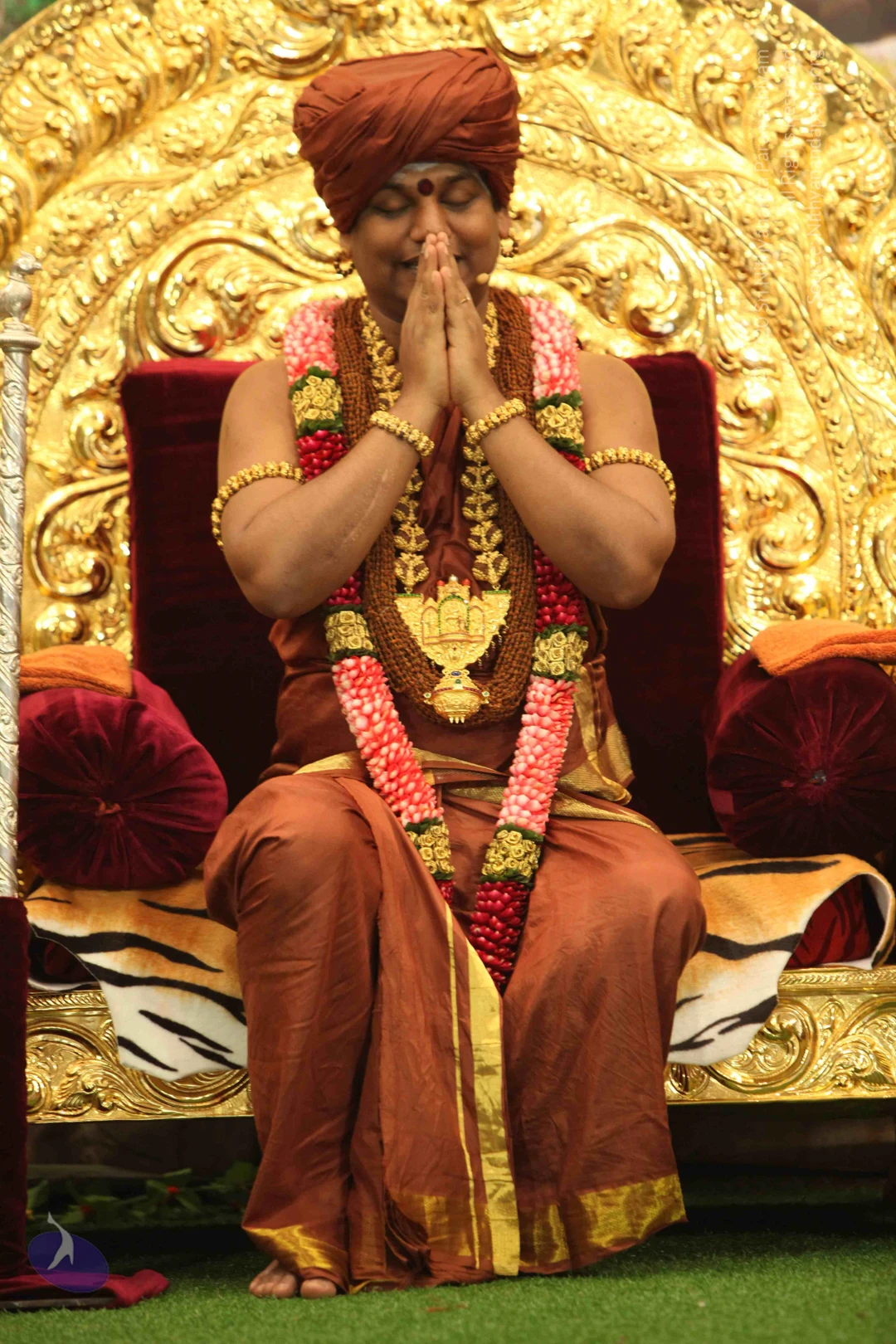
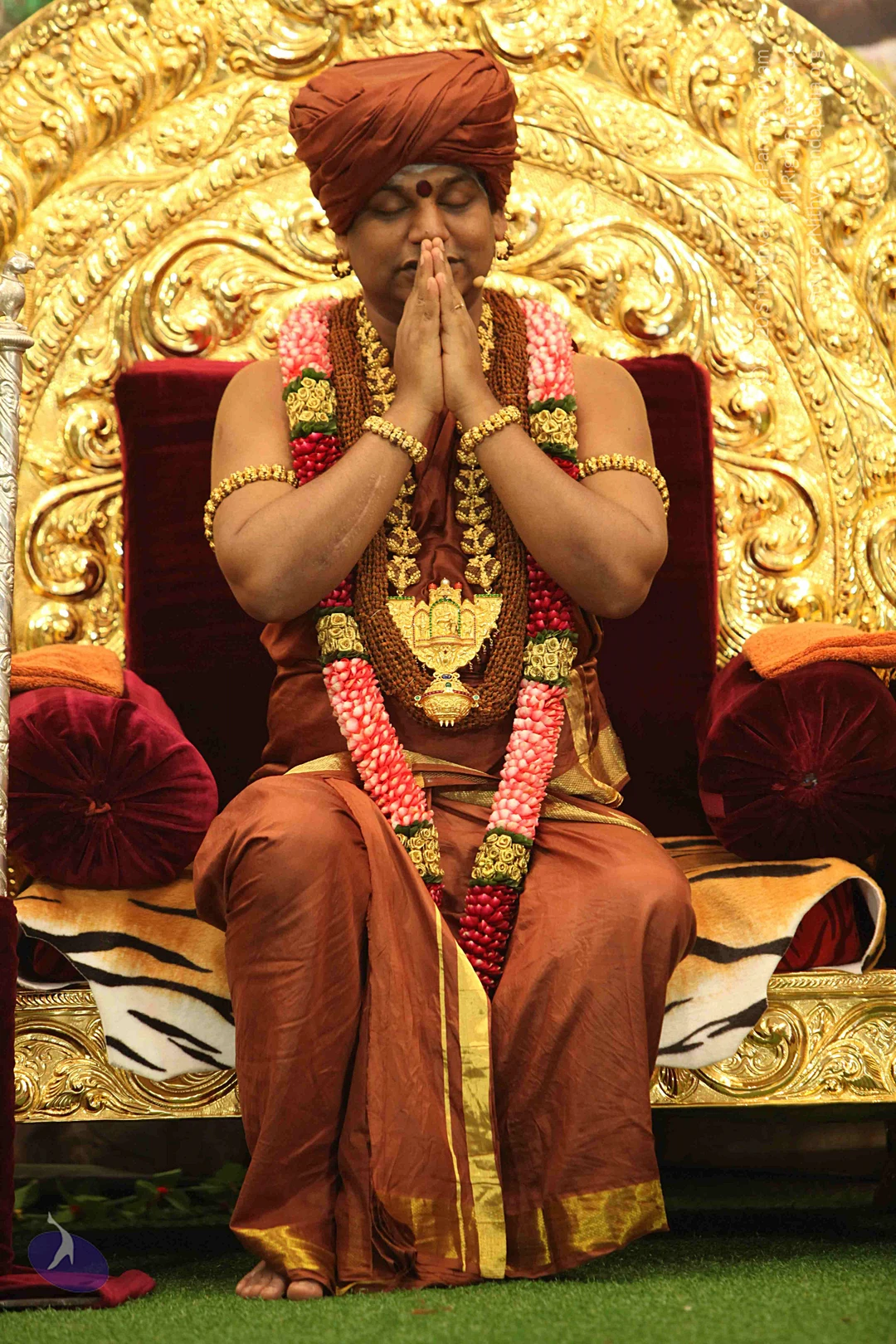
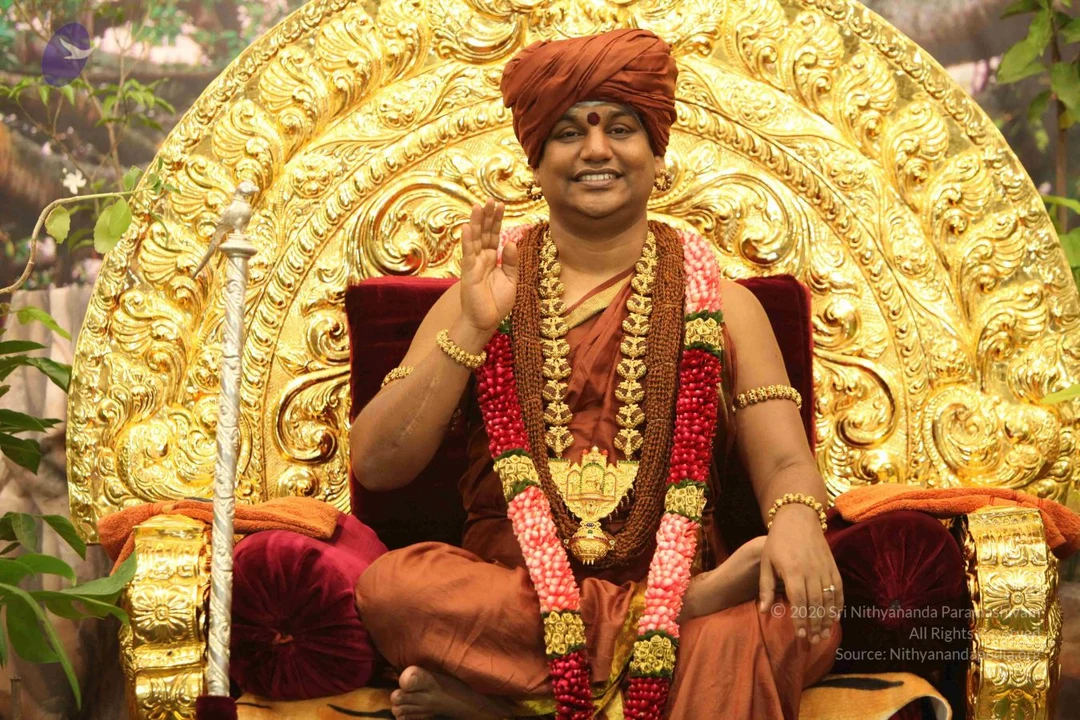
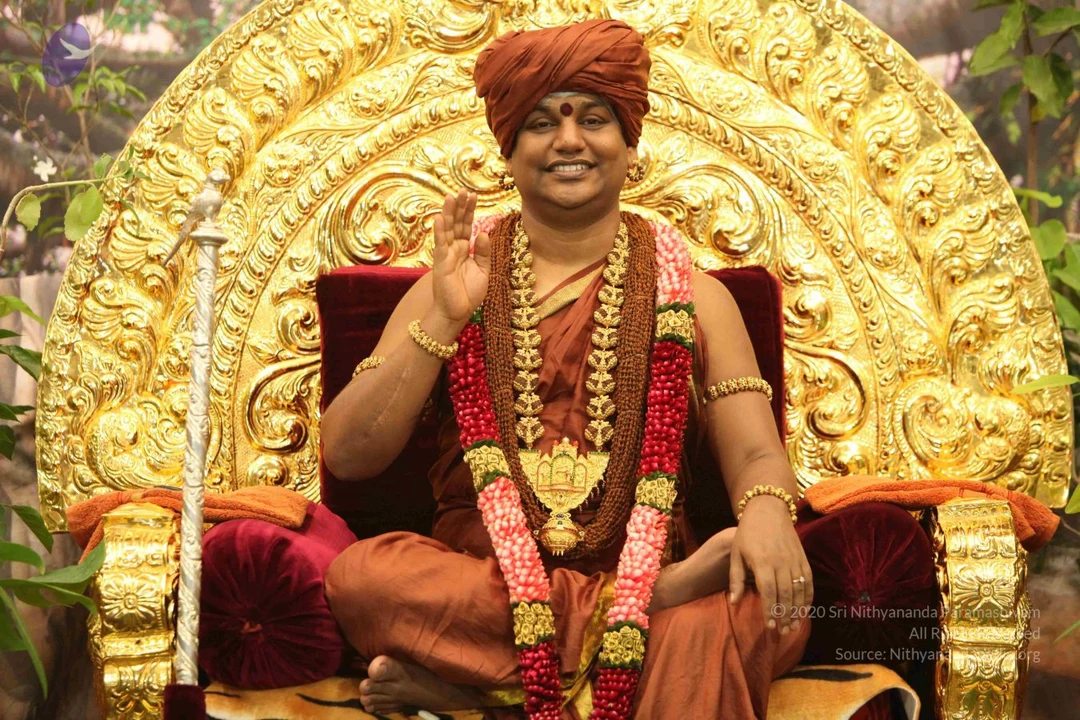
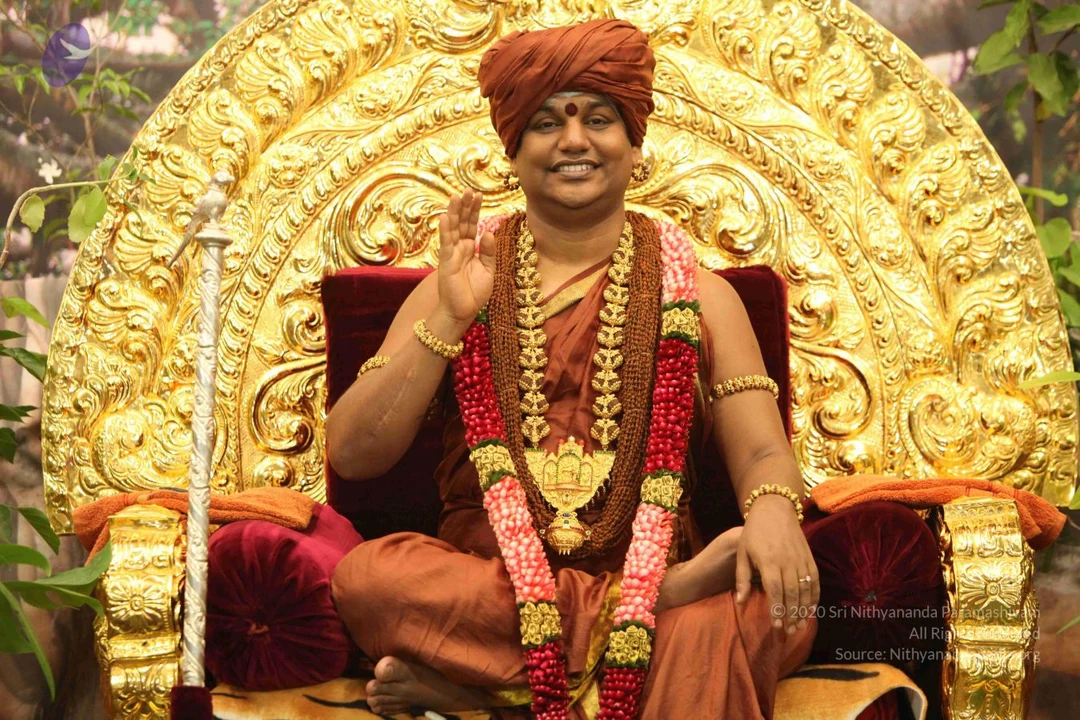
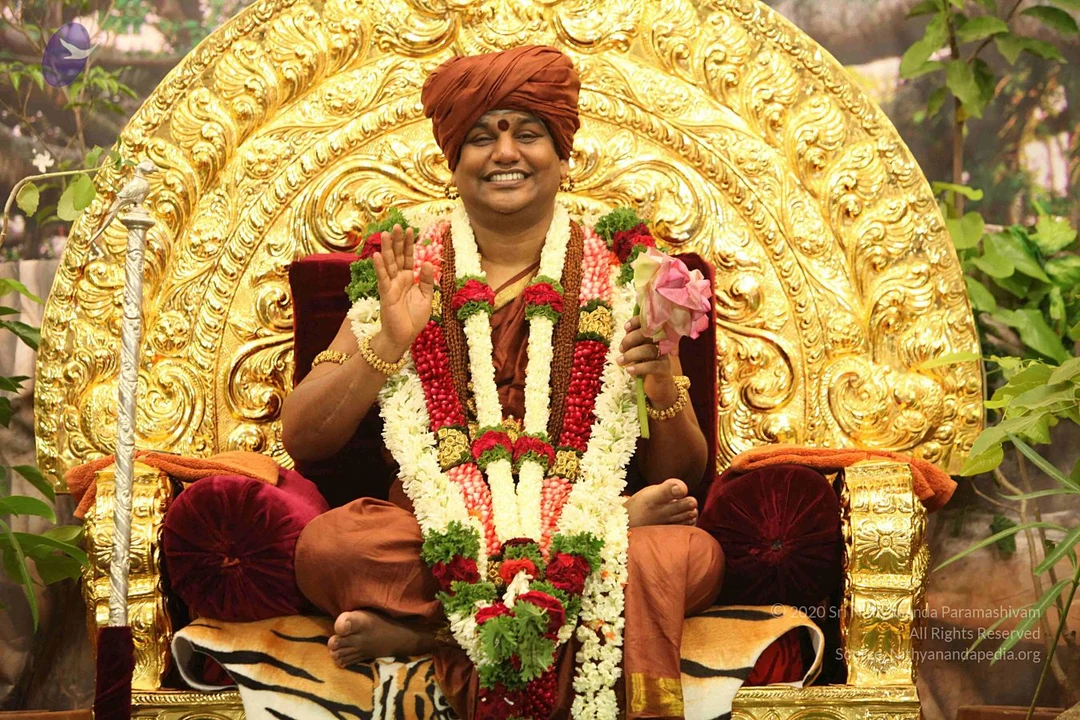
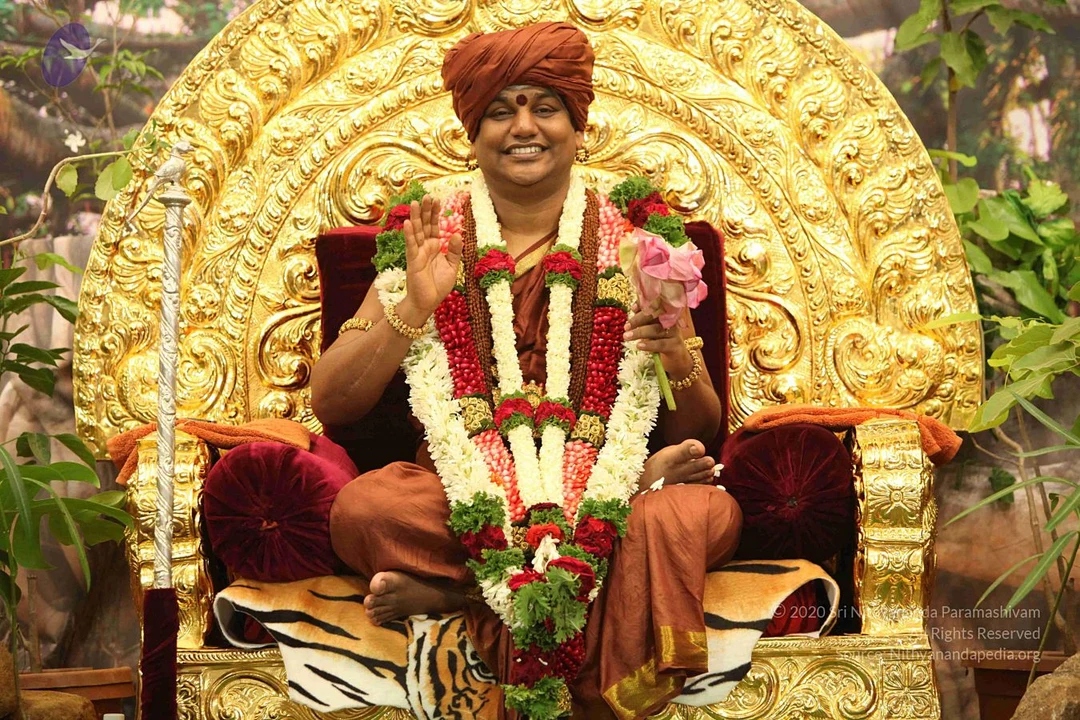
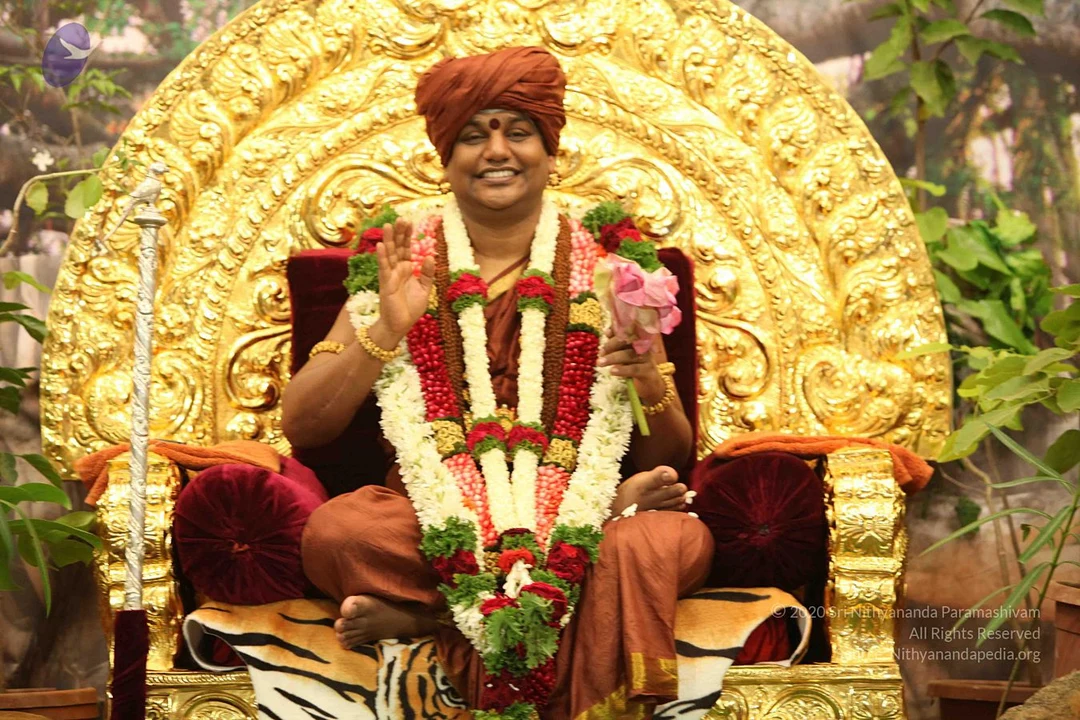
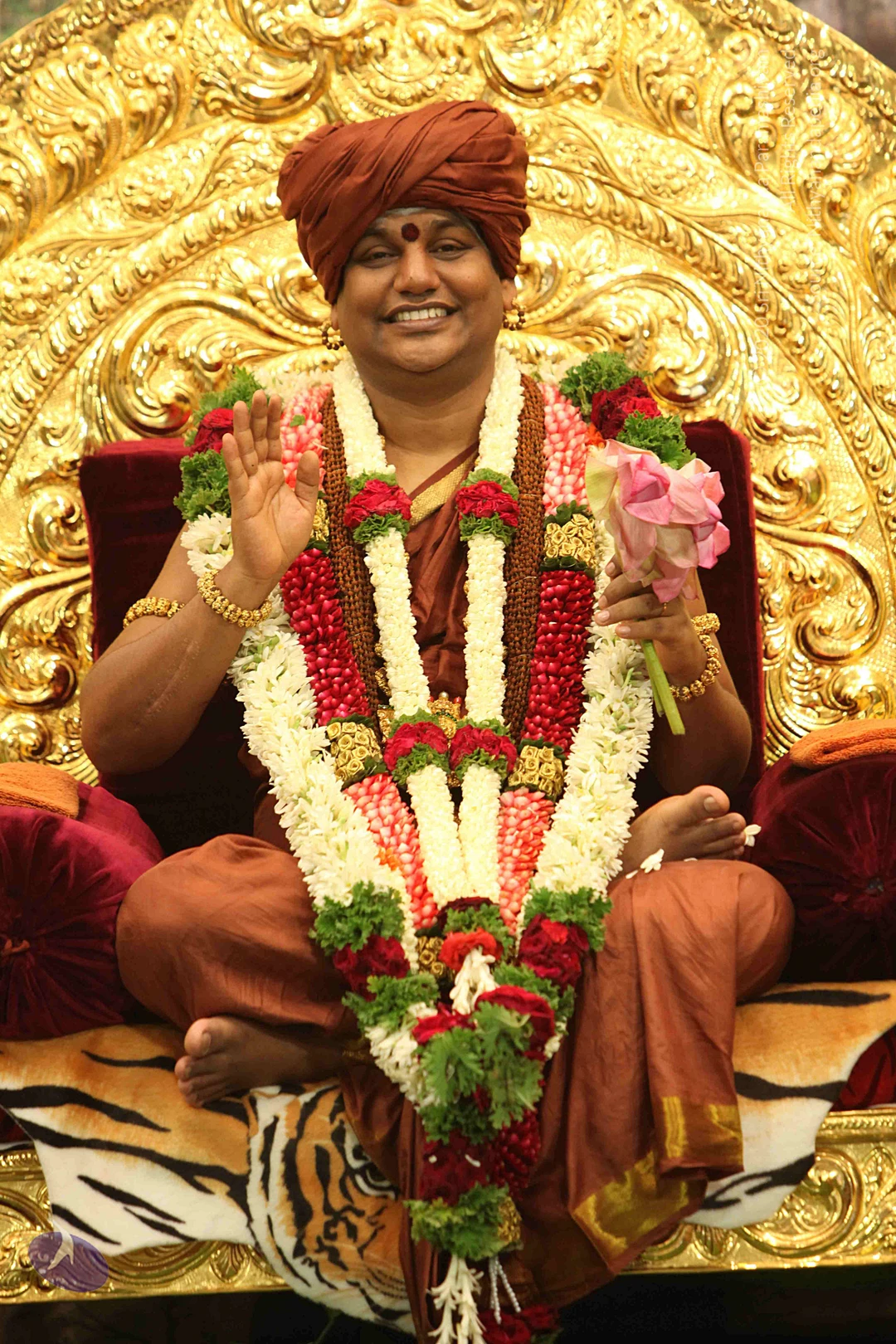
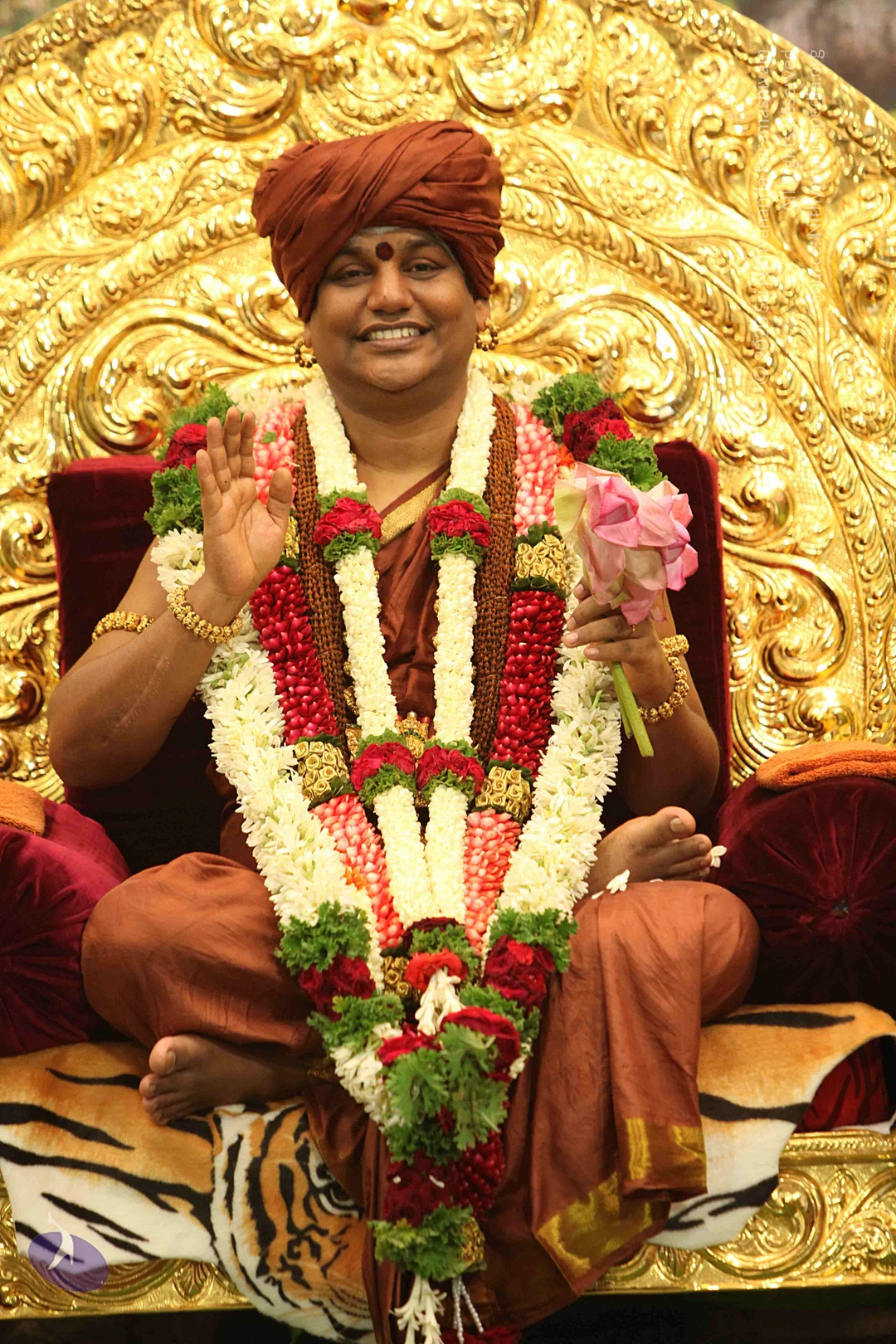
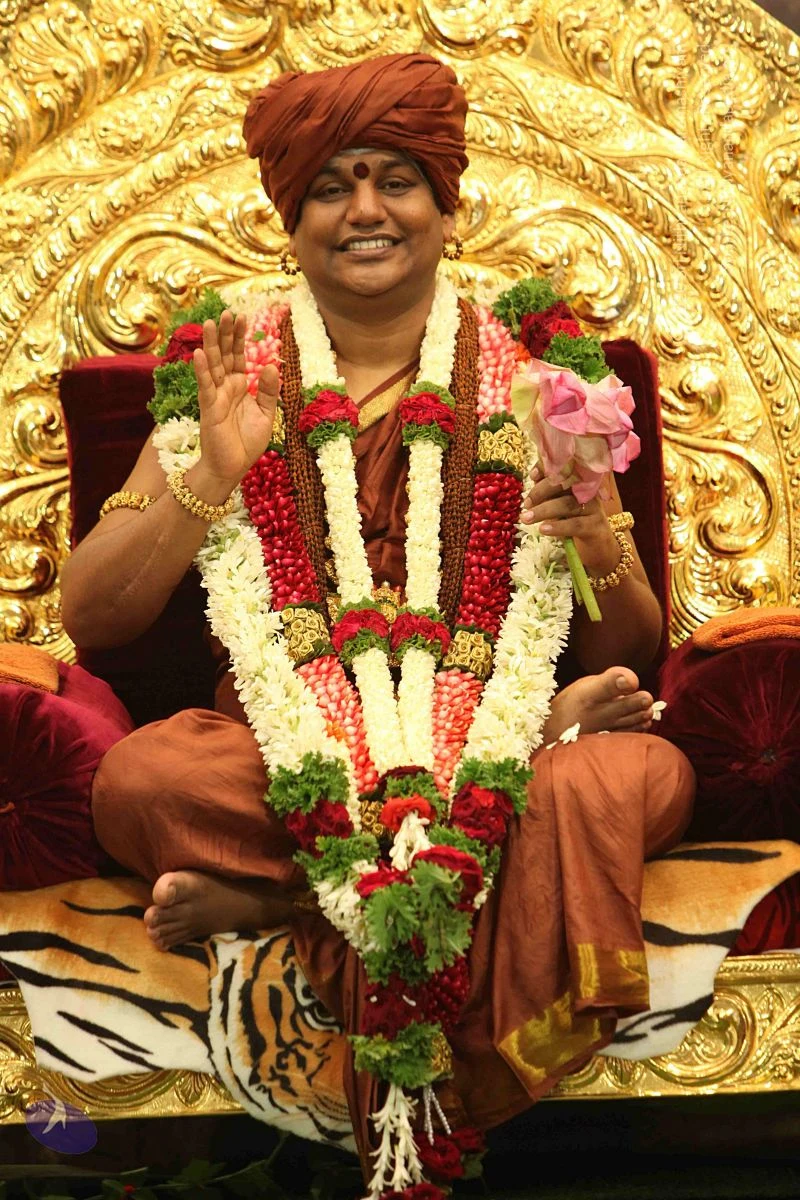
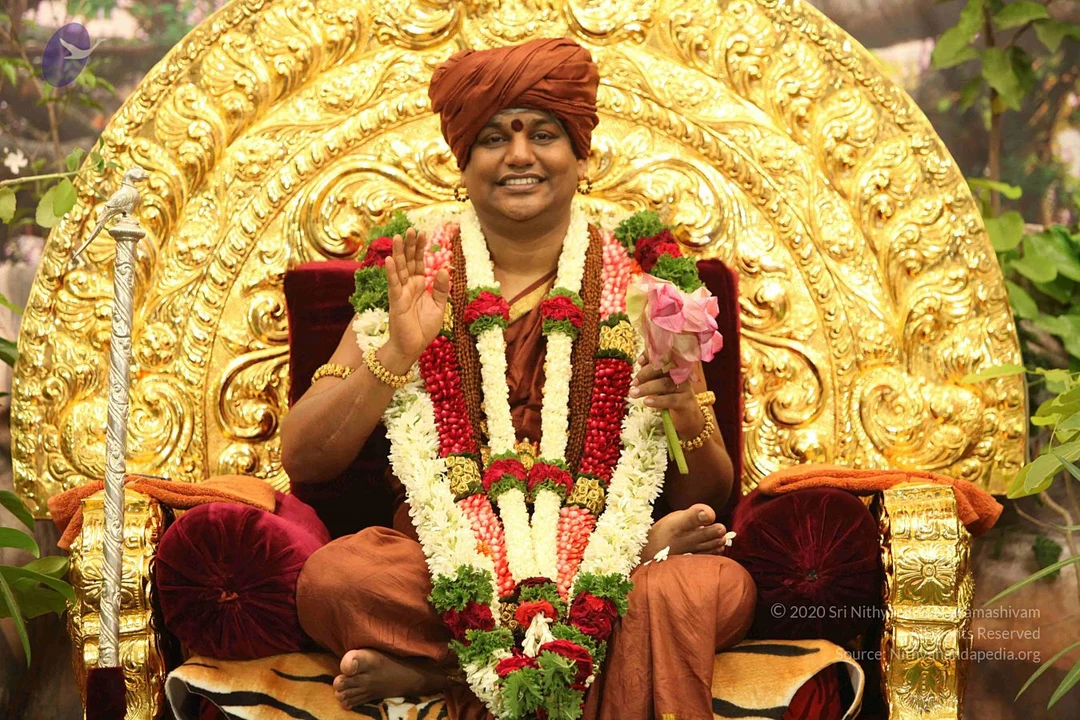
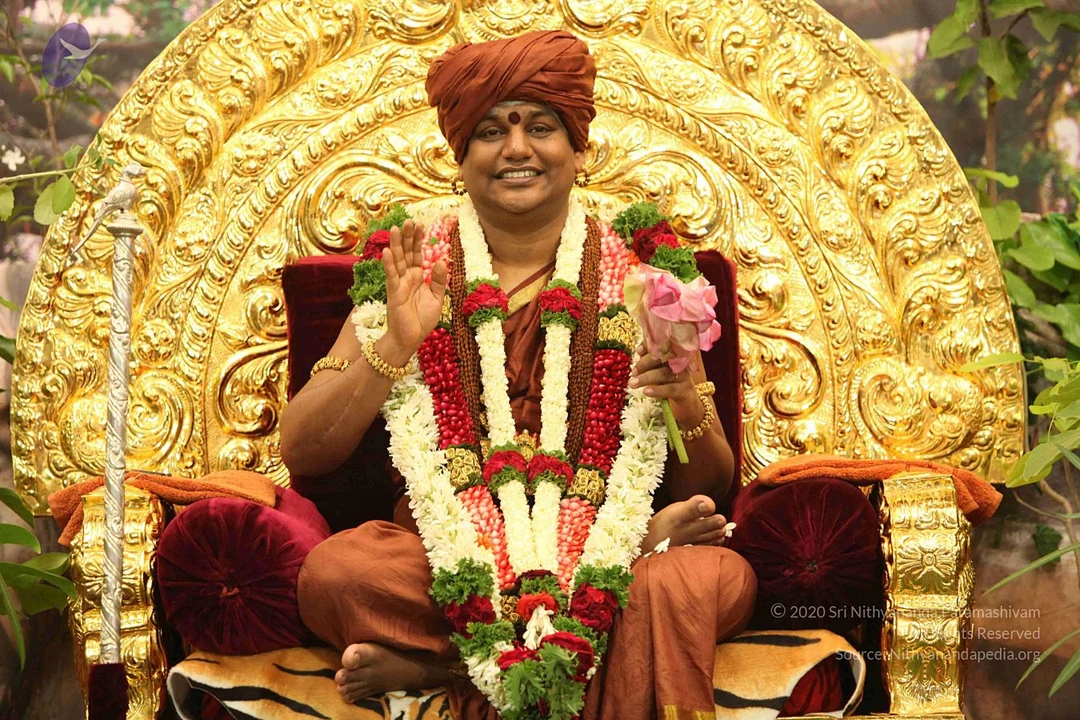
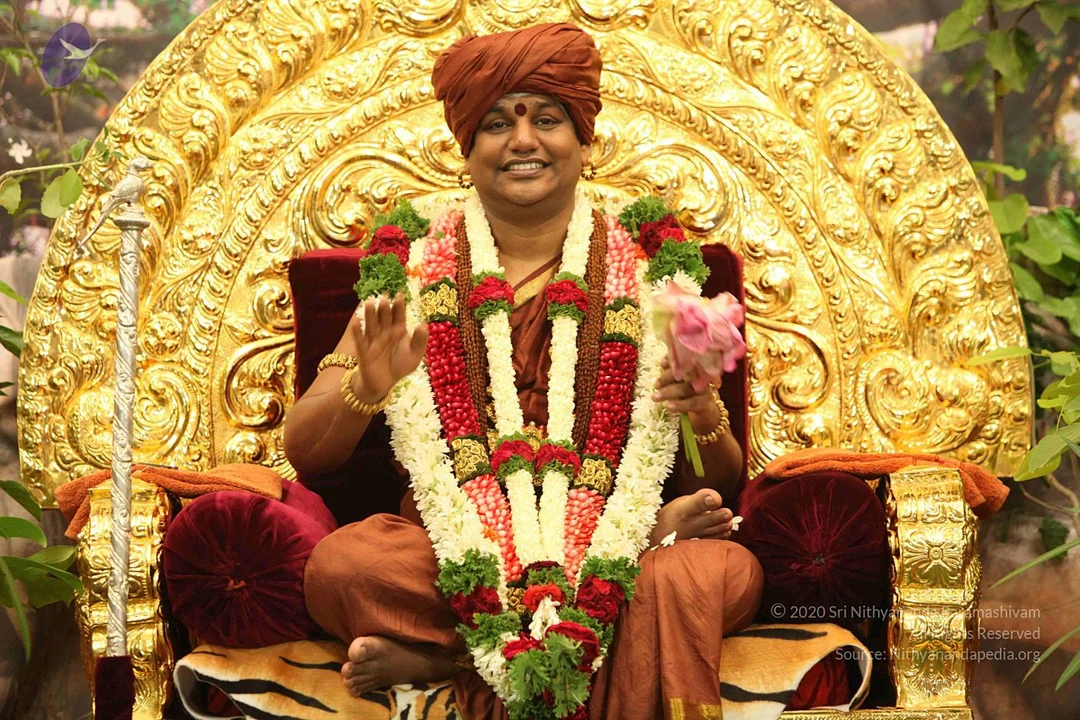
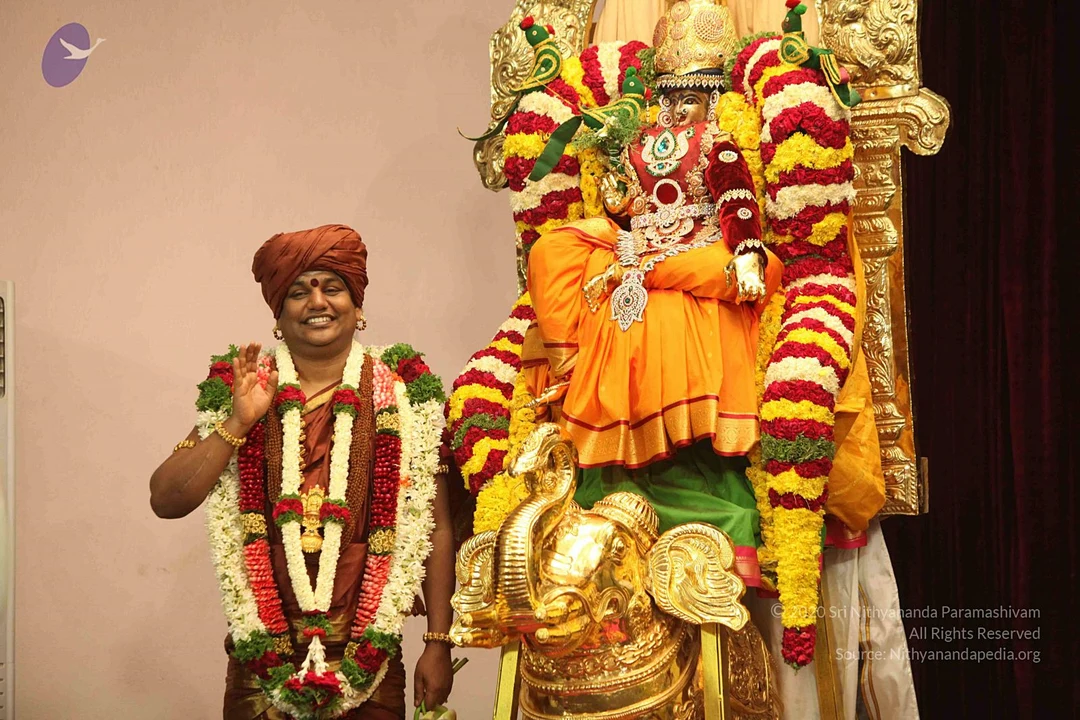
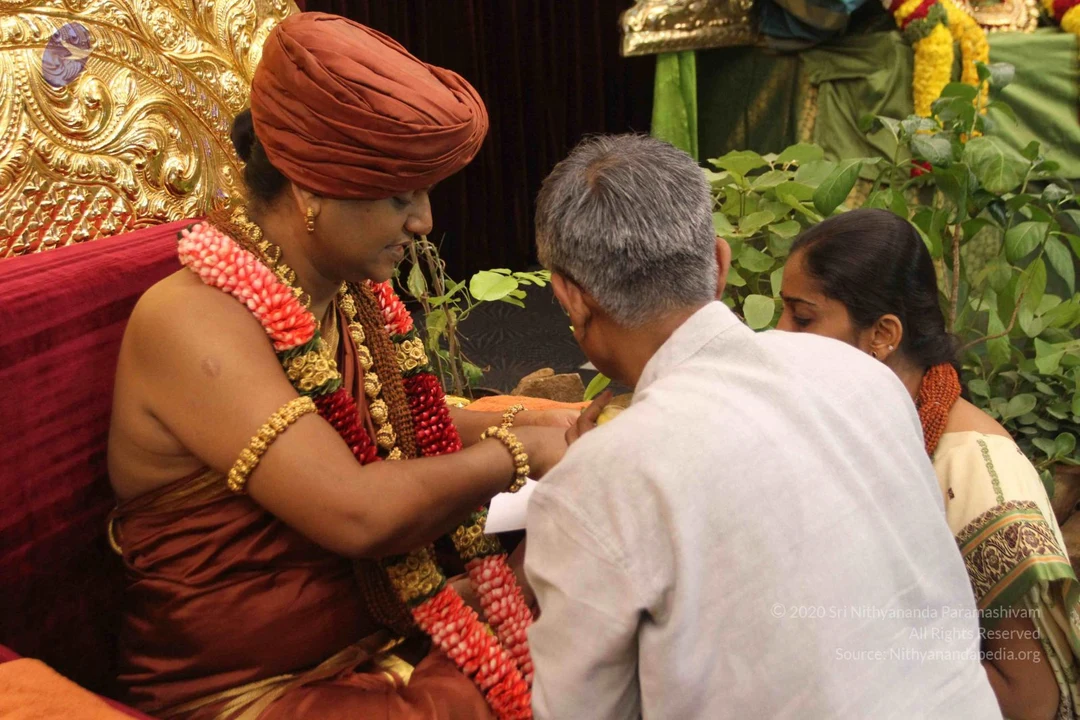
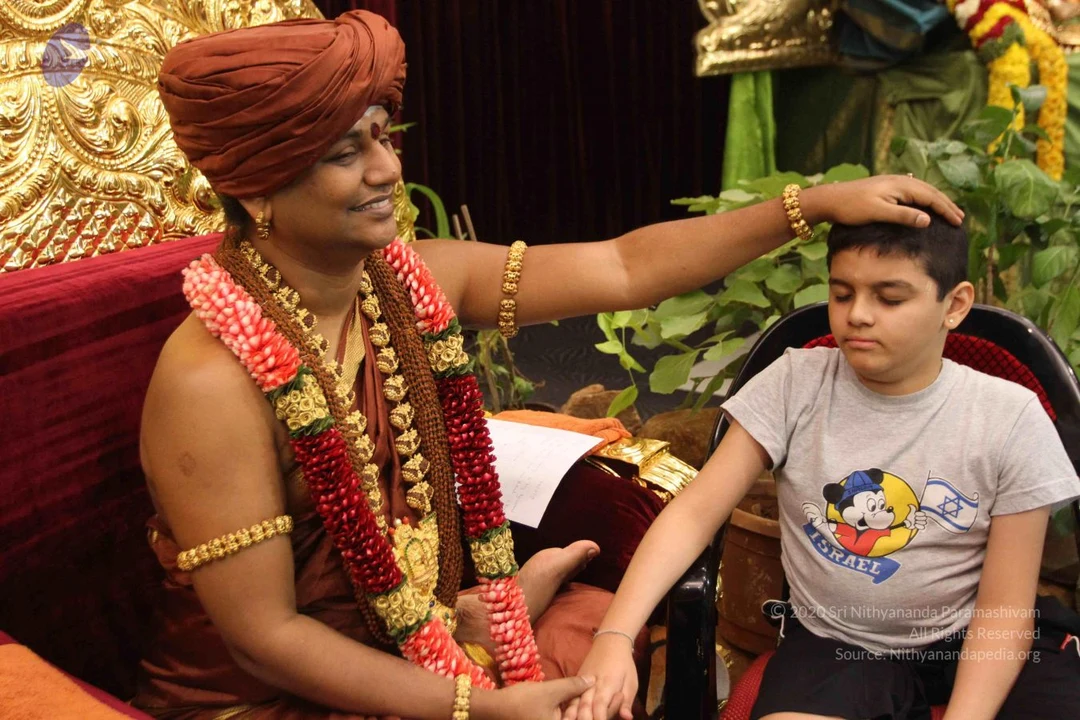
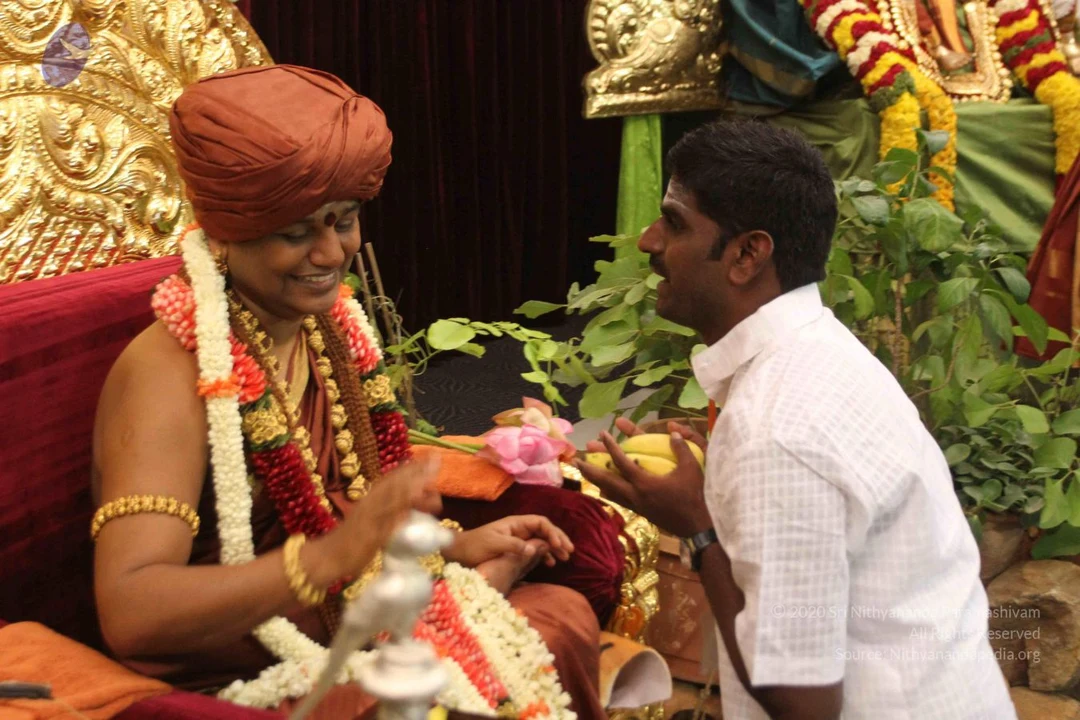
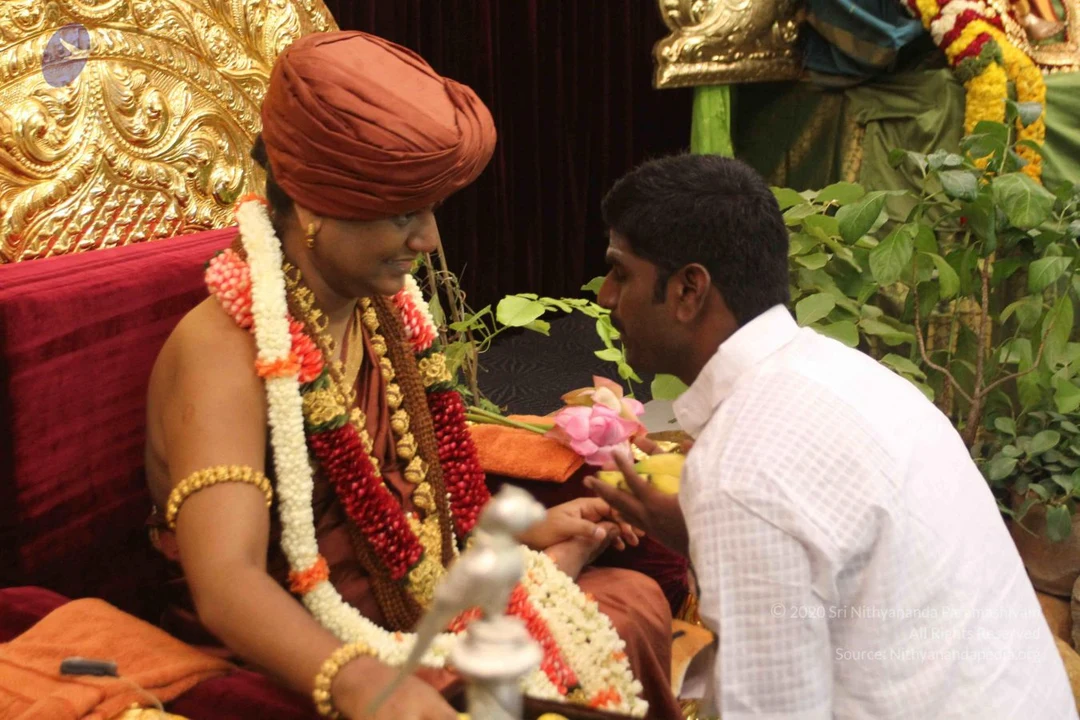
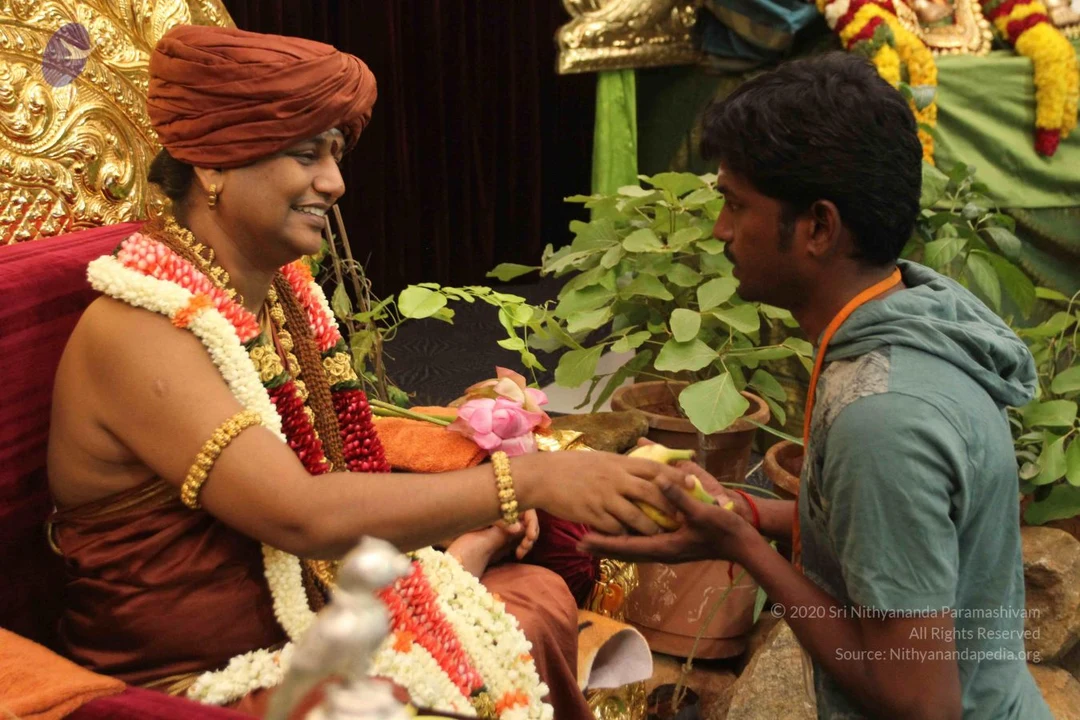
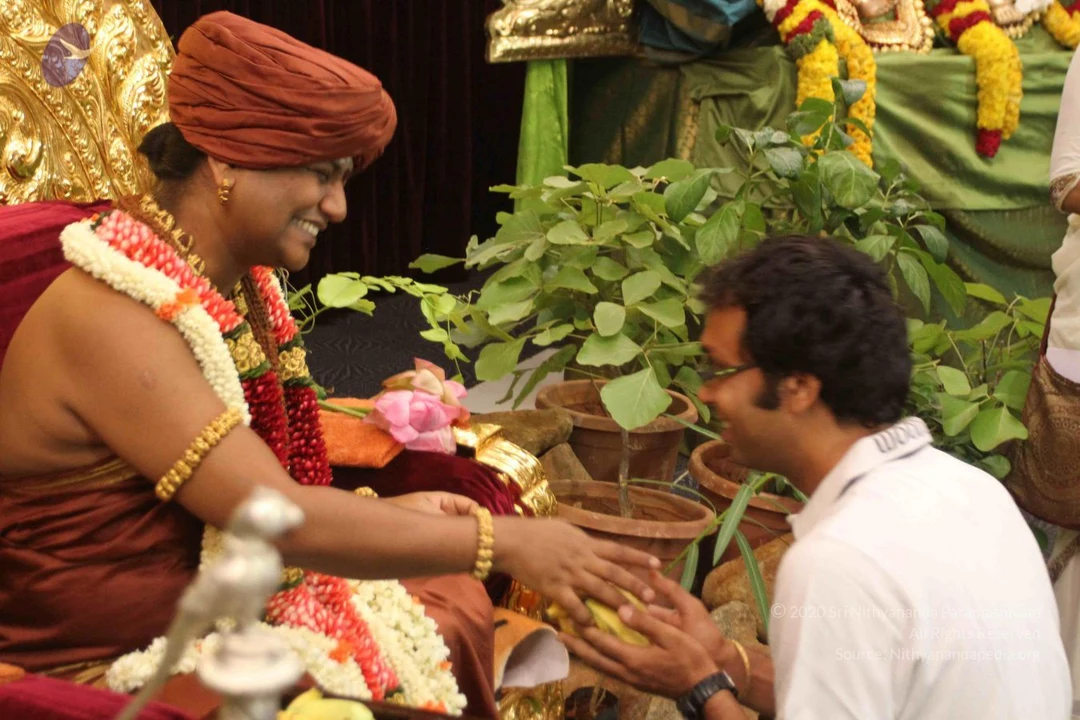
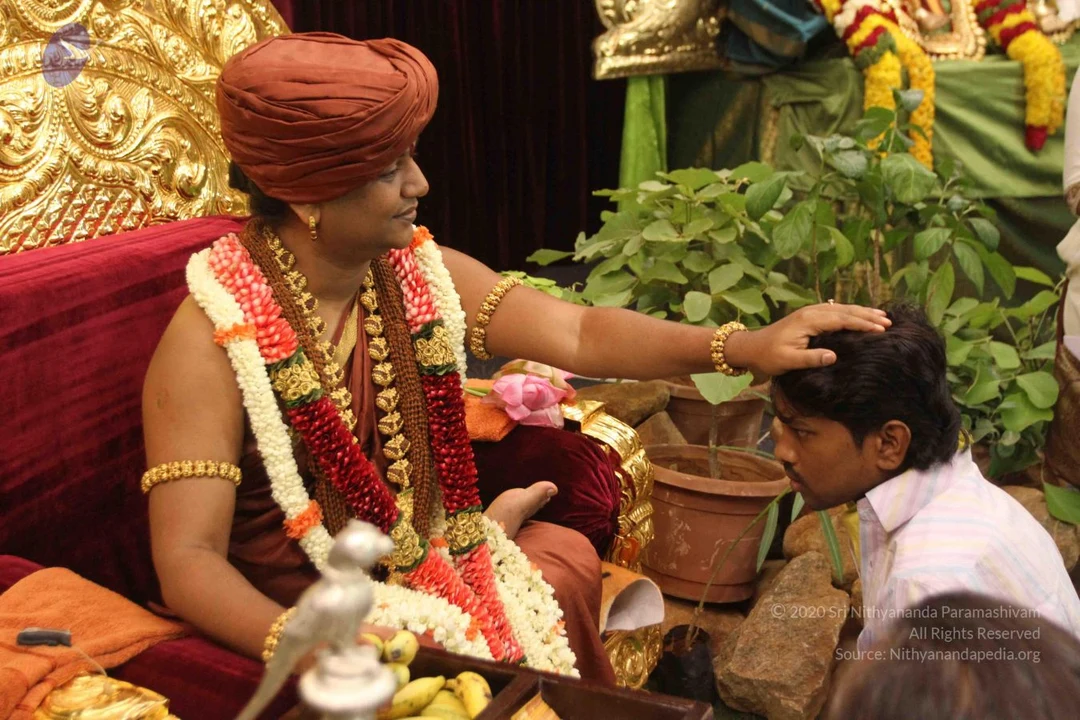
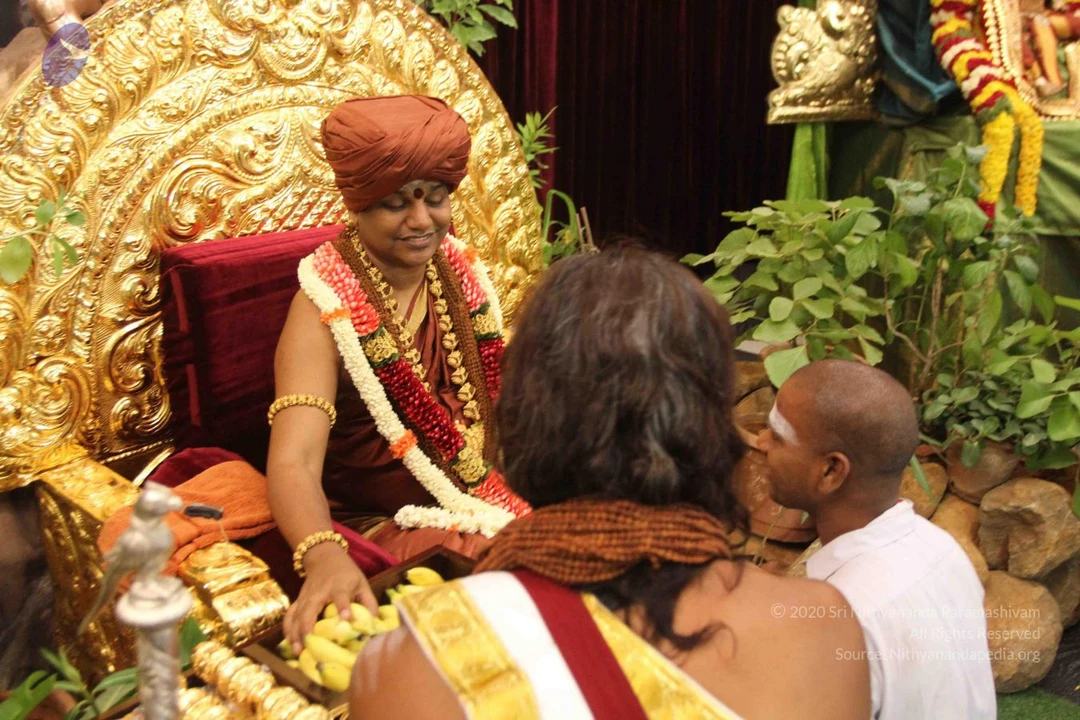
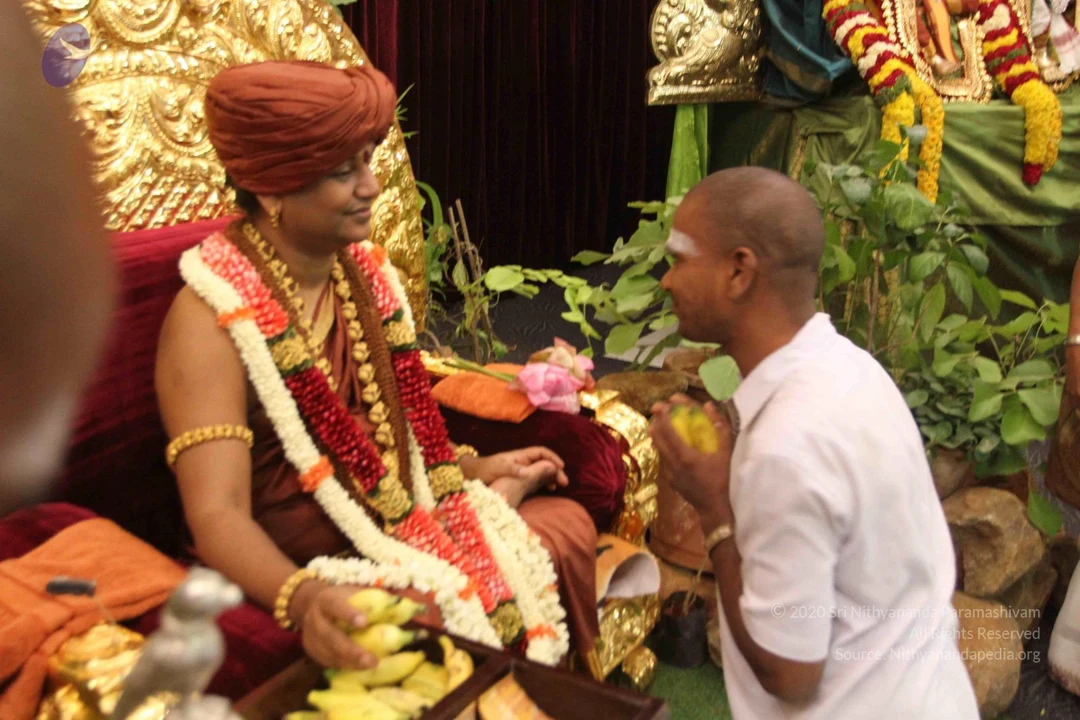
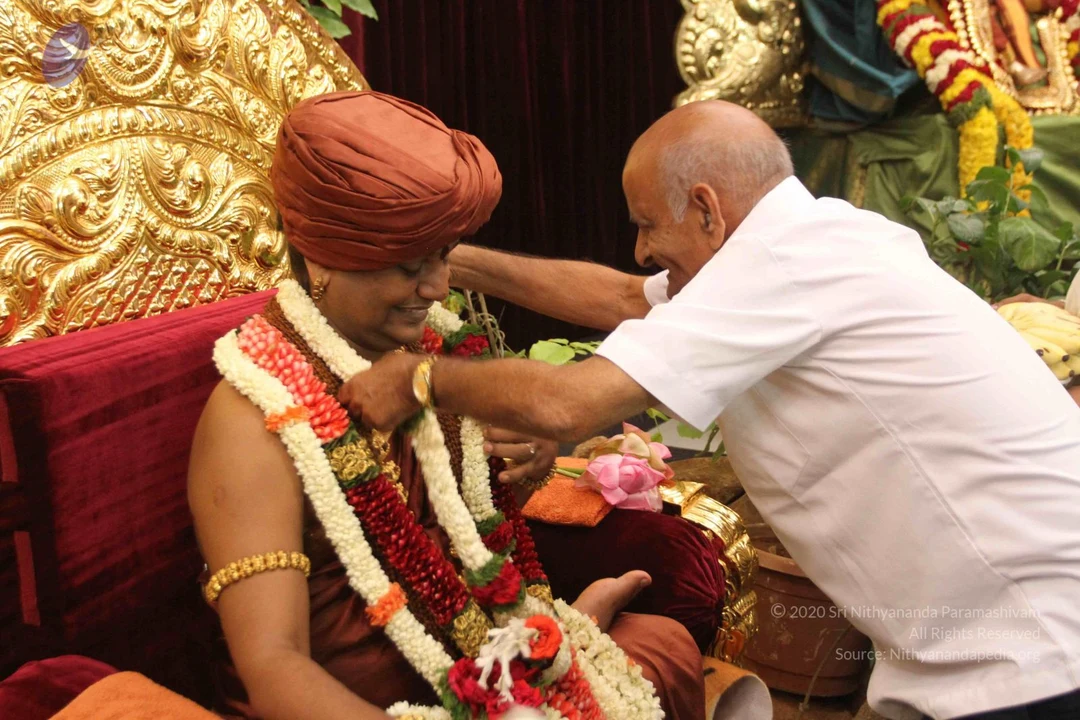
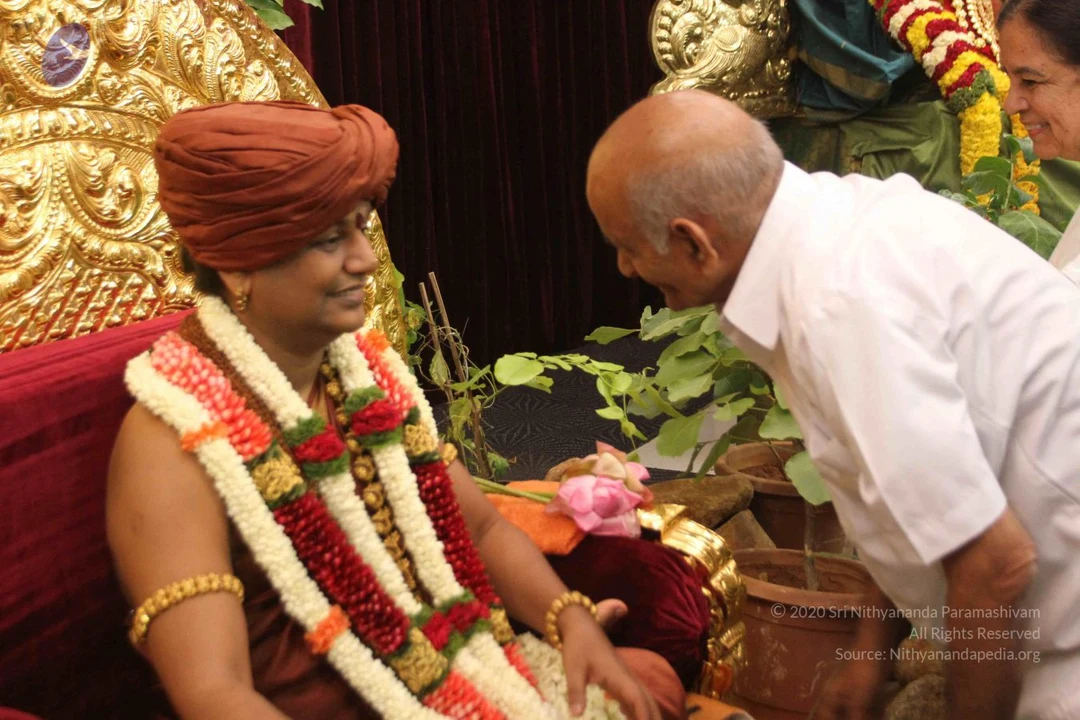
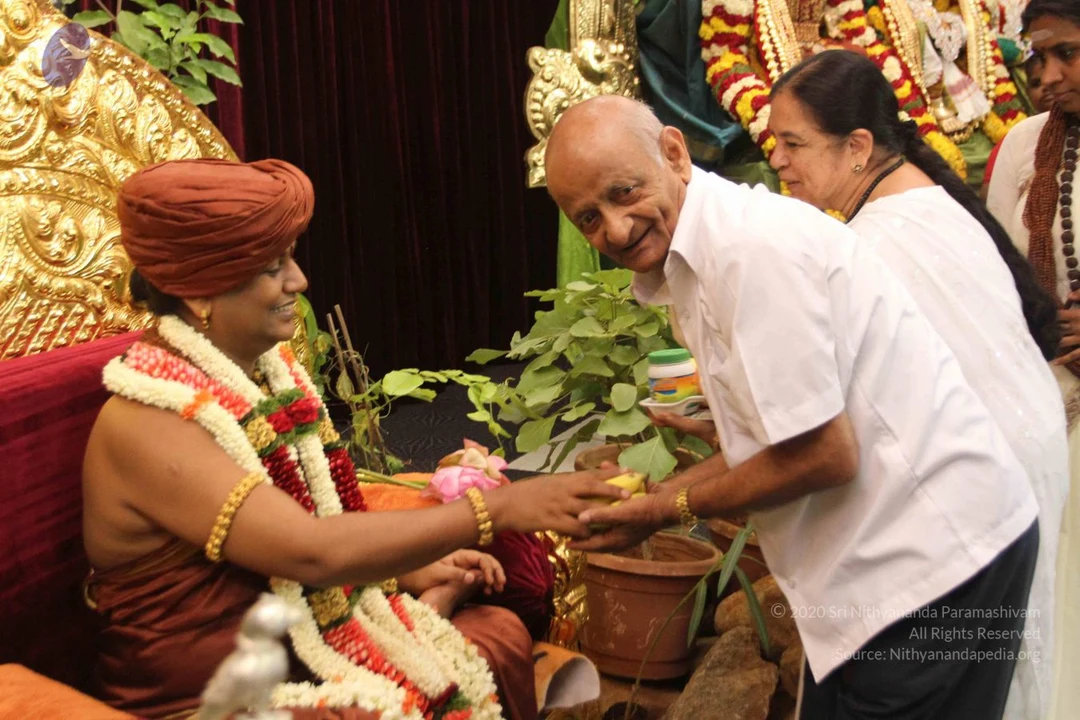
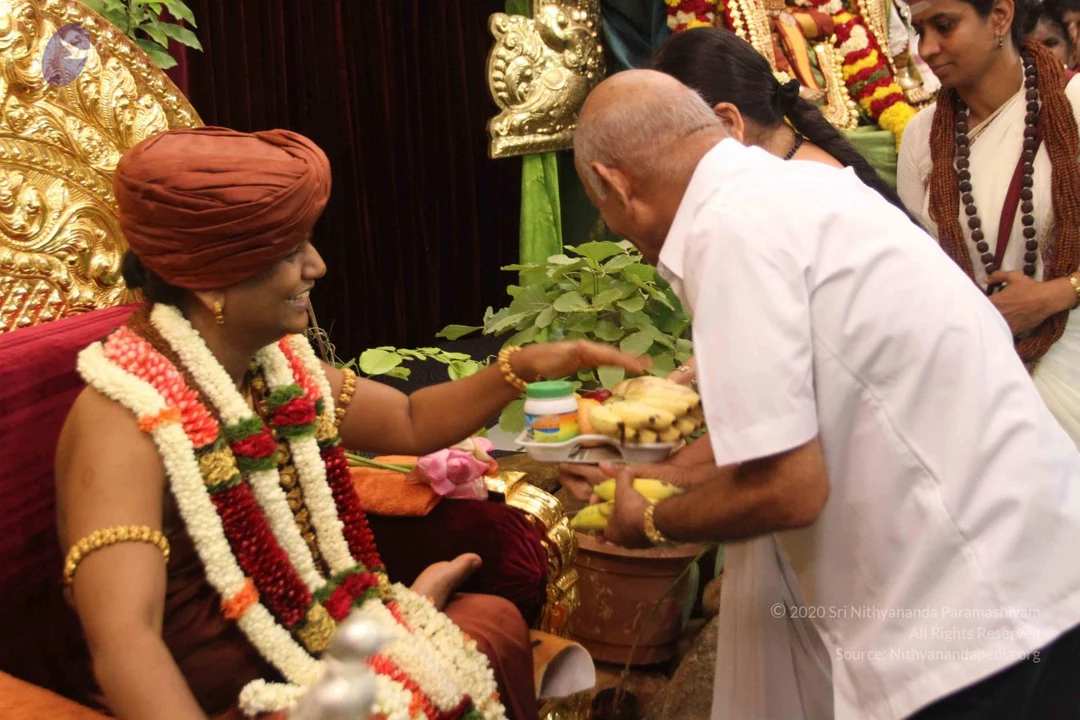
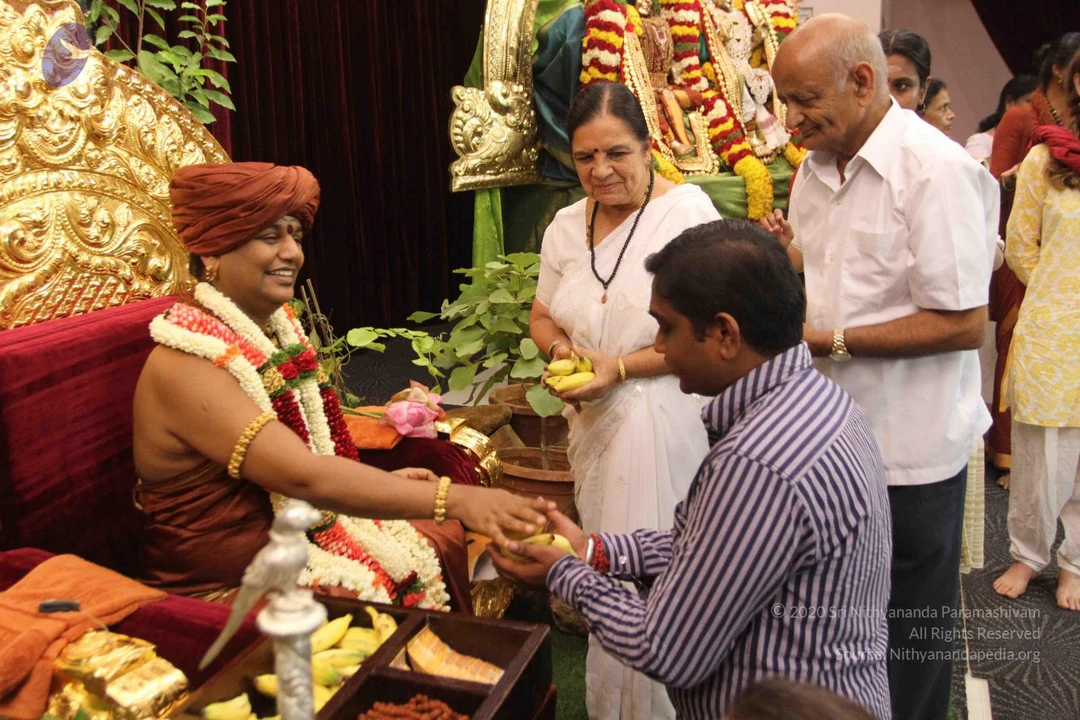
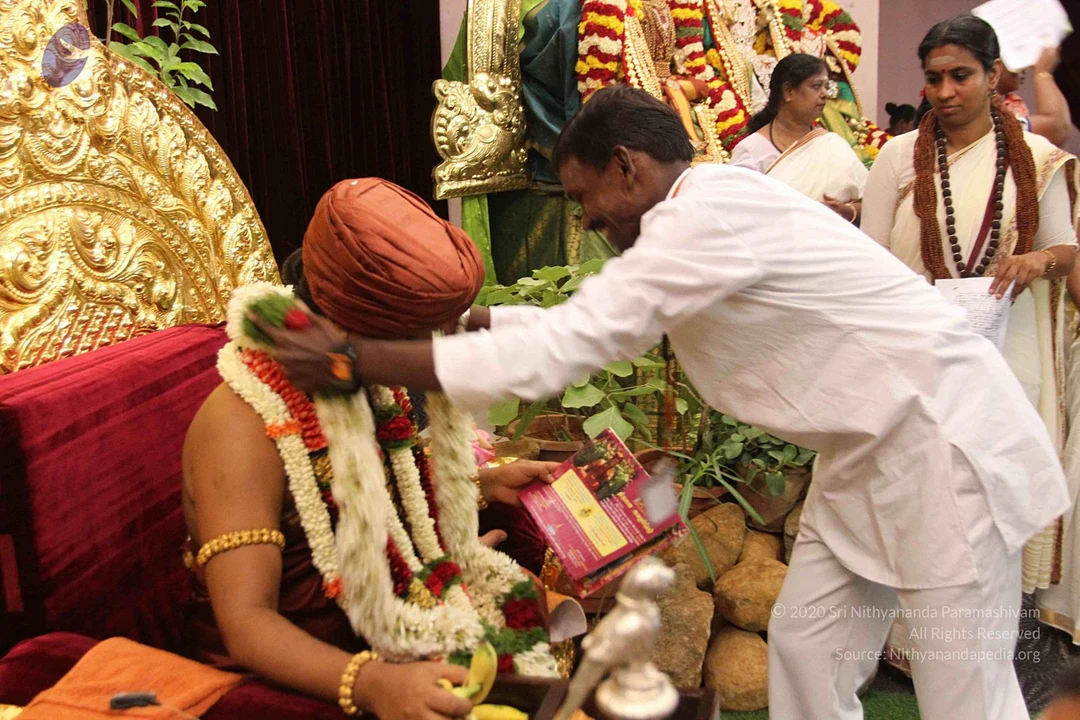
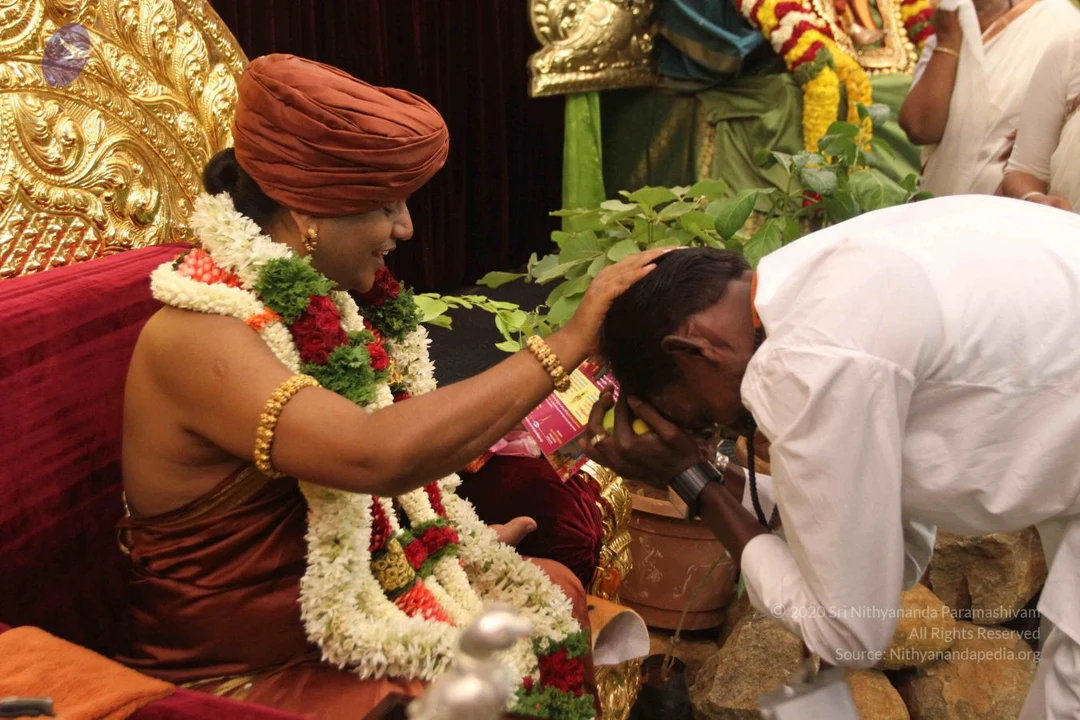
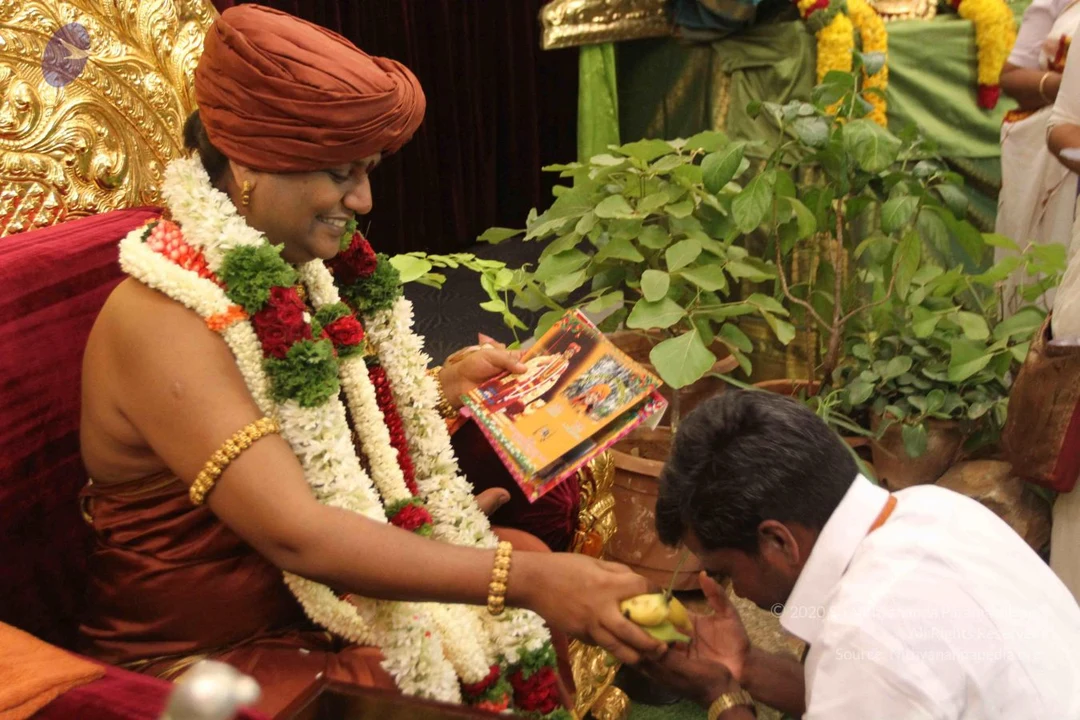
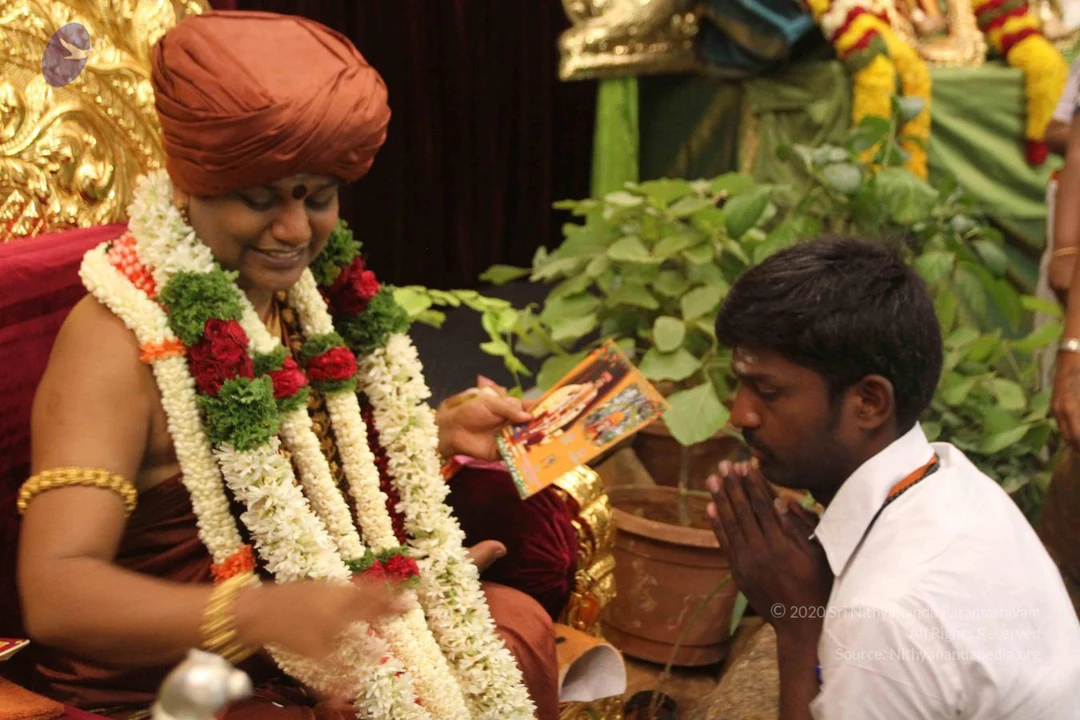
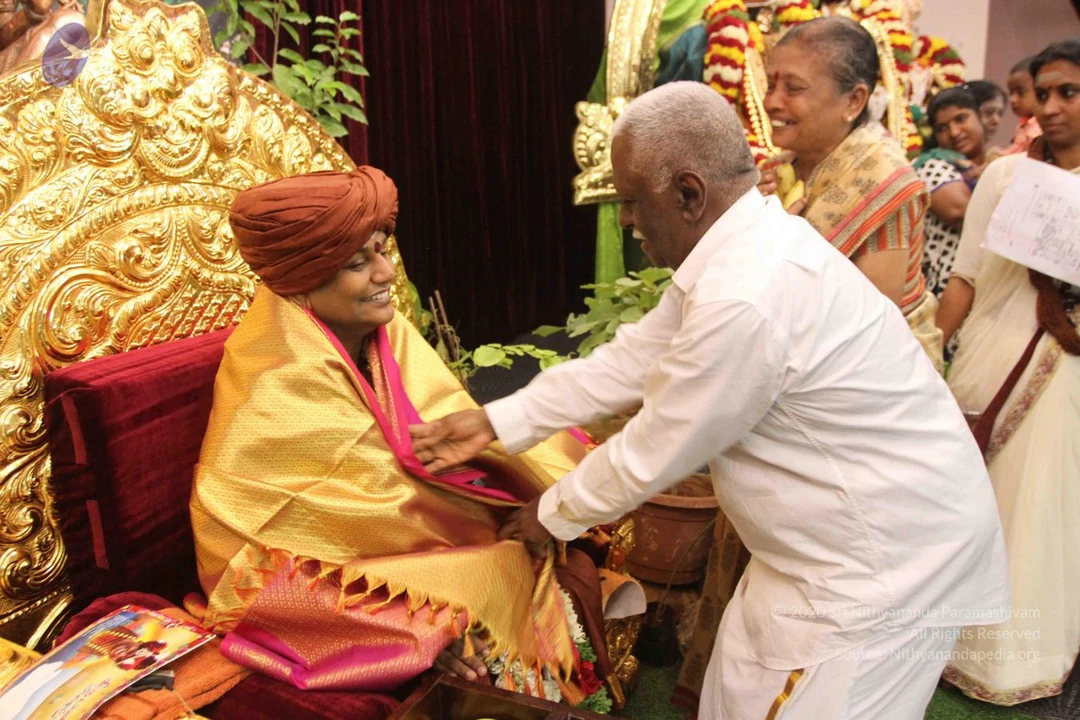
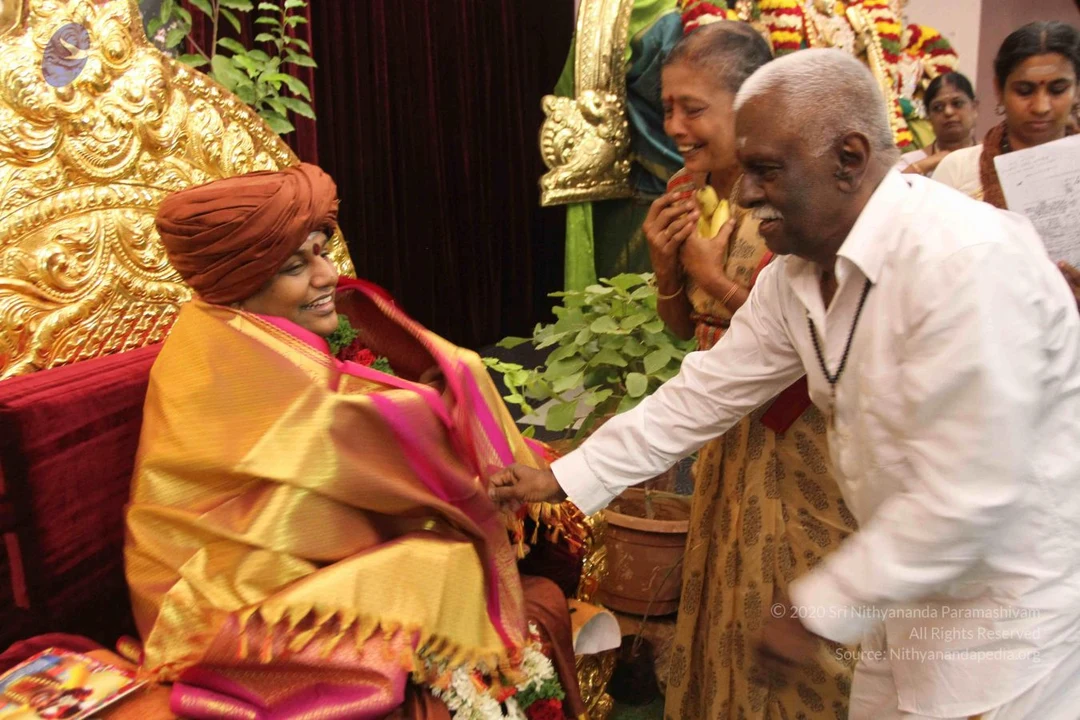
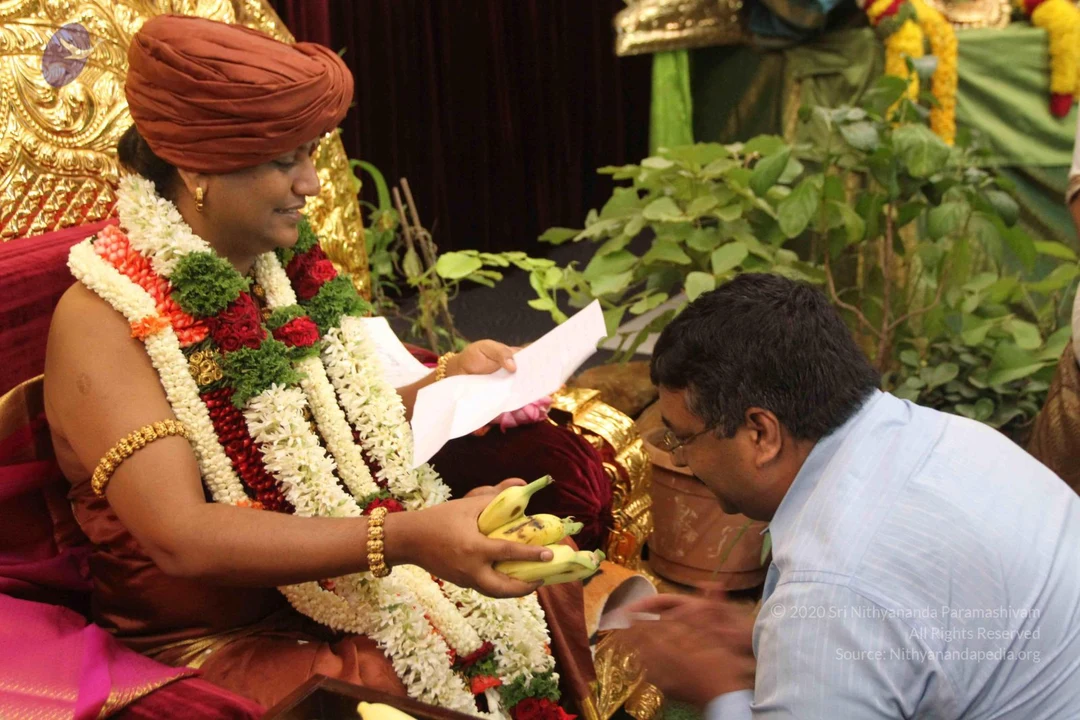
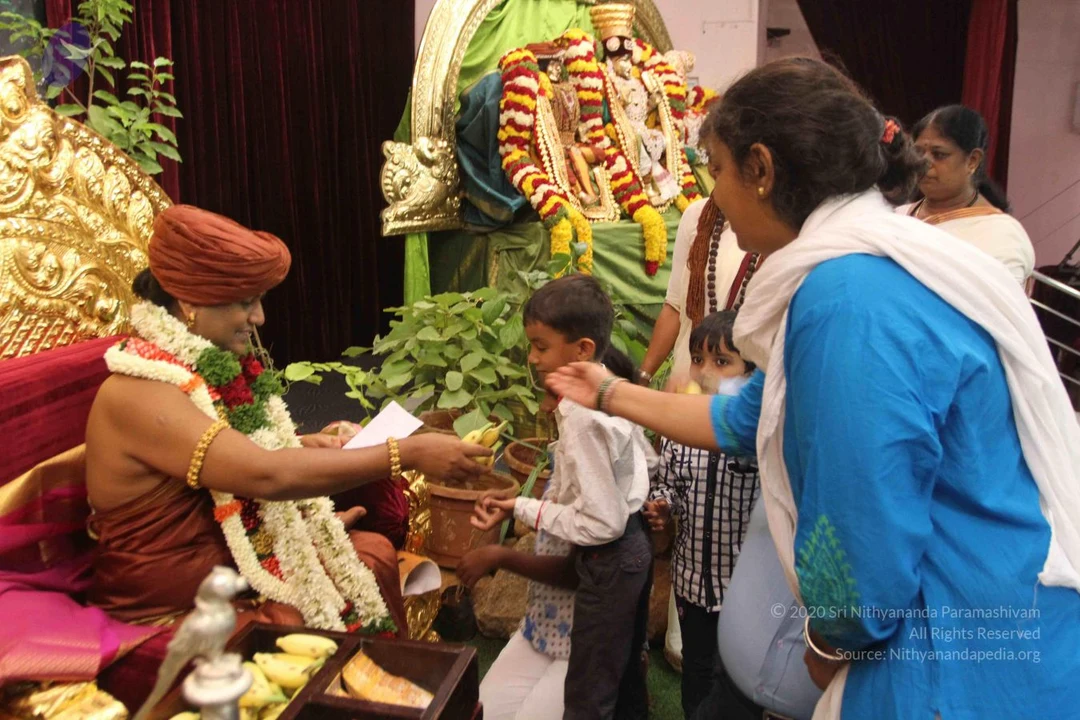
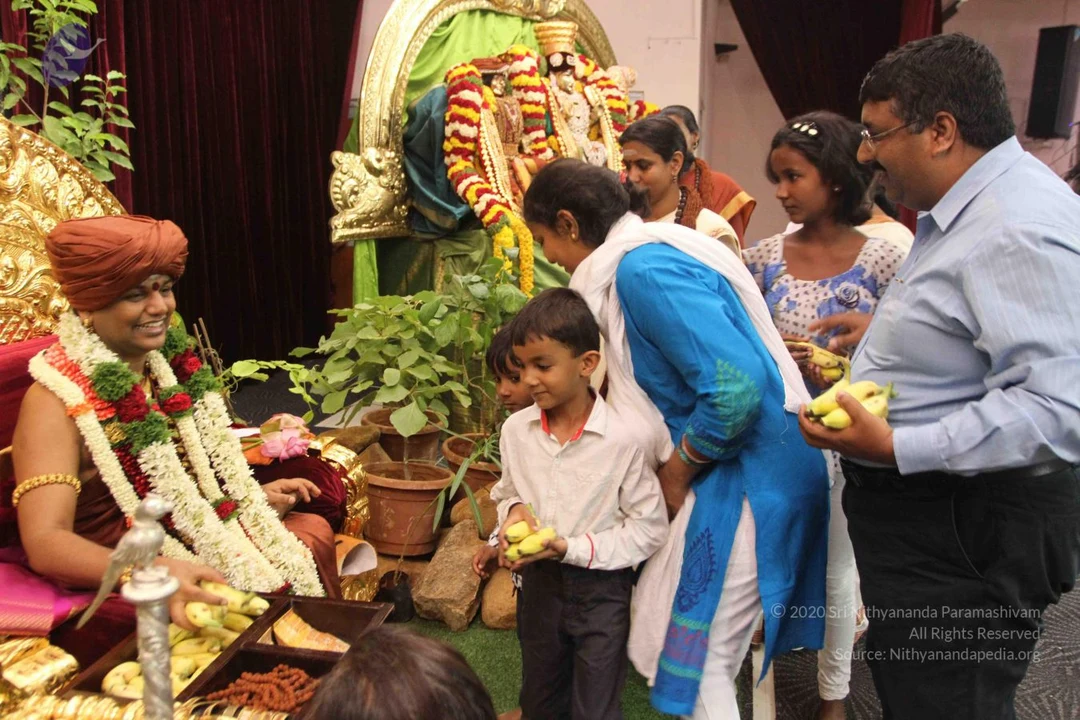
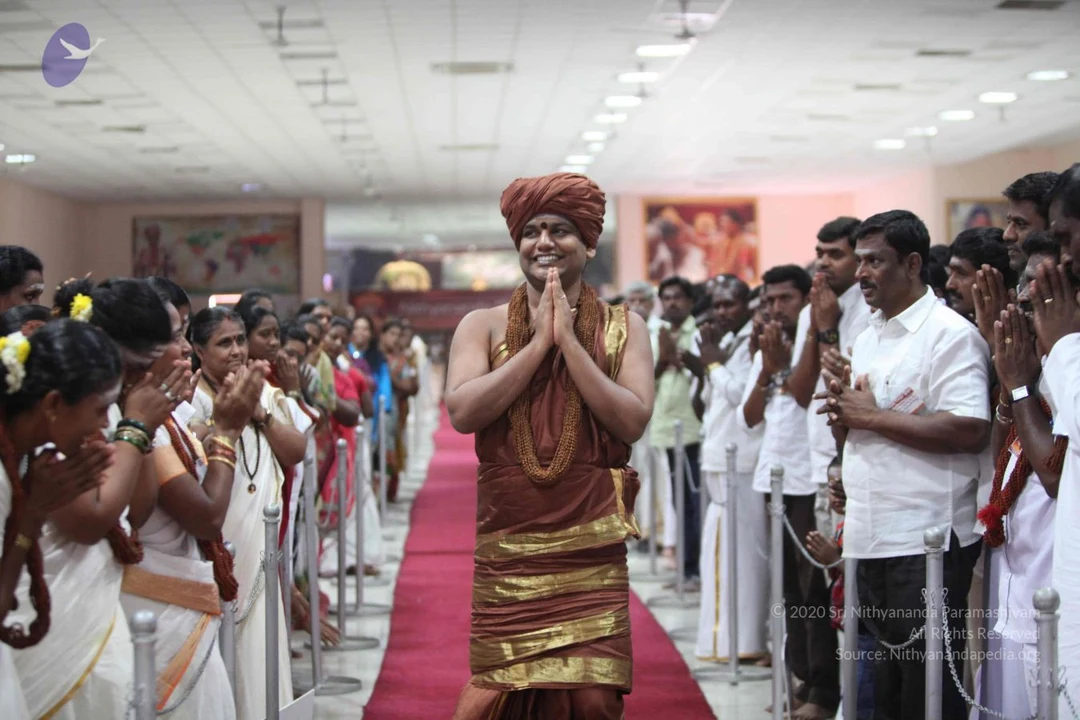
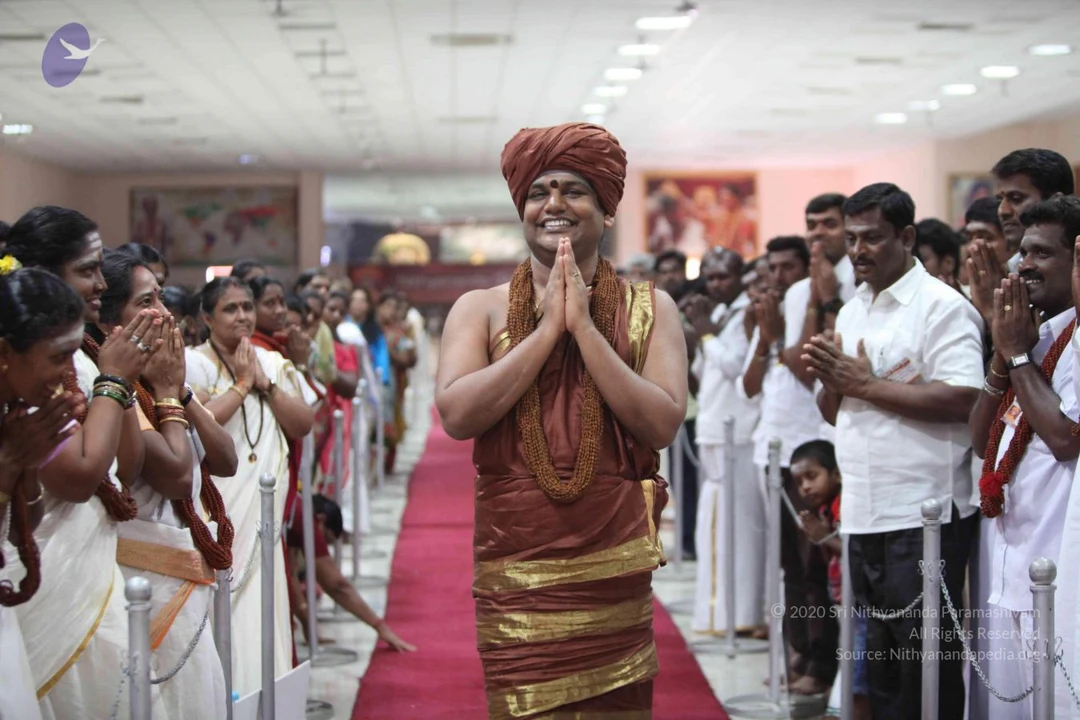
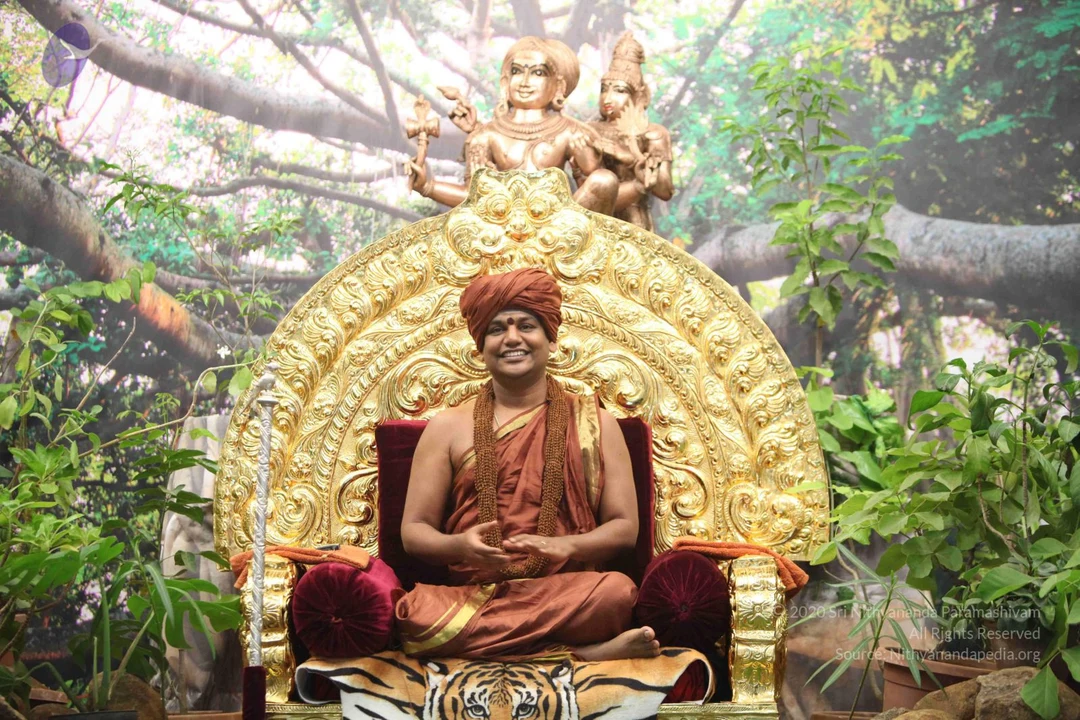
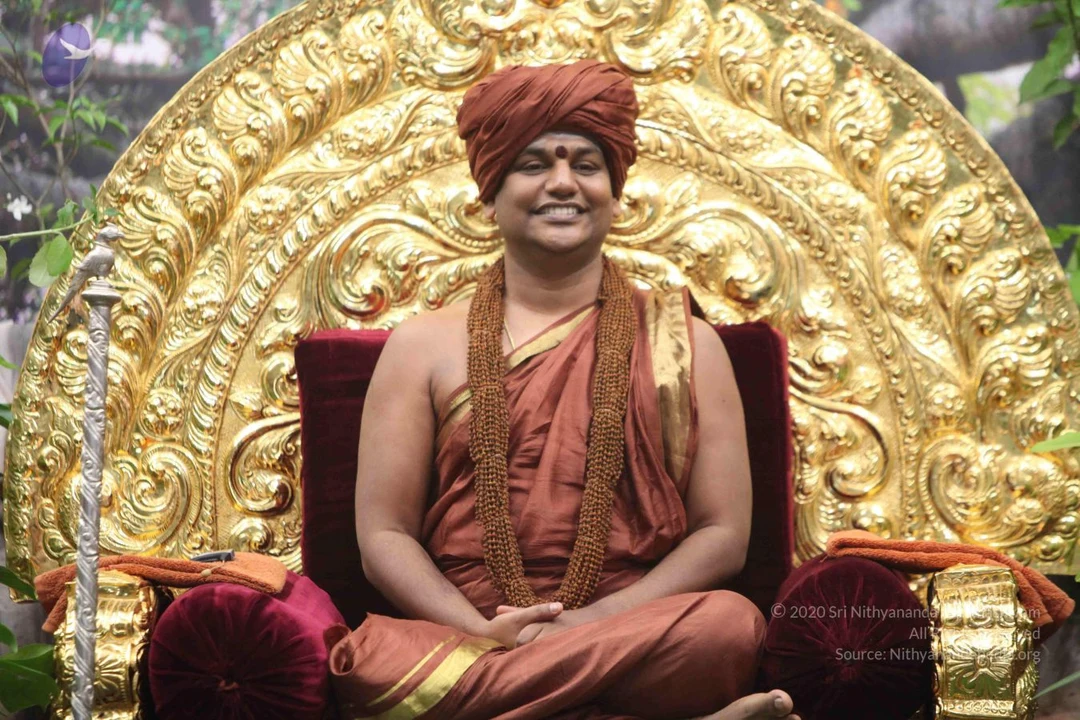
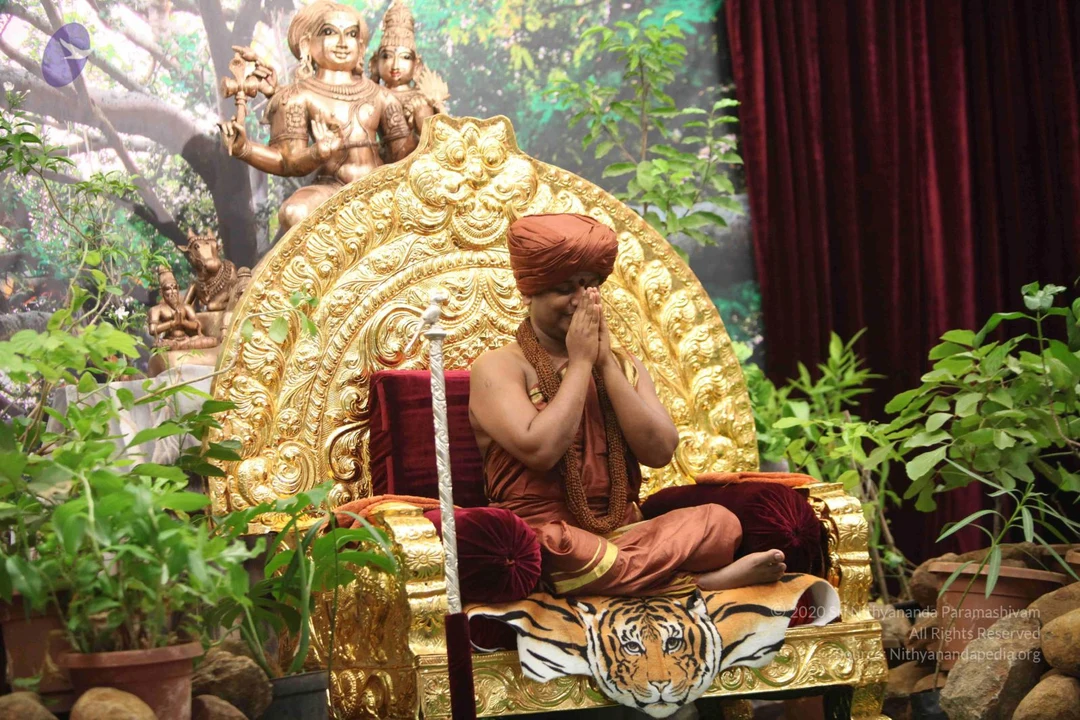
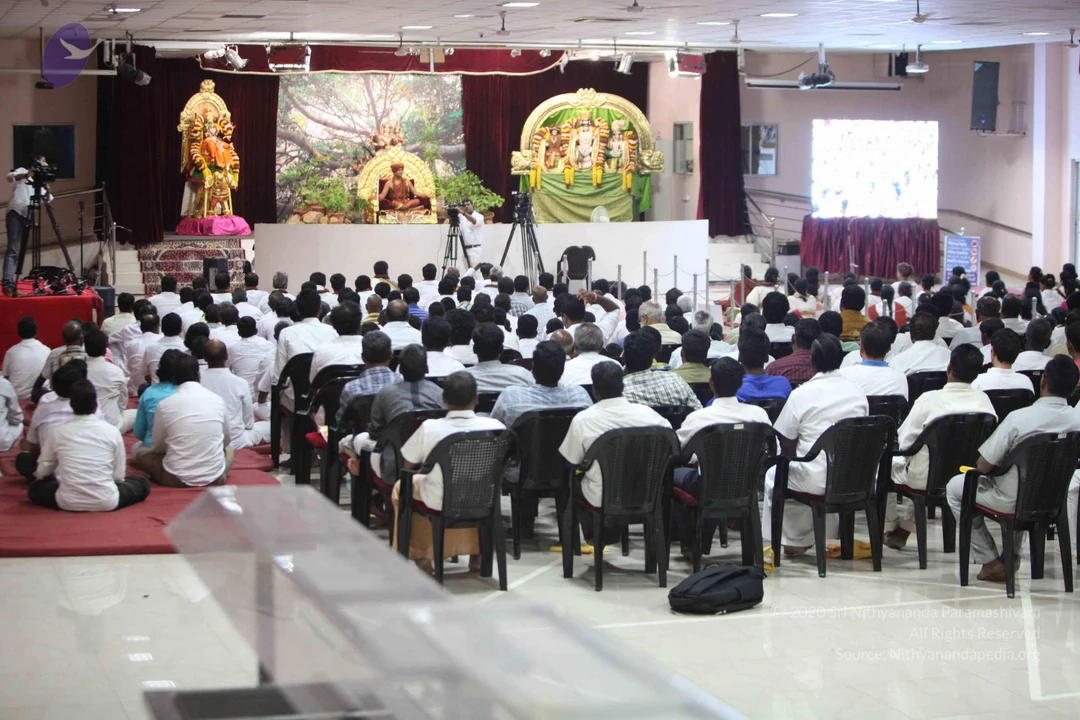
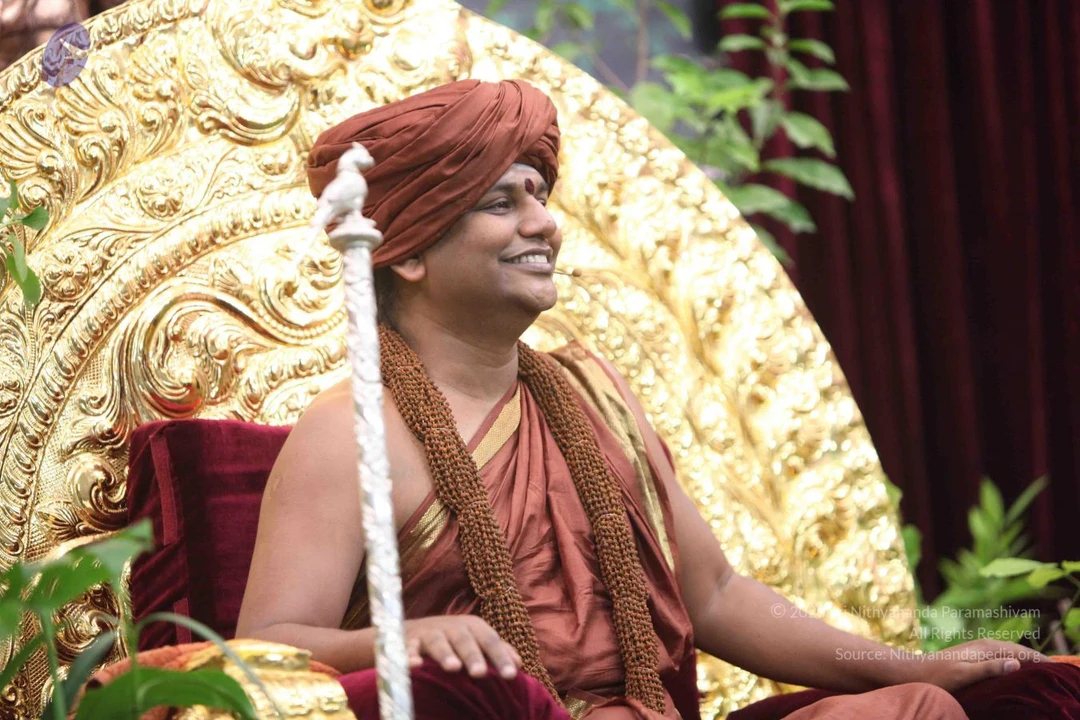
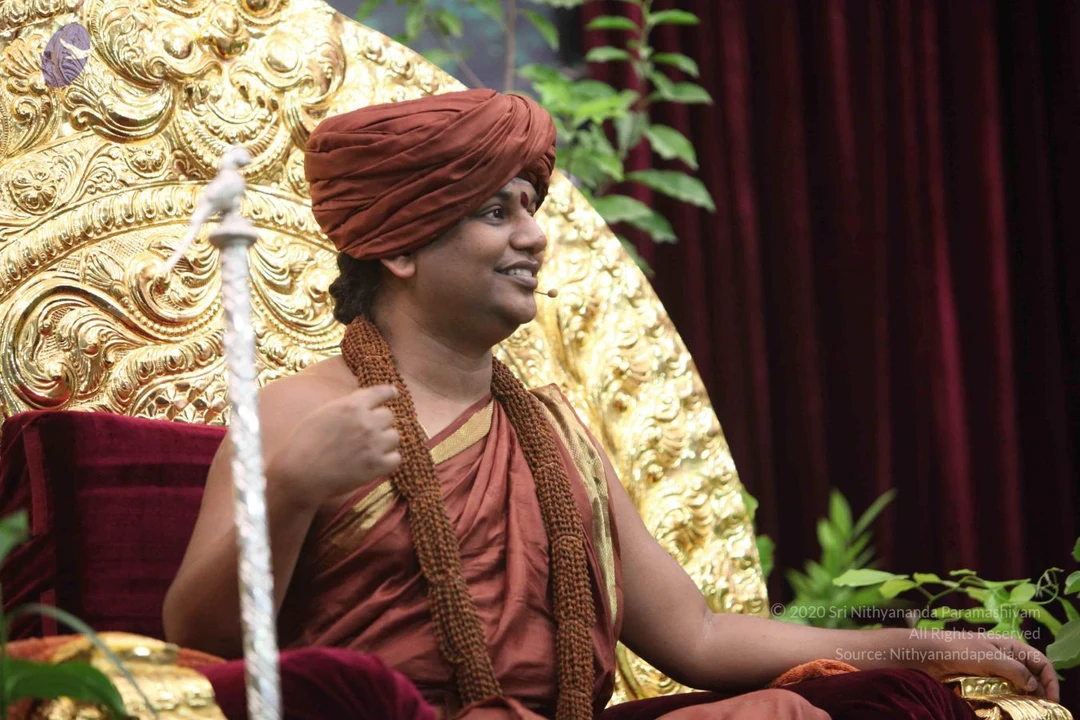
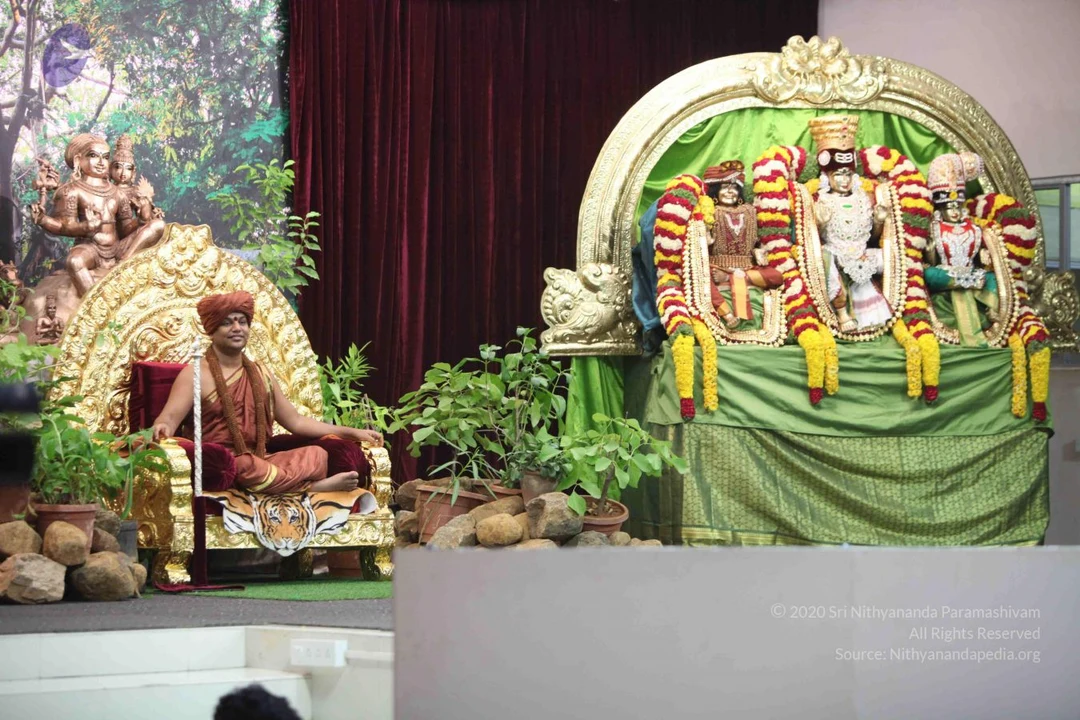
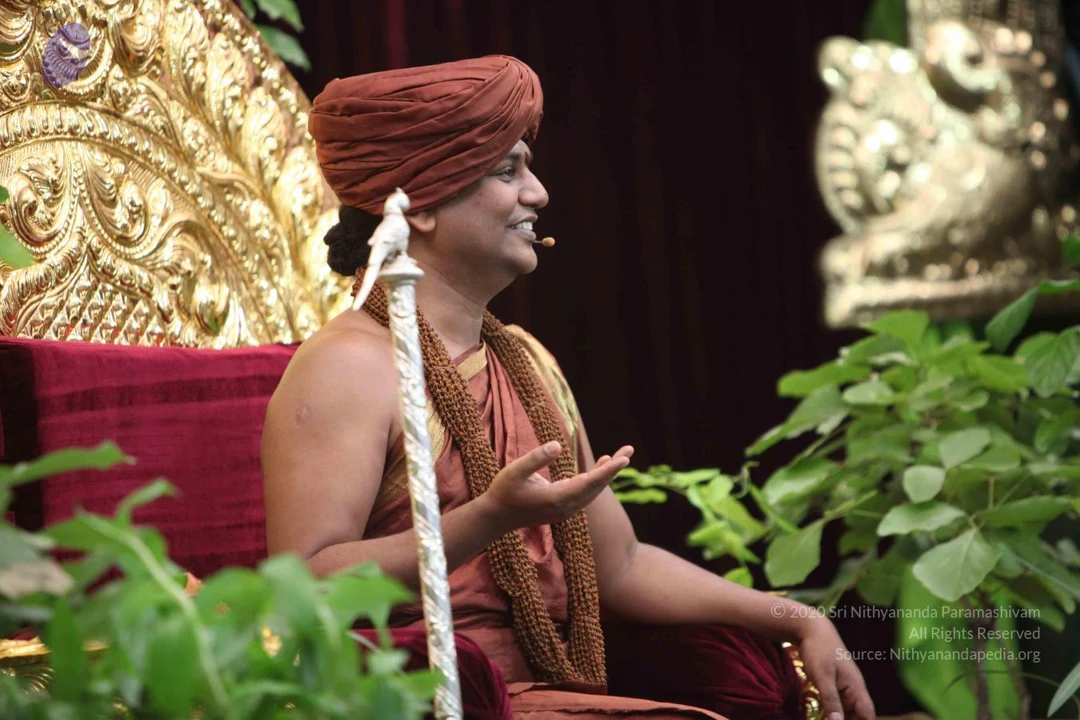
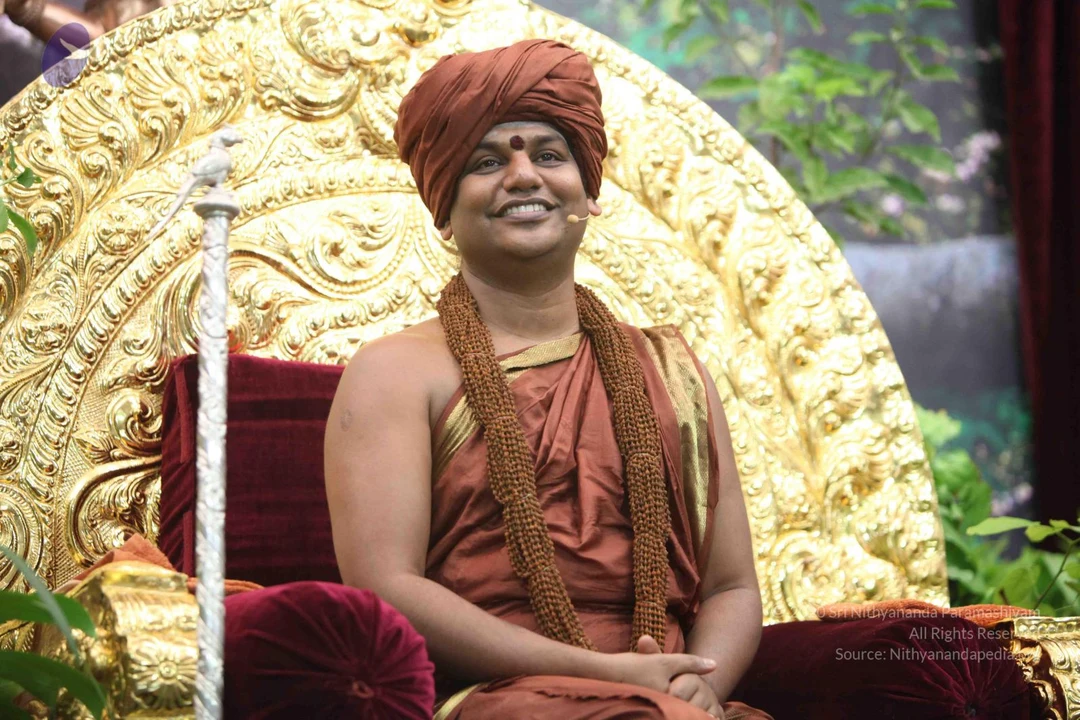
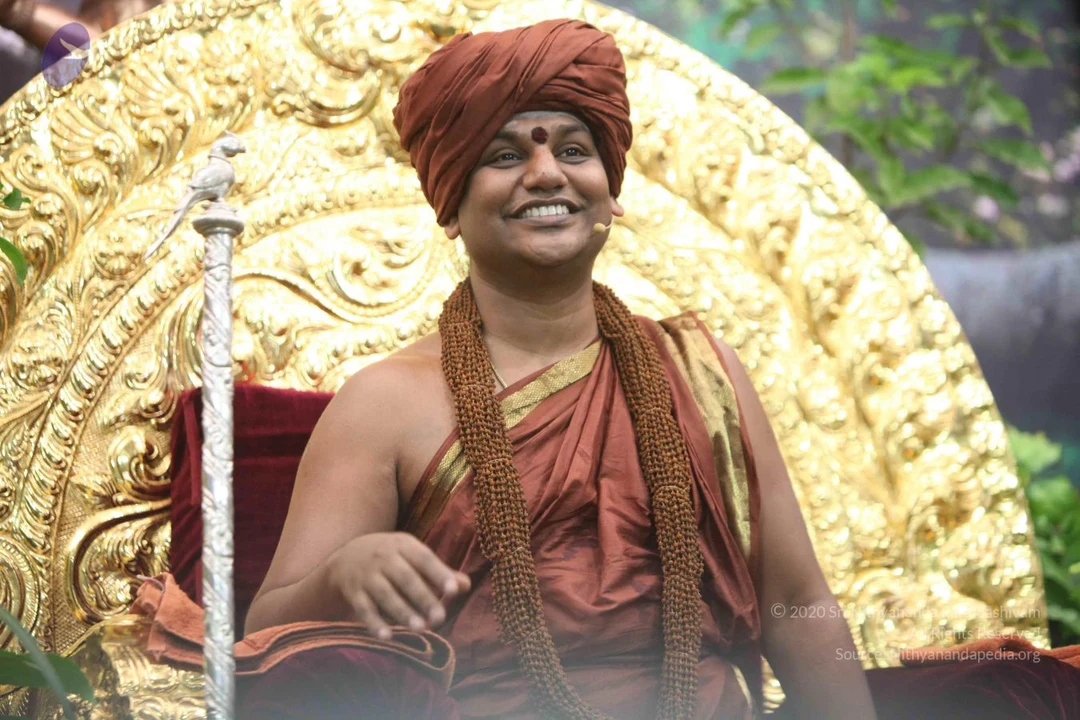
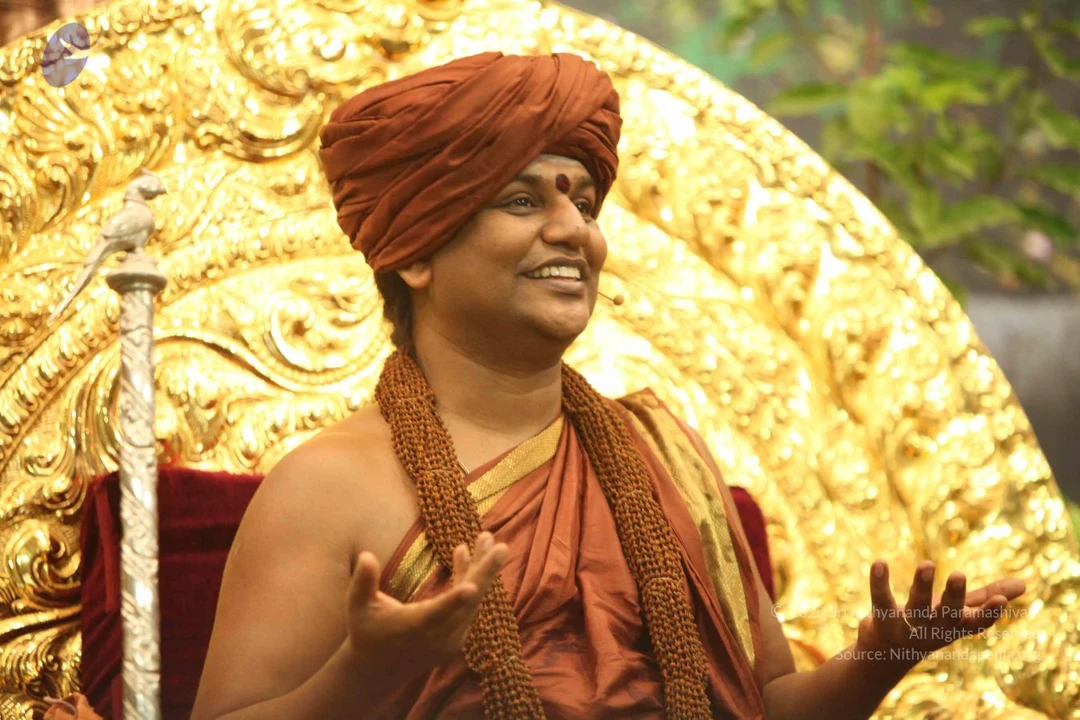
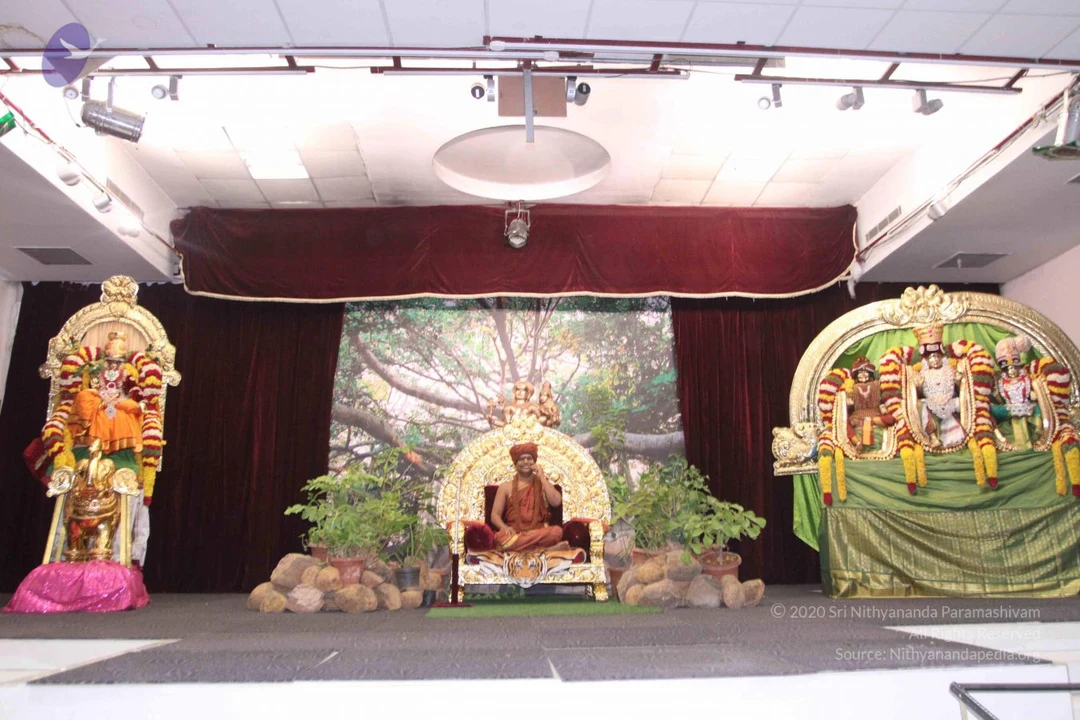
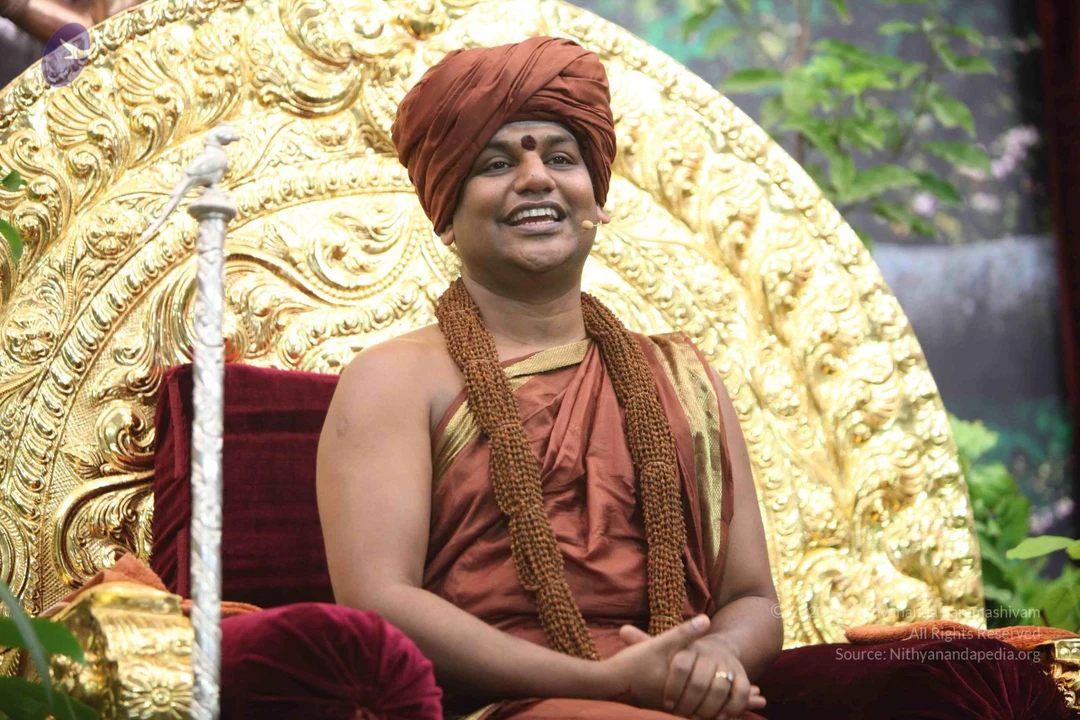
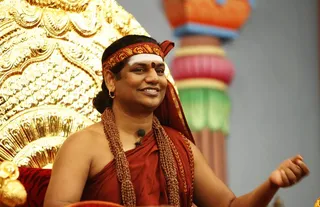
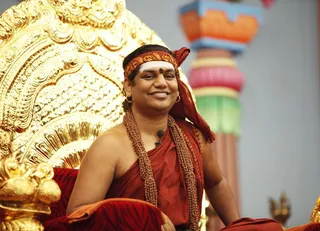
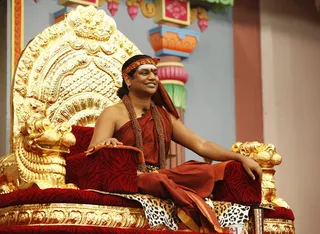
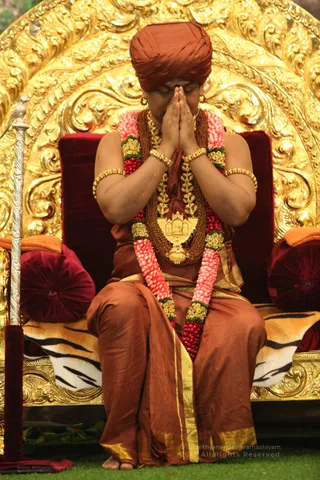
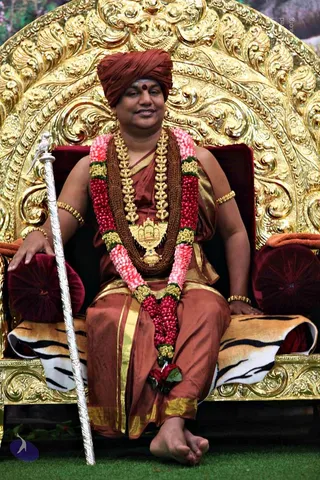
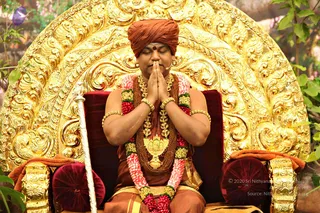
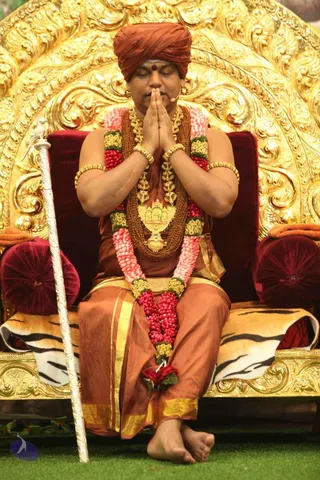
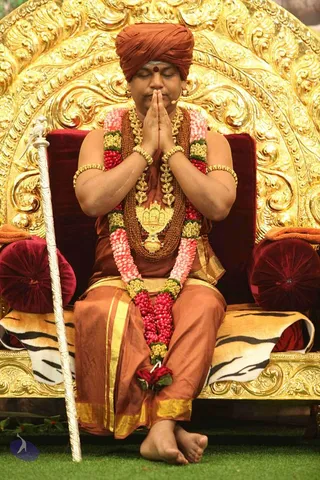
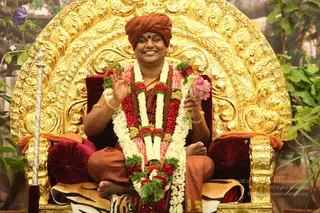
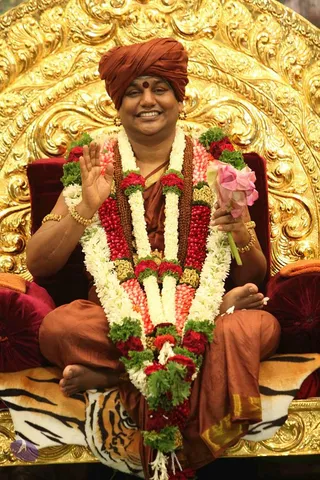
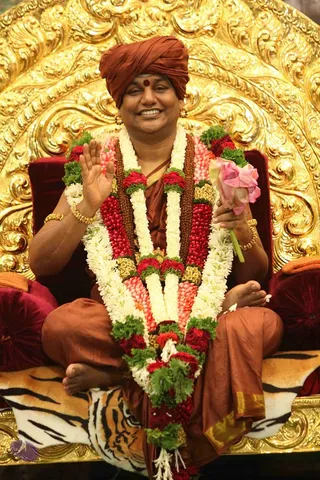
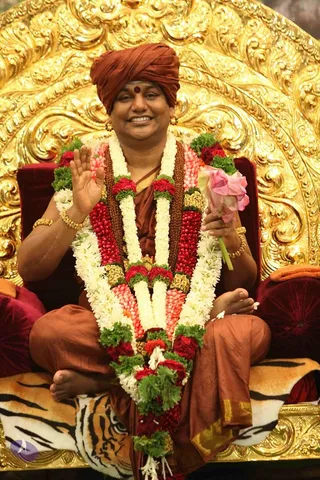
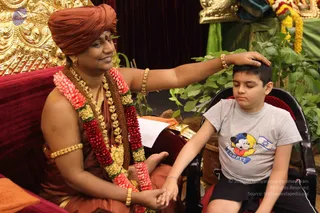
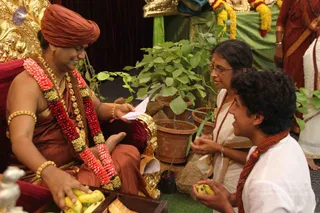
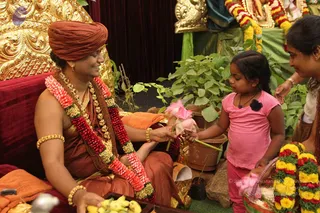
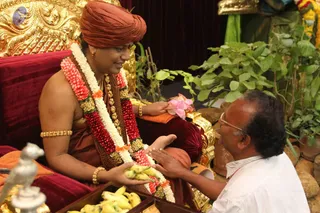
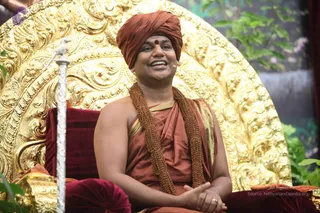
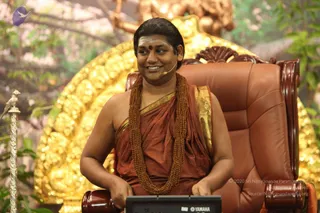
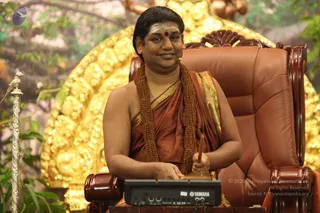
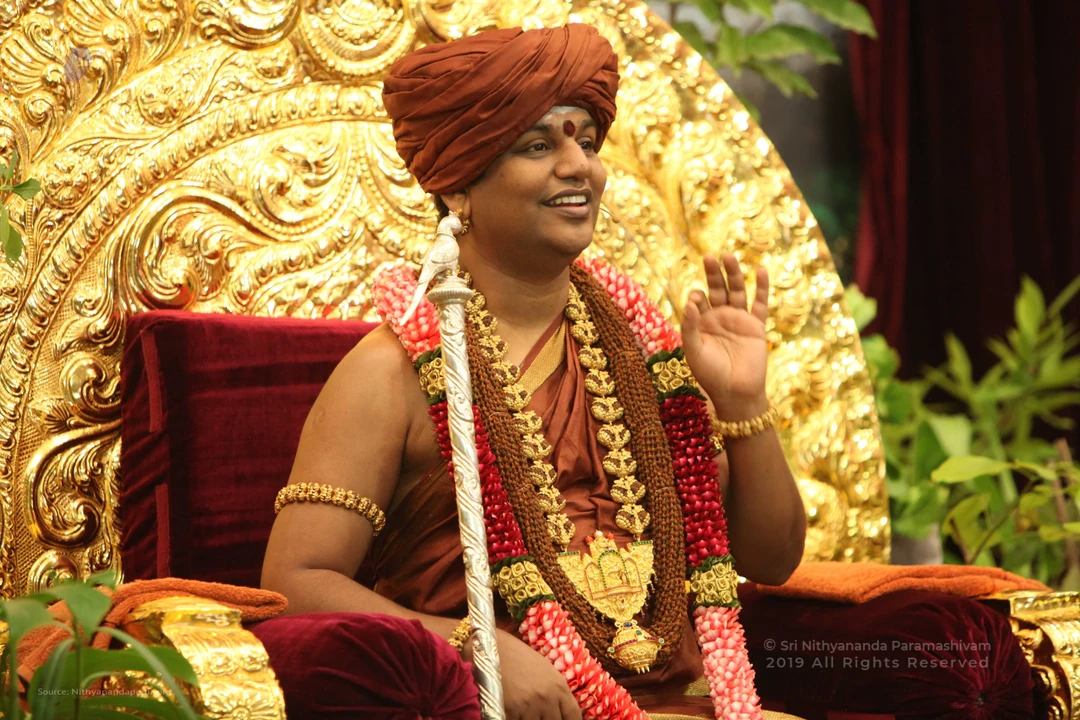
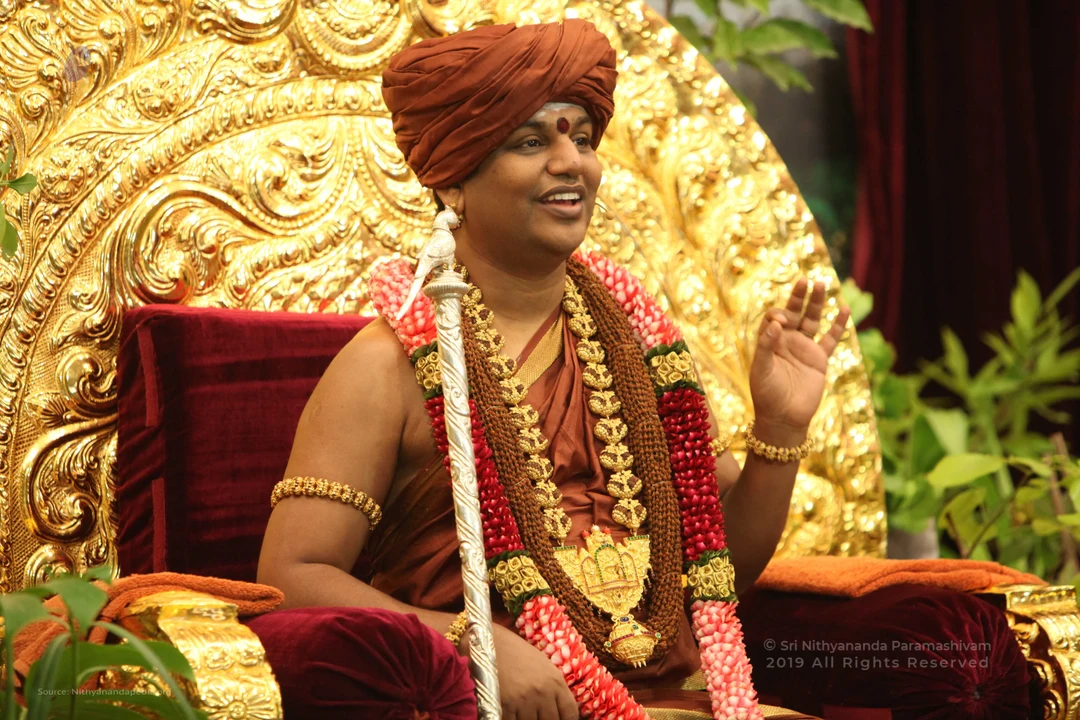
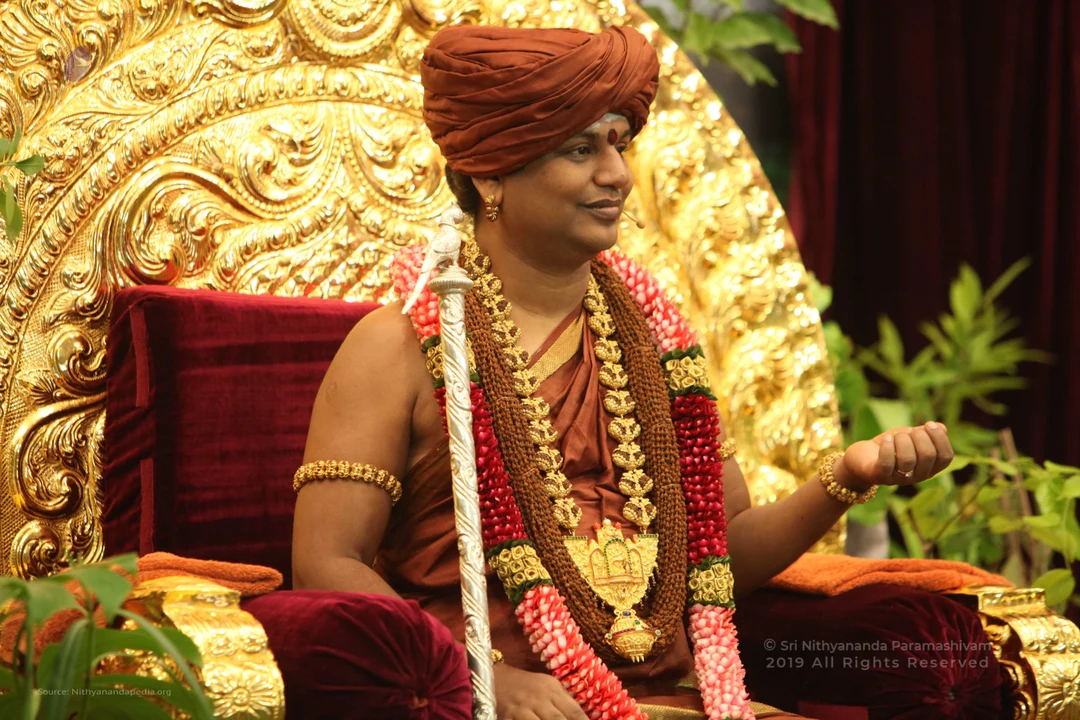
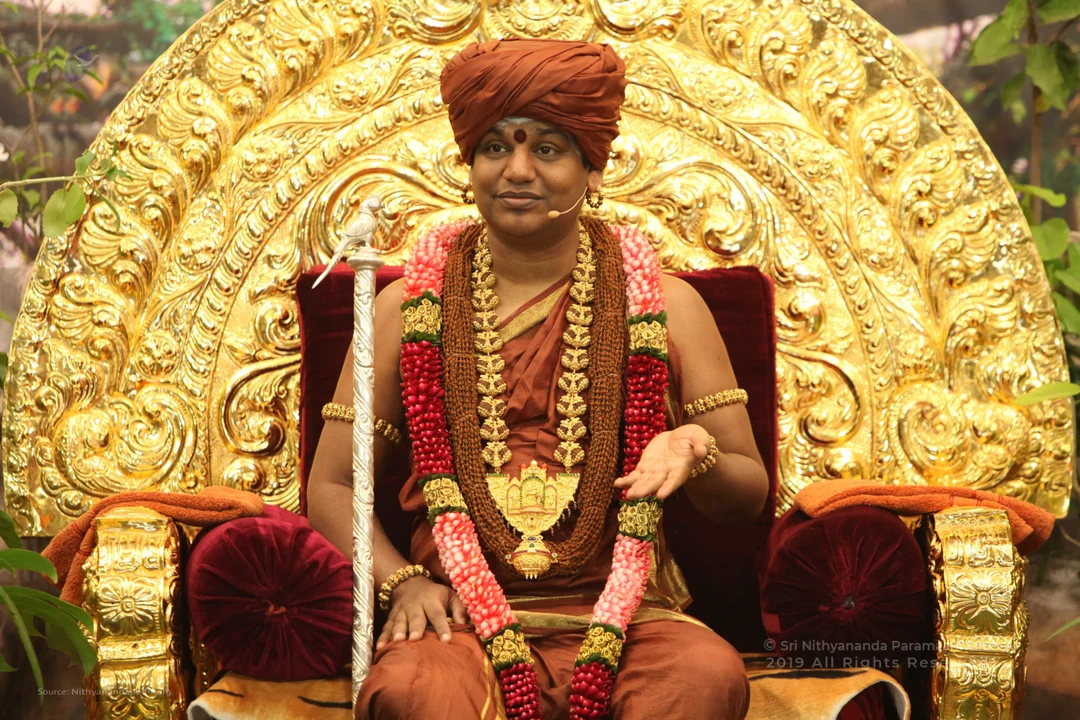
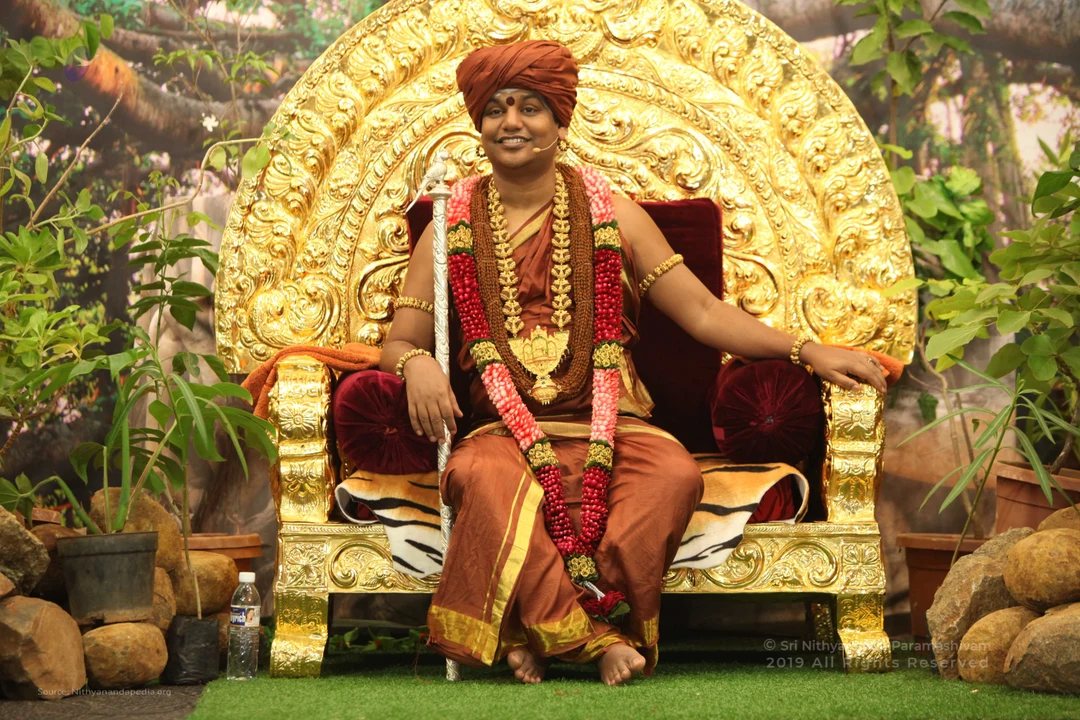
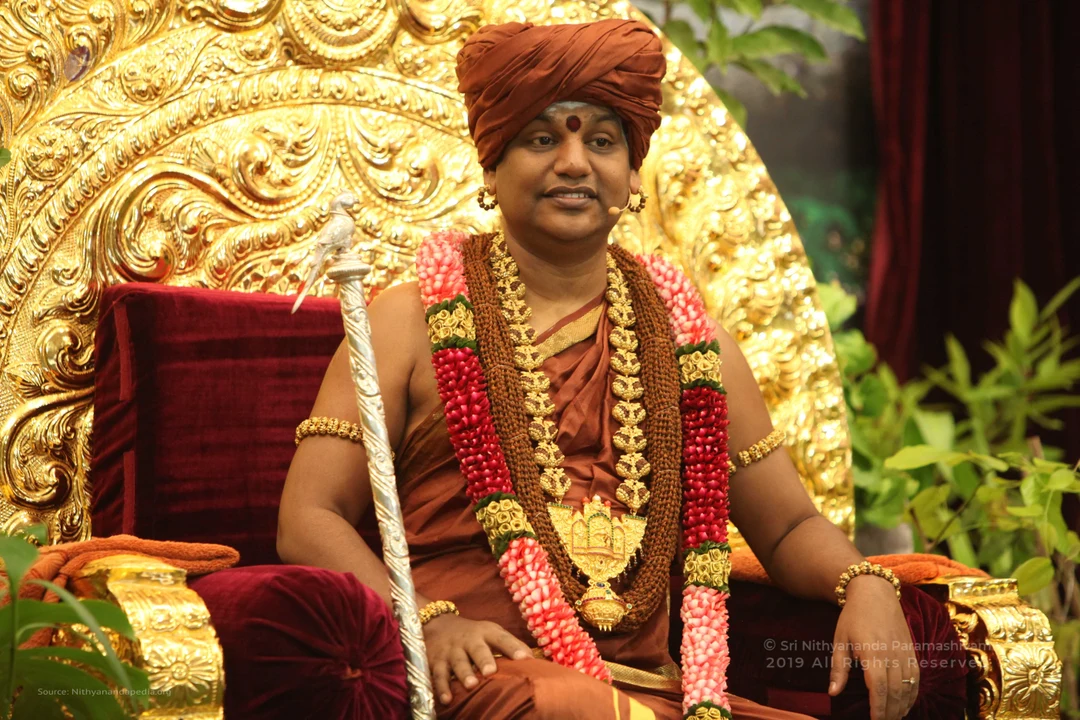
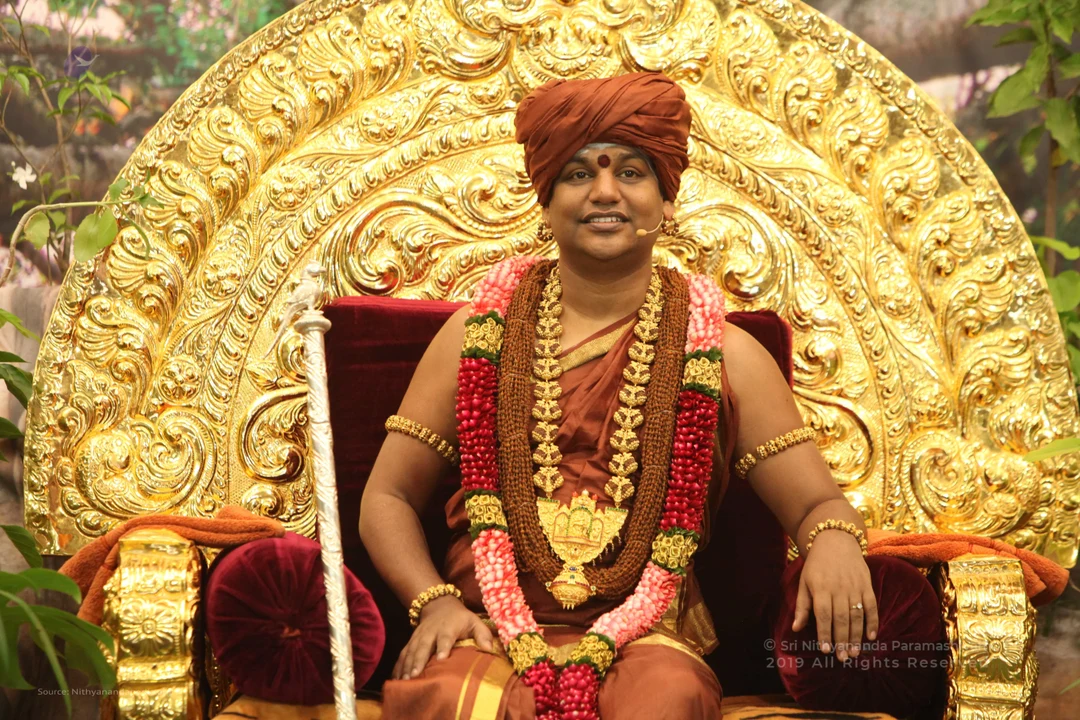
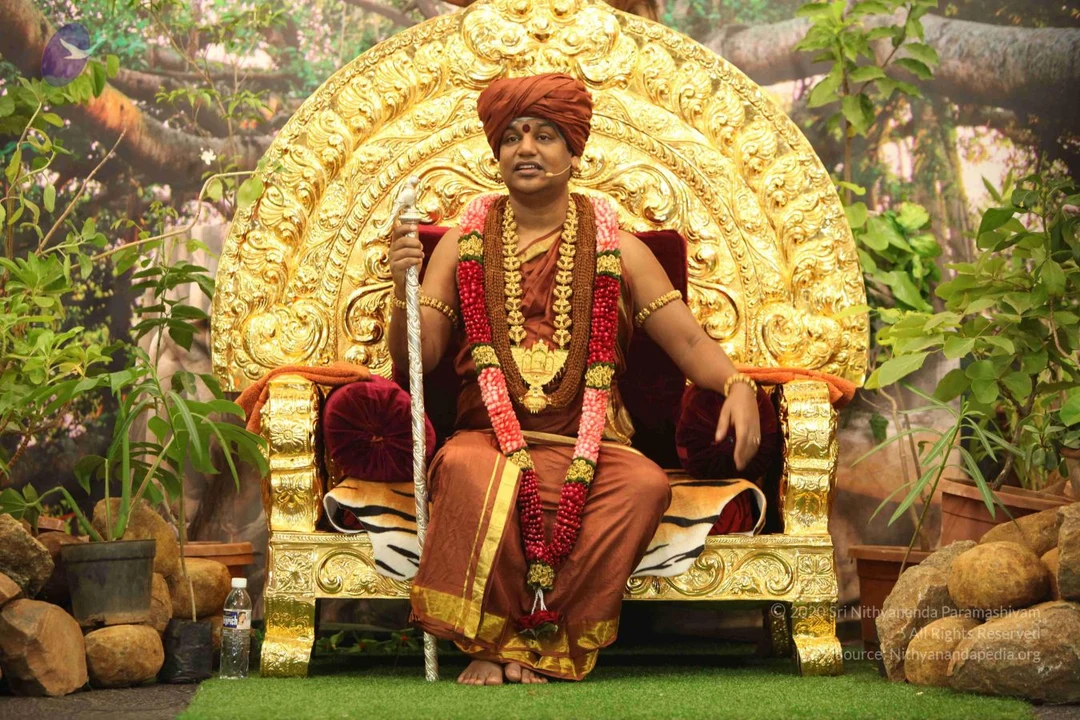
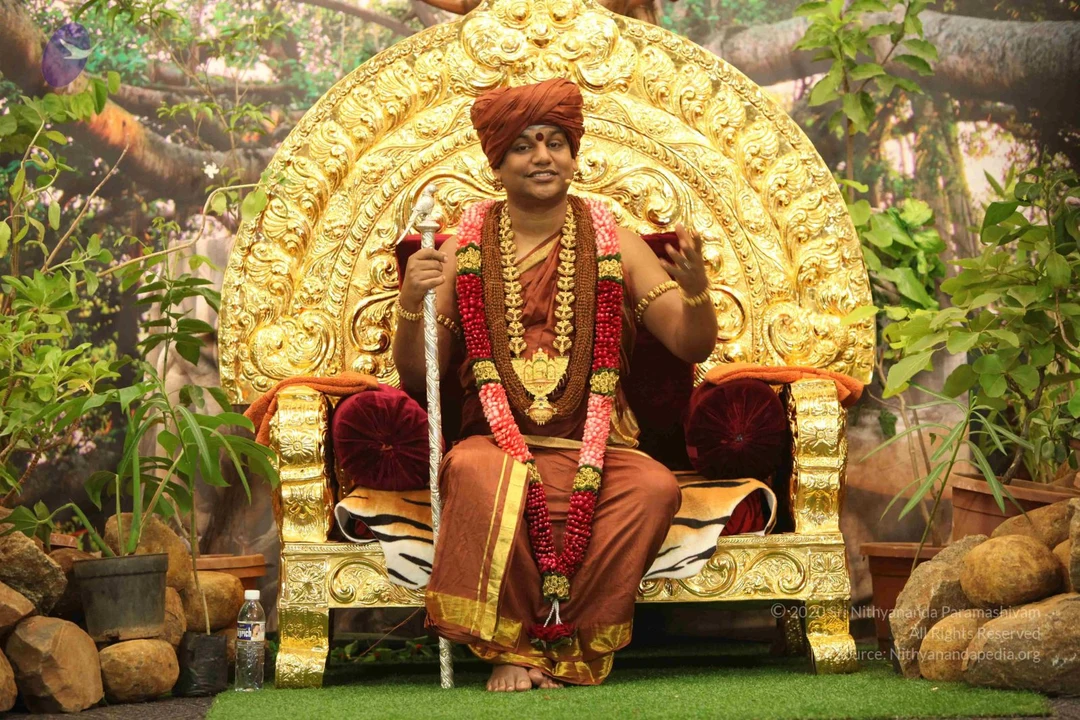
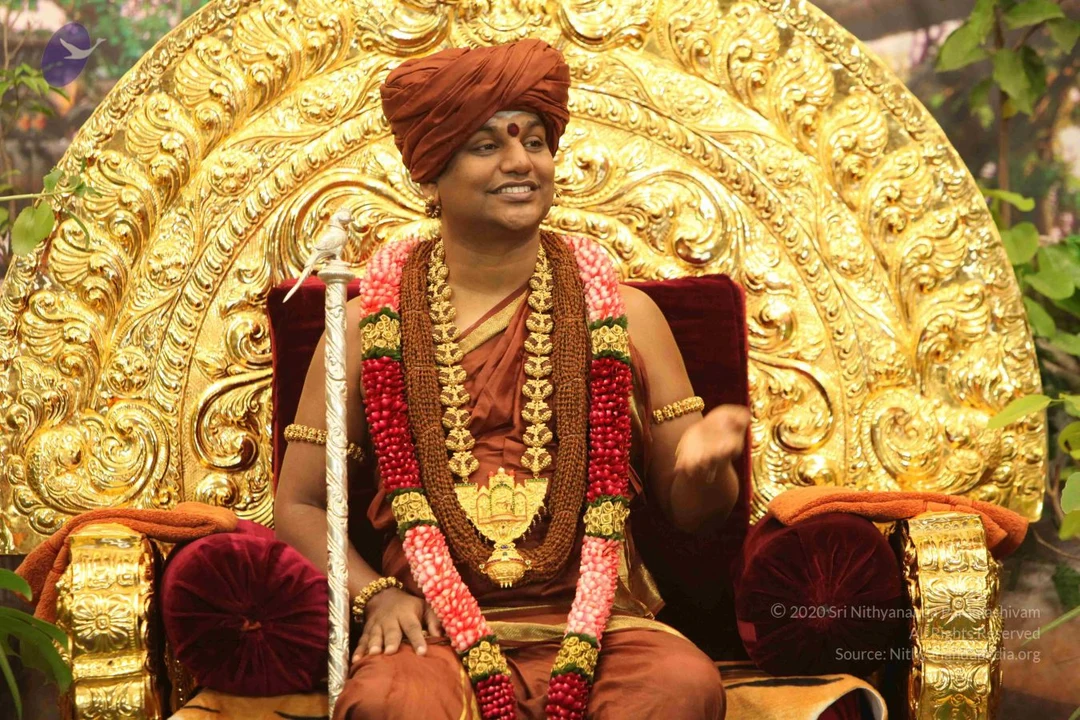
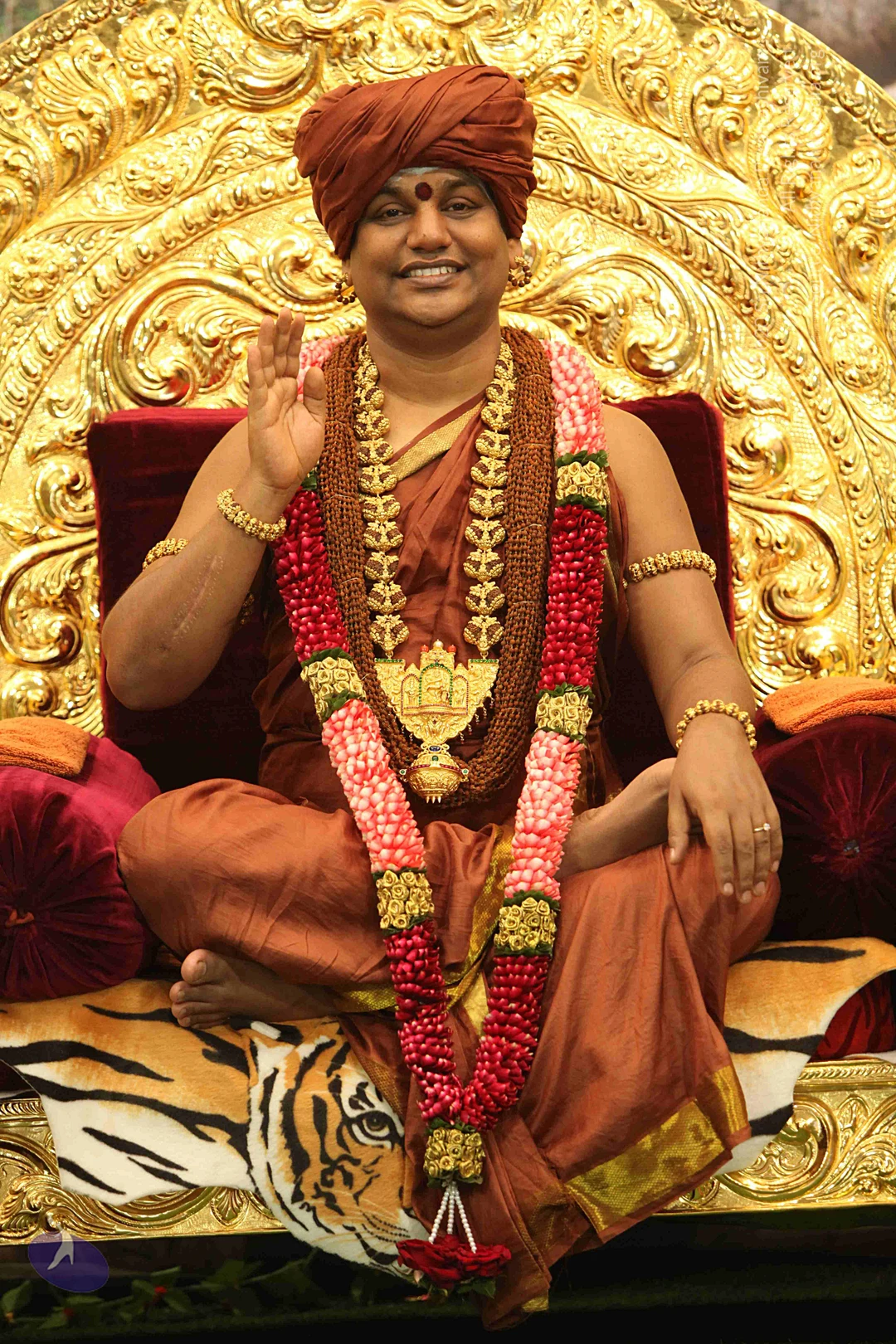
A smiling man in a rust-orange turban and matching orange-brown robe sits on a gold ornate throne with a red velvet cushion. He wears layered red and white flower garlands, a brown rudraksha-style mala with gold beads, a gold pendant and gold bangles, and a small red bindi with white tilak. He raises a thumbs-up with his right hand and holds a silver staff in his left. Red velvet drapes and green leaves form the backdrop.A photograph of a seated man in a rust-brown turban and matching brown-orange robe, sitting on a red velvet cushioned throne set against an ornate gold-embossed backdrop. He wears layered garlands of red and pink flowers, a thick brown rudraksha mala with gold ornaments, a gold pendant, gold armbands and bangles, and a red tilak on his forehead. He holds a silver staff upright beside him with one hand raised in a gesture while speaking, and green leafy plants frame the scene. Swamiji (probable): the man's long-robed ceremonial appearance with turban, rudraksha mala and ornate gold adornments matches the page's noted event.A man sits on an ornate gold throne with red velvet cushions and a tiger-skin covered seat, smiling and looking to his right. He wears a rust-brown turban, a rust-brown robe draped over one shoulder with a gold-bordered dhoti, and a red dot on his forehead. Multiple garlands of pink and red flowers with gold-tone blossoms hang over his chest, along with gold and rudraksha necklaces and a gold pendant. He wears gold armlets and bangles and holds a silver staff topped with a bird figure in his left hand, with his right hand resting on his knee. Green plants and red drapes are behind him. Swamiji (probable): the visible cues are the rust-brown turban, layered rudraksha and gold mala necklaces, garlands and ornate throne, consistent with the page's reference to Swamiji. The swamiji value is in_person.

April 23 2015

Original wiki page
Contents

Title

Re-Strategize Your Life, Re-Invent Yourself

Description:

Today’s (23rd April, 2015) Nithya Satsang on Ishavasya Upanishad in Living Advaita Series. Paramahamsa Nithyananda reveals that in this 9th verse, Upanishads are literally raising their pitch, calling on us to not get doomed with incomplete knowledge and impure perception of Truth. When the advanced seekers of knowledge – know the highest strategies of Life, but do not live them and falsely feel that they are already living them – this non-practice is more dangerous mental set-up than initial level ignorance, and takes to deeper darkness, freezing and stagnating us, warns the Upanishad. The only solution is to reinvent ourselves and restrategize our life as per the declarations of Isa Upanishad, which melts our ignorance and pains. Isha Upanishad – Verse 9 andhaṁ tamaḥ praviśanti ye’avidyām upāsate | tato bhūya iva te tamo yau vidyāyāṁ ratāḥ || 9 || Vakyartha Sadas, topic for spiritual explorations on truth is — How to reinvent yourself, how to restrategize your Life based on this one truth — You Are Consciousness – as defined by Isavasya Upanishad. Because if you start internalizing yourself as Consciousness as defined by Isavasya Upanishad, you are actually in the highest possible space – Super Consciousness. If you start cognizing you, as defined by the Upanishad, you are in highest possible Consciousness. So reinventing yourself, restrategizing yourself as Upanishads declare you as YOU, is the subject for Vakyartha Sadas today.

Link to Video:

VideoAudio

Transcript:

nithyānandeśvara samārambhām

nithyānandeśvari madhyamām |

asmat āchārya paryantām

vande guru paramparām ||

I welcome all of you wity my love and respects.

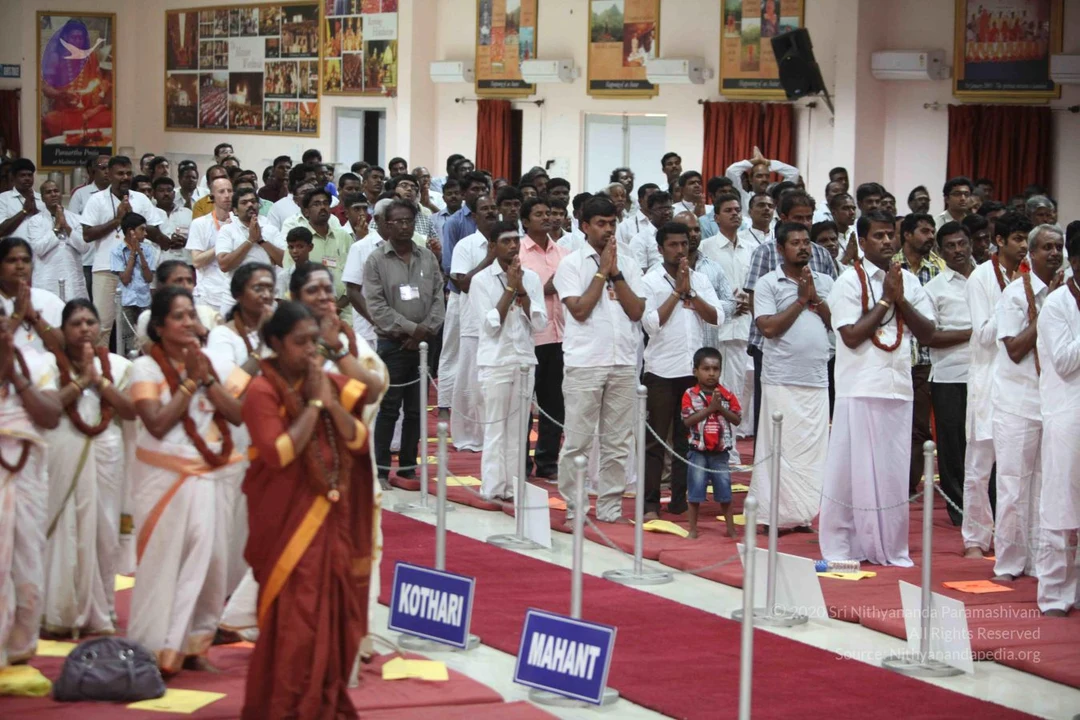
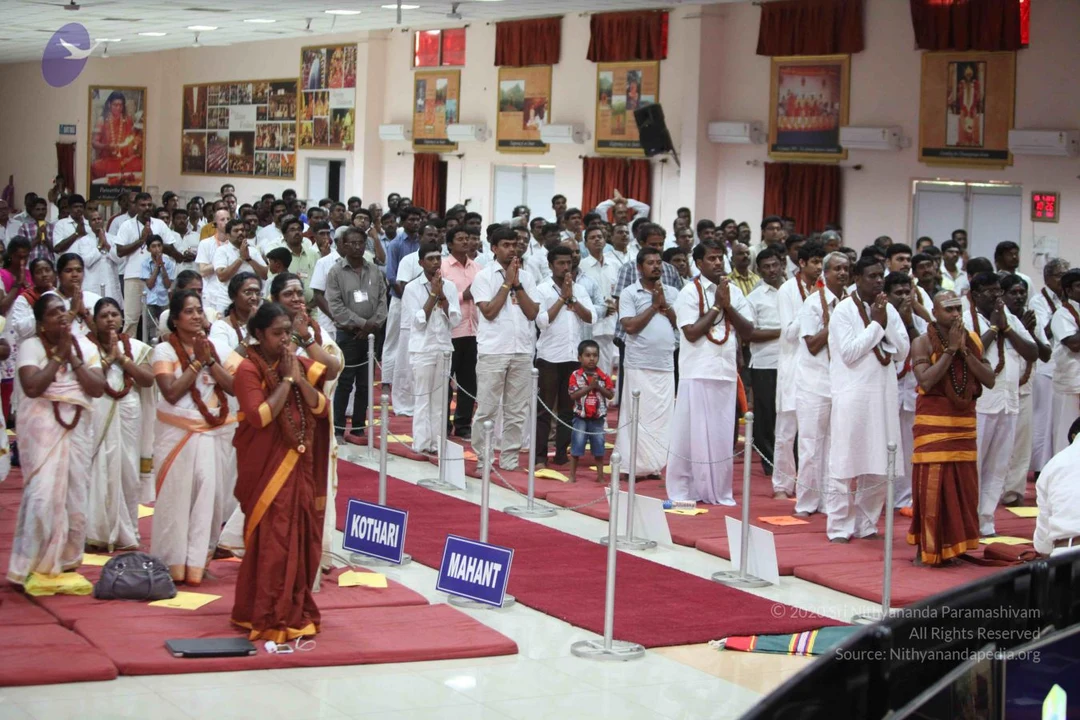
I welcome all the devotees, disciples, samajis, satsangis, SriMahants, Mahants, Thanedars, Kotharis, visitors, viewers sitting with us all over the world through Nithyananda TV, Sadhana TV, Arra TV and two-way video conferencing having Nayana Deeksha.

Cities sitting with us in two-way video-conferencing having Nayana Deeksha:

Houston Aadhenam, Singapore Aadhenam, Uduvai Aadhenam, Tallahassee, China, Gupta Kashi, Trinidad-Tobago, Indrani-NewJersey, Ohio Aadhenam, Oklahama Aadhenam, Los Angeles Aadhenam, Kaula lumpur Aadhenam, Vancouver-Bhuvaneshwar, Oman Aadhenam, Toronto Aadhenam, Temple city Califiornia, Gaudelope Aadhenam, Sanjose Aadhenam and some more cities joining.

I welcome all of you with my love and respects.

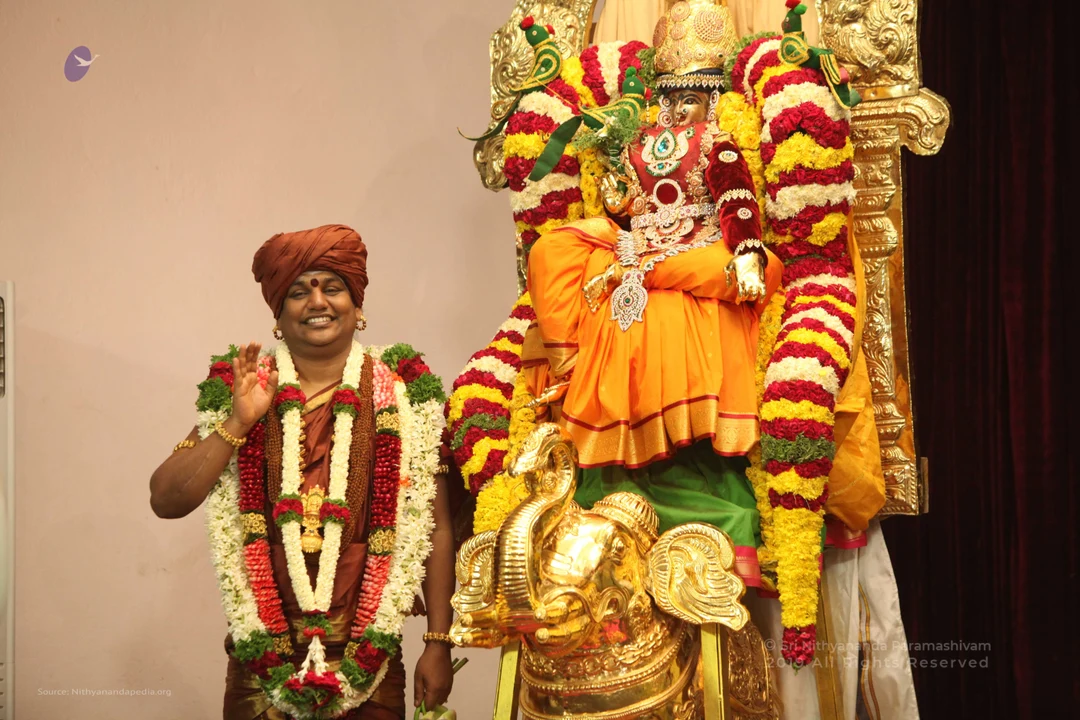
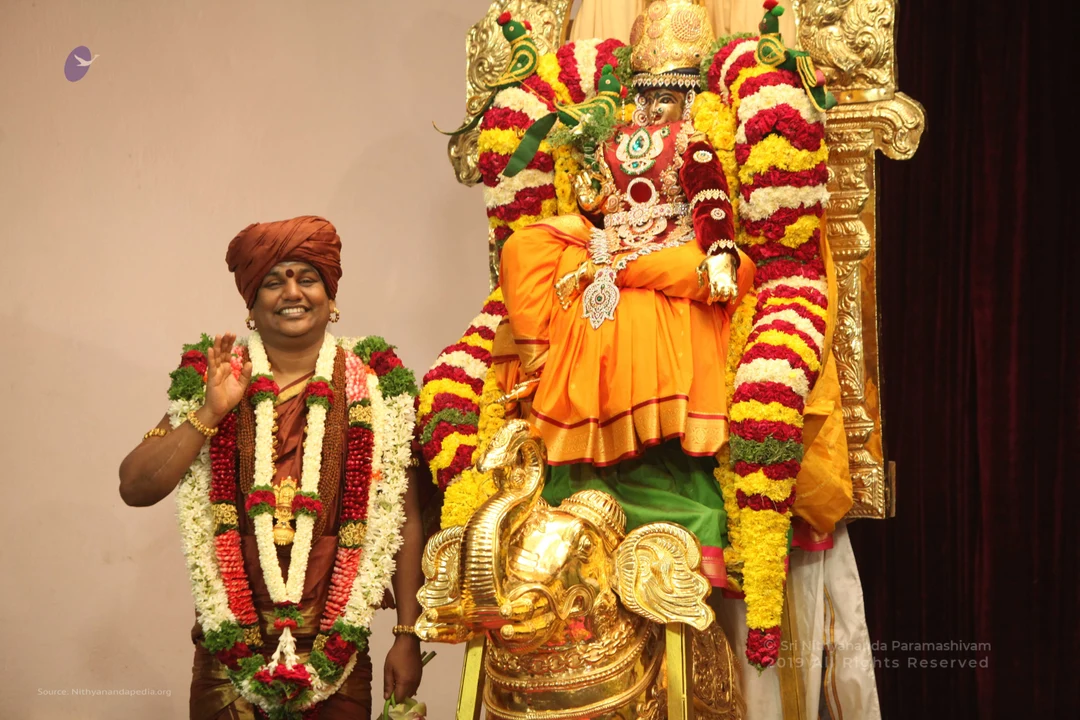
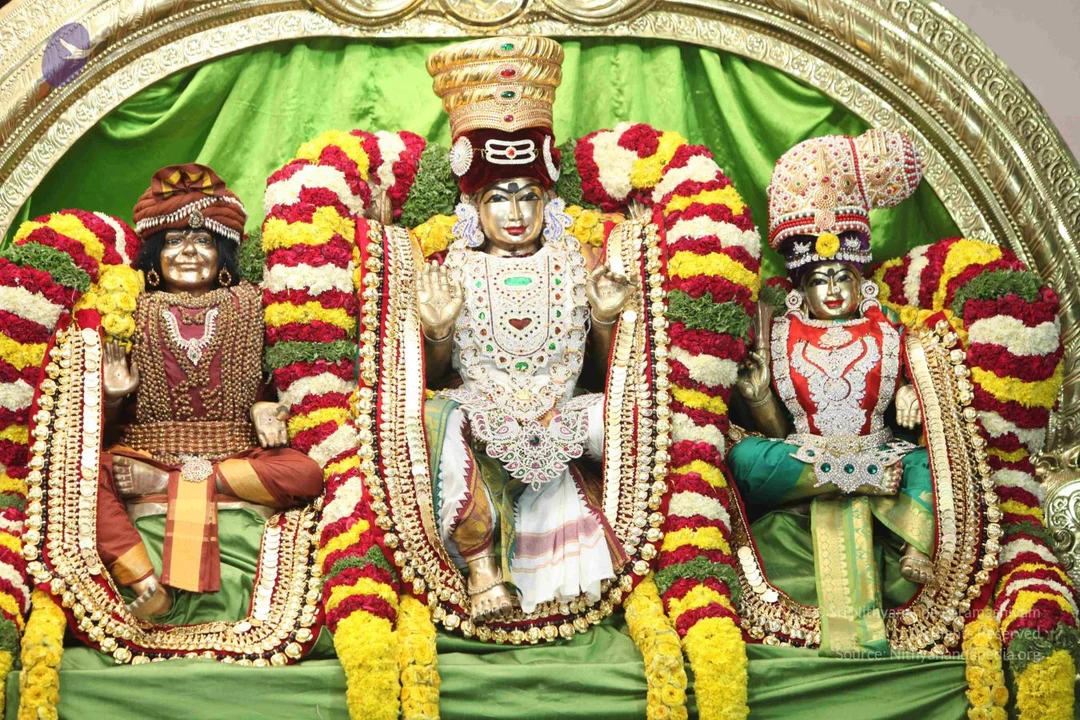
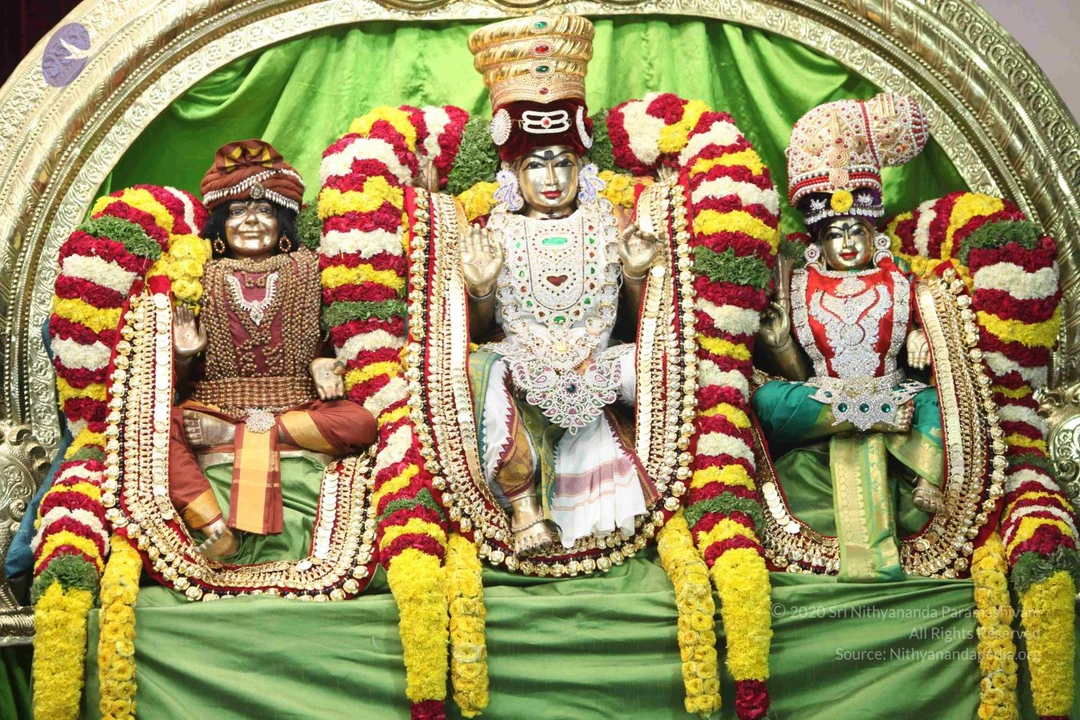
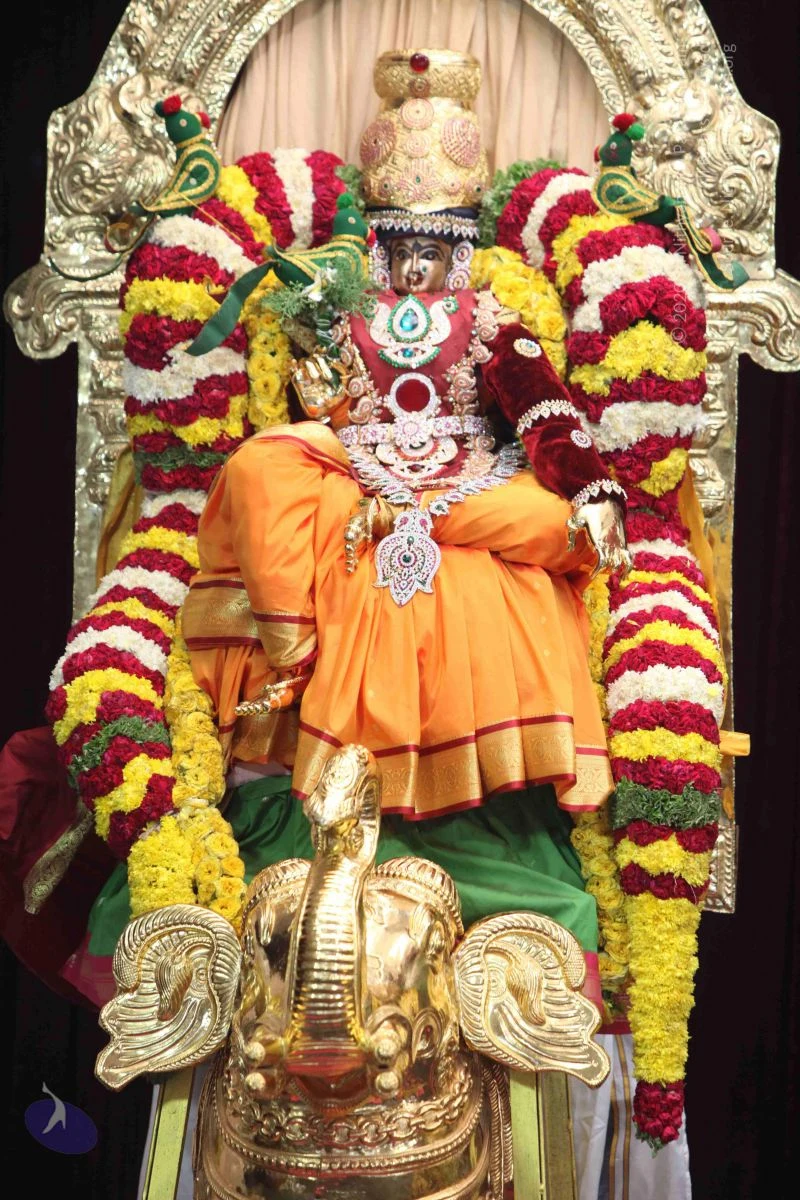
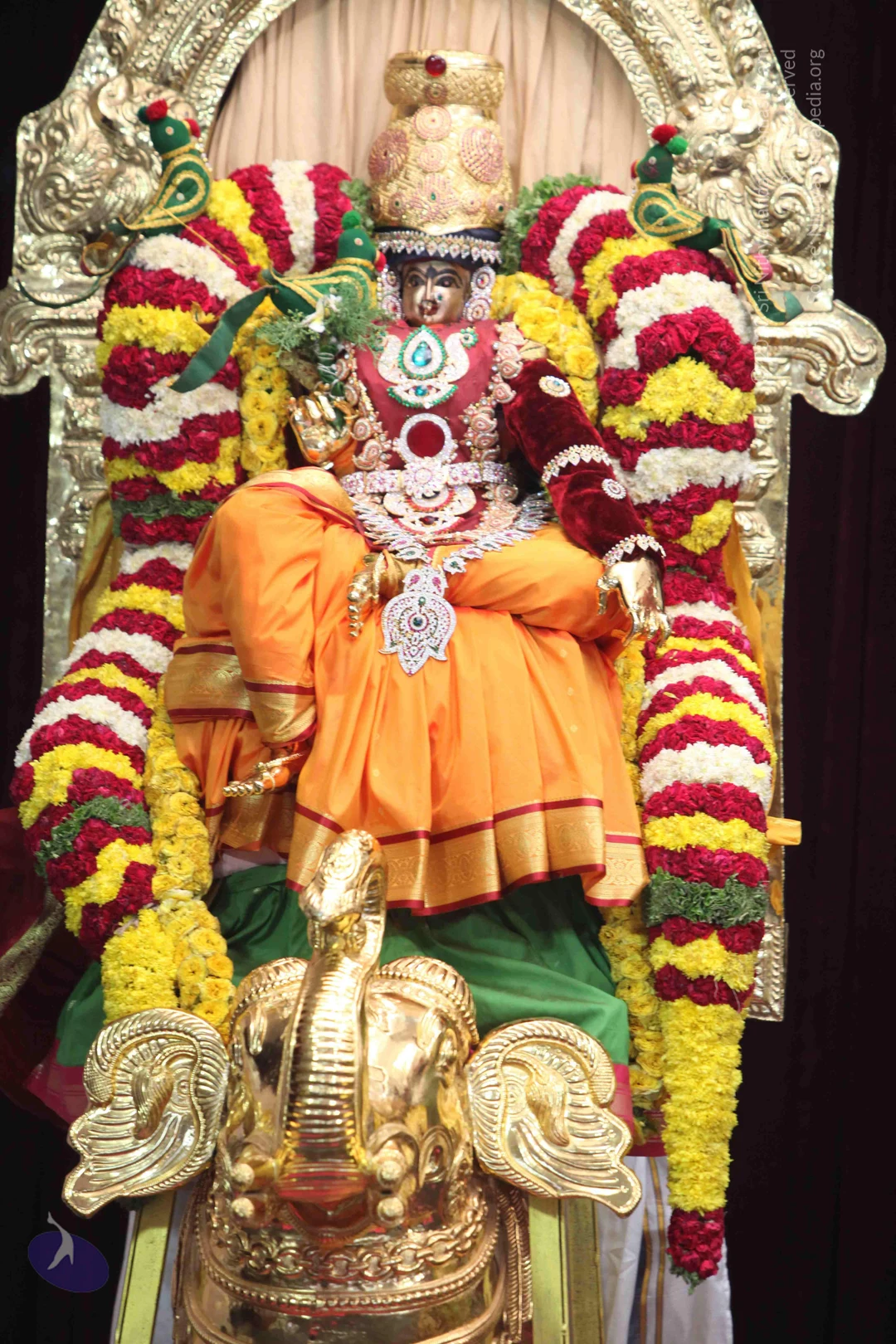
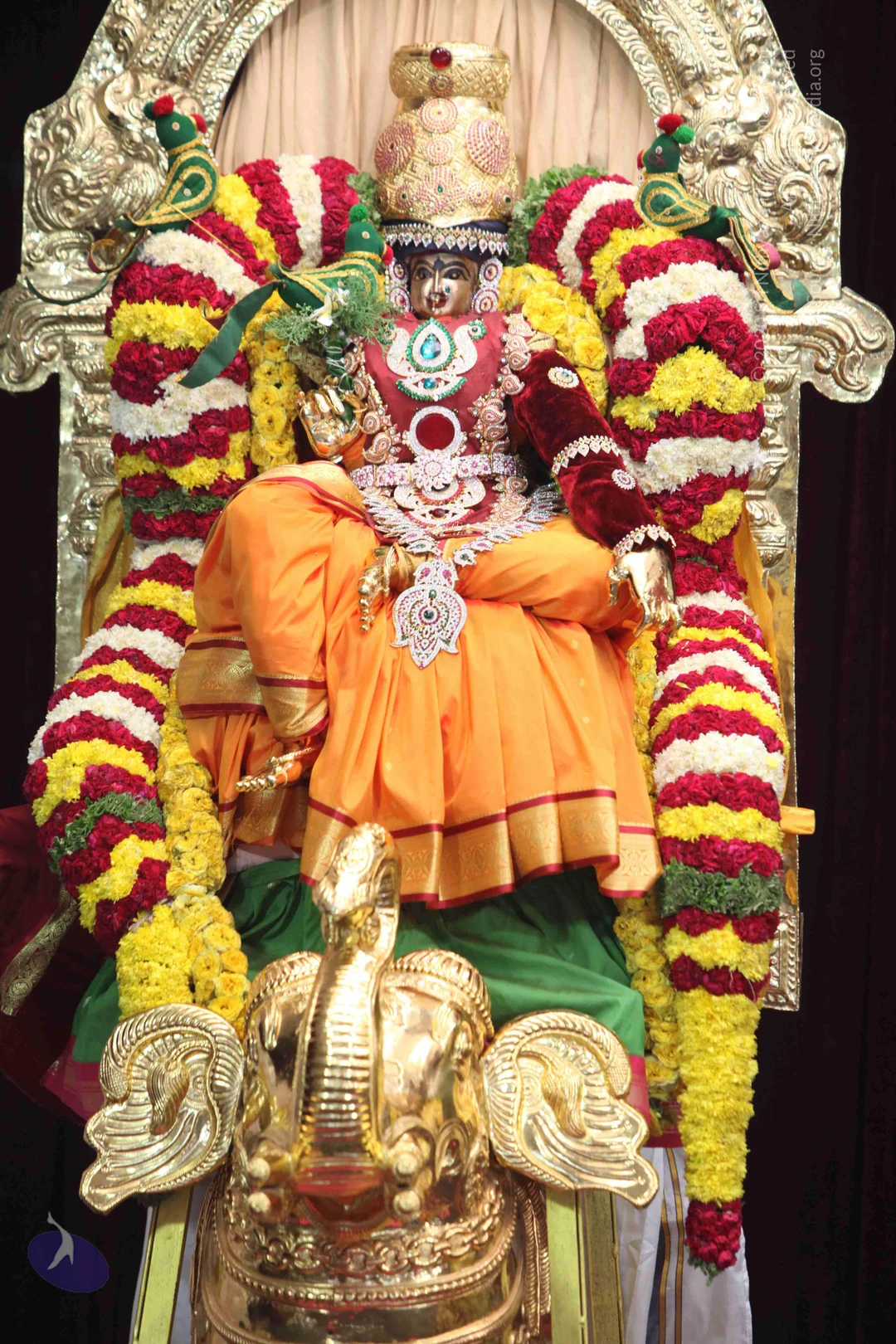
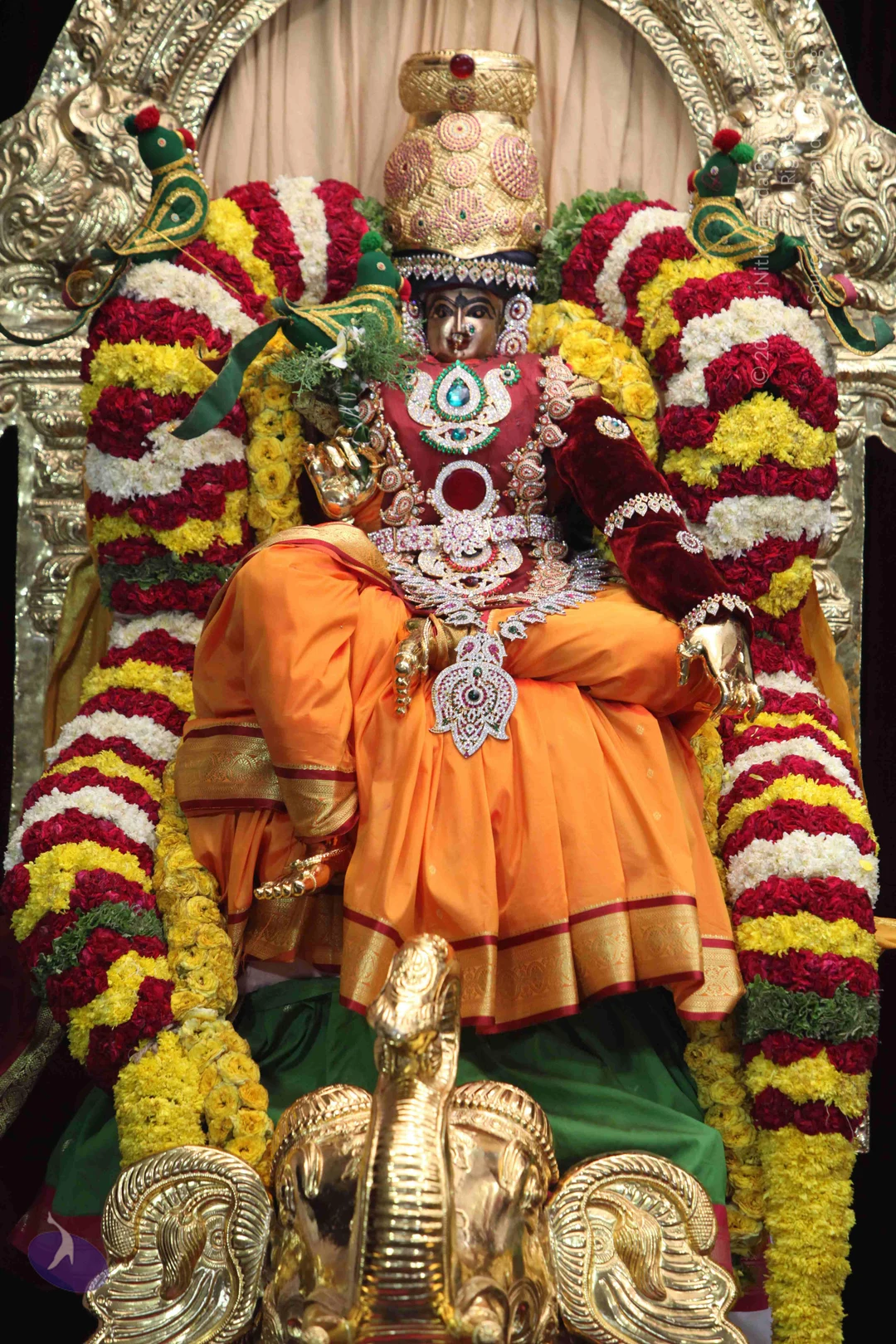
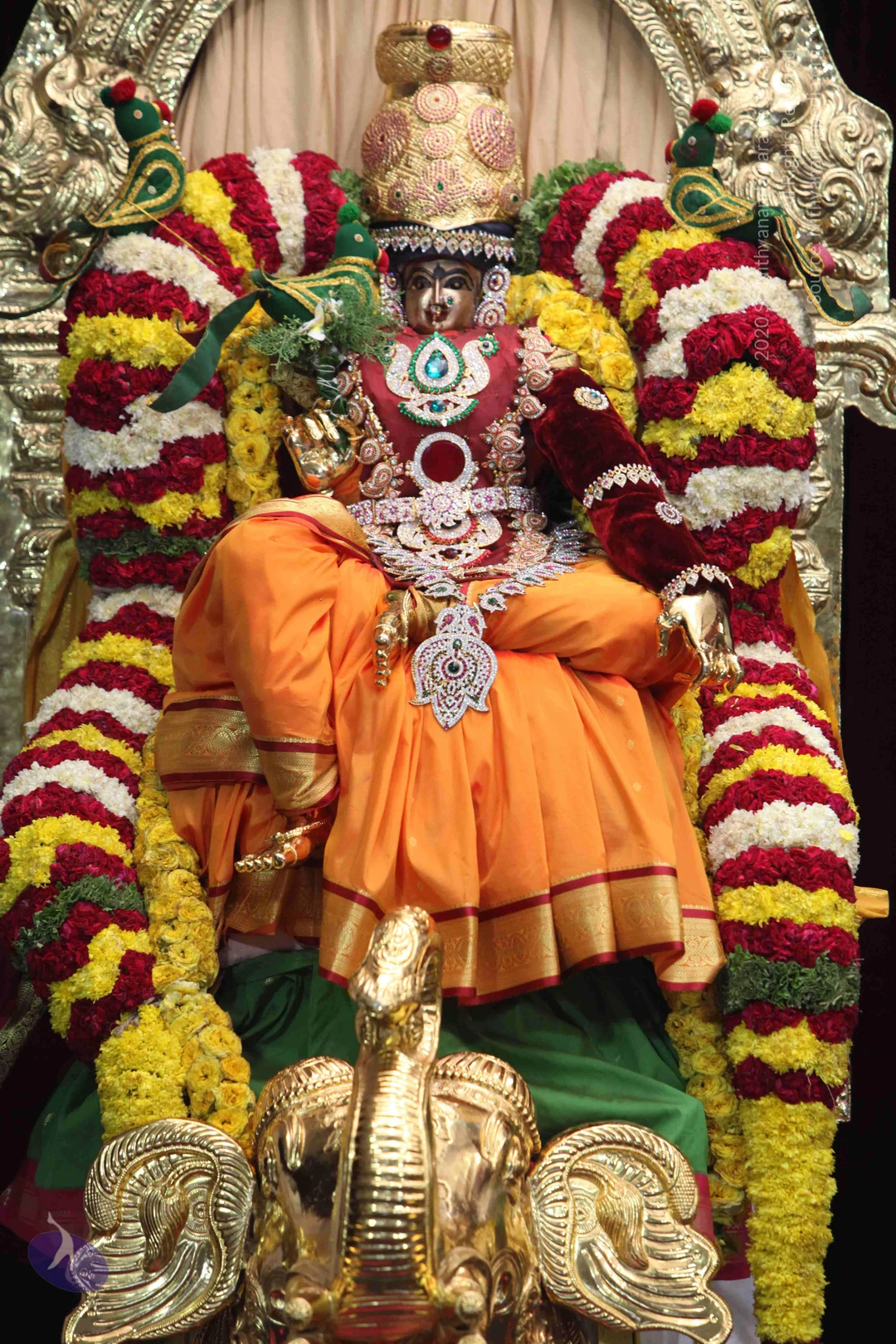
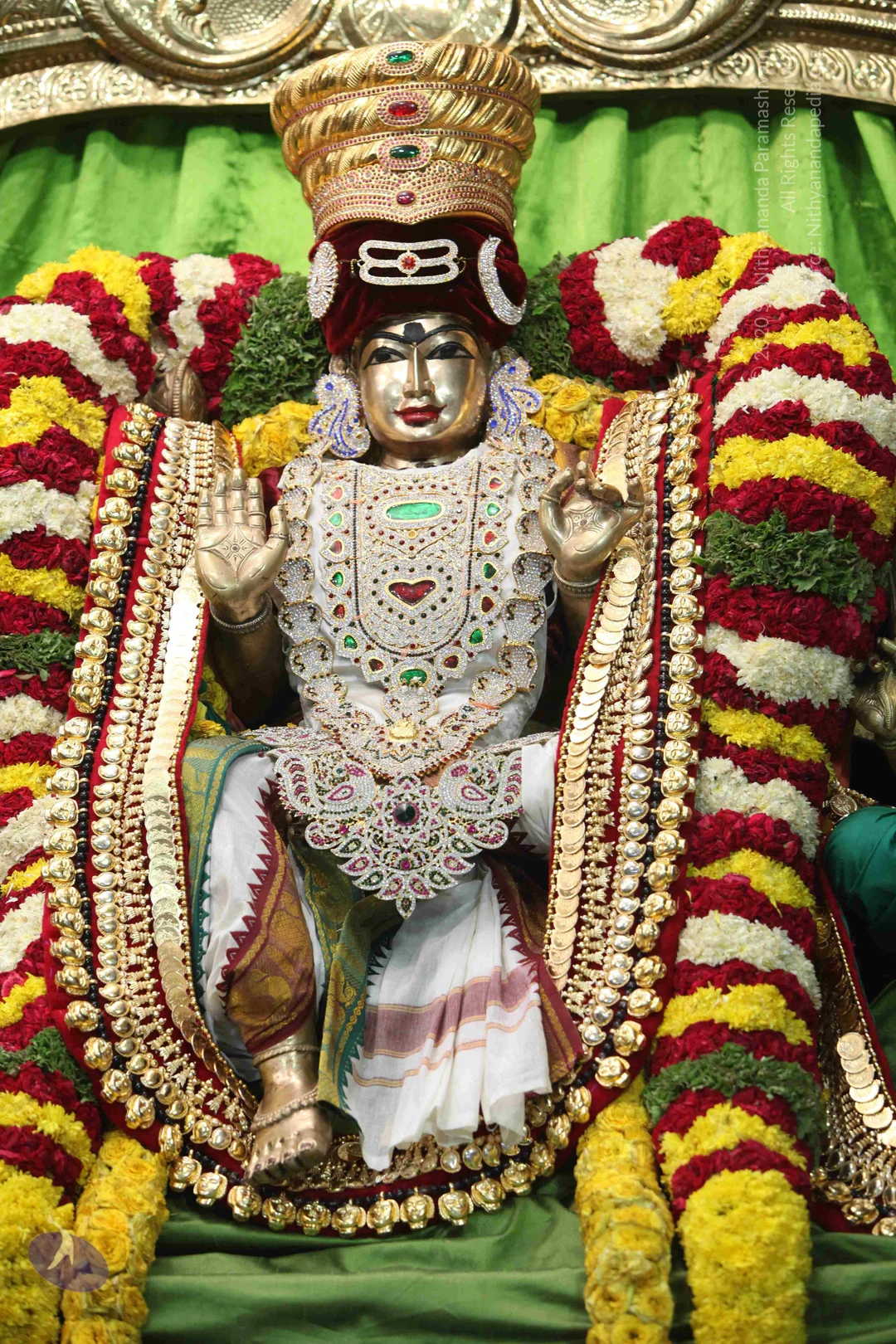
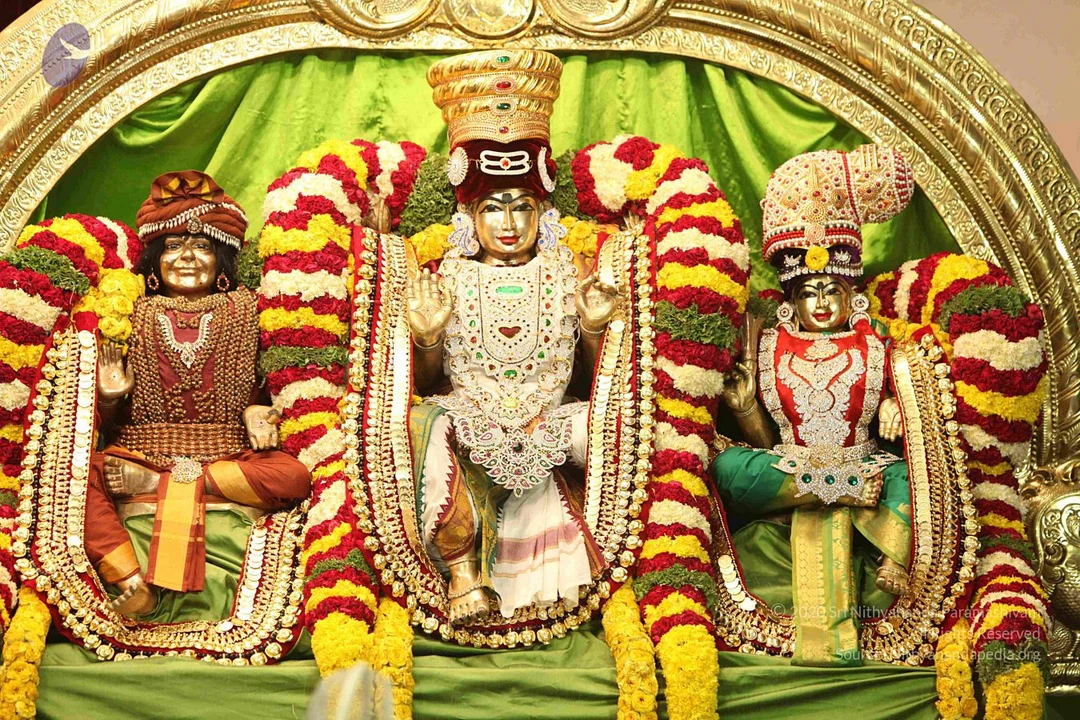
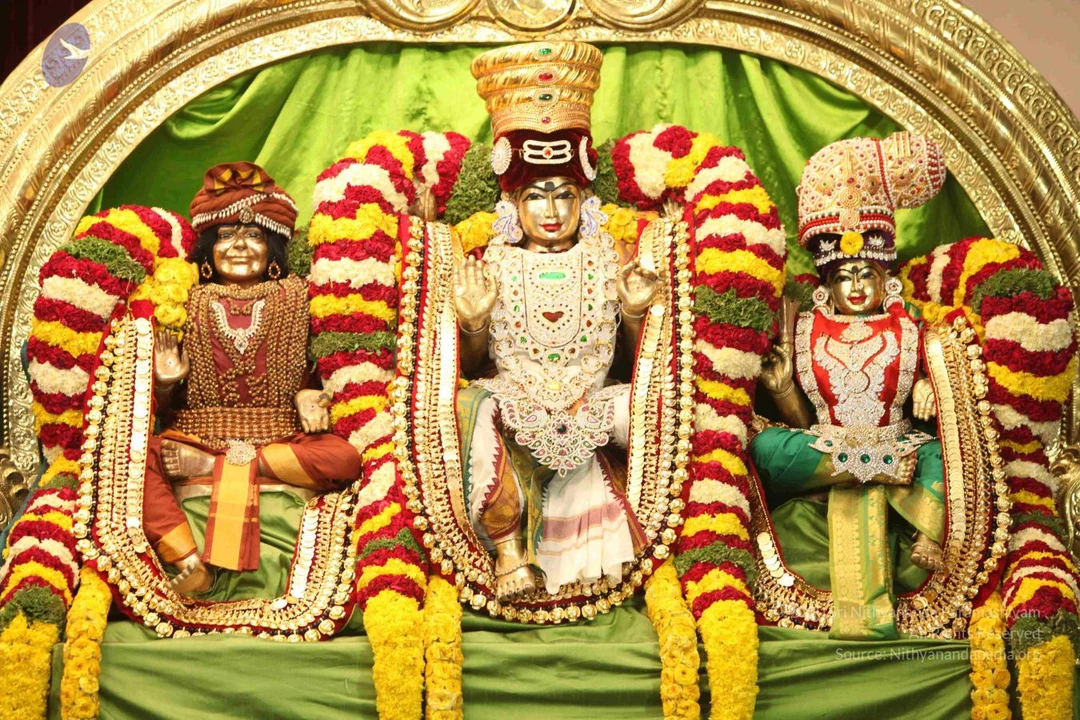
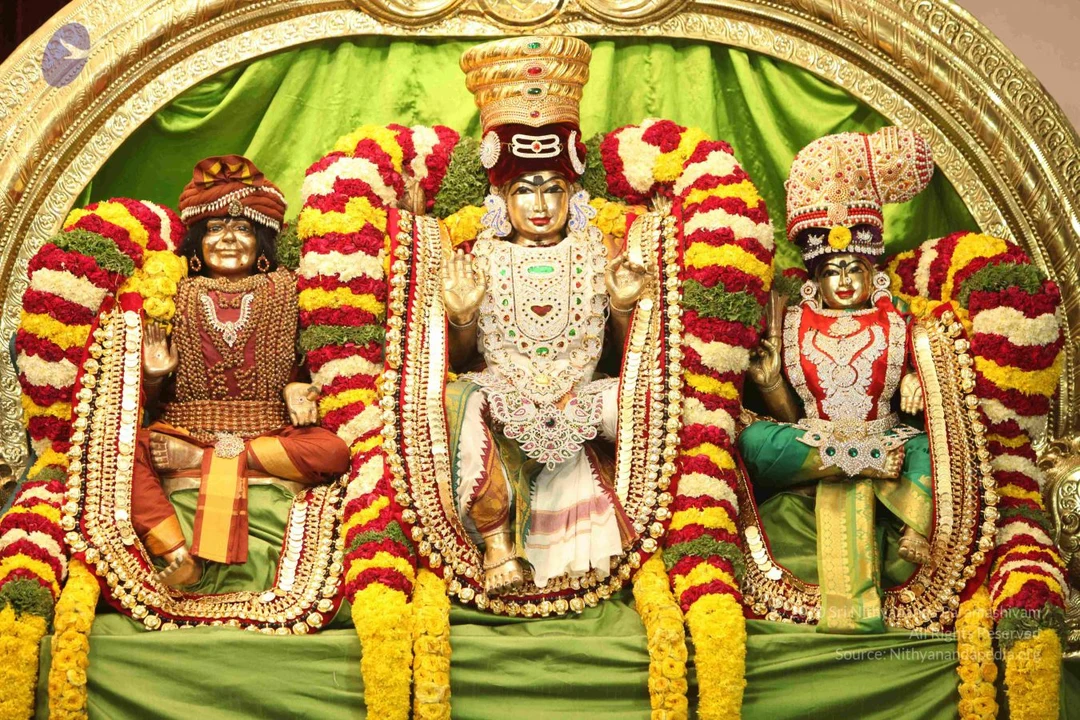
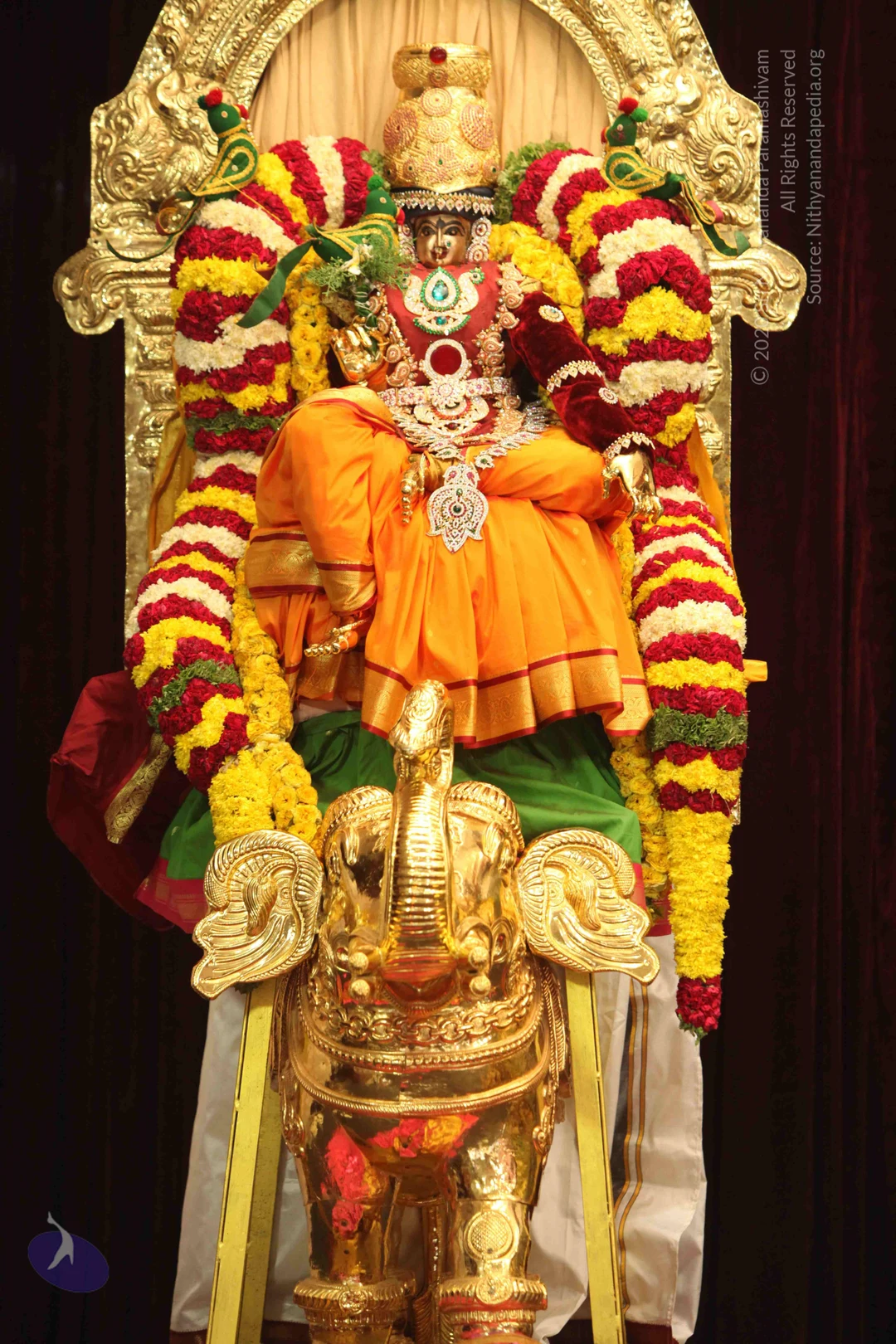
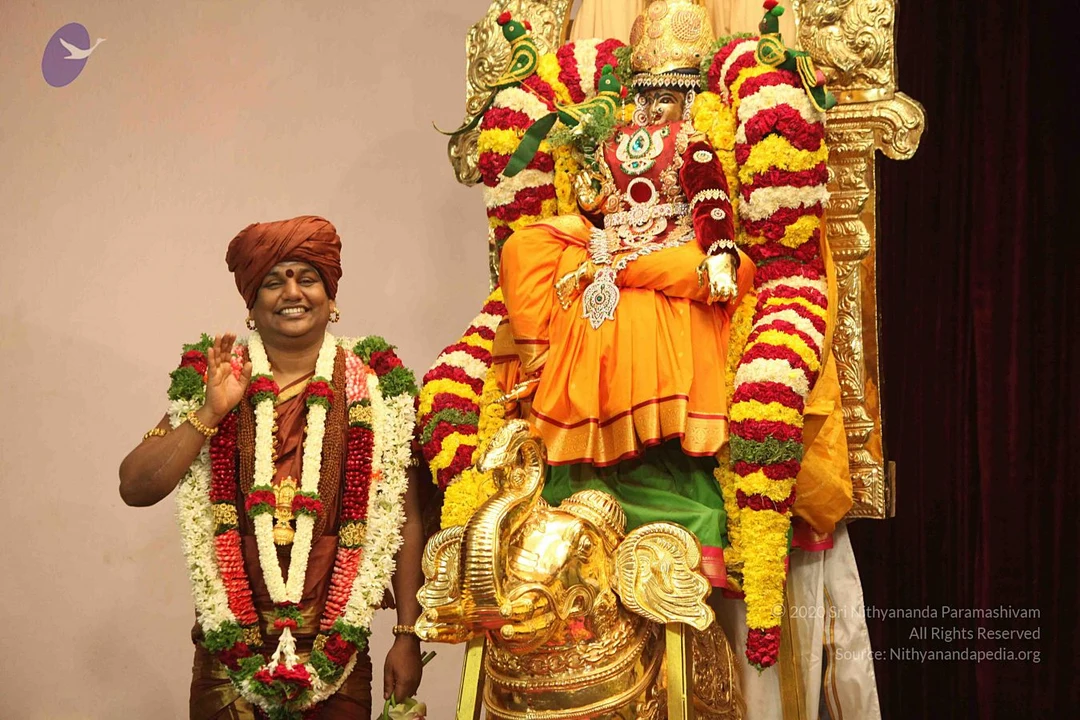
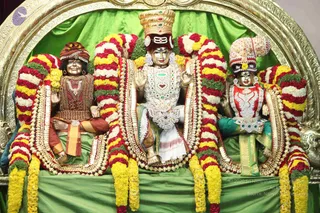
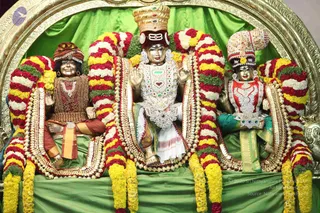
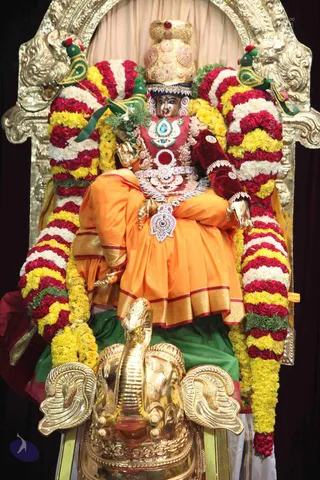
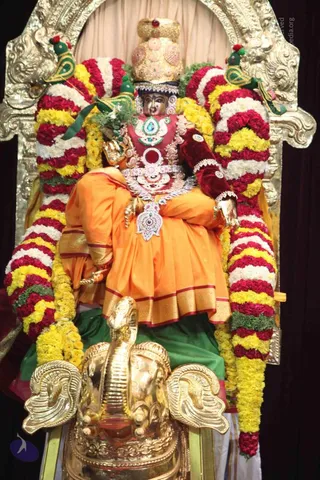
Today, the third day of Meenakshi Brahmotsavam. The celebrations are continuing. Mahadeva is gracing in the Sarvalankara. He crown he was wearing is called Simhadu Kreedam. This is the crown he was wearing, this is the way His head gear was, when He came to carry sand for the sake of Vandi’s idli, it’s called Simhadu Keedam. And, Meenakshi is gracing on Svarnagaja Vahana, the golden elephant vehicle with a crown called Mambuda kundai keedam, the crown looks like a mango, so these are traditional alankaras (adornments) done in Vedic temples. Today, Meenakshi is gracing on golden elephant vehicle, blessing all of us. Let’s receive Her blessings and grace first.

I will continue to expand on the 9th verse of Isavasya Upanishad. Please recite along with Me:

andhaṁ tamaḥ praviśanti ye’avidyām upāsate |

tato bhūya iva te tamo yau vidyāyāṁ ratāḥ || 9 ||

Recite loudly:

andhaṁ tamaḥ praviśanti ye’avidyām upāsate |

tato bhūya iva te tamo yau vidyāyāṁ ratāḥ || 9 ||

Yes. Now, listen.

Those who worship avidyā, the ignorance that veils the true knowledge of Truth, Consciousness, enter into blinding darkness characterized by the absence of perception; but into greater darkness of ignorance than that, enter they who, considering themselves as scholarly and learned, are engaged in vidyā, the incomplete knowledge acquired for vested interests characterized by the impure perception of Truth, Consciousness.

Listen. These two concepts you need to understand. One, those who worship ignorance, the initial level seekers get into a kind of a tiredness, boredom, unable to move further, don’t care attitude about ignorance. This is one group. There is another group, little advanced level seekers, but, after certain amount of time, listen, please listen, when you spent time with certain concepts and don’t align your life to those concepts, you will feel acquaintance with that concepts. Intellectually, but not experientially. Familiarity always breeds contempt, even with the idea you are the consciousness, if you are acquainted, means if you are having exposure to that idea, you are thinking about it quite a long time, but you never made that as your cognition, you never transformed your Life, you never aligned your life to the truth, then slowly, slowly, slowly, you think what you living what you are doing is much better than common men, normal people who don’t even know they are Consciousness. So with this justification, the worship of imperfect knowledge, the incomplete knowledge, starts, the danger is by now, you know how to manipulate others, how to be a half-guru, all your neighborhood gurus are formed like this only; each neighborhood will have one guru, in India, each street will have one Jagat guru. You can ask him “why are you calling yourself as Jagat Guru?”, “No, I have one disciple I have named as Jagat, so I am Guru of Jagat so I am Jagat Guru.”

Listen, all your neighborhood Gurus are in this space, in this mood. Please understand, the impure perception of Truth, Consciousness, incomplete knowledge, which is the problem of advanced seekers, is more dangerous than the initial level problem of initial level seekers, which is the ‘don’t care attitude towards ignorance, or, tiredness and boredom. See, these advanced level seekers who worship knowledge but which is incomplete, they won’t have tiredness or boredom, they will be very active, but in the wrong direction. Enjoy knowledge for the sake of knowledge, celebrate knowledge for the sake of knowledge, celebrate power and energy for the sake of power and energy; don’t use power to manipulate others, don’t use knowledge to make money, please understand. I am not saying don’t accept salary for your contribution, I am not saying don’t earn for your livelihood, all I am saying, mentally don’t have the disease of equating your knowledge to wealth, it’s a mental disorder. Please understand, actually I was planning to write a book, as per the cosmic law what all is a mental disorder and physical disorder. Most of your physical disorders are not at all disorder in cosmic law; most of your mental disorders are not at all disorders in cosmic law. Actual disorders still your psychiatric field, your mental disorder field doctors, researchers are not able to smell. Your researchers, scientists, are still not able to smell what is the real mental disorders. Psychological disorders.

One of the biggest mental disorder is unable to sit with yourself. Understand, just learning the concept, not making it as part of your cognition, is the most dangerous. I’ll tell you a story from one of the great master, architect of Hinduism, today whatever you know as Hinduism is there the way it is, available, only because of one person who is born today: Adi Shankaracharya. Today, His 1227th birth anniversary of Adi Shankaracharya. There was a beautiful incident in His life, one day he was walking with his disciples, his sthalayatra (sacred travel to energy-centers), suddenly he felt thirsty, and no water was found in that area, only one guy was having a village arak, you call it thodi (village liquor).

Shankaracharya went straight to that village and said, “can you give me a little, I am feeling thirsty”

The villager readily agreed and He drank. The disciples could not understand, “what is this? Acharya?” Then they decided, “when you can drink, why not us?” They also drank, after that Shankaracharya was walking very steadily, stably, but not these disciples.

Now Acharya thought this is the time that we need to educate these fellows, and we also need to show the difference between the people who made, “I Am the Consciousness” as a cognition and “I am the Consciousness” as acquired acquaintance, not cognition.

So after some time, maybe a few days later, again He felt very thirsty, looked around, no water source, not even a village arak, only one guy was melting iron and pouring into the mould, the metal workshop. He walked straight into the workshop and asked that guy can you give me a little, that fellow was shocked and asked why; no, you don’t bother about that.

He asked to pour the whole metal into his hand, and drank, like how you will drink the cold water from the well or a lake.

And then he just looked back, the disciples eyes have already come out, and he just told them, “please drink.” That is all, they were all shaken. Shankara just made only one statement, “Why you guys can follow when I was drinking arak, not now.” Of course, neither disciples drank nor Acharya forced them to drink.

Understand the truth, the moral of the story, acquaintance, just hearing these words, not making it as part of your cognition, will make you feel, will give you pseudo satisfaction as if you know it is truth; that is the most dangerous, please listen. That is why I tell you, before initiation the disciple need to be prepared, the moment you are initiated, you should just follow the truth. Pain is such self destructive mechanism, will not allow you to reinvent yourself with any new concepts and strategies. Please understand. All the spiritual truths expressed in these Upanishads, like you are the Consciousness, you are untouched, never come and go, you are the source of action result, all these are highest possible strategies for your life. Knowing them but not living them, knowing them but not living them, listen, knowing them but not living them makes you feel that as if you are already living them, that is what is incomplete knowledge. Listen. That is what is incomplete knowledge.

How much ever you may know about yoga, unless you DO, you won’t have the result. How much ever you may know about swimming, unless you start swimming you will not have the result. How much ever you may know about surgery, unless you do it, you don’t know what it is. Please listen, knowing but not doing, the non-practice, non-practice, that’s the most difficult mental setup, once you acquire that, your whole life is gone. Please understand, listening to the concept but not living them, listening to the truths but not living them, is the most dangerous. That is the most dangerous. Because once that mental setup comes to you, anything you know how to brush it aside, like if you watch an advertisement on the TV, “Call now, call now, call now,” how you don’t even care and change the channel, you will develop same attitude even towards Upanishads; when Upanishads say, “You are Consciousness, You are Consciousness, You are Consciousness,” start living, actually by ninth verse, they are raising their pitch and saying, “call now, call now, call now, don’t get doomed!”

andhaṁ tamaḥ praviśanti ye’avidyām upāsate |

tato bhūya iva te tamo yau vidyāyāṁ ratāḥ || 9 ||

Listen. If you know, if you develop the attitude of inaction in the face of spiritual truths, inaction in the face of spiritual truths, then nothing, nothing can help you reinvent yourself. Please understand, each of the lines of Upanishads, whatever Upanishads are saying, it’s a spiritual strategy to reinvent yourself. But if you think, “I’ll attend all the sessions, classes and learn the strategies, but I don’t need to do anything, because I have known–I am Consciousness–since last 2003 onwards when Swamiji did first ASAP in Malaysia, I attended that, and when

Swamiji came first time to New Jersey, I attended ASP, from that time I know I am Consciousness, when Swamiji came to Paris in 2004, that time I attended, from that time onwards I have known I am pure consciousness then, you are just doing avidyām upāsate, worshipping the ignorance, you are stupid. Please understand, see, pains in the life makes part of you stagnant constantly. Stagnation is the residue of pain. Being stagnant, feeling stuck is the hang over of pains in the life, which happens constantly till you become enlightened. So the one and only solution is: reinventing yourself and re-strategizing yourself constantly, constantly, please understand.

When you are driven by your greed or fear, constantly you will reinvent yourself. If you are in love with a girl, how constantly you will reinvent yourself to demonstrate your love to her or impress her; if you are afraid of your wife, how constantly you will reinvent yourself to save yourself or to escape from her. When the fear and greed is there, how constantly you reinvent yourself, re-strategize yourself, re-strategize yourself, do that same out of inspiration or the great truths from Upanishads. Do the same! Reinventing and re-strategizing based on Upanishadic principles constantly, listen. For example, now Upanishads are saying, all the incomplete knowledge which you learned but never made as experience makes you fall into hell, immediately sit and start scanning sincerely what all concepts you just heard them never made them into experience, start scanning, don’t say, “ah, I am Consciousness, I heard in 2004 from Swamiji first came to Paris, from that time I know it,” but so many times you denied living that Truth, I am consciousness but denying and living has become a lifestyle in you now, and you say,” See I didn’t live I am consciousness because at that time my divorce was going on, I decided after my divorce “I will rest and will relax in peace and live and radiate I am consciousness till then I need a certain amount of vengeance and anger to fight with my husband grab the custody of the child and swindle as much as I can, so at that time I could not practice any spirituality, I have postponed it, now I think I can,” but when you postponed, second time when you look, you will find already the postponing has become pattern in you, that is why I am telling you, any spiritual truth, the moment you hear, listen from the Master, it has to be implicated, if not it will never be implicated. If you don’t make it as your cognition by today’s sunset, it is not useful for you, forget it; and you will develop a wrong pattern of listening but not living. Don’t do that; that is Atmahana, saying no to life. Saying no to life.

Stupid are those, fools are those, cursed are those, idiots are those, who listen to the great truths but does not make them as their cognition. If you have postponed the spiritual truths in your life without letting them become your cognition, parts of you have already frozen. It has become dead. Now today, the today’s Vaakyartha Sadas is melting all those parts which has become dead, frozen, and re-strategizing your whole life with that truth “I am Consciousness.” Means not being pushed by stupid fears, stupid greed, being pushed only by tremendous joy, inspiration, happiness, bliss, fulfillment, completion! If your fuel is only completion and inspiration, you are blessed! Reinventing yourself, re-strategizing your life, reinventing yourself, re-strategizing yourself, discovering through you, making you flow more and more, making you alive more and more, breaking the parts of you which is frozen, making parts of you which is frozen into alive again. I am telling you, all tiredness, all boredom, is nothing but frozen pains in your muscle memory. The only way to break the ice, the frozen pains, is re-strategizing yourself. Seeking should be the frying pan for the enlightenment dosa, which has become very popular from yesterday in our Sangha. I thought if nobody is listening to spiritual teachings I am giving, at least I will start a dosa shop and sell Enlightenment through dosas (south indian breakfast), that is My new strategy. The Enlightenment dosas! Seeking should be the frying pan for pouring your being and re-strategizing, reinventing.

Today again sit, what all the decisions and strategies you can do, make, based on the truth “I am Consciousness,” and re-strategize your life and reinvent yourself. Reinventing you means re-strategizing your life, re-strategizing your life means reinventing you. So understand, not re-strategizing is not only not good, but dangerous. But, dangerous.

Today’s subject for Vaakyartha Sadas for all satsanghis, for all satsanghis: How to reinvent yourself, re-strategize your life, based on this one truth, you are the Consciousness, as defined by Upanishad, Isavasya Upanishad. Because, if you start internalizing yourself as Consciousness as defined by the Isavasya Upanishad, you are in the highest possible space—Super, Super Consciousness. West always they have the habit of super conscious, supra consciousness, I don’t want to use all those words, super, supra, large, super sized, all that. So as defined by Upanishads if you start cognizing you, you are in the highest possible Consciousness, so reinventing yourself and re-strategizing based on what Upanishads declare you as you is the subject for Vaakyartha Sadas today.

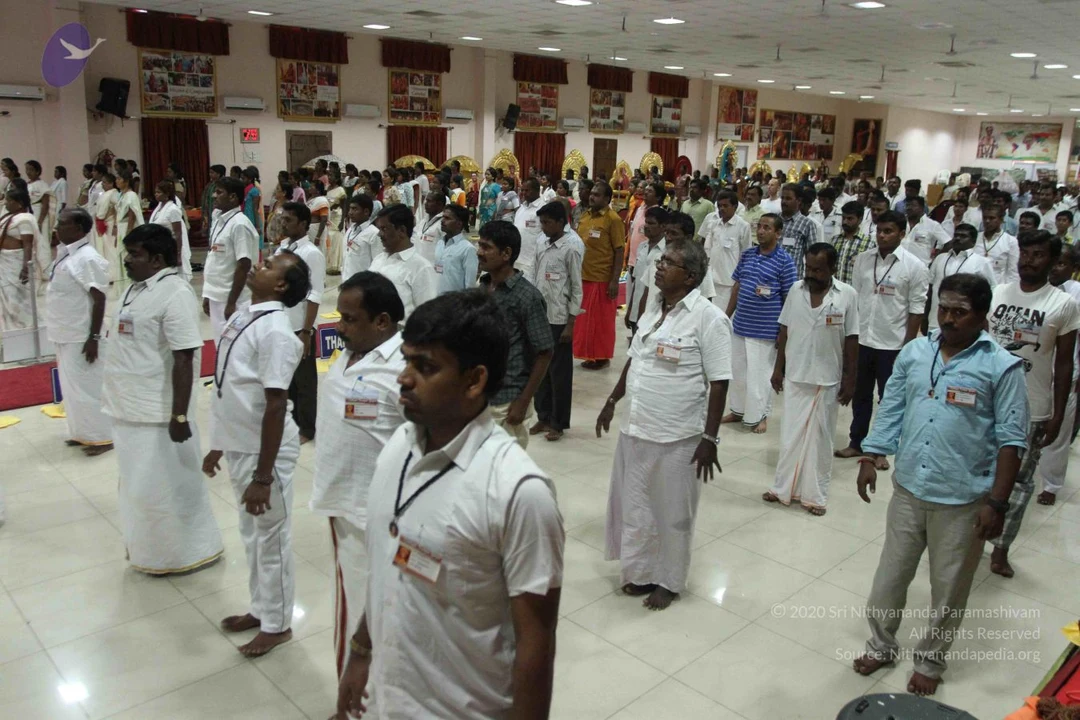
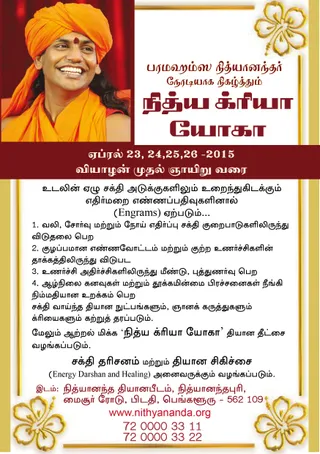
As some of you may be aware, today I have Nithya Kriya Yoga program starting in the ashram next four days. So it’s a celebration! Before entering into this next segment of the morning satsang, there is a question:

How can I make my intellectual understanding to my cognition?

One, do this Vaakyartha Sadas, two, even after the Vaakyartha Sadas if you are not able to make it, come to Varanasi, that’s all. You try, if you made it, great; if you feel it’s not happening, then come, I will do it.

Somebody is asking, “if my karma is to be born again and again, can coming to Varanasi or leaving the body in Varanasi there override it?”

Yes. If you are not even allowed to come to Varanasi, something happens and you are not able make it, then understand your karma is to be born again and again; if you are able to make it to Varanasi, then your karma is over, because liberating anybody in Varanasi is Dharma of Mahadeva. In front of dharma of Mahadeva, your karma can’t find a place. It can’t find a place.

So, with this, I will move to the next segment of the morning satsang, Dial the Avatar. In Varanasi, with the Shivoham process, liberating you is my dharma because I have declared it. In front of the power of my dharma, your karma cannot stand, so don’t worry.

~ end of satsang ~

Title

Introduction to Nithya Kriya Yoga || Part 1 || NKY || 23 April 2015

Description

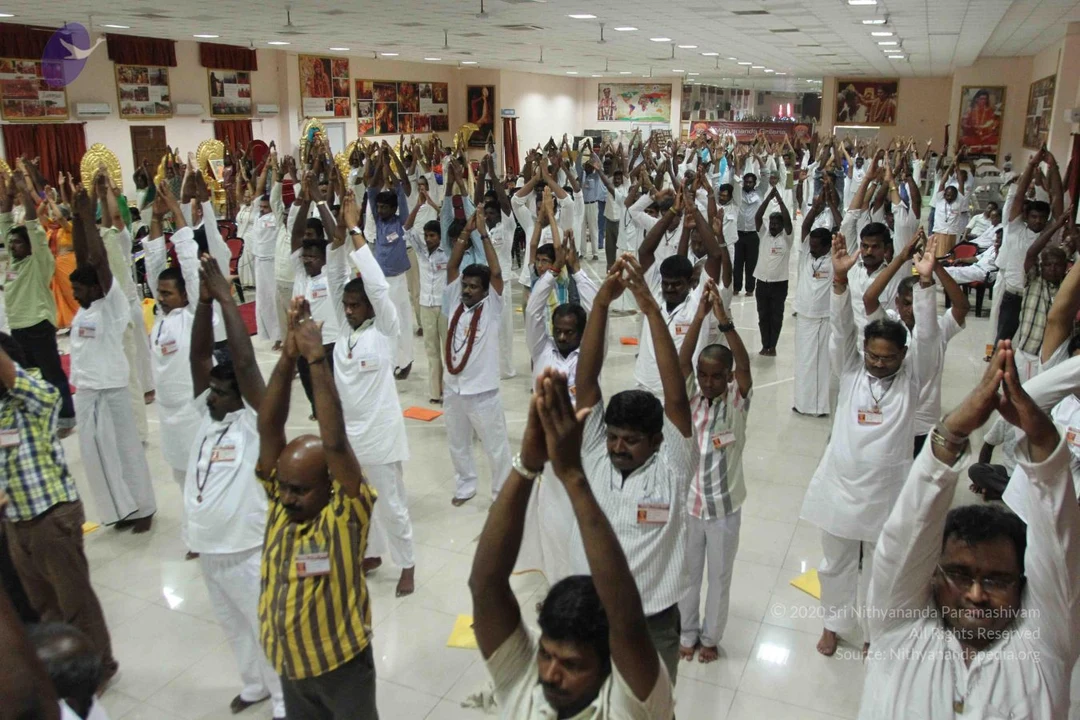
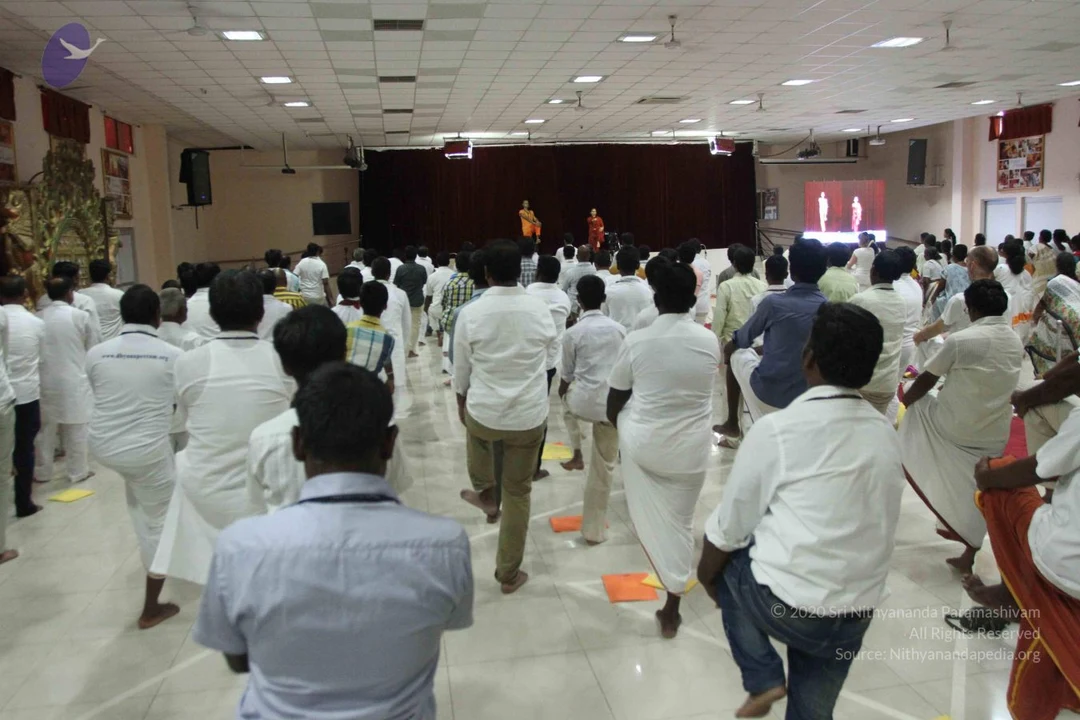
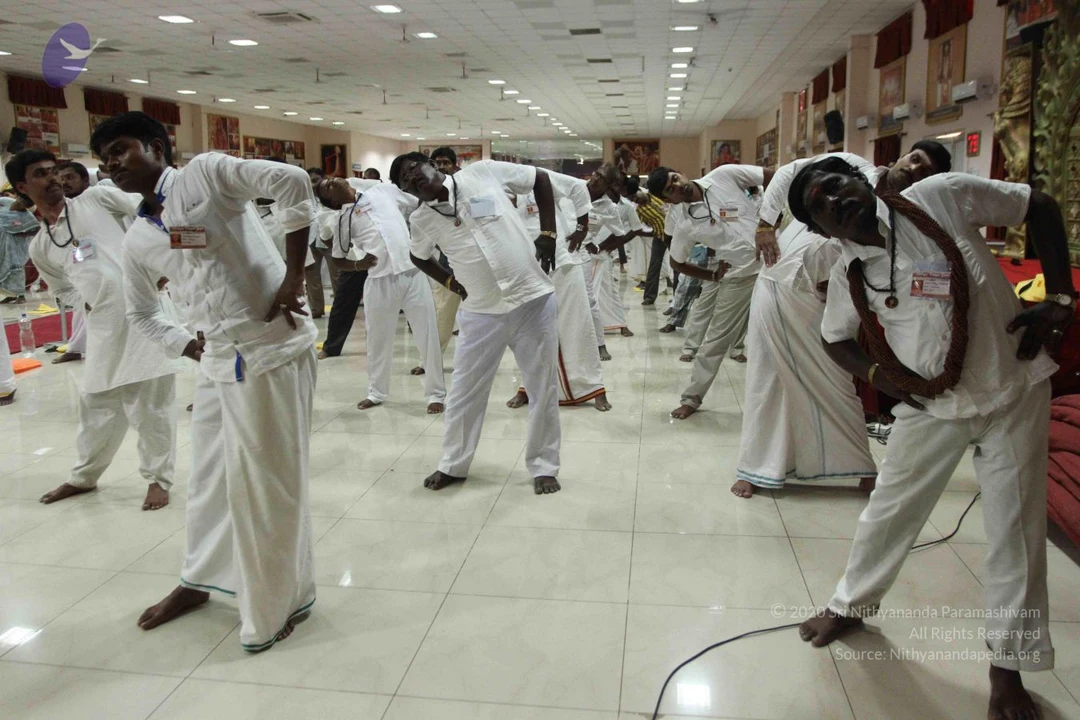
Name Of The Program : Nithya Kriya Yoga Session on: Introduction to Nithya Kriya Yoga Part 1 Date : 23 April 2015 Venue : Adikailaasa, Bidadi, Bengaluru

In this video Supreme Pontiff of Hinduism HDH #Nithyananda Paramashivam explains on the introduction to Nithya #Kriya Yoga. This Video Is an excerpt from The Nithya Kriya #Yoga conducted on 23 April 2015 in Adikailaasa, Bidadi, Bengaluru. Here HDH also insist on the keen listening of the participants throughout the program.

Link to Video

VideoAudio

Title

Introduction to Nithya Kriya Yoga || Part 2 || NKY || 23 April 2015

Description

Name Of The Program : Nithya Kriya Yoga Session on: Introduction to Nithya Kriya Yoga Part 2 Date : 23 April 2015 Venue : Adikailaasa, Bidadi, Bengaluru

In this video Supreme Pontiff of Hinduism HDH #Nithyananda Paramashivam explains on the introduction to Nithya #Kriya Yoga. This Video Is an excerpt from The Nithya Kriya #Yoga conducted on 23 April 2015 in Adikailaasa, Bidadi, Bengaluru. Here HDH also insist on the keen listening of the participants throughout the program.

Link to Video

VideoAudio

Title:

Death is the Criterion to know a Man's Success || Part 1|| NKY || 23 April 2015

Description

Name Of The Program : Nithya Kriya Yoga Part 1
Session on : Death is the criterion to know a man's success
Date : 23 April 2015
Venue : AdiKailaasa, Bidadi, Bengaluru

In this video Supreme Pontiff of Hinduism HDH Nithyananda Paramashivam reveals that the success or failure of a man in his life is measured by the way his death happens.

Link to Video:

VideoAudio

Title:

மரணத்தை வெல்லும் அனுபவம் || Part 2 || NKY || 23 April 2015

Description

Name Of The Program : Nithya Kriya Yoga Part 2
Session on: மரணத்தை வெல்லும் அனுபவம்
Date : 23 April 2015
Venue : AdiKailaasa, Bidadi, Bengaluru

In this video Supreme Pontiff of Hinduism HDH Nithyananda Paramashivam defines Hell as the war between the urge and the inability to do it.

Link to Video:

VideoAudio

Title

Nithyananda Times - 23rd Apr 2015

Link to video:

VideoAudio

Photos

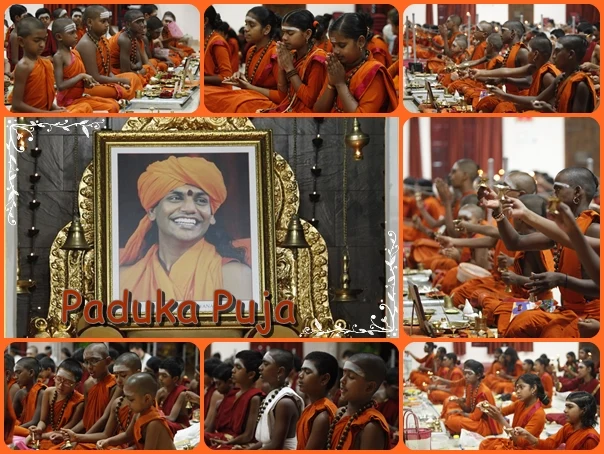
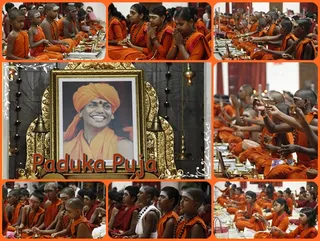
Paduka Puja and Nithya Satsang
Enriching Materials

http://drive.google.com/uc?export=view&id=https://drive.google.com/file/d/17YNKi-JbSgz9Zxqi7M9xPO7JYuK0hm8j/view?usp=sharing

Tags:

Upanishads, Advaita, Living Advaita, Isha Upanishad, Ishavasya, Isha Upanishad Verse 9, Paramahamsa Nithyananda, Isha, Satsang, Mahadeva, AdiShankara Anniversary, AdiShankara, Consiousness, Super-Consciousness, Dharma, Karma, Reinvent You, Spiritual Strategy, Life Strategy, Seeker, Shiva, Varanasi, Shivoham

Photos Of The Day:

Deity-Decoration

Nithya-Satsang

Swamiji-Blessing

Kalpataru-Darshan

Photos Of The Day:

NKY-Day1-intro

NKY-Day1-death-process

NKY-Day1-crowd-shoot

Shivoham

Photos Of The Day:

NKY-Day1-intro

NKY-Day1-crowd-shoot

Shivoham

Photos from this day

View all 300 photos

Paduka Puja and Nithya Satsang
15 photosSource gallery
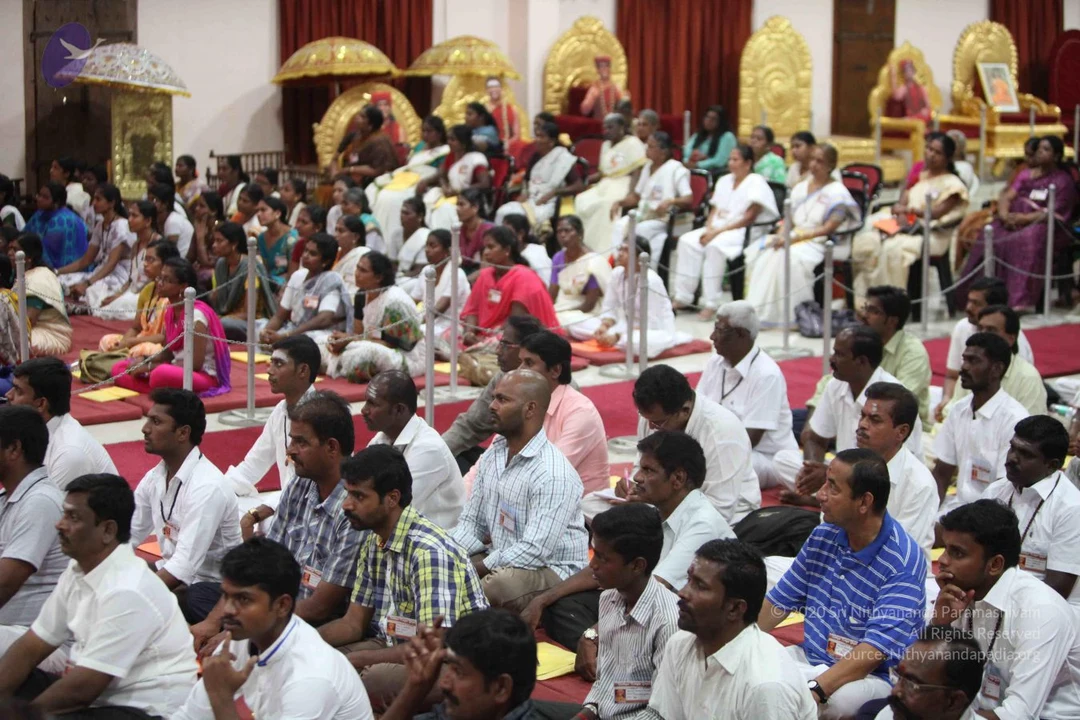
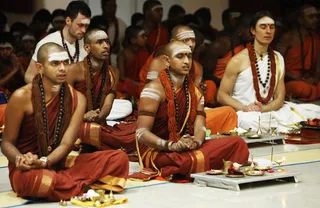
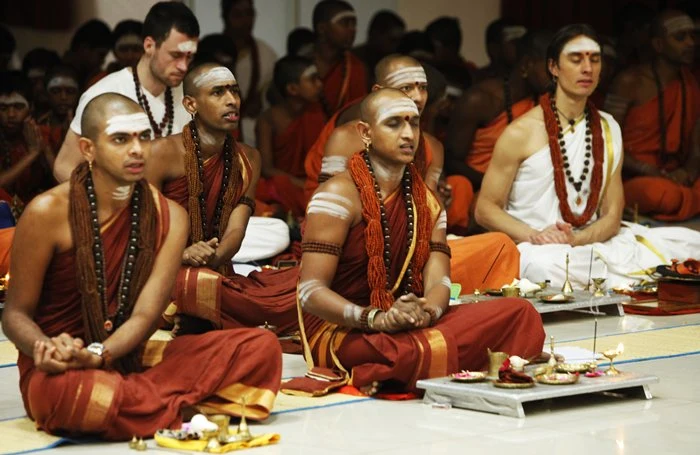
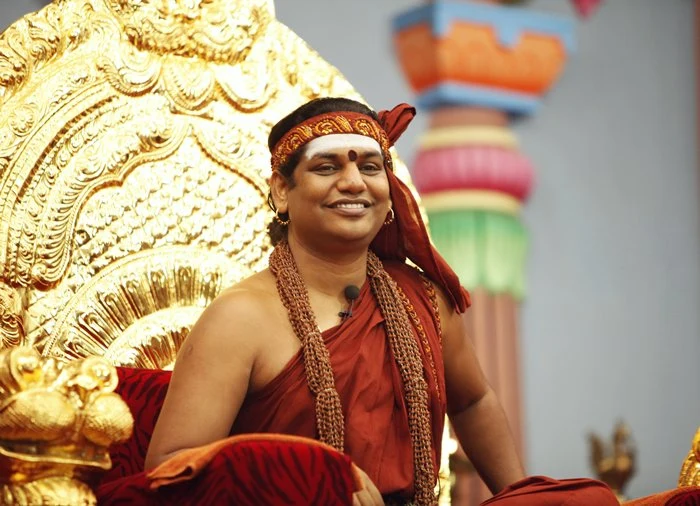
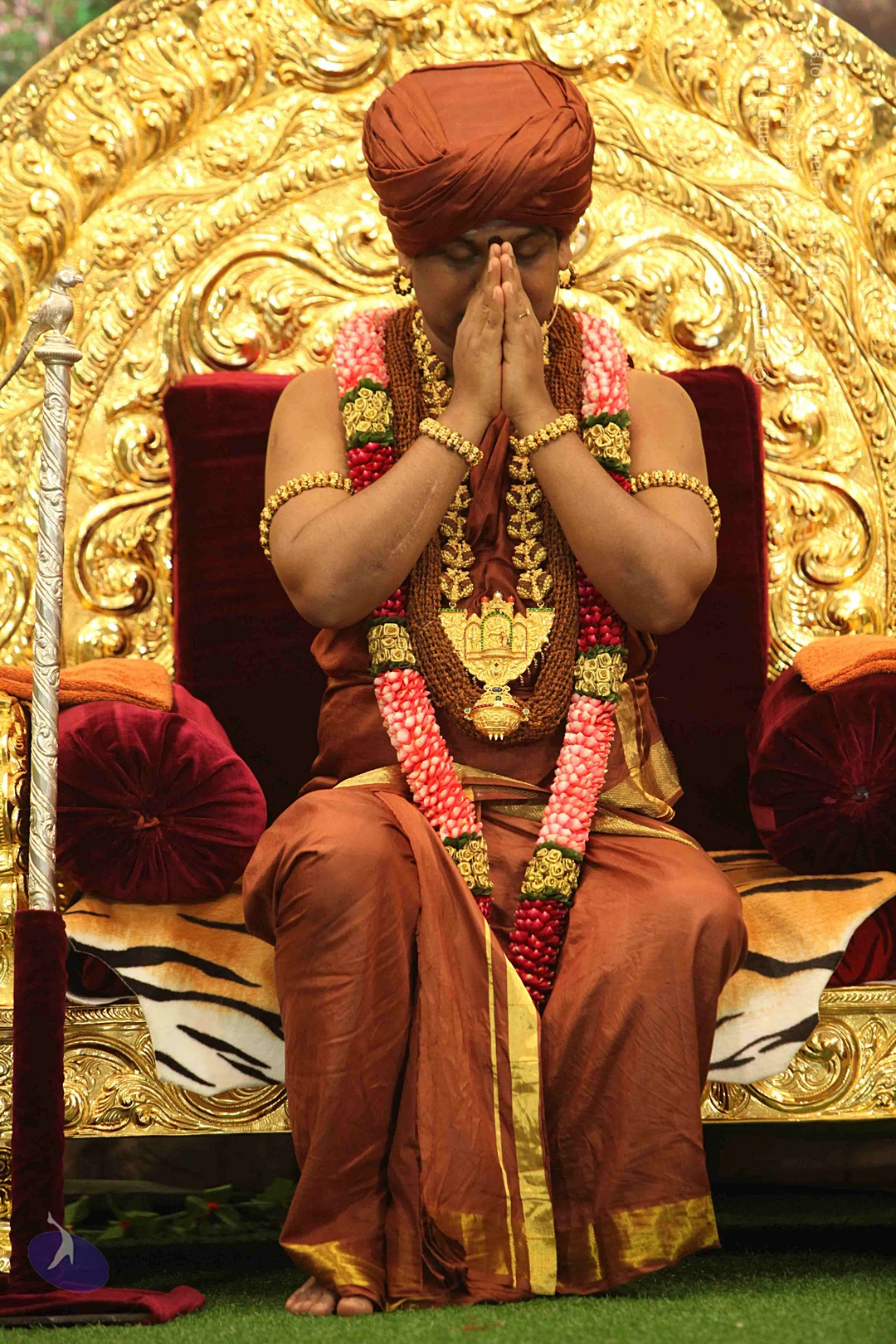
A collage of seven panels from a Paduka Puja at a gurukul. Large central panel shows a framed portrait of a smiling man wearing an orange turban and orange robes, with a red bindi, placed on a gold ornate stand with brass oil lamps beside it; the label reads "Paduka Puja" in orange letters. Surrounding panels show rows of young students in orange robes and orange turbans, many with rudraksha malas, seated at tables with brass lamps, palms pressed together in prayer, and others holding offerings and phones aloft, some in white dhotis. Graphic collage of photographs, not physical people in the scene.A photograph of a seated group of devotees in ritual settings, with saffron and orange-red robes, rudraksha malas, and white and yellow tilak marks on their foreheads. In the foreground, a seated man in a red-orange dhoti with a long red-beaded rudraksha mala holds his hands together in anjali. Beside him, another man with a shaved head and white forehead markings sits with his hands folded. Brass oil lamps, flower offerings, and small brass pots sit on a low silver tray on the floor in front. Behind them, a row of monks and devotees in orange robes sits in meditation. A man in white clothes with a rudraksha mala sits with eyes closed at the right edge, and a man in a white shirt sits at the back left. The setting is a cream-tiled hall.a person: a smiling man seated on a gold ornate throne with carved golden backrest, wearing a red-orange headband with gold pattern, white forehead markings, a small gold earring, and a reddish-orange shawl draped over bare shoulders. He wears long multi-strand rudraksha-style brown beaded malas across his chest, a lapel microphone clipped to his garment, and his right hand is raised open in a gesture while he speaks. Behind him are a colourful striped pillar in green, red and pink and a grey backdrop.A seated man in a red-orange ceremonial cloth, wearing a red-orange headband tied at the crown, white forehead markings and a red bindi, sits on an ornate gold throne carved with scrollwork and a cobra-hood motif. He wears long rudraksha mala necklaces and small gold earrings, with a small clip-on microphone at his chest, and smiles toward the camera. Behind him are colourful striped pillars in red, orange, green and yellow. a person: the cues are the rudraksha malas, orange-red robes and headband, with the figure seated as the central speaker of the satsang.A man seated on an ornate golden throne with carved lion or dragon-head arms and a red-and-gold backrest, draped in red tiger-striped and leopard-print cushions. He wears a red-orange wrap and dhoti, a red-orange headband, multiple strands of brown rudraksha beads, and a white forehead mark, smiling while resting one hand on the armrest. Behind him are red and yellow temple-style pillars and a pink wall. The presentation includes saffron clothing, rudraksha malas and a throne, consistent with a person appearance, though the face itself is not used for identification.A photograph of a seated figure in a rust-brown turban and matching brown robes with a gold border, hands pressed together in namaste with eyes closed. He wears layered garlands of pink and red flowers with gold-tinted rosettes, a rudraksha mala and a large gold pendant, plus gold armlets and bangles. He sits on an ornate gold throne with red velvet cushions and a tiger-skin covering, with a silver staff leaning at the left edge. Appearance-based label: a person, seated in a satsang setting.

Enriching Materials

1 photoSource gallery
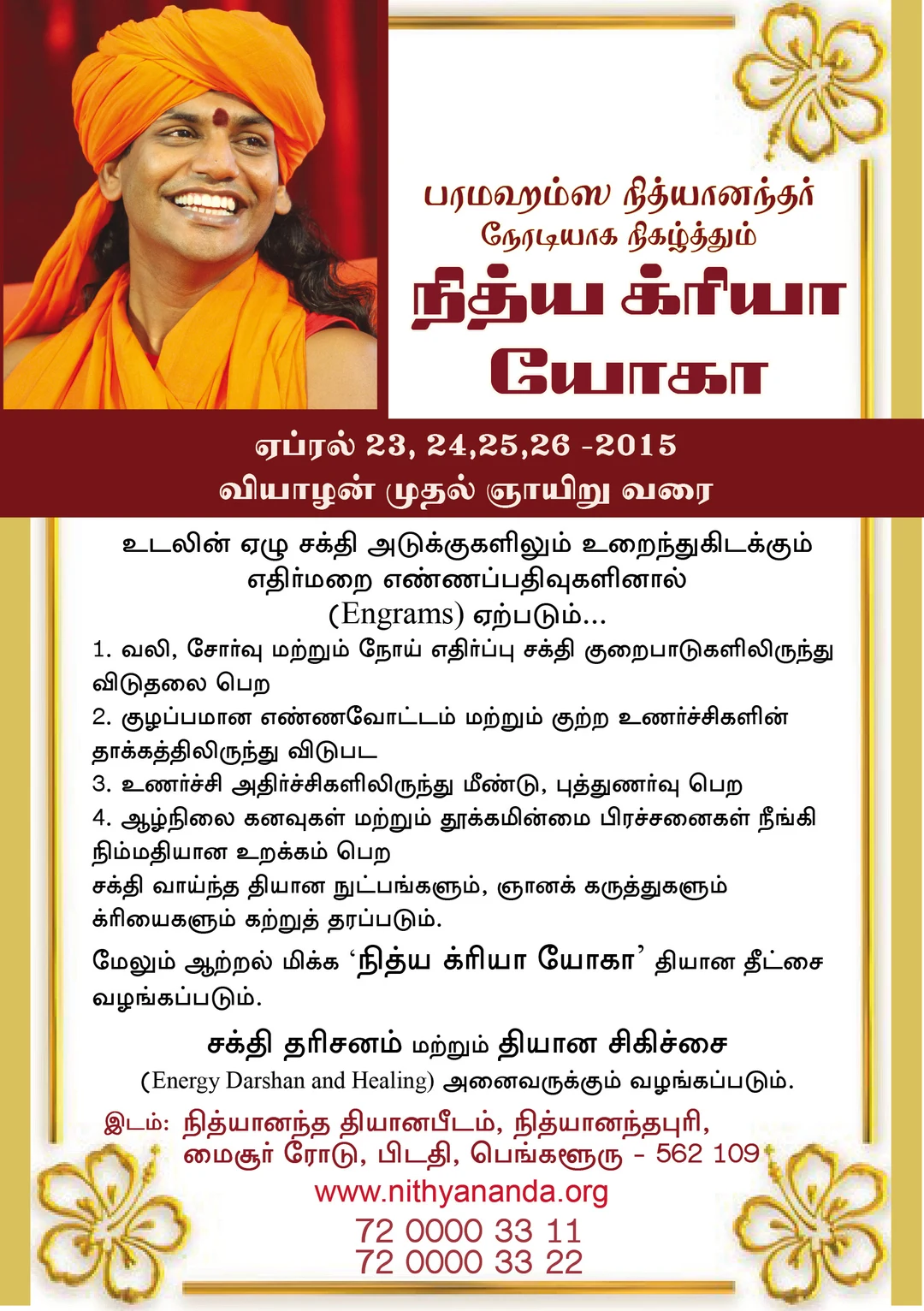
A Tamil-language poster advertising Nithya Kriya Yoga sessions on April 23 to 26, 2015, from morning to evening. A smiling man in an orange turban and orange shawl, with a red bindi and long dark hair, is shown in a framed portrait at top left, and a portrait labelled "பரமஹம்ச நித்யானந்தர்" (Paramahamsa Nithyananda) sits above the title. The poster lists benefits in numbered points, mentions Energy Darshan and Healing, and gives the venue as Nithyananda Dhyanapeetam in Nithyanandapuri, Bidadi, Bengaluru, with a website and phone numbers. Gold hibiscus-style flower motifs decorate the corners on a white and gold border.

Deity-Decoration

10 photosSource gallery
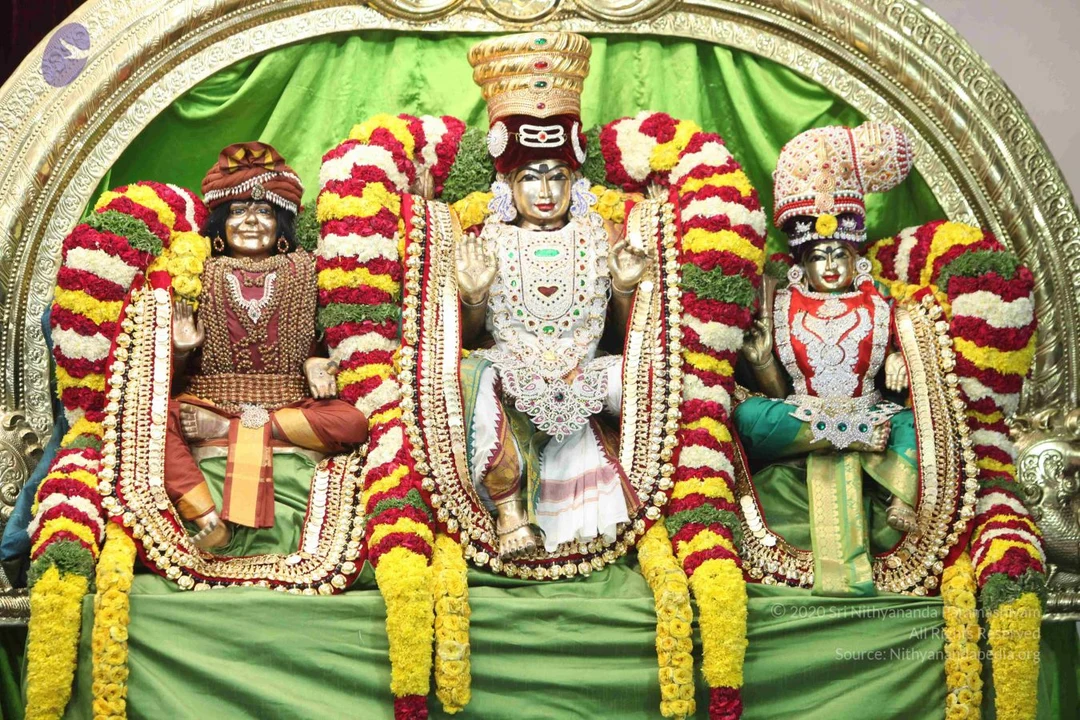
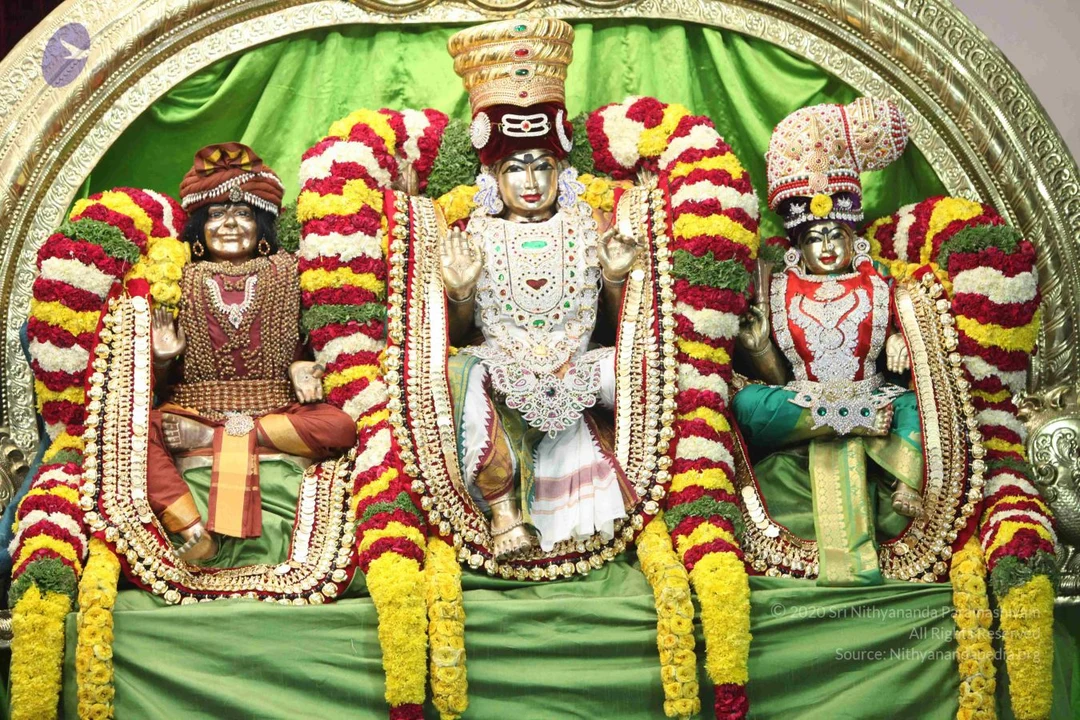
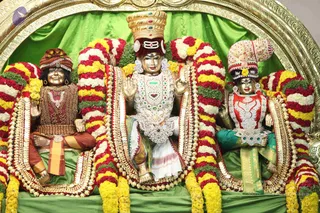
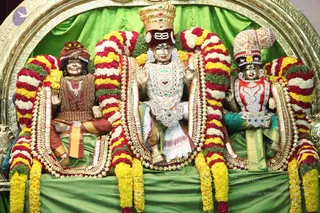
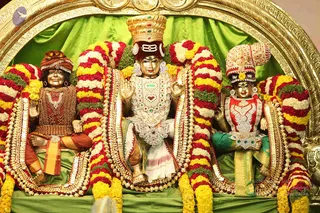
A photograph of three golden utsava murti deities seated side by side on a green silk-draped platform within a gilded arch. The central figure wears a tall gold crown with red and white accents, a white and jewelled necklace, and a white dhoti, with hands raised in blessing. The figure to the left wears a red and gold turban, a gold-beaded collar and a red and gold cloth; the figure to the right wears a tall white and red jewelled headdress, red and white robes and a jewelled collar. All three are draped with garlands of red, white and yellow flowers with green leaves, and gold-bordered shawls. No people are visible; the deities are statues.Three gold-toned deity murtis are seated side by side on a green cloth-draped platform within an ornate gilded arch. The central figure wears a tall gold crown set with jewels, a white embellished robe and a jewelled necklace, with hands raised in blessing. The figures to either side wear red and maroon garments, crowns or turbans, and jewelled ornaments. All three are adorned with thick garlands of red, white, yellow and green flowers draped over their shoulders and arms, and the platform is decorated with flowers and gold-edged cloth.A photograph of three metal deity murtis seated side by side on a green draped platform within a gilded arched frame. The central murti wears a tall ornate gold crown with red and green gems, a white and jewelled breastplate, and white dhoti-like garments, its hands raised in blessing. The murtis on either side wear red and gold attire, with a turban-style headdress on the left figure and an elaborate tall crown on the right. Each murti is draped with long garlands of red, white, yellow and green flowers. The scene is a temple-style altar display.Three gilded metal murti statues are seated together on a green cloth-draped throne-like seat within an ornate gold frame. The central figure wears a tall gold and red crown with jewelled ornaments, a white garment with silver and jewelled decoration, and holds its hands in blessing poses. The figures on either side wear turbans and jewelled ornaments, one in red and gold, the other in green and gold. Thick garlands of red, white, yellow and green flowers hang around the statues and across the seat. No living people are visible; this is a photograph of deity murtis being honoured on a decorated altar seat.A deity murti seated on a golden throne with a serpent-hood base, decorated with a thick garland of red, white and yellow flowers arching behind it. The figure wears an orange sari-like drape with a red and gold border, a red velvet sleeve, a gold crown with red stones, and layered jewelled necklaces with a central green-and-red gem pendant. The murti holds a small golden object in one hand. Dark backdrop with a silver-framed throne arch behind.A decorated deity murti seated on a golden throne with a serpent-hood backrest, framed by a gilded arched canopy. The figure wears an orange silk sari with red and gold borders, a red velvet blouse, a jewelled crown and layered silver and gemstone necklaces. Long garlands of red, yellow and white flowers hang from the throne on both sides, and green leafy sprigs decorate the upper area. No physical people are visible.

Nithya-Satsang
91 photosSource gallery
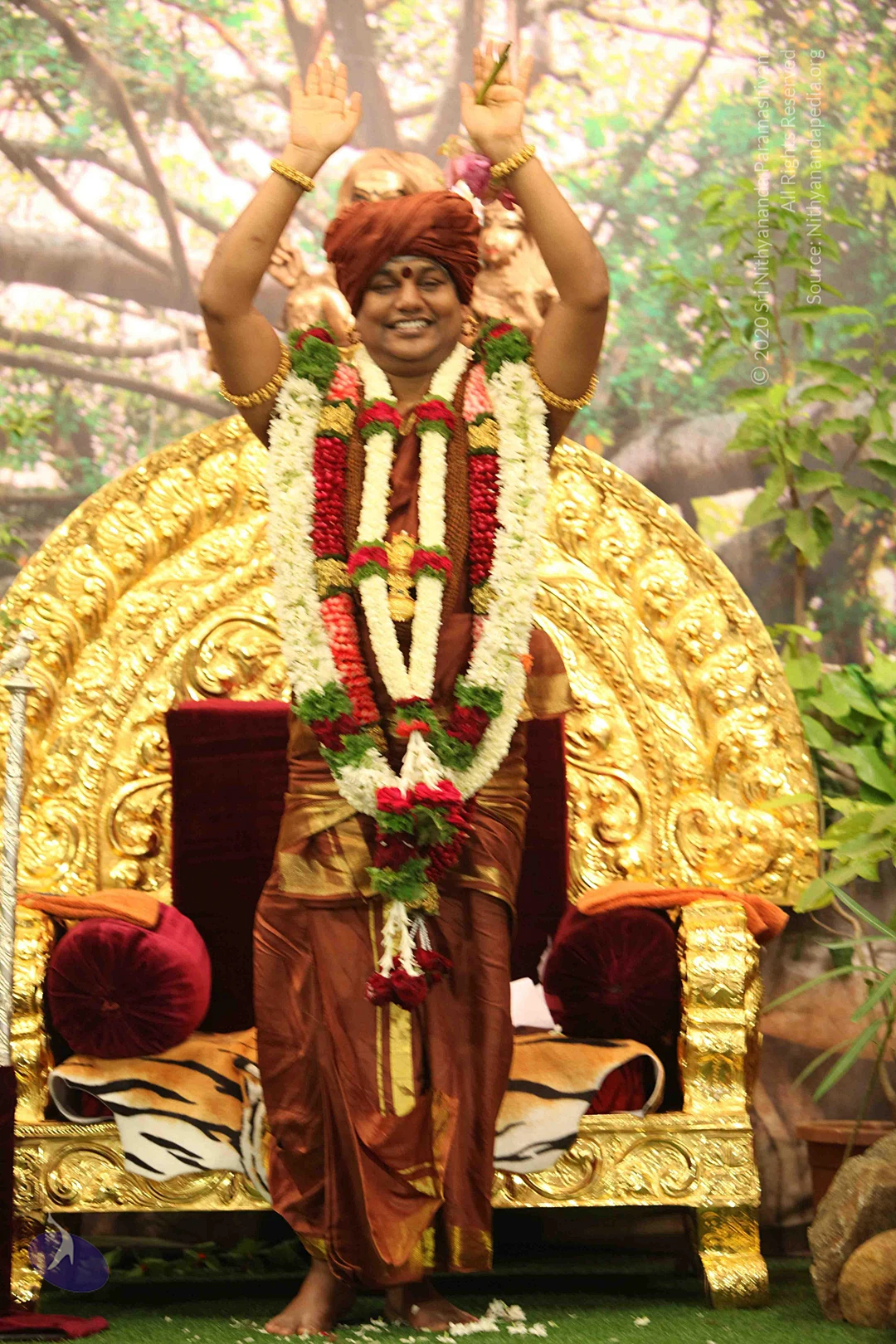
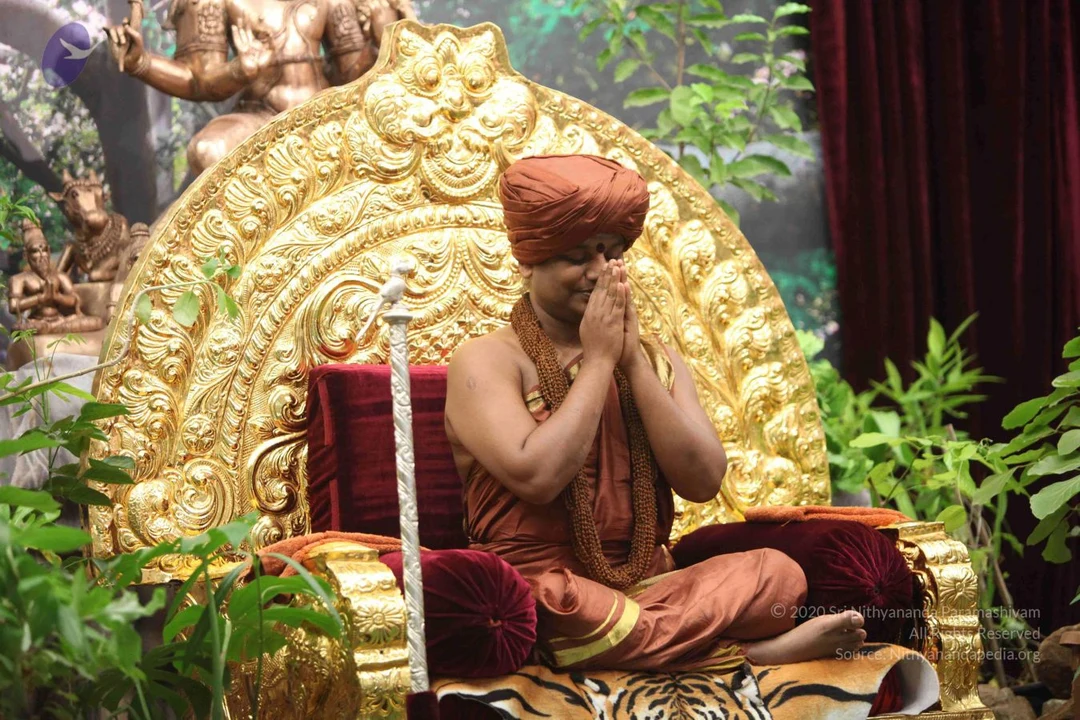
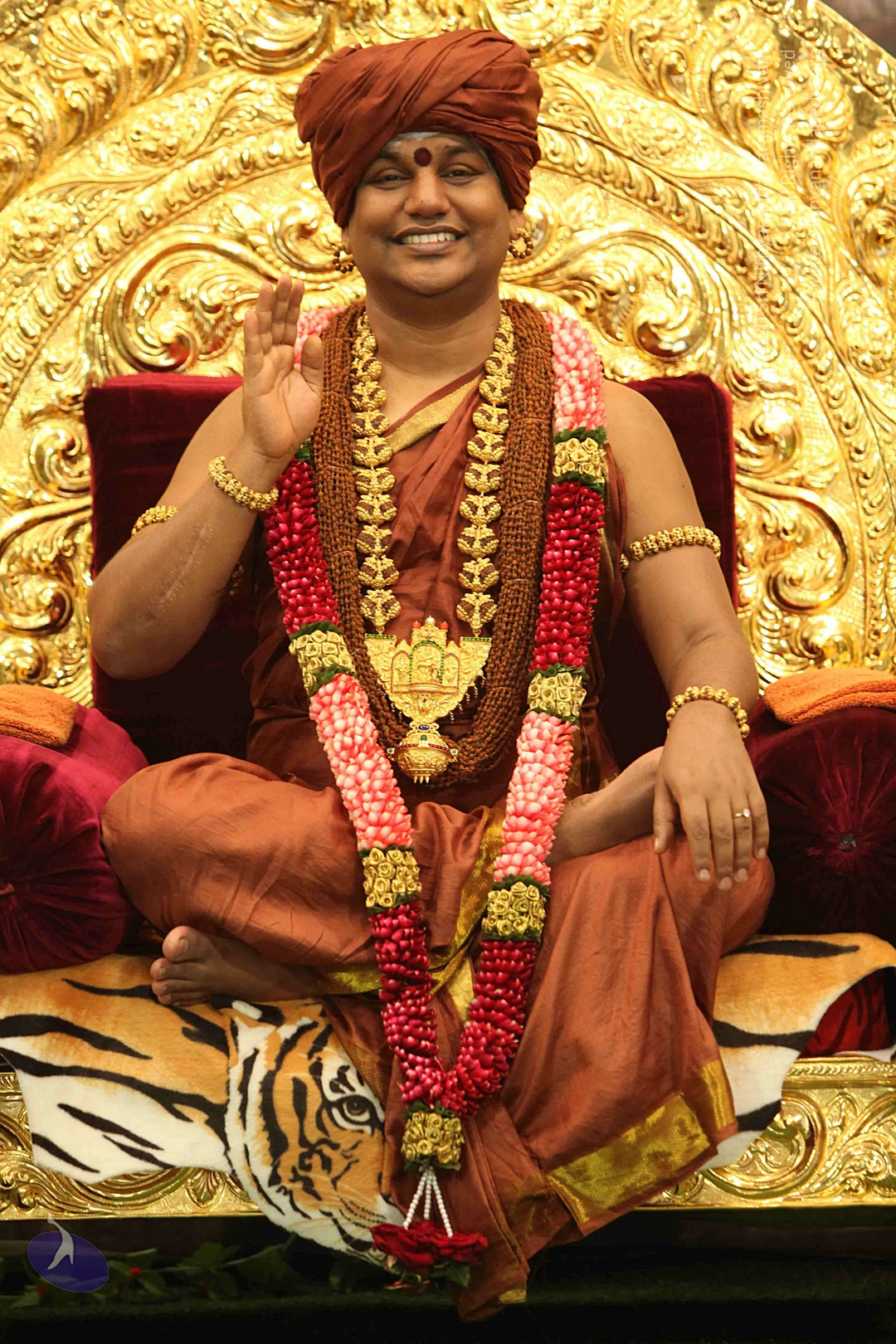
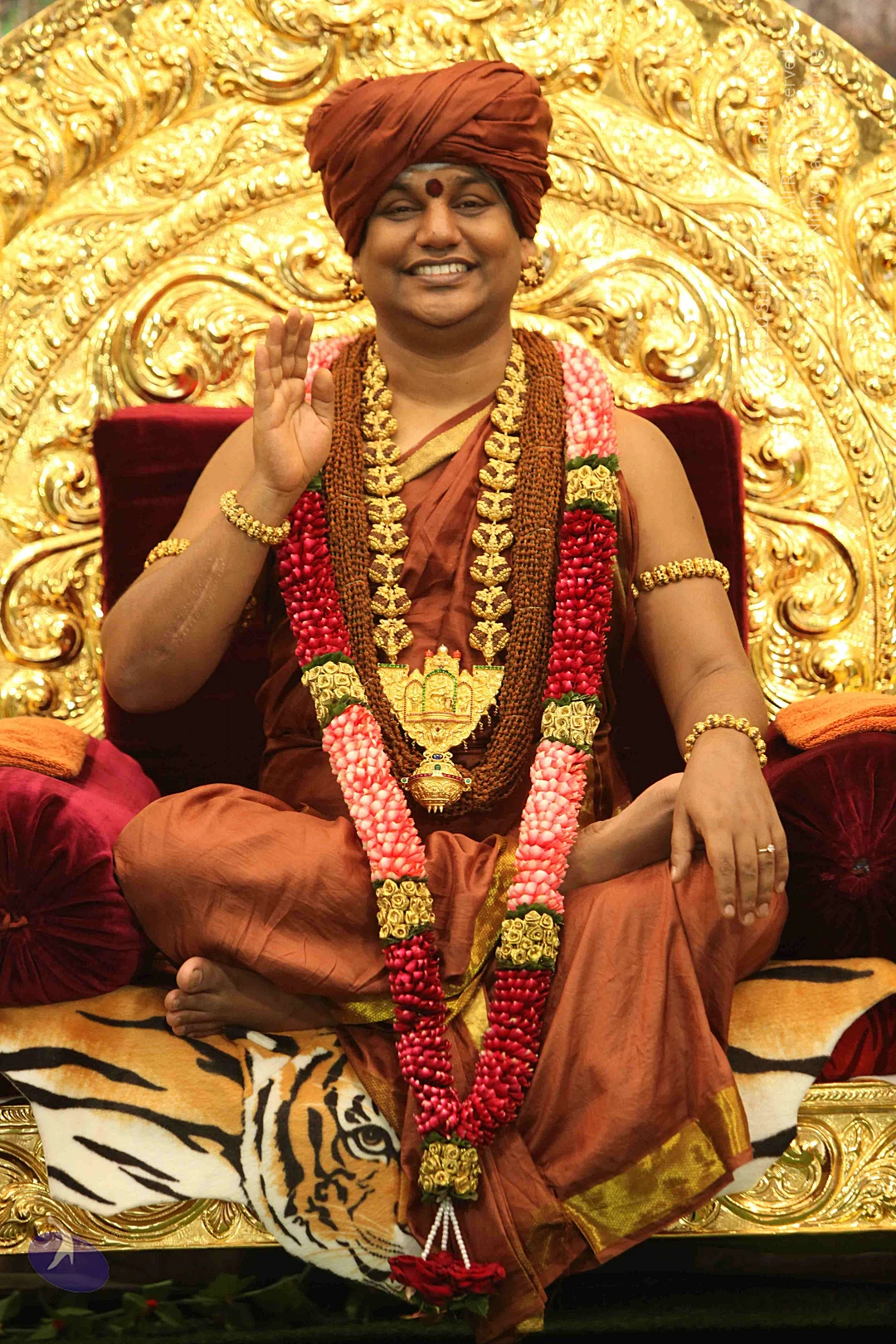
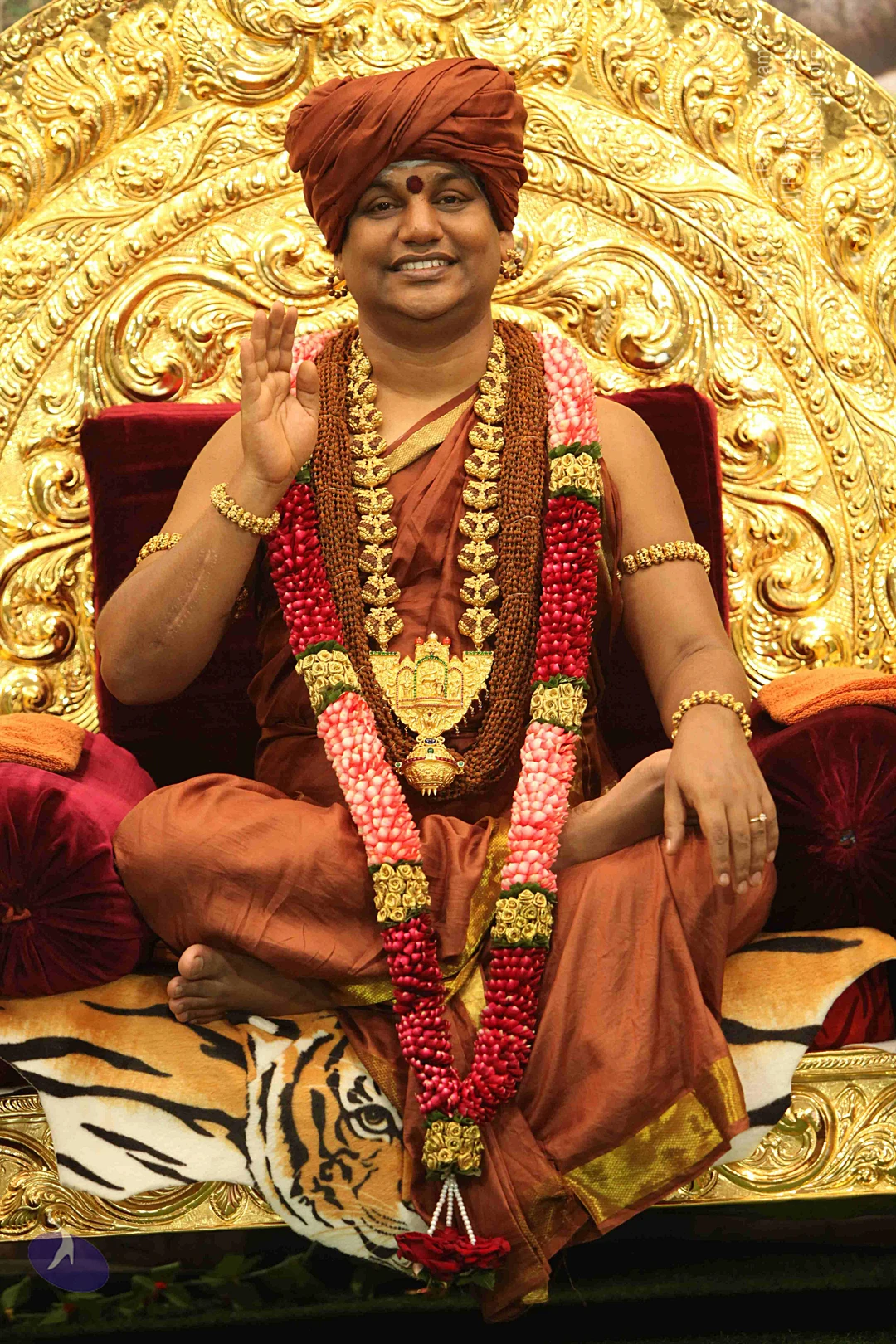
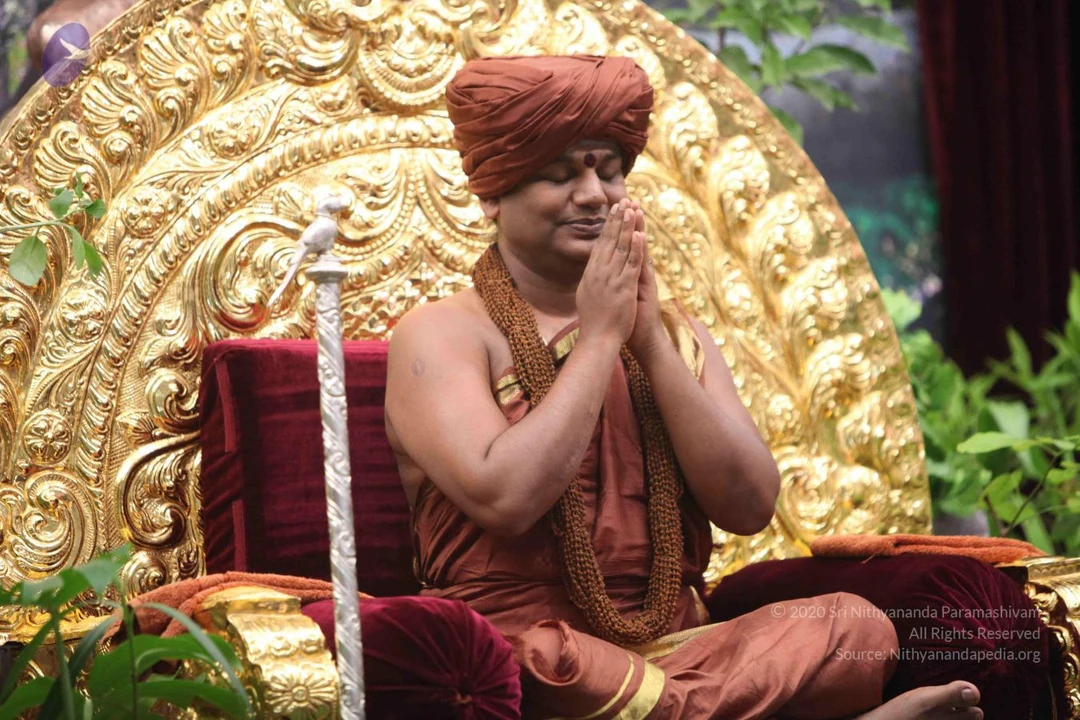
A seated man on an ornate gilded throne with a carved golden backrest and tiger-skin cushion. He wears a rust-brown turban, a red bindi, a brown-and-gold draped garment, layered rudraksha beads, gold ceremonial necklaces and a gold pendant, with a thick garland of pink and red flowers across his chest and bare feet. He holds a silver staff with a bird-topped handle, and his arms are adorned with gold armlets and bangles. The turban, distinctive gold-and-rudraksha adornments and throne seating match the Swamiji (probable) cues on the page, so he is identified as Swamiji (probable), seated in a position of honour.A seated man on an ornate gilded throne with a carved golden back and red velvet cushions, draped with a tiger-stripe covering, in front of a painted tree-and-foliage backdrop with potted plants and rocks. He wears a maroon-red turban, a saffron-brown and gold garment, a rudraksha mala, a long gold ceremonial necklace with a pendant, and a multi-strand garland of red and pink flowers with gold beads, with gold armbands and a white staff resting beside him. He sits barefoot on green carpet with a water bottle nearby.Three deity murti statues sit side by side on a green cloth-draped dais within a gilded arched frame. The central figure wears a tall golden crown set with red and green stones, a jewelled white garment and an ornate multi-strand necklace, with hands raised in abhaya mudra. The figure to the left wears a rust-coloured turban, bead-studded brown garment and gold necklaces; the figure to the right wears a red and gold embroidered top, a golden crown and a green skirt. All three are garlanded with thick chains of red, yellow and white flowers and green leaves. No physical people are visible.A seated man in a rust-red turban and matching rust-brown robes sits on a red velvet throne with an ornate gold carved backrest, hands pressed together in anjali mudra with eyes closed. He wears a long rudraksha mala, a large gold pendant, layered gold chains, gold armlets and a red and white flower garland, with a red tilak on his forehead. Lush green plants frame the background. The image is a photograph of a satsang setting. Appearance-based identity cues are strong (turban, rudraksha mala, ornate gold ceremonial clothing); Swamiji (probable) is seated in a peetha throne during satsang.A seated man with eyes closed and palms pressed together in anjali mudra sits on an ornate gold throne with red velvet back and cushions, draped with a striped tiger-skin cover. He wears a rust-orange turban, orange silk dhoti and shawl with gold border, a rudraksha mala with a large gold ceremonial pendant, and multiple pink and red flower garlands. Gold armlets and bangles adorn his arms, and a silver staff with a bird finial rests at his left side on green carpet. A small lapel microphone is visible.A seated man in an ornate golden throne with carved gold scrollwork and a tiger-striped cushion, palms pressed together in anjali with eyes closed. He wears an orange-red turban, a red bindi, rudraksha mala, a gold ceremonial pendant, gold armlets and bangles, and an orange-brown silk dhoti with gold border, draped with a red and white flower garland. A silver staff with a bird finial rests beside the throne on green carpet.
Swamiji-Blessing

13 photosSource gallery
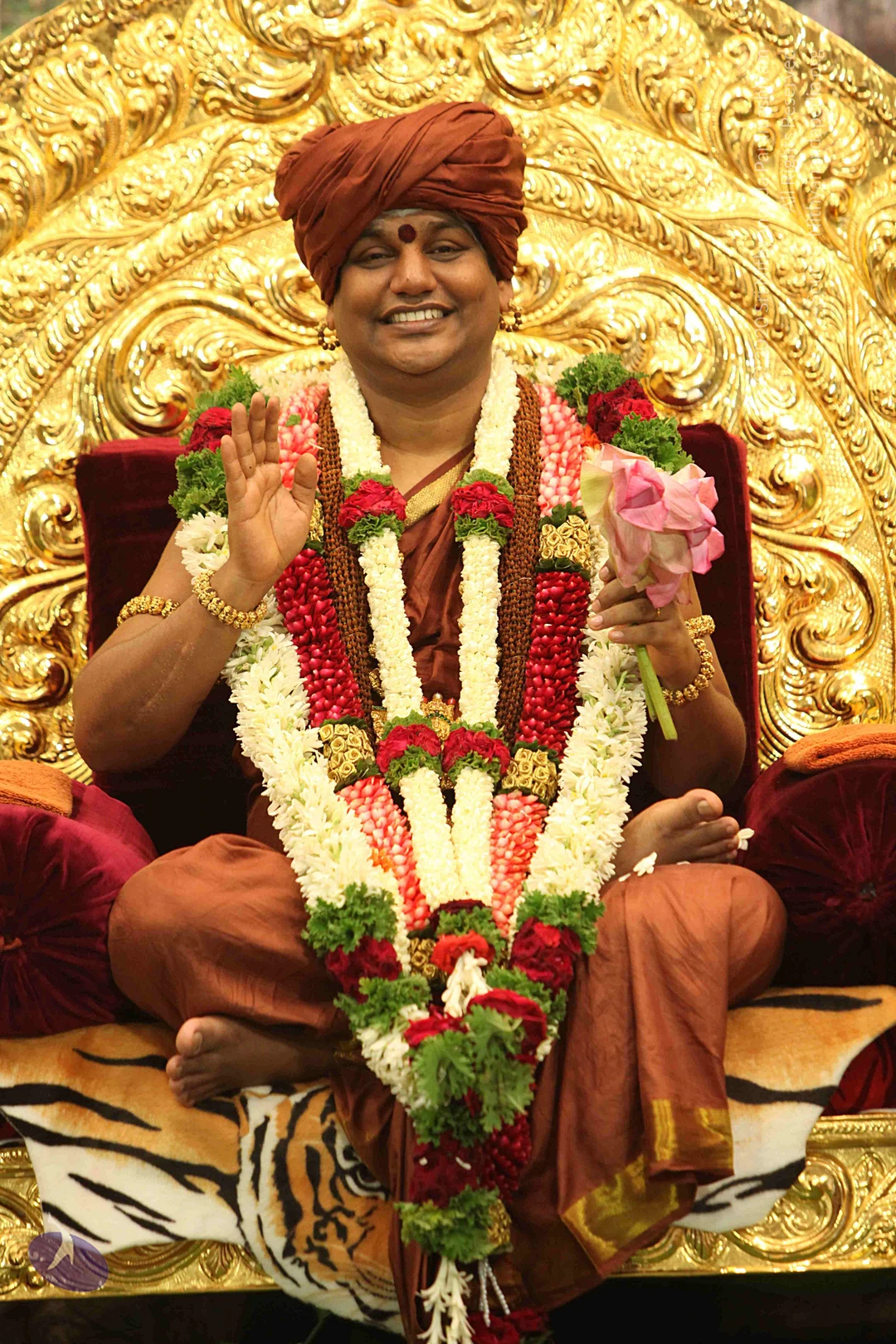
A seated man on an ornate gilded throne with a large golden scrolled backrest, wearing a rust-orange turban, rust-orange robe and gold bangles. He smiles, raises his right palm in a blessing gesture and holds a pink flower in his left hand. He wears layered garlands of white flowers, red blossoms and green leaves, with a rudraksha-style beaded mala. A striped animal skin covers the seat and a plant-filled backdrop surrounds the throne. Candidate identity by appearance: a person, based on the turban, saffron-toned robes, garlands and mala, seated on a gold throne.A seated man in a rust-orange turban and matching orange robes sits on an ornate gold throne with a tiger-striped cloth draped over the seat. He smiles and raises one hand in blessing while holding a pink flower in the other. He wears a long garland of white flowers, green leaves and red blossoms with rudraksha beads, plus gold bangles and a red tilak on his forehead. A tall silver staff stands at the left, with green foliage and a tree-like backdrop behind the throne. a person by appearance cues: orange turban, ornate ceremonial garland and a gold throne, seated in a darshan setting.A seated man in rust-orange robes and an orange turban sits on an ornate gold throne with a red velvet cushion and a tiger-striped rug. He wears a long garland of white flowers, red and orange blossoms and green leaves, plus a rudraksha-style mala and gold bangles, and raises one hand in greeting while holding a pink flower. Behind him are a gilded arched backdrop and green foliage. Visible text is limited to a copyright line on the lower right of the image.A smiling man seated cross-legged on an ornate gold throne with a red velvet cushion and a tiger-striped fur mat beneath him. He wears a rust-red turban with a red bindi, rust-red robes, gold bangles and a gold necklace. He raises one palm in blessing and holds a pink lotus flower. Heavy garlands of white jasmine, red roses, pink buds, green leaves and wooden rudraksha beads drape over his shoulders and chest. Petals lie near his bare feet. The gilded backdrop is carved with scrollwork. Appearance-based candidate: a person, seated in a ceremonial role.A seated man in a rust-orange turban and matching orange-brown robes sits cross-legged on an ornate gold throne with a tiger-striped cushion beneath him. He wears a dense garland of white jasmine, red roses and red beads with a rudraksha mala and gold ornaments, and holds a pink lotus in one hand while raising the other palm in blessing. A red bindi marks his forehead and gold bangles circle his wrists. Swamiji (probable): the orange turban, rudraksha mala and ceremonial garlands match the appearance cues for the page's subject, seated as a guru in darshan. Barefoot feet rest on the tiger-skin cushion, with a few loose white petals nearby.A seated person on an ornate gold-carved throne with a red velvet cushion and a tiger-striped cloth draped over the seat. The person wears a rust-red turban with a red bindi, rust-red silk robes, and gold bangles, and is draped in a heavy multi-strand garland of white jasmine, red rose buds, and green leaves with a brown rudraksha-style mala. They raise one hand in a blessing gesture and hold a pink lotus in the other, smiling. Appearance-based candidate: Swamiji (probable), with a rust-red turban, rudraksha mala and ceremonial garland as qualifying cues, shown here seated in a receiving-honour pose on the throne.

Kalpataru-Darshan

43 photosSource gallery
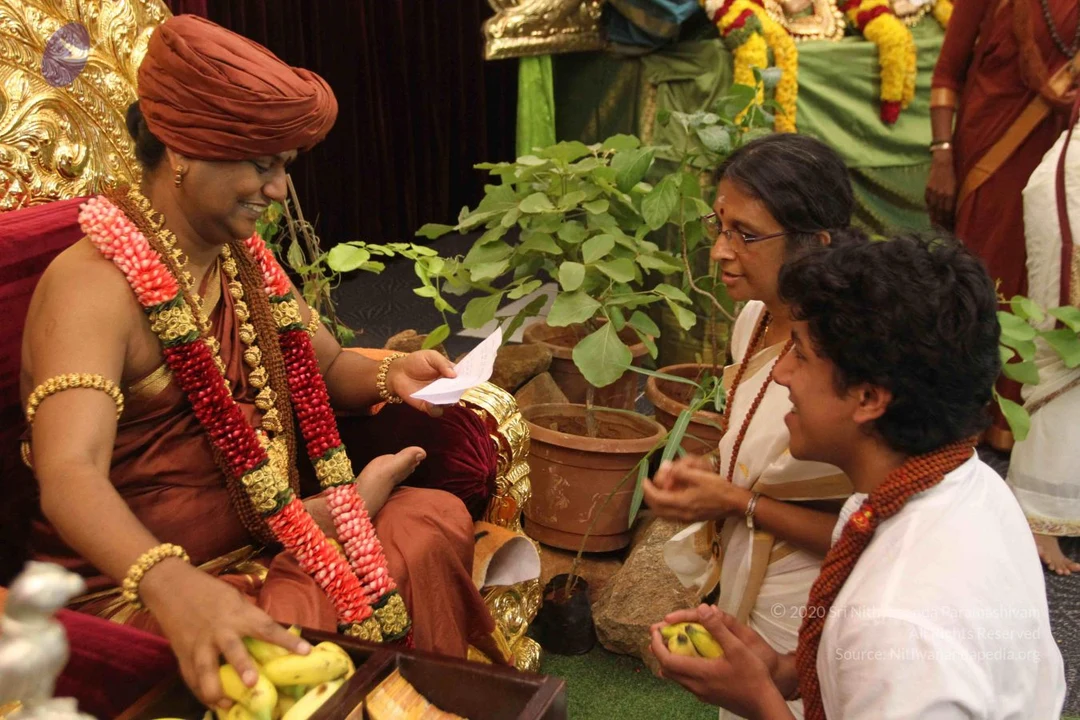
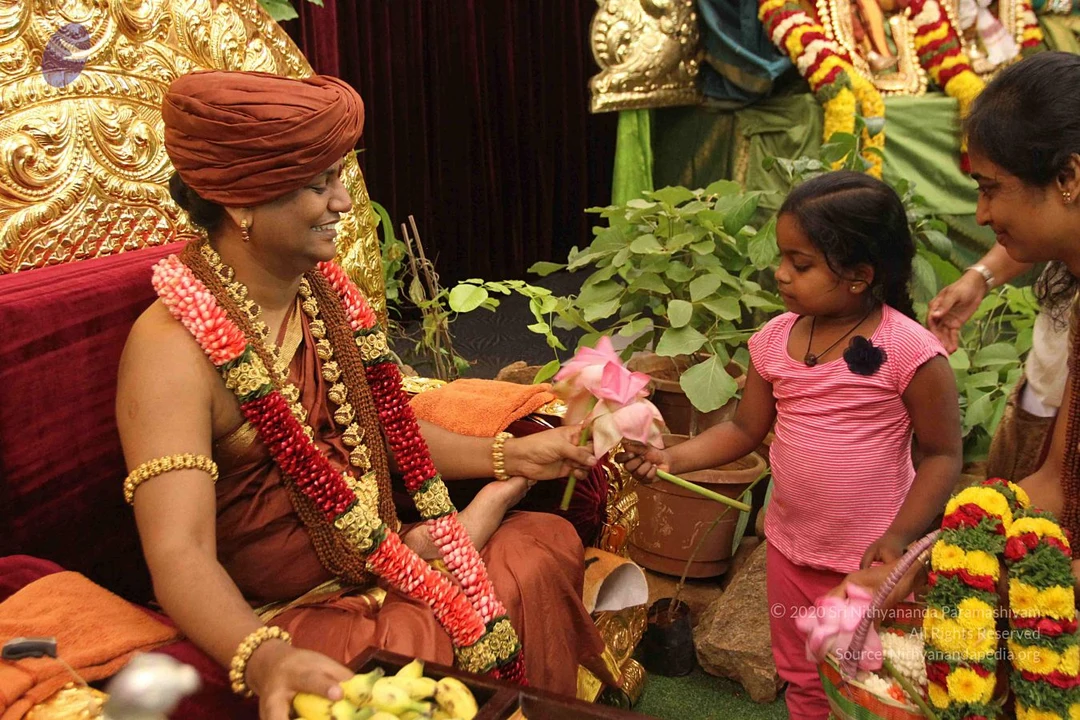
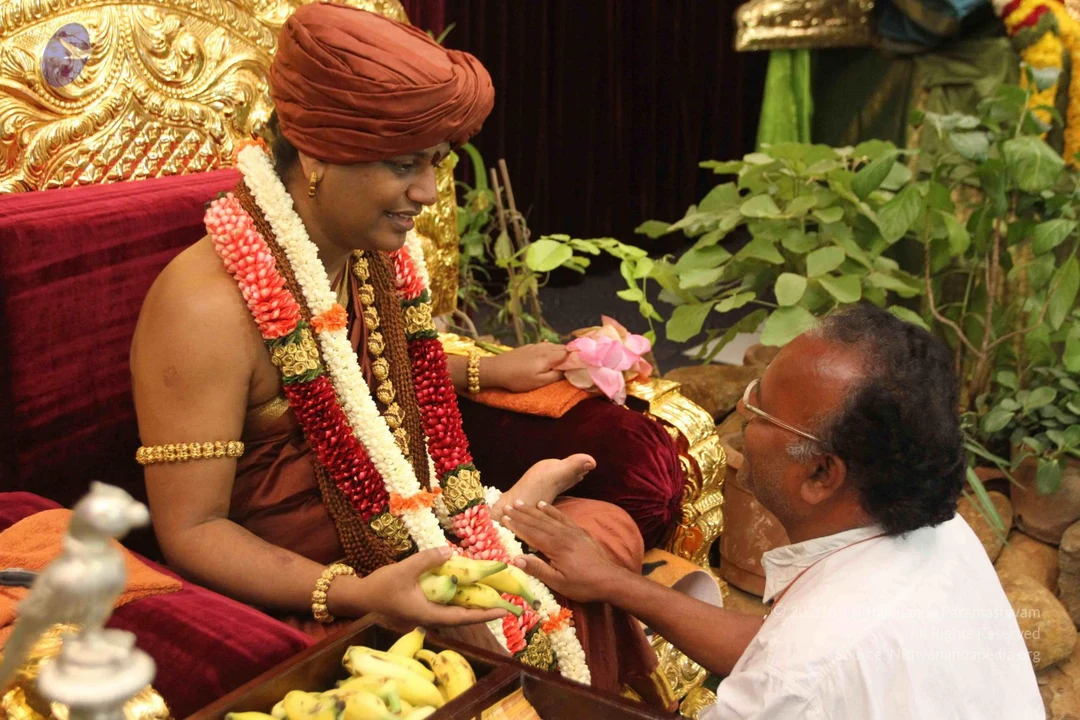
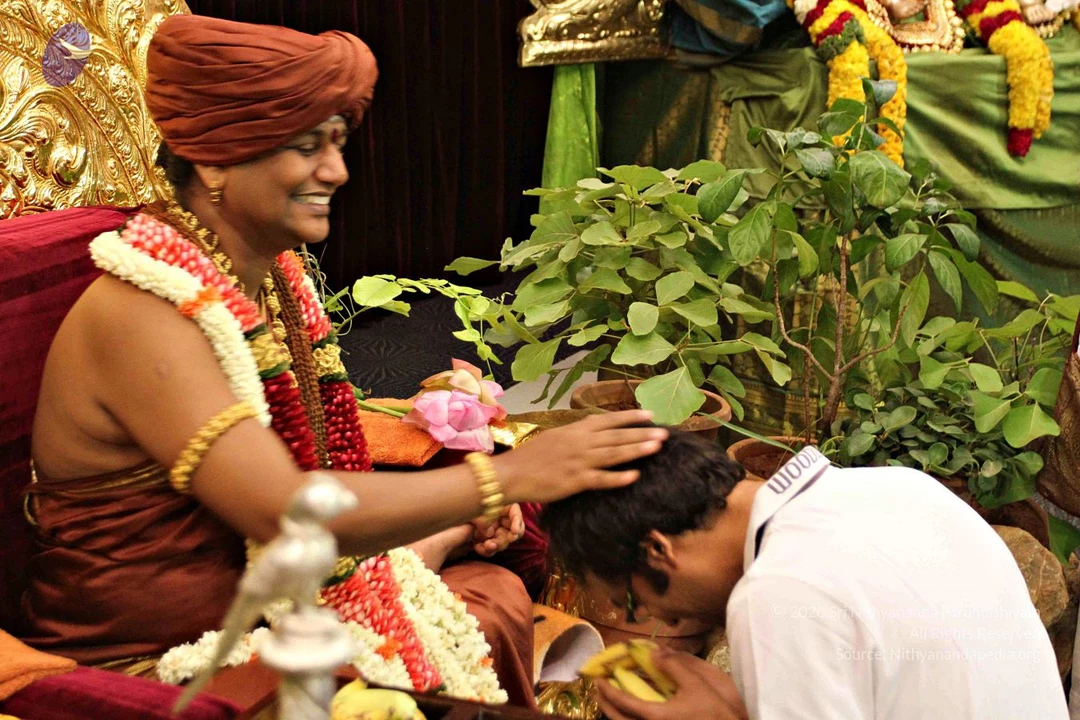
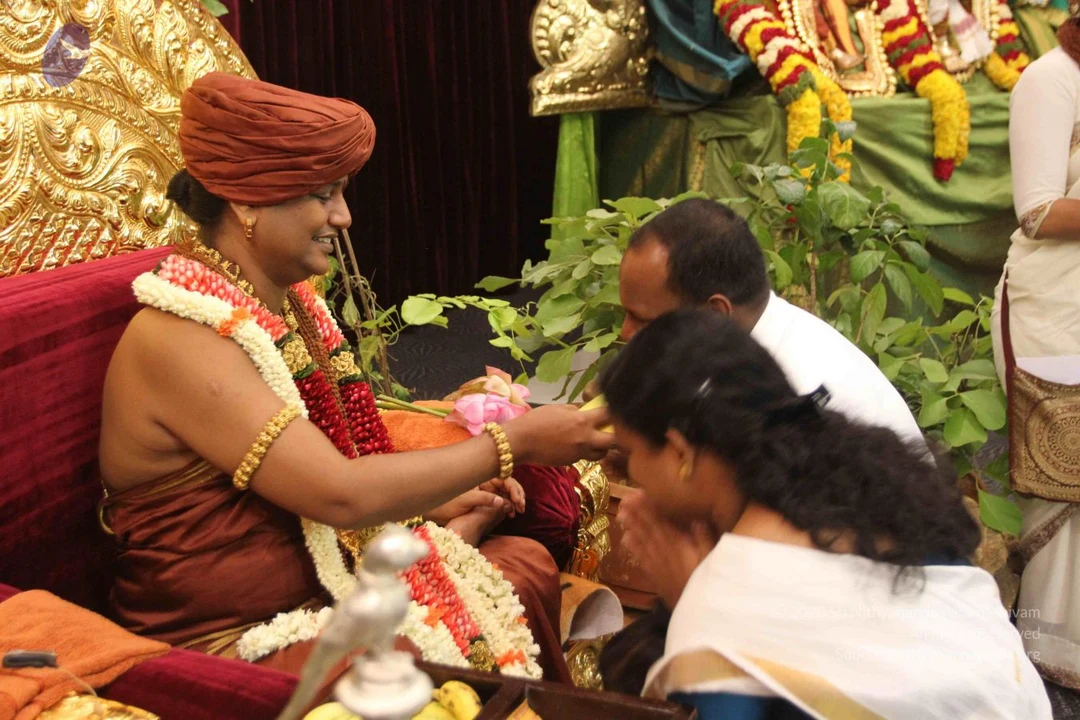
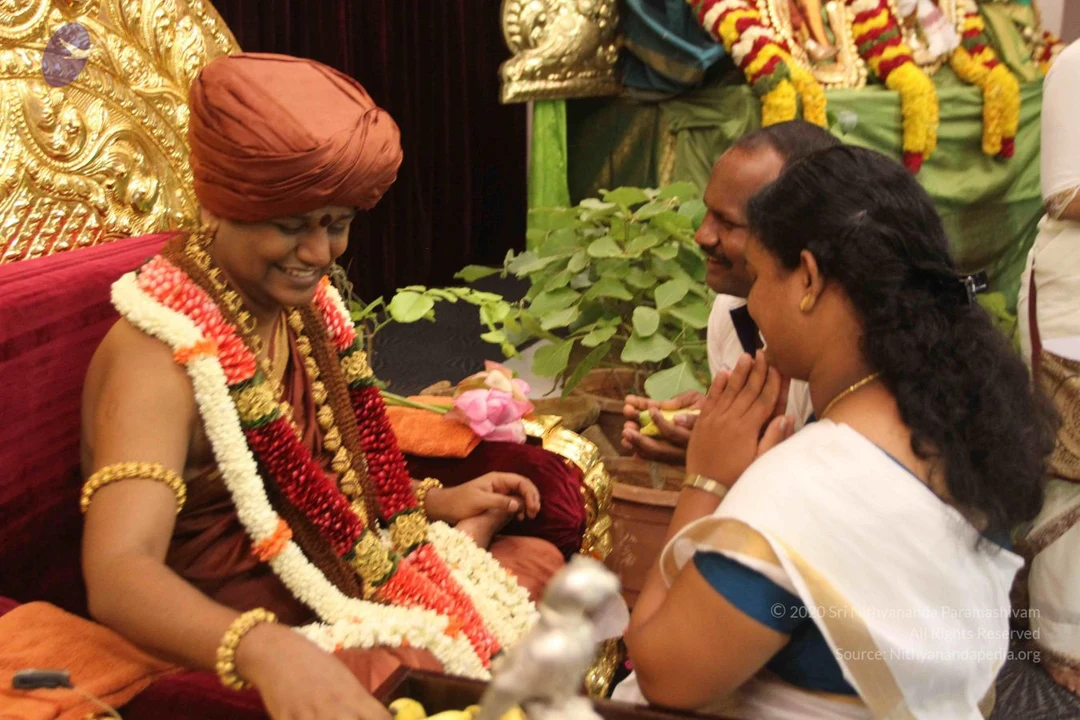
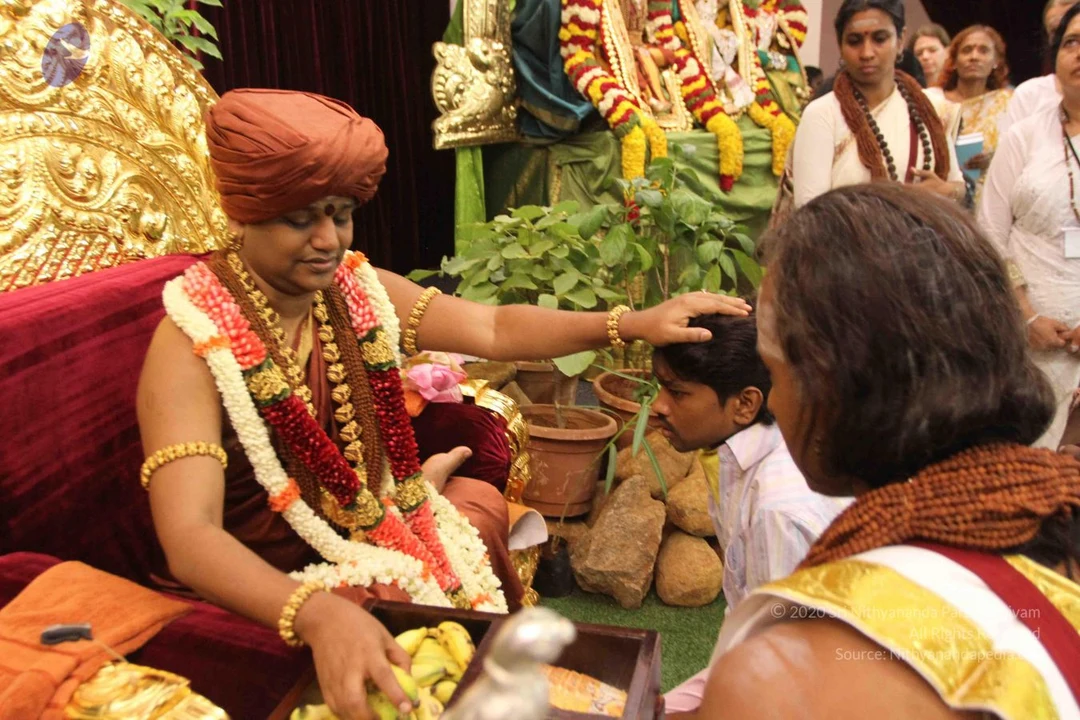
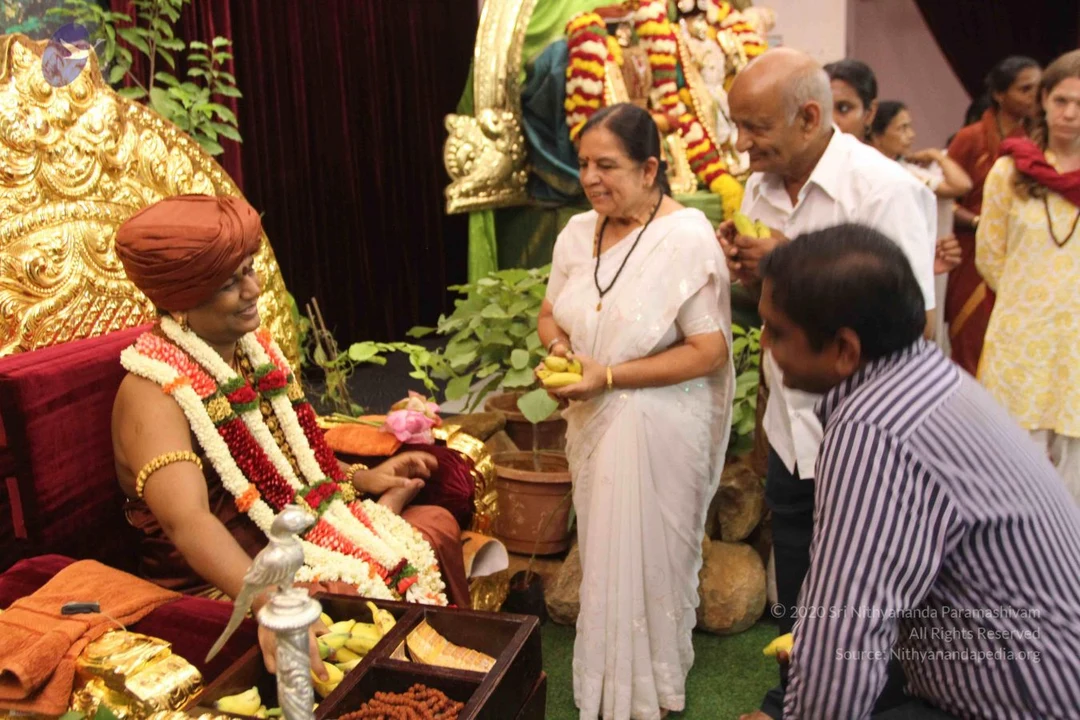
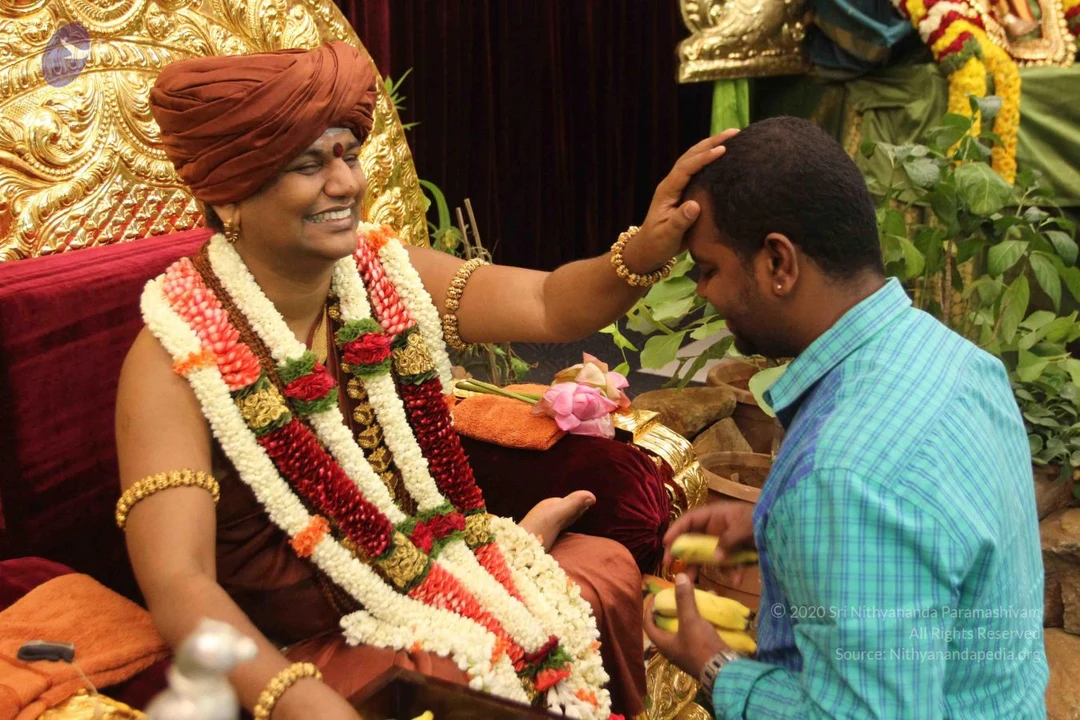
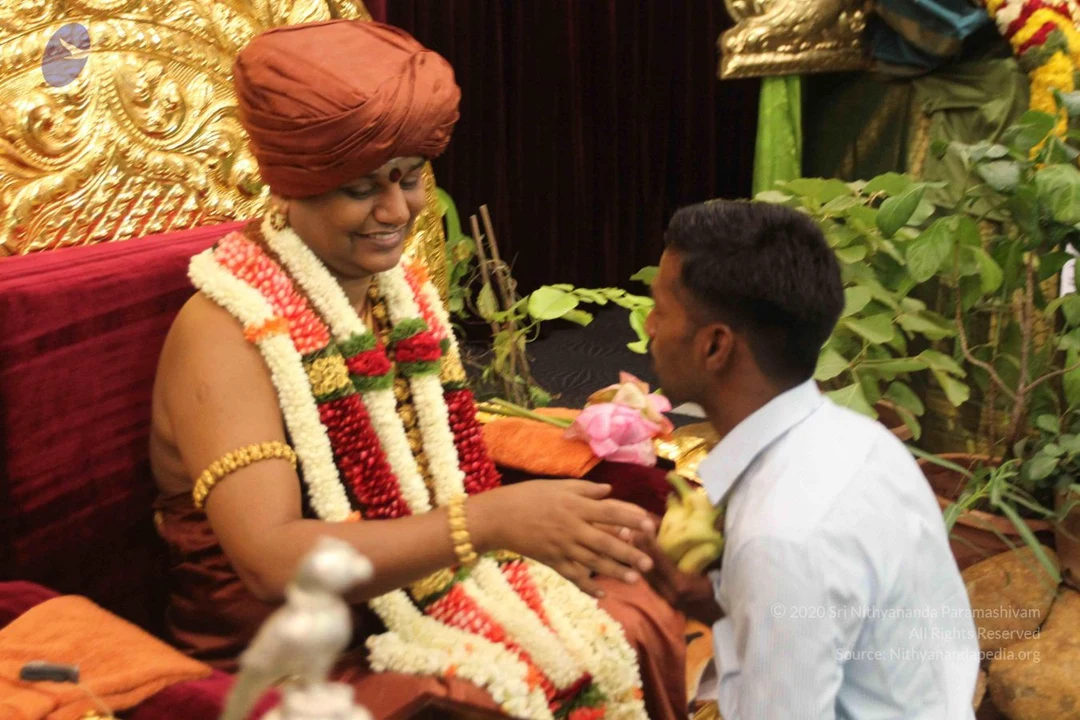
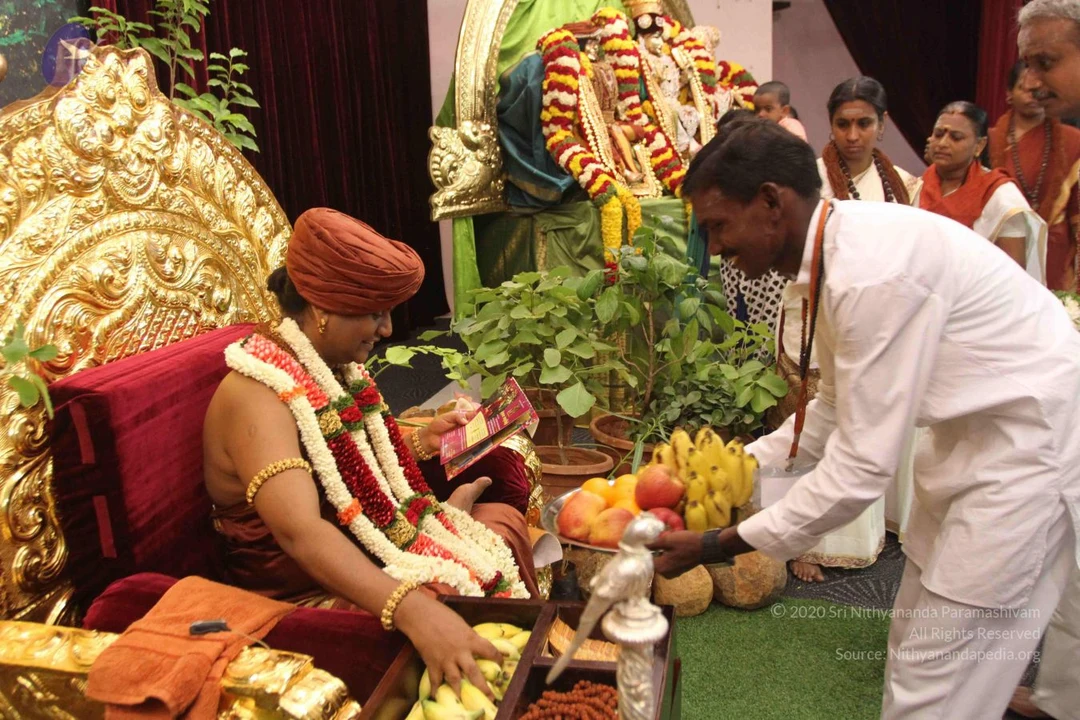
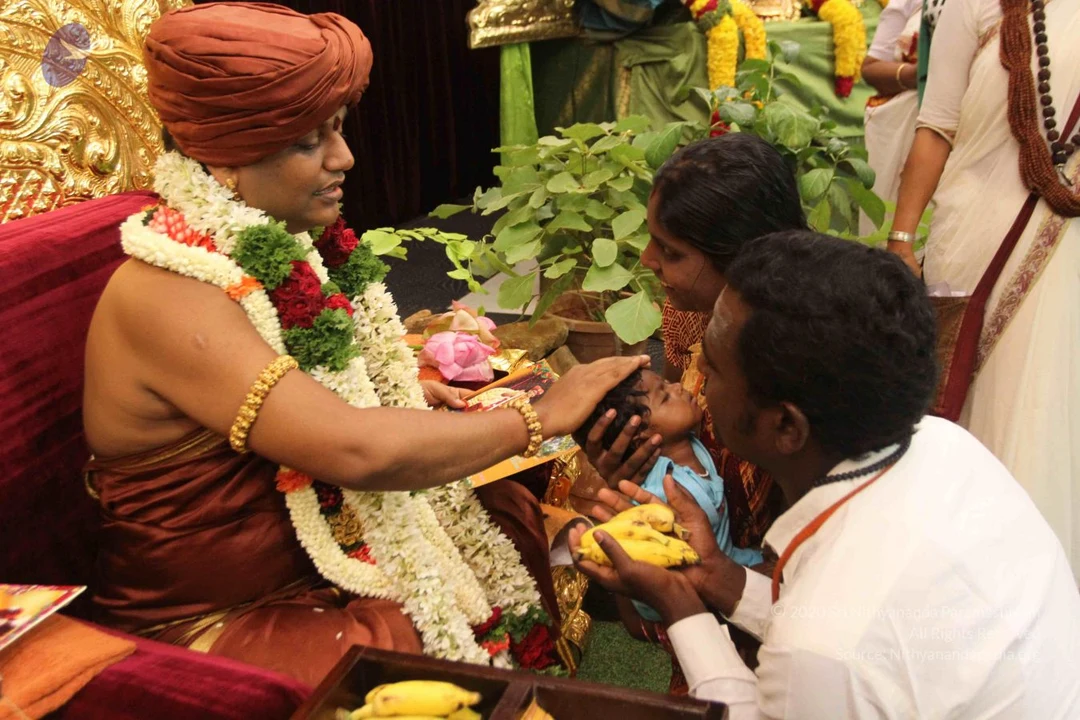
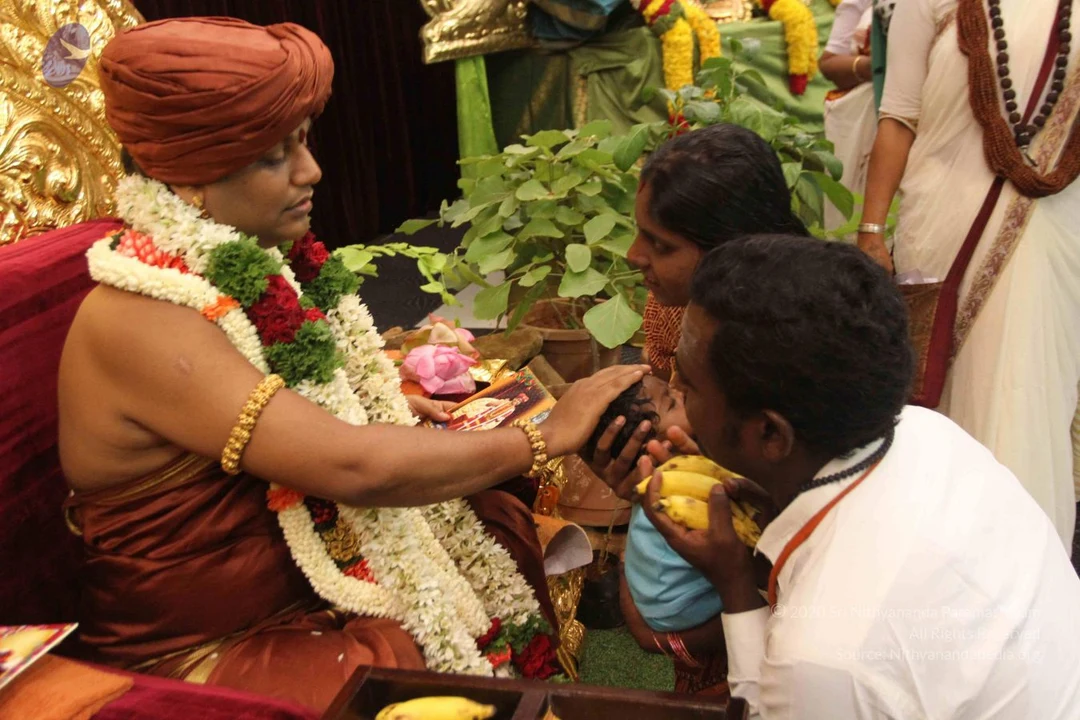
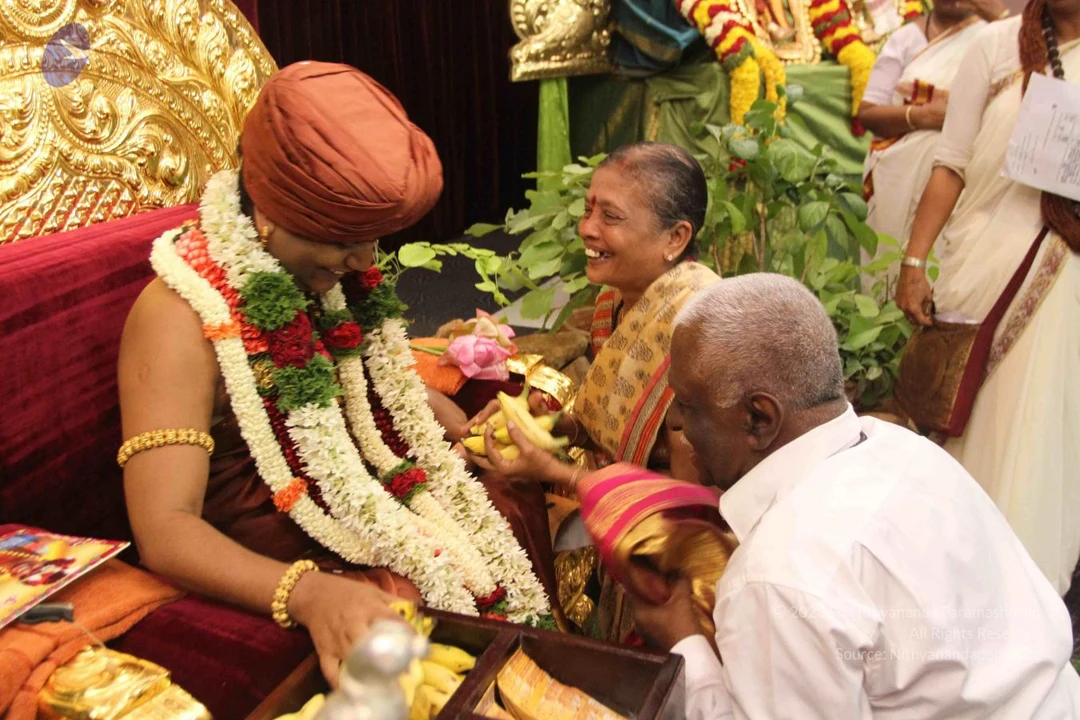
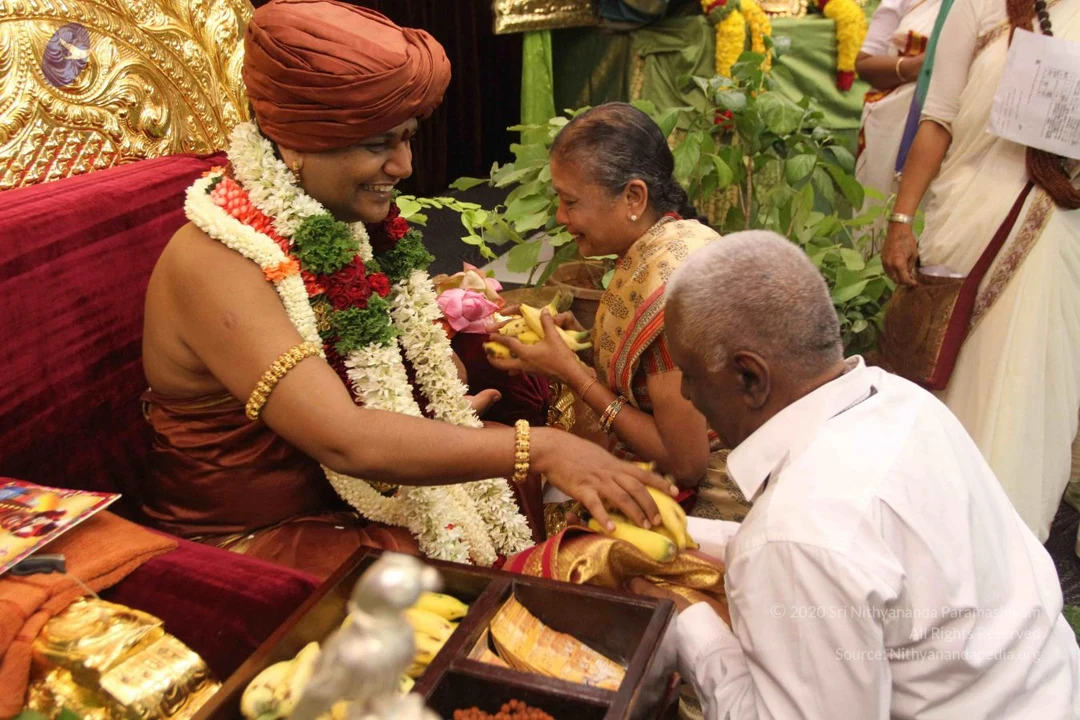
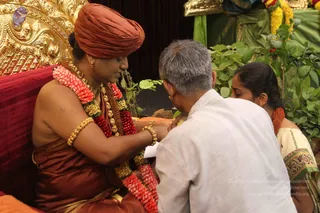
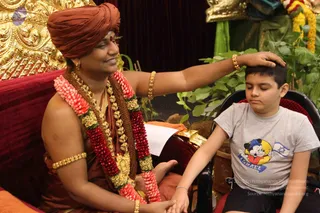
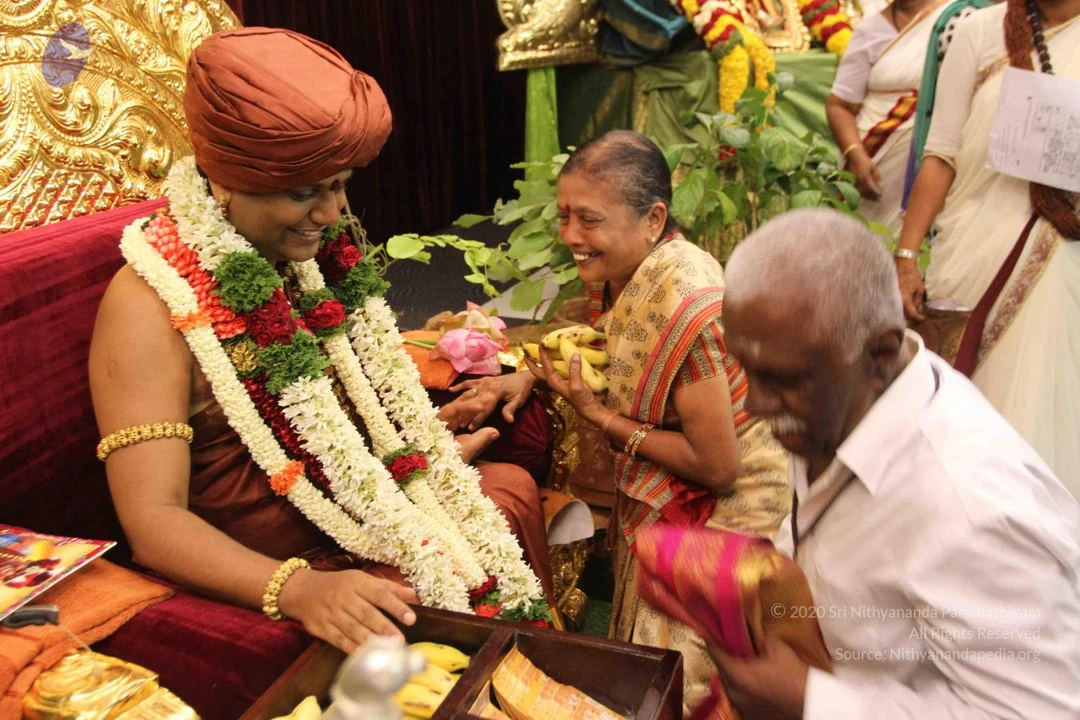
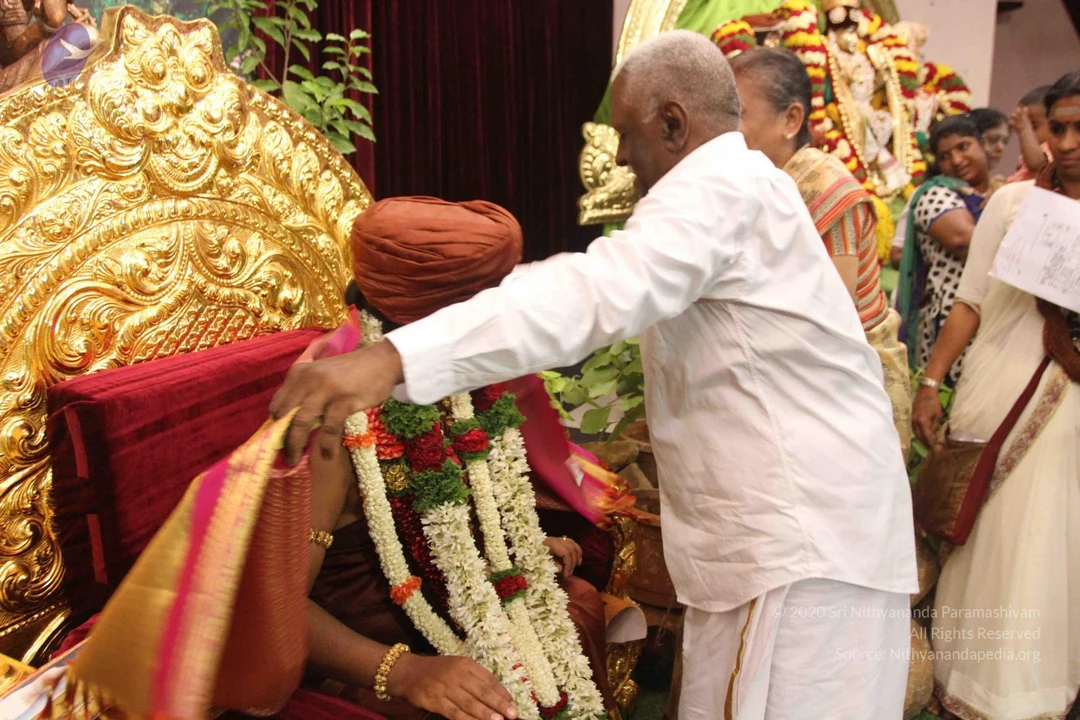
A photograph of a seated figure on an ornate gold throne with red cushion, wearing a rust-orange turban, orange-brown silk garment, a long necklace of red and white flower garlands and gold beads, and gold bangles. The figure, with long swept-back hair and gold earrings, is receiving a man in a white kurta who bends forward with folded hands, offering something on a plate or paper. A woman in a cream sari with brown border stands behind, and green leafy plants and gold-embroidered green drapery with yellow flower garlands form the background. a person is seated on the throne receiving devotee offerings.Indoor photograph of a seated figure in a rust-brown turban and matching brown robe, wearing red and white flower garlands with gold beads and gold bangles, touching the crown of a young boy's head with one hand while holding the boy's hand. The boy wears a grey T-shirt with a Mickey Mouse graphic and an Israel flag, and sits eyes closed in a black chair with red cushion. Behind them stand a gold ornate throne, green foliage and a red velvet cushion, with a white paper on the lap. Appearance-based a person with turban, garlands and gold ornaments, performing a blessing on the child.A seated figure in rust-orange turban and rust-orange robe, wearing layered red and white flower garlands, gold necklaces, a gold armband and gold bangles, places one hand on the head of a seated boy in a grey T-shirt with a cartoon mouse and an Israeli flag graphic, black shorts, and a bracelet. The boy sits in a black chair with red cushion, eyes closed, while the figure holds his hand. Behind them are gold-carved throne elements, green leaves, and draped fabric. A red bindu marks the forehead of the seated figure. Appearance-based label: a person seated in a throne-like chair receiving the boy in blessing.A photograph of a seated man on a gold-and-red throne wearing a rust-orange turban and saffron-orange robe, with a garland of red and pink flowers and gold ornaments, holding a small white paper and smiling as he passes bananas from a tray. Two devotees sit before him: a woman in white sari with a rudraksha mala and glasses, and a young person in a white top with a rudraksha mala, holding bananas. Behind them are potted plants, a green draped backdrop, and a garlanded deity murti. Swamiji (probable) is the seated figure, identified by the orange turban, saffron robes, red flower garland and gold ornaments on a throne.A seated man in a rust-orange turban and matching saffron-brown robe sits on a red cushioned throne with ornate gold carved panels behind him. He wears layered garlands of red, pink and white beads, a rudraksha mala and gold ceremonial necklaces, plus gold bangles, and smiles while a young girl in a pink striped top and pink leggings offers him pink lotus flowers. A woman in a dark top stands at the right beside a basket of yellow and red flower garlands. Potted green plants, a deity murti draped in green and gold garlands, and a bowl of bananas appear in the scene.Photograph of a seated figure on a gold-framed throne with red velvet cushions, wearing a rust-orange turban, bare-shouldered rust-coloured cloth, a layered red, pink and white flower garland, gold necklaces and gold armlets. The figure holds bananas in one hand and a pink lotus rests on the armrest, while a kneeling man in a white shirt and glasses reaches forward with his palms together, receiving or offering in devotion. A tray of bananas sits in front, with potted green plants and a stone border behind. Swamiji (probable): the seated figure has a turban, a garland and ornate gold jewellery on a throne, consistent with a Paramahamsa Nithyananda depiction, though appearance cues are only partly distinctive.

NKY-Day1-intro

53 photosSource gallery
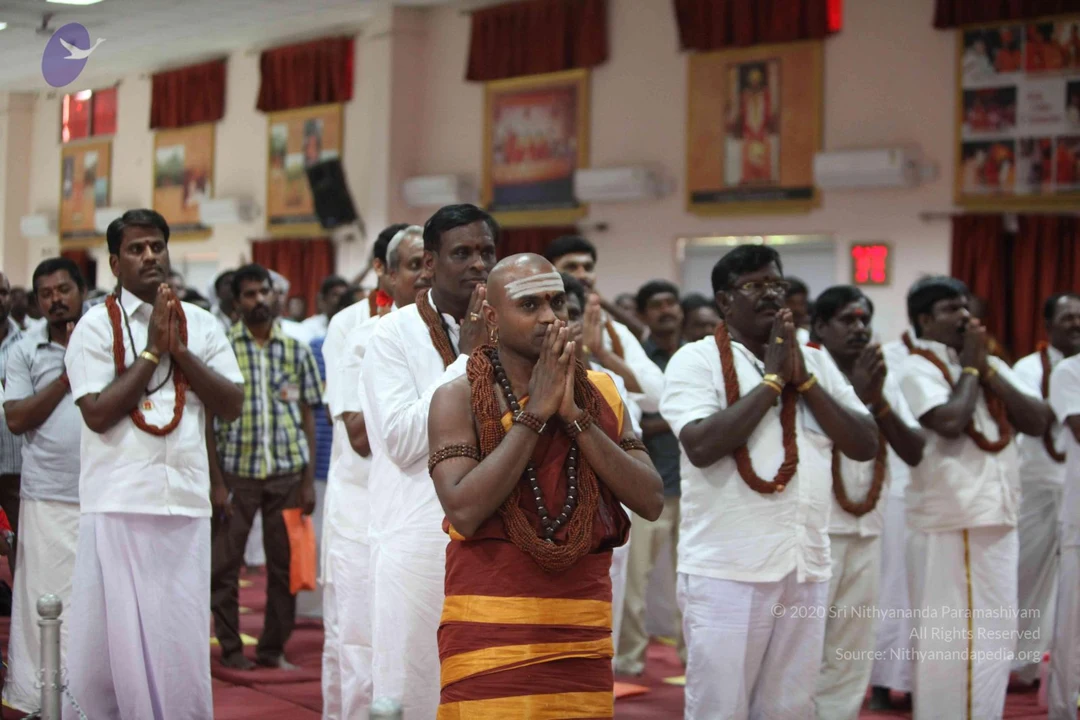
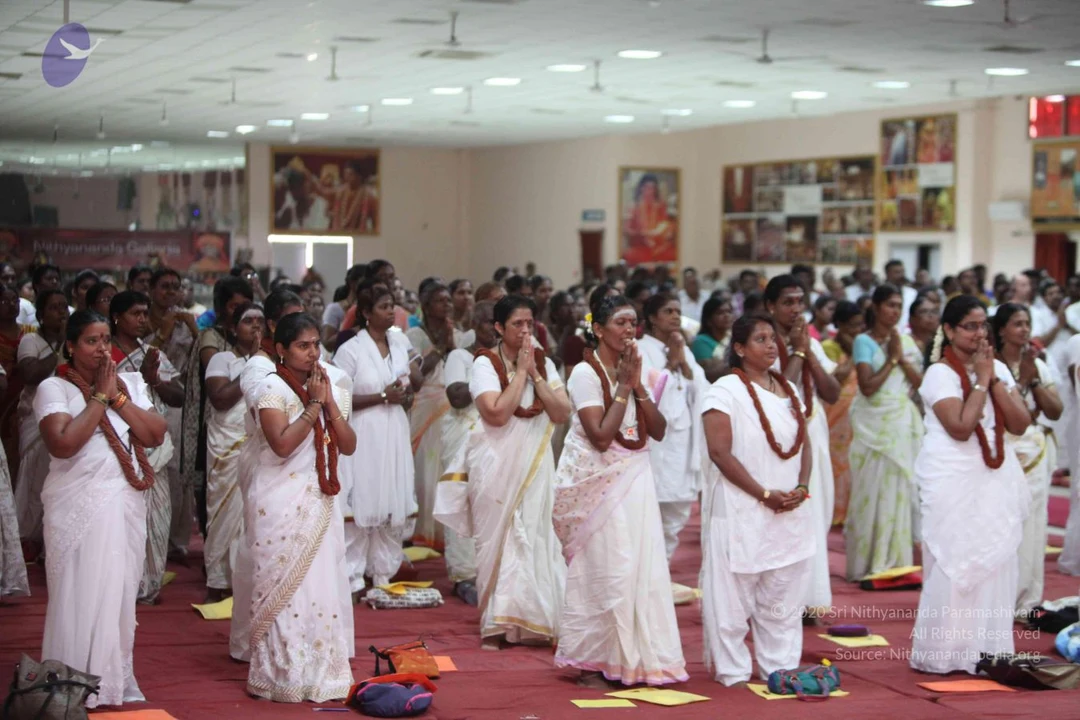
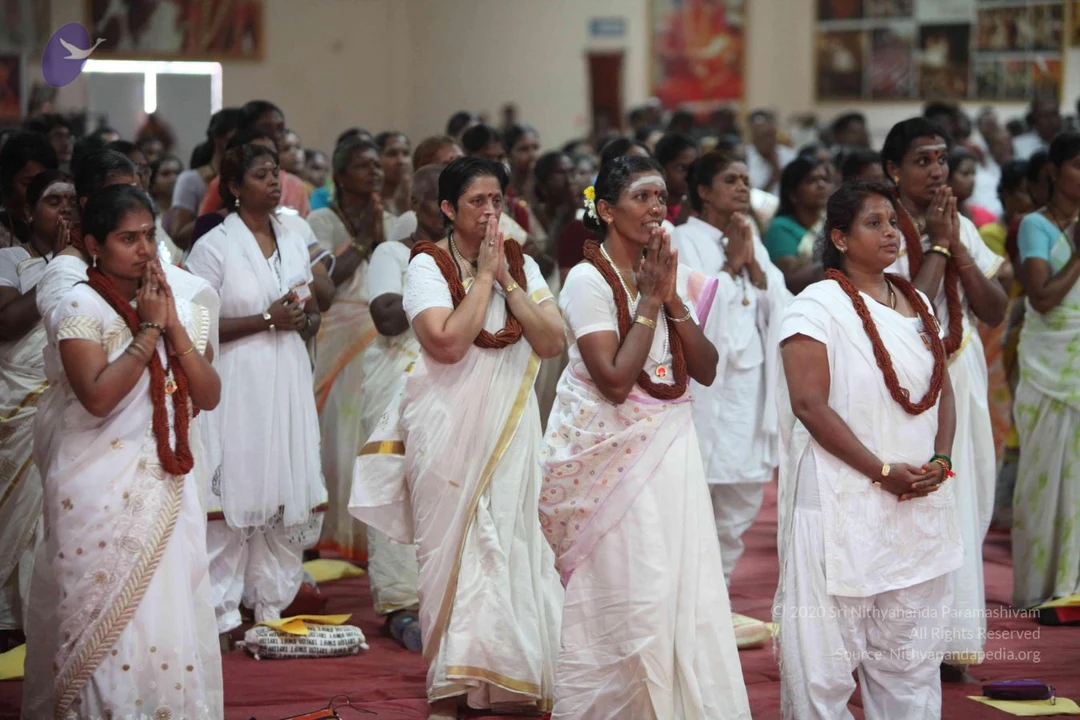
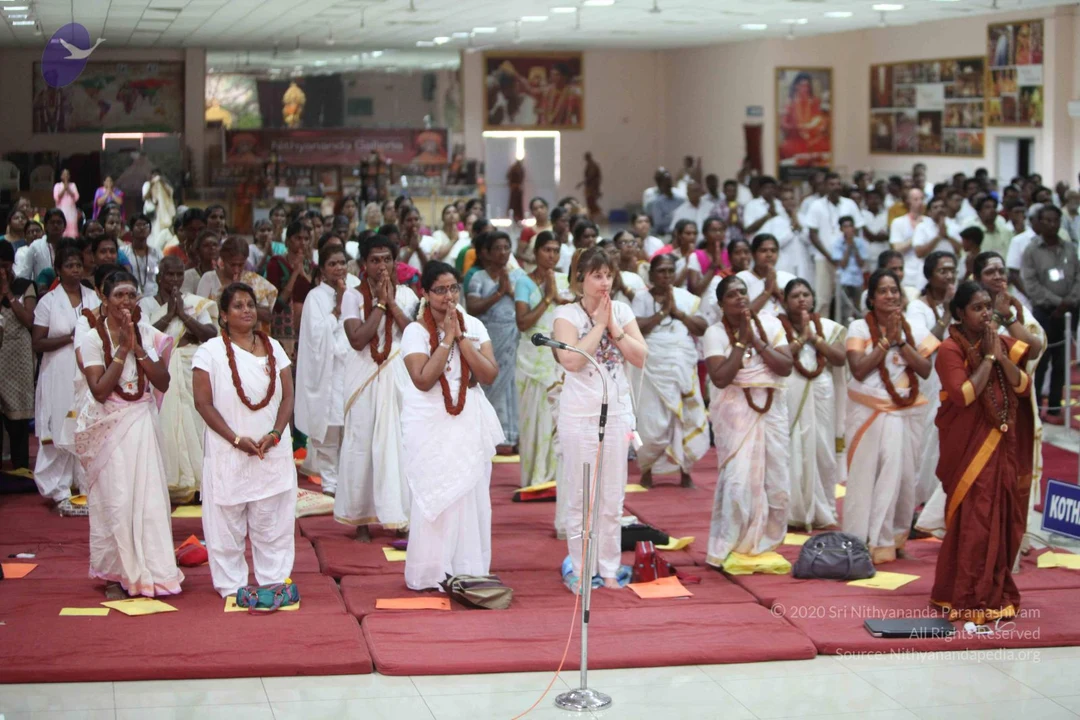
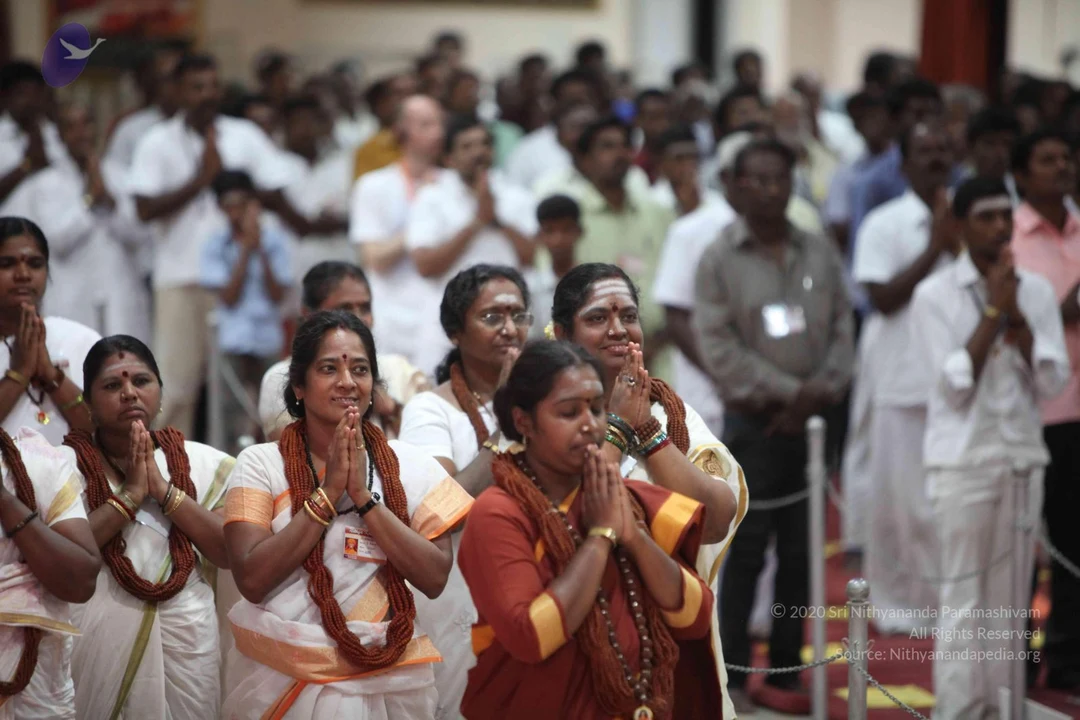
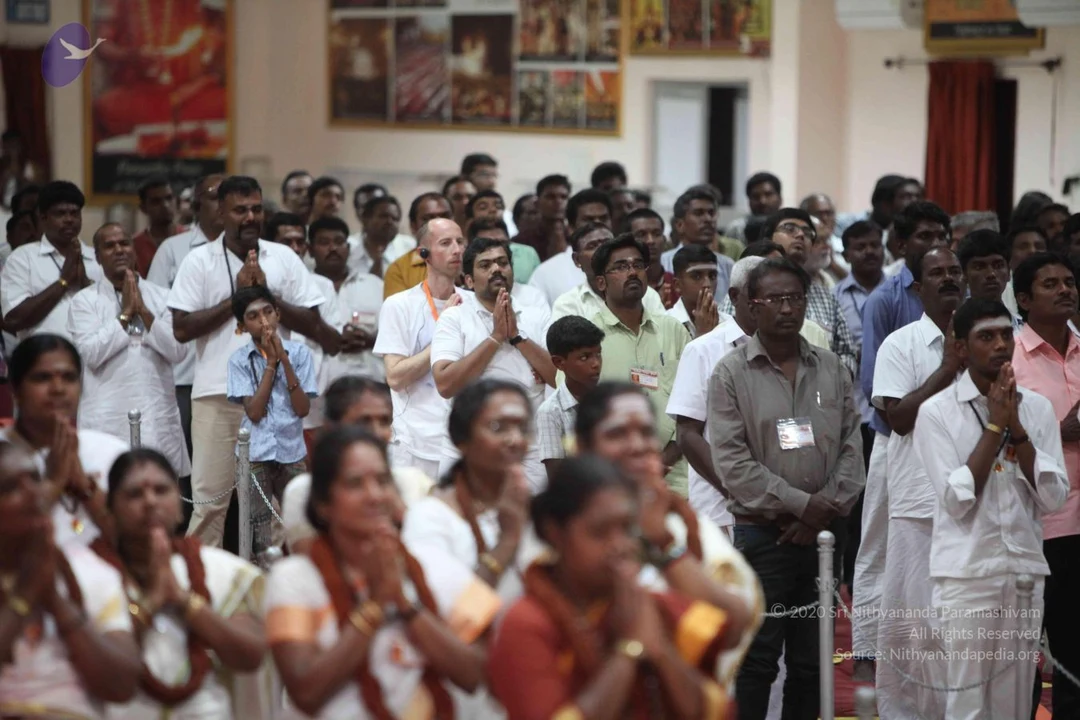
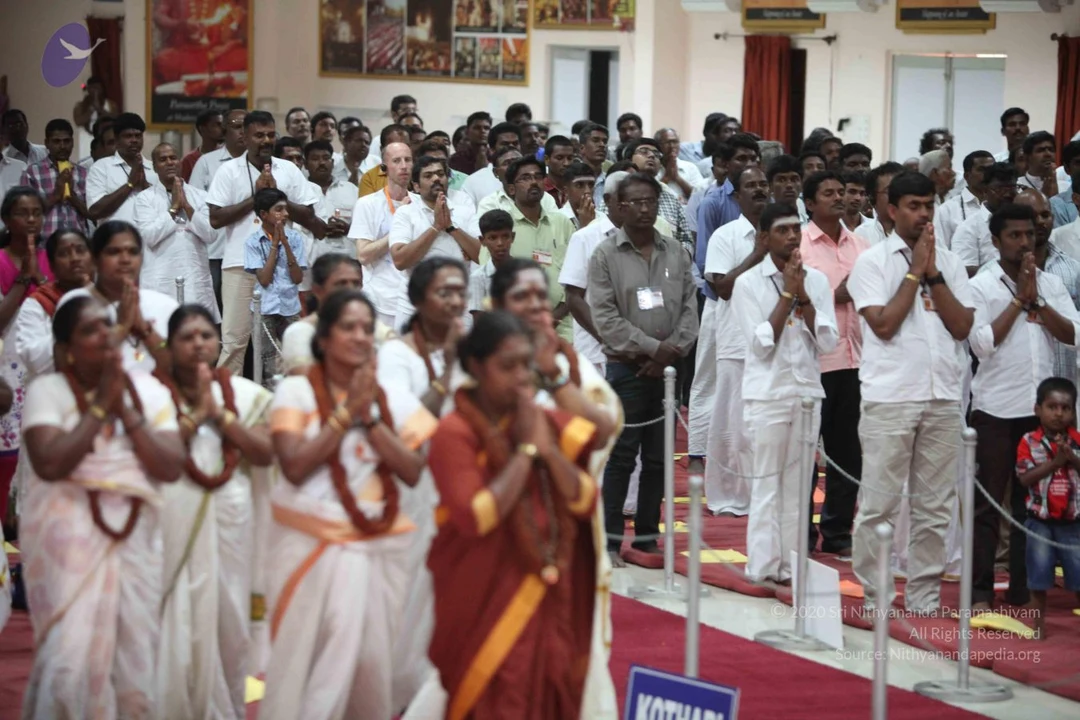
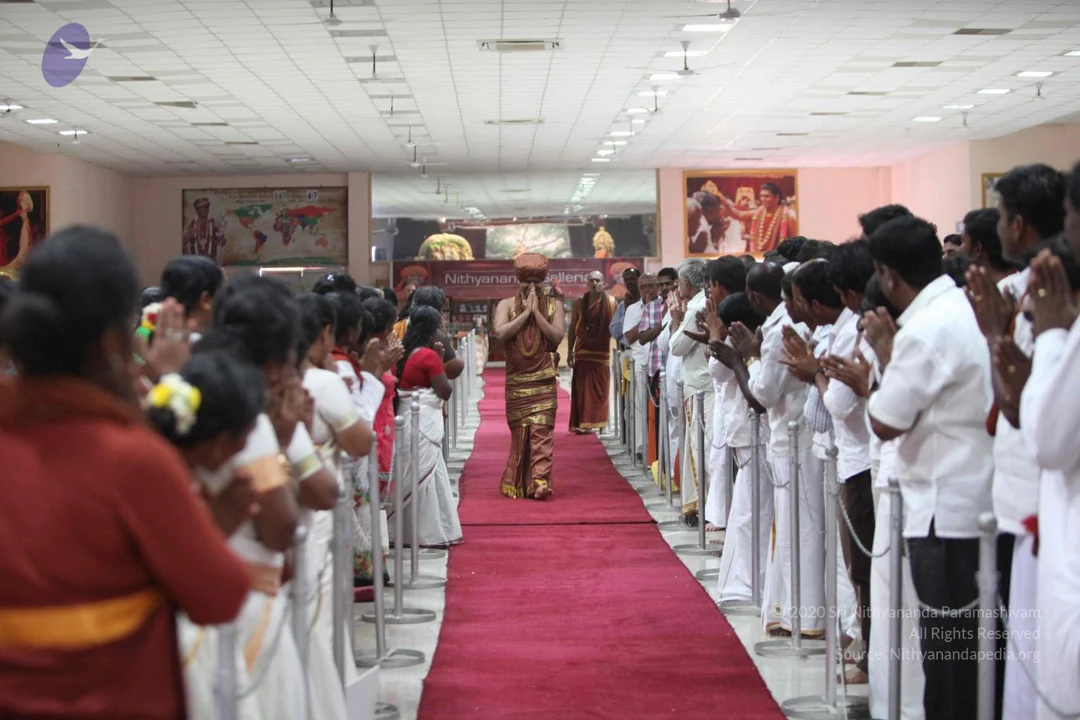
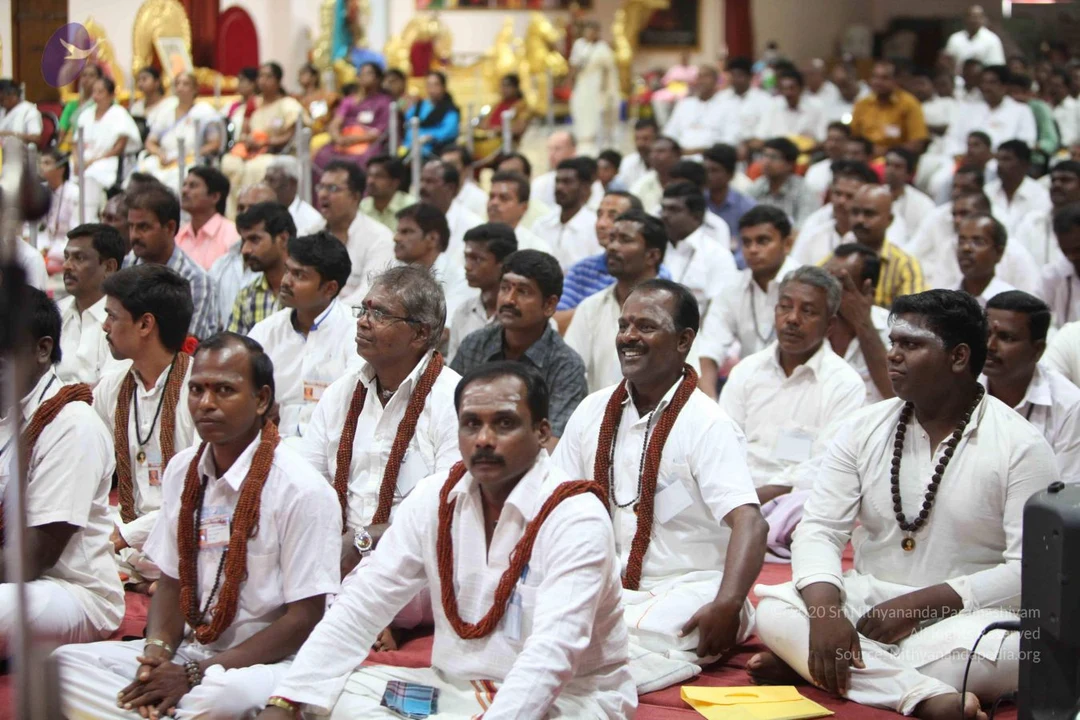
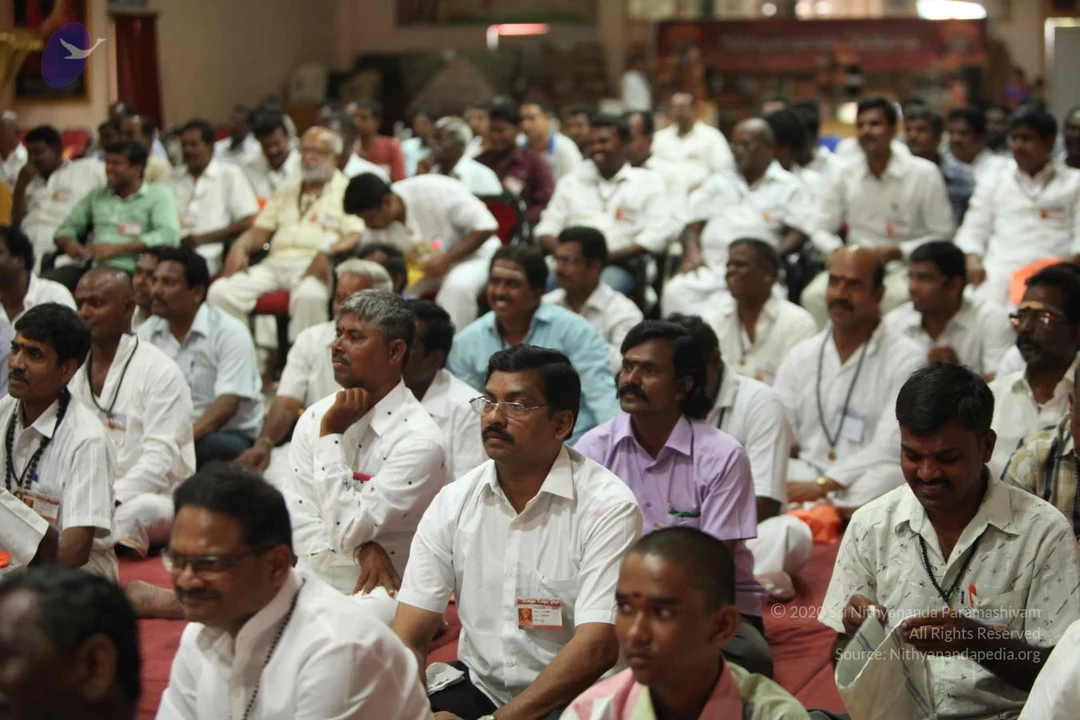
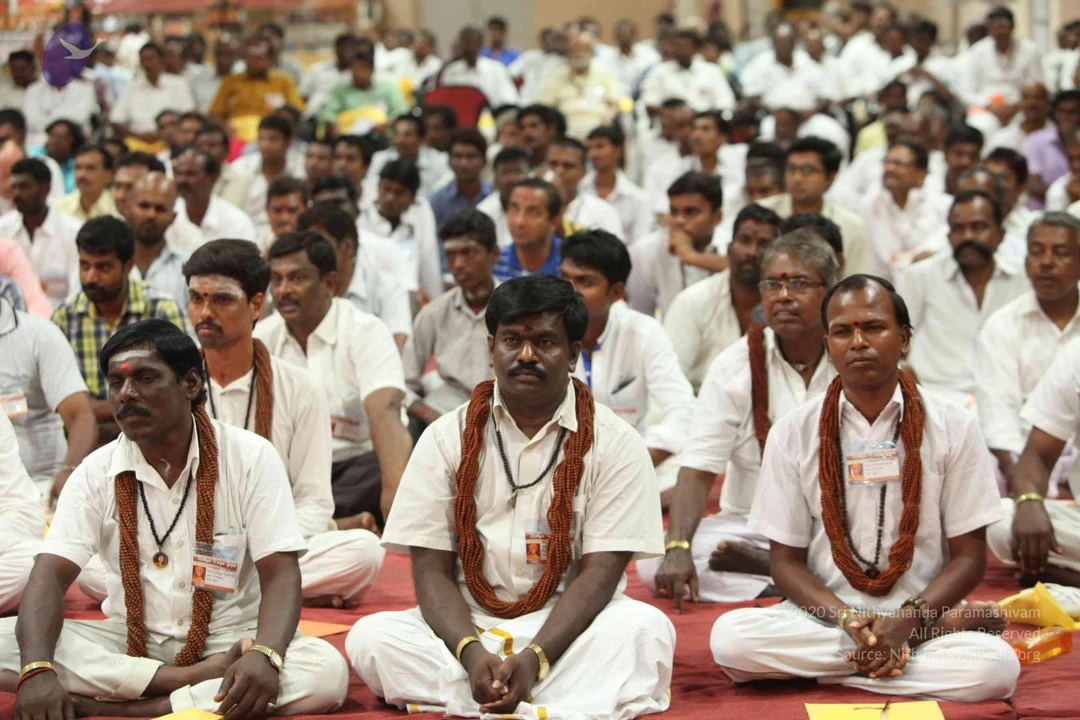
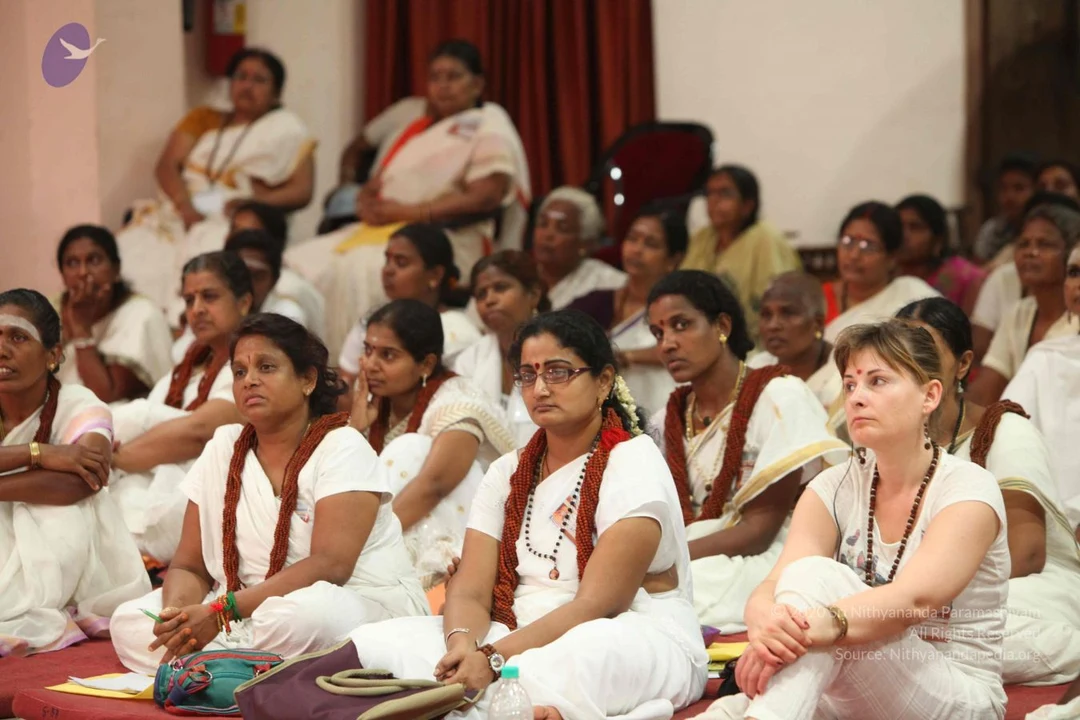
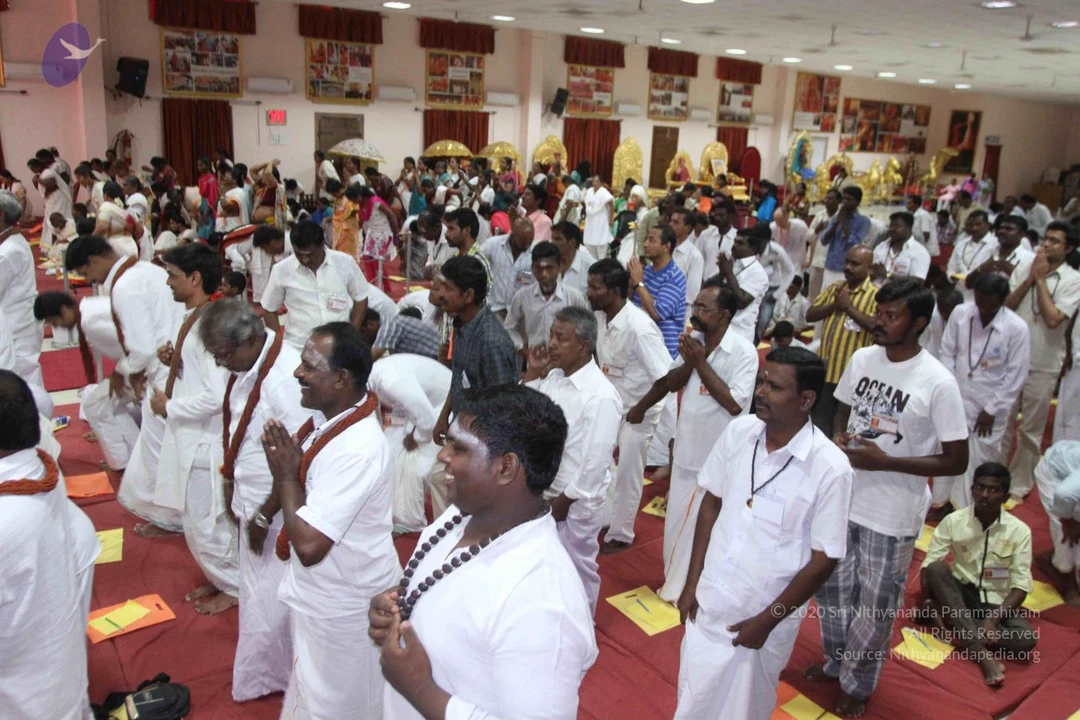
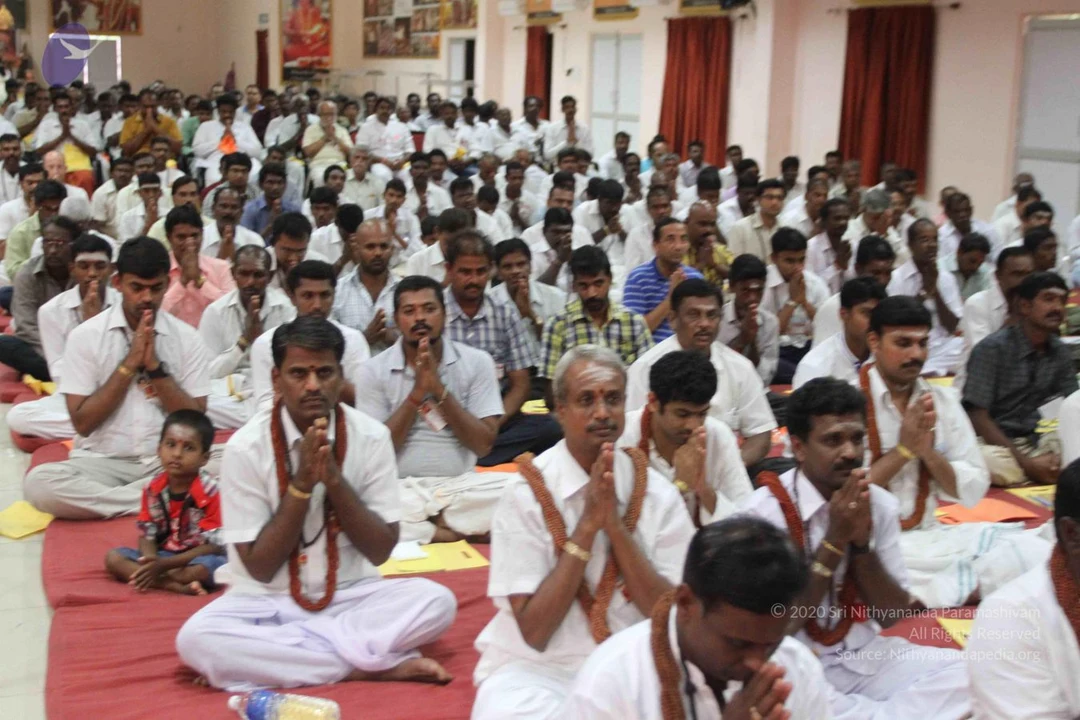
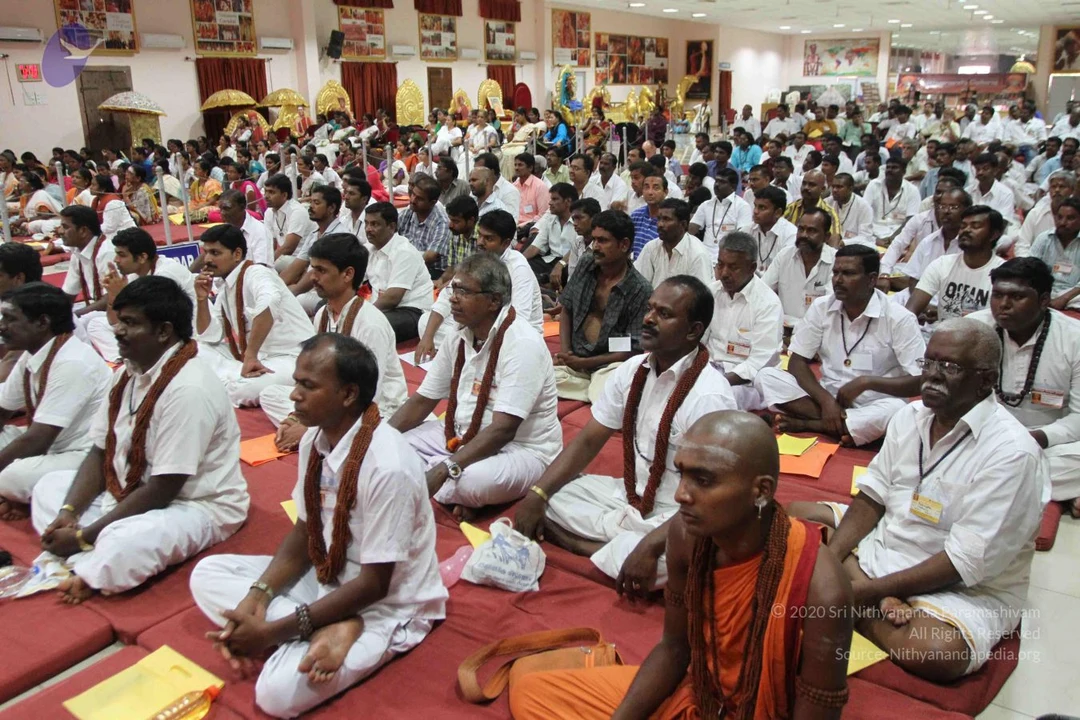
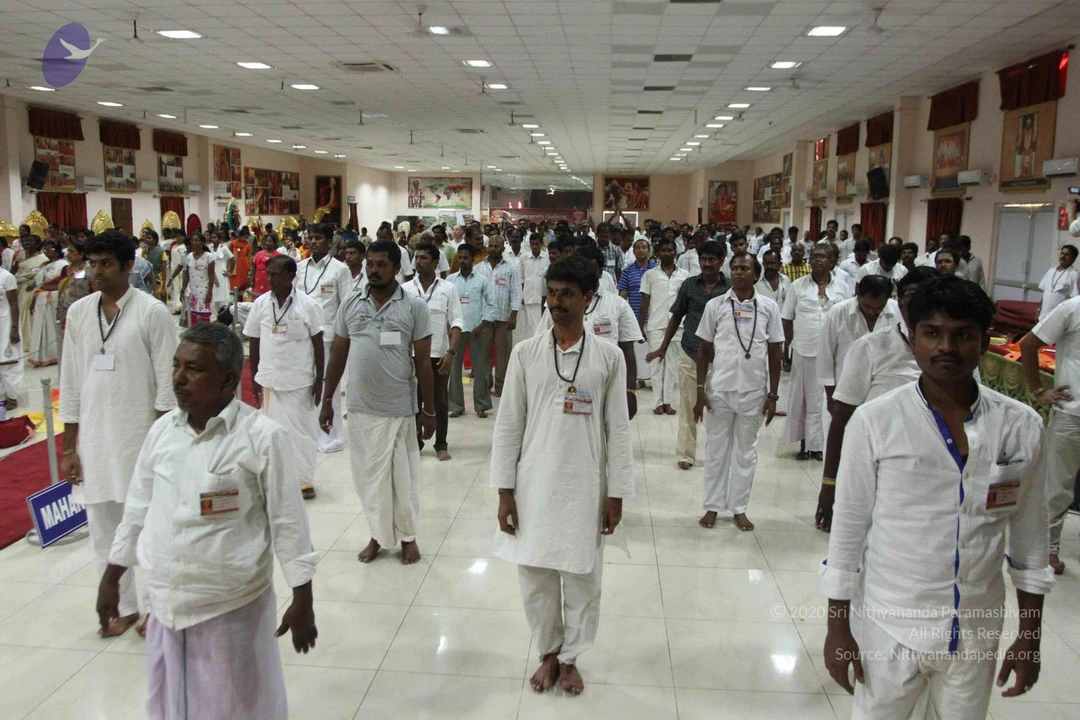
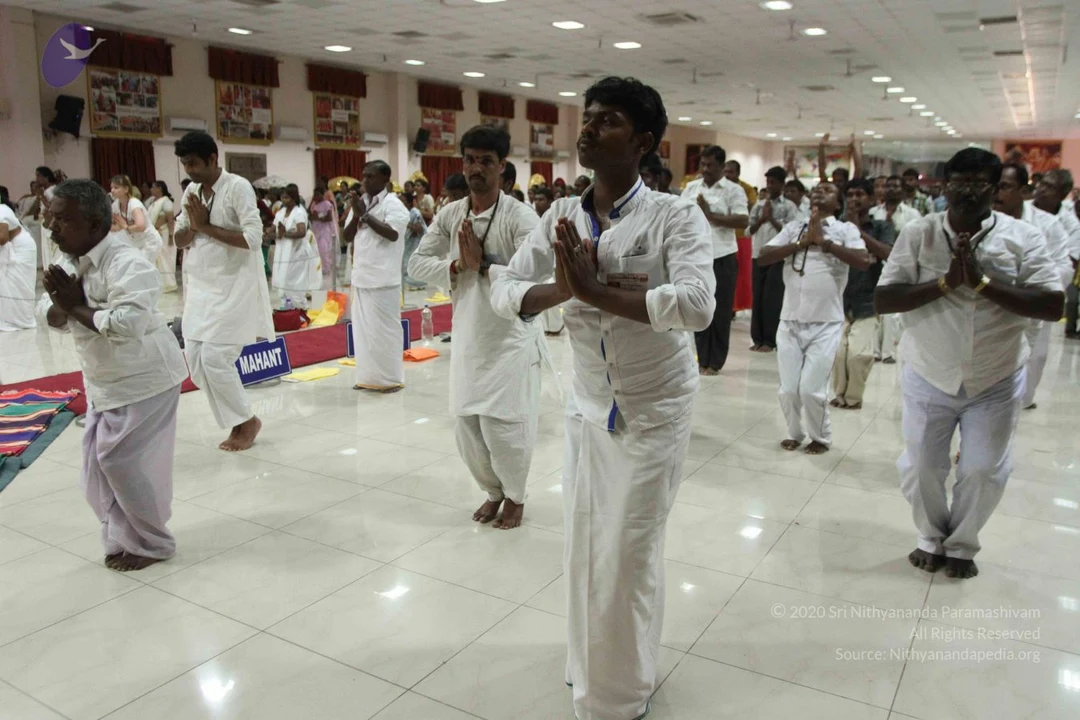
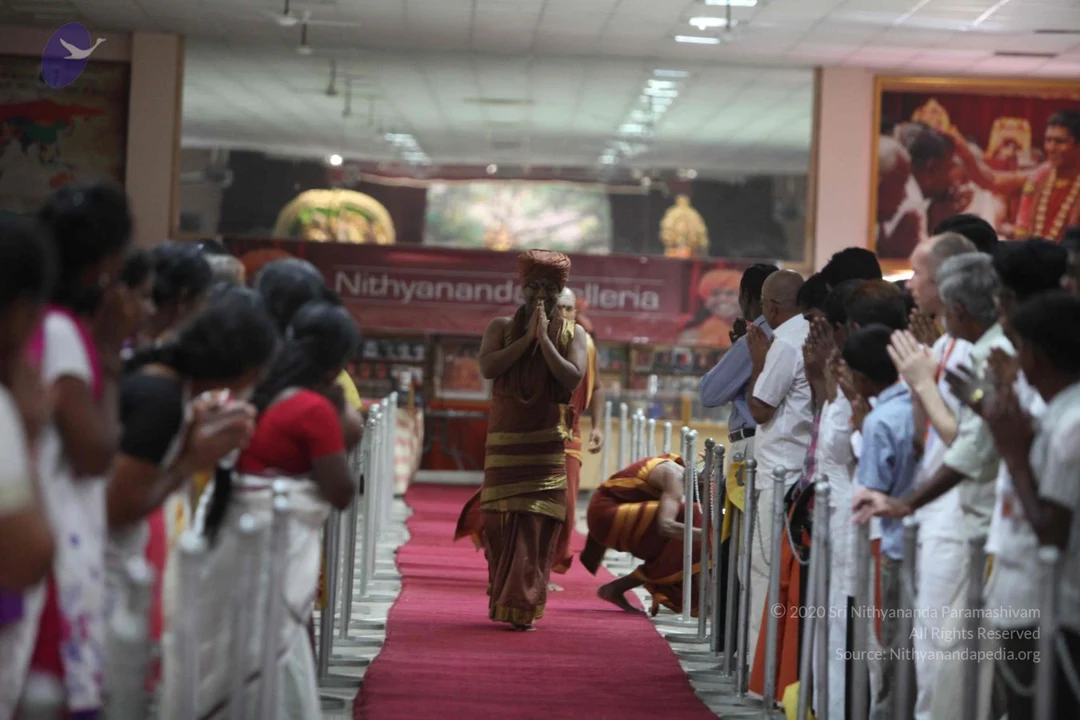
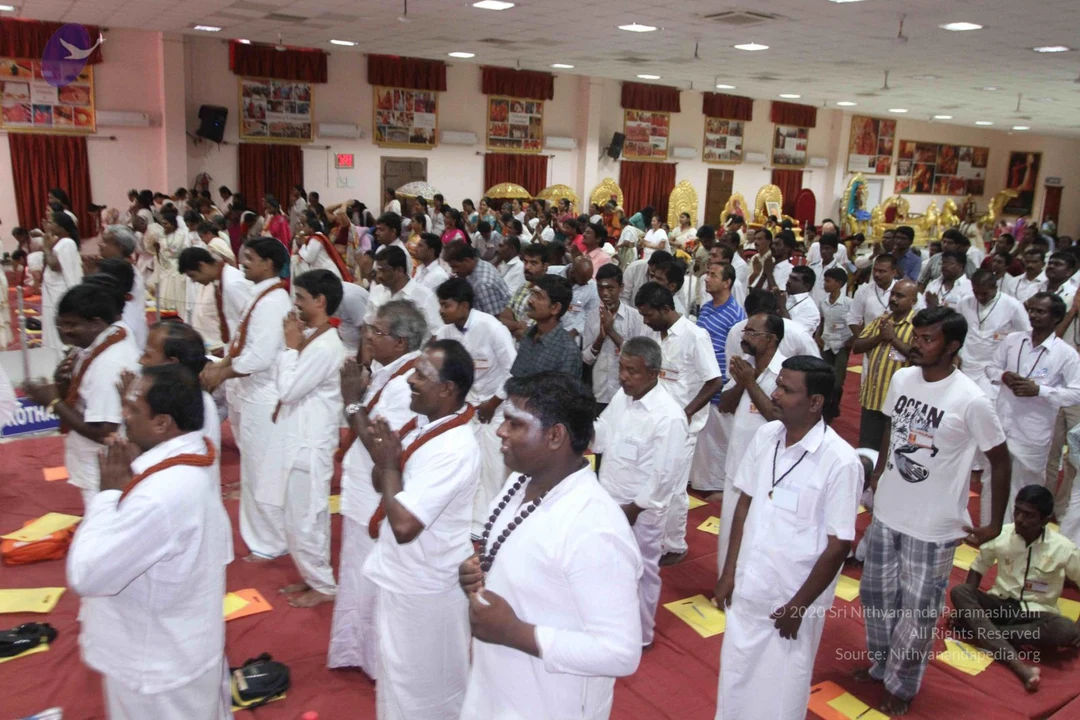
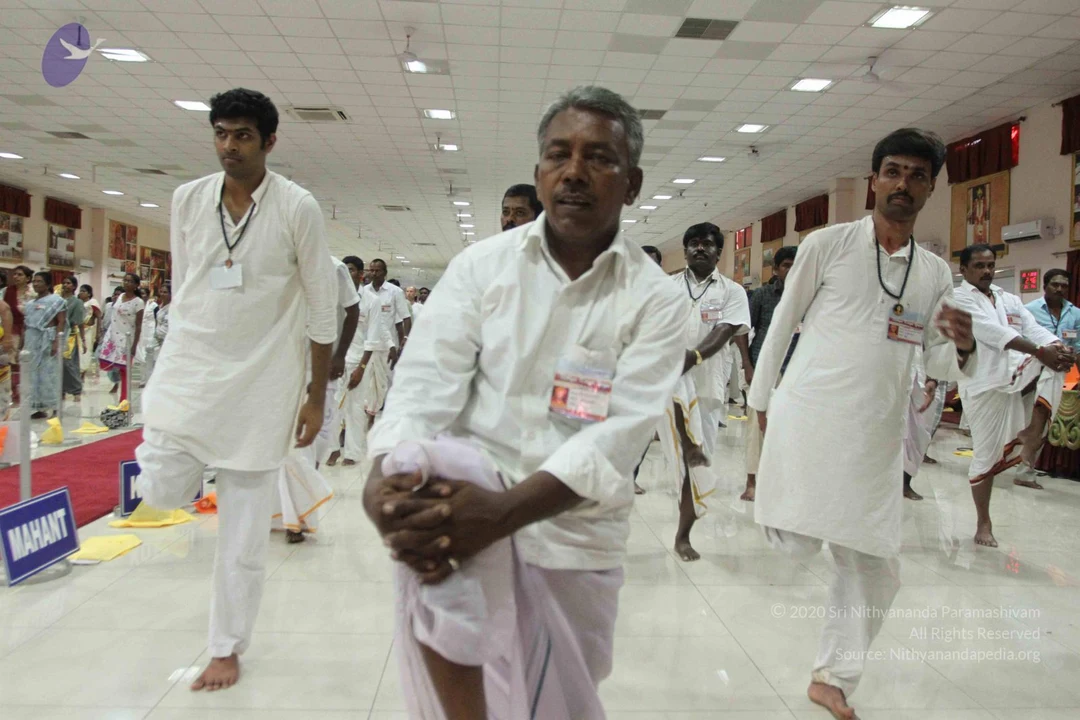
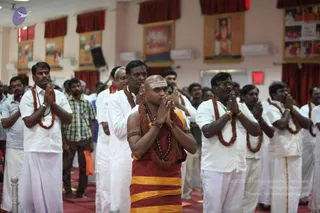
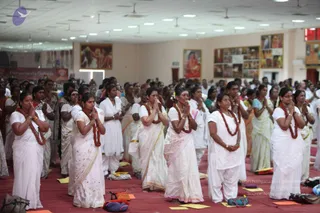
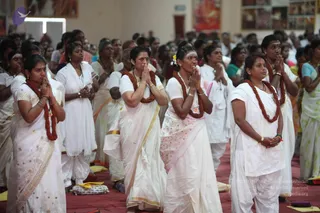
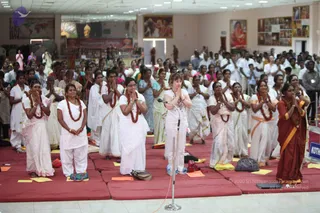
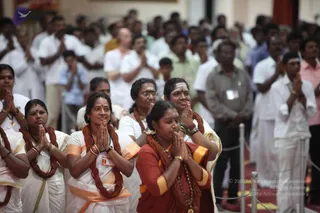
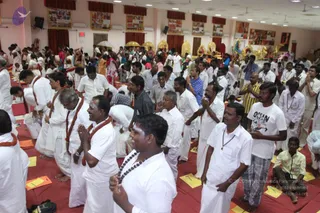
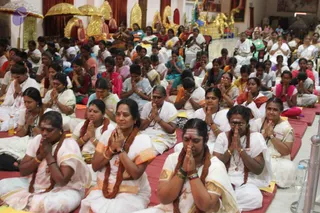
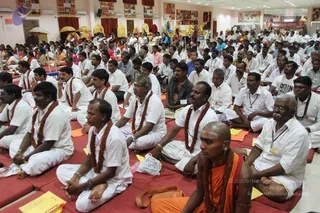
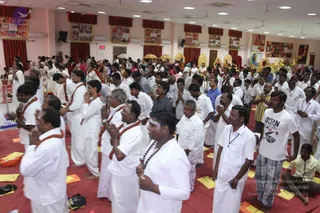
A photograph of a large indoor hall with pink walls, red curtains and framed portraits on the walls, where a crowd stands with palms pressed together in namaskar. In the centre foreground, a shaved-headed man wears a white tripundra mark on his forehead, a rudraksha mala and beaded necklace, a saffron-and-maroon cloth wrapped around his waist with gold borders, and a bracelet on his upper arm. Around him stand men in white dhotis and shirts wearing red and orange flower garlands, and some hold orange cloth. Overhead, an air conditioner unit and a red exit sign are visible. Several people stand in the background, with a red carpet on the floor.A large hall filled with standing devotees in white clothing, many women in white saris and men in white kurta-pants, palms pressed together in namaskar. Several women wear red-orange beaded garlands, and some have vibhuti or kumkum marks on their foreheads. They stand on red carpet with yellow and orange mats and bags on the floor. On the back walls hang framed portraits and a grid of photographs, including a deity image in red and gold. No single clearly identifiable a person figure is visible among the people, and the image shows participants rather than the teacher.A large indoor satsang hall with a dark red carpet, where a crowd of devotees stands with palms pressed together in namaskar. Most women wear white sarees or white kurta-and-pant sets, several with gold borders, and many wear dark red-brown rudraksha-style malas around their necks. Some have white vibhuti or tilak marks on their foreheads. Others in the back wear white and cream clothing. Yellow cushions or mats lie on the floor in front of the rows, and framed artwork hangs on the wall behind them.A large hall of seated devotees with palms pressed together in anjali mudra, many in white saris and white kurtas, some wearing red and orange garlands. A woman in a white top and white trousers stands at a microphone stand in the centre, also with hands joined. On the right, a woman in a maroon sari with orange border wears a rudraksha-style necklace. Red mats cover the floor with yellow and orange cushions, and framed deity and devotional pictures hang on the back walls. A sign reads Nithyananda Dhyanapeetam in the background. The scene suggests a satsang or meditation gathering, with a crowd of many attendees.A photograph of a large satsang hall with a crowd of devotees standing with palms pressed together in anjali mudra. In the foreground, several women in white sarees with orange and gold borders wear rudraksha malas and gold bangles; one wears an orange-and-gold blouse and another has a red-brown top with a bindi and white tilak markings on the forehead. Behind them, men in white dhotis and shirts, some in light shirts, stand with hands folded. Red carpet runs along the floor behind a metal stanchion barrier and chain.A photograph of a large indoor hall packed with devotees standing with palms pressed together in anjali mudra, many in white traditional clothes. Men in white shirts and dhotis, women in white sarees with orange and maroon borders, and a few in colourful shirts stand in rows. Some wear badge lanyards. A man in the foreground wears a headset microphone and a white shirt with an orange lanyard. A young boy in a blue shirt stands among the adults. Framed devotional posters decorate the wall behind, and red curtains hang at the right. The gathering appears to be a satsang or darshan, with the speaker not visible in frame.
NKY-Day1-death-process

12 photosSource gallery
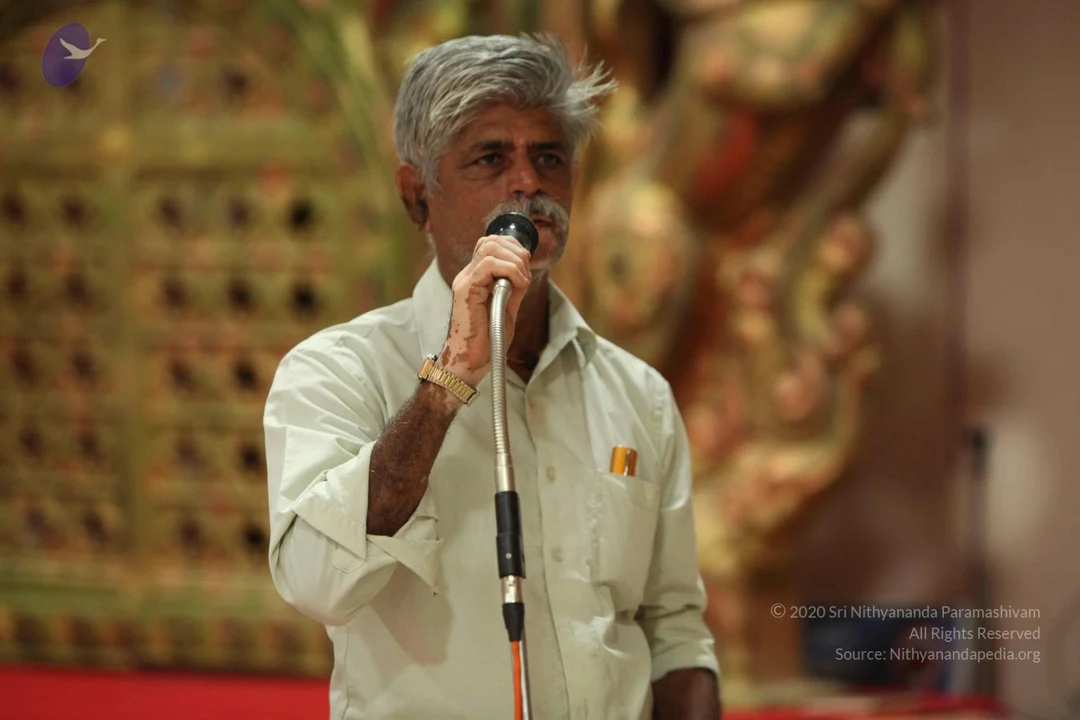
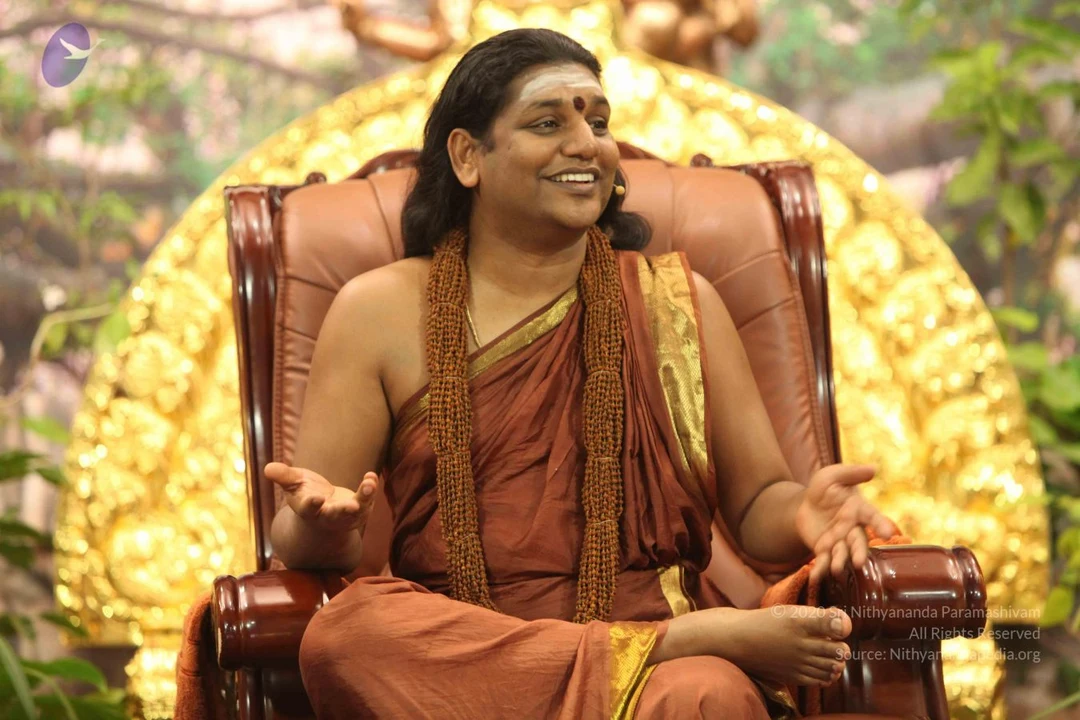
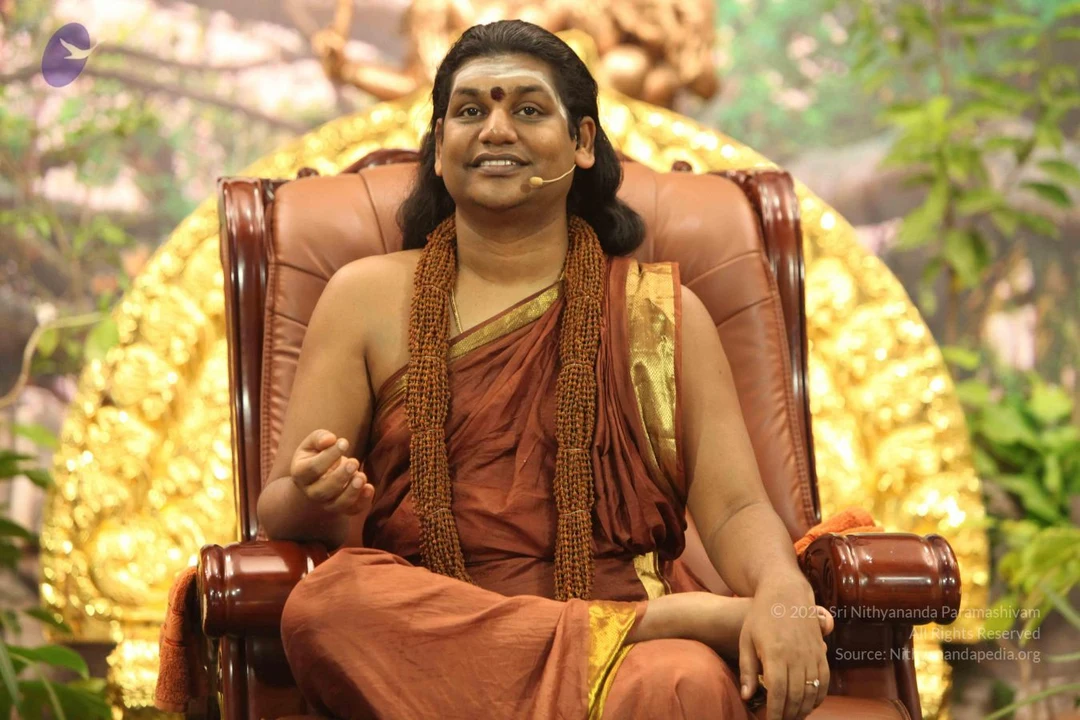
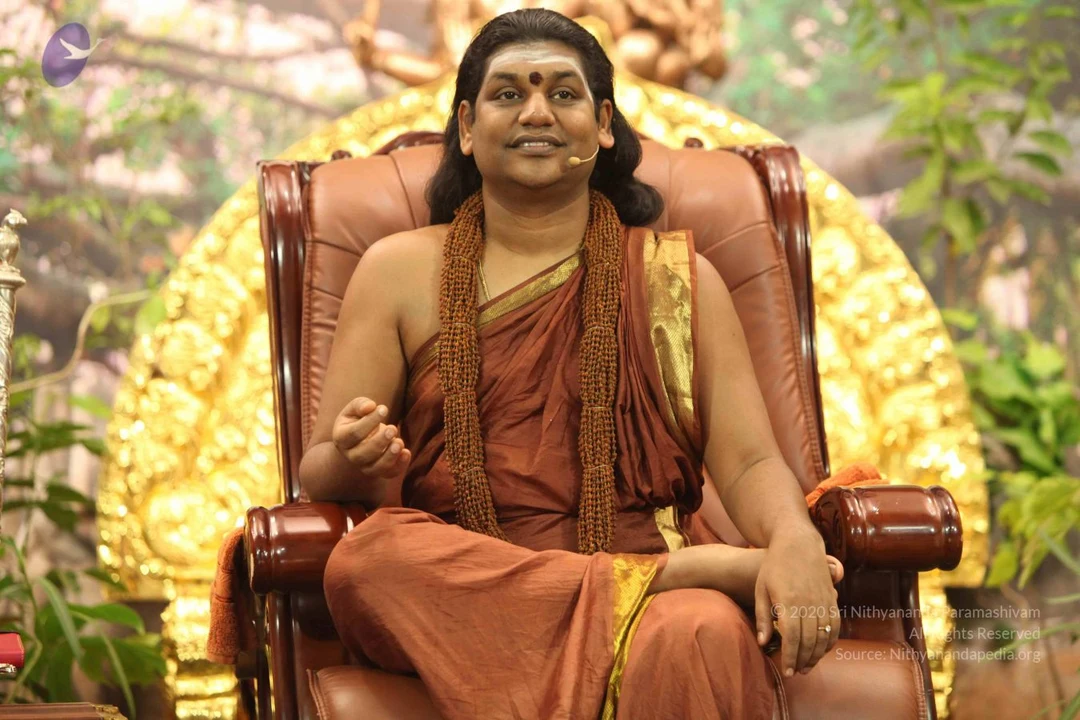
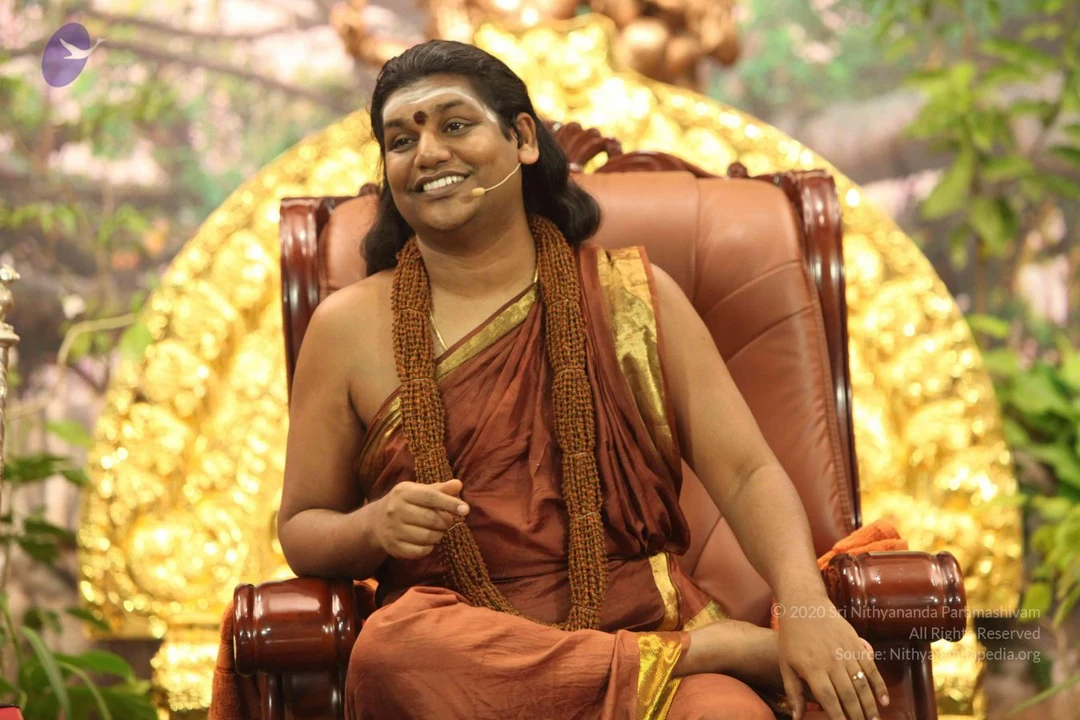
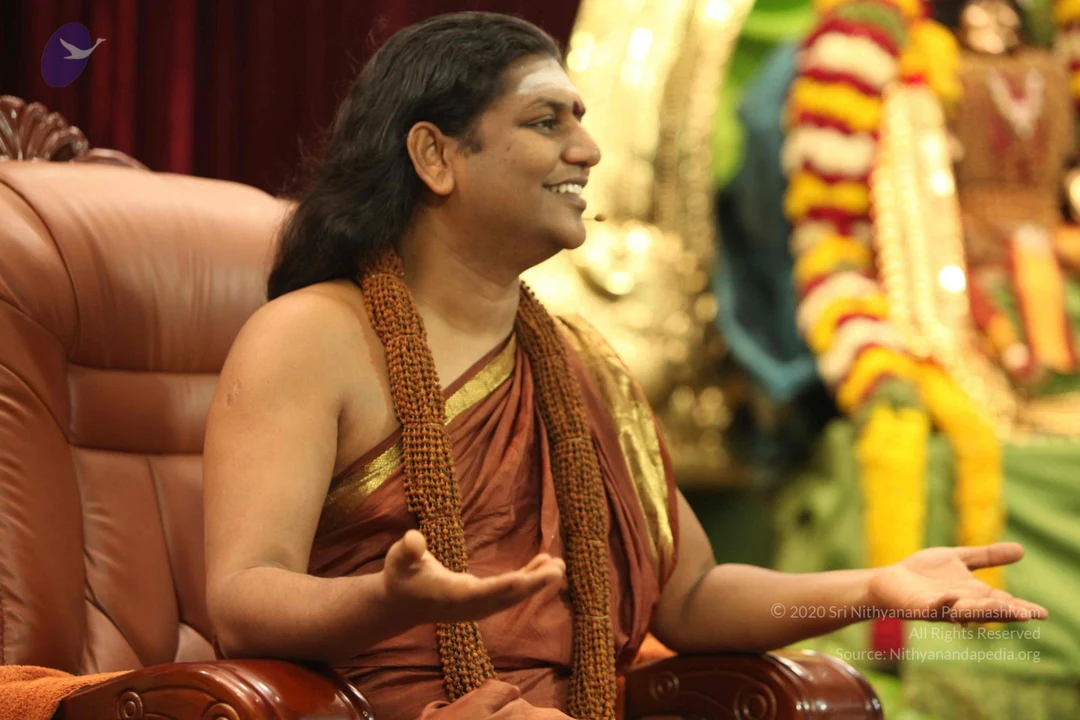
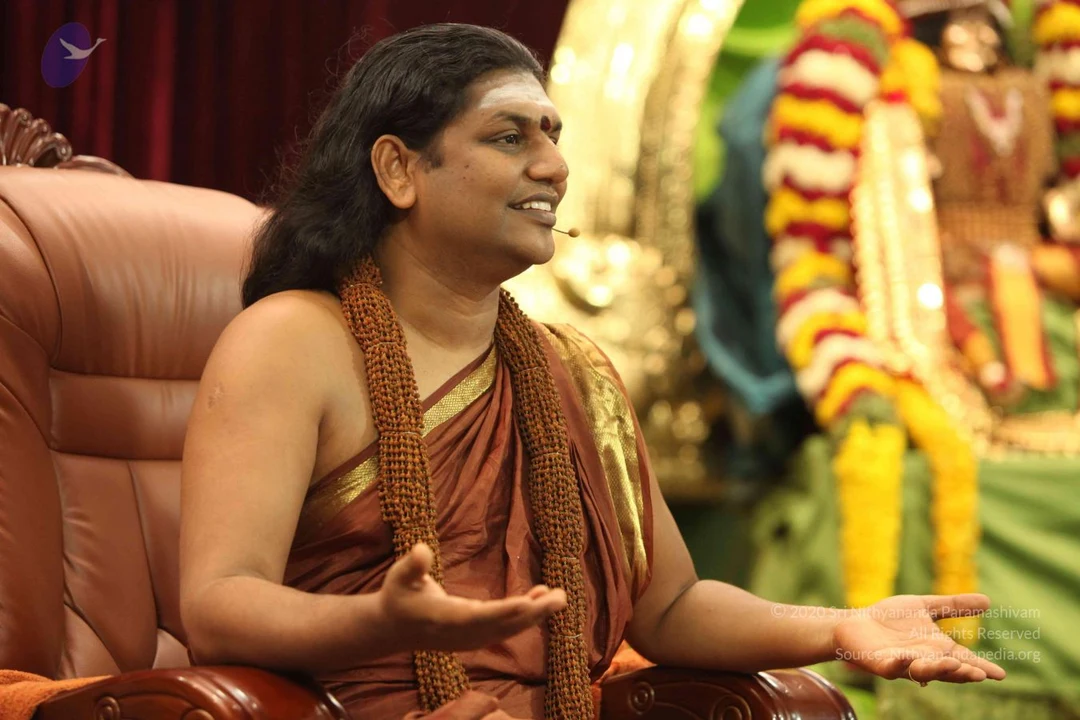
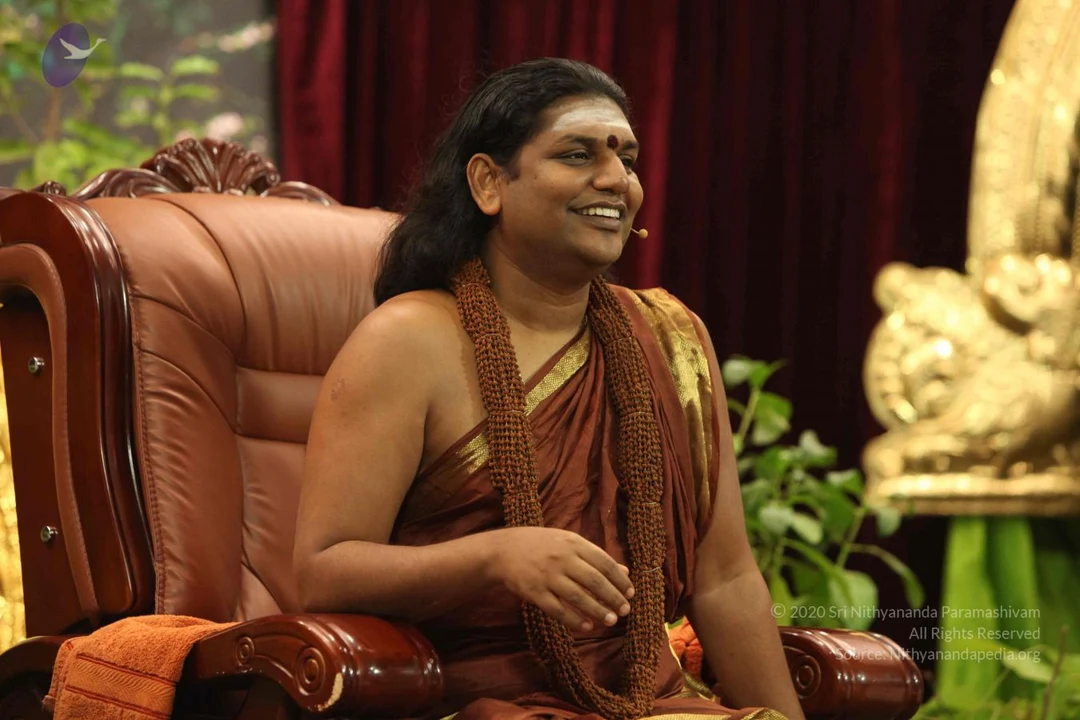
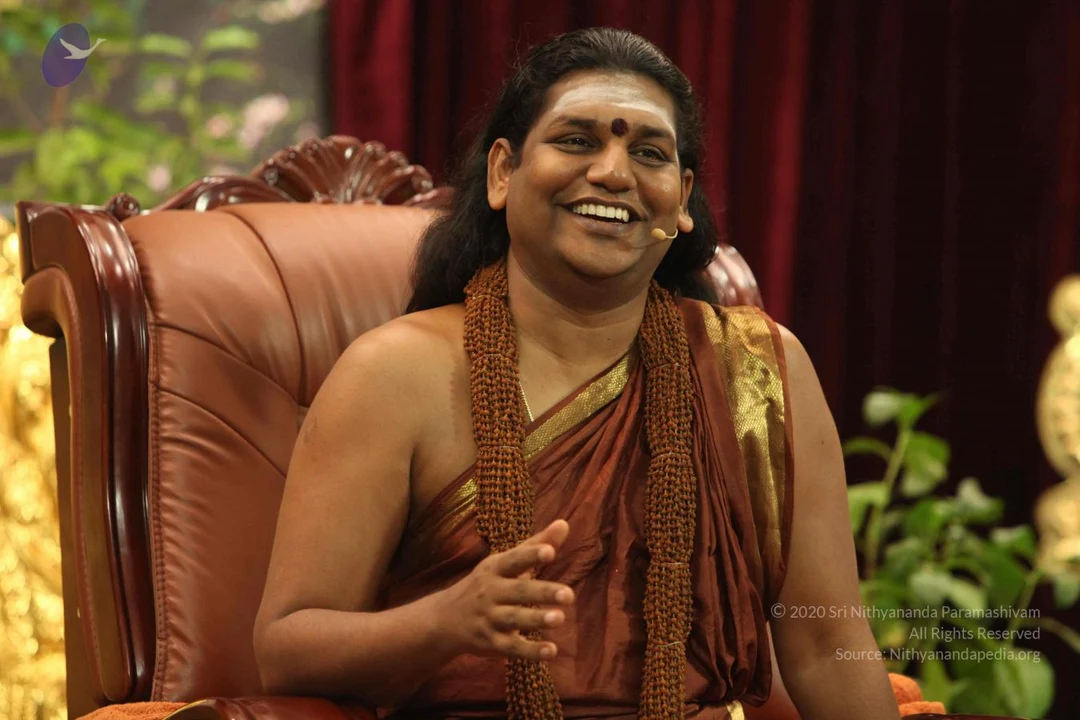
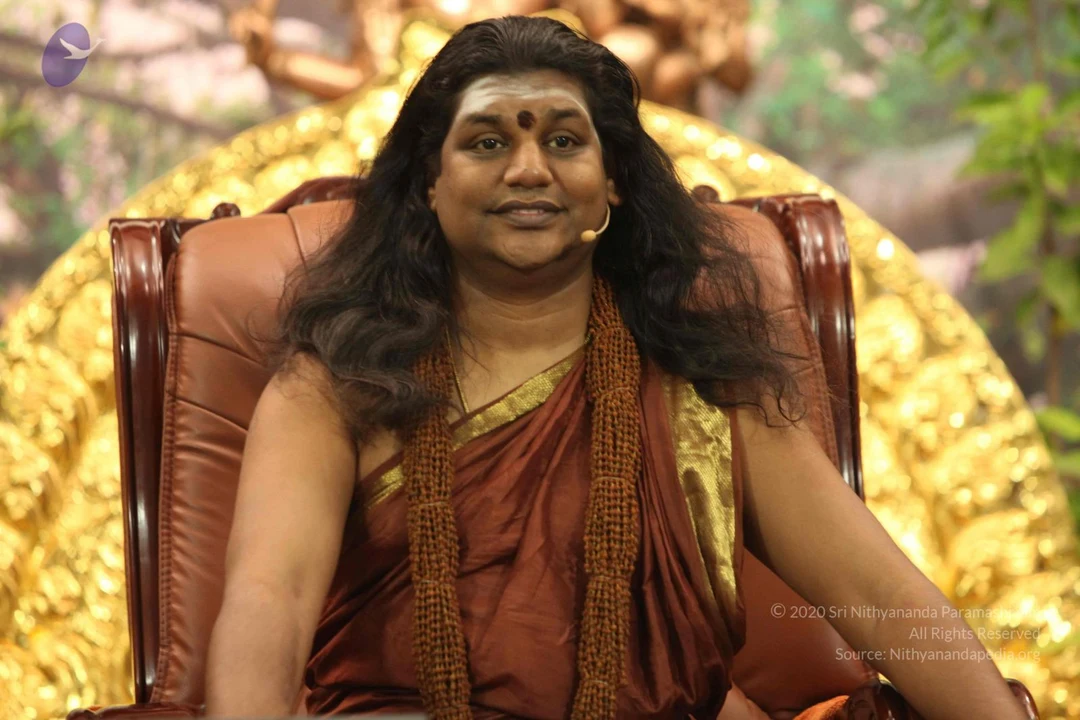
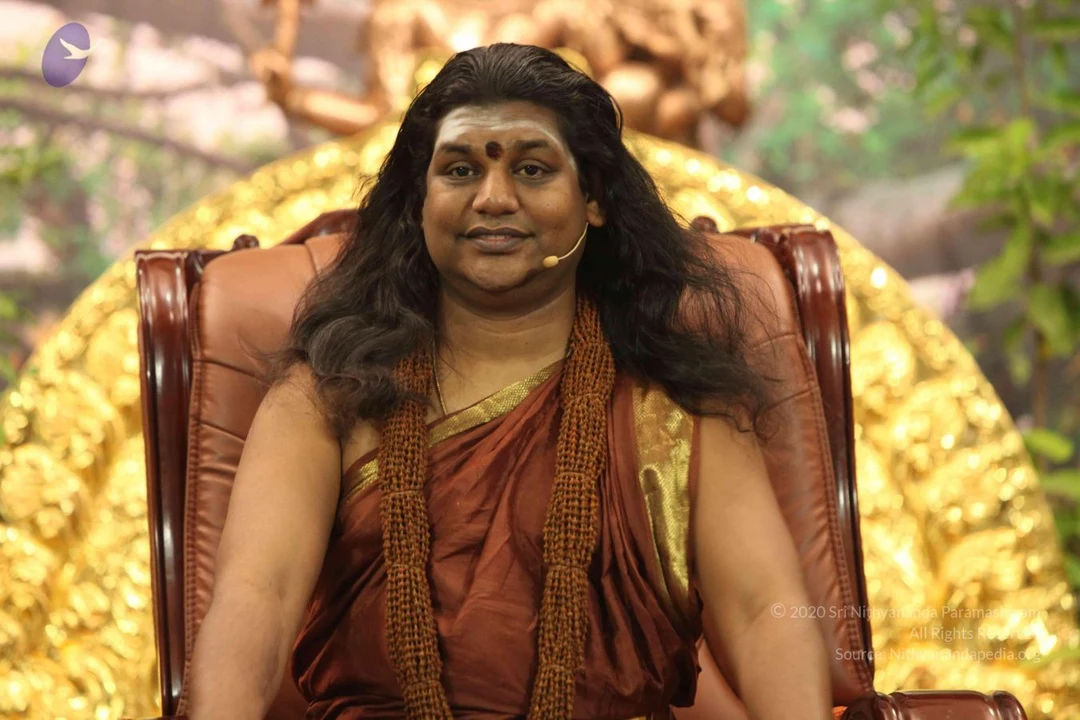
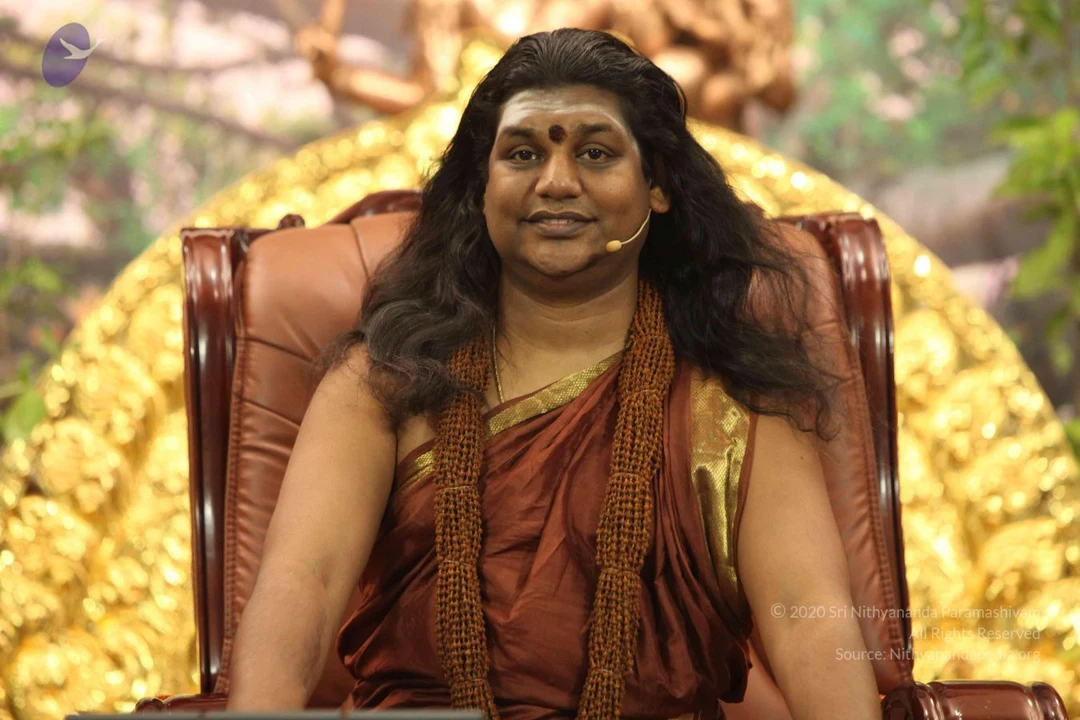
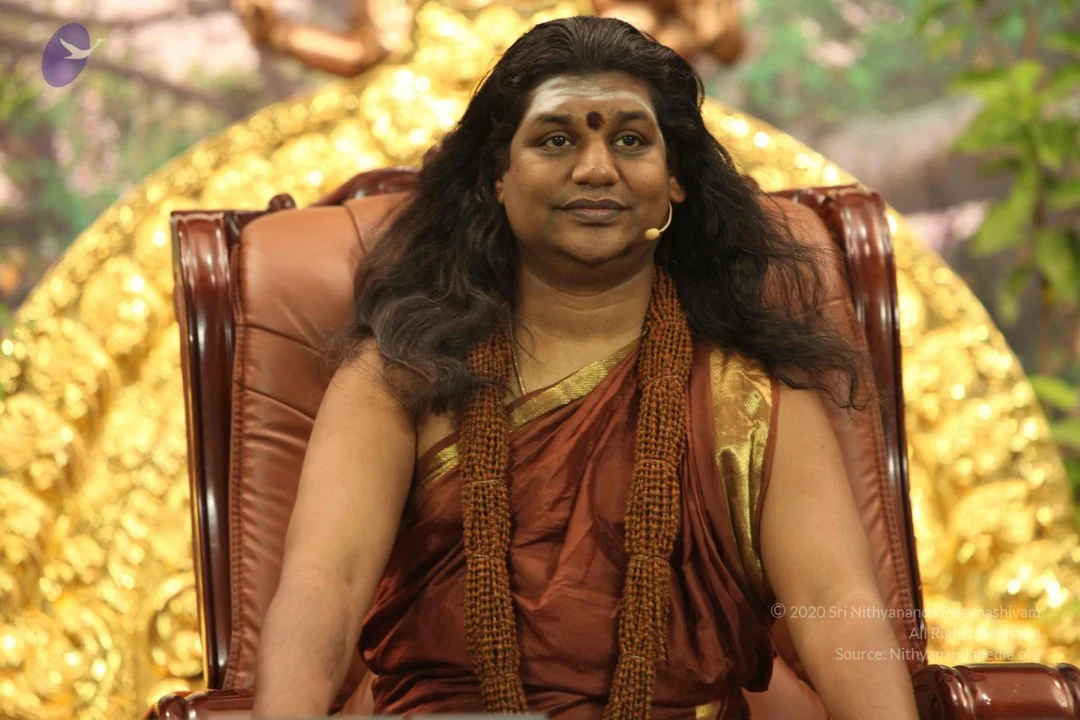
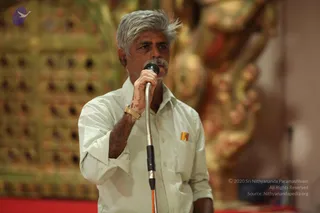
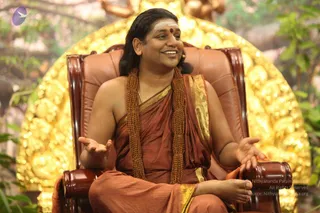
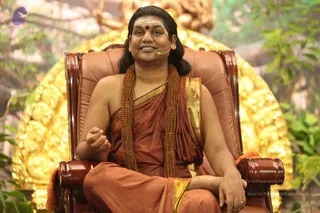
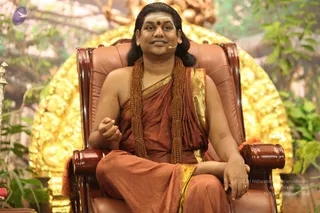
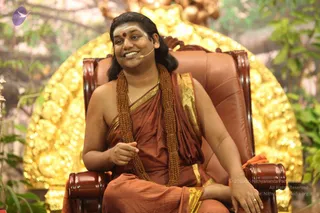
A man with swept-back grey hair and a grey moustache speaks into a black handheld microphone on a flexible silver stand. He wears a pale green collared shirt with a small orange pen in the breast pocket and a gold-toned wristwatch. Behind him is an ornate golden carved wooden screen with dark square perforations, and a red carpet is visible at the bottom edge. The scene suggests a satsang discourse, with no visible candidate for an appearance-based a person identification.A large seated audience of men fills a hall with red floor mats and yellow cushions, many dressed in white dhotis and shirts. Foreground men wear rudraksha mala garlands with reddish-brown beads and black cords; several have vibhuti or tilak marks on their foreheads and gold bangles. A man in front wears wire-rimmed glasses and sits cross-legged, and a small orange bag and a dark bag rest on the mats. Their gaze is directed forward toward an unseen speaker.A seated man in a leather-upholstered wooden armchair speaks while smiling and gesturing with both open hands. He wears a rust-orange draped garment with gold border, multiple long rudraksha mala strands hanging over his chest, and a white and red forehead mark. Behind him a large gold-leaf ornamental backdrop is set among green foliage. Probable Swamiji by appearance: long swept-back hair, rudraksha malas and ornate clothing, in the role of a seated speaker giving a discourse. Only one physical person is visible.A man with long dark hair sits in a brown leather armchair in front of a large gold-coloured backdrop with leafy greenery, speaking into a small headset microphone. He wears a rust-orange and maroon wrap with gold borders, a thick rudraksha mala of brown beads around his neck, and a red bindi and white forehead marks. His right hand is raised in a gesture while he smiles. The scene resembles a satsang setting. Appearance-based label: Swamiji (probable), seated speaker with long hair, rudraksha mala and saffron-orange clothing.A seated man in a rust-brown and gold-bordered dhoti and shawl sits in a large brown leather throne-style armchair before a golden ornate backdrop with green foliage. He wears long rudraksha mala strands across his chest, a white forehead marking with a red dot, and a small lapel microphone, and gestures with his right hand while speaking. Swamiji (probable): long swept-back hair, rudraksha malas and saffron-toned clothing, seated as a teacher giving satsang on a golden-backed throne. The scene suggests a discourse setting.A smiling man with long dark hair and white ash markings on his forehead sits in a large brown leather armchair with carved wooden arms, speaking into a small headset microphone. He wears a rust-brown robe with gold-bordered edges draped over one shoulder and a long rudraksha mala hanging to his waist. Behind him stands a large golden carved backdrop, with green leaves at the left edge. Swamiji (probable): his long hair, rudraksha mala and saffron-toned ceremonial robe match the page's Swamiji claim, so he is recorded as in_person.
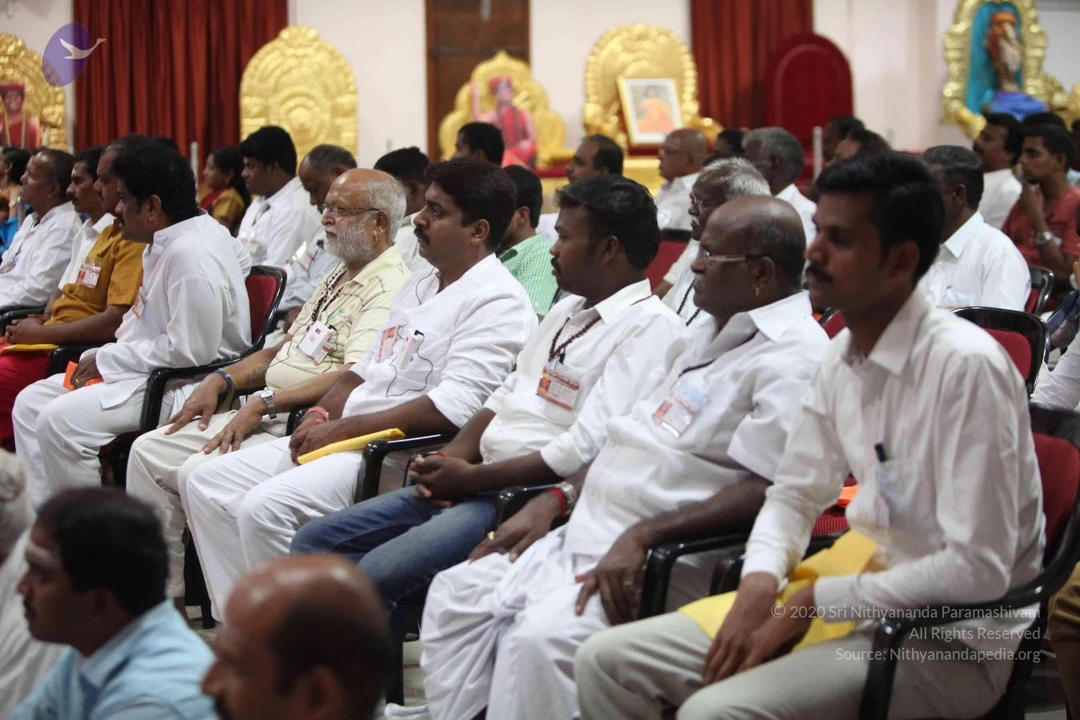
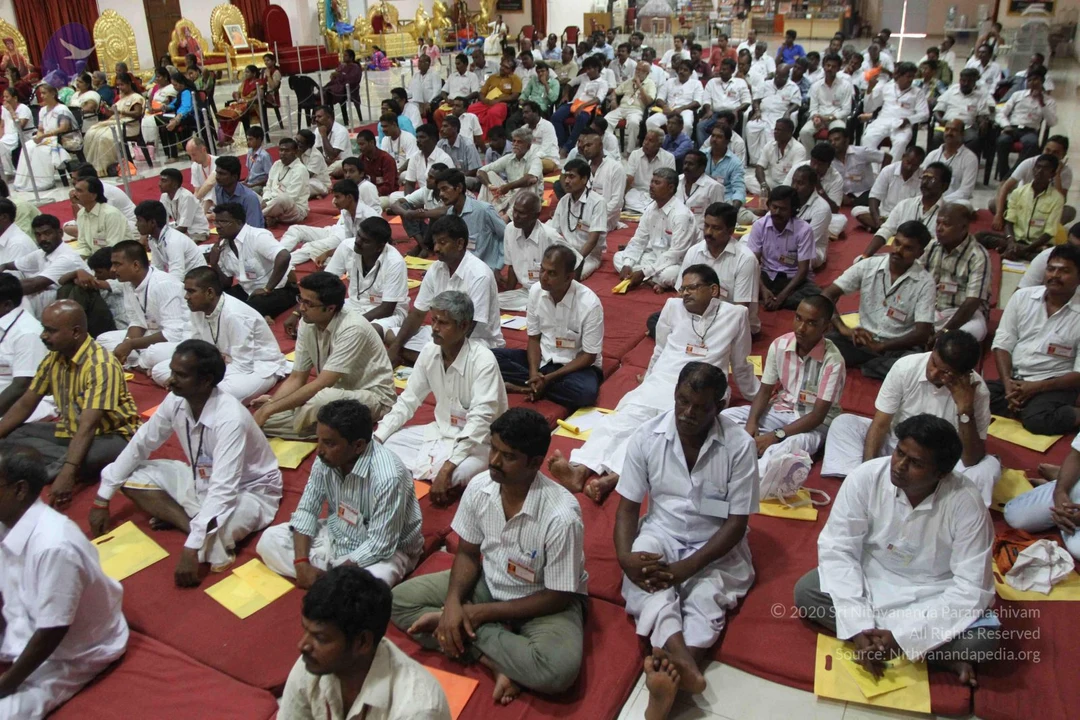
NKY-Day1-crowd-shoot

35 photosSource gallery
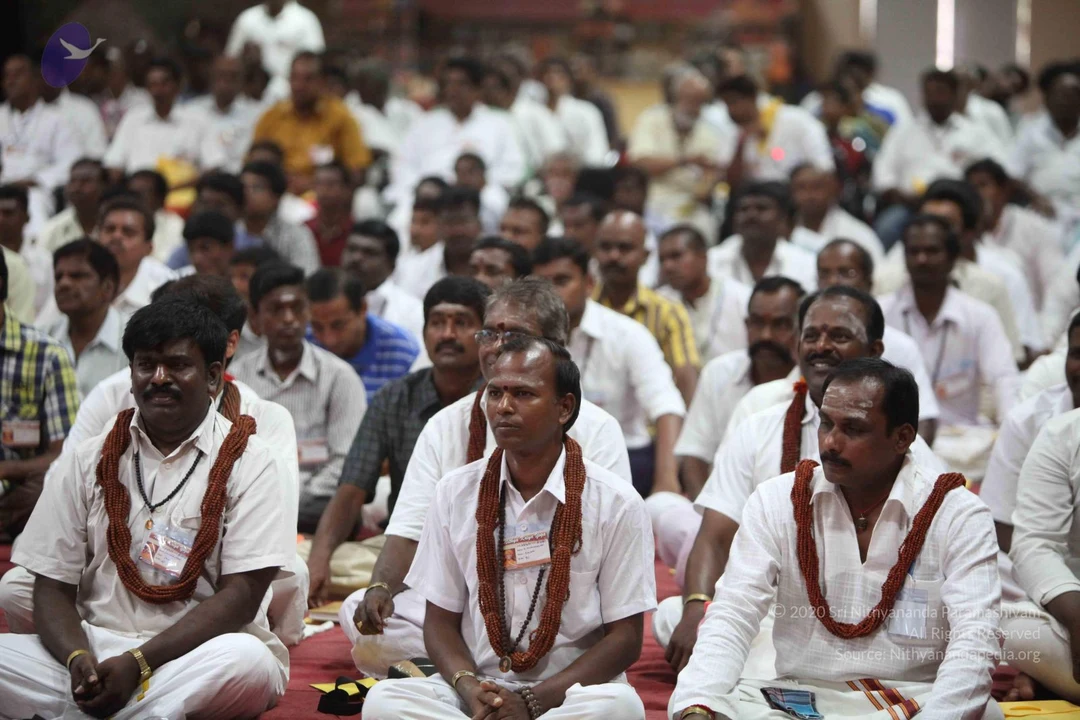
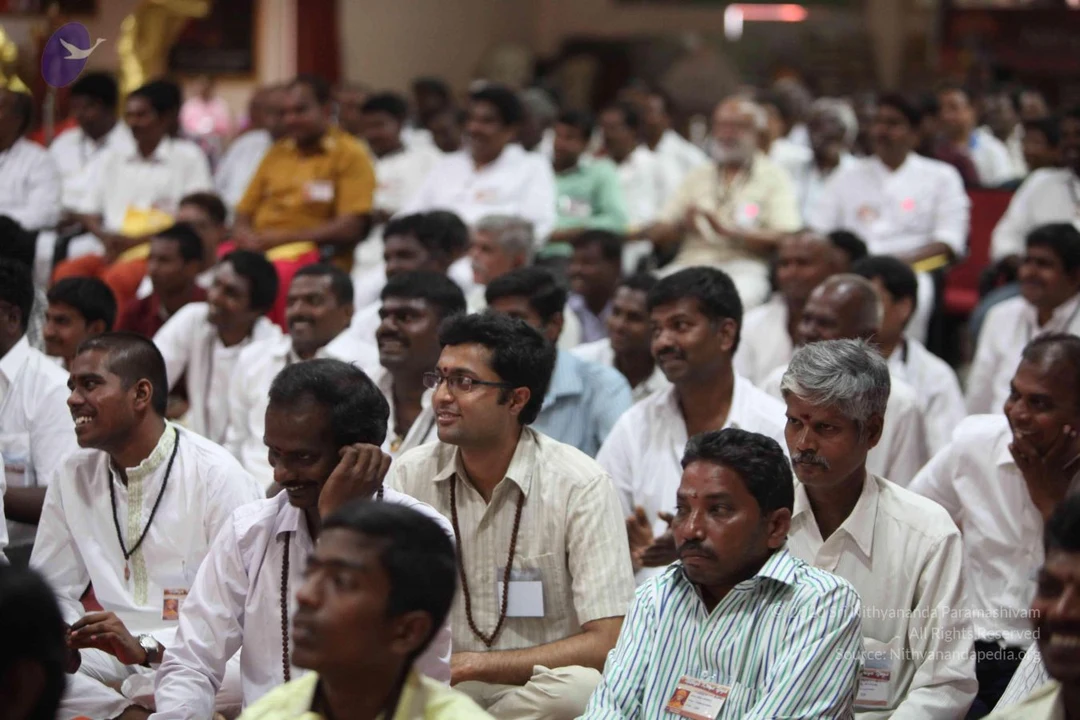
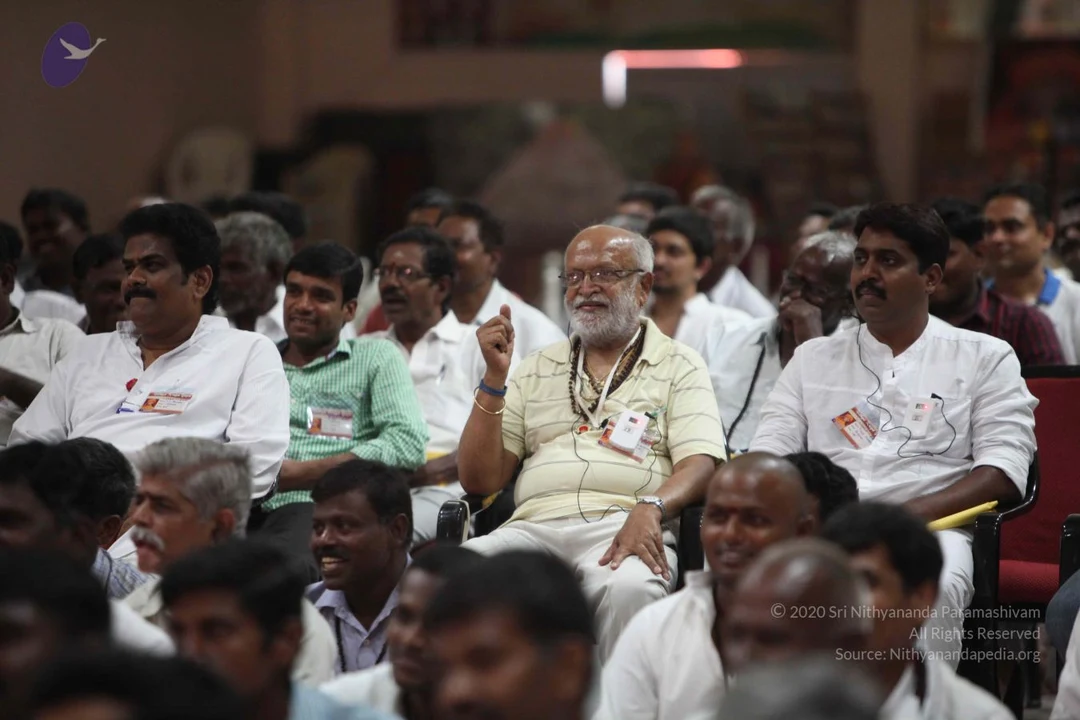
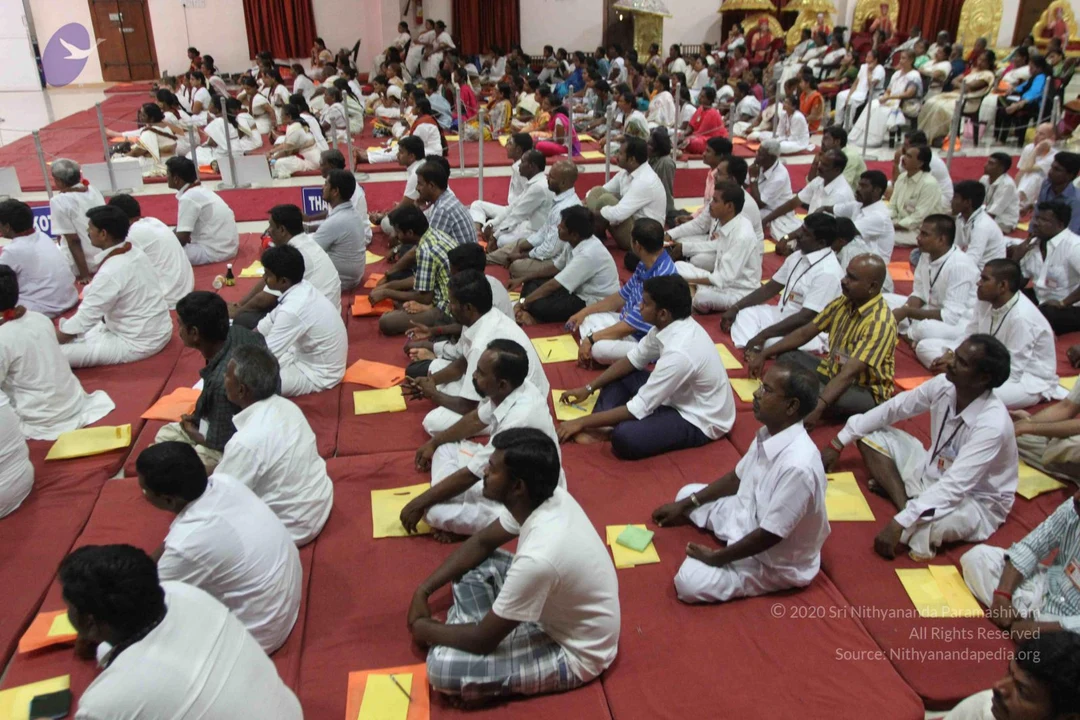
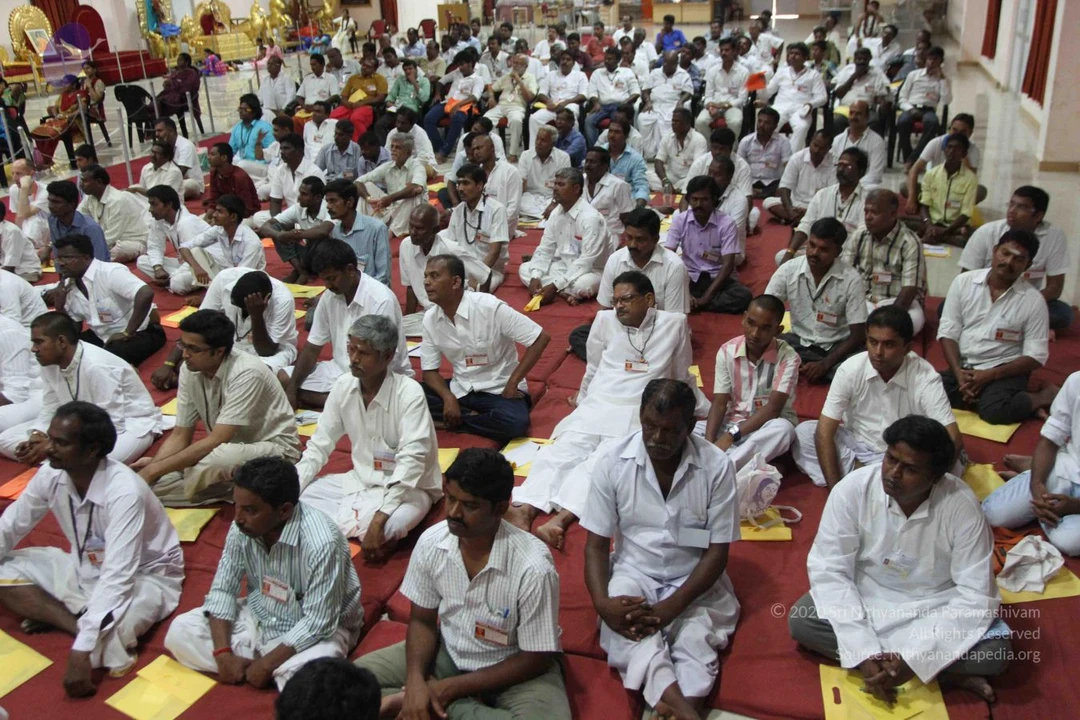
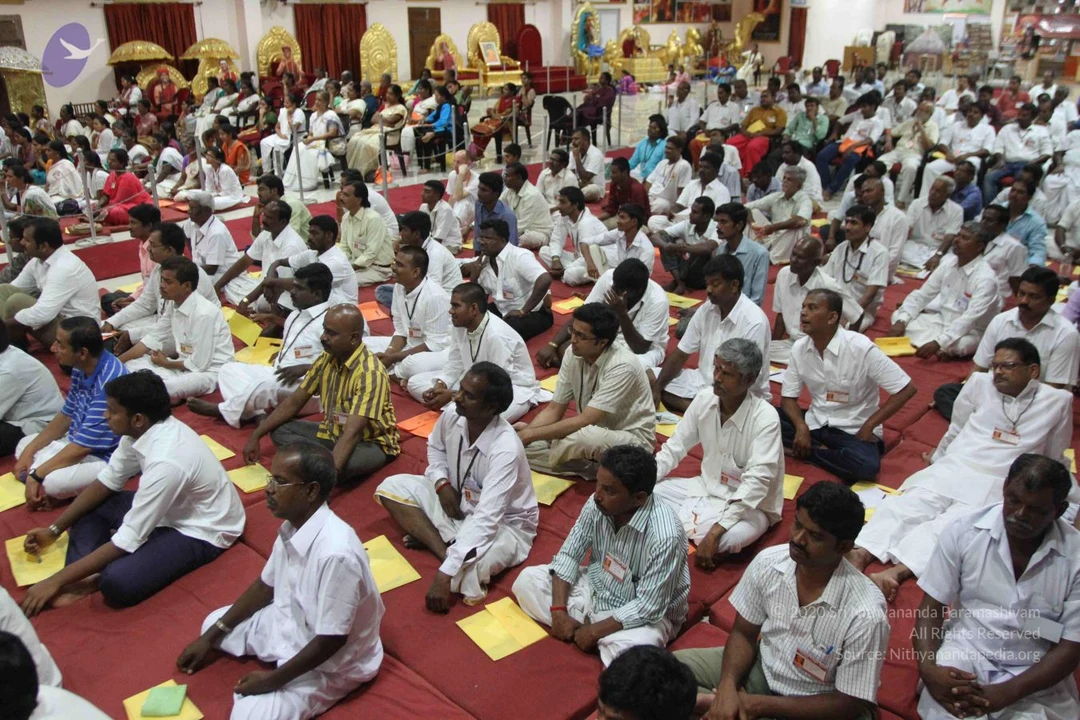
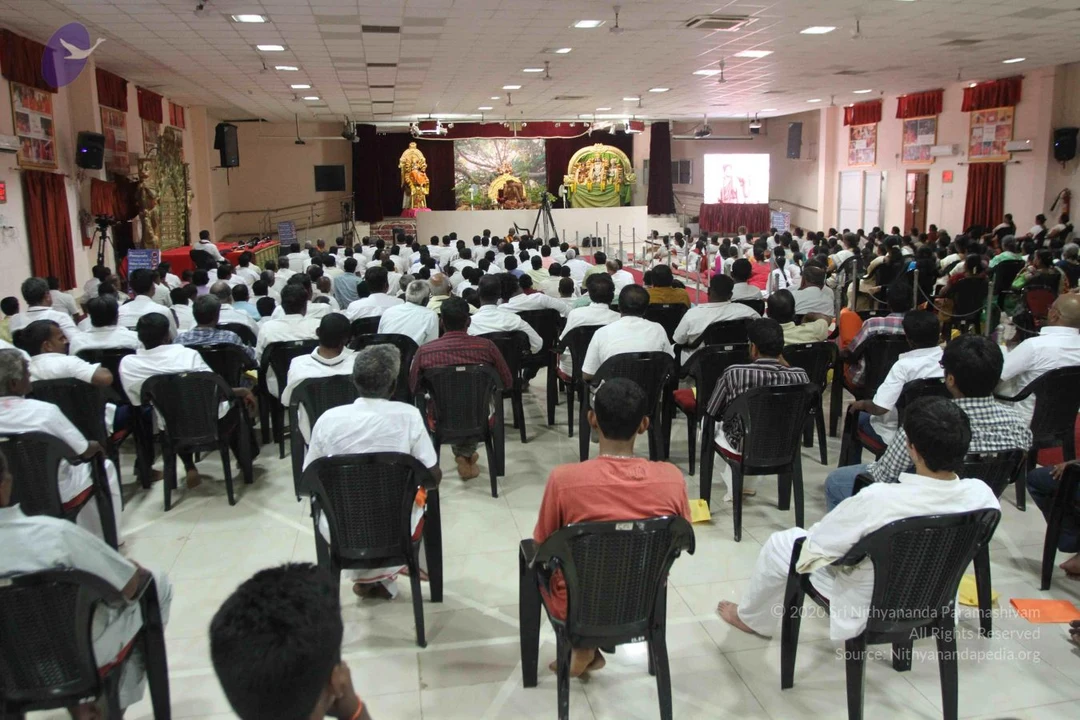
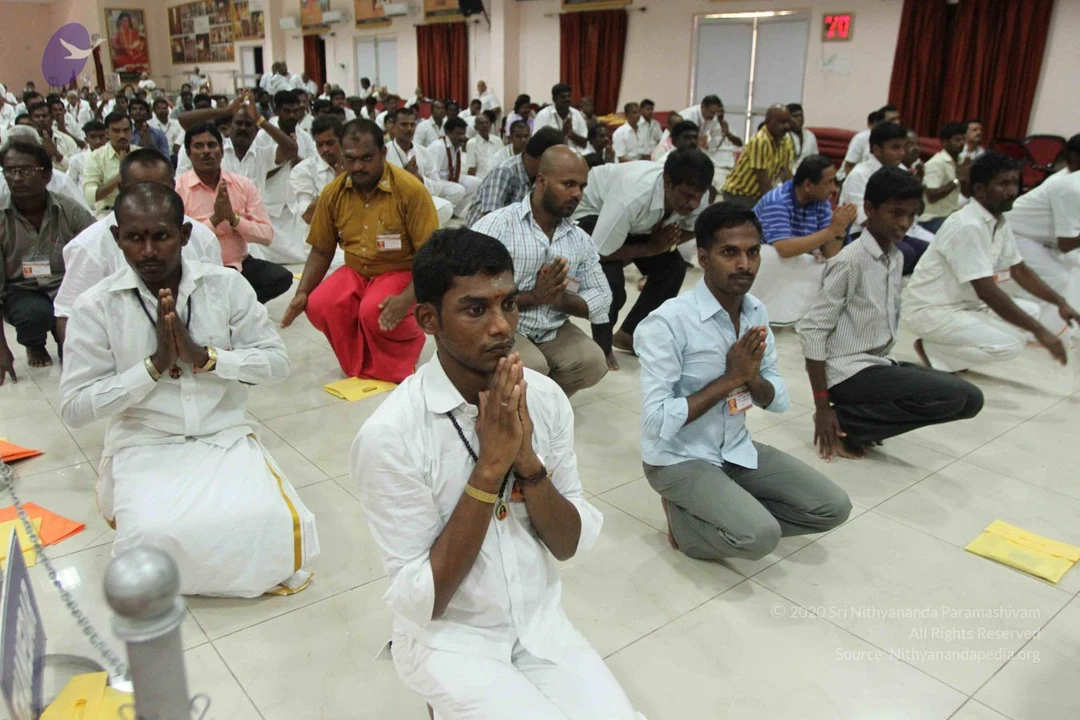
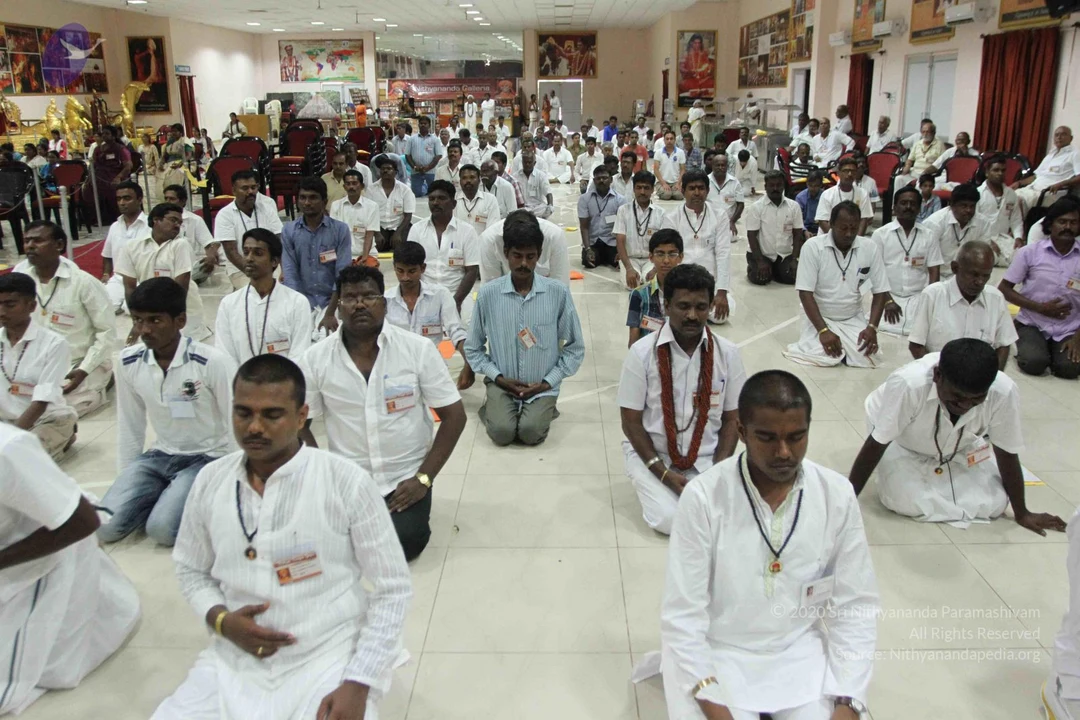
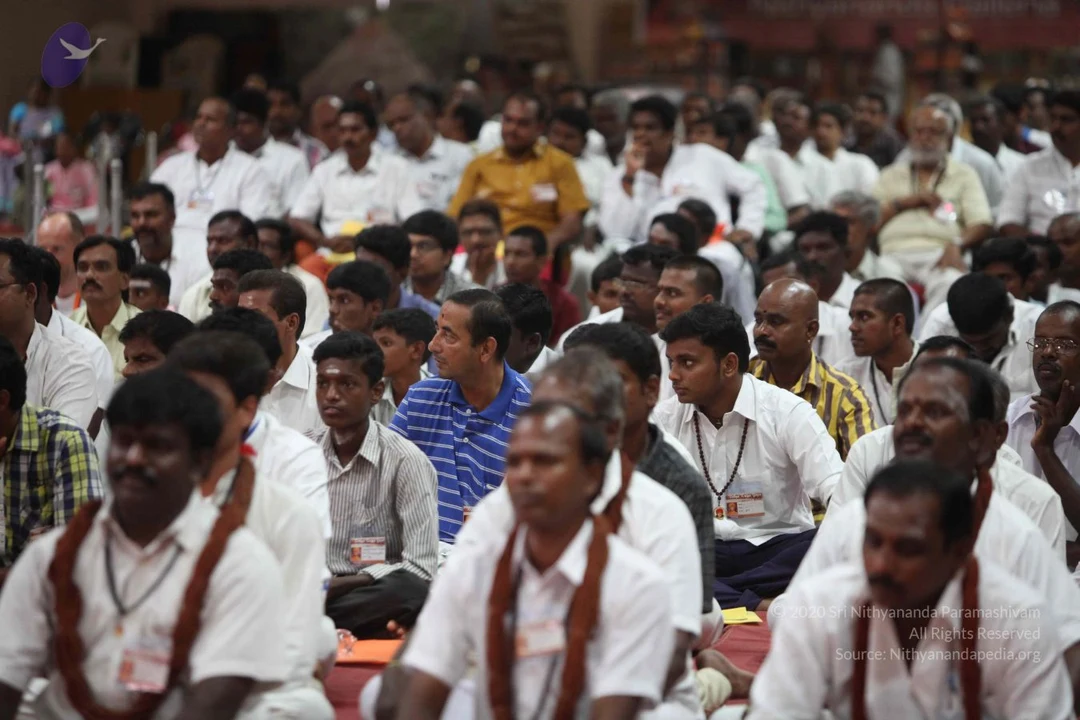
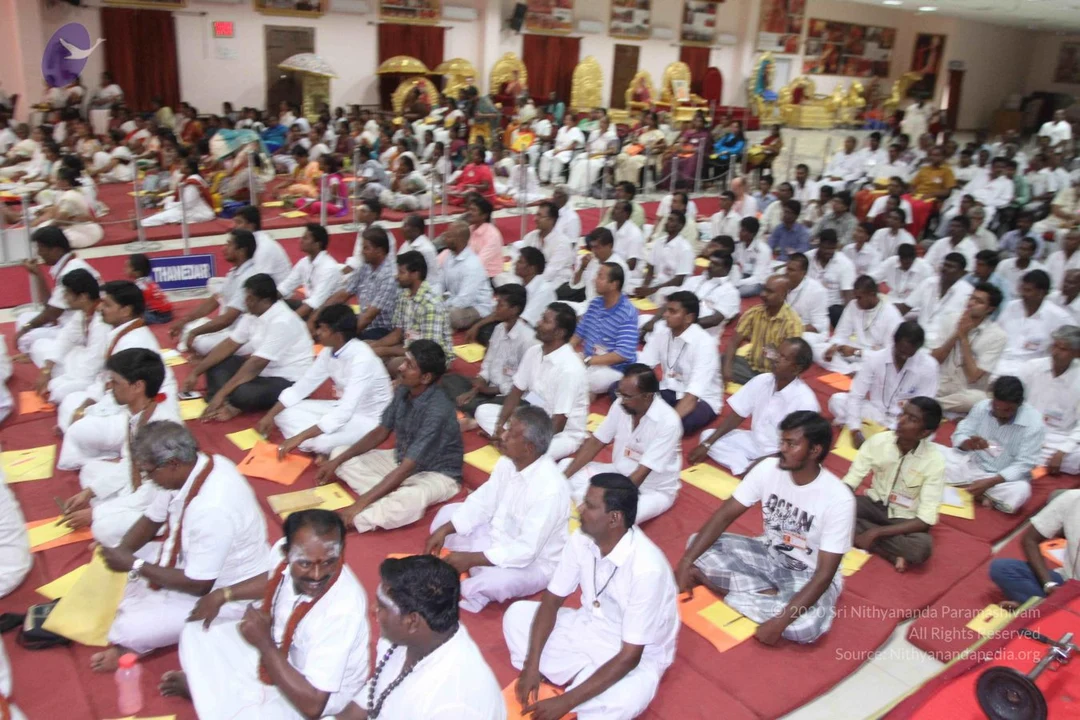
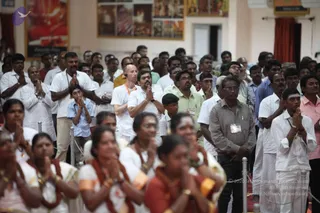
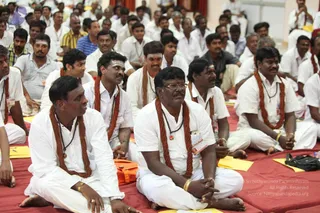
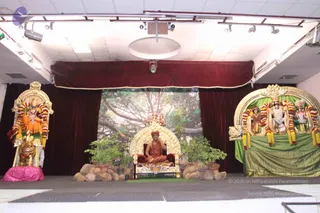
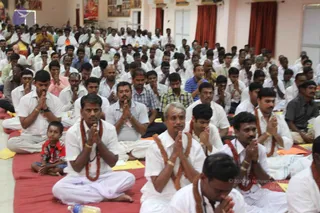
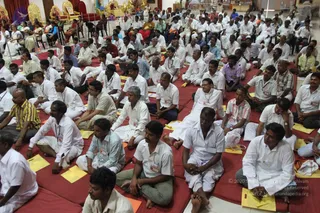
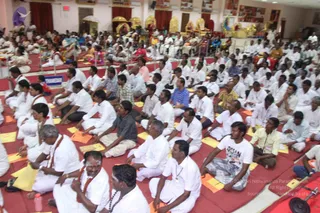
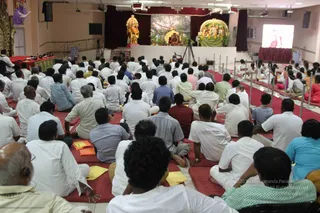
A large indoor hall filled with devotees standing and sitting on red mats marked with yellow name slips. Most men wear white dhotis and white shirts, several with orange shawls and rudraksha malas; one man in the foreground wears a white shirt with a rudraksha mala and sacred marks on his forehead. Others in the crowd wear a black t-shirt, striped shirts and a yellow shirt, and a seated boy in yellow sits on the right. Several hands are folded in namaskar. Gold ornamental pieces and deity images stand at the far right of the hall, and red curtains and framed pictures line the walls.A stage set for a satsang in a bright hall, with maroon velvet drapes and a backdrop photograph of a large tree with a sculpted figure. Centre: a seated figure in saffron-orange robes and an orange head covering sits on a gilded throne with red cushions, one hand raised, surrounded by potted plants and rocks. Left: a gilded arch framing a deity murti in orange garments with garlands. Right: a gilded arch framing deity murtis draped in green cloth and marigold garlands. Overhead spotlights and a white ceiling dish are visible.A large indoor satsang hall where many women sit on red floor mats with palms pressed together in namaste. Most wear white saris with gold borders, several have vermilion or tilak marks on their foreheads, and some wear rudraksha-style beaded necklaces and bangles. Gold thrones and ornate golden structures with peacock-style umbrellas stand at the far end of the hall, with small deity murti figures visible on the thrones. No clearly identifiable a person is visible in this image.A photograph of a large seated satsang audience in a hall with red floor mats and yellow cushions. Many men in white shirts and white dhotis sit cross-legged with palms pressed together in namaskar, several wearing rudraksha-style orange-brown beaded malas around their necks. A small boy in a red checked shirt sits at the lower left. Behind them, religious framed pictures hang on a pale wall beside red curtains, and a water bottle rests on the floor in front. No a person candidate is visible in the frame; the people are devotees in a congregational sitting.Photograph of a large seated satsang audience in a hall with red carpeting and yellow floor cushions. Many men in white dhotis and white shirts sit cross-legged, several wearing rudraksha-style brown beaded necklaces and name badges, some with eyes closed in meditation. A few people in plain clothing are visible, and a bald man in saffron-orange robes with a brown mala sits in the front right. Golden ornate chairs and a golden canopy stand at the front, with framed pictures on the wall behind. The crowd is dense and extends across the room.A large seated audience fills a hall with red floor mats and yellow cushions at a satsang. Most attendees wear white shirts and white dhotis or trousers, with some in striped or checked shirts, and many have lanyard badges. Several sit cross-legged and some look toward the front. Behind them, gold ornate thrones and a framed picture stand on a raised platform with red draping and a deity image. No single a person candidate is clearly identifiable among the seated crowd.
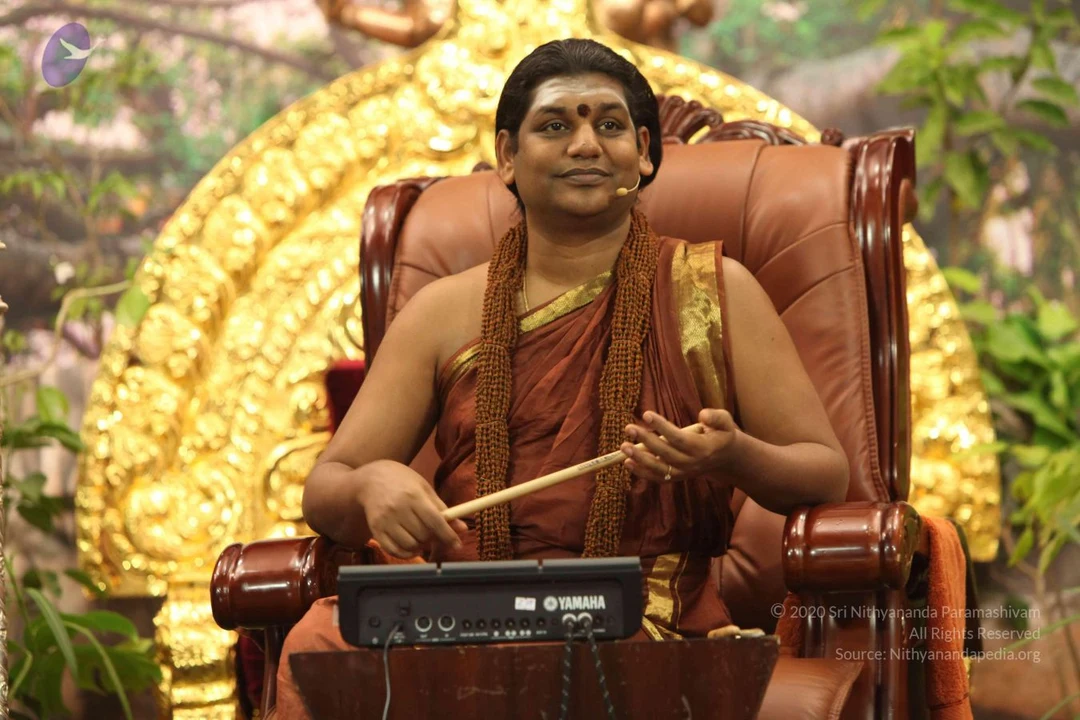
Shivoham

9 photosSource gallery
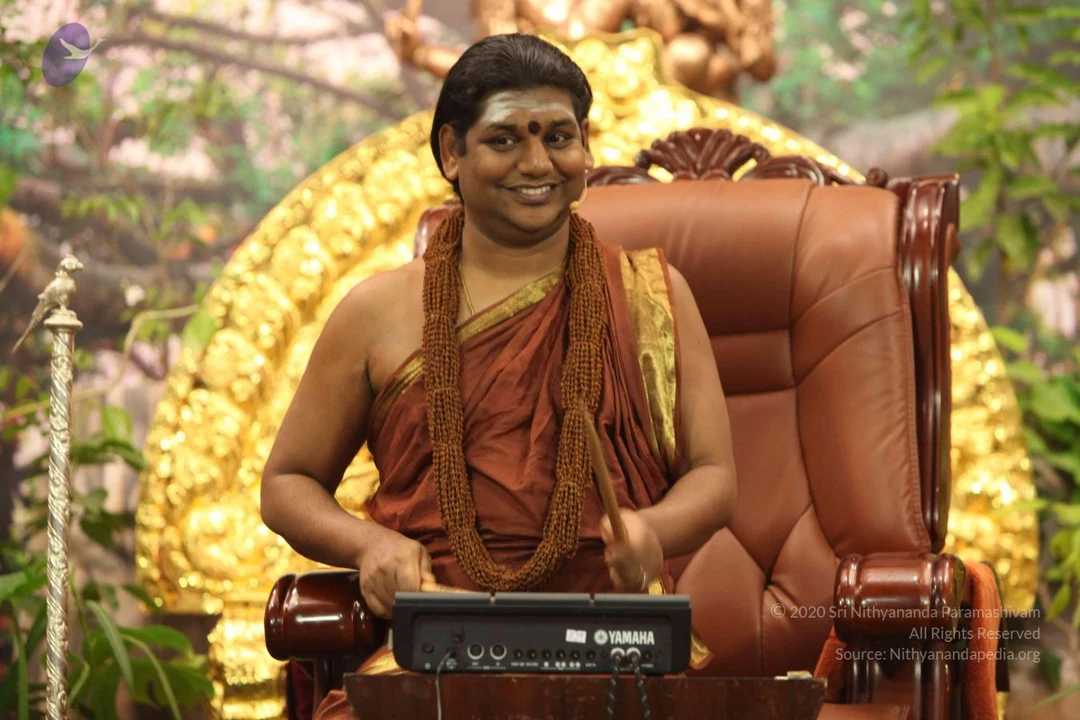
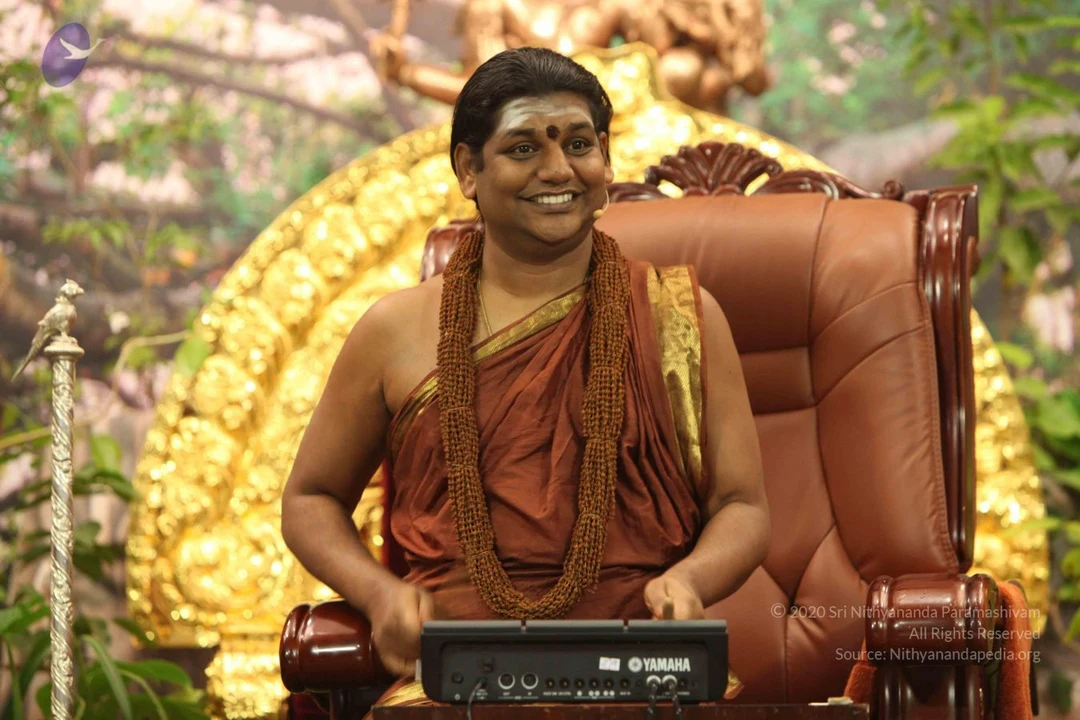
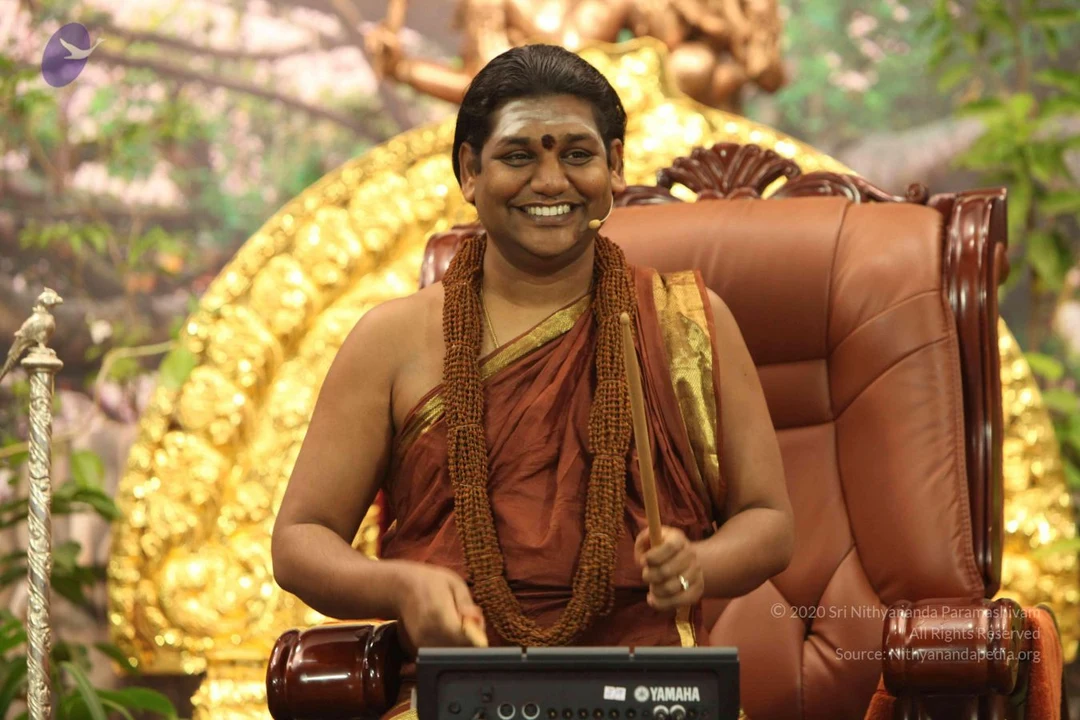
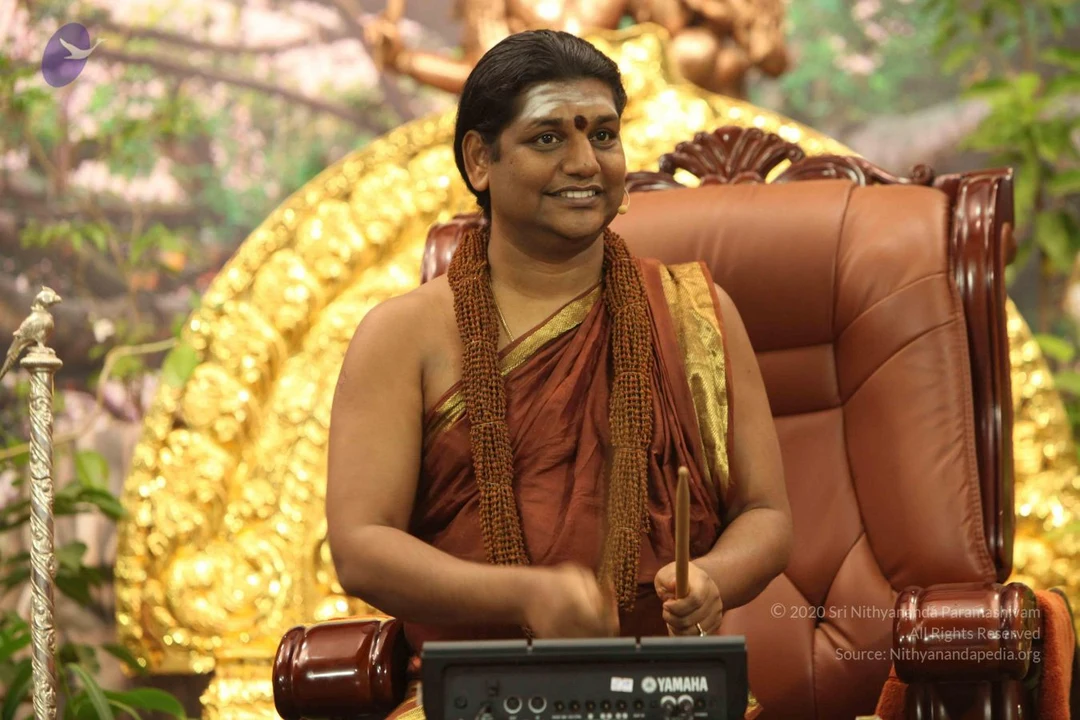
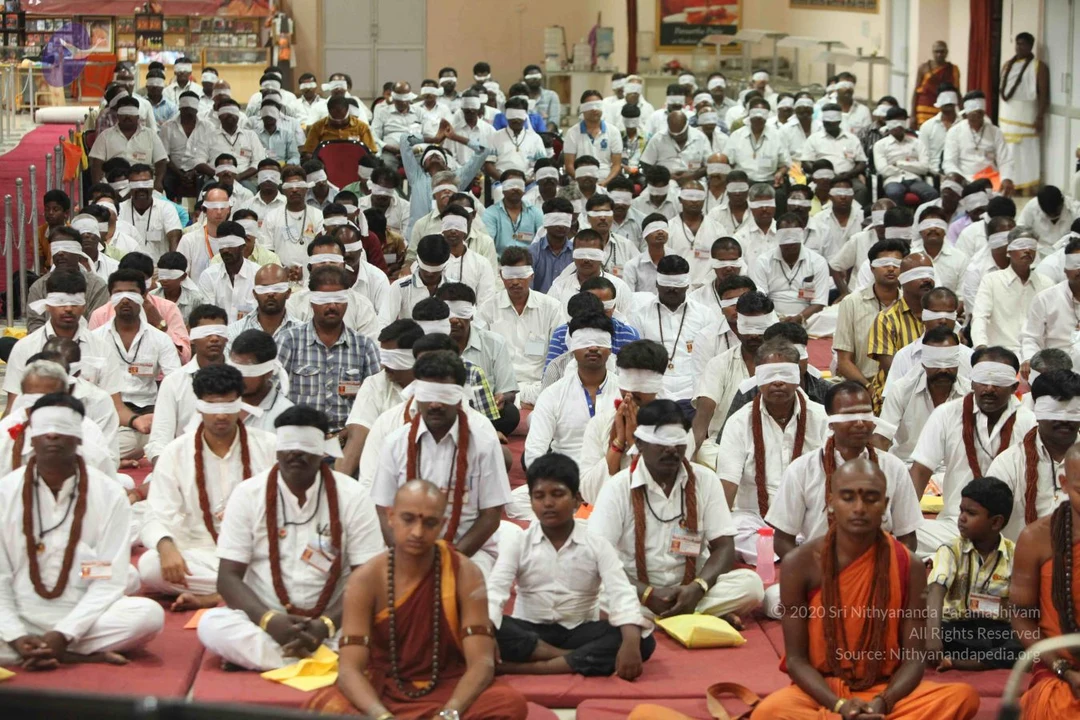
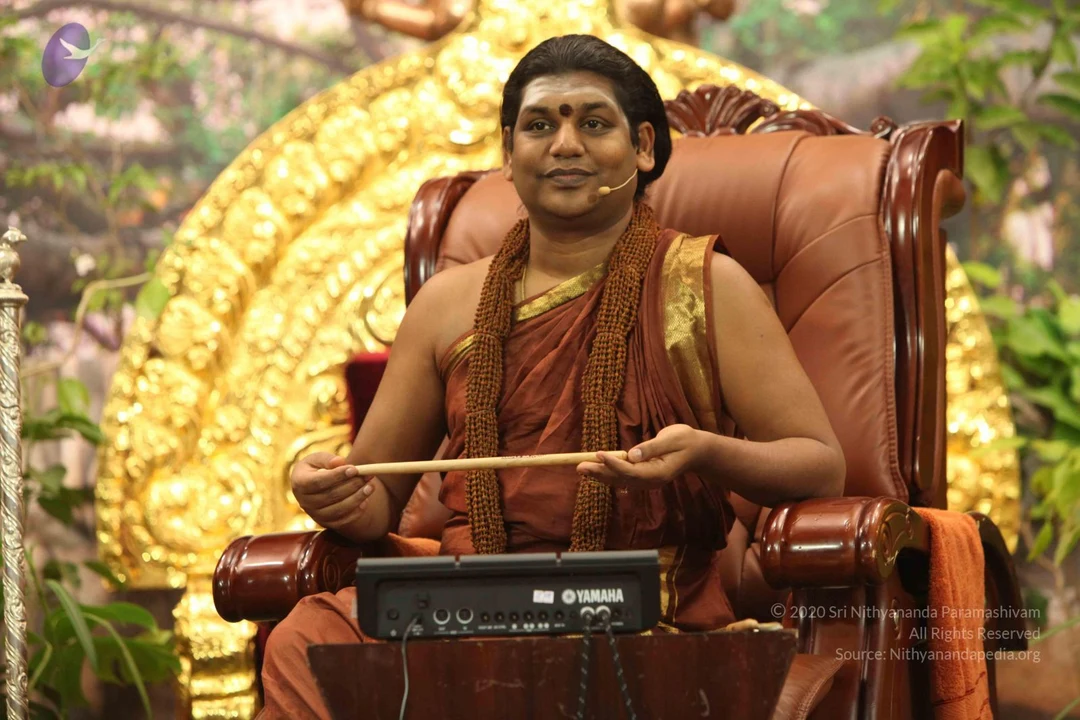
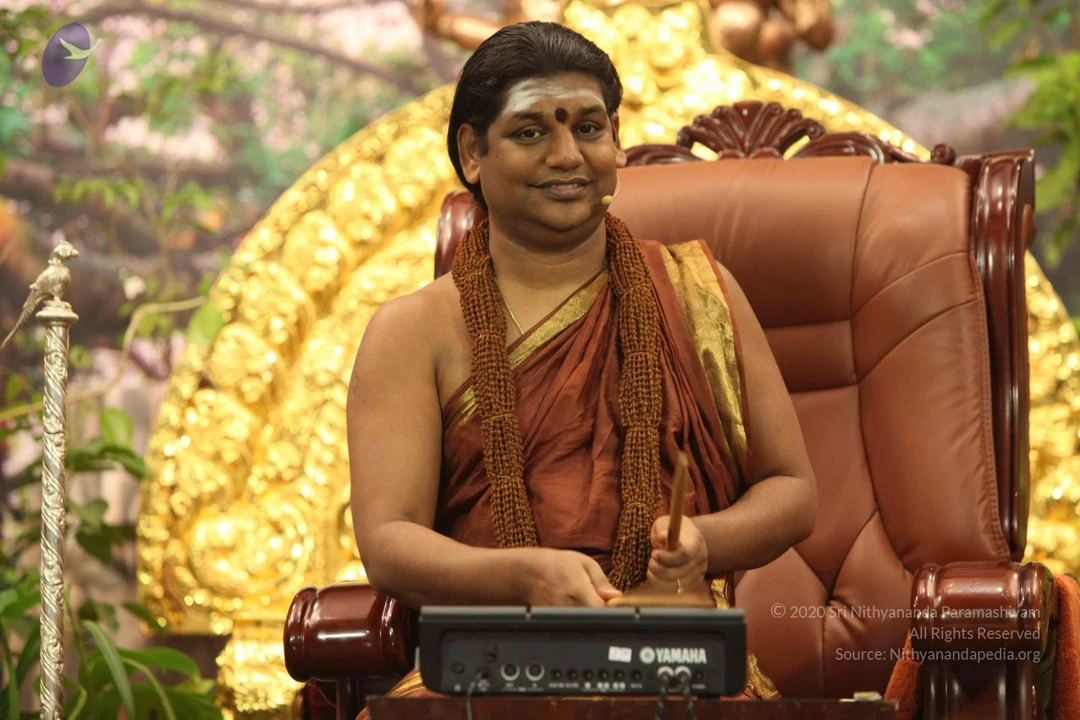
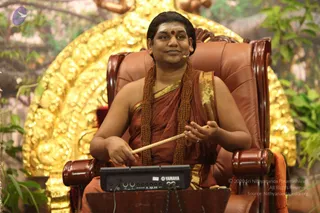
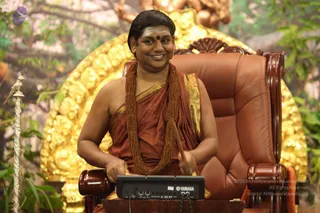
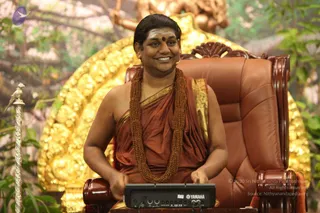
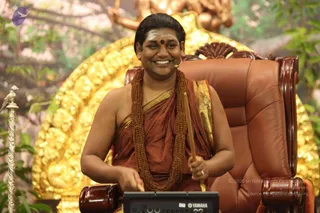
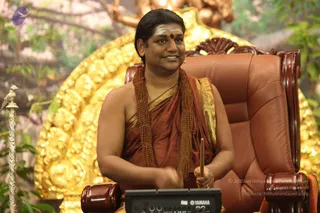
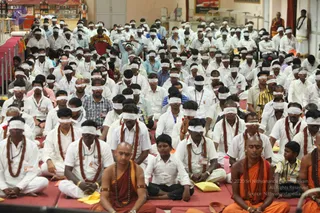
A man seated in a brown leather armchair with carved wooden armrests in front of a large gold-coloured ornate backdrop, with green foliage at the sides. He wears a rust-orange draped garment with gold border, long rudraksha mala strands hanging to his chest, and a red bindi on his forehead, with a small headset microphone. He holds a thin wooden stick in one hand and gestures with the other while speaking. A black Yamaha mixer sits on a wooden stand in front of him. Swamiji (probable): long swept-back hair, orange draped clothing with gold border, and rudraksha malas match the discourse setting, so he is labelled as a probable in-person presence.A man seated on a brown leather throne-style chair with carved wooden armrests in front of a large gilded golden arch and foliage backdrop. He wears a rust-orange ochre dhoti and shawl with gold border, a long multi-strand rudraksha mala, and a vertical tilak with a red dot on his forehead. He holds a slim wooden stick in one hand while resting the other on a black Yamaha audio mixer on a wooden lectern. A silver staff with a bird finial stands at the left edge. The setting suggests a satsang discourse.A man seated in a large brown leather throne chair on a stage, smiling broadly. He wears a rust-brown draped robe with gold-bordered edges and a long rudraksha mala of brown beads around his neck, with a red bindi and white markings on his forehead. A small wired microphone is near his face, and a Yamaha audio mixer sits on the stage ledge in front of him. Behind him is a large gilded golden backdrop with floral and foliage decor, and a silver lamp stand with a bird ornament stands at left. Photo is a satsang-style stage setting. The seated man is a possible a person, identified by the rudraksha mala, brown robe and throne cues.A smiling man sits on a brown leather armchair with carved dark wood trim in front of a gold ornate backdrop with greenery. He wears a rust-orange wrap with gold border, a long rudraksha mala draped to his waist, a small red bindi, and a small earpiece microphone. He holds a thin wooden stick and rests his hand on a black Yamaha mixing console. A silver staff with a bird finial stands at the left edge.A smiling man with swept-back dark hair, a white vibhuti mark and a red bindi sits in a large brown leather armchair with carved wooden armrests. He wears a rust-red and gold-bordered cloth draped over his shoulders and a long brown rudraksha mala around his neck. He holds a thin wooden stick in one hand and rests the other on a black Yamaha electronic keyboard in front. Behind him a large gold-leaf arch frames the scene, with green foliage and a golden figurine visible at the top. A silver ornamental staff with a bird finial stands at the left edge. The appearance matches the a person presentation cues of swept hair, rudraksha mala and saffron-toned cloth, so this is a probable identification.A large seated group of participants in white shirts and white trousers sits on red floor mats, most with white blindfolds or cloth tied over their eyes, many wearing red-brown beaded malas. In the front foreground, a shaved-headed monk in orange robes sits in meditation, and another saffron-robed figure sits at the right edge. Rows of people fill the hall, and a few younger boys in casual clothes sit among them. Behind them are a shop counter and a framed picture on the wall, with a red carpeted aisle along the left. The scene appears to be a meditation or satsang session with eyes covered.

NKY-Day1-intro
5 photosSource gallery
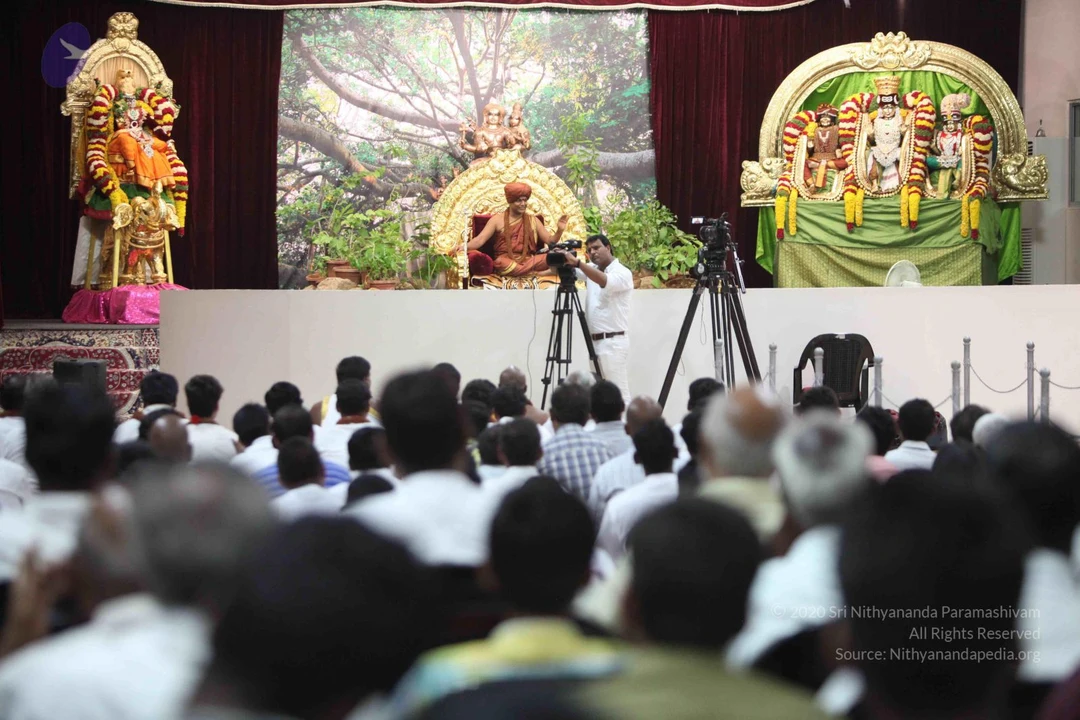
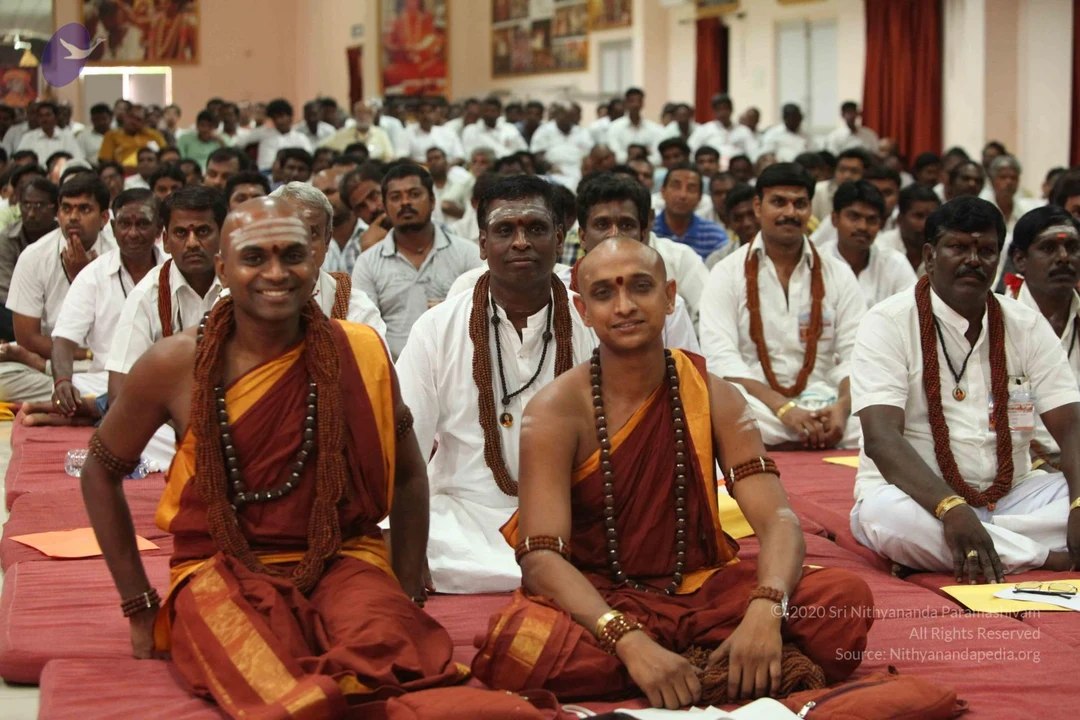
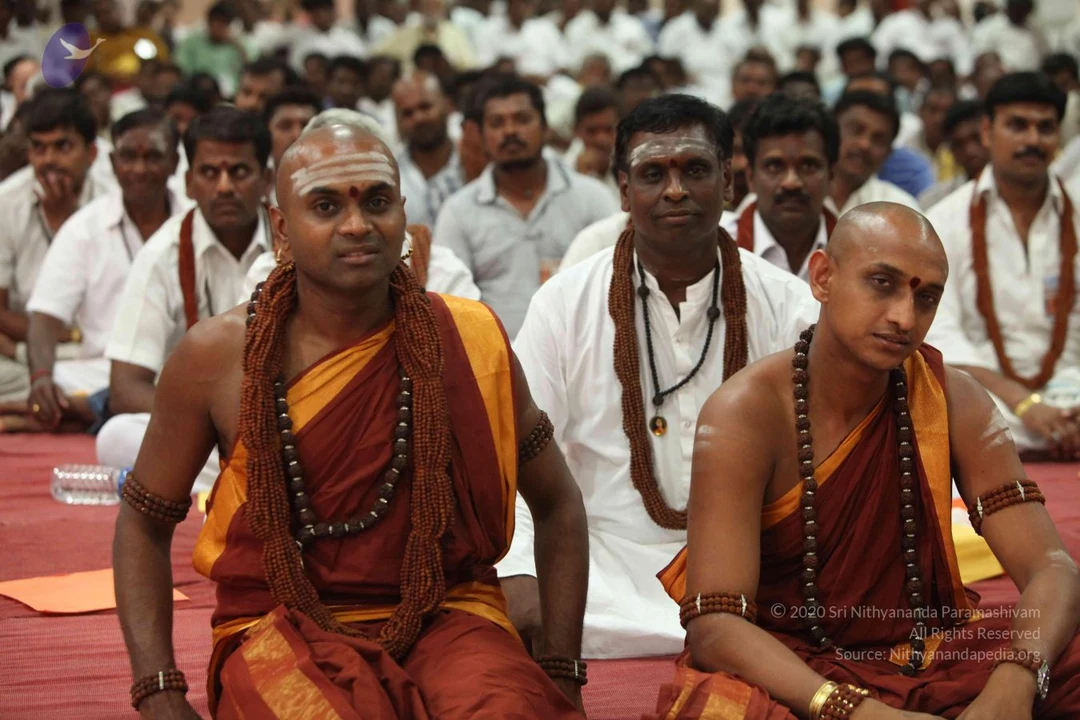
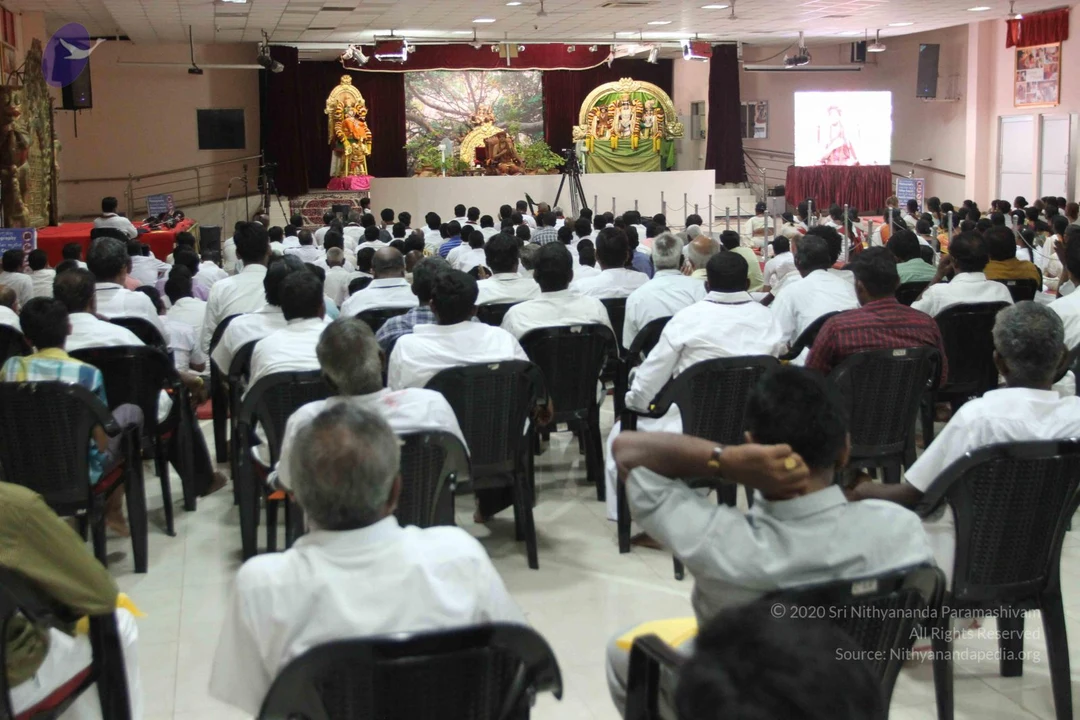
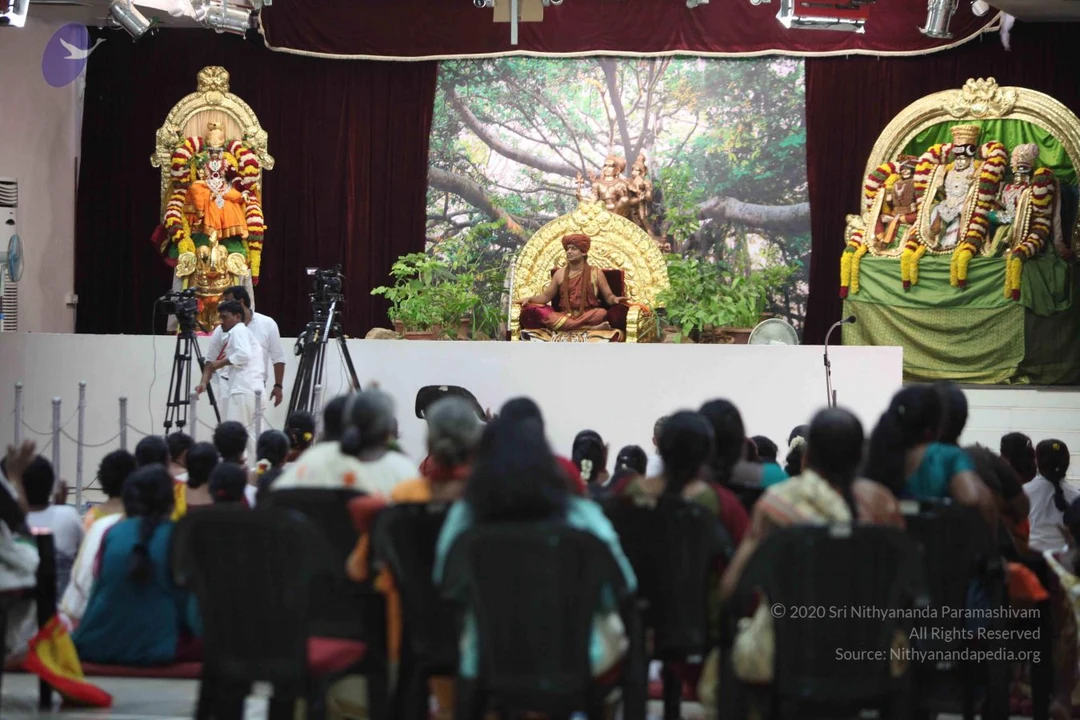
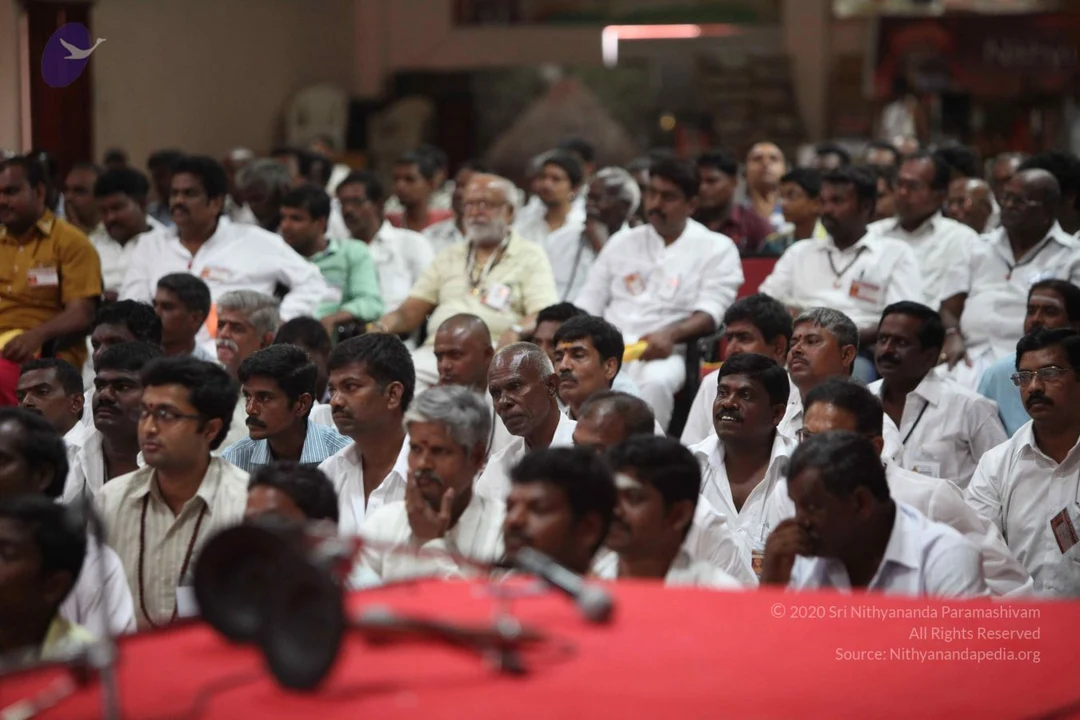
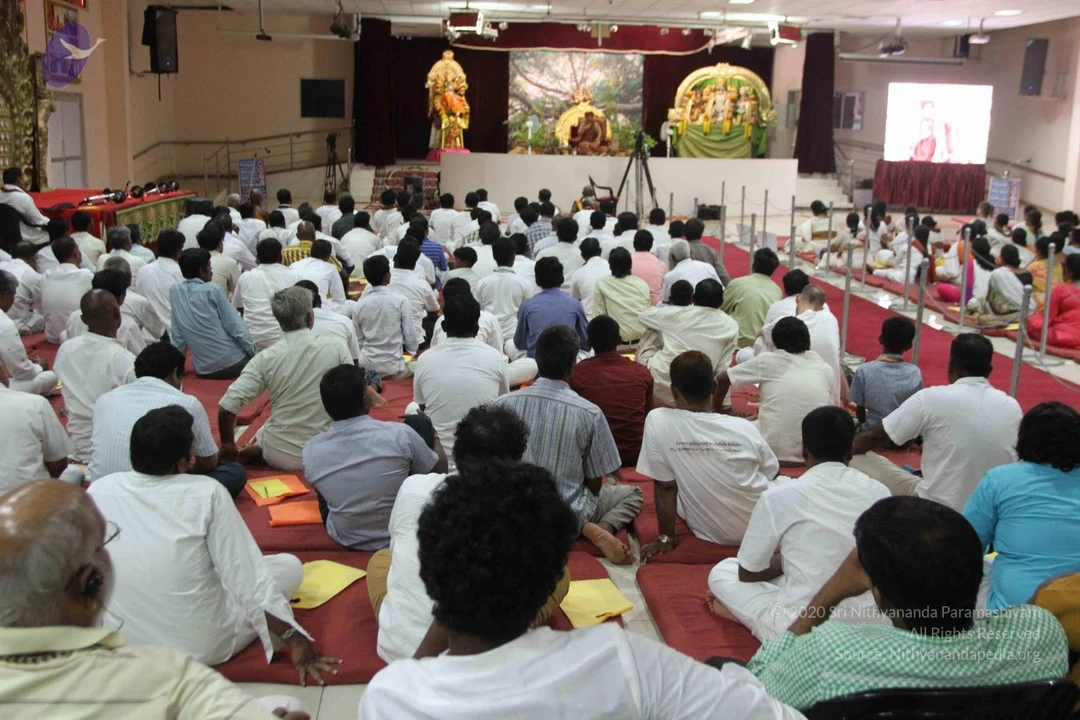
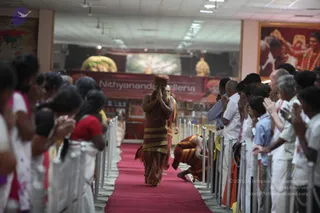
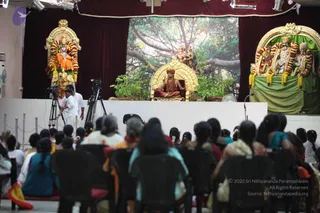
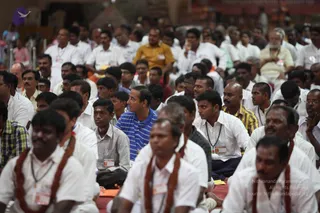
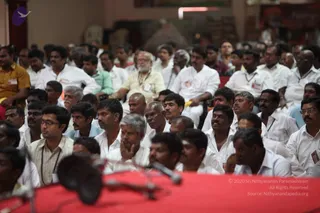
A photograph of a procession down a long red carpet in an indoor hall. A figure in a rust-orange and gold-striped dhoti and matching wrap, with a rust-orange head covering, walks forward with palms pressed together in namaste. Behind him another person in orange robes bends low to touch the carpet. Devotees in white and pastel clothes line both sides behind silver barriers, many with hands folded in prayer. Overhead hang ornate gold and orange decorations, and a banner reads Nithyanandagallery. A framed photo on the right shows a garlanded figure in a red and gold setting.A satsang hall photographed from behind the seated audience. On a raised stage, a man in an orange-red turban and orange-red robes sits on a gold ornate throne before a large photo backdrop of a sprawling tree. He wears a rudraksha-style mala and is seen in profile; the figure is an appearance-based probable candidate for a person, with cues of a red turban and saffron-orange clothing, seated on a throne. To the left stands a deity murti in orange garments with a garland and gold crown, and to the right two murtis in green draped cloth, garlanded with marigolds. Two cameramen work on tripods at the stage edge in white clothes. Rows of seated devotees in saris and kurtas, several in teal and pink, face the stage, with chairs and a bag visible in the foreground.A large seated congregation at a satsang, filling the frame in rows of devotees. Most wear white shirts and white dhotis or trousers; several men in front wear orange or saffron-toned shirts and rudraksha malas. A man in a blue striped polo shirt sits near the centre, and a man in a yellow-and-white striped shirt sits to the right. Name badges hang from many shirts. Their attention is directed forward toward the stage, out of frame. No a person is visible in this image; no candidate figure appears.A seated audience of men fills rows in a hall during a satsang, most in white shirts and some in yellow or patterned shirts. Several wear ID lanyards, and a few have rudraksha or beaded necklaces. A red-draped table with microphones sits in the foreground, with a banner in the background. The men are listening attentively toward the front of the hall.A seated man smiles broadly on an ornate golden throne with a large carved gold backrest and red velvet cushions. He wears a rust-brown turban, a red dot on his forehead, a brown-orange robe with gold border, and a long brown rudraksha mala around his neck. His hands rest together in his lap. A silver staff stands at left and green foliage appears at right. a person: long rudraksha mala, saffron-orange robe and a seated place of honour on a golden peetha throne, consistent with the page. One physical person is visible.
NKY-Day1-crowd-shoot
9 photosSource gallery
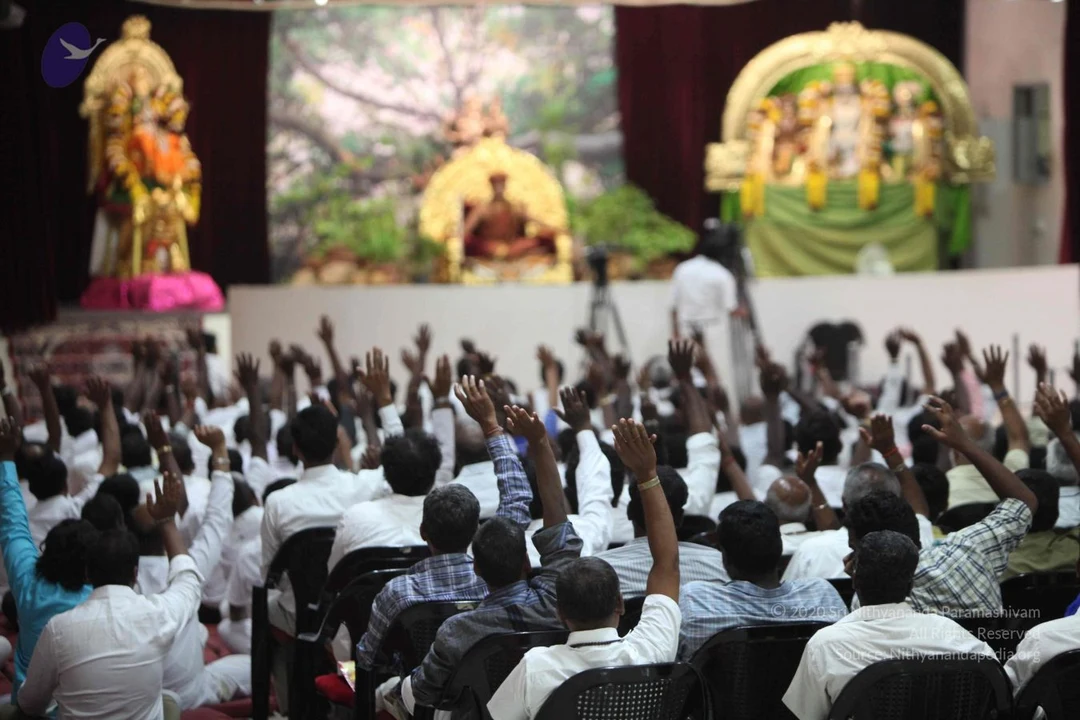
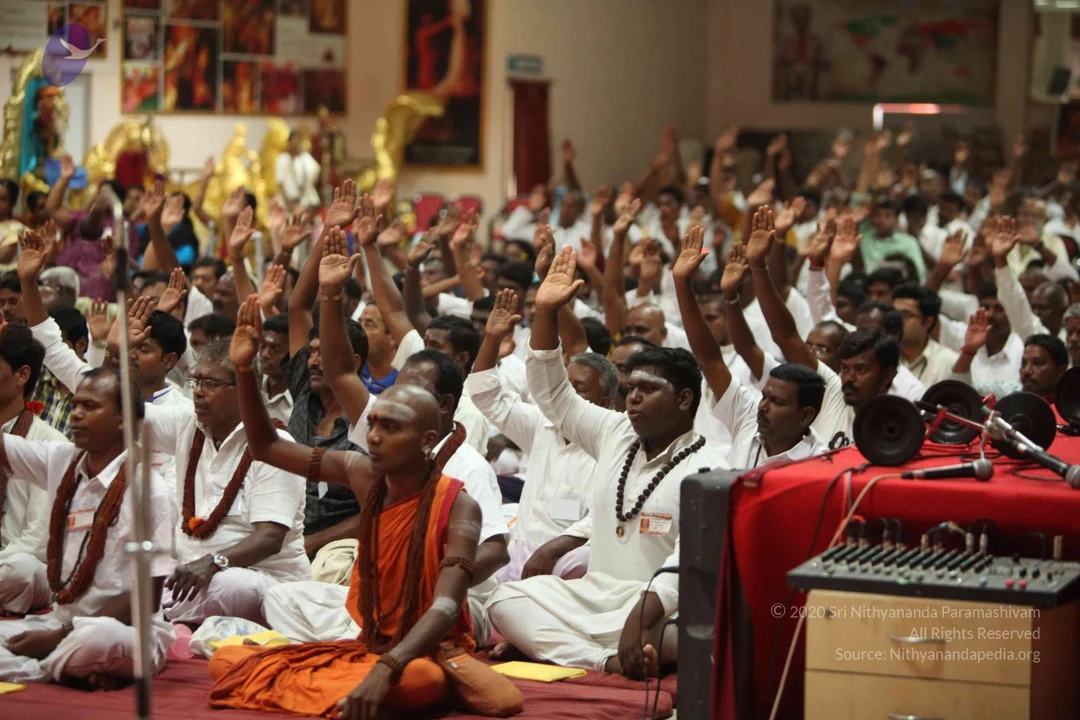
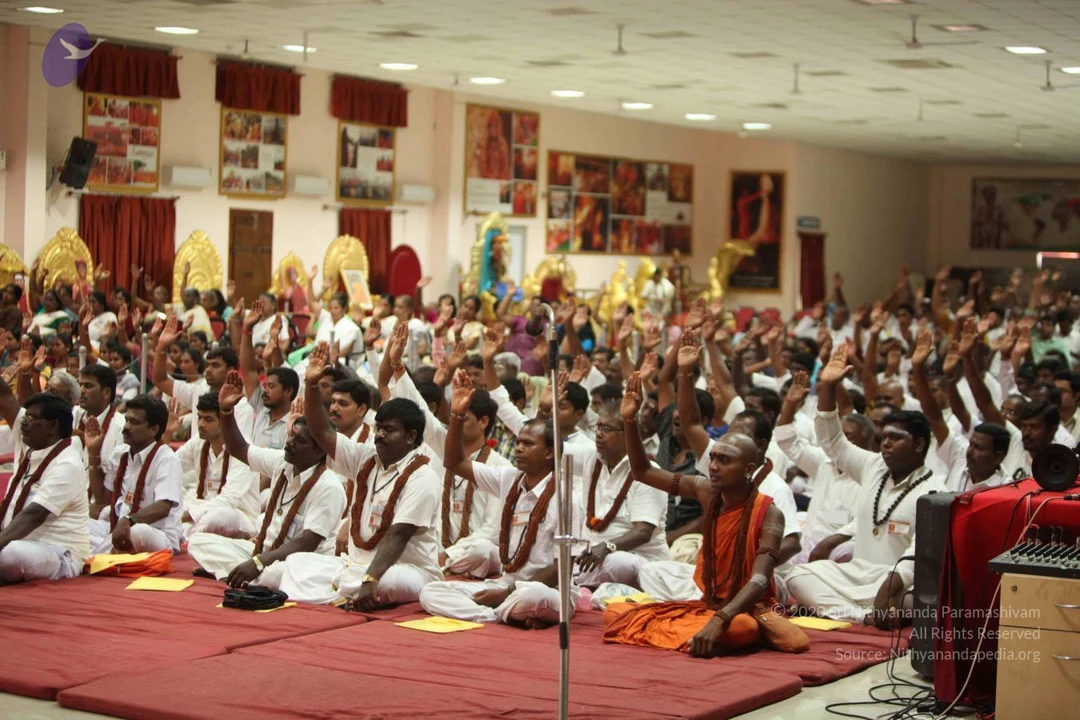
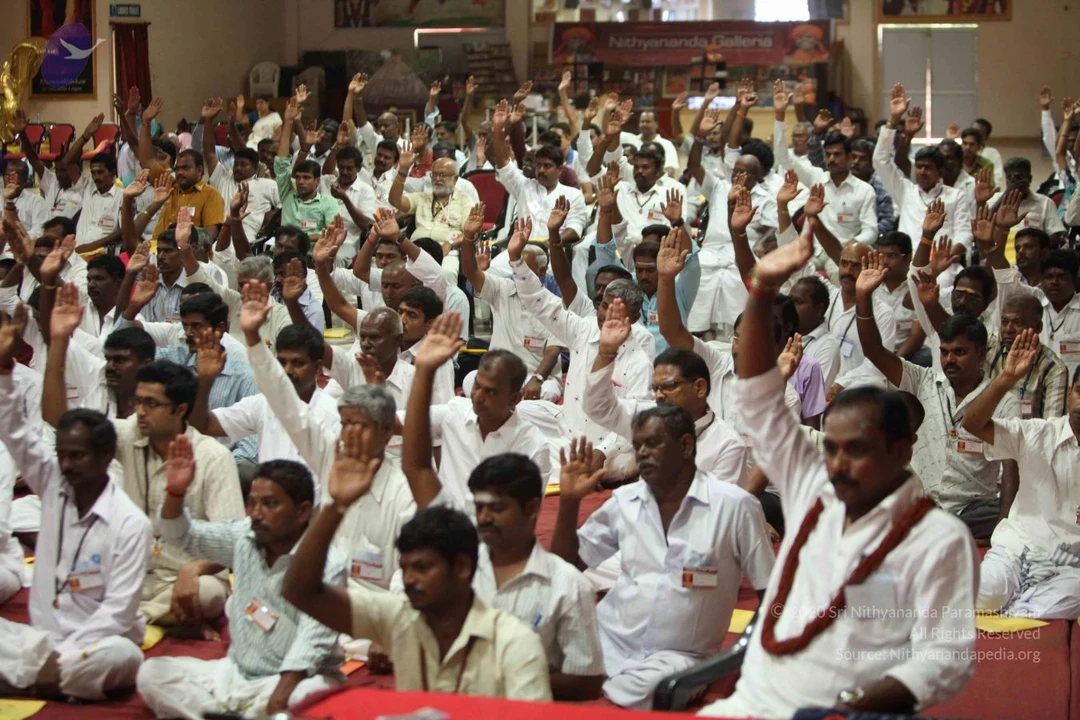
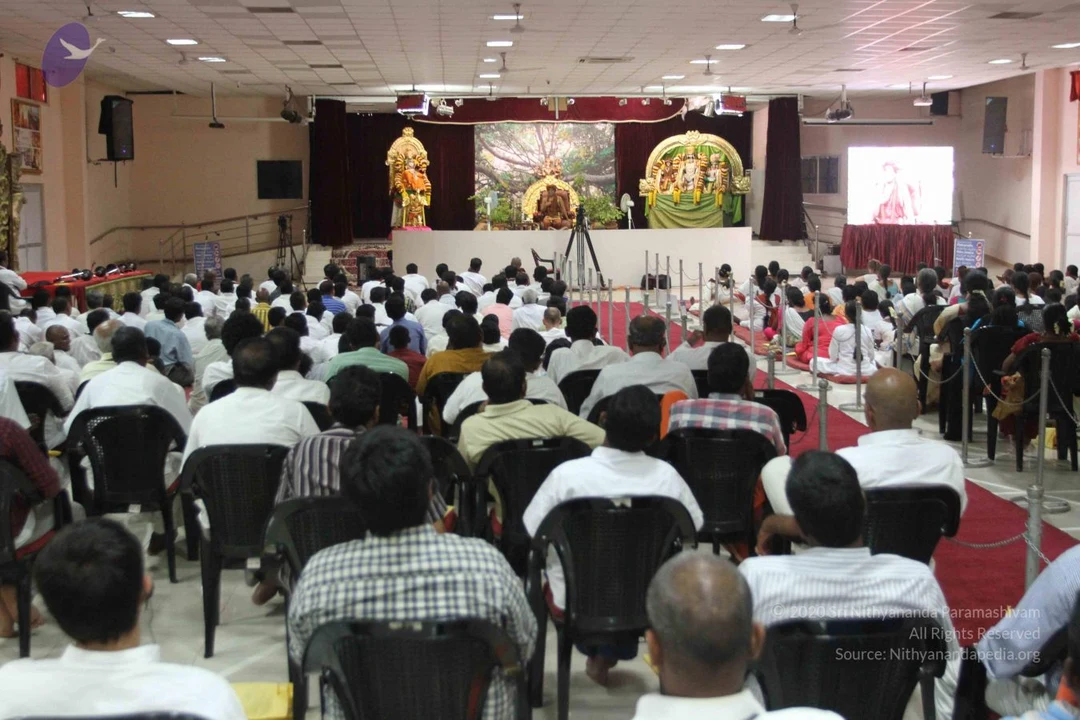
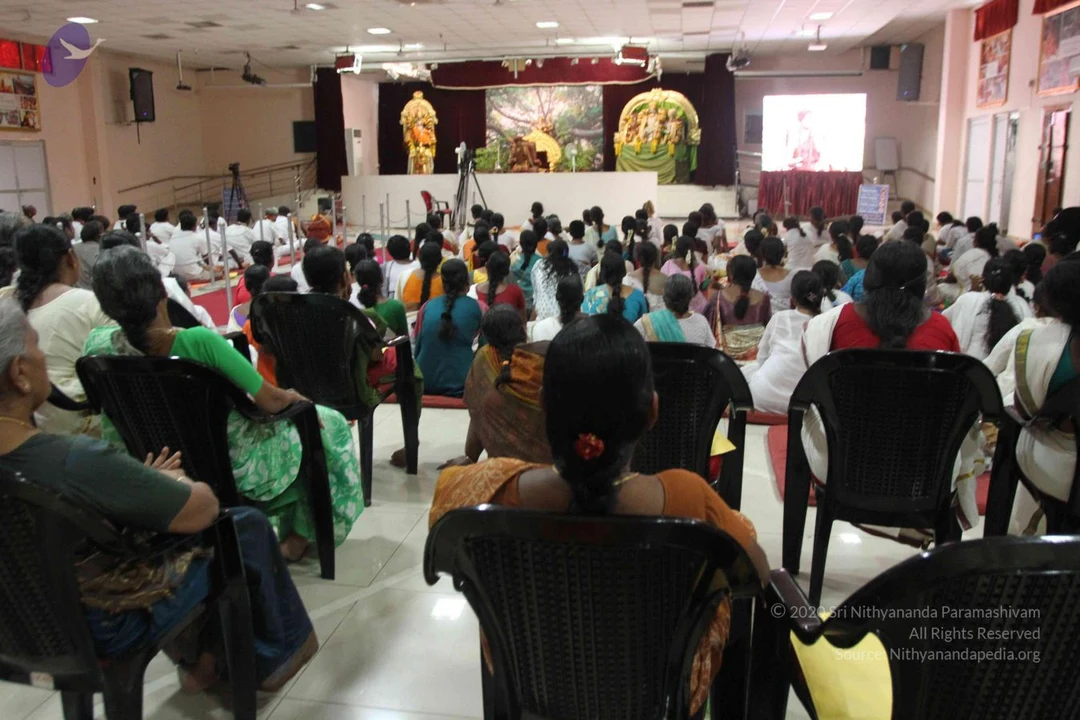
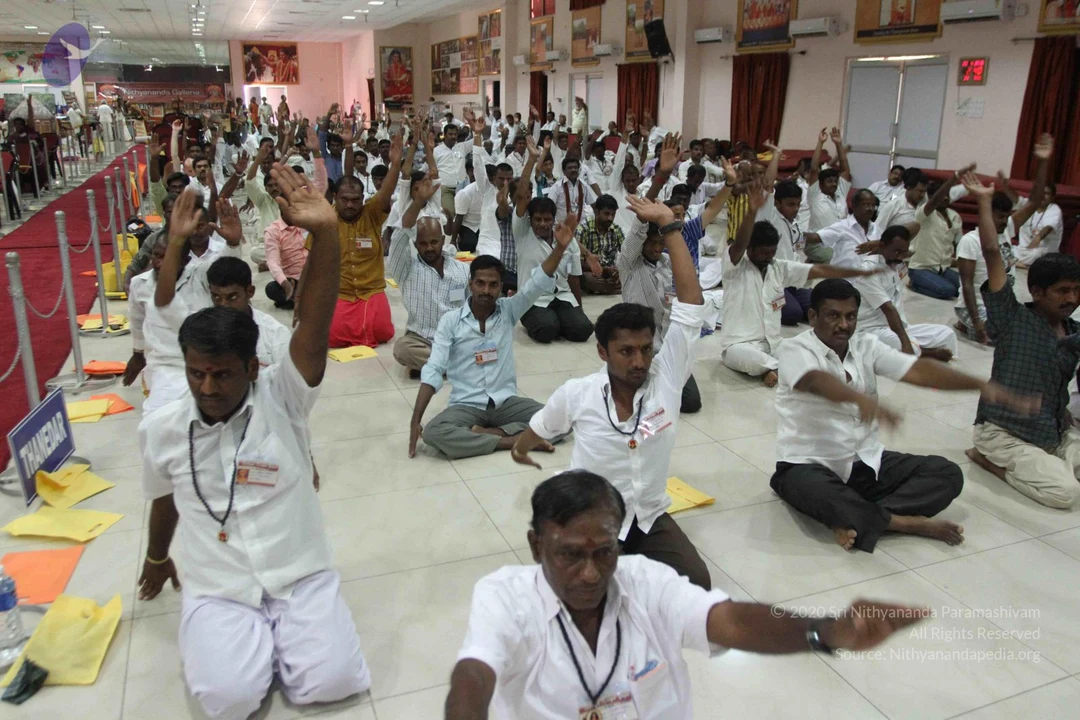
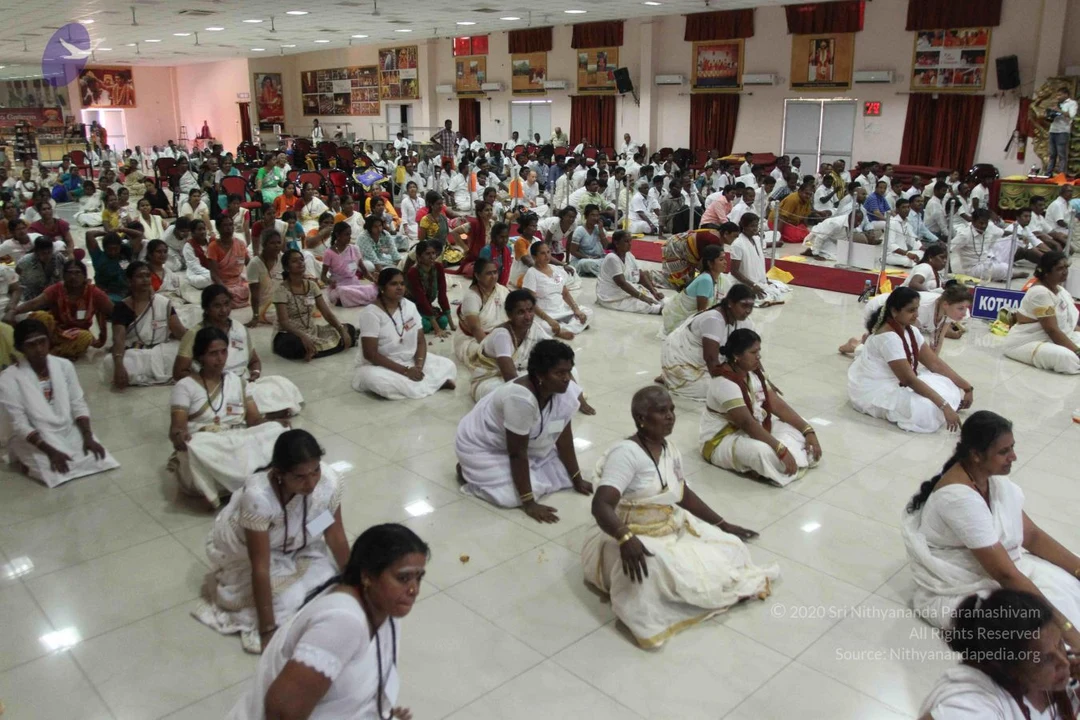
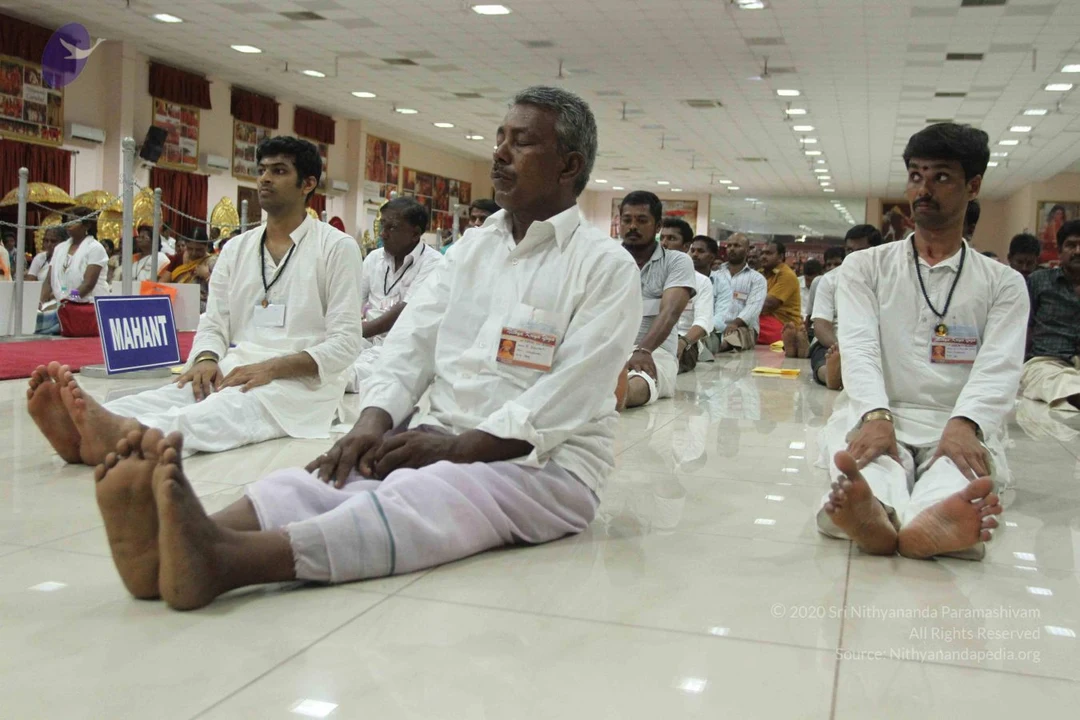
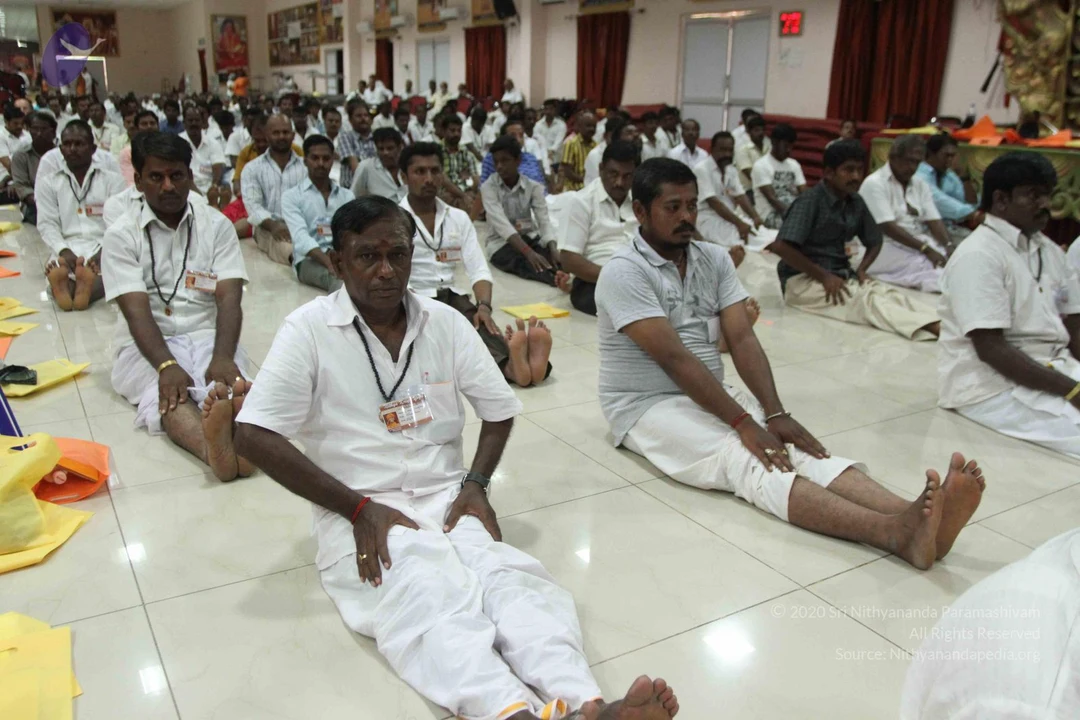
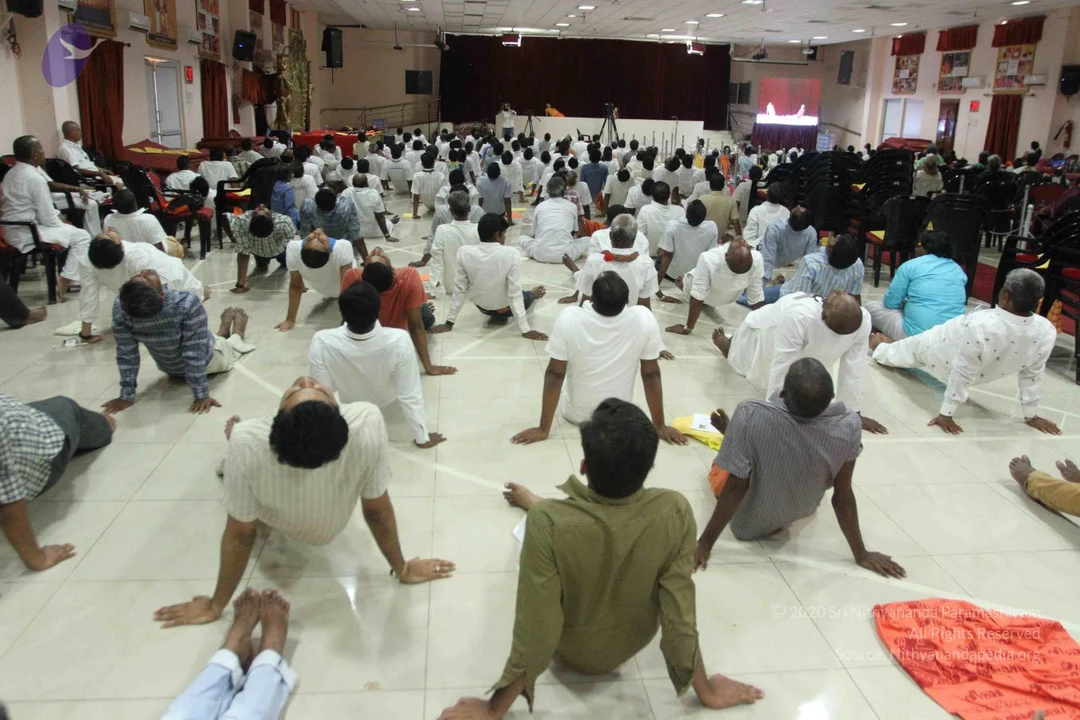
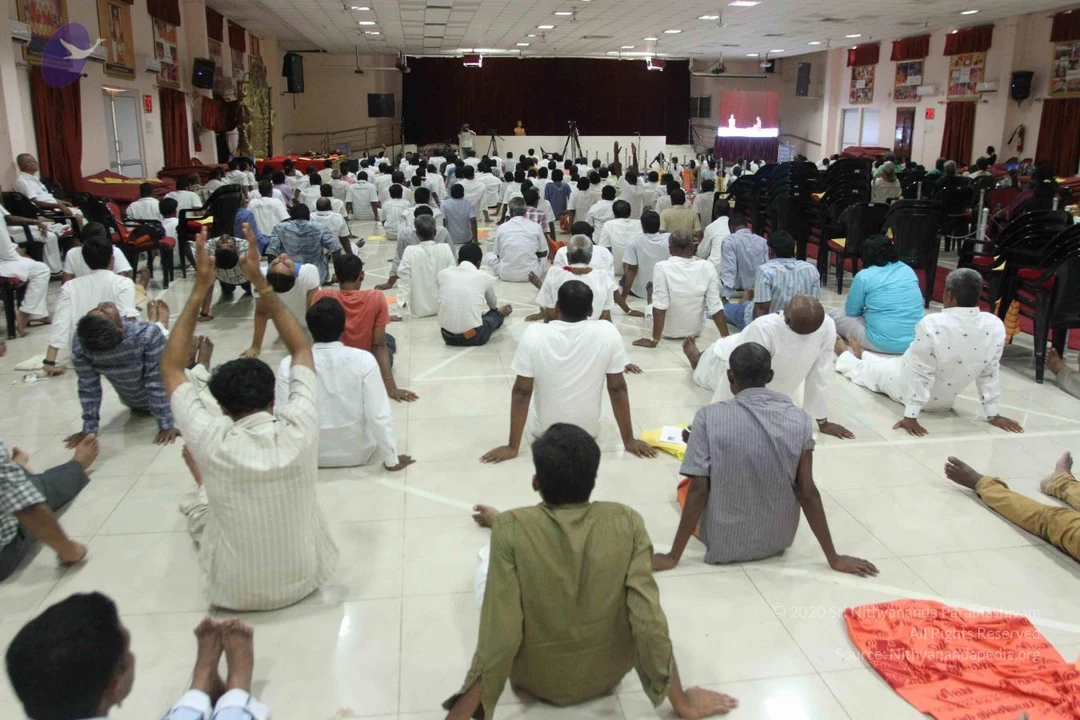
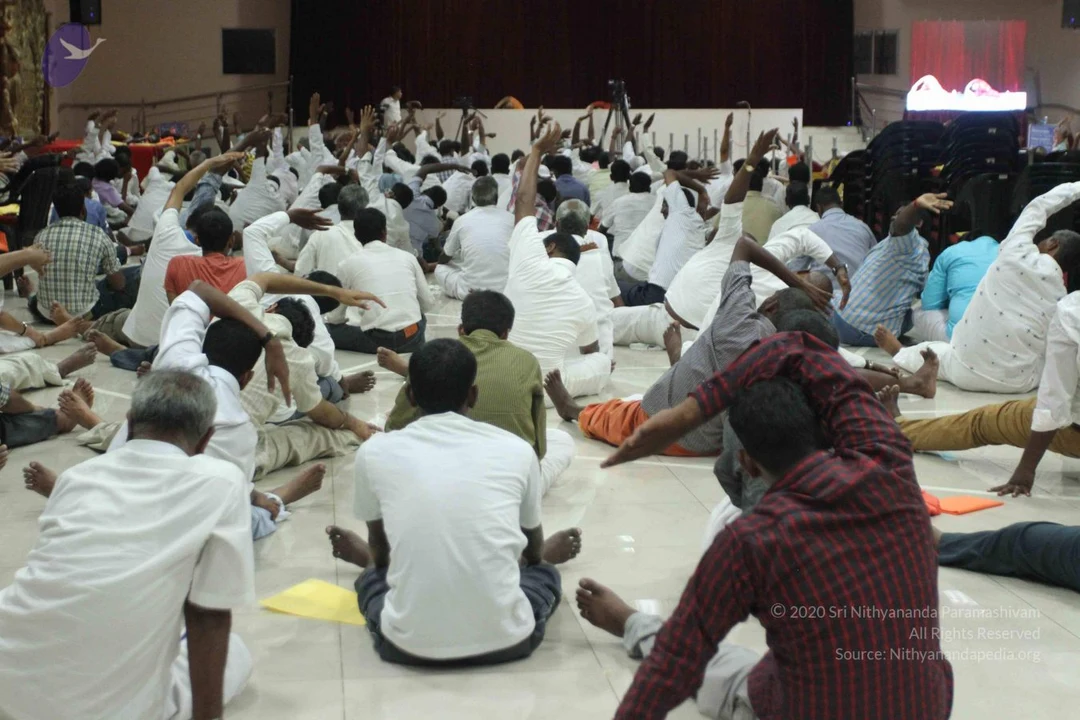
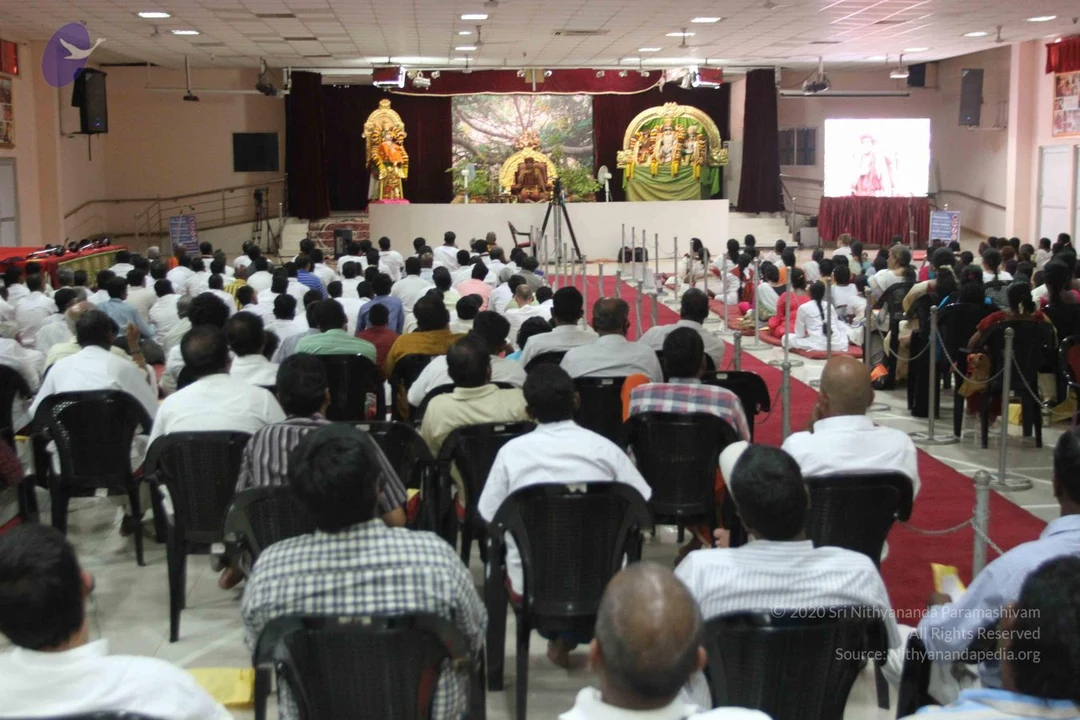
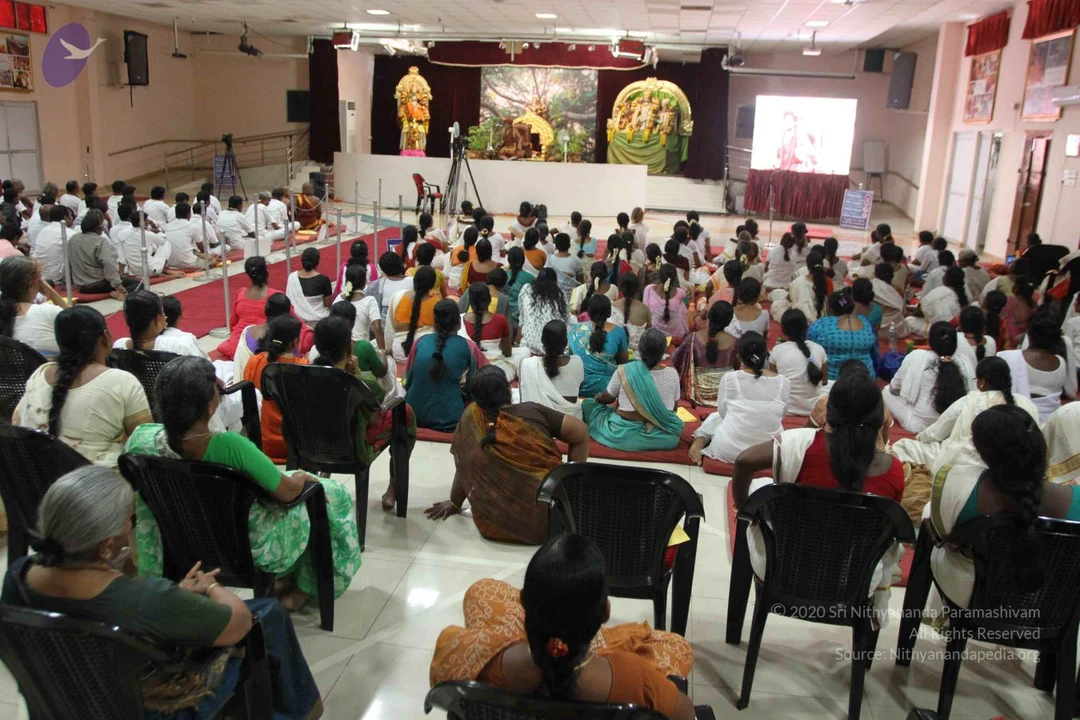
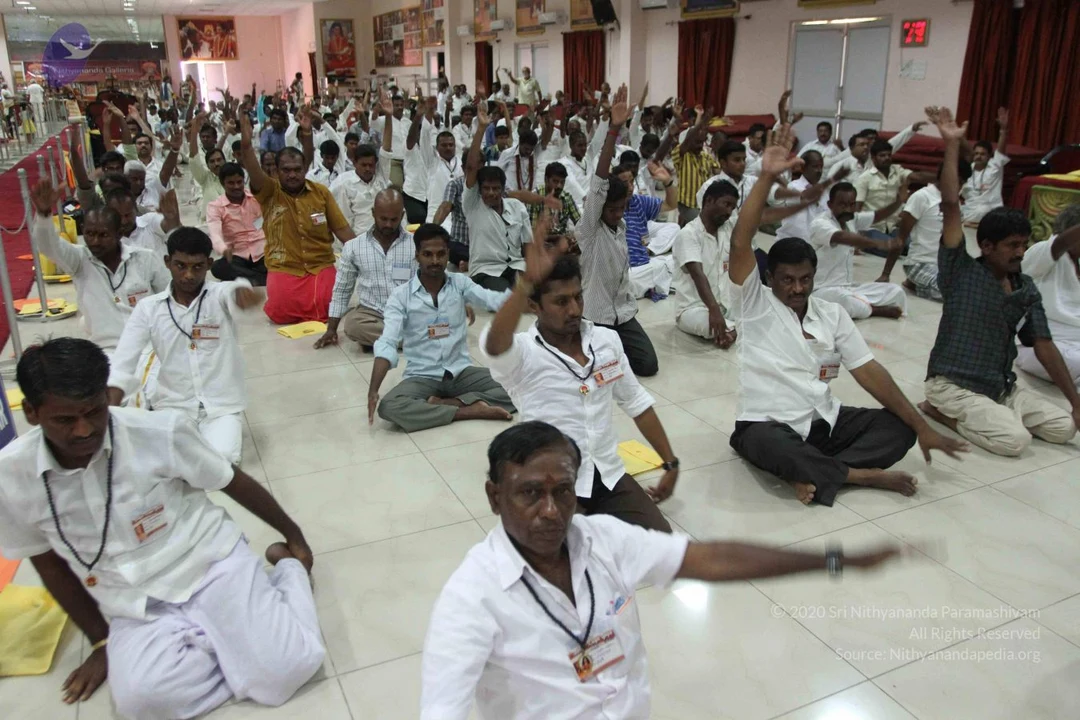
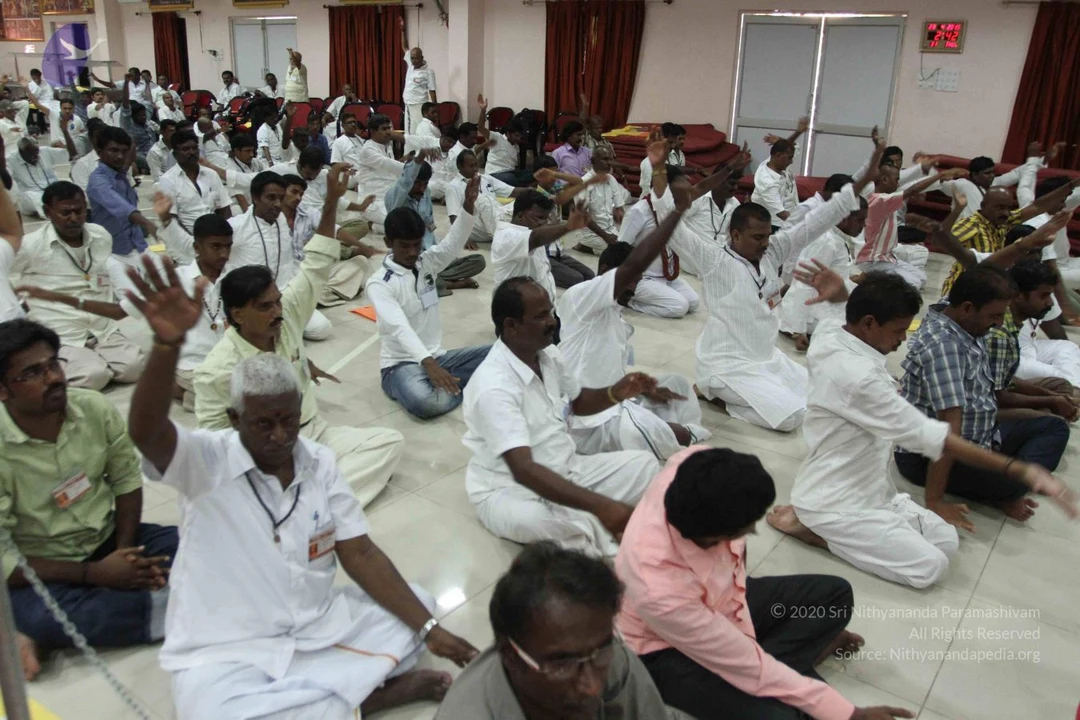
A large hall with red carpet where many people stand in rows with hands pressed together in namaskar, apparently at a devotional gathering. Men in white dhotis and shirts, some with red or orange shawls and rudraksha malas, stand in the foreground. Some wear yellow name badges around their necks. A man in a white T-shirt printed with OCEAN stands at right. Golden thrones and decorative golden chairs stand along the back wall beneath framed photo panels, with a deity image visible near the right. No single person is clearly identifiable as a person.A large seated congregation fills a hall with red carpeting, many men in white dhotis and white shirts, some with orange shawls and rudraksha malas, sitting on the floor with orange and yellow cushions. In the background, a raised stage holds golden ornate thrones and decorative golden canopies with a central golden peetha. Red curtains and framed pictures line the walls. Some attendees wear lanyards and name badges. A sign reading Thanvanthu is visible at left. The scene suggests a satsang gathering.Photo taken from behind a large seated audience in a hall during a satsang. Many devotees sit cross-legged on red mats, most wearing white shirts and dhotis, with some in blue, green and pink clothing. Yellow cushions lie on the mats. In the background, a raised stage holds ornate golden deity murtis, a tree-themed backdrop with a gold seat, and a large screen showing a figure in pink. A camera on a tripod and a red-covered table with microphones sit at the left edge.A photograph taken from the back of a seated audience hall during a satsang. Rows of rear-facing attendees sit on black plastic chairs and some on the floor on the left and right sides, mostly men in white and checked shirts. A red carpet runs toward a raised stage with a central seated figure in front of a tree backdrop, flanked by two ornate golden arches with floral garlands, plus a large screen showing a figure in red. Red curtains and ceiling lights frame the room. Small devotees in white seated at the right near the carpet, with barrier posts and rope lines separating the aisle.Photograph of a large indoor satsang hall seen from the back, with many seated devotees facing a raised white stage. Most attendees sit on red floor mats and some on black plastic chairs, mostly women in white, cream, green, blue and orange saris and salwar outfits, with long braided hair. On stage, a golden deity murti and decorated figures stand before a painted backdrop of a tree and garlands, and a projection screen shows a red-toned image at the right. Two people in white sit at the far left of the stage area near the mats. A camera on a tripod stands at the left edge of the room.A large group of men seated on the floor of a hall with yellow mats, many raising their arms and hands overhead in a collective practice, as in a guided yoga or satsang session. Most wear white shirts and white dhotis, and several wear lanyard badges and rudraksha-style beaded necklaces. One man in the foreground wears a white shirt and dark trousers and extends his arm outward. A man in an orange-yellow shirt and red lungi sits near the left. Red curtains, framed pictures and a red digital clock line the back wall.

Shivoham
4 photosSource gallery
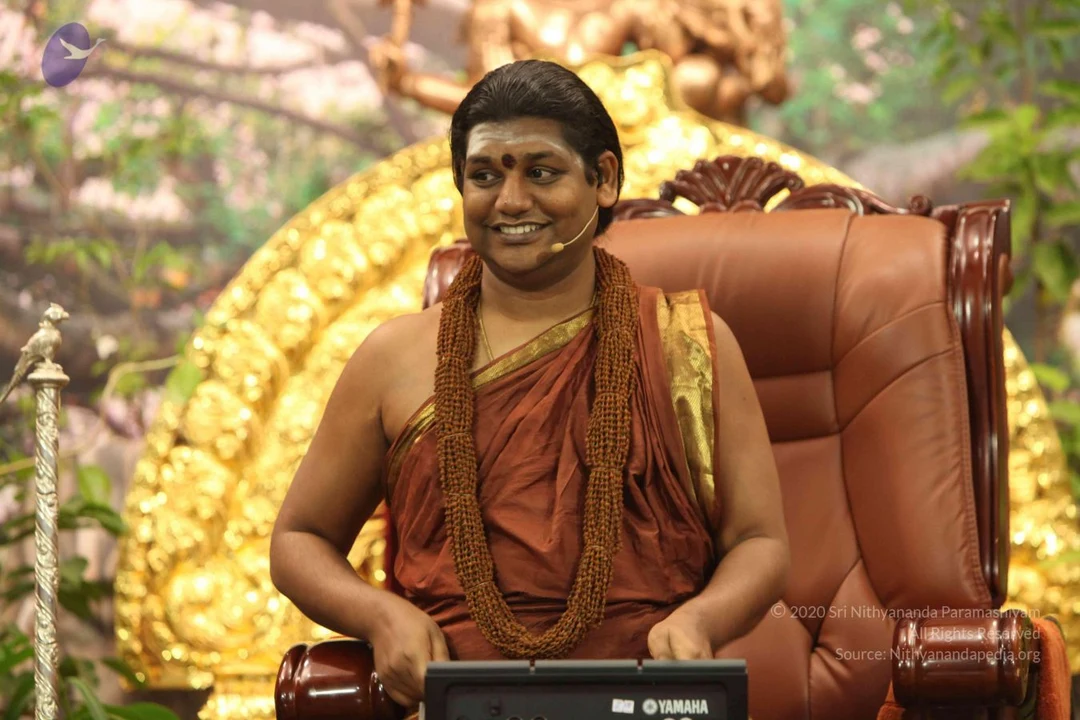
A photograph of a man seated in a large brown leather armchair on a stage, holding a thin wooden stick in both hands. He wears an orange-brown robe with gold border, a long rudraksha mala draped over his shoulders, and a red bindi on his forehead, with a small headset microphone near his face. A Yamaha mixing console sits on the wooden lectern in front of him. Behind him is a large gold-leafed ornamental backdrop with green foliage at the sides. He appears to be a speaker at a satsang, appearing as a probable depiction of a person from the robe, rudraksha malas and seated dais.A smiling man with swept-back dark hair, a red bindi and a wired lapel microphone sits on an ornate brown leather throne-style chair before a large gold-leaf backdrop with carved floral and foliage details. He wears a rust-red shawl with gold border over his shoulder and a long rudraksha mala with ceremonial beads. His hands rest on a black Yamaha keyboard or console at the front of the chair. Green foliage and a small bird figure on a silver stand appear at the left edge. a person is shown in person, seated as the speaker.A man with swept-back dark hair and white and red forehead markings sits in a large brown leather armchair on a dais in front of an ornate gold backdrop with carved floral and leaf patterns. He wears a rust-orange wrap with gold border over his shoulder, a long rudraksha mala draped over his chest, and a small red bindi. He holds a wooden stick in his right hand and smiles toward the audience, a small lapel microphone clipped to his collar. In front of him sits a black Yamaha audio mixer on a dark stand, and a silver staff with a bird-topped finial stands at the left edge. Behind him a painted forest scene shows green foliage and blossoms.A photograph of a long-haired person seated on a brown leather armchair with carved wooden arms, in front of a large ornate golden backdrop with floral and foliage relief. The person wears a rust-brown draped garment with gold border, a long rudraksha mala of brown beads reaching the chest, a small red bindi, white forehead markings, and a small gold hoop earring with a lapel microphone. a person: long swept-back hair and rudraksha mala with ceremonial clothing, seated on a throne during satsang.