Skip to content
Monday

30 December 2013

Nithyananda Diary | Rudrabishekam | Padapuja | Satsang | Meditation | Kalpataru Darshan

Dated photos
213
Source pages
1
Media
2
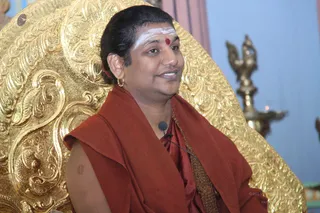
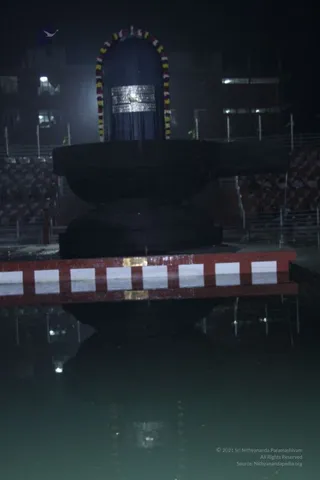
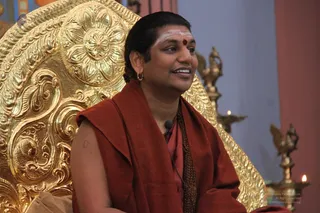
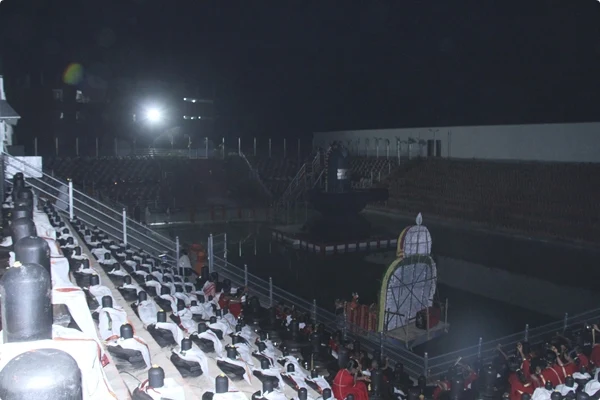
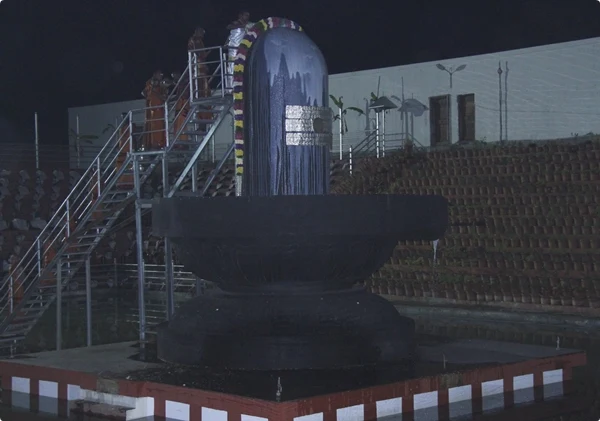
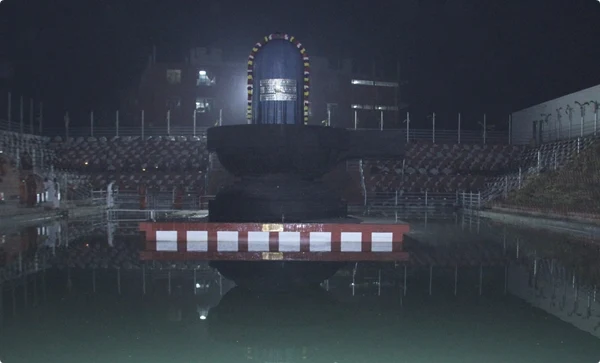
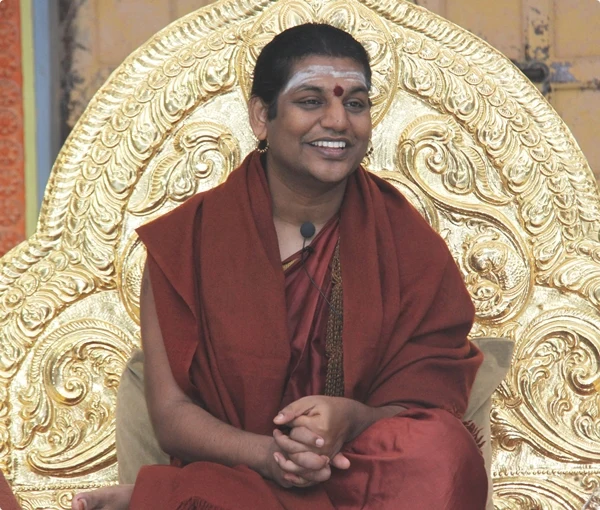
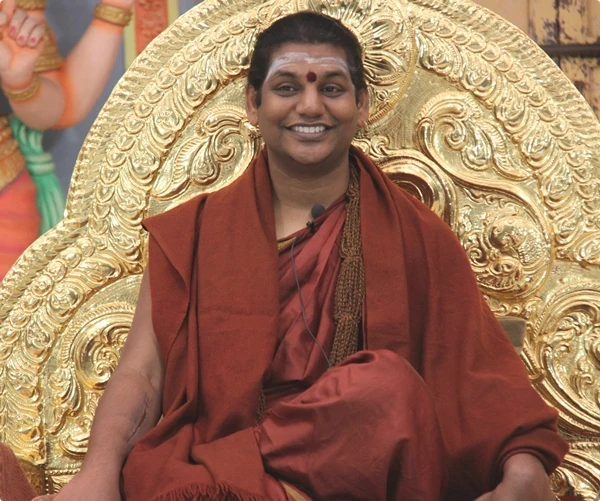
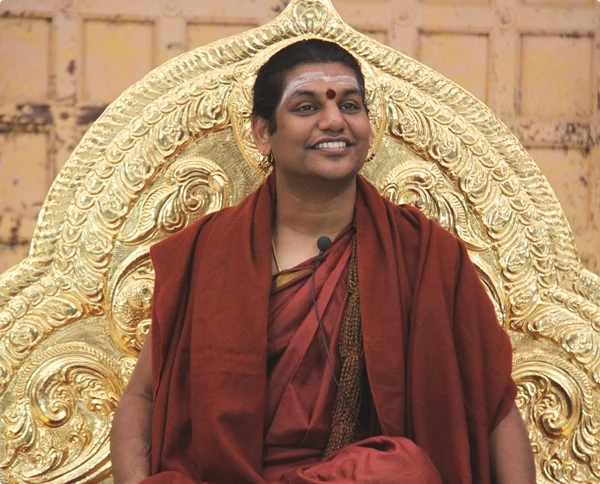
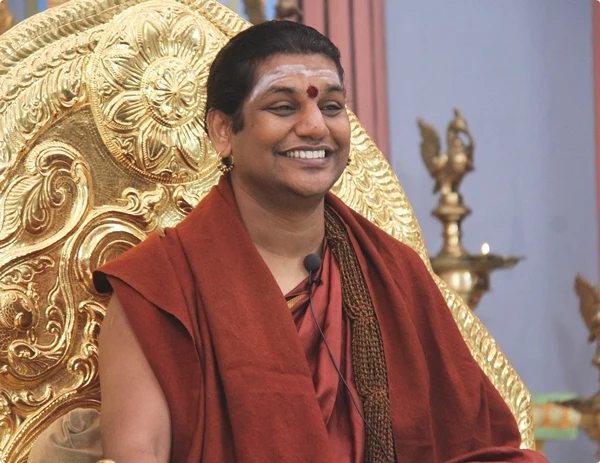
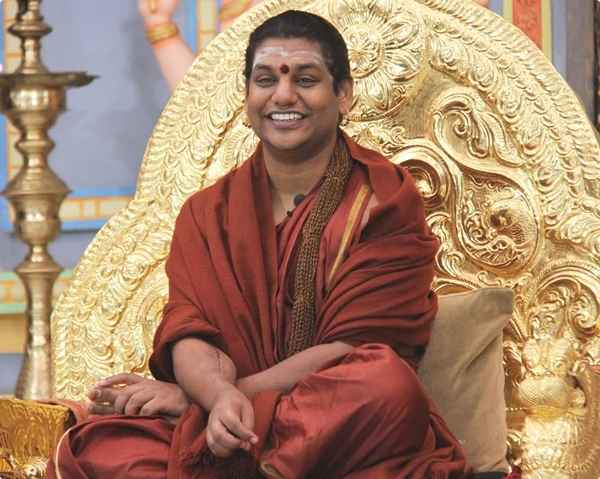
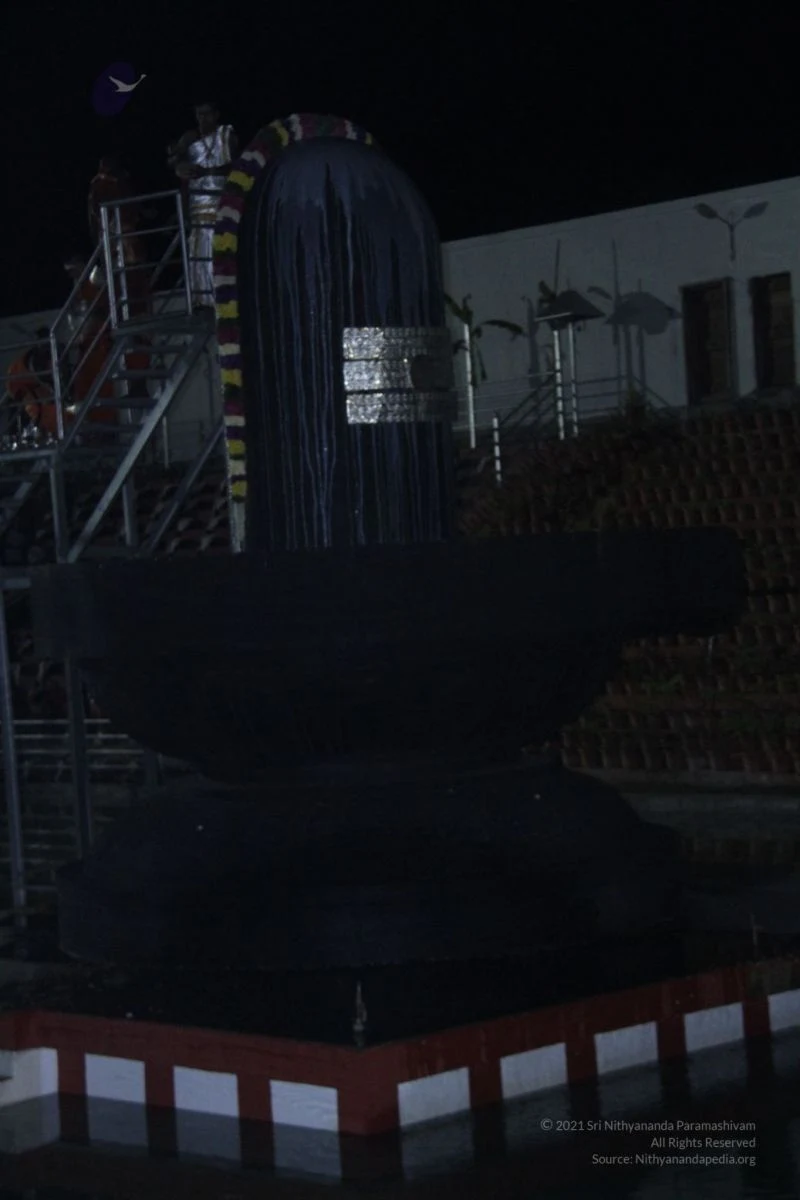
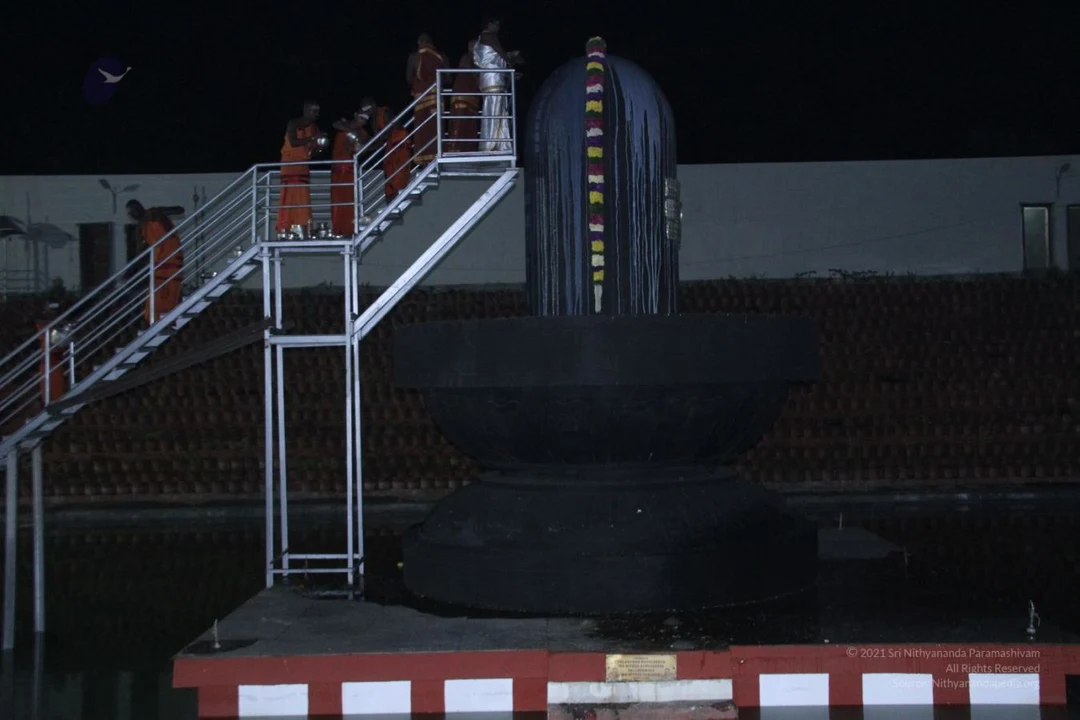
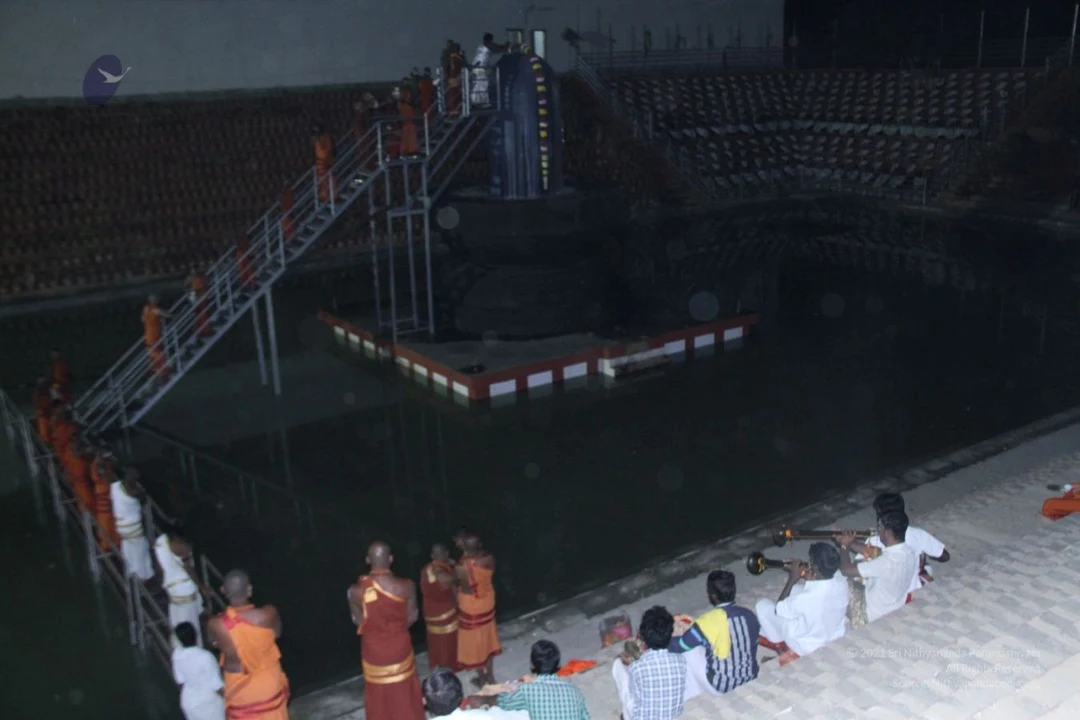
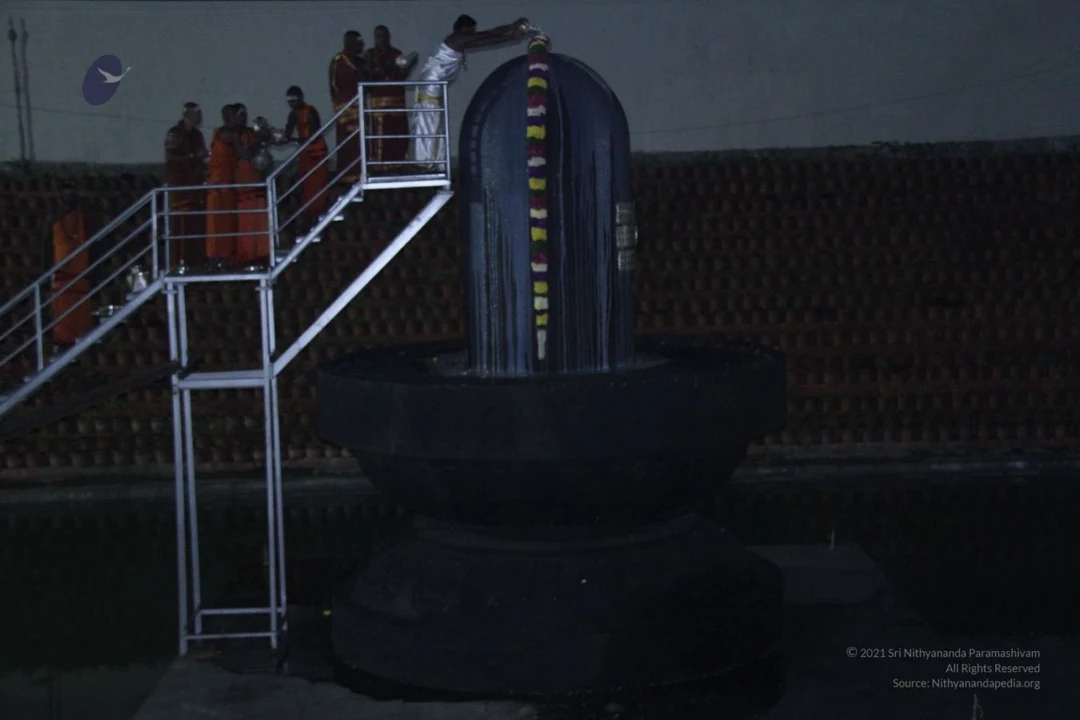
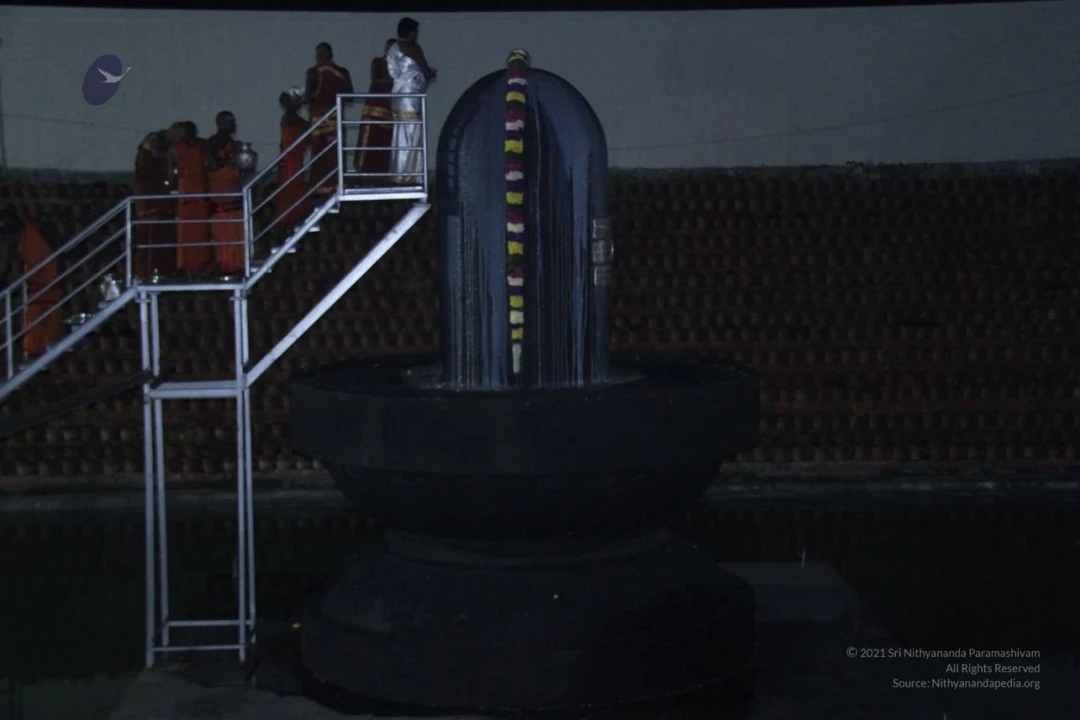
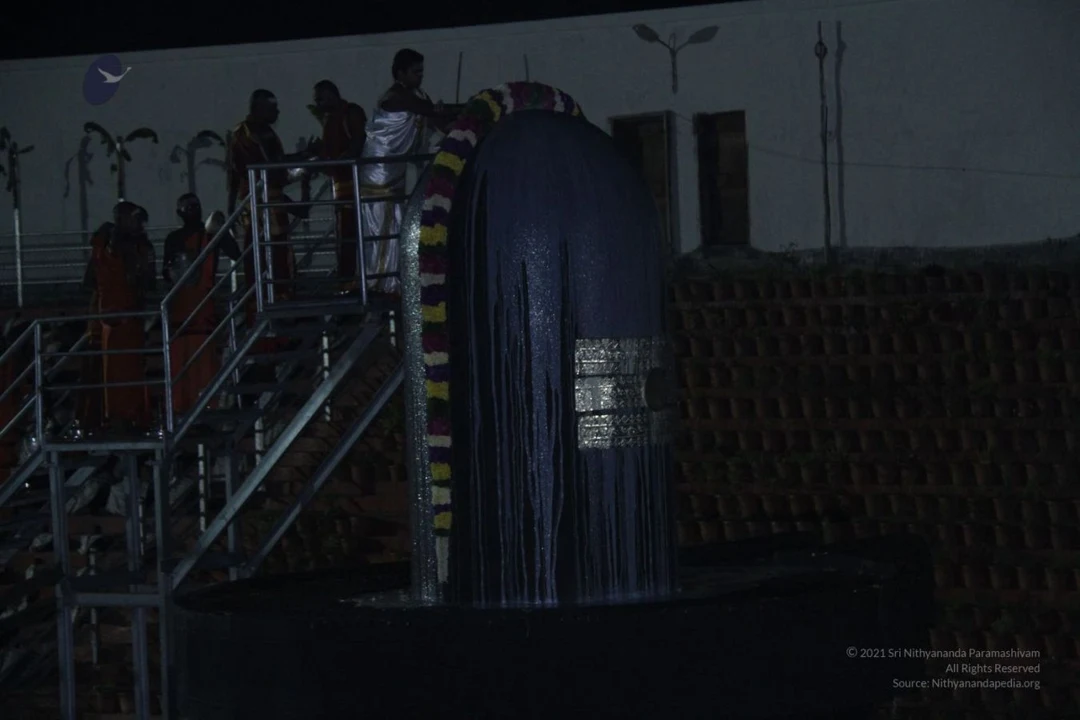
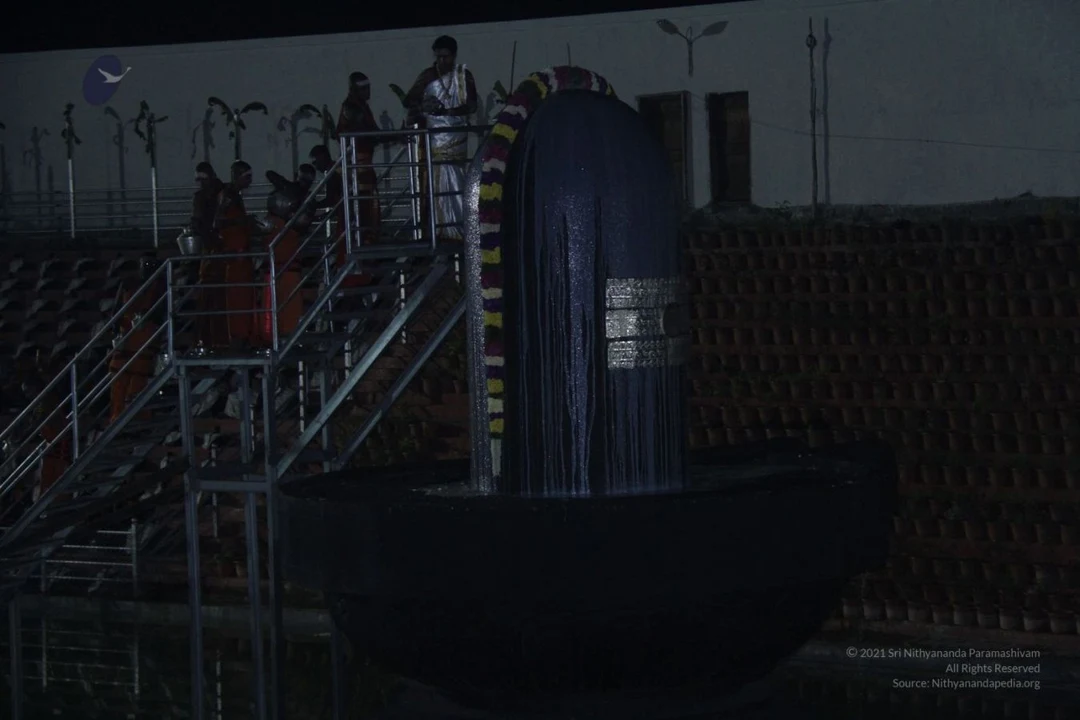
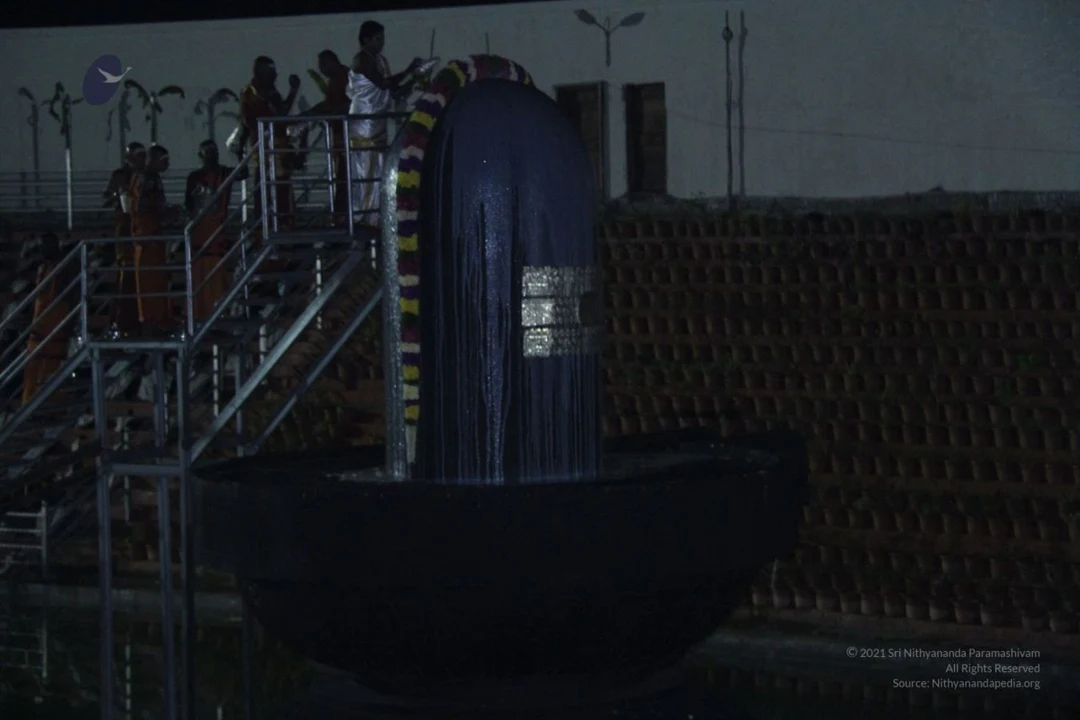
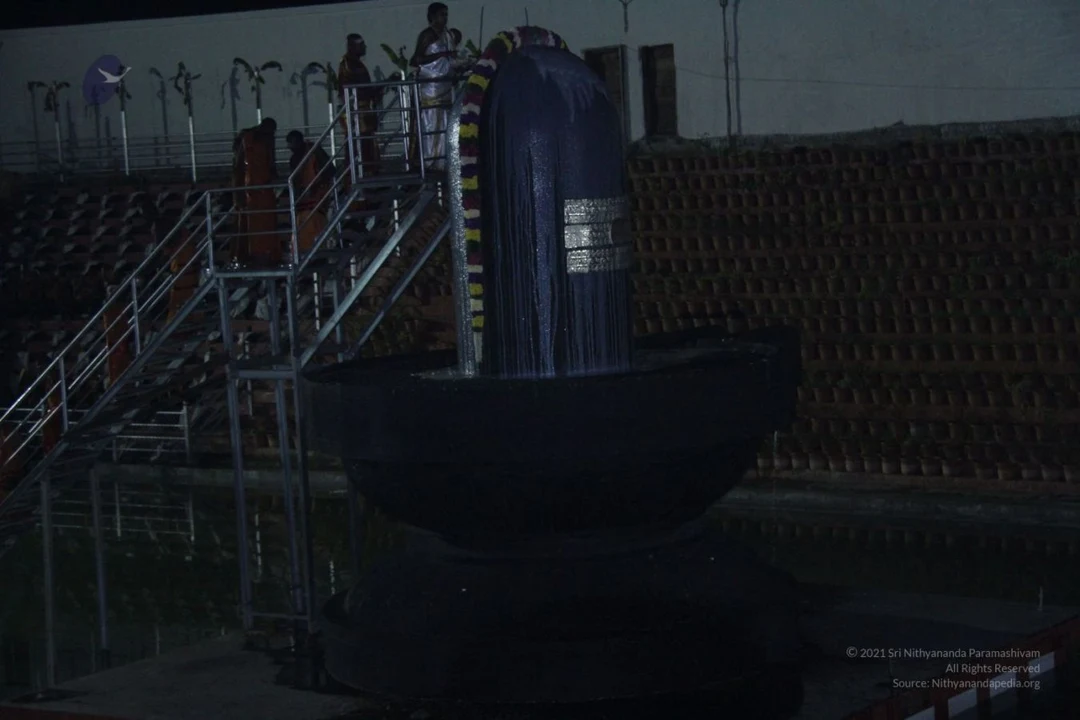
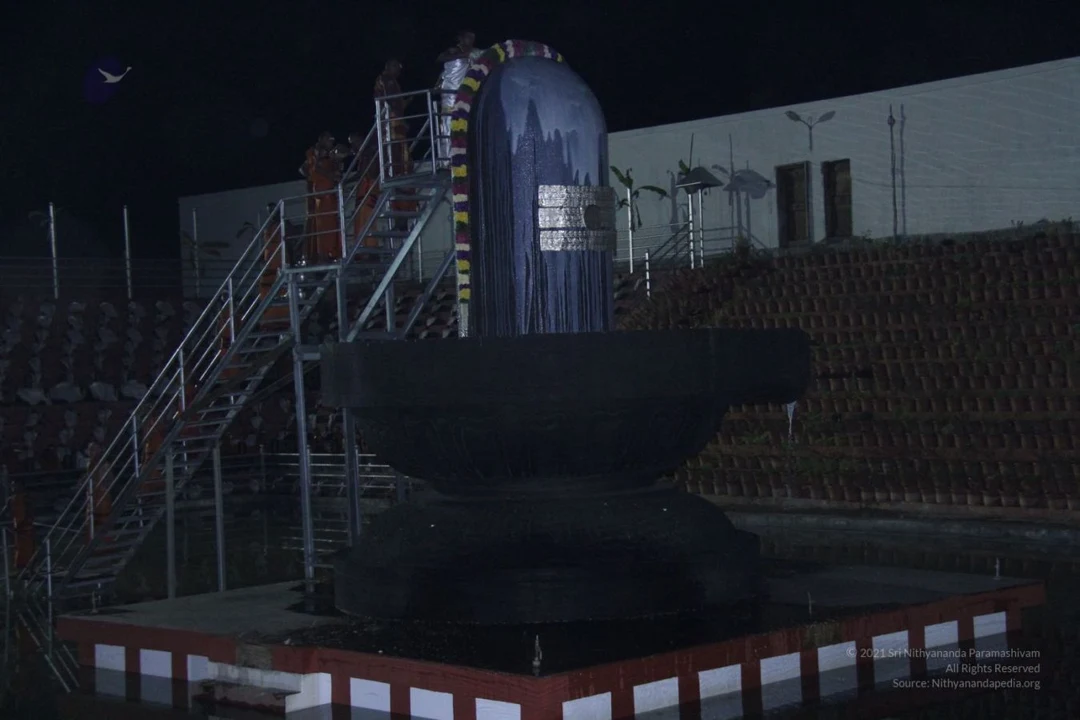
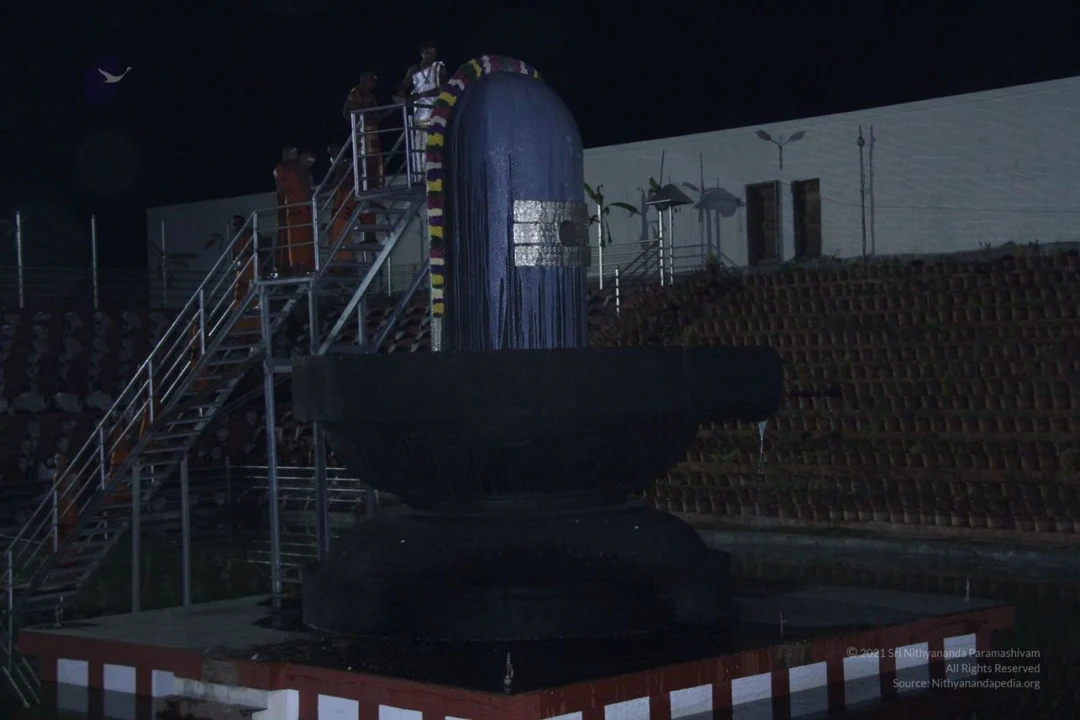
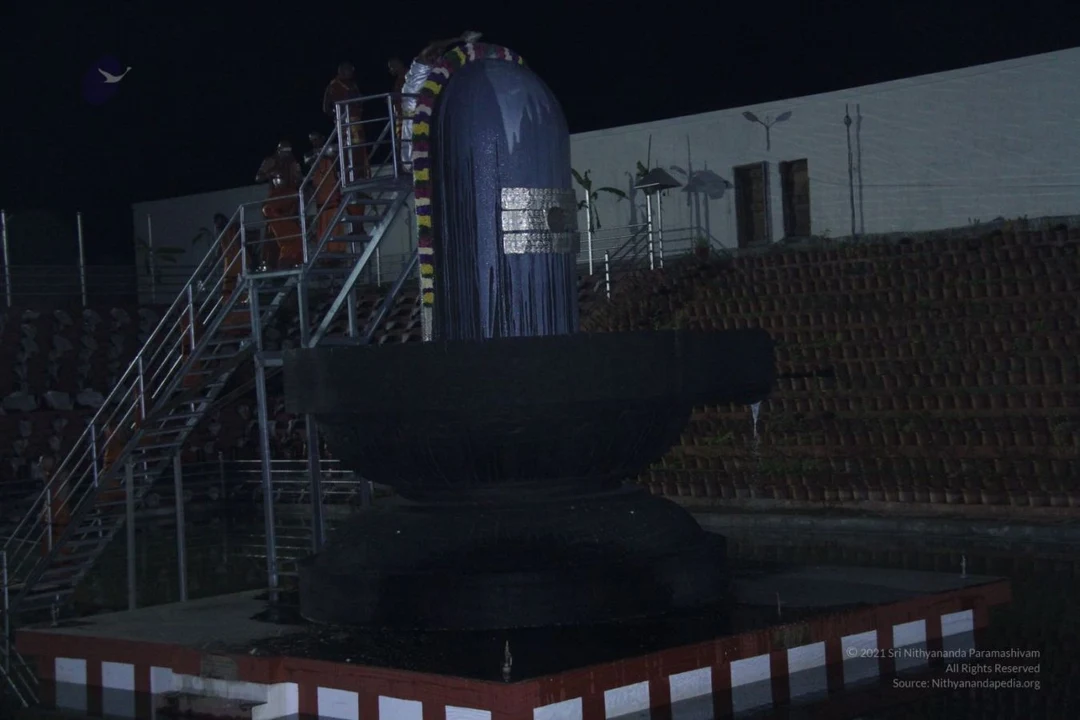
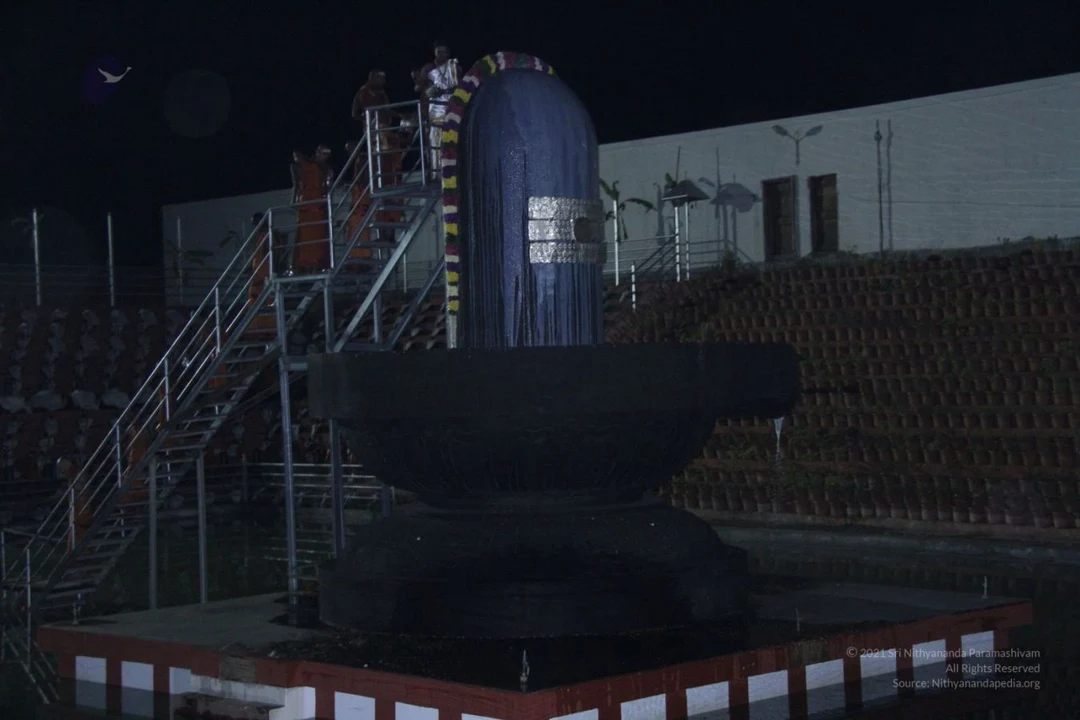
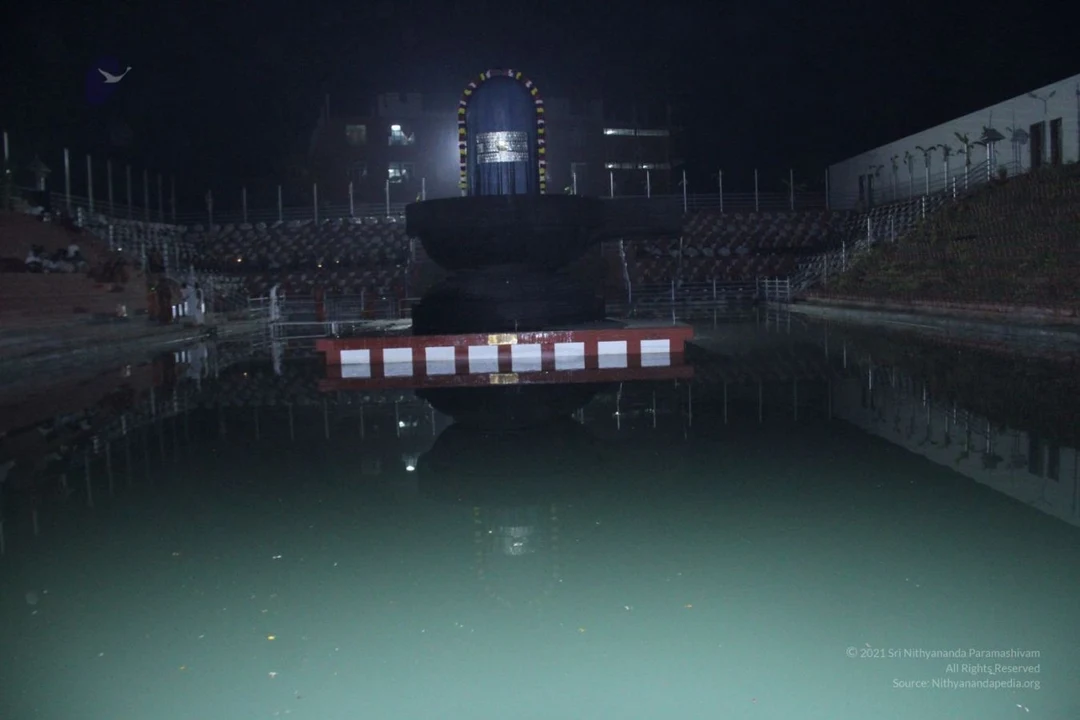
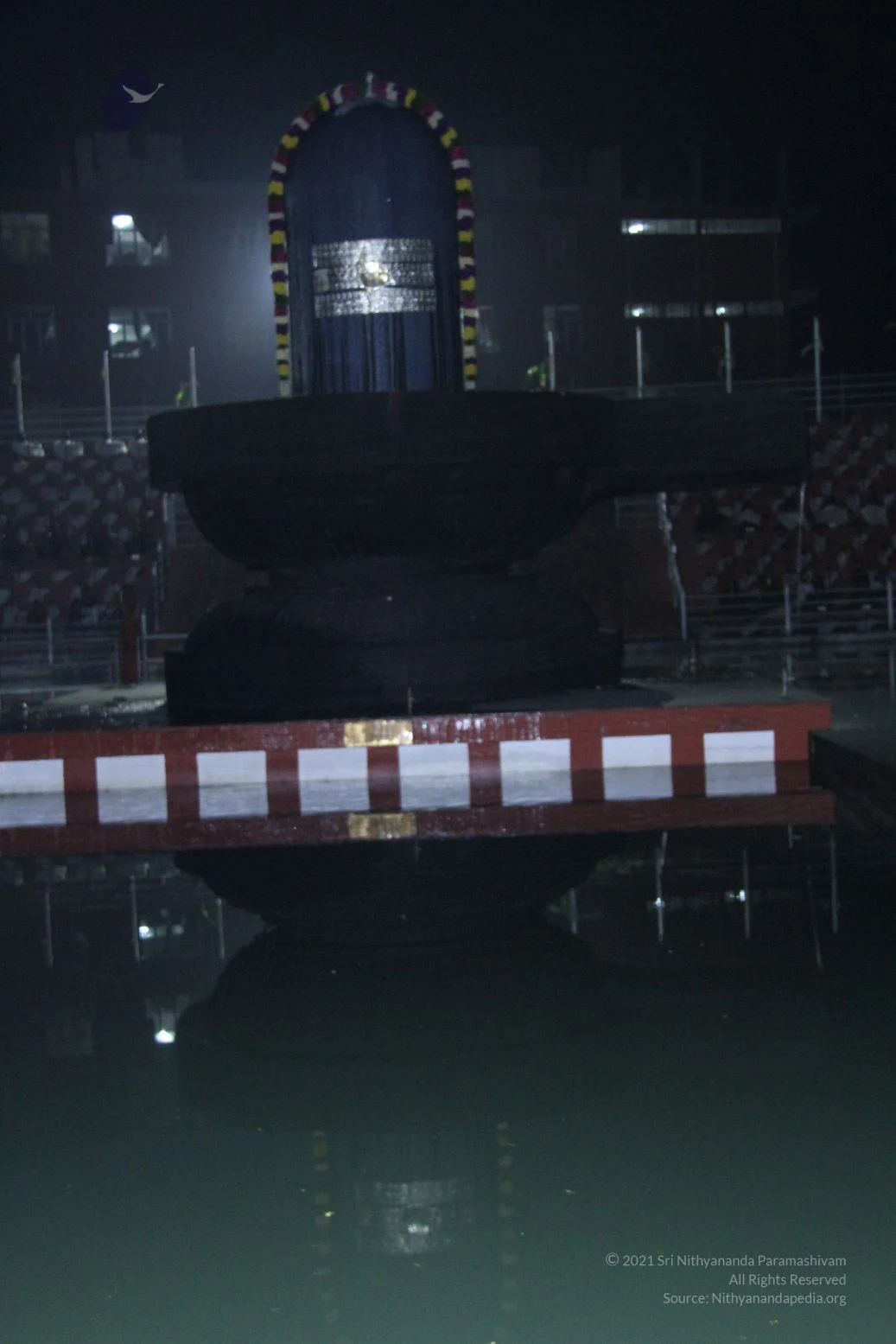
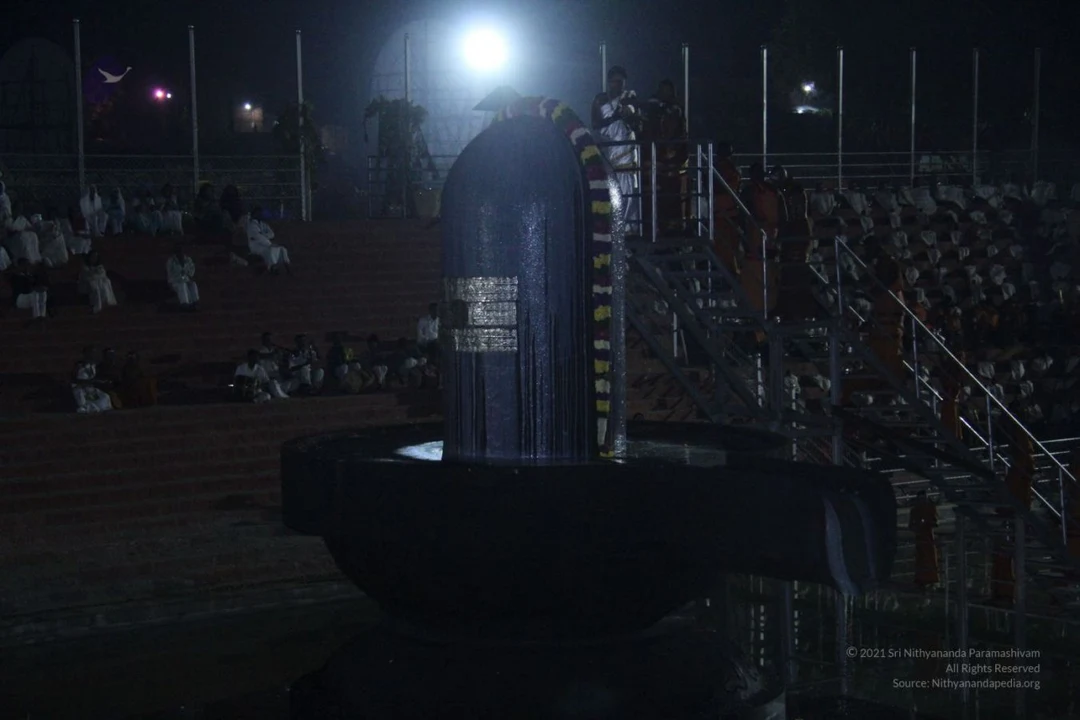
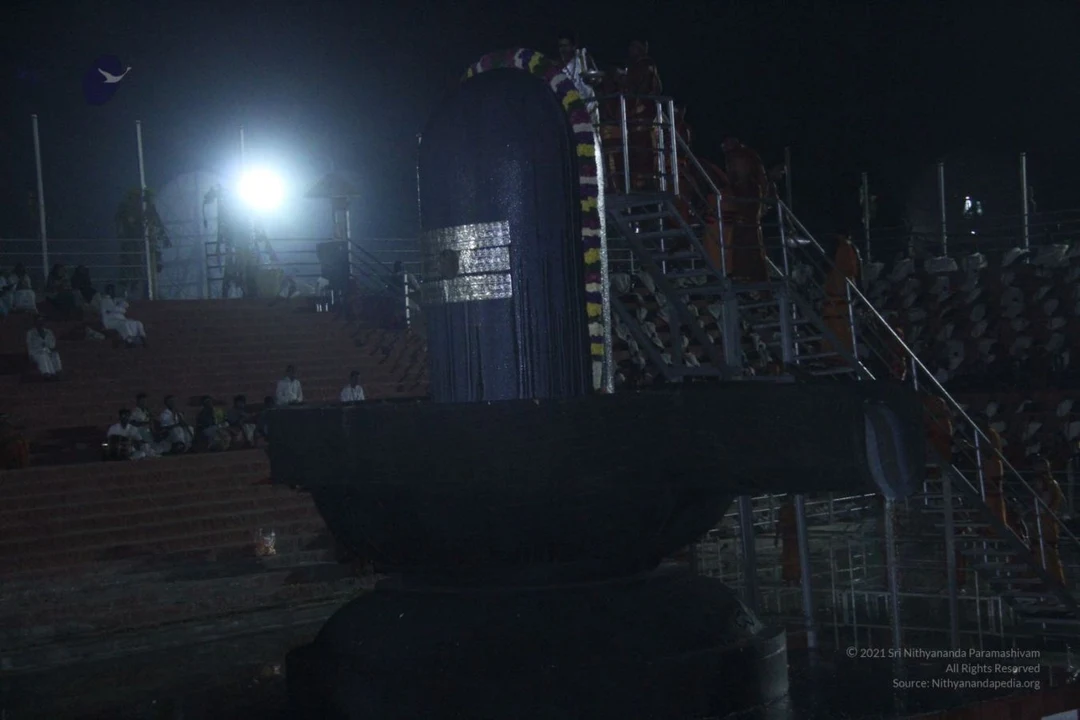
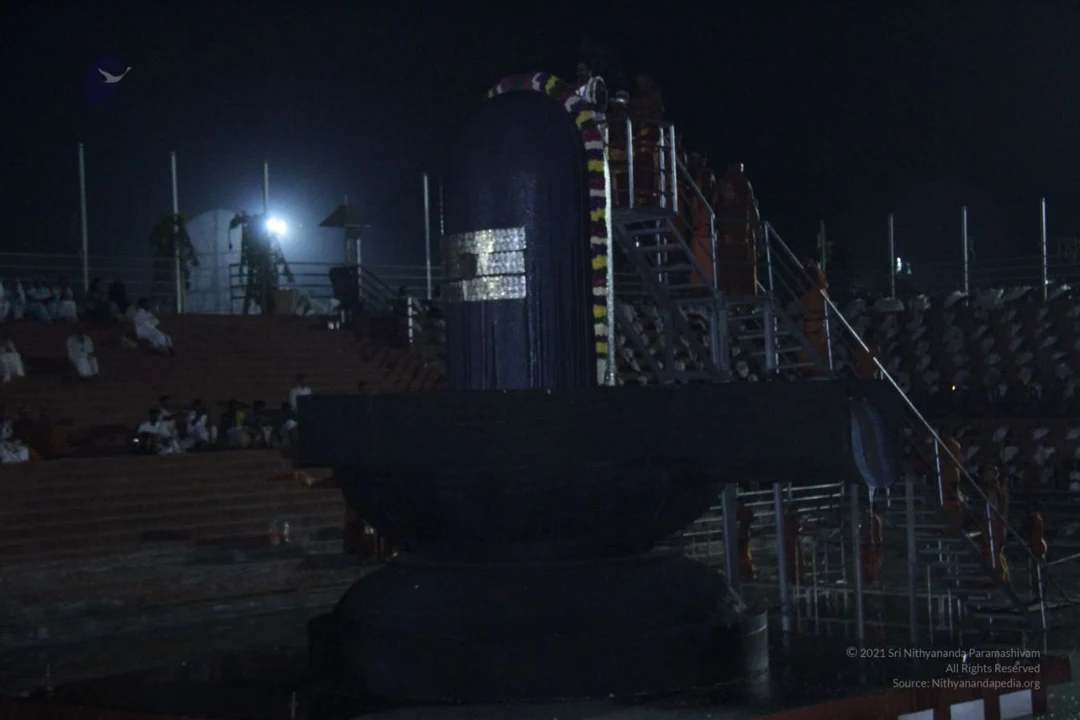
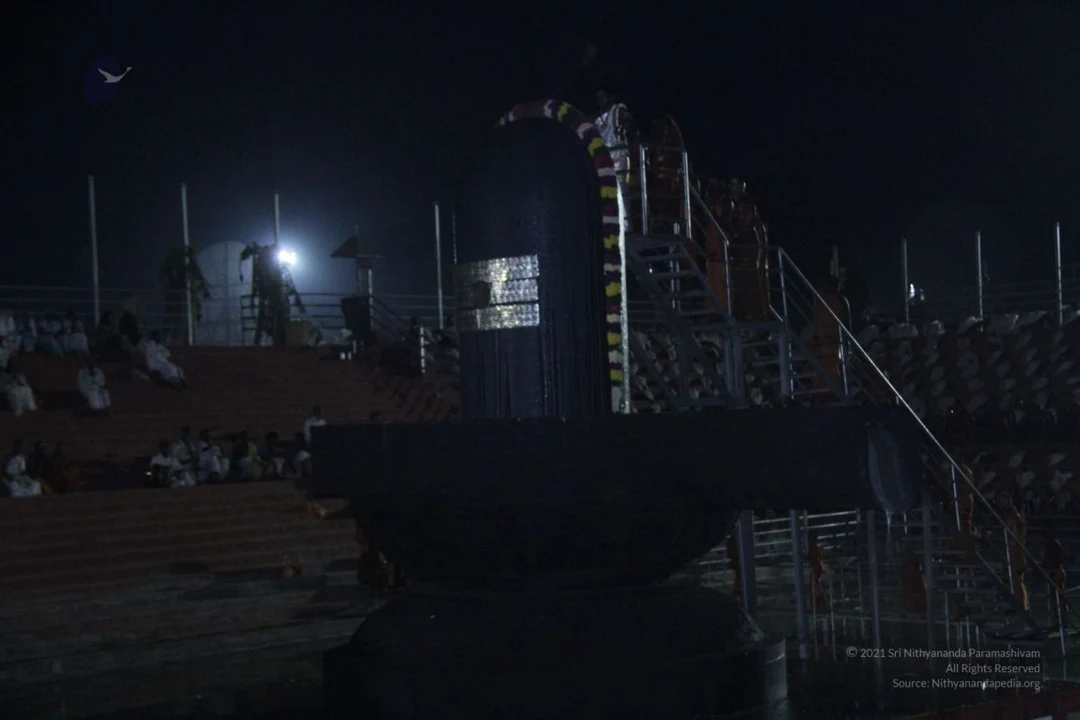
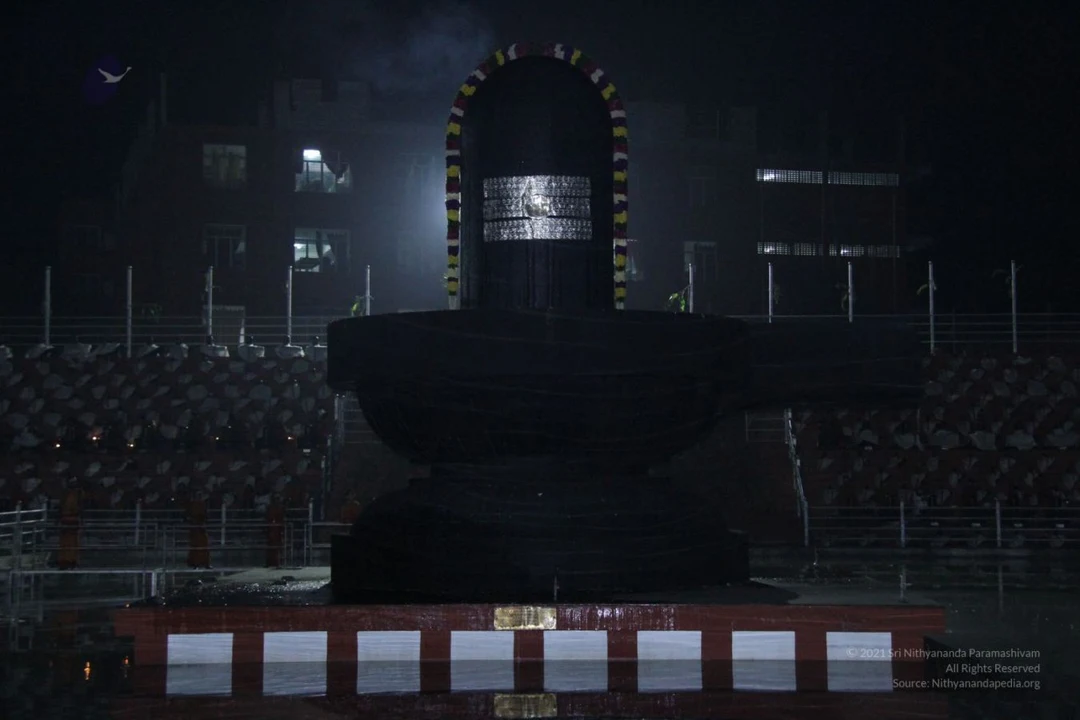
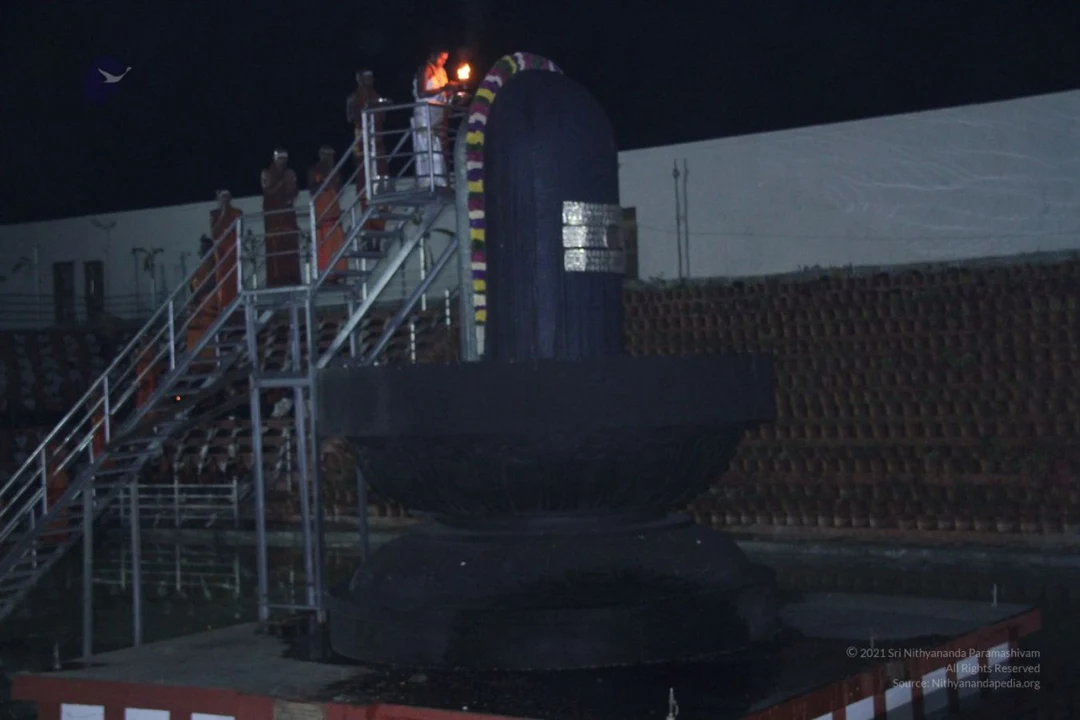
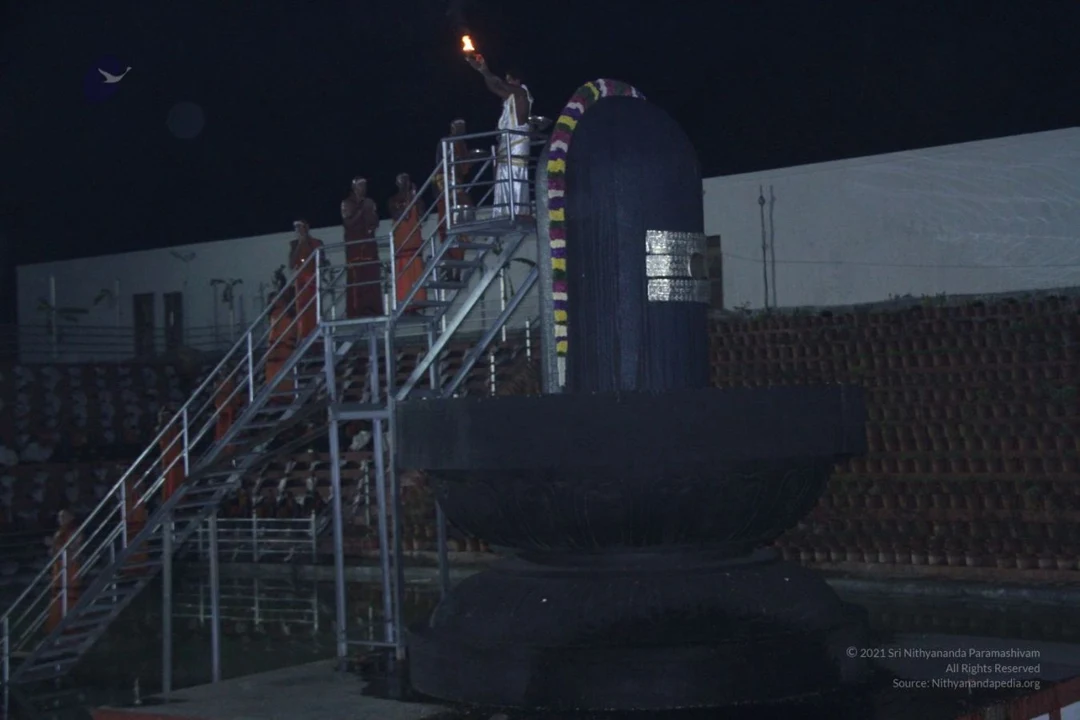
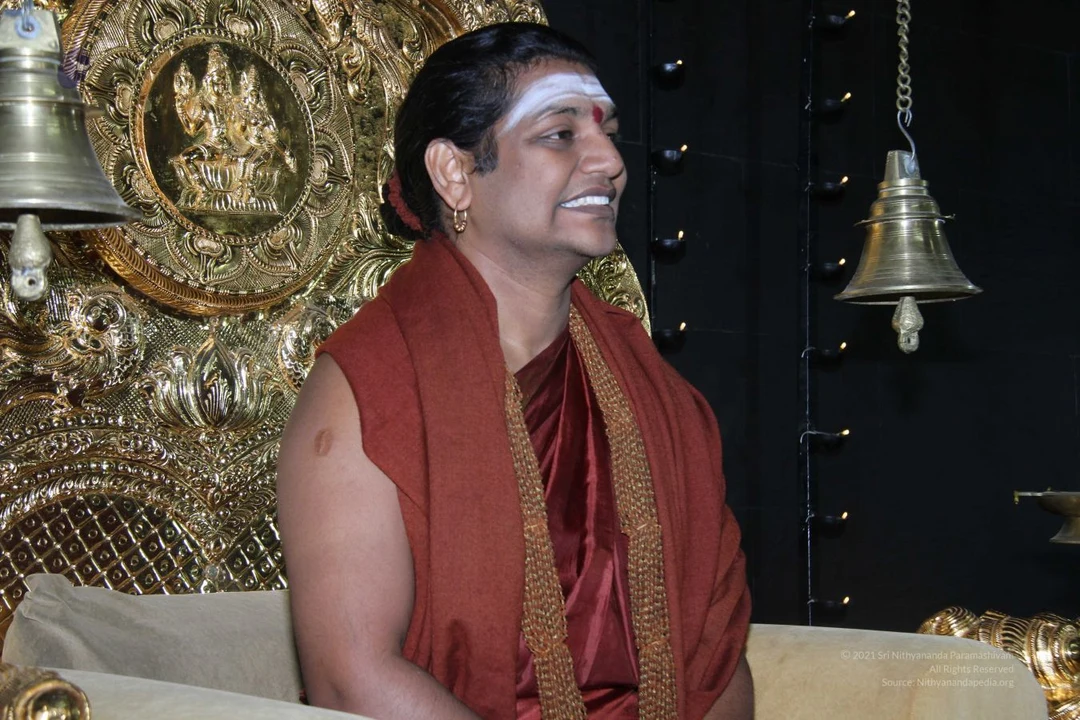
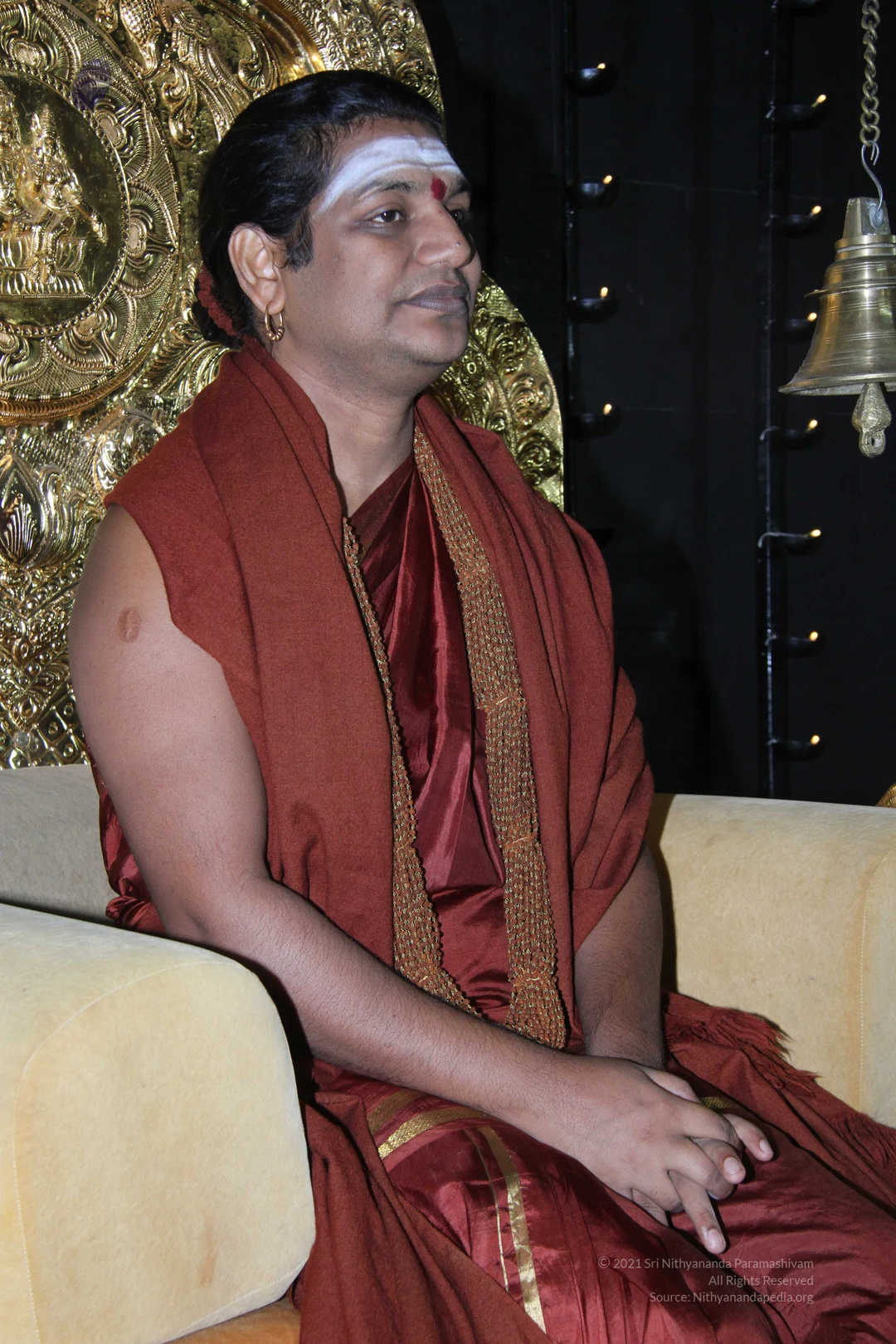
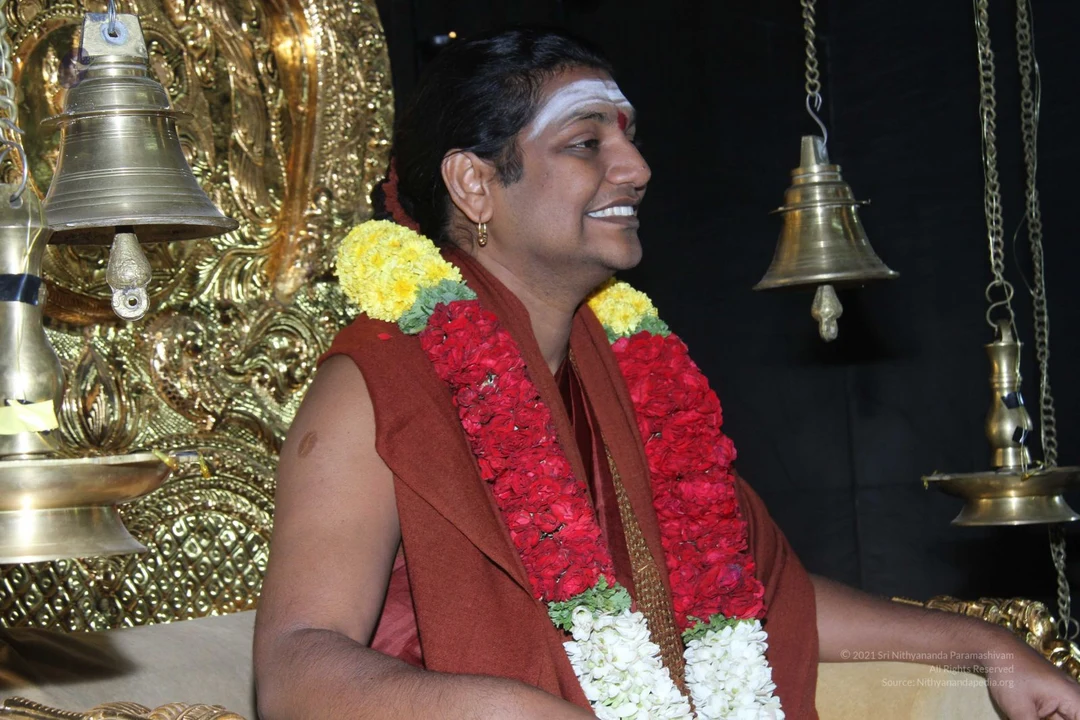
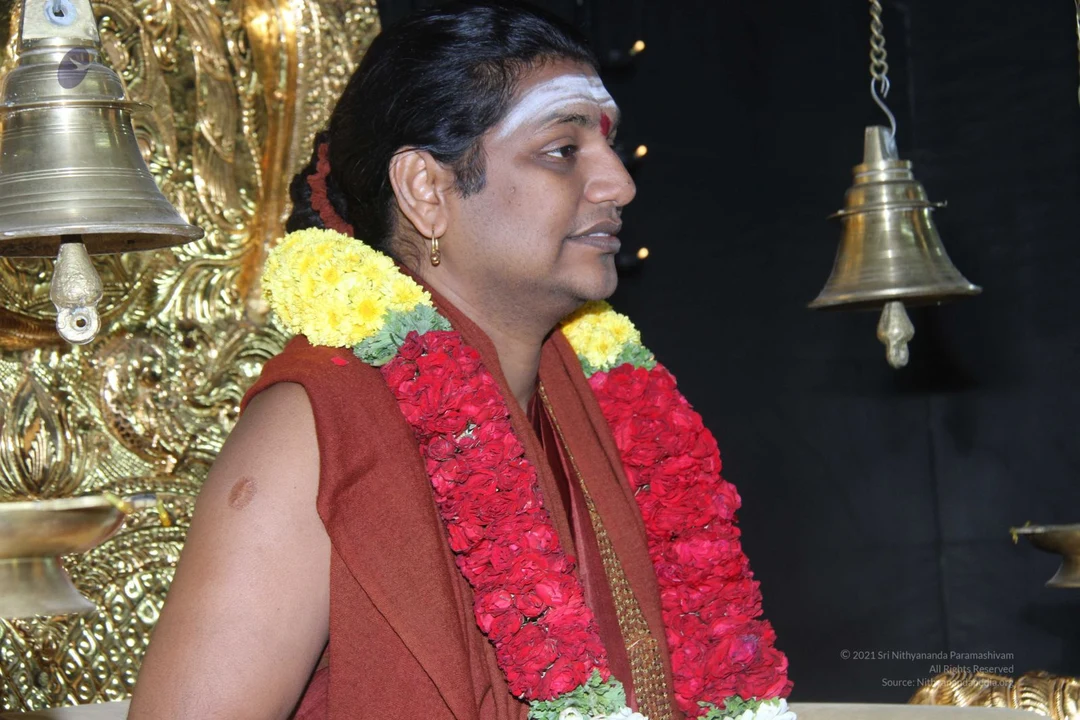
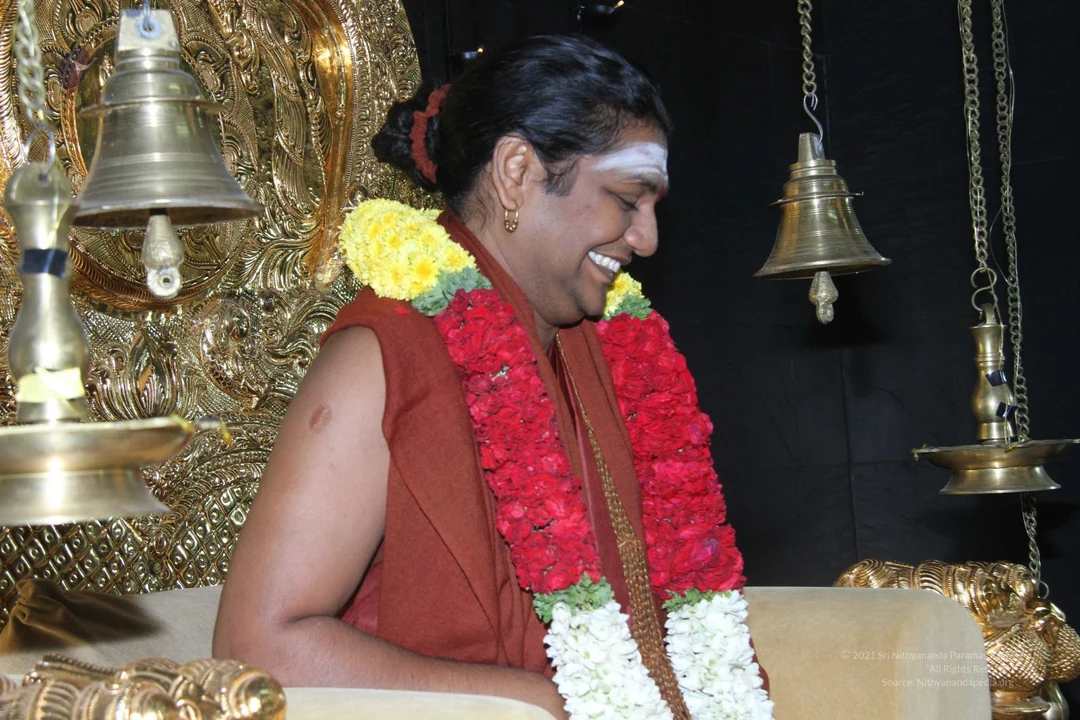
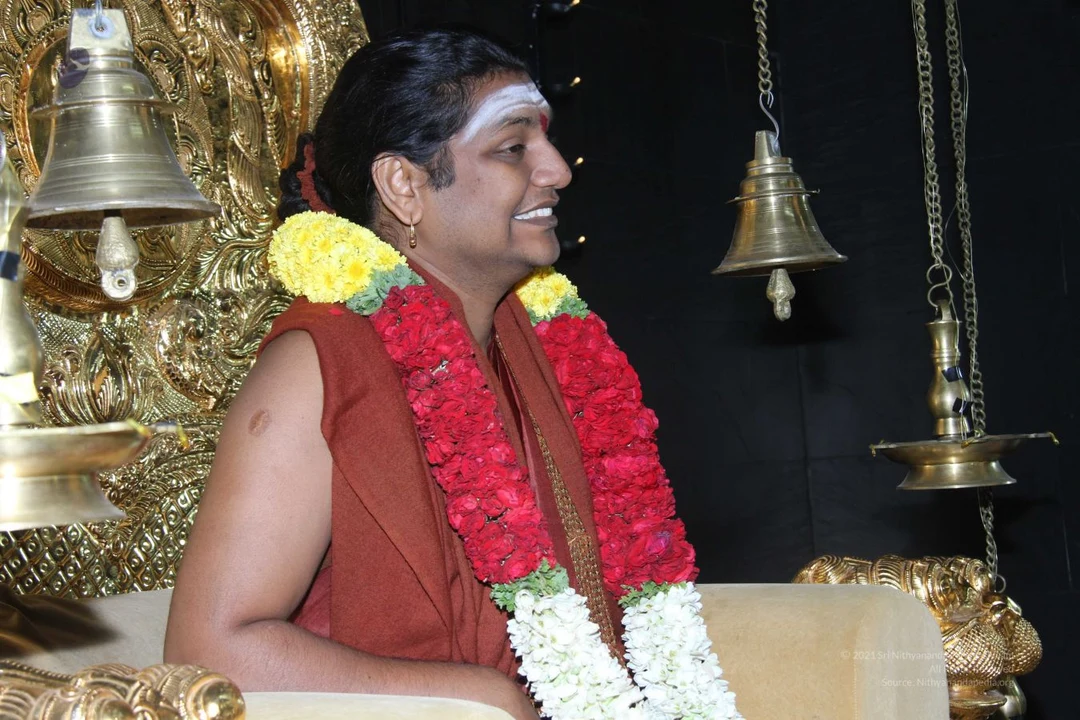
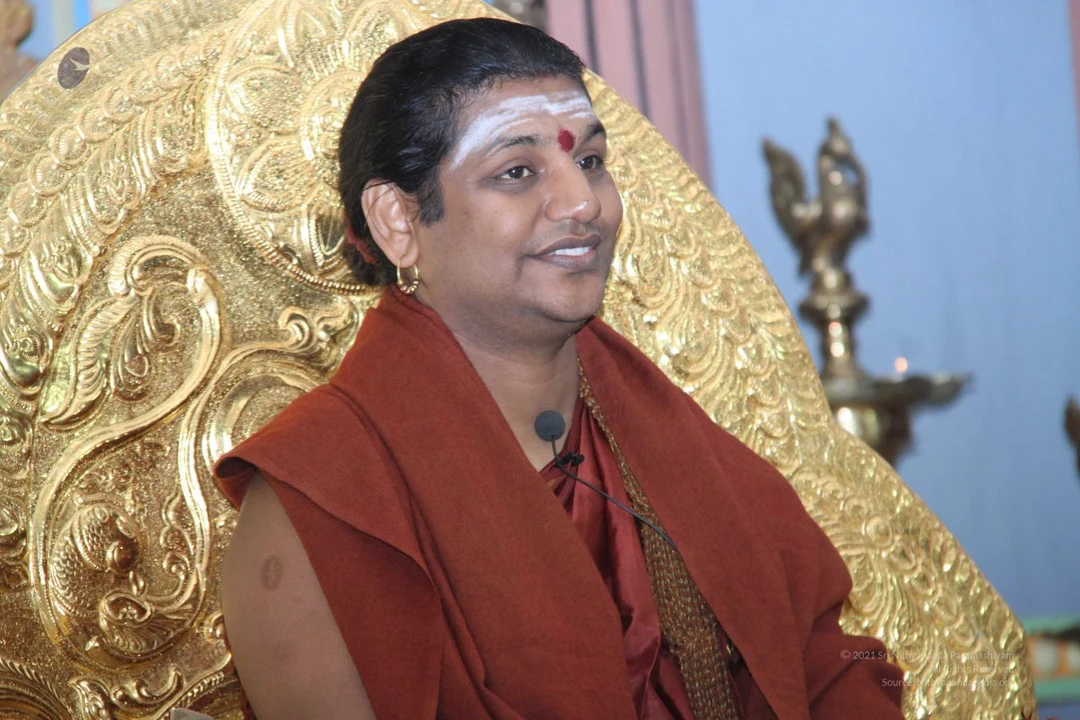
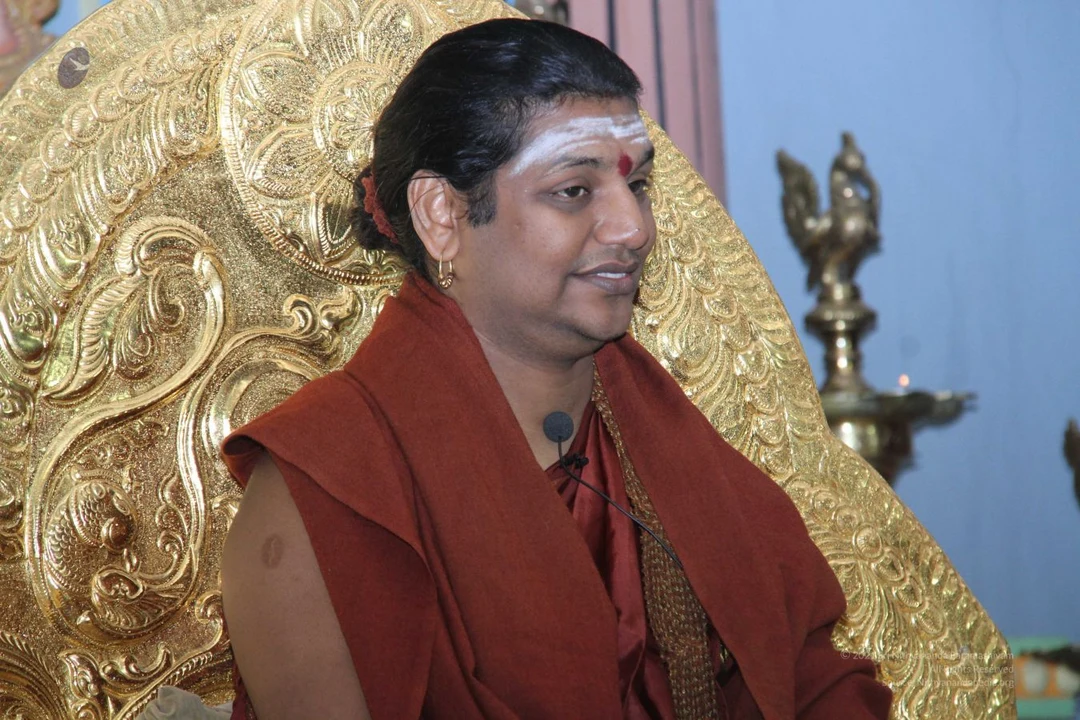
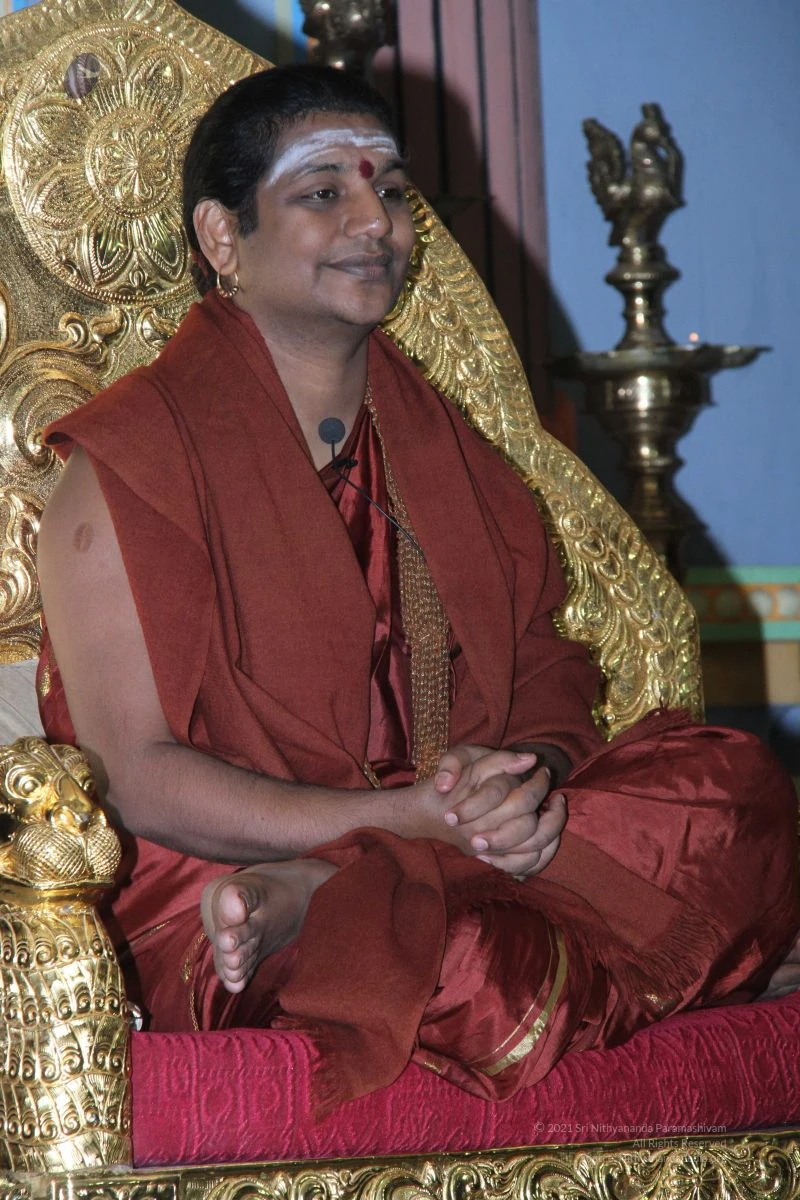
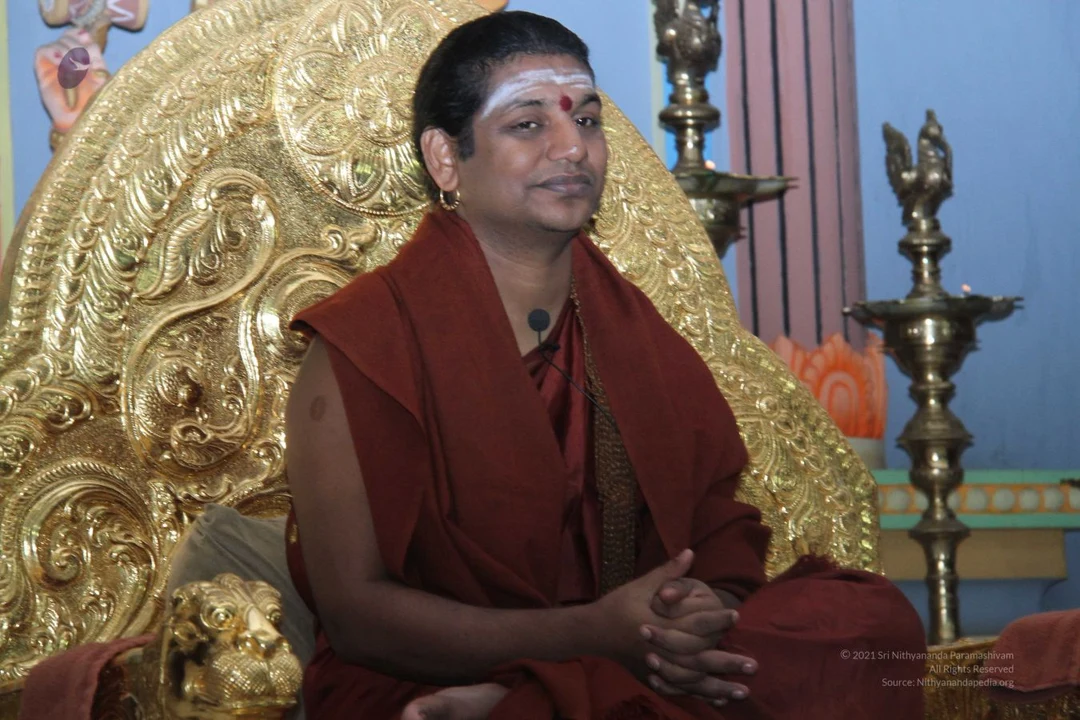
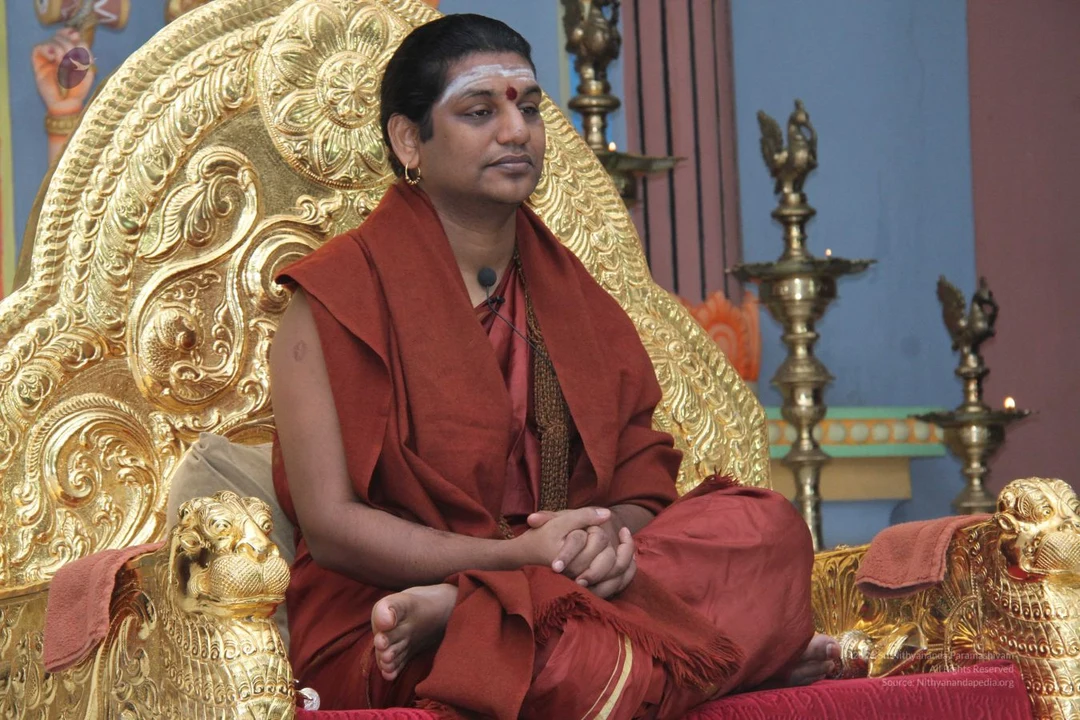
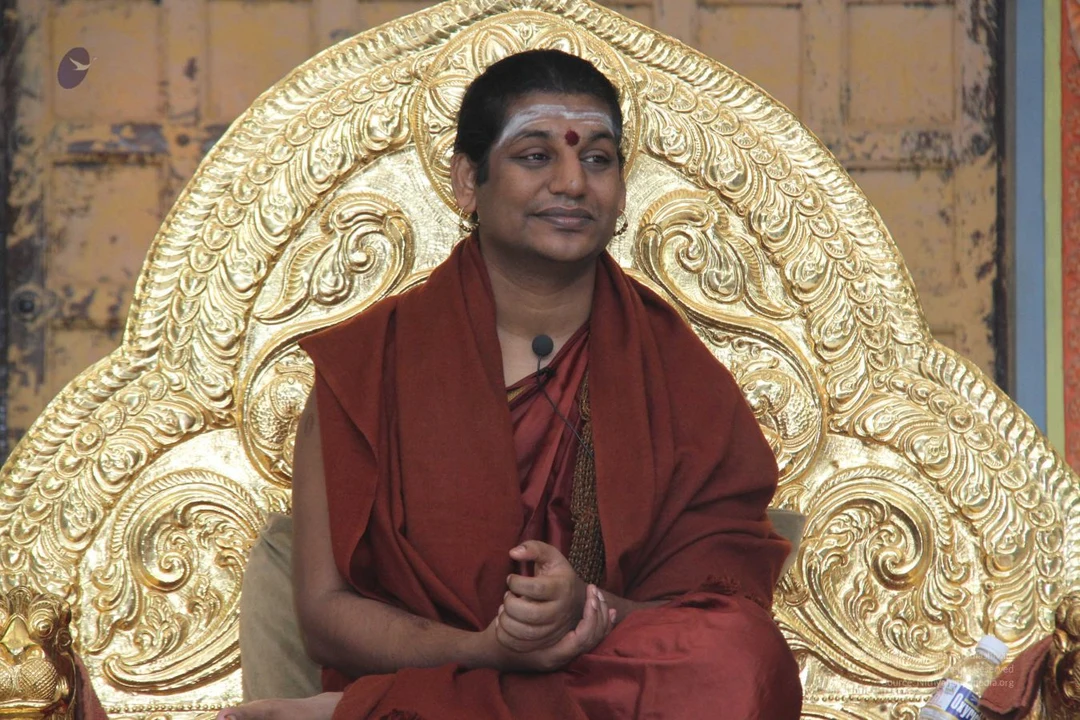
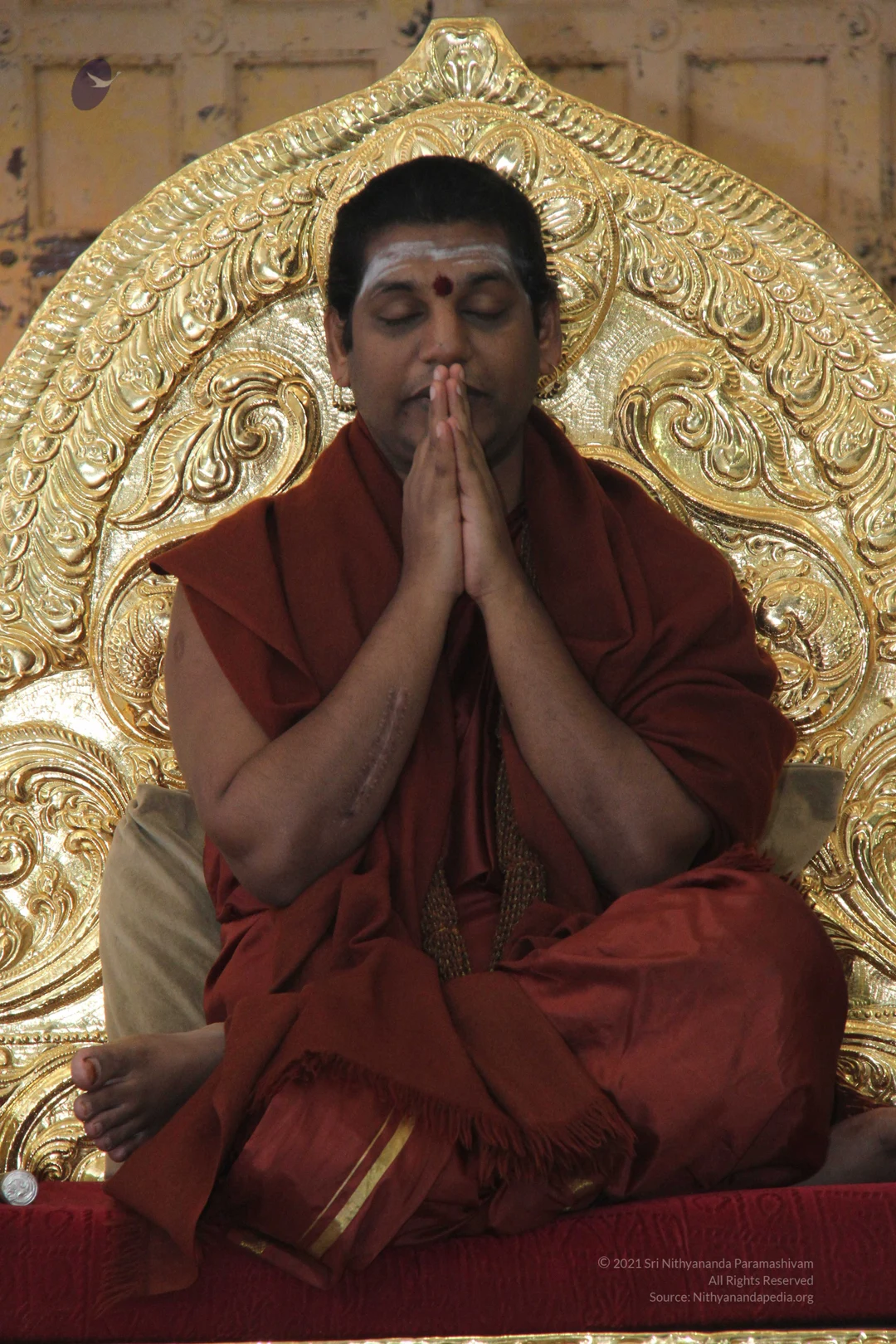
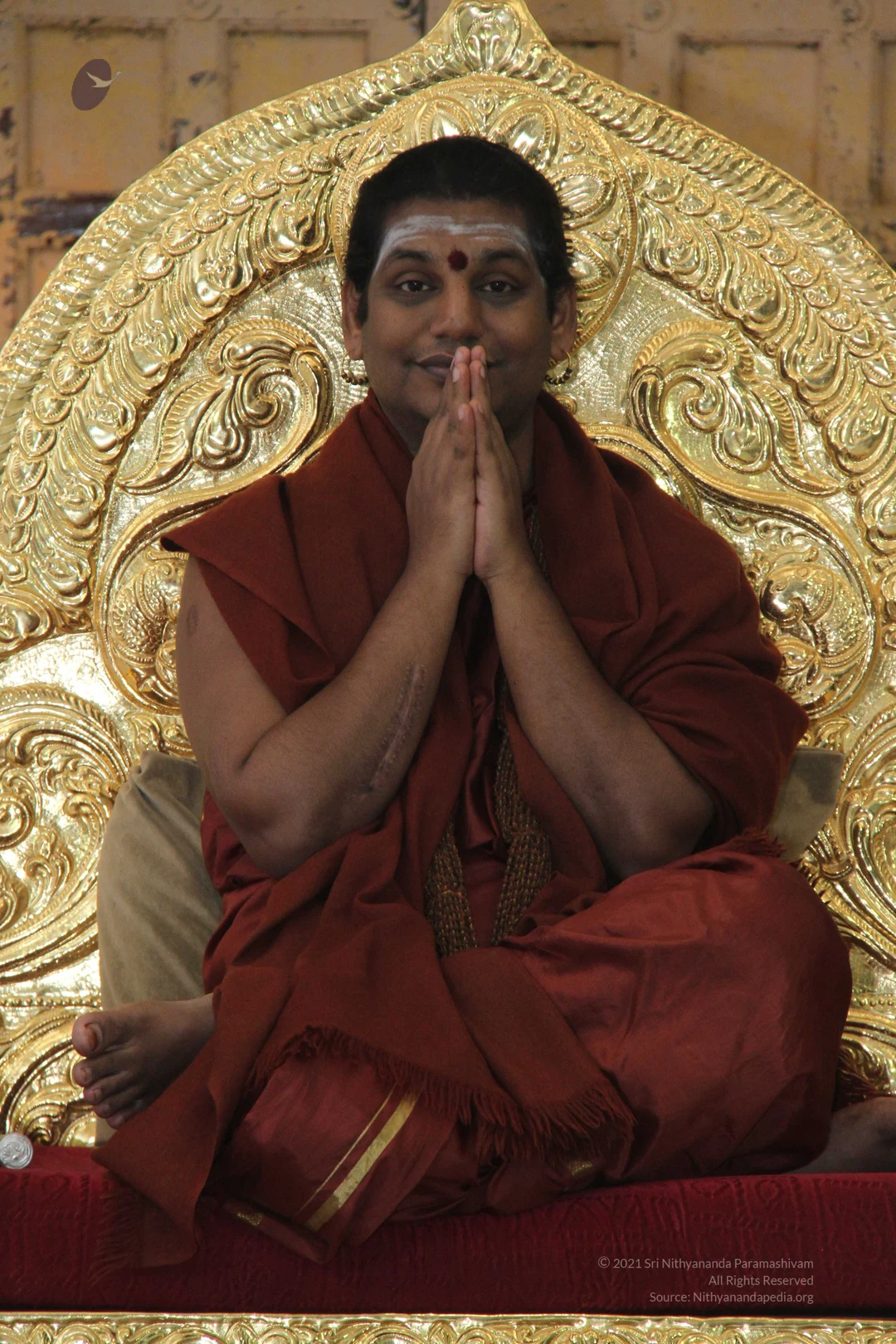
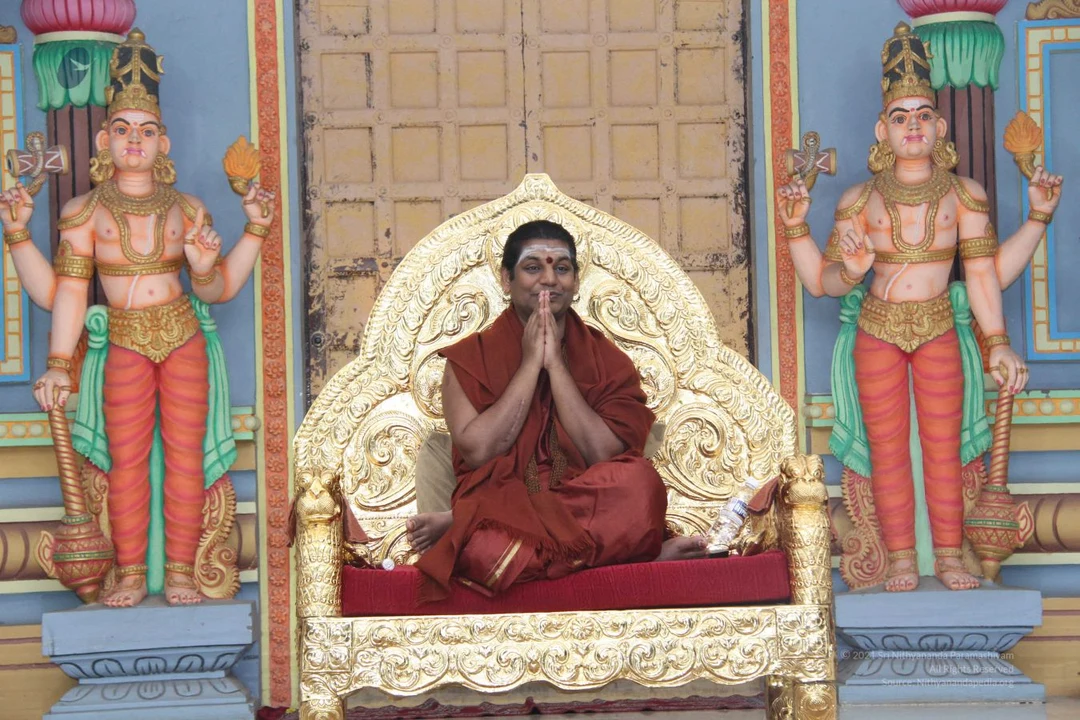
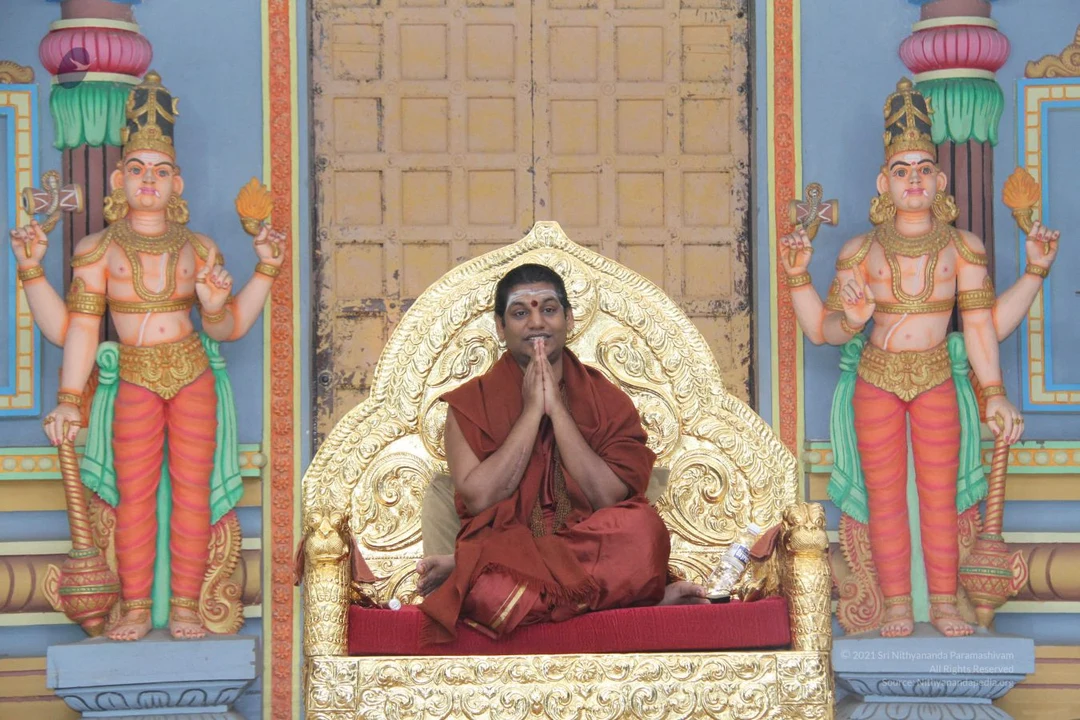
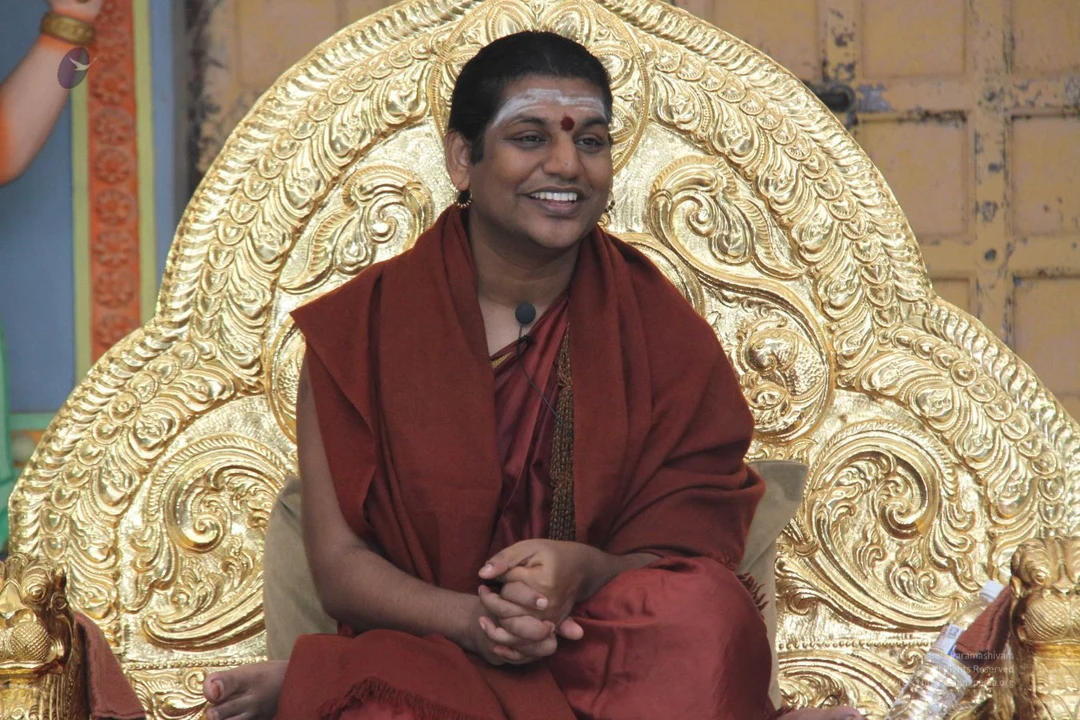
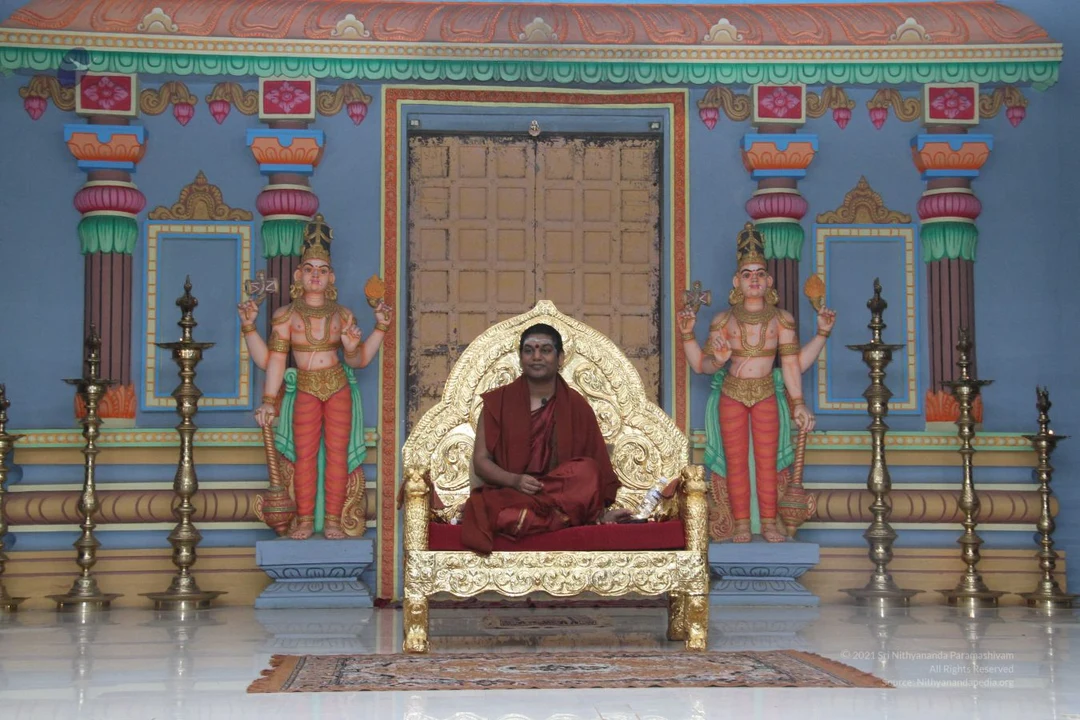
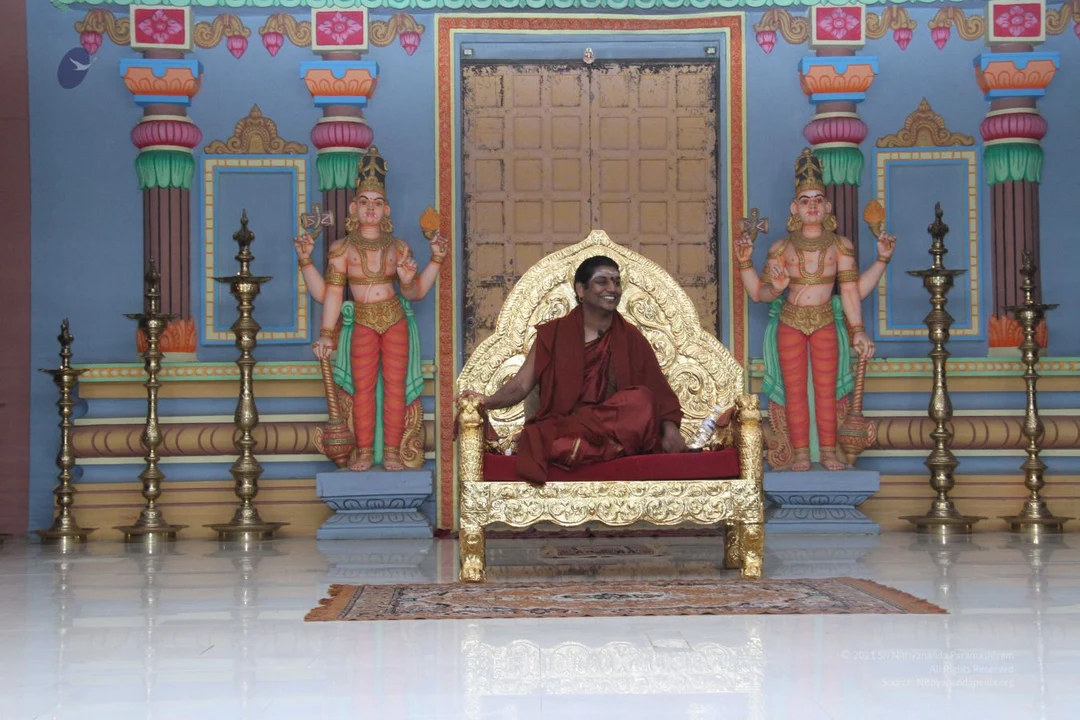
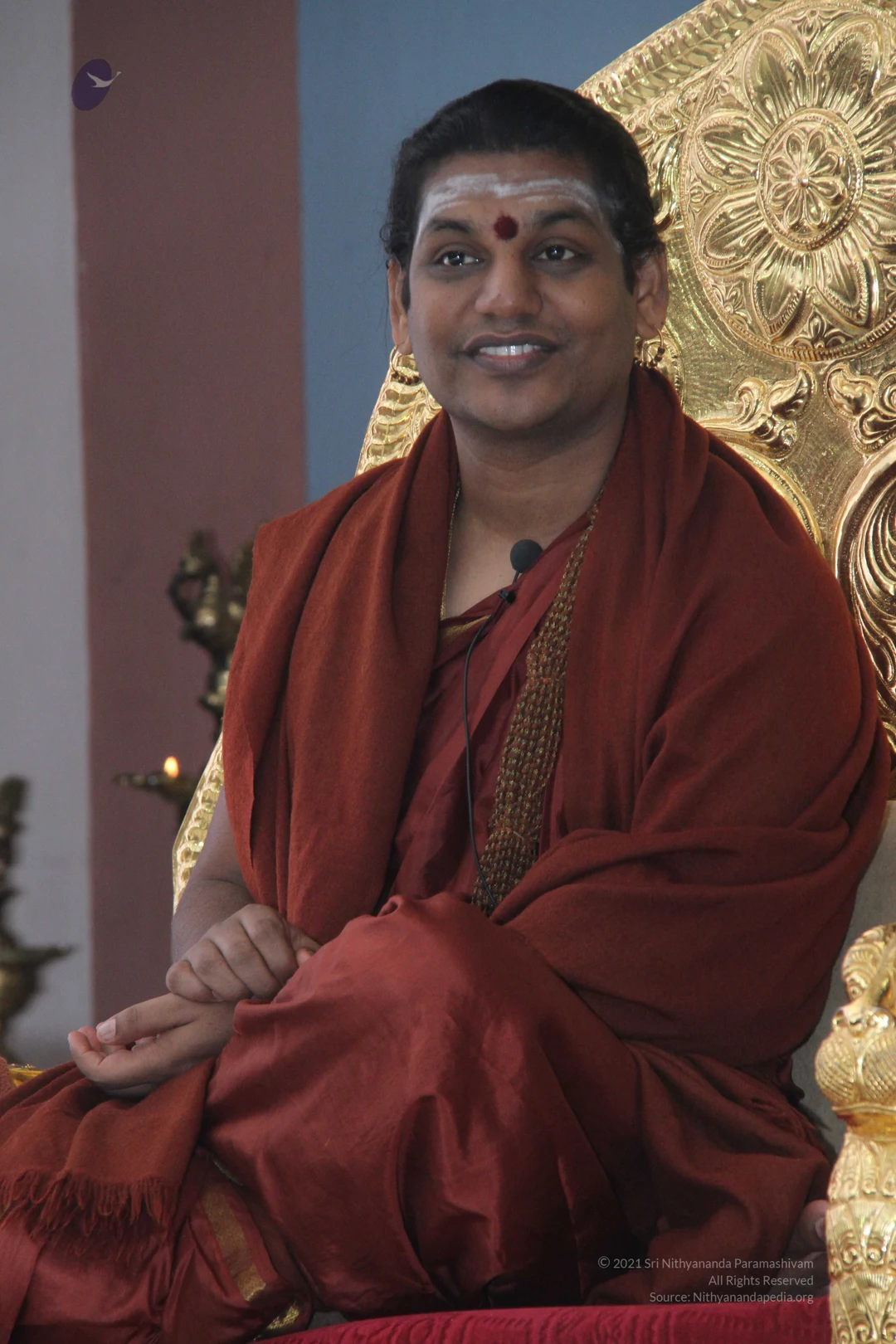
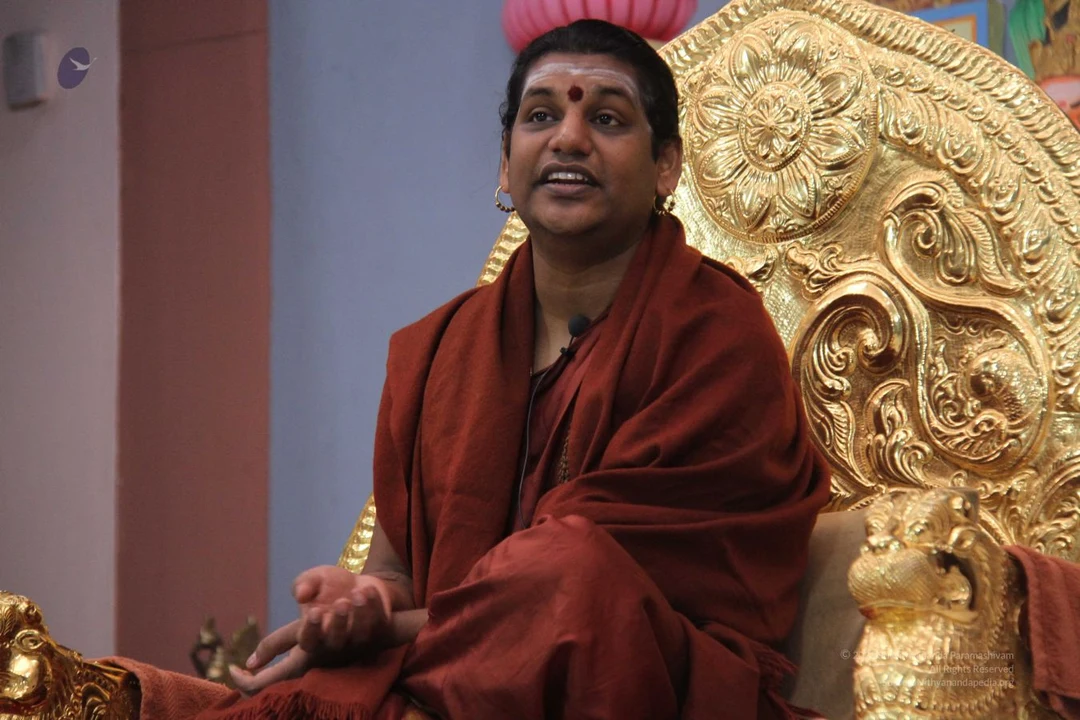
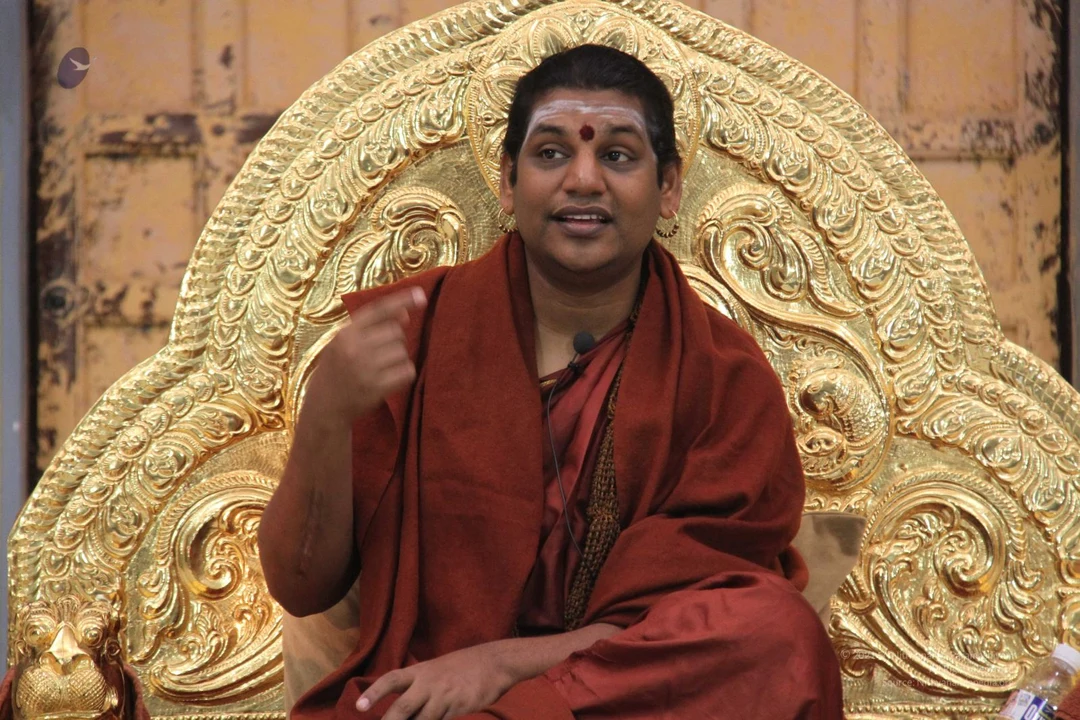
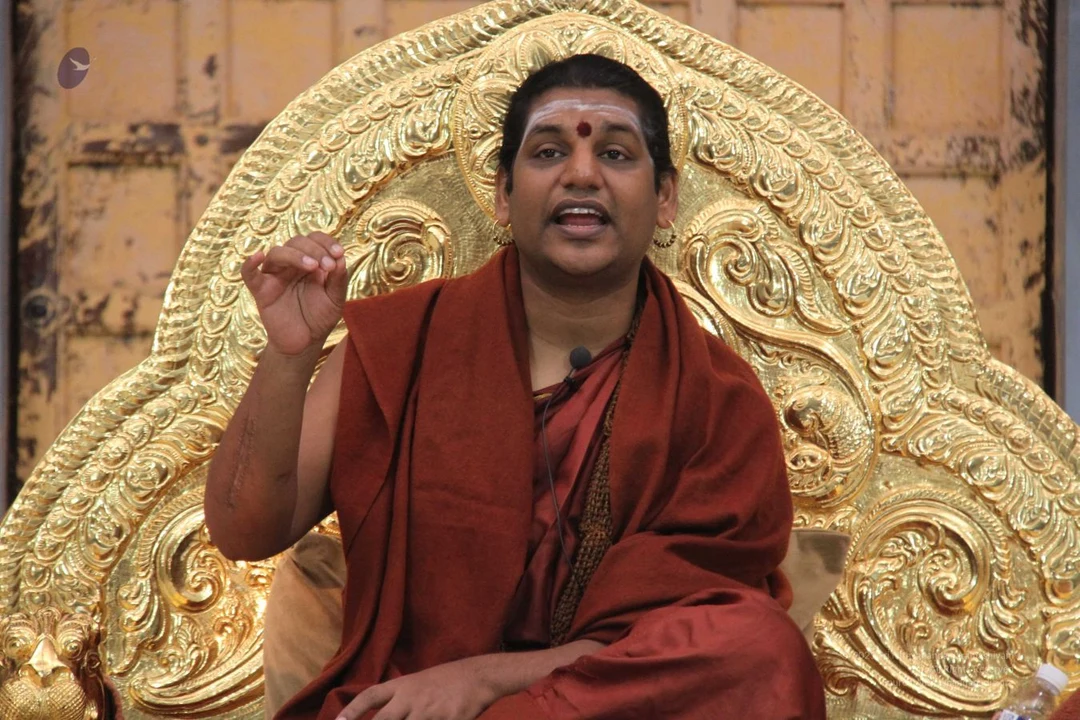
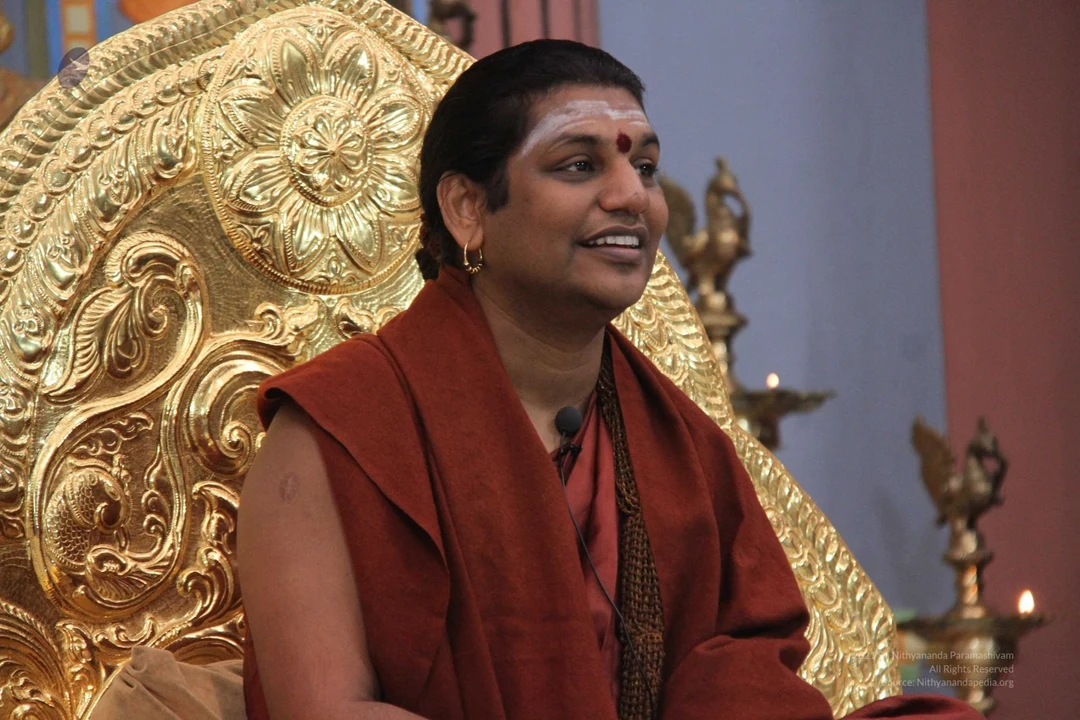
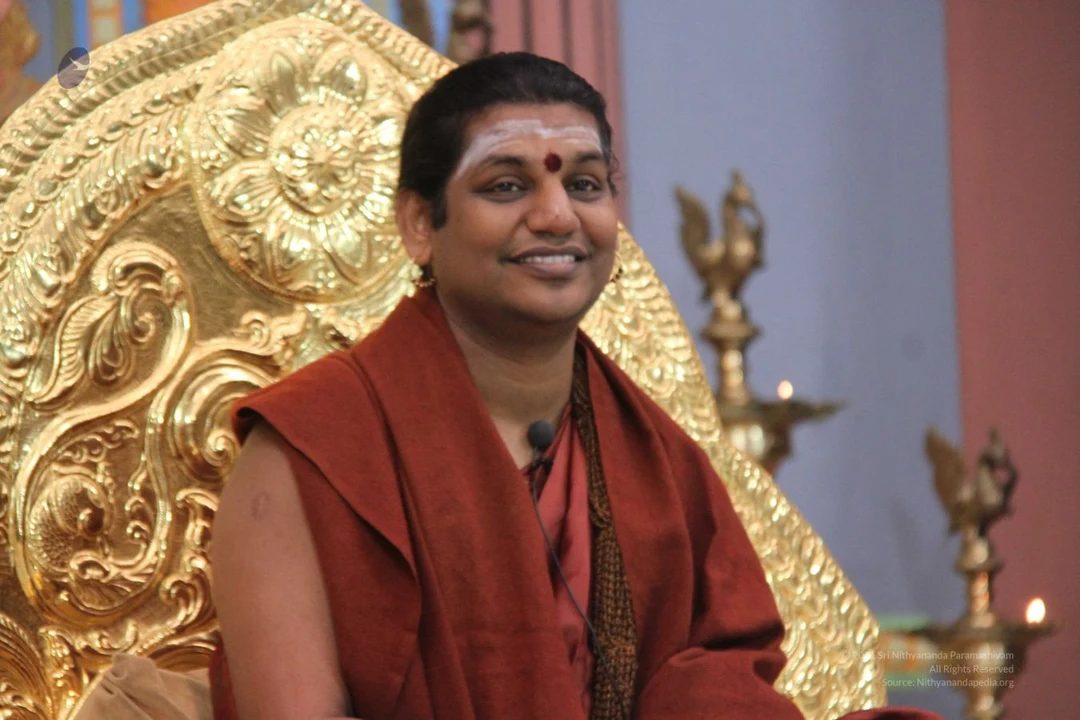
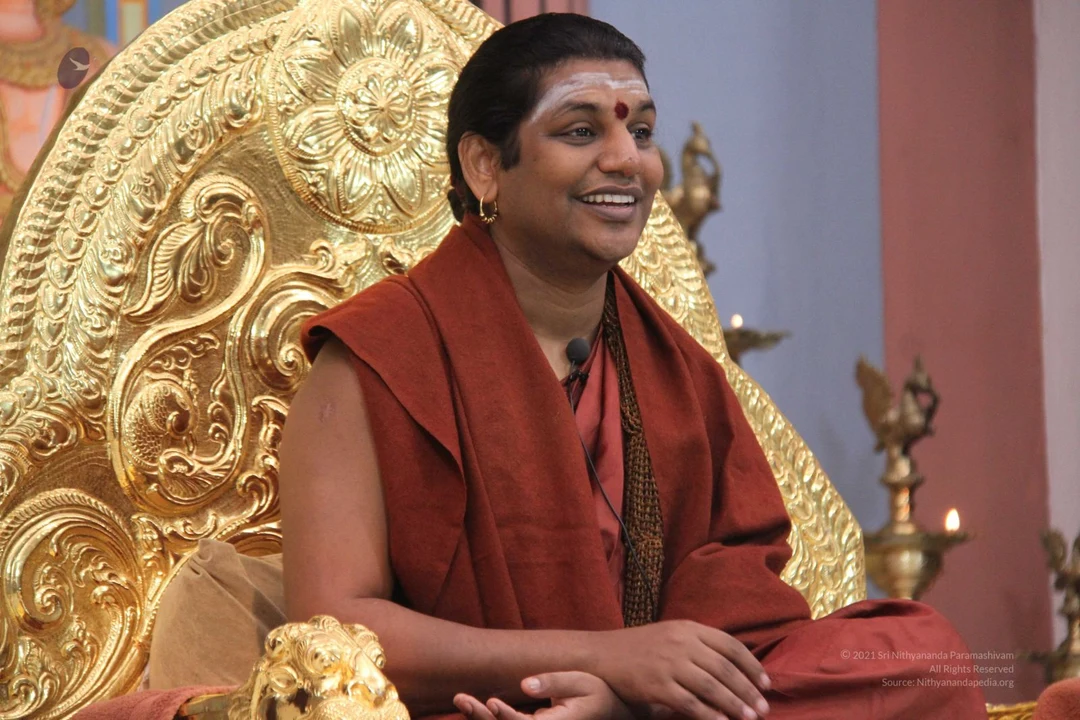
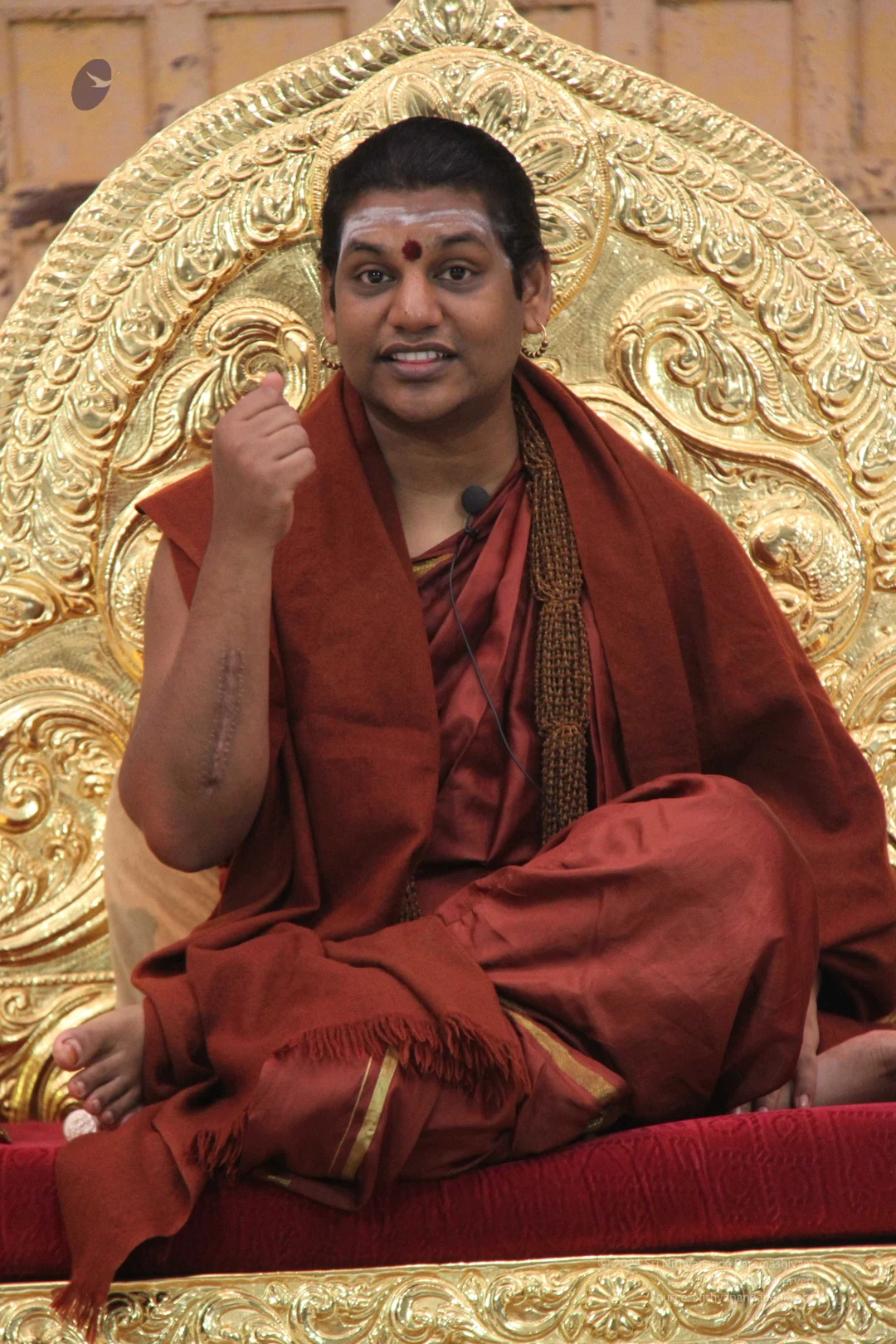
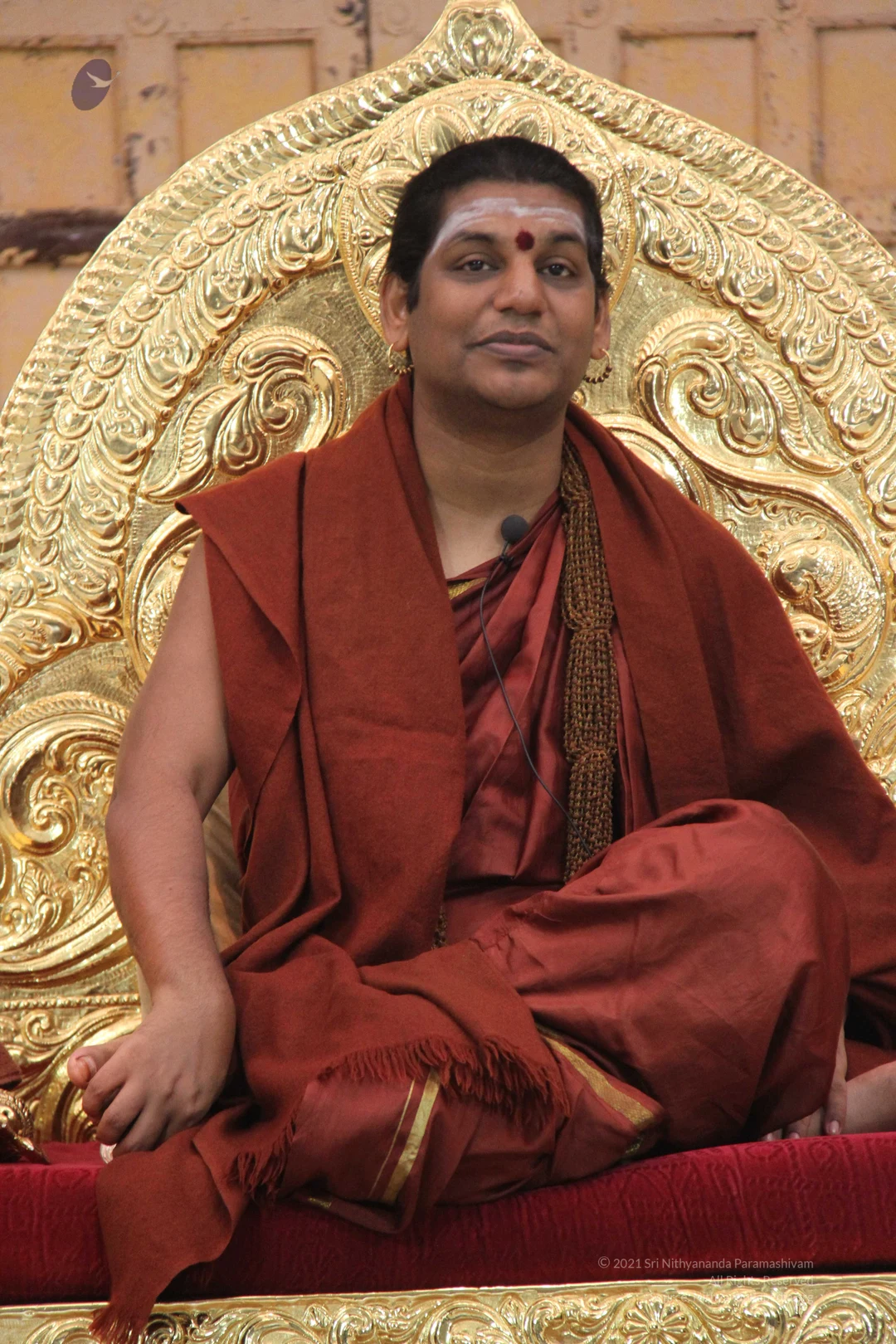
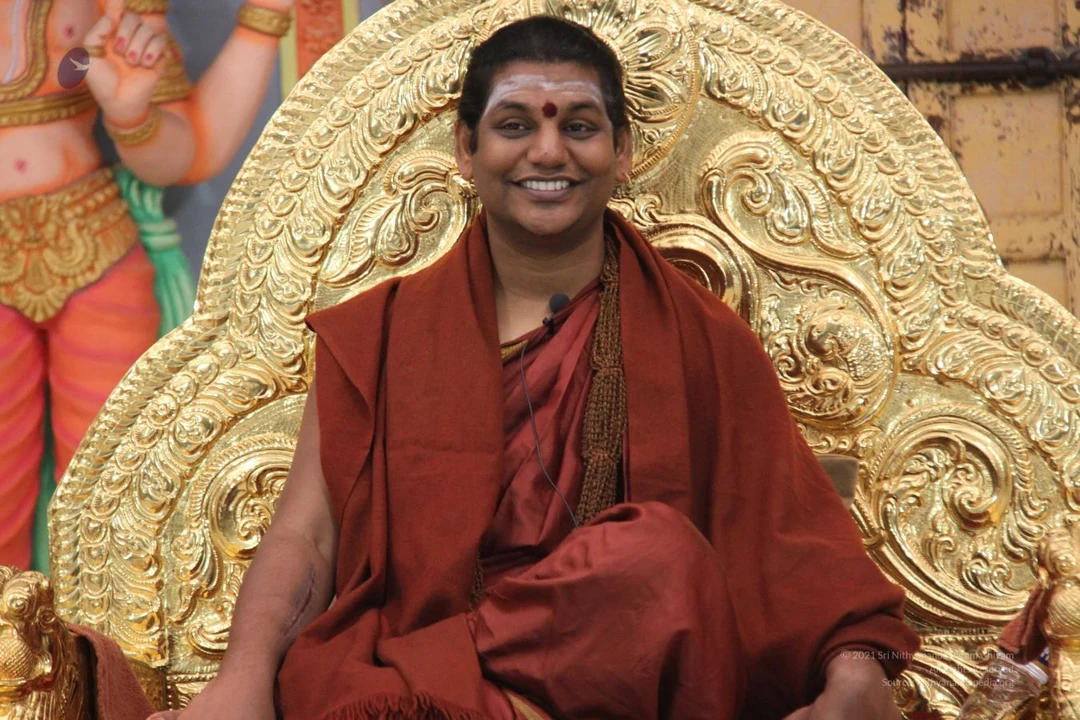
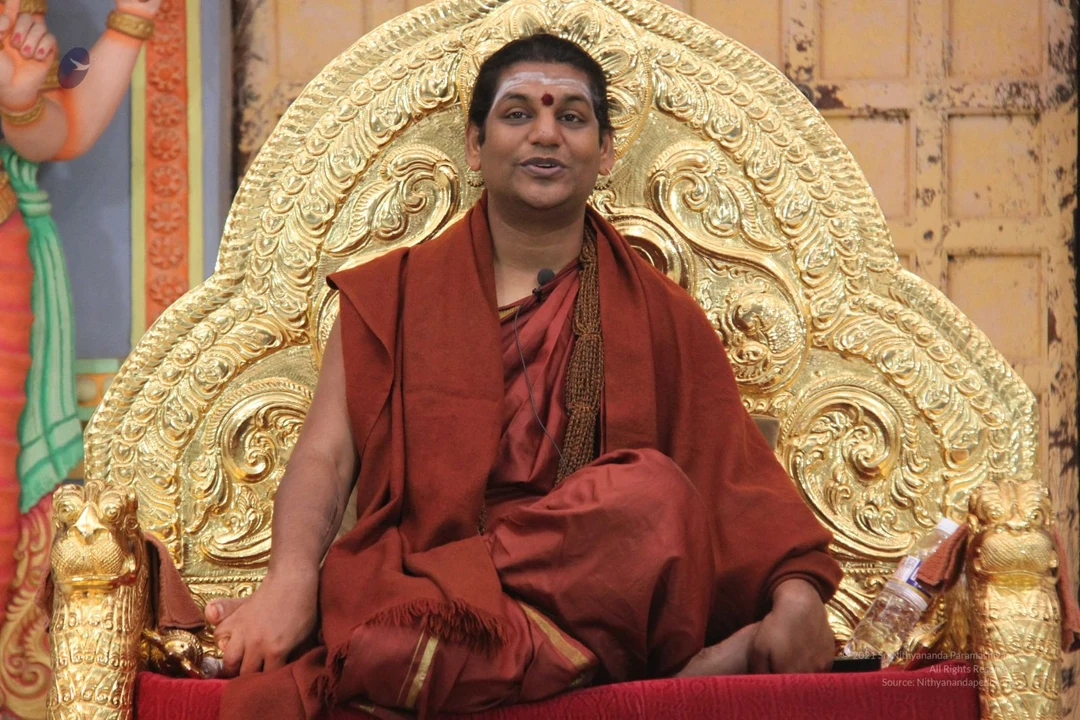
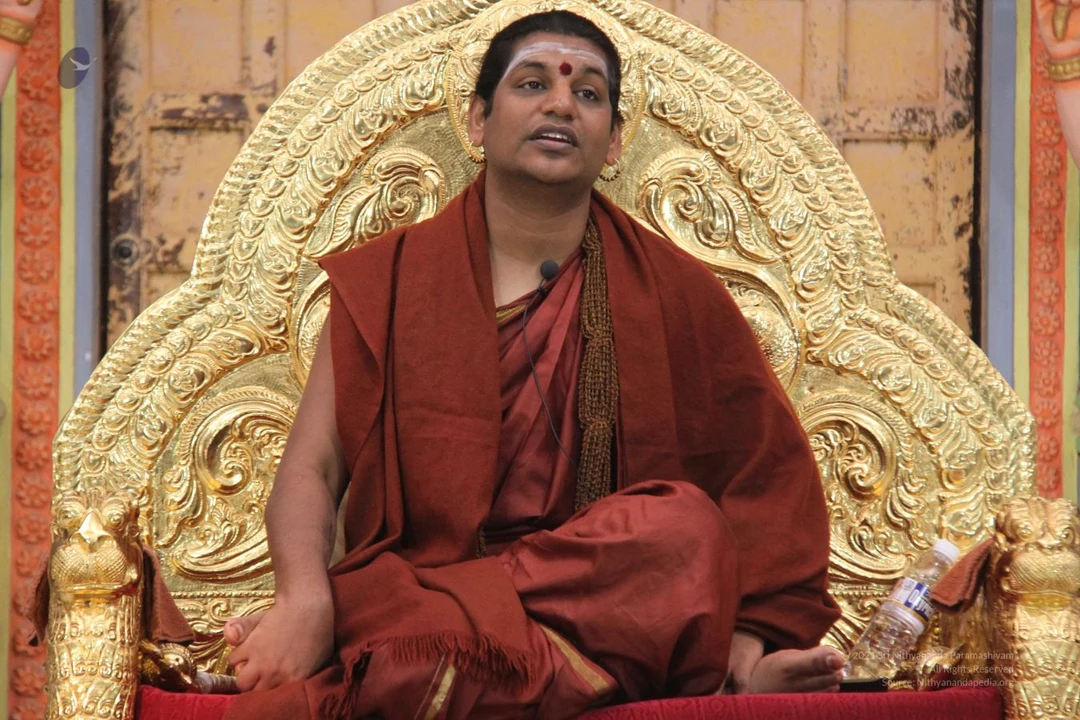
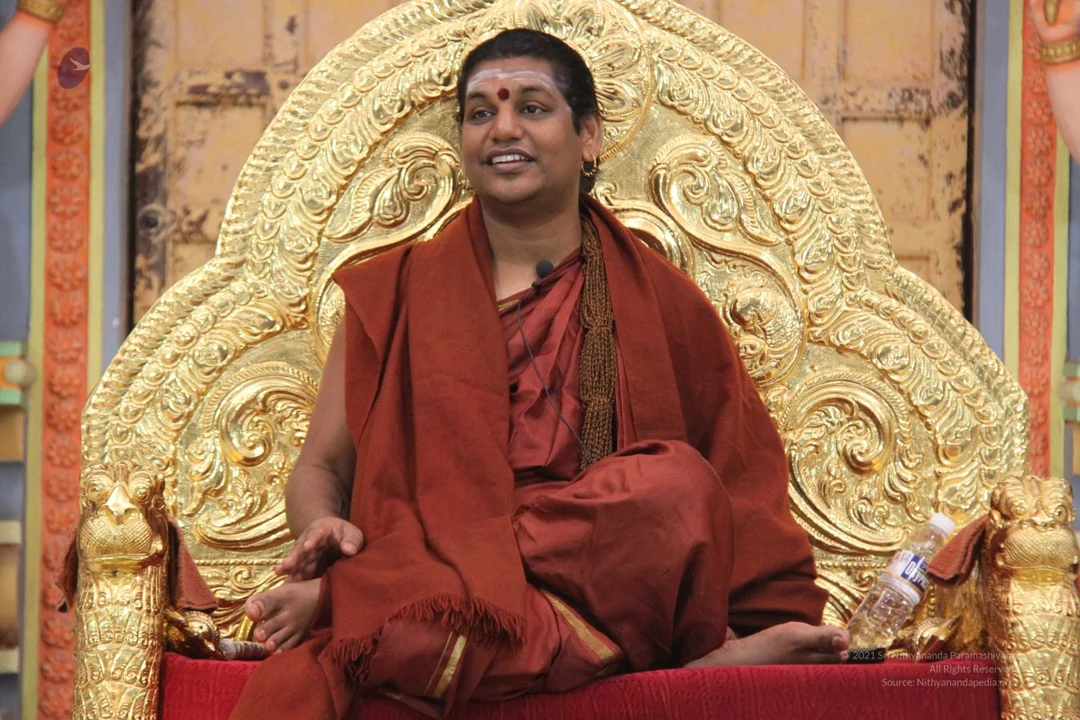
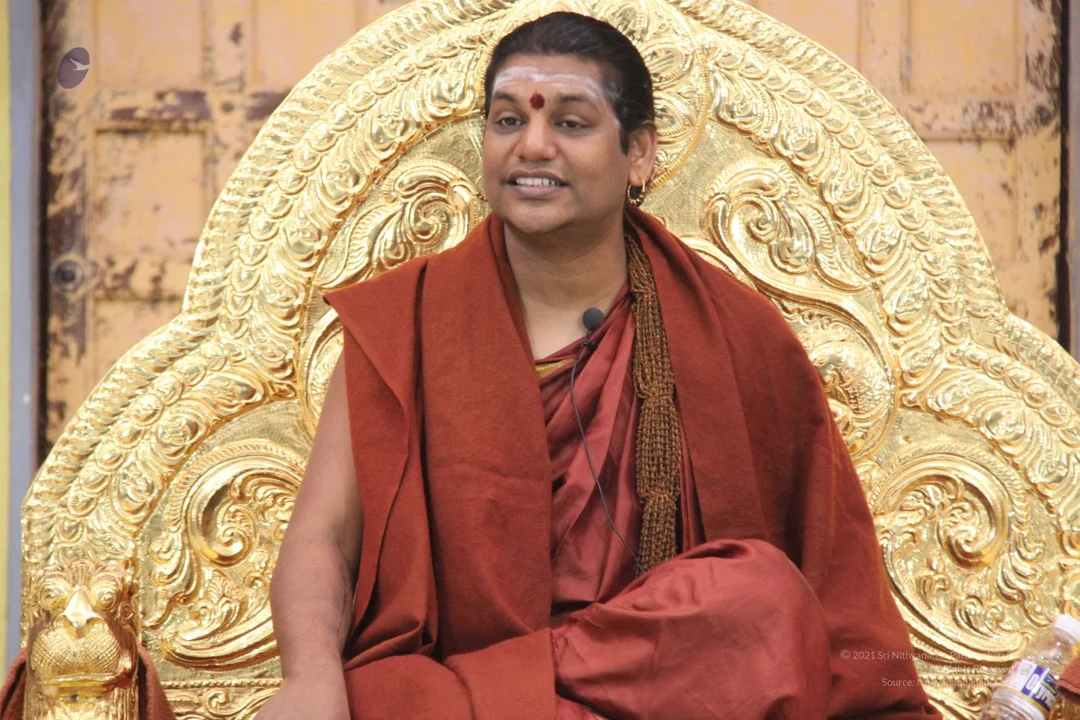
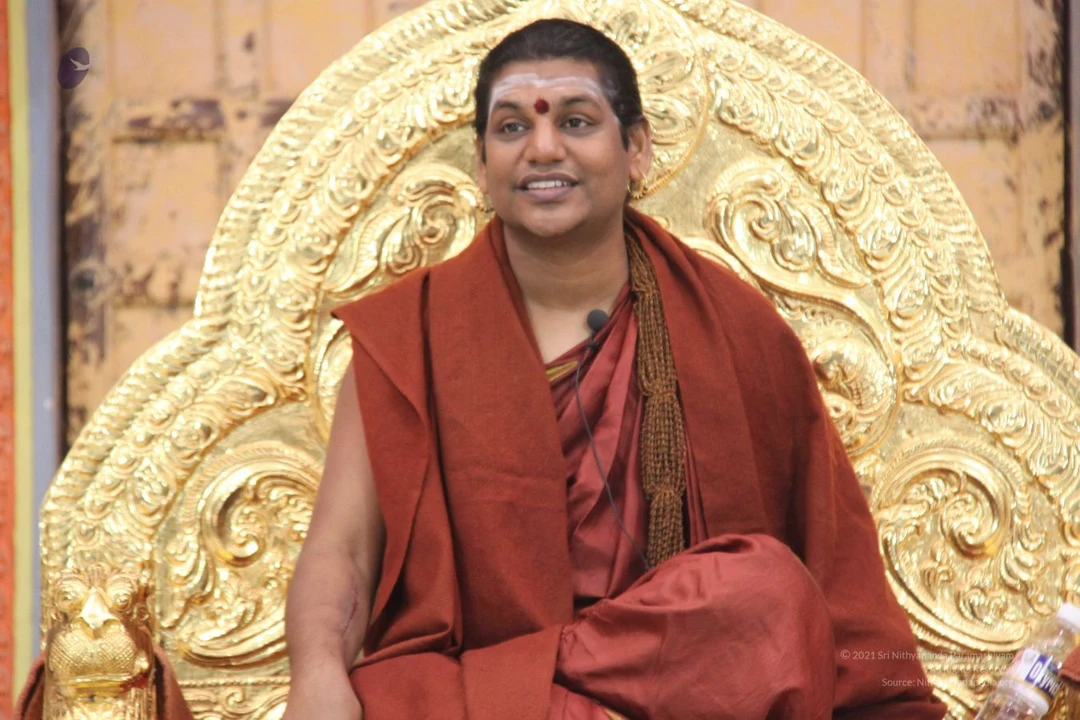
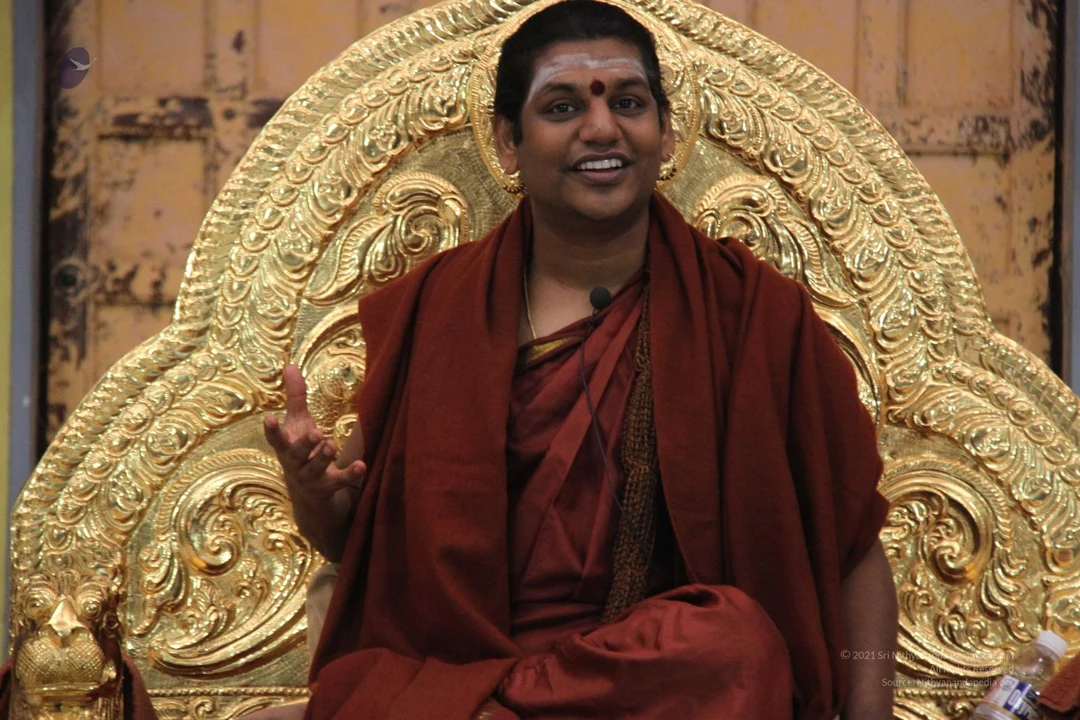
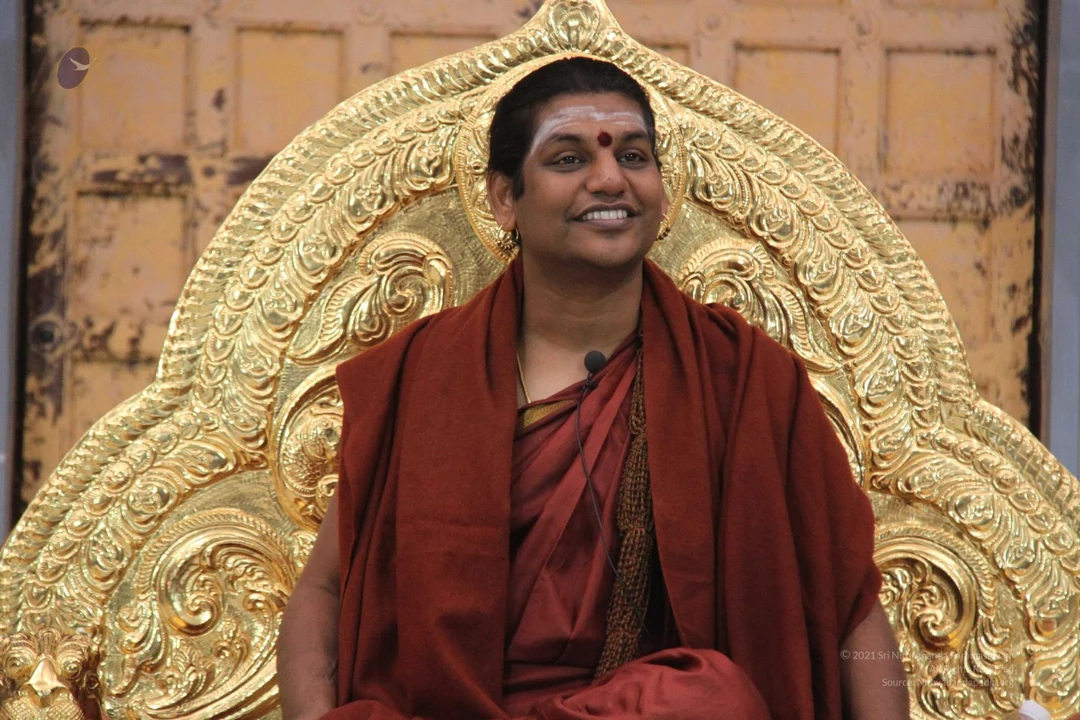
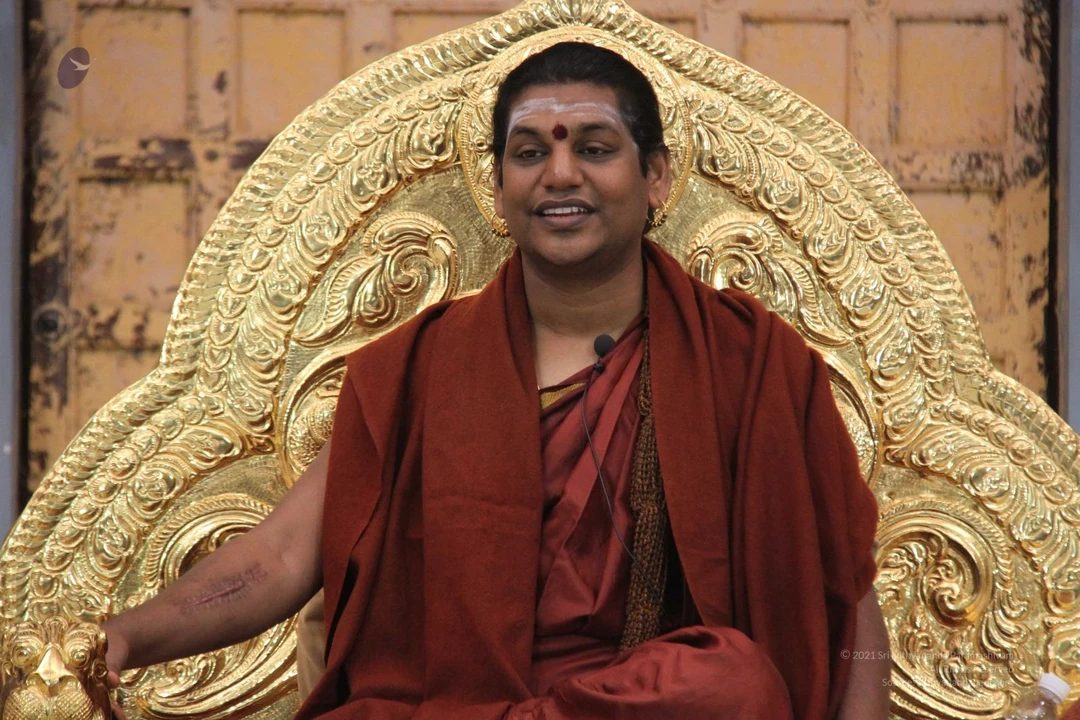
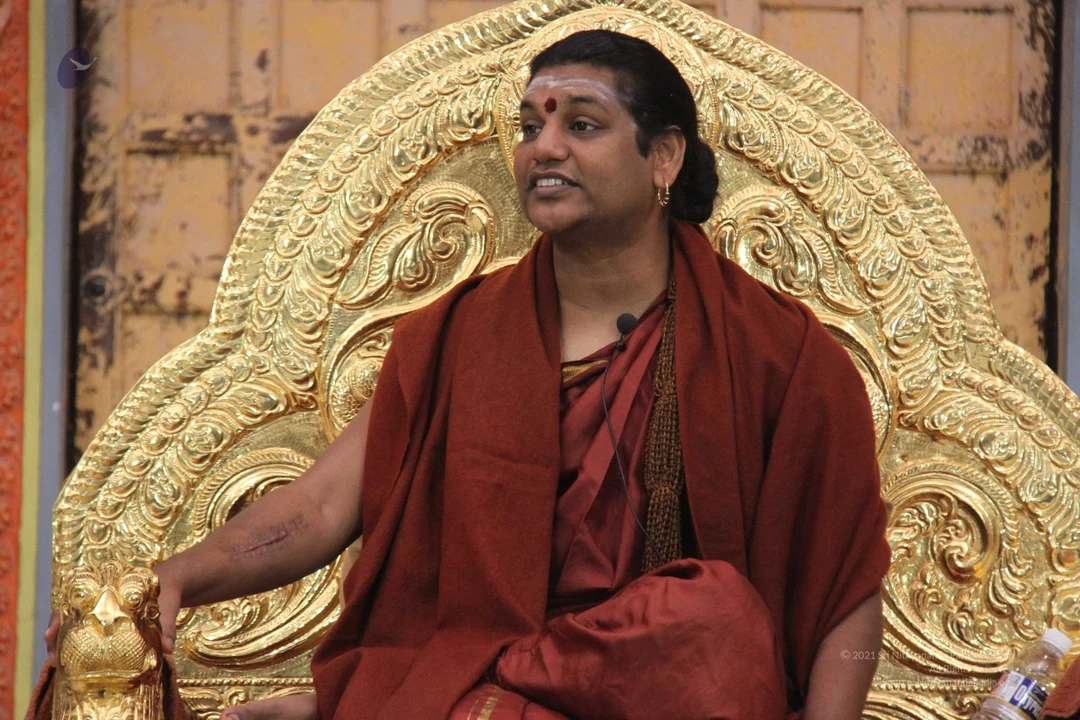
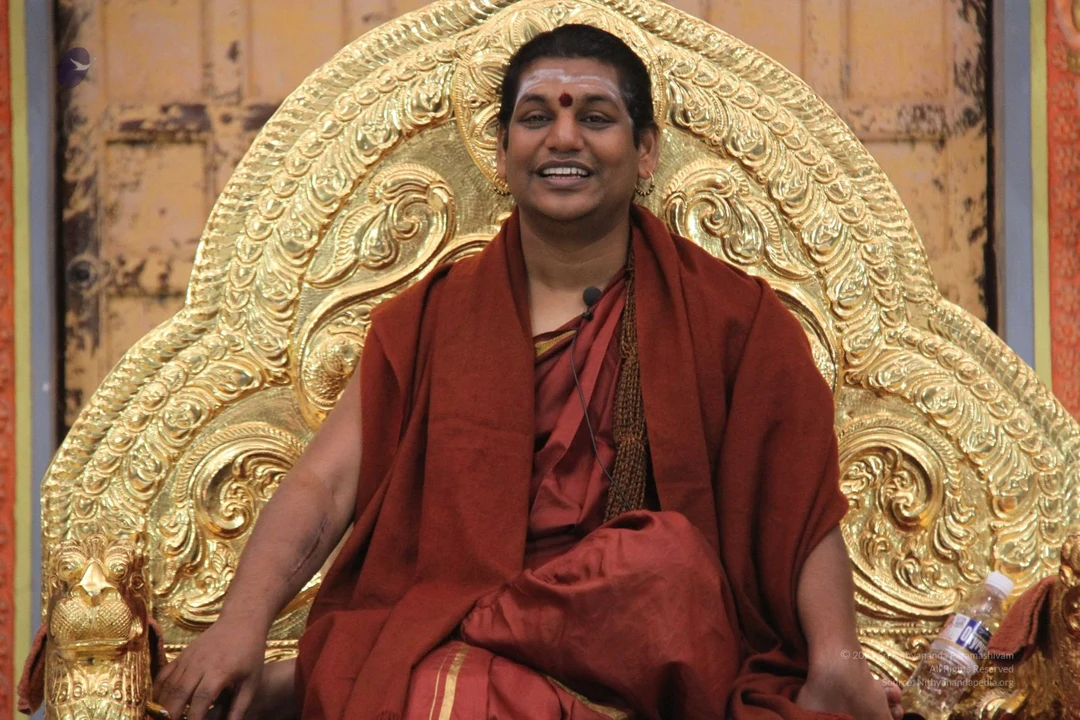
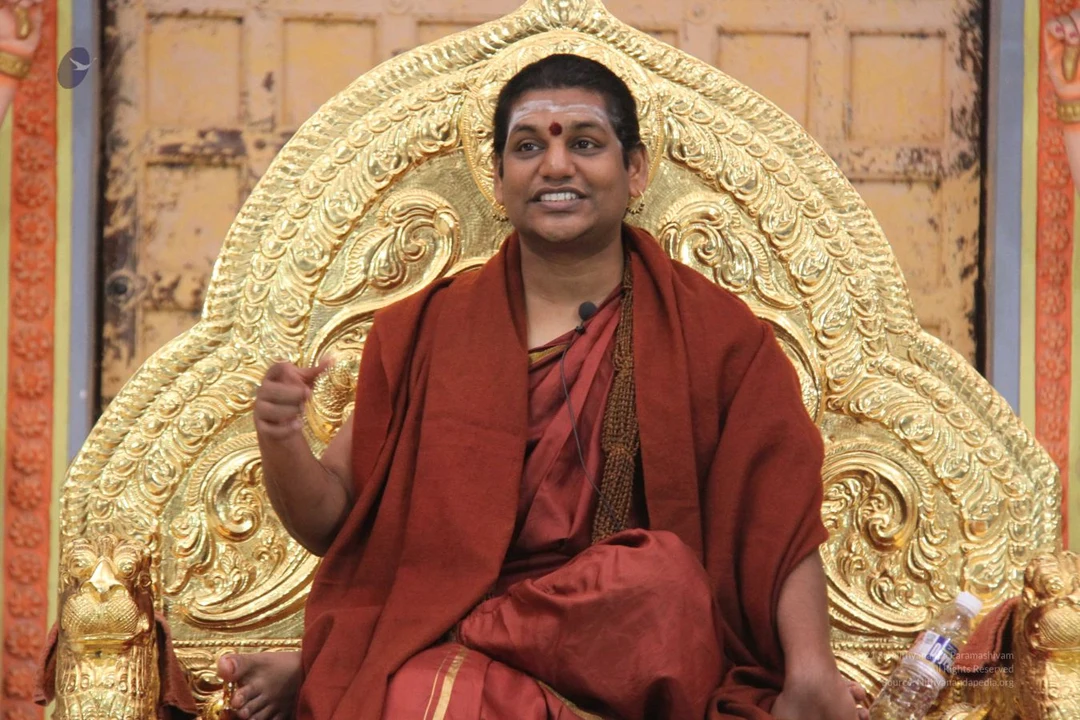
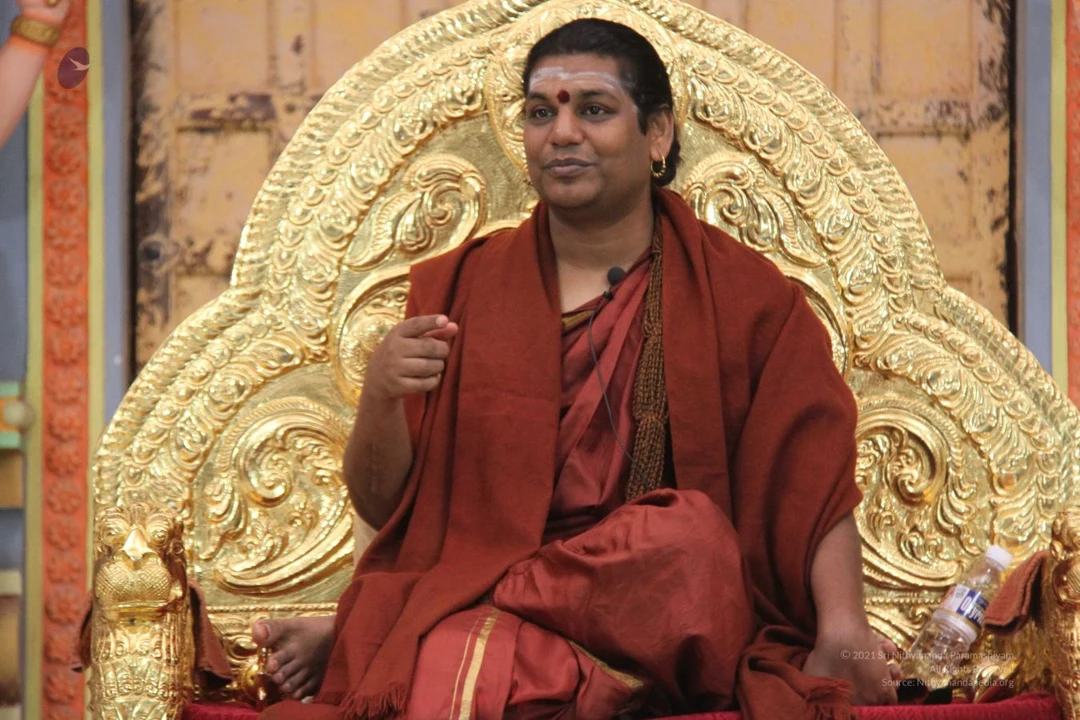
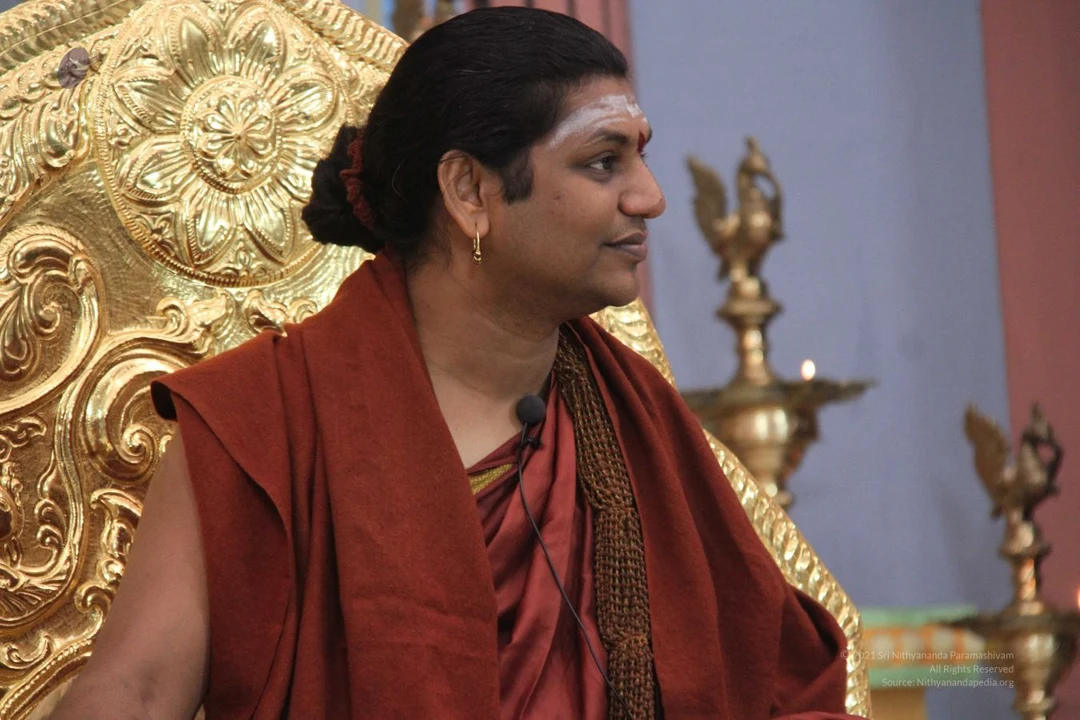
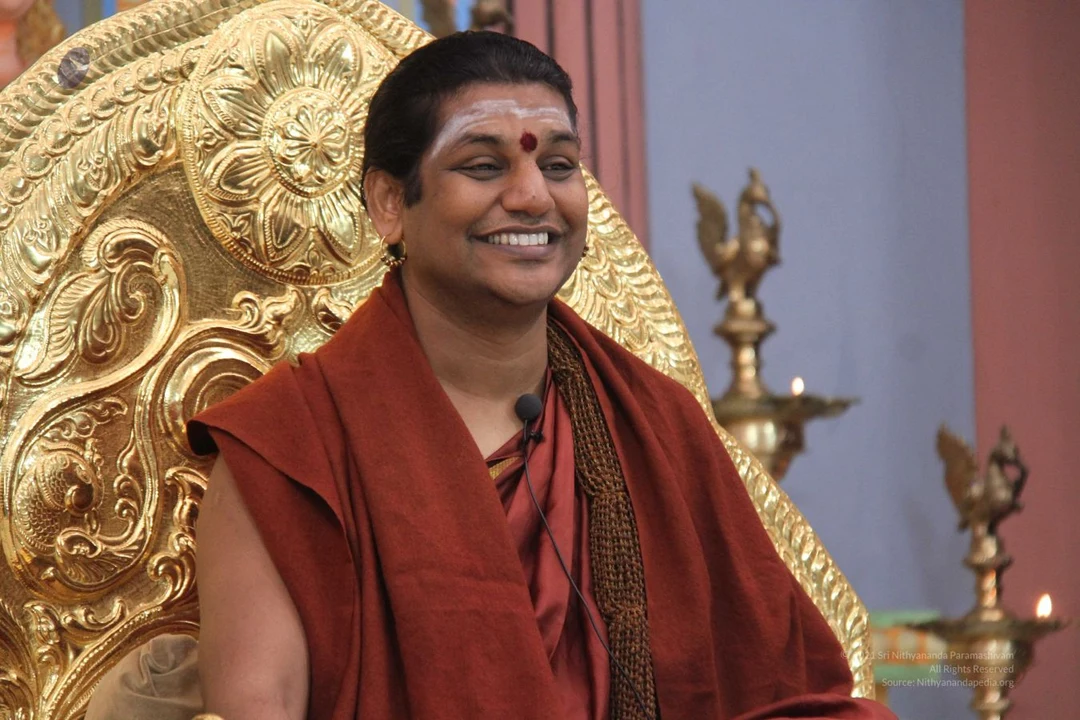
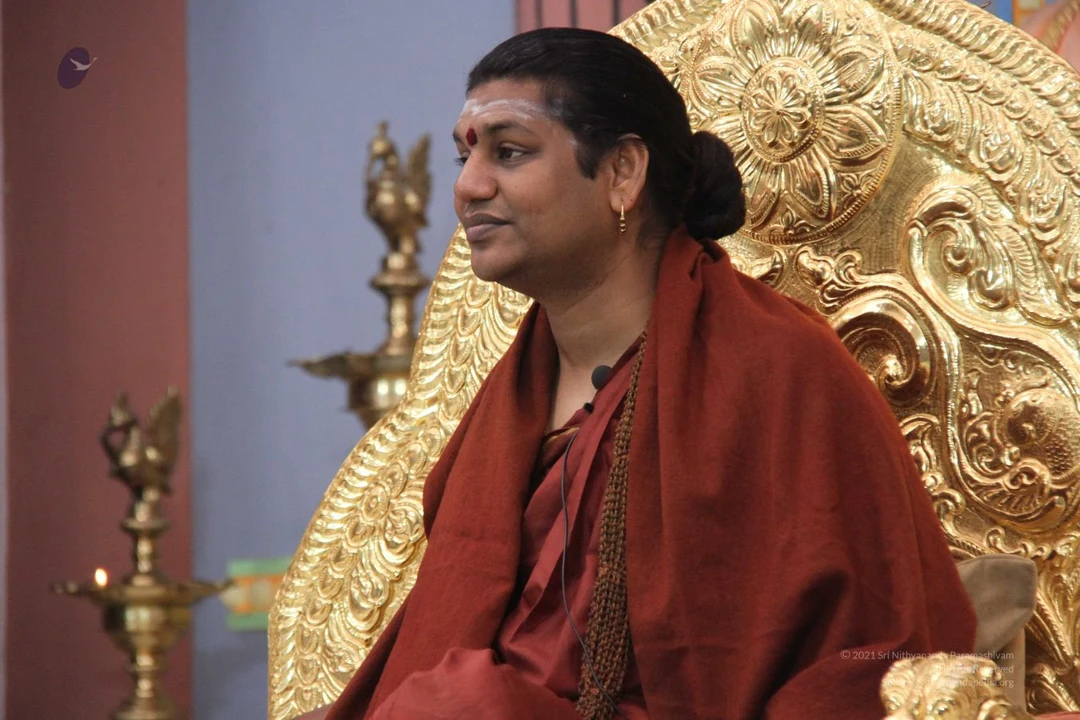
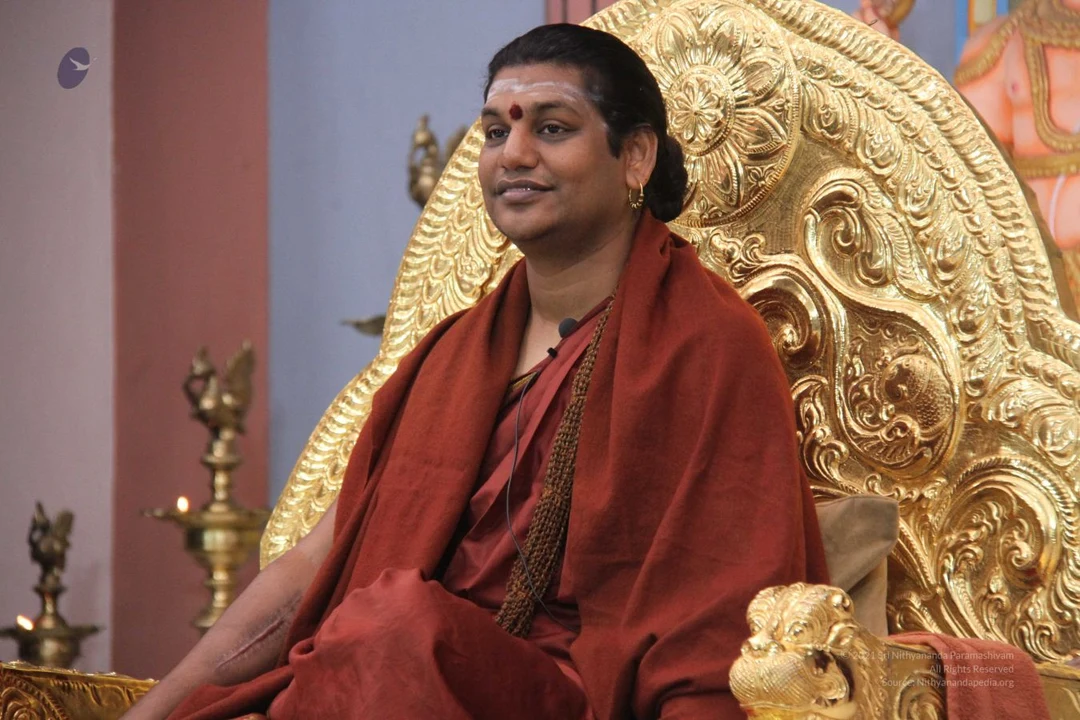
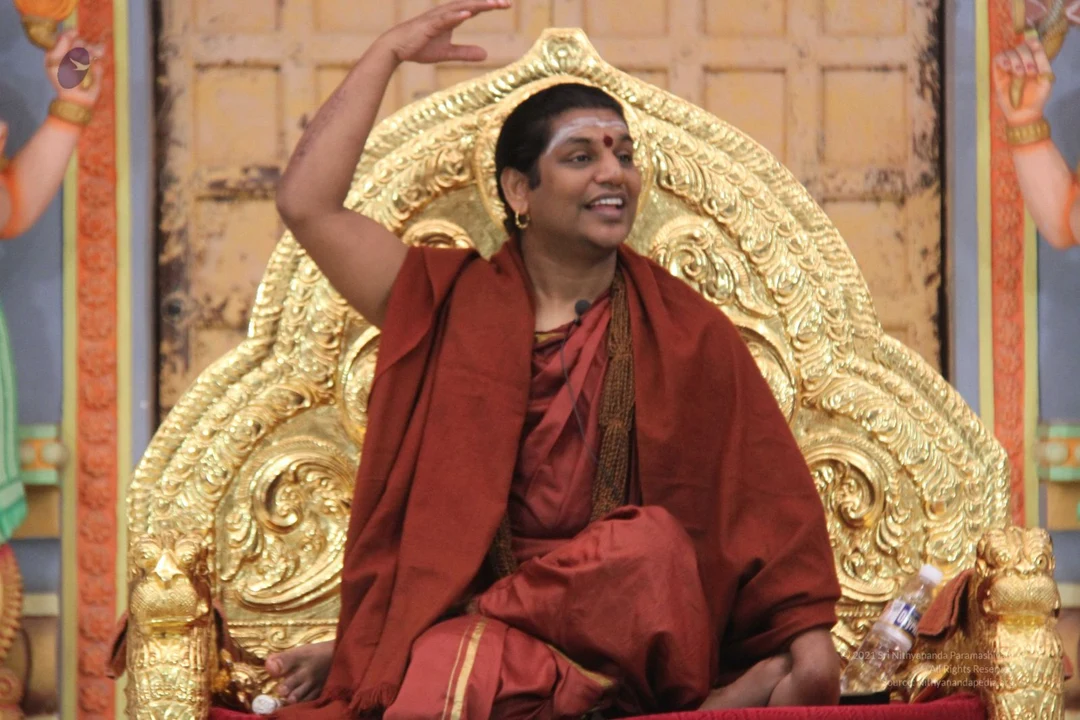
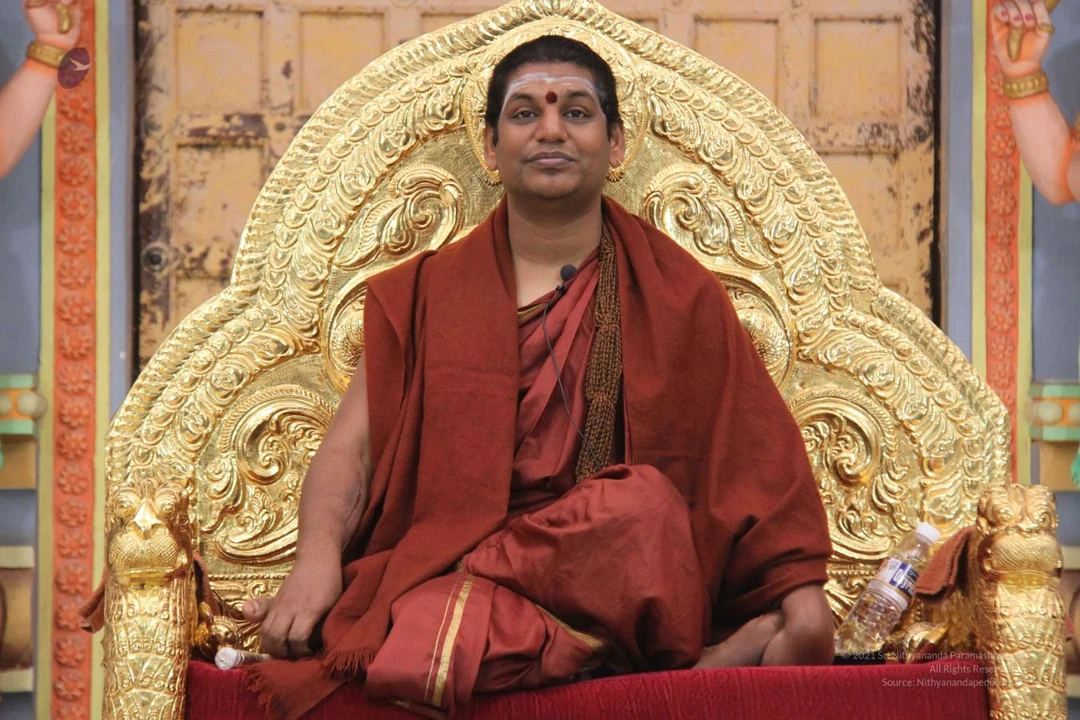
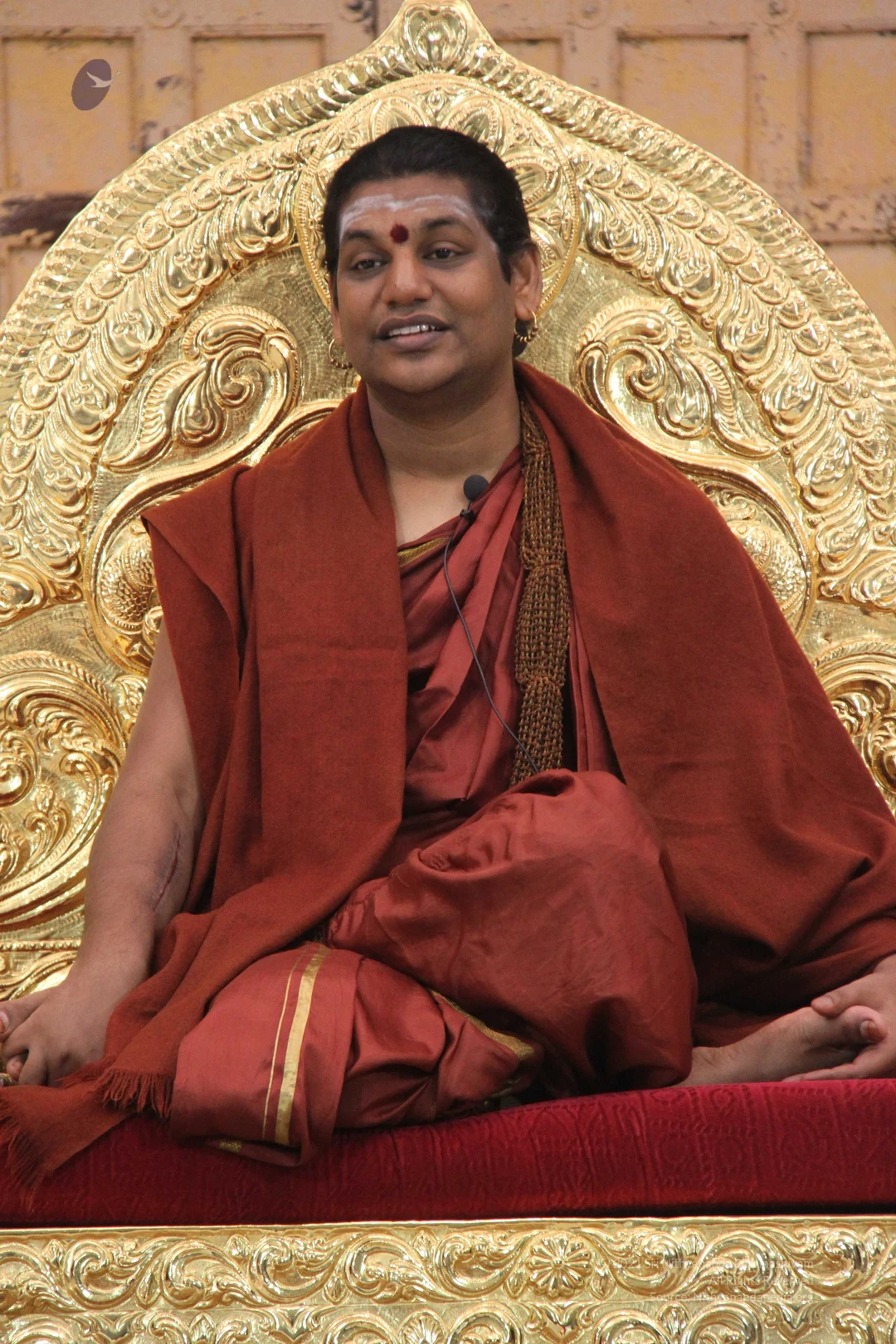
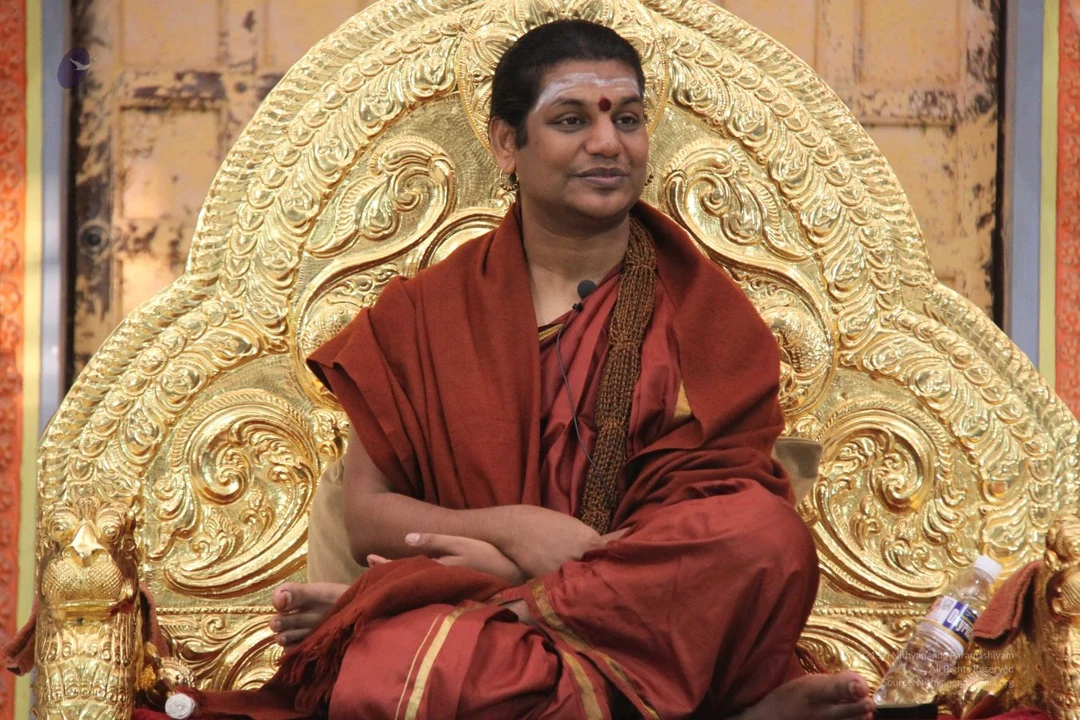
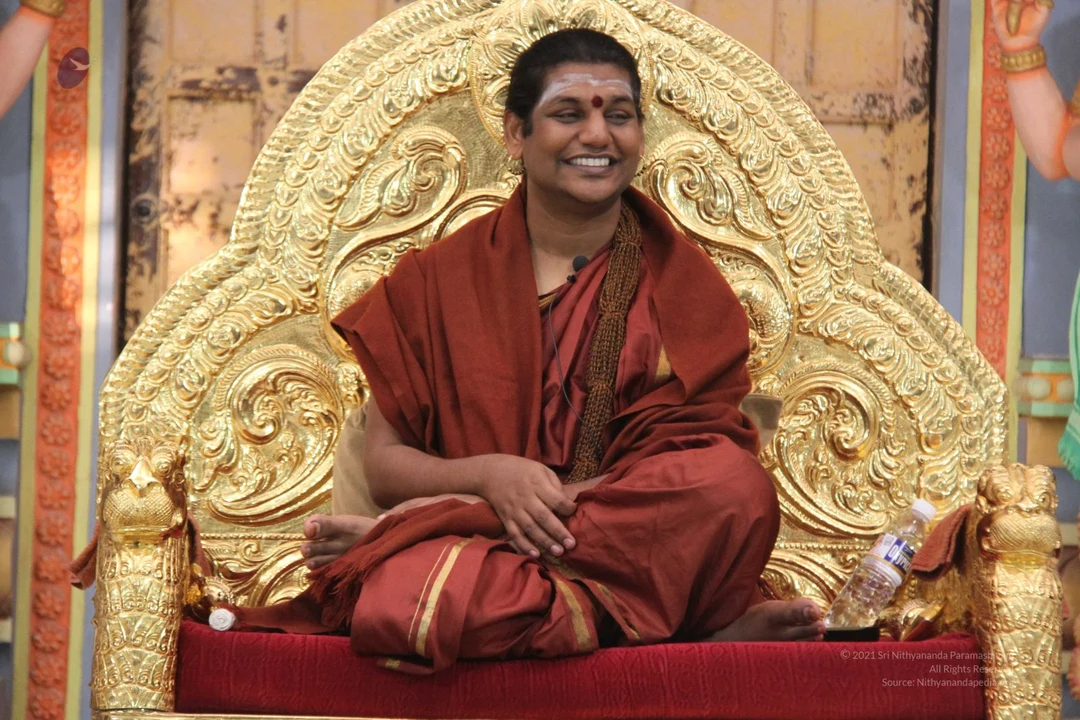
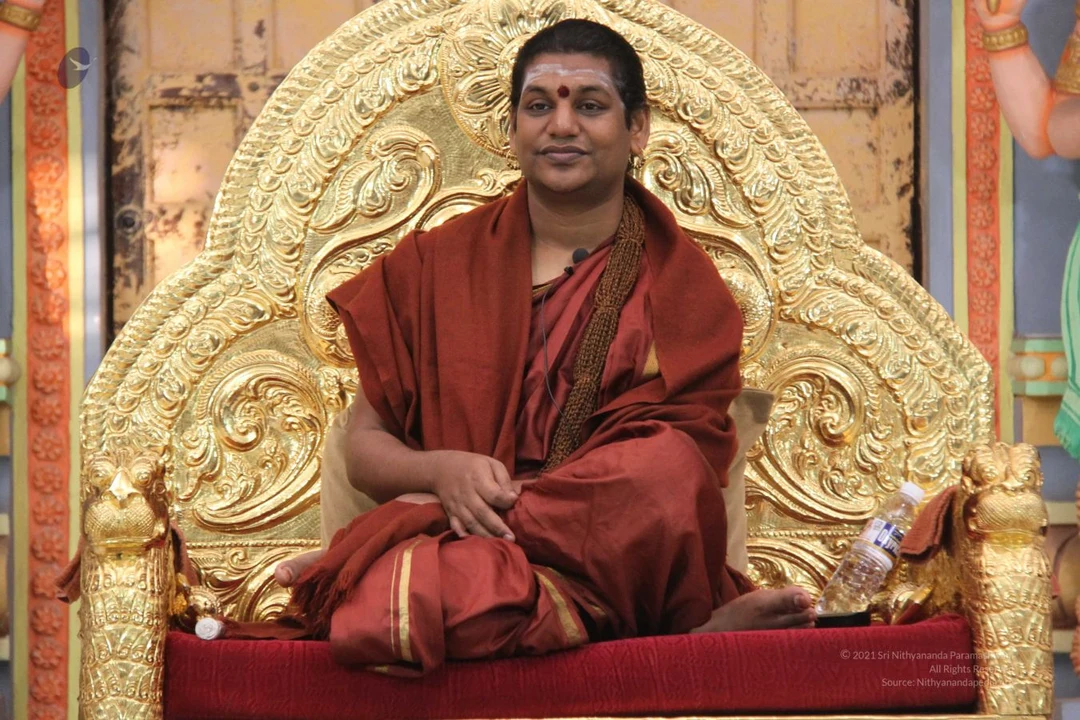
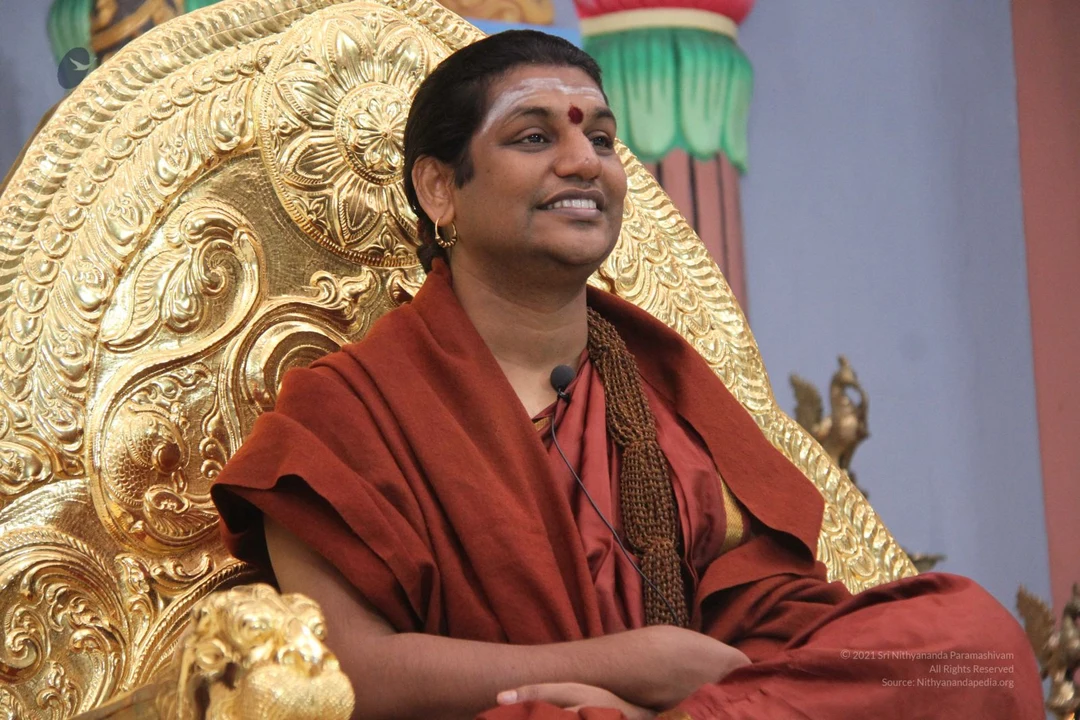
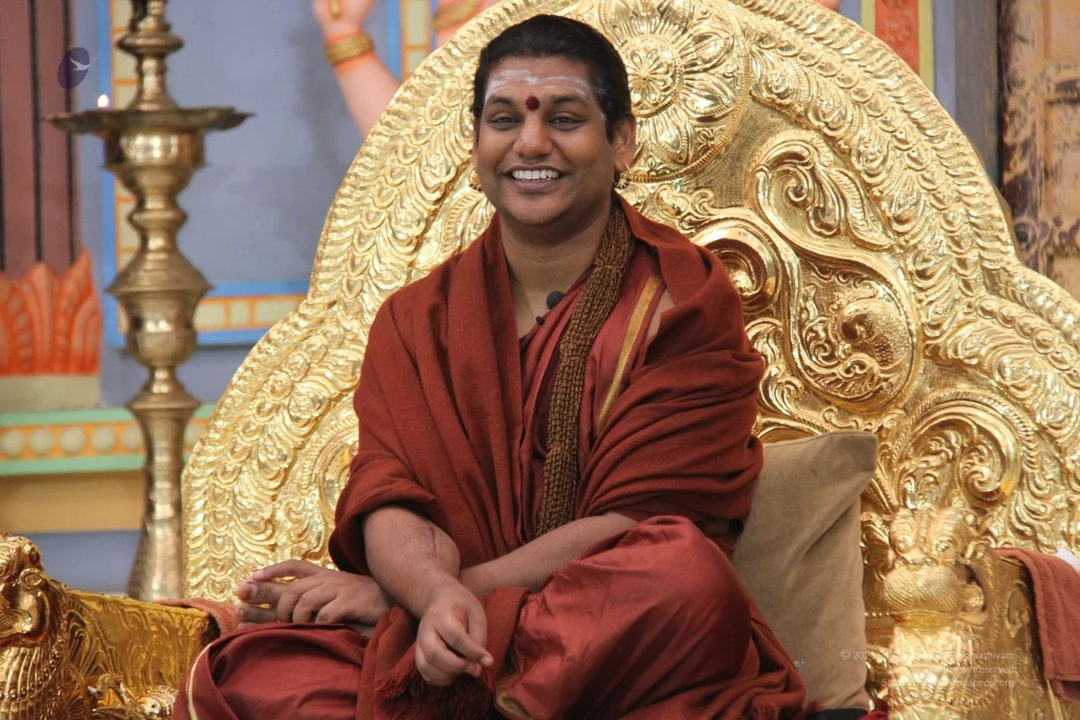
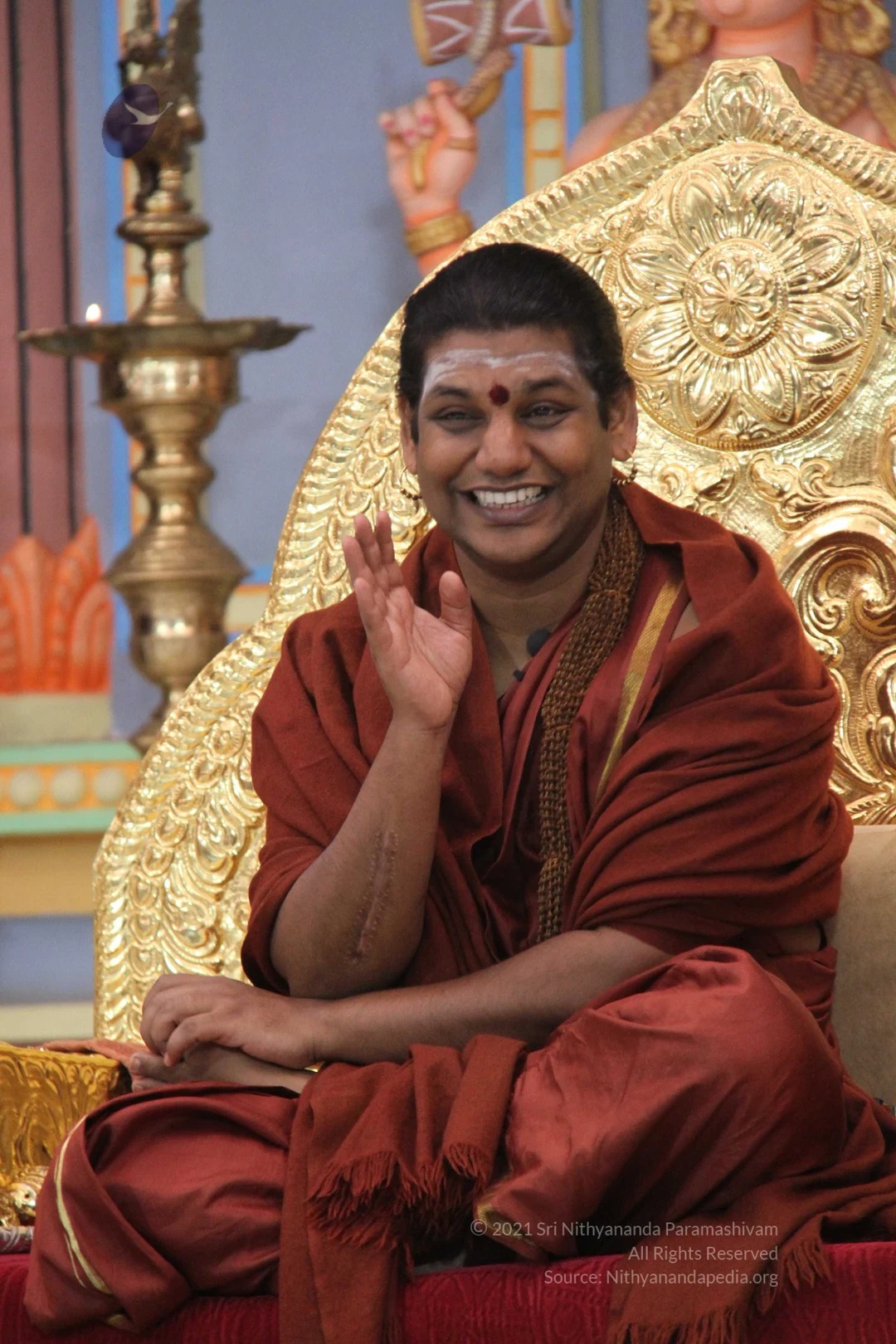
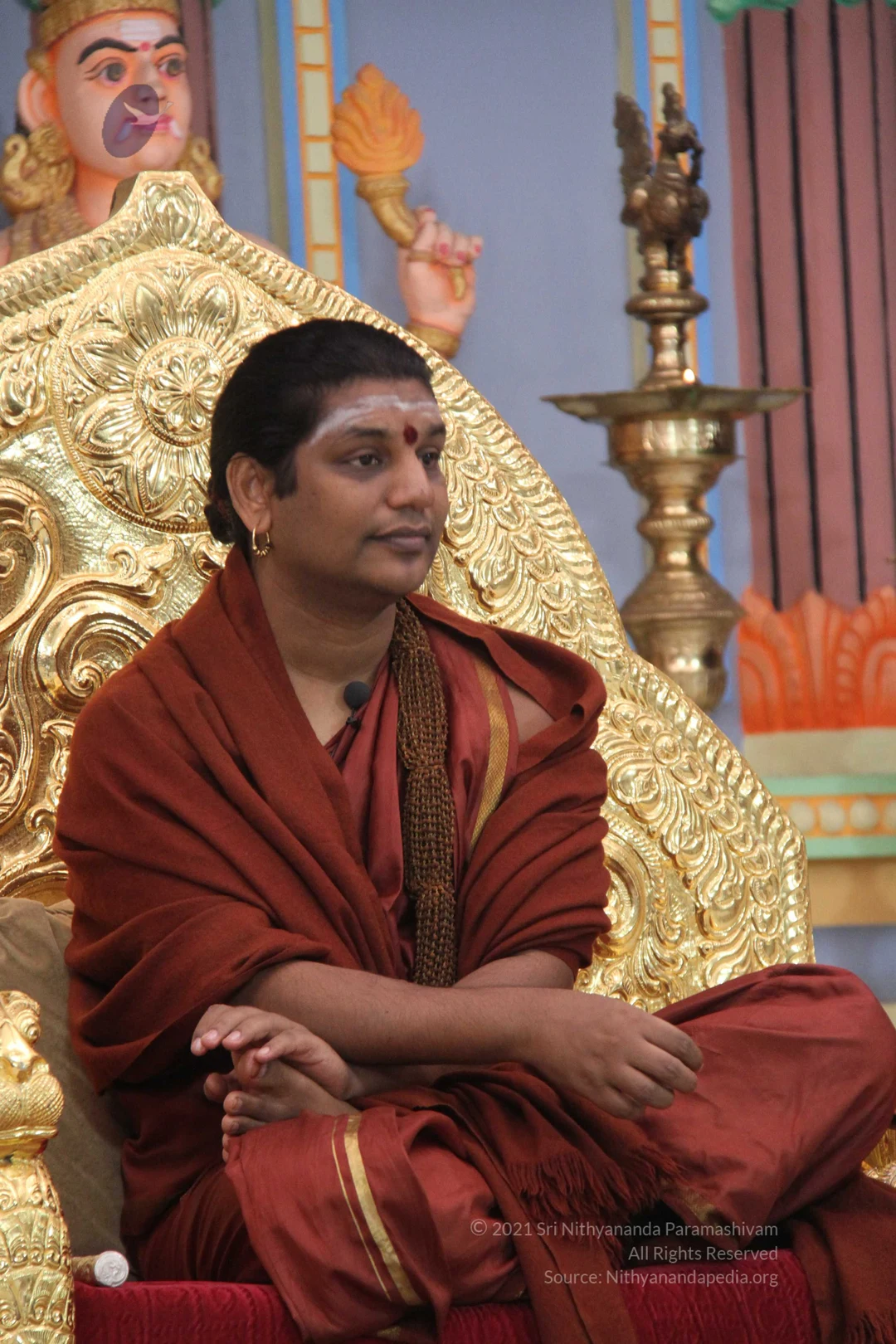
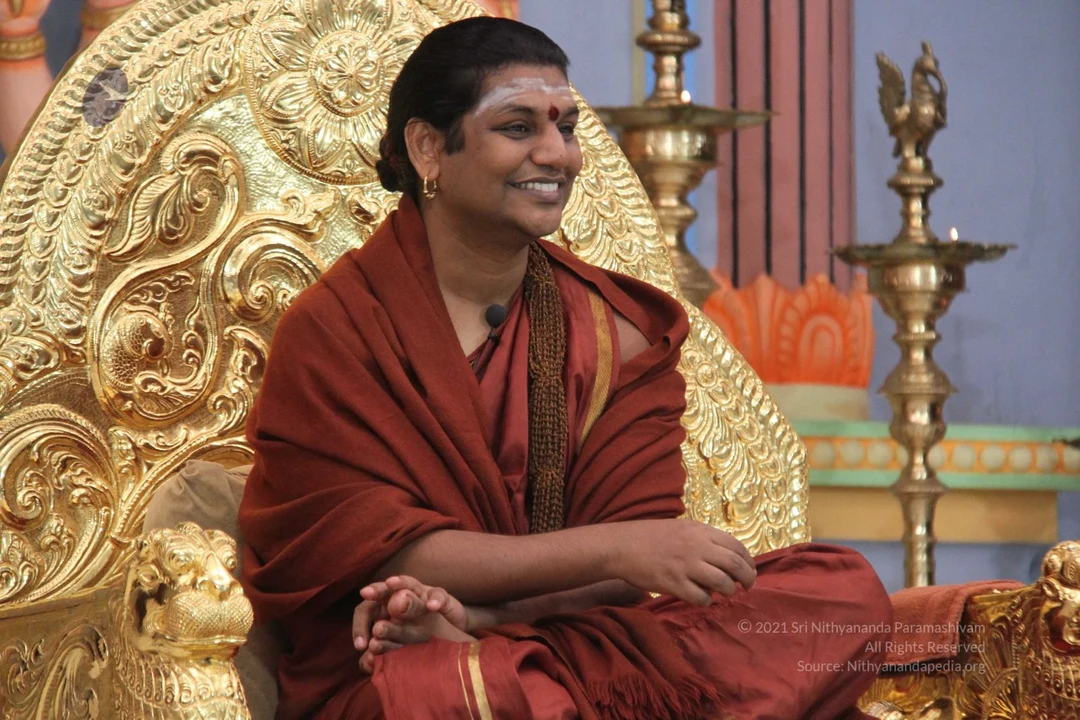
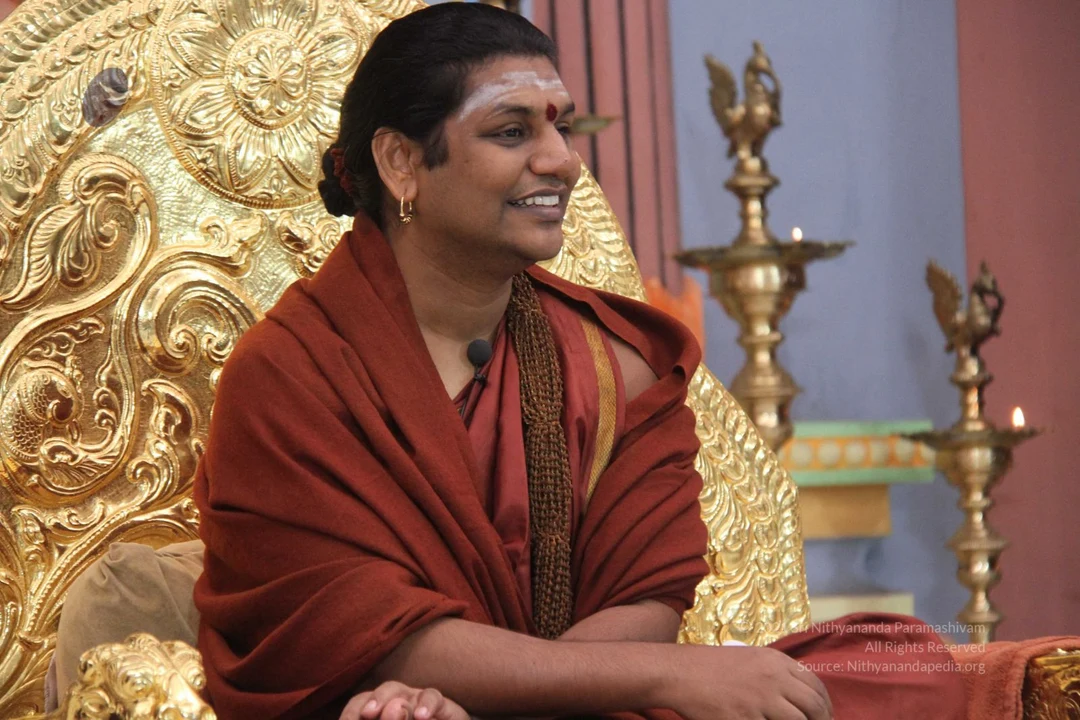
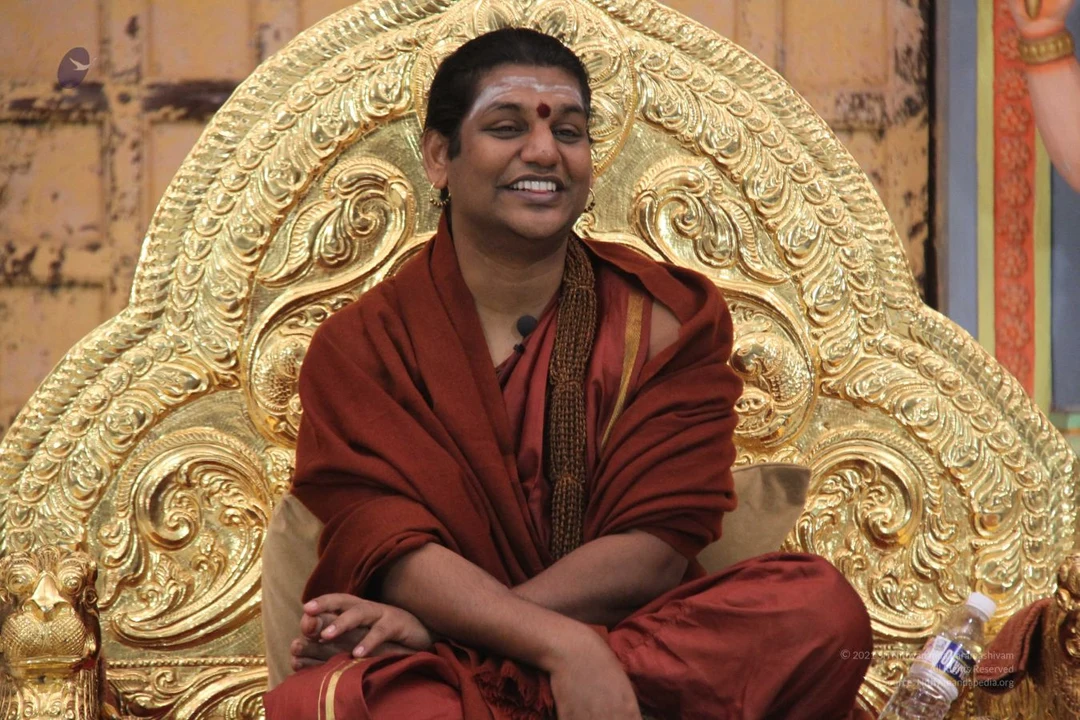
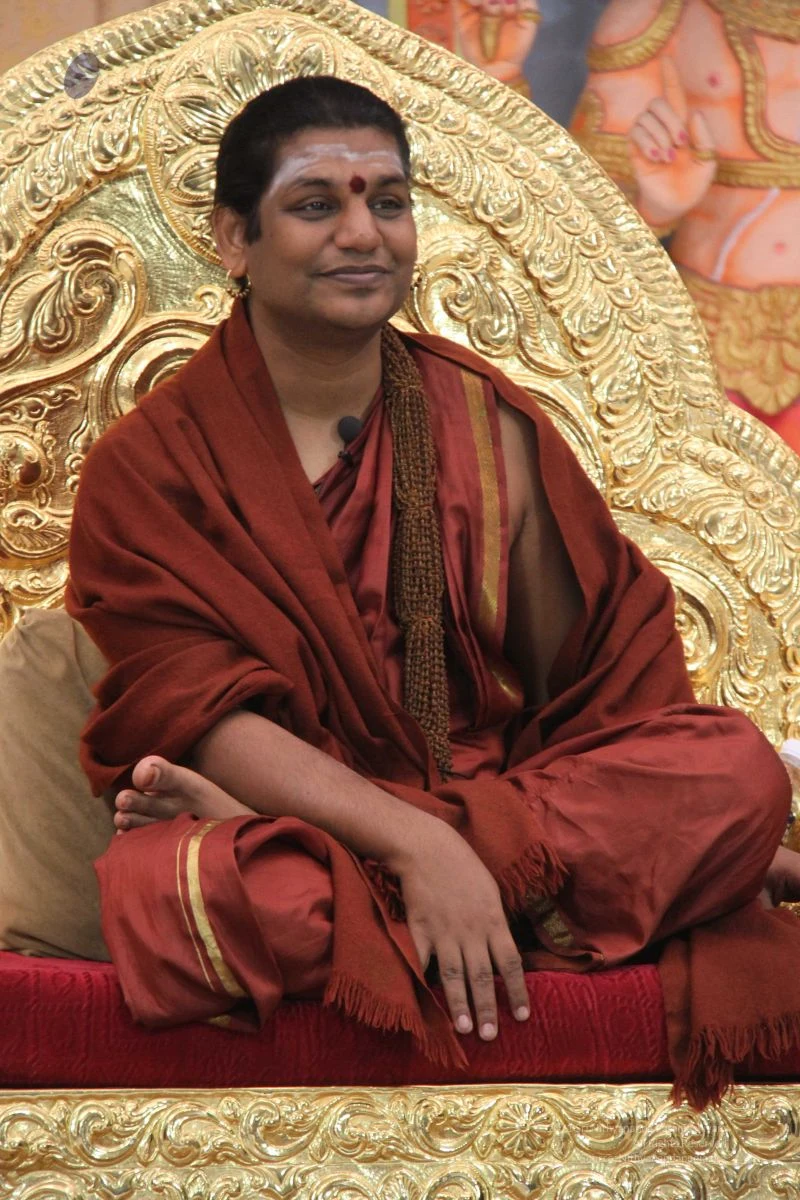
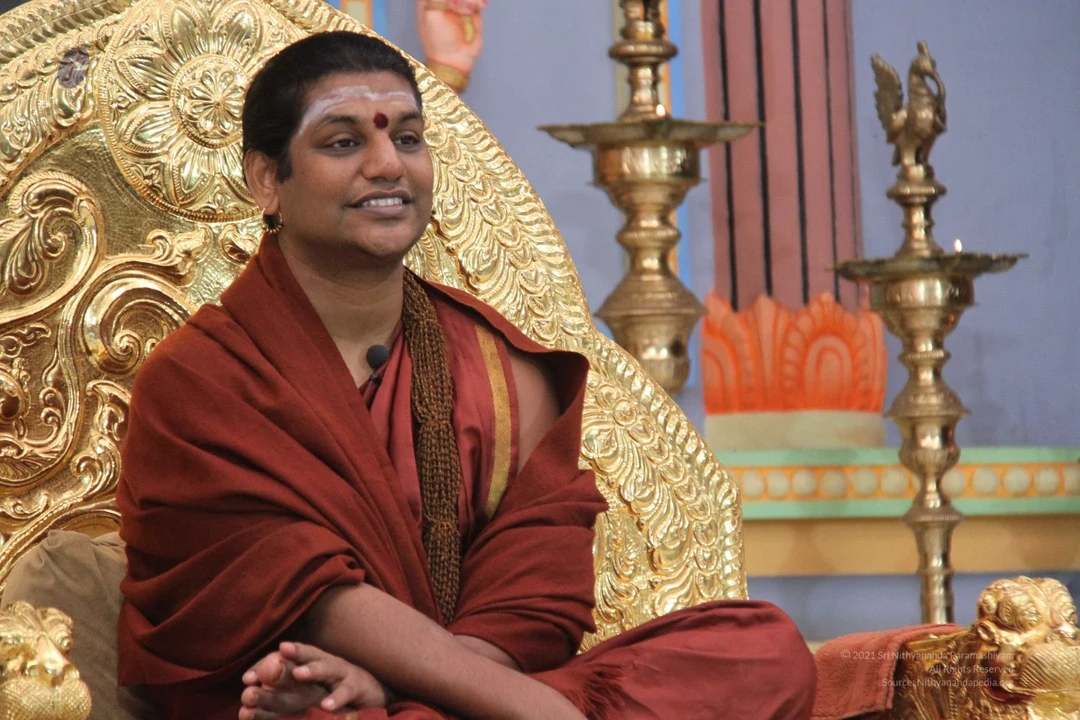
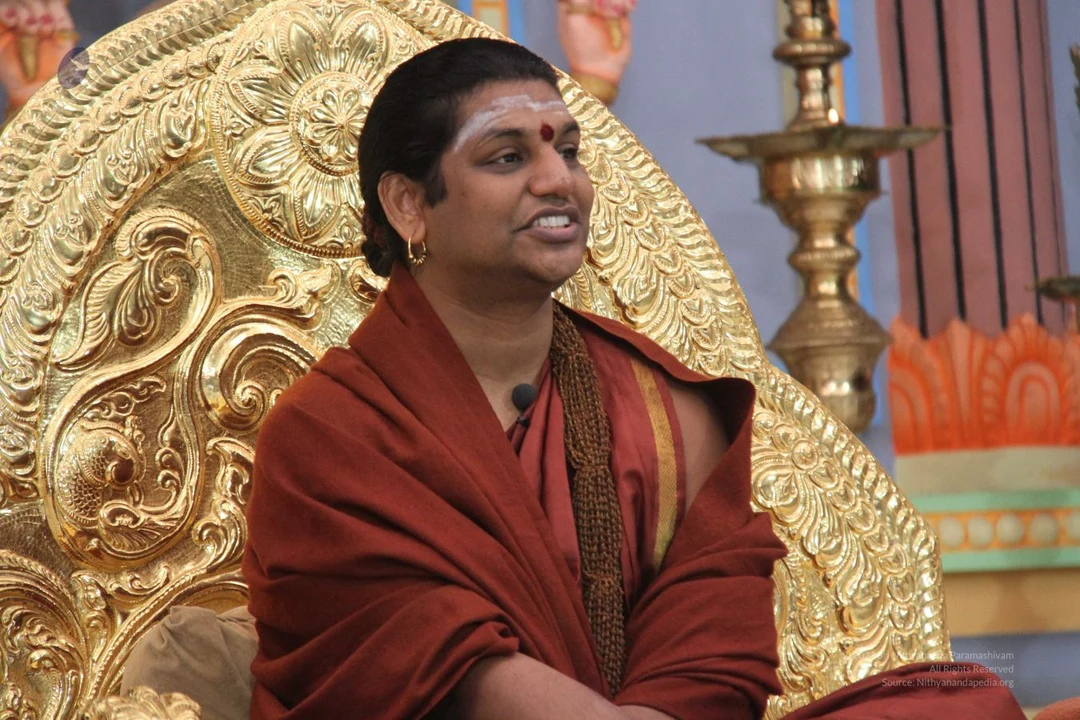
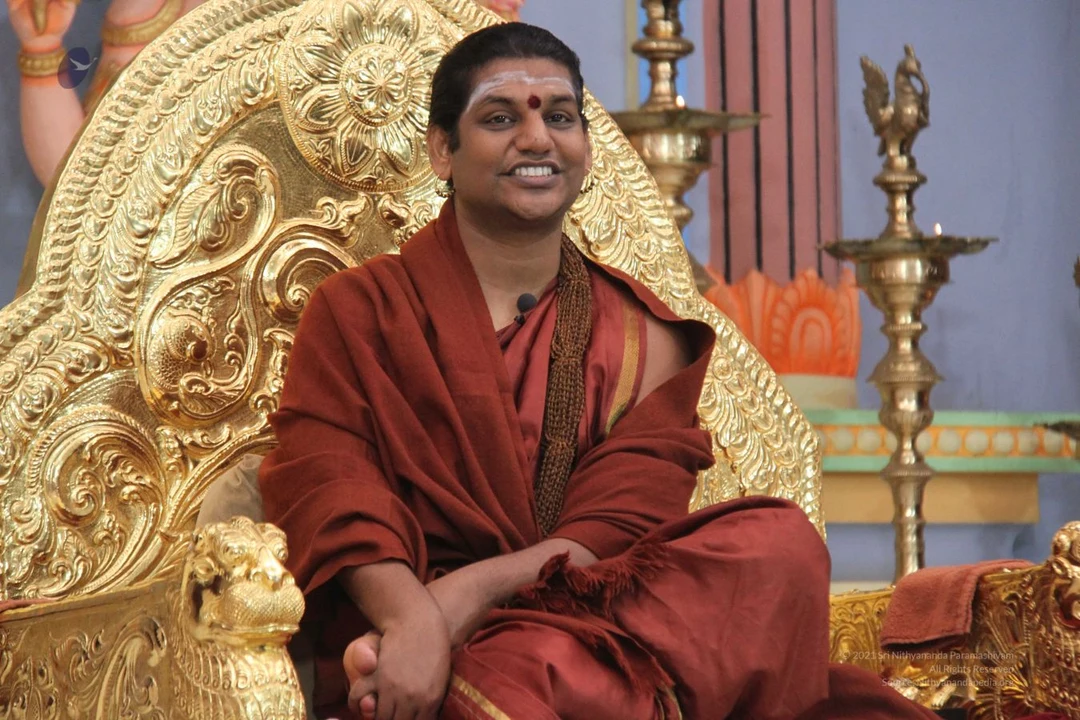
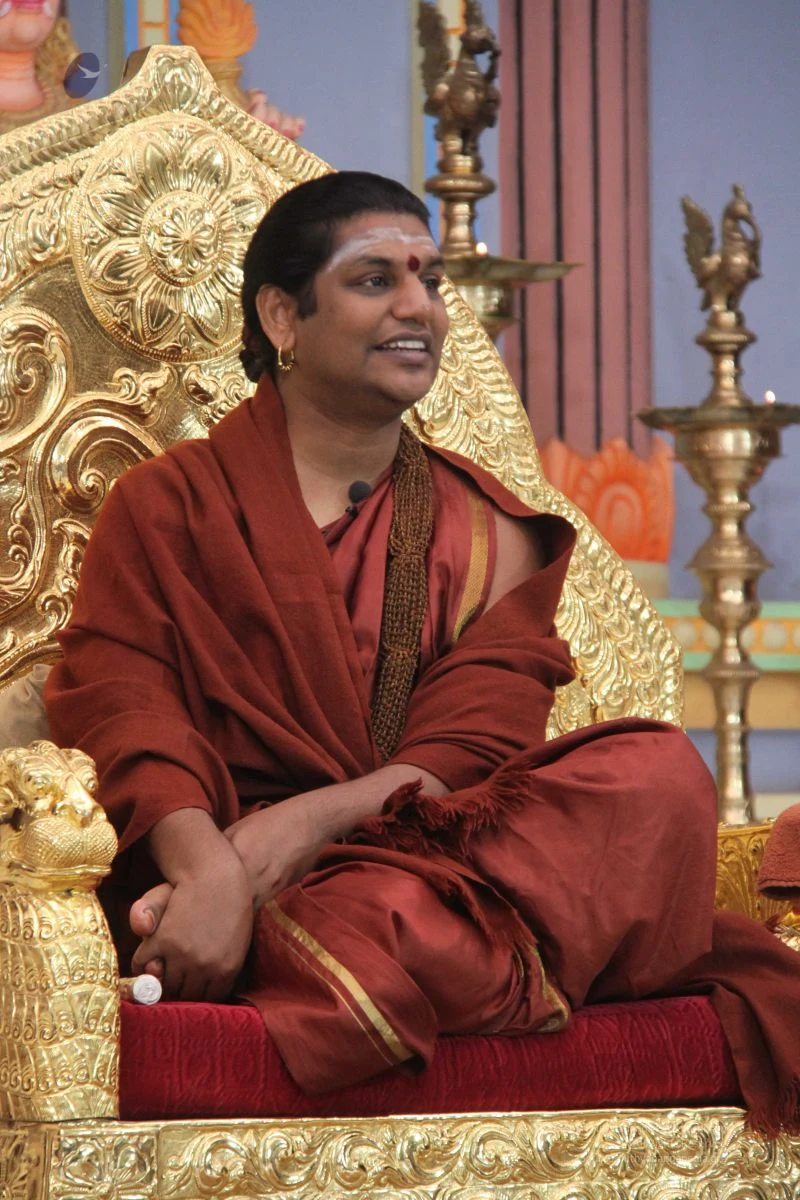
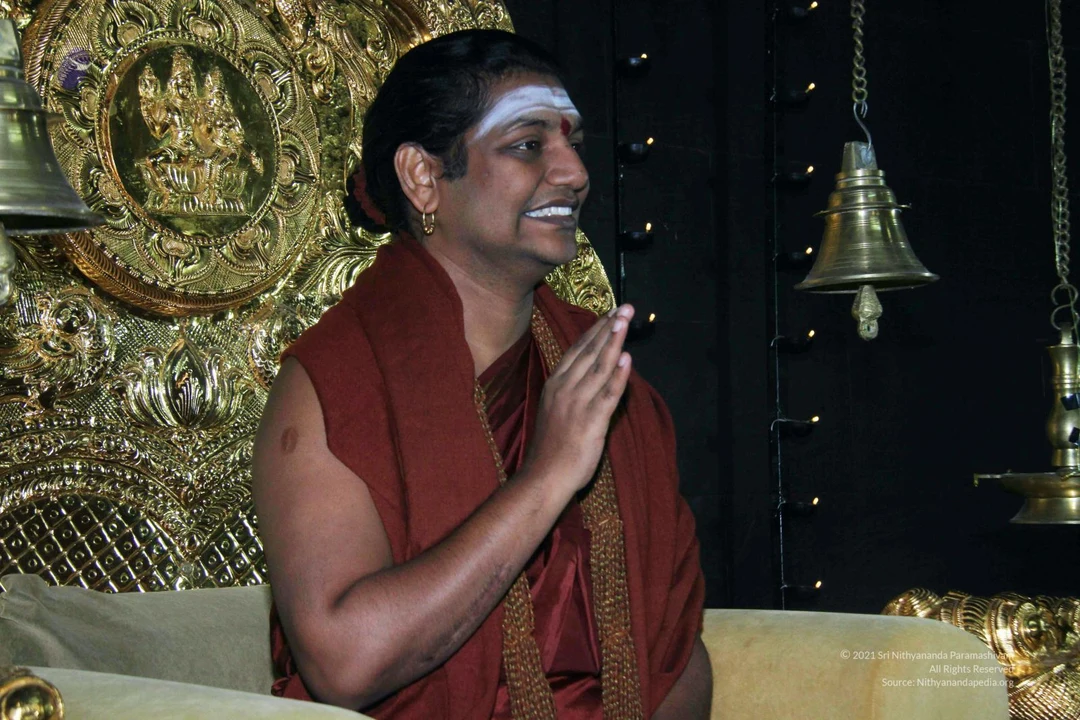
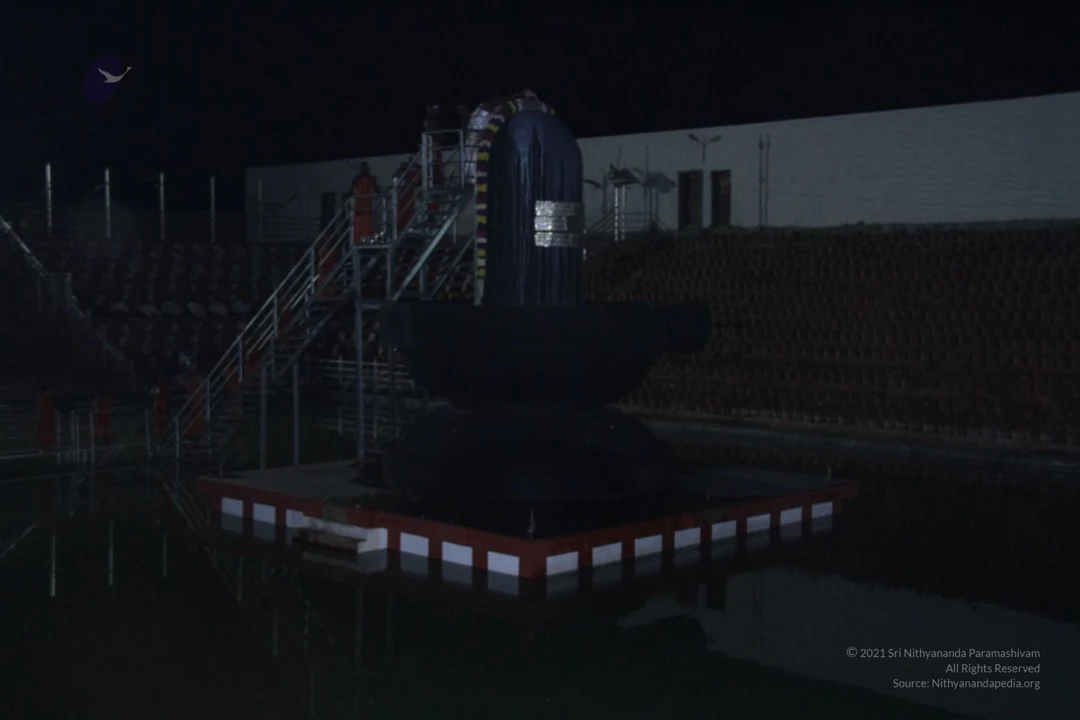
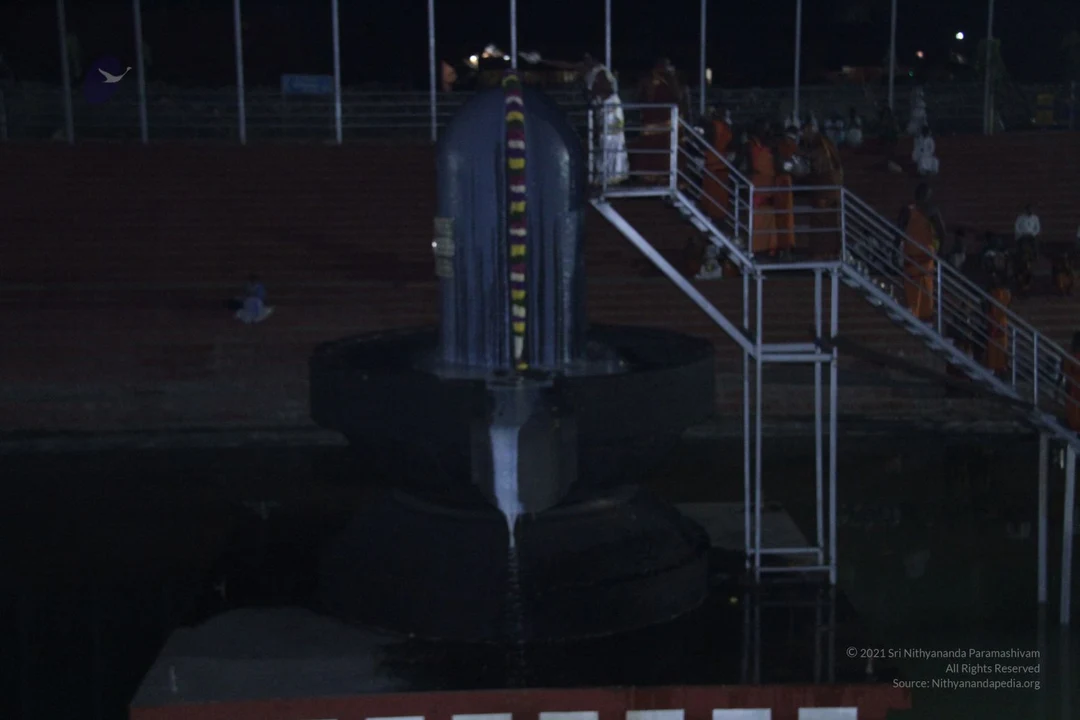
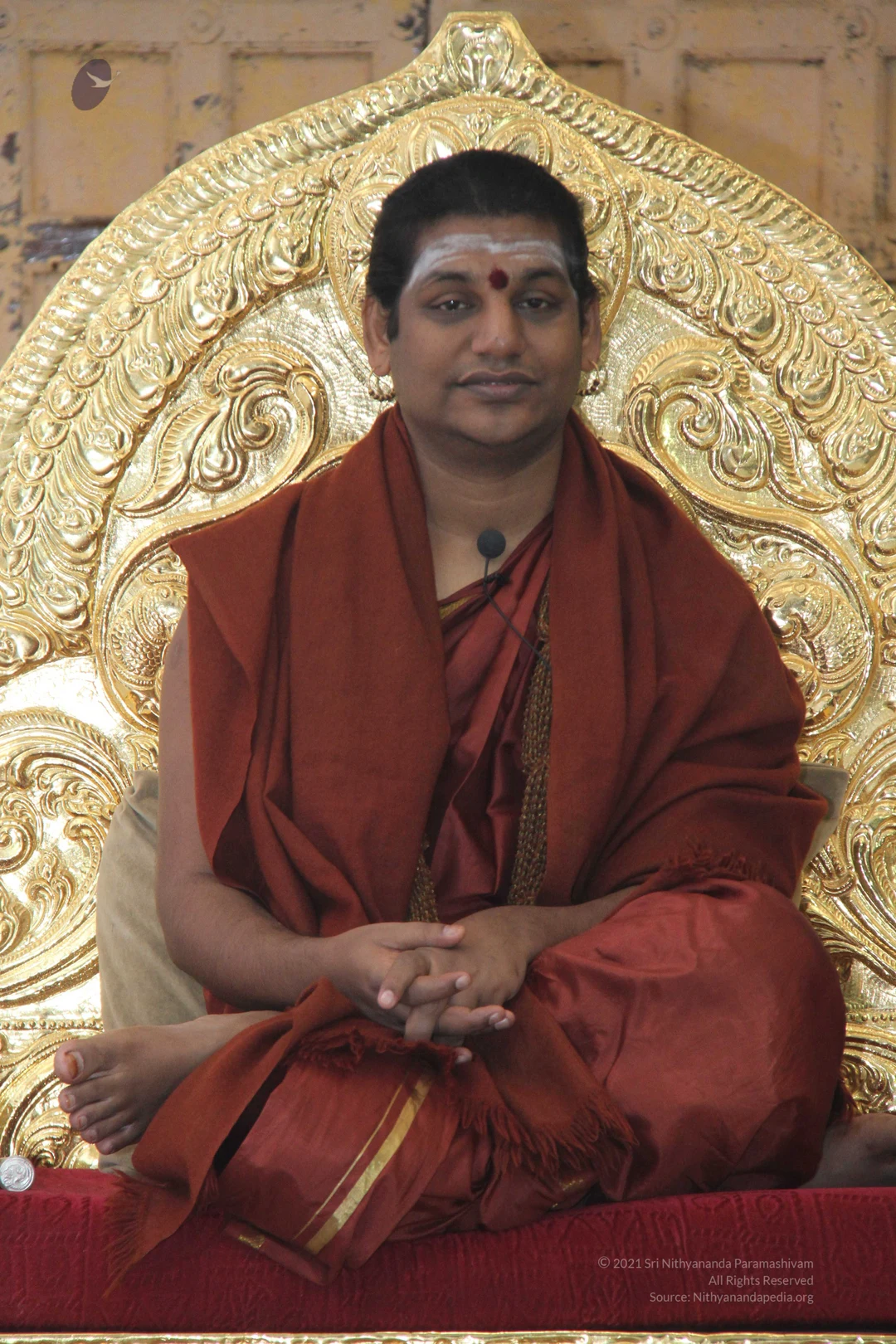
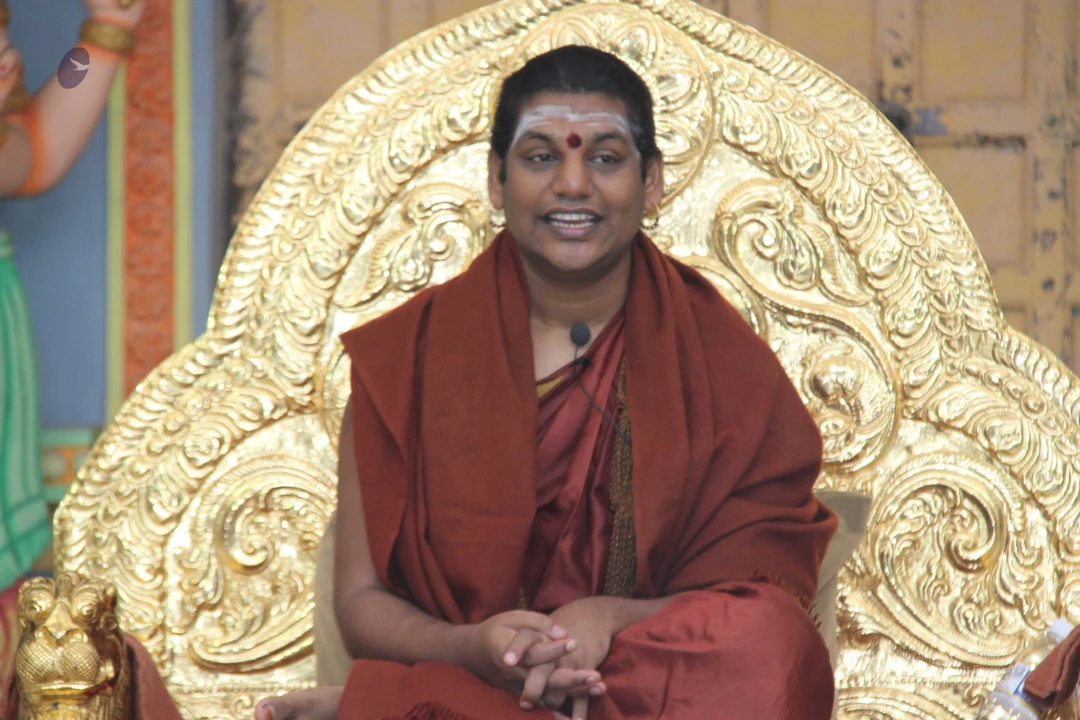
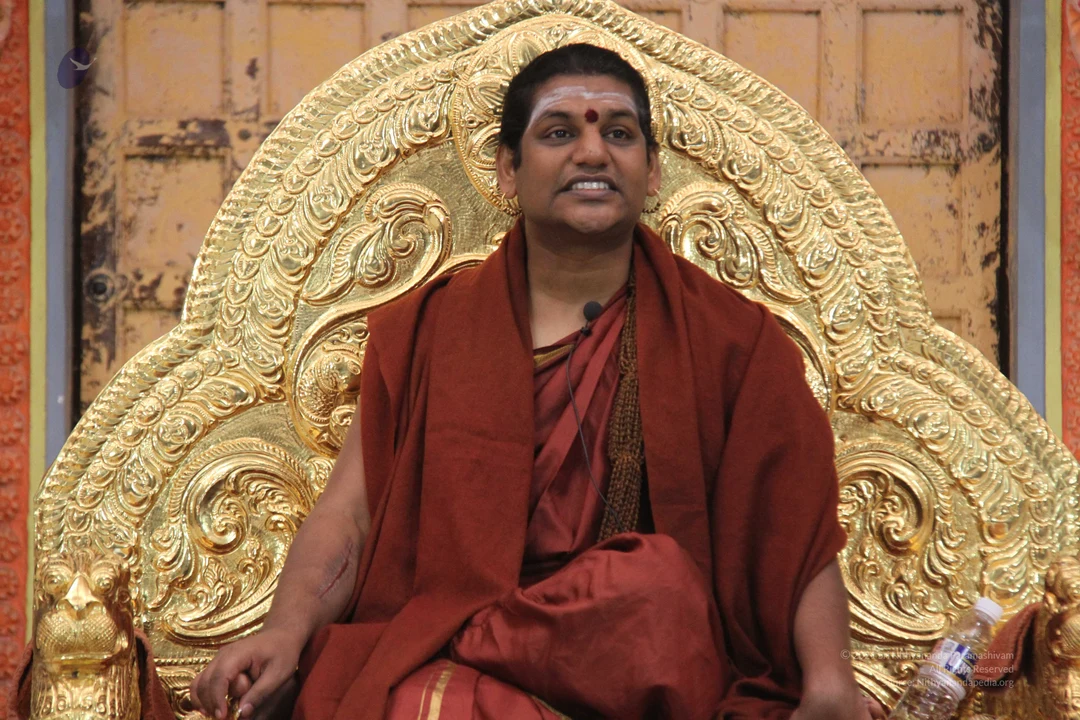
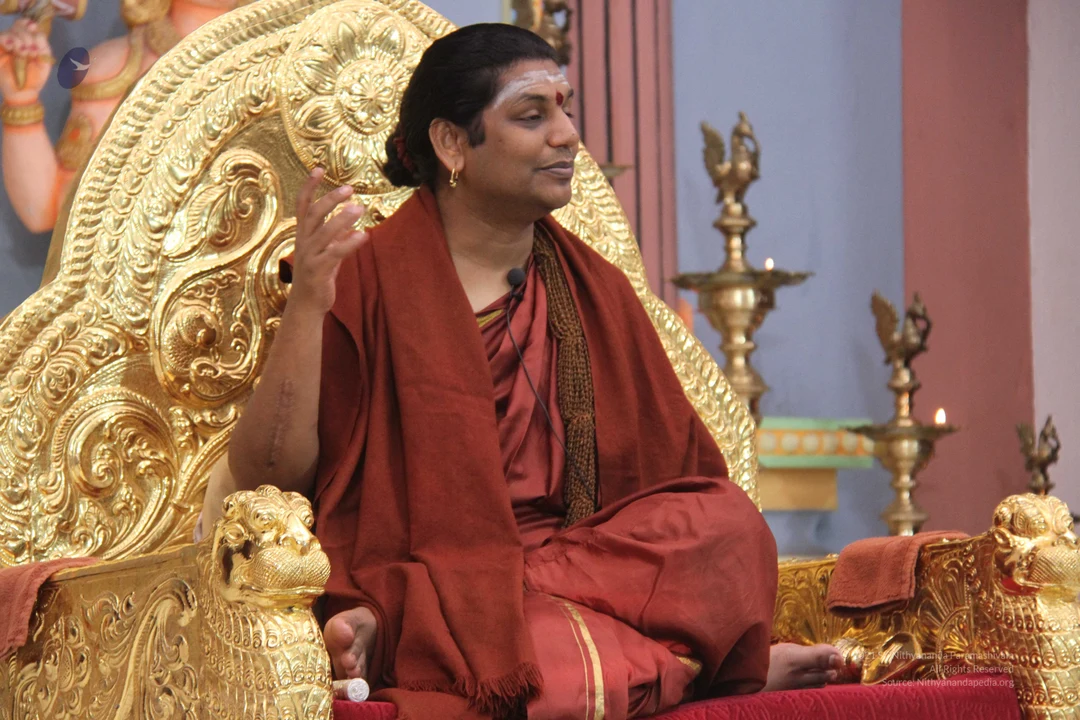
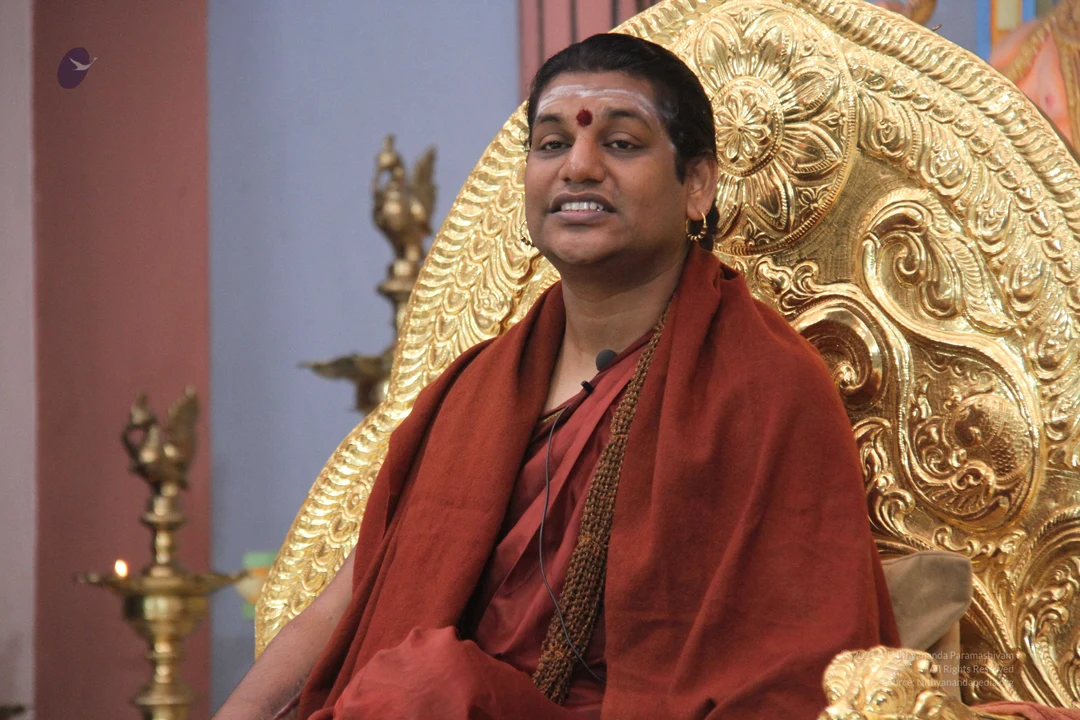
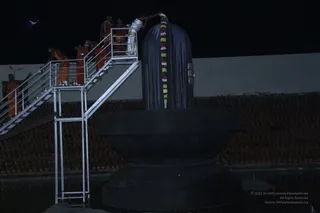
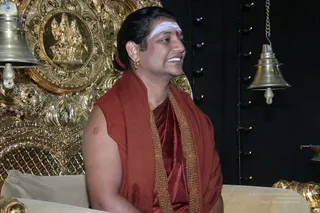
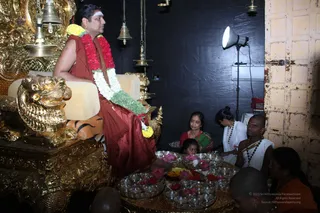
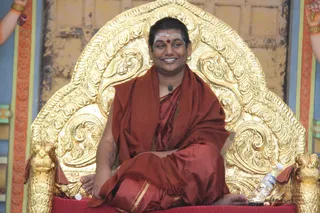
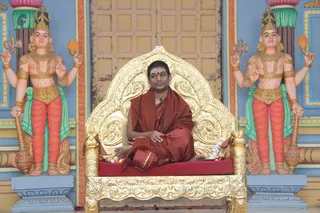
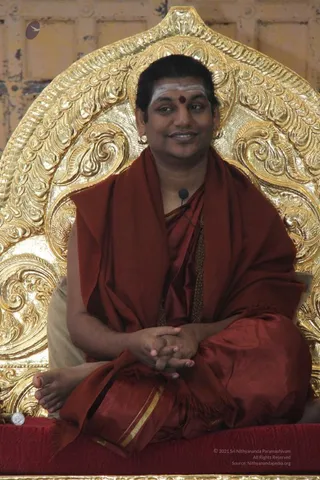
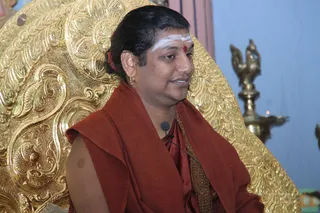
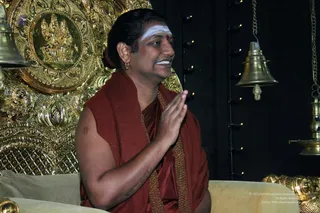
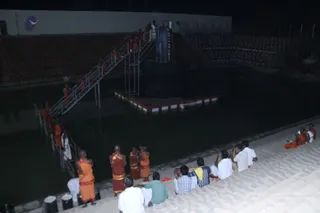
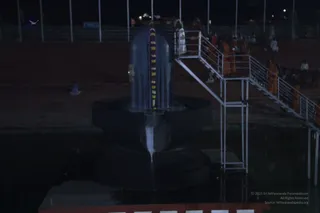
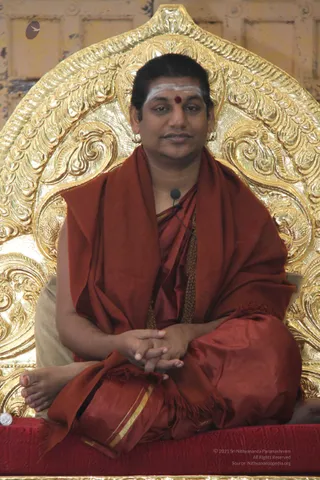
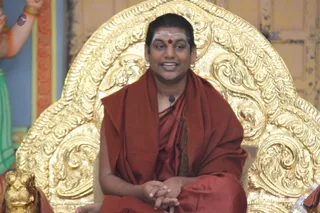
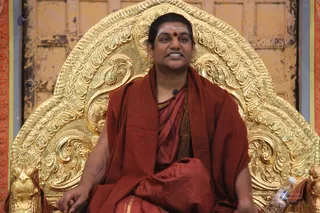
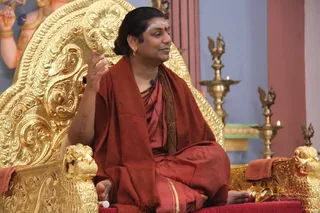
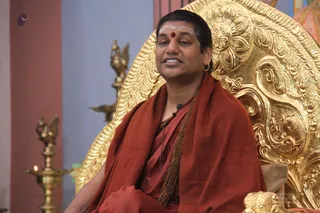
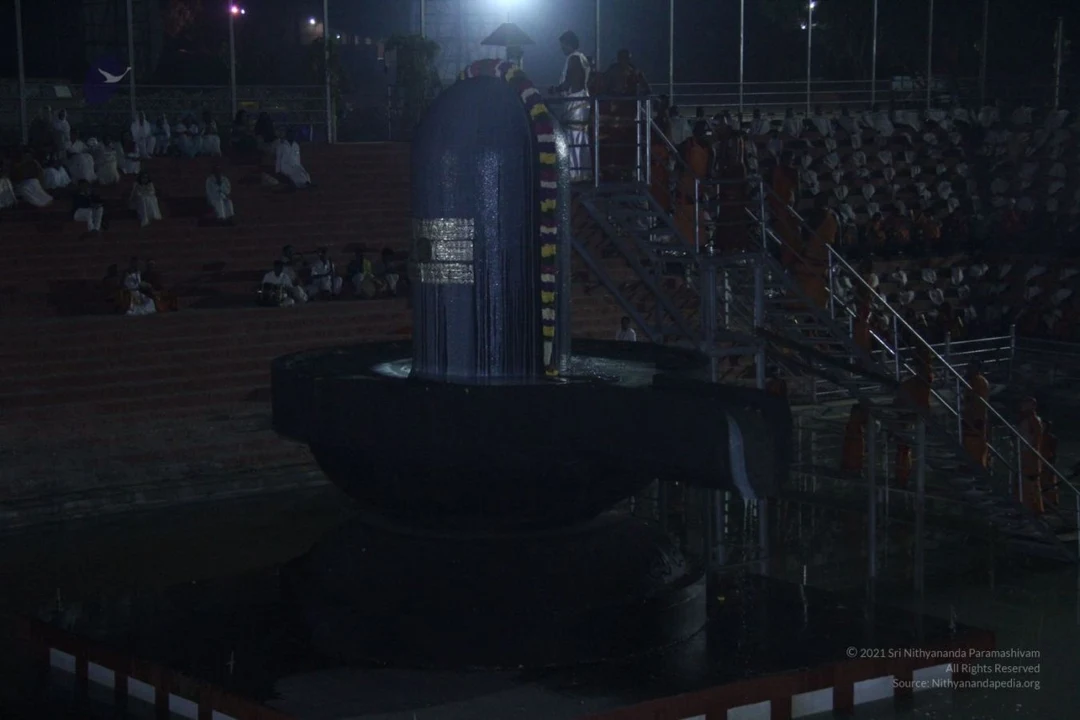
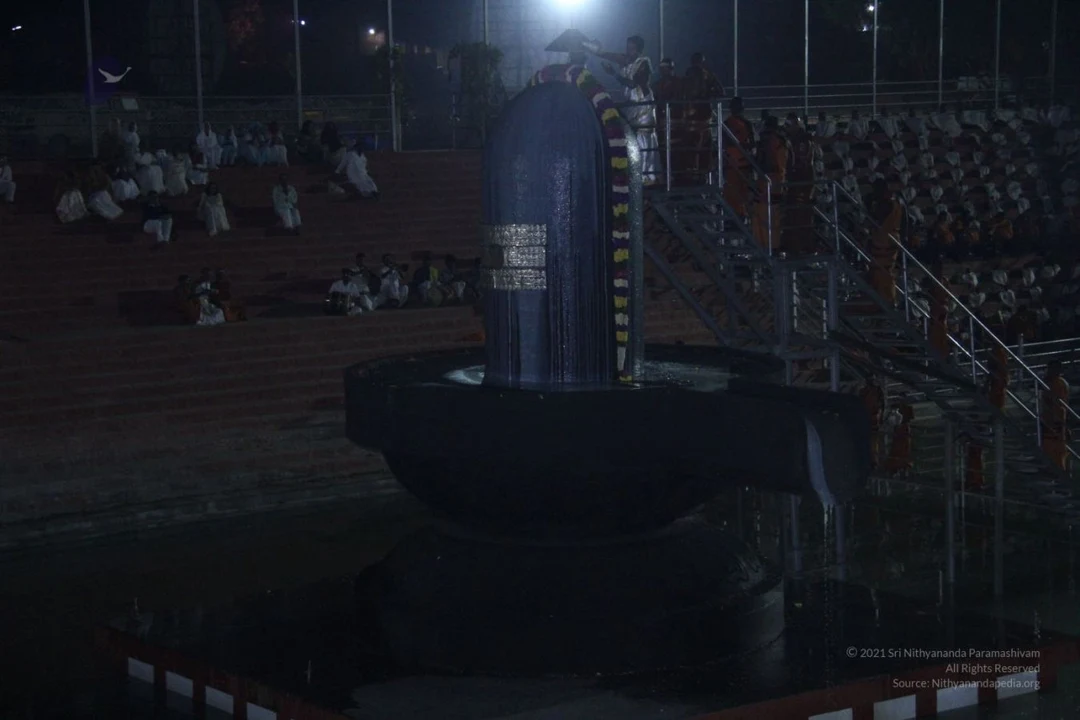
A photograph of a man seated on an ornate gold-carved throne-like chair, smiling and looking to his right. He wears a rust-orange shawl draped over a matching orange robe and has white horizontal tilak marks on his forehead with a red dot at the centre, plus a small gold earring and a clip-on lapel microphone. Behind him are a brass lamp with a flame and a blue wall.Night photograph of a large black stone Shivalinga standing in shallow water, its reflection visible on the dark surface. The linga is framed by an arched garland of yellow, red, purple and white flowers and has a silver band around its middle. It rests on a red and white striped base within a water-filled enclosure. Building lights and stands are faintly visible behind it. No people are visible in the scene.A man with short dark hair and white and red forehead markings sits smiling on an ornate gold throne with carved floral and scroll details. He wears a rust-orange shawl over a dark red garment and a small hoop earring, with a lapel microphone clipped to his clothing. Behind him, brass oil lamps with lit flames and a brass bird figure stand against a blue and pink wall. The setting appears to be a satsang hall.

December 30 2013

Original wiki page
Contents

Title

Nithyananda Diary | Rudrabishekam | Padapuja | Satsang | Meditation | Kalpataru Darshan

Description:

In today’s morning Satsang, Paramahamsa Nithyananda exclaims that each of us has the fire of possibility within us! We all carry the energy, in our inner space, to make whatever we want into reality. Let us reject the impossible and remember the possibility that exists in each of us!

Link to Video:

VideoAudio

Transcript:

Nithyanandeshwara Samaarambhaam

Nithyanandeshwari Madhyamaam |

Asmath Aachaarya Paryanthaam

Vandhey Guru Paramparaam ||

I welcome all the devotees, disciples, samagees, satsangis, sitting with us all over the world thru Nithyananda TV, lotus TV, Sadhana TV, Janashri TV, Ishwara TV, and through 2 way video conferencing having nayana deeksha in 30 cities, in 23 countries around the world.

Cities sitting with us in 2 way video conferencing Kathmandu Nepal, Oman sivagangai, San Diego Oceanside, Colorado springs USA, Kualalampur palani, jorpati Nepal, Astoria new York, Molieres France, Toronto kailasam, ohio prayag, Singapore singapuram, Washington DC sripuram, nithyanadagaram Hyderabad, los angeles arunachulam, san jose Madurai, London kashi, new York Varanasi, Winnipeg Canada, St Louis tirumala, devon uk, Huston kalahasthi, Oklahoma somanatham, Dakota dunes, indrani new jersey, jnanatma Haridwar, seattle chidambaram, Oklahoma somanatham, Hyderabad guptakashi, Washington DC sripuram, Toronto kailasam. I welcome all of you with my love and blessings.

HINDI 2:32

Today I’ll expand on causing enlightenment from some more dimensions. Especially from the dimension of this Nithya Kalpataru Darshan. Please understand. All of us carry the energy to make what we want as reality in our space. Dyanse suniye. Please listen. All of us carry the energy to make what we want as reality. That is what is life. What is life? The ability to make what you want as reality is life. Whether you want health, wealth, happy, relationships, bliss, completion. Whatever you want. Causing that in your life. Ability to cause that in your life is life.

3:50

For example you can’t do anything in your life then how can you even call that as a life? Maybe we can say that dead man or dead buried. Dead person or dead buried. NO! The ability to cause exists in everyone. Unfortunately like if too much of wood is dumped on small fire. Please understand, even too much of wood can put off the fire if the fire is too small and wood is too much. Same way, too much of impossibility is dumped on possibility fire. Possibility fire is too small and the impossibility wood is too much. If the fire can somehow manage to catch the wood, it will burn any amount of wood. It can even burn forests. That crucial initial moment were the wood is dumped on fire...If the fire gives up on itself, over. Somehow there is a blower, a little wind, the fire is supported, encouraged, enriched, initiated and it catches the wood then any amount of wood… the fire cannot be put off. All of have the possibility as a fire in us. The space of possibility as fire in us.

But unfortunately the idea of impossibility too much is dumped on us. Too much is dumped on us. When too much idea of impossibility is dumped on us, by us, nobody else dumps on us. Only we dump it on our self. Yesterday as I said your suffering is not your suffering. Your suffering. Your suffering is your suffering because you are suffering. No one dumps on us. Understand it’s we. It’s we its web. So no one dumps the idea of impossibility in us. We go on thinking, grinding. Making some idea as member of your inner space again and again is remembrance. Making is as a member of you again and again is remembering. Because you remember impossible again and again and again the impossible becomes member in you. Who give the membership card, you? By remembering, you give membership card. Again and again remembering makes the impossibility as member of you. Membering is done by remembering. The idea of impossibility, the concept of impossibility, the more and more it is remembered it is remembered as part of you. Remembering the wrong ideas is giving up on you.

8:25

Please understand, we think whenever we give up on our self, we don’t do anything we just rest, no. When you give up on you, you work a lot in the wrong direction. When you give up on you, you strengthen your negative faiths, you strengthen your negative patterns. You will be remembering either your possibility or impossibility. You can’t keep quiet. Keeping quiet is not possible. Keeping quiet is not possible even after death, forget about while you are alive. Even after death, you go on remembering either your hell or heaven. So when you remember your impossibility in you, the impossibility gets strengthened. Understand this word. Beautiful word. Remembering. Anything you remember again and again becomes member of you, part of you. If you remember about integrity again and again it becomes part of you. If you remember about authenticity again and again, that becomes part of you. If you remember about possibility again and again, that becomes part of you. If you remember impossibility again and again and again, it becomes part of you. Understand, anything you remember again and again becomes your muscle memory. Anything you remember again and again from your muscle memory becomes your biomemory. Anything you remember from your biomemory again and again becomes your bioenergy. Please remember this truth, never to allow impossibility to be remembered again and again and again.

11:08

If the impossibility comes inside you in the form of remembering eject it out! Again and again, re-eject it out, reject it out, reject it out. Remember possibility. Re-eject impossibility. That is essence of Kalpataru.

Understand, whatever you eject again and again out of you, comes out of your bioenergy to biomemory. If you again eject, it comes out of your biomemory to muscle memory. If you again eject it leaves your muscle memory once and for all. This re-ejection of impossibility, remembrance of possibility is life. Anyone who teaches this two is doing good work to the plane earth. Anyone who is doing this two is causing enlightenment. Understand, re-ejecting impossibility and remembering possibility. Anybody who does this to the world, in any form, is causing enlightenment. He may be doing this in the form of giving you health, making health as a possibility for you. He may be making justice as a possibility for you. He may be making happiness as a possibility for you.

Yesterday in the Facebook, I had a request from one of our devotee, ? (13:08), she said you always talk about lawyer, engineer, doctor, you never talk about accountants and financial (laughs) professionals. Ok today I’ll mention about them also. You may be making the wealth, financial regulization, accounting possible for somebody. Even that is causing enlightenment. Understand, causing enlightenment happens in various levels. If you cause the highest inner awakening in them, then you caused the ultimate reality for them. Do the ultimate. That is best! But at least til then do the level in which you are growing, you are in.

14:09

Re-ejecting impossibilities, remembering possibilities is causing enlightenment. Be a fire of possibility! Wherever you go, whoever comes around you, should know everything is possible in their life! You should just be the energy of possibility. A power of possibility! The power of joy! The power of possibility. If you have awakened that fire in you, you have blessed yourself. If you can awaken that fire in everyone, you bless others. This kalpataru darshan, Nithya kalpataru darshan is nothing but awakening that fire in you. Remembering possibility, re-ejecting impossibility. Re-ejecting possibility in you and remembering possibility in you is Kalpataru darshan.

Atheists teach nothing is possible. Materialists teach it is possible if you work hard. Capitalists teach it is possible if you work smart. Communists teach it is possible if we all work together. Politicians teach it is possible if you work for me (laughs). An enlightened being teaches it is simply possible! Because it is quality of life. It is quality of life! The quality of life is possibility.

Mahadeva is embodiment of possibility. Eternal embodiment of possibility. Possibility is Ananda. Eternal possibility is Nithyananda. I am not giving possibility as a fantasy to you. I’m giving possibility as a factuality to you. Possibility is not a fantasy. Because you think impossibility is the reality, you think possibility is a fantasy. But I tell you possibility is factuality, impossibility is a fantasy. Impossibility is the fantasy you load on yourself. Possibility is the fact you constantly try to forget. Possible. Possible. Possible. Possible. Possible. Possible. Possible. I tell you that is the meaning of the mantra Shiva. Shiva means what…causeless auspiciousness. Everything is possible, possible, possible, possible. Remembering the idea of possibility is what is the meaning of Shiva mantra japa. Shiva. Shiva. Shiva. Shiva. Shiva. Means possible, possible, possible, possible, possible. Shiva. Shiva. Shiva. Shiva. Shiva. Shiva. Shiva. Shiva. Shiva. Possible. Possible. Possible. Vasi, Vasi, Vasi, Vasi, Vasi means you attract the possibility constantly towards you. Shiva becomes Vashi. Vashi means attracting. Attracting possibility towards you – Shiva, Shiva, Shiva, Shiva, Shiva, Shiva, Shiva, Shiva. Shiva means possibility.

The biggest impossibility you believe in you is getting rid of your past personality, your old possibility. That is the biggest impossibility you believe. You think that only is most difficult. Getting rid of the old. Re-inventing yourself as new. That only you think as most difficult. Shiva is embodiment of getting rid of old and possibility of new. The power of rejuvenation. He can get you rid of anything. He can get you rid of your karmas, negative patterns, body, mind, disease. Sula, trishula is a symbol of getting you rid of all the impossibilities. Damaru is the symbol of remembering, reinforcing all the possibilities. Damaru is creation. Damaru is the sound, symbol of creation. Trishul is the weapon of rejuvenation. That’s why the damaru and trishul are always together, worshipped. Through the trishul, he removes all the old impossibilities. Through damaru he creates all the possibilities. Shiva. Shiva. Shiva. Shiva. Shiva. Shiva. Shiva. Possible. Possible. Possible. Possible. Possible…Possible. Possible. Possible. Possible. Possible.

21:33

An ordinary man, a common man can never believe things are possible because he’s…common man he remains common man because he’s made to believe things are impossible. If he suddenly starts believing things are possible, he will not be a slave of a politician. He will not be slave of a capitalist. He will not be a slave of his boss. He will not be slave of anybody who has a vested interest to have more slaves. How the water is supplied to you in various forms – sometimes in the bottle, sometimes in the can, sometimes in the kamandalu, sometime in thorough the pipe. Possibility is supplied to you in various forms. As I said a politician supplies possibility to you - it is possible if you work for me. A capitalist supplies possibility to you it is possible if you do smart work. Atheist say no it is not possible at all. Forget about it. Let’s all commit suicide. Then if you ask him, why are you alive why don’t you commit suicide? No, if I commit suicide who will preach this science of suicide? I’ll make everyone commit suicide then I’ll commit suicide (laughs).

A spiritual being, an enlightened being only makes you understand possibility is simply possible because it is your life. It is your breathing. Breathe deeply and send the prana to your whole body and mind. You are now radiating possibility. When inhaling is possible everything is possible. When the air can be converted as the prana, life energy, if that is possible, everything is possible. If a bead can be converted to blood, if that is possible, everything is possible. If bread can become blood, air can become prana, then everything is possible. Possible. Possible. Possible.

But politicians get angry if people are made to believe things are possible because then their business will not run. Capitalists get angry if things are made smooth. See this pharmaceutical companies wants pesticides and all the chemical used in agriculture. They don’t’ want the intensity of the pesticide to be reduced on agricultural product. Why? Because only then they will have more patients. They will have people to buy their medicines. Same way, only if you are taught things are impossible, you will be slave for somebody. I tell you possibility, possible, is the greatest possibility and truth. Reminding you that possible in your bioenergy level is Kalpataru Darshan. Kalpataru Darshan is reminding you in your bioenergy level that things are possible. Reminding you about your possibility in your bioenergy level is kalpataru darshan. Each one of you have kalpataru. Each one of you have kalpataru in you. Awakening that kalpataru energy in you. Awakening that possibility energy in you is kalpataru.

27:07

Now, I’m planning a beautiful stone temple around the Banyan tree. It will be called as Kalpataru Mandir – space of Kalpataru. The whole stone structure is designed such a way, with beautiful yantras to focus and intensify the kalpataru energy of the, our Kalpavriksha. It is like sun is there but if you put more mirrors, make it reflect and concentrate, that same sun rays can burn. It can become so intense it can burn cotton. If you put the cotton in the sun rays directly it won’t be burnt. But if you put it through the prism with the reflections, concentrated sun rays, the cotton can be burnt. Same way, I’m building a structure around the Banyan Tree, to concentrate the Kalpataru energy through the proper geometric Yantra prisms. So the moment you come and sit inside that prism and meditate or pray or ask for anything, it’ll become reality. It’ll become possibility. It will become possible. The real Kalpataru space is getting created on the planet earth. I put my integrity at stake. Please understand, I put my integrity at stake because I know it will never be at stake. This science is so powerful. I can challenge. I don’t even need to challenge. You come and experience, you’ll understand. Once completed with integrity, responsibility, authenticity, and enriching I tell you all, anybody who comes and sits in that Kalpataru Mandir, and asks for anything, the Kalpavriksha will make it as reality. Only if you are asking for something which will be negative to you or to others, he may give the intelligence to raise you to the level of you asking for the right thing and fulfill that. It is going to be such powerful energy. I already have the vision clearly. Kalpataru Mandir. Kalpataru Devasthana. Kalpataru Sabha. Workers already started. Yesterday the foundation work has started. We are cleaning and you guys can expect the whole thing to be open for public to experience the kalpataru energy in the highest frequency, highest possible way maybe by Guru Poornima. Because Stapathis are telling for that Kalpataru pragadam, means kalpataru Mandir, we already have almost everything we need. Only little need to be brought in. but they are starting the work. Creating the space of possibility inside us. Putting the seed of possibility inside us is initiation. Because society constantly teaches you impossibility, master has to constantly remind you of possibility. Possible. Possible. Possible. Possible.

The ability to build the possibility inside you is tapas. Not allowing impossibility in you, re-ejecting impossibility is renunciation. Building the biomemory of possibility is tapas. And initiating you into the level of your biomemory with the energy of possibility is Kalpataru.

Photos
Photos Of The Day:

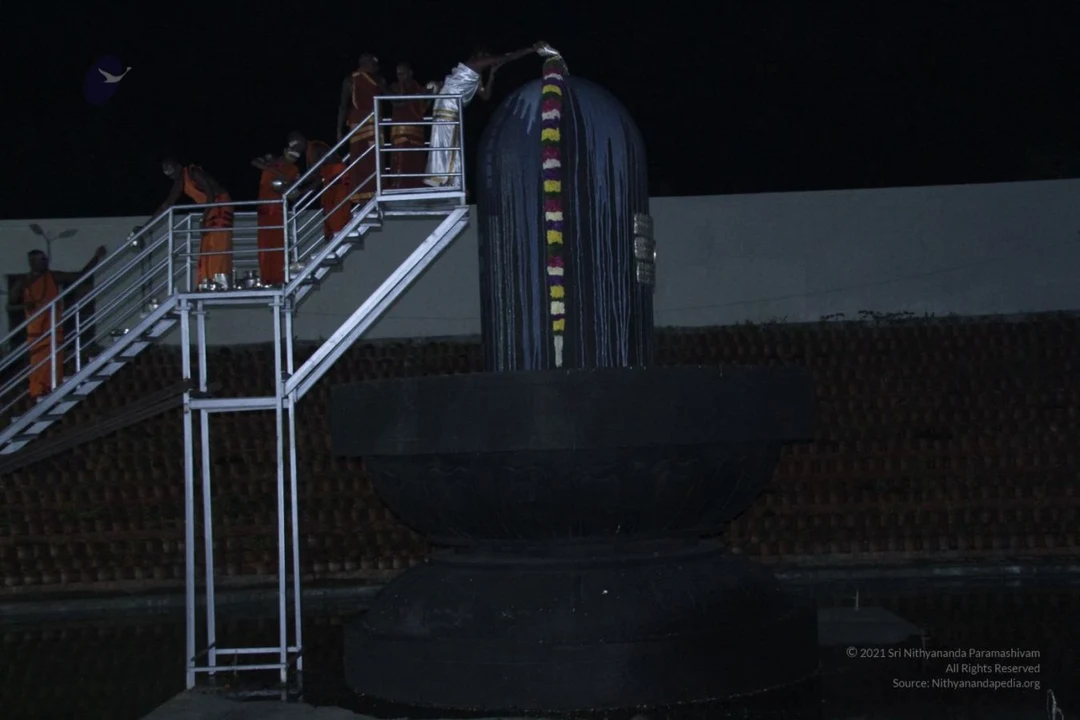
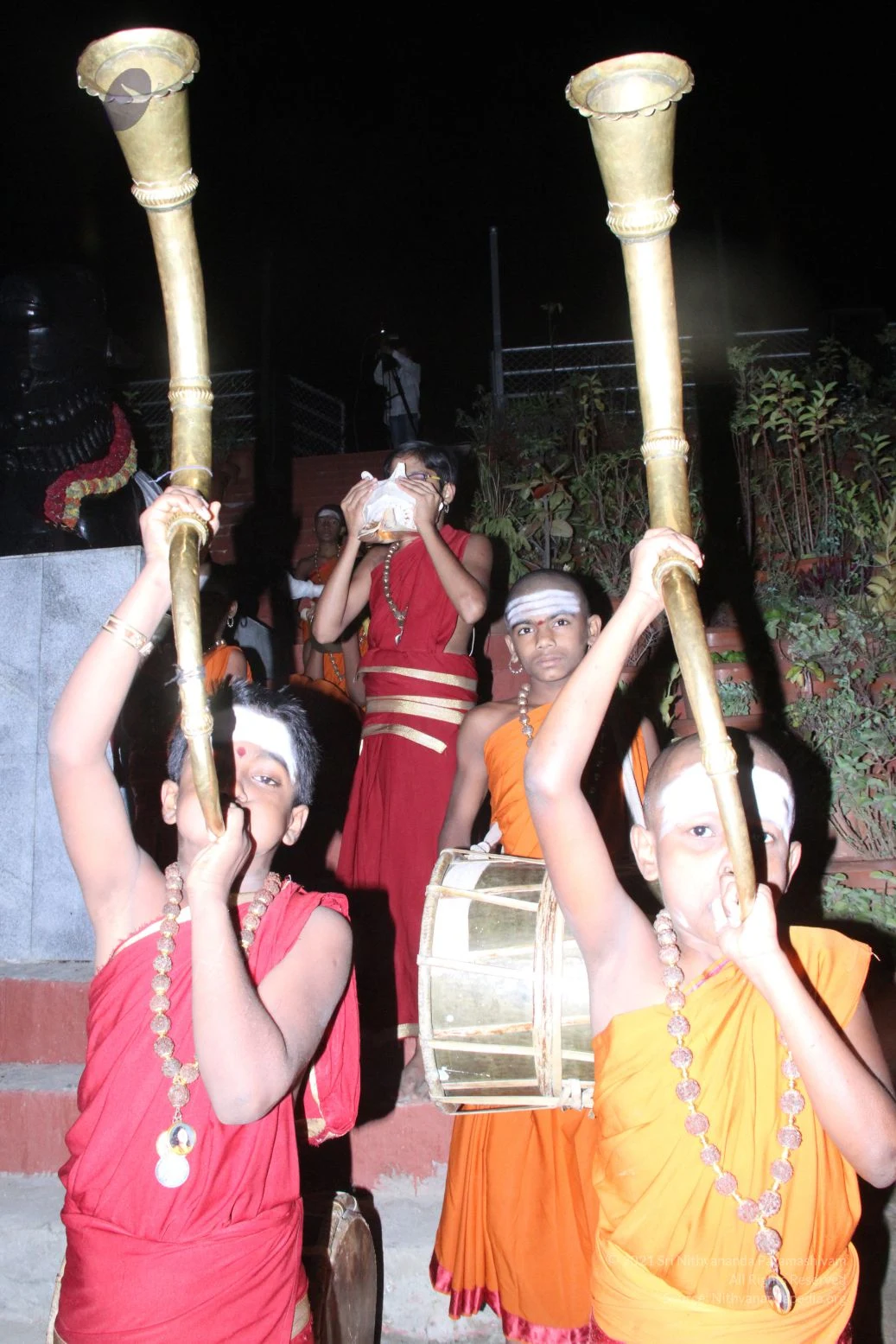
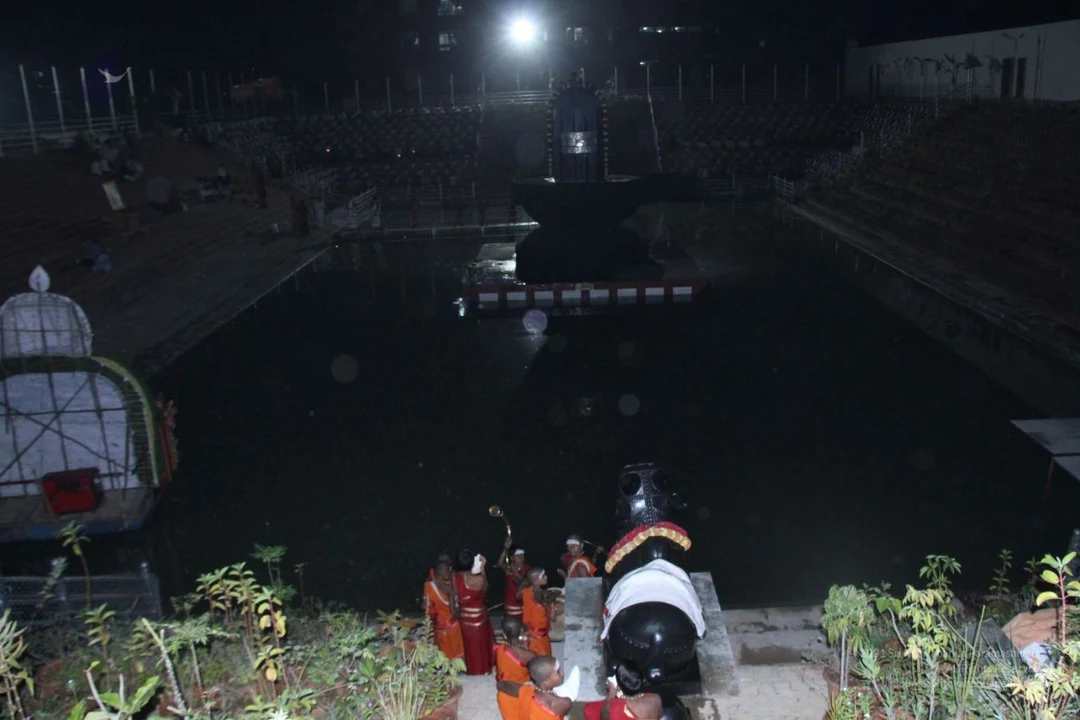
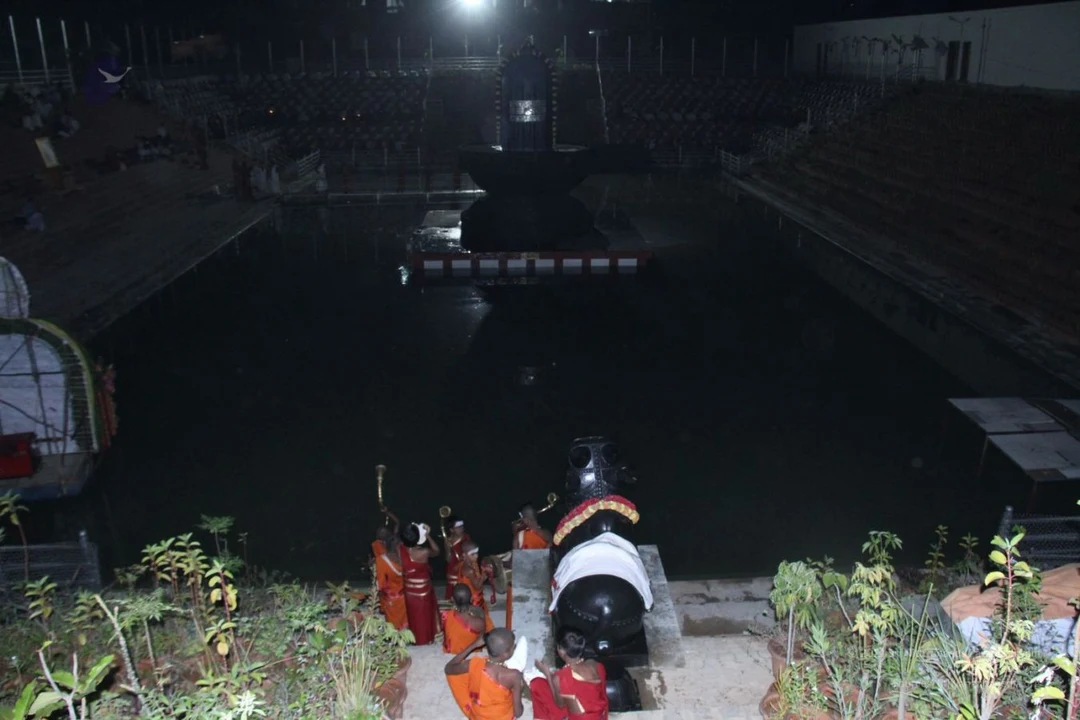
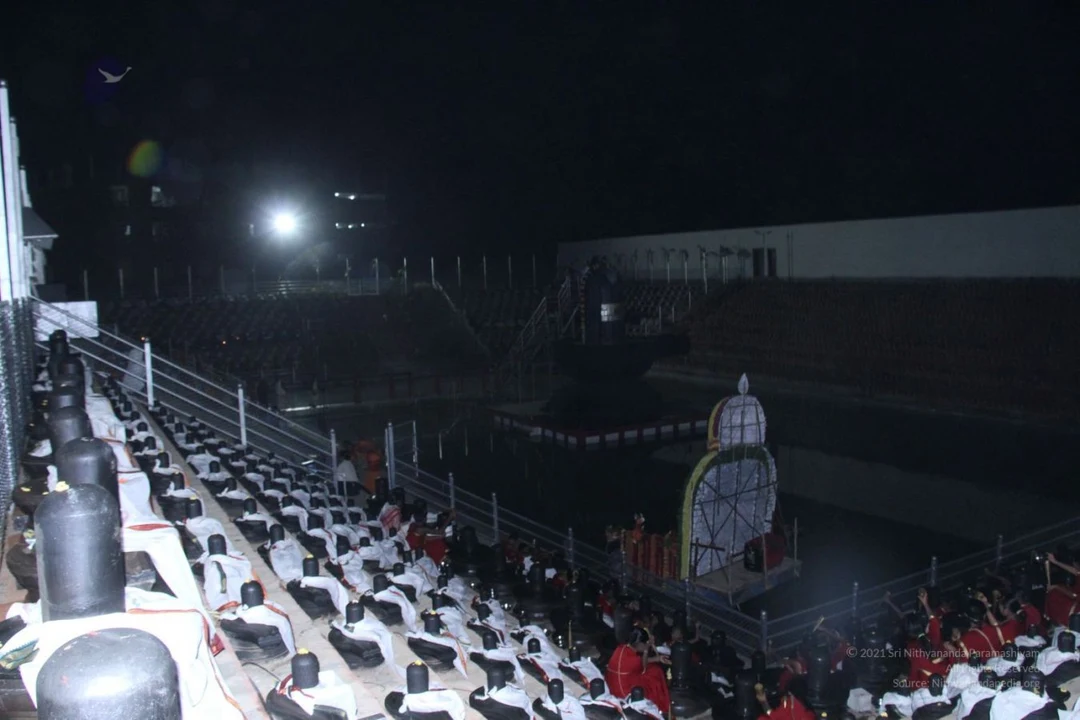
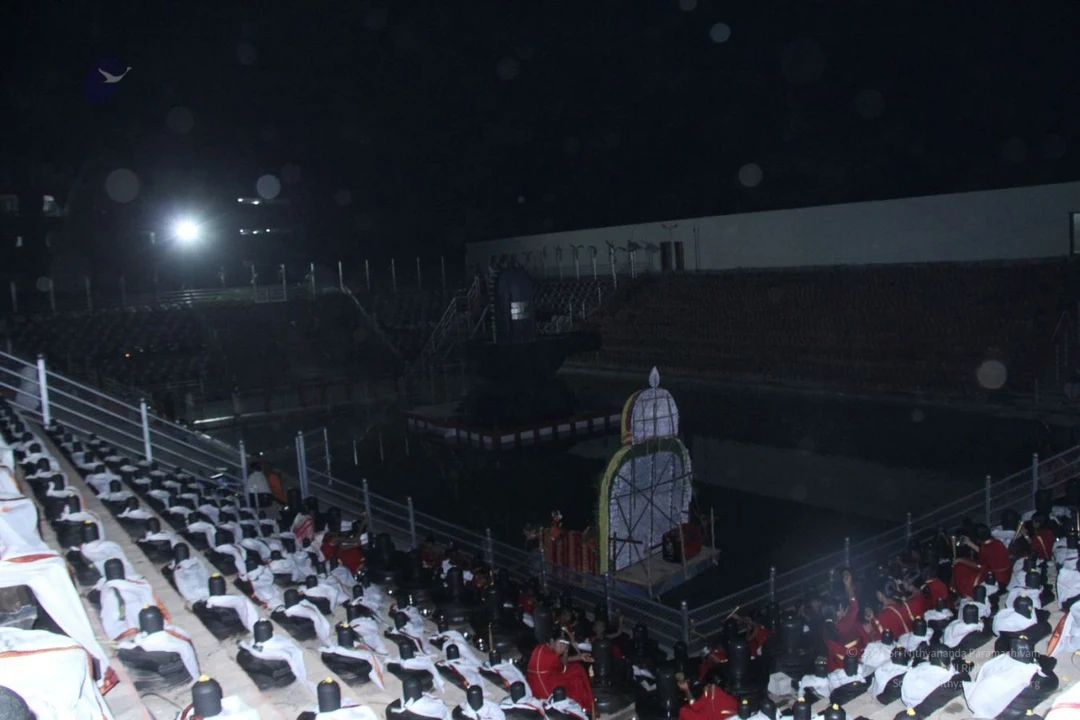
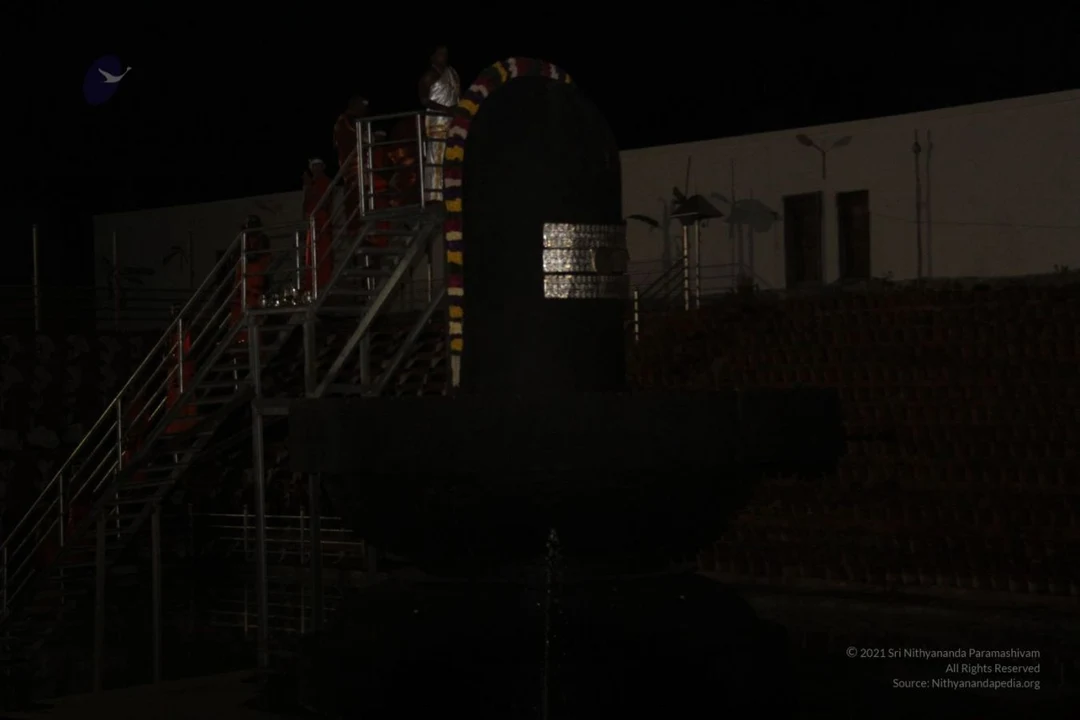
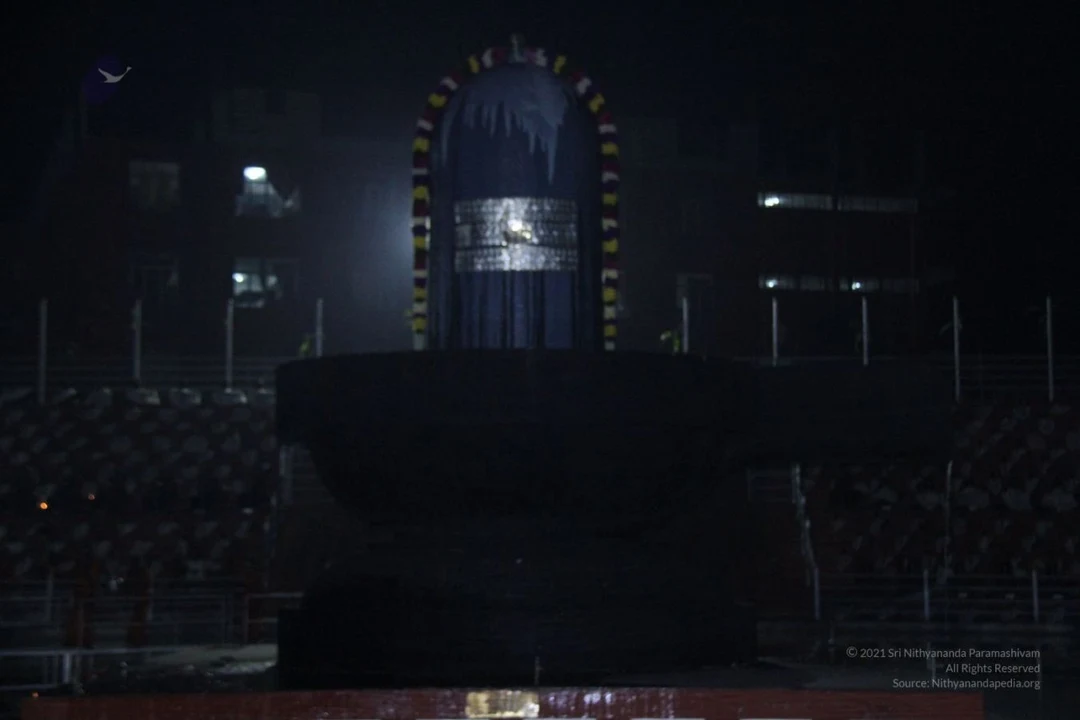
Rudrabishekam
Pada-Puja

Satsang

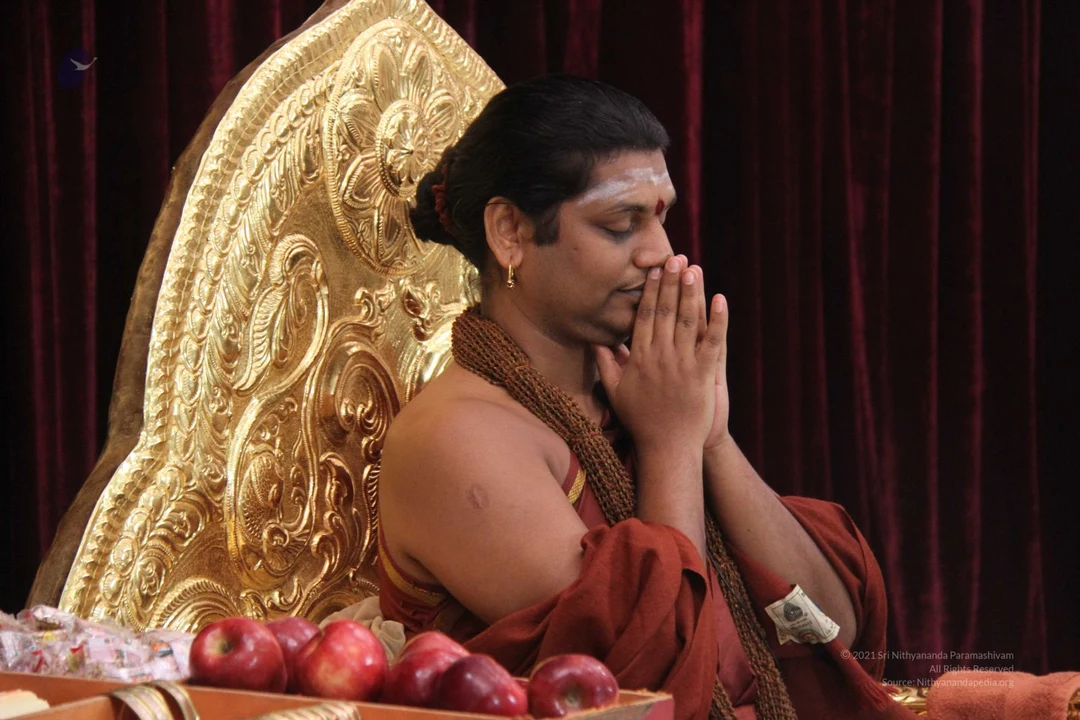
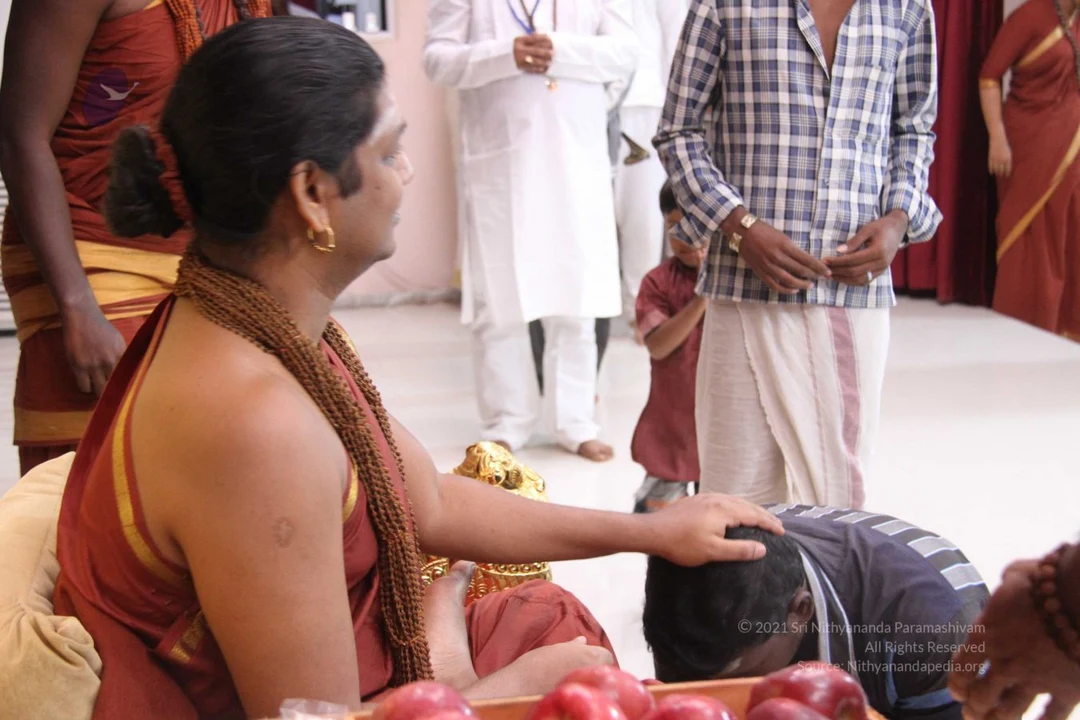
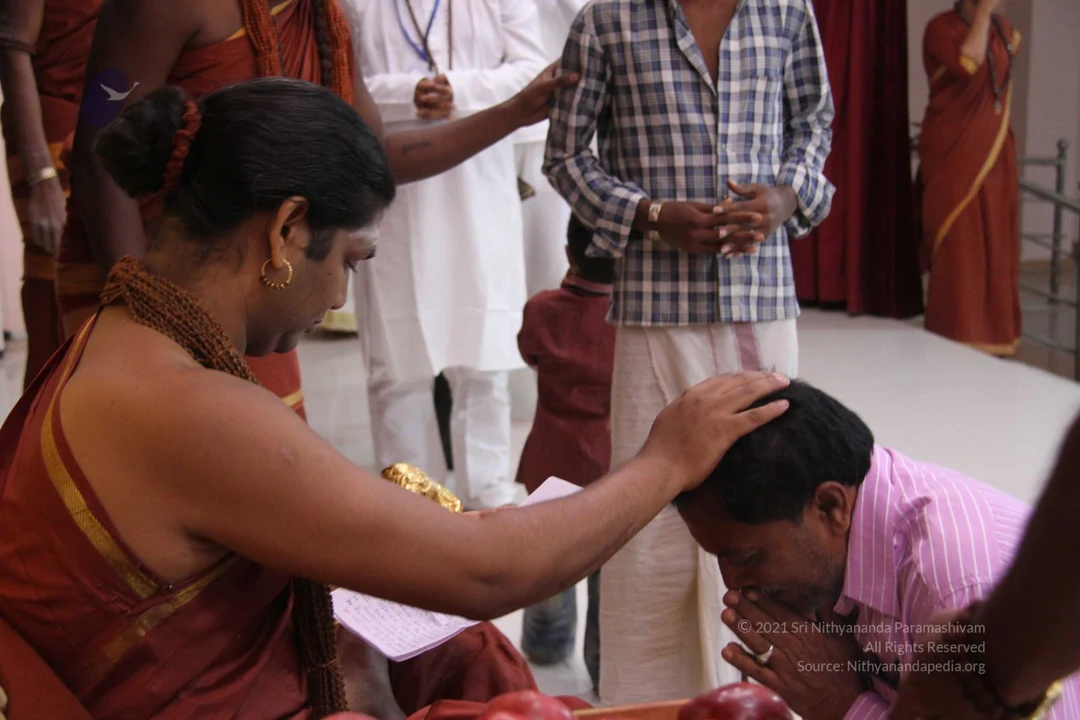
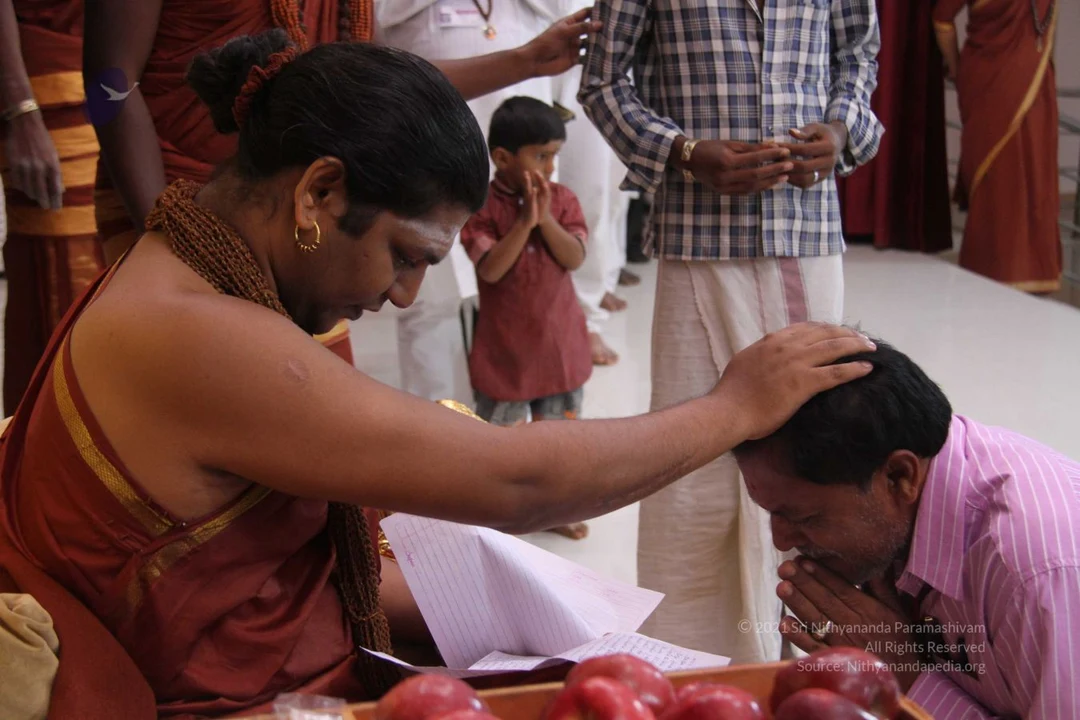
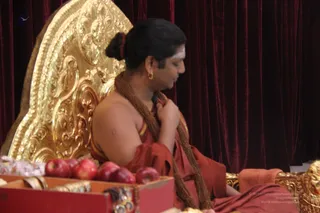
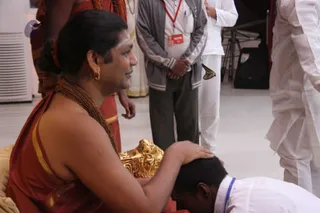
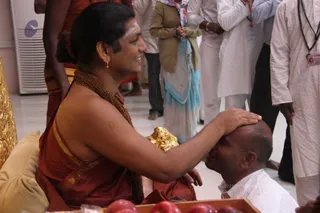
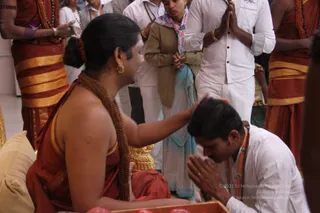
Kalpataru-Darshan

Photos Of The Day:

Pada-Puja

01-Rudrabhishekham

03-Satsang

04-Kalpataru-Darshan

Tags:

Paramahamsa Nithyananda, fire, energy, inner space, reality, possibility, exists.

Photos from this day

View all 213 photos

Photos

11 photosSource gallery
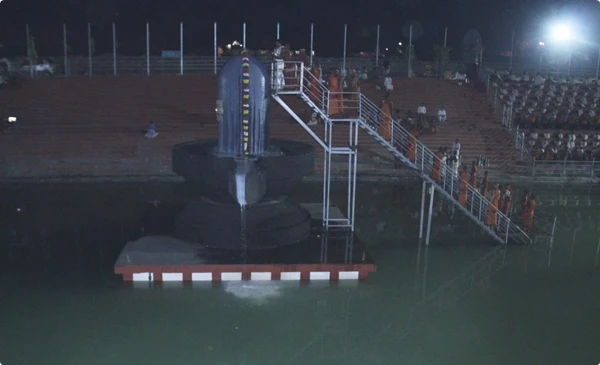
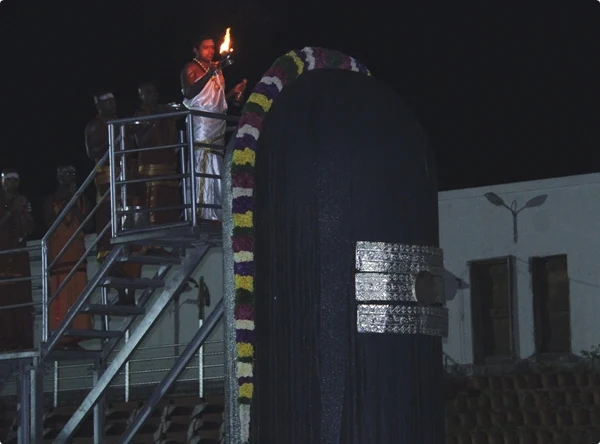
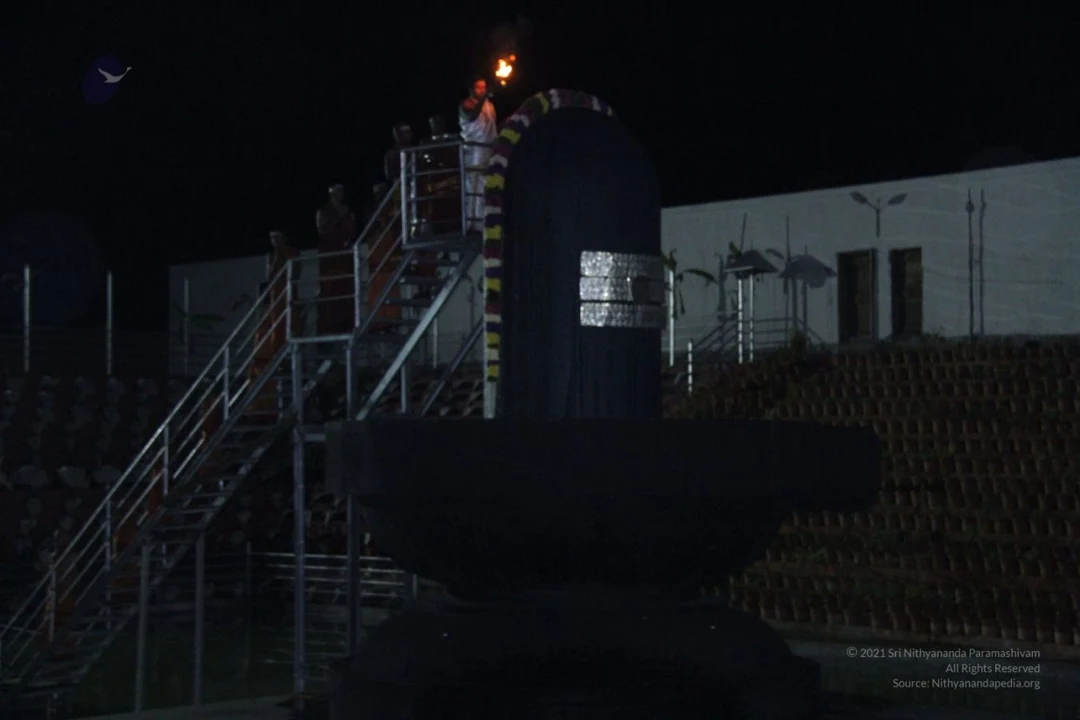
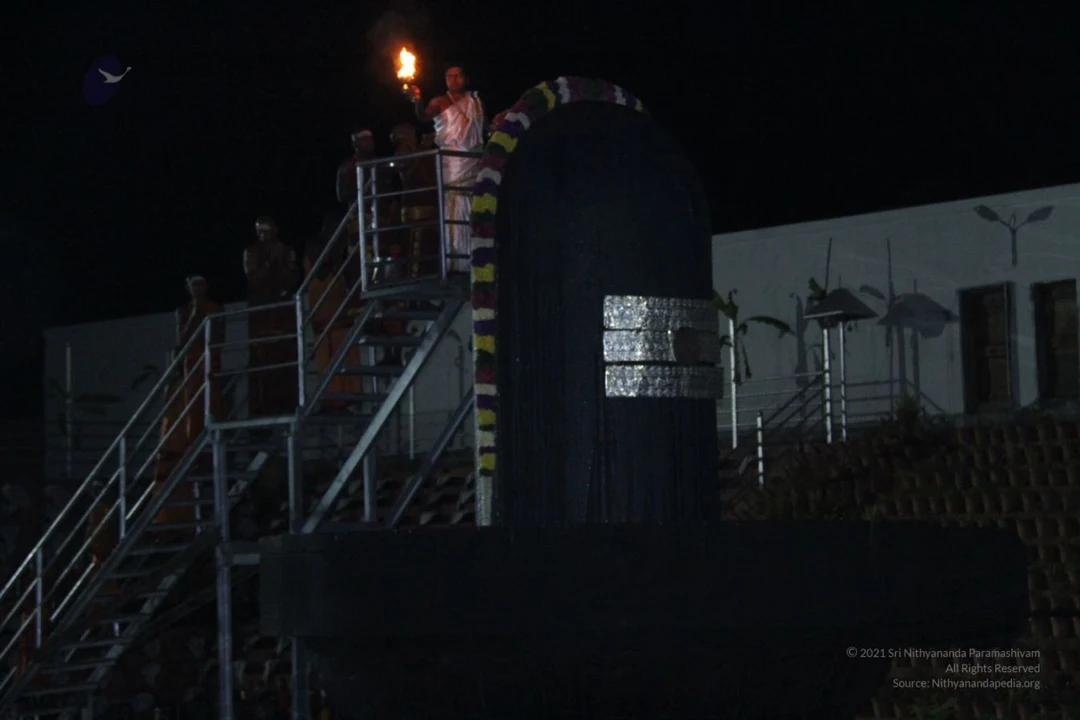
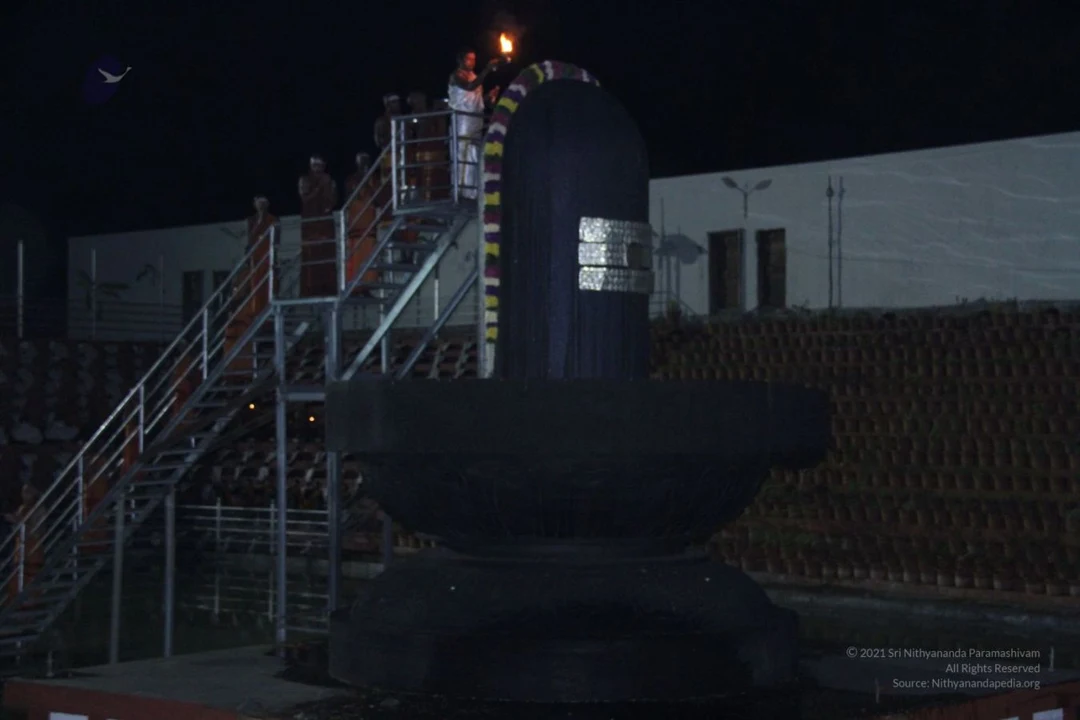
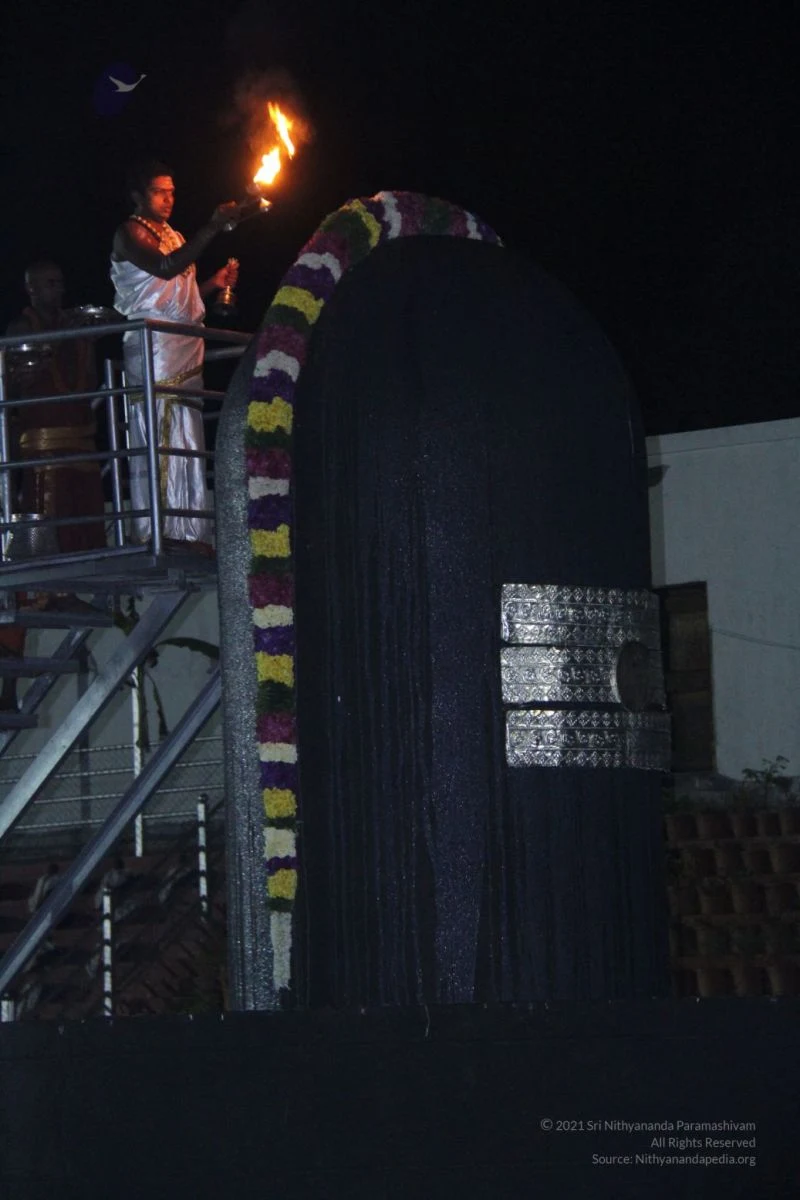
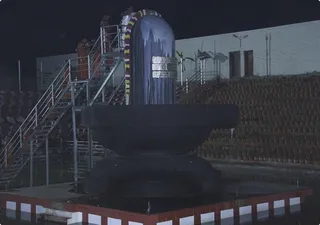
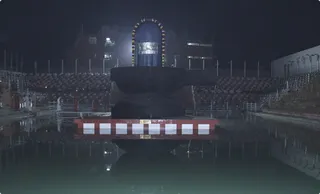
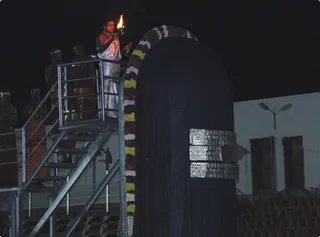
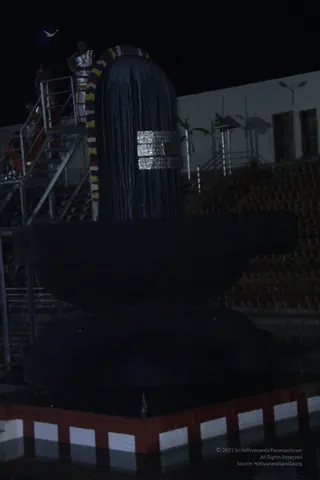
A large dark stone Shivalinga stands on a black circular yoni pedestal, draped with a garland of white and orange flowers. A man in white clothes reaches over the top of the linga, pouring liquid over it as part of abhishekam. On a white metal staircase at left, several men in saffron and orange robes stand watching or assisting. Behind them is a wall of many small clay lamps arranged in rows, and the floor of the pedestal is wet.Night photograph of an outdoor ceremonial venue lit by a bright floodlight. Rows of white chairs with black armrests line the left foreground, many occupied by seated people in red and white clothing. Several people in red garments stand near the right edge beside a large white and green decorated structure resembling a shrine or float. Across a dark rectangular pool or water channel, a raised stage platform with a figure in dark clothing stands near the centre, flanked by steps and stands. Concrete stands rise in the background. Black stone or metal pillars stand at the far left edge.Night photograph of a large black stone Shivalinga on a square yoni pedestal set on a red-and-white painted base, with a garland of marigolds wrapped around the lingam's upper portion. A silver-coloured band and an engraved ornamental motif decorate its side. A metal staircase with orange-and-white railings climbs beside it toward a small figure in orange-coloured clothing standing at the top near the lingam. Behind is a white building wall with lamp posts and rows of dark seating steps. The scene appears to show a Rudrabhishekam setting; no people are clearly visible except the small figures at the top of the stairs.Night view of a large dark stone Shiva lingam on a raised black peetha at the centre of a reflective water pool, with a lit blue and gold arched shrine niche behind it. White-cloth-covered offering platforms sit in front of the base, and stone-tiered seating and railings line the edges. No people are visible in the scene.A large dark stone Shivalinga rises from a yoniplinth set on a platform in the middle of a water tank at night. Water flows from the lingam, and a garland-like band of coloured decoration is wrapped around its upper section. A white metal staircase with railings leads from the stone steps of the tank down to the platform. Several people in orange and saffron robes stand on the staircase, and a few more people sit or stand on the stone steps along the far bank. Floodlights light the scene, and rows of seated spectators are visible on the right side.Night photograph of a large dark black Shiva lingam draped with a garland of multicoloured flowers, mostly purple, red, yellow and white, with silver-coloured decorative bands at its base. Beside it, on a metal railed platform with stairs, a man in a white dhoti and orange-tinted shawl holds a lit oil lamp aloft during an aarti. Behind him, several men in orange and white ritual clothing stand on the platform, and a white building with windows is visible at right. The scene appears to be an evening Shiva lingam abhishekam or aarti at an ashram.

Rudrabishekam
55 photosSource gallery
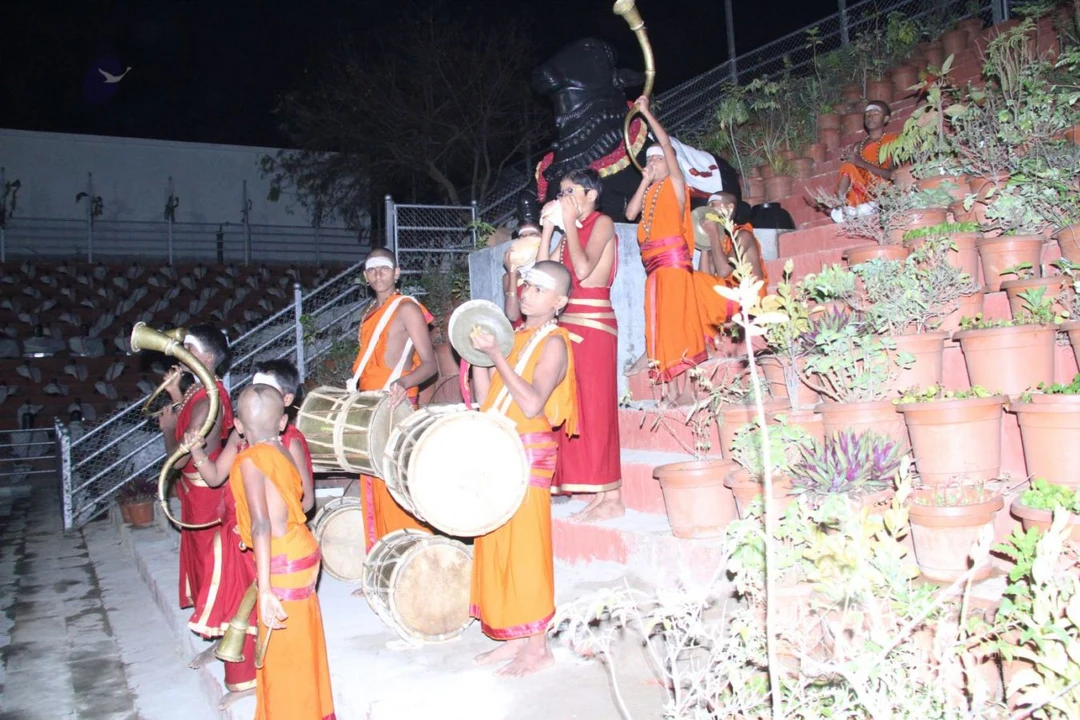
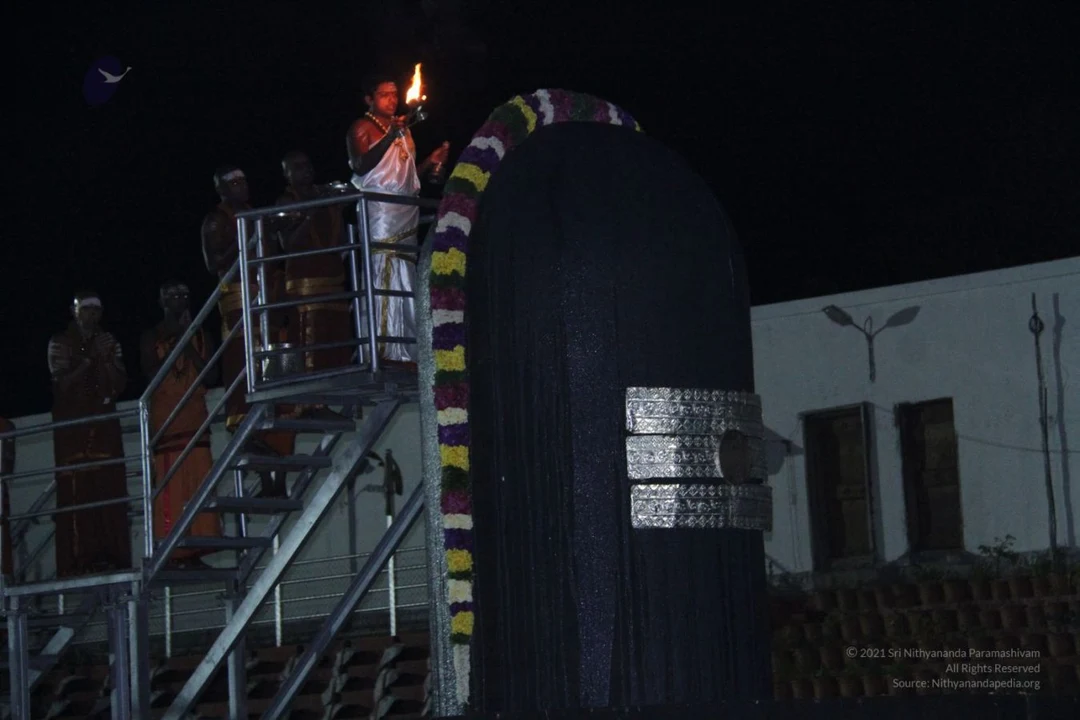
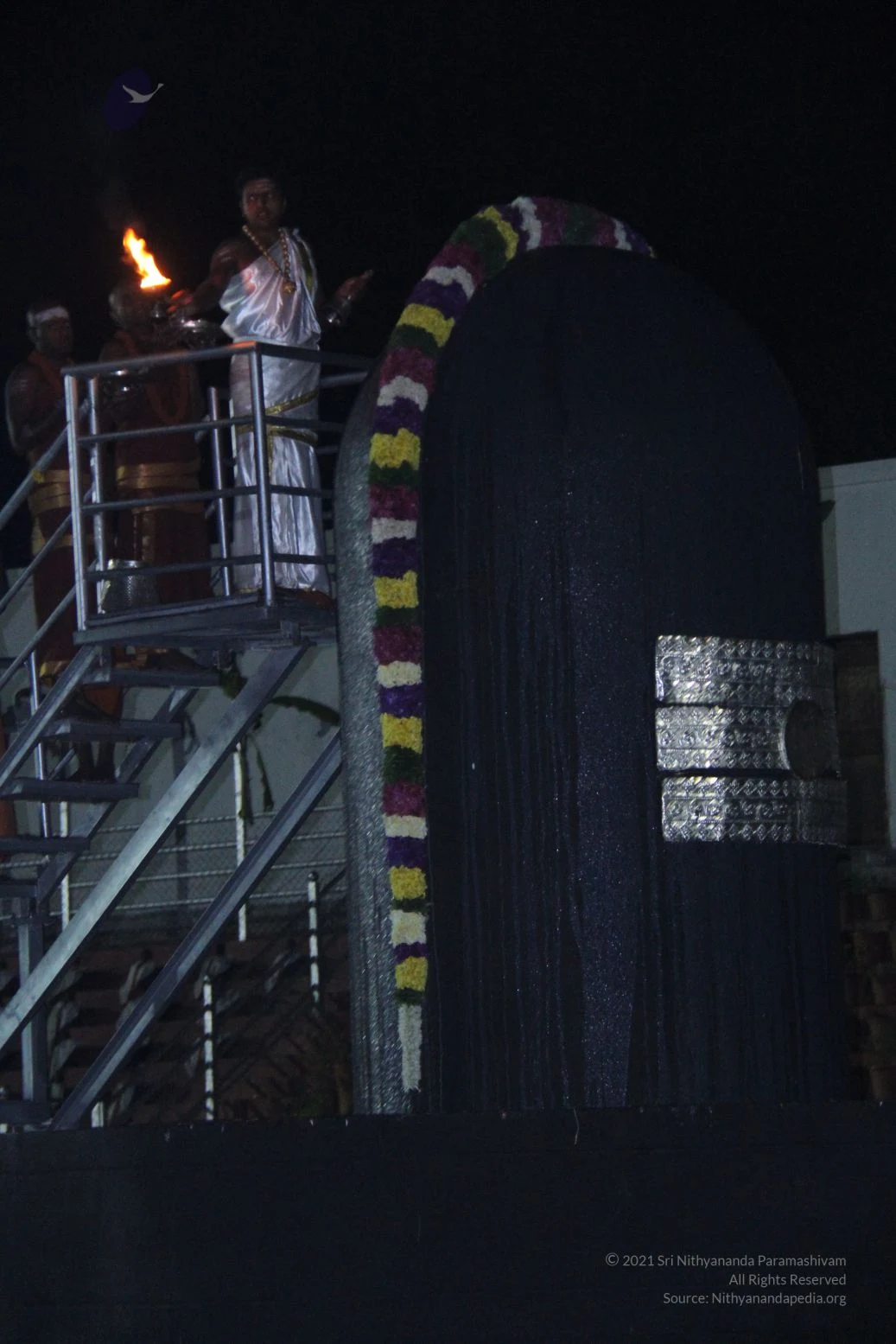
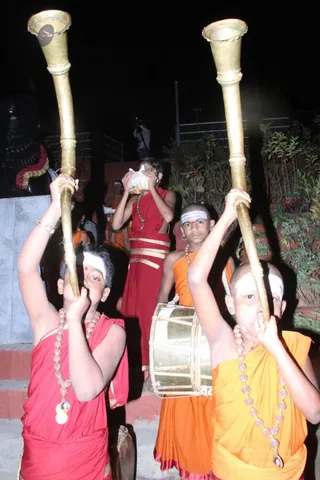
A large black stone Shivalinga, its upper section wrapped in a multicoloured garland, stands at night in an outdoor setting. A metal staircase with railings rises to a platform beside it, where several people in light and red-toned clothing stand near a lit area. Rows of seats or stone steps are visible in the dim background, with a white wall and small lights behind. A taller figure in white stands at the top of the staircase, while the others are partly lost in darkness. The scene is dimly lit.A night photograph of a large dark black stone Shivalingam on a black circular peetha base, with a multicolored garland of yellow, red and green flowers draped over its upper part and silver bands around its middle. A metal staircase and railing rise on the left, where a figure in white dhoti and shawl stands near the top of the stair beside another person in dark clothing, partly visible. A white building with decorative windows and potted plants stands behind, with a red and white painted border along the base. The scene suggests an abhishekam or puja at the lingam; the lighting is dim.Night photograph of a large black Shiva lingam on a square stone base, decorated with a vertical garland of multicoloured flowers and streams of white liquid running down its surface during abhishekam. Beside it, a white metal staircase with railings leads up to a platform where several people in saffron-orange robes stand together, one in white clothing among them, some holding small vessels or offerings. Behind them is a plain white wall, and a row of small lamps or clay pots lines the dark water around the base. The setting is an outdoor temple tank at night.Night photo of a large dark black stone Shiva lingam on a tiered black pedestal, decorated with a vertical garland of white, yellow and purple flowers. A white-clad priest in a white dhoti and shawl stands on a metal staircase reaching up to the lingam, pouring or offering something onto its top. Several monks in orange and saffron robes stand on the stairs and landing behind him, and a fourth figure in orange stands at the far left against a white wall. Rows of clay pots line the stepped backdrop. A small purple flag with a white bird emblem is visible at the upper left. This appears to be a rudrabhishekam ritual on the lingam.Night outdoor scene with several young boys in saffron and red robes performing a procession with long golden brass horns raised overhead. The two foreground boys, one in red and one in orange, blow the horns; each has white vibhuti tilak on the forehead and wears rudraksha malas. Behind them a boy in red blows a conch-like shell, and another boy in orange holds a drum. A dark statue with a red flower garland stands at left among potted plants, and a cameraman is faintly visible in the background.A dark night scene at an outdoor ceremony. In the foreground, a large black stone Nandi bull statue faces away from the viewer, draped with a garland of red, orange and yellow flowers. Along the bottom edge, at least two people hold up long brass horns, one with glasses and red clothing. Beyond the statue, a distant stage area is lit by a single bright spotlight, with rows of seated audience members faintly visible in the darkness.
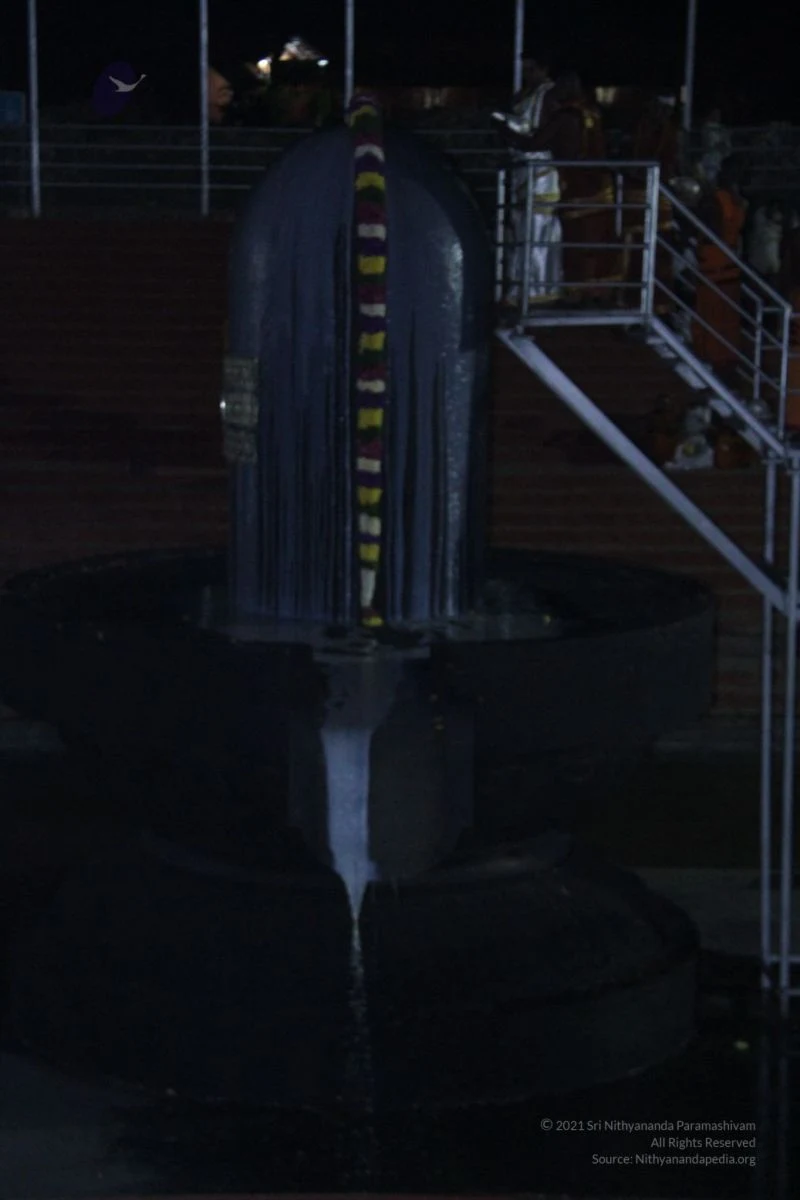
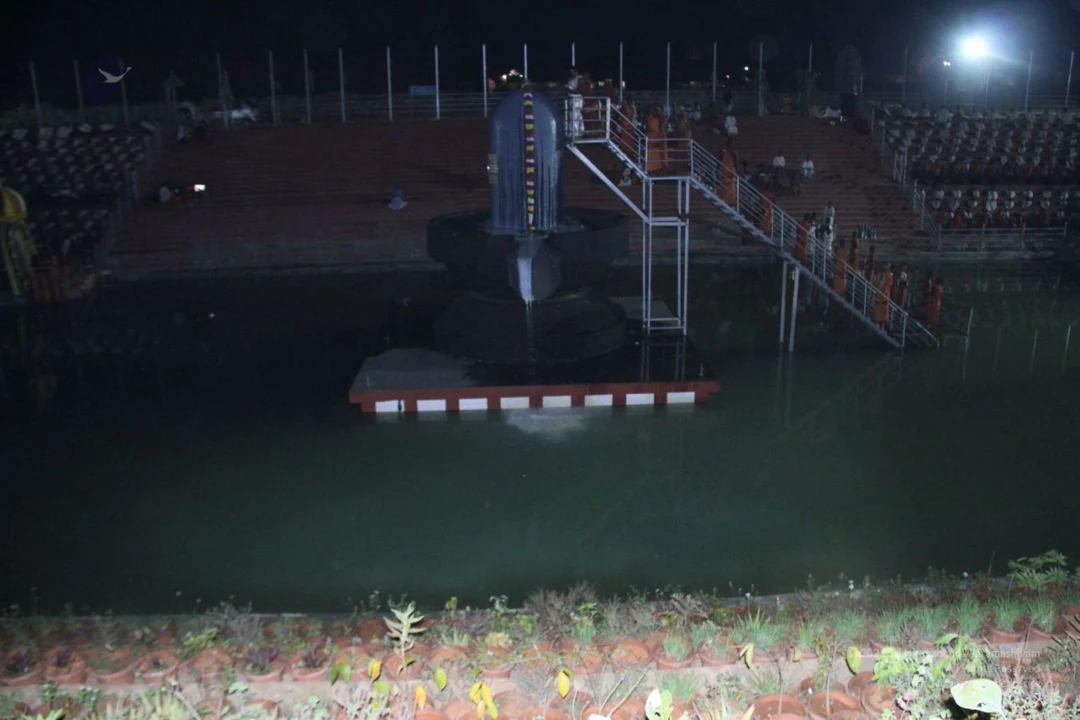
Pada-Puja

26 photosSource gallery
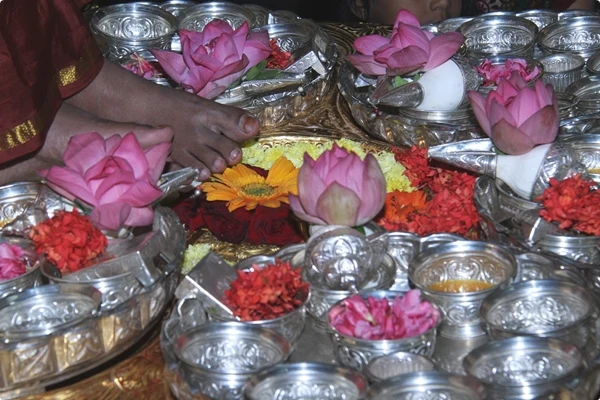
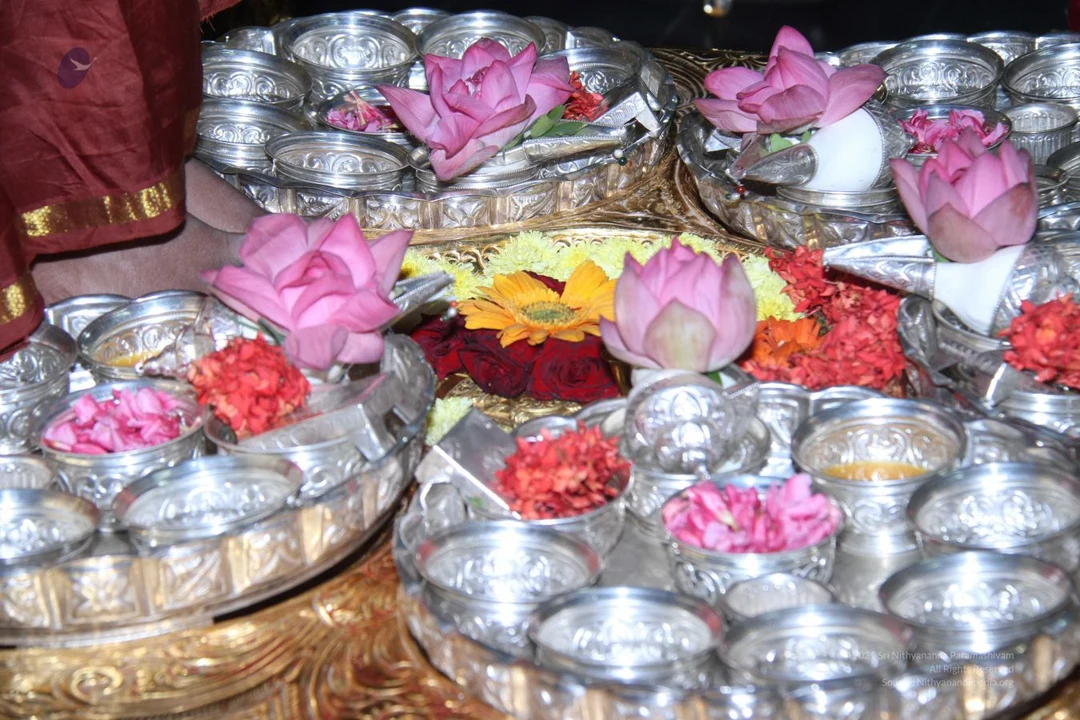
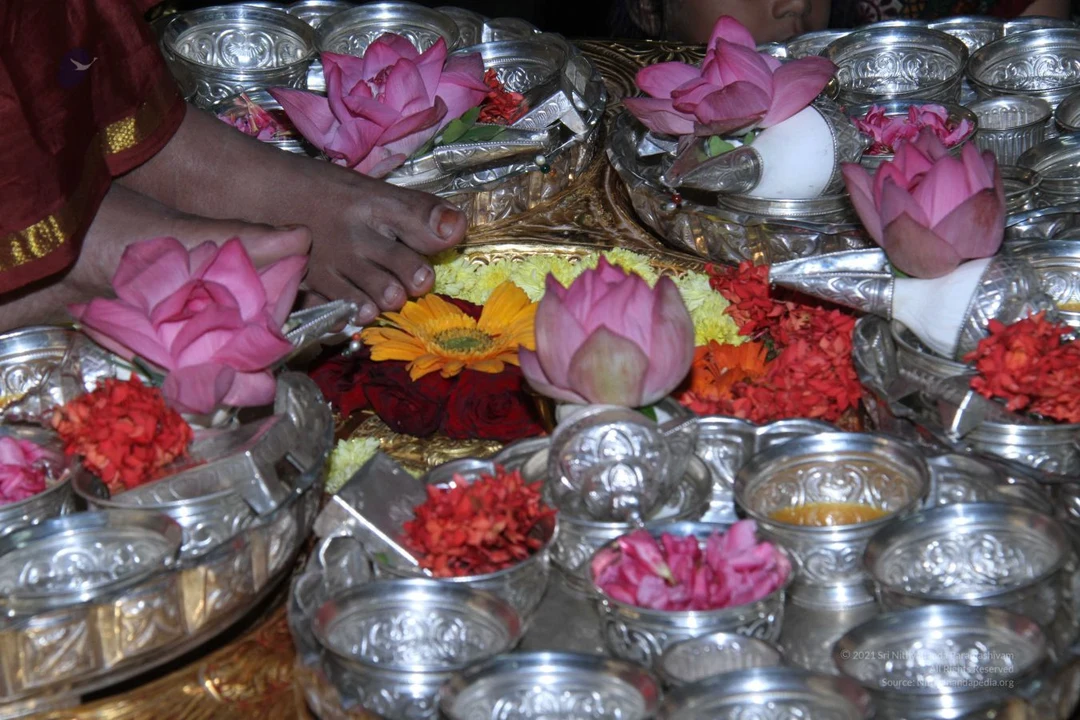
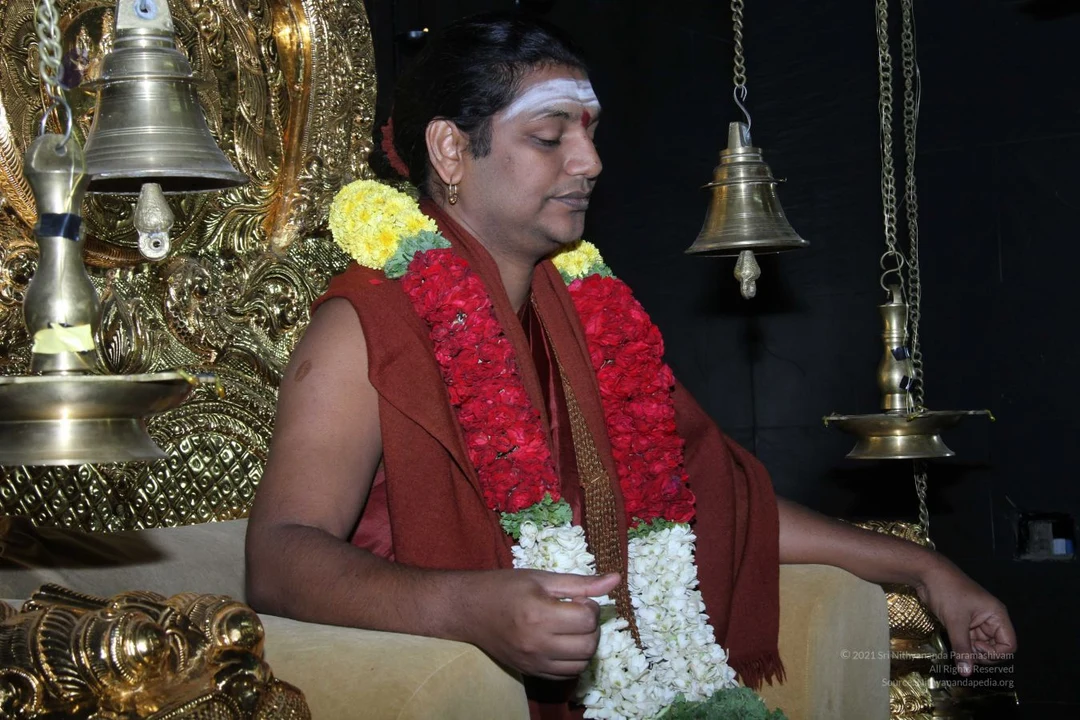
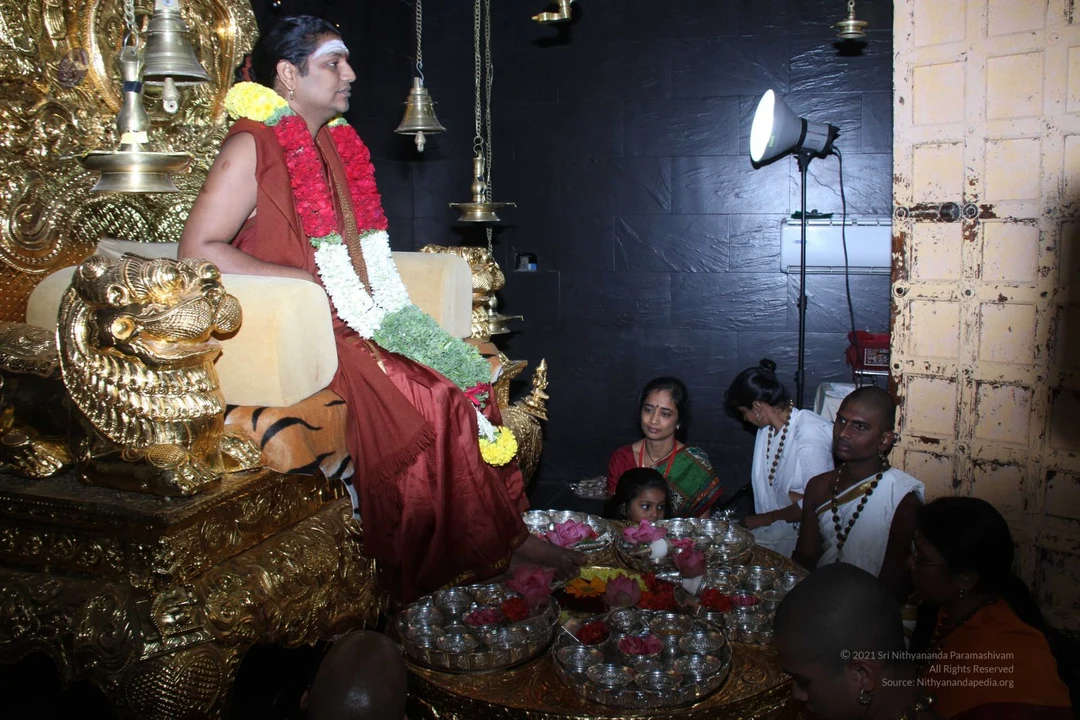
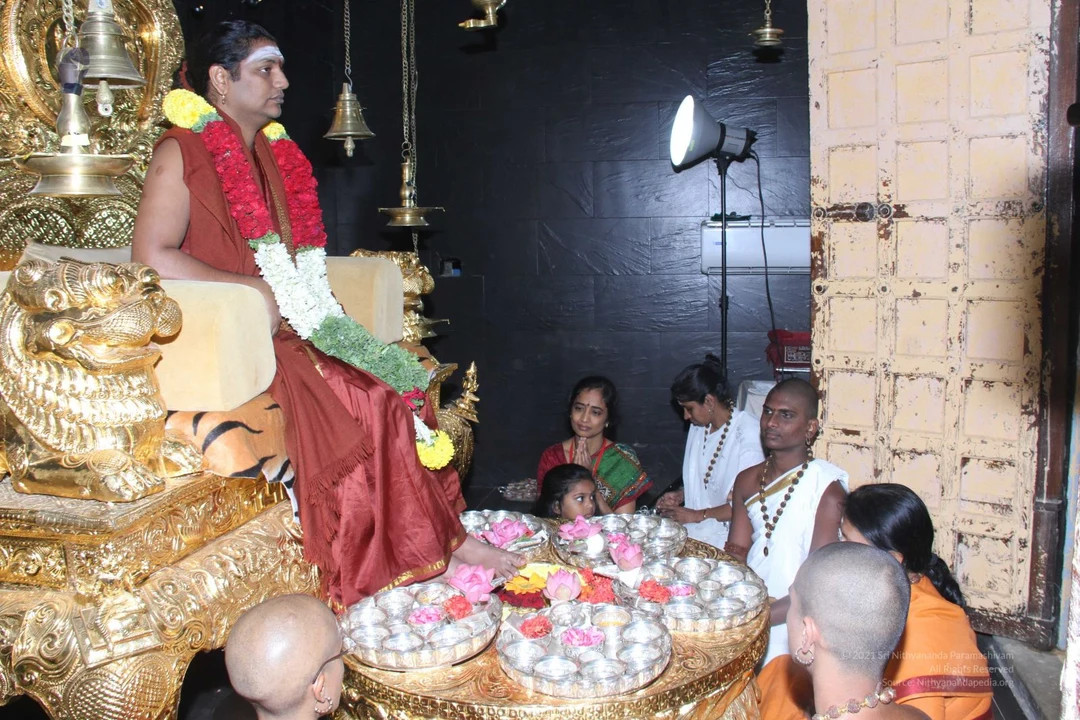
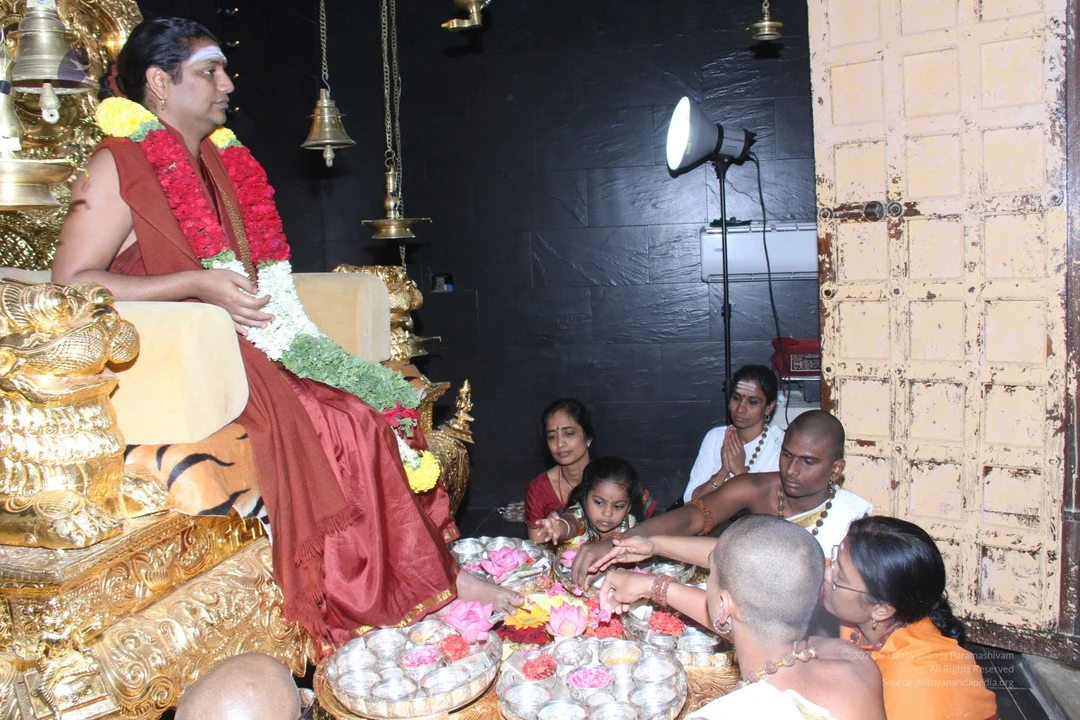
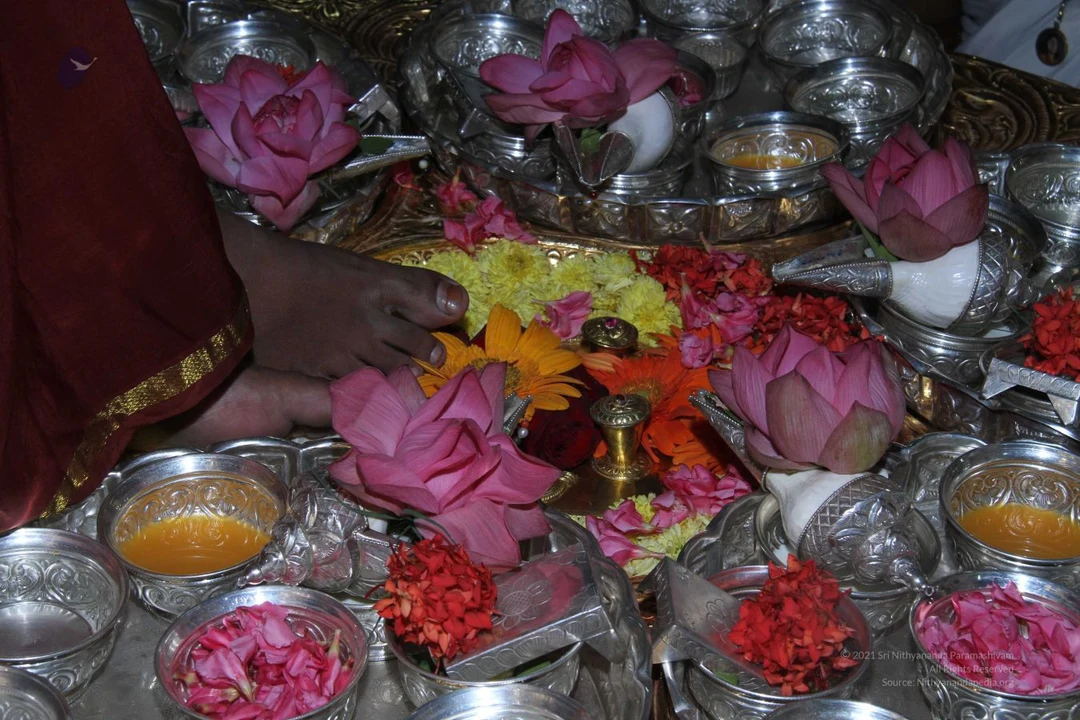
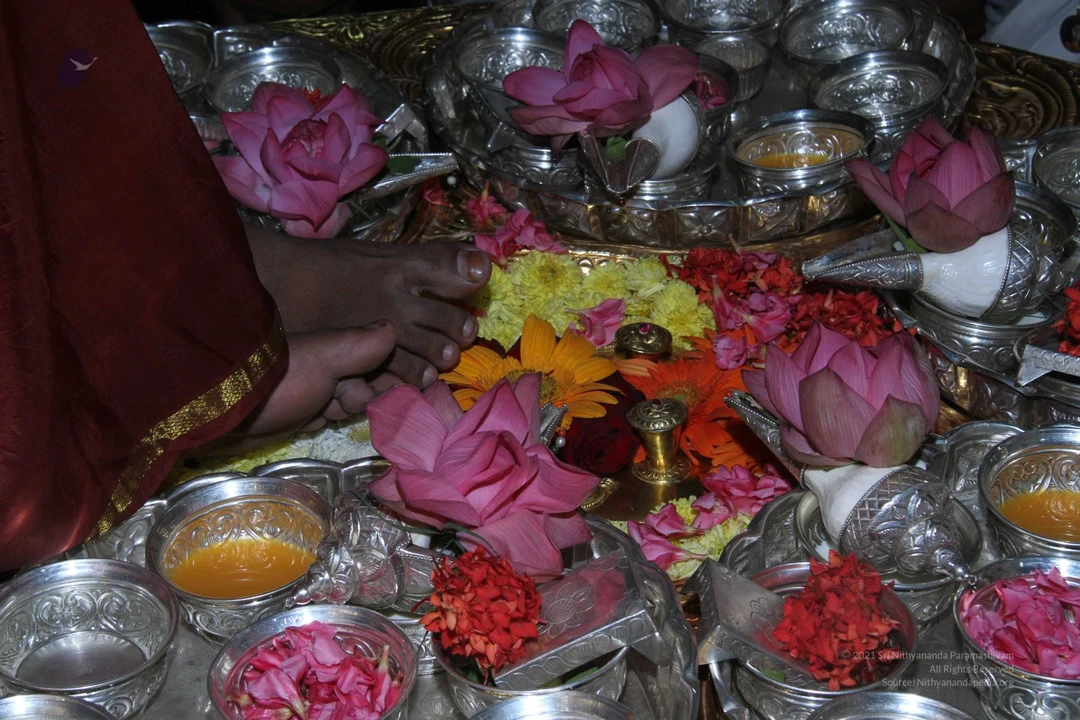
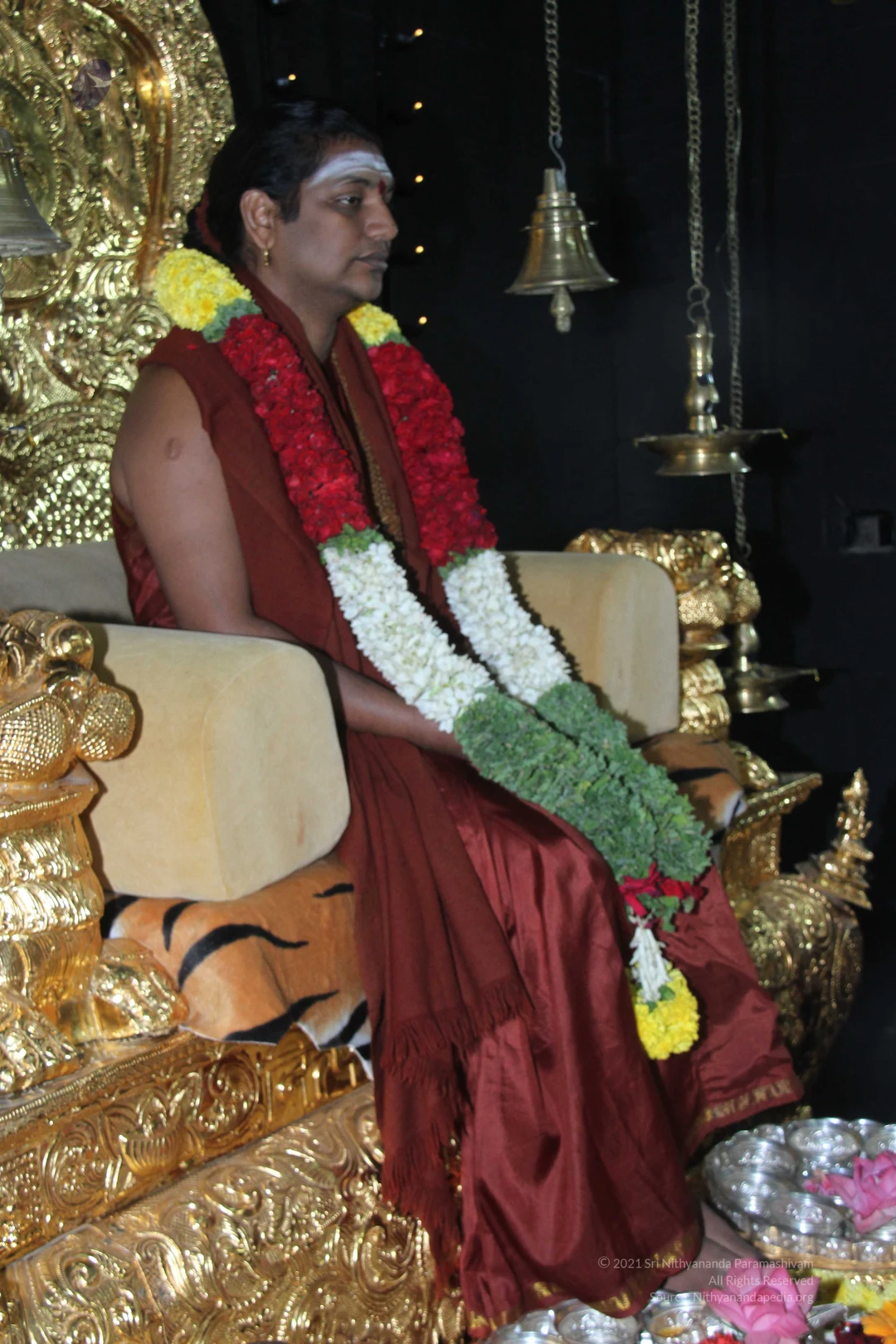
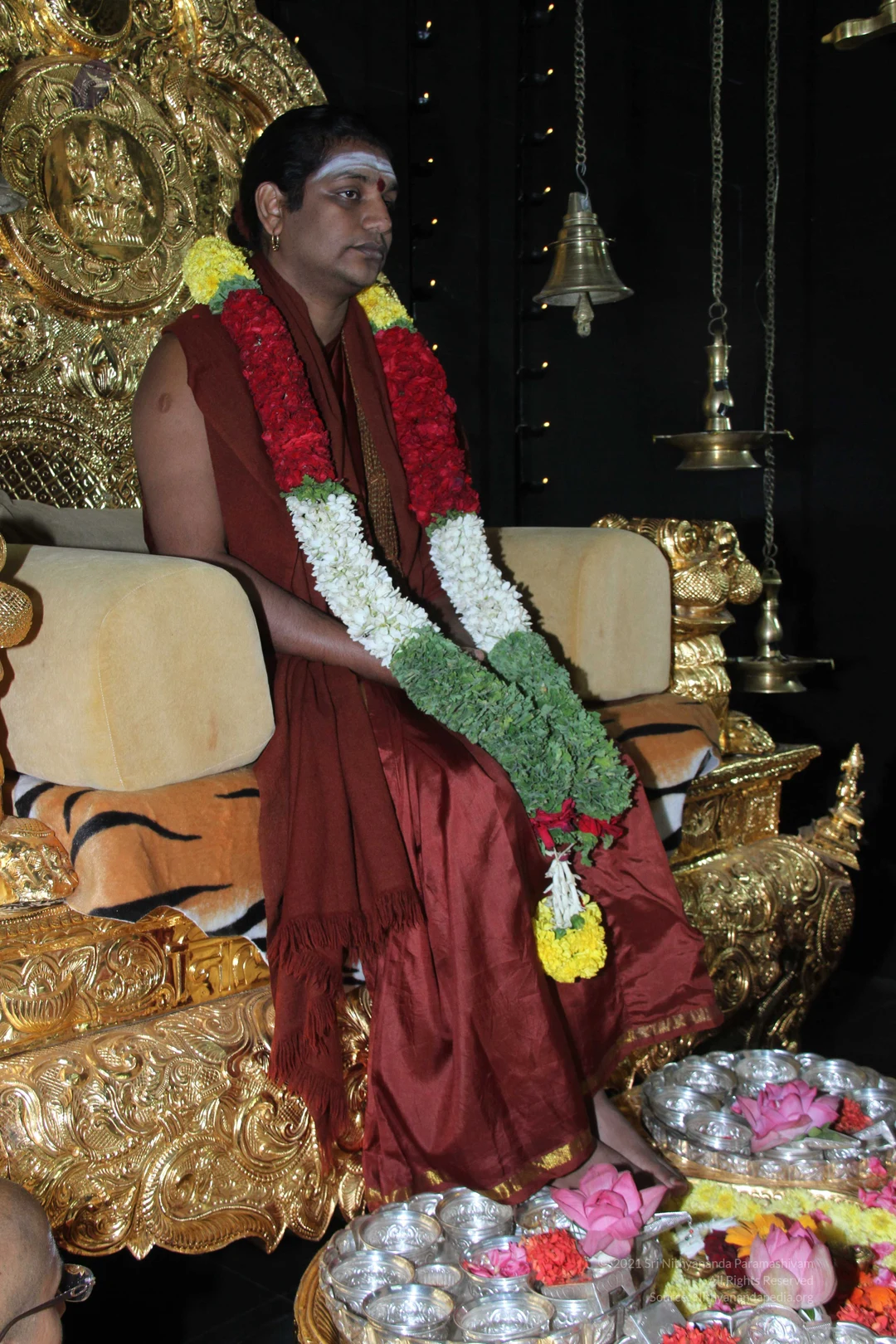
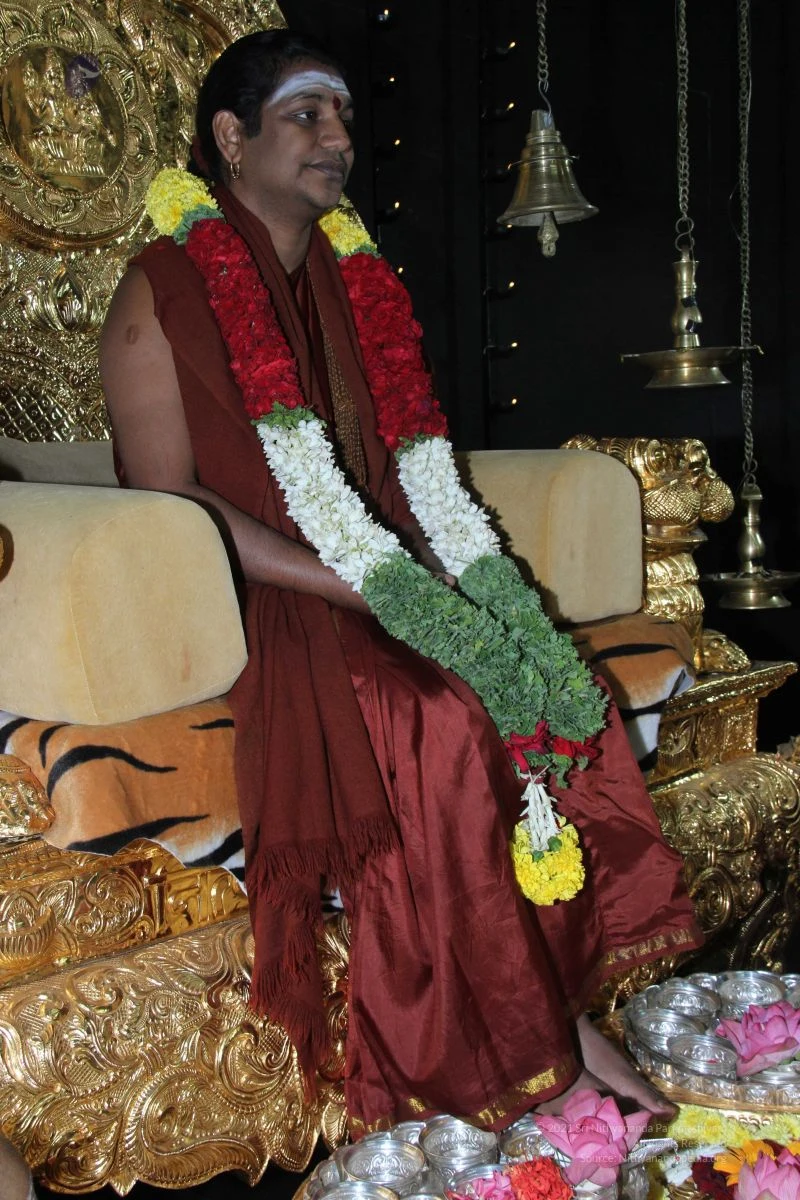
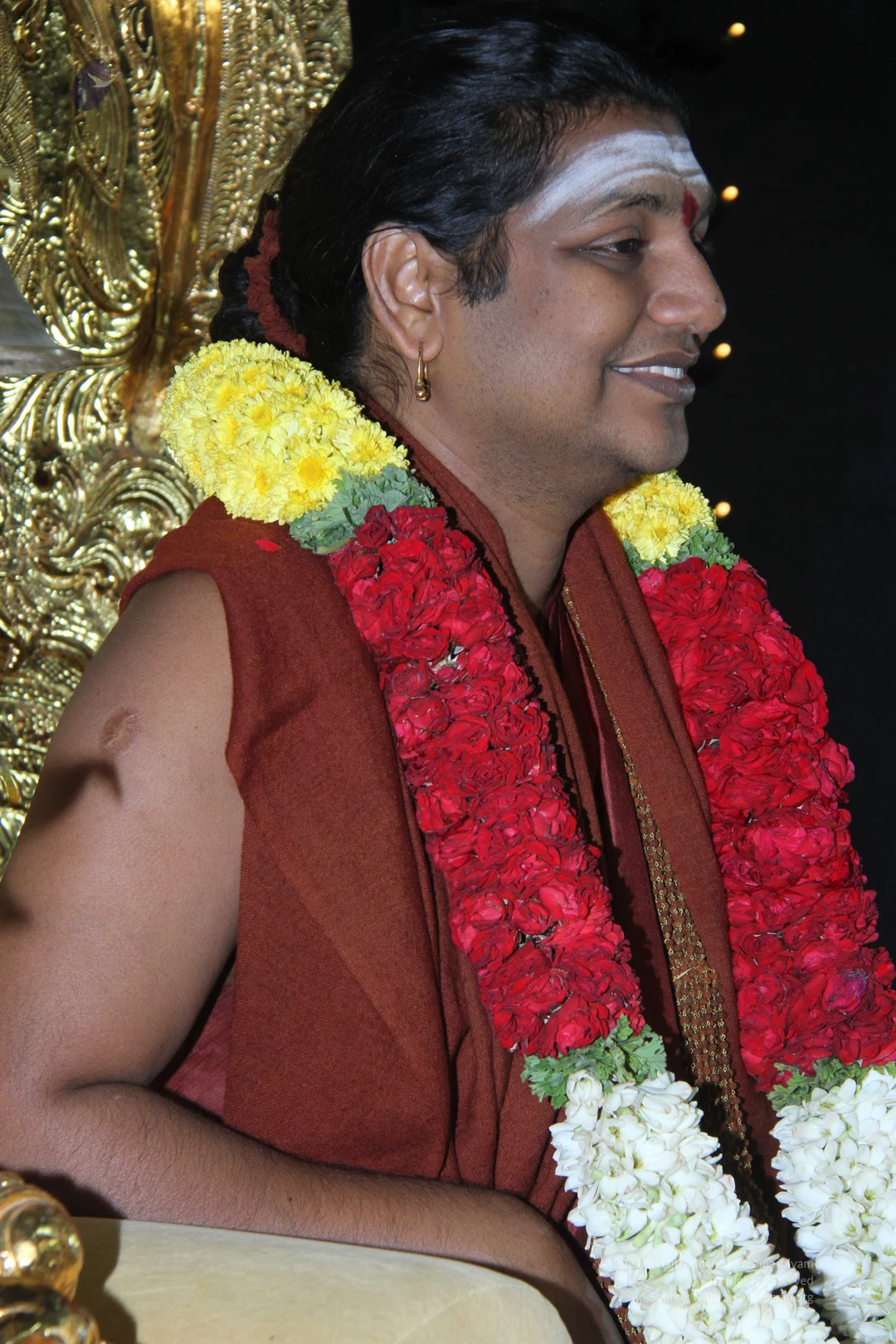
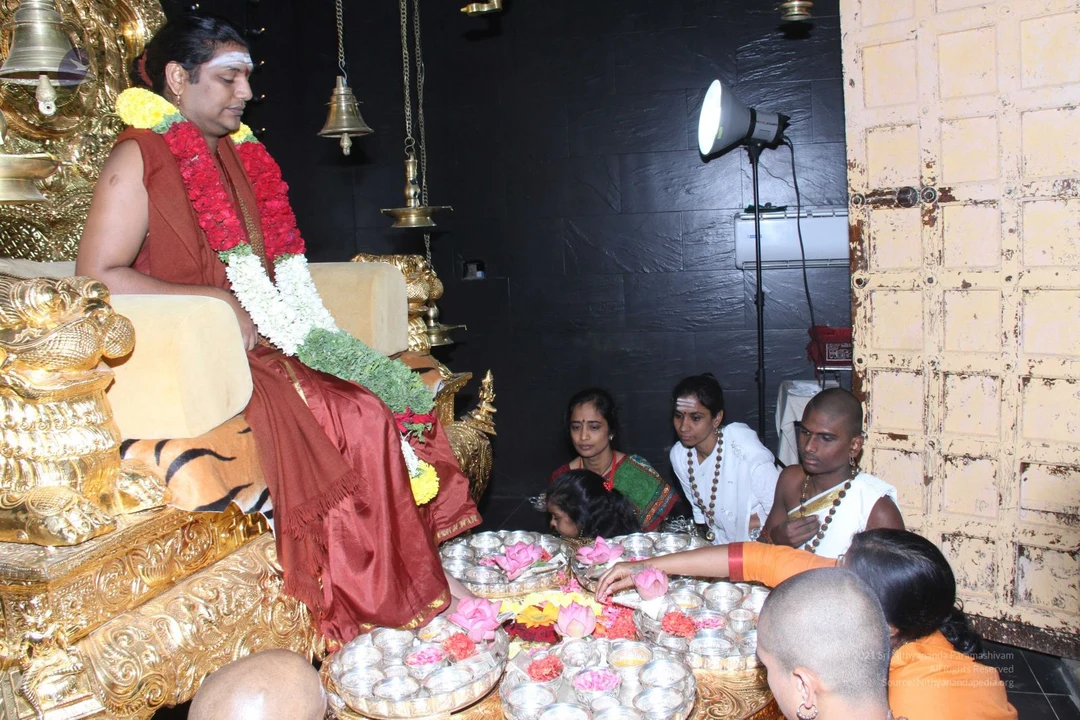
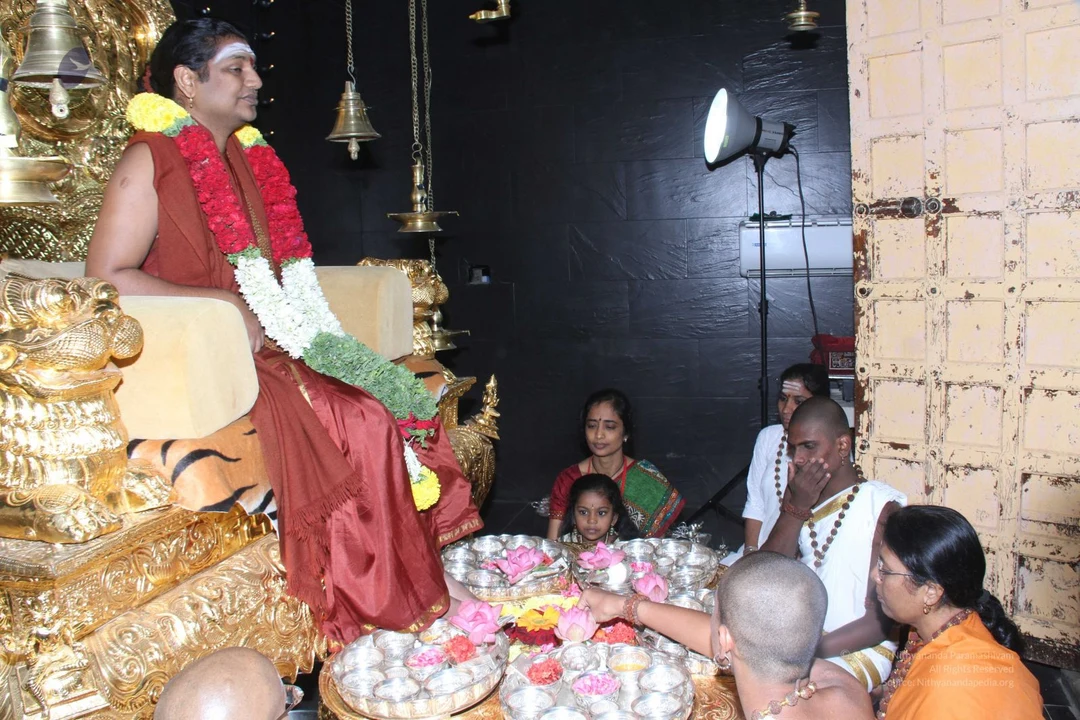
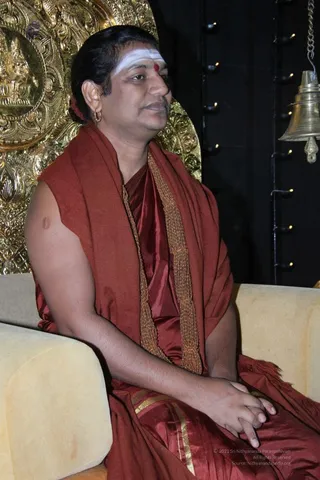
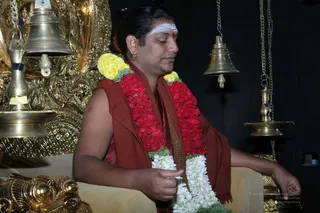
A seated man in a maroon-red robe and dark red shawl with gold-braided edges sits before an ornate gold repoussé throne back. A white vertical tilak and red dot mark his forehead, and a gold hoop earring and red hair flower are visible. Behind him, a gold-framed relief shows a seated deity with attendants, and two brass bells hang from chains on the right beside a black panel with a brass lamp. The man smiles toward the left.A man sits on a cream upholstered seat in front of an ornate gold-embossed backdrop with a hanging brass bell at right. He wears a maroon-red silk-toned robe and wrap edged with gold braid, a white horizontal forehead mark with a red dot, and a gold hoop earring, with hands resting on his lap. a person, seated in a ceremonial setting. The photograph shows a single person against a dark wall with small wall lamps.Close-up photo of a ritual offering arrangement on a gold tray. Multiple small silver bowls and dishes hold pink lotus petals, red and orange flower petals, and yellow chrysanthemum-like blossoms. Large pink lotus flowers rest among the bowls, with a yellow gerbera and red roses at the centre. A maroon garment with gold border edges appears at the upper left, and a small silver vessel sits in the lower right. Typical of puja offerings and abhishekam preparations.Close view of a padapuja offering: a pair of bare feet, with reddish-brown toes and a deep red garment edge with gold border at upper left, rests on a golden tray. Around them are polished silver bowls and vessels filled with pink lotus blossoms, red rose petals, orange and yellow marigolds, a single orange gerbera, and white flower petals. Silver spouted vessels and a silver plate hold more petals. Only the feet and clothing edge of one person are visible; no face is shown.A seated man in a red-brown sleeveless wrap and matching shawl sits on a cream cushioned seat in front of an ornate gold-carved throne. He wears a red-and-yellow marigold garland with a white jasmine strand, a white vertical tilak with a red dot on his forehead, and a small earring. His eyes are closed and his hands rest in his lap. Hanging brass bells and brass oil lamps surround him against a dark background. a person in this ritual setting, seated on the throne with bells and lamps nearby.A photograph of a ritual scene in a dark-walled room. A man with long swept-back hair, wearing a maroon-red robe and a garland of red, white and yellow flowers, sits on an ornate gold throne carved with a lion head and draped with a striped tiger-skin cloth. a person is seated on the throne, with a white forehead marking and rudraksha-style neckwear visible. In front of the throne, a woman in a red blouse and green-and-red sari sits on the floor with a young girl, while a woman in white and a shaved-headed man in white with beads kneel by brass plates heaped with pink and red flowers, petals and lamps. Hanging brass bells and a studio light stand complete the setting. Partially visible people in the lower corners include a shaved-headed man and an orange-clad woman.
Satsang

76 photosSource gallery
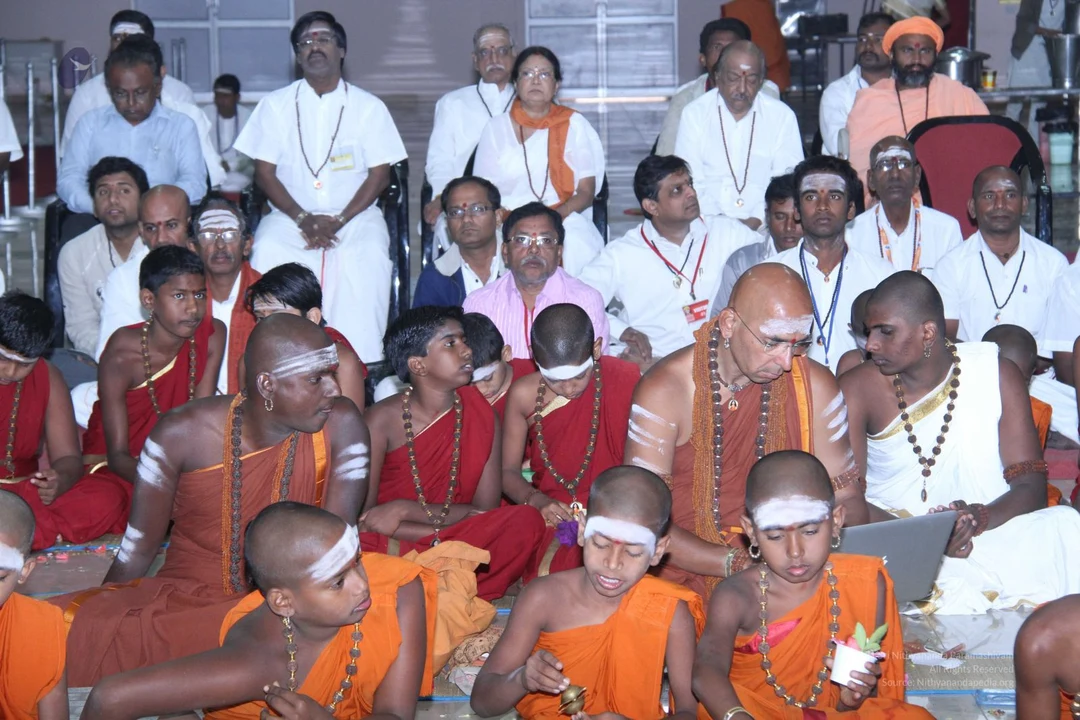
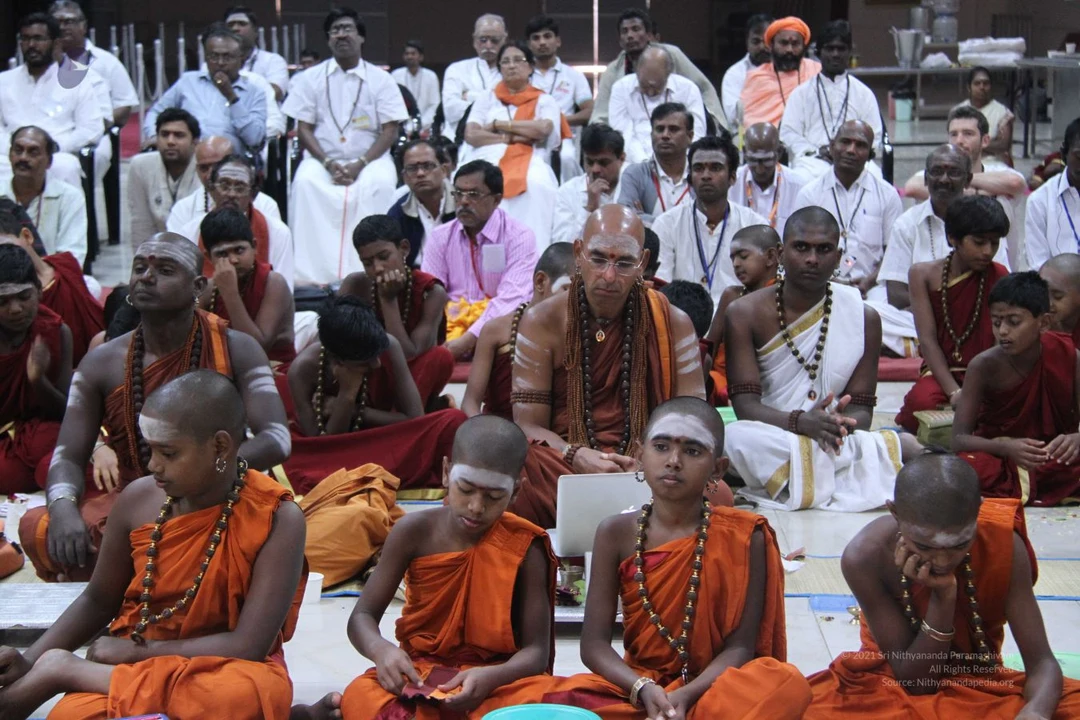
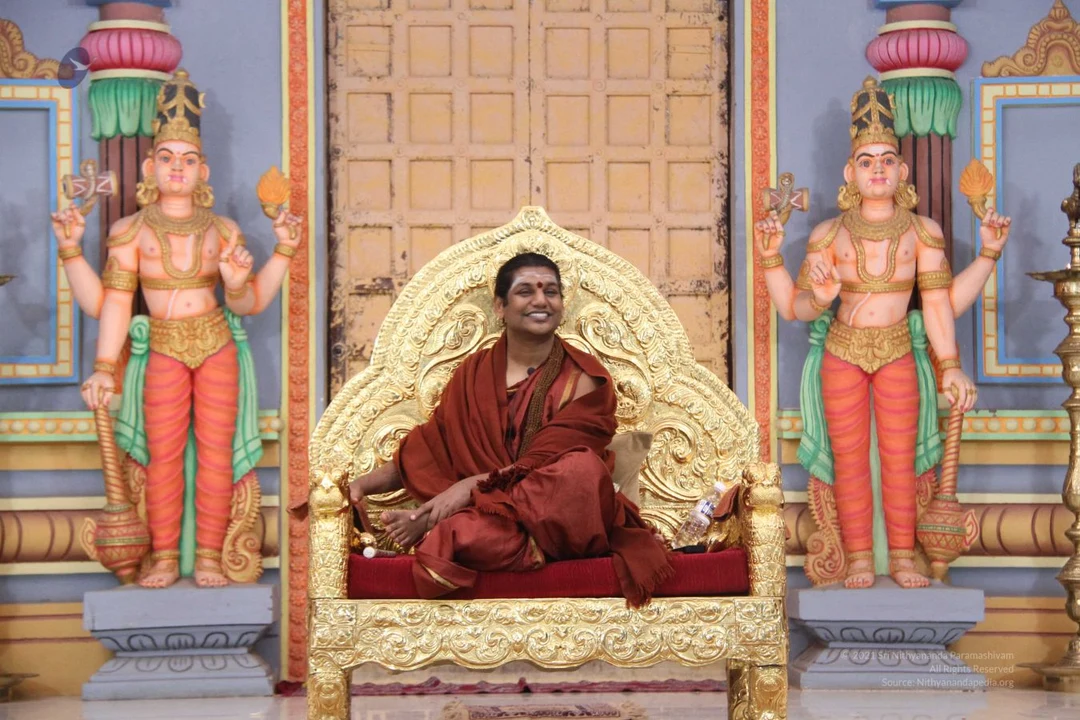
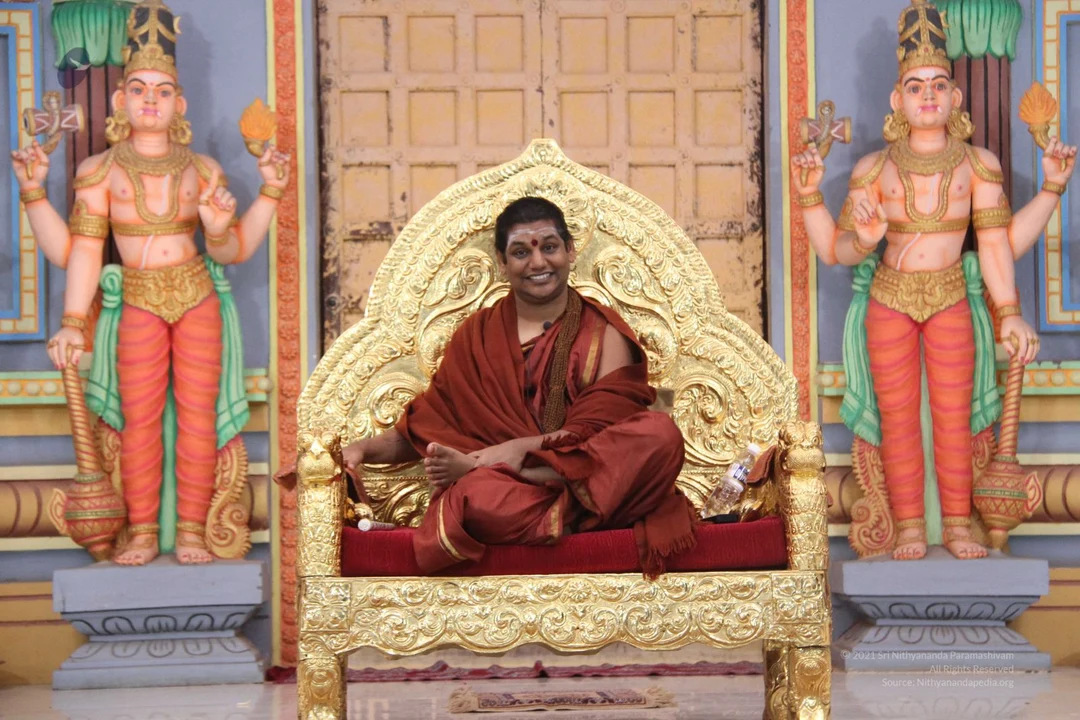
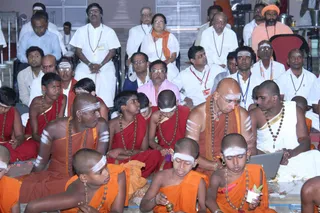
A smiling man with short dark hair and white and red forehead markings sits cross-legged on an ornate gold throne with carved scrollwork and lion-head armrests, set against a red cushioned platform. He wears a rust-red shawl over his shoulders and a matching red-orange dhoti with a gold border, with a small lapel microphone clipped to his clothing. A plastic water bottle sits beside the throne, and a decorated yellow and orange backdrop frames the scene.A seated man in a red-orange robe sits cross-legged on an ornate gold throne with a red cushion, in front of a painted blue temple facade with a large wooden door. Two painted dvarapala guardian figures flank him, each with four arms holding a mace and a flame-like object, wearing gold crowns, gold necklaces and orange-pink dhoti with green sashes. The seated man wears a red shawl over his shoulder, a red-orange dhoti, a rudraksha-style mala and a mic clipped to his robe, with a red tilak on his forehead and a water bottle beside the throne. Swamiji (probable): long hair swept back, red-orange robes and ornate ceremonial setting suggest the teacher in a satsang setting. Only one physical person is visible.A seated man in a maroon-red robe and shawl sits cross-legged on a red cushioned seat before an ornate gold repoussé throne with scrolling foliate carving. He wears a white vertical tilak with a red dot on his forehead, small hoop earrings, a gold chain, and has his hands clasped in his lap while smiling toward the side. A small microphone clips to his robe. Appearance-based candidate: a person, seated on the golden peetha with a maroon shawl and forehead markings.A photograph of a man seated on an ornate gold-carved throne-like chair, smiling and looking to his right. He wears a rust-orange shawl draped over a matching orange robe and has white horizontal tilak marks on his forehead with a red dot at the centre, plus a small gold earring and a clip-on lapel microphone. Behind him are a brass lamp with a flame and a blue wall.A man seated on an ornate gold throne with carved floral and scrollwork backing, wearing a rust-orange wrap over a matching orange robe with a dark brown-orange cloth draped across his shoulder and a small microphone clipped at his chest. He has white vertical tilak marks and a red kumkum dot on his forehead, a red flower in his hair and a small gold earring. Behind him, a brass oil lamp and a brass bird-shaped finial stand against a pale blue wall. The photo is taken in a temple-like setting during a talk, and he is looking to his right with a faint smile. a person: the orange robes, microphone and ornate gold throne fit a teaching setting, but the face is not clear enough to confirm.A photograph of a seated ritual gathering indoors. In the foreground, several young boys in orange and red robes with rudraksha malas and white sandalwood stripes on their foreheads sit on the floor. A bald man in orange robes with a long rudraksha mala and white markings on his arms and chest sits at center, looking down at an open laptop, with a small white cup and offerings nearby. Behind them, rows of seated men in white dress shirts and white dhotis, some with rudraksha malas and white forehead markings, and a woman in white with an orange shawl watch attentively. A man in orange robes and an orange turban sits at the upper right. A pink-shirted man with glasses sits in the middle of the back rows. Chairs, a microphone stand and kitchen equipment are visible in the background.

Kalpataru-Darshan

28 photosSource gallery
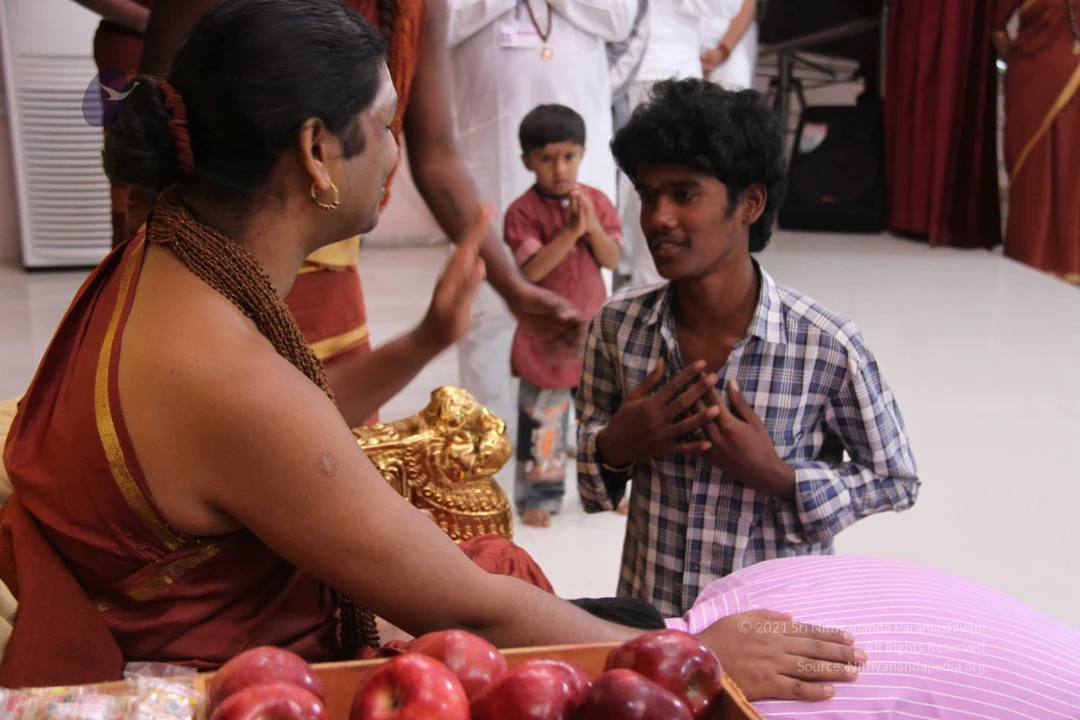
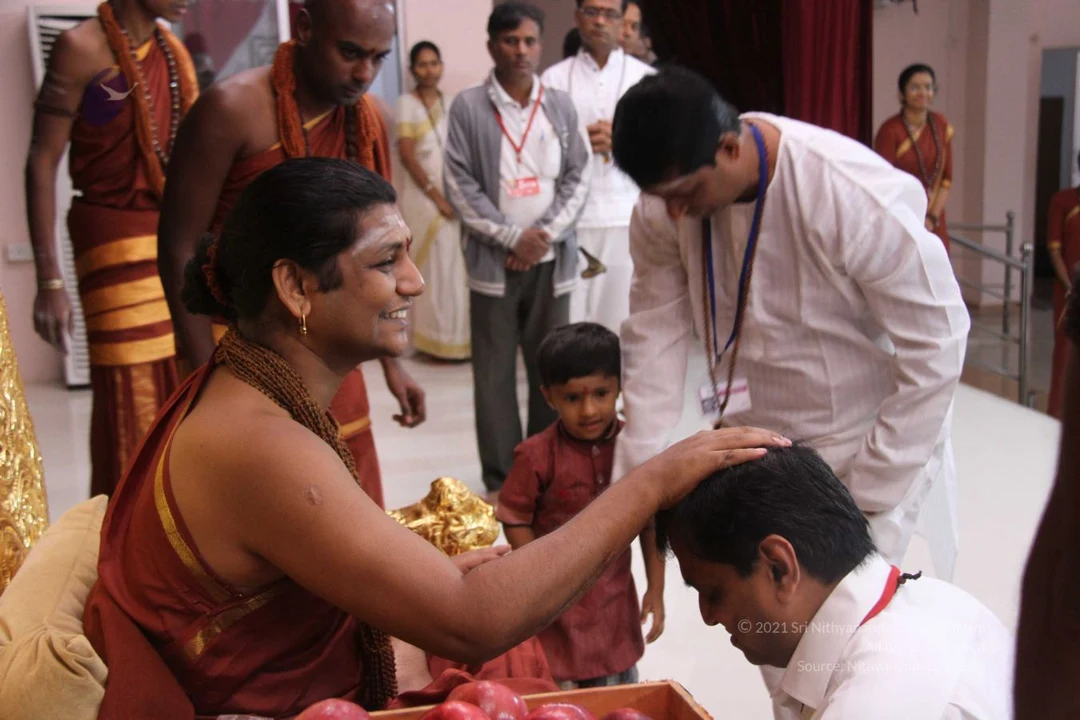
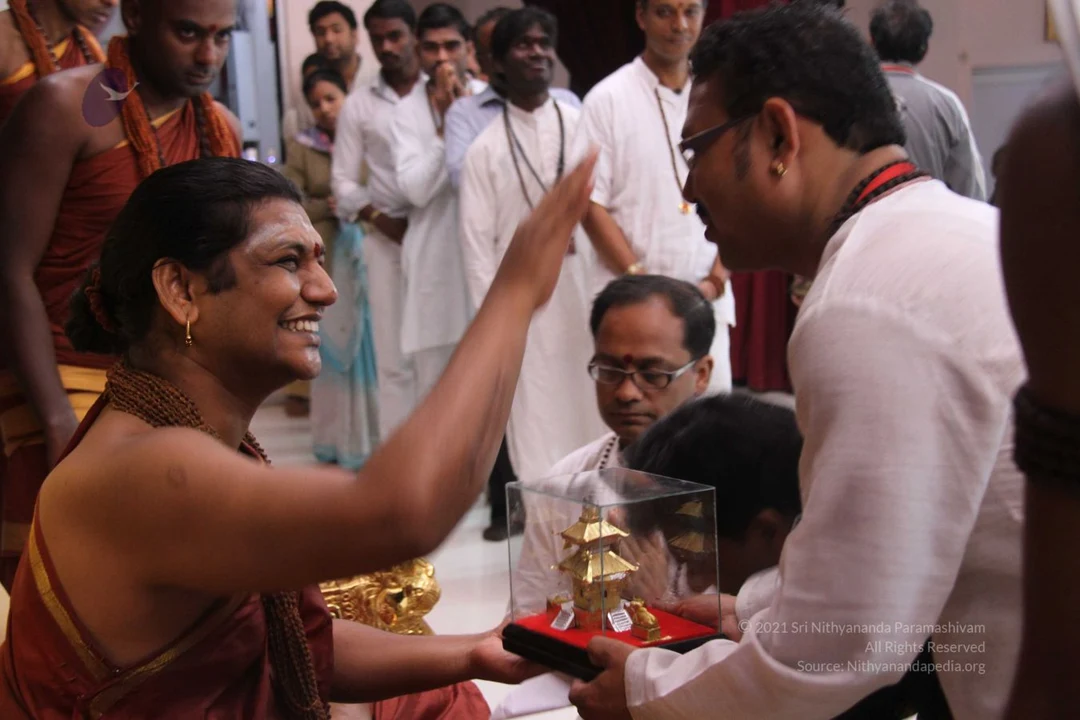
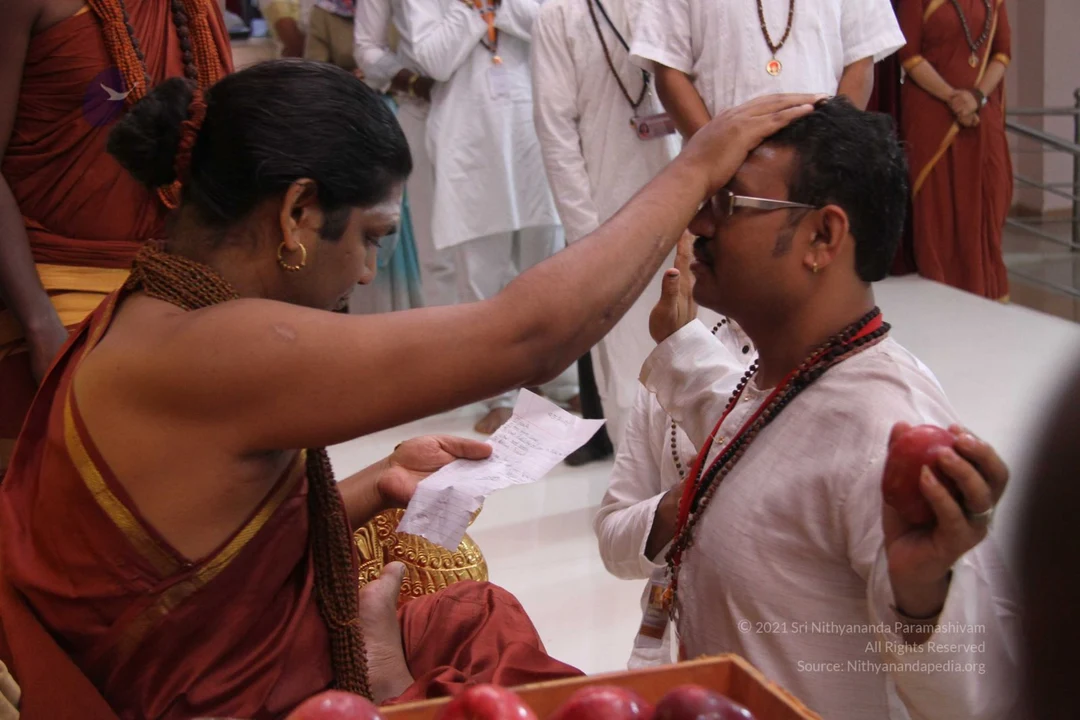
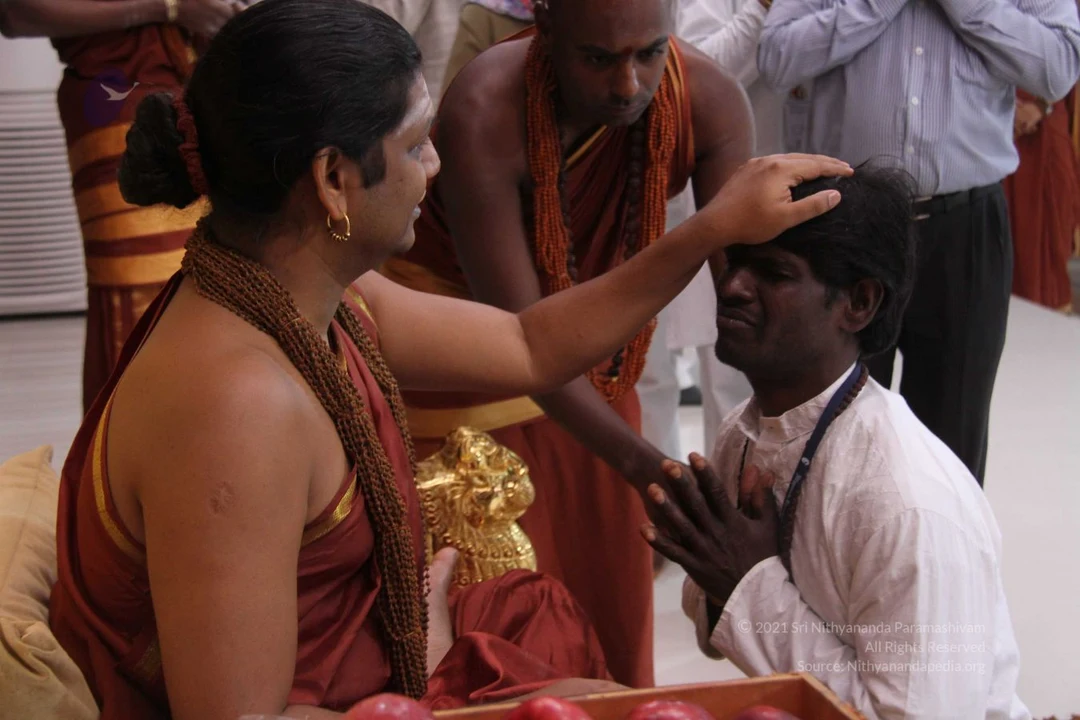
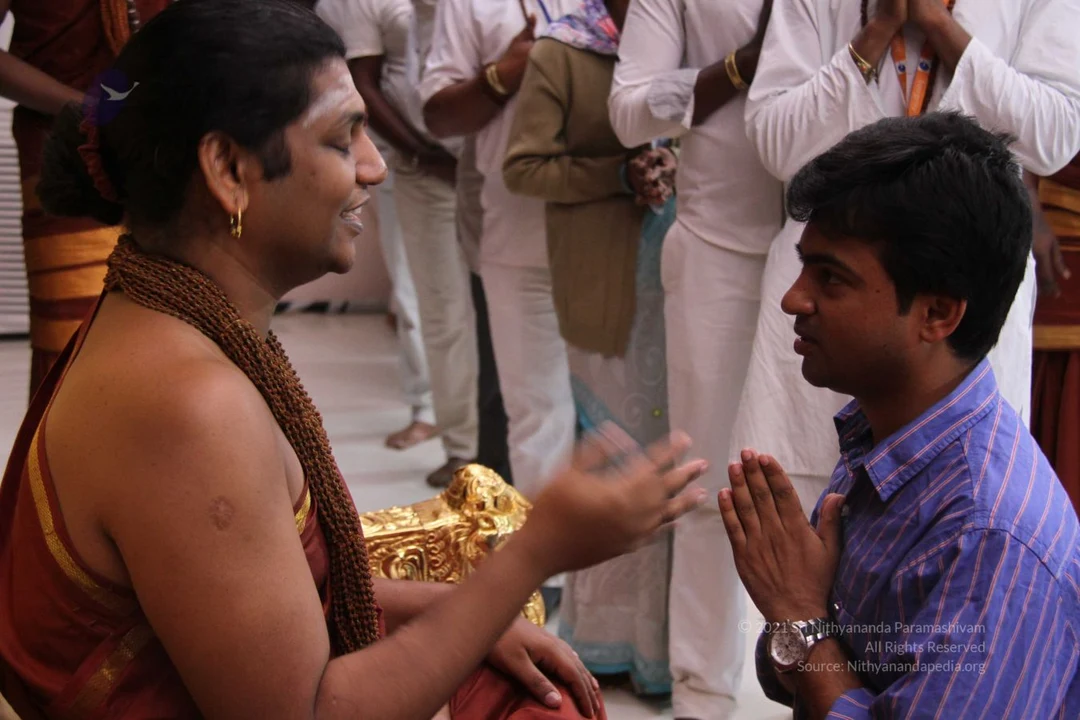
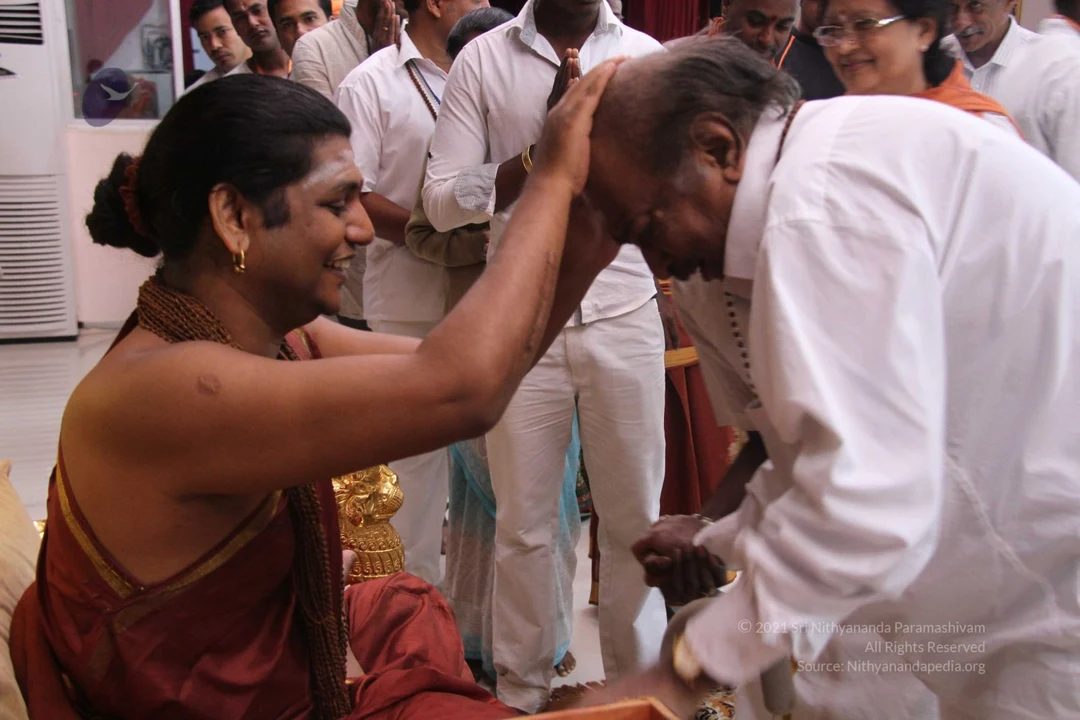
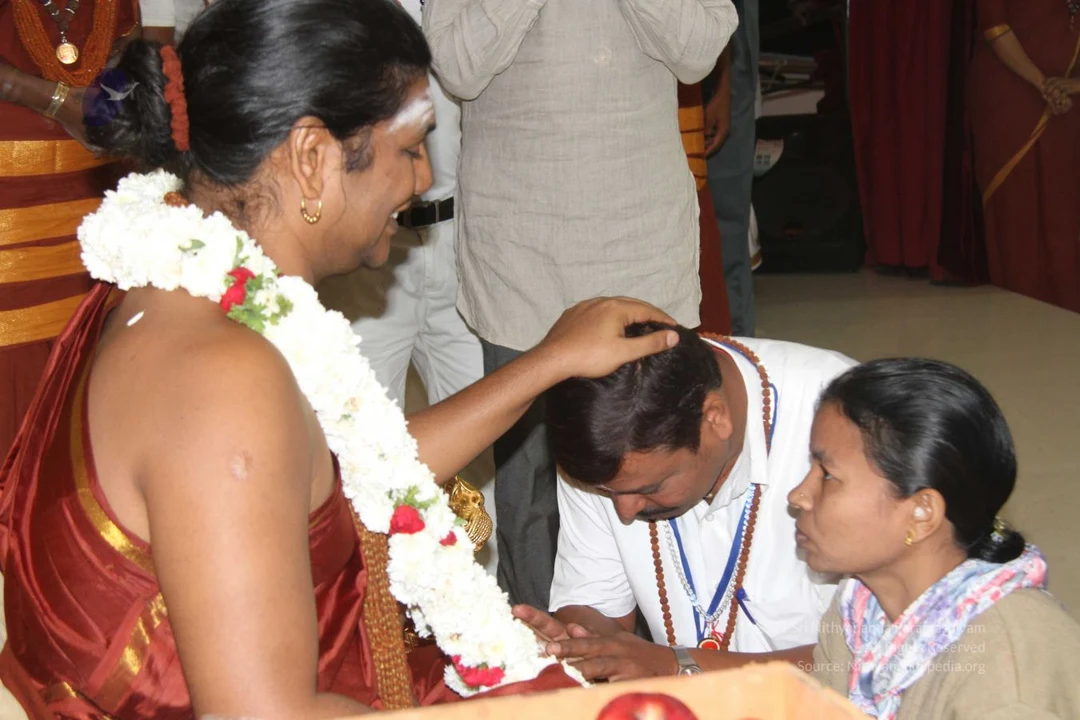
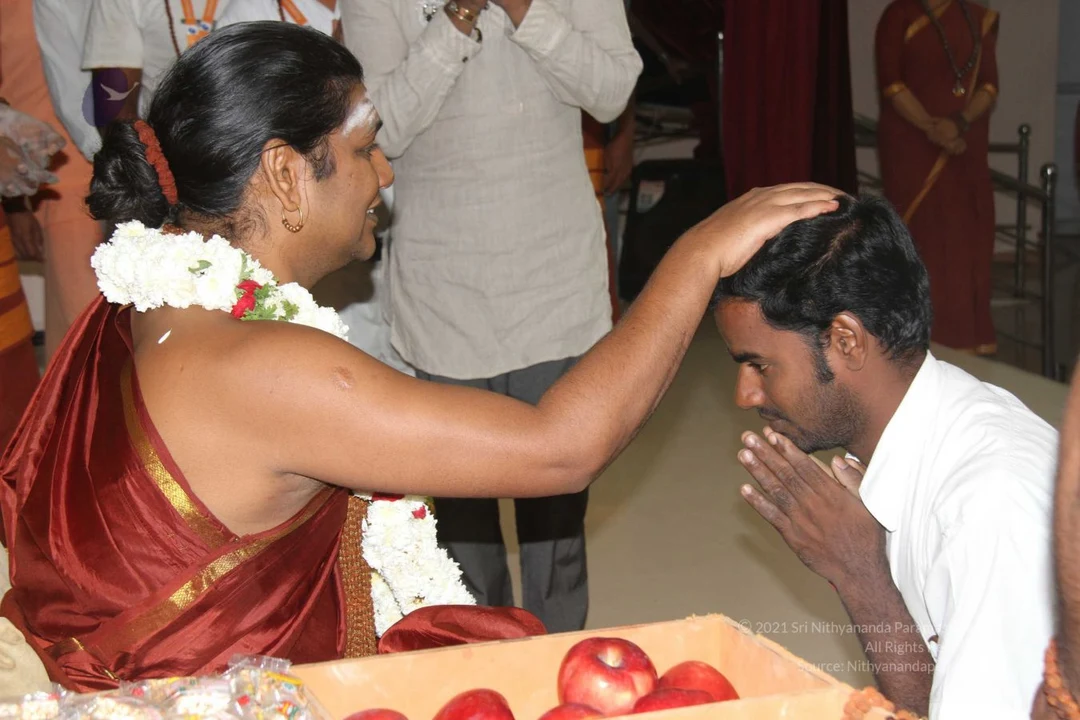
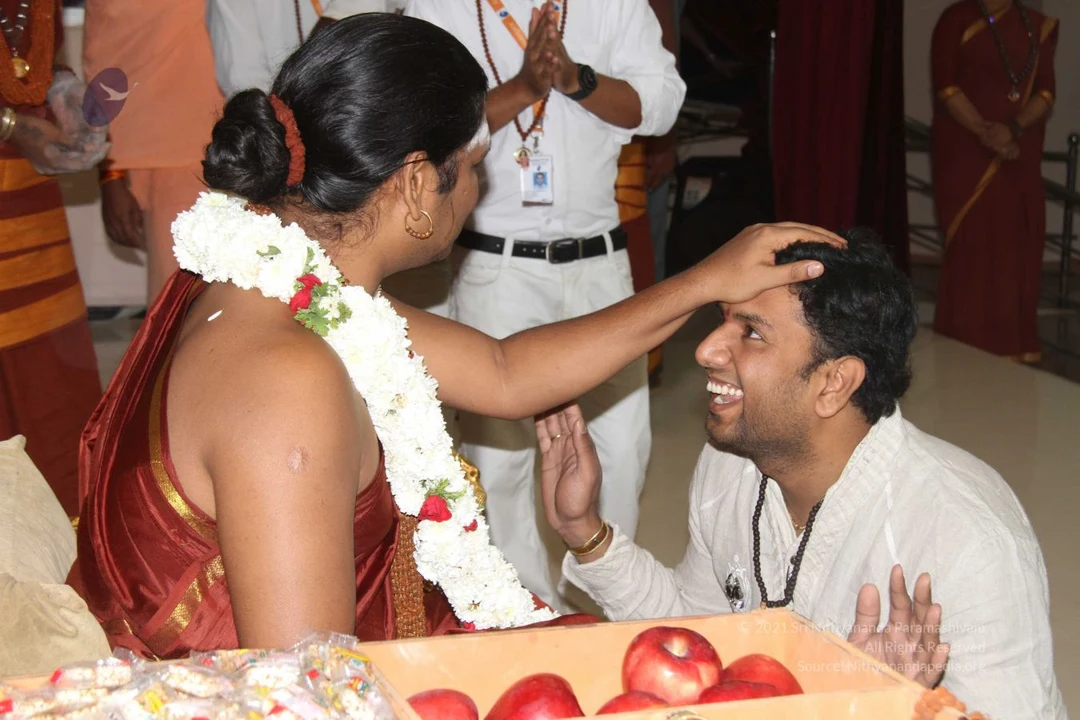
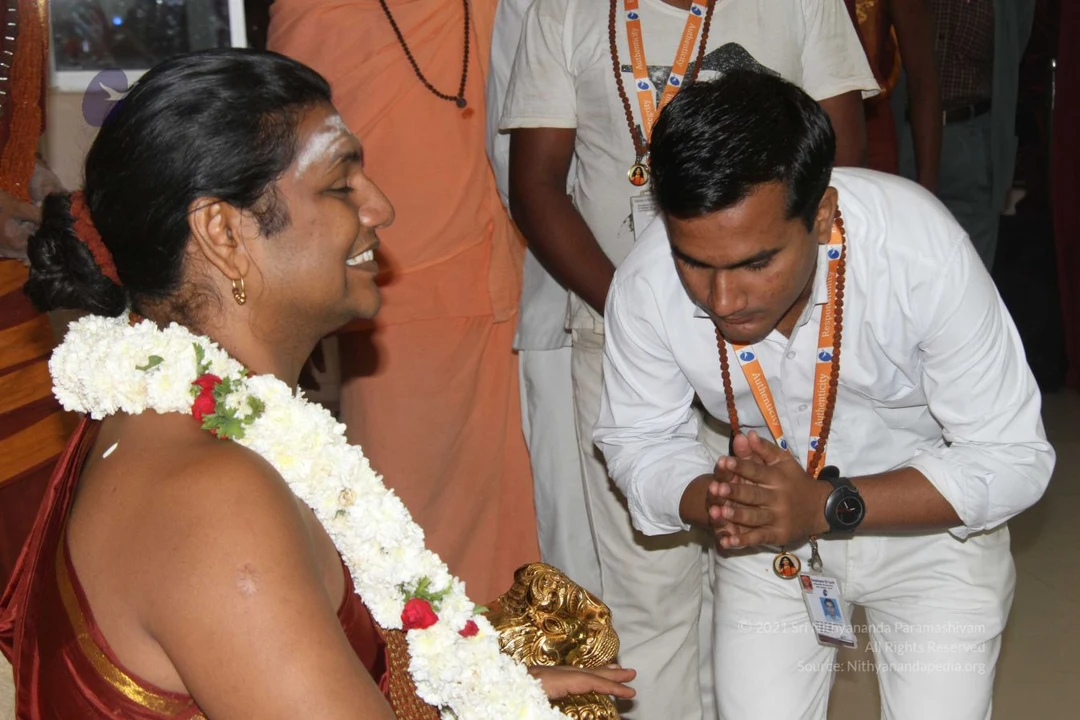
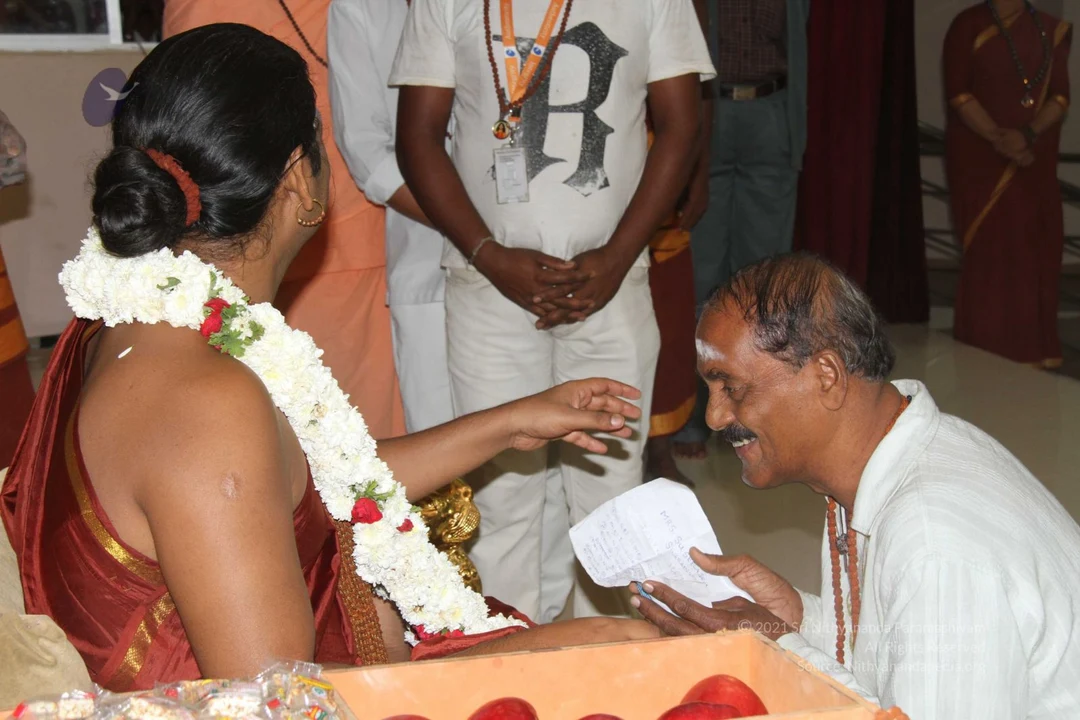
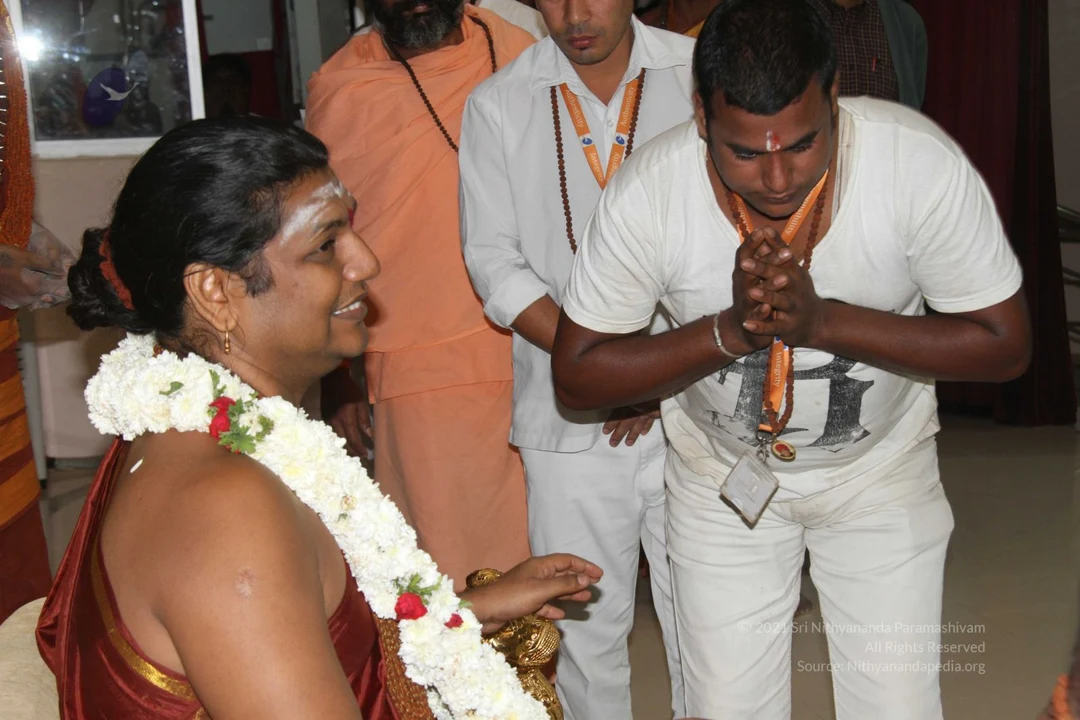
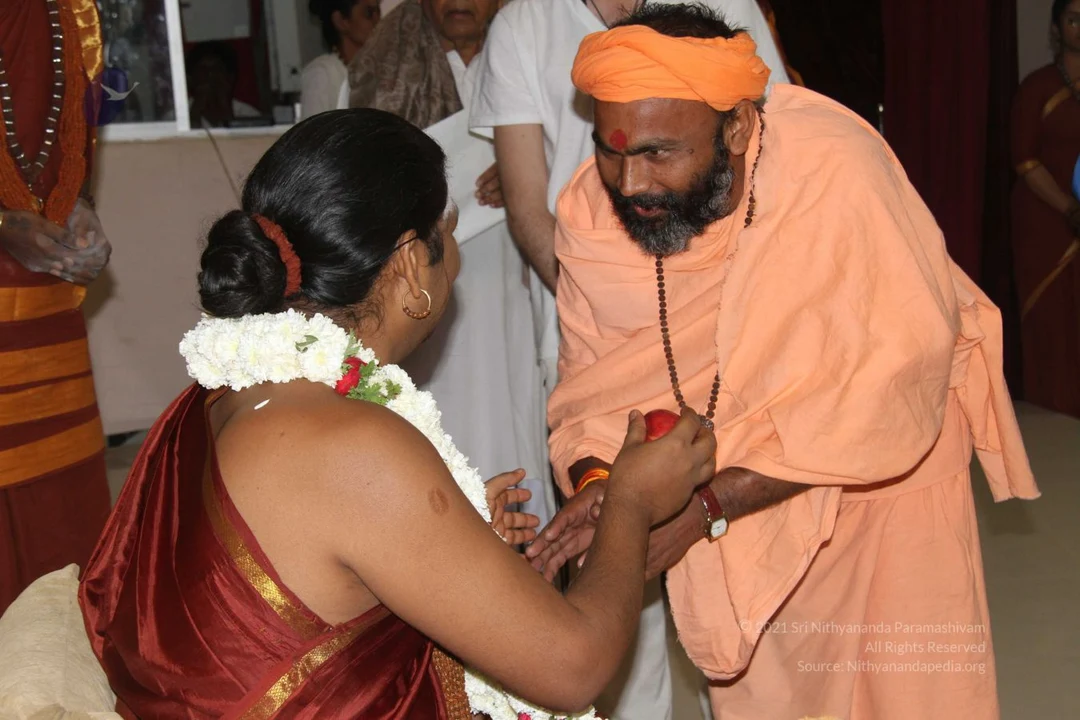
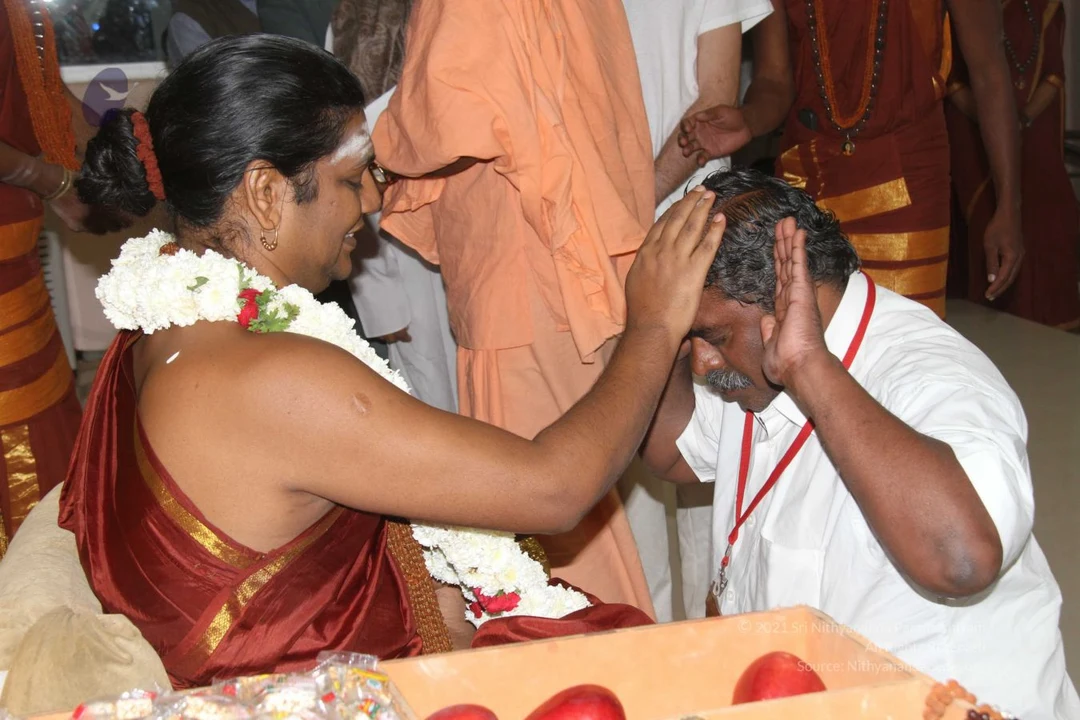
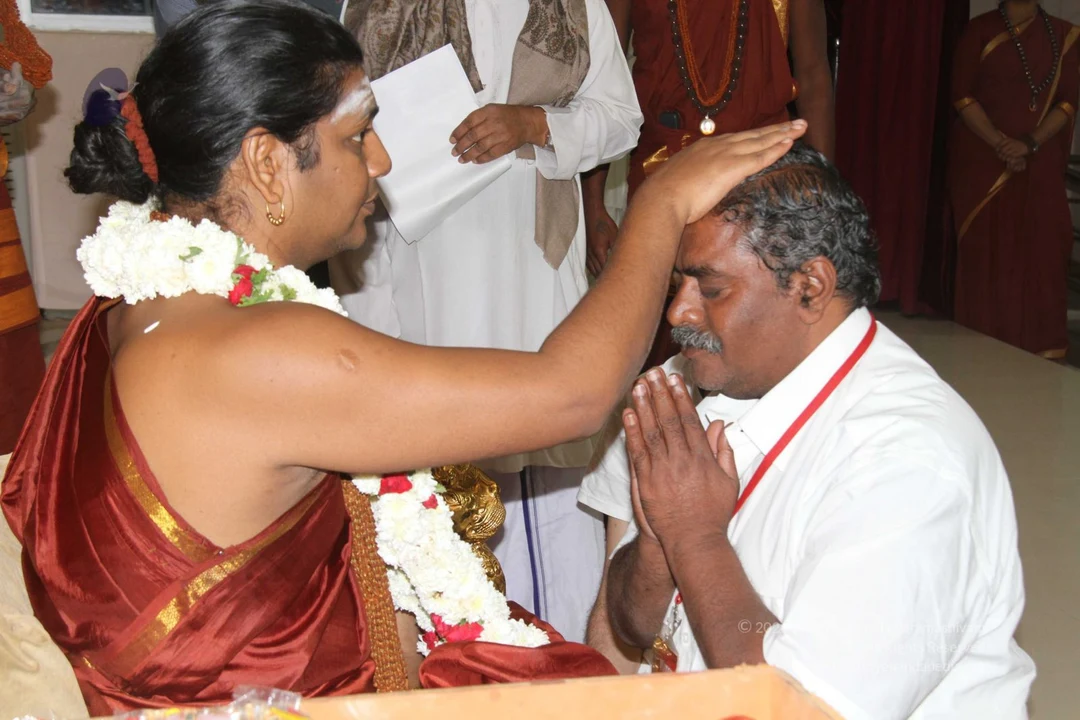
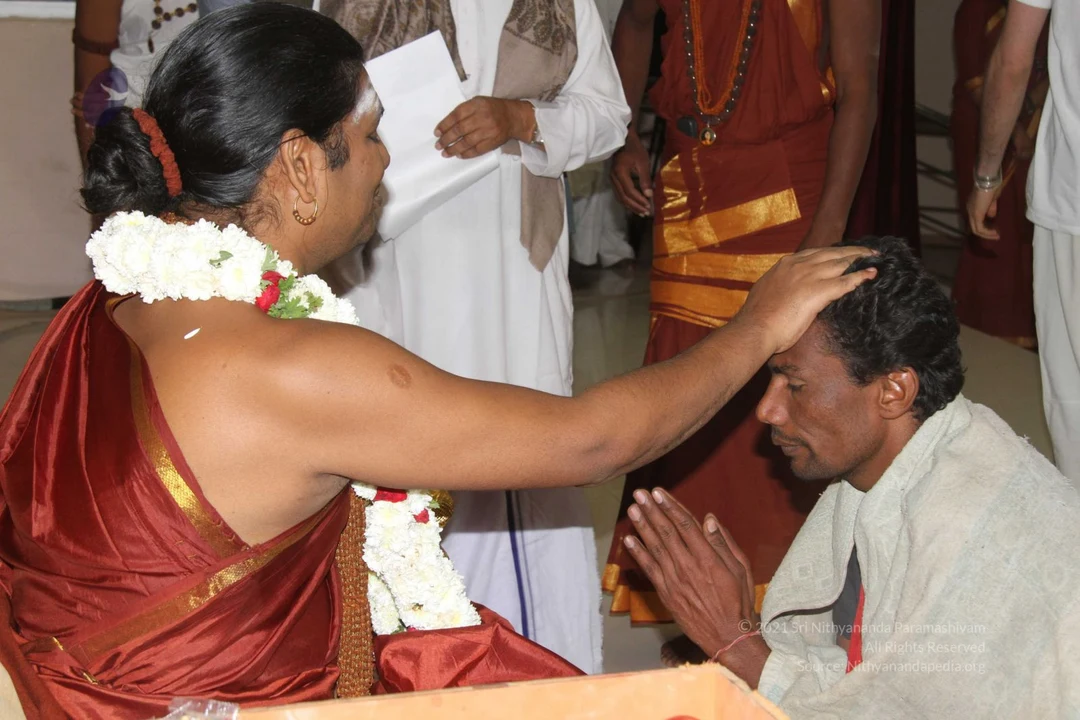
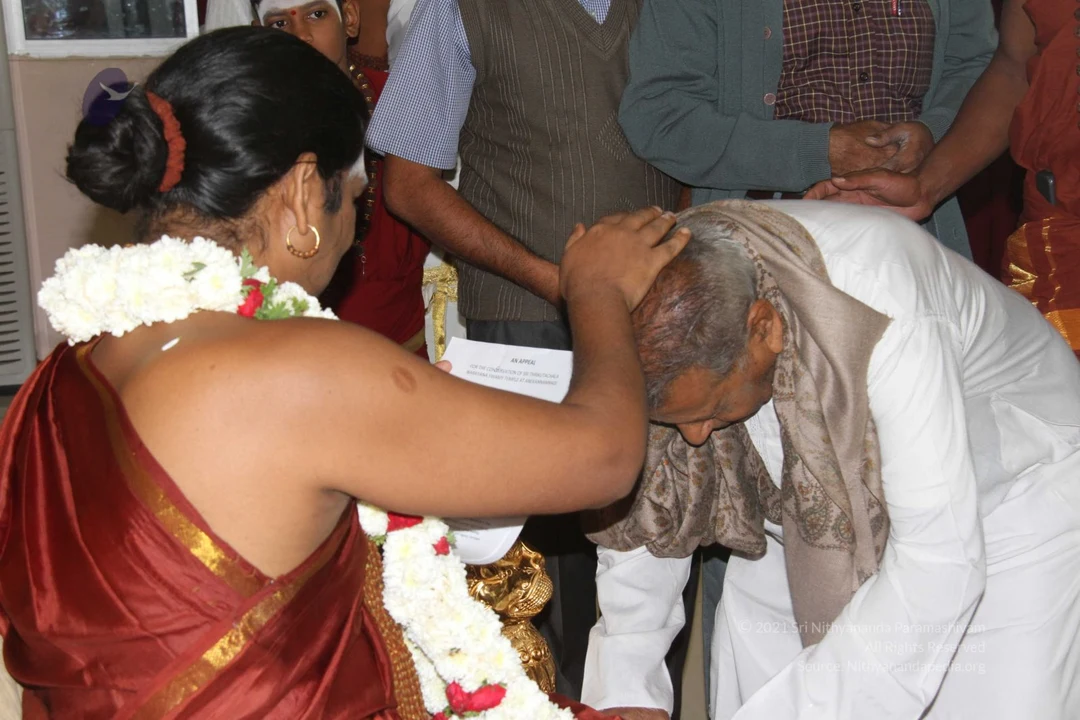
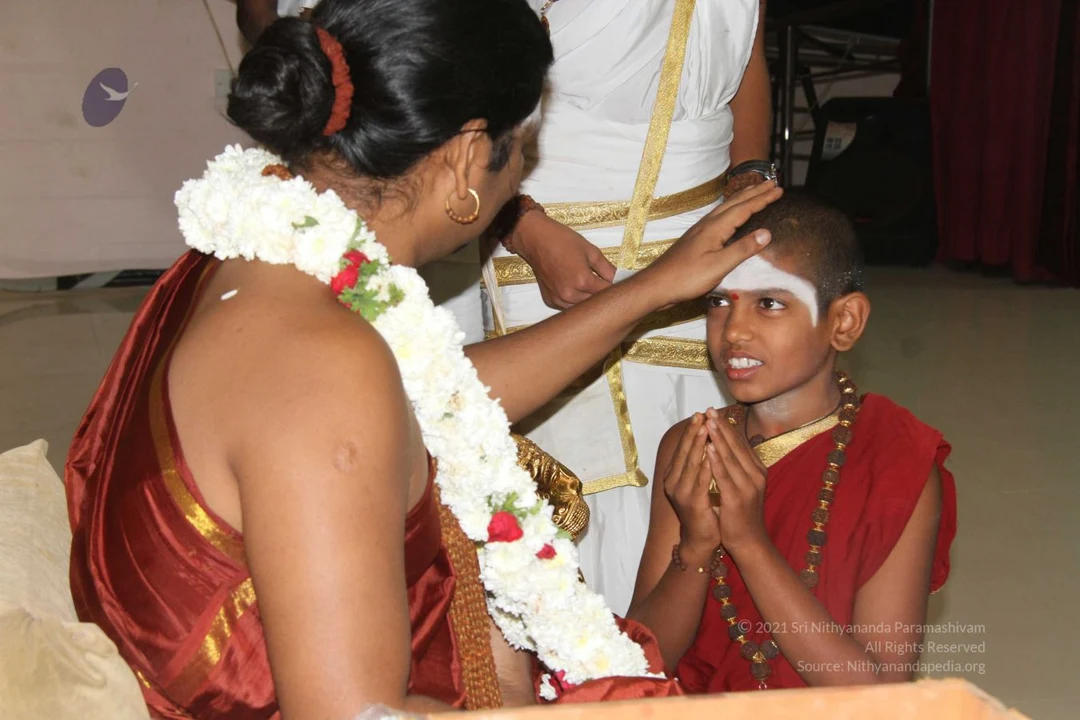
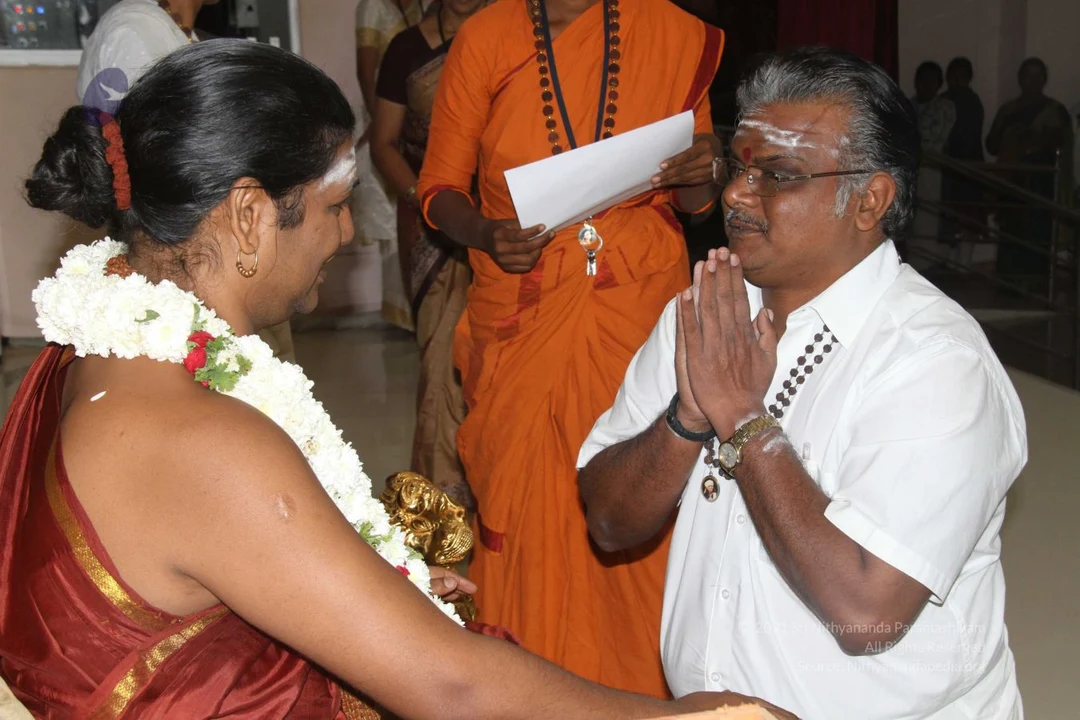
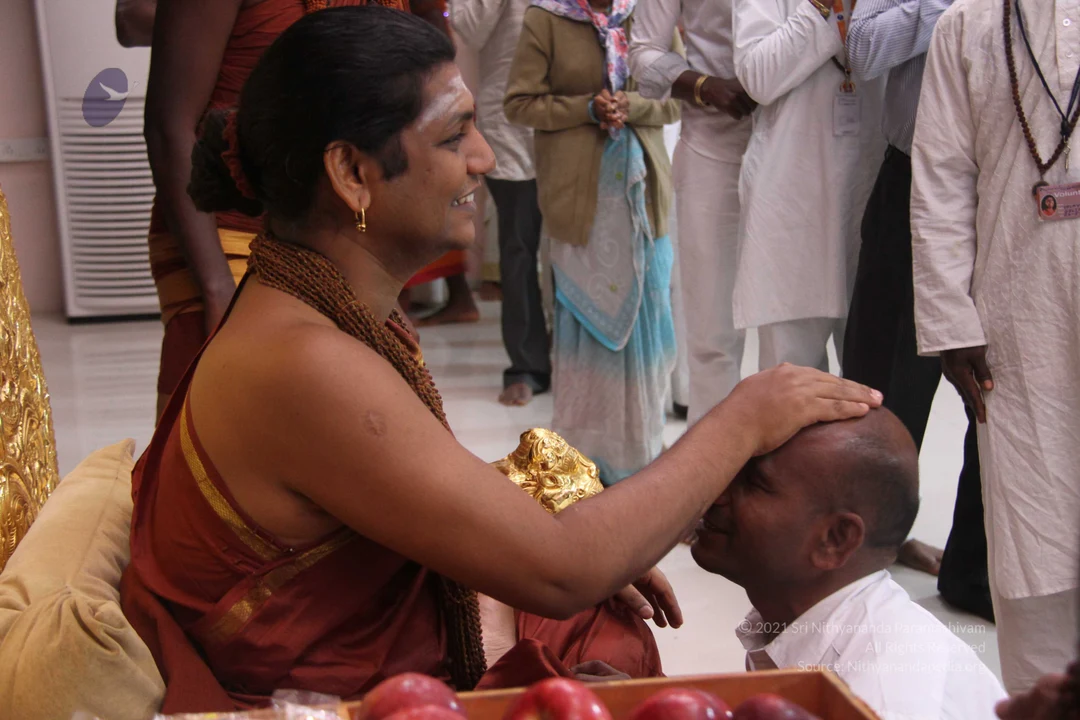
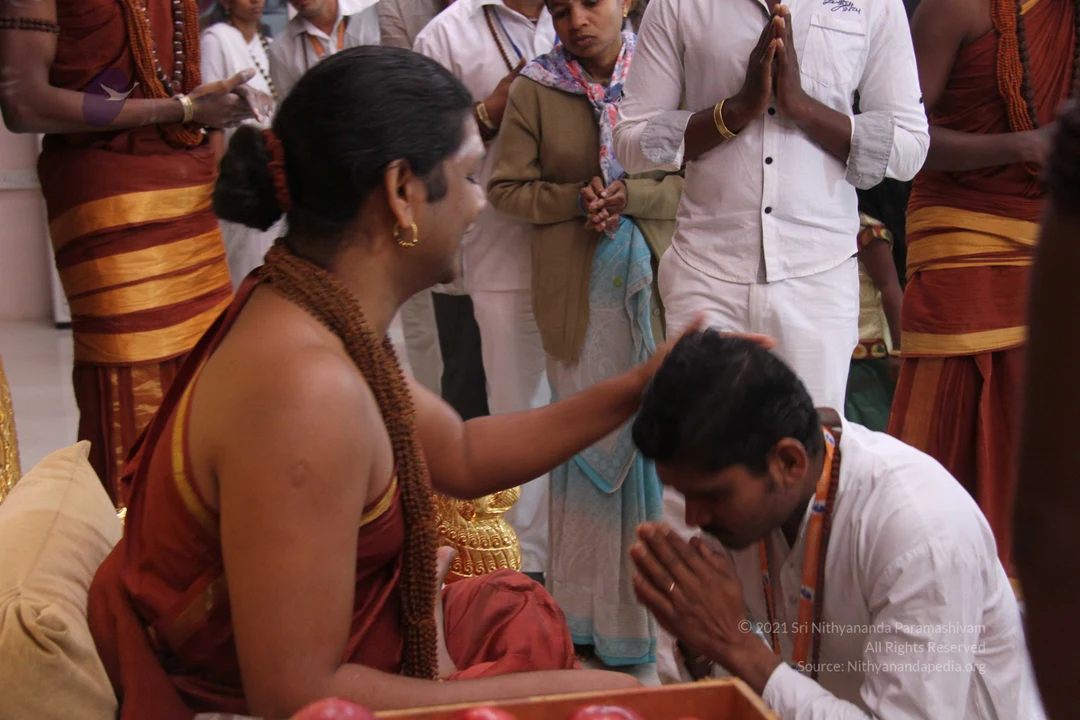
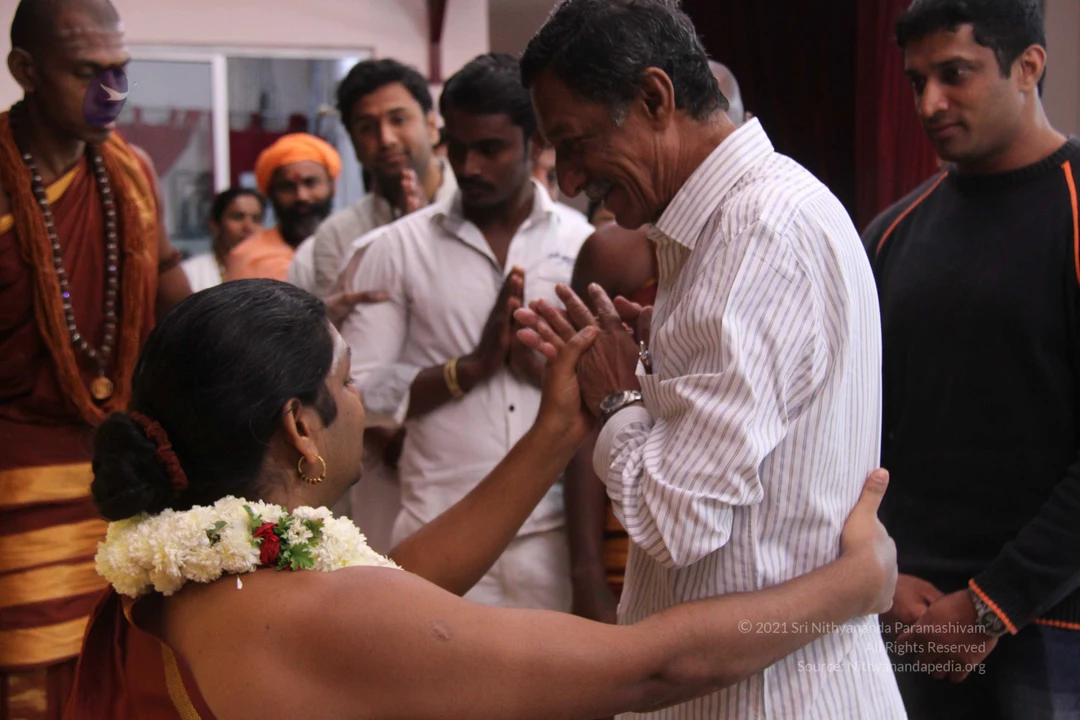
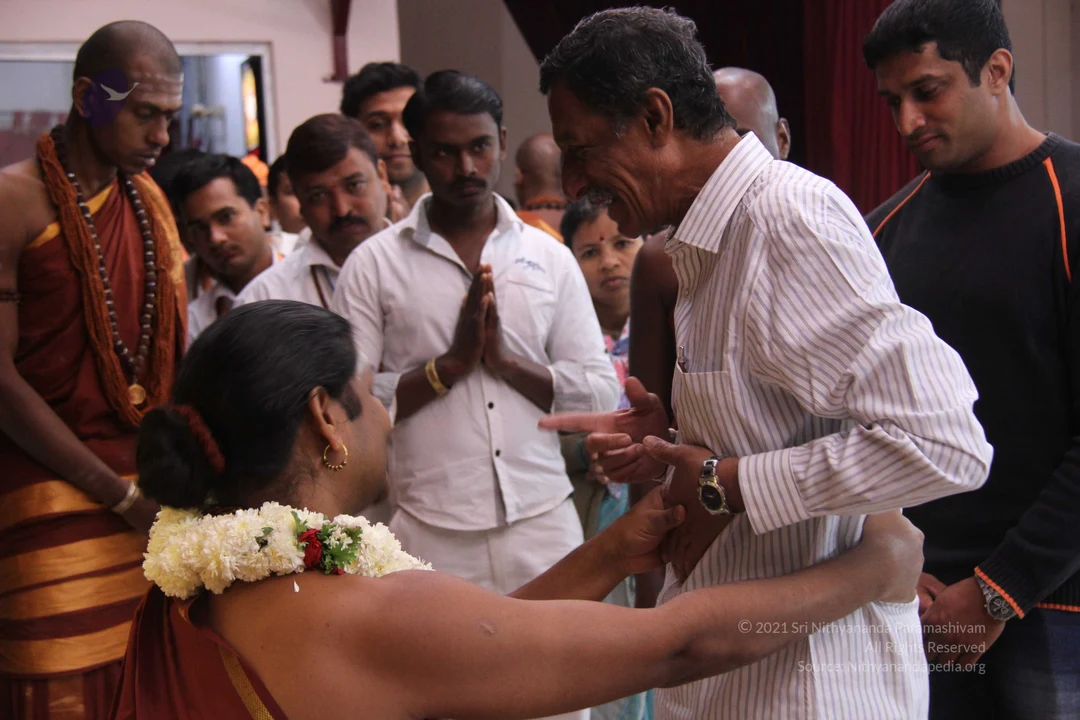
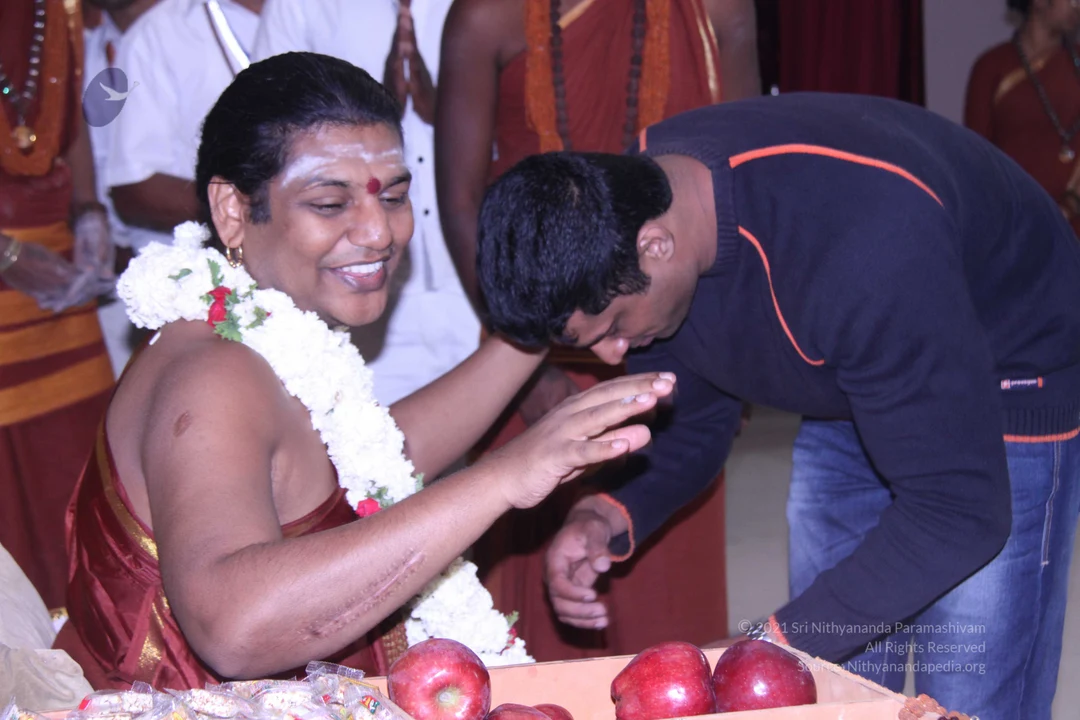
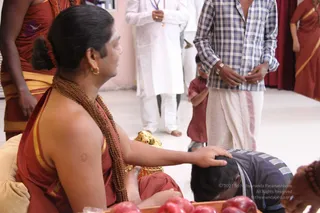
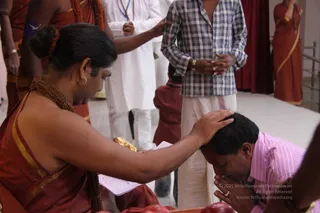
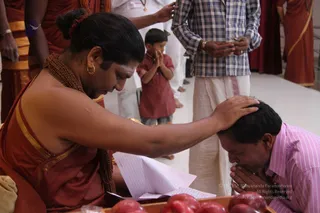
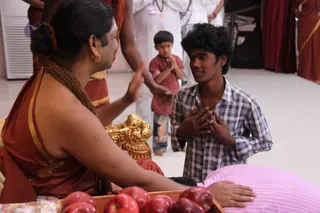
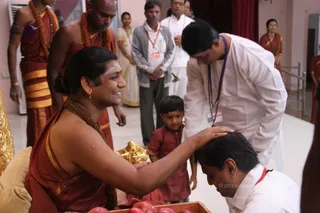
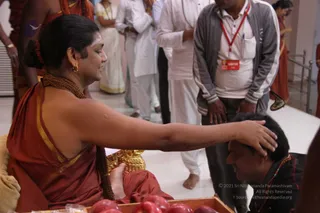
A photograph of a padapuja-style blessing in an indoor hall with white floors. A seated person in a rust-red robe with a wide gold-bordered cloth and a long rudraksha mala draped over the shoulders rests one hand on the bowed head of a man in a dark grey striped shirt kneeling on the floor. The seated figure has short hair pulled back, gold earrings and a tilak on the forehead, and holds a brass vessel with gold detailing. Red fruit sits on a tray in the foreground. Behind them, a standing man in a blue checked shirt and white dhoti, a man in white kurta and red-robed women stand watching. The seated figure's identity cannot be confirmed from appearance, so the role is described as a seated robed teacher.A photograph of a seated woman in a rust-orange sari with a gold border and a long beaded rudraksha-style necklace placing her right hand on the head of a man bowing forward with hands clasped in prayer. The man wears a pink striped shirt and cream dhoti. Behind them, standing figures in white kurtas and orange-red robes watch, and red fruits sit on a tray at the bottom edge.A photograph of a padapuja-style blessing in an indoor hall. A seated woman in a rust-red and gold-bordered robe with a beaded rudraksha-style necklace places her right hand on the head of a man kneeling in a pink striped shirt and cream dhoti, his palms pressed together. She holds an open notebook or papers. Red fruits. Behind them, a small boy in a red kurta stands with hands folded, and other standing people in white and red-brown attire are visible.A photo of a devotee kneeling before a seated woman in a rust-red sari with a long beaded rudraksha-style mala and gold earrings. The kneeling young man in a blue-and-white checked shirt has his palms pressed together at his chest. Behind them a small boy in a red shirt stands with hands folded, and a standing person in white clothes is partly visible. In the foreground are a basket of red apples and sweets, with a golden lion-shaped ornament on the left.A seated figure in a rust-red and saffron-bordered robe, with rudraksha beads around the neck and a tilak on the forehead, rests a hand on the head of a man in white kurta bowing forward. A woman in red-and-gold garments with a rudraksha mala stands nearby, and a small boy in red clothes watches. Behind them, several people in white and red attire stand near a golden object and a tray of red fruit. a person: the seated figure has rudraksha malas and saffron-red robes, cues consistent with the page's claim.A seated figure in a deep red-orange saffron robe with gold trim and a long rudraksha mala draped over the shoulders extends a bare arm to rest a hand on the head of a kneeling devotee in dark clothes with a rudraksha mala. The seated figure has a horizontal vibhuti mark and a tilted topknot. Behind them, standing people in white traditional dress and grey and red visitor badges watch. A gold ritual vessel and a wooden tray of red apples sit in the foreground.

Pada-Puja

1 photoSource gallery
A seated man in a maroon-red shawl and dhoti with a gold-toned thread necklace sits before a gold repoussé throne backdrop featuring a relief of deities. He wears a white vertical tilak with a red dot and a small gold earring, smiling with palms pressed together in namaste. Brass hanging bells and a brass lamp stand nearby against a dark wall. Appearance-based candidate: Swamiji (probable), with long hair tied back, ornate gold throne and ceremonial clothing; the photo sits in a Nithyanandapedia-style archive setting.

01-Rudrabhishekham

3 photosSource gallery
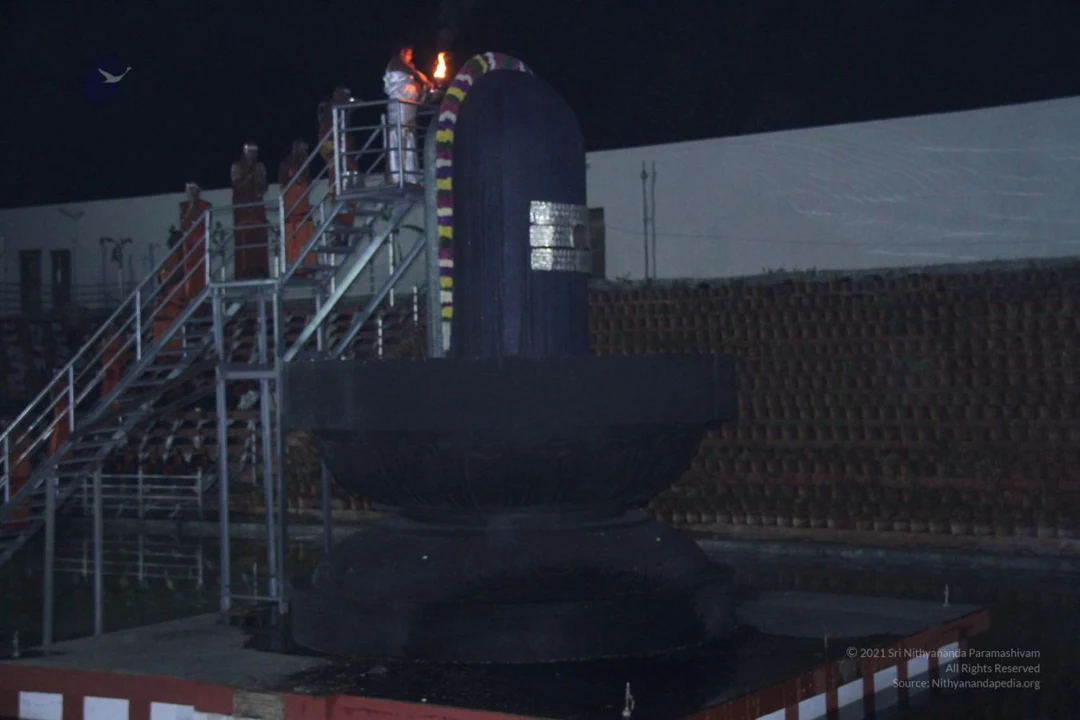
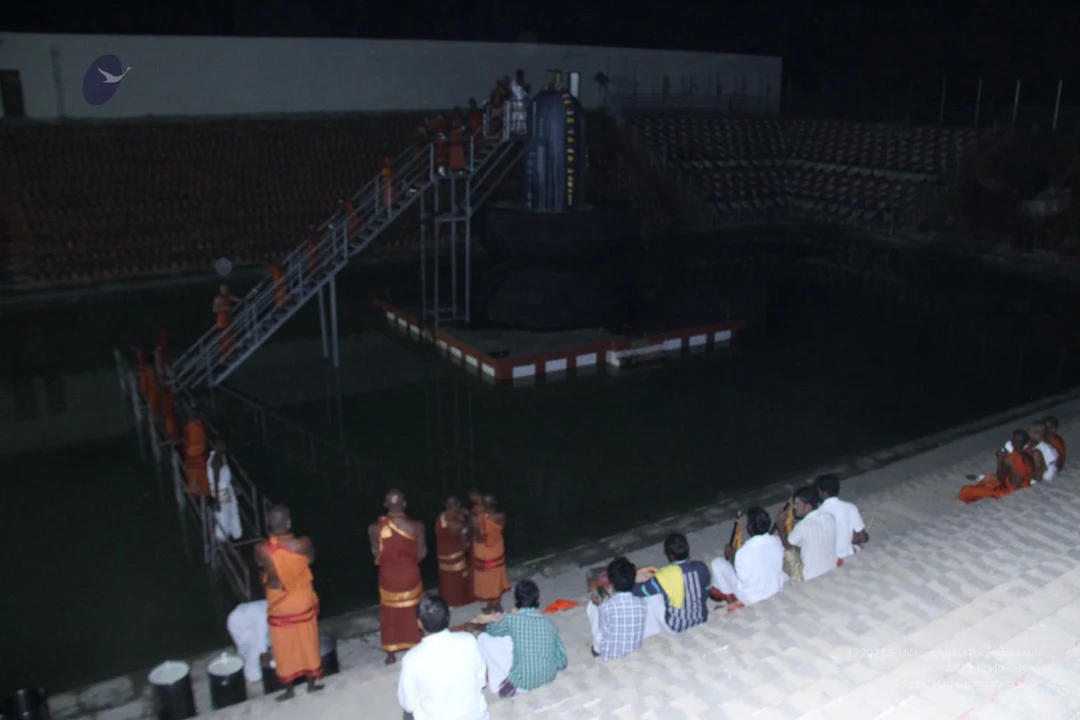
Night photo of a large dark Shivalinga on a square red-and-white bordered platform, set in shallow water that reflects the scene. A small figure in orange clothing stands on a metal staircase beside the lingam, which is wrapped with a striped cloth. Rows of empty seats fill the dim stadium-like area behind, with a white wall and lights beyond. The lingam is wrapped in a dark cloth and has silver bands near its base.Night-time photograph of a rite at a large rectangular water tank beside a tall black stone Shiva linga on a raised platform. A metal staircase leads down into the water, and several saffron-robed priests in orange cloth stand on the steps and at the edge of the tank. Seated devotees in white and light-coloured shirts line the stone steps at lower right, some with folded hands, and small metal pots sit at the water's edge. Rows of empty seats fill the dark background under a faint night sky.Night photograph of a large dark stone Shiva lingam on a circular yoni pedestal in an open-air water basin, with a garland of multicoloured flowers draped down its front and water flowing from the spout of the yoni into the pool. A metal railing staircase leads up from the right to a platform where several people in saffron and orange robes and white clothing stand and sit. Tall flagpoles and dim lights line the background above stone steps. The scene suggests abhishekam at night. Several small figures are visible on the steps and platform, with a person seated near the left edge.
03-Satsang

6 photosSource gallery
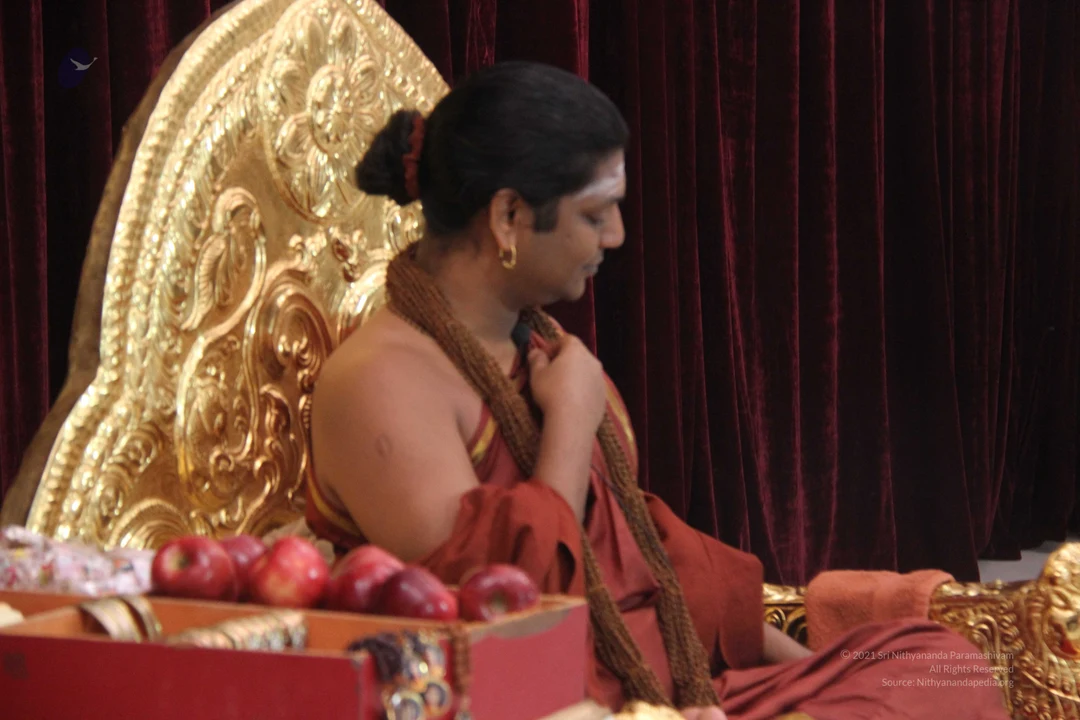
A seated man in a rust-red shawl and matching red silk dhoti sits on a red cushioned seat before an ornate gold repoussé throne with scrolled and floral carving. He has a white vibhuti line and red kumkum dot on his forehead, a small microphone clipped at his collar, and his hands are clasped in his lap. The setting appears to be a satsang gathering. a person: the seated figure has a bare-shouldered red robe and ceremonial throne presentation, but the cues are not distinctive enough to confirm identity from appearance alone. One physical person is visible.A man seated on an ornate gold throne with carved scrollwork and a rounded back, speaking or smiling mid-sentence. He wears a rust-red shawl over a matching red-orange garment, with a white forehead marking and a red bindi. His hands are folded in his lap and a small lapel microphone is clipped to his robe. A gilded figure with raised arms and green draped cloth is partly visible at the left edge, and a water bottle sits at the bottom right. Appearance-based identification is uncertain, so this is recorded as unsure.A man in a rust-red saffron-toned robe sits on an ornate gilded throne with carved scrollwork and bird-headed armrests, in front of a wooden panelled door. He wears a white tilak with a red bindi on his forehead, gold earrings, and a small lapel microphone clipped to his robe, with a plastic water bottle beside the throne. He gestures with his right hand while speaking, as in a satsang setting.A man in red-brown robes sits cross-legged on an ornate gold throne carved with lion heads and floral scrollwork, gesturing with his right hand while speaking into a lapel microphone. He wears a white forehead marking with a red dot, gold earrings, a rudraksha mala draped at his chest, and a red-brown shawl. Behind him stand brass oil lamps with lit flames, and a painted deity figure with raised hands is partly visible at the upper left. The setting is a red-and-blue walled hall. a person is shown in person, identified by the throne seating, the rudraksha mala and the saffron-red garments with distinctive ceremonial adornment.A man seated on an ornate golden throne with carved floral and scroll patterns speaks during a satsang. He wears a rust-orange shawl over an orange robe and a rudraksha mala across his chest, with a red bindi and white vertical tilak on his forehead, and a small microphone clipped to his clothing. Behind him stand a golden oil lamp and a golden bird-topped ornament, with pink and blue walls in the background.A seated person in a rust-red robe sits on an ornate gold throne with carved floral backrest, in front of deep maroon velvet drapes. A tilted-head figure with hair in a topknot, a red hair tie and a small gold hoop earring holds a brown rudraksha mala draped across the chest, a pendant at the collar. Bare-shouldered, with a white forehead mark. In front on a red tray lie red apples, bangles and folded cloth, and a gold-trimmed cushion rests at the side.

04-Kalpataru-Darshan

7 photosSource gallery
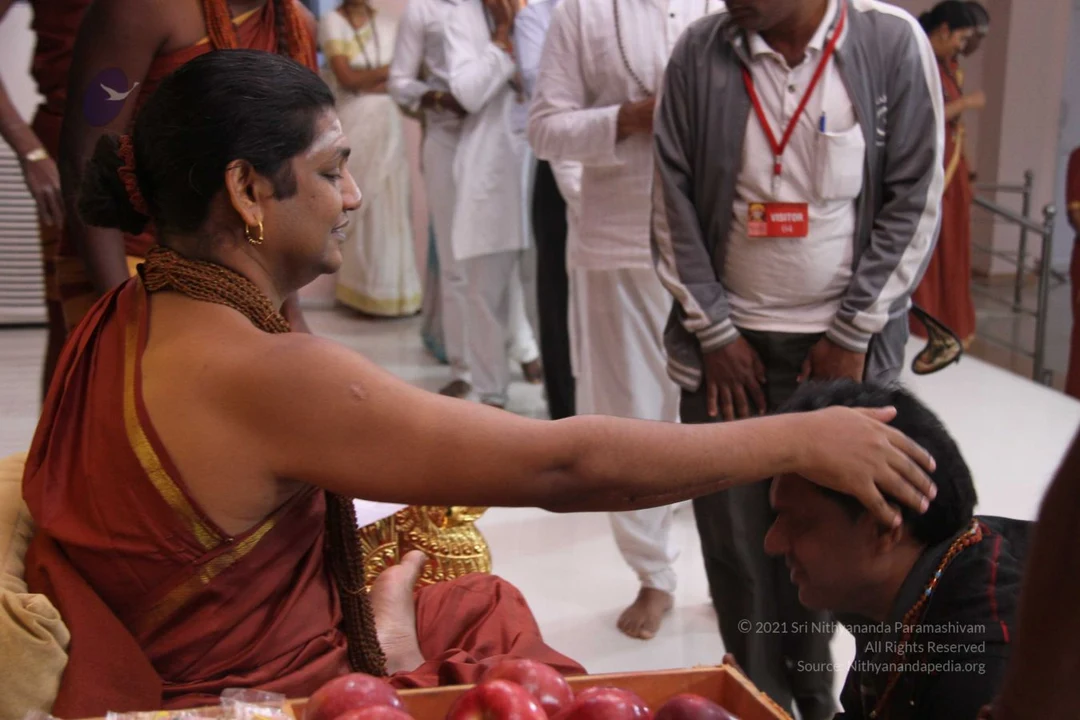
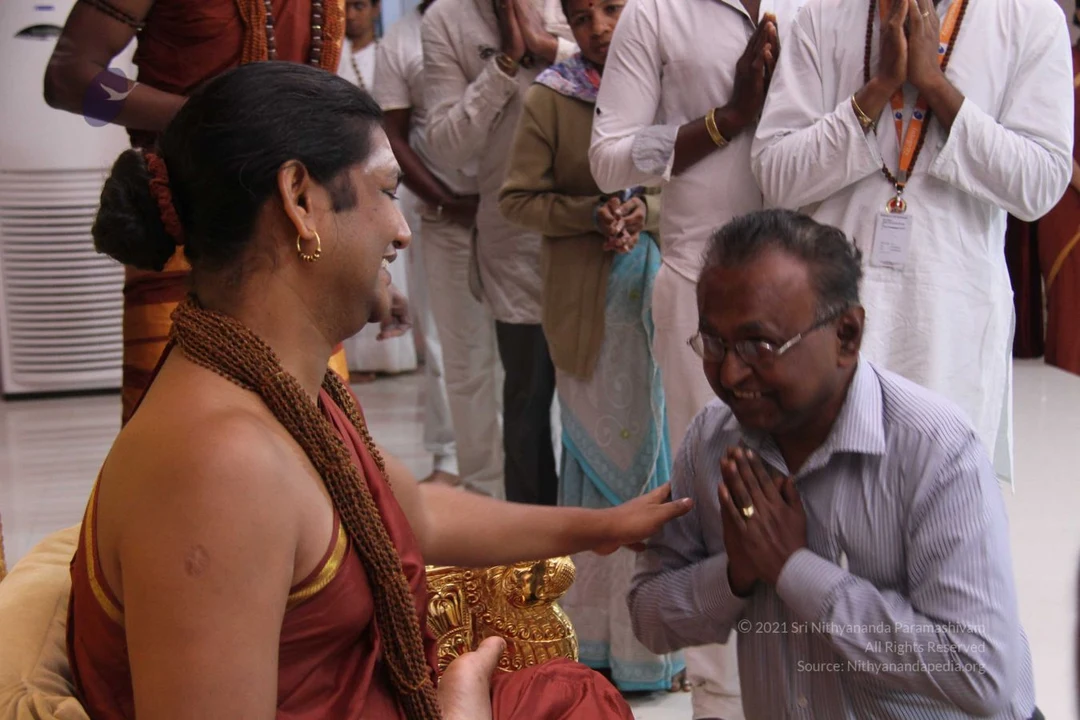
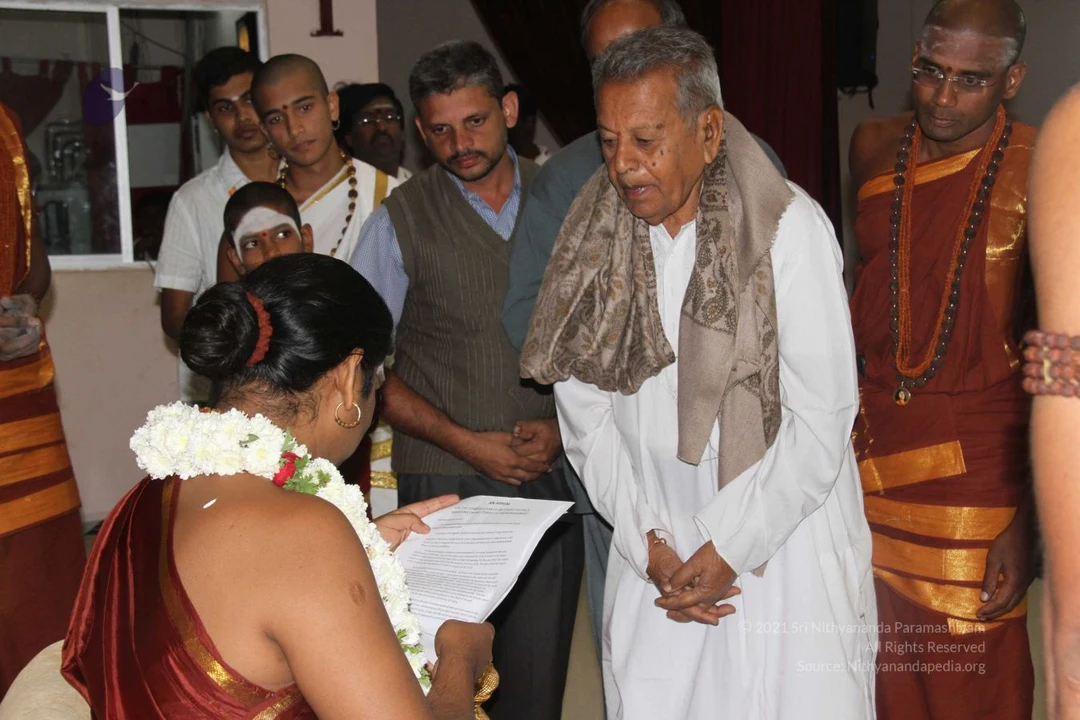
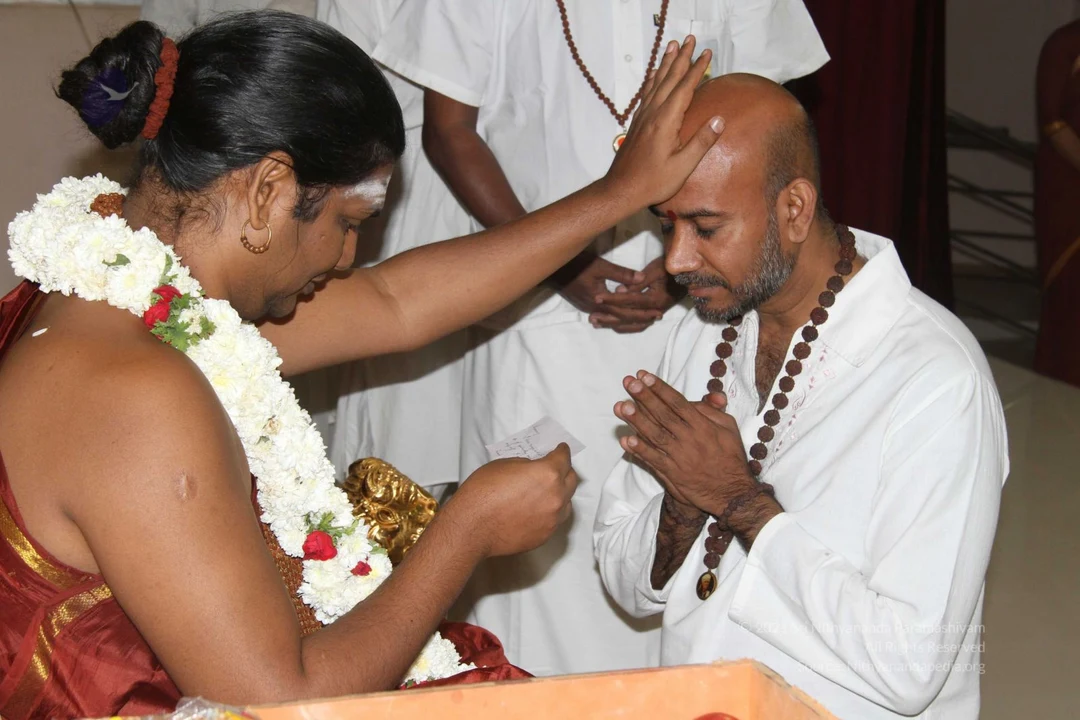
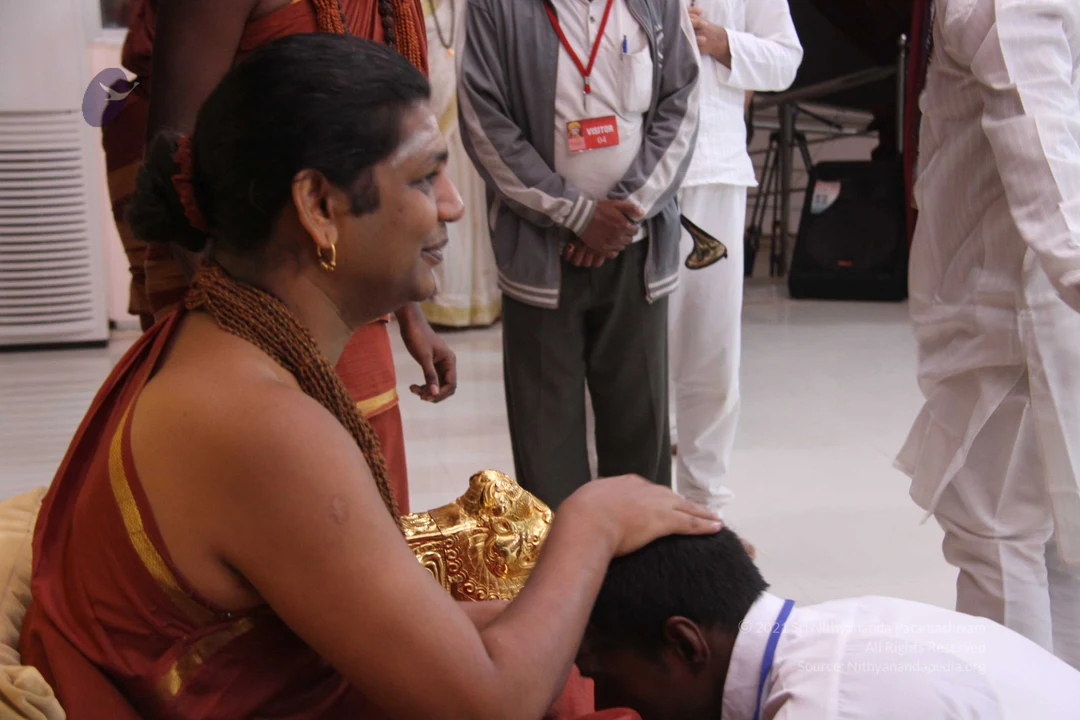
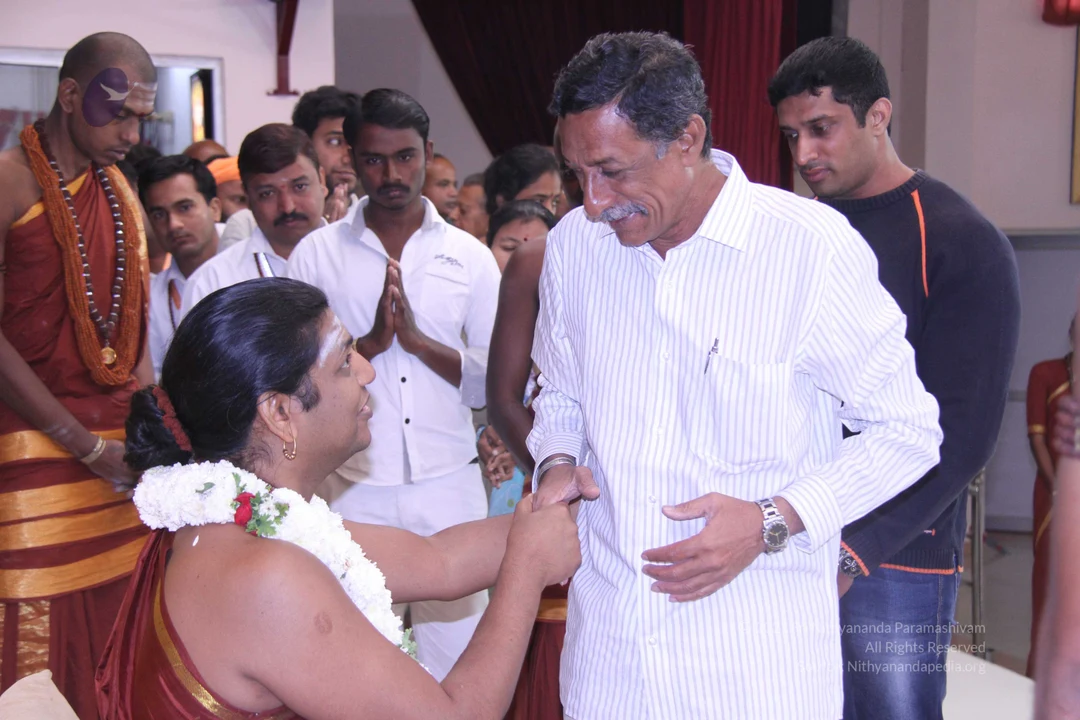
A woman in an orange-red saffron-toned sari with gold border sits cross-legged on a cushion, a long rudraksha-style mala necklace around her neck, and a gold ornamental object beside her. She places her right hand on the head of a young man bowing with his forehead to the floor; he wears a white kurta and a blue lanyard. Behind them, a visitor in a grey jacket with a red VISITOR badge stands among people in white clothing on a white tiled floor, with an air conditioner and a speaker case visible.A seated figure in a rust-red and gold-bordered robe with a long brown rudraksha mala and a small gold ornament at the ear places a hand on the bald head of a kneeling man in a white shirt and dark trousers. Behind them, standing devotees in white kurtas and a woman in a blue-and-white sari watch, some with hands clasped. A gilded object and a tray of red fruit sit in the foreground, and a gold-patterned pillar edges the left side. The seated figure has white sacred ash on the forehead and appears to be giving a blessing, which may be a padapuja or darshan setting. a person: the seated figure wears a saffron-red robe, a rudraksha mala and ceremonial gold jewellery, and is giving blessings to the kneeling devotee.A seated robed figure in saffron-red clothing with a gold-bordered cloth and a long dark rudraksha mala places a hand on the head of a kneeling man in white clothes and an orange shawl, whose hands are pressed together in namaskar. Behind them, standing devotees in white and a woman in a beige top and light blue shawl watch with hands folded, and other saffron-robed attendants stand at the edges. A golden vessel and an orange cloth lie in front. a person: the seated figure has a shaved or close-cropped head with a rudraksha mala and saffron-red robes, but the face and hair are too uncertain to confirm identity, so the appearance label is probable only.Indoor photo of a devotee in a maroon and gold sari with a white jasmine garland and red flower, kneeling and clasping the hands of an older man in a white pinstriped shirt and wristwatch, who smiles warmly while standing. Behind them, a man in a rust-red robe with rudraksha beads and a gold pendant stands with a shaved head and purple-marked forehead, and a man in an orange turban and white clothes is among a group of people with palms pressed together. A man in a black sweater stands at the right. Maroon curtains hang in the background.A photograph of an indoor ashram gathering in which a woman with a bun and white-and-red flower garland kneels and reaches forward to touch the hands of an older smiling man in a white-striped shirt and wristwatch. Beside them stands a man in saffron-orange robes with a rudraksha mala, a tilak on his forehead and a saffron shawl, along with a younger man in a black sweatshirt with orange trim. Several men in white shirts stand behind with hands pressed together in greeting, and a woman in a sari and bindi watches. The setting appears to be an indoor hall with red drapes.A photograph of a devotional encounter indoors. A figure with a shaved head, wearing a red-brown garment, a white flower garland with a red rose, and a white and red forehead mark, kneels and clasps the hands of an older man in a white striped button-up shirt and wristwatch. Behind them, a standing devotee in a red-orange and gold garment wears a rudraksha mala and a purple forehead design, while several men in white shirts stand with palms pressed together. A young man in a dark sweater watches at right, and a red curtain hangs in the background.