Skip to content
Sunday

29 December 2013

Nithyananda Diary | Padapuja | Satsang | Meditation | Kalpataru Darshan

Dated photos
103
Source pages
1
Media
2
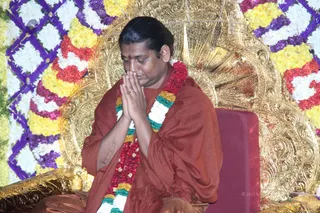
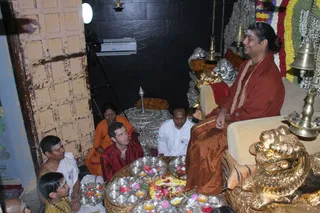
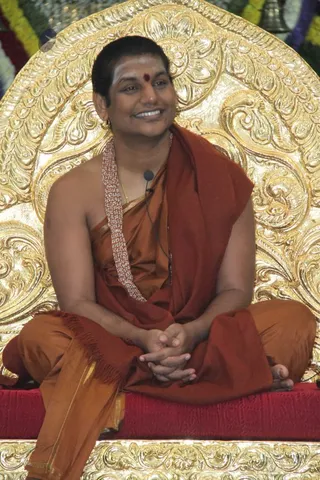
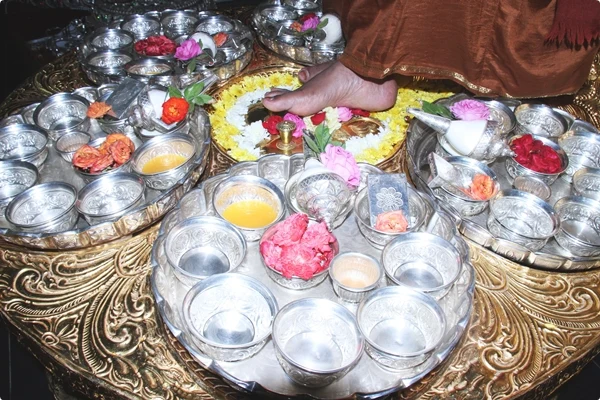
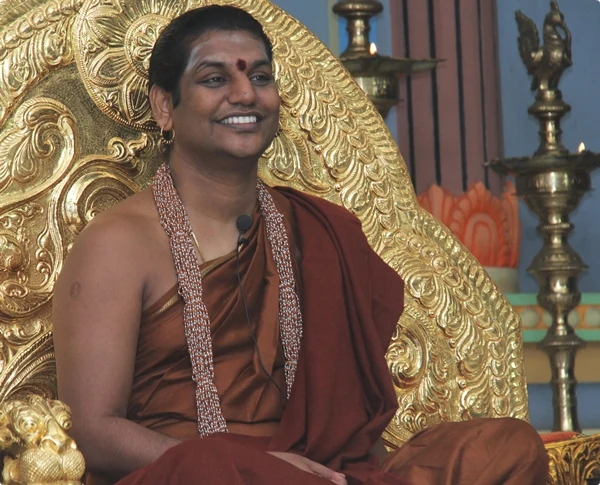
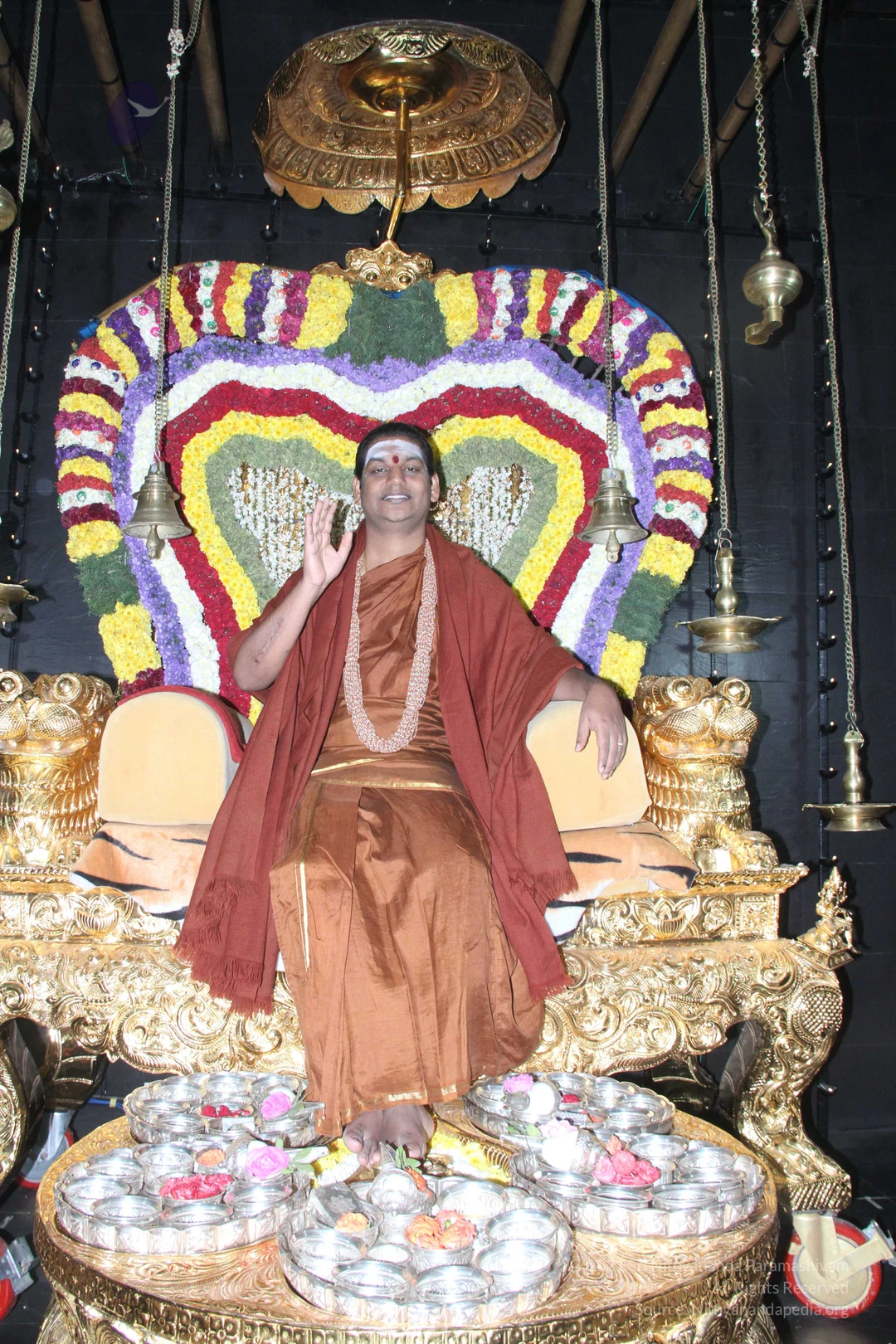
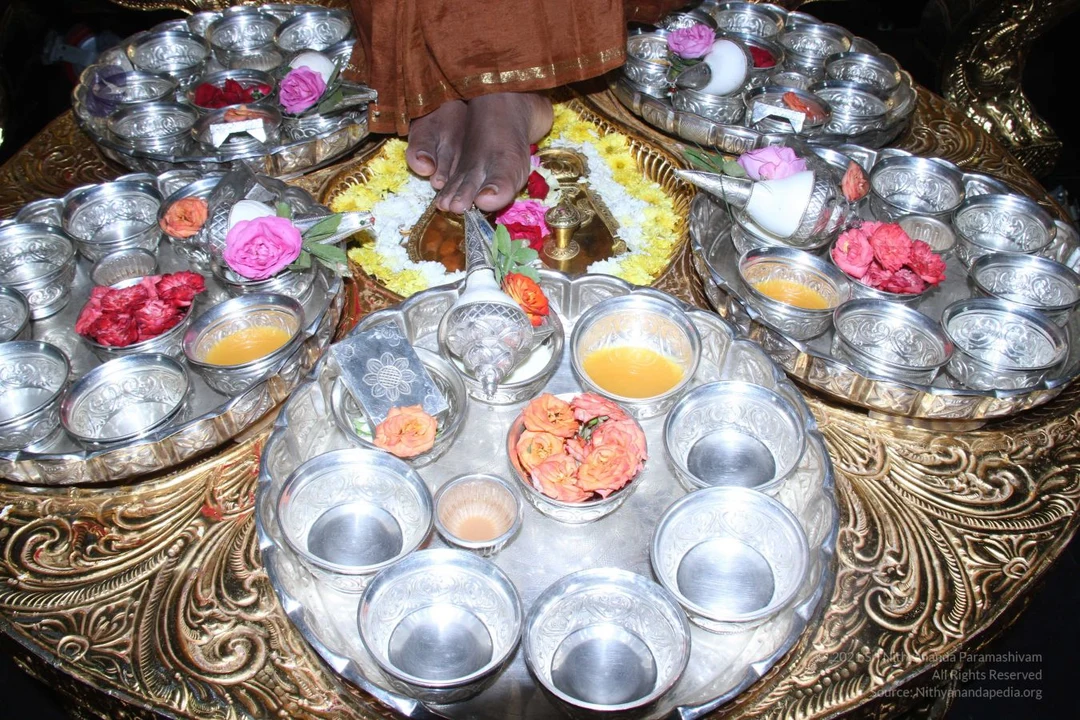
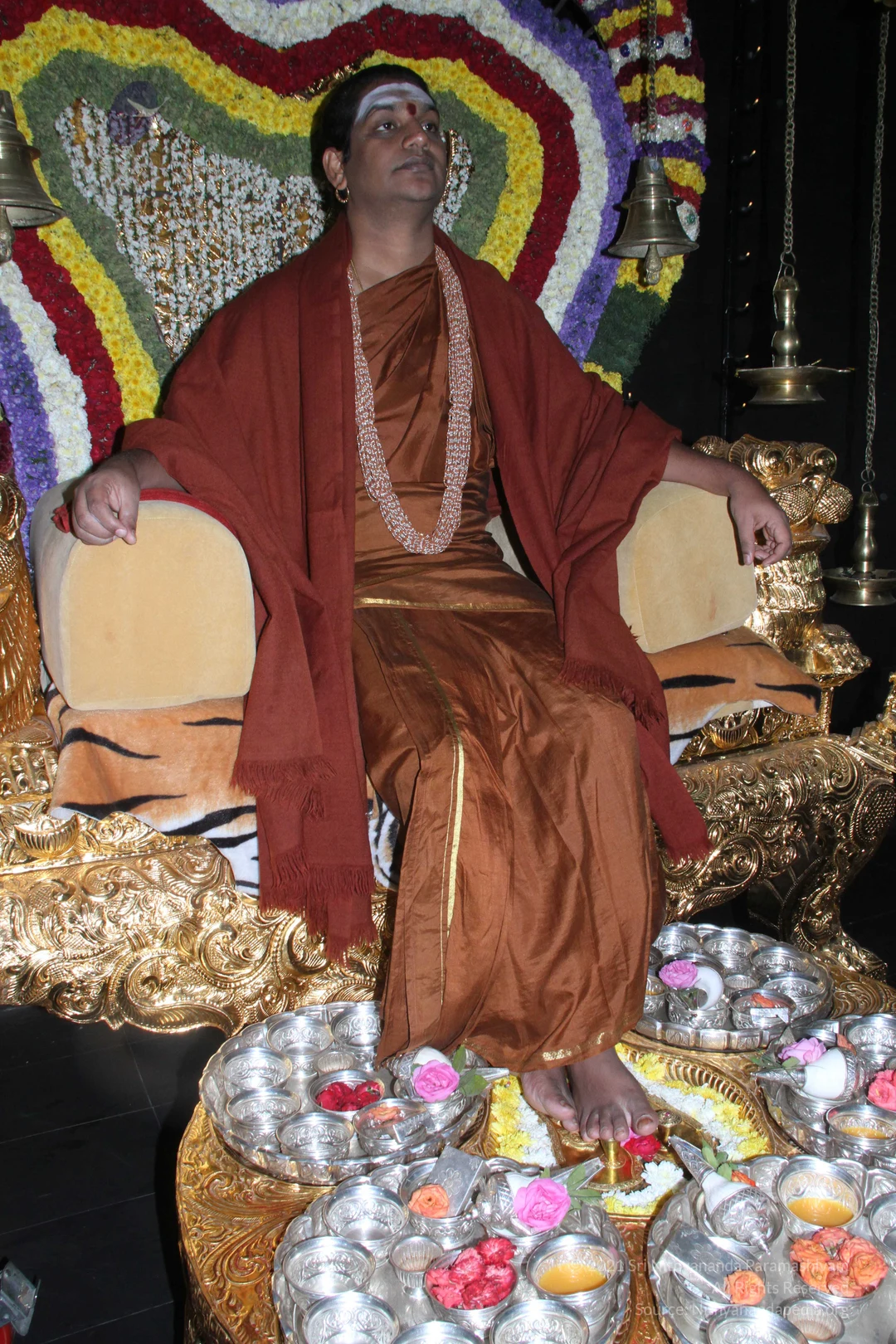
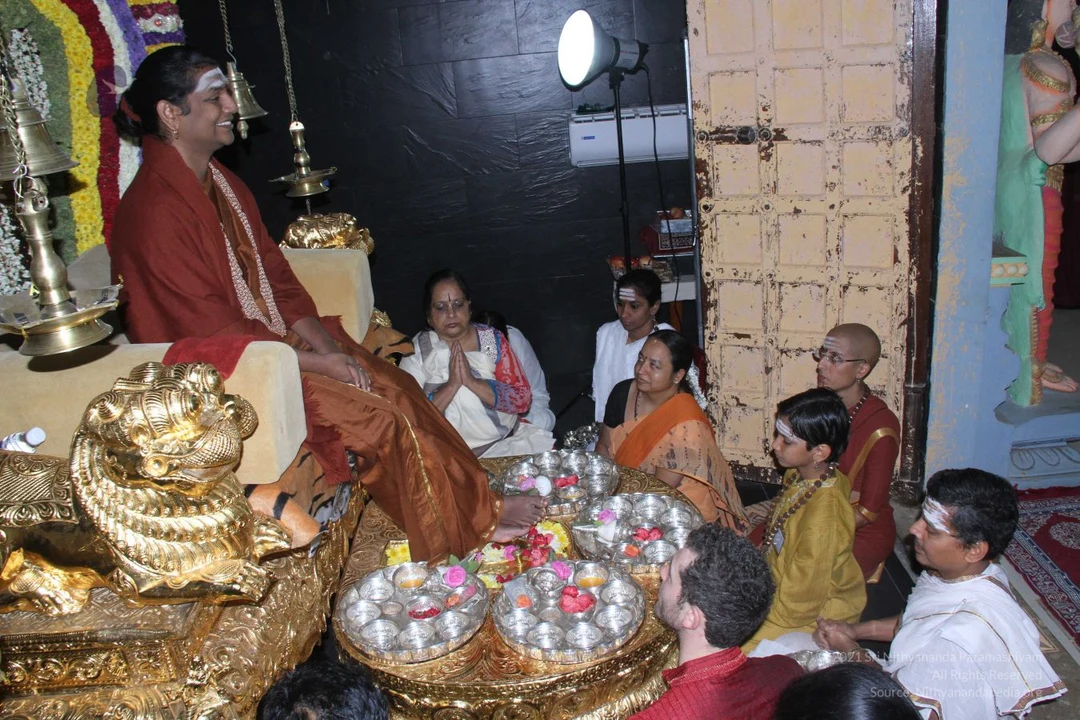
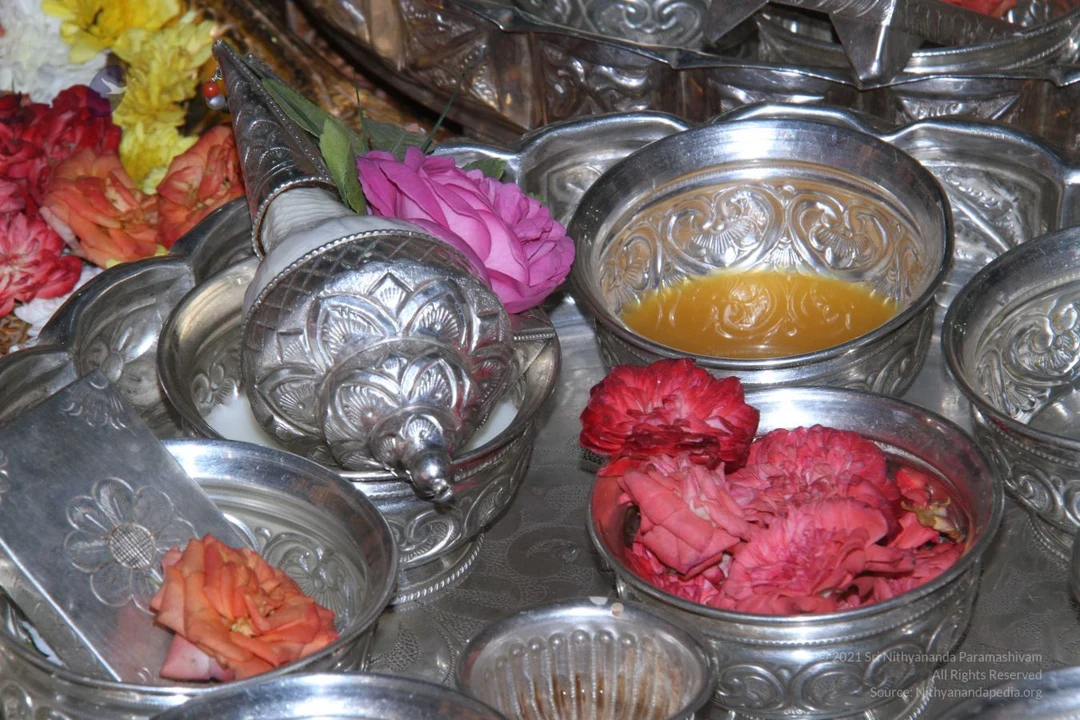
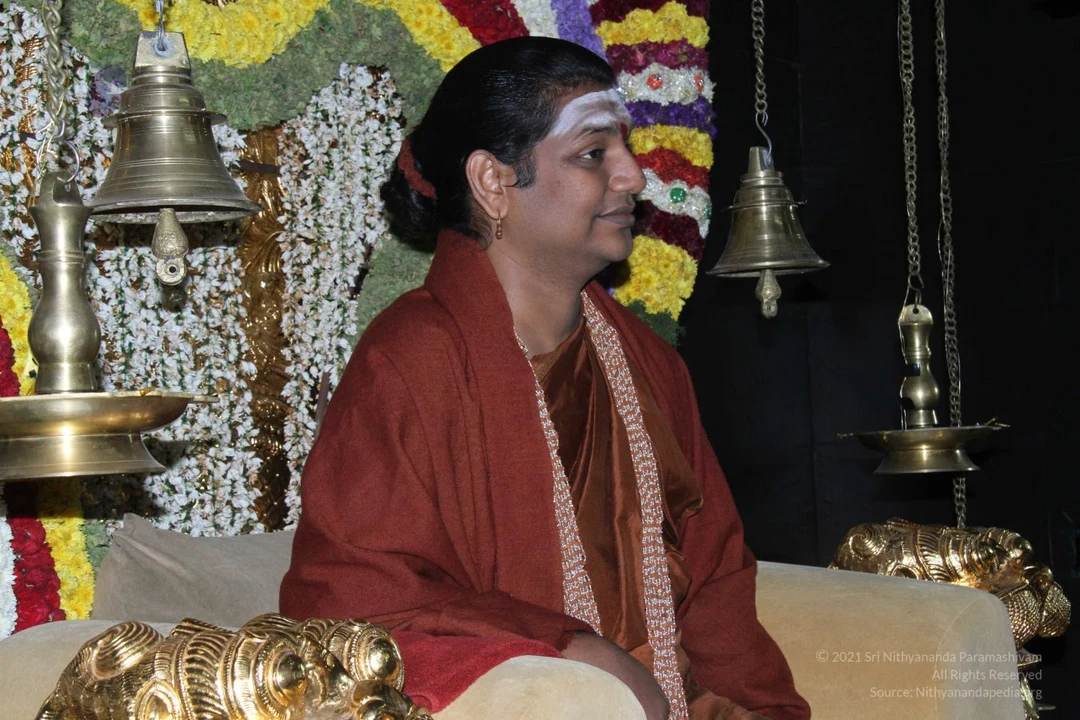
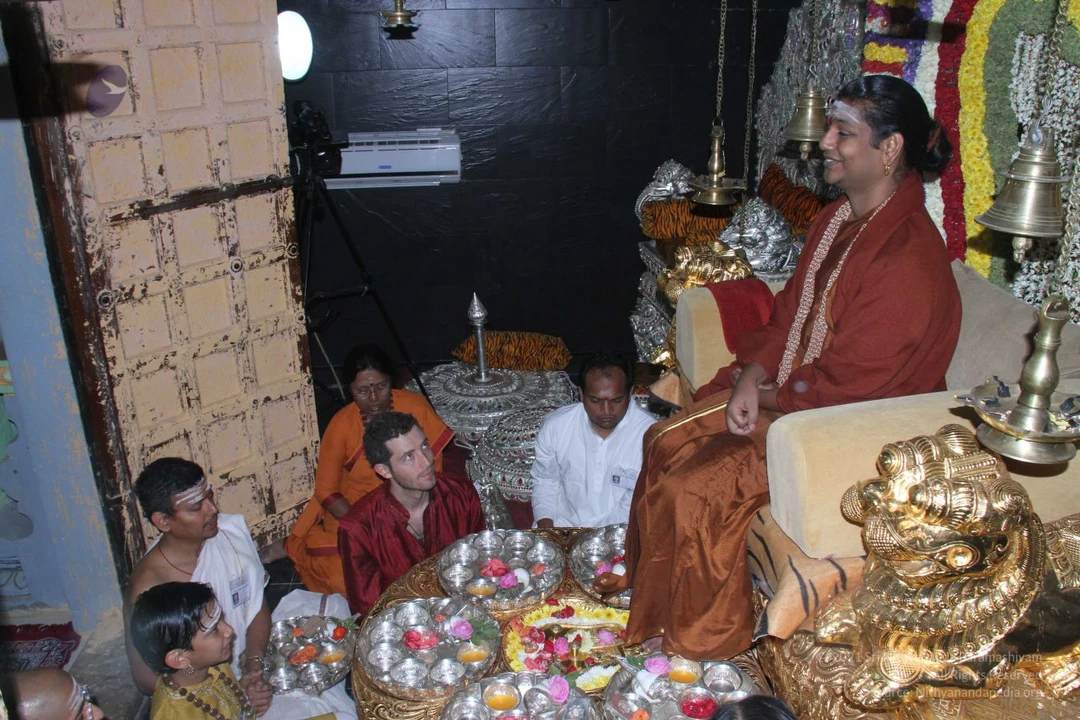
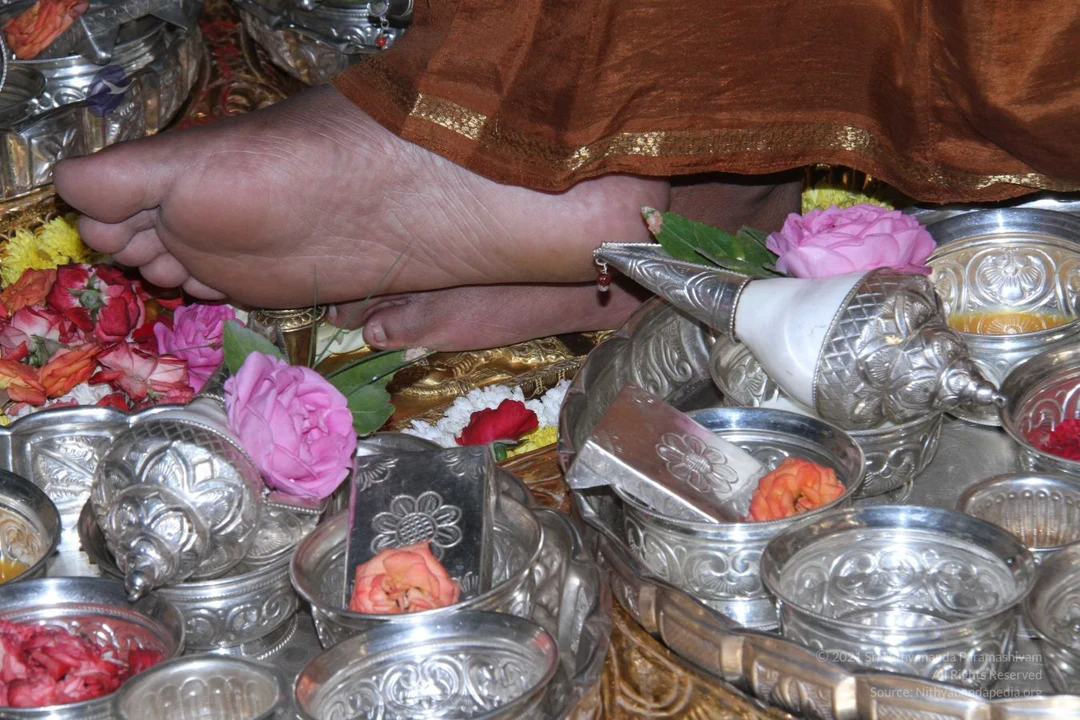
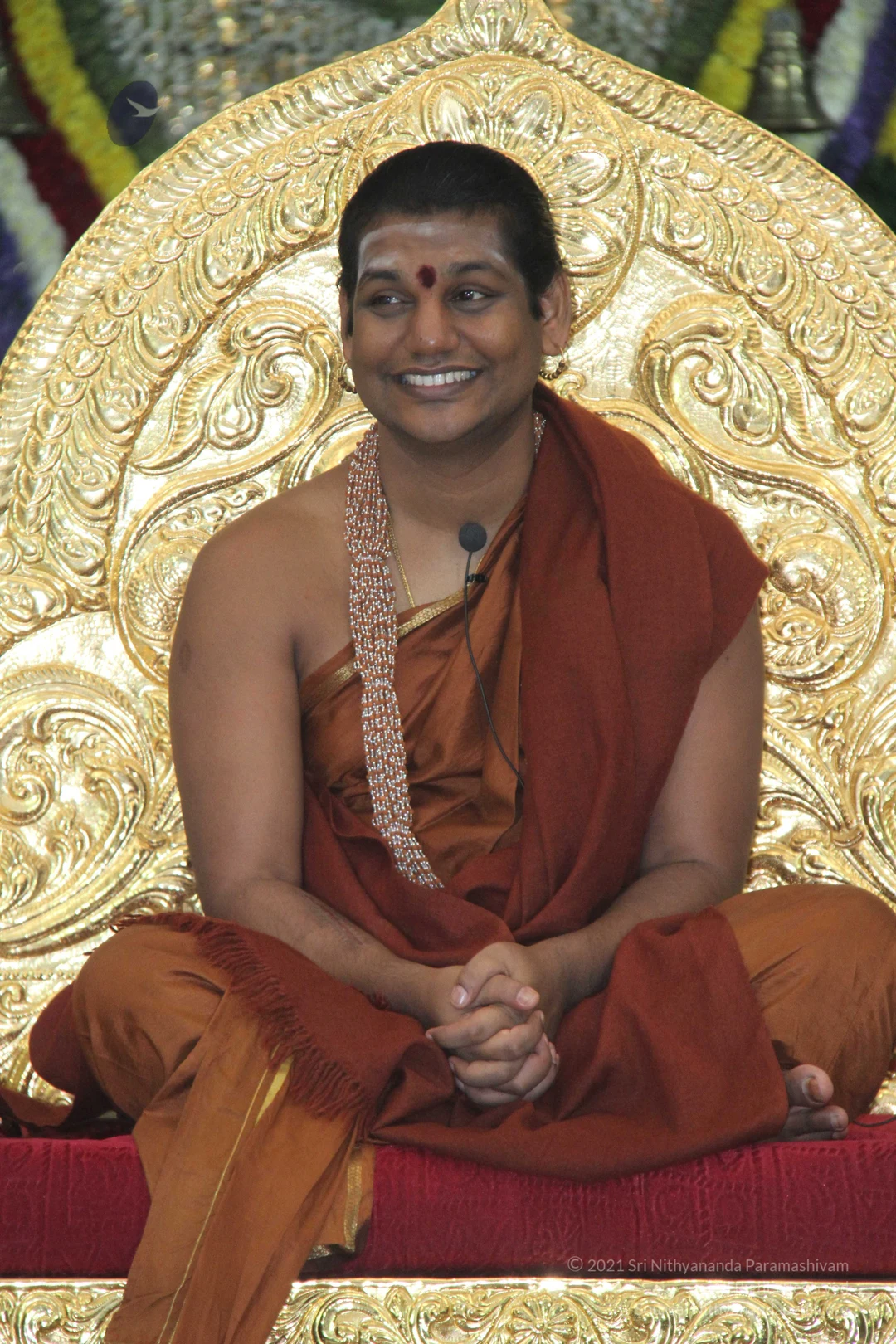
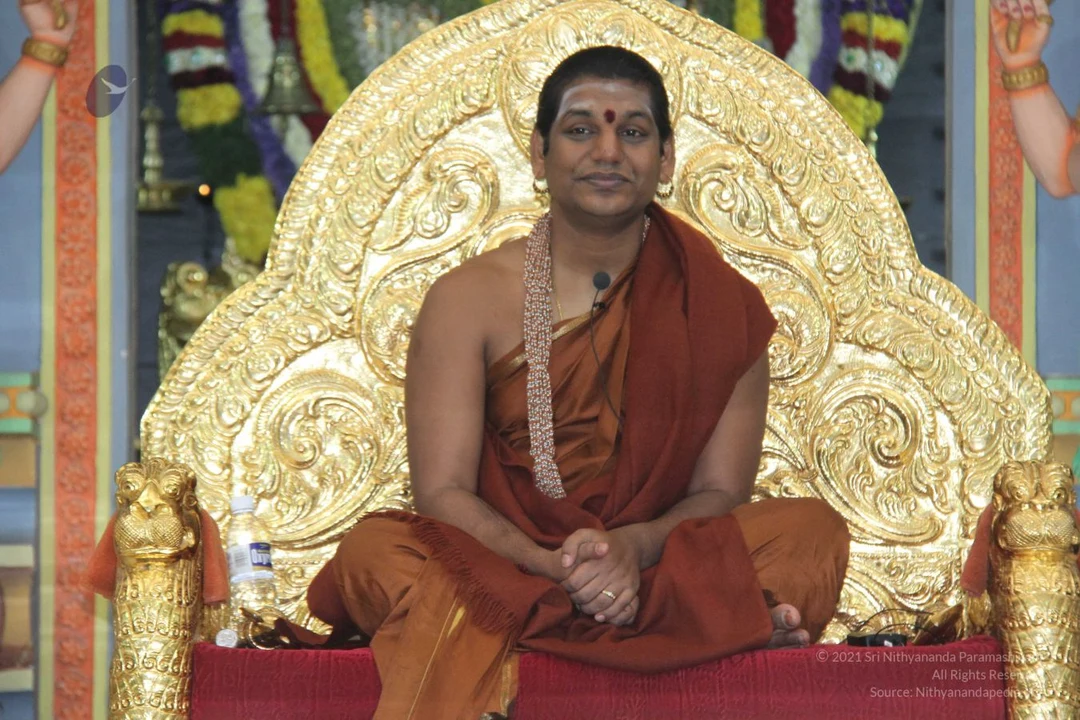
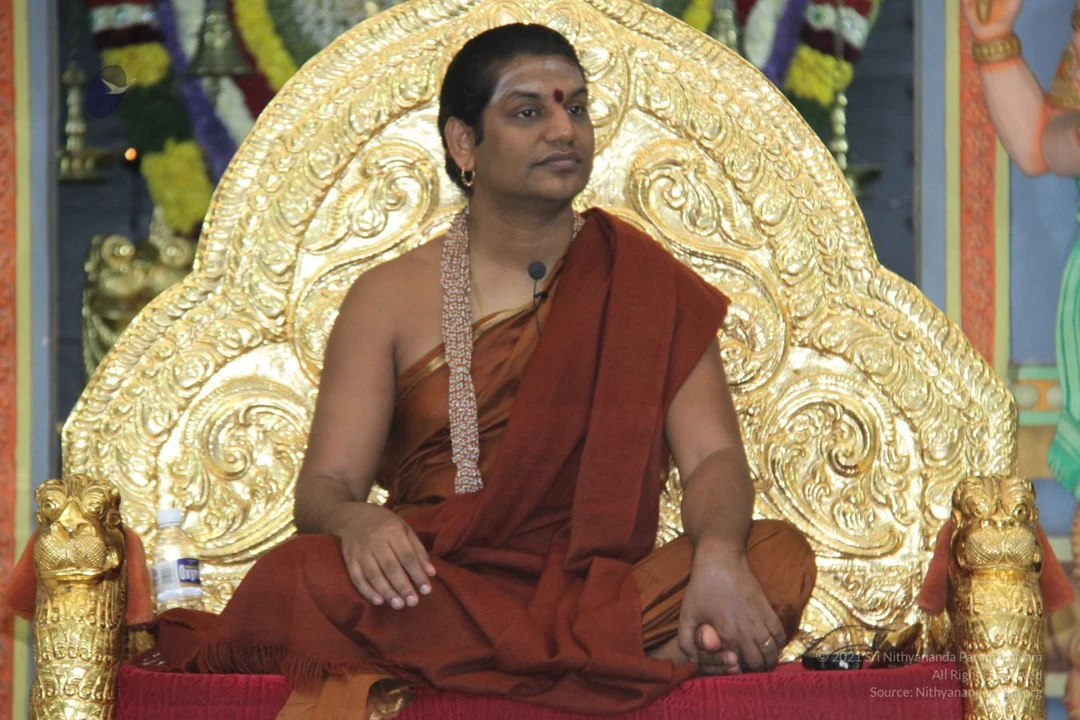
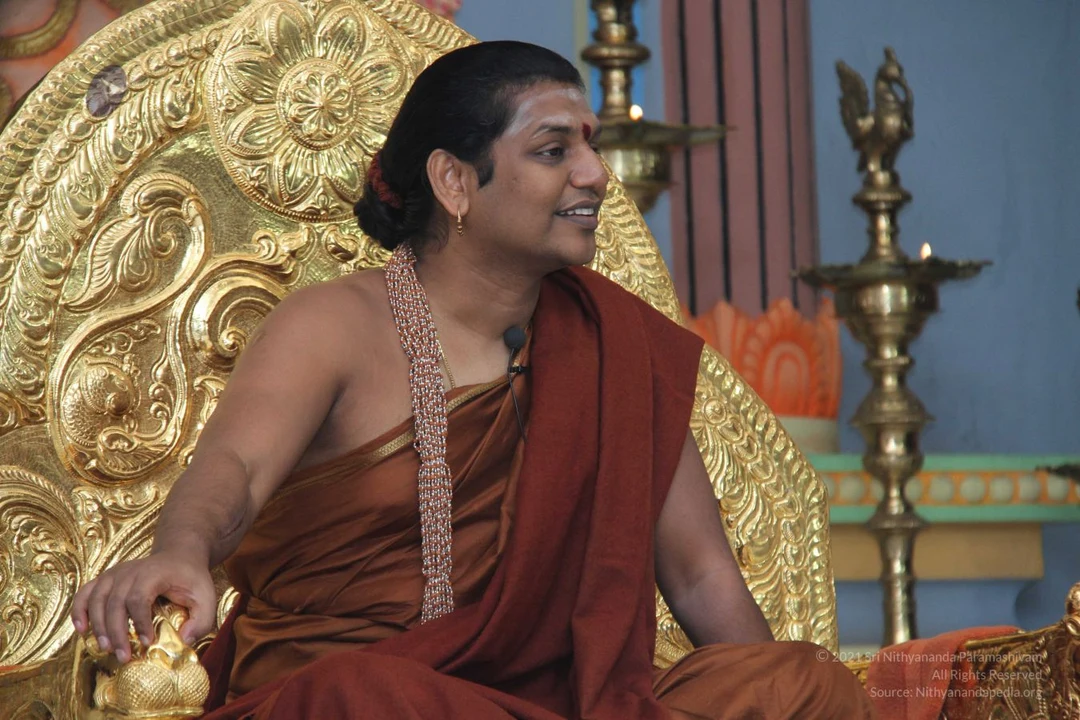
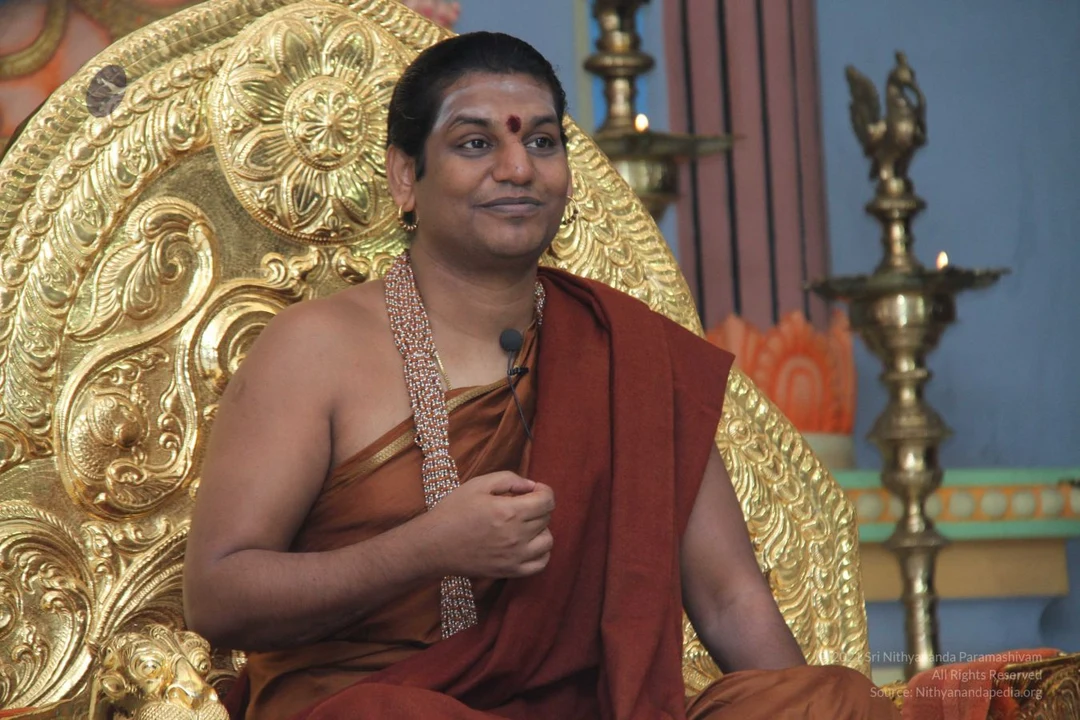
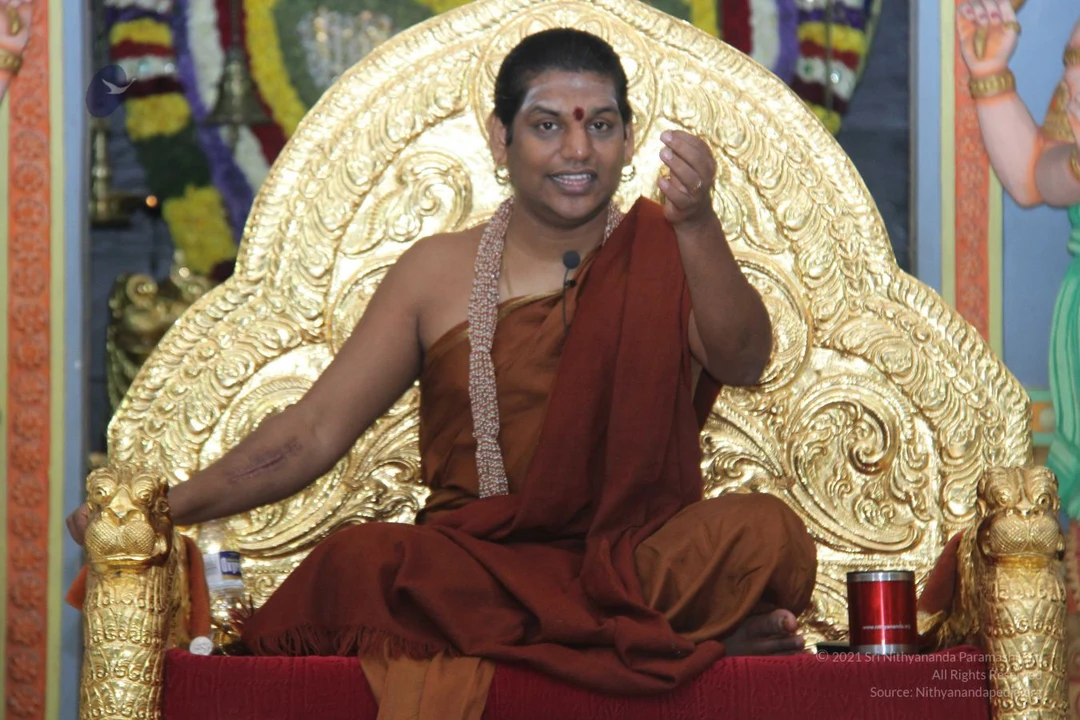
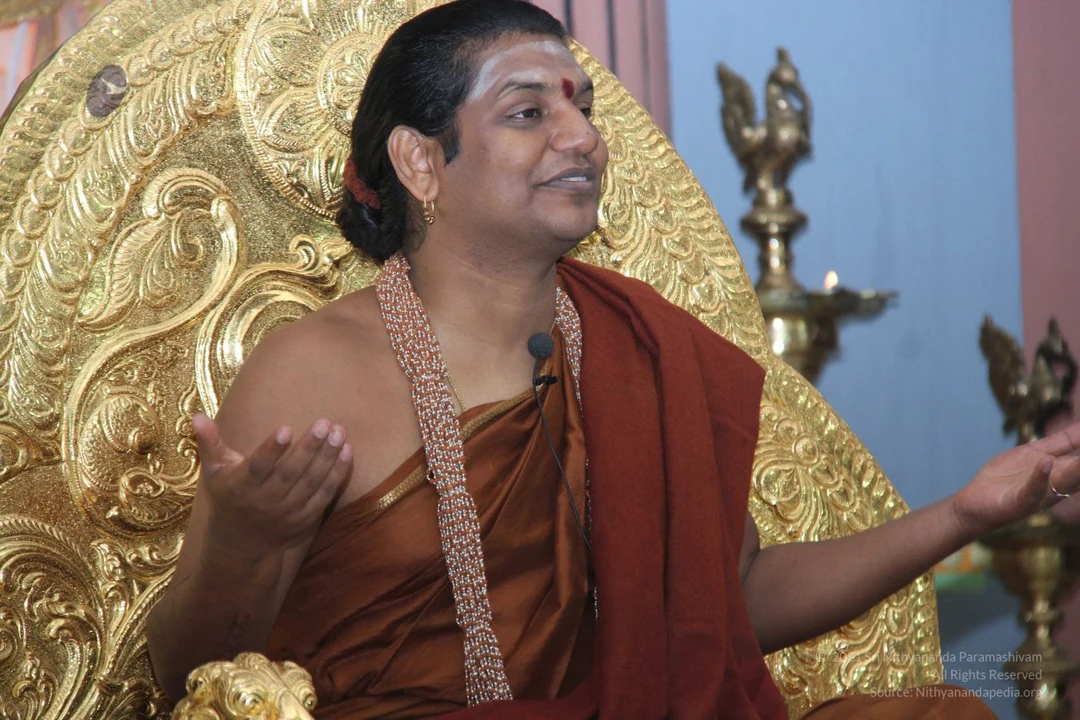
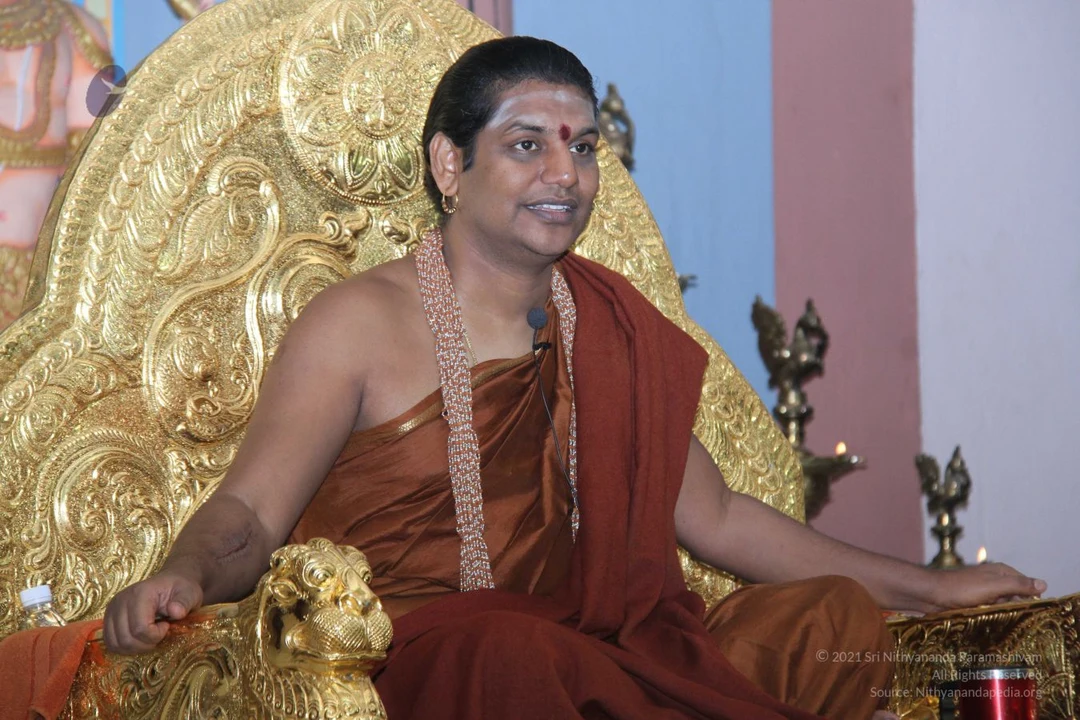
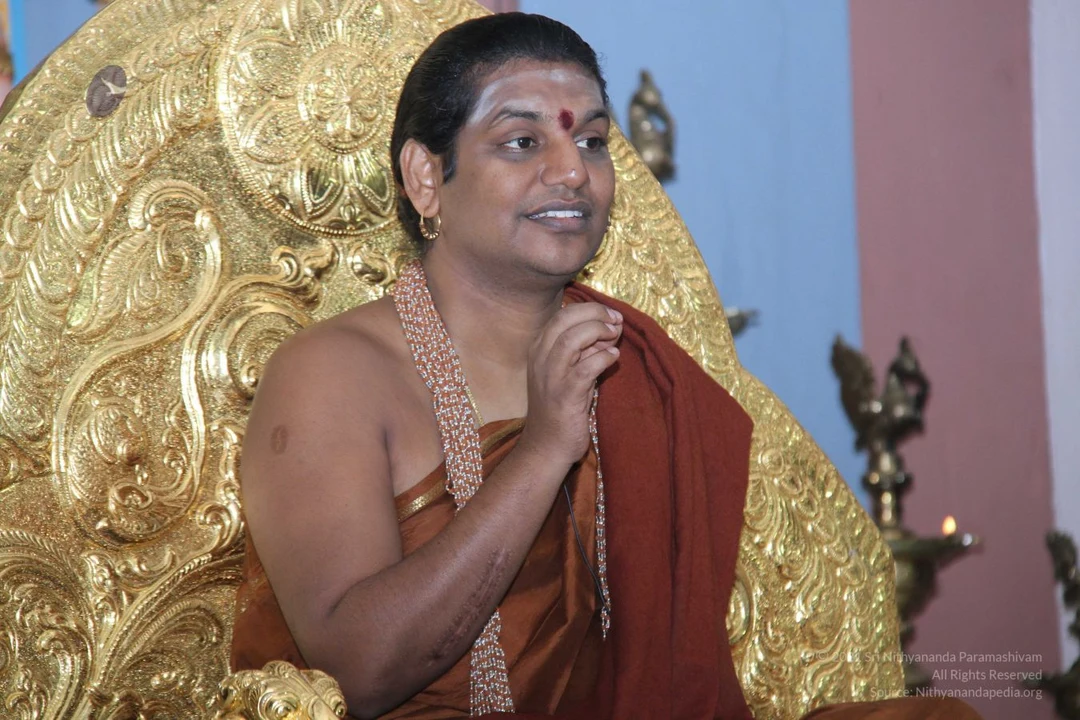
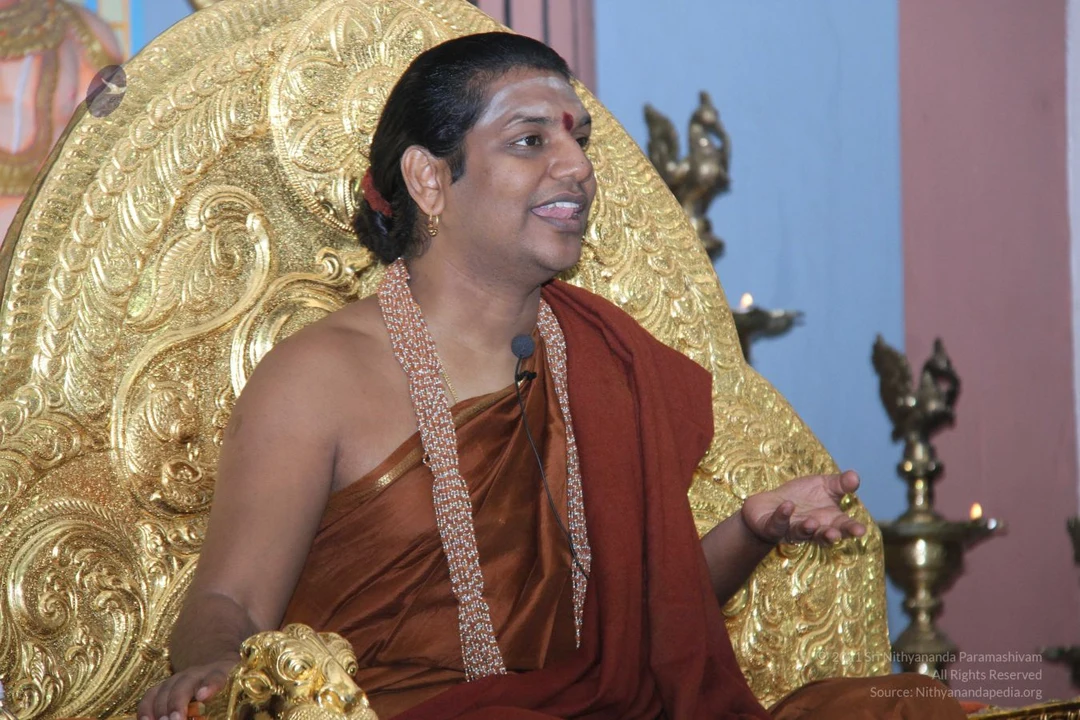
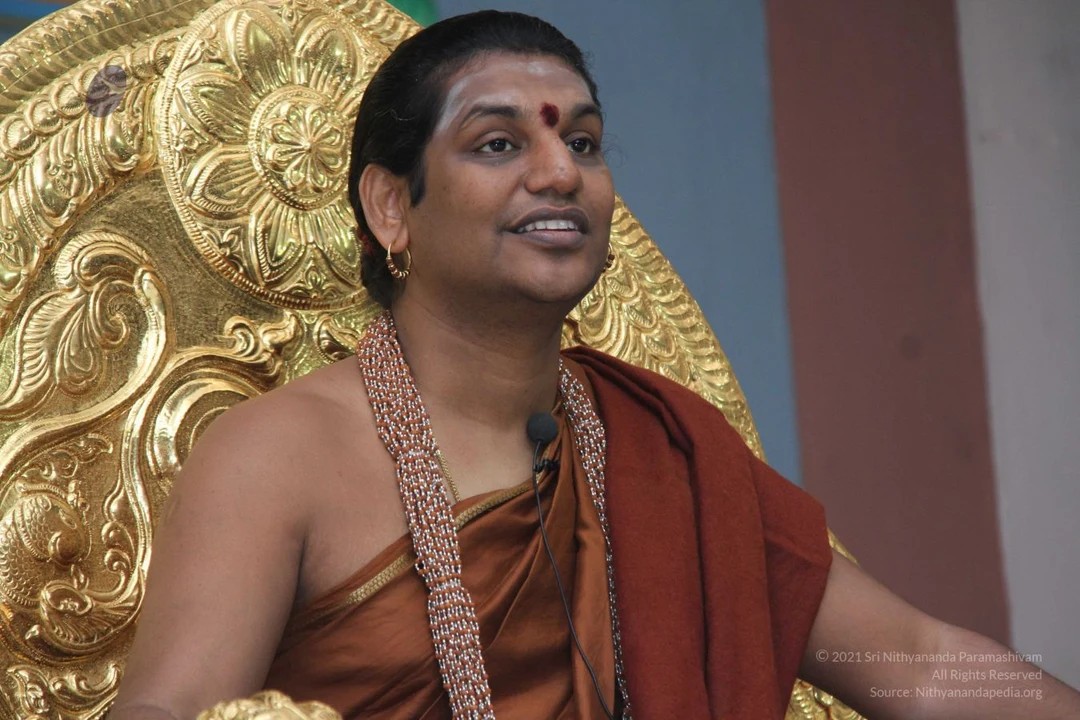
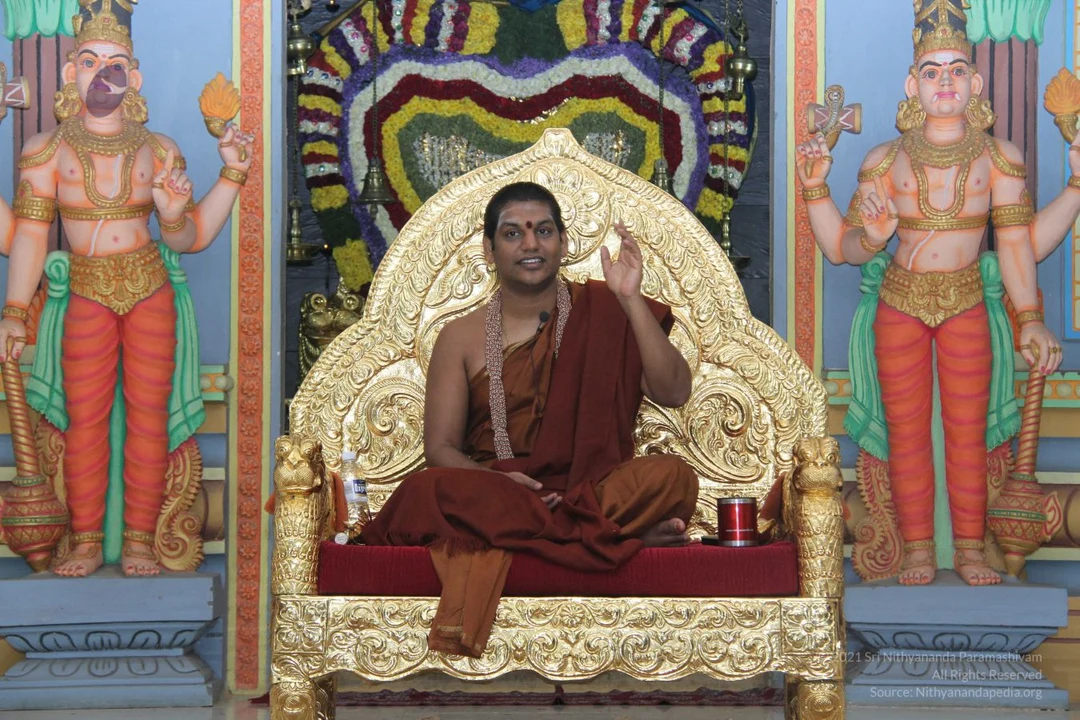
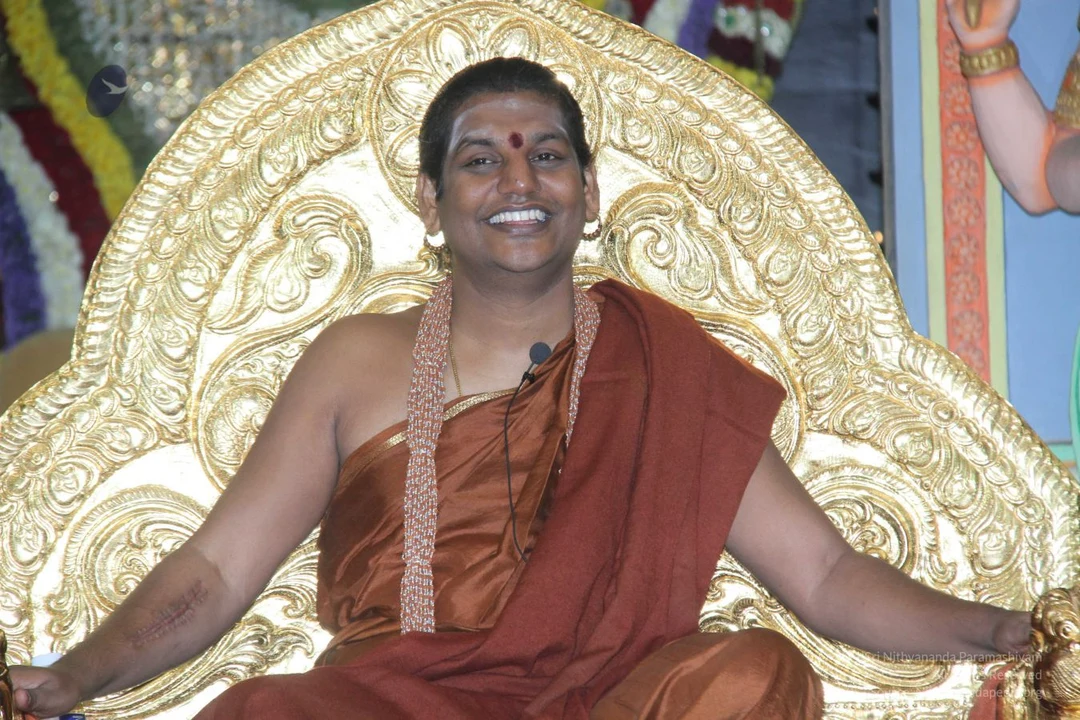
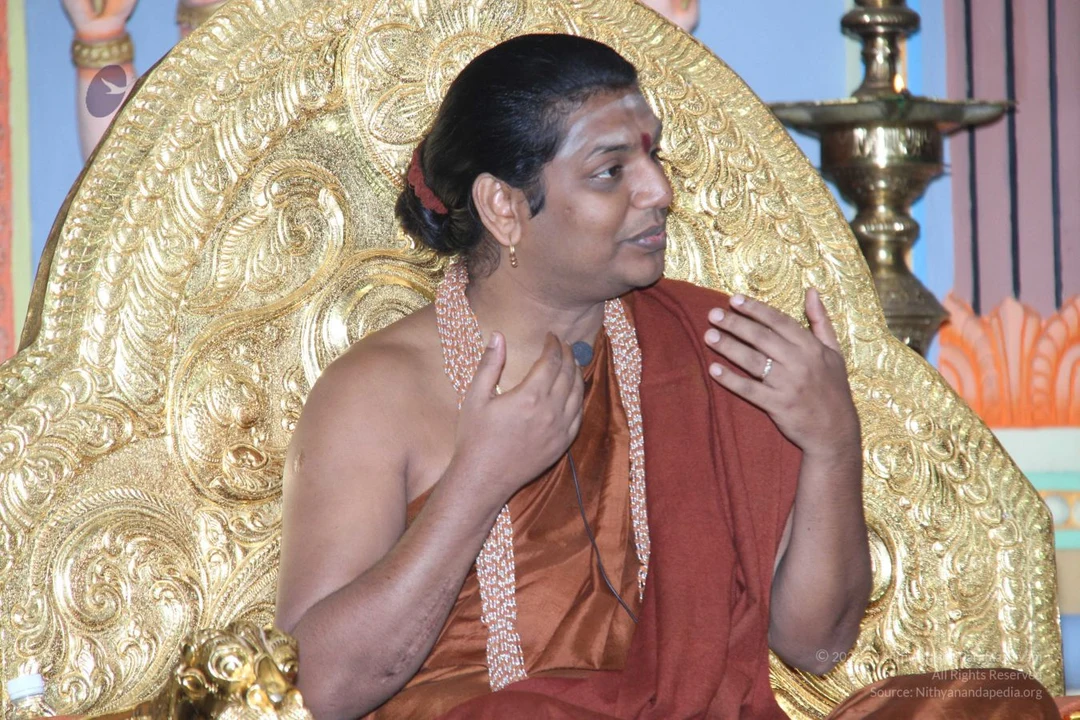
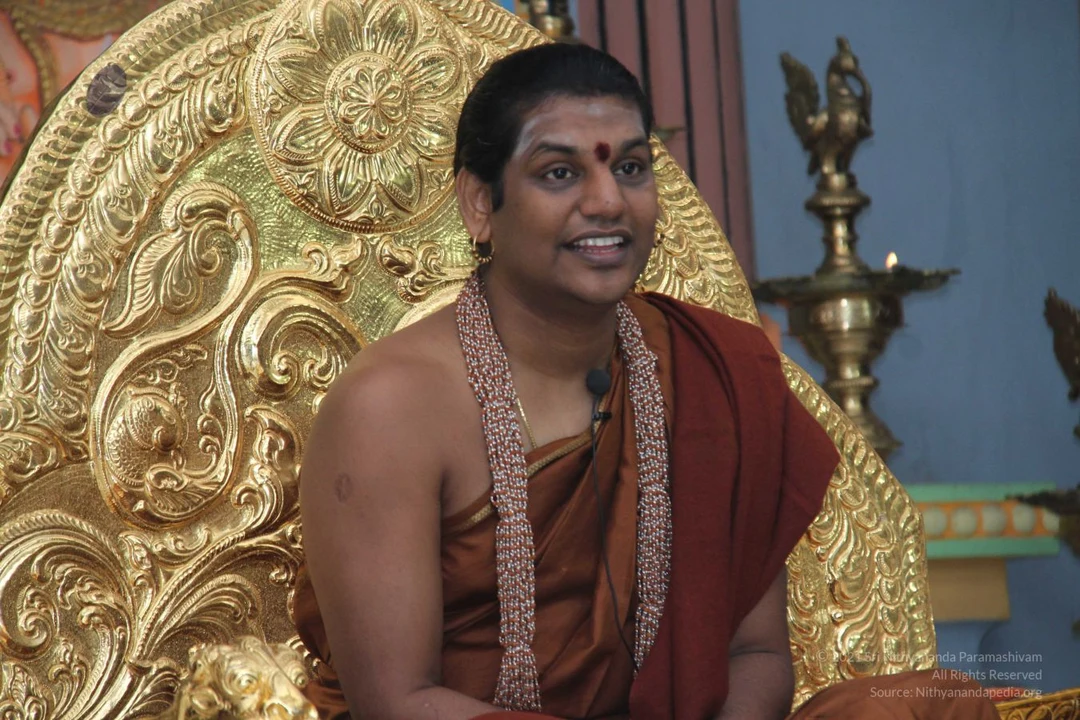
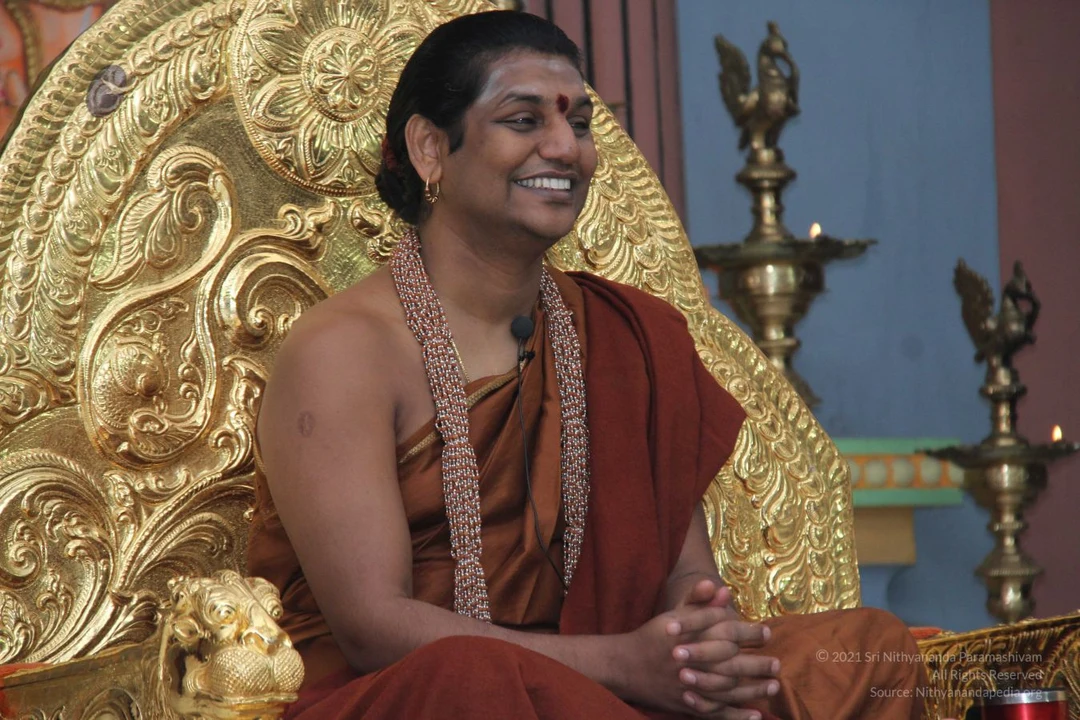
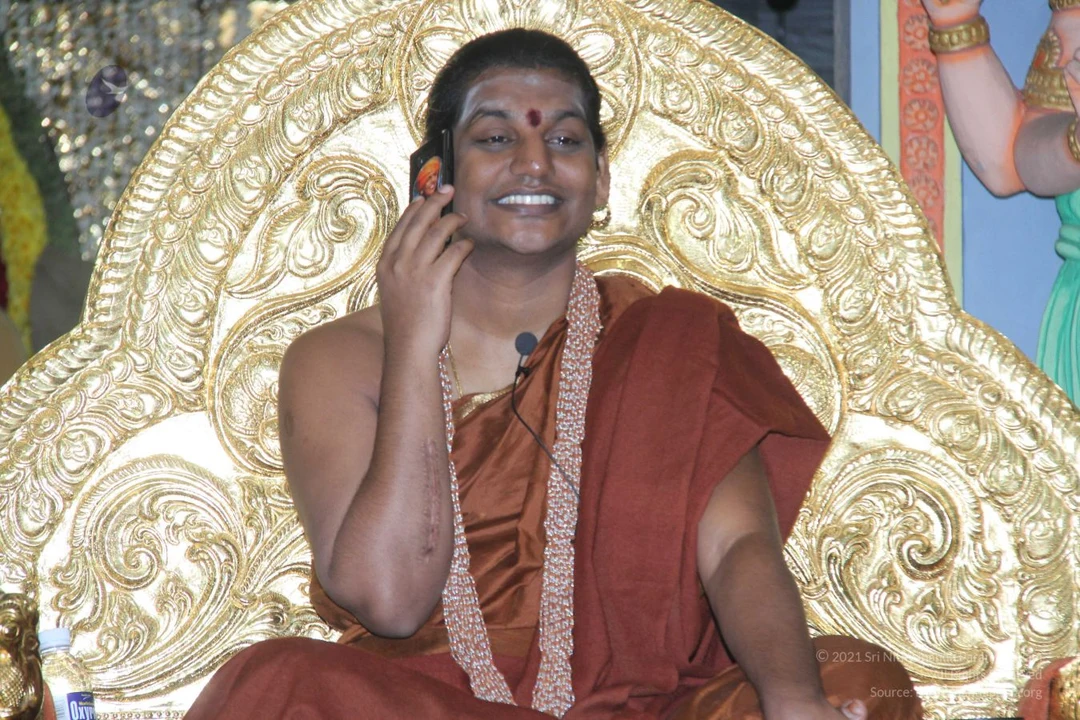
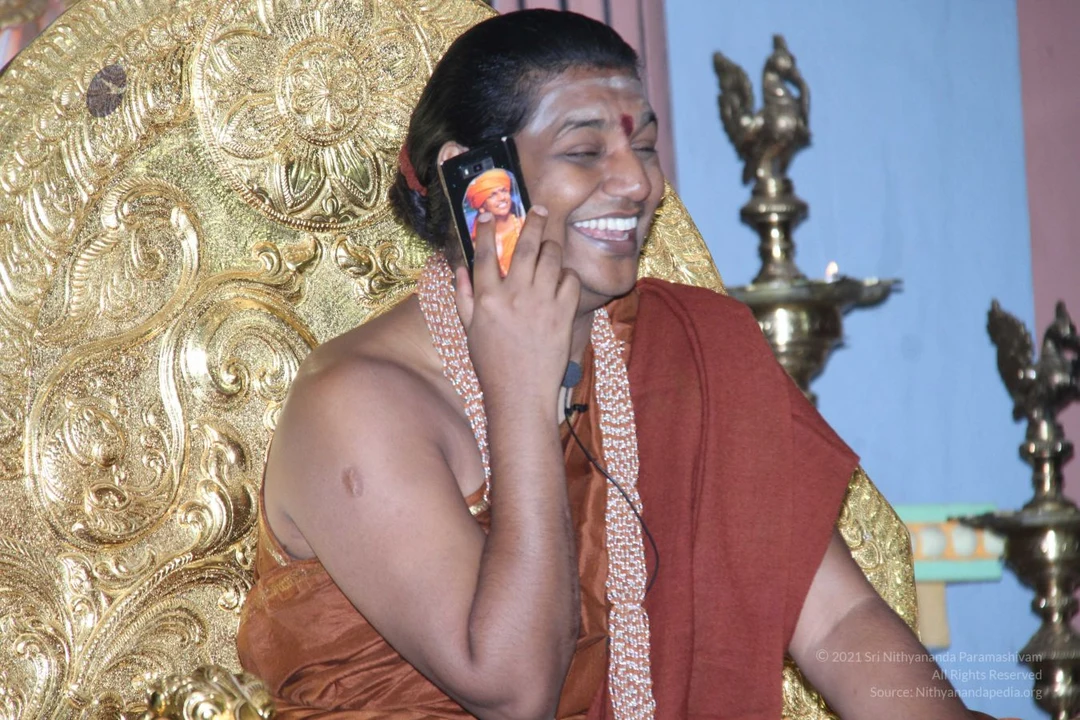
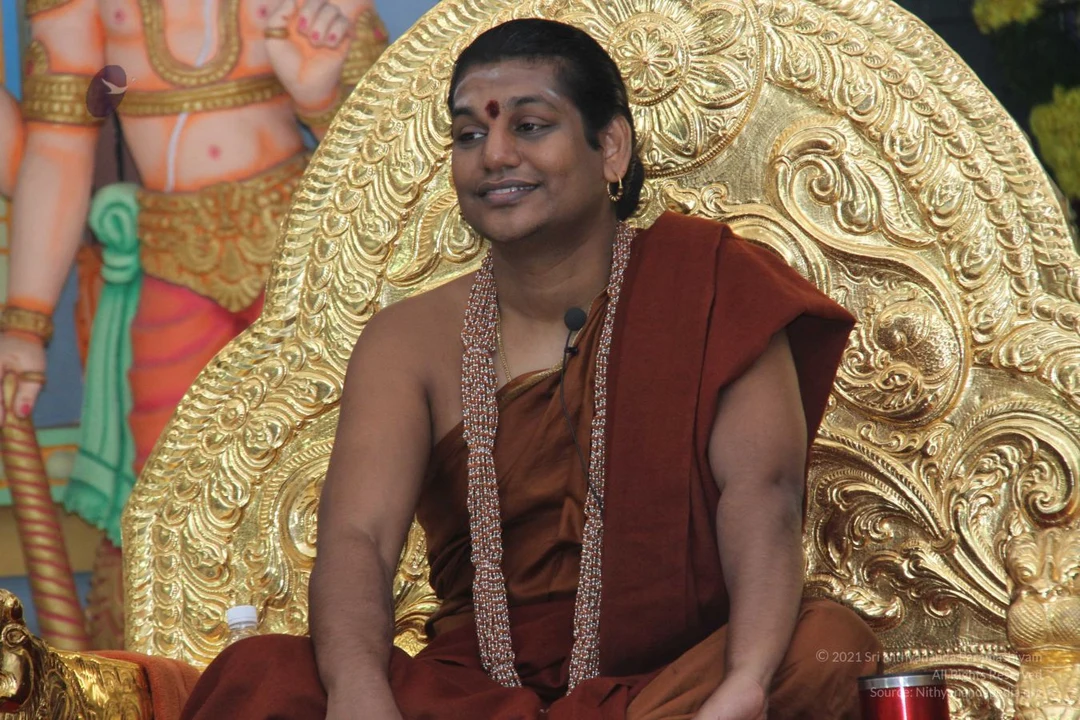
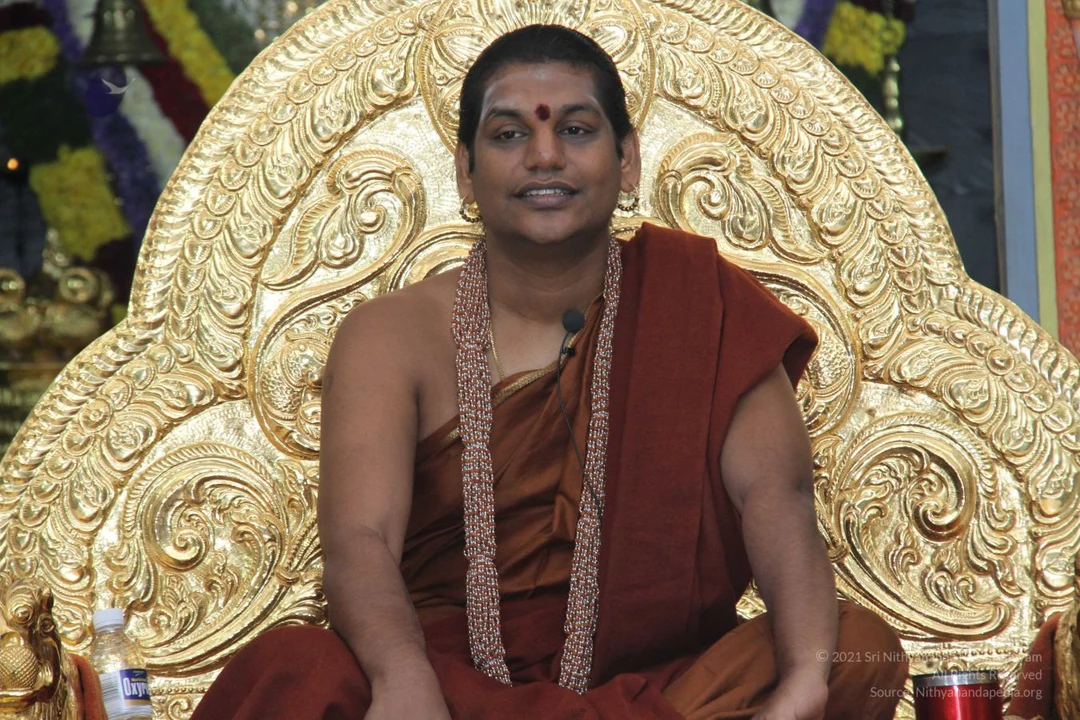
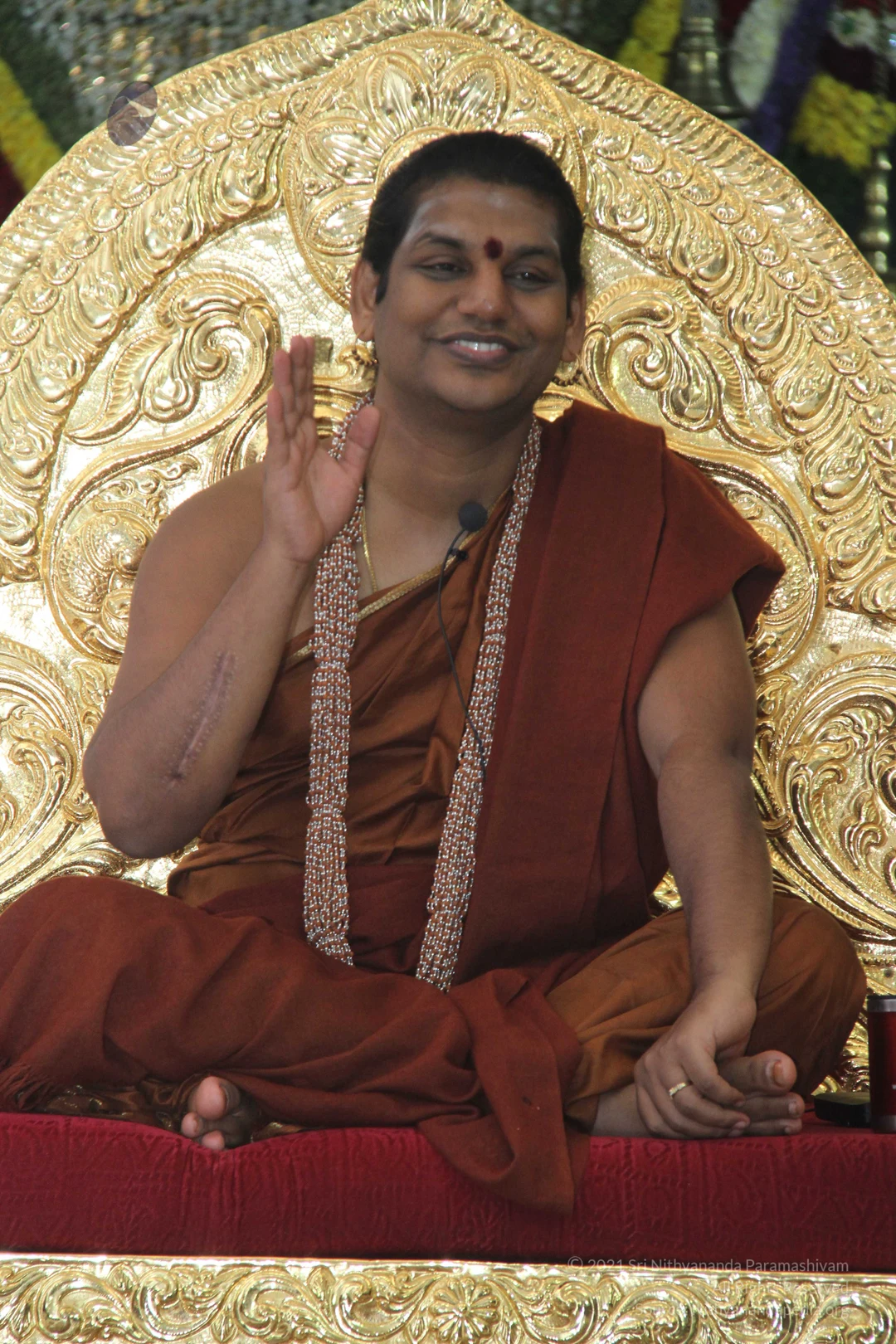
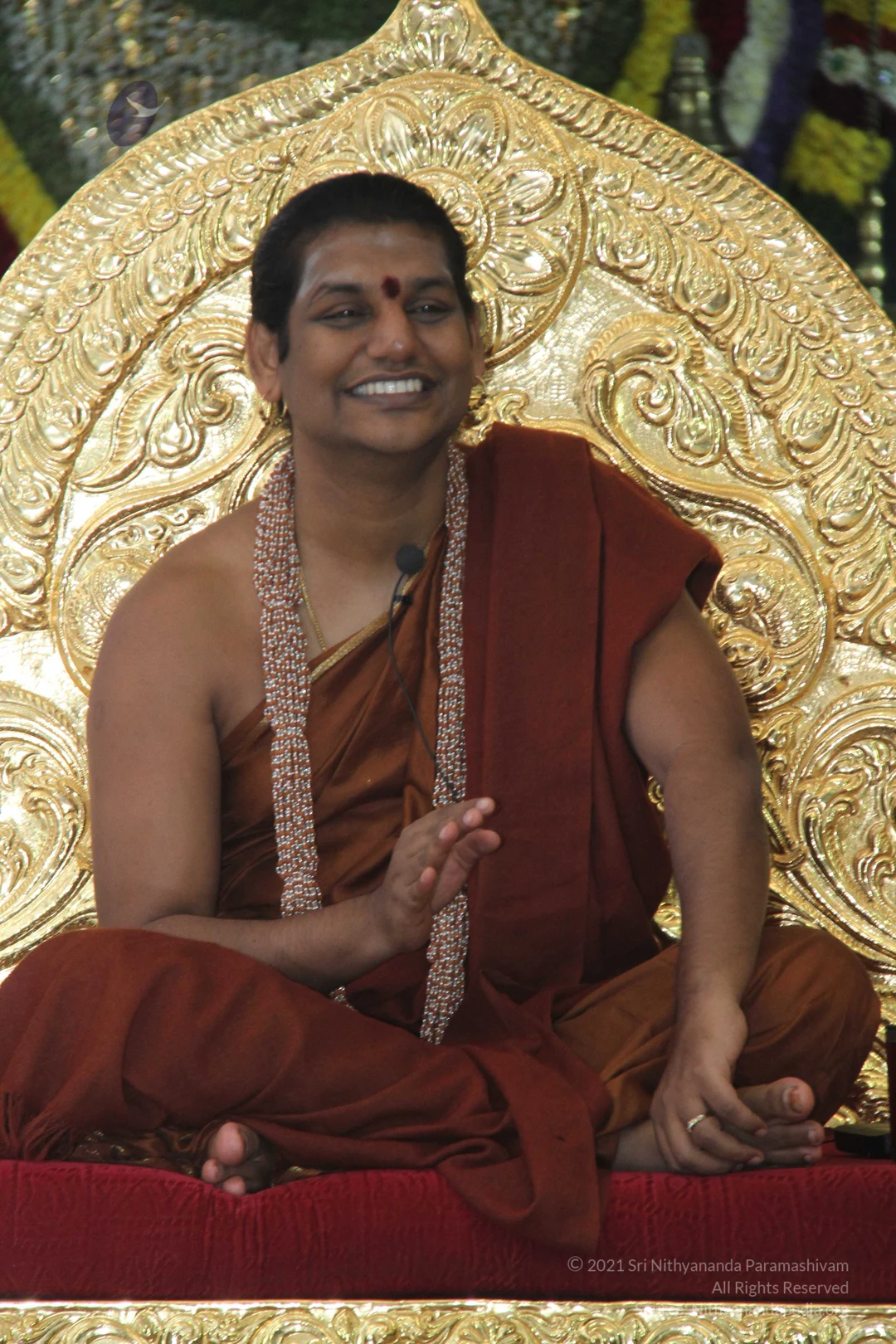
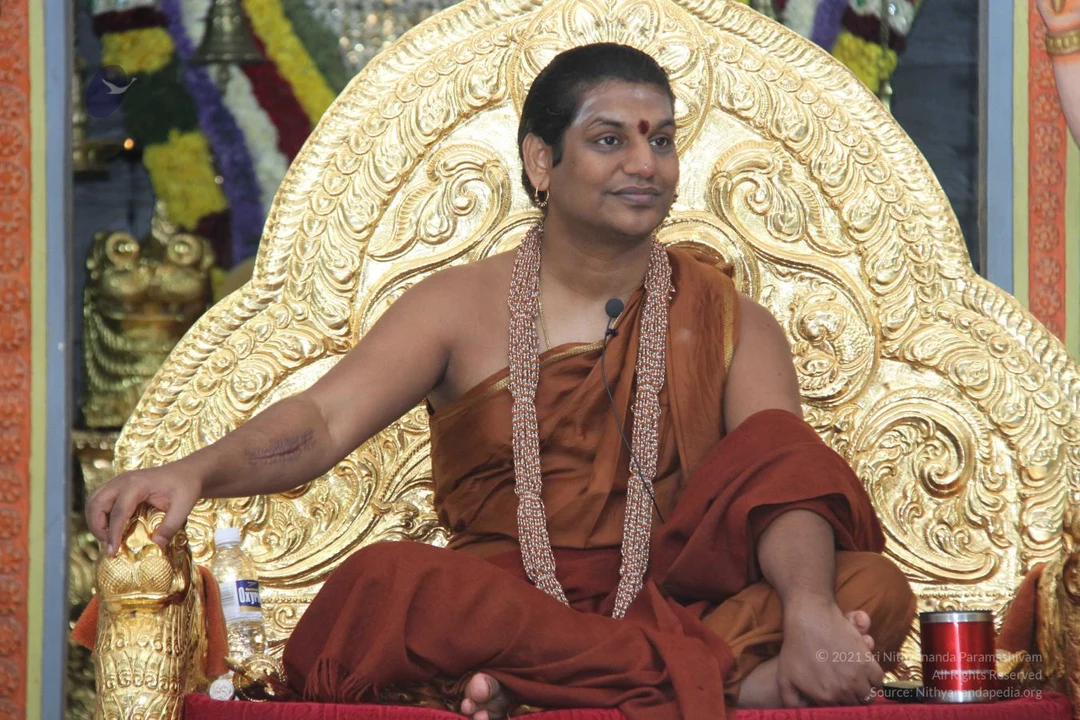
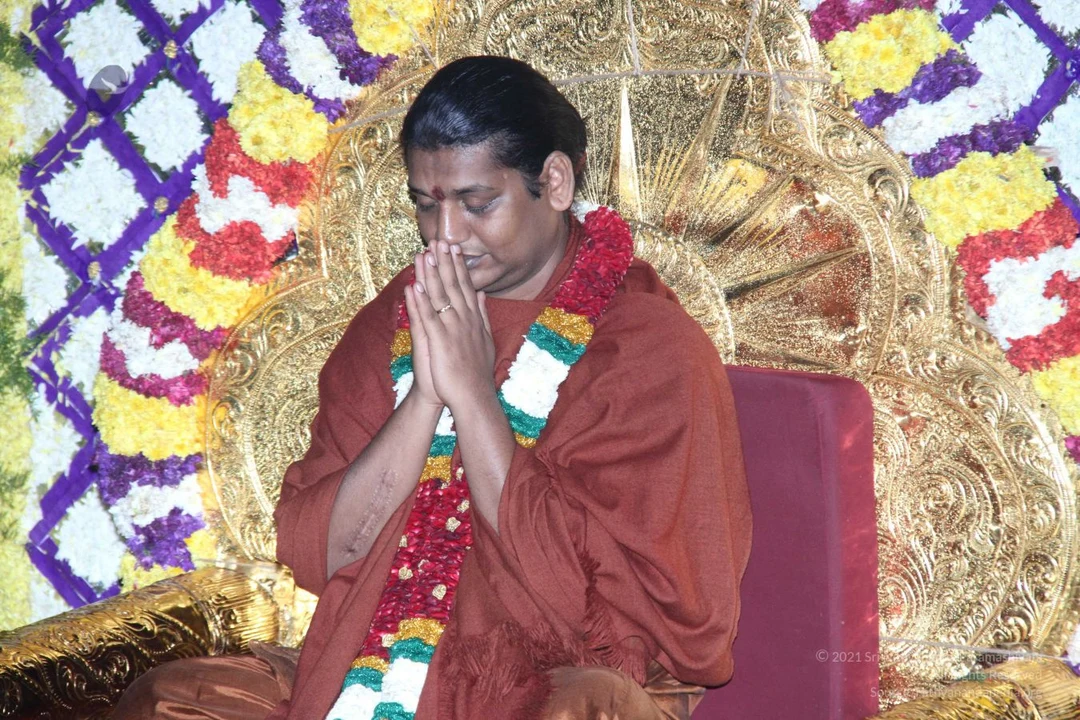
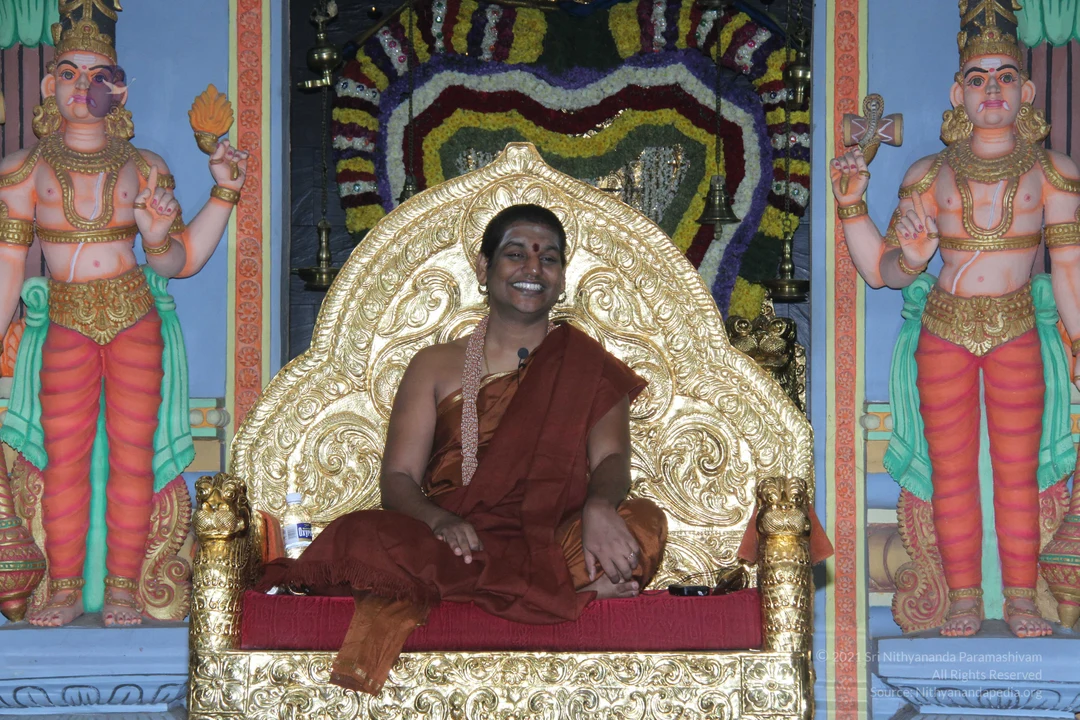
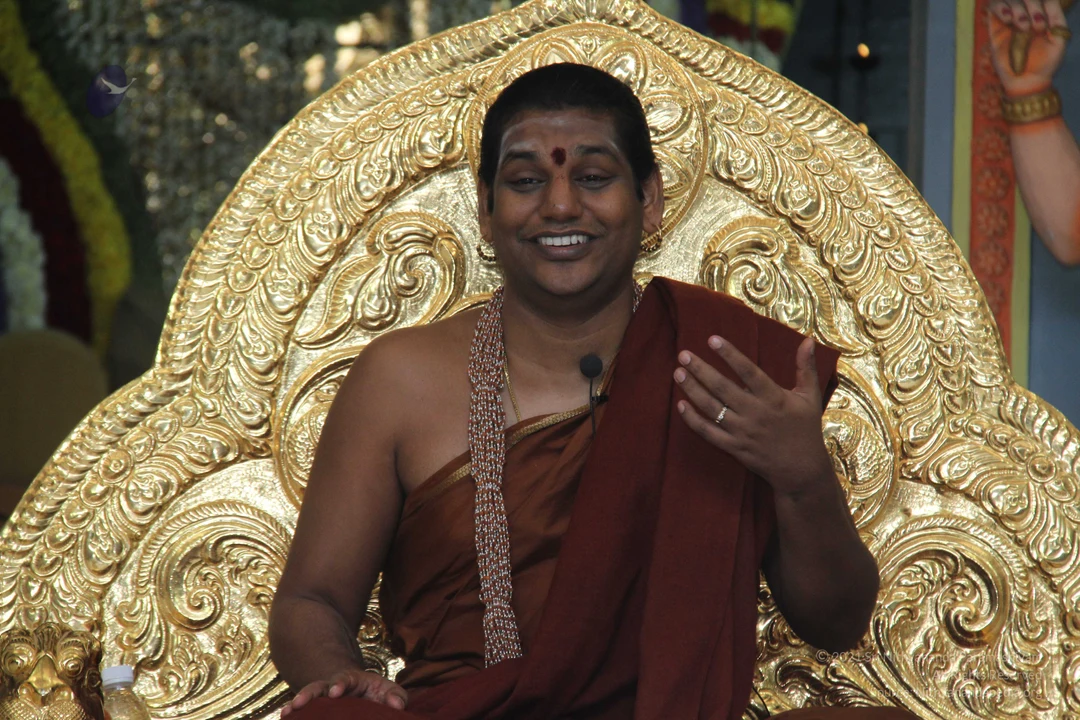
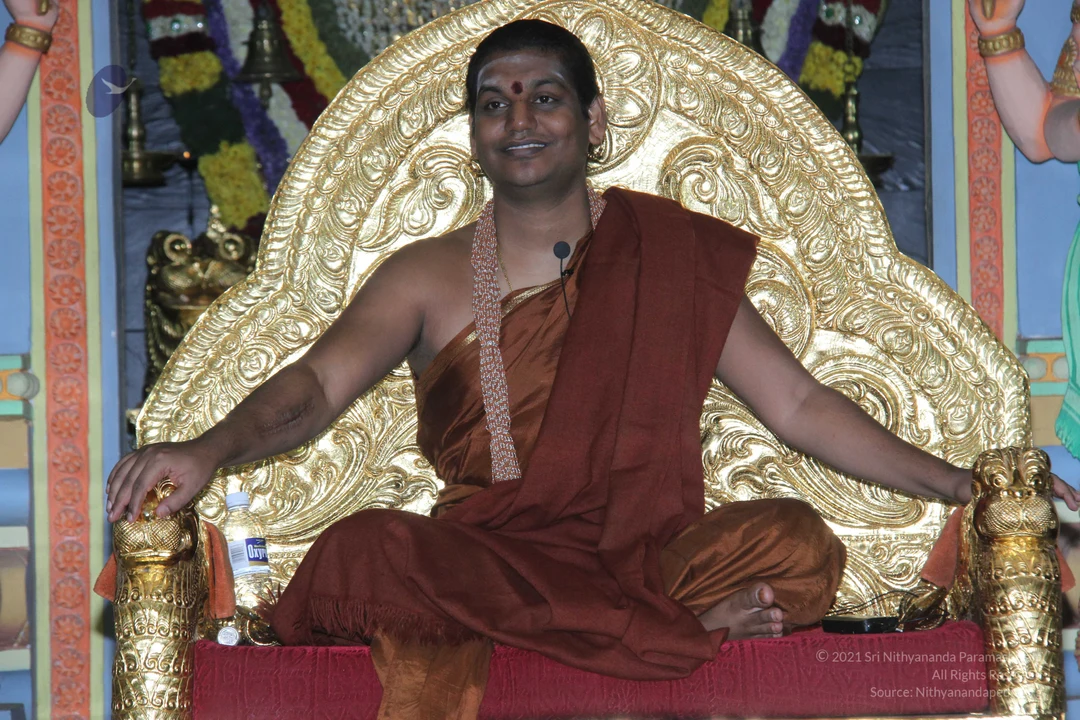
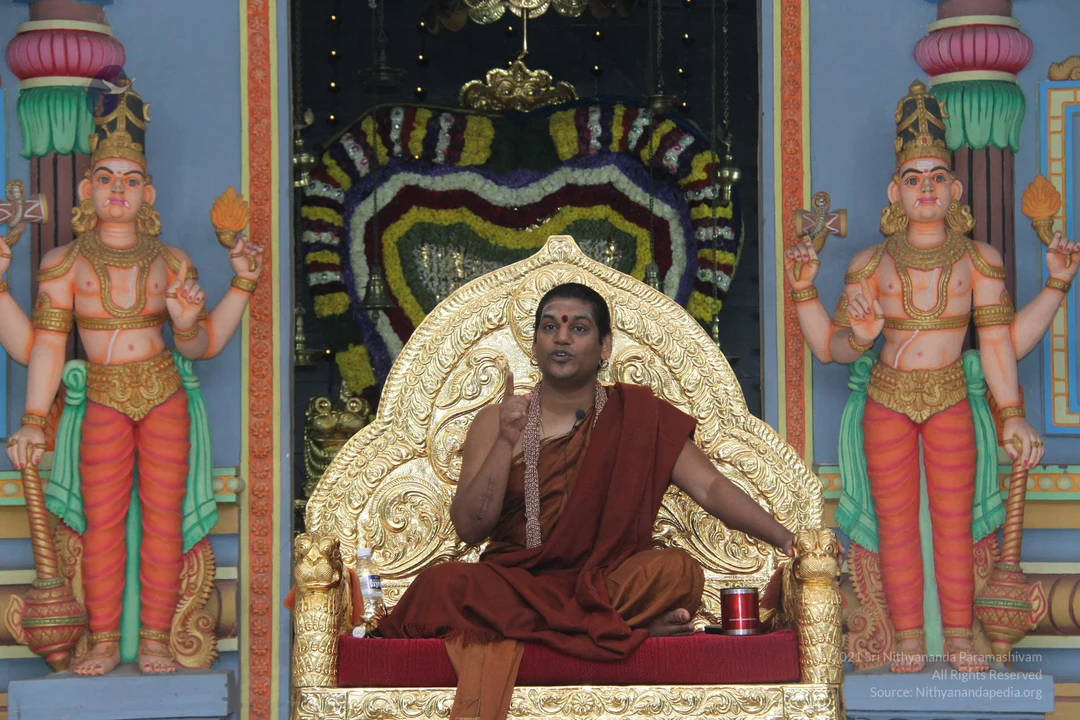
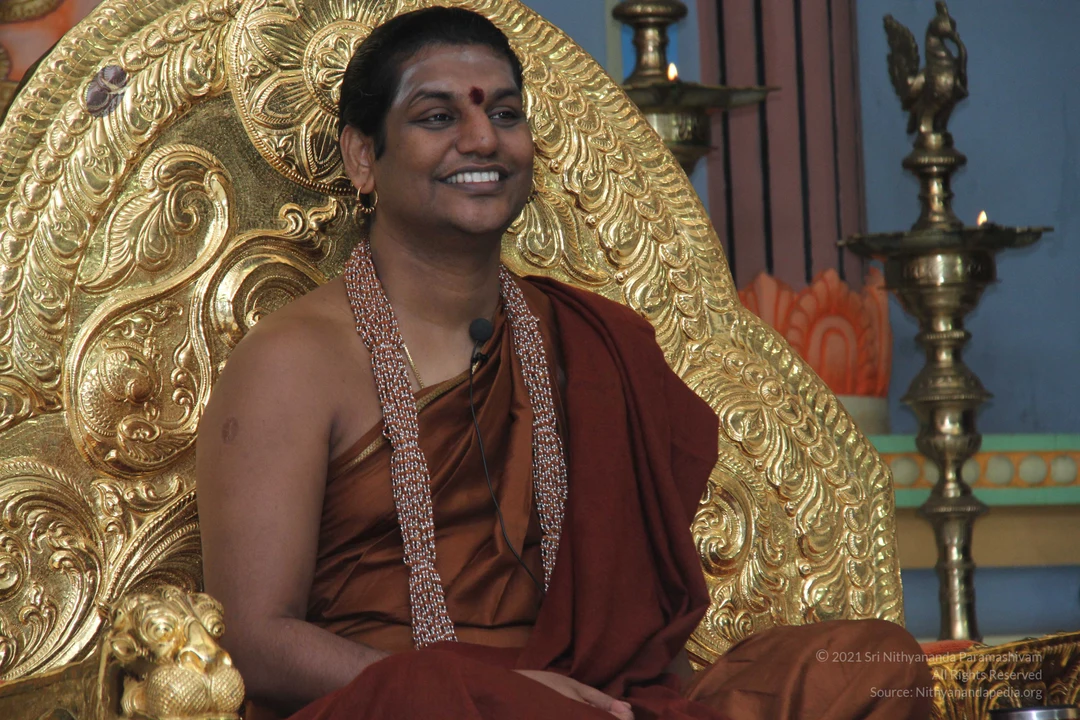
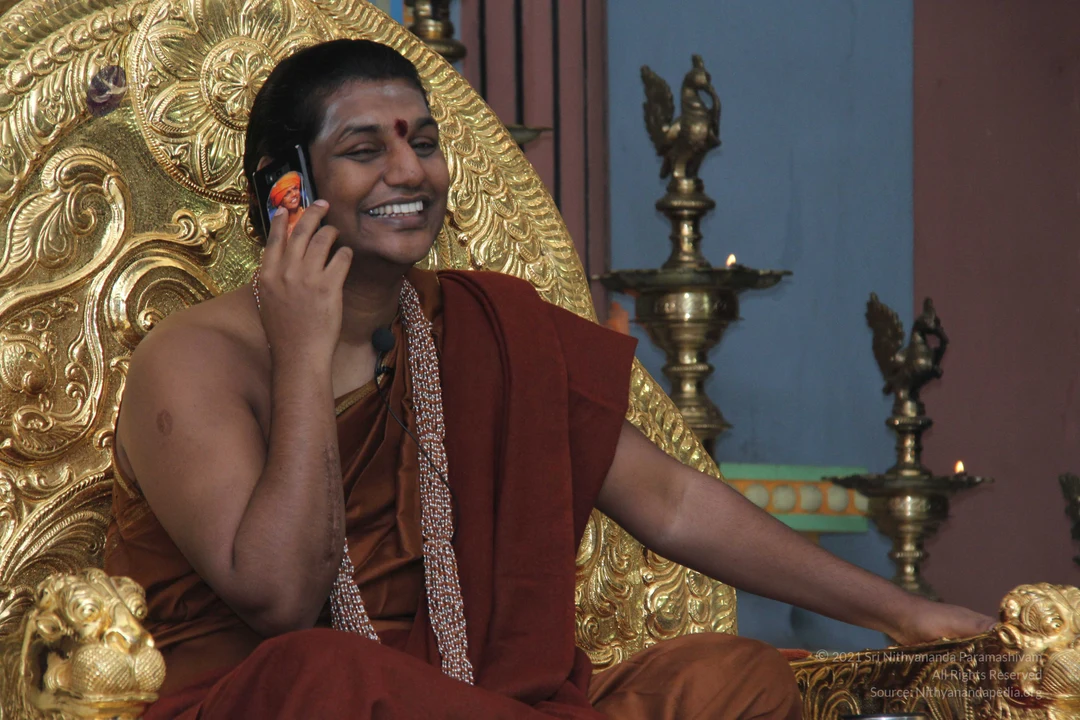
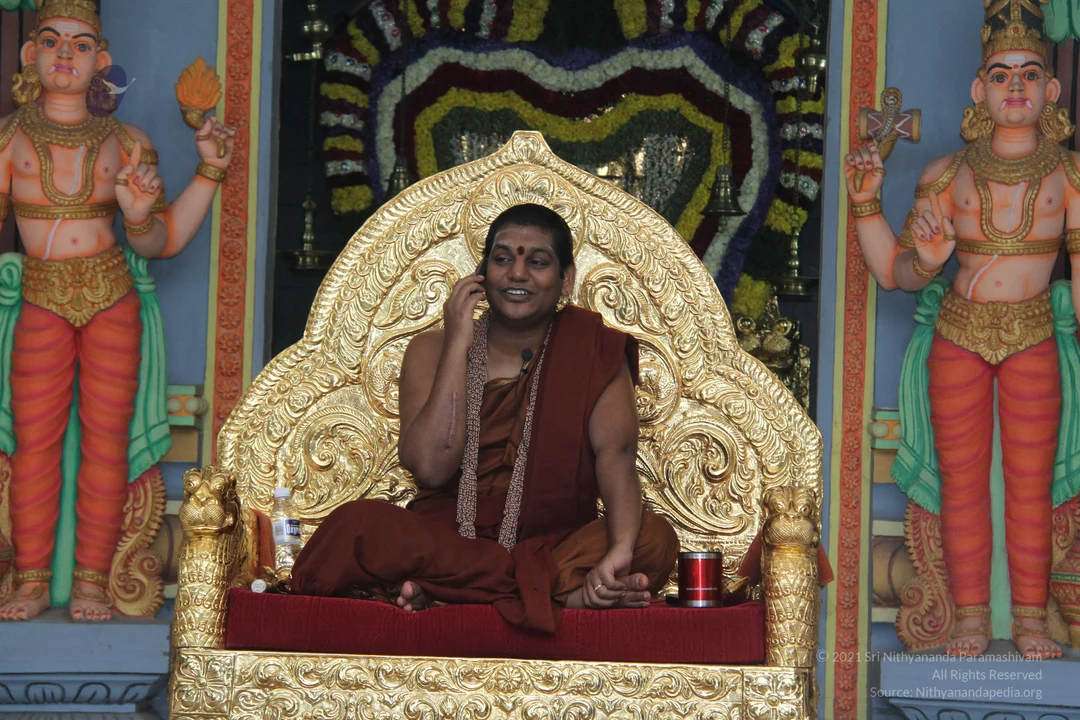
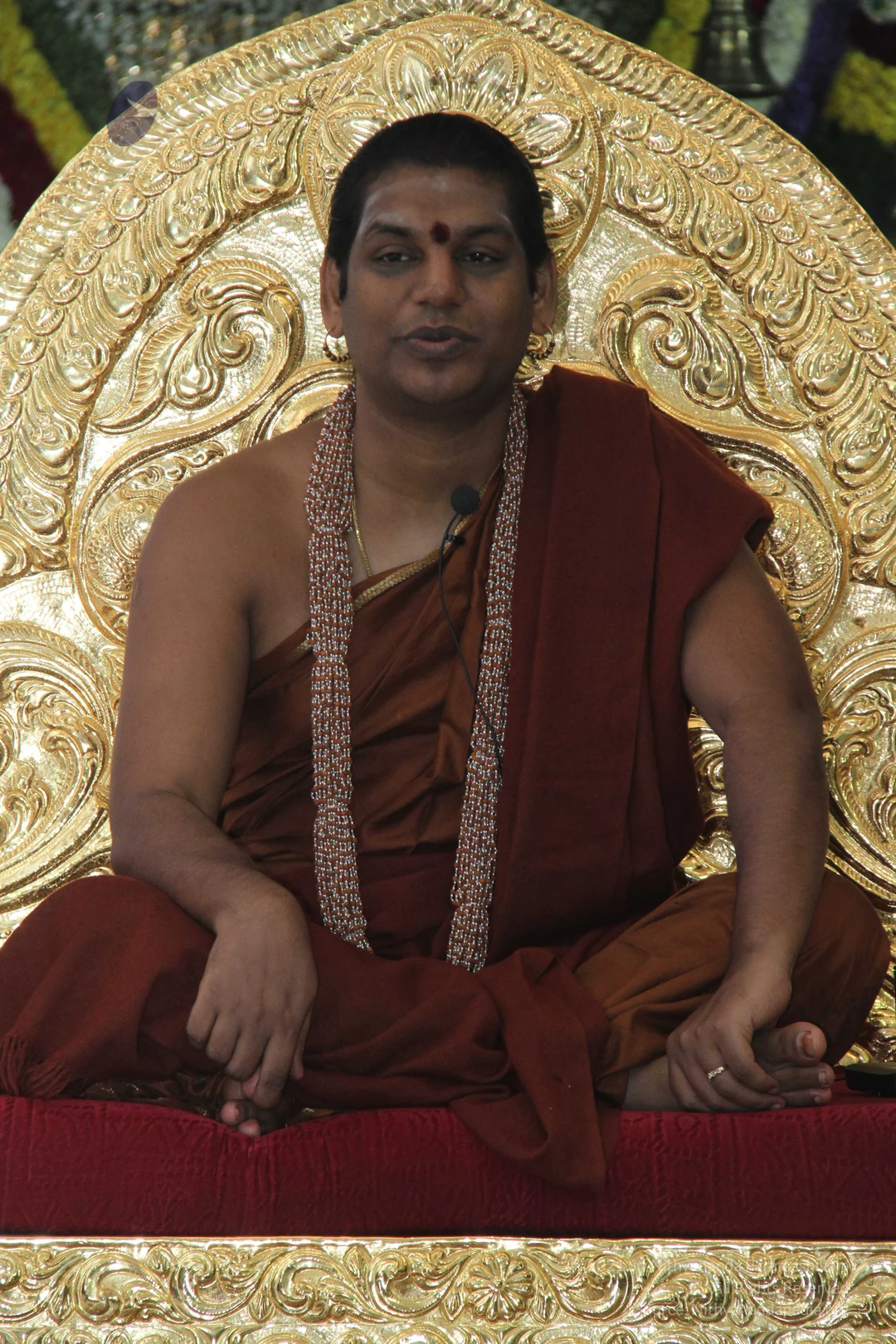
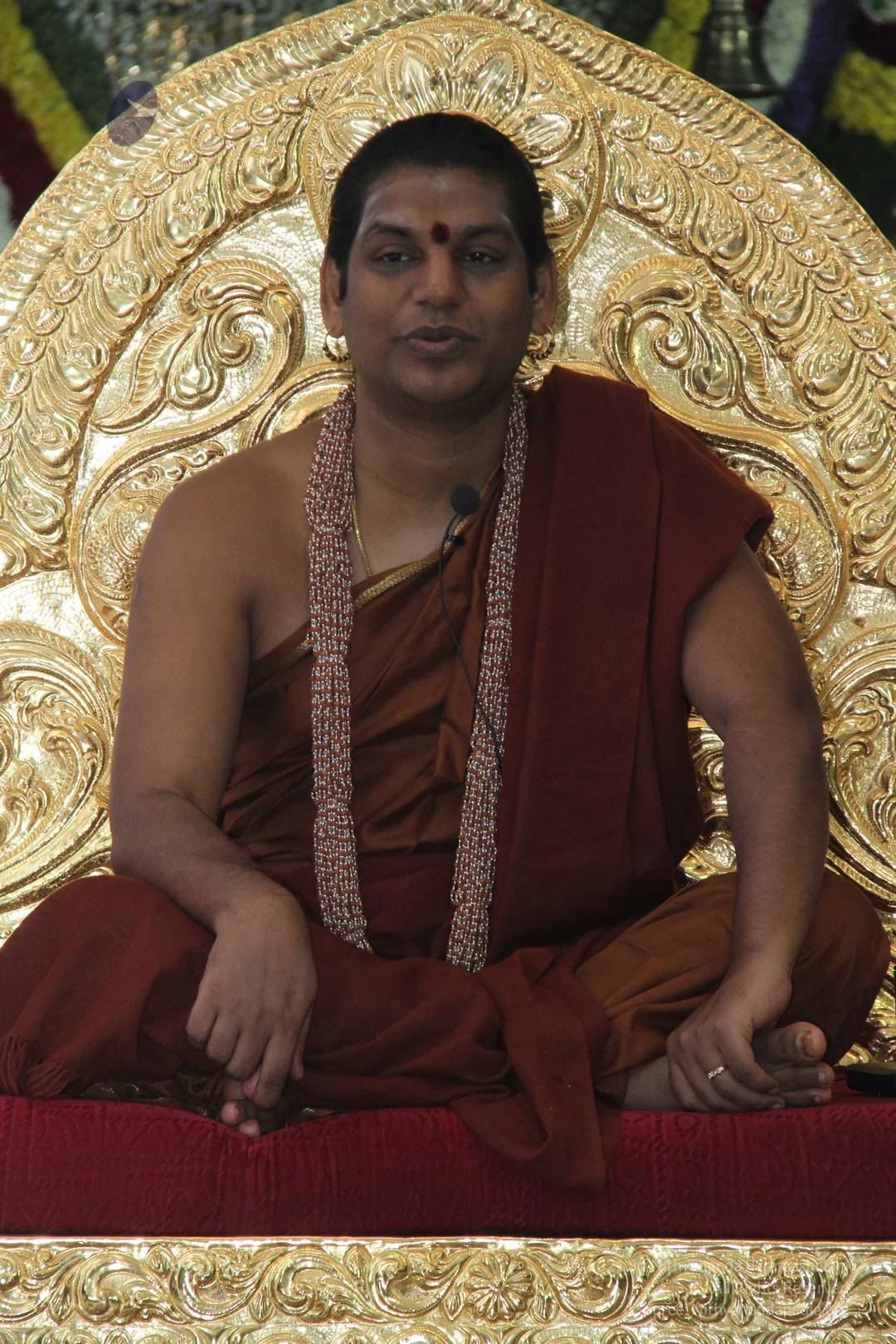
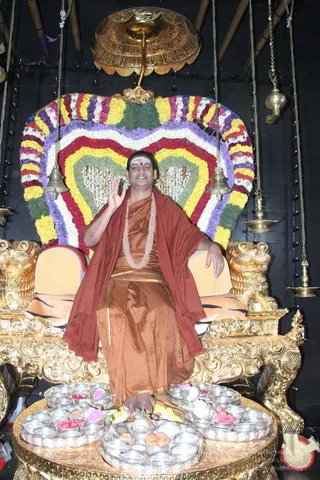
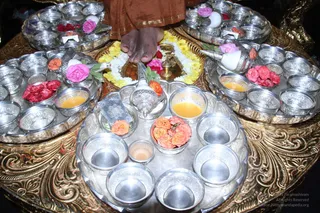
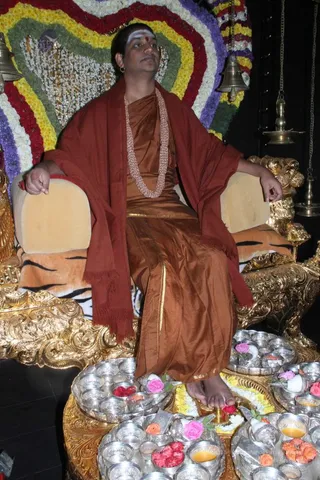
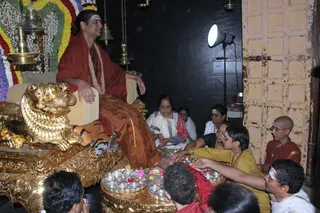
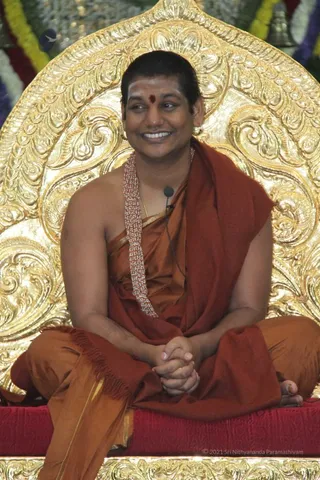
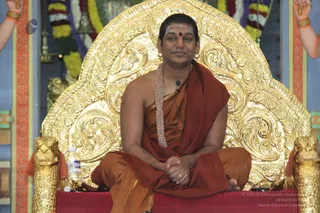
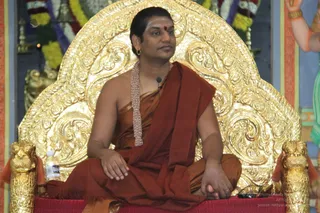
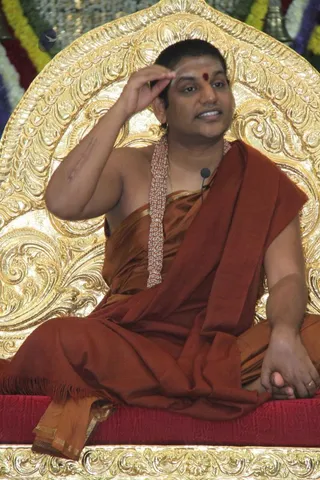
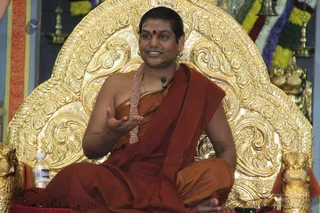
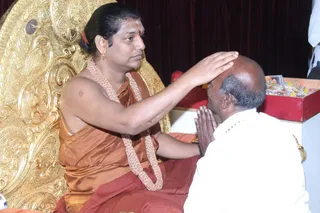
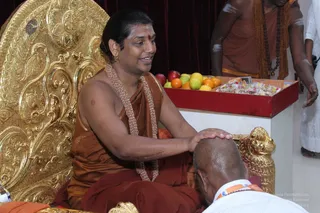
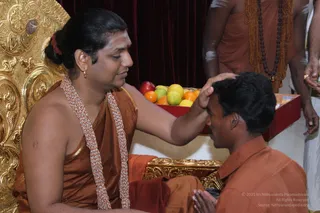
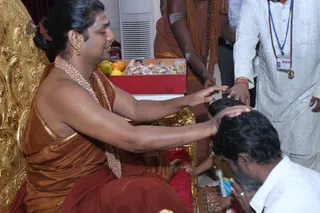
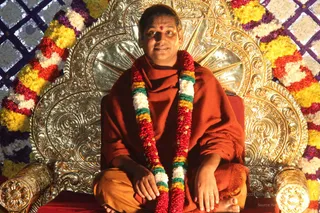
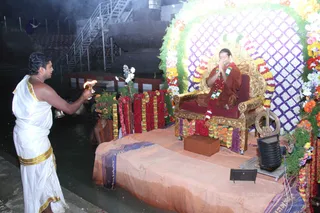
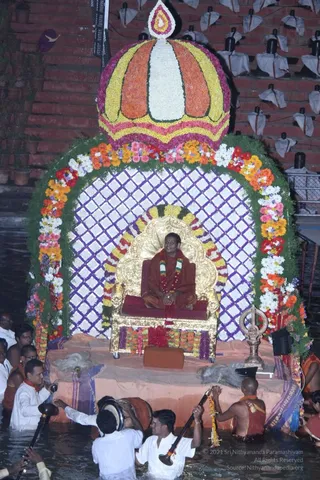
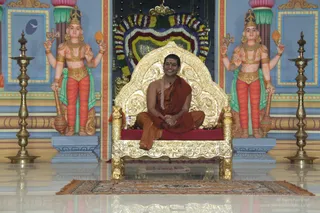
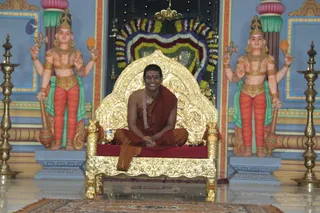
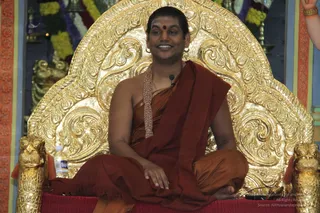
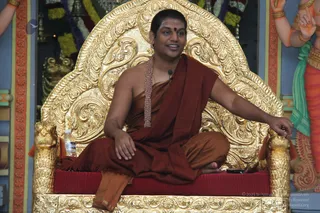
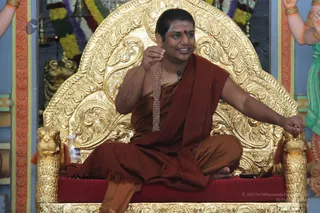
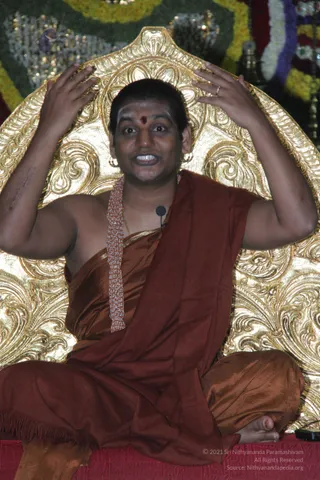
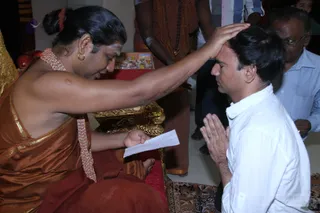
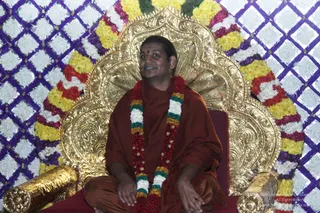
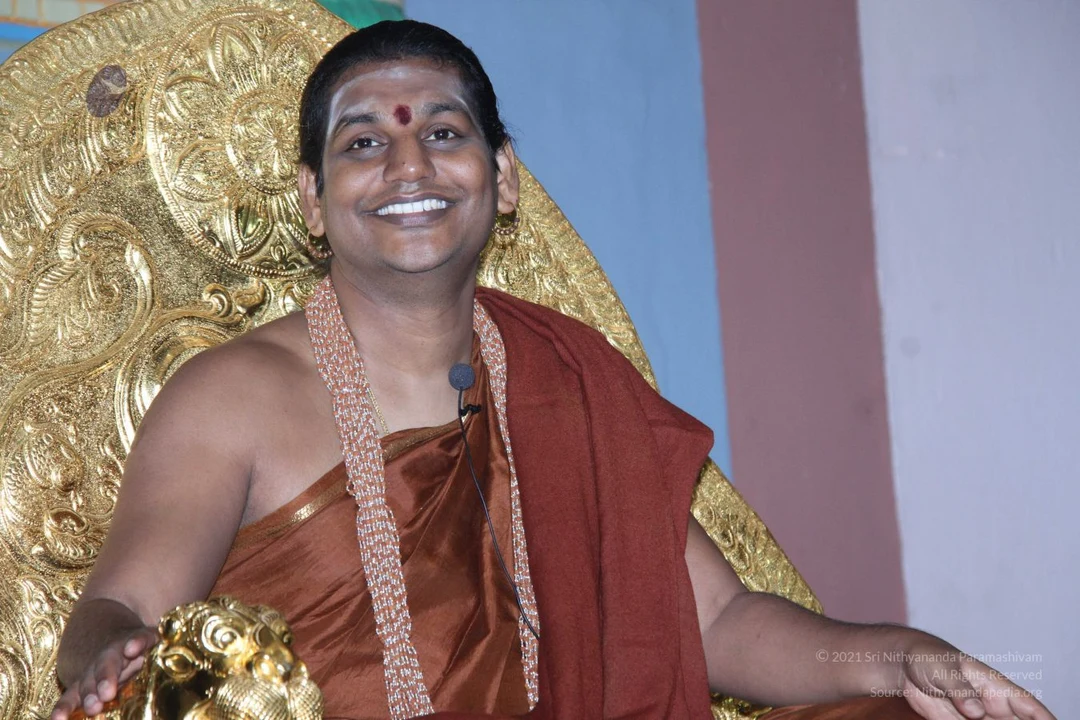
A photograph of a seated man with short dark hair and a red bindi, his palms pressed together in anjali mudra at chest height. He wears a rust-orange shawl-style robe and a garland of red, white, green and yellow flowers draped over his shoulders. He sits on a red cushioned seat in front of an ornate gold throne-back with floral carving, framed by yellow, red, white and purple flower decorations. One physical person is visible.A photograph of a padapuja in a decorated ashram room with black slate walls and a golden tiger-faced lion throne. A man with long dark hair, wearing a rust-orange robe and a beaded necklace, sits on a cushioned seat at right, smiling; the appearance is consistent with the a person candidate, with orange robes and long hair as cues, seated on the throne. Seated before him on the floor is a man in a maroon robe and a man in white with a tilak, along with a woman in orange and a young boy in yellow. Silver trays hold oil lamps, flower petals and rose petals arranged in front of the throne, with brass bells and a silver lamp stand nearby.A smiling man with short dark hair and a red bindi sits cross-legged on a red cushion before an ornate gold-embossed throne with floral and scroll relief. He wears an orange-brown robe draped over one shoulder with a fringed cloth around his waist, and a long multi-strand white beaded mala around his neck. A small clip-on microphone is attached to his robe, and colourful flower garlands appear at the top edge. Appearance-based label: a person, seated in the satsang as the speaker. Bare feet are visible at the right edge.

December 29 2013

Original wiki page
Contents

Title

Nithyananda Diary | Padapuja | Satsang | Meditation | Kalpataru Darshan

Description:

In today’s morning Satsang, Paramahamsa Nithyananda reveals that through authentic listening of the self, we can achieve self-completion. By listening to our mind and allowing it to speak, without passing judgment, we can melt down our deep incompletions. Completion is a required component to cause our reality to happen. Let us provide authentic listening to ourselves and bring authenticity to the cause of our existence!

Link to Video:

VideoAudio

Transcript:

Nithyanandeshwara Samaarambhaam Nithyanandeshwari Madhyamaam | Asmadaachaarya Paryanthaam Vande Guru Paramparaam ||

I welcome all the devotees, disciples, samajis, satsanghis sitting with us through Nithyananda TV, Lotus News Channel, Sadhna TV, Eshwar TV, Janashree TV, and through two-way video-conferencing in many cities and many countries around the world.

Cities sitting with us through two-way video-conferencing having Nayana Deeksha: Oman-Sivagangai, Colorado Springs-USA, Katmandu-Nepal, New Jersey, Toronto-Kailasam, Oklahoma-Somanatham, Los Angeles-Arunachalam, Santa Fe-New Mexico, Winnipeg-Canada, New York-Varanasi, Washington DC-Sripuram, Dubai-Vaidyanatham, London-Kashi, Bogota-Columbia, Verkala-Kerala, Indrani-New Jersey, Austin-Texas, Sparta-New Jersey, Port Washington-New York, Hyderabad-Gupta Kashi, Ohio-Ma Shivananda, San Diego-Tirualavai, Singapore-Singapuram, Nithyananda Nagaramu-Hyderabad, Guadeloupe-Rameshwaram, Houston-Kalahasti, Melbourne-Australia.

I welcome all of you with my love and blessings!

I’ll expand on the truth of Causing Enlightenment.

Understand, when you want to cause enlightenment in others, don’t even expect the other person will understand either the depth of enlightenment or your sincerity. Please understand, your authenticity or what you are trying to do, its depth to the other person, for whose sake, I’m dedicating my life, those fools are only trying to hurt me! It’s like the root is abusing the fruit, but the fruit exists to become a seed and create more and more roots. And, I can put it in this way also: The root only supplies energy to the fruit and the fruit is abusing the root.

Understand, that is what is life. If they know that they need our service, then what we are offering is no more service, it’s a business. Serving the person who doesn’t even know he needs your service is real sacrifice. That really needs strength, courage to serve!

So, the first thing you need to understand, do not expect the other person will completely realize the reality of what you are teaching. Even if you help a person to get out of a headache, or knee pain, it is causing enlightenment! Understand, by giving one meal, if you remove hunger from him for the next few hours, that is causing enlightenment. If you just give a few clothes and help him to protect himself from the weather that is causing enlightenment. Giving him medical care and helping him to come out of some physical suffering, that is causing enlightenment. Giving him the knowledge of Completion and helping him come out of psychological sufferings and mental pains, it is causing enlightenment. Helping him evolve consciously and get enlightened, it is causing enlightenment. As multiple dimensions!

Please listen! Align your whole thinking, whole life for others. The secret of success is: Your sincerity to be a cause for others’ reality. Whatever field you may be in; whether you are a doctor, or an engineer, or a spiritual leader, lawyer, political leader, social leader, a student, a teacher, whatever may be your life, your profession, your sincerity to cause others’ reality makes you successful. Your sincerity to cause what people want in their lives, that is the secret, that is the formula, that is the methodology for success. Be a catalyst for everyone to realize their reality.

A lawyer should be a catalyst for everyone to get justice. A doctor should be a catalyst for everyone to have health. A politician should be a catalyst for everyone to have whatever possible growth, auspiciousness, good things in their lives. A teacher should be a catalyst for everyone to have knowledge. A spiritual leader should be a catalyst for everyone to have enlightenment. Decide that your life will be a catalyst for others’ reality.

I tell you, when you start causing others’ reality, suddenly from thousands of directions, ten thousand hands will come and cause your life into reality. That will be caused as reality. I tell you, so much of auspiciousness will be showered on you. So many wonderful things will be expressed through you.

Whenever I say, ‘Cosmos showers’, I can’t contain my smile. It’s like these school boys, when they fall in this puppy love, whenever their girlfriends’ names are uttered, they cannot contain the smile in their hearts. I tell you, my puppy love was this concept! Because this was told to me by Raghupathi Yogi. He actually demonstrated, still I remember.

There was a Naga Linga flower tree in Arunachala Temple; I’m so happy these fellows didn’t touch that tree, it’s still alive, and it is there. The tree is still there in the temple. There is a place called Krittigai Mandapam where Raghupathi Yogi used to teach yoga to me and some more students he had. The tree is there, next to that mandapam. He told me, ‘Go and tell that tree that you will water that tree every day and that you will send your love to that tree for it to flower’. That tree was not flowering for quite a long time, he told me to do that. I said, ‘okay’, and started doing that. Maybe it took one month, suddenly one day when I went there i saw the whole tree had so many flowers! And, please understand, when I touched that tree and did the same practice I used to do, I’d feel that I was giving my love and feelings, my support that the tree should flower and it should be happy. When I touched that tree, I tell you, I have not shaken that tree; I was a small boy, I could not shake the whole tree and all that; when I touched that tree, at least a hundred flowers showered! Literally showered on me!

This word “Cosmos Showers” was given to me by Raghupathi Yogi experientially. That is why when I utter that word, I can’t contain my smile. I tell you, be cause for others’ reality. I wanted to repeat this line, ‘Be a cause for others’ reality, because, being a cause for others’ reality is your being the cause for your Being’. When you are authentically, sincerely causing others’ reality, suddenly you will realize that IS your cause.

As long as you have some hidden agenda, selfish agenda, the fear whether that agenda will be fulfilled or not will always be there in you. Just drop all agenda and decide you will cause only others’ reality. After that, even if you want to suffer, Cosmos will say, ‘Hey, you cannot be tortured, go, go, you are not a rowdy’. I saw a Tamil movie, there’s a comedy scene, one comedian says, ‘I am also a rowdy, take me to the police station, arrest me, put me in jail’. They’ll say, ‘No, no, no, you are not a rowdy, you cannot be put in jail, go, go!’ Same way, you will tell the Cosmos, ‘Come on, I am a human being, kill me! torture me, put me in suffering’. Cosmos will say, ‘No, no, no, no, for all that you are useless, go, go, go!’

Understand, bring sincerity to the context of your existence! That is where the whole thing boils down. That is where you get the confidence about you. See, not bringing right context to the existence of your self, is self-denial. One side of your heart will tell you, ‘No, no, no, let me decide to be authentically, sincerely be cause for others’ reality’. But, the other part of you will say, ‘No, no, no if you are that sincere people will cheat you, exploit you’. As if you have something to lose. You don’t have anything other than this stinking six-foot body. What else is there for you to lose? And, those foolish, stupid plans and projects you have grown in that six-foot body without having intelligence and responsibility; only those things are left. I tell you, decide to bring Authenticity to the cause of your existence. Why you exist and what is the context from which you want to operate. Bring sincerity into that! Whatever Incompletions your mind brings out, ‘No, no, no, if I start causing others’ reality, they will exploit me, my time will be wasted, and maybe they will try to cause harm to me’. Whatever Incompletions come up, understand as early as possible, those Incompletions are not going to bring any fulfillment in your life and Complete with them! They will only be distracting and destroying you. The earlier you understand, the better for you. Those Incompletions which do not allow the sincerity into the context of your existence is Self-denial.

‘Átma Hathya’, in Sanskrit there’s a beautiful word, ‘Átma Hathya’. This same word is used for suicide also. I’ll expand why. Suicide is not just killing your body, making you useless for yourself and others is also suicide. So, the first thing you need to do is, authentically listen to yourself! That is the basic survey you need to do. It is a Poorva Paksha you need to do for your life. The Poorvanga you need to do as your life.

What have you done with your life from the moment you were born or you know that you exist? Usually between 0 to 3 years, that is the age you start remembering that you ‘exist’, you start realizing that you exist. Between the ages of 3 to 7 you start realizing you exist as a body or mind. Then from 7 to 14 years of age, patterns develop! Your attitude, identity, qualification, personality, qualities. The Vyaktitva starts developing. The first thing, listen to yourself authentically, ‘What have I done with my life from the moment I knew I exist? Is it looking like a big mess, or is it looking like a little mess, a little bliss or is it looking like a little mess and a lot of bliss, or is it looking like a lot of mess and little bliss?’ First, take a stock. And one more thing, when you take stock don’t believe what your mind says. I’m only telling listen to your mind, don’t believe your mind. Authentically provide listening! Let your mind cry and tell all the sob stories, conduct the TV serial, ‘Oh, ten years ago that fellow poked me here, this boy poked me here, and my friend put the pencil on my body, this girl took away my chappal’. Let your mind tell everything, nothing wrong. Everything your mind sings, listen authentically. I’m not asking you to believe and same way I’m not saying ‘don’t believe’, don’t pass any judgment whether it is right or wrong, just listen!

By just providing authentic listening to you, you will melt down the deep depressions created by your own incompletions with you. I tell you, just sit and listen to you. Provide authentic listening to yourself.

Our Banyan Tree and Vaidyasarovar, these two are the best places! For Completion, go to Kaalabhairava. For authentic listening, go to Banyan Tree. Sit with Kalpavriksha, listen to yourself authentically, provide authentic listening to yourself in the breathing space of Kalpavriksha. That is why, thousand feet around the Kalpavriksha nobody else can live only we can live. You see how many people have tried to make what all, no one can do anything, because that is the breathing space of Kalpavriksha. It is equivalent to a Temple. You cannot build any other house or home, you can only build Temple, you can only do Spiritual activities there. It’s the presence of Mahadeva. Sit and provide authentic listening to yourself.

Usually when you try to listen to yourself, the first thing your mind will do is throw tantrum, it will cry, then it will make you feel bored, then it will tell you that you are tired. Listen to all the three, only after that you will understand, what the Incompletions you are carrying are. Till then, you don’t even know what incompletions you are carrying, understand. Don’t miss life, without even knowing the Incompletions you are carrying. It is like some fellow who comes all the way from US in business class ticket, from the airport he takes a cab, comes to the Adheenam, goes around and just steals one old chappal and escapes, goes back to his house and when he’s trying to wear it he understands that he brought two different sized chappals from two different people and it is not fitting.

That is exactly what you are doing in the planet earth. With so much of difficulty you took this body, came down just to steal the chappals which will not be fitting for your feet. After you go back and check you will understand, ‘Oh god, I just went to steal a chappal? And that also not fitting me and both chappals are two different sizes and shapes?’ When you leave the body you will understand you have only stolen chappal.

Don’t miss life like this. First, catch what your Incompletions are by providing authentic listening to yourself. See, when you provide authentic listening to you, you will also realize so many wonderful good things you have. You will also learn how to cause ‘Enlightenment to others’.

Yesterday I was talking to my Tamil Publication department, I was training them and giving them feedback about one of the books that was translated, I told them, ‘First, give these books to ten fellows who are common Tamilians, who are not intellectuals, who don’t know the language much, who just read newspapers and listen to the Television news, see some movies; choose some ten people, give each of them one copy of the book and make them read and let them underline all the words they do not understand, then correct those words and bring it to me only then we will publish it’. There was a book getting translated in Tamil, one of my books. I also told them, not thinking for the person whom you are serving is ego, arrogance.

It’s like a story I always repeat, ‘In the school, one day the NCC teacher told all the students, ‘NCC boys, every day you have to do one good act and come back and report to me’.

What does it mean ‘a good act’? Giving water to somebody, or helping some old person to cross the road, or giving a meal to somebody; these are all good acts.

Next day, in the NCC class, six boys stood up and said, ‘Sir, today all of us did a good act’.

The teacher asked, ‘Tell me each one of you guys what you did’.

All of them shouted in chorus, ‘All of us, all six of us helped an old lady to cross the road’.

The teacher was shocked, he said, ‘It took six people to help one old lady cross the road?’

They said, ‘Yes sir, she was adamant and didn’t want to cross the road, we had to forcibly lift her and cross the road’.

See, not thinking about the person whom you are serving is ego, arrogance. To whom you are serving, you don’t think about his need, whether you translate and publish a book or give a speech, talk into the listening of the listener! You will learn that only if you provide authentic listening to yourself. Be sincere about listening to yourself. I tell you that’s the most joyful spiritual practice that I have done. Listening to myself! I’ll sit on the banks of Ganga, not for a few hours, but day in and day out. The sun will rise and fall, moon will rise and fall, I’ll just sit. If the sun just comes out of the Victoria Hall, I used to sit on the banks of Ganga in Calcutta, a place called Thelghat in Howrah, just opposite on the other side of the banks is the Victoria Memorial; if the sun comes out of the Victoria Memorial, I know it is daytime, if the moon comes out of the Victoria Memorial, I know it is night time, that’s all.

Day in and day out I used to sit. I tell you, suddenly I realized, just like many things floating on the Ganga, thoughts are floating in me but neither the things floating corrupts, pollutes Ganga nor the thoughts floating in me corrupts or pollutes me. Provide authentic listening to you, you will understand that your sufferings are not your sufferings because you are suffering.

Listen, just provide authentic listening to yourself

Mahadeva is here in this campus in the form of living Banyan Tree. Please understand, all over the world, in any temple, He is only in the Jata, in the matter He lives only as the Consciousness. Only we have ‘Chaitanya Vigraha’. A living Vigraha, a living deity, the Kalpavriksha. Mahadeva is here as a juice of that Banyan Tree; as the leaf of the Banyan Tree; as the branch of that Banyan Tree. His intense presence! So just sit and provide authentic listening to yourself. I tell you, nothing else is required other than providing authentic listening to yourself for you to achieve Self-Completion. For your Self-Completion – Swapoornatva, nothing else is required other than providing authentic listening.

Essence of this whole year’s Satsang and the essence of today’s satsang both put together, the essence of essence is ‘Provide authentic listening to yourself’.

Let you all radiate with Integrity, Authenticity, Responsibility and Enriching, with eternal bliss, Nithyananda! Thank you!

Photos
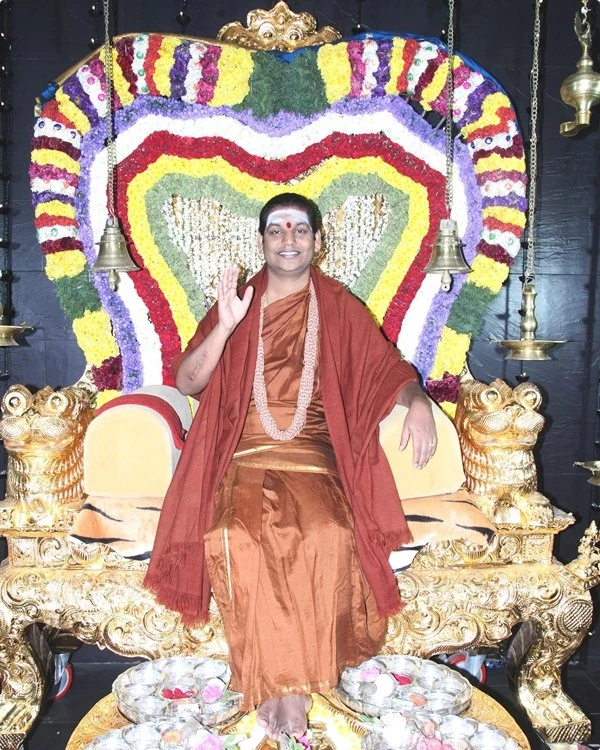
Photos Of The Day:

PadhaPuja
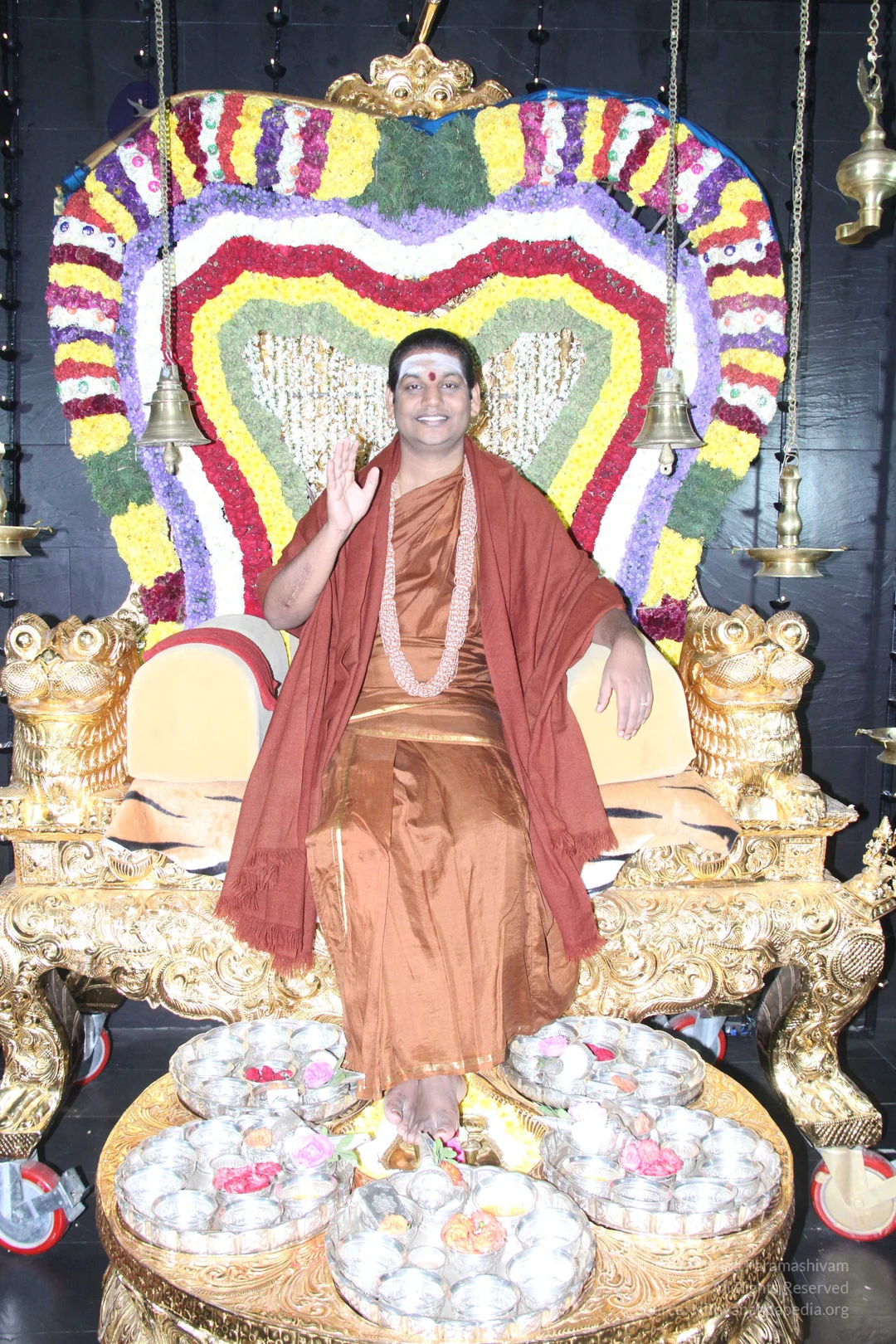
MorningNithyaSatsang
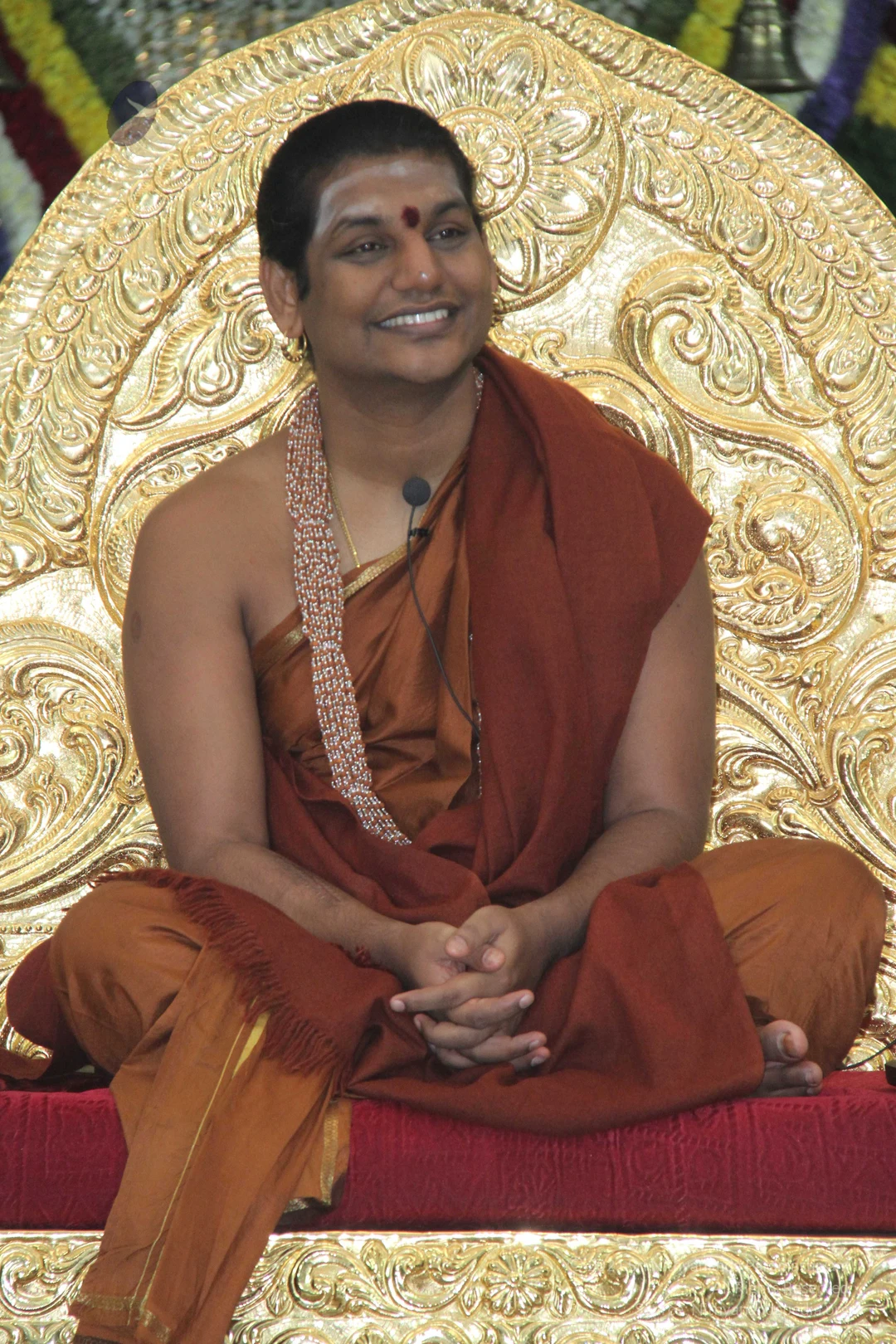
KalpataruMeditation-Darshan

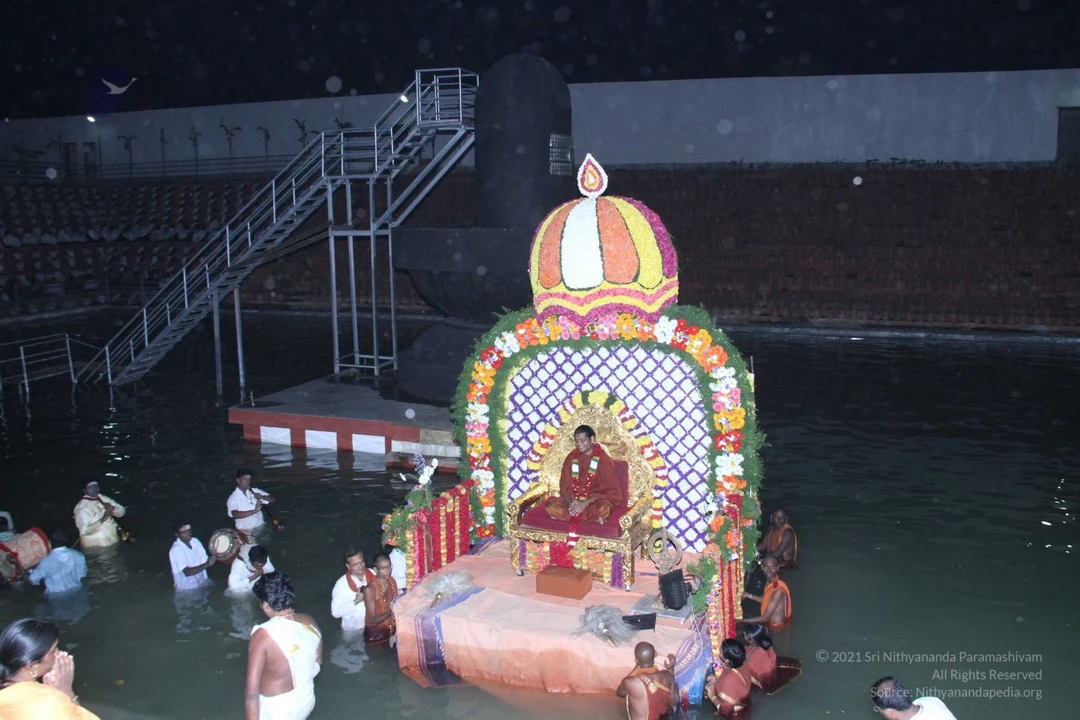
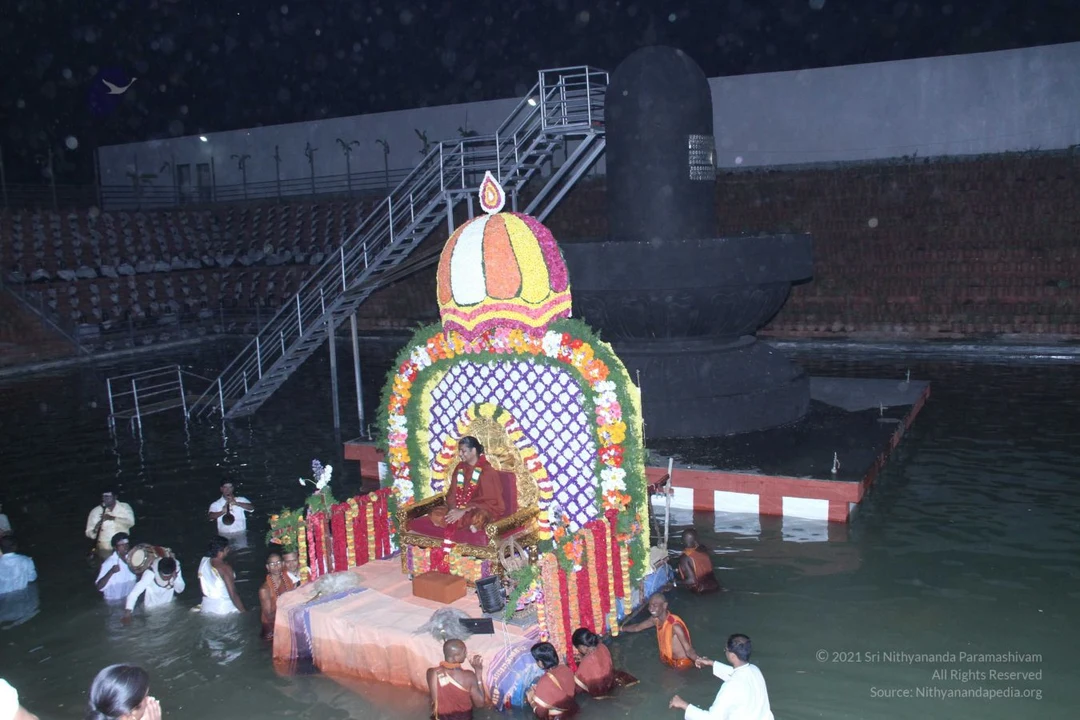
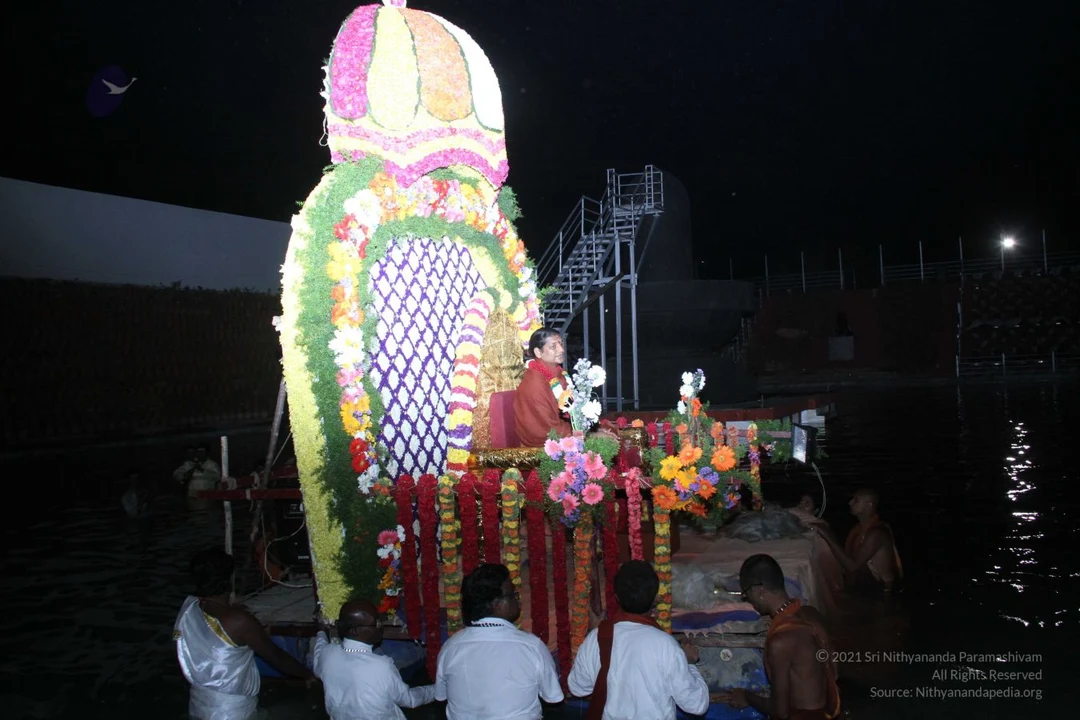
Theppal

02-MorningNithyaSatsang

03-KalpataruMeditation-Darshan

04-Theppal

Tags:

Paramahamsa Nithyananda, authentic listening, mind, completion, reality, authenticity, existence.

Photos from this day

View all 103 photos

Photos

5 photosSource gallery
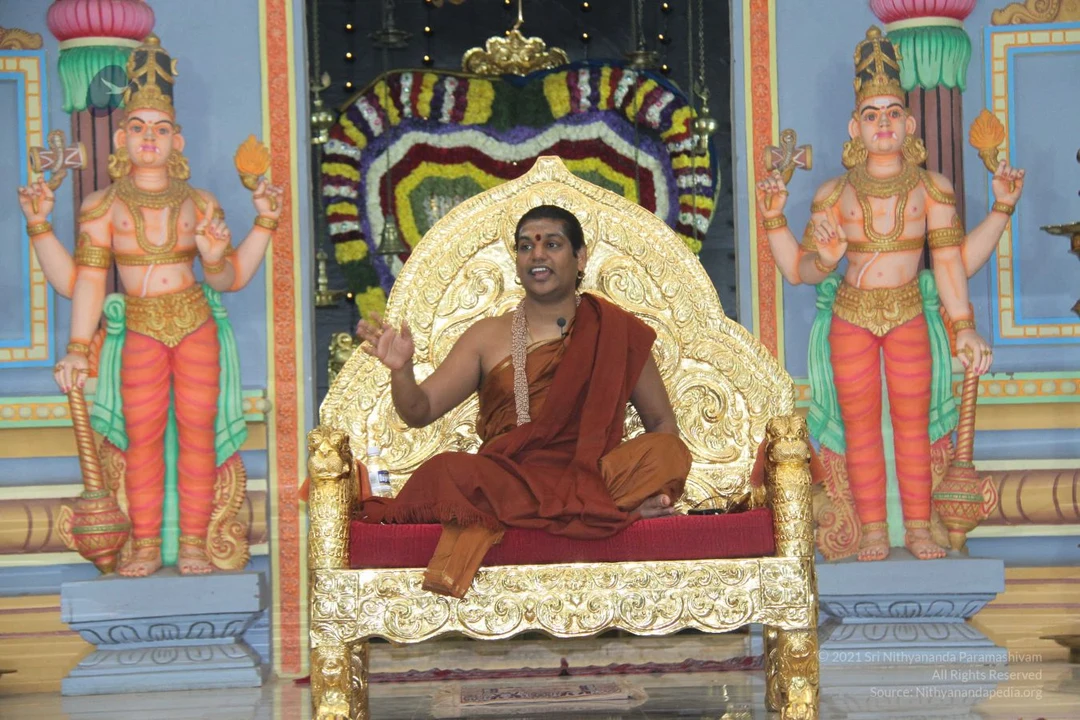
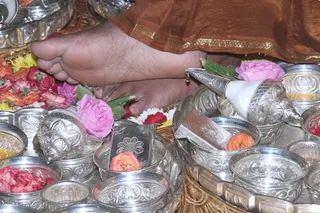
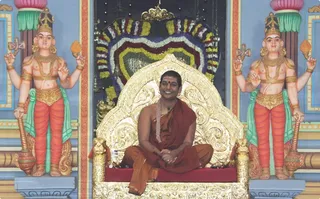
A seated man in saffron-orange robes waves his right hand from an ornate gold throne carved with lion heads and draped with a tiger-stripe cloth. Behind him a large arch of multicoloured flower garlands in red, yellow, purple and white frames the throne, with hanging brass oil lamps on either side. A red tilak marks his forehead and a pale beaded mala hangs at his neck. In front of the throne, brass plates hold flowers and offerings for padapuja. A single man is visible, so this appears to be a darshan or satsang setting. a person: the figure has short hair, a red-orange shawl and orange robes with a pale mala, with the throne and offerings indicating an honoured guru seat.Close photograph of a padapuja ritual: a bare foot in a saffron-orange robe rests on a ring of yellow and white flowers arranged around a small framed image on an ornate brass tray. Surrounding silver bowls and trays hold red and pink kumkum paste, yellow turmeric paste, orange and red flower petals, pink and white blossoms, a small kalasha-like silver vessel and a brass lamp. Ornate gold-patterned surface beneath the offerings.A close-up photograph of bare feet being washed in a padapuja ritual. Two bare feet rest on a bed of pink and red rose petals and white flower petals. Around them stand numerous polished silver ritual vessels and bowls holding flower petals, orange and yellow blossoms, and a silver spouted vessel with a green leaf. A silver ladle with a decorative handle lies across the vessels. The wearer's brownish-orange silk garment with gold border edges the frame at the top.A seated man in saffron-orange robes sits cross-legged on an ornate gold throne with a red cushion, smiling with hands folded in his lap. A rudraksha mala hangs around his neck. Flanking him are two large painted deity statues with multiple arms, gold jewellery, red and green garments, and holding ritual implements. Behind the throne is a large heart-shaped floral arrangement in red, white and green. The setting is a brightly painted temple-style hall in blue, pink and gold.A smiling person seated on an ornate gold throne with carved floral and scrolled backrest. The person wears a rust-orange saffron-toned shawl over a shoulder, a matching orange robe, and a long multi-strand beaded rudraksha-style mala necklace, with a red bindi on the forehead and hair pulled back. A small clip microphone is attached near the collar. Behind is a tall brass oil lamp (oil lamp), a second brass lamp, and a blue-and-orange temple-style backdrop with a cushion at the right. The setting suggests a satsang seating. Appearance-based label: a person, seated in a satsang position on a gilded throne with orange saffron clothing and rudraksha mala cues.

PadhaPuja

13 photosSource gallery
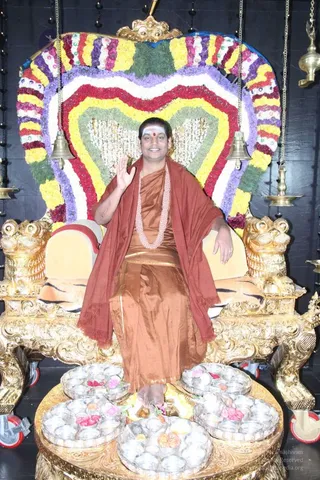
A man seated on an ornate gold throne with carved lion-head armrests and a tiger-striped cushion, framed by a heart-shaped arrangement of marigolds, roses and green leaves. He wears a rust-brown shawl over a copper-gold silk dhoti with a gold border, a pink beaded mala around his neck, and a red tilak with white markings on his forehead, raising one hand in greeting. His bare feet rest on a round gold stool surrounded by silver trays of small oil lamps and rose petals, which are padapuja offerings. Hanging brass bells and lamps frame the dark backdrop.A man seated on an ornate gold throne with carved lion-head arms and a tiger-skin cushion, raising one hand in greeting with a smile. He wears a rust-orange silk robe with a matching reddish-brown shawl draped over the shoulders, a white-and-pink beaded necklace, and a white forehead mark with a red dot. Behind the throne is a large heart-shaped arrangement of marigolds and roses in yellow, red, purple, green and white, with brass bells and hanging lamps above. In front of the throne is a golden platform holding silver plates and bowls of rose petals, flowers and offerings, with bare feet resting on it. The setting is a dark hall with bamboo poles overhead.Close view of a padapuja ritual: bare feet in the upper frame rest on a brass tray strewn with yellow and white flower petals, with a small brass lamp beside them. Around the tray are ornate silver bowls holding saffron-yellow liquid, pink and red roses, and orange blossoms, plus a silver kalasha-style vessel with a leaf sprig. The golden-patterned base beneath is visible. Only the feet are visible, so no full person is shown.A man seated on an ornate gold throne with tiger-striped cushions receives padapuja, his bare feet resting on a brass plate of flowers, silver bowls of offerings, rose petals and fruit. He wears a rust-brown silk robe, a matching reddish-brown shawl, a beaded white rudraksha-style mala necklace, a white tilak with a red dot on his forehead, and gold earrings. Behind him a large arrangement of flowers in concentric bands of red, yellow, white, purple and green forms a backdrop, with brass bells and an oil lamp hanging at the right. The bowls contain orange and pink flowers and yellow liquid. a person: the seated man wears a rust-brown robe, shawl and beaded mala and receives padapuja on a throne, which matches the page's a person reference.A smiling man in saffron-red robes and a rust-orange inner garment sits before a flower-decorated backdrop of white jasmine, yellow marigolds, red roses and purple flowers. He wears a white vertical tilak and red bindi, a rudraksha-style beaded necklace over the chest, and a shawl draped across the shoulders. His raised right hand gestures mid-speech. Brass hanging bells and a brass oil lamp hang at right, with ornate gold carving at the lower edges.A photo of a padapuja ritual in an indoor hall. A man with long swept-back dark hair, orange-red robes, a white shawl-like drape and a beaded necklace sits on a golden lion-faced throne draped with a tiger-stripe cloth, his feet extended toward devotees. Behind him hang brass oil lamps and bells and a garland of flowers. Seated devotees in white, yellow and red clothing hold steel plates with flowers and offerings and wash his feet. A shaved-headed man in red robes sits at right, and a woman in a white sari sits in the middle. A standing lamp lights the dark wall. Swamiji (probable): the seated man in orange-red robes, long hair and beaded necklace, with the throne and foot-washing role.

MorningNithyaSatsang
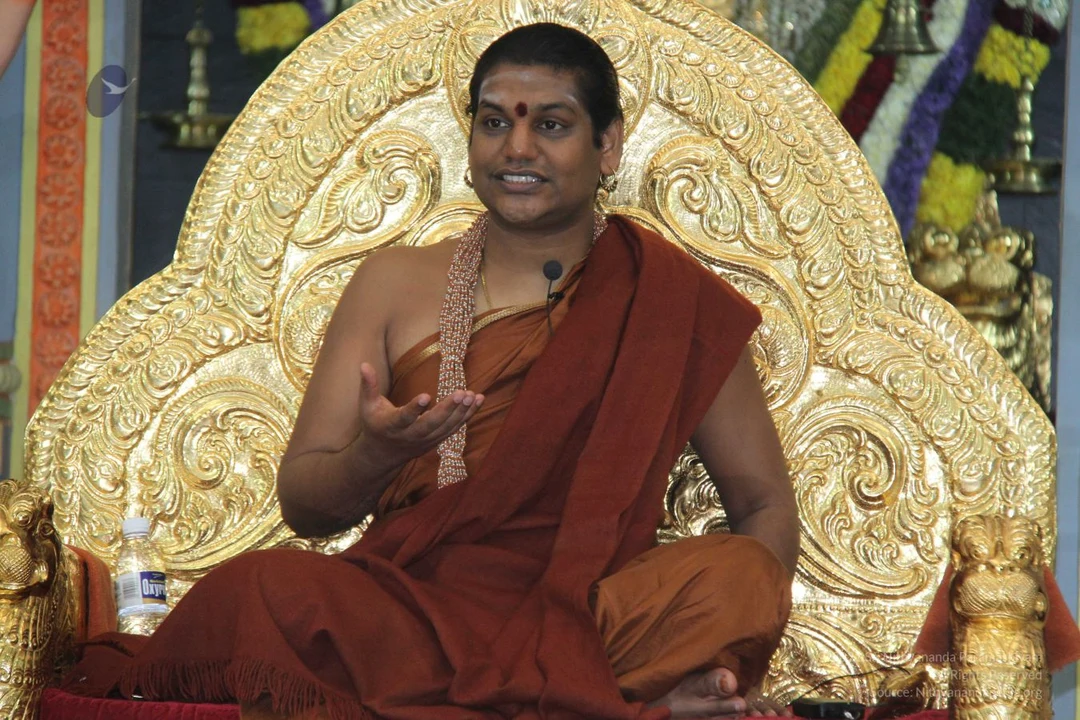
33 photosSource gallery
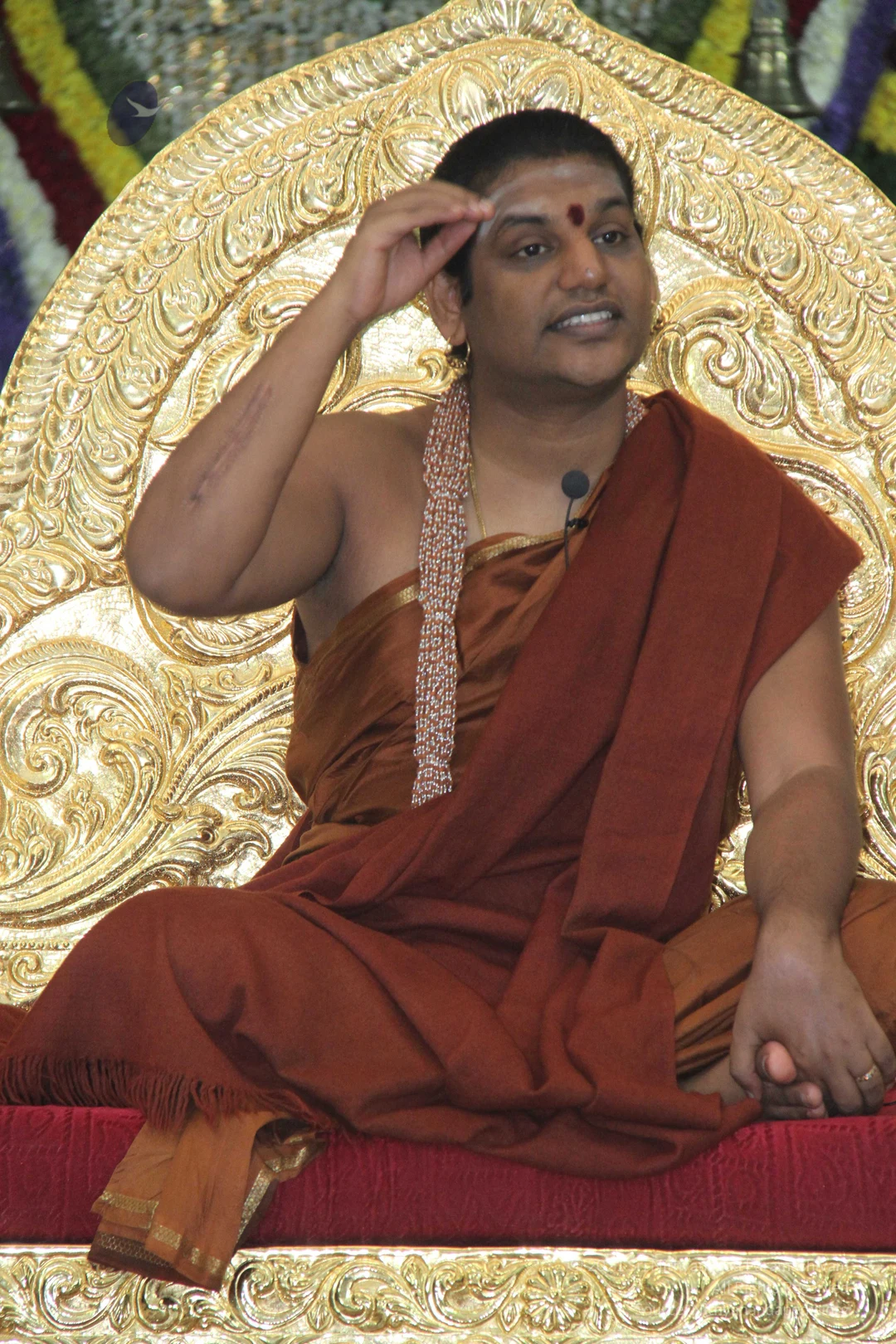
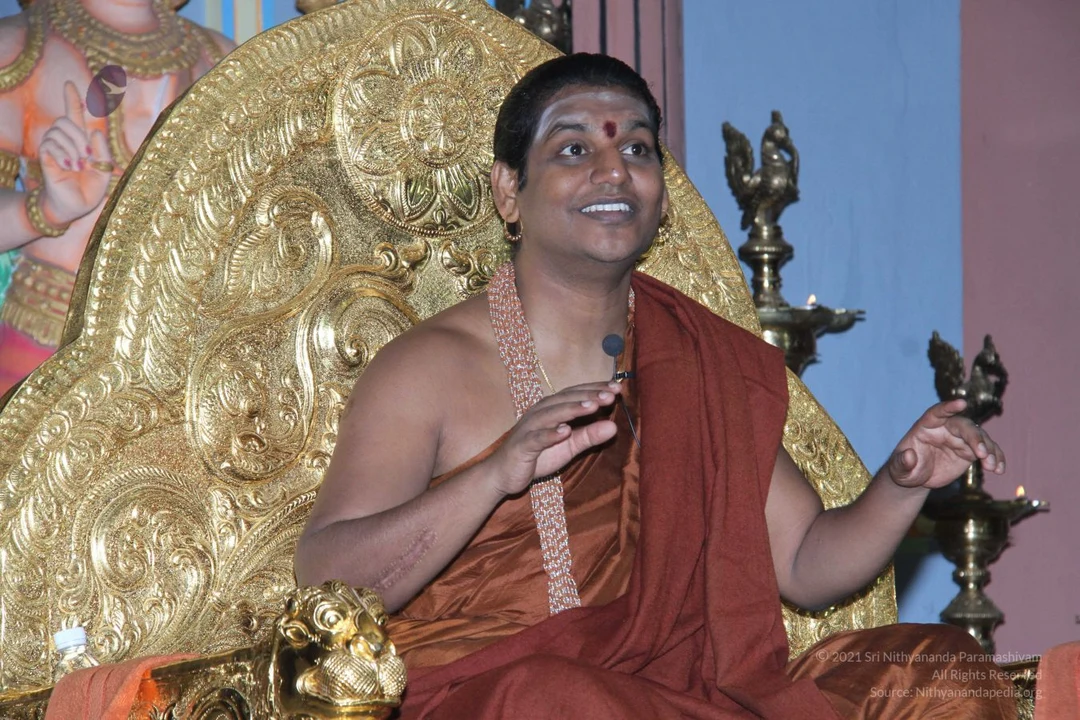
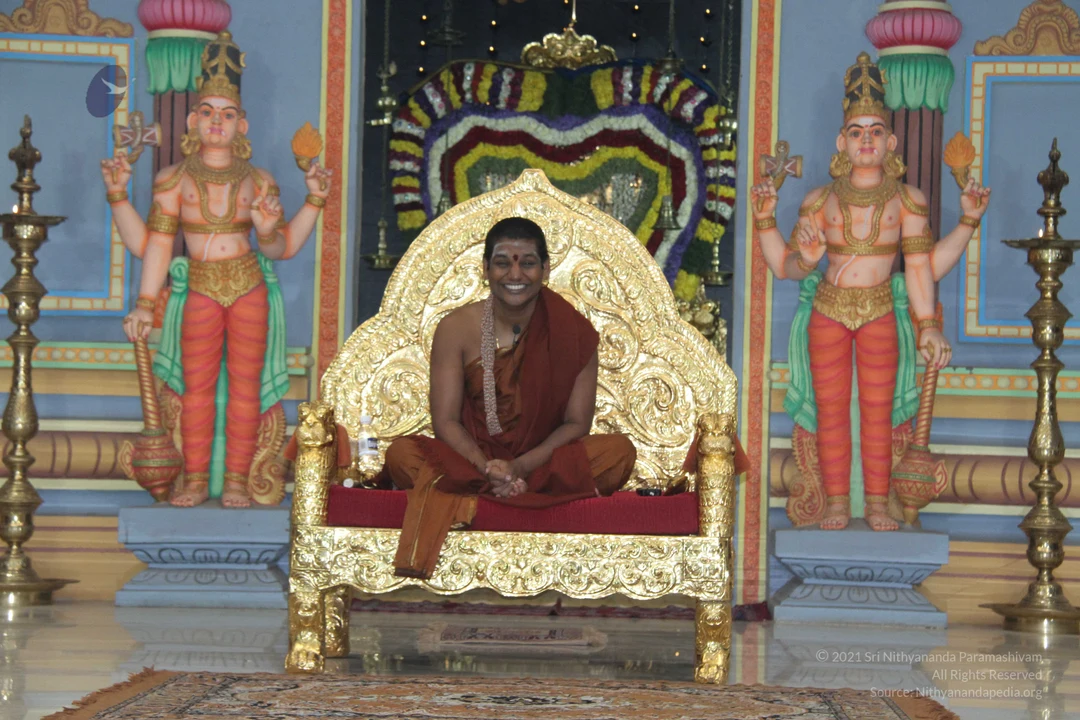
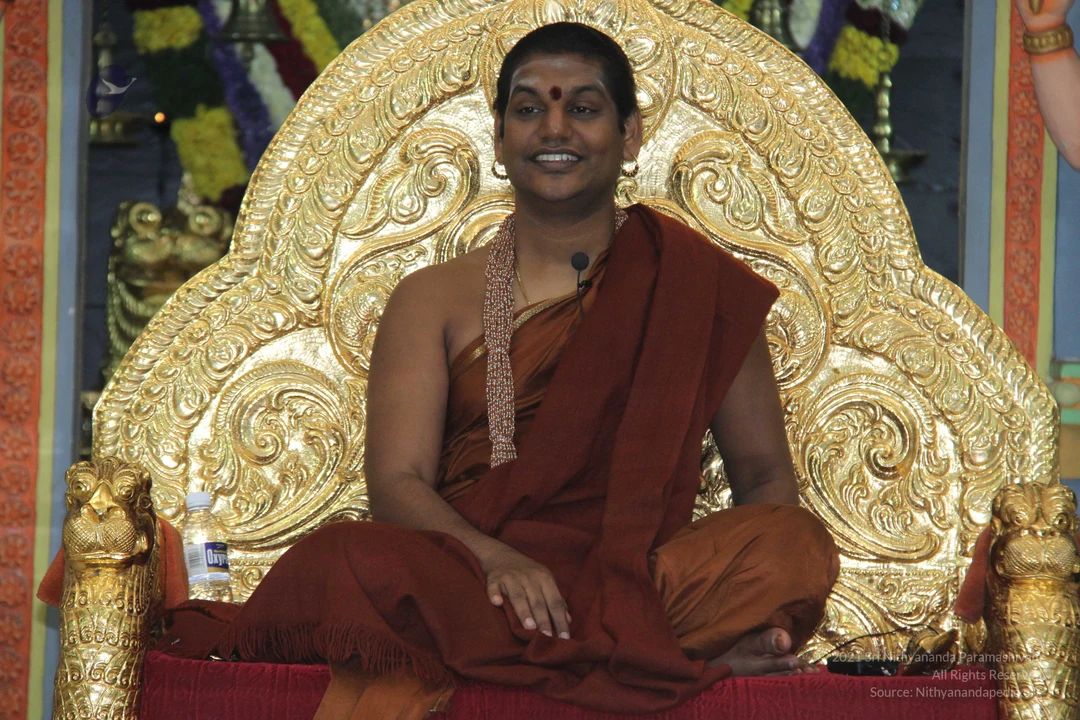
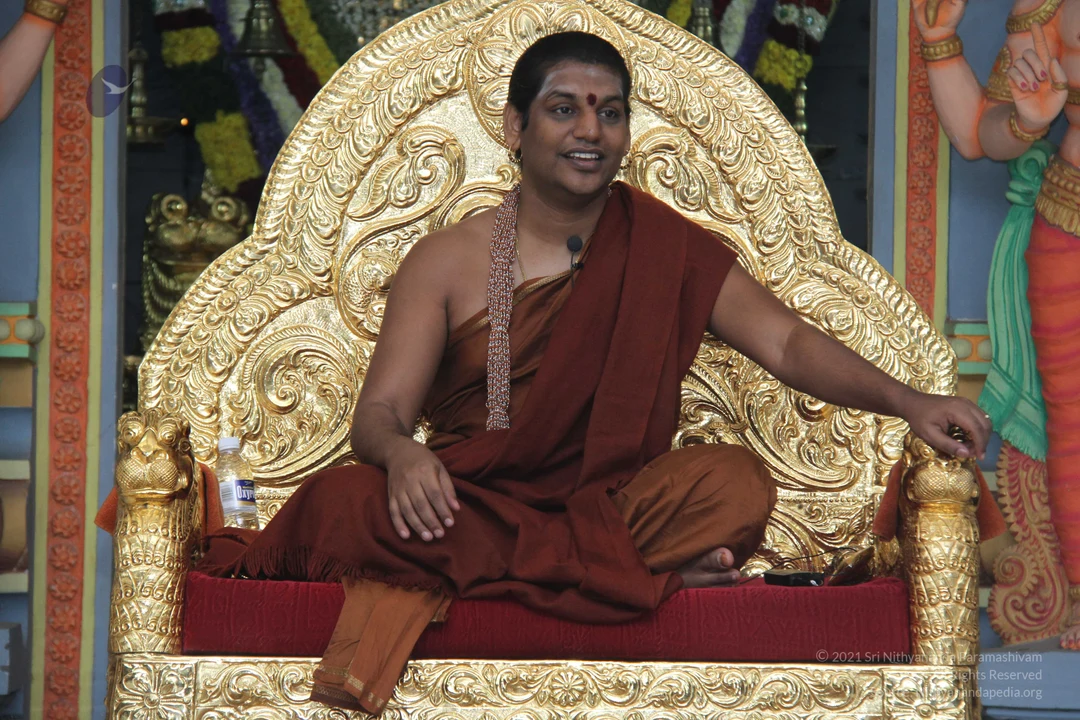
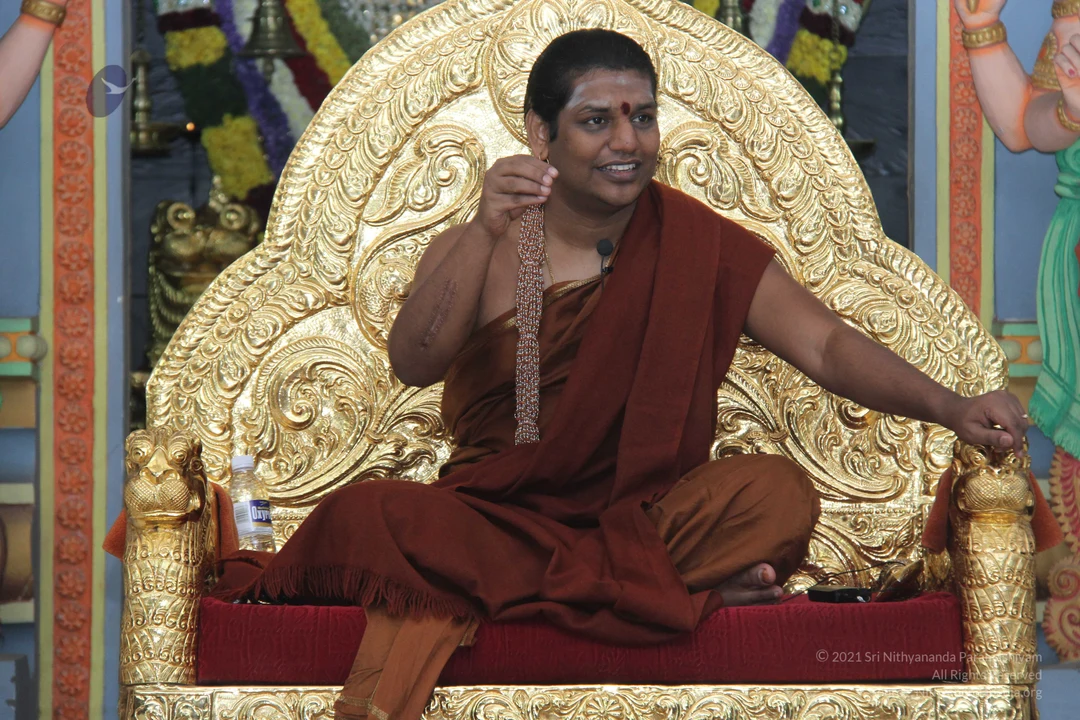
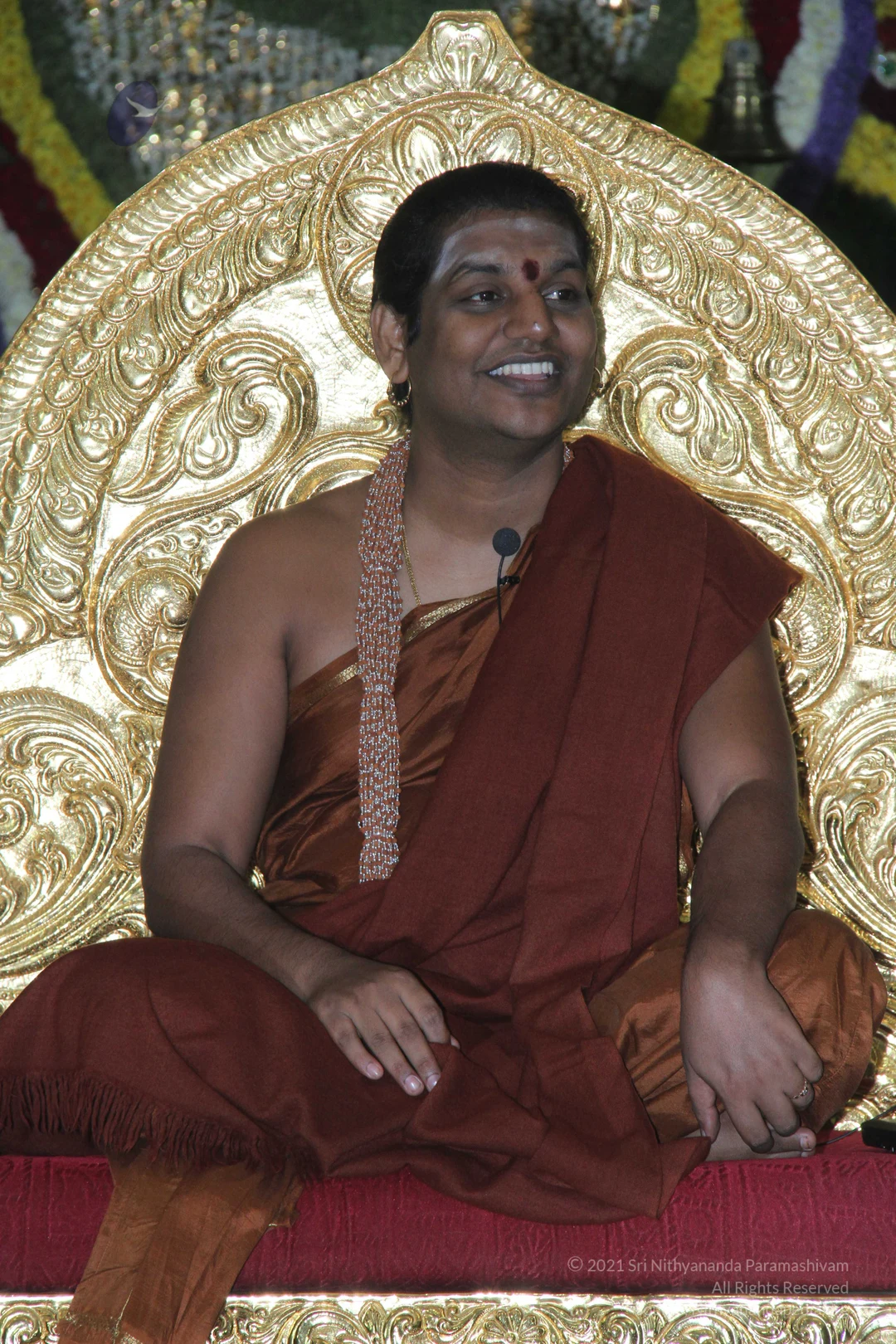
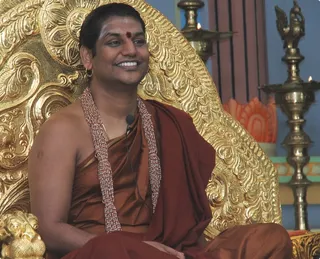
A smiling man with short dark hair and a red bindi sits cross-legged on a red cushion before an ornate gold-embossed throne with floral and scroll relief. He wears an orange-brown robe draped over one shoulder with a fringed cloth around his waist, and a long multi-strand white beaded mala around his neck. A small clip-on microphone is attached to his robe, and colourful flower garlands appear at the top edge. Appearance-based label: a person, seated in the satsang as the speaker. Bare feet are visible at the right edge.A smiling man with short dark hair and a red bindi sits cross-legged on a red cushion in front of an ornate gold repoussé throne with scrolling foliate carving. He wears rust-orange draped cloth over one shoulder and an orange dhoti, with a multi-strand white beaded necklace and a small lapel microphone clipped to his robe. His hands are clasped in his lap. Strands of white, yellow, red and purple flower garlands hang behind the throne. a person: the seated man has a shaved-looking head and a red bindi, and the page indicates he is present, but the appearance cues are insufficient for a confident identification.A seated man in a rust-orange saffron wrap and dhoti sits cross-legged on an ornate gold throne with carved scroll backrest and lion-head armrests, set on a red cushioned platform. He wears a long beaded rudraksha-style mala, a red bindi on his forehead, earrings and a small ring, with a lapel microphone clipped to his robe. He sits with hands clasped, smiling toward the camera. Behind him are garlands of yellow and purple flowers and a brass lamp on a white-and-blue backdrop, with a plastic water bottle beside the throne.A seated man in rust-orange robes sits on an ornate gold throne with a red cushioned seat, a red bindi on his forehead, and a pale beaded necklace on his chest. A small microphone is clipped near his collar. He has short dark hair swept back, rests his hands in his lap, and looks to the side. Behind the throne are garlands of yellow and purple flowers and a painted panel. A water bottle sits to his left. This matches the a person appearance cues: saffron-orange robes, rudraksha-style mala, and a throne seat, presiding over the satsang.A seated man in rust-orange and saffron-toned robes sits on a red cushioned seat before an ornate gold repoussé throne with a tall arched back. He wears a long white beaded necklace, a red bindi on his forehead and a small lapel microphone on his chest. His right hand is raised to his brow in a gesture while he speaks, and his left hand rests in his lap. Behind the throne are garlands of white, yellow, red and purple flowers. The scene suggests a seated teaching or satsang, with a visible microphone indicating discourse. The man's identity cannot be confirmed from appearance alone.A seated man in saffron-orange robes sits cross-legged on an ornate gilded throne with carved floral and scroll backrest, speaking and gesturing with one open hand. He wears a red bindi, gold earrings, a pale beaded rudraksha-style mala and a small clip microphone on his chest. Behind him are garlands of yellow, red, purple and white flowers and brass lamps. A water bottle sits on the left side of the throne. The image is a photograph of a single speaker at a seated discourse with a dais and floral decoration, consistent with a satsang.

KalpataruMeditation-Darshan

16 photosSource gallery
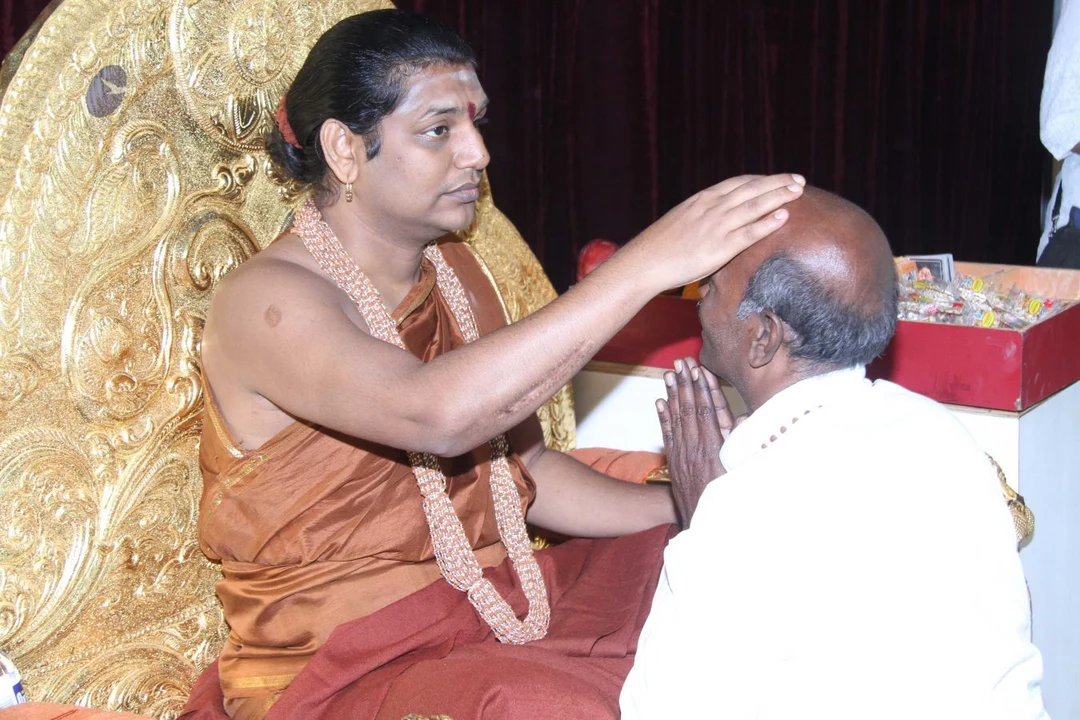
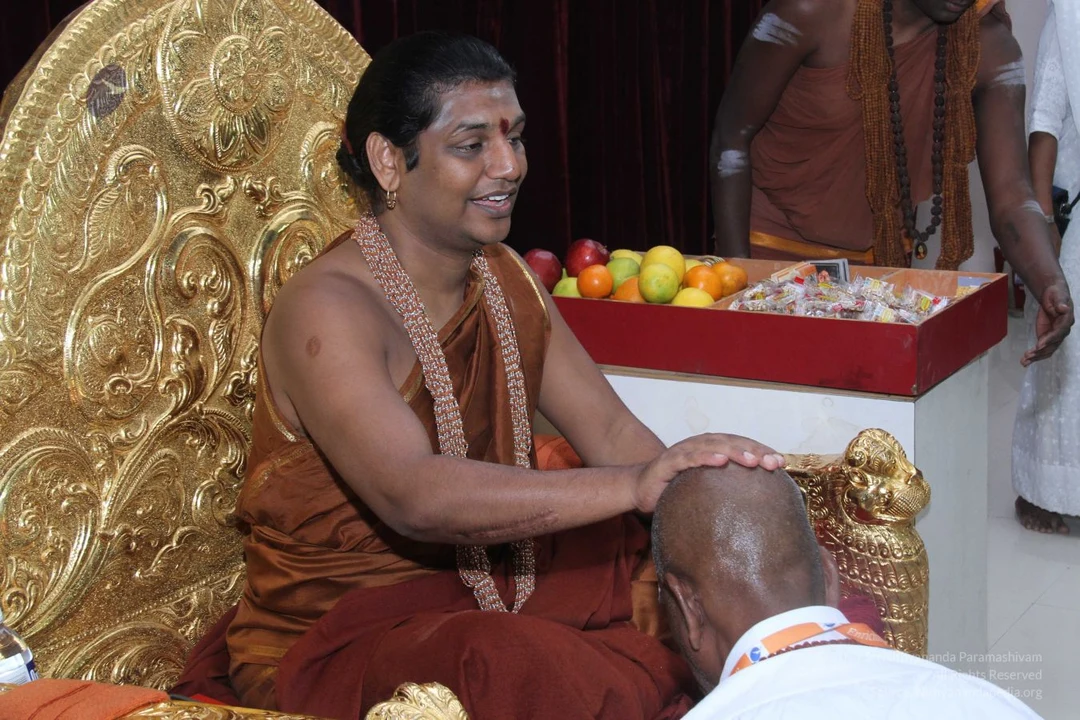
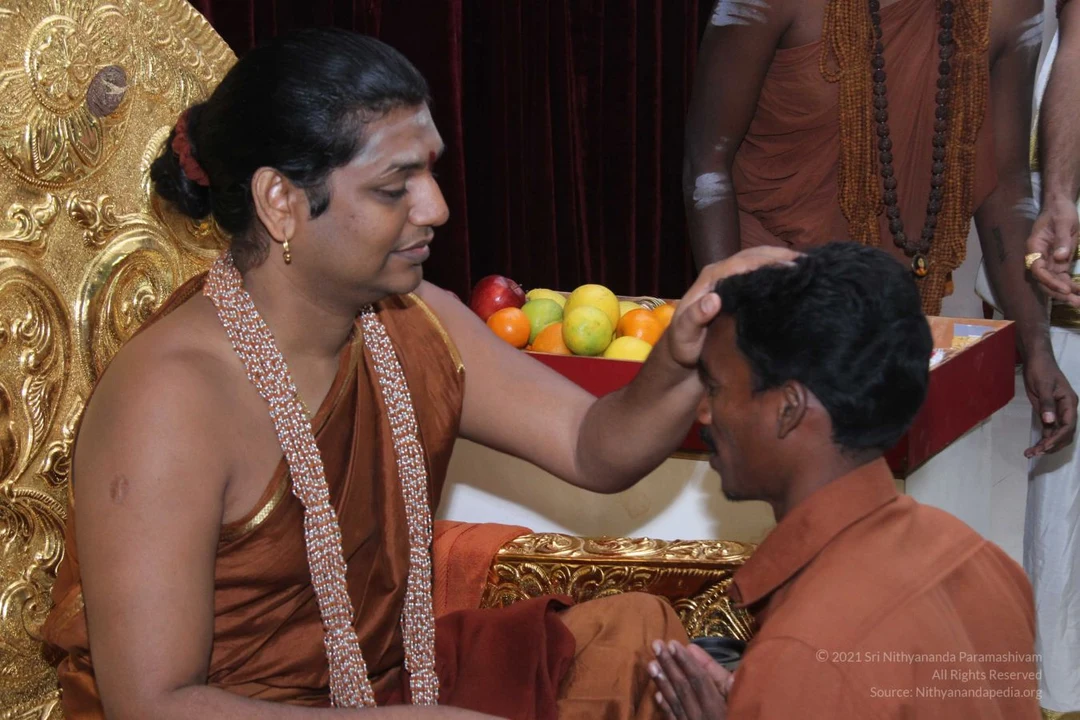
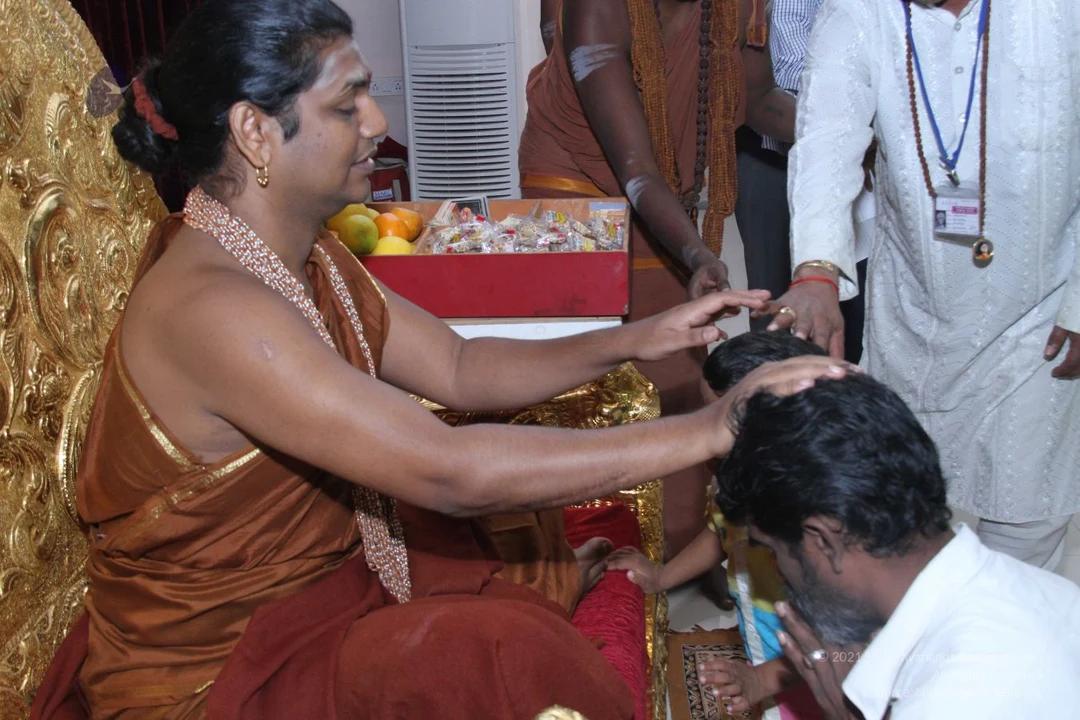
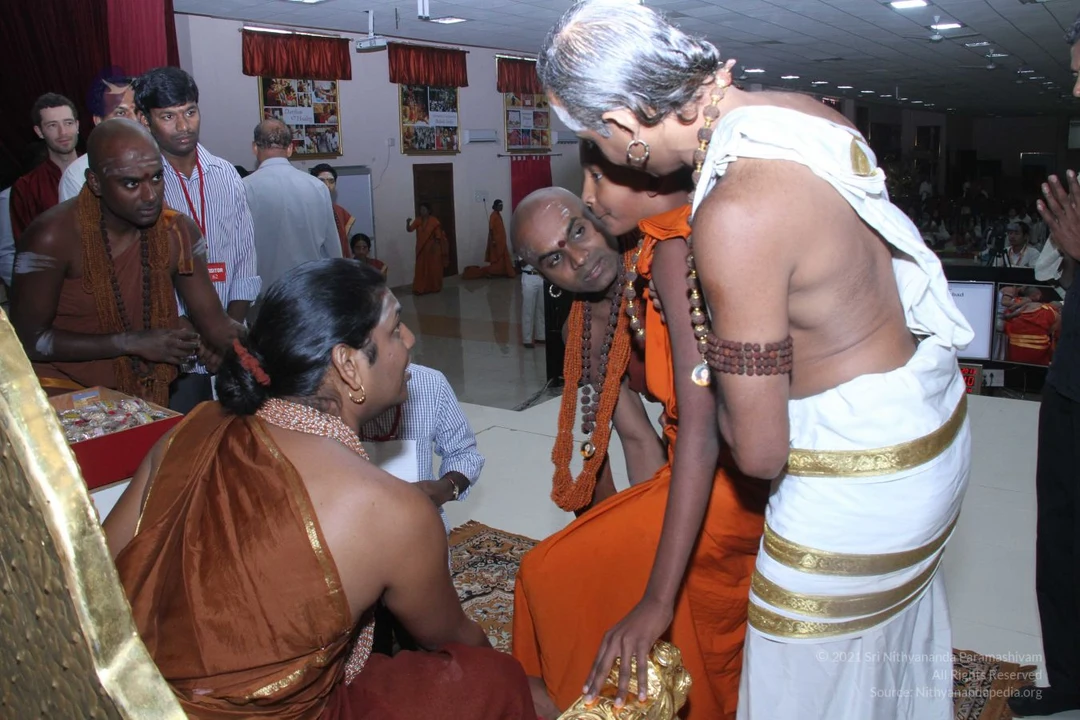
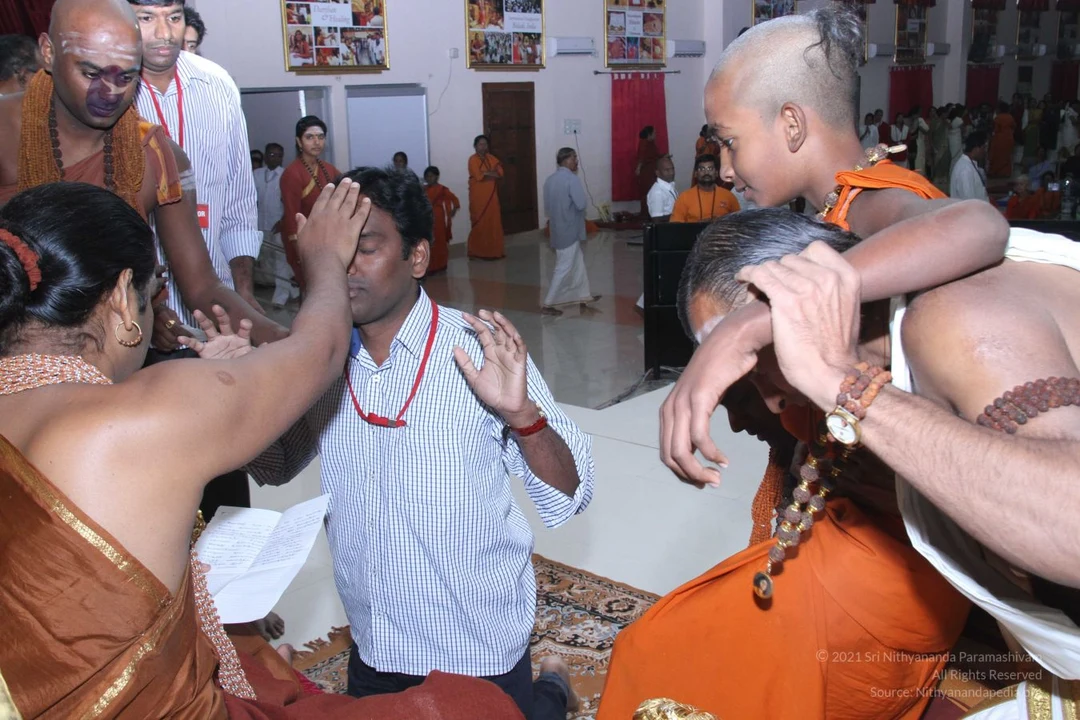
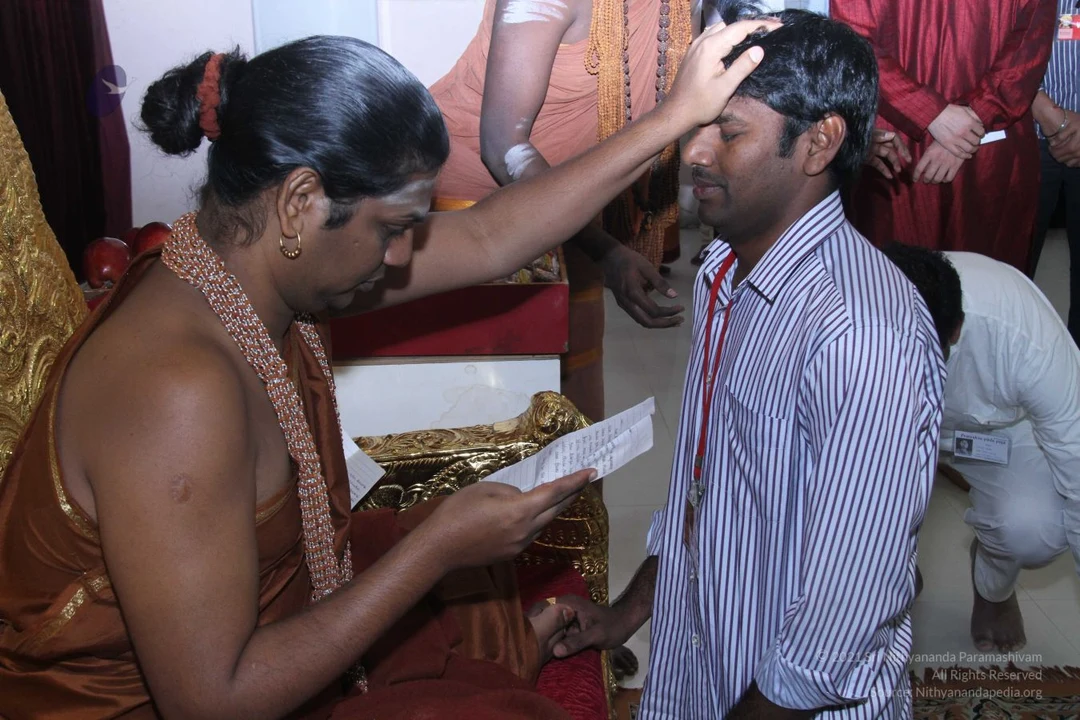
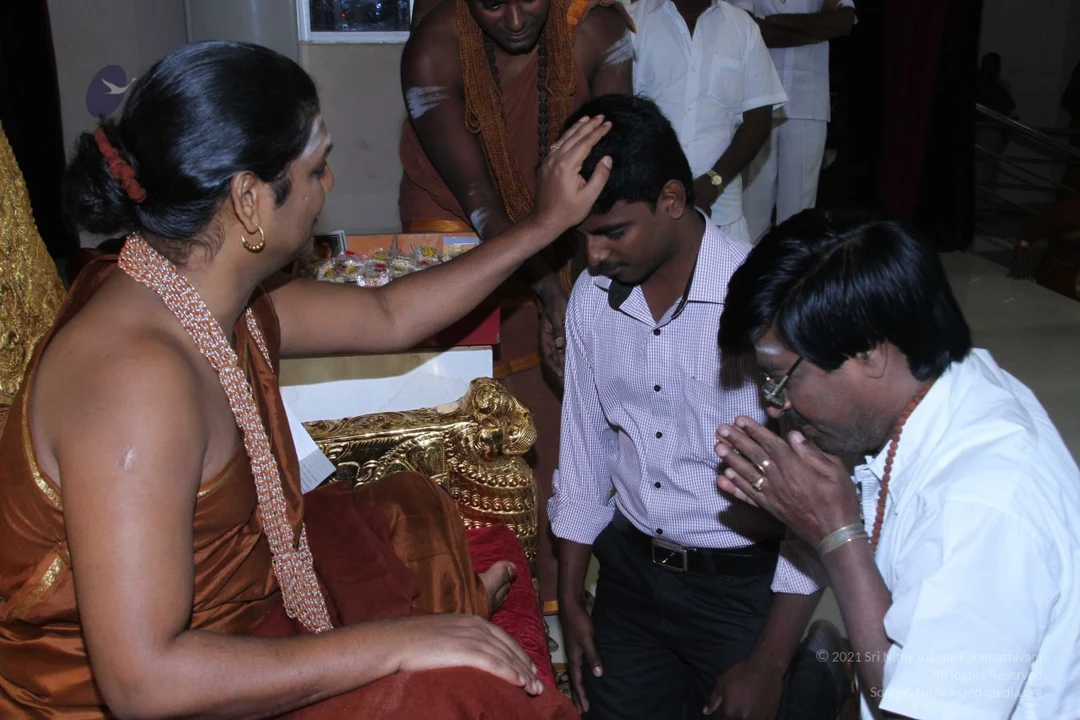
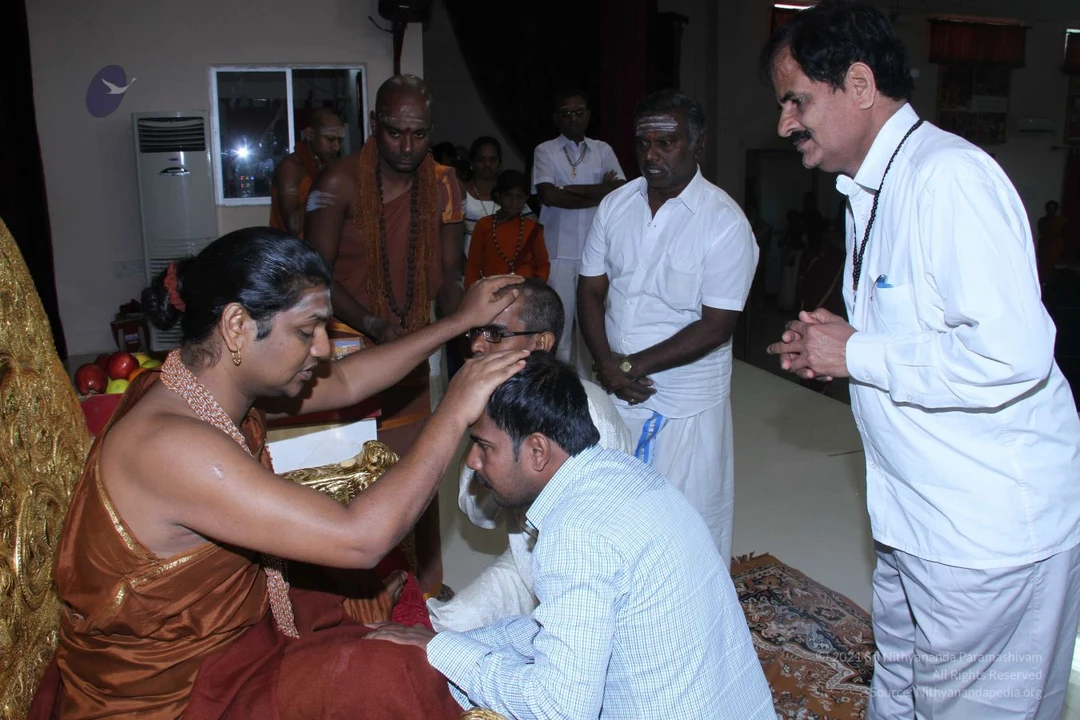
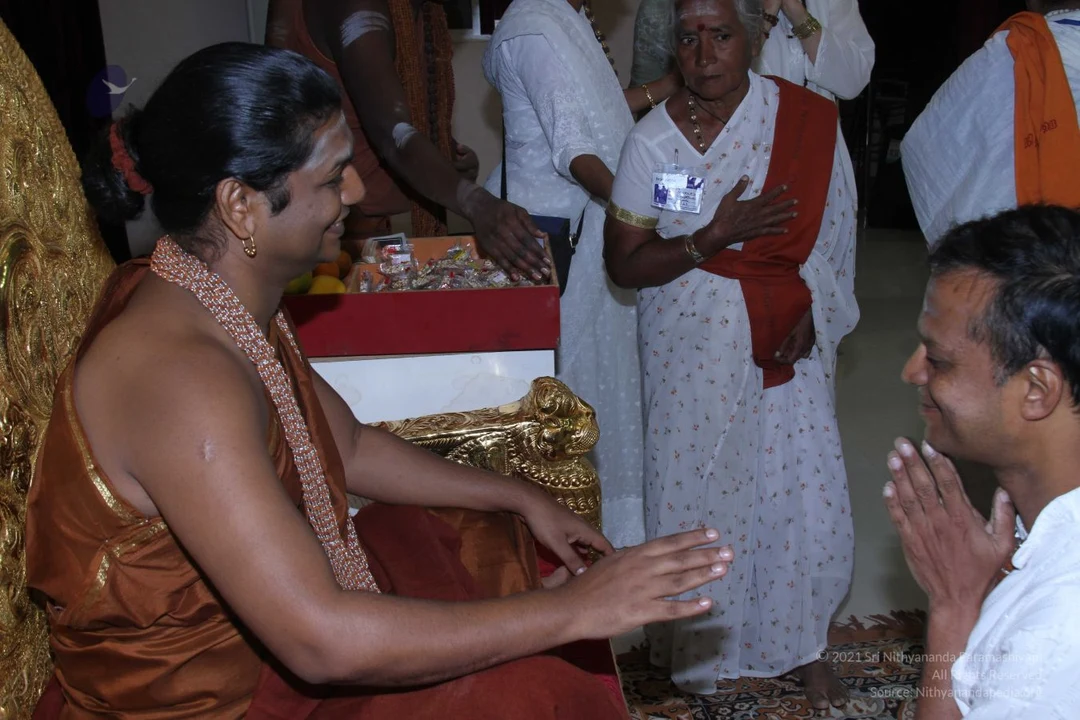
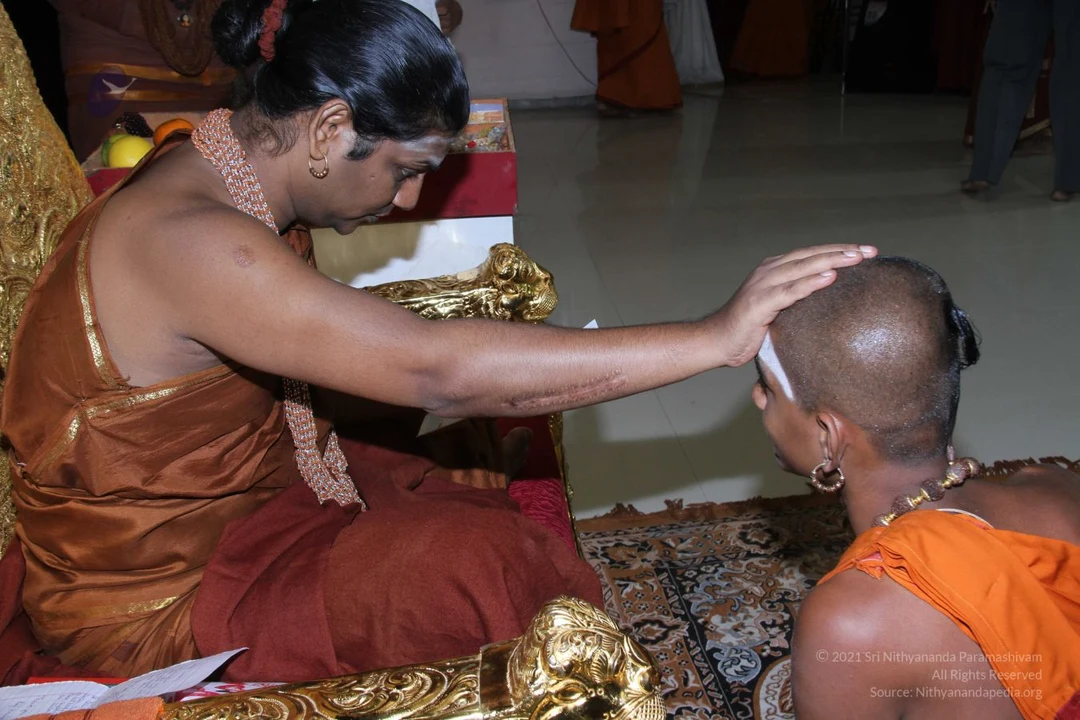
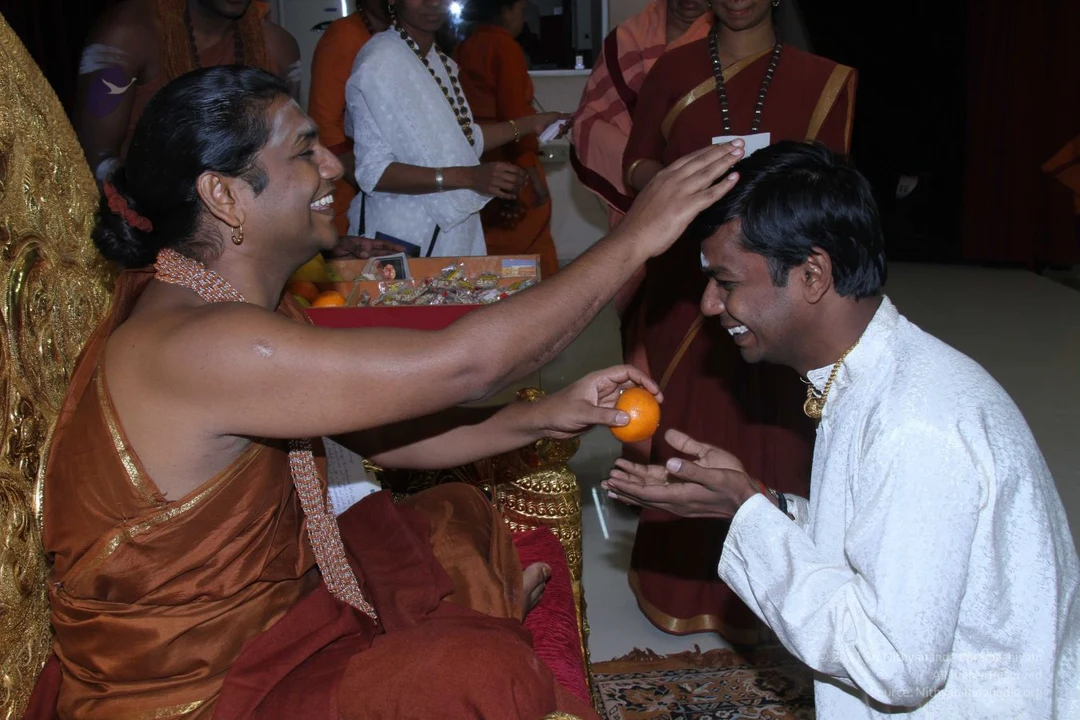
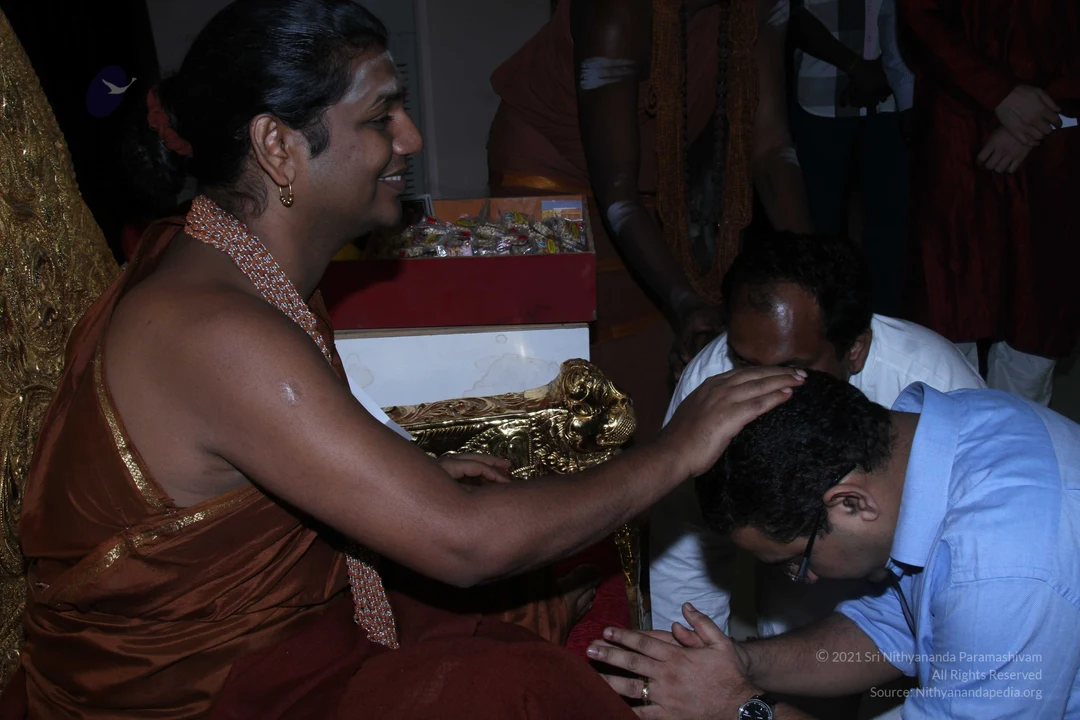
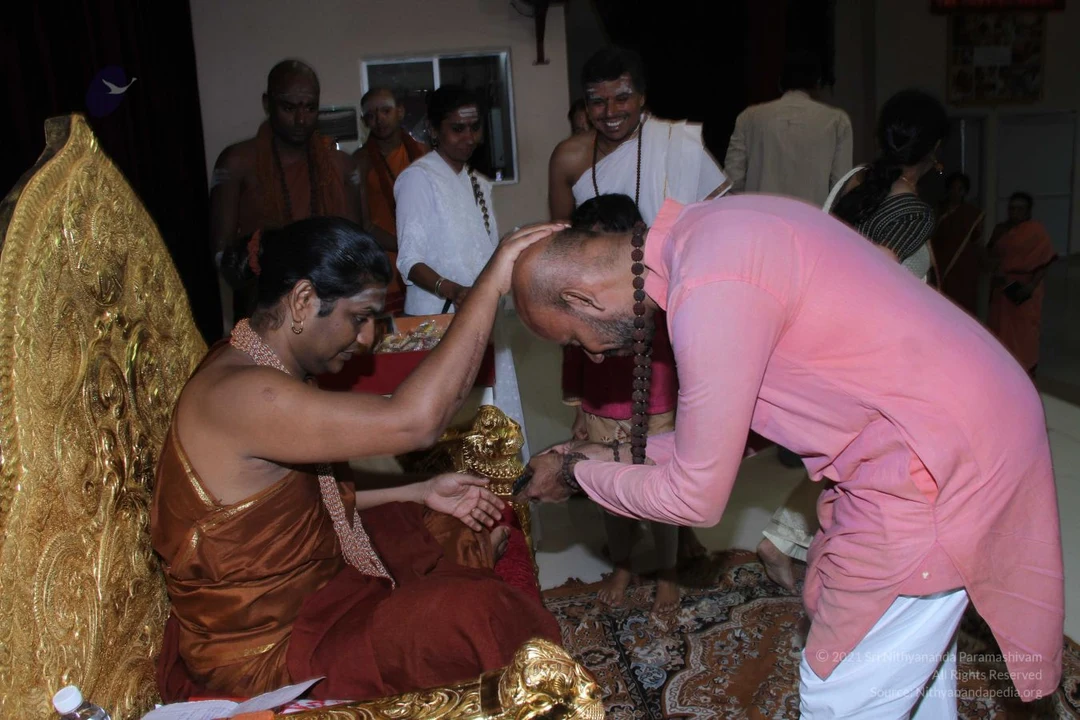
A seated man in an orange-brown silk garment and a rudraksha mala with a red garland, wearing a small red bindi and a tilak, places his right palm on the forehead of a kneeling older man in white with hands in anjali. The seated man sits on an ornate gold throne with embossed floral carvings; behind them a red box holds offerings, and a maroon curtain hangs in the background. The scene resembles a blessing or padapuja-style darshan. a person is the seated figure, identified by his orange-brown robe, rudraksha mala, red garland and gold throne, and is seated in person, while the kneeling devotee in white is a devotee receiving blessing.A seated man in ochre-saffron robes sits on an ornate gold throne with carved floral backrest, wearing a gold-toned necklace with beaded strands and a small red bindi on his forehead, and gold earrings. He smiles as his right hand rests on the bald head of a kneeling devotee in white clothes with an orange-and-white band, who bows low before him. Behind them, a red tray holds apples, oranges, lemons and packets of sweets. Two standing attendants in orange-brown robes with rudraksha malas and white markings on their arms stand at right. A gold lion-shaped armrest is visible in front of the throne.A seated man in an orange-brown ochre robe and a pearl-beaded necklace rests his right hand on the forehead of a kneeling devotee in an orange-brown shirt, whose palms are pressed together. The seated man, whose hair is tied back and who wears a red bindi and small gold earring, sits on a gold-carved throne. Behind them stands a fruit tray with apples, oranges and limes on red, and a red velvet curtain hangs behind. Two attendants in ochre robes with rudraksha malas stand at right, one with white ash markings on his arms. Appearance-based label: a person, seated on the throne, giving a blessing touch to the devotee.A photograph of a padapuja-style blessing in a satsang setting. A man with long dark hair, wearing an orange-brown ochre robe and a long pearl necklace, sits on an ornate gold throne with a gold-carved backrest and extends his right hand in blessing toward the head of a kneeling man in a white shirt. A child in a light blue top kneels at the foot of the throne. Behind them, a standing man in an orange-brown robe with a rudraksha mala and white markings on his arms stands near a red box holding fruit and sweets. A standing man in a white kurta wears a lanyard badge and a rudraksha mala and watches the blessing. A white wall-mounted air conditioner is visible above.A photograph inside a hall with red curtains and framed photo panels on the wall. A person with long swept-back grey hair, large gold earrings, a bare upper body, and a white dhoti with gold borders stands at right, bending toward others and placing a hand on a seated figure. Next to them a bald man in saffron robes and a rudraksha mala leans in closely. A seated person in an orange-brown garment with a gold border faces them at left, and several men in saffron and a man in a checked shirt stand nearby. A gold-edged throne or seat is visible at the left edge. The hall is crowded behind, with people in orange robes and onlookers. Swamiji (probable) is identified by appearance cues of long swept-back hair, gold earrings and a white dhoti with gold border, standing at right in the role of the one being attended to.A photograph of a ritual blessing inside a hall with white tiled floor and red curtains. In the foreground, a kneeling man in a white checked shirt with a red lanyard has his forehead touched by a woman in an orange-brown sari with a red blouse. To the right, a shaved-headed young sannyasi in orange robes and rudraksha beads kneels with his head bowed while another person in white clothing holds his shoulders. Behind them, several people in orange and white robes and a man in a white shirt stand and walk through the hall, with framed photo posters on the walls.

Theppal

12 photosSource gallery
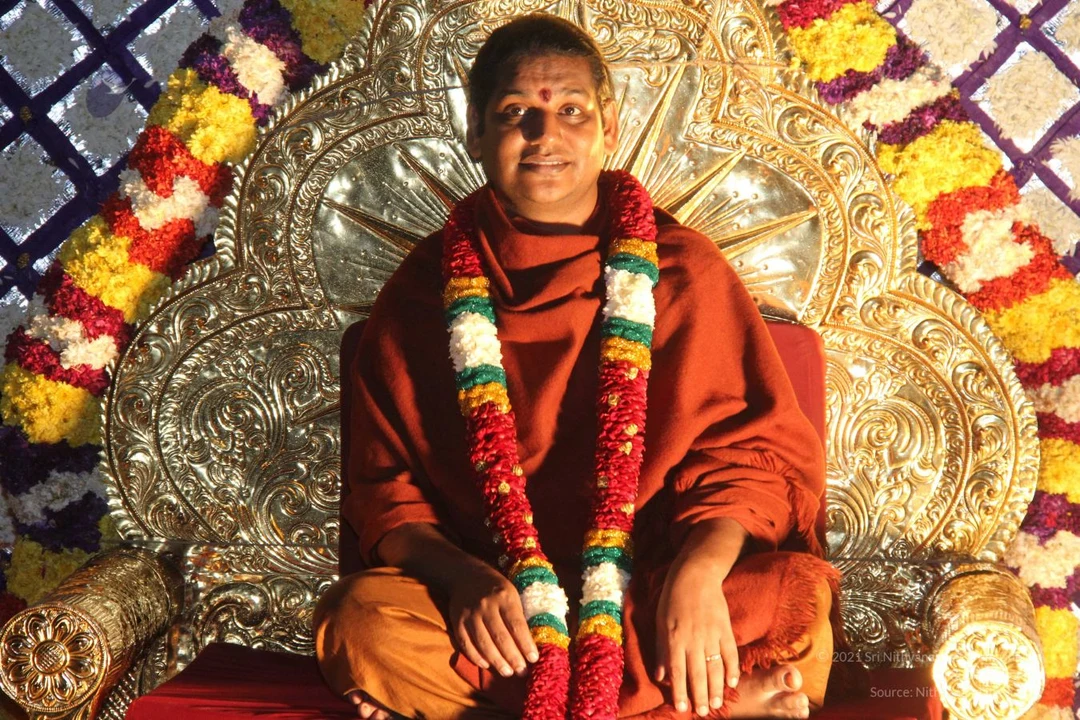
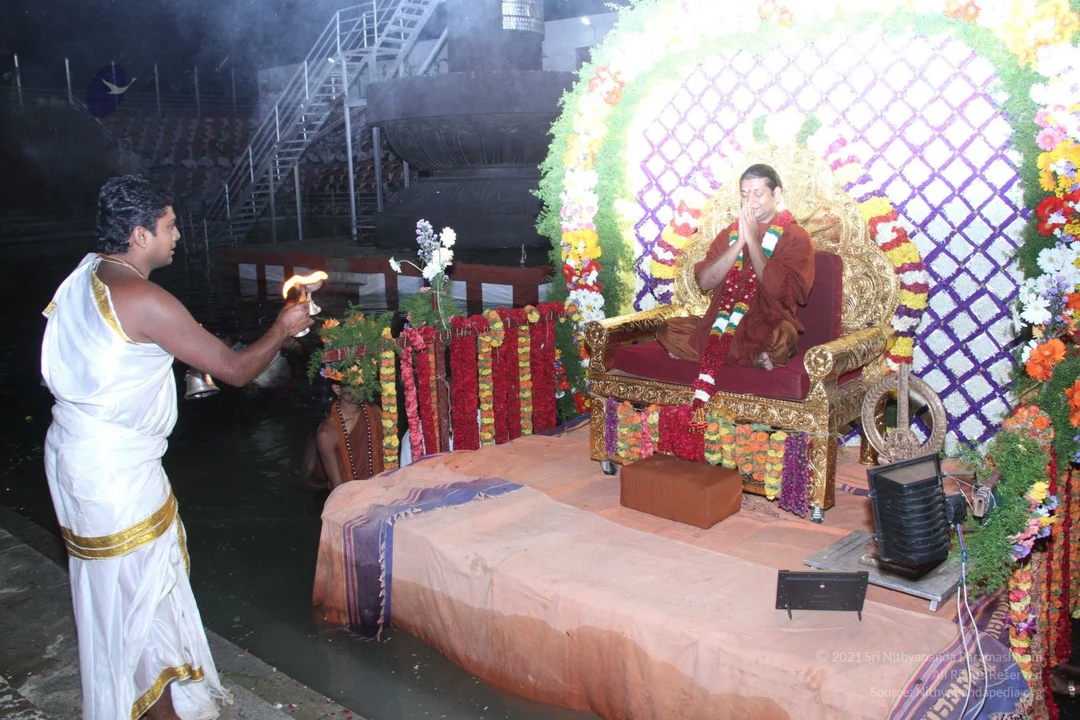
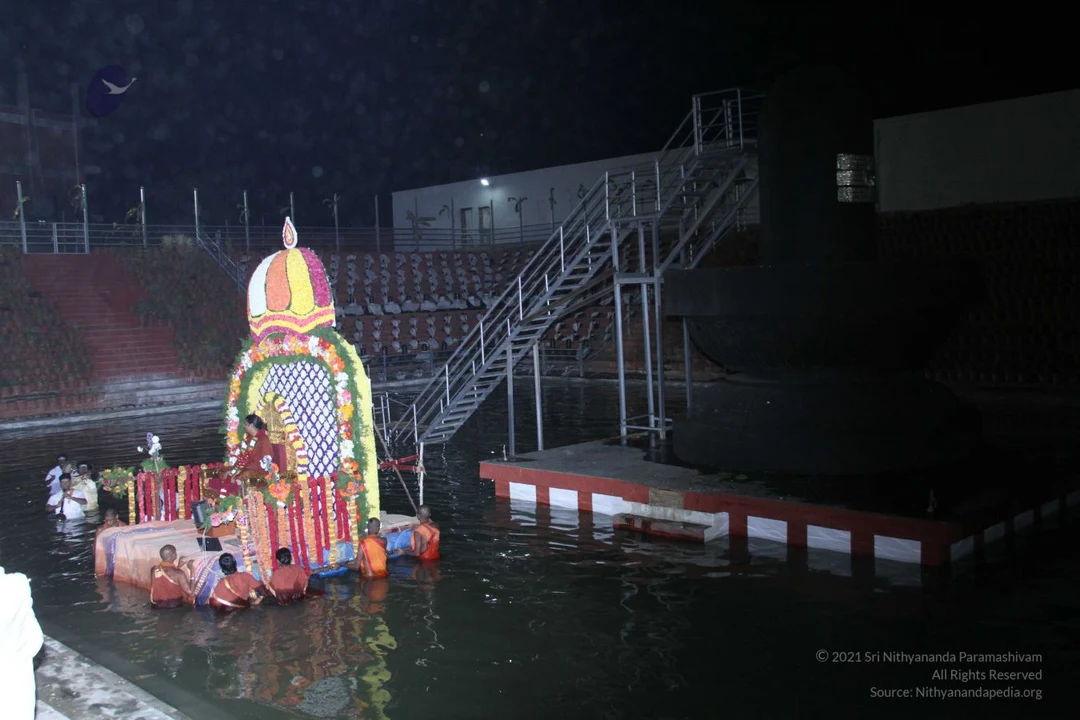
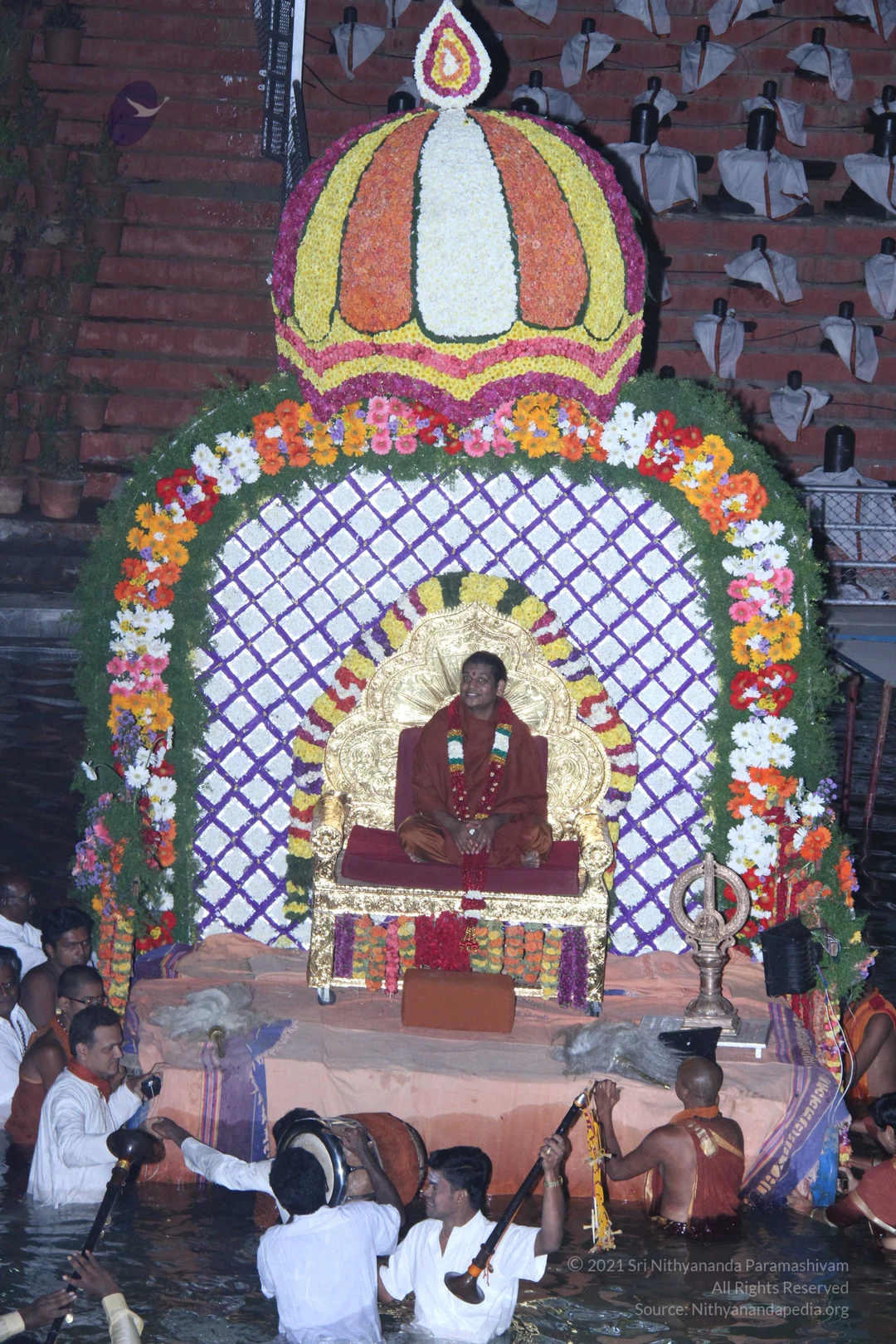
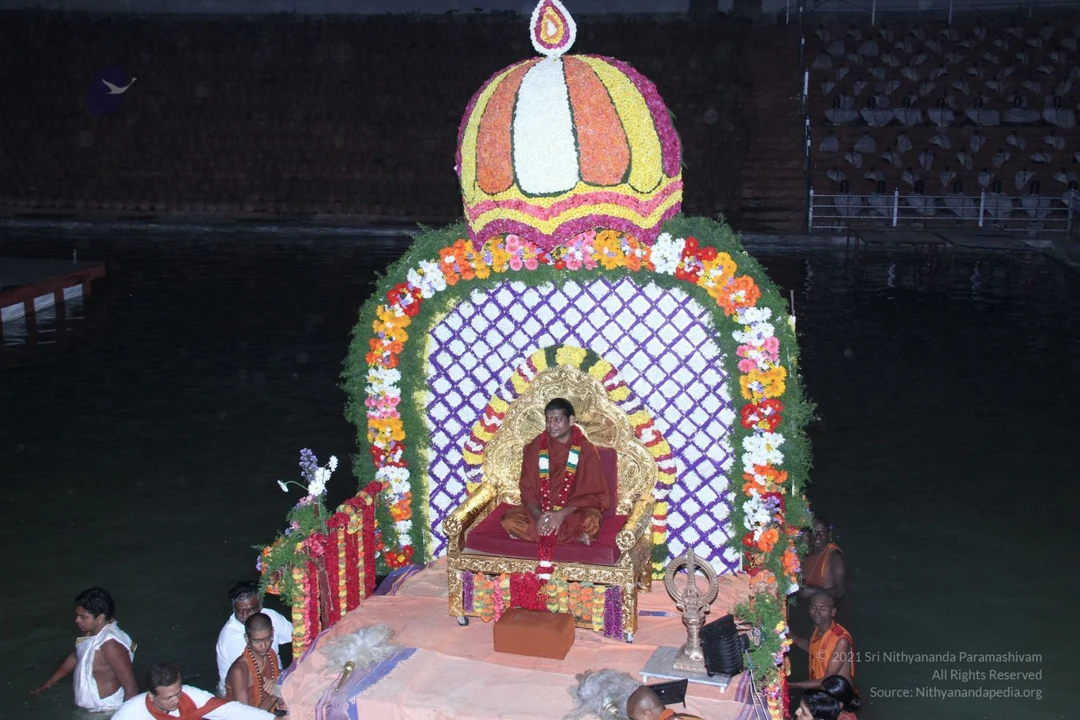
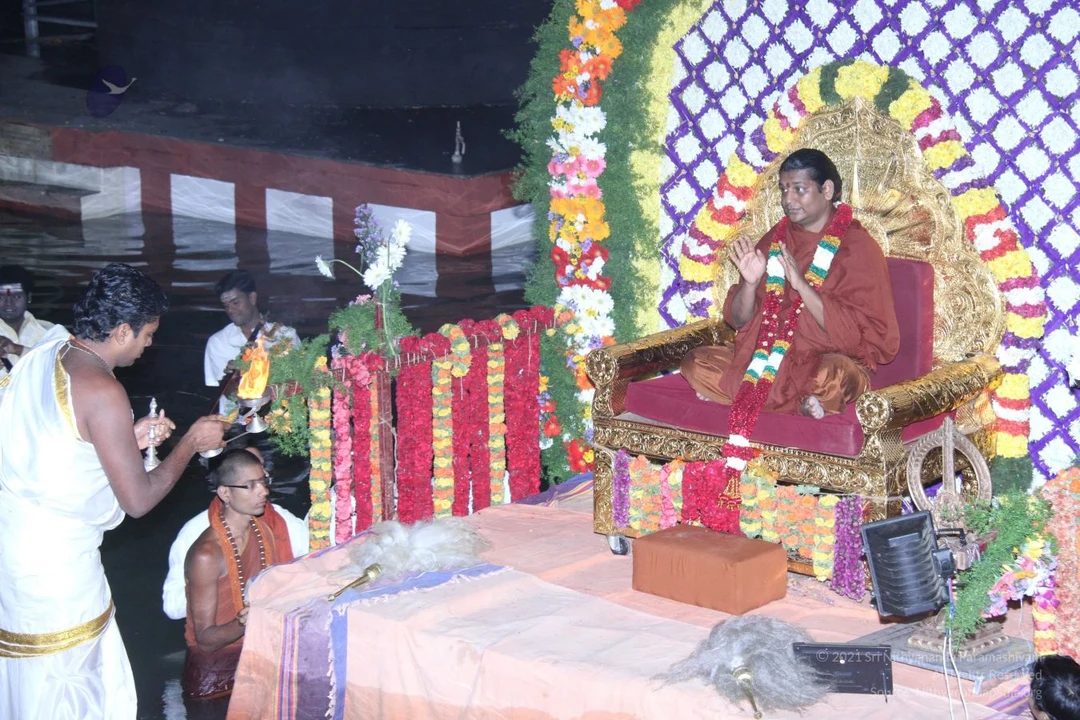
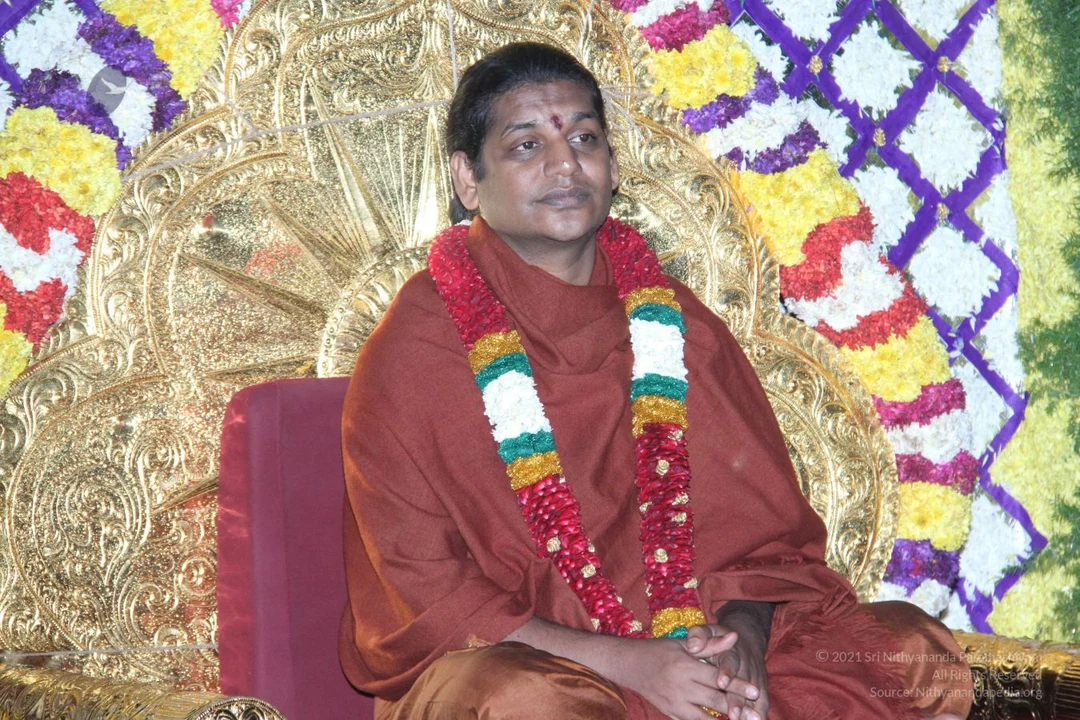
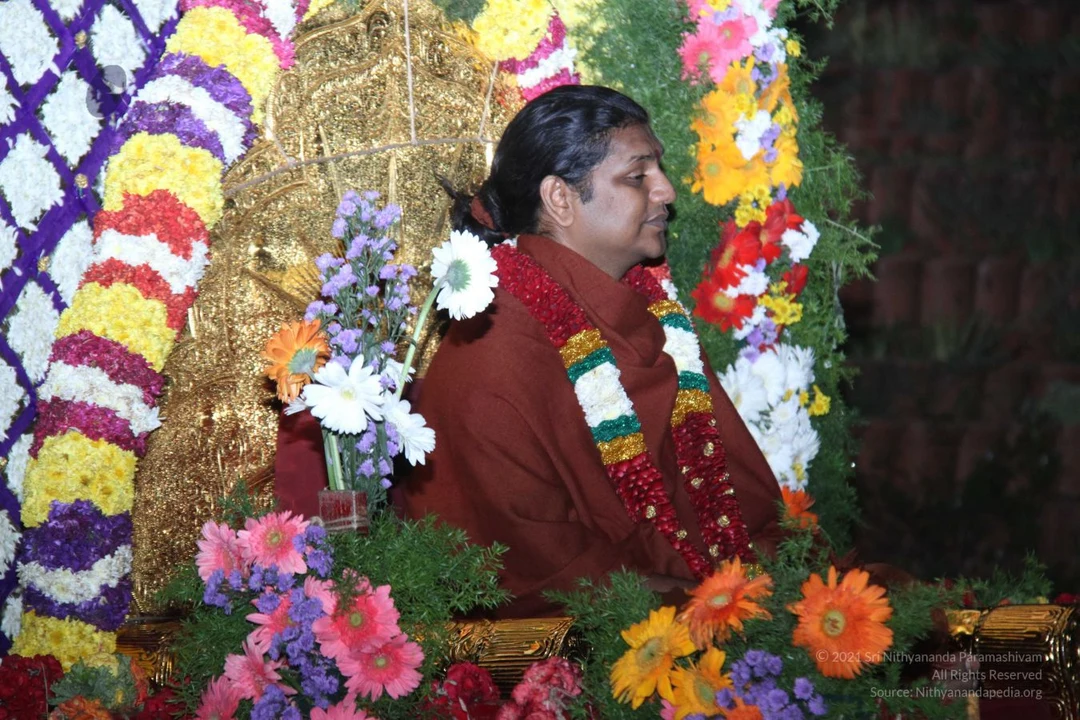
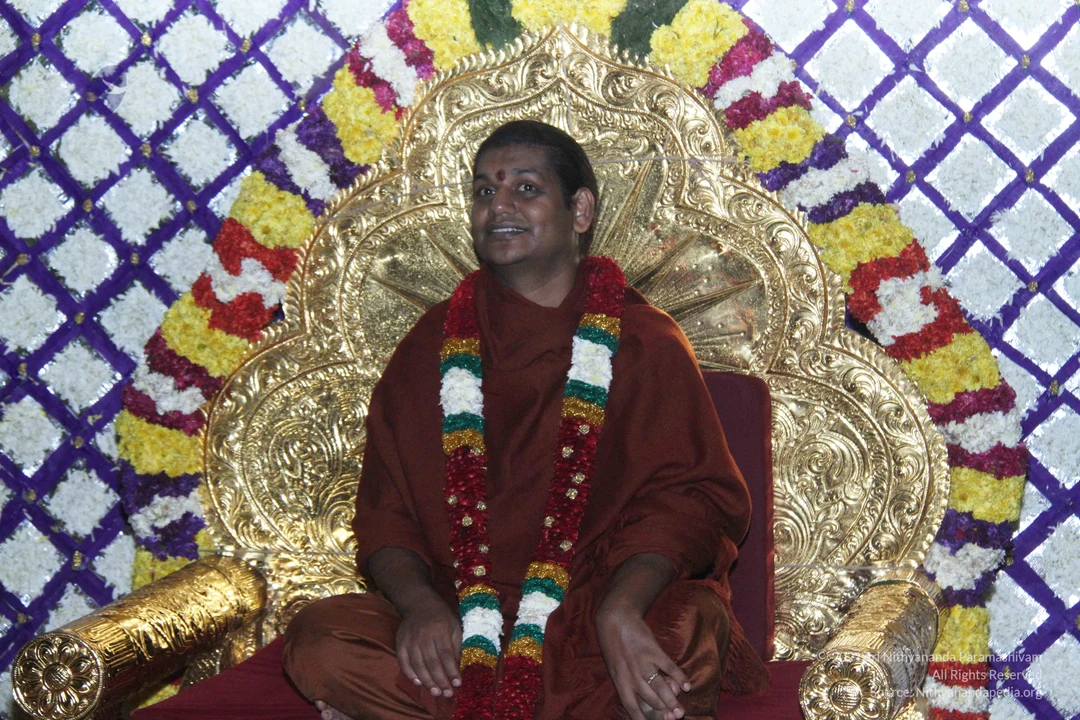
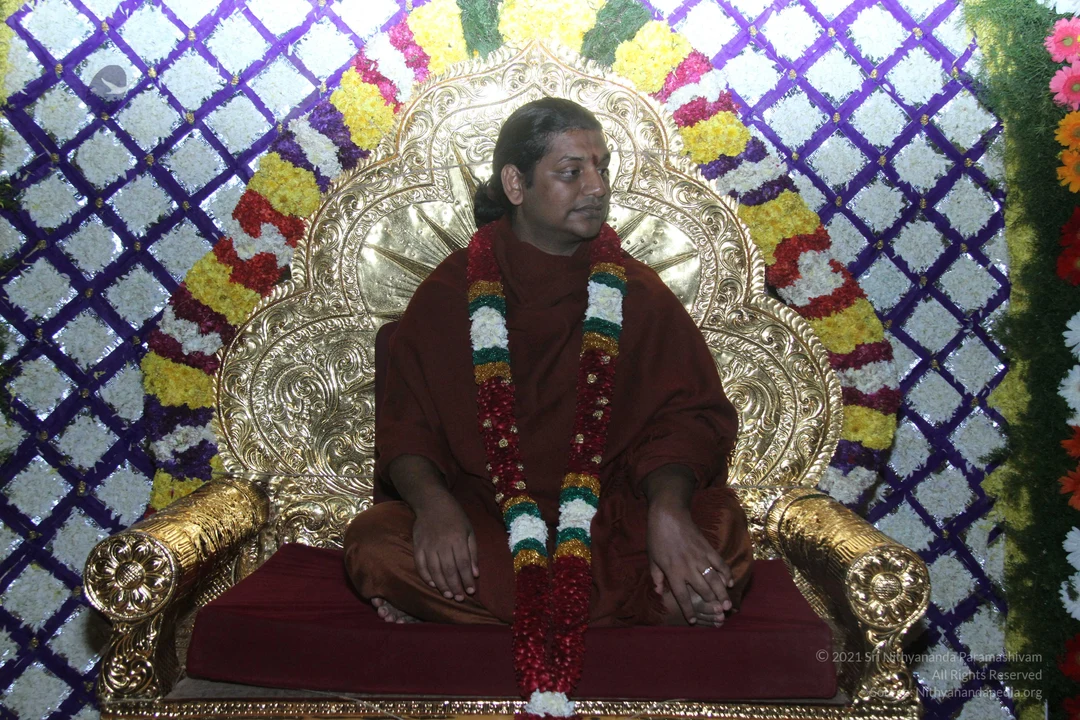
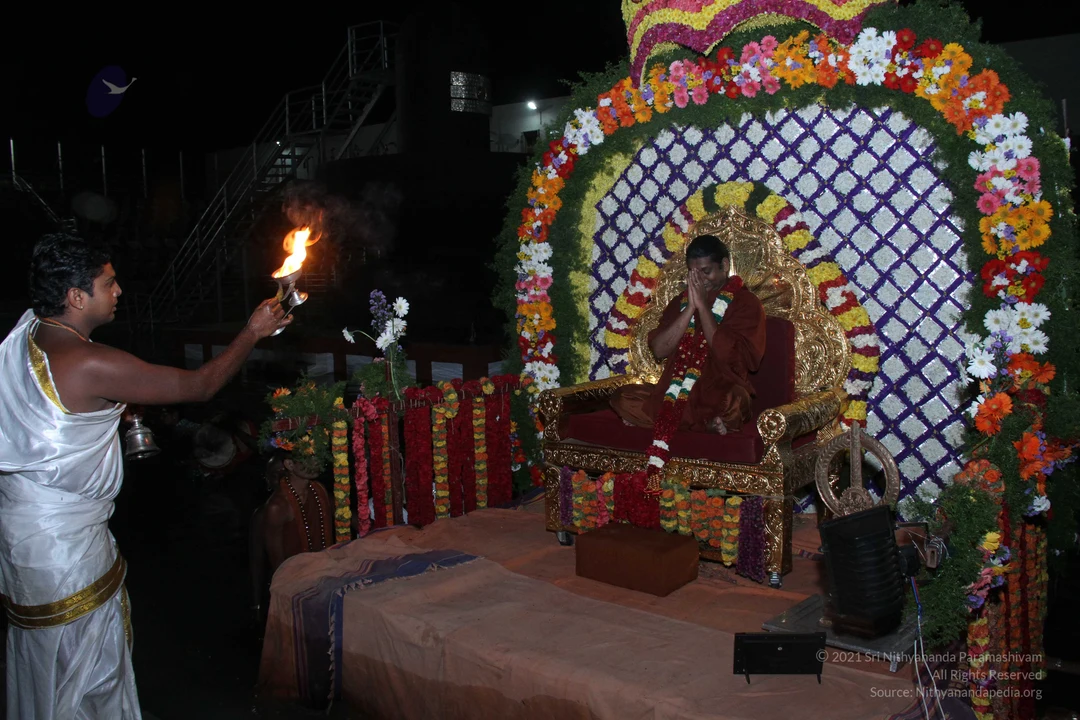
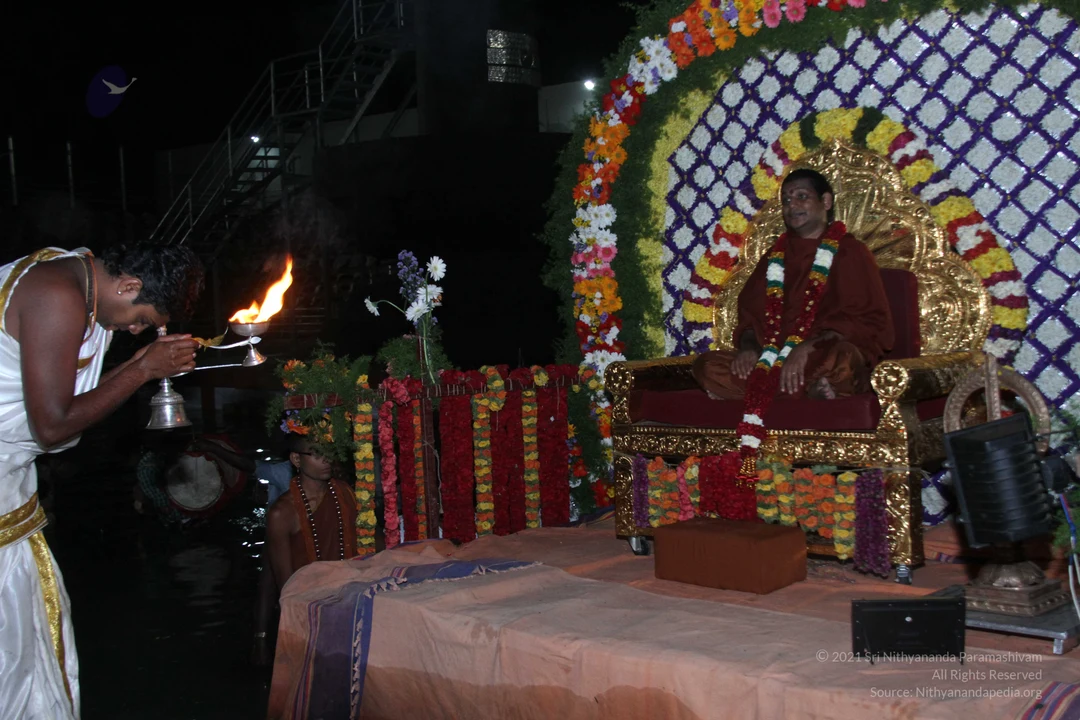
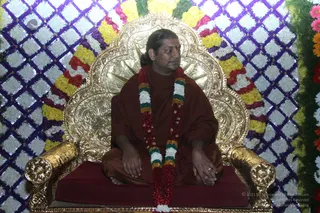
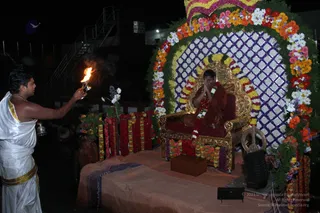
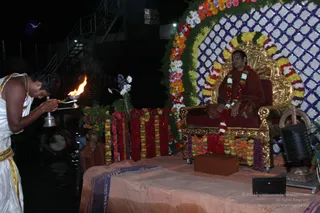
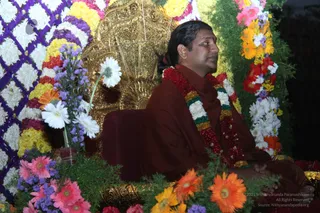
A seated man in orange-saffron robes sits on an ornate silver throne with repoussé floral and sunburst patterns. Two long garlands of red, yellow, white and green flowers hang across his chest, and a red bindi marks his forehead. His hands rest in his lap and his feet are bare. Marigold and red flower garlands frame the throne on both sides, with a purple lattice backdrop behind. This appears to be a satsang or darshan setting. Swamiji (probable): the orange robes, long dark hair, and ceremonial garlands on a throne match the candidate's cues, so he is listed as in person.Photograph of an evening ritual at a water-side temple tank. A man in white dhoti and shawl with gold border, bare-chested with a sacred thread, stands at left holding a lit oil lamp in front of a seated figure. The seated figure sits on an ornate gold throne with a red cushion, wearing an orange-brown robe, a garland of mixed flowers, and palms pressed together at chest level. The throne is decorated with garlands in red, orange, yellow and white, and a backdrop of white flowers and a purple lattice. A kalasha-like brass vessel and bell are visible near the lamp, and a person in orange robe sits partly submerged at the water's edge. Steps and a large stone structure appear in the background. a person: the seated figure in orange robe, rudraksha-style garland and ornate throne is a candidate.A night-time photograph of a flower-decorated shrine platform floating on dark water beside a large black stone Shiva lingam and a steel staircase. A figure in white clothing sits on the decorated platform, and several men in saffron and orange robes stand or kneel in the water around it. Garlands of red and white flowers hang from the structure, and a tiered tower with a colourful dome is decorated with flower strands. Stone seating rises in the background.A photograph of a flower-decorated golden throne set inside water at night, with a large floral canopy of orange, yellow, white and pink blooms above it. A seated figure in a maroon-red robe with a shawl and a multi-coloured flower garland sits on a red cushion, smiling. Around the platform, several people stand waist-deep in water in white dhotis and orange-and-saffron garments, holding ceremonial staffs, a conch-shaped vessel and a drum. Behind them, a brick wall is lined with lingam-shaped stone forms draped in white cloth. A small brass lamp stands at the right edge.Night photo of a floating platform on a water tank, decorated with a flower-covered arch of orange, yellow, white and pink blossoms over a purple lattice, topped with a large striped floral canopy. A seated man in orange-red robes with a red-and-white garland sits on an ornate gold throne with a red cushion, a probable Swamiji by appearance, with long hair and saffron clothing. Several men in white dhotis and orange-red shawls stand or wade in the water beside the platform, and a brass trident-like ceremonial object stands on the right, with fans and small offerings on the deck. Seats fill the tank steps in the background.A photograph of a seated man with short dark hair and a red bindi, his palms pressed together in anjali mudra at chest height. He wears a rust-orange shawl-style robe and a garland of red, white, green and yellow flowers draped over his shoulders. He sits on a red cushioned seat in front of an ornate gold throne-back with floral carving, framed by yellow, red, white and purple flower decorations. One physical person is visible.

02-MorningNithyaSatsang
15 photosSource gallery
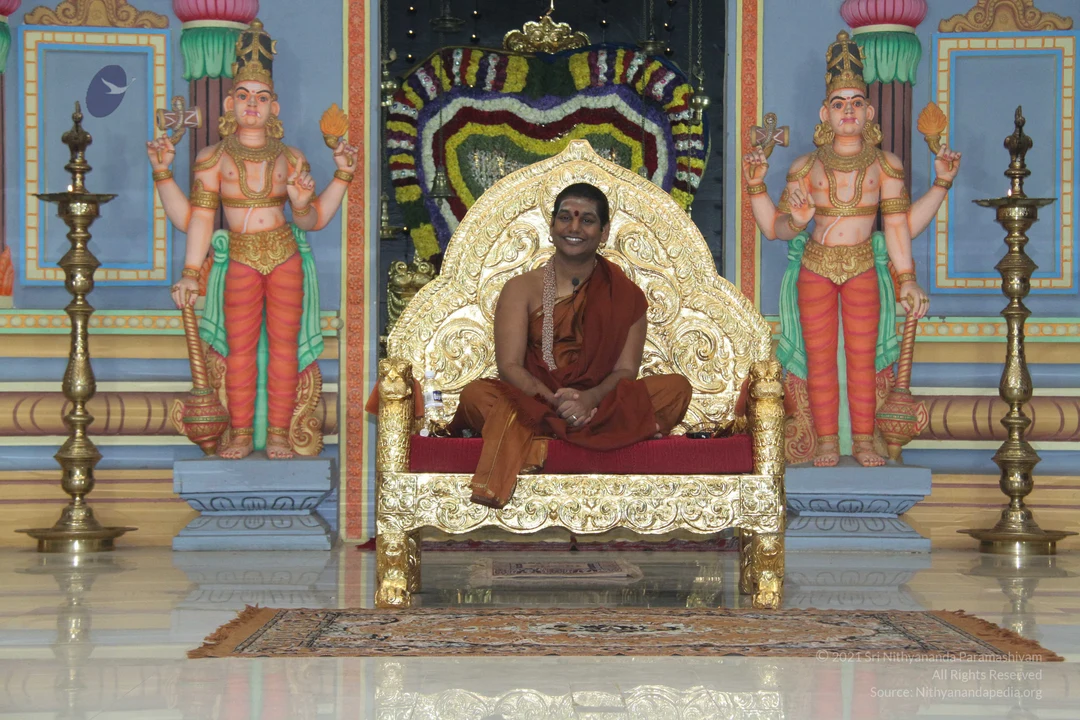
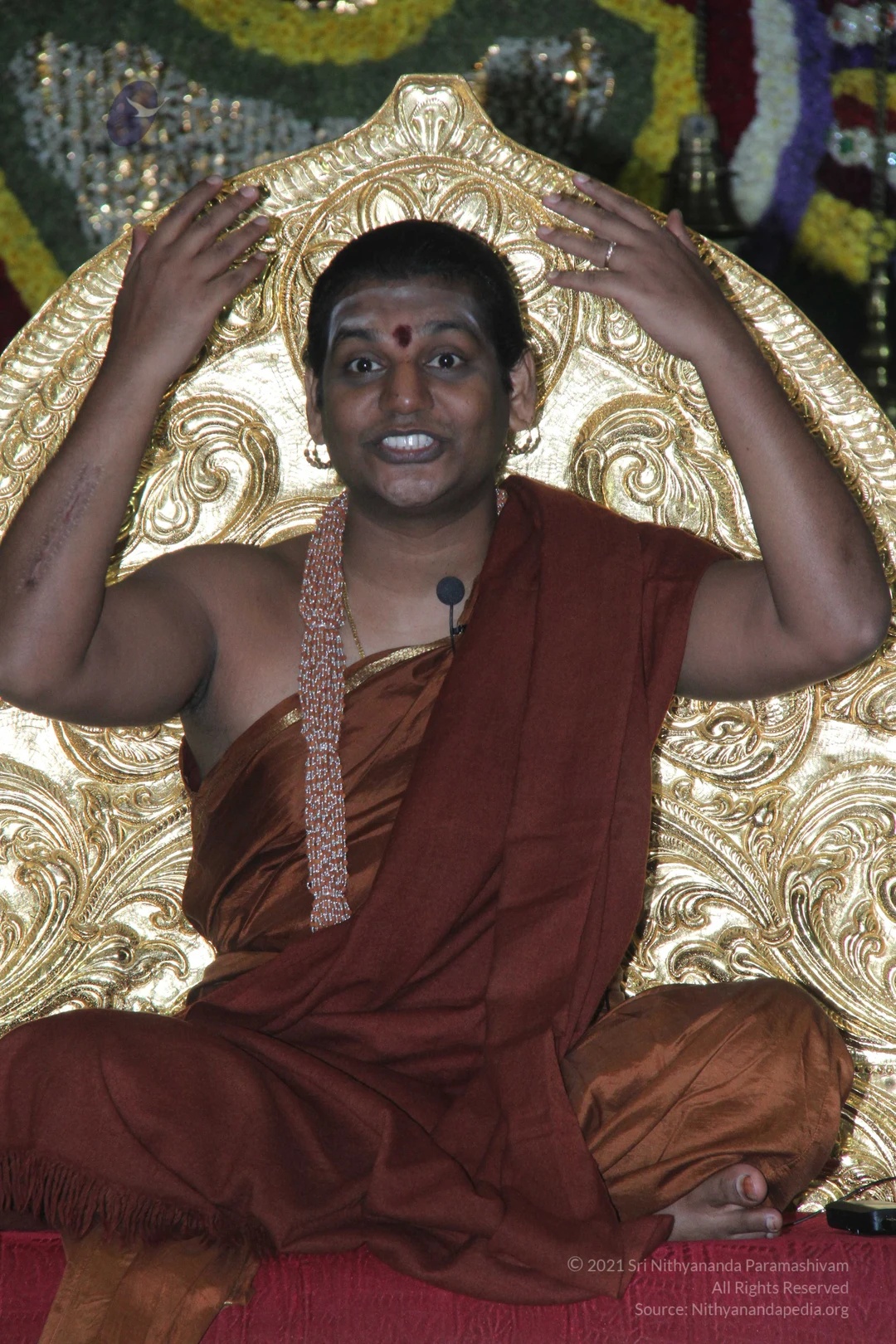
A man in orange-saffron robes sits cross-legged on an ornate gold throne with a red cushion, centred in a temple hall. He wears a red tilak on his forehead, a beaded necklace, and a saffron shawl over one shoulder, and smiles while his hands rest in his lap. Behind him is a large heart-shaped garland of flowers in yellow, red and green. Flanking the throne are two painted deity figures with multiple arms, holding conch and mace, dressed in orange dhotis and green sashes. Tall brass oil lamps stand on either side, and a patterned rug lies on the glossy floor. The man's appearance, with his shaved head, saffron robes, beaded necklace and throne, is consistent with the a person label, though the face is not clear enough to confirm.A seated man in saffron-orange robes sits cross-legged on an ornate gold throne with a red cushion, smiling, hands folded in his lap. He wears a white beaded mala and a small red bindi. Behind him stands a colourful floral garland arrangement in red, yellow and green. Two large painted deity murti flank the throne, each with four arms, crowns, gold jewellery and green and orange garments, holding ritual objects. Brass oil lamps stand on both sides, and a patterned rug lies on the polished floor.A man seated cross-legged on an ornate gold throne with carved lion-head armrests and scrolled floral backrest, on a red cushioned dais. He wears a rust-orange sannyasi wrap over his shoulders and a beaded rudraksha mala with a gold chain, has a red bindi on his forehead, and smiles with hands resting on his knee. A water bottle sits beside the throne, with flower garlands in purple and yellow and an oil lamp behind him. a person, identified by the throne, orange robes and rudraksha mala cues. A microphone is clipped near his collar.A man seated cross-legged on an ornate gold throne with carved lion-head armrests and a red cushion, speaking into a small clip microphone. He wears a reddish-maroon robe over one shoulder and a rust-orange dhoti, with a red bindi on his forehead, a beaded rudraksha-style mala hanging from his neck and a water bottle beside him. Behind him are a colourful deity murti with orange and gold ornaments and a garland-decorated backdrop with floral strings. Appearance-based label: a person, seated in person on the throne in maroon robes with a rudraksha mala.A seated man in a rust-orange monastic robe sits cross-legged on an ornate gold throne with a red cushion and carved lion-head armrests. He holds a rudraksha mala up in his right hand while gesturing with his left arm extended along the armrest, speaking into a lapel microphone. A red tilak marks his forehead. Behind him are marigold and multicoloured floral garlands and a painted deity figure with green dress and gold bangles at the right edge. A plastic water bottle sits beside the throne. a person: the seated speaker has a shaved head, a red forehead mark, a rudraksha mala and a saffron robe on a golden throne, though the appearance cues are not conclusive.A man sits cross-legged on a red cloth before an ornate gold-embossed throne-back, speaking animatedly with both hands raised beside his head. He wears a rust-brown saffron-toned robe draped over one shoulder, a beaded rudraksha-style mala hanging on his chest, a small red bindi and white forehead markings, and small hoop earrings. A small clip microphone is pinned to his robe. Behind him are garlands of yellow, white and purple flowers and brass lamps. Ceremonial satsang setting.

03-KalpataruMeditation-Darshan
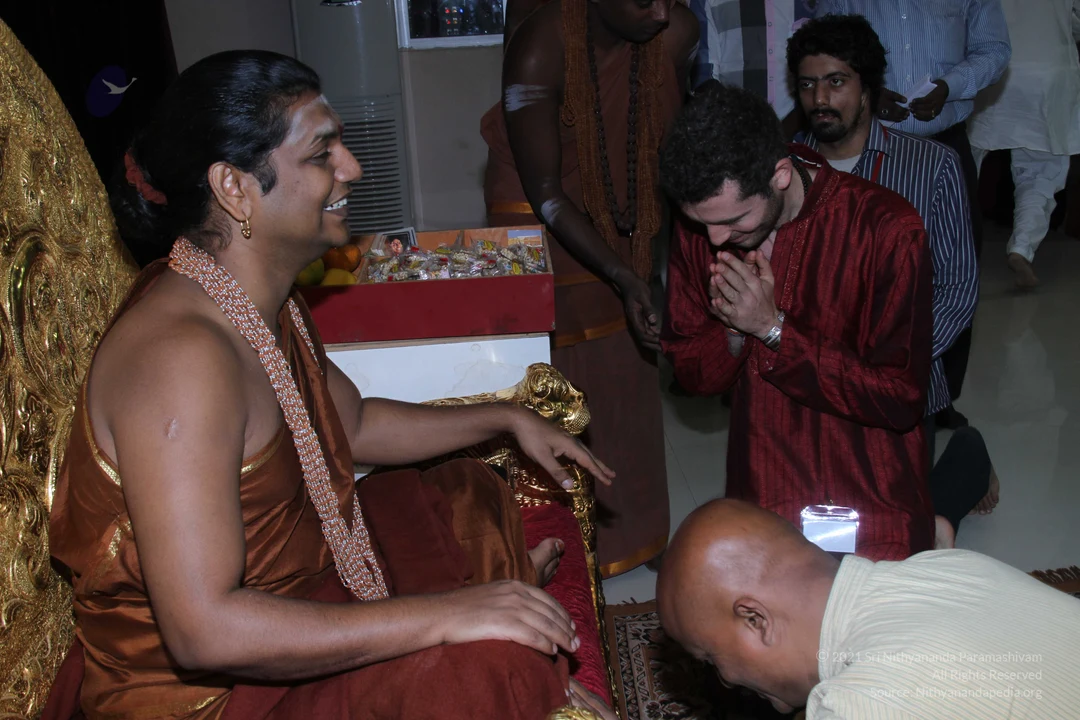
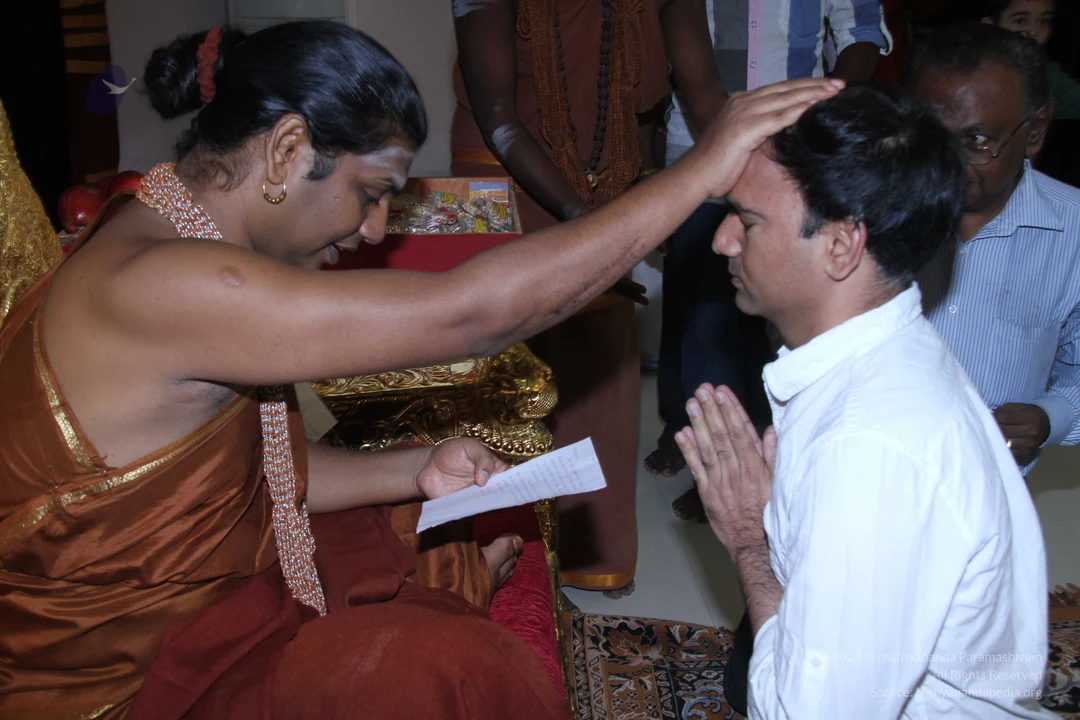
3 photosSource gallery
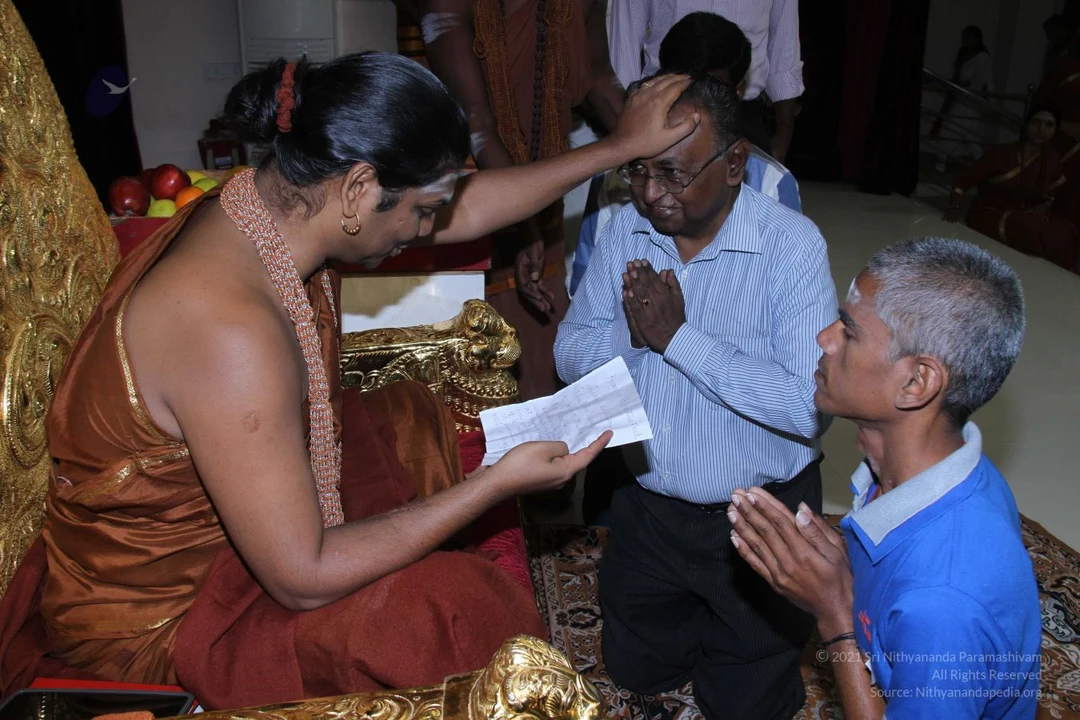
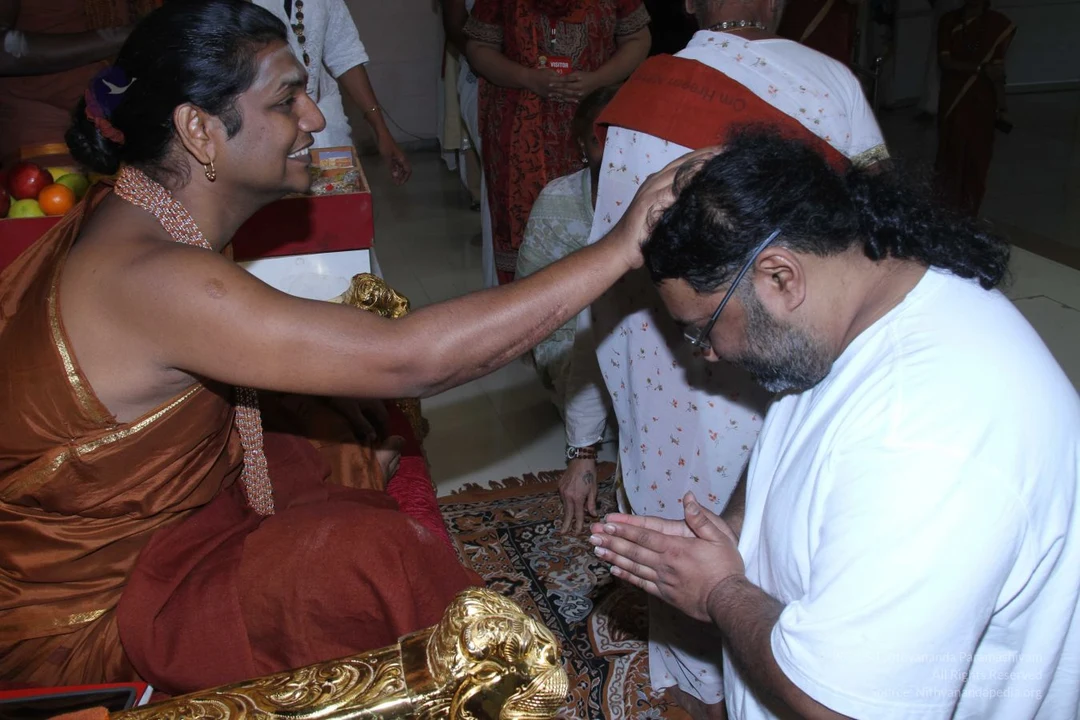
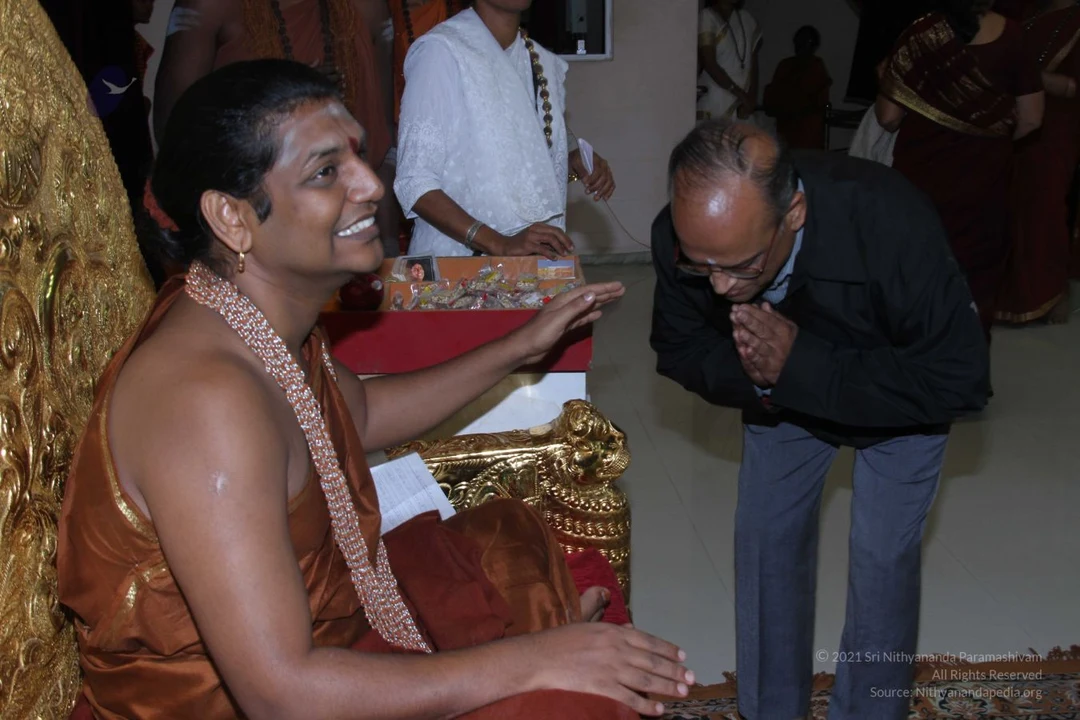
A seated man in an orange-brown saffron robe with a rust-coloured shawl and a beaded necklace is smiling as he lays his right hand on the head of a devotee bowing low. The devotee wears a blue collared shirt and glasses. Beside them a gilded ornate object is visible, with a red box of sweets behind. Another bowing man in a white shirt is partly visible, and standing figures in orange and white clothing stand in the background. Scene suggests a padapuja-style blessing; the seated man's appearance matches the page's a person flag with several cues, so he is described as a person receiving devotees in an ashram setting.A seated man in an orange-brown silk garment and a long pale beaded necklace sits on an ornate gold throne with carved lion-head arms, smiling and extending his hand. In front of him a bald man in a cream shirt bows low with his head to the floor on a patterned carpet. A bearded man in a maroon kurta stands with palms pressed together in namaskar, and other people in striped shirts and white kurtas stand behind. A red tray of fruit and sweets sits on a white cabinet in the background. a person is seated on the throne, identified by the golden throne, orange silk garment and beaded necklace, receiving a devotee's obeisance.A seated figure in saffron-orange draped robes with a long rudraksha-style bead necklace and a pink-and-gold hair ornament places a hand on the forehead of a kneeling man in a white shirt with palms pressed together in namaskar. The blessing figure holds a folded paper in the other hand. Behind them a golden decorated tray holds offerings including fruit and sweets, and an adult in a striped blue shirt with glasses and another person in orange robes watch the blessing from the background. The setting appears to be an indoor room with a patterned rug, consistent with a padapuja or darshan blessing. The blessing figure has long hair and distinctive saffron ceremonial attire, but the image is not clear enough to confirm identity, so the figure is described by role.

04-Theppal

6 photosSource gallery
A seated man sits on an ornate gold throne with a wide, scrolled, halo-like back, framed by a backdrop of purple lattice panels studded with white flowers and yellow, red and purple garlands. He wears a rust-orange robe and a multicoloured garland of red, green, white and gold flowers draped over his shoulders, with a red bindi on his forehead. His hands rest on his lap as he looks up and smiles. Gold-embossed armrests flank the throne. The appearance is consistent with the page's reference to a person, a probable candidate given the saffron-orange clothing, throne and garland cues.A photograph of a man seated cross-legged on an ornate gilded throne with a red cushion, in front of a decorative backdrop of white and purple lattice with yellow, red, white and pink flowers. He wears a maroon-red robe, a multi-strand garland of red, white, green and yellow flowers around his neck, and a small red tilak on his forehead. His hands rest on his lap and he looks to the side. The scene appears to be a ceremonial seat of honour. Appearance-based label: Swamiji (probable), seated person with long swept-back hair, red robe and garland on a golden throne.Night outdoor scene at a flower-decorated stage. A priest in white dhoti and shawl with a gold border stands at left holding a lit oil lamp aarti flame in his right hand. Seated on an ornate gold throne with red cushion is a figure in orange-brown robes with palms pressed together in namaste, wearing a flower garland. The throne is framed by an arch of orange, white, pink and red flowers and a purple-and-white lattice backdrop, with red and yellow garlands draped below and a brown cloth on the platform. The priest's appearance does not clearly match the page's claim, so the seated figure is recorded only as a person in robes.Night photograph of an outdoor ceremony. A man in white dhoti with gold border, bare-chested, holds a lit oil lamp (aarti) and a bell toward a seated figure on an ornate gold throne with red cushions. The seated man wears saffron-orange robes, a rudraksha-style garland of white and red flowers, and a small red tilak on his forehead. The throne sits under a large arch of marigolds, roses and white blossoms, with a flower-decorated altar, a red and orange garland-draped stand, and a saffron-draped platform in front. Another man in saffron clothing and a beaded mala stands partly hidden at left, and a drum is visible in the dark background. Stairs and a light stand are visible in the background.A smiling man sits on an ornate gold throne with a red velvet seat, wearing a maroon-brown robe and a multicolour garland of red, green, white and gold beads. He has a red bindi on his forehead and his eyes are lowered. Behind him are flower decorations of yellow marigolds, red roses, purple and white blossoms arranged on a white lattice. The throne's gold carved backrest radiates in a fan pattern. a person seated in the central throne position, dressed in the saffron-maroon robe of a sannyasi with a garland, in a flower-decorated satsang setting.A man seated in profile on an ornate gold throne decorated with flowers. He wears a dark maroon-brown robe and a red, white and gold garland with a green-and-white band, and has long dark hair tied back. Behind and around him are arrangements of white daisies, orange gerbera, yellow marigolds, pink flowers and purple blooms, with green foliage at the base. The setting is dim. a person: the seated man has long, swept-back hair and a garland, with ceremonial presentation on a throne, and is the.