Skip to content
Wednesday

11 December 2013

Nithyananda Diary | Bali Inner Awakening Day - 11 | Padapuja | Satsang | Meditation | Sarvadarshan

Dated photos
396
Source pages
1
Media
2
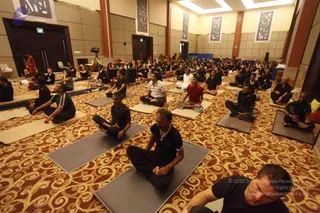
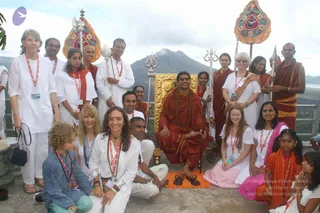
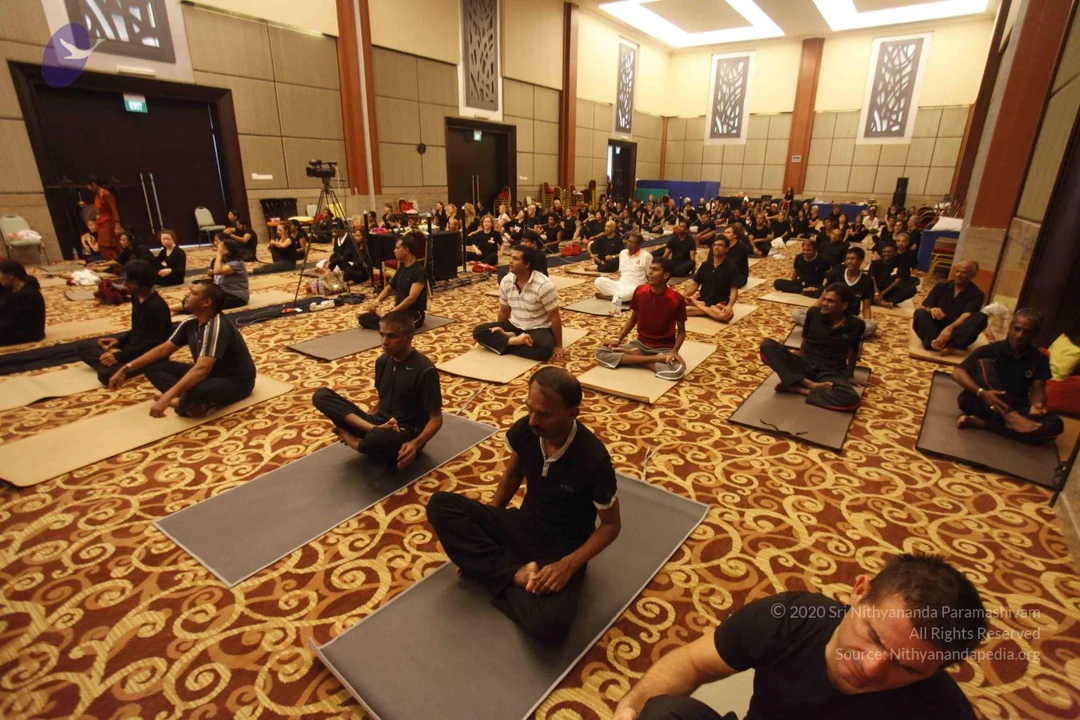
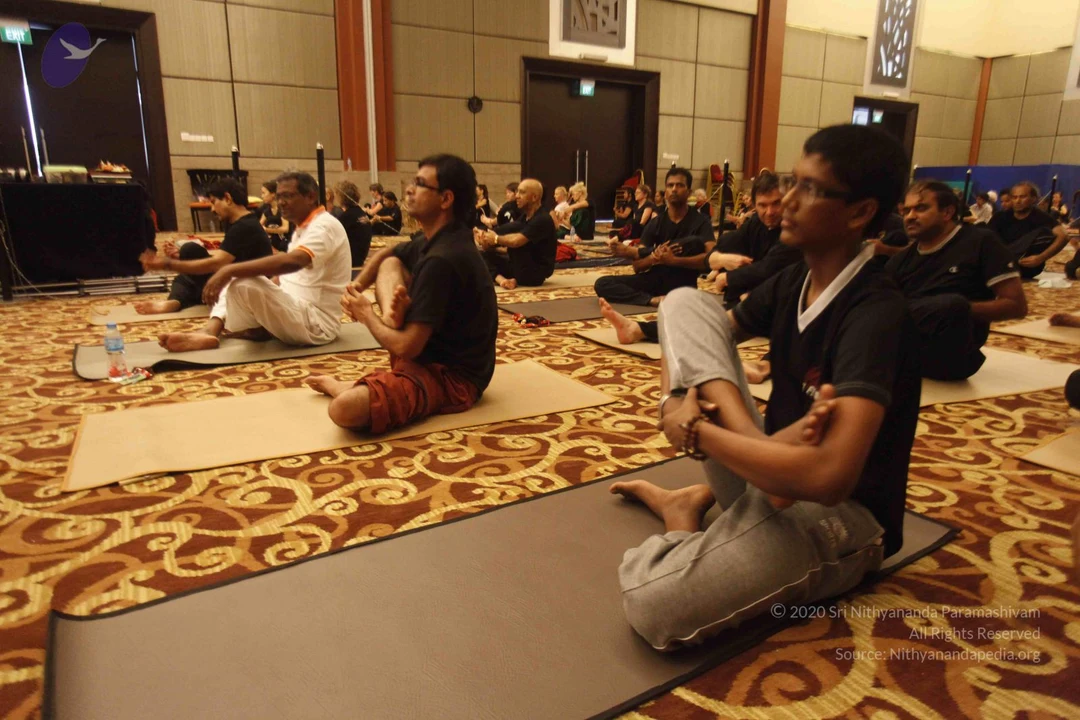
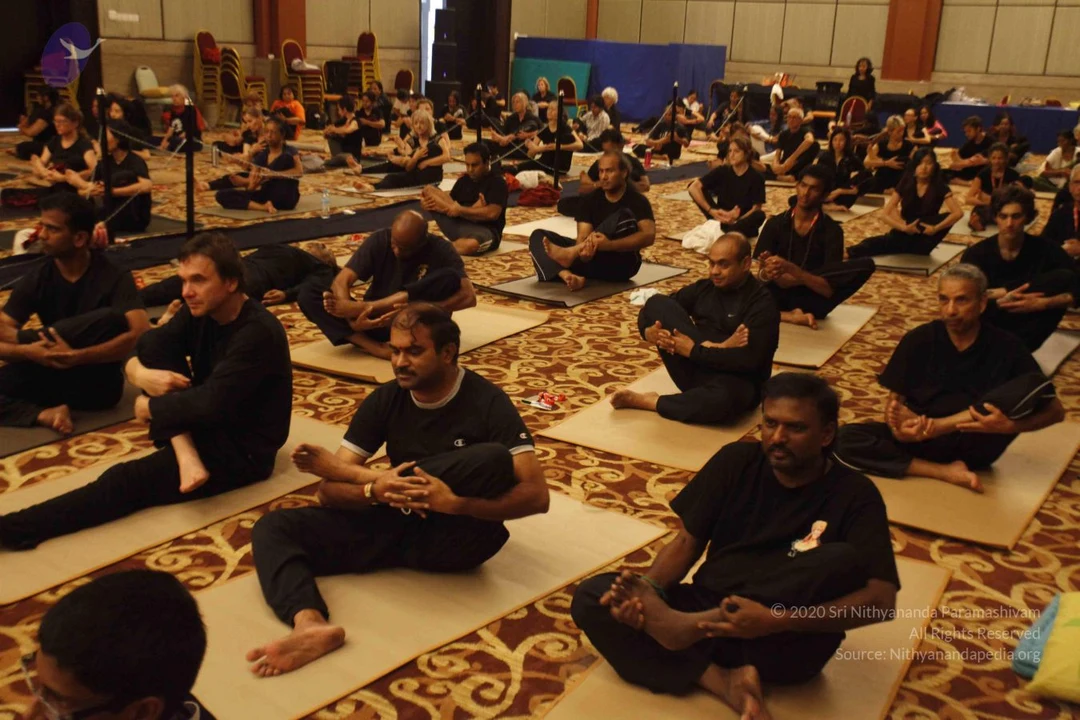
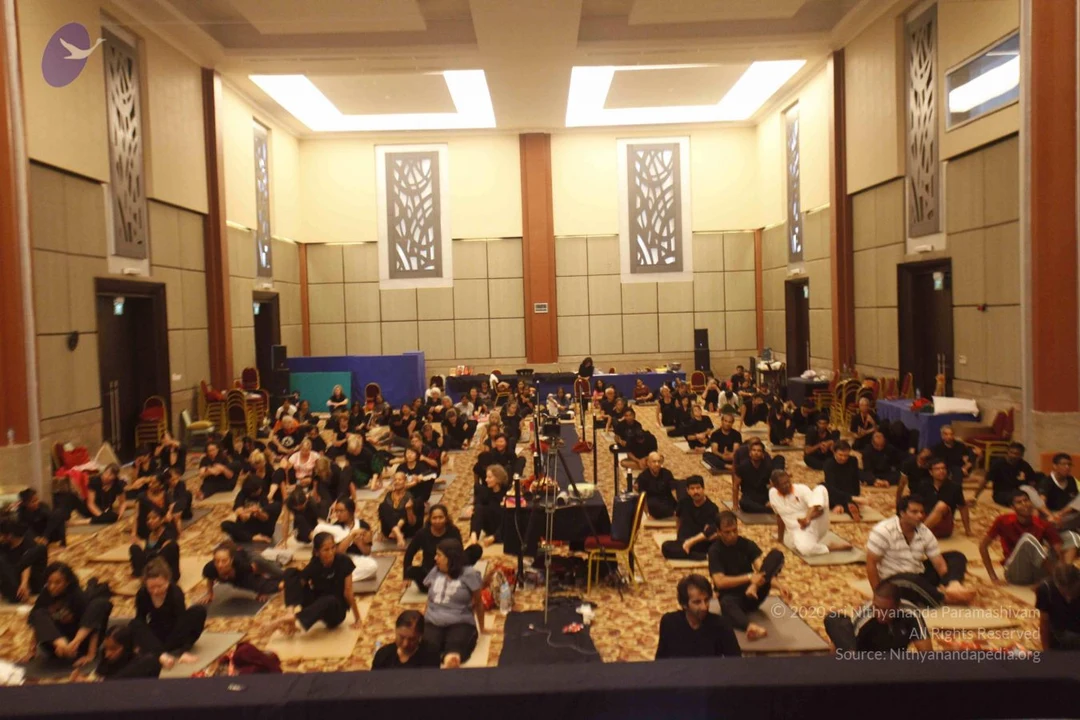
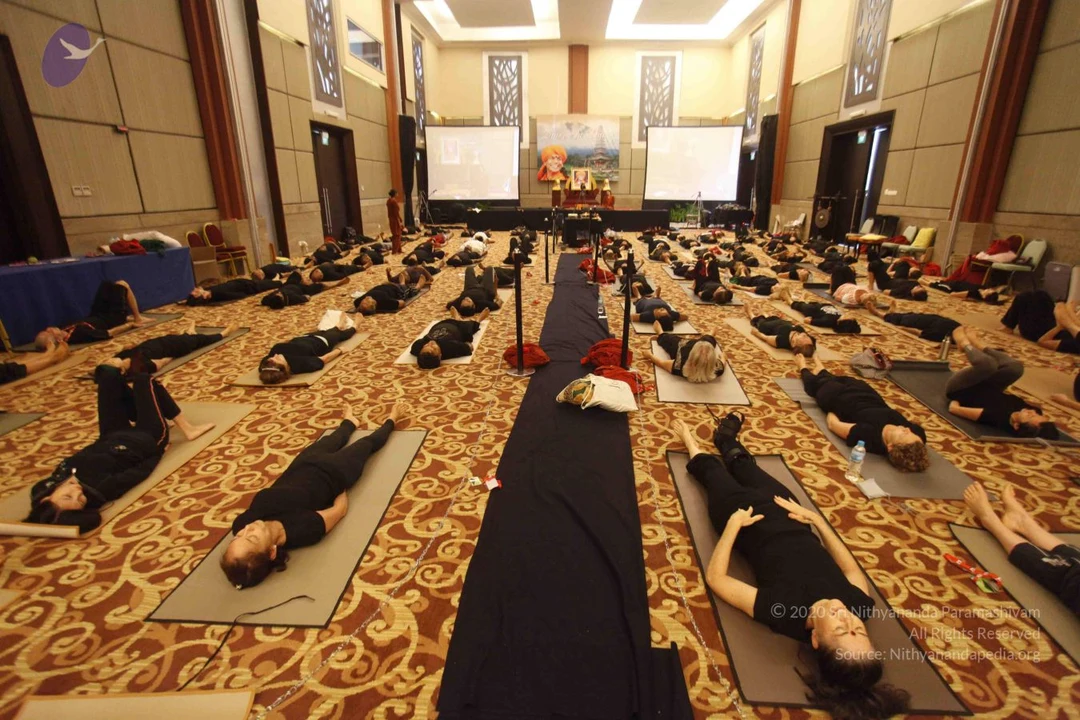
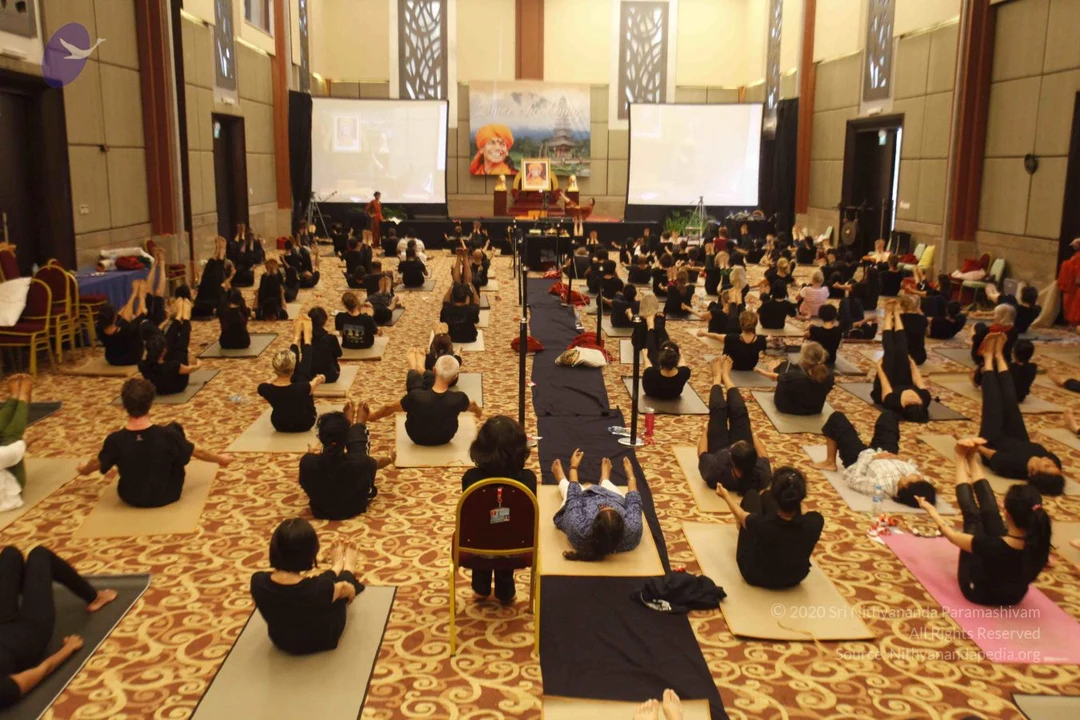
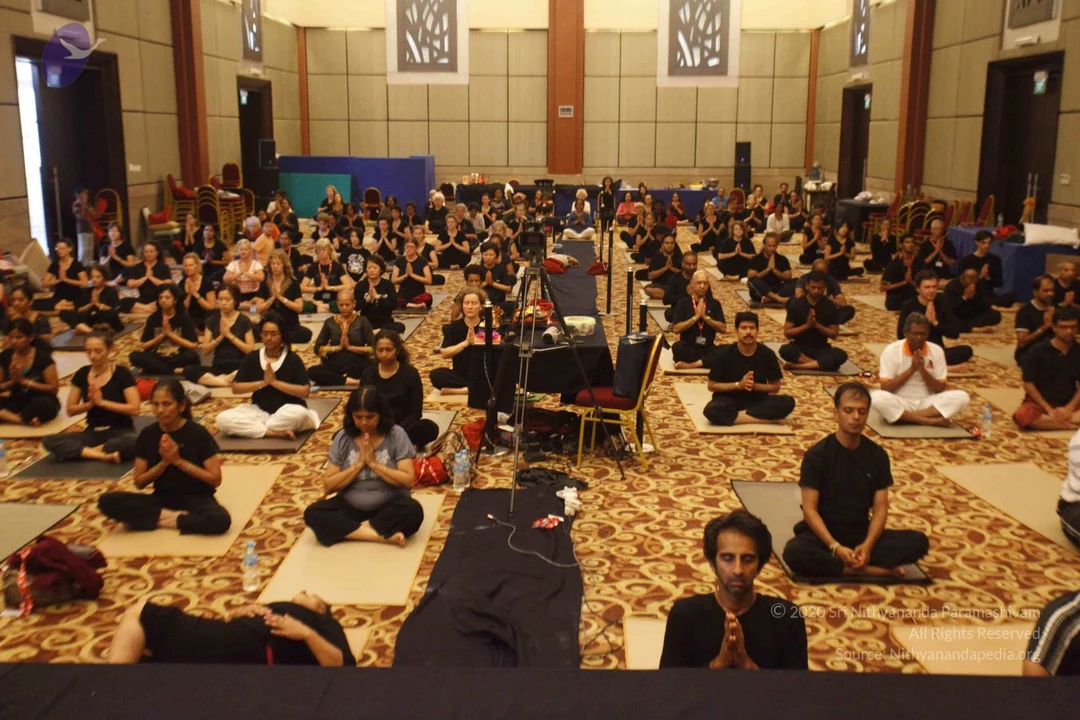
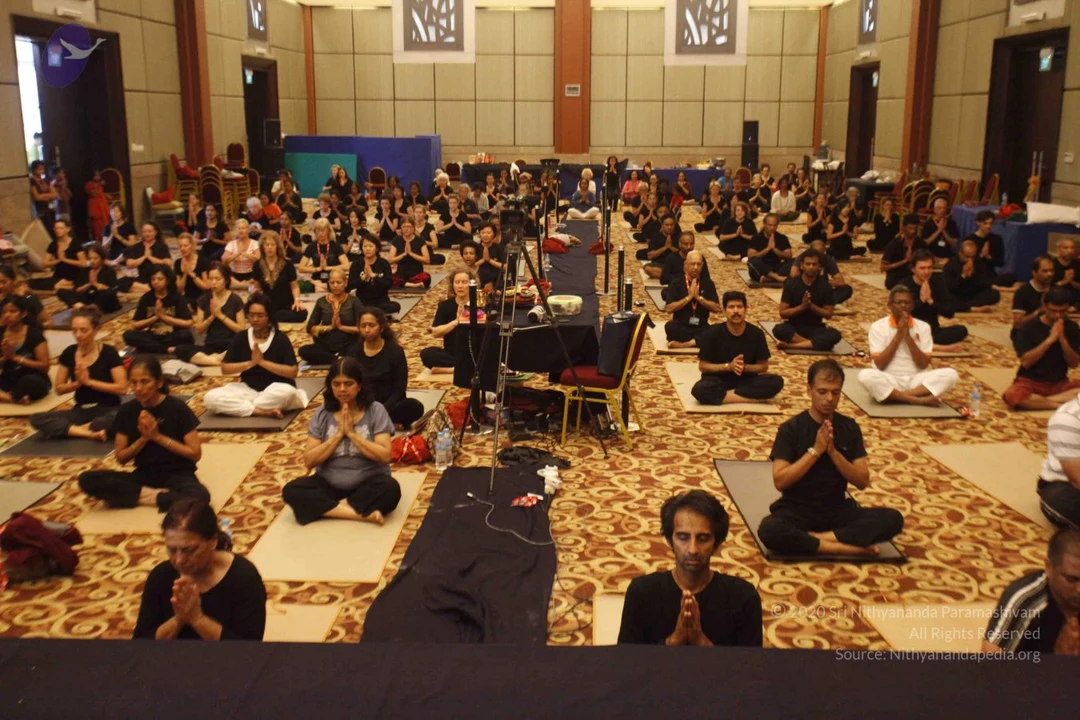
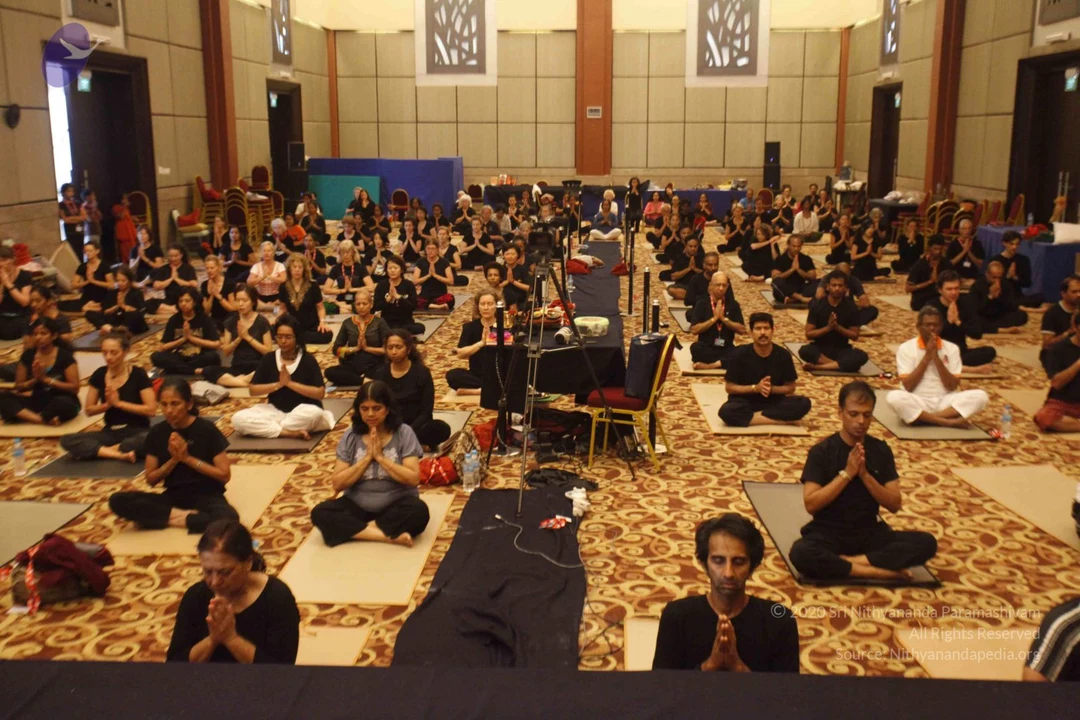
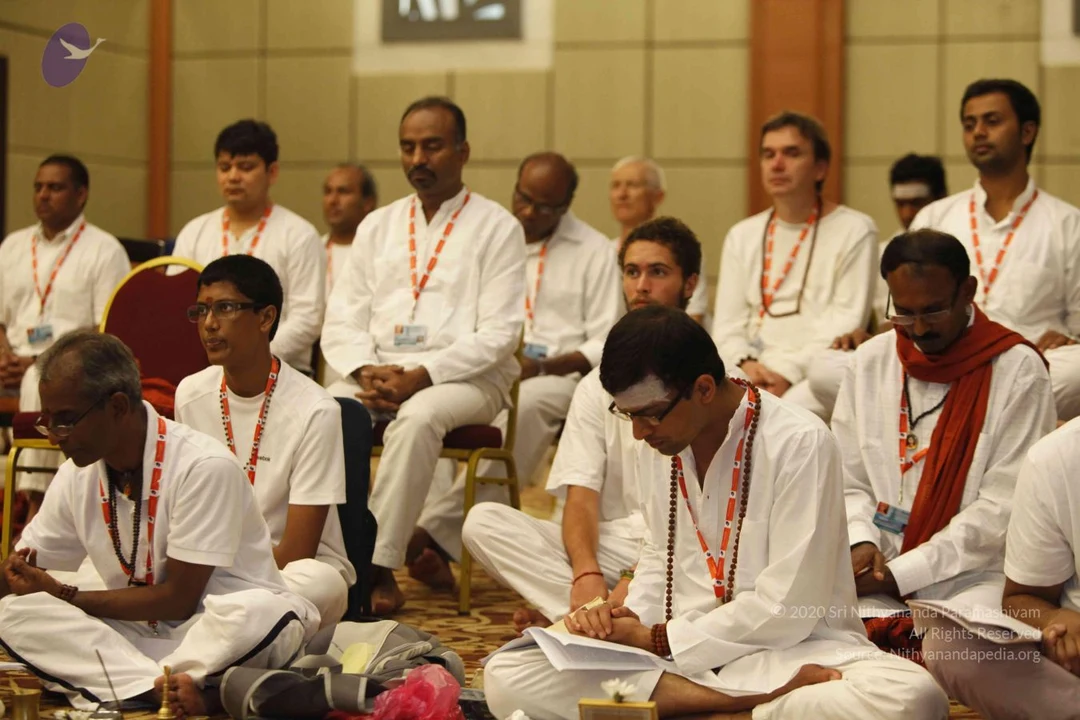
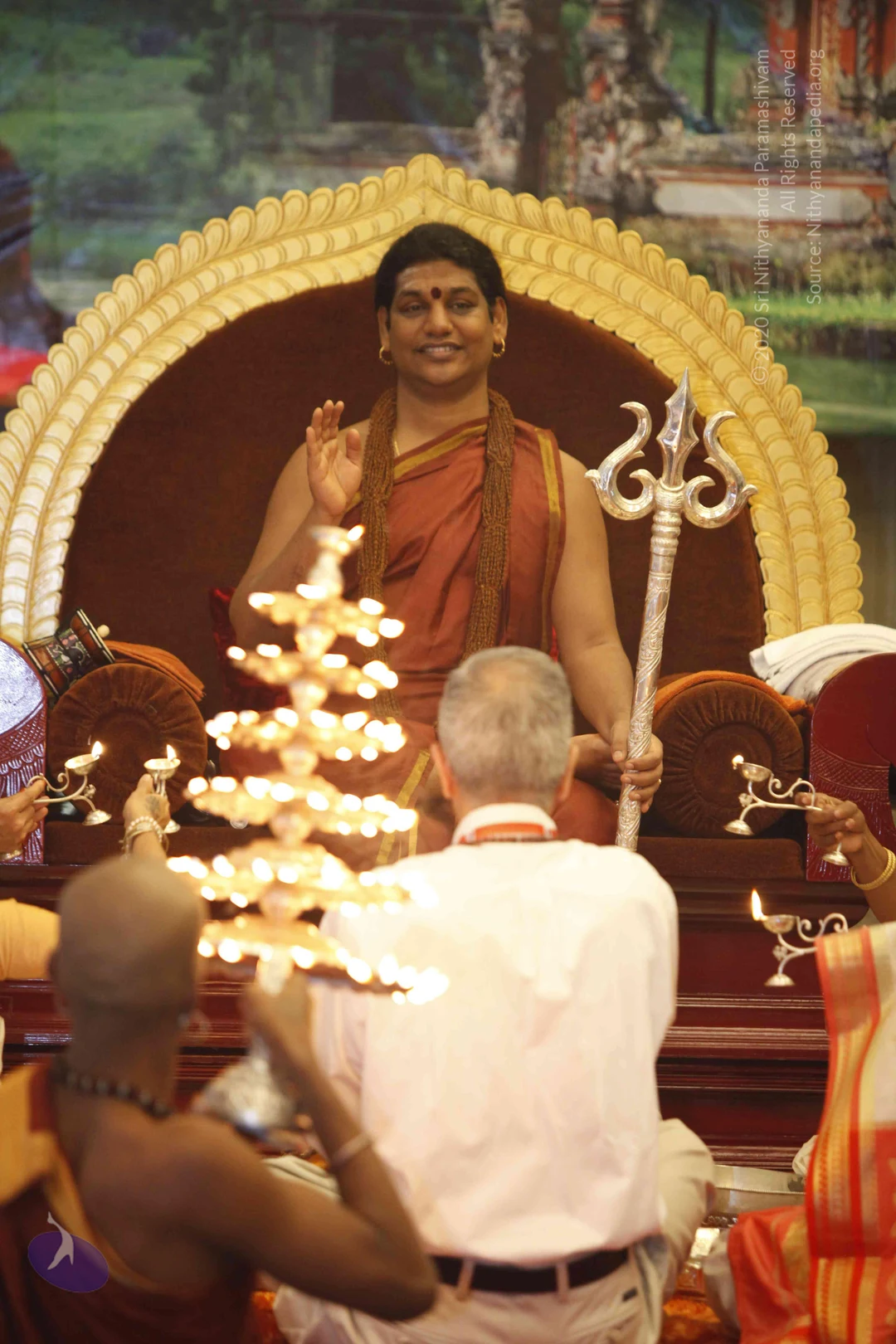
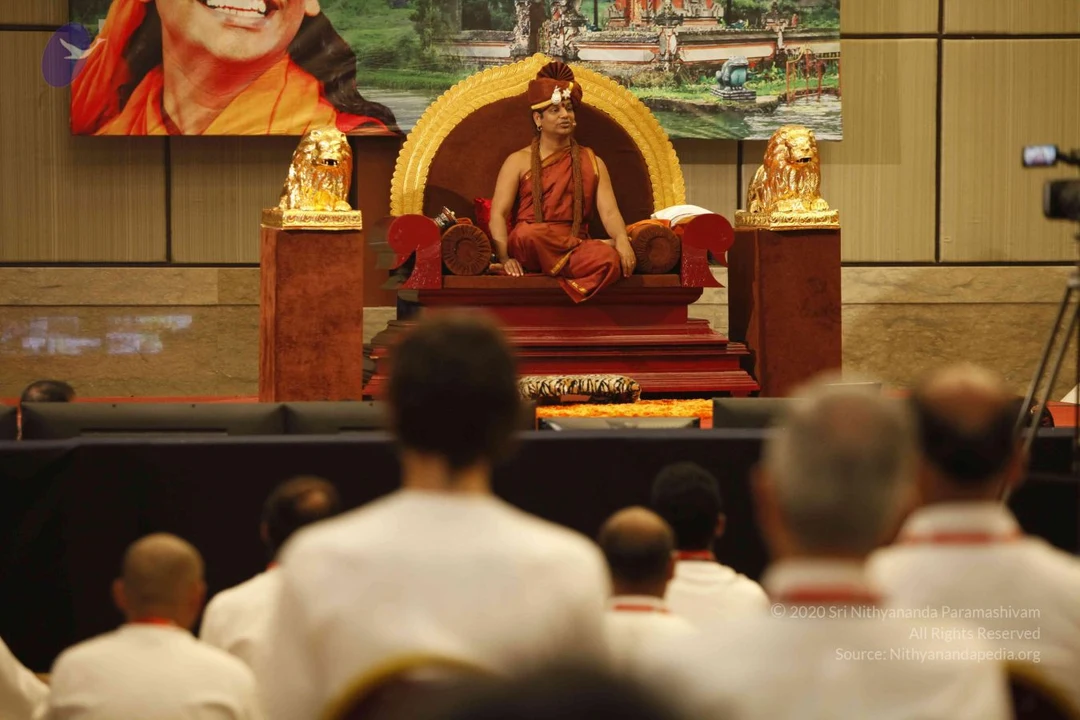
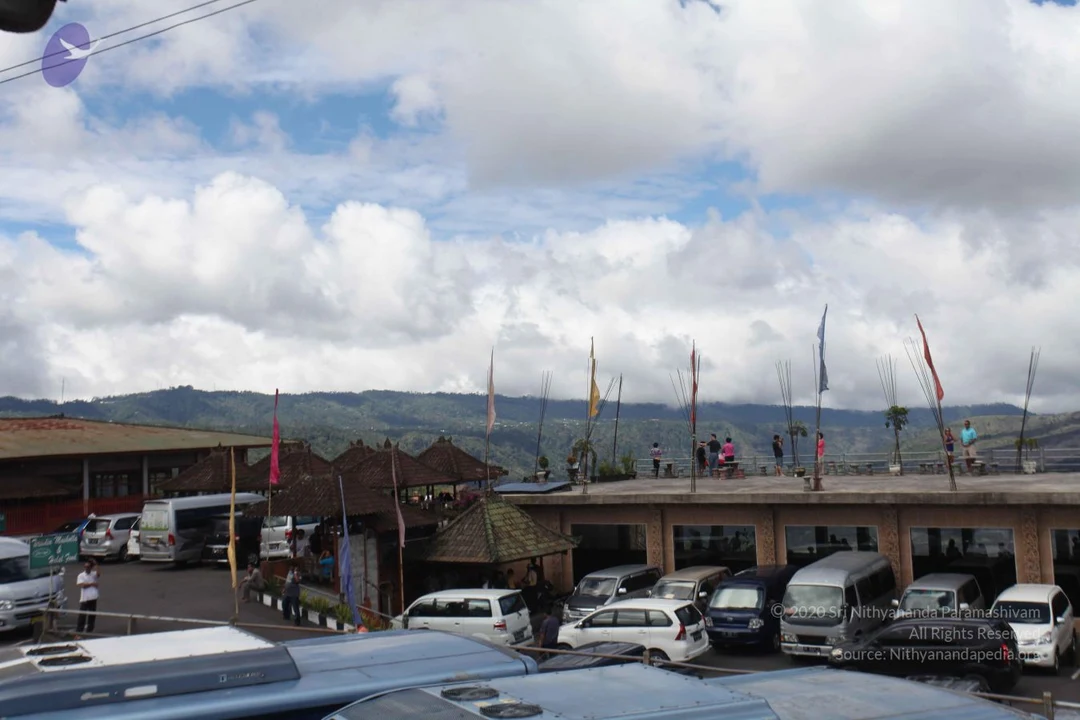
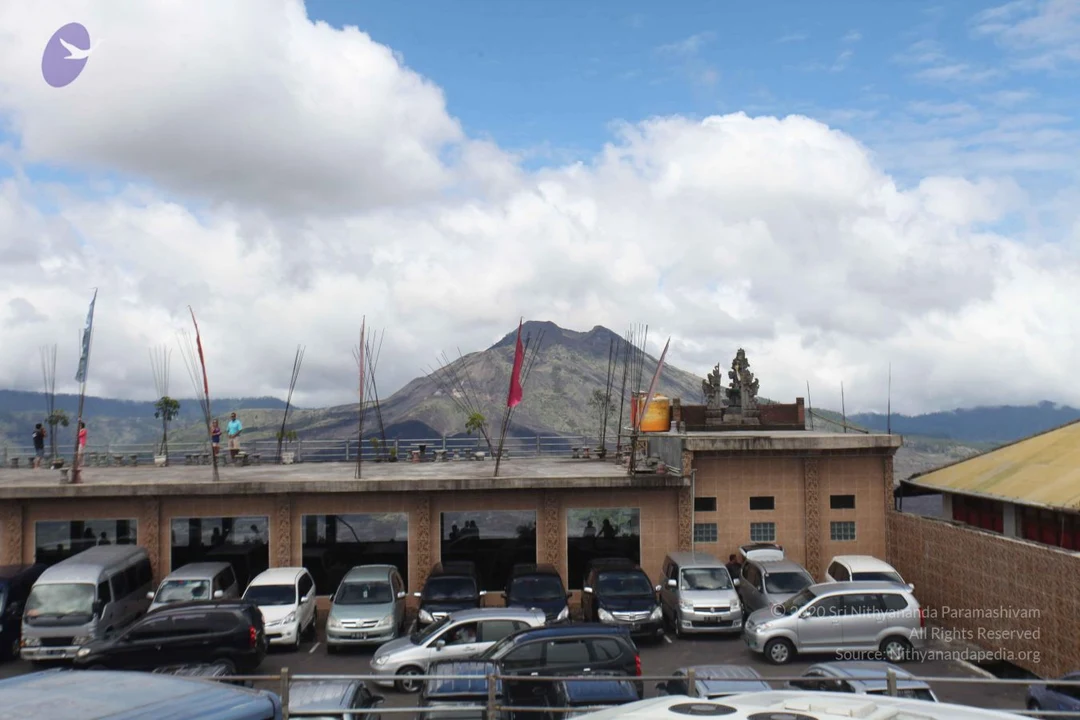
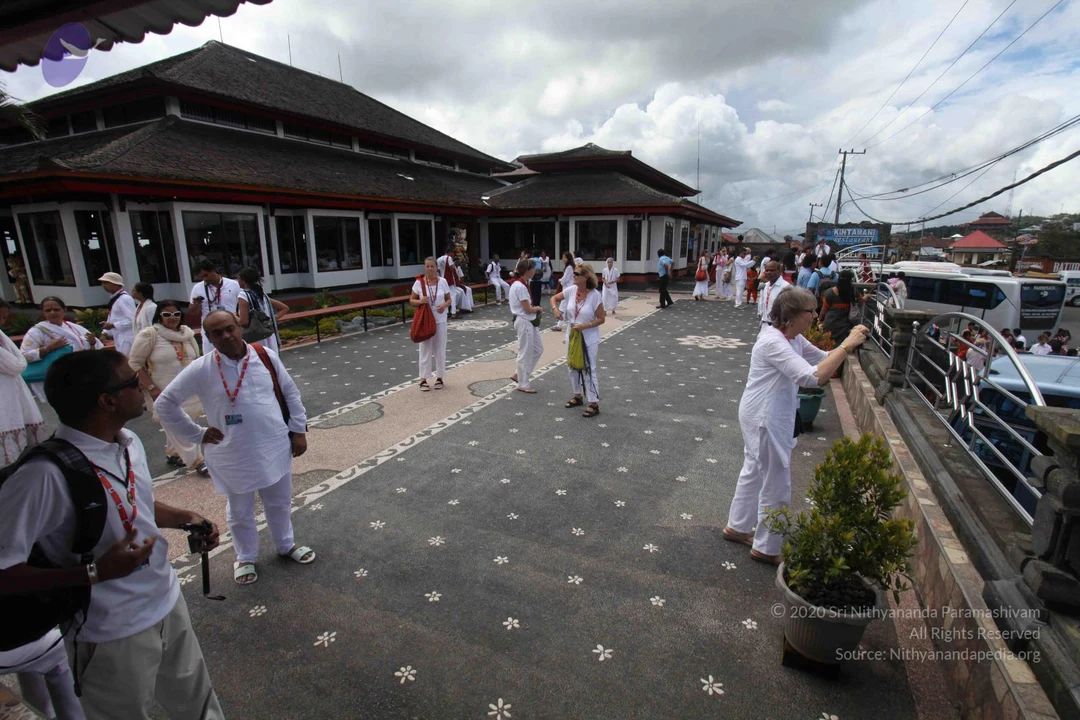
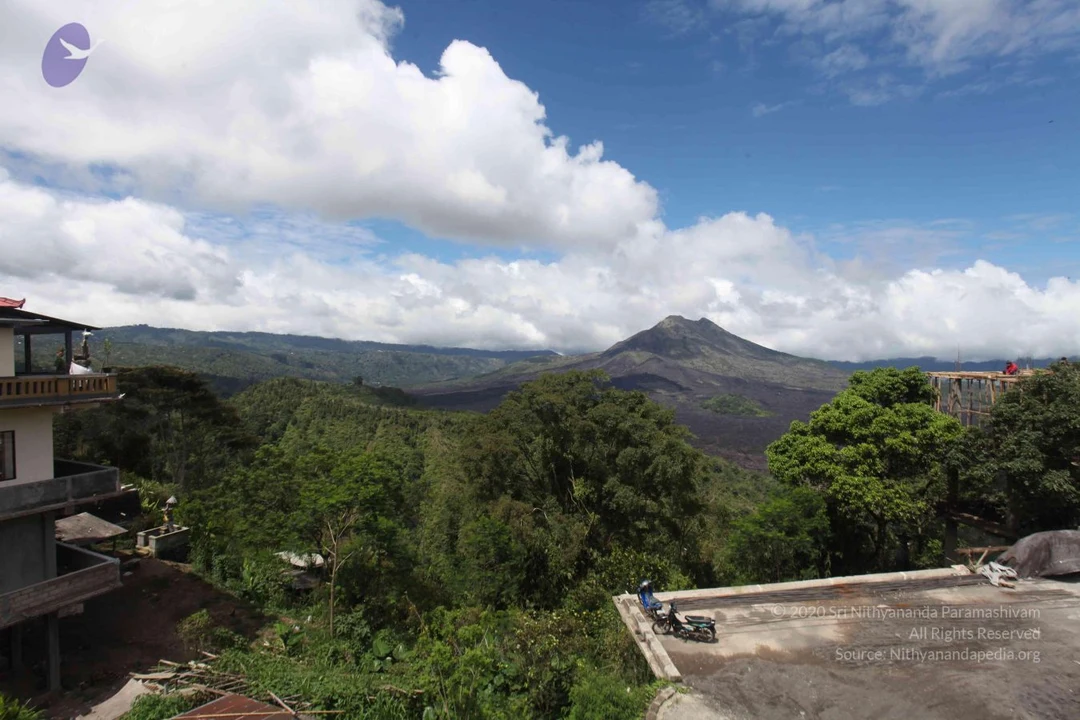
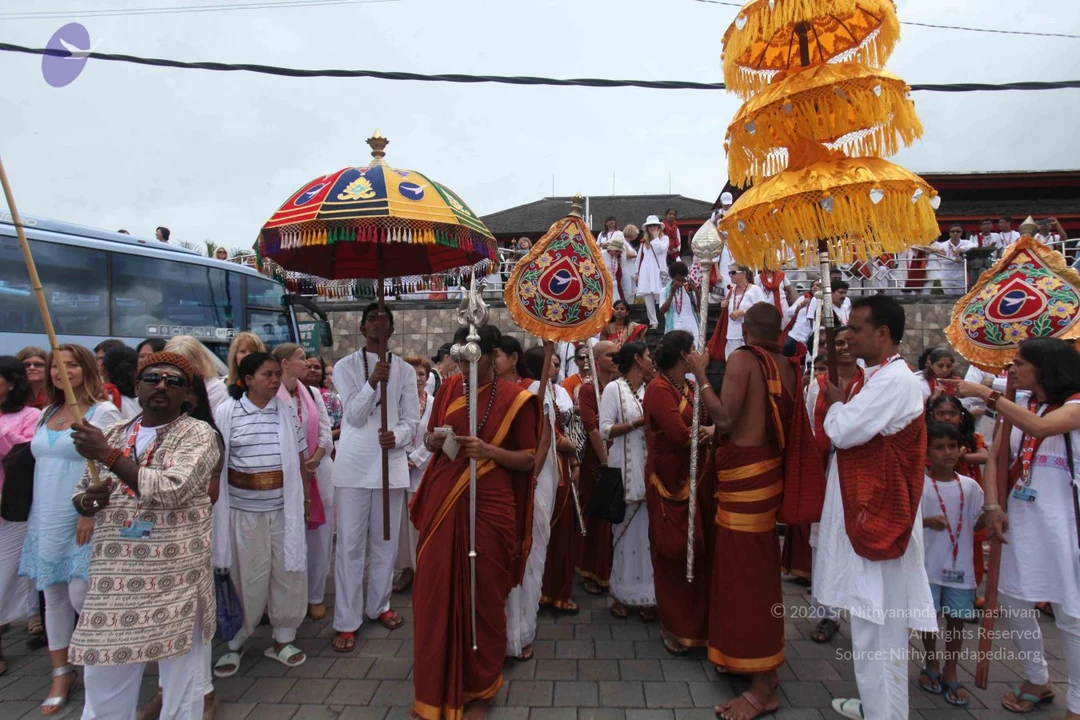
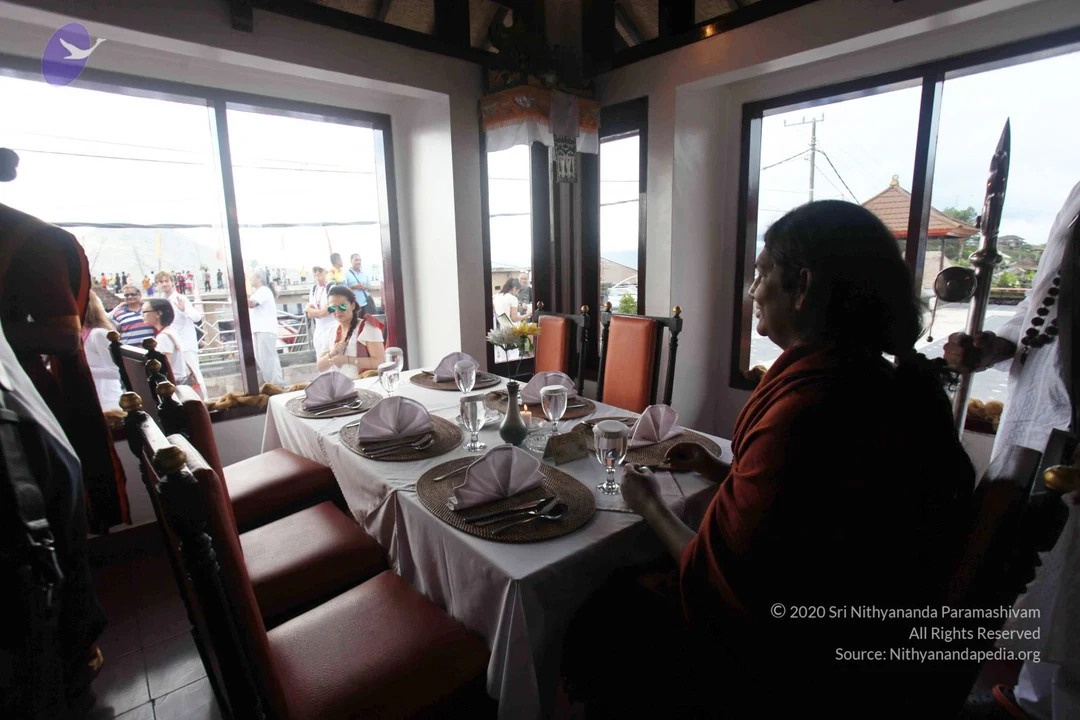
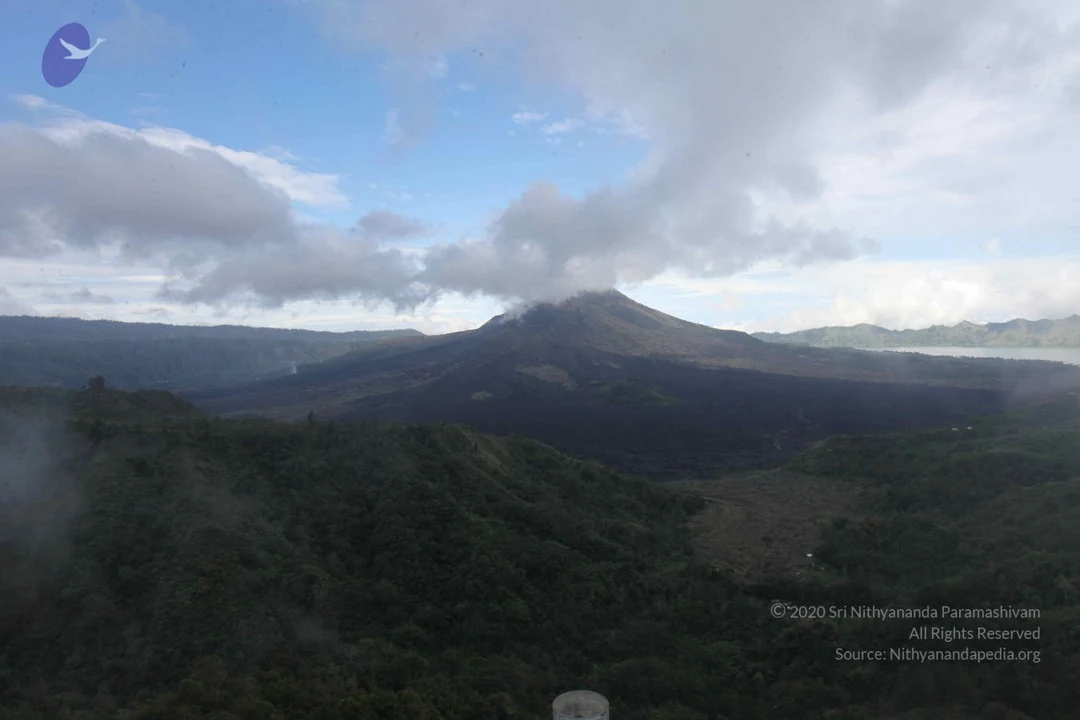
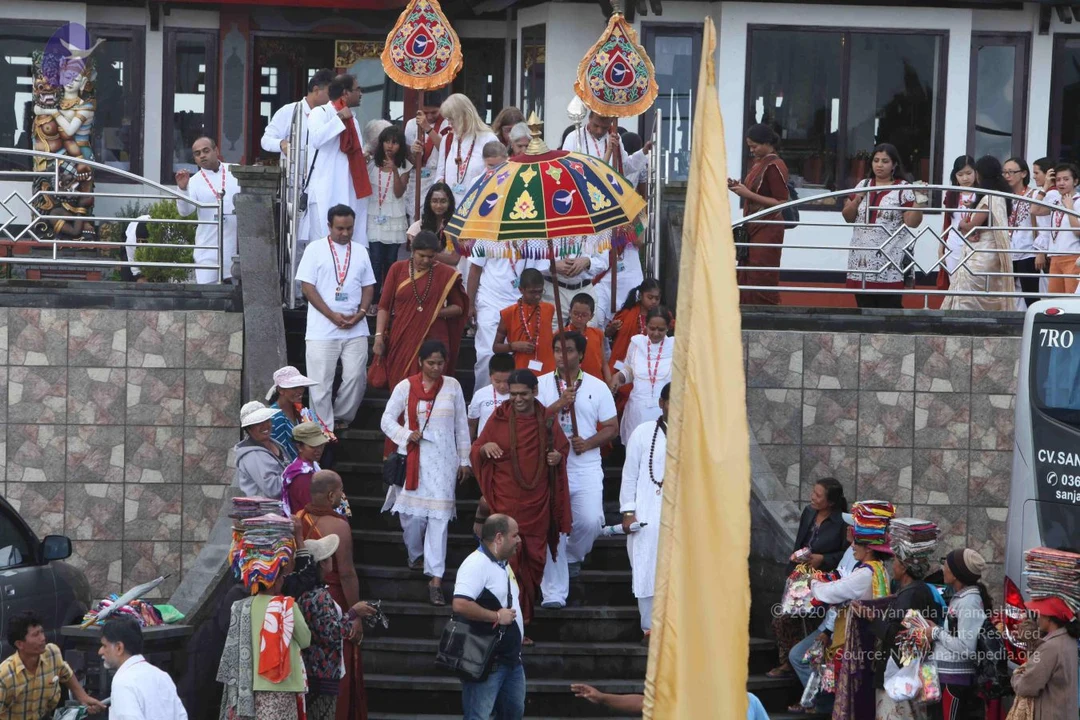
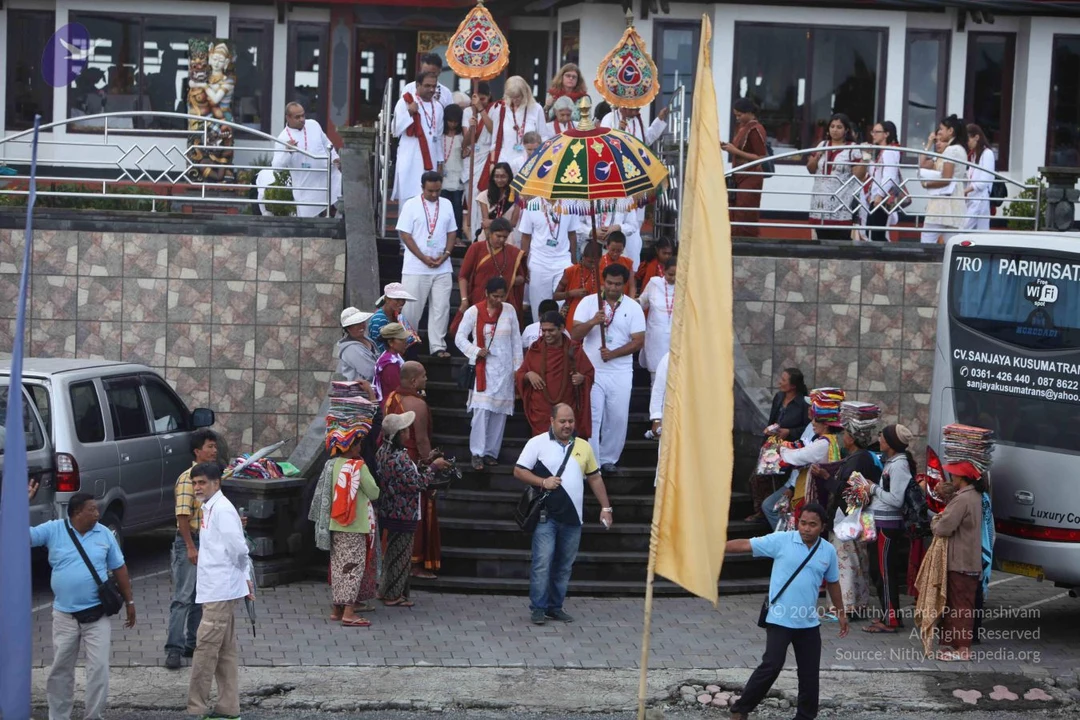
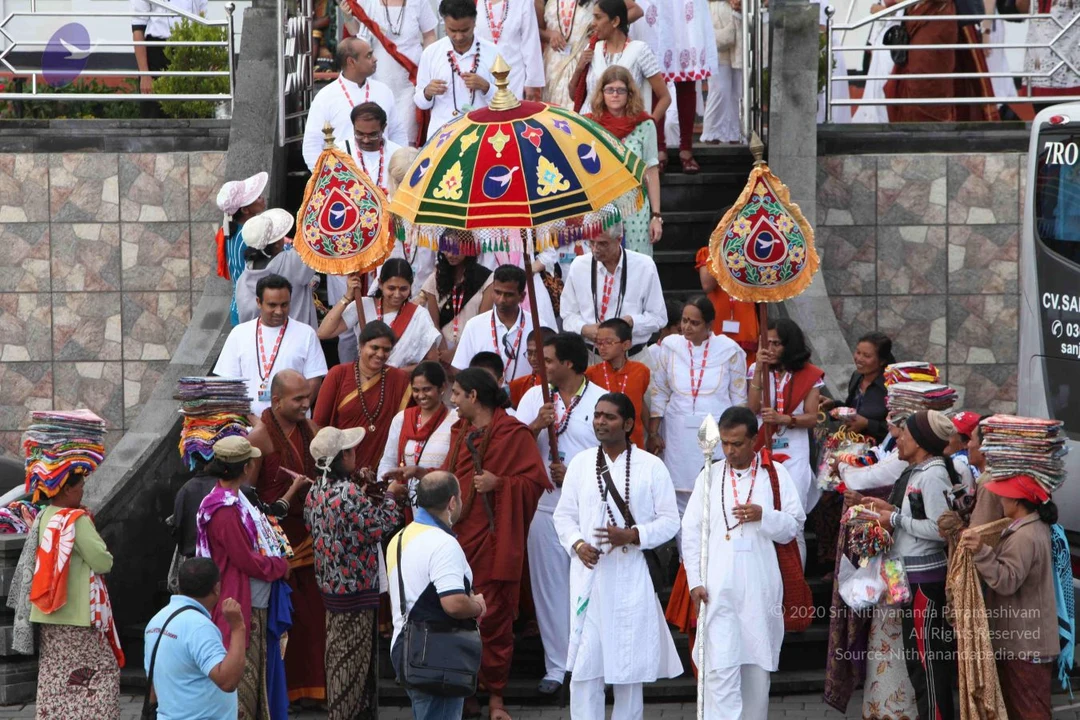
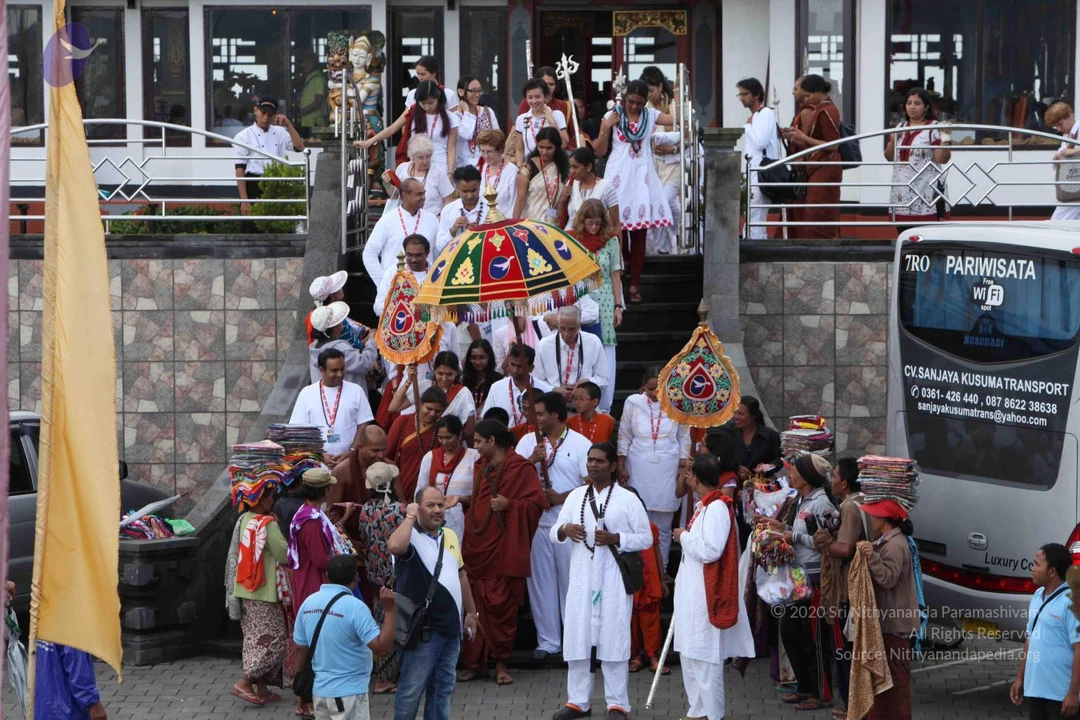
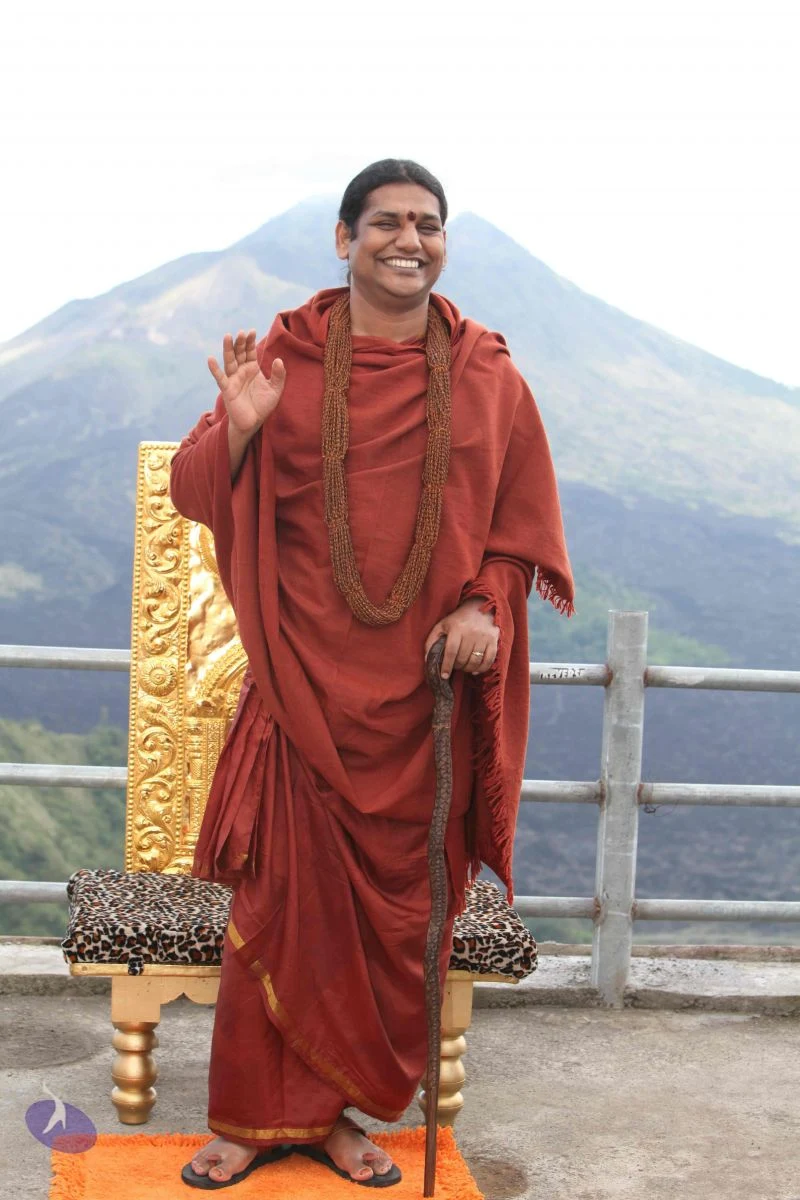
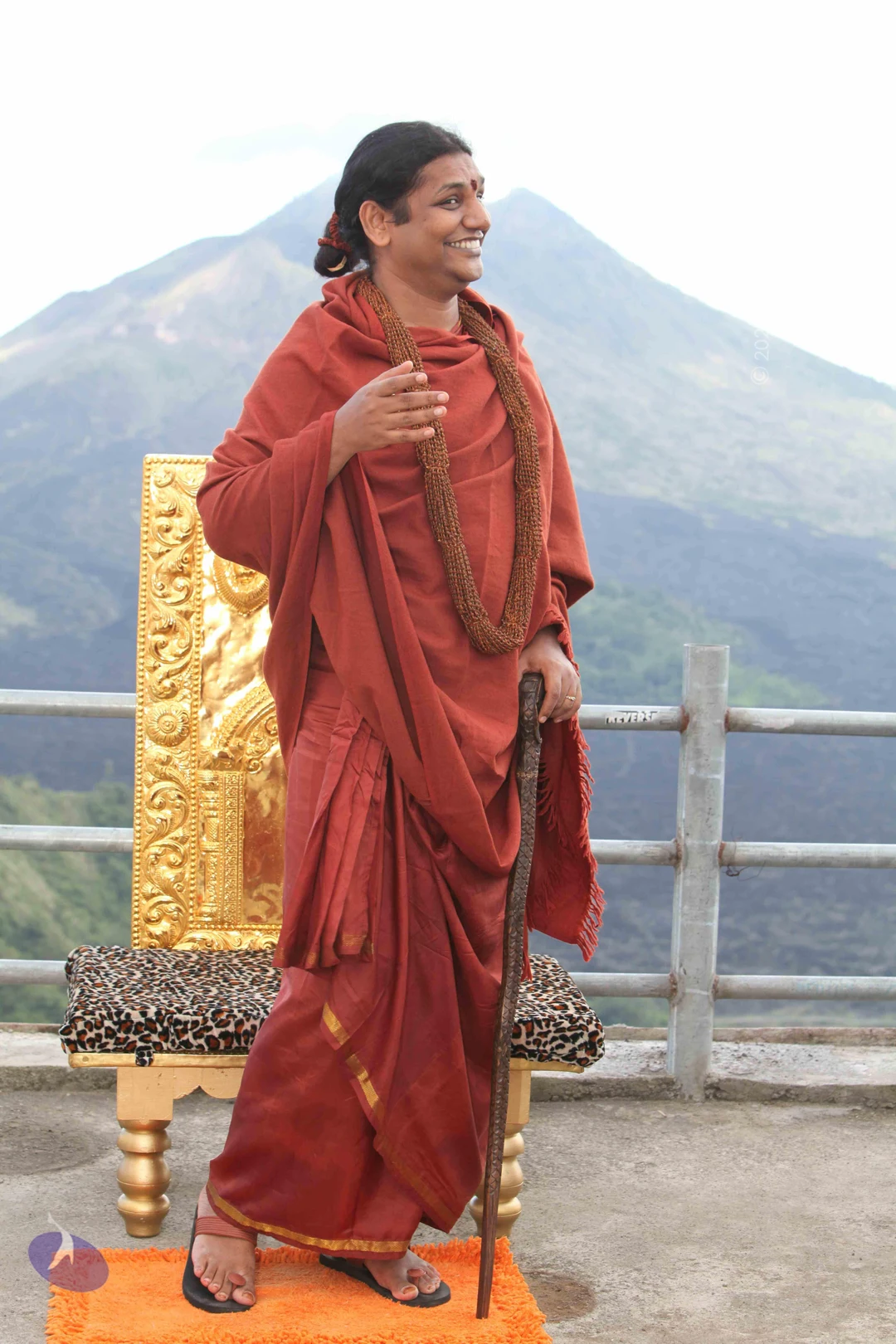
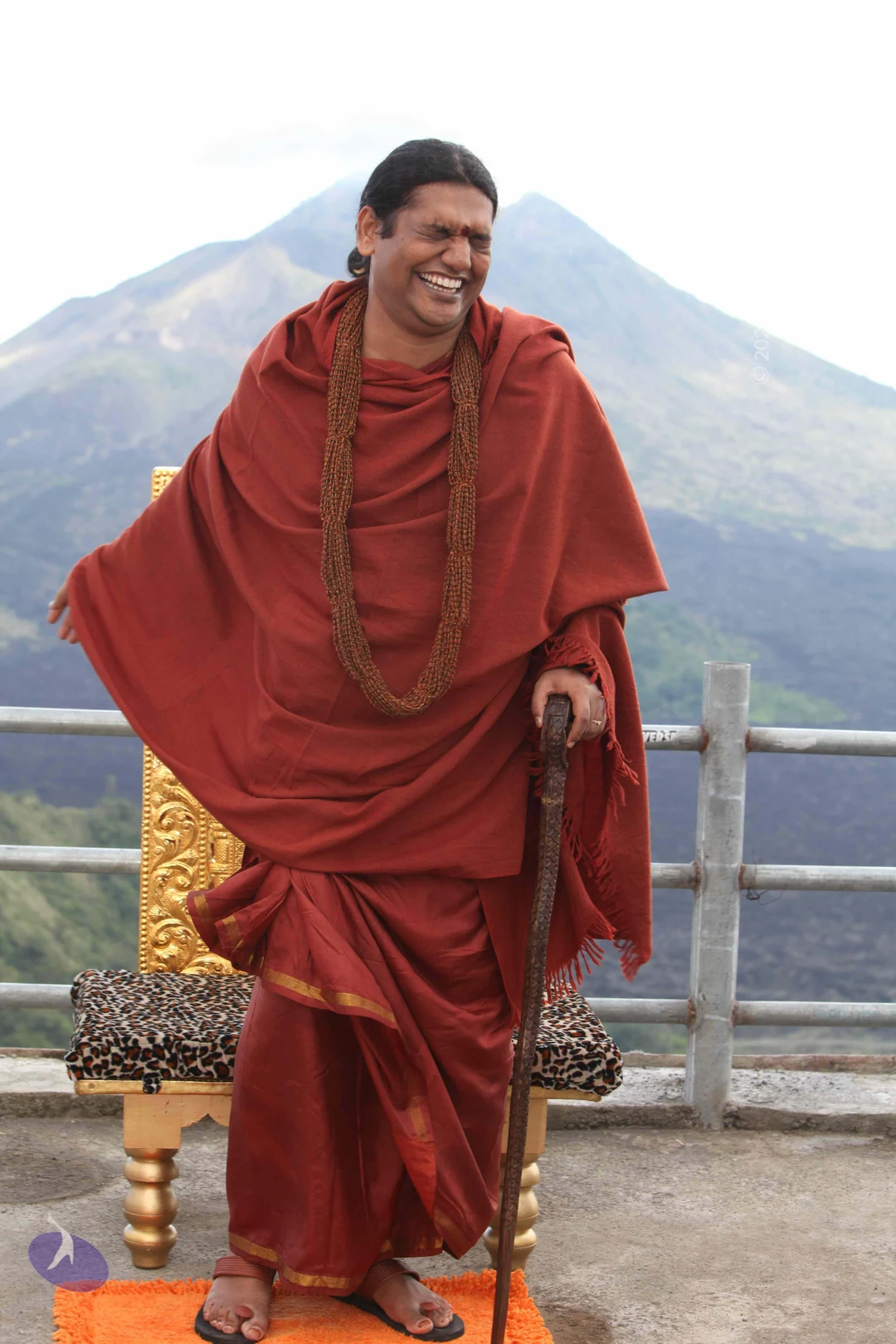
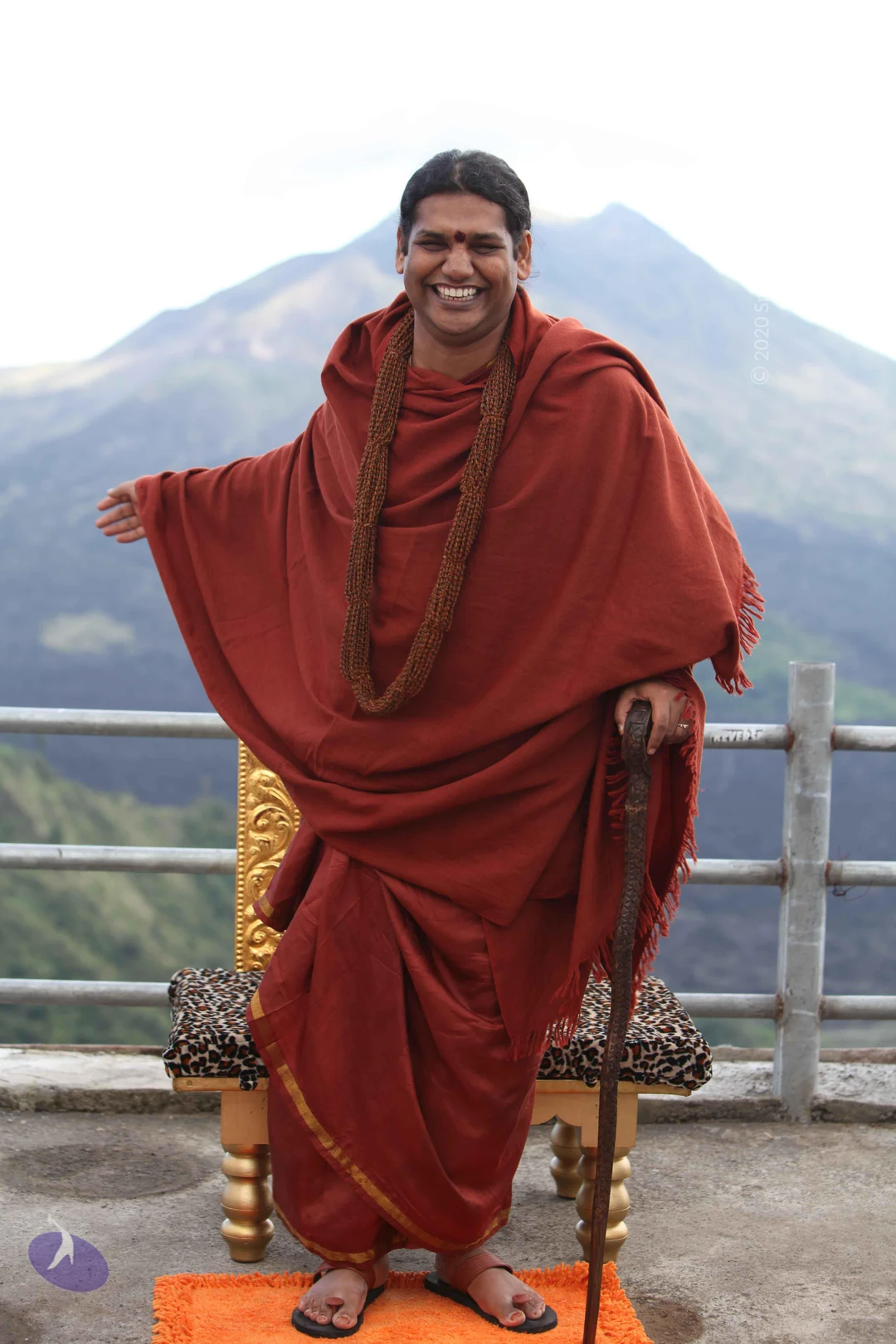
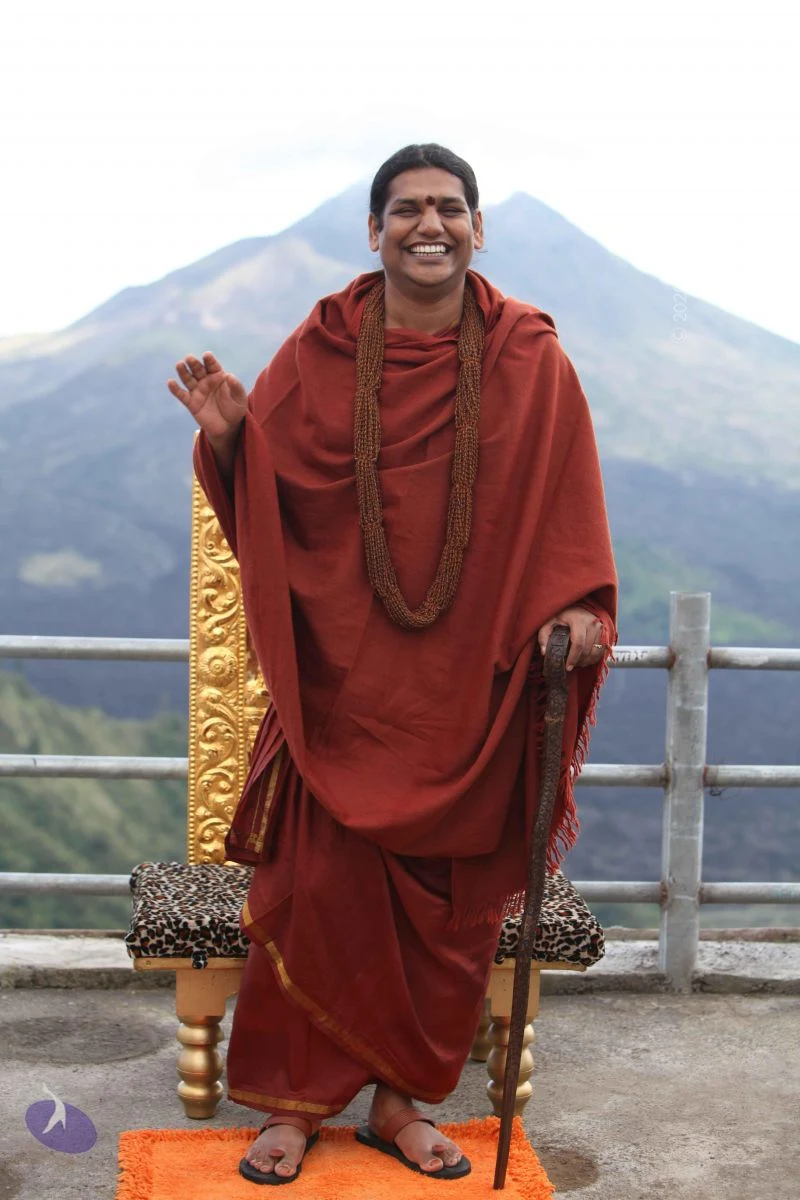
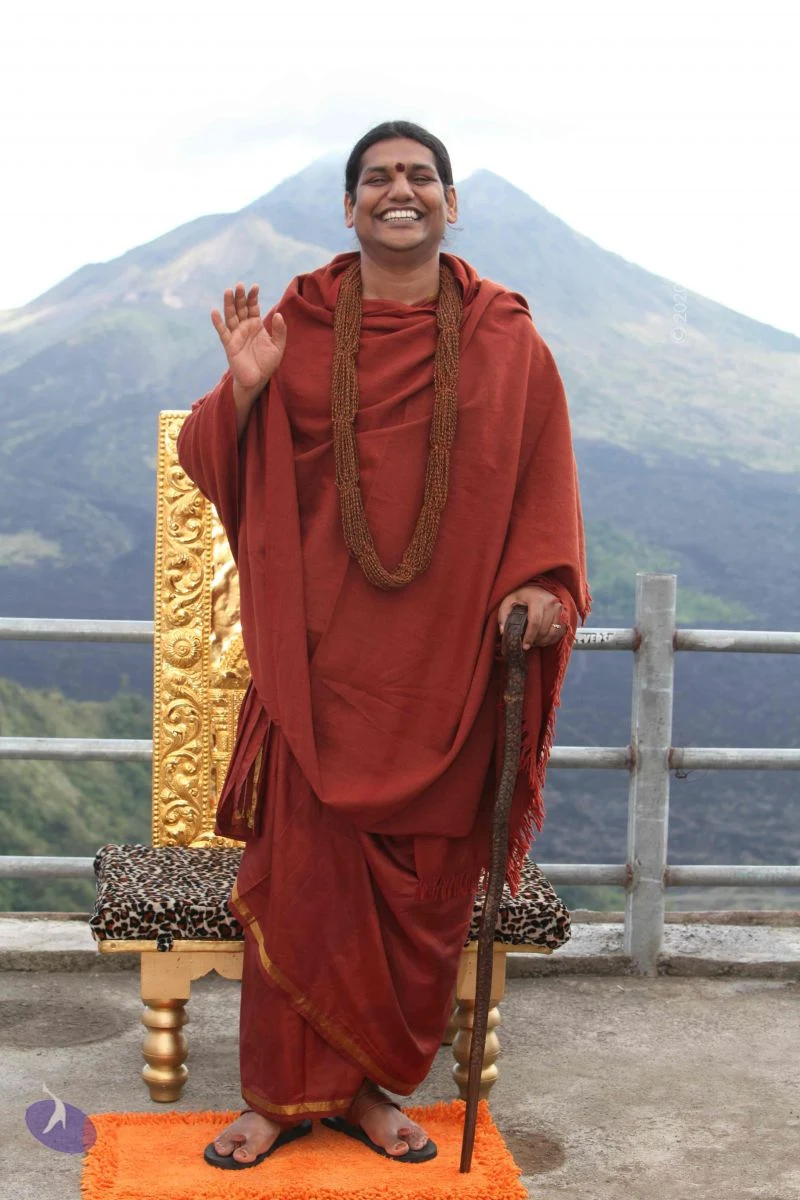
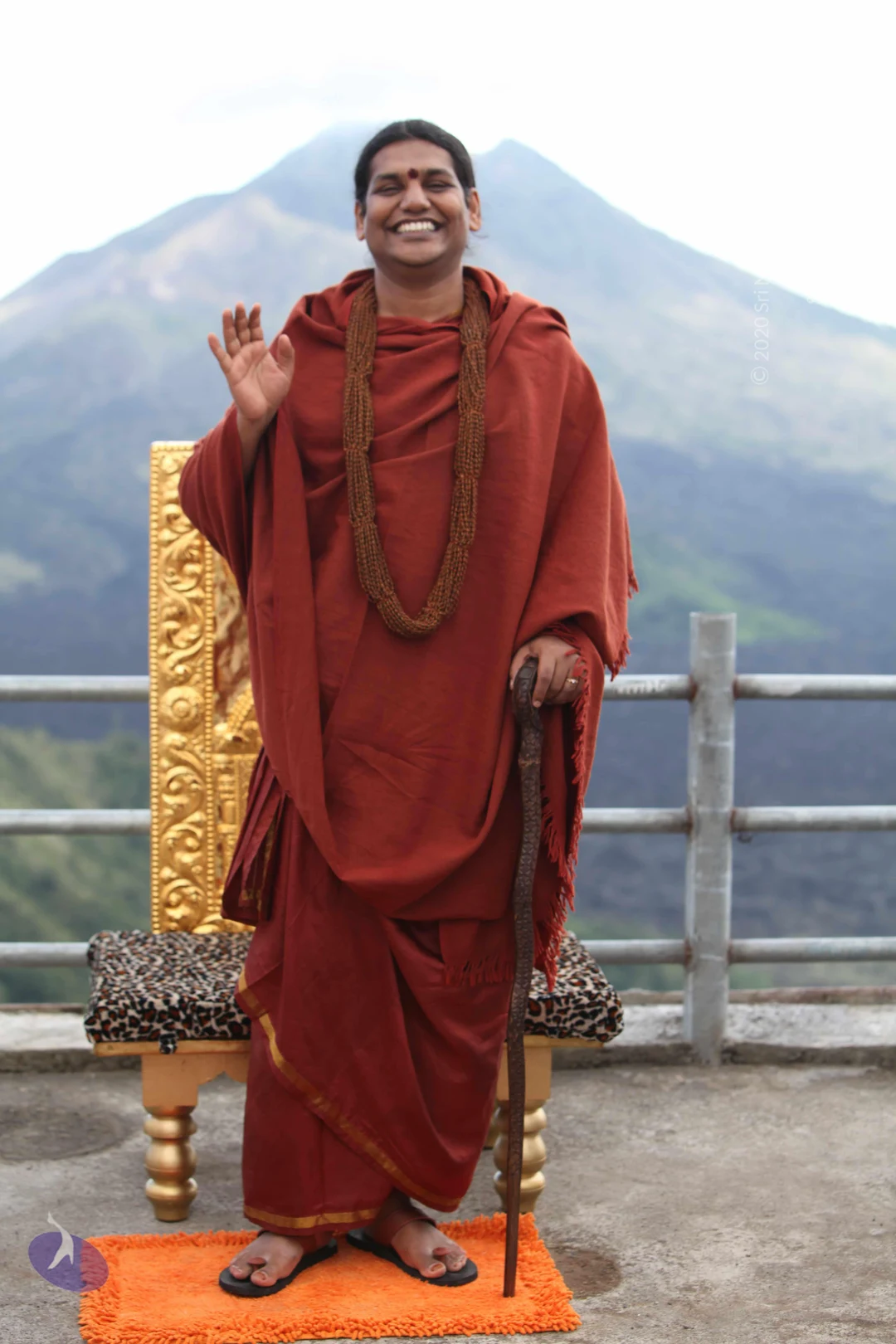
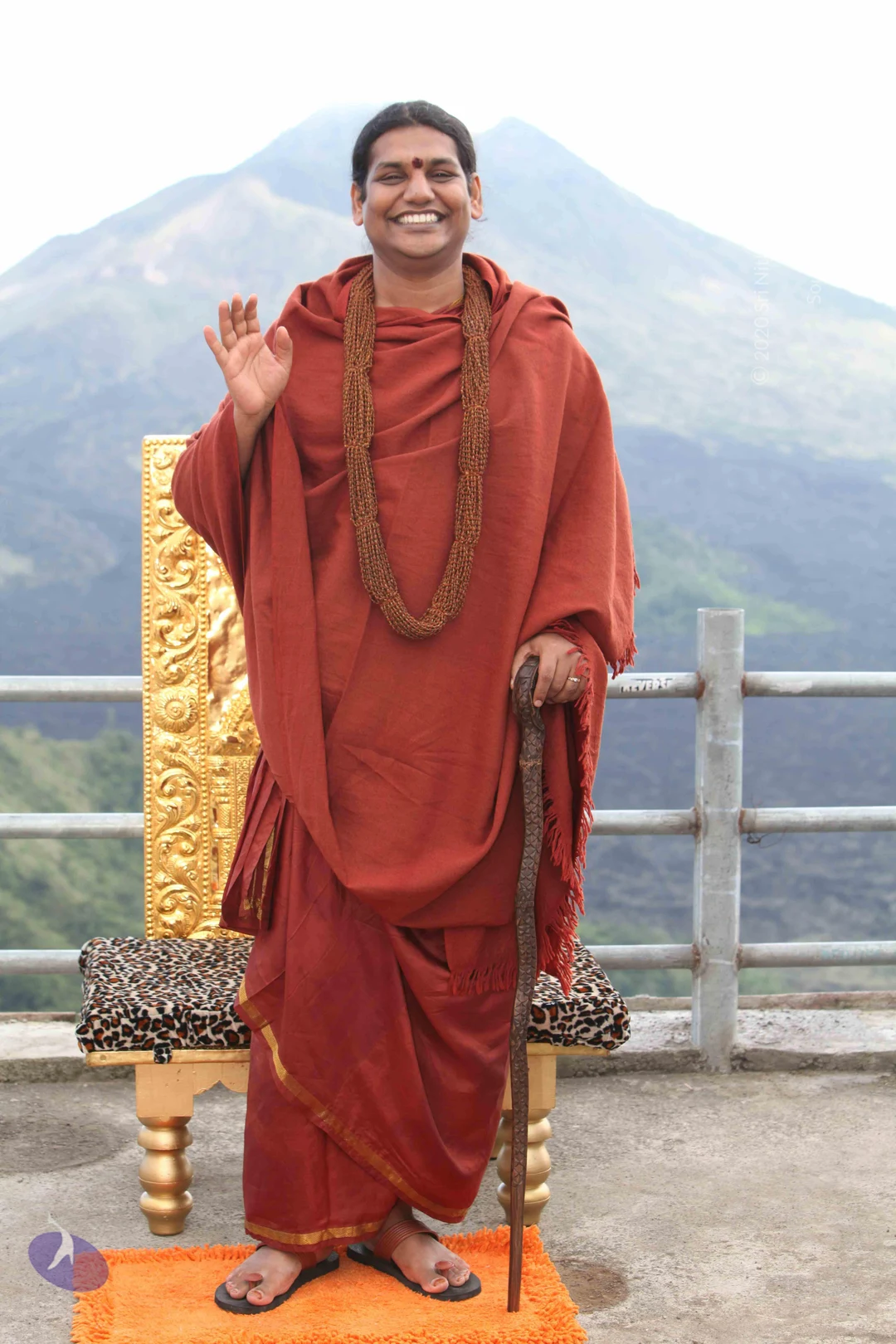
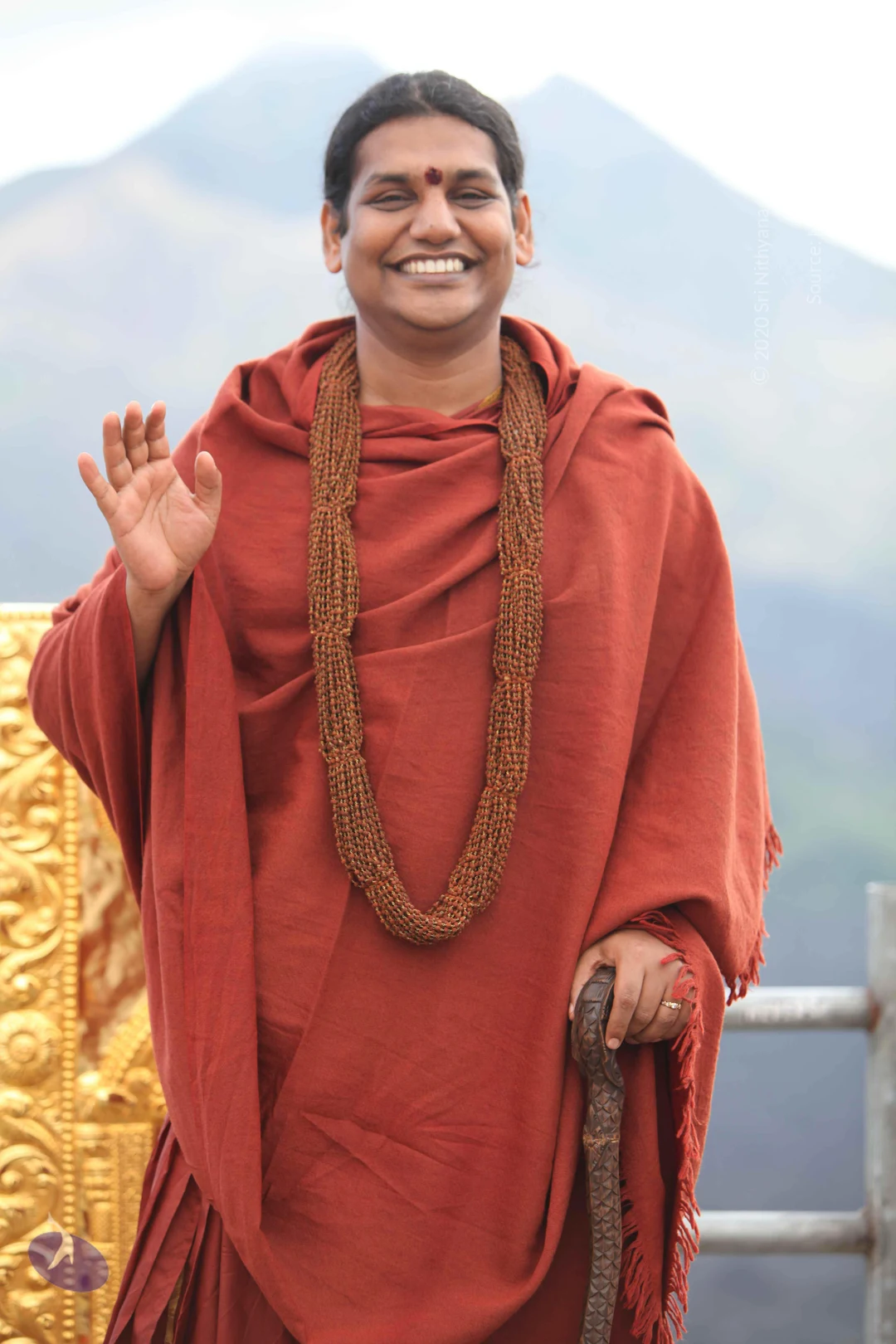
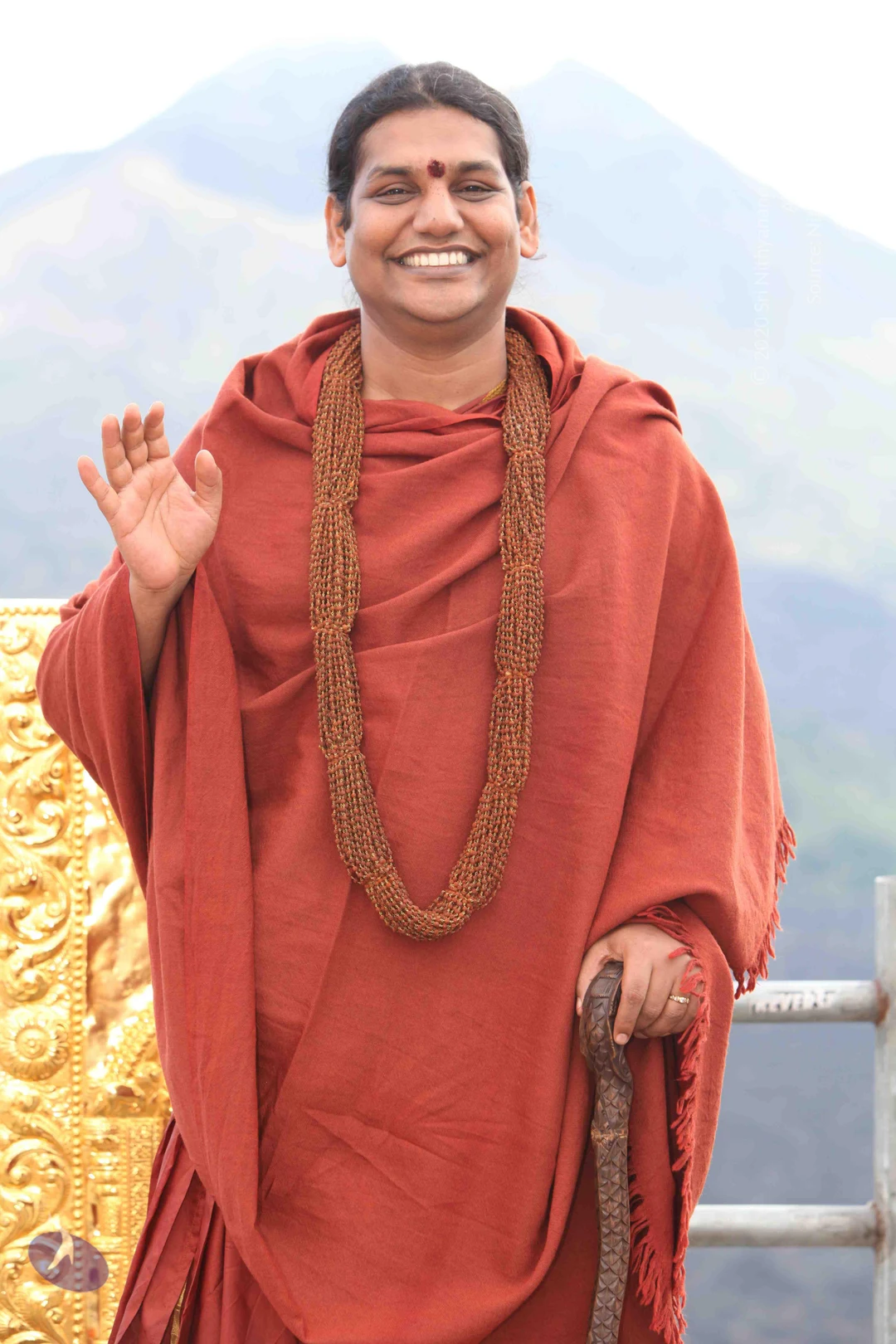
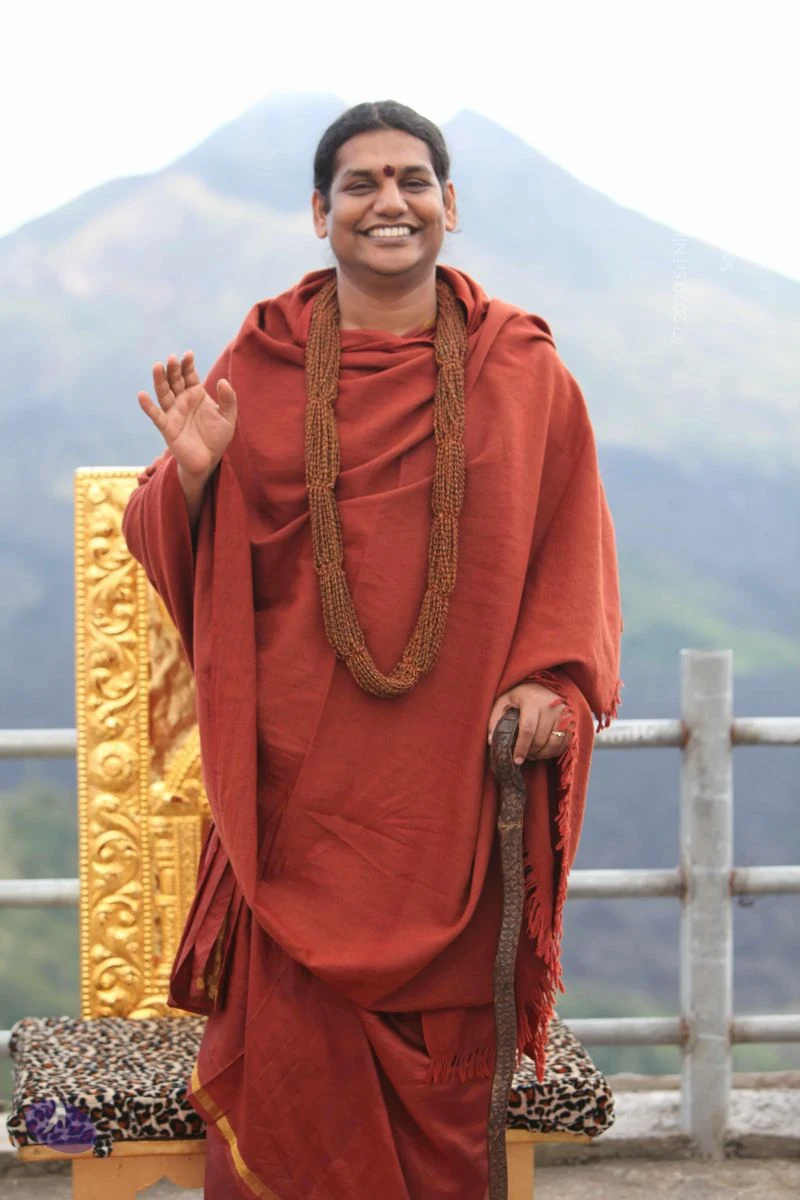
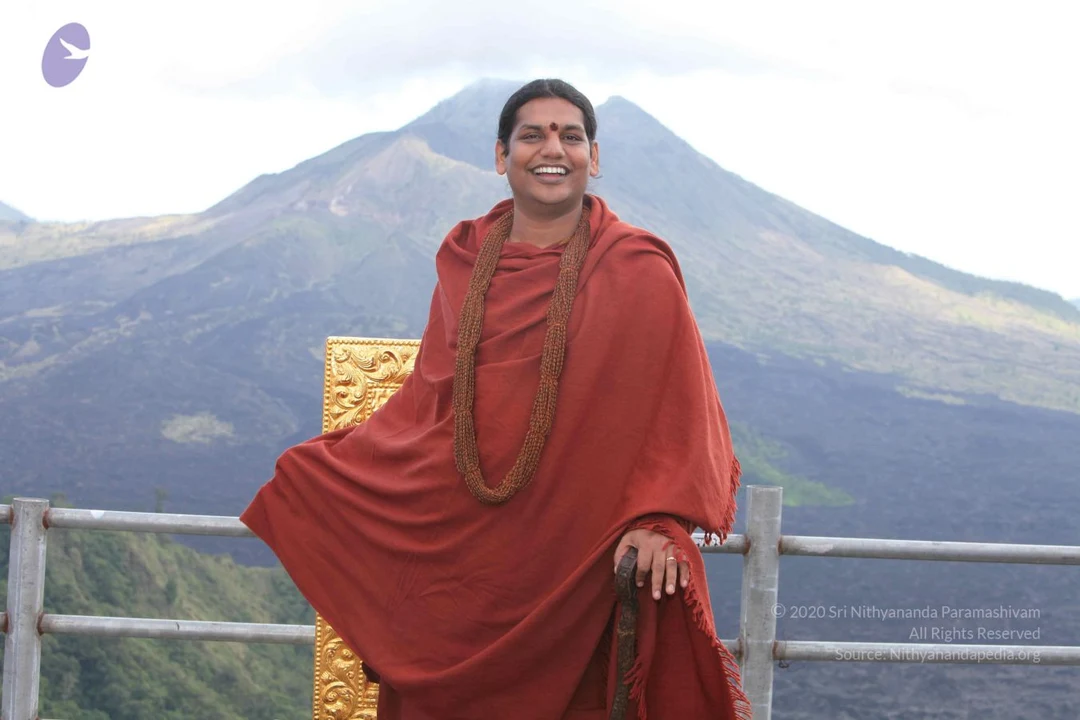
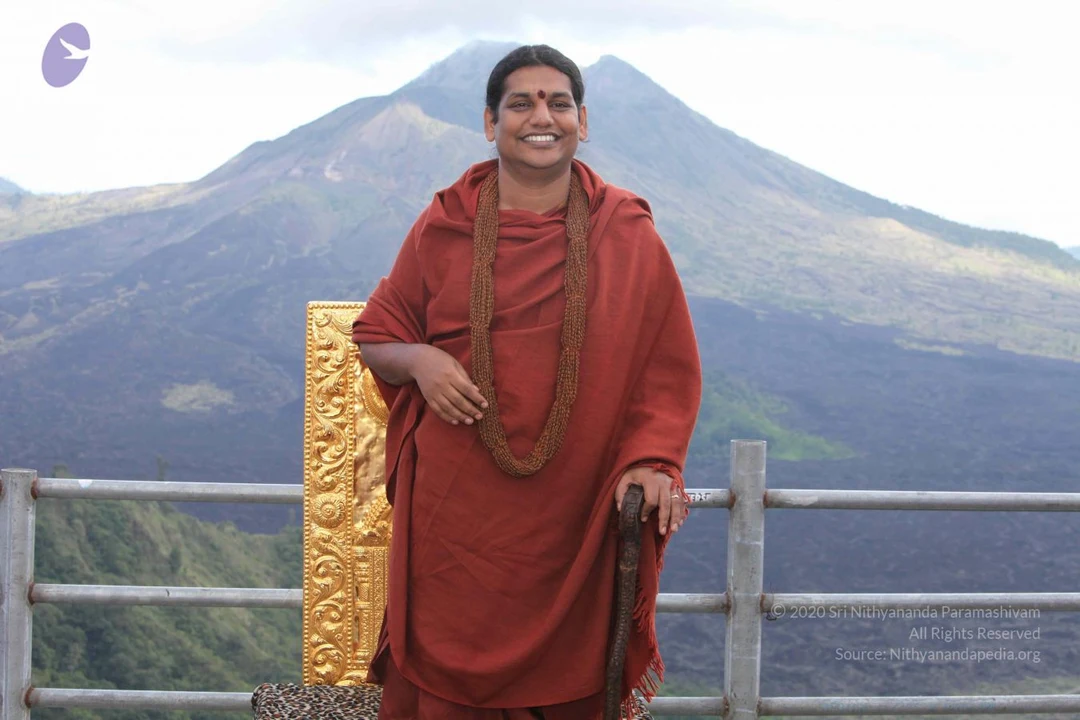
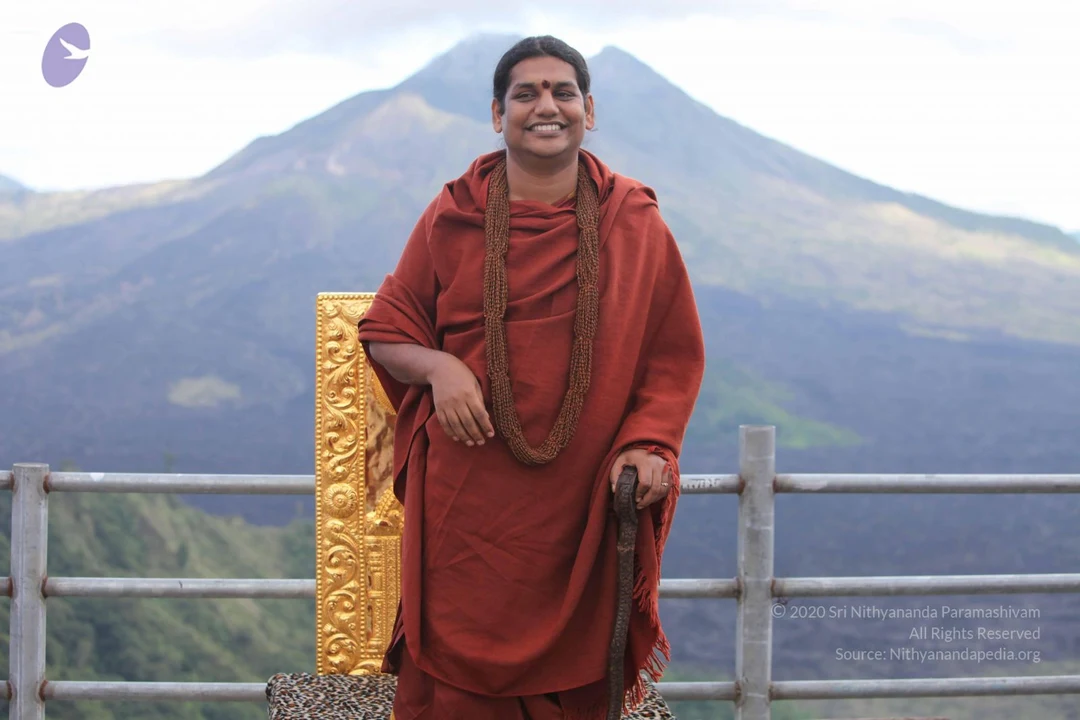
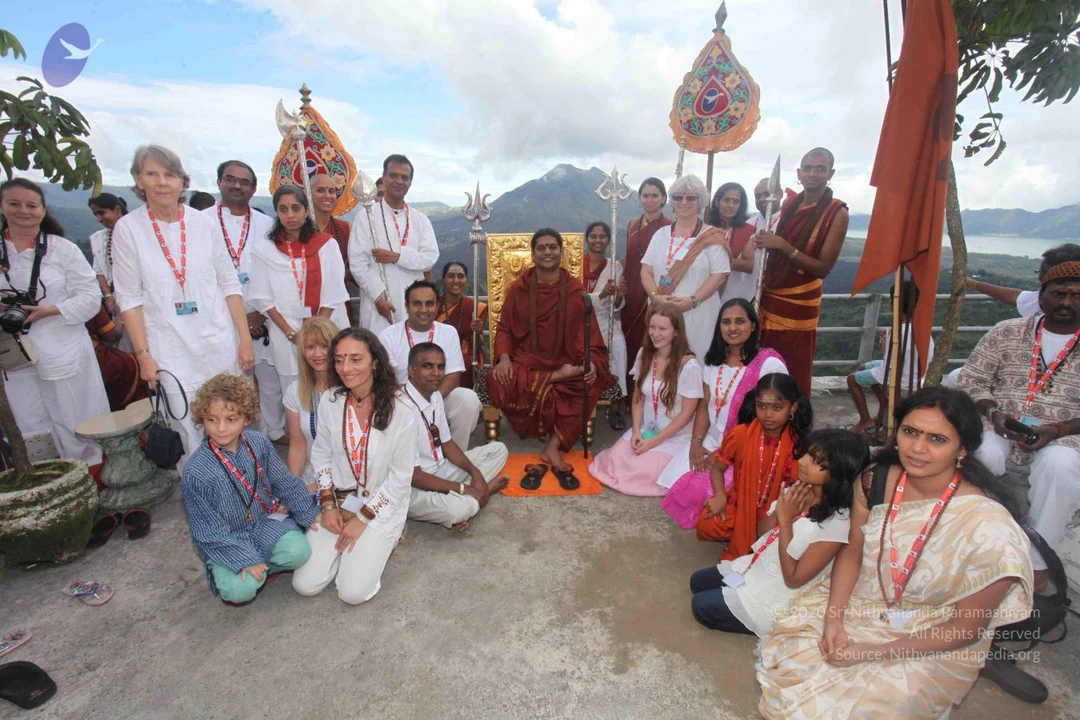
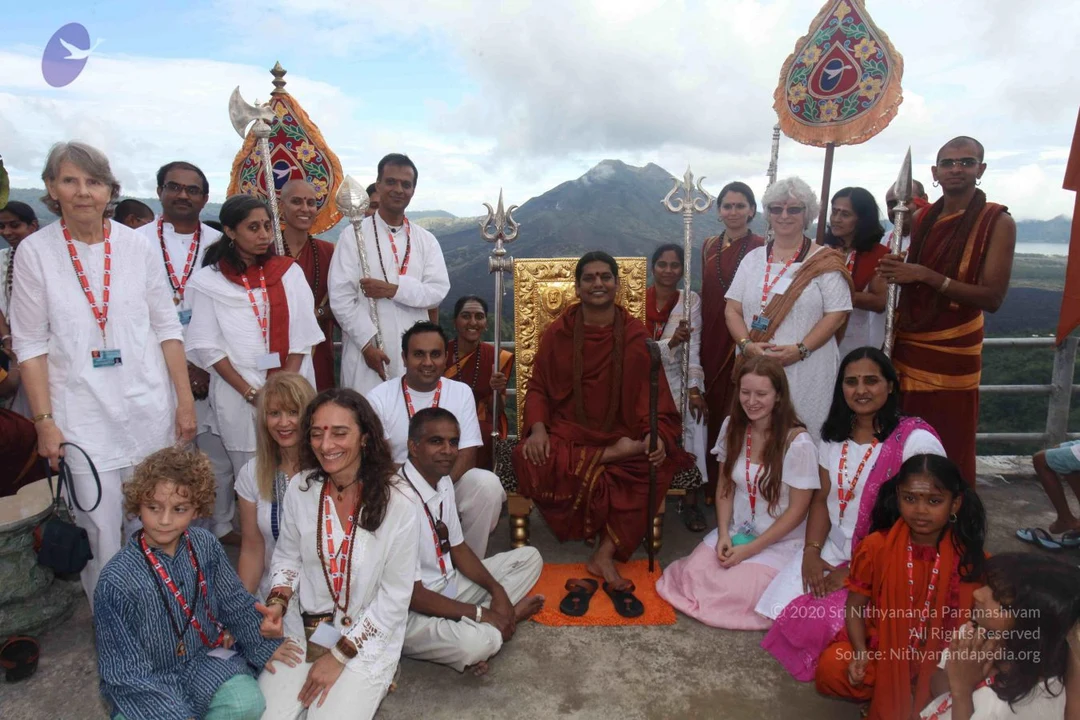
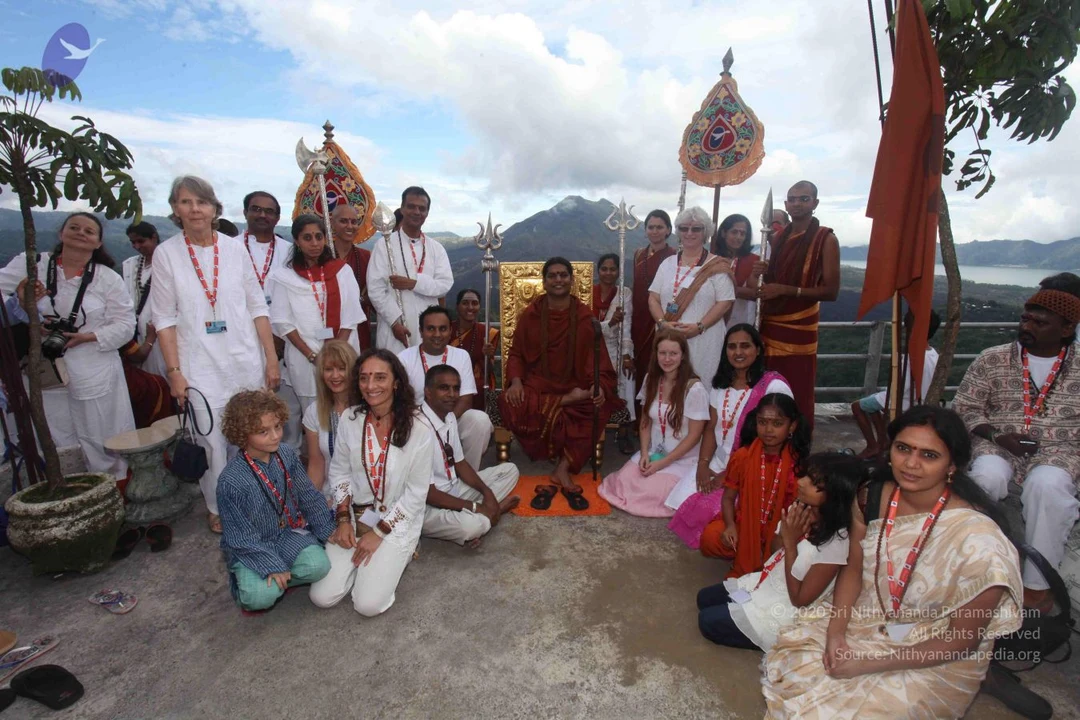
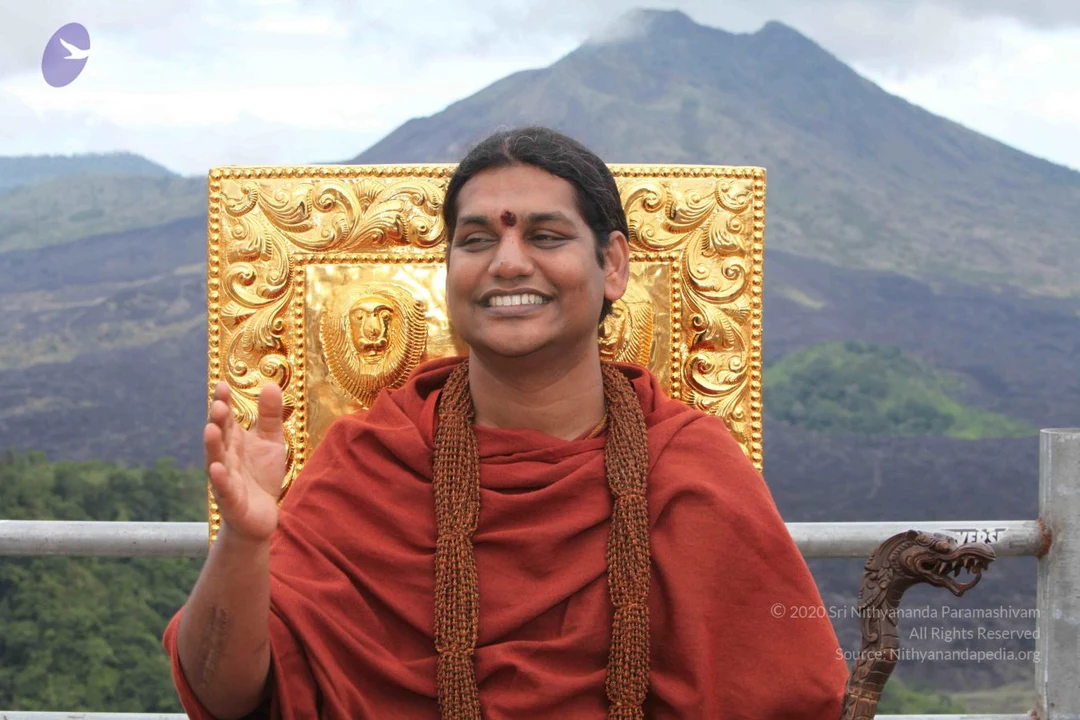
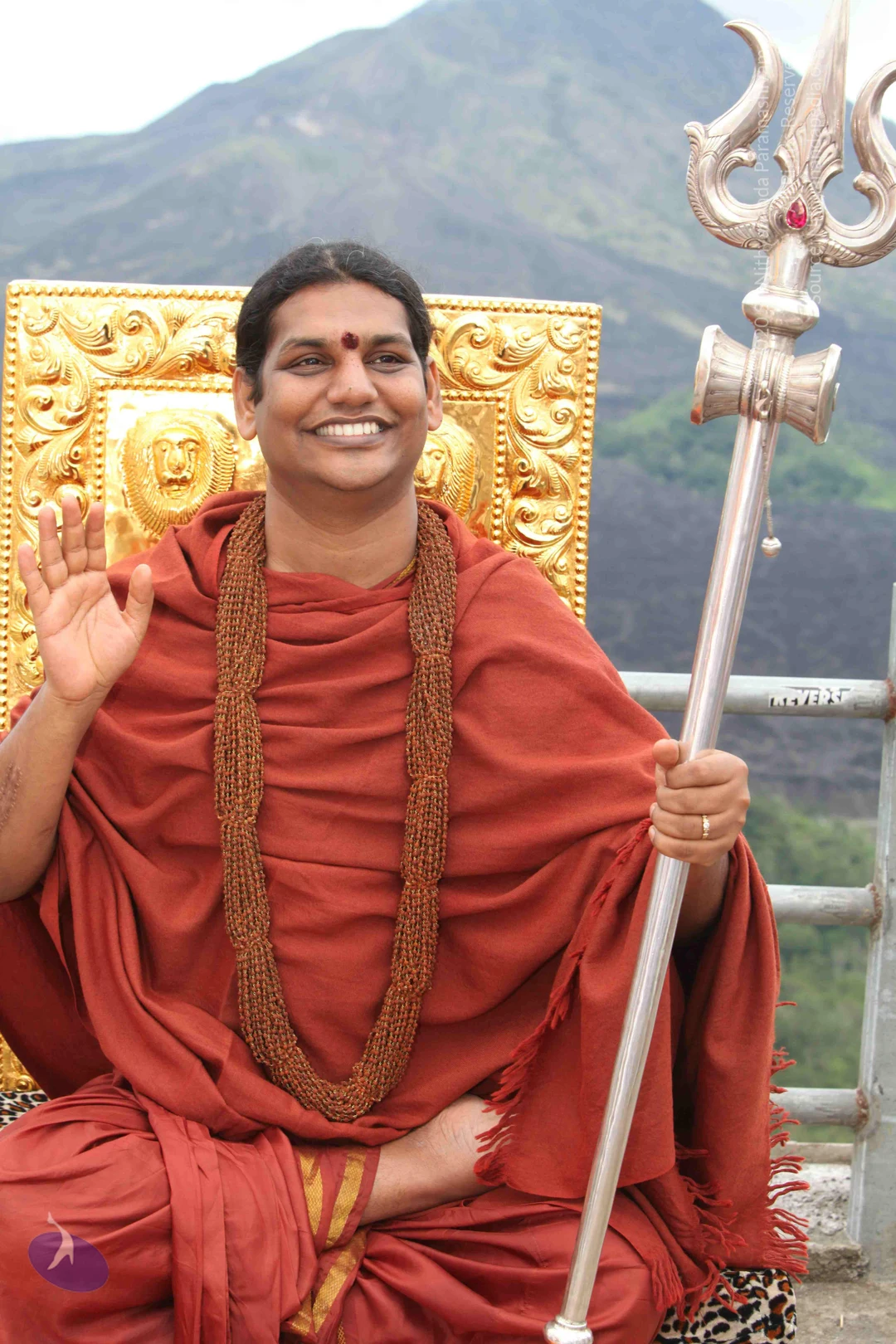
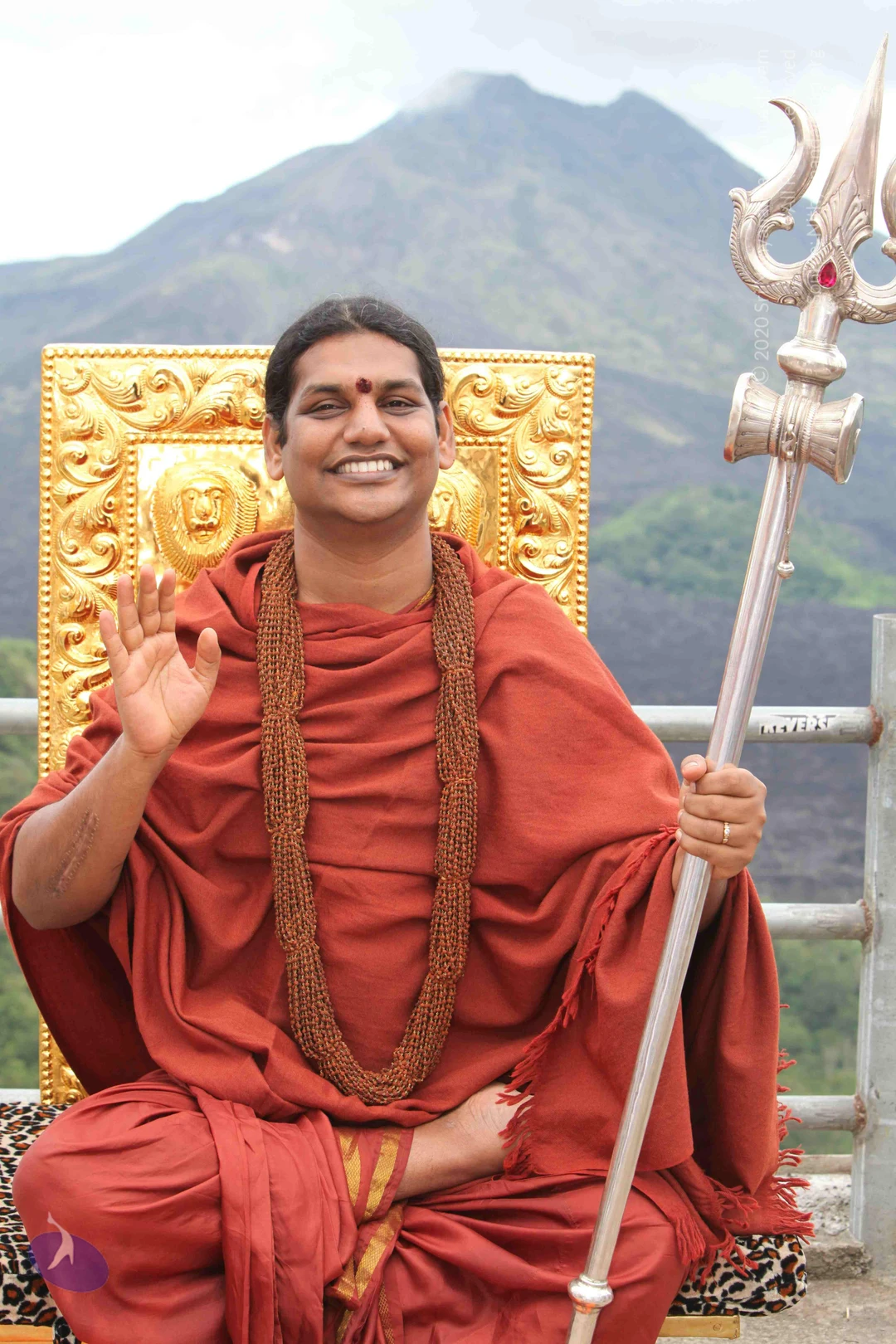
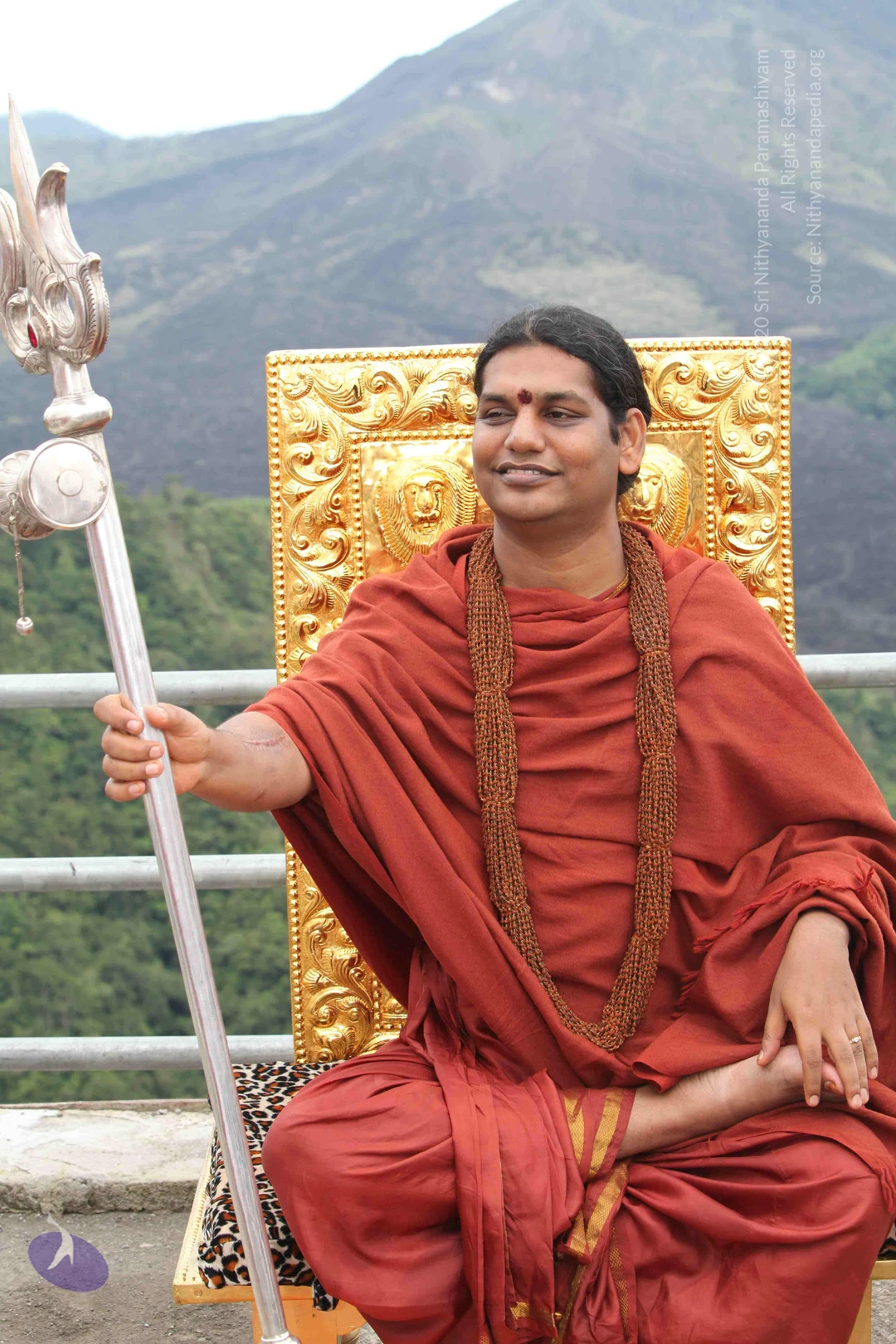
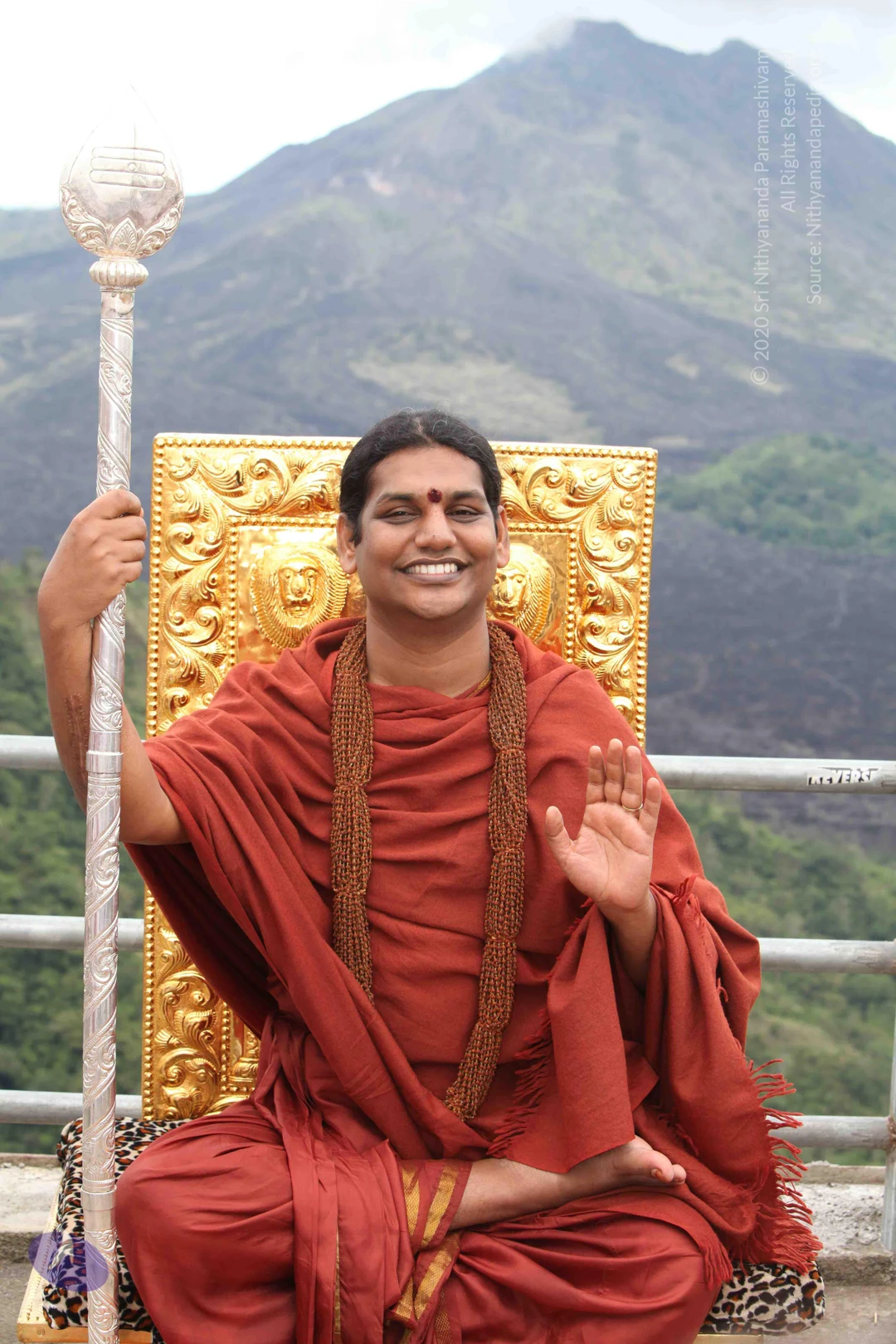
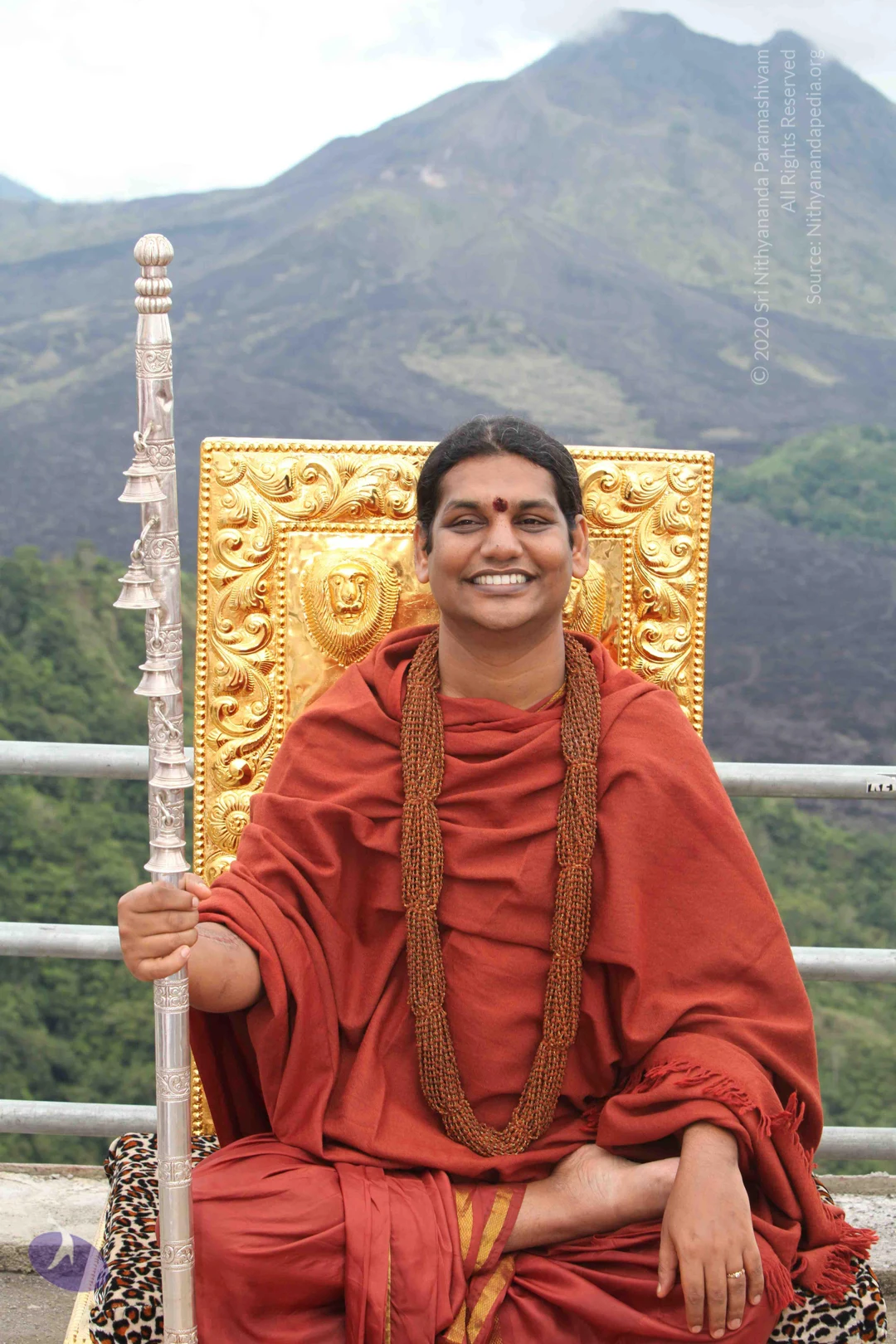
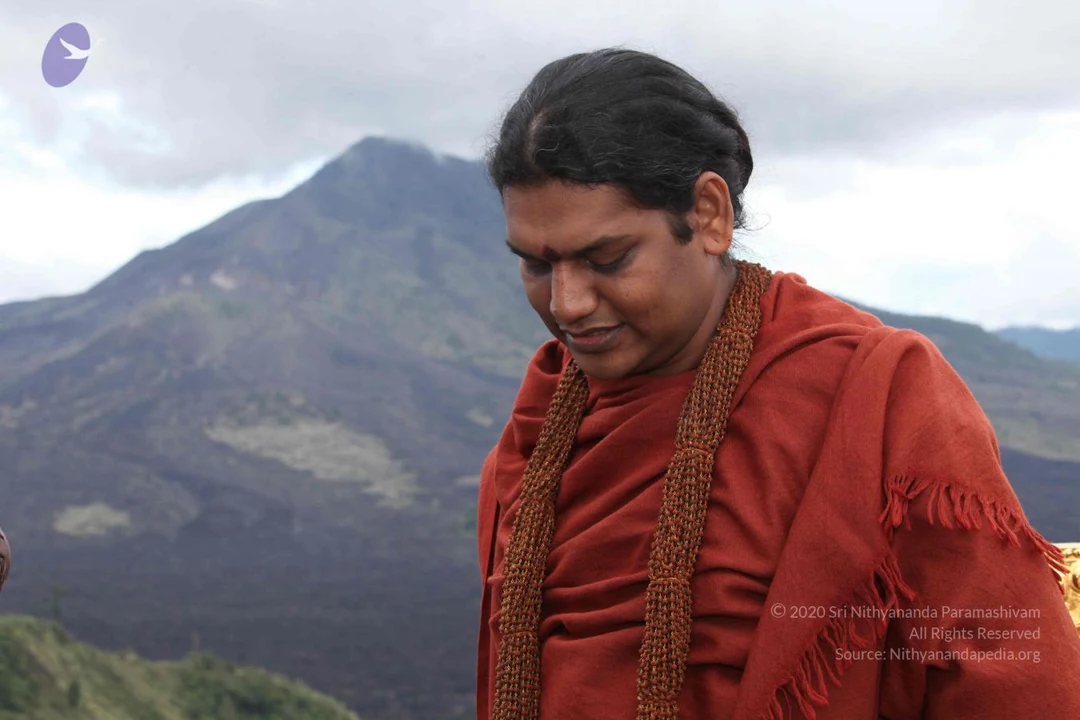
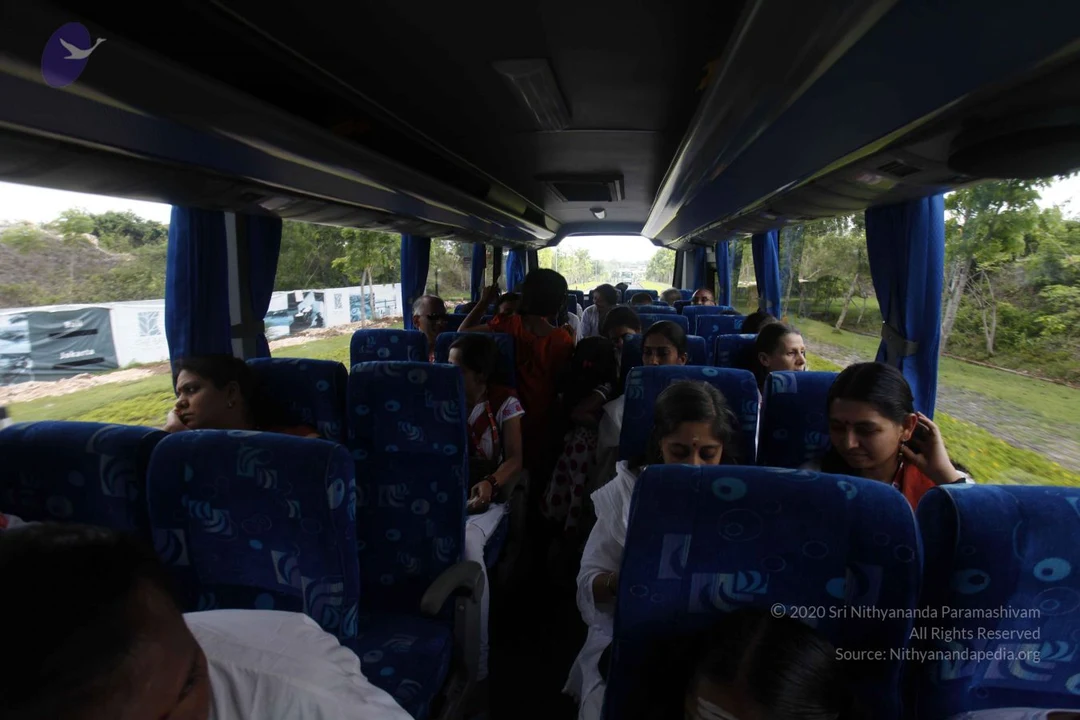
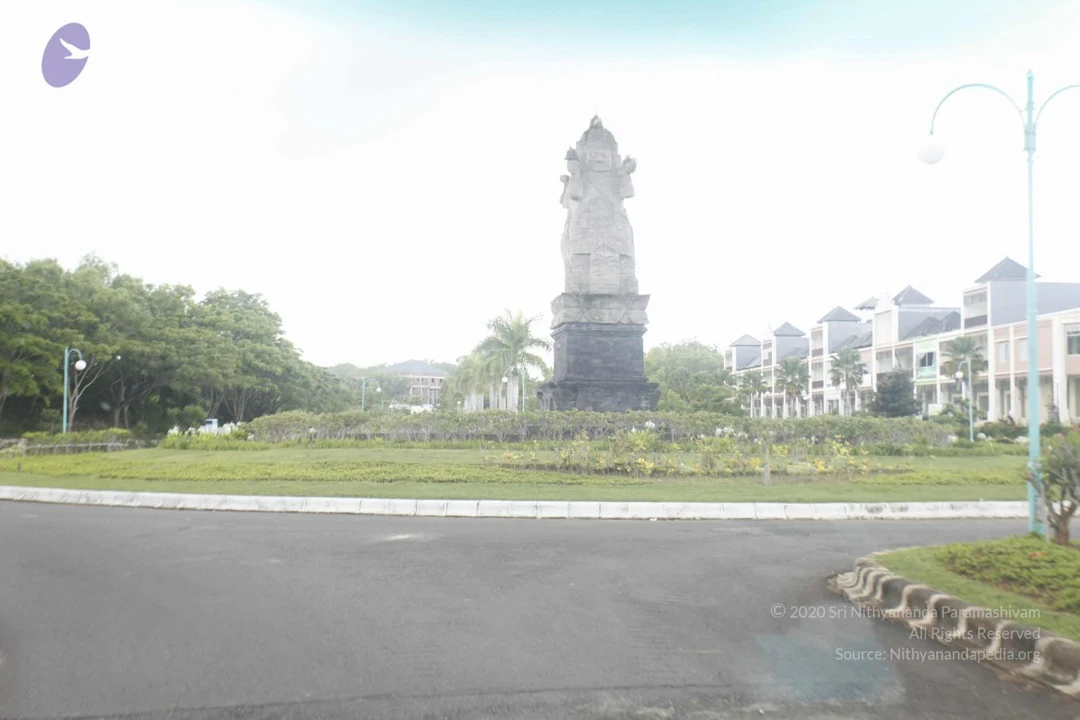
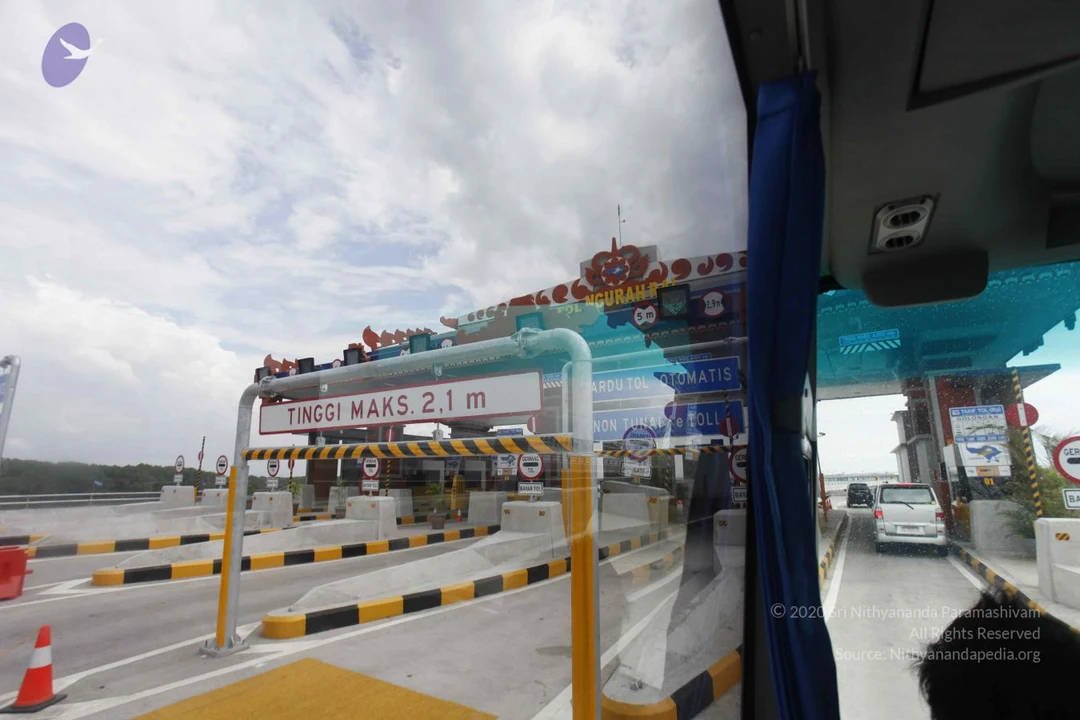
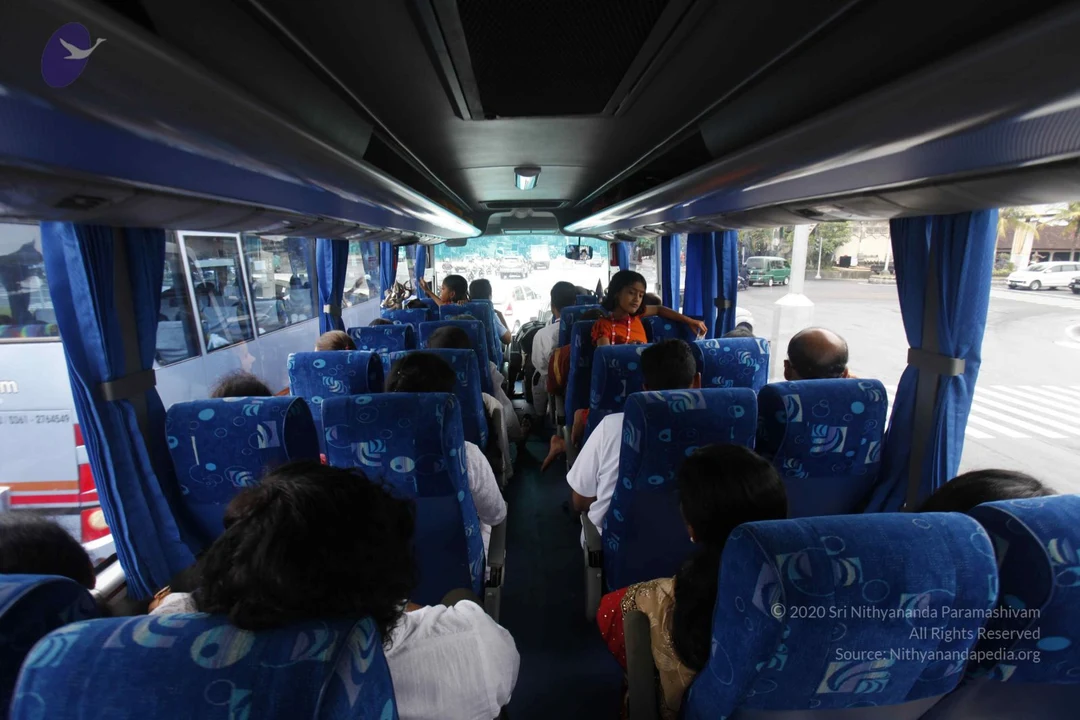
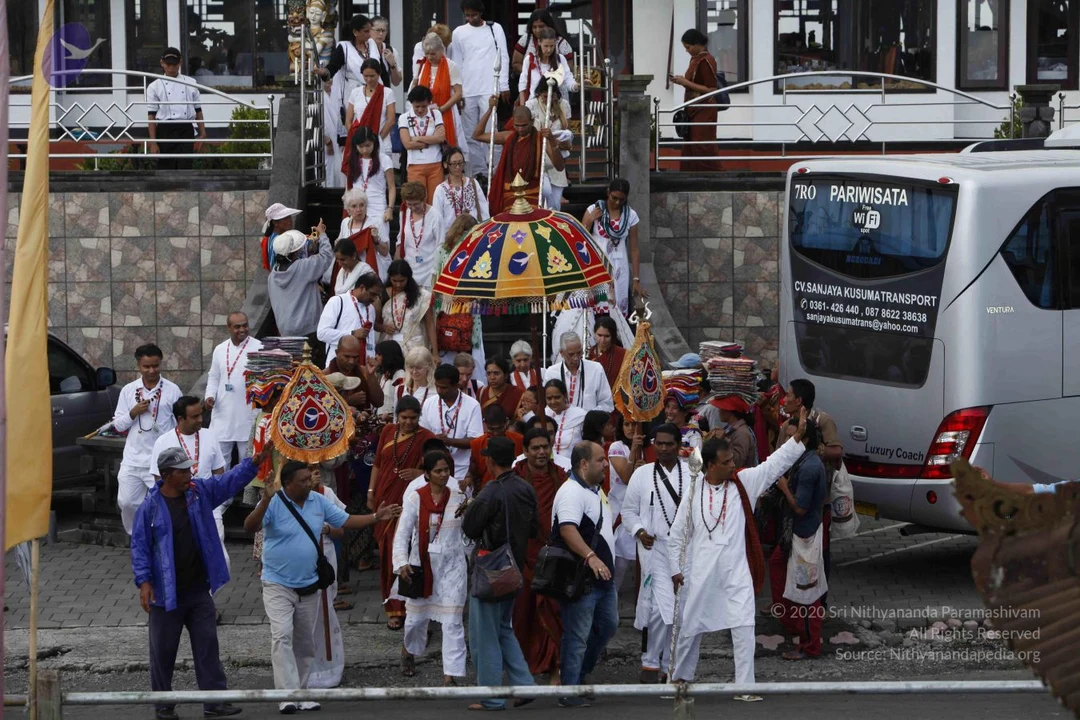
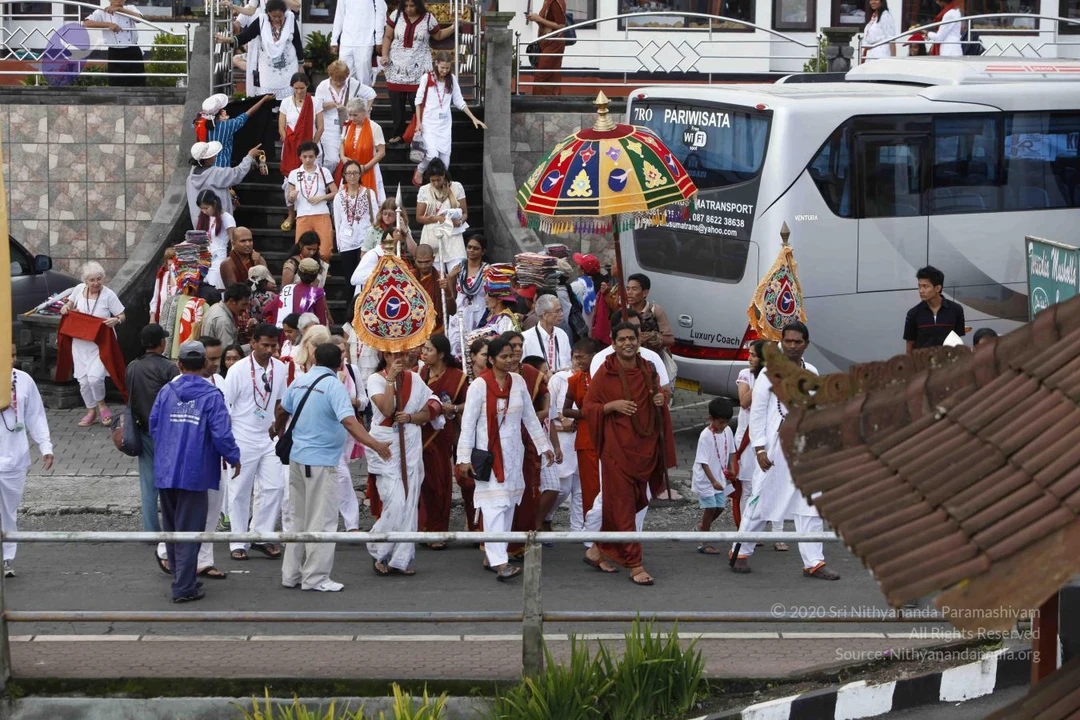
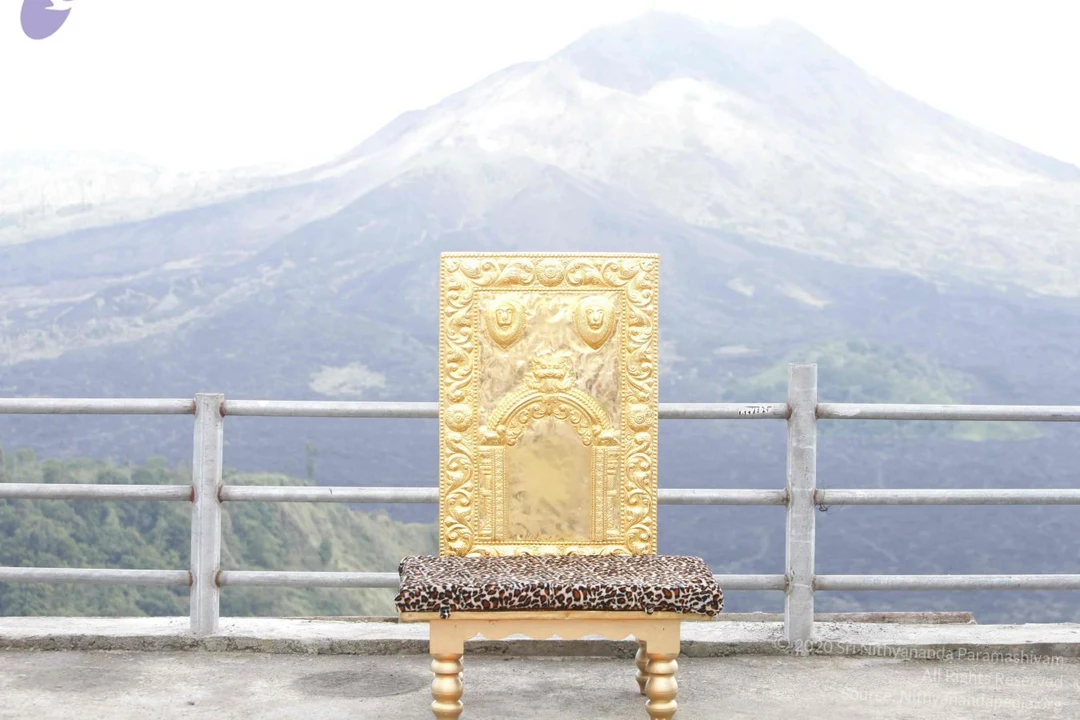
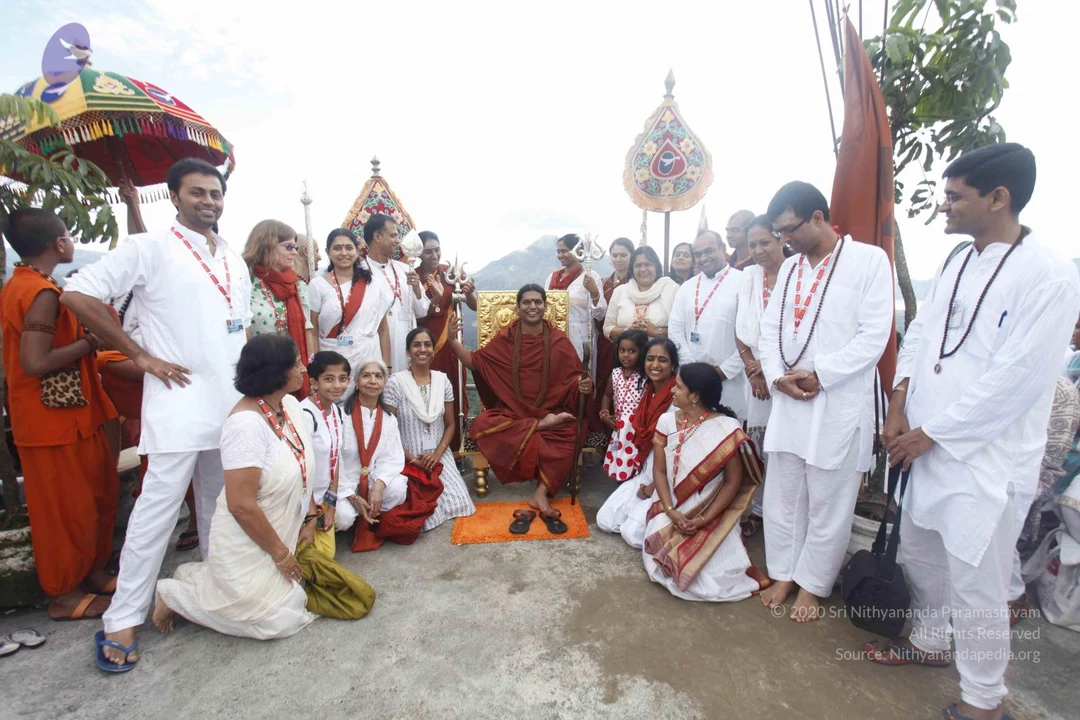
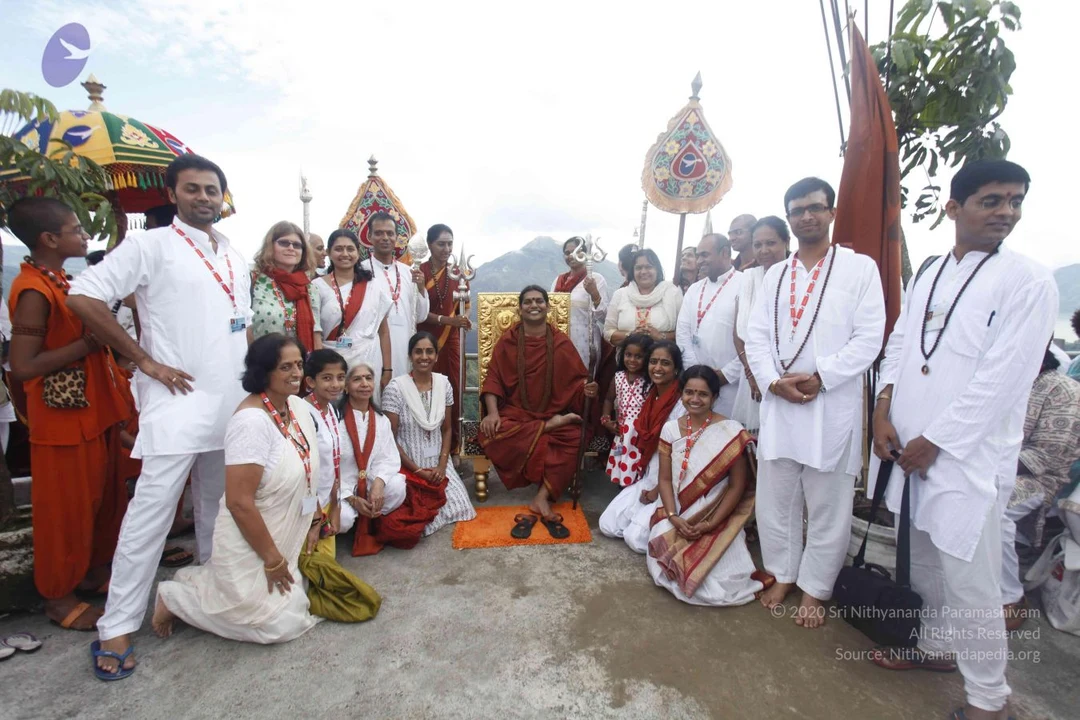
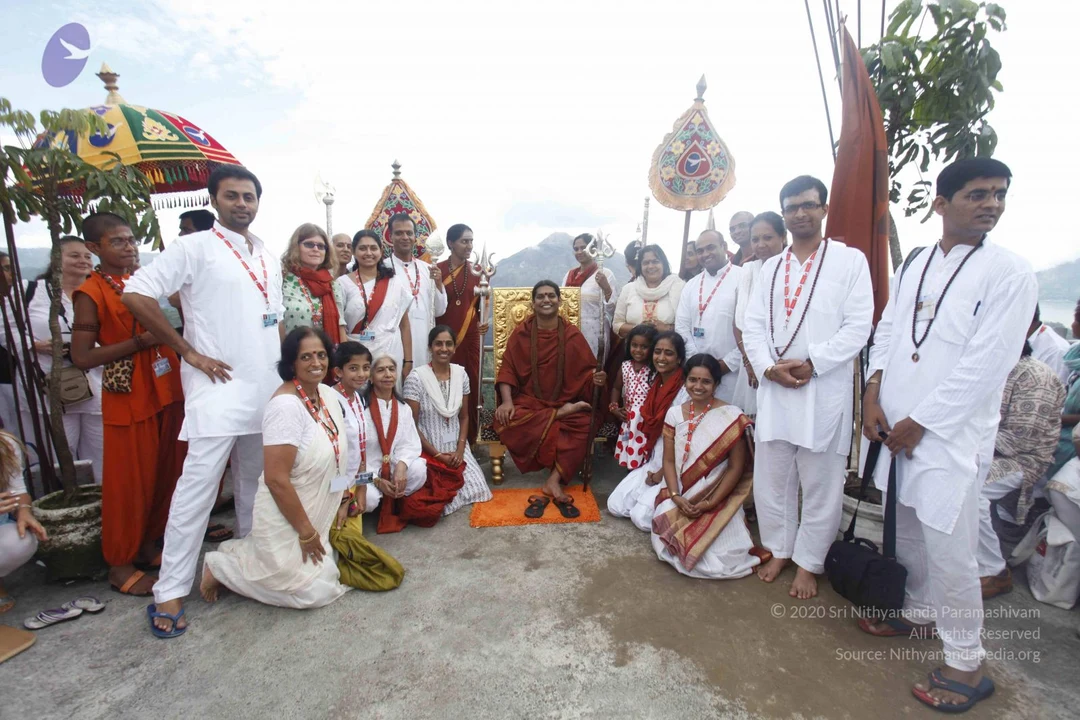
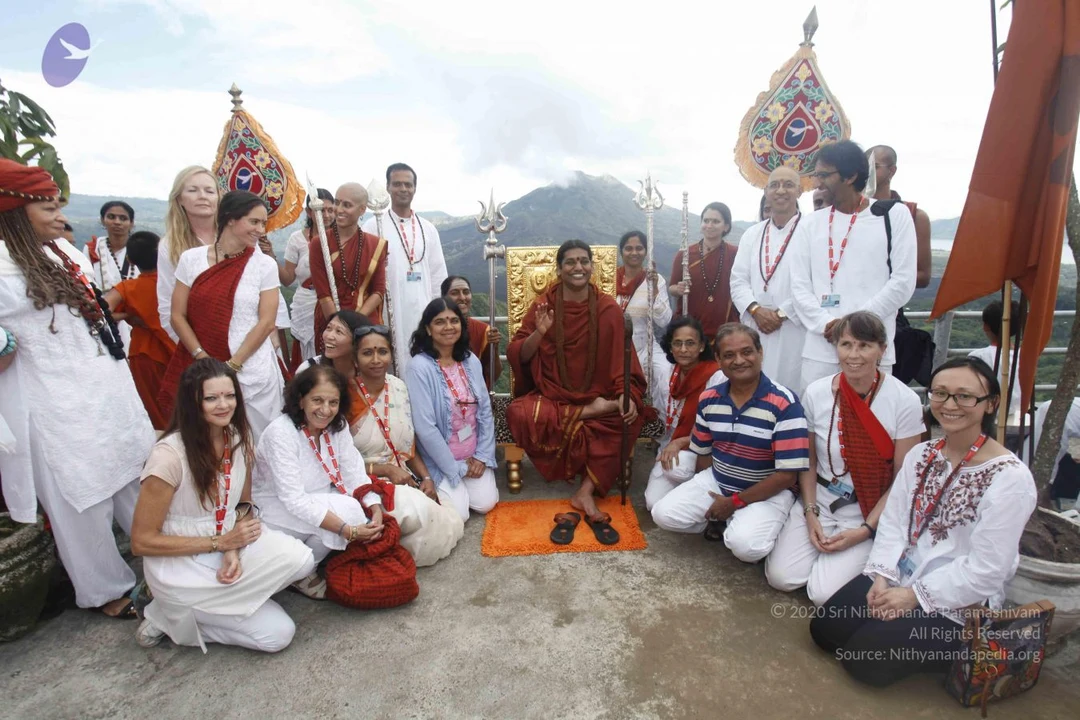
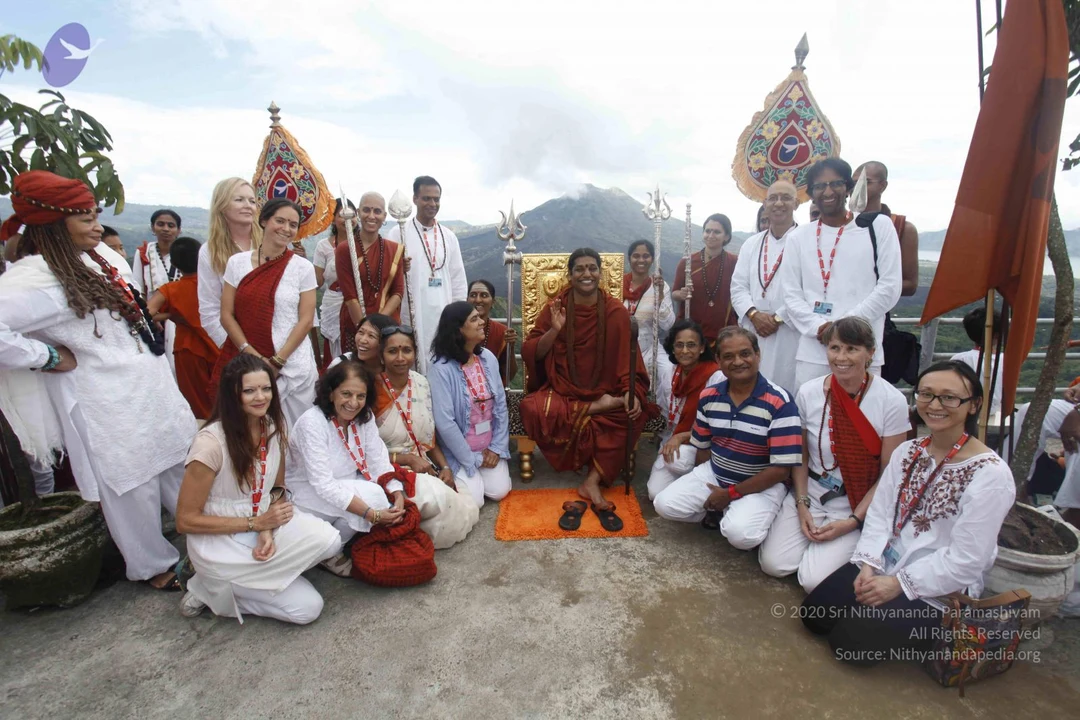
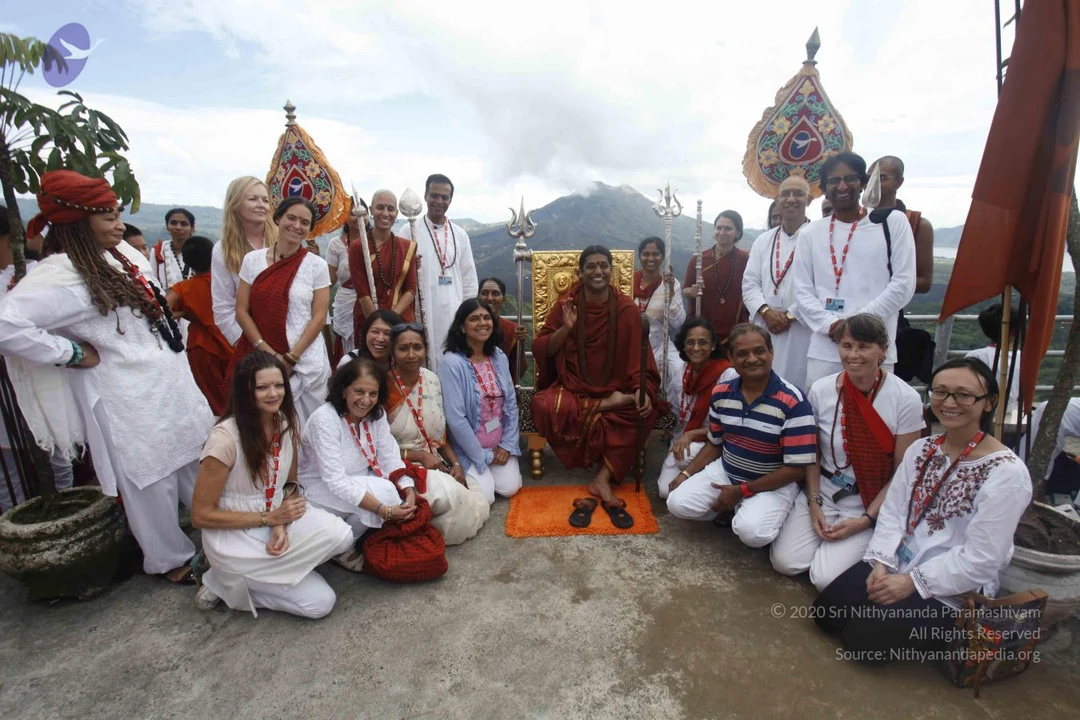
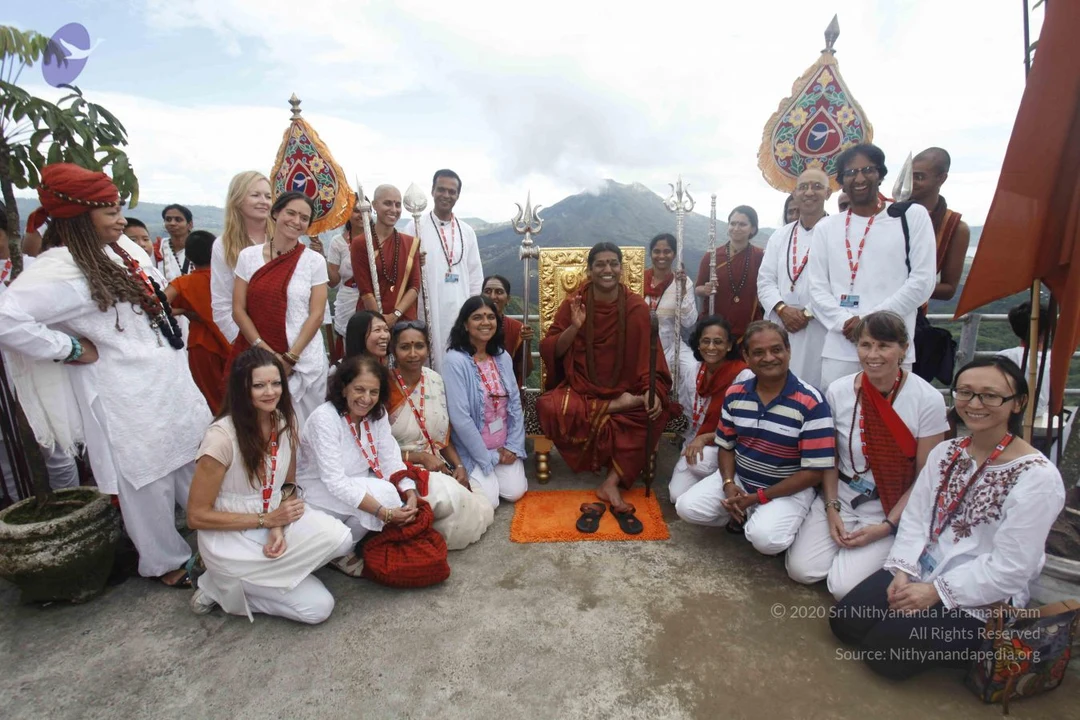
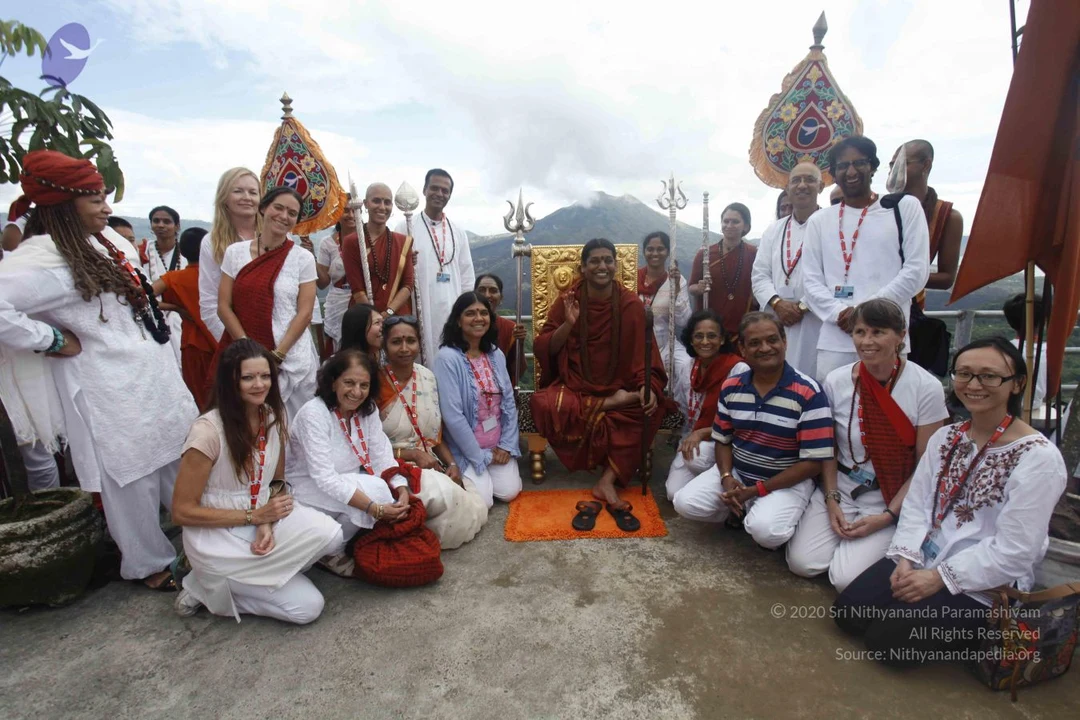
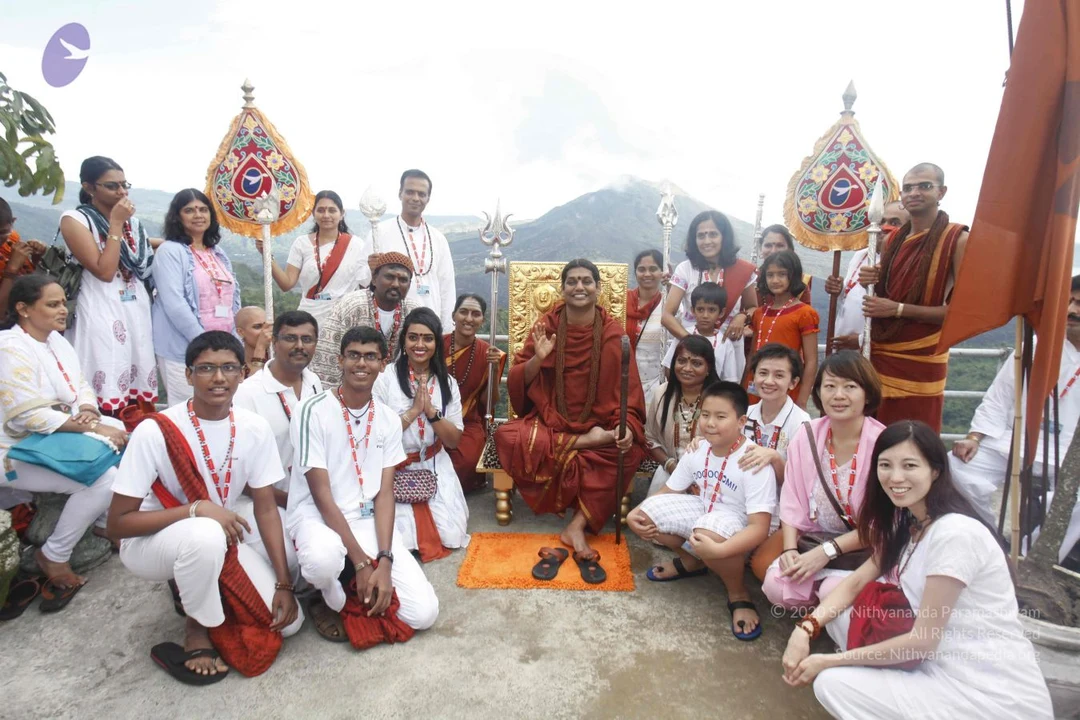
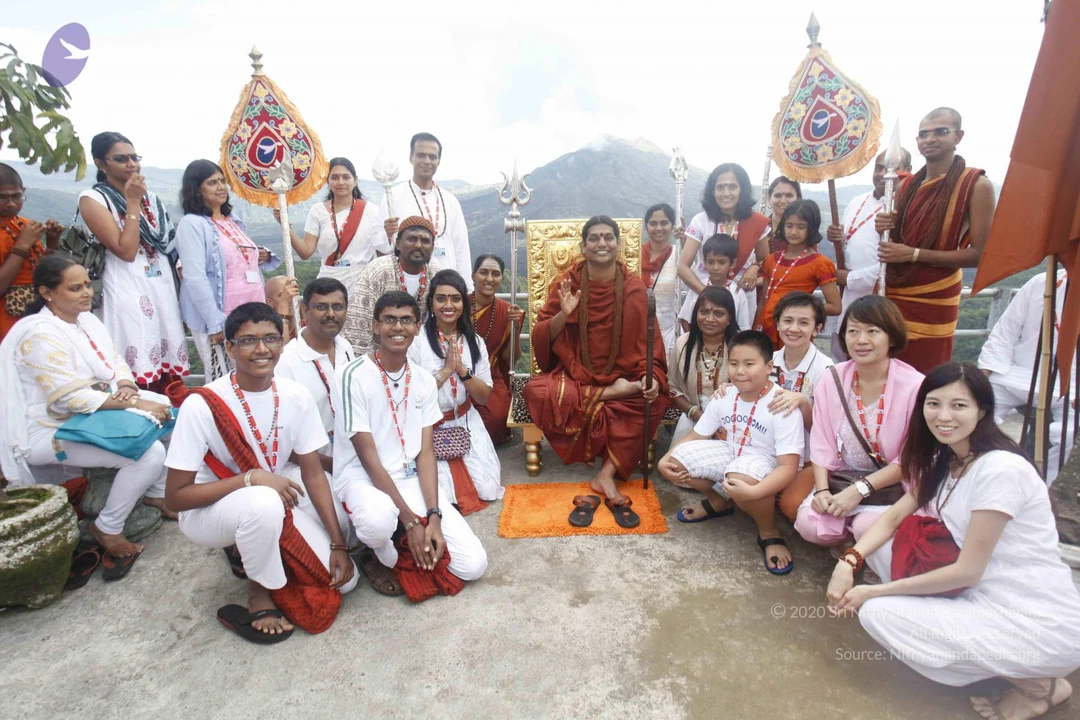
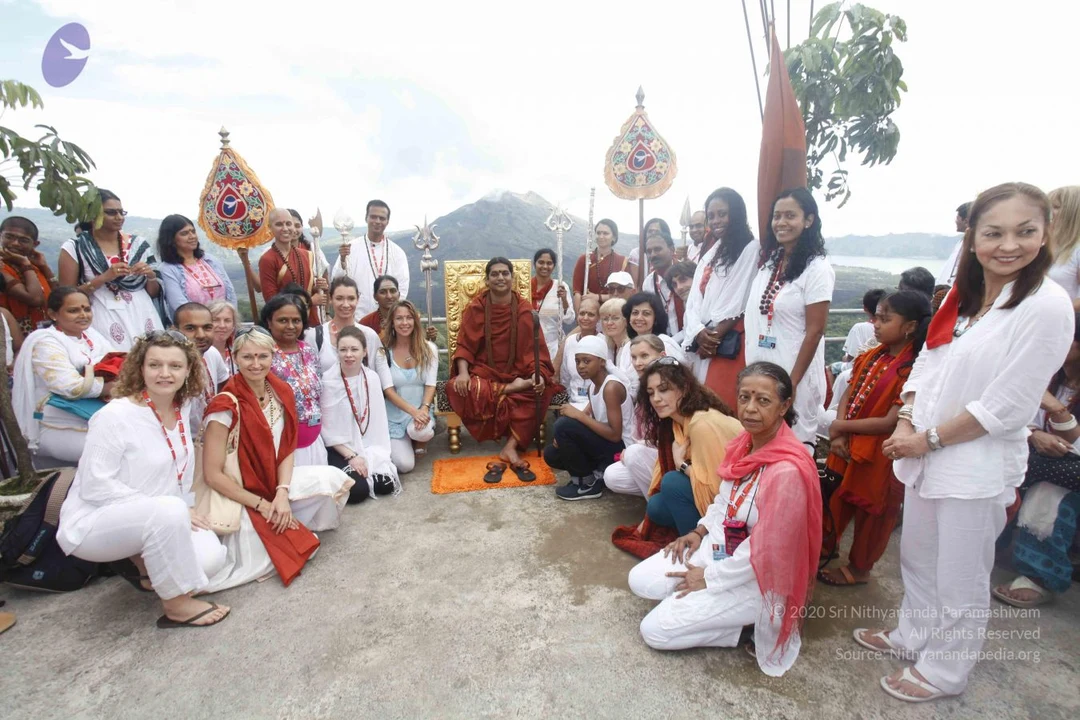
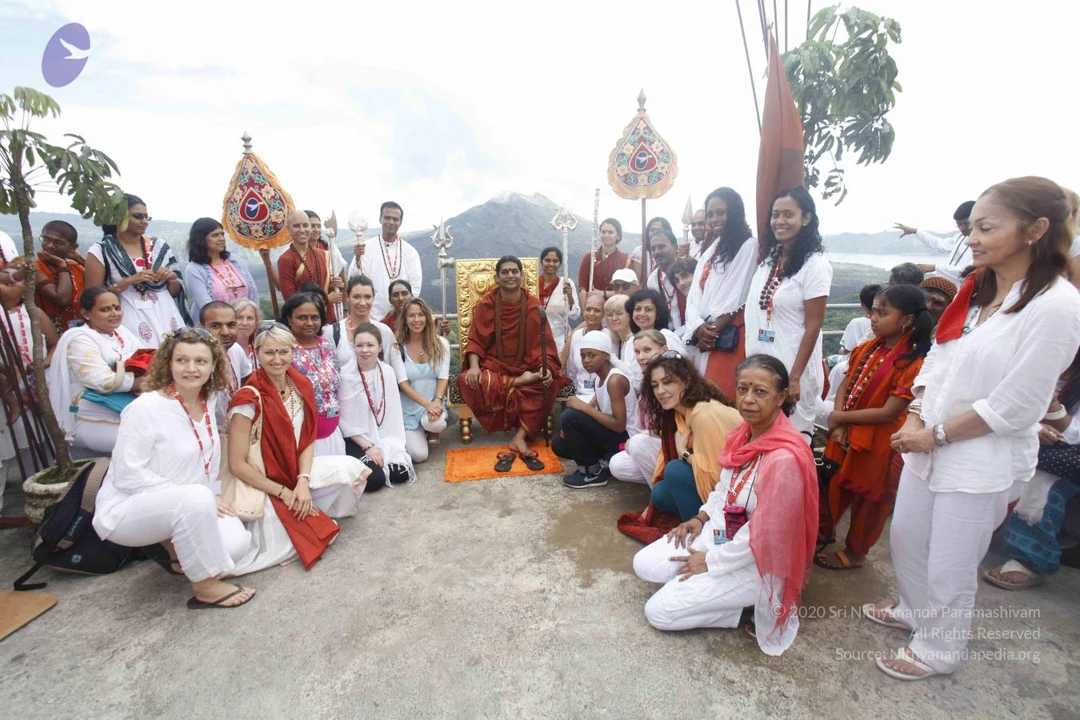
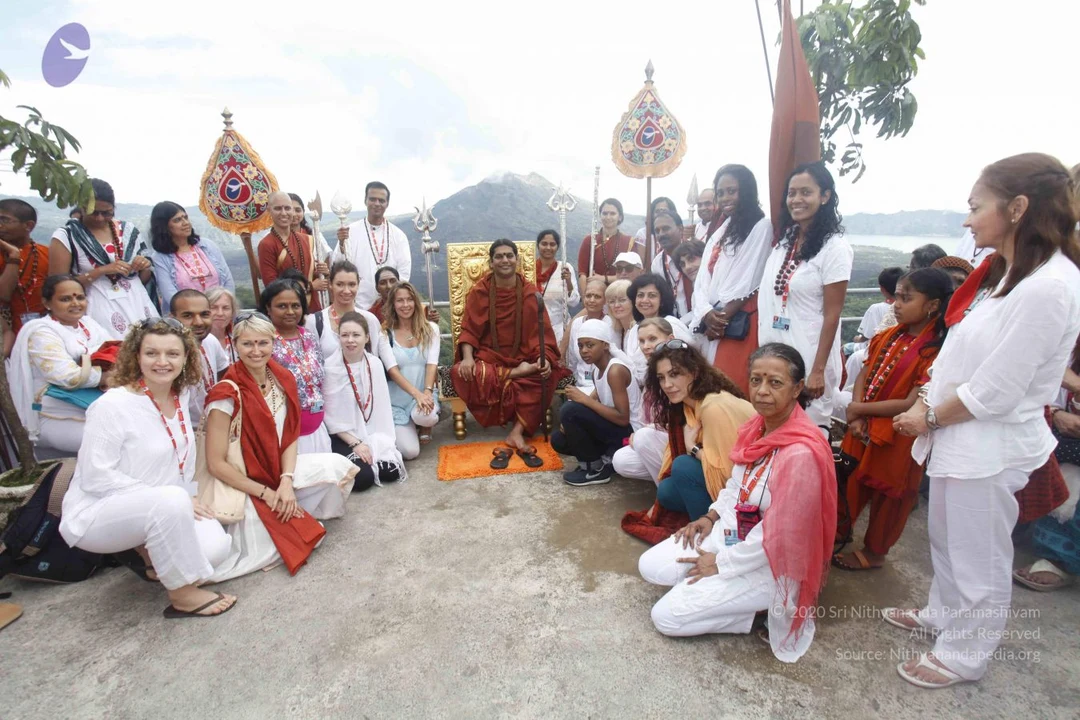
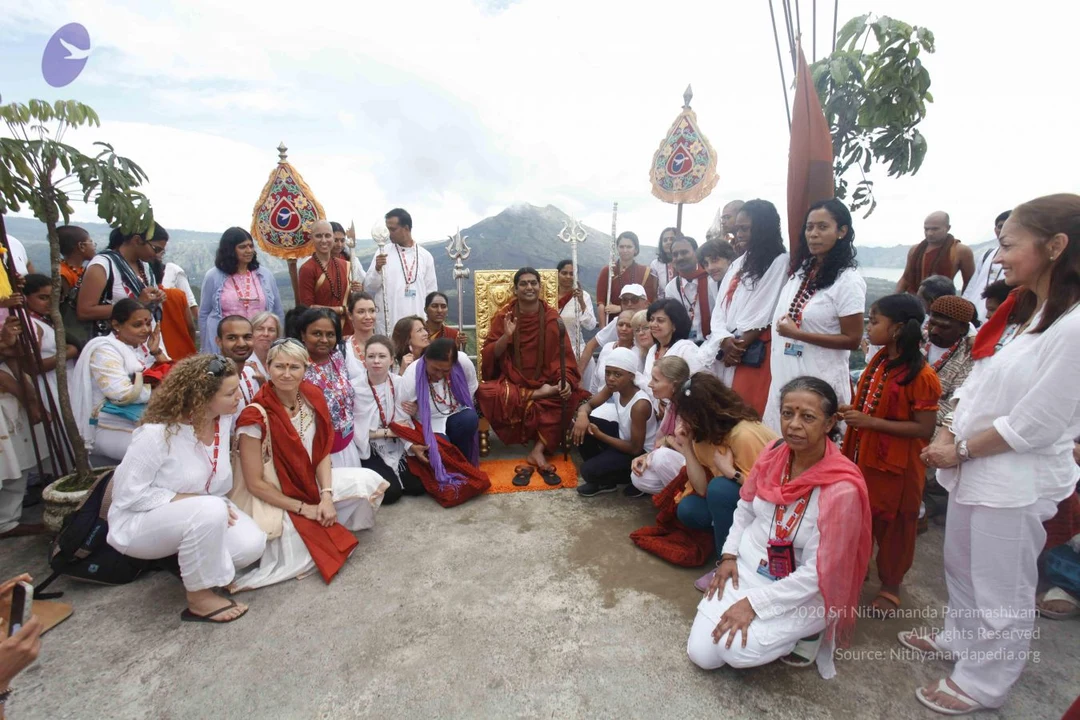
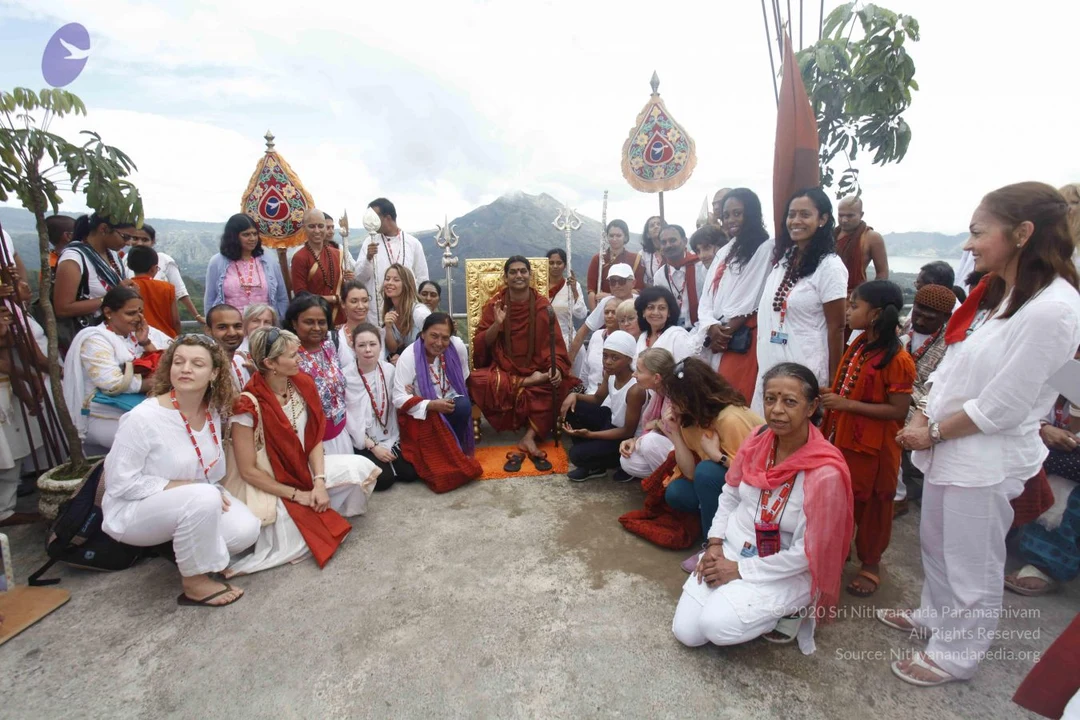
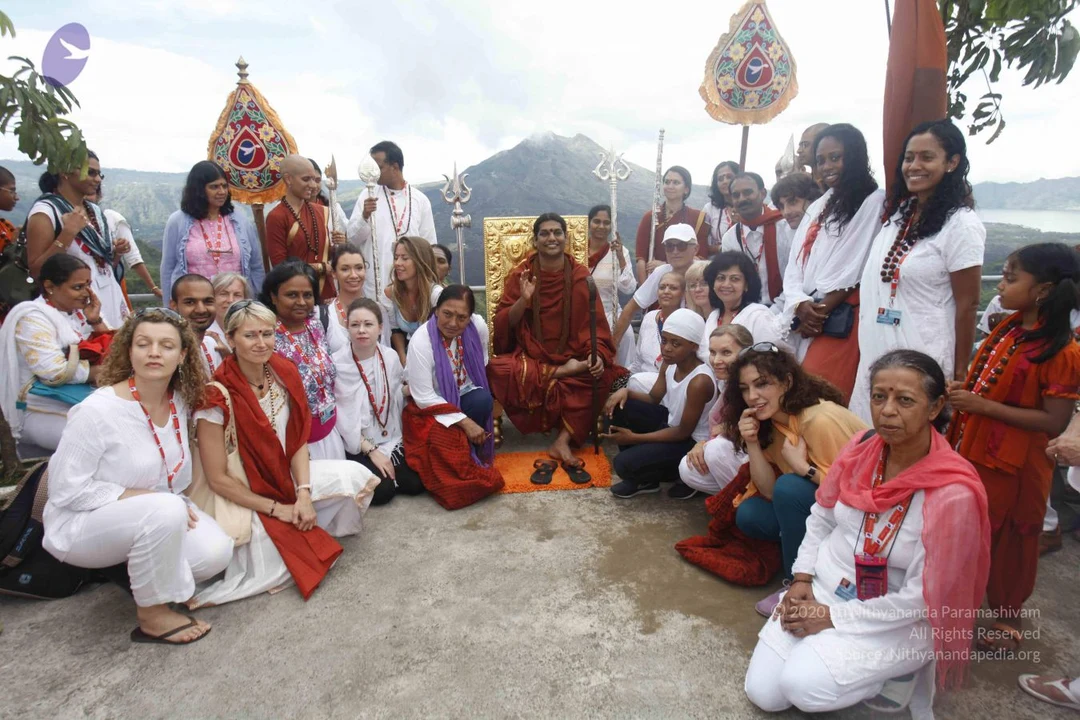
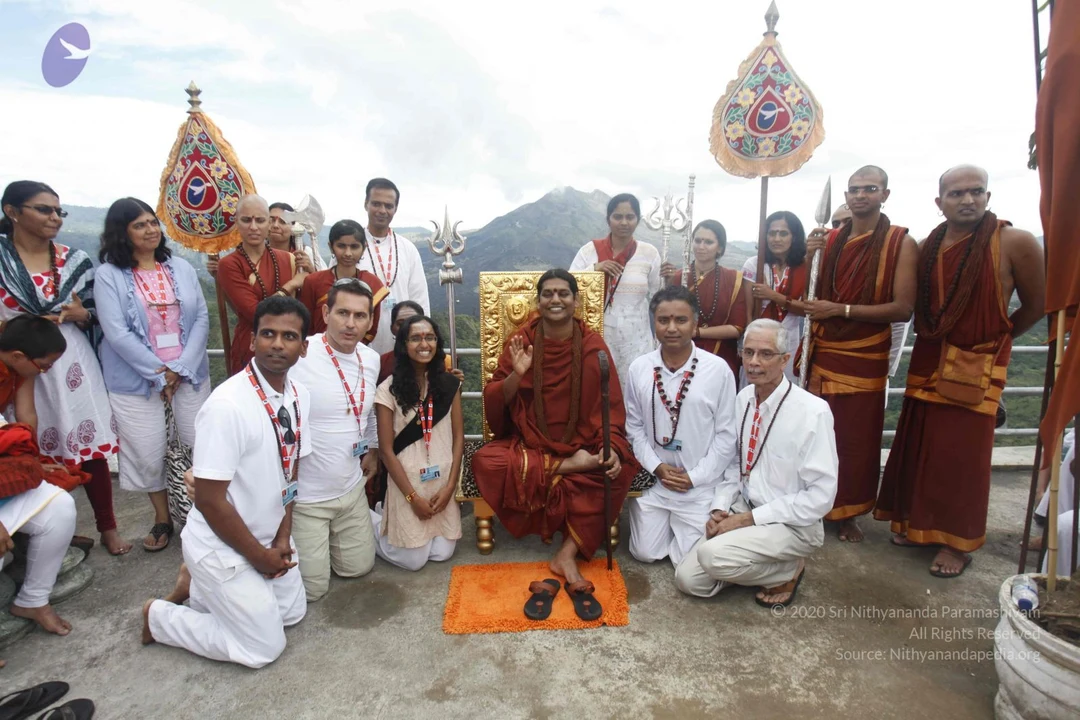
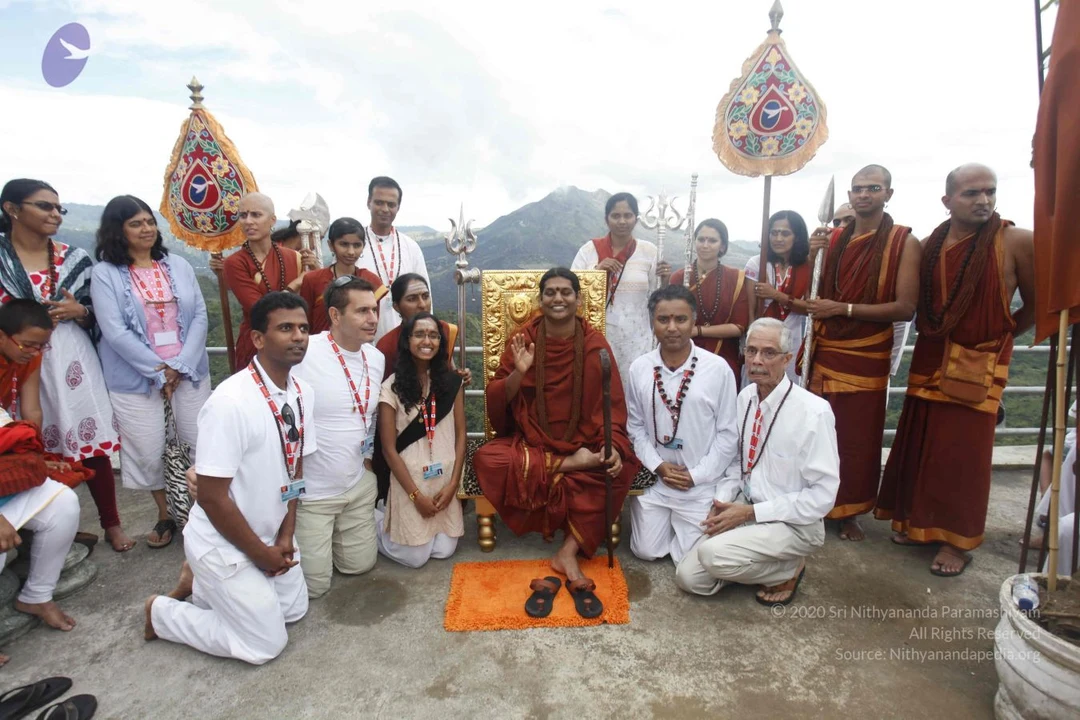
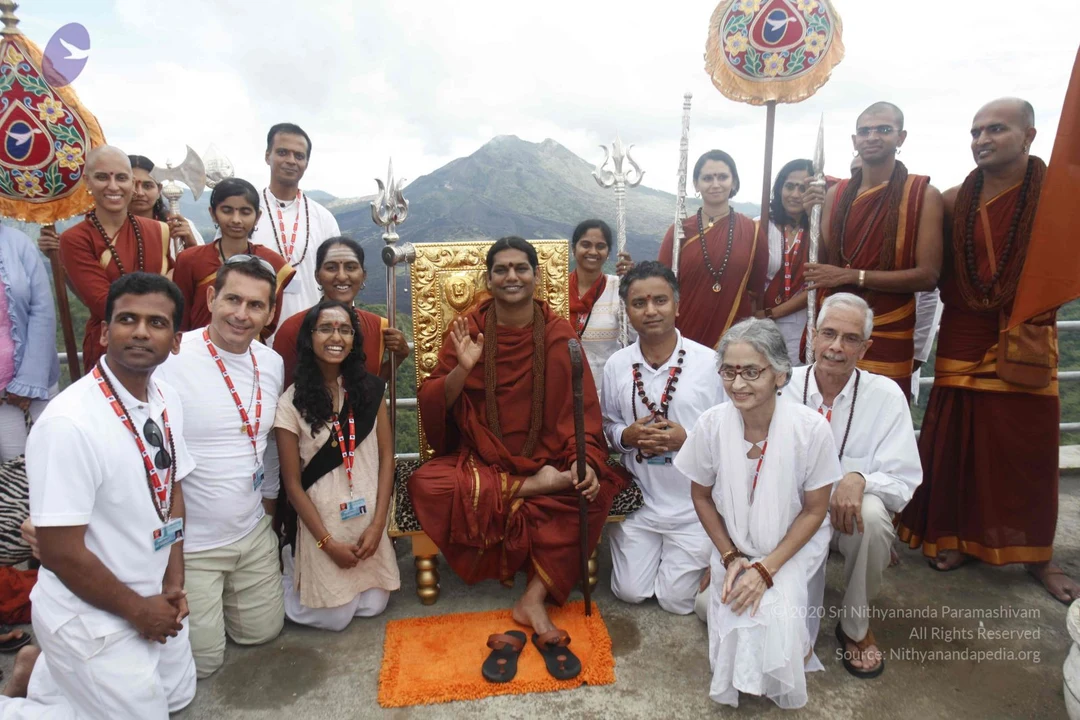
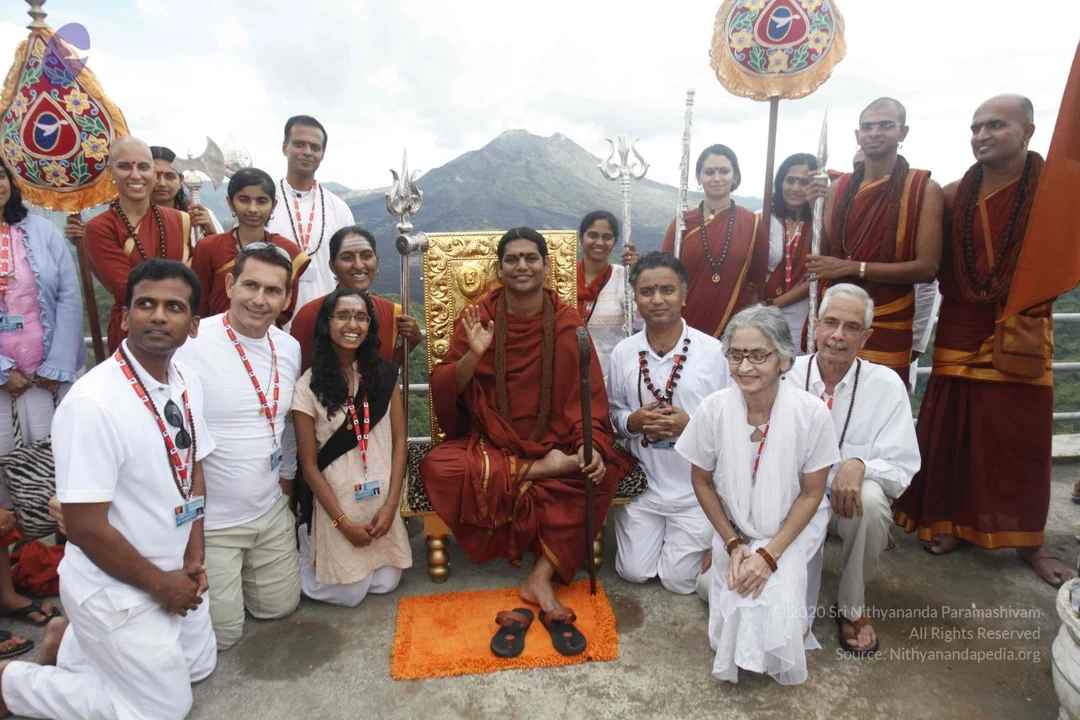
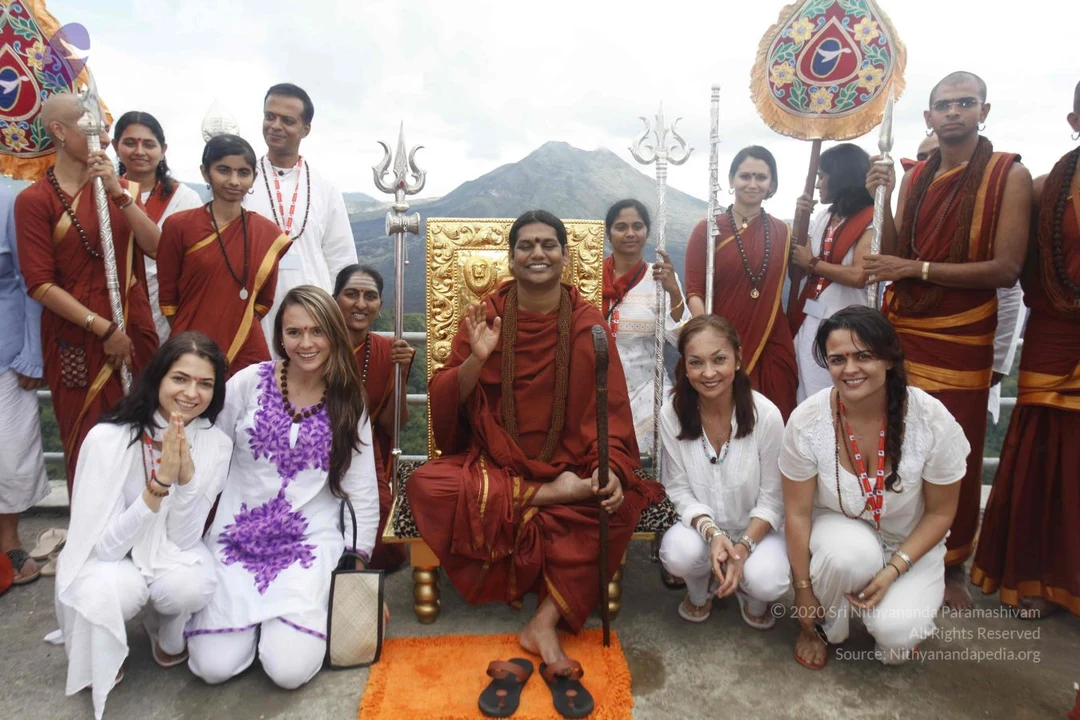
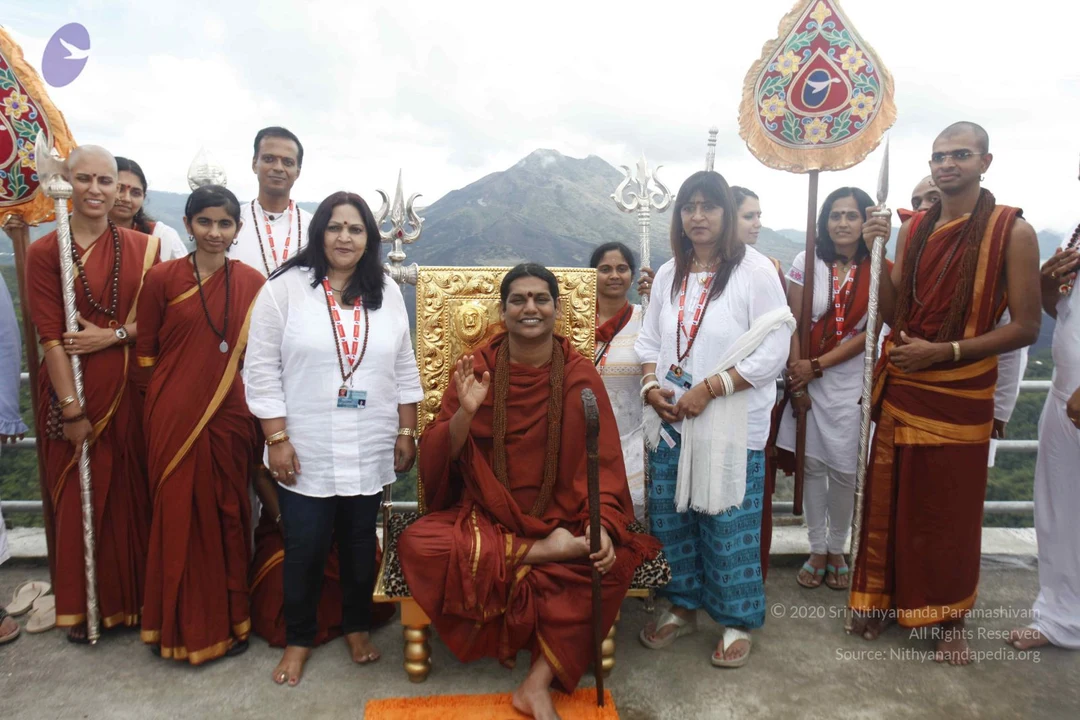
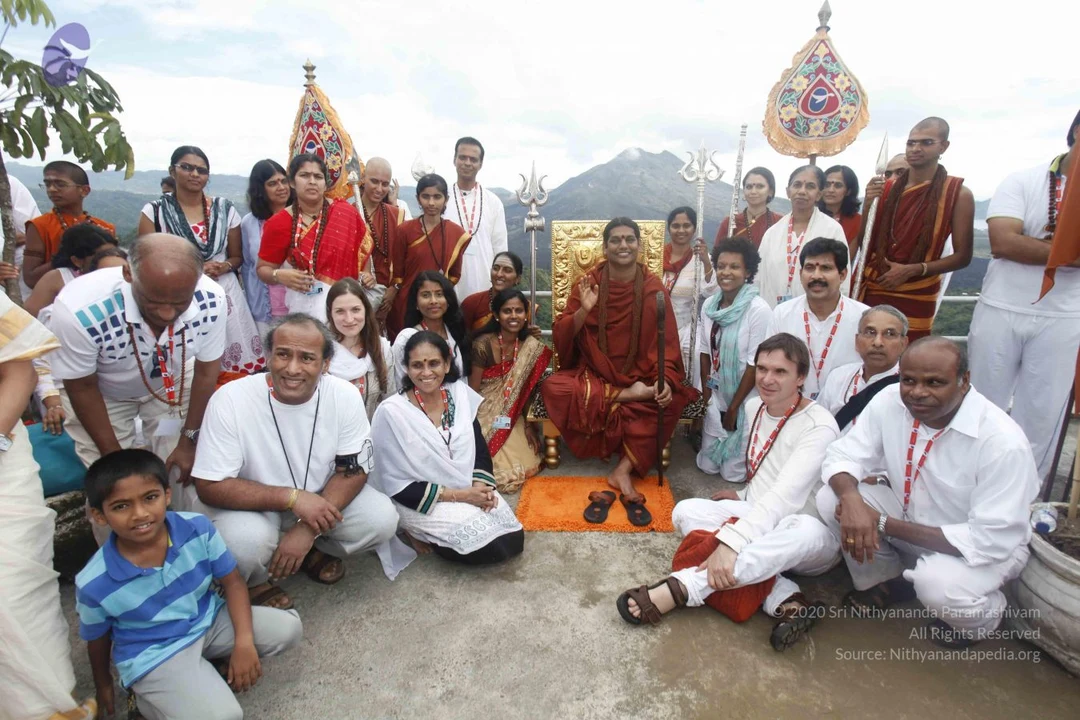
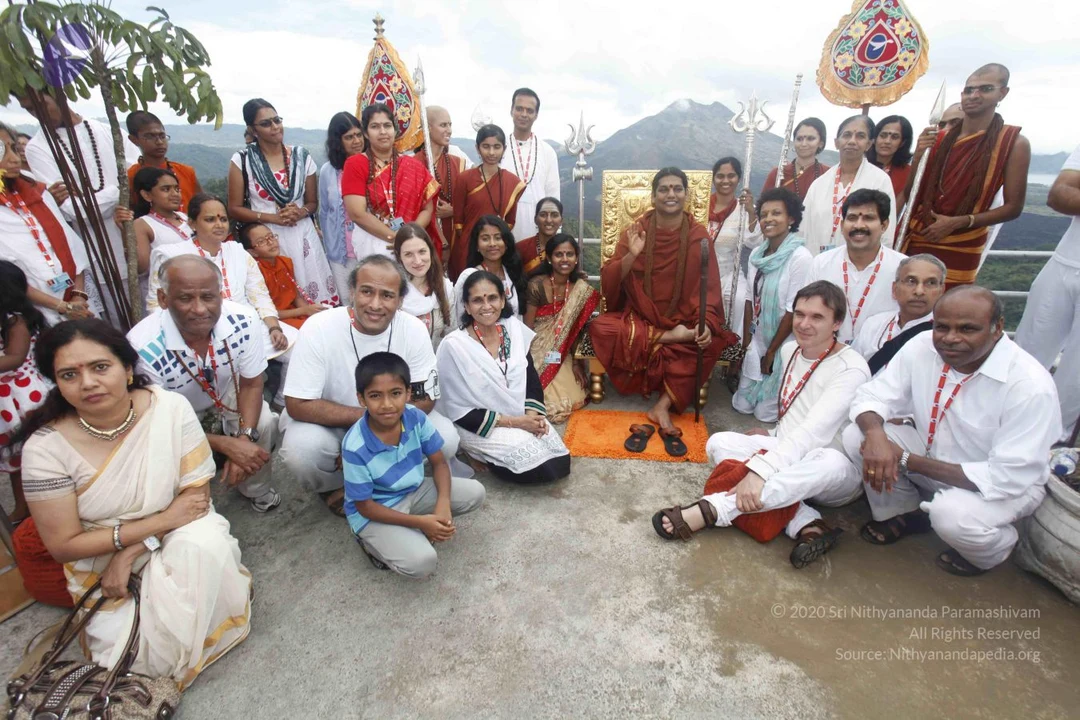
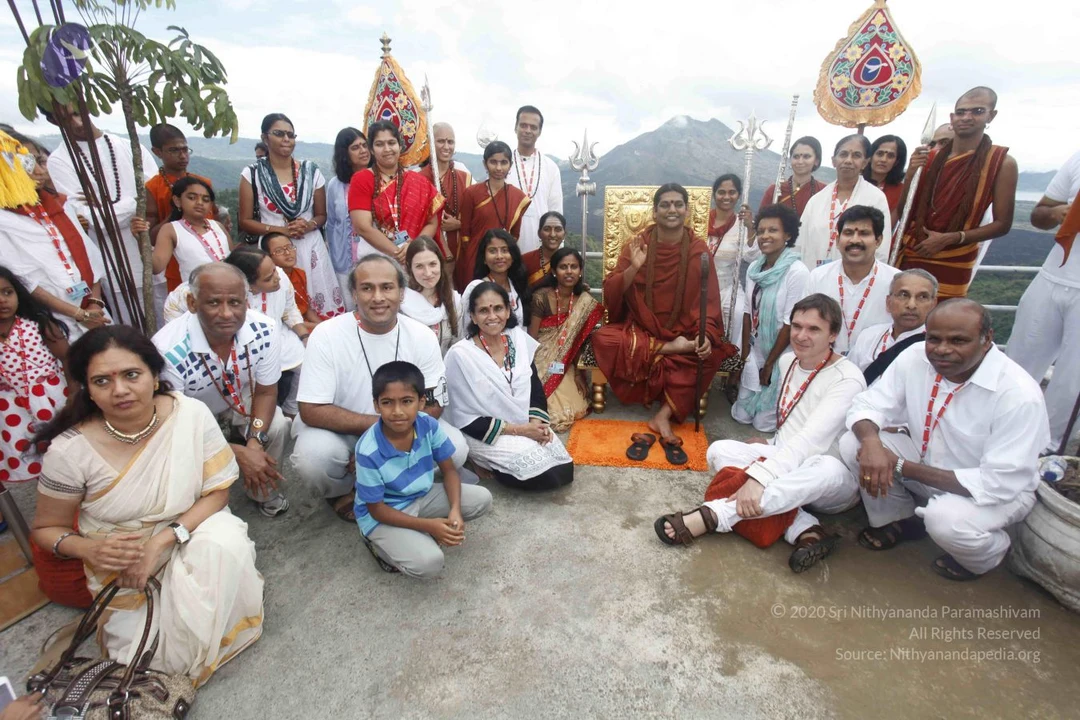
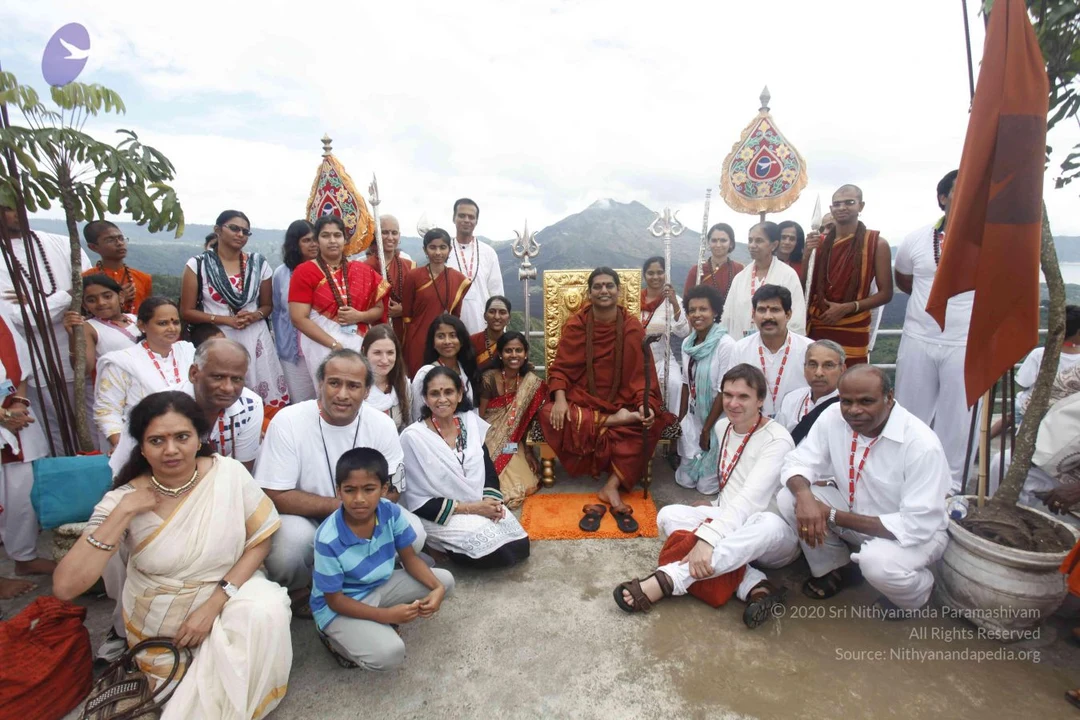
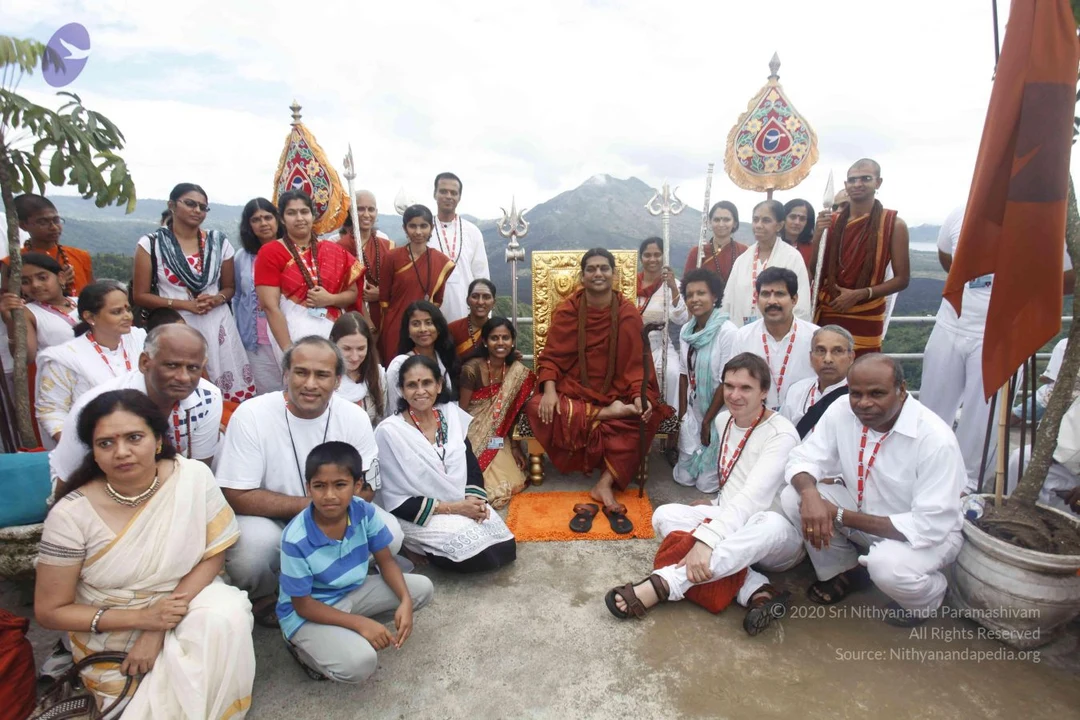
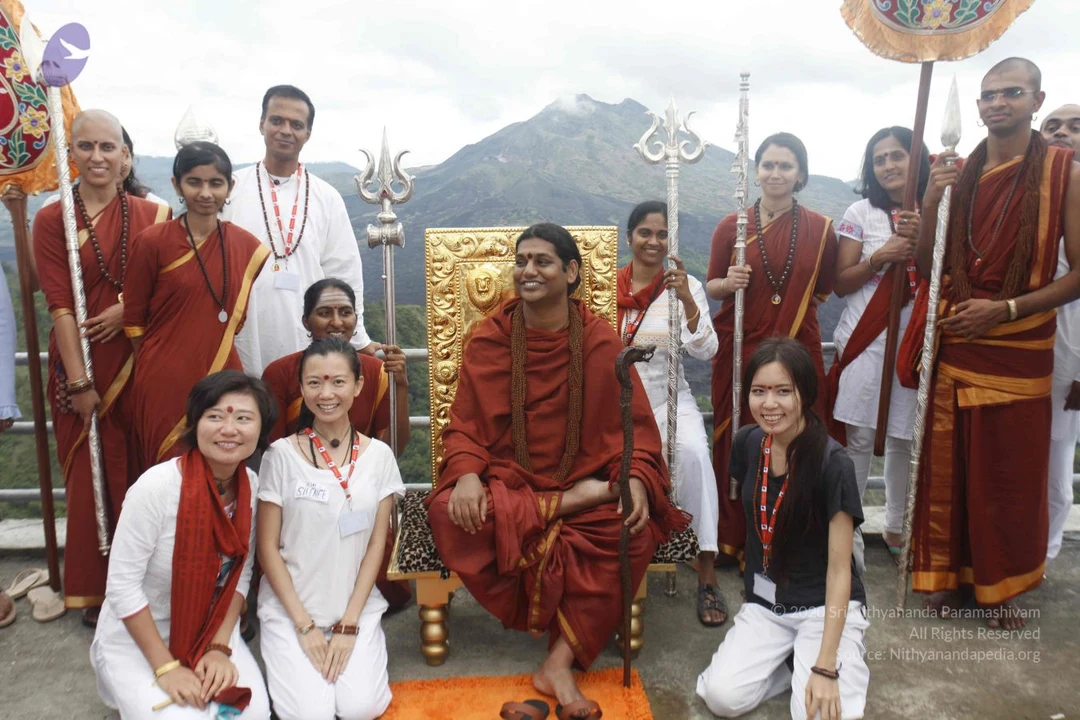
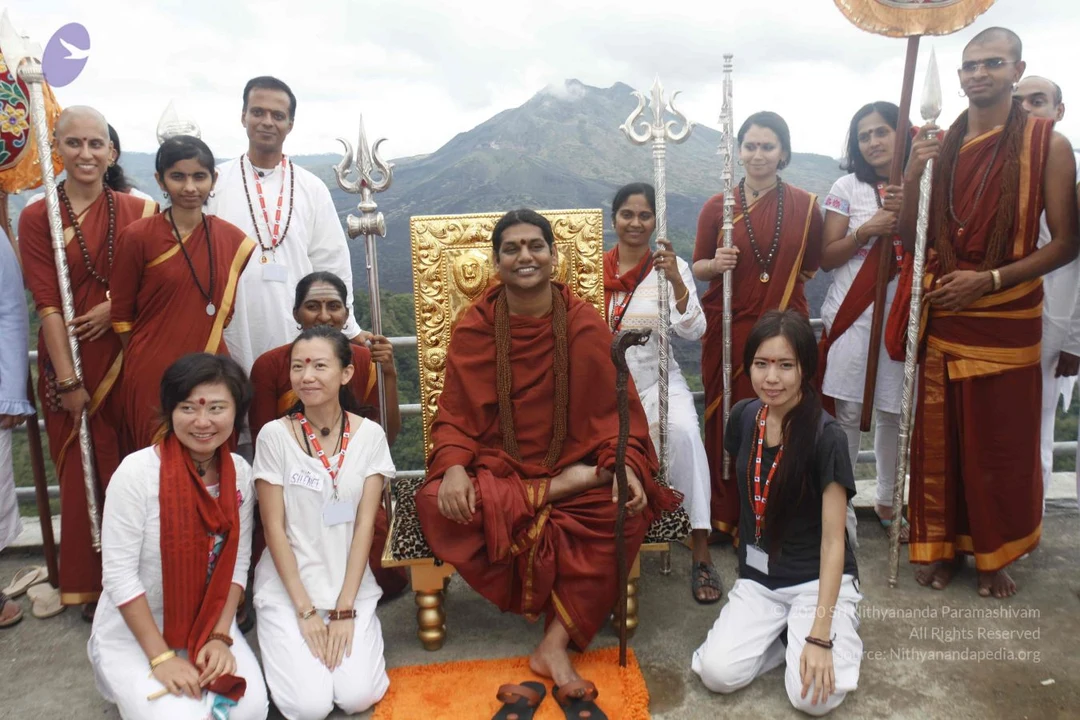
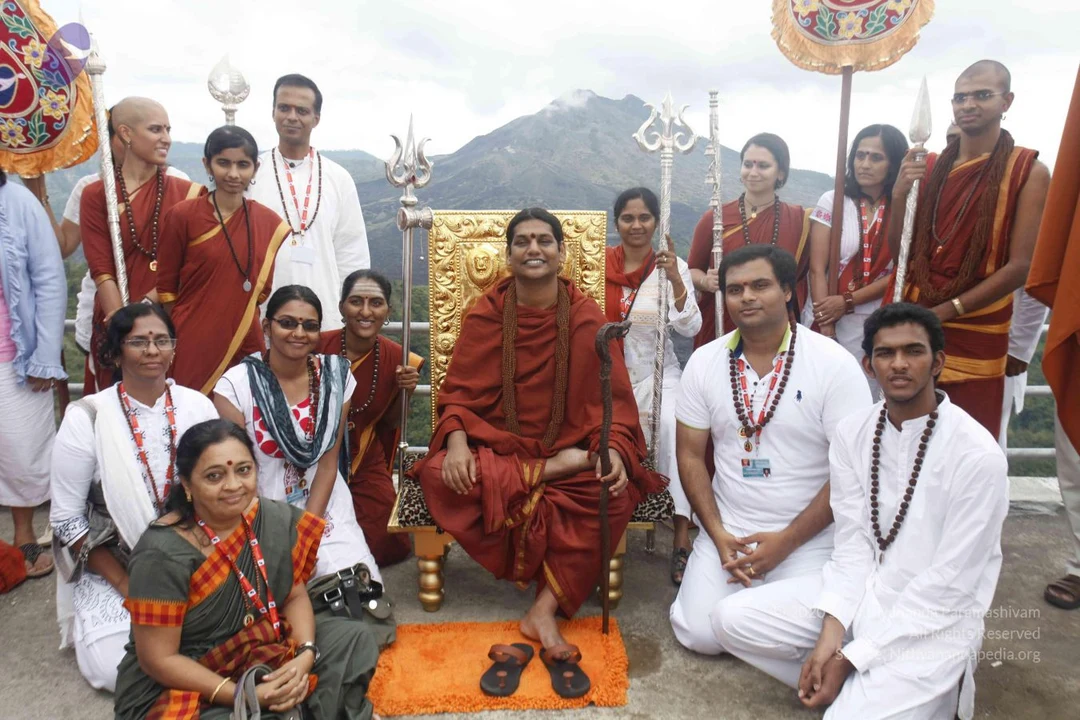
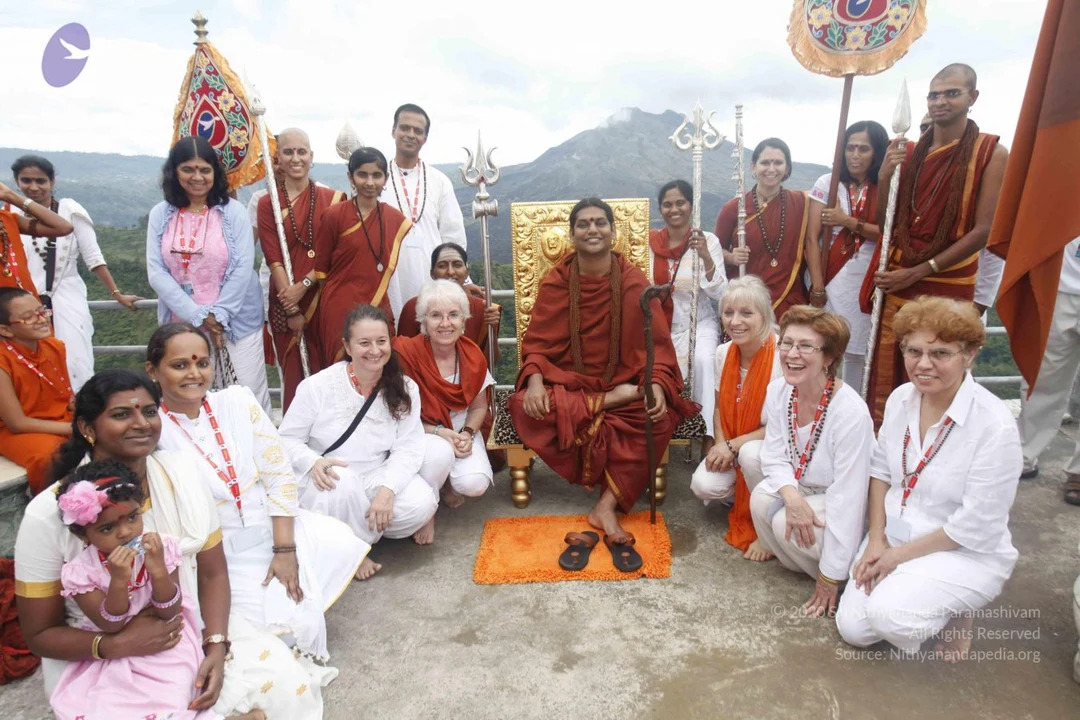
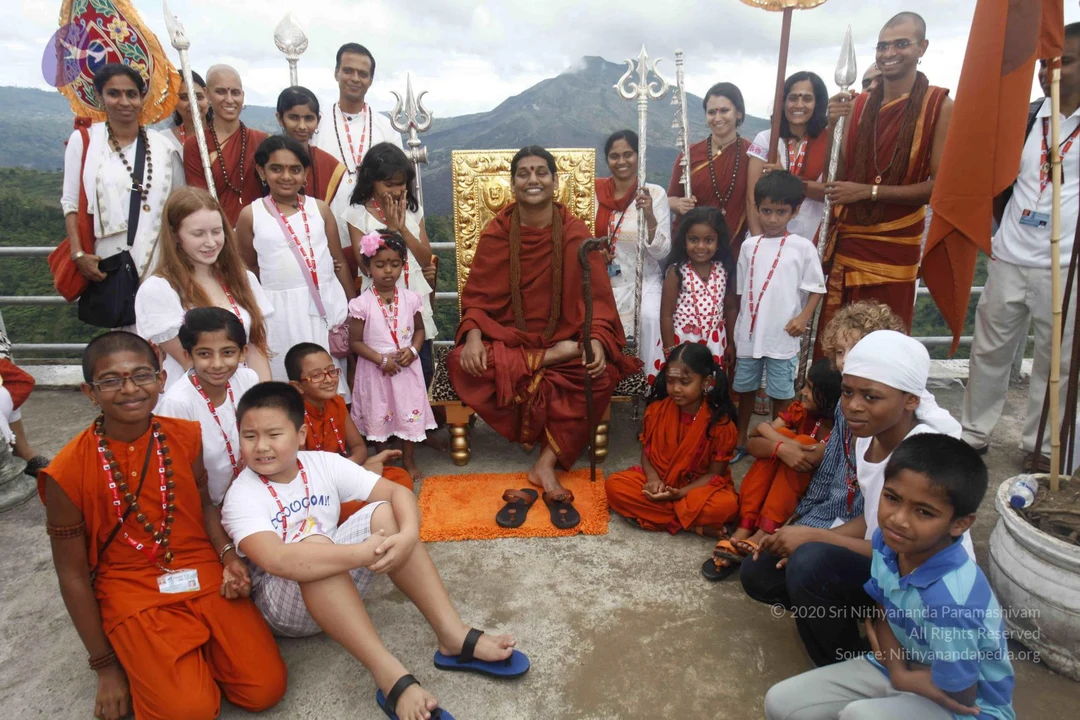
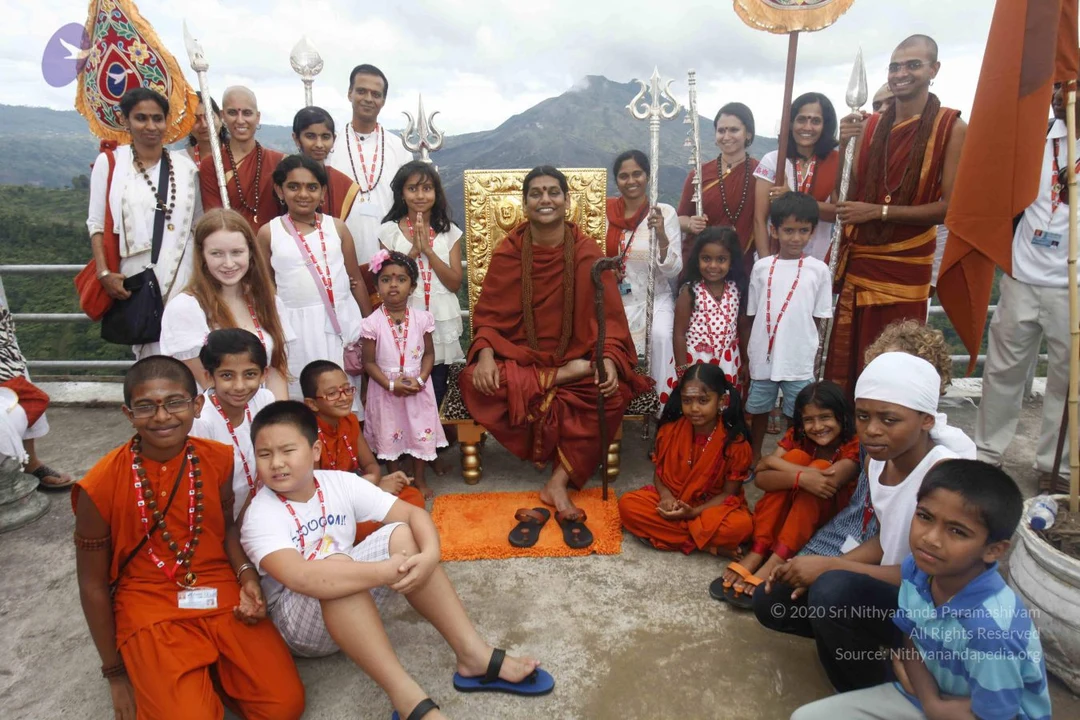
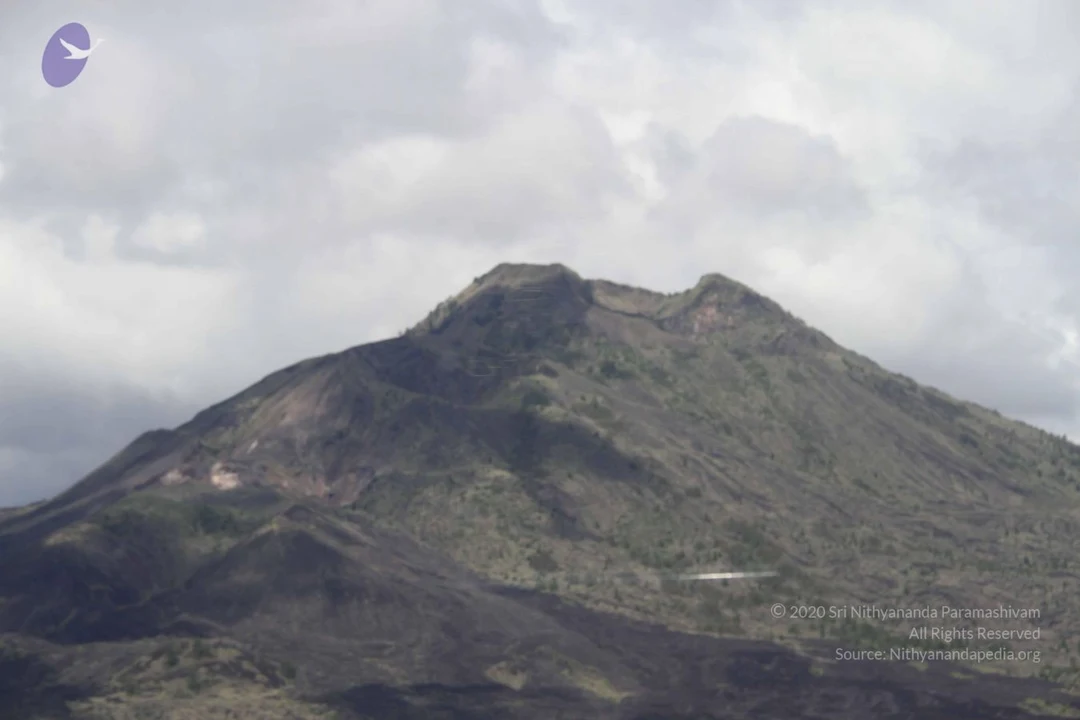
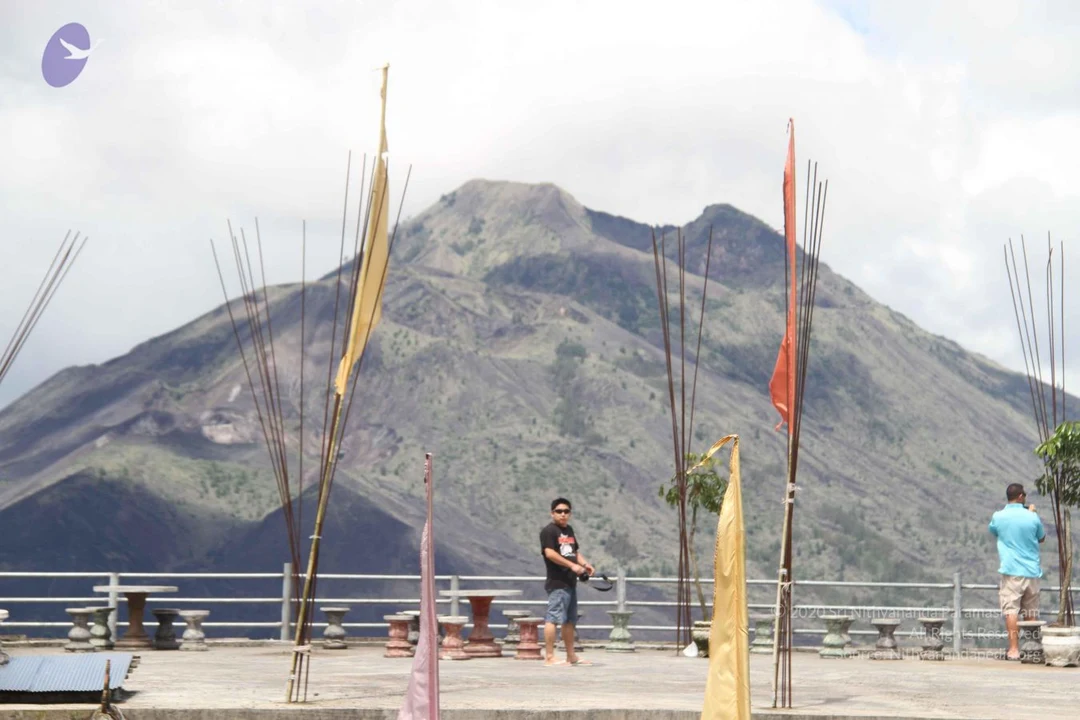
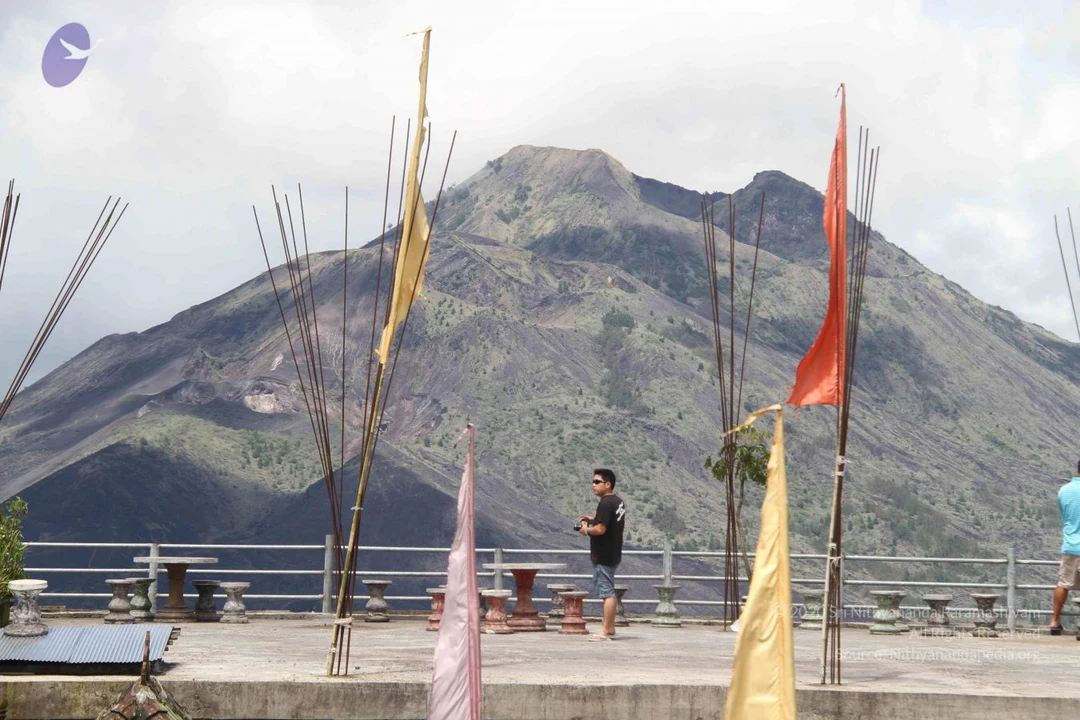
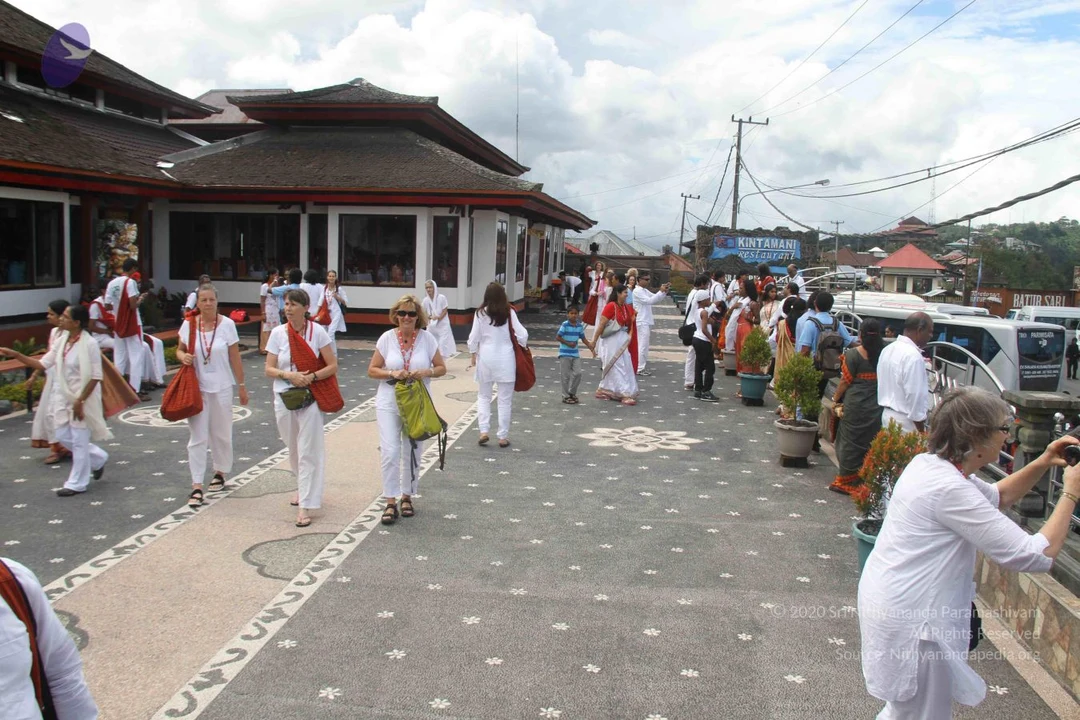
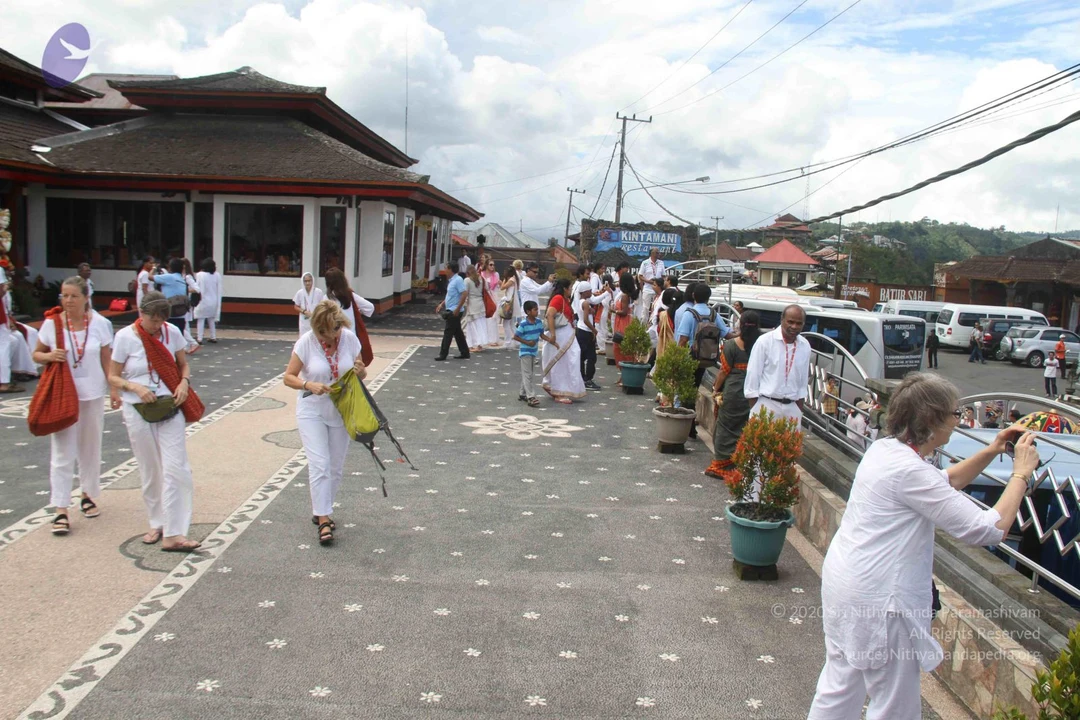
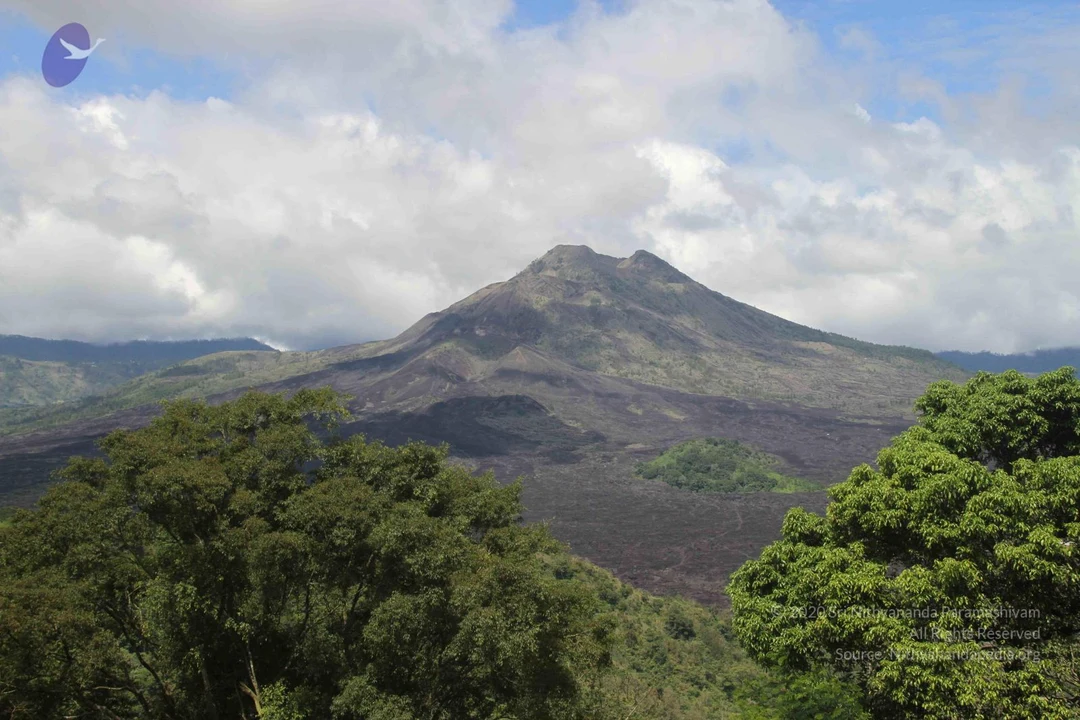
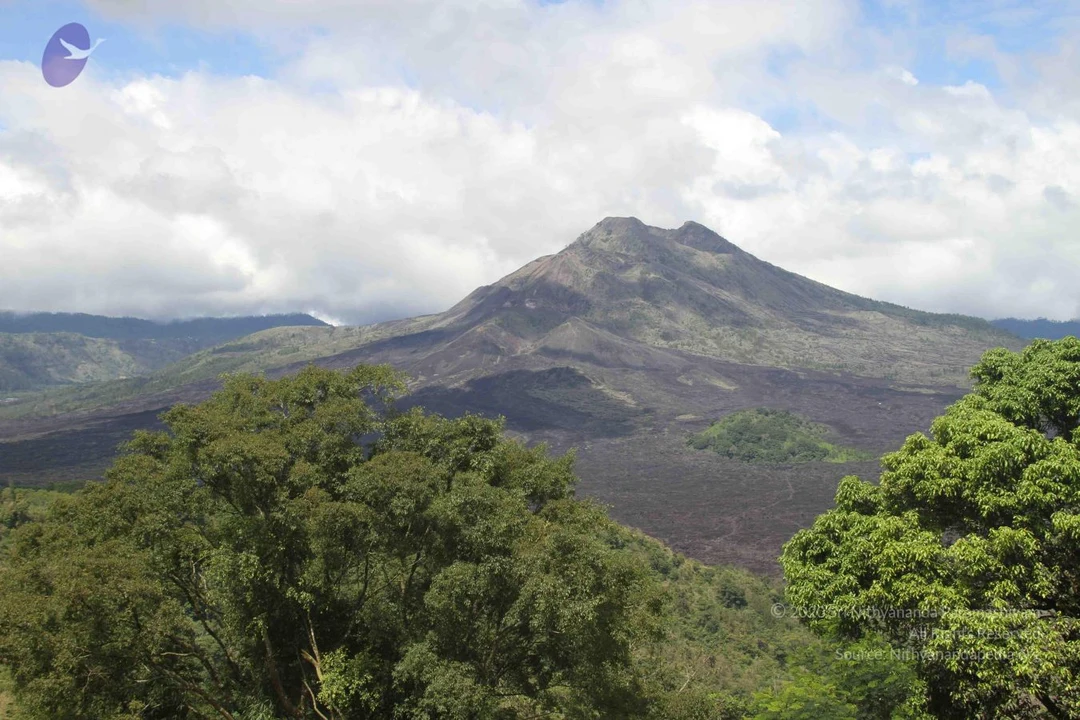
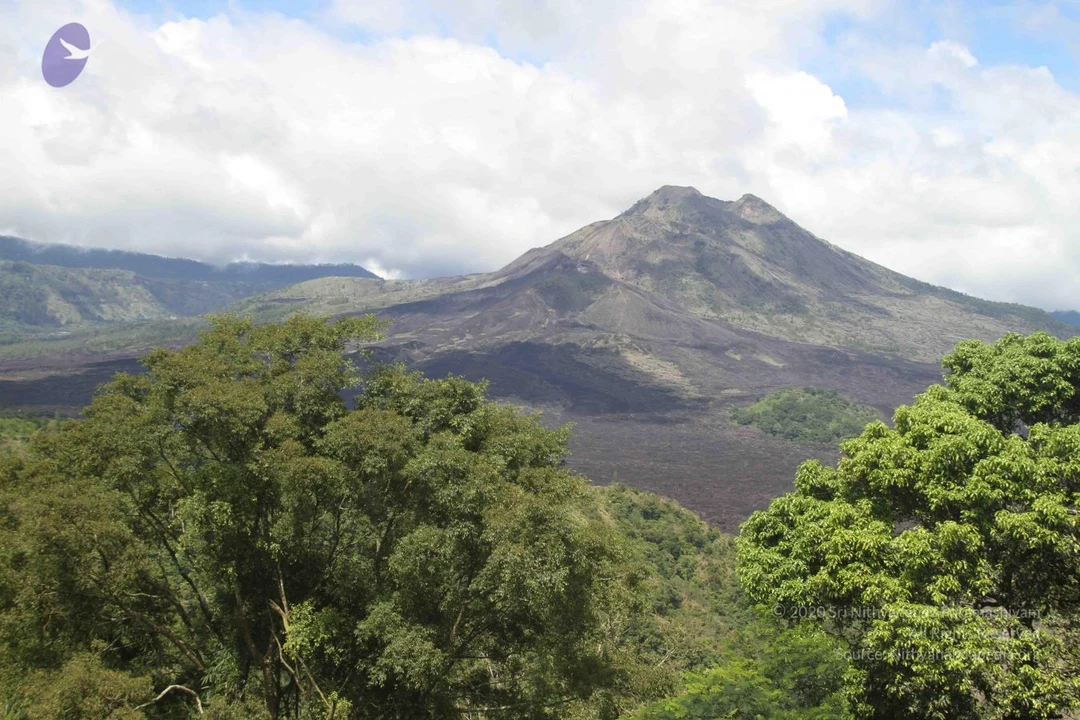
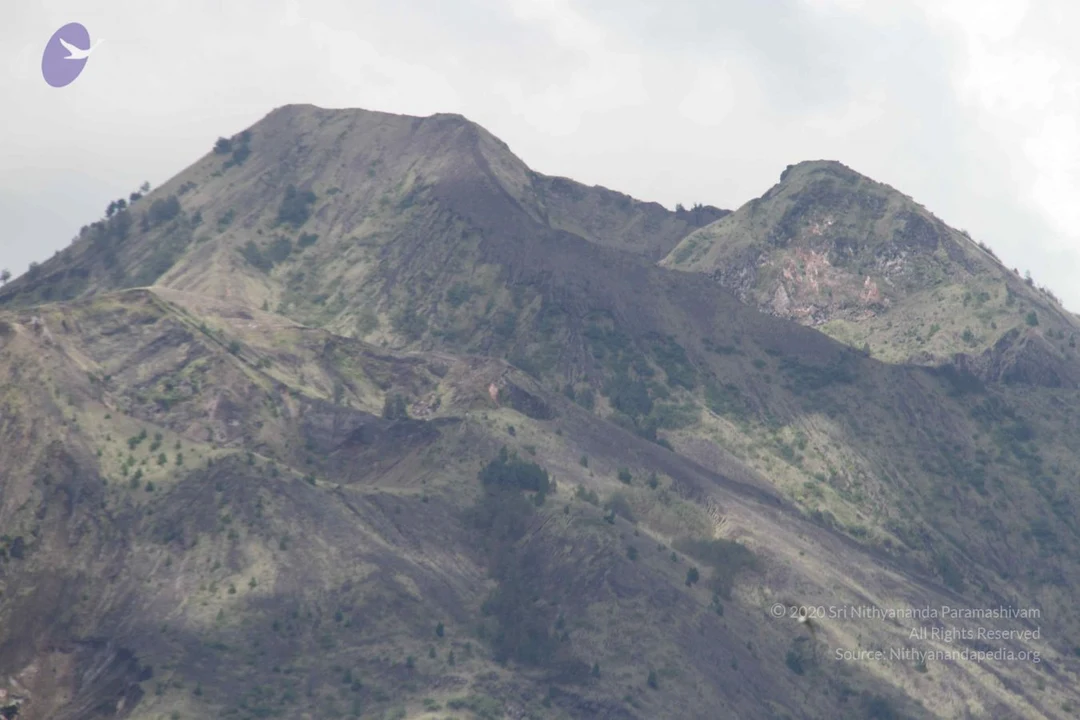
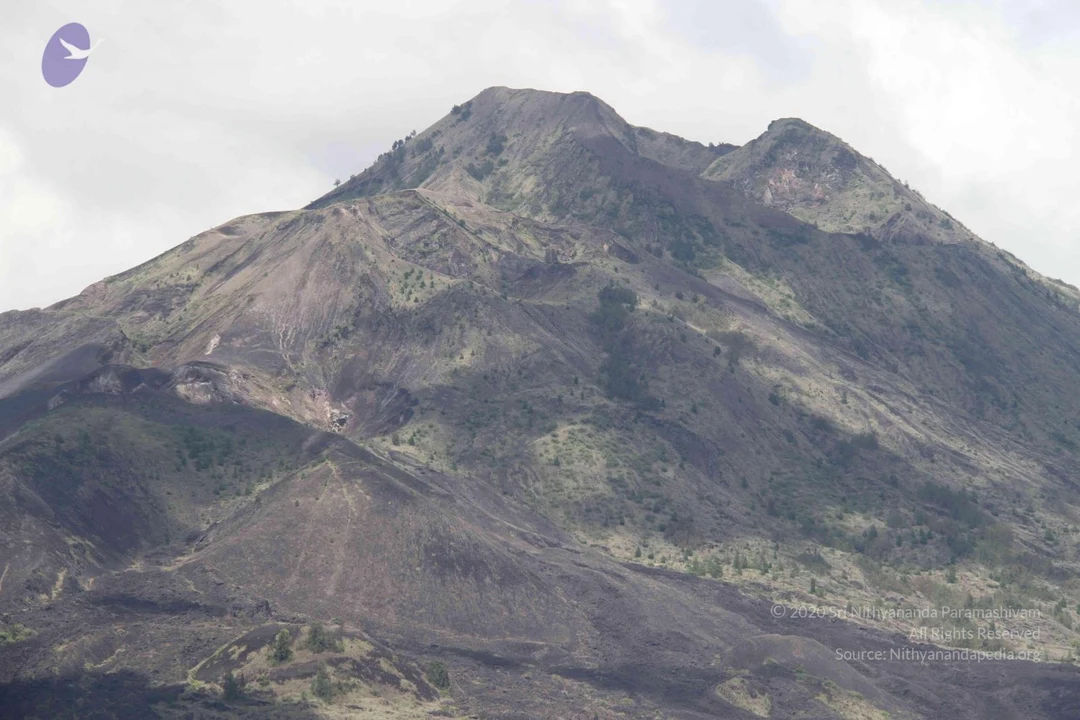
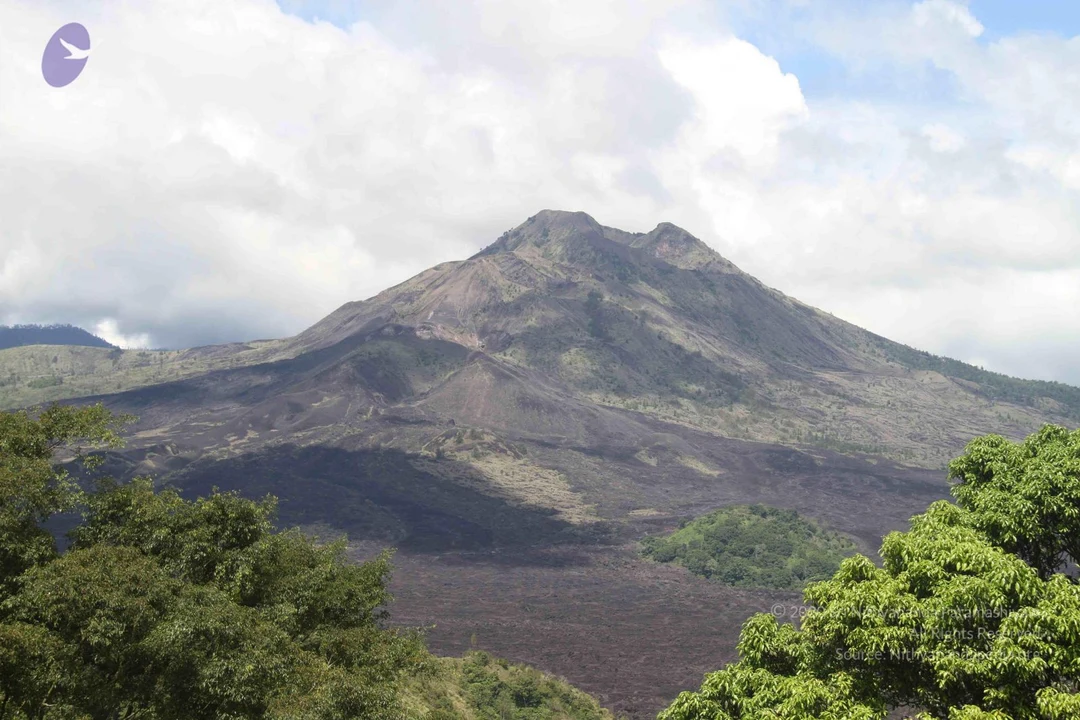
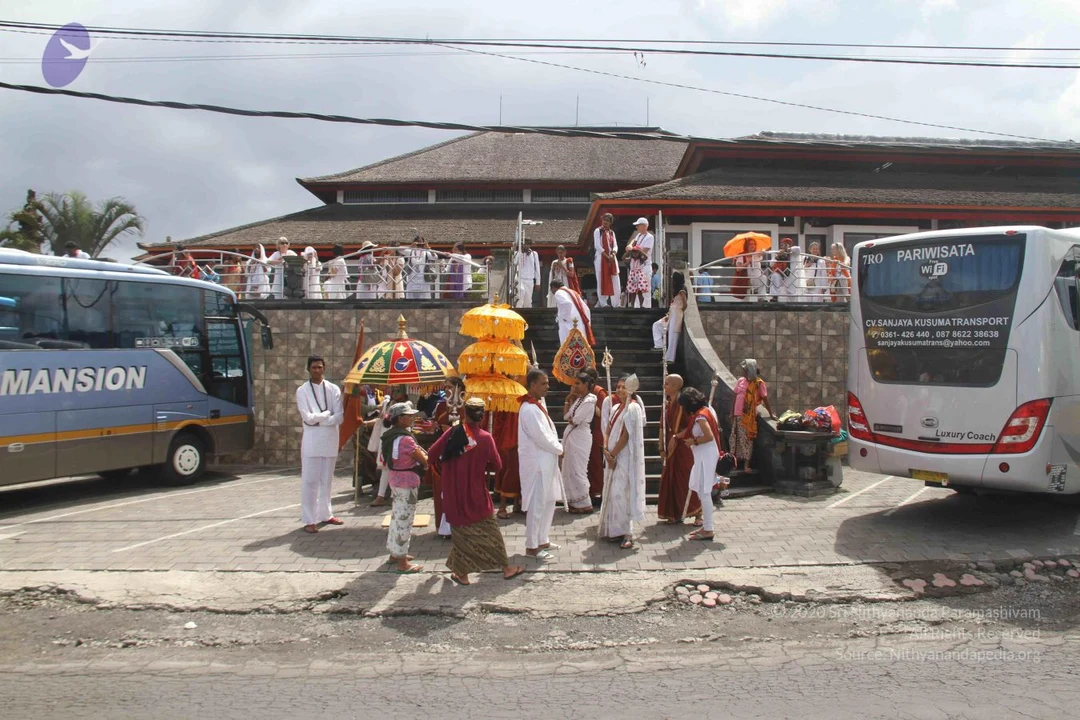
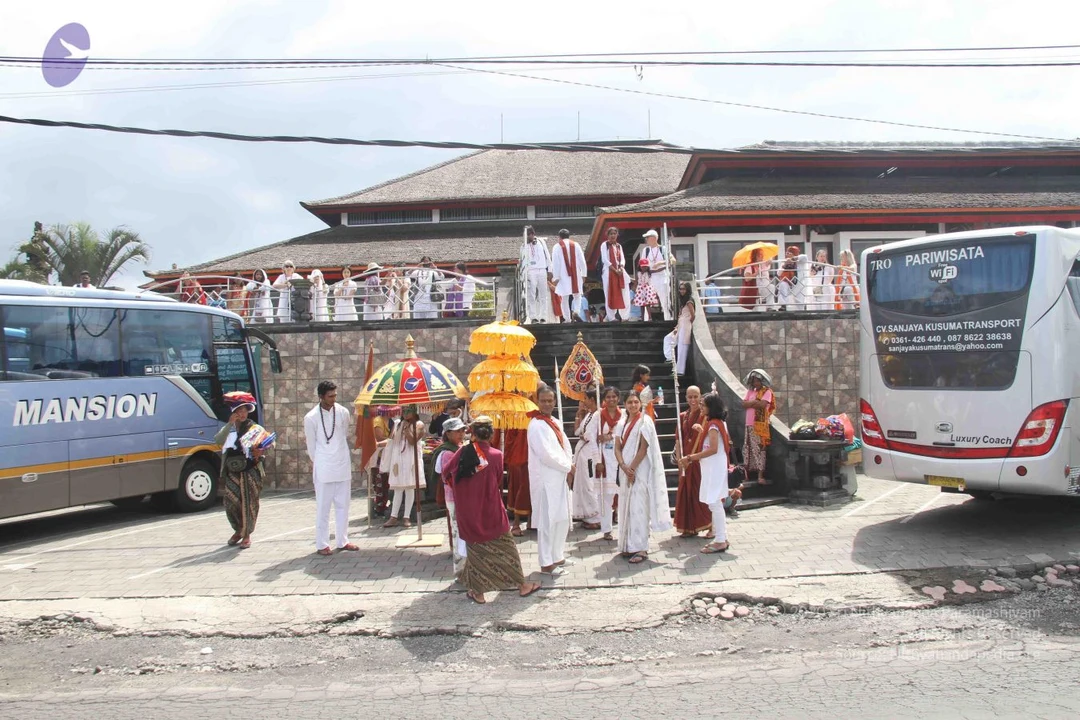
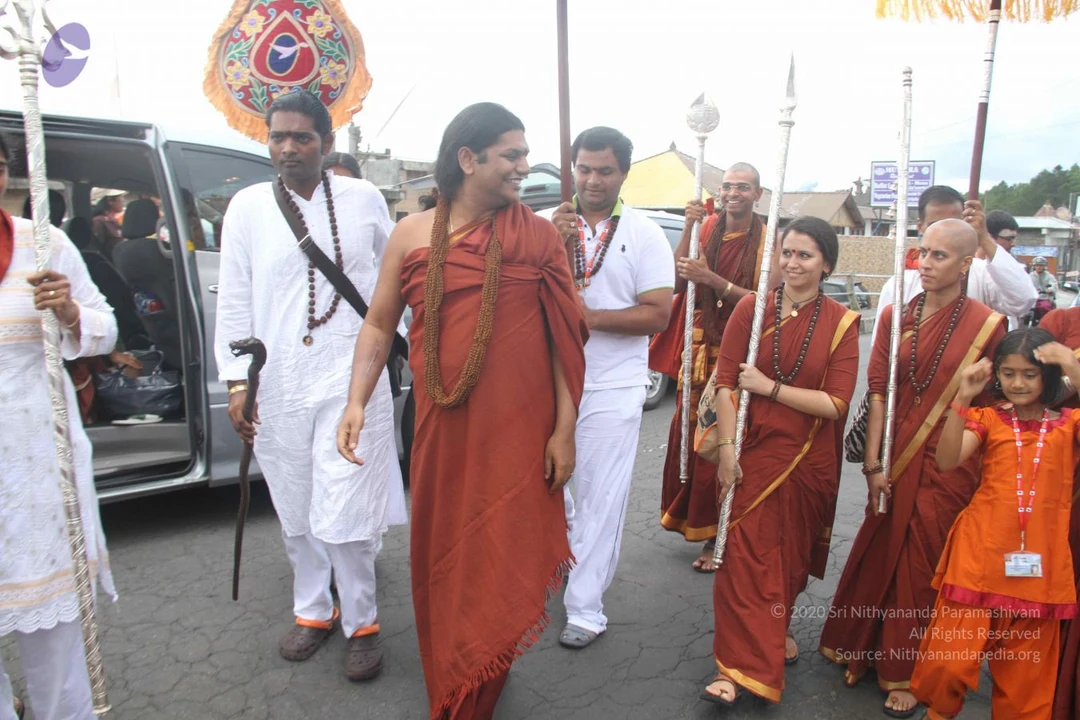
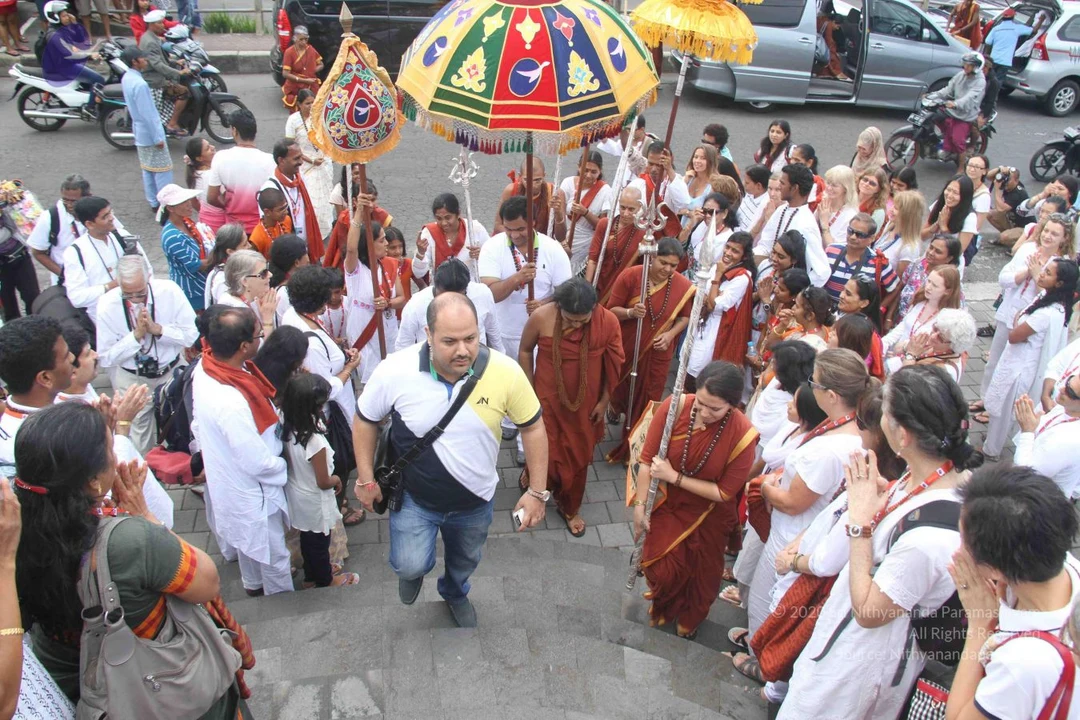
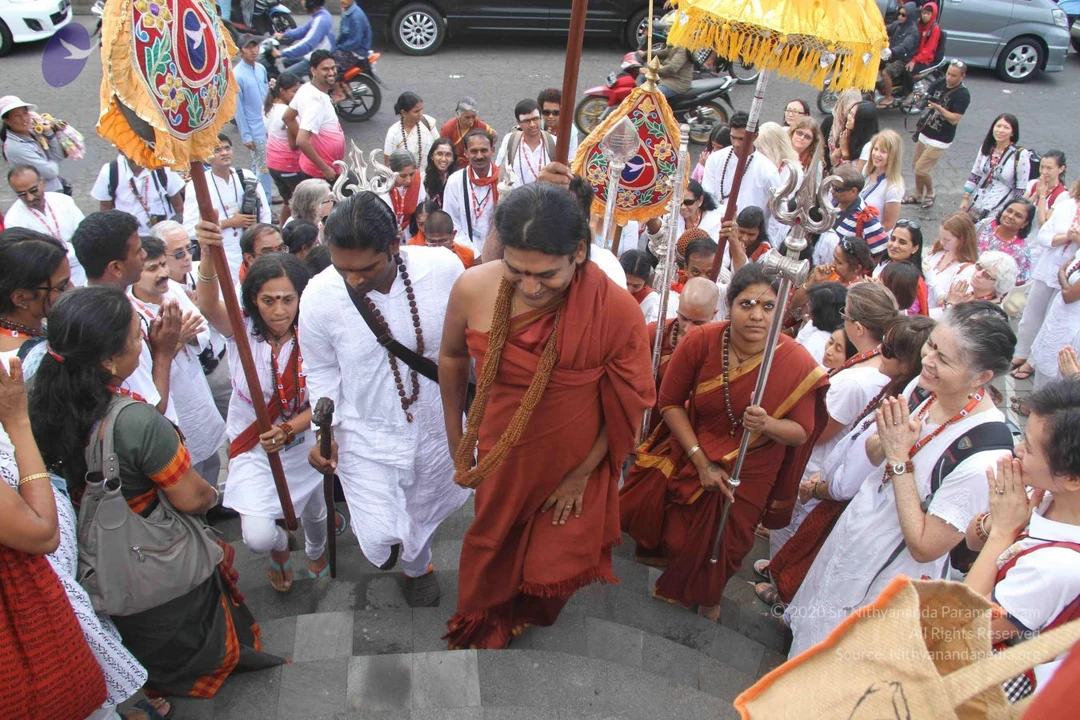
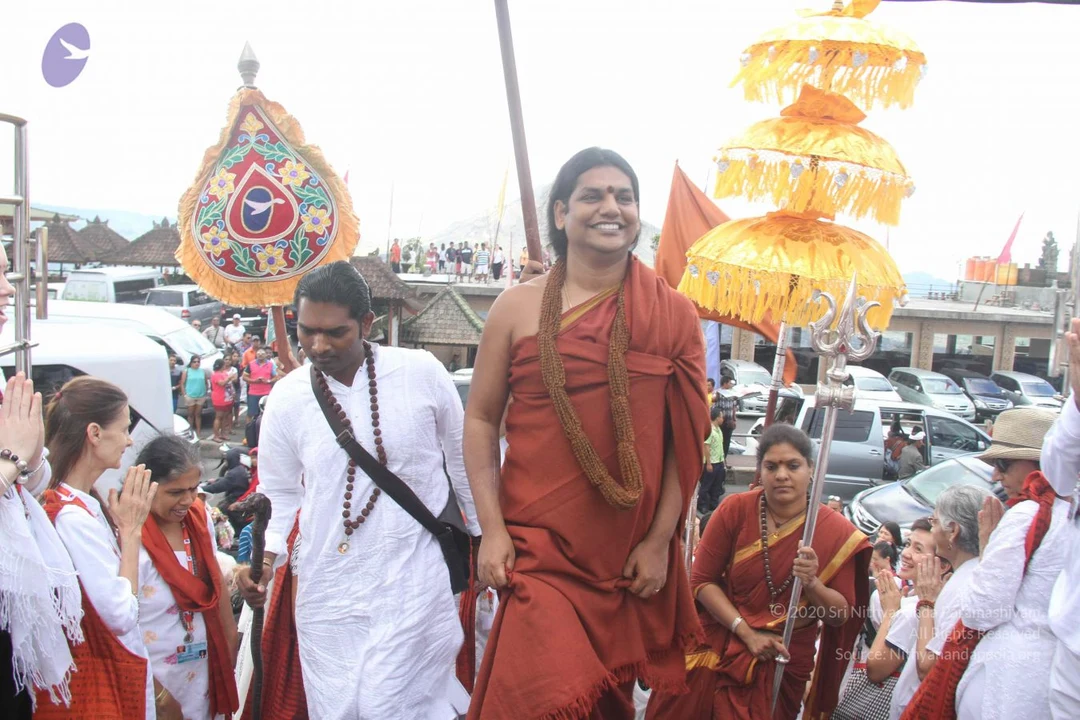
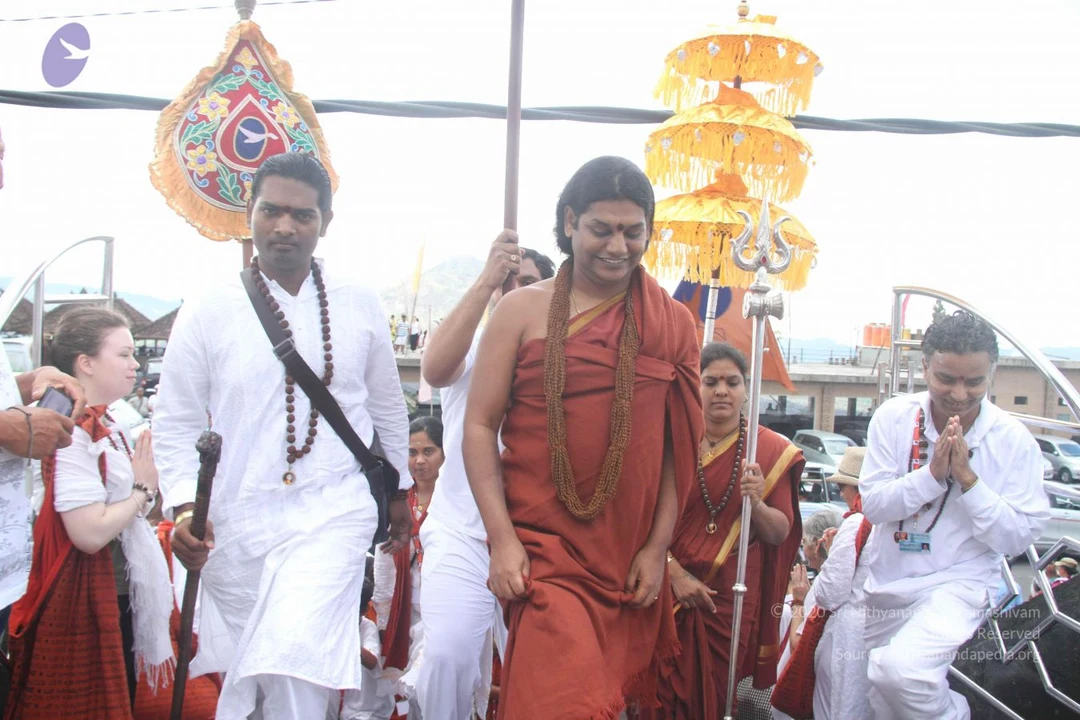
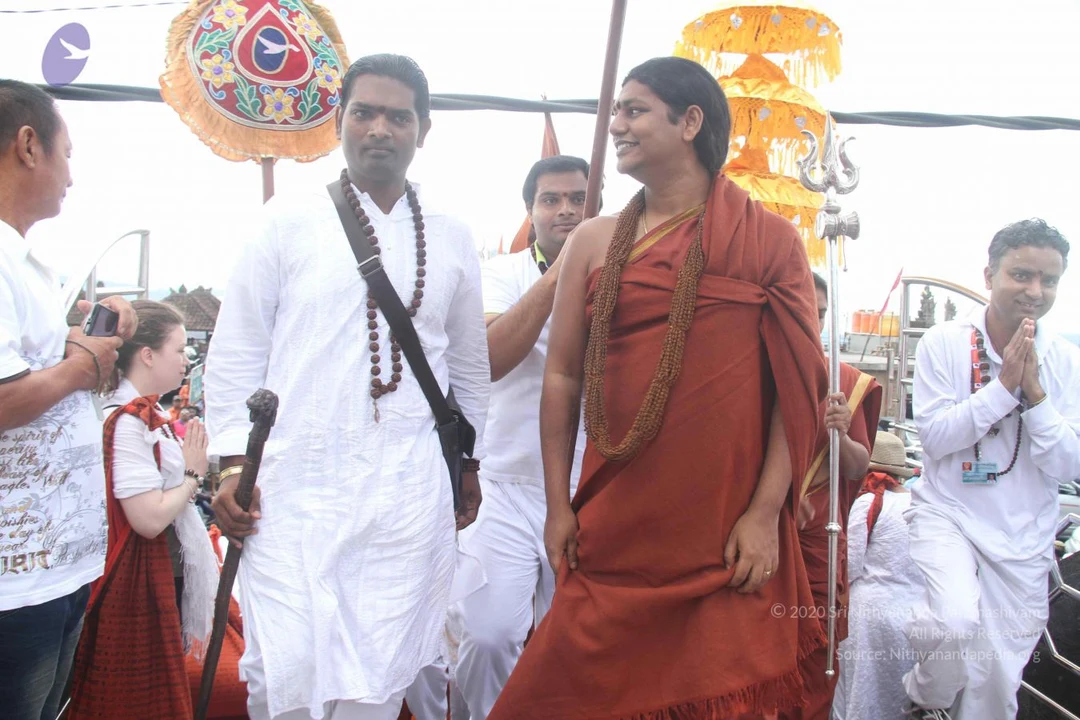
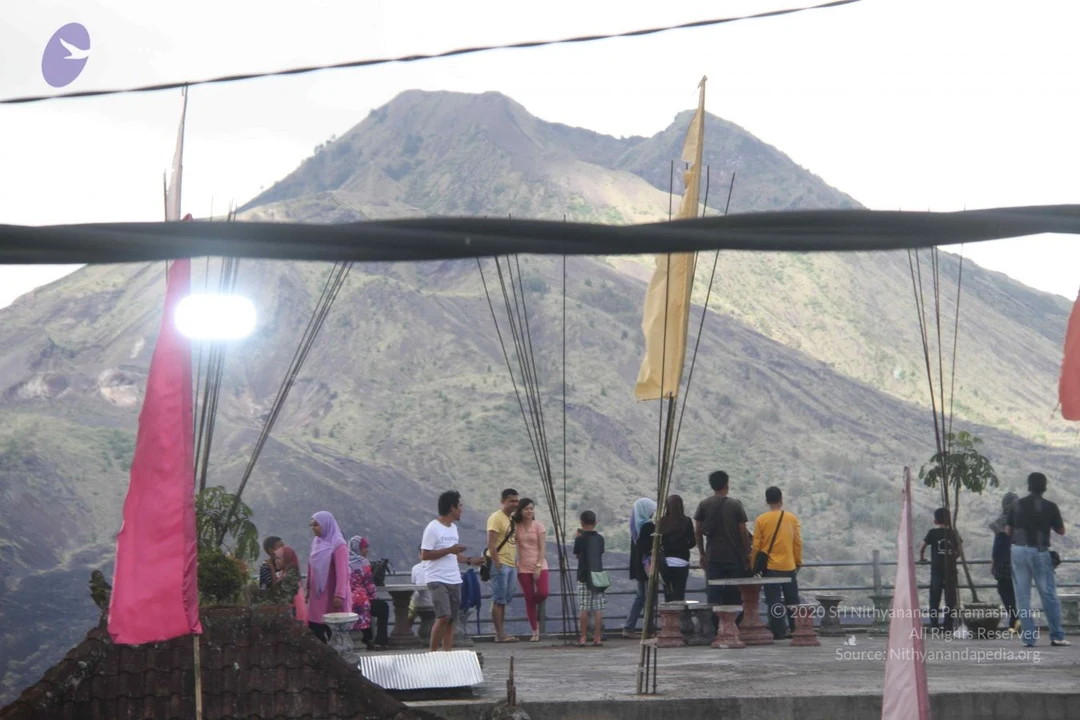
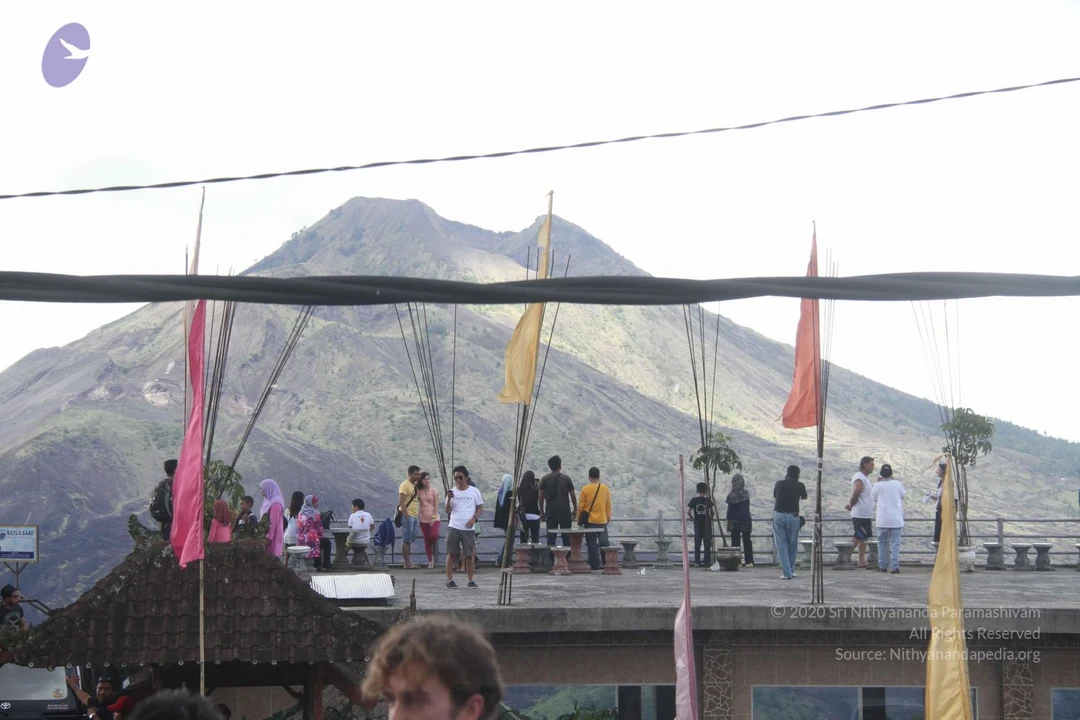
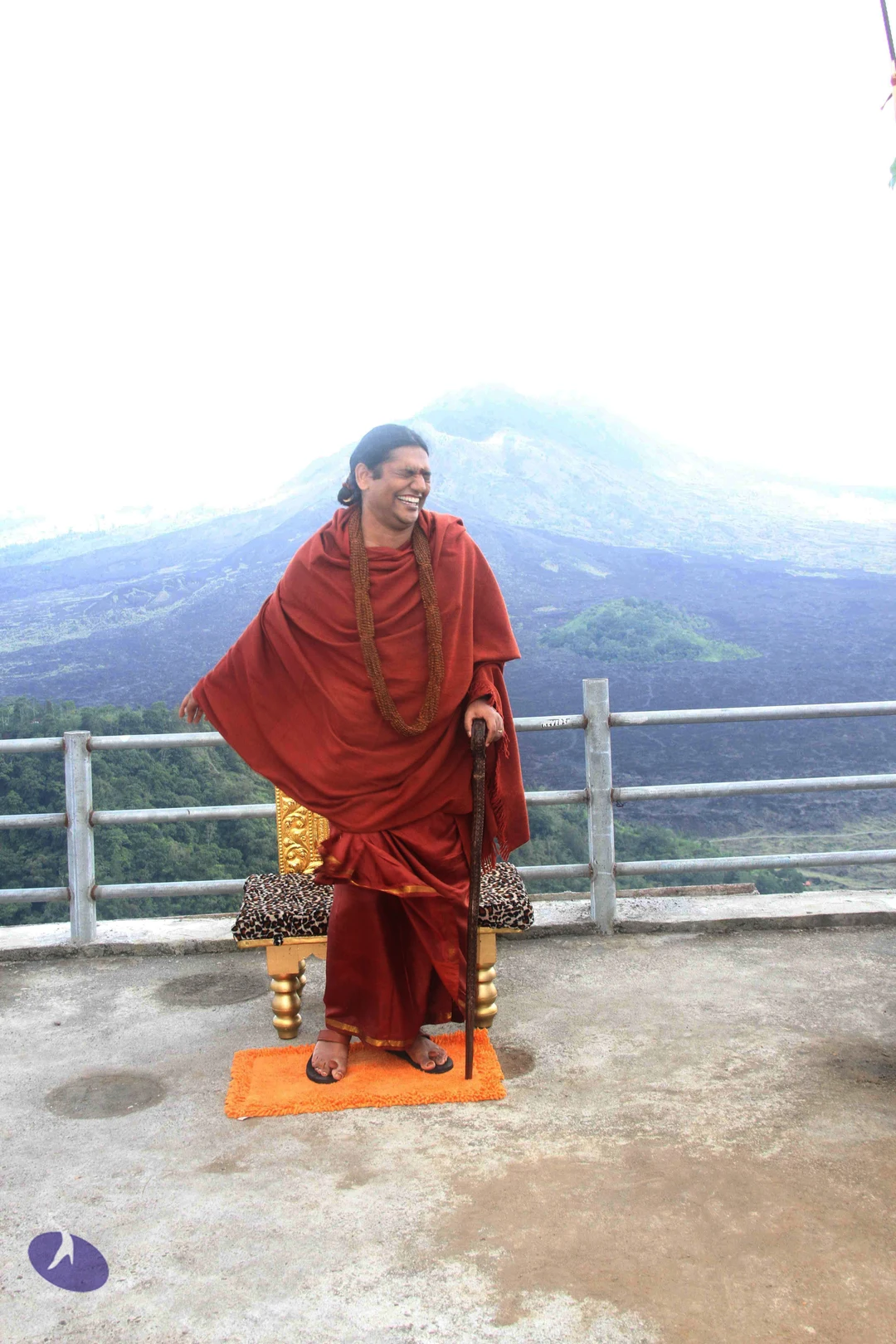
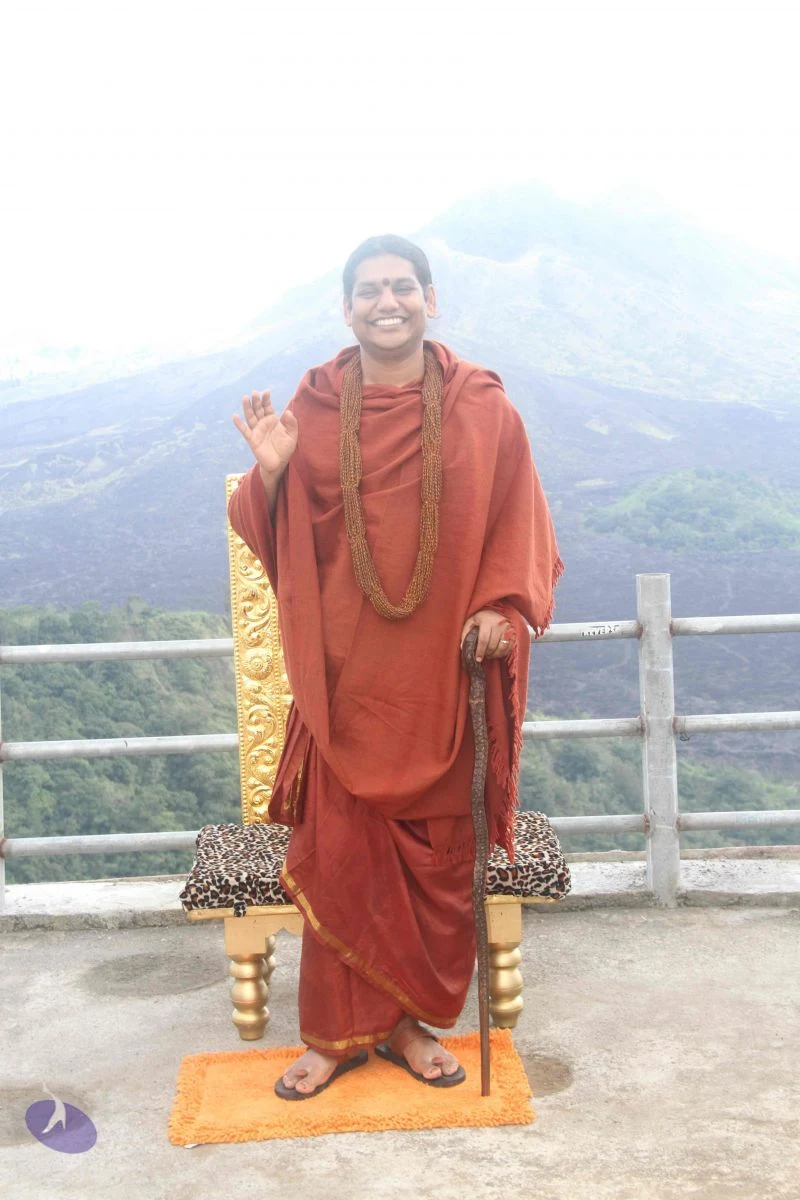
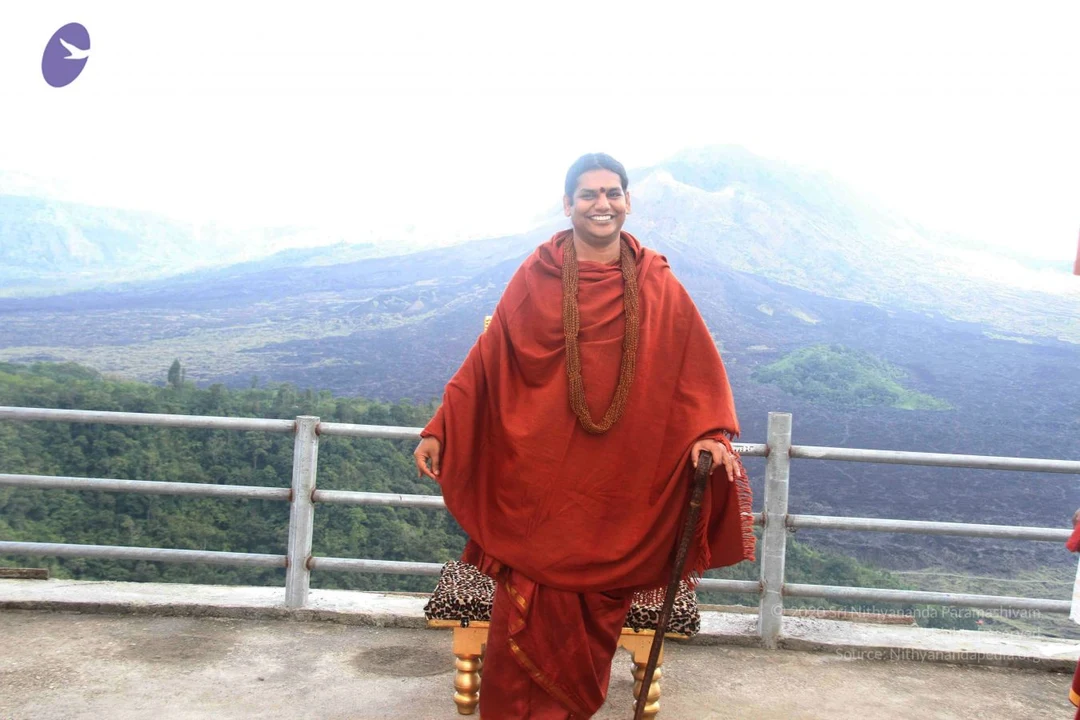
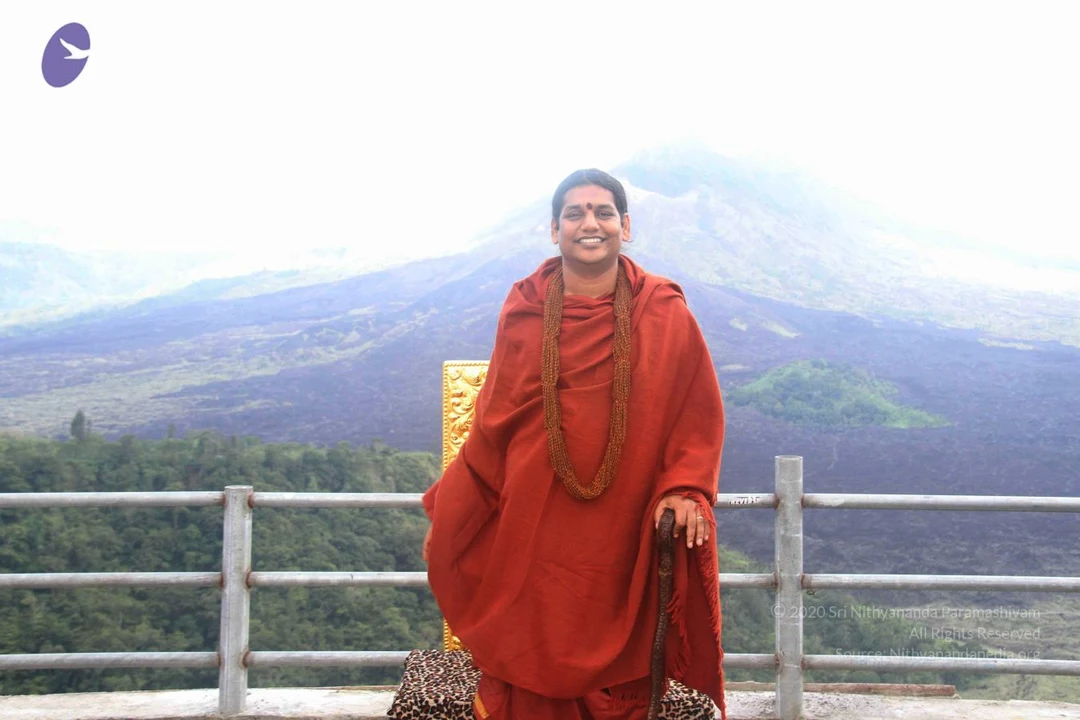
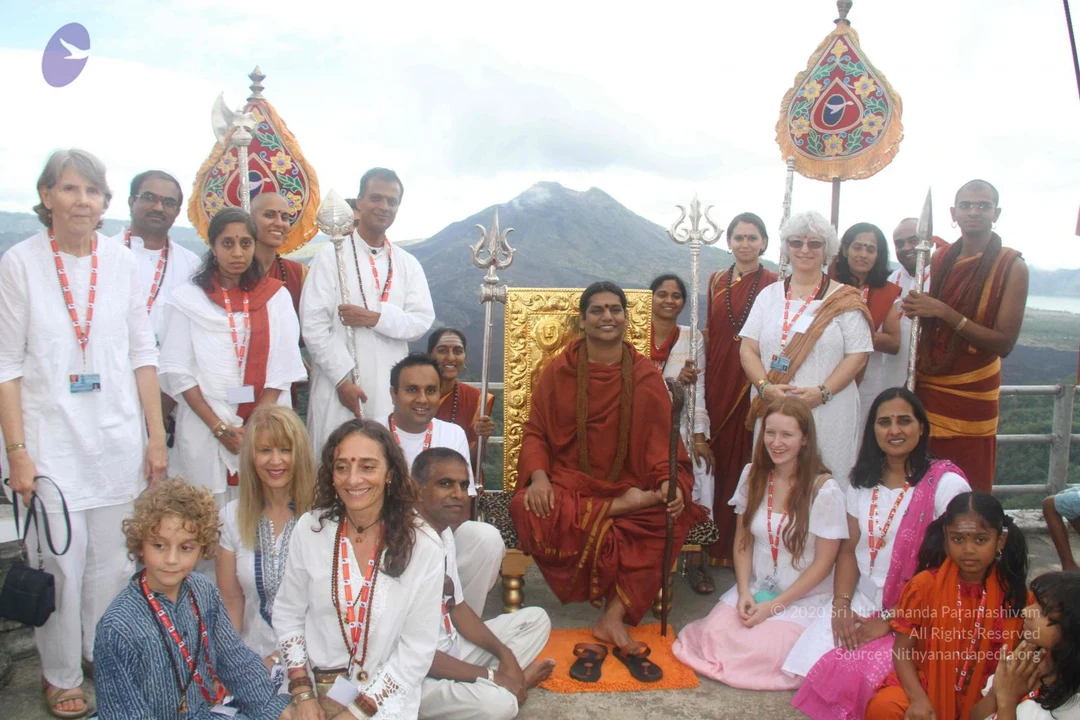
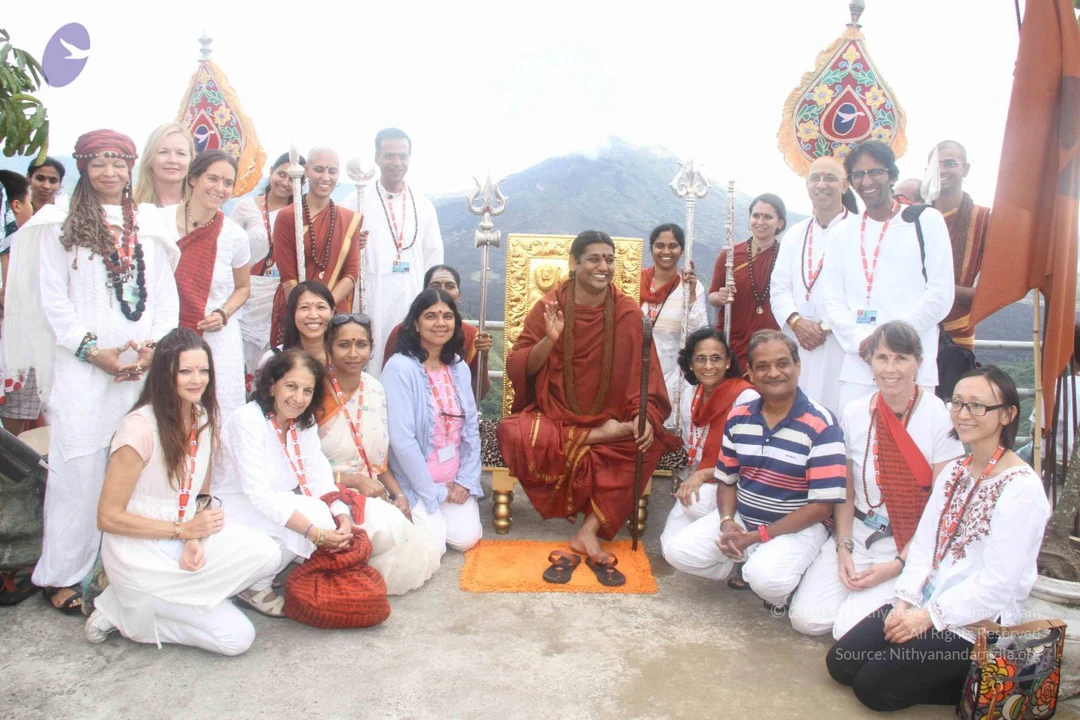
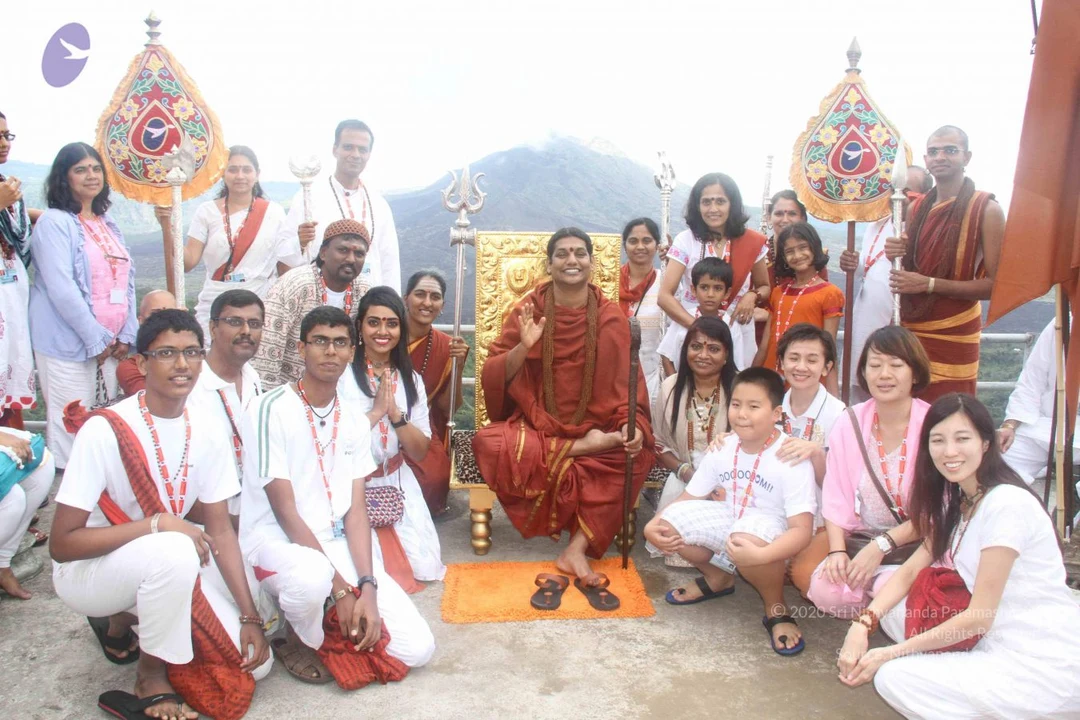
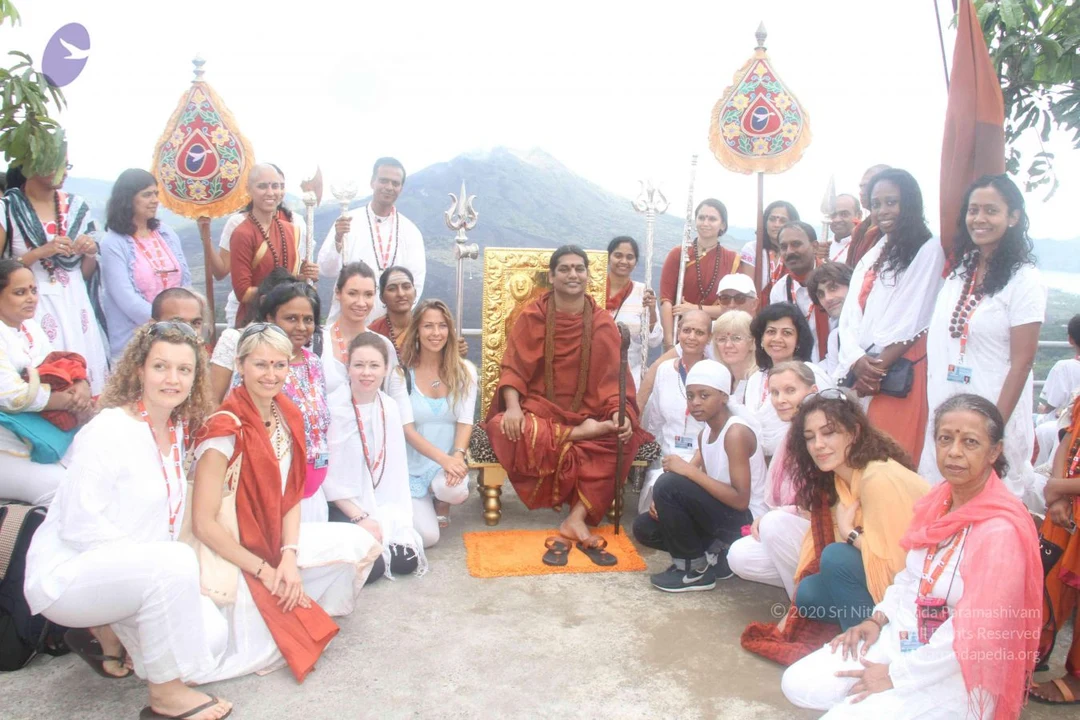
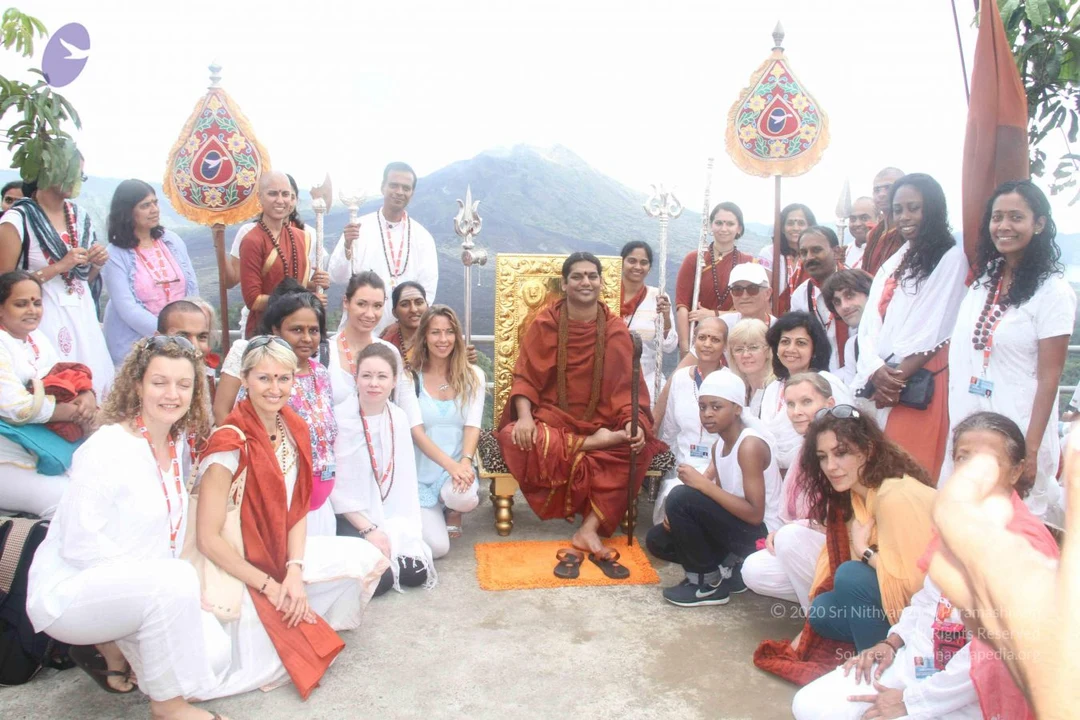
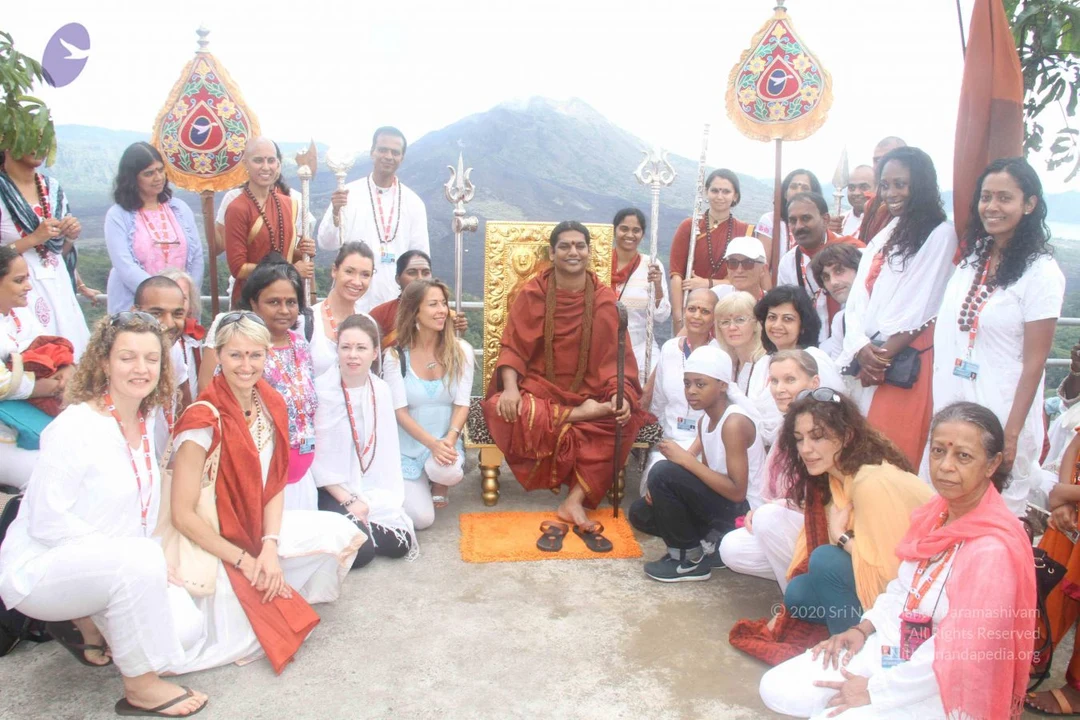
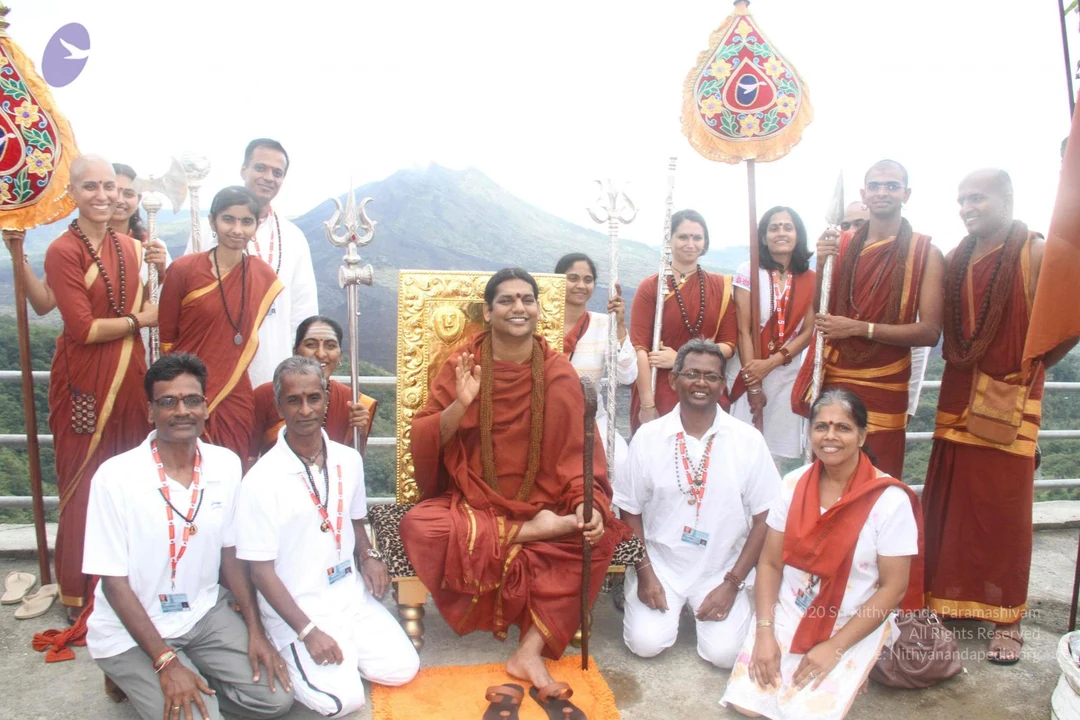
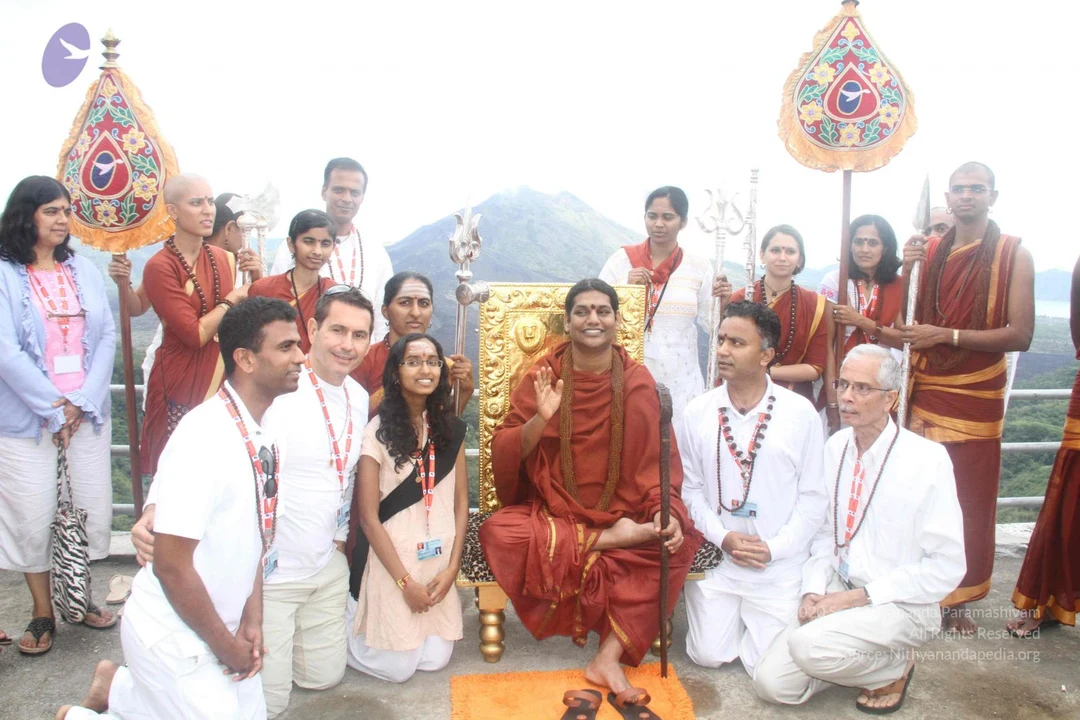
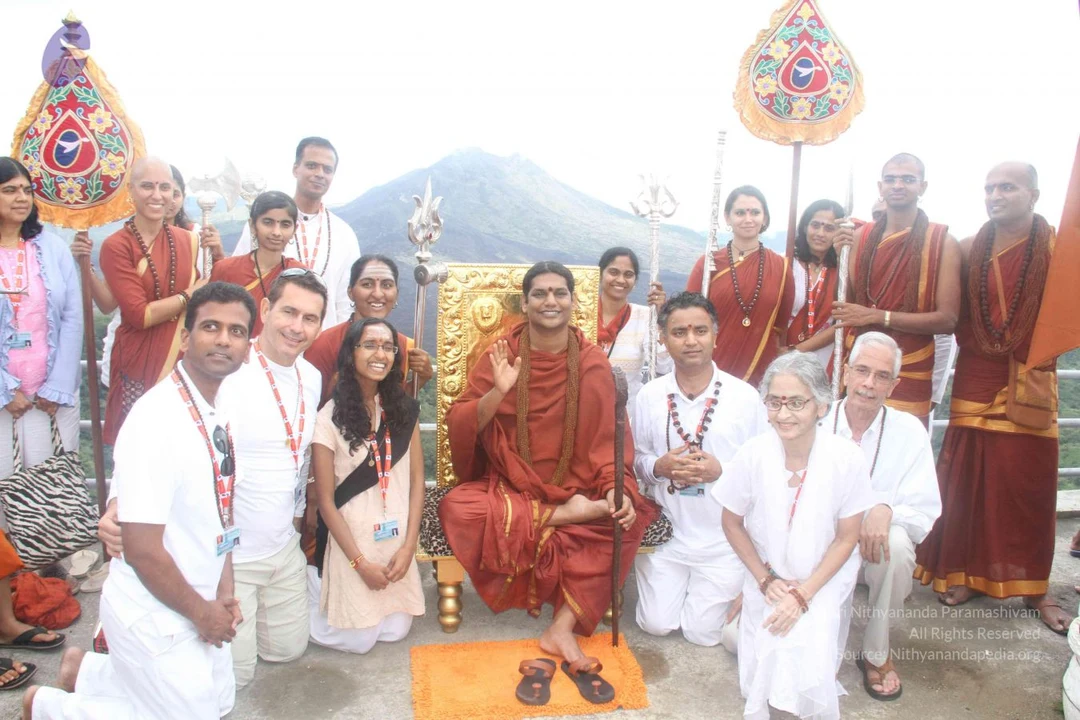
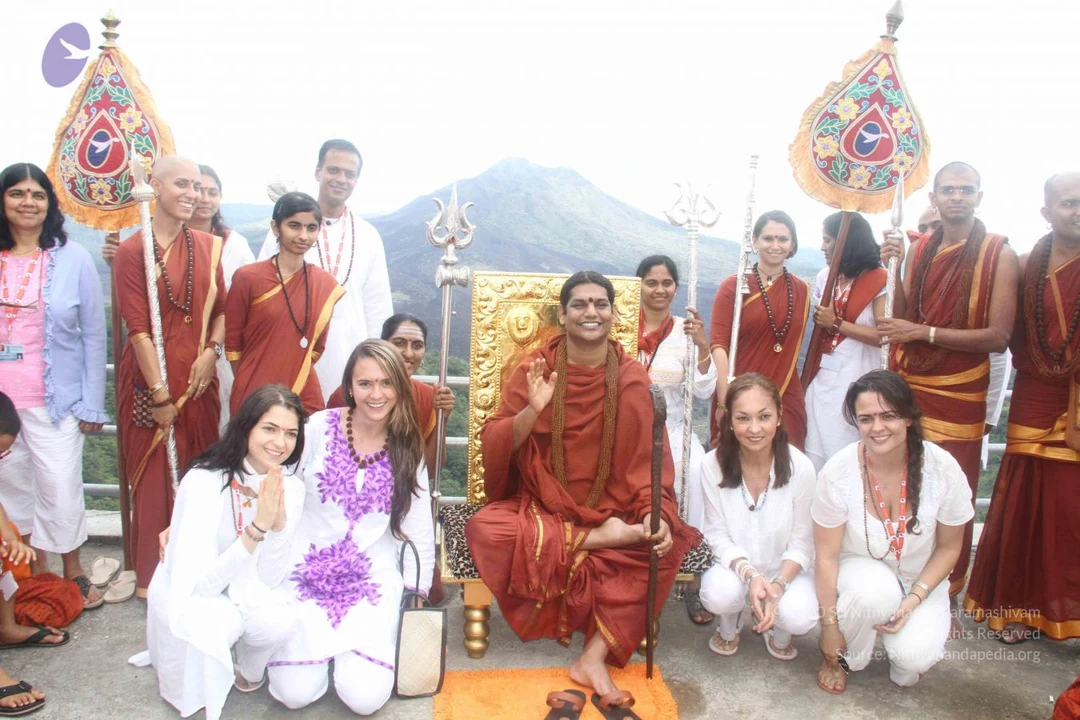
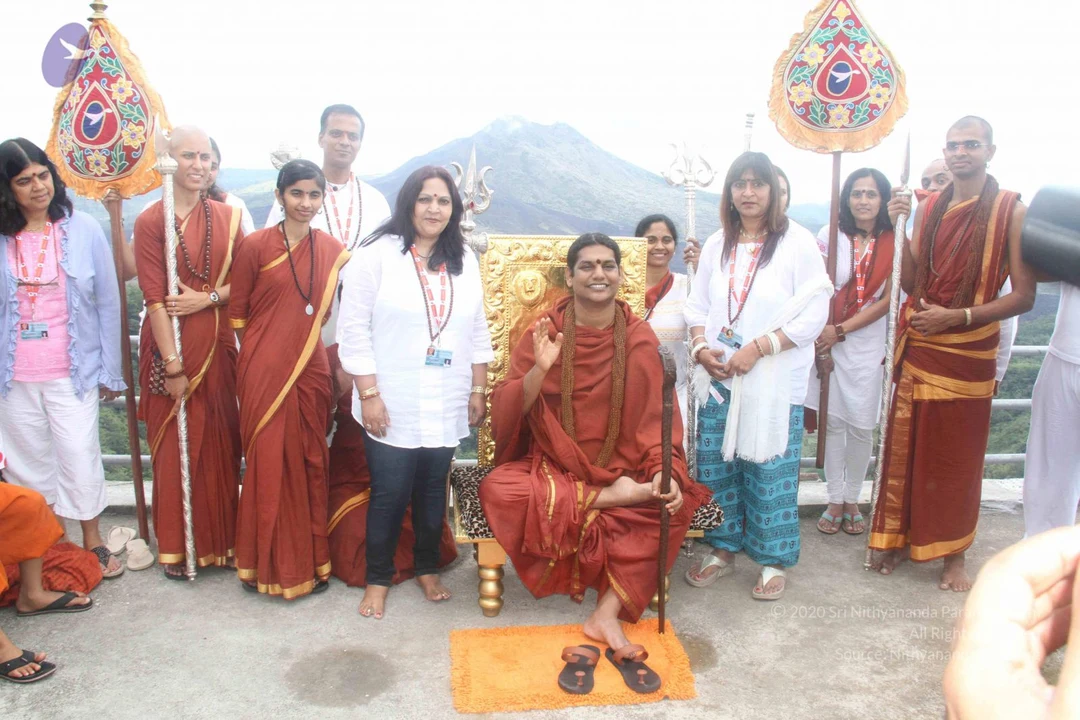
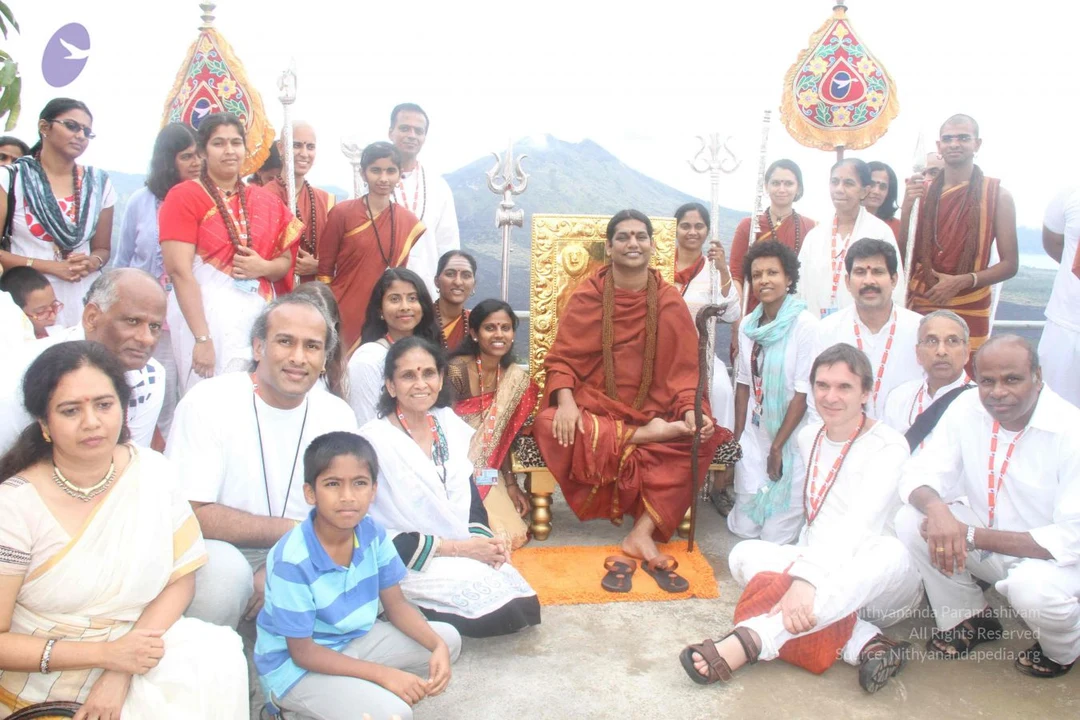
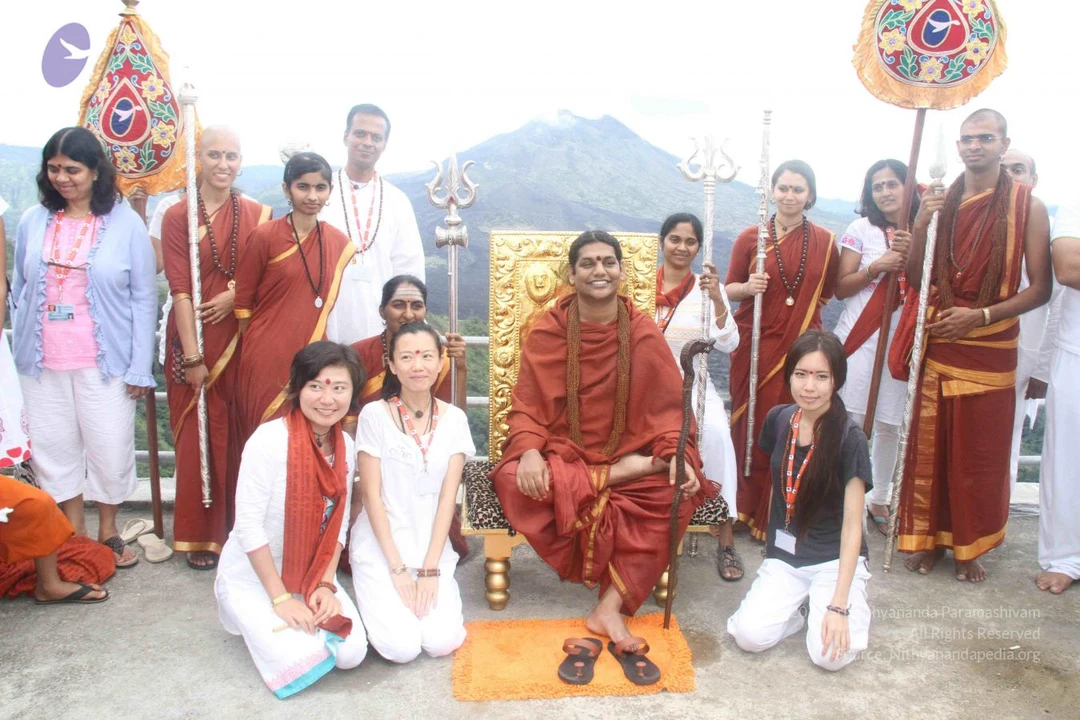
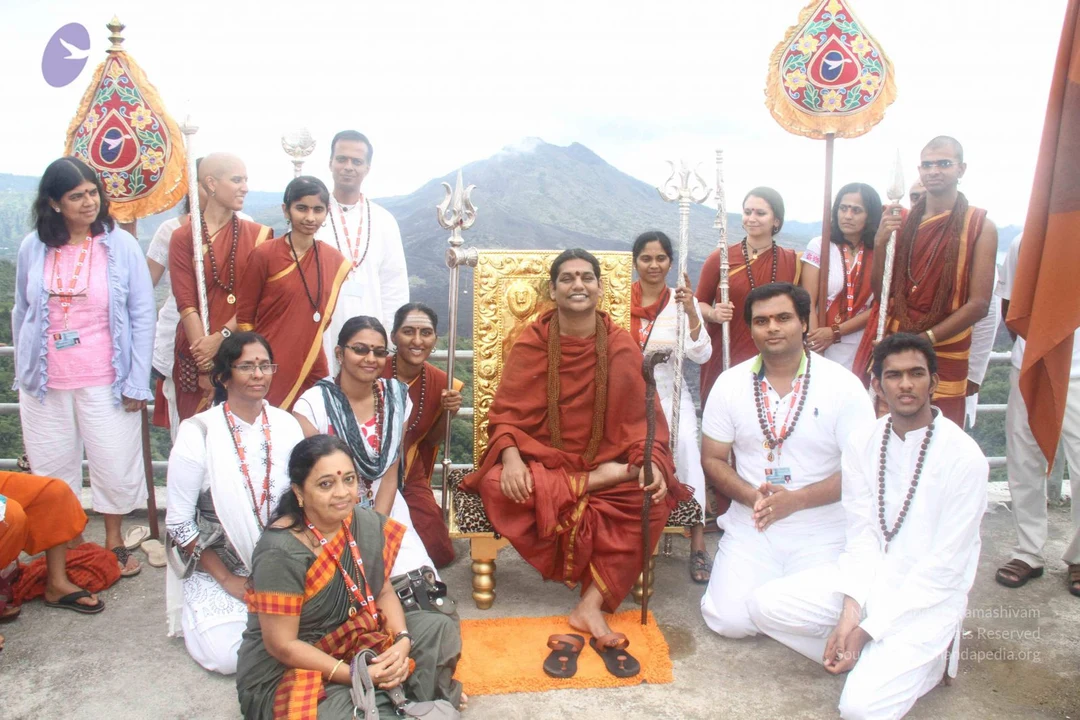
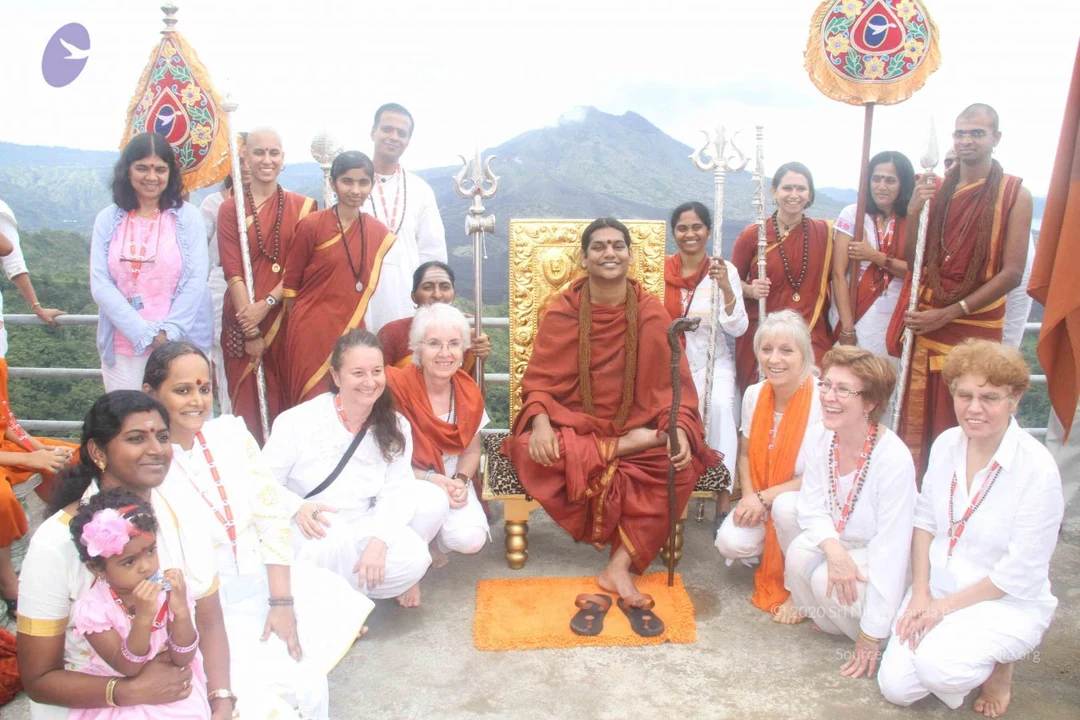
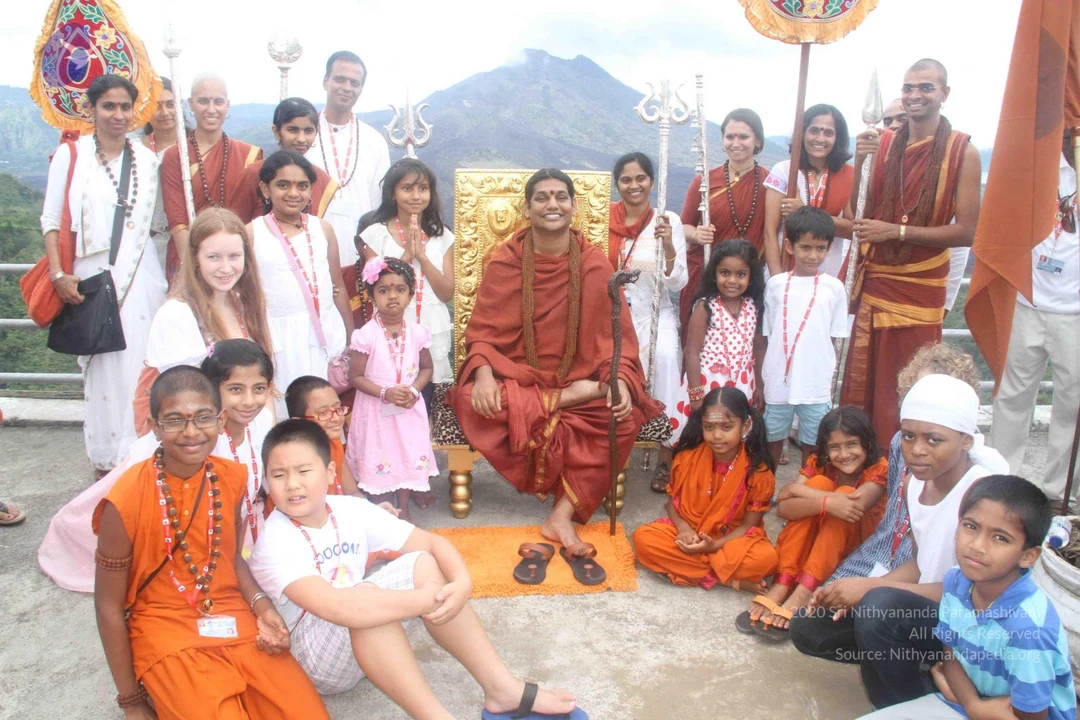
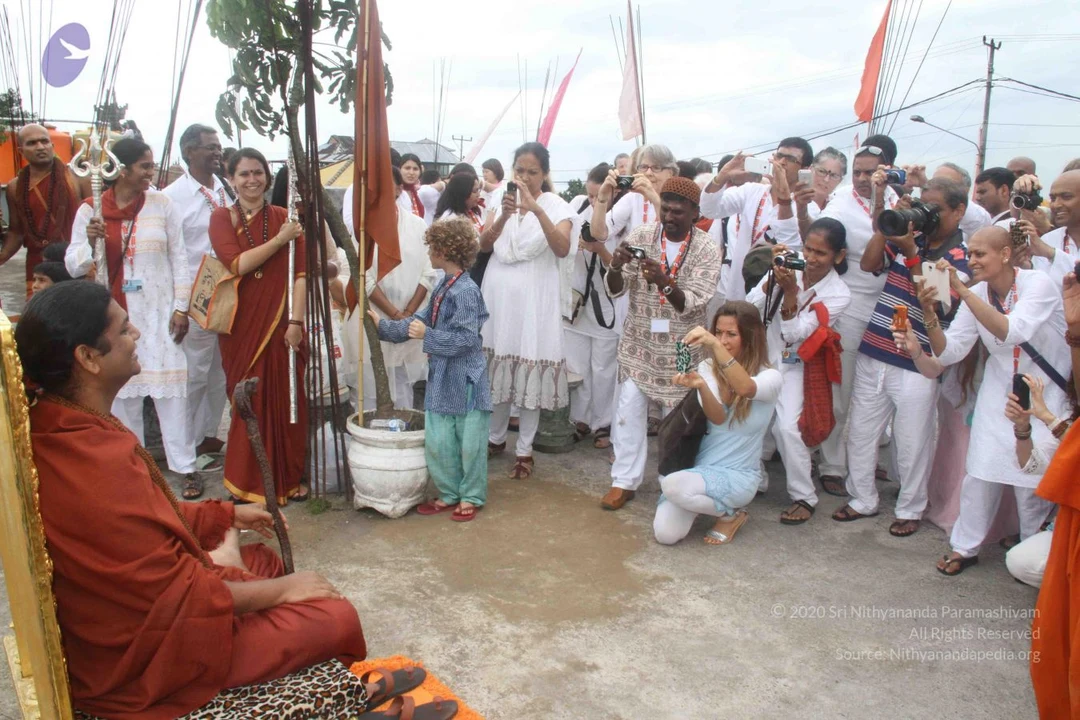
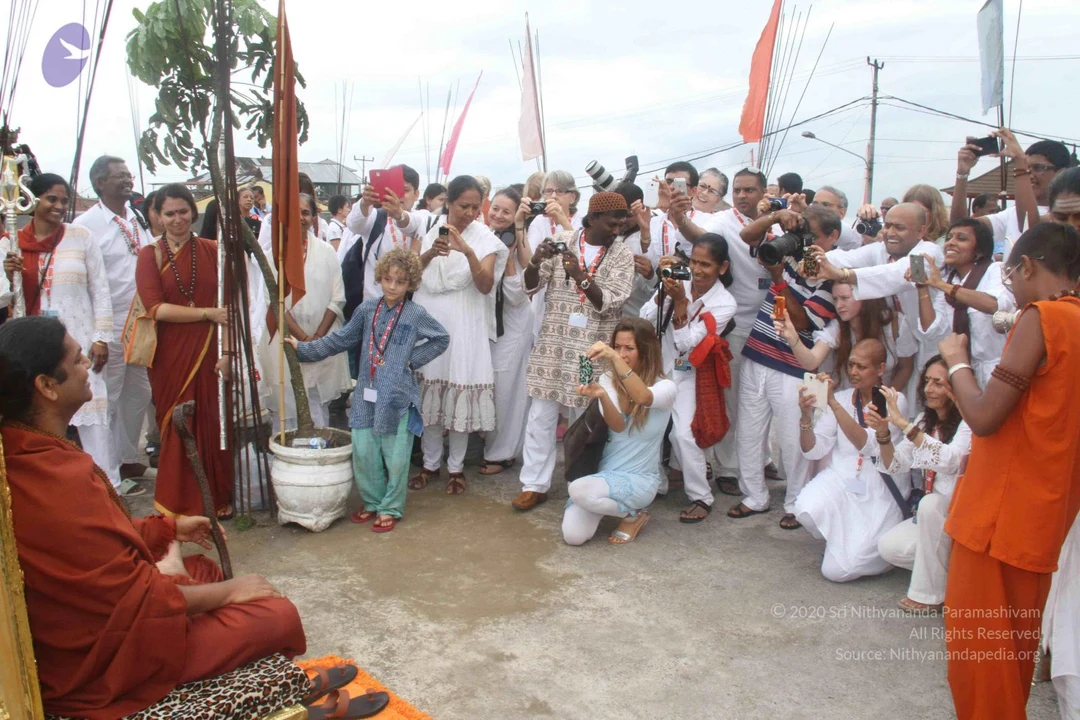
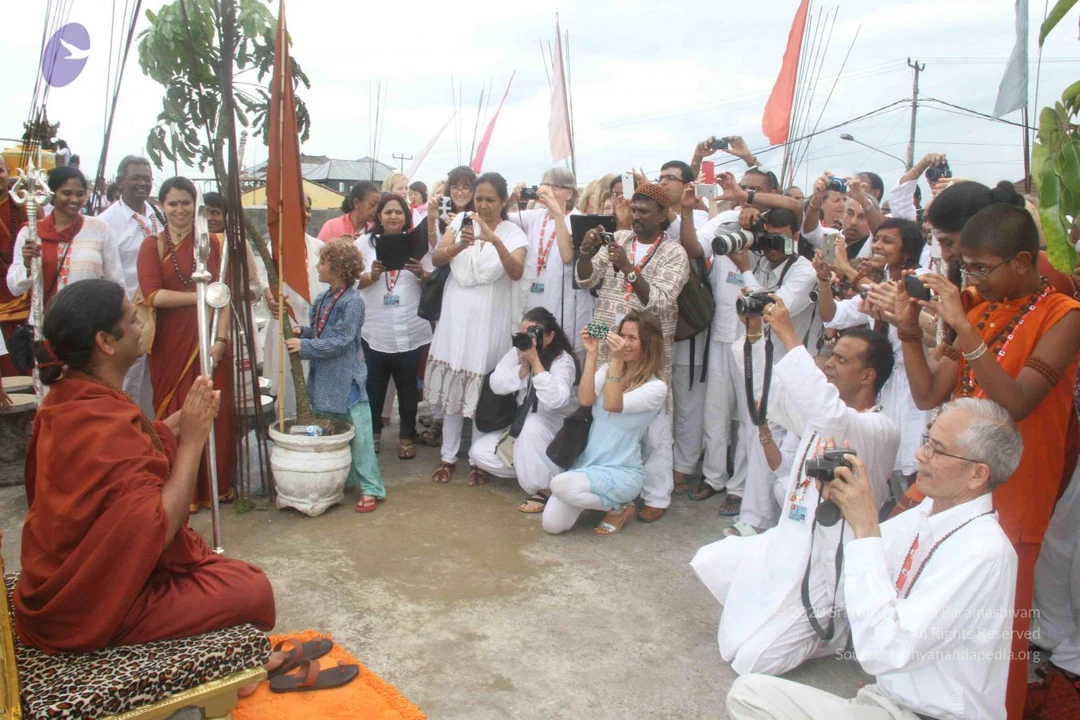
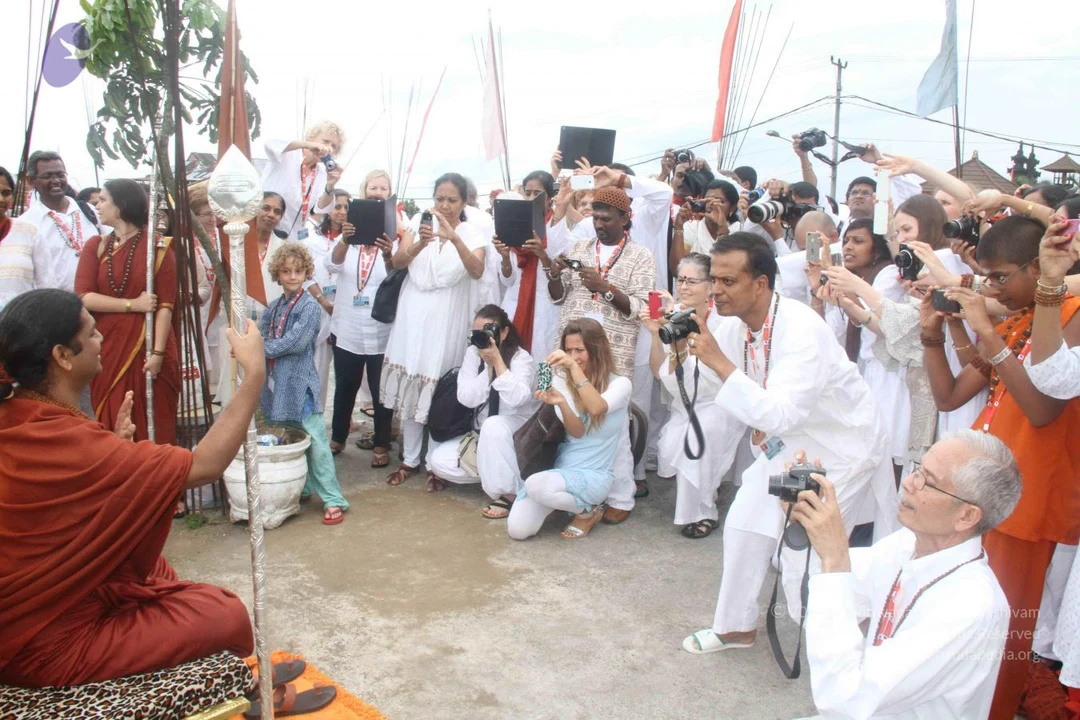
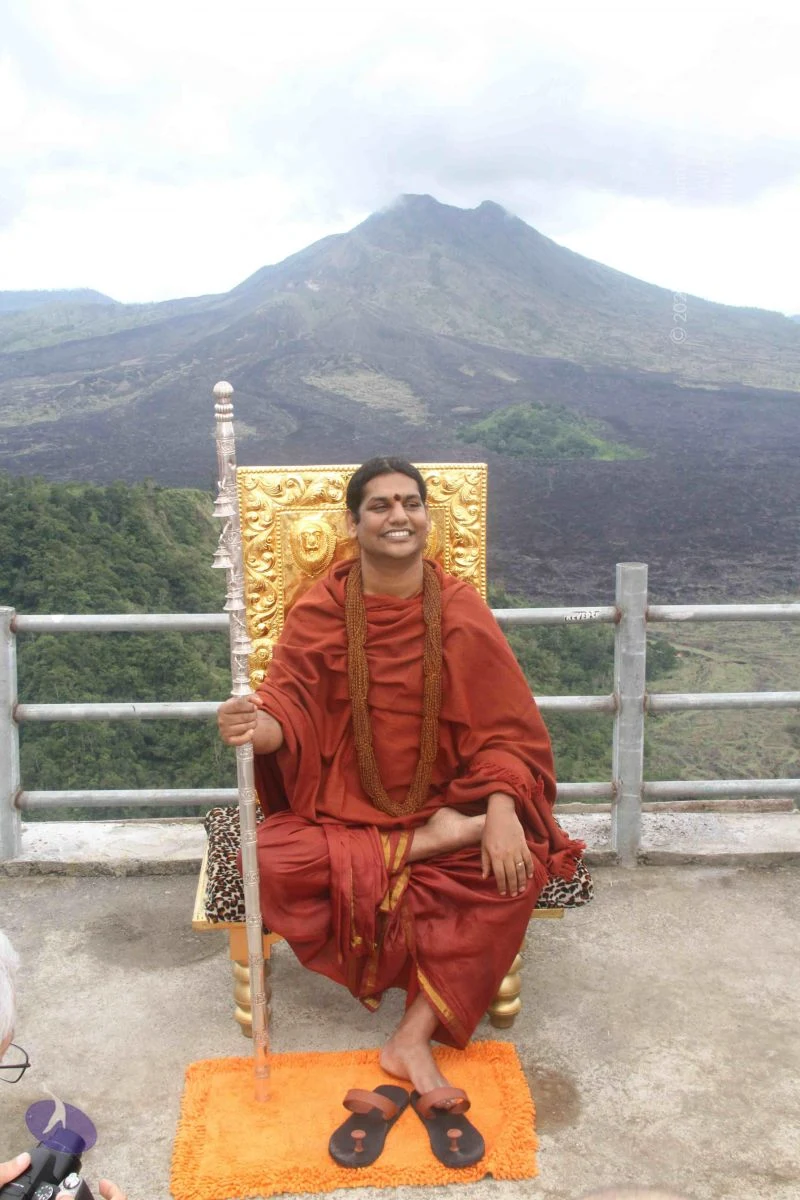
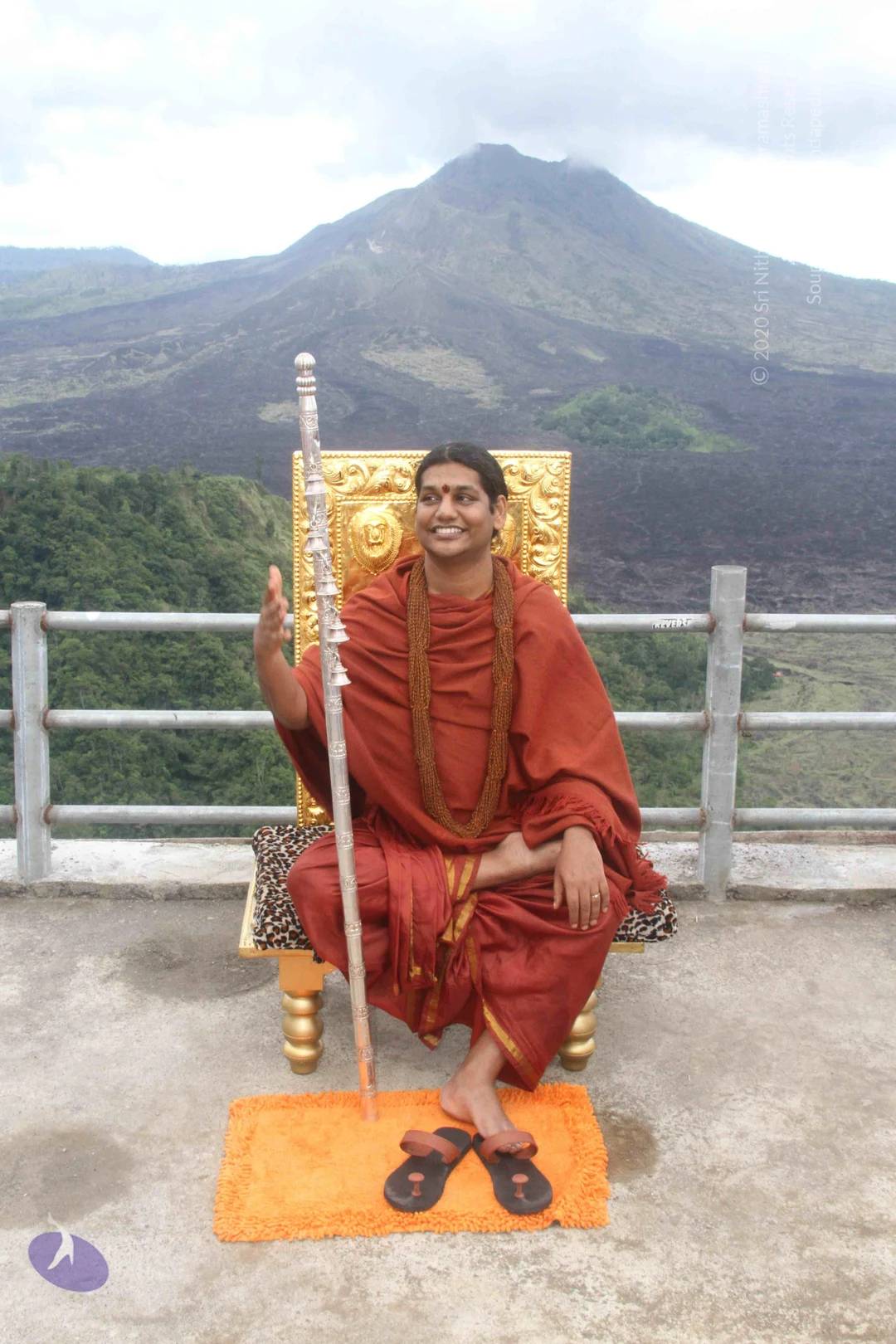
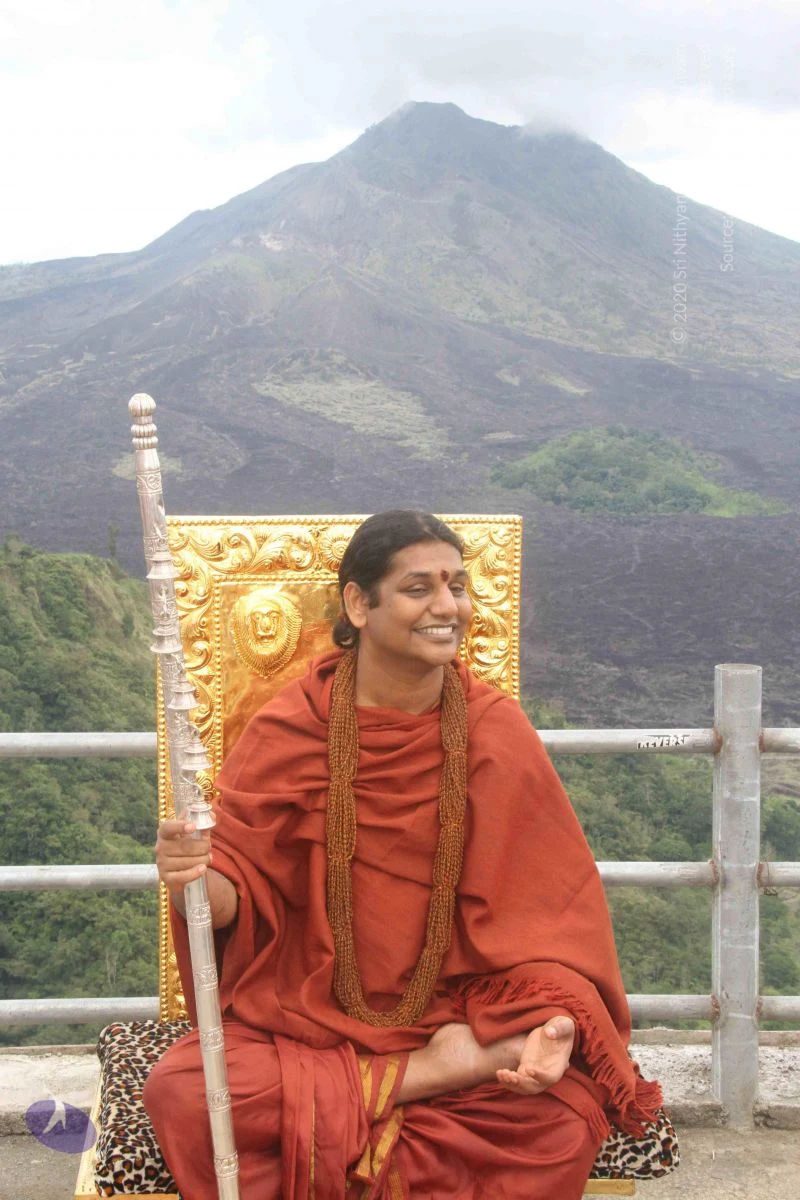
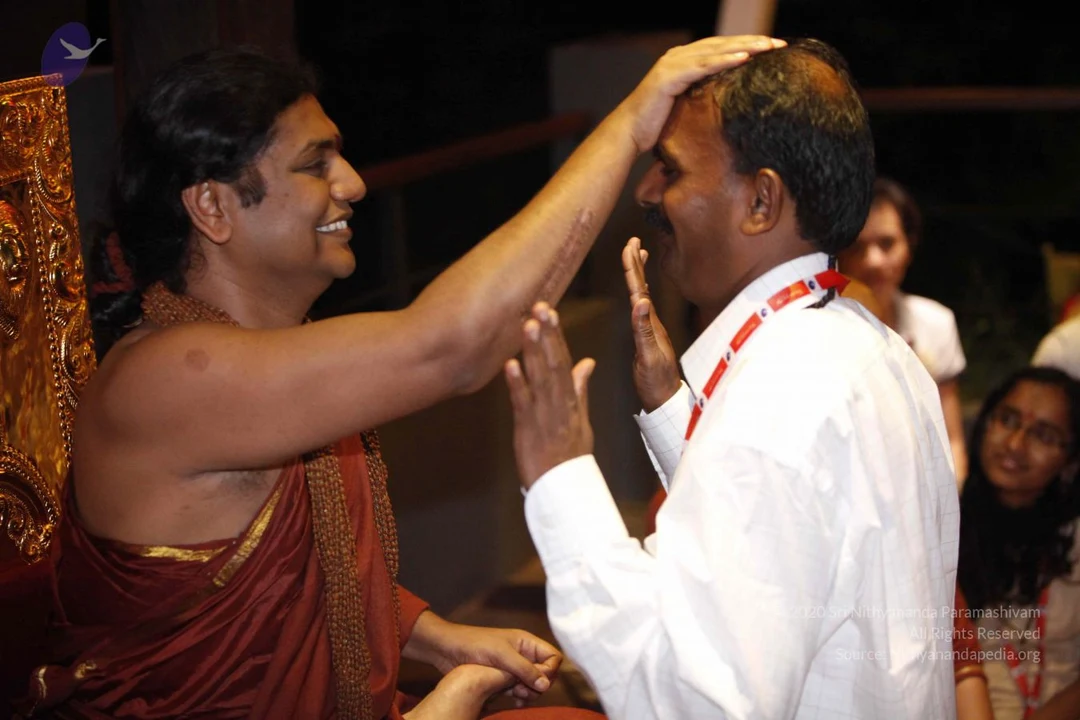
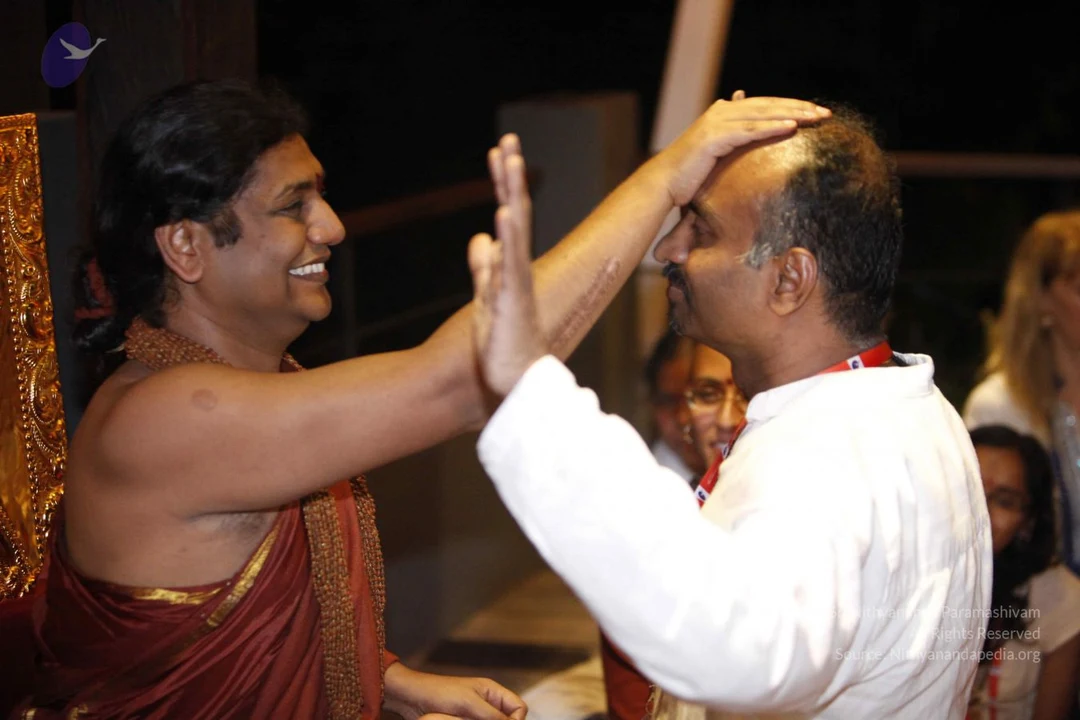
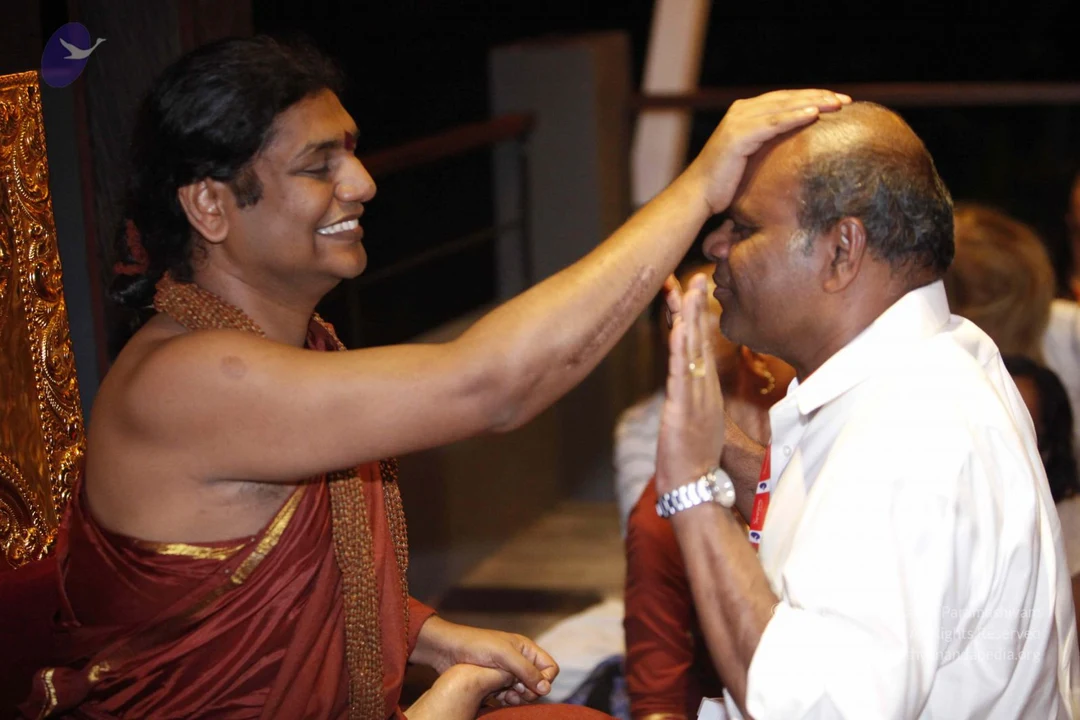
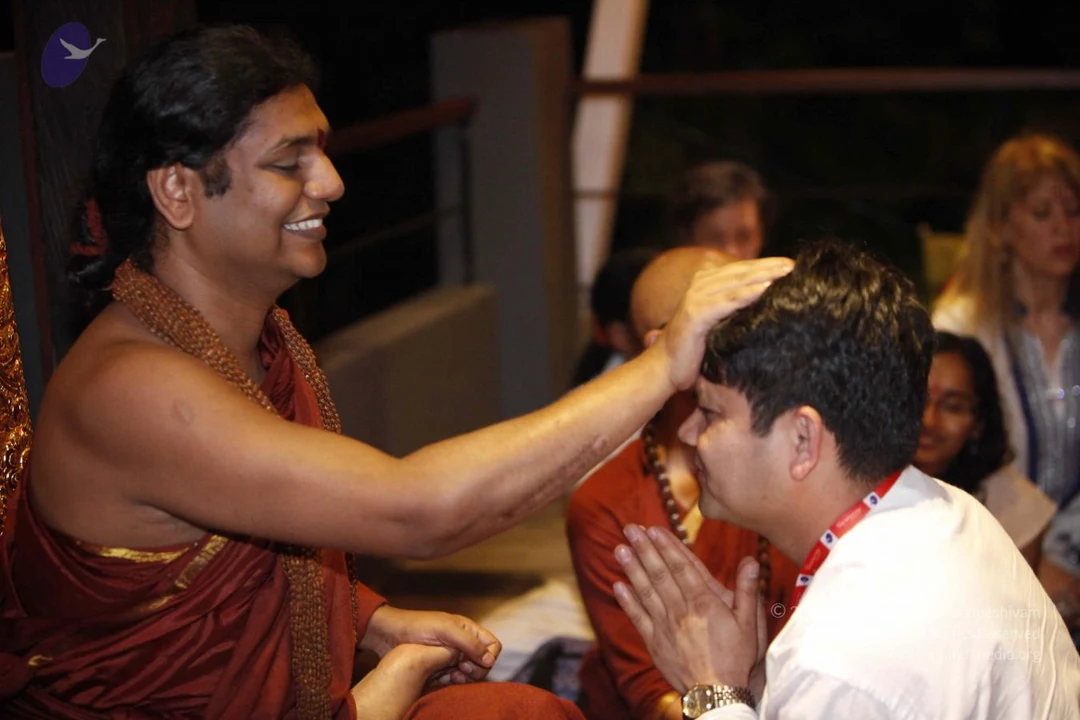
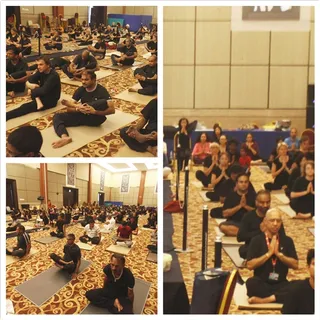
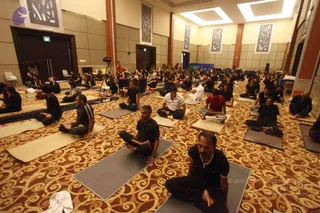
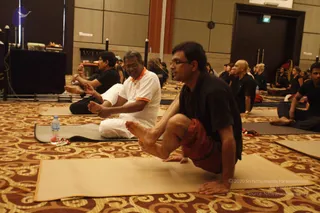
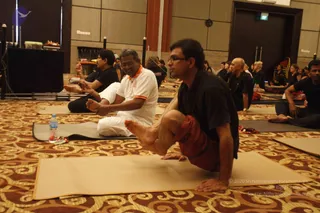
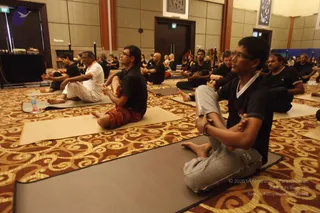
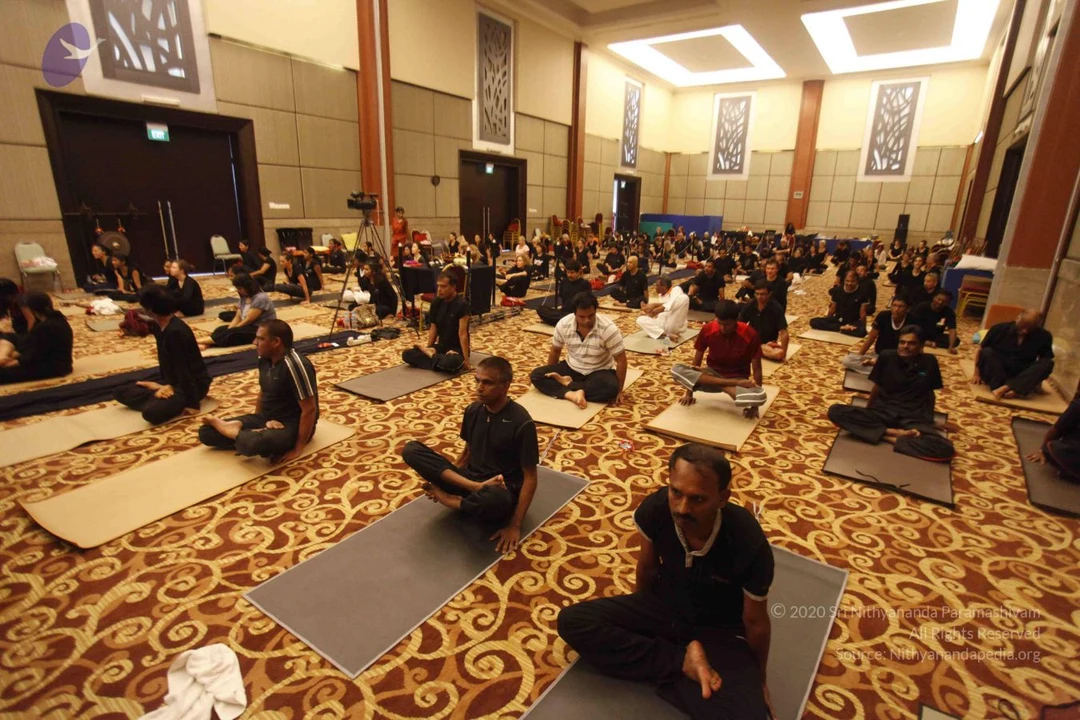
Wide view of a large hall with a patterned gold and brown carpet where many people sit cross-legged on grey and beige mats, eyes closed, in a meditation session. Most wear black tops and black trousers; one man in a white shirt sits near the centre-right and a man in a striped shirt sits left of centre. A man in a red t-shirt sits near the middle. Tall decorative wall panels, dark doors and a camera on a tripod are visible in the background, and a person in orange stands at the far left.A photograph of a volcanic mountain under a grey, cloud-filled sky. The peak has a double summit with dark, barren lava slopes and patches of sparse green vegetation on the flanks, with a dark ash-covered ridge in the foreground. No people are visible in the scene.Outdoor group photo on a hilltop terrace with a volcano and cloud-covered mountains behind. A man with long dark hair and a rust-orange robe sits cross-legged on an ornate gold-framed seat with a small orange mat and sandals before him. Standing around him are devotees in white and cream clothes with red-orange beaded lanyards, and several sannyasis in rust and saffron robes holding ceremonial tall standards with ornate red-and-gold canopies and silver trident-topped staffs. Several women in white saris and pink, orange and red attire sit or stand in front, and a young girl in orange clothing sits at right. The lone seated figure is a probable Swamiji by appearance, given long swept-back hair and saffron robe cues, while the ceremonial setting is a sitting with attendants.

December 11 2013

Original wiki page
Contents

Title

Nithyananda Diary | Bali Inner Awakening Day - 11 | Padapuja | Satsang | Meditation | Sarvadarshan

Description:

In today’s morning satsang from Bali Paramahamsa Nithyananda continued to give us more practical implications of the truth that cognitive shift and transformation give us the ability to be powerful, intelligent, to enrich others and to develop our capabilities to enrich others. Love for the people and sincerely being the catalyst for the people’s cause is what enriching really is and completion is the ability to be comfortable with people.

Link to Video:

VideoAudio

Transcript:

Nithyanandeshwara Samaarambhaam Nithyanandeshwari Madhyamaam | Asmath Aachaarya Paryanthaam Vandhey Guru Paramparaam ||

I welcome you all with my love and respects. I welcome all the devotees, disciples, samajis, satsanghis, television viewers, sannyasis sitting with us all over the world at this moment through Nithyananda TV, Sadhna TV, Lotus TV, Janashree TV, Eshwar TV, and through two-way video-conferencing having Nayana Deeksha all over the world.

Cities sitting with us through two-way video-conferencing having Nayana Deeksha all over the world: Guadeloupe-Rameshwaram, Toronto-Kailasam, Los Angeles-Arunachalam, Ohio-Prayag, Winnipeg-Manitoba, San Jose-Madurai, Santa Fe-New Mexico, Nithyananda Nagaramu-Hyderabad, Seattle-Chidambaram, Singapore-Singapuram, Bangalore North, San Diego-La Jolla, Oklahoma-Somanatham, Adi Nithyananda Dhyanapeetam-Avathipalayam, Tiruvanmiyur-Chennai, Bogota-Colombia, Hosur Nithyananda Dhyanapeetam, Bidadi-Nithyananda Nagara, Port Washington-New York, Devon-UK, Dubai-Vaidyanatham, New York-Varanasi, Adi Arunachalam-New Zealand, Hyderabad-Gupta Kashi, Dakota Dunes, Oman-Sivagangai, Oakland-California, Kuala Lumpur-Palani...........

I welcome all of you with my love and blessings.

Today I will continue to expand on the PRACTICAL IMPLICATIONS, the actual results that are caused by cognitive shift, the transformation.

I think Hindus are too stuck with the truth and research & development; they forgot to tell the world the transformation they cause. Billion population can comfortably, peacefully live, not because of ignorance, but because of intelligence. With so much of freedom, you can never expect any other country with this big population, with so much freedom, able to live so peacefully!

Come on, let me explain and express, understand these truths.

The transformation in your life, your ability to be powerful in your life, your ability to raise yourself again and again to the higher levels of consciousness, and your ability and decision to enrich others.....please understand, more than your decision to enrich others, I will appreciate your decision to develop the capabilities and skills with which you will enrich others. I have seen many people saying, ‘I surrender me to you.’ Useless! You are useless! Who wants your surrender? You will only be a headache even if you surrender! Nobody wants that surrender. But the surrender of Hanuman who is capable and ready to surrender! So, just enriching – I am using the example, this example – just enriching is not a big thing, but the decision to develop the capabilities for the sake of enriching others, that is the most powerful transformation, when you decide, ‘I am not just going to enrich others, I am going to develop the skills to enrich others!’

The best enriching, the best gift you can give to others is teaching them the Science of Enlightenment, teaching them the Science of Living Enlightenment, teaching them the Science of Inspired Life, teaching them the Science of Enlightened Life, teaching them the Science of Powerful Life, teaching them the Science of Living Powerfully. Understand, intelligence in every form, intelligence in every level, intelligence in every moment, being intelligently active...! Your ability to live and ability to love is one and the same. Please listen, your ability to live and your ability to love is one and the same. It is love for people which brings success in any field, whether you are a computer engineer, or a doctor, or a lawyer, or a politician, or housewife, whatever, whatever you are doing or you think you are doing, it is love for the people, love for the people that brings excellence. So, ability to love and ability to live are one and the same. “O” means Completion. The “I” and “O” should be one and the same. The love brings ability to live. The “o” in Love brings “i” in the live. Ability to love and ability to live is one and the same. Whether it is normal relationships or it is extraordinary, great achievements, powerful moments of life, whatever it may be, ability to love and ability to live is one and the same.

Bring tremendous love for people. The more you don’t get bored of people, the more you are successful in life! The more you don’t get tired of people, the more you are successful in life! Whether you are in business or enriching, whether you are in marketing or research & development, whether you are a CEO or CFO, whether you are a cook or servant, whether you are a king or slave, whatever, it is your ability to feel comfortable with people, ability not to get bored by people, ability to love people, ability to be sincere to the cause of the people that brings success to you. Whatever you consider as success – please understand, I am talking about the ultimate rule of life, ultimate thumb-rule of life – whatever you consider as success, whether you consider money as success, relationships as success, love as success, joy as success, anything you consider as success, whether you consider political power as success, whatever you consider as success, it comes with your ability to feel comfortable with people, ability to love people, ability to live with people, ability to cause what people want. Understand, when you are ready to cause what people want in their life, they will cause more than what you want in your life! This is the ultimate sutra! This will be the practical result when you understand the tattva “Nithyanandam”. When you understand the tattva “Nithyanandam, the first practical implication will be your tremendous love for people, and your ability to be comfortable with people, ability not to get bored or tired of people, ability to enrich people, ability of sincerely causing what people want in their life, what they want in their life. I tell you, this should be the basis, foundation of your life: always decide to be sincere to the cause of the people.

When somebody comes to you with the idea to have something in their life, never say, never think it is impossible. Always think, ‘How can I be sincerely part of his cause? How can I cause what he wants with all my sincerity?’ Remember, how with tremendous patience I sit and provide my listening even if they are declaring something which they themselves don’t believe is possible! It is not that I don’t believe, it is not that I feel it is impossible; they themselves feel it is impossible. Knowing that they think, I decide ‘Let me take a chance.’ Even if they think, I provide my sincere listening and see to it that they also get the same confidence that I am carrying. Just because they don’t have the same confidence, that does not mean they should not have it. They can be given confidence and they can have what they are declaring. That is what I am saying. Sincerely be the cause for people’s cause. Carry that sincerity in you. That is what I call “Enriching”. Then naturally you will develop the skills to cause what people want.

I tell you, drop all insecurity. Just decide, ‘I will cause what people want in their life.’ I tell you, hundred times more than what you want, people will cause in your life. This, I am talking to you from my experience. The only decision I made when I entered into public life – as you all think, I have not entered public life in 2003; much before I entered into public life – the only commitment I made, I dedicate my life to cause what people want in their life, sincerely. That decision; That time I was not efficient or I was not equipped with the skills to cause what people want in their life, but I was sincere. Now I tell you, just when I provide my listening I can cause what people want in their life because of my sincere love for people! That is all you need. Don’t think, ‘No, no, no. What you are advising is great for psychiatric doctors; for psychoanalysts and doctors it is great; but I am a politician. The game in my field is different.’ No! In no field the game is different, I tell you! You cannot hide your insecurity for a long time in any field; you will be tired. If you are insincere and continue in that field, that is the punishment for you. The boredom and tiredness you get, and the feeling stuck you carry, and the suffering you cause within you, the constipation which you carry which cannot be removed even with enema or haritaki powder, that is the punishment for you!

So, listen, sincere feeling comfortable with people, sincere love for people, sincere ability to provide listening for people, sincerely being a catalyst for the people’s cause, I tell you, this should be the basic quality for all of you, this should be the basic reason for all of you to exist. Only when you carry this quality of sincerely being a catalyst to cause what others want to cause in their life, you are called “Enricher”. Enrich people for Inner Awakening from this context. This will be the best way you will cause what they want to cause in their life. Awakening themselves to themselves is the most sincere way you can be a catalyst to cause what they want to cause in their life. Otherwise, all your enriching will be out of context; don’t do that. It is like two sannyasis getting married! No, really! Two sannyasis getting married can never be called “marriage”, because it is completely out of context. Both are depriving their purpose of existence.

So, listen! Listen! Listen! Have tremendous sincere love for people. Learn to be comfortable with people. Whether you live in a small family, or you live in a large family, or you live in a community, learn to be comfortable with people. That is life! This is one of the biggest skills you need for success. I tell you, nothing else is required! No education, no qualification, nothing is required to be successful in life. Just this one quality – sincerely being able to be comfortable with people, sincerely being a catalyst, cause for people to cause what they want to cause in their life. Be a cause, because being a cause makes you the best. When you are being the cause, you be the cause! I tell you, most powerful thing in life! How many times you may forget, you may fail, but this truth is worthy of reclaiming and re-living. Come back to rededicate yourself to humanity. I have seen, every time when my disciples dedicate themselves to the cause of the people, the amount of energy they radiate, the power they radiate.....unimaginable! The way they cause transformation, and the way they come out of their powerlessness!

Entertaining hatred for people is Incompletion. Ability to be comfortable with people is Completion. Cause tremendous, sincere love for people. Be a cause for what everyone wants to cause in their life; life will cause million times more than what you want to cause in your life!

Again, today whole day, we will be working on this principle along with our sight-seeing. Eyes are only going to see; after all, the brain is with you, thinking is with you! Let our contemplation be, ‘How I can bring sincerity in my love for people, feeling complete with people, feeling comfortable with people, being sincere to be a cause to cause what people want in their life.’

See, mostly our marriage, the marriages in our society becomes like “use the other person to cause what YOU want to cause in YOUR life”. No, really! A few days before, in the Homa ceremony – I never come and sit during sankalpa; very rarely I come and sit; but that day I was sitting in the sankalpa – all the names were being read out. In a particular slip, I saw the name being read out of somebody who is not a part of the family of that person. I immediately asked my sannyasis, ‘How come?’ My sannyasis did not have an answer. They said, ‘May be they are going to get married or something.’ I thought, ‘Oh, god! Two sannyasis getting married! Understand, when you use the other person to cause what you want to cause in your life, it is called “marriage”. When you be the cause for the other people to cause what they want to cause in their life, it is called “Sannyas”. Be a cause to cause what others want to cause in their life. And even in marriage, if you take up marriage with this one purpose, ‘I will be a cause for him or her to cause what the other person wants to cause in their life, that is the only purpose I am taking up this marriage’, that marriage is equivalent to Sannyas! Go ahead! And even in Sannyas, if you are planning to use others, exploit others to cause what you want to cause in your life, it is a “marriage”! You are going to be bound!

Understand, I am defining “Marriage” and “Sannyas”. Whenever you take up a relationship just to cause what the other person wants to cause in their life, you decide, ‘I will sincerely be a catalyst for the other person to cause what they want to cause in their life’, even if you are in marriage, I tell you, that is the best thing you have done! But if you plan cunningly to use others, to exploit others to cause what you want to cause in your life, then you are stuck in the worst form of life; it is worse than any marriage! Decide to be a sincere catalyst. Be a cause with your tremendous love to cause what others want to cause in their life. I tell you, that is the best way to exist, best form of existence! This should be the test before you get married. And this should be the principle you should adopt even after you get married. Even if you got married for the wrong reasons, drop that. Now bring the right context and enrich your marriage. Re-marry the same person with this right context.....with this right context. Clear? With this right context!

Now sit for mentation. I am creating a new word. Mirroring of neuron activity. I am giving a new word “mentation”, not just meditation. Lets coin new words, nothing wrong.

Let us sit in Upanishad to mirror the neuron activities of the ultimate love for people, sincerely being the cause for people to realize their life, to realize their potential, to realize their reality! Namah Shivaya!

UPANISHAD IN PROGRESS.....................

Relax. I bless you all to radiate this sincere love for people to be a catalyst to cause what people want to cause in their life! Blessings!

And I also bless you all to be Niraharis! This process is enough for Nirahara.

Now get ready for a whole day vacation!

And I also want to record my sincere condolences on the demise of Srikantadatta Narasimharaja Wadiyar, the last Maharaja of Mysore, and one of our sincere disciples. He has personally invited me to his palace and done Pada Puja and offered a diamond jewel which is still sitting in our treasury. I have offered it to Devi. And till the end he was a very sincere devotee and disciple. And I offer my condolences. I will see to it he rests in peace. I still remember his humbleness. He was very big-bodied. He cannot sit on the floor. I insisted that he sit on the seat and do Pada Puja. But he said, ‘No, no. You are Guru.’ Being the king, he still sat on the floor throughout the forty minutes ceremony! Around forty-five minutes it takes. We had a program in Palace Grounds.

Alright! With this, I bless you all! Let you all radiate with Integrity, Authenticity, Responsibility and Enriching, with eternal bliss, Nithyananda! Thank you!

Photos
Photos Of The Day:

IA-Yoga
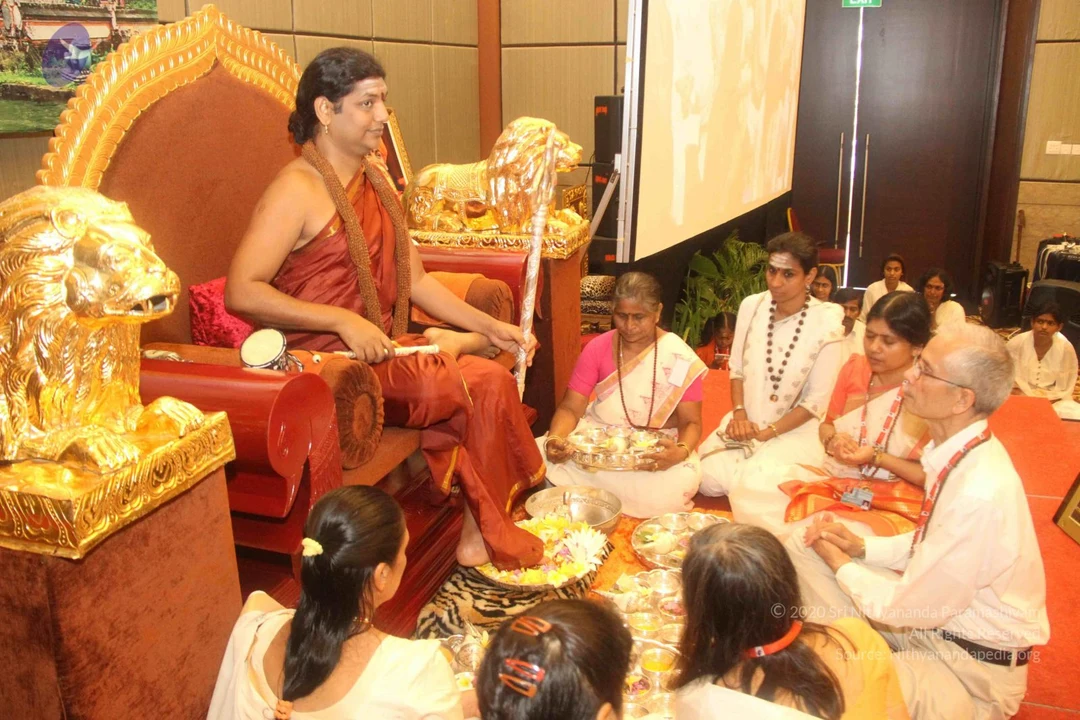
PratyakshaPadaPuja
NithyaSatsang

SarvaDarshan

FinalBlessings

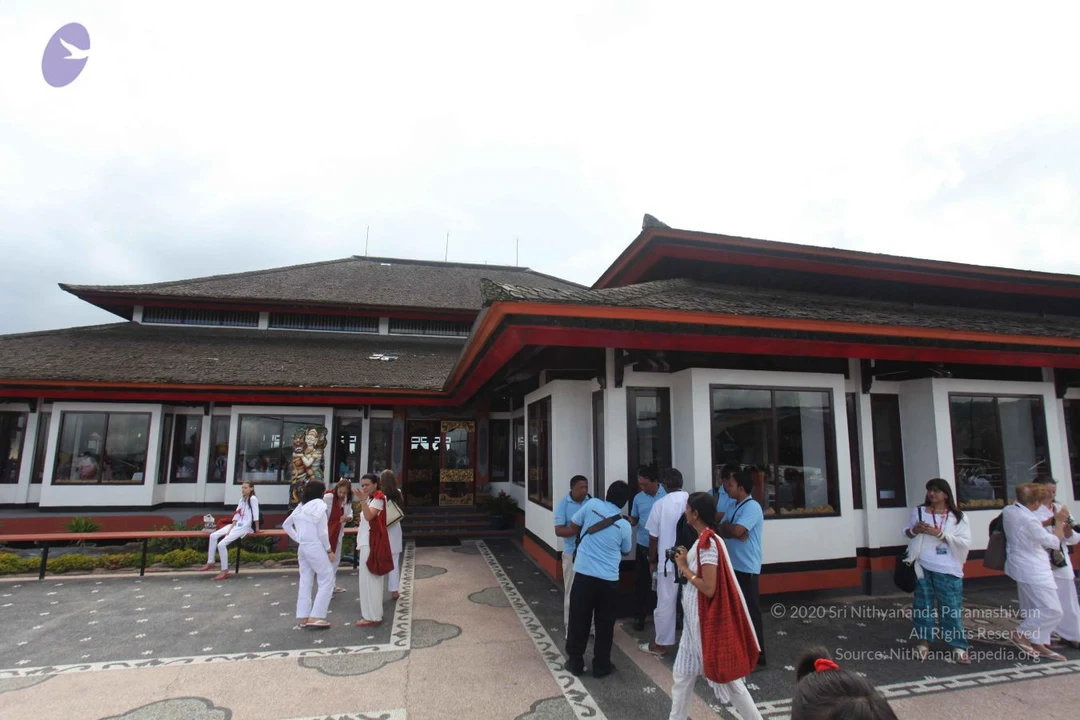
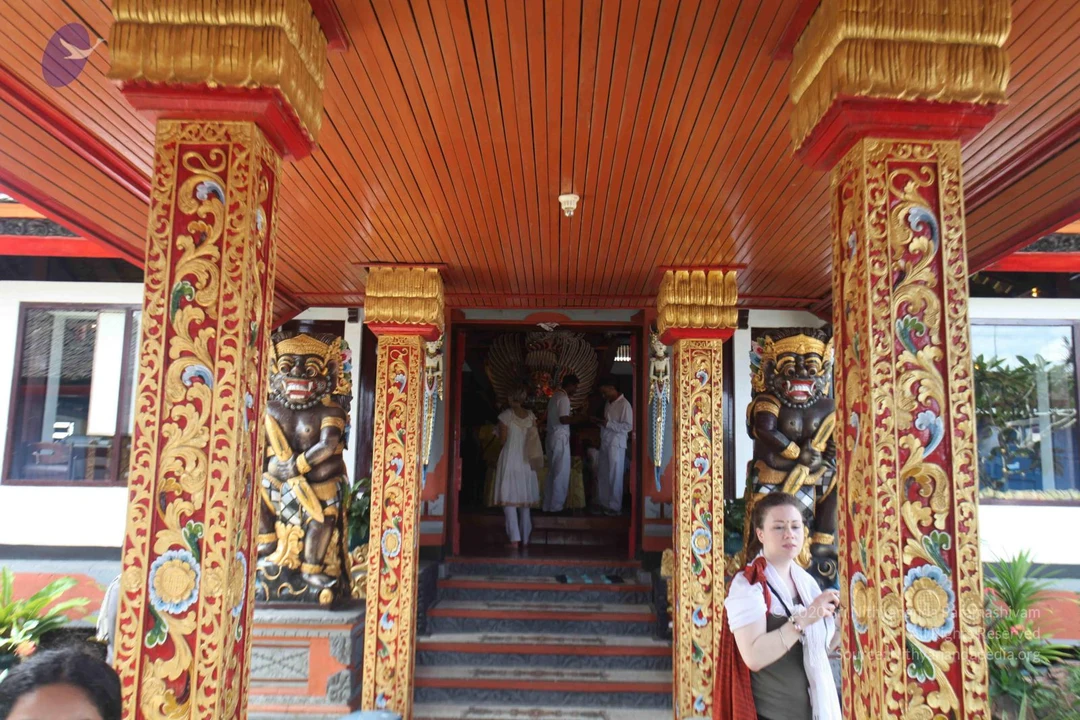
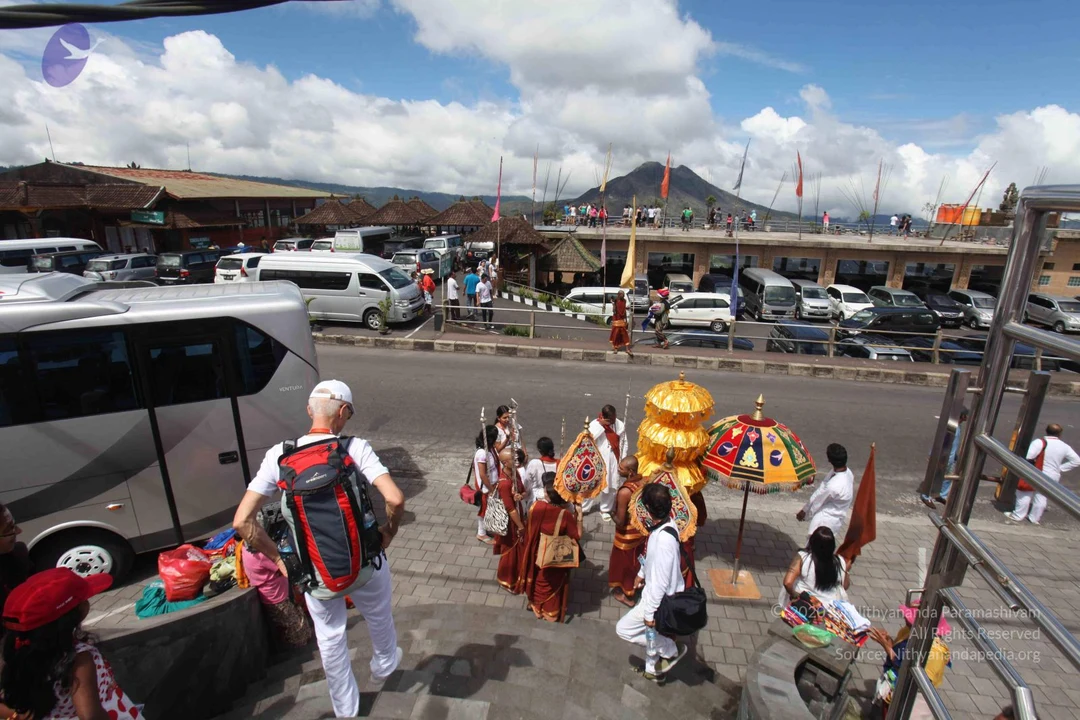
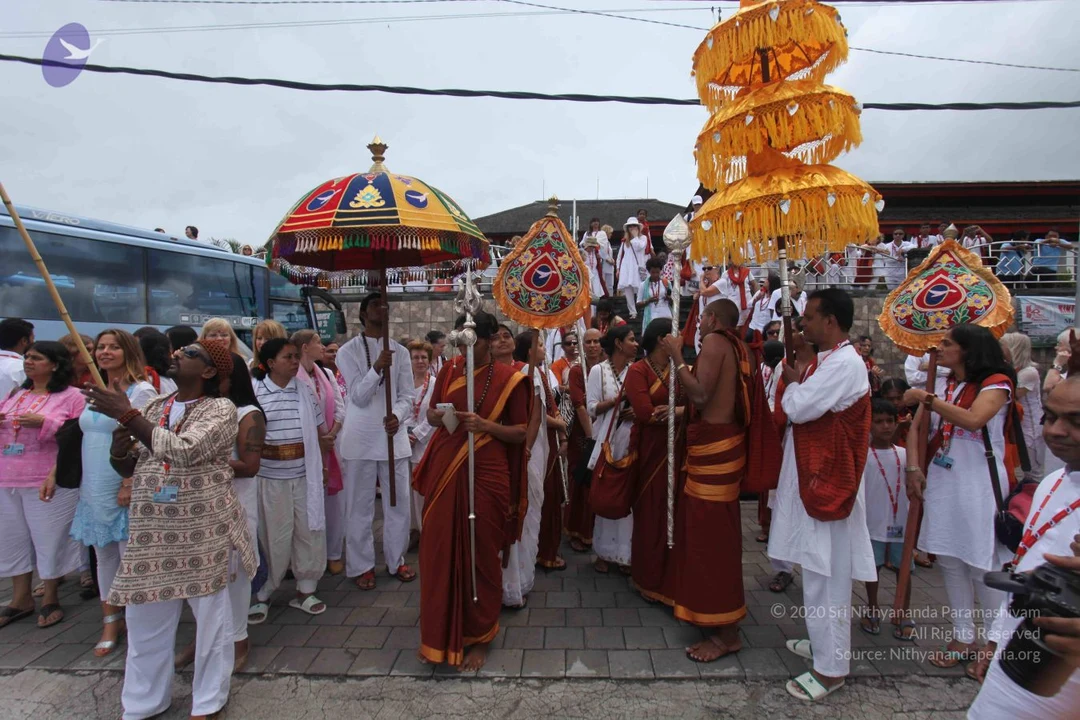
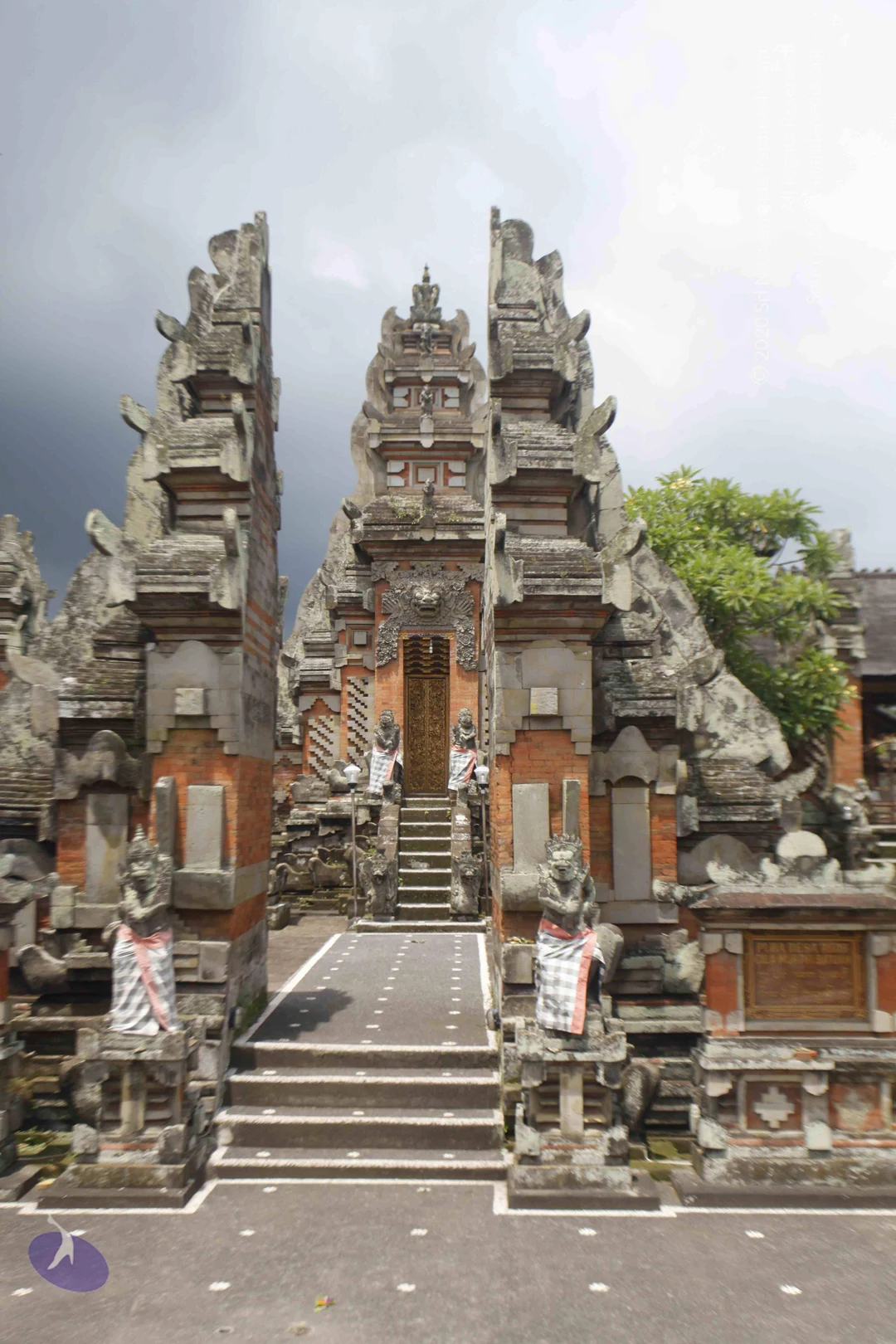
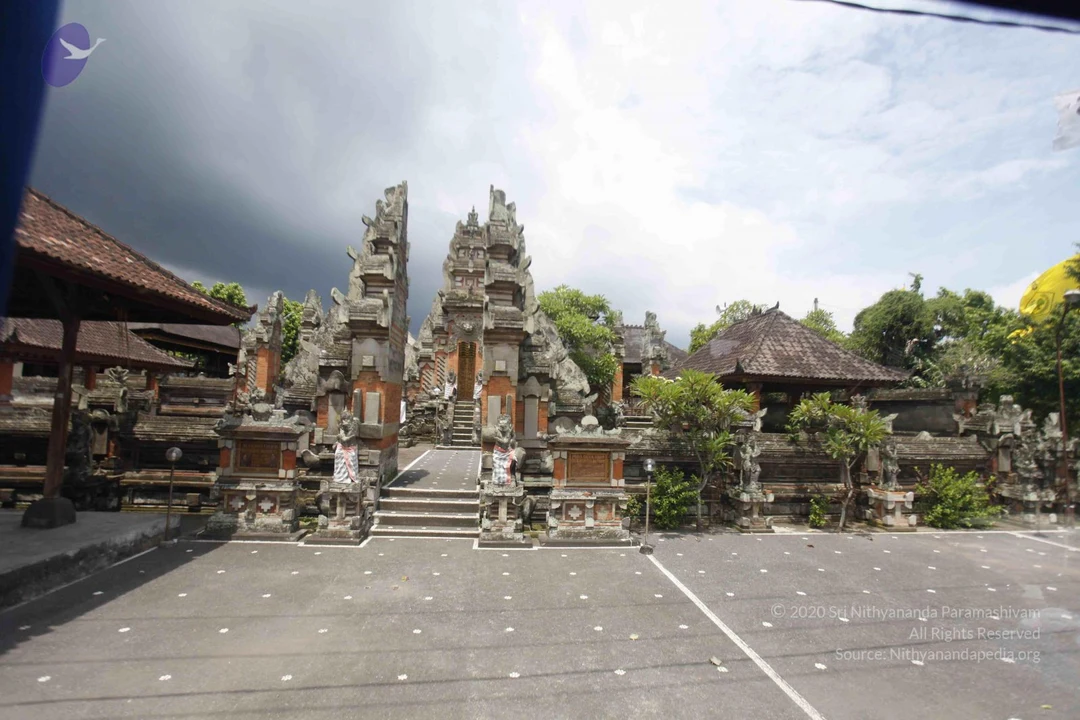
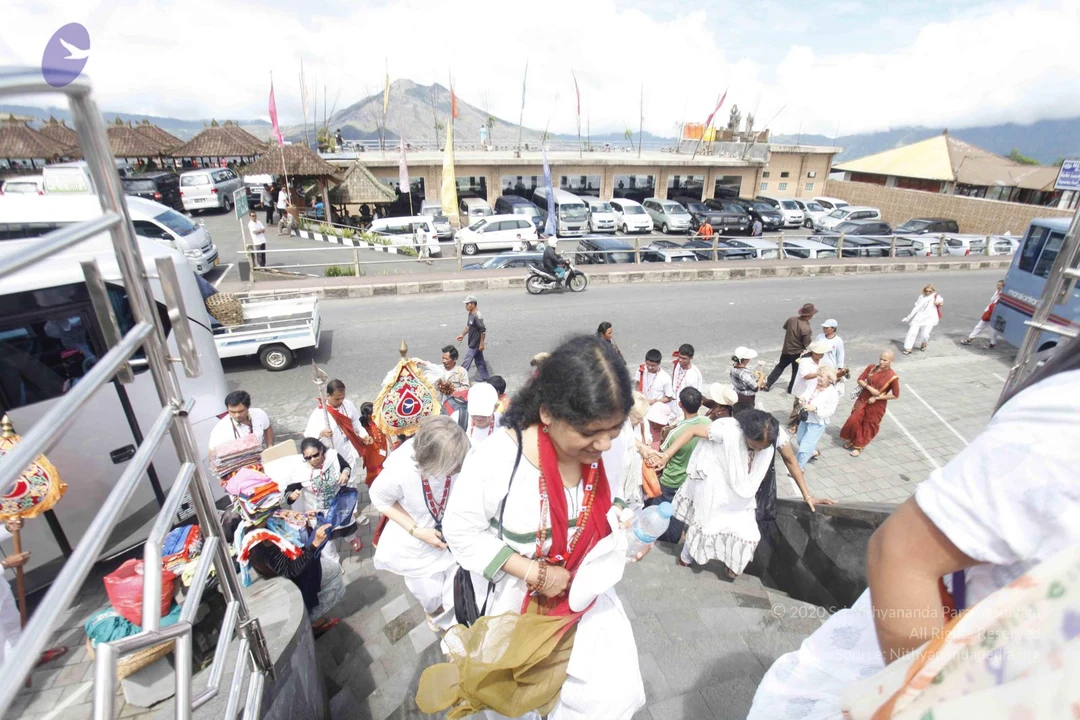
Volcano-Visit

IA-Darshan

Photos Of The Day:

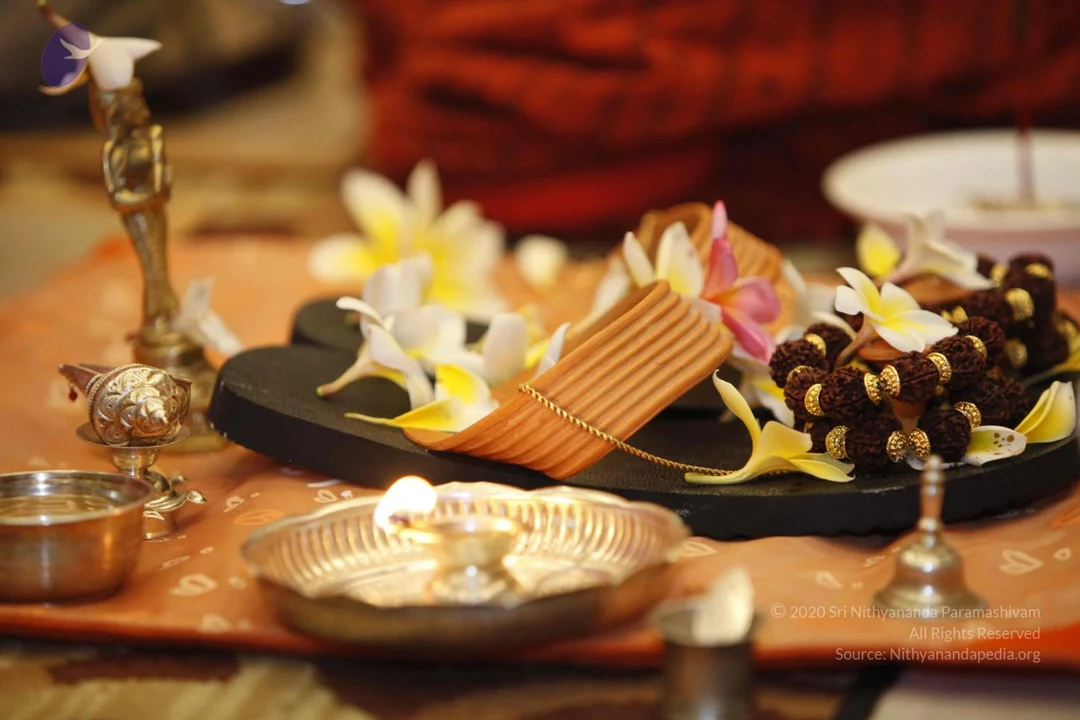
paduka-puja

Tags:

Paramahamsa Nithyananda, practical implications, truth, cognitive shift, transformation, ability, powerful, intelligent, enriching, others, capabilities, love, people, catalyst, cause, completion, comfortable.

Photos from this day

View all 396 photos

Photos

8 photosSource gallery
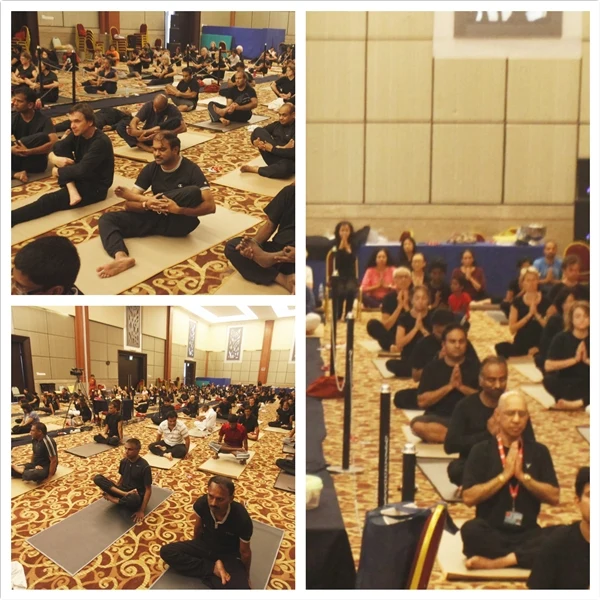
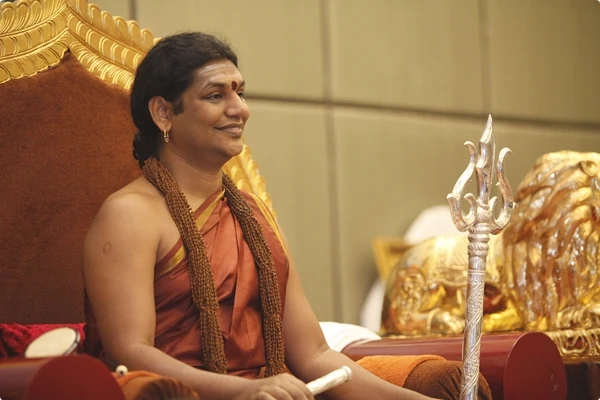
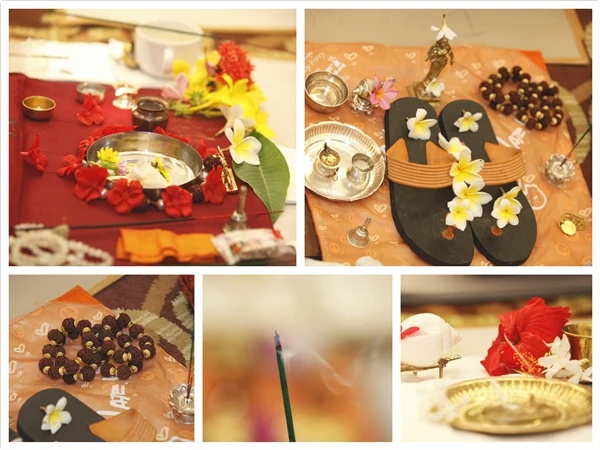
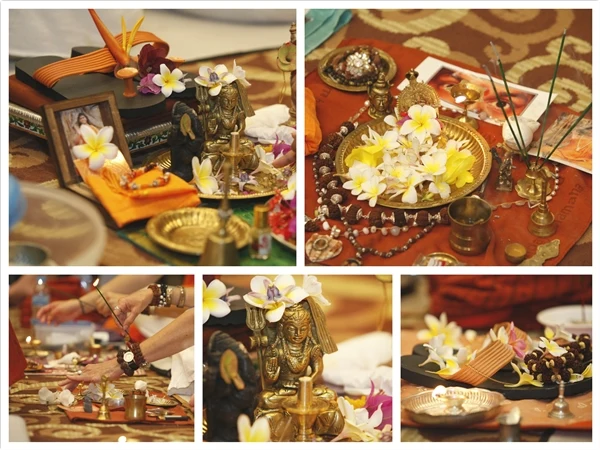
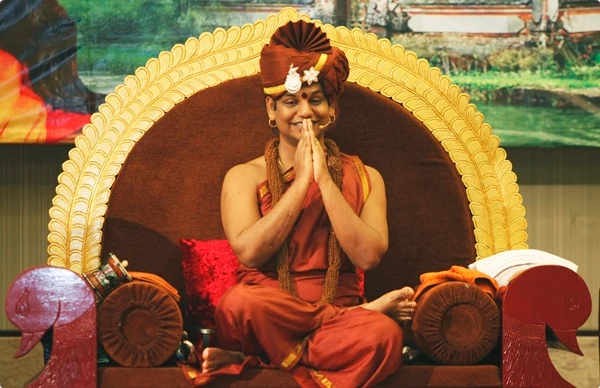
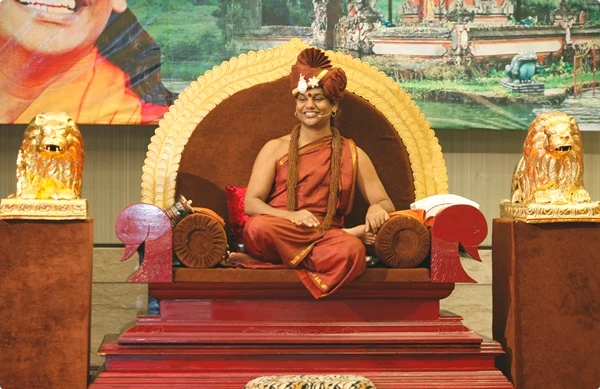
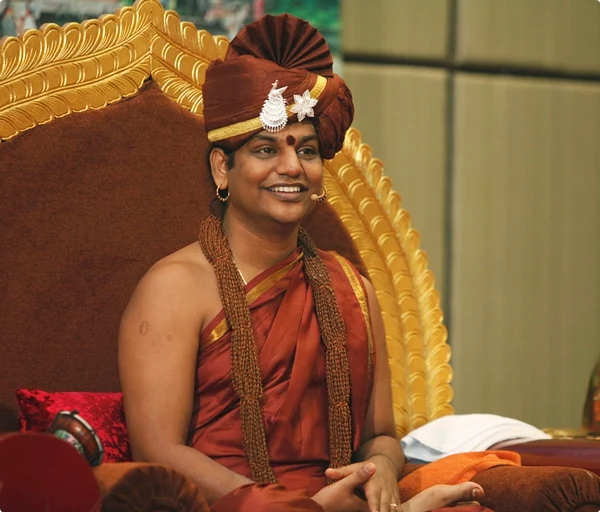
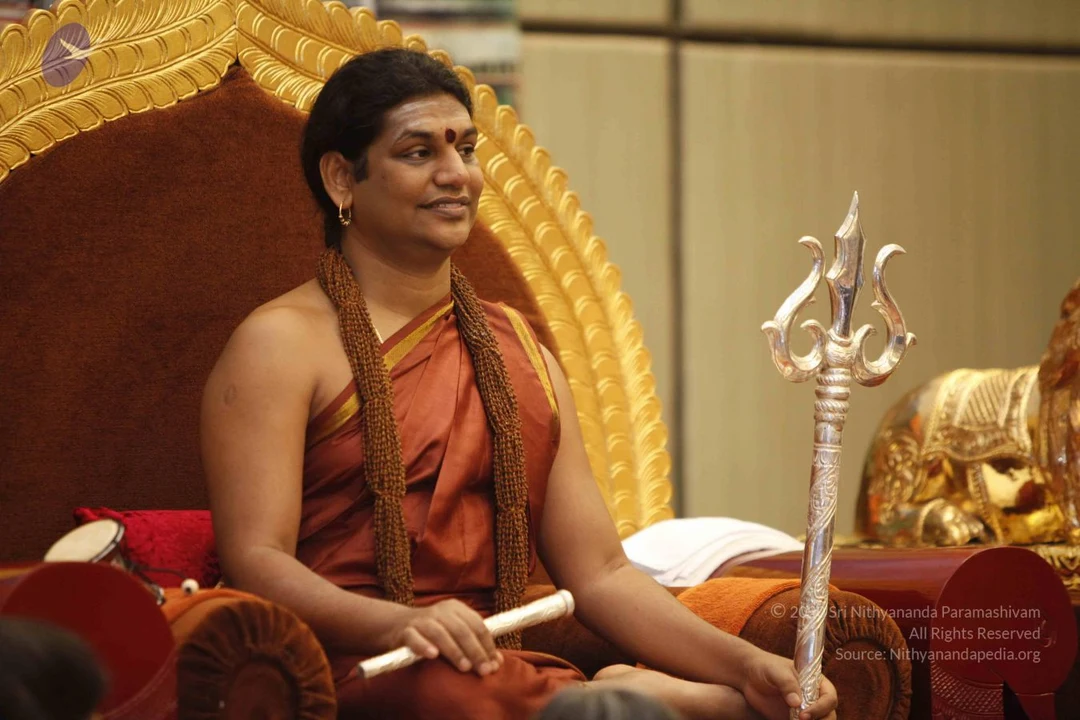
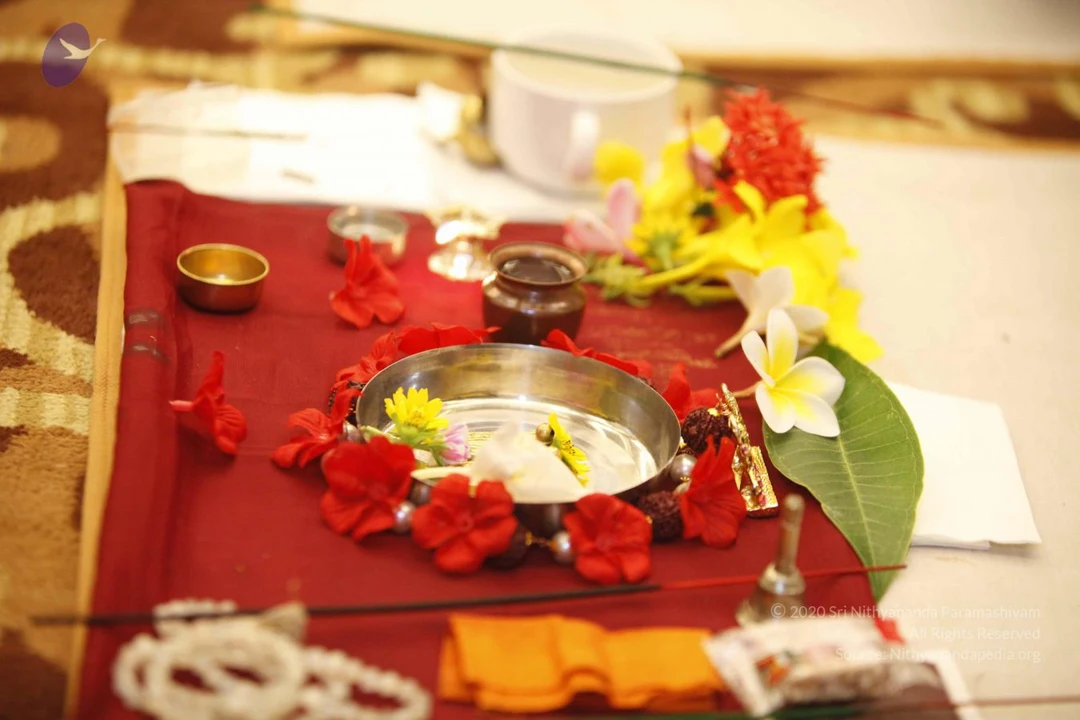
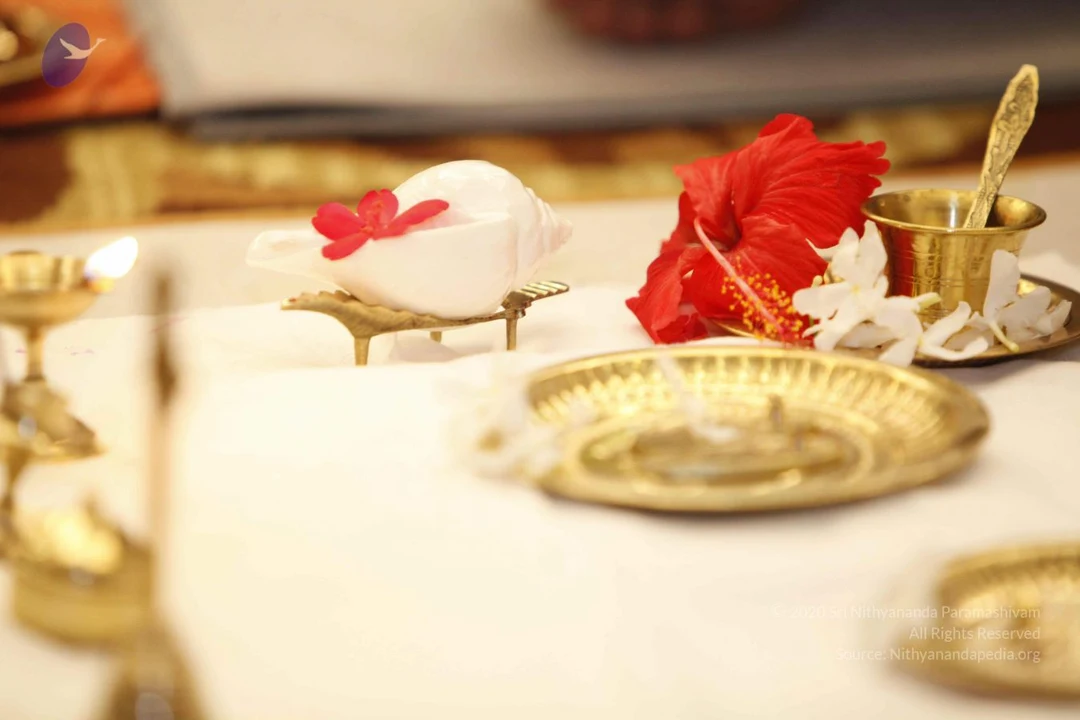
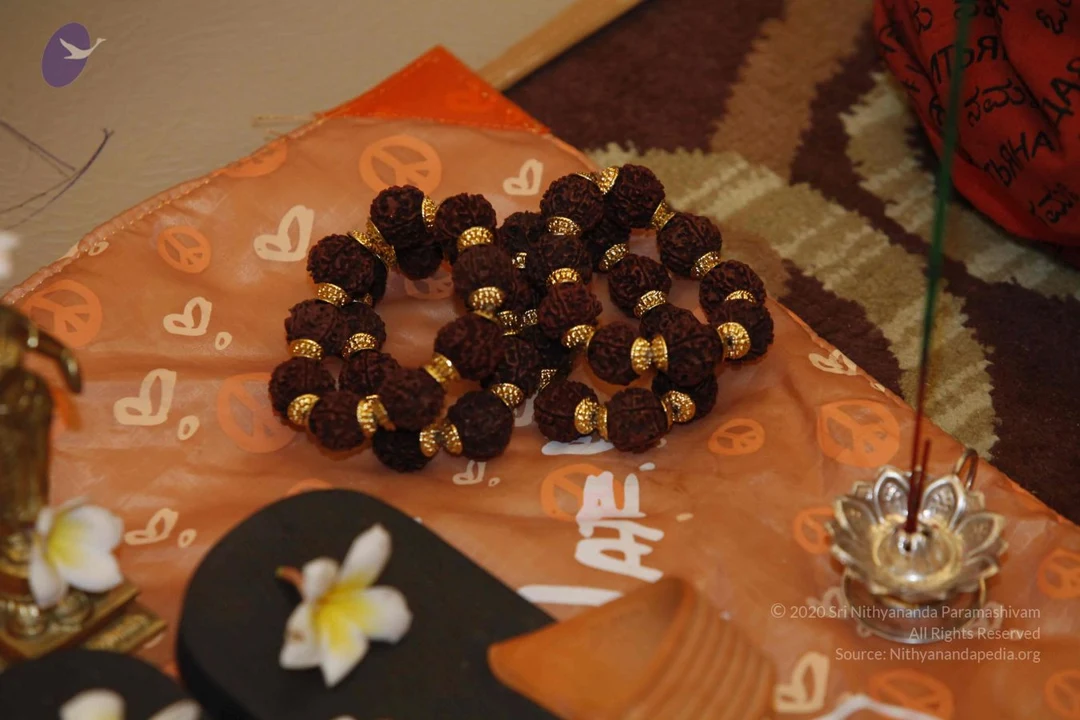
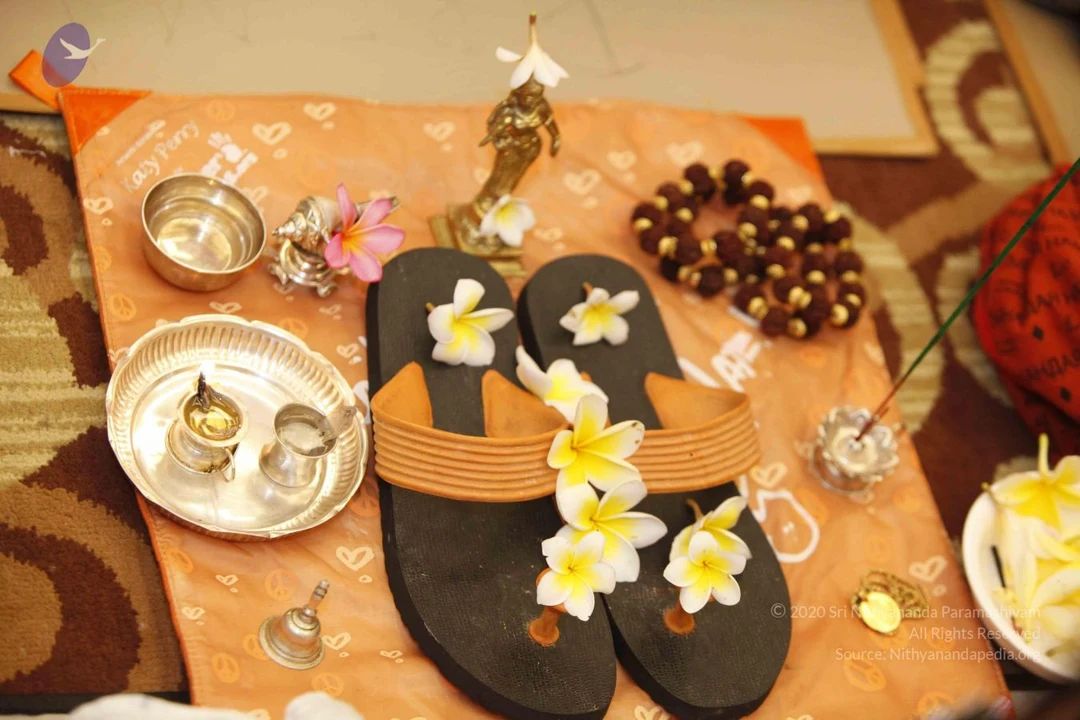
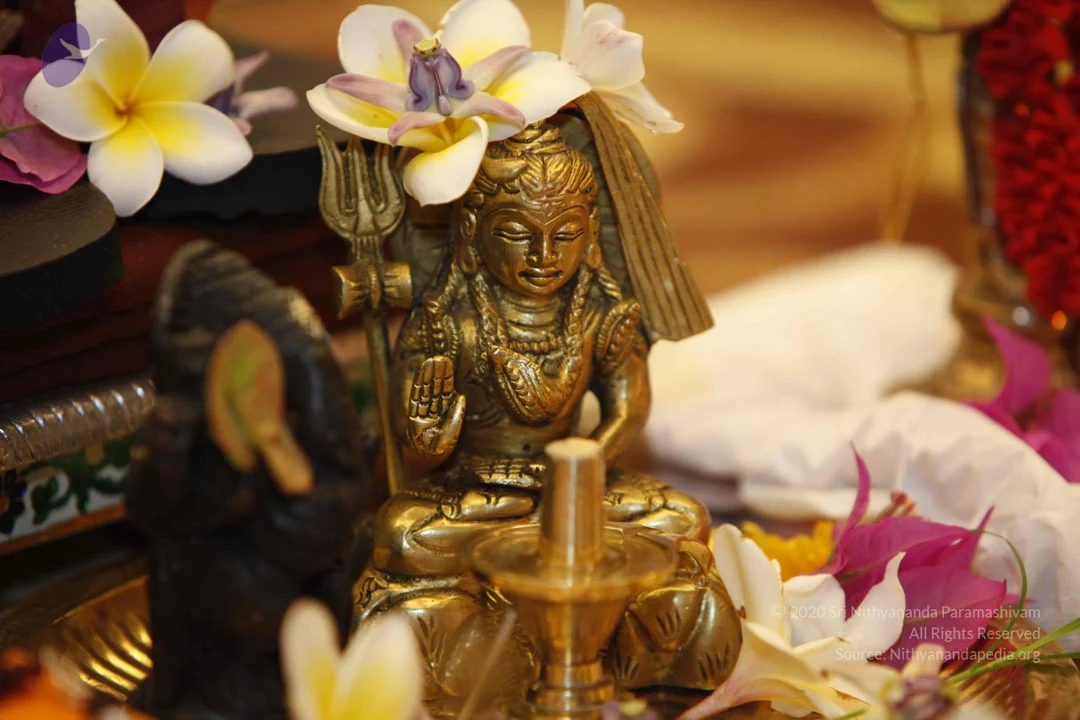
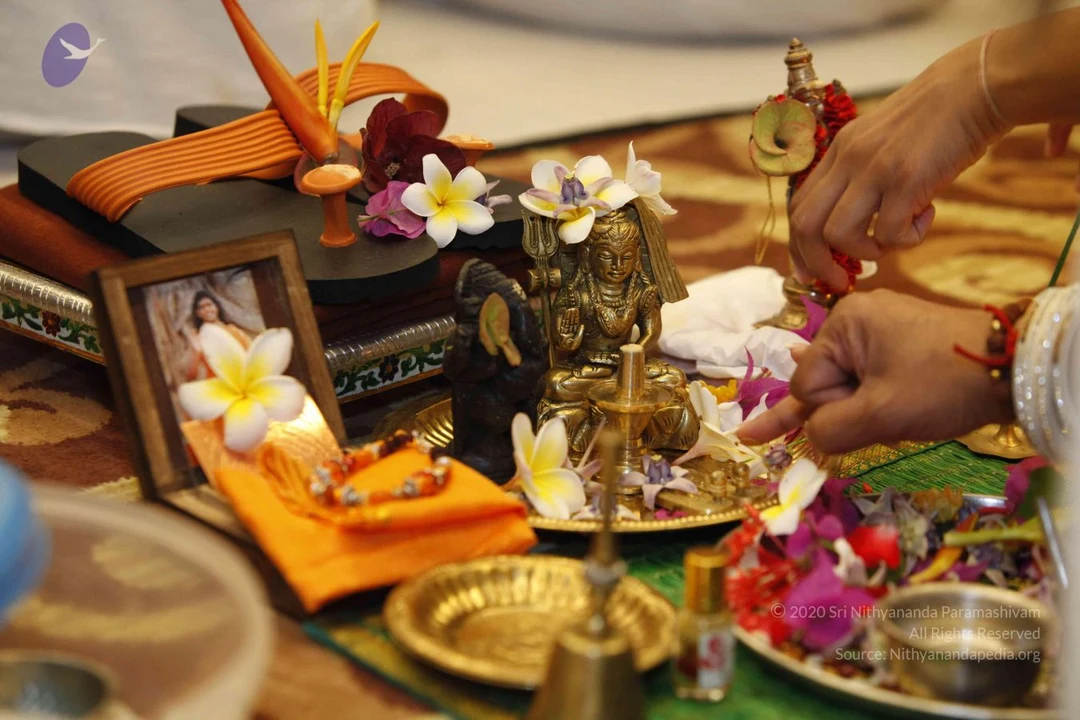
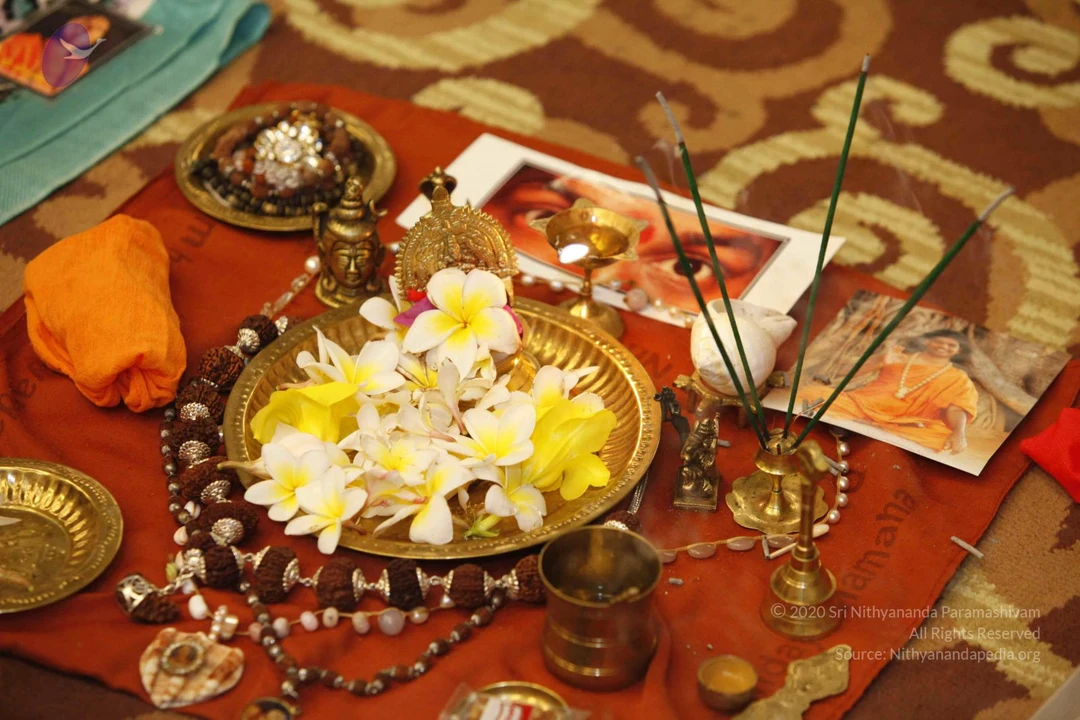
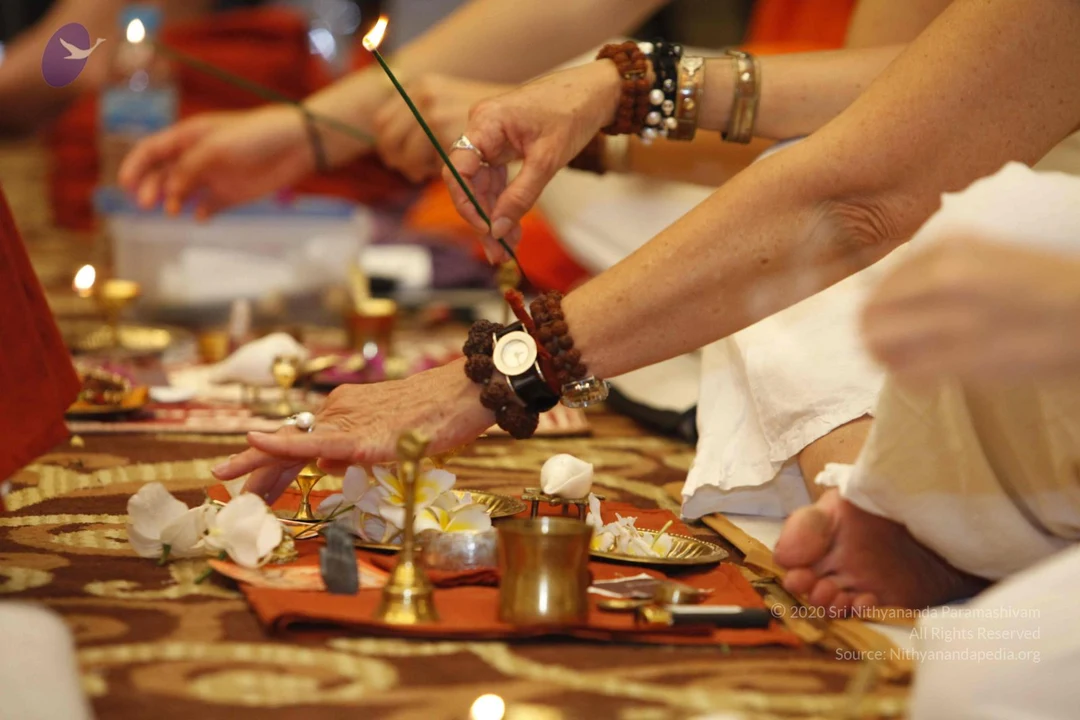
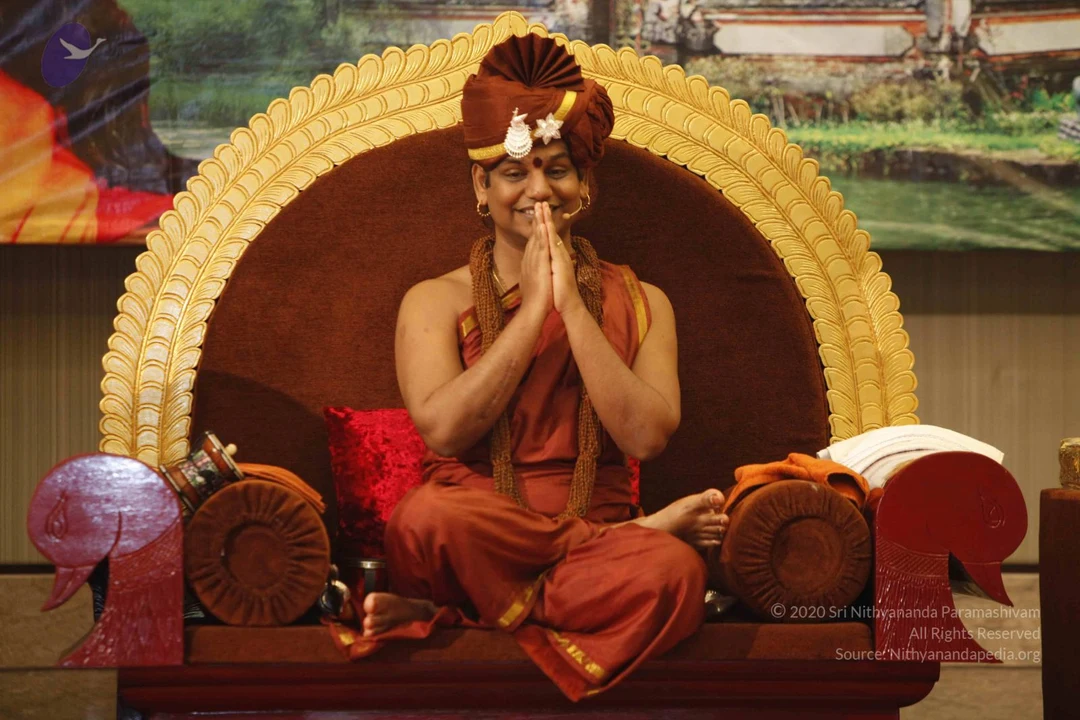
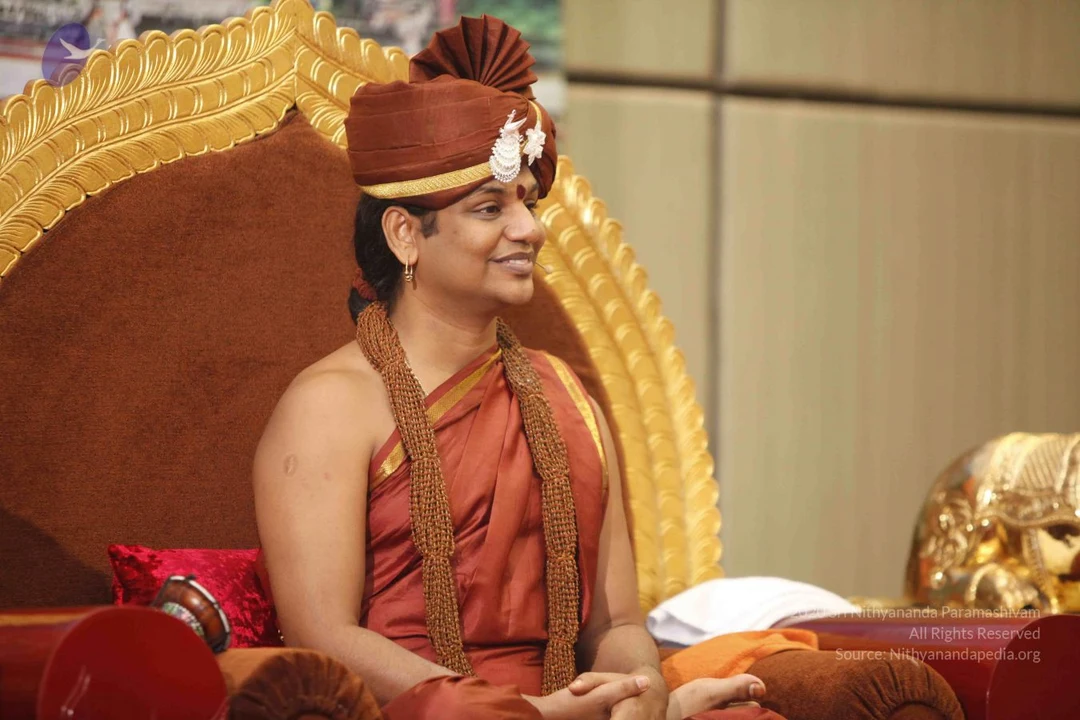
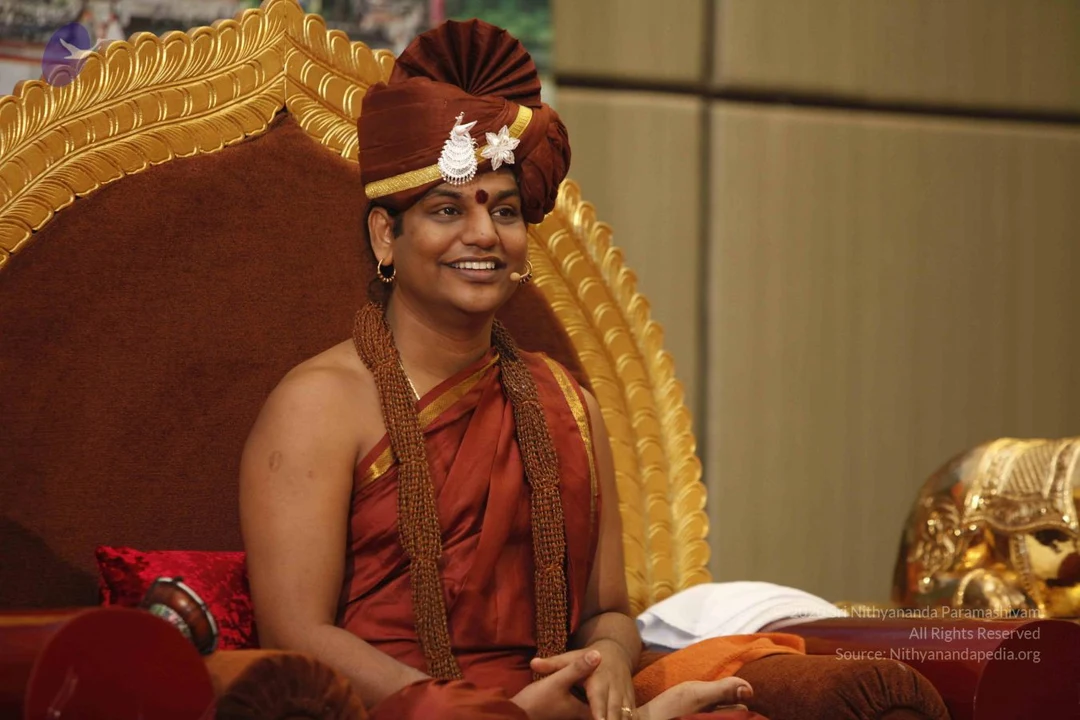
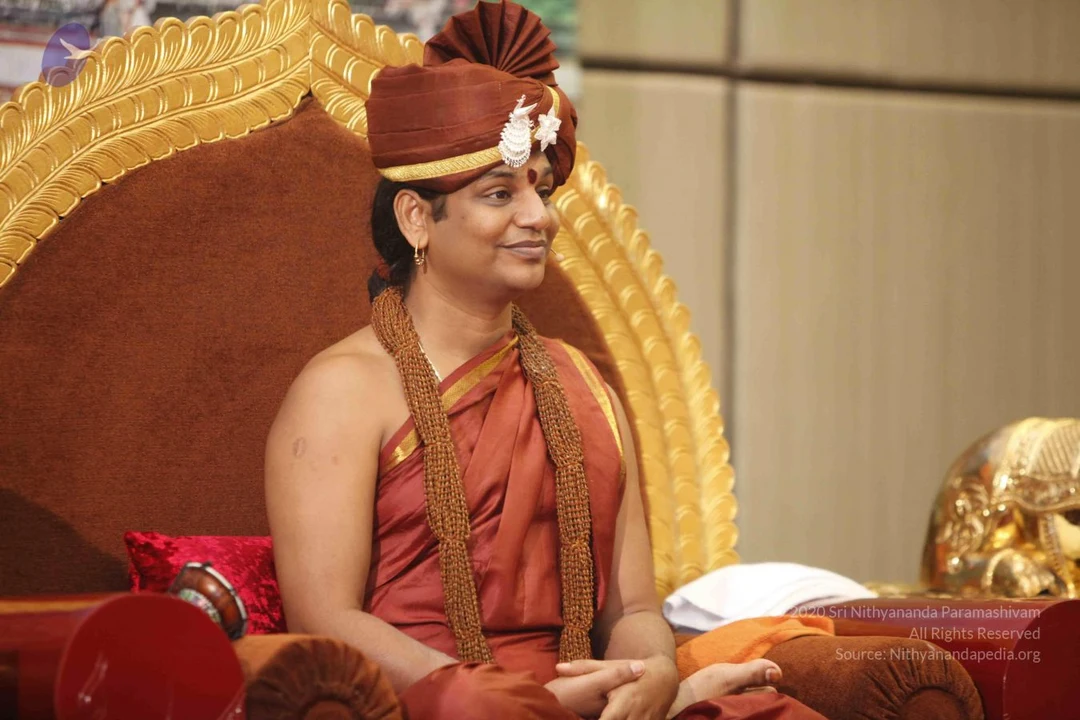
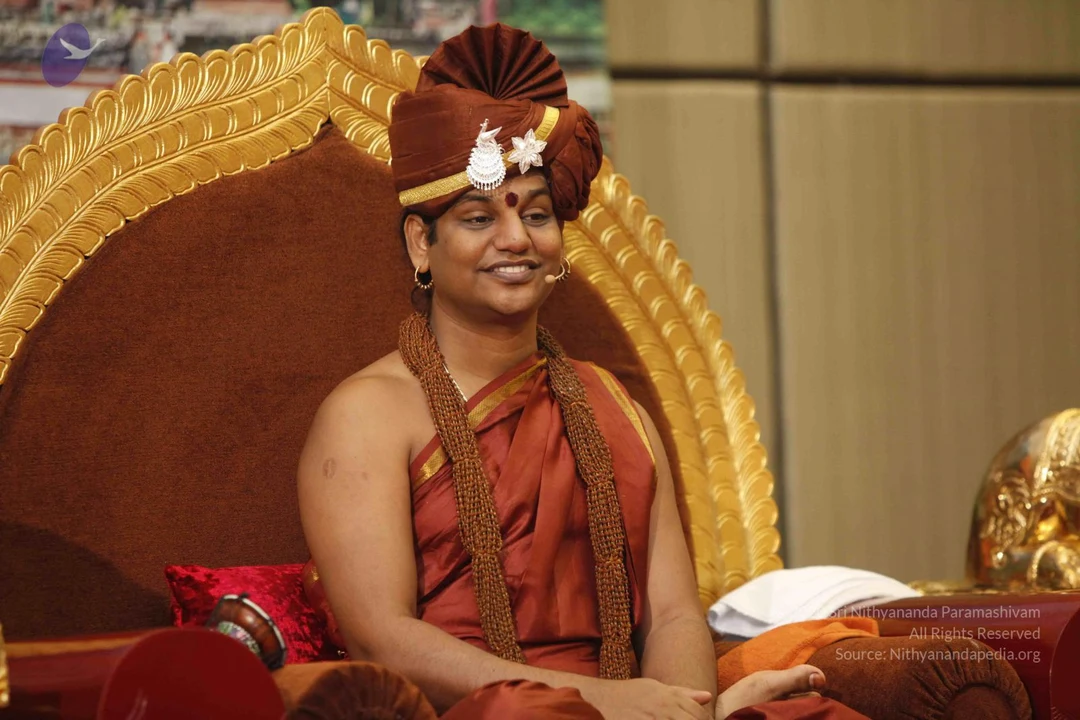
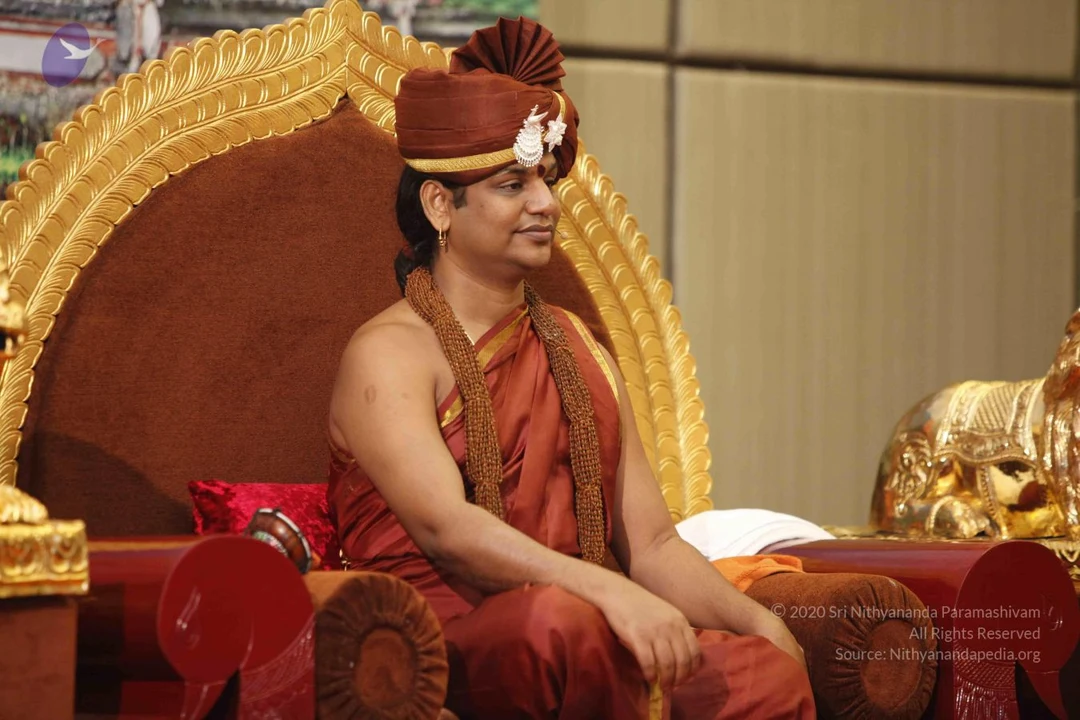
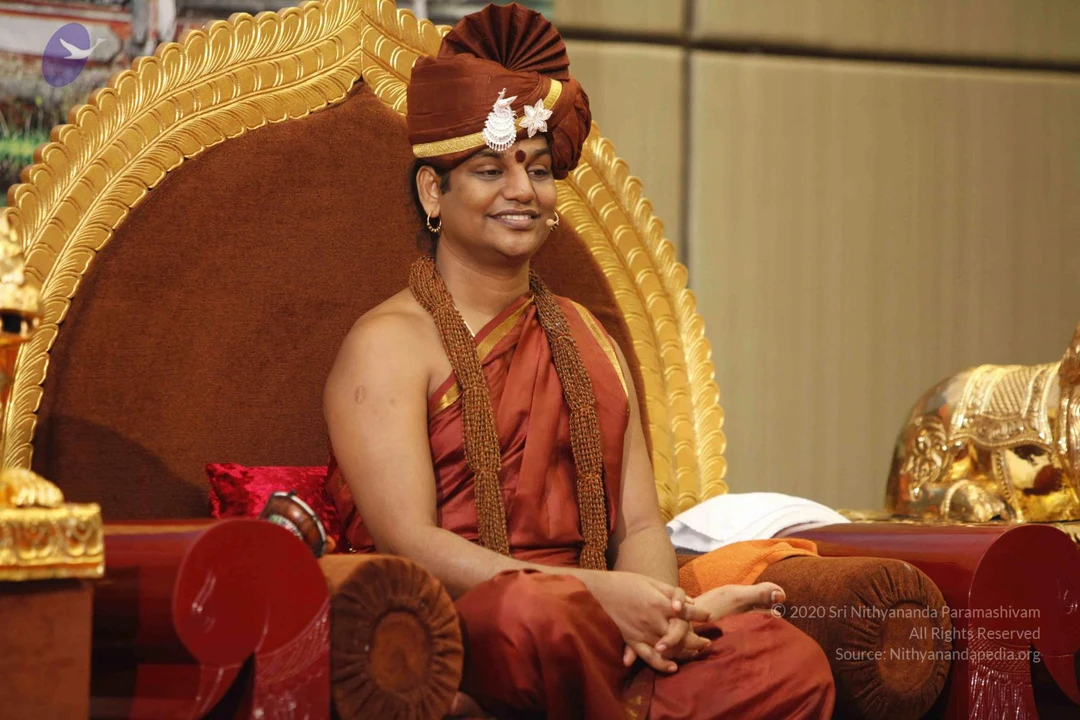
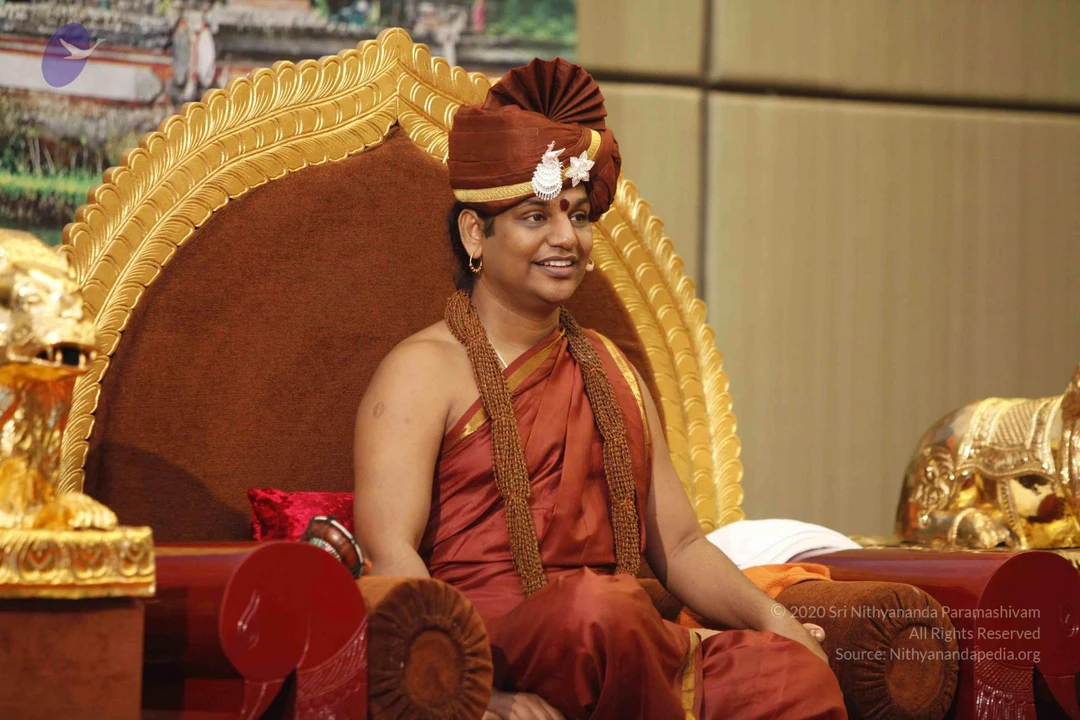
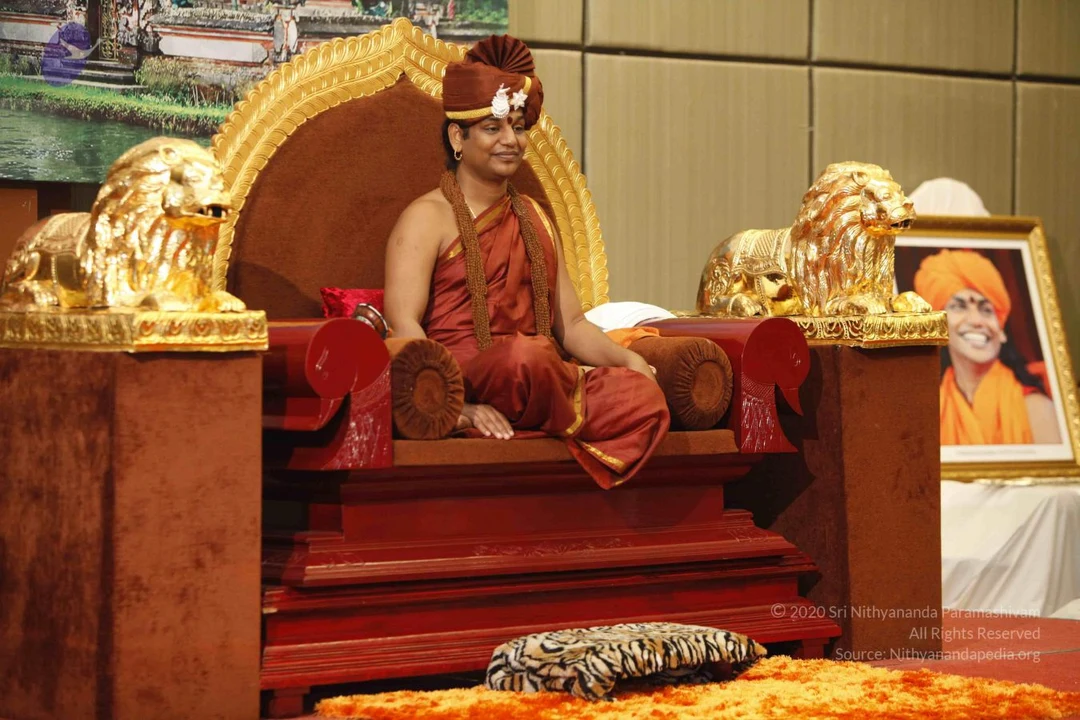
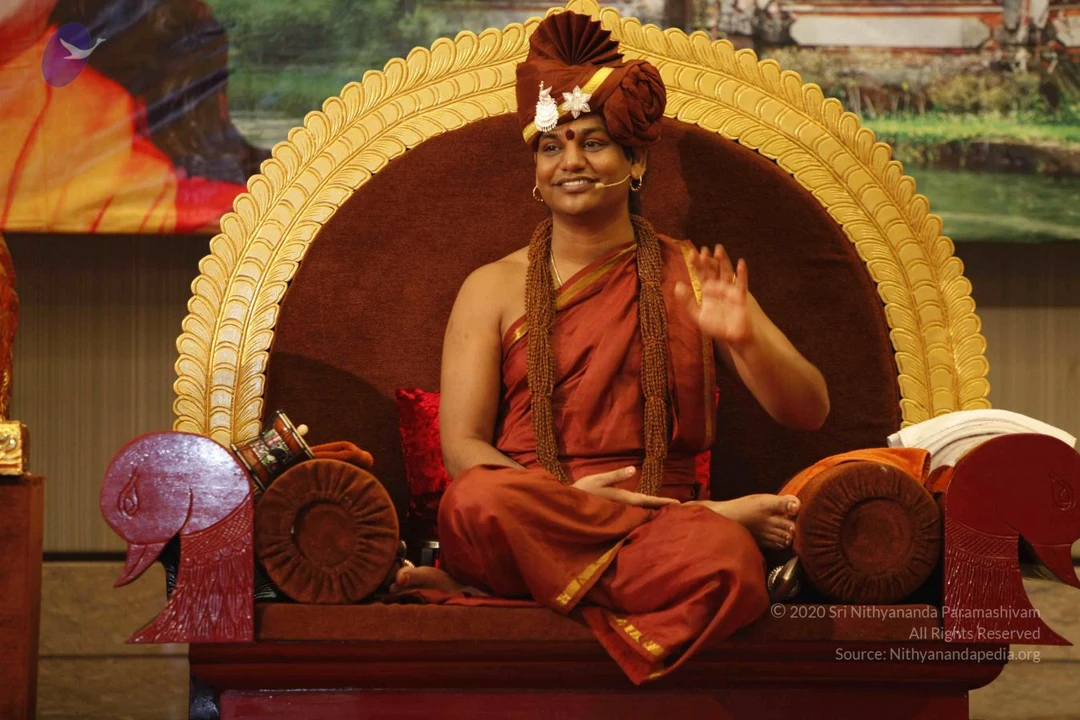
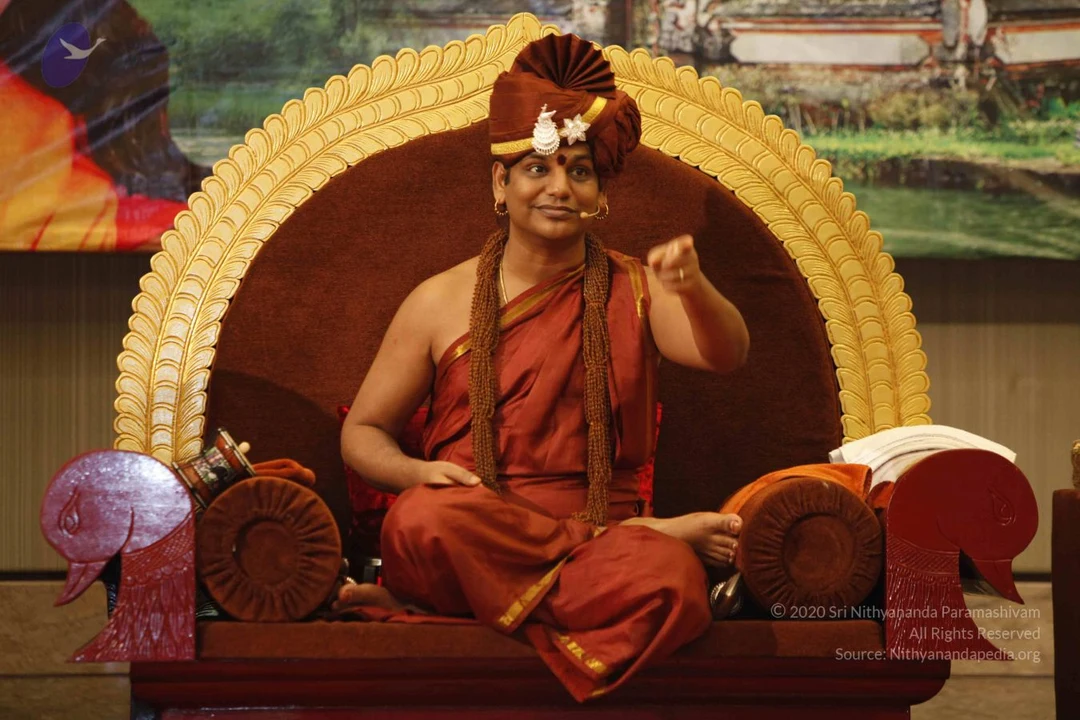
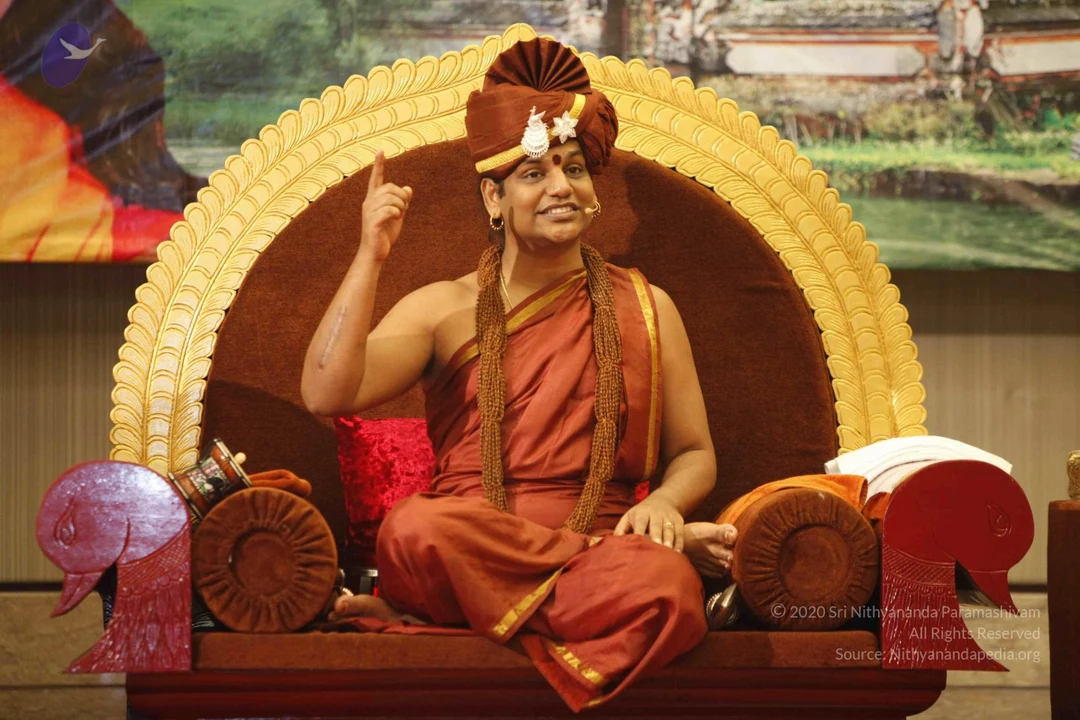
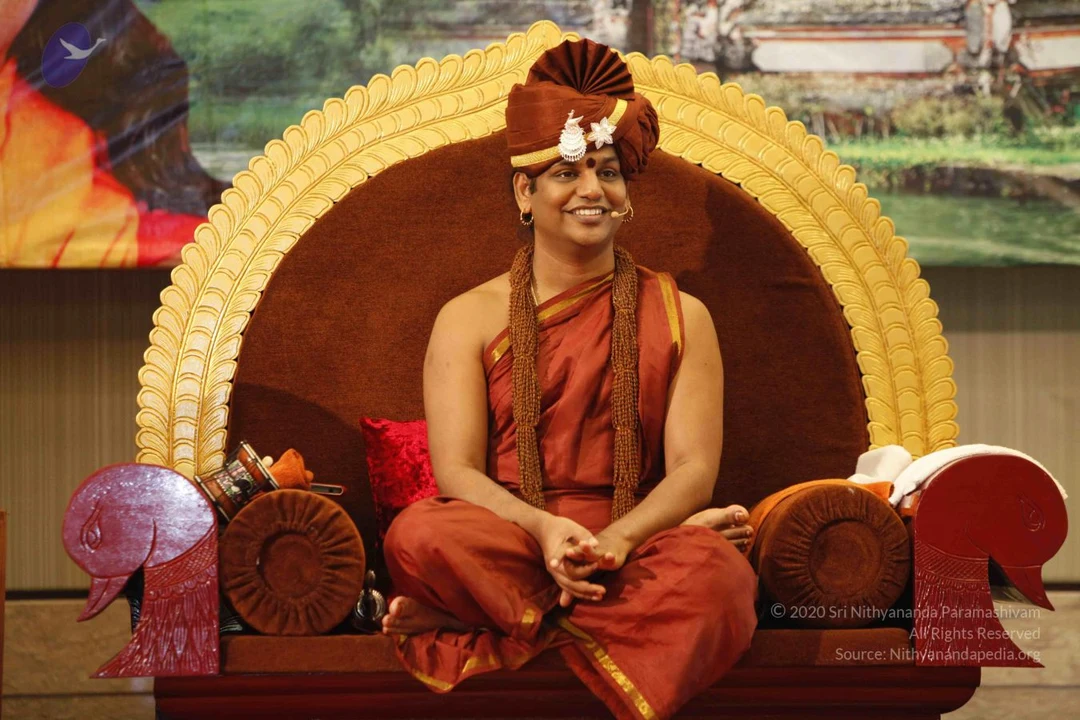
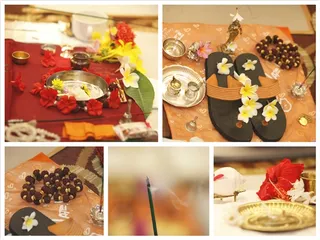
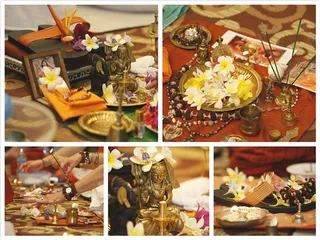
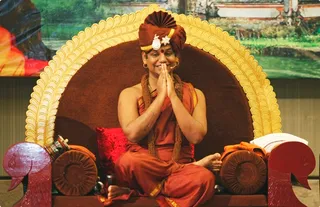
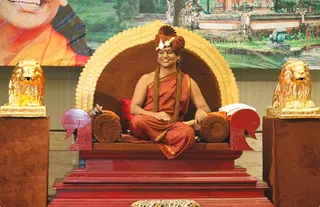
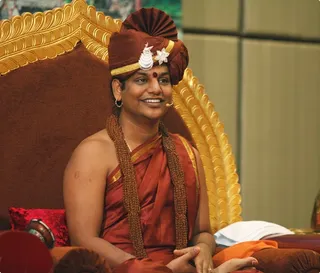
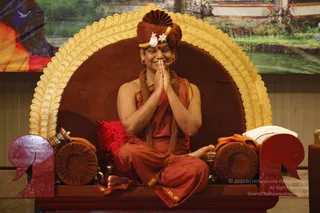
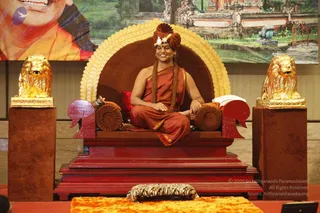
A three-panel collage of a seated meditation or satsang session in a hotel ballroom with patterned gold-and-maroon carpet and beige walls. Many people sit on yoga mats in black clothing, several with hands in anjali mudra or resting in lotus posture. In the right panel, a man in a black shirt with a red lanyard sits with palms pressed together in the front row, and a woman in a black top and a man in a black shirt sit nearby. A small table with blue cloth and flowers appears at the back. The collage is a graphic and shows no identifiable a person-style presenter, so the a person field is none.A five-panel collage of ritual arrangements with no people visible. Top left shows a red cloth with red hibiscus and yellow flowers around a silver bowl holding a leaf and petals, beside a brass cup. Top right shows a peach cloth with a pair of black sandals decorated with white plumeria flowers, a silver plate with small oil lamps, a brass figurine, and a strand of dark rudraksha beads. Bottom left shows rudraksha beads arranged in a ring on an orange cloth beside a sandal with a white flower. Bottom centre is a blurred close-up of an incense stick with smoke. Bottom right shows a red hibiscus and white flower on a brass tray. The setting suggests padapuja, a ritual honouring the feet of a guru, with offerings of flowers, beads and oil lamps.A five-panel collage of puja arrangements on a low table covered with a patterned cloth. Panels show a brass deity murti seated with white and yellow plumeria flowers, a brass plate of plumeria blossoms beside rudraksha malas and incense sticks, a framed photograph on an orange cloth, a brass kalasha-style vessel and offering dish, and hands with bangles placing items on a tray. The scene centres on padapuja-style offerings and worship objects, with no clearly visible people in focus.A seated figure in a deep red-orange turban with a white flower ornament sits cross-legged on a large brown velvet throne with a golden arched back and cushions. He wears an orange-red robe with gold trim, a long rudraksha mala, and gold earrings, and holds his palms together in namaste with a smile. Behind him is a large colourful backdrop, and a small brass object sits on a side table. Swamiji (probable) appears in person, with cues including the ornate red turban and rudraksha mala. Only one physical person is visible.A photograph of a seated figure on an ornate red and gold throne with a large golden arched backrest, flanked by two golden lion statues on red pedestals. The figure wears an orange-red robe, a saffron-coloured turban with a white ornament, and long hair swept back in braids, sitting cross-legged with hands resting on the armrests and smiling. Behind the throne is a large backdrop showing a painted temple and garden scene, and a partial portrait at the upper left. Only one physical person is visible.A smiling man sits on an ornate gold-carved throne with brown velvet cushions, wearing a maroon turban decorated with a white flower and jewelled pin, a red bindi, and a red-brown shawl over a bare shoulder. He wears a long beaded rudraksha-style necklace and a small headset microphone, and has his hands resting in his lap. Behind him are red and orange cushions and a white cloth on a low table with a brass vessel. Swamiji (probable): the man is wearing a turban, saffron-toned shawl and long mala necklaces seated on a throne, consistent with the page's reference to Swamiji at this satsang.

IA-Yoga

21 photosSource gallery
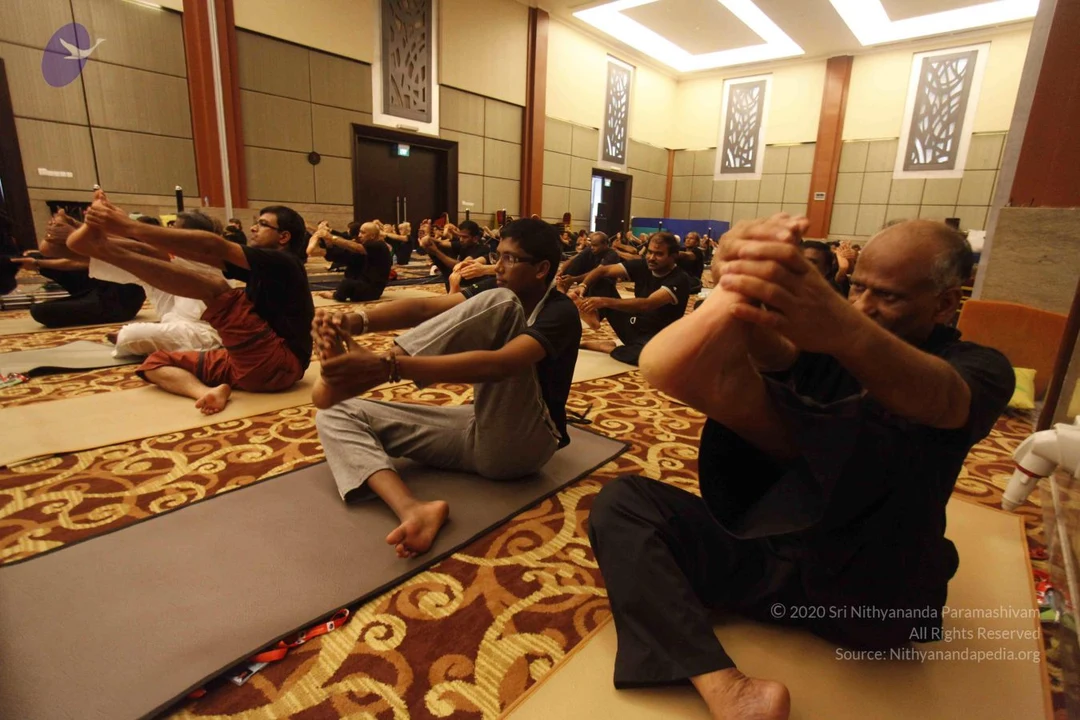
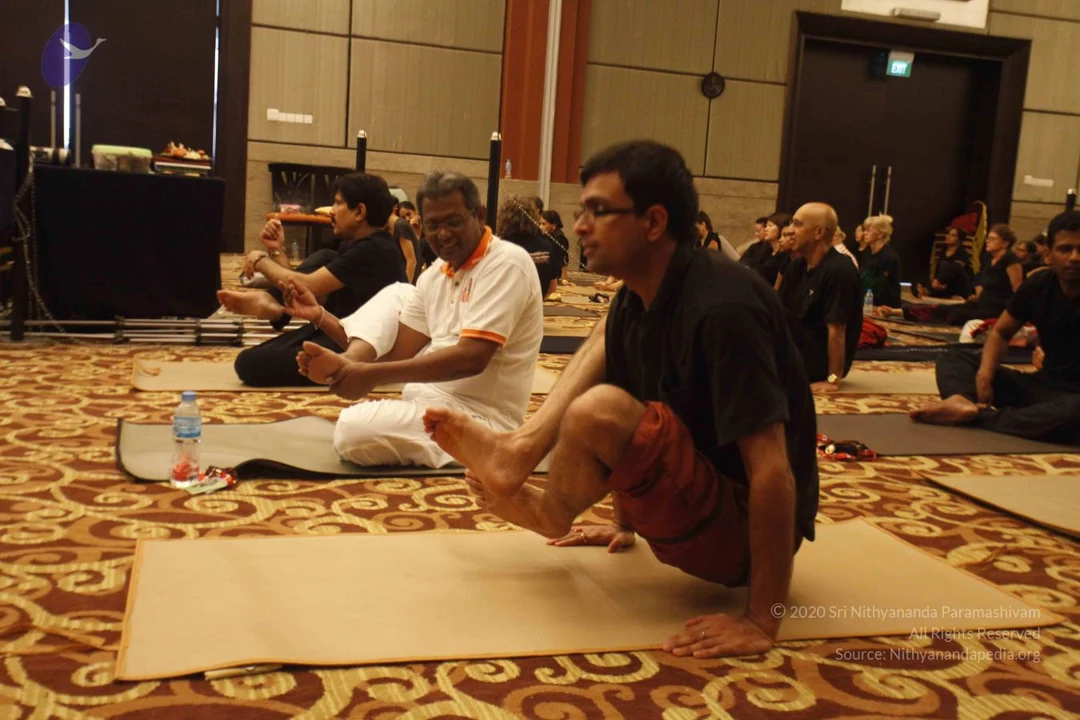
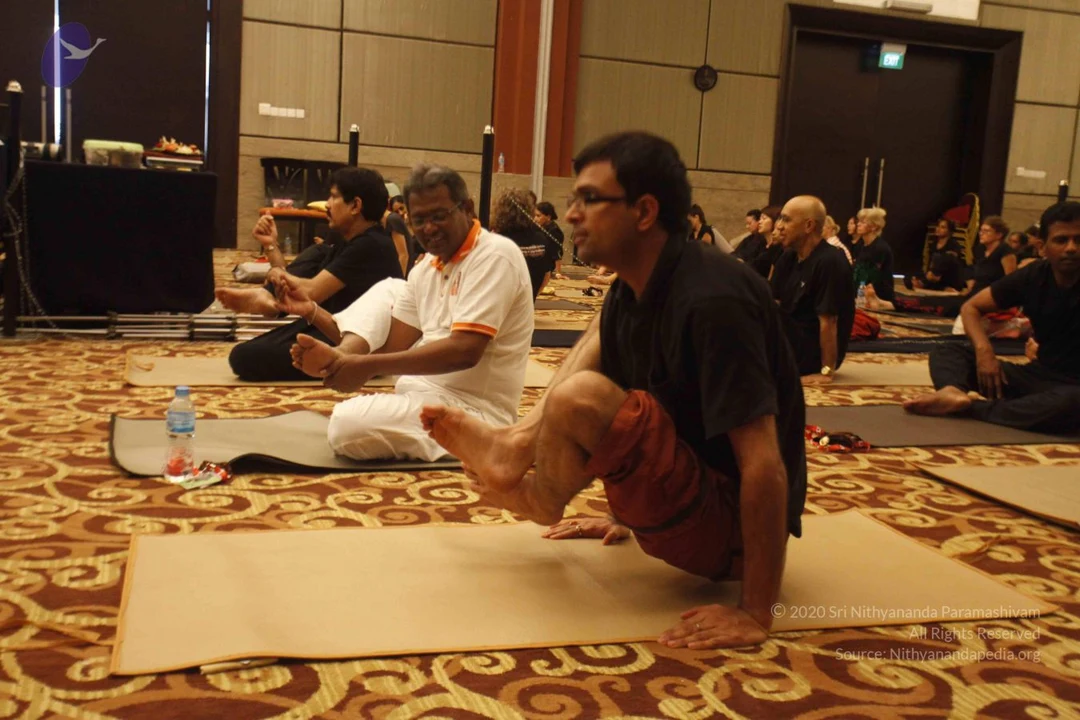
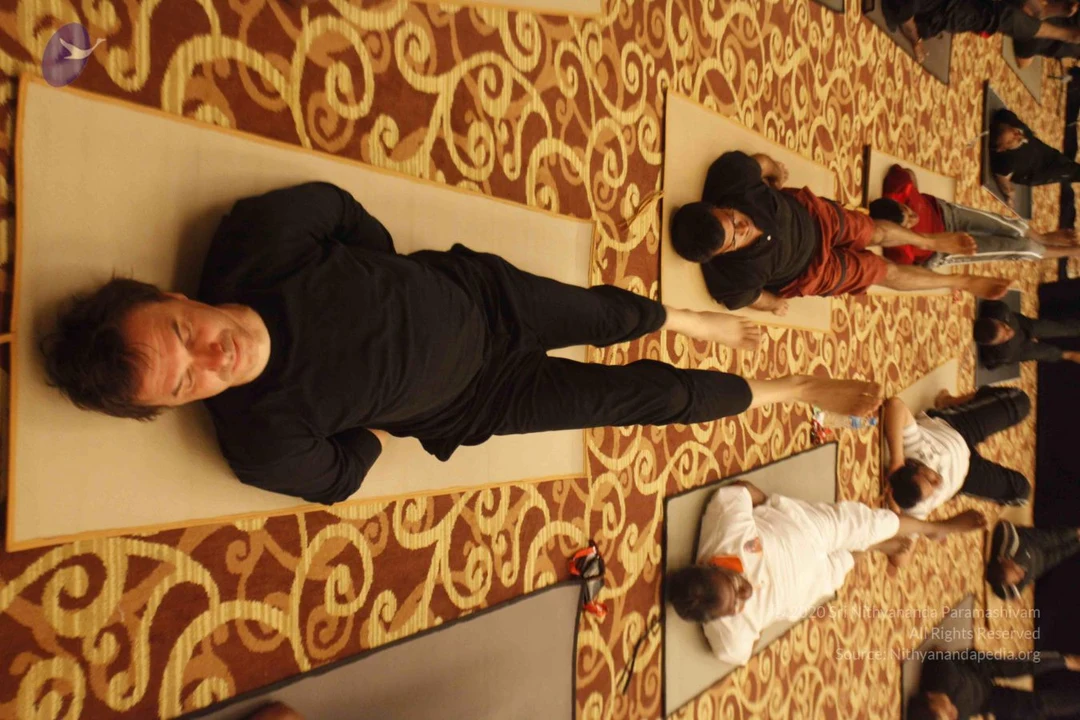
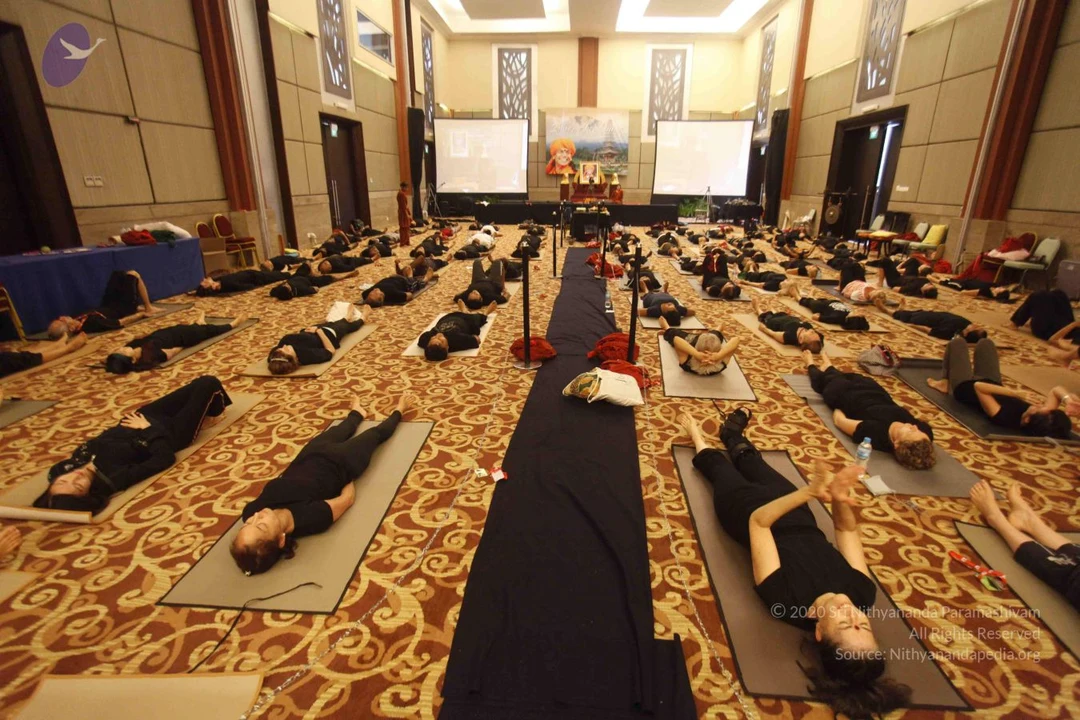
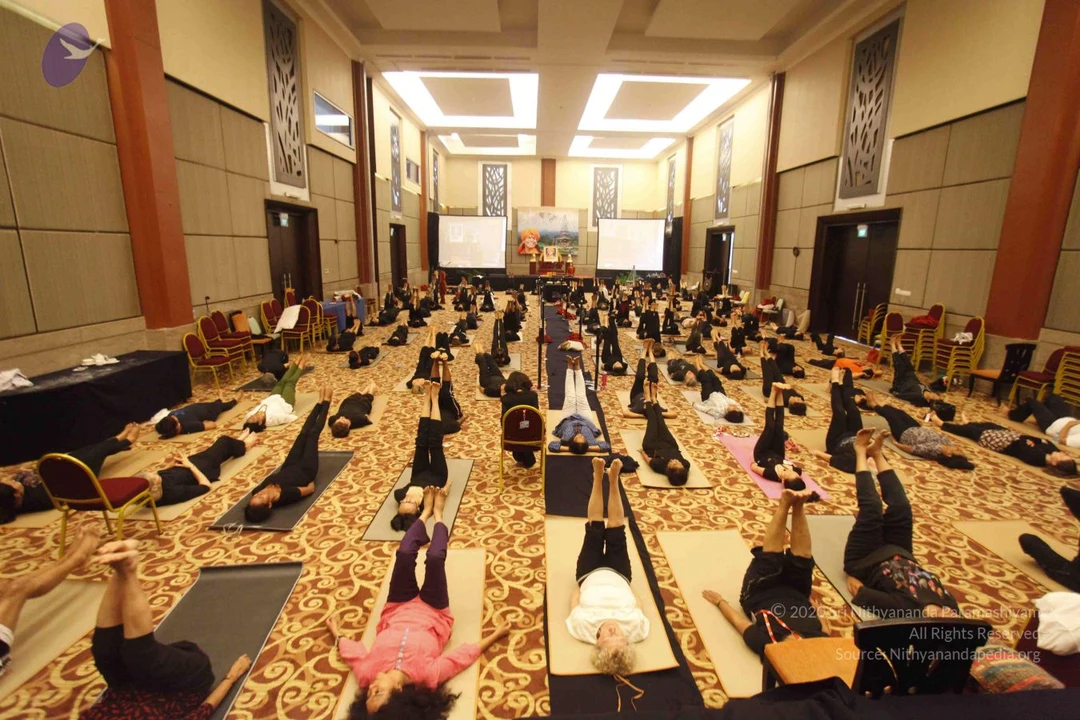
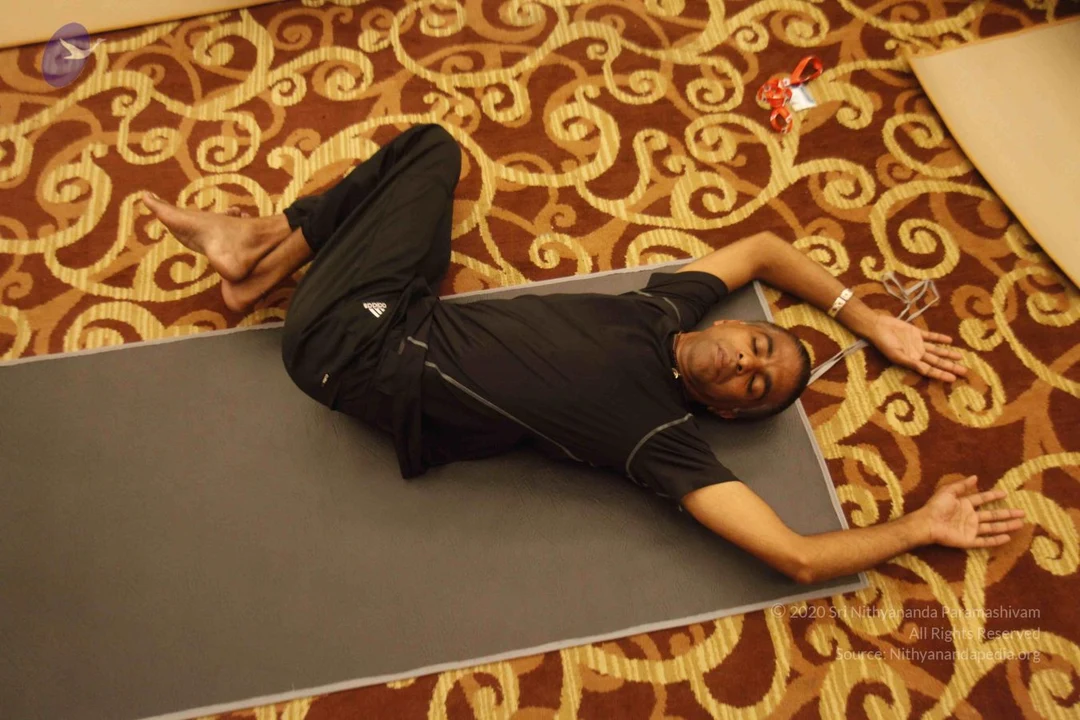
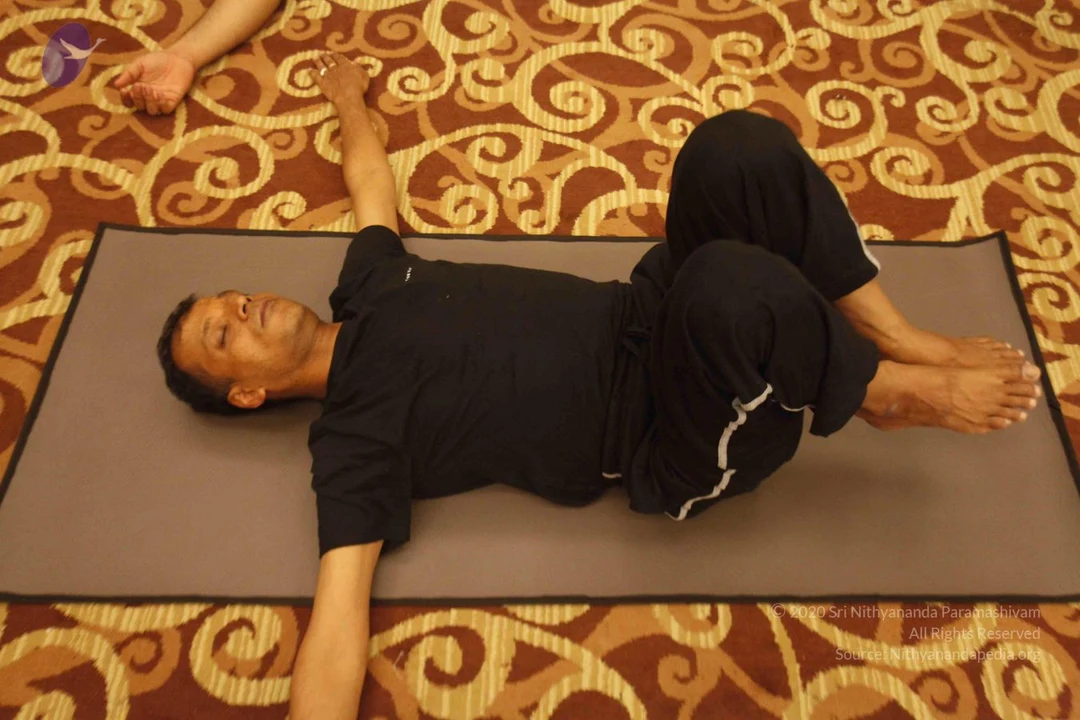
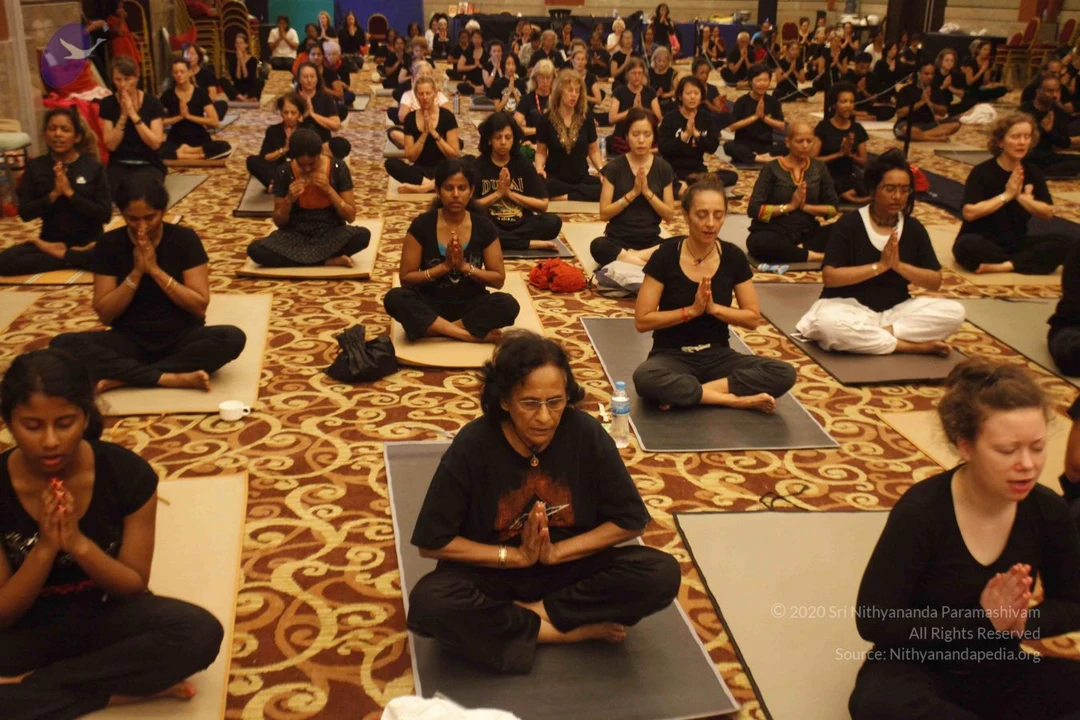
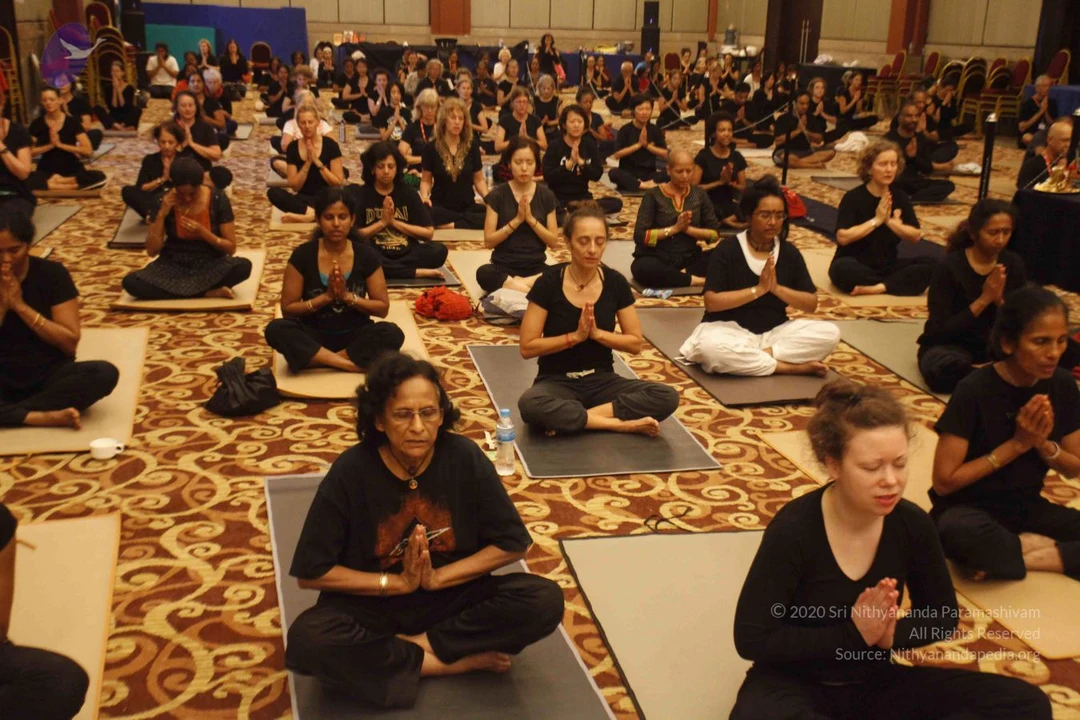
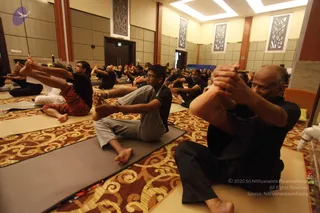
A large hotel ballroom with a patterned gold-and-brown carpet holds many people seated cross-legged on grey and beige yoga mats in rows, most wearing black or dark clothing for meditation. A person in white sits near the centre-right, and an orange-robed figure stands near the back by a camera on a tripod. Wall panels with geometric cut-out designs and a small exit sign frame the room. Several attendees sit upright with eyes closed, while others look forward. The scene reads as a group meditation session. No individual is clearly identifiable as a person from appearance, so no probable label is applied.Wide view of a large hall with a patterned gold and brown carpet where many people sit cross-legged on grey and beige mats, eyes closed, in a meditation session. Most wear black tops and black trousers; one man in a white shirt sits near the centre-right and a man in a striped shirt sits left of centre. A man in a red t-shirt sits near the middle. Tall decorative wall panels, dark doors and a camera on a tripod are visible in the background, and a person in orange stands at the far left.A large hall with a patterned brown and gold carpet where many people sit on yoga mats performing seated forward-bend stretches, gripping their feet with both hands. In the foreground a man with short grey hair wears a black top and black trousers and holds his feet. Beside him a young person in a black shirt and grey trousers with glasses sits with feet pressed together. Behind them rows of practitioners in black and white clothing continue the posture. Tall decorative cut-out wall panels and a wooden door frame the room.Indoor yoga session in a hotel ballroom with a patterned gold-and-maroon carpet. In the foreground a man in a black shirt and maroon shorts, wearing glasses, sits on a beige mat with one leg folded and bent, hands on the mat. Beside him a man in a white shirt with orange trim and white pants sits cross-legged on a grey mat, eyes closed. Rows of other participants in black clothing sit on mats behind them, and a bottle of water and a small red cloth lie on the carpet at left. Exit sign and wall panels are visible in the background.Indoor yoga session in a hotel ballroom with a patterned gold-and-brown carpet. In the foreground, a man in a black shirt and maroon-red dhoti-style cloth balances on his hands in a yoga pose on a beige mat, legs raised. Behind him, a man in a white polo shirt with orange trim and white trousers sits cross-legged, and a man in black clothing sits nearby. Rows of practitioners on mats fill the room, some in black, some in white. A table with a small arrangement and a water bottle sits at the left, and an EXIT sign is visible on the wall at the top right.A photograph of a meditation session in a carpeted hall with beige walls and exit signs. Participants sit cross-legged on grey and beige yoga mats in rows, eyes closed, hands in mudras. Most wear black t-shirts and grey or dark trousers. A man in the left foreground wears a white shirt with an orange-trimmed garland and white dhoti-style pants. A young person in the right foreground wears black with grey trousers and a beaded wrist band. No speaker or a person is clearly visible among the seated participants.

PratyakshaPadaPuja
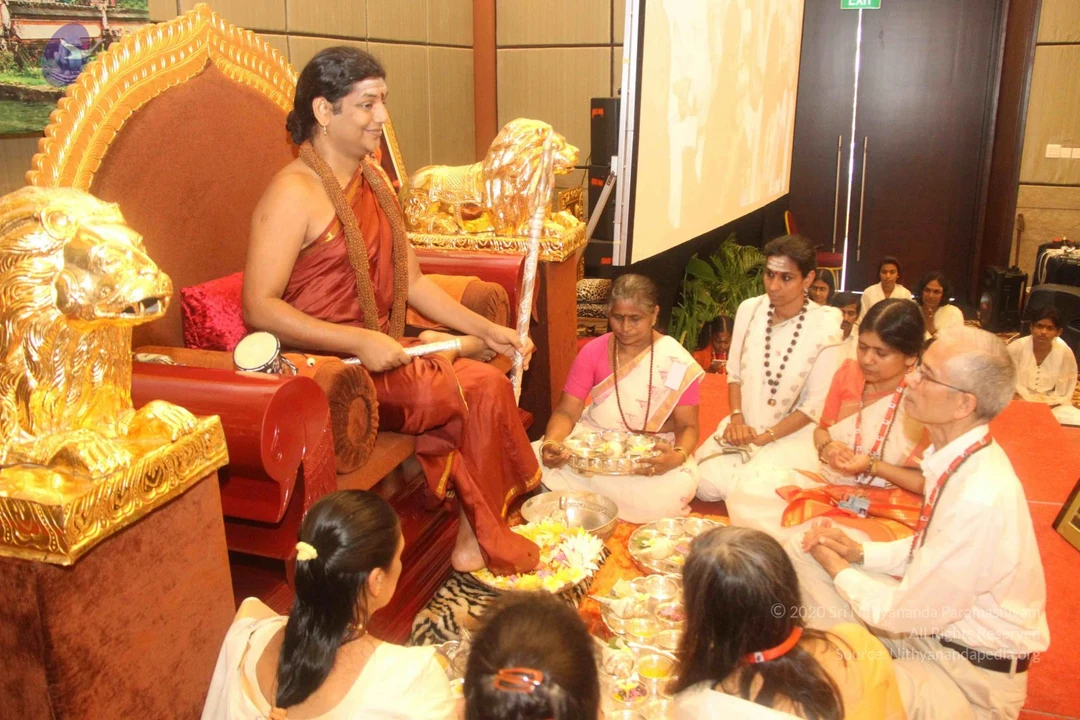
46 photosSource gallery
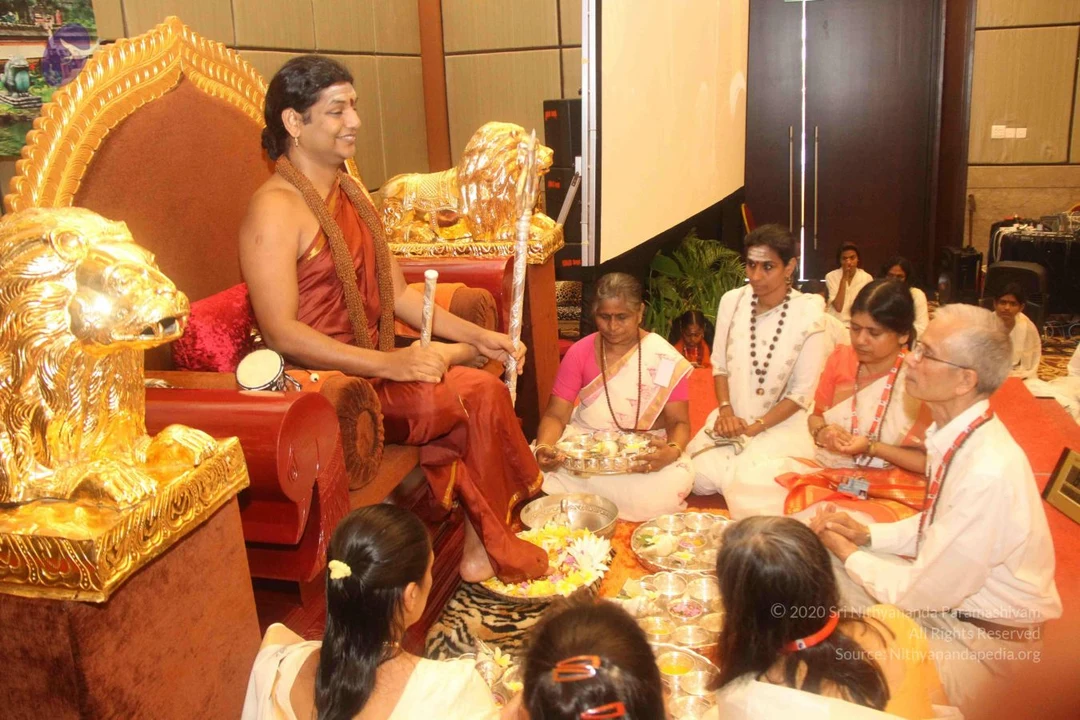
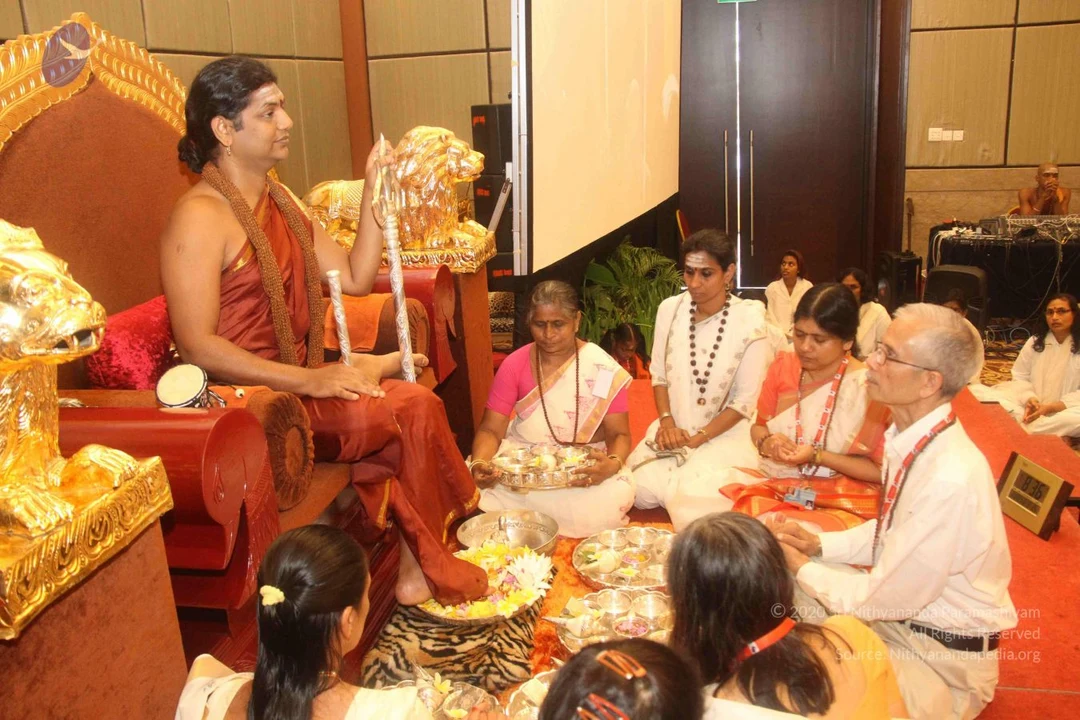
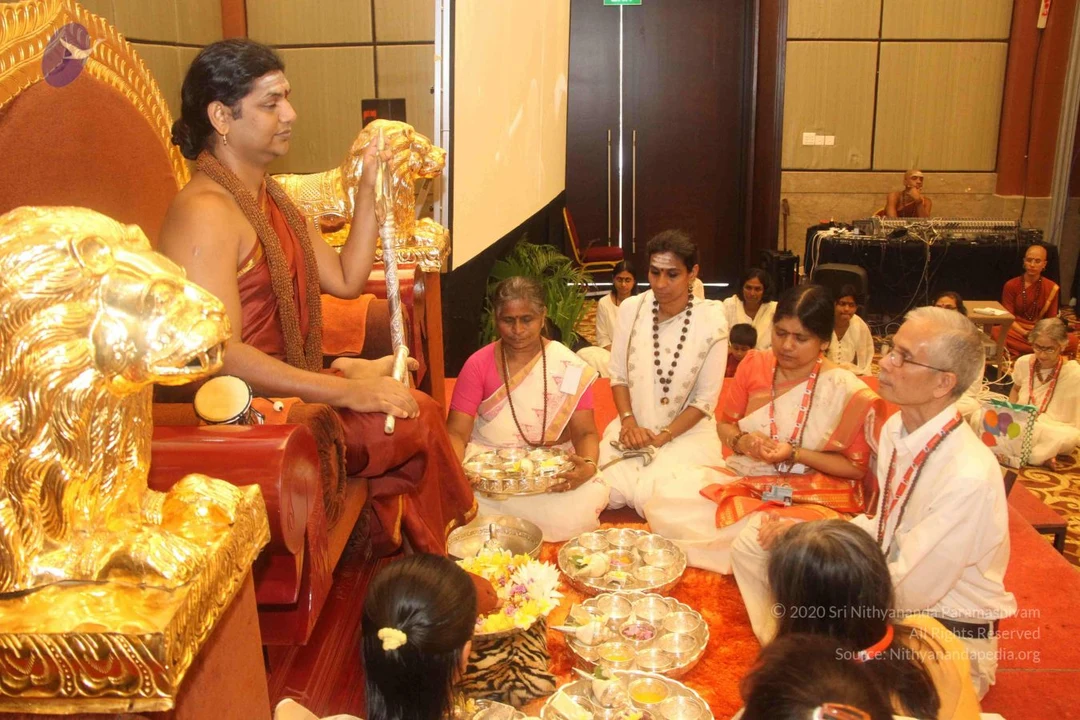
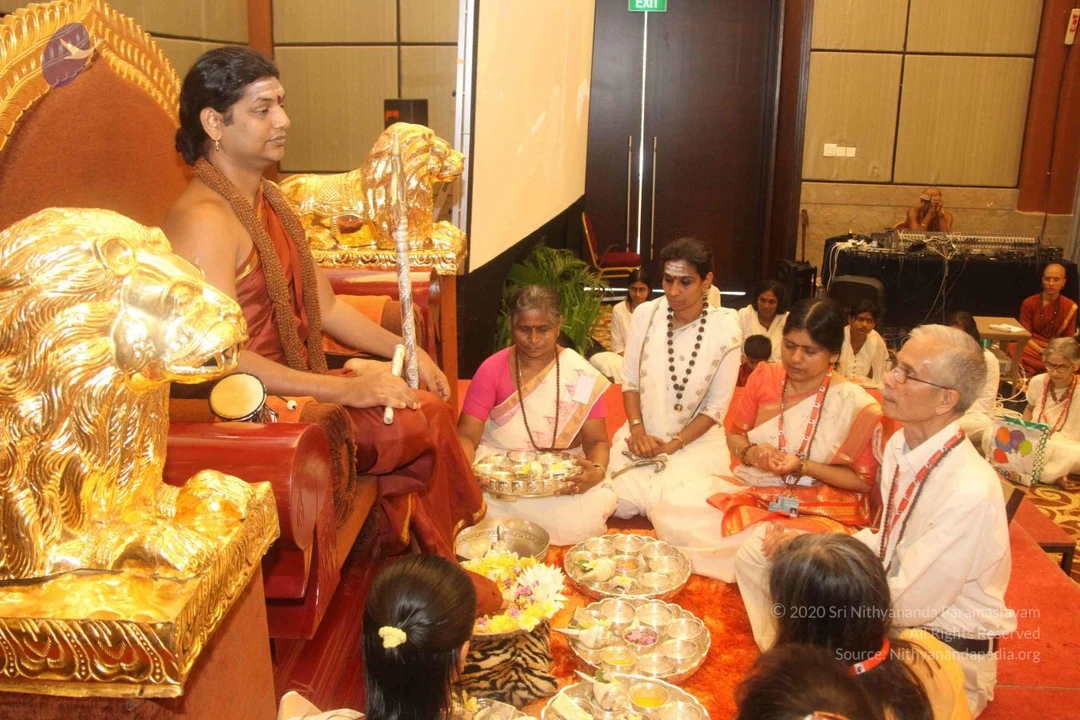
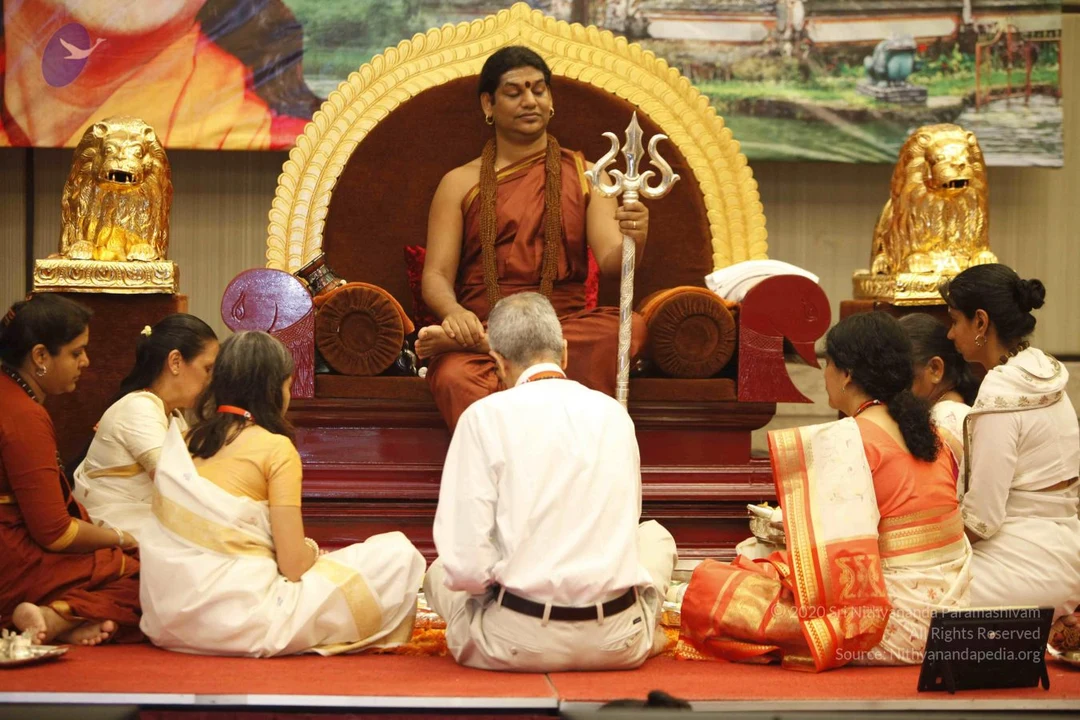
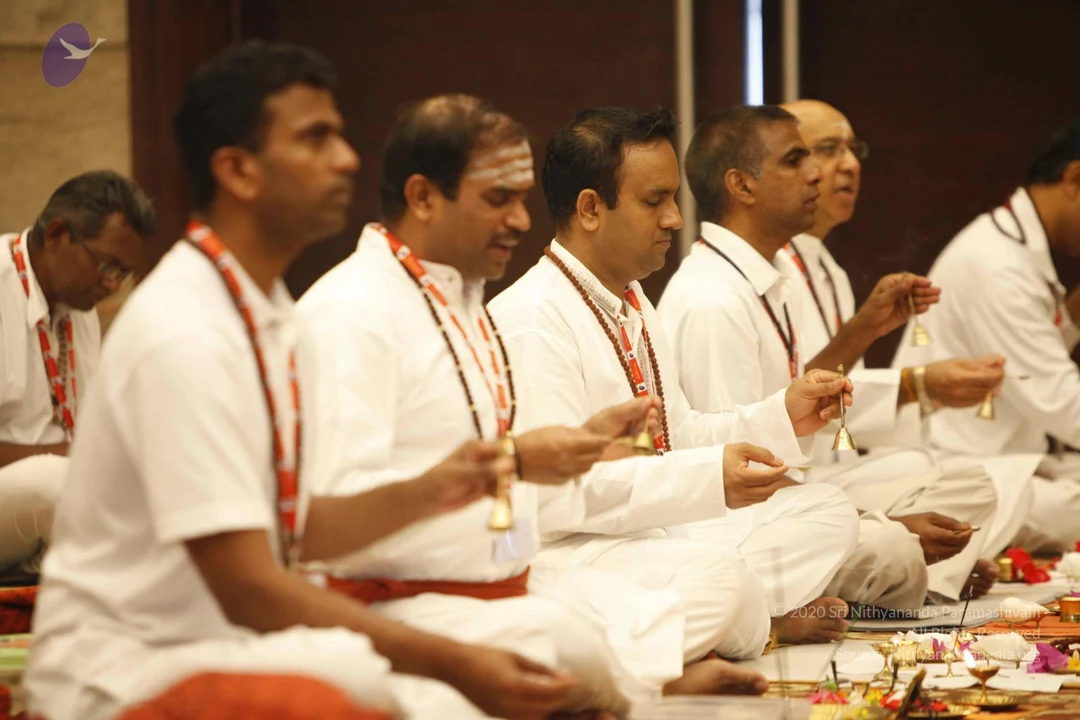
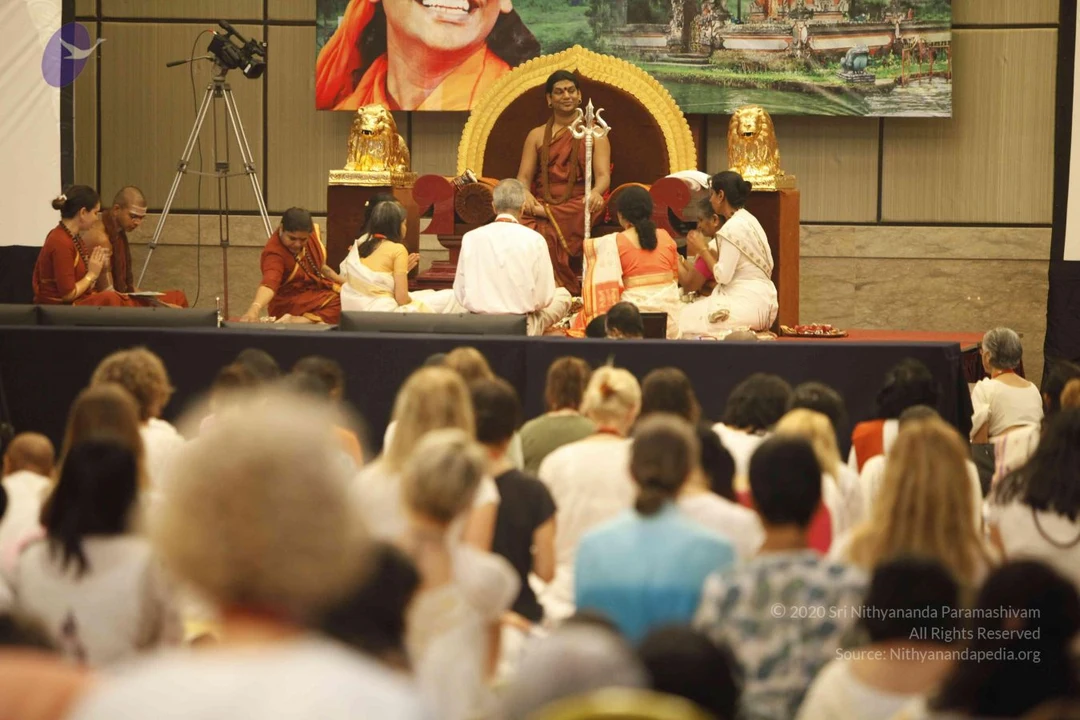
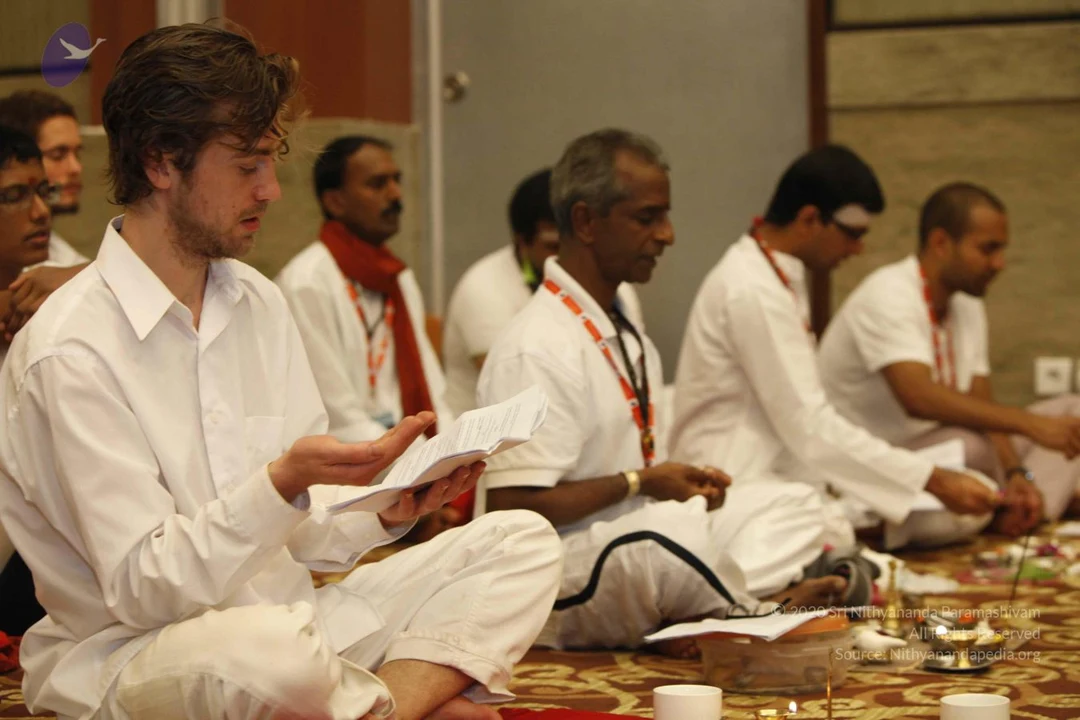
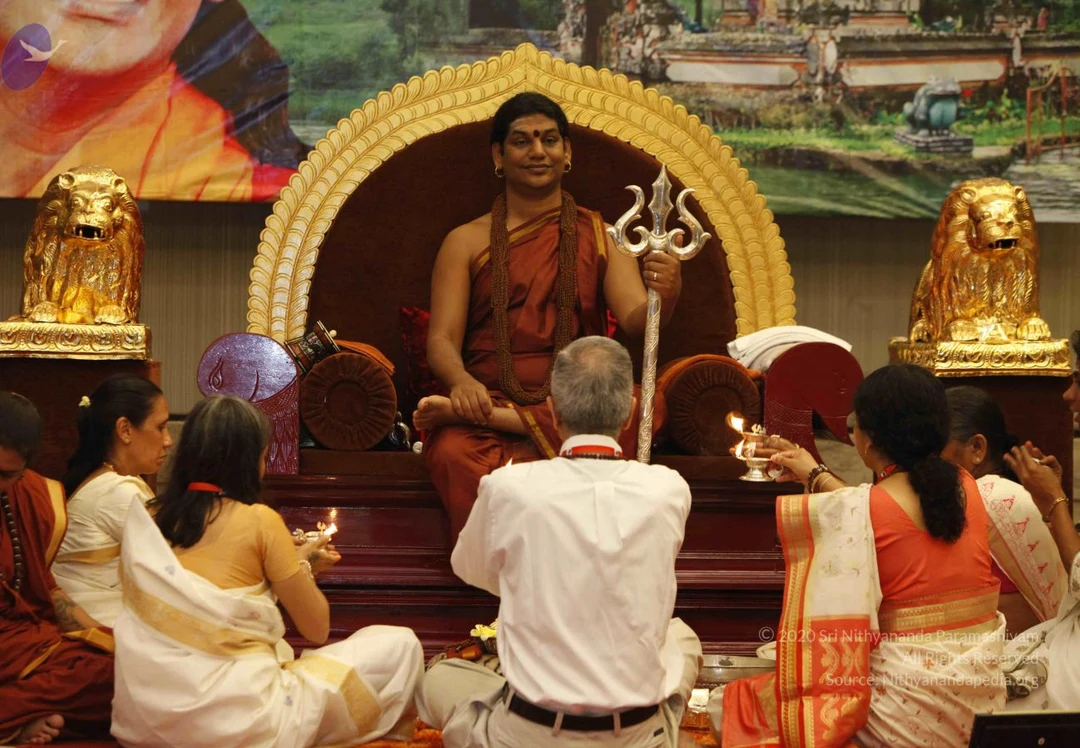
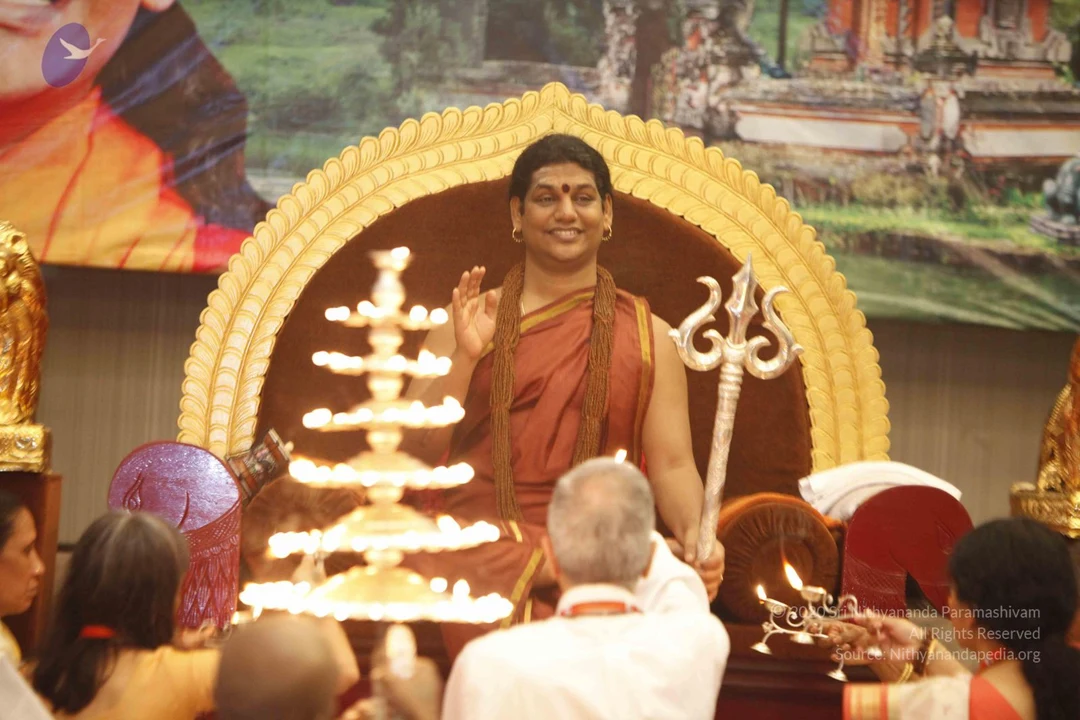
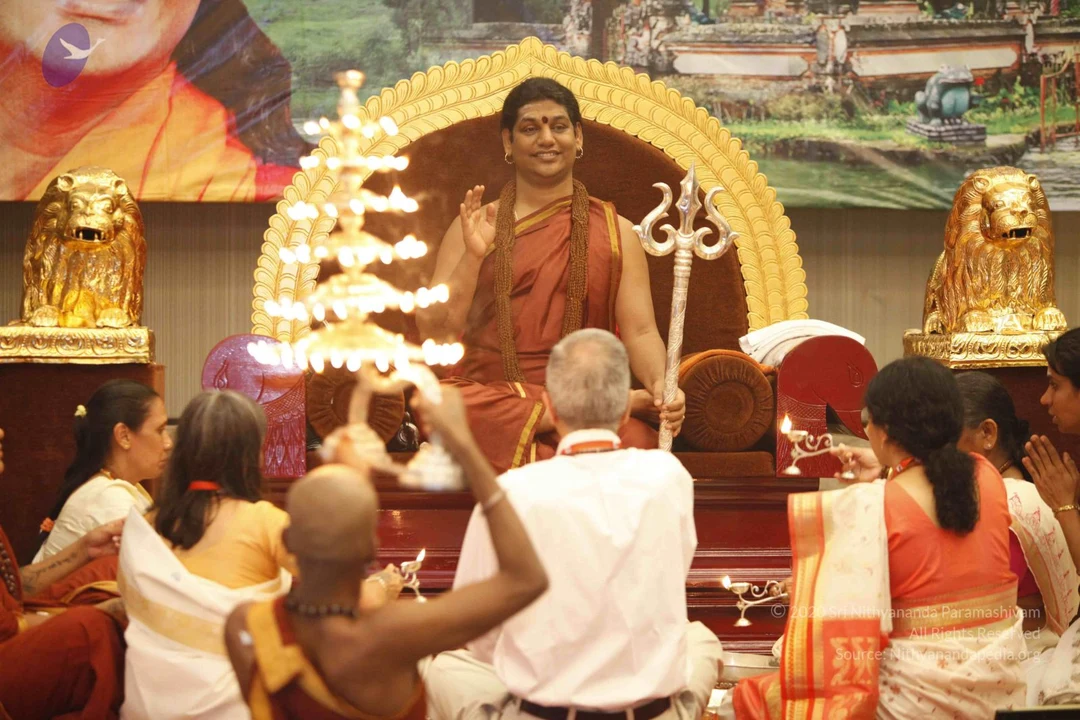
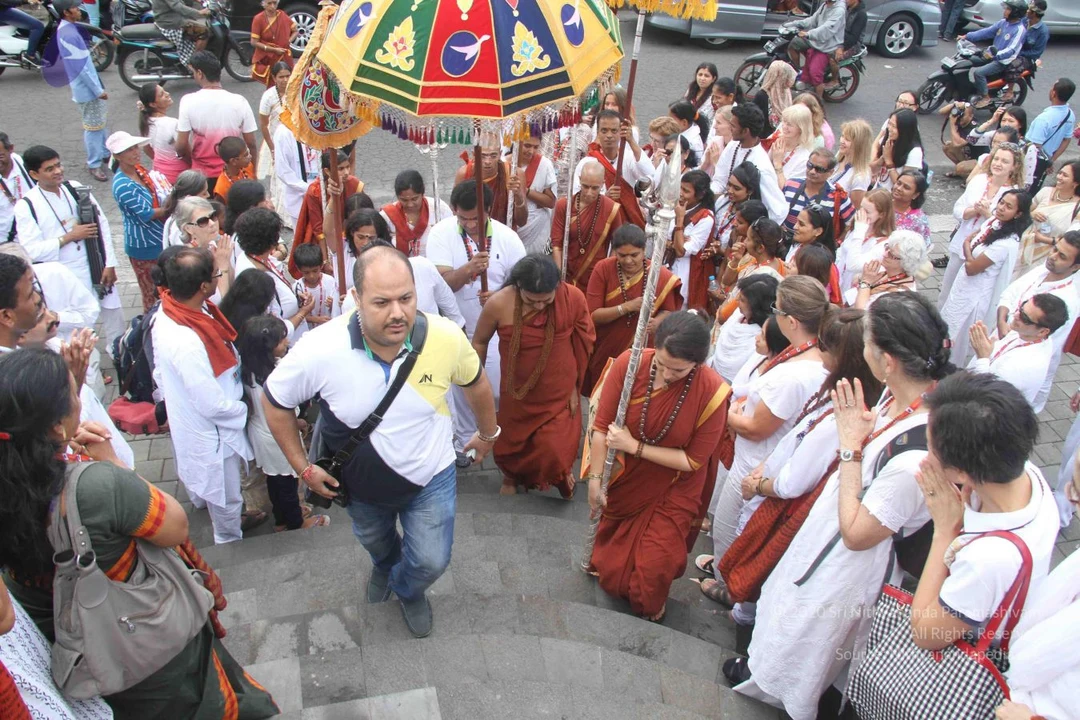
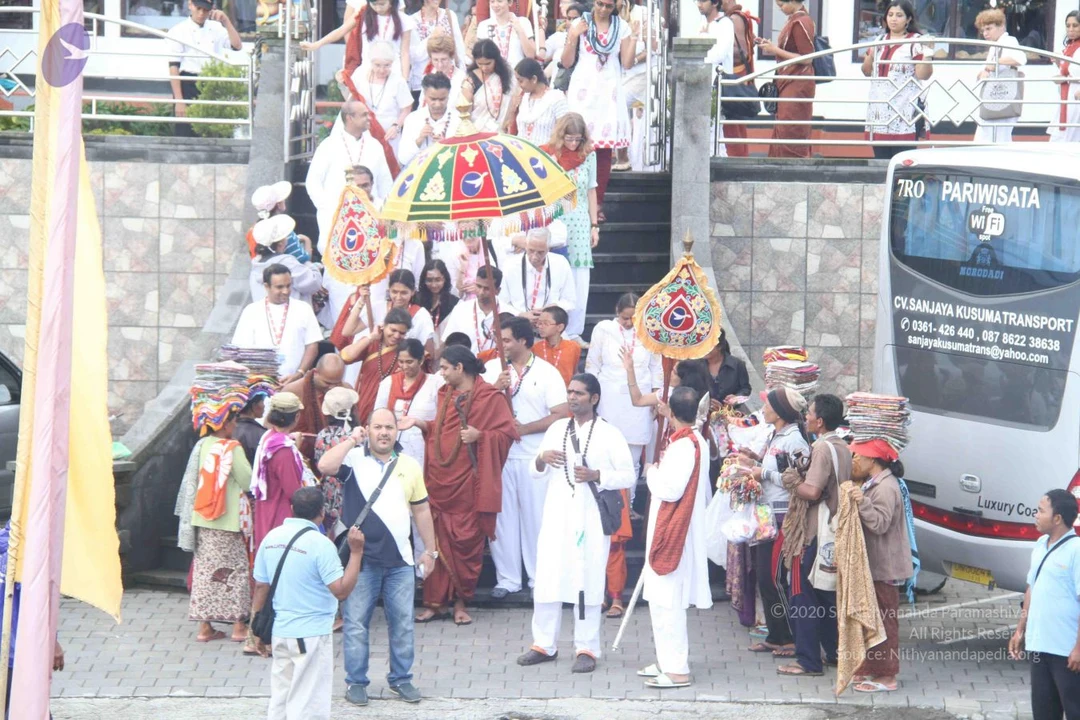
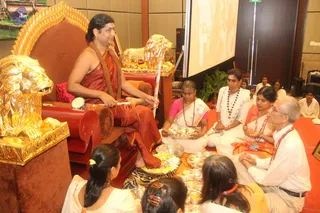
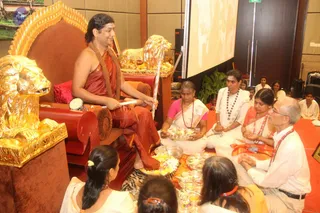
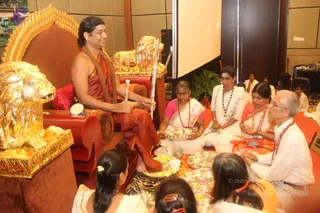
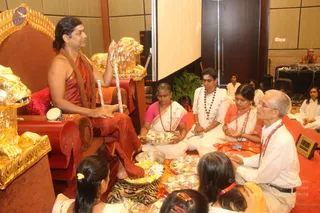
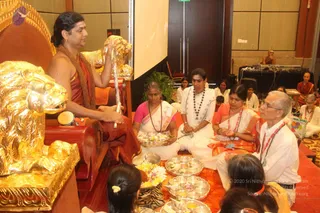
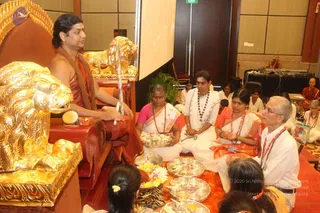
A seated man in a rust-red robe with a bare upper body and a long beaded mala sits on an ornate gilded throne with golden lion armrests and a lion figure beside it. Before him, devotees sit on a red carpet around offering trays of flowers, fruit and brass plates; a woman in a pink blouse and white sari holds a tray, a figure in white with a rudraksha mala and tilak sits nearby, and a man in white with glasses kneels at right. Several seated women and a child in white are in the foreground, and a projection screen and a Nithyananda Dhyanapeetam-style backdrop frame the hall. The seated man has distinctive long swept-back hair and a golden-brown shawl-like wrap, matching the page's satsang context; the appearance cues are moderately strong.A seated man in a golden-lion throne, wearing a saffron-red shawl over bare shoulders and a beaded rudraksha-style mala, holds a white ceremonial rod while devotees sit on a red carpet before him. Probable Swamiji (probable): long dark hair swept back, saffron-red wrap and beaded garland, seated on an ornate throne with gilded lion armrests. Around him, a woman in white and pink holds a silver tray with lamps, a man in white with a tilak and mala sits beside a woman in a pink-and-orange sari, and an older man in white with glasses sits with folded hands. Silver plates with flowers, oil lamps and offerings are arranged on the cloth. Several women in white sit in the foreground and more people are seated behind, with a projector screen and a green plant at the back.A photograph of a padapuja during a satsang event. A man with long swept-back dark hair, wearing a saffron-orange shawl with a rudraksha-style beaded garland, sits on an ornate red and gold throne flanked by gilded lion sculptures, holding a white fly-whisk-style staff and a small hand drum. Several devotees sit on the floor before him: a woman in a white sari with a pink blouse holds a silver thali of flowers and lamps, a woman in white with a rudraksha mala sits nearby, and an older man in white with glasses has his hands folded. Brass plates with offerings and flower petals lie on the floor, and girls in white sit in the foreground. Behind them are a large screen and a green plant.A seated man in a rust-red robe with a long beaded mala sits on an ornate red and gold throne with golden lion armrests, holding a white ceremonial staff in one hand. Before him on a tiger-skin mat, devotees perform padapuja: a woman in a white sari with a pink blouse holds a silver thali of offerings, a woman in white with a rudraksha mala kneels nearby, a woman in an orange sari and a man in white with a red lanyard fold their hands in worship, and a bowl of flowers and sweets sits on the floor. Several seated people, some in white, sit in the background of a hall with a projection screen and a bald man in white on the far right. a person seated on the throne, identified by the saffron-red robe, long mala and ceremonial setting.A photograph of a padapuja in a hotel ballroom. A man in a saffron-red robe and rudraksha mala sits on a red throne with a golden lion-head armrest, holding a silver staff topped with a golden lion. Seated on a red-orange cloth before him, a woman in a pink sari and a woman in an orange-bordered sari hold silver thali trays with flowers, fruit and lamps. A man in white kurta with a tilak and beaded mala sits among them. A man in white with spectacles and red garland, and children with flowers in their hair, are in the foreground. Monks in saffron robes sit in the background near a sound desk and a wall-mounted screen.A photograph of a seated man on a golden throne flanked by golden lion sculptures, holding a silver-topped staff and wearing a rust-orange robe with a beaded necklace. Before him, several devotees sit on a red carpet in white and pink clothing, some holding brass plates of flowers and offerings. A woman in a pink blouse and white sari holds a tray of offerings, and a seated man in white with glasses holds a lamp-like tray. Brass trays with oil lamps, flowers and fruit are arranged on the carpet, and a few children sit in the foreground. A projection screen and a seated person in orange appear in the background.
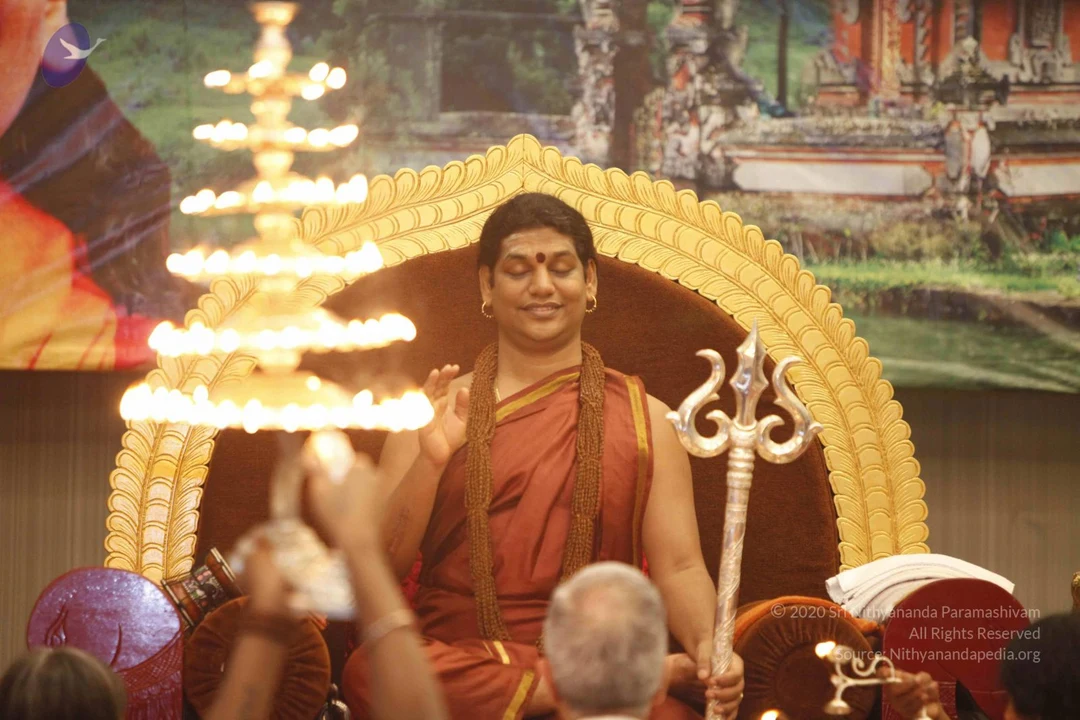
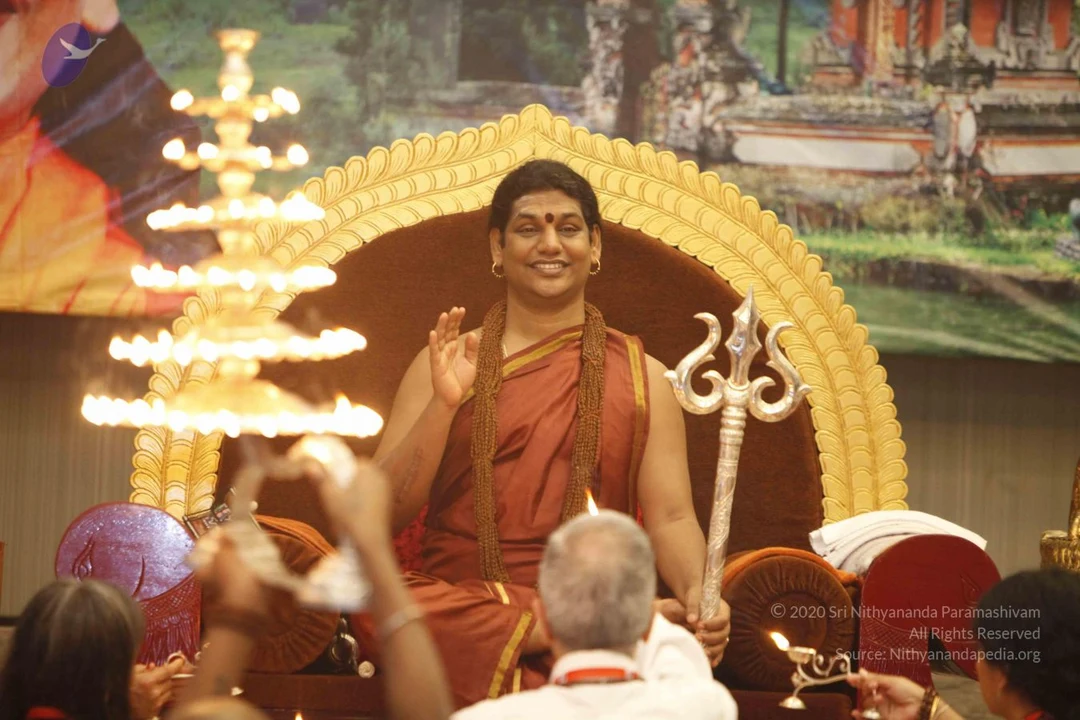
NithyaSatsang
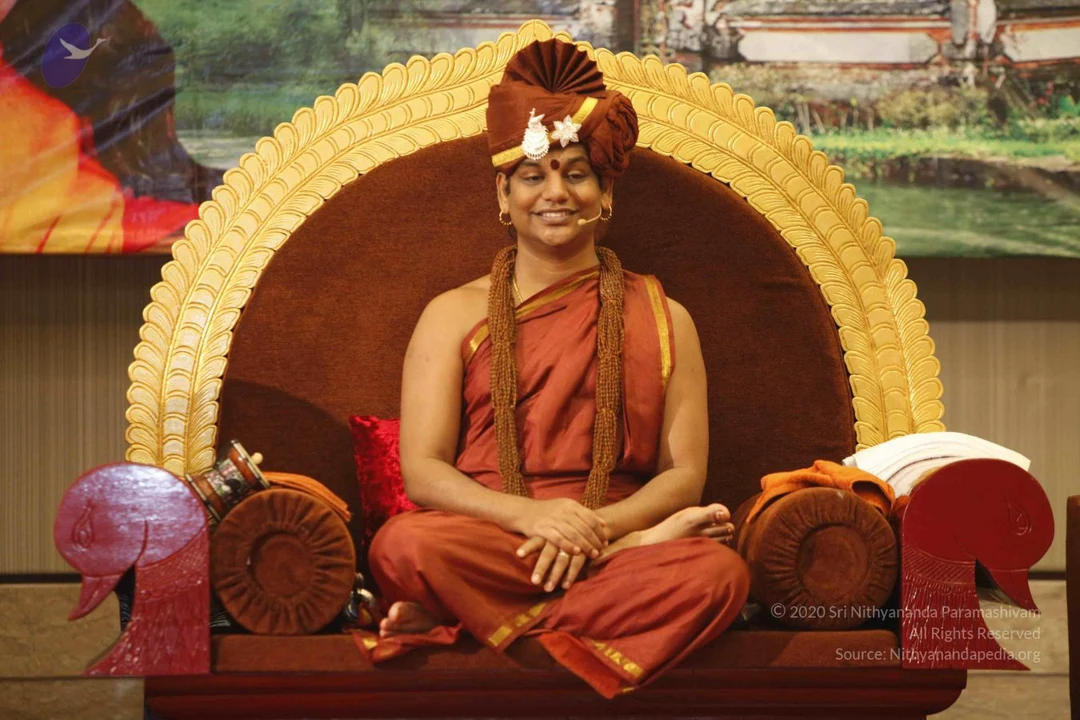
31 photosSource gallery
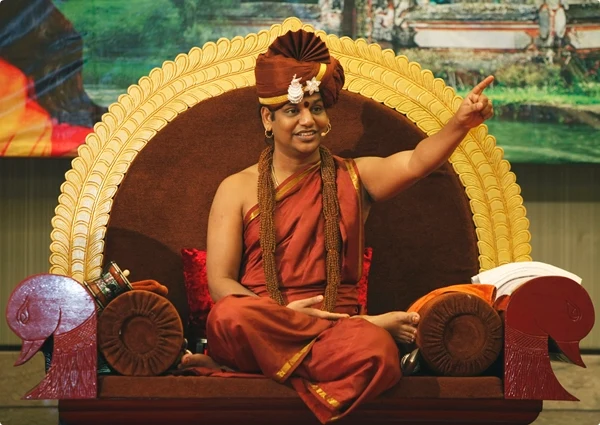
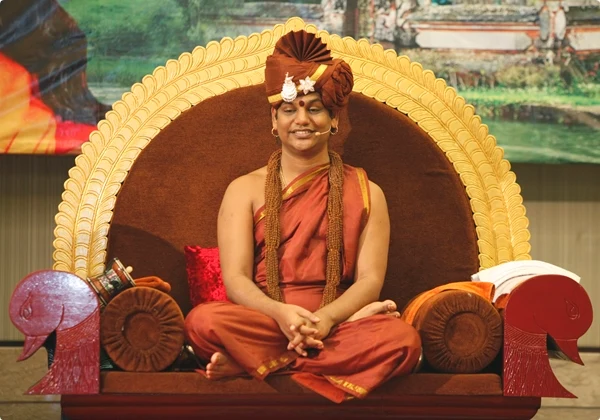
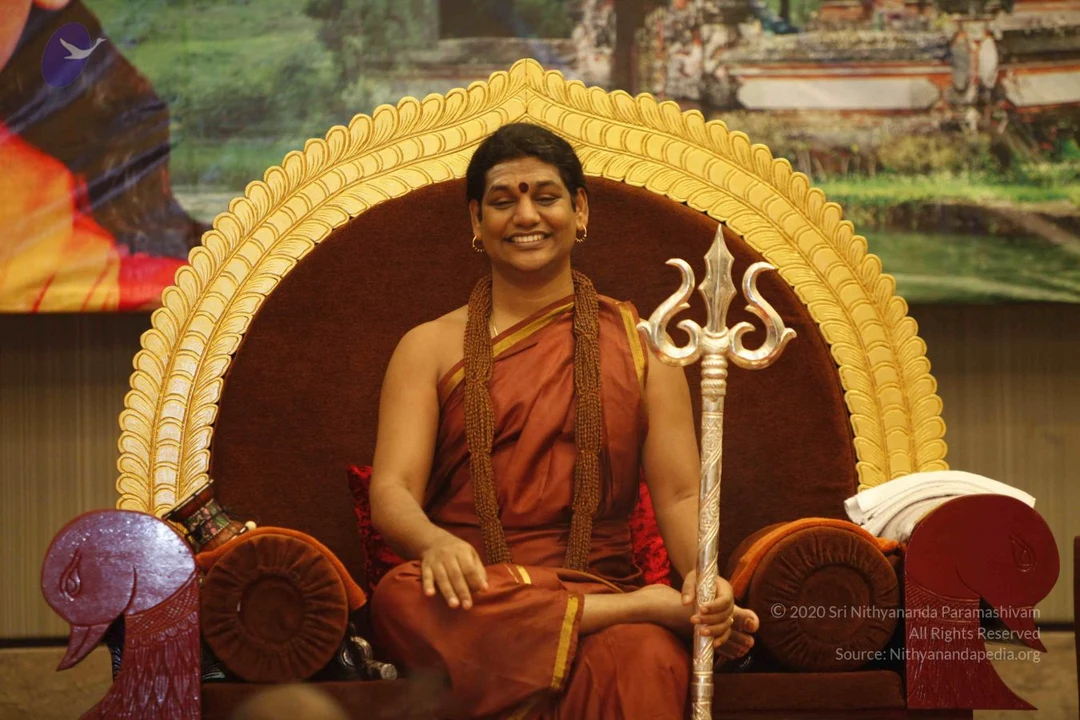
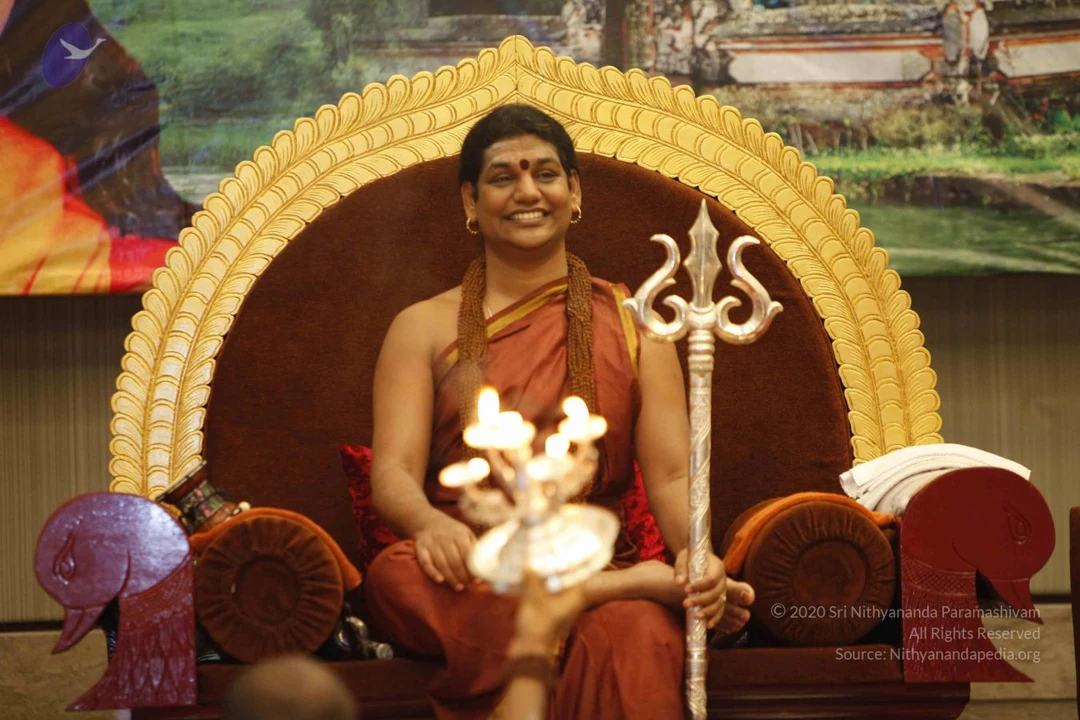
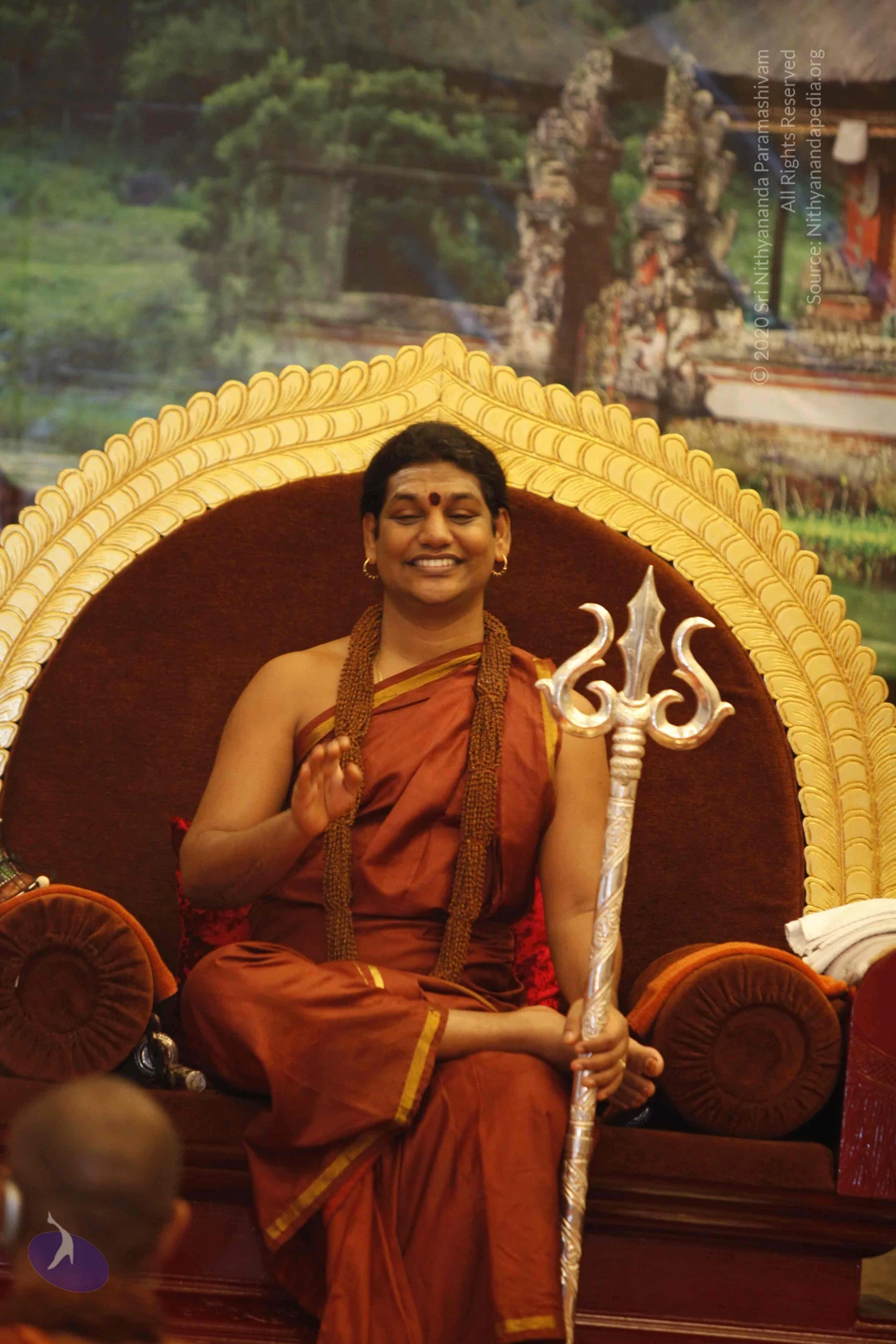
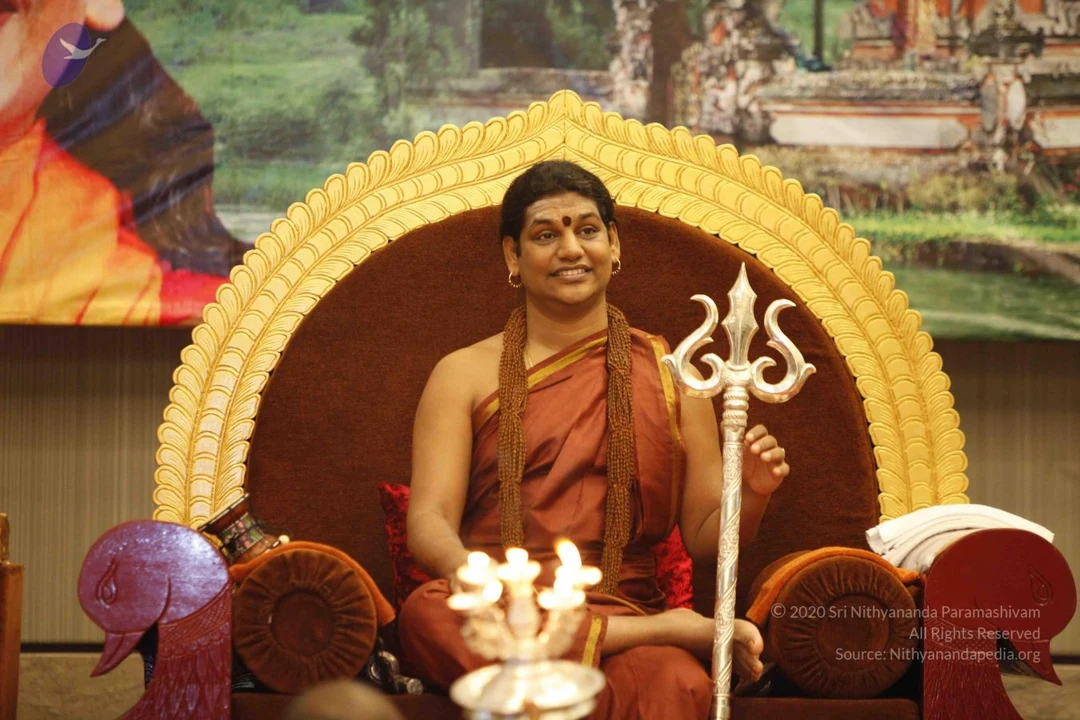
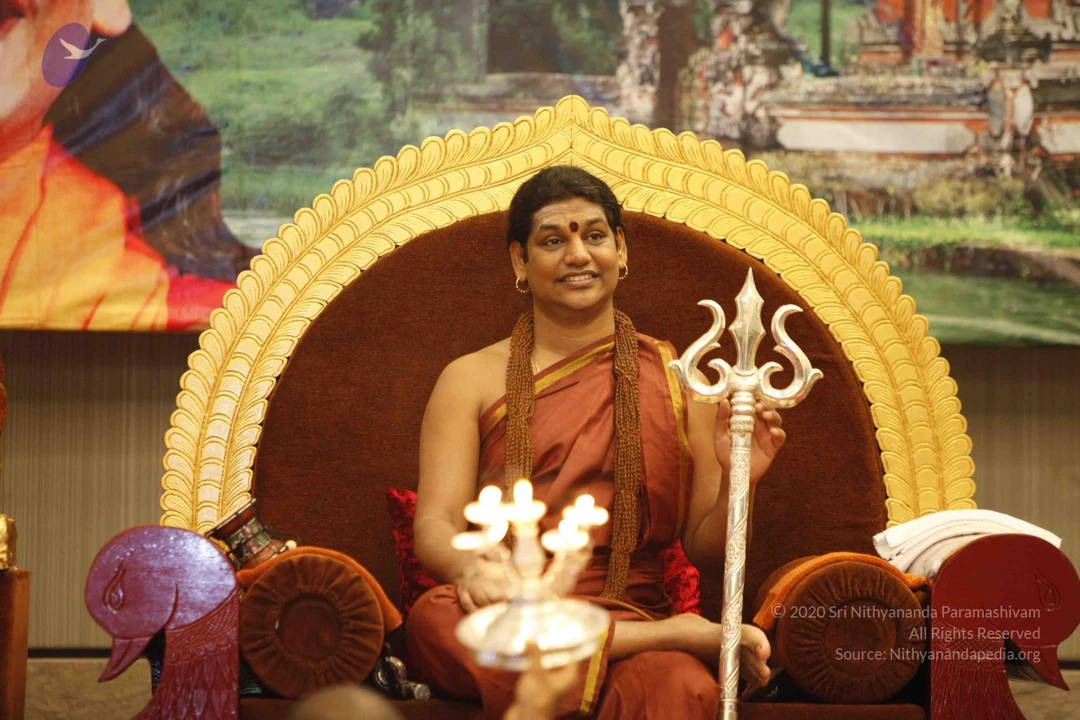
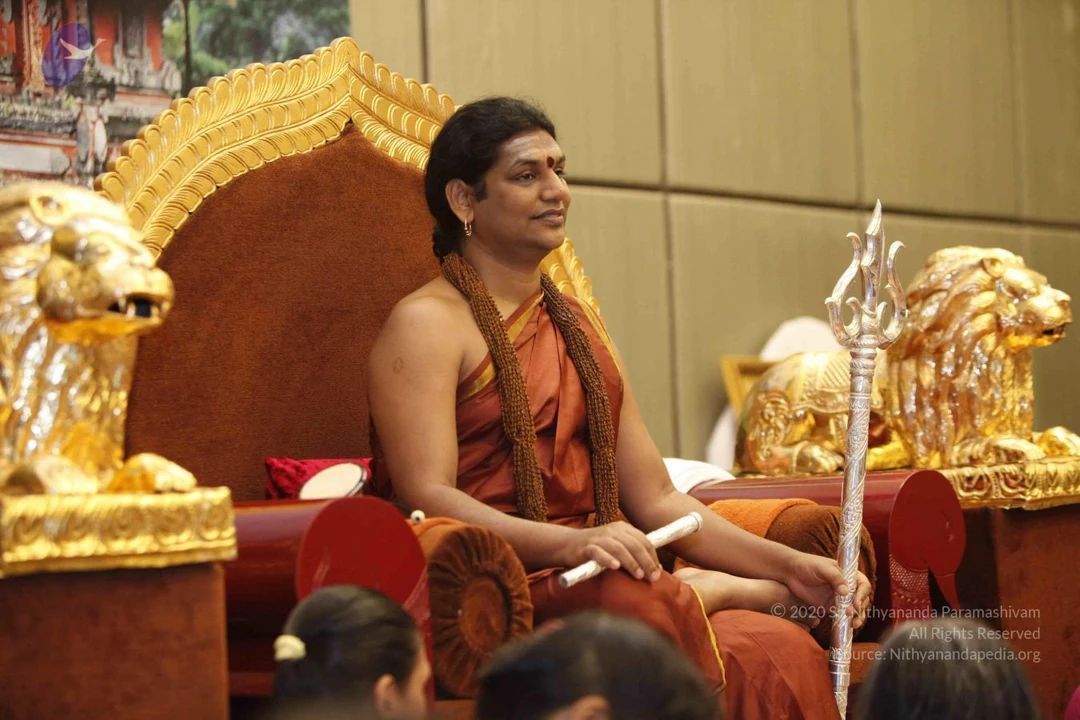
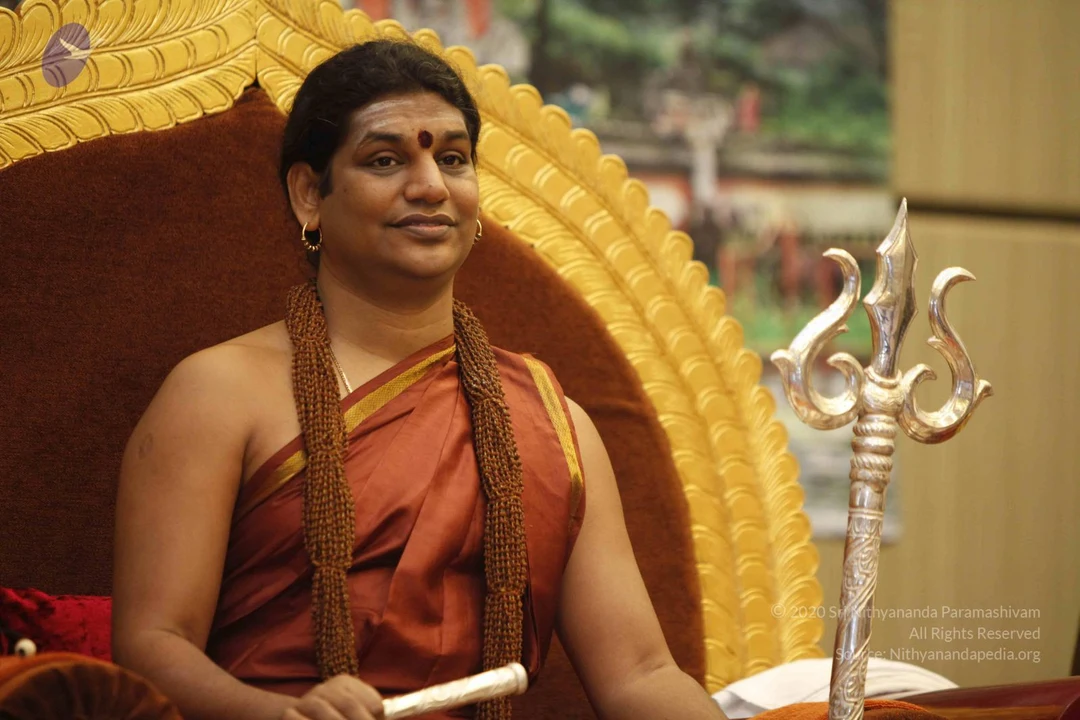
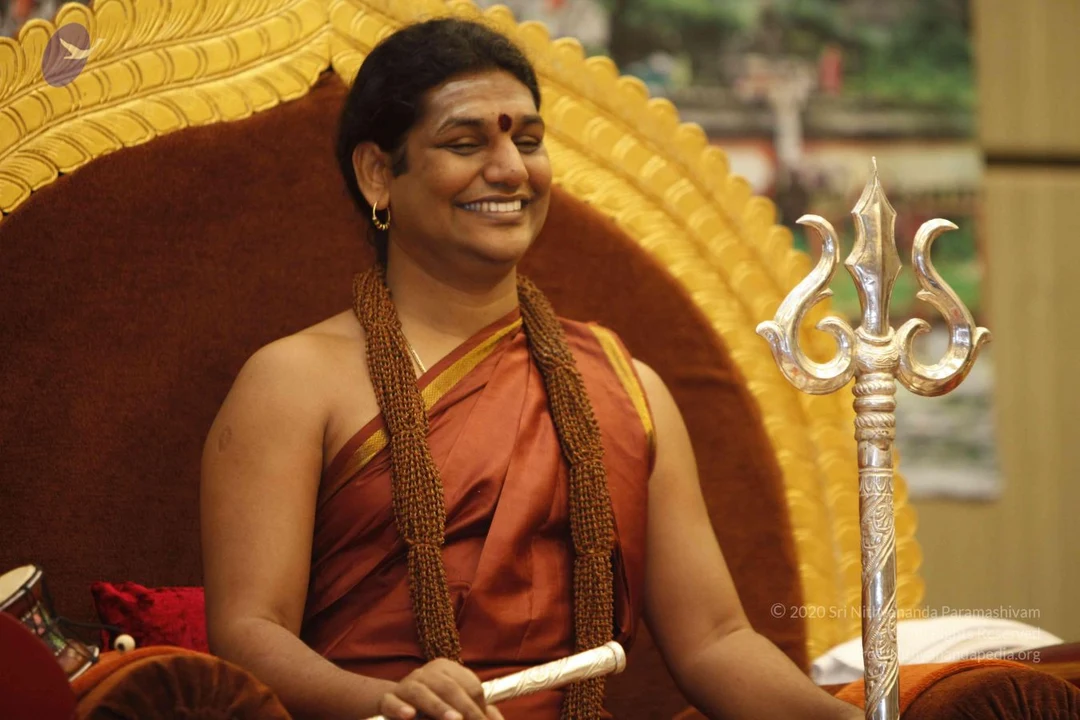
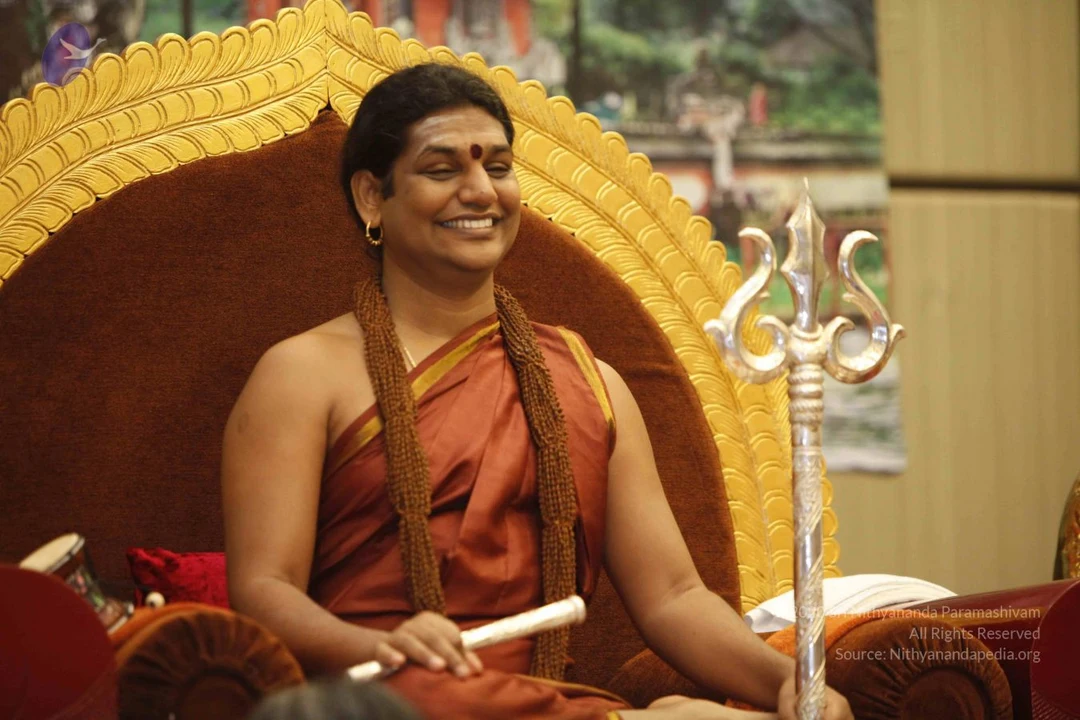
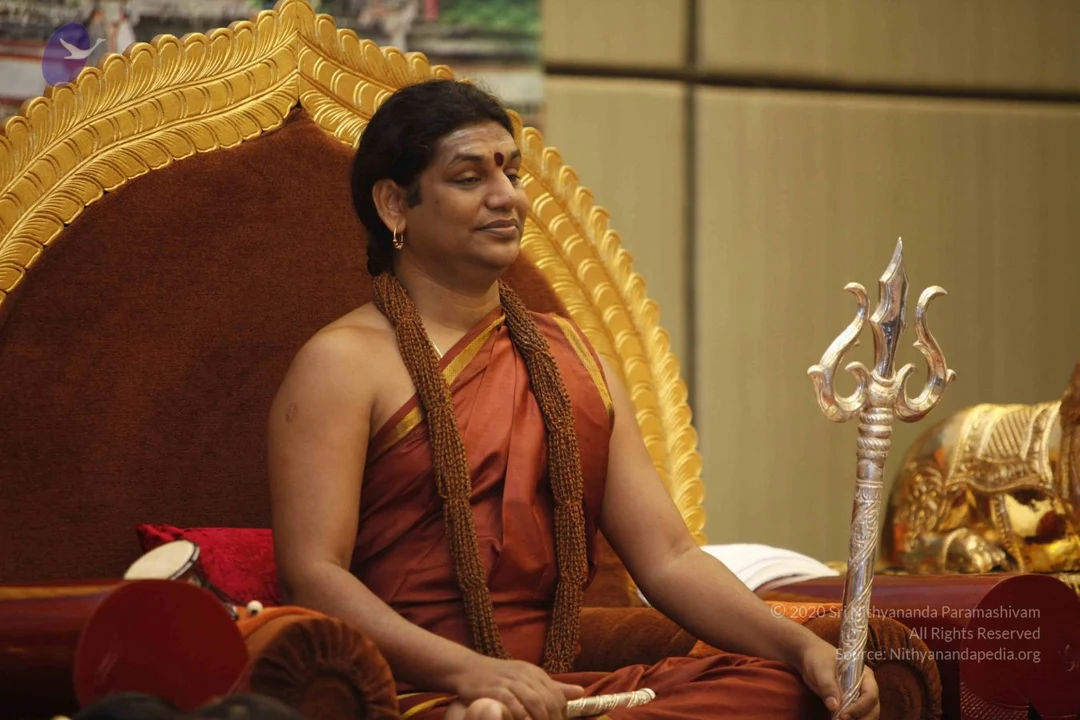
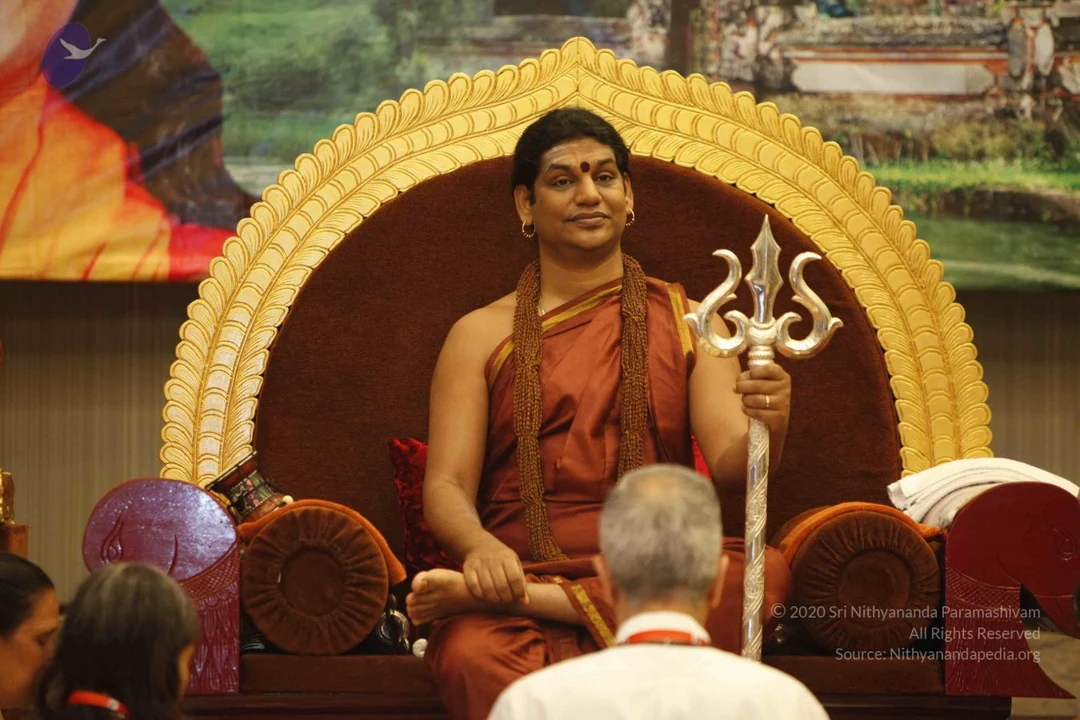
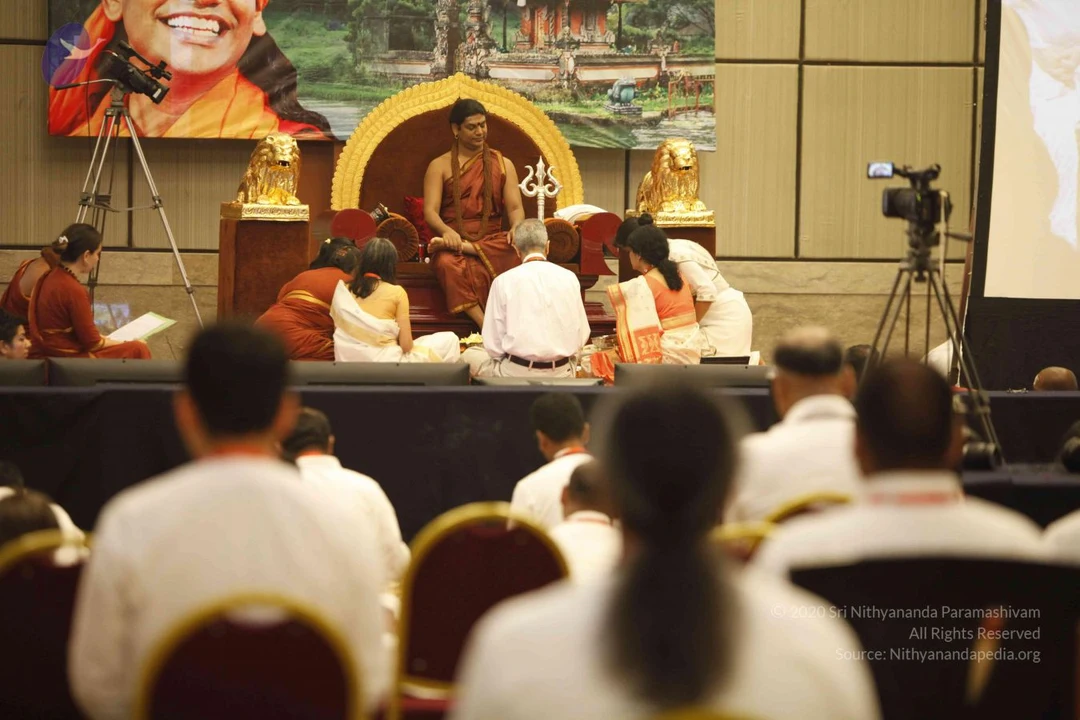
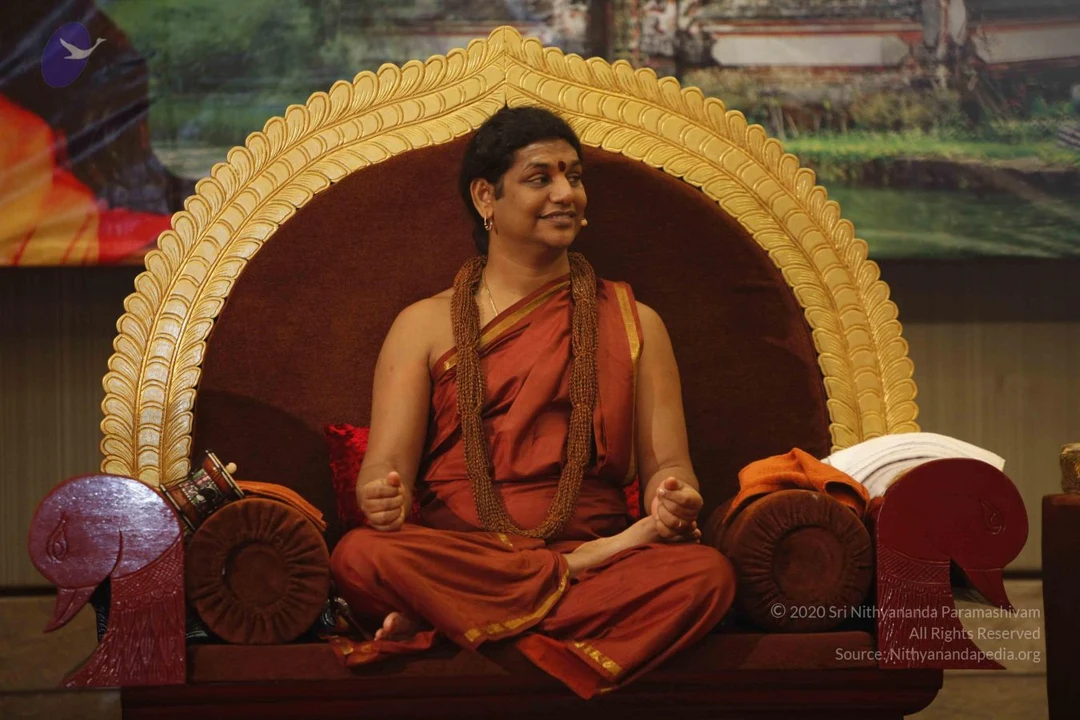
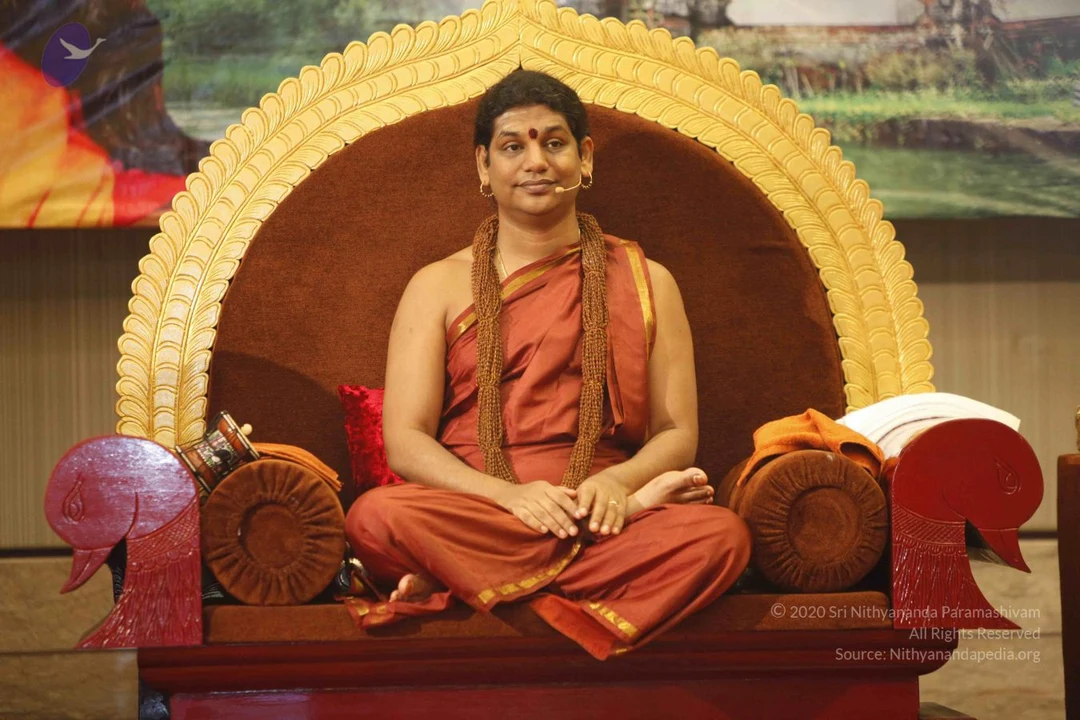
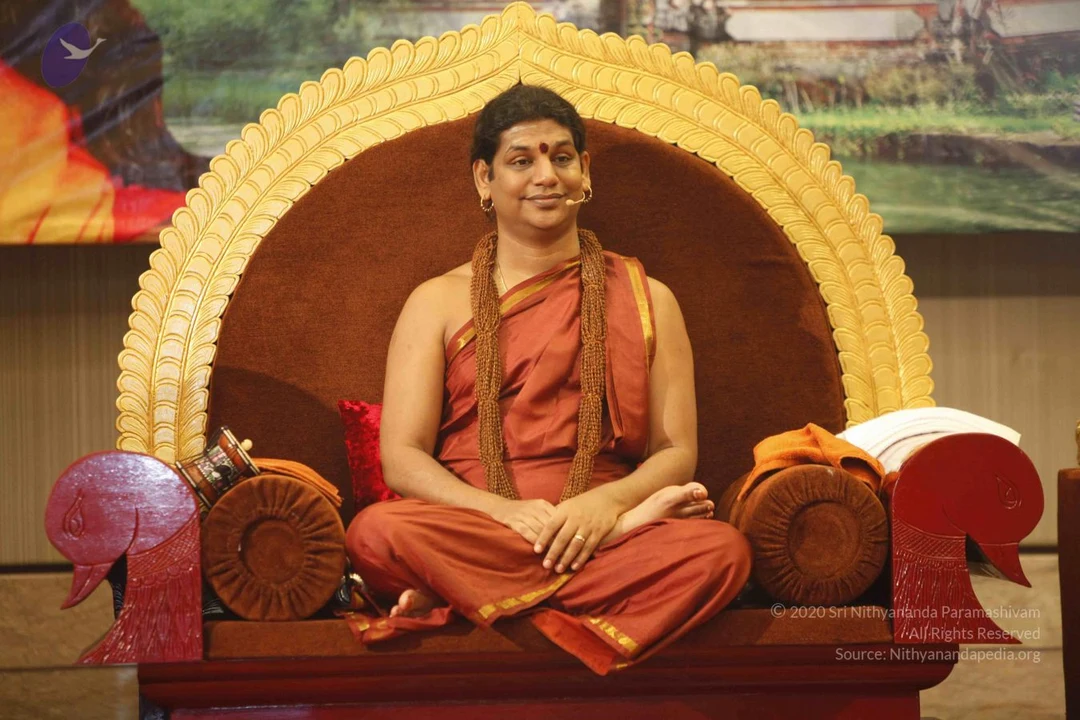
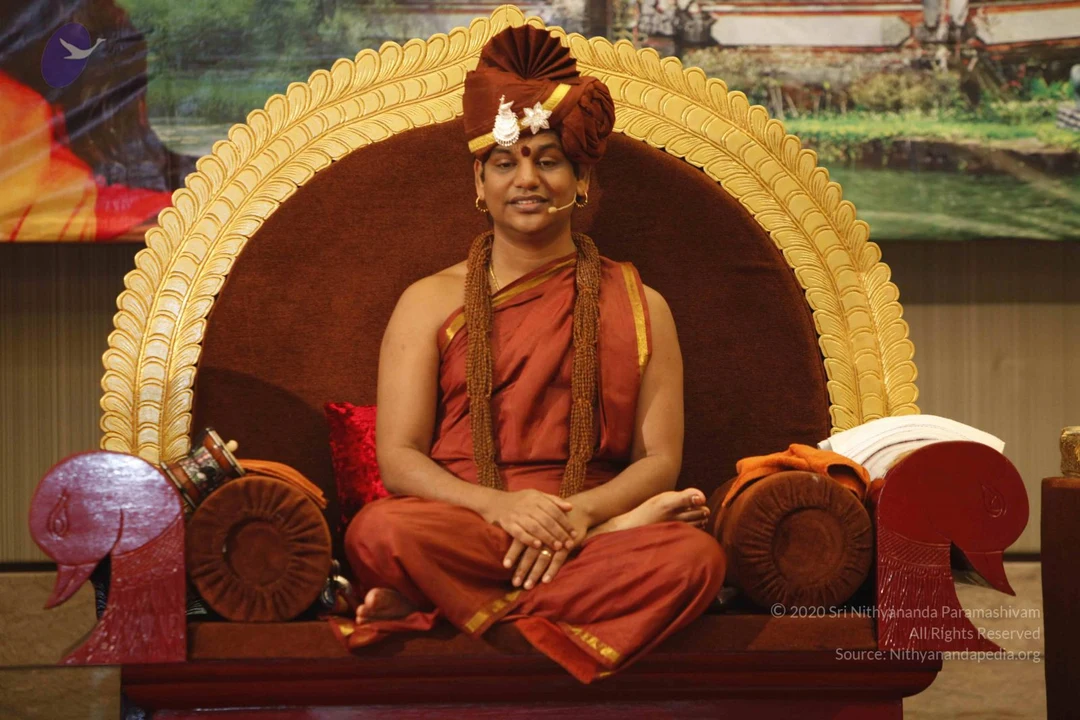
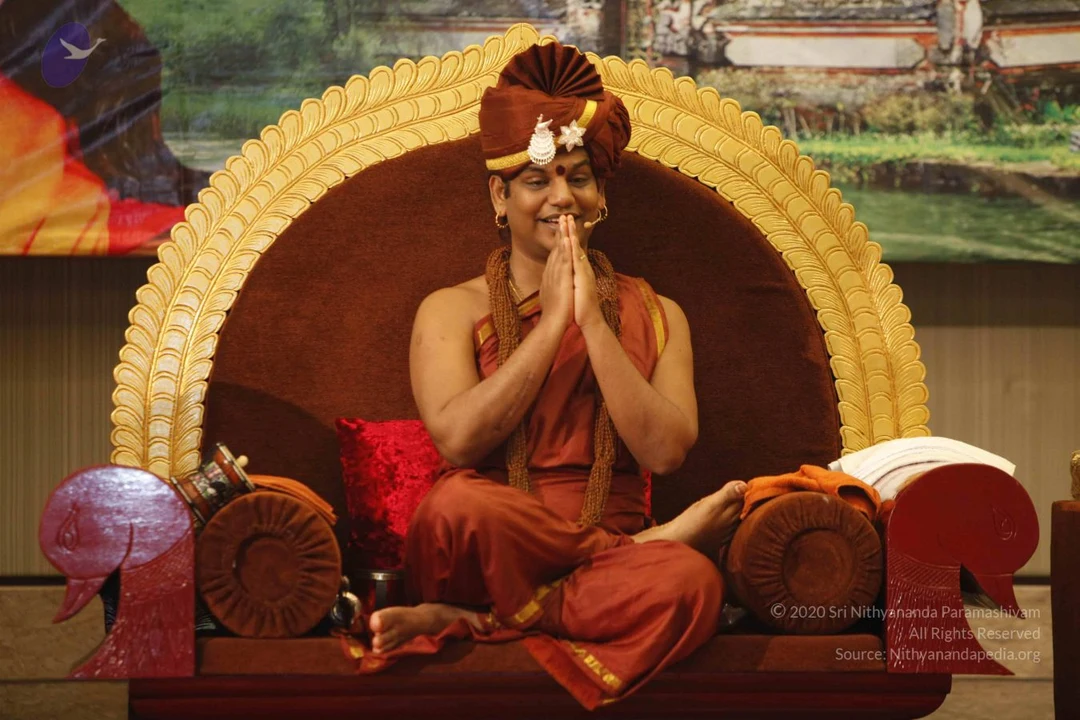
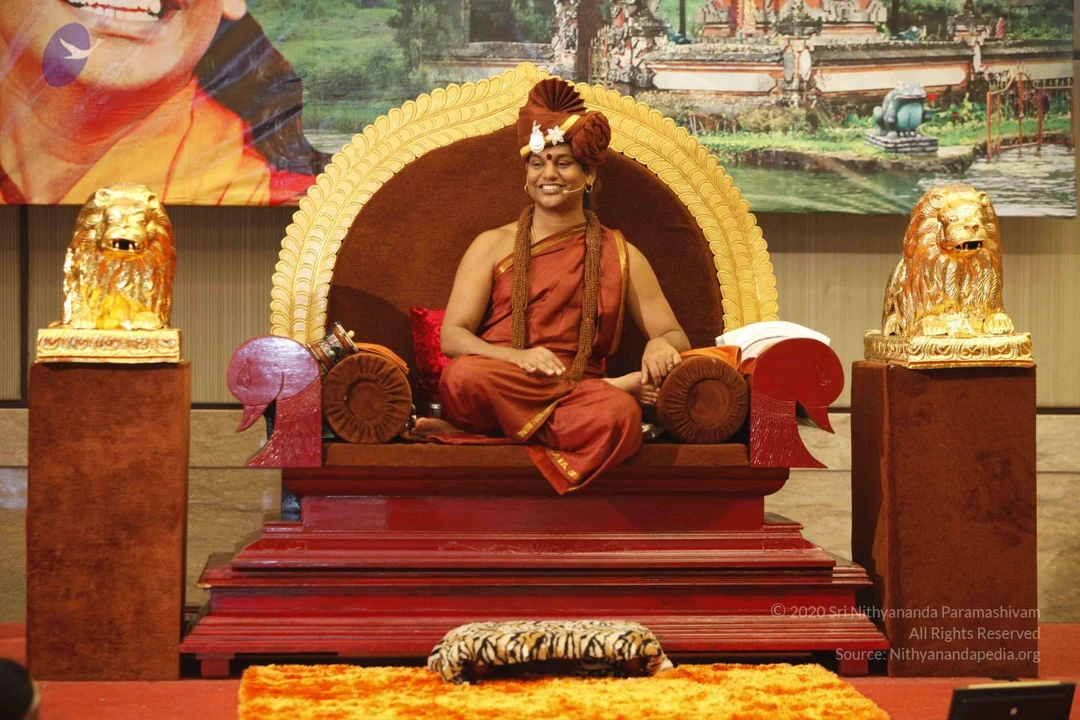
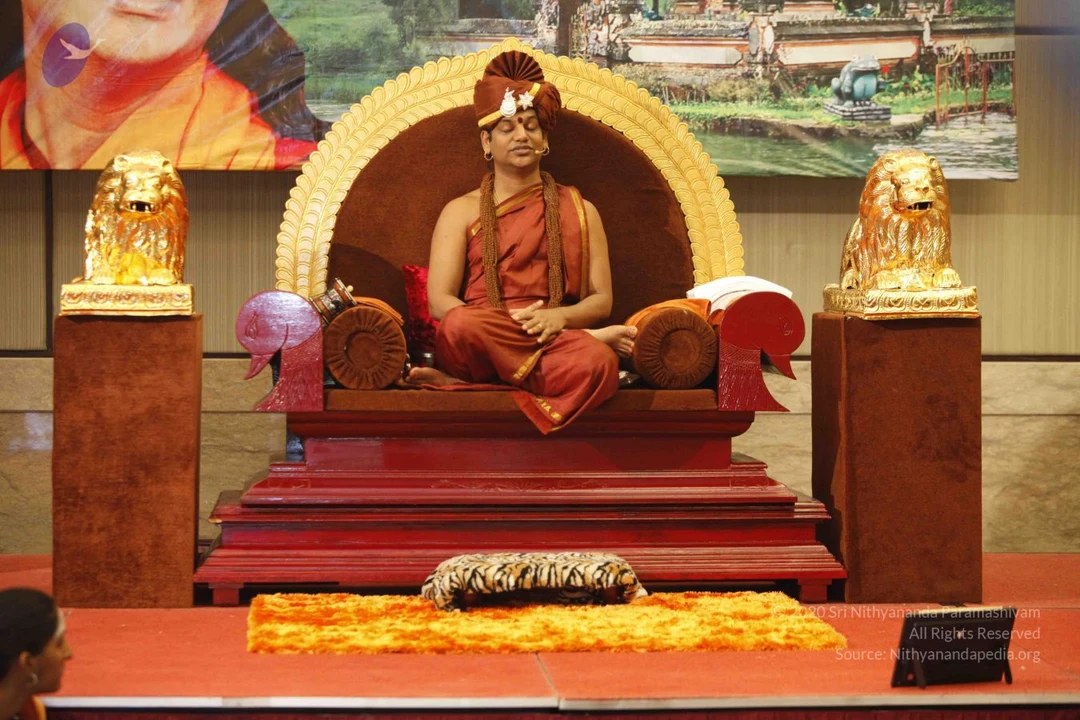
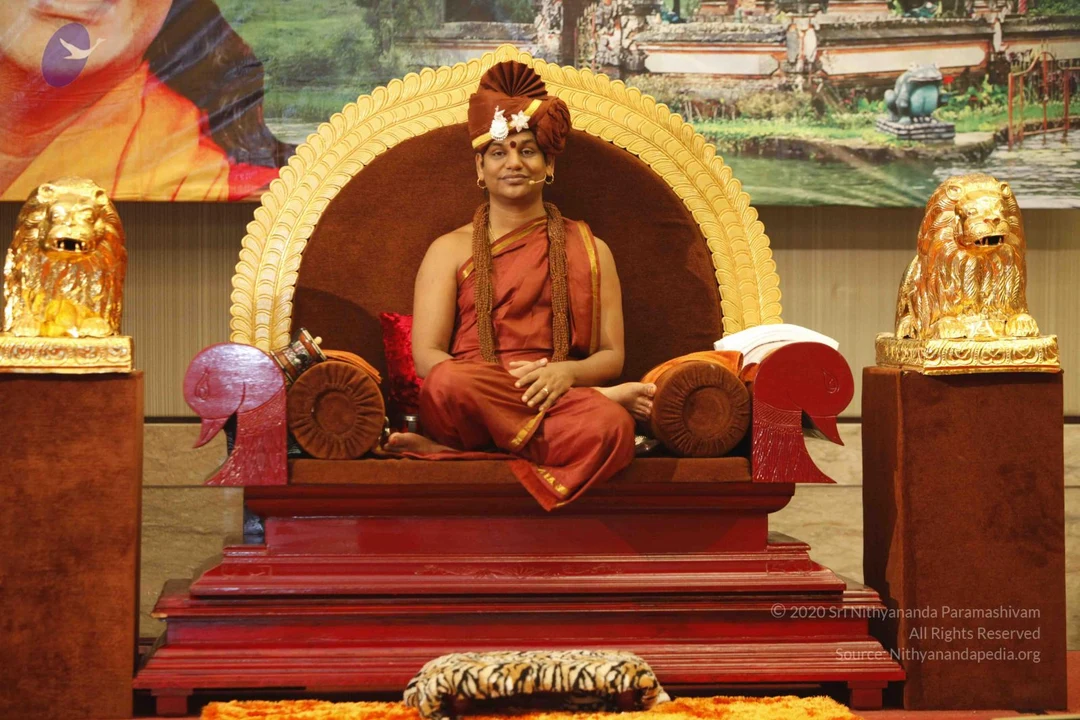
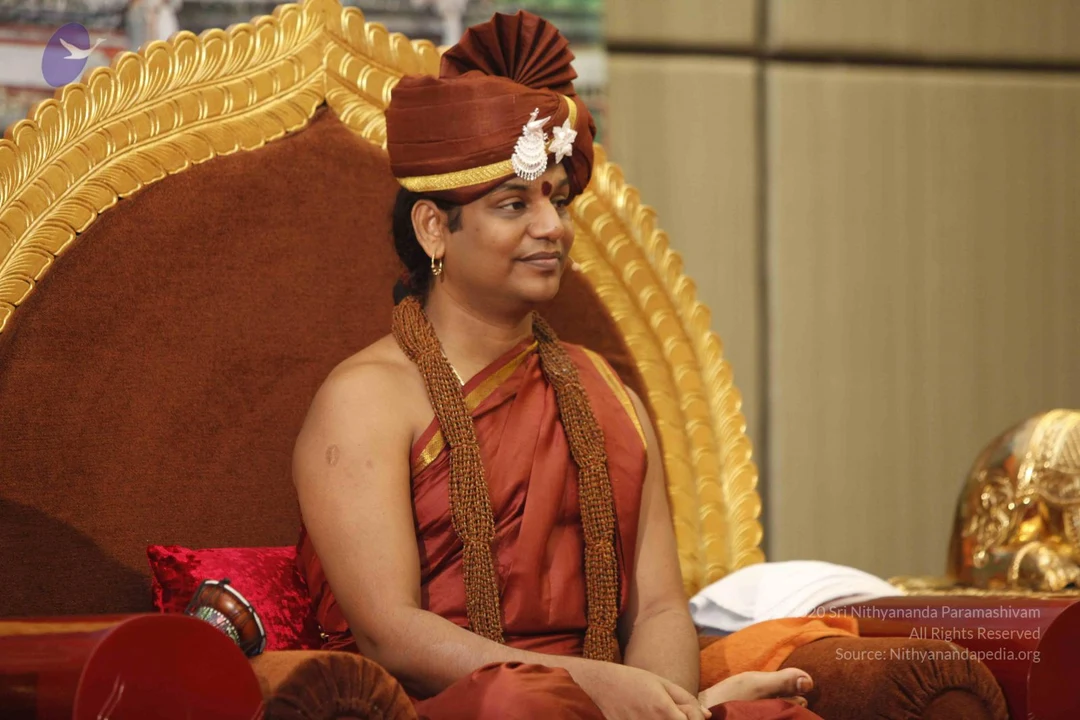
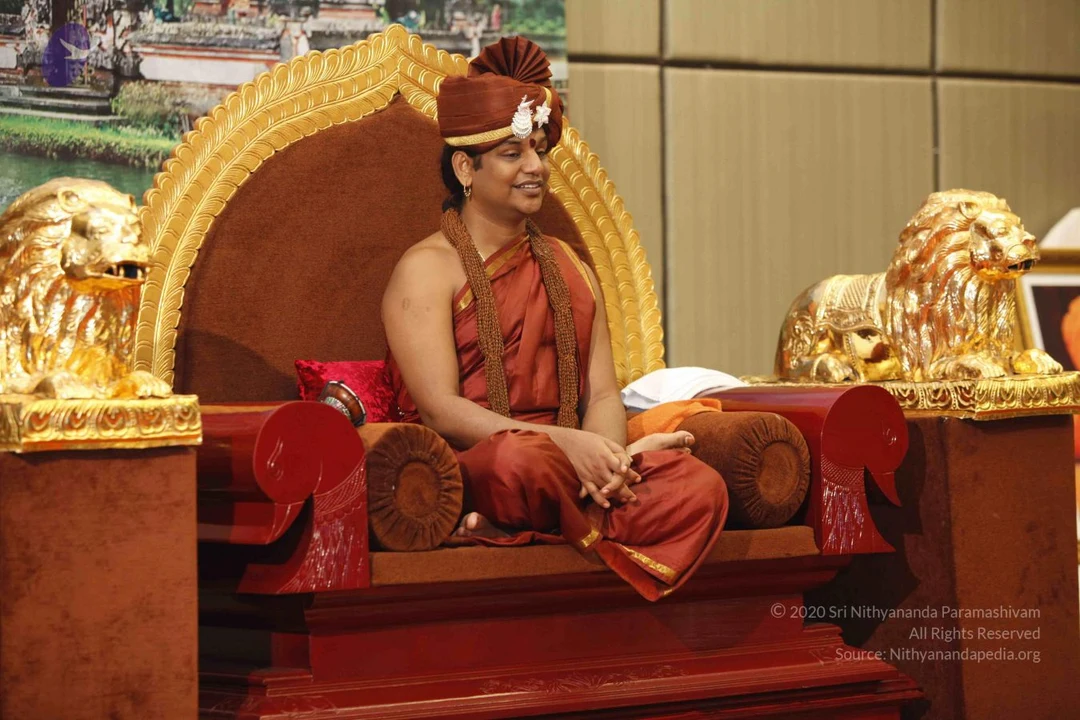
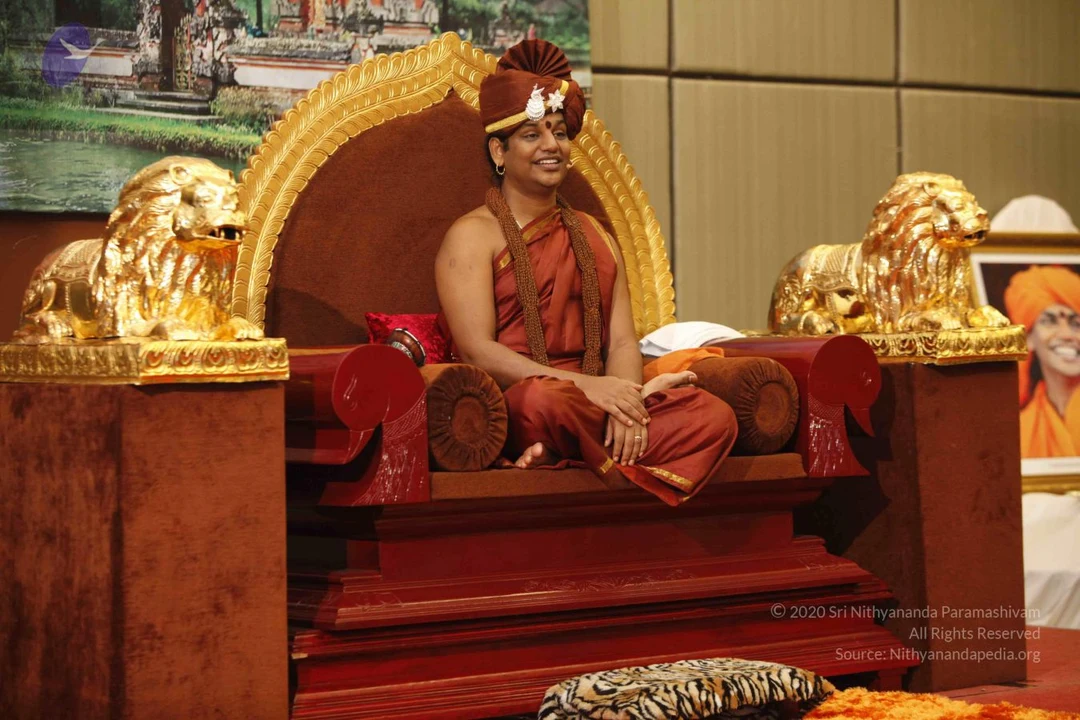
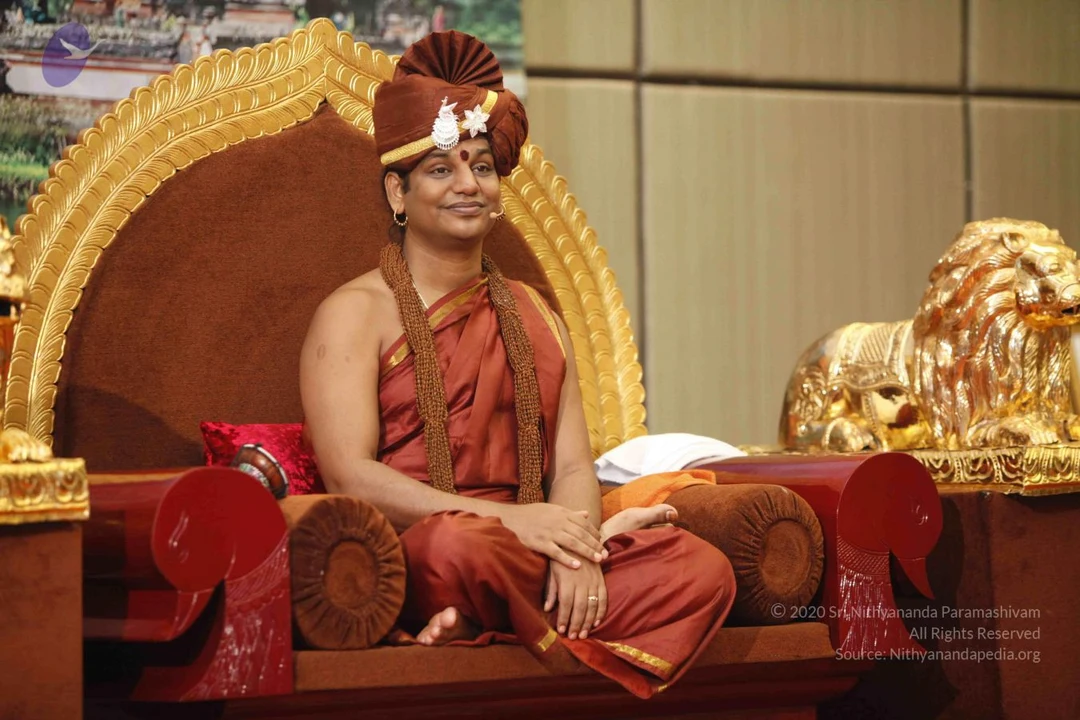
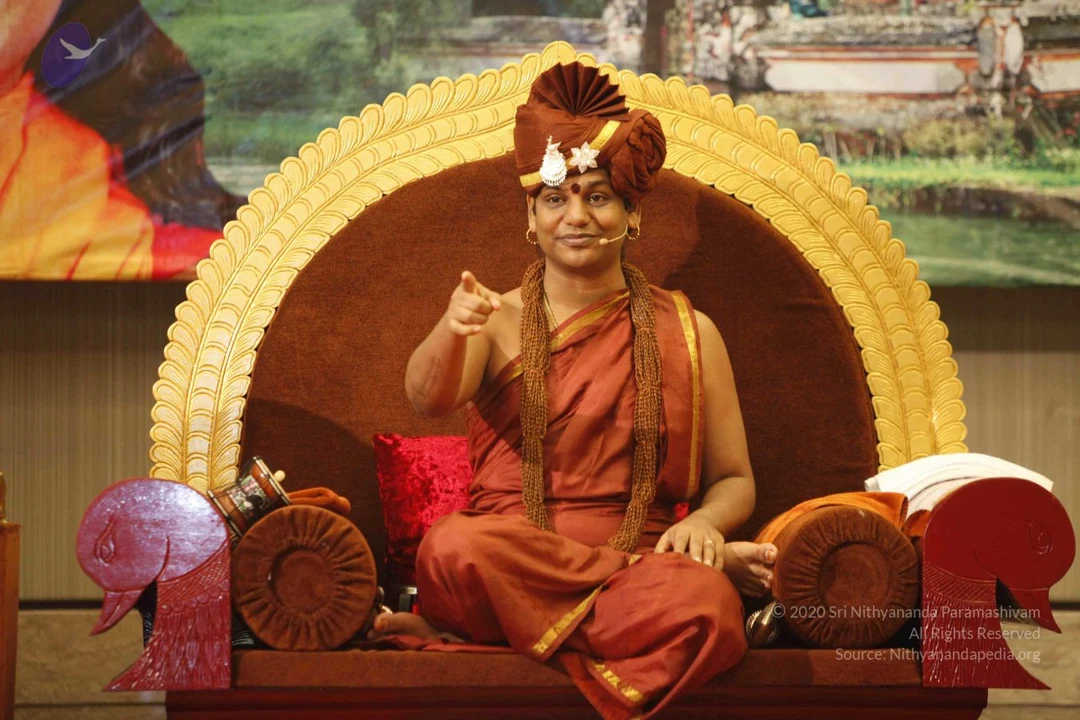
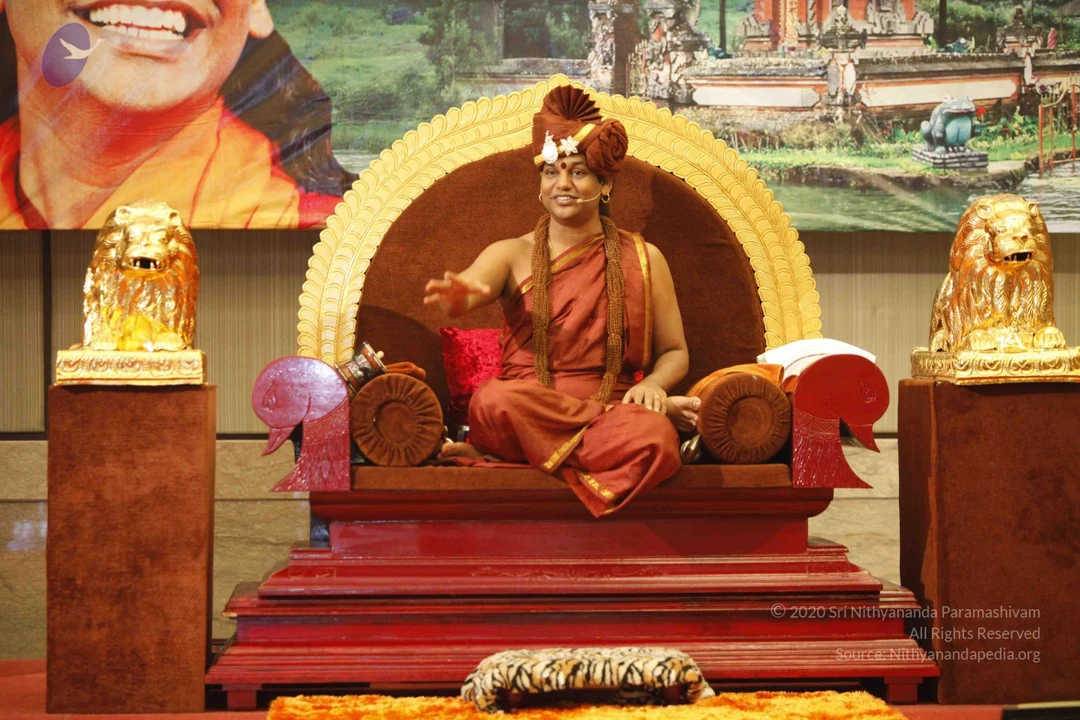
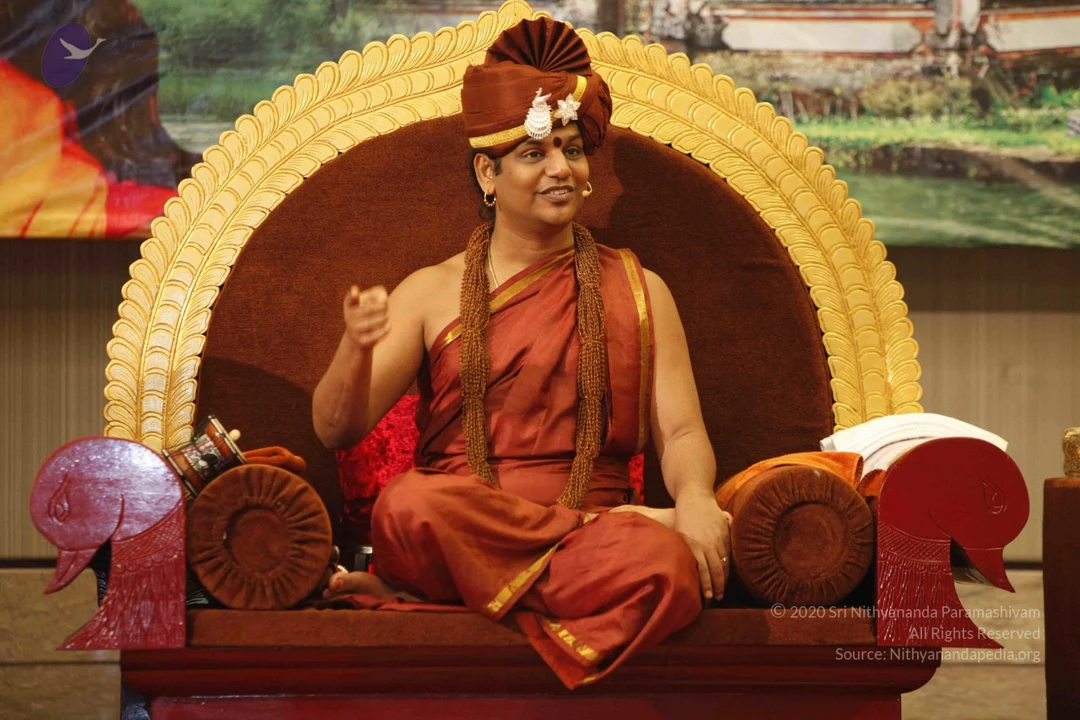
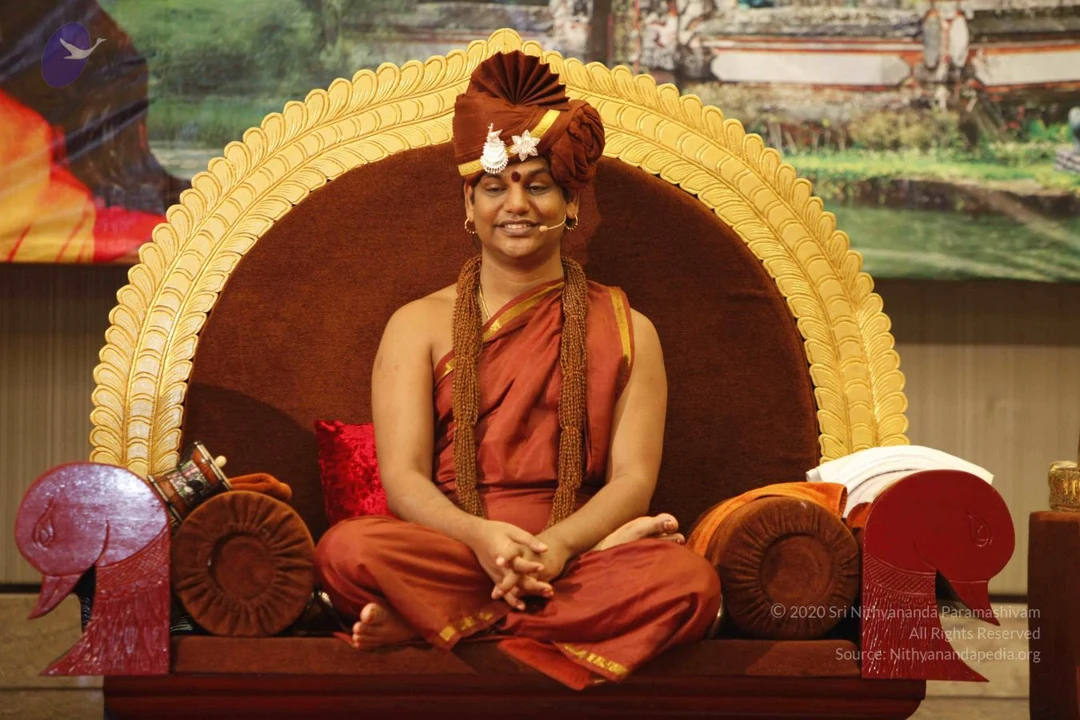
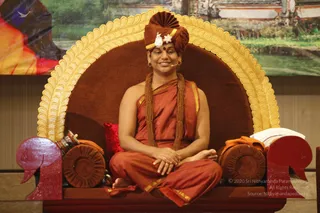
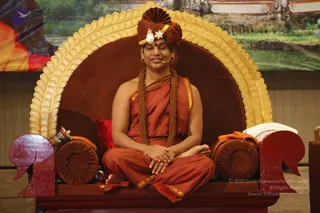
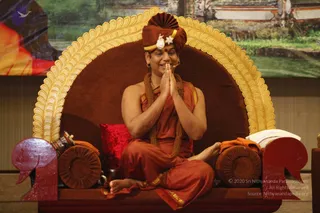
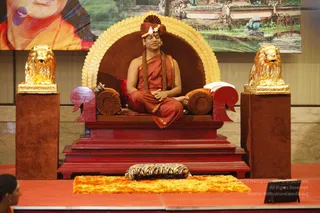
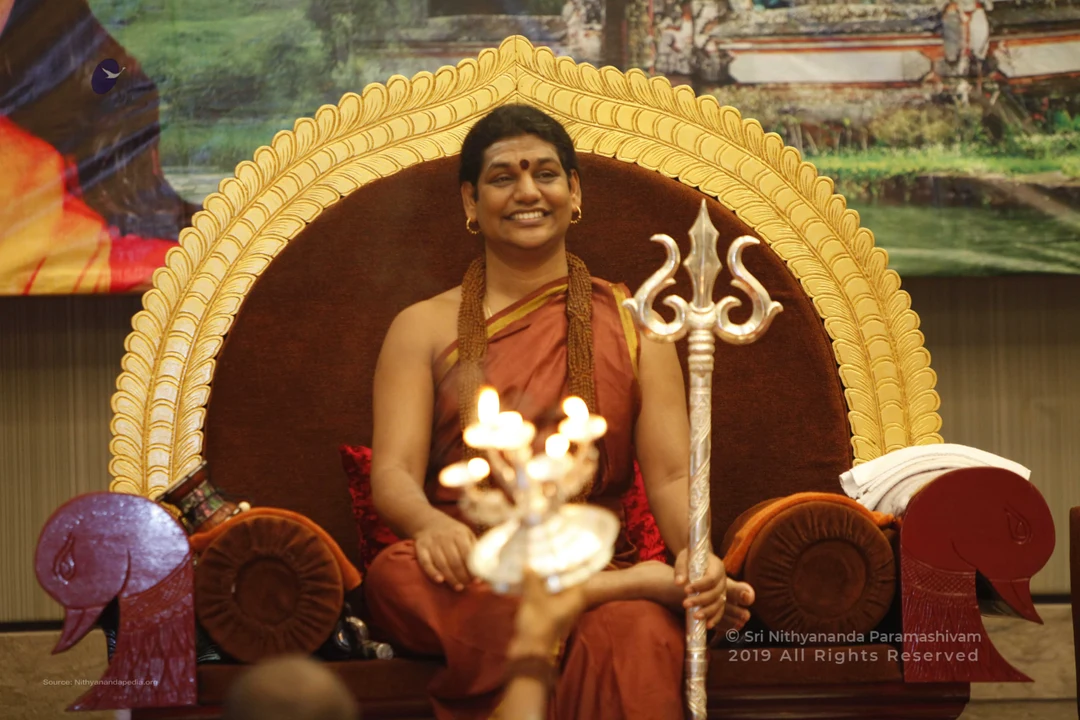
A seated man in a deep maroon turban with a white flower ornament sits cross-legged on a brown velvet throne with a large gold leaf-patterned arch behind him. He wears a matching maroon-red robe with gold trim, a long rudraksha mala around his neck, a red cushion and a small microphone at his ear. Pink and red carved armrests flank the throne, and a backdrop of a painted image and a green riverside scene fills the background.A seated figure in a rust-red robe with gold-edged trim sits cross-legged on a brown throne with a large gold leaf-patterned backrest. He wears a rust-red turban with a white floral ornament, a red bindi, a brown rudraksha mala draped over the chest, and a small lapel microphone. His hands rest in his lap and he looks down with a faint smile. Two carved red bird-head armrests flank the throne, with brown cushions, a red pillow and a folded white cloth on the right. The background shows a blurred painted landscape of a river and boats.A photograph of a seated man on an ornate brown throne with a large golden feather-like arch behind him. He wears a maroon-brown turban with a white jewelled brooch and a white flower, gold hoop earrings, and a reddish-brown robe with gold trim, with long rudraksha-style beaded necklaces. He sits cross-legged with palms pressed together in greeting namaste and a warm smile. A red velvet cushion, a small drum and a folded white cloth lie beside him, and a painted backdrop of a temple and landscape is behind. Swamiji (probable) appearance-based label: the turban, rudraksha malas and ornate ceremonial dress are visible cues of a teacher seated in a satsang setting.A photograph of a seated man on an ornate golden-arched throne with a deep maroon cushioned back, a red velvet pillow and maroon bolsters. He wears a maroon turban with a white floral ornament, rust-orange robes with gold borders, and a long brown rudraksha mala over his chest. He sits cross-legged with bare feet and presses his palms together in anjali namaskar, smiling. Behind him a backdrop shows a painted landscape with a red-and-orange figure at left. A probable Swamiji is seated in person, identified only by these cues: turban, rudraksha mala and saffron-orange robes on a throne, not by facial features.A seated teacher on a red and gold throne with a gilded arch and two golden lion statues flanking it. He wears a tall dark-red turban with white flower ornaments, a rust-orange robe with gold borders, a long rudraksha mala, and a small microphone at his cheek. A tiger-striped cushion lies on an orange carpet below, and a large photographic backdrop behind shows a temple pond scene and a portrait in orange robes. The Swamiji (probable) cues here are the turban, saffron-orange robe, rudraksha mala and throne; he is presented as the speaker at this satsang. One person only is physically present.A seated figure in a red-orange sannyasi robe and a dark red turban with a white tilak sits cross-legged with eyes closed on an ornate red and gold throne with a golden arched backrest and large cushions. Two golden lion sculptures flank the throne on tall pedestals, and a striped tiger-skin rug lies on a yellow-orange fringed mat before it. A long rudraksha mala hangs around the neck. Behind the stage, a large screen shows a figure in orange clothing at left and a photograph of a temple pond with a stone elephant statue at right. A woman's partial figure is visible at the bottom left edge.

SarvaDarshan
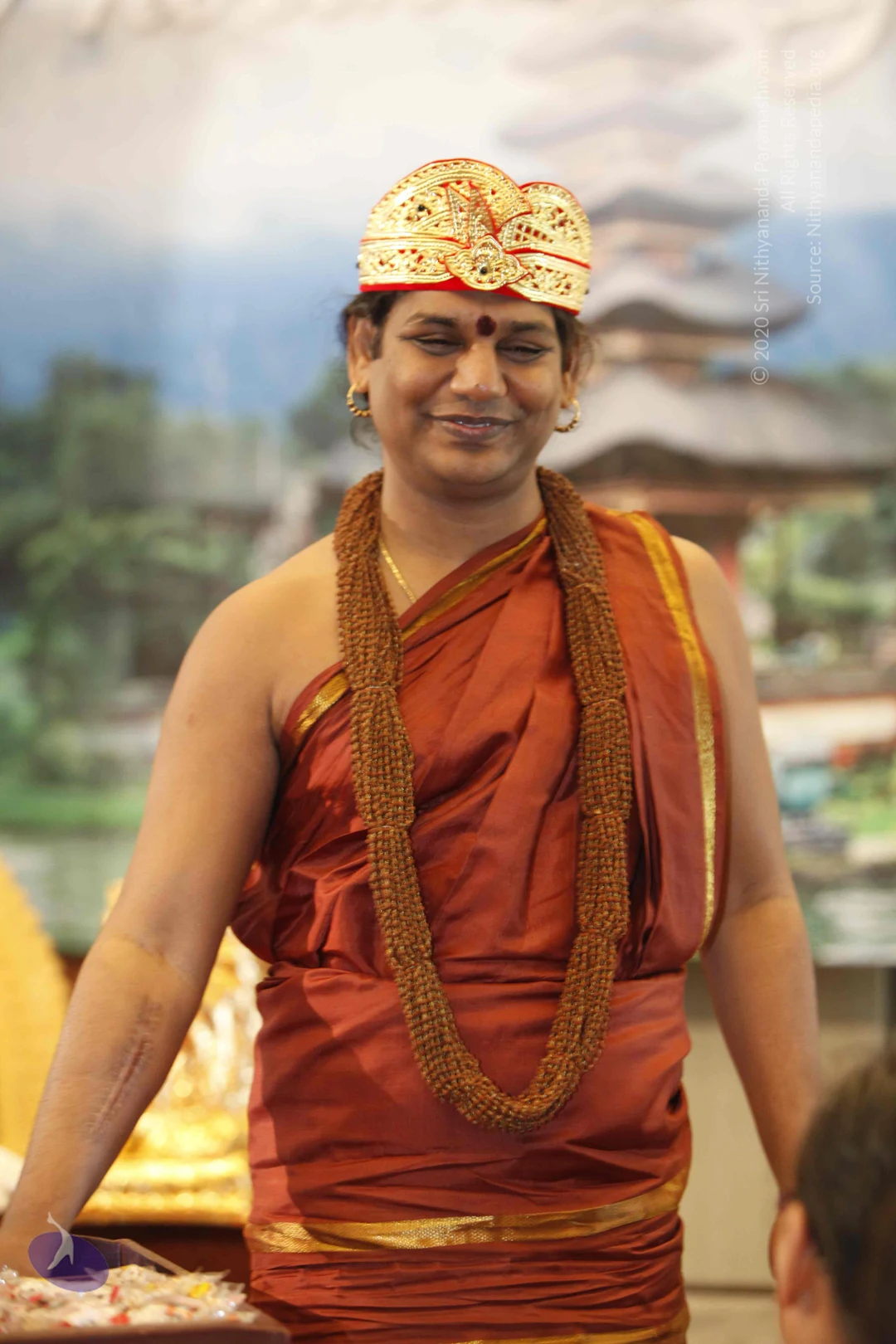
6 photosSource gallery
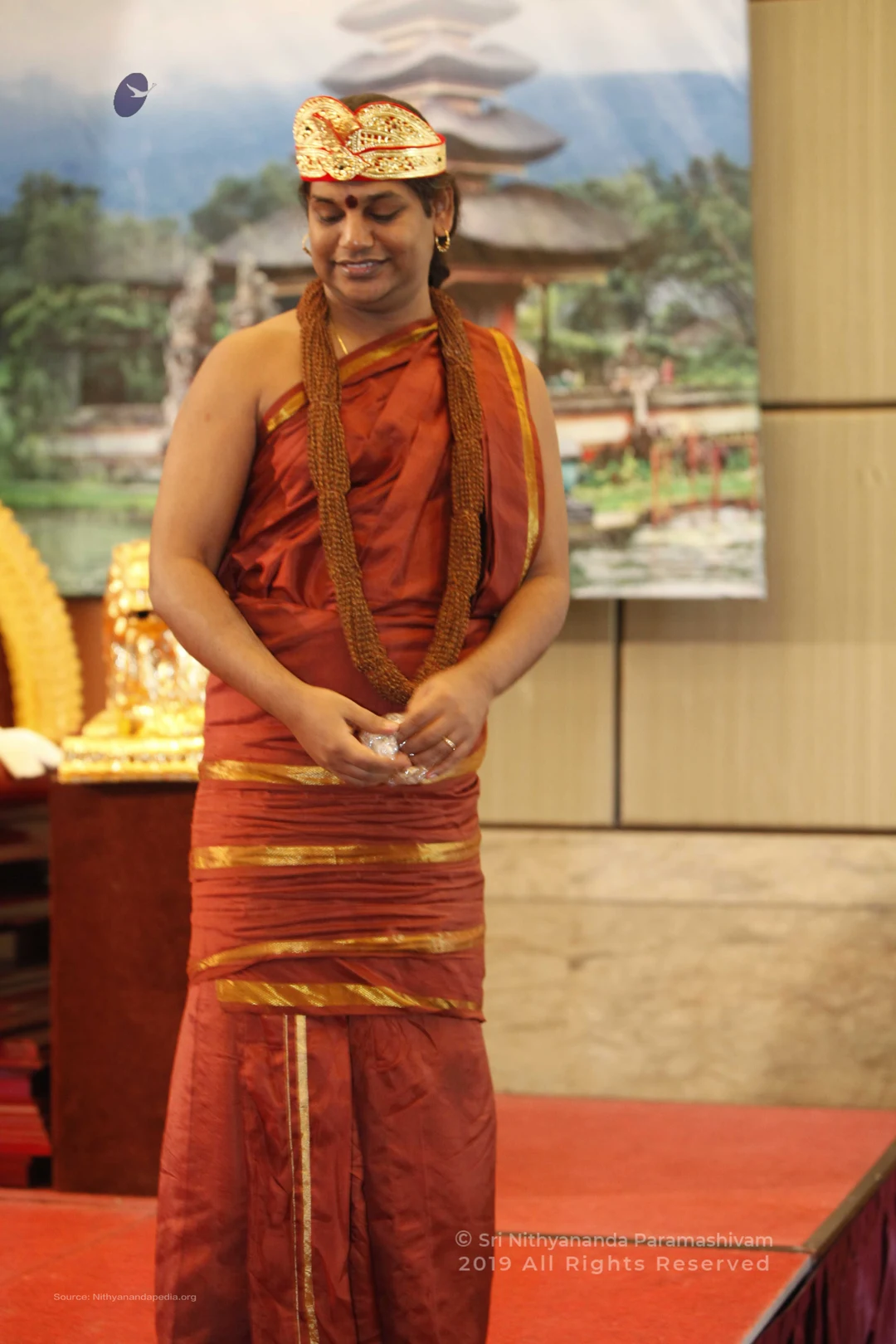
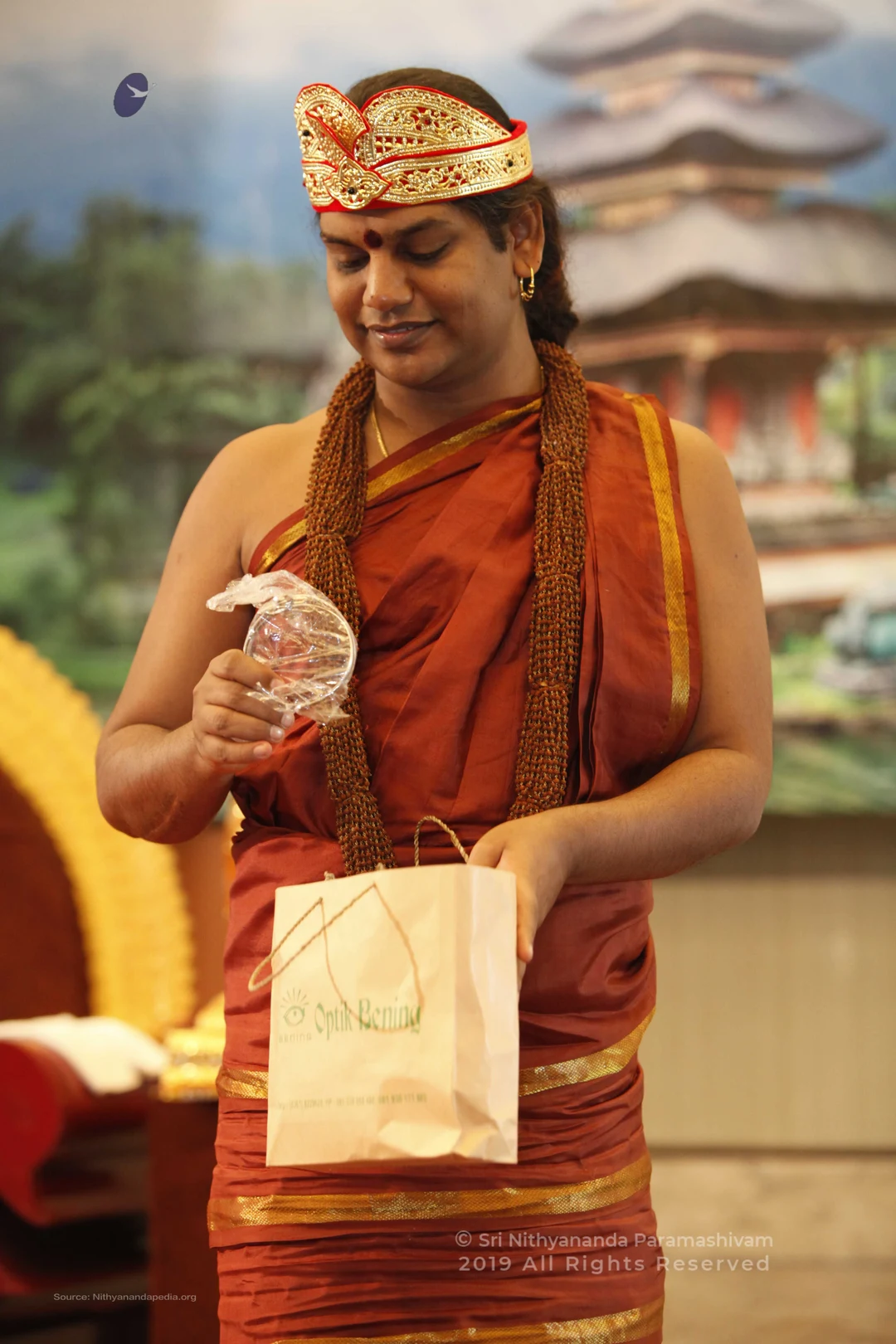
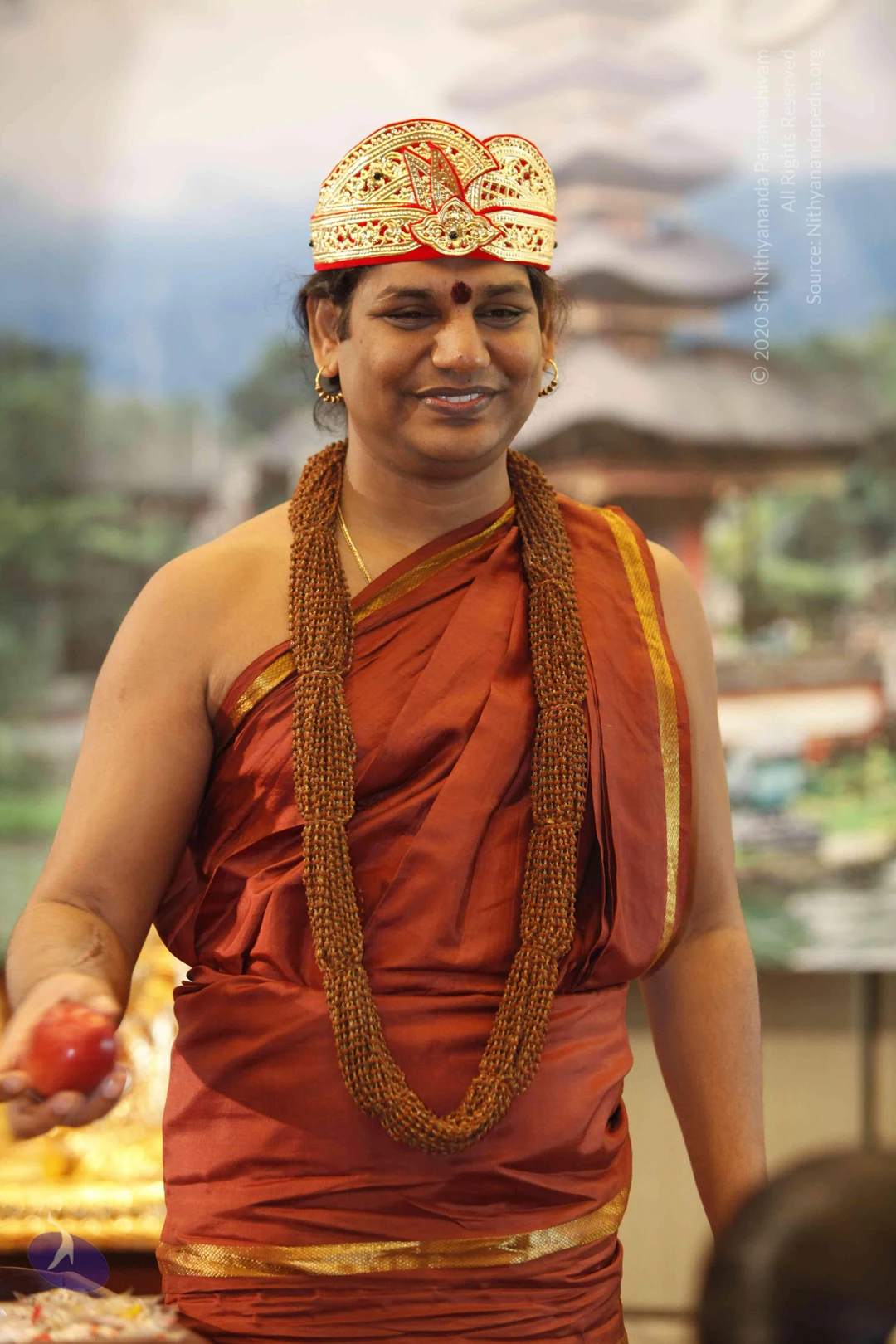
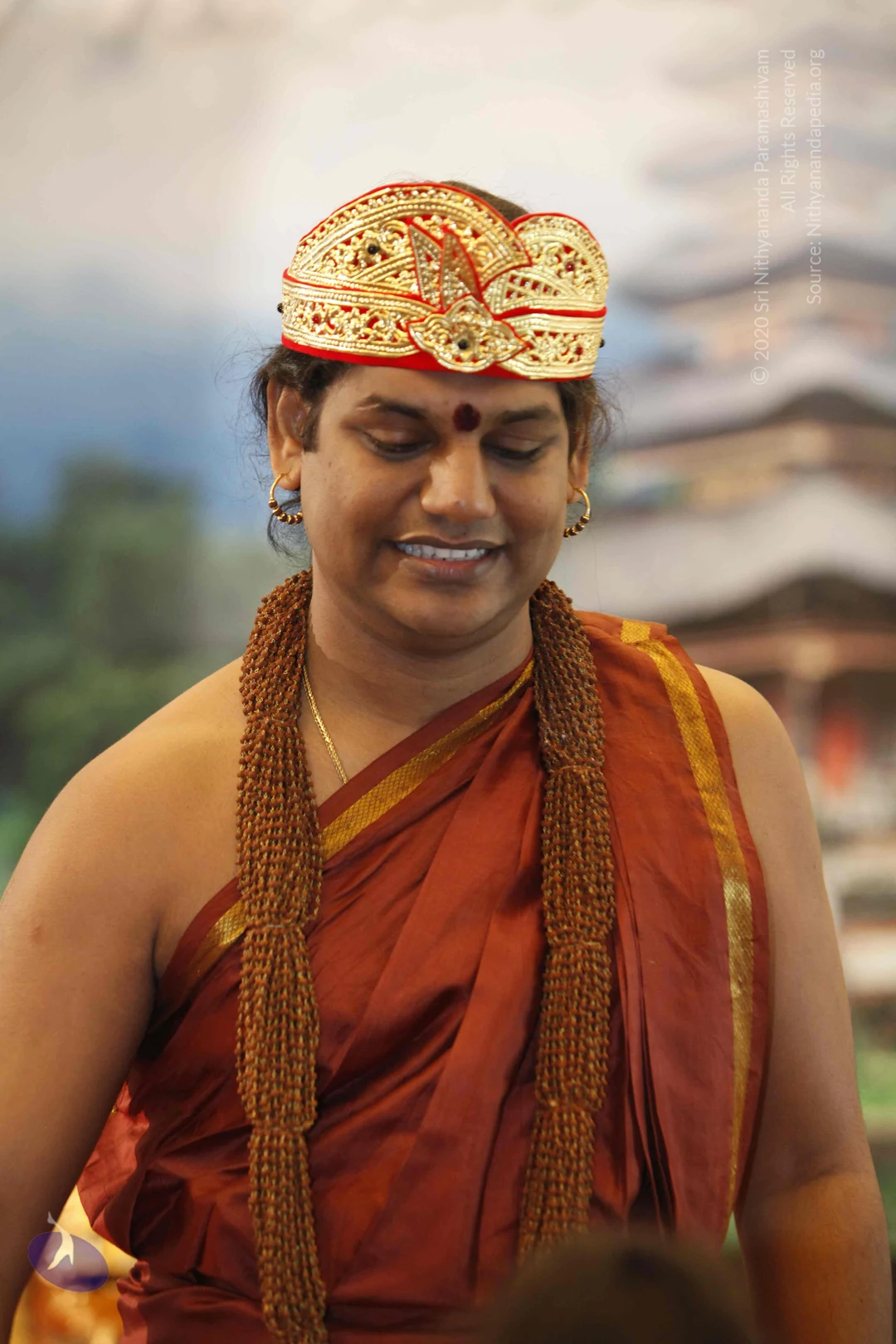
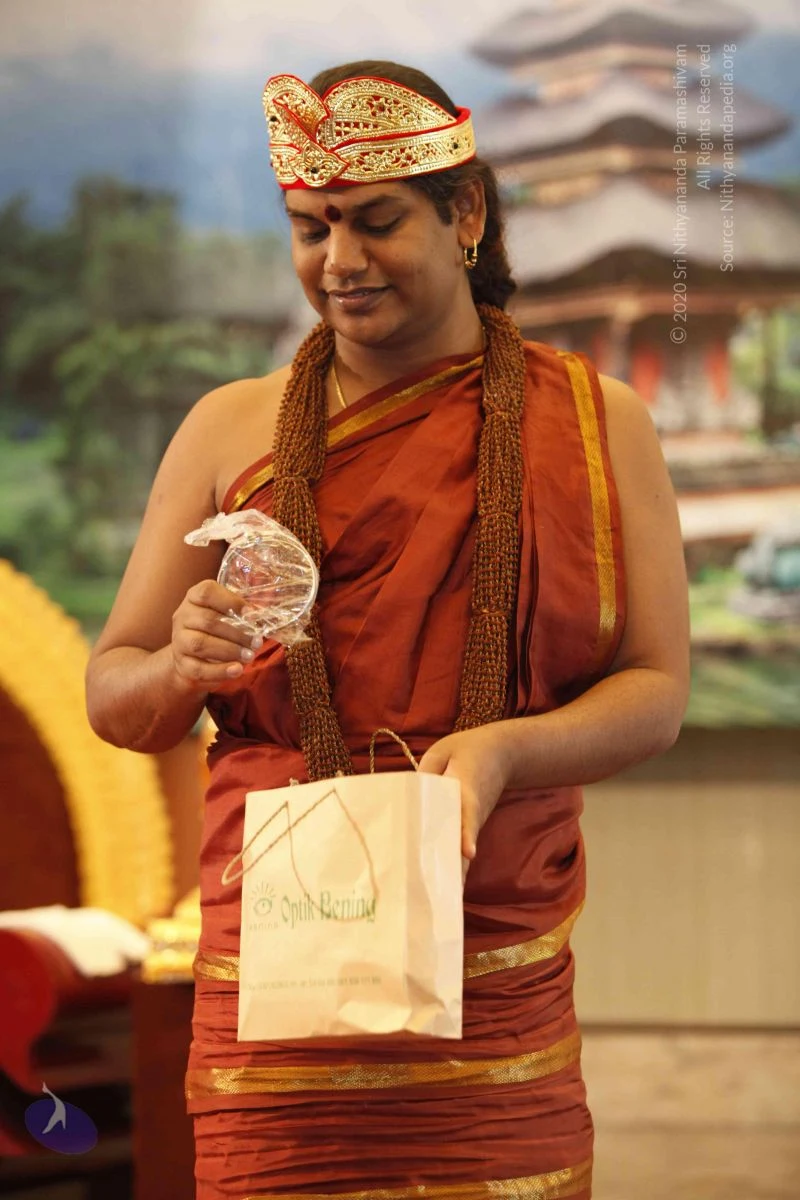
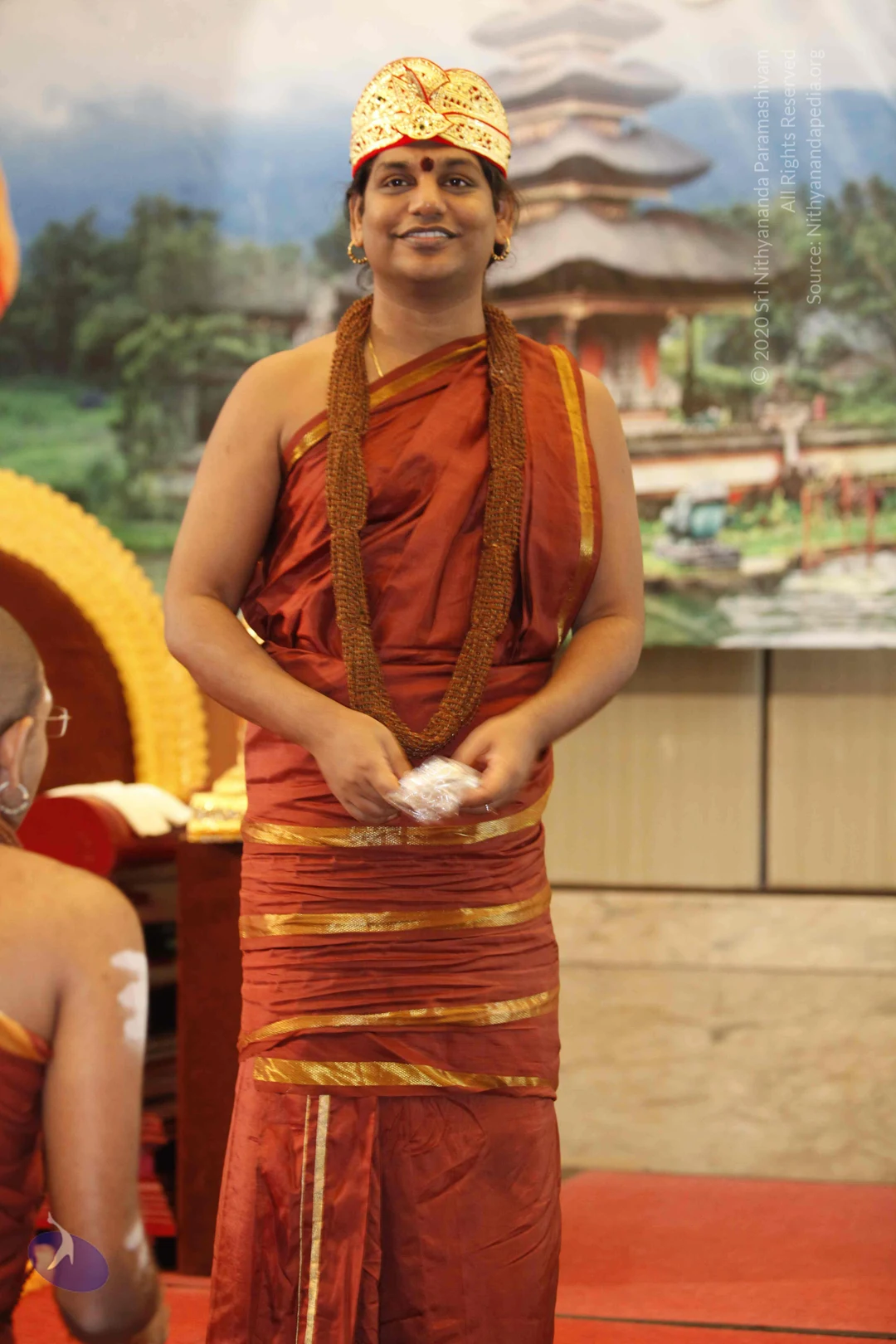
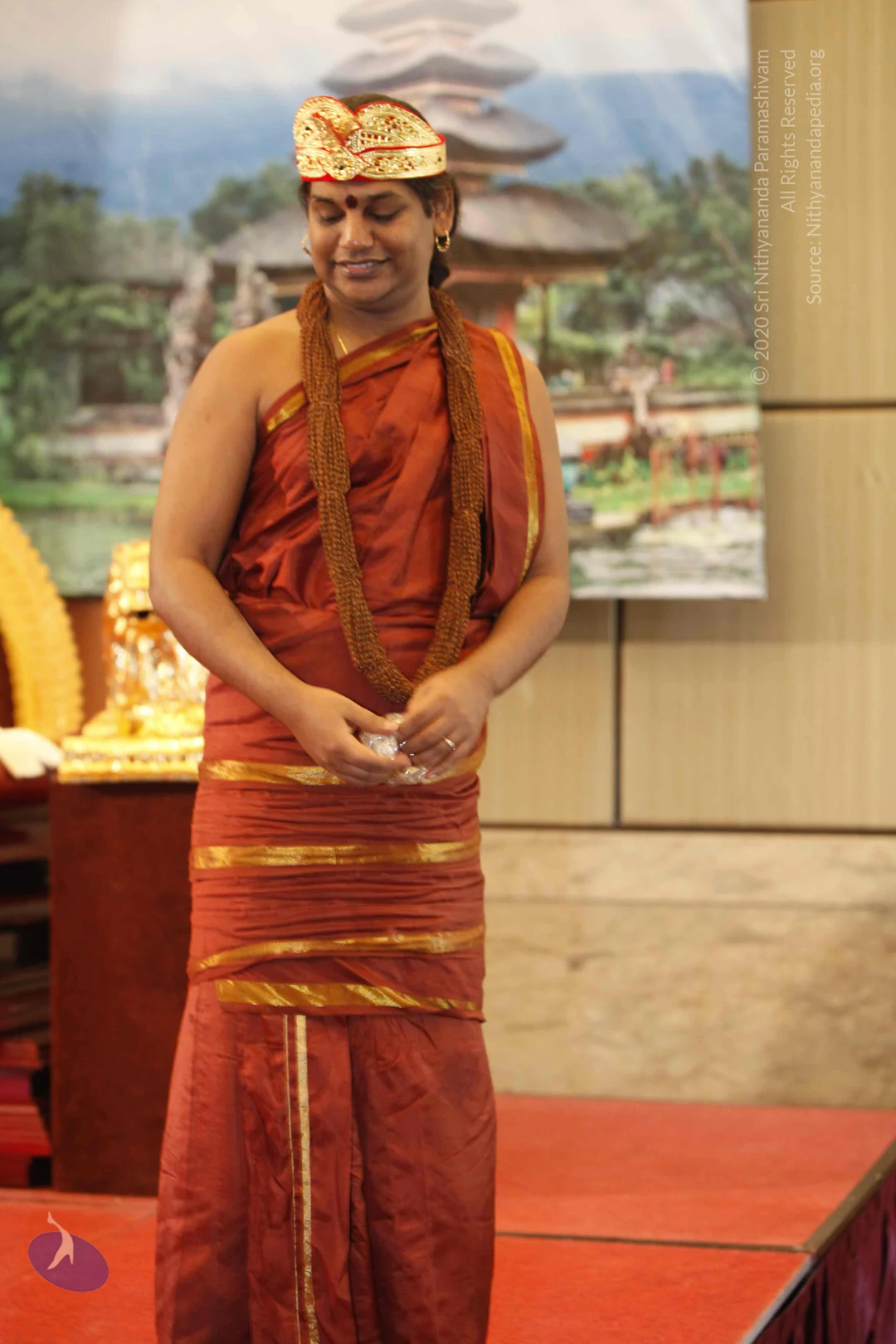
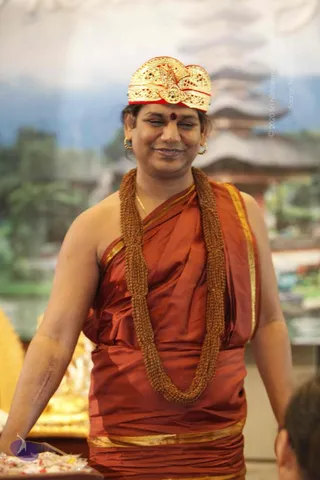
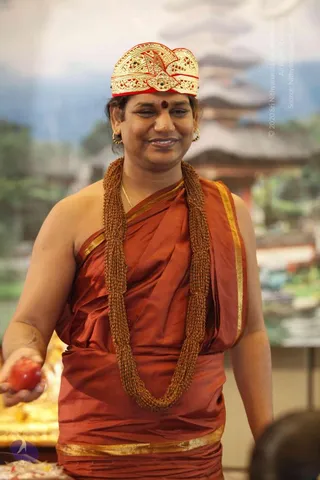
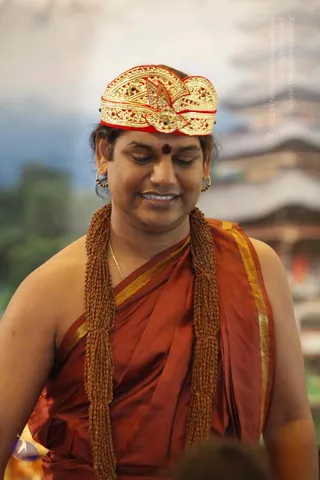
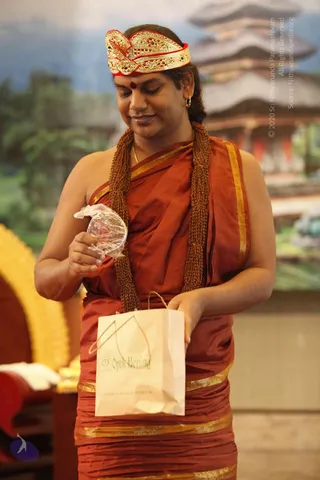
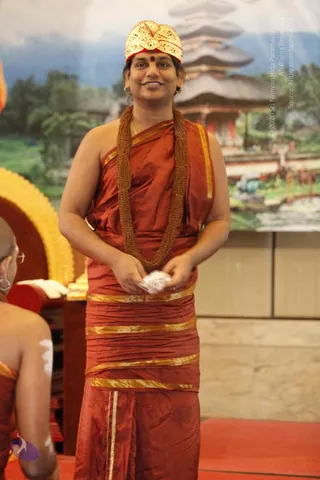
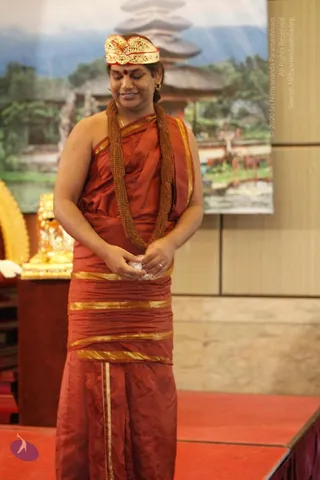
A smiling man stands in front of a painted temple backdrop with a golden-roofed pagoda and green trees. He wears a gold-and-red crown, a red bindi, gold hoop earrings, a rust-red silk wrap with gold borders and a long rudraksha mala around his neck. A gold chain is visible at his throat. Gold ornaments and a tray of white petals appear at lower left, and a partially visible person stands at the lower right edge. The appearance matches the a person candidate cues of ornate clothing, crown and rudraksha mala, but identity is uncertain from appearance alone.A smiling man stands in a rust-red silk robe with gold border and a red-and-gold ornate crown with a small red bindi, wearing a long multi-strand rudraksha mala and a thin gold chain. He holds a red fruit or offering in one hand, with a golden deity murti or altar item and flower offerings in the lower left. The backdrop is a painted scene of a multi-tiered pagoda-style temple and green hills.A smiling man with eyes lowered wears an ornate gold-and-red crown with a central emblem, a red bindi, small gold hoop earrings, and a rust-red silk garment with gold borders draped over the shoulders. Long brown beaded tassel necklaces hang on his chest. The blurred background shows a multi-tiered temple-style roof and greenery. Appearance-based cues (crown, ornate clothing, beaded necklaces) are consistent with the page's reference to a person, but identity is uncertain.A photograph of one person standing before a painted backdrop of a multi-tiered temple and greenery. The person wears a gold ornate headband with a red band, a red bindi, gold earrings, a rust-red draped garment with gold border, and a long brown beaded mala. They hold a small clear plastic-wrapped object in one hand and a cream paper shopping bag printed with 'Optik Benind' in the other, looking down with a smile.A standing figure in a rust-red silk drape with gold borders and a rudraksha mala stands on a red carpet before a painted backdrop of a multi-tiered temple pavilion. The person wears a gold crown with red trim, a red bindi, gold earrings, and holds small white packets in both hands. To the left edge, a partly visible person in red-gold garments sits near a golden floral arch. A painted temple mural fills the background.A standing woman in rust-red silk draped over one shoulder, with gold-bordered dhoti-style wrap and gold-edged waistband, wears a gold and red ornate crown and a long rudraksha mala around her neck. She has a red bindi, looks down with eyes closed, and holds small clear packets in her hands at waist level. Behind her a printed backdrop shows a Balinese temple with pagoda-style roofs and lush greenery, and a golden figure sits at the left edge on a dark pedestal. The stage has red carpeting.

FinalBlessings

5 photosSource gallery
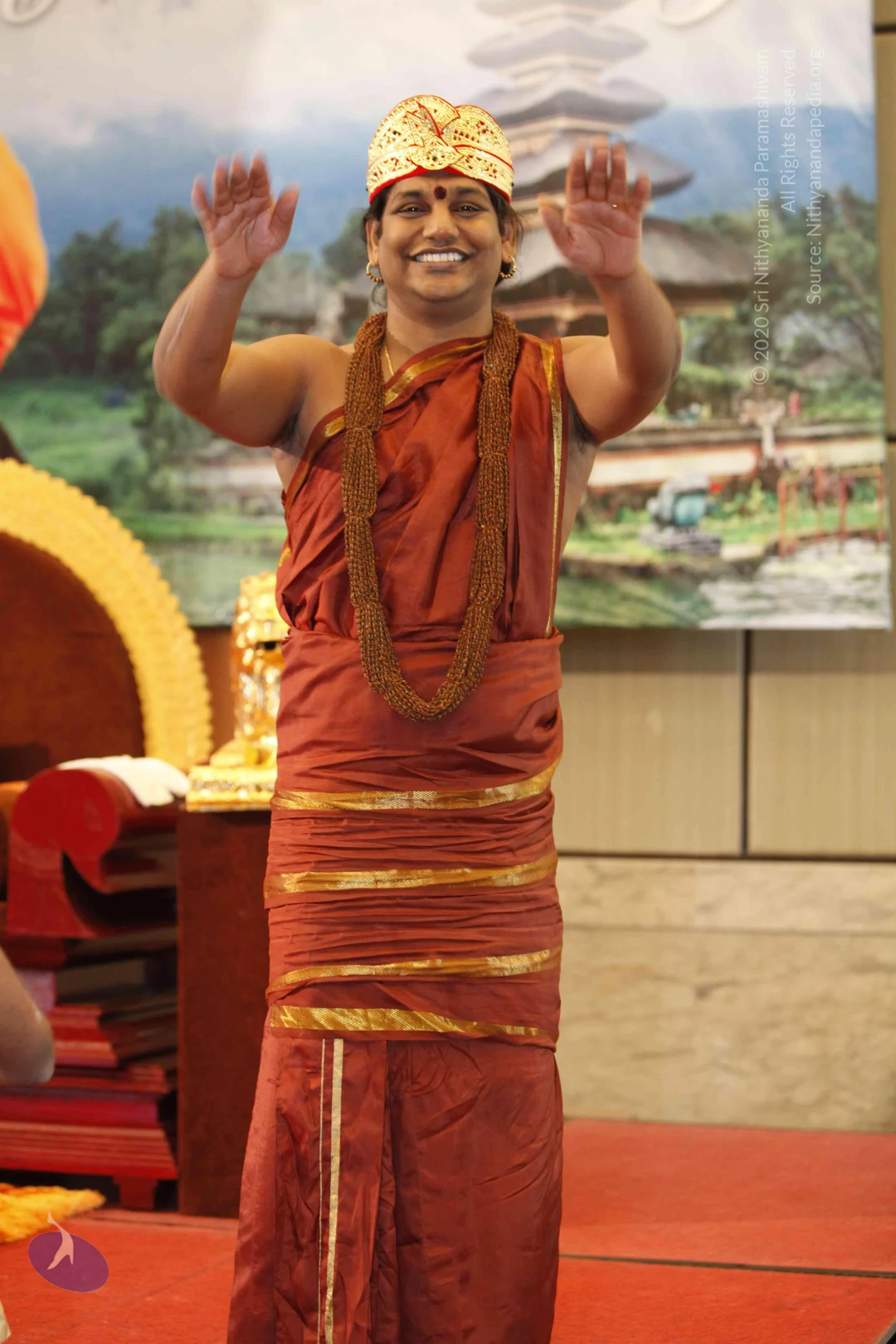
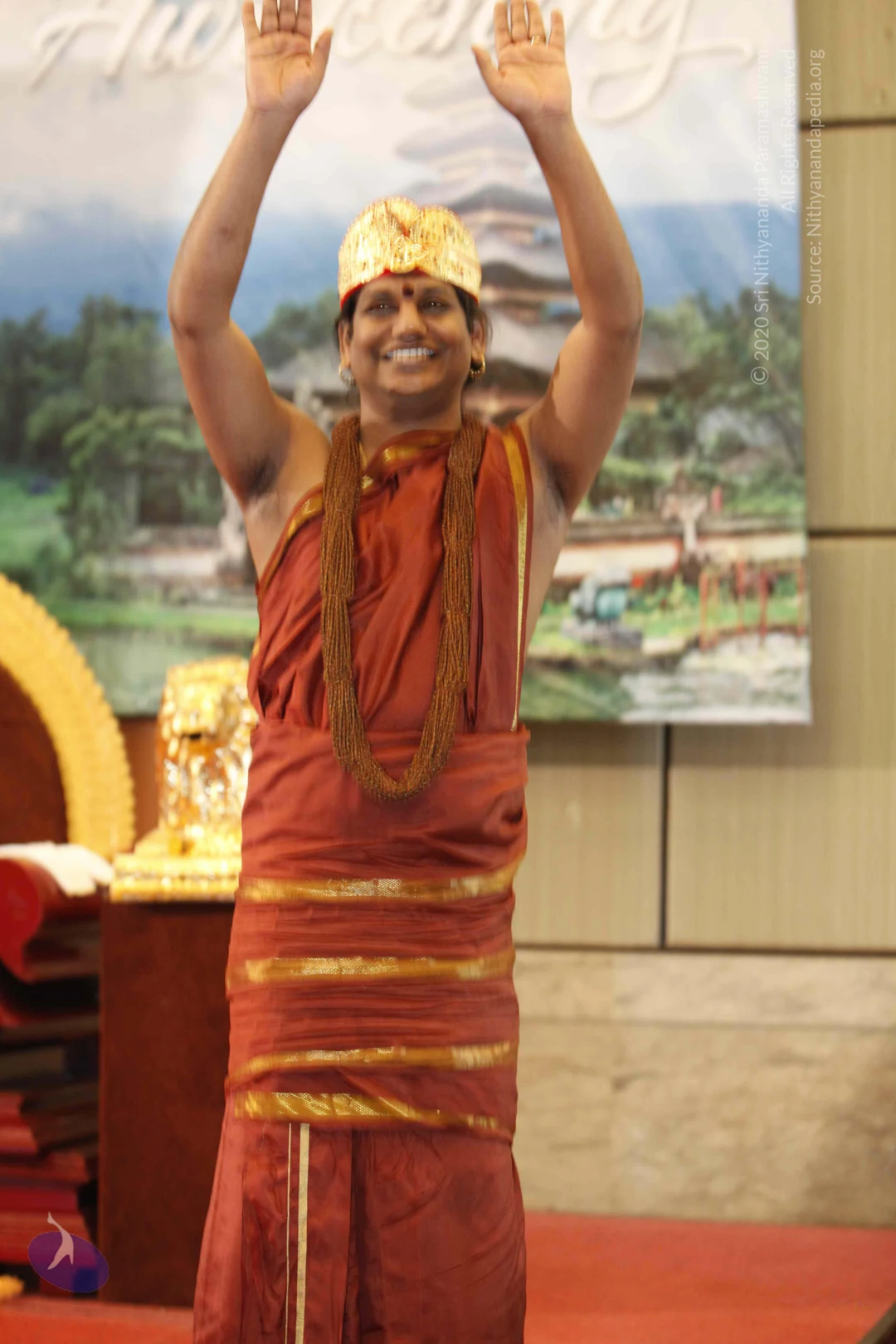
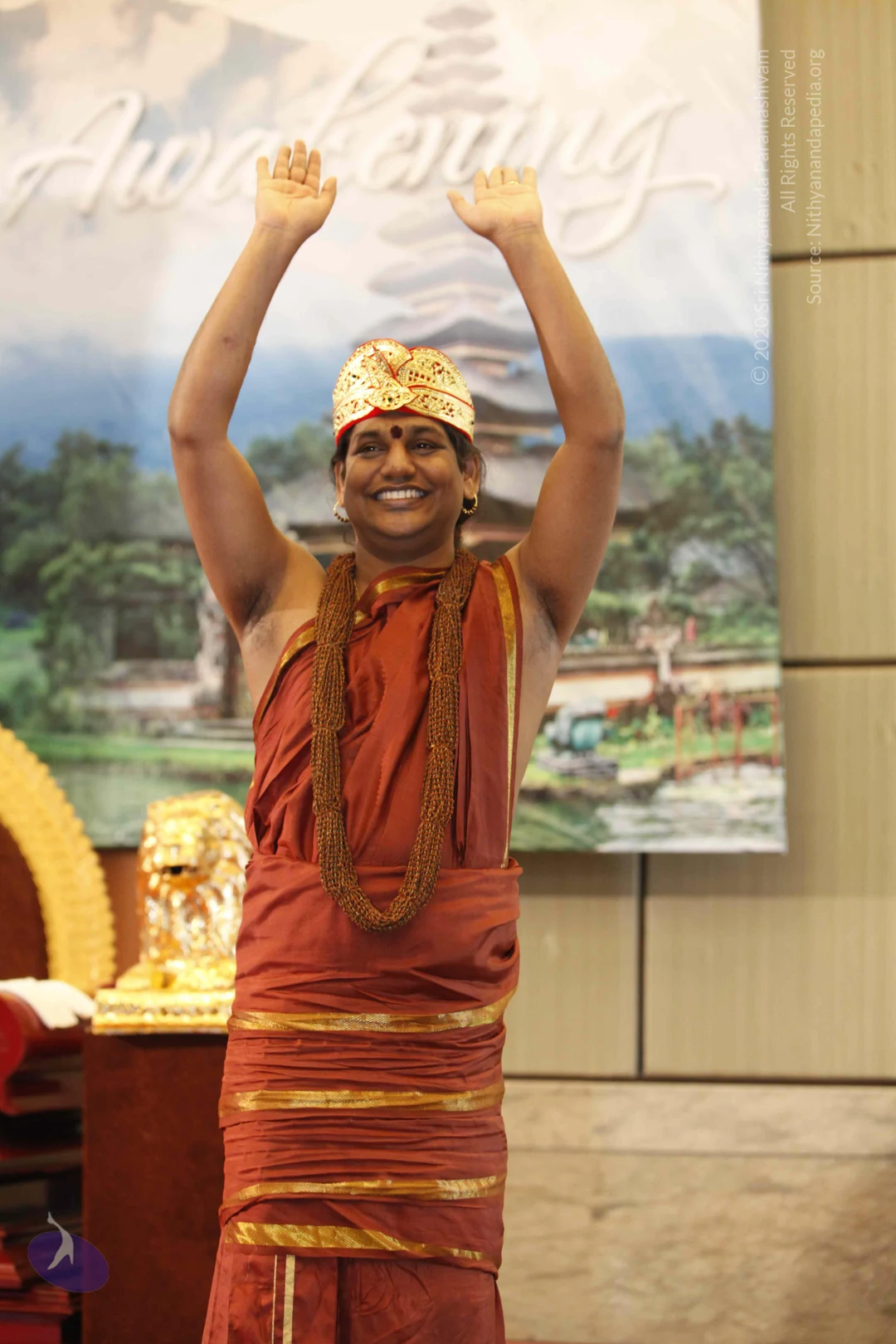
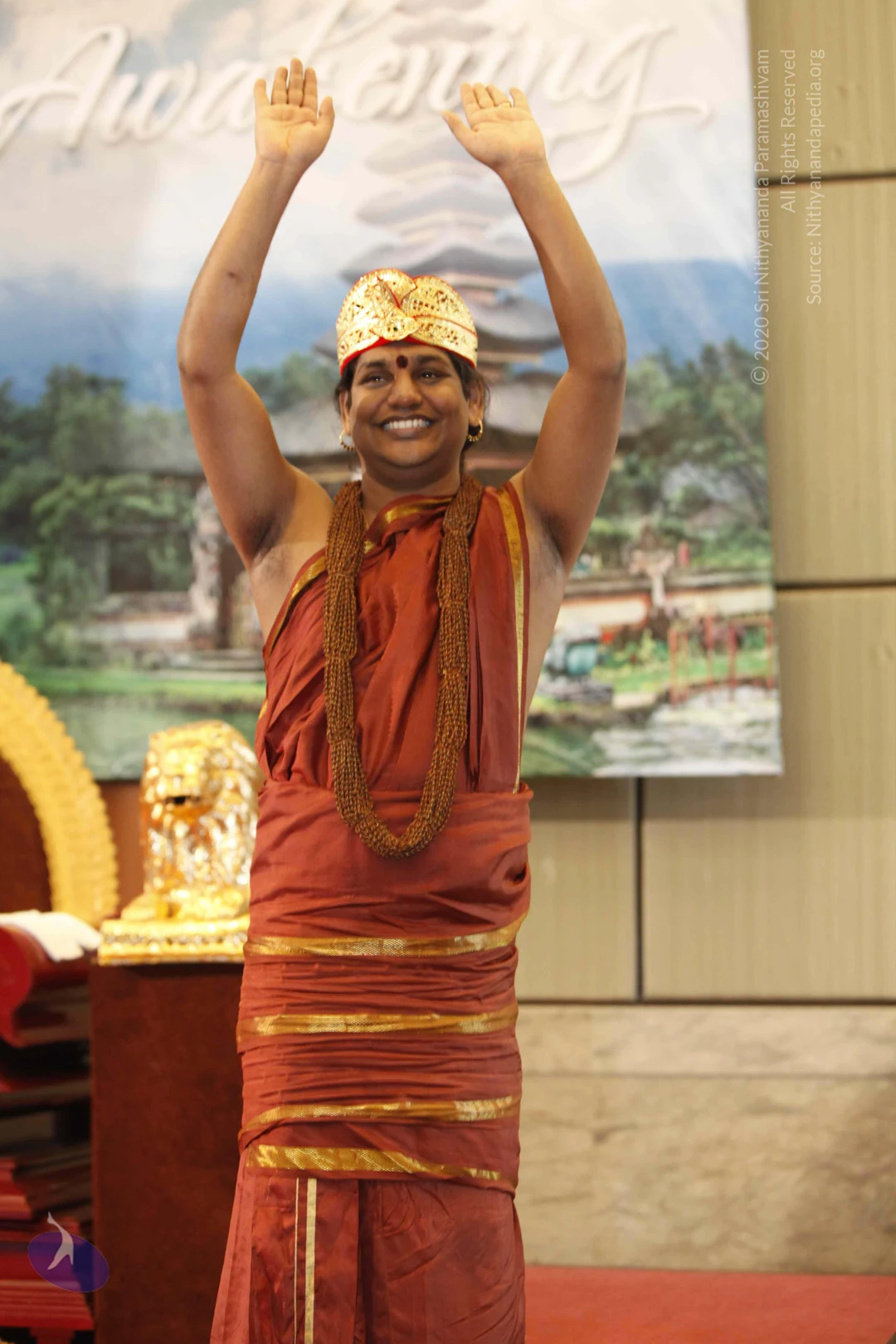
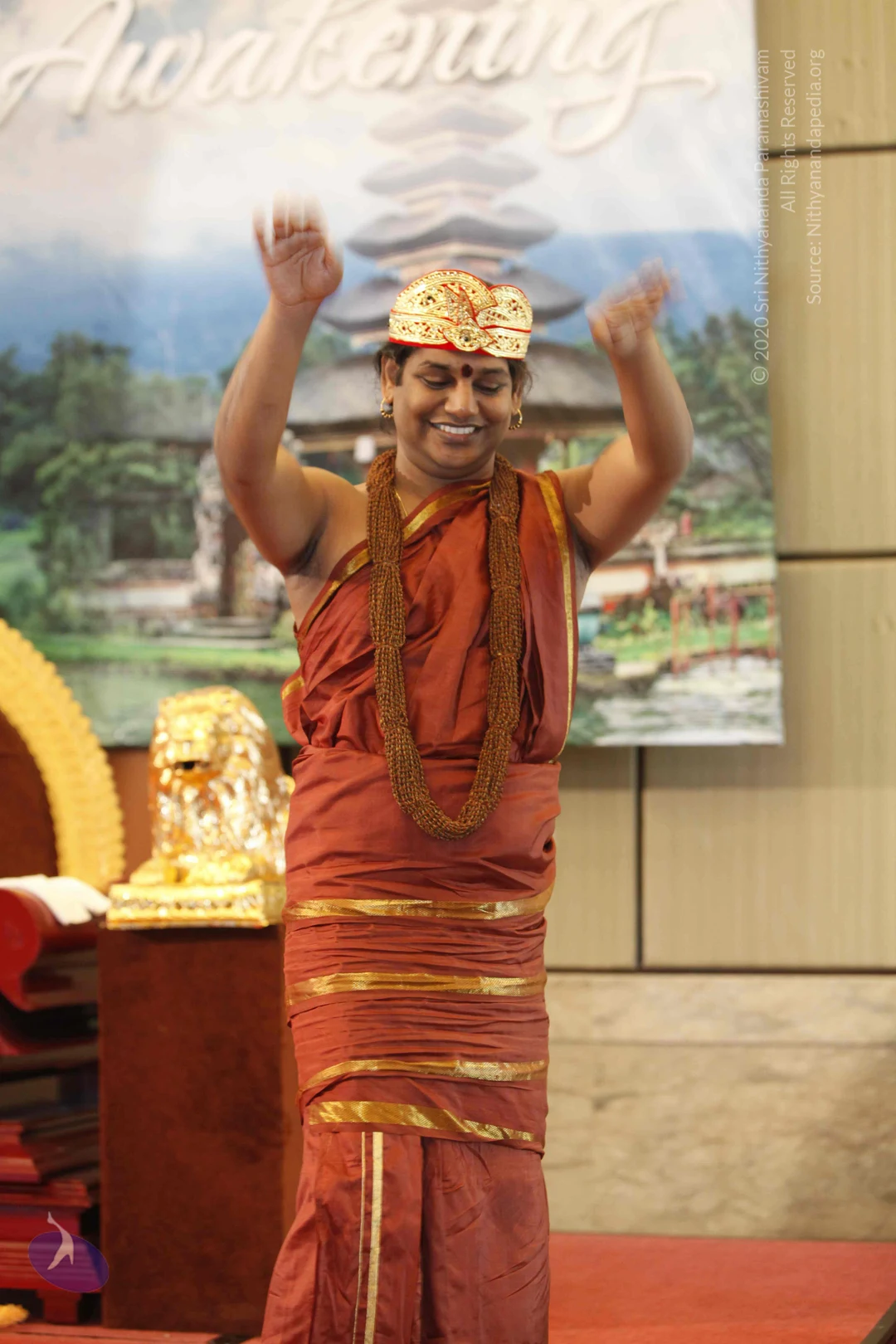
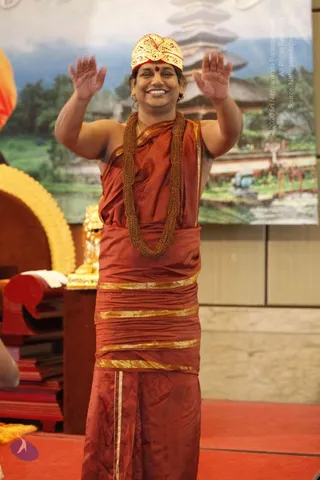
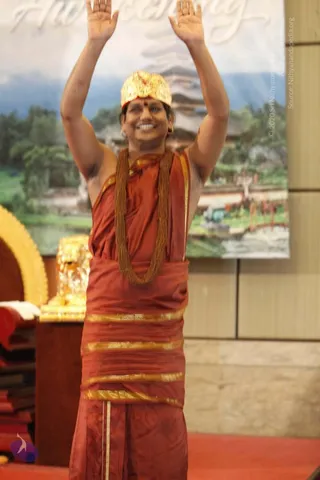
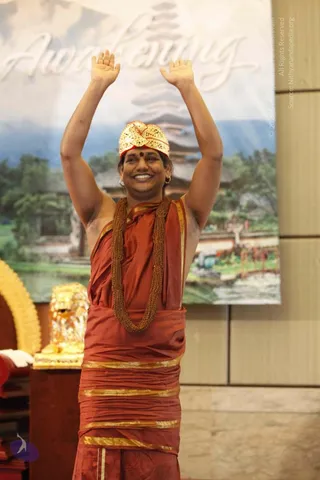
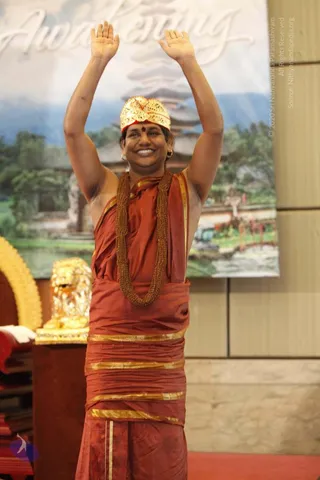
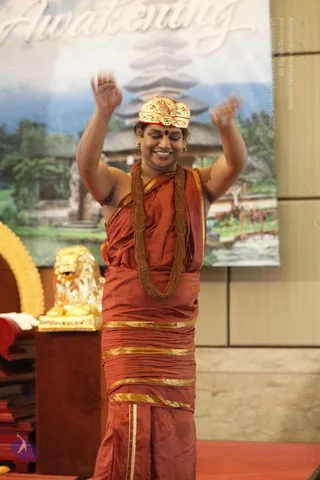
A smiling man stands on a red stage with both palms raised in front of a large backdrop showing a multi-tiered pagoda-style temple beside green fields and water. He wears a gold-and-red crown with a red tilak on his forehead, a rust-red draped garment with gold border stripes, and a long rudraksha mala around his neck. A golden ornamental arch and a stack of red books sit at the left edge. The scene resembles a discourse or satsang setting.A smiling man stands on a red stage with both arms raised overhead, palms open. He wears a gold-colored crown or headpiece with a red tilak mark on his forehead, a rust-red draped garment edged with gold bands, and a long multi-strand beaded necklace. Behind him a large printed backdrop shows a temple complex in green landscape, and a golden lion statue is visible at left. Swamiji (probable): long hair is not visible, but the saffron-red garment, crown and ceremonial beaded mala match the event context; the figure is the speaker or presenter on stage.A smiling man in rust-red draped robes with gold-edged bands and a gold-embroidered red crown stands with both arms raised overhead, palms open, in front of a large banner showing a multi-tiered pagoda-style temple among green trees and water. A long beaded rudraksha-style mala hangs around his neck, and a red tilak mark is on his forehead. Behind the left edge is a gold-painted lion figure on a stand. The backdrop reads Awakening in script at the top.A smiling person stands on a red carpet with both arms raised overhead, palms open. They wear a red-orange silk sash and wrap with gold border stripes, a rust-red rudraksha-style mala over the chest, and a gold ornate crown with a red bindi. Behind them a large banner with the word Awakening and a photo of a temple pavilion beside water and greenery. To the left stands a gold lion statue.A smiling person stands on a red stage with both arms raised, eyes lowered, wearing an ornate gold-and-red headpiece with a red bindi, gold hoop earrings, a long brown rudraksha-style mala, and a rust-red draped garment with gold border stripes. Behind them a large banner shows a multi-tiered temple pagoda among trees and water, and a golden lion sculpture sits on a dark pedestal to the left. The scene suggests a satsang or meditation session with the speaker mid-gesture.

Volcano-Visit
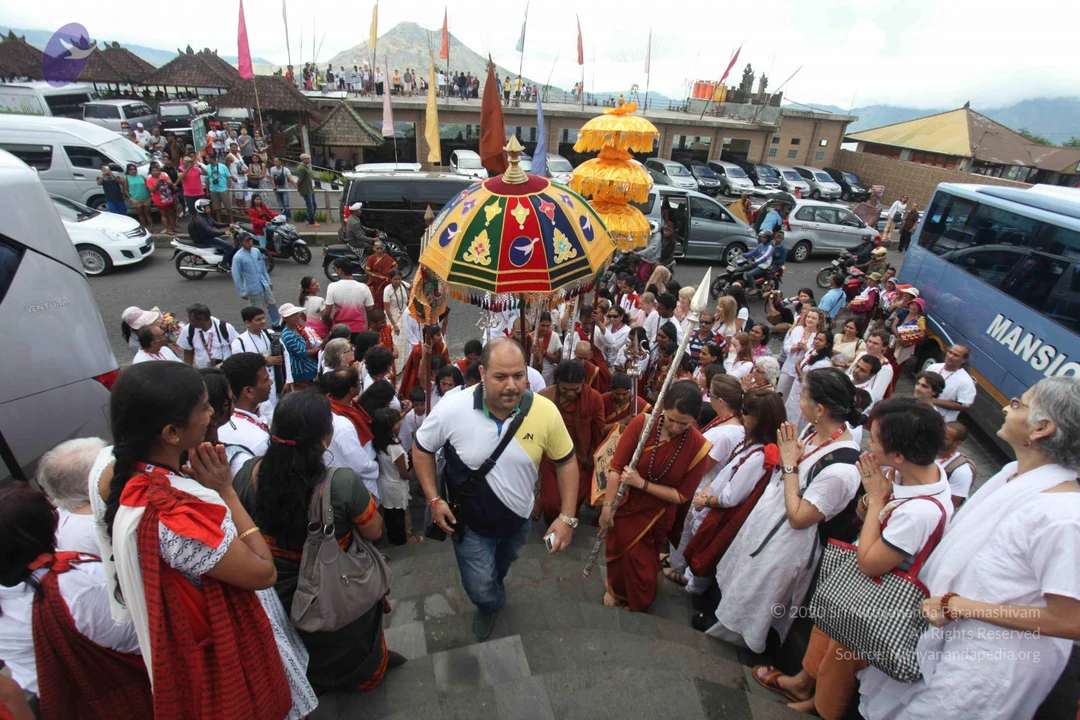
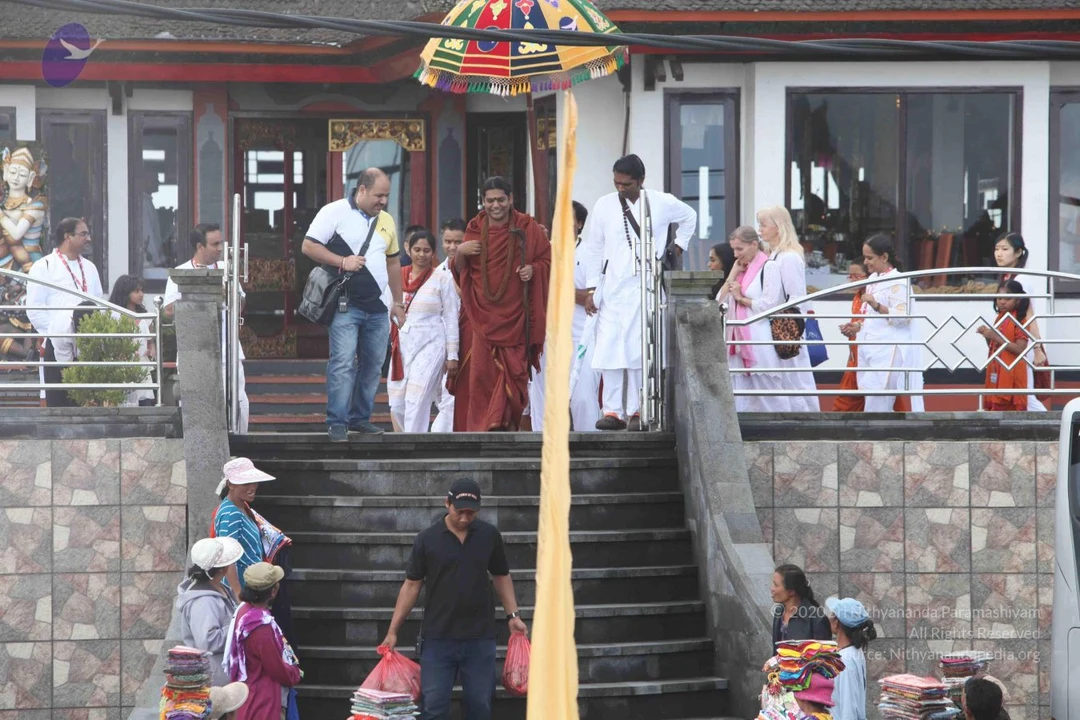
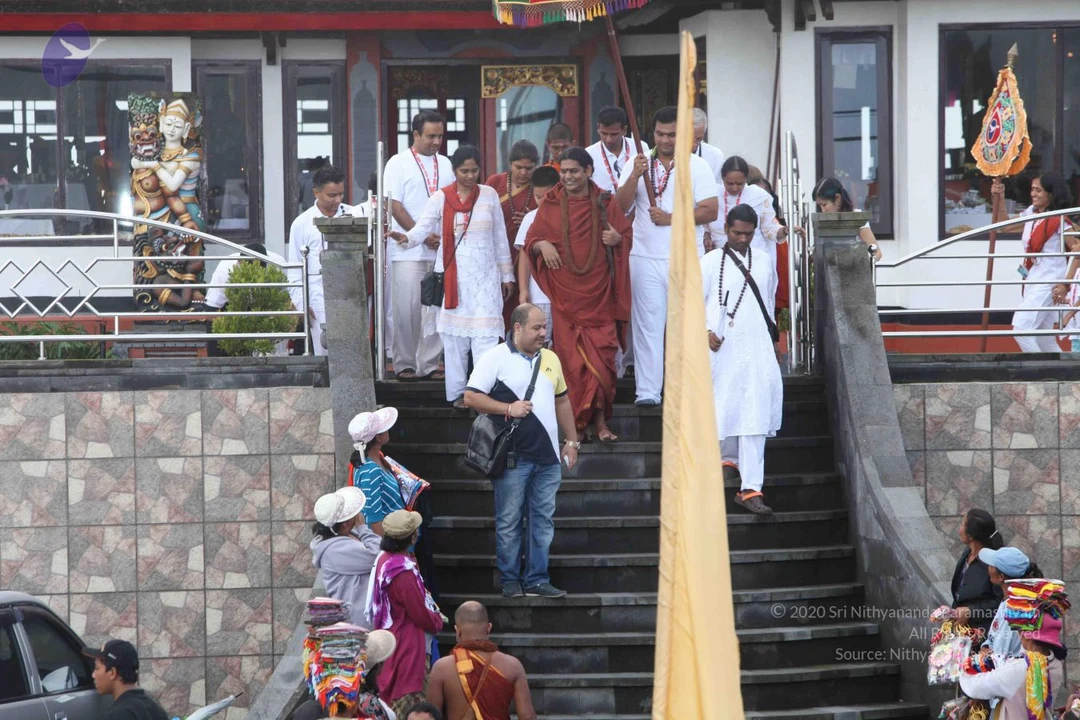
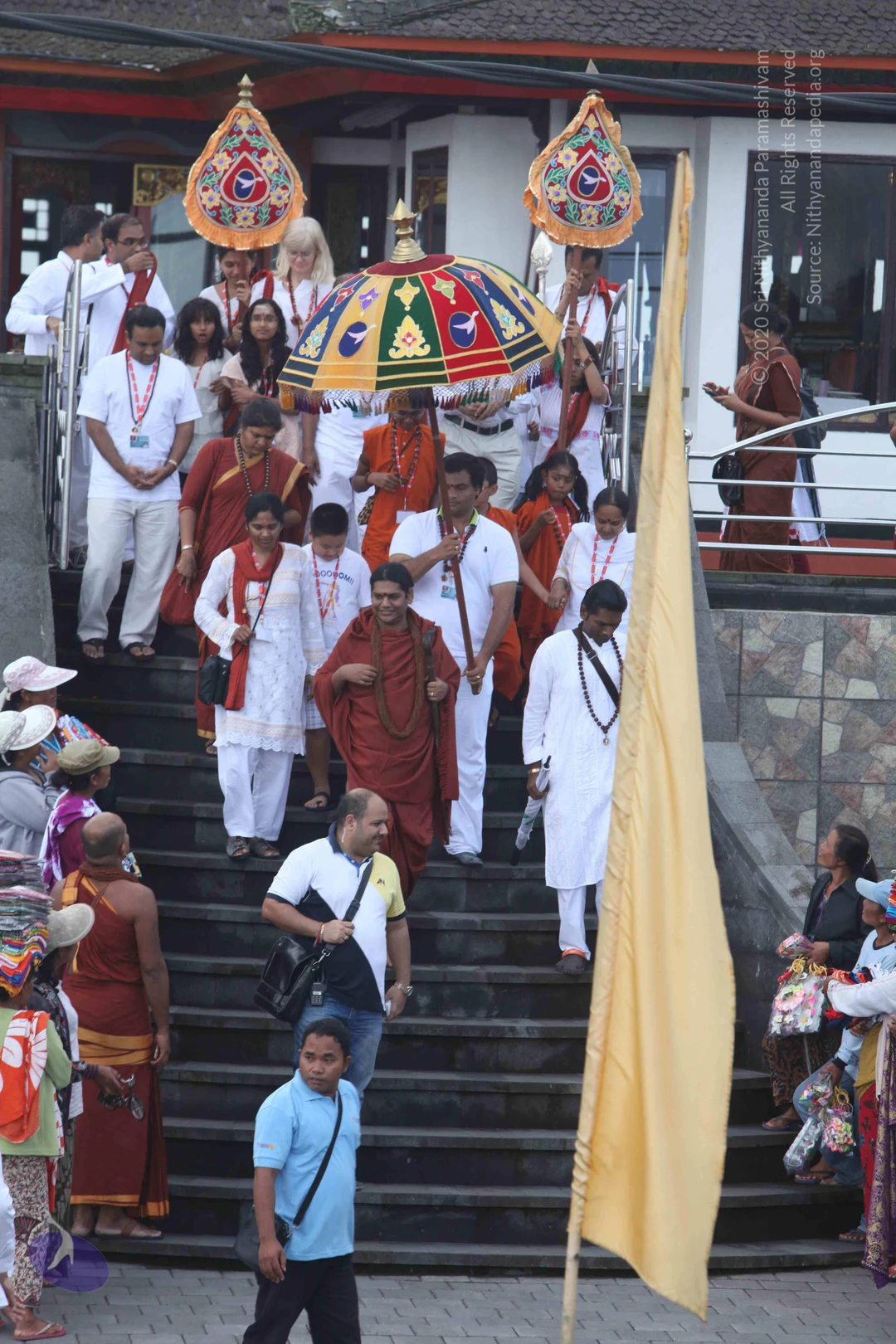
226 photosSource gallery
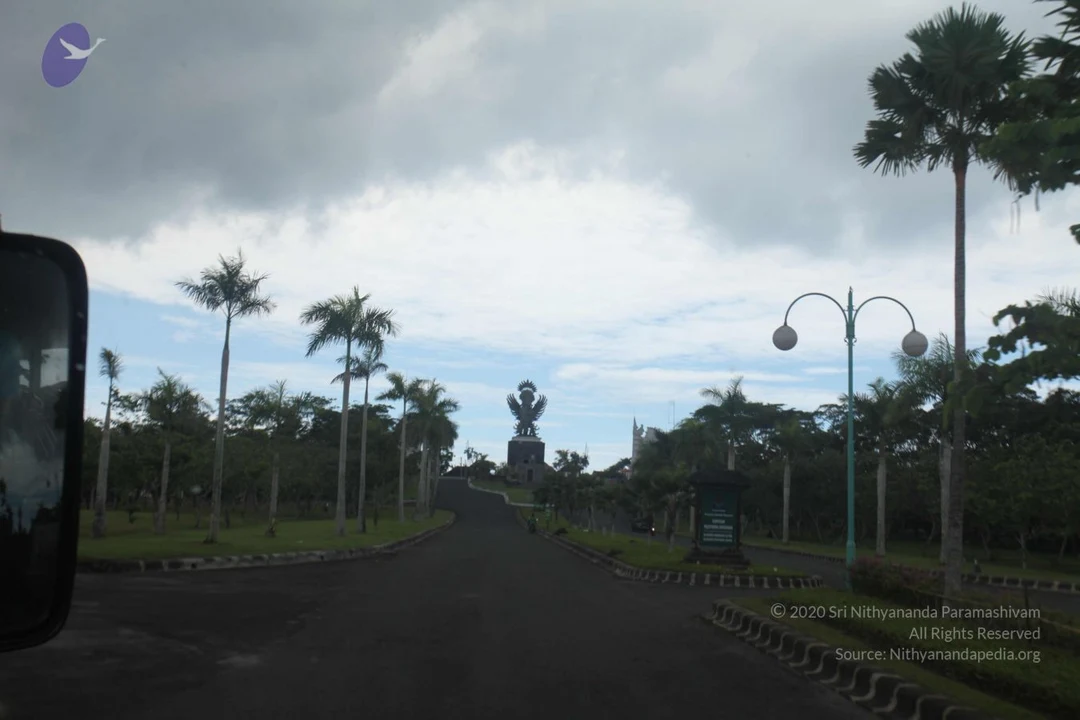
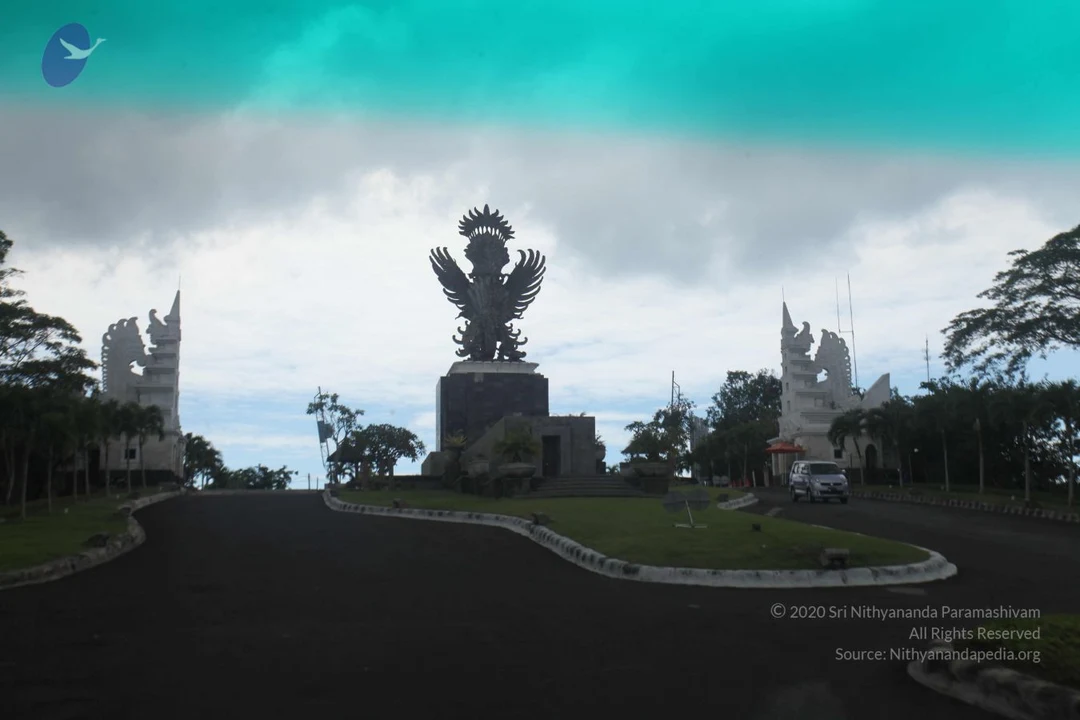
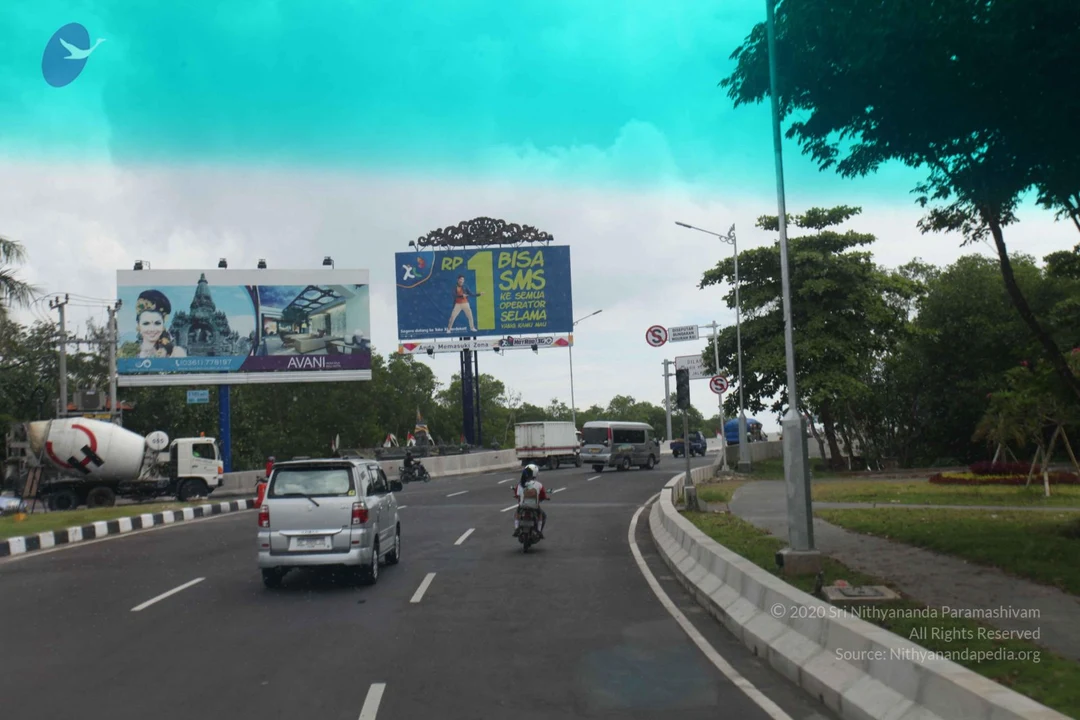
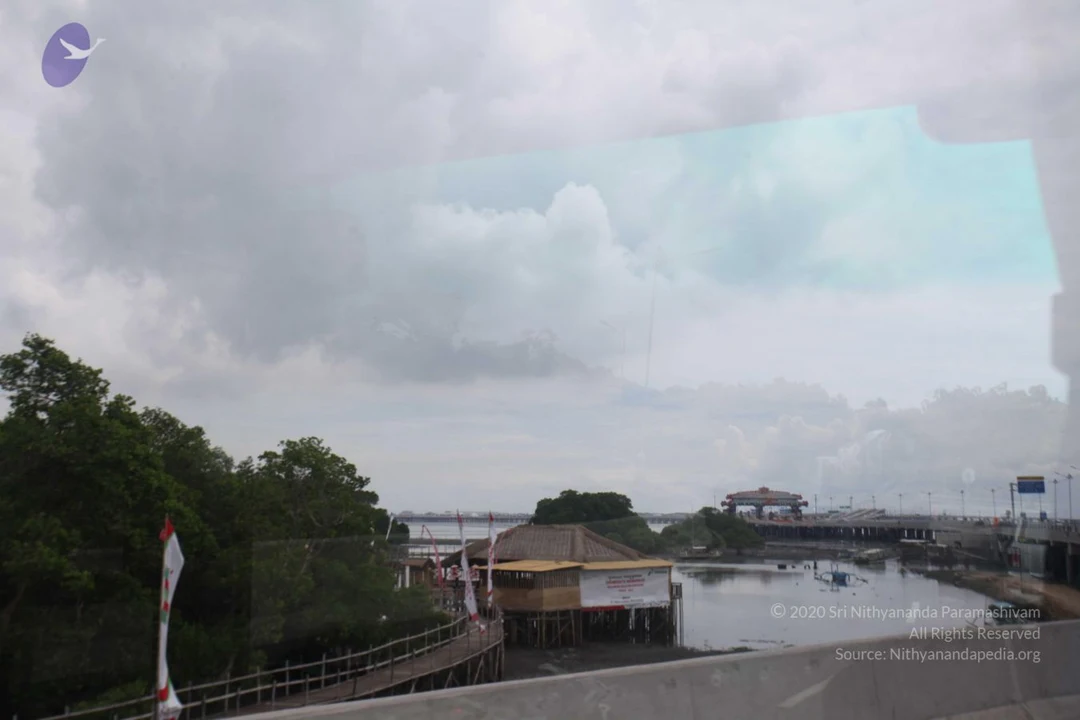
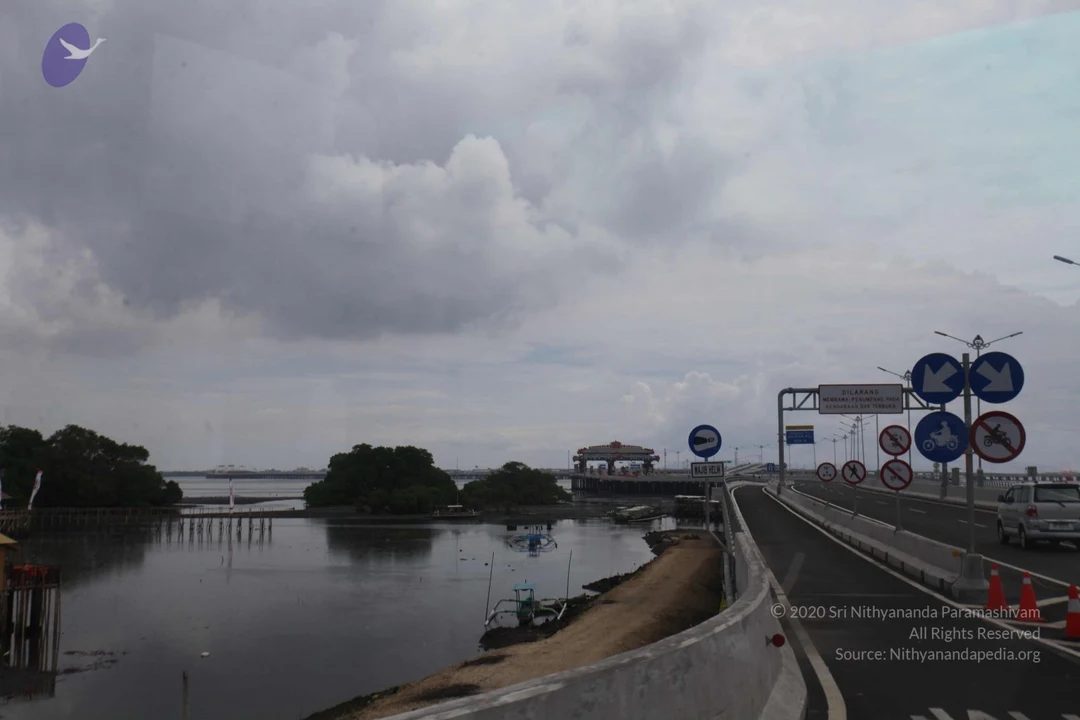
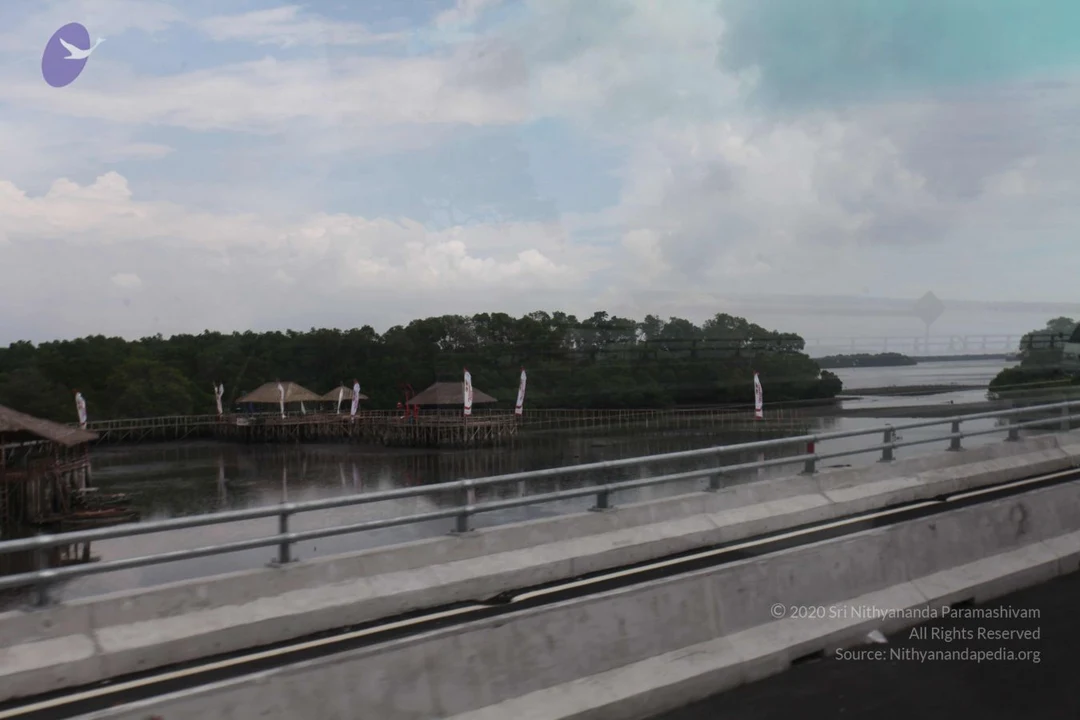
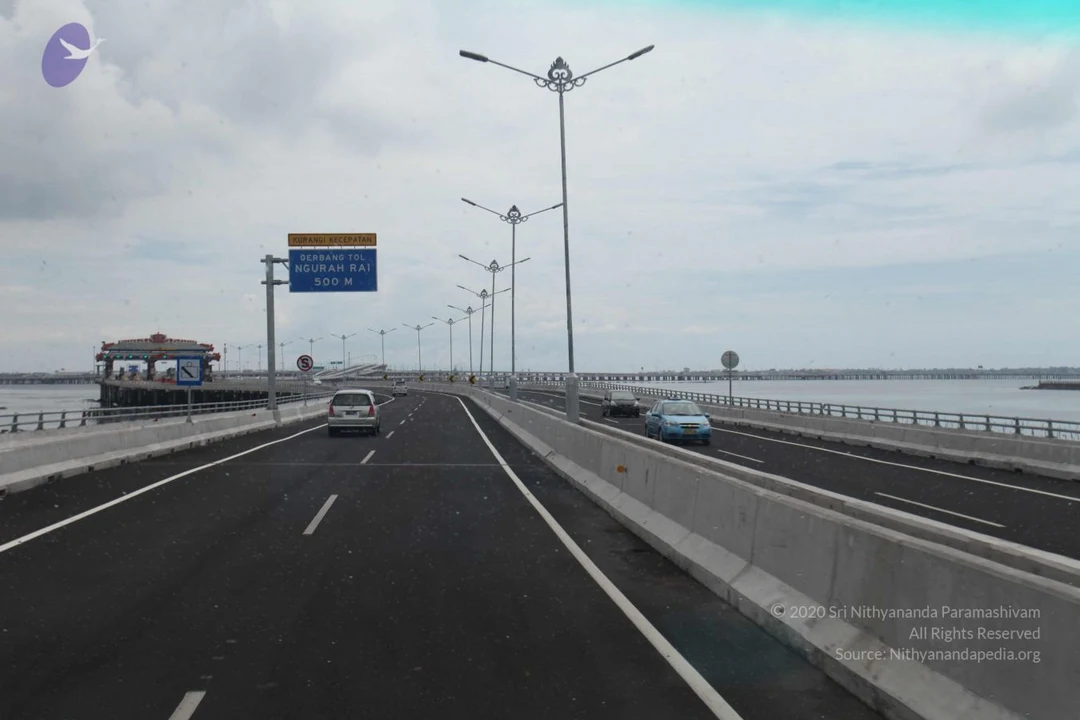
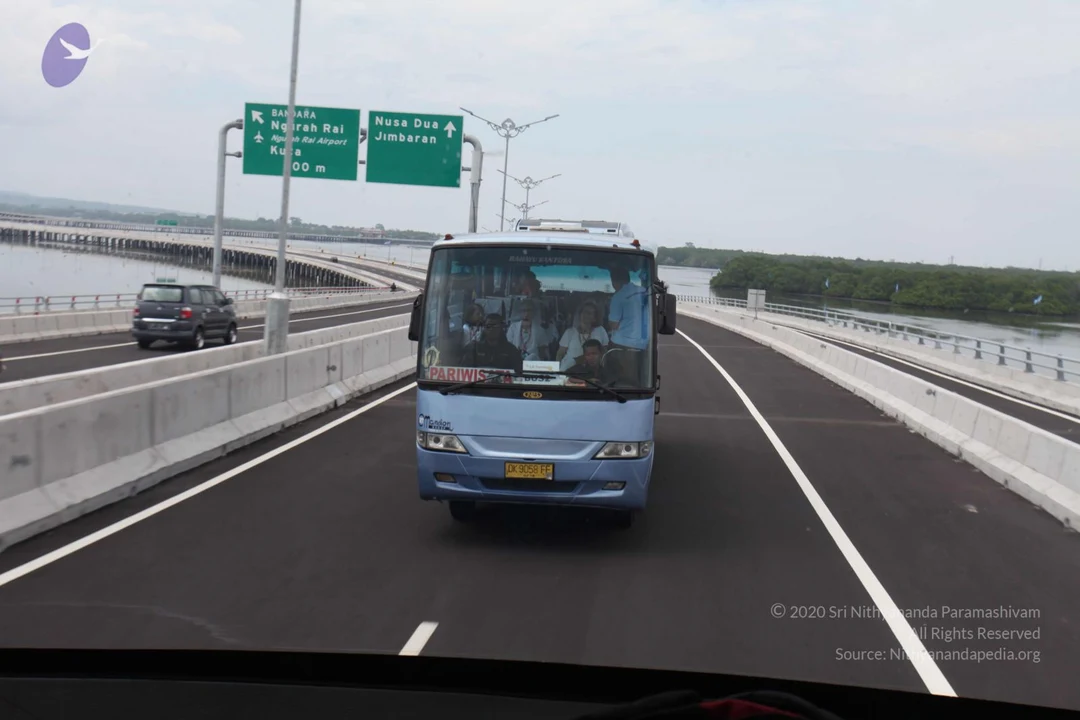
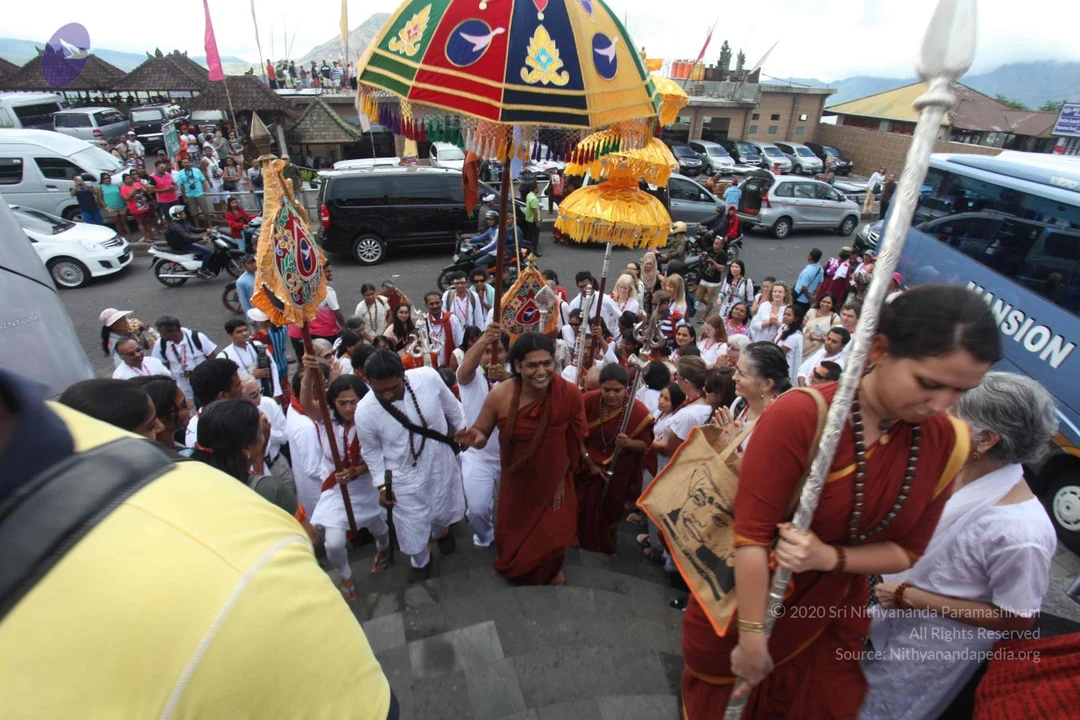
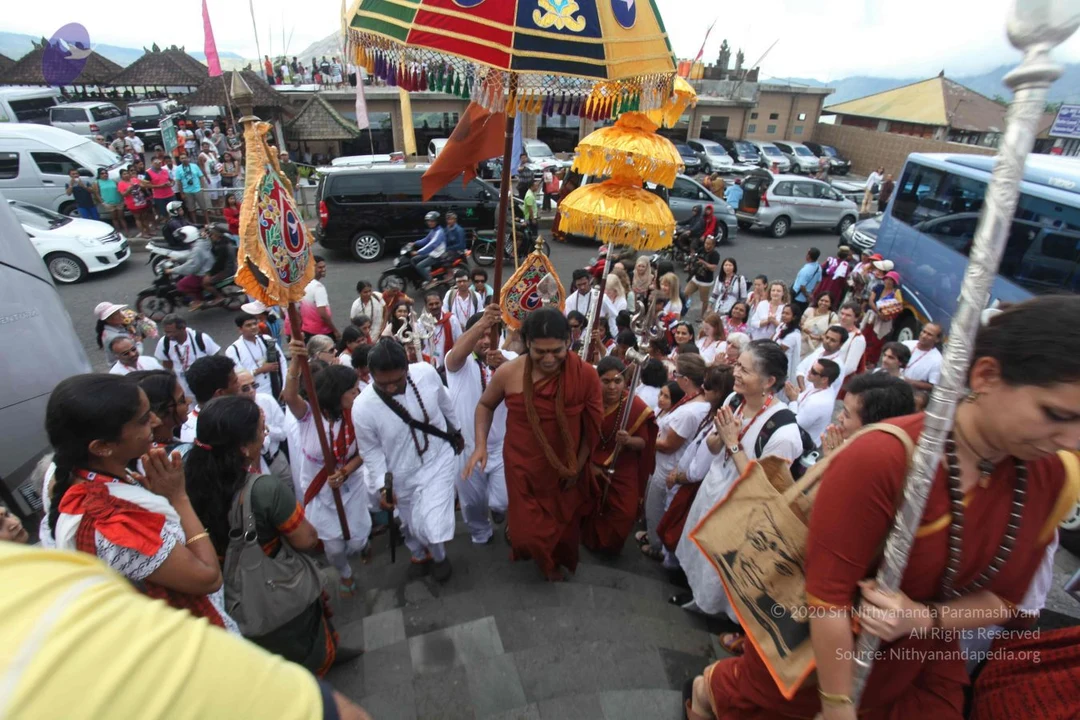
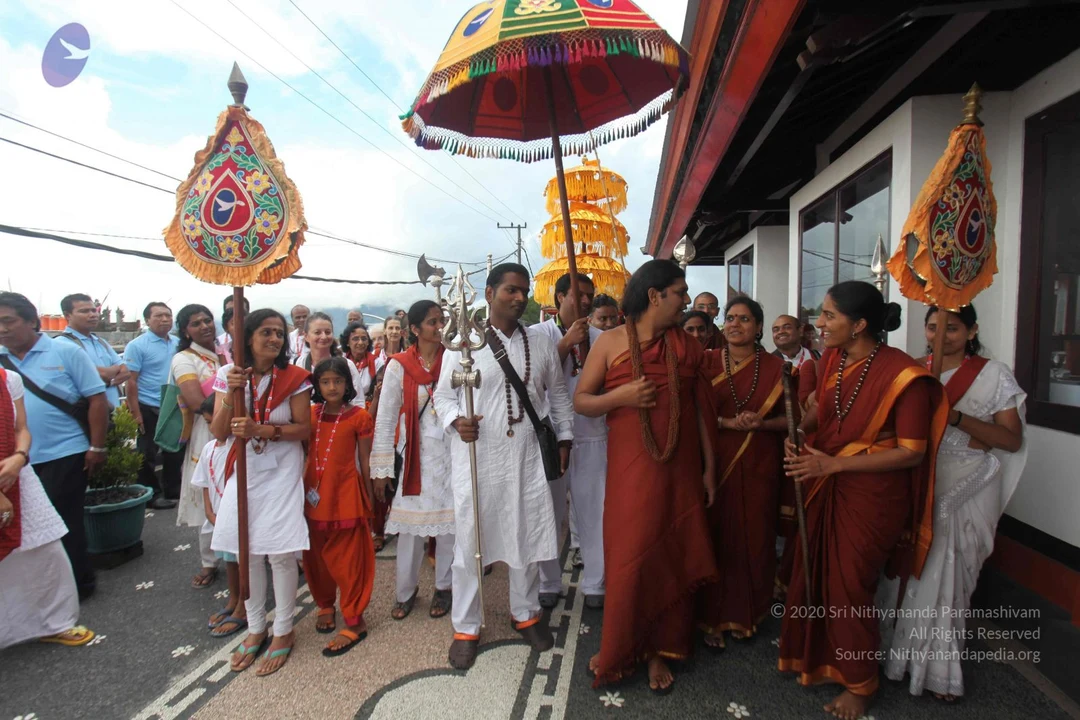
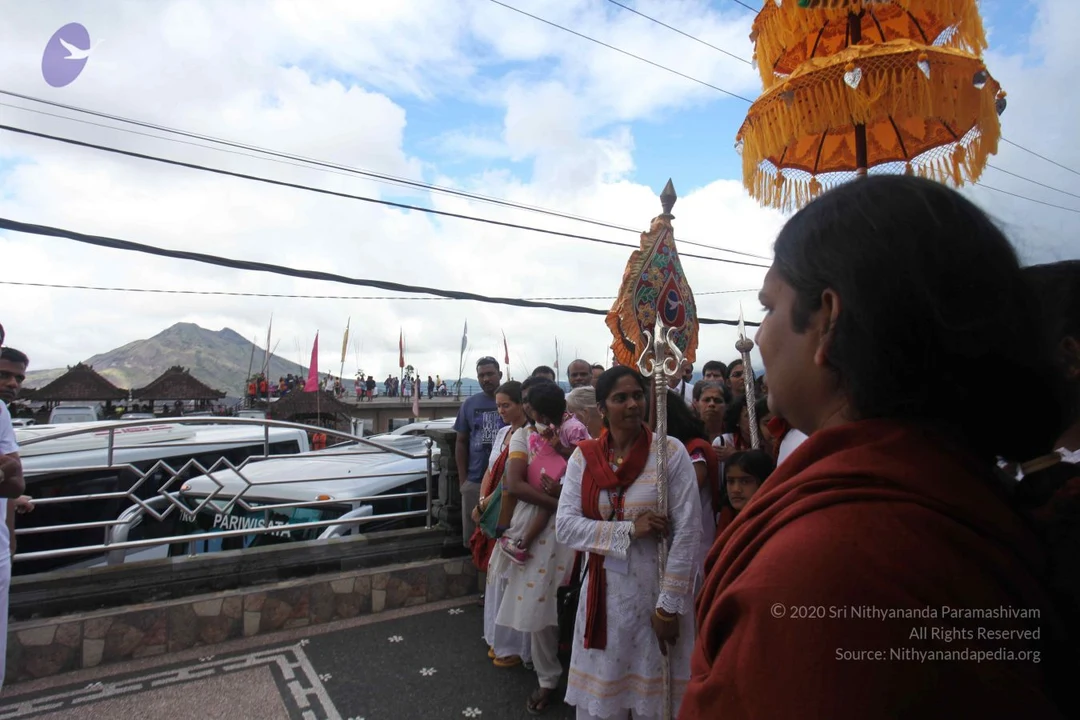
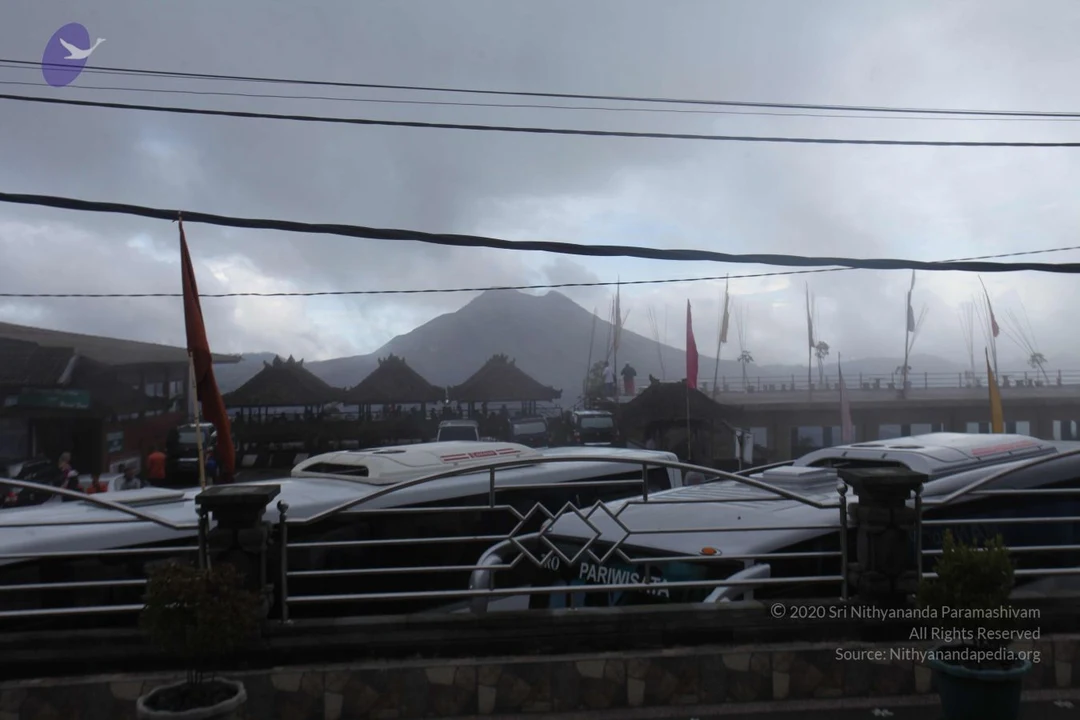
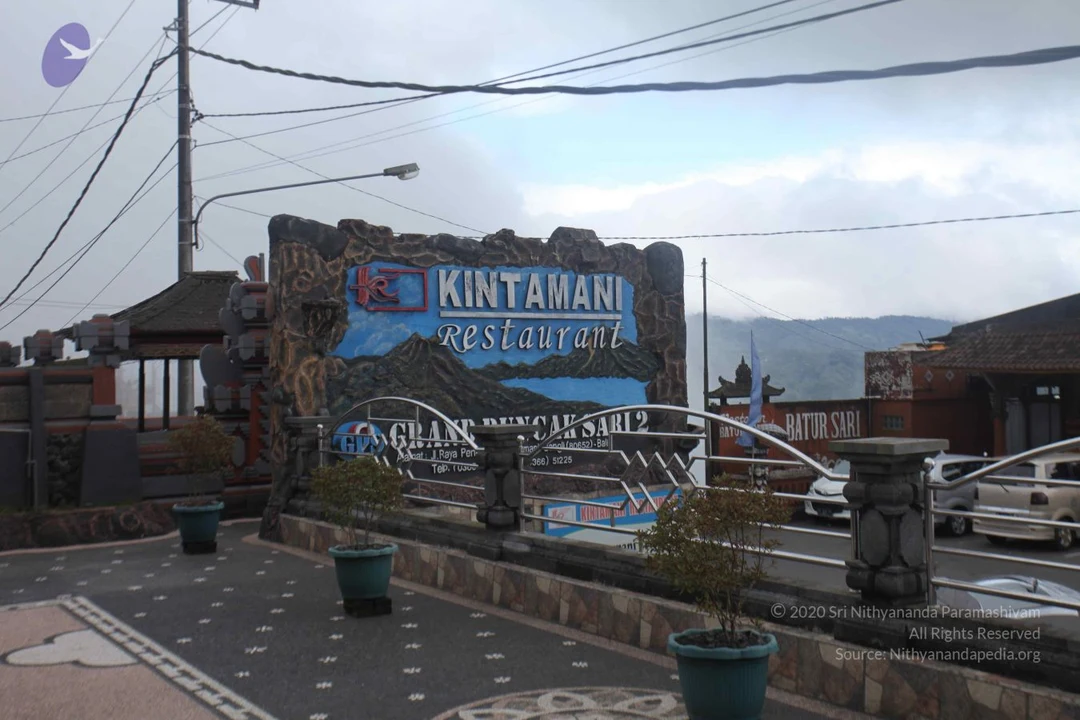
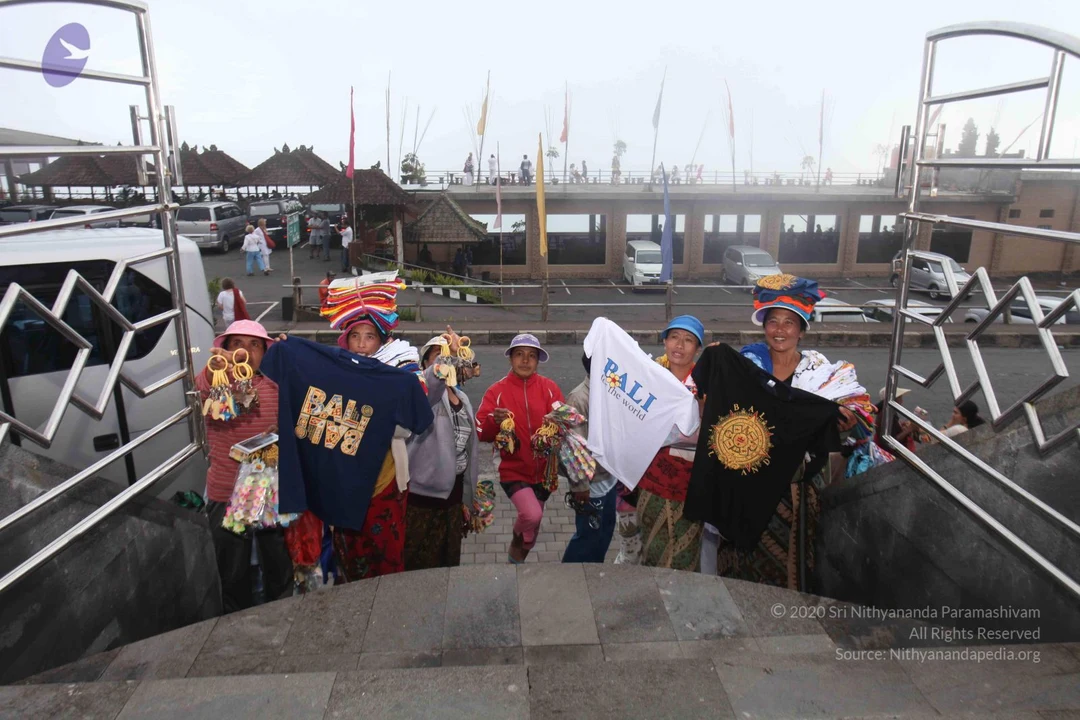
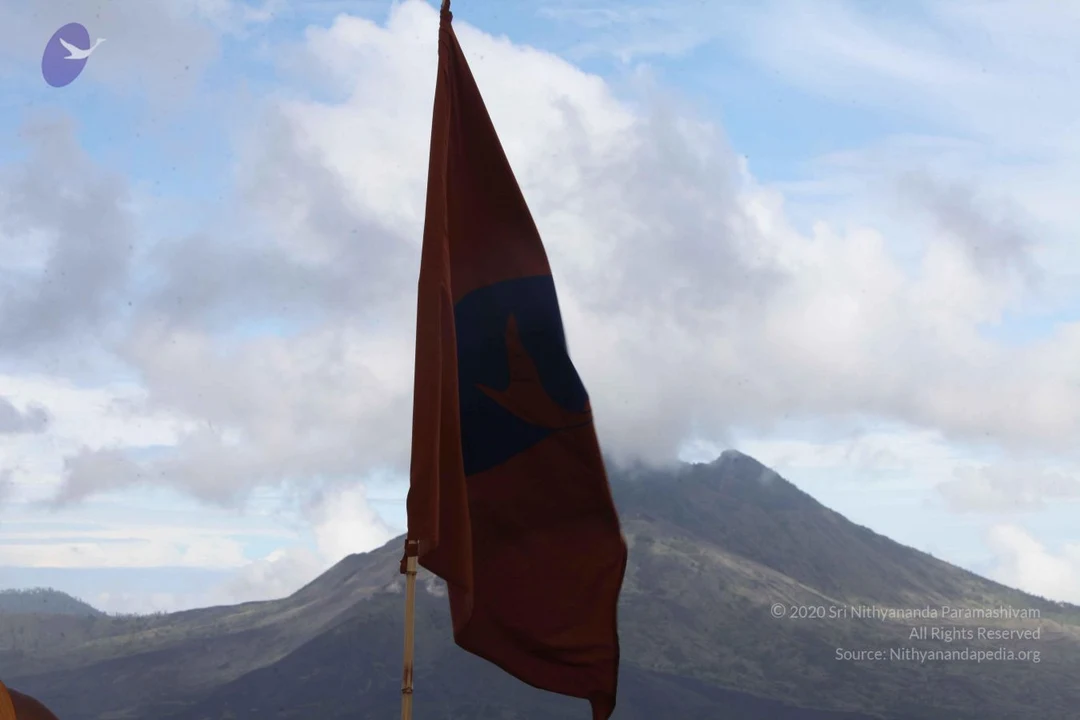
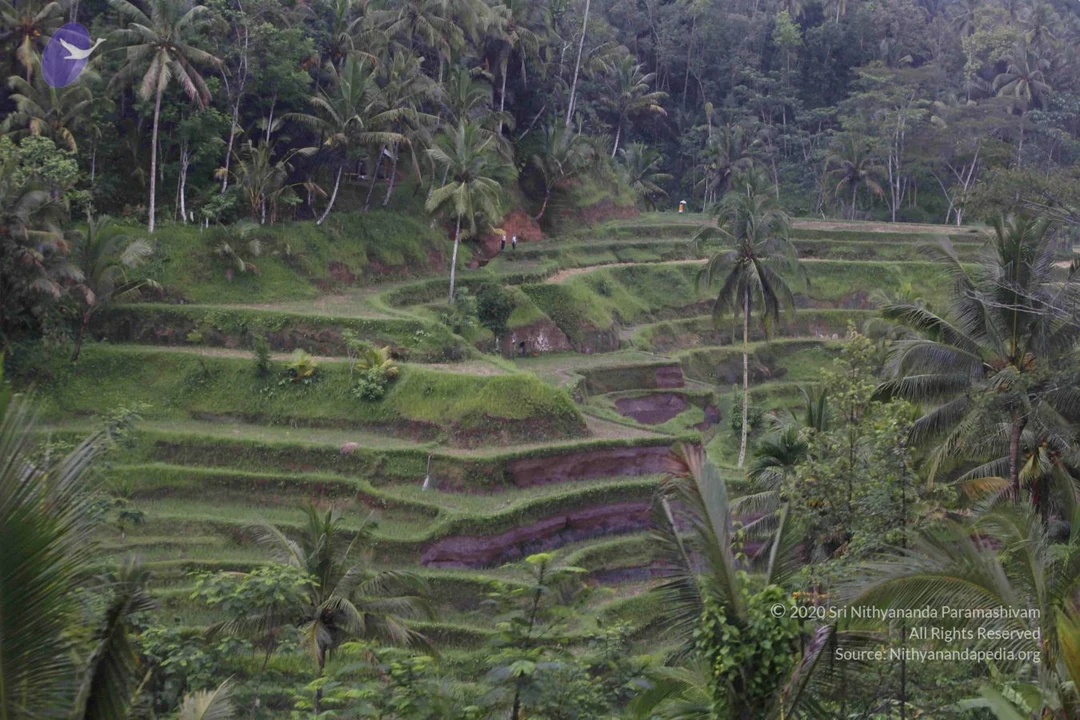
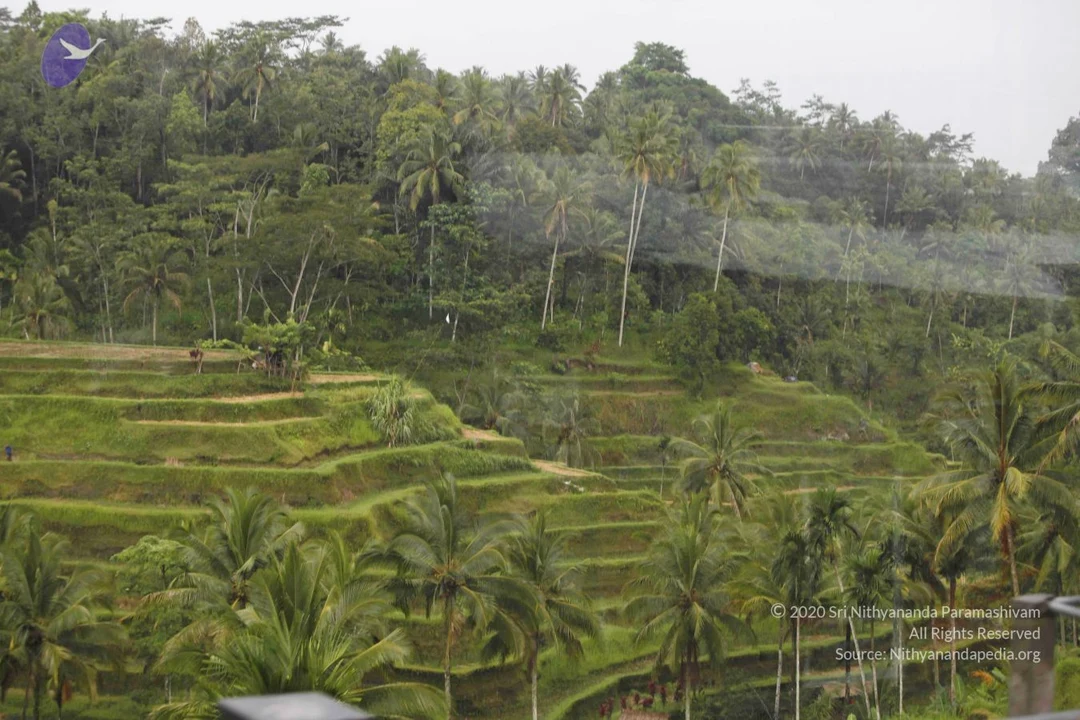
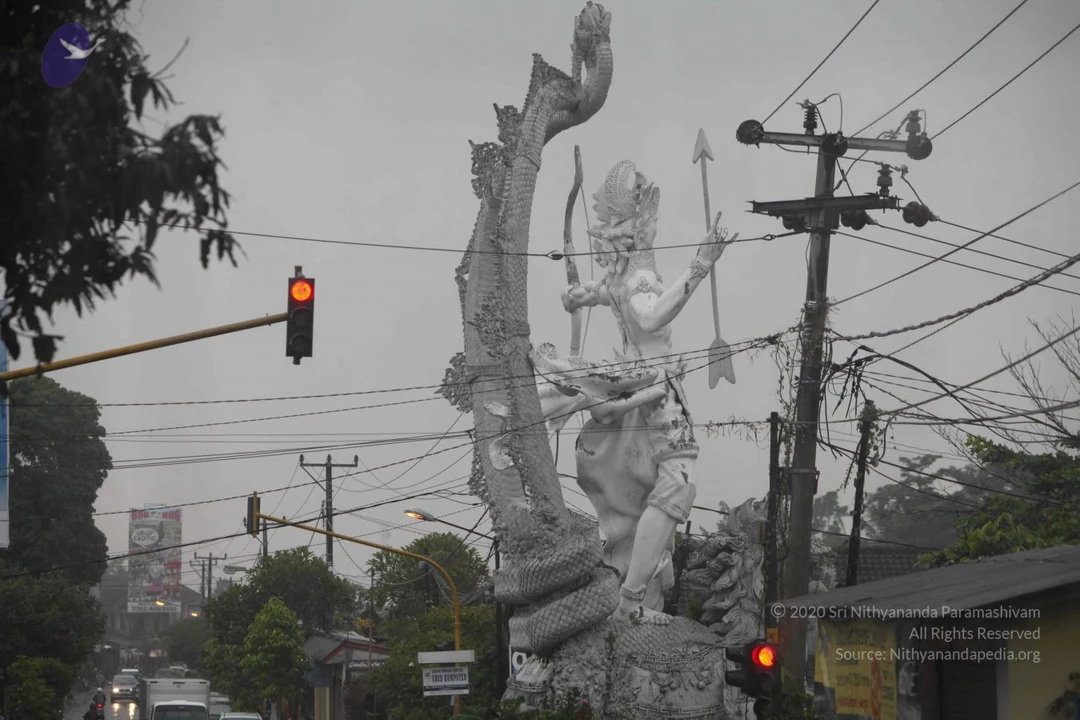
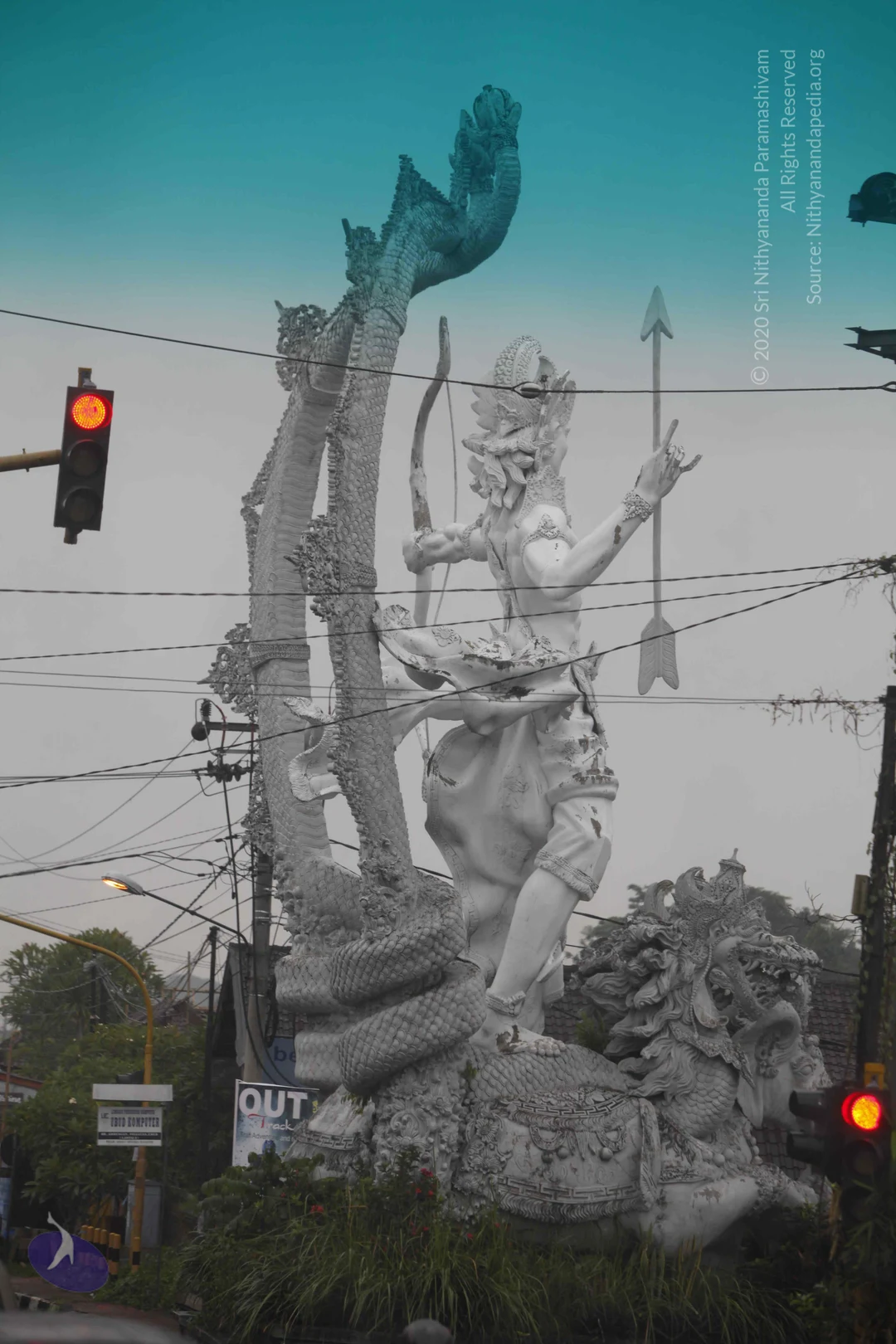
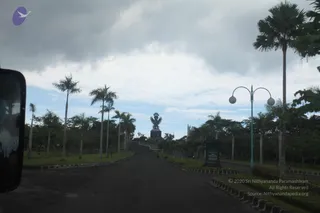
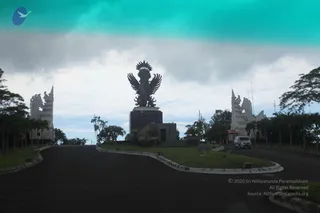
Photograph taken from inside a vehicle through a windscreen, looking down a wide dark paved road lined with tall palm trees and low green shrubs. At the far end, a large stone pedestal supports a dark winged garuda-like sculpture, a bird figure with outspread wings. Green-trimmed lamp posts with round globes stand along the roadside, and a small green signboard sits near the verge. Grey clouds fill the upper sky with patches of blue. No people are visible.A photograph of a paved road curving through a landscaped roundabout toward a large dark bronze statue of a winged figure with a crown-like headdress, set on a tall stone pedestal. Two white ornate gateway towers with carved finials flank the road, with palm and tropical trees around. A white minivan is parked to the right, and cloudy grey-white sky with teal tinting fills the top of the frame. No people are visible.A road photograph taken from a moving vehicle on a multi-lane divided highway under a cloudy teal-tinted sky. A white cement mixer truck is parked on the left shoulder, and a silver minivan and a motorbike rider in a helmet travel down the lanes ahead. Two roadside billboards stand above the road: the left one shows a woman with a floral headdress beside a temple-style building and an AVANI hotel logo, and the right one is blue with a yellow RP 1 headline and a woman in red promoting an SMS service. Green trees line the median and right side, with street lamps, a no-entry sign and a curbed sidewalk.A photograph taken through a vehicle window of a coastal scene under a heavy grey overcast sky. On the left, dense green mangrove trees line a raised wooden walkway with red-and-white flags. In the centre, a thatched-roof stilt hut stands over tidal water, with a large white banner with red lettering on its front. Small boats sit in the shallow water. Beyond, a multi-lane bridge carries traffic toward an ornate red and gold gateway structure on the right. No people are visible.A coastal causeway road under heavy grey clouds, photographed from a moving vehicle. Blue circular traffic signs with white arrows and red-bordered prohibition signs for motorcycles and other vehicles line the right side of a paved two-lane highway, with a white car travelling on the right. On the left, shallow tidal water, mangrove trees and wooden stilts border a low concrete barrier. In the distance a small ornate gateway with a red and gold roof stands at the far end of the causeway. No people are visible.Photograph taken through a vehicle window of a concrete road bridge with metal guardrails running along the left side over calm water. Beyond the railing, a wooden pier on stilts extends into a mangrove shoreline, with thatched-roof pavilions and a row of white pennant flags with red accents. Dense green mangrove trees line the far bank under a pale, cloudy sky, with another bridge faintly visible on the right. No people are visible in the scene.
IA-Darshan

17 photosSource gallery
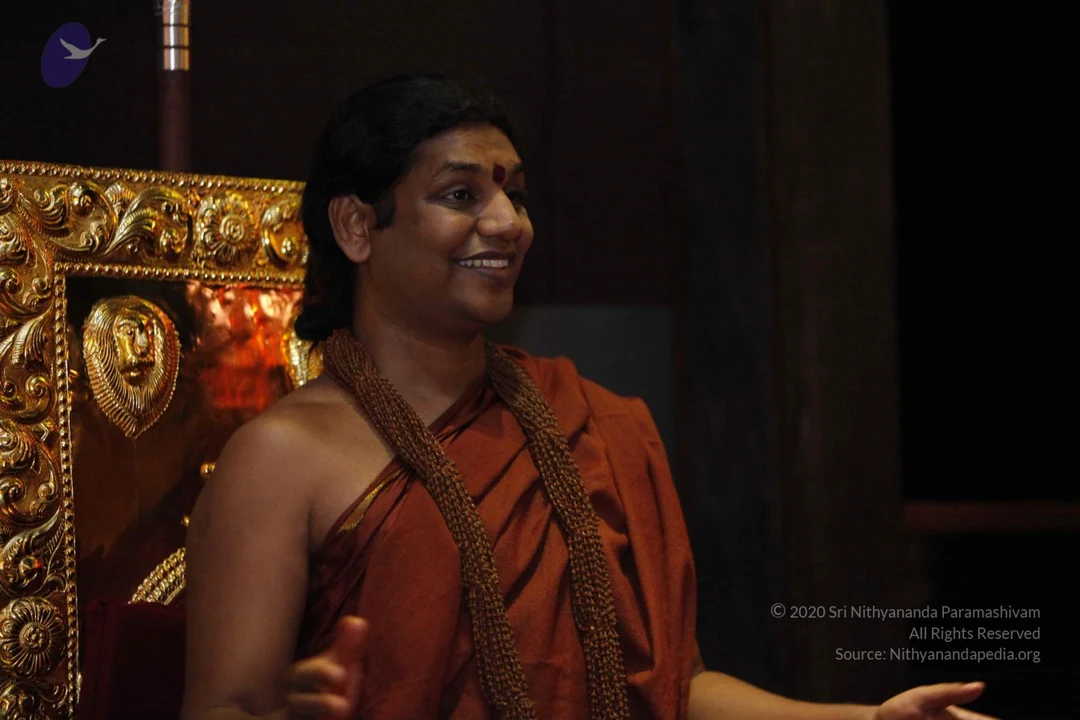
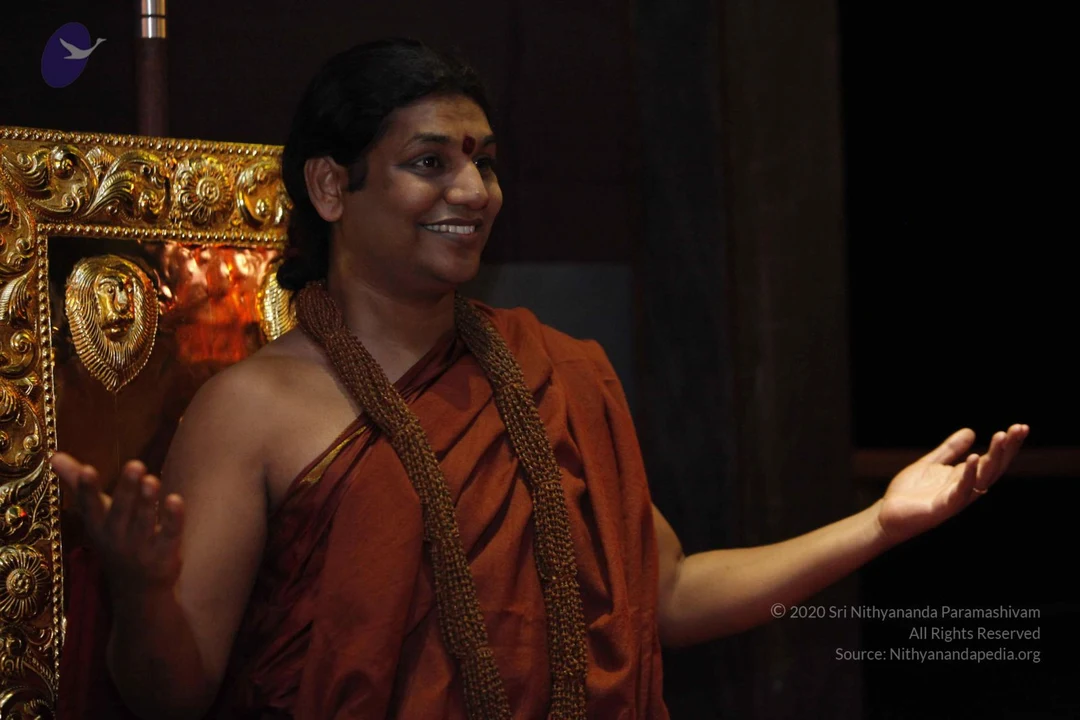
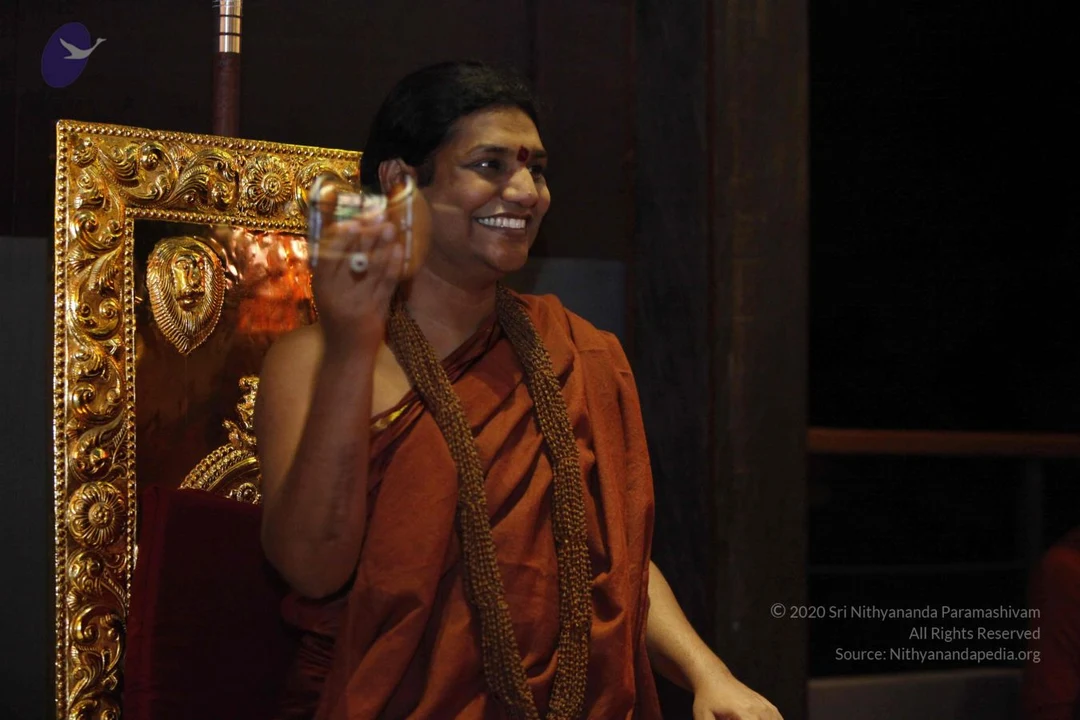
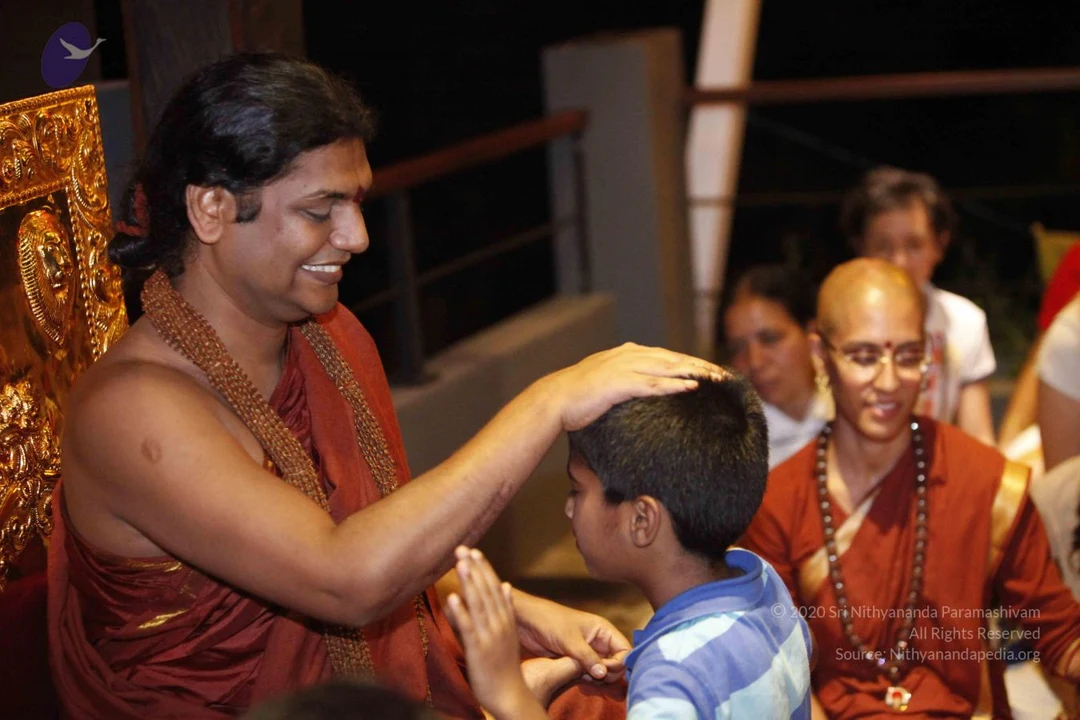
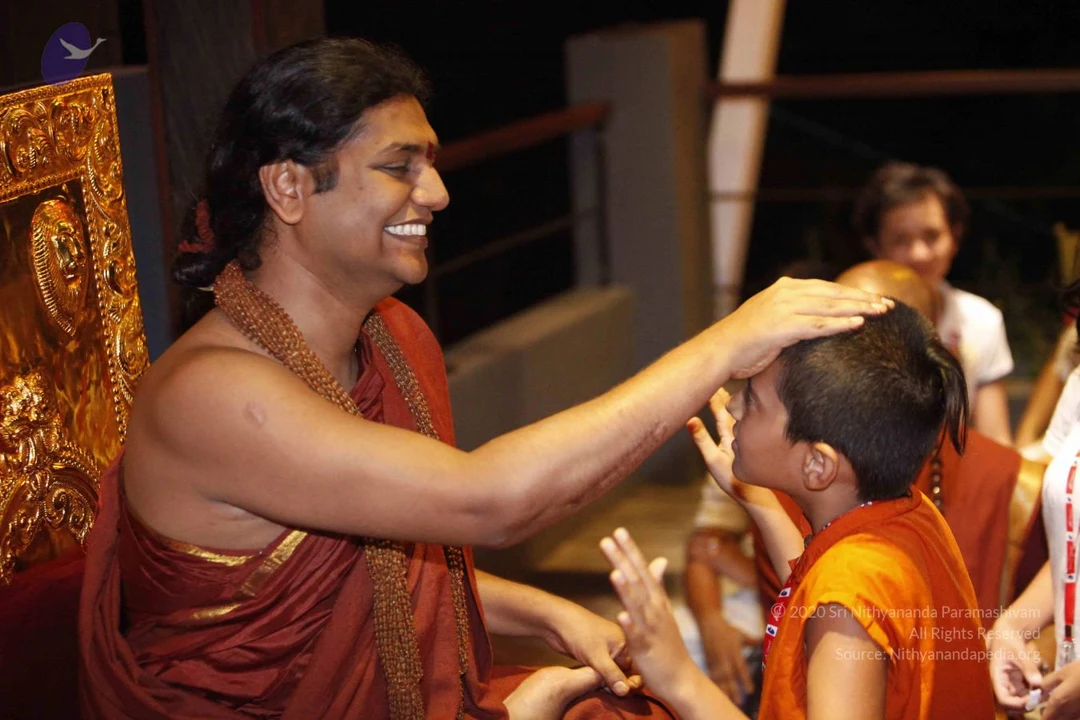
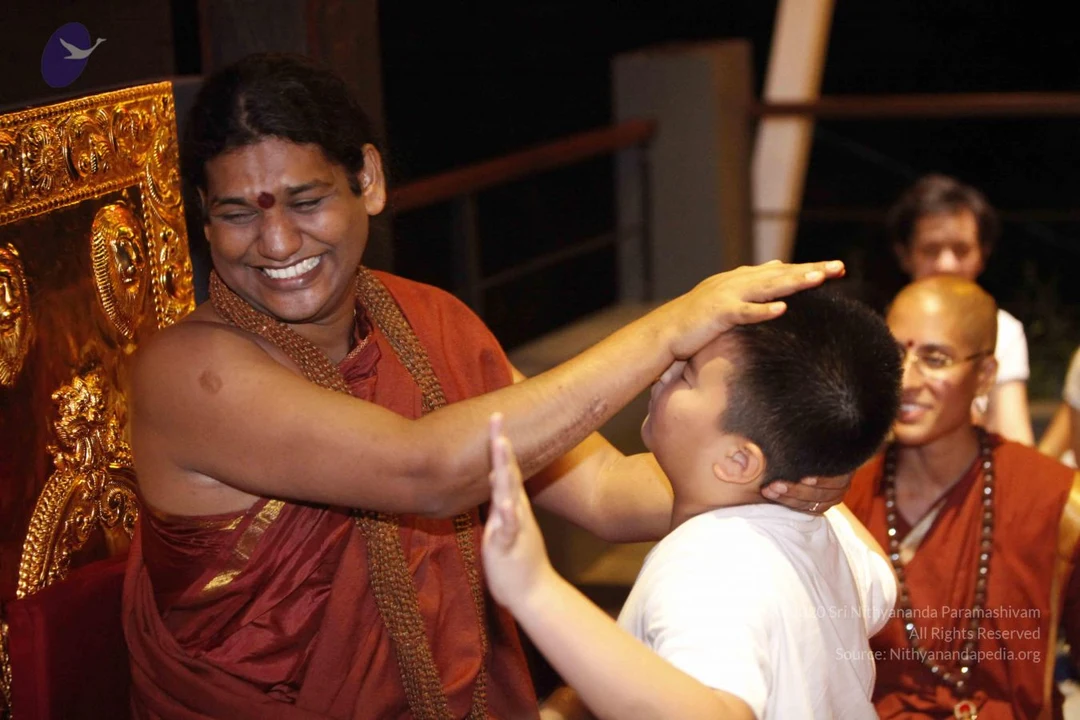
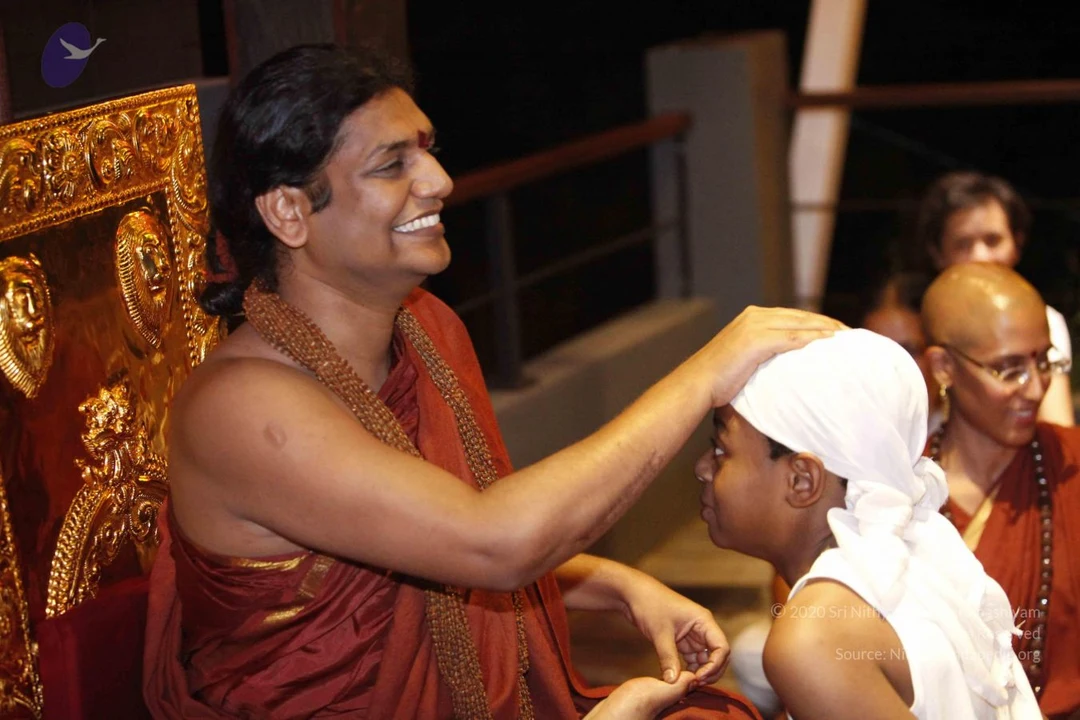
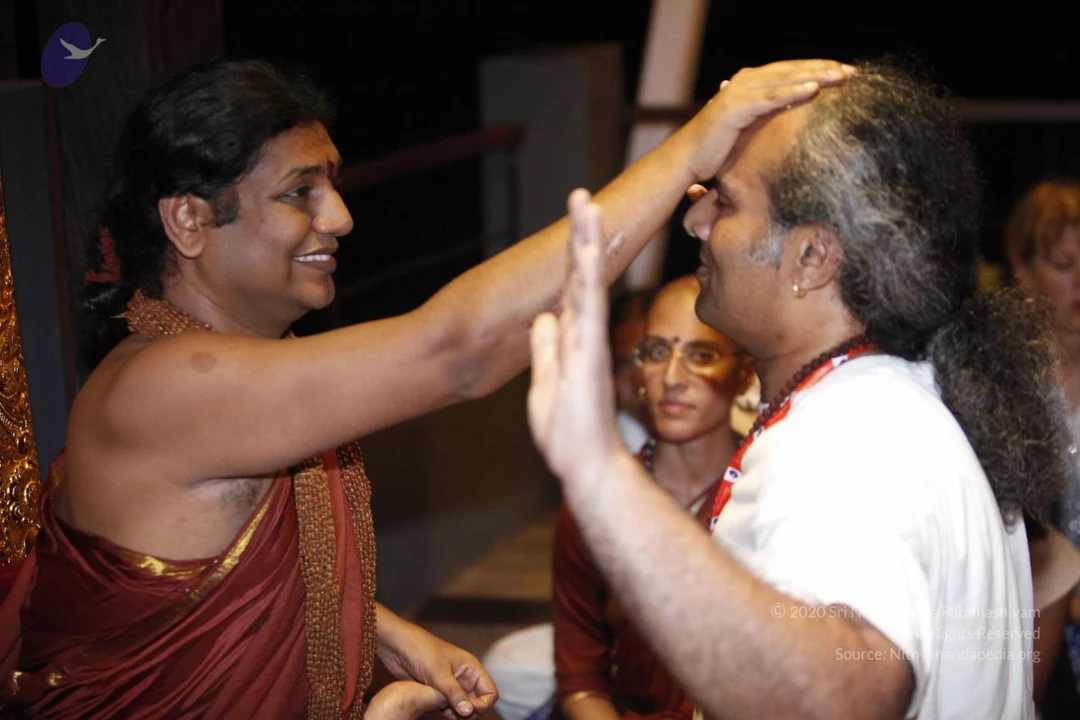
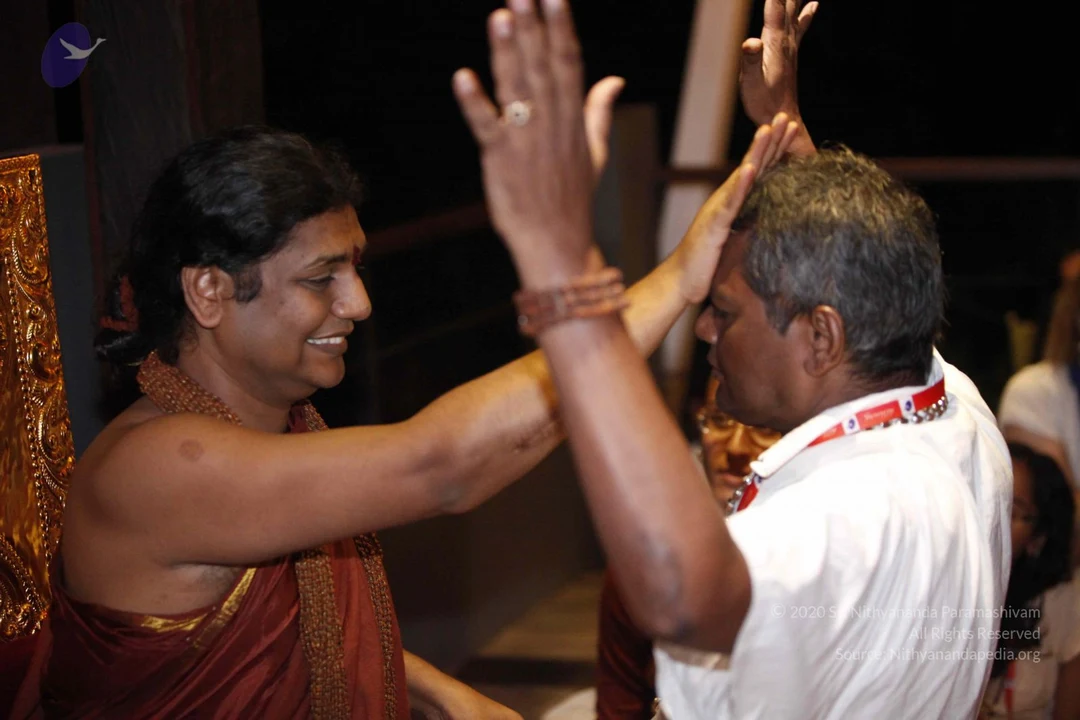
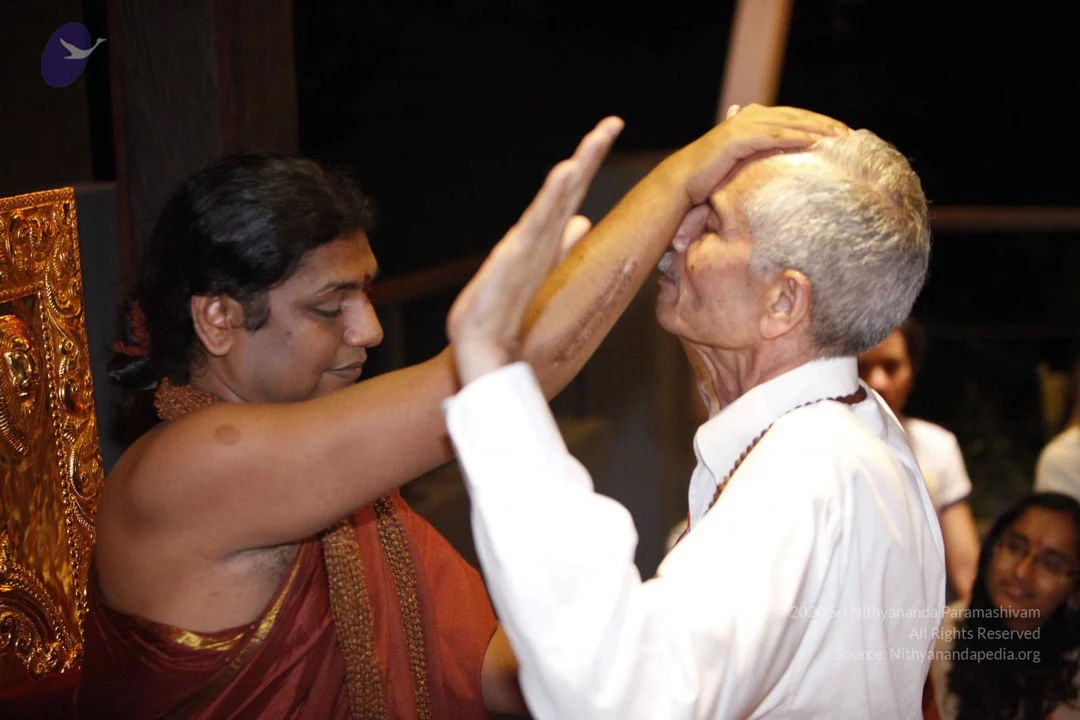
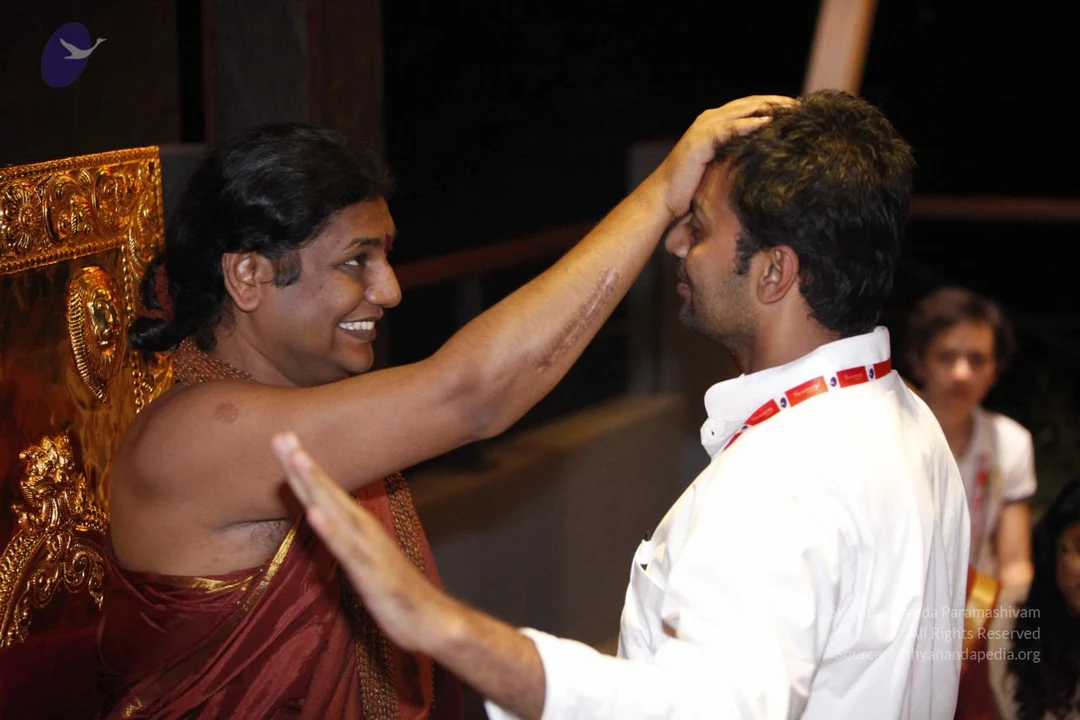
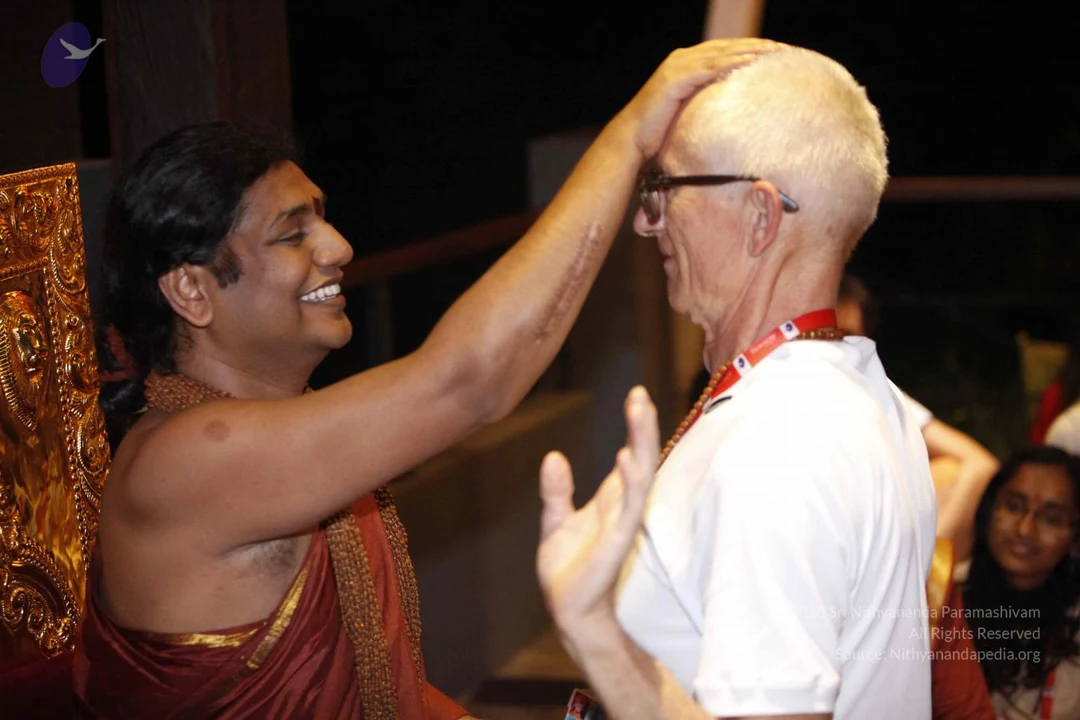
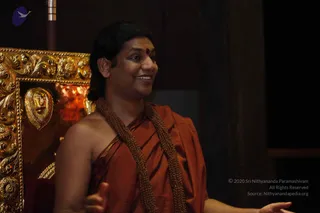
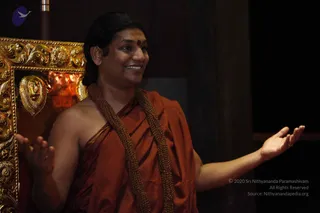
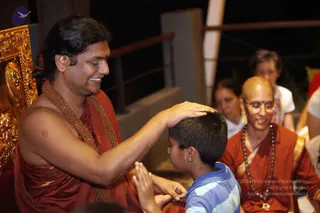
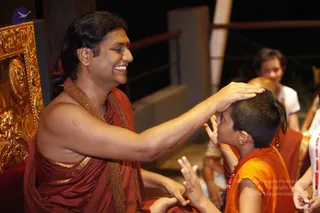
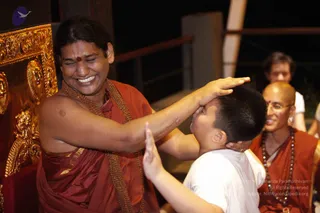
A photograph of a smiling man with shoulder-length dark hair and a small red tilak on his forehead, seated before an ornate gilded throne carved with floral scrolls and a lion-face medallion. He wears a rust-orange shawl draped over the shoulders and a thick gold-toned rope necklace, and gestures open-handed while speaking in a dimly lit hall. Based on the page's indication and his appearance, this appears to be a person, seated and giving satsang discourse at a teaching event. The image is credited to the Nithyanandapedia archive.A photograph of a smiling man with long dark hair swept back, wearing a red-dot bindi on his forehead, a rust-orange draped robe and a thick brown beaded rudraksha-style mala around his neck. He gestures outward with both open hands while seated or standing beside an ornate gilded carved frame with a lion-face motif and a warm orange-lit backdrop. The dark room background suggests a satsang setting. Appearance-based cues: long swept-back hair, orange robe and beaded mala; probable Swamiji (probable), in person, speaking to an audience.A smiling person in a saffron-orange robe stands beside an ornate gold-framed throne with carved lion-head motifs and a red cushion. The person wears a long rudraksha mala draped over the shoulders, a red bindi on the forehead, and a ring on the right hand, while holding a small object near the face. Dark wooden background, a warm spotlight, and a partially visible second figure in orange at the right edge.A photograph of a seated man with long, swept-back dark hair, a vertical tilak on his forehead, layered rudraksha malas and a red-orange shawl over bare shoulders, placing his right hand on the head of a young boy in a blue-and-white striped shirt. The man sits beside a gilded throne with carved lion-face details. Behind them, a bald man in an orange-red robe with a rudraksha mala and gold border smiles, and other seated people sit in the darkened background, with a railing visible. Swamiji (probable): the seated man in the orange shawl with long hair, rudraksha malas and gilded throne, shown blessing the boy.A photograph of a man with long swept-back dark hair and a red-orange shawl draped over bare shoulders, wearing a brown-beaded rudraksha mala and a gold-ornamented necklace, smiling broadly as he places his right palm on the forehead of a young boy in an orange robe with a dark ponytail. The man sits beside an ornate gold-carved throne. Other people in orange and white clothing stand in the background at a dim, outdoor-lit gathering. Probable Swamiji cues: long swept-back hair, rudraksha mala, ornate gold necklace, shawl over bare shoulders, and seated on an ornate throne, performing a blessing.A smiling man in a red-orange robe and red-orange shawl with a red bindi sits in front of an ornate gold-carved throne, placing his right palm on the head of a young boy in a white t-shirt who leans forward with his hands together. A bald man with glasses in a rust-red robe and a beaded mala stands behind them, smiling, with another person partly visible at the upper right against a dark evening backdrop. The scene has the feel of an blessing moment during a gathering, with a gold-carved chair and wooden railing visible. The seated man is appearance-consistent with the page's a person reference but the cues are not distinctive enough to confirm, so his role is described as a seated man giving a blessing.
paduka-puja
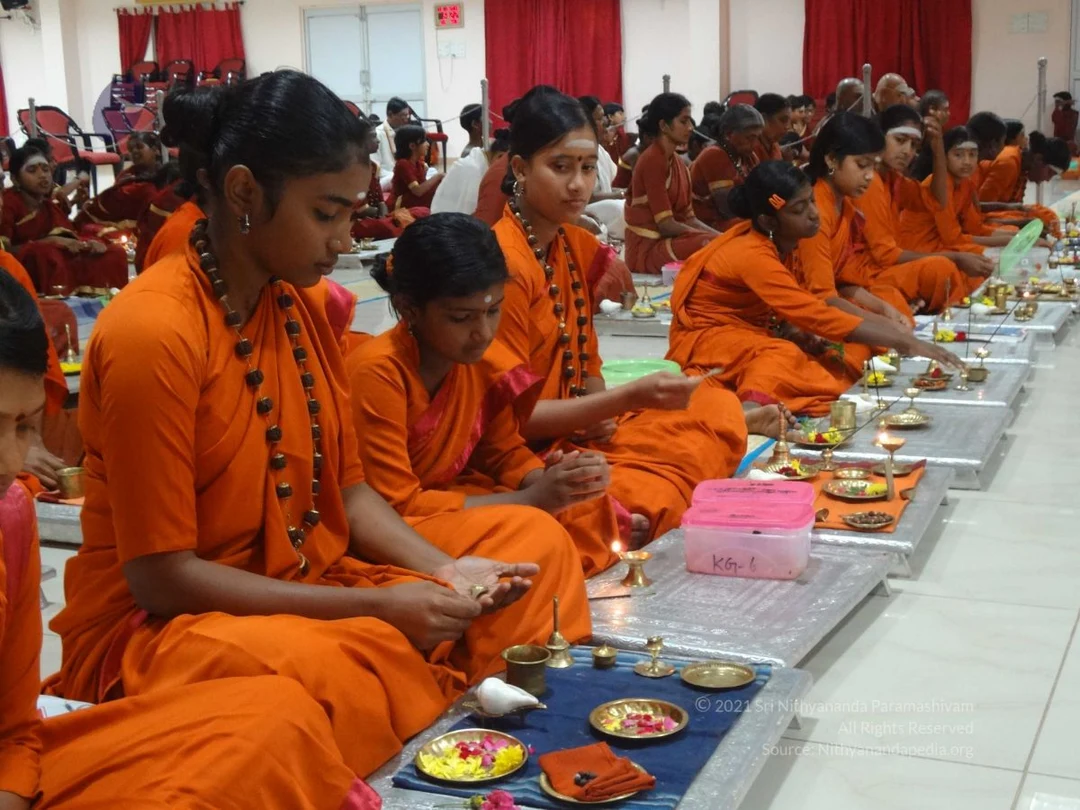
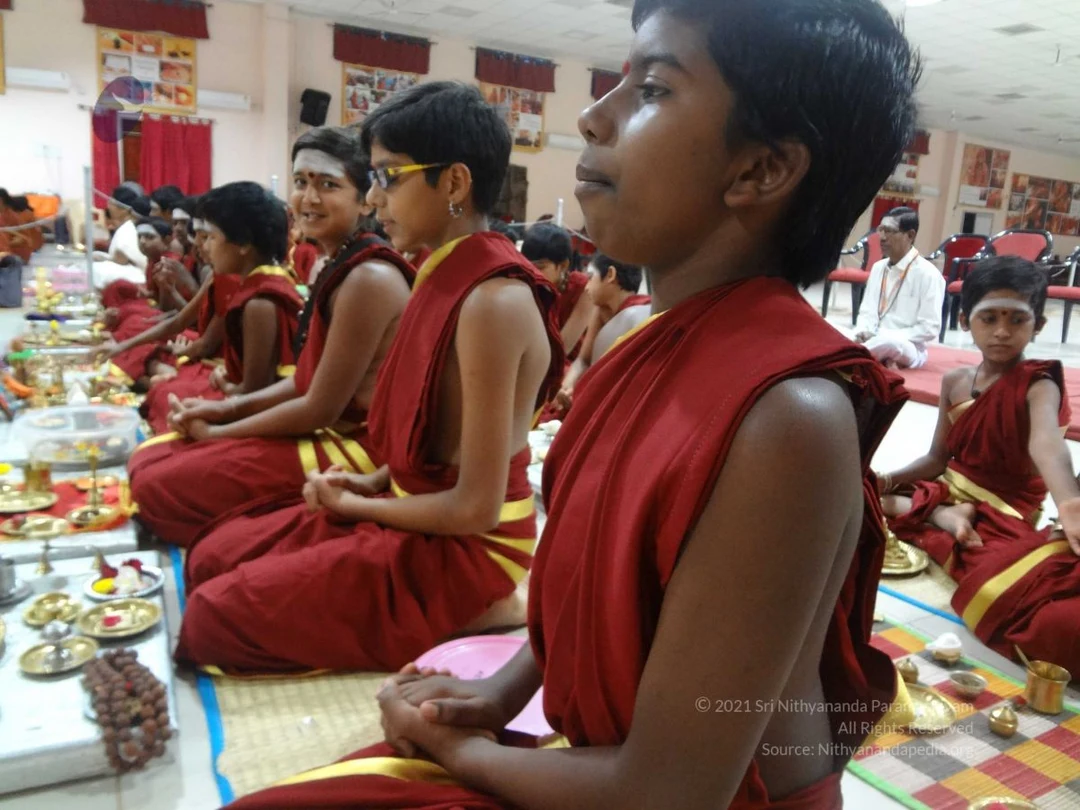
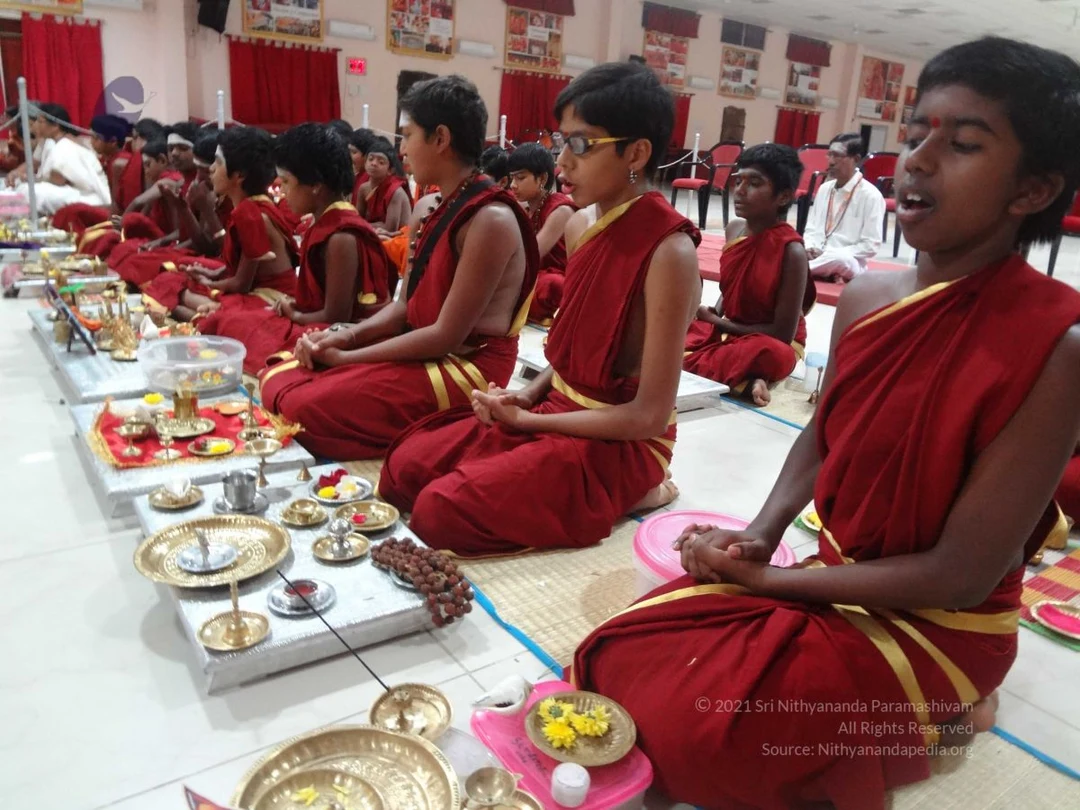
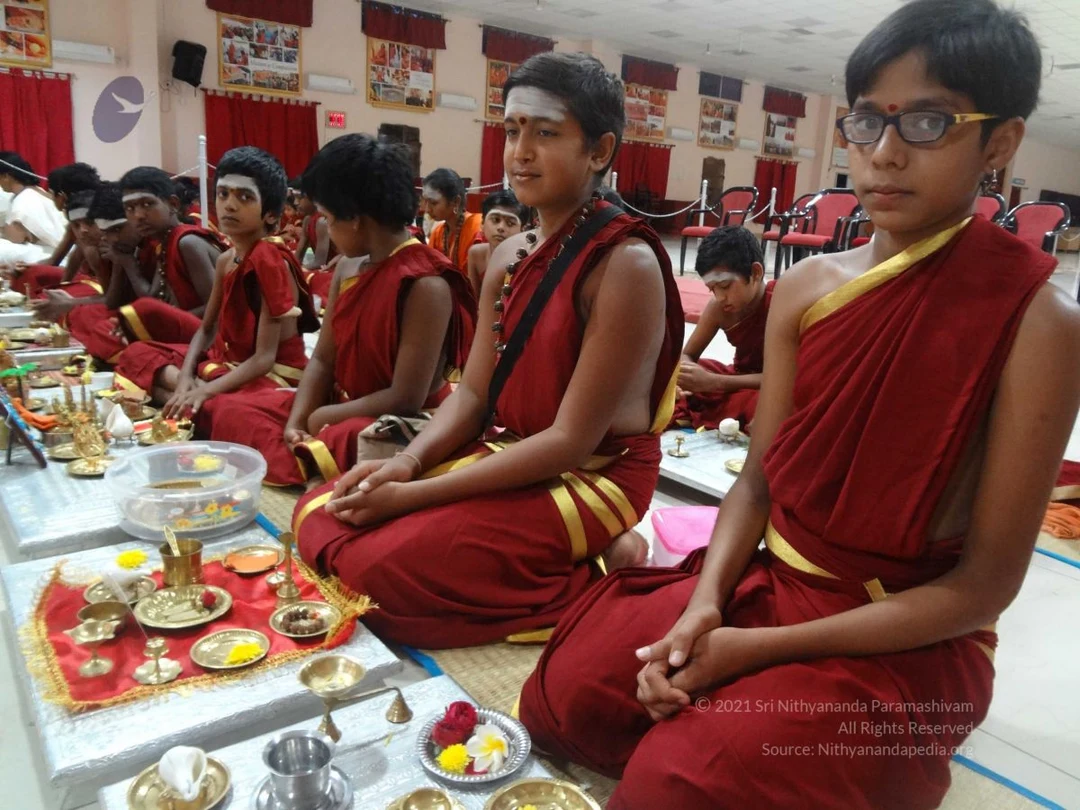
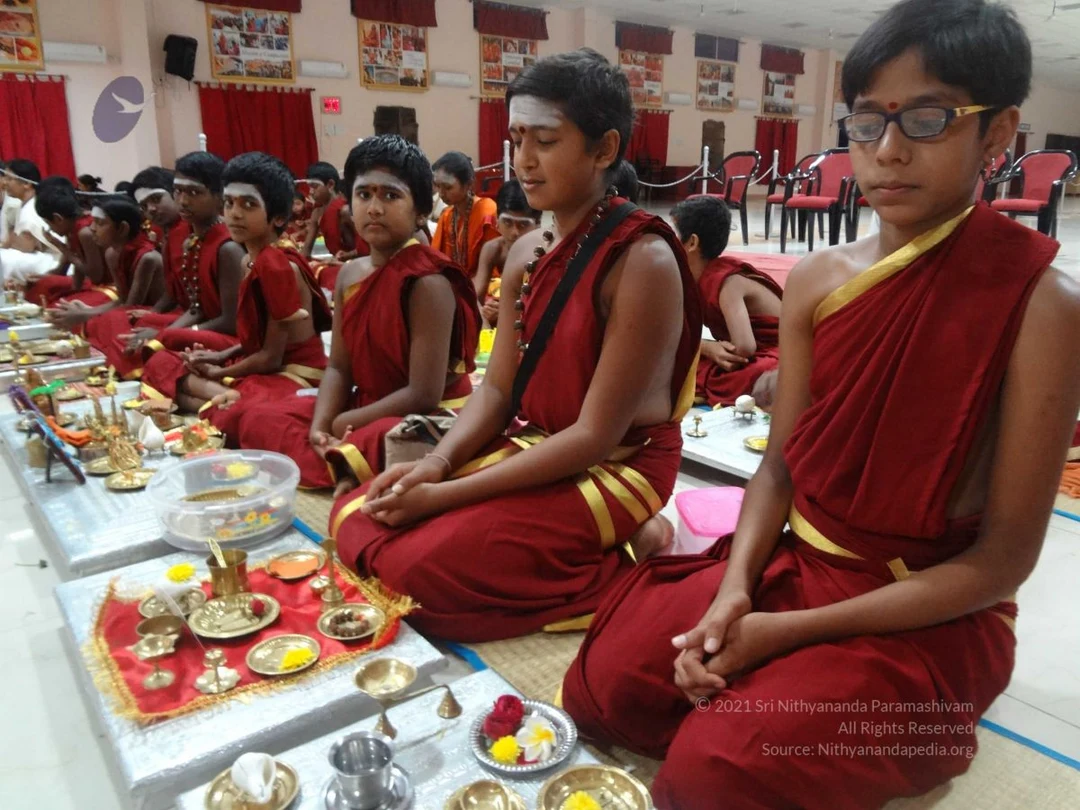
36 photosSource gallery
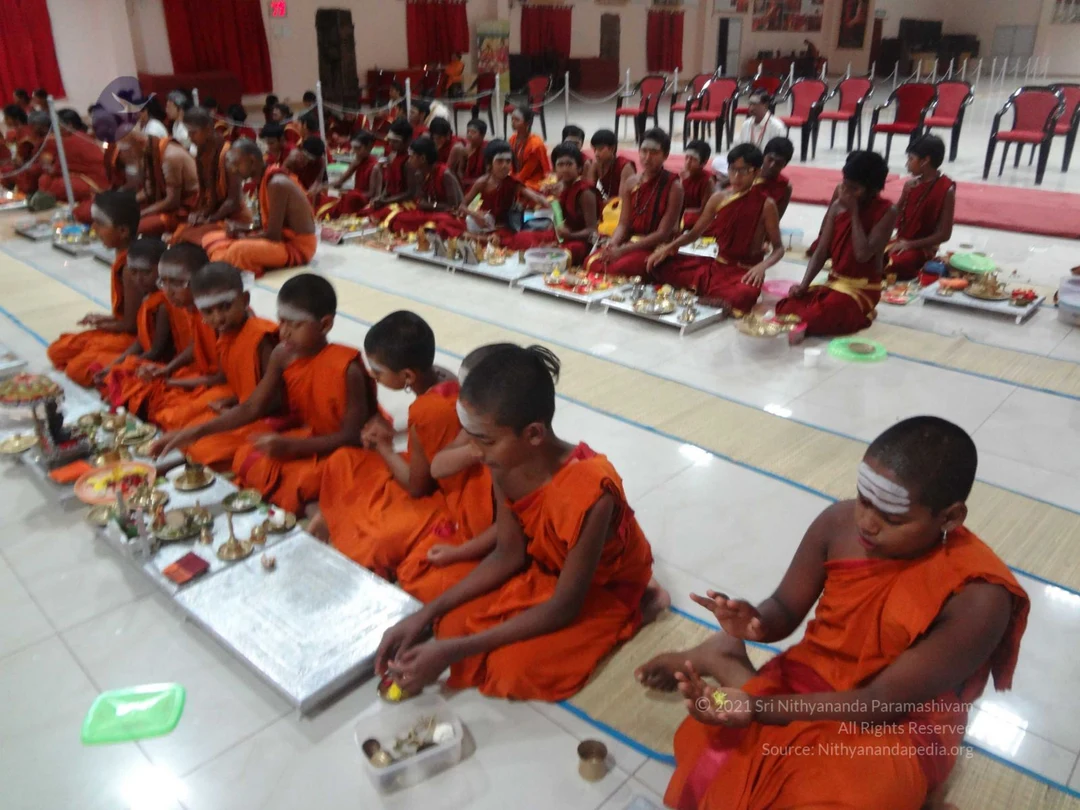
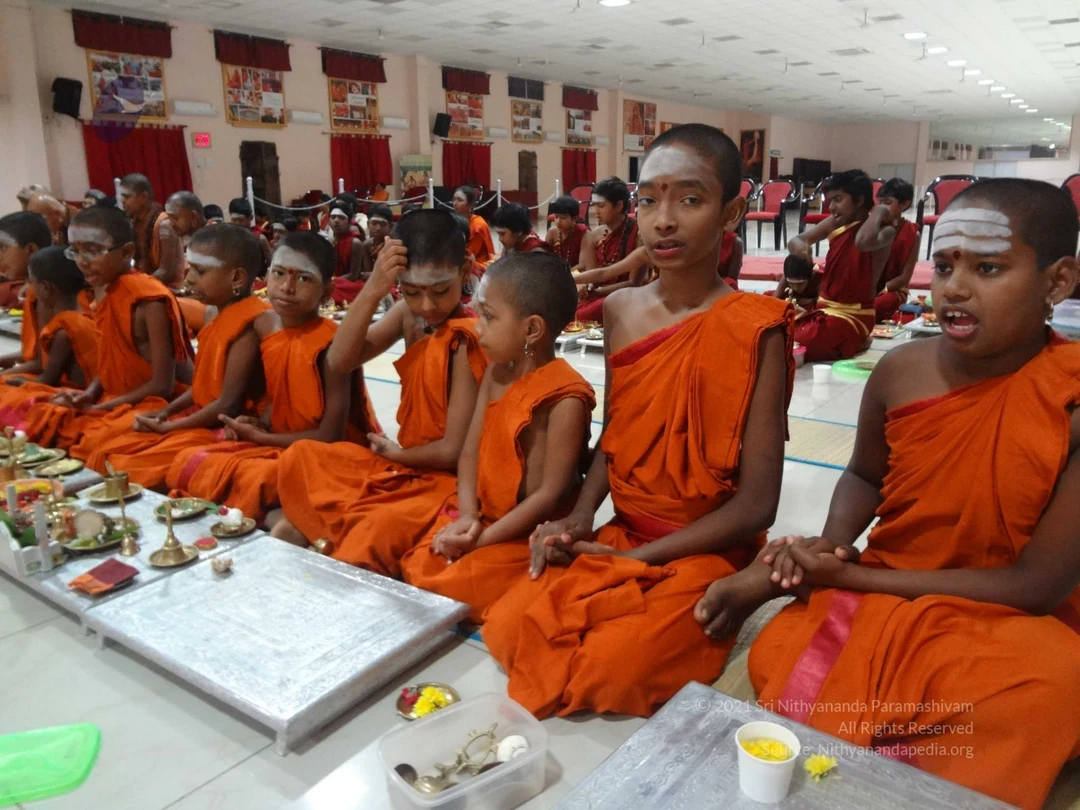
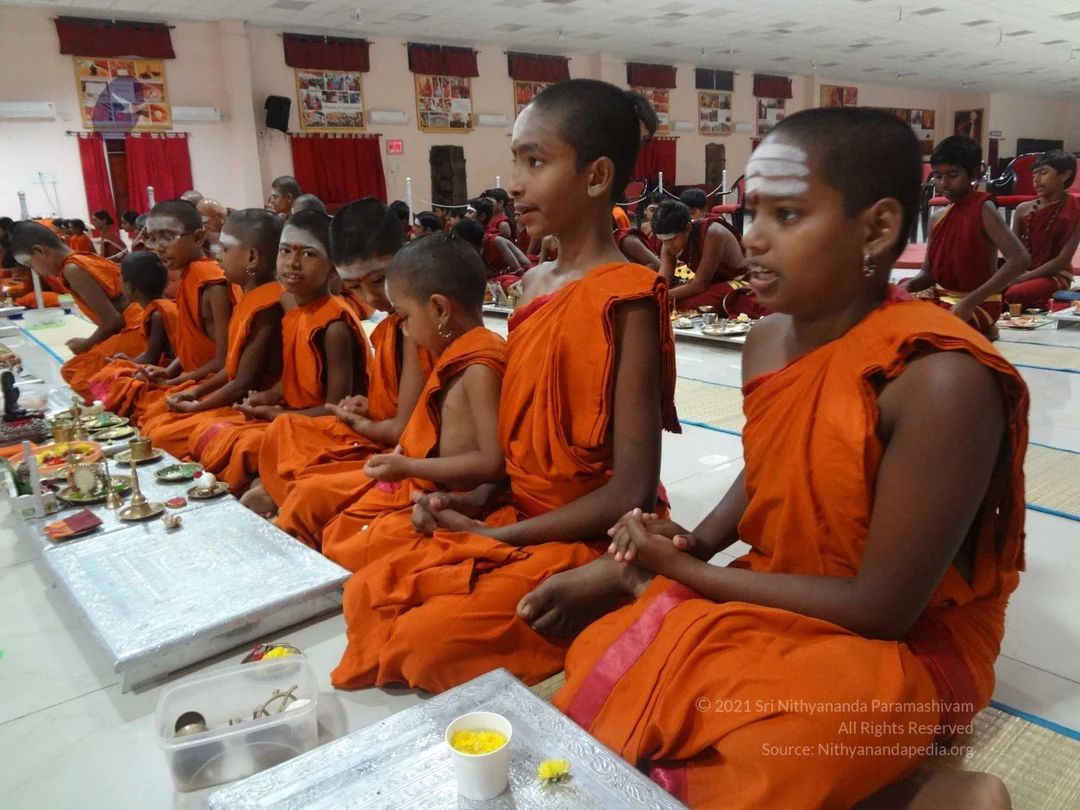
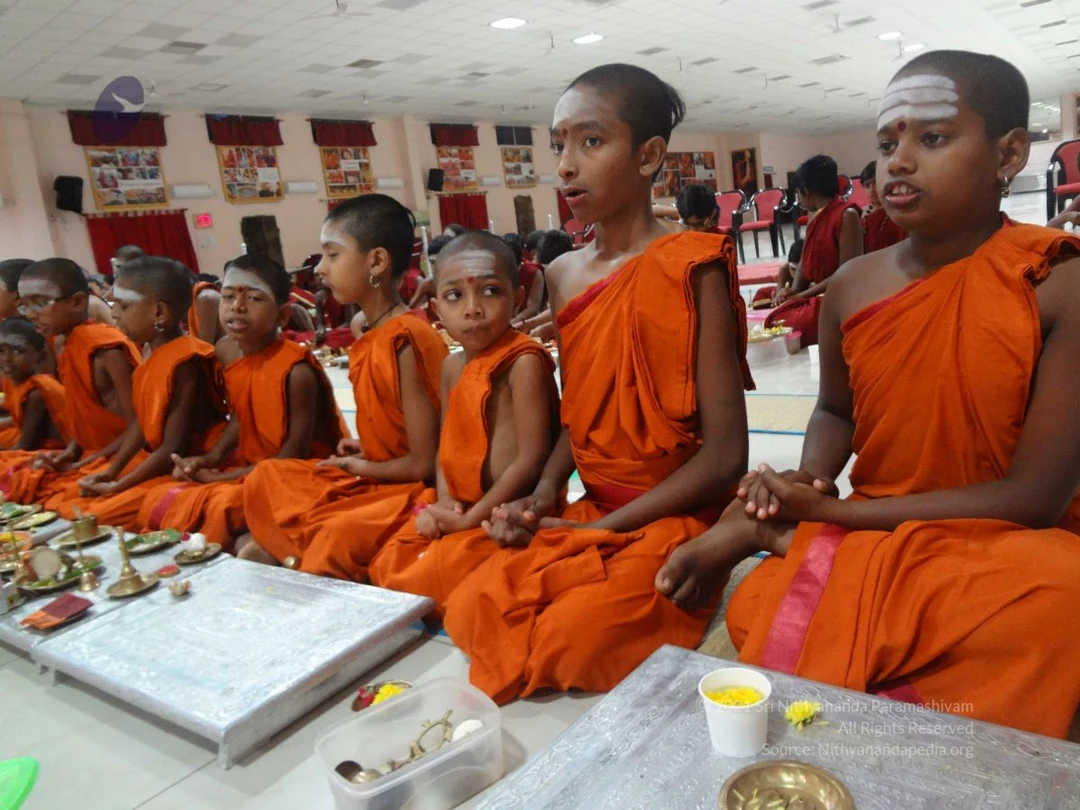
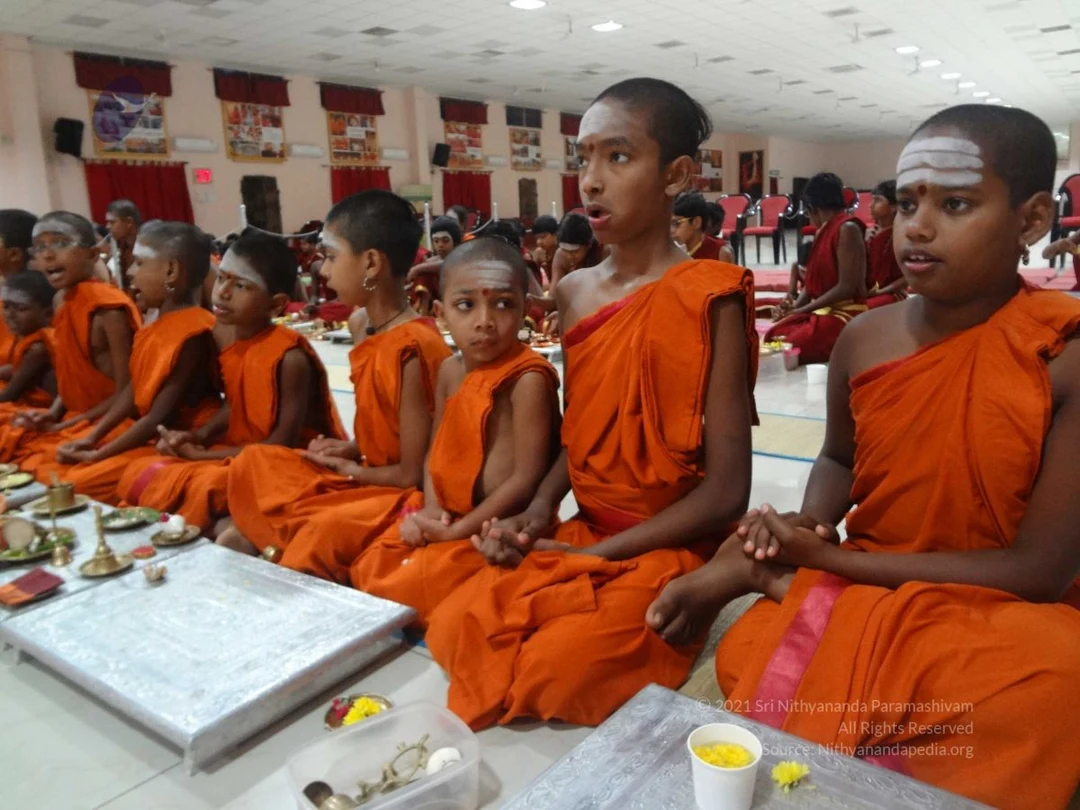
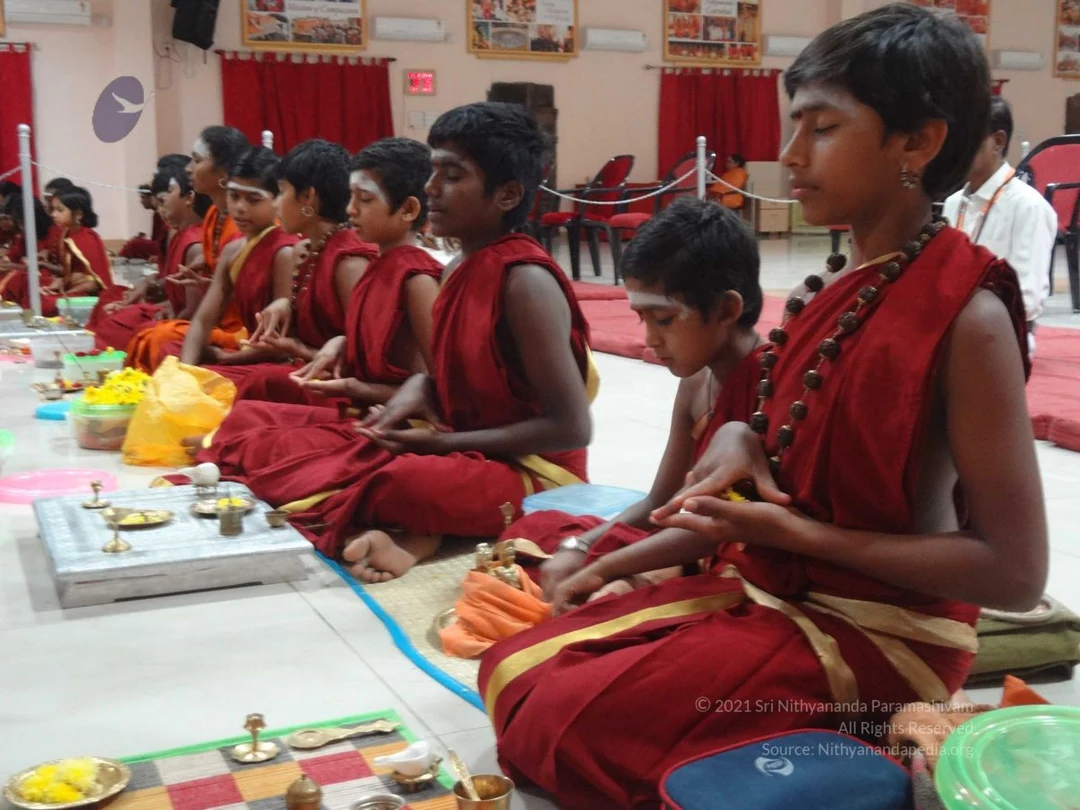
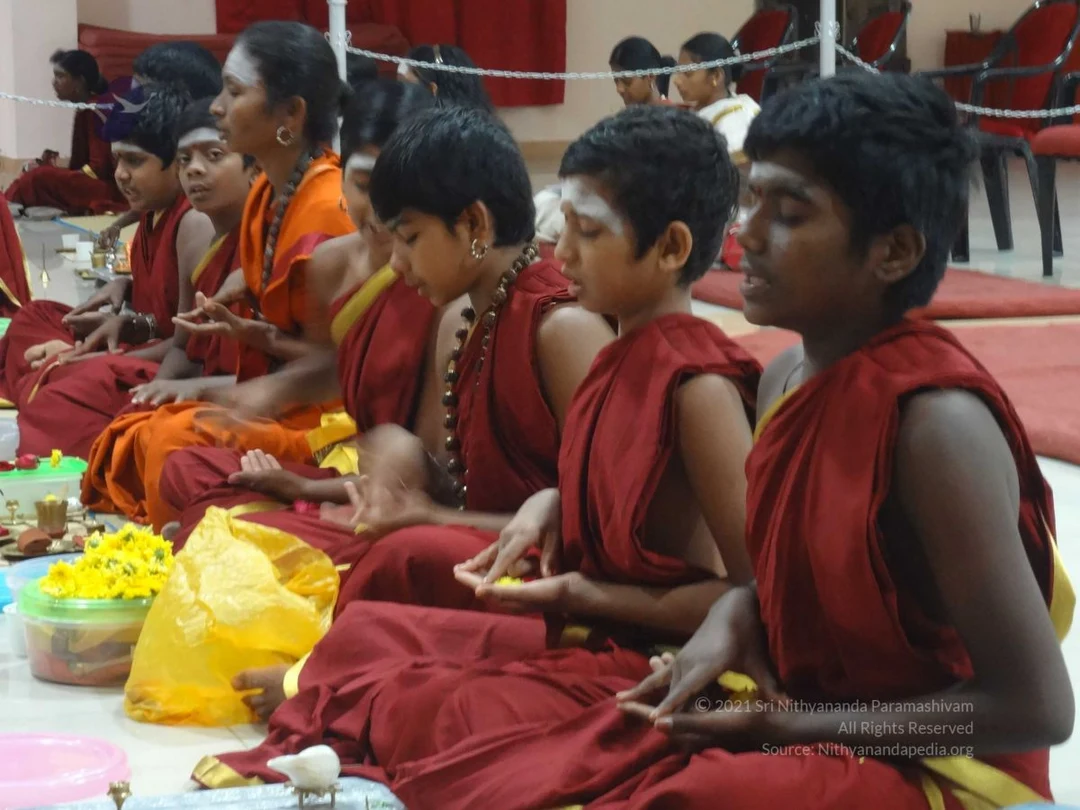
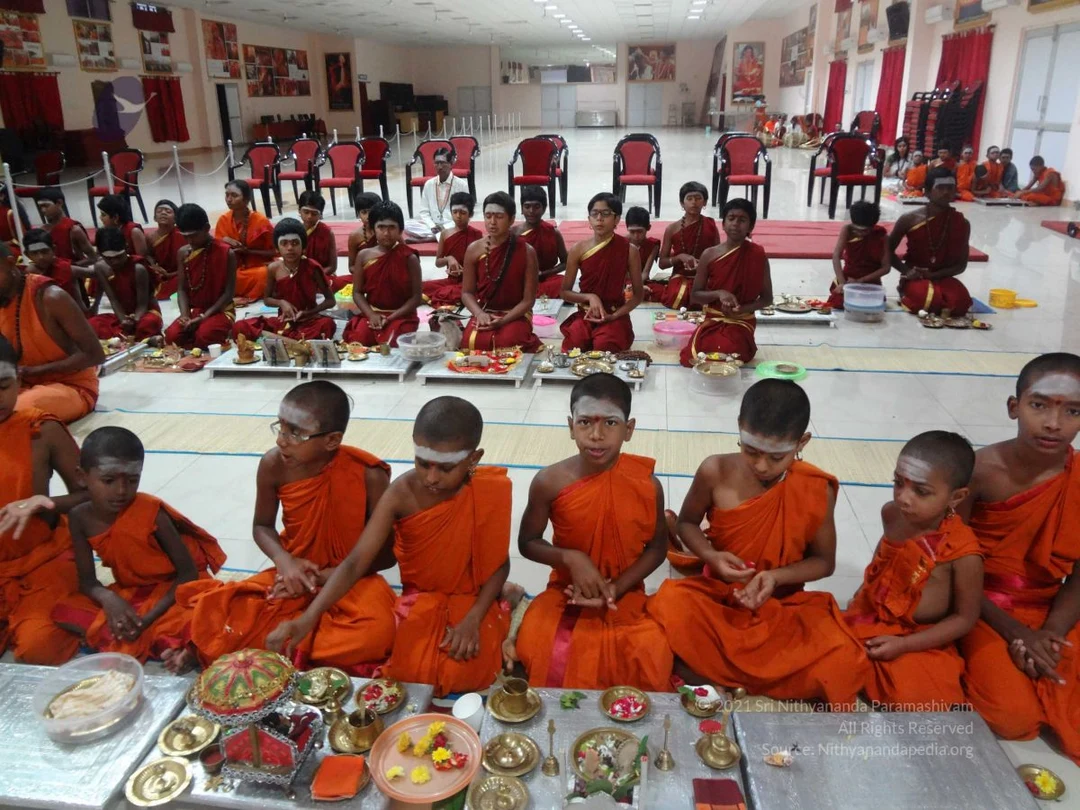
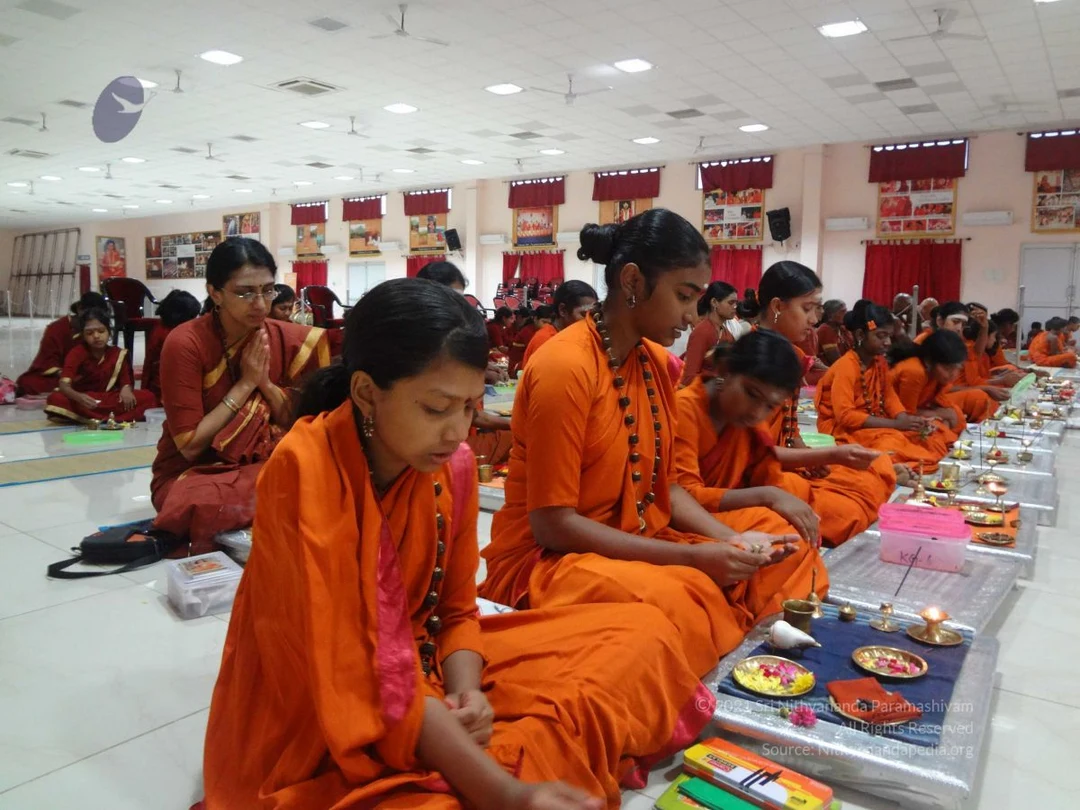
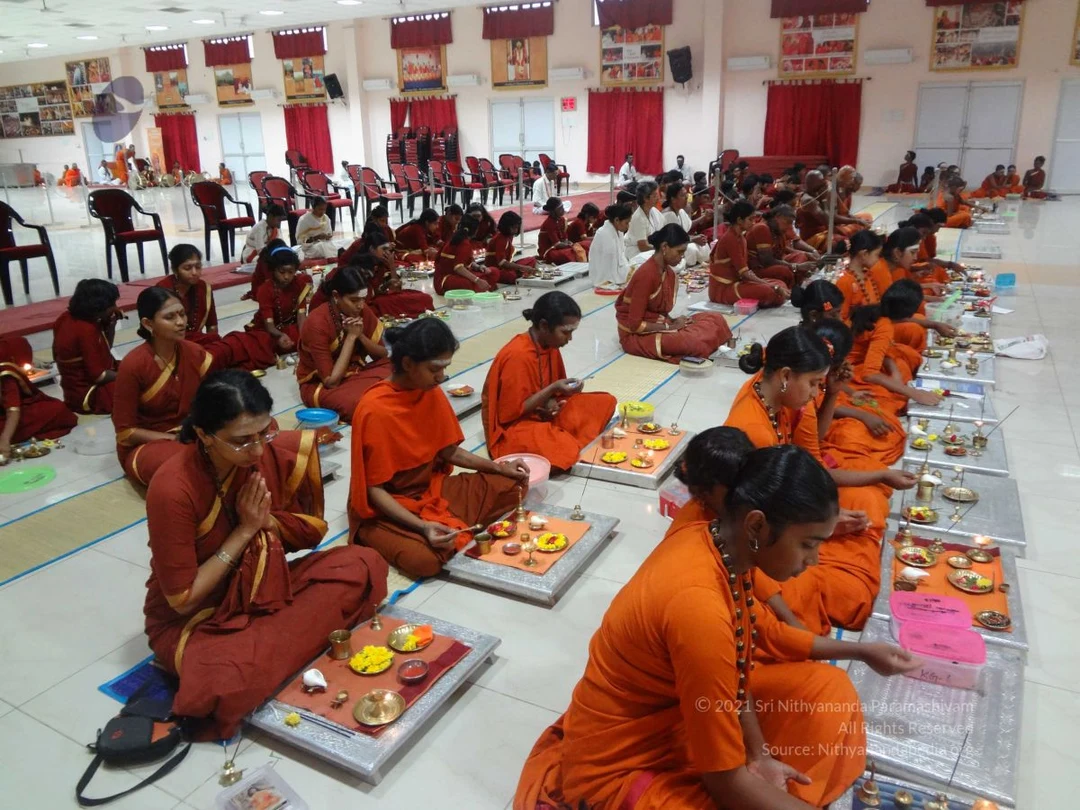
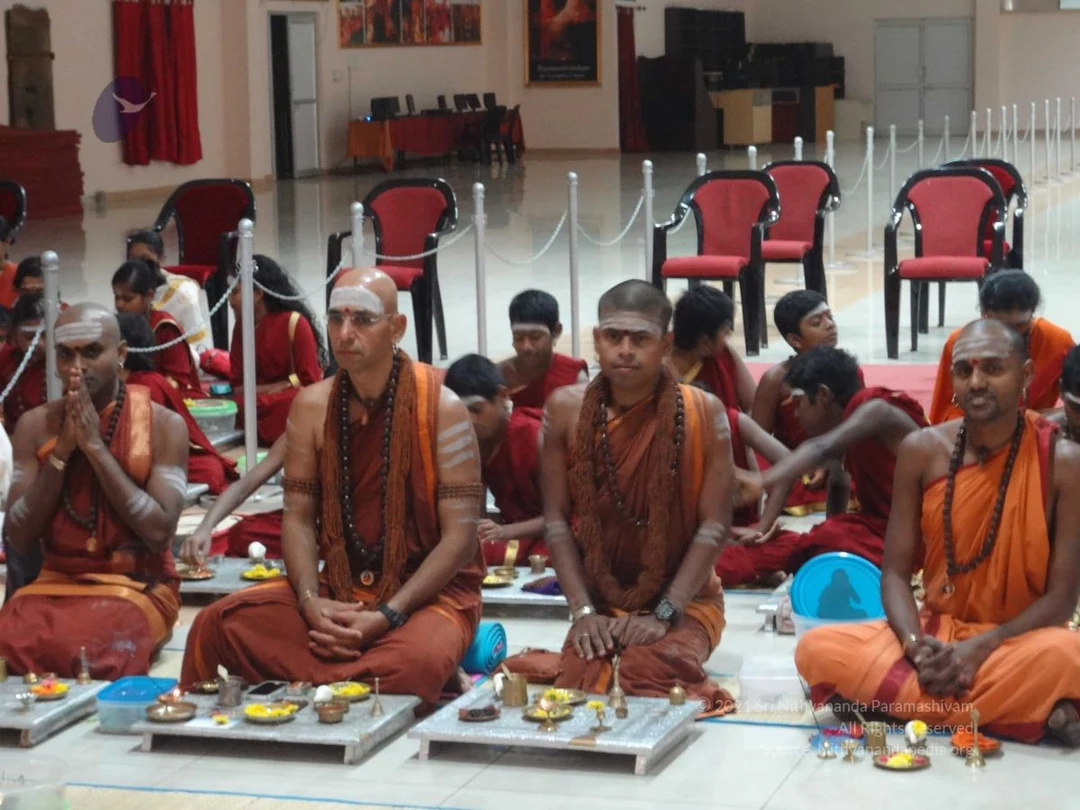
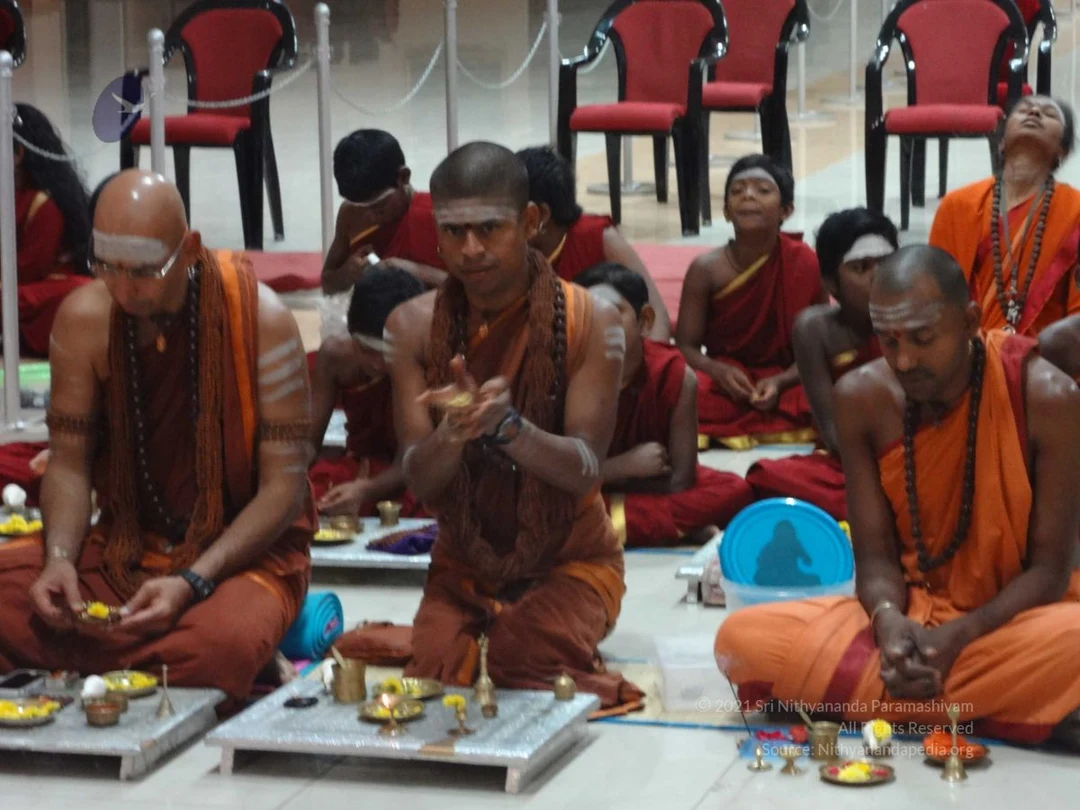
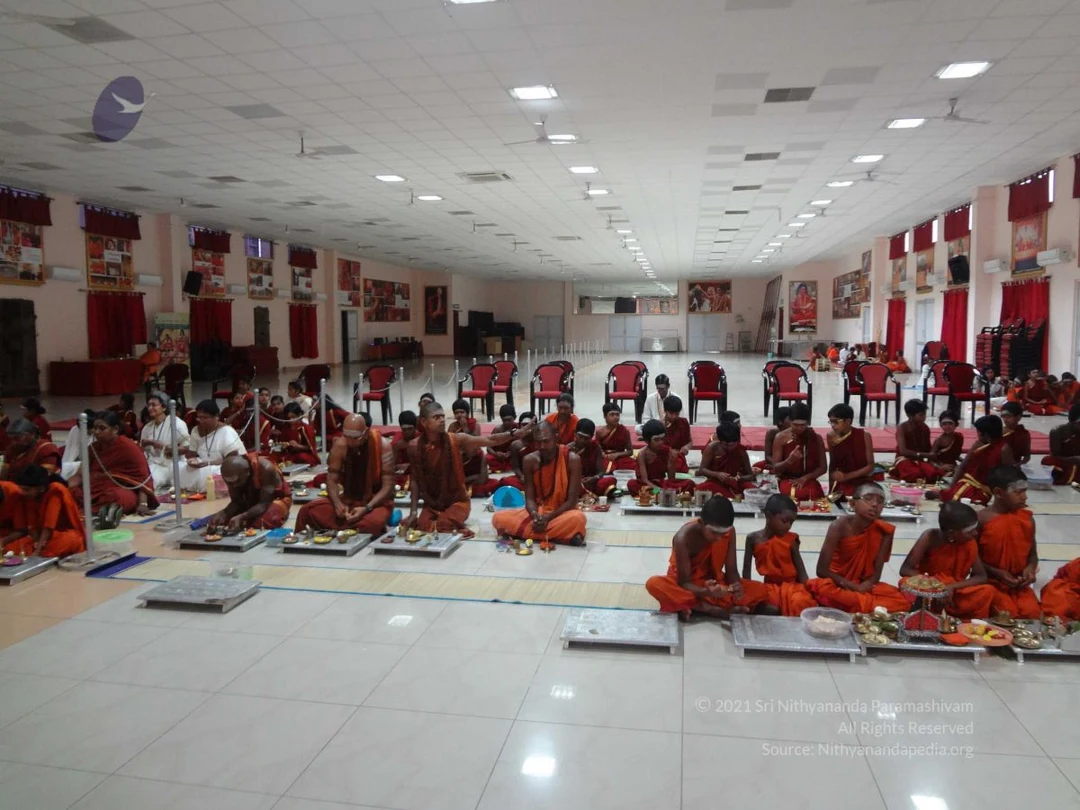
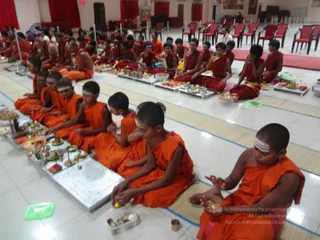
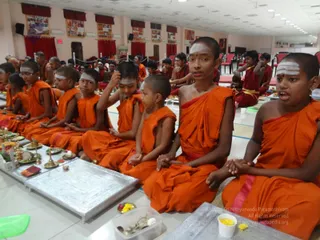
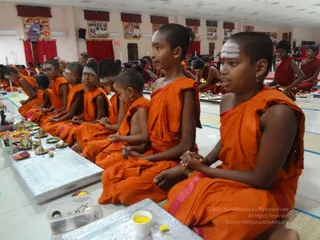
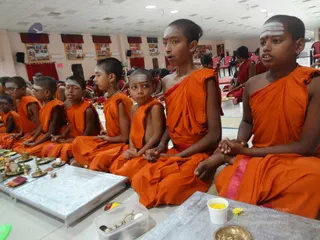
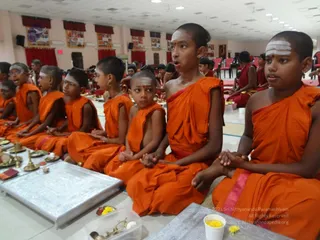
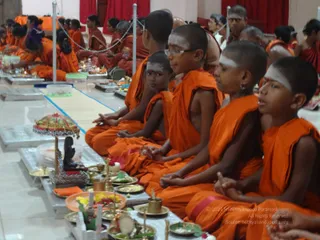
A photograph of a row of young boys seated on the floor in saffron-orange robes with white vibhuti stripes on their foreheads, performing a puja. Each has a brass plate or tray of offerings in front of them with small brass lamps, bowls and flowers. Several wear red-maroon garments and sit with their hands moving over the plates. Behind them, red chairs are arranged in a hall with red curtains. The boys appear to be young disciples taking part in a padapuja-style ceremony.Several young boys in saffron-orange robes sit cross-legged on a white floor in a hall with red curtains and framed pictures on the walls. Many have white vibhuti marks and shaved heads. Silver trays holding brass lamps, small bowls, flowers and offerings lie in front of them. Some boys in the background wear red-and-orange clothing. No seated figure is identified as a person in this view.A row of young boys seated on the floor in saffron-orange robes with shaved heads and white tilak marks on their foreheads, hands folded in prayer or resting on their laps. Silver trays with flowers, small brass lamps, bowls of offerings and a silver puja platform sit in front of them. More boys in red and orange garments sit in the background.A row of young boys seated on the floor in saffron-orange unstitched robes with red borders, their heads shaved and foreheads marked with white vibhuti lines. They sit with hands folded in front of them, some with eyes closed, in a hall with red curtains and framed pictures on the wall. Silver trays holding brass vessels, plates of food, a small bowl of yellow flowers and rudraksha-like seeds sit in front of them. Other seated devotees in red and orange clothing are visible in the background.Several young boys seated on the floor in a large hall wear saffron-orange cloth draped over one shoulder with red borders, and have white and red forehead markings. They sit with hands clasped or folded in their laps, some with mouths open as if chanting. In front of them are silver trays with brass lamps, plates of offerings, flowers and small bowls on a white ritual surface. Behind them, other seated people in red garments and red chairs are visible, with banners and red curtains on the walls. No a person candidate is visibly present.Photograph of a large seated group of young boys and some adults in saffron-orange sannyasi-style robes during a puja, sitting in rows on white floor mats before brass plates, kalasha-style vessels, flower offerings, small oil lamps and a silver-toned altar piece. The boys have shaved heads and white forehead markings, and several are seated with hands raised in mudra or joined in prayer. Behind them, more orange-robed participants sit along the hall, with red curtains and white pillars in the background. A small black deity murti sits on a silver stand at left.