Skip to content
Tuesday

10 December 2013

Nithyananda Diary | Bali Inner Awakening Day -10 | Padukapuja | Satsang | Meditation | Sarvadarshan

Dated photos
222
Source pages
1
Media
2
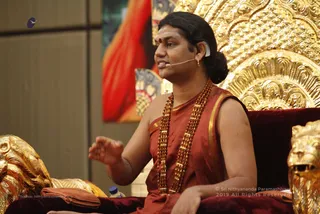
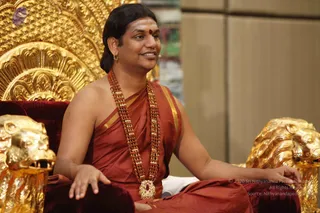
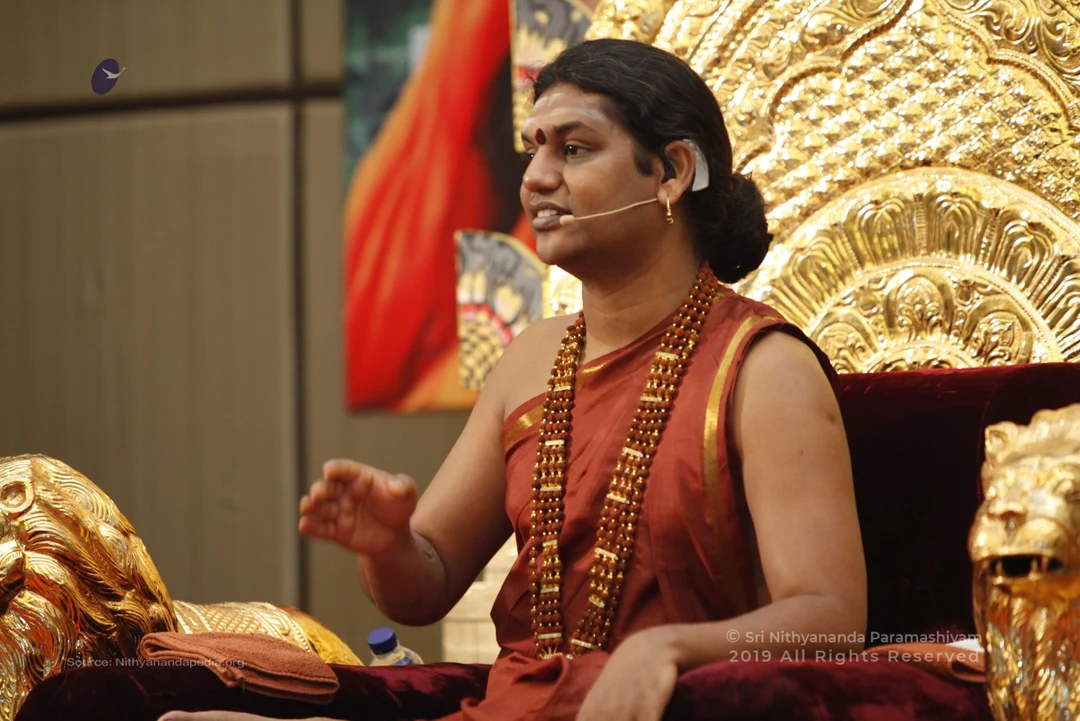
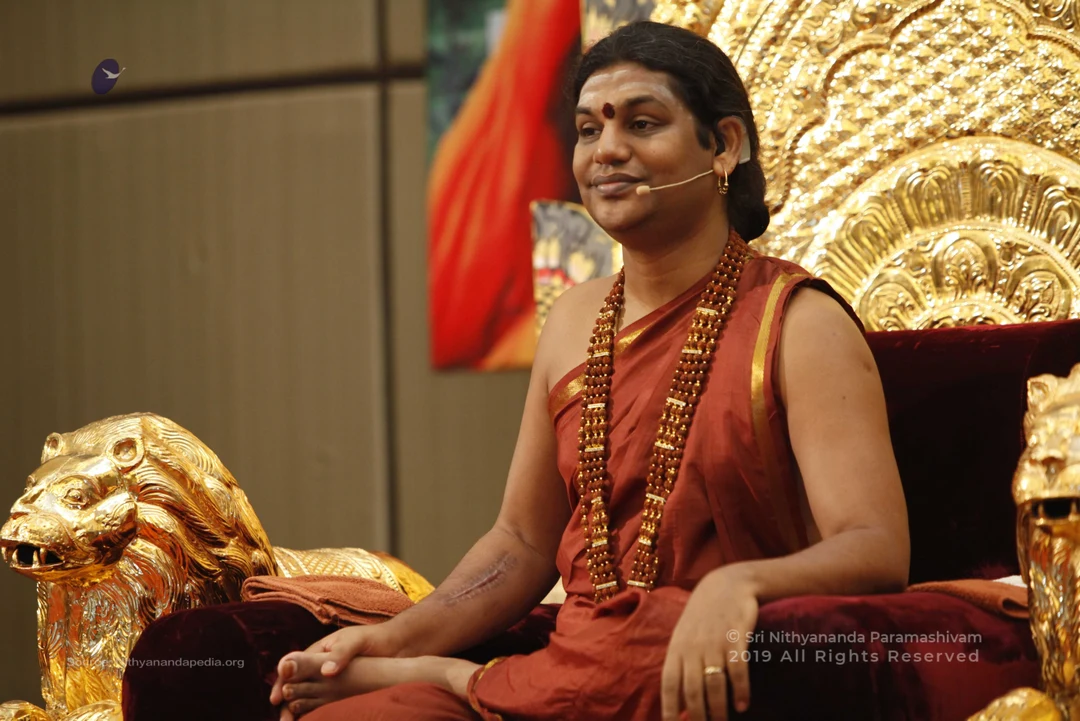
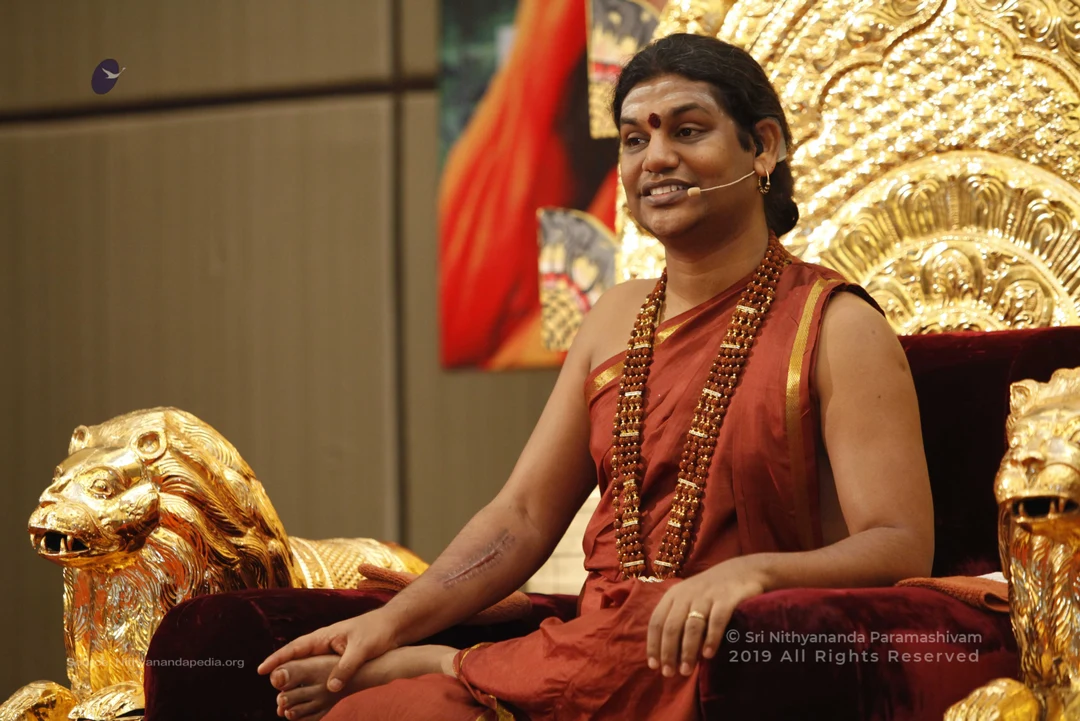
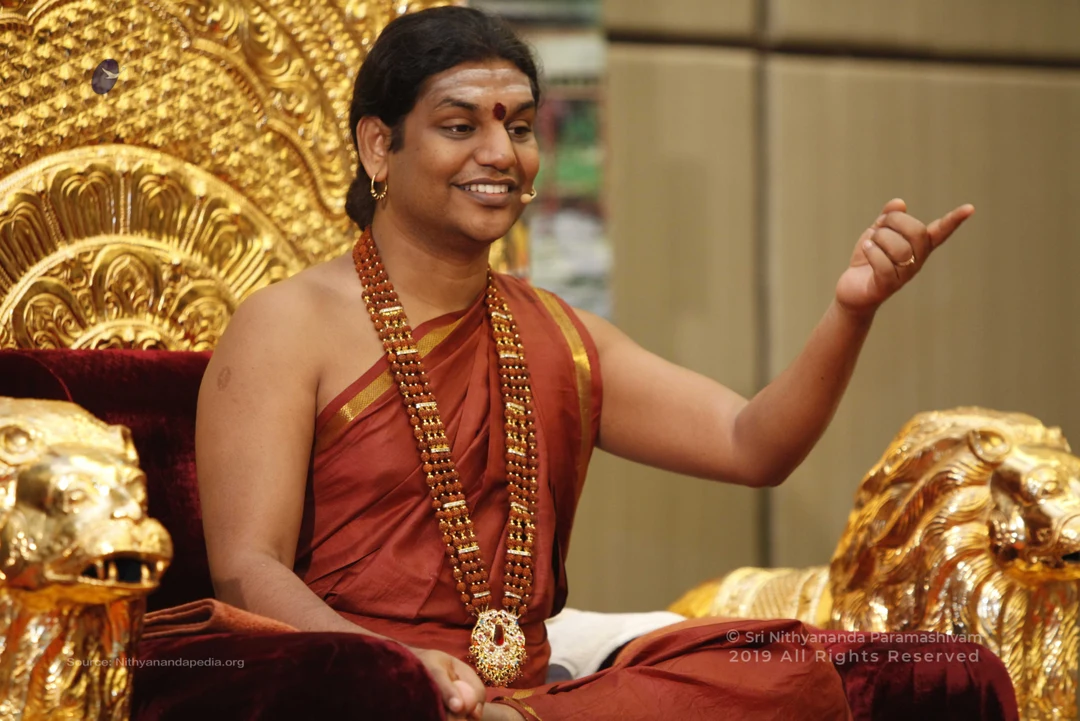
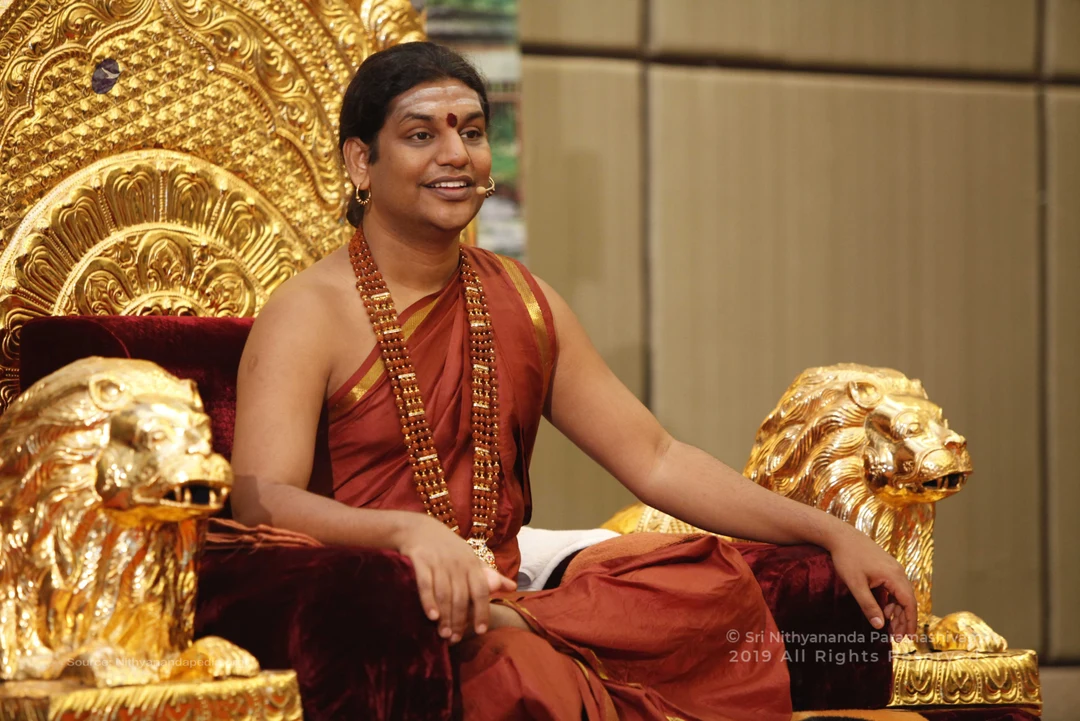
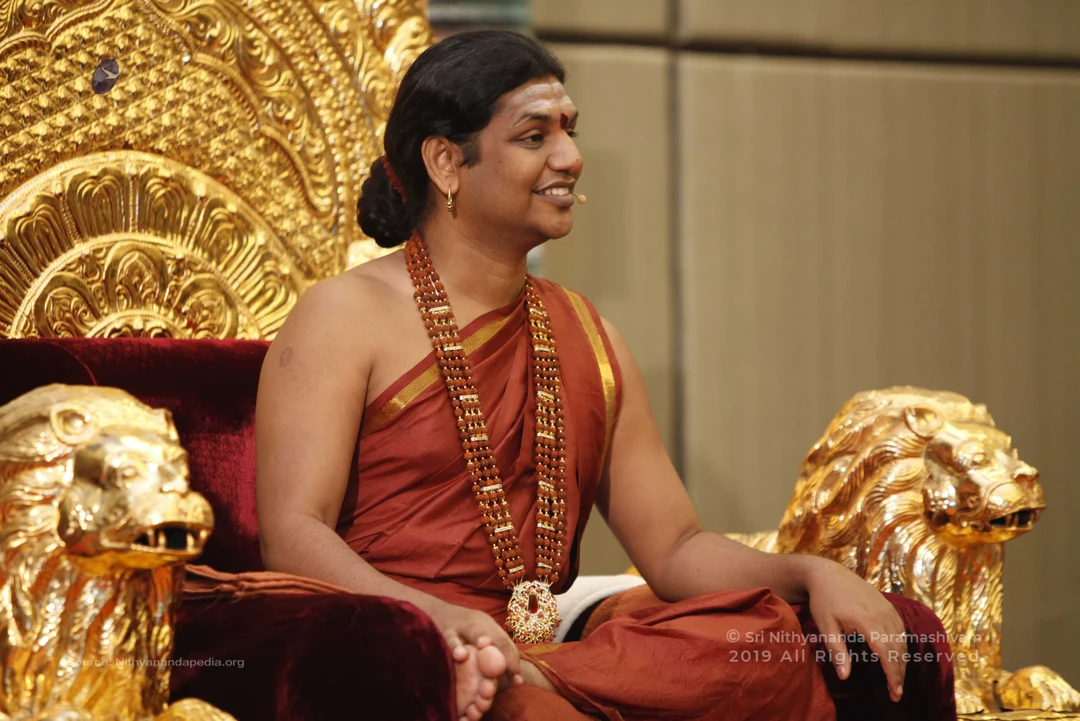
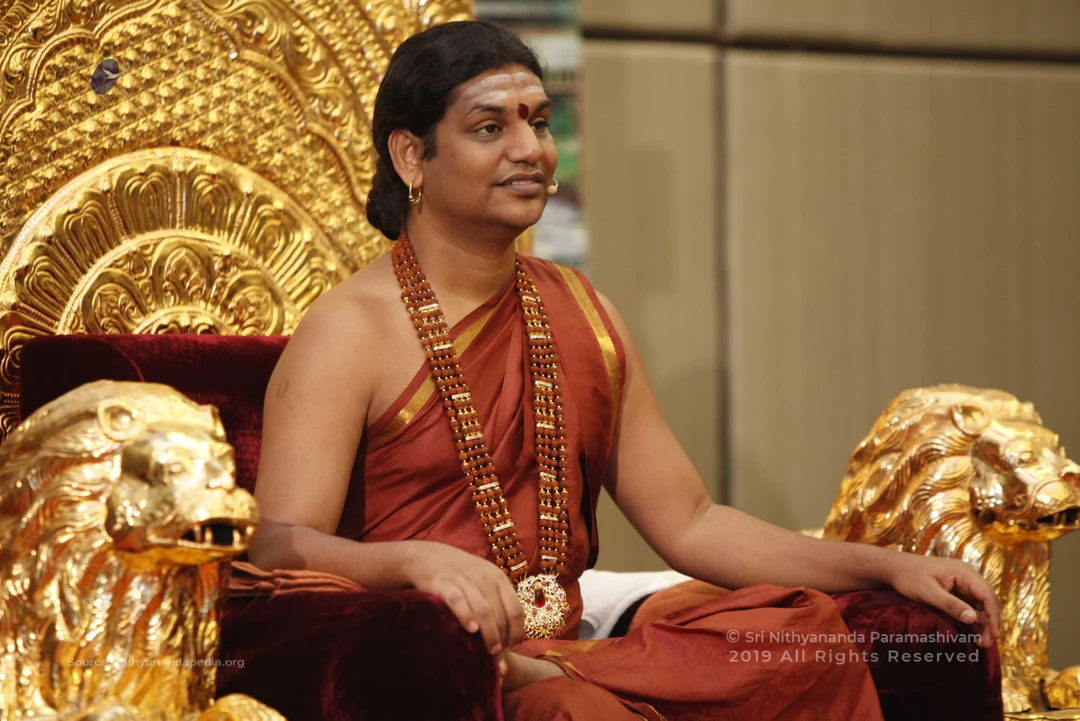
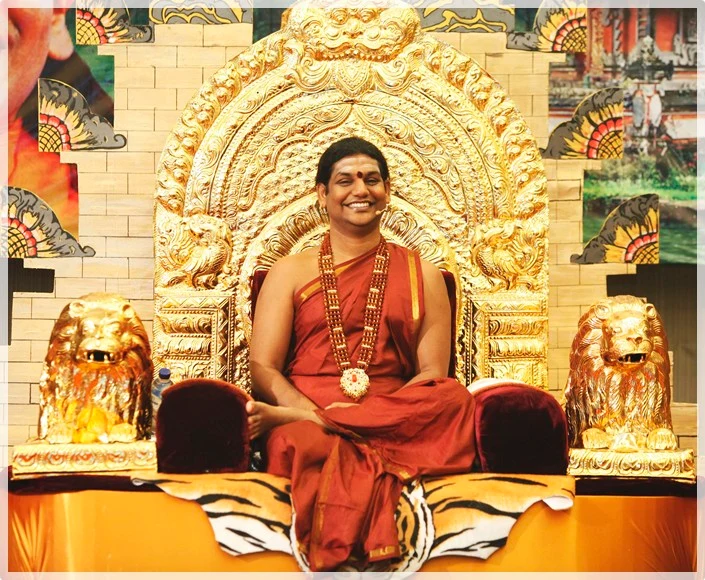
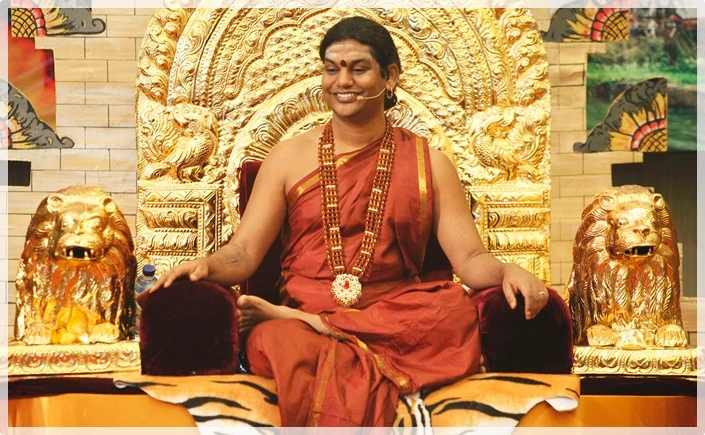
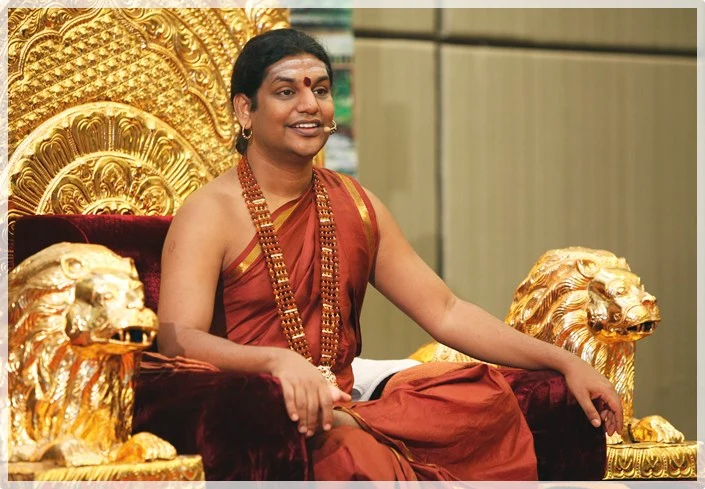
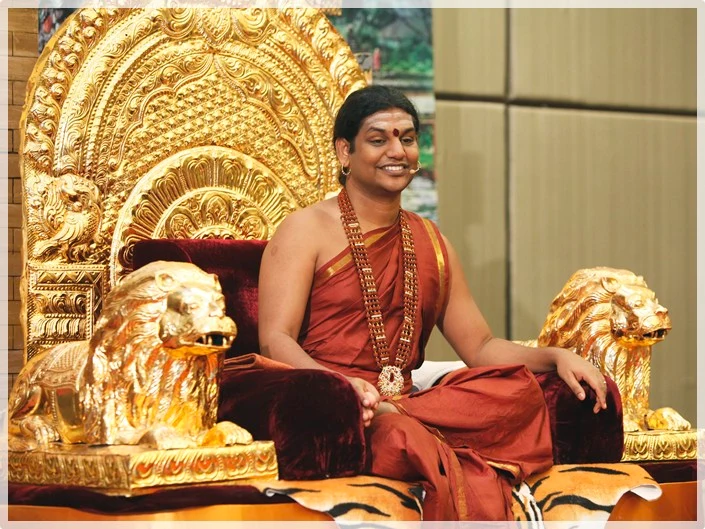
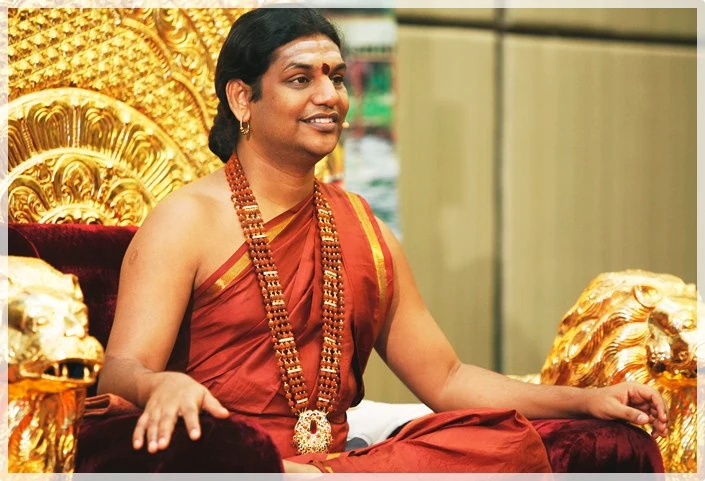
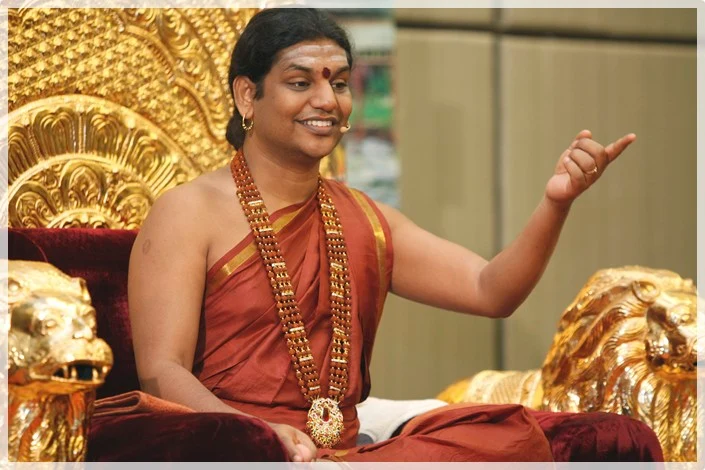
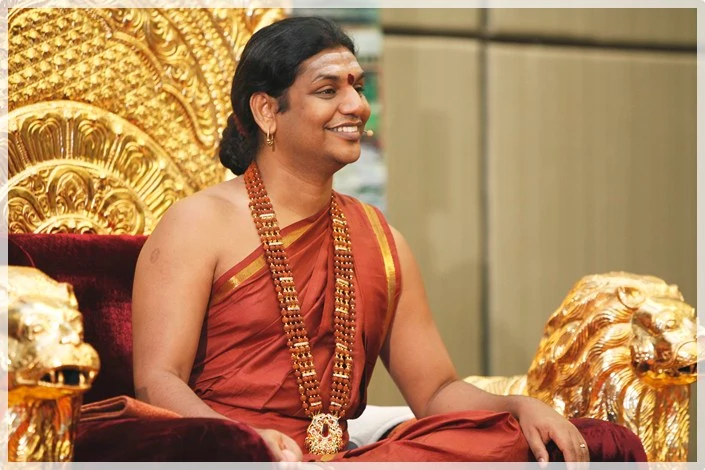
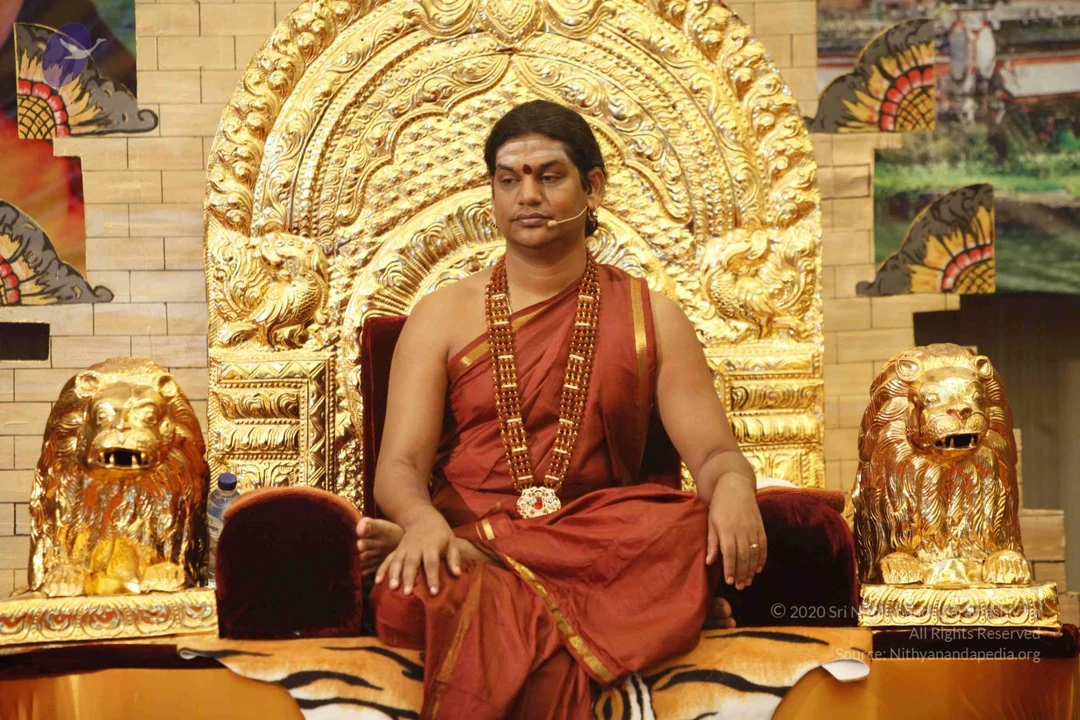
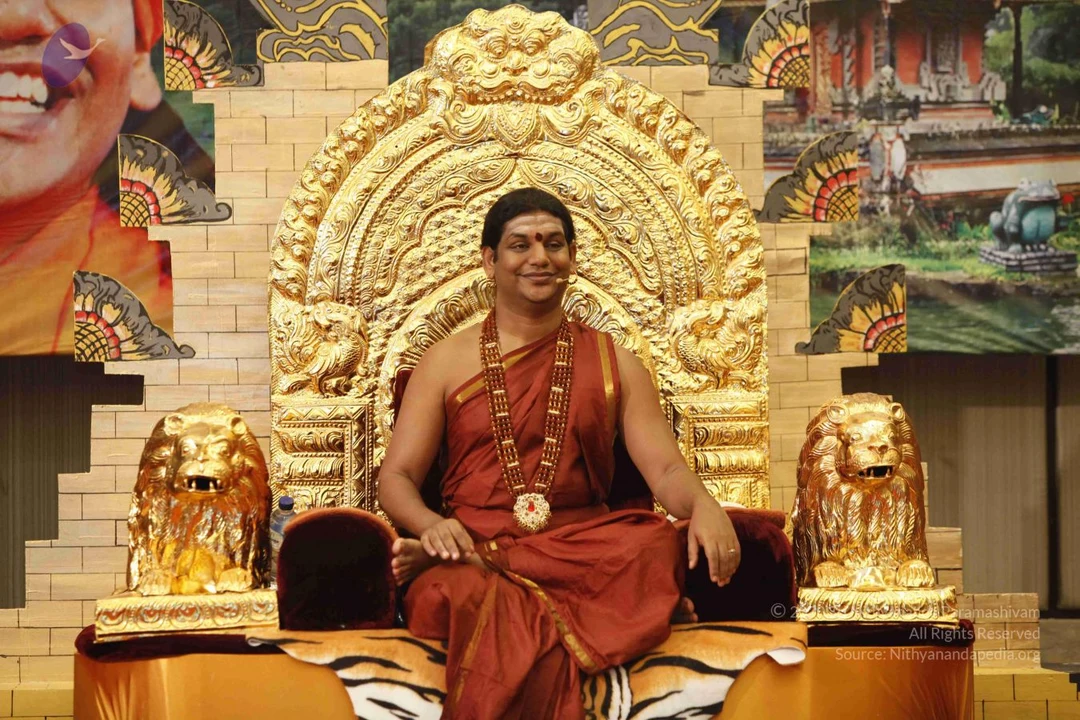
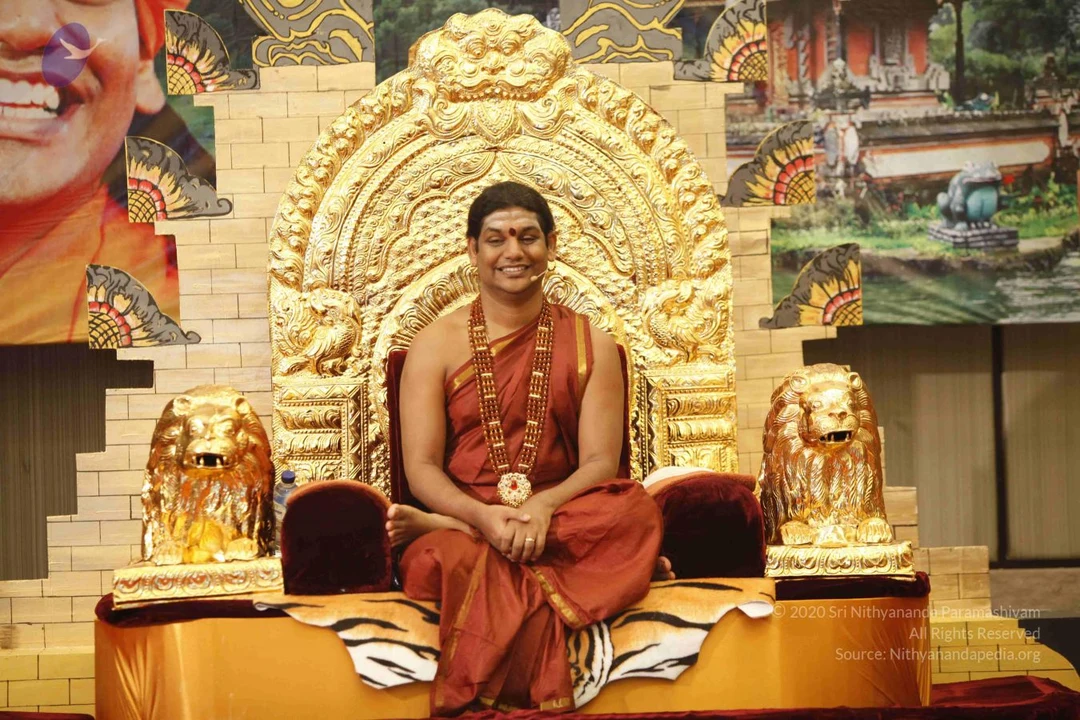
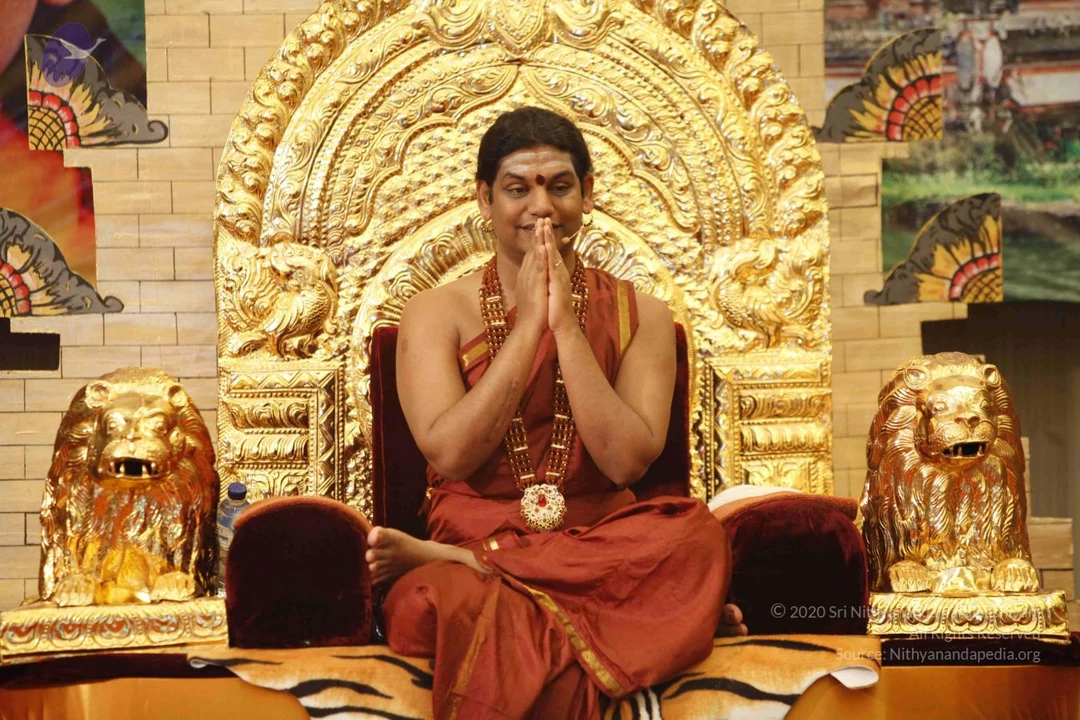
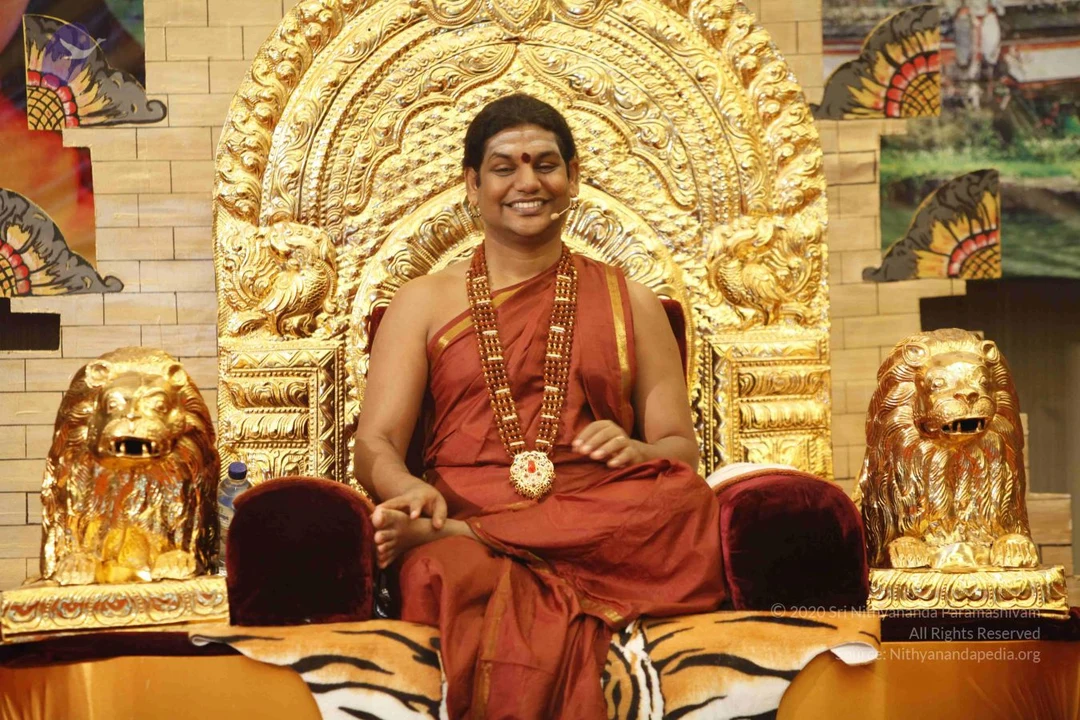
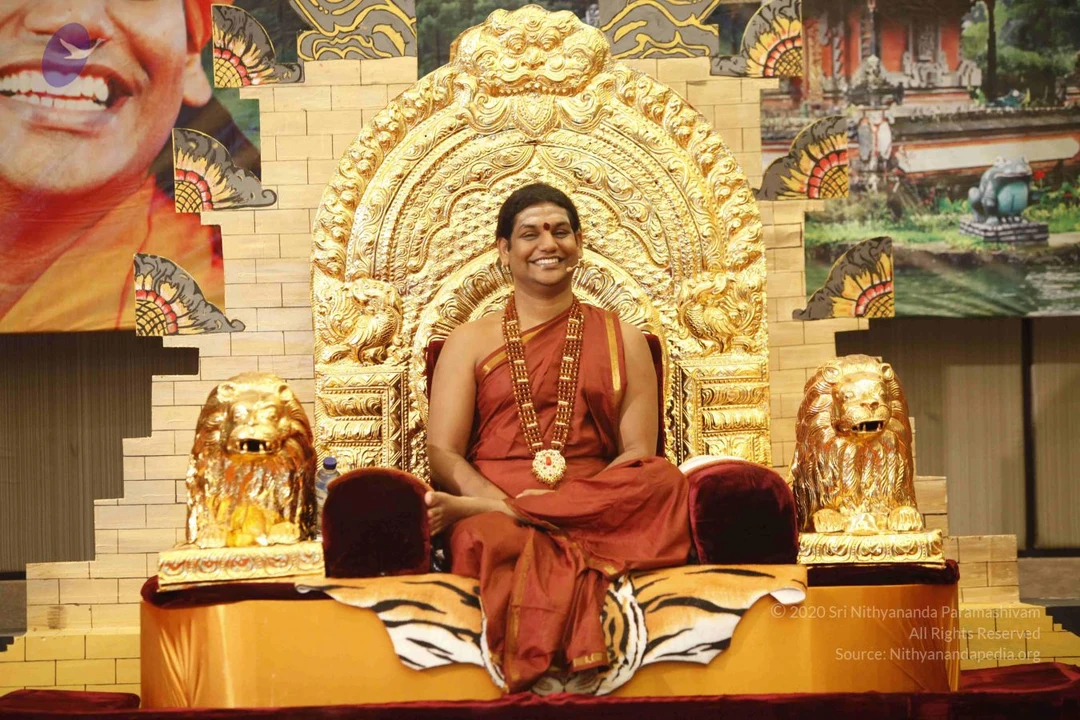
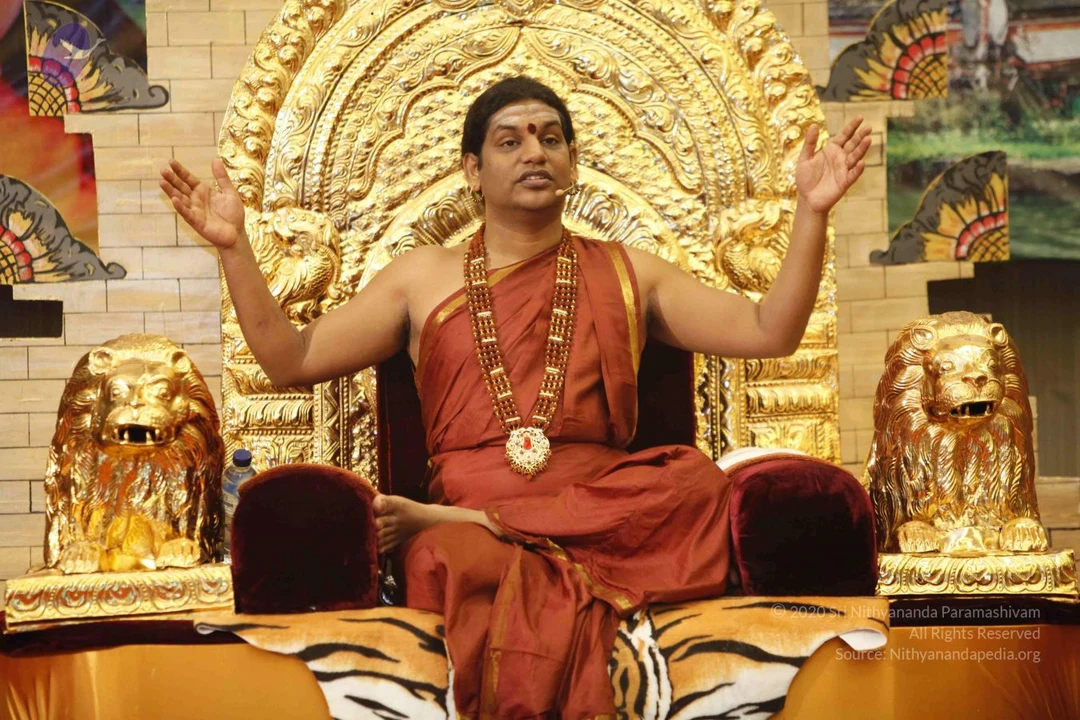
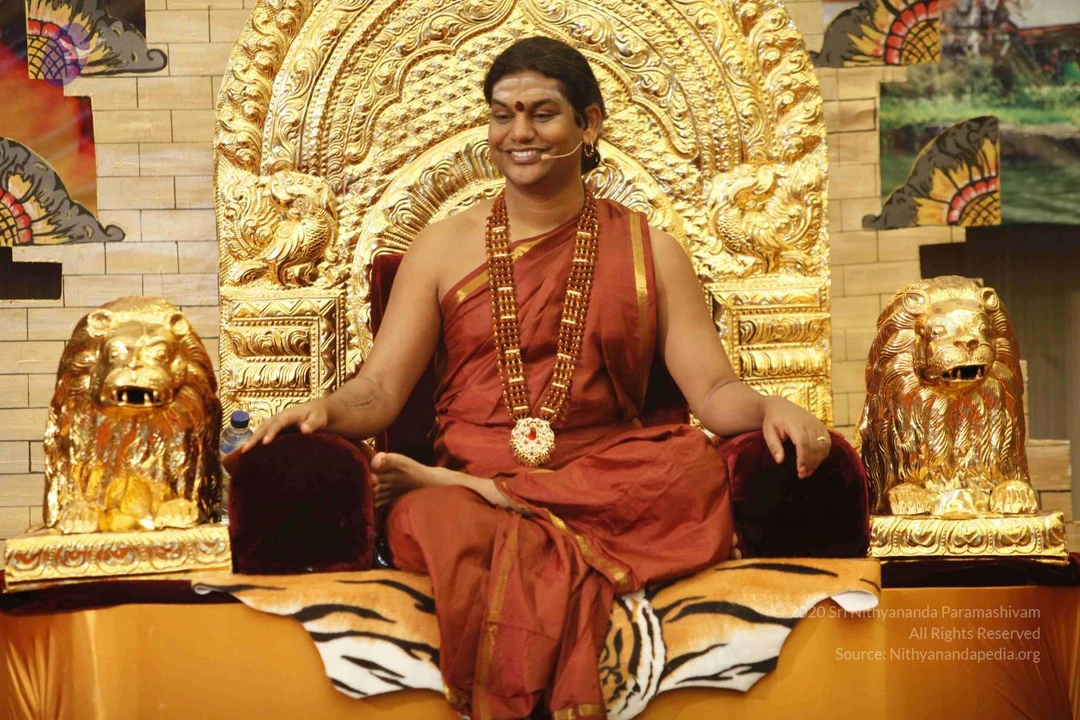
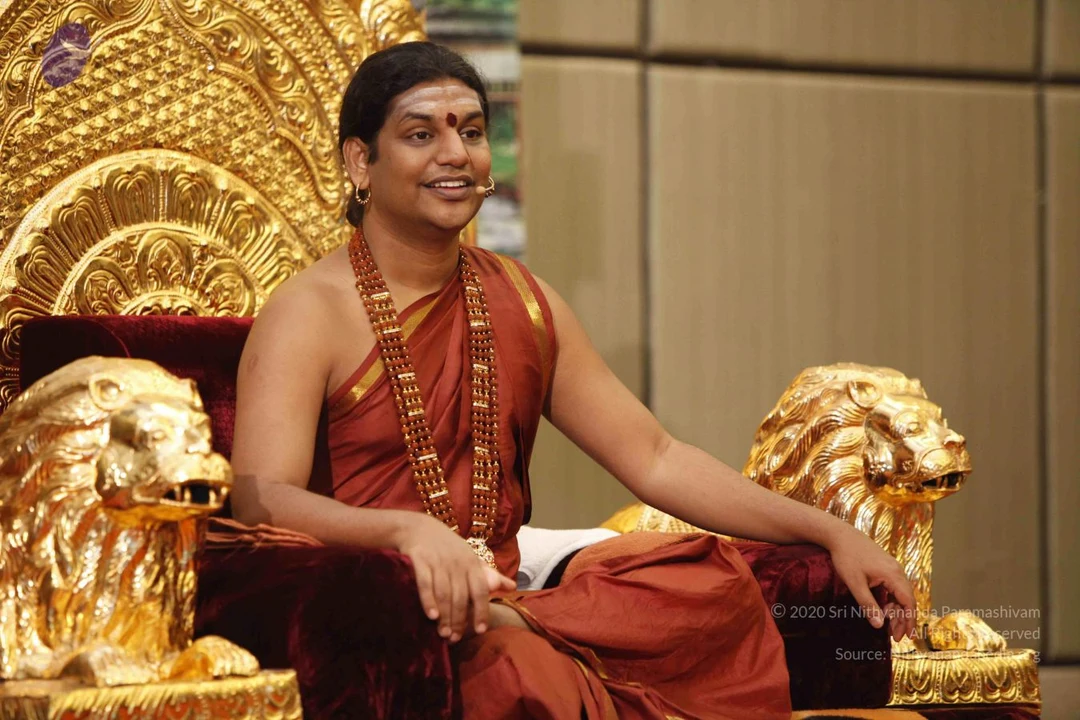
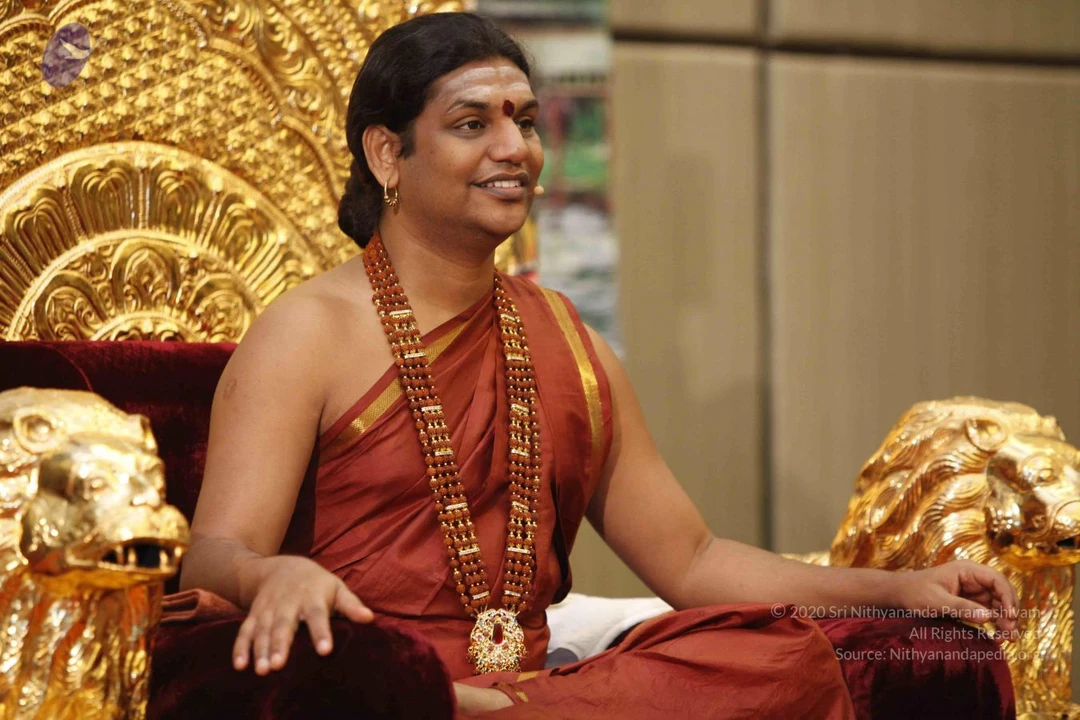
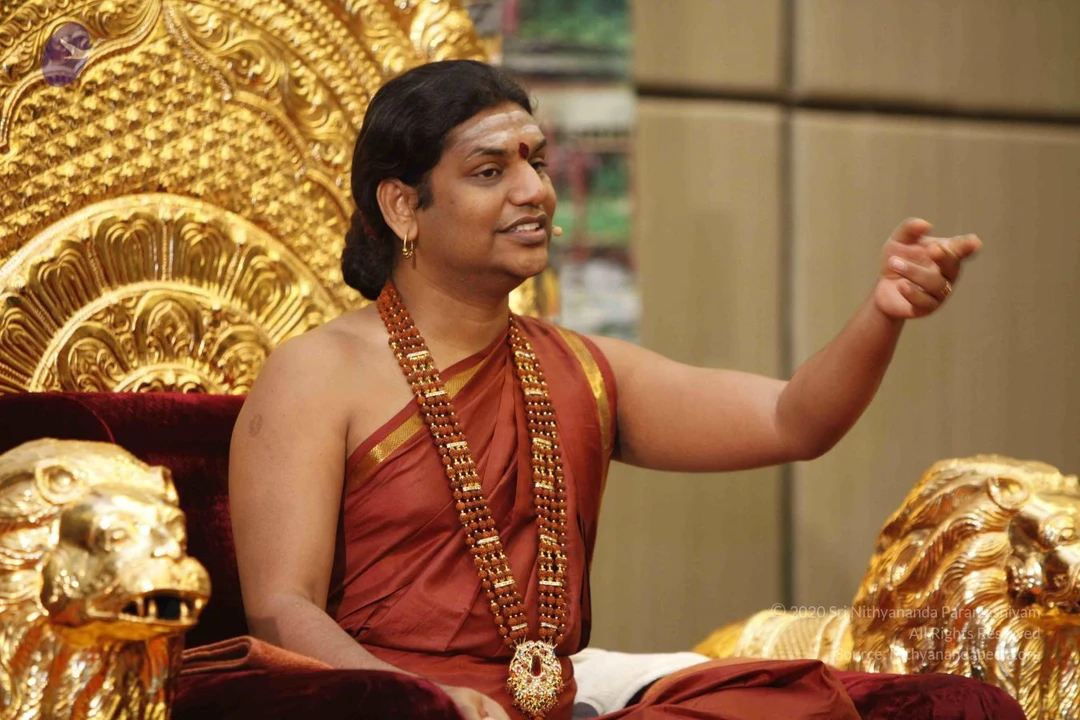
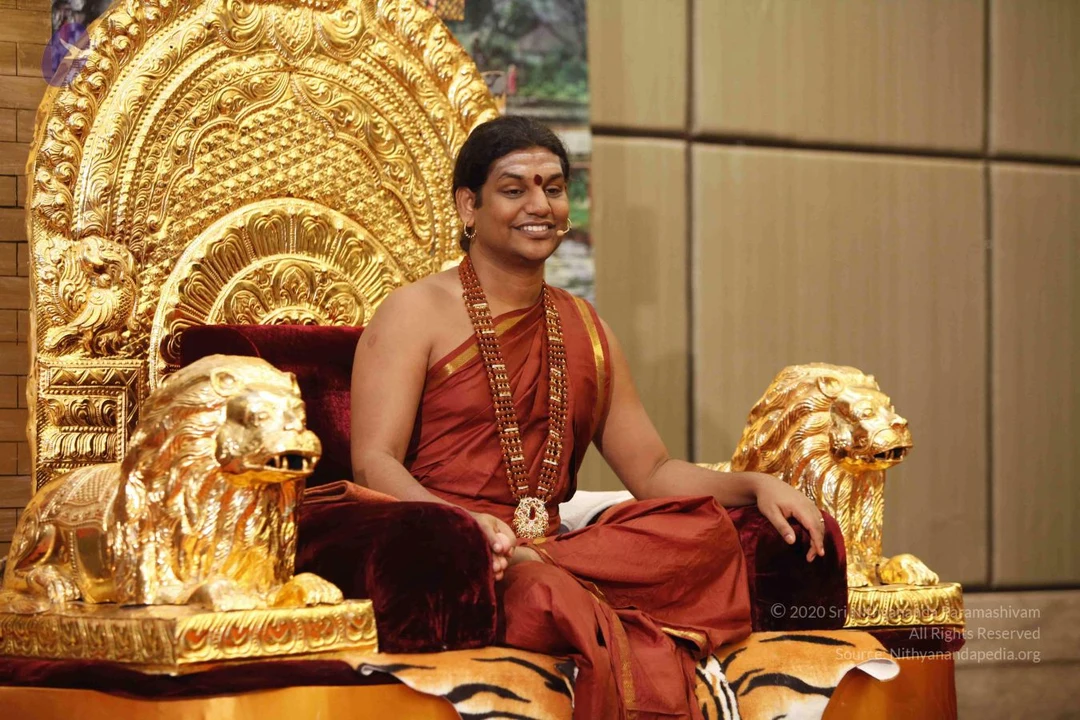
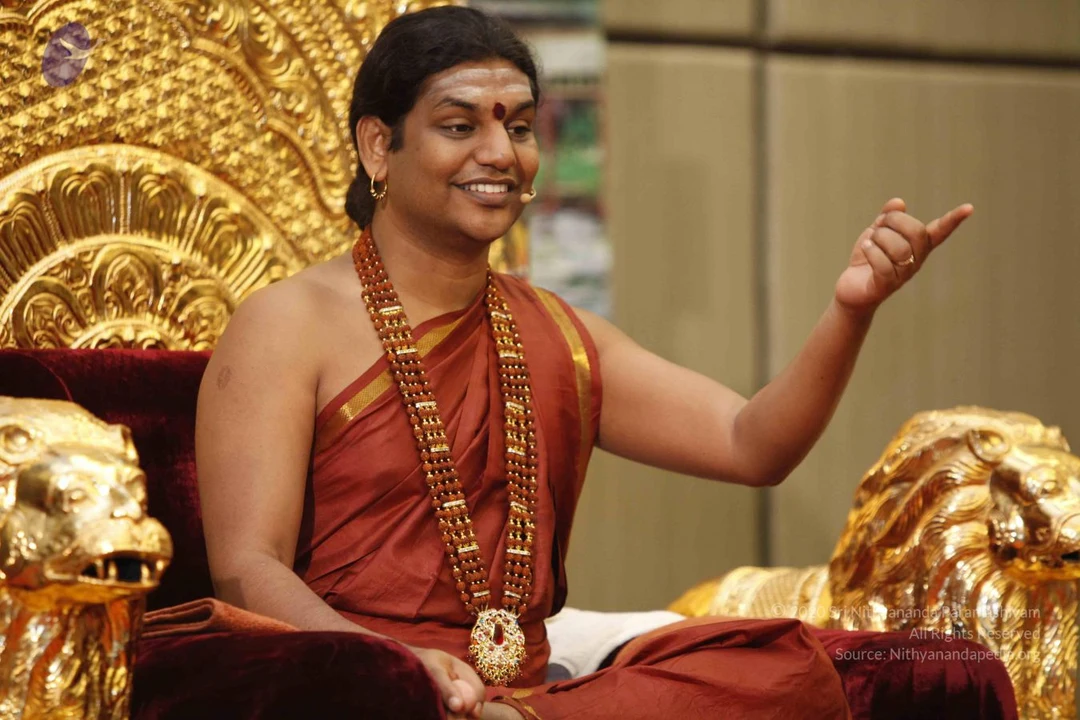
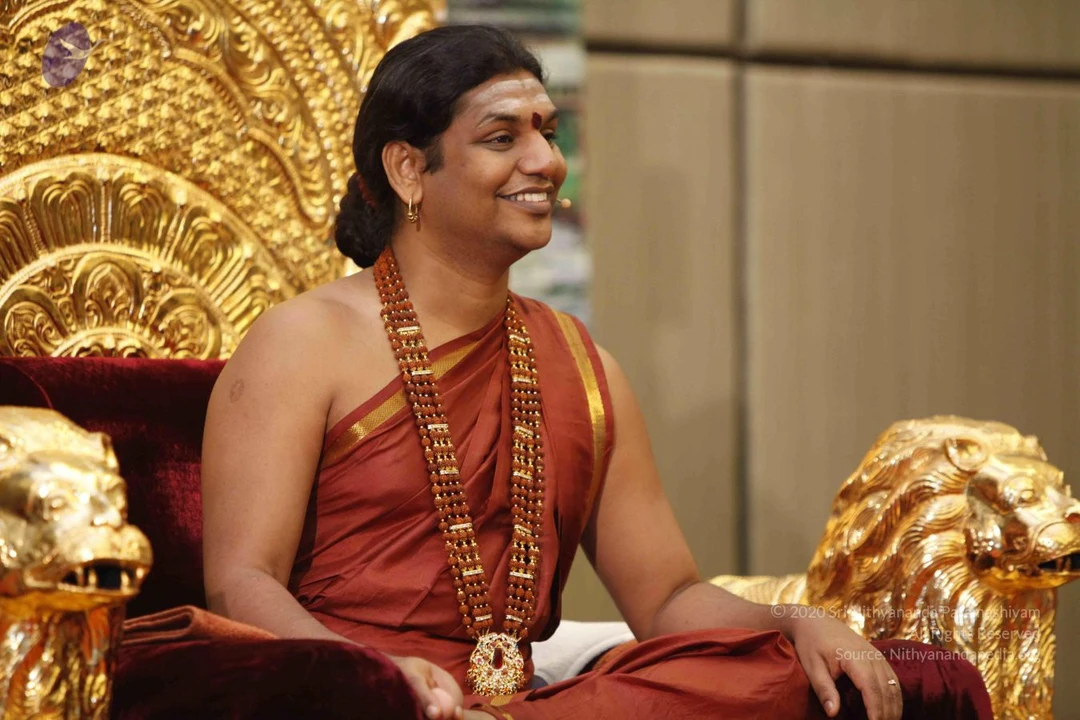
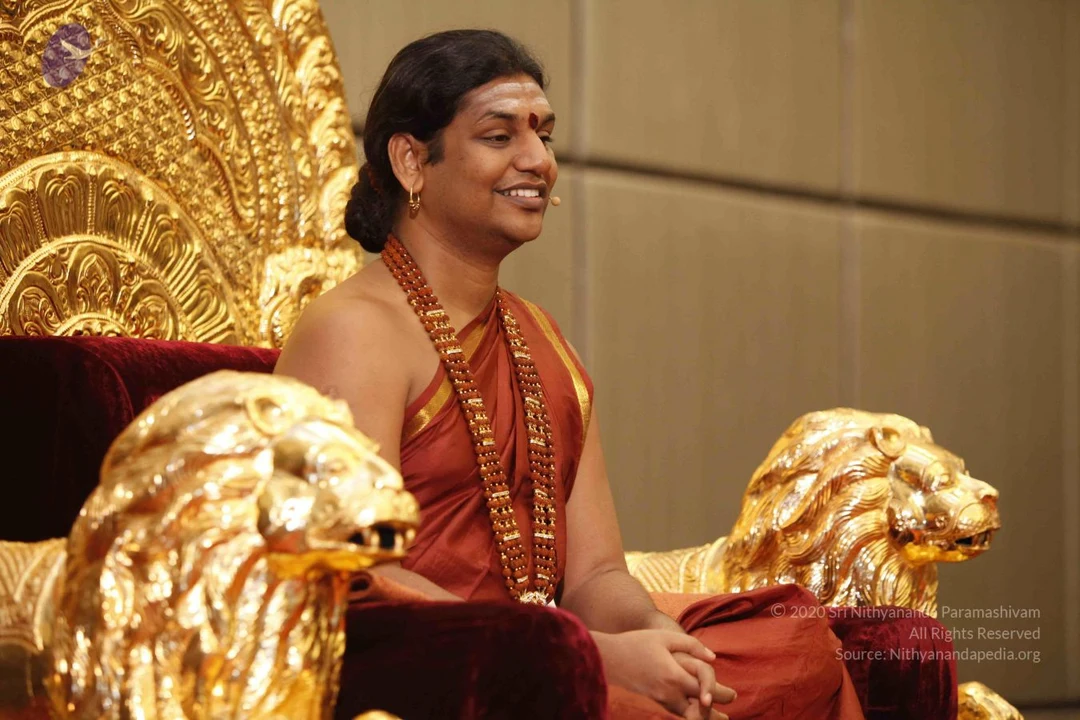
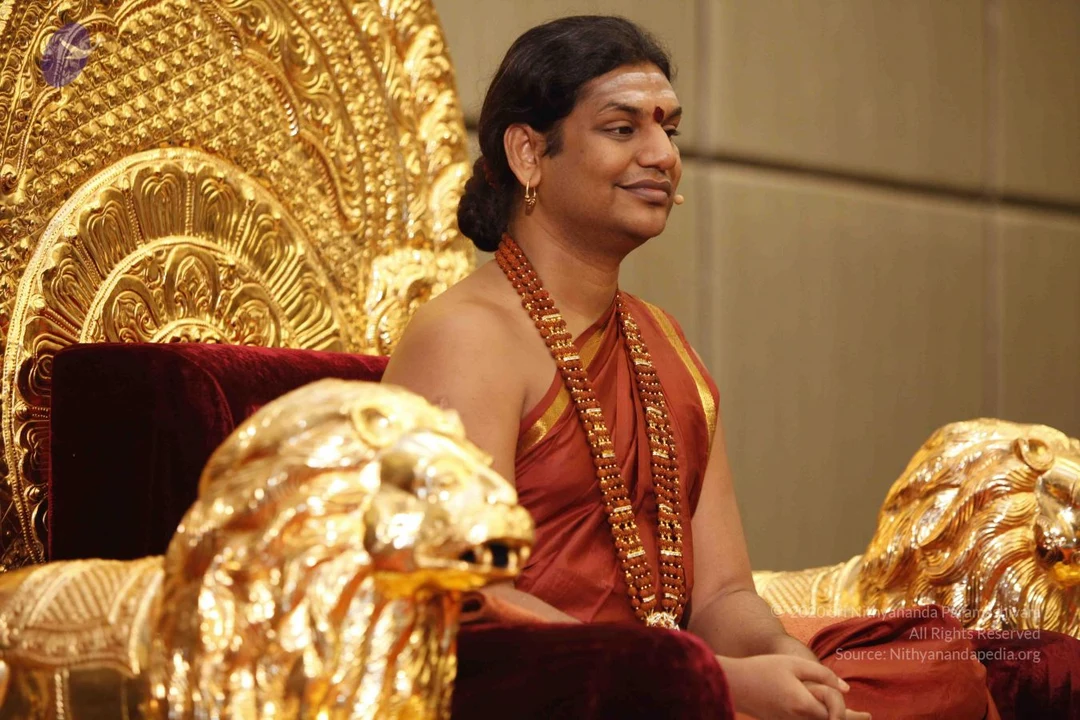
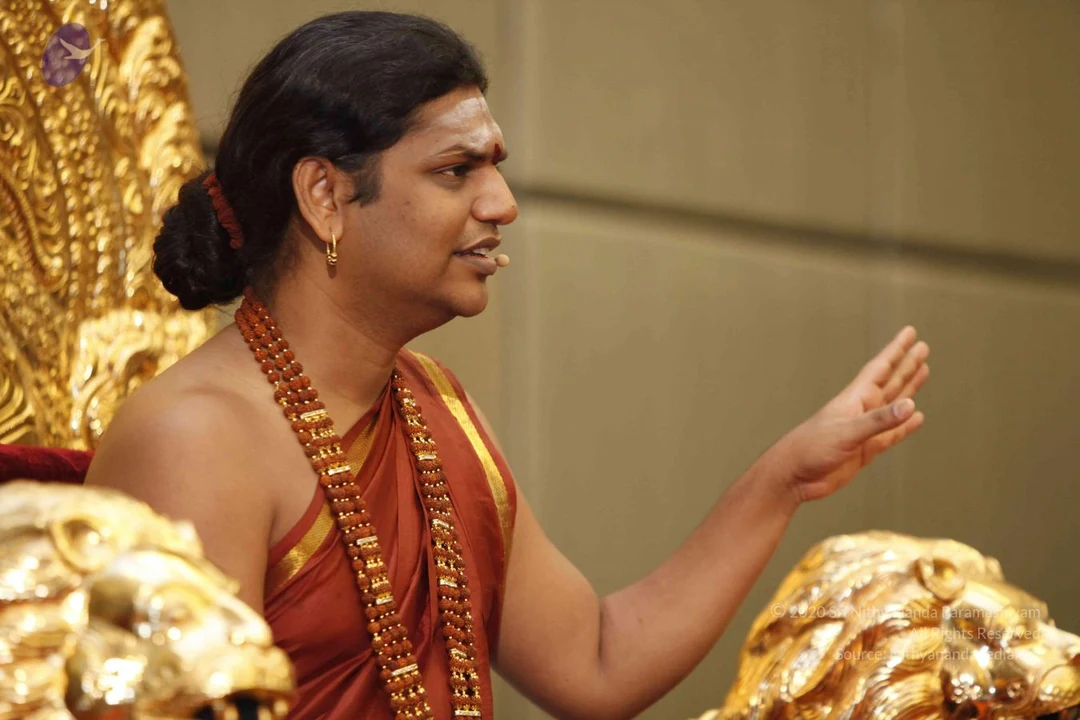
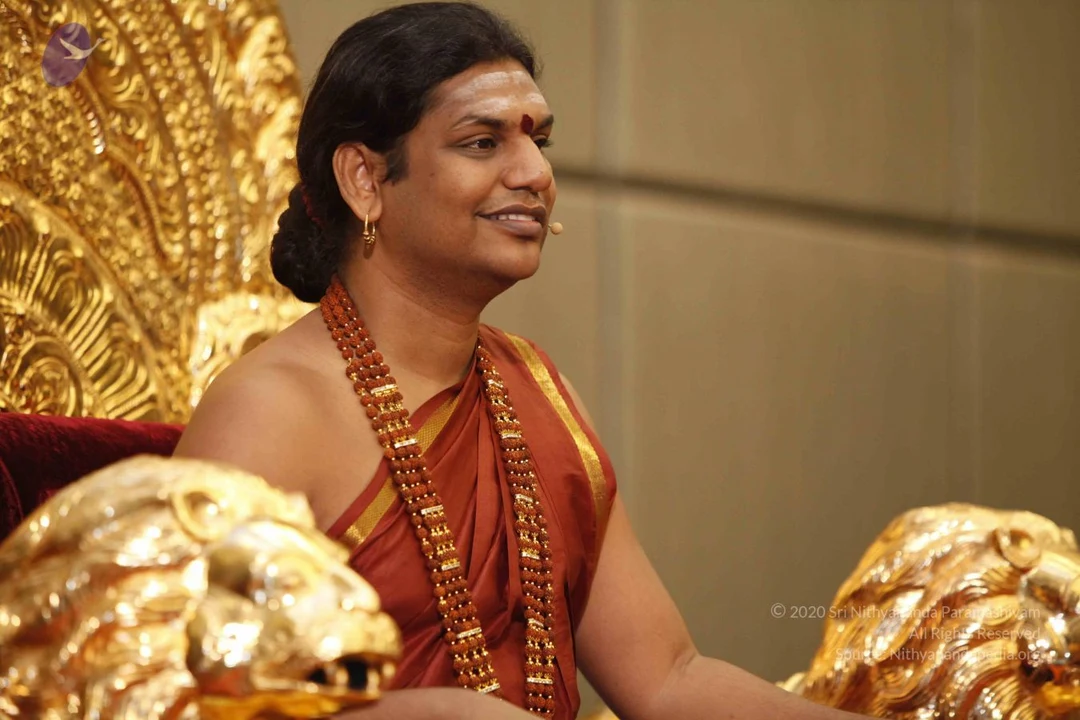
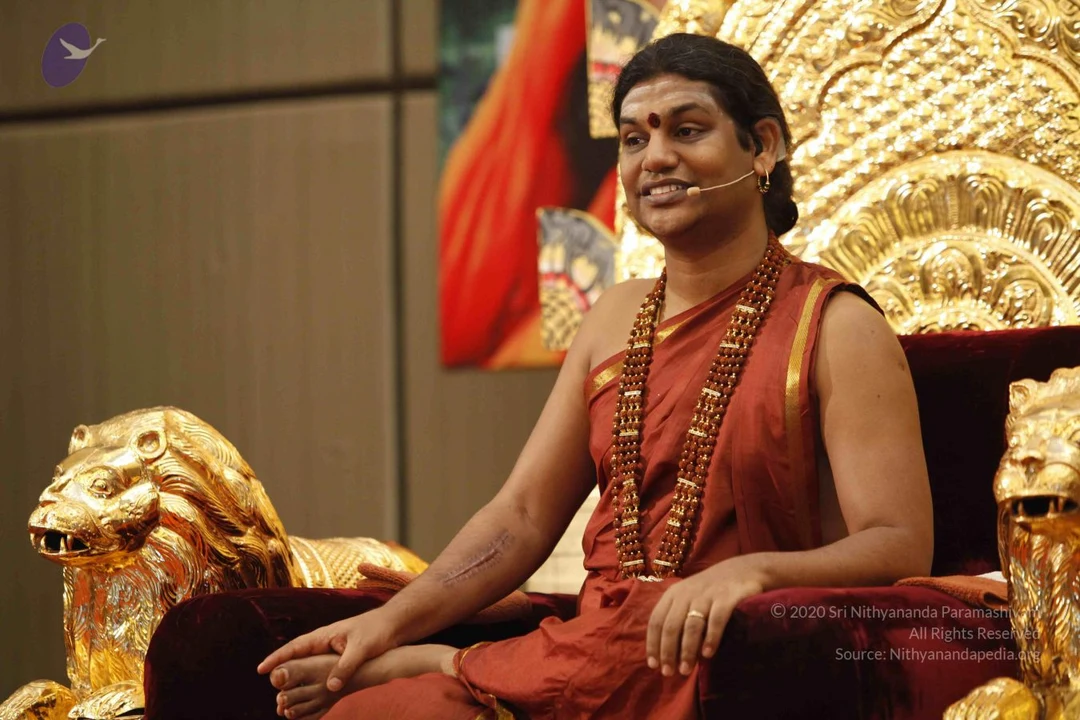
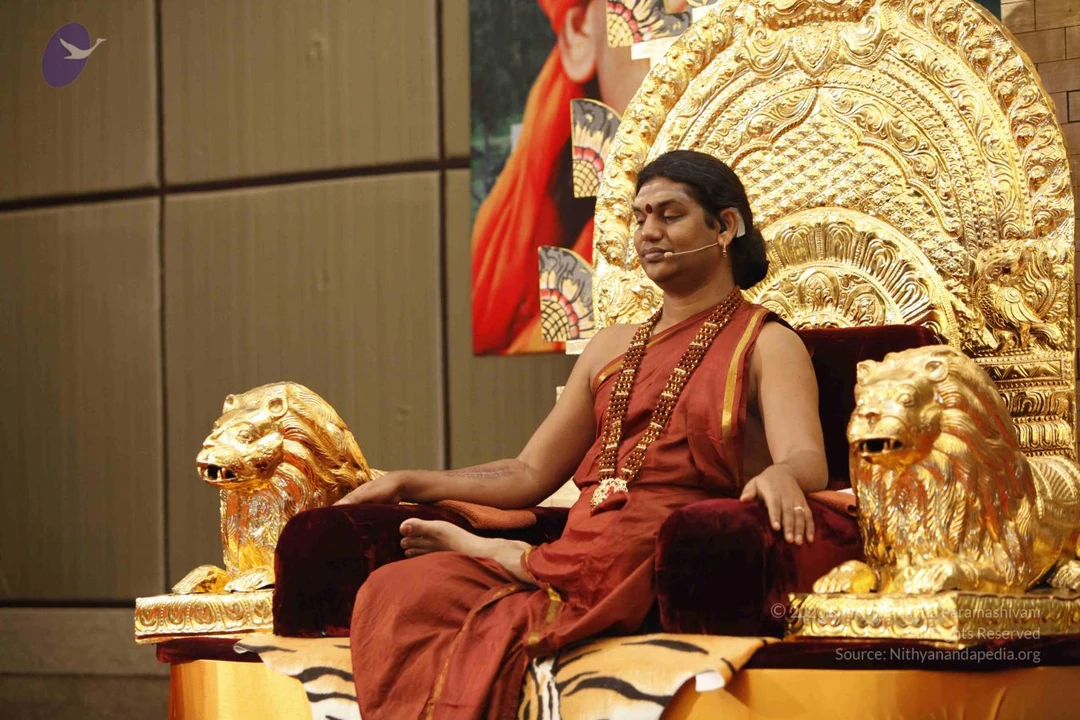
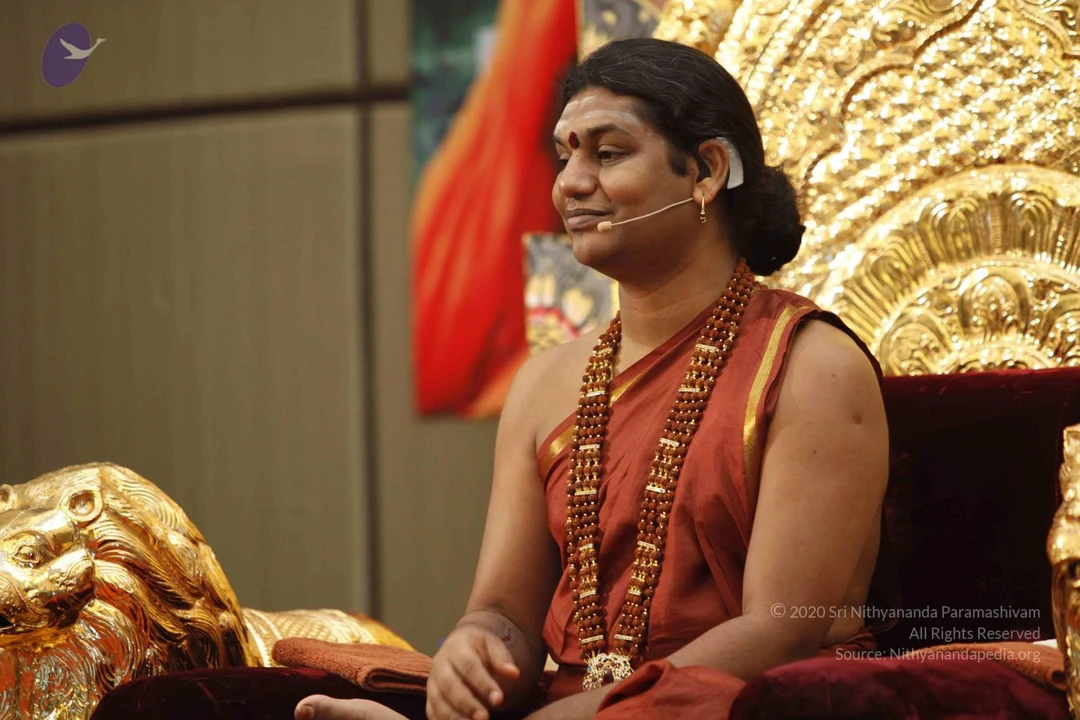
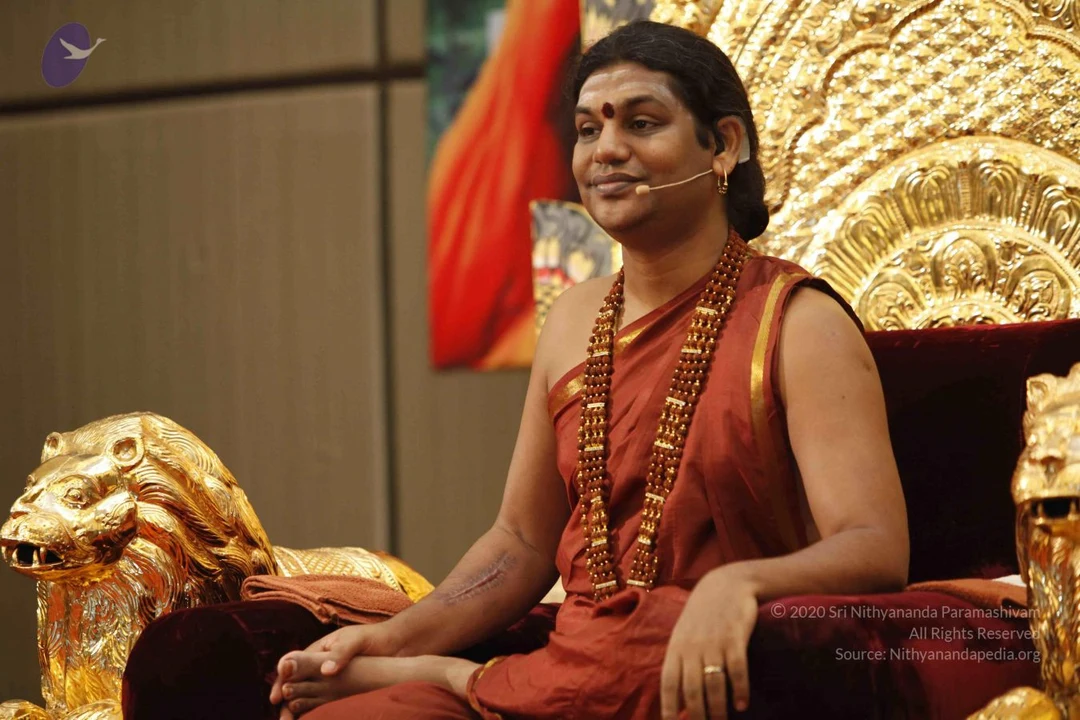
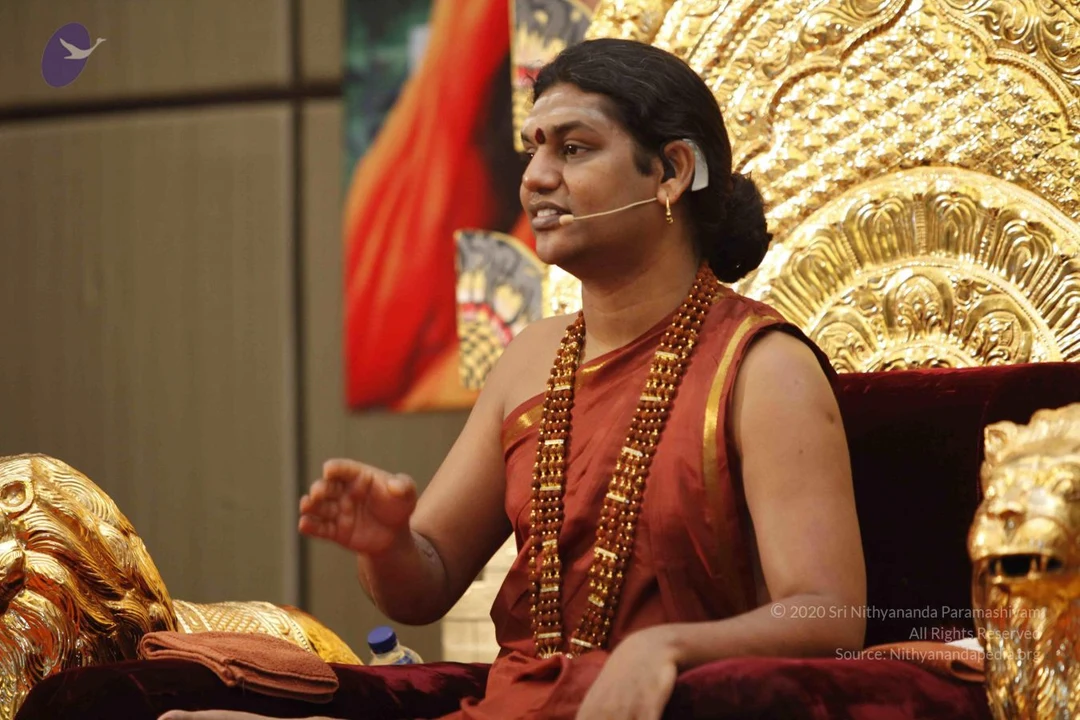
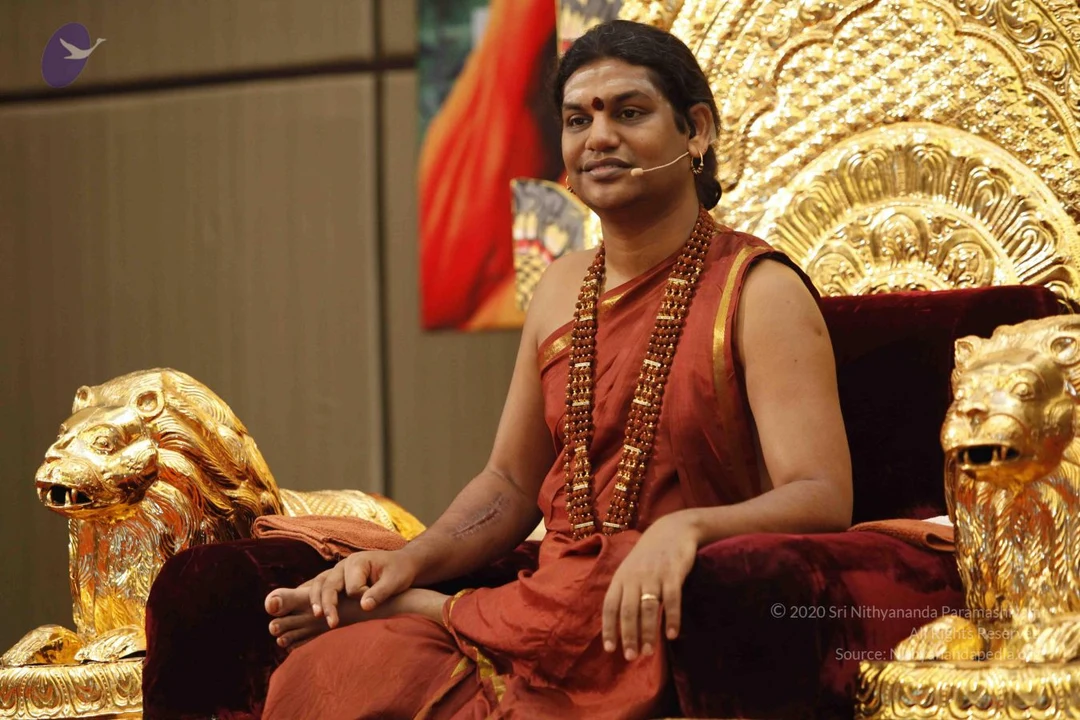
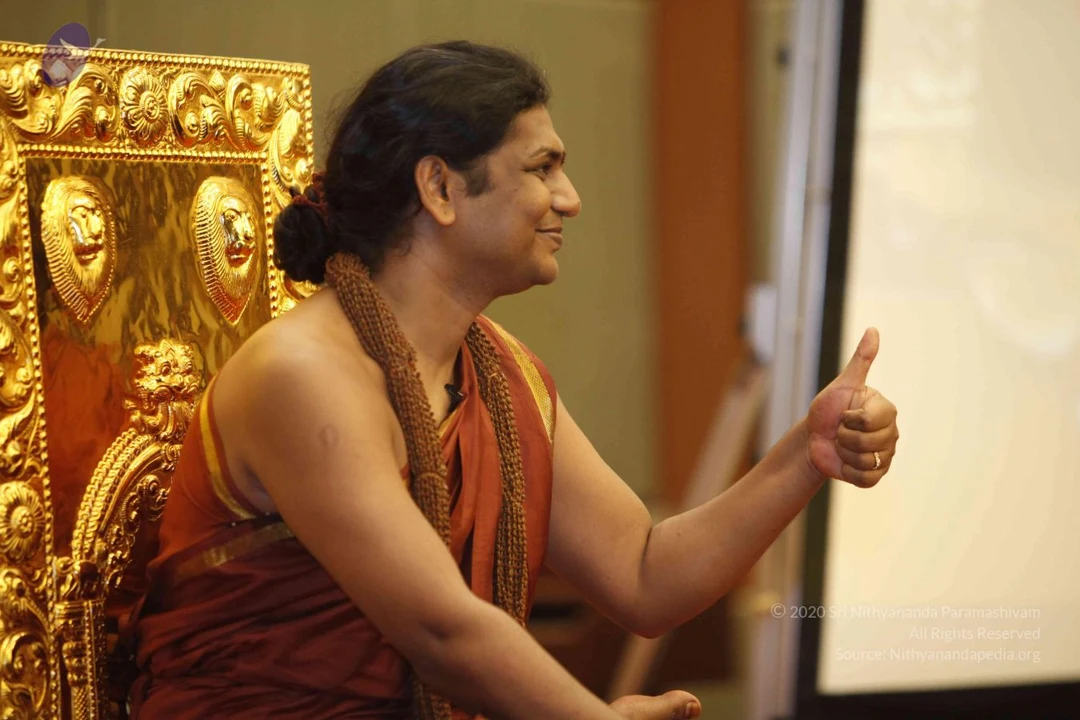
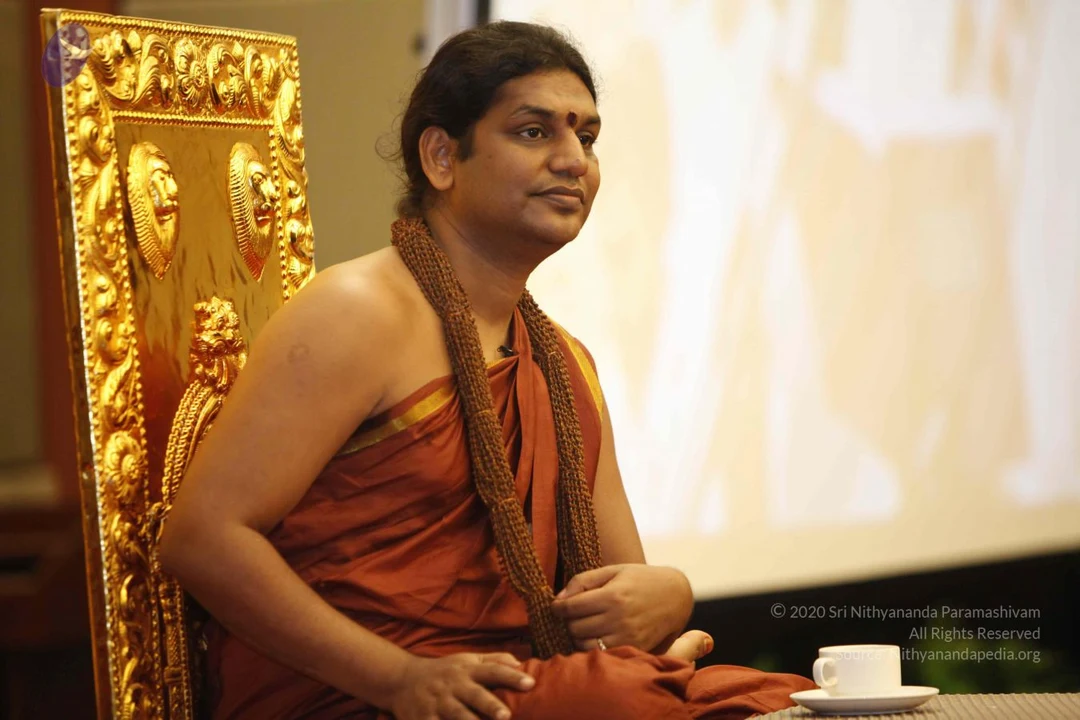
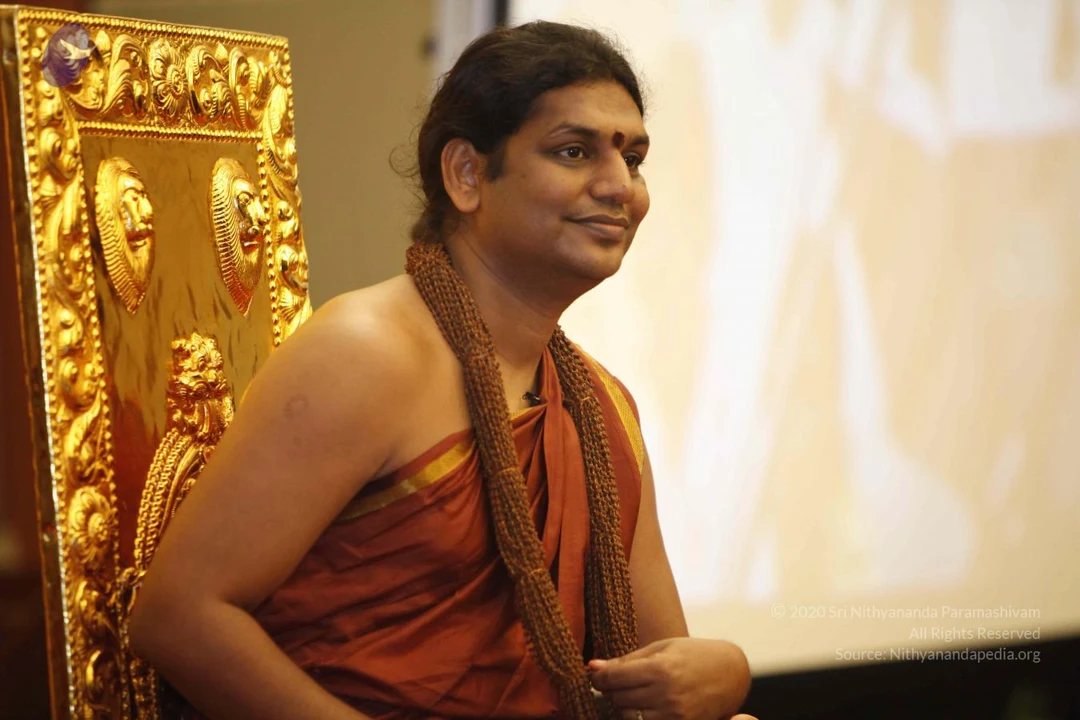
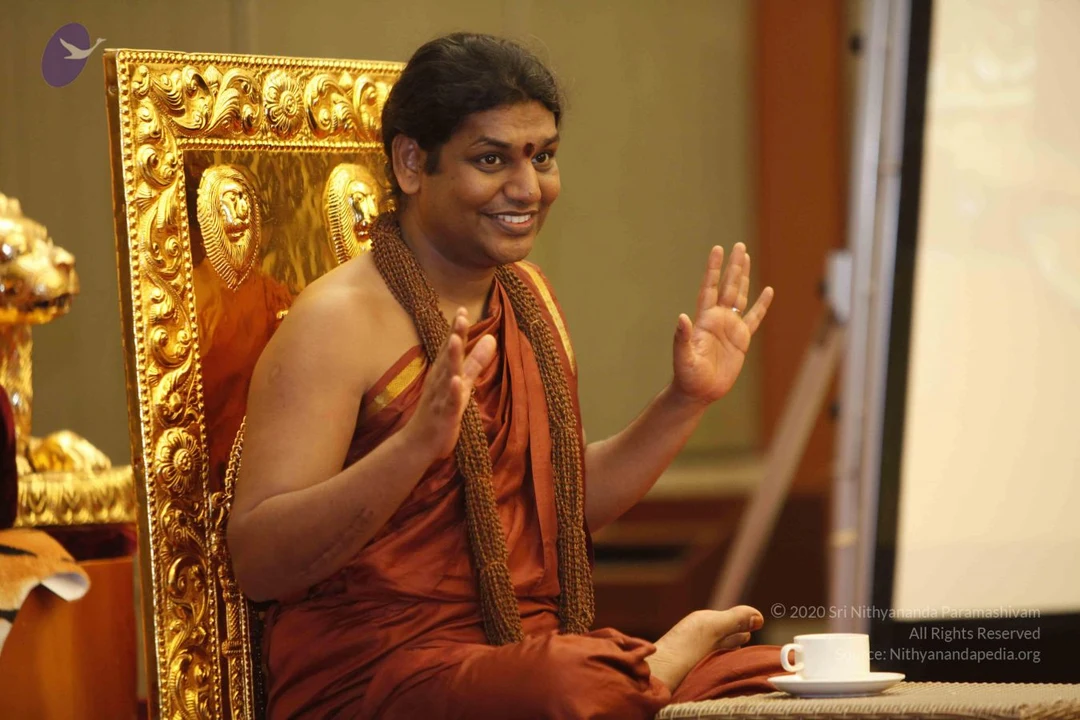
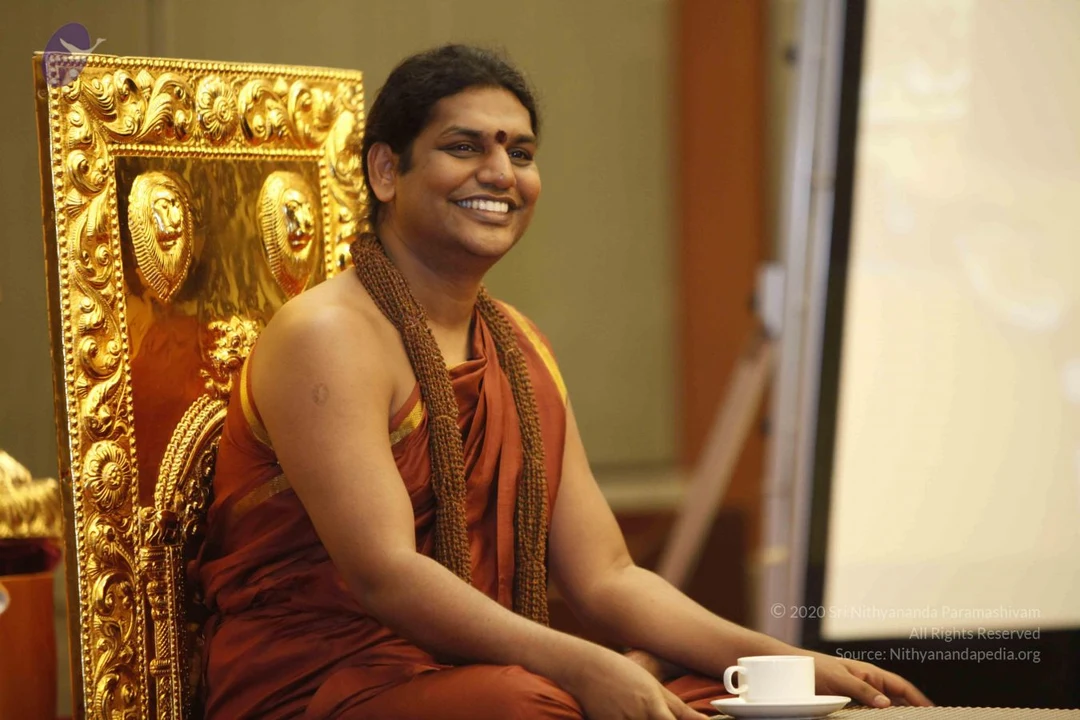
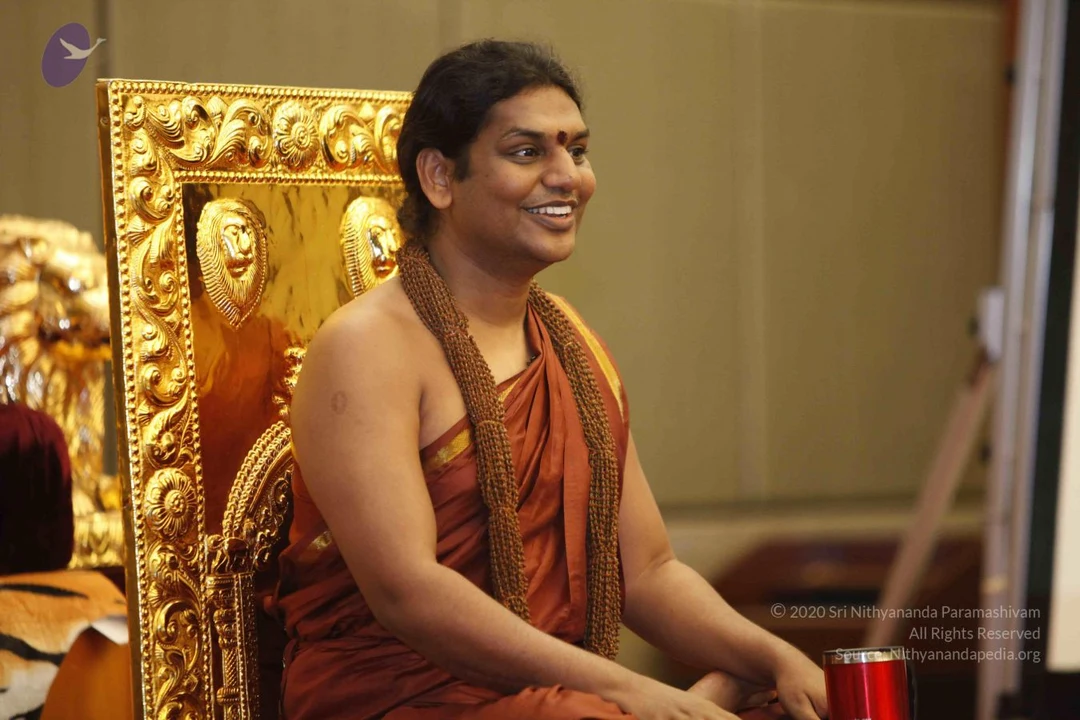
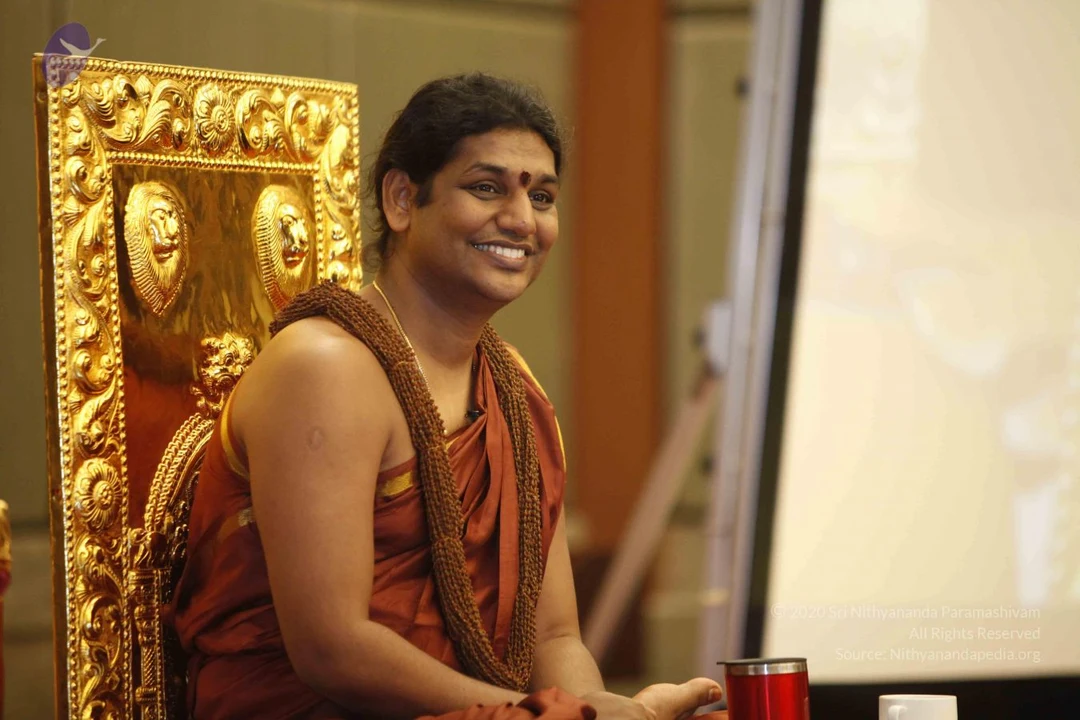
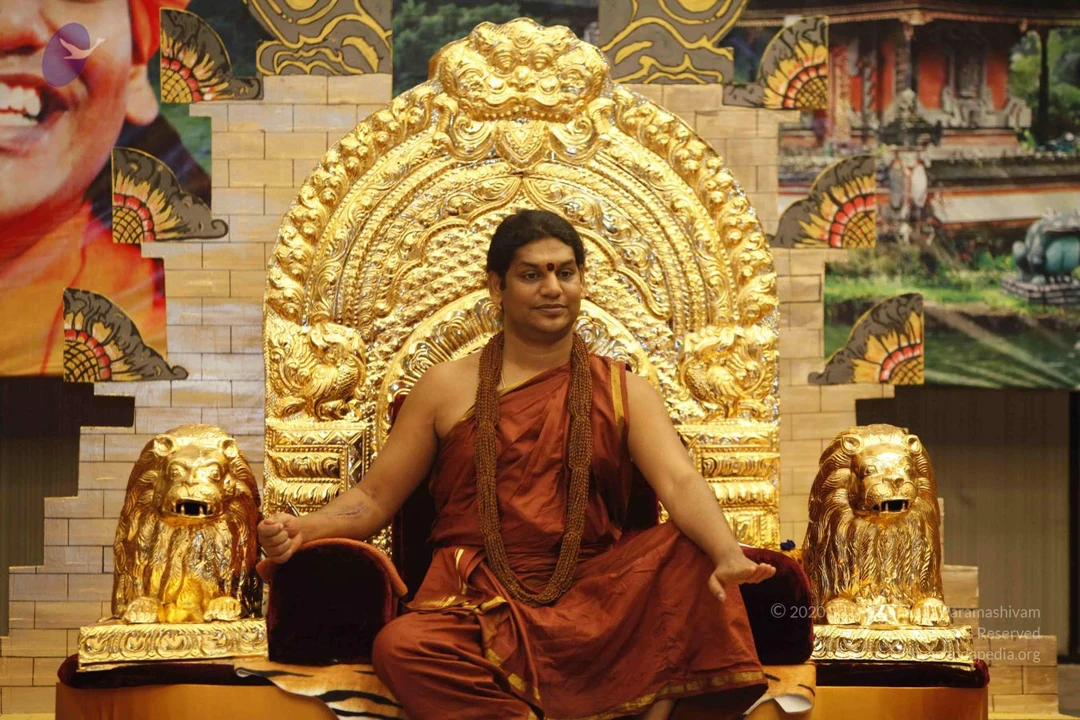
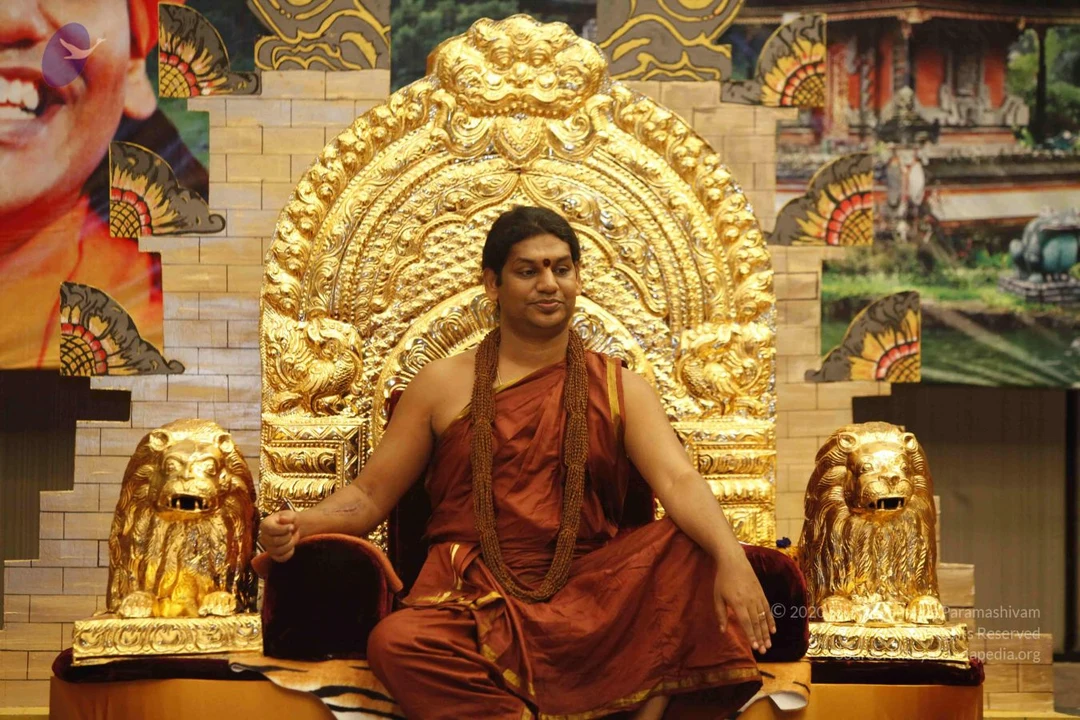
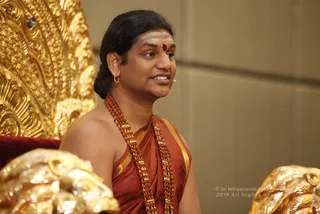
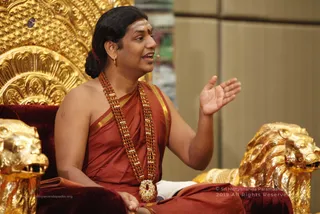
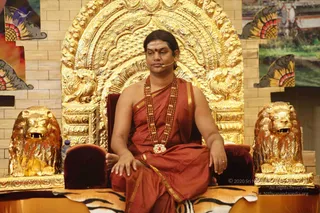
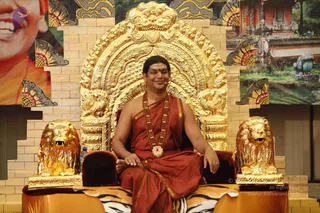
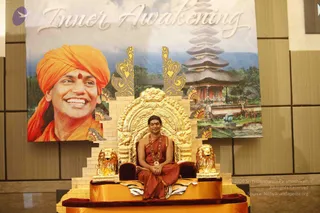
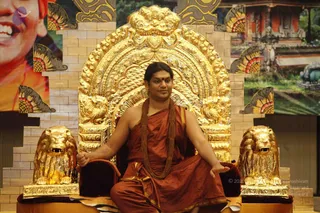
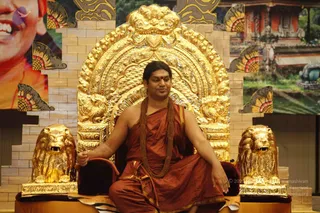
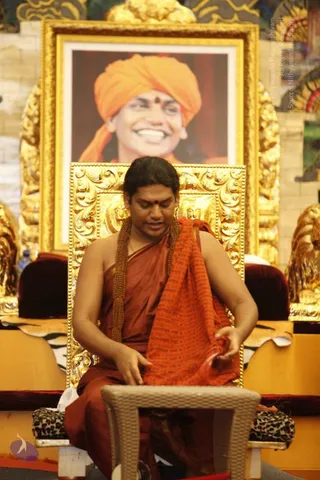
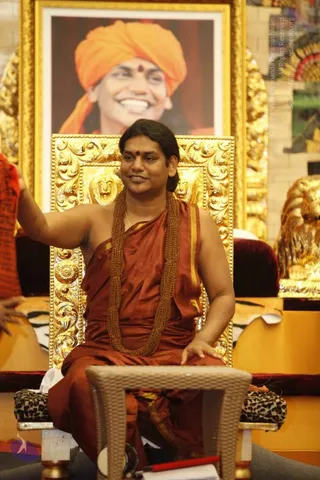
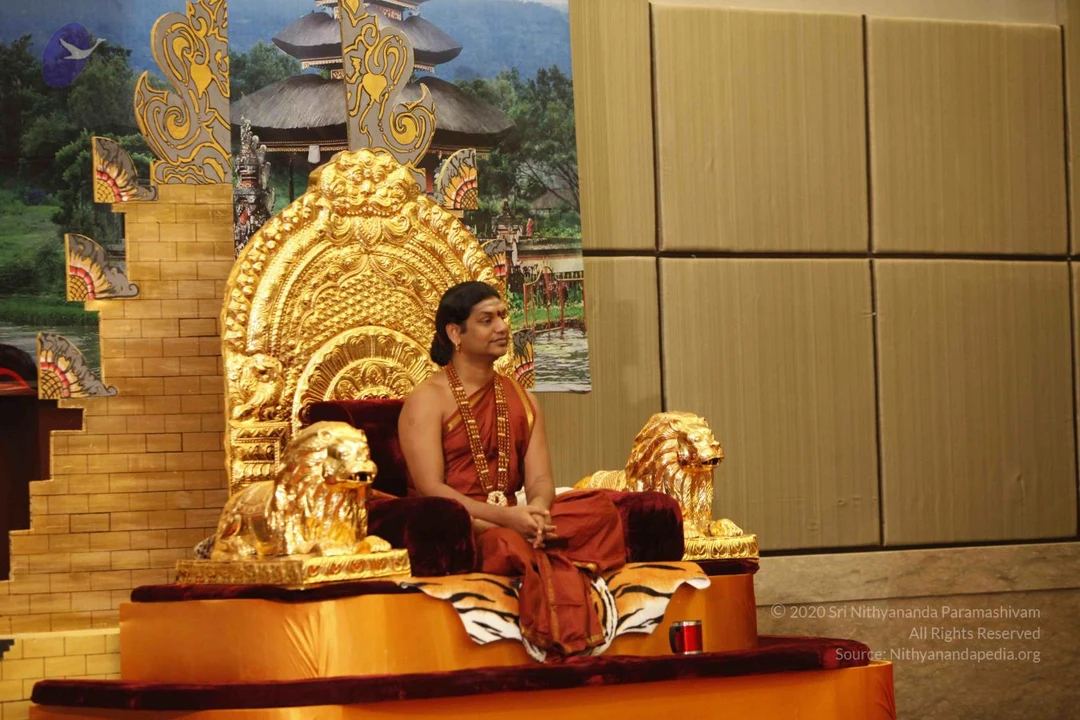
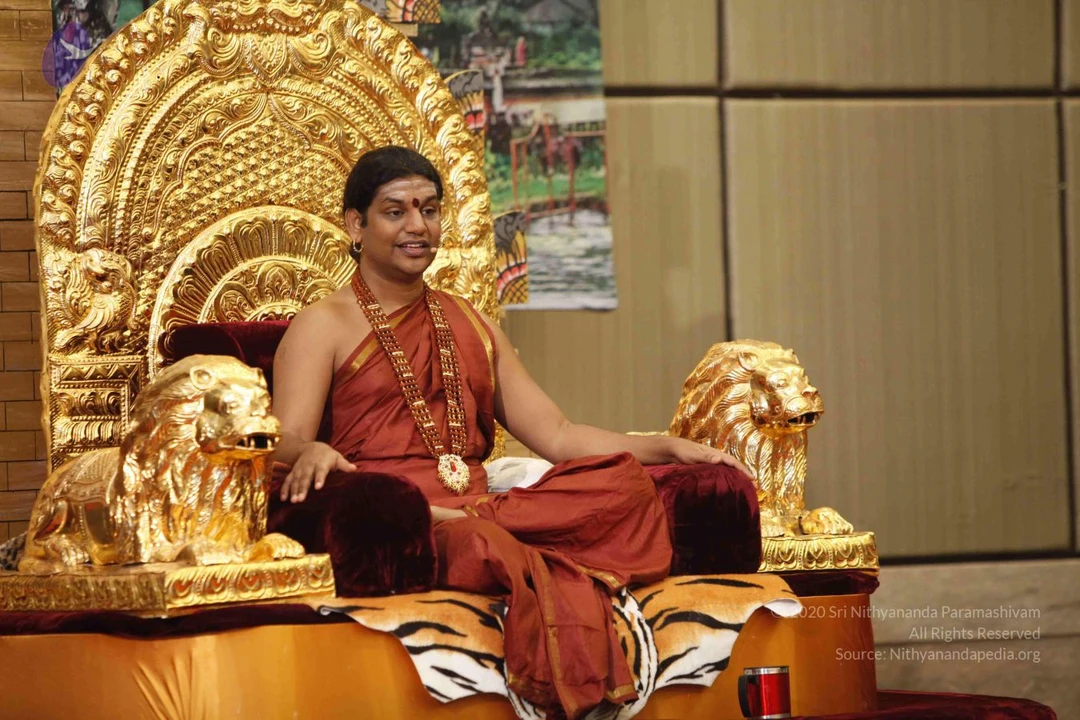
A seated man in a rust-red dhoti-style wrap with gold border sits on an ornate gold throne carved with a fan-shaped back and lion-head armrests. He wears a multi-strand rudraksha mala with a gold-and-red pendant, a red bindi and tripundra on his forehead, and gold hoop earrings. He gestures with his right hand while speaking, appearing to address an audience. Swamiji (probable): long swept-back dark hair, ceremonial gold necklace, rudraksha mala and saffron-red clothing on a throne. Background shows a beige wall and a small display.A photograph of a seated man in a reddish-orange saffron robe draped over his shoulder, wearing a long multi-strand rudraksha mala and a red bindi on his forehead. He sits cross-legged on a red velvet cushion before an ornate gold-coloured throne with a carved arched back and lion-shaped armrests, against a backdrop of painted panels. He smiles, one hand resting on the armrest. Appearance-based candidate: a person, shown seated on the throne in saffron robes and a rudraksha mala.

December 10 2013

Original wiki page
Contents

Title

Nithyananda Diary | Bali Inner Awakening Day -10 | Padukapuja | Satsang | Meditation | Sarvadarshan

Description:

In today’s morning satsang from Bali Paramahamsa Nithyananda expanded further on the practical implications of being infinitely powerful. and infinitely intelligent. In order to fully experience the four Powers you need to cause them to happen in others. Speaking into the listening of the listener does this. He advised us that any truth is active when you cause it in others so we should burn all our self doubts and become acharyas for that purpose.

Link to Video:

VideoAudio

Transcript:

Nithyanandeshwara Samaarambhaam Nithyanandeshwari Madhyamaam | Asmath Aachaarya Paryanthaam Vandhey Guru Paramparaam ||

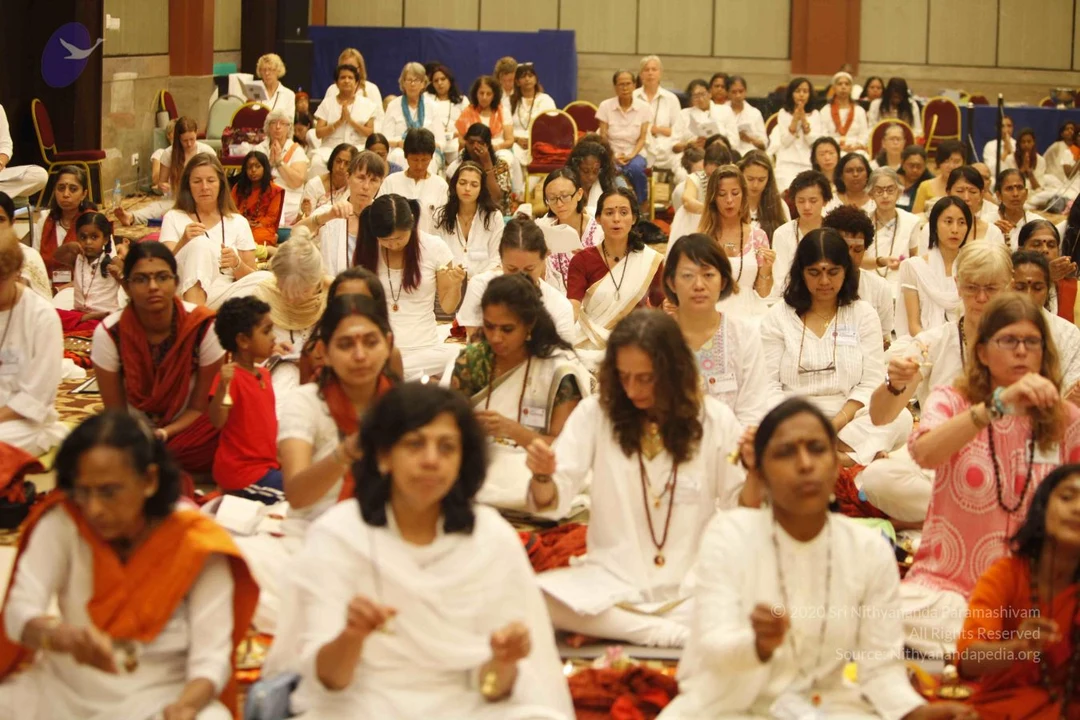
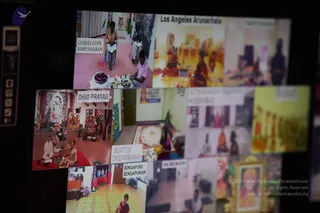
I welcome all the devotees, disciples, samajis, satsanghis sitting with us around the world at this moment through Nithyananda TV, Sadhna TV, Lotus News Channel, Janashree TV, Eshwar TV, and through two-way video-conferencing in twenty-four places having Nayana Deeksha, in twenty-two countries around the world as per the statistics.

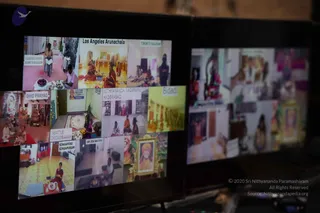
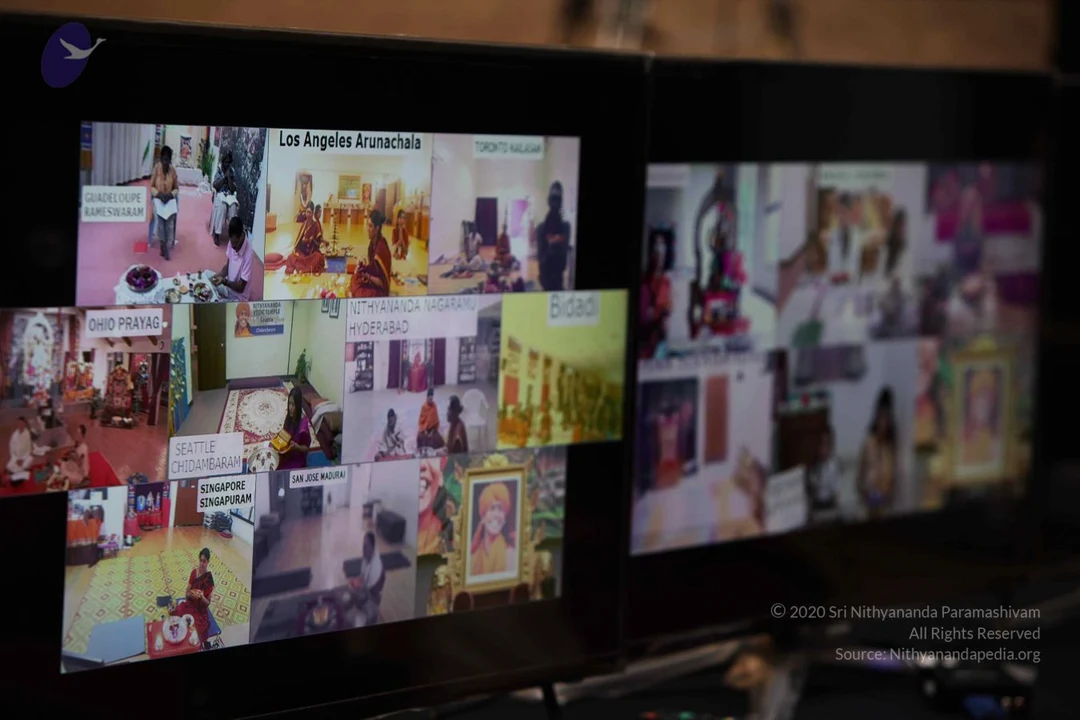
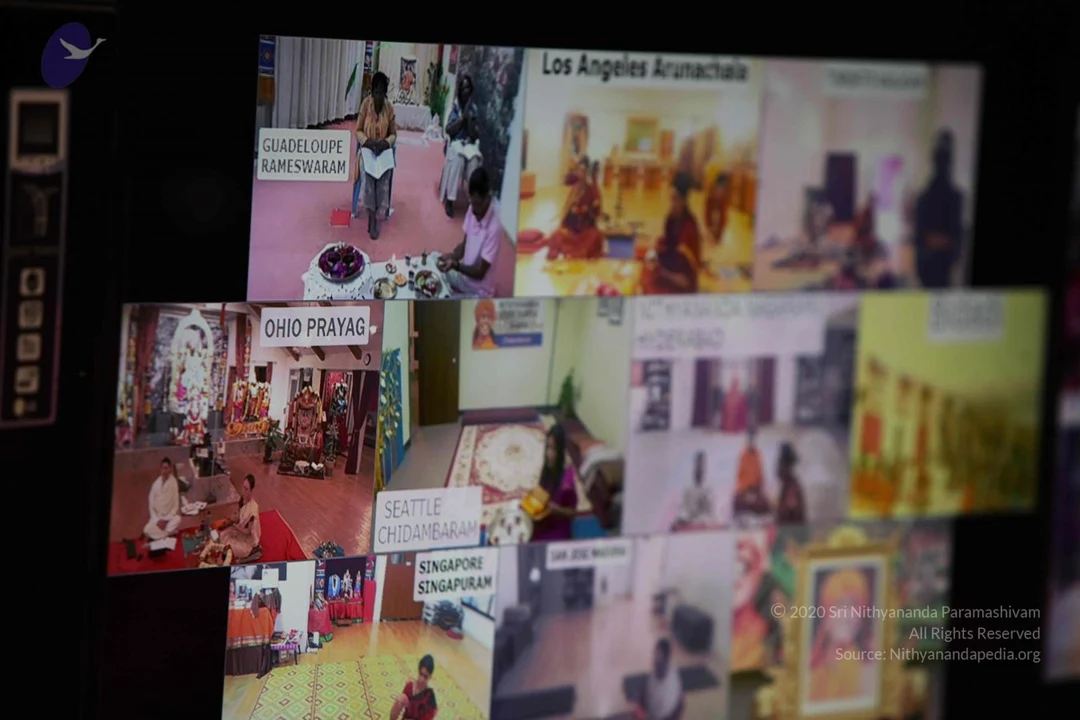
Cities sitting with us on two-way video-conferencing: Hyderabad-Gupta Kashi, Bogota-Colombia, New Zealand-Adi Arunachalam, Port Washington-New York, Dakota Dunes, Dubai-Vaidyanatham, Oklahoma-Somanatham, Nithyananda Nagara-Bidadi, Nithyananda Nagaramu-Hyderabad, San Diego-La Jolla, Singapore-Singapuram, Seattle-Chidambaram, Ohio-Prayag, Guadeloupe-Rameshwaram, Los Angeles-Arunachalam, San Jose-Madurai, Toronto-Kailasam, Warrington-UK, Bangalore North, Oman-Sivagangai, Kathmandu-Nepal, Kuala Lumpur-Palani, Jorpati-Nepal.

I welcome all of you with my love and respects.

10th day! One side it feels, ‘Okay, ten days.’ One side it feels, ‘TEN DAYS! It is only ten days? So much has happened!’ Other side feels that eternally we are sitting in Bali. ‘Only ten days over?’ Both, the reason is same. So much is happening in you! What you are supposed to go through in twenty-five, thirty years, you are going through in just these last ten days. The re-cognition maturity, clarity, re-thinking, everything. Just in ten days so much.

Today I will continue to expand on “PRACTICAL IMPLICATIONS – TATTVA GNANA”. Please listen.

The practical implications of this great experiential expression, Tattva Gnana, the truth revealed, the practical implication of that truth is you understanding your infinite knowledge and power does not need to be compared, competitive, jealous, afraid, threat to anybody else. Please understand, you always have a feeling you can’t be infinitely powerful and intelligent. Then what about others? It is this idea of comparison that constantly makes you believe you can’t be infinitely intelligent, you can’t be infinitely powerful. So, please be very clear, you being infinitely powerful, is neither a threat nor a problem for others.

Look into the deeper practical implications. You being infinitely intelligent, powerful, efficient, above all intelligent, beautiful, efficient, powerful, above all does not have any other supreme personality of godhead as authority.

The next practical implication: When there is no superior authority, your independent intelligence is the ultimate, you are free. That is the ultimate liberation.

And the next practical implication: Automatically you cause what you want to cause in your life. You cause Vaak Siddhi, you cause Mano Siddhi. Mano siddhi means, ability to visualize and make that into reality. Mano Siddhi means, conquering impossibility, expressing all these great powers.

Listen, this is the main thing you need to know:You will be causing all those powers in you powerfully only when you cause these powers into others, understand. Only when you are inspiring, speaking into the listening of the others and awakening these various powers in them, various intelligences in them, YOUR intelligence will be awakened, because you are not just centered on your body, you are so many people put together. How much ever great Vaak Siddhi powers you create in you, if your wife also doesn’t have those powers, nothing will work for you. You can see in your life, all your spiritual practice and going up, she will pull it down, or he will pull it down in one minute. So, listen, unless, unless you cause all these great intelligences, energies.

Integrity is intelligence, Vaak Siddhi is energy, Authenticity is intelligence, Mano Siddhi is power, Responsibility is intelligence, Leadership Consciousness is a power, Enriching is intelligence, Enlightened Life is a power. Each intelligence lead to one power. Methodology to reach that power is intelligence. I tell you, whether this intelligence or the power, it happens in you only when you cause it in others. Any intelligence, any intelligence or any power, it fully expresses in you only when you cause it in others.

I tell you, I have seen in my life. I have become enlightened at the age of twelve; but only when I caused this into others. My whole Parivrajaka Yatra, spiritual pilgrimage, when I look back, I am able to understand, it is just attempt to cause this into others; amateur attempt, not a powerful, a planned clear, conscious attempt, an amateur attempt to cause these into others. Listen, between the age of twelve and twenty-two, I had only tremendous inspiration to cause these experiences into others. After twenty-two to twenty-five, I started developing intelligence also; means, skill, ability to speak into the listening of others, listening of listener. Only when I started causing this great intelligences and energies into others, I saw all that started flowering in me to its peak possibility. Only when you give birth to a child, you are mother; till then you are “possibility for mother”. In India, any woman is addressed as “Ma”; means, the “possibility for mother”. Only when you become mother, you are “Amma”. So, all of us are possibility; but only when we cause others, we become reality; only when we cause this knowledge, intelligence, energy in others, we become reality. So, please understand, make it into reality.

Start speaking to the listening of the listener. Start moving others. I tell you, literally I tell you, the moment you learned about these four great intelligence and power, methodology and power. The moment you learned about Vaak Siddhi, Mano Siddhi, Eshwarathwa, Jeevan Mukthi – Power of Words, Power of Thinking, Power of Feeling and Power of Living – the moment you understood these four, immediately start causing this to others. Each one of you start. I don’t want to say ‘start in your own way’. No. Start the way I started. ‘Start in your own way’ is almost like no confidence – ‘okay, do as much as you can’. This is not the “anna dhaan” that you do in the street-corner Ganesha temple! No, if you are starting in that scale, your life will be in that scale only. Start with tremendous intelligence and confidence. You are not giving some charity, please understand when you cause this into others, you are going to expand. If it is directly related to your expansion, will you do it like charity? It is not like you make a little “puliyodharai” , curd rice, and go to the street-corner Ganesha temple and distribute to the few beggars sitting there or a few visitors who come there. No! It is you are preparing a feast for the statesman, the President or Prime Minister who is visiting your house. Do it with that sincerity.

Start causing the Power of Words, Power of Thinking, Power of Feeling, Power of Living in others. Sit now and plan how all you are going to cause this in others. Please listen, you can use every possible method available. You can revolutionize the world! Whether your personal behavior or the words you utter, everything should be aligned to cause these four powers into others. I tell you, align everything to cause these four powers into others; you will see these four powers are awakened in you. Not only awakened, constantly grows, expands to its peak possibility.

Cause Power of Words, method to achieve the Power of Words in others; YOU will achieve Power of Words. Cause the Power of Thinking, method to achieve Power of Thinking, Authenticity, to others. If you have to cause that into others, not only you have to speak, you have to live. If you miss living they will not be inspired. If you miss speaking, they will not be inspired. You will have to do both. Only then the mirroring of neuron activities of your brain will happen in them. When you cause these great truths and powers in others, only then when you cause these powers in others, only then you experience them in you again and again.

Please understand, any truth is given life only when you cause that in others. When you make others Shiva’s devotee, you become a great devotee that starts settling in you because what you speak, what you inspire in others will start becoming part of you. When you make others great advaitis, you become a great advaiti. When you make others, when you cause leadership qualities in others, you become a great leader. When you cause Vaak Siddhi in others, you become a Vaak Siddha. When you cause Mano Siddi in others, you become Mano Siddha. Cause all this Power of Words, Power of Thinking in others. Cause this Power of Thinking, Power of Feeling, Power of Living in others. Internalize, internalize these great powers.

When you know how to speak into the listening of the listener – listen – when you know how to speak into the listening of the listener, you also know how to speak into the listening of YOUR LISTENING. If you say, ‘I understand many of these truths, but I am not able to live’, it means you are not able to speak into the listening of YOUR LISTENING! Ability to speak into the listening of the listener and ability to speak into YOUR listening is one and the same.

Speak into your listening. Be active in enriching others. Burn all your self-doubts, self-denial patterns. Each one of you become acharyas. Please understand I am talking to each one of you. Don’t think, ‘Oh that is for that person, not for me. Swamiji knows I can’t be acharya.’ No, I know every one of you can be an acharya. That is what I know. I don’t know you can’t be acharya; you may know; but I don’t know. I know only one thing: All of you can be acharyas. Every one of you, not just talking in a foolish way, in a very skilled, very conscious, clear way of speaking into the listening of the listener. Not just talking because Swamiji said. It is your life and death. Is your Power of Words your life and death or not? It is! Is your Power of Thinking your life and death or not? It is! Be very clear, you are going to get it only when you cause it in others. You are going to get it only when you cause in others. So, with this clarity, cause, cause into others with this clarity. Cause the Power of Thinking, Power of Feeling, Power of Words, Power of Living into others, because only how much you cause in others is going to happen in you.

Again sit; let me mirror the neuron activities into your brain. That is the best form of initiation. Let the Upanishad happen. Please sit straight. Close your eyes. Declare to yourself and others, ‘I will cause all these four powers to happen in every one in the world. I will be the cause for it. I will cause it. I will speak into the listening of the listener.’ Let all these four powers be caused in you and in others! Namah Shivaya!

Let you all achieve, experience, live, express, radiate, share and explode in eternal bliss, Nithyananda.

Photos
Tags:

Paramahamsa Nithyananda, practical implications, infinitely powerful, infinitely intelligent, four powers, listening, truth, active, others, acharyas

Photos Of The Day:

IA-Yoga
Deities

Paduka-Puja
Nithya-Satsang
IA-Session

IA-Darshan

Photos Of The Day:

Paduka-Puja

Temple-Visit

Photos Of The Day:

Paduka-Puja

IA-session

IA-Darshan

Photos from this day

View all 222 photos

Photos

3 photosSource gallery
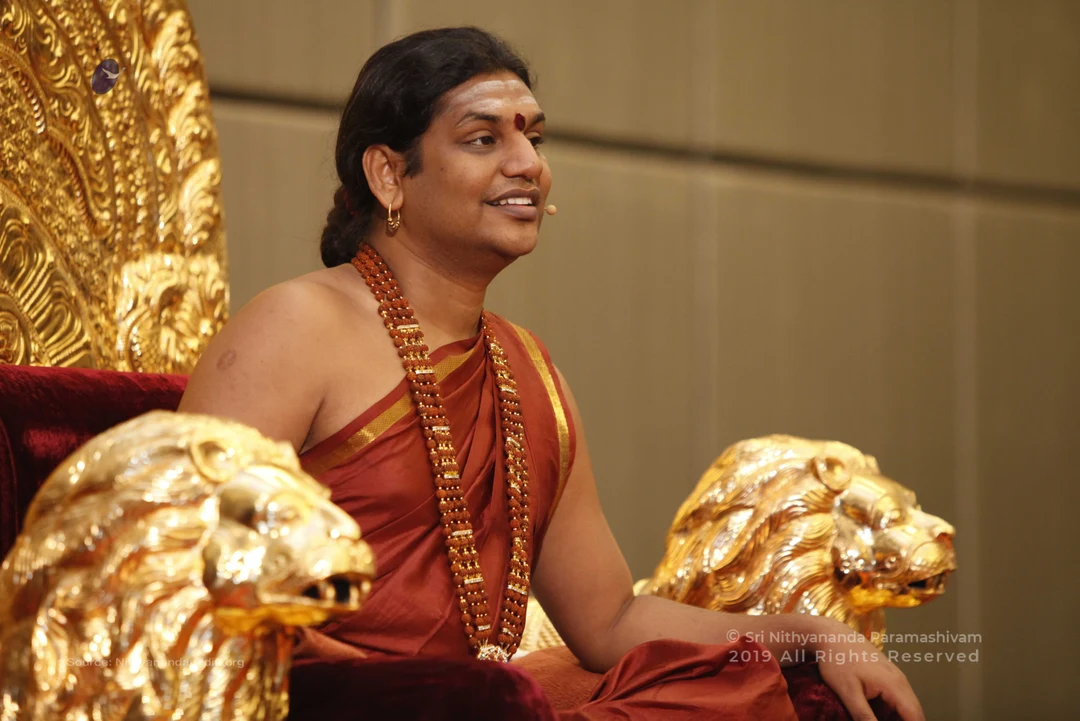
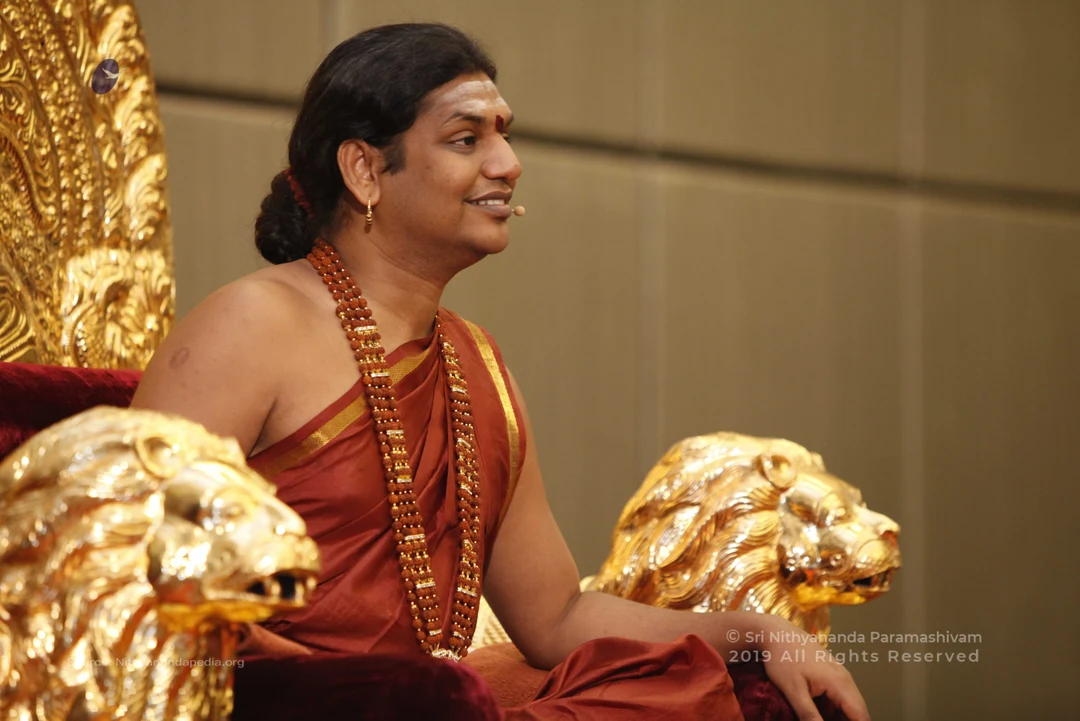
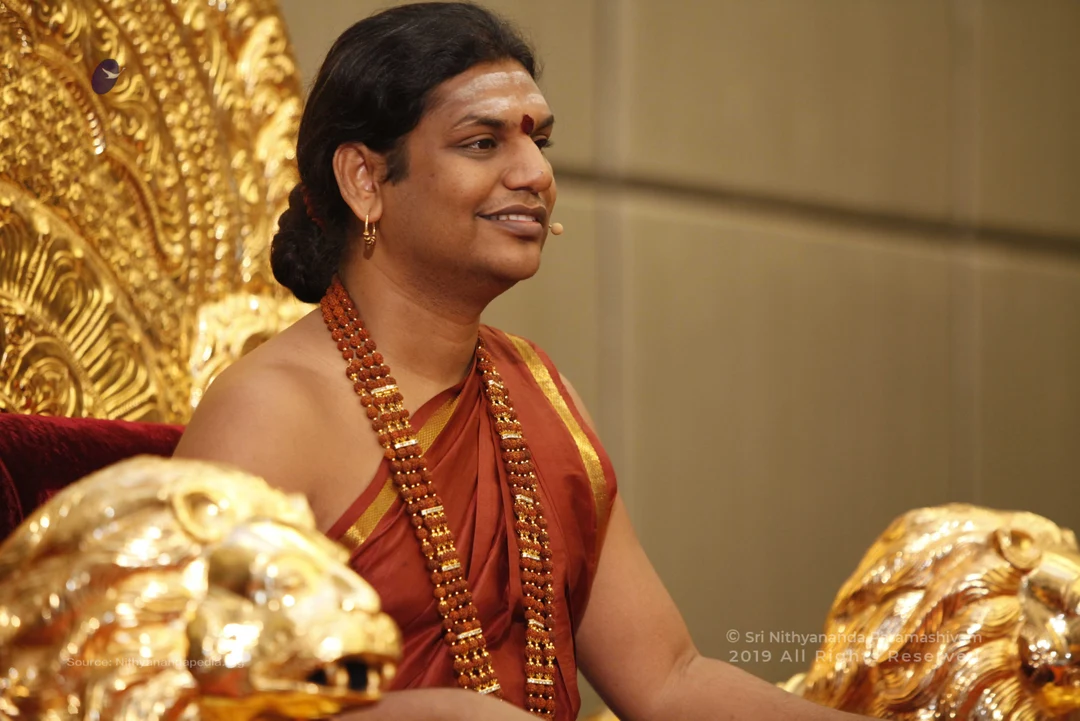
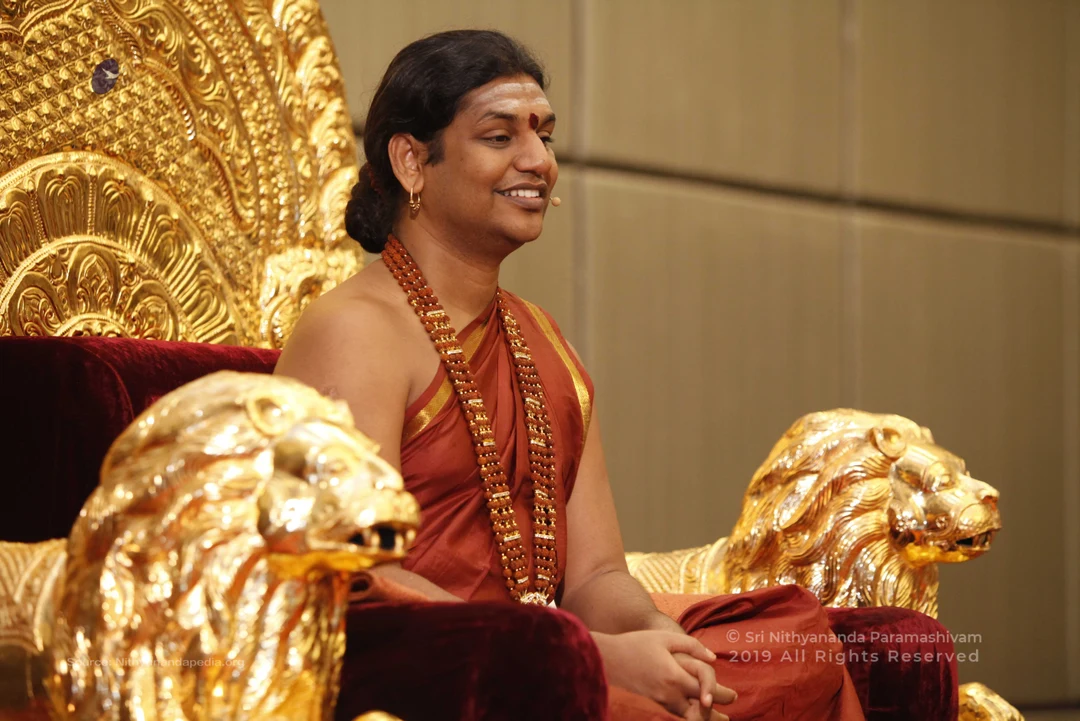
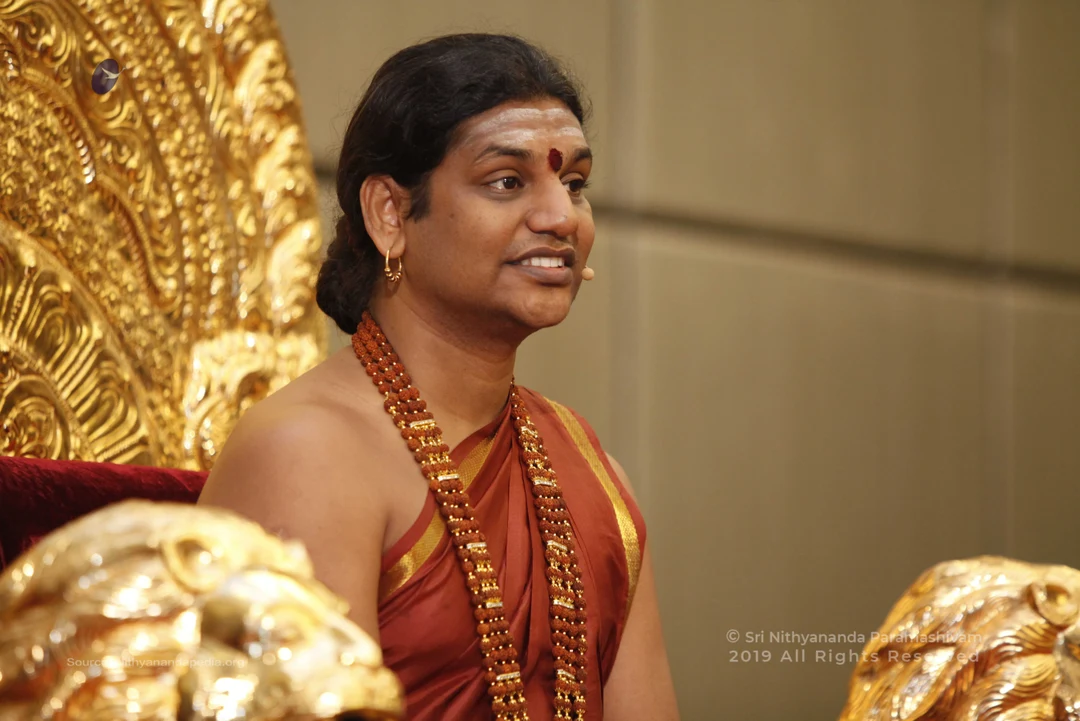
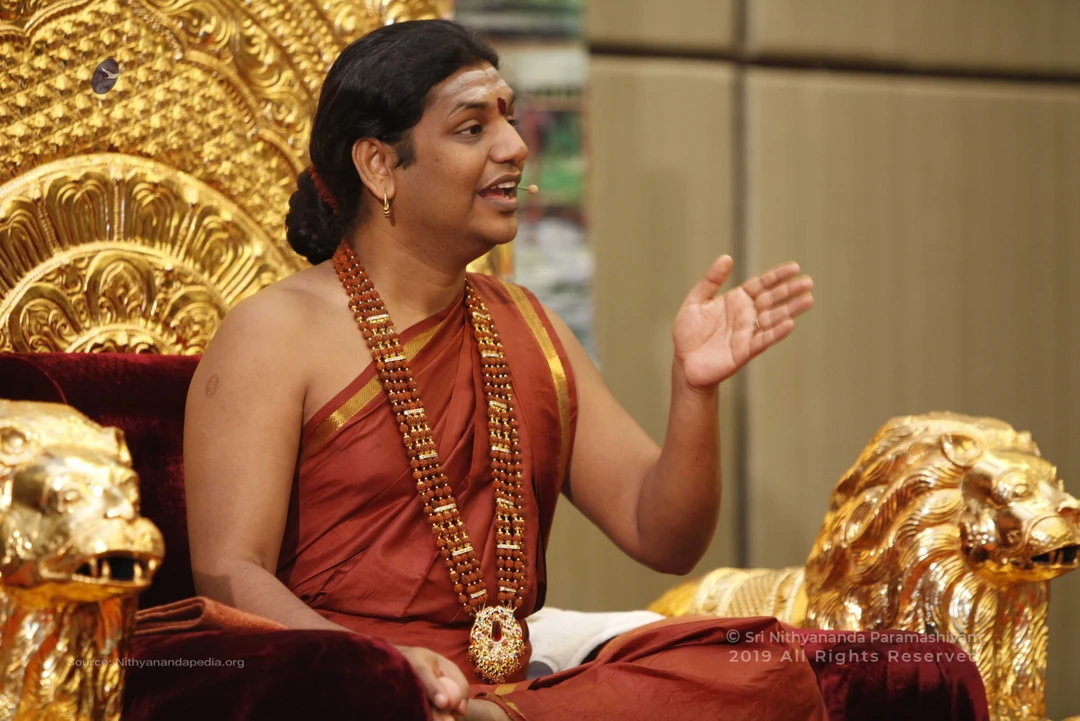
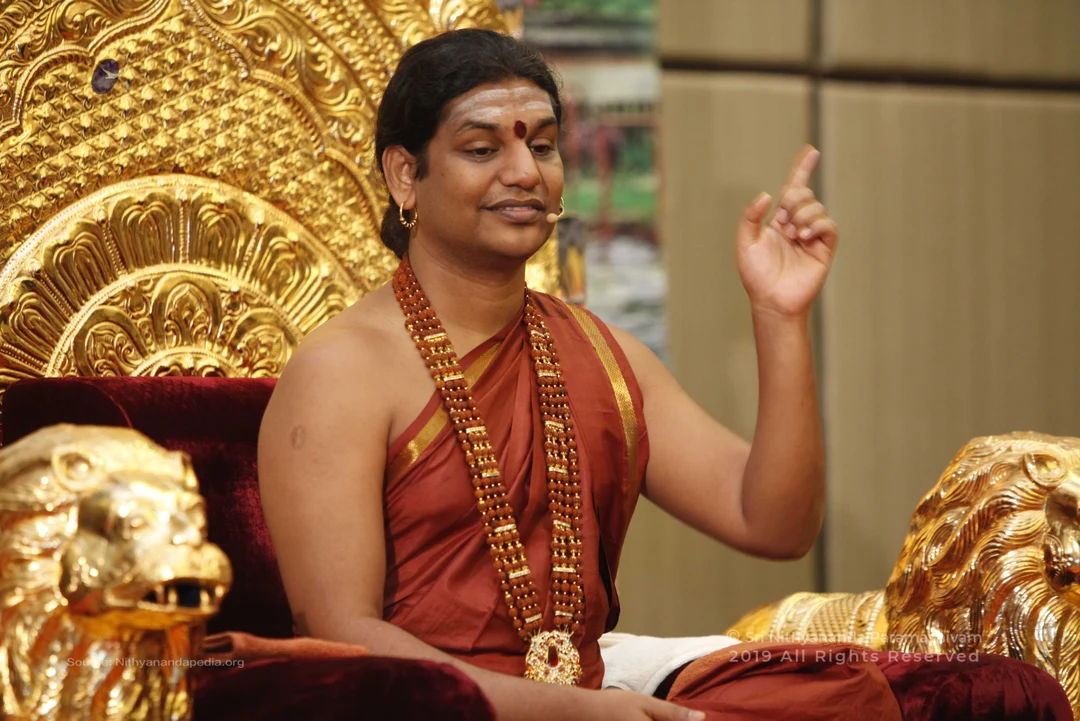
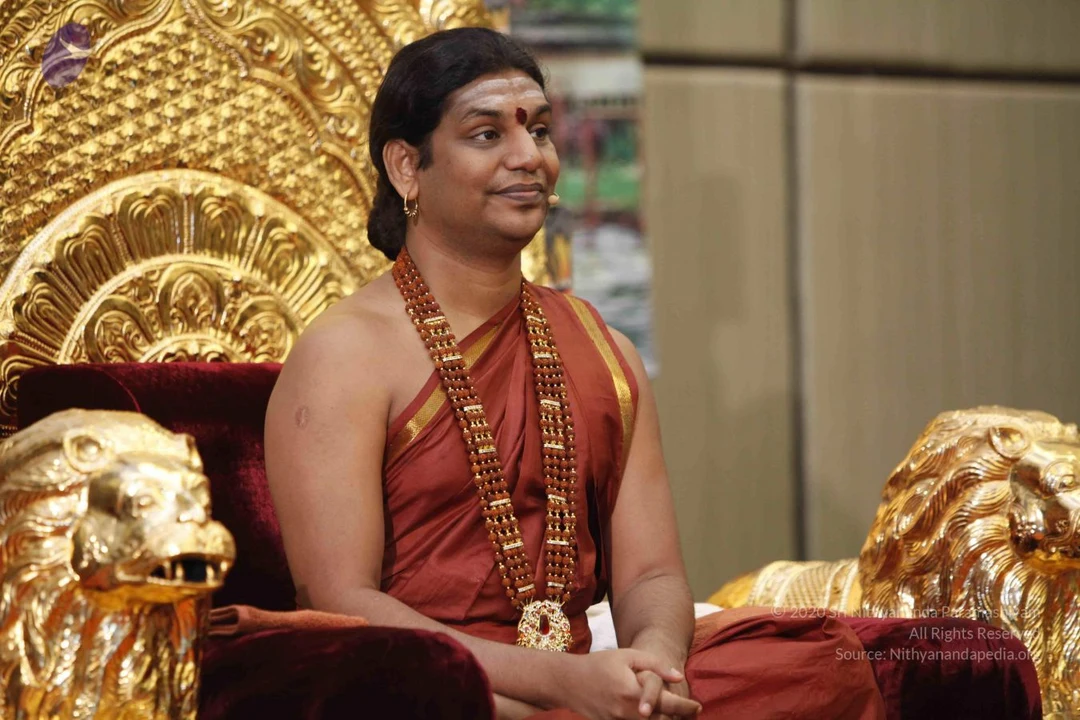
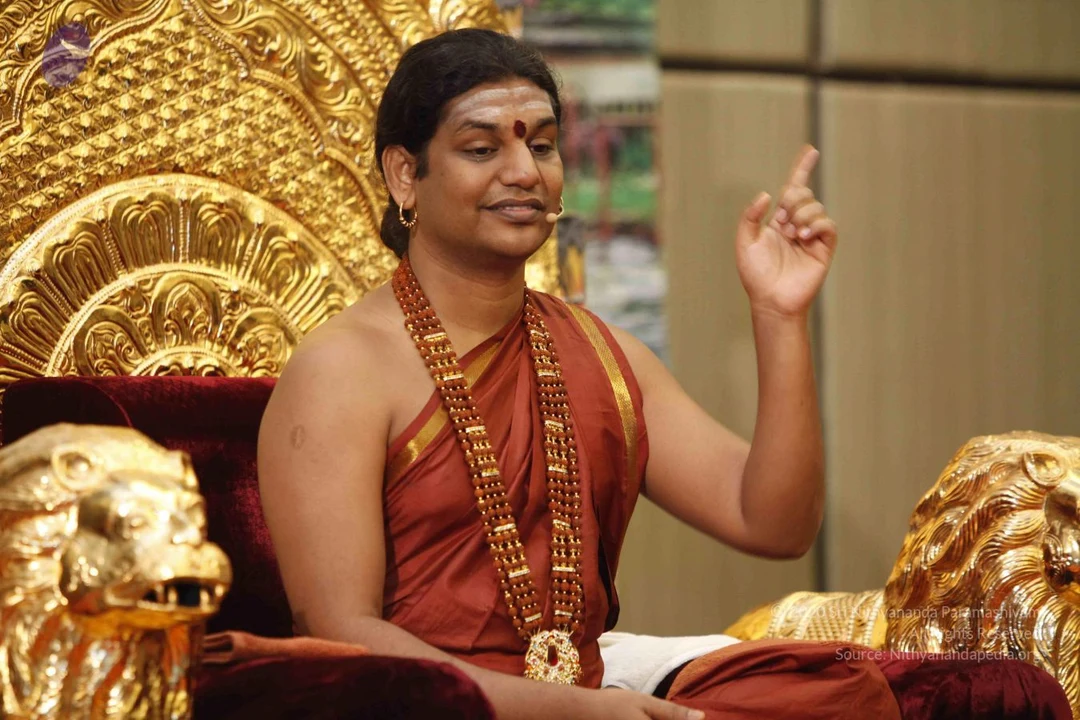
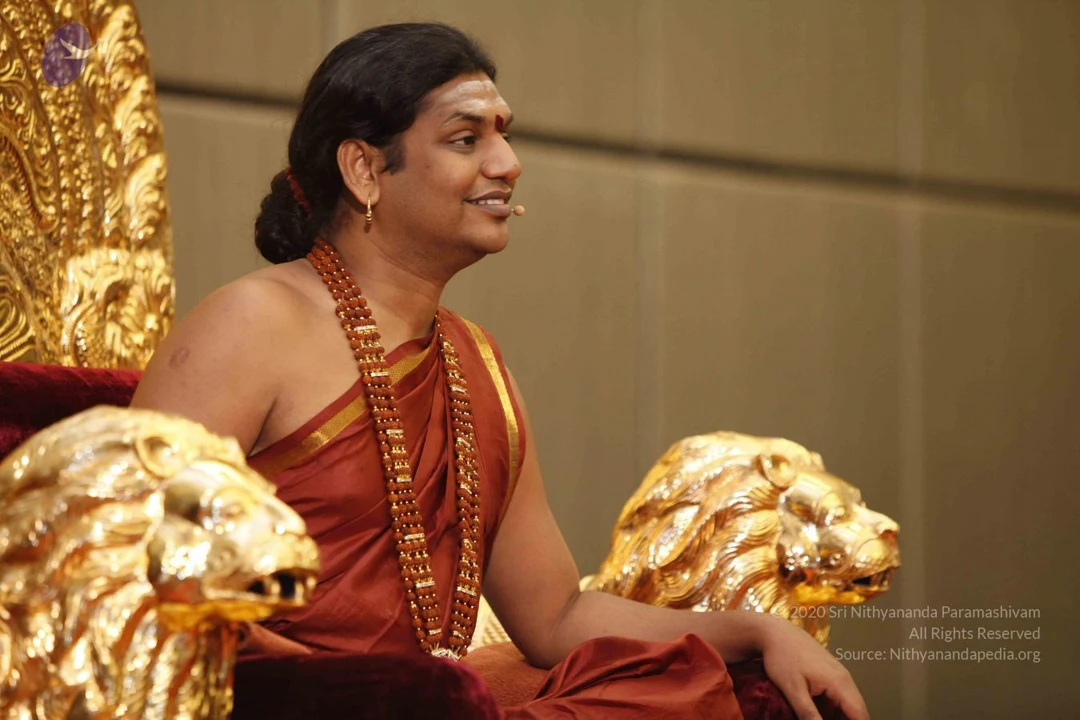
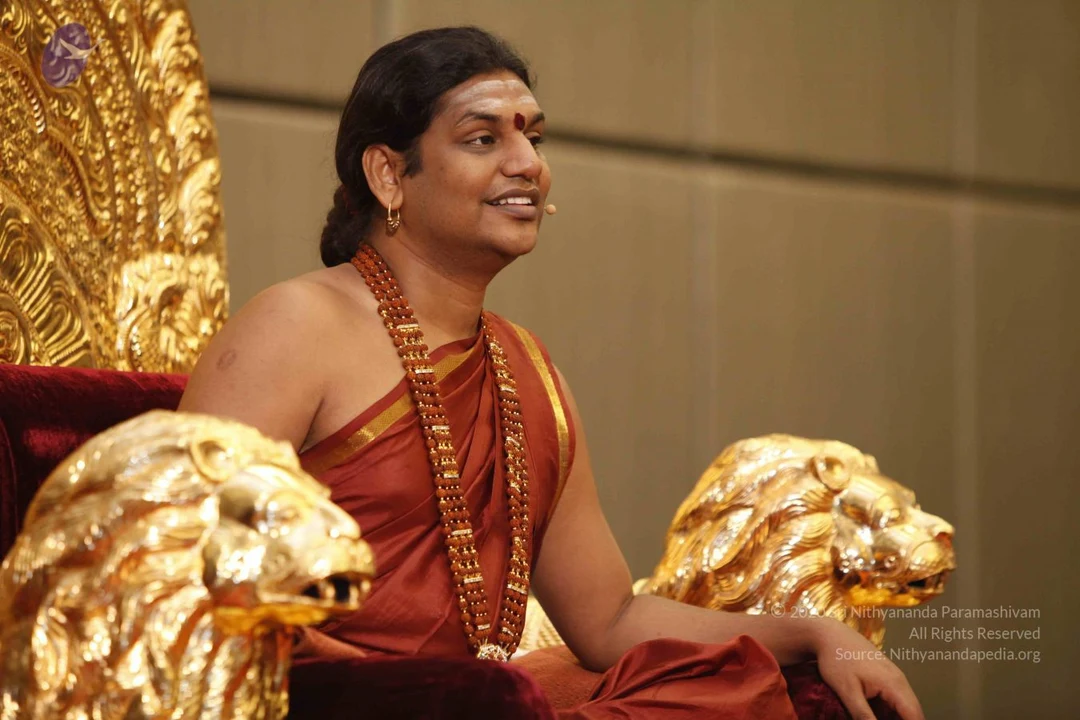
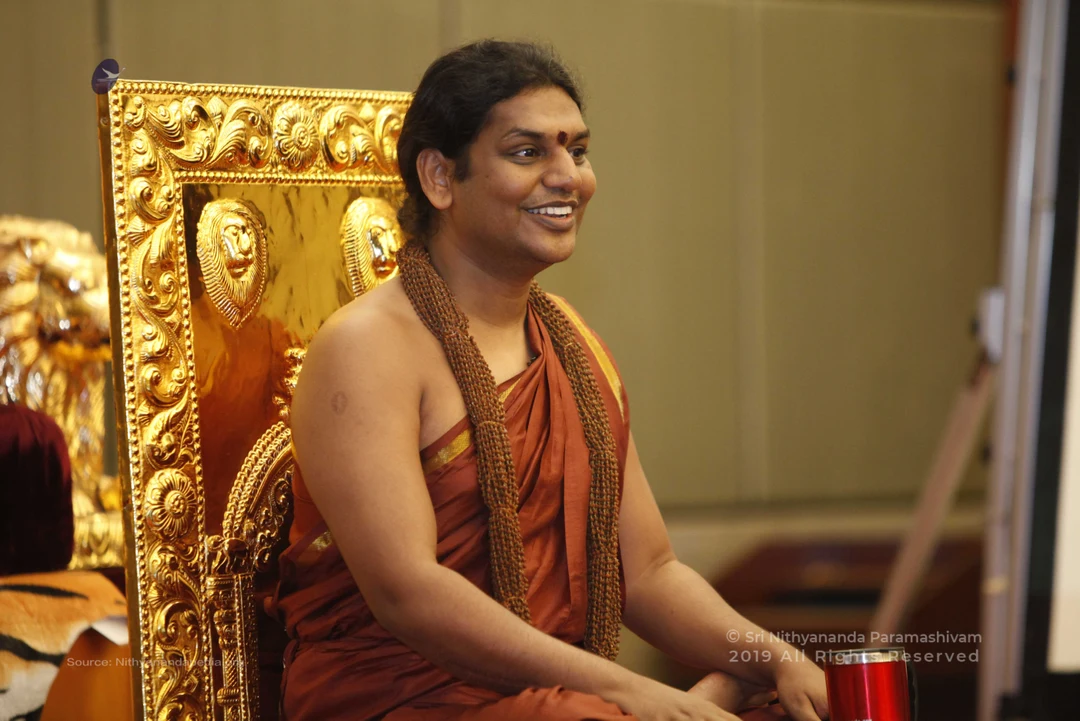
A man seated on an ornate gold throne with carved gold scrollwork, speaking during a satsang. He wears a rust-red and gold-bordered robe, multiple rudraksha mala necklaces, a gold hoop earring, a white forehead marking and a red bindi. A small lapel microphone is visible. Gold lion-form armrests frame the lower corners against a plain beige wall. a person is shown in this appearance-based label, seated with an upright, speaking posture on the throne. The image is a photograph with a 2019 in the lower right, and a faint Nithyanandapedia source line at lower leftA man seated on a red velvet throne with gold lion armrests and an ornate gold backrest speaks while raising one open hand. He wears a rust-red robe with gold border, a long multi-strand rudraksha mala with a gold pendant, a small red bindi and sandalwood marks on the forehead, and a small gold earring. A headset microphone is visible near his face. The setting is an indoor hall with beige panels behind him. Swamiji (probable): the seated speaker shows the long swept-back hair, ornate gold necklace and rudraksha mala cues of the page's subject, presented as a discourse speaker on a throne.

Photos

15 photosSource gallery
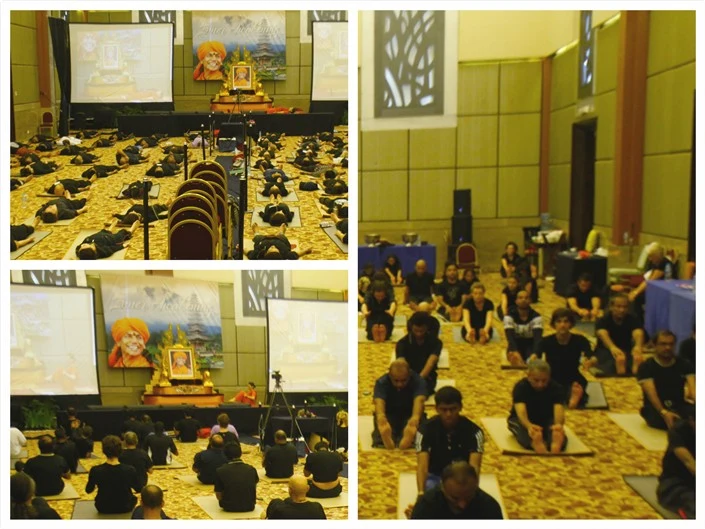
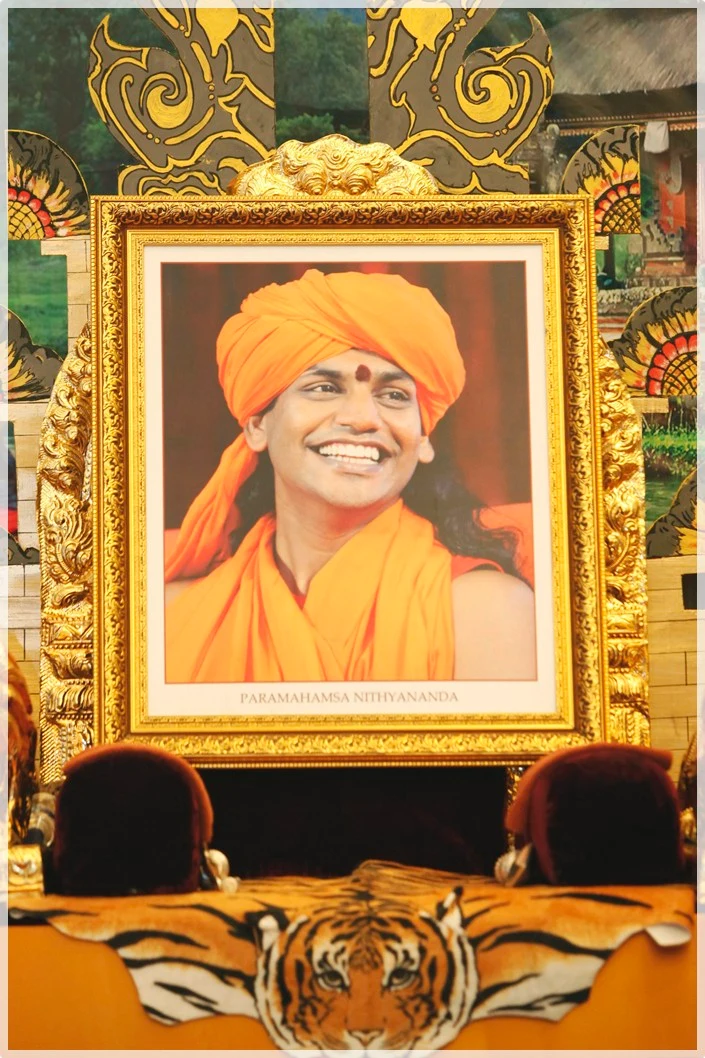
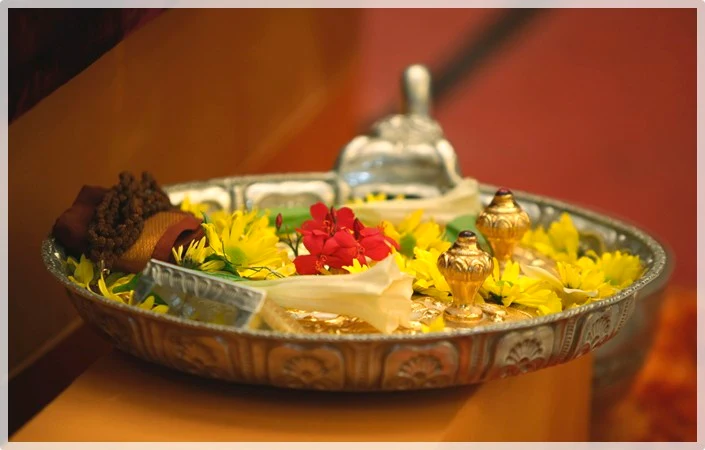
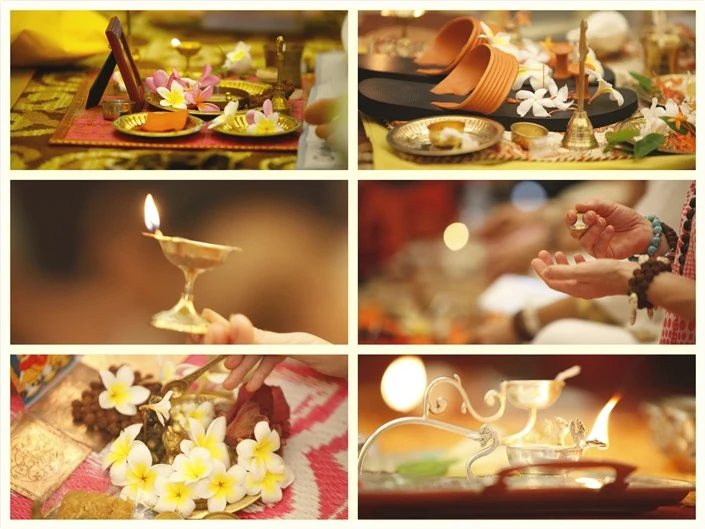
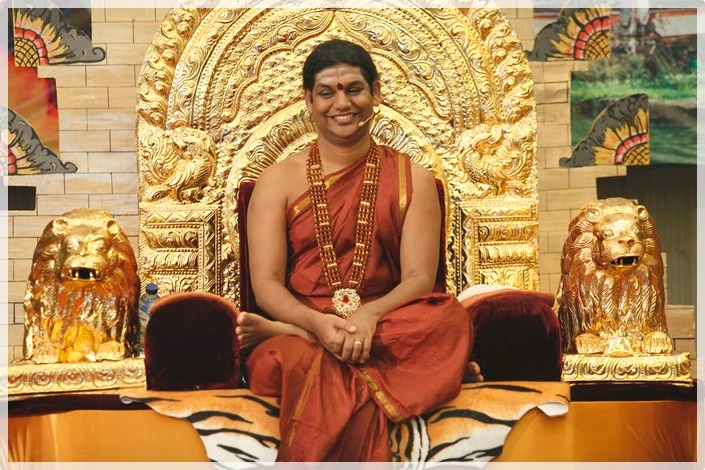
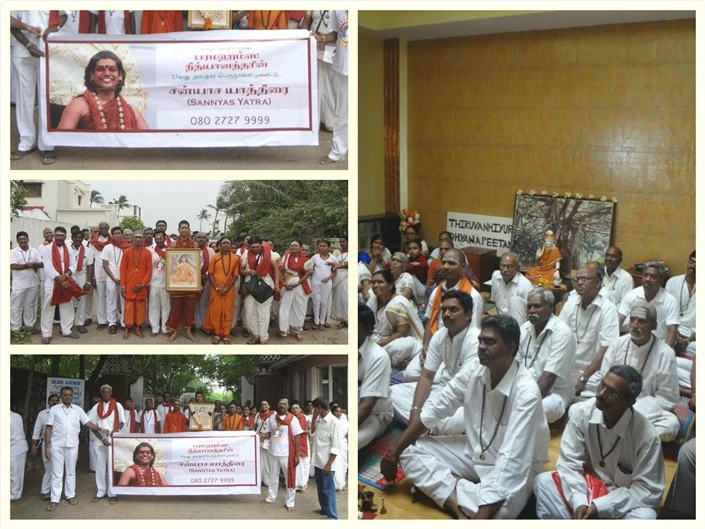
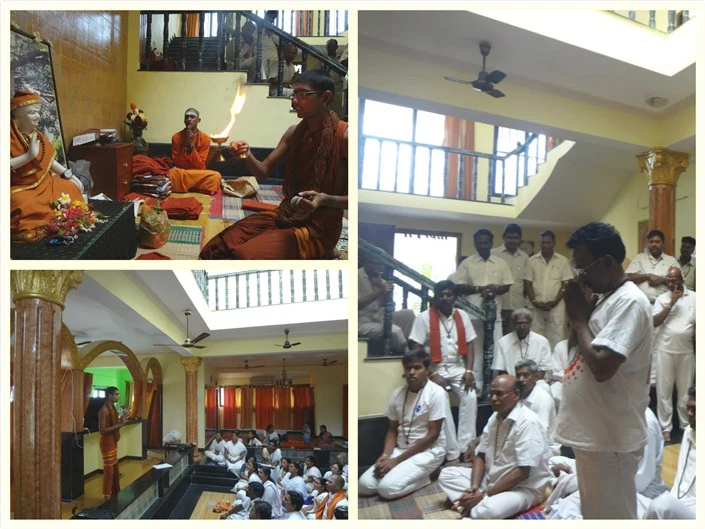
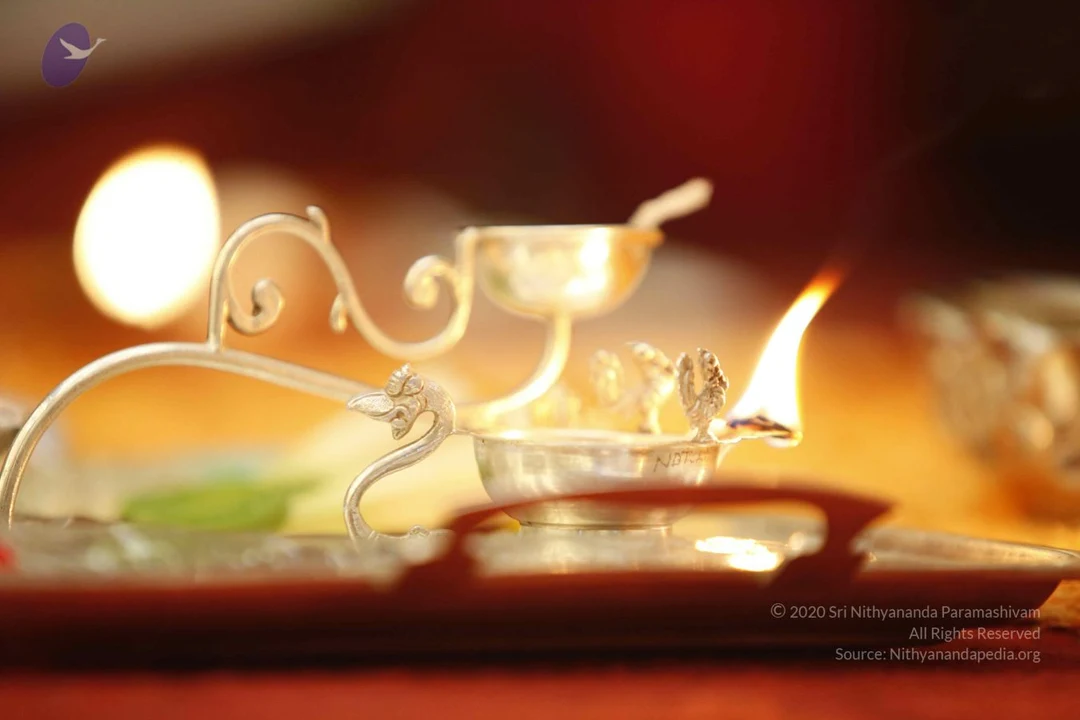
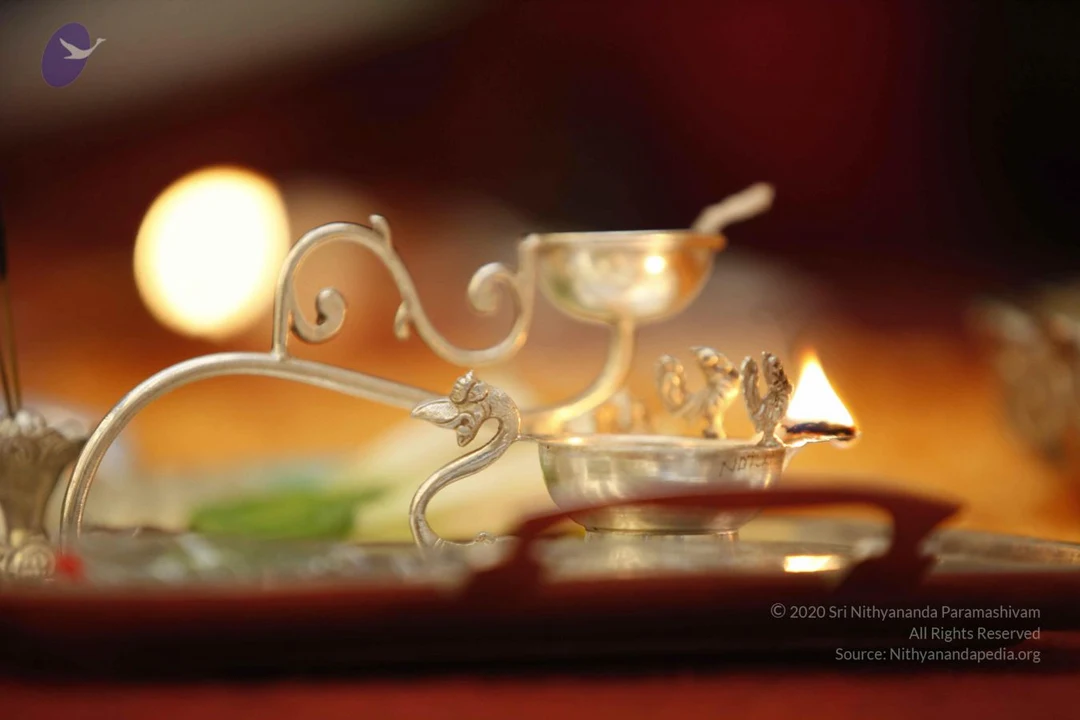
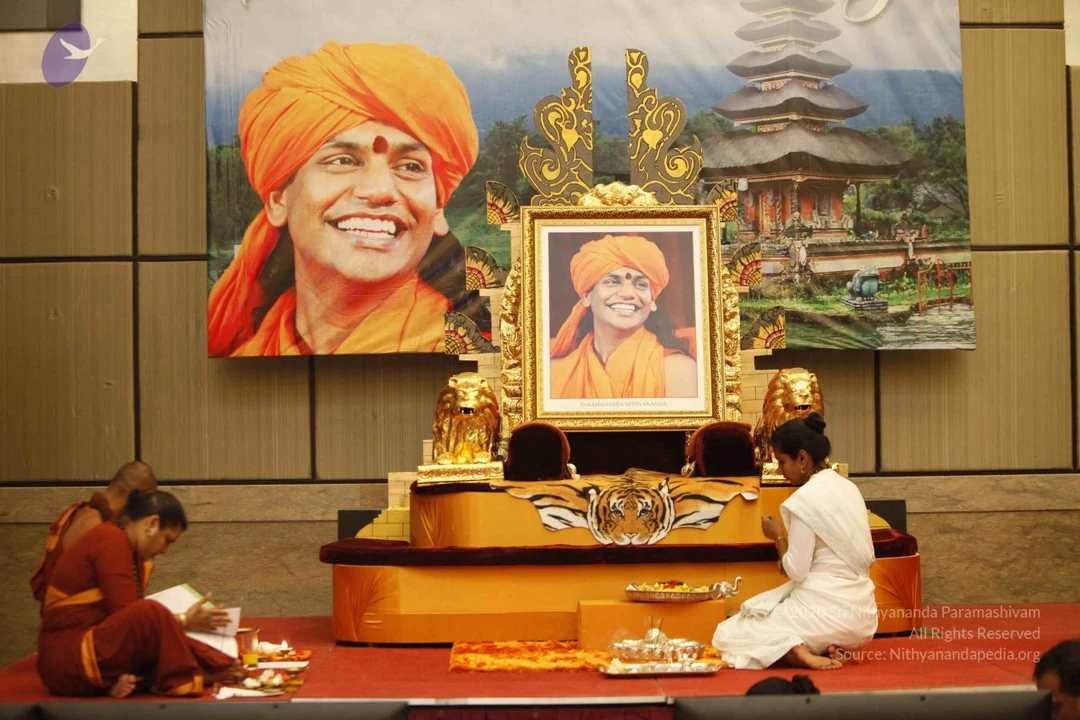
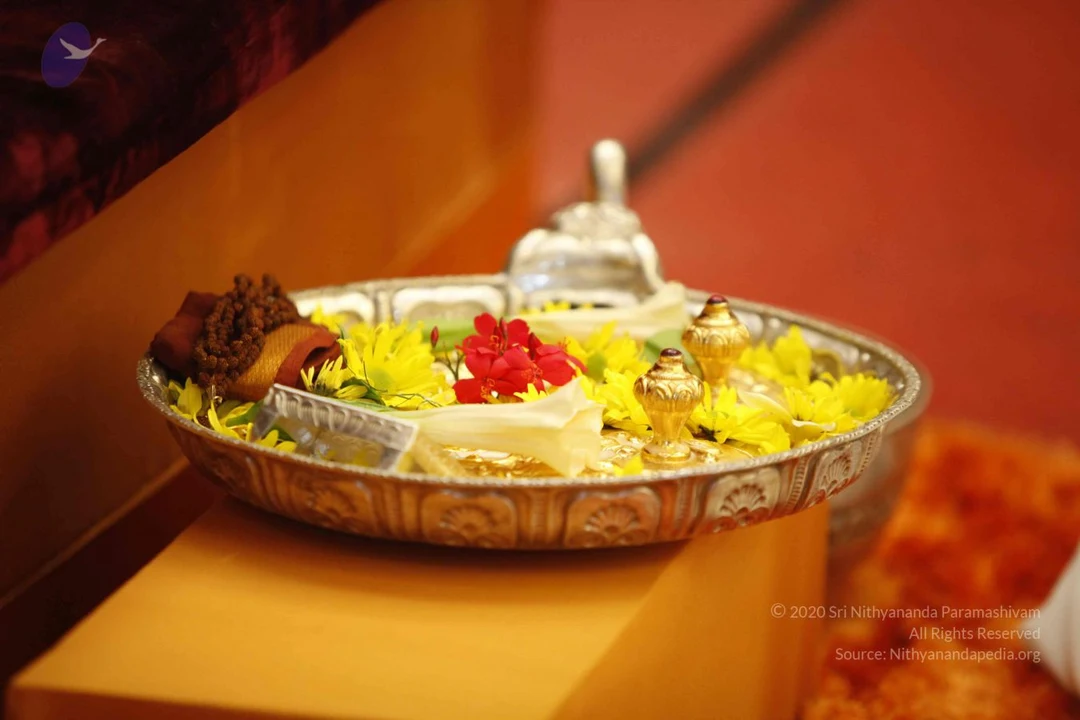
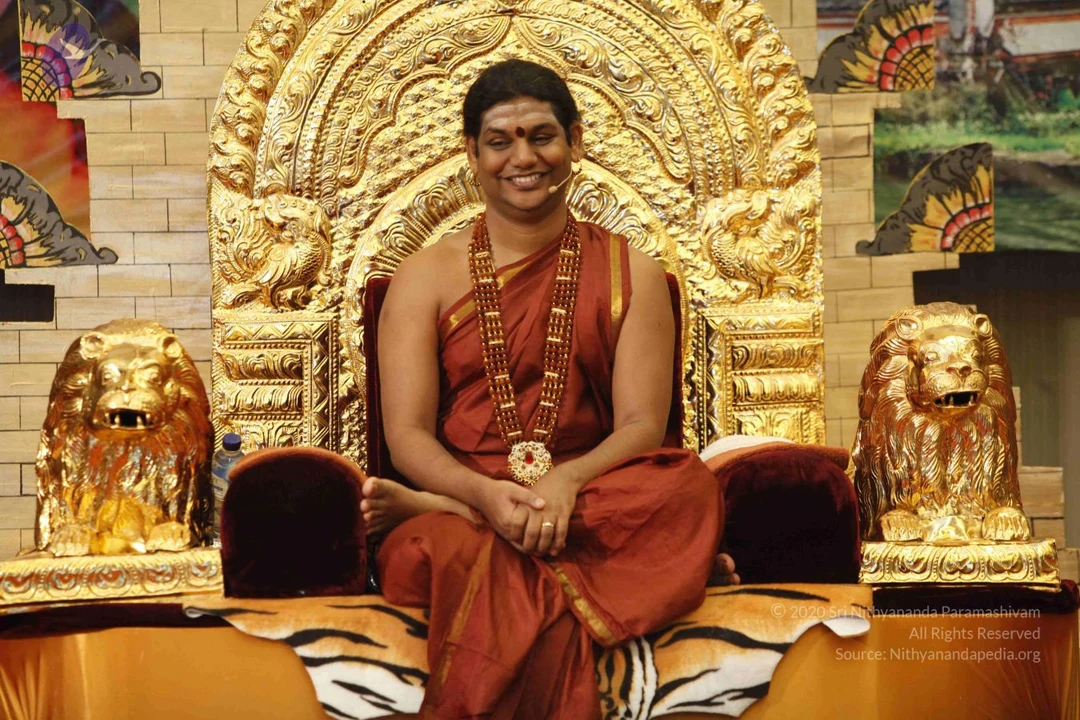
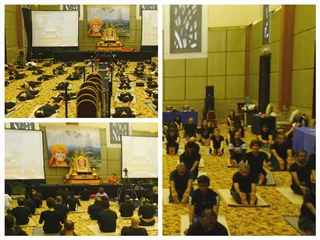
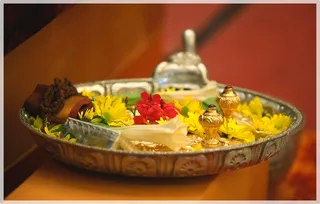
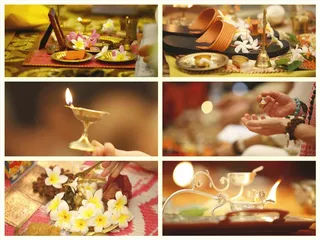
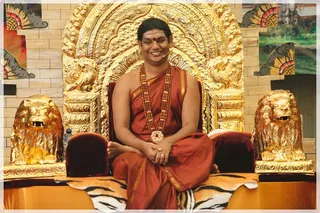
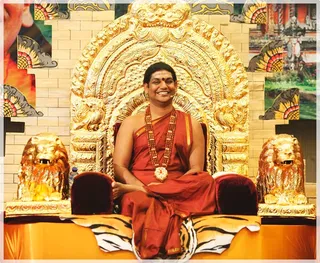
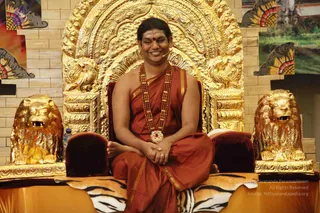
Multi-panel collage of photographs from a hall event. Left panels show a large hall with rows of seated and prostrate participants on yellow patterned carpet with yoga mats, a projection screen, and a golden throne-style seat beneath a large banner of a smiling figure in orange and white headwear against a mountain temple backdrop. A small framed portrait sits on the golden seat. Right panel shows rows of participants in dark clothing seated on mats in a meditative posture, a blue-draped table, and a wall with decorative panels. The collage shows a satsang and meditation session with a Padukapuja-style setup.A framed portrait labelled "PARAMAHAMSA NITHYANANDA" sits in an ornate gold frame on a carved golden stand above a stage. The portrait shows a smiling man in an orange turban and orange shawl with a red bindi, standing in a printed photo, not in person. In front of it, two people with their heads and dark reddish hair visible sit at the bottom edge, facing the portrait, behind a throne draped with an orange cloth bearing a tiger-head design. The backdrop features painted gold-and-black decorative panels and a painted rural scene.A close photograph of a round polished silver puja tray resting on a wooden ledge, holding yellow marigold-type flowers, red flowers, green leaves, white cloth pieces, a brown rudraksha-style mala, and two brass oil lamps with decorative tops. A silver ritual vessel stands in the background. No people are visible; the warm red and orange backdrop frames the offering tray.A six-panel collage of ritual details, not a single photograph. Top left: a brass plate with pink and white flowers beside a small gold-rimmed bowl and a folded yellow cloth. Top right: terracotta pots and white plumeria blossoms on a dark tray near brass bells and a small brass lamp. Middle left: a hand holds a lit golden oil lamp against a blurred background. Middle right: cupped hands with beaded rudraksha-style bracelets hold a small bell over a blurred ritual setting. Bottom left: white plumeria flowers scattered on a red-and-white woven cloth with a brass spoon and small brass items. Bottom right: a silver lamp with a flame and a bronze sculpted lamp stand on a red surface. No physical people are fully shown; only hands and arms appear.A smiling man with a shaved head sits cross-legged on an ornate golden throne carved with lions and florals, flanked by two gold lion statues. He wears a saffron-orange robe with gold-bordered edges and a long multi-strand gold and red-bead necklace with a large ornate pendant. His hands rest folded in his lap and he sits on a tiger-striped rug draped over the dais. Behind him are decorative panels in red, yellow and grey tones. Only one physical person is visible.A smiling man with short dark hair and a red bindi sits on an ornate gold throne carved with lions and floral arches, against a wall of brick-pattern panels and colourful painted panels. He wears a red-orange dhoti-style garment with a gold-edged shawl and a long garland of red and gold beads with a white flower pendant. Two large gilded lion statues flank the throne, and a striped tiger-skin cloth covers the dais below. a person: the man has a shaved-style short cropped head rather than long hair, and the appearance cues are insufficient to confirm identity, so this is a seated devotee-style guru figure on a throne, with the presentation unsure.

IA-Yoga

20 photosSource gallery
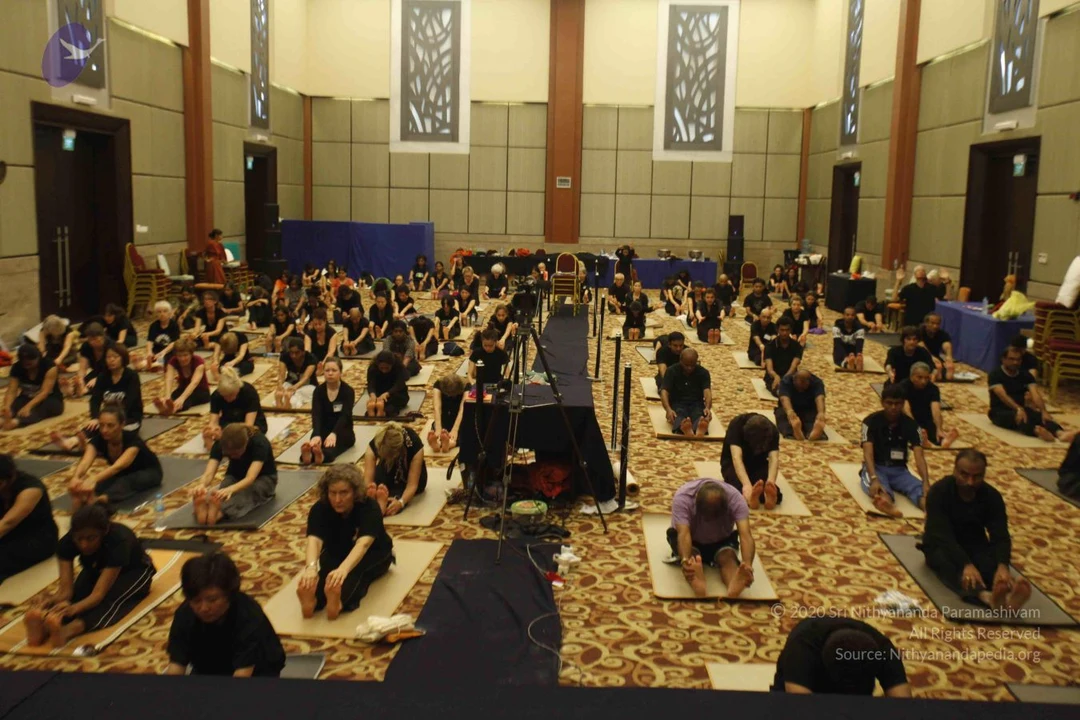
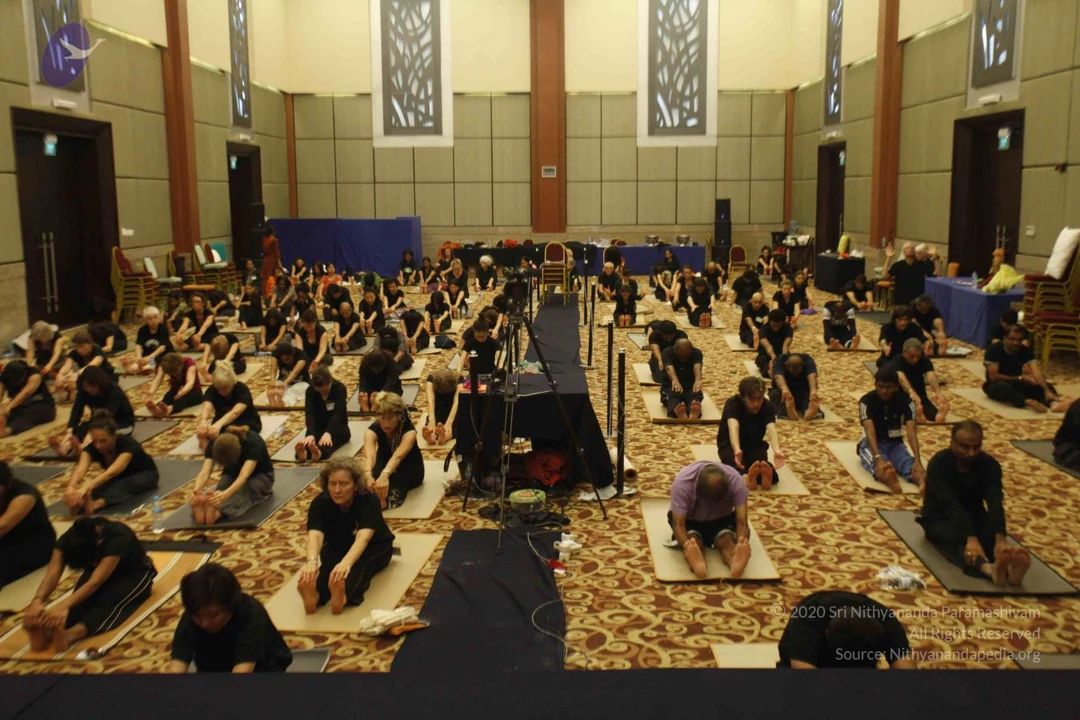
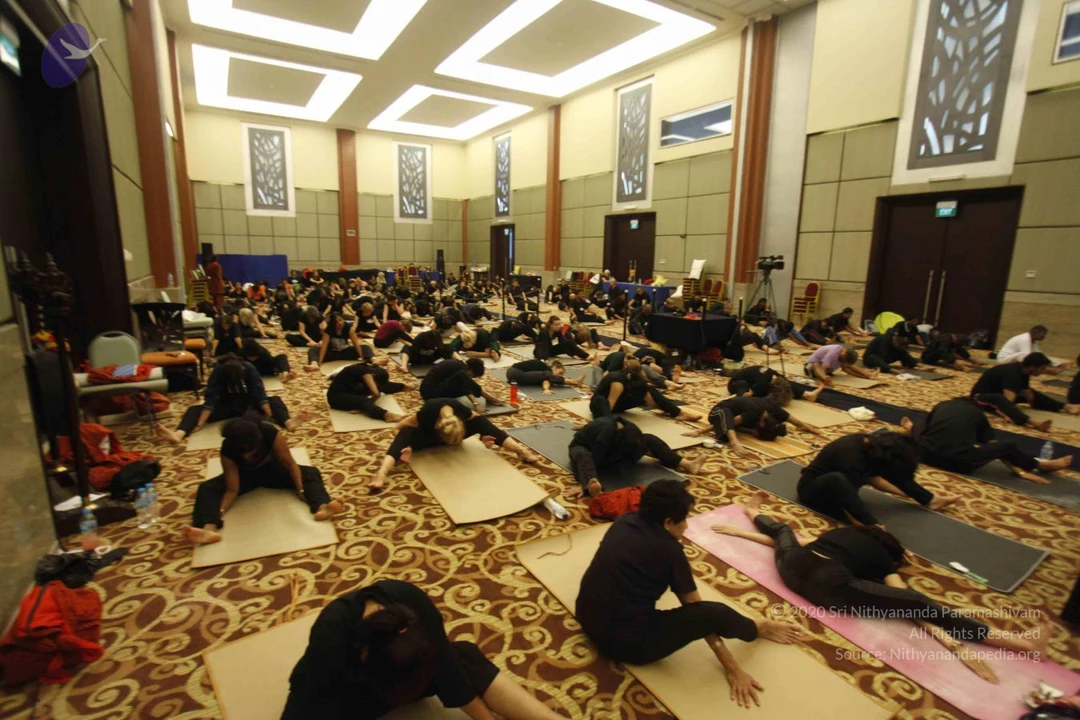
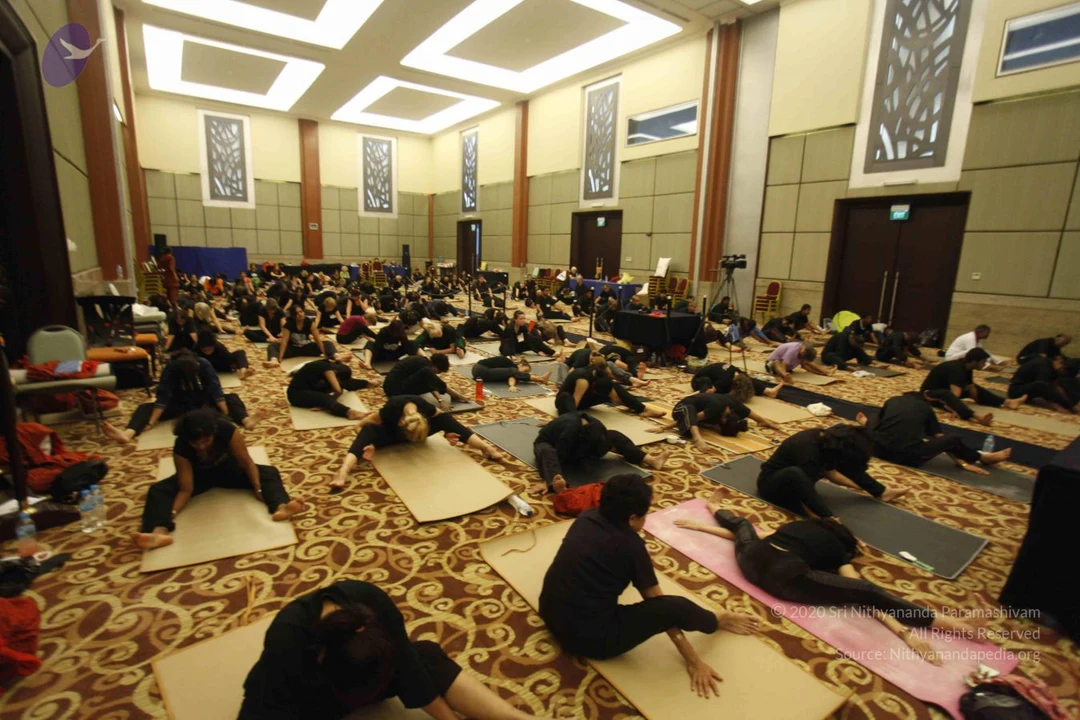
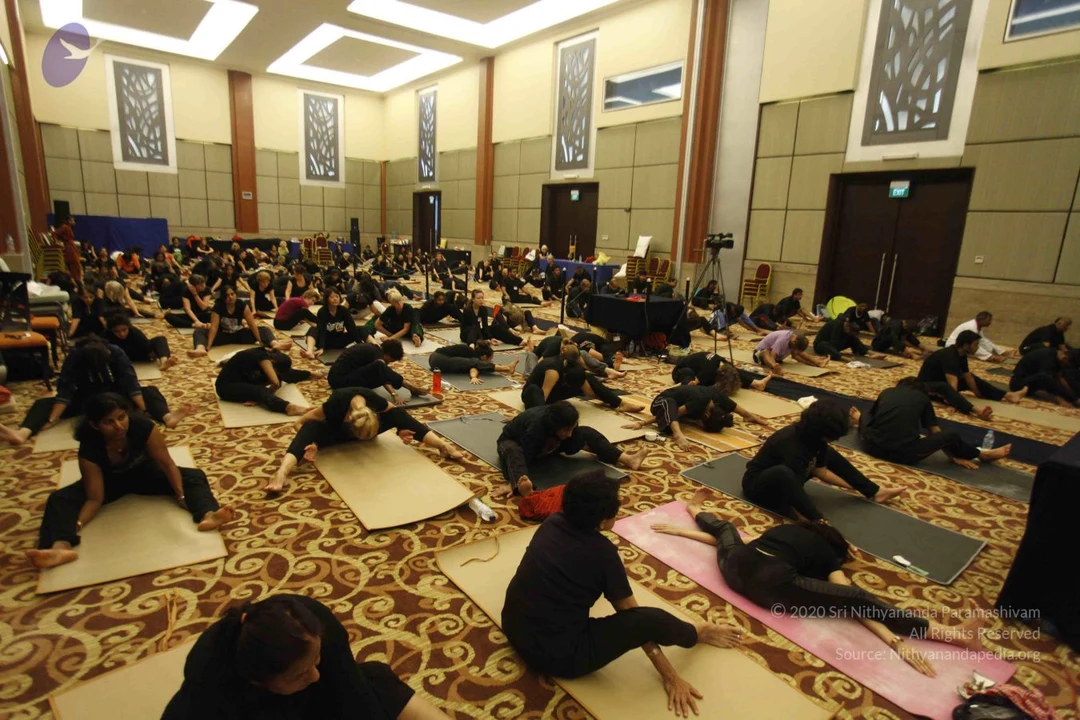
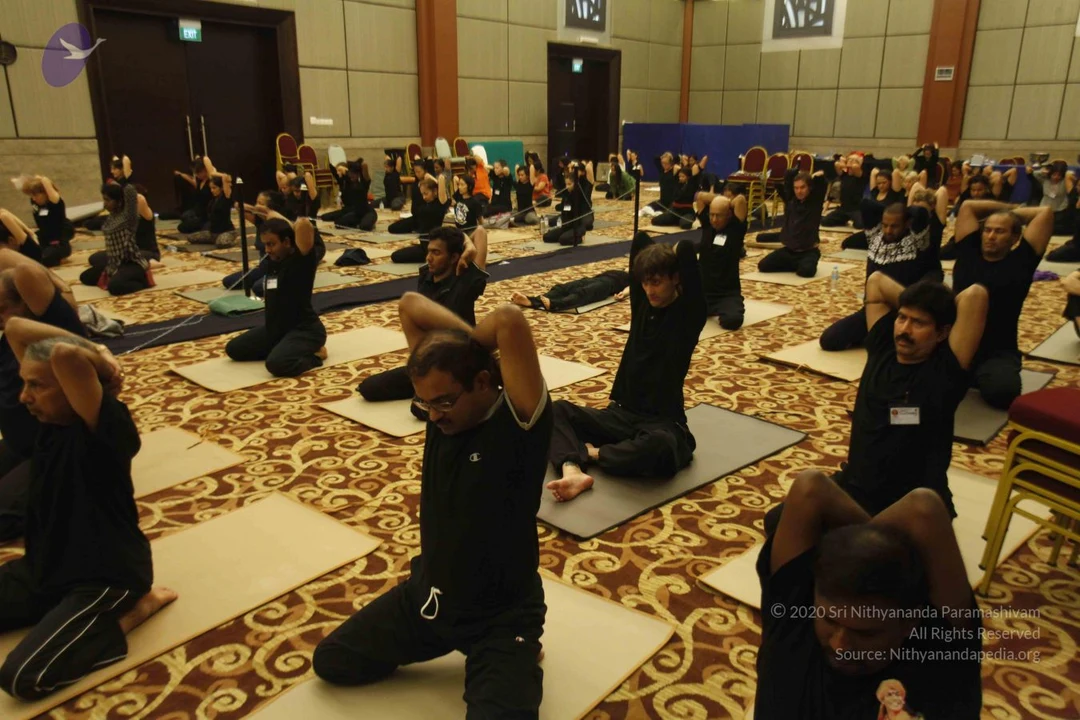
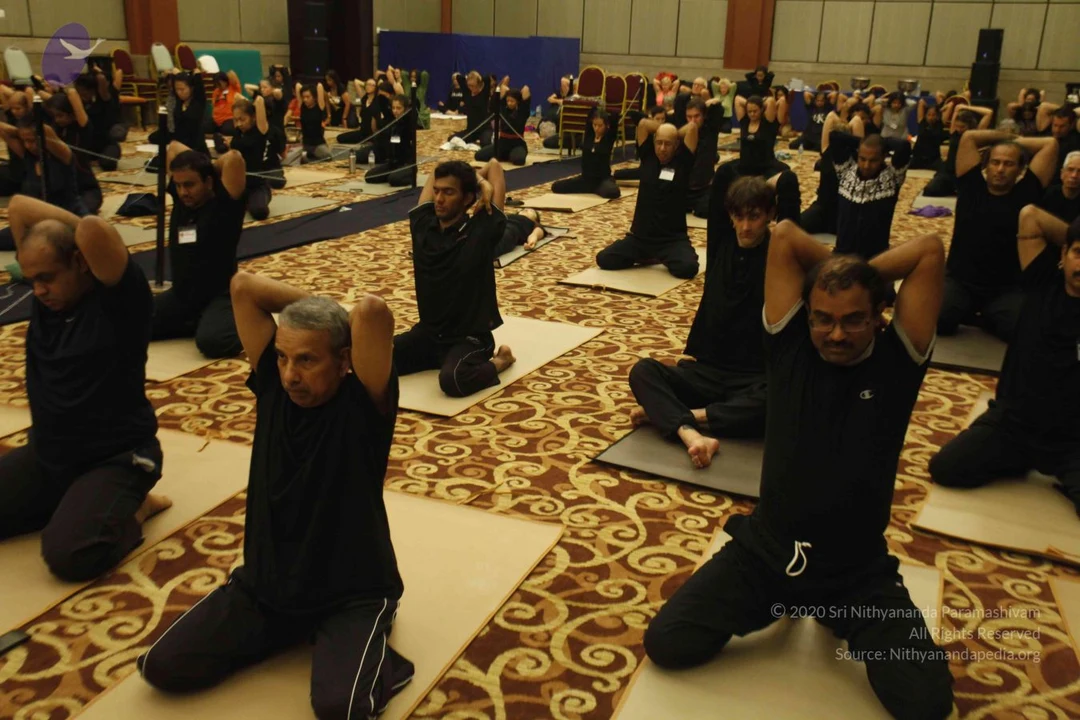
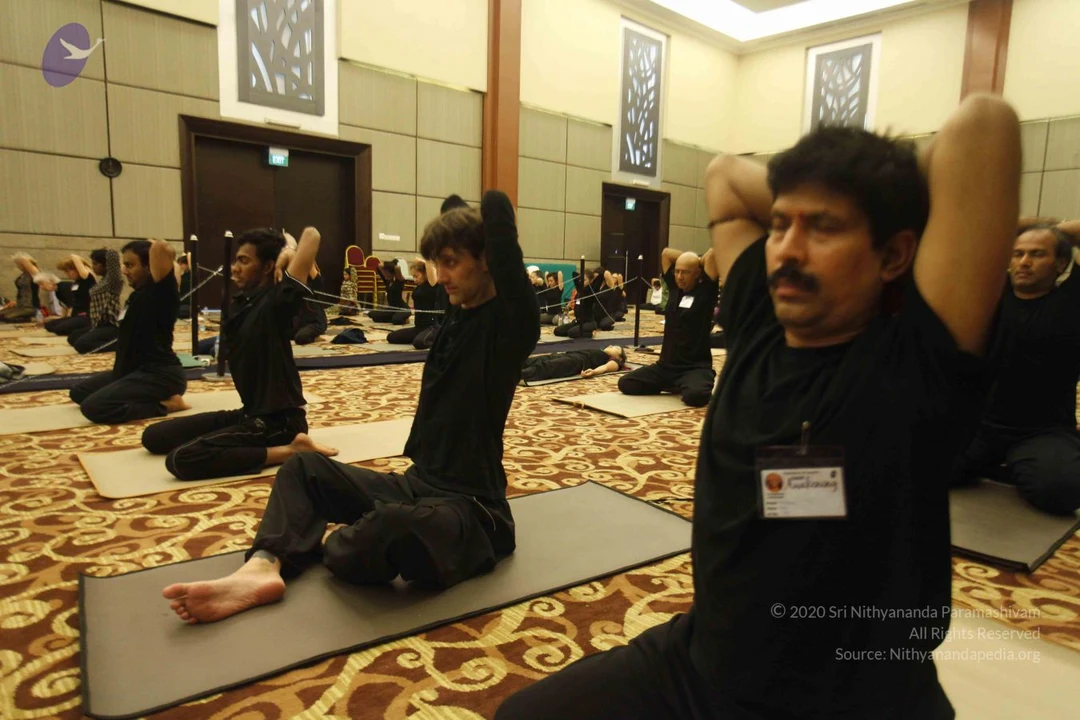
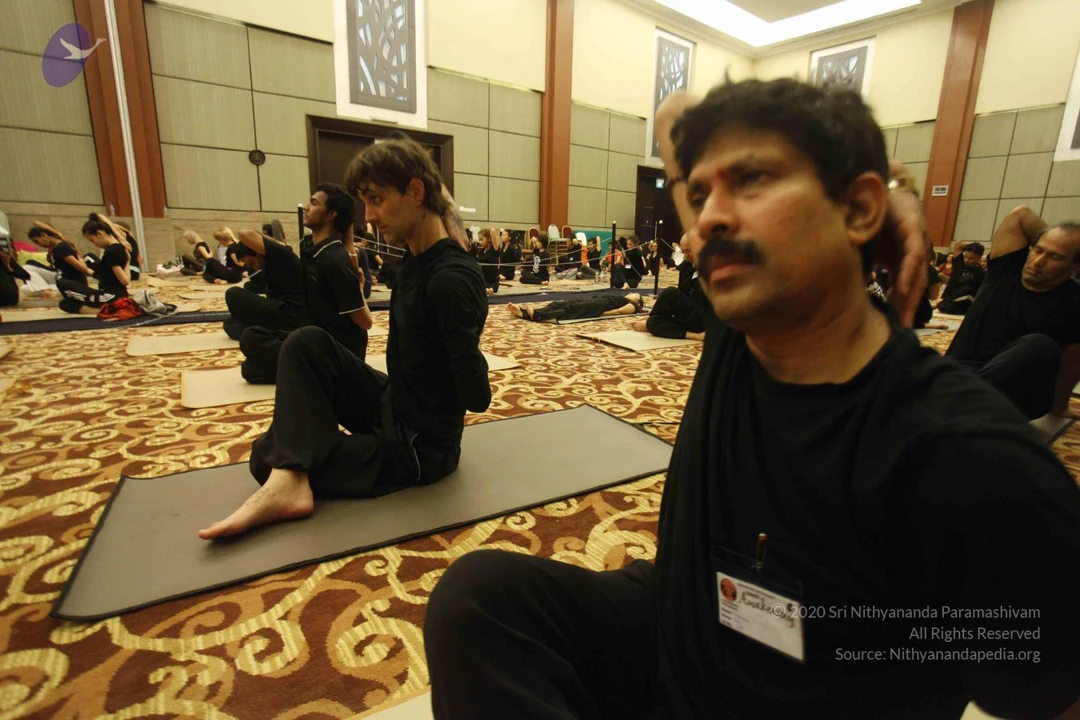
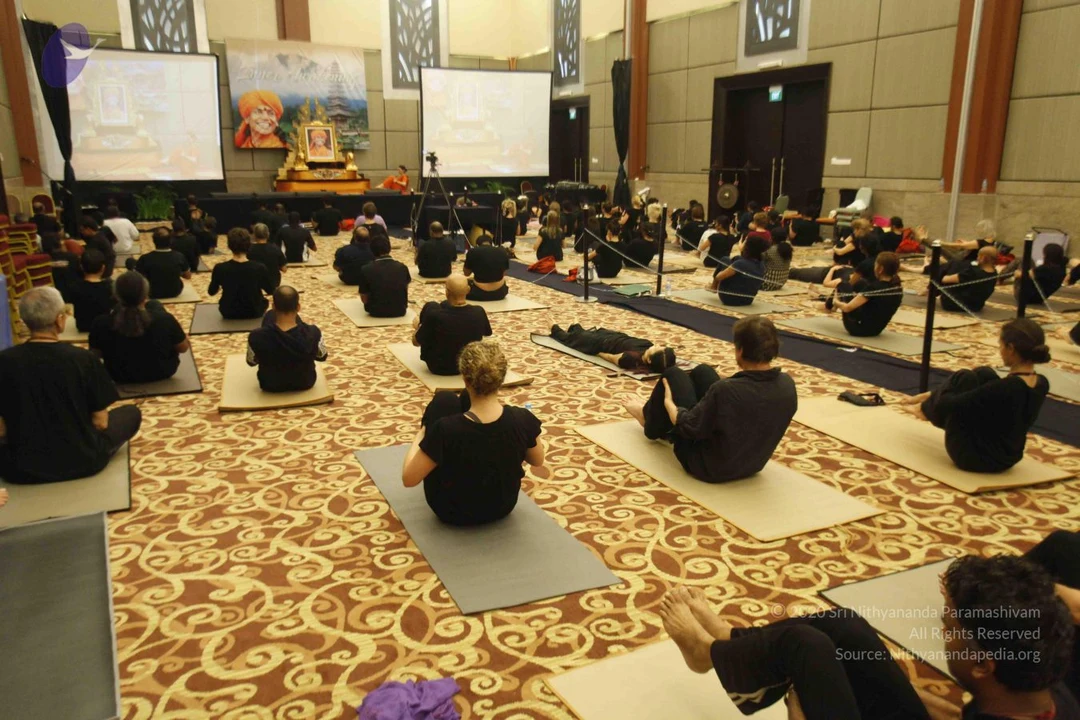
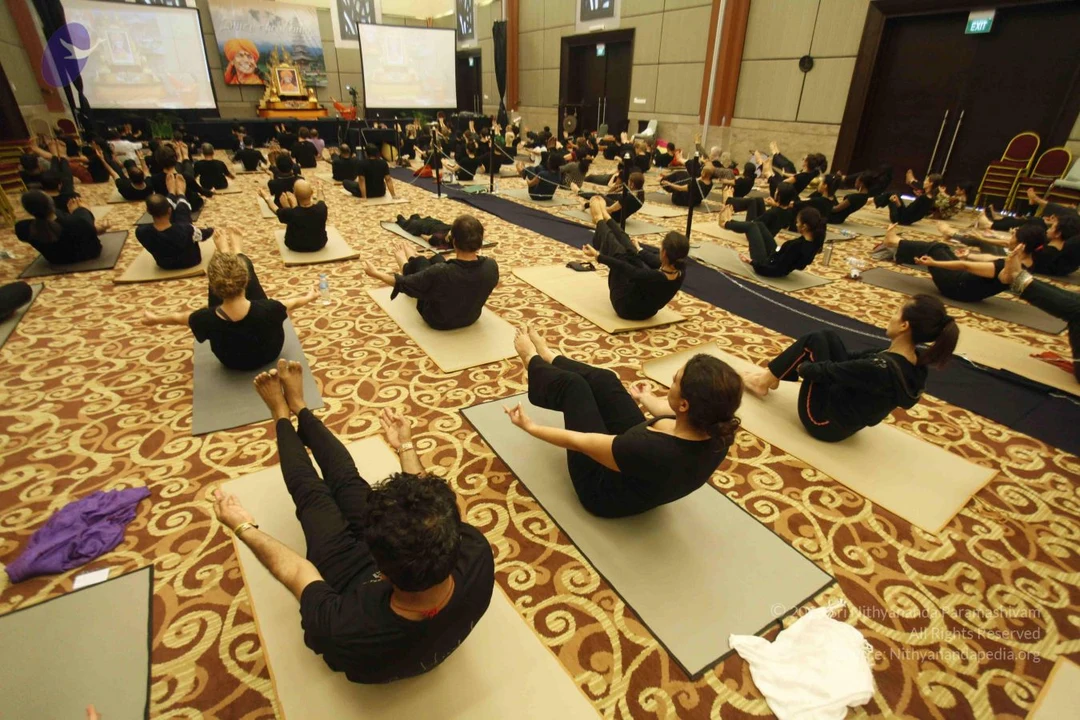
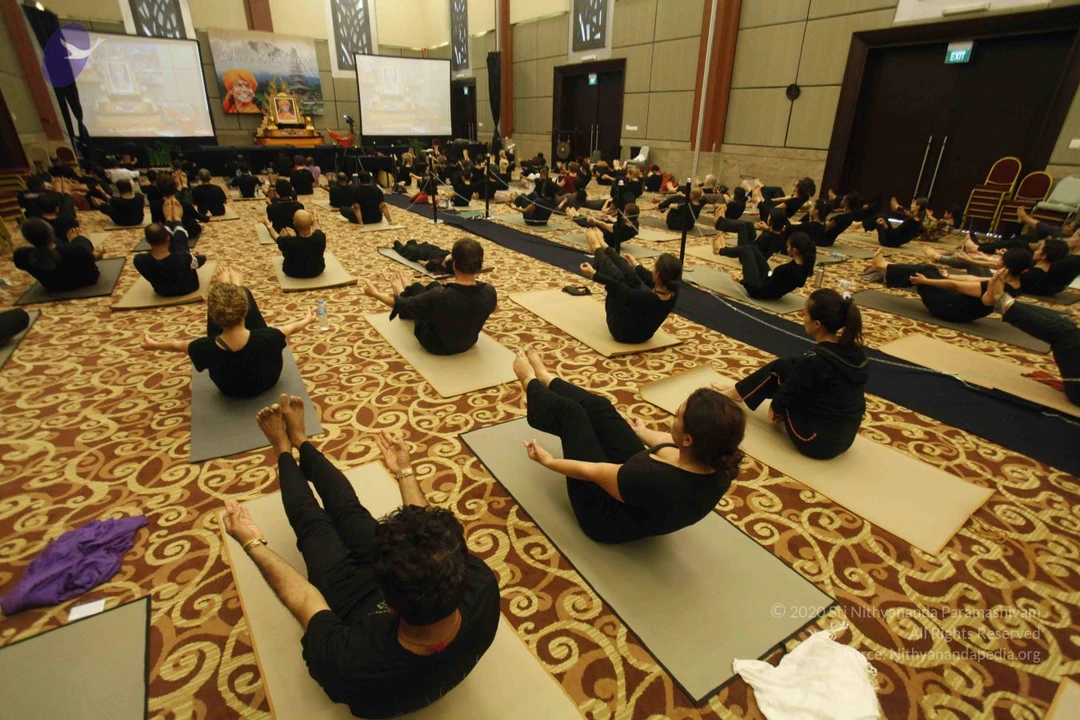
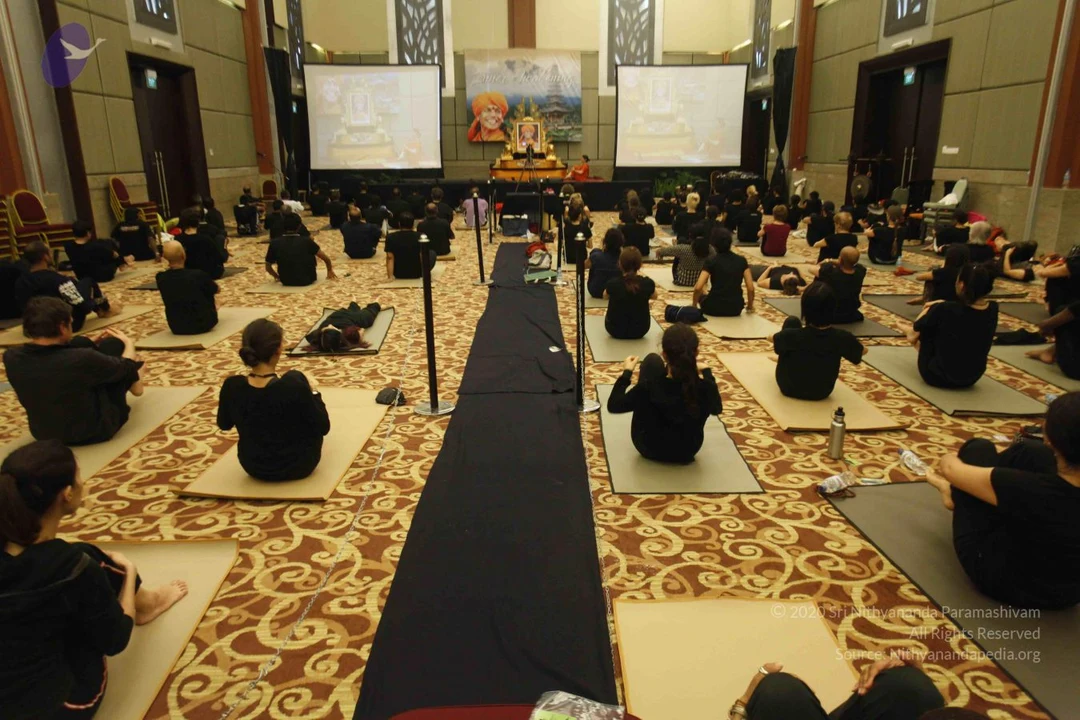
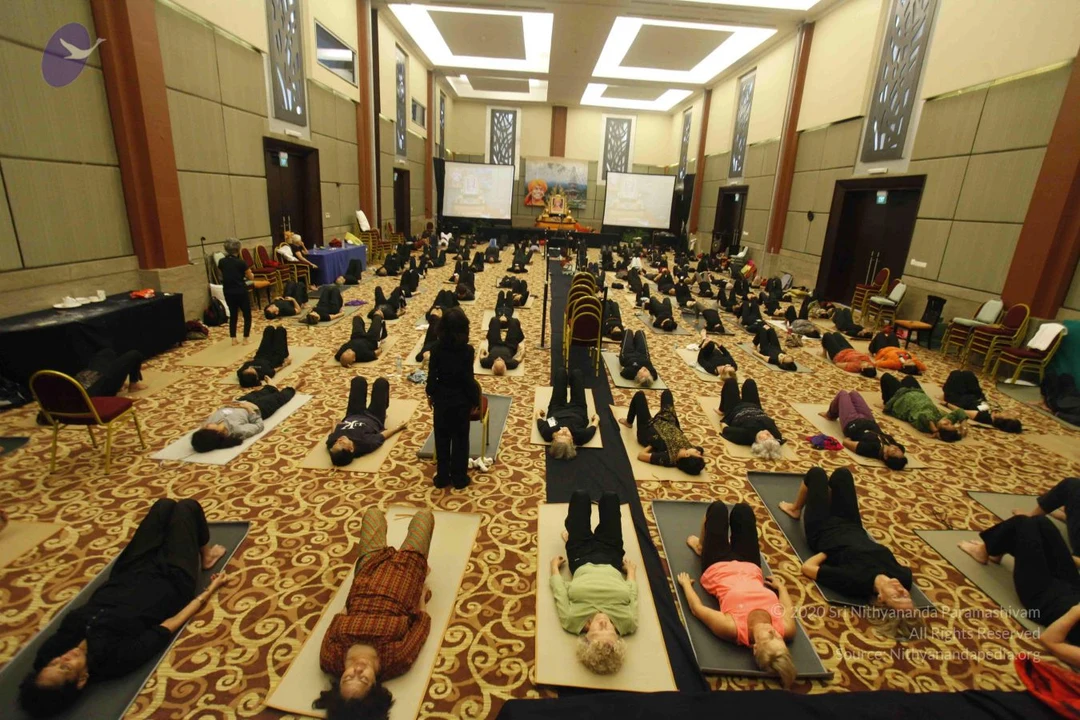
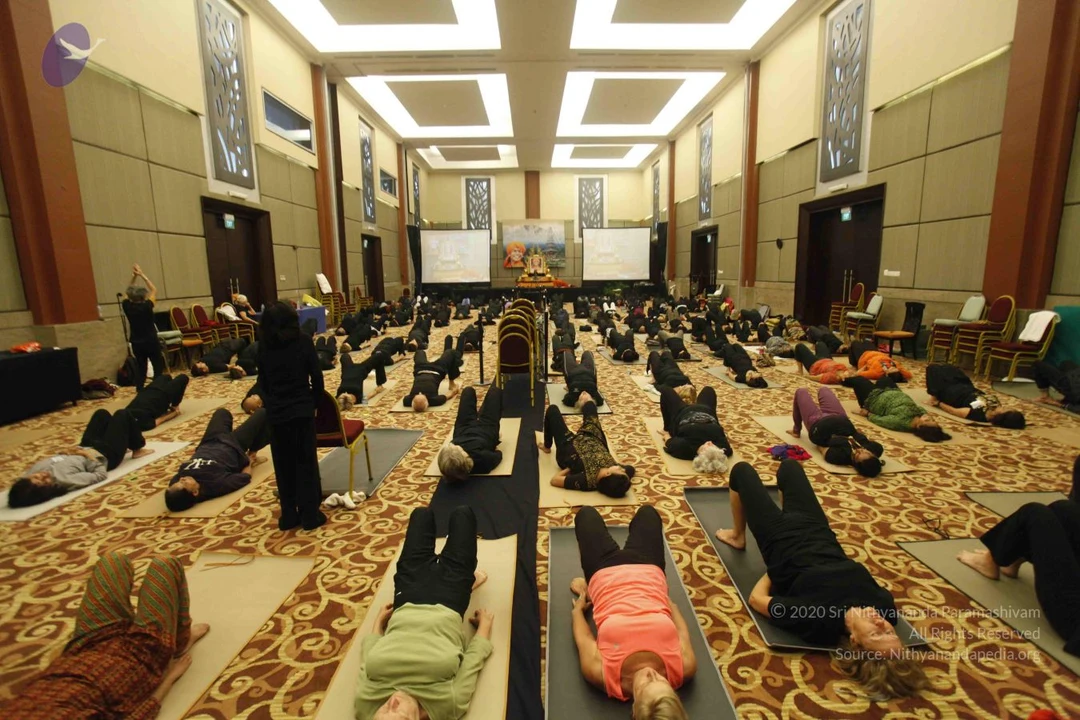
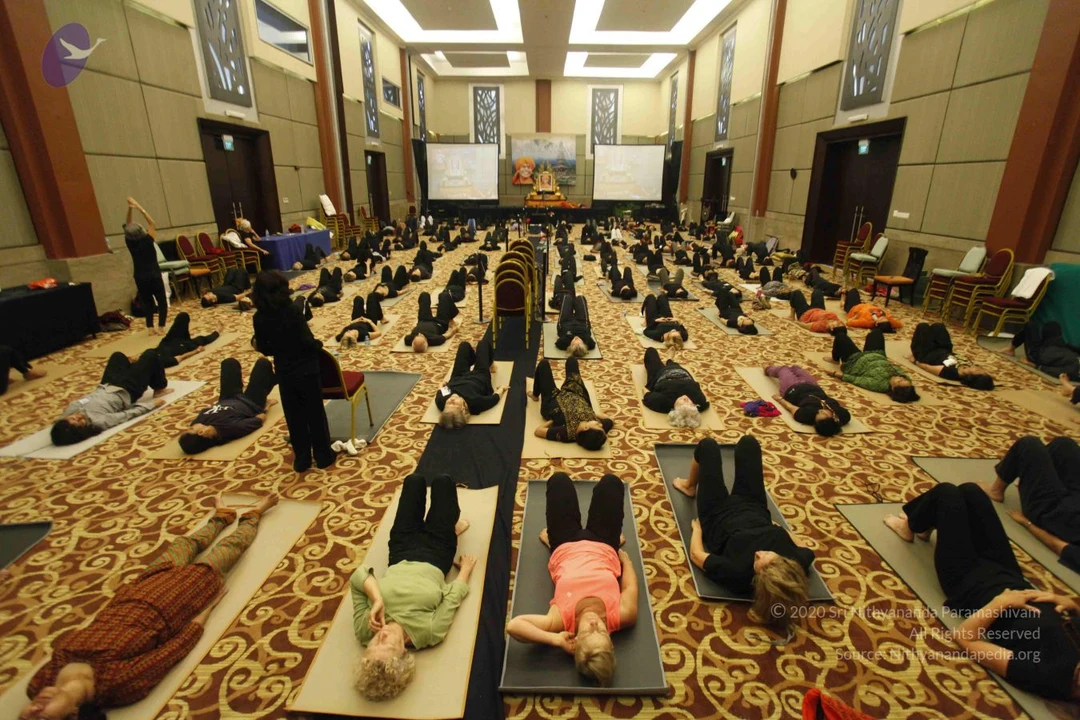
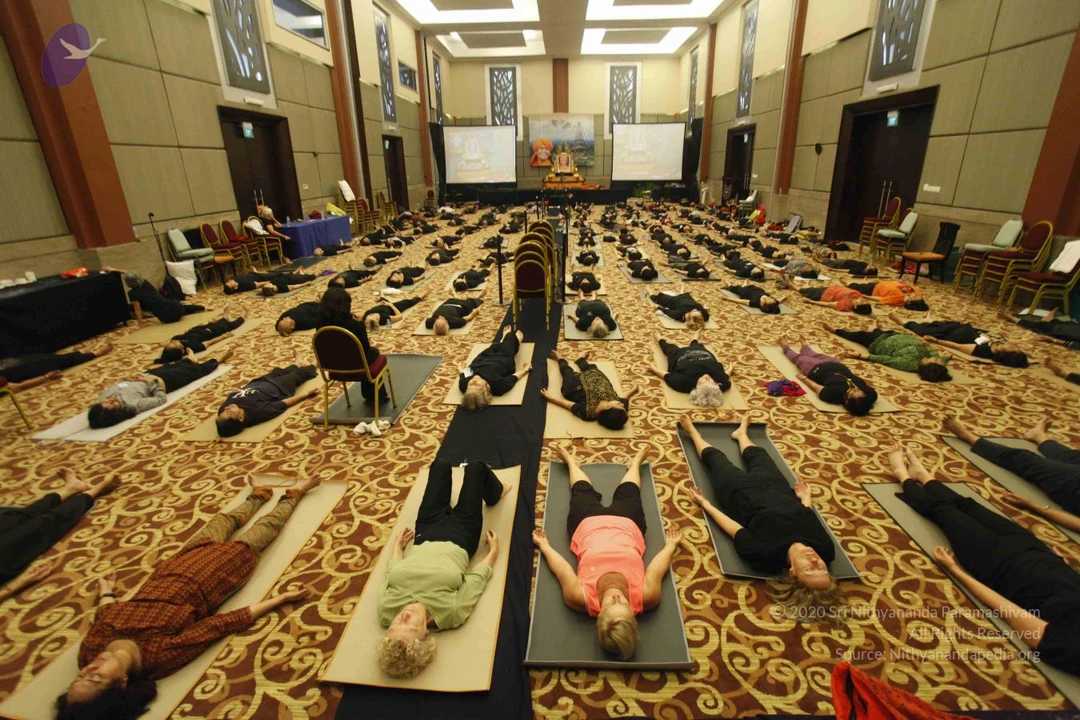
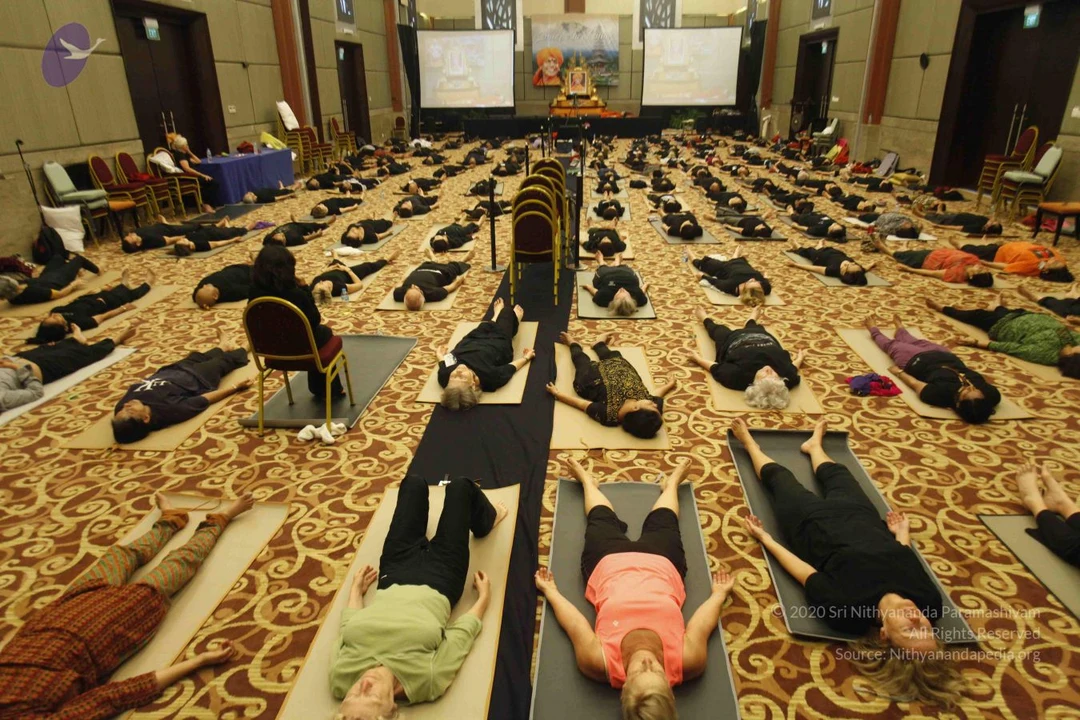
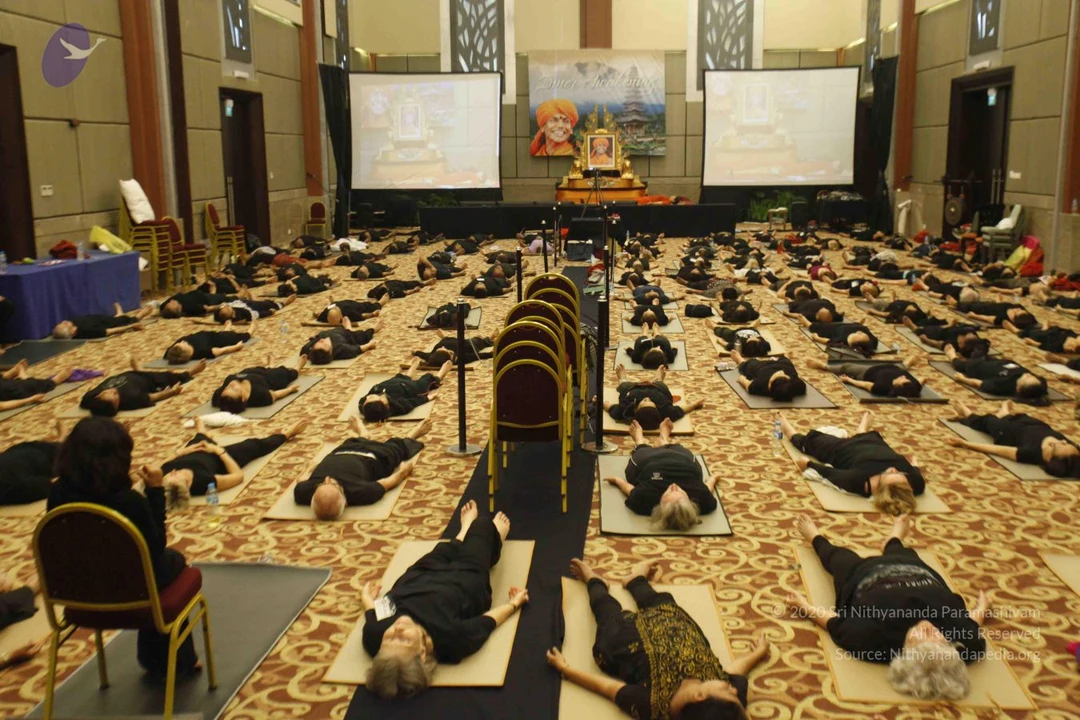
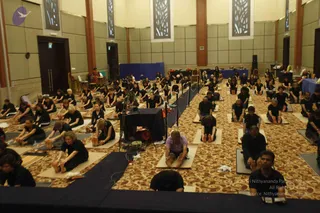
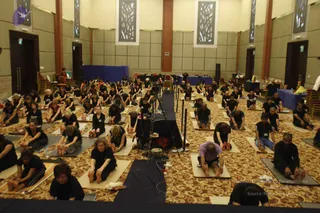
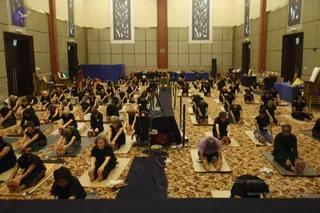
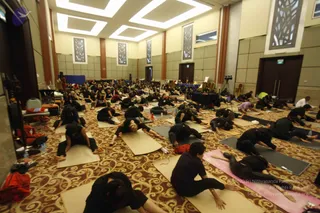
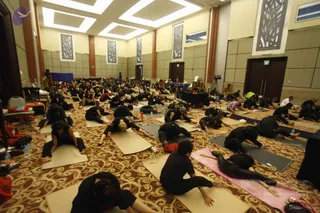
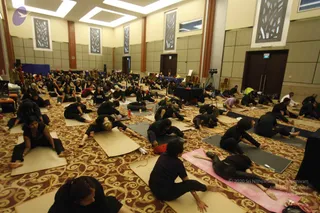
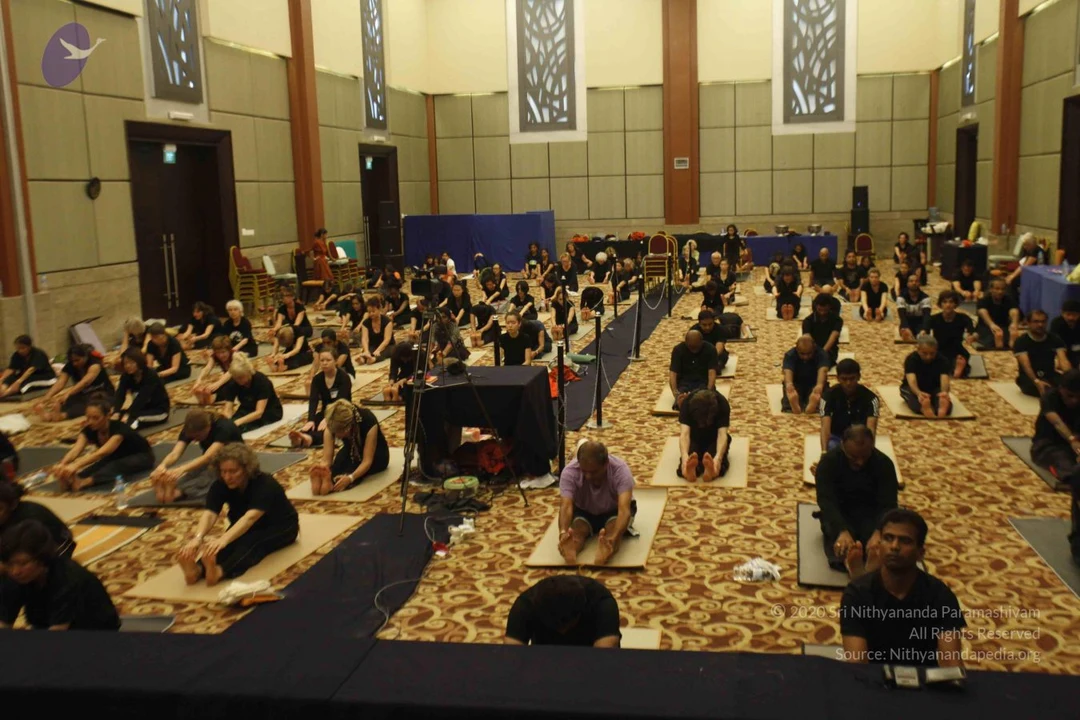
A large hall with patterned carpet and tall decorative wall panels shows many participants in black clothing seated on beige yoga mats, leaning forward into seated forward bends. A man in a pink shirt near the centre and a man in dark clothes at right are among the rows. Black stage draping, a camera tripod and a small table with equipment sit in the foreground, with a blue-draped table further back.A large hall with patterned carpet where many participants sit on yoga mats in rows, bent forward in seated stretches with their feet flexed. Most wear black tops and black trousers; a few wear other colours, such as a man in a lilac shirt in the foreground. Blue draped tables, a camera on a tripod, and a black stage platform are visible at the centre, with wall panels and doors along the sides. The people are seated and stretching rather than standing for a ritual, and their count is well above a small group but no more than roughly a hundred, so the range is 21-100.A large hall with patterned gold carpet holds many people in black clothing seated on yoga mats in forward-bending stretch poses, with hands reaching toward their feet. A tripod-mounted camera stands among the mats on a black stage runner. Wall panels with carved lattice designs, blue draped tables and a few chairs fill the room, and a figure in orange robes stands near the back left.A large hall with patterned gold-and-brown carpet and cream walls holds many people in black clothing performing seated forward-bend and stretching postures on mats. Participants sit on yoga mats in long rows, some with hands reaching toward their feet, others leaning forward with heads down. A few mats are pink or grey, and water bottles and a red cloth sit near the left edge. Carved wooden panels decorate the walls, and a camera on a tripod stands at right, with a few people in lighter clothing among the rows. The scene suggests a yoga or meditation session.A large hall with a patterned carpet and wall panels holds many people in black clothing doing seated forward-bending stretches on yoga mats, some on tan mats and some on grey or pink mats. Several figures in dark tops and trousers reach toward their feet, and red bags and water bottles lie near the edges. Along the far wall are tables, chairs and a video camera on a tripod. No individual here is identifiable as a particular figure, so no a person candidate is placed in this scene.A photograph of a large hall filled with many people in black clothing performing seated forward-bending and stretching postures on yoga mats and mats of gold, grey and pink. The patterned carpet is gold and brown, with wall panels having cut-out designs and an exit sign on the far door. A video camera on a tripod is at the right. Several participants are stretched forward over their legs. No a person candidate is clearly visible in the frame.

Deities

3 photosSource gallery
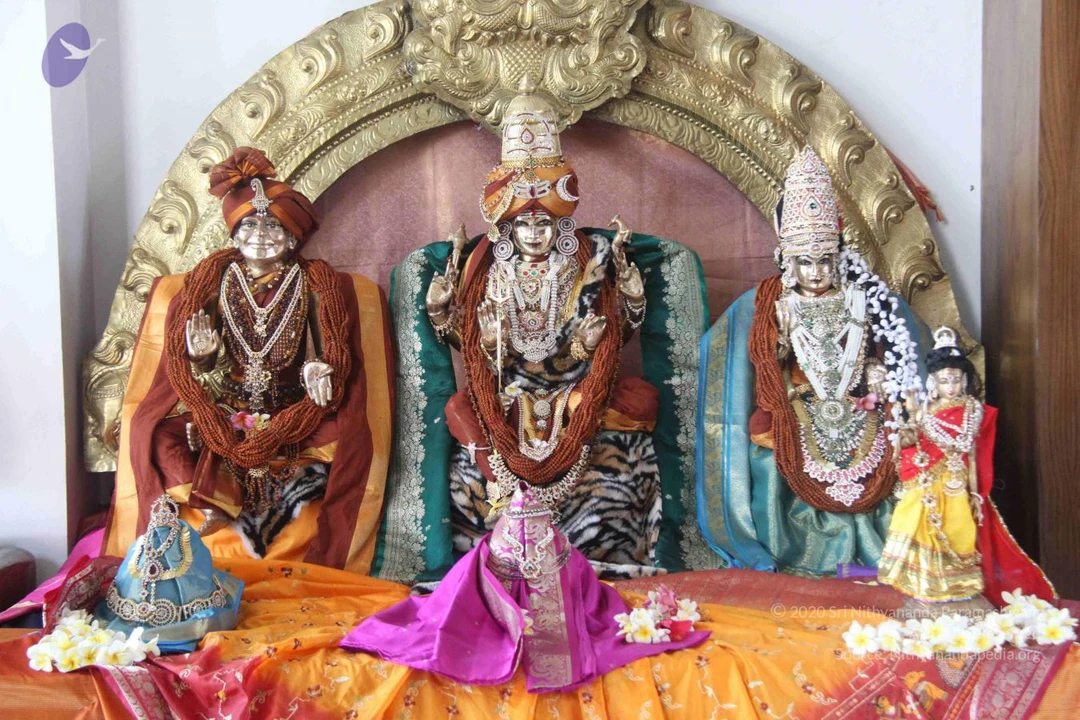
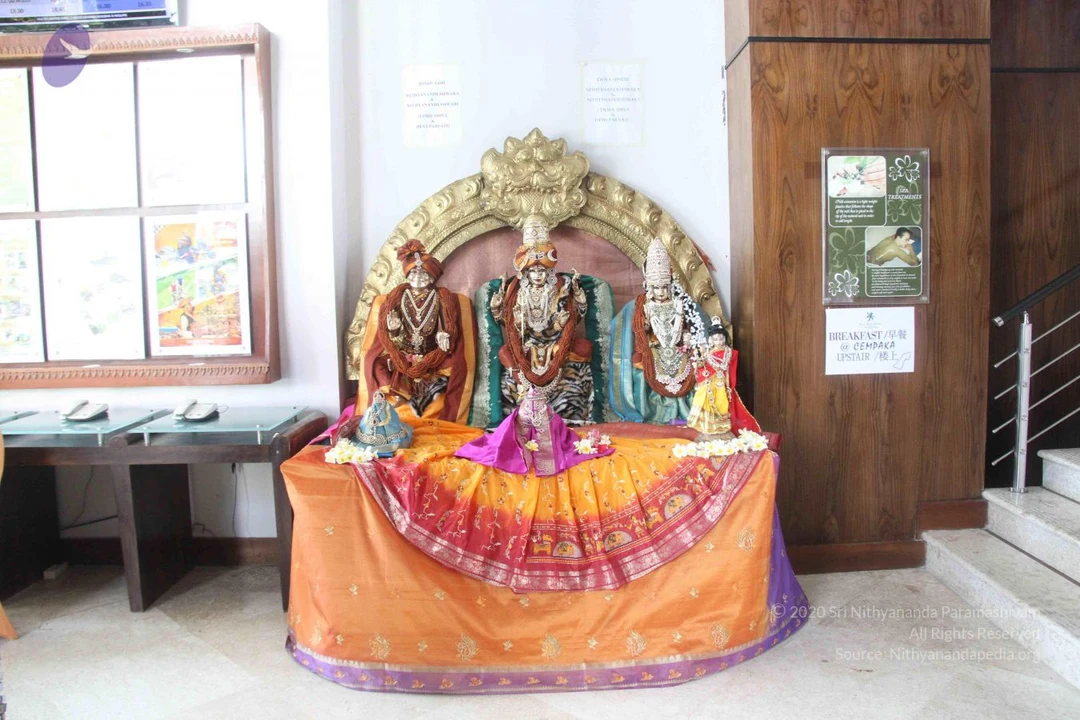
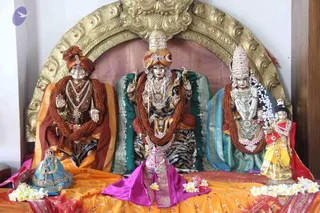
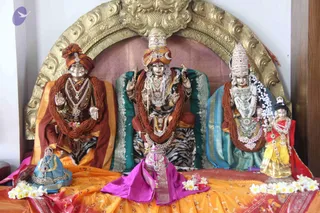
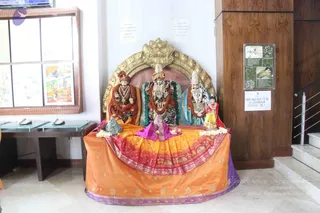
Three silver-faced murti statues sit on a golden-orange cloth before a gilded arched backdrop, in a temple-style shrine. The central figure wears a tall crown, an orange turban-like headdress, layered white and gold necklaces, rudraksha malas and a tiger-skin patterned seat, with raised hands. The figure on the left wears an orange turban, brown-and-gold garment and rudraksha malas; the figure on the right wears a tall crowned headdress, teal garment and white jewelled necklaces. A small child-sized murti in yellow and red sits at the far right. White flower garlands and a magenta cloth are arranged at the base, with a pink-and-gold offering placed in front. No living people are visible.A photograph of a shrine arrangement with three silver-faced statues seated on a golden arched backdrop. The central statue wears a tall crown, rudraksha mala and ornate jewellery, seated on a zebra-striped cloth with raised hands. The statue on the left wears a brown-and-orange turban and garlands, and the statue on the right wears a tall jewelled crown with a white floral garland. A smaller doll-like figure in a yellow and red dress stands at the far right. Orange and magenta silk cloths cover the base, with white and pink flowers scattered before them. These are statues, not physical people.A photograph of an indoor shrine set against a pale wall beside a wooden panel and stairs. Three figures sit on a draped orange, pink and purple silk cloth. The centre figure, a deity murti with a tall crown, is adorned with garlands and ornate jewellery, flanked by two figures in orange and red robes with rudraksha-style beaded necklaces and turbans or crowns. Marigold garlands and white flowers decorate the base and a small figure in yellow sits to the right. An ornate gold arched frame surrounds the shrine, and a glass table with sandals sits to the left. No people are visible.

Paduka-Puja

23 photosSource gallery
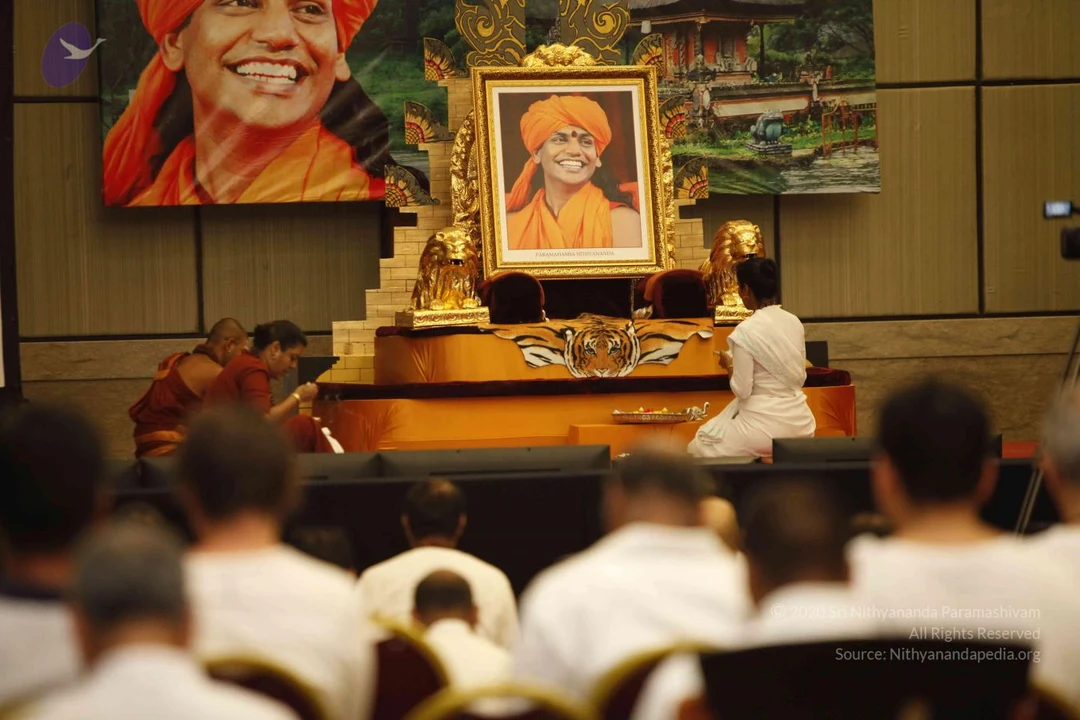
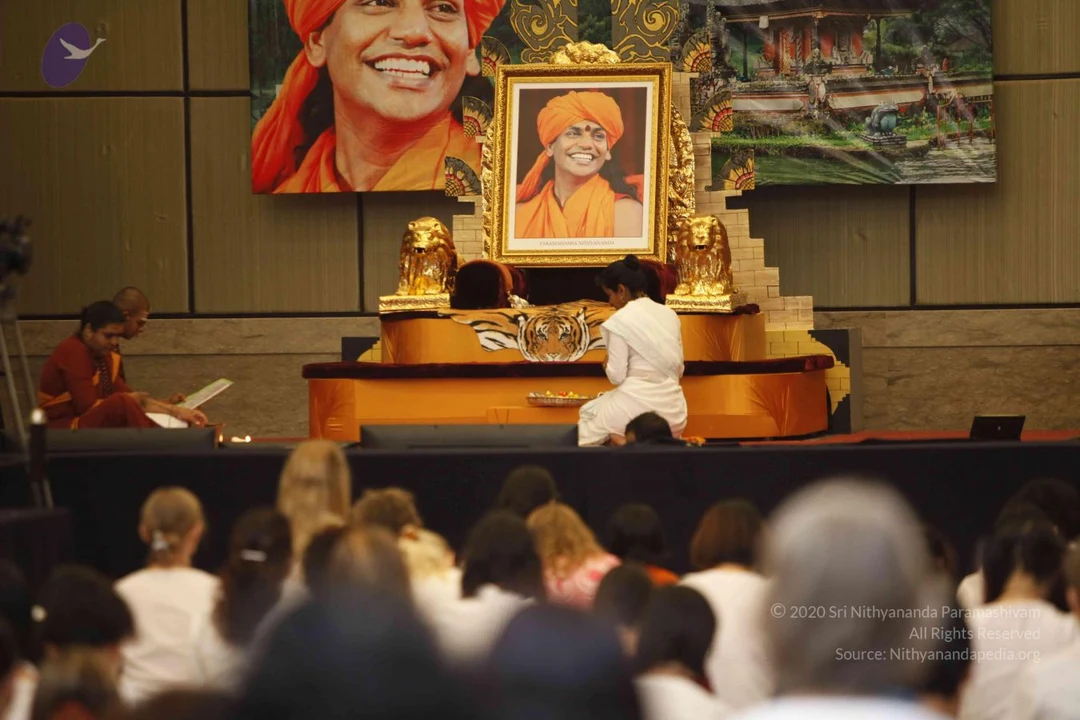
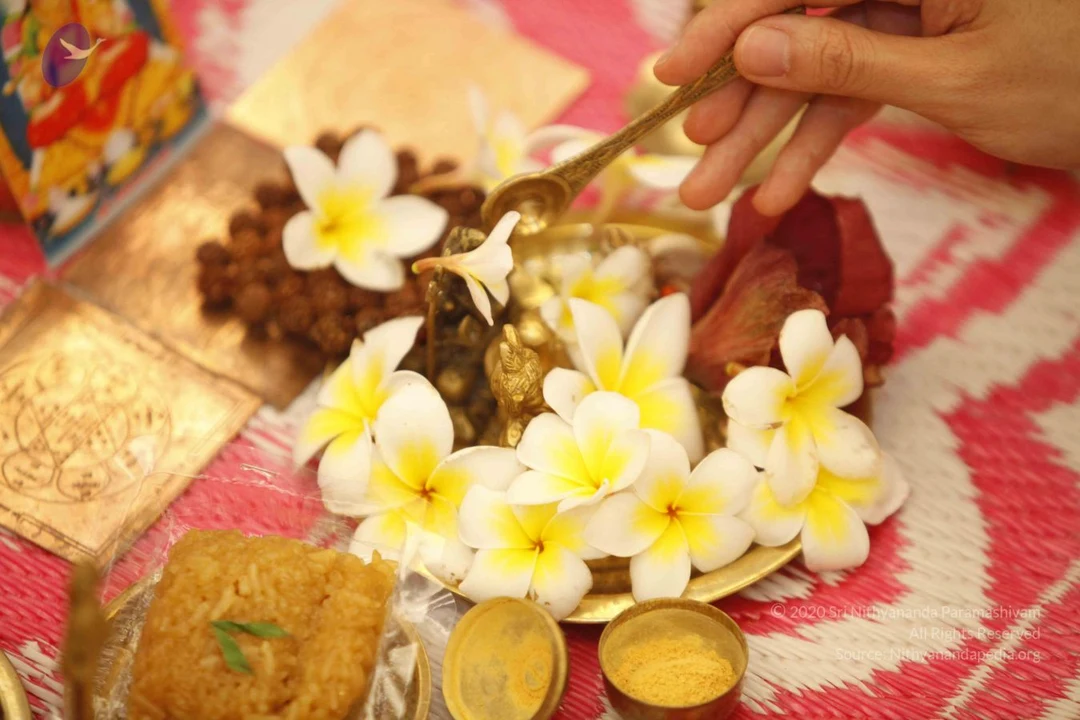
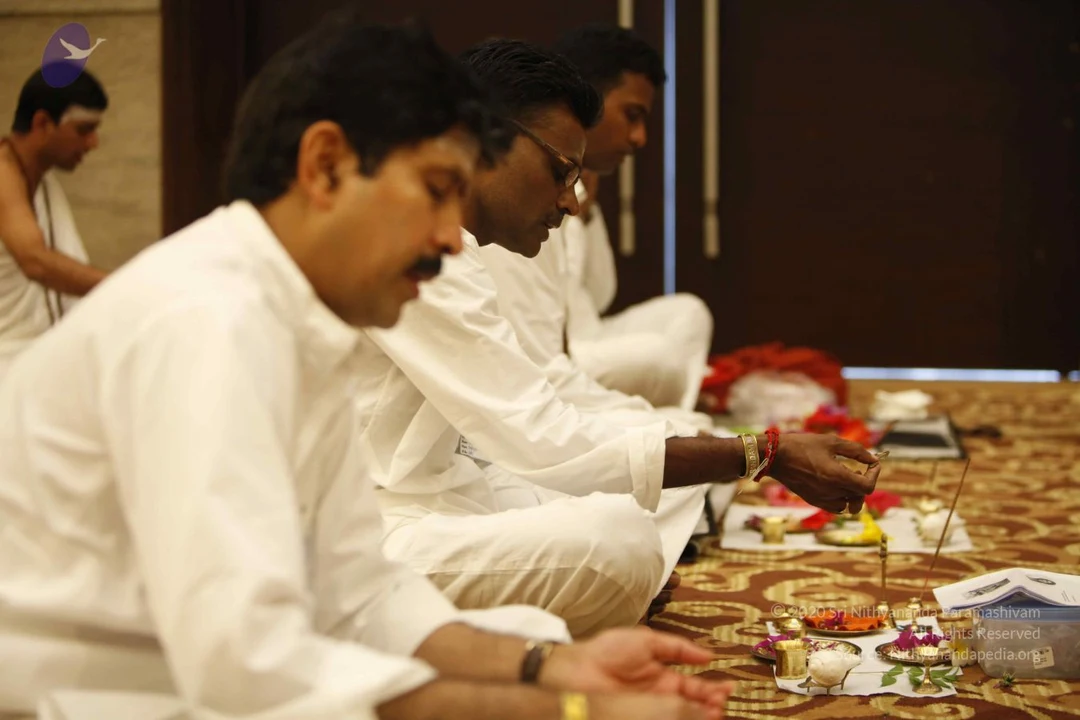
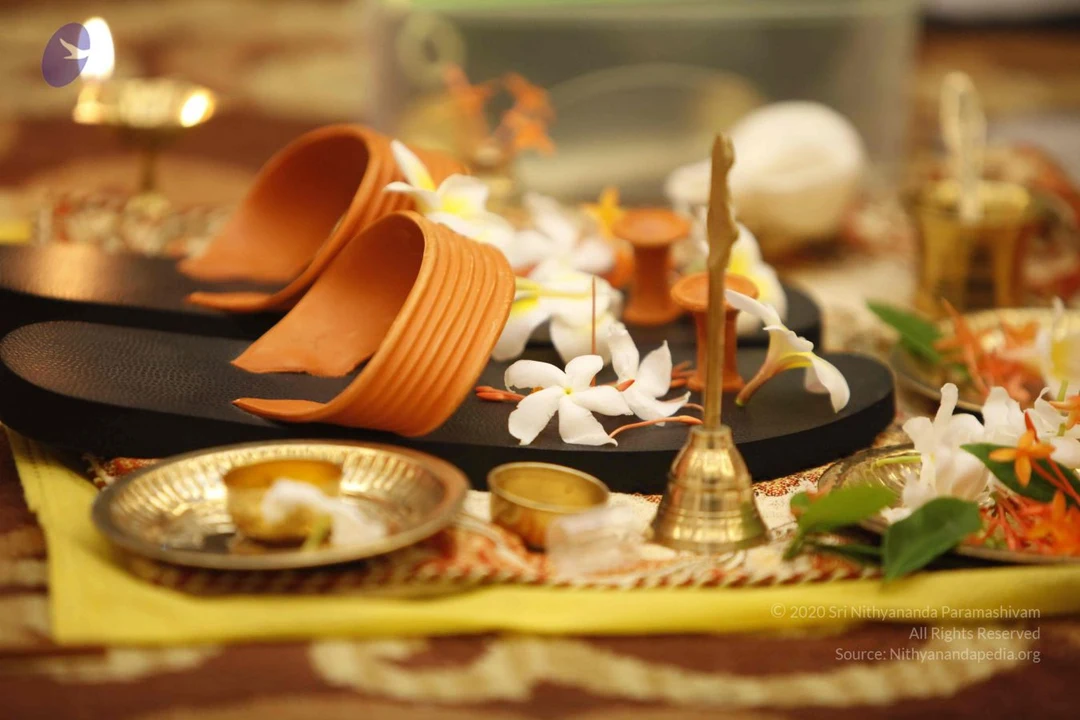
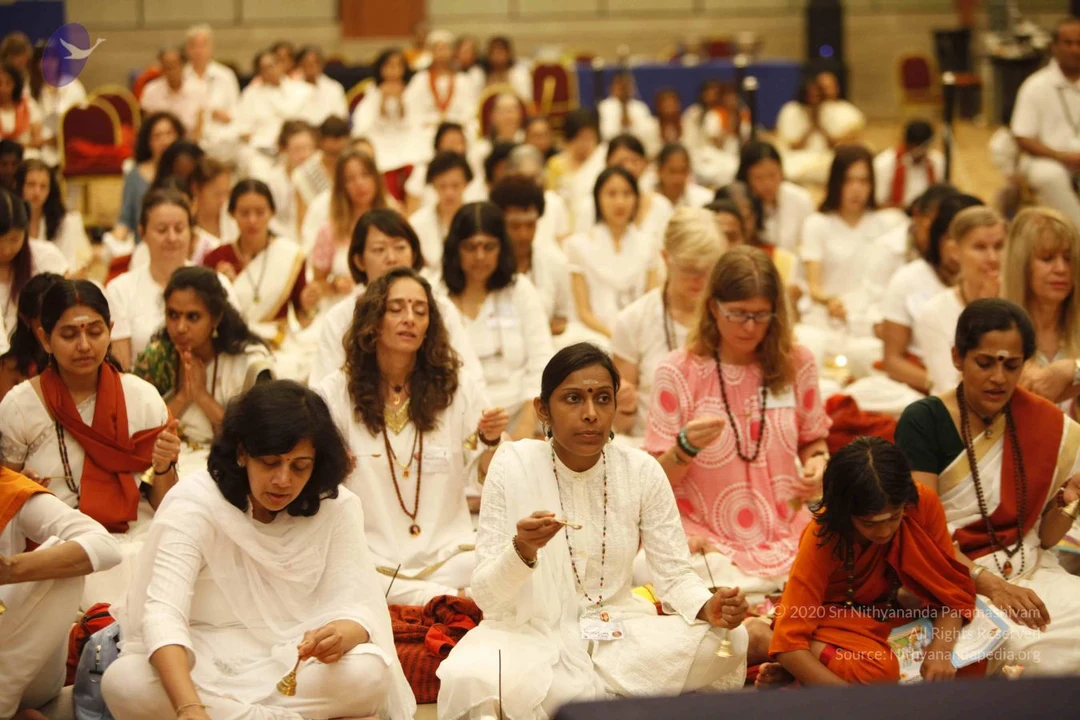
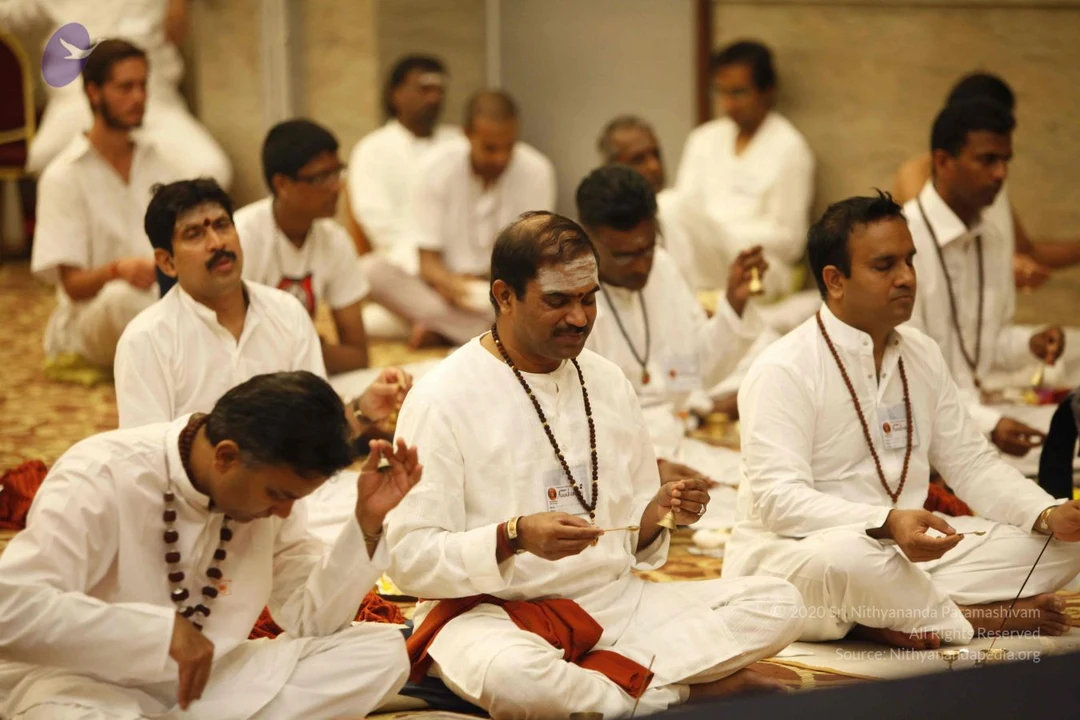
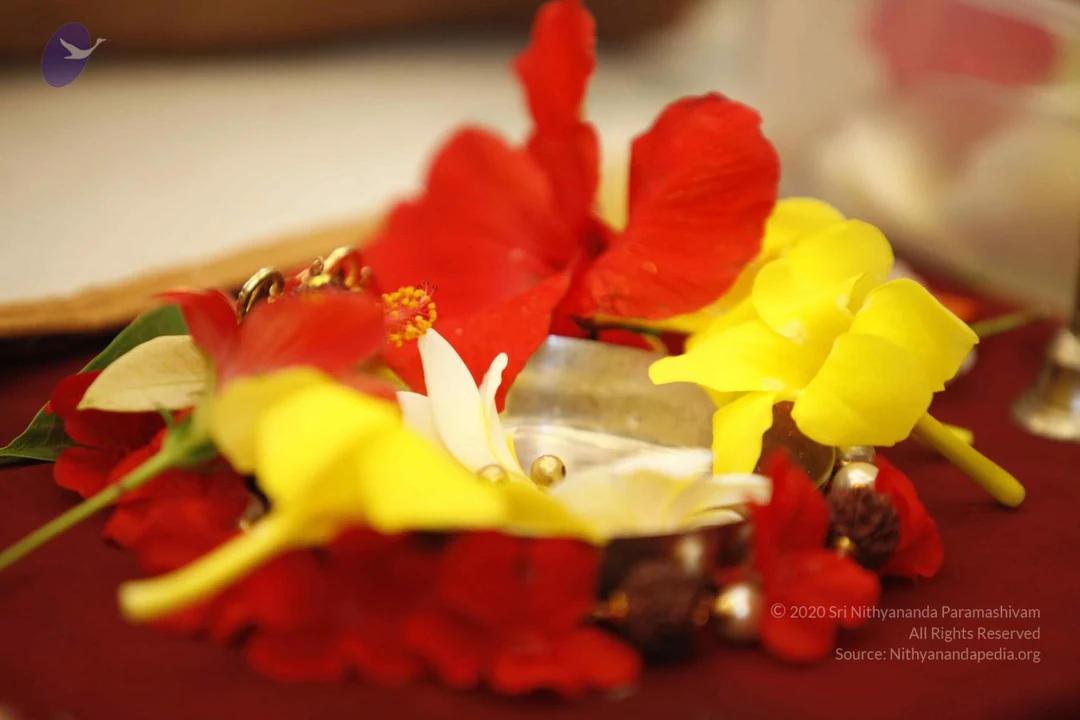
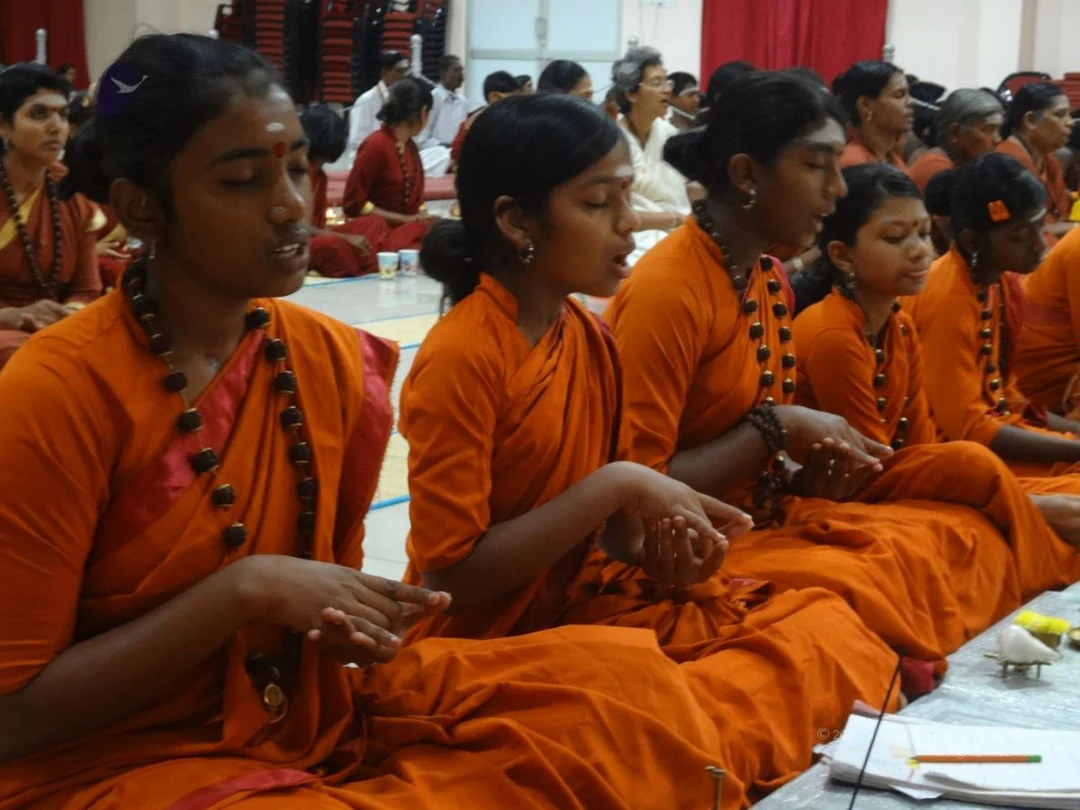
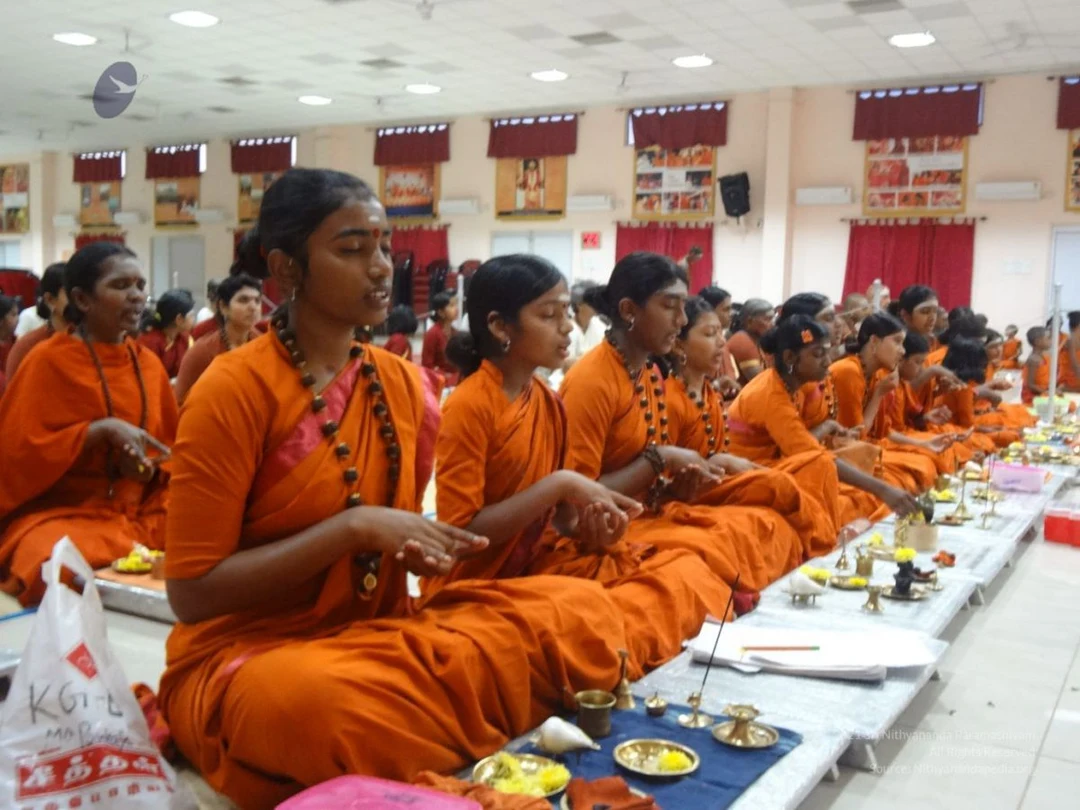
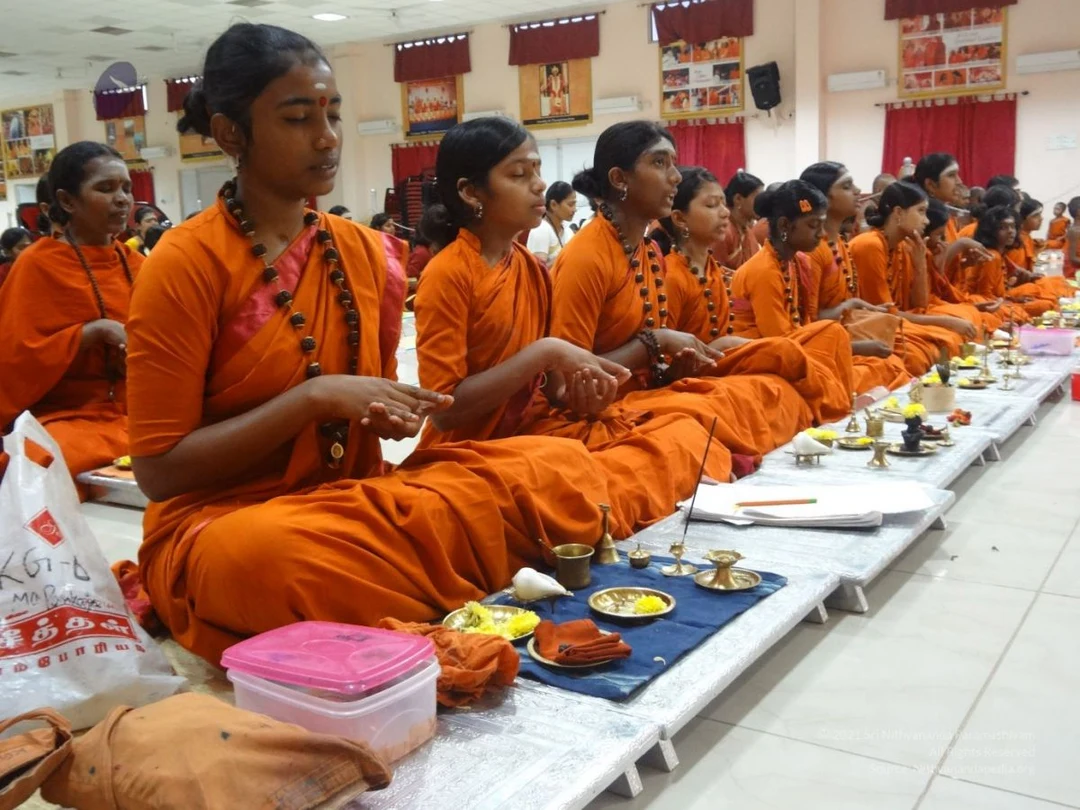
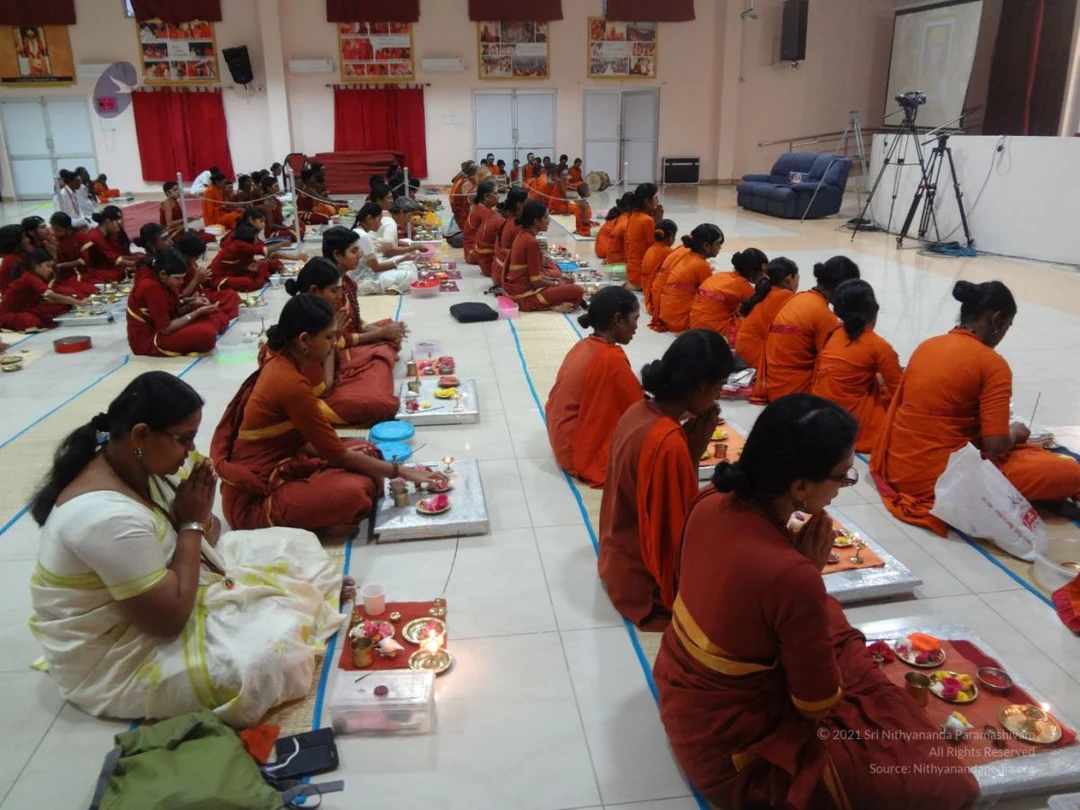
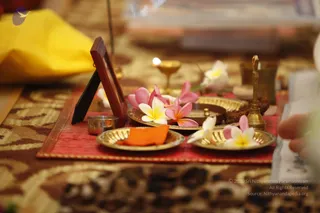
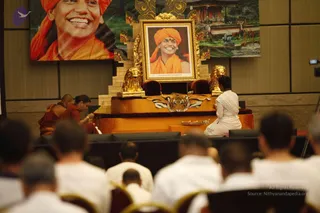
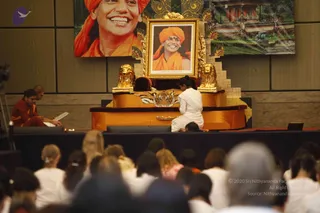
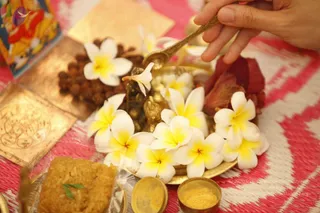
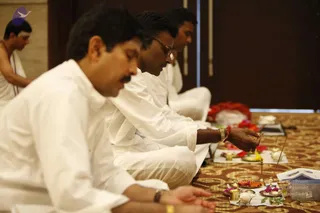
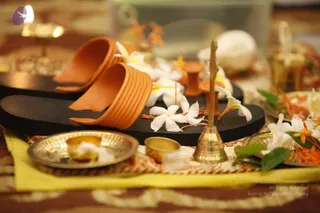
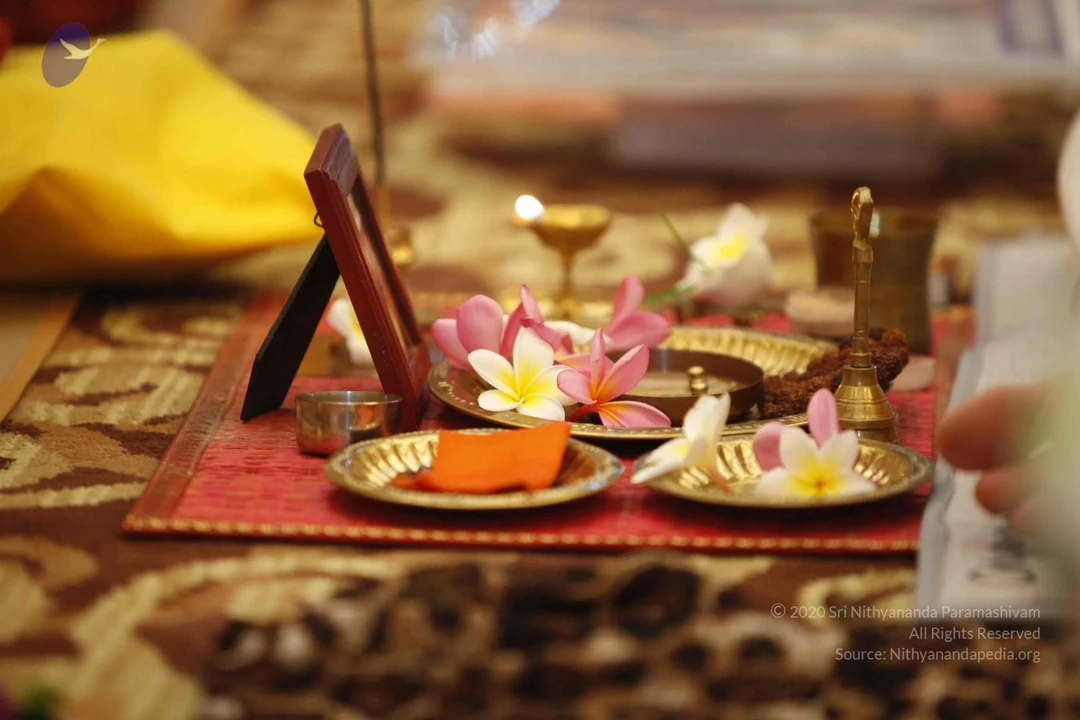
Close-up photograph of a puja setup on a patterned batik-style cloth. Pink and white plumeria flowers rest on brass plates, with a small brass oil lamp burning in a cup, a brass bell and a brass vessel, a wooden framed picture stand, and a folded orange cloth on a red woven mat. No people are visible apart from a blurred hand at the right edge. The arrangement suggests a padapuja or puja offering.A hall event centred on a golden-framed portrait on a raised orange-draped platform flanked by two golden lion statues and a tiger-skin cloth. The framed portrait labelled "Paramahamsa Nithyananda" shows a smiling man in an orange turban and saffron robe, and a large banner behind shows a similar smiling figure. A figure in white sits at the platform's right side tending items, while two people in orange and red robes kneel at the left. Seated devotees in white clothes with their backs to the camera fill the foreground, and a small offering tray sits in front of the platform.Photo of a large hall during a satsang-style gathering. On a raised golden stage with a tiger-skin-patterned cushion, a golden framed portrait labelled "Paramahamsa Nithyananda" sits between two gilded lion sculptures, with a larger banner portrait above showing a smiling figure in orange and red turban. A woman in white sits before the dais with a small plate of flowers, and two people in orange-red robes sit at the left side reading. Foreground audience members in white clothing face the stage, seen from behind. A banner on the right shows a temple-like scene. A visible pattern of a Balinese-style painted image appears on the right banner, consistent with the Bali event.Close-up photograph of a ritual offering arrangement on a pink and white woven cloth. A brass plate holds white and yellow plumeria flowers, red flower petals, and a small brass vessel, with a hand holding a brass spoon reaching in from the top right. Beside it are rudraksha beads, a gold-coloured yantra sheet, a block of yellow sweet with a green leaf, and small brass bowls of yellow powder. No people's faces are visible, so no one is identifiable here; only hands appear.Several men in plain white ritual clothing sit cross-legged in a row on a gold-patterned carpet, performing a puja. In the foreground a man with a moustache and wristwatch sits with eyes lowered and hands folded. Beside him a man wearing glasses and a red thread bracelet holds a small ritual item over a brass plate of flowers and offerings. Brass oil lamps, an incense stick, kumkum and flower petals lie on cloth-covered plates in front. A figure in the upper left, wearing white and a light forehead mark, sits near a stone wall, and a red floral arrangement lies in the background.Close-up of a padukapuja setup on a patterned cloth with a yellow runner: a pair of black wooden sandal-shaped padukas with orange-brown strap bands rests on the table, decorated with white frangipani-like flowers and orange blossoms. A brass hand bell with a handle stands between them, with a small brass bowl of offerings, a brass plate holding petals, and a lit oil lamp in the upper left. No people are visible.

Nithya-Satsang
49 photosSource gallery
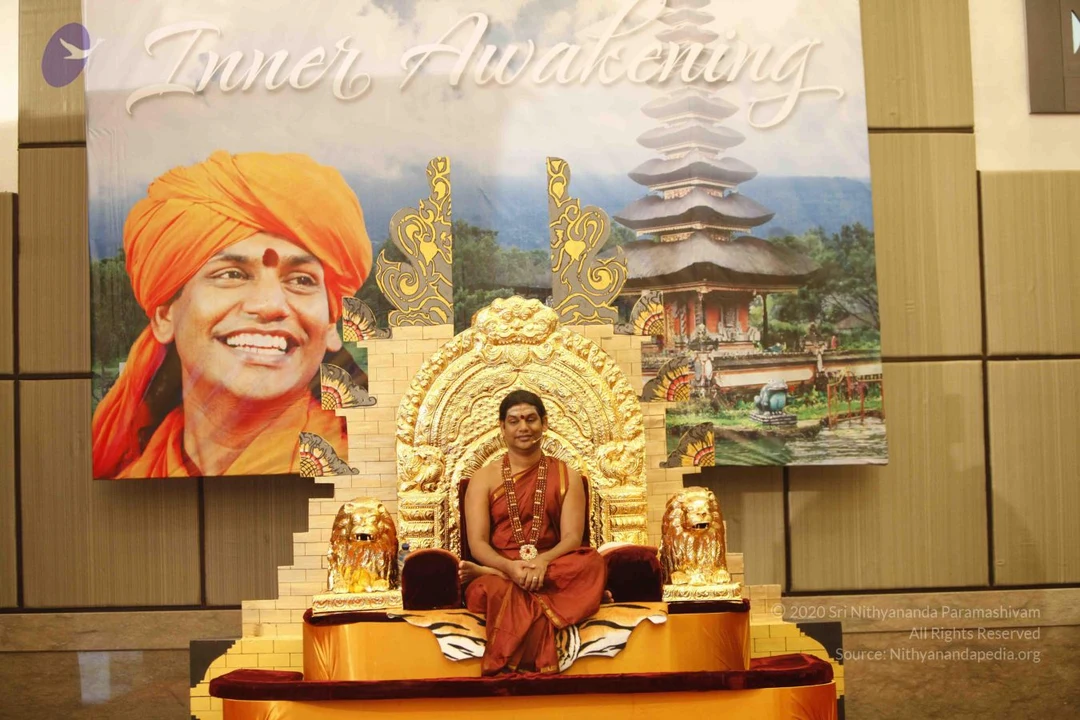
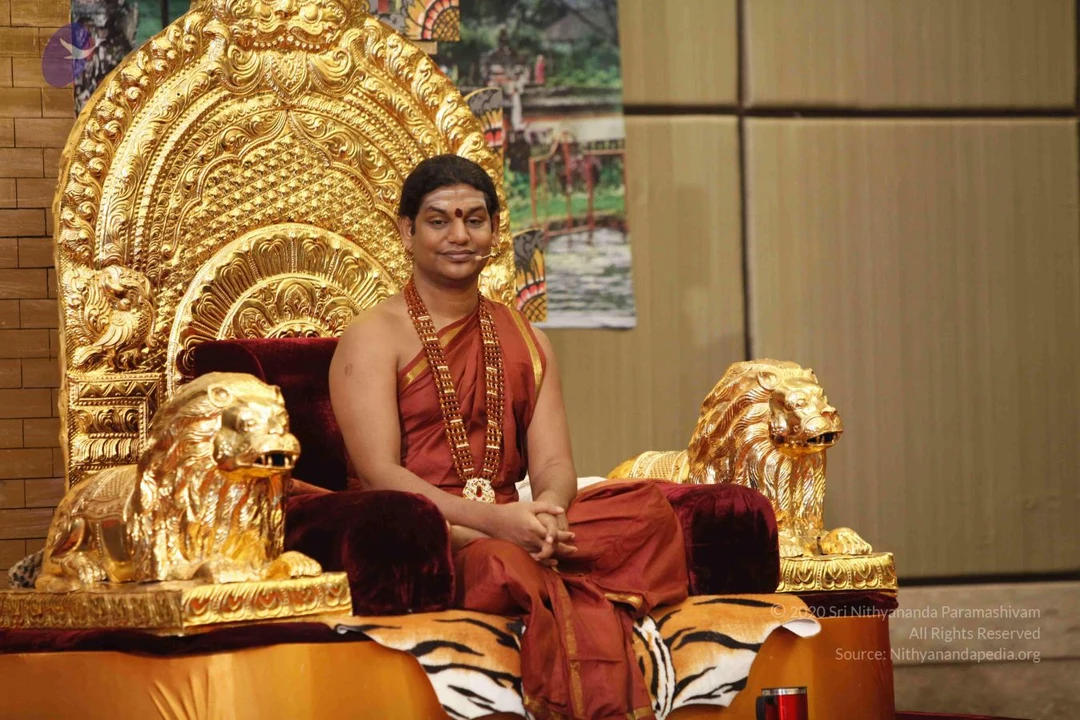
Photograph of two monitors displaying a multi-panel video-conference grid of remote ashram and satsang locations. Panels show small groups of devotees in rooms with shrines, floor mats and framed images. Labels include Los Angeles Arunachala, Toronto Kailasa, Guadeloupe Rameswaram, Ohio Prayag, Nithyananda Nagaram Hyderabad, Seattle Chidambaram, Singapore Singapuram, San Jose Madurai and Bidadi. A framed portrait of a saffron-robed figure with a turban hangs in one panel on the right screen. The screens show people on screens only, with no physical people in the room.A photograph of a wall of video-conference screens tiled in a grid, each tile a live feed from a different centre. Labels on the tiles read GUADELOUPE RAMESWARAM, Los Angeles Arunachala, OHIO PRAYAG, SEATTLE CHIDAMBARAM and SINGAPORE SINGAPURAM. One feed shows two people seated on a pink floor with a silver plate of offerings. Another shows several people in orange and saffron robes seated in a bright hall. A Seattle feed shows a woman in a pink sari beside a yellow rug. In the lower right tile, a framed portrait labelled with a caption shows a figure with long white hair, its name not legible.A seated man in a rust-red robe sits on an ornate gold throne carved with scrollwork and a semicircular backrest, flanked by two golden lion statues on a tiger-striped cloth. He wears a long beaded rudraksha-style mala with a large ceremonial pendant, a red bindi, and a small microphone at his cheek. His hands rest on the chair arms. Behind the throne, a wall of tan brick panels and colourful banners is visible.A seated man sits on an ornate gold throne with carved lion-head armrests and a tiger-striped cloth draped over the platform. He wears a rust-orange dhoti and wrap, a red bindi, a long red and gold beaded mala and a large pendant. Behind him are backdrop panels showing a red temple gateway and a stone sculpture beside water, plus a partial portrait at left. Two golden lion statues flank the throne. The page names an event, but the figure's appearance is not reliably matched, so the identity is left uncertain.A photograph of a smiling man seated cross-legged on an ornate gilded throne with a tall arched back carved with lions and floral scrollwork. He wears a rust-red saffron-toned robe with gold-edged border, a long beaded rudraksha-style mala with a large red-and-white pendant, and a small red bindi. Two gilded lion sculptures flank the throne, and a tiger-striped cloth covers the platform.A seated man in an orange-red robe and a red shawl sits cross-legged on an ornate golden throne with lion heads at its base, a raised platform draped in orange cloth and a tiger-stripe skin. He wears a long rudraksha-style mala with a gold ornament and a red tilak on his forehead, hands resting in his lap. Behind him a large banner shows a smiling man in an orange turban with a red bindi, beside a Balinese temple with tiered roofs and a green landscape. The phrase Inner Awakening is written in script at the top of the banner. No other people are visible.
IA-Session

23 photosSource gallery
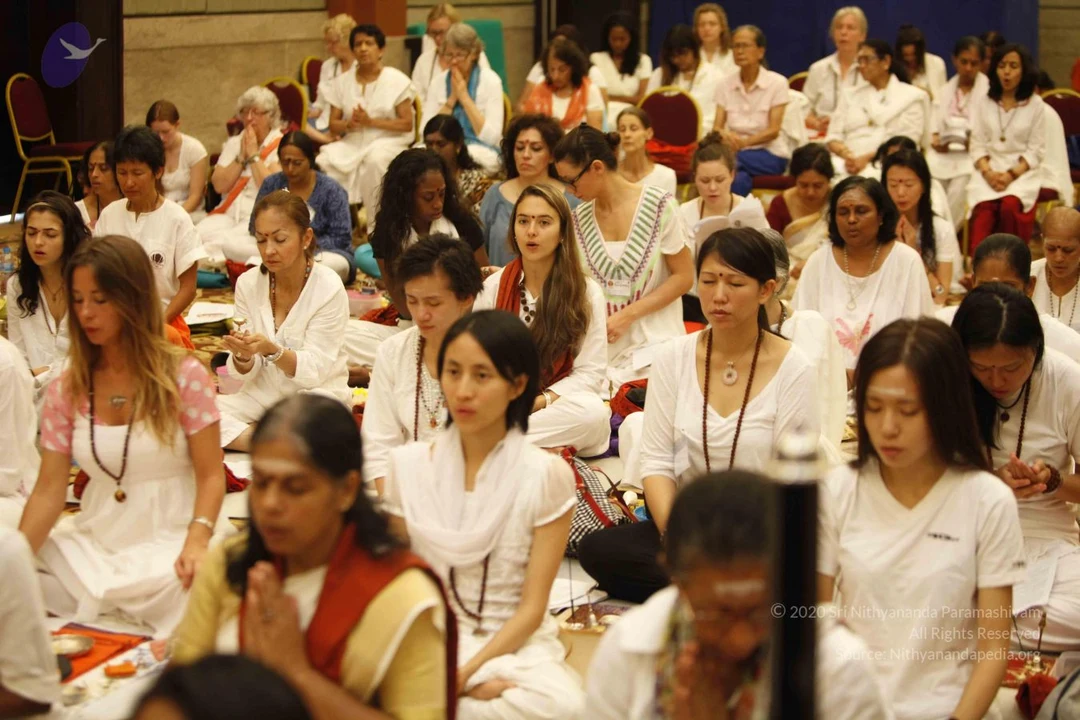
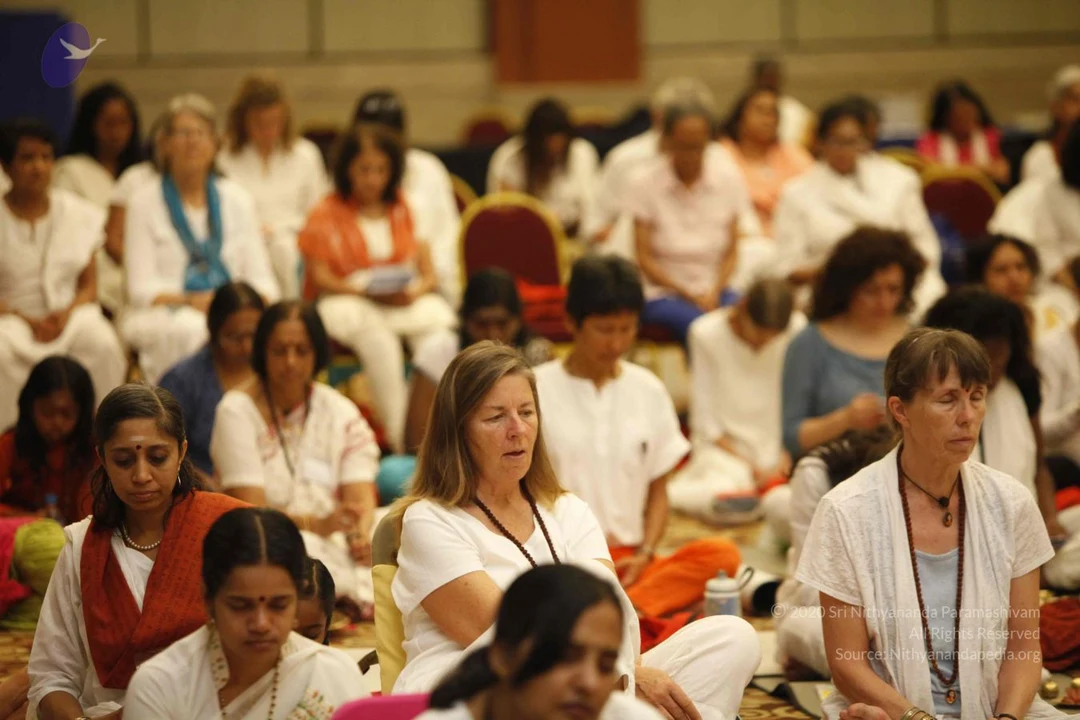
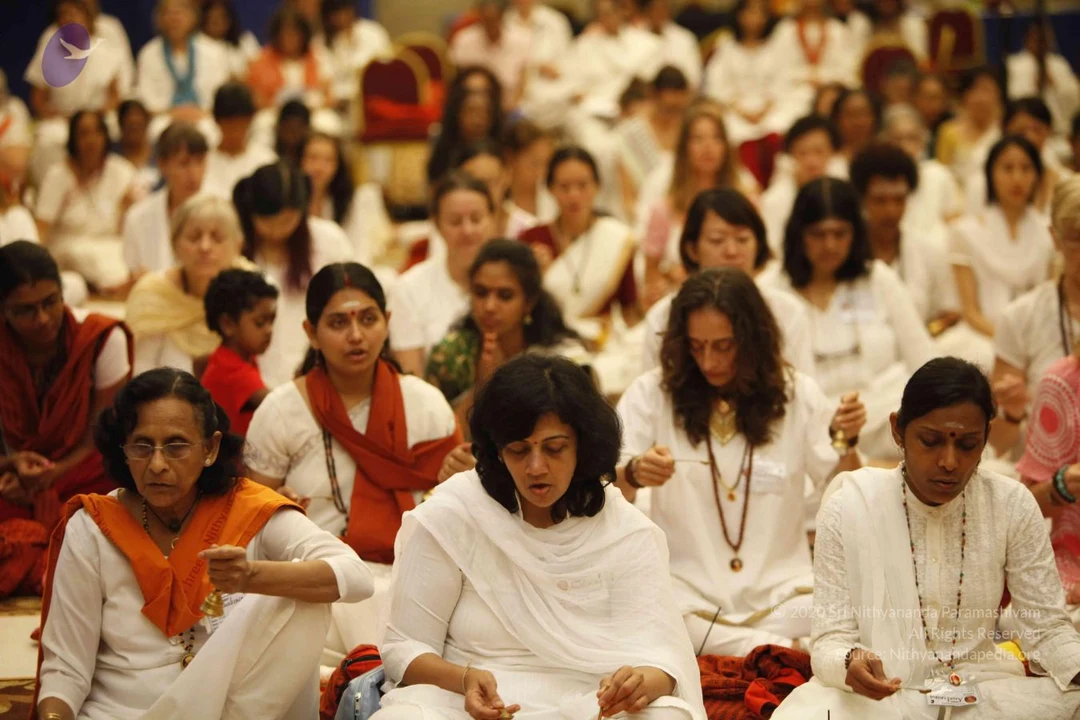
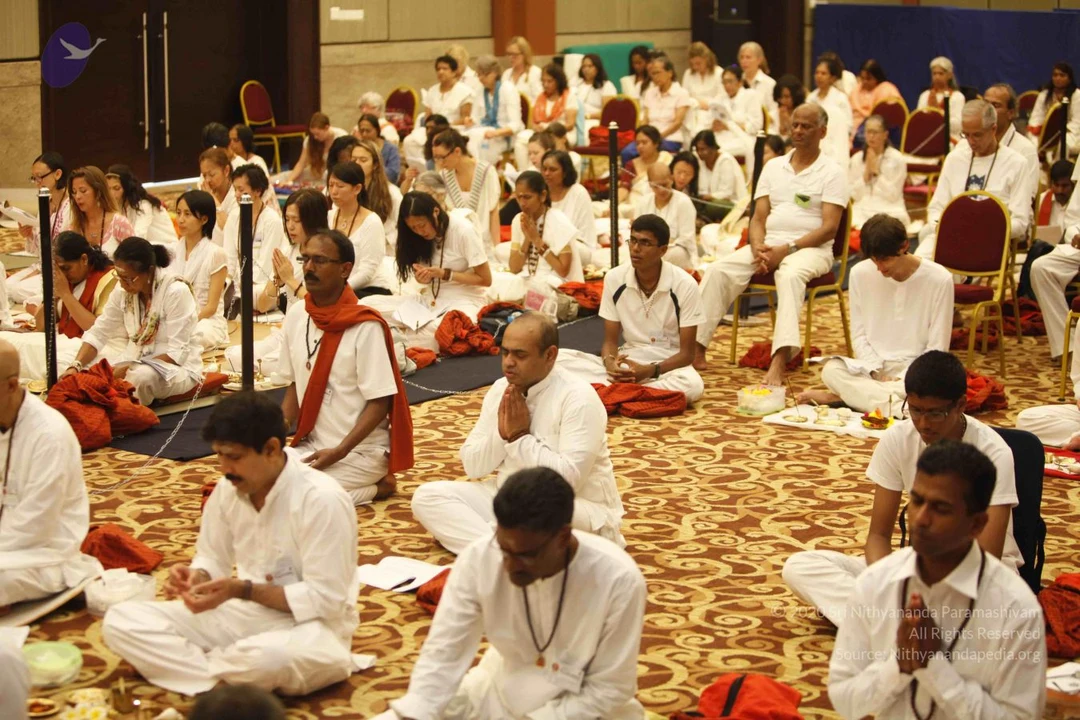
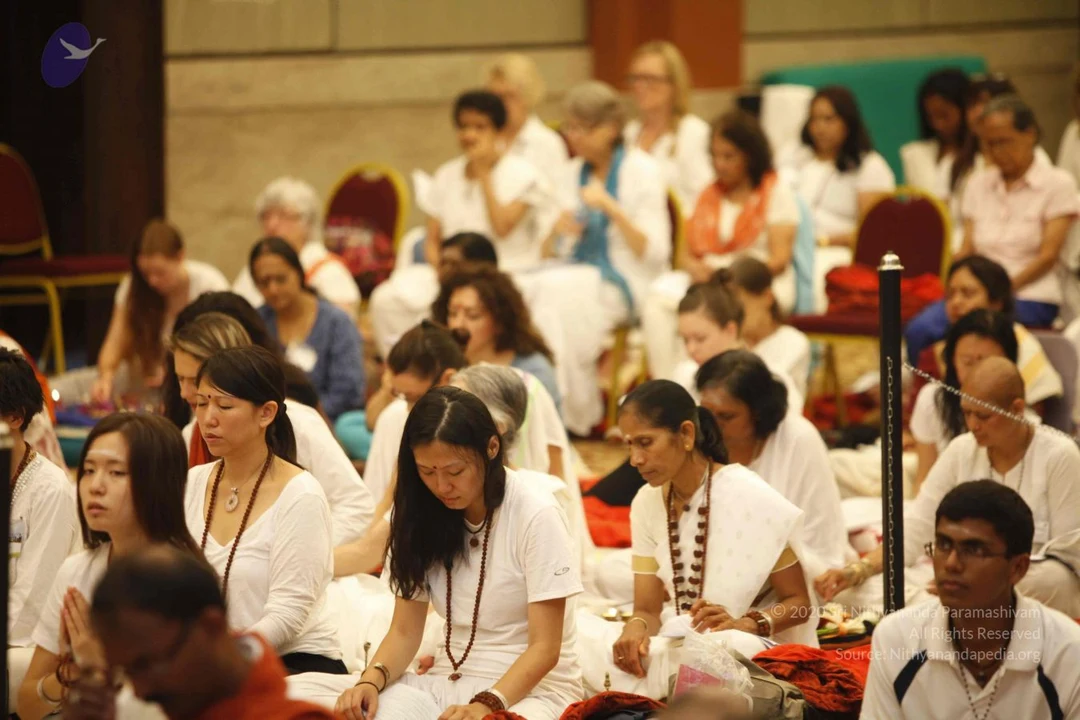
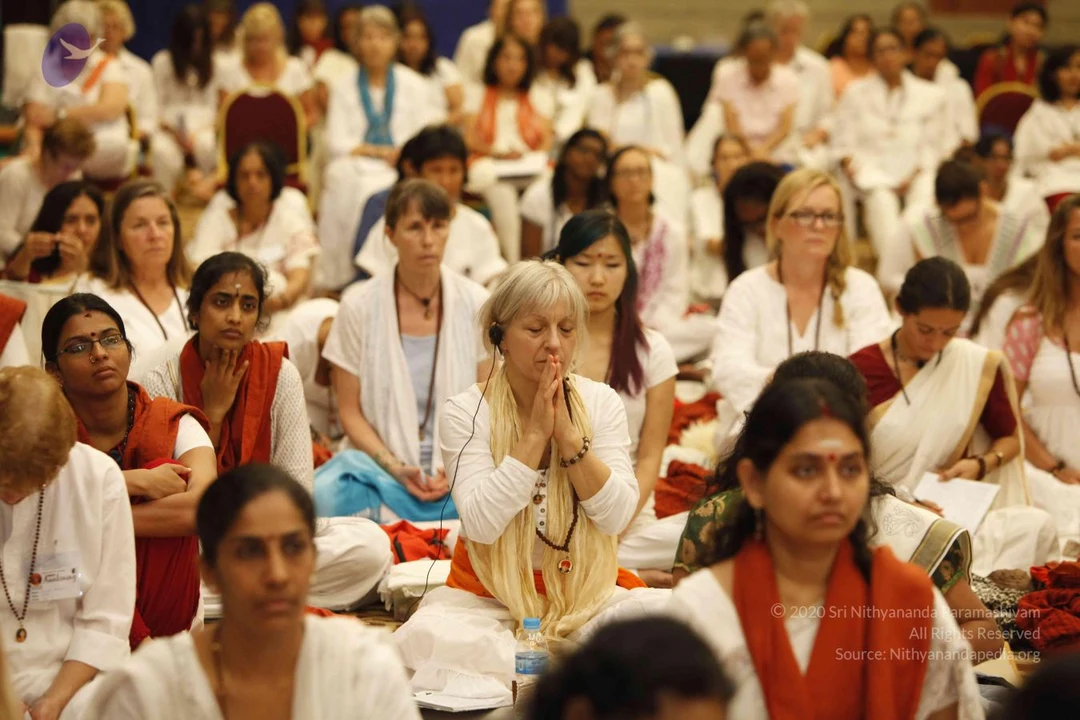
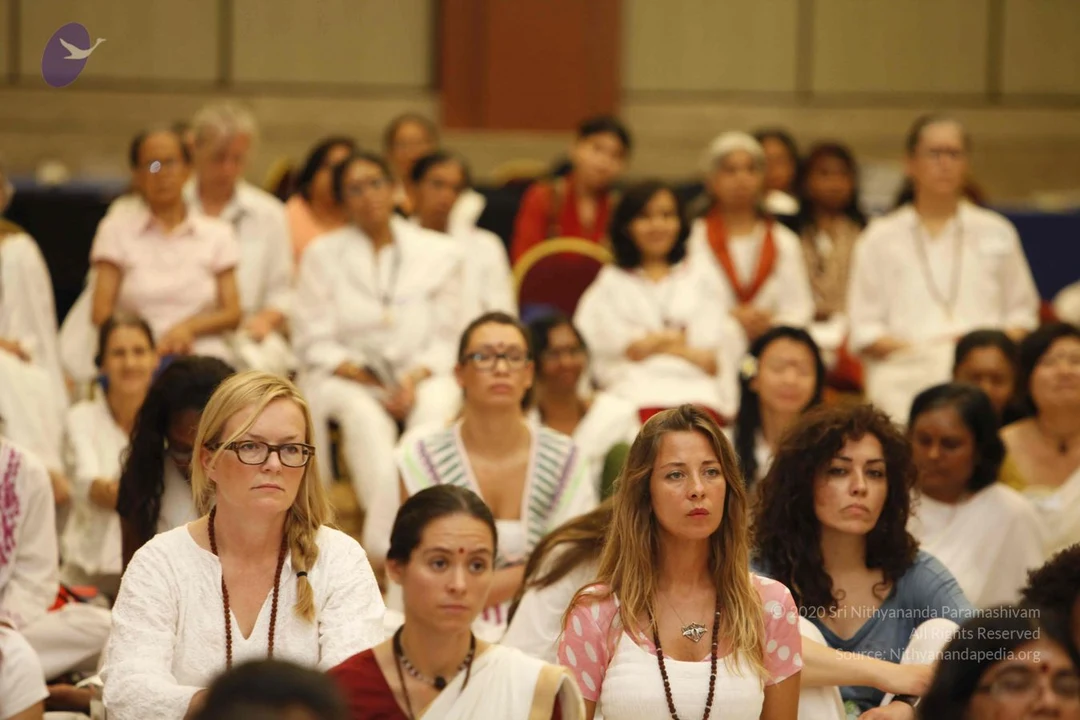
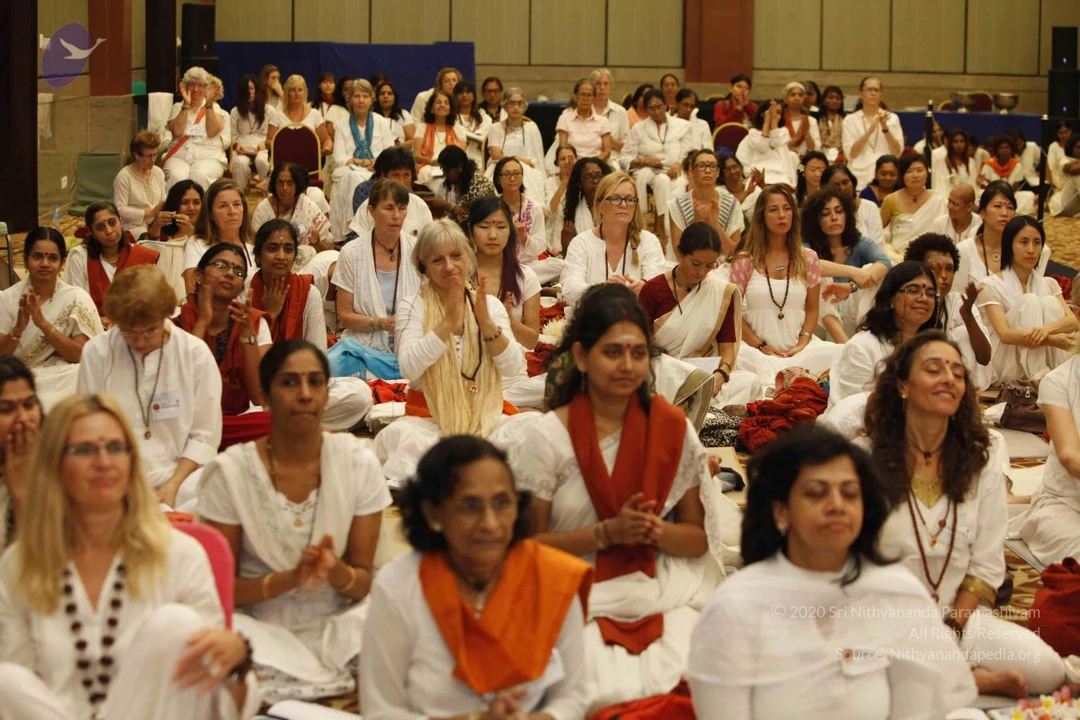
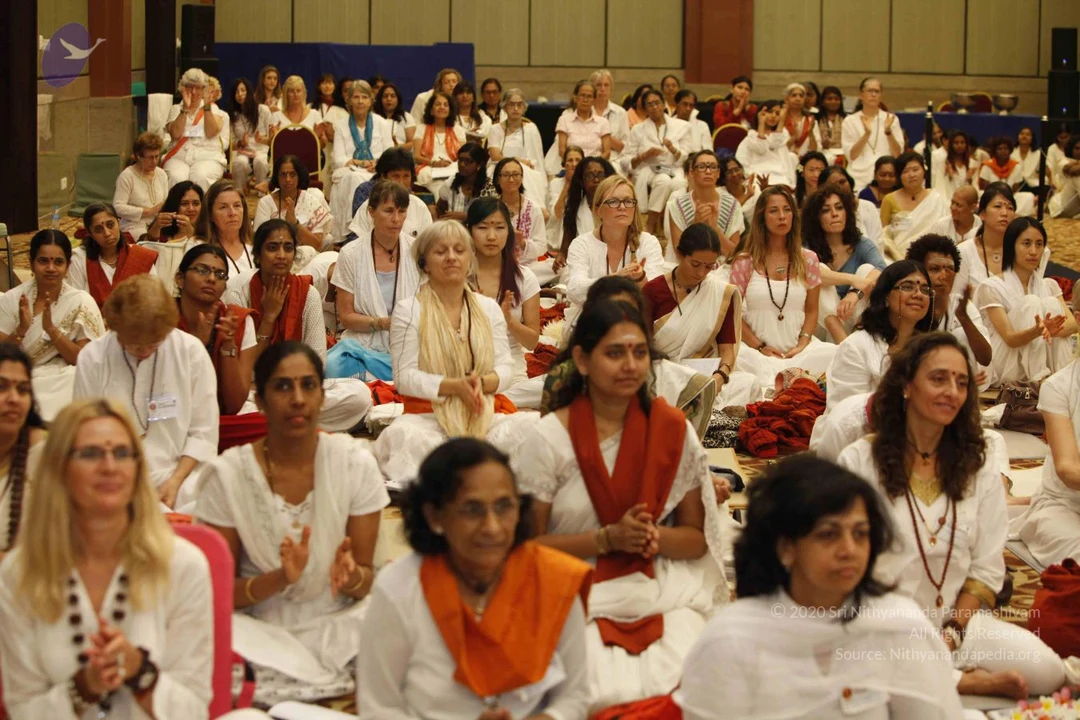
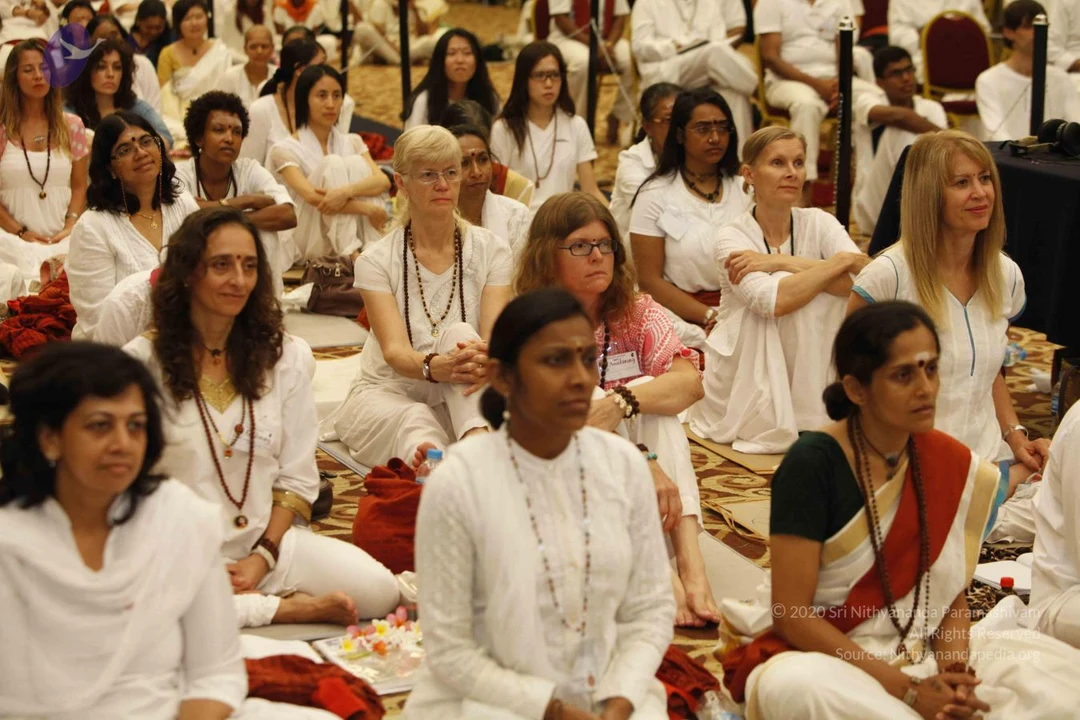
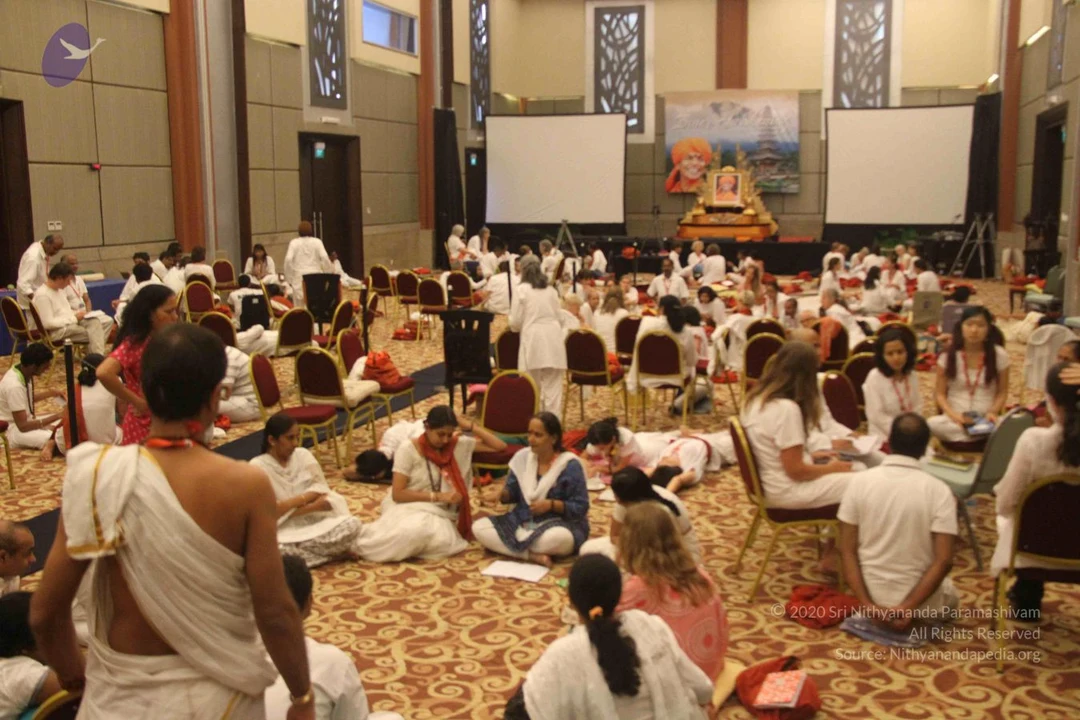
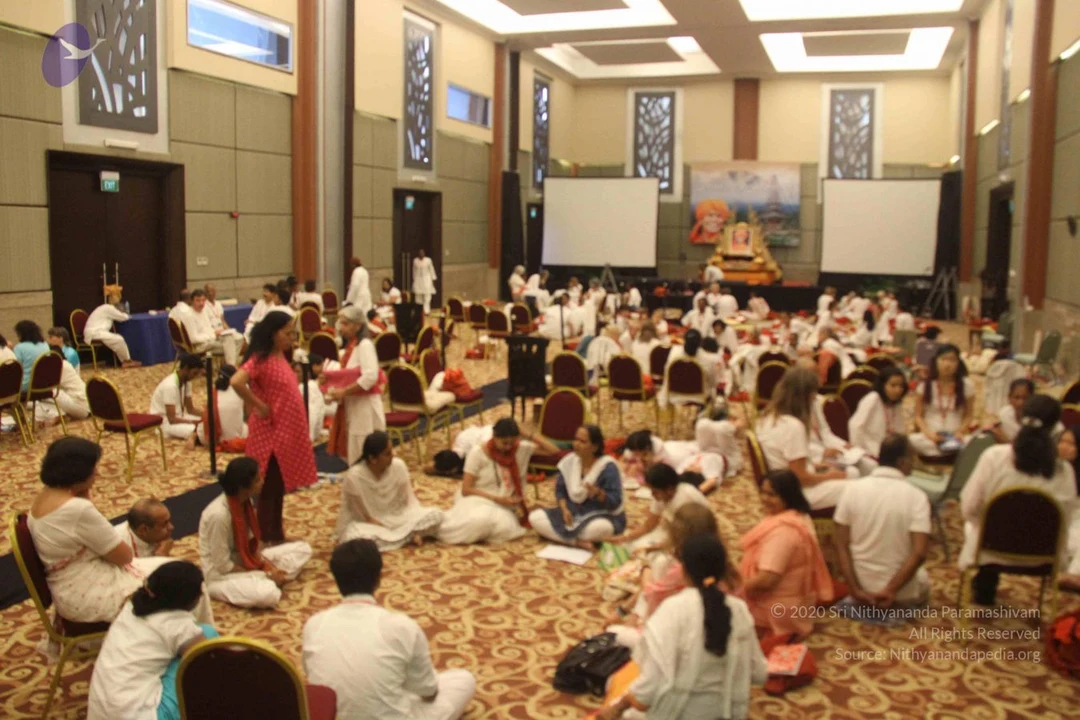
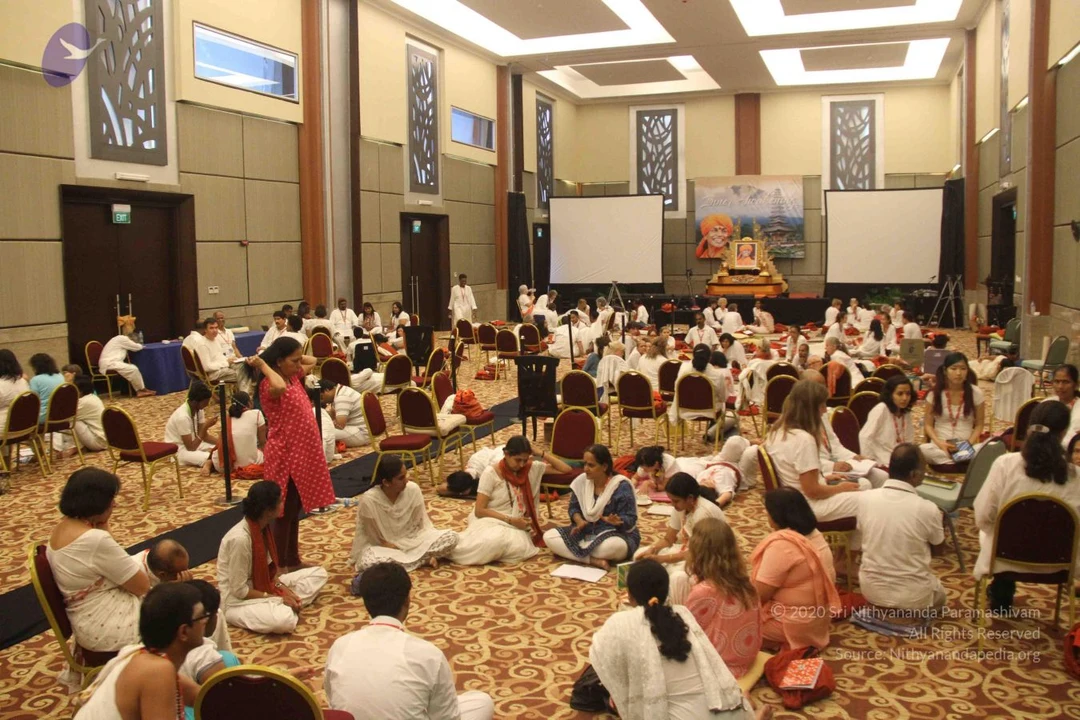
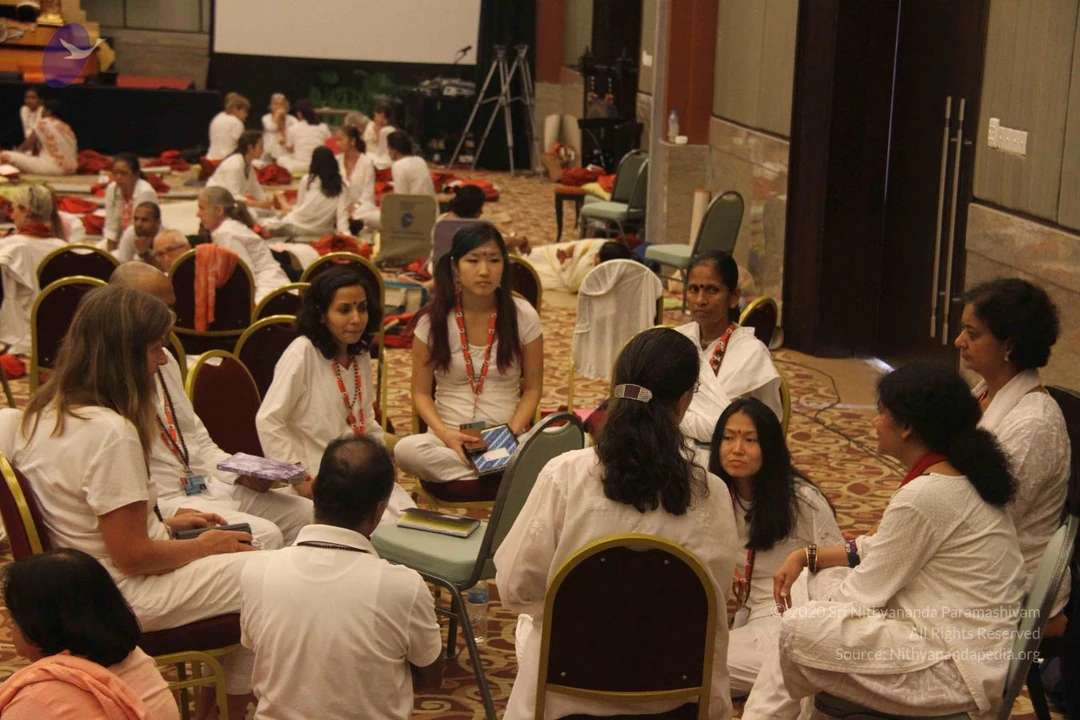
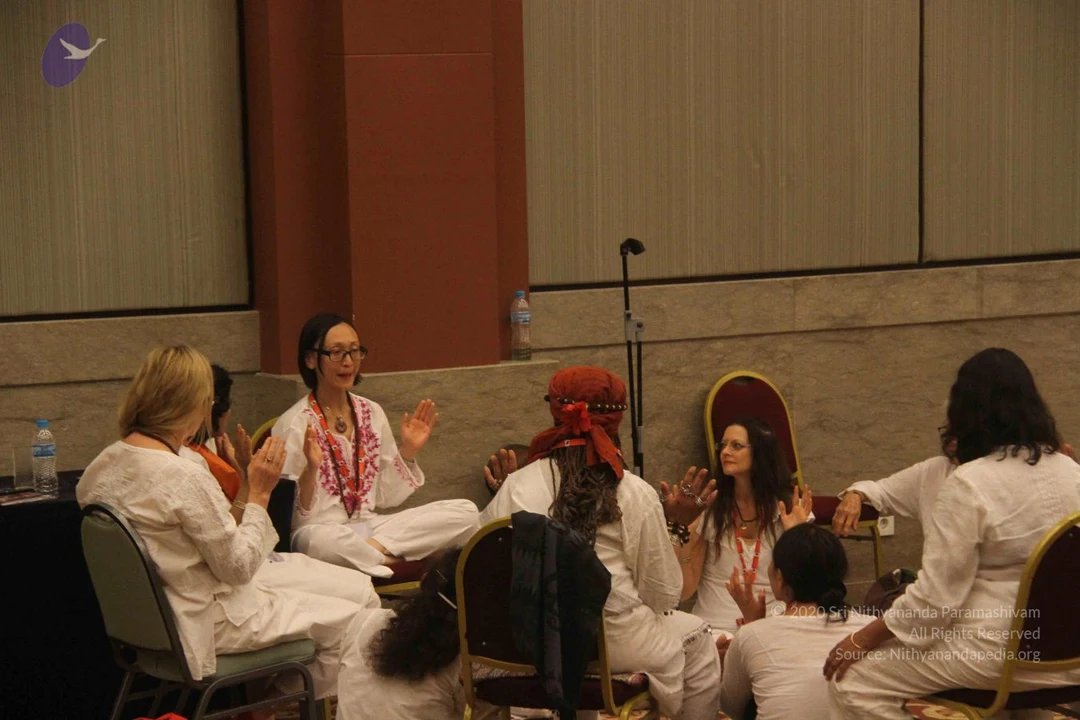
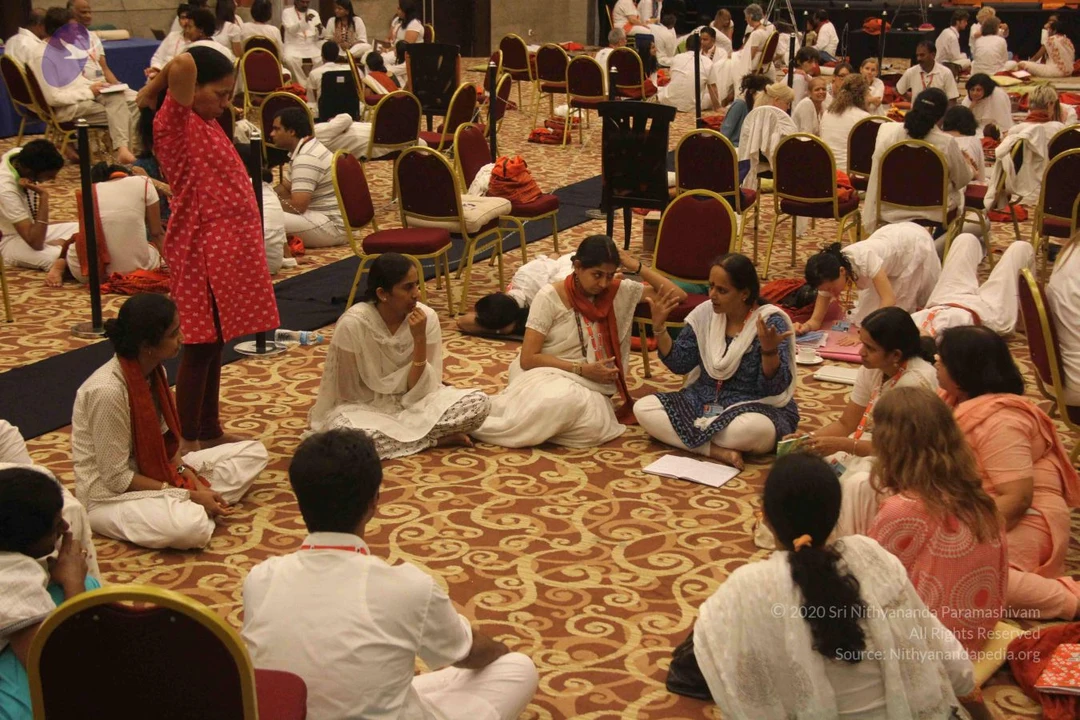
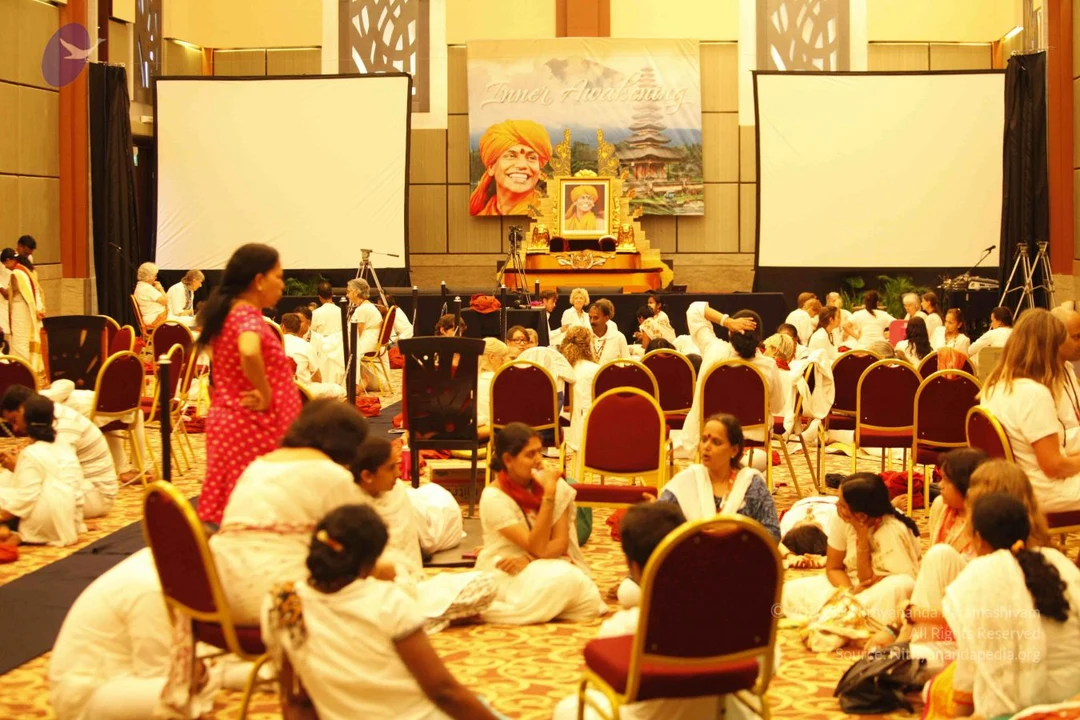
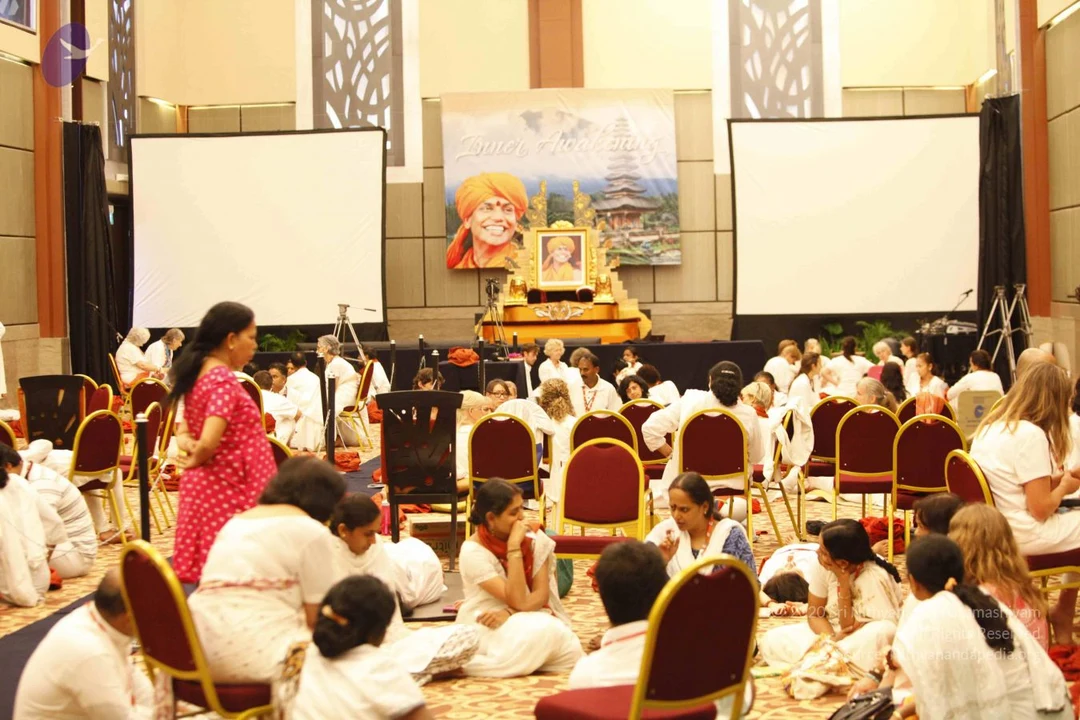
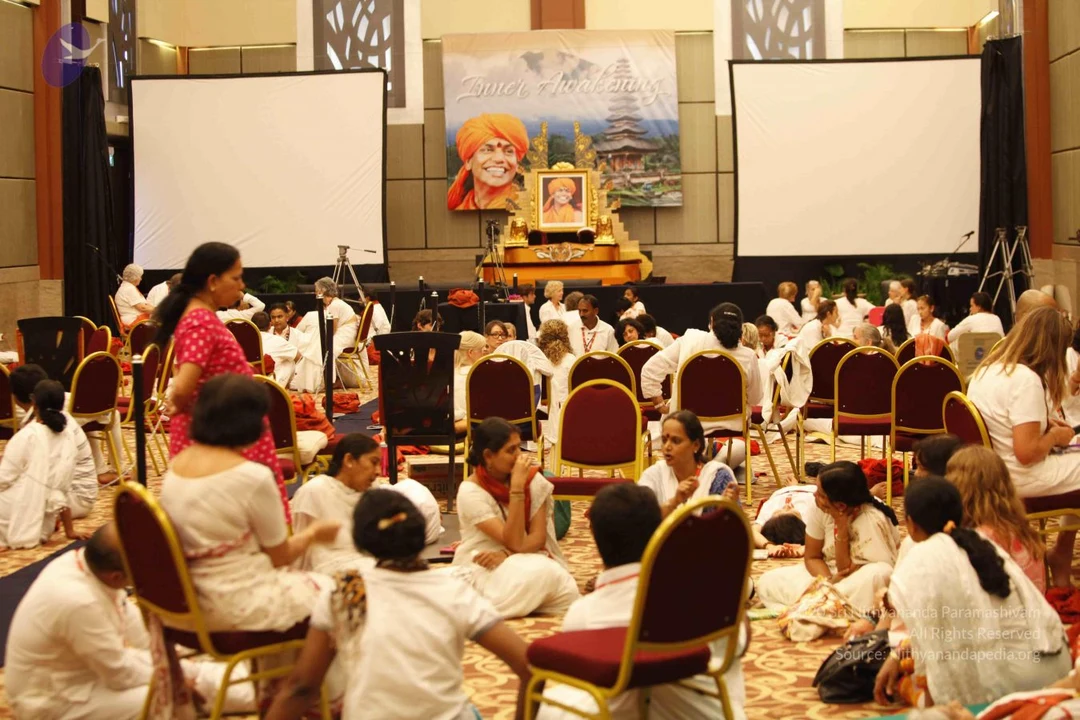
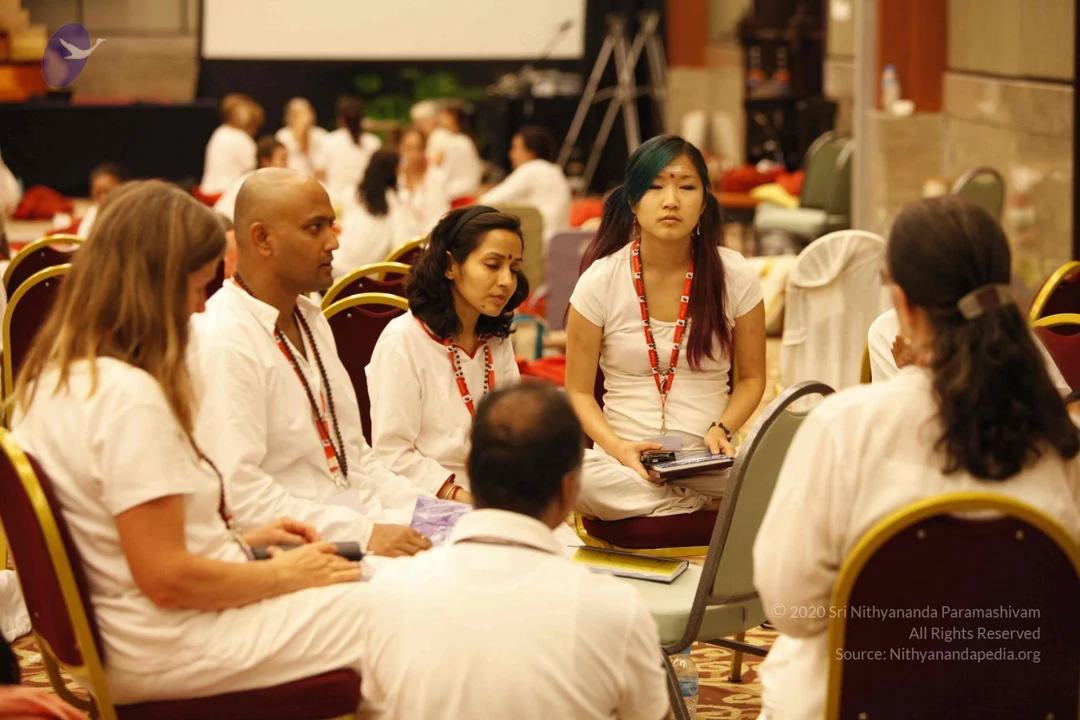
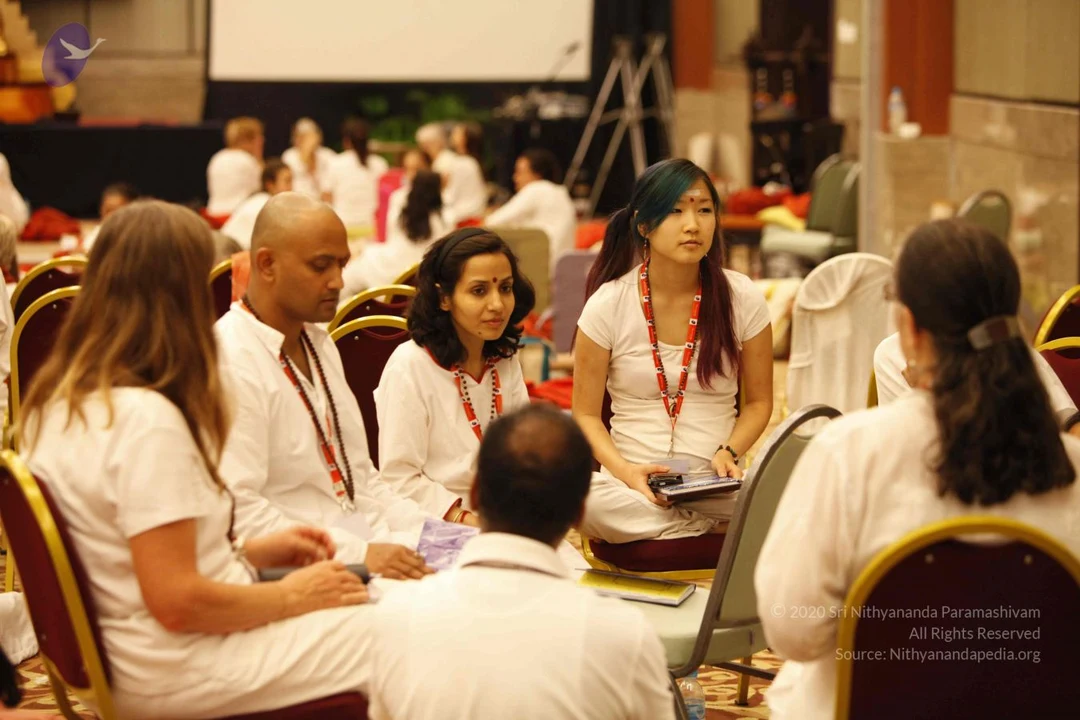
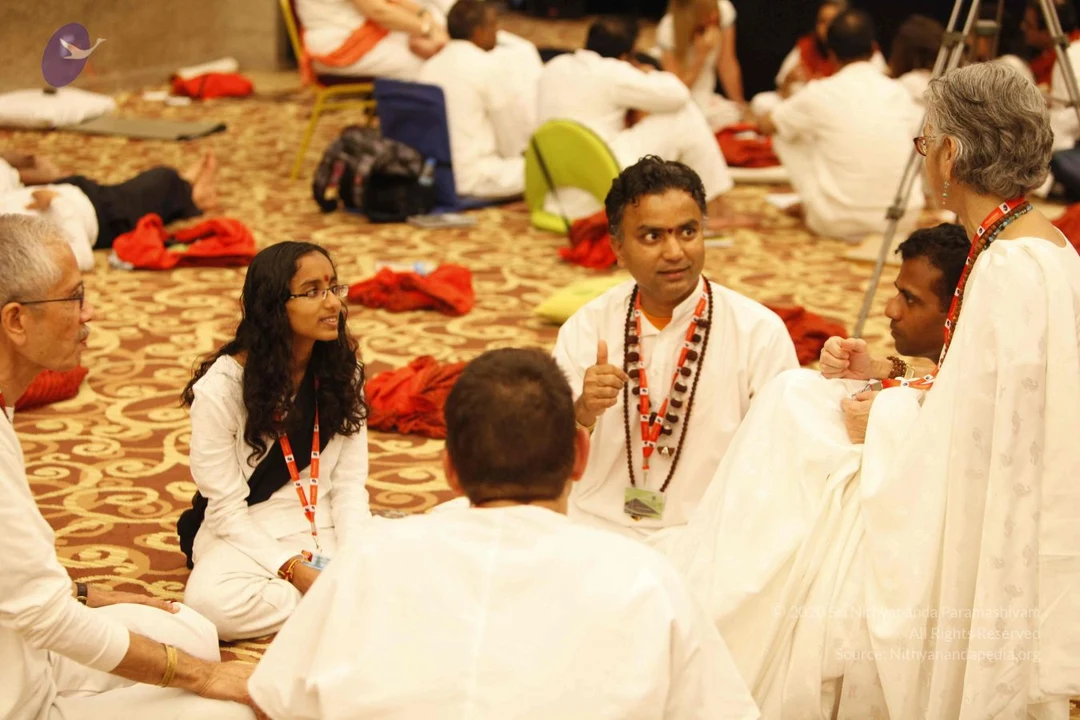
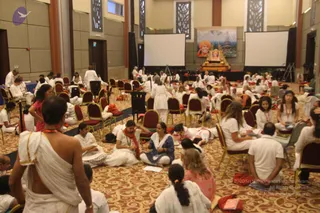
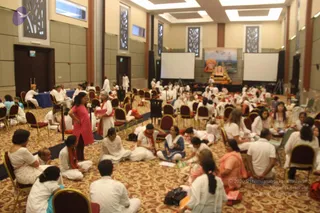
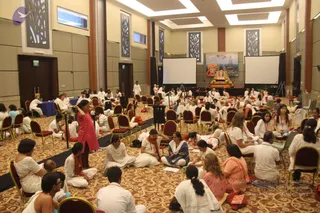
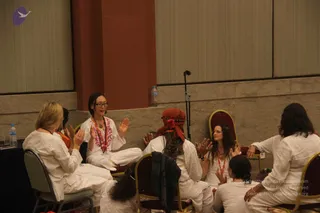
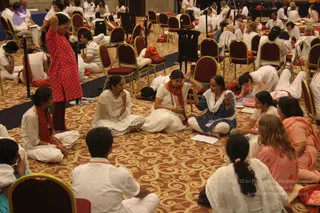
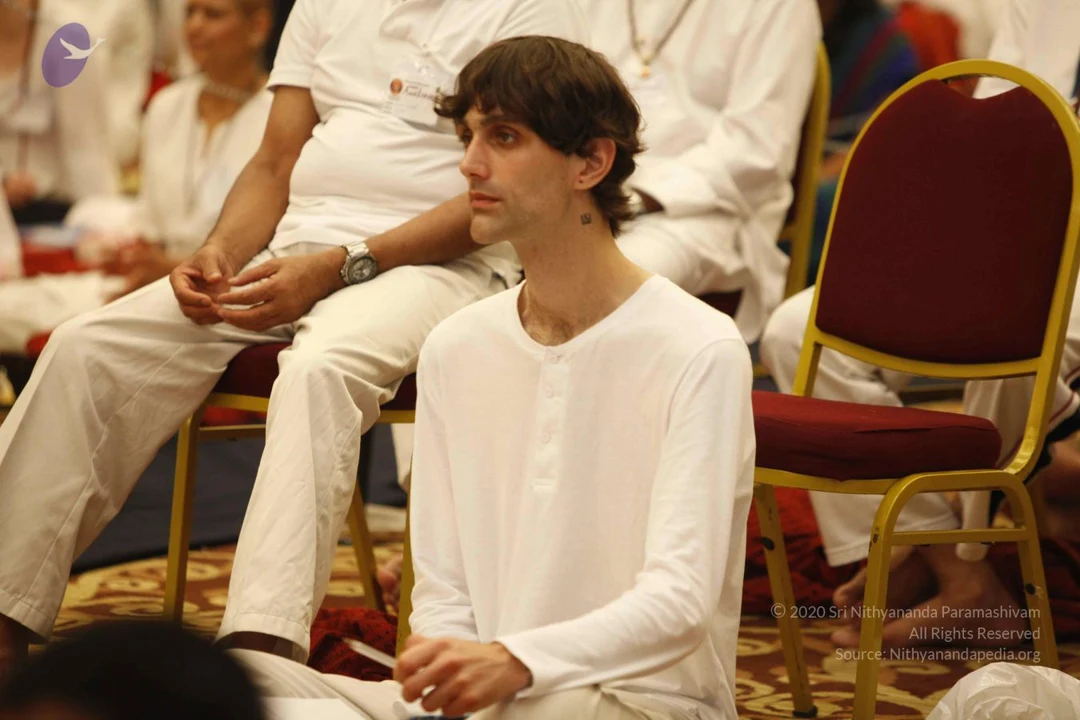
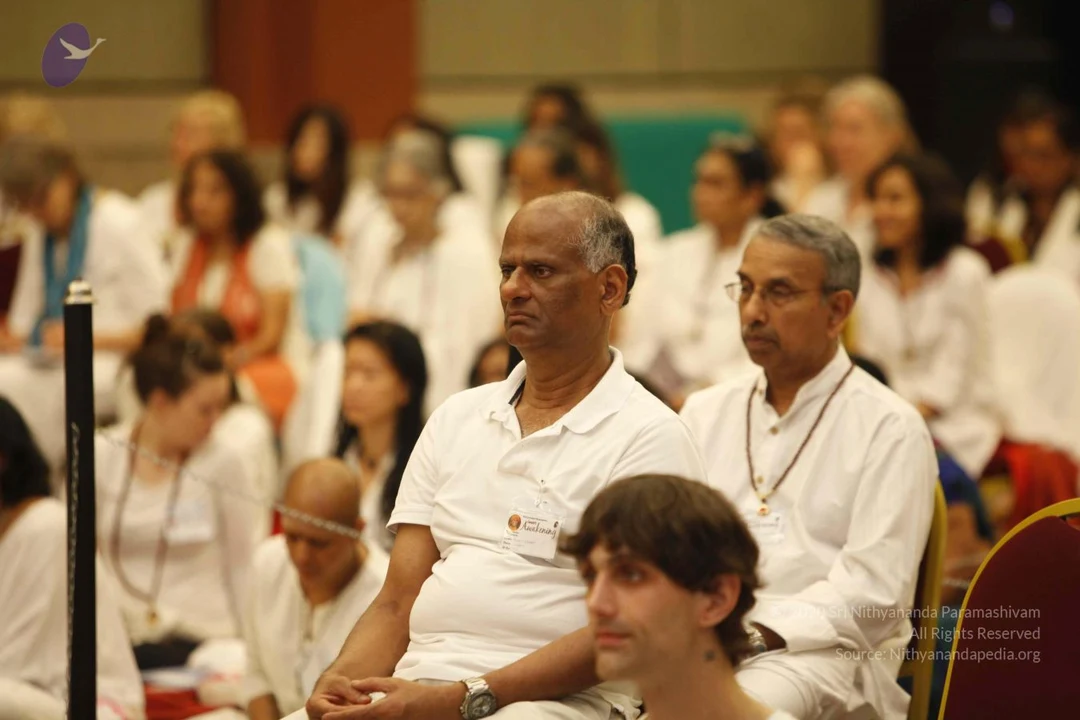
A large hall with patterned red-and-gold carpet holds a seated gathering of devotees in white clothing, many sitting cross-legged on the floor and others on red-cushioned chairs. In the foreground a bare-chested man in a white dhoti stands with a red-orange cord around his neck, back to the camera. Near the back, a gilded throne-like peetha with a framed portrait and a large painted banner showing a saffron-robed figure before mountains and a temple stands between two projection screens. Several attendants in white move among the rows, and a woman in a blue patterned top sits in the center holding papers. The scene looks like a satsang or sarvadarshan session with participants reading and listening.A large hall with patterned carpet and rows of gold-framed red chairs filled with seated devotees, mostly dressed in white. Many sit on the floor in front of the stage. A woman in a red kurta stands near the centre holding papers, and a man in white stands near the left. At the far end, a golden peetha throne sits before a backdrop painting of a figure in orange, with two blank projection screens on either side. A small blue-draped table stands at left with brass items. Tables and bags are scattered near the front.A large hall with cream walls, patterned gold-and-brown carpet and rows of red-cushioned chairs hosts a satsang gathering of many devotees dressed mostly in white ritual clothing with orange and red shawls. A woman in a red patterned kurta stands at left near a microphone stand, while others sit cross-legged on the floor or in chairs. At the far end a gold throne-like stage holds a framed photograph, with a large banner showing a saffron-robed figure with a crown and a temple backdrop, flanked by two projection screens. Many attendees are seated in the foreground, and a figure in white stands near the stage.A photograph of a seated group gathering in a large hotel ballroom with patterned carpet and gold-edged chairs. Many participants wear white clothing and red-and-white beaded or lanyard necklaces, and some sit in small circles in conversation, one woman holding a phone and another holding a notebook. Behind them, others sit on the floor among scattered red cushions or cloths, and a projector screen and tripod stand at the far end. No speaker or a person candidate is clearly visible in this frame, and the people seen are participants in discussion.A photograph of a seated satsang circle in a hotel conference room with beige wall panels and a reddish-brown pillar. A woman with short dark hair and glasses, wearing a white embroidered top with red floral stitching and an orange lanyard, gestures with raised hands while speaking. Around her, several women in white clothing sit on chairs, some clapping with palms together. A woman in a red head wrap and long hair sits in the centre, and a woman with long dark hair and an orange lanyard sits to the right. A microphone stand and water bottles sit nearby. No figure is clearly identified as a person, so no candidate is marked.A photograph of a large hall with a patterned gold-and-brown carpet where many people sit in small groups on the floor and on red-cushioned gold chairs. Most wear white clothing with orange or saffron shawls and scarves. In the centre, a woman in a blue patterned kurta with a white shawl gestures while speaking to seated women in white and orange, forming a discussion circle. A woman in a red kurta stands at left with her hand raised to her head, and a women in pink sits at right. Scattered bags, water bottles and papers lie on the floor. No a person candidate is clearly visible in this scene.
IA-Darshan
43 photosSource gallery
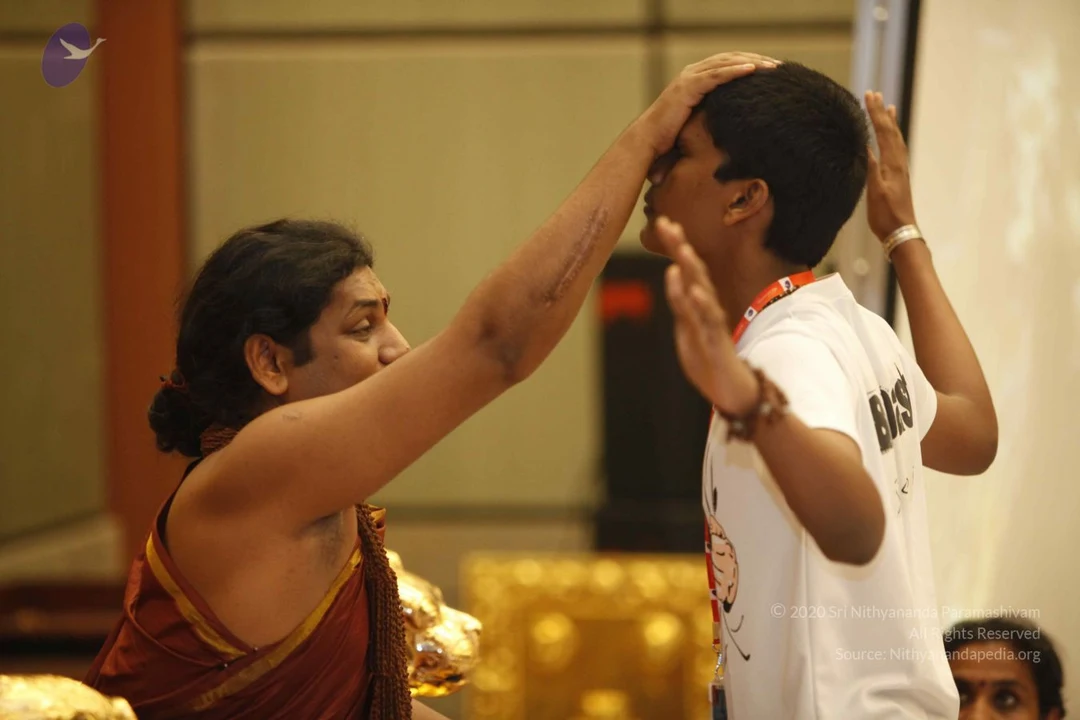
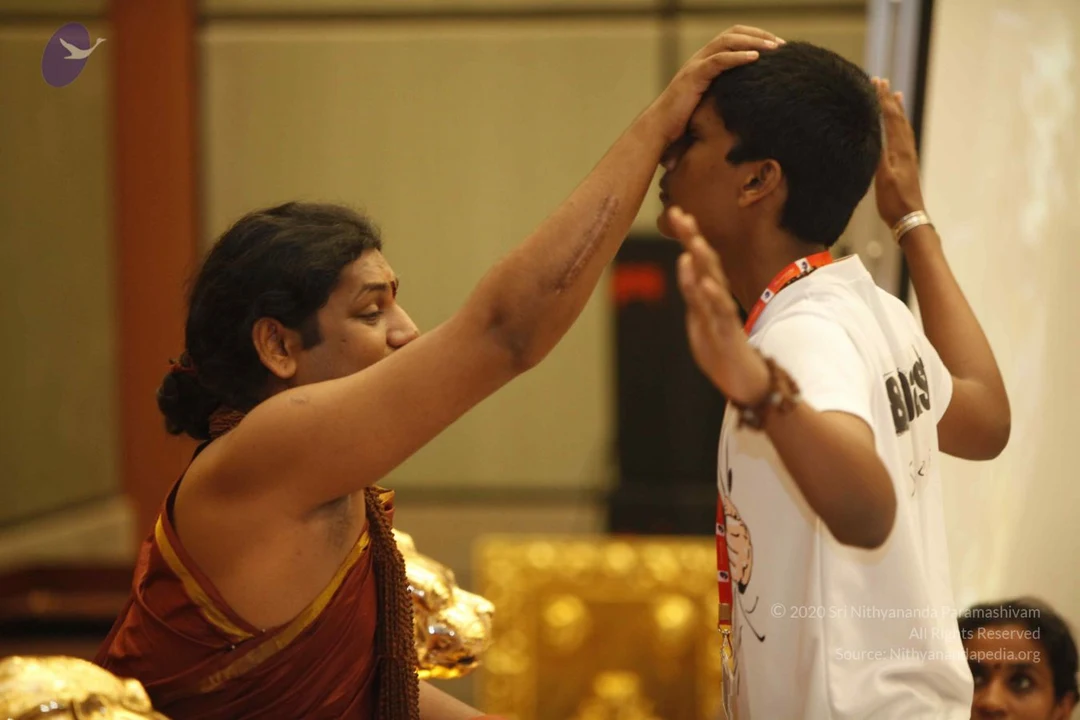
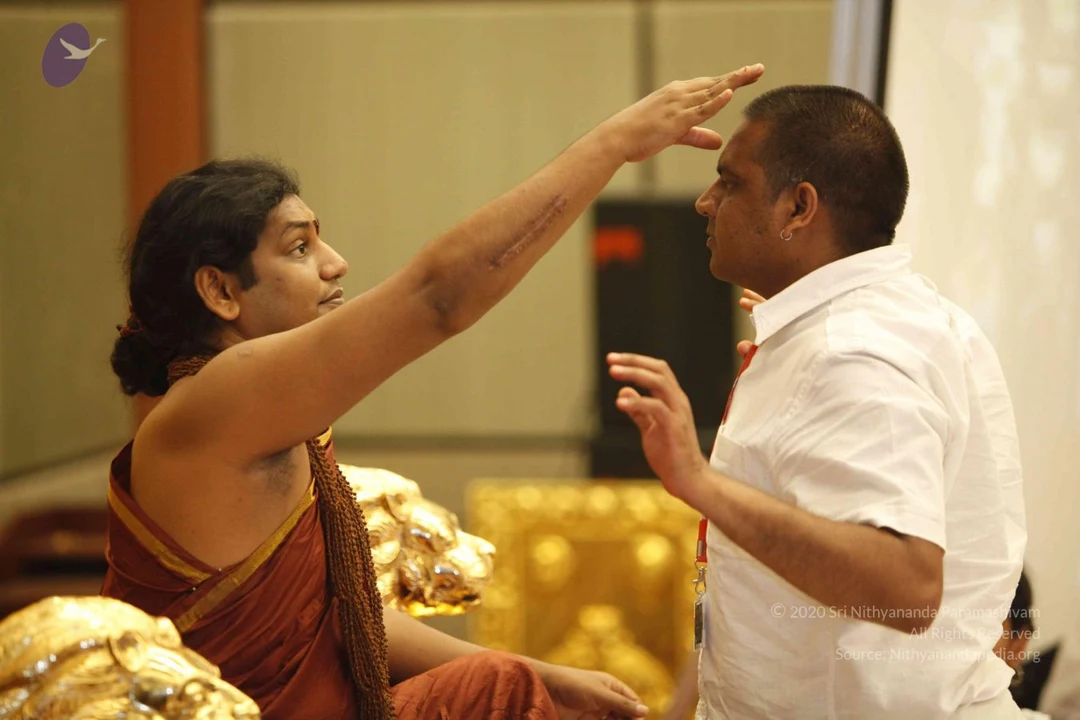
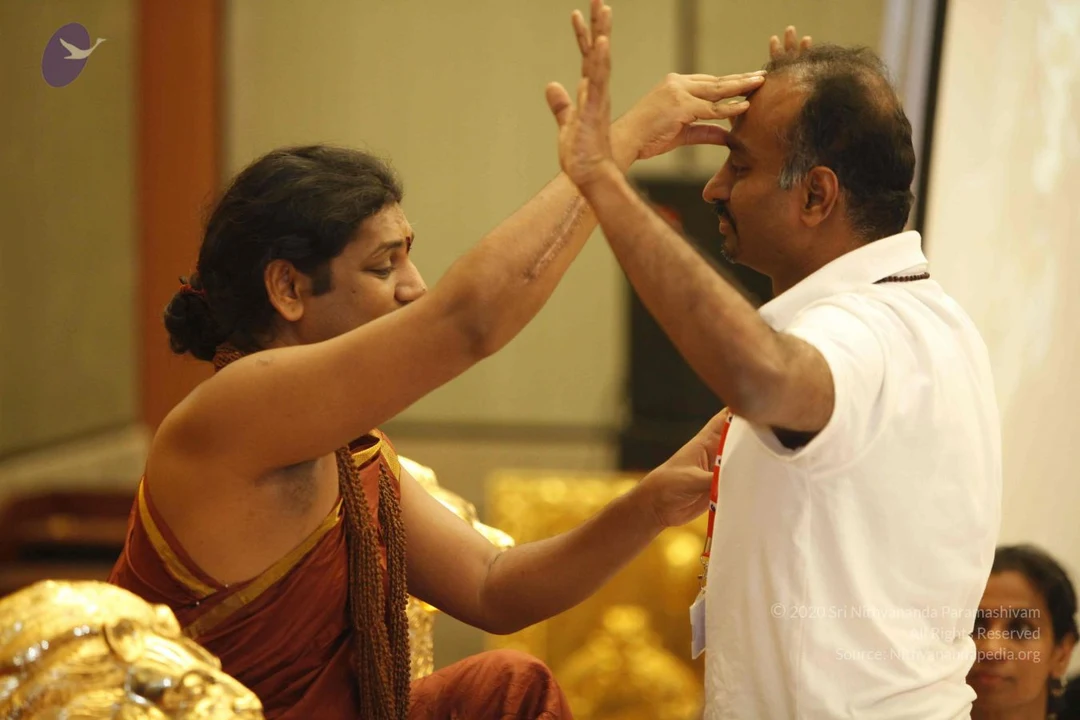
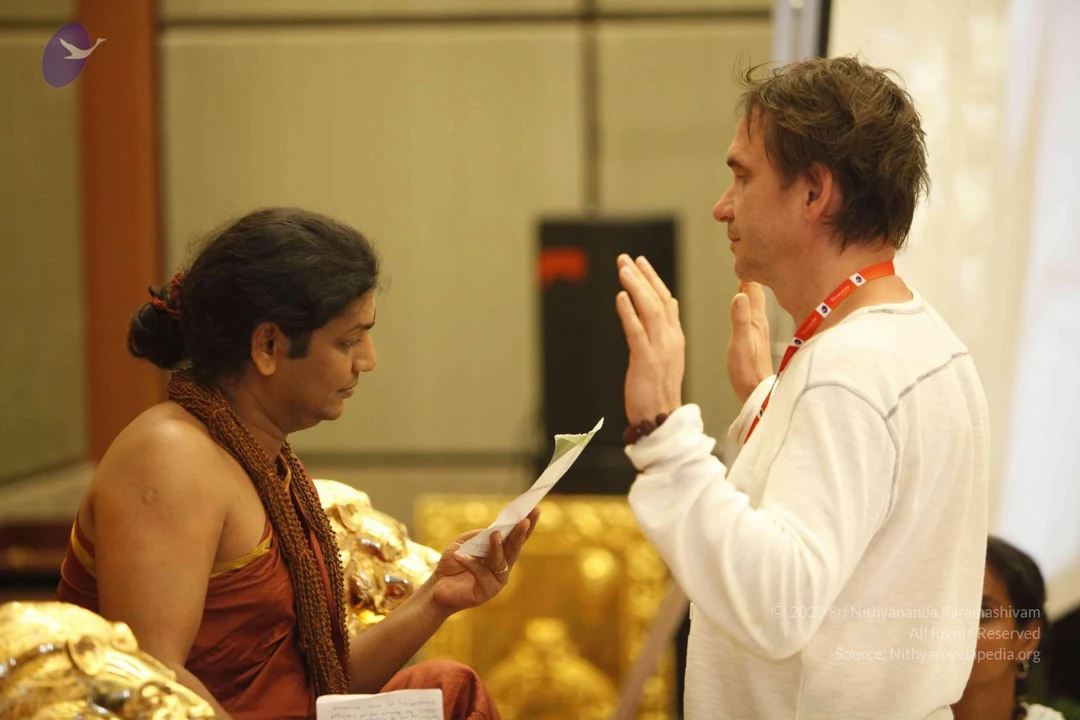
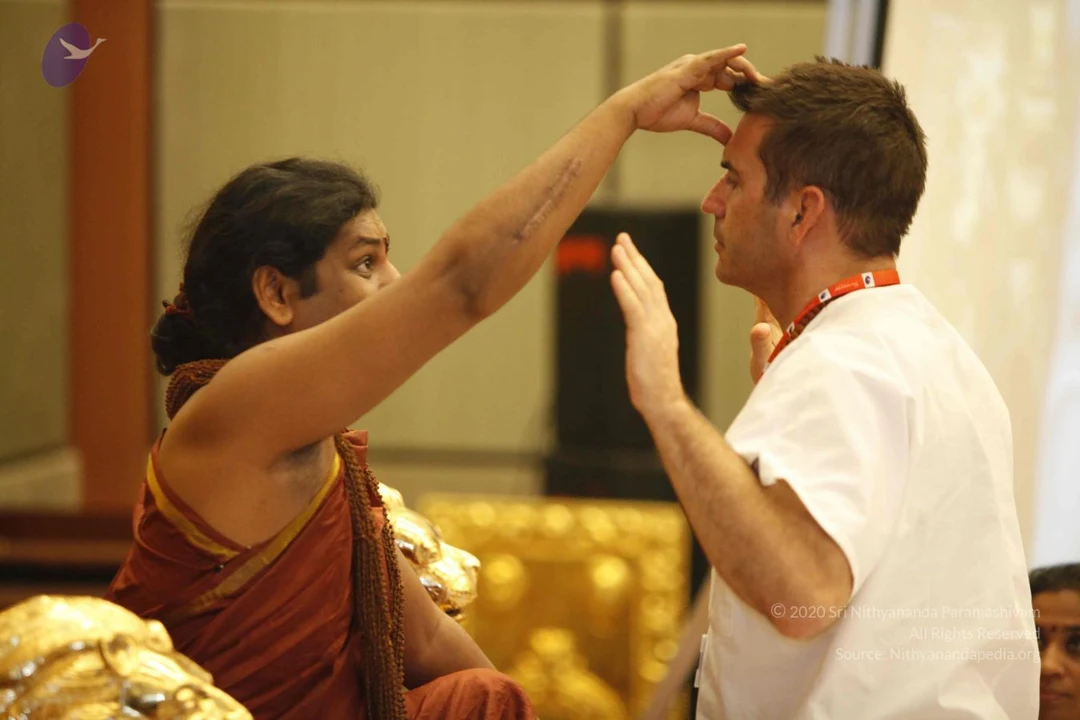
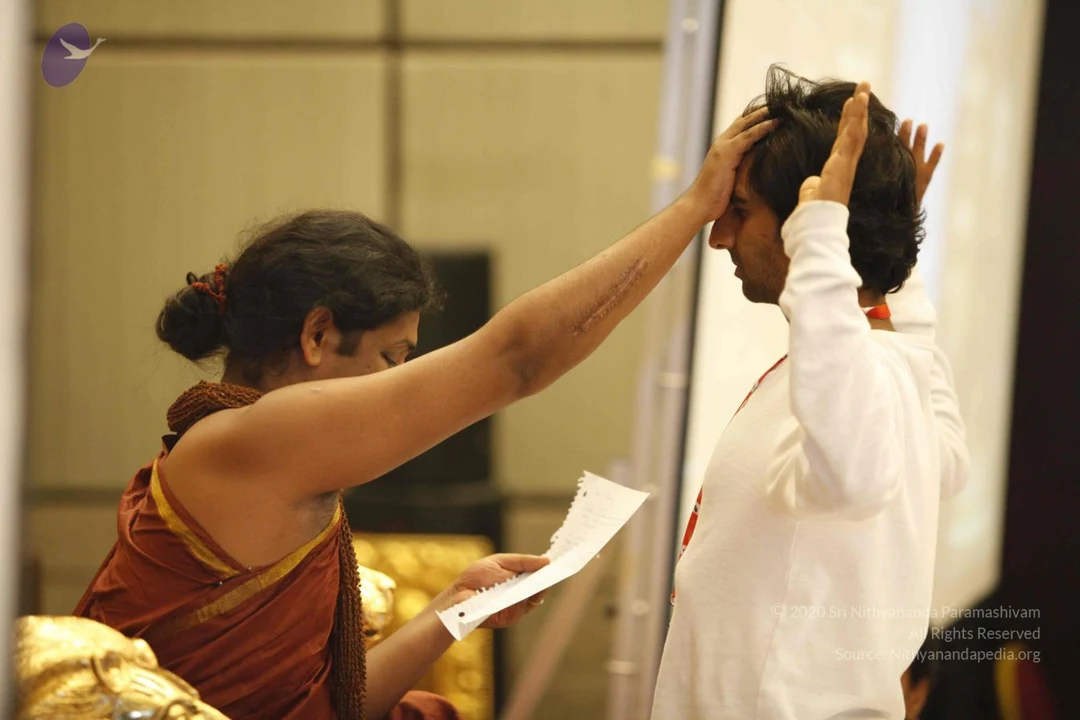
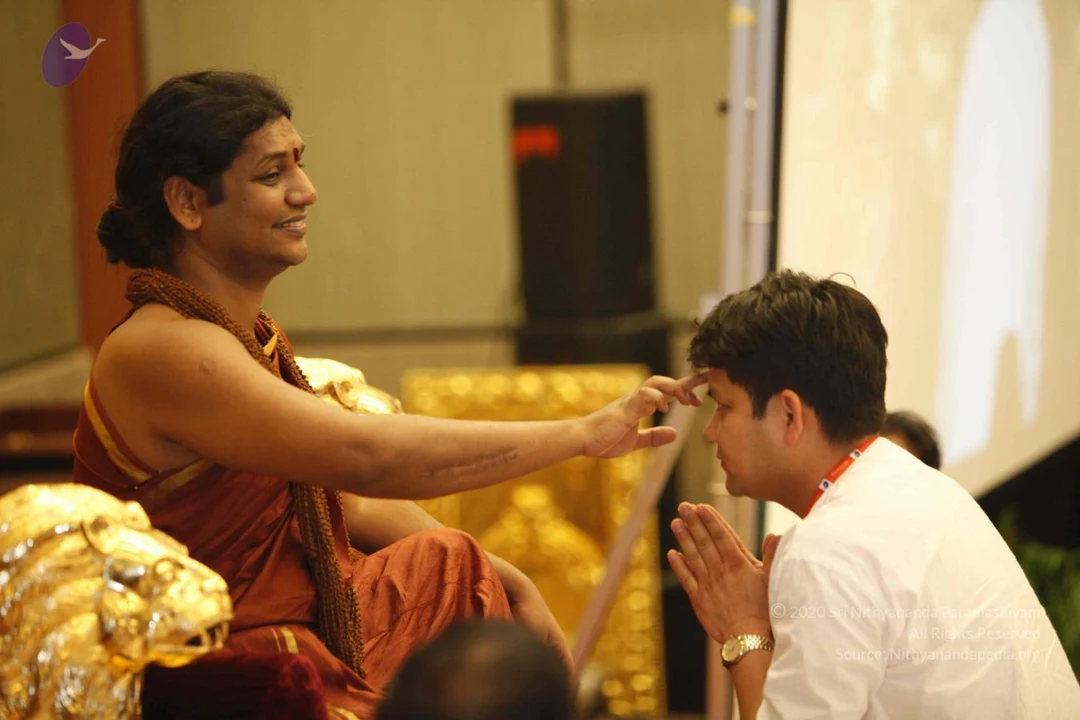
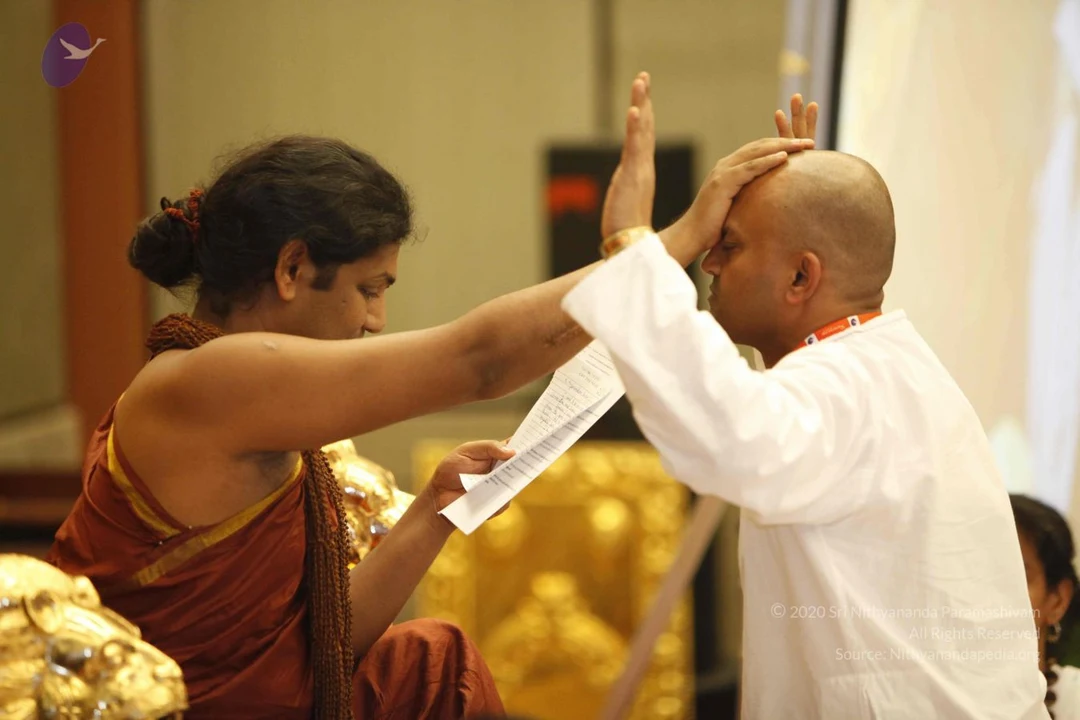
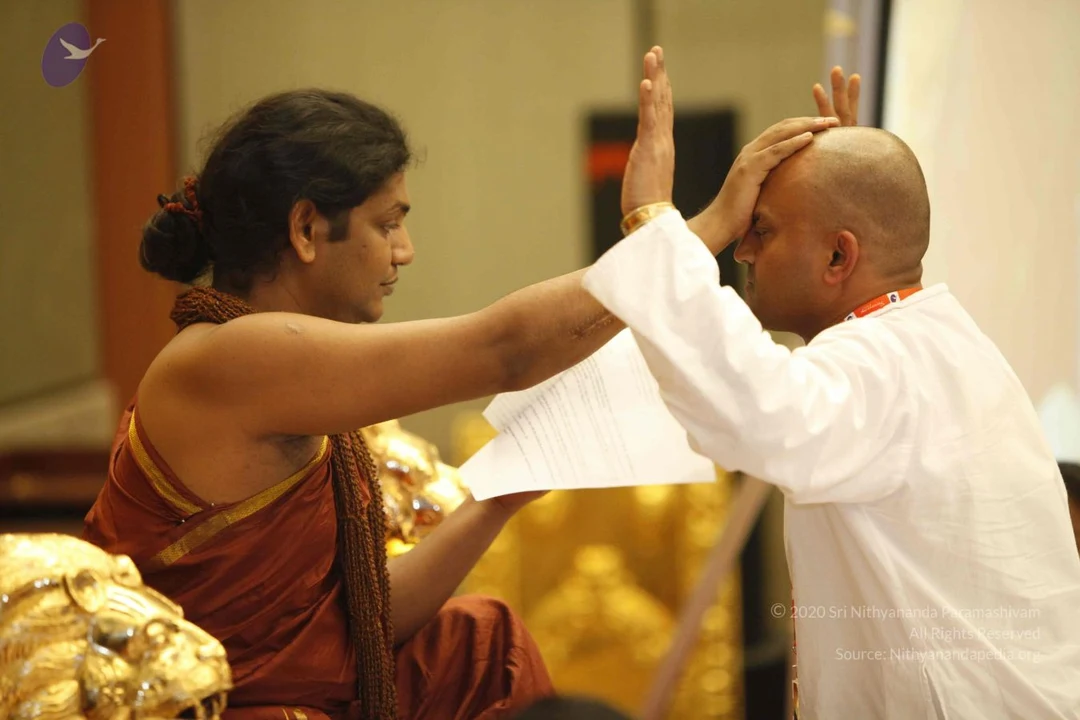
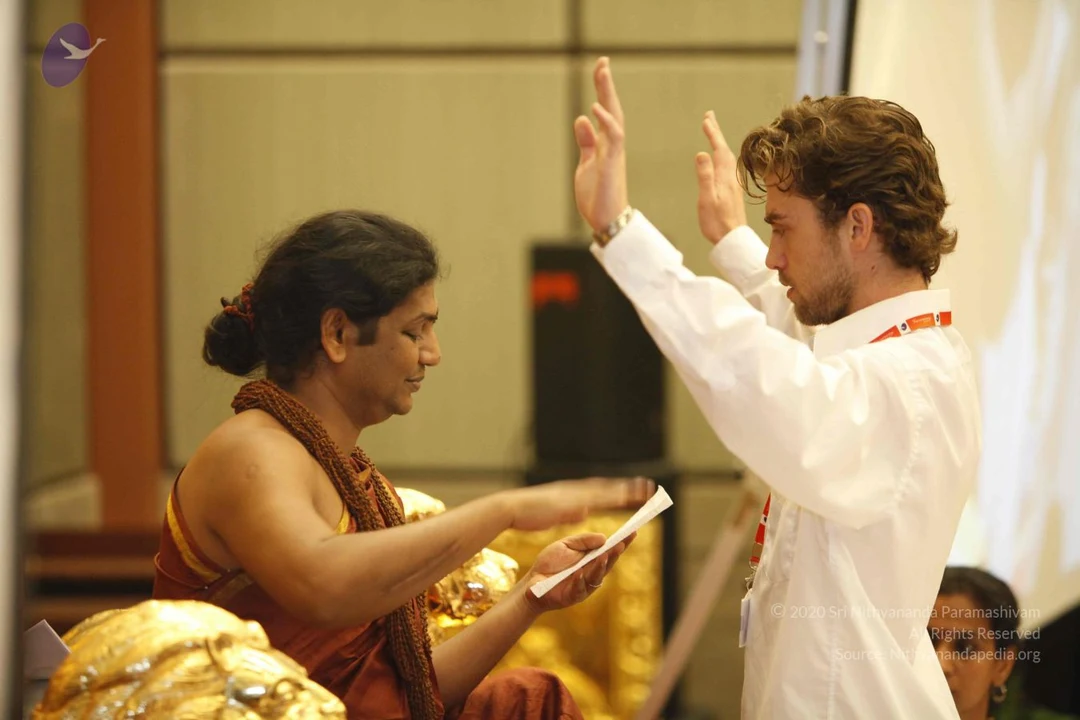
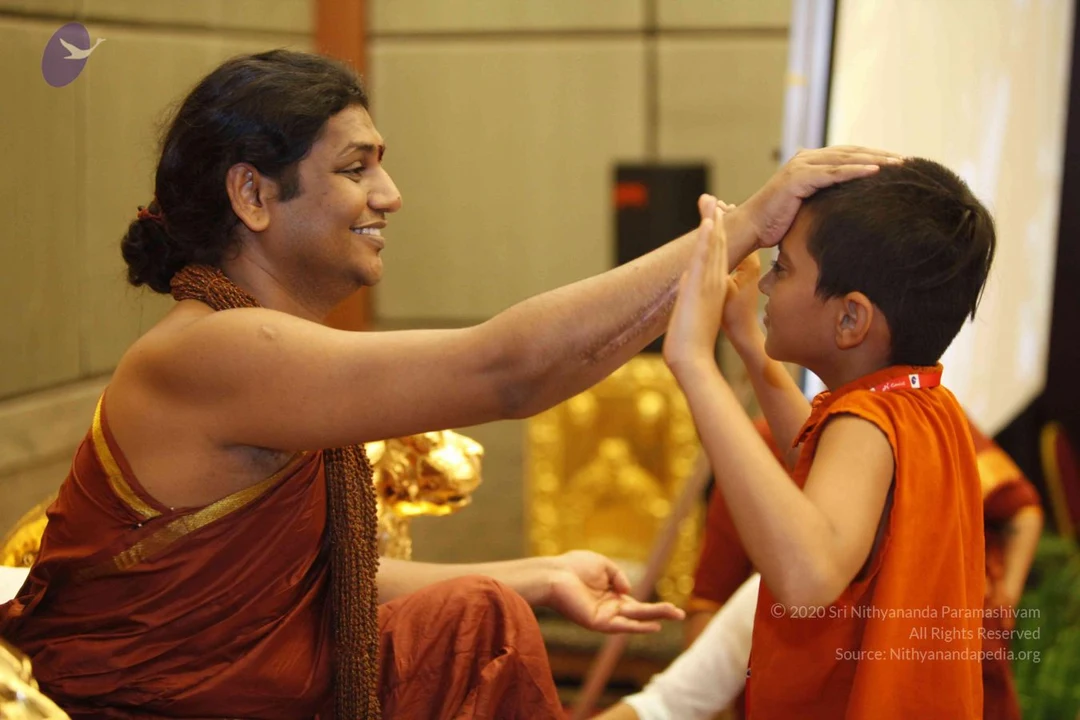
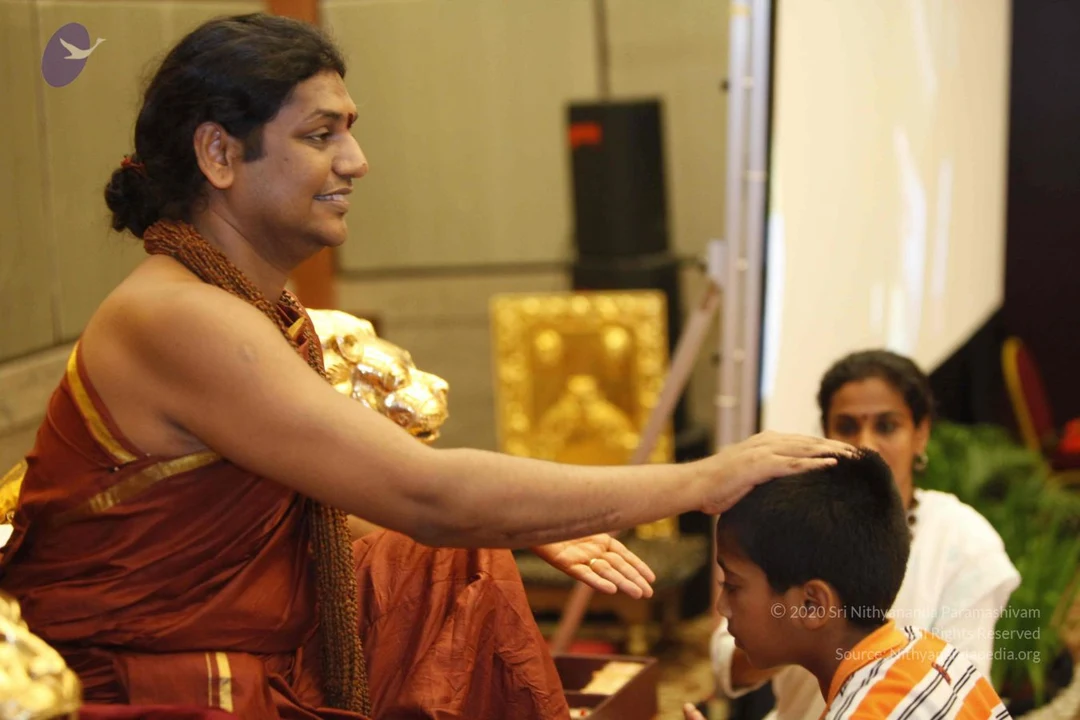
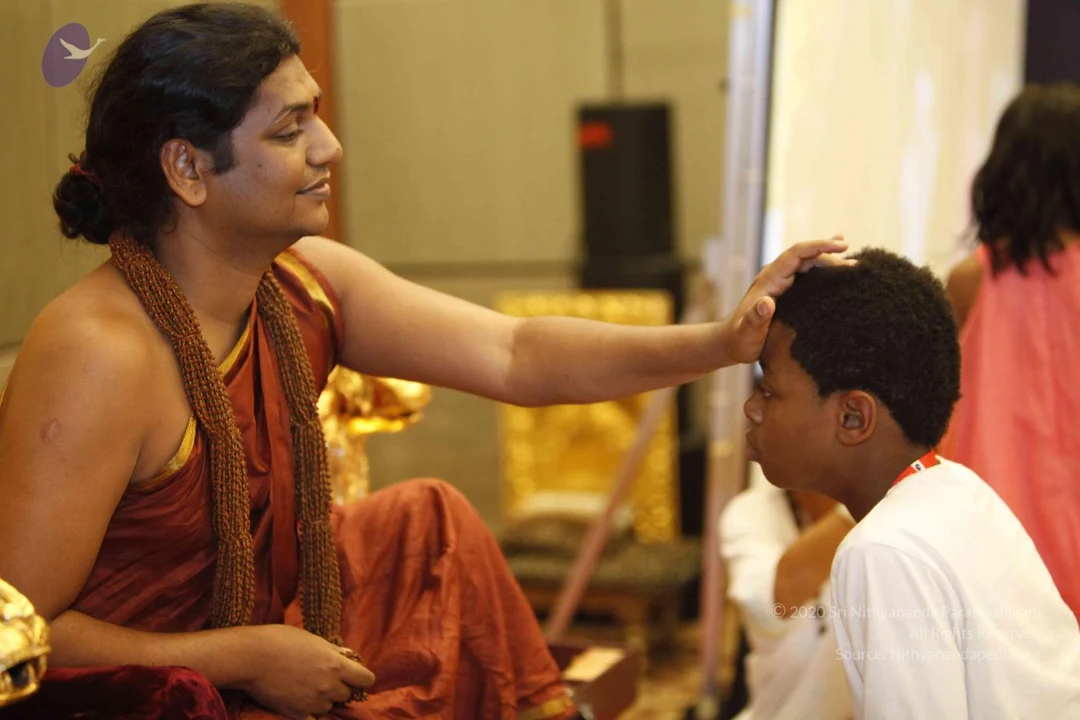
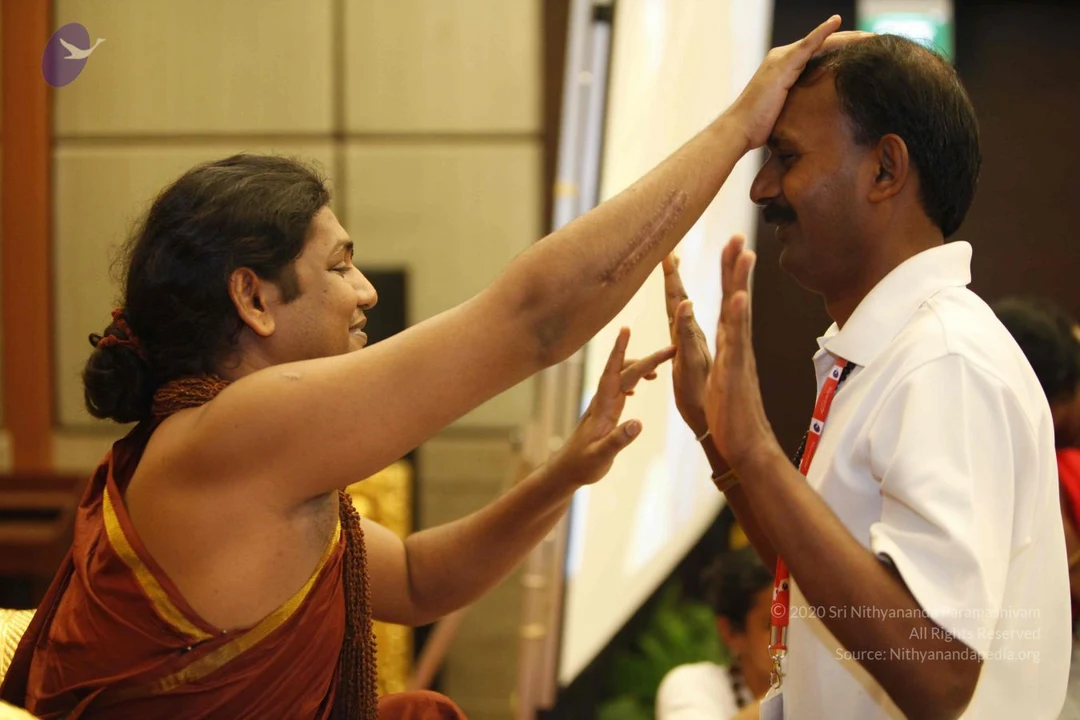
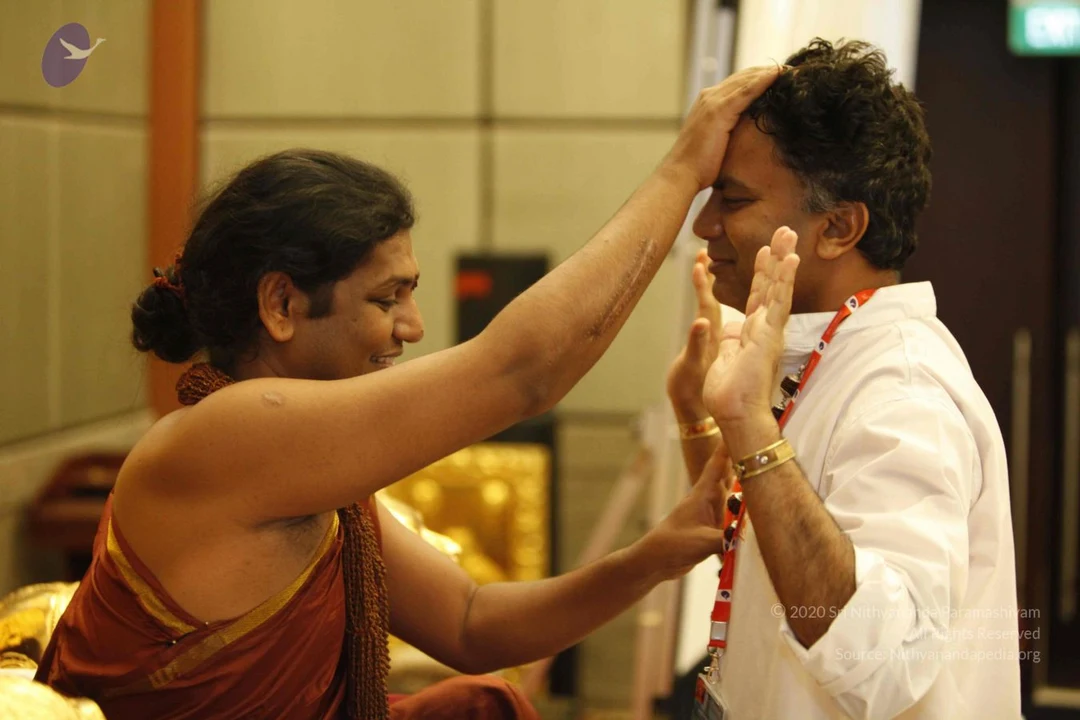
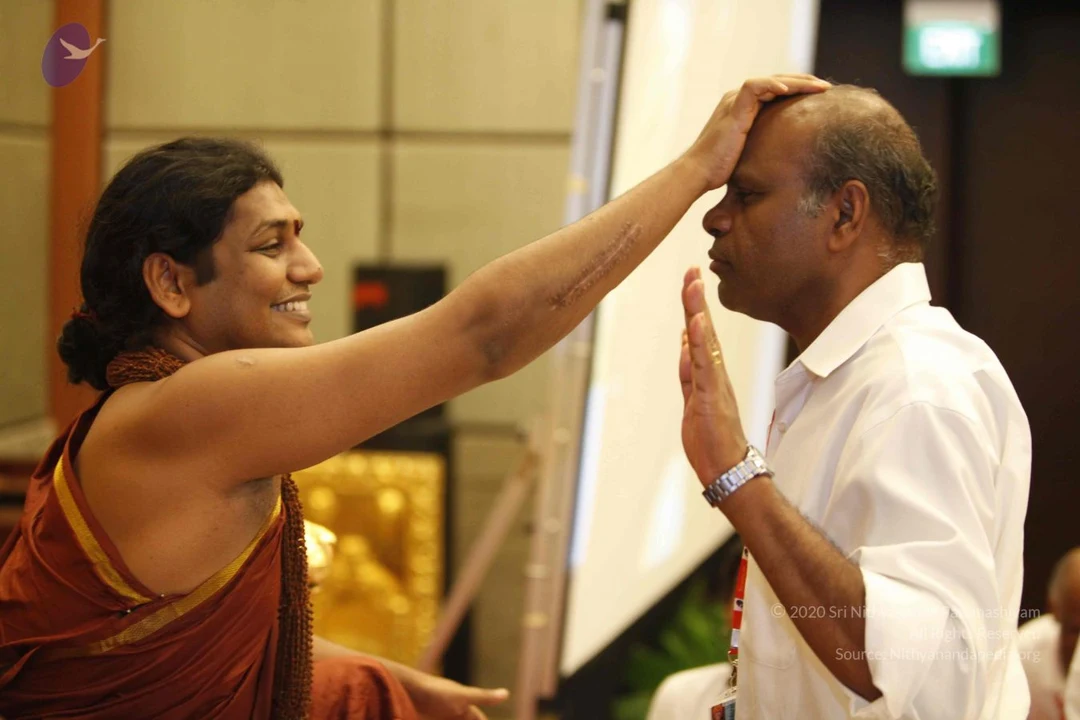
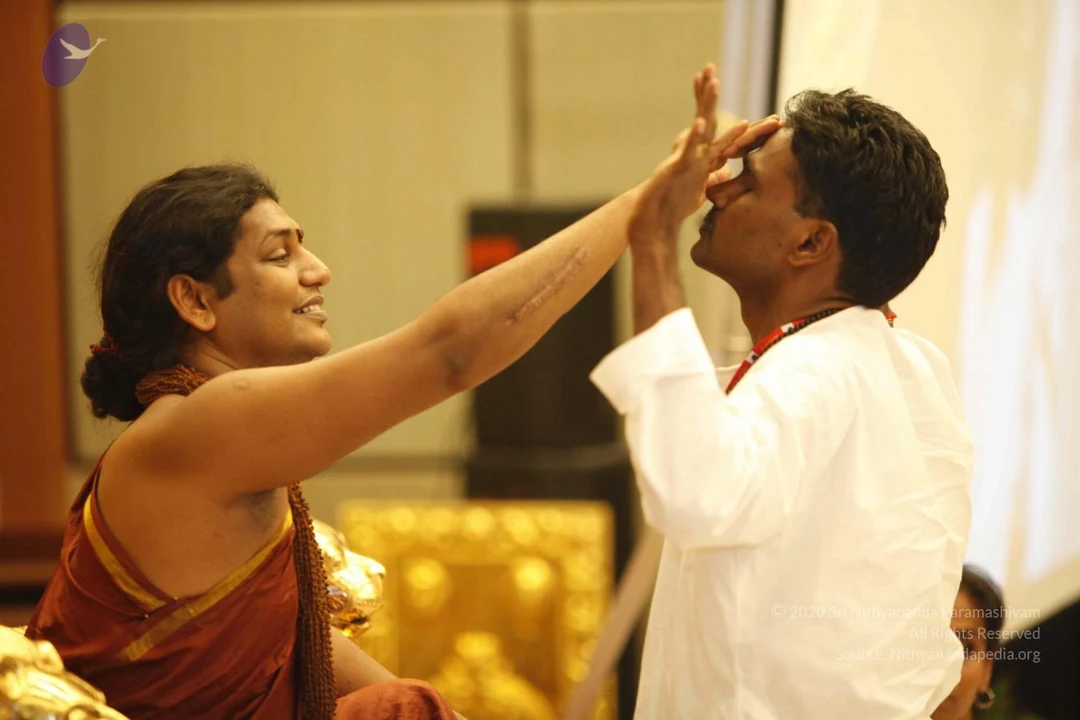
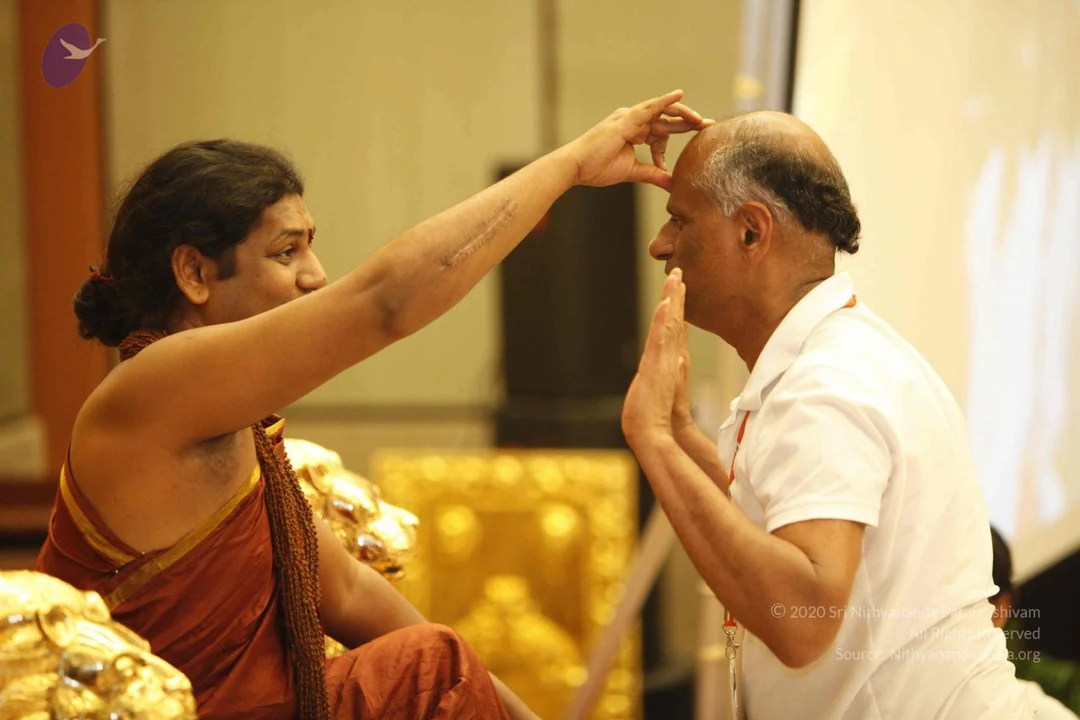
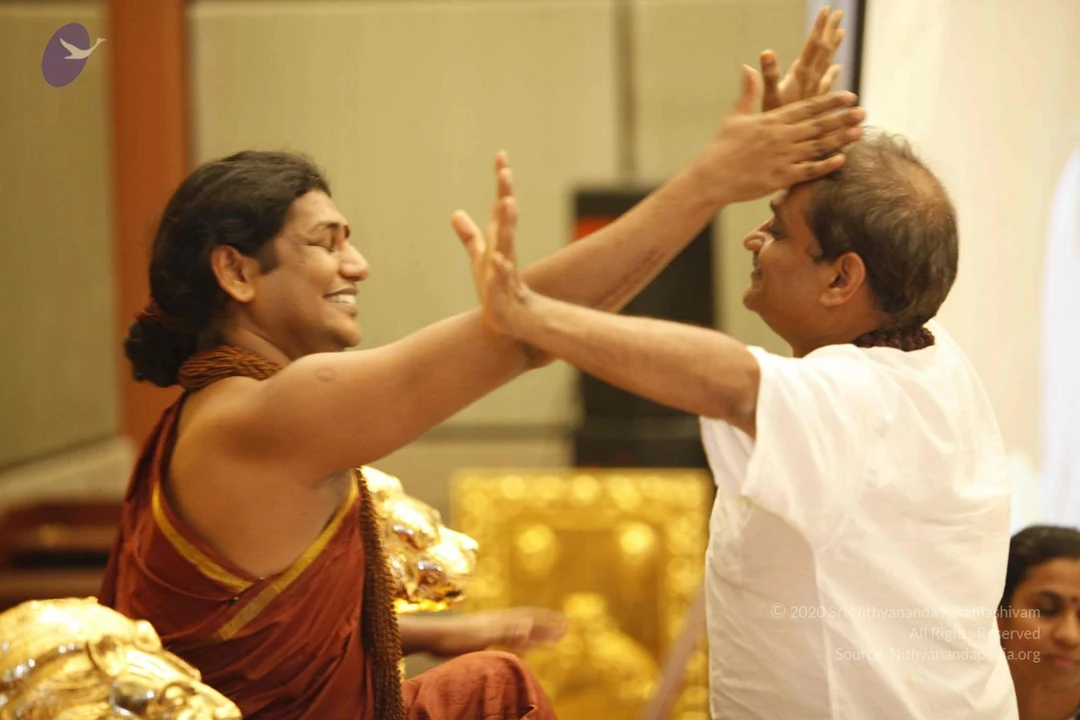
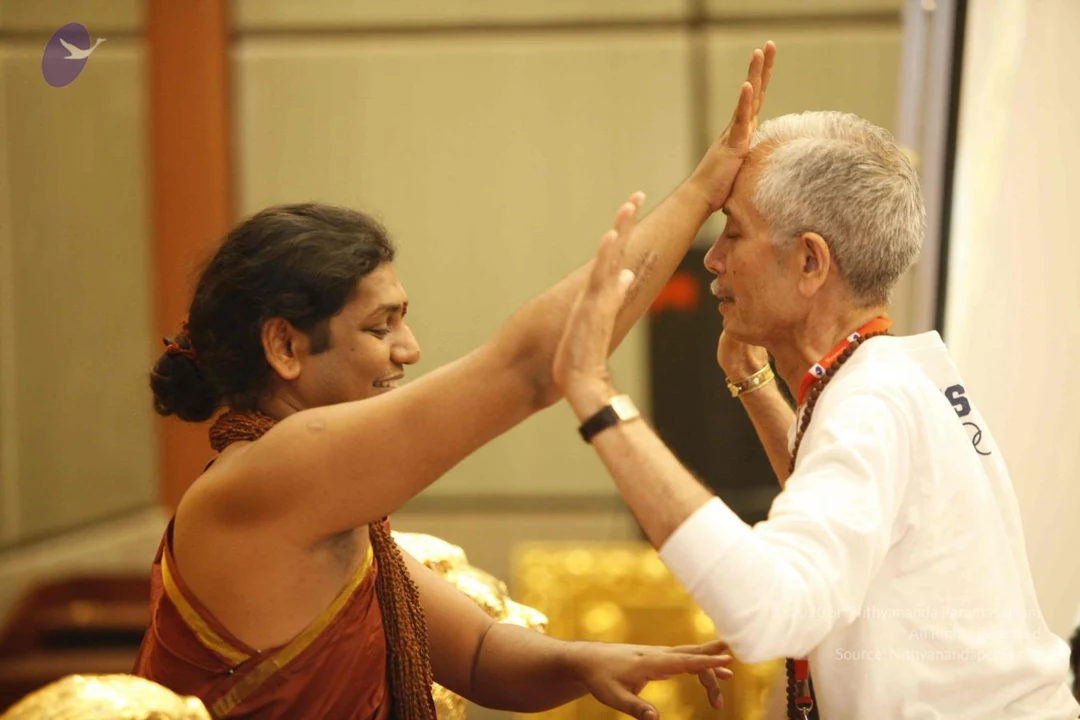
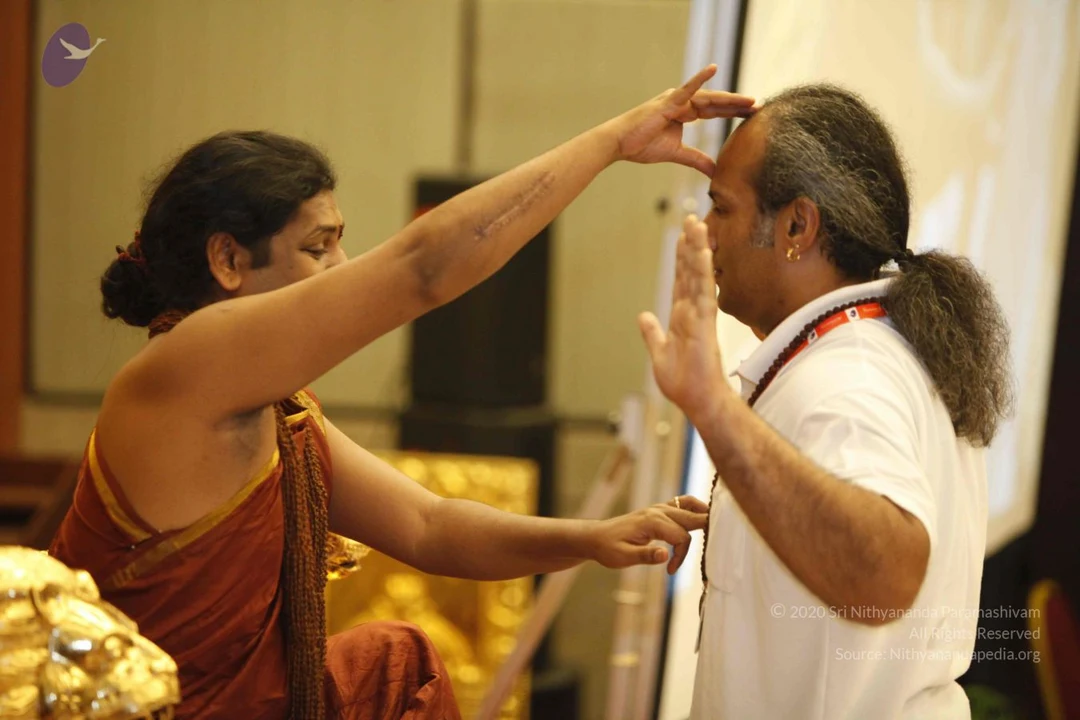
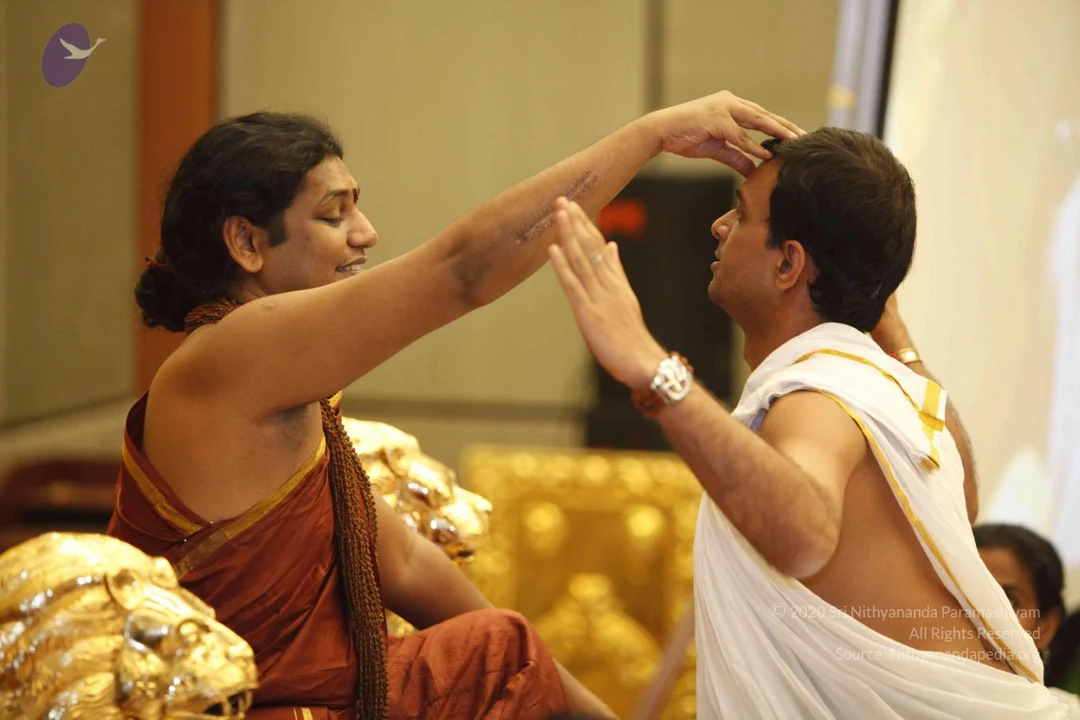
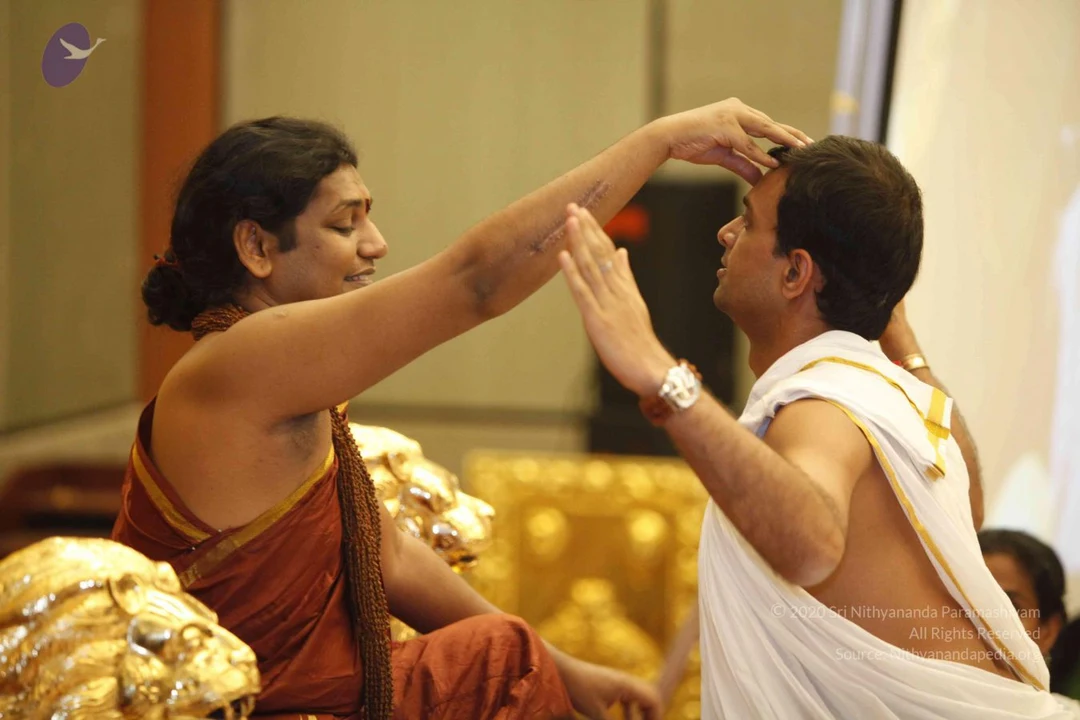
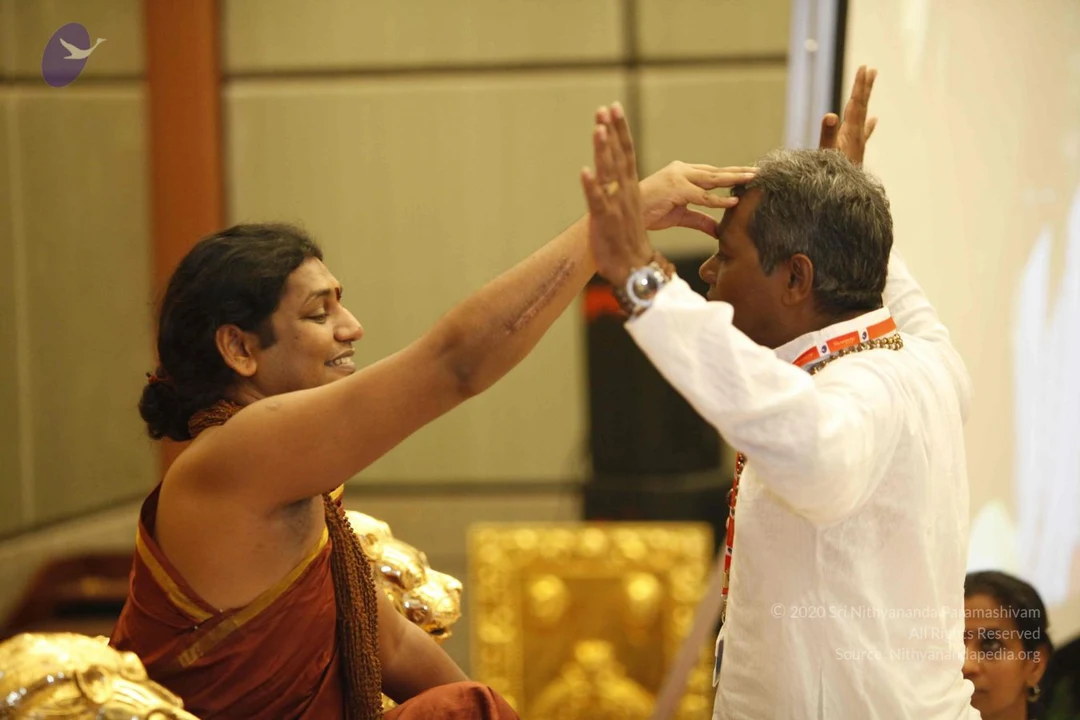
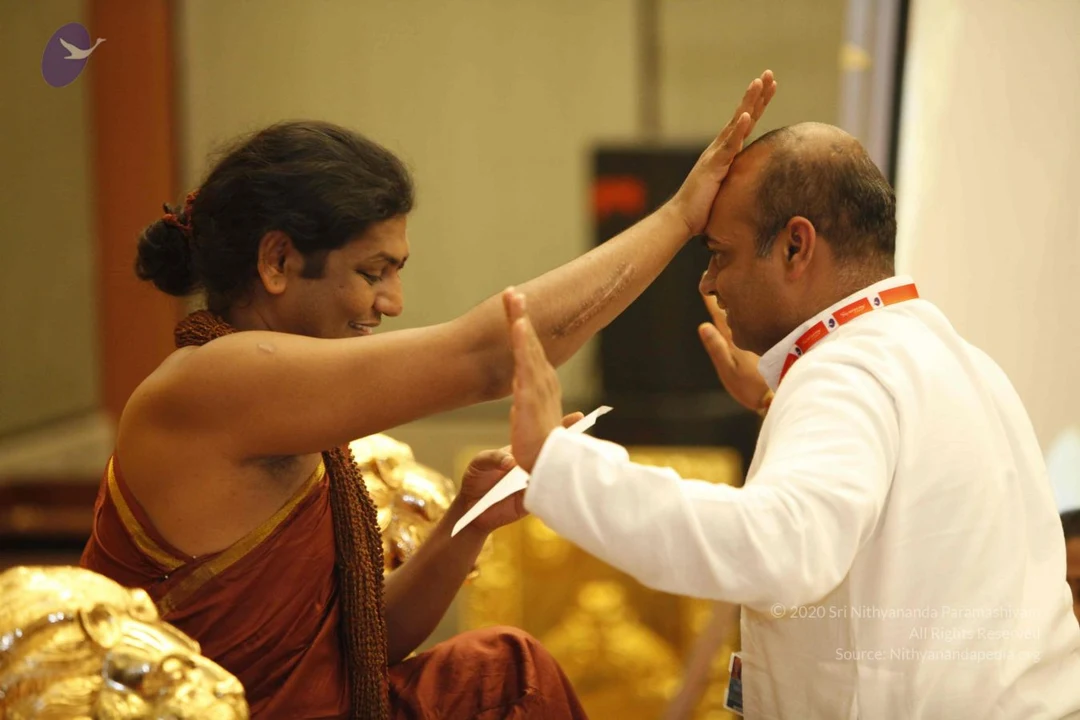
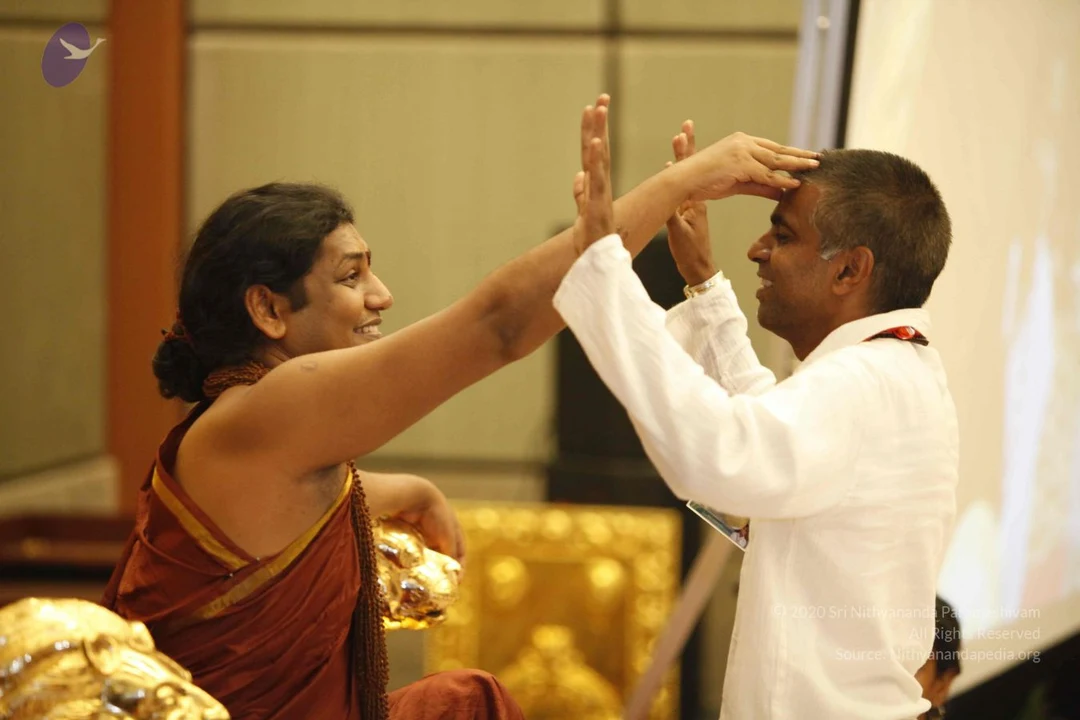
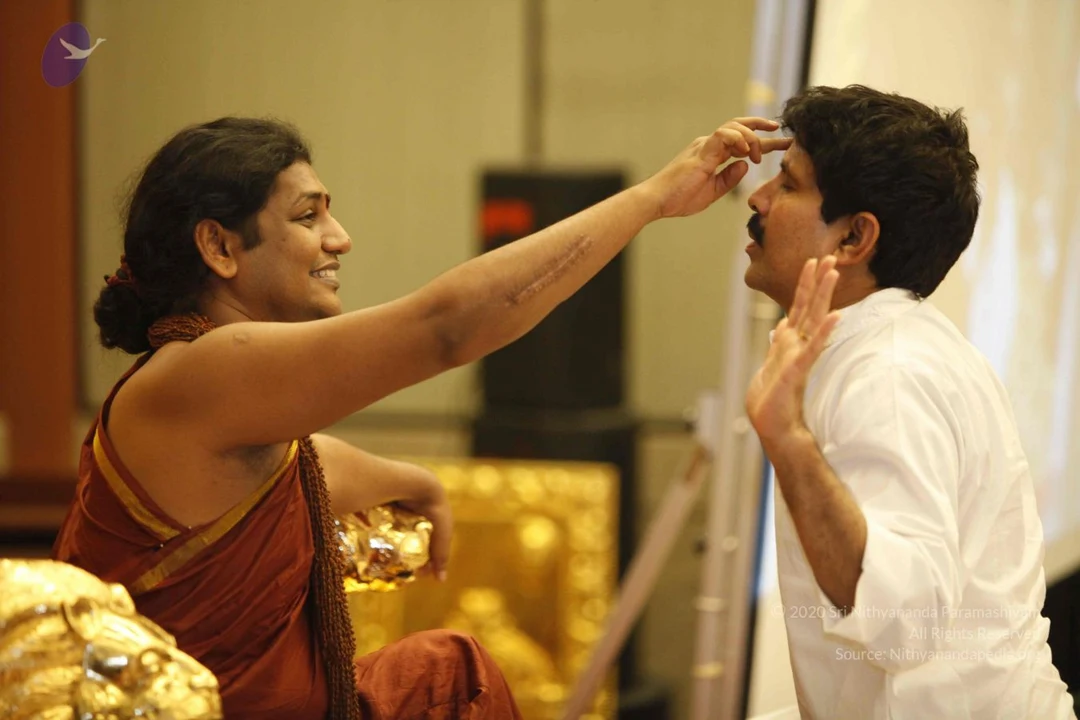
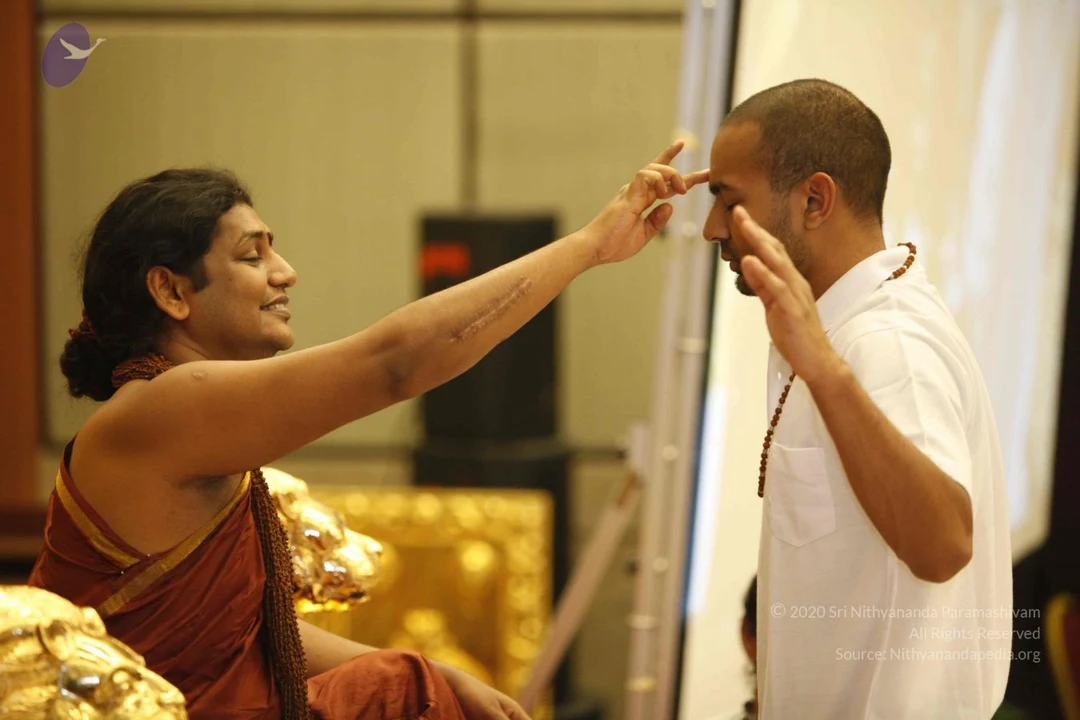
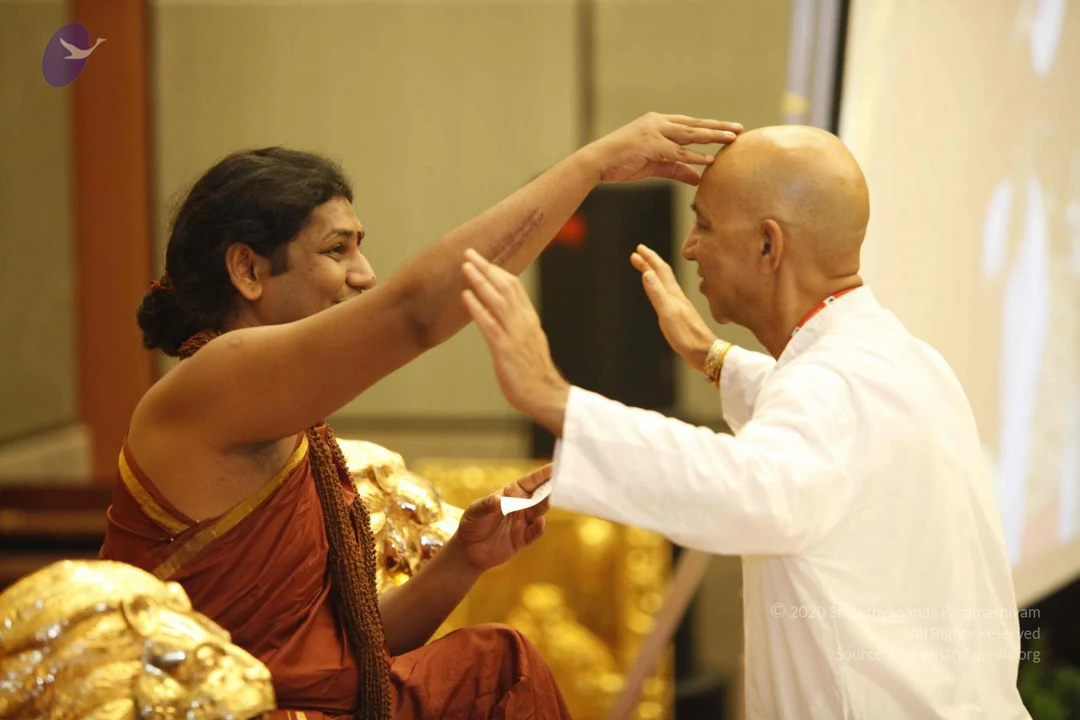
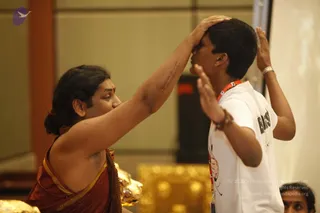
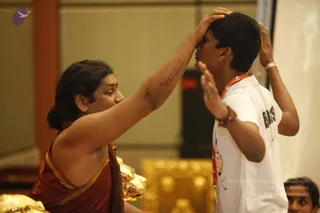
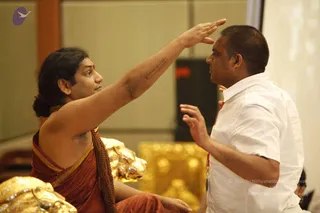
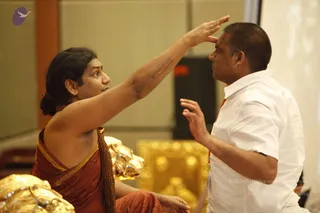
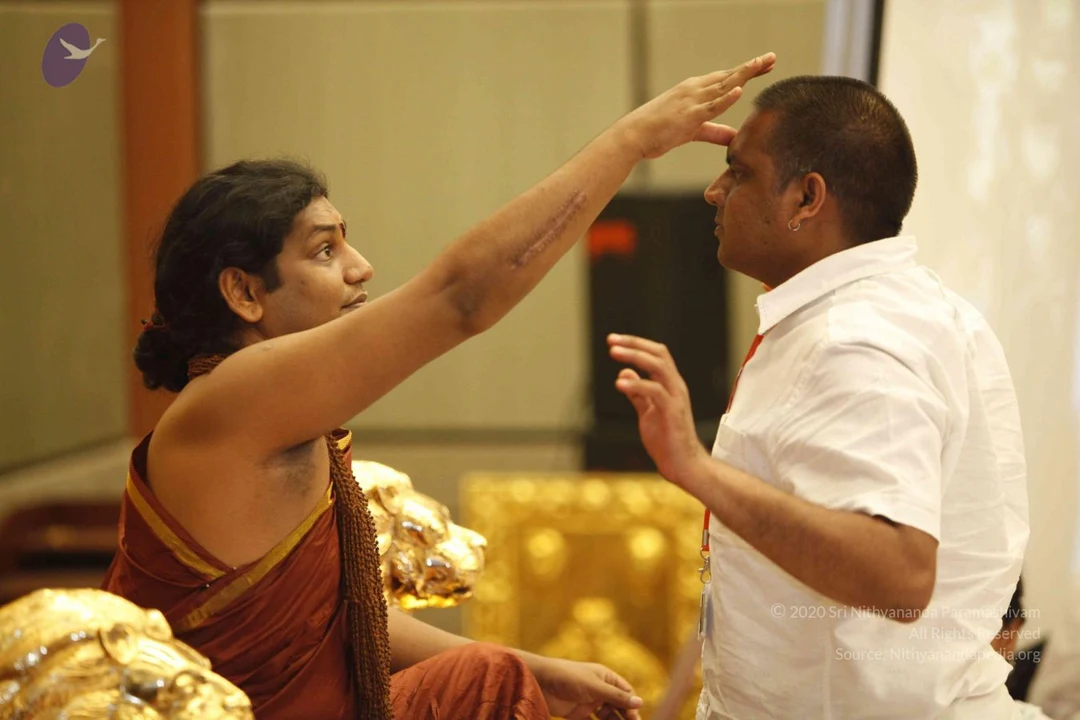
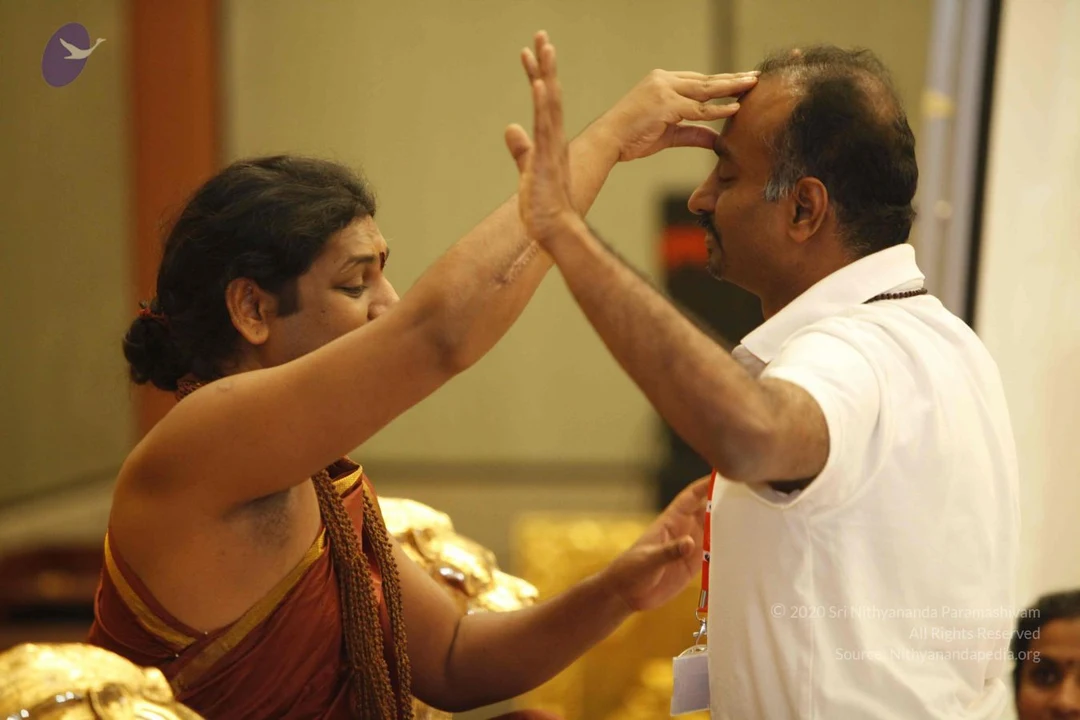
A man in a rust-orange and maroon draped robe sits cross-legged on an ornate gold throne carved with scrolls and a lion-faced crest, flanked by two golden lion statues on tiger-skin-covered bases. He wears a rudraksha mala over the shoulder, a red bindi, and a golden-hued wrap, with his hands resting in a mudra. Behind him, a backdrop shows a large photo of a smiling face at left and a temple with stone steps and greenery at right. a person: the figure wears saffron-orange robes, a long rudraksha mala and sits enthroned, matching distinctive ceremonial cues.A man in a rust-orange silk dhoti and matching shawl with a gold border sits on an ornate golden throne carved with scrollwork and flanked by two gold lion sculptures. He wears a thick brown rudraksha mala around his neck and a red bindi on his forehead, with one hand resting on the armrest. Behind him, a backdrop shows a large printed portrait of a smiling man in orange at left and a photograph of a temple complex with a pond at right. The setting appears to be a stage or hall. a person: the seated man has short dark hair and a rudraksha mala with a rust-orange garment, and the page identifies this event as featuring him.A photograph of a bare-shouldered man in a maroon and gold-bordered cloth sitting on a floor, with his right hand pressed on the forehead of a young boy in a white t-shirt and orange lanyard, the boy's palms pressed together in front of him in a gesture of receiving blessing. The man has long swept-back hair, a tilak on his forehead and a sacred cord visible across his bare back. A golden ceremonial object lies at the lower left and a dark banner stands at the right. The setting is a hall with beige panels, and a partially visible man is at the lower right edge. Per the page, the event was a devotional gathering with a padukapuja, satsang and blessing.A photograph of a seated man in a maroon-and-gold dhoti-style garment, bare-shouldered with a long braid, placing his right palm on the forehead of a young boy in a white T-shirt with a red lanyard. The boy has his hands raised in a palm-forward gesture. Behind them a gold-coloured throne or seat and a pale wall are visible, with a partly visible person at the lower right edge.Photograph of an indoor satsang setting. A man with long dark hair tied back and a long braided rope of hair, wearing a rust-red wrap with gold trim, sits and raises his right arm toward a man in a short-sleeved white shirt and a red lanyard. The seated man's hand is extended toward the other's forehead as if giving blessing or transmission, while the white-shirted man faces him with palms open. Gold-coloured ornate chairs or cushions and a golden peetha-style seat are visible beside them, with a dark speaker and a pale wall behind. a person is the seated figure with long swept-back hair, rust-red clothing and gold ornaments, presented in a teaching role.A seated man in a rust-red sannyasi wrap, with a bare upper body and a long dark braid, raises his right arm and touches the forehead of a short-haired man in a white collared shirt with a lanyard. The receiving man bows his head forward with his hands lifted. Behind them is a golden ornate seat or throne and a golden item in the background, in a warmly lit hall with beige walls. The scene looks like a blessing or deeksha touch during a satsang gathering. a person: the seated figure has long swept-back hair and a rust-red sannyasi wrap with a bare upper body, consistent with a presentation of a distinctive guru appearance, and is seated on a golden throne in a blessing role.

Paduka-Puja

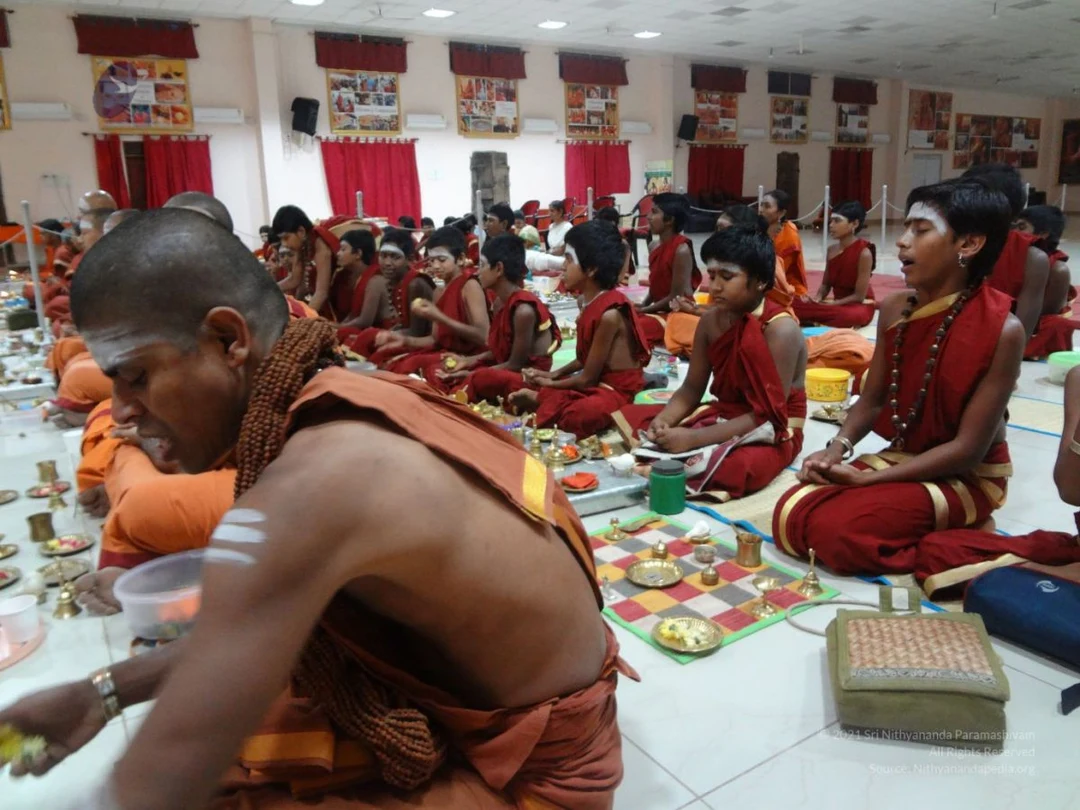
34 photosSource gallery
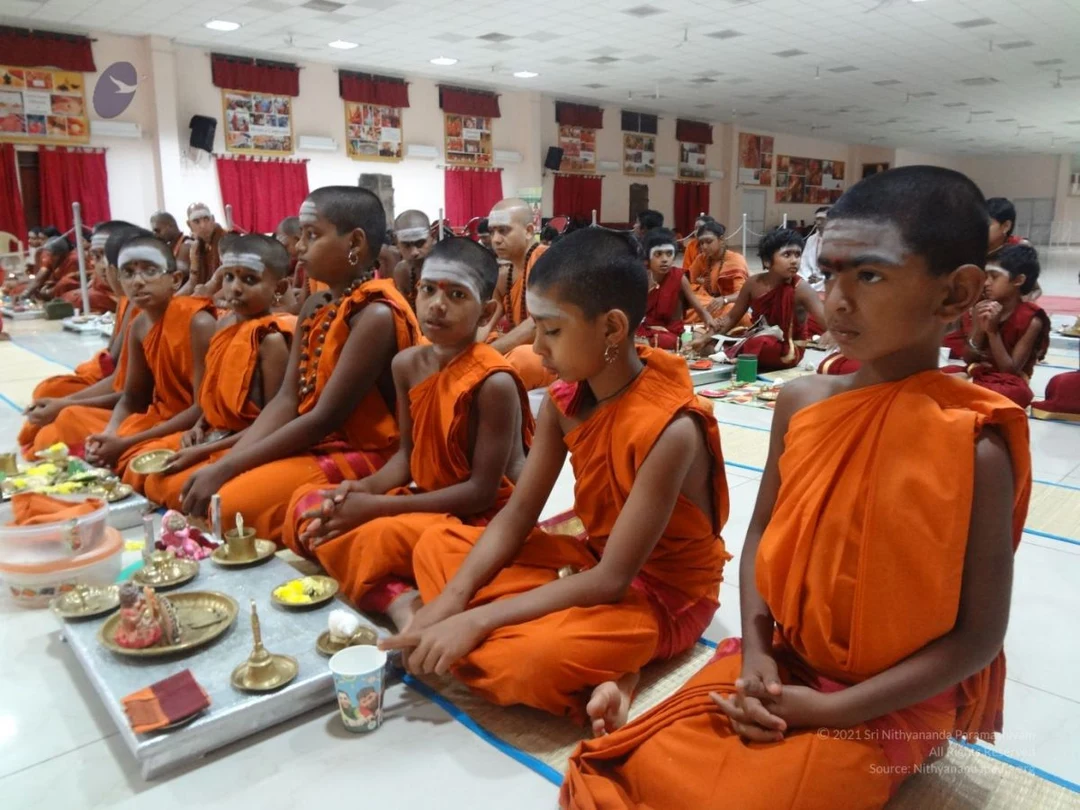
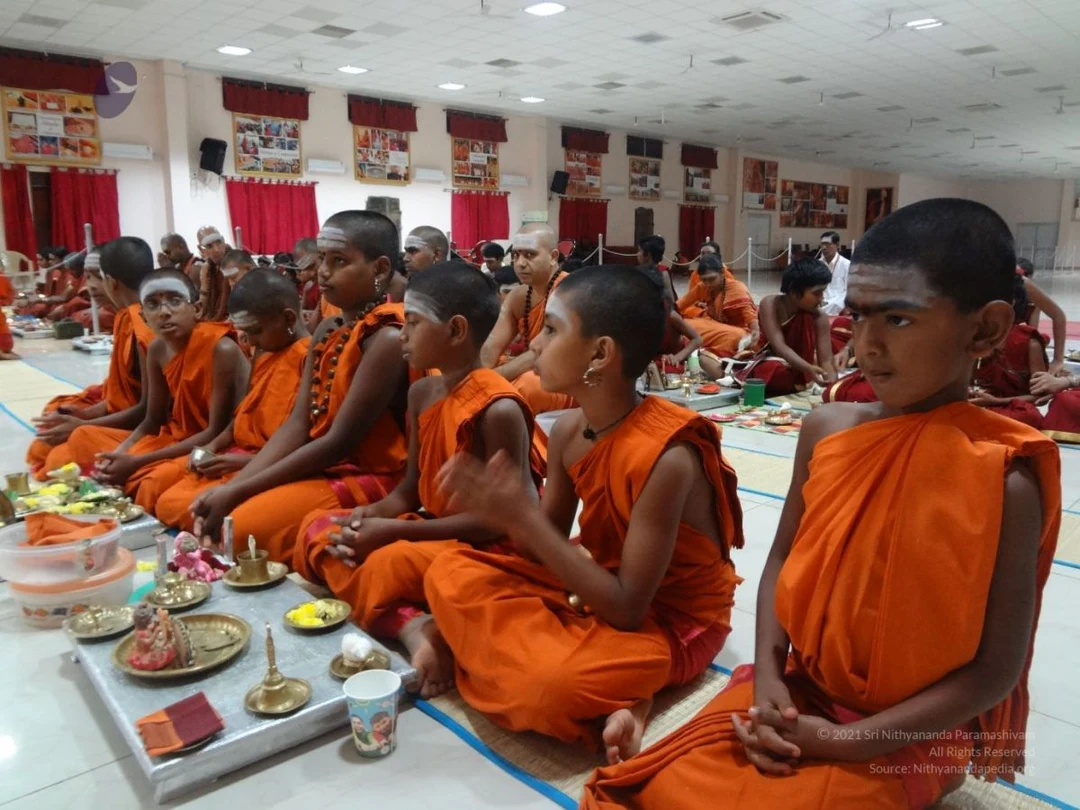
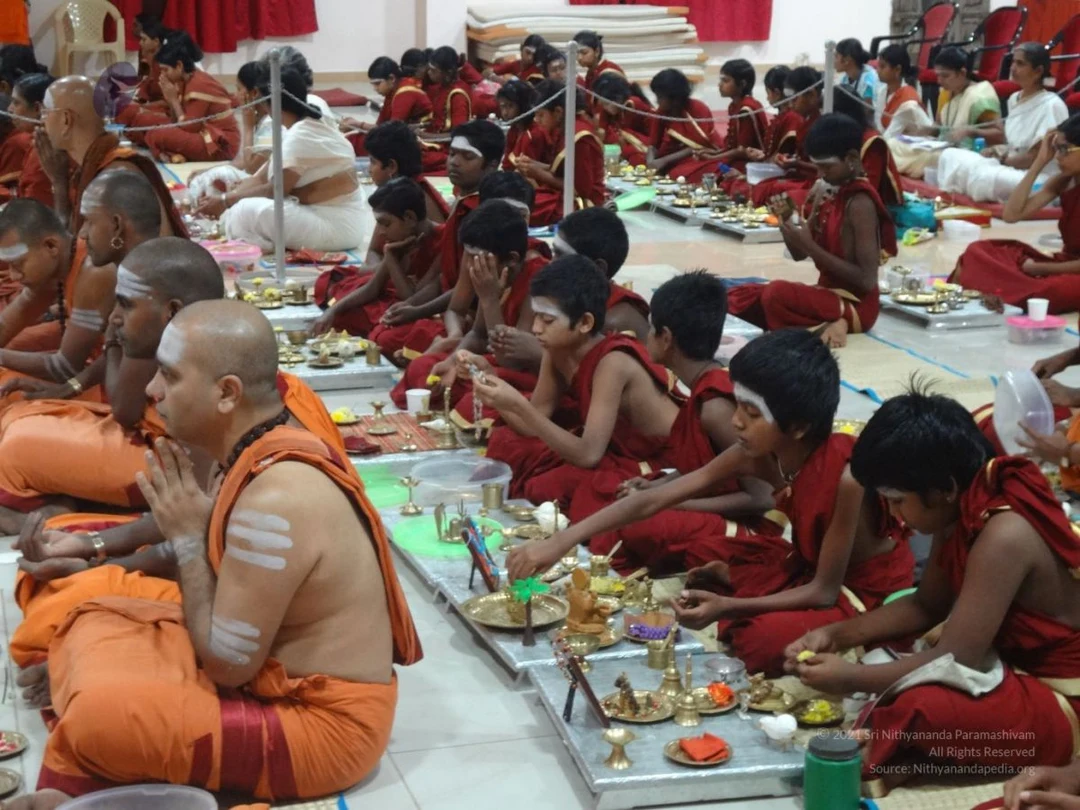
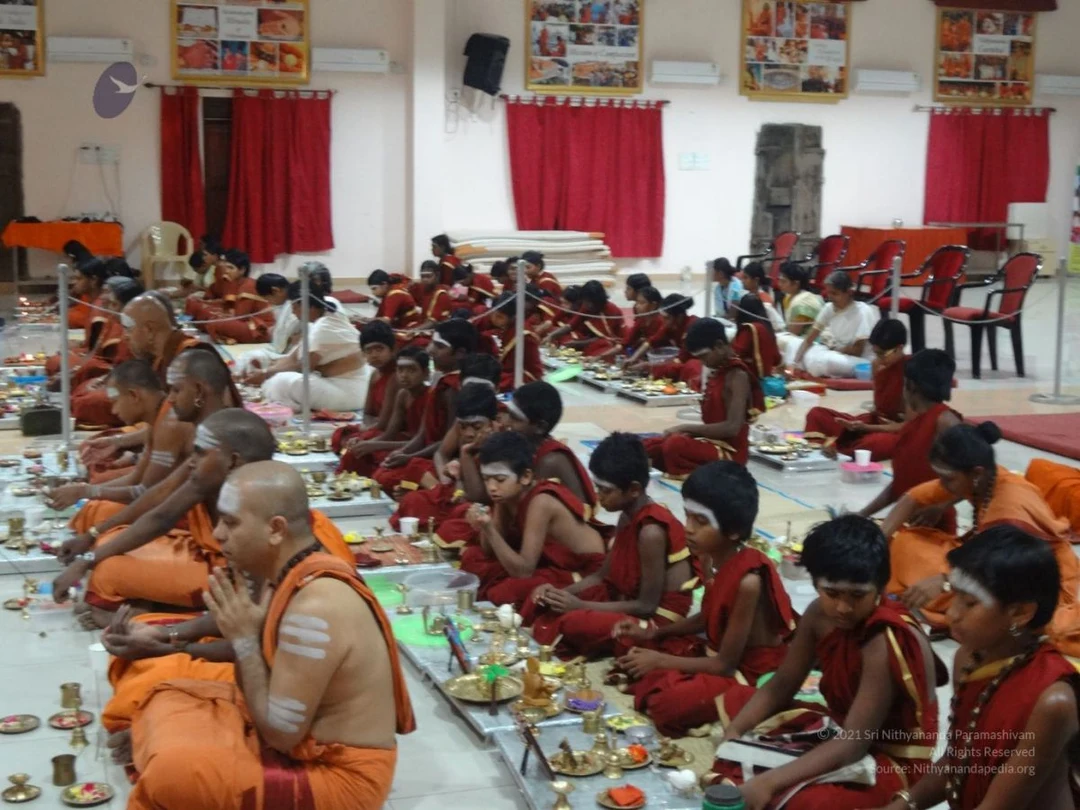
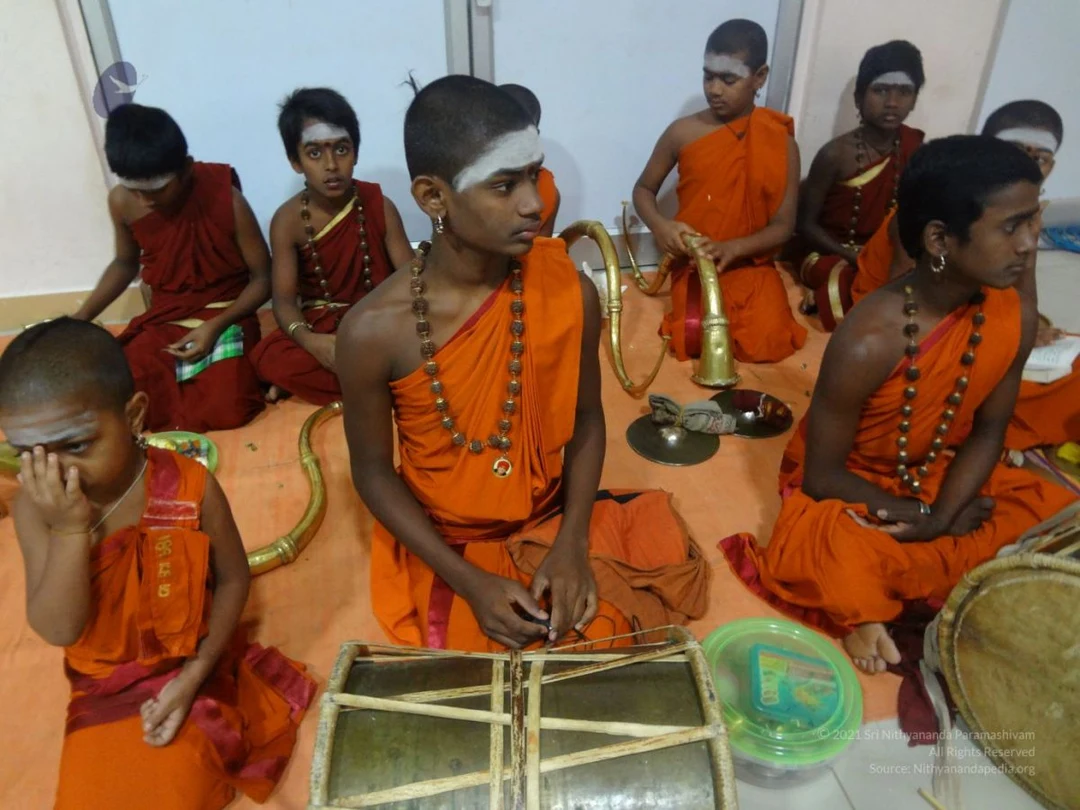
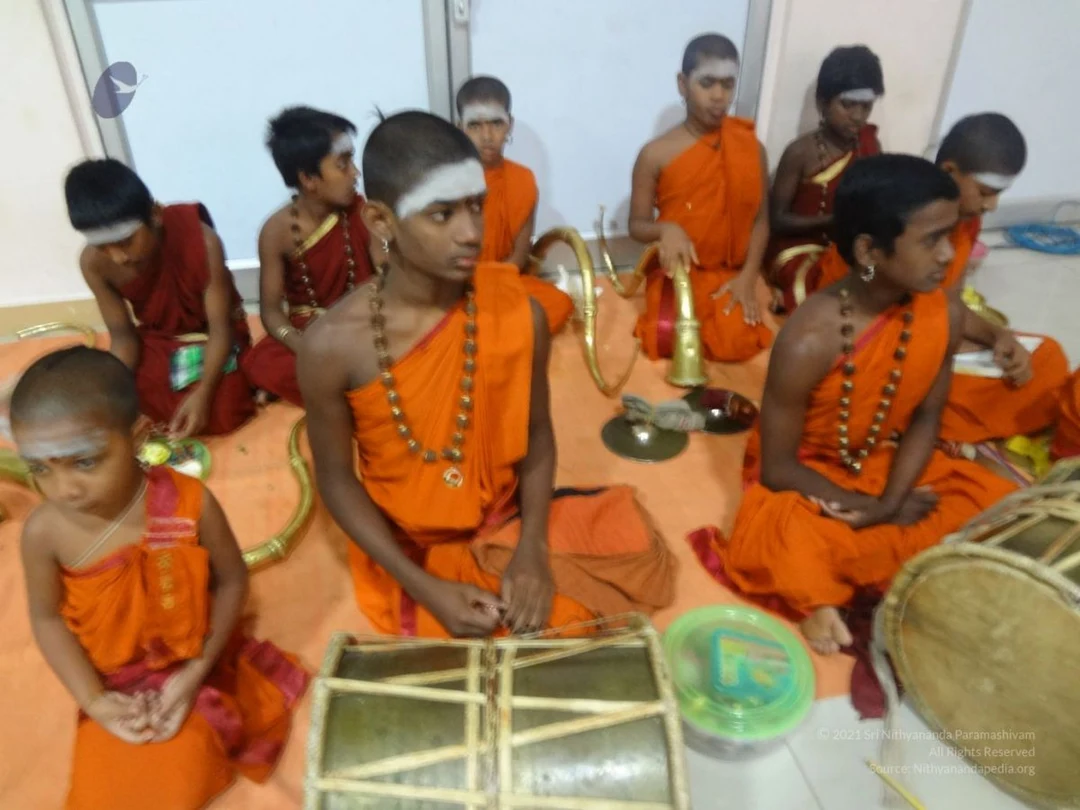
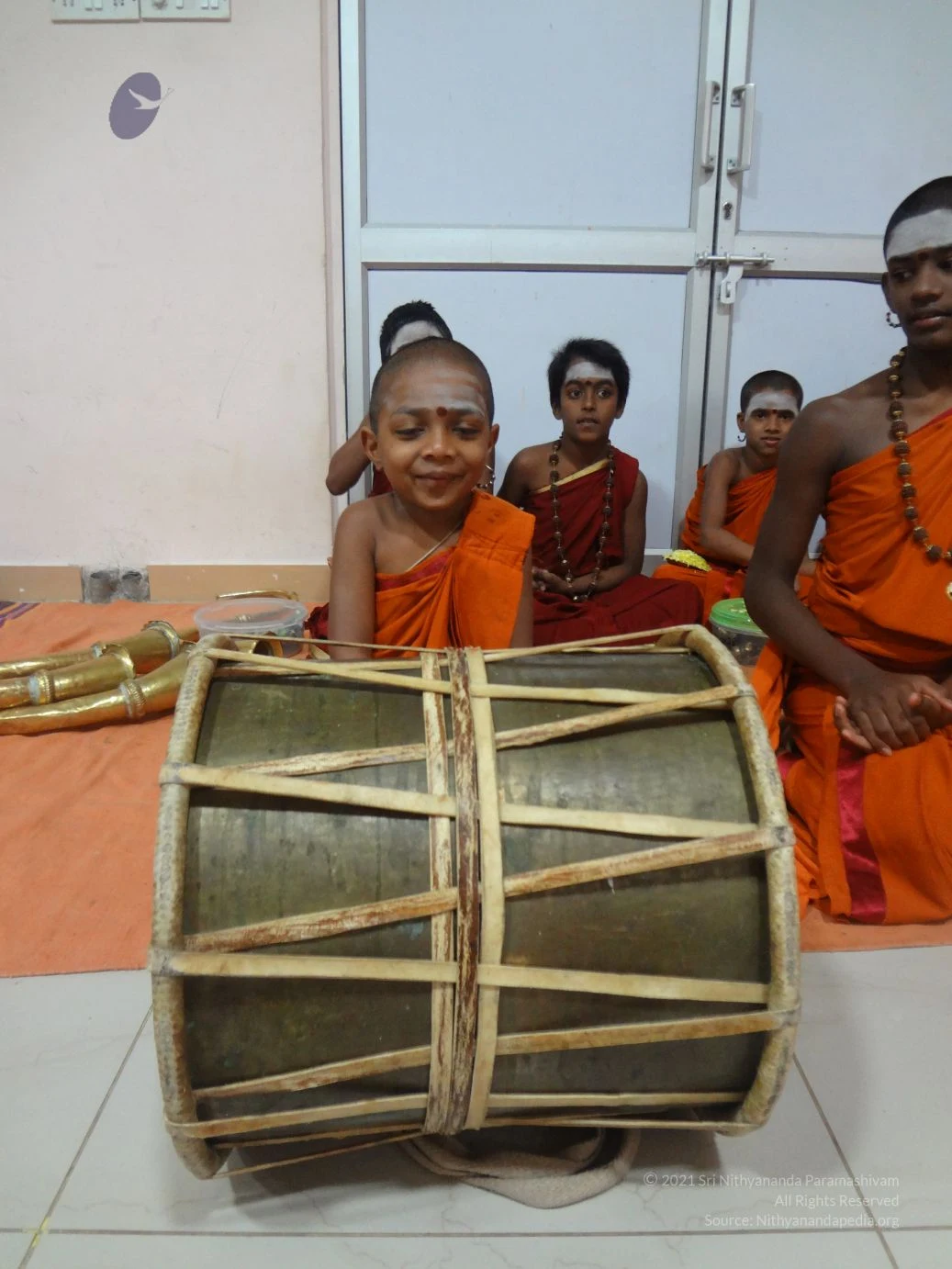
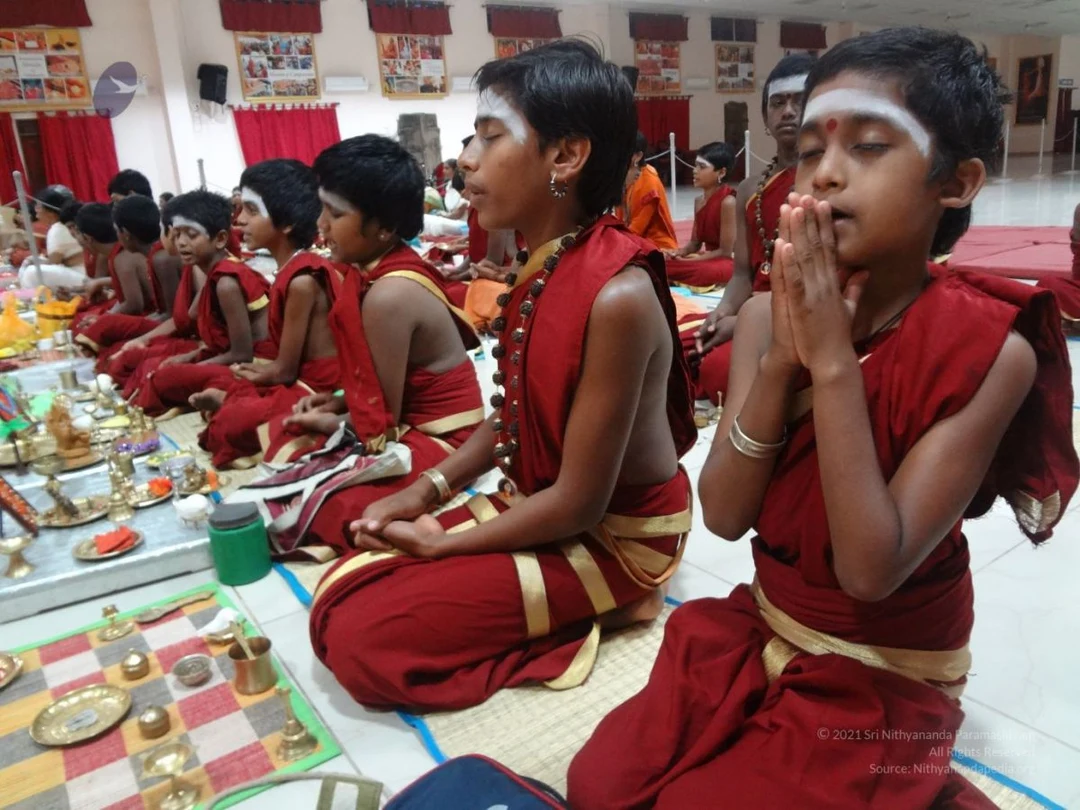
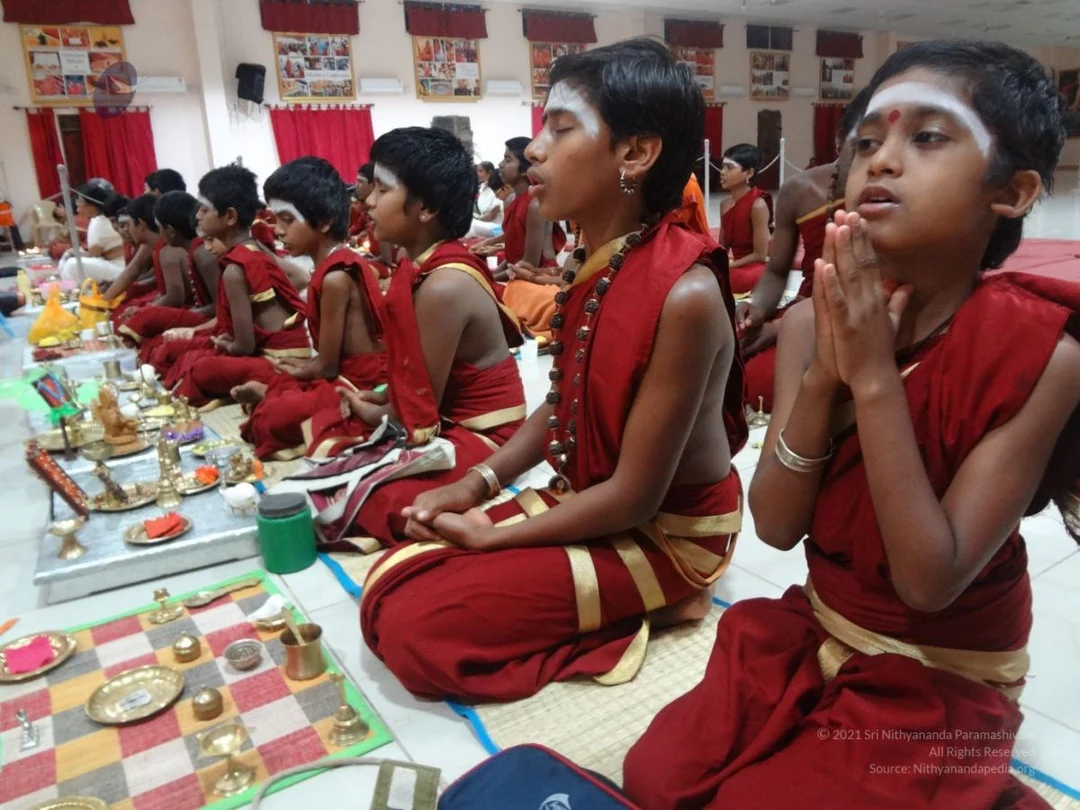
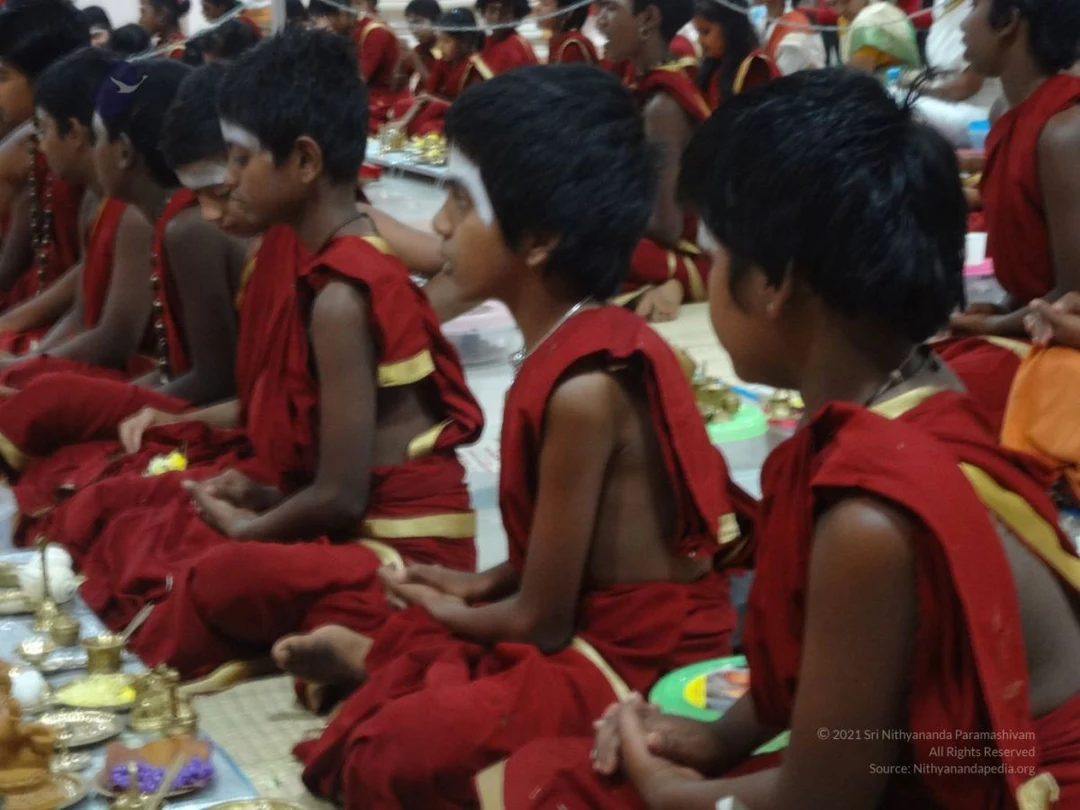
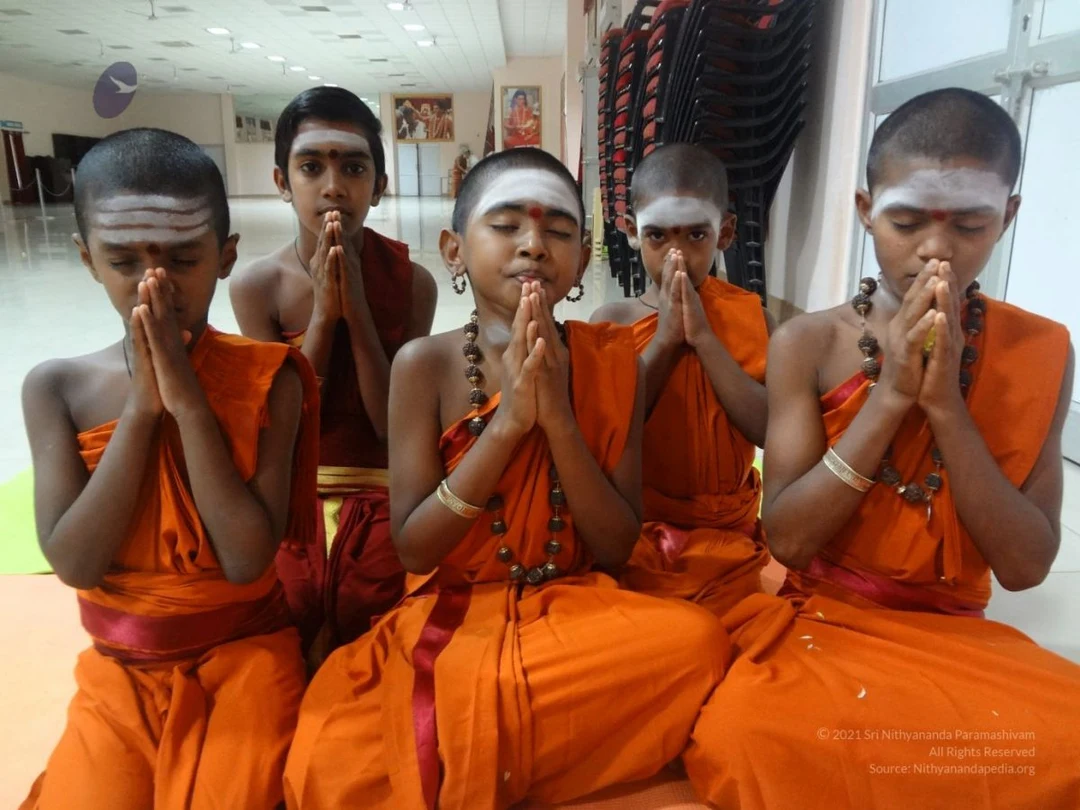
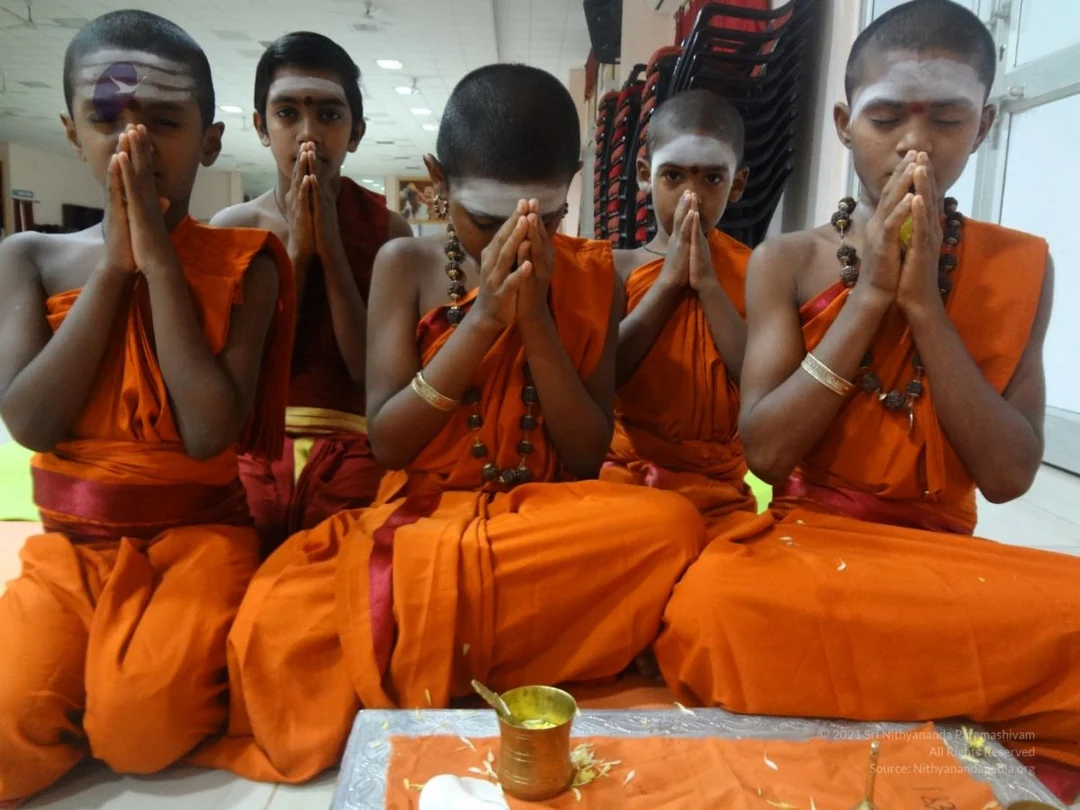
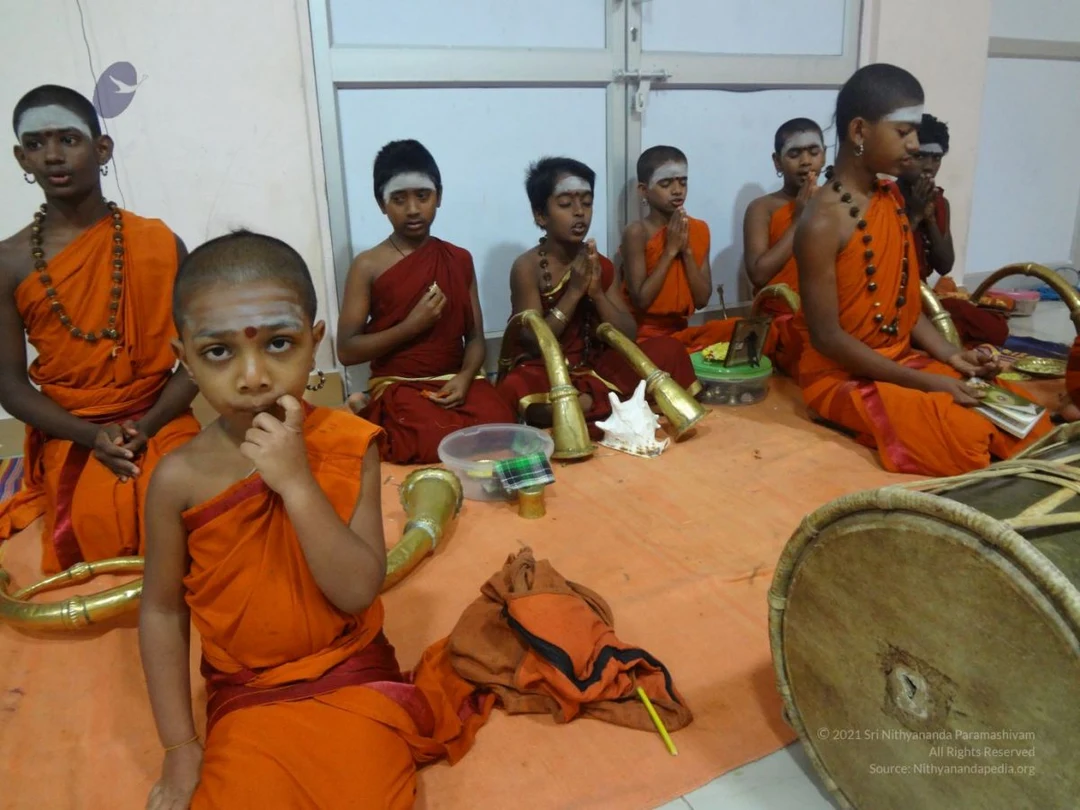
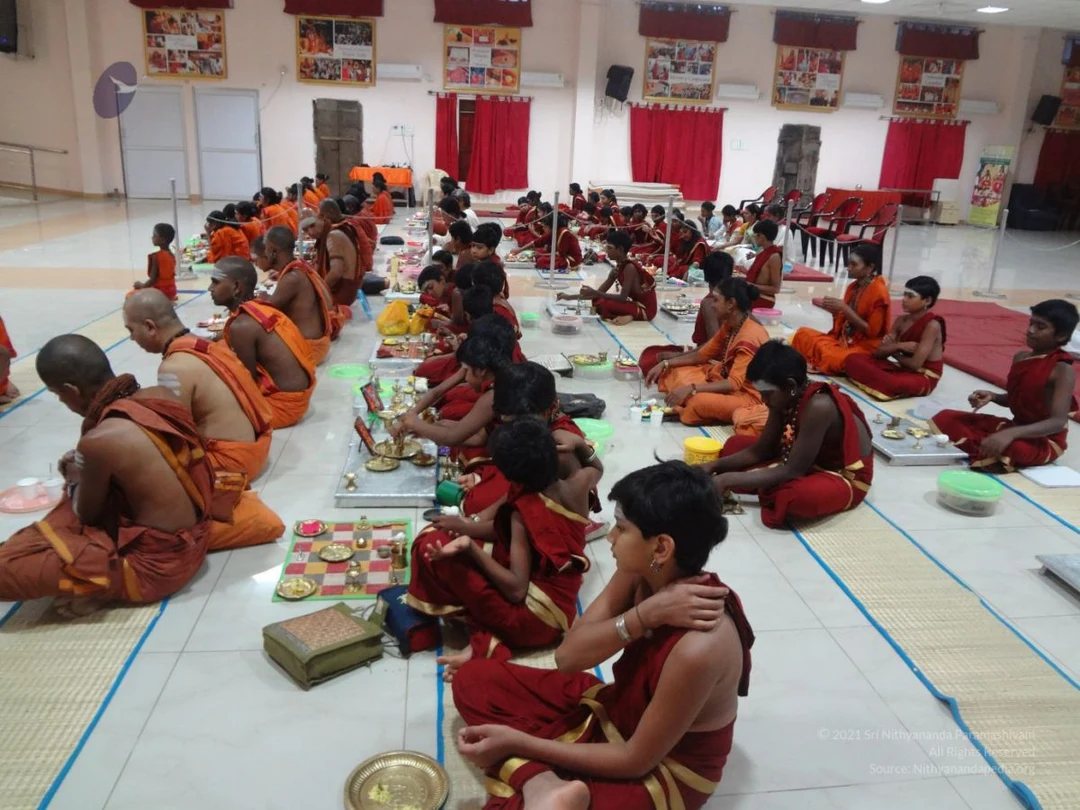
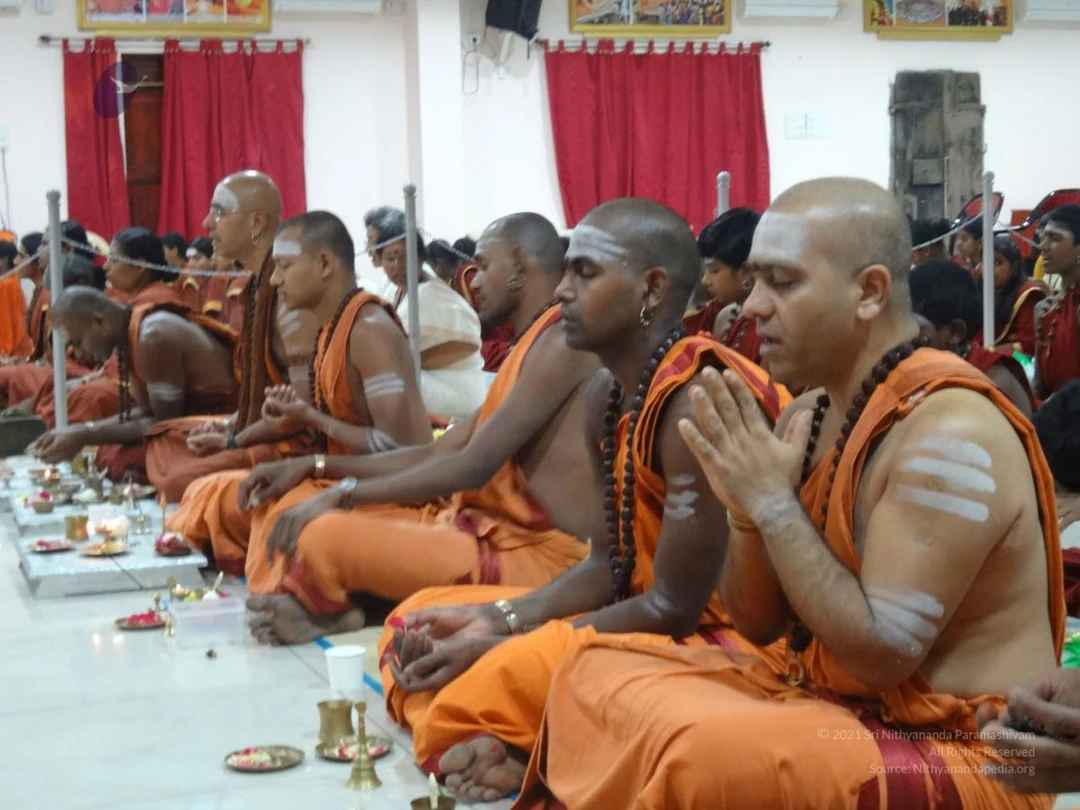
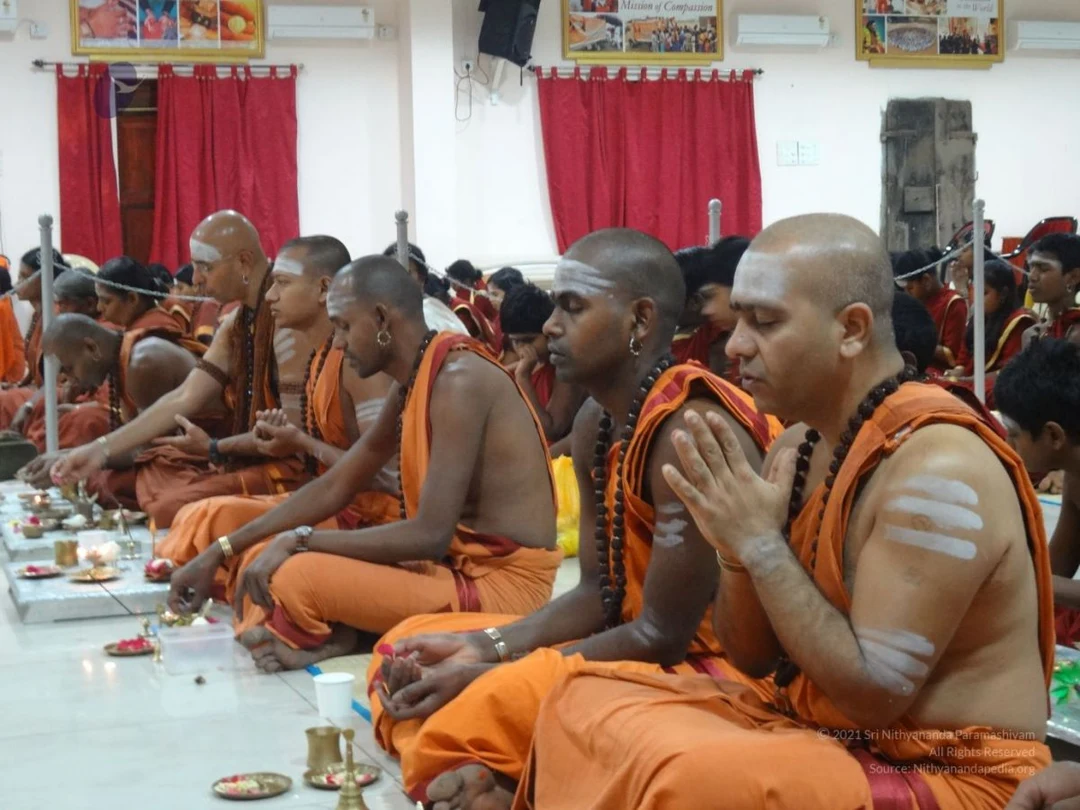
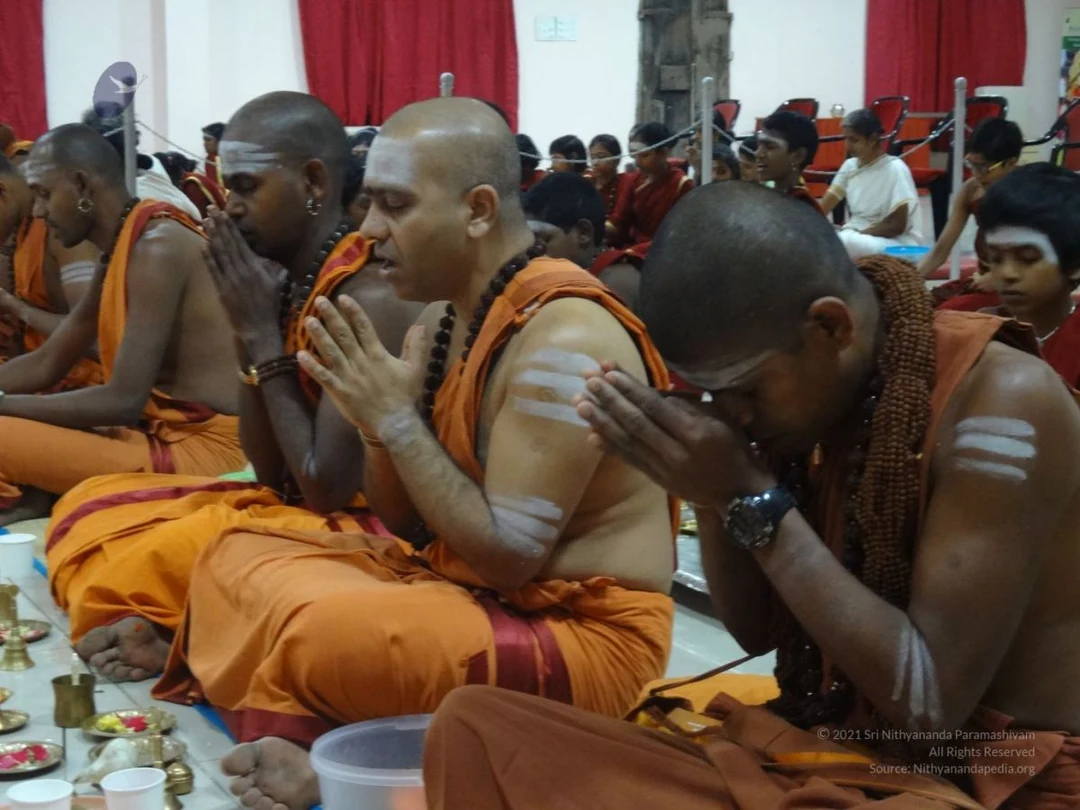
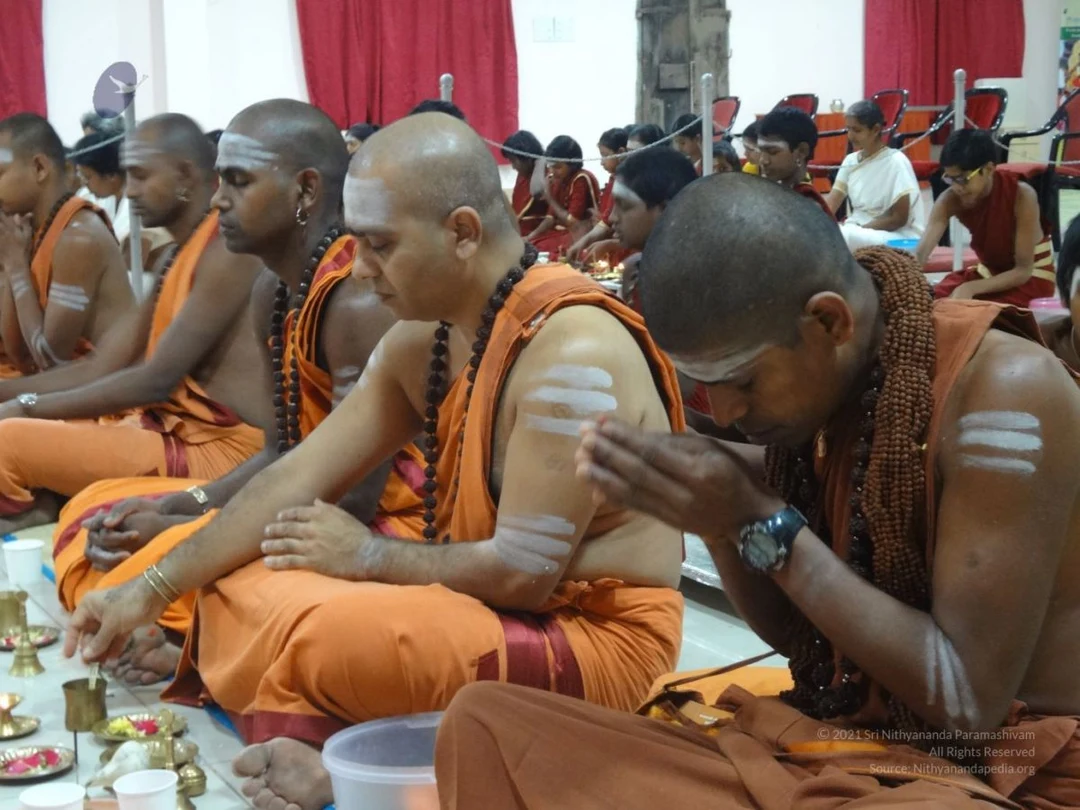
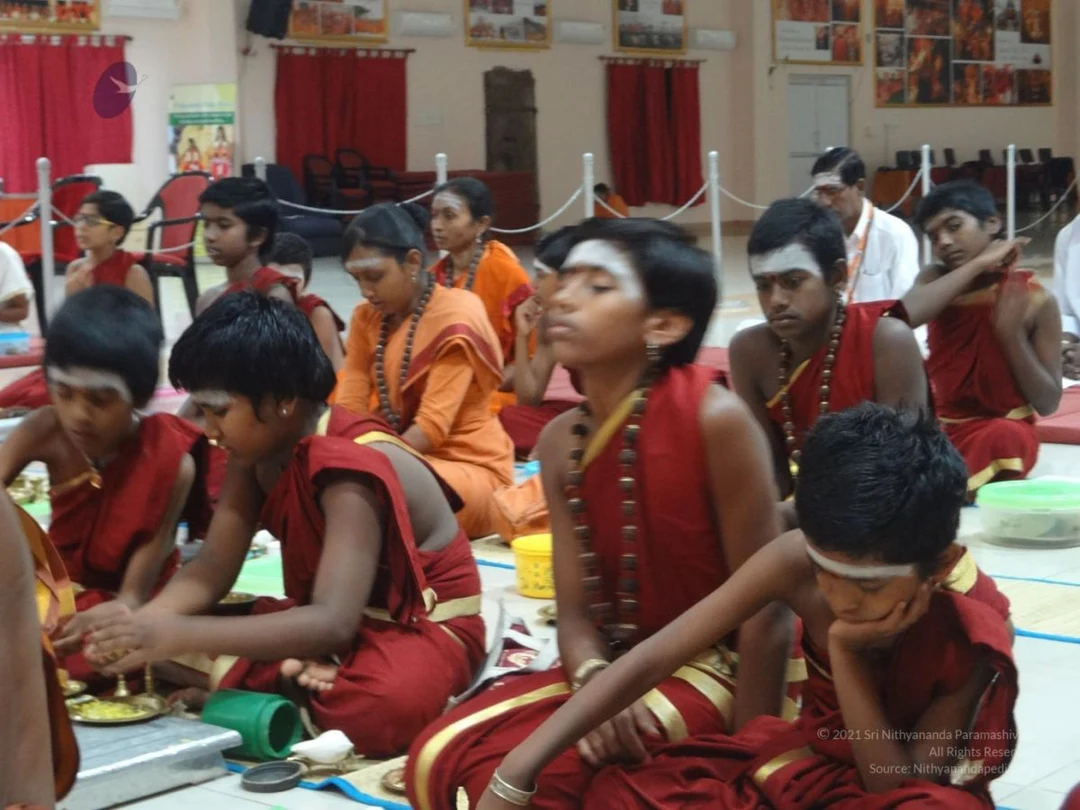
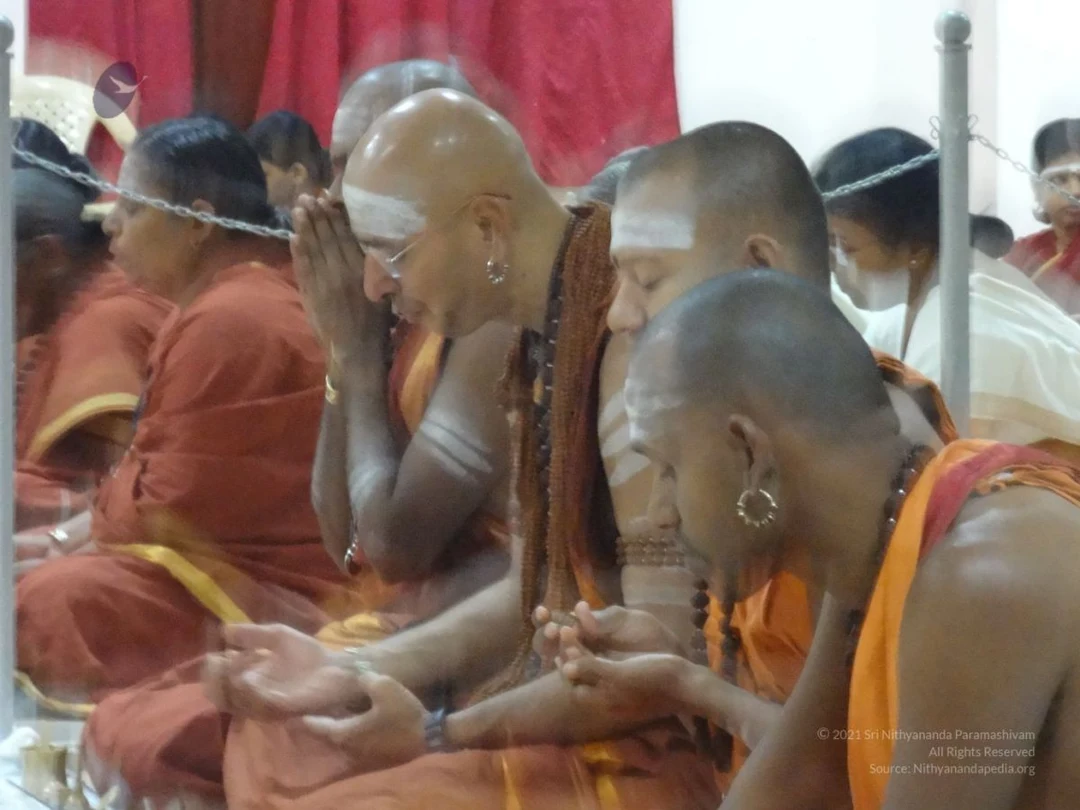
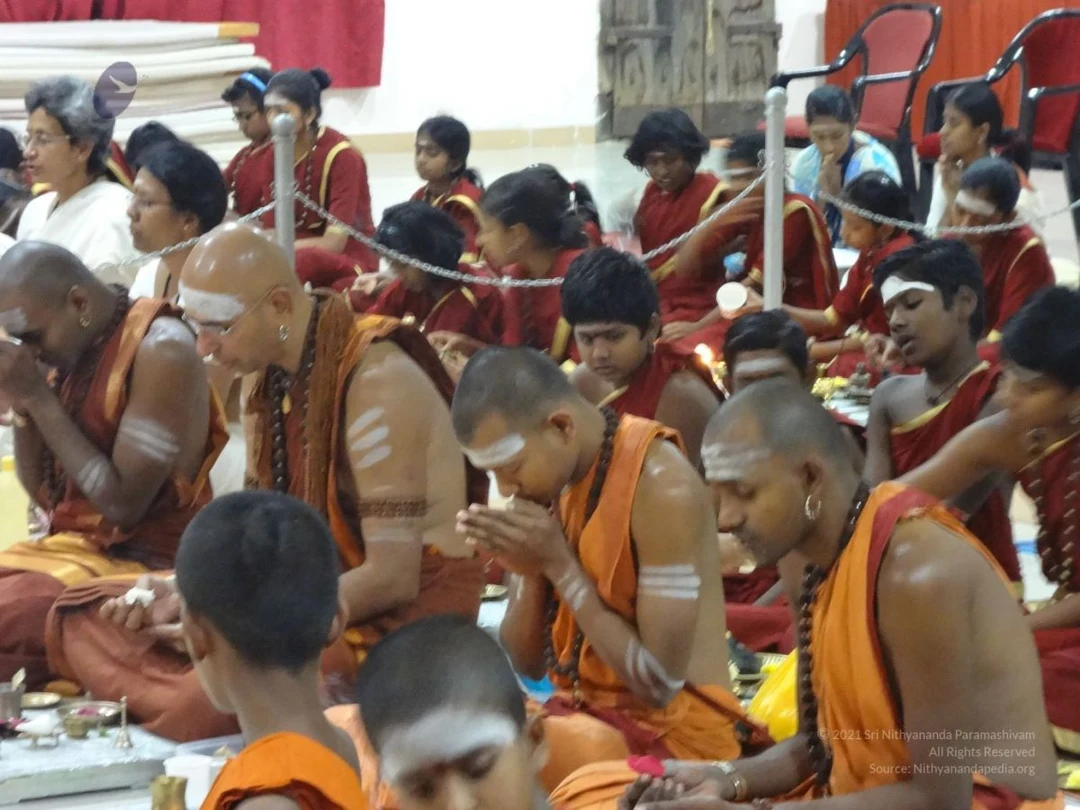
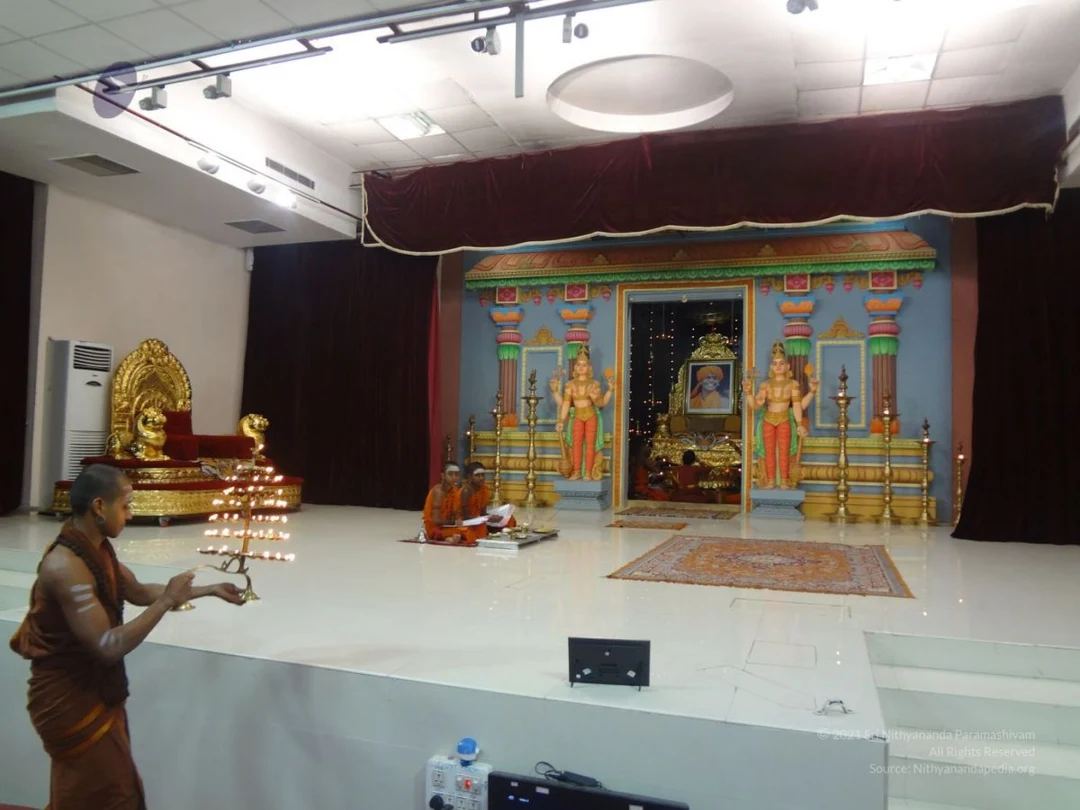
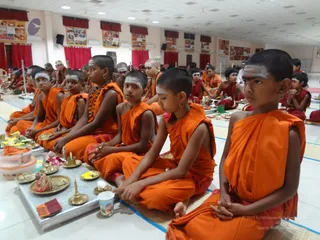
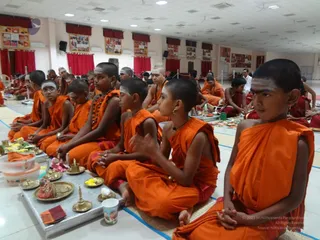
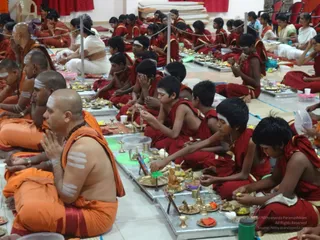
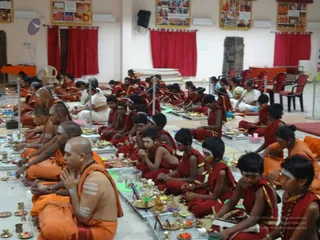
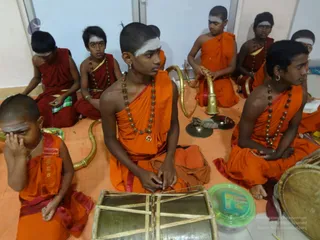
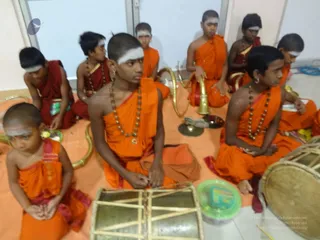
A photograph of a large hall where young boys in saffron-orange robes sit cross-legged on mats in a row, many with white vibhuti and tripundra marks on their foreheads and shaved heads. Brass puja trays with lamps, a small figurine, flower petals and a small cup sit on a low silver tray in the foreground. Red curtains and framed colourful pictures line the walls behind them. Several other saffron-clad boys sit further back, and a few older devotees in white are visible at the far end. The scene suggests a puja or ritual session.A seated group of young boys in saffron-orange robes sits in rows on mats during a ritual gathering in a large hall with red curtains and framed panels on the walls. Several boys have shaved heads and white forehead markings, and some wear rudraksha beads. Brass puja plates with oil lamps, bells, flowers and fruit sit on a silver tray in front of them, and a small deity murti is visible. Behind them, older devotees in orange and red clothing sit among the rows, and a man in white stands at the right edge.A seated puja scene with rows of young boys in red-maroon dhotis and shawls, foreheads marked with white tilak, performing rituals on silver-tone trays holding brass lamps, bowls, bells and small offerings. In the foreground, a bald saffron-robed man with white horizontal tilak stripes on his arms and chest sits with hands pressed in namaskar, wearing rudraksha beads. Behind them, more participants in white and red sit on the floor, and women in white and cream saris are seated at the right. Brass and silver ritual vessels fill the floor.Indoor ritual hall with pink walls, red curtains and framed photo panels on the walls. Many seated participants sit in rows on the floor before brass puja plates, lamps and small vessels. Foreground monks wear saffron-orange robes with white body markings and hold hands in namaskar; a bald man in front has white lines on his shoulders and a rudraksha mala. Behind them, boys in red-maroon robes with white forehead markings sit cross-legged, some with hands joined, and women in white and orange saris sit at the right edge. Chairs with red seats line the back wall, and a low stone pillar stands near the centre. Ritual padapuja-style worship with puja plates is visible, and the photo is watermarked by the archive copyright.Photograph of a group of young boys seated on an orange cloth on the floor, wearing saffron-orange garments and rudraksha malas, with white vibhuti bands across their foreheads. A boy in the foreground holds a wooden hand drum frame, another plays a long brass horn, and brass cymbal-like instruments and a small plate with offerings lie nearby. A boy at left covers his face with his hand. Another drum rests at the lower right corner. Six visible physical people.A group of young boys seated on an orange cloth in a bright room, dressed in saffron-orange robes with rudraksha malas and white vibhuti marks on their foreheads. Several play brass horns and cymbals, with large drums with woven rope tensioning in the foreground. A small green dish and a brass plate sit among the instruments. Most are shaved or short-haired and wear orange upper cloths over their shoulders.

Temple-Visit

2 photosSource gallery
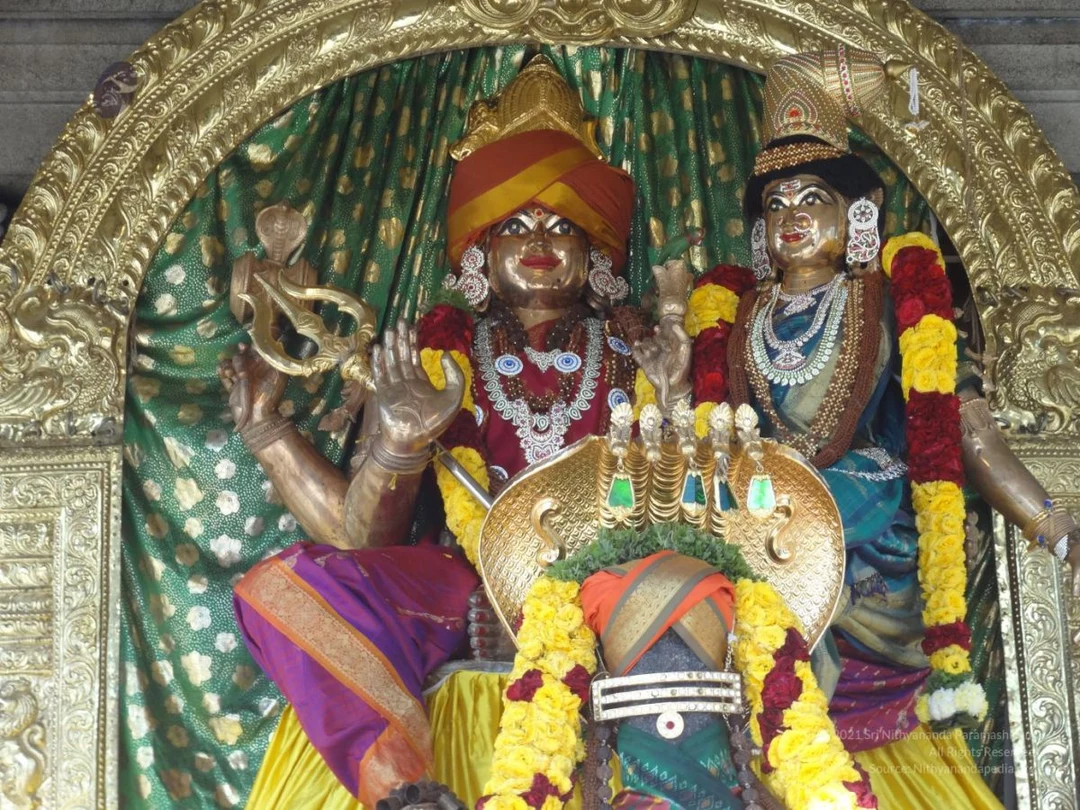
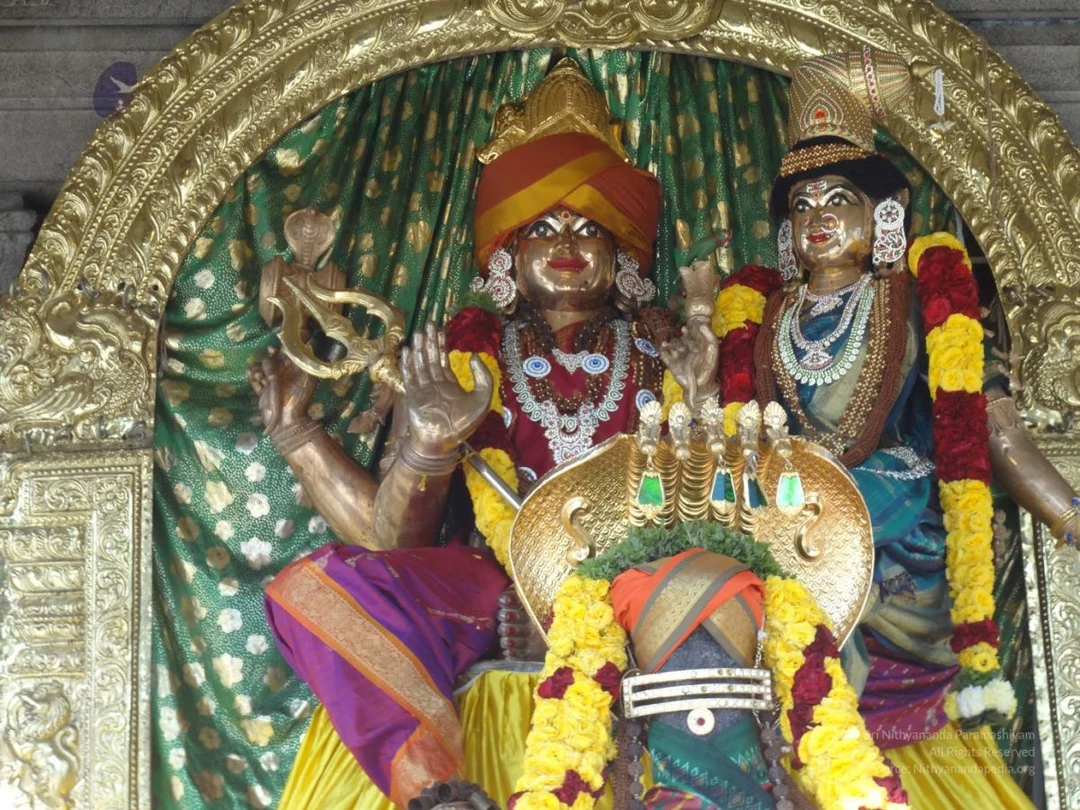
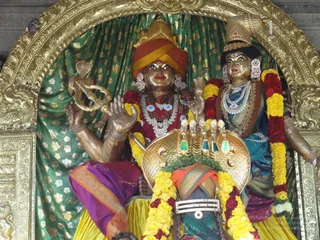
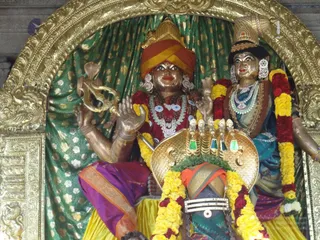
A golden murti pair of deities seated in an ornate gilded arch before a green cloth backdrop dotted with gold motifs. The male figure on the left has four arms, wears a red-and-gold turban, a crown-like headdress, white and blue beaded necklaces, and holds a trident. The female figure on the right wears a teal sari, a pearl necklace and a tall decorated headdress. Both are garlanded with yellow marigolds and red roses, and a shivalinga-like object with a striped band sits in front, surrounded by flowers and a golden shield-shaped backdrop with green stones. This is a photograph of deity murtis, not a person.A photograph of a gilded shrine with a green cloth backdrop showing two deity murtis. The figure on the left has four arms, holds a trident, and wears an orange-red turban, a red garment, layered beaded and gem necklaces, and earrings. The figure on the right wears a teal sari with a tiered gold crown and a long multi-strand necklace. Yellow and red marigold garlands drape both figures. In the foreground, a gold-rimmed kalasha-like offering sits in front of a small linga-like form wrapped in an orange cloth with a silver band. There are no physical people in the scene.

Paduka-Puja

4 photosSource gallery
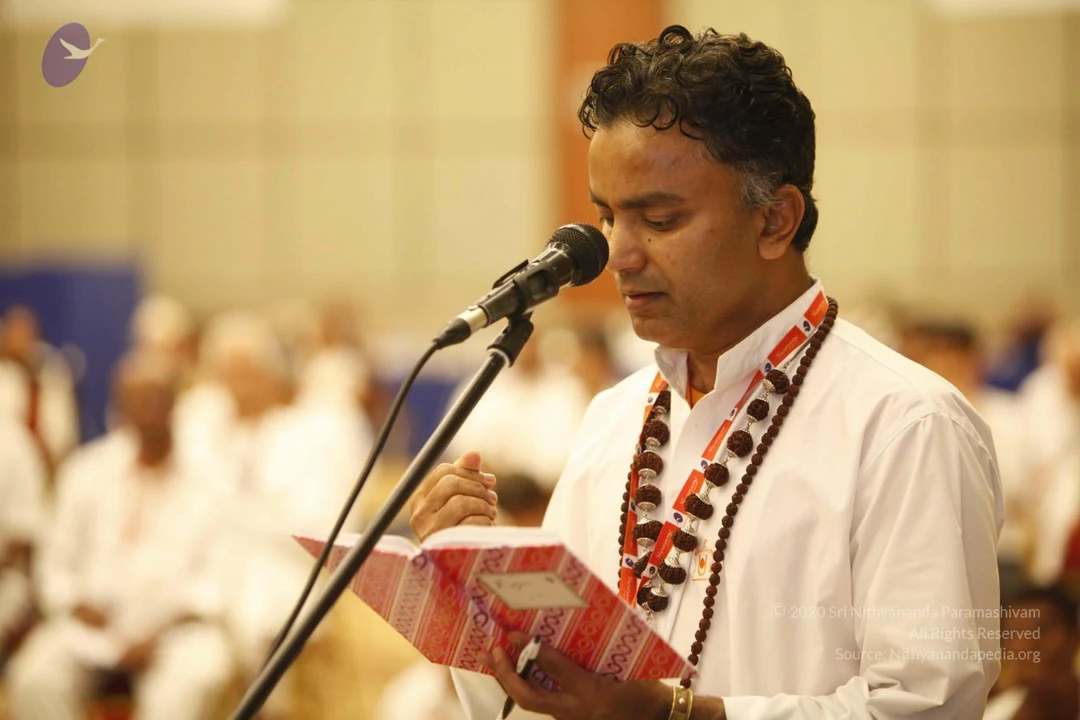
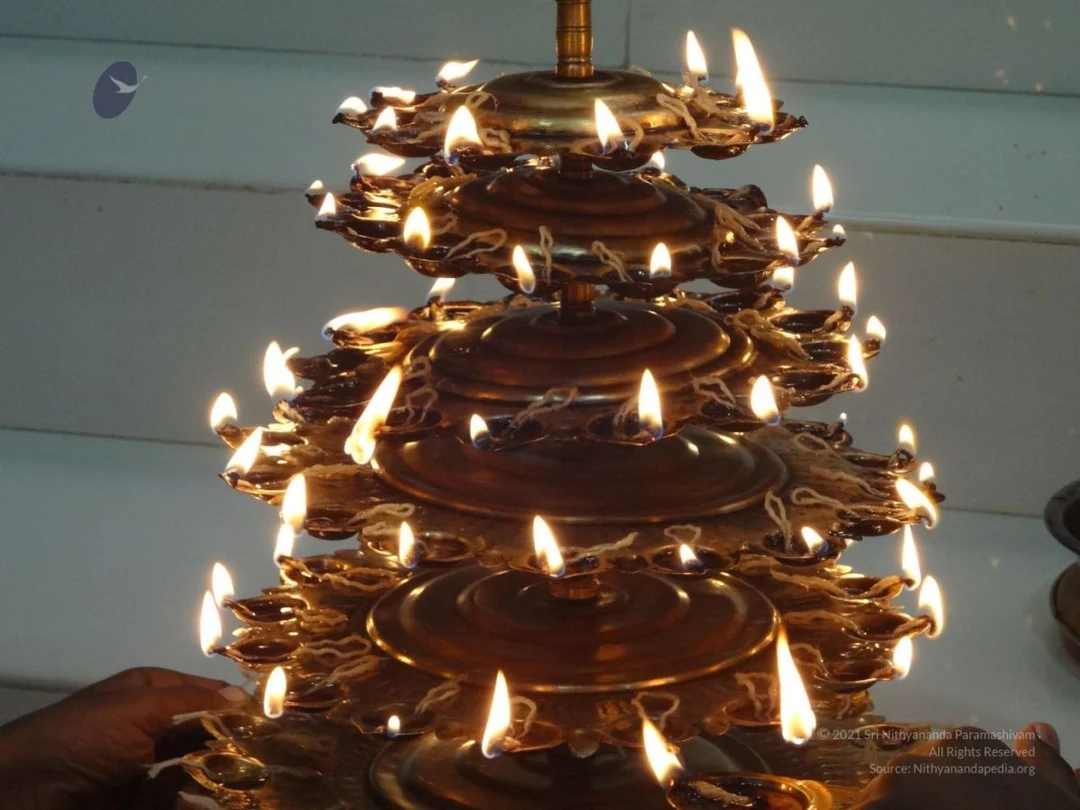
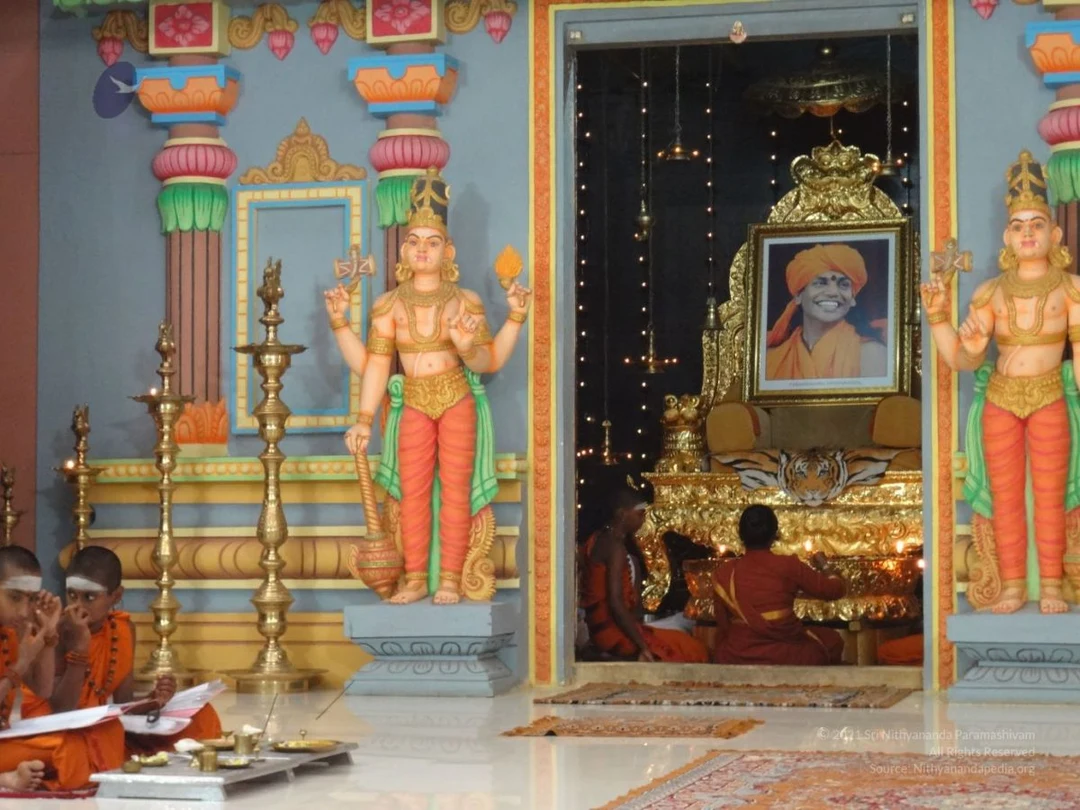
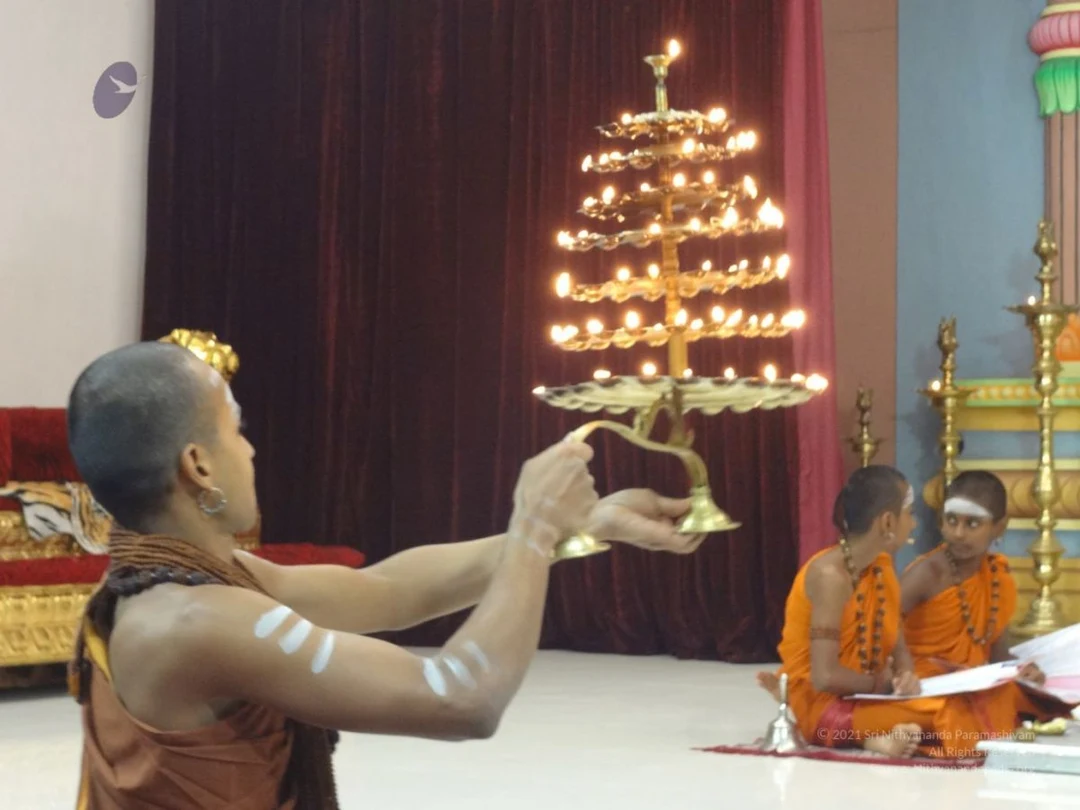
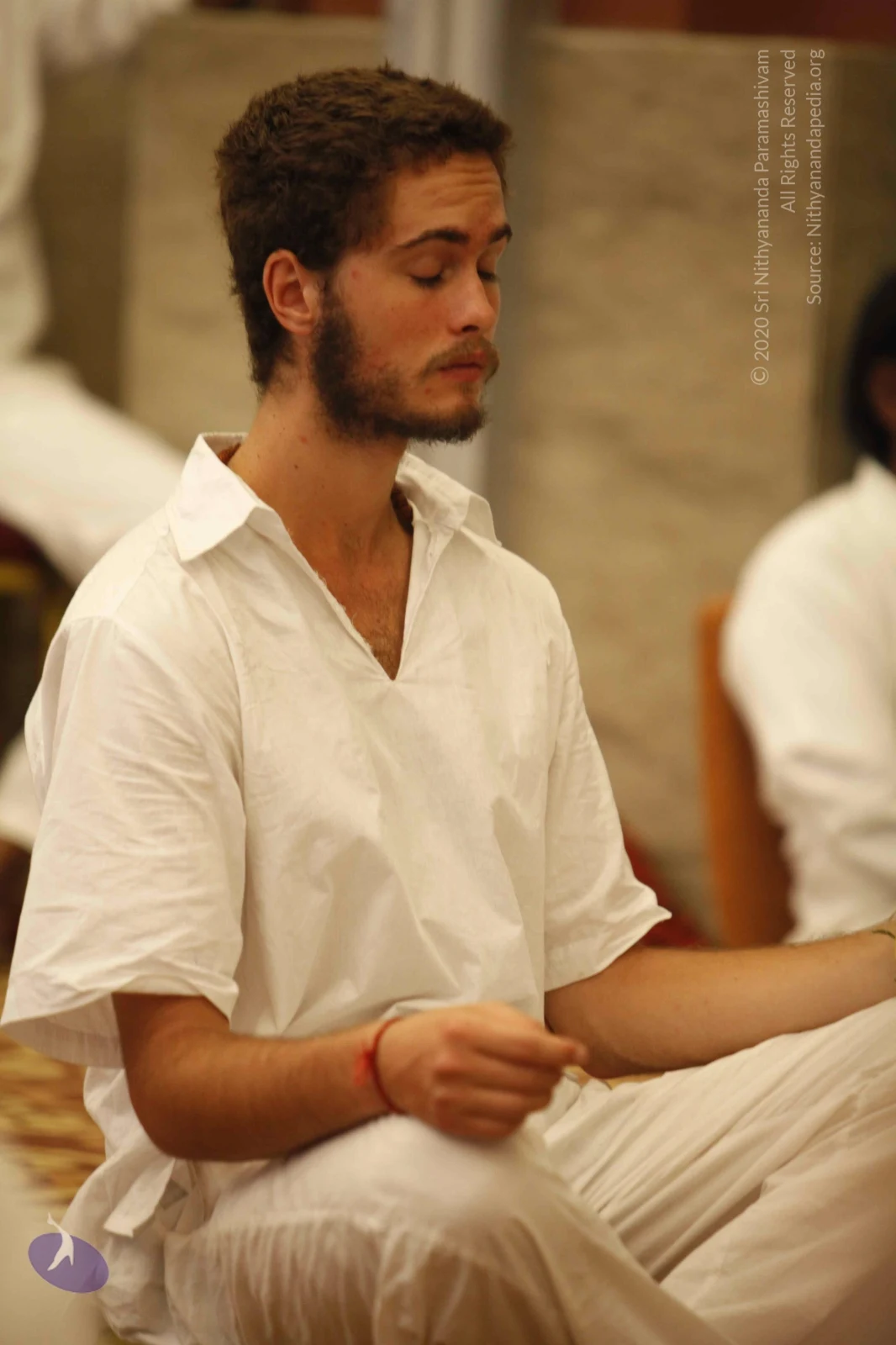
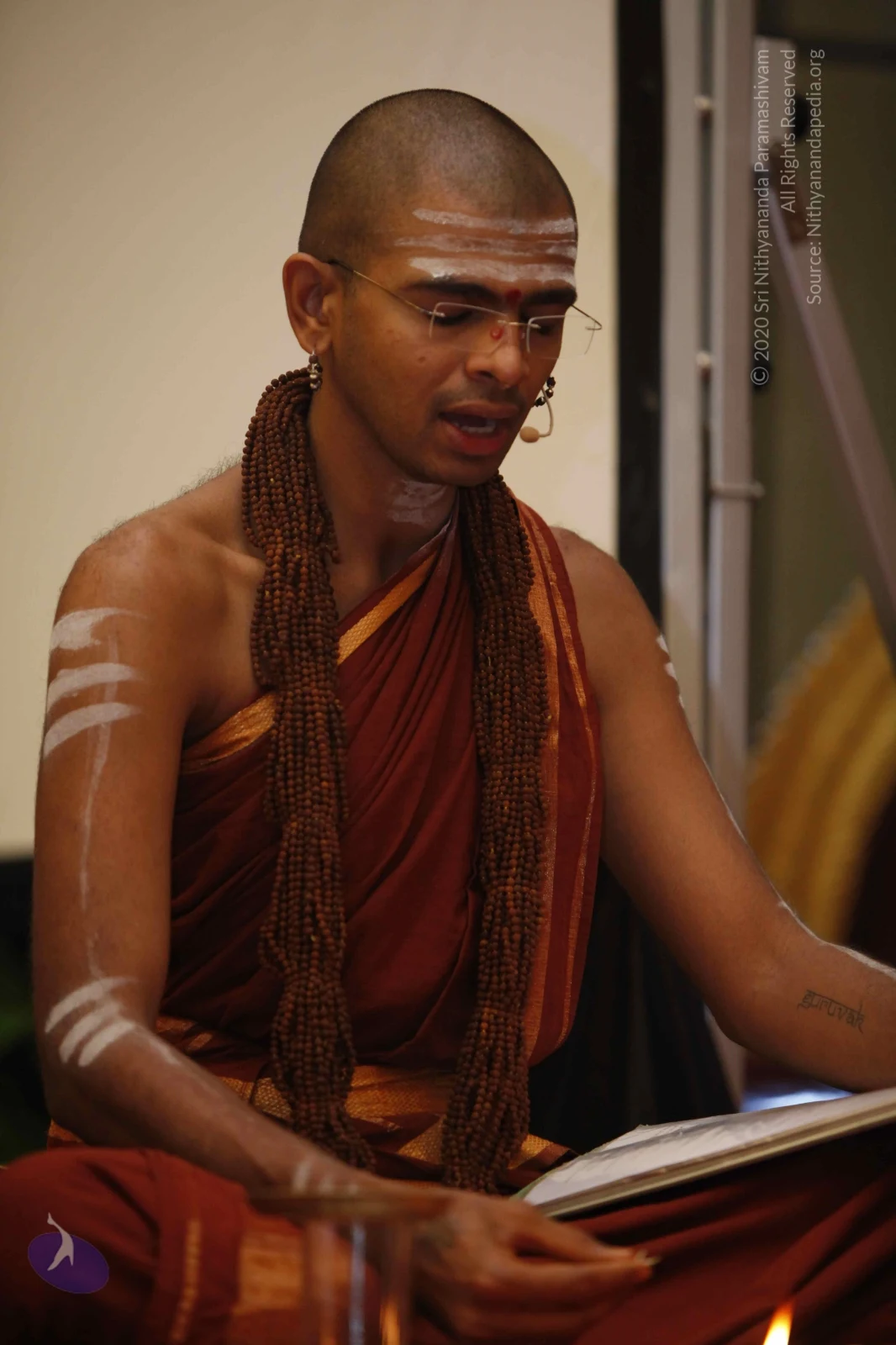
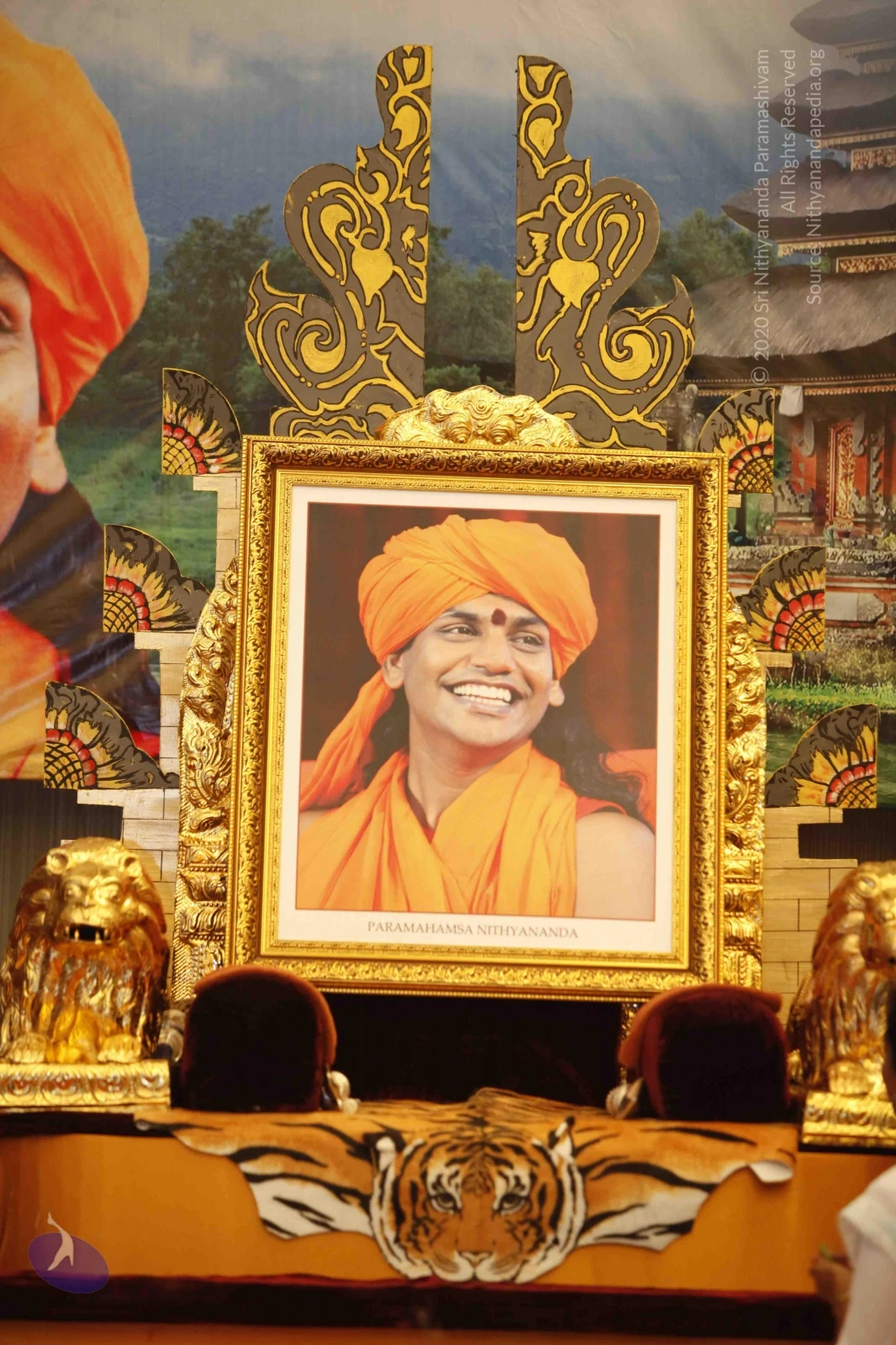
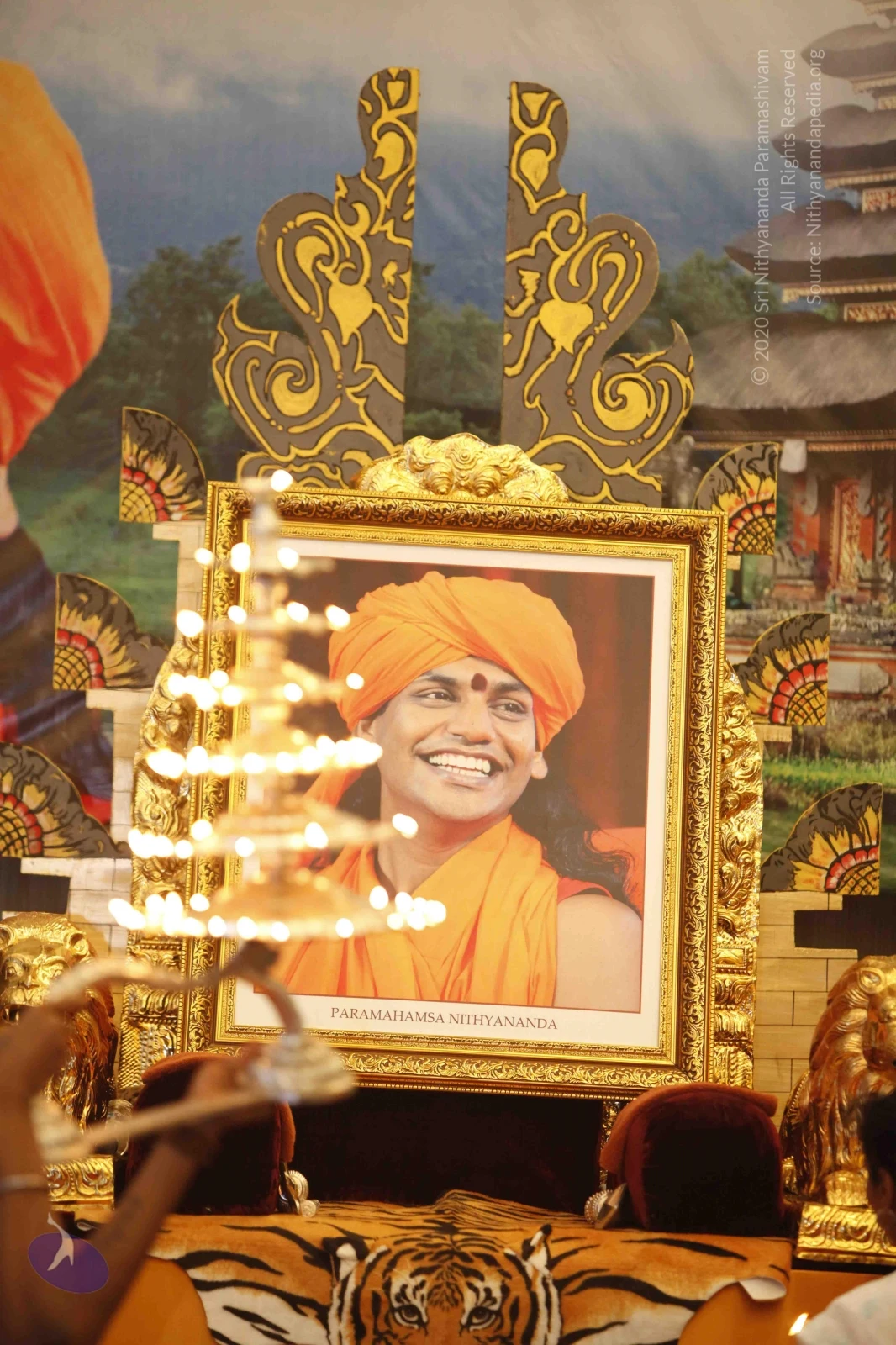
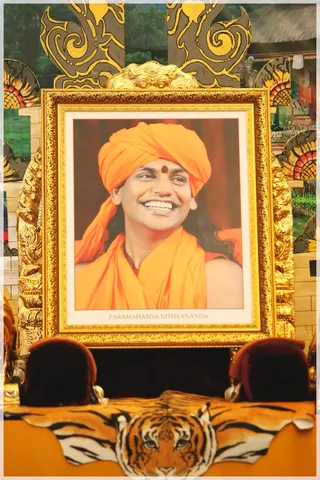
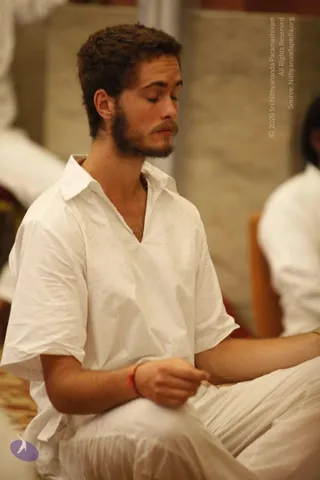
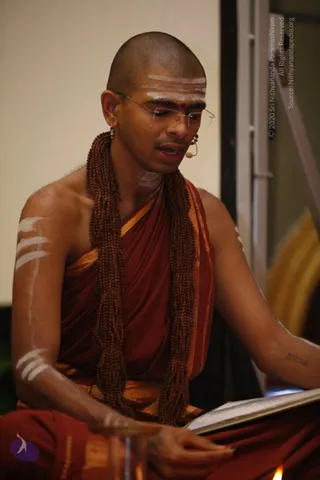
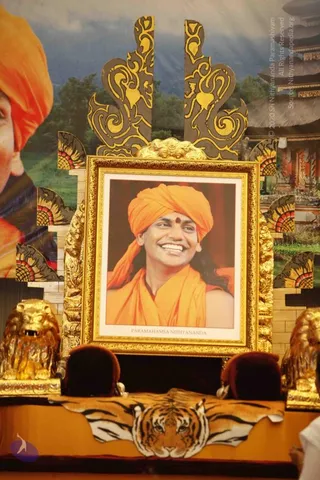
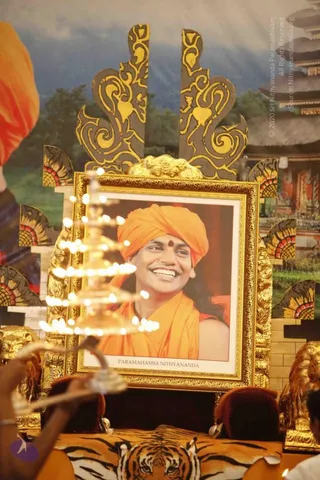
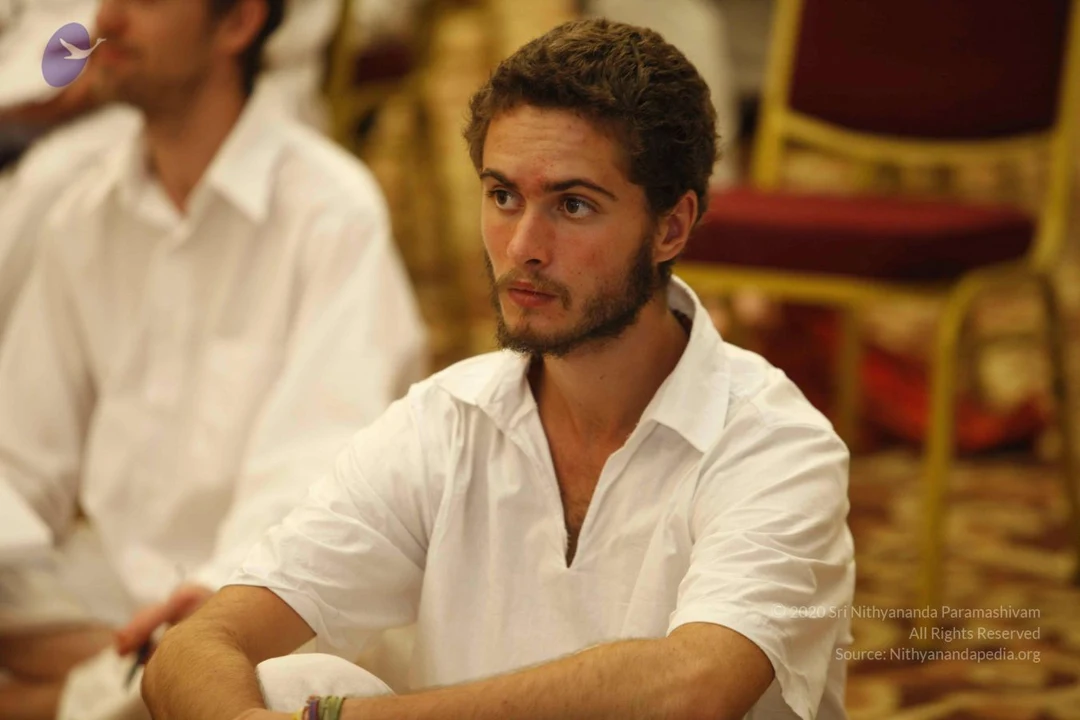
A young bearded man with short brown hair sits cross-legged with eyes closed in meditation, wearing a white short-sleeved collared kurta and white pants. His right hand rests on his knee near a red thread wrist band. Another person in white clothing is partly visible at the right edge, and a soft beige wall forms the background.A shaven-headed man seated cross-legged reads from an open book and speaks into a head-mounted microphone while leading a satsang. He wears a rust-red and gold-bordered upper cloth and wraps of the same colour, with long brown rudraksha mala strands hanging over both shoulders. White vertical tripundra marks adorn his forehead and upper arms, a red bindi sits between his brows, and he wears rimless glasses. A small lit oil lamp glows at the lower edge of the frame, and an orange-toned backdrop is visible behind him. The scene is a single person at a teaching gathering; no a person identity is established from appearance.A large framed portrait labelled "PARAMAHAMSA NITHYANANDA" sits on an ornate gold-and-black carved throne-like stand at the front of a ceremonial stage. The portrait shows a smiling man in an orange turban and orange robe with a red bindi. Flanking the frame are golden lion sculptures, and in front is a tiger-skin cloth with a tiger face on a raised platform, with the backs of two seated people with dark heads visible at the bottom. Behind is a backdrop with an orange-robed figure at left and a Balinese-style temple with thatched roof at right.A large gilded framed portrait of a smiling man in an orange turban and orange robe, with a red bindi, is displayed on an ornate golden-and-black carved throne-like backdrop with a Balinese temple scene painted behind it. The portrait's caption reads "PARAMAHAMSA NITHYANANDA". In the foreground, a tall golden multi-tiered oil lamp with many lit wicks is held by a hand at the left edge, and gold lion figures flank the throne. A tiger-striped cloth covers the platform below, with red velvet cushions on either side. A orange-clad figure partly visible at the far left edge. No other people are clearly visible.

IA-session

2 photosSource gallery
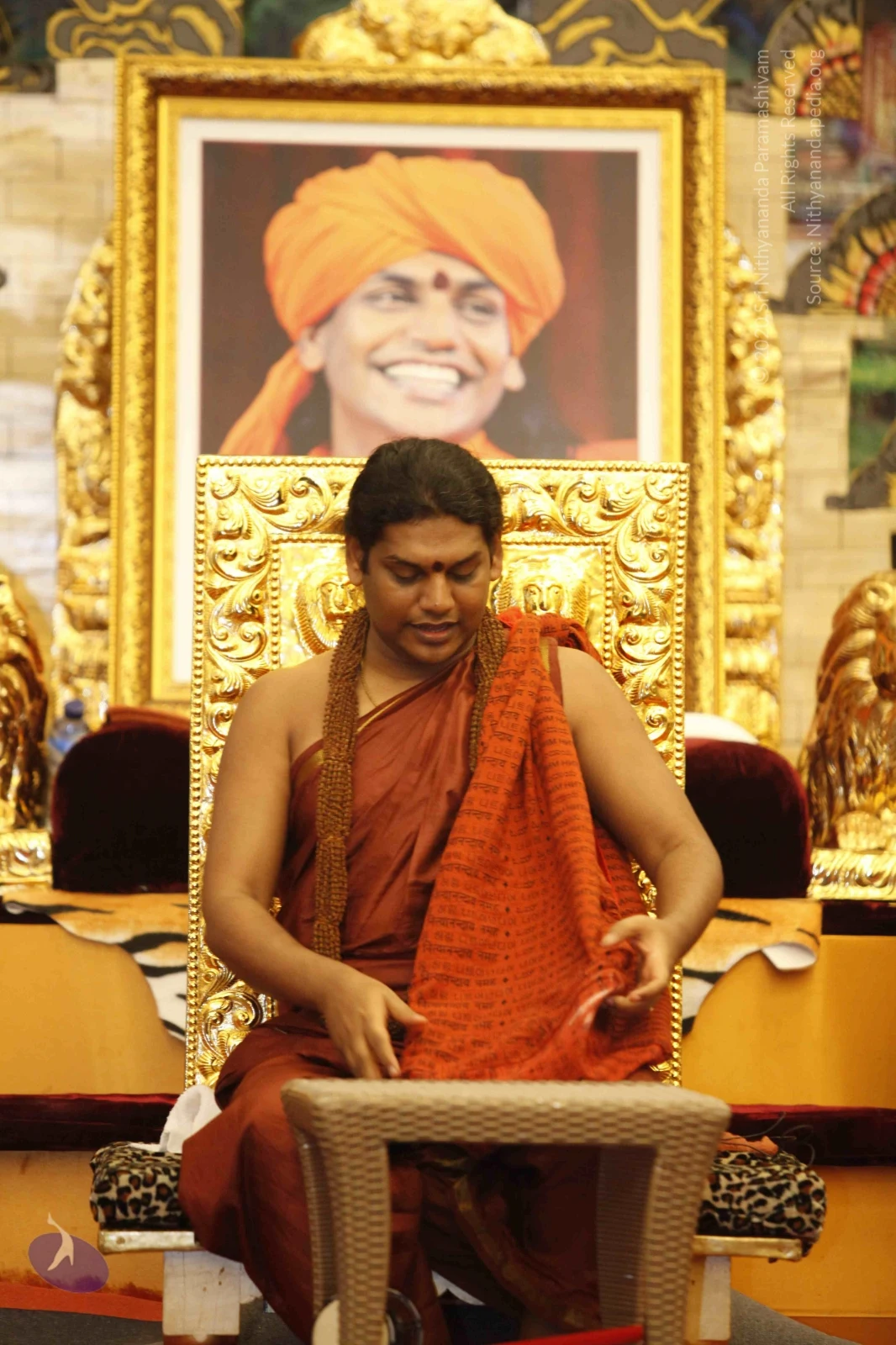
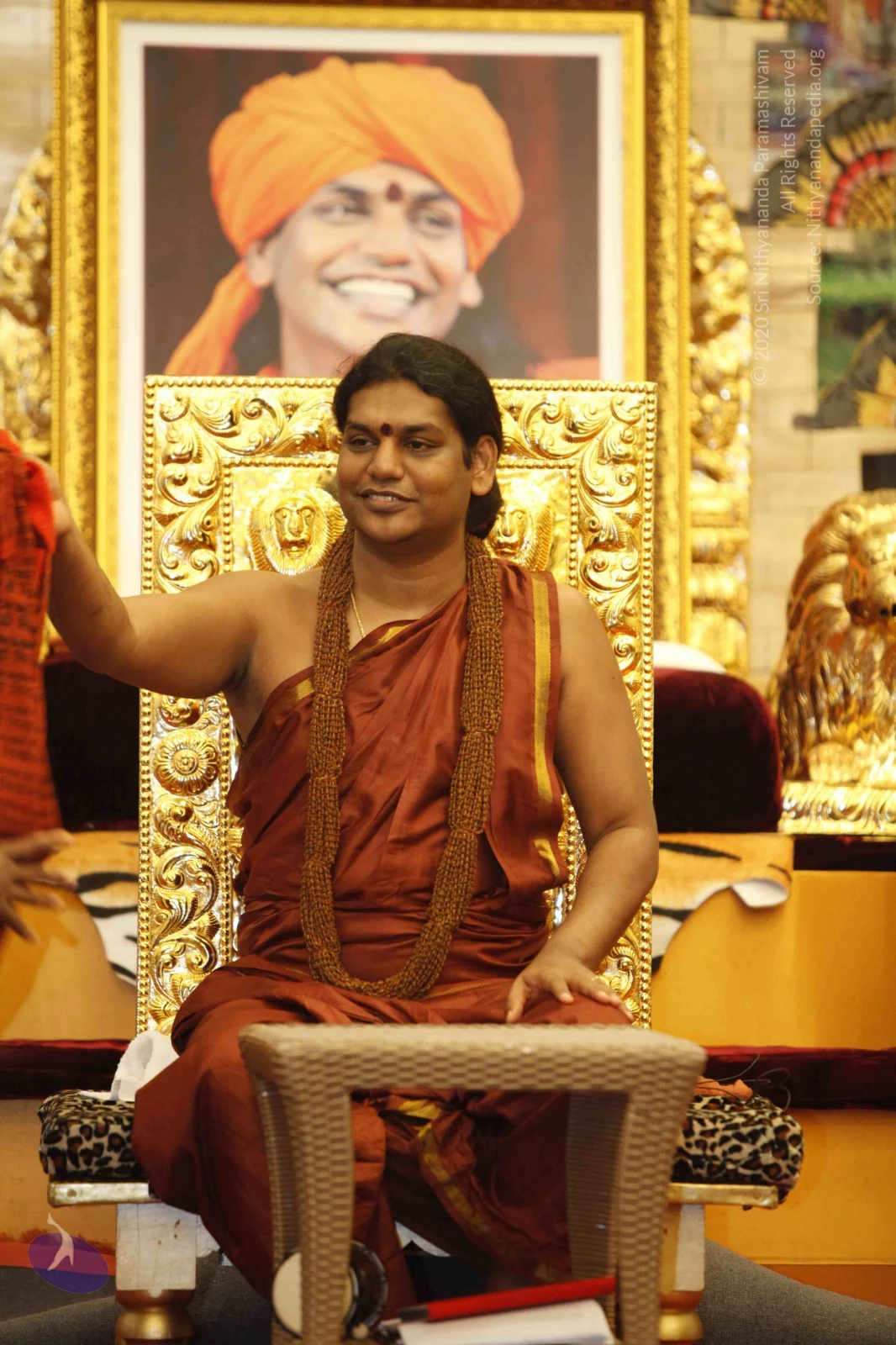
A photograph of a seated man on an ornate gilded throne in a temple-style hall. He wears a reddish-brown silk garment with a rudraksha mala draped over his shoulders, and holds a long orange shawl printed with Sanskrit script across his lap, arranging it over a wicker footstool. Behind him is a large gilded frame holding a portrait of a smiling figure wearing an orange turban and red tilak, with gold lion-form carvings flanking the throne and a leopard-print cushion at the side. A tiger-striped cloth covers the dais. The seated man is described as a person because of his mala, reddish-brown robes and ceremonial seating, though his face is partially obscured by the shawl.A man seated on an ornate gold throne carved with lion heads, wearing a rust-red robe with gold border and a long rudraksha mala draped over his shoulders, gesturing with one raised arm during a talk. Behind him hangs a large framed portrait labelled "Paramahamsa Nithyananda" showing a smiling man in an orange turban with a red bindi. A golden lion statue stands to the right and a leopard-print cushion sits at the side. Swamiji (probable): the seated man has long swept-back hair, a rudraksha mala and a ceremonial rust-red robe on a gilded throne, consistent with a satsang setting.

IA-Darshan
1 photoSource gallery
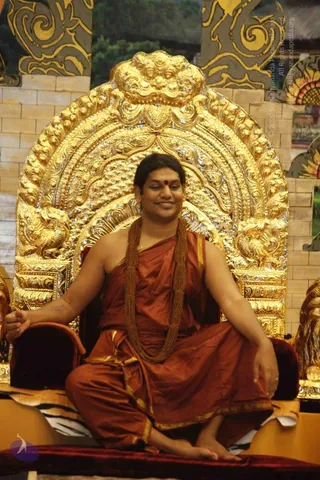
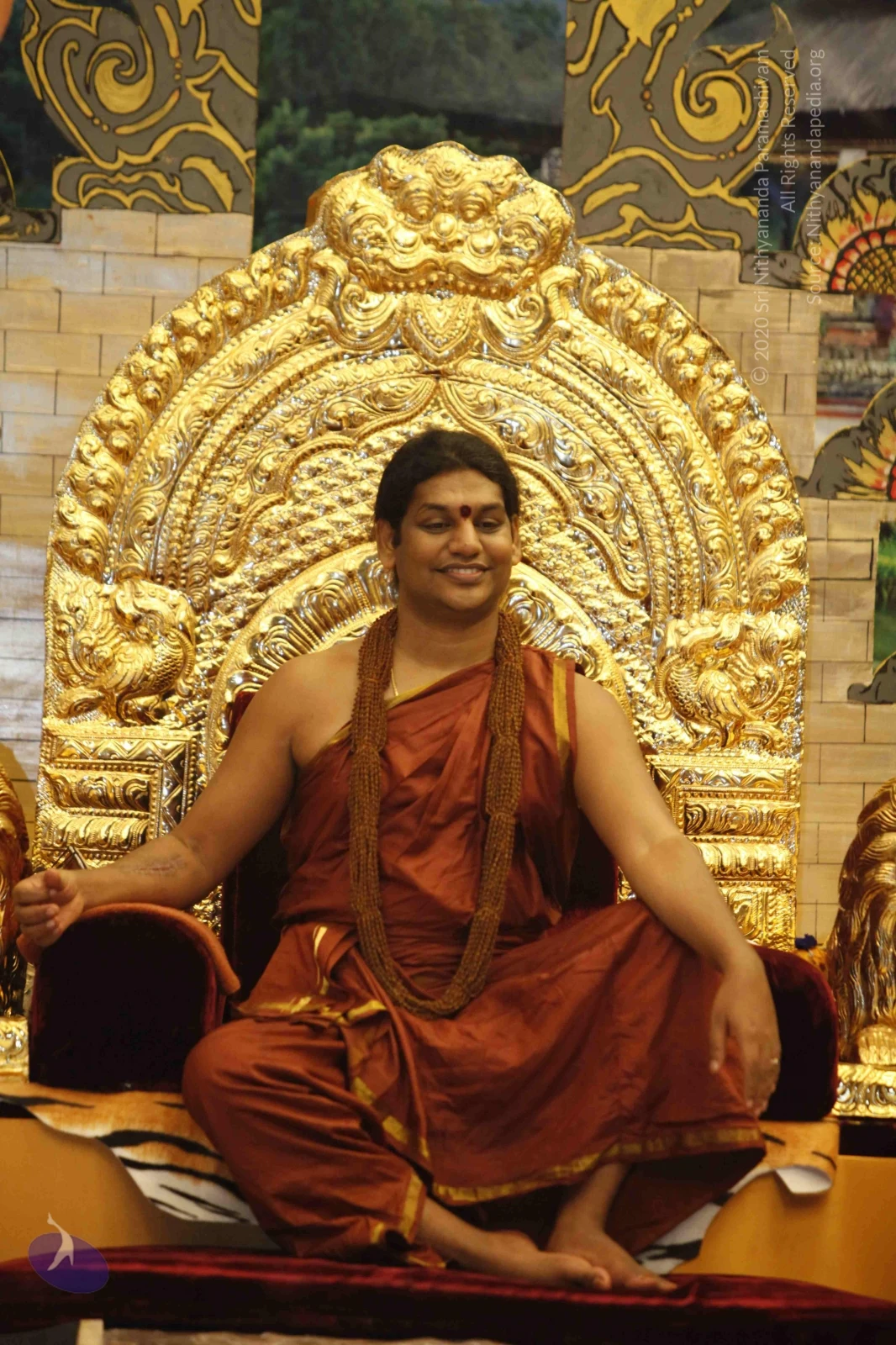
A photograph of a seated man in a reddish-orange saffron robe draped over his shoulder, wearing a long multi-strand rudraksha mala and a red bindi on his forehead. He sits cross-legged on a red velvet cushion before an ornate gold-coloured throne with a carved arched back and lion-shaped armrests, against a backdrop of painted panels. He smiles, one hand resting on the armrest. Appearance-based candidate: a person, shown seated on the throne in saffron robes and a rudraksha mala.