Skip to content
Monday

9 December 2013

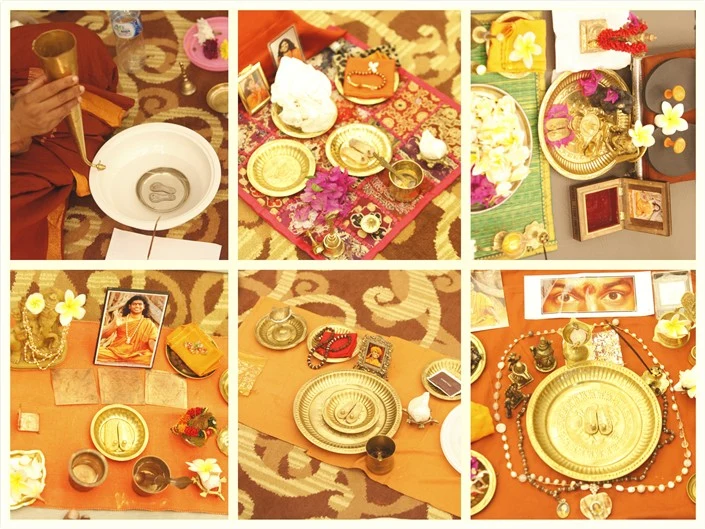
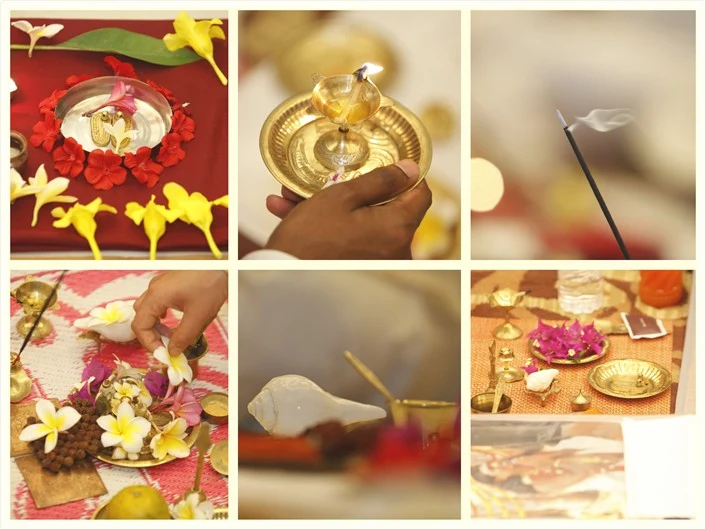
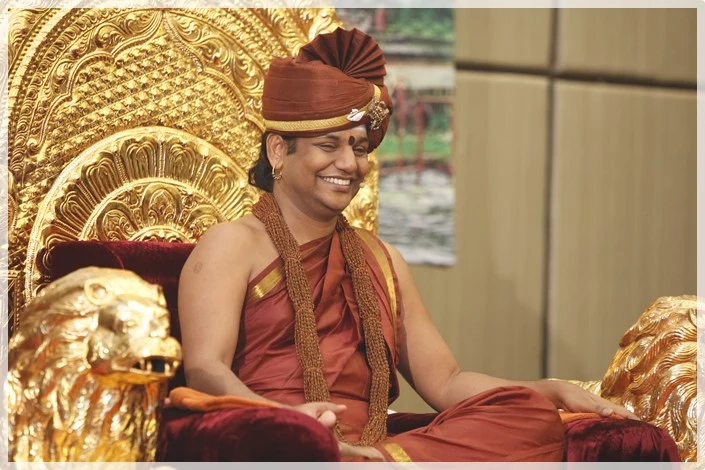
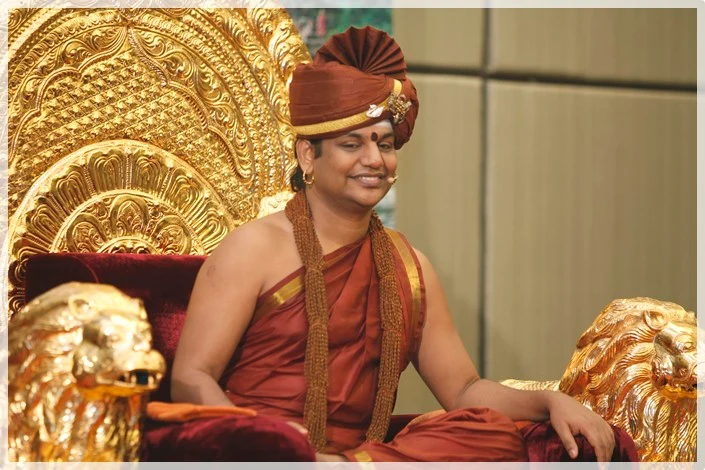
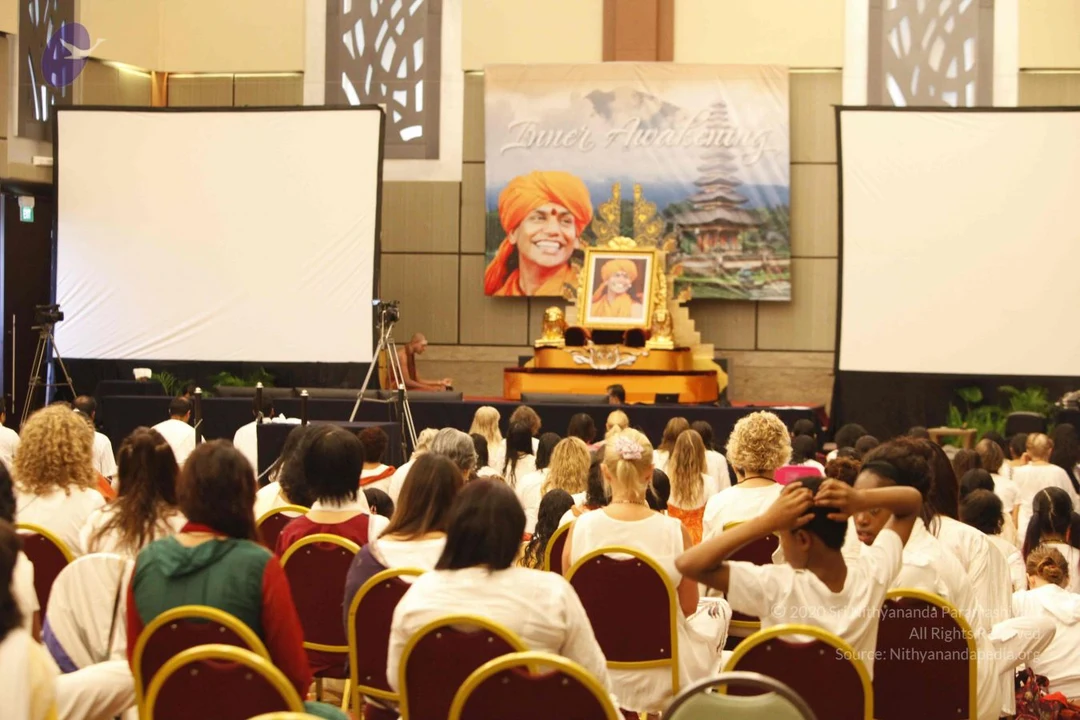
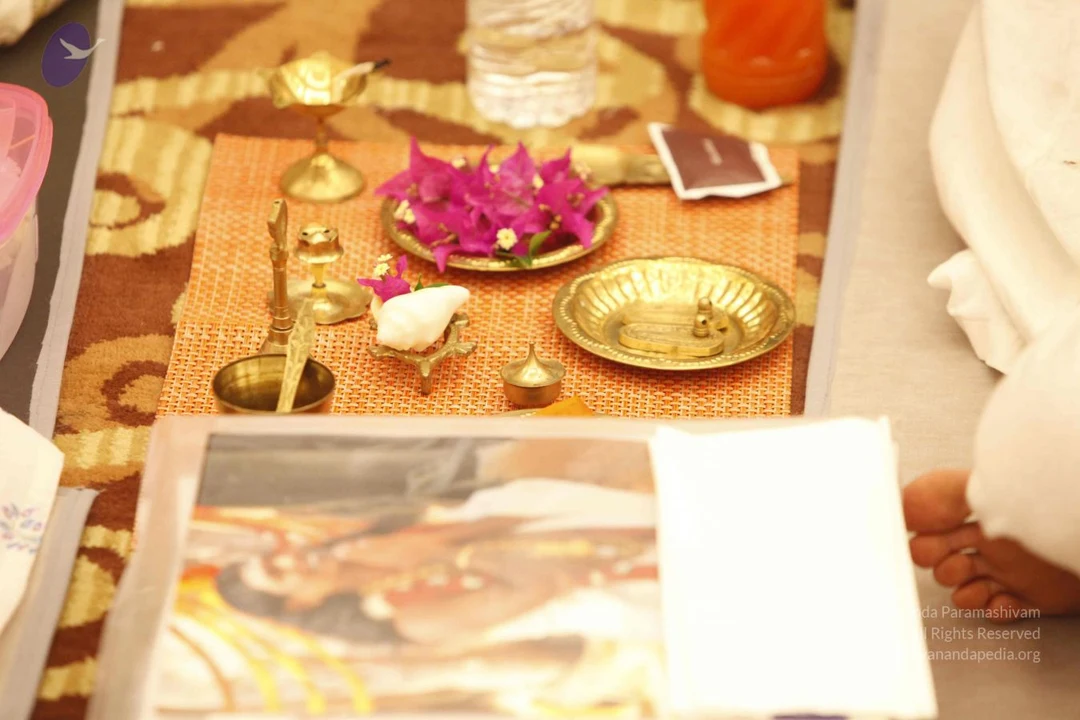
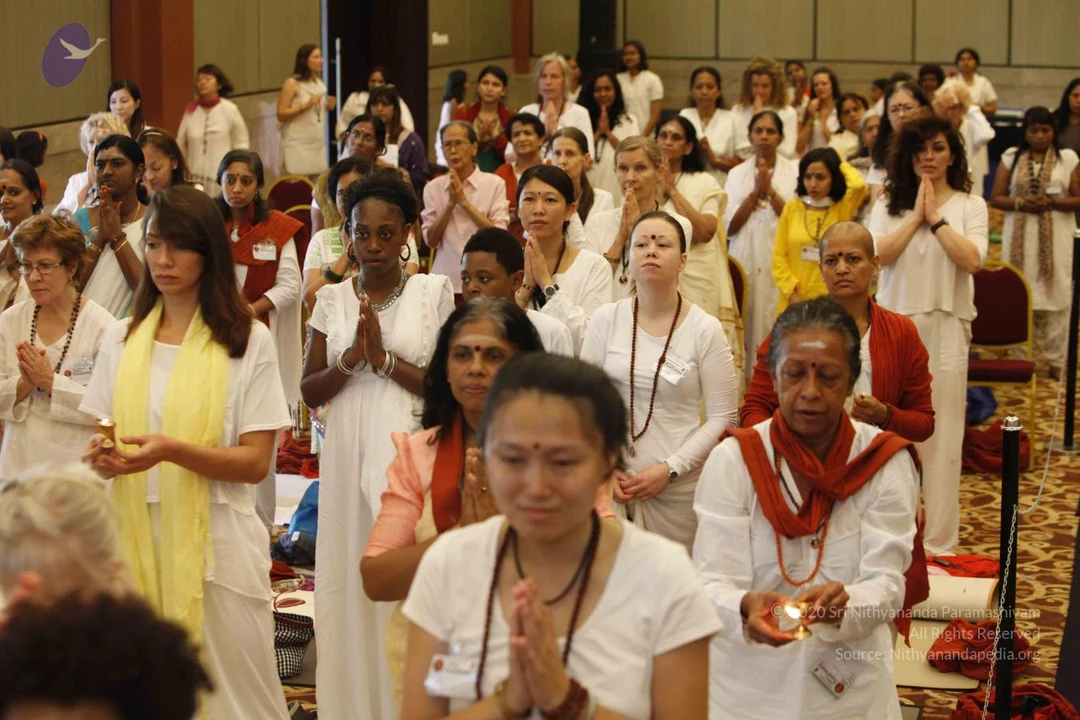
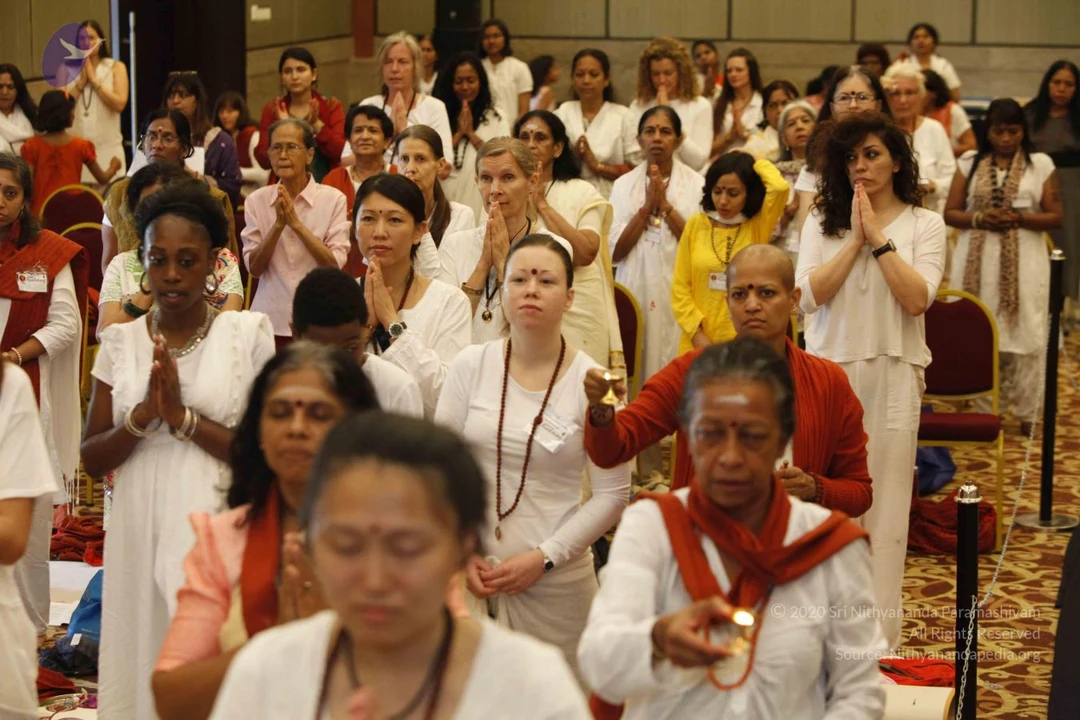
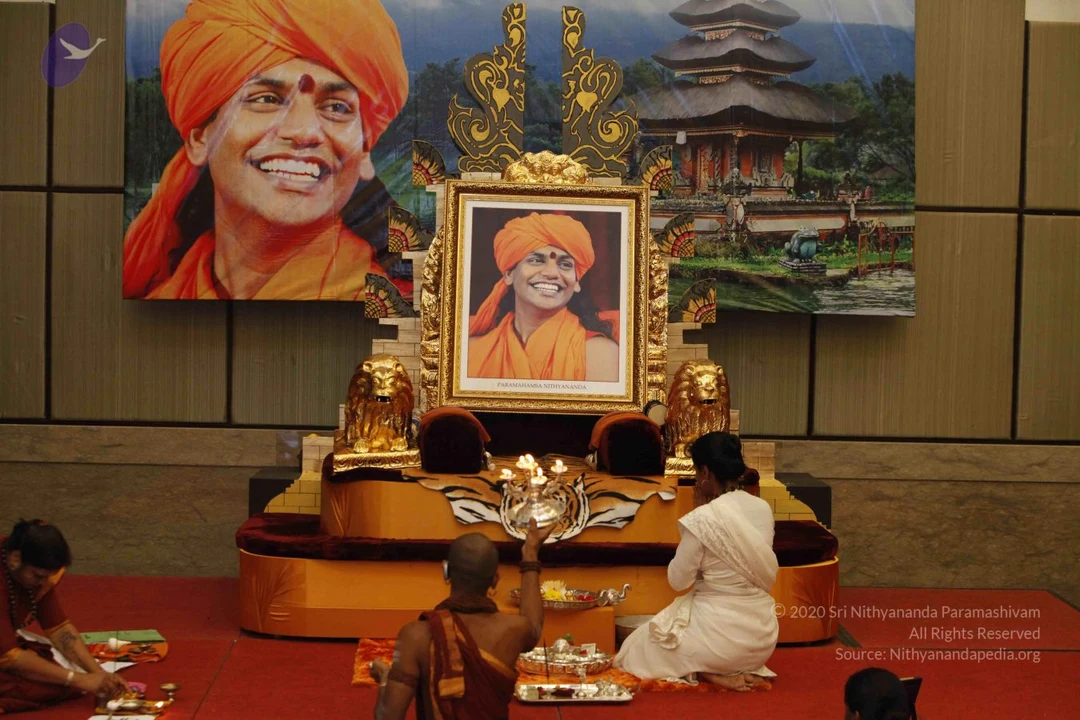
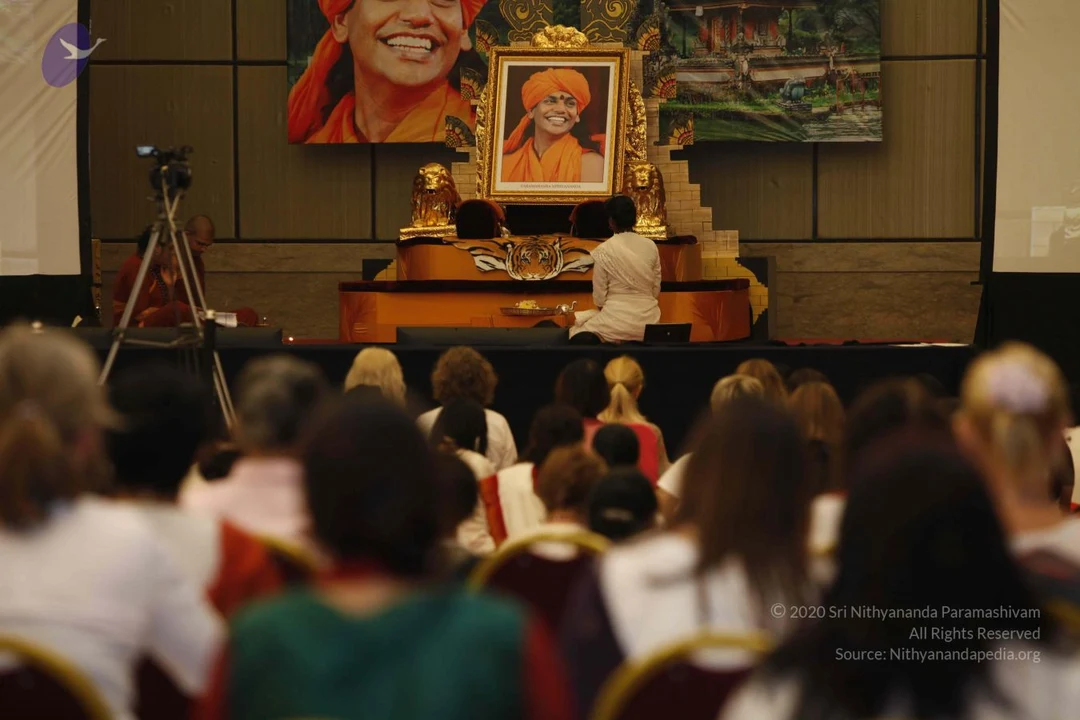
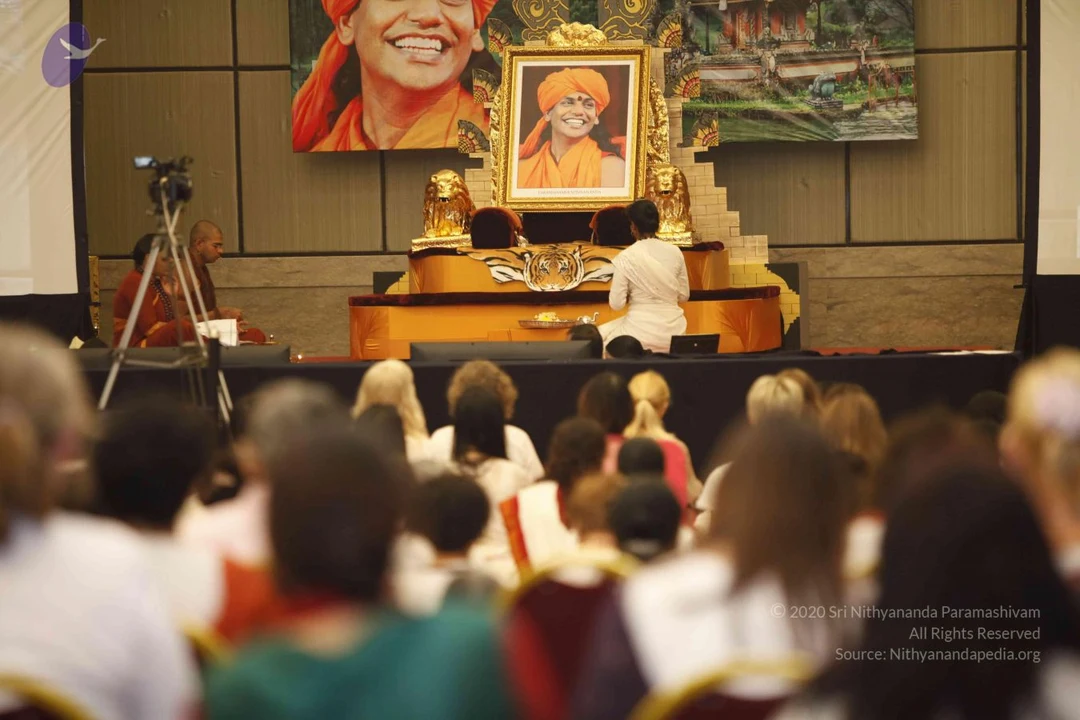
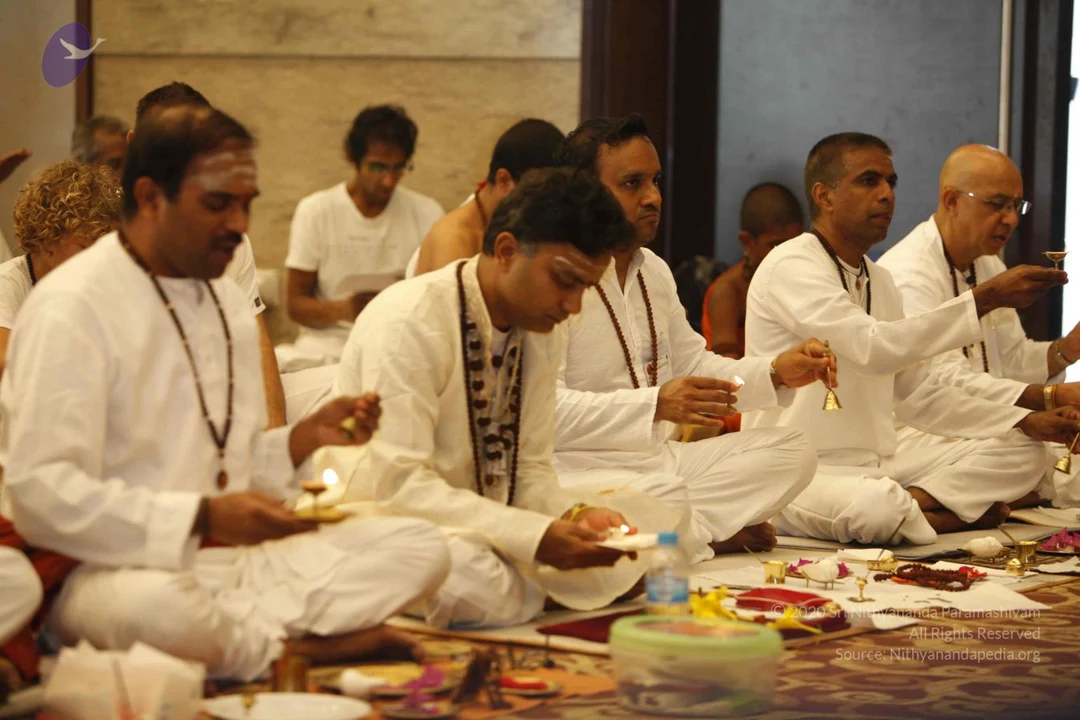
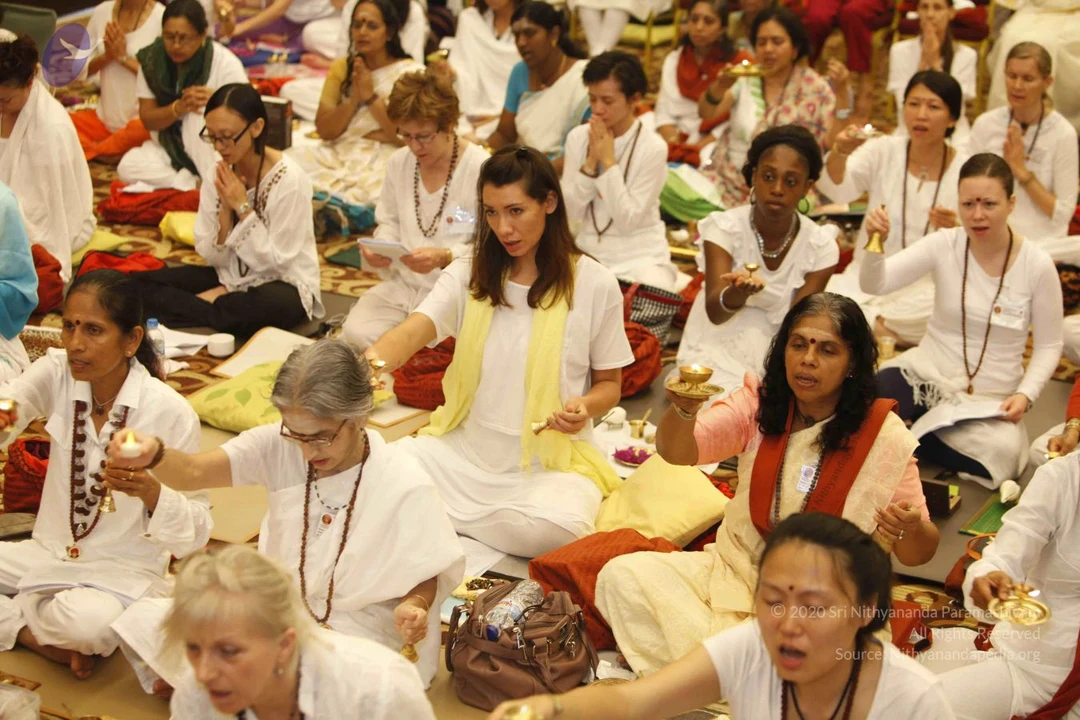
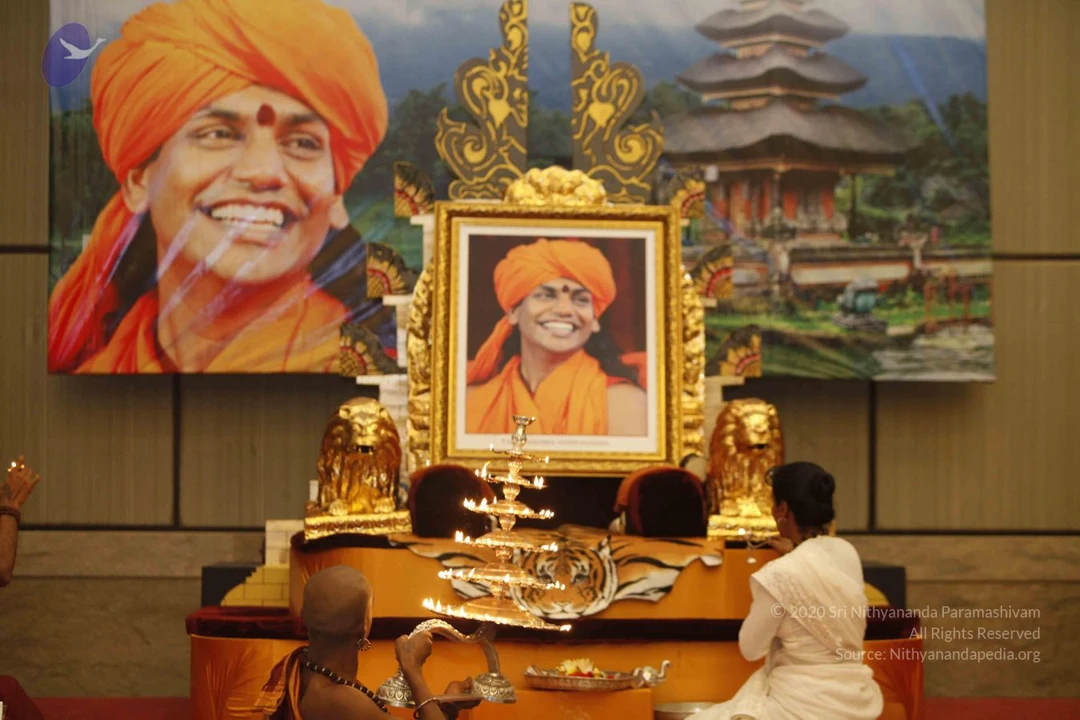
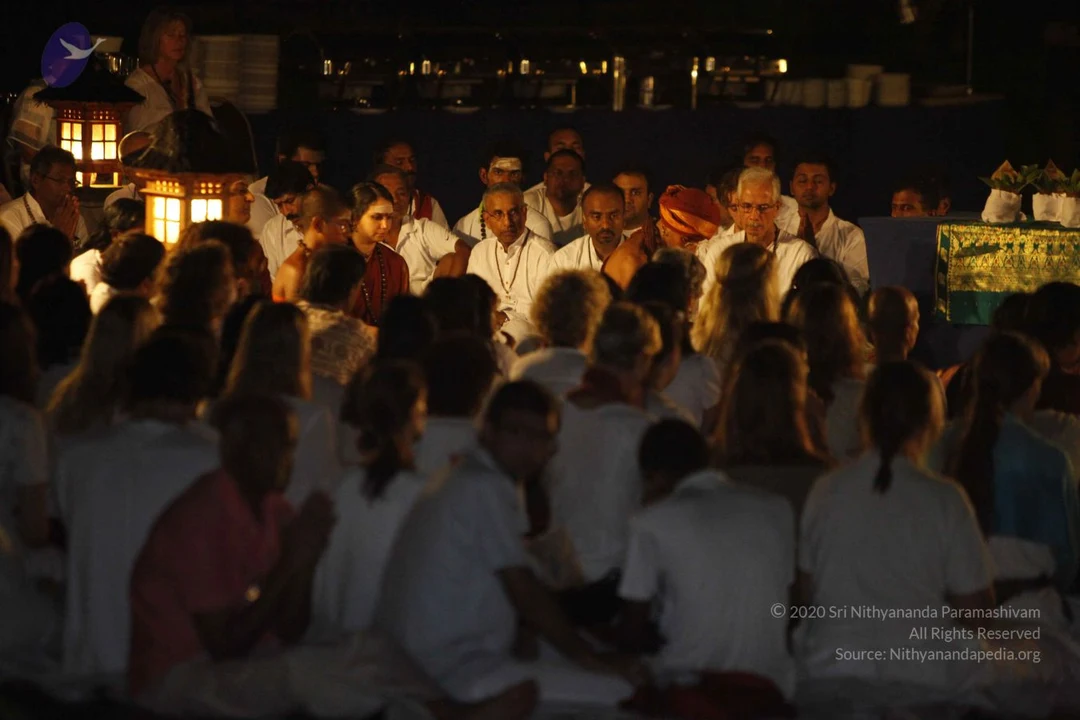
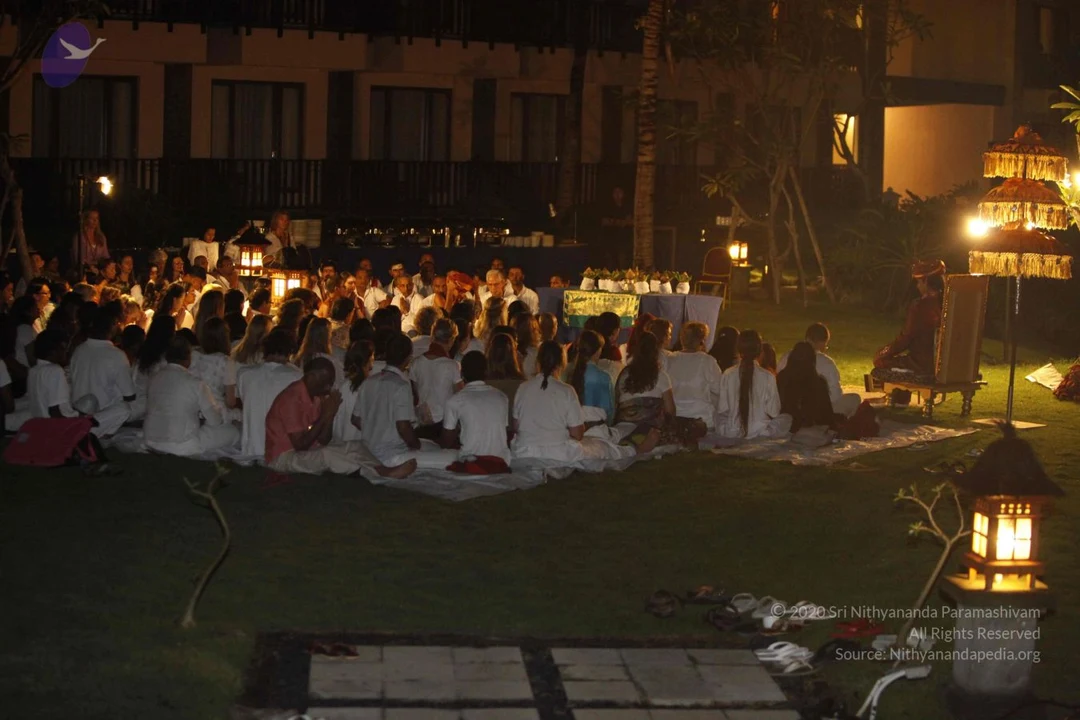
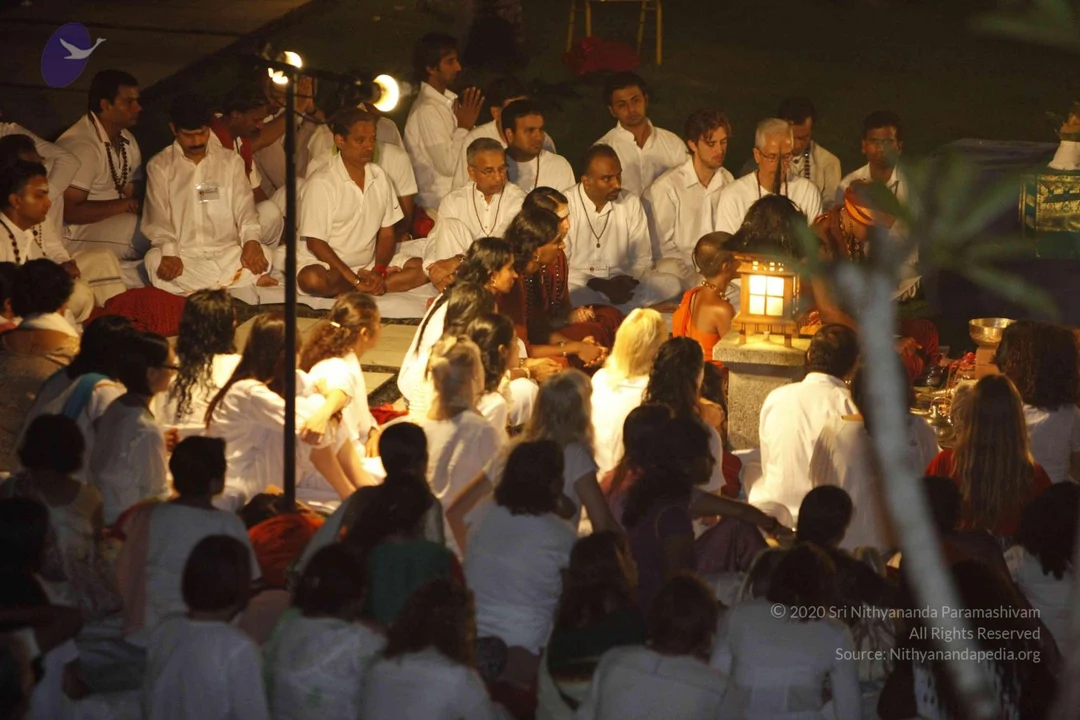
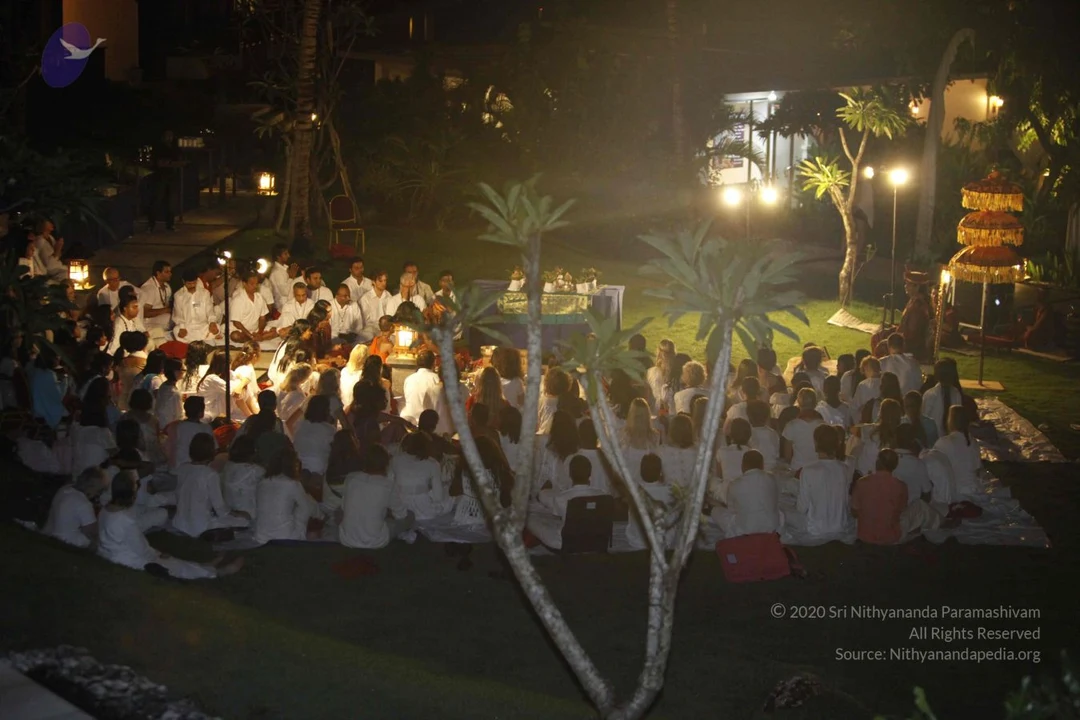
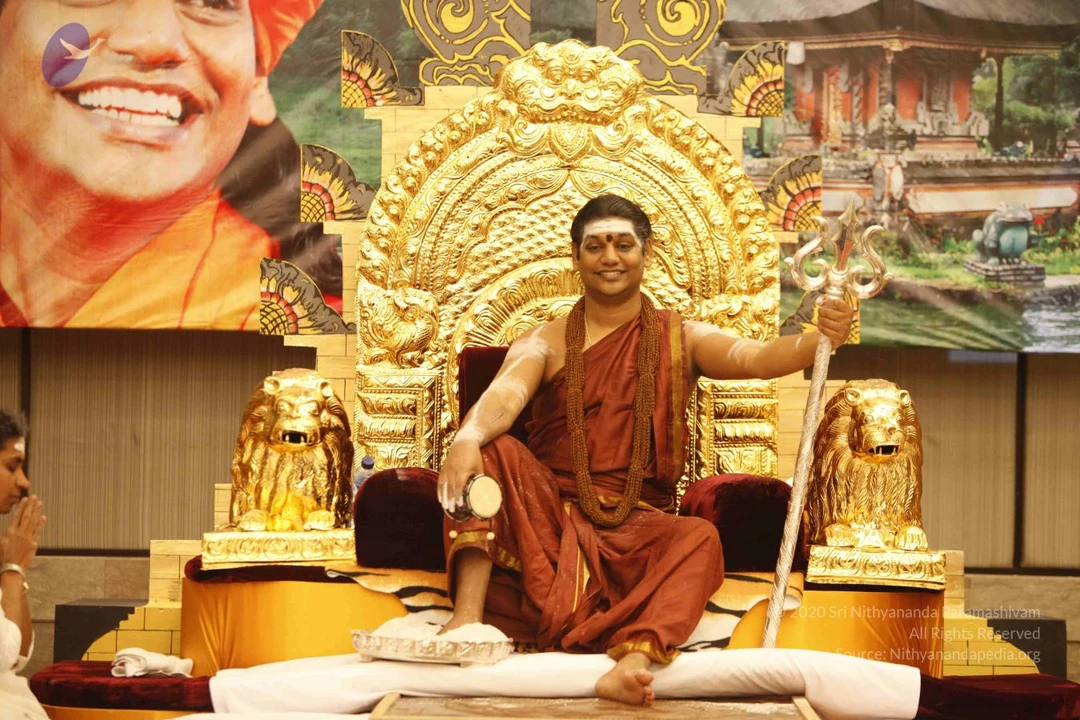
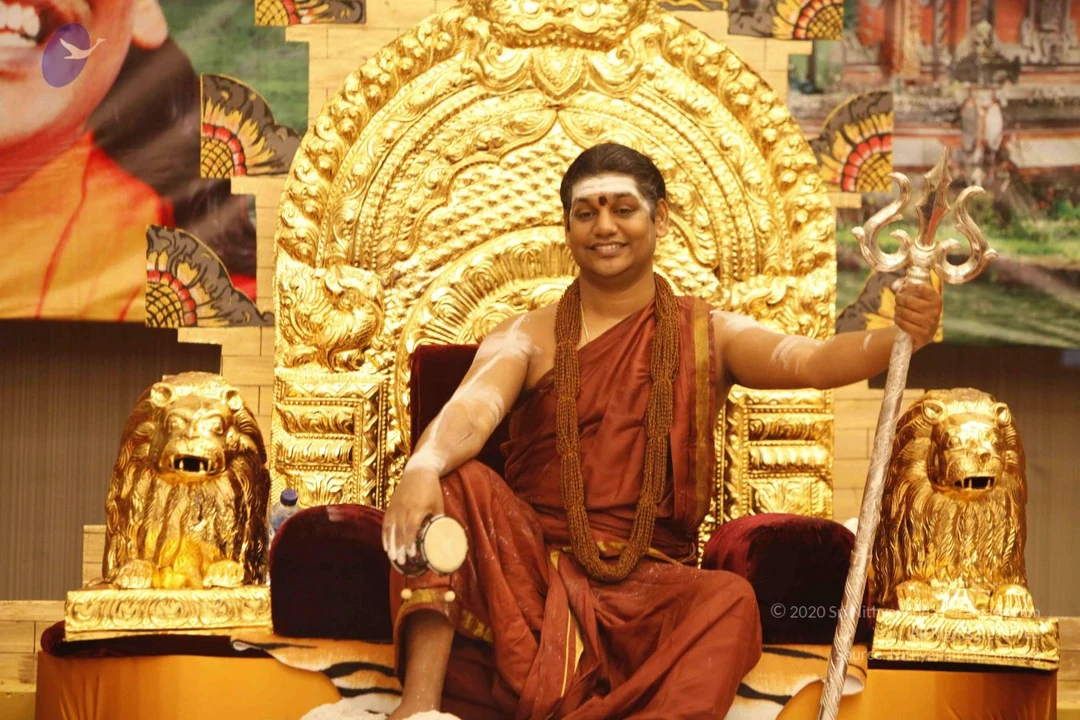
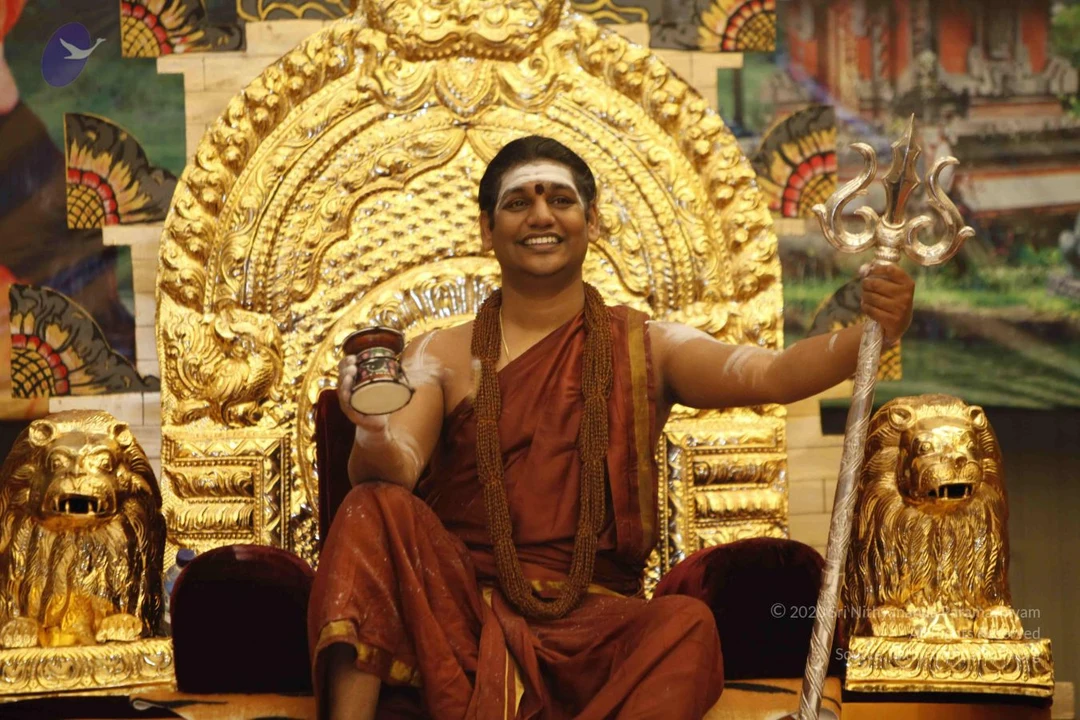
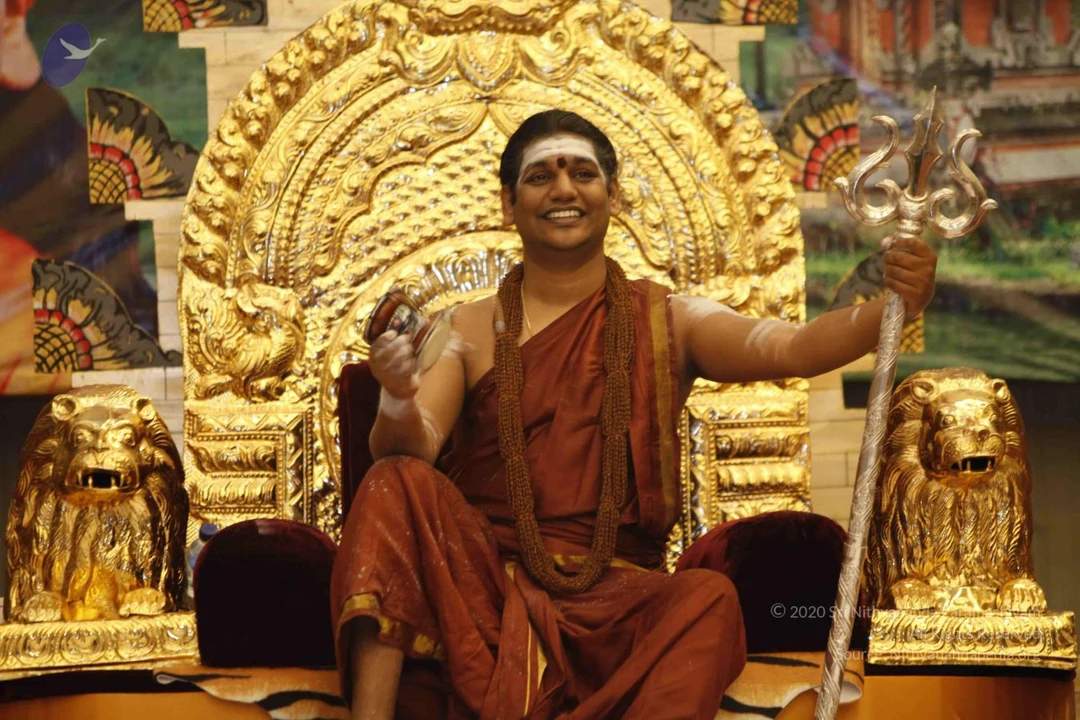
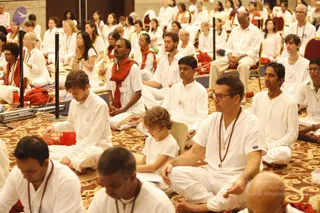
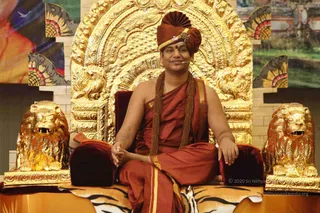
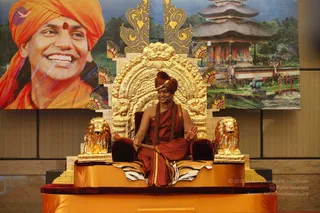
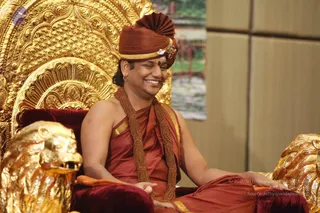
Nithyananda Diary | Bali Inner Awakening Day - 9 | Padapuja | Satsang | Meditation | Sarvadarshan

Dated photos
416
Source pages
1
Media
2
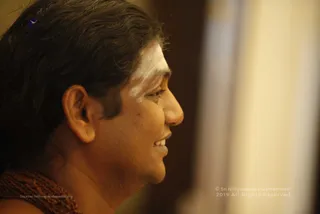
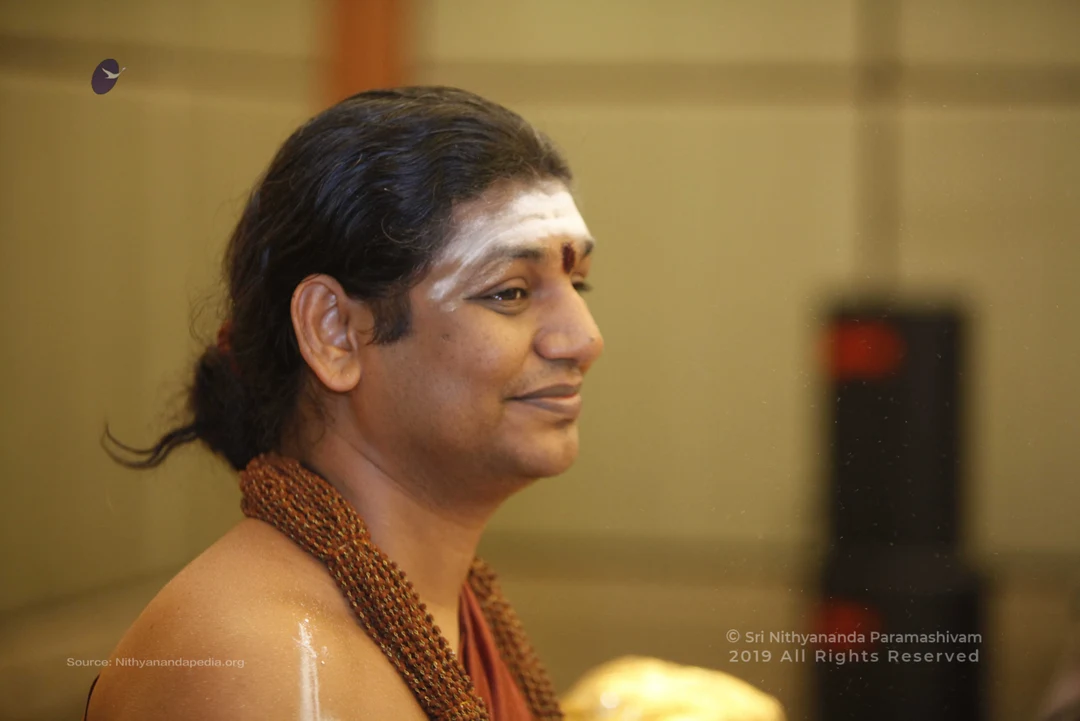
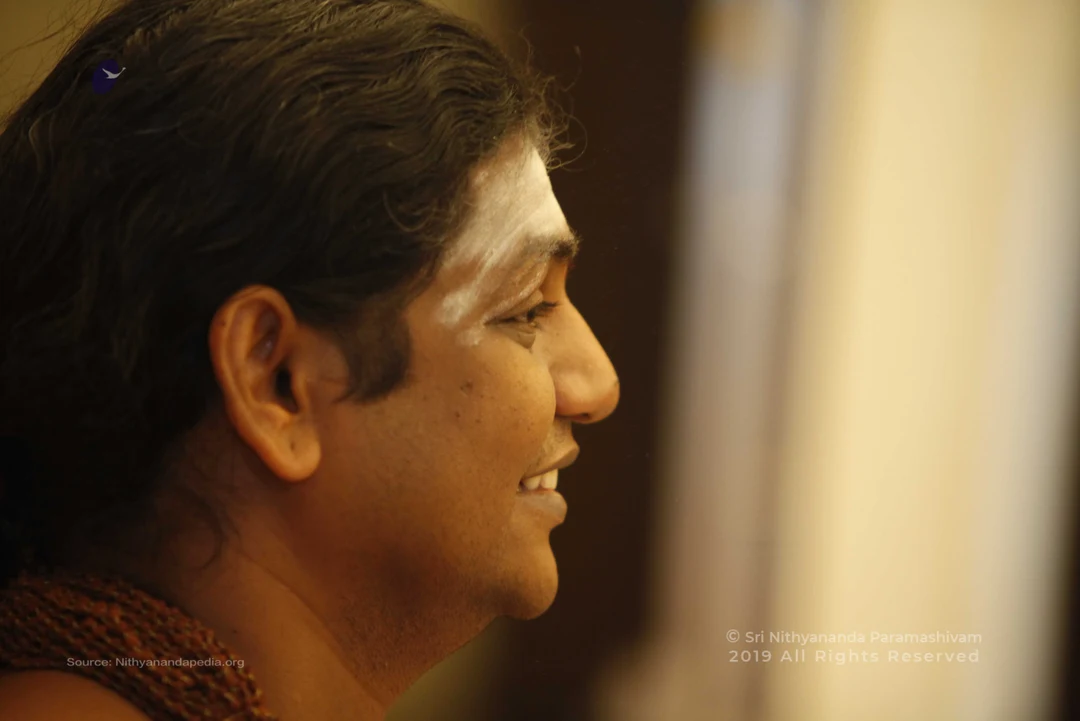
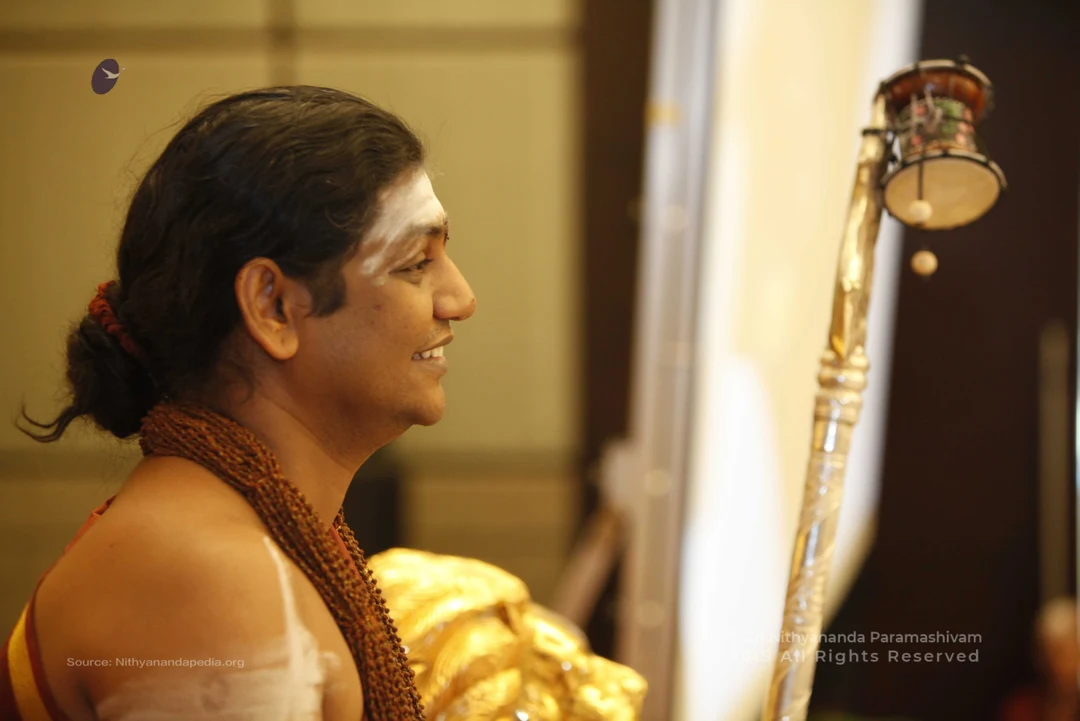
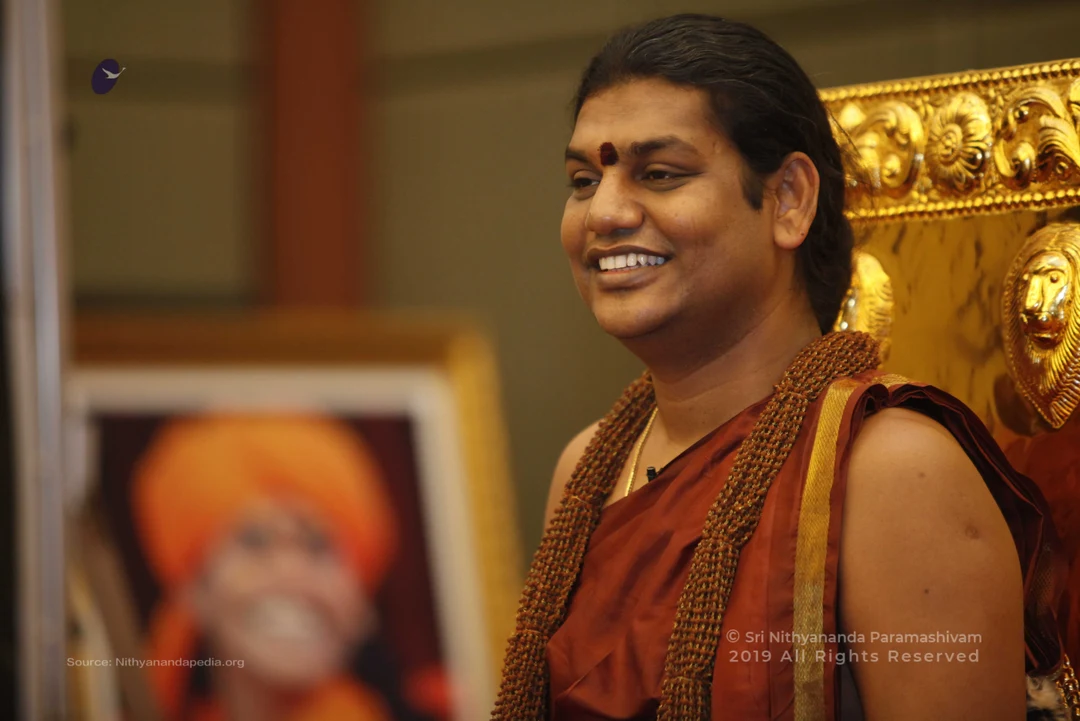
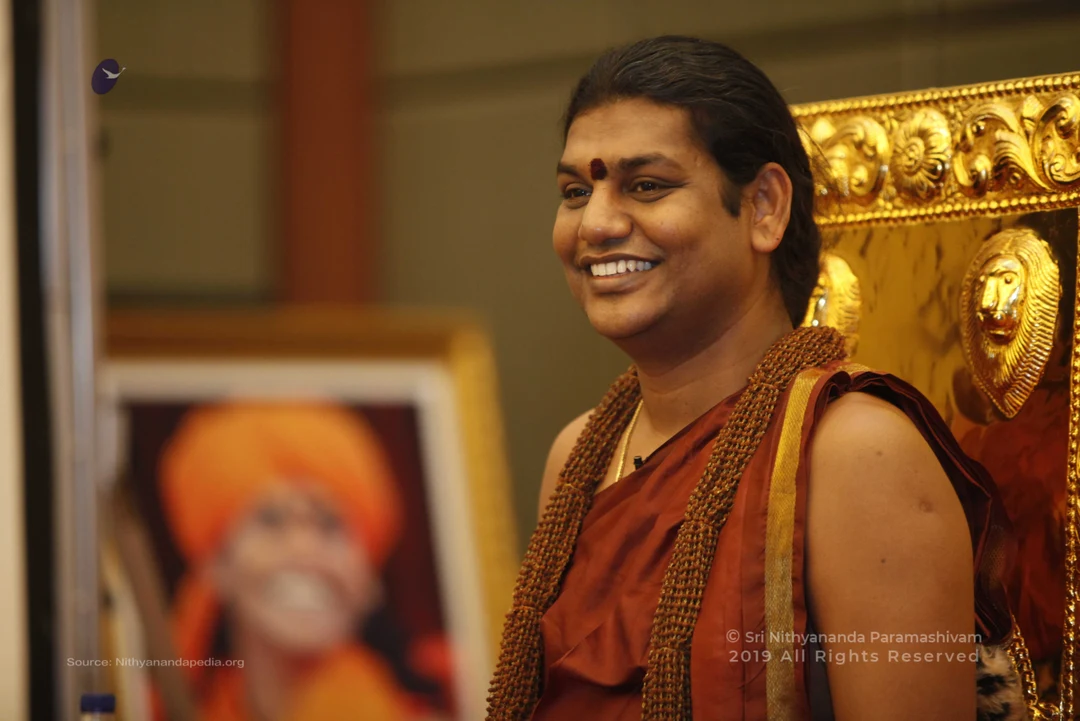
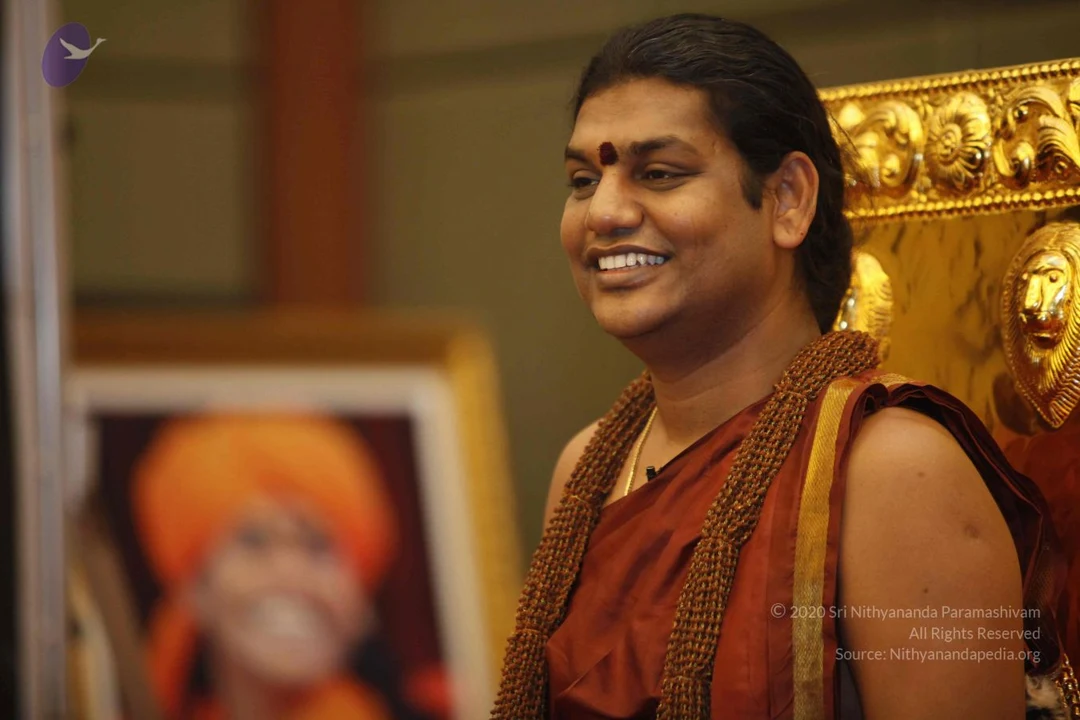
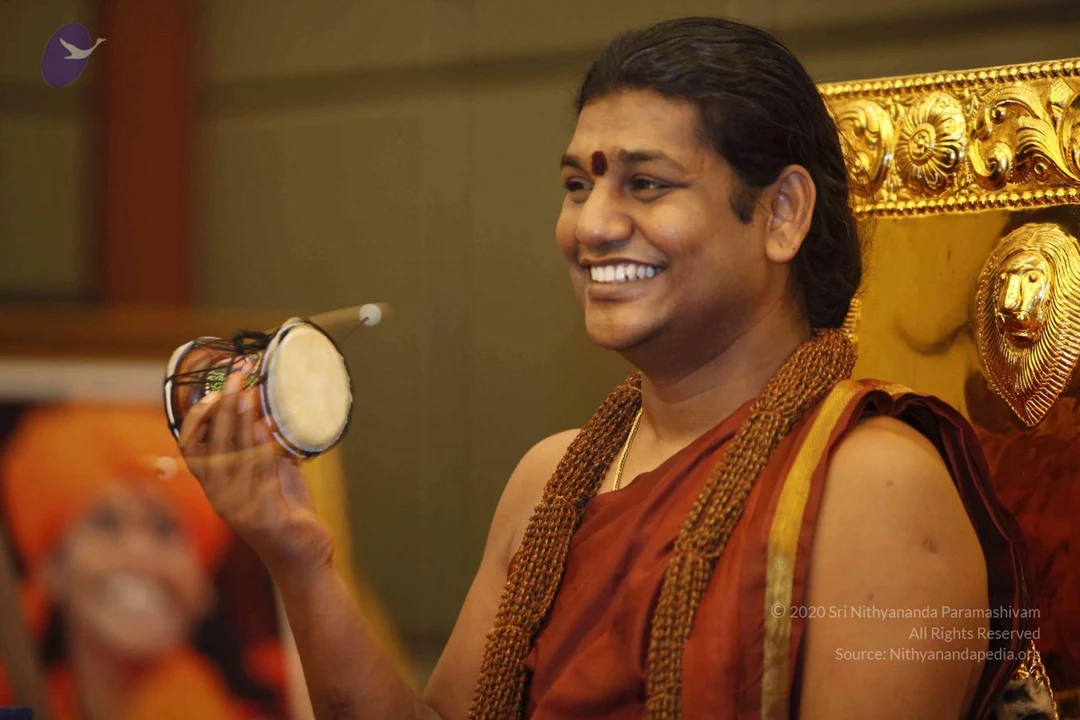
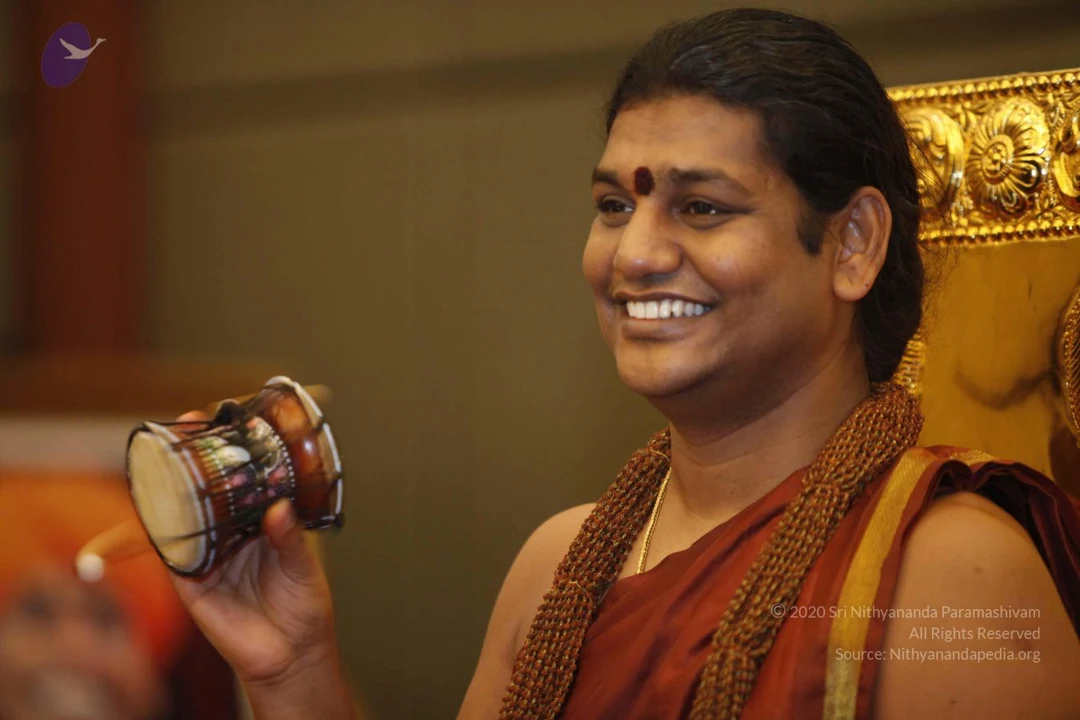
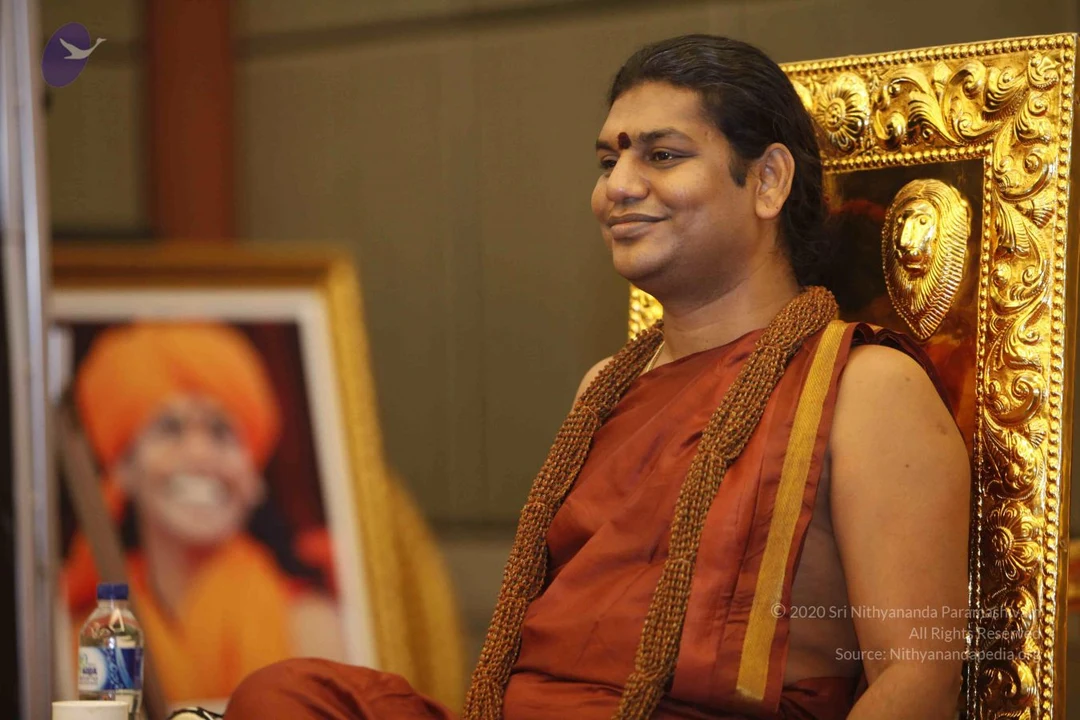
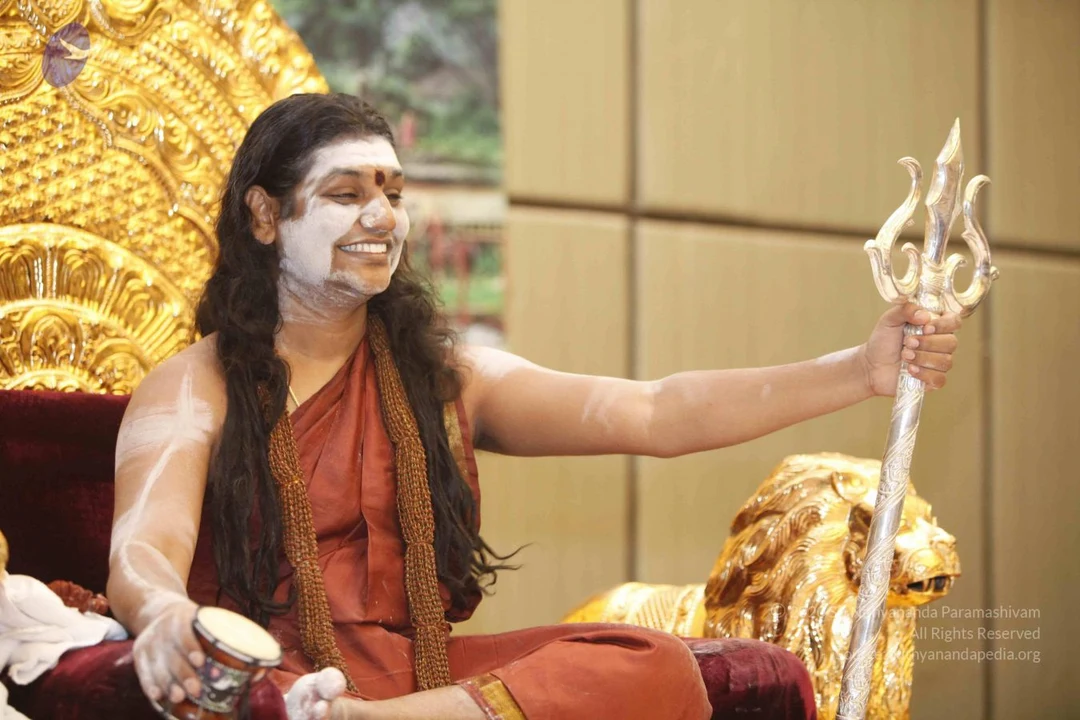
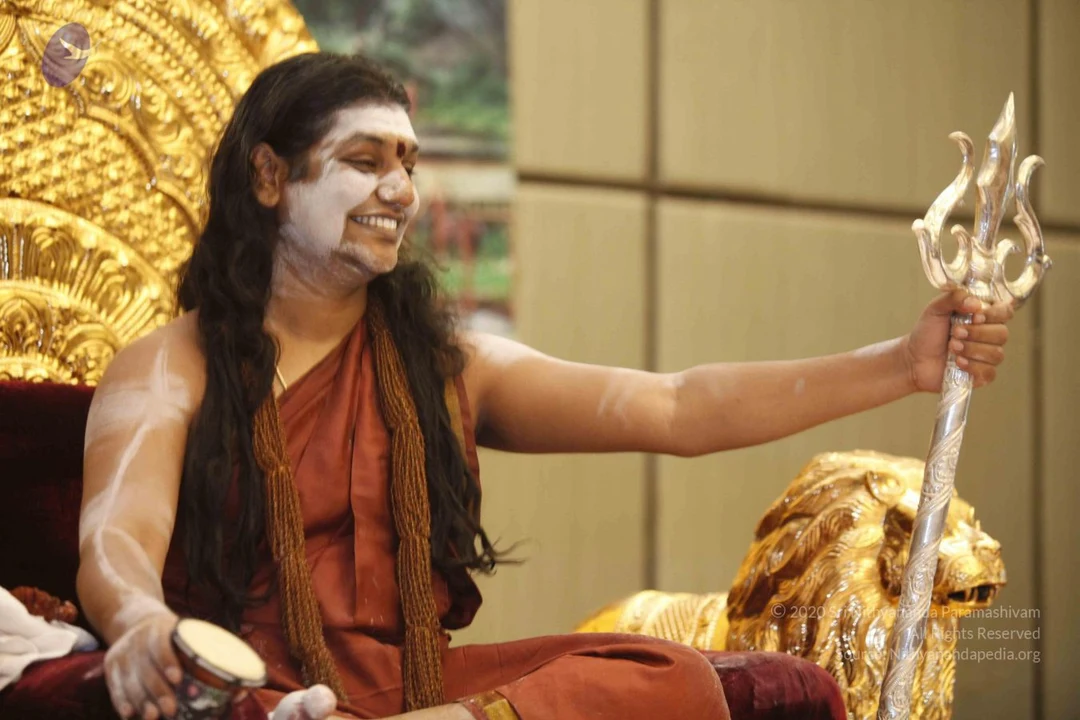
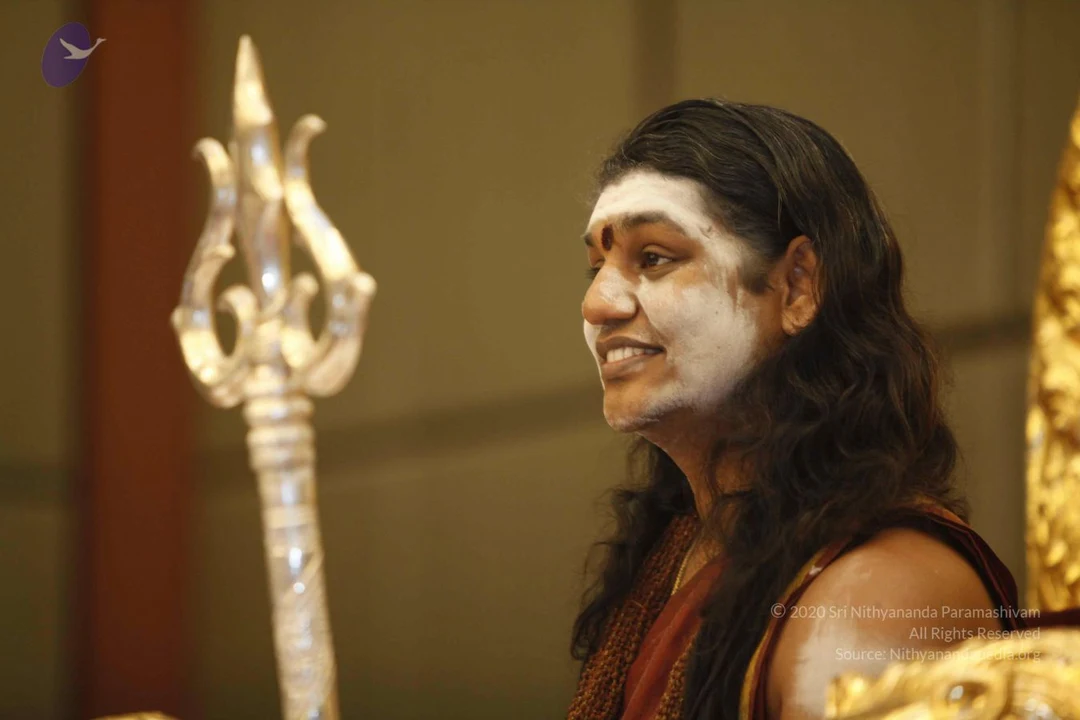
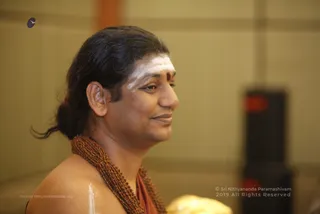
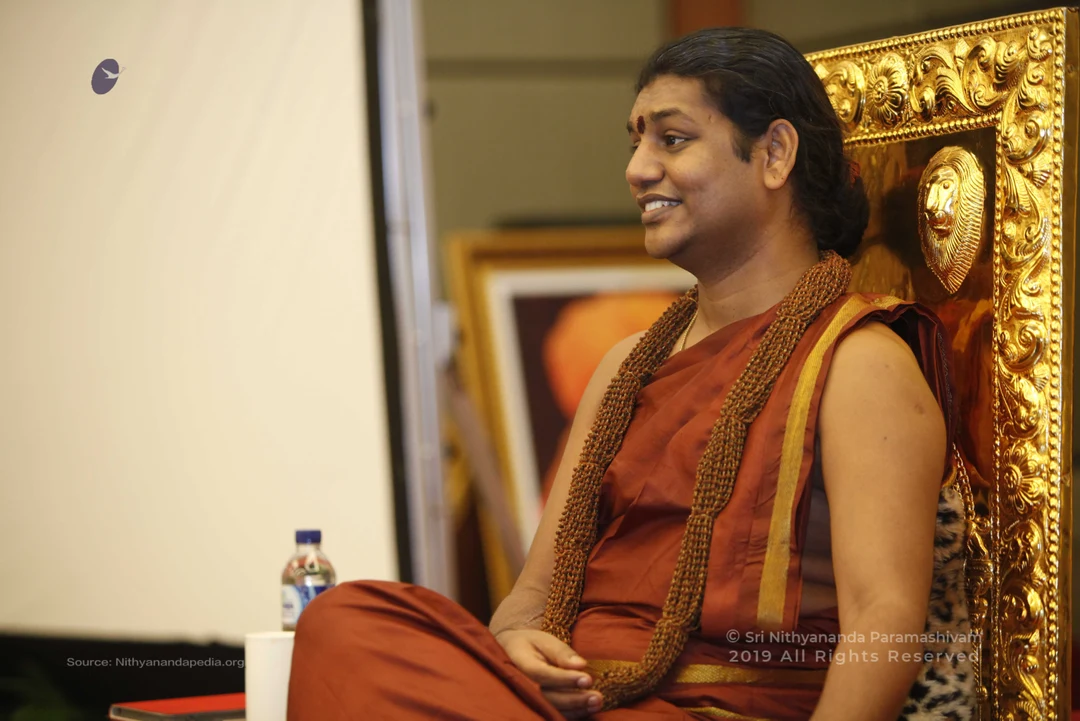
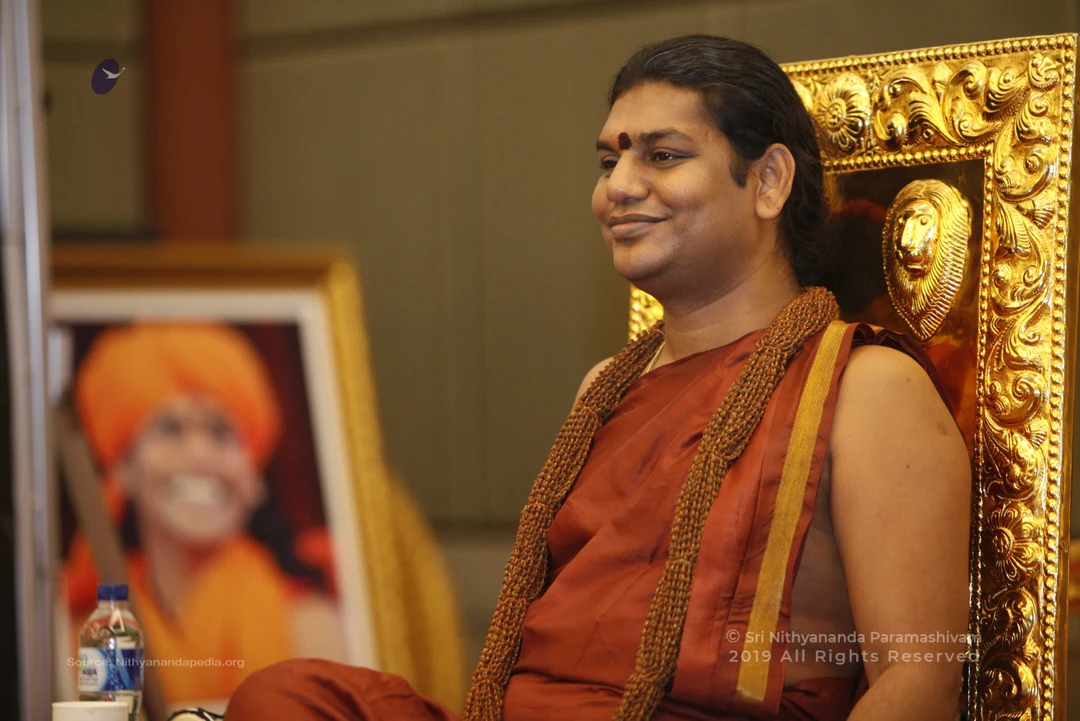
Close side profile photograph of a smiling man with long dark hair swept back, a white vertical tilak mark on his forehead, and a reddish-brown beaded rudraksha mala at the lower left of the frame. He gazes toward the right against a softly blurred warm background with a pale vertical panel. The visible cues of long hair, white forehead marking and rudraksha mala are compatible with the page's reference to a person, but the appearance is not distinctive enough to confirm identity, so this is described as a person with uncertain identity.

December 09 2013

Original wiki page
Contents

Title

Nithyananda Diary | Bali Inner Awakening Day - 9 | Padapuja | Satsang | Meditation | Sarvadarshan

Description:

In today’s morning satsang from Bali Paramahamsa Nithyananda expanded on the practical implications of infinite gods who are all infinitely powerful and have infinite intelligence. He explained how all sampradayas are true and that there is no need for fighting since all gods are infinitely powerful and fighting is an expression of powerlessness and no one needs to declare supremacy over others.

Link to Video:

VideoAudio

Transcript:

Nithyanandeshwara Samaarambhaam Nithyanandeshwari Madhyamaam | Asmath Aachaarya Paryanthaam Vandhey Guru Paramparaam ||

I welcome you all with my love and respects. I welcome all the devotees, disciples, samajis, satsanghis sitting with us all over the world at this moment through Nithyananda TV, Sadhna TV, Lotus News Channel, Janashree TV, Eshwar TV, and two-way video-conferencing.

Cities sitting with us through two-way video-conferencing: Nithyananda Nagara-Bidadi, Nithyananda Nagaramu-Hyderabad, Nithyananda Nagaram-Tiruvannamalai, San Jose-Madurai, Los Angeles-Arunachalam, San Dallas, Simi Valley-California, Bangalore-North, Seattle-Chidambaram, Paris-HomeTemple, Varanasi, Oklahoma-Somanatham, Guadeloupe-Rameshwaram, Ohio-Prayag, Toronto-Kailasam, Singapore-Singapuram, New Zealand-Adi Arunachalam, Dubai-Vaidyanatham, Port-Washington-New York, Hyderabad-Gupta Kashi, San Diego-Tirualavai, Dakota Dunes, Calgary-Amarnath, Bogota-Colombia, Devon-UK, New York-Varanasi, Bangalore-Malleshwaram, Oman-Sivagangai, Jorpati-Nepal, Astoria-New York, Kathmandu-Nepal, Hosur-Dhyanapeetam, Chicago North, Colorado Springs-USA.....................

I welcome all of you with my love and blessings.

Today I will continue to expand on the revelation I was giving yesterday, the experiential expression– “infinite gods with infinite powers, with infinite intelligence”. Because, each one of them are independently infinitely intelligent, there is no need for any one controlling mechanism or guiding mechanism.

Many of my disciples cannot tolerate that! Some of my sannyasis and ashramites, they were asking me.....yesterday, big debate! ‘No, no, no, what do you mean? If you tell this, then no one needs to do anything! They will all tell they are God, they don’t need to do any Completion! They will not regulate themselves! They will not do any spiritual practice! They will do what they want!’

I said, ‘Let them do. What is the problem!’ I told my disciples who asked, I said, ‘I think you have a deep incompletion about your failures and self-doubts. Out of that incompletion you want me as a part of your life.’

Please understand, out of any incompletion if you want me as part of your life, you will not have me in the right way. I should be only Guru, enlightening you, not as a CEO, boss or time-keeper monitoring your activities. I am the last one! No! I don’t want to be any of that! I don’t want to be any of that! Because you have incompletions with your self-doubts, you expect me to fill all those gaps, you want me to play all those roles. That is why you think I should play this role for everyone. No! It is very important for you to know I should play only the role of Guru, enlightening you. That is it! That is it! And when I say ‘That’s it!’, I mean “That’s it!” Not any other role like a boss, CEO, organization head, no! I should not be playing any of that role in your life.

Please understand, when you think you are God and infinitely intelligent, automatically you will live in that space of Completion; Integrity will be your breath, Authenticity will be your hand movements, Responsibility will be your stomach movements, Enriching will be your life. You don’t need separate teachings. You will understand you are God, you are complete, you are independent intelligence only when you are complete. You cannot use the “God” mask to cover something on your face. Godliness cannot be used as a mask; it comes as a “tejas” from inside. It cannot be used as a mask to cover something on your face, but it comes as brightness from inside.

I tell you, all these mundane questions, I think not only these questions look mundane for me, I think many of you these questions will look mundane, especially after going through this Level-4 processes. I tell you guys, this Inner Awakening Level-4 is the best program I have ever conducted! Even if the program ends today, I will feel job satisfaction. It is not going to end, don’t worry! Even if it ends today, I will feel I have done my job. Of course, we have more work. This is the best program I have ever conducted! Blessed are those especially who have done Level-1, Level-2, Level-3 and come here; because you guys can catch the whole thing without missing. Most blessed are those who have done two Inner Awakenings and come; because it is like a very strong foundation. Even if you have come straight, it is okay; if you catch it, that is enough; if you catch the spirit of the whole program, that is enough. Because, many of the unsaid things, if you catch if you are first timer. What a experience.

So, today, I wanted to expand with some more addition of that experiential expression, “Nithyanandam”, the practical implications of that principles, that experiential expression. The word “principle”, “philosophy”, none of these words will suit, can be equivalent to “experiential expression”. I will use the word, Sanskrit word “Tattva” – “experiential expression”. “Tat” “Tva” – “the Truth” “You”. The Truth told to you. “Tat” “Tva” is Tattva. Experiential expression, the equivalent word in Sanskrit is “Tattva”. I have no equivalent words in English. So, this tattva, the Nithyanandam, the tattva, I will expand with some more detail. And the practical implications of this tattva, the practical implications of this tattva is called “Tattva Gnana”.

First principle: All of us are Gods.

Second: Not equally powerful, but infinitely powerful.

Please understand, infinite gods, each of them infinitely powerful! How much power to express and radiate is up to us. Infinitely powerful and, please listen, infinitely powerful and infinitely intelligent. Please listen, this word I am adding today; I have not added that word yesterday, today I am adding – “infinitely intelligent”. Because we are infinitely independently intelligent, we don’t need one boss, supreme godhead, whatever you name it; it is not required. We can just live trusting our intelligence. Our intelligence is enough unto itself. The constant self-doubt and self-denial makes you feel the need for the superior forces in your life, the correcting forces, guiding forces, which is not required actually. Only this tattva, experiential expression, satisfactorily answers all the philosophical questions, doubts by various groups, various philosophies, various Puranas.

So, understand, because Shiva Purana says all gods and goddesses cant even find the head or feet of Mahadeva, Brahma and Vishnu can’t even find the feet of Mahadeva; Vishnu Purana goes to the extreme of saying even Shiva is established only on Vishnu, Vishnu is the base; In Puri Jagannath Temple, even now Shiva stands as a guardian! If you have been to Puri Jagannath Temple, you will see Shiva and Brahma both stand as guardians outside the temple! And if you go to Shiva temples, they put Vishnu behind Shiva with folded hands at his feet, that ‘I am not able to find your feet’; Brahma with folded hands saying ‘I am not able to find your head’! That is actually the story of Arunachala. Brahma and Vishnu are not able to find the head and feet of Mahadeva! And then comes Devi Purana which says all Dashavataras came out of the nail polish of Devi! Not even nail, just nail polish! Then comes ISKCON; they declared even Narayana is a demigod, only Krishna is God! They go to the extreme of even saying even Narayana is a demigod, because he has four hands! Only Krishna is supreme personality of godhead! Ofcourse each ones faith, we are nobody to question. That’s the beauty of Hinduism. Then comes Swaminarayan Sampradaya; they say Brahma, Vishnu, Shiva, all of them come in every Yuga and go, and Swaminarayan only creates all of them and sends. For each Yuga, Brahma, Vishnu, Shiva come; Bhagawan Swaminarayan creates all of them and sends. Now I know what all my disciples are going to do!

But, I tell you, no Sampradaya is false, all Sampradayas are true; because each god is infinitely powerful, infinitely intelligent. If you think Mahadeva is the ultimate, that is the truth for you, you will experience that. If you think Krishna is the ultimate, that is the truth for you, you will experience that. If you think Bhagawan Swaminarayan is the ultimate, Akshardham is the ultimate, you will experience that as the truth. You will experience that! If you think Nithyananda is ultimate, that is the truth for you, you will experience that. No need for fighting at all. No need for fighting.

So, understand the practical implications of this great truth: Infinite gods with infinite powers, infinitely intelligent! I, again and again, feel, more than talking, this tattva can only be transmitted in Upanishad; just mirroring of the neuron activity only can transmit this tattva in you. How much ever I talk, talk, talk, talk, you will have questions. Upanishad is the best way to transmit the tattva, experiential expression of this great tattva, Nithyanandam, which solves the questions, queries of all the different religious philosophies, and which is the only solution for all terrorism, religious terrorism. This tattva completely removes fanaticism and eradicates religious terrorism, because it is based on the truth, co-existence. All gods infinitely powerful, infinitely intelligent! So, Varuna does not need to be controlled by Vayu. Vayu does not need to be controlled by Indra. Indra does not need to be control Allah. Jesus does not need to control Krishna. Buddha does not need to control Jesus. Mahadeva does not need to declare his supremacy. You don’t need to fight with everyone that Nithyananda is the ultimate incarnation. So, no need for any fight. You only need to express your power and intelligence more and more; that’s all. Not by declaring supremacy over others. Declaring supremacy over others comes only because you feel powerless, not because you feel powerful. When you feel powerful, you won’t feel like declaring supremacy over others. When you are powerful, you will only feel compassion towards others; you won’t feel like declaring supremacy over others. Declaring supremacy or war is peak of foolishness. Bunch of groups gathering together and declaring supremacy over the other groups is collective foolishness. No one needs to declare supremacy over others. Infinite gods with infinite powers with infinite intelligence!

Now, let us sit for a few minutes in mirroring the neuron activities of the Ultimate Consciousness, the Master, in Upanishad. Namah Shivaya!

UPANISHAD IN PROGRESS.....................

I bless you all! Let you all radiate with Integrity, Authenticity, Responsibility and Enriching, with eternal bliss, Nithyananda!

Photos
Tags:

Paramahamsa Nithyananda, infinite gods, infinite power, infinite intelligence, sampradayas, truth, fighting, expression, powerlessness, supremacy

Photos Of The Day:
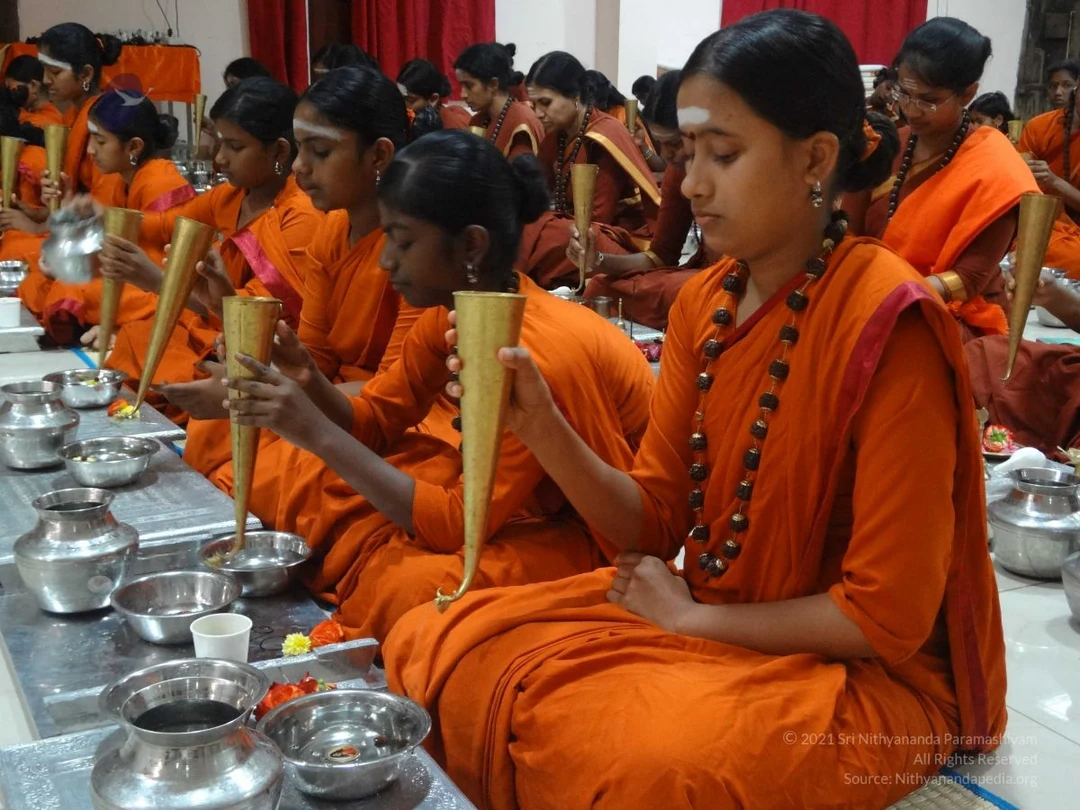
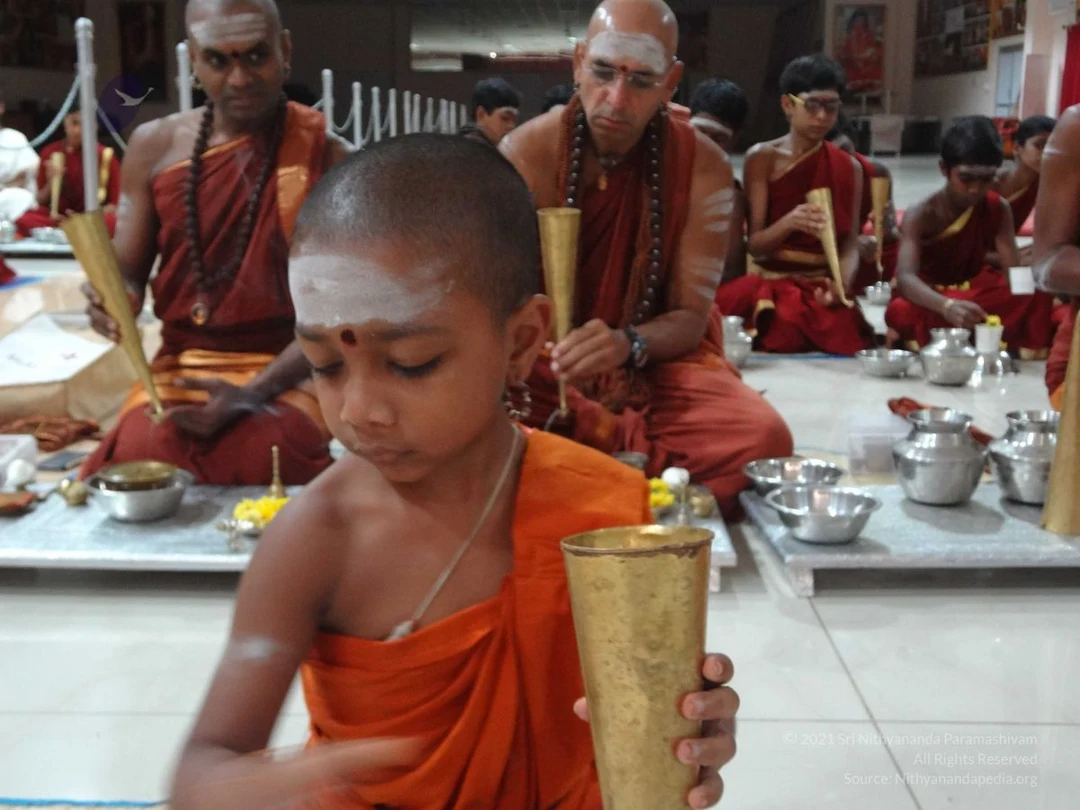
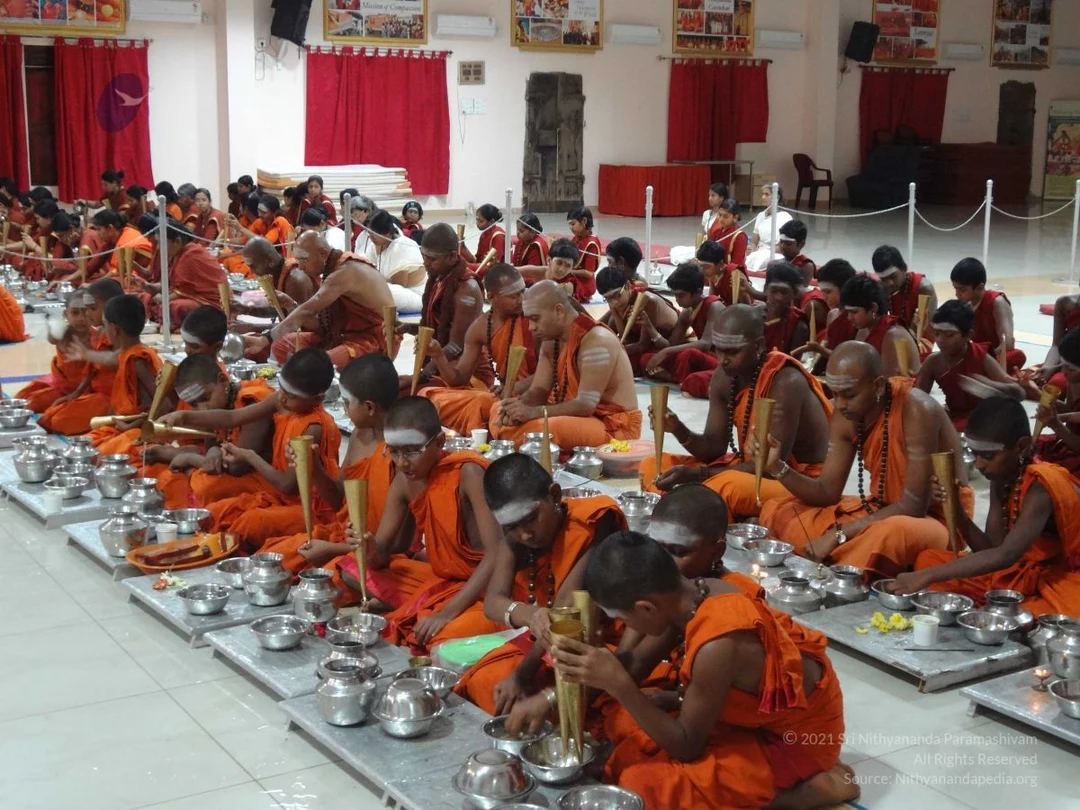
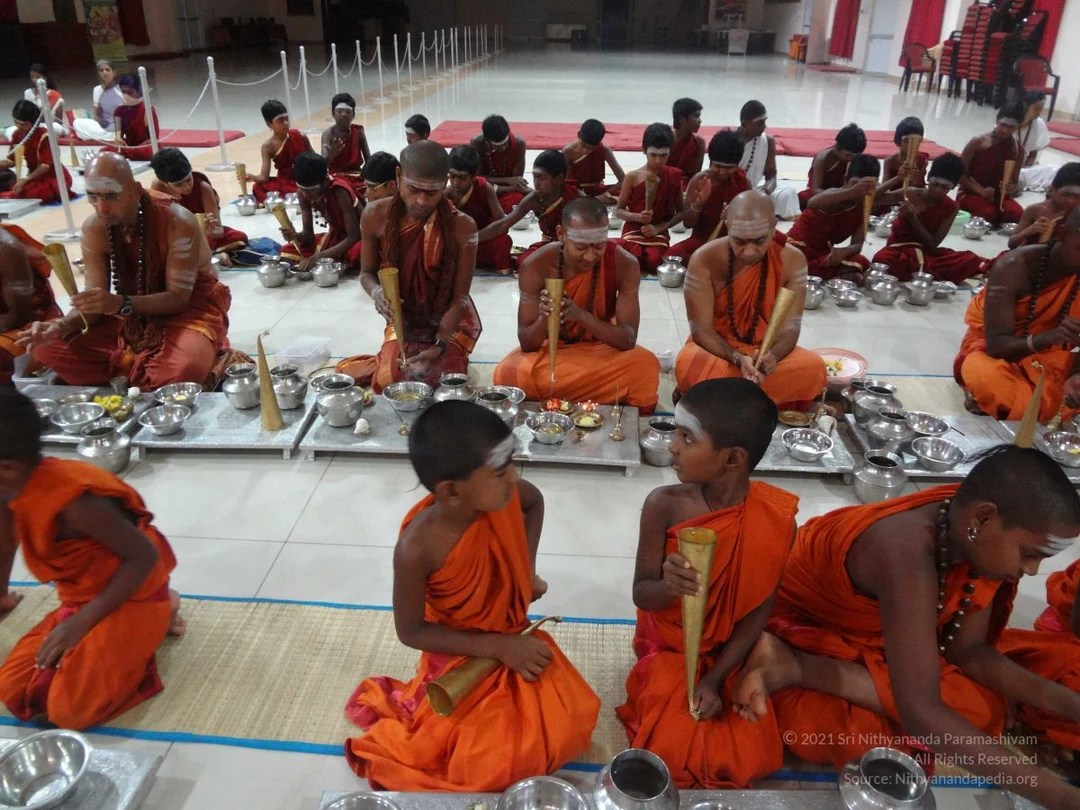
Rudra Abhishekam

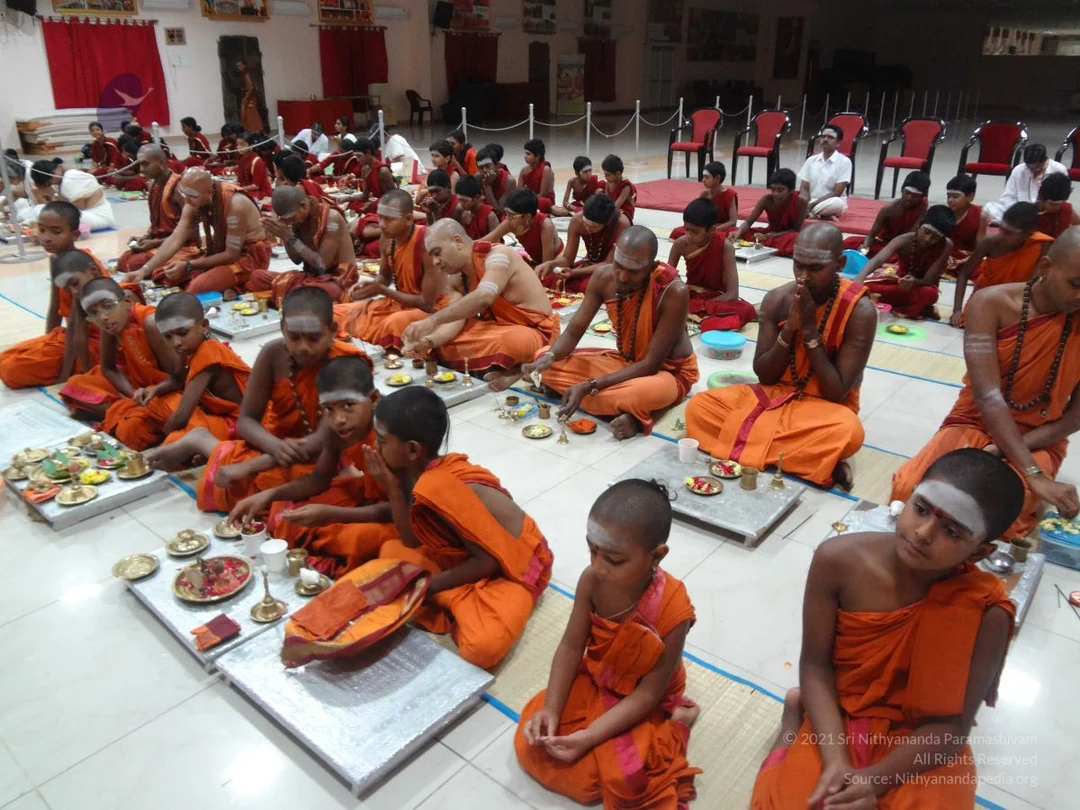
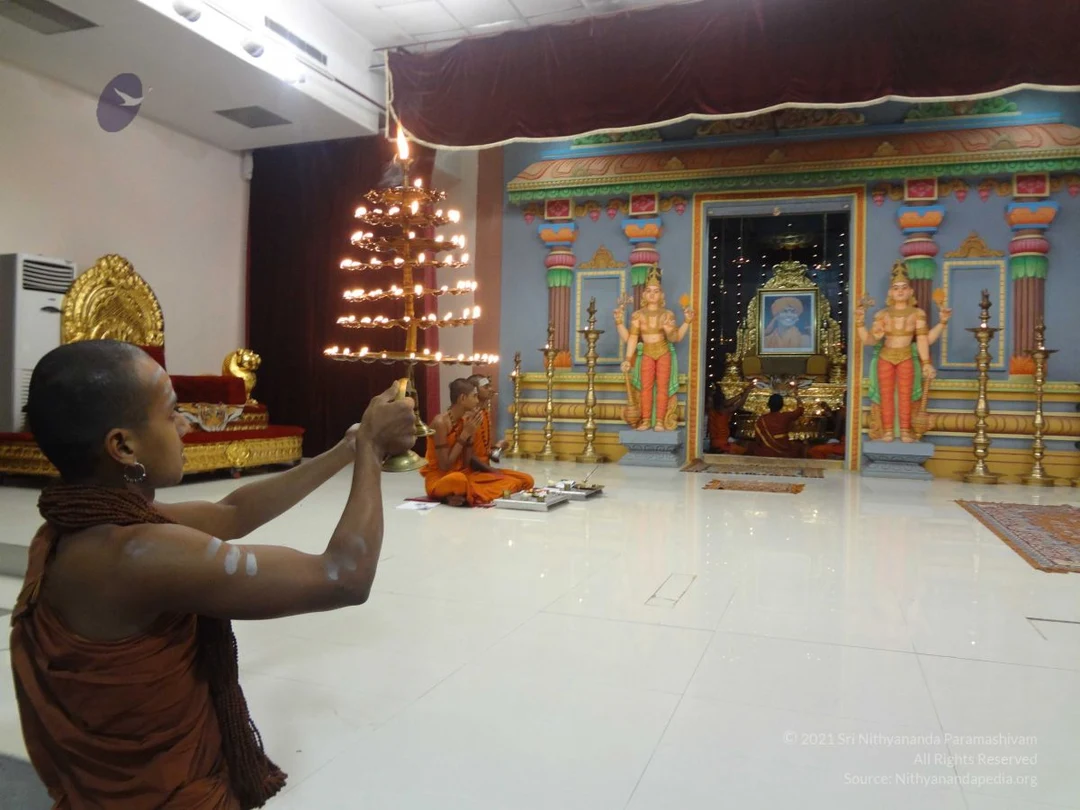
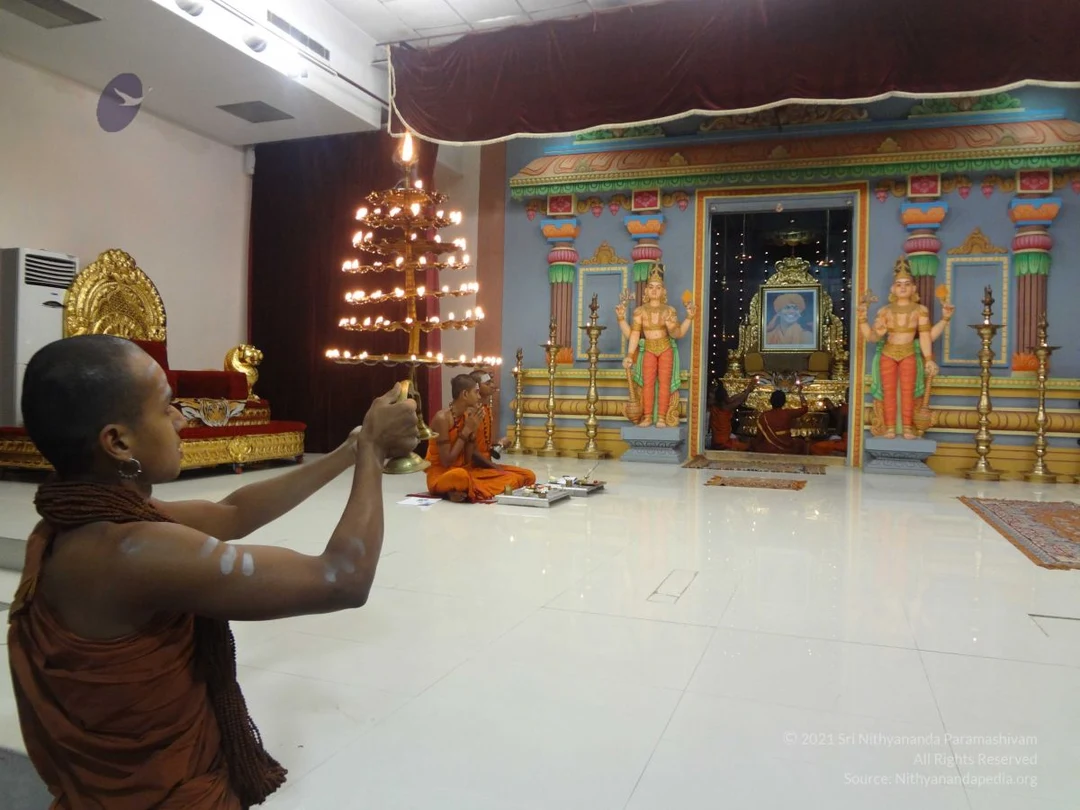
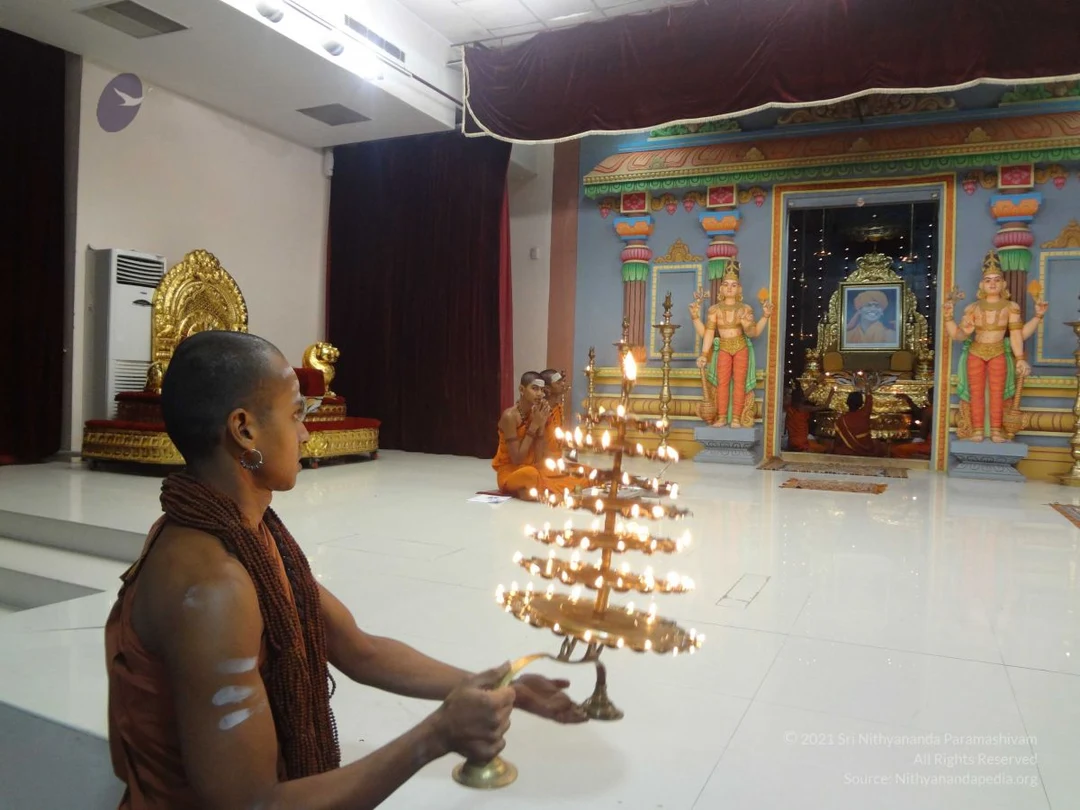
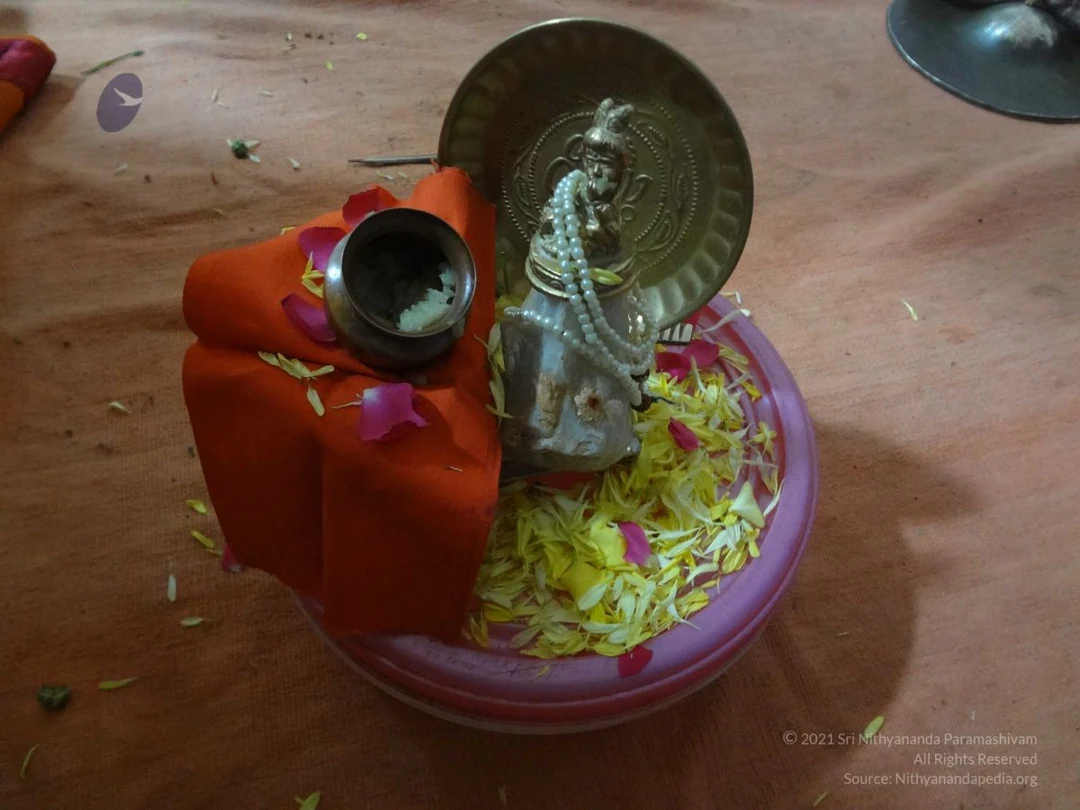
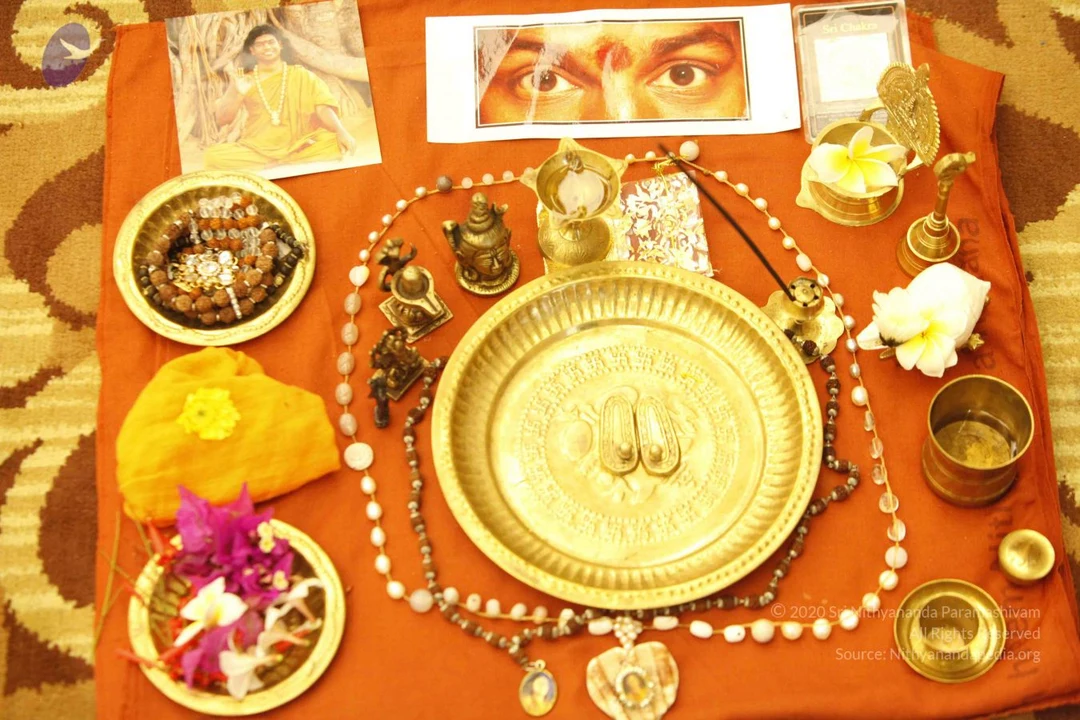
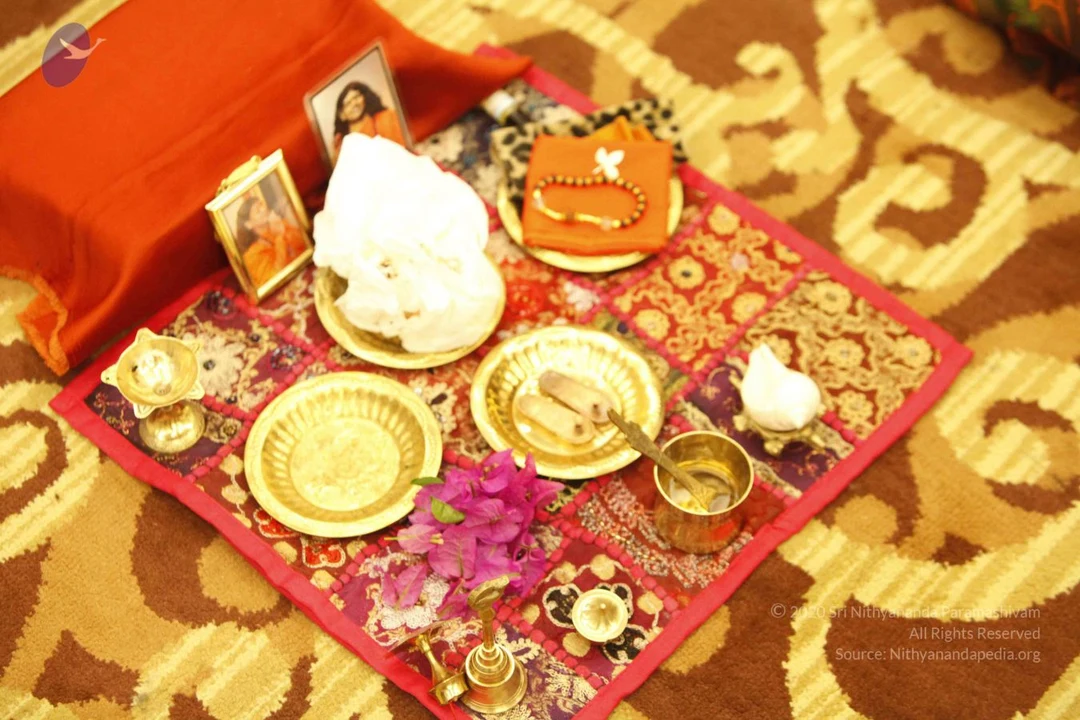
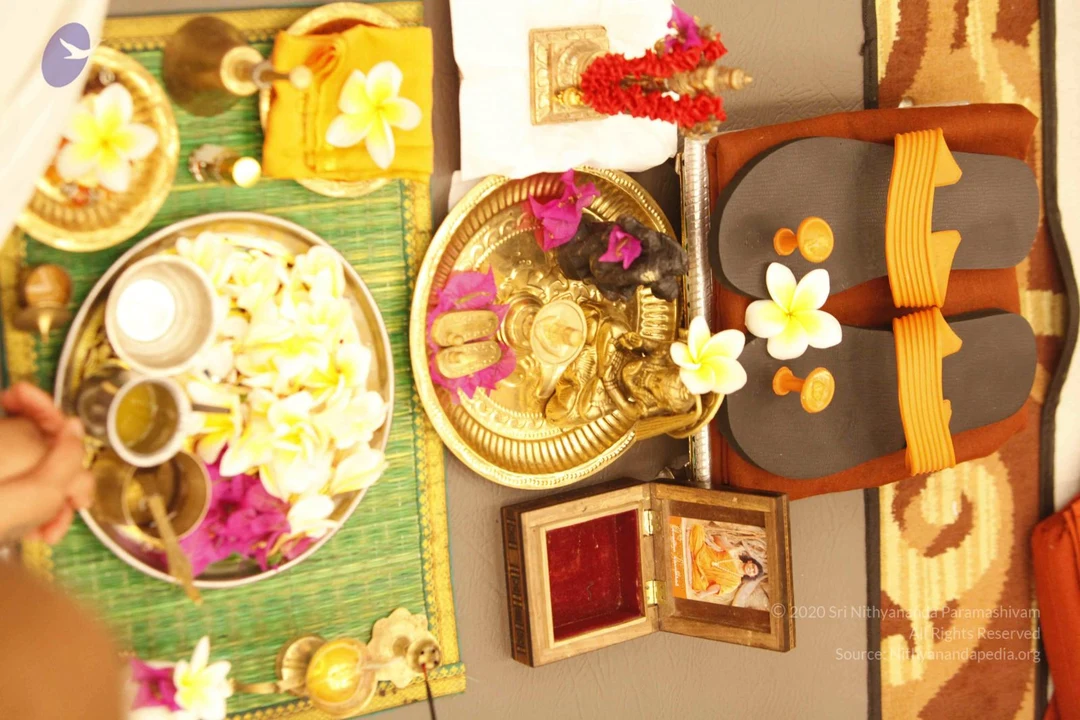
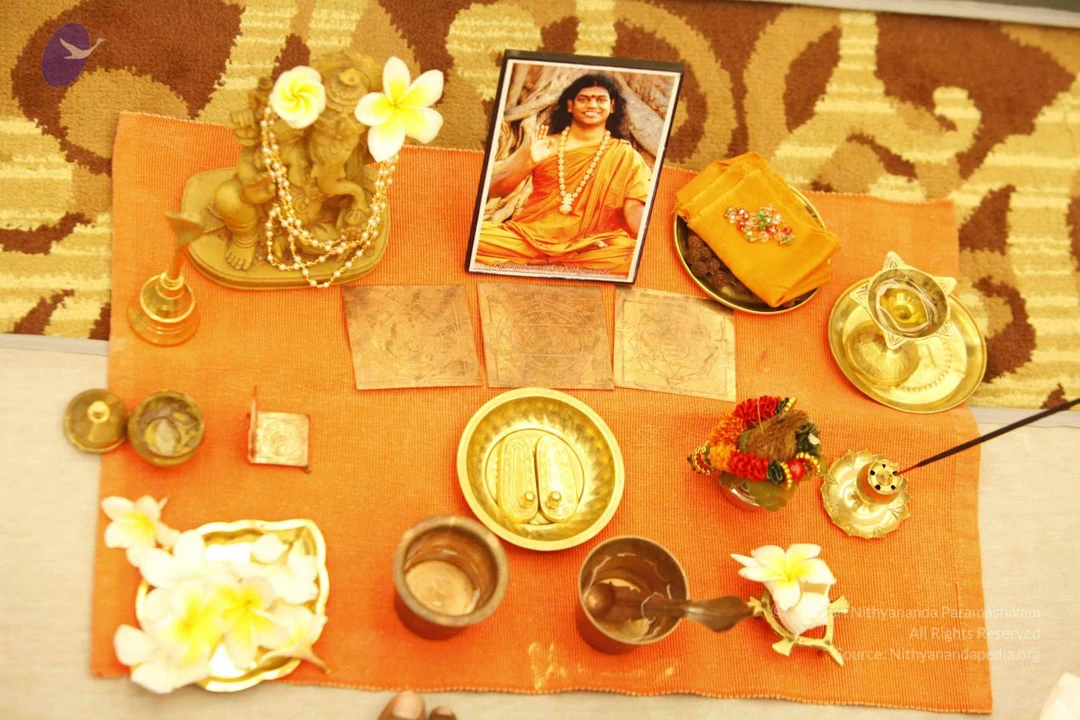
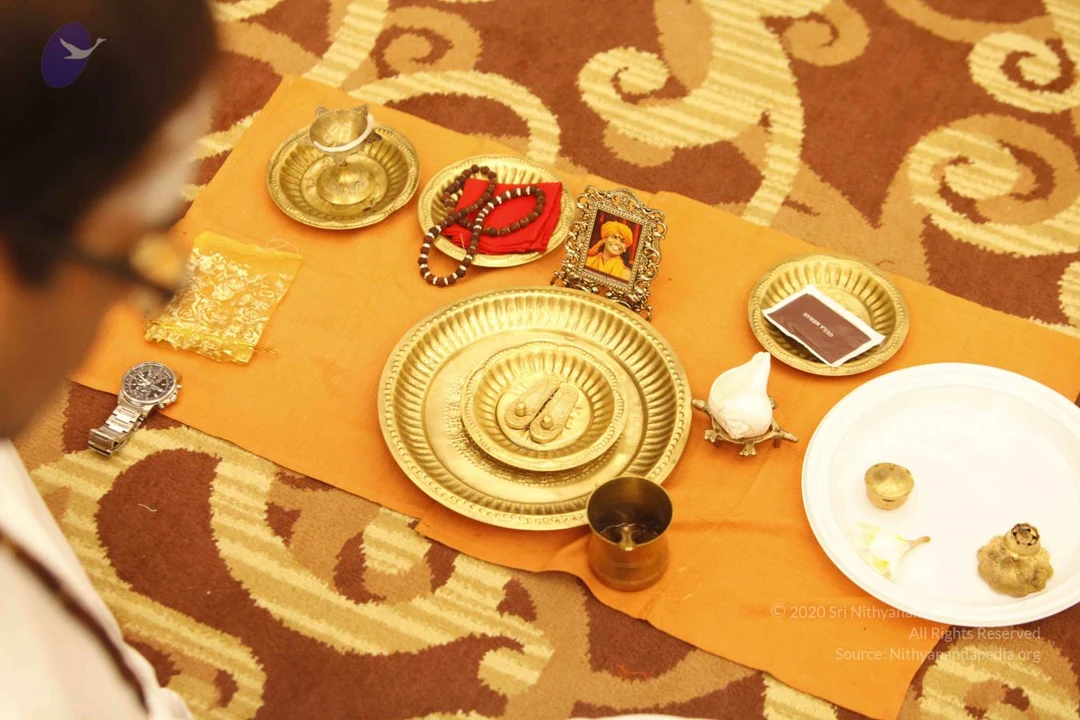
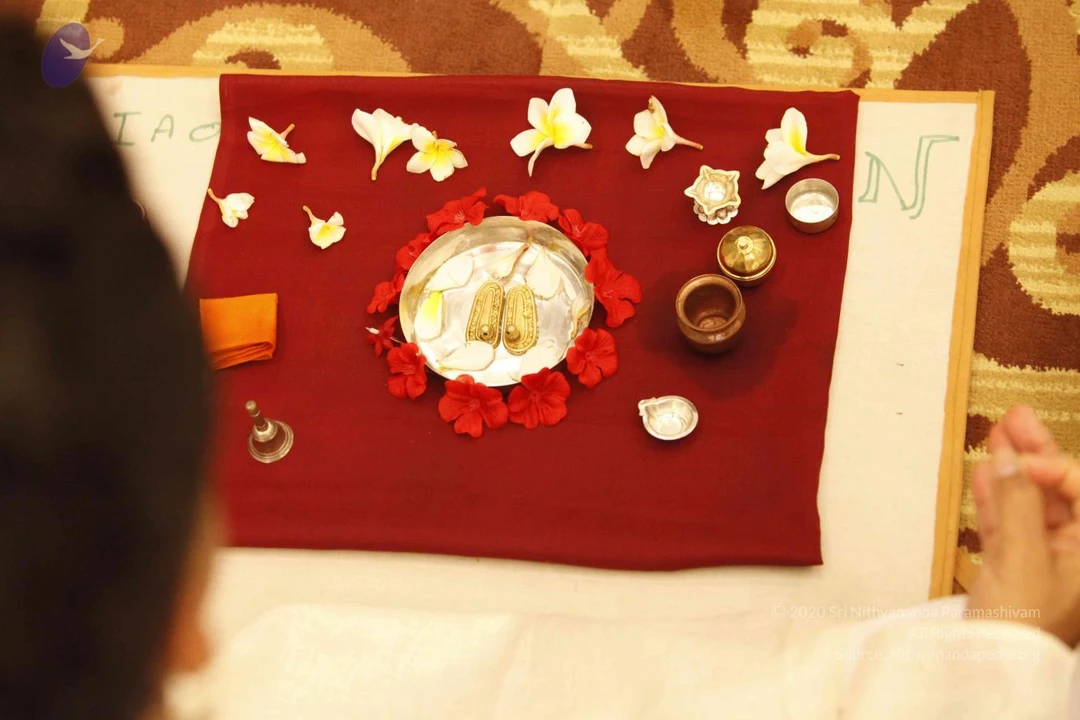
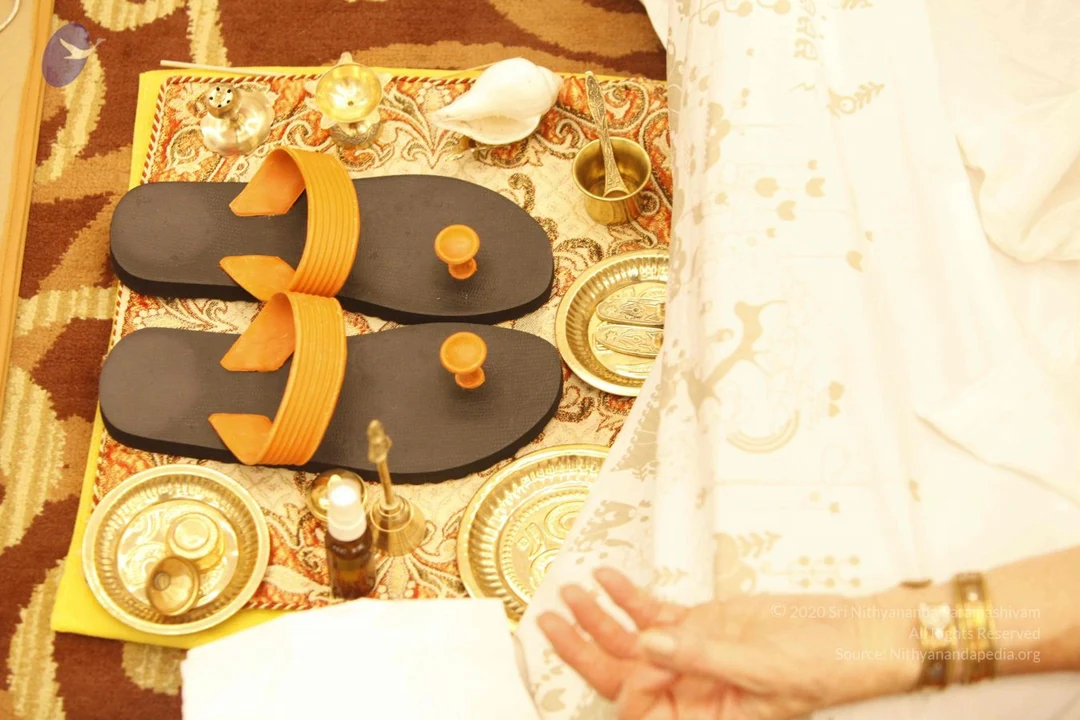
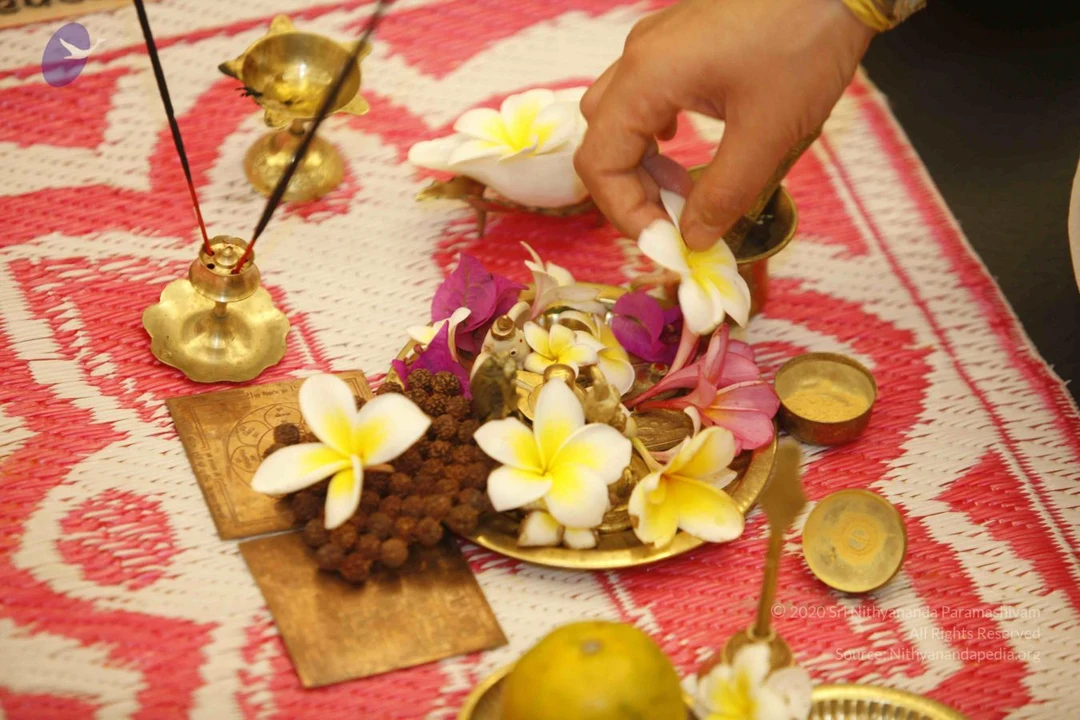
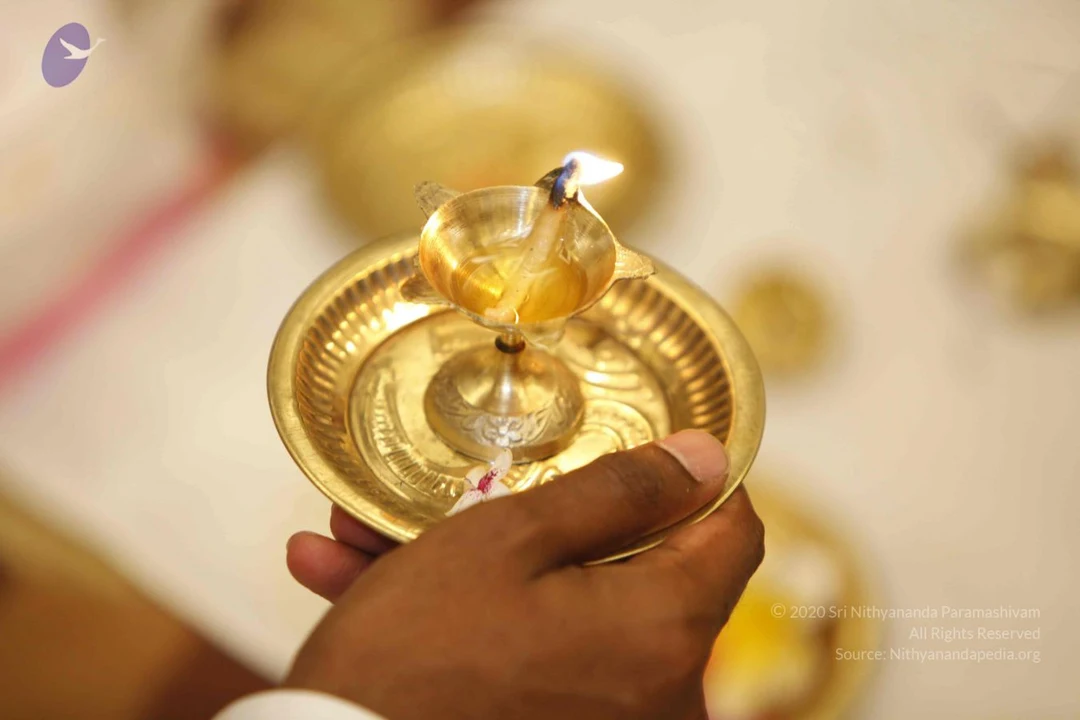
Paduka Puja

Photos Of The Day:
IA-Yoga

Paduka-Puja

Satsang

Sarva-Darshan

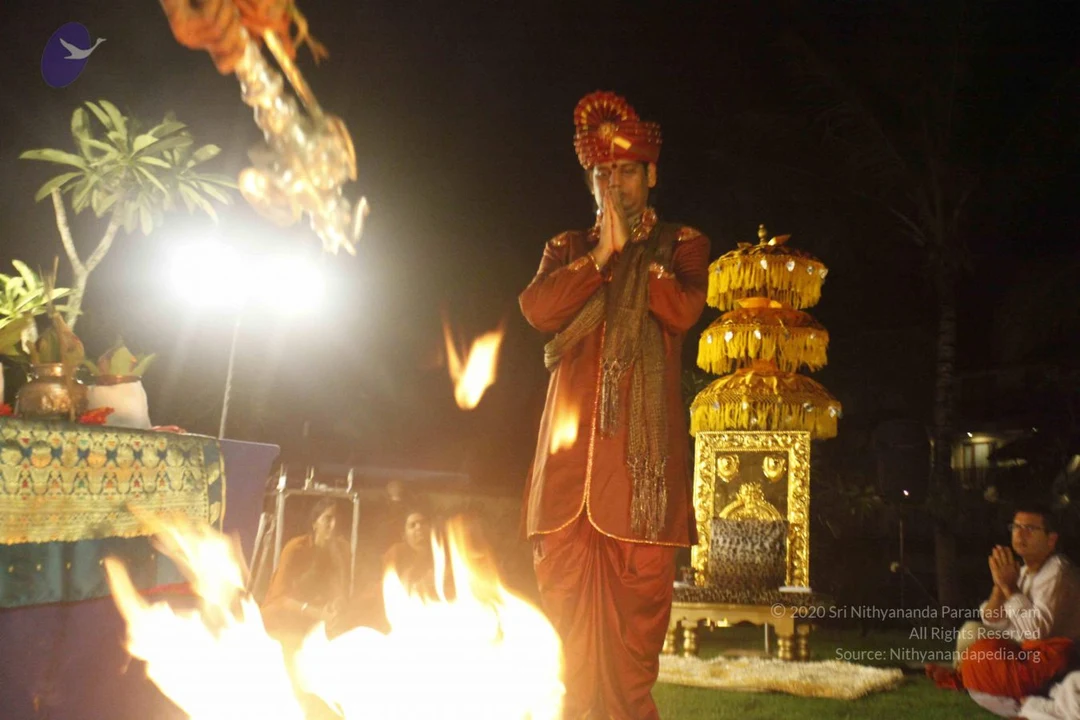
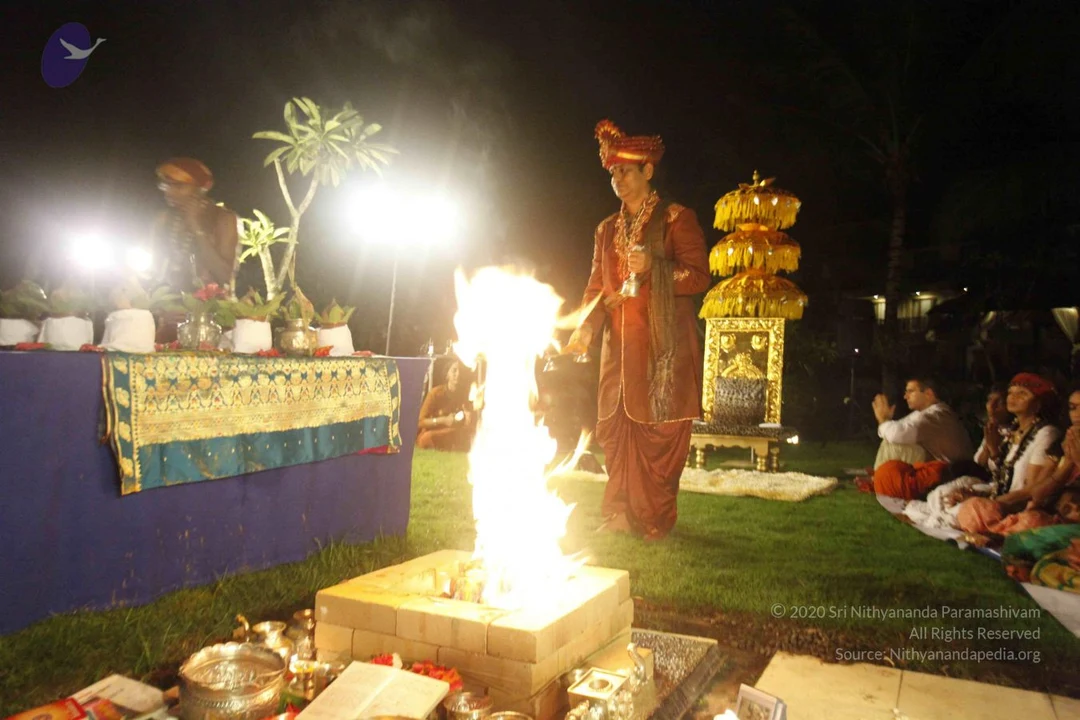
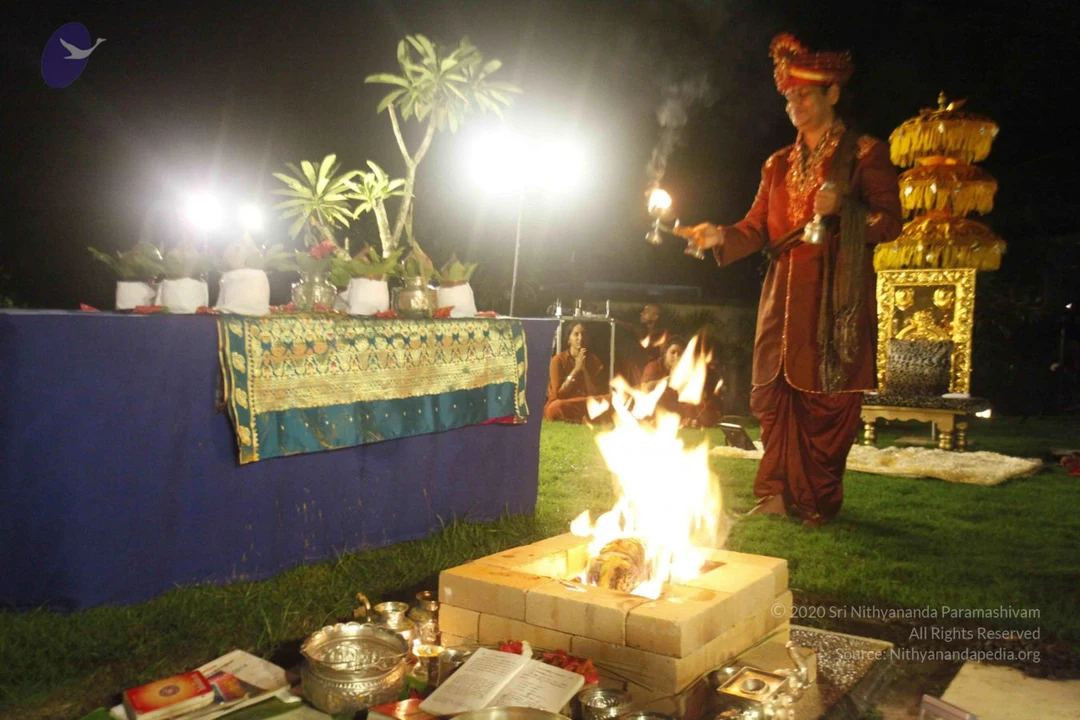
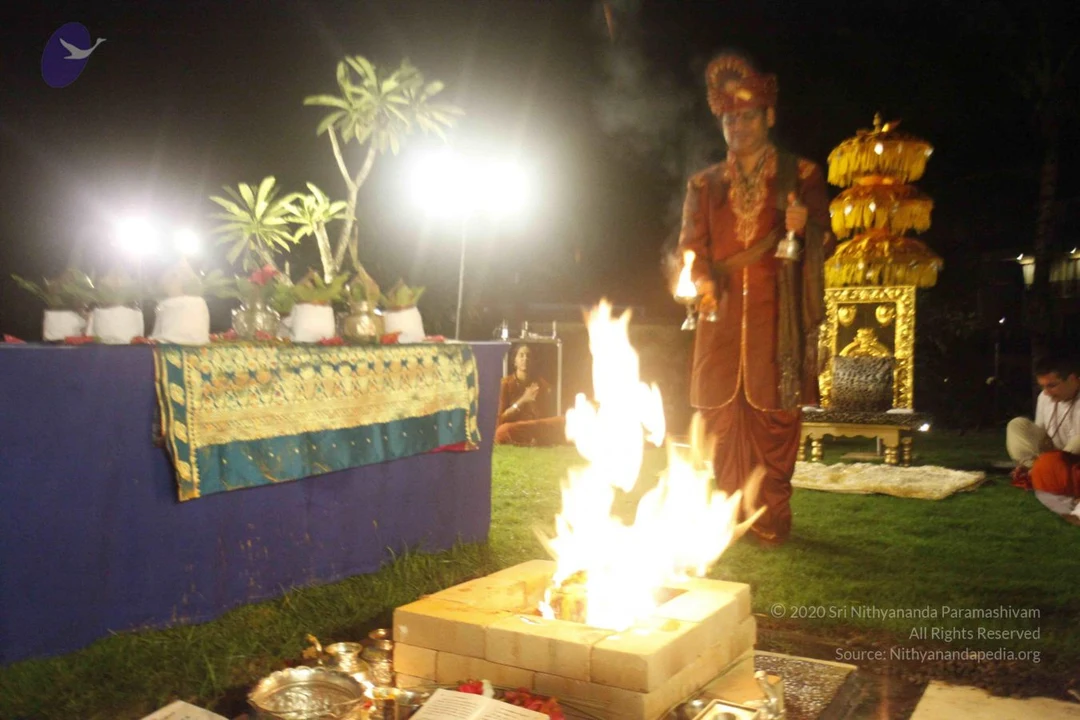
IA-Homa

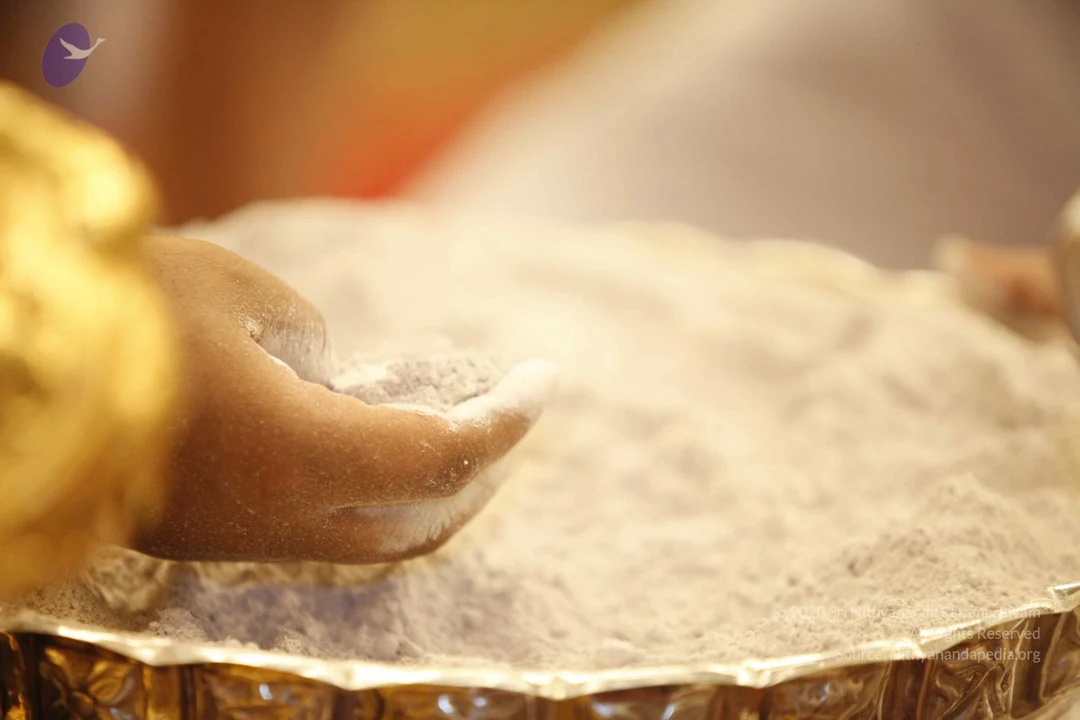
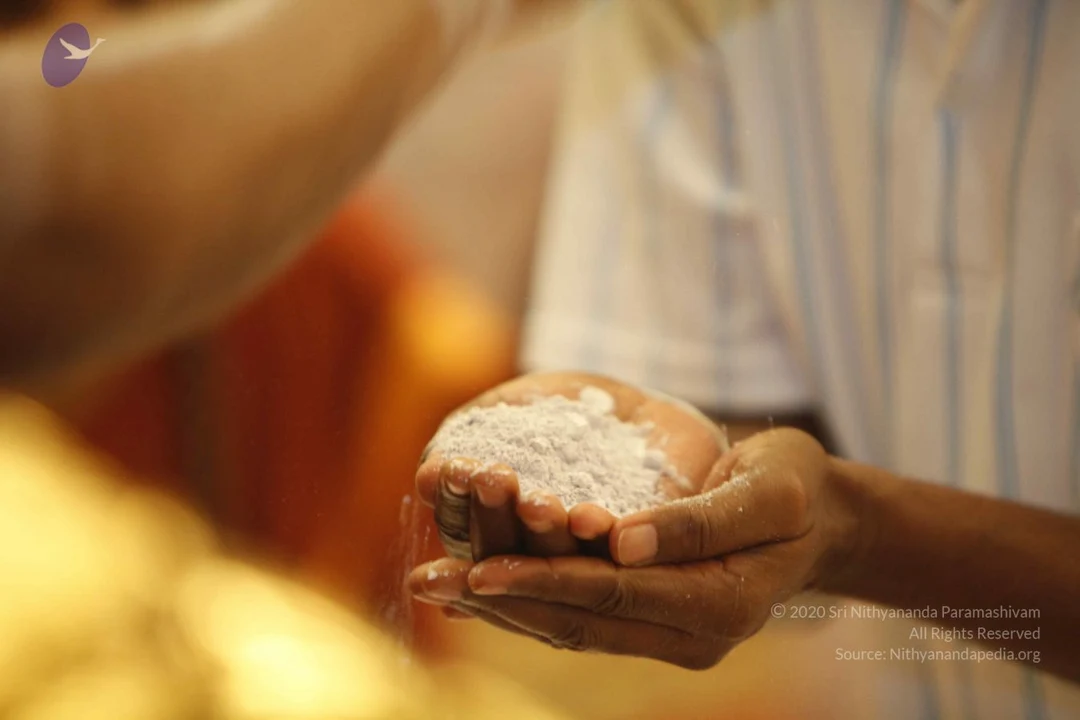
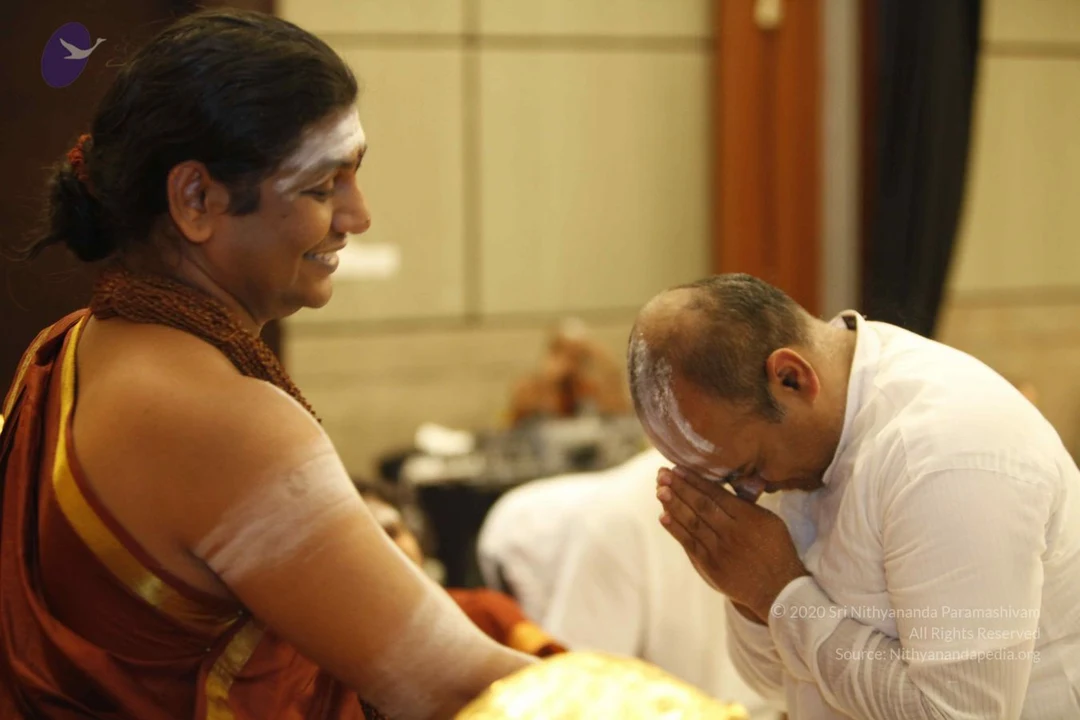
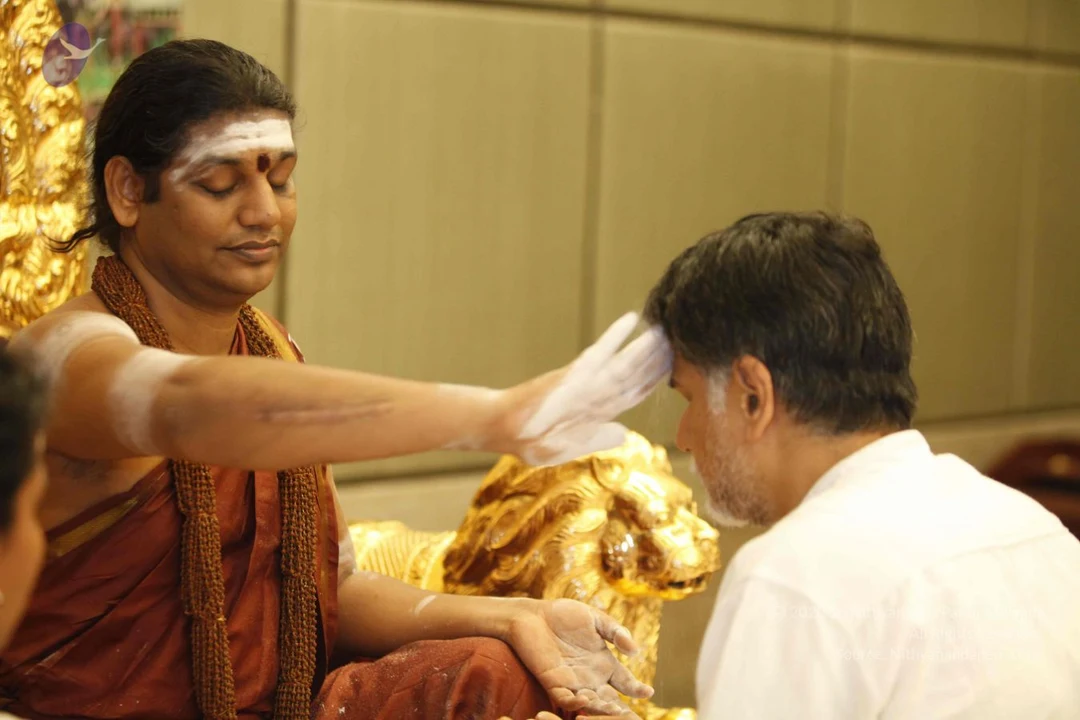
IA-Darshan-Basma-Deeksha

Photos Of The Day:
Rudra Abhishekam

Photos from this day
View all 416 photos
Photos
33 photosSource gallery
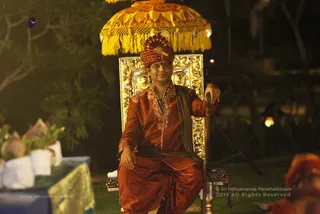
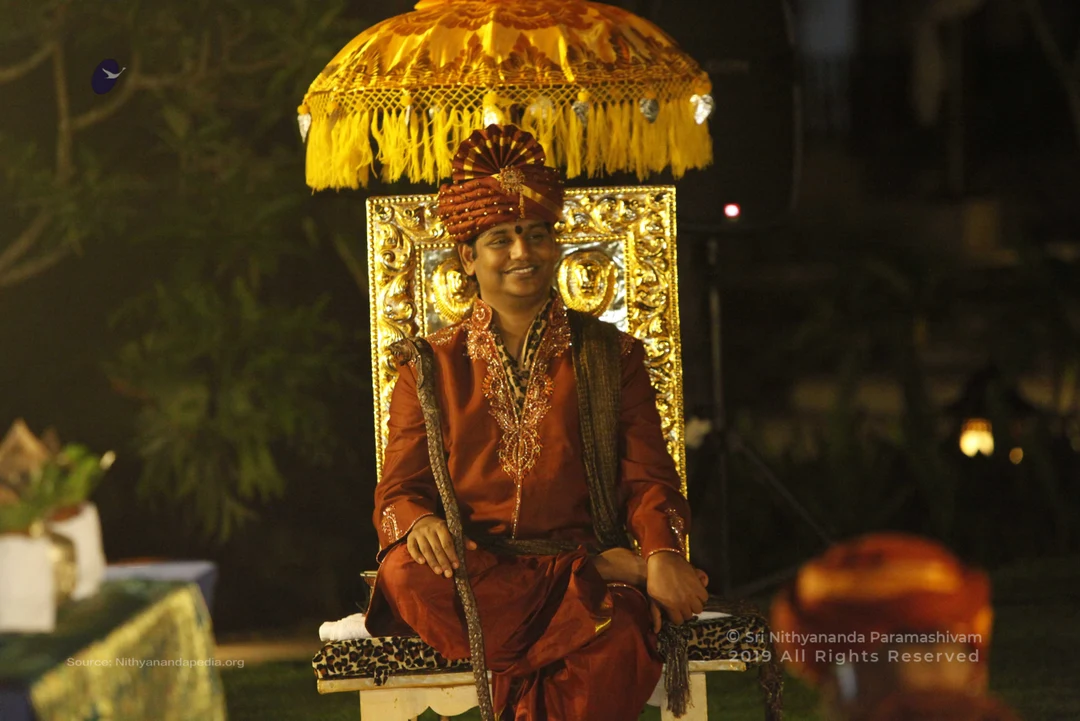
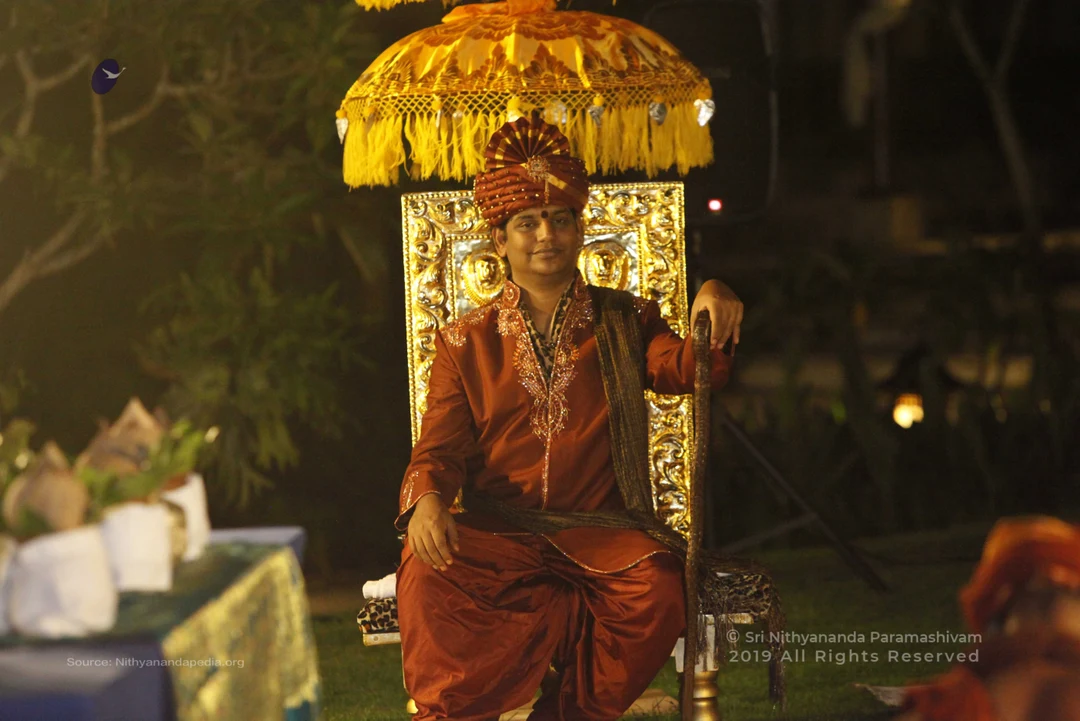
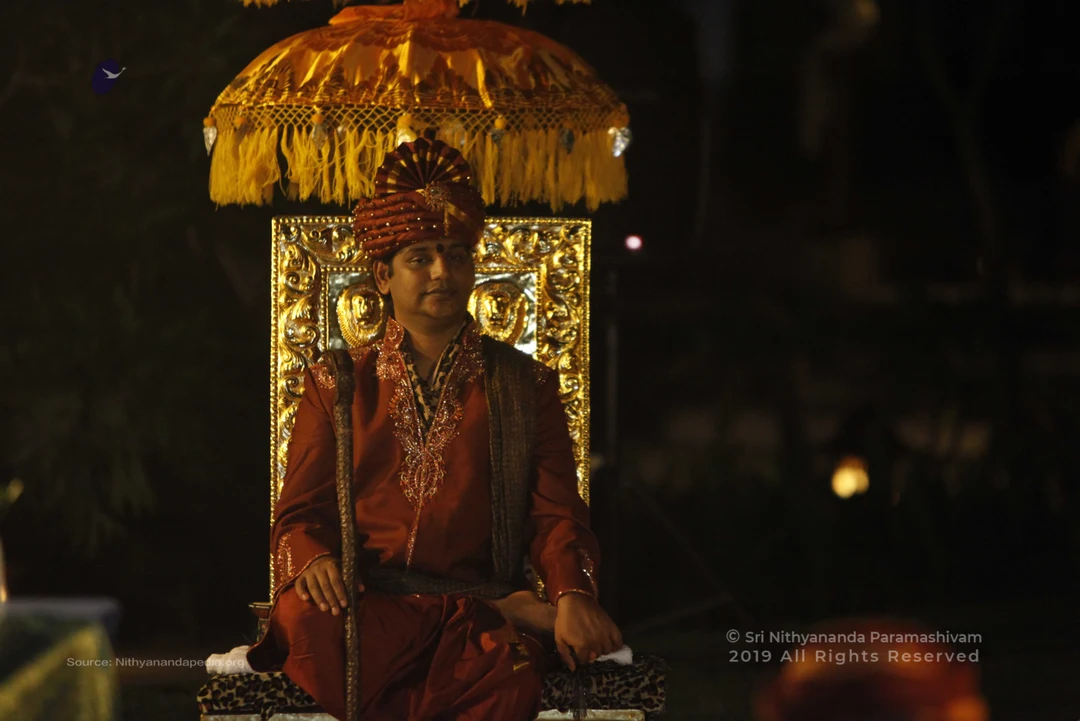
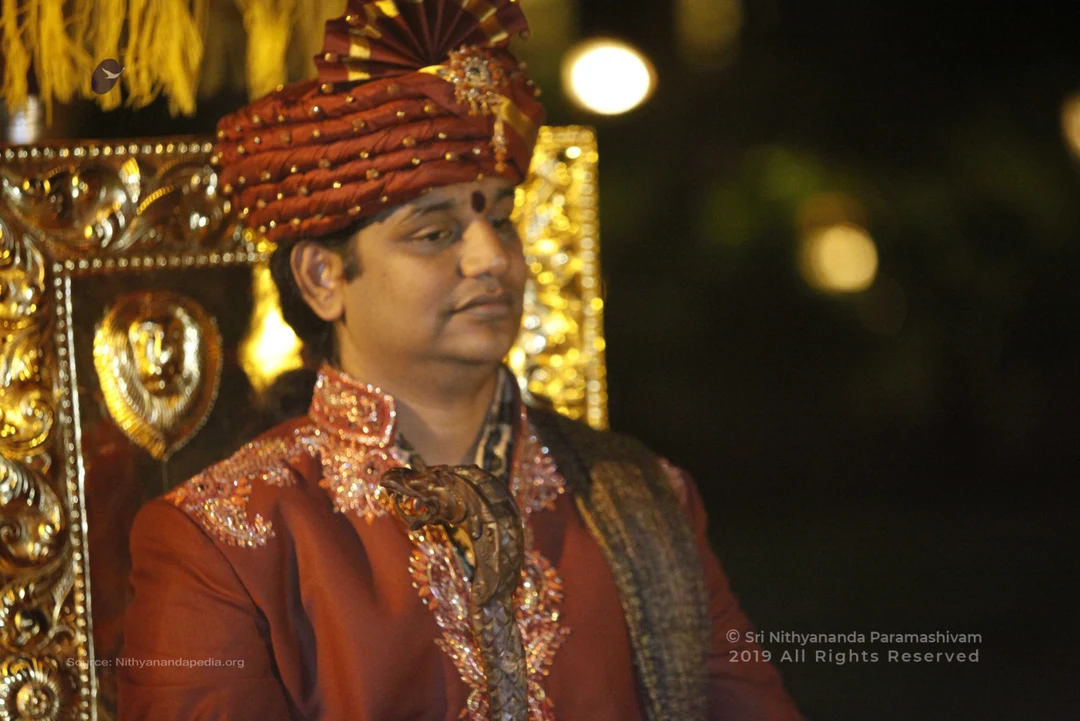
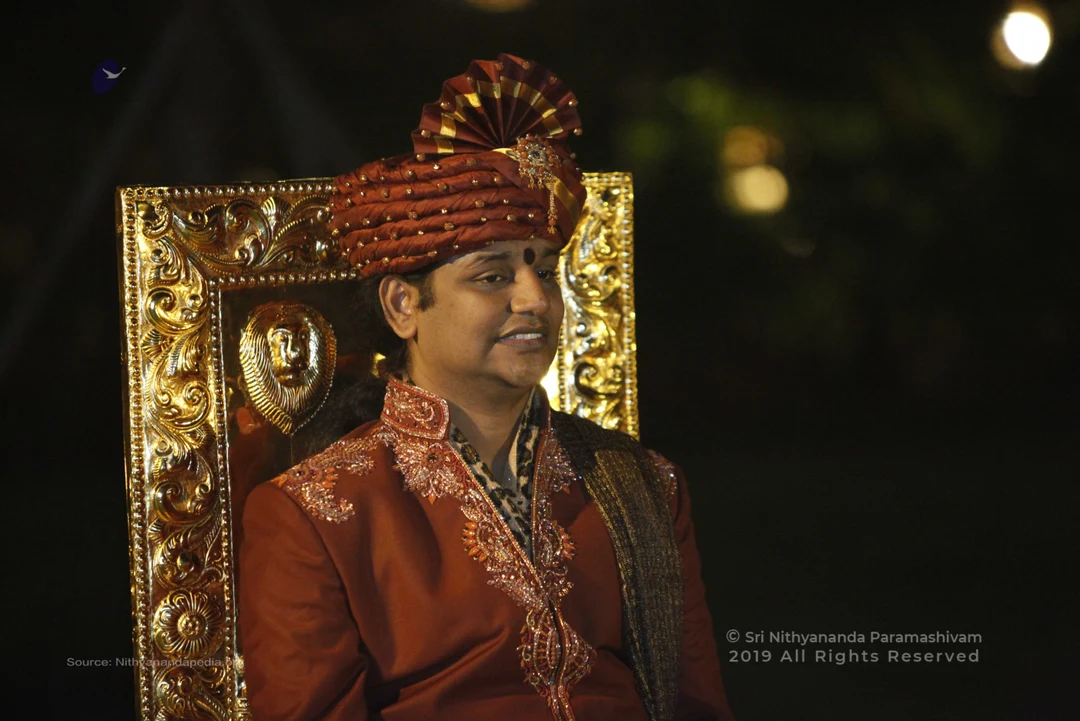
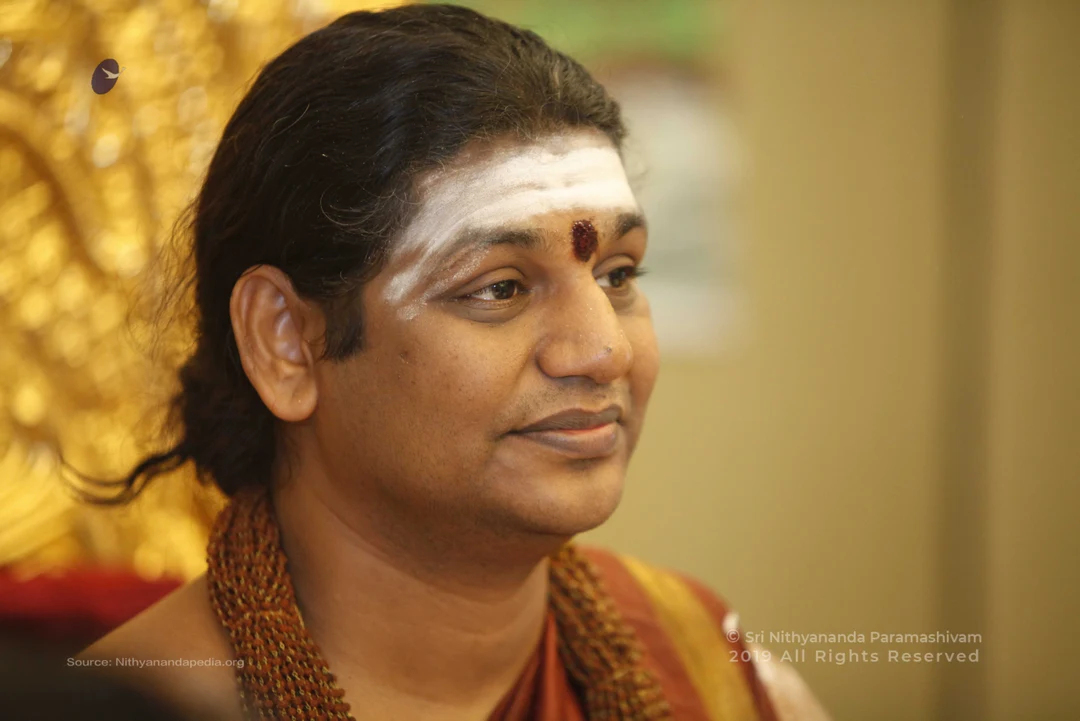
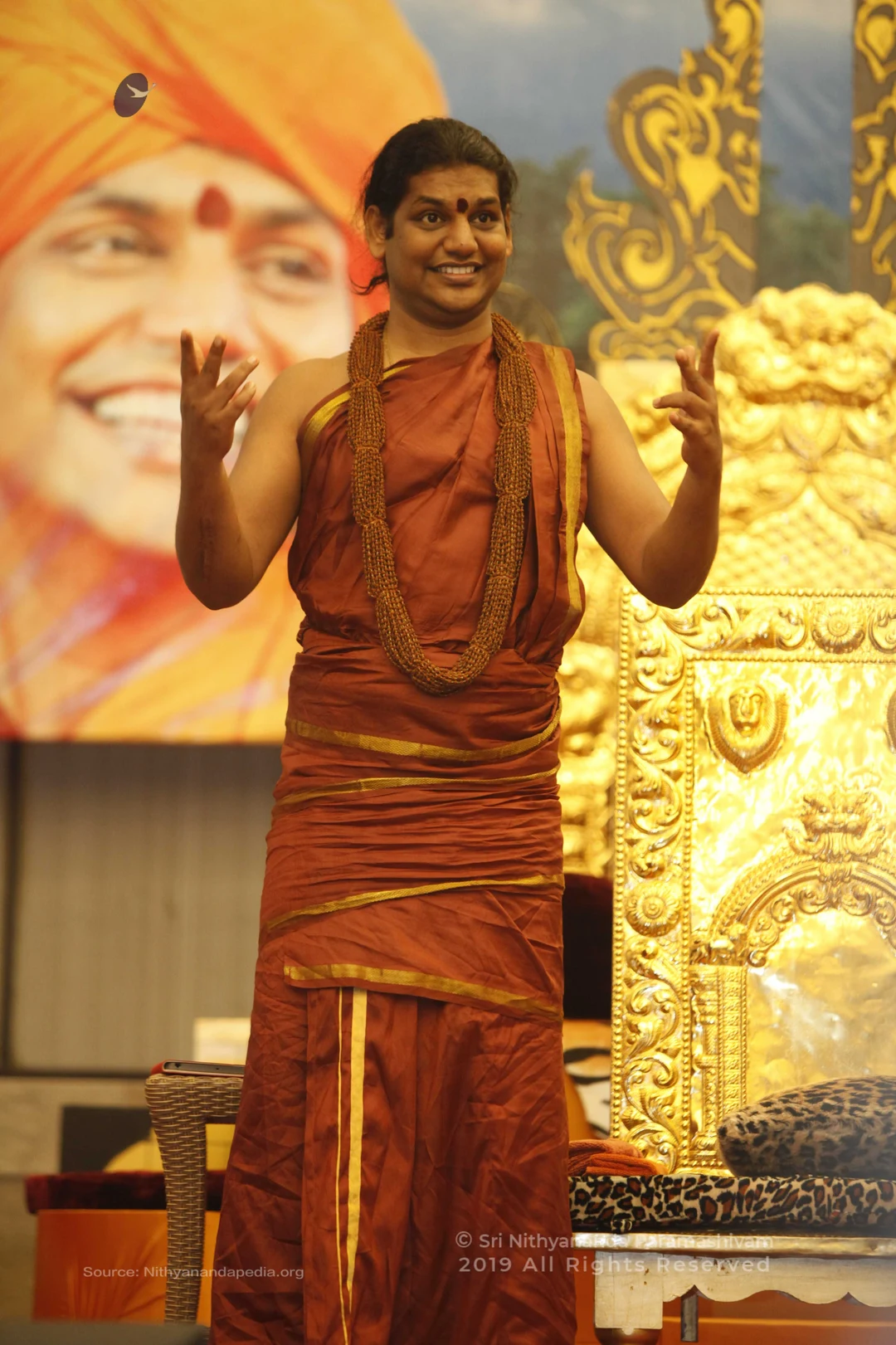
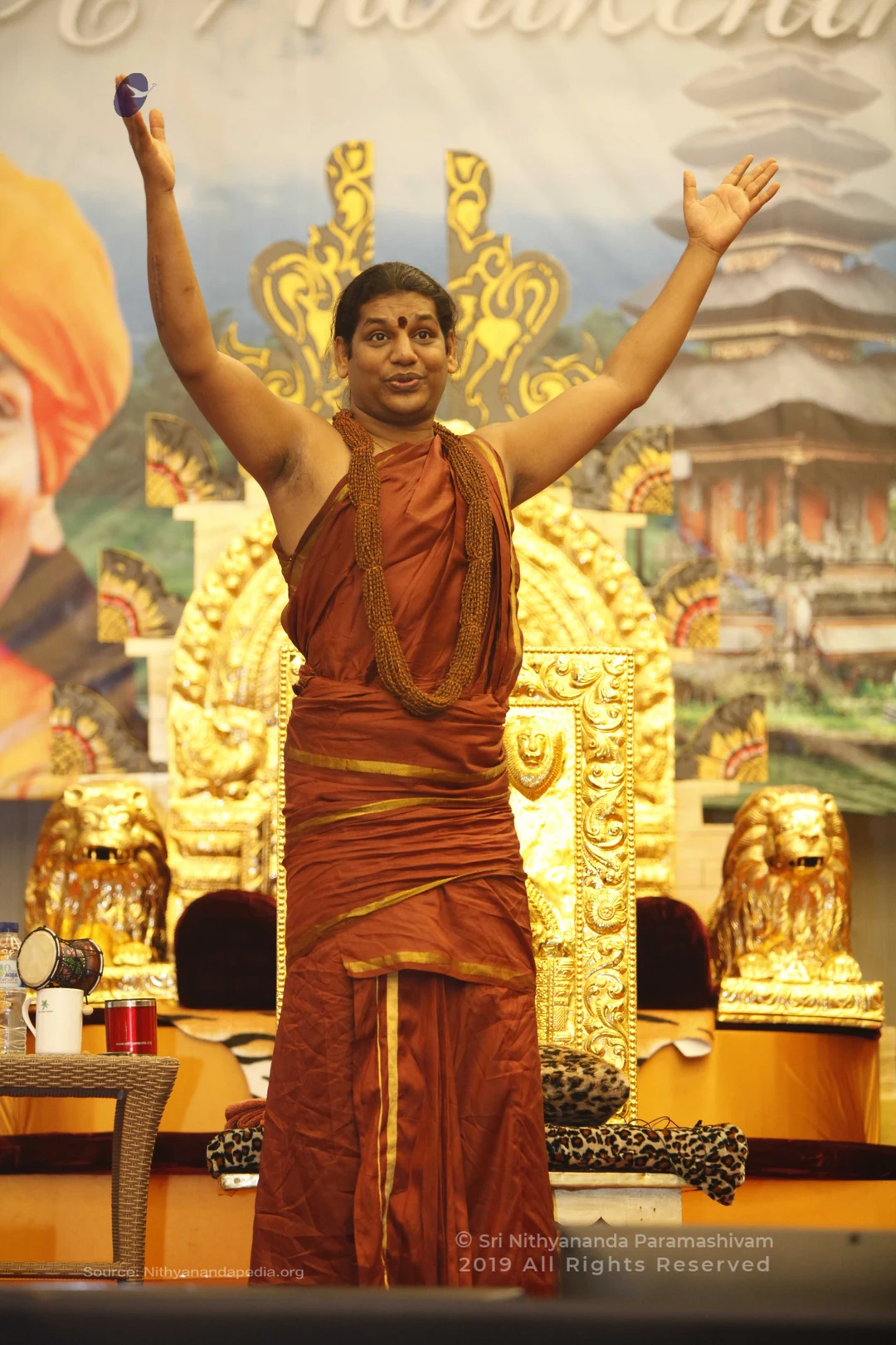
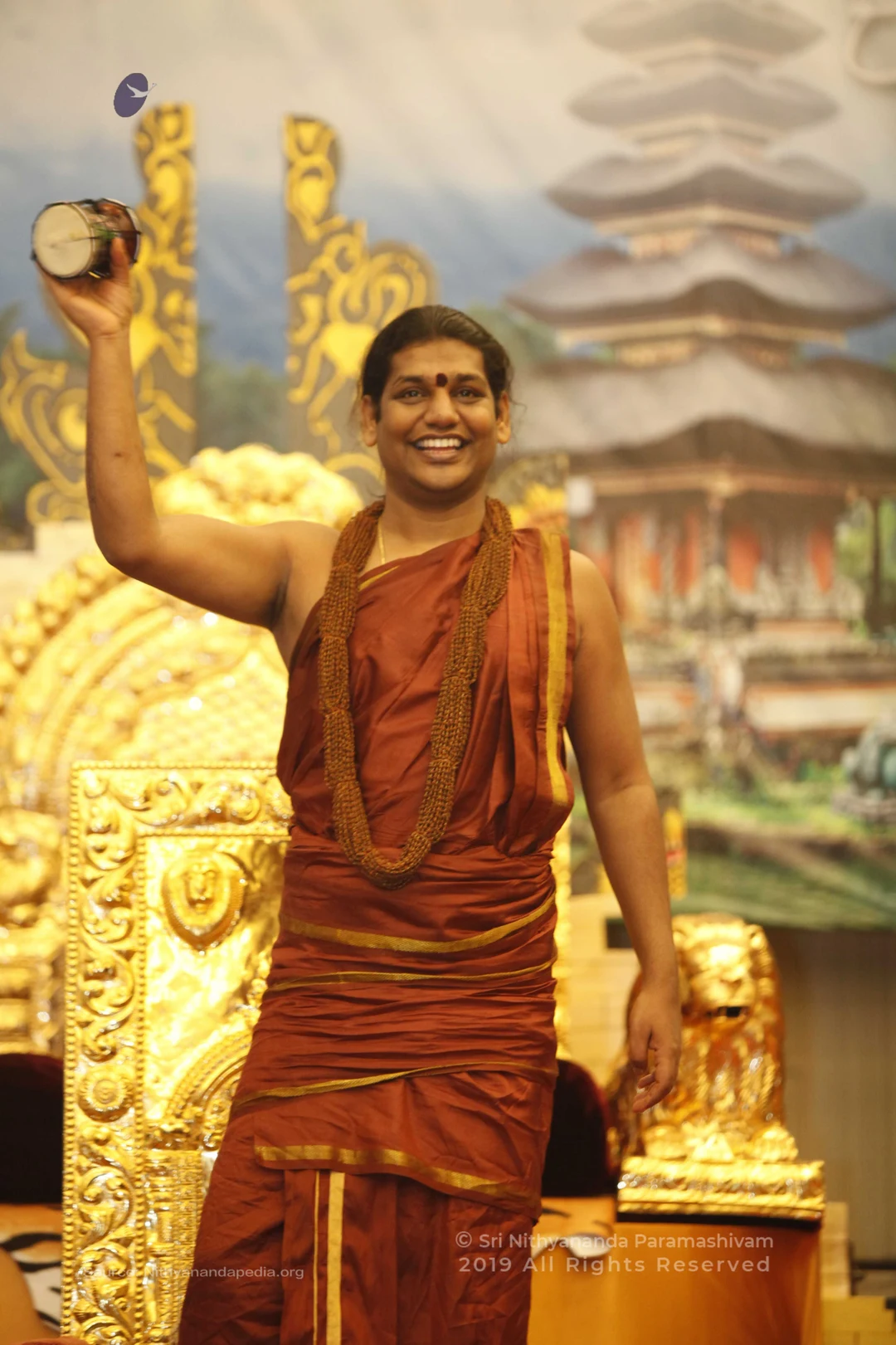
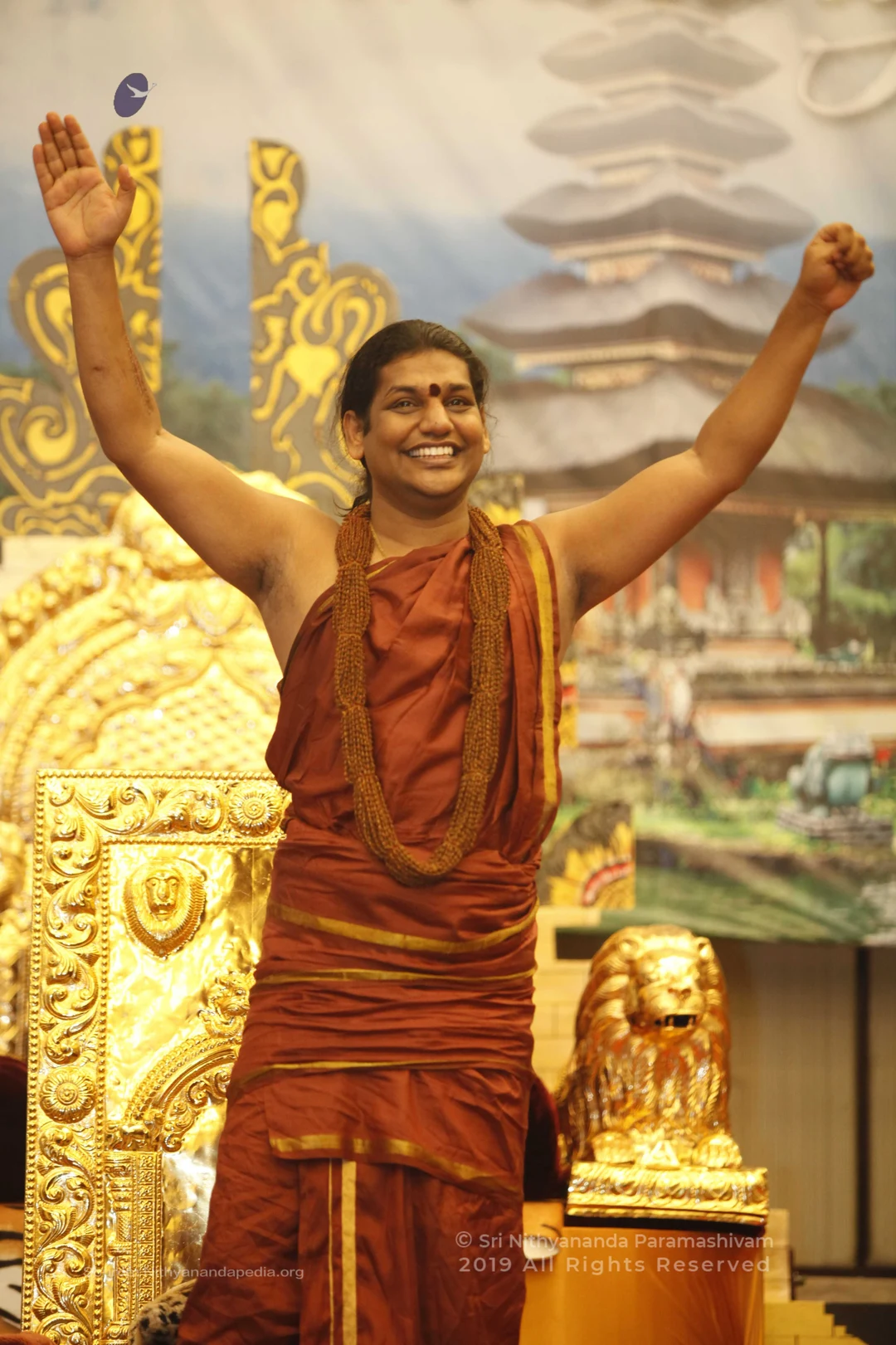
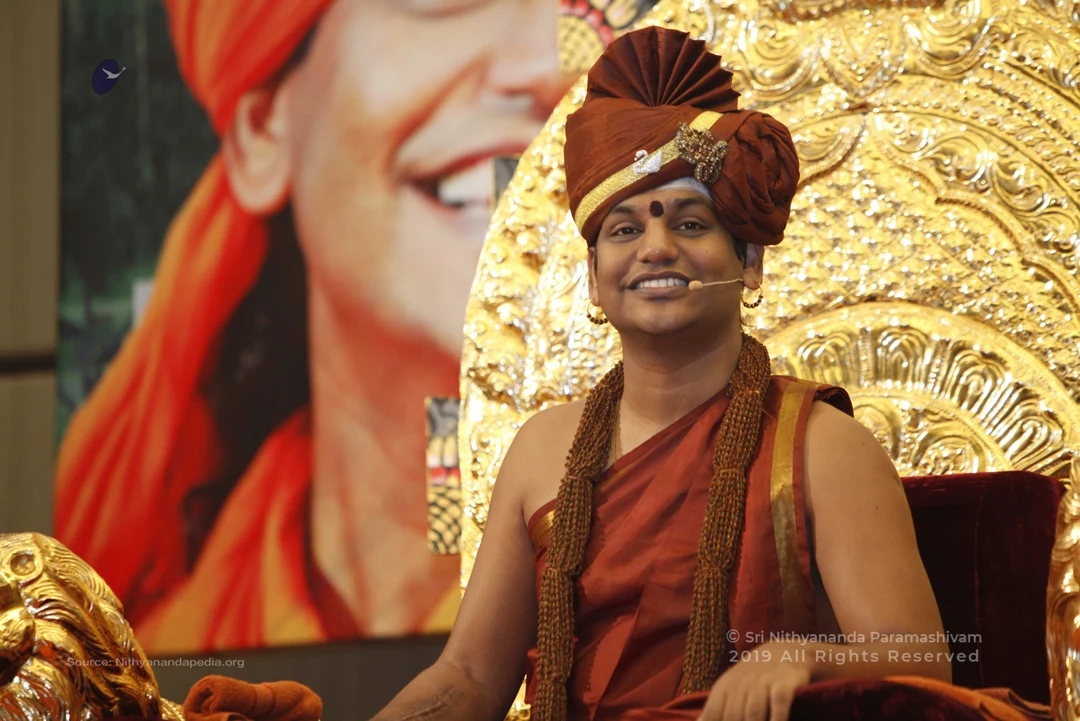
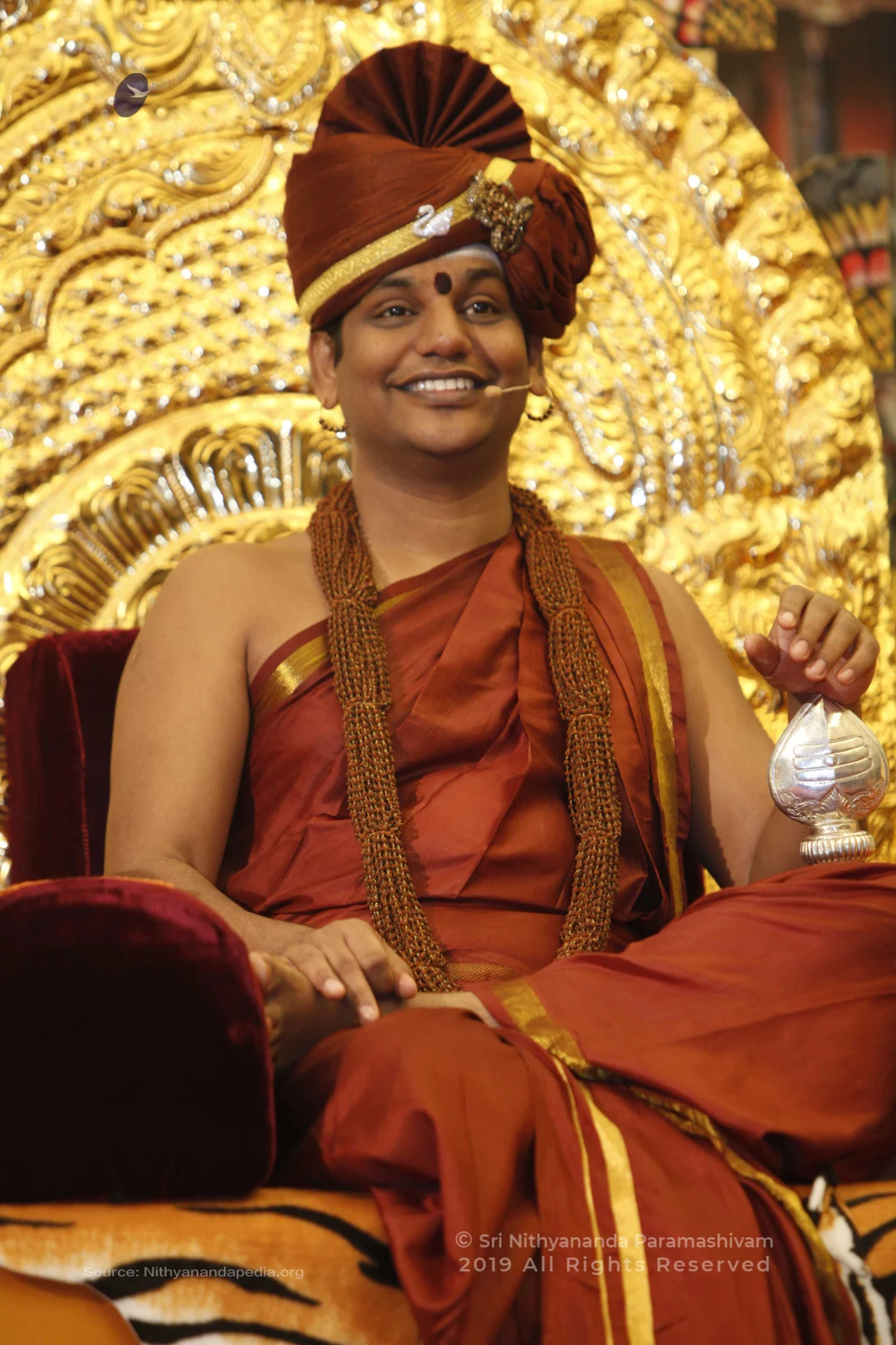
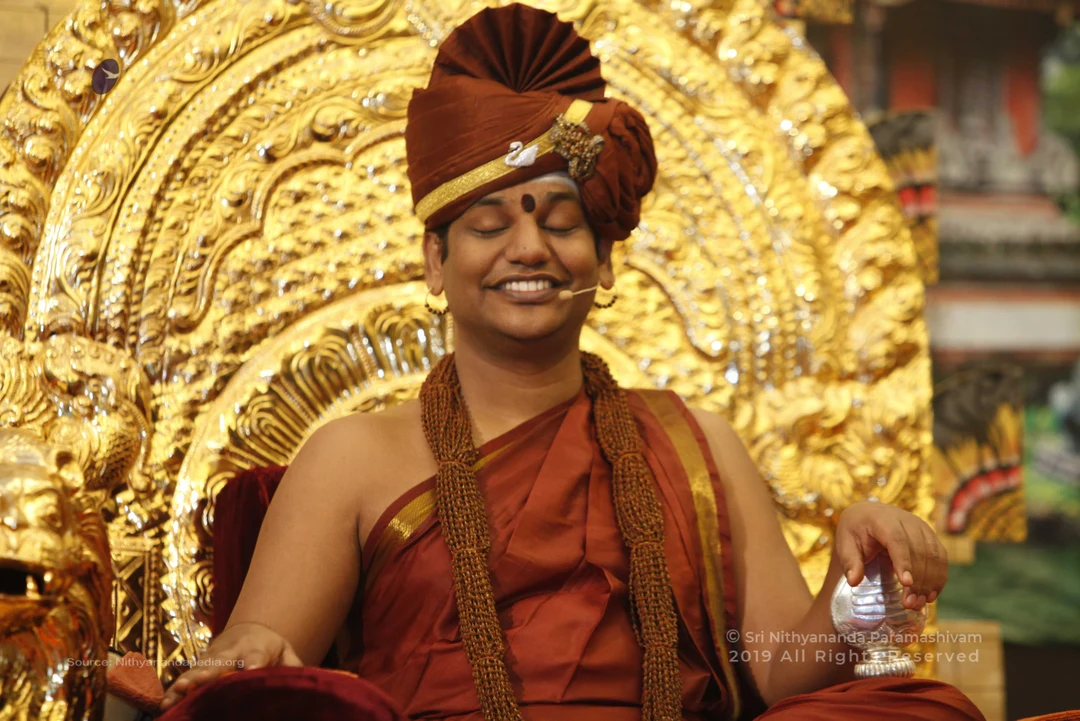
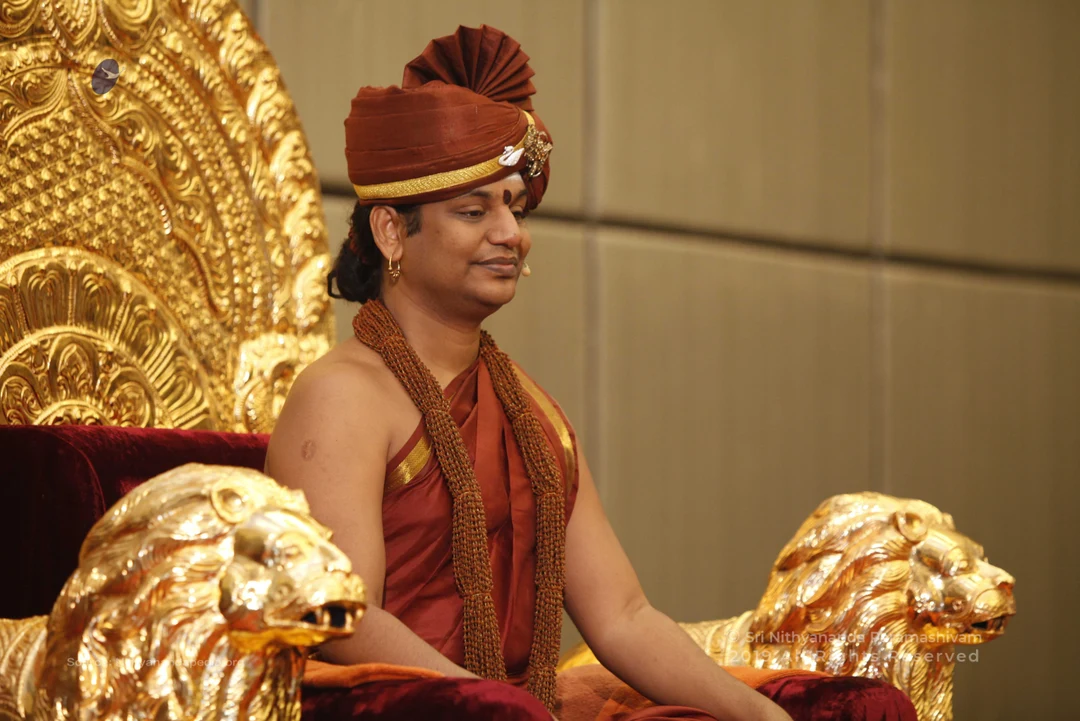
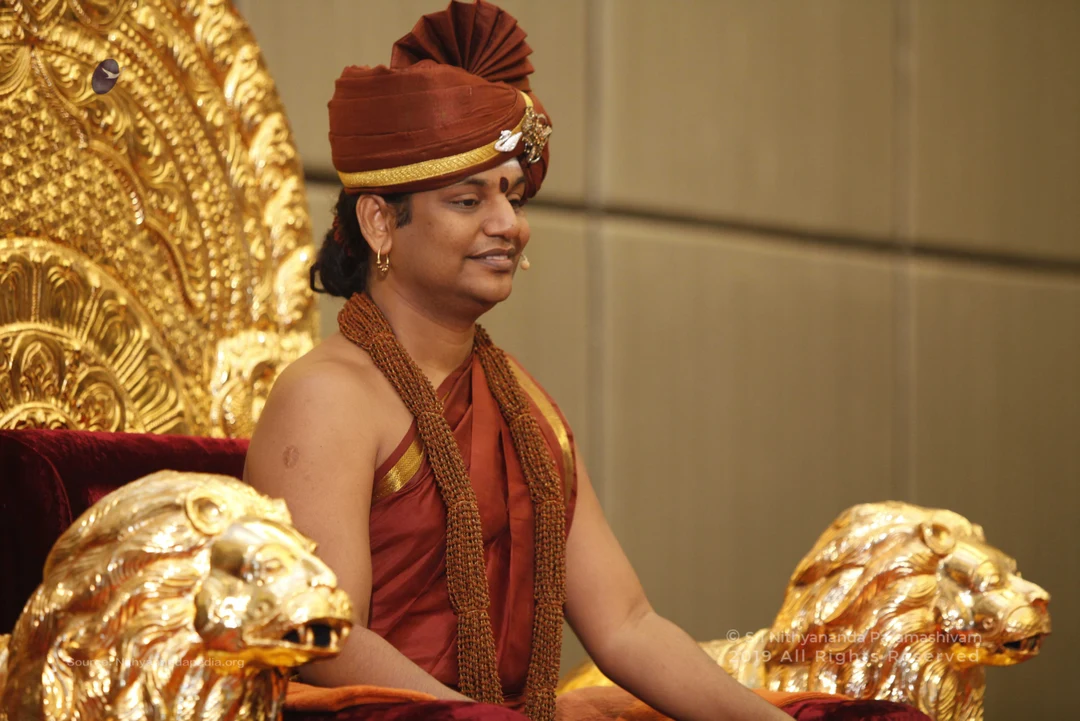
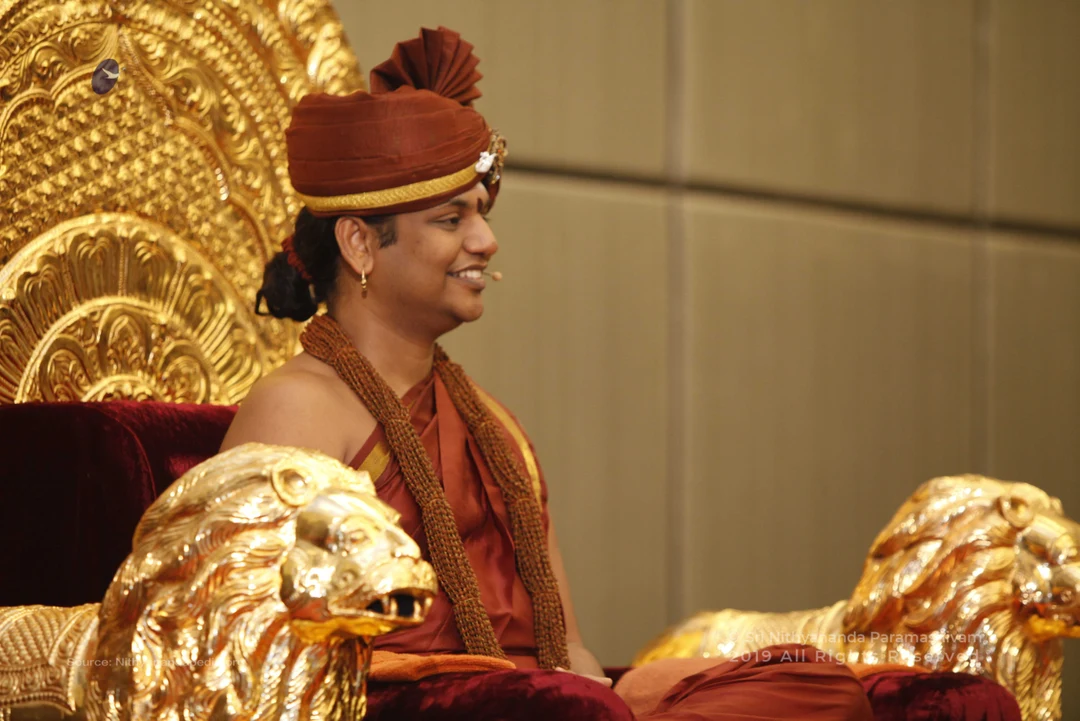
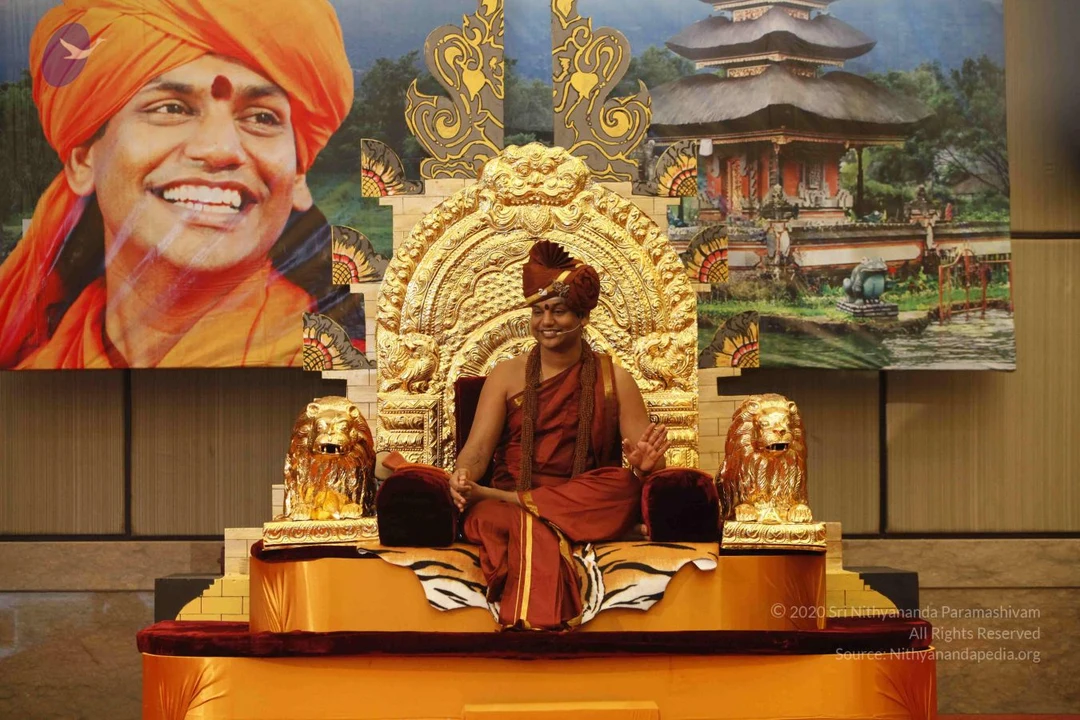
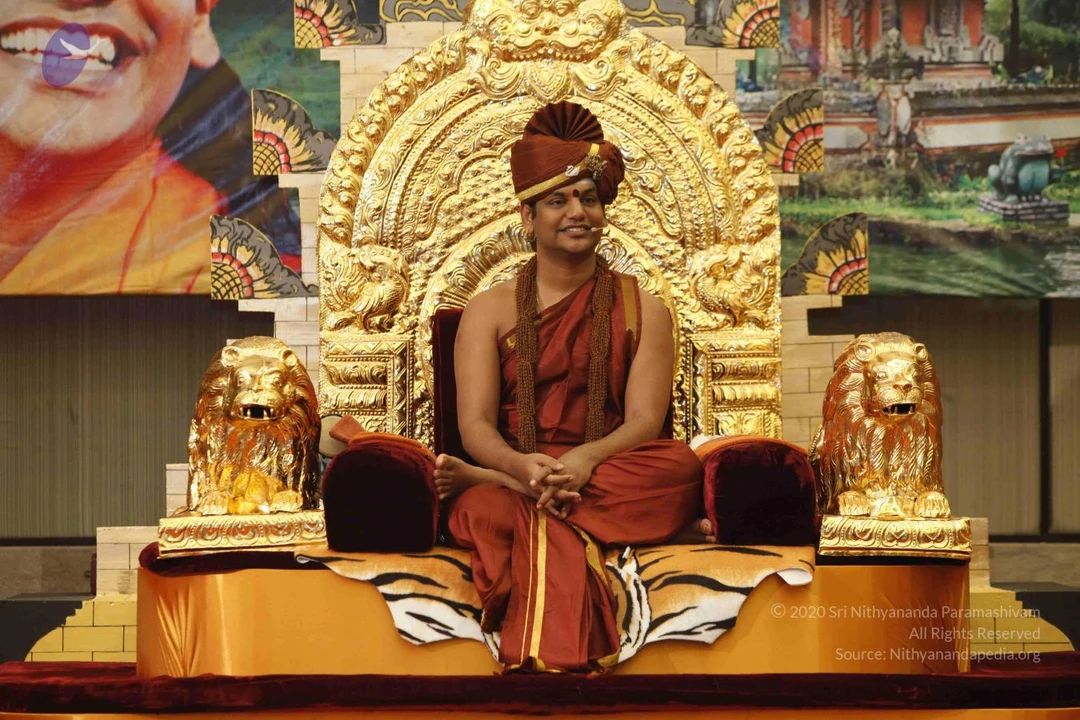
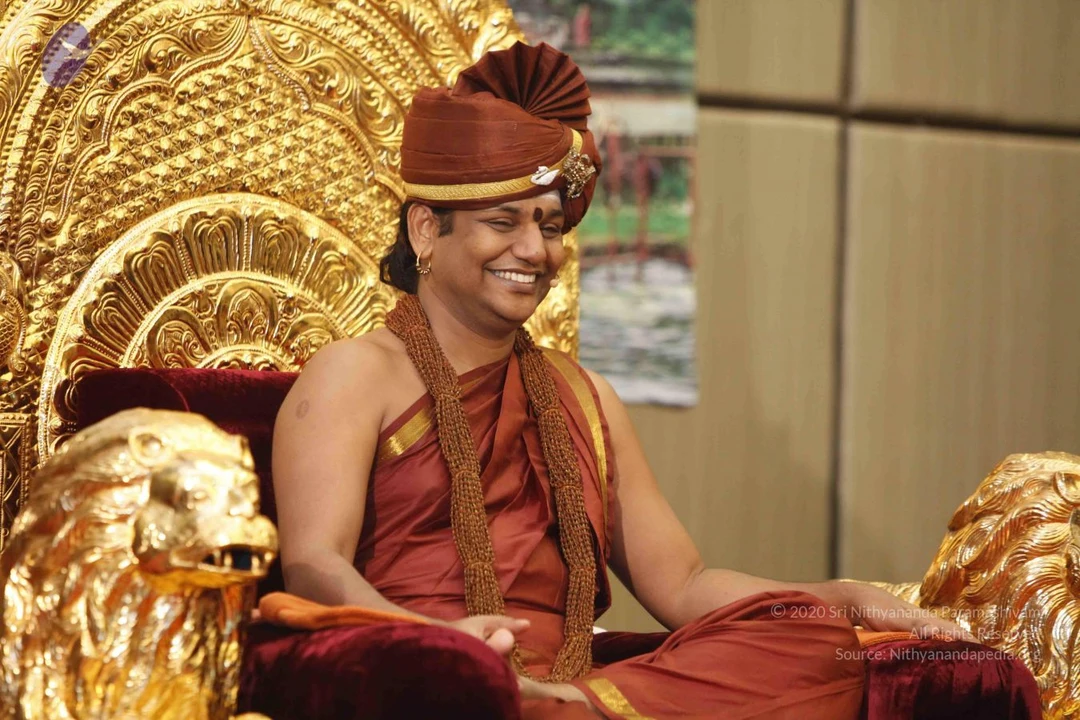
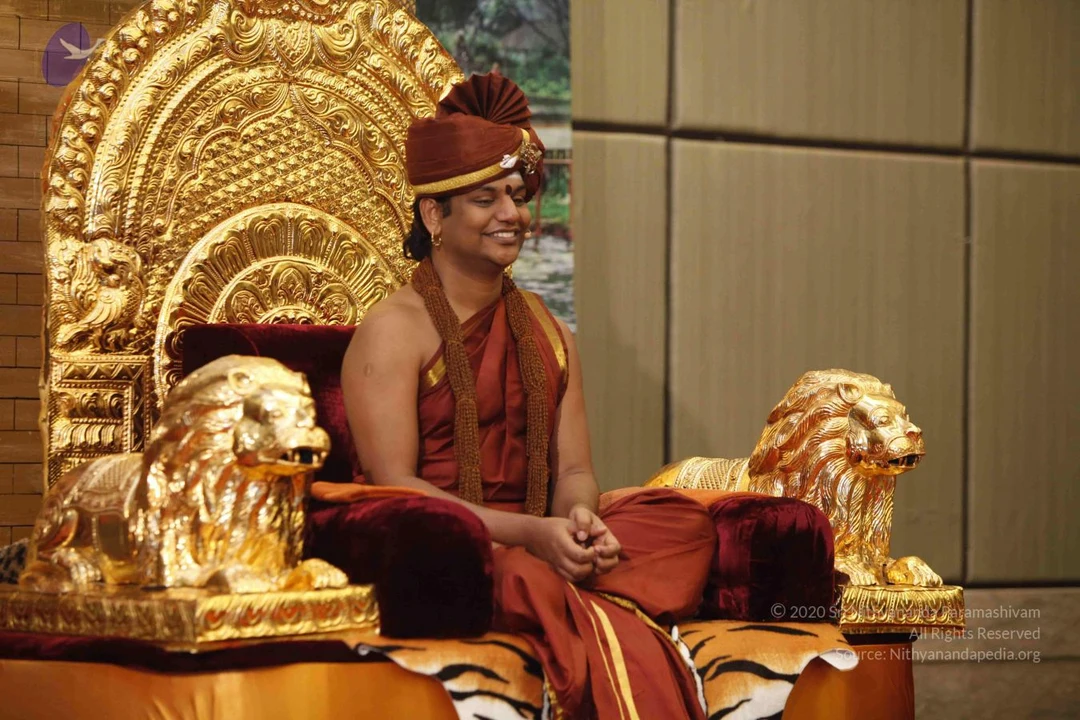
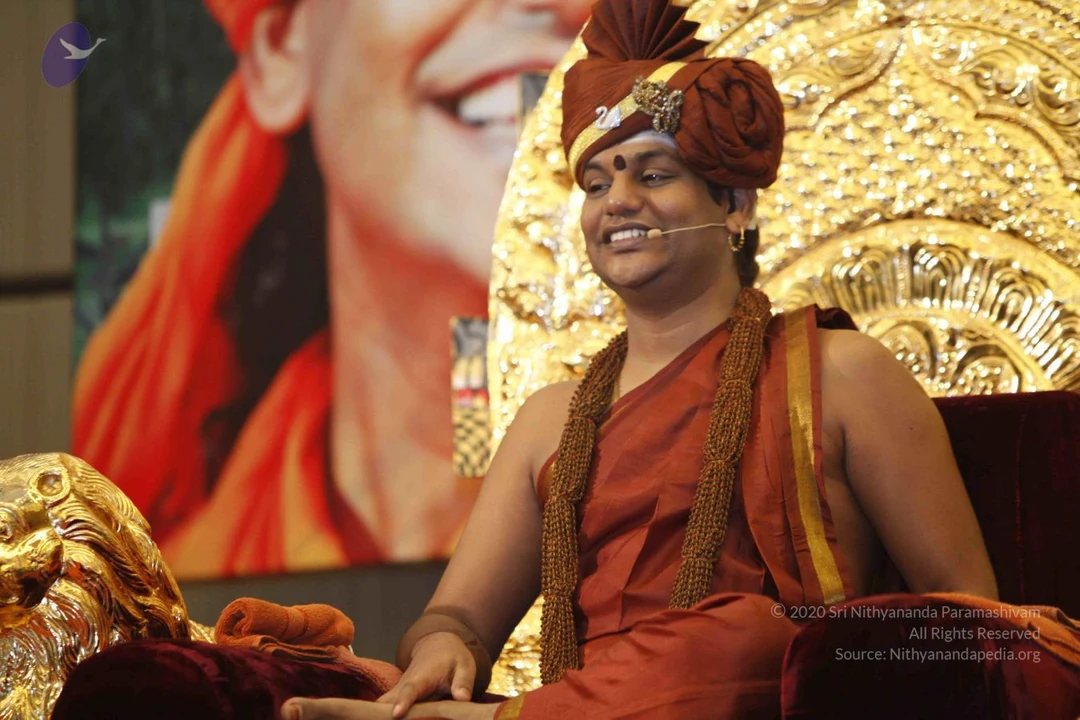
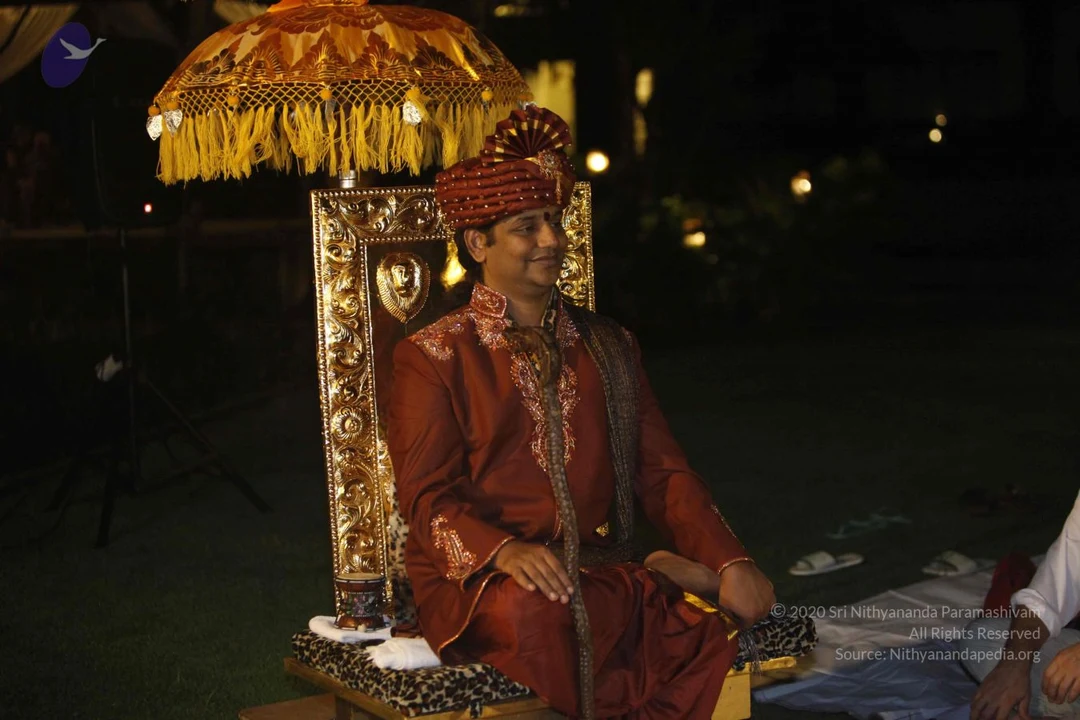
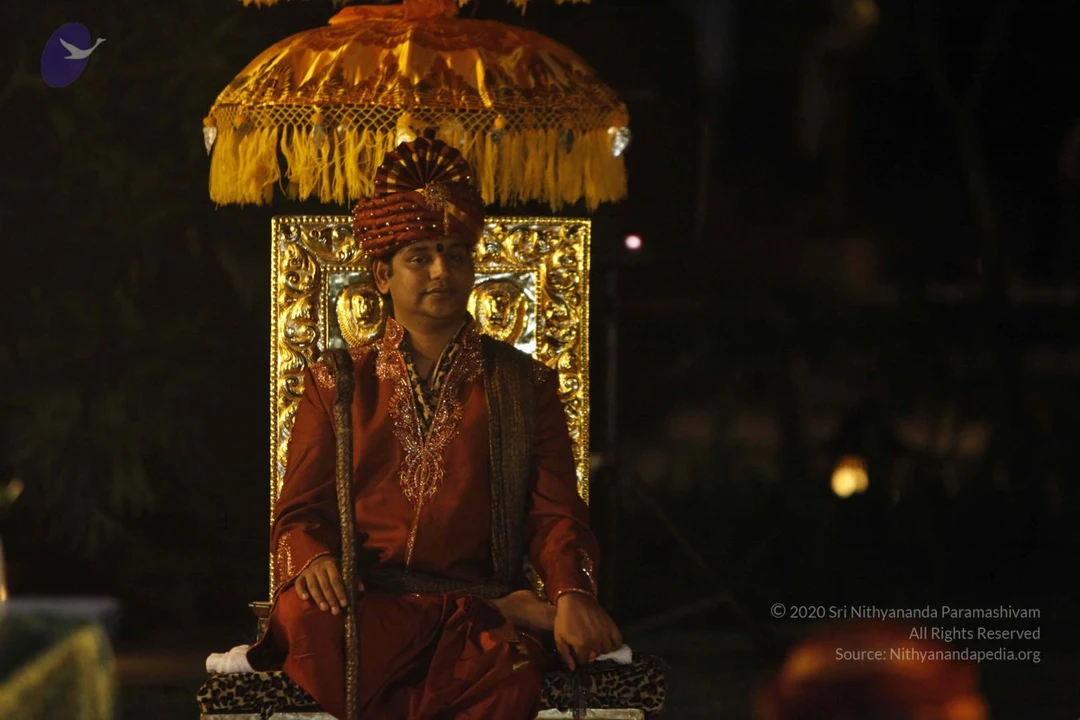
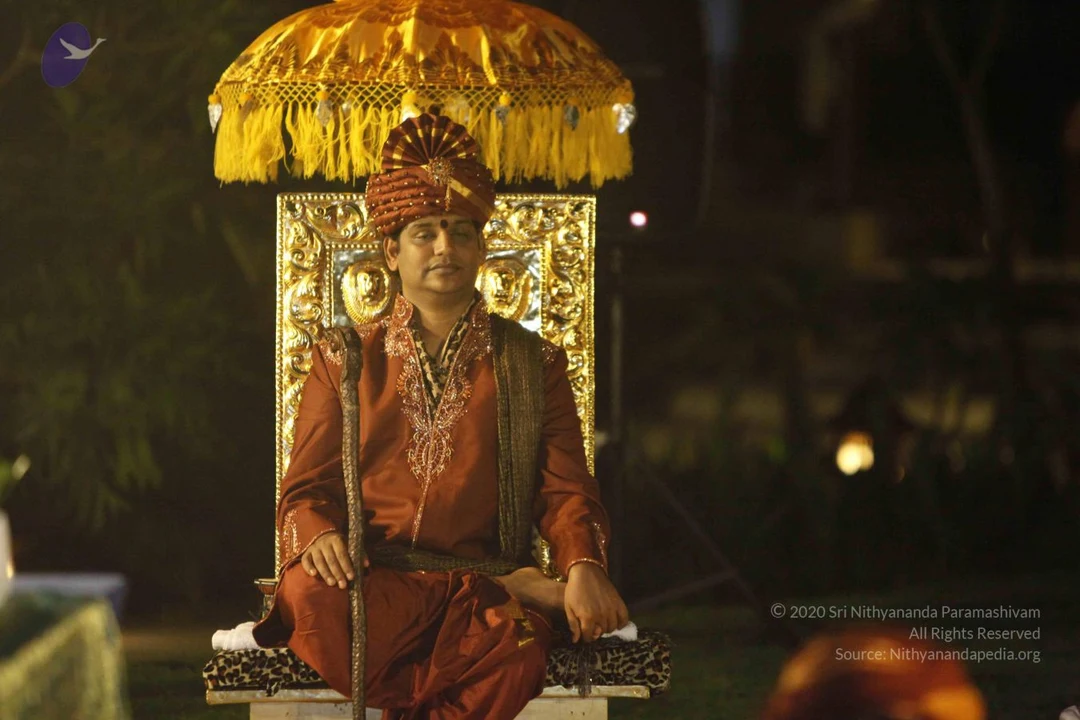
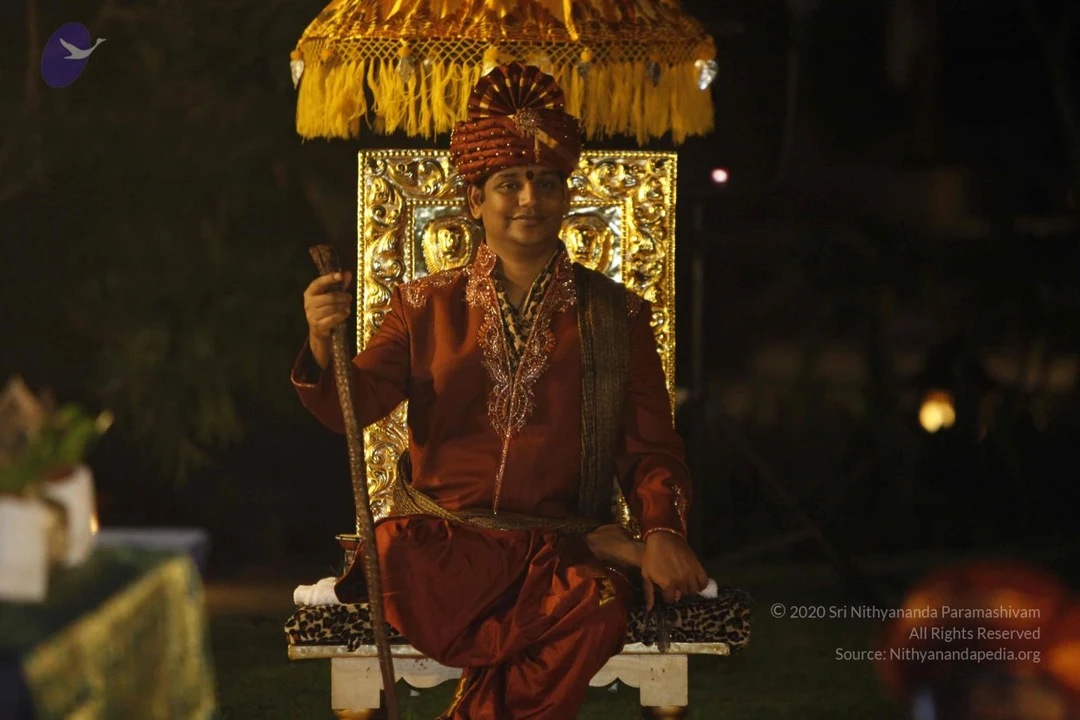
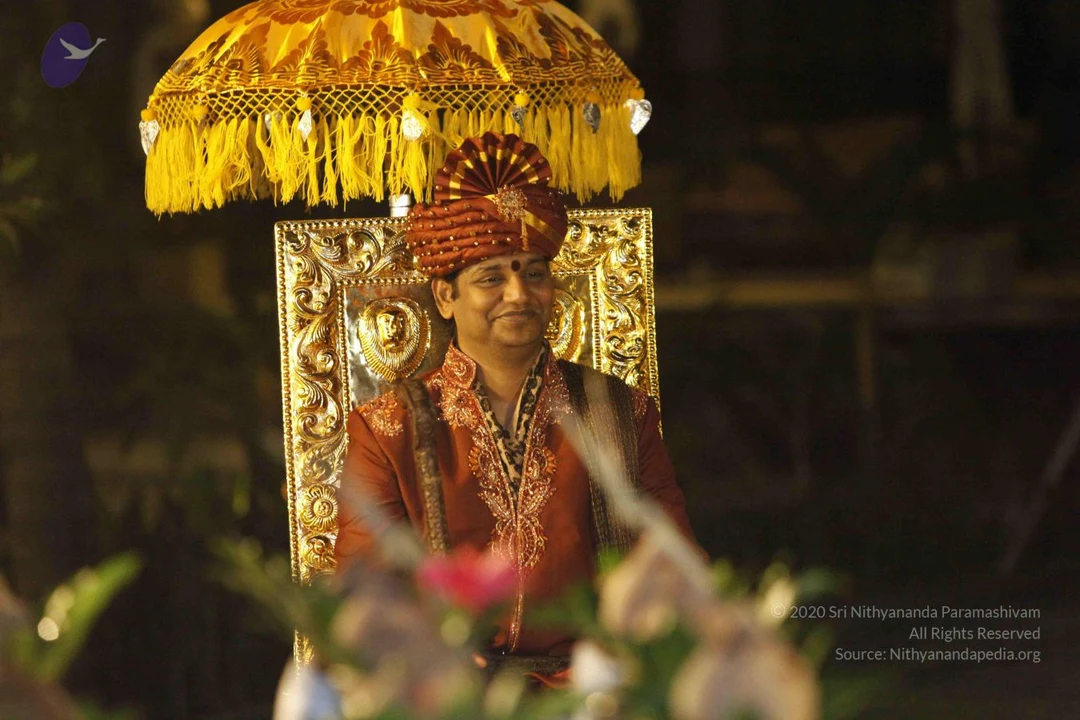
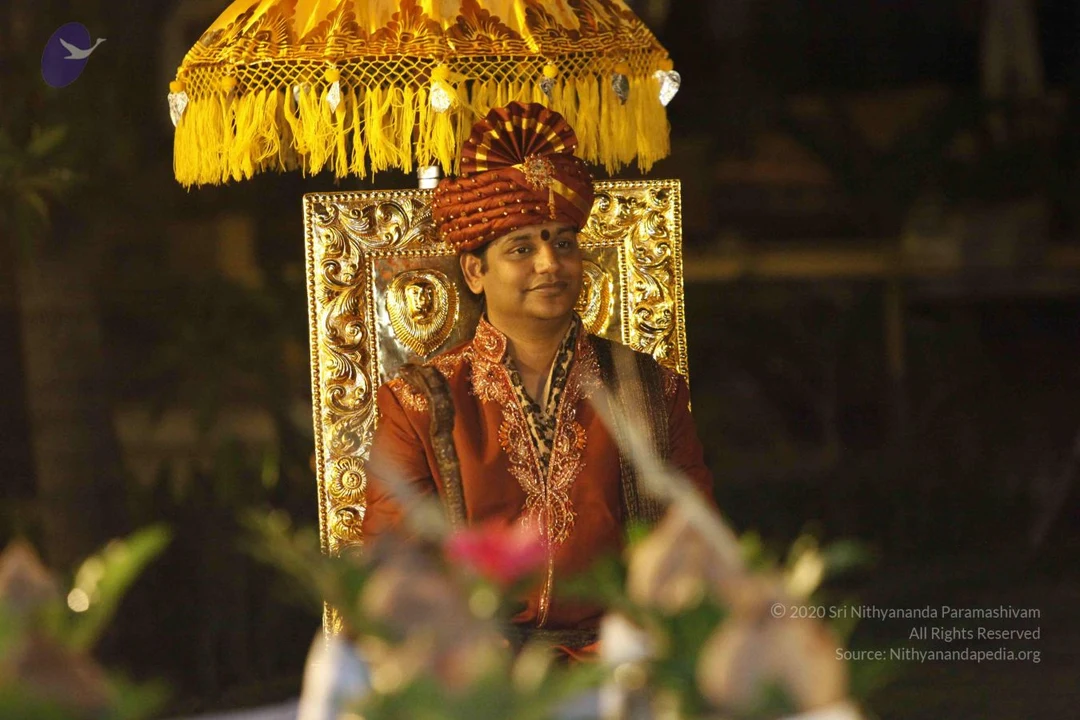
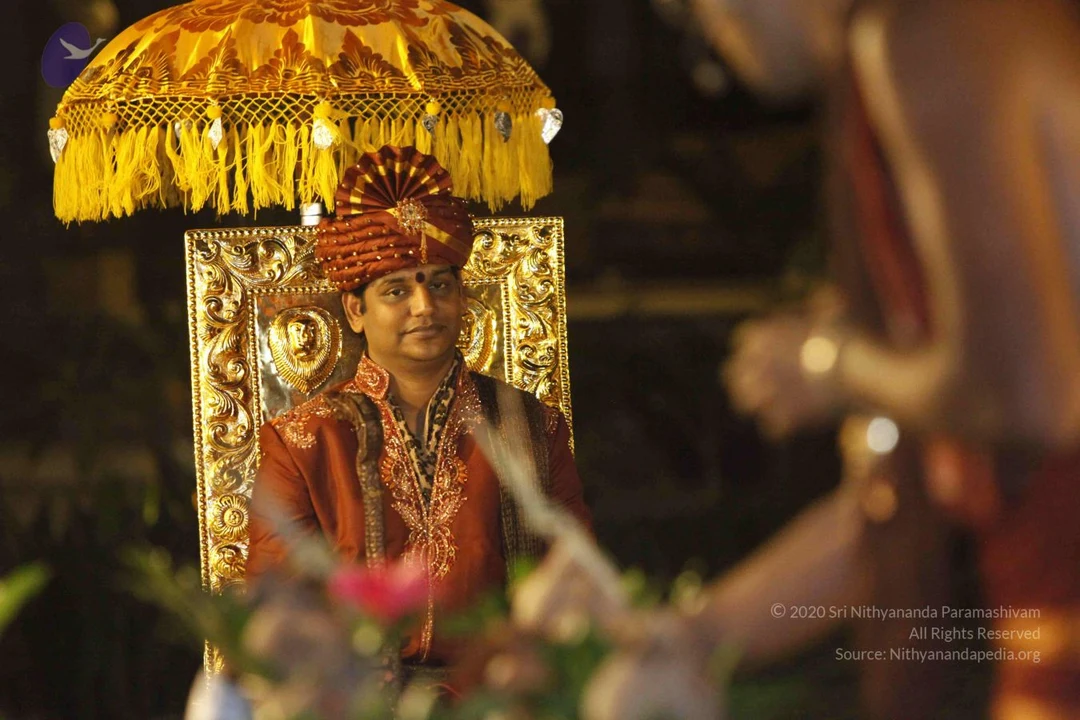
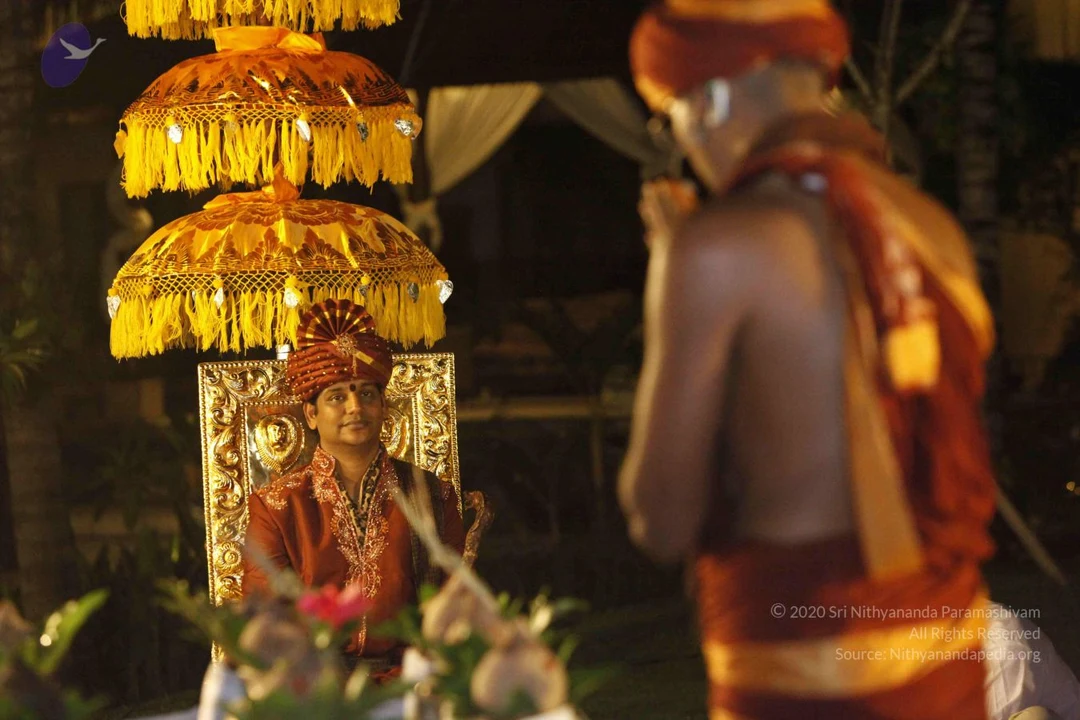
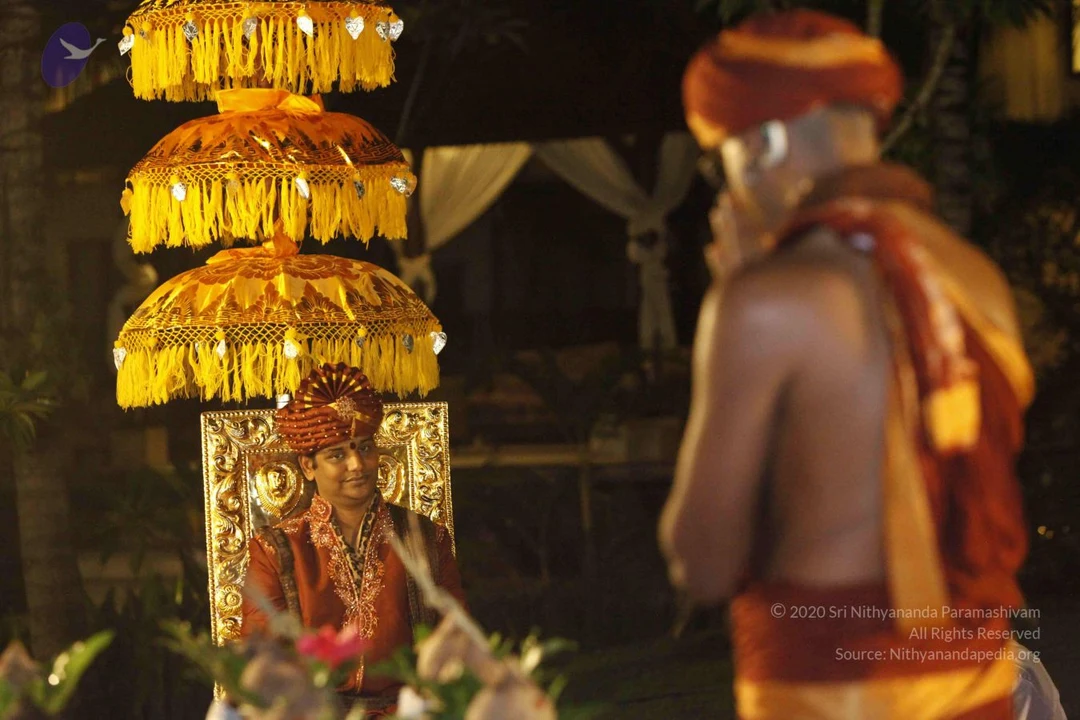
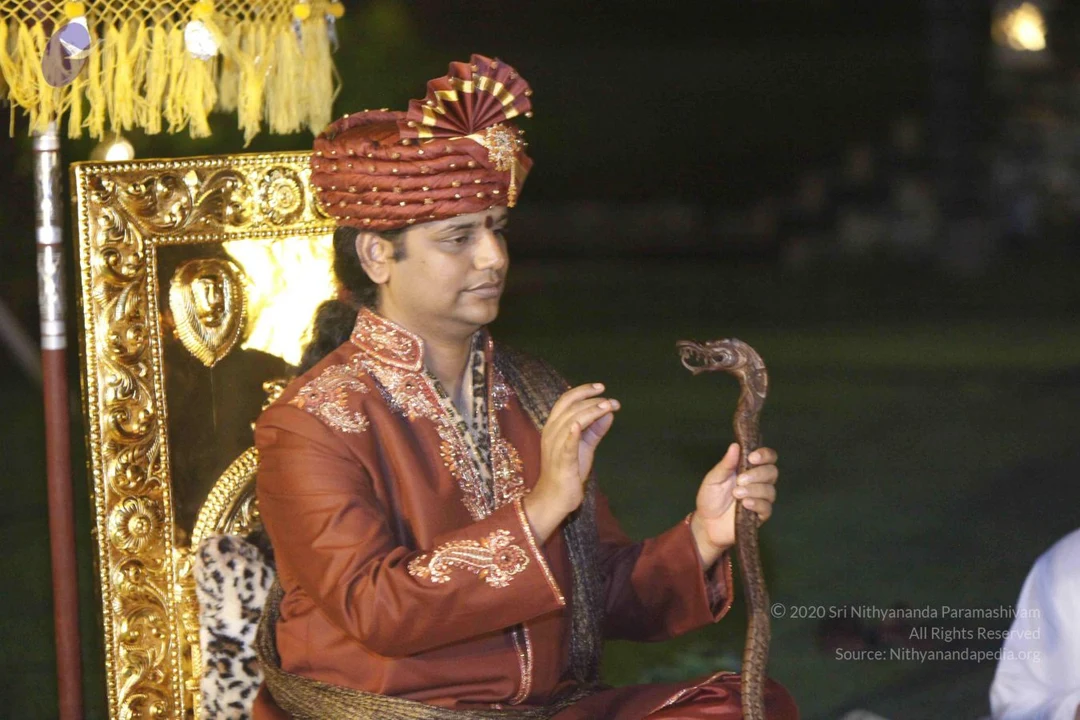
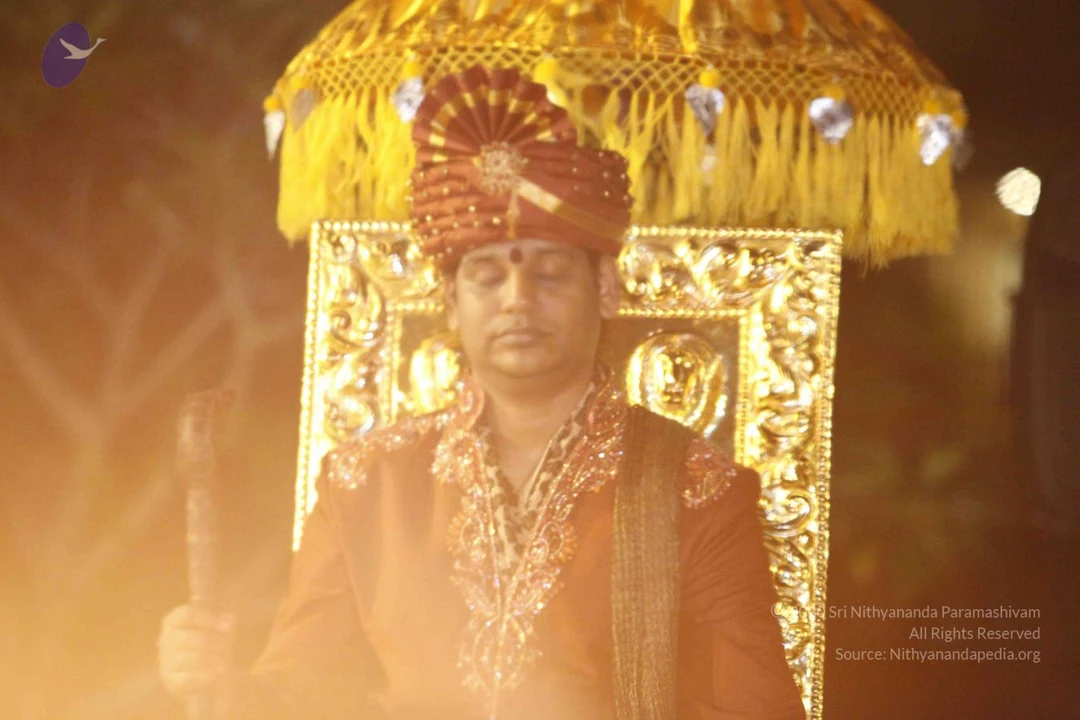
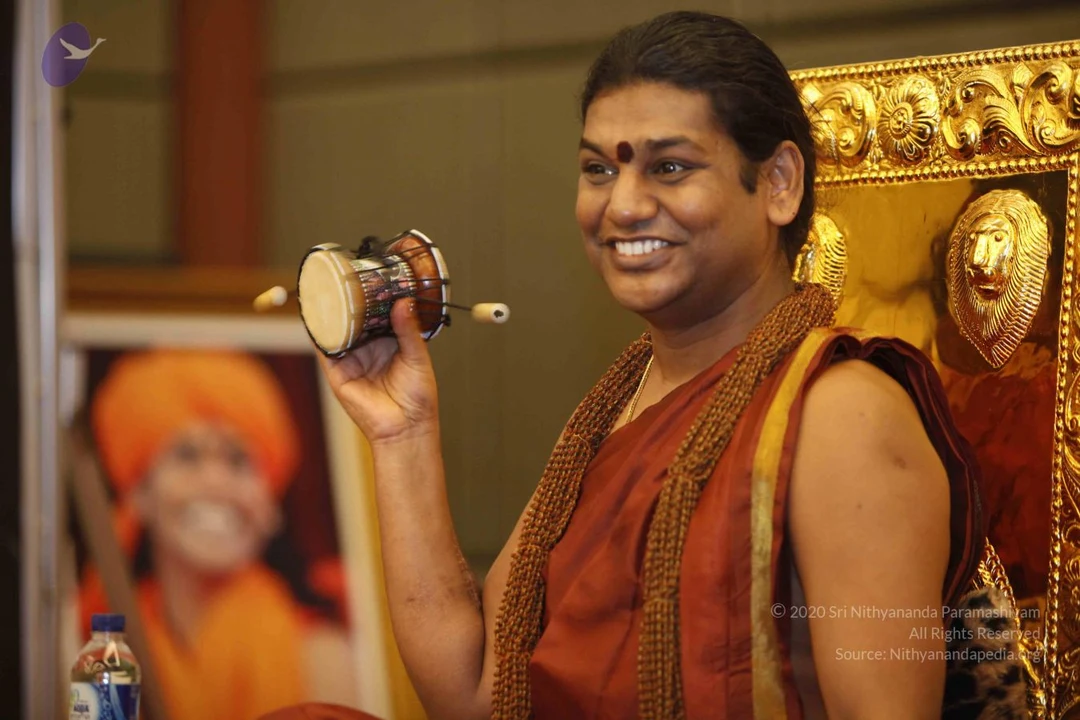
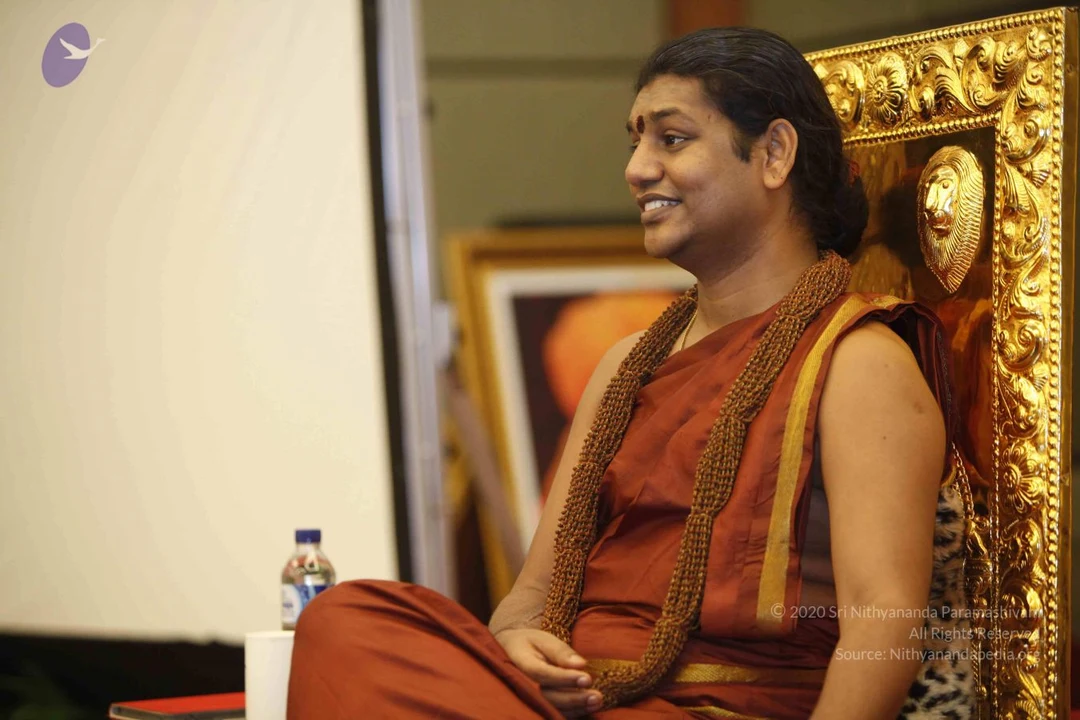
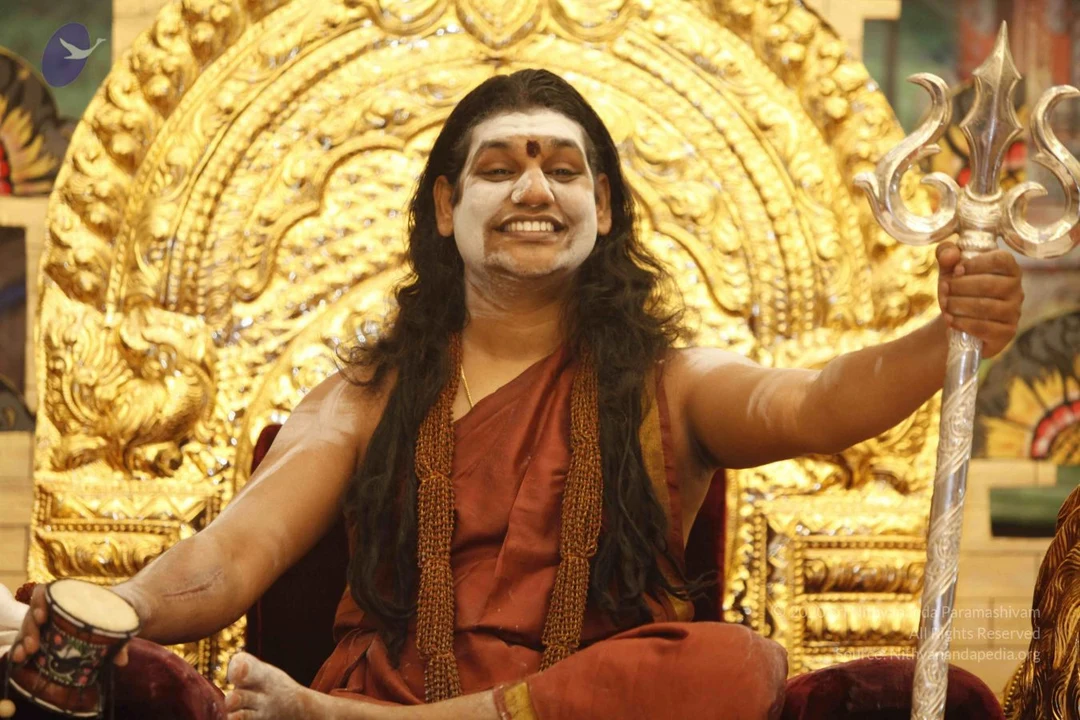
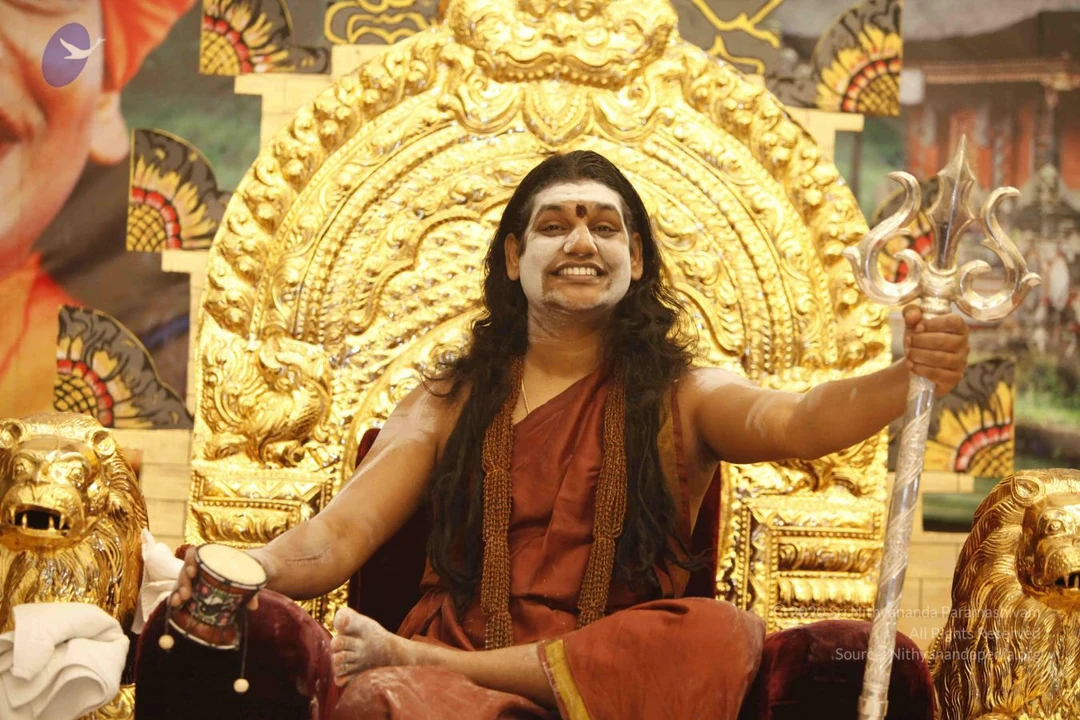
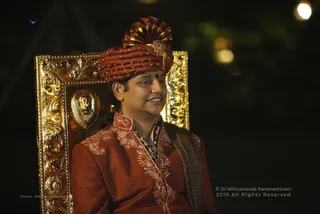
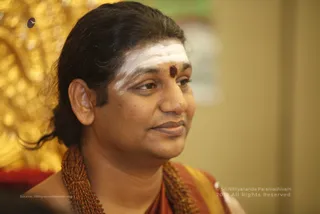
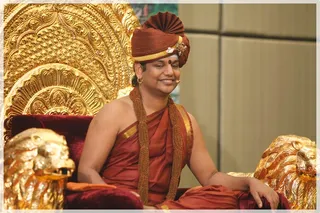
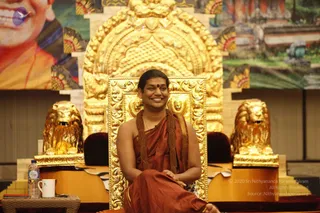
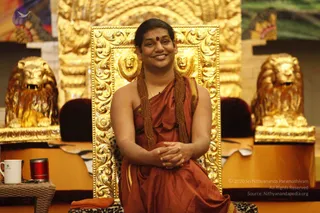
A man seated on an ornate gilded throne under a yellow fringed canopy at night. He wears a red-maroon turban, a maroon silk kurta with gold embroidery and a darker maroon wrap draped over one shoulder, and holds a slender staff upright beside him. The gilded throne has carved floral and figure panels, and the background is dark with a few small lights. Visible cues are limited to the turban and attire, so identity is not established.A man seated on an ornate gold throne at night wears a red-maroon turban with gold beading and a red tilak on his forehead. He has a red-and-gold embroidered sherwani with a shawl draped over one shoulder, and holds a carved wooden staff or cane upright in front of him. The background is dark with blurred warm lights and gold fringe above. Only one person is visible. No readable printed name appears on the scene.A photograph at night of a man seated on an ornate gold-framed throne with carved lion-face motifs. He wears a rust-red turban with a gold brooch and red-orange embroidered silk attire with gold thread work, and has a red bindi on his forehead. Dark foliage and blurred lights sit in the background. a person: the man wears a red-orange turban and embroidered robes while seated on a throne, but the cues are limited, so the identity is uncertain.Close profile photo of a smiling man with long dark hair tied back in a low knot, wearing a white horizontal tilak across the forehead with a red mark at the centre, and a thick brown rudraksha mala around his neck. He is bare-shouldered with a reddish-orange cloth draped over his chest. Behind him, a blurred beige wall and a dark pillar with red accents. The photo appears to show a satsang setting. Swamiji (probable) in_person cues are present: long swept-back hair, rudraksha mala and ornate ritual adornment.Close-up photograph of a man seated in profile against a blurred warm background with a gold ornate decorative panel on the left. He has long dark hair swept back, a white vertical tilak on his forehead with a red-brown dot at the centre, and wears an orange-red garment with a golden-yellow border and a brown beaded rudraksha-style mala around his neck. The figure is visibly the probable Swamiji by the long swept-back hair, saffron-orange clothing, rudraksha mala and tilak cues, shown in person at a satsang setting.
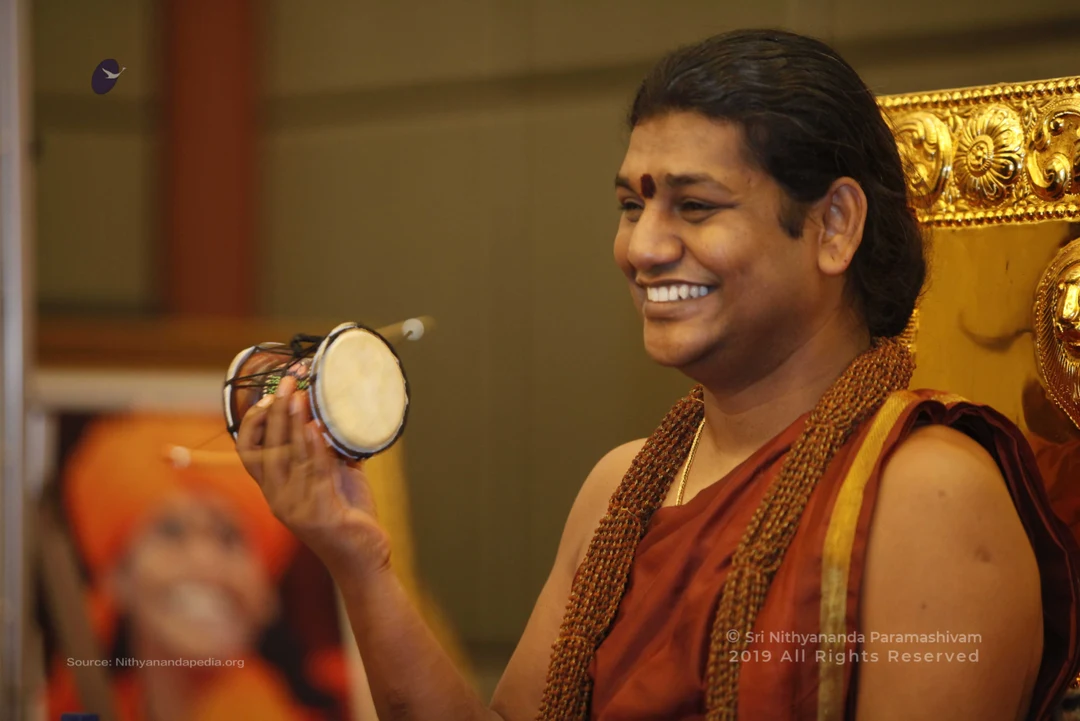
Photos

13 photosSource gallery
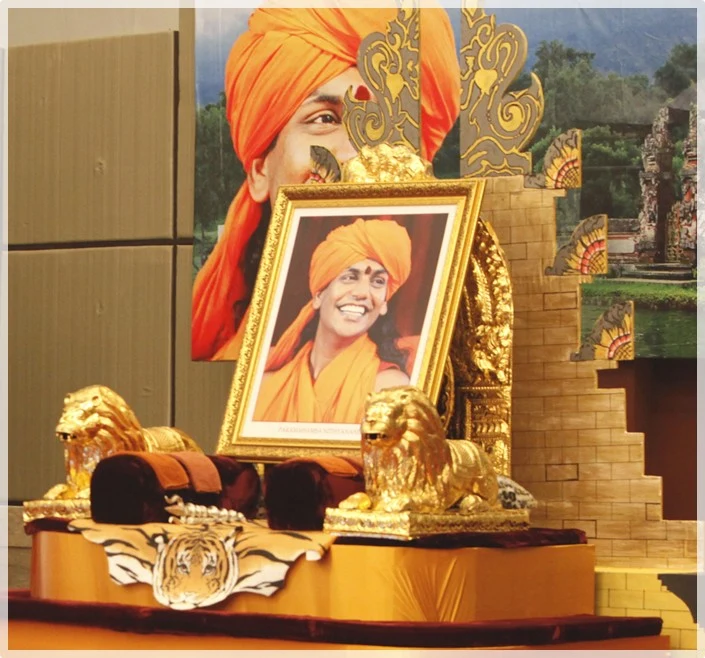
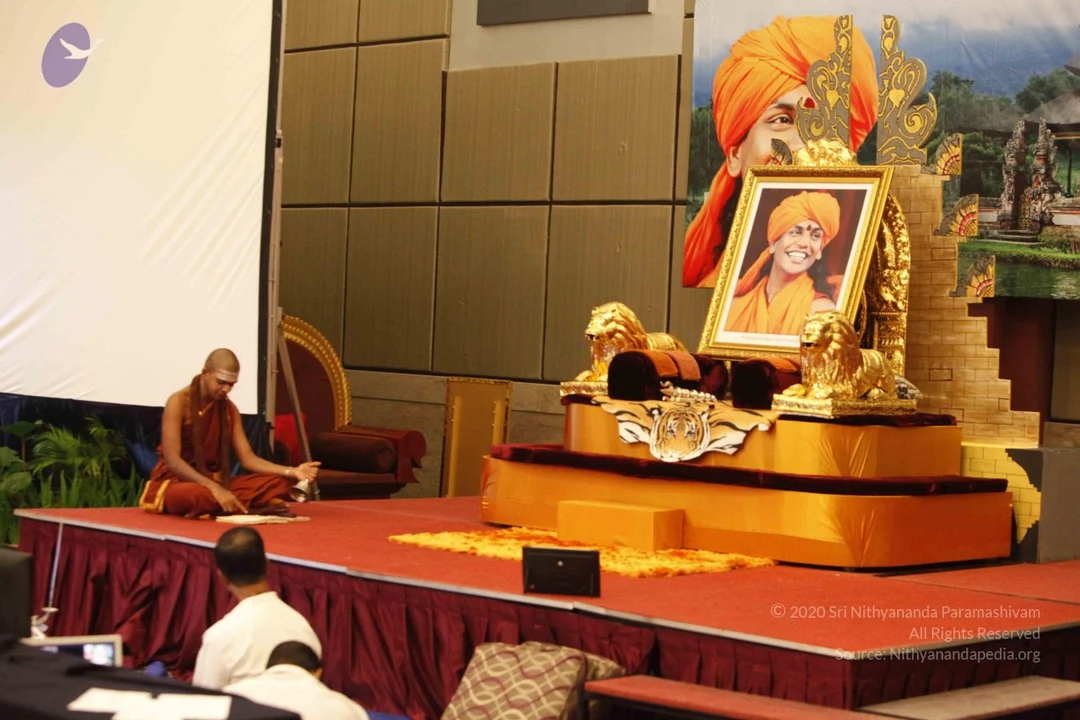
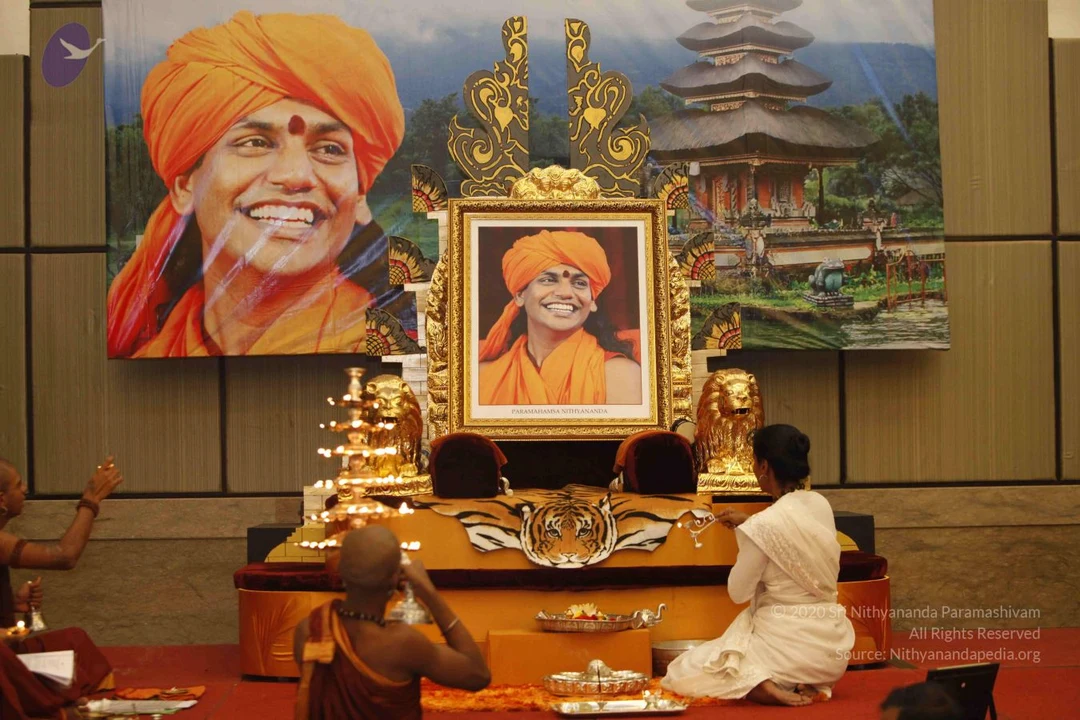
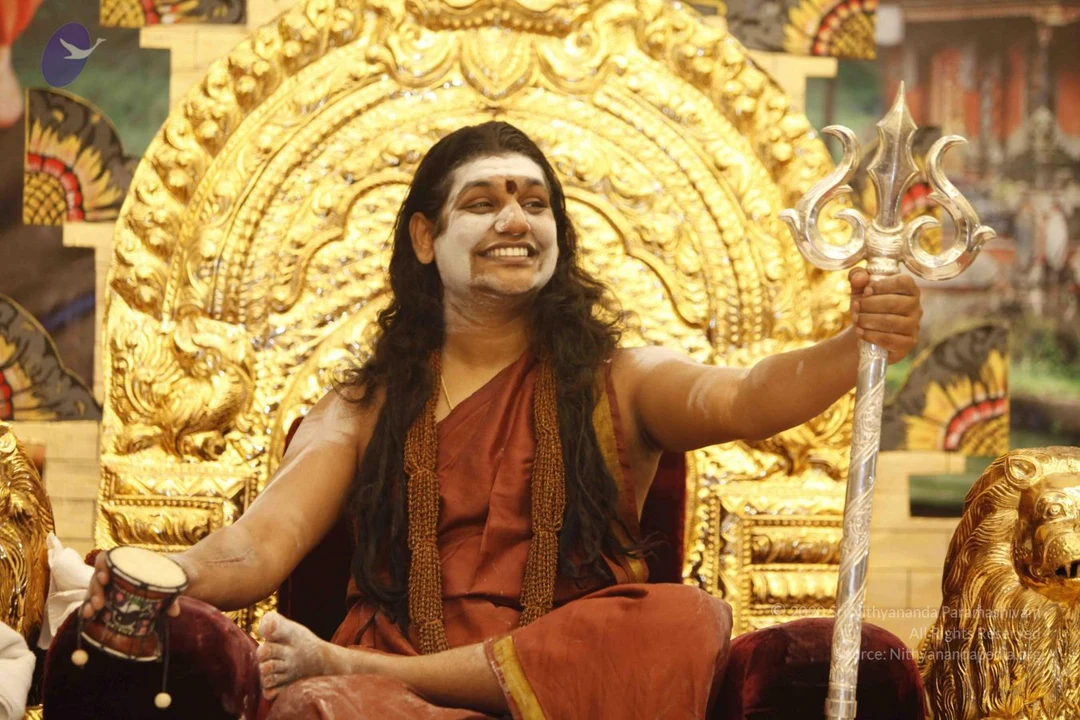
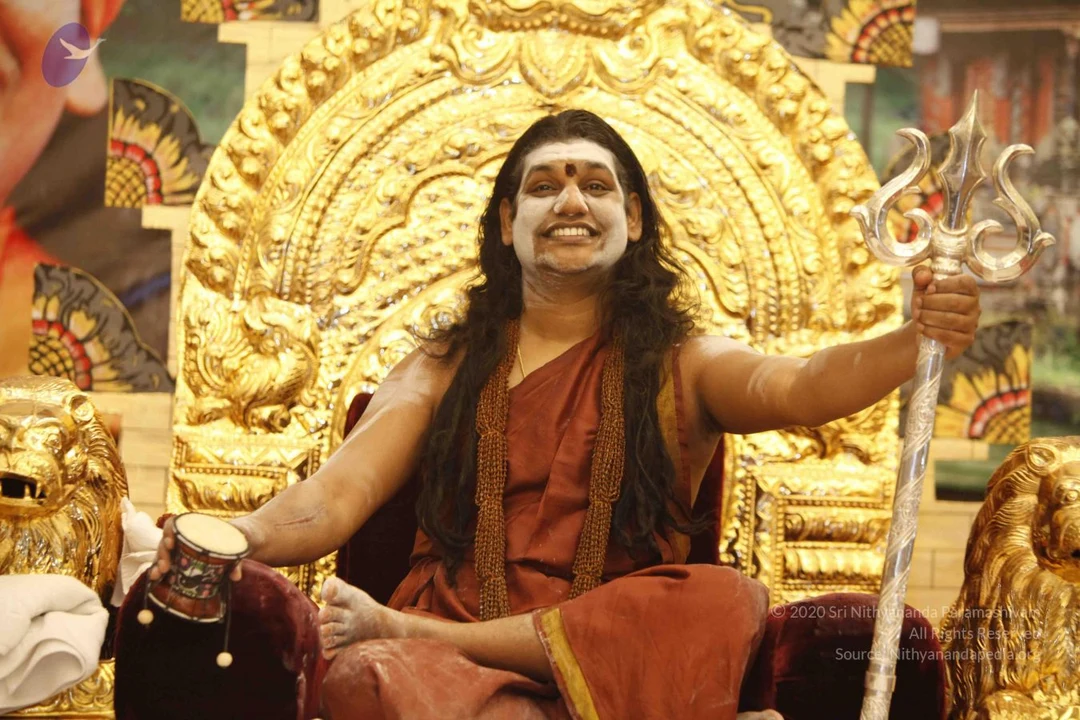
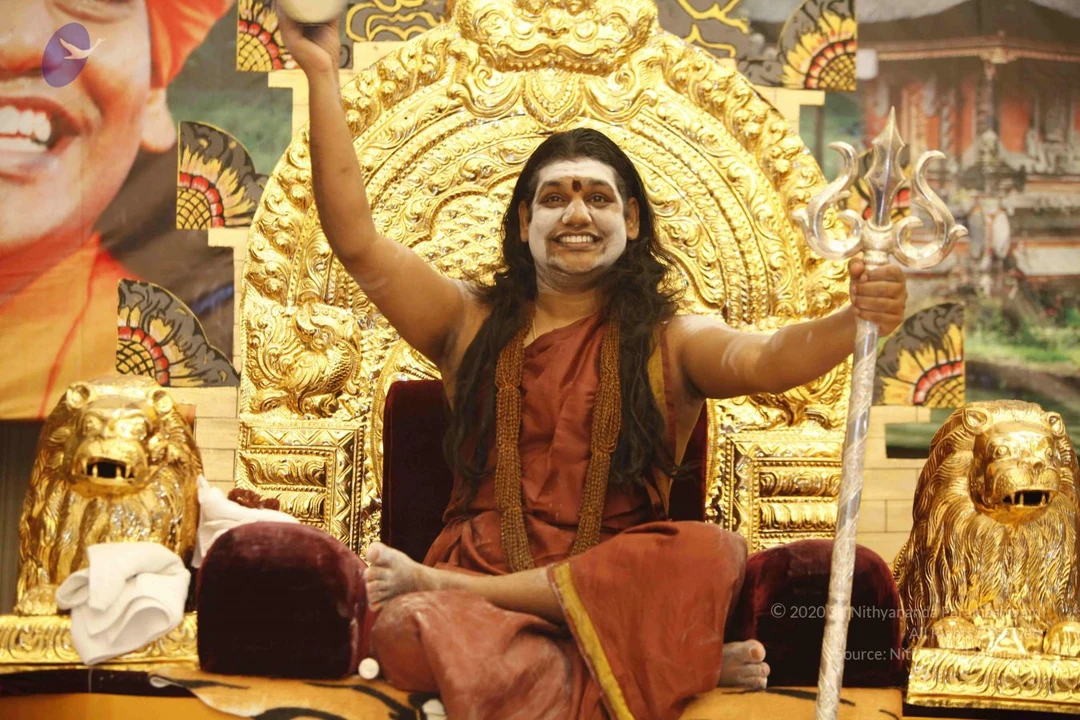
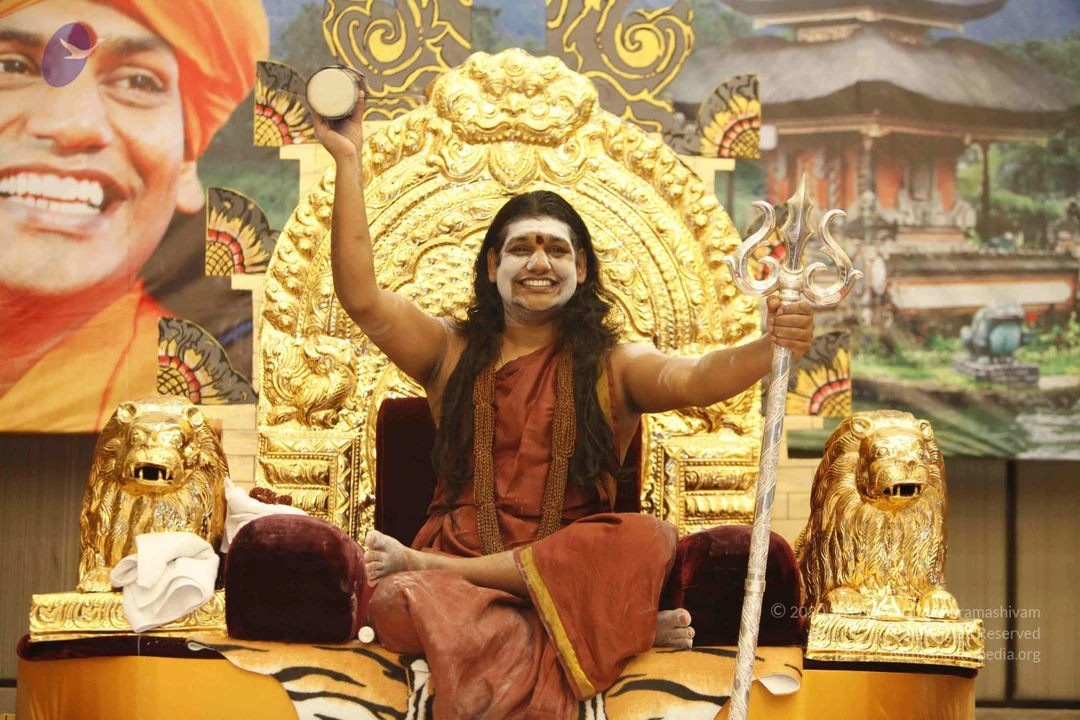
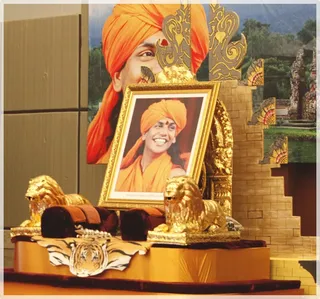
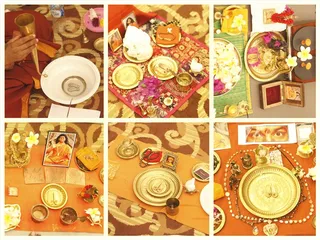
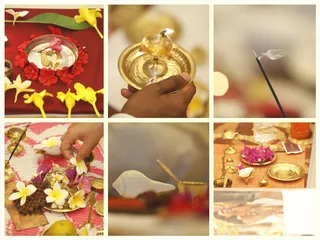
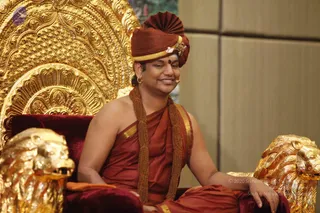
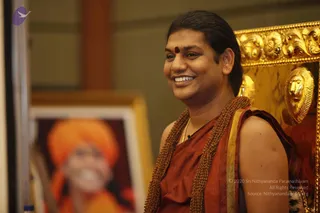
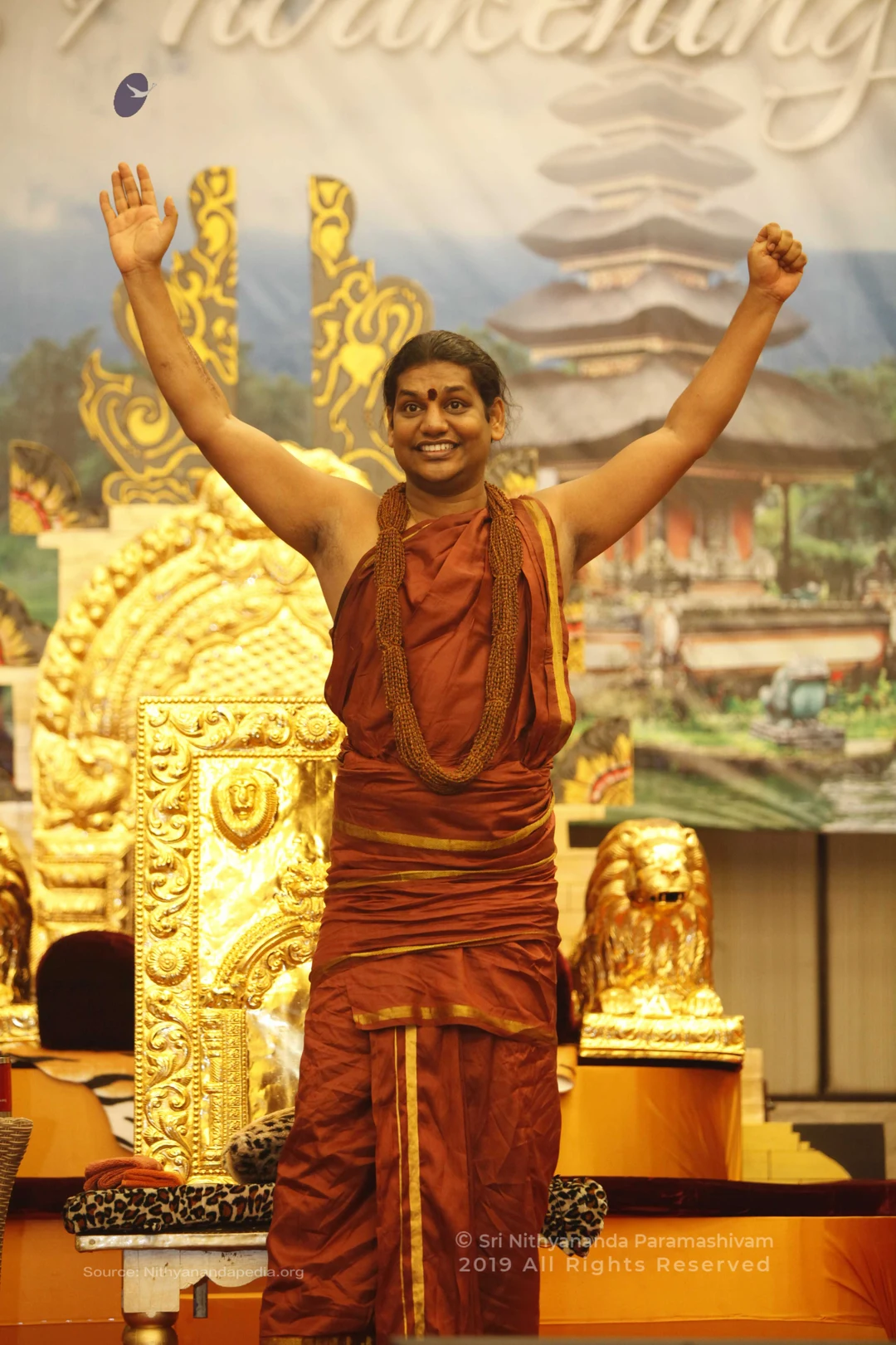
A wide photograph of a large ballroom with patterned carpet, cream wall panels and dark wooden doors. Thirty to forty people in dark clothes, many in blue or black tops and dark trousers, perform a yoga pose on white mats, bending forward with palms on the floor in a downward-facing stance. Stacked red chairs stand at the left wall, and a camera on a tripod is set up near the front. Blue tables line the back, with a few people walking in the far background.A stage set for a satsang, centred on a framed portrait labelled "Paramahamsa Nithyananda" set on a gold-framed easel. The framed portrait shows a smiling man in an orange turban and orange robe with a red dot on his forehead. Behind it, a large orange-turbaned printed image and a painted backdrop of a Balinese temple gateway with green trees and a mountain. Two golden lion statues flank a dark-brown cushioned seat draped with a gold cloth bearing a tiger head emblem. Gold ornate carved panels and a stepped brick-patterned platform frame the scene. No physical people are visible.A six-panel collage of photographs documenting a ritual puja setup. Top left: a person in an orange robe holds a brass vessel pouring liquid into a white bowl. Top middle: a small brass plate with white flowers, a conch-like shell, pink flowers and a framed portrait on a red and gold cloth. Top right: a gold plate of white and pink flowers, a brass deity murti, a small wooden box and framed picture. Bottom left: a framed picture of a seated deity, a brass lamp and red flowers on an orange cloth. Bottom middle: a brass plate with a lamp, a red bead mala and small framed photo. Bottom right: a large brass tray with lamps, a rudraksha mala, bells and a printed photograph of a pair of eyes on an orange cloth. Only partial hands and robes are visible, no full person.A six-panel collage of puja items with no people visible. Top left: a red cloth with red flowers, yellow frangipani-style blossoms and a small silver dish. Top middle: a brass lamp with a lit wick held by a hand. Top right: a lit incense stick with rising smoke. Bottom left: a hand placing white and yellow flowers on a plate with rudraksha beads and fruit on a pink-patterned cloth. Bottom middle: a white conch shell beside brass vessels and red petals. Bottom right: brass bowls, a pink lotus-like flower, a small brass bell and a white conch on an orange cloth.A seated man in a maroon-red turban with a gold trim and a small ornament at the front, wearing a rust-orange draped garment with a gold border and a long multi-strand rudraksha-style beaded necklace. He smiles broadly while seated on an ornate gold throne with a carved backrest and gold lion-head armrests, with red velvet cushioning. Behind him is a beige wall panel and a framed picture. Appearance-based cues including the turban, orange robe and beaded necklace align with a person candidate seated in the position of honour, so this is recorded as in_person with the identity uncertain.A photograph of a seated man on an ornate golden throne with carved lion-head armrests and a large gilded backrest. He wears a rust-orange turban with a pleated top and a small ornament, a rust-orange shawl over a bare upper body with gold-edged borders, and multiple strands of beaded rudraksha-style malas with a gold clasp at the neck. He has a red bindi on his forehead and is smiling while resting his hand on the armrest. Behind him is a plain beige panel wall. Appearance-based label: Swamiji (probable), seated in person on the throne, wearing saffron-orange turban, shawl and rudraksha malas.

Rudra Abhishekam
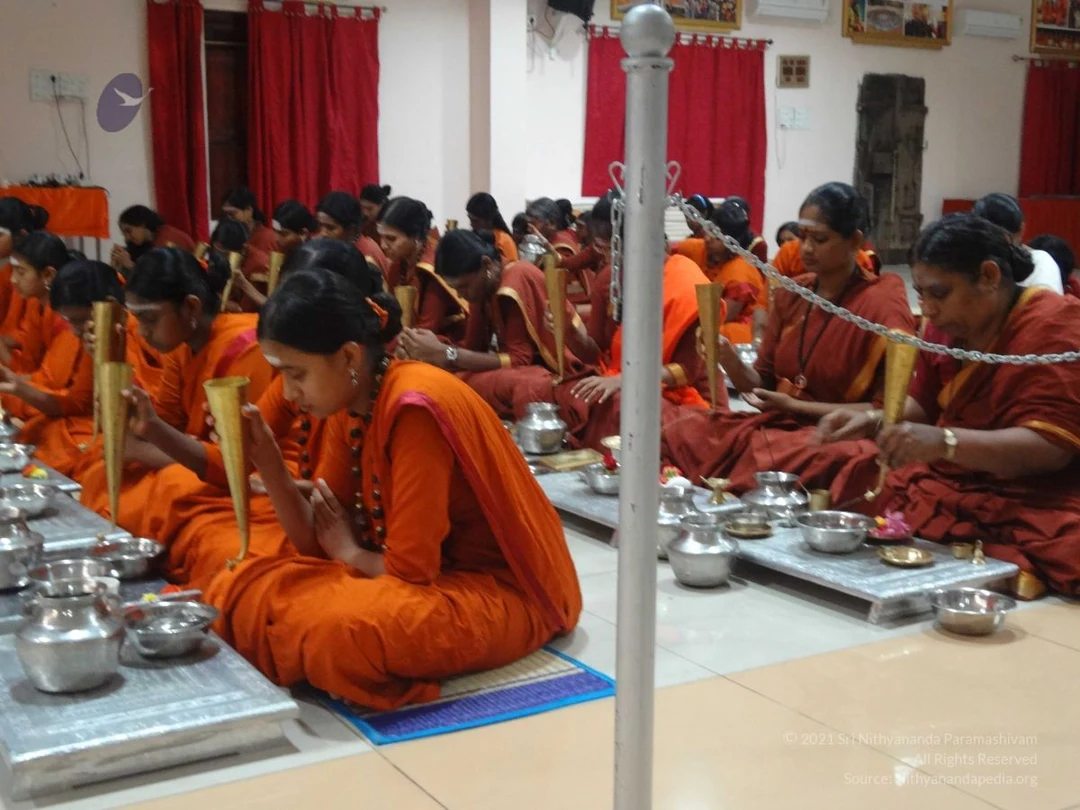
34 photosSource gallery
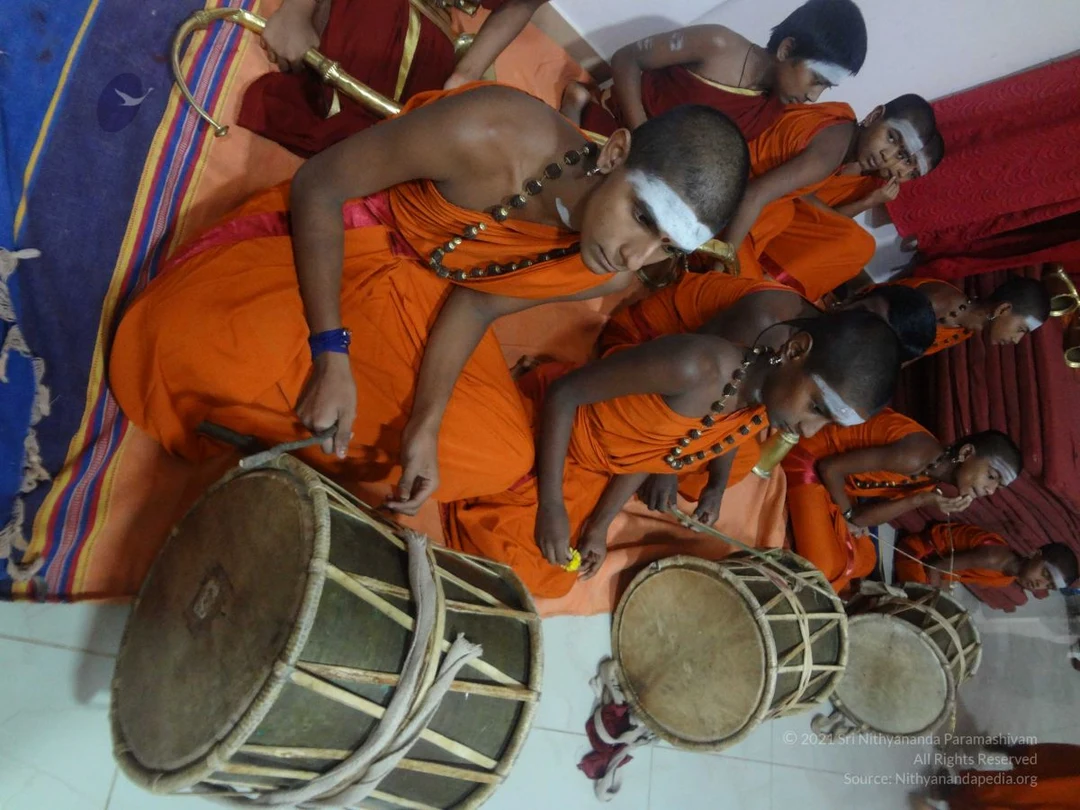
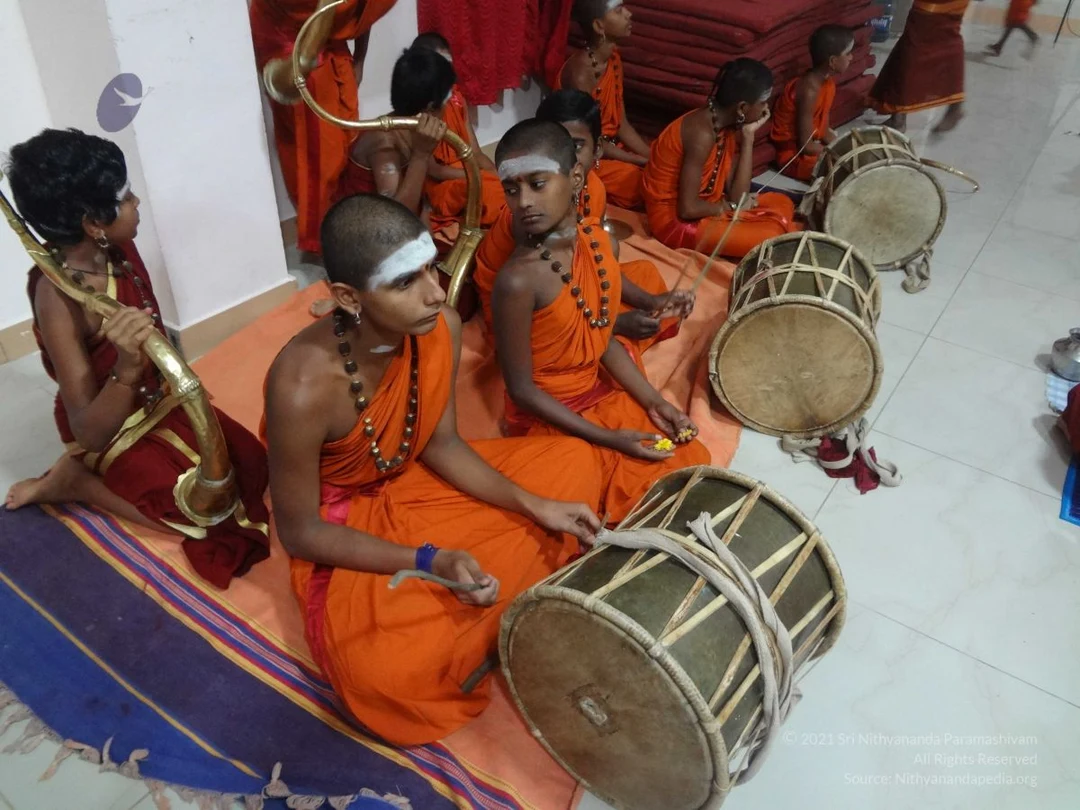
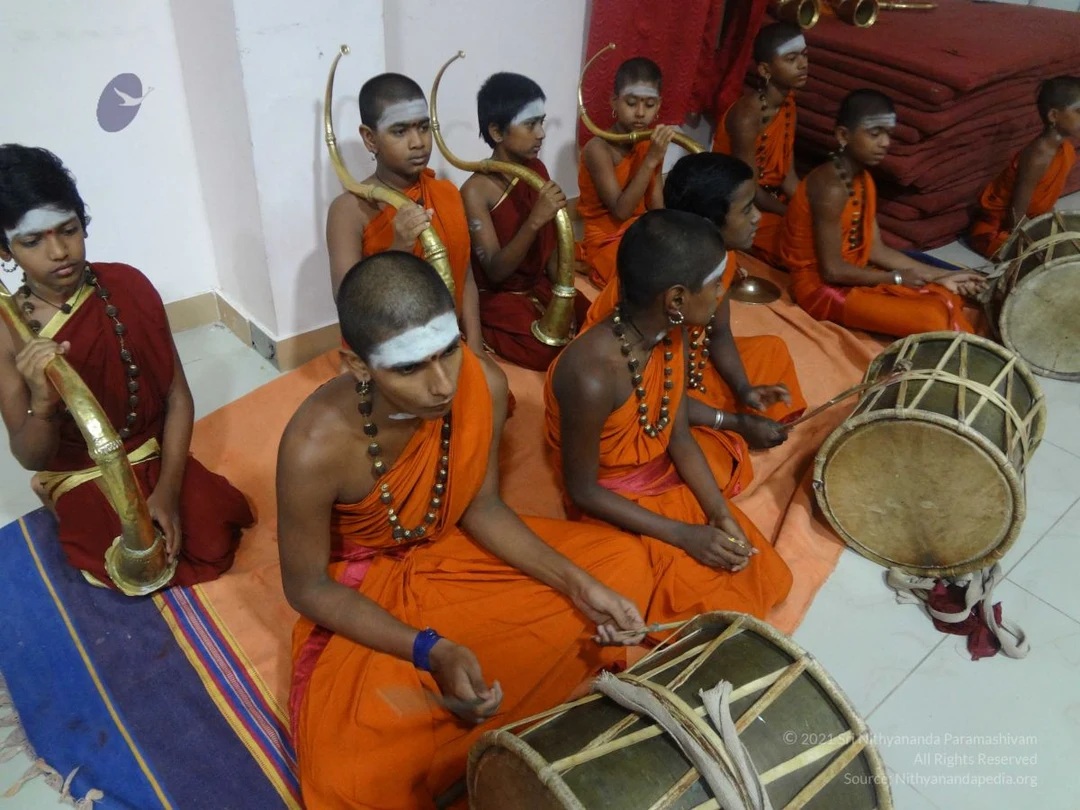
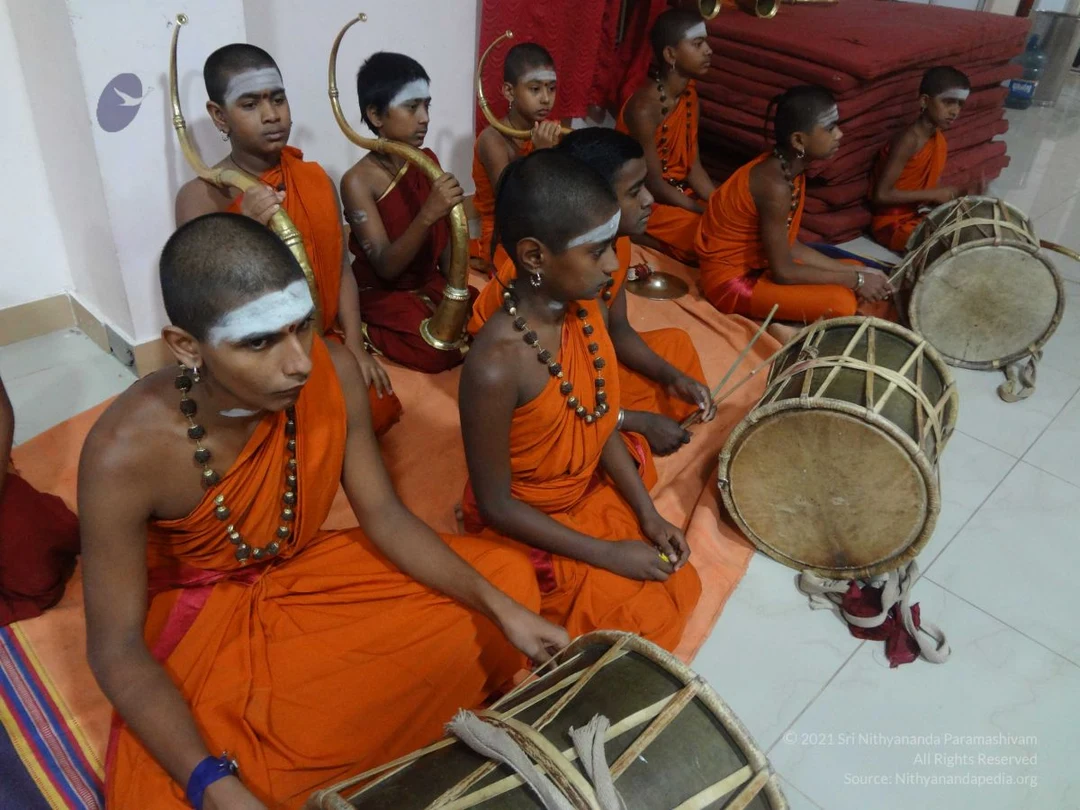
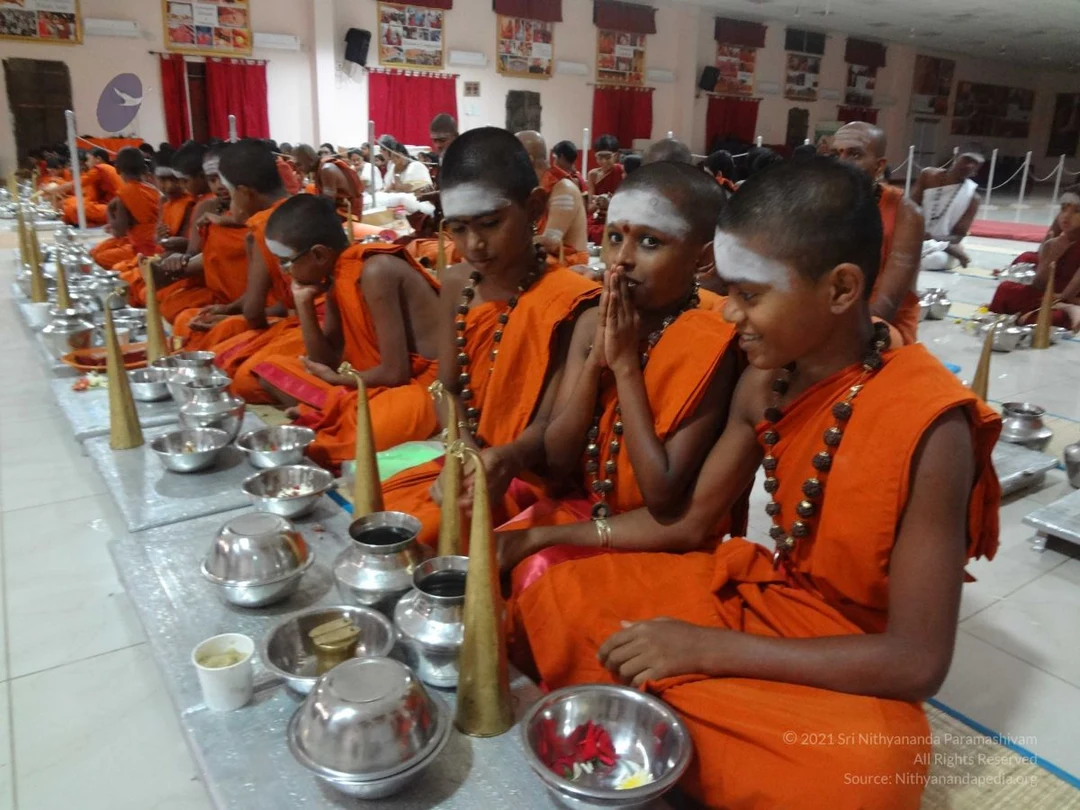
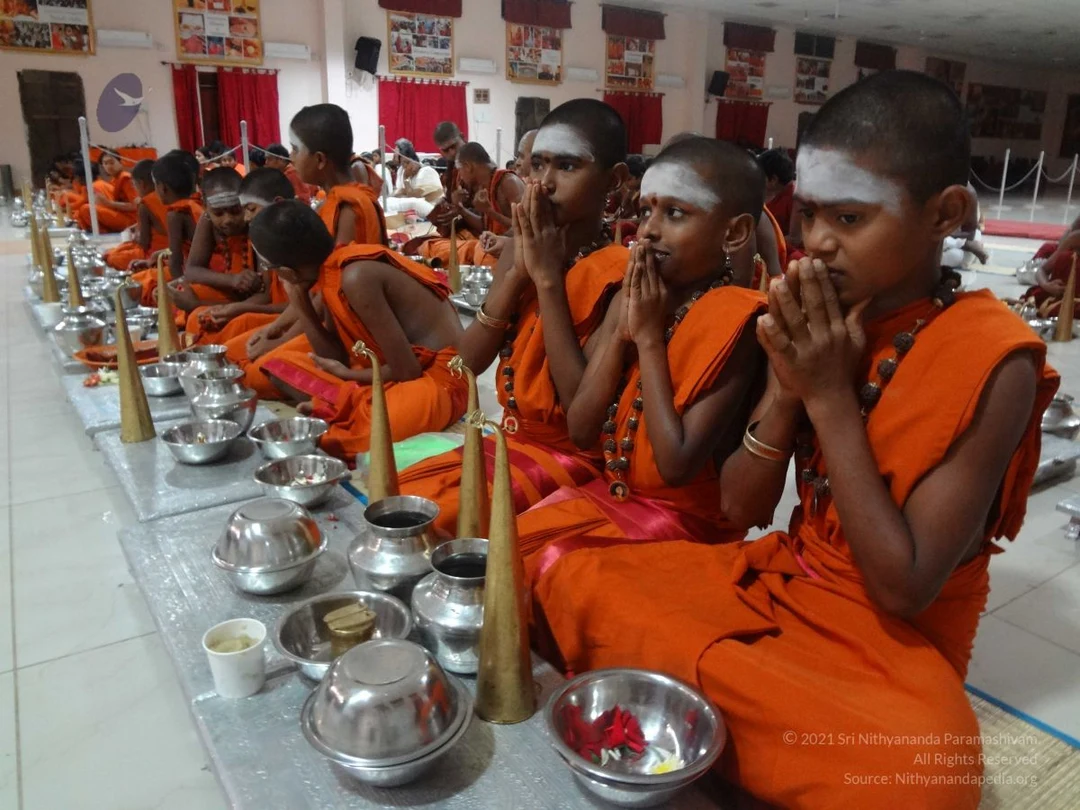
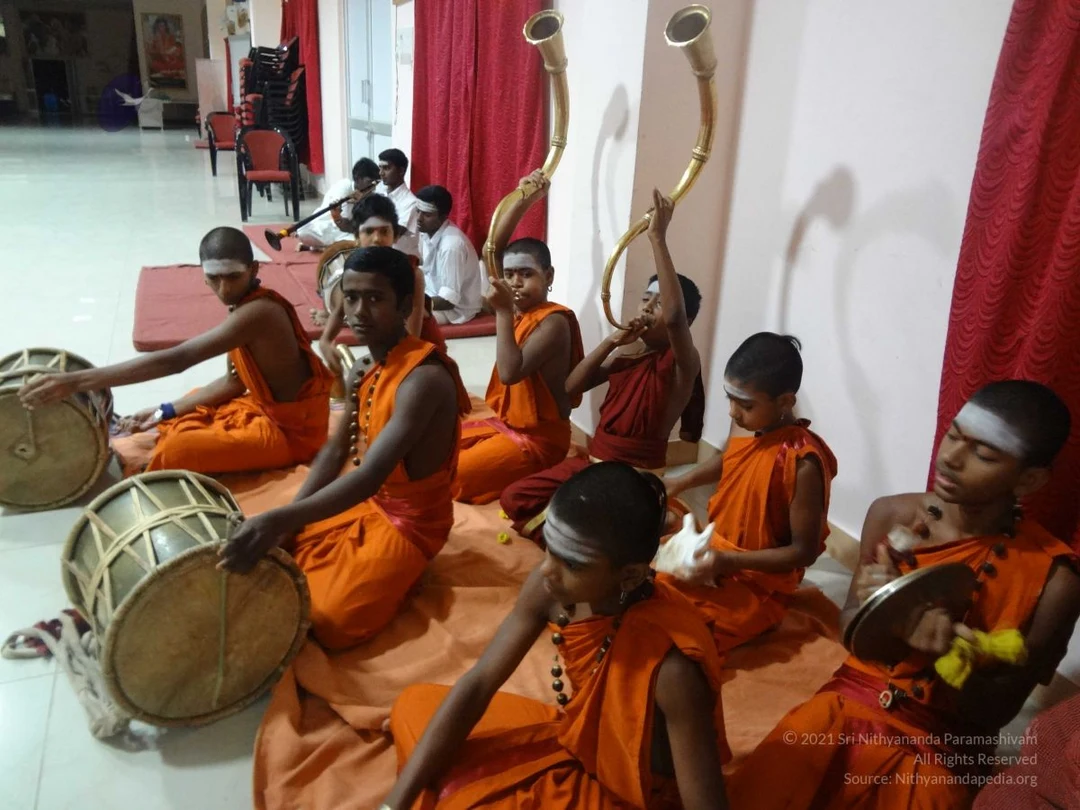
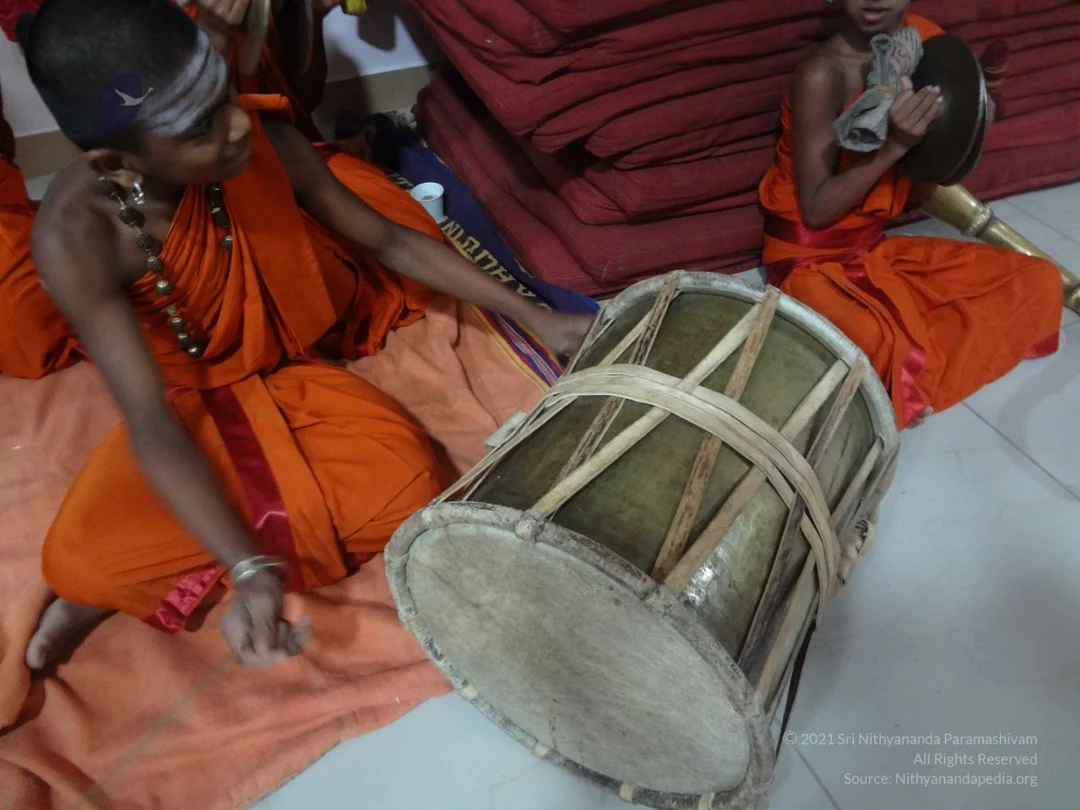
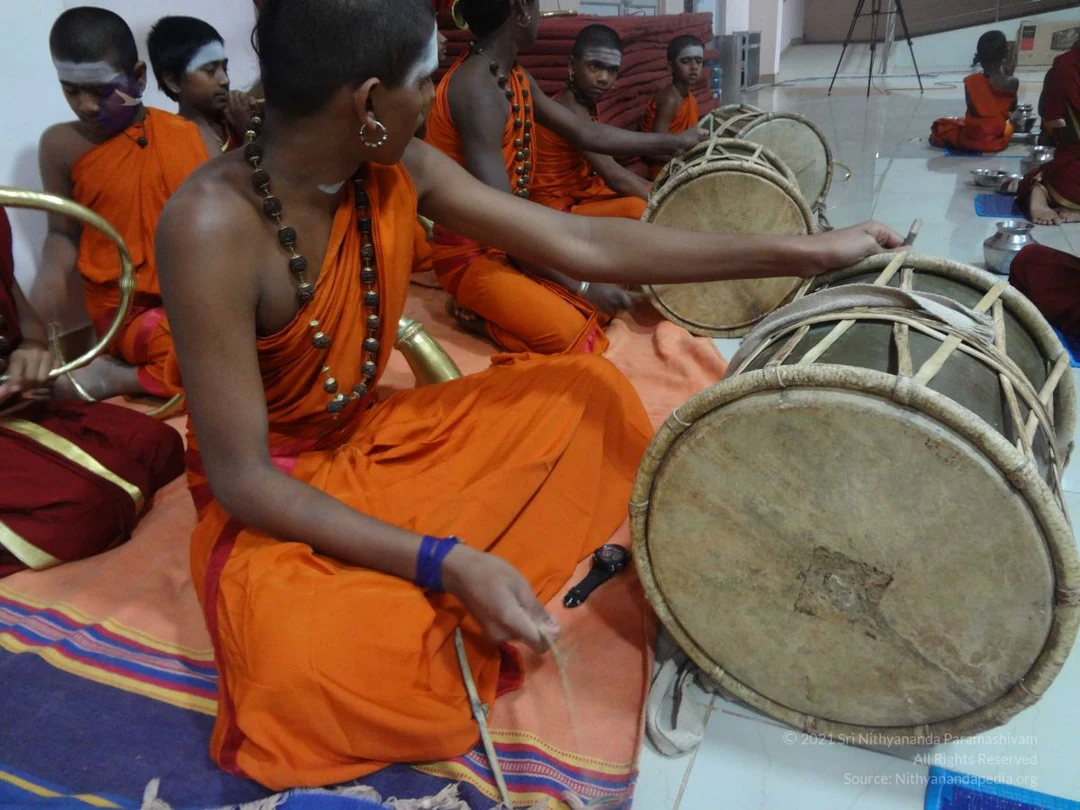
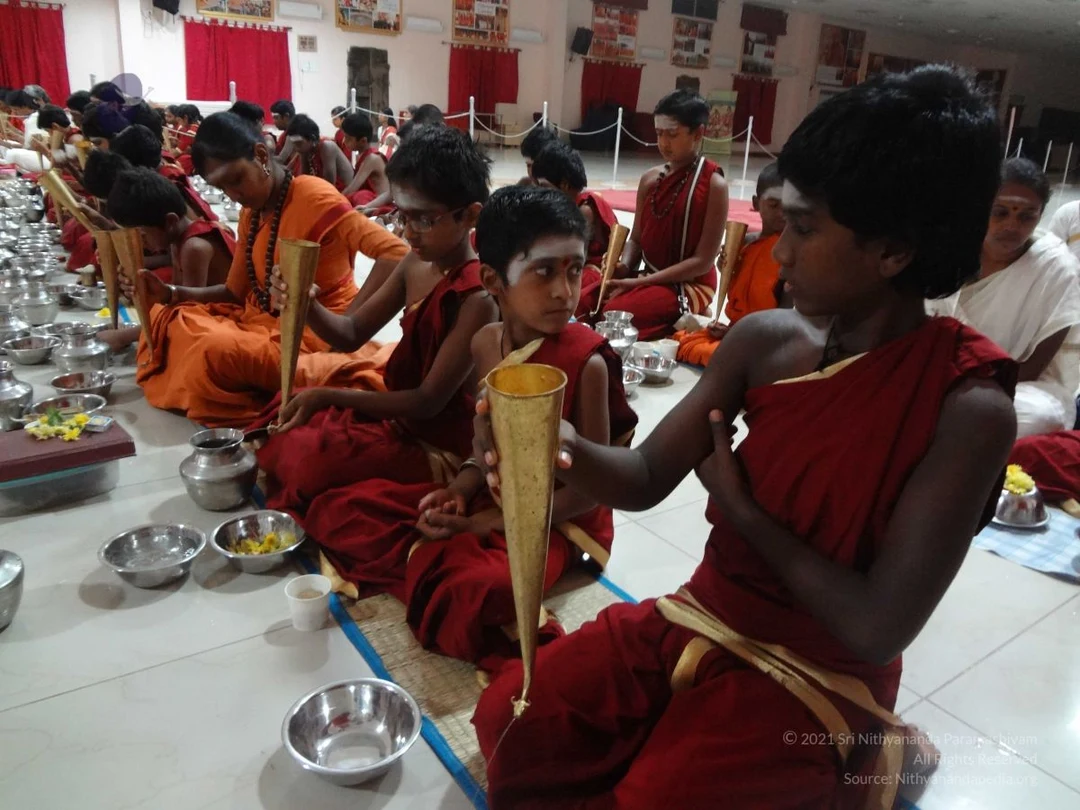
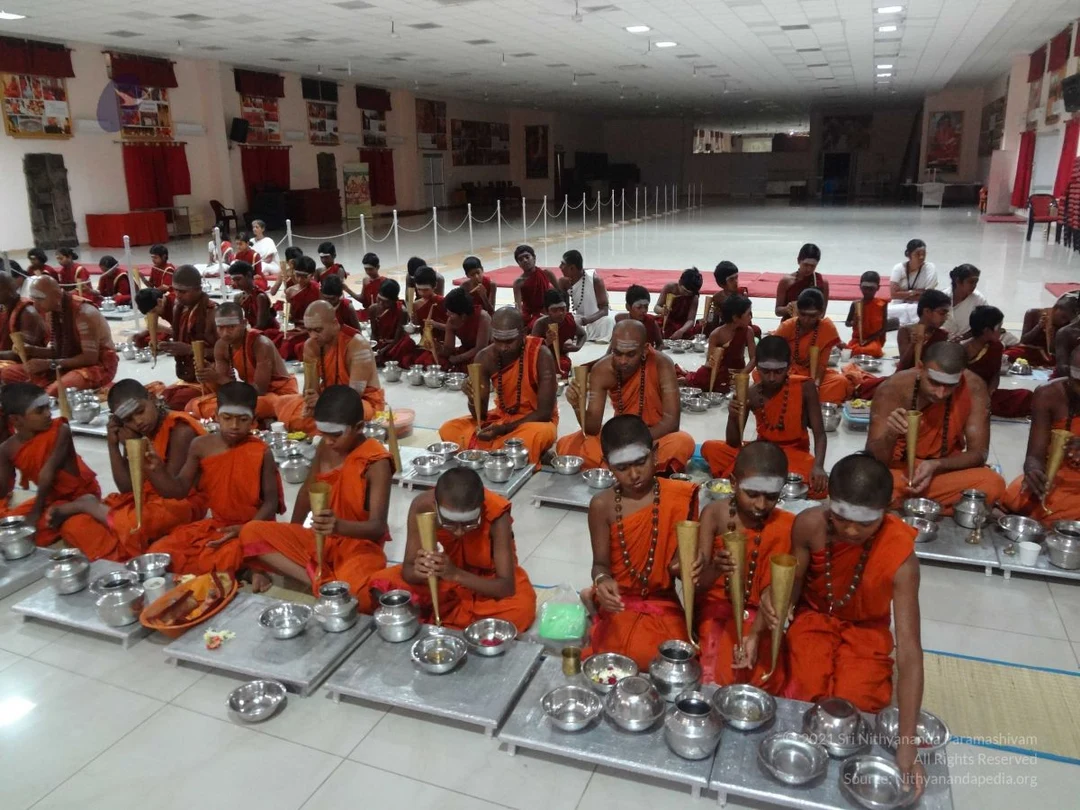
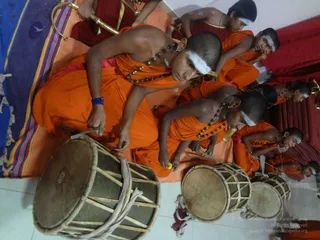
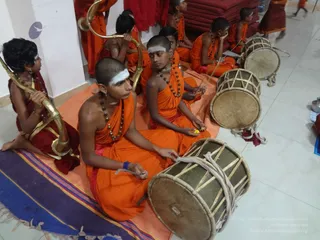
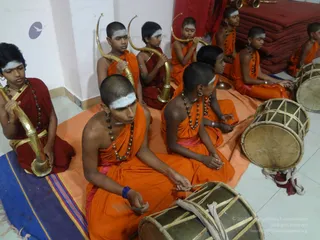
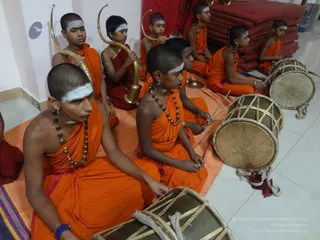
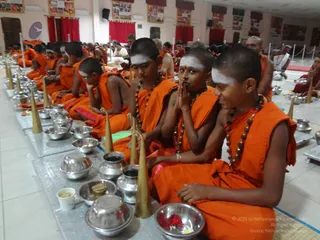
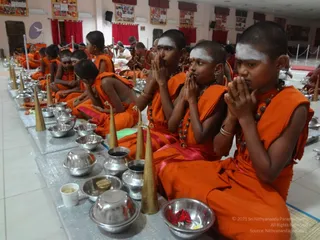
Young boys in saffron-orange robes sit on a floor covered with an orange cloth, playing drums and a brass horn-like instrument. Several wooden barrel drums with hide heads are in the foreground, played with sticks. Each boy wears a white forehead band, beaded necklaces and a blue wrist band, while one wears red cloth at the waist. Behind them, red and maroon fabric and a blue striped mat frame the scene. The photo is rotated sideways. No a person candidate is visible.A photograph of young male students in saffron-orange robes seated on the floor of a white-tiled hall, playing traditional drums and horns. The boy in the foreground, with a shaved head and white vertical forehead markings, beats a barrel drum with a stick while others nearby hold a curved brass horn and rudraksha beaded necklaces. A woman in a deep red garment with gold trim plays a long brass horn at left, and several other drums rest on the floor. A blue-and-purple striped mat sits beneath them, with red fabric stacked along the back wall. The setting suggests a ritual music performance.Photo of a group of young boys seated on orange and blue cloth on a tiled floor, performing ceremonial music. Several wear saffron-orange robes and rudraksha malas, with white vertical tilaka marks on their foreheads; some wear red robes. They play long curved gold-coloured horns and hand drums (dhol-style) with wooden sticks. A stack of red folded cloths and a red curtain sit in the background. Drumming and horn playing suggest a ritual or procession musical ensemble.A photograph of a group of young boys seated on an orange cloth on a white tiled floor, playing traditional instruments. Several wear saffron-orange robes and have white vertical tilak marks on their foreheads and shaved heads. Some hold long curved brass horns, while others play barrel drums with wooden sticks, with a few drums in the foreground. One boy wears a dark beaded rudraksha-style necklace. Behind them stacked red cushions and a red cloth hang along the wall, with a brass bowl visible. The scene suggests a ceremonial music ensemble during an ashram gathering.A photograph of a large hall where rows of young boys in saffron-orange robes sit on the floor before brass and steel vessels, cups, and tall brass cones set on silver-toned trays. In the foreground, three boys with white vibhuti stripes on their foreheads and rudraksha malas around their necks sit close together; the middle boy has his palms pressed together in namaste while the boy on the right smiles, and a silver bowl holds red flowers. Behind them, more robed participants sit in rows, some in white clothing, and framed pictures hang on the walls beneath red curtains, consistent with a puja or padapuja setting.A photograph of a long hall where many young boys in saffron-orange robes sit in rows on a raised platform, hands pressed together in anjali mudra with white vibhuti marks on their foreheads and rudraksha malas around their necks. In front of them stand polished metal bowls, pots and small brass cones on the floor, with a red flower in one bowl. Red curtains and framed posters line the back wall. The foreground boy wears gold bangles and an orange cloth draped over his shoulder. No a person candidate is clearly visible.

Paduka Puja

13 photosSource gallery
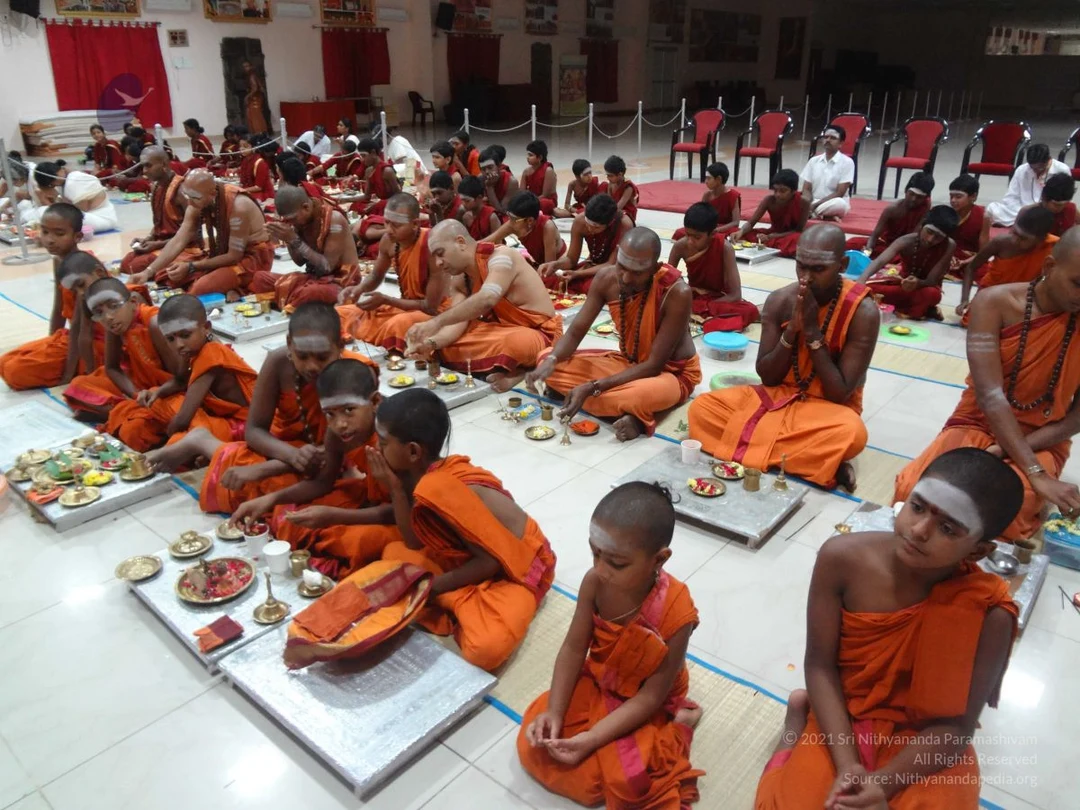
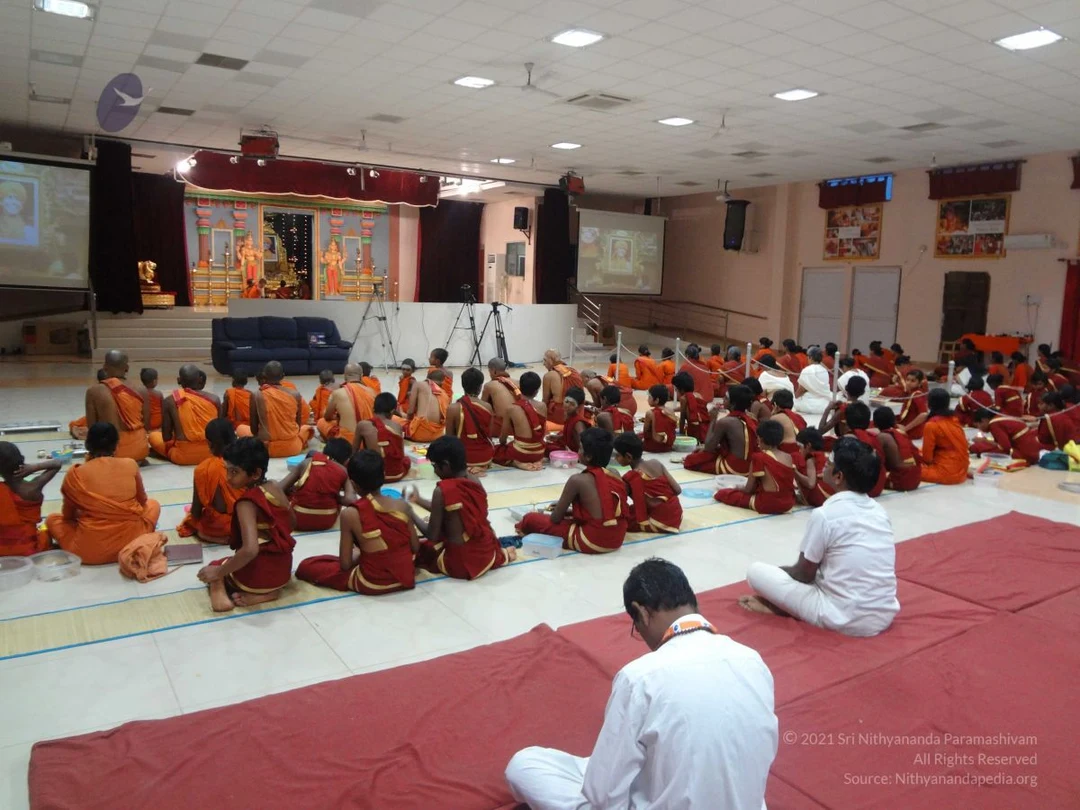
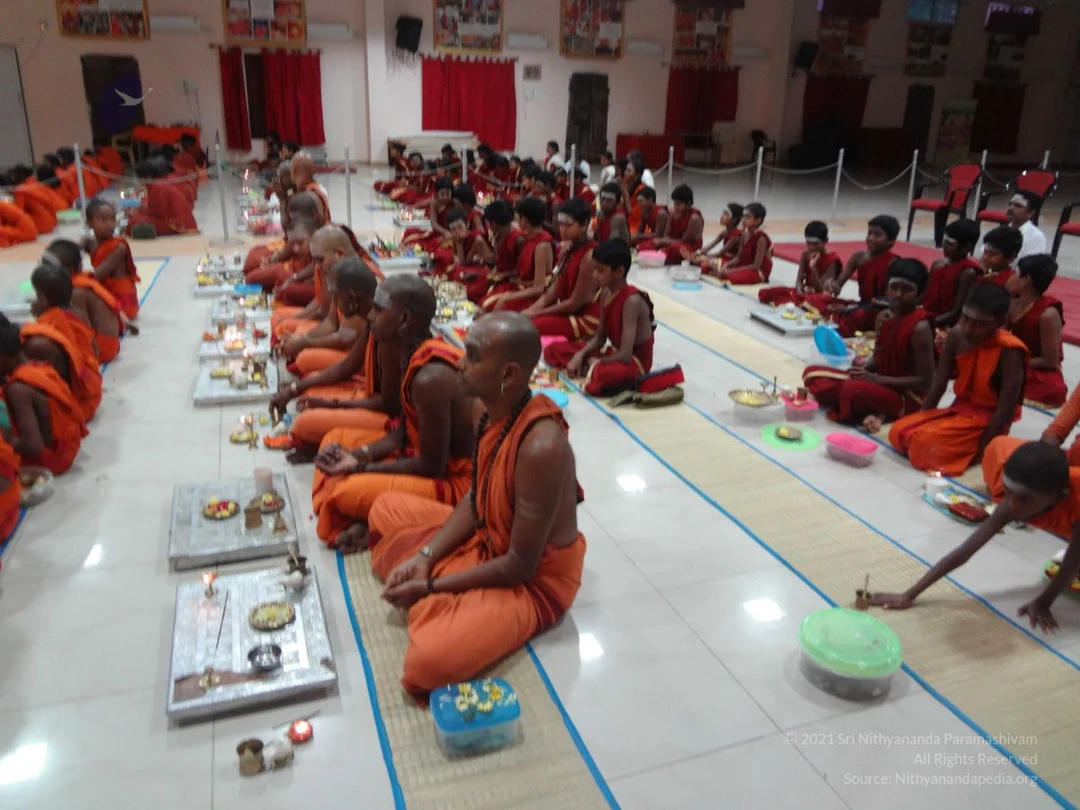
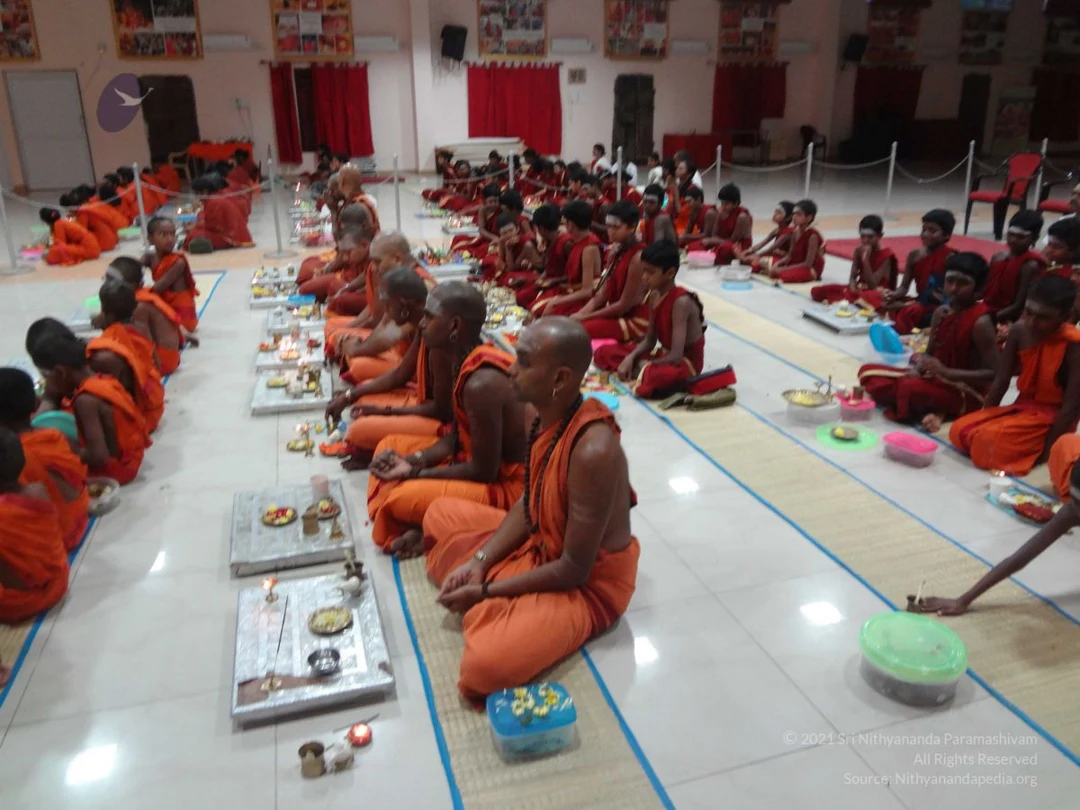
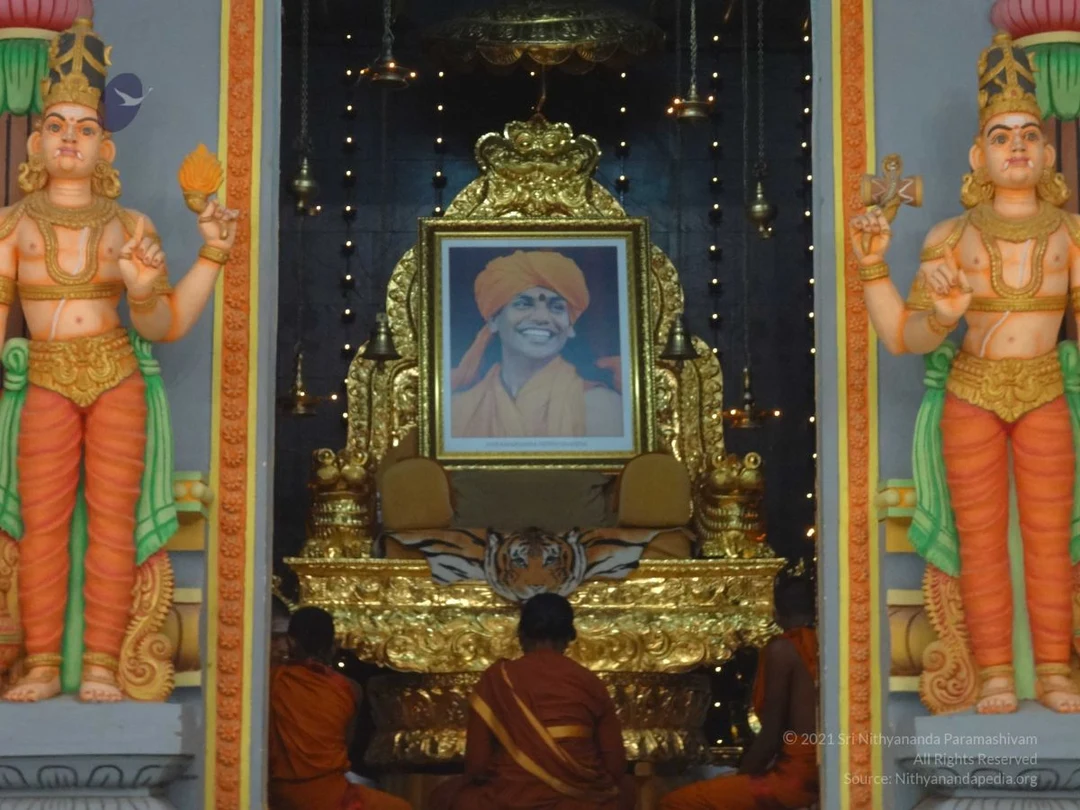
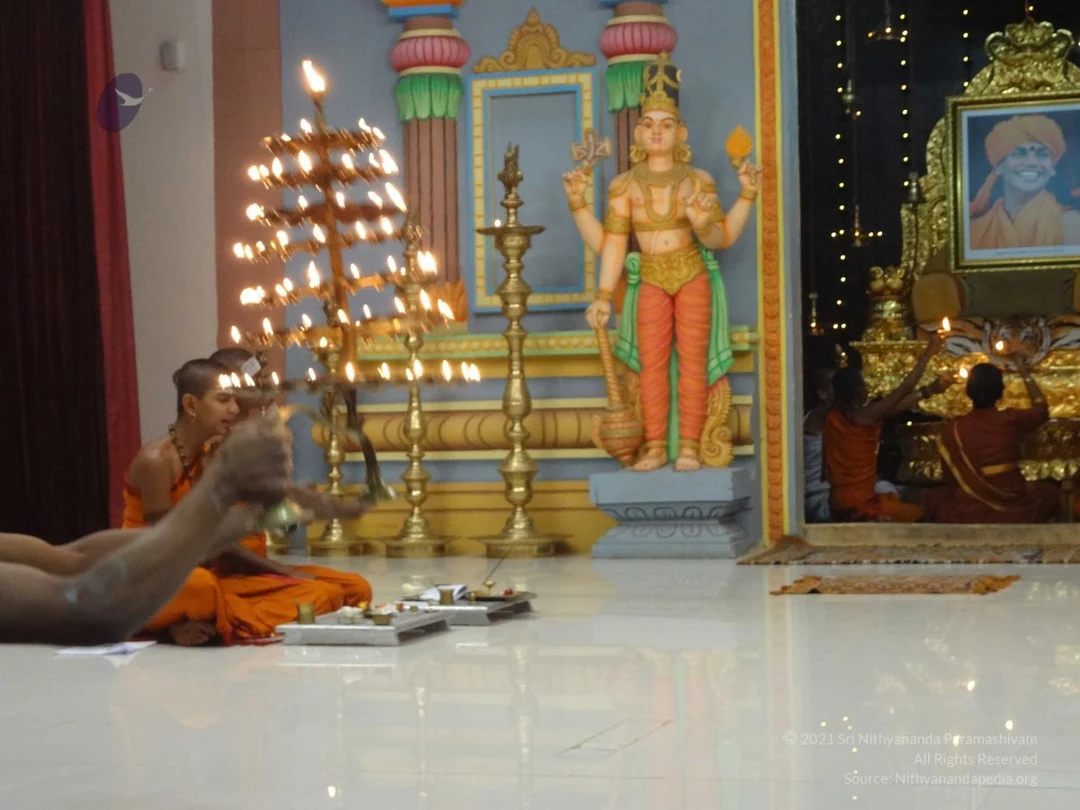
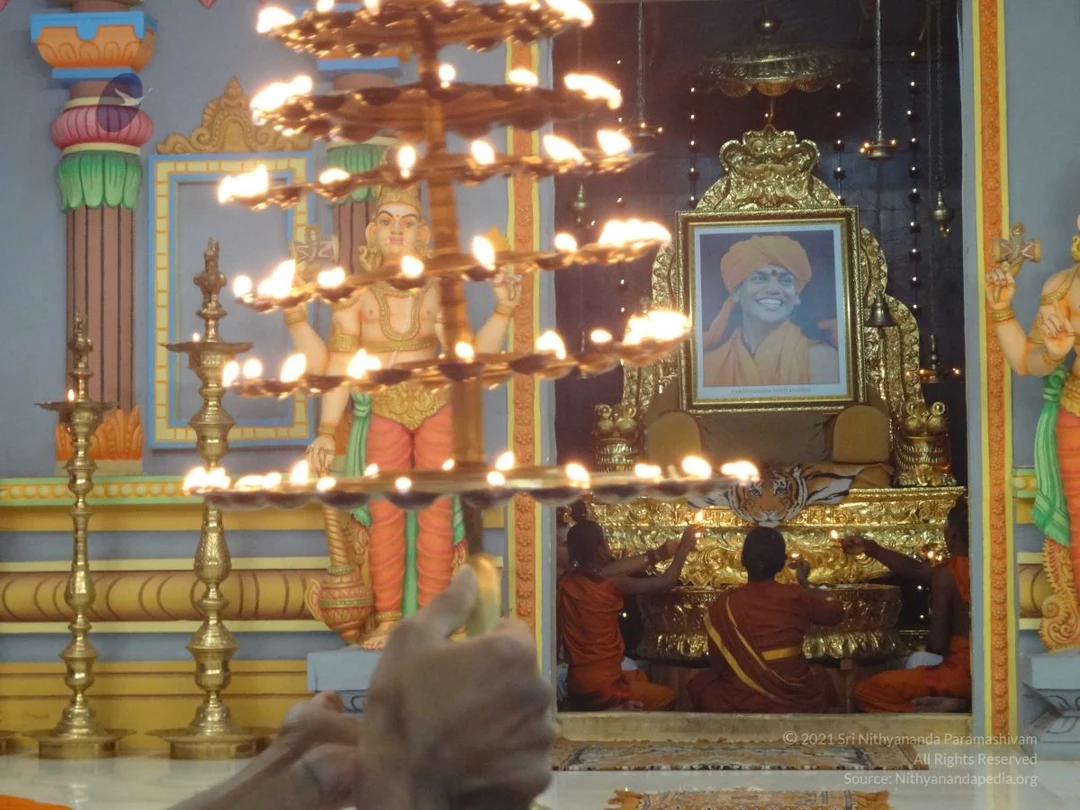
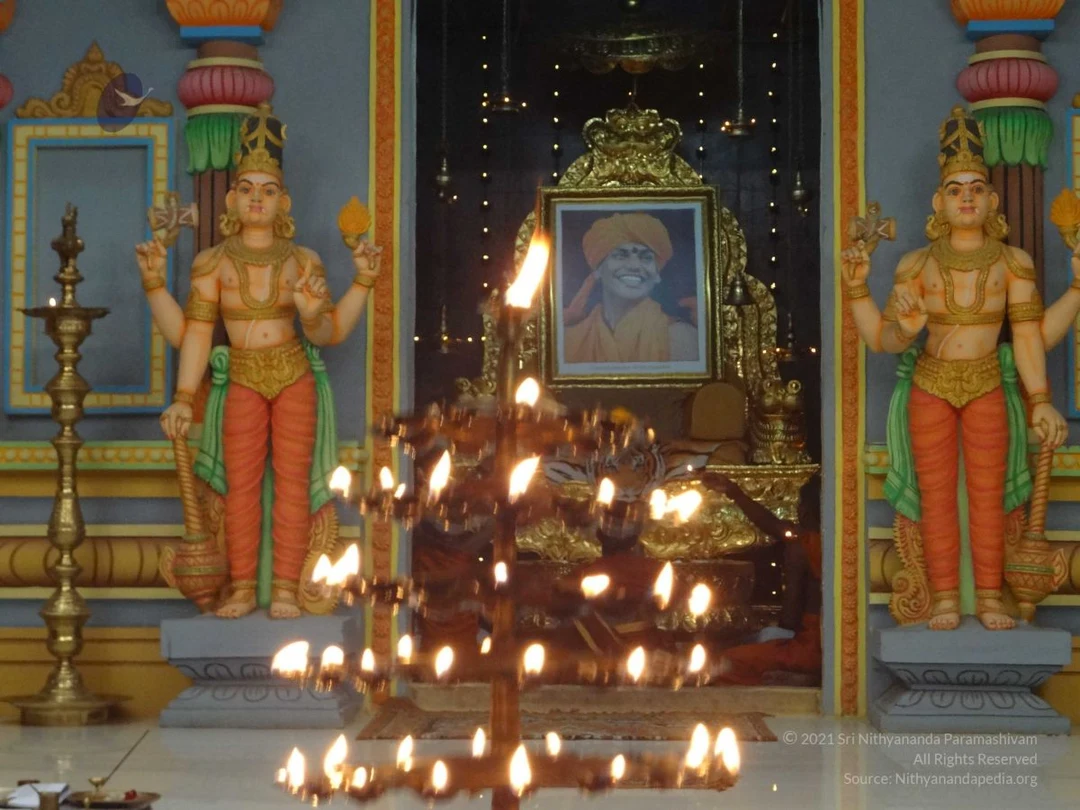
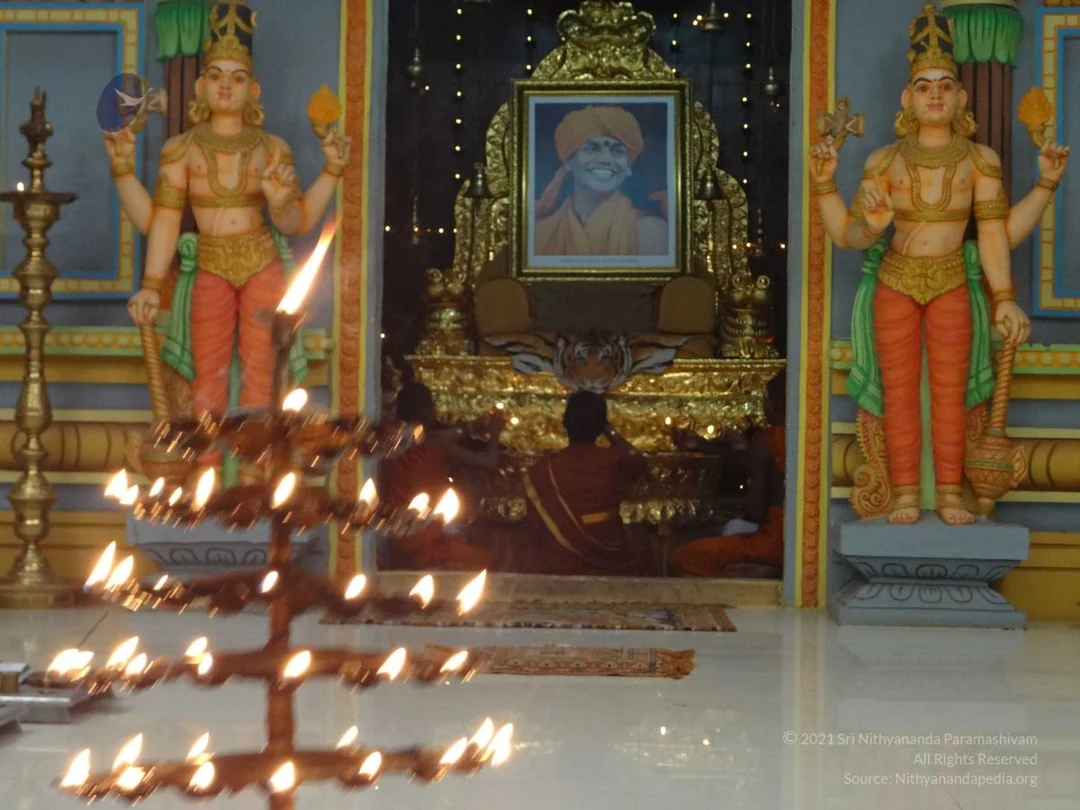
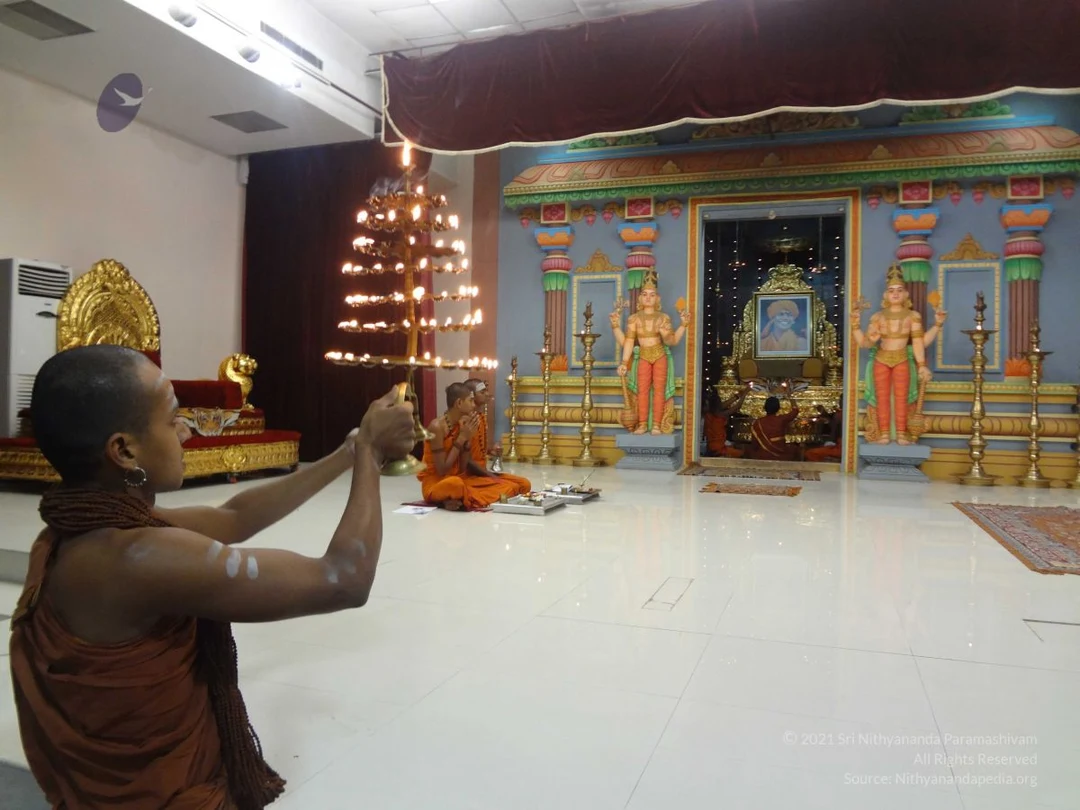
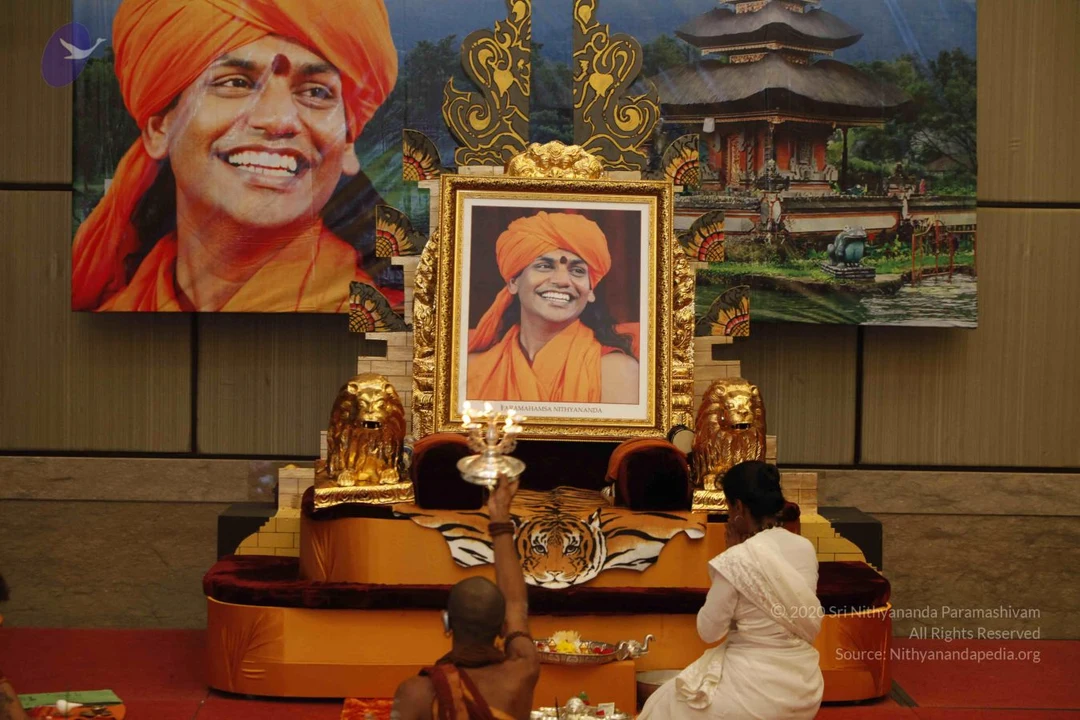
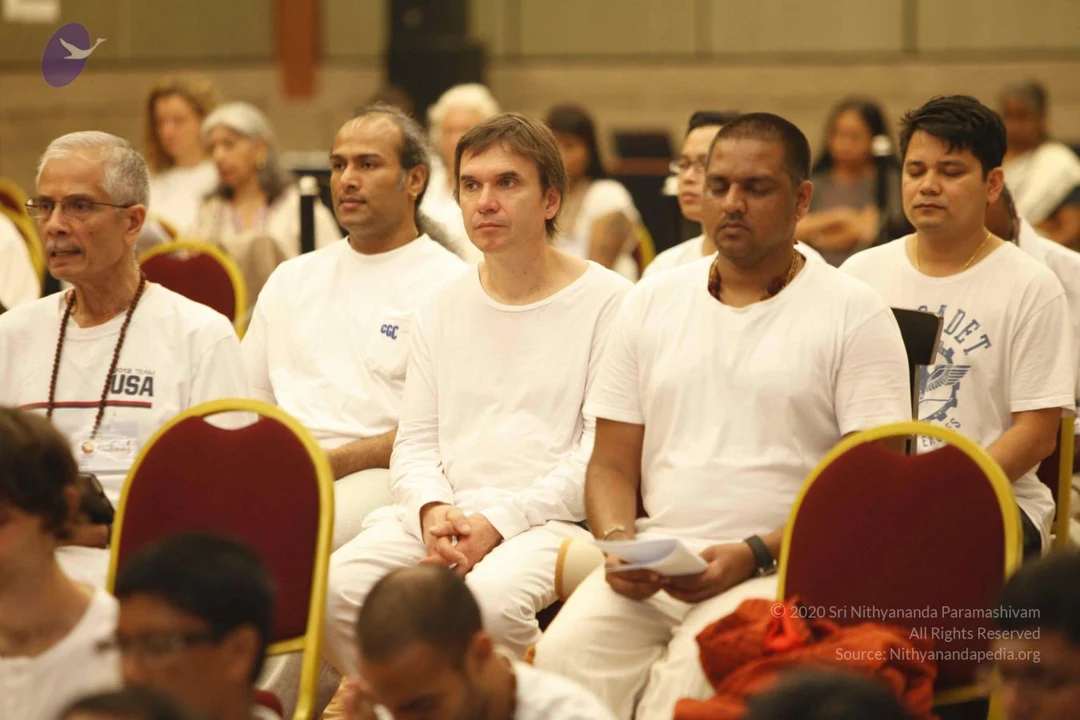
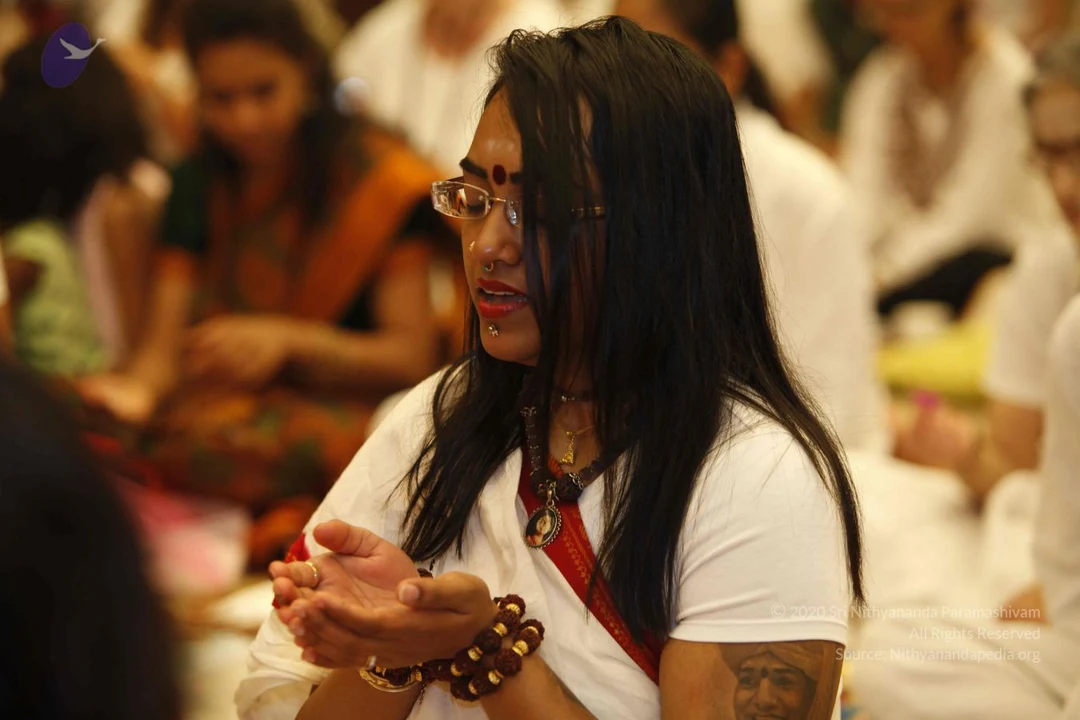
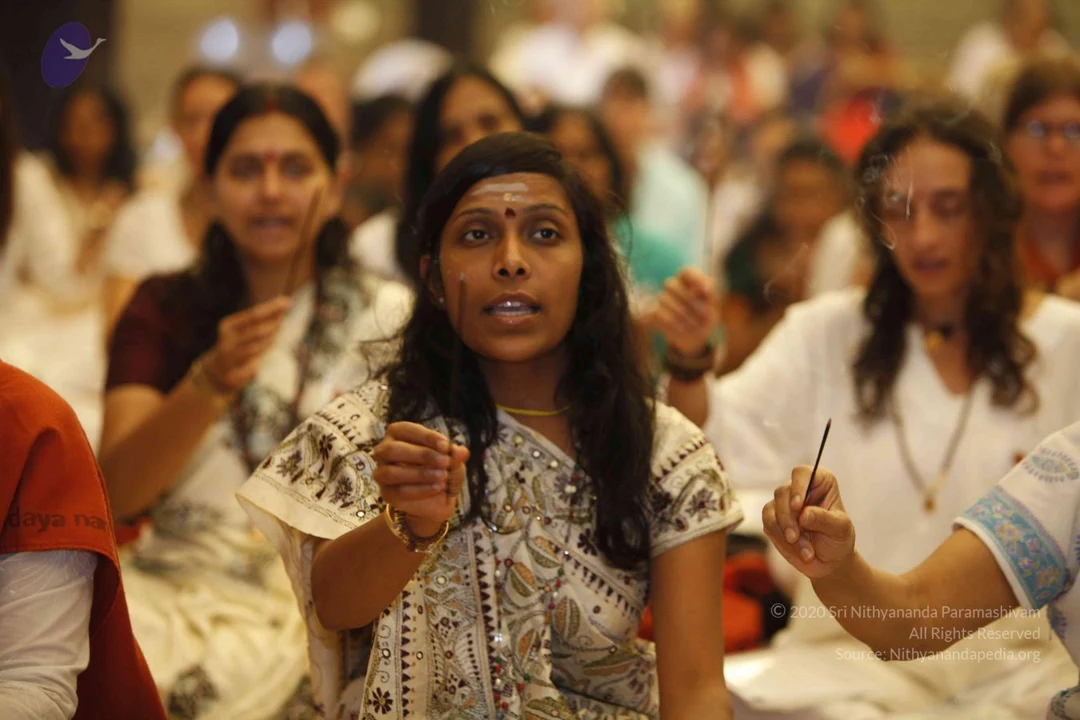
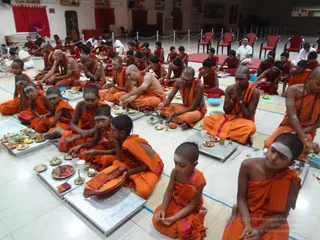
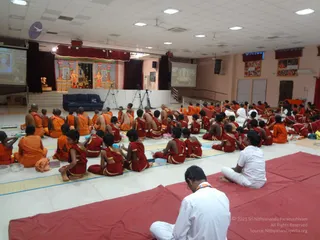
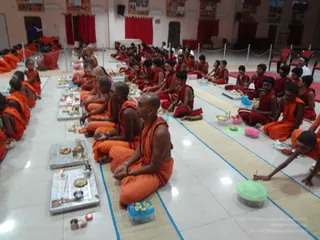
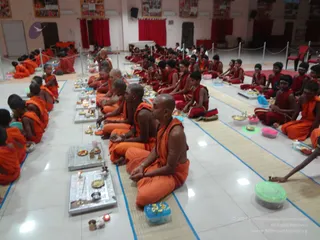
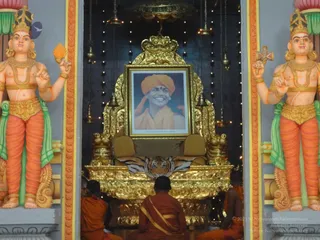
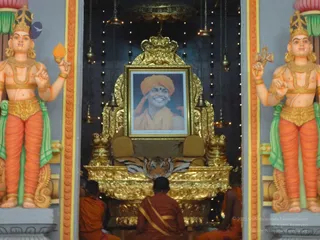
A large hall with a white tiled floor shows many seated people in saffron-orange robes, many with white tilak marks on their foreheads and some with rudraksha malas. Rows of brass plates, small oil lamps and offering trays sit on silver-toned mats before them, indicating a ritual puja in progress. Several figures in white clothing stand or sit at the back, a red carpet and red chairs line the edges, and a framed picture hangs on the back wall. Many seated participants are children and young adults, some with hands folded in prayer.Wide photo of a large hall where many people sit on the floor in rows facing a stage at the far end. Most of the seated people wear saffron-orange robes, with several younger children in red-maroon dhoti-style garments and bare chests. Some seated people have shaved heads. In the foreground, a man in white ritual clothes sits on a red mat, and another man in white sits in front of him. The stage behind has a blue sofa, two video cameras on tripods, and a decorated backdrop with deity statues in orange and gold. Projection screens on both sides show images. Some visible text in the image; a photograph of a hall with a crowd of seated monastics and students, no clear individual identified.A large hall with rows of seated people in orange and saffron robes performing a padapuja-style ritual on mats. Foreground: a shaved-headed man in orange cloth with a rudraksha mala sits cross-legged, eyes closed, hands in lap, in front of a silver tray with flowers, fruit, oil lamps and a small metal bowl. Behind him, rows of children and young men in orange and maroon garments sit before similar silver plates with offerings, lamps and incense. Blue tape marks the floor lanes, and red curtains and wall posters decorate the room. Many people are visible, roughly in the 21-100 range.A large hall with white tiled floor and red curtains shows rows of seated young monks and boys in saffron-orange robes during a padapuja-style ritual. Individual brass and silver trays with flowers, fruit, lamps and small offerings sit before each pair of participants on long mats. Two shaved-headed adults in saffron robes and rudraksha malas sit in the foreground, one with hands together in meditation, while younger boys in red and orange garments sit along both sides. Small oil lamps are lit on the floor near the trays.A photograph of a shrine niche in a temple setting. At the centre, a gilded throne with a tiger-skin cushion holds a framed portrait of a smiling man wearing an orange turban and saffron robe; the portrait is a printed picture, not a physical person. Two painted guardian statues stand on either side, with orange and green garments, gold jewellery and tall crowns. Below, three seated people in saffron and orange robes face the throne in devotion, their backs toward the camera. Hanging brass lamps and strings of beads decorate the upper area, and a small lamp sits near the throne.A photograph inside a shrine niche with two large painted guardian statues flanking a gilded throne-like altar. Central framed portrait shows a smiling man with an orange turban and saffron robe, labelled with a caption on the frame. The gilded altar holds a tiger-skin cloth over the seat. Three people in saffron and orange robes sit in front of the altar with their backs to the camera, one in the centre seated in devotion. Hanging bells, oil lamps and strings of beads decorate the niche.

IA-Yoga

19 photosSource gallery
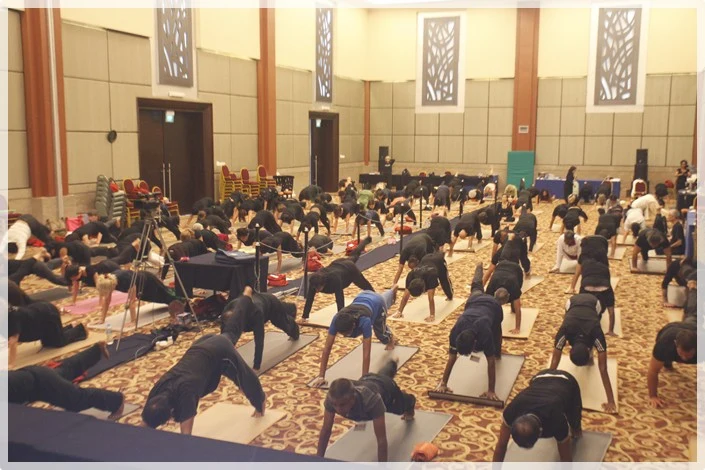
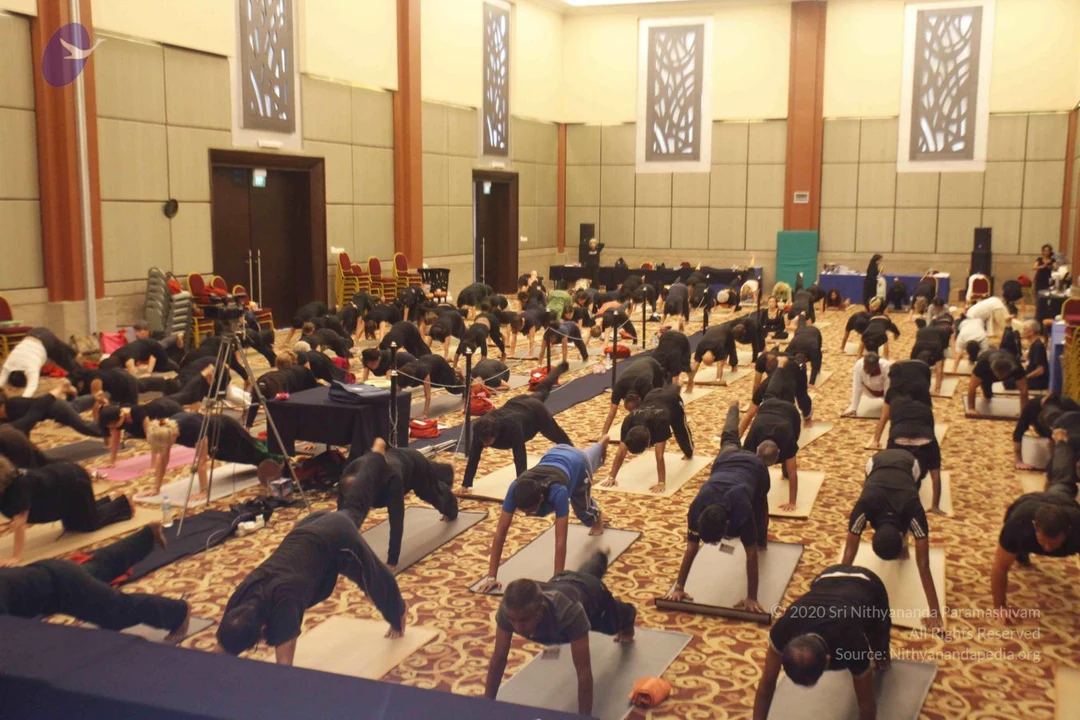
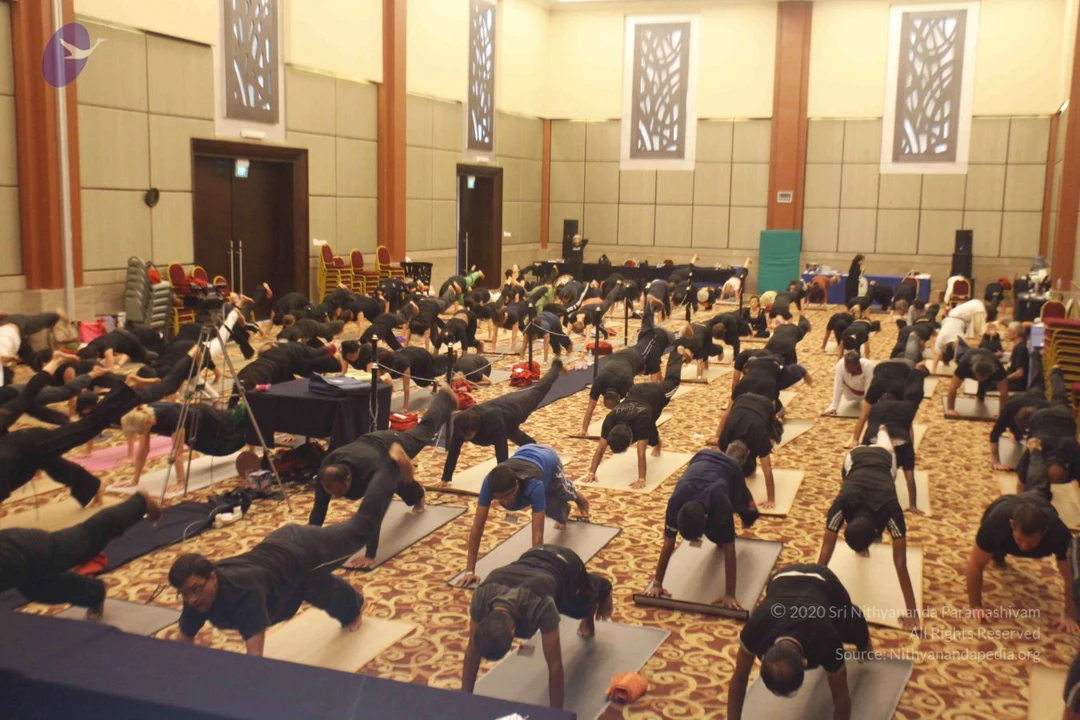
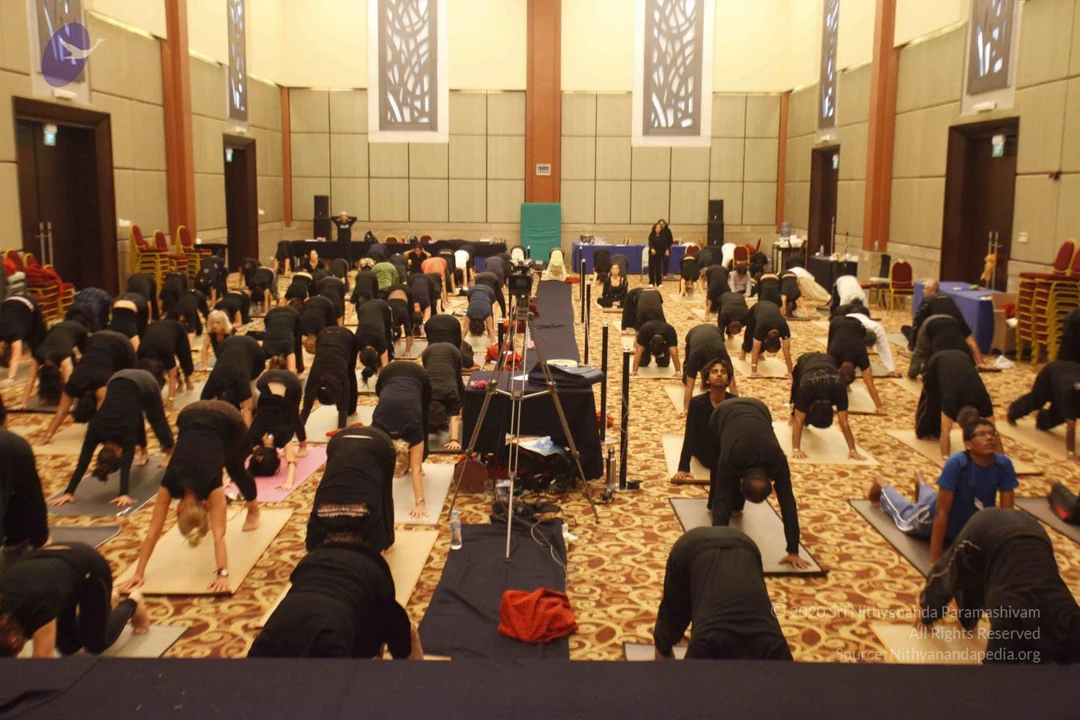
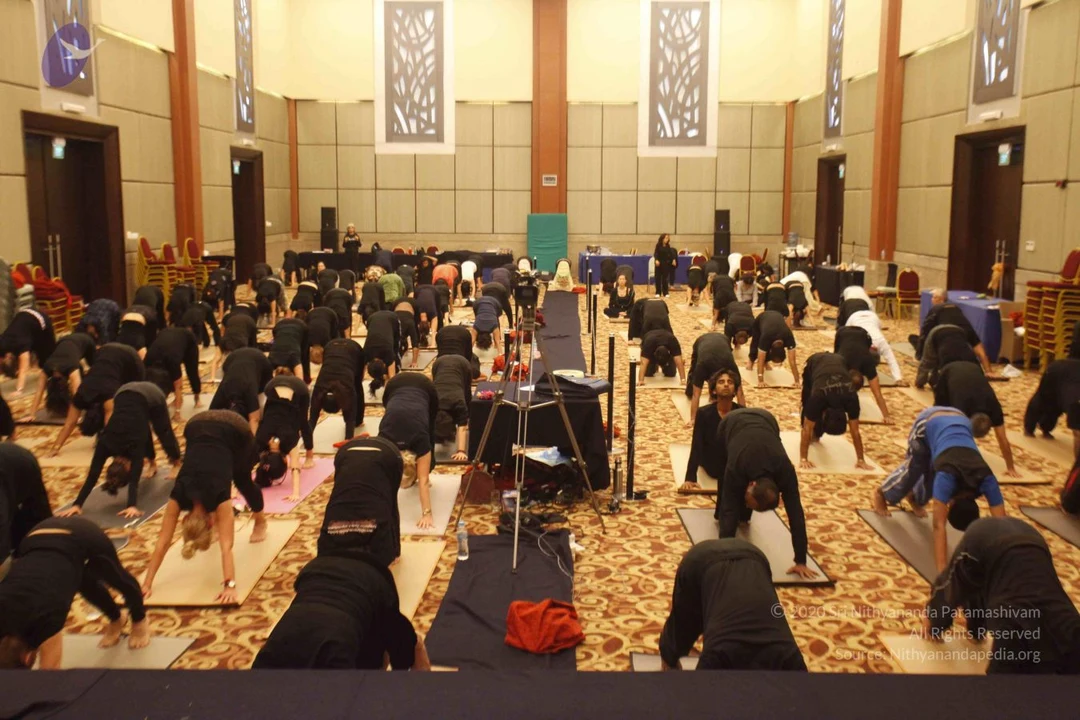
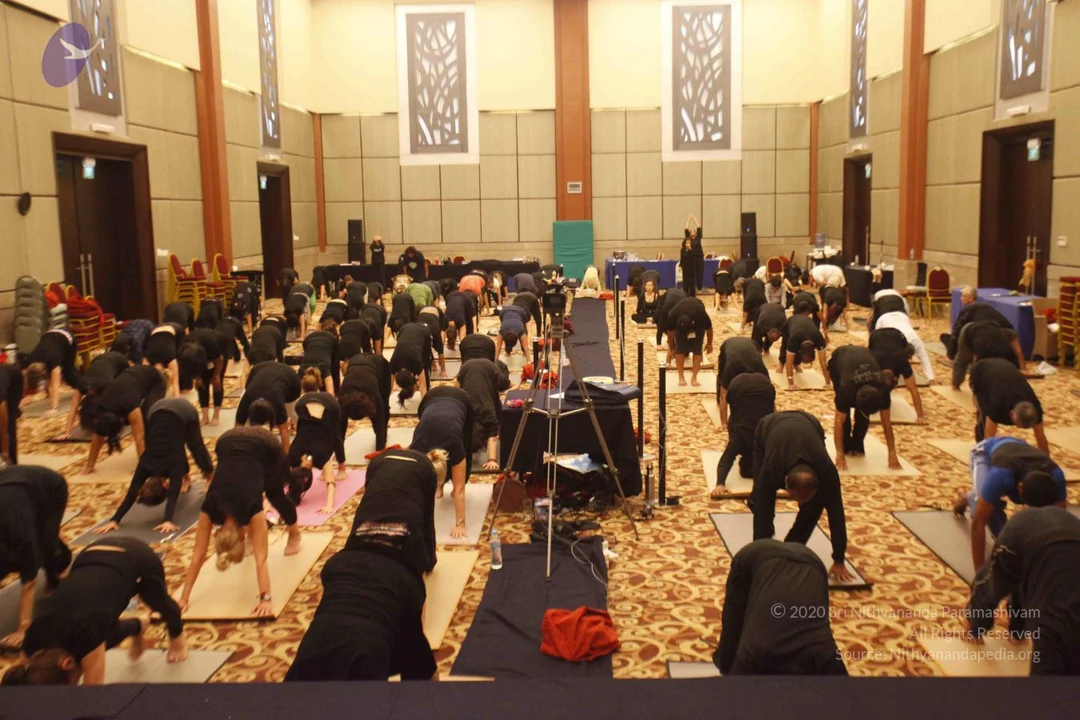
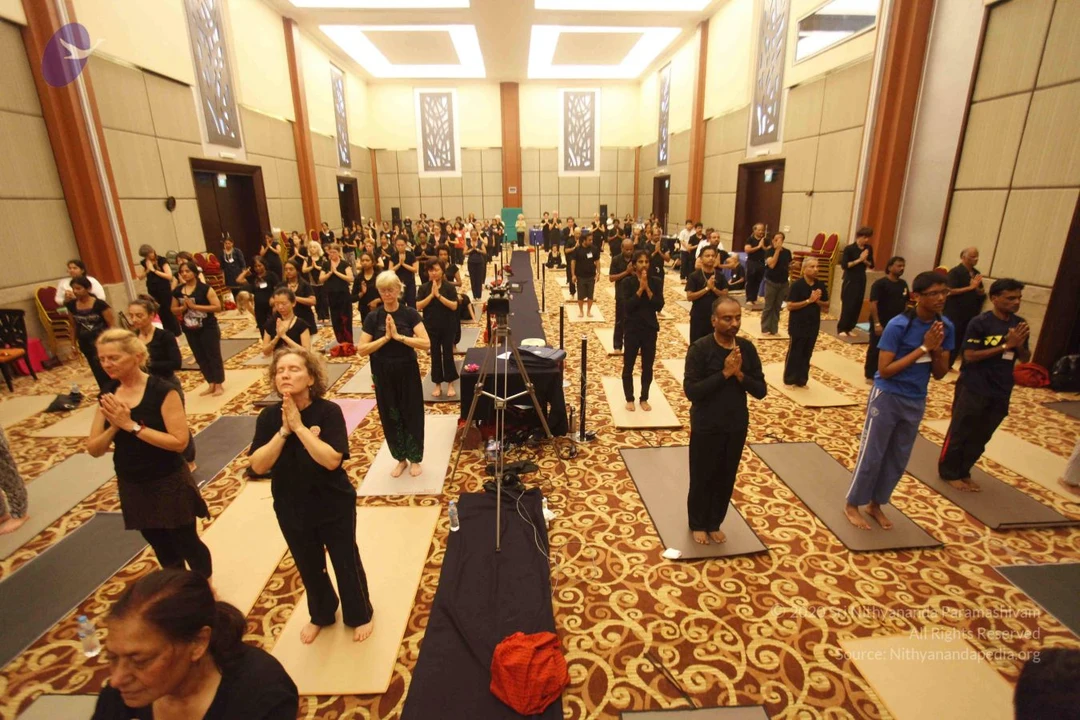
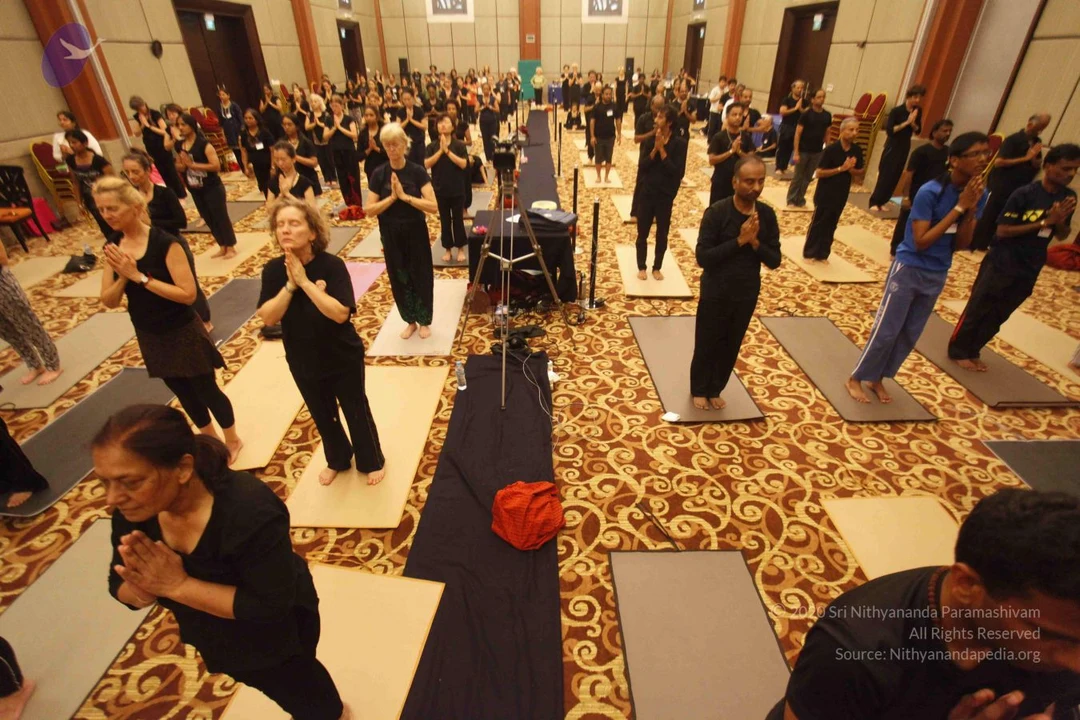
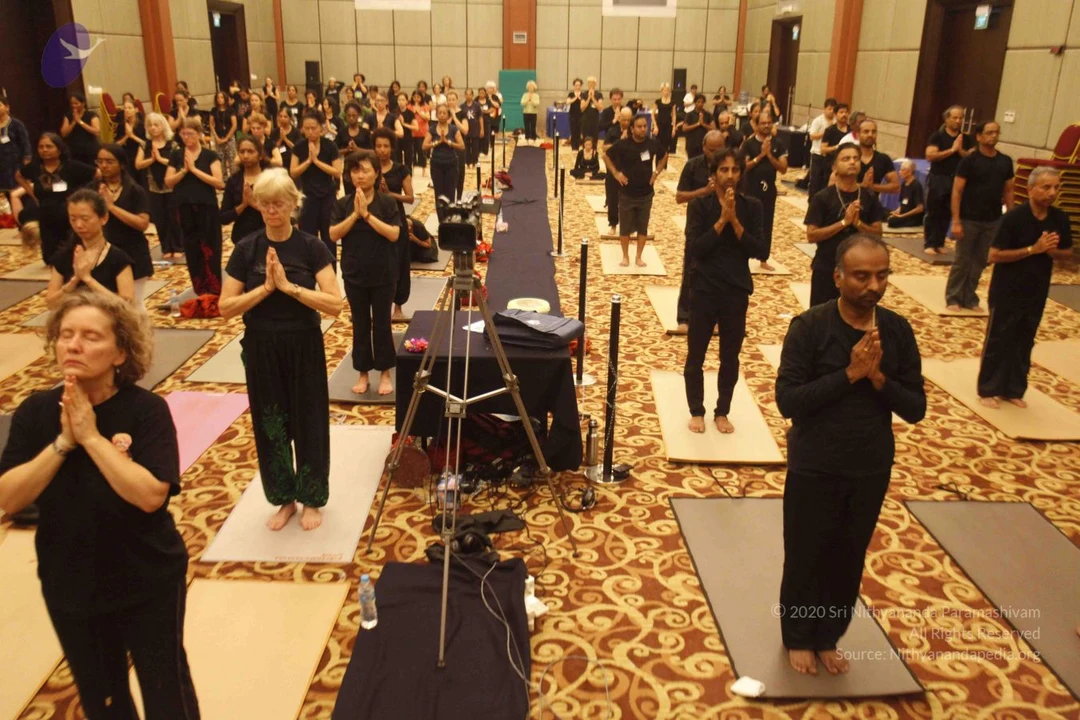
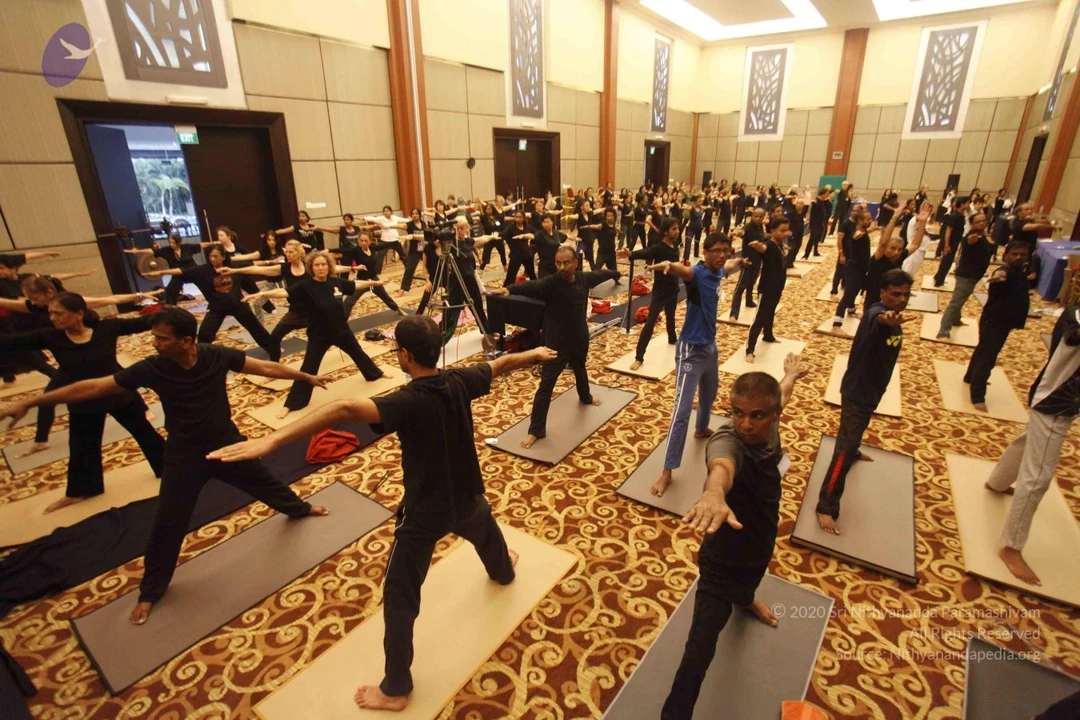
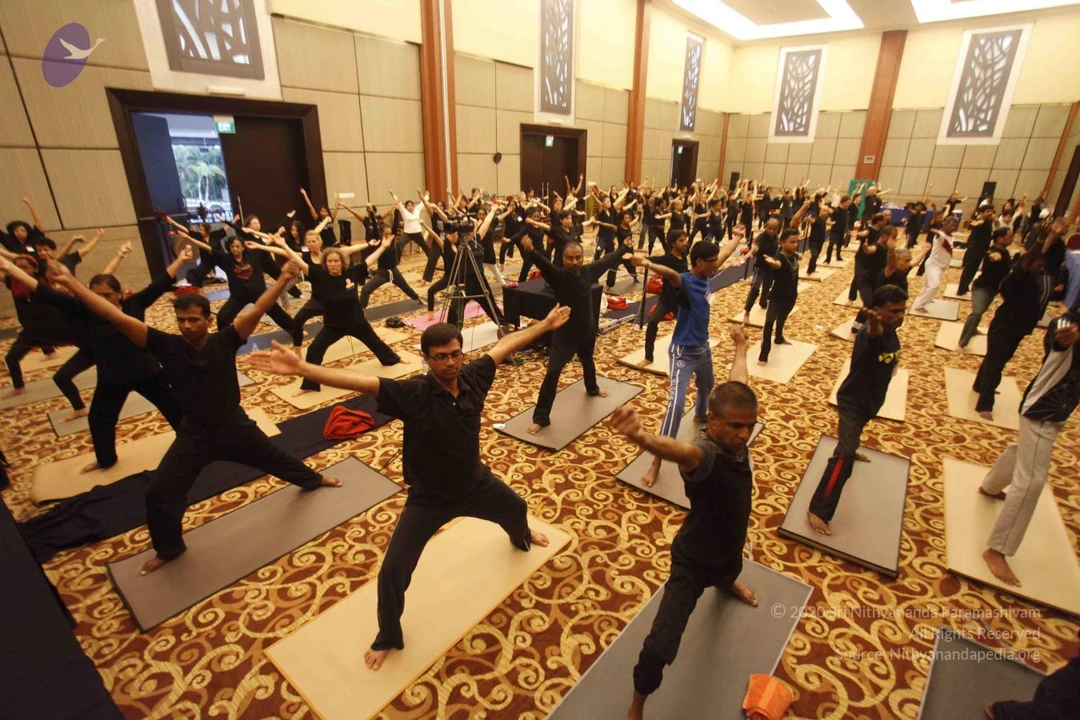
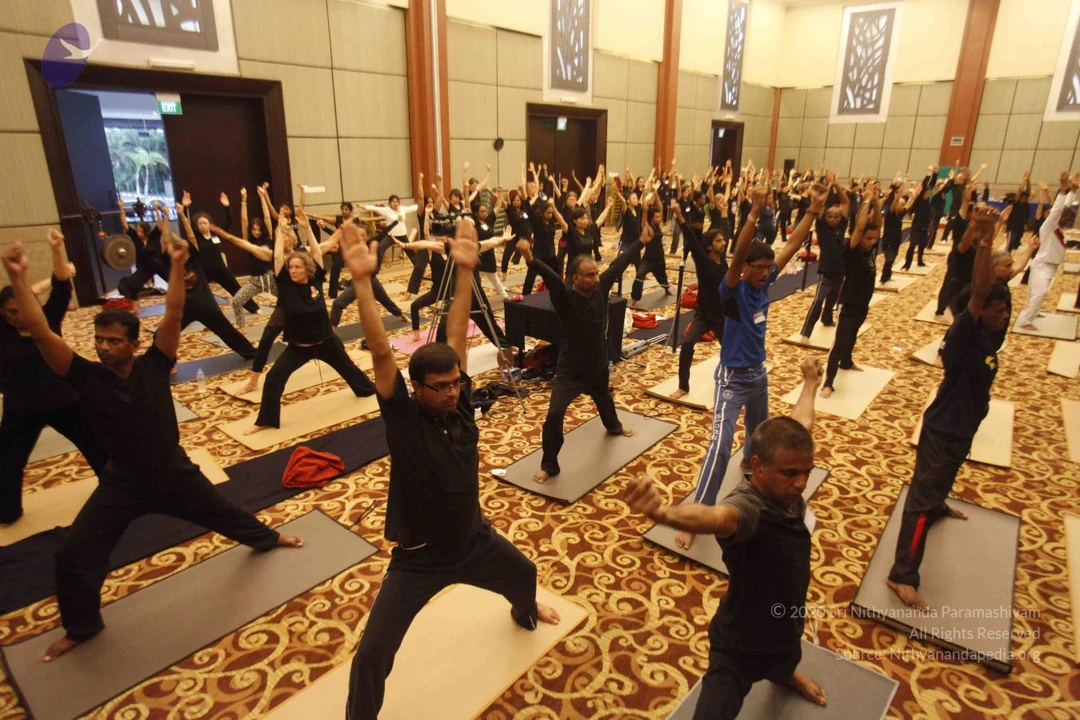
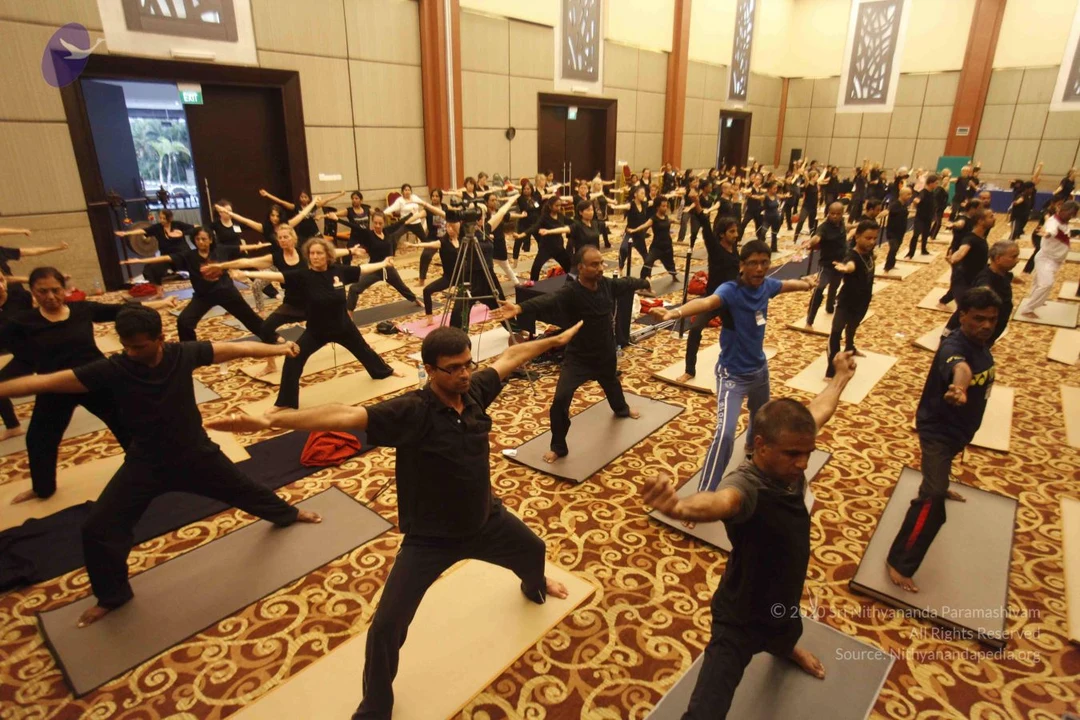
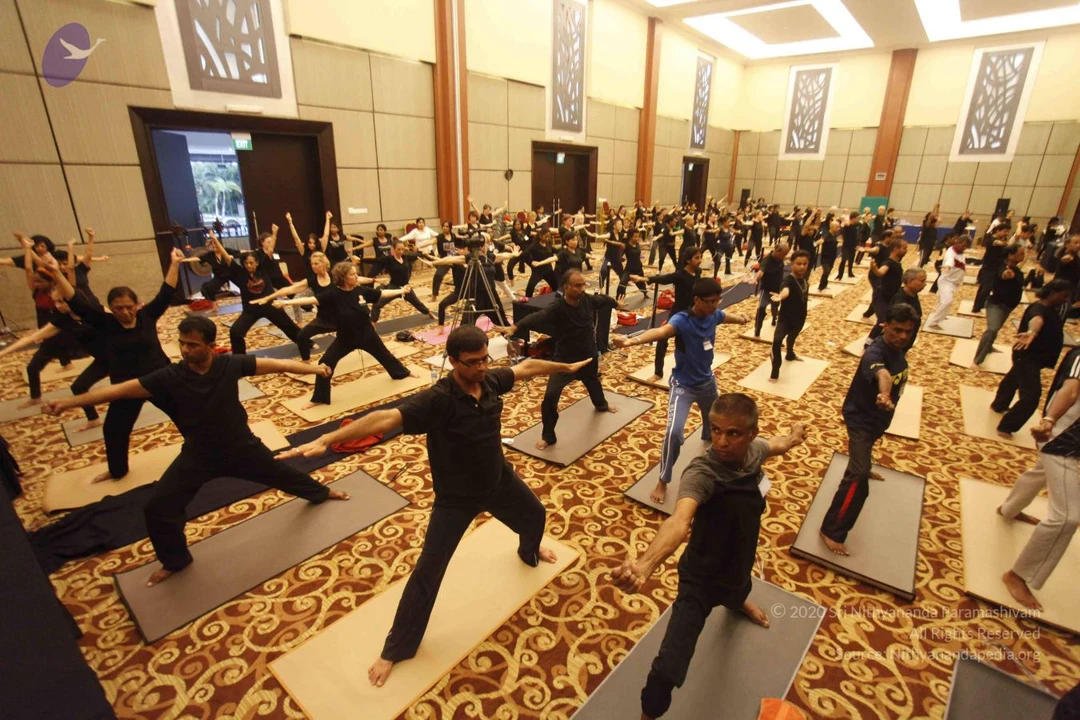
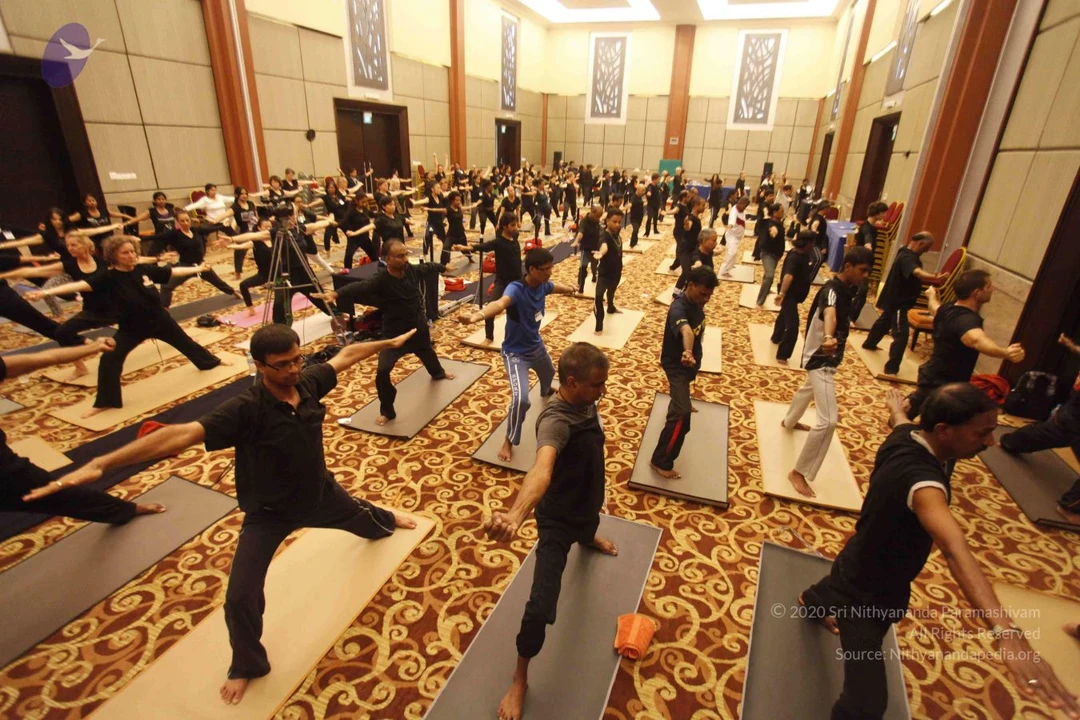
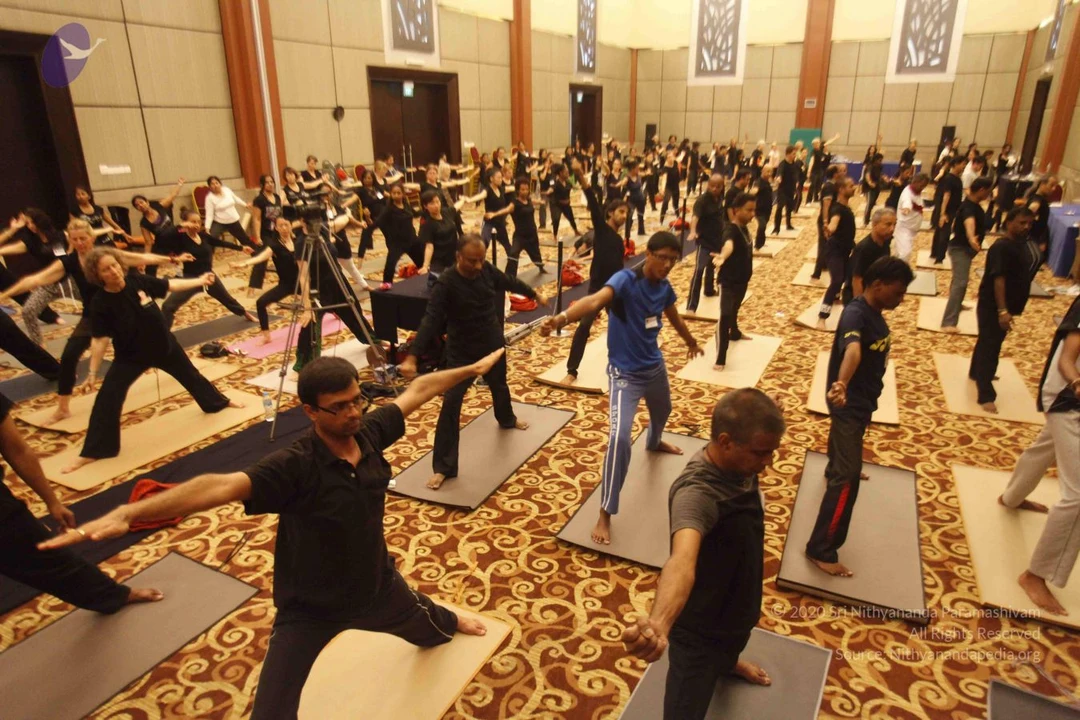
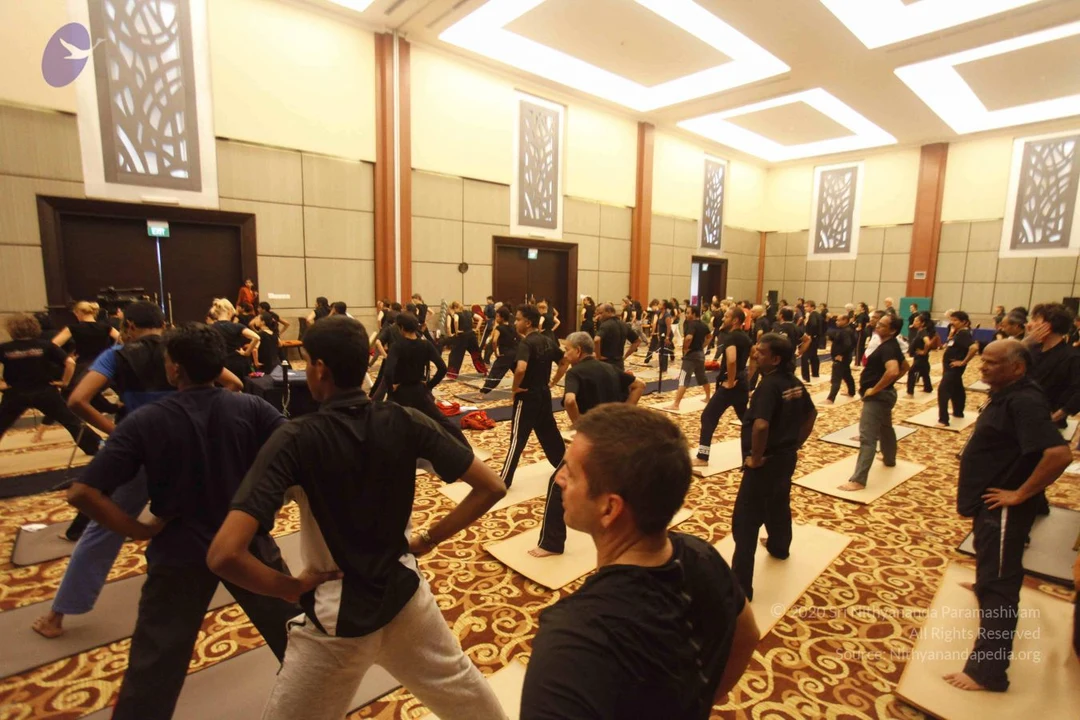
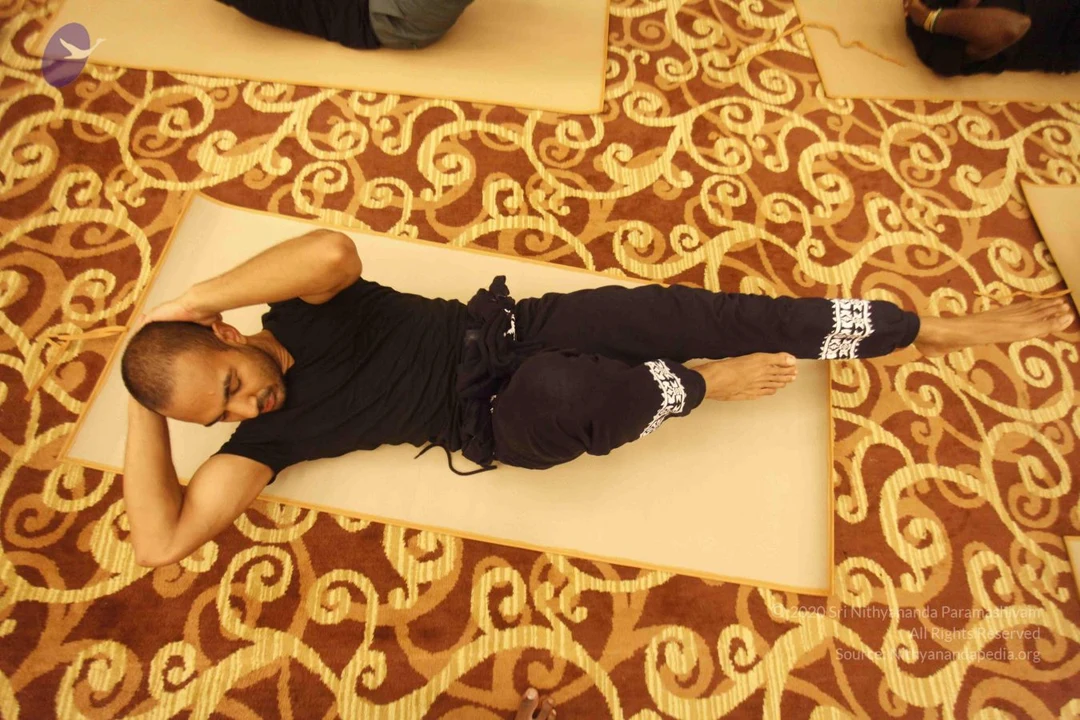
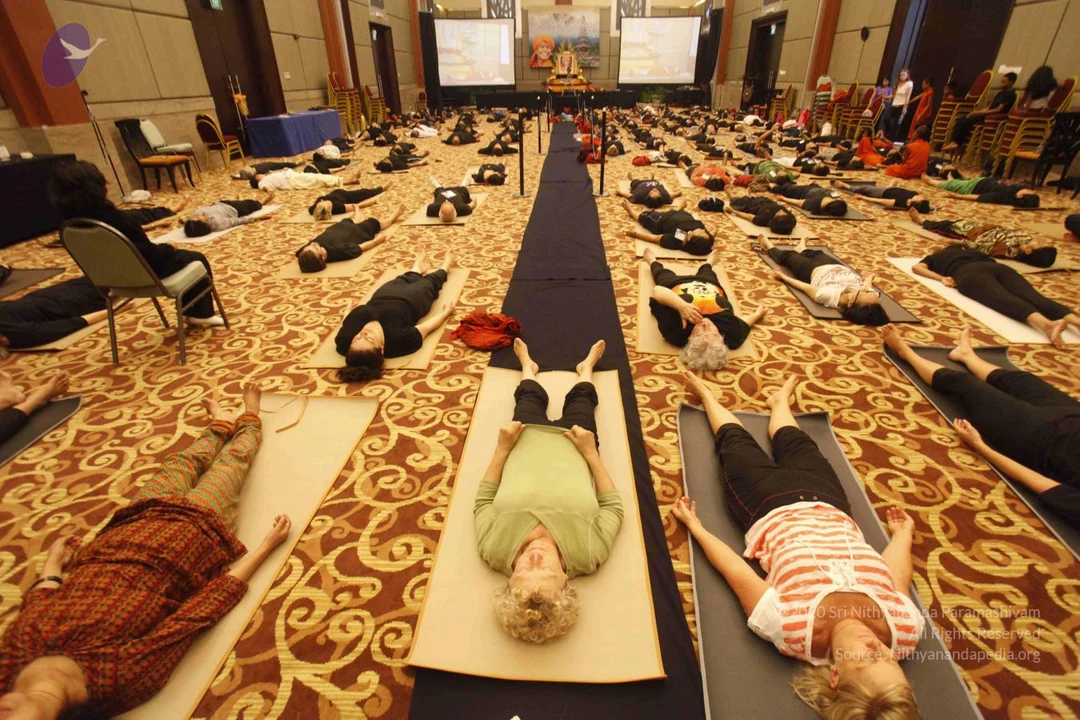
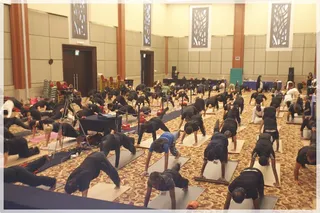
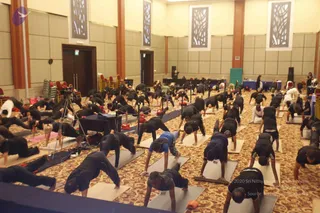
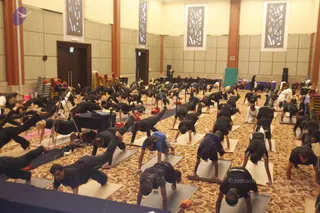
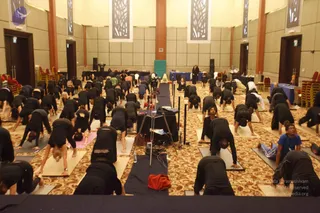
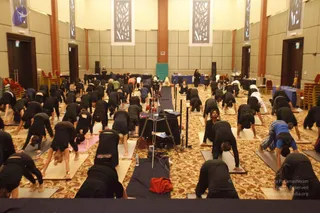
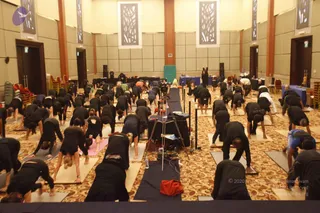
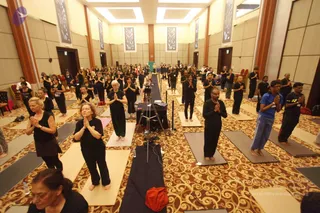
A large hall with patterned carpet and cream wall panels shows thirty to forty people in black clothing performing a bent-forward yoga pose on grey mats, many with hands planted and hips raised. A camera on a tripod and a video camera stand at left, a long table with blue cloth and chairs is at the back, and white-clad figures stand near the right. No individual is clearly identifiable as a person from appearance, so no candidate is marked.A large hall with a patterned carpet is filled with many people in black clothing performing a yoga stretch on individual mats, bending forward with hands on the floor and legs extended. Some participants wear blue or grey tops. A tripod-mounted camera stands at the left edge, and a figure in dark clothing stands near a low table at the far end of the room beside wall panels with decorative cut-out designs. The scene is a group yoga session.A large hall with patterned carpet and wooden-panelled walls shows thirty to forty people in black clothing performing a downward-facing dog style stretch on yoga mats, many with hands and feet on the floor and heads lowered. A camera on a tripod stands in the centre foreground beside a black-draped table, and a few people in blue and black sit or stand near tables and the back of the room. No clearly identifiable a person figure is visible in this image, and the room has tall decorative screens and exit doors along the walls.A photograph of a large hall with a patterned carpet where many people in black clothing perform a forward-bend yoga posture, hands on mats, heads down. Mats are laid in rows; a few participants wear blue, pink or white. A camera on a tripod stands at the centre aisle, and a woman in dark clothing stands near a table at the back. Wall panels with geometric cutouts and wooden columns frame the room, with stacked red chairs at the left.A large hall with patterned carpet where many people in black clothing are bent forward in a yoga pose on individual mats, hands on the floor, bodies folded down. Tall cream wall panels with cut-out designs line the room, and a camera on a tripod stands in the center aisle near a black cloth. Tables with blue covers and red chairs are visible at the back. No identifiable speaker or a person candidate is clearly visible among the people shown.A large hall with a gold patterned carpet holds a group of participants standing barefoot on yoga mats in rows, palms pressed together in namaste. Most wear black or dark clothing; one man on the right wears a blue track top and another a dark shirt. A tripod-mounted camera sits at the centre, and a dark-draped table with a red cloth and water bottles lies in front. Carved wooden panels decorate the walls. The scene suggests a meditation or satsang session in progress.

Paduka-Puja

44 photosSource gallery
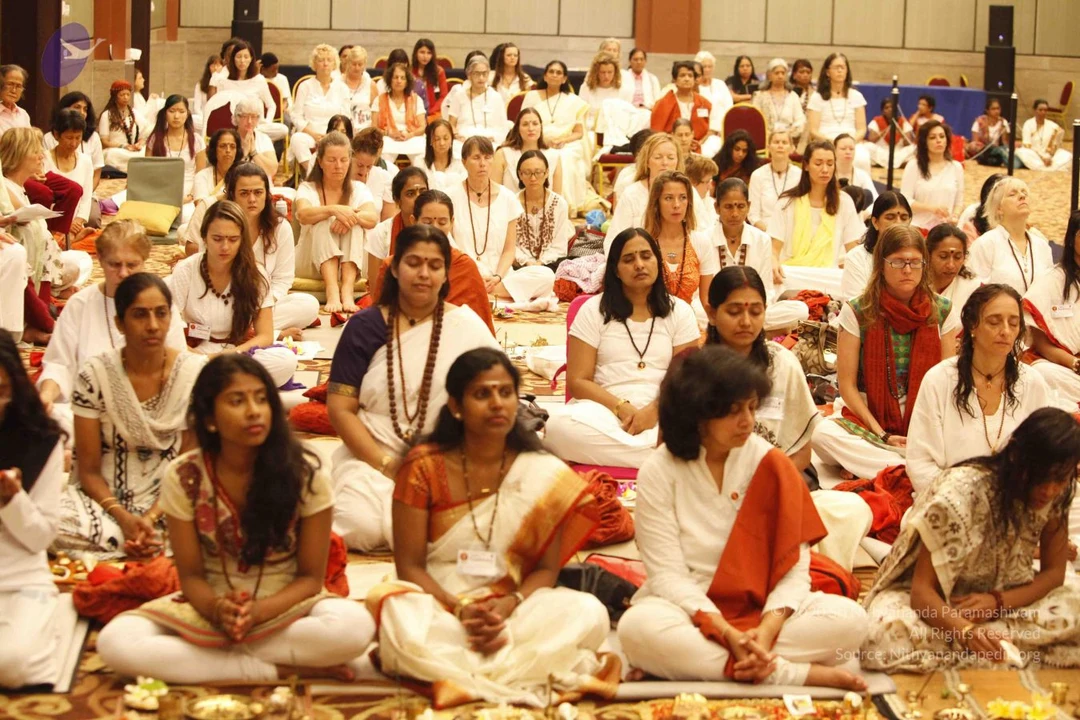
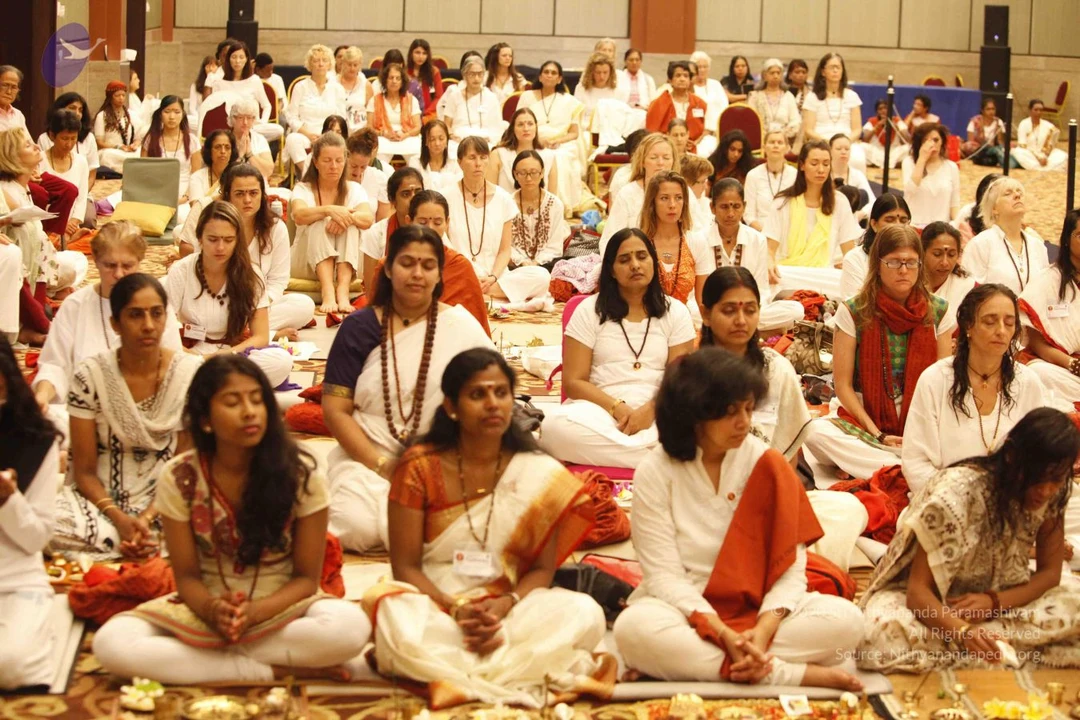
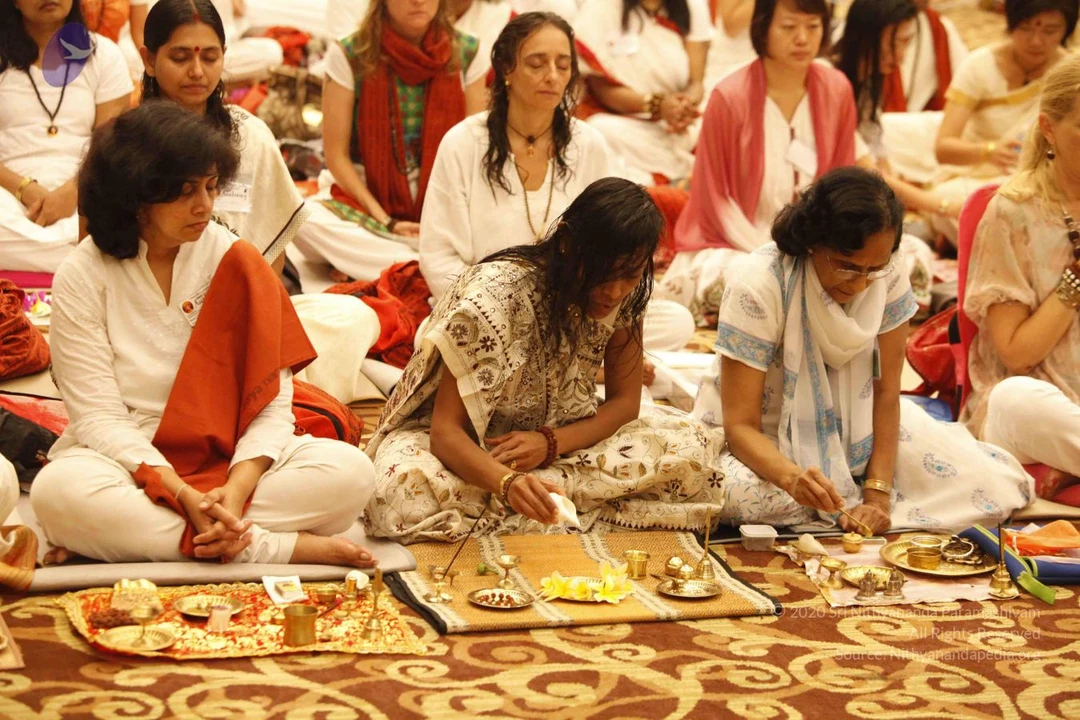
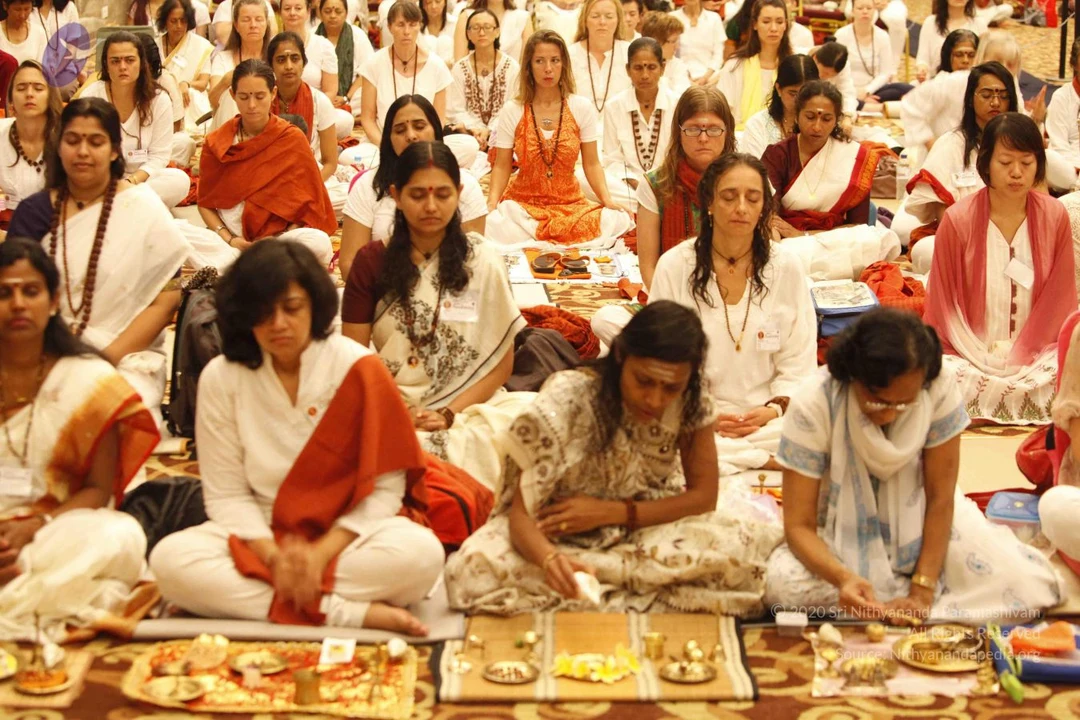
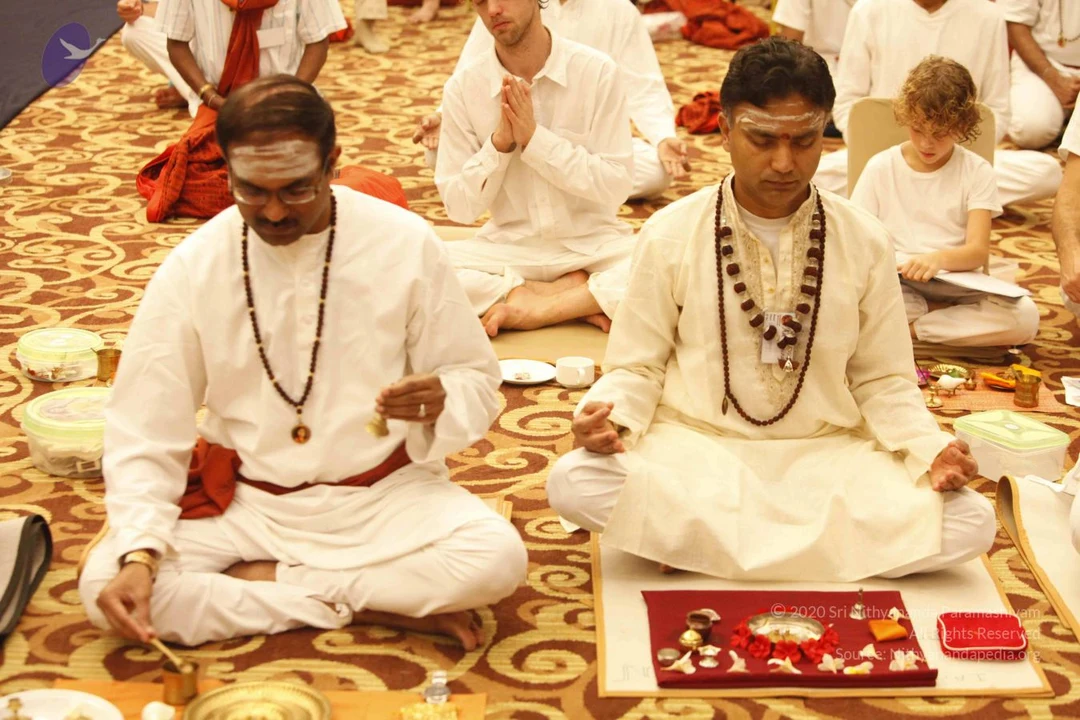
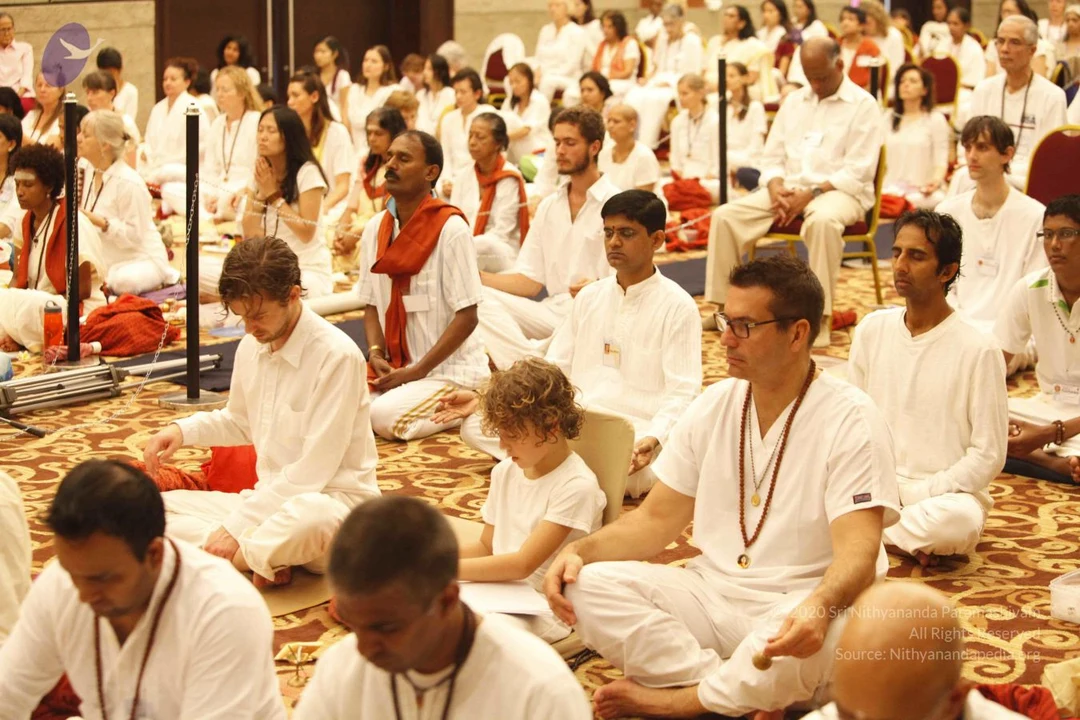
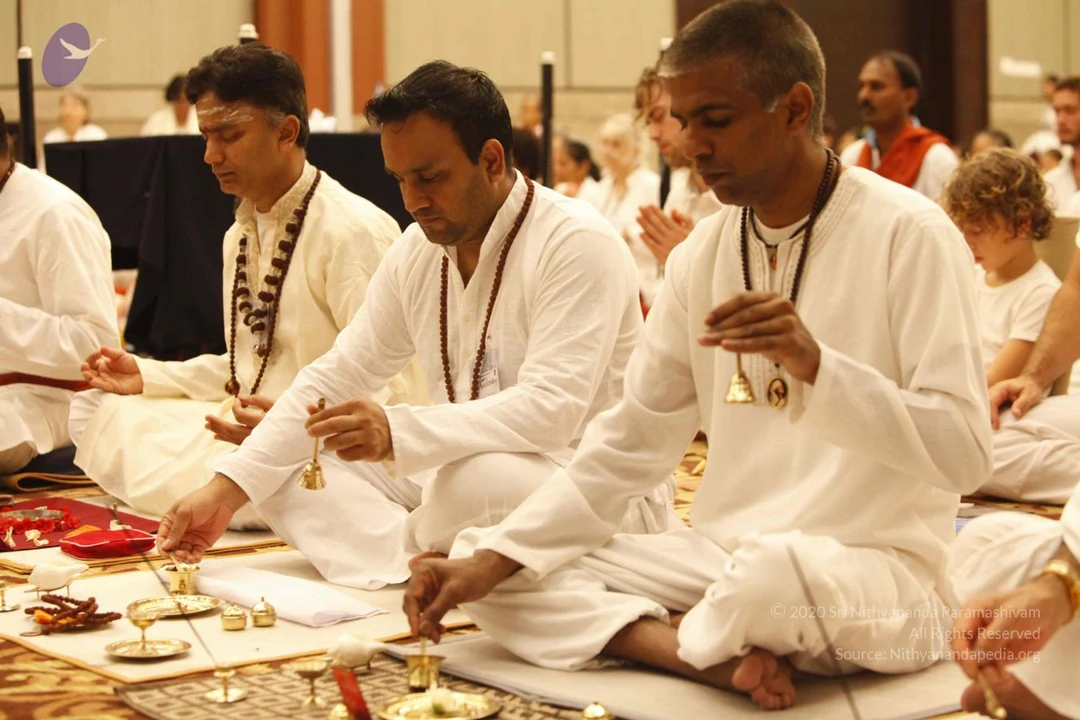
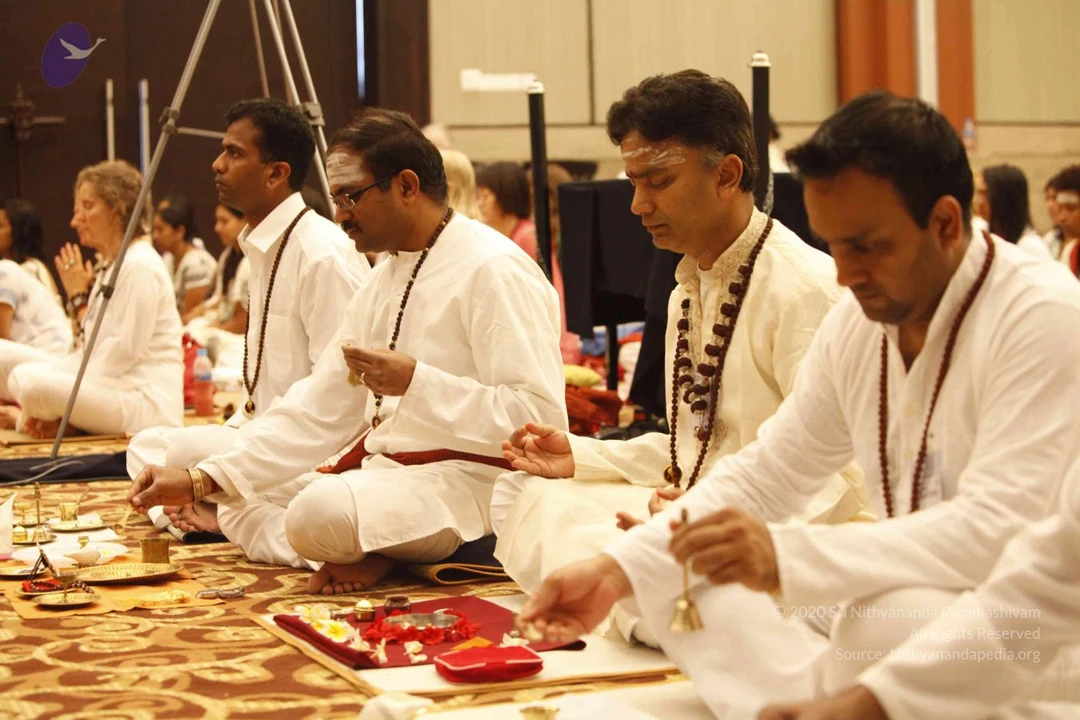
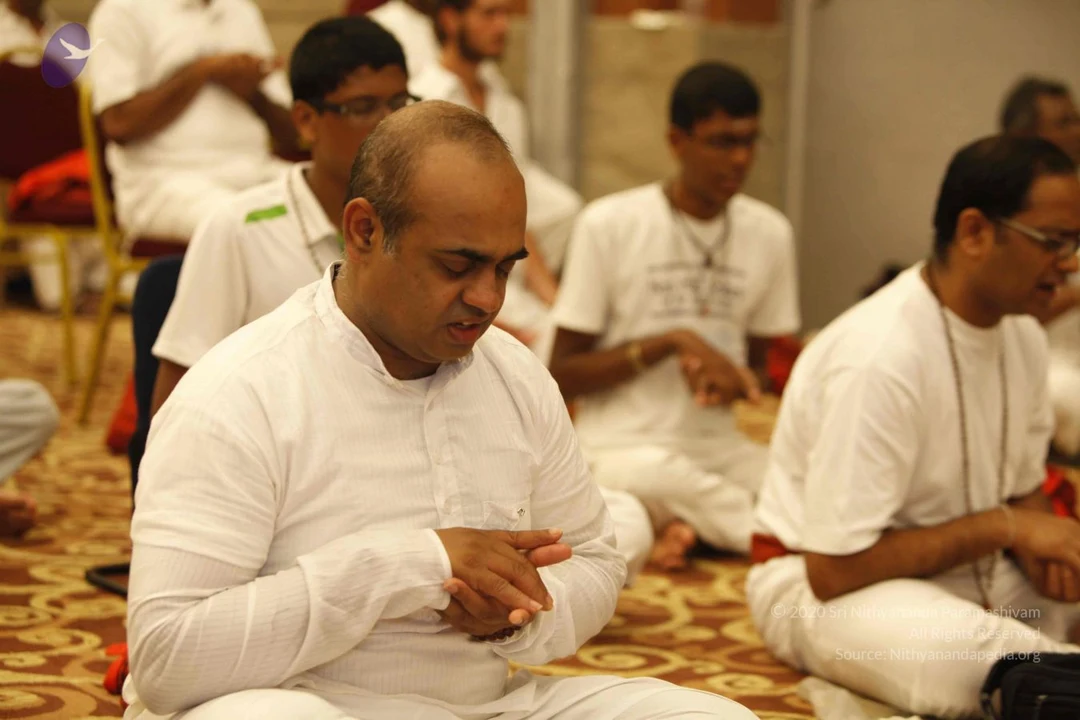
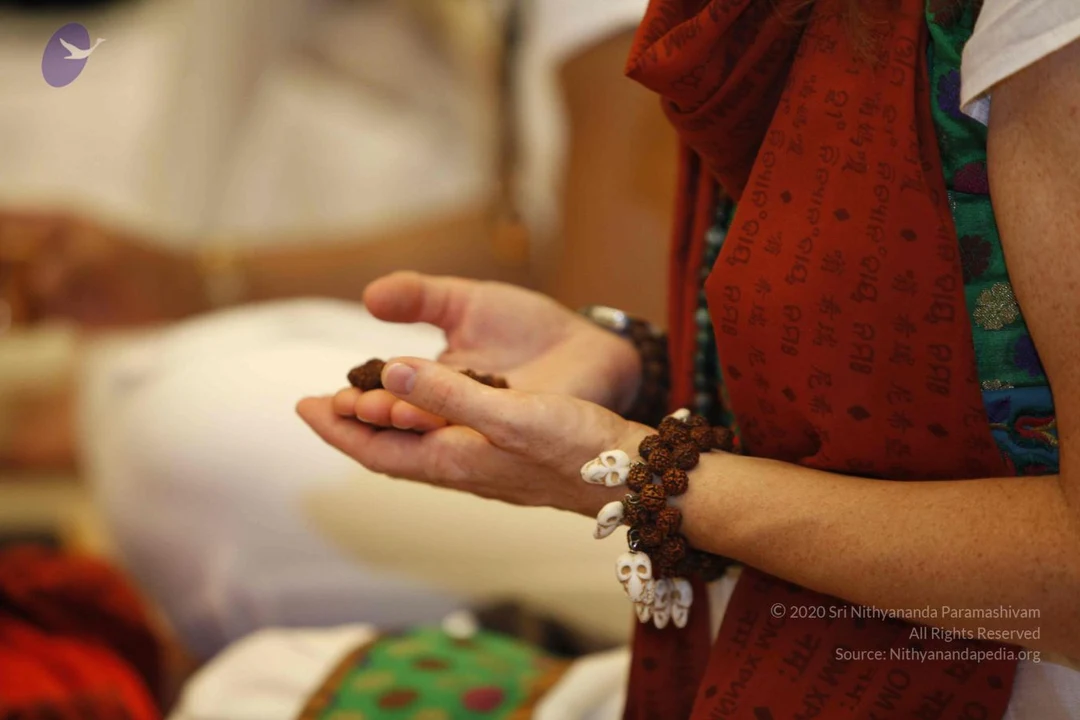
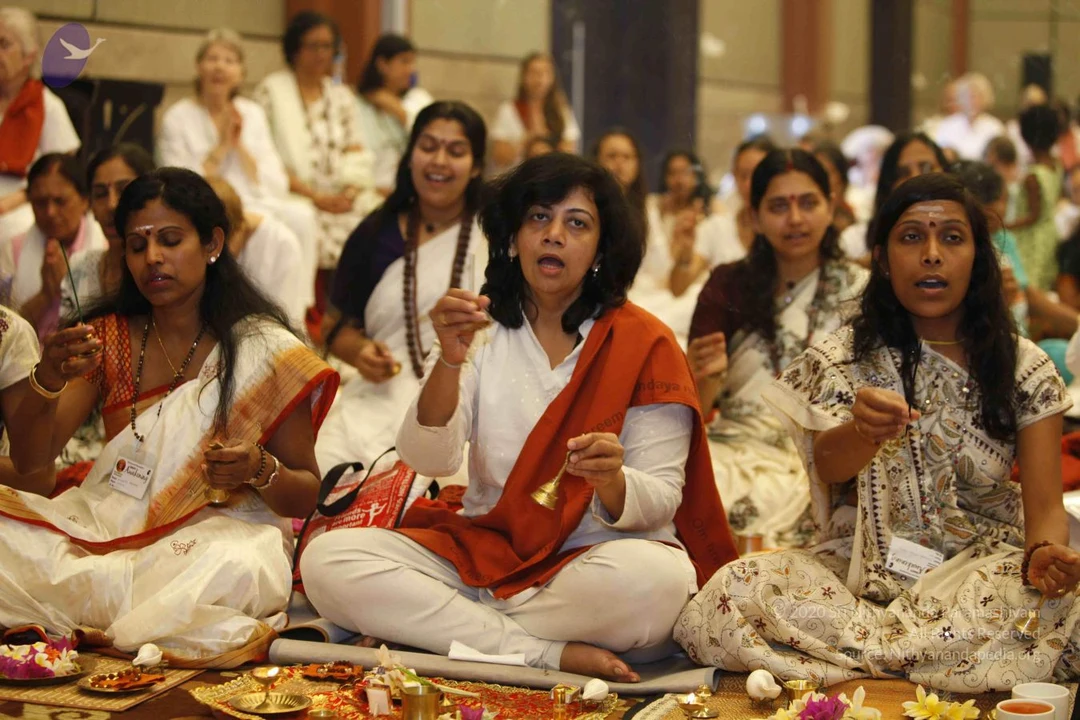
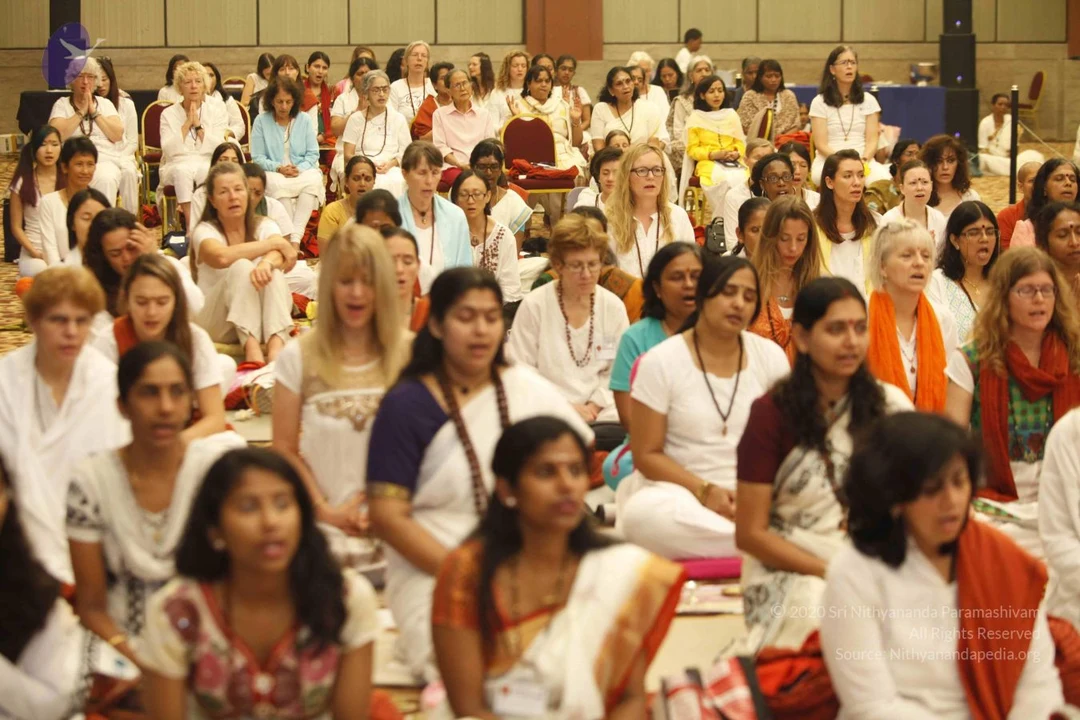
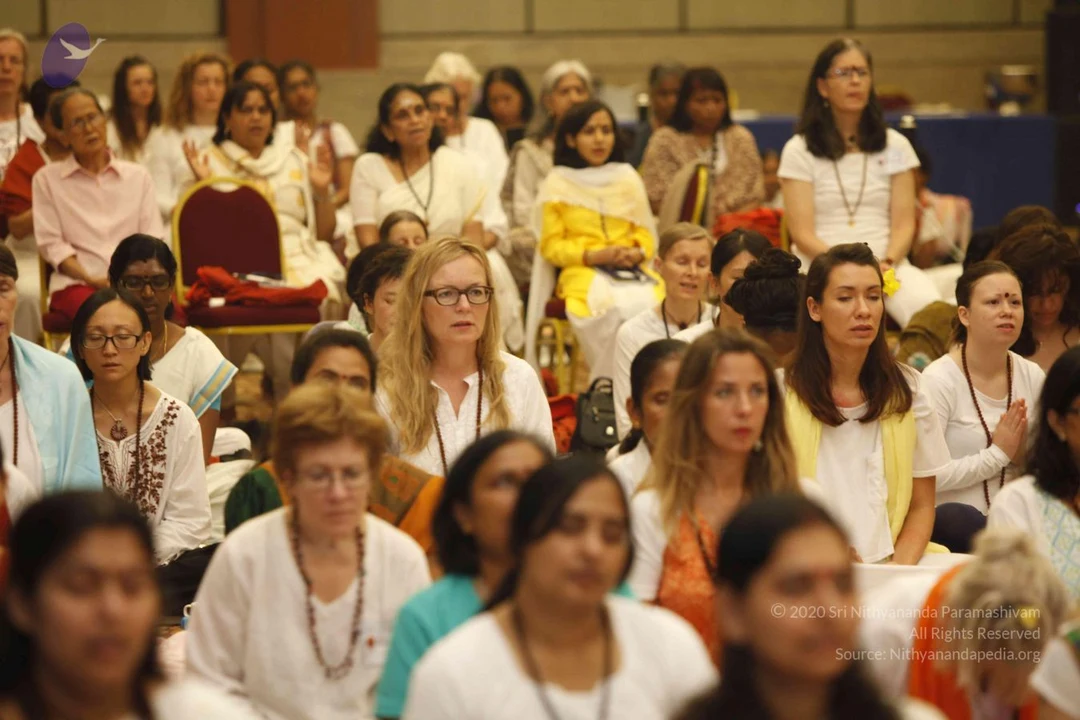
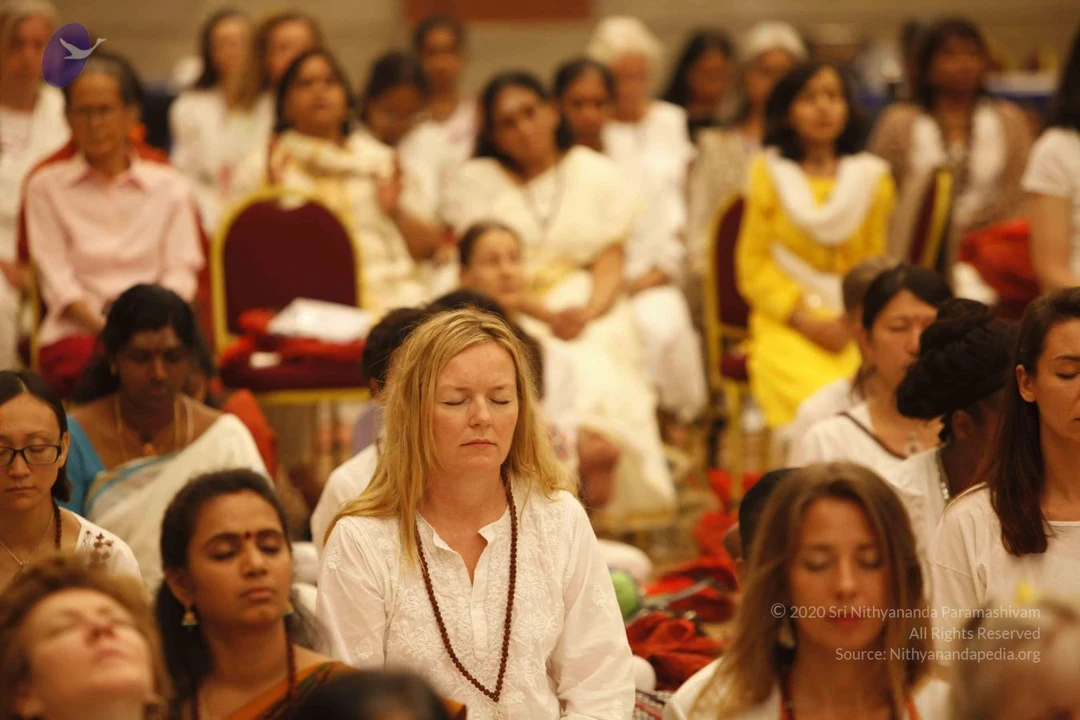
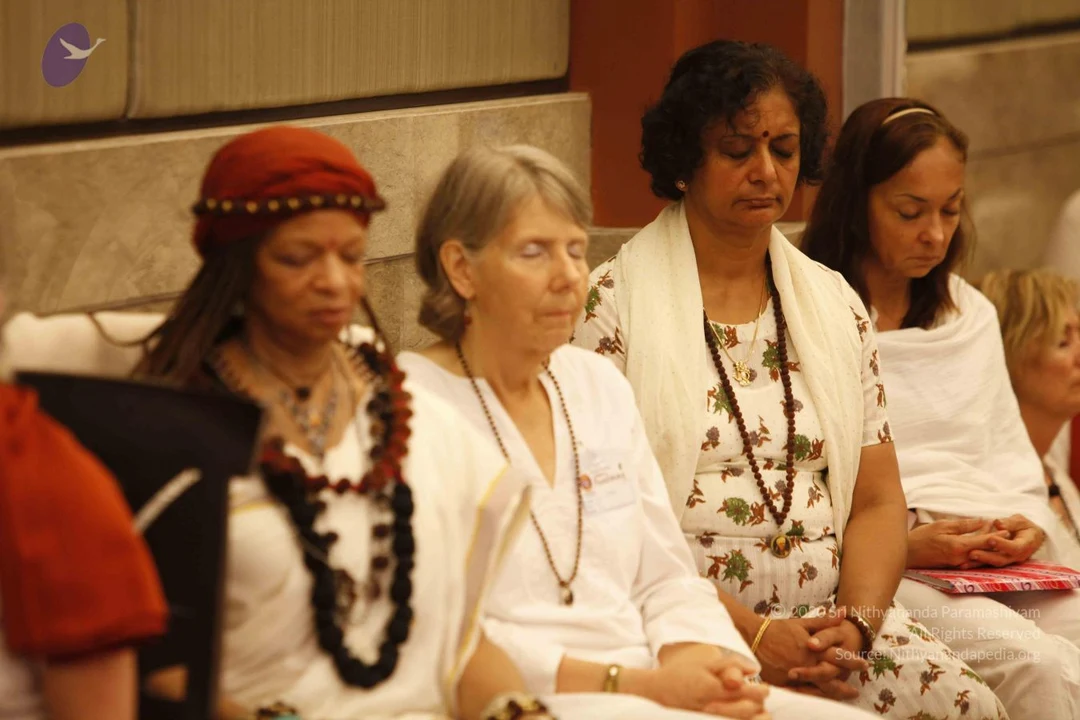
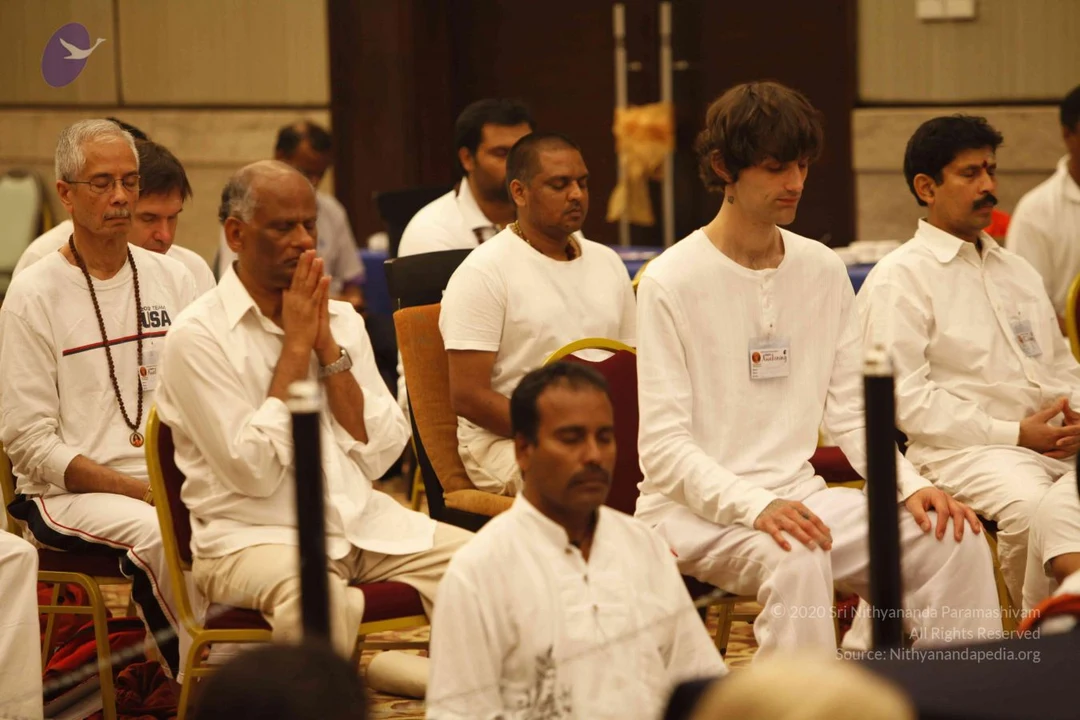
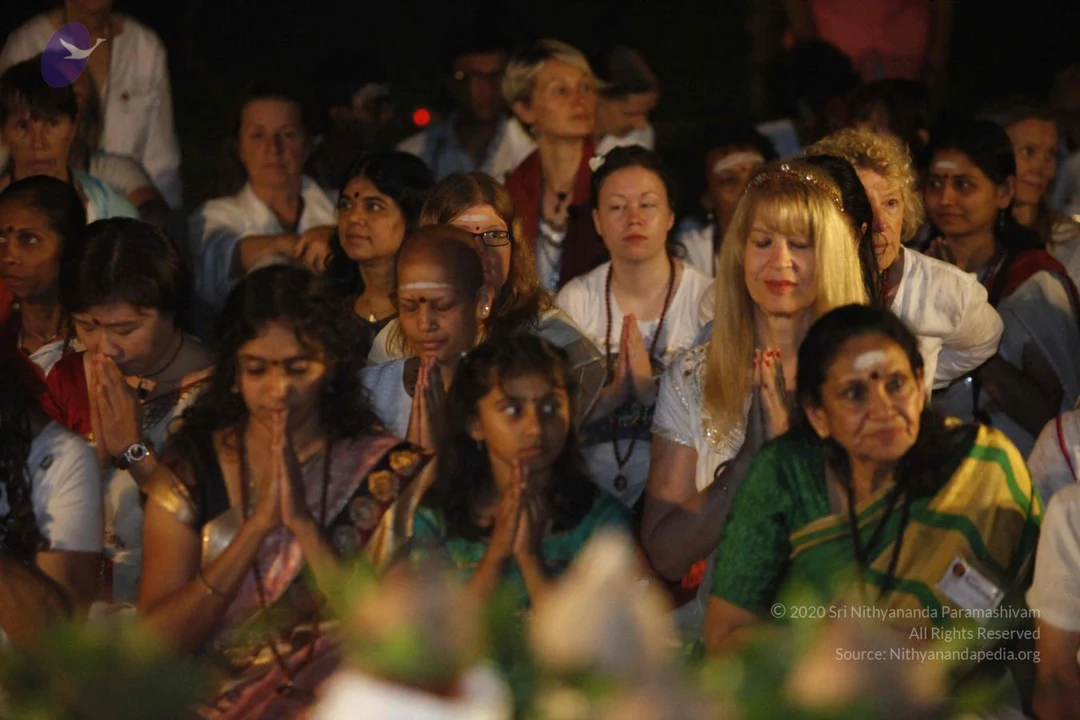
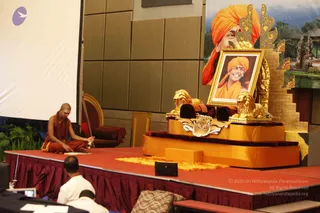
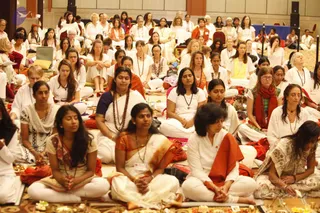
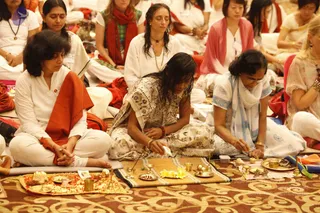
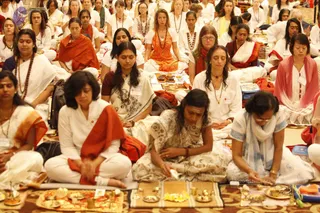
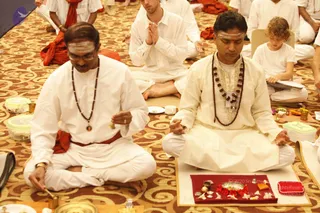
A stage event with a gold throne centred on a red-carpeted platform, flanked by two gold lion sculptures and draped with a tiger-patterned cloth. Above the throne hangs a large backdrop of a smiling figure in an orange turban, and a framed portrait of the same orange-turbaned figure sits on the throne. On the left, a bald man in orange robes sits cross-legged on the stage, holding a small object in his hands. Two seated people in white clothing are in the foreground, one with a shaved head, and a red-cushioned chair stands nearby. Marigold petals are scattered before the throne. The backdrop shows a Balinese-style temple scene.A photograph of a large seated congregation in a hall with patterned carpet, meditating or in prayer with eyes closed. Most attendees wear white clothing, many with rudraksha or bead malas and pendants; some wear orange or saffron shawls, a red-and-green scarf, and saris in orange, yellow and cream. Rows of people fill the room, with white-clad devotees near the front and small brass items and offerings on the floor. Chairs and a blue-draped table are visible at the back. A watermarked copyright label is present but not transcribed. No individual is clearly identifiable as a person.Seated devotees in white and cream clothing perform a padapuja-style ritual on a patterned carpet. In the foreground, a woman in a cream patterned sari with a tied-back wet-looking hair pours water from a small brass vessel while another woman in a white blue-bordered outfit and glasses holds a small offering item over brass plates. Brass lamps, a small bowl, yellow flowers and a silver-rimmed tray sit on a woven mat, and a woman in a white kurta with an orange shawl sits with hands folded nearby. Behind them, rows of seated devotees in white and red-orange shawls meditate with eyes closed.A photograph of a large seated congregation of women in white and saffron clothing at a satsang or padapuja. In the foreground, a woman in a cream patterned sari with a printed design sits before a brass-and-silver puja tray with flowers, and a woman in a white sari with a light blue shawl bends over a similar tray. Behind them, rows of devotees sit cross-legged with eyes closed in meditation; one woman in an orange-red top wears a long beaded mala, and others wear rudraksha-style necklaces, red and orange shawls, and white garments with name badges. Brass lamps, plates and marigold petals rest on mats. No individual on stage is identifiable as a person in this image.A photograph of a seated padapuja or satsang gathering on a patterned brown carpet. In the foreground, a man in white kurta and dhoti with a red cloth at his waist and a rudraksha mala holds a small brass bell or lamp in his right hand. Beside him, a man in cream kurta with a rudraksha mala and white vibhuti on his forehead sits in meditation with hands resting on his knees, a red cloth spread before him holding a brass plate, flower petals, a small kalasha-style vessel and oil lamps. Behind them, devotees in white clothes sit in rows; one bearded man in white has his palms pressed together in namaste, and a young boy in white sits on the right. Clear plastic containers sit at the left edge.A large seated gathering of devotees in white ritual clothes sits on a patterned maroon-and-gold carpet in a hall, appearing to meditate or attend satsang with eyes closed or lowered. Many wear white kurtas and white pants, with orange-red shawls draped over shoulders and rudraksha malas around necks. A man in the foreground right wears wire-rimmed glasses, a white shirt and a rudraksha mala, holding a small object in his hand. A curly-haired child in white sits among the adults. Black stanchions with chains divide the seating area, and a wall of more seated attendees and red chairs fills the background. No single figure is distinctly identifiable as a person by visible cues.

Satsang

24 photosSource gallery
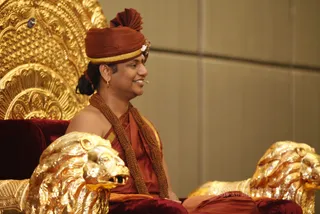
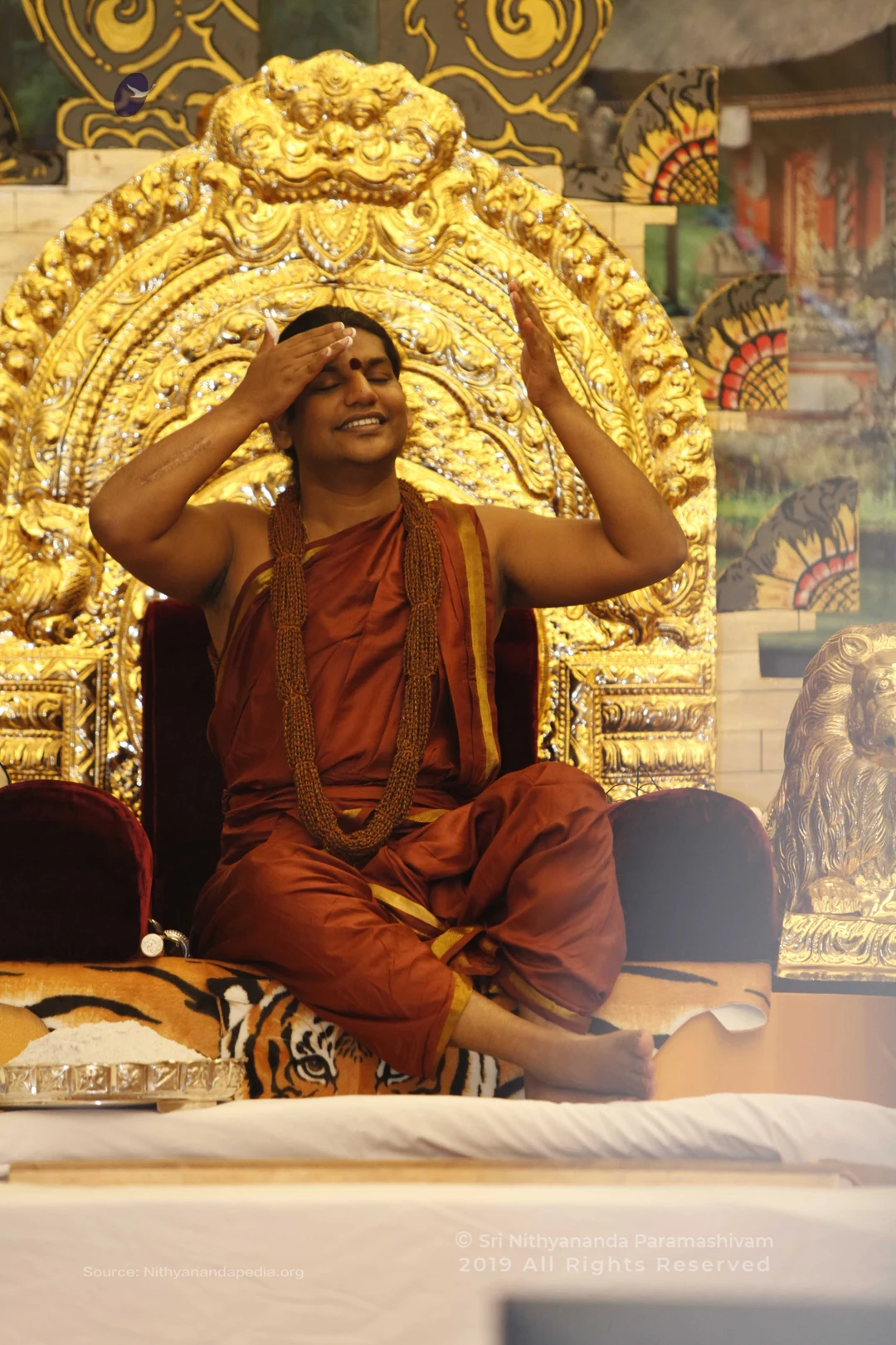
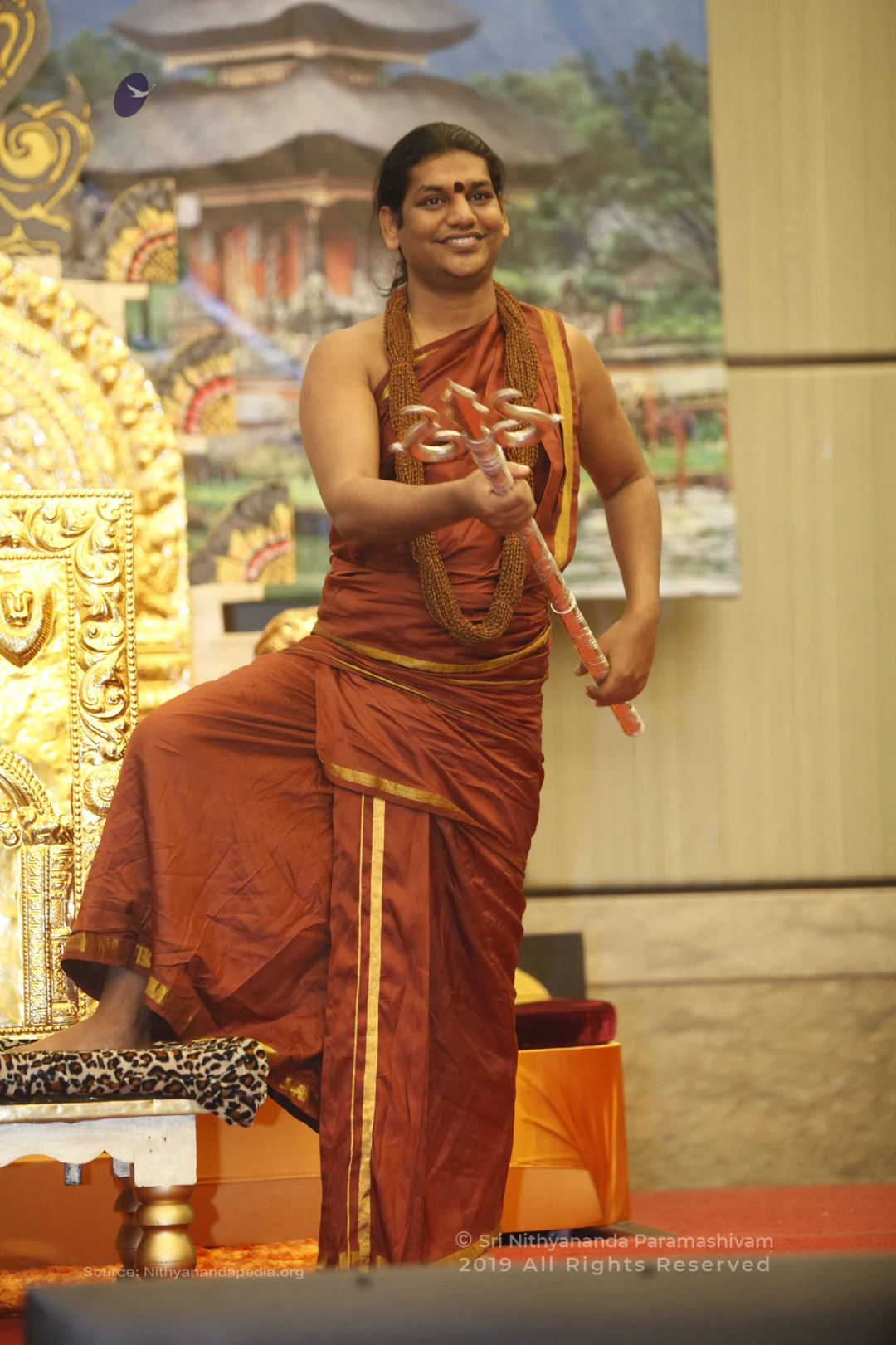
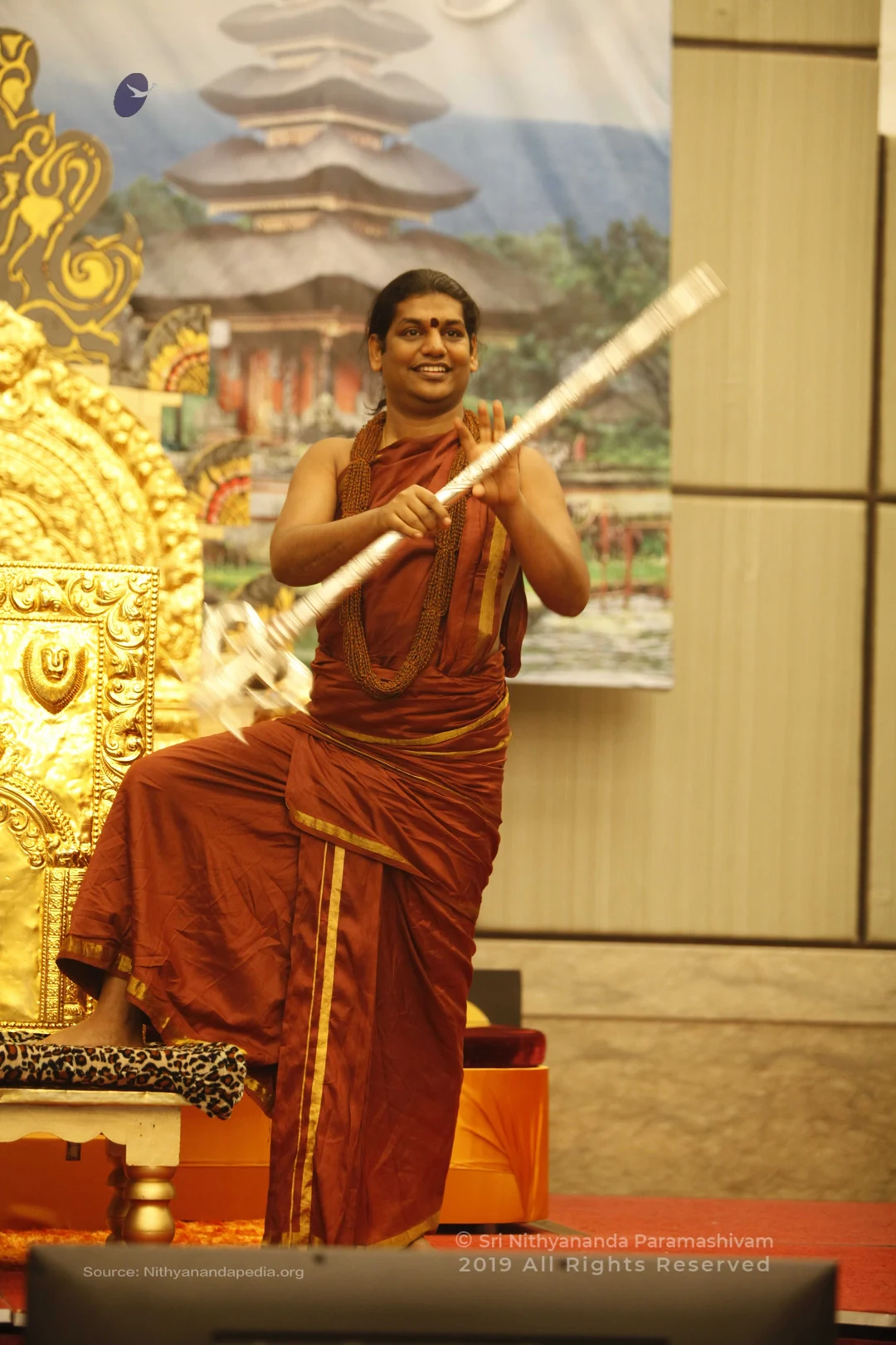
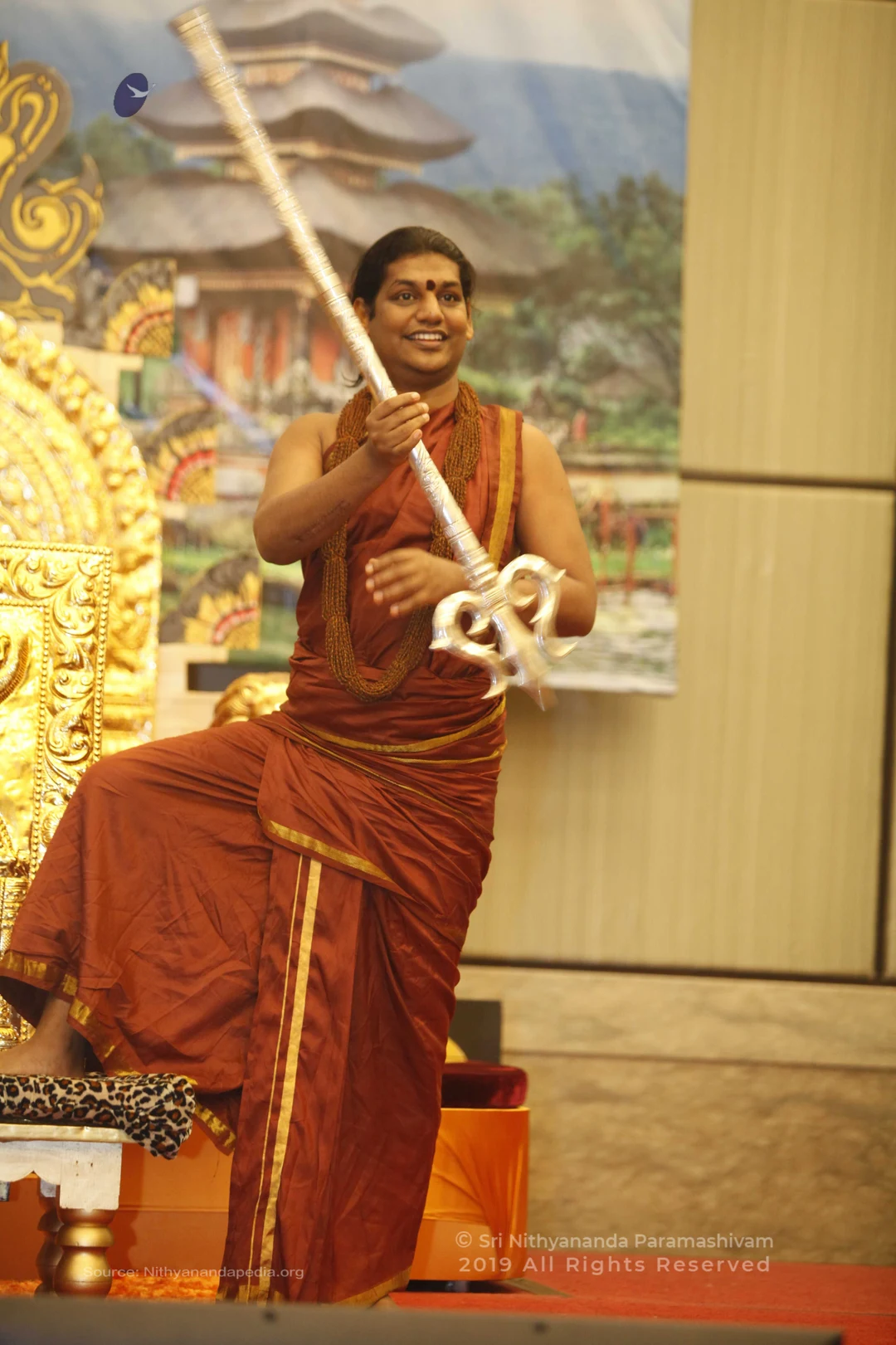
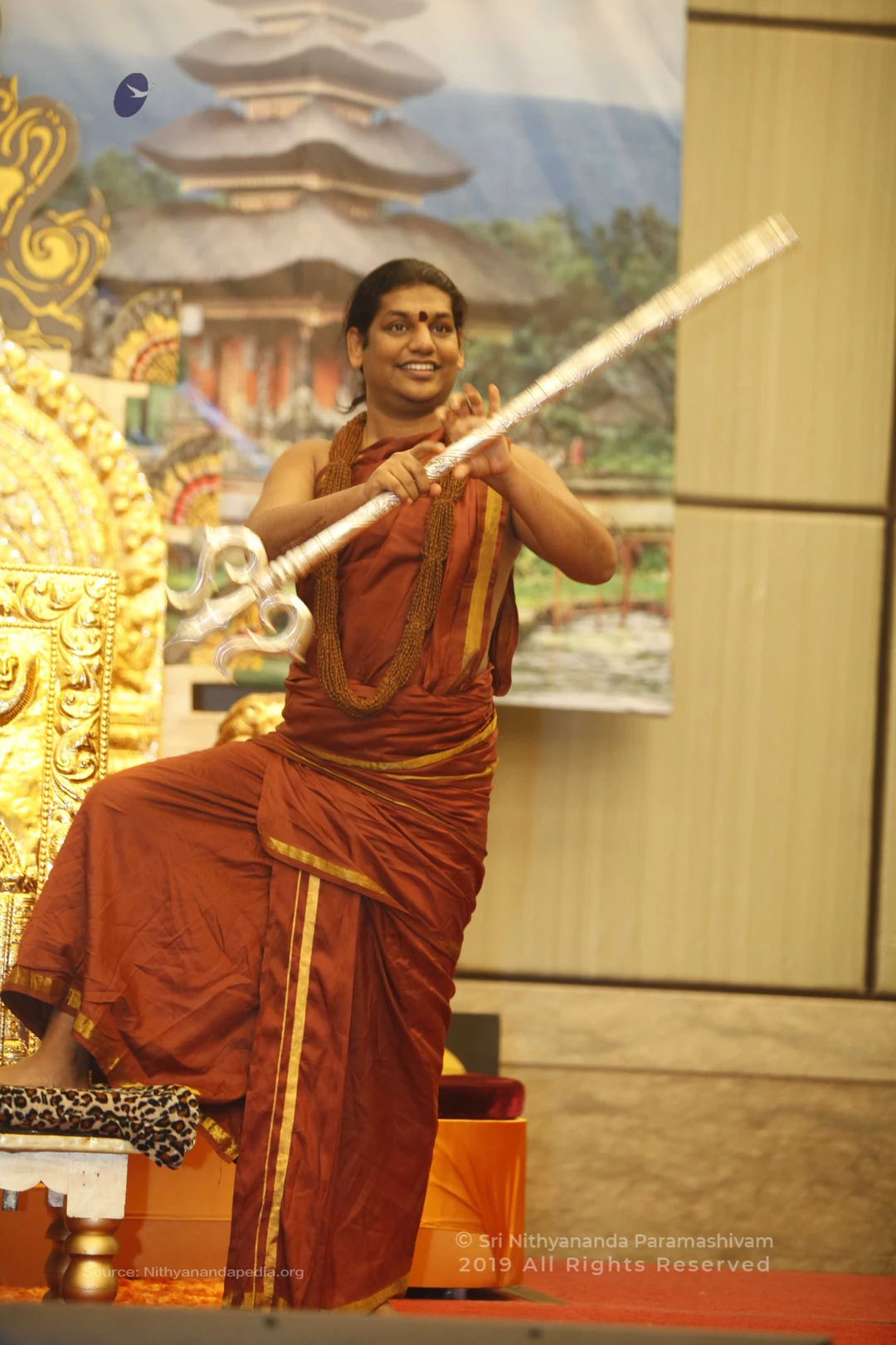
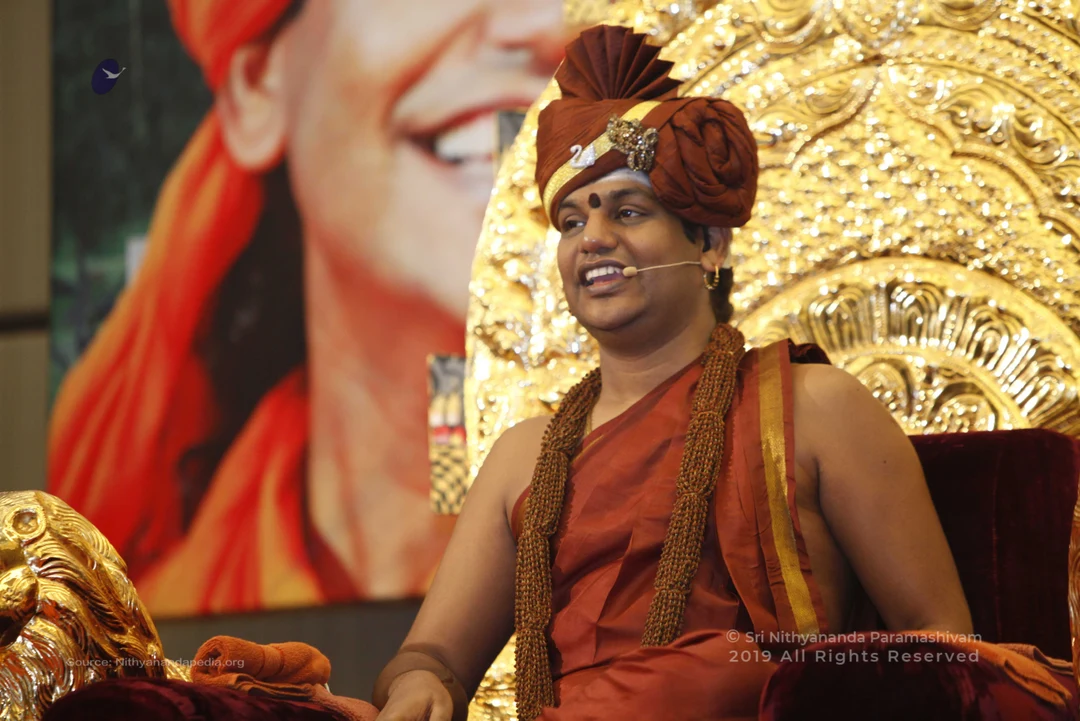
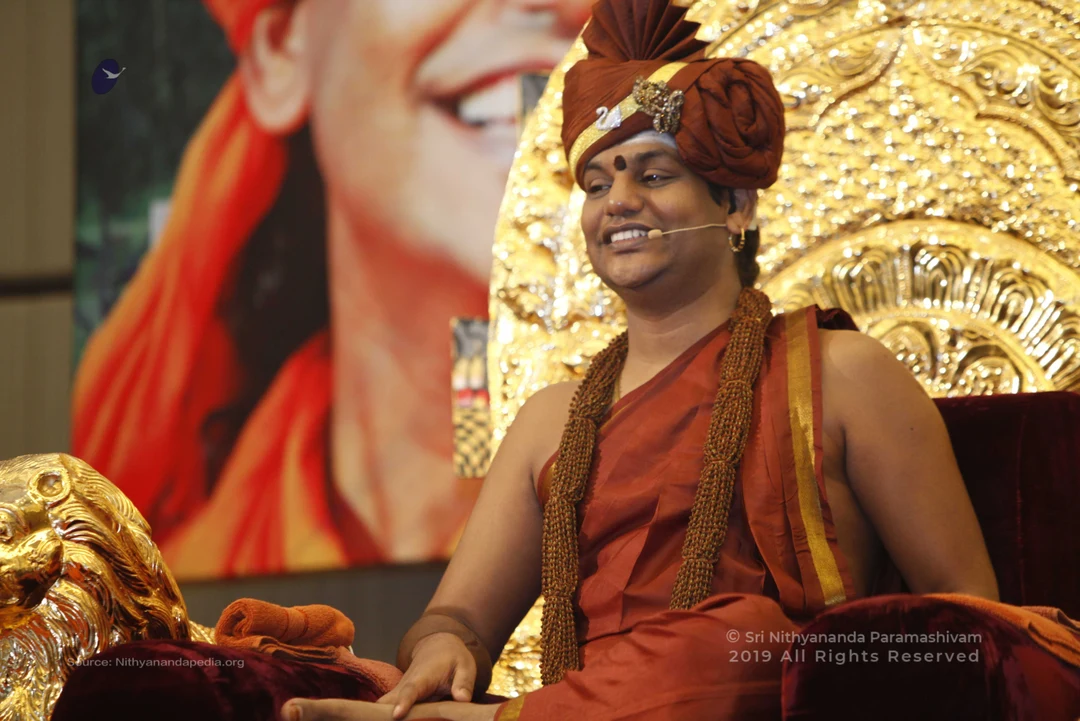
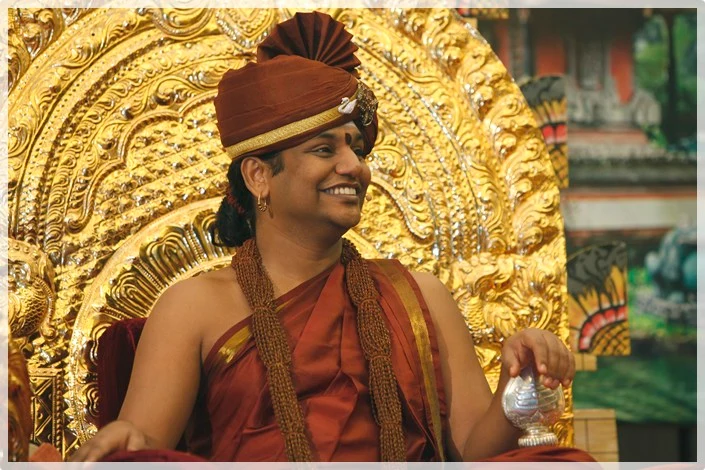
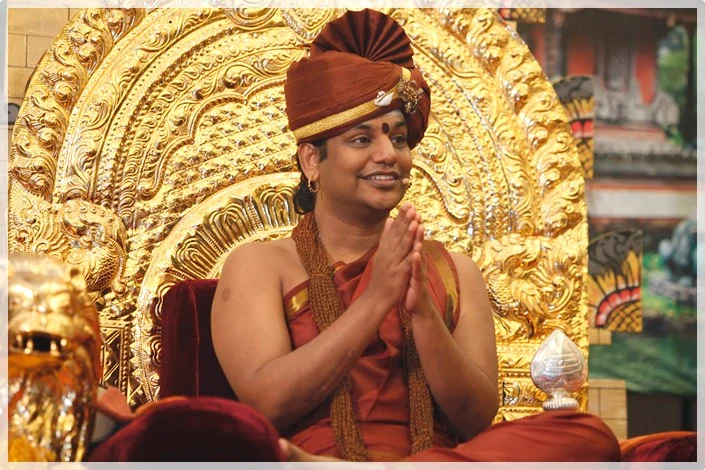
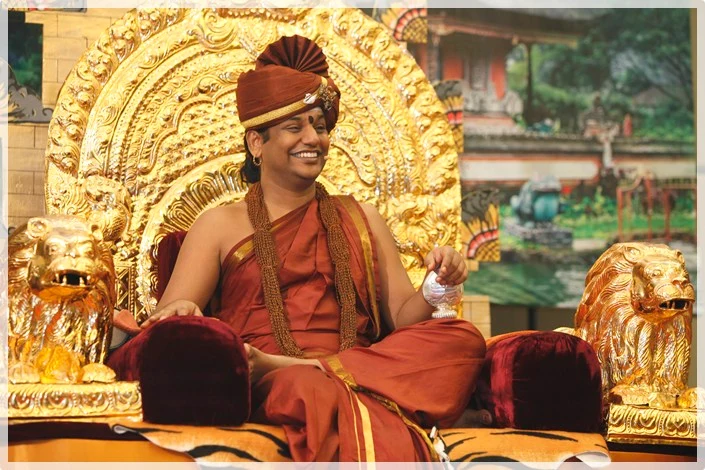
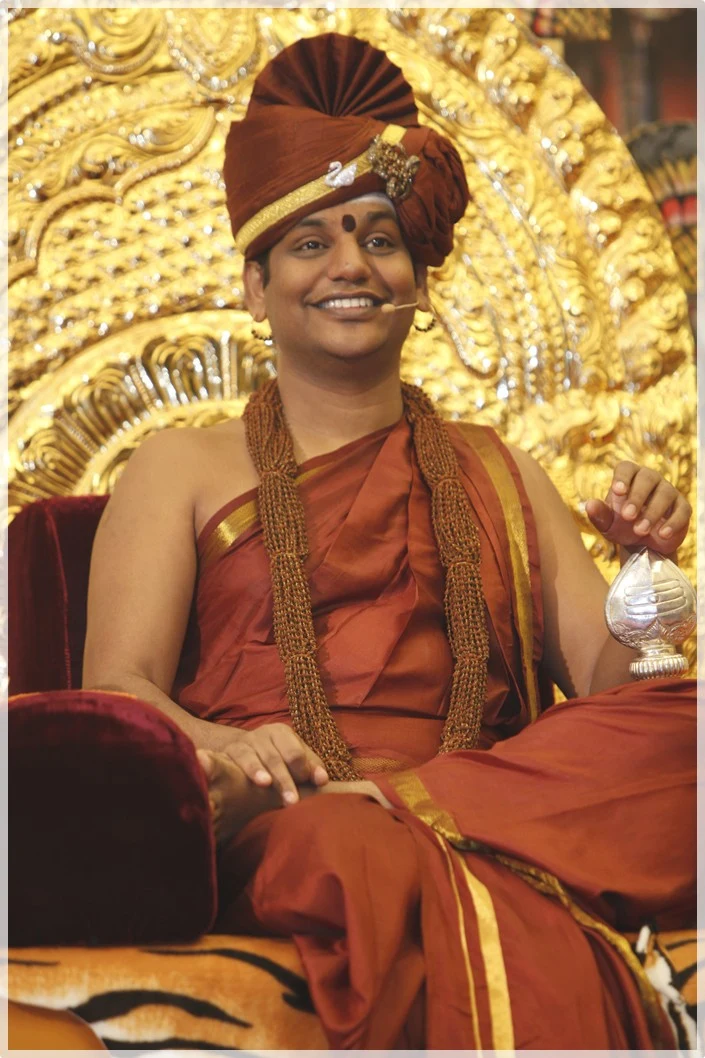
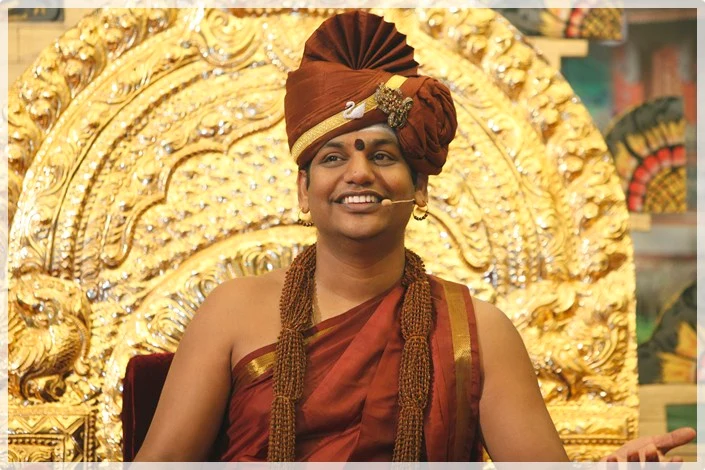
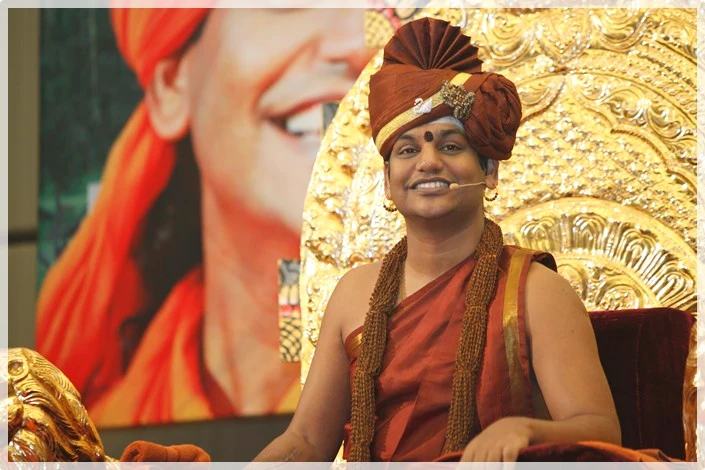
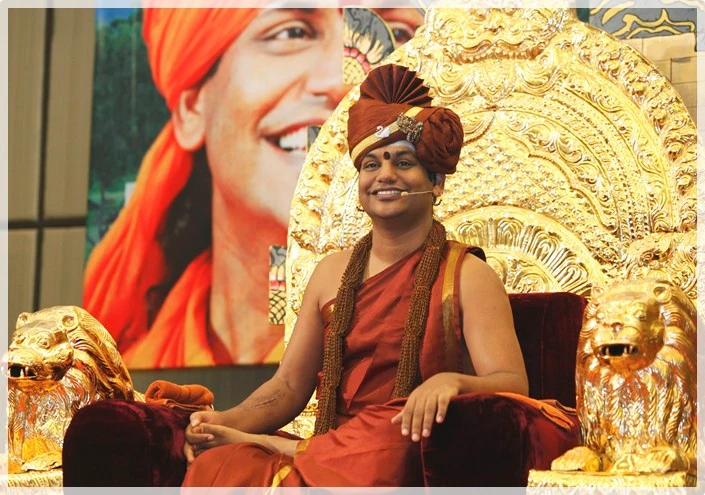
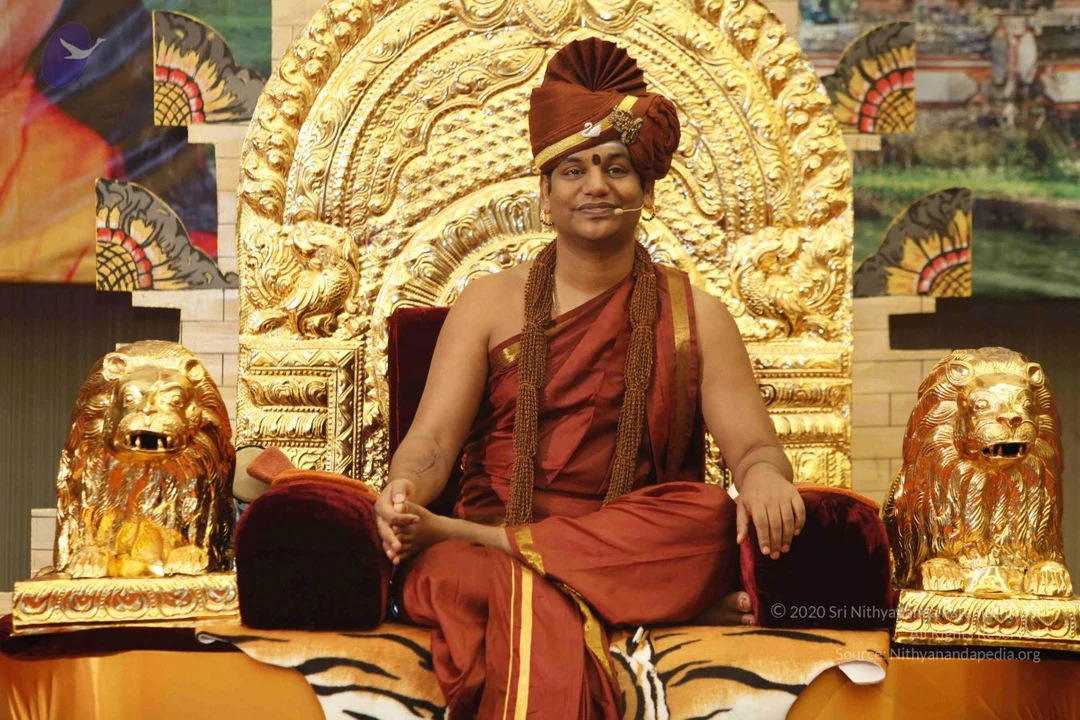
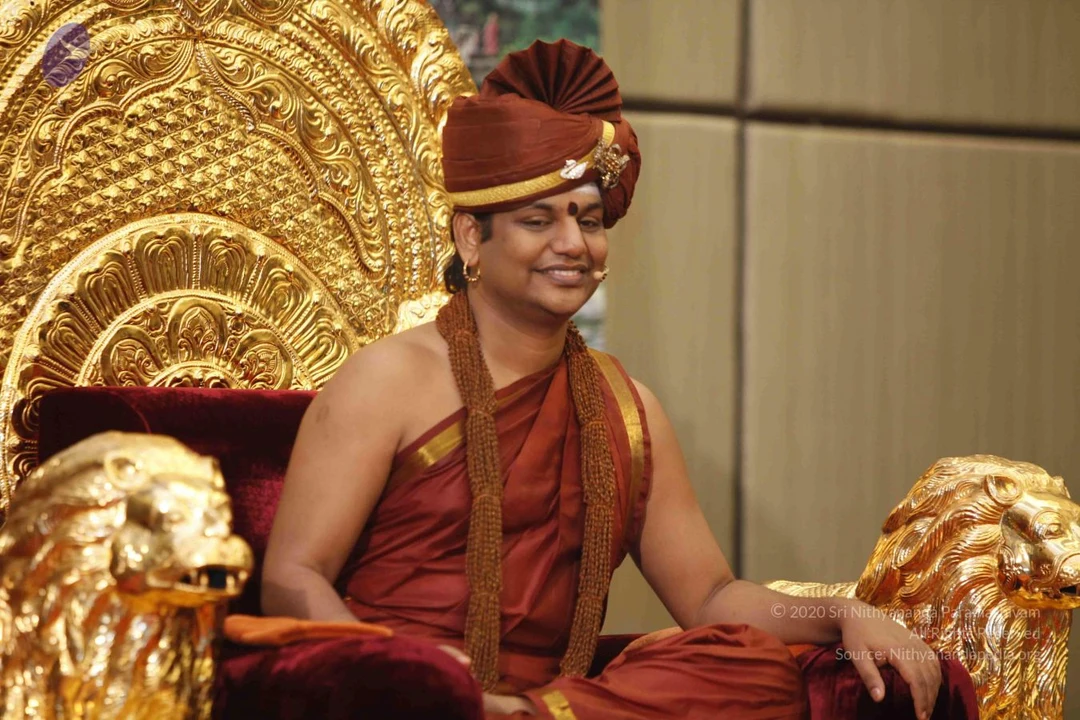
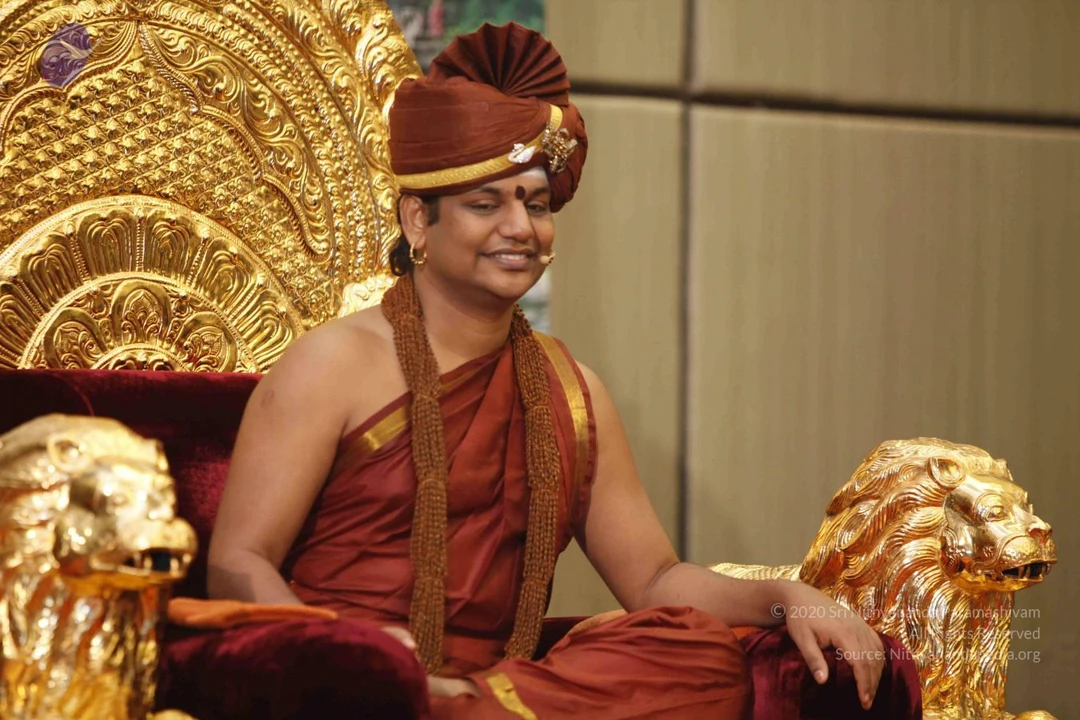
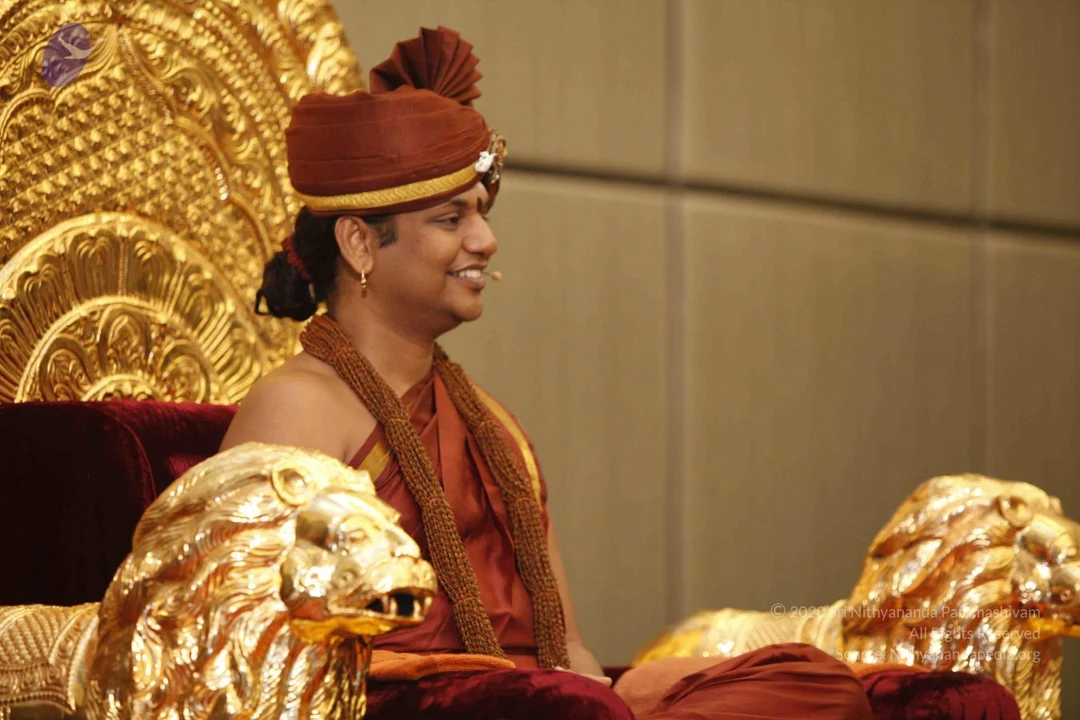
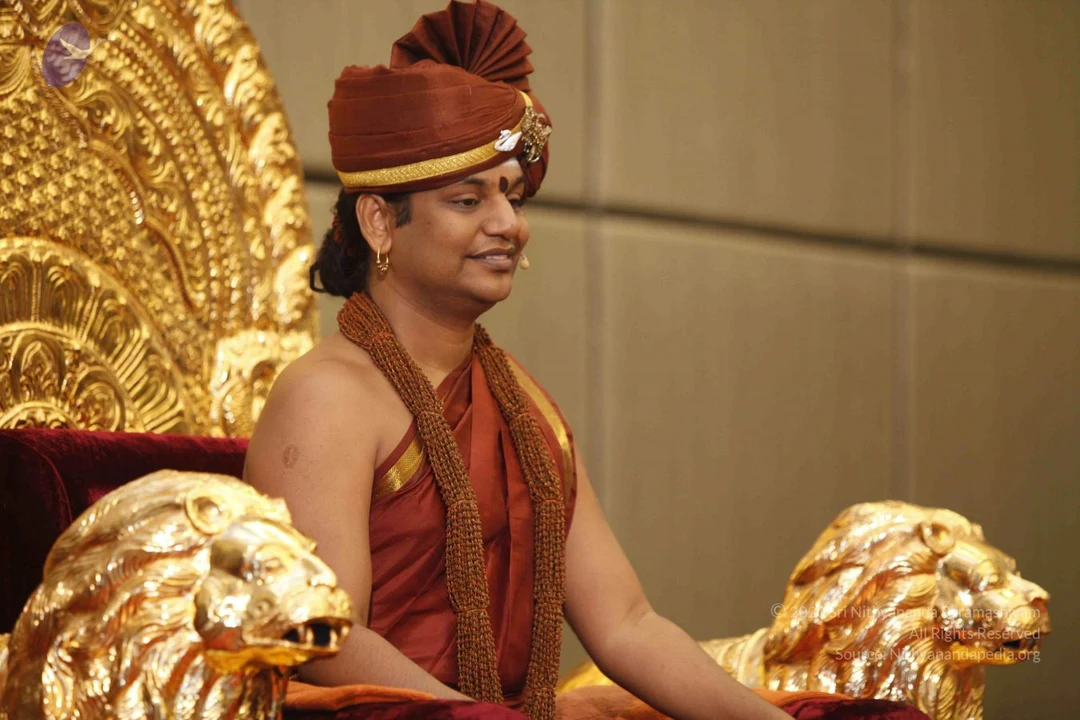
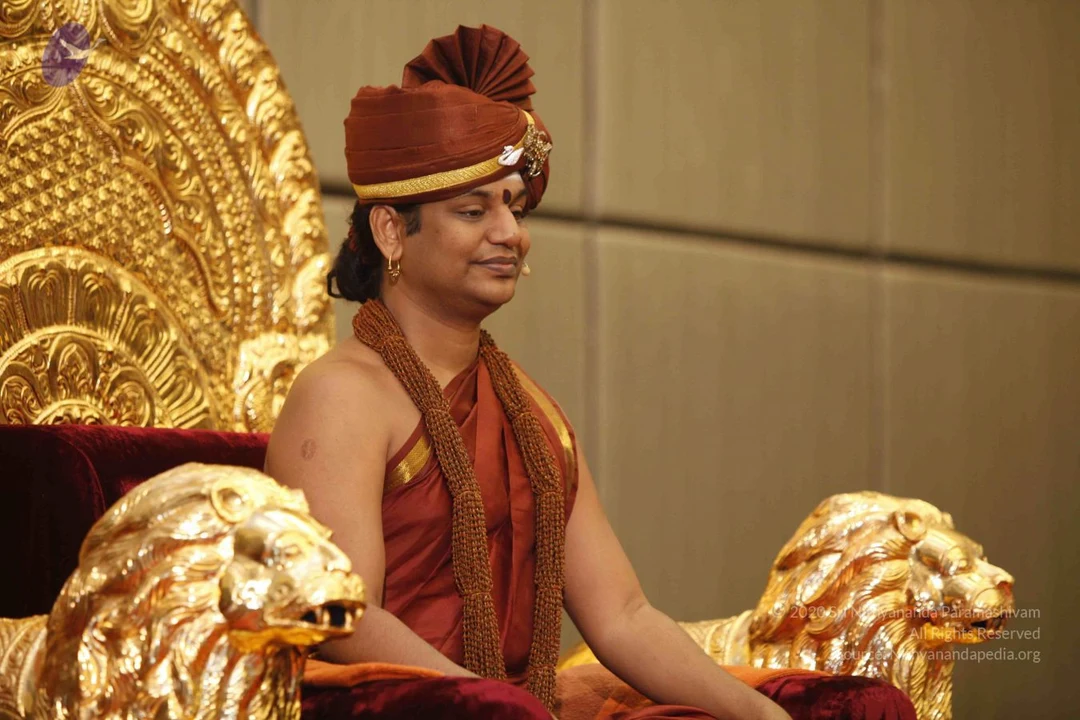
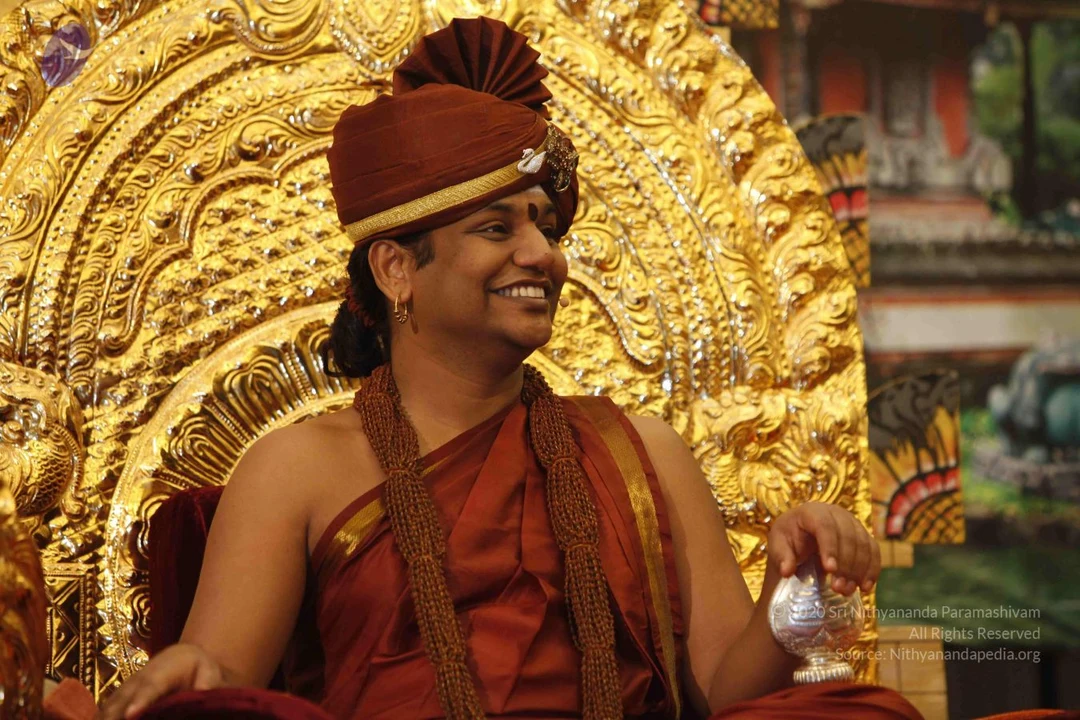
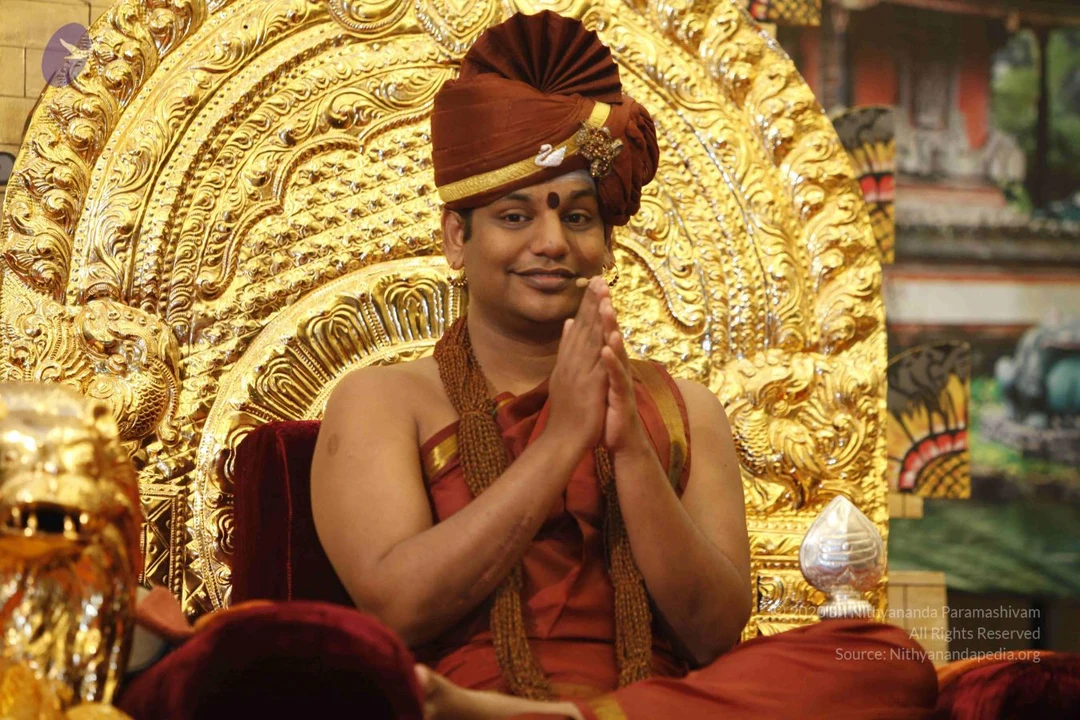
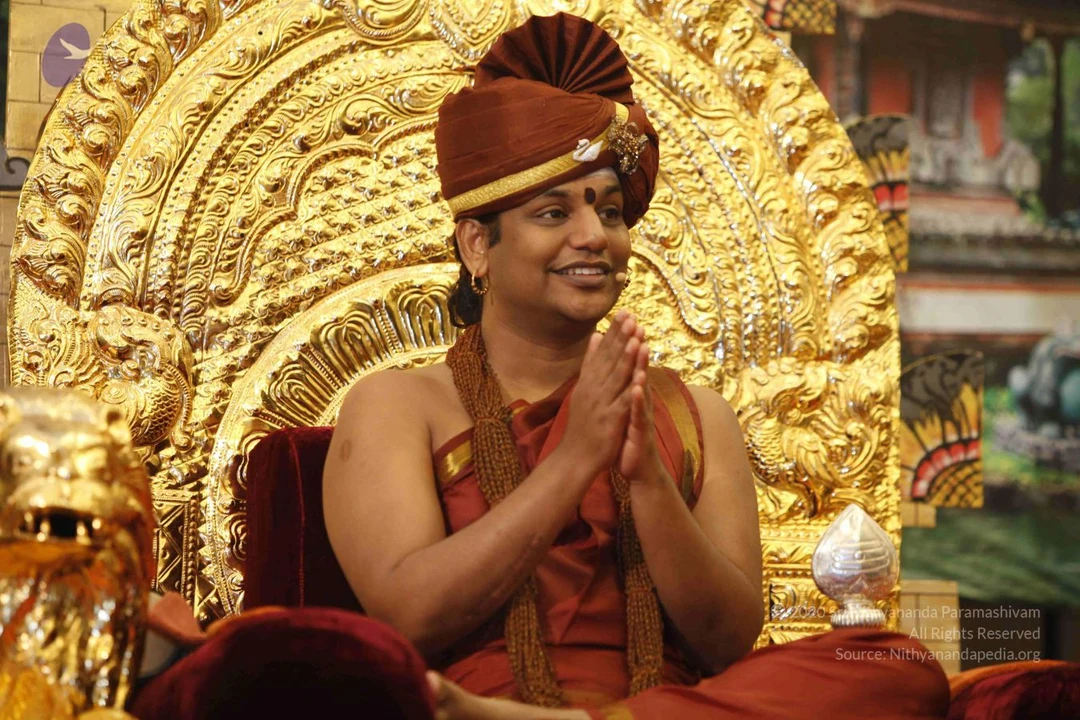
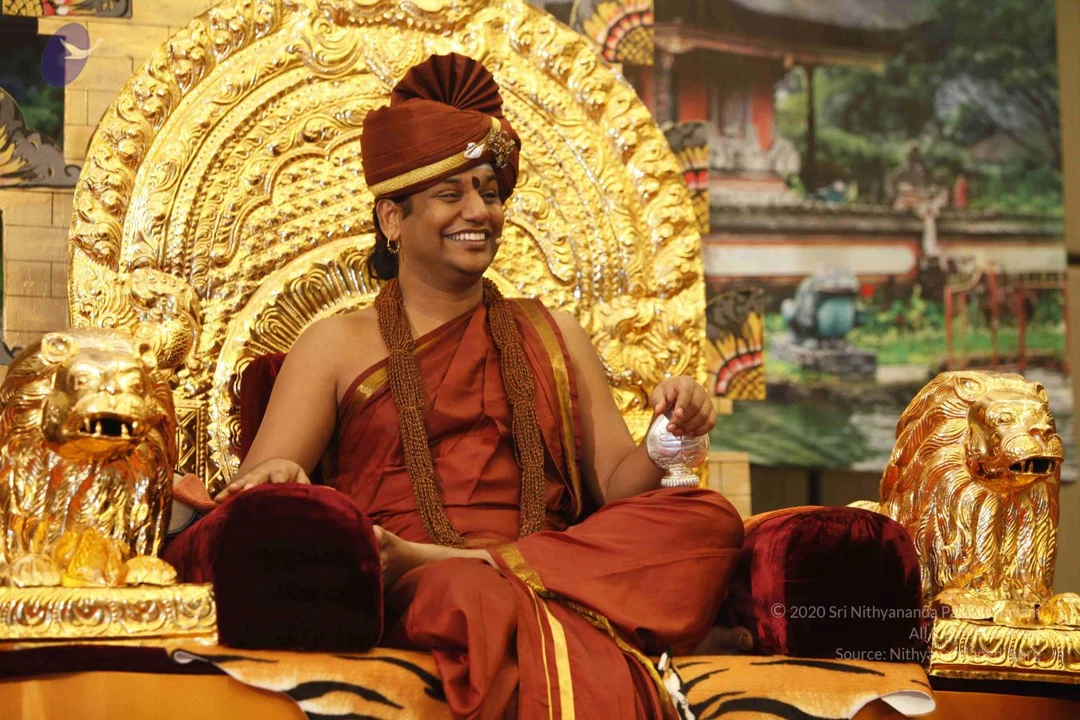
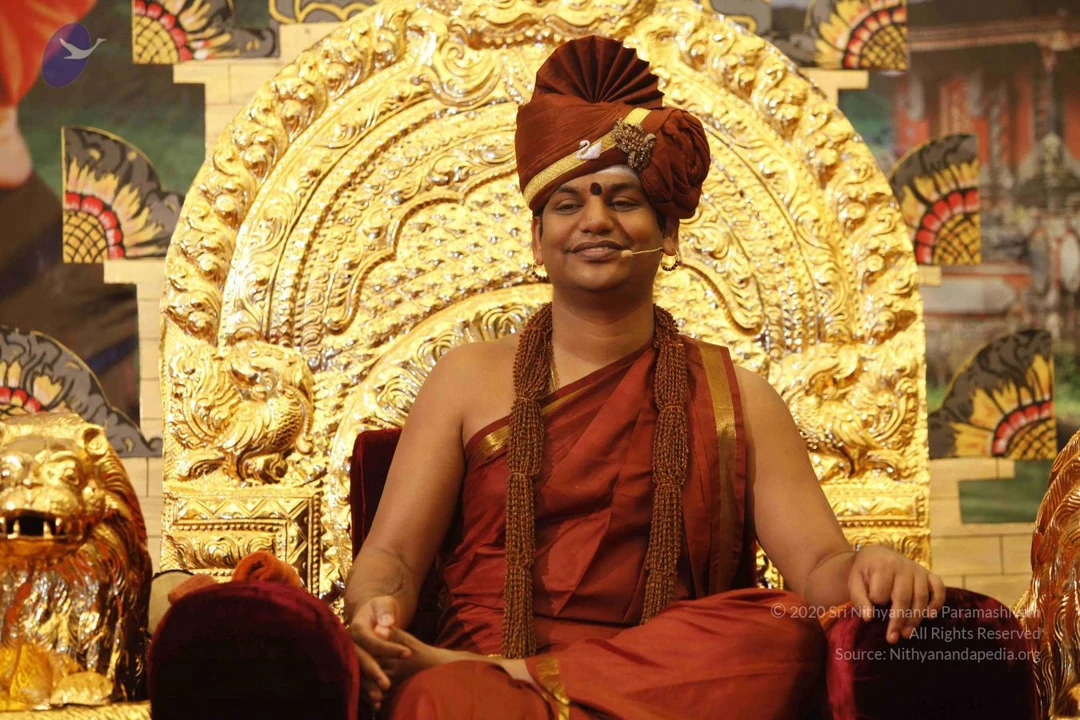
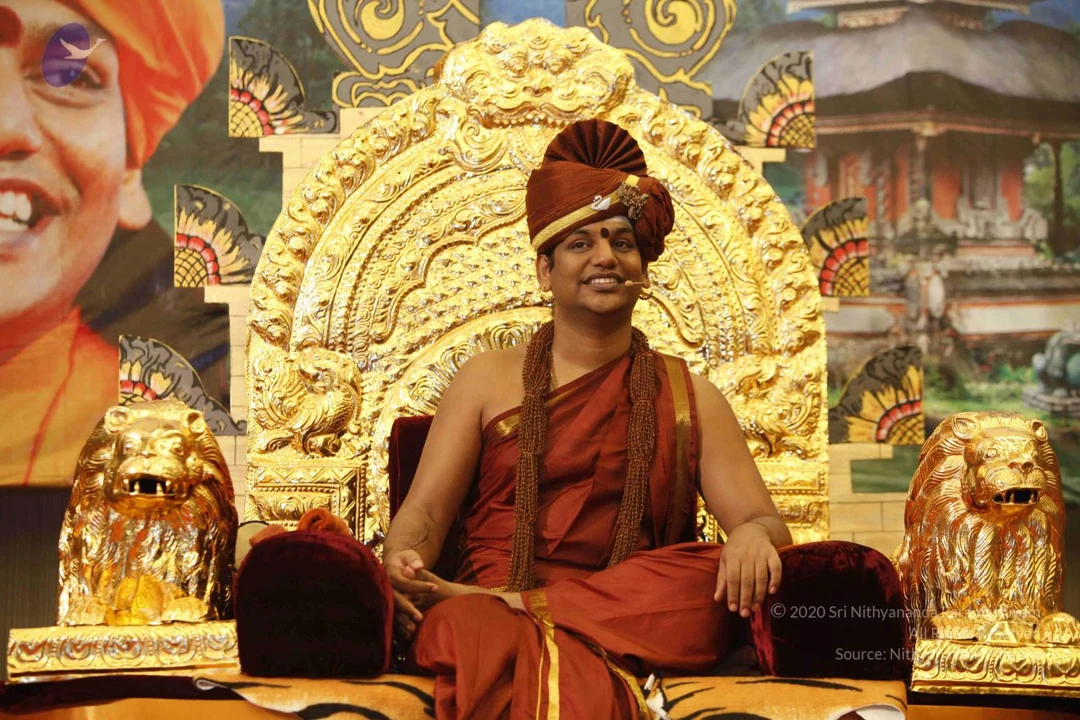
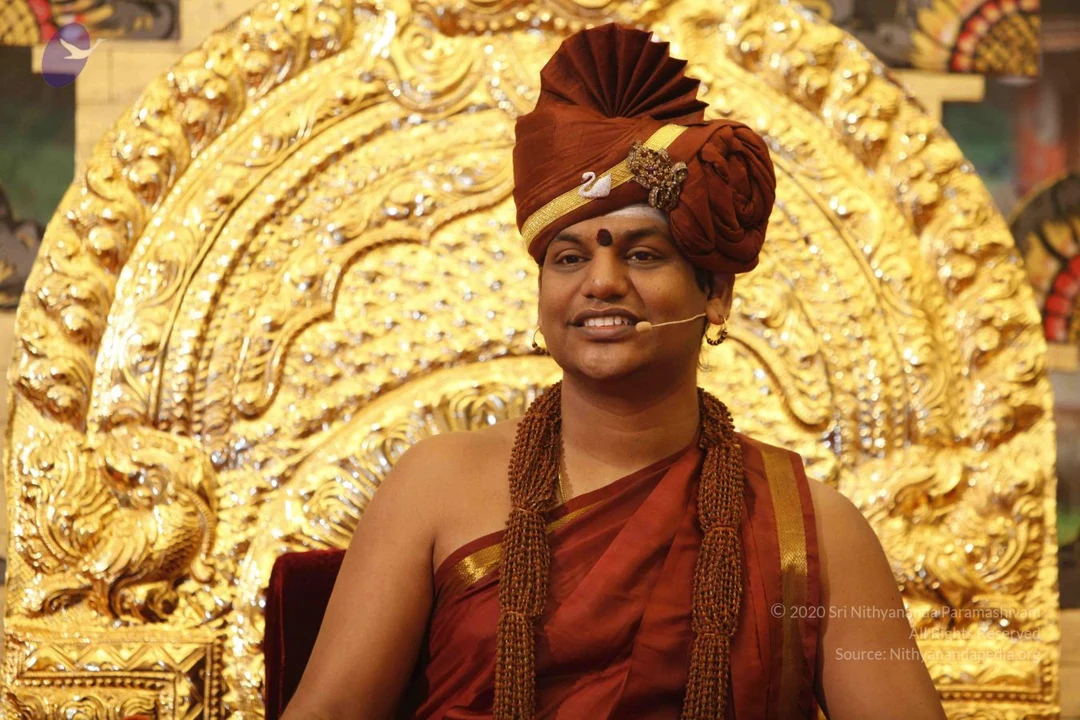
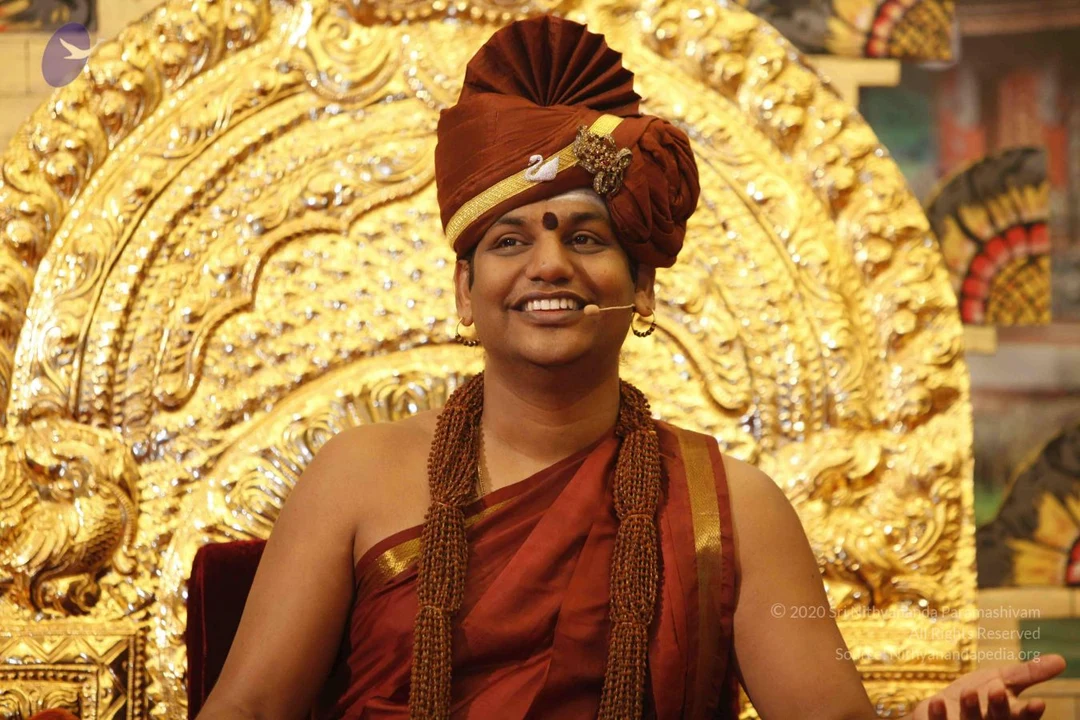
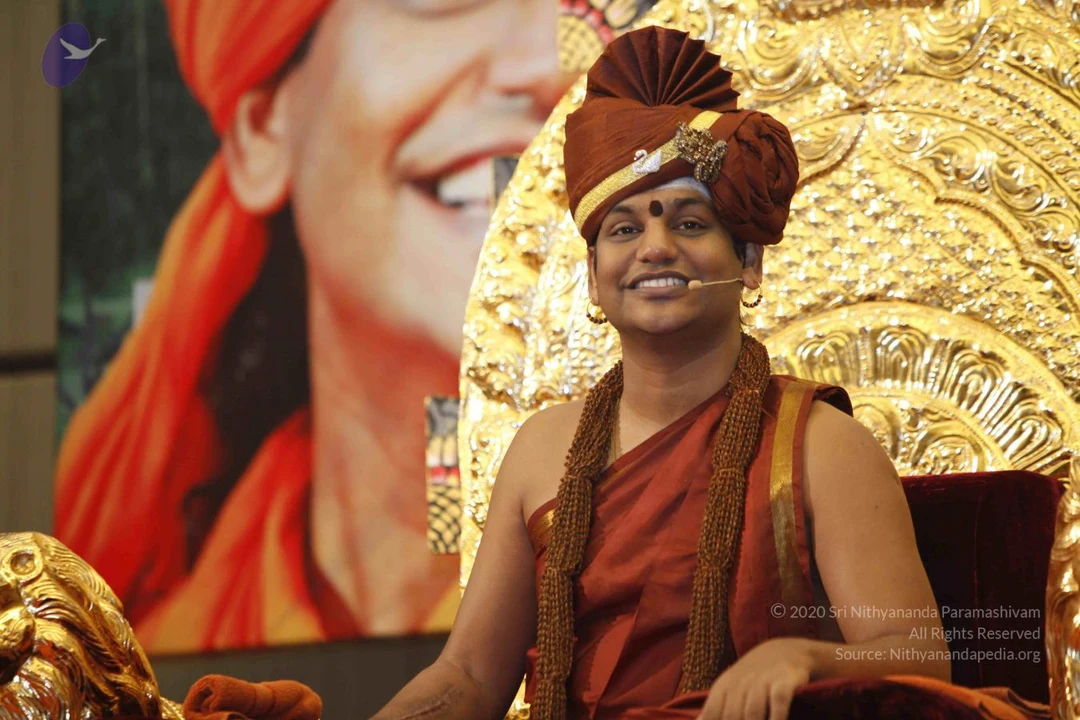
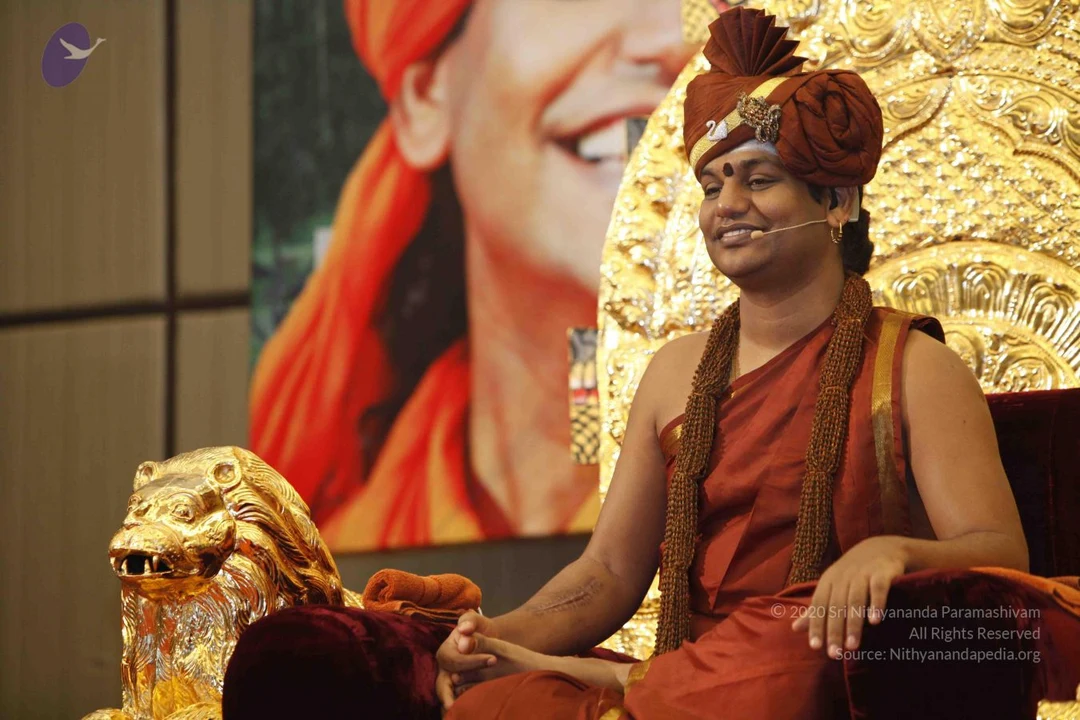
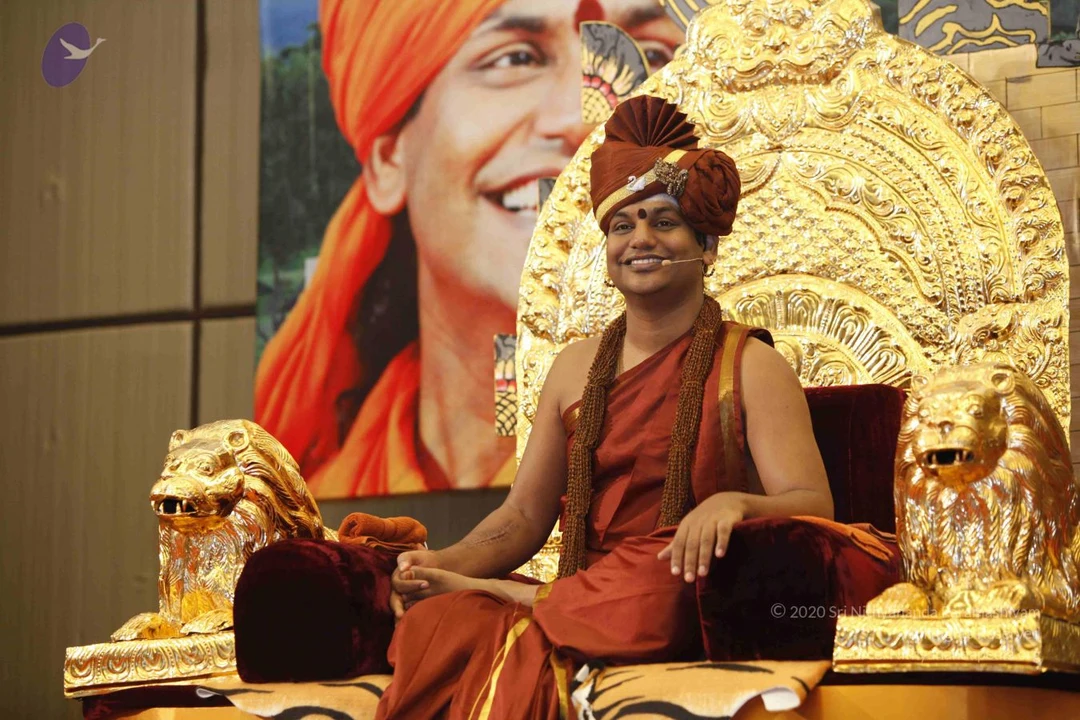
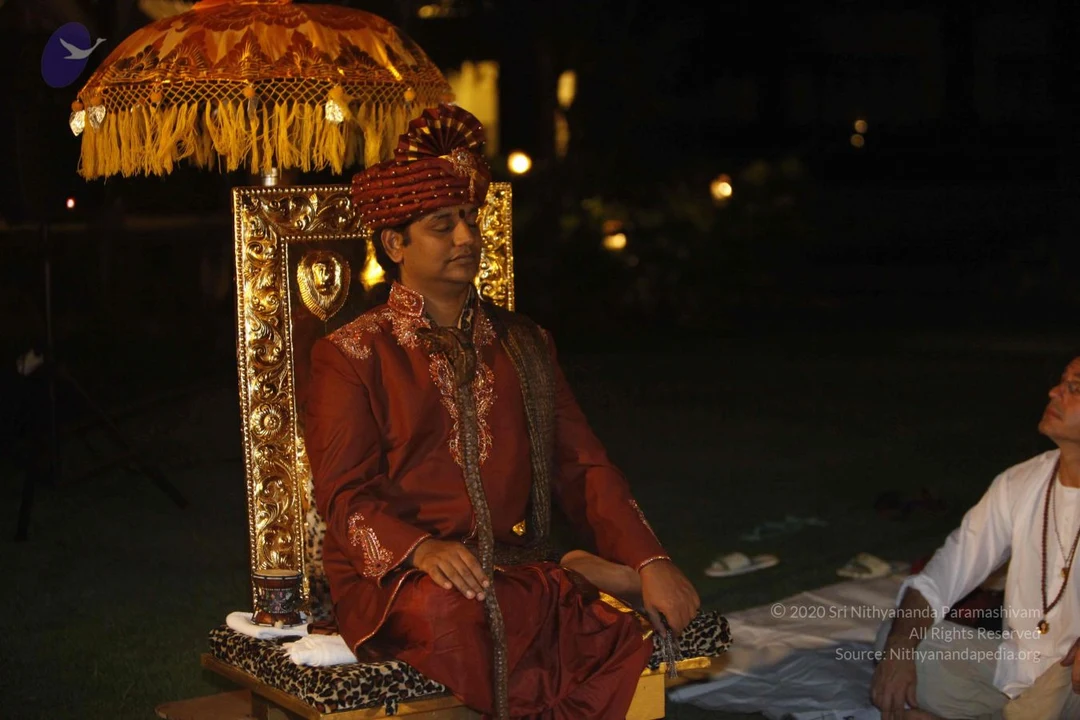
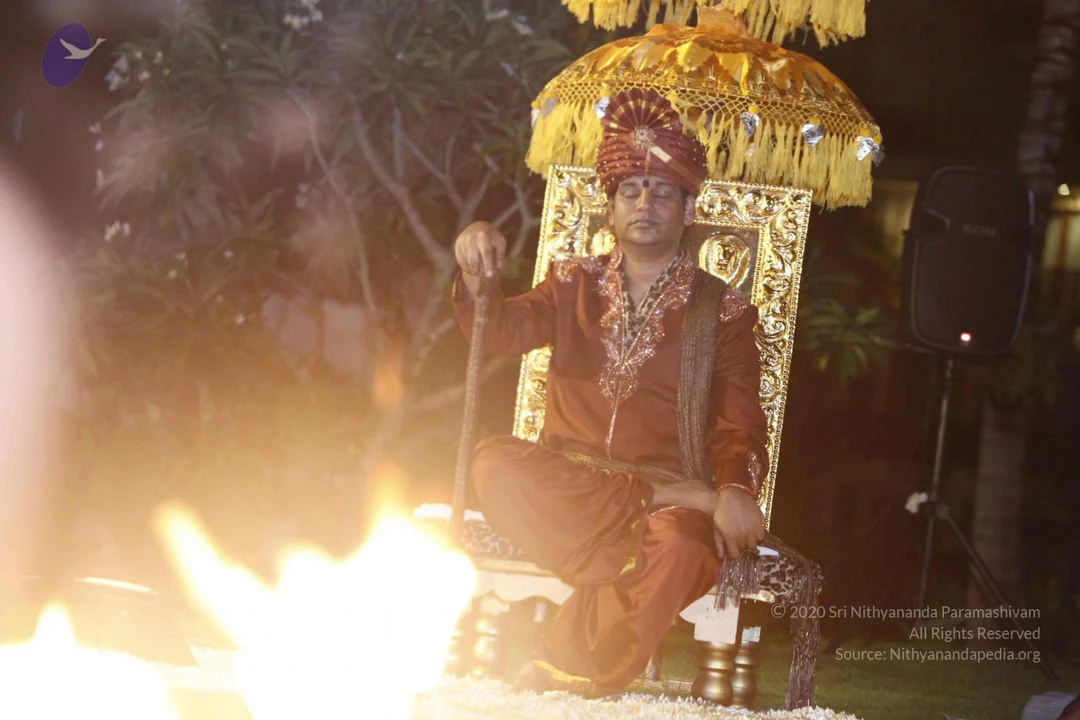
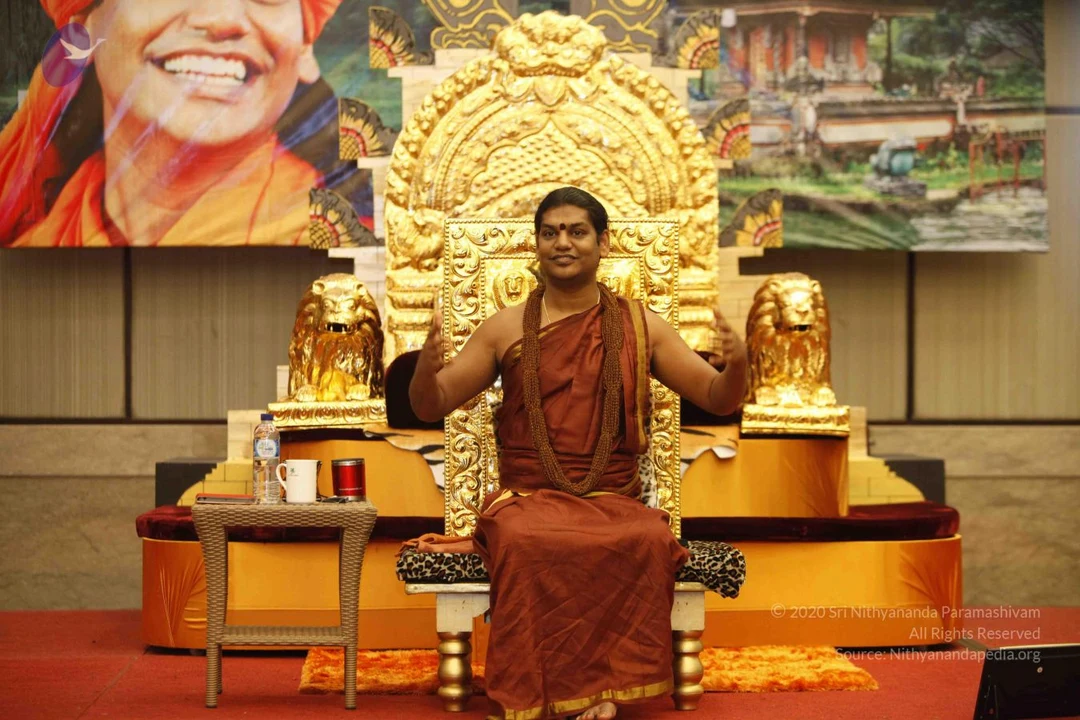
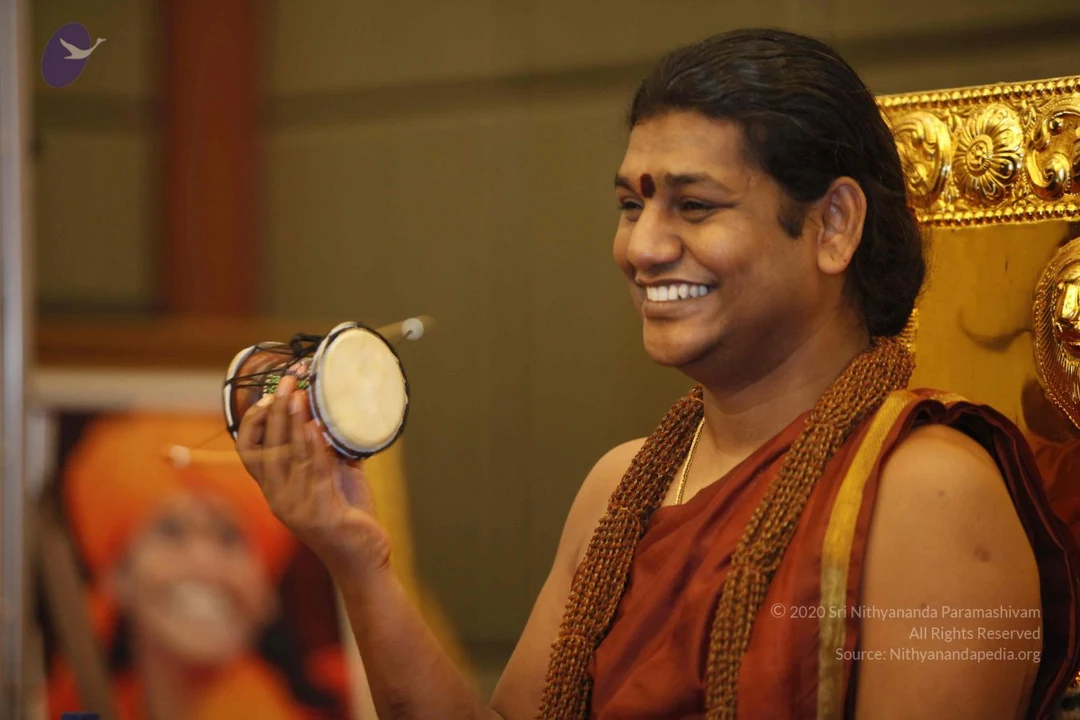
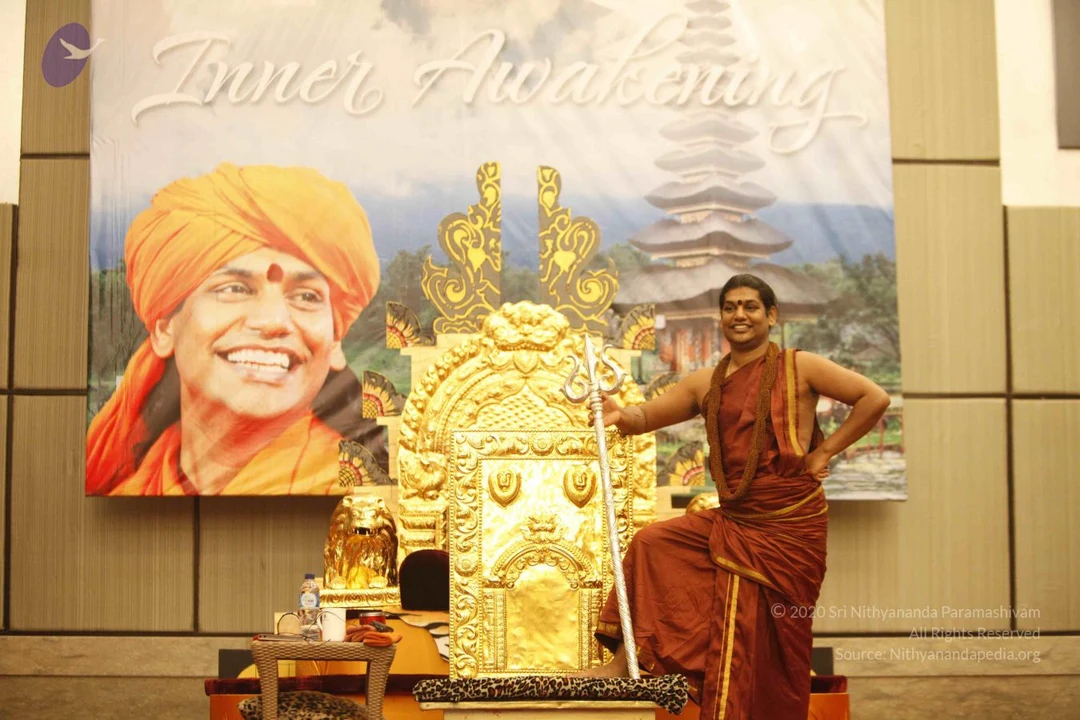
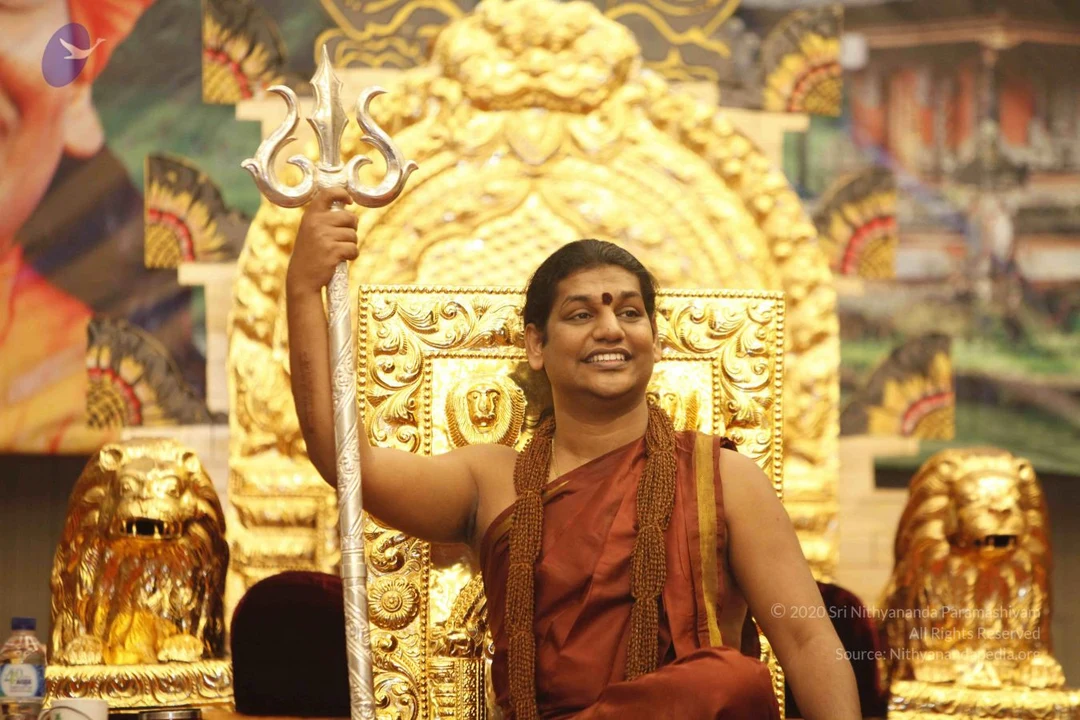
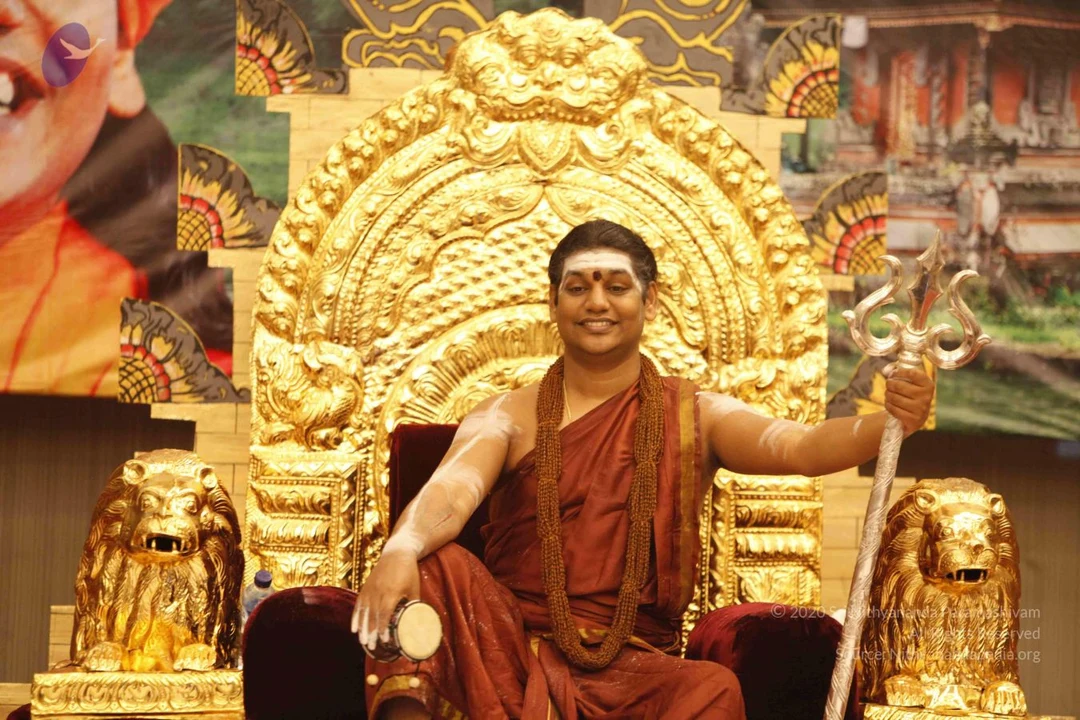
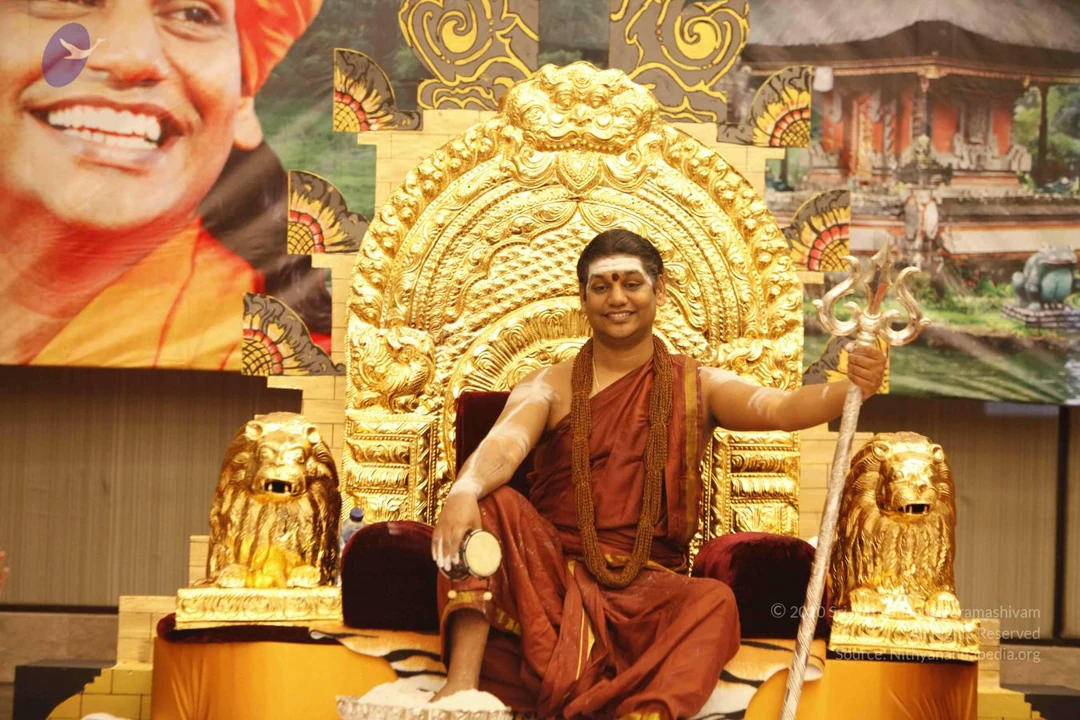
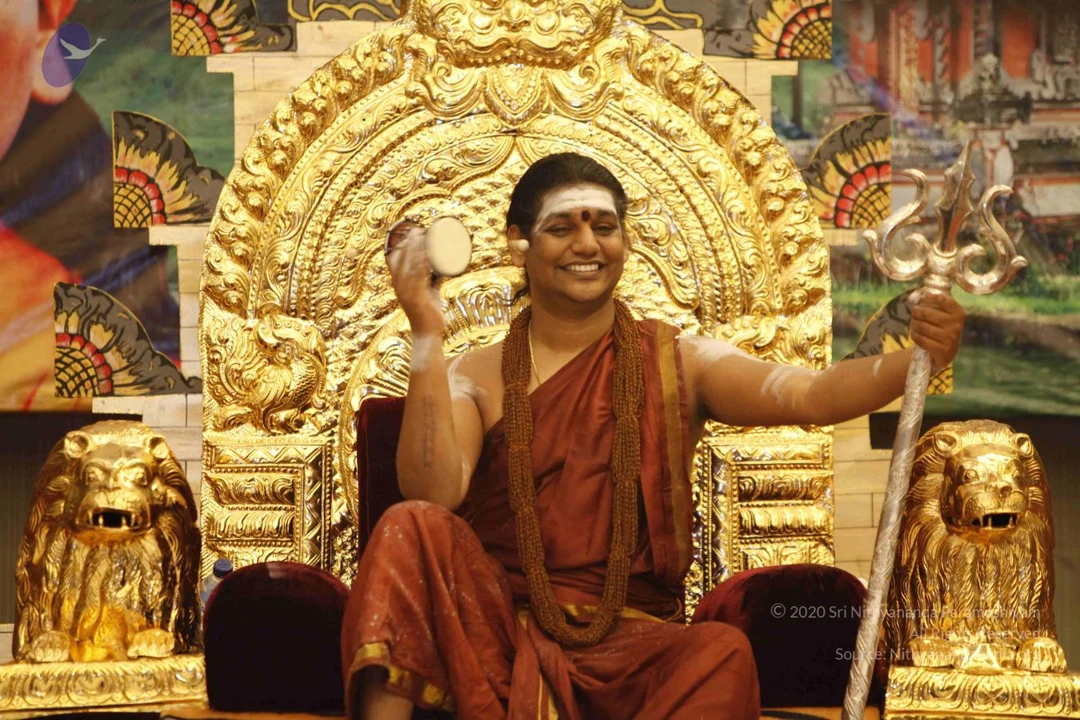
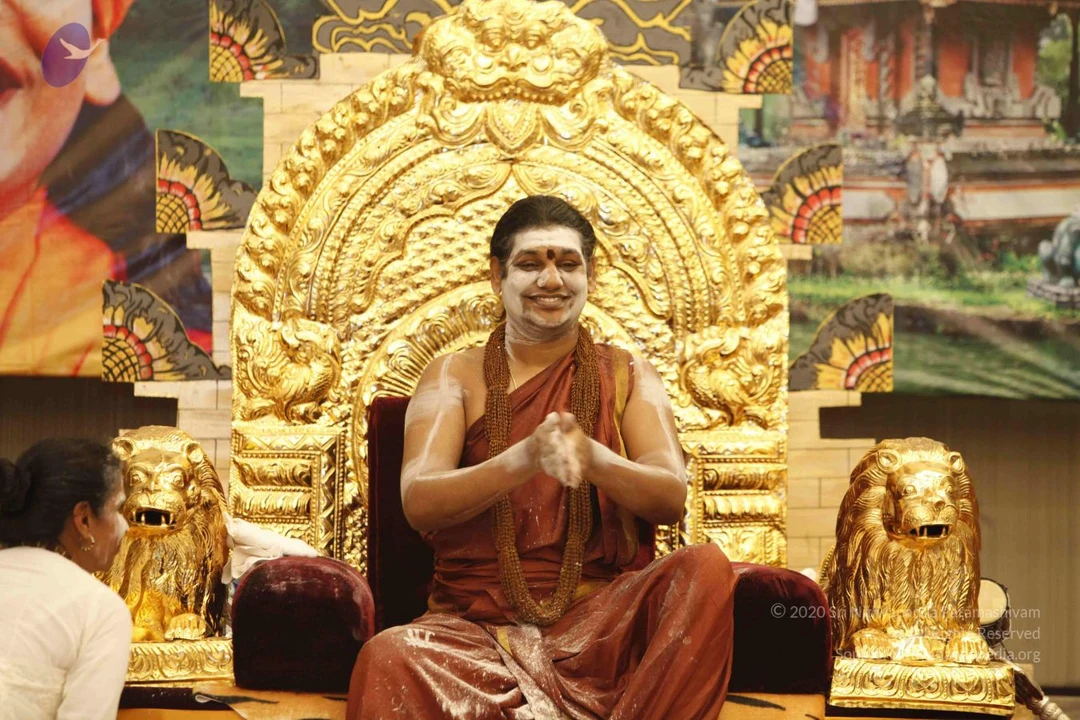
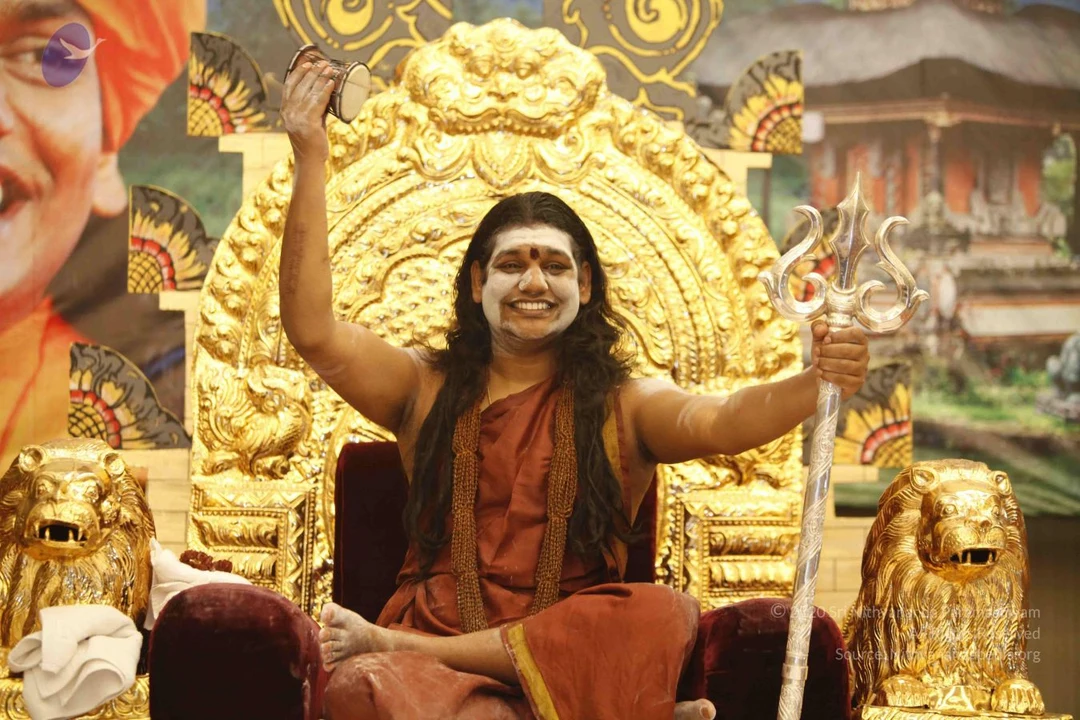
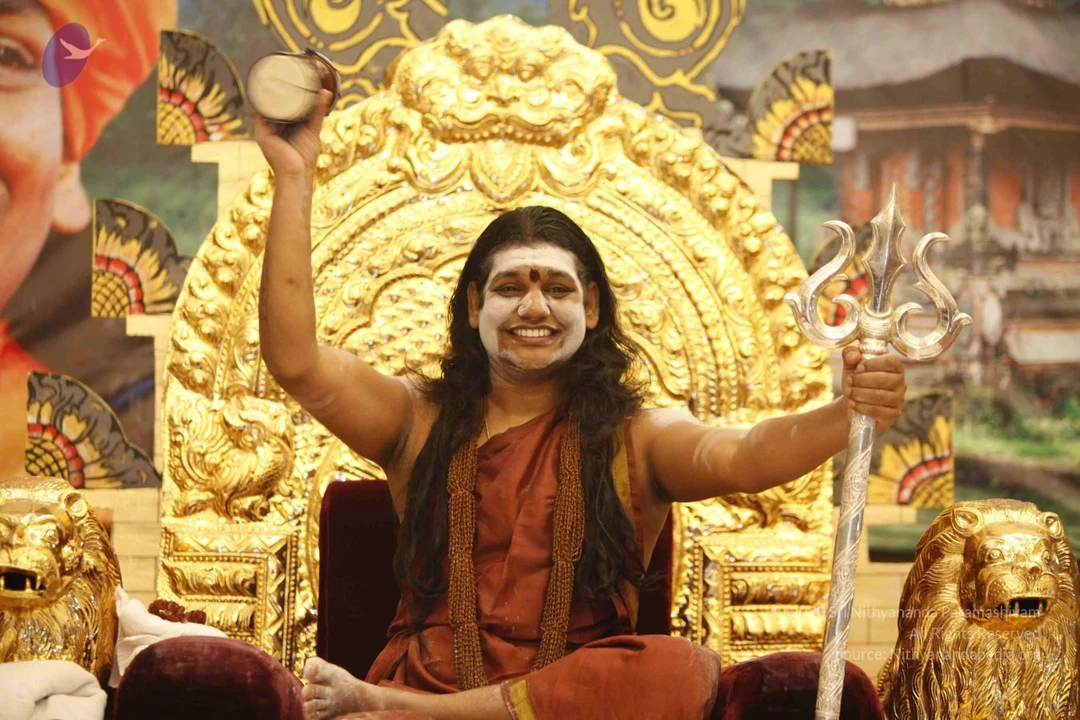
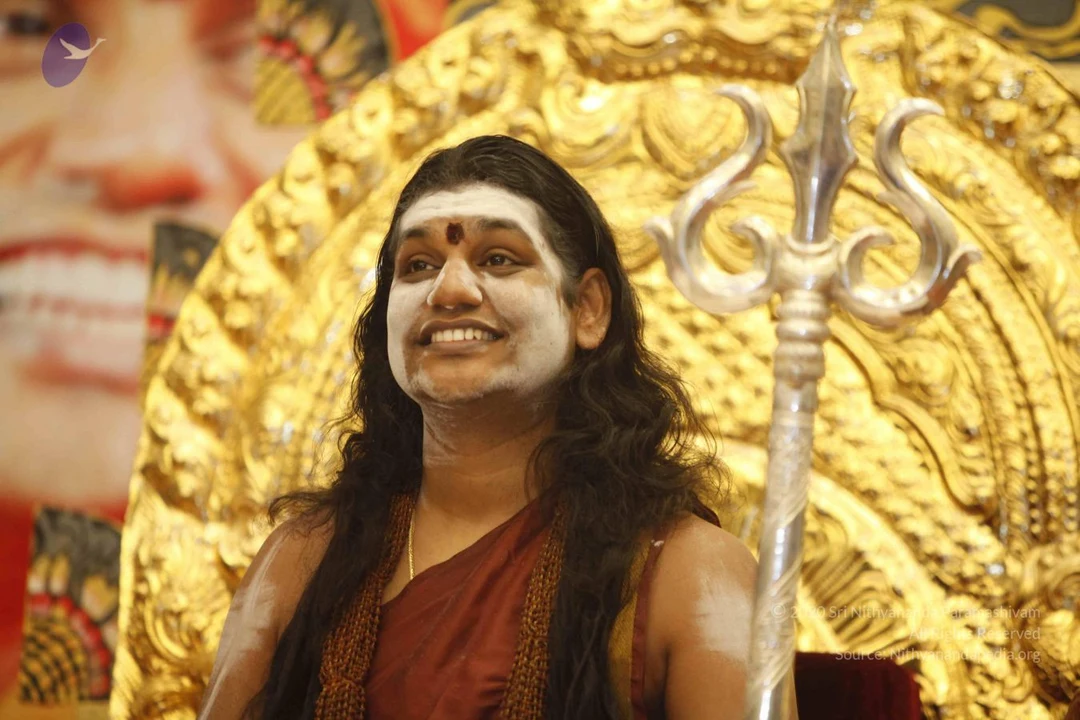
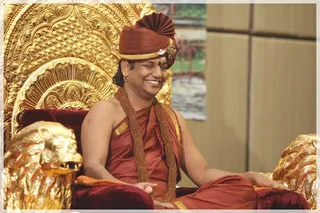
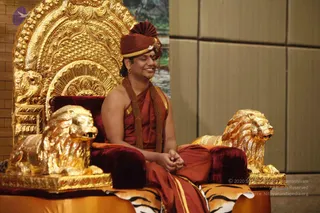
A seated man in rust-red ochre robes and a matching turban with a fan-shaped top sits on an ornate golden throne carved with scrollwork and flanked by two gilded lion statues. He wears a long brown rudraksha mala and a gold ornament at his turban, has a small microphone clipped near his face, and rests his hands in his lap on a tiger-striped cloth. Behind him are large colourful painted panels with fan-motif borders. The orange-robed figure with rudraksha malas and ornate gold-accented headwear fits the appearance cues for a person, seated in a satsang setting.A photograph of a seated figure on an ornate golden throne with carved lion figures and a tiger-skin rug on a raised orange platform. The seated person wears an orange-red turban and a rust-red robe with a gold-bordered cloth, and holds hands in a meditative mudra. Behind the throne a large printed banner shows a smiling man in an orange turban and orange robe, and a traditional Balinese pagoda-style temple with a tiered thatched roof. The setting appears to be a satsang or discourse hall.A man sits cross-legged on an ornate golden throne with a carved arched back and two golden lion sculptures flanking the seat, draped with a striped tiger-skin cloth. He wears a maroon-red turban with a gold trim, a deep red-orange robe over a gold-bordered cloth, and a long rudraksha mala hanging to his chest, with his hands clasped in his lap and bare feet visible. A microphone is clipped near his face. Behind him, large banners show a smiling face in orange and a temple with a carved stone sculpture. Swamiji (probable): the seated figure has a red turban, rudraksha mala and red-orange robes on a golden peetha, consistent with the page's identification.A smiling man sits on an ornate gold throne carved with lion heads and floral relief patterns, dressed in a maroon-red turban with gold trim and a red-orange saffron-toned robe with gold borders. He wears a long beaded brown-gold mala necklace and small gold earrings, with his hands resting in his lap. A printed photograph of a green landscape hangs on the wall behind him.A man seated on an ornate gilded throne with a carved golden backrest and two gold lion figures on the armrests, with a tiger-striped cloth beneath. He wears a maroon turban with a gold band, a rust-red shawl over the shoulder and bare chest, gold-coloured beads and a long brown rudraksha mala around the neck, with hands resting in his lap. Behind him is a backdrop of plain beige panels and a painted scene. Swamiji (probable): the seated figure has long swept-back hair, a maroon turban, ornate gold necklace and rudraksha mala, consistent with the page's Bali satsang context, though the face cannot be confirmed.A seated man in a red-maroon turban with a gold brocade band and small ornament sits on an ornate golden throne with carved lion-head armrests and a large gilded backrest. He wears a rust-red robe with gold border, a long tiered rudraksha-style mala necklace, a red bindi, and small earrings, smiling with eyes lowered. Beige wall panels form the background.

Sarva-Darshan

1 photoSource gallery
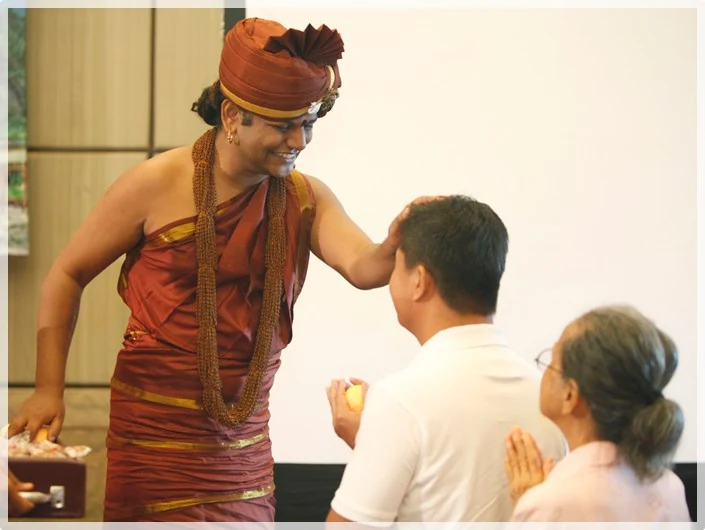
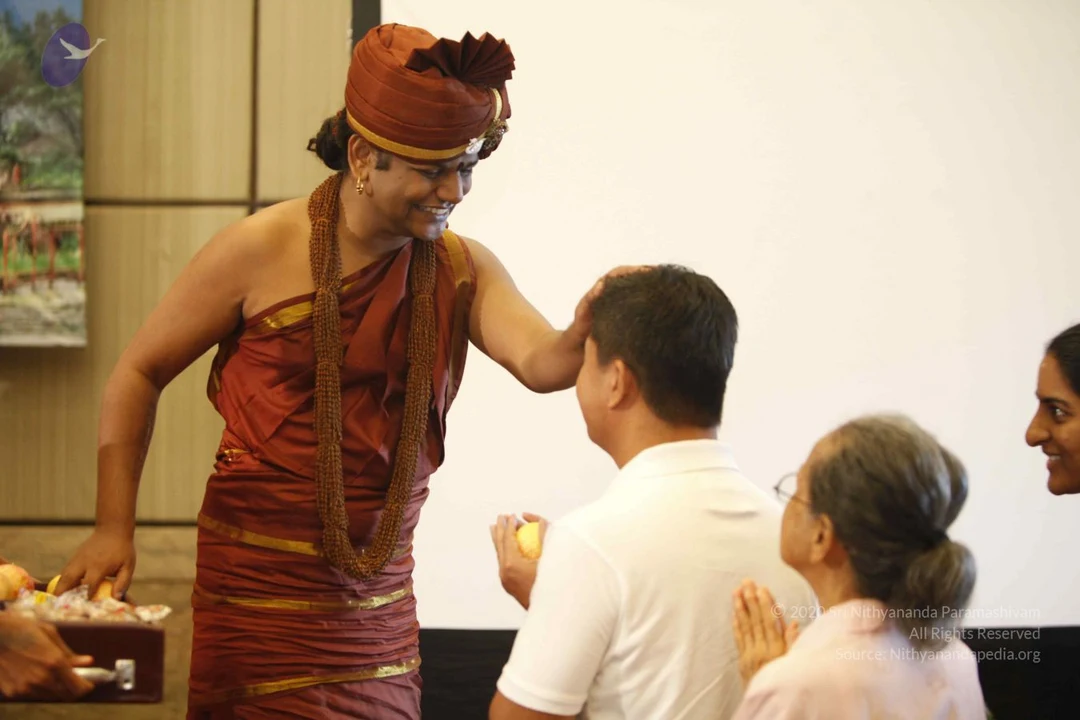
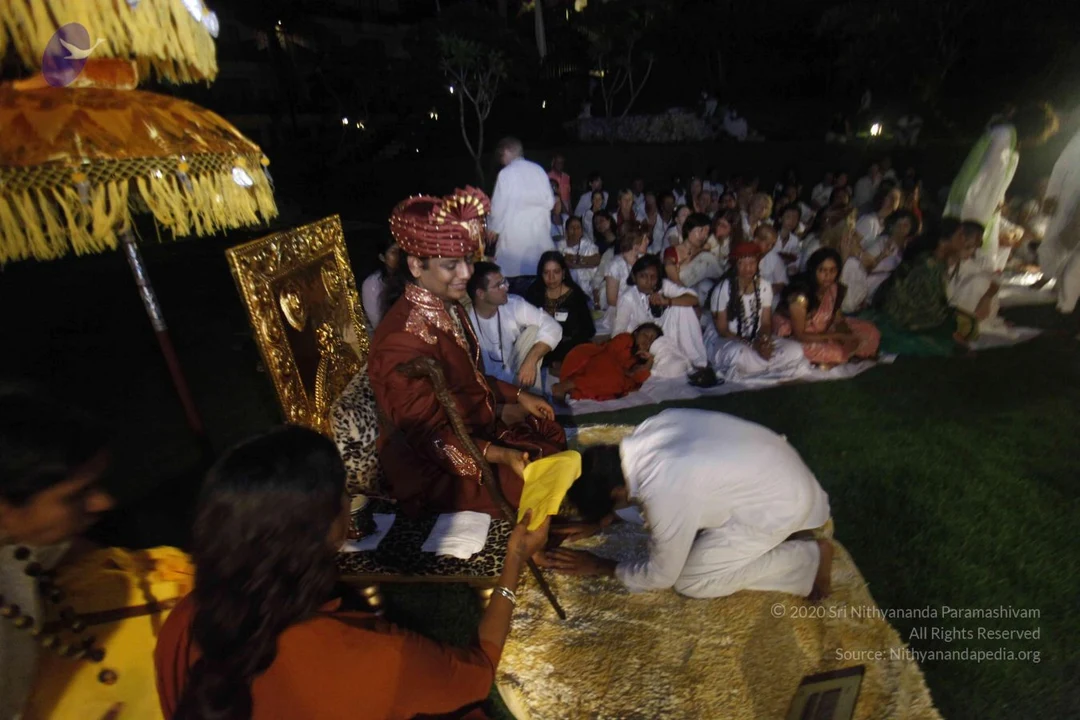
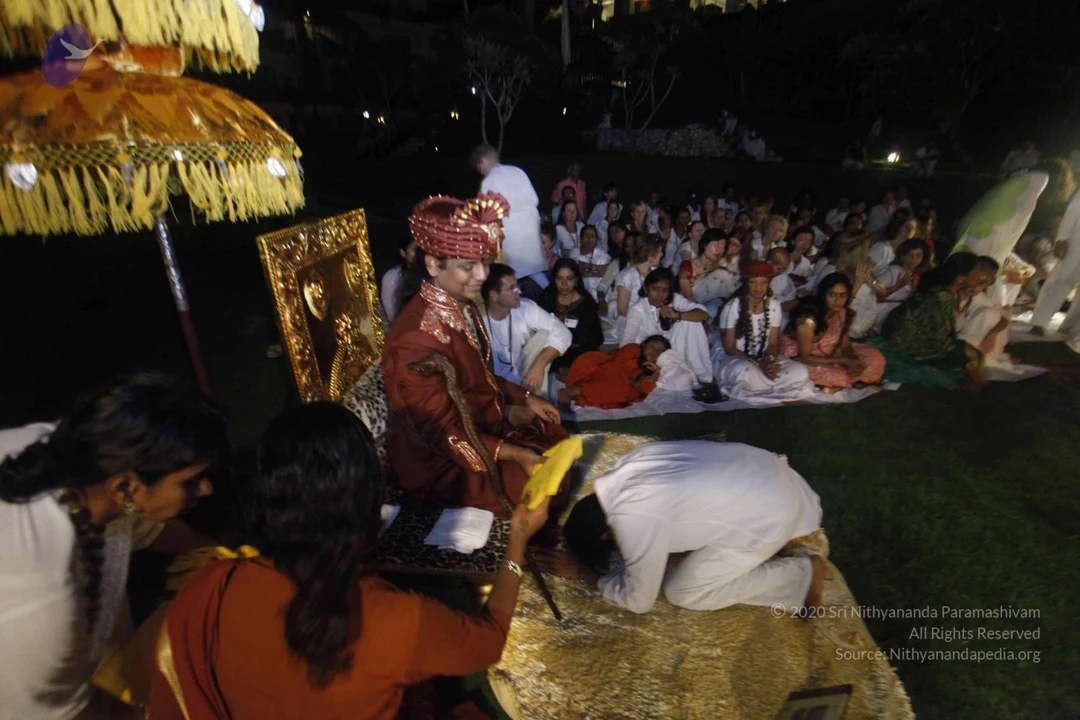
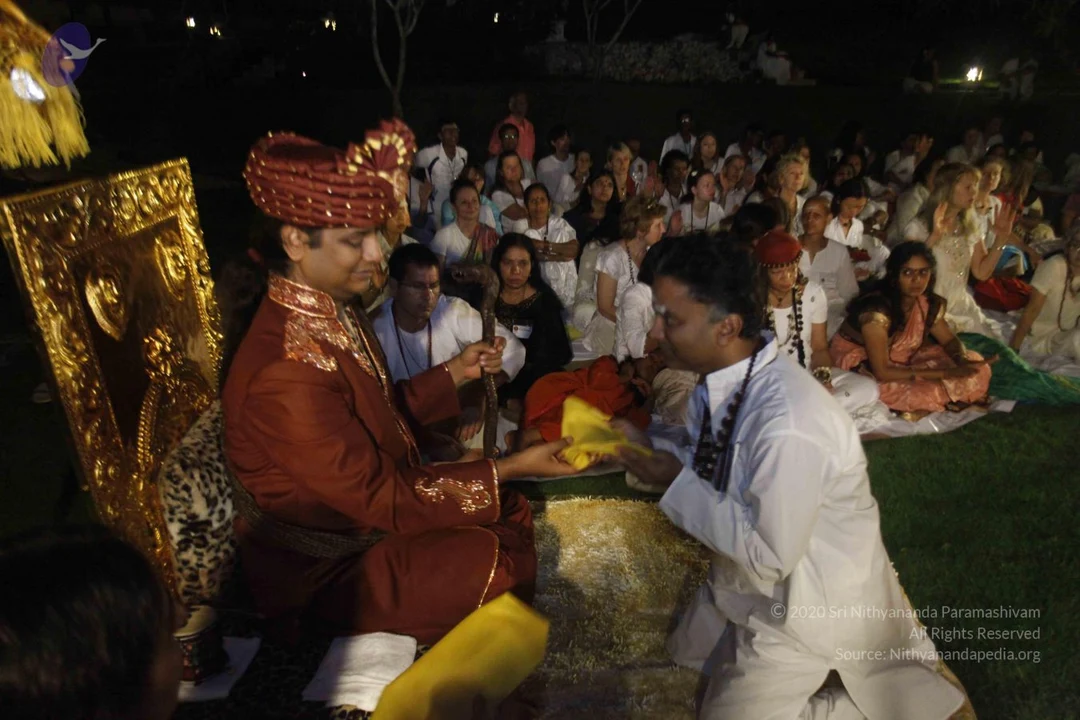
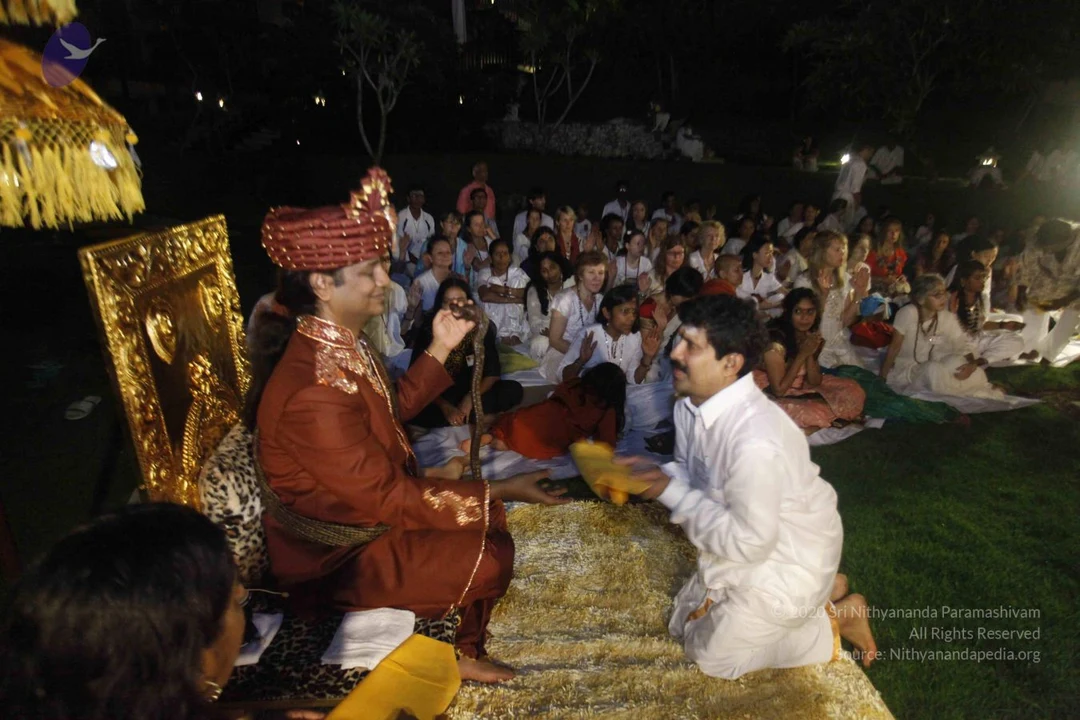
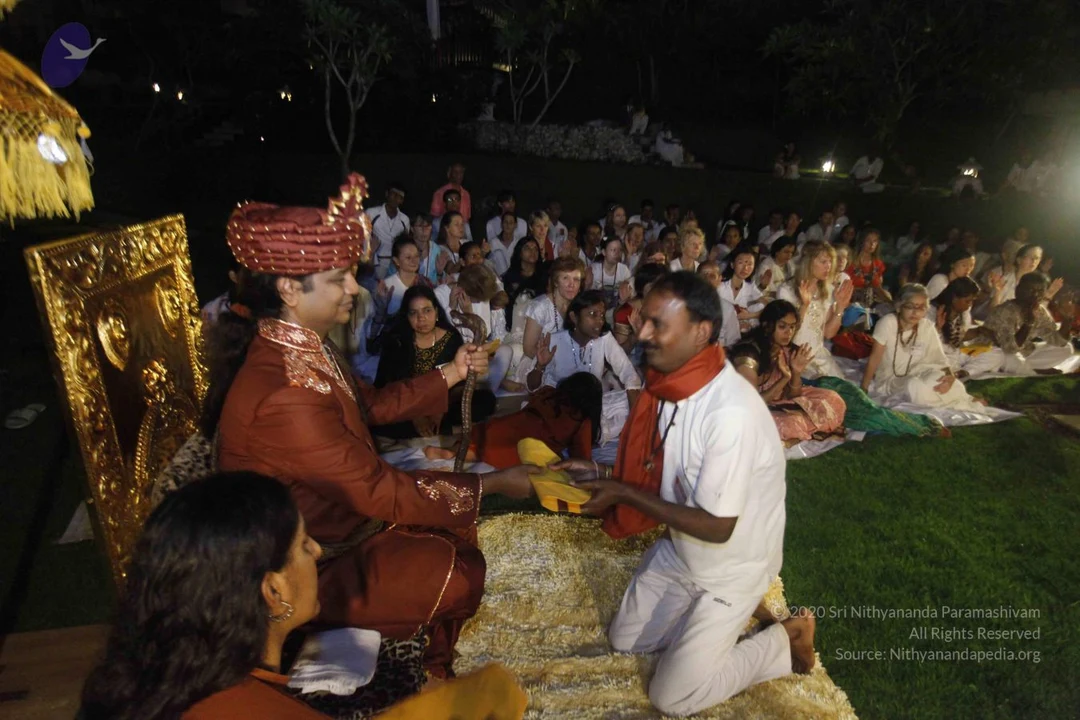
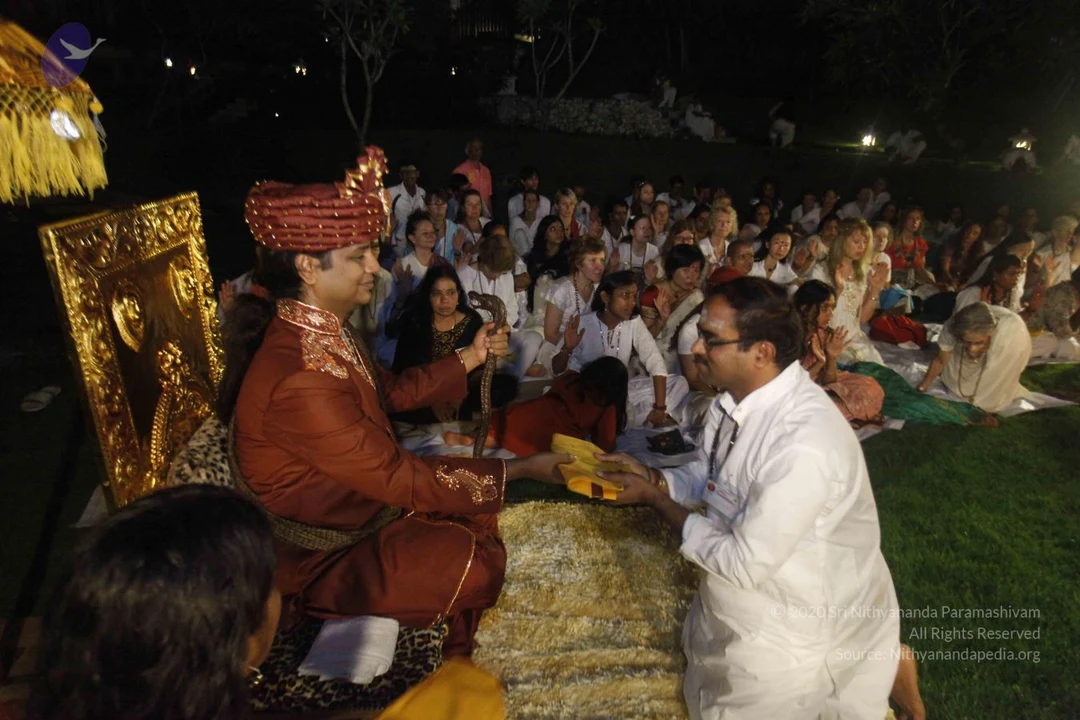
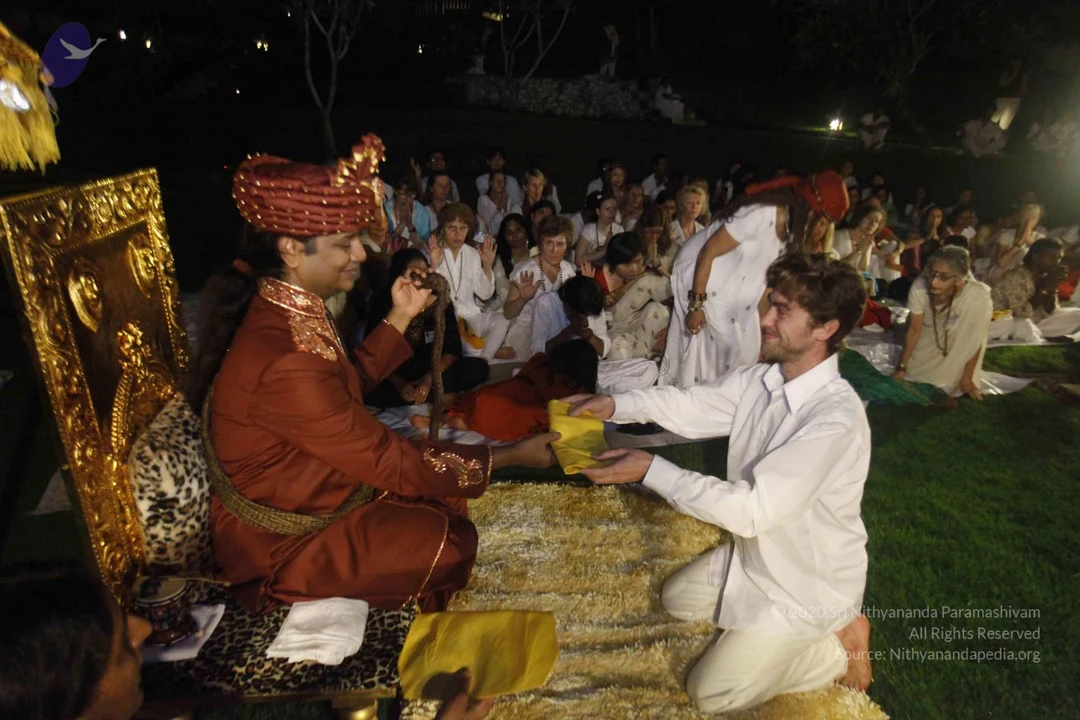
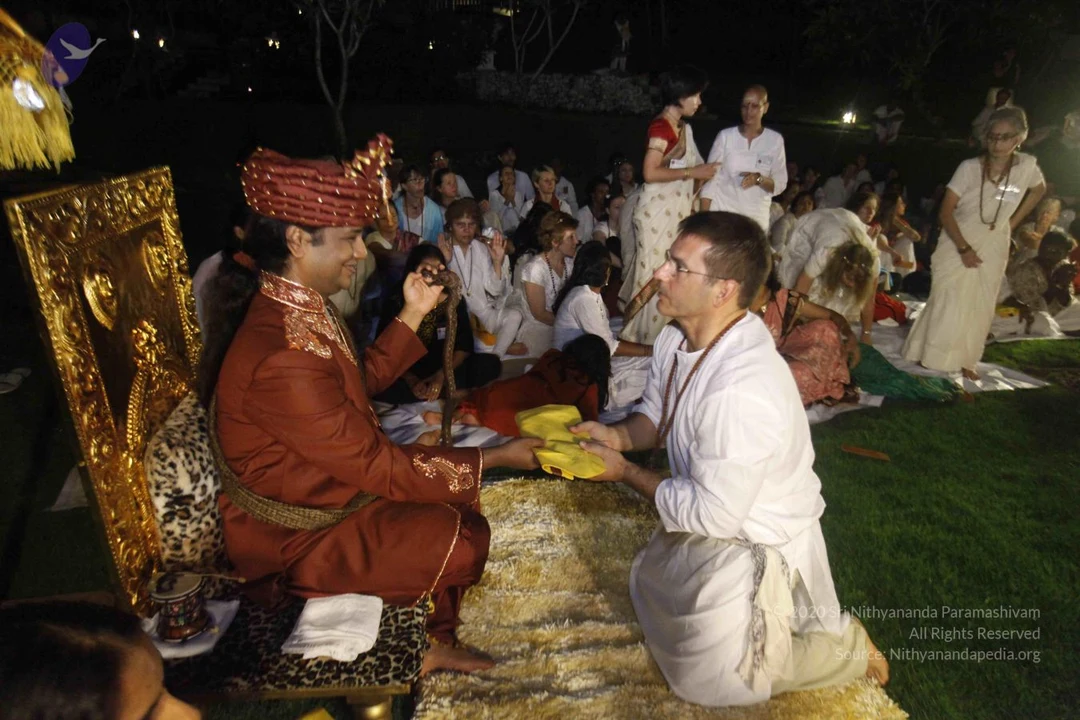
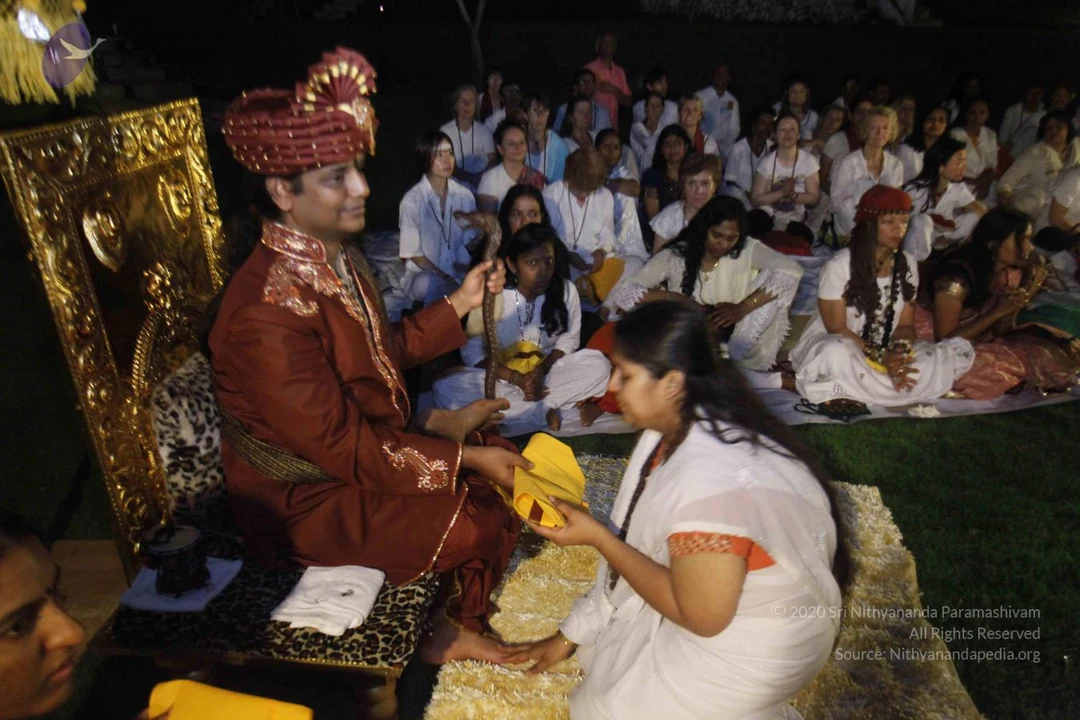
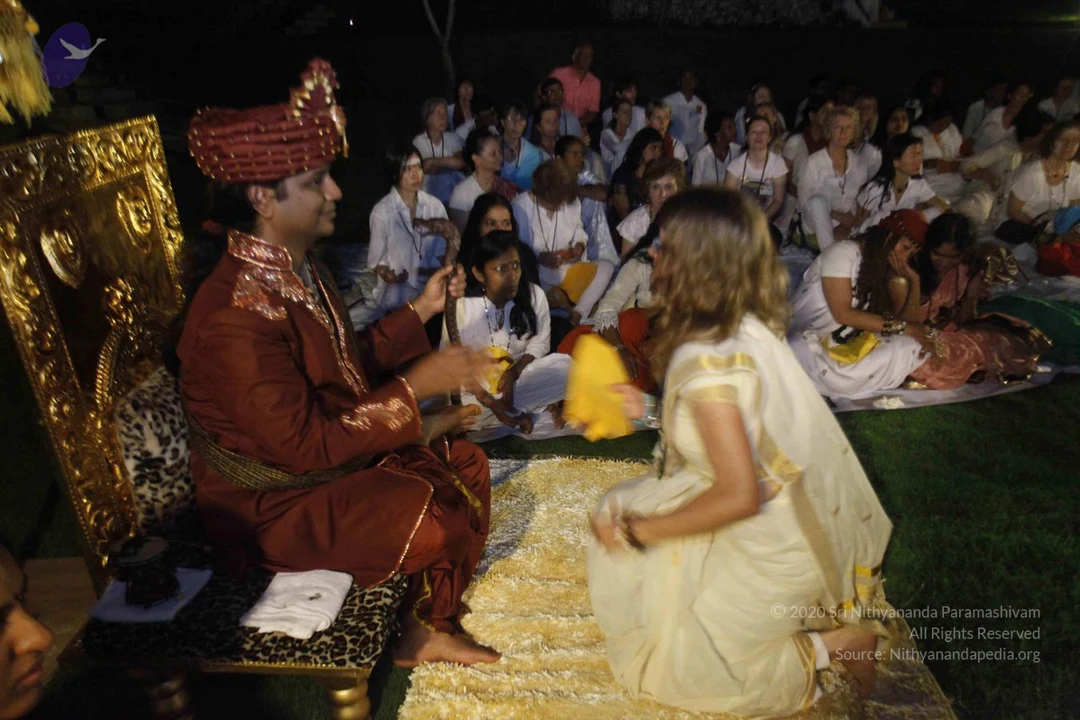
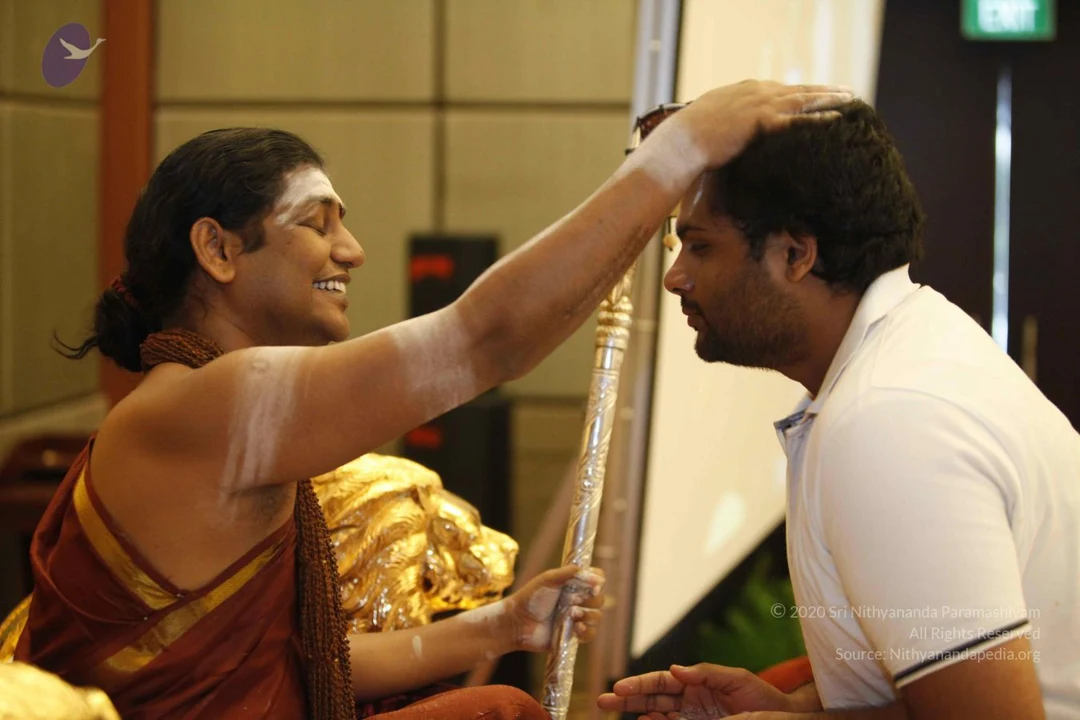
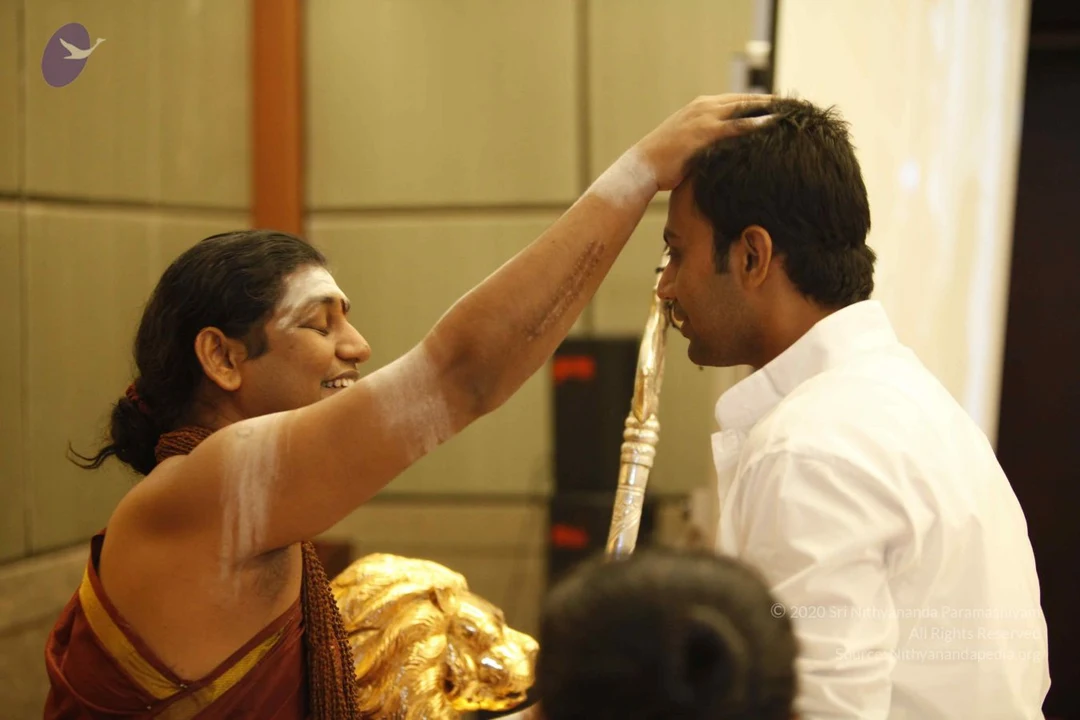
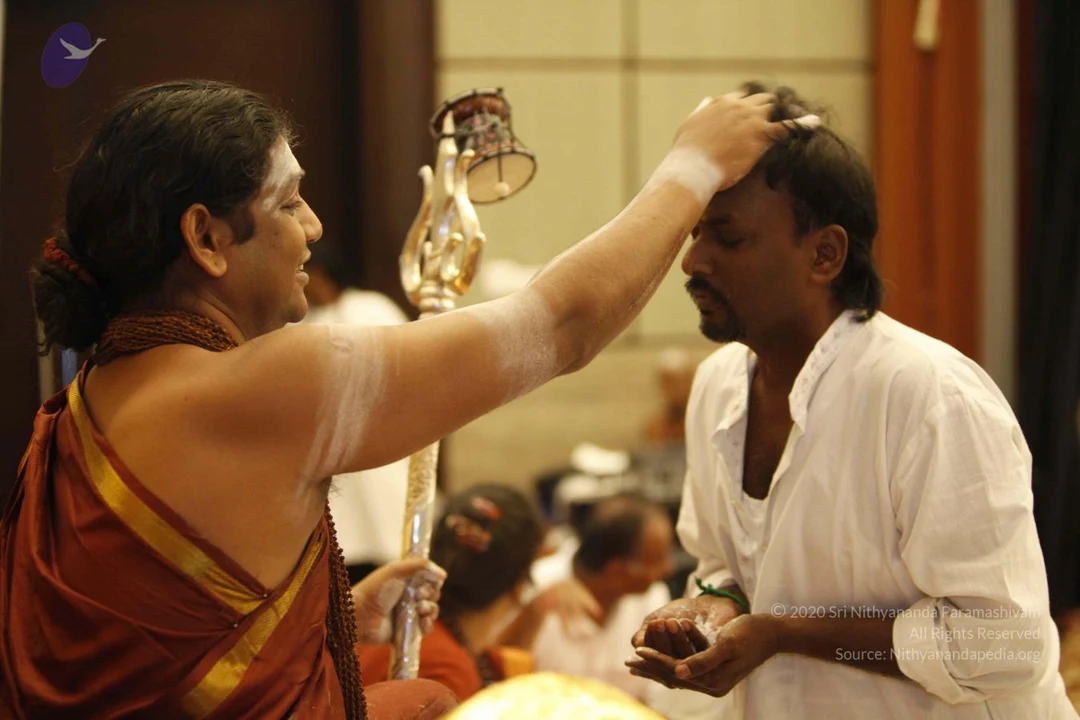
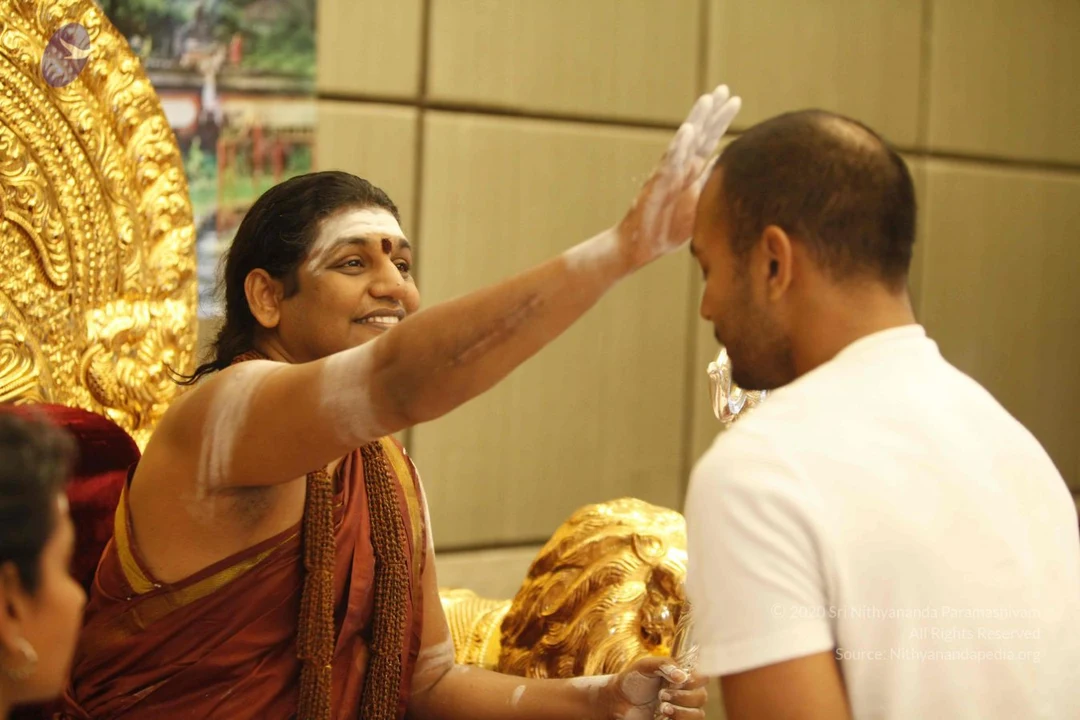
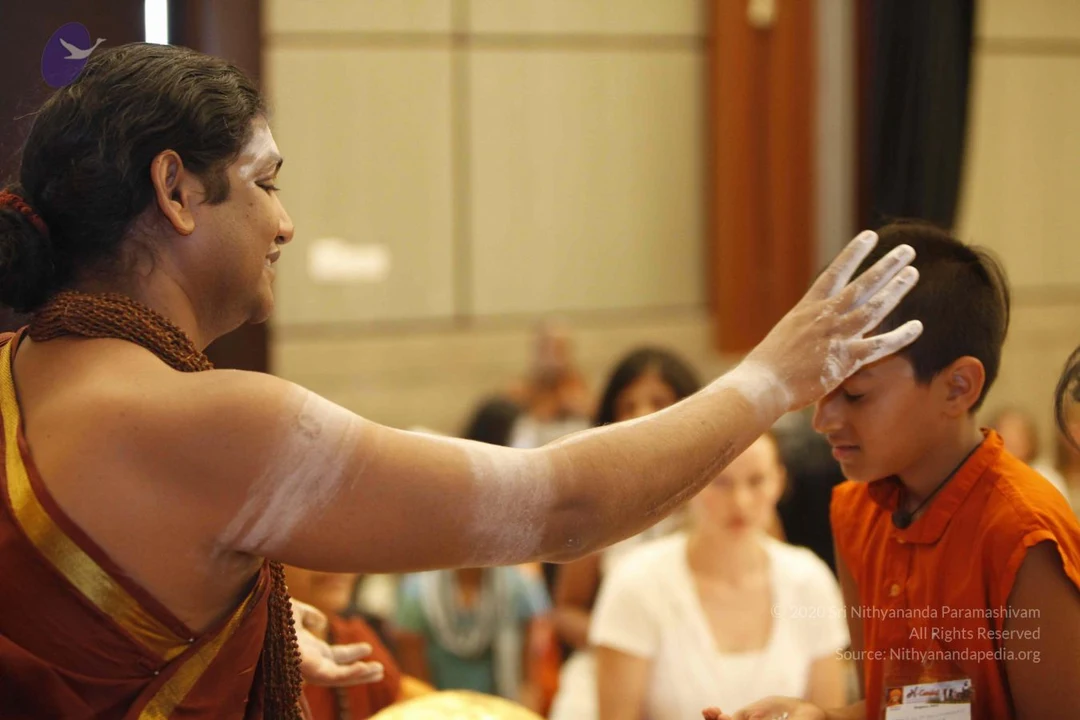
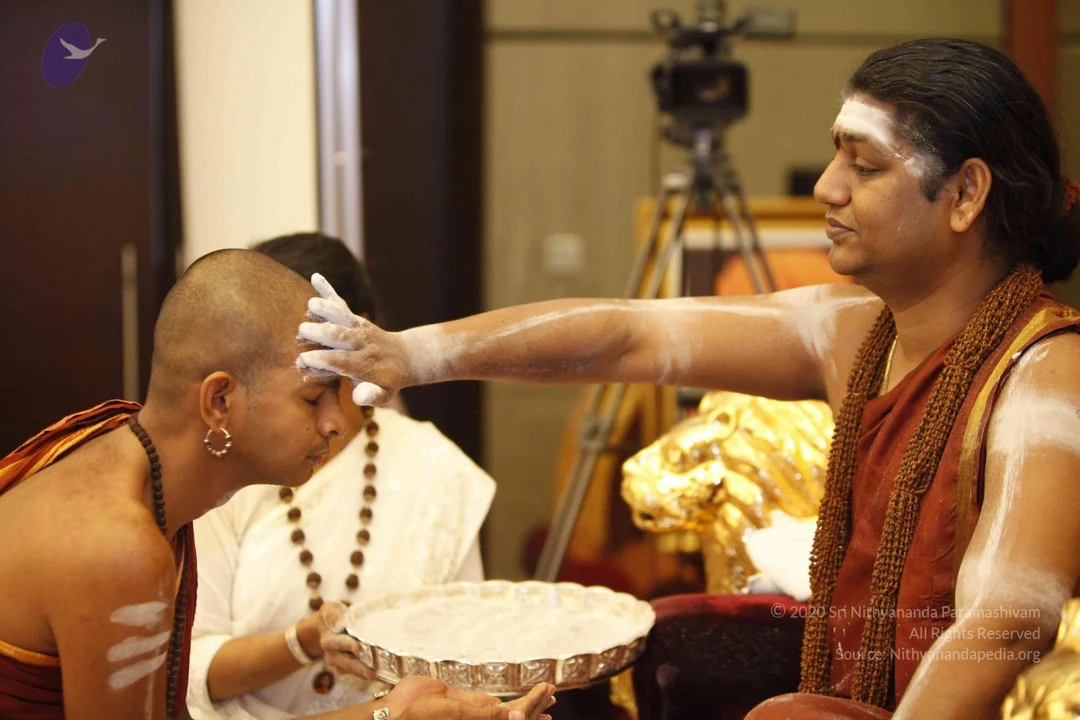
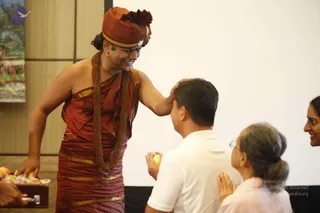
A photograph of a padapuja-style blessing indoors. A figure in a maroon-red draped garment with gold borders and a maroon turban with gold trim, wearing a long rudraksha mala, stands at left smiling and placing a hand on the head of a seated man in a white polo shirt who holds a yellow fruit. An elderly woman in a pink top with folded hands kneels beside him, and a smiling woman stands at the right edge. A tray with fruit and offerings sits at the lower left, and a white screen and a landscape painting are behind them. Probable Swamiji is visible by the saffron-red robe, turban and rudraksha mala, giving a blessing to a devotee.

IA-Homa

170 photosSource gallery
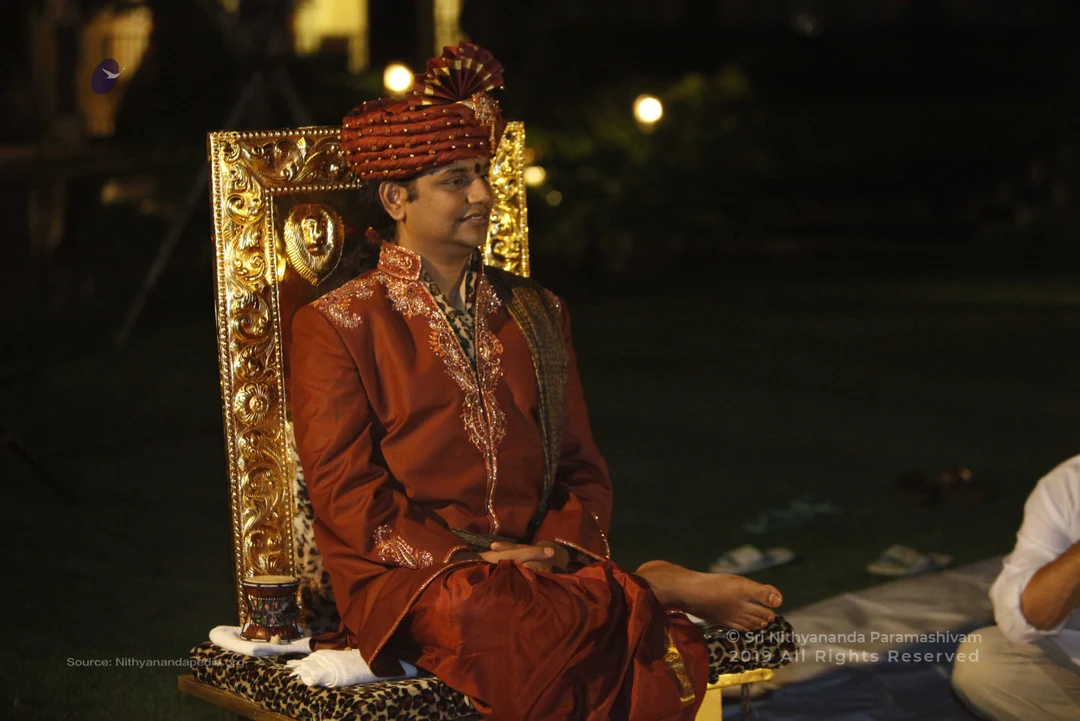
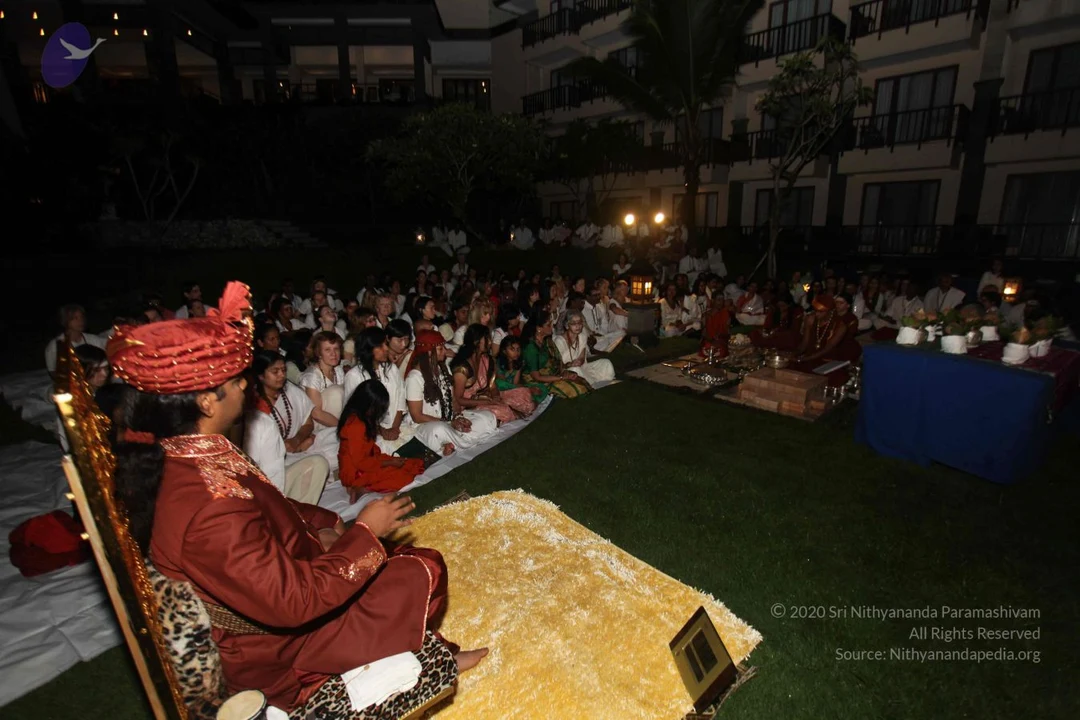
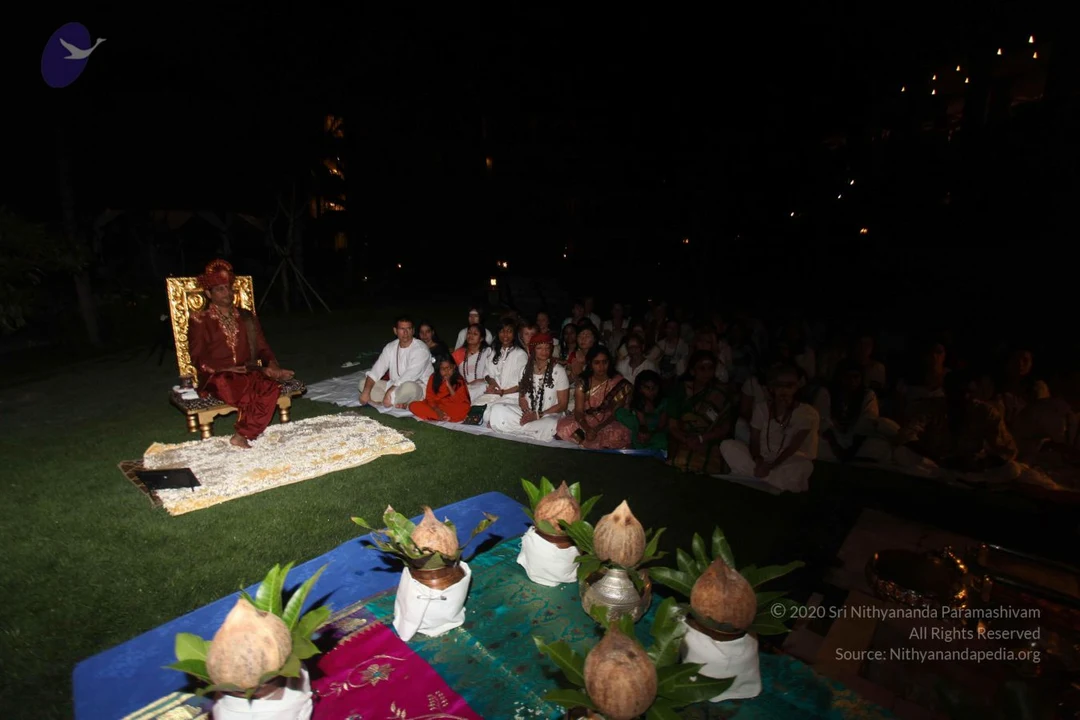
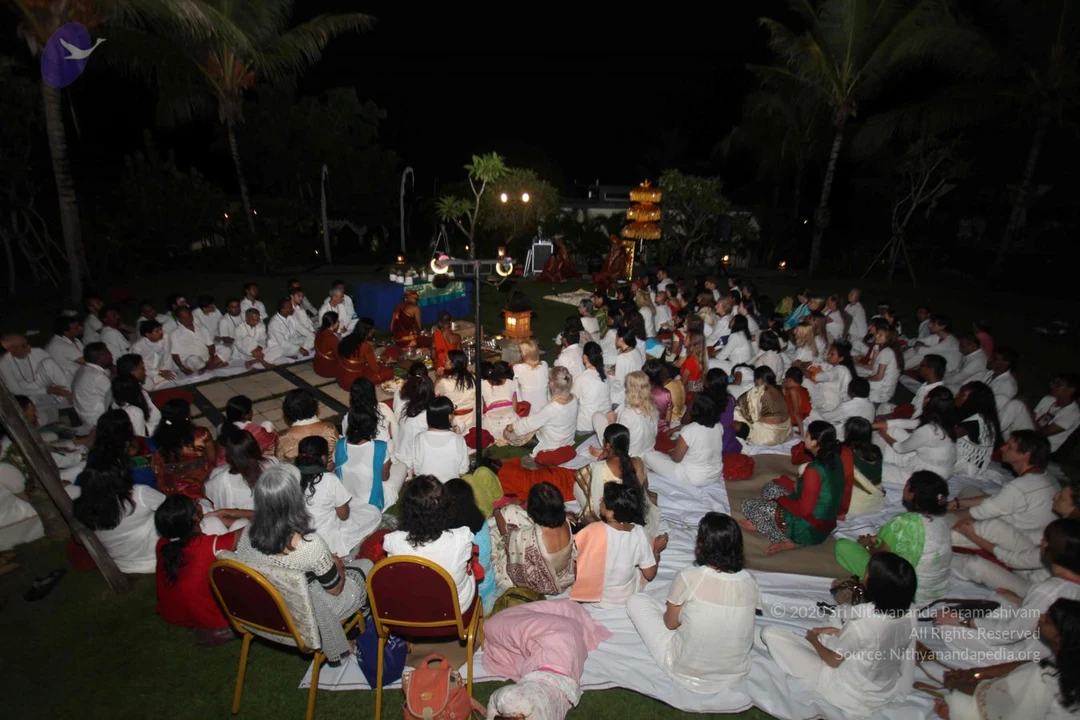
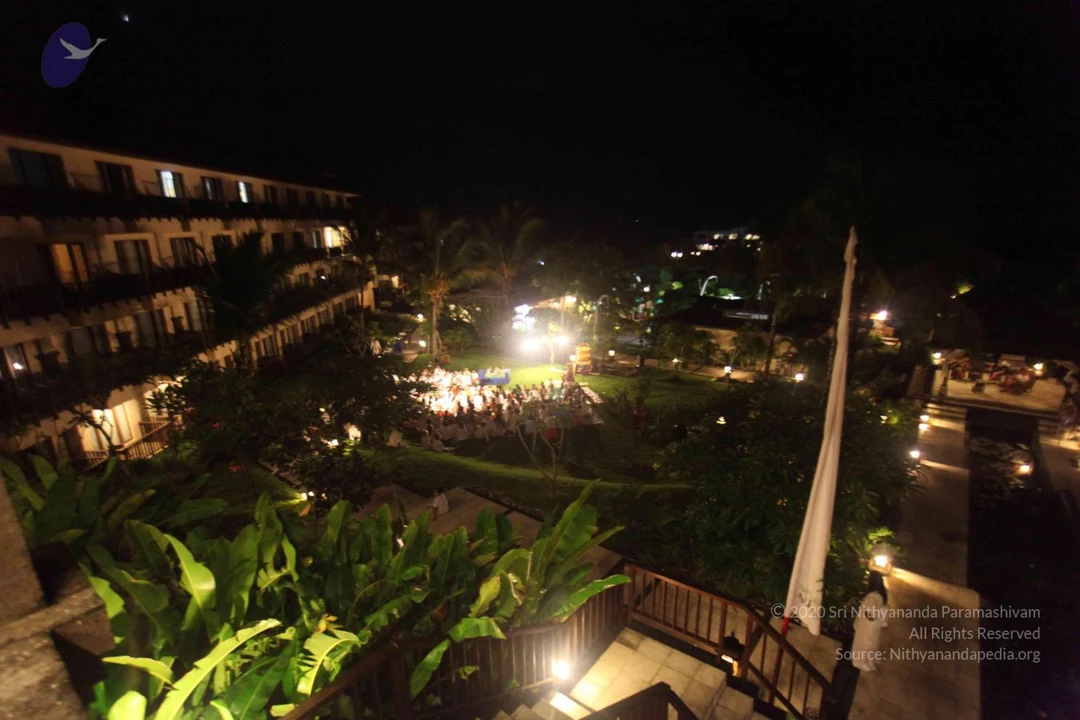
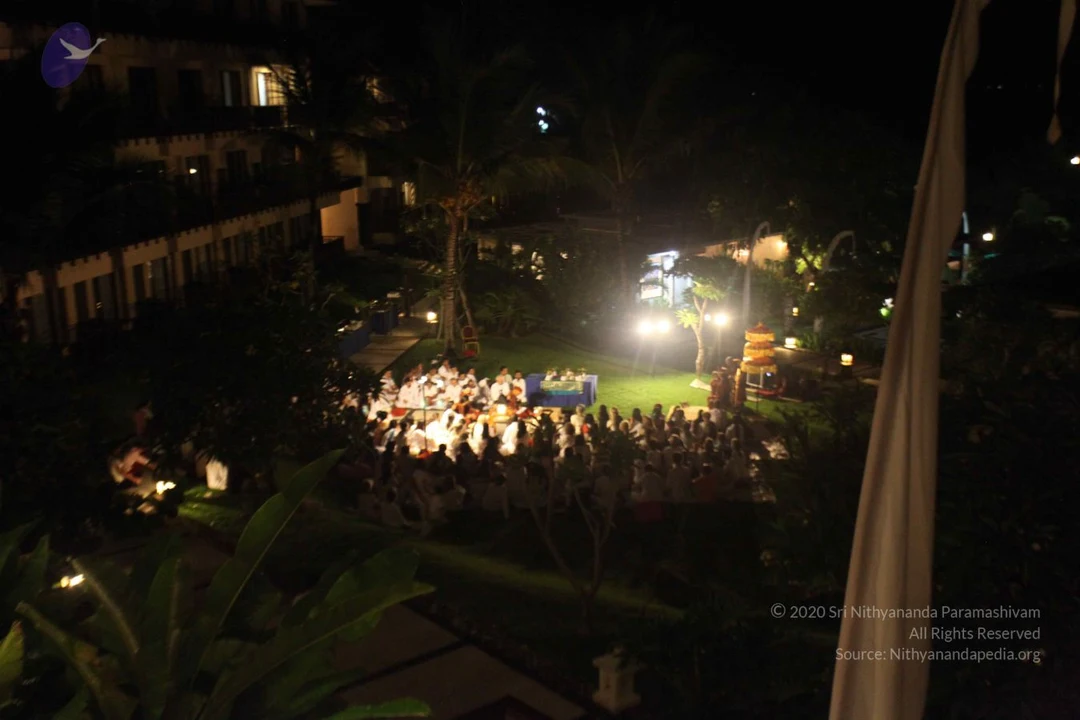
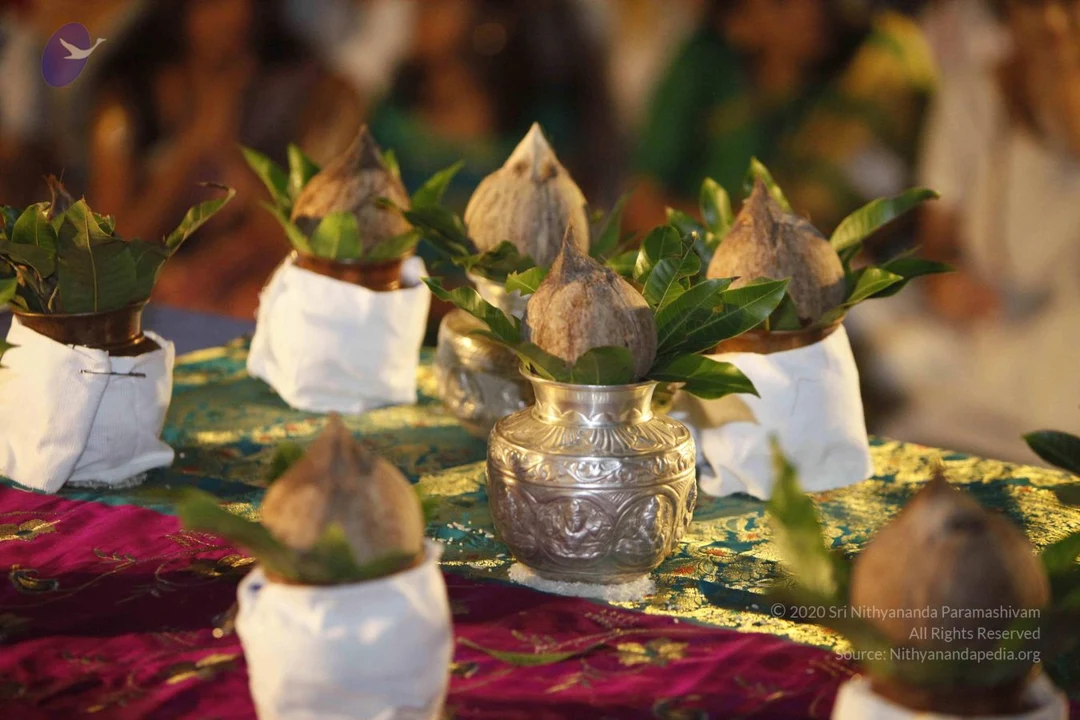
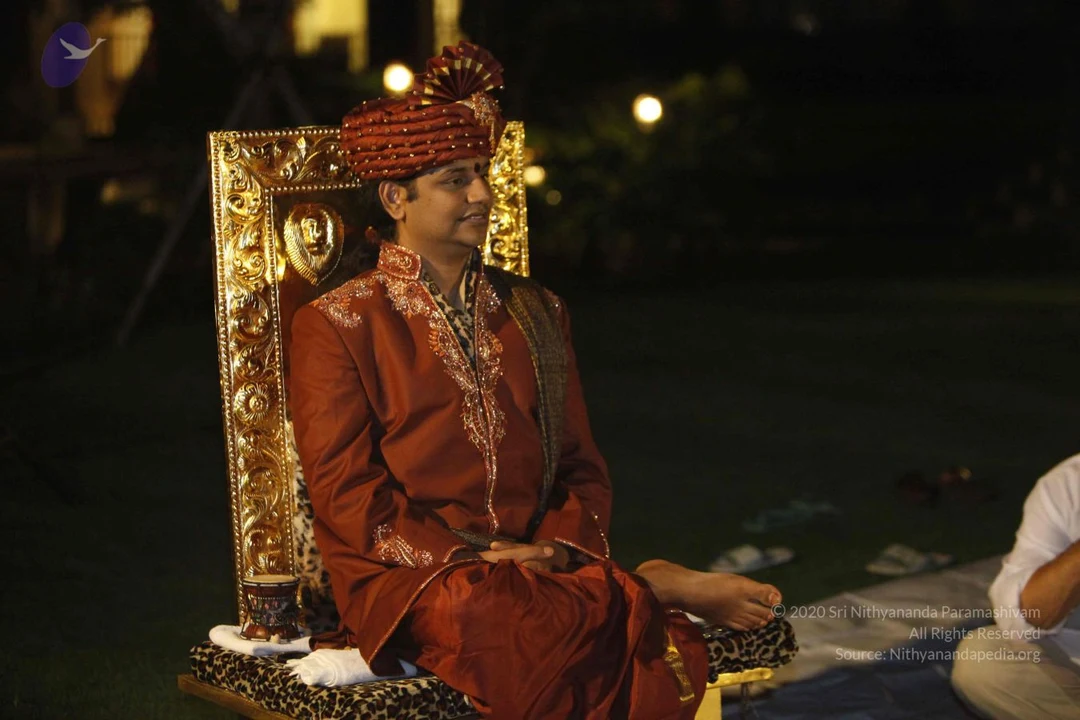
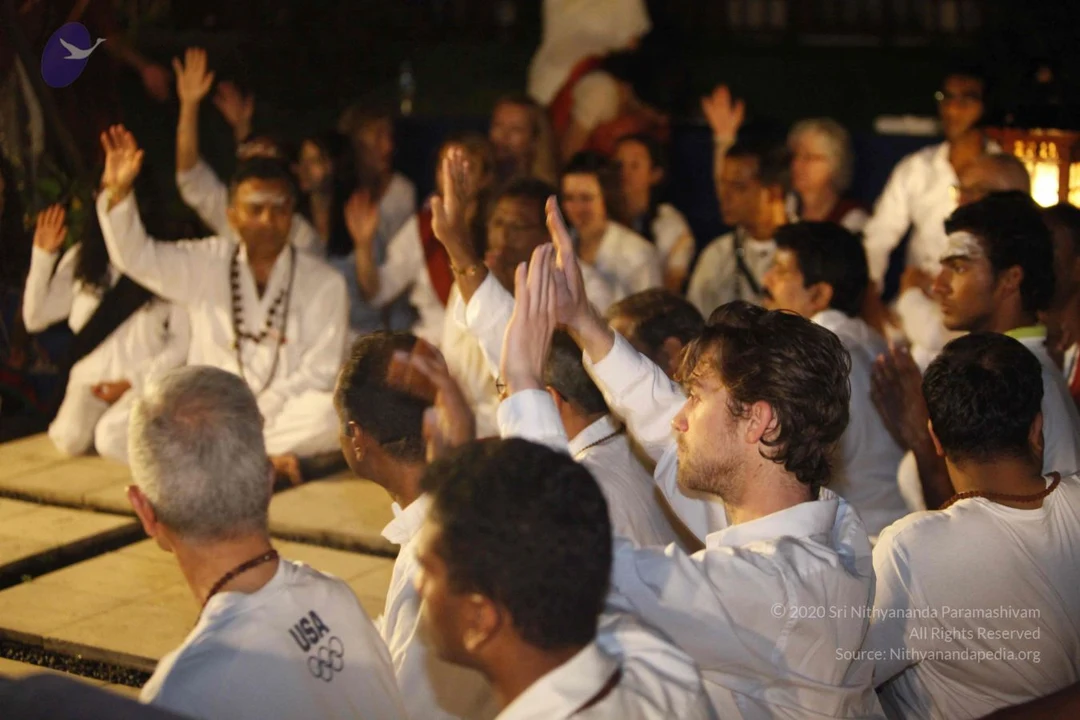
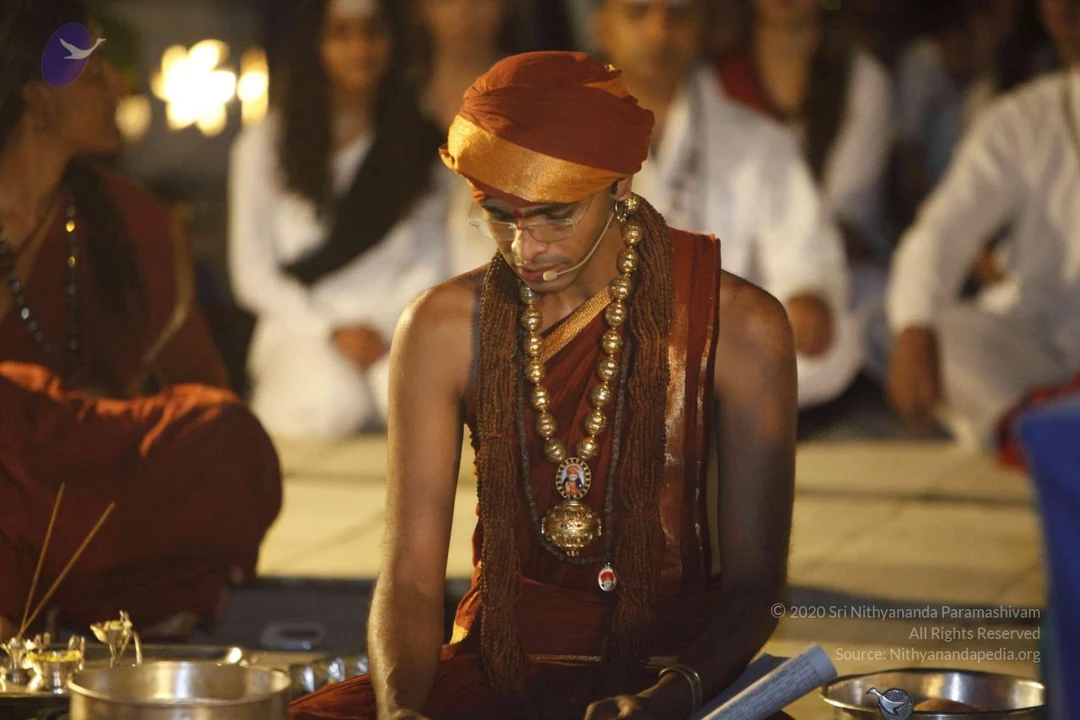
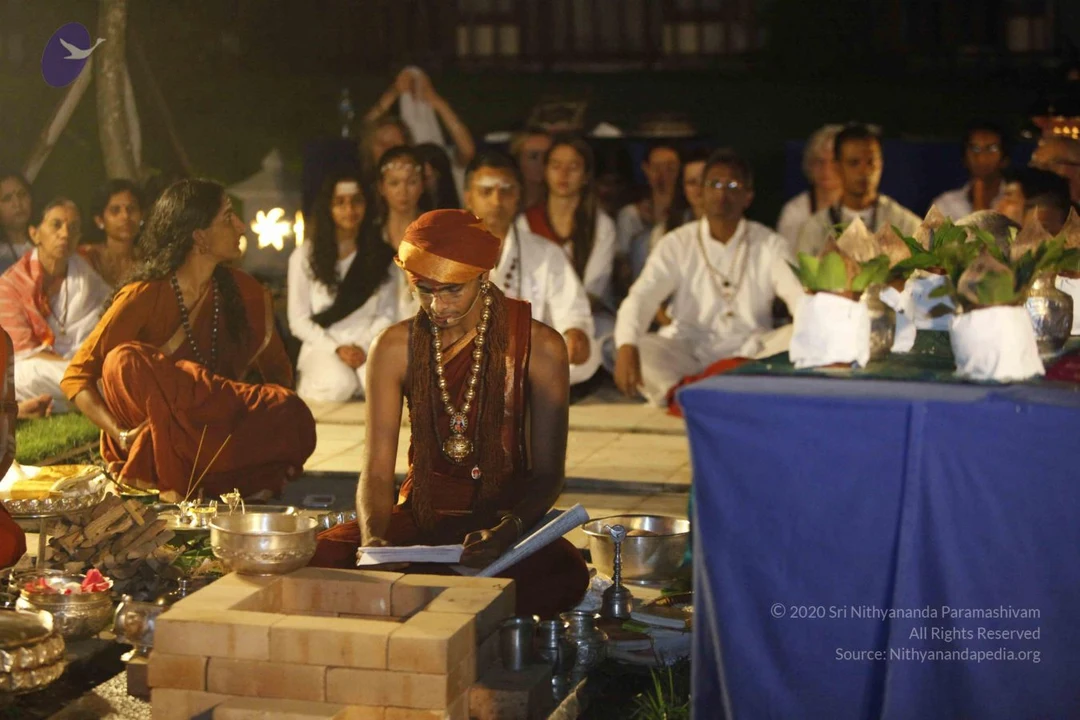
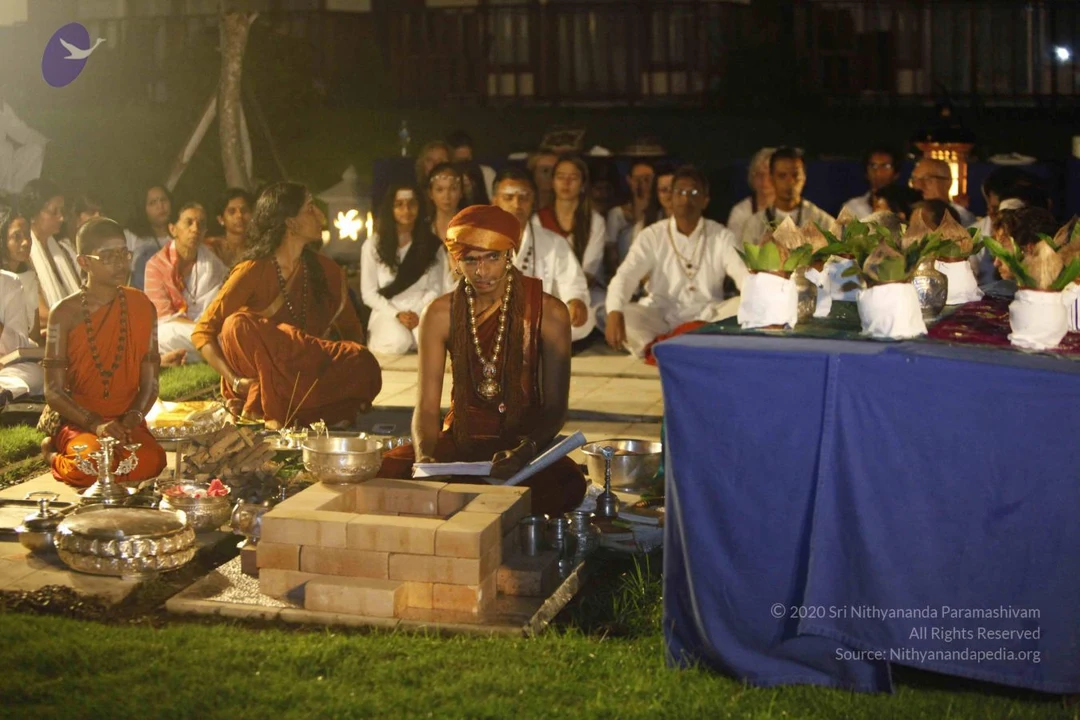
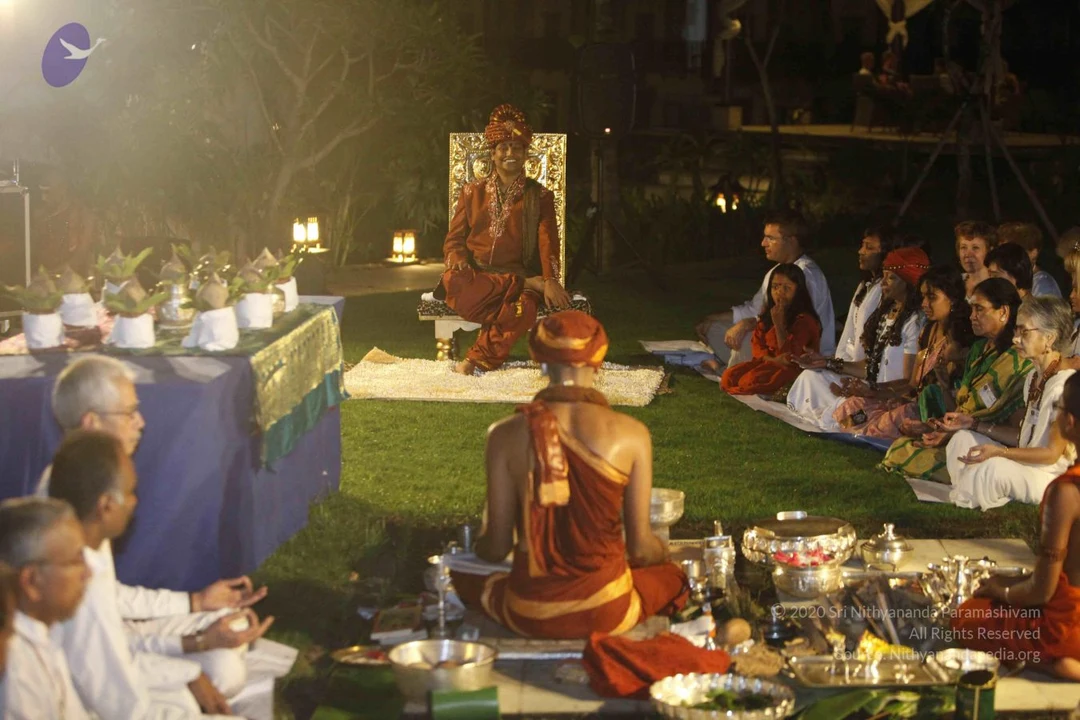
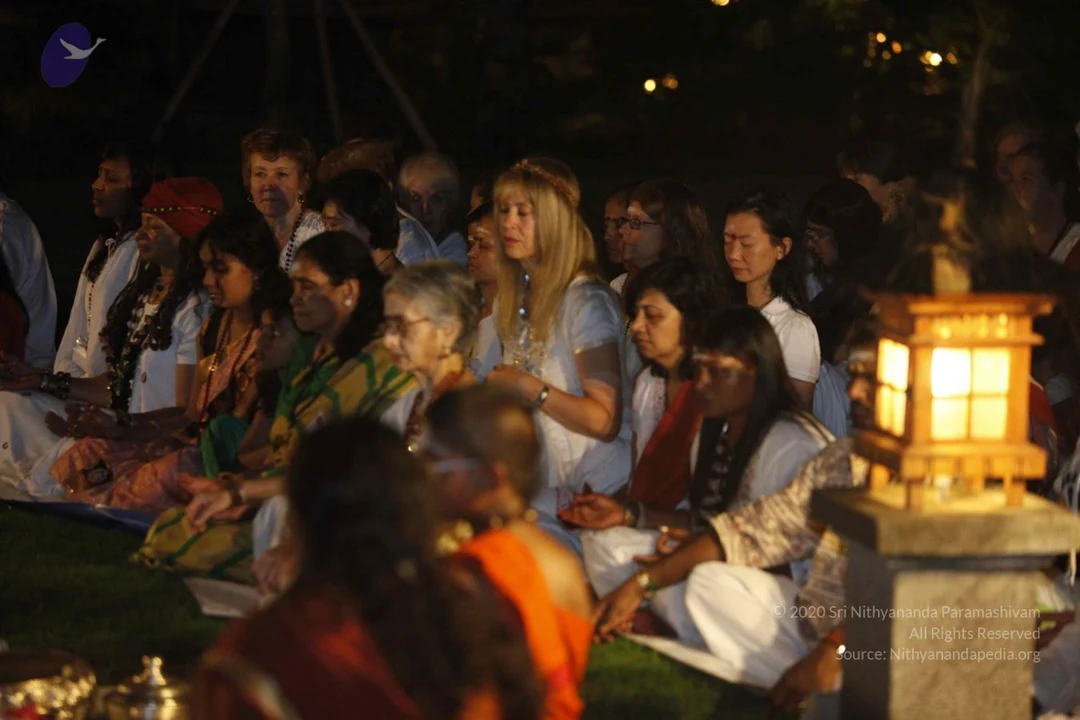
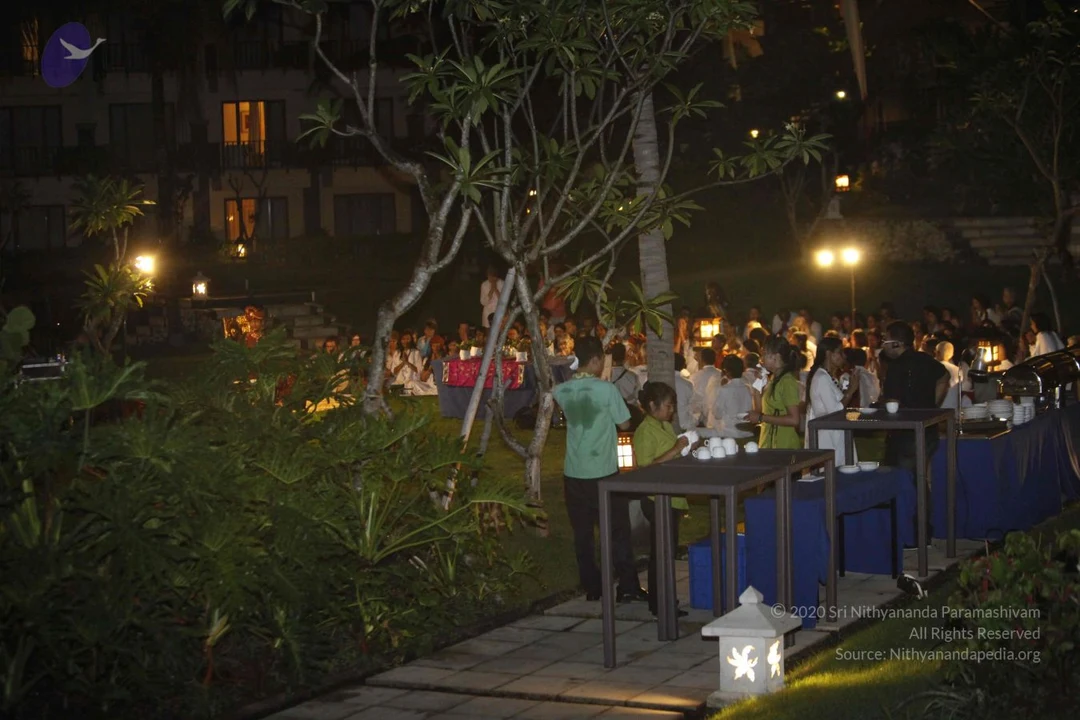
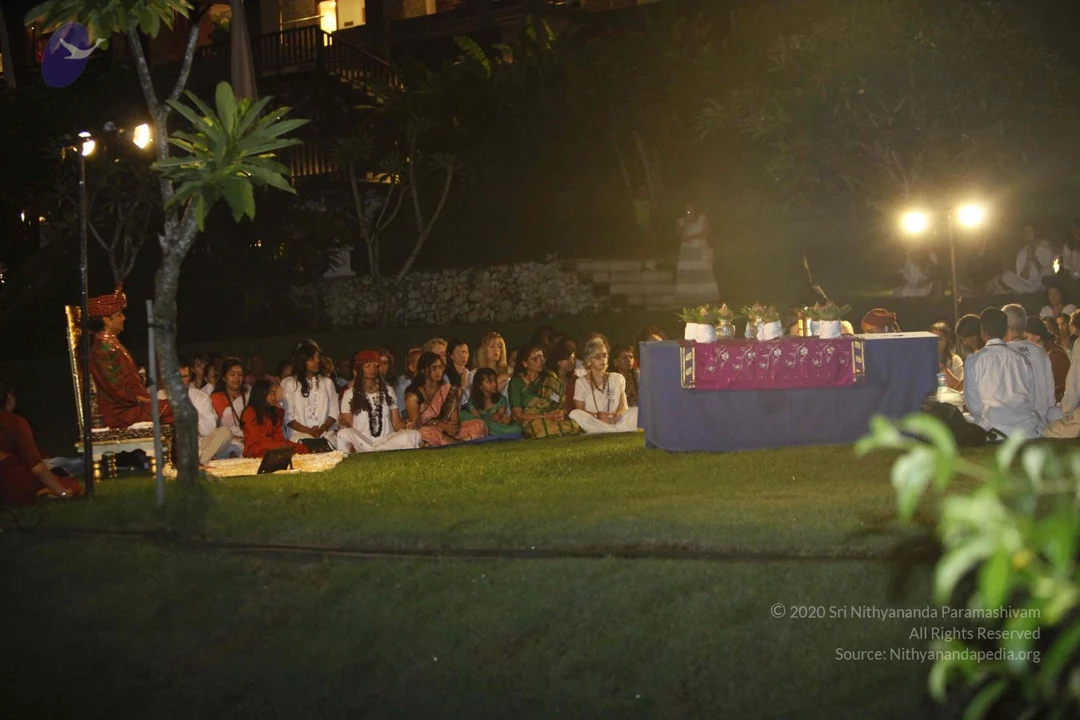
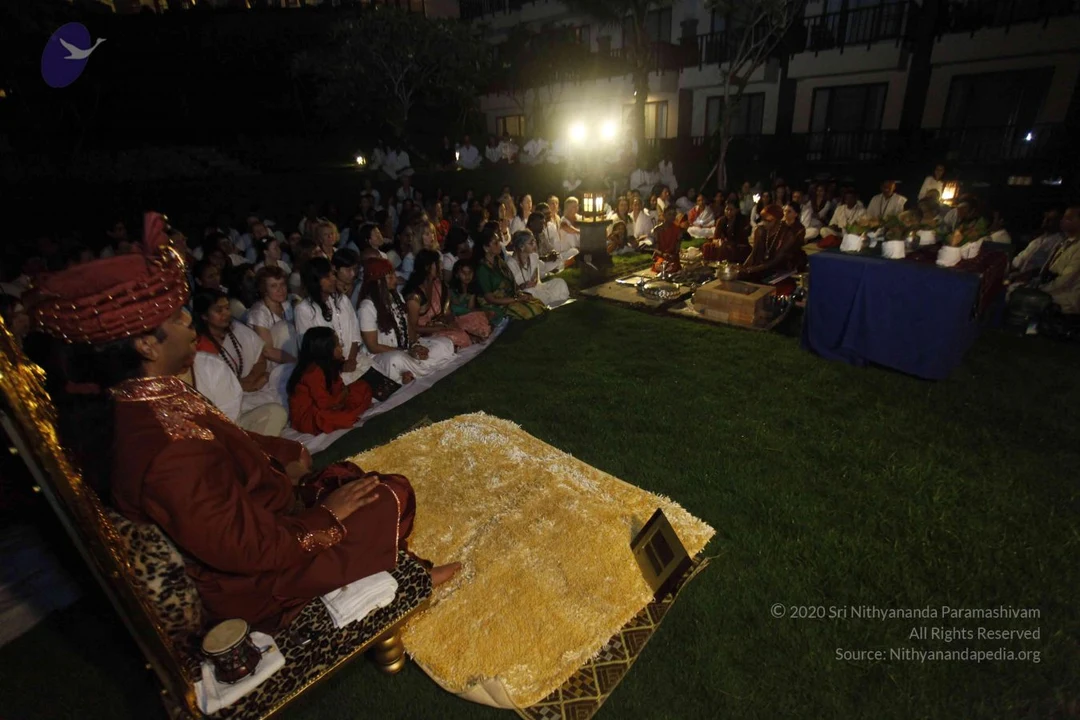
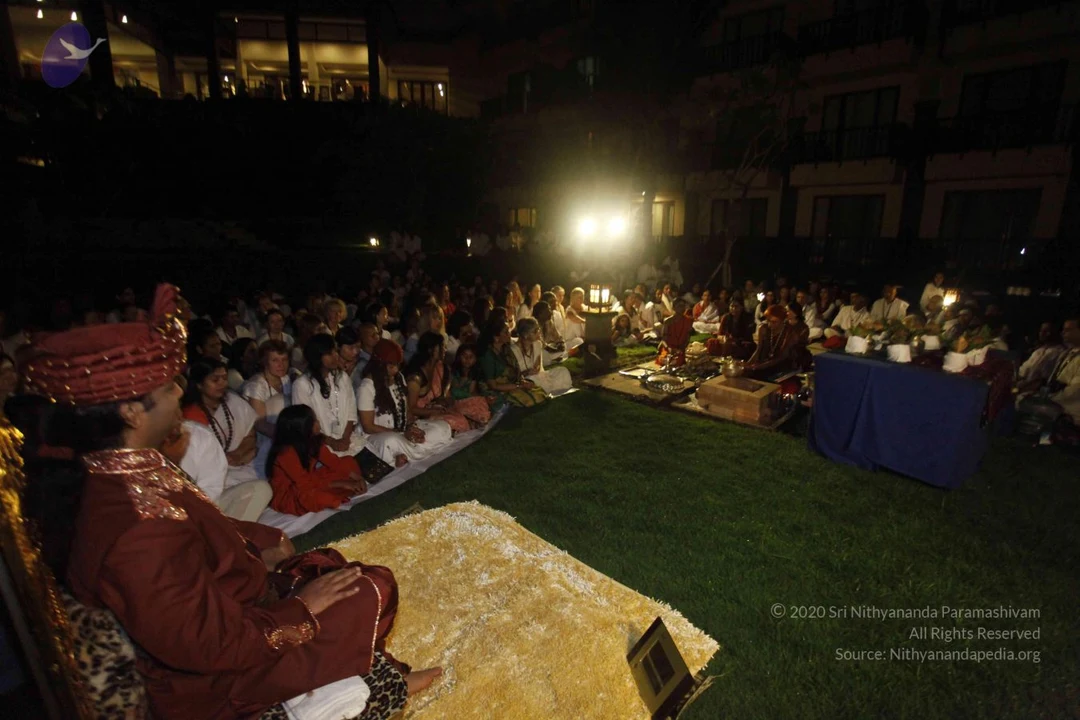
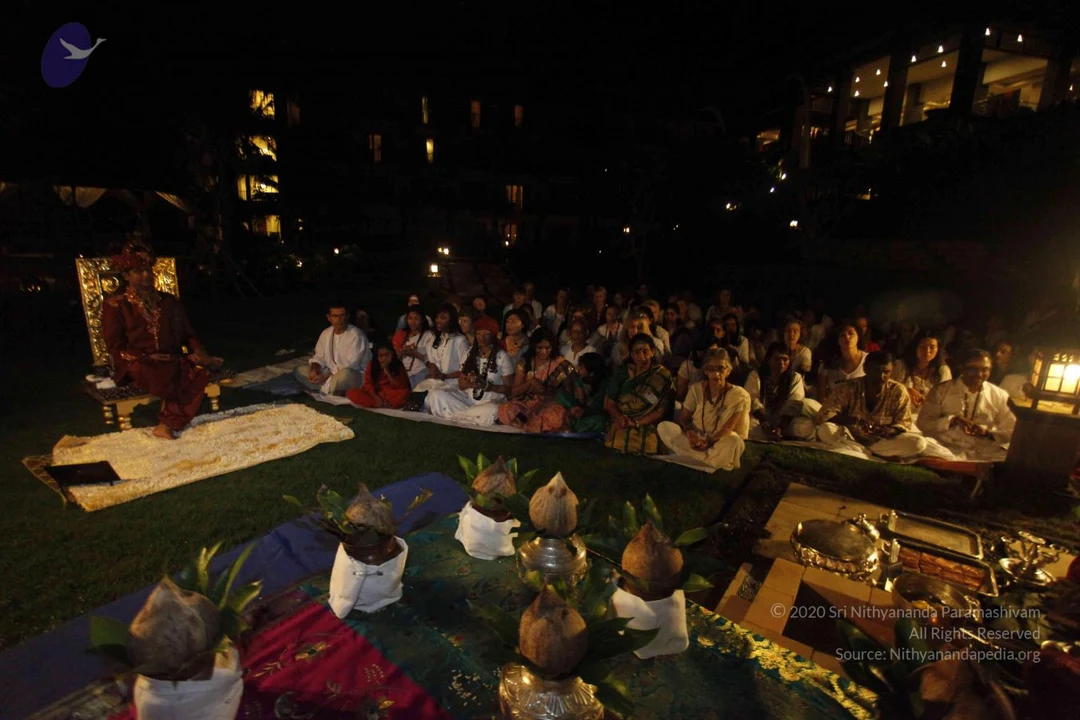
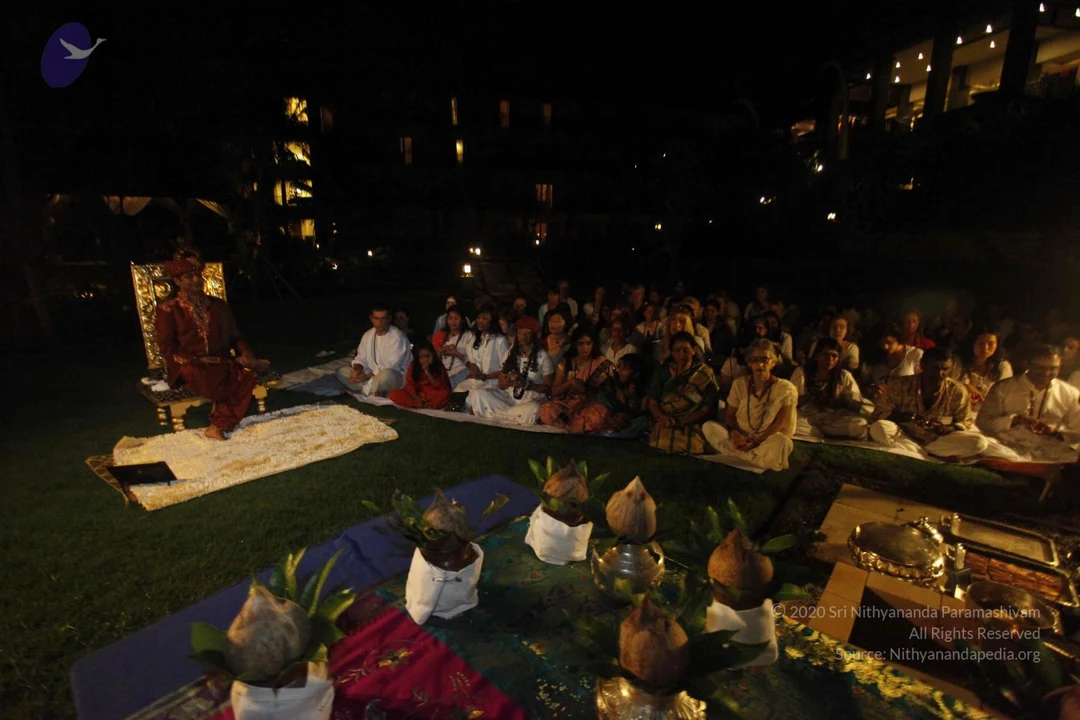
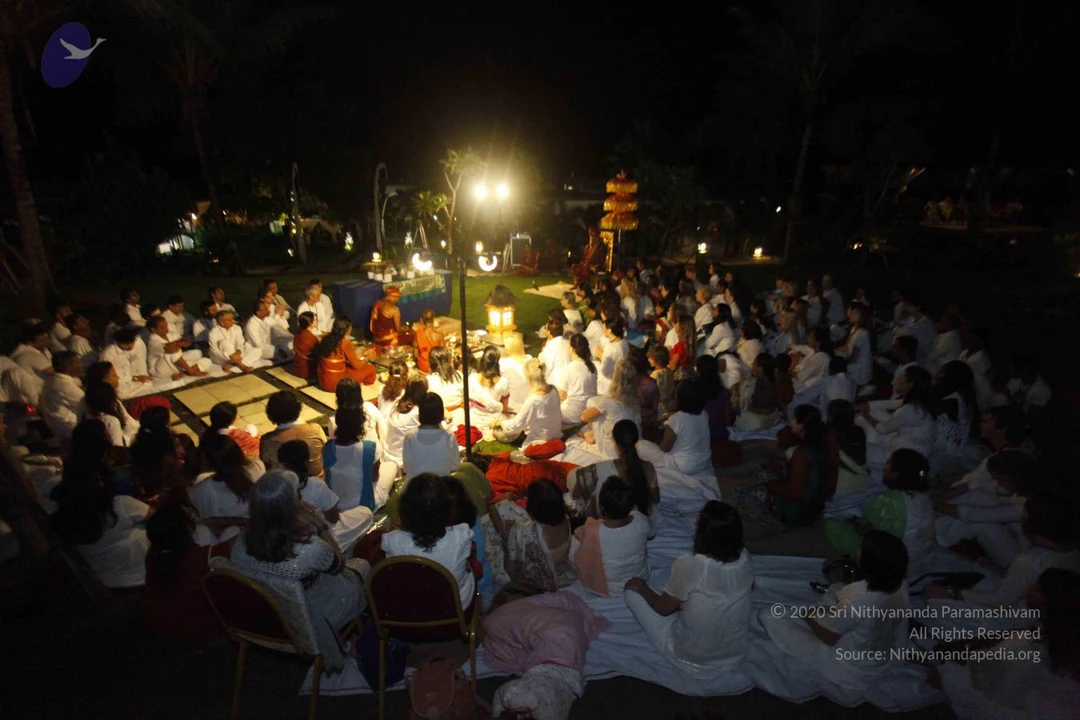
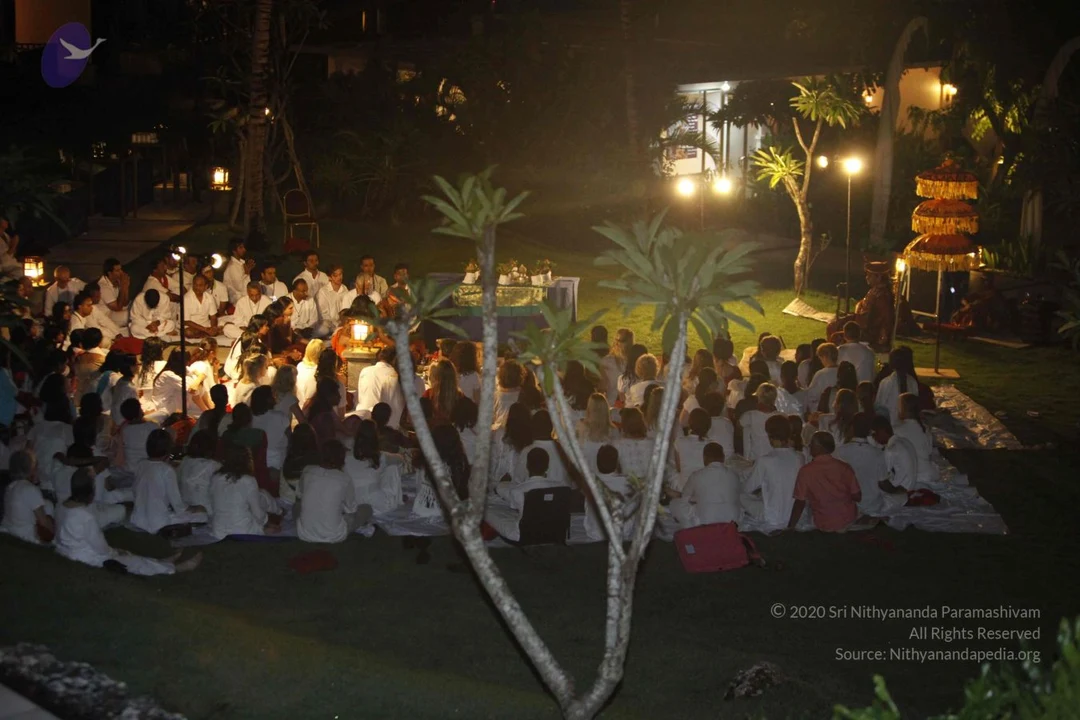
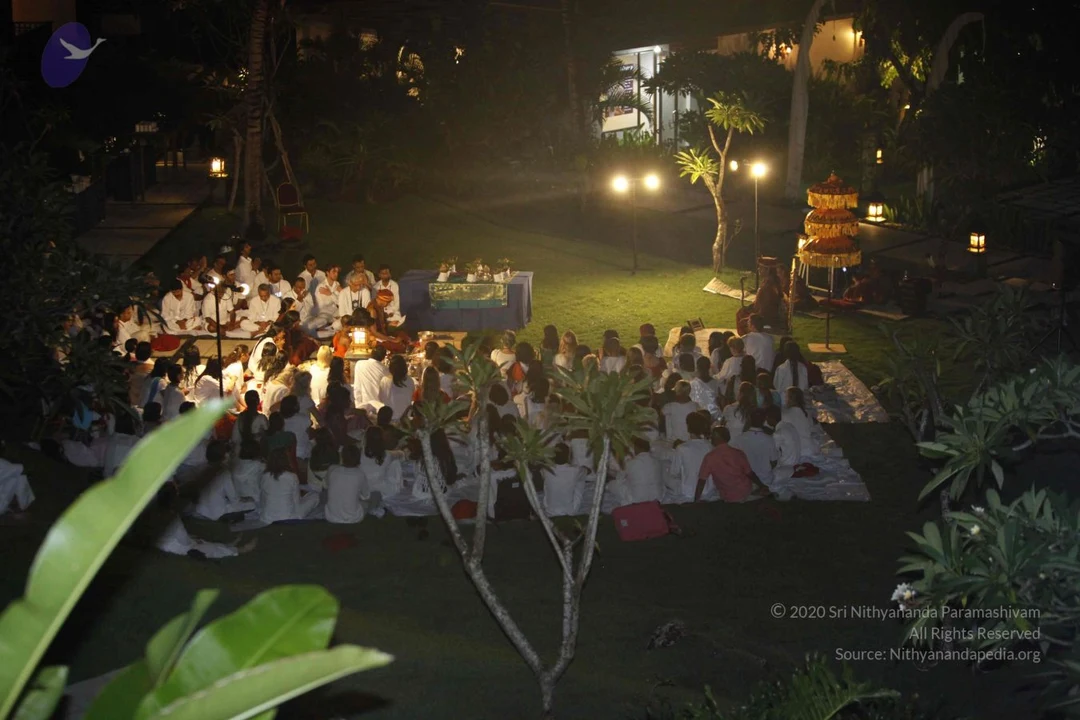
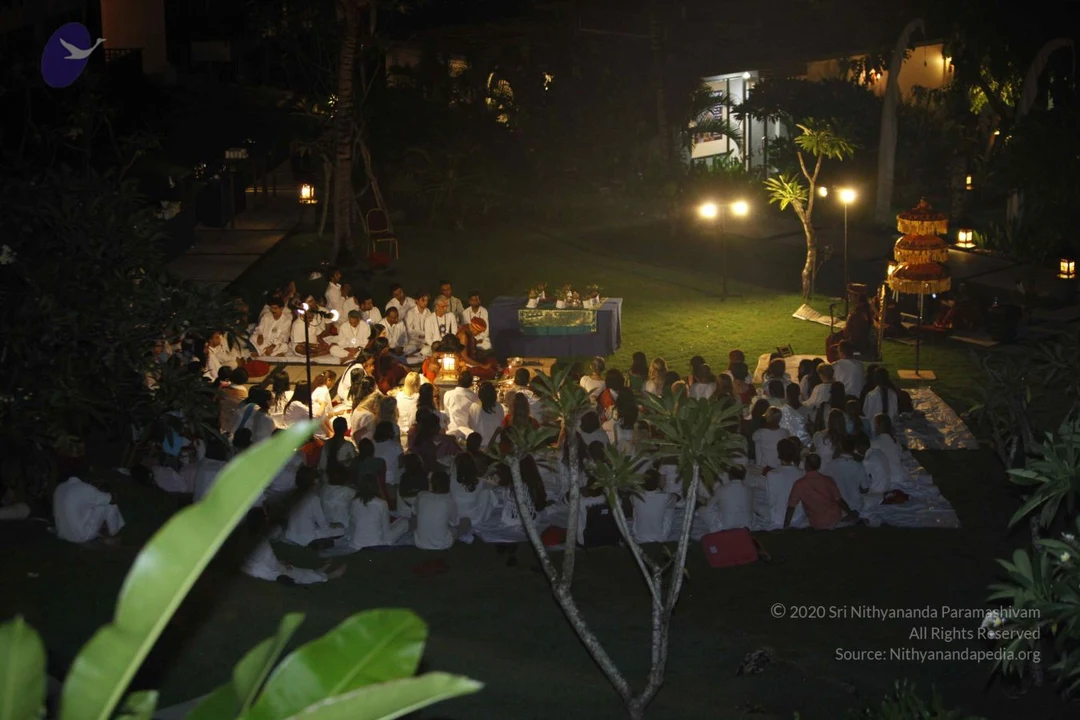
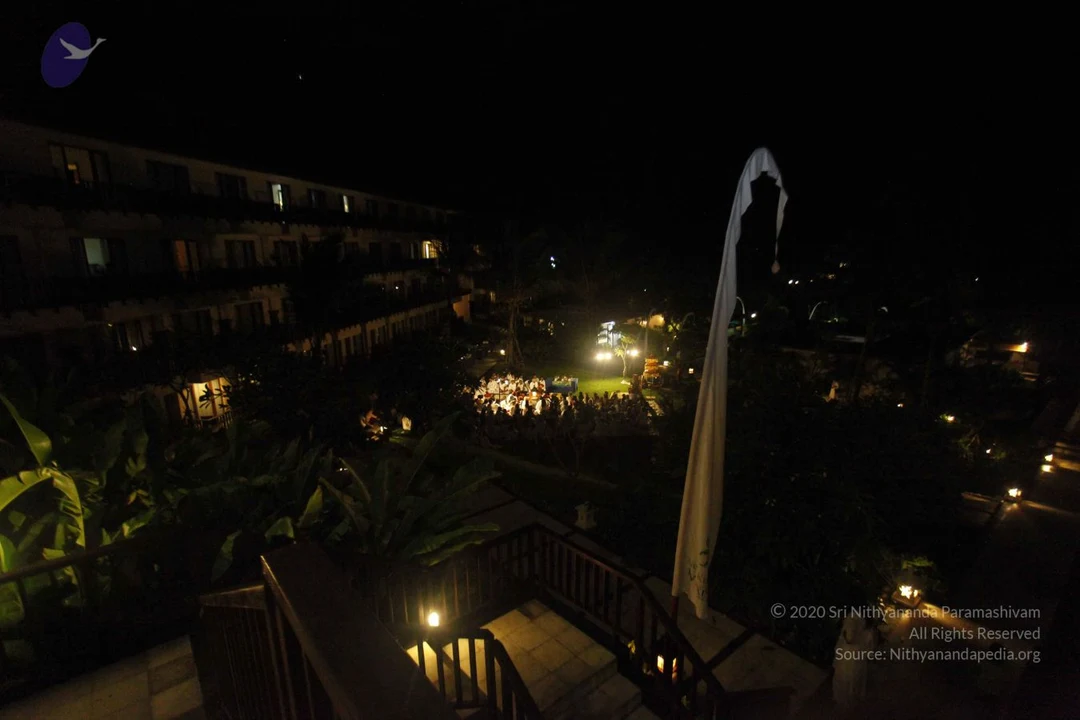
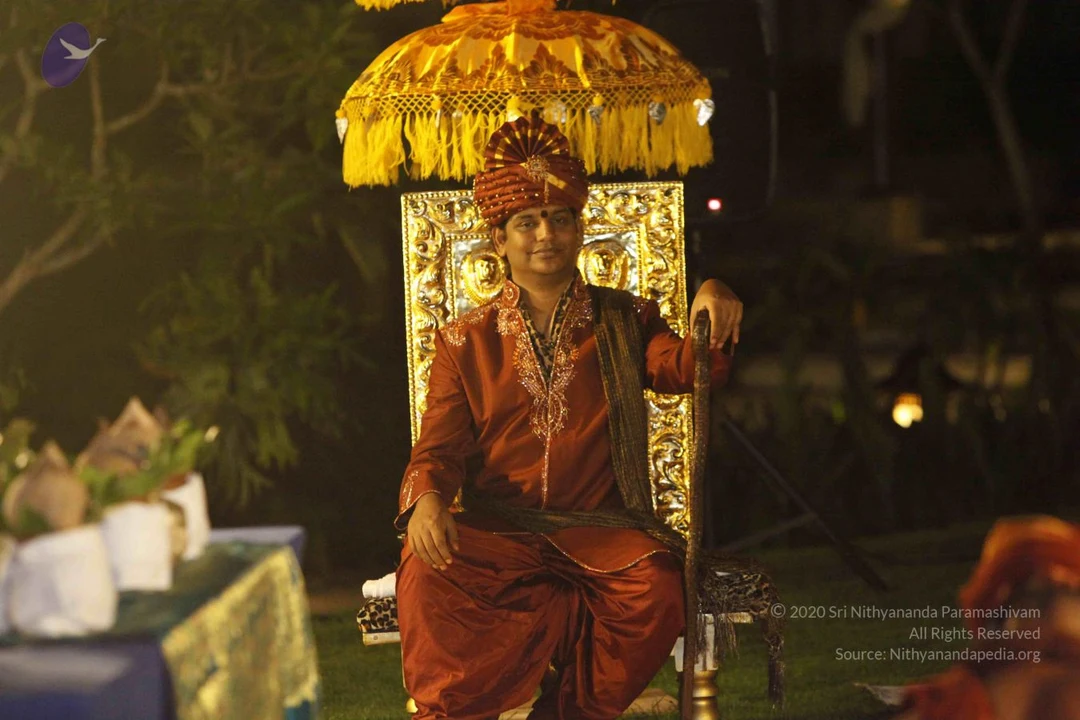
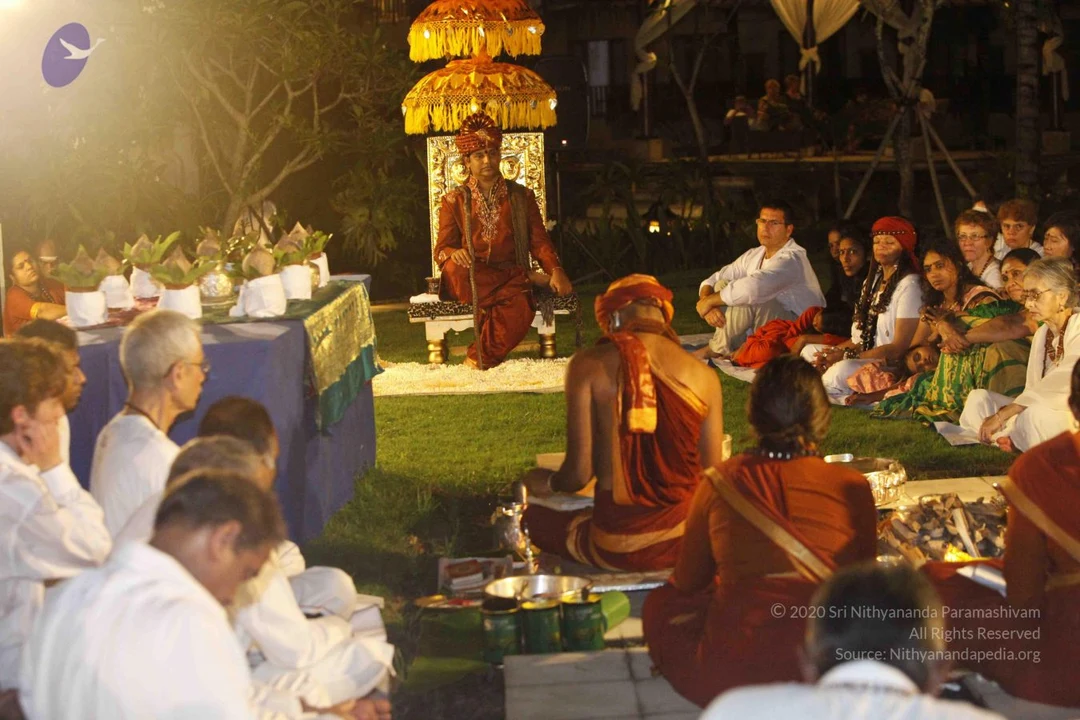
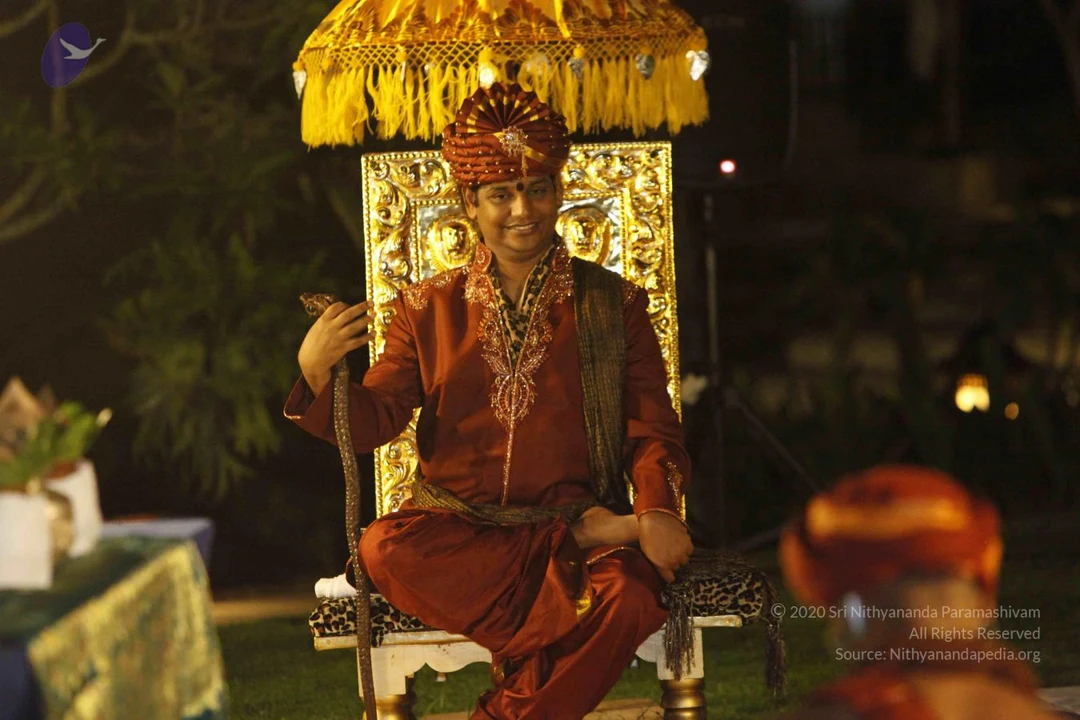
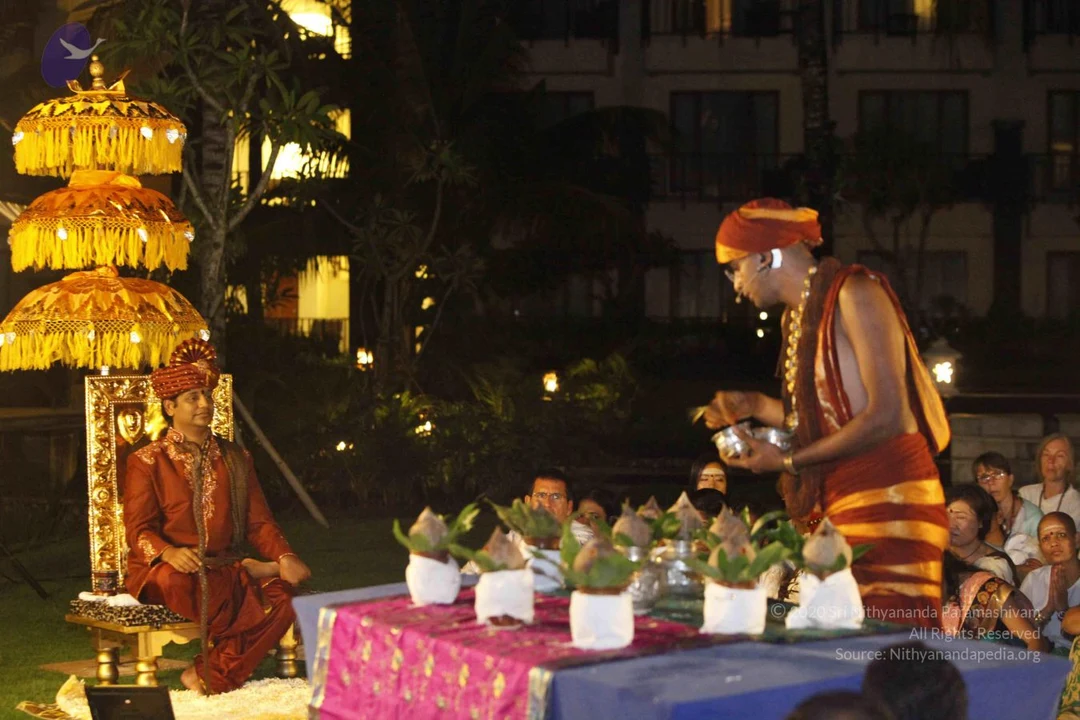
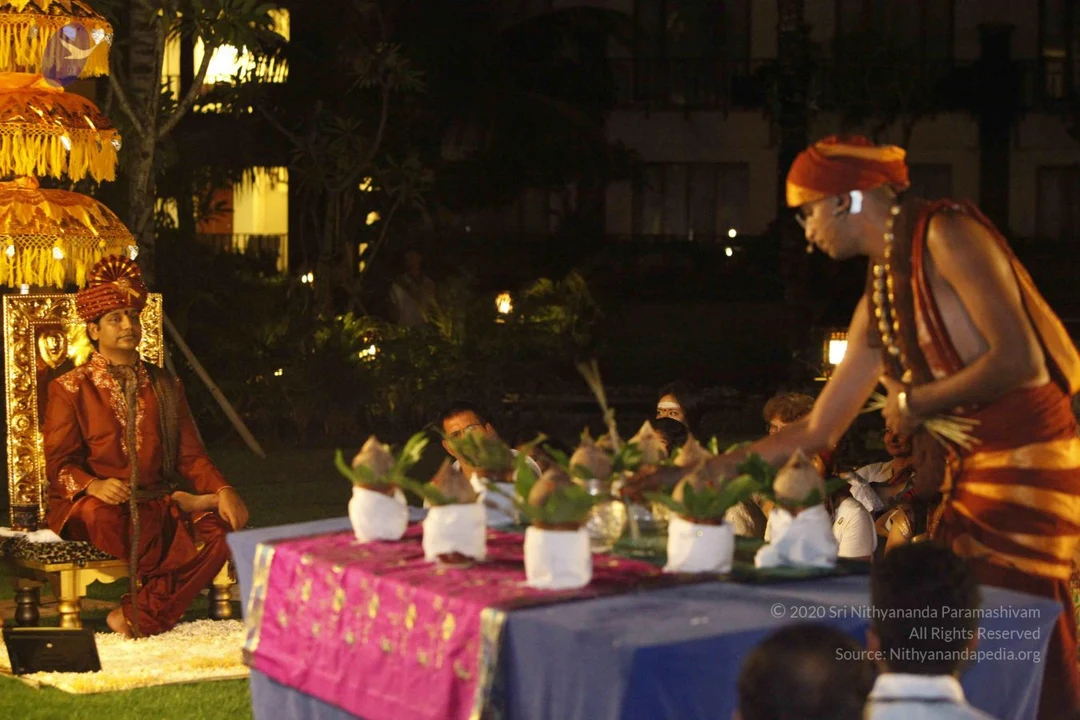
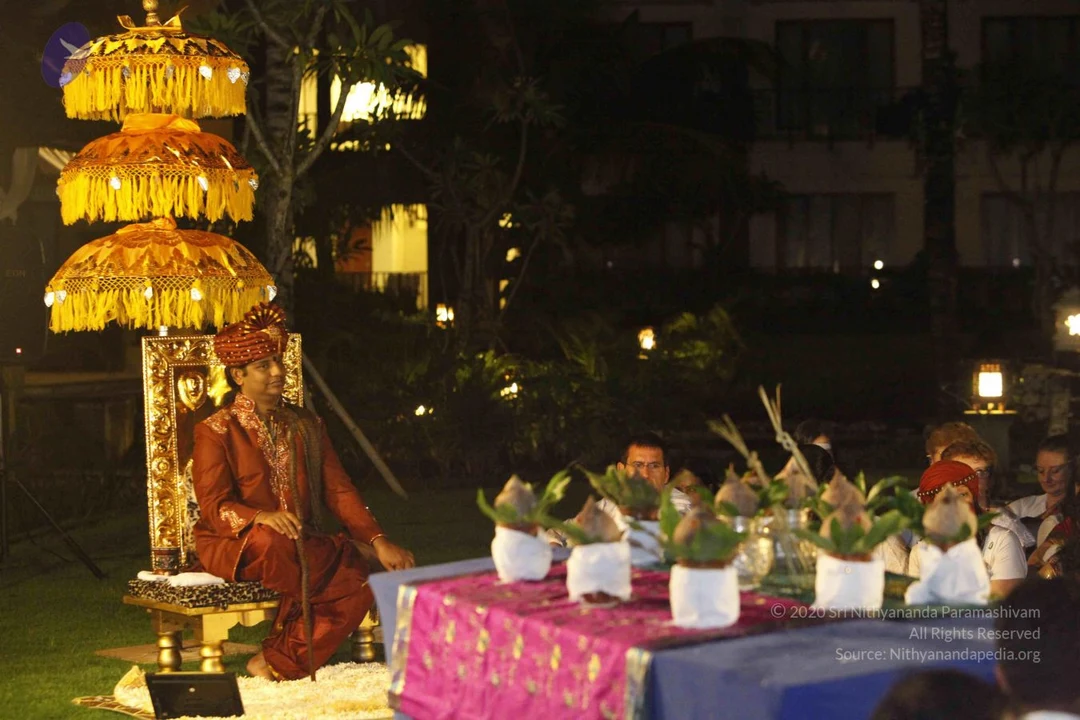
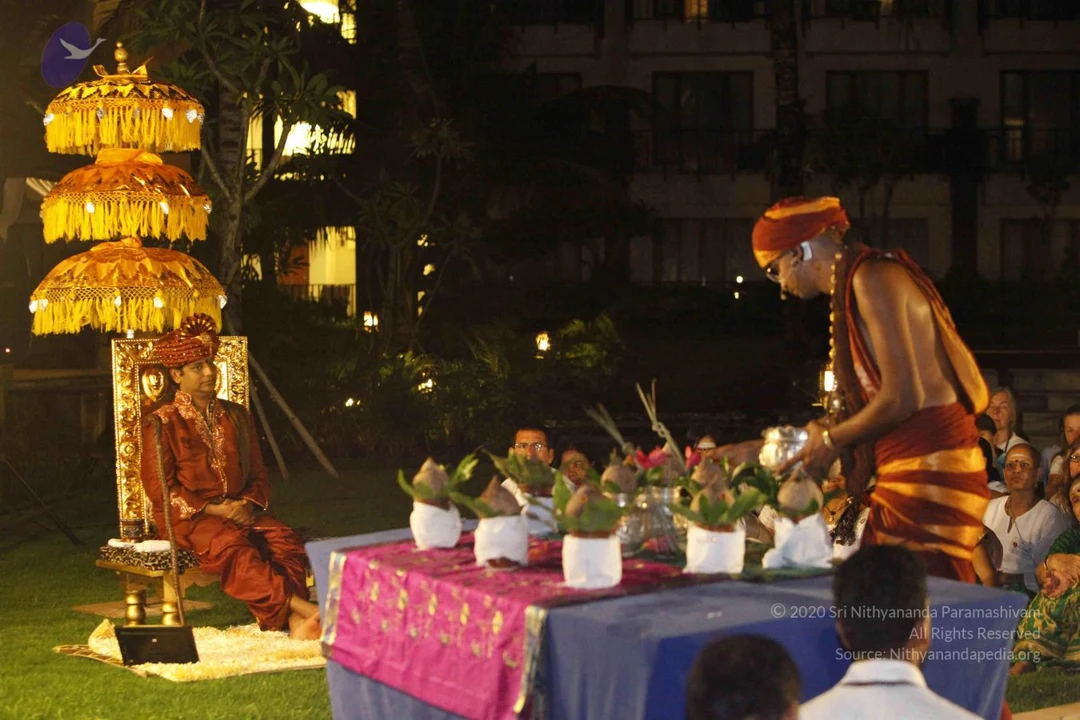
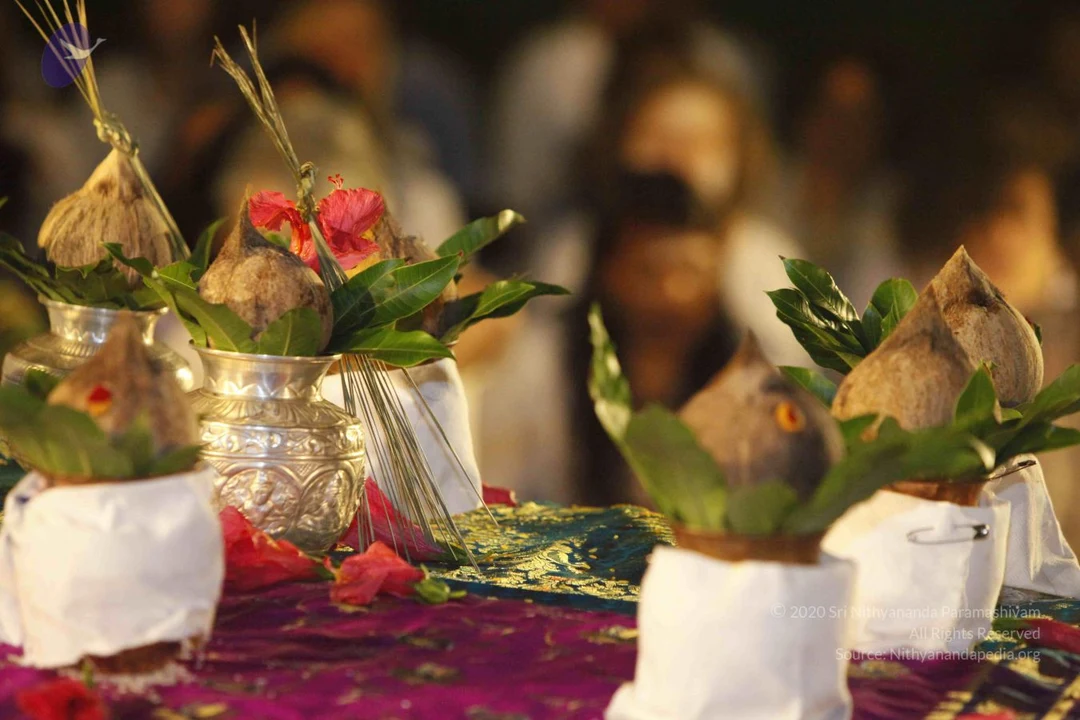
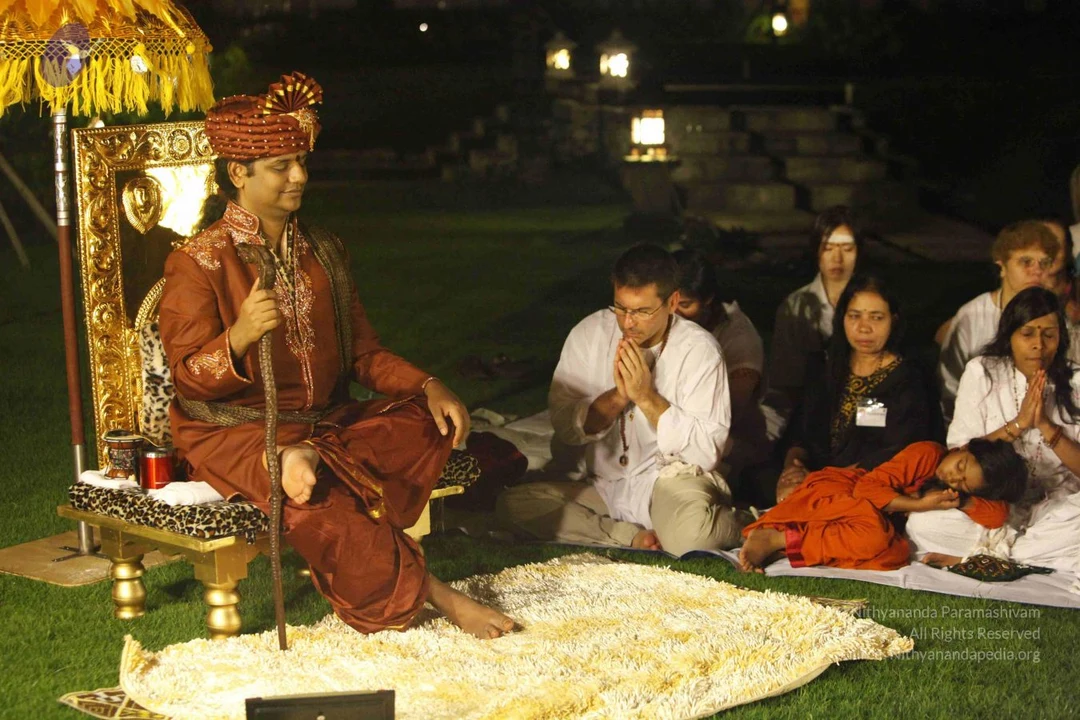
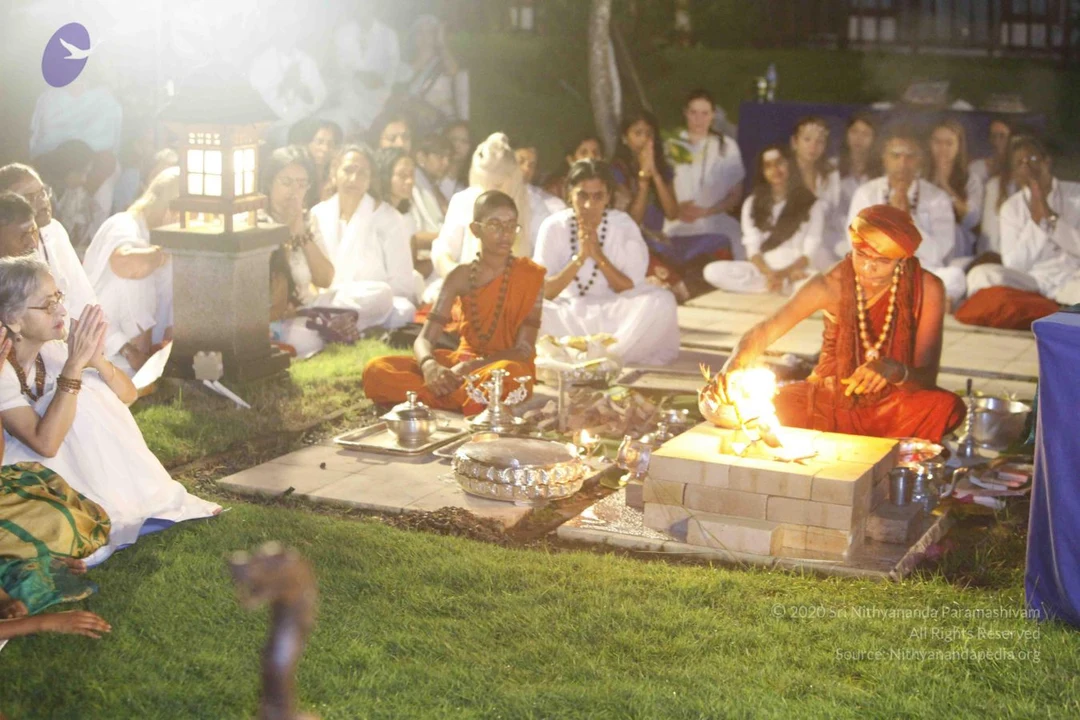
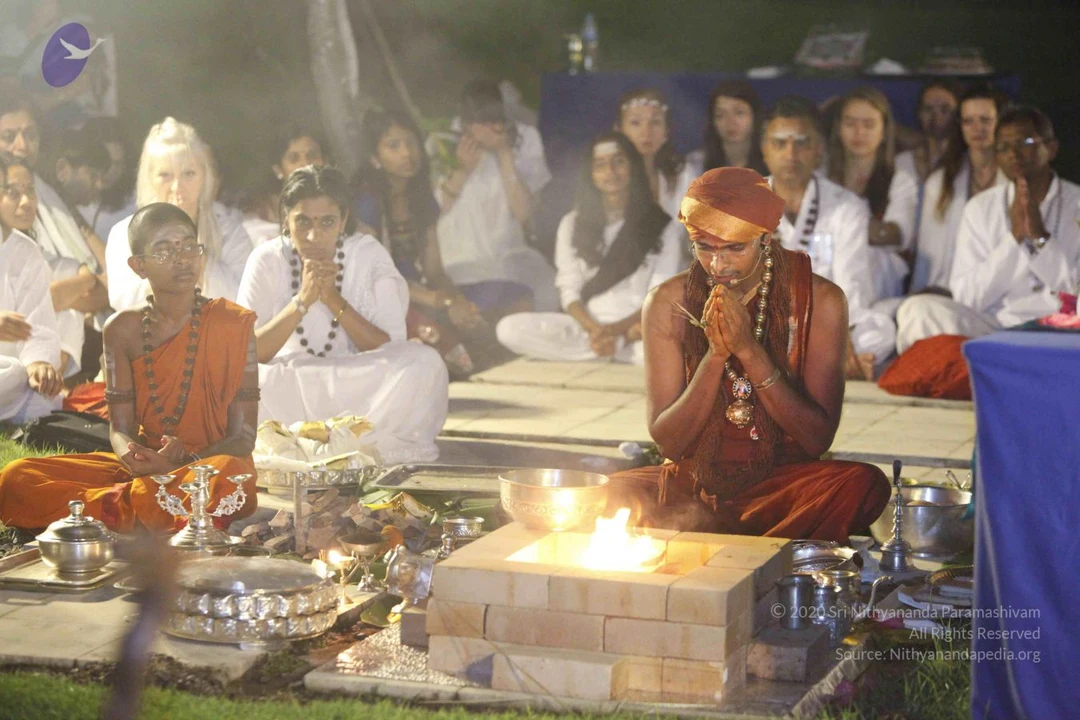
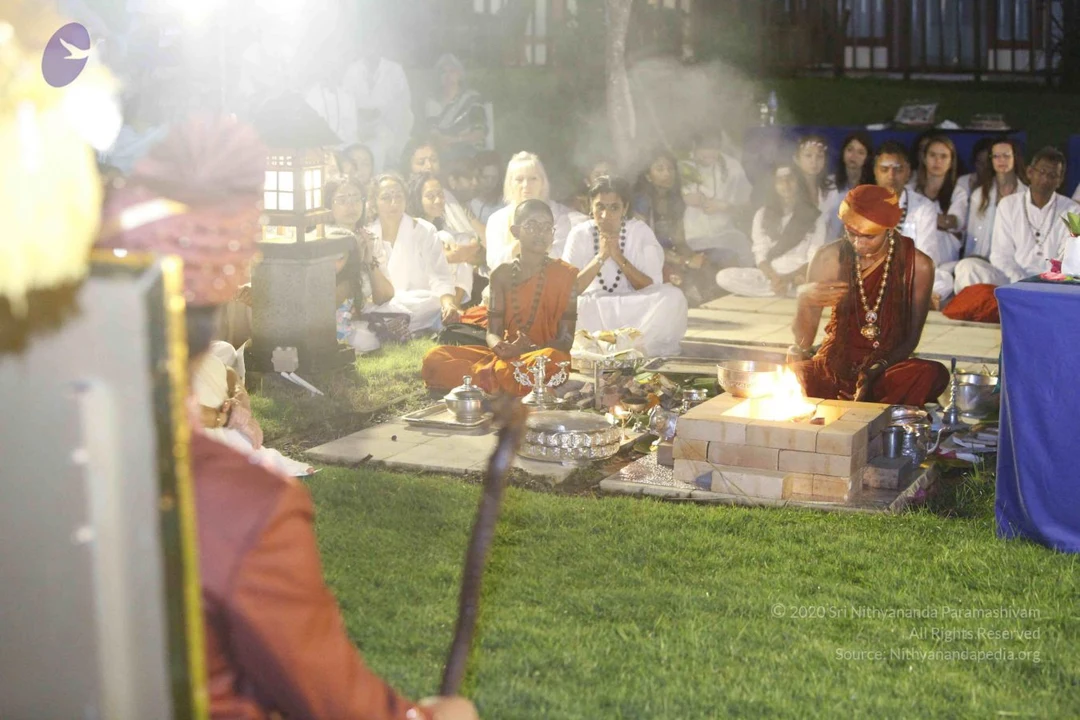
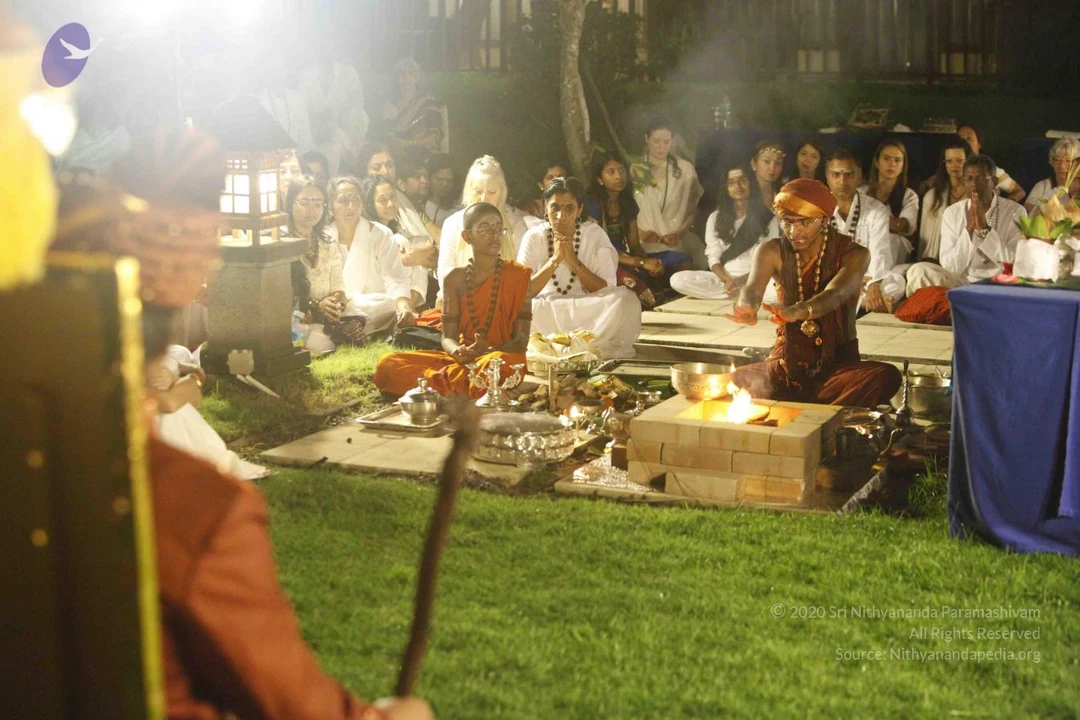
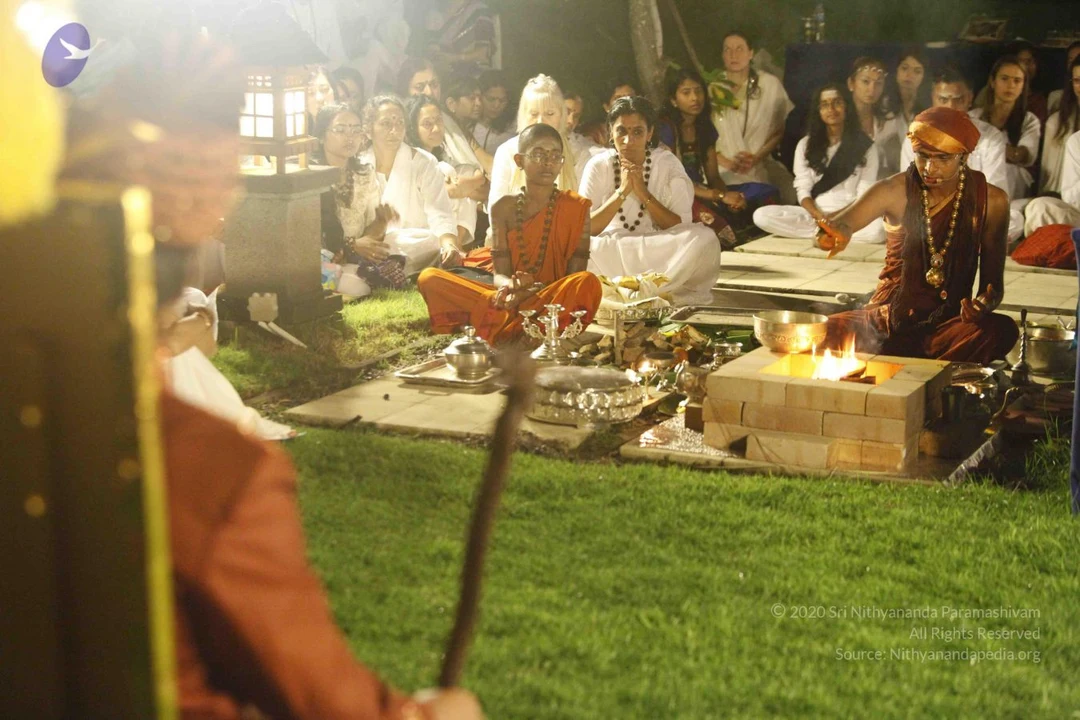
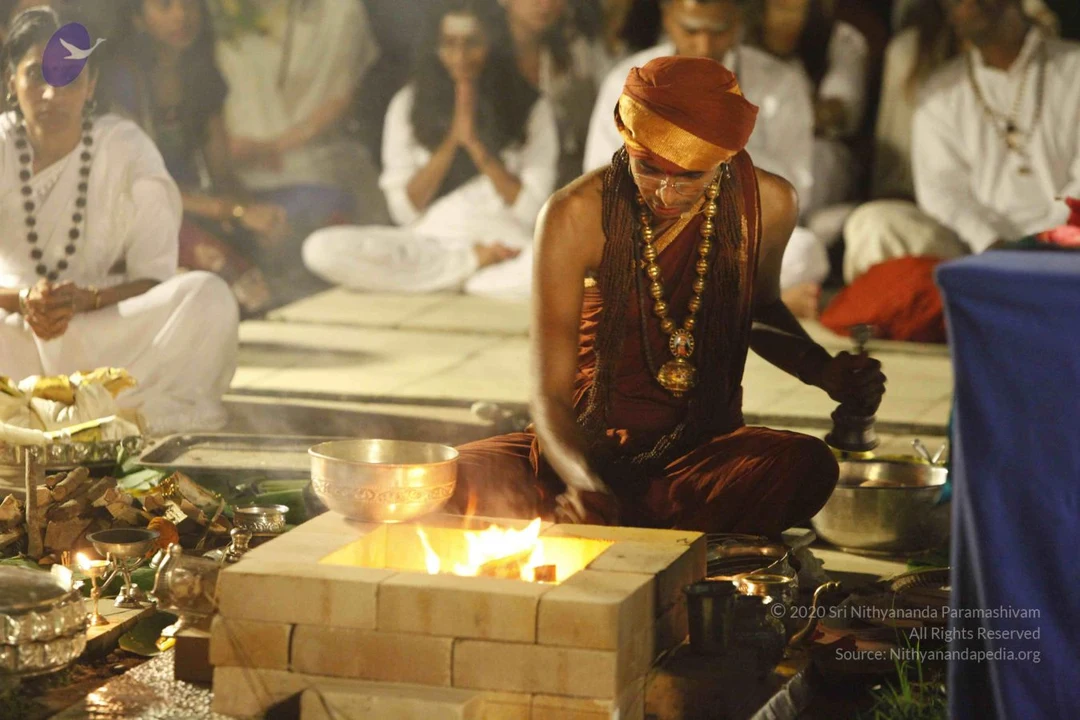
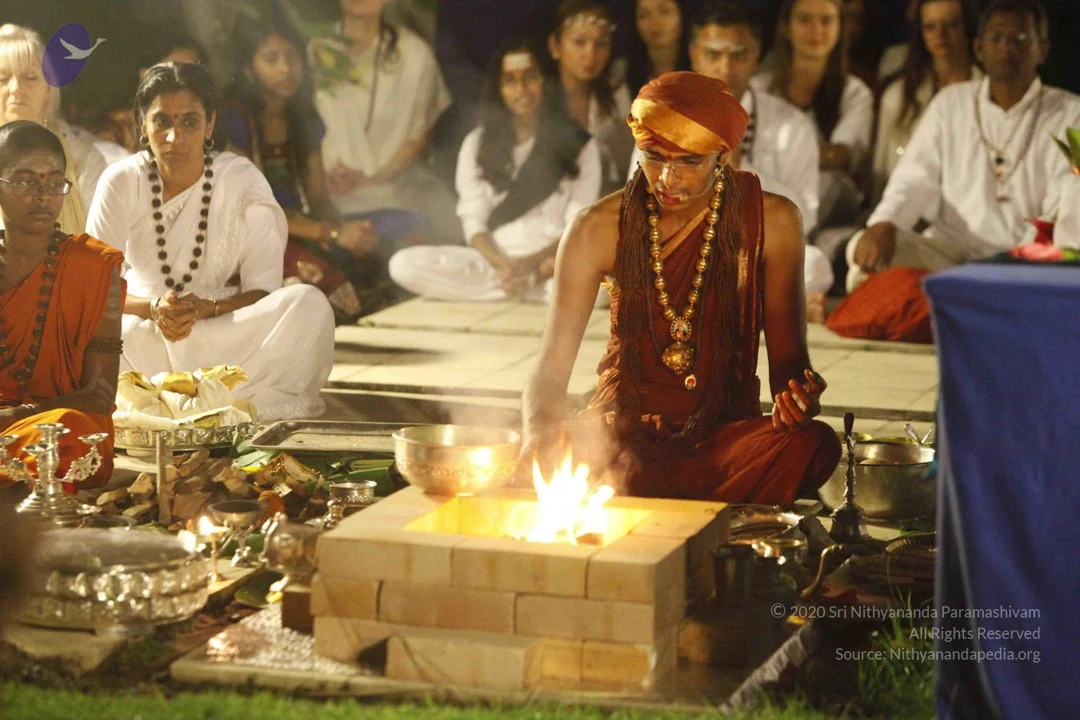
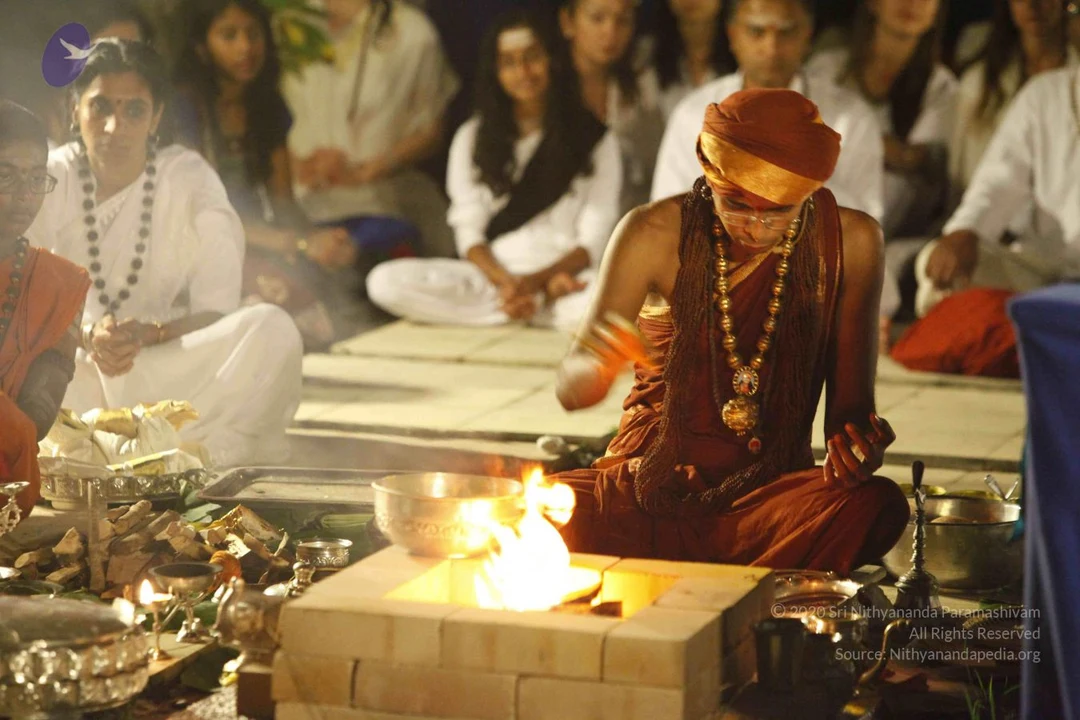
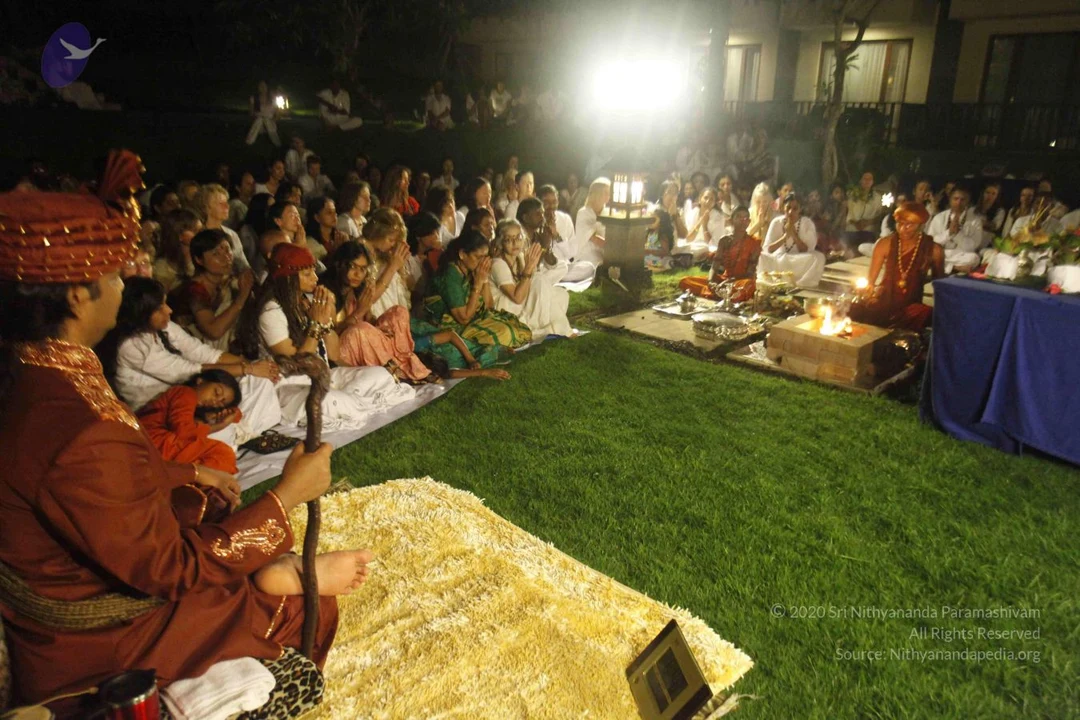
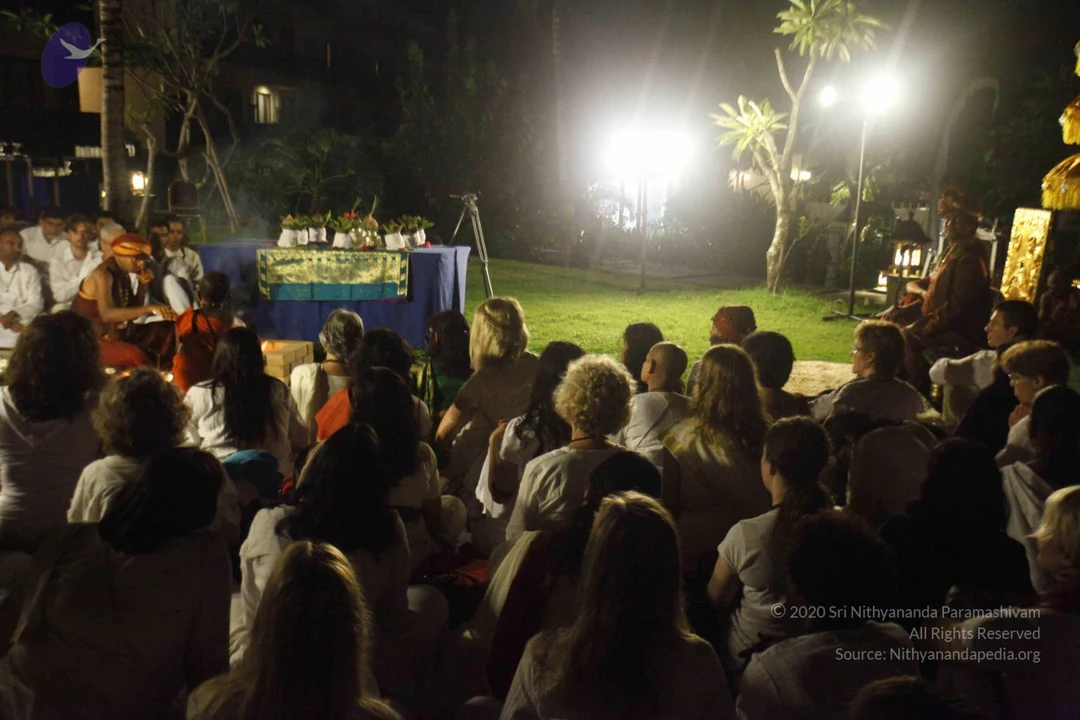
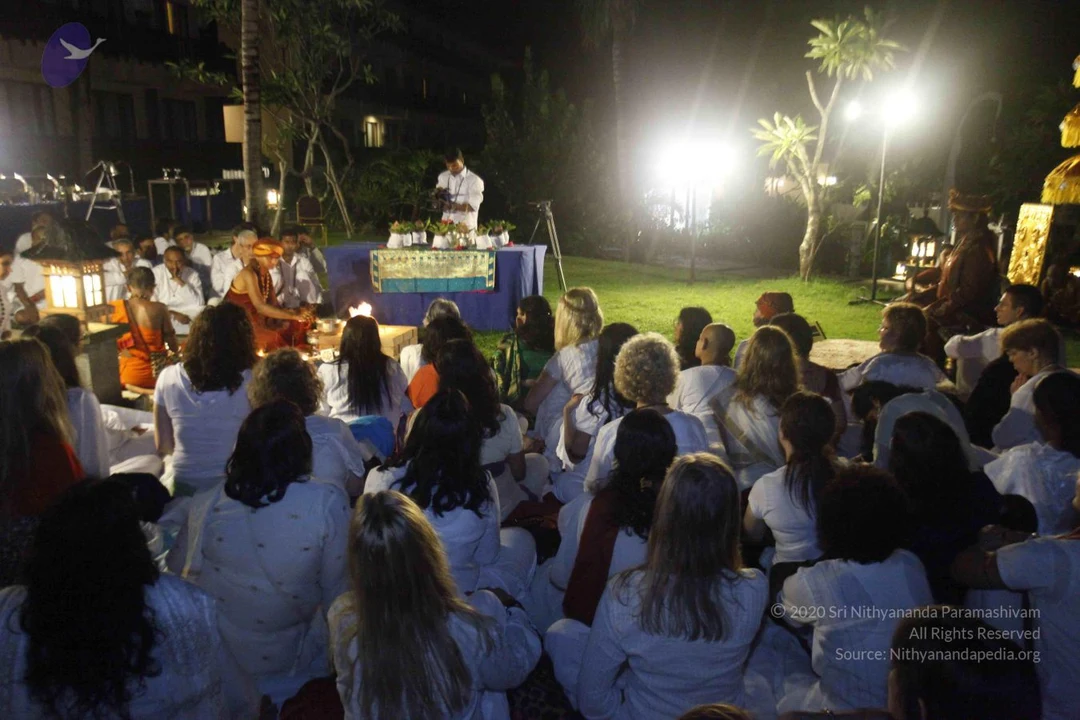
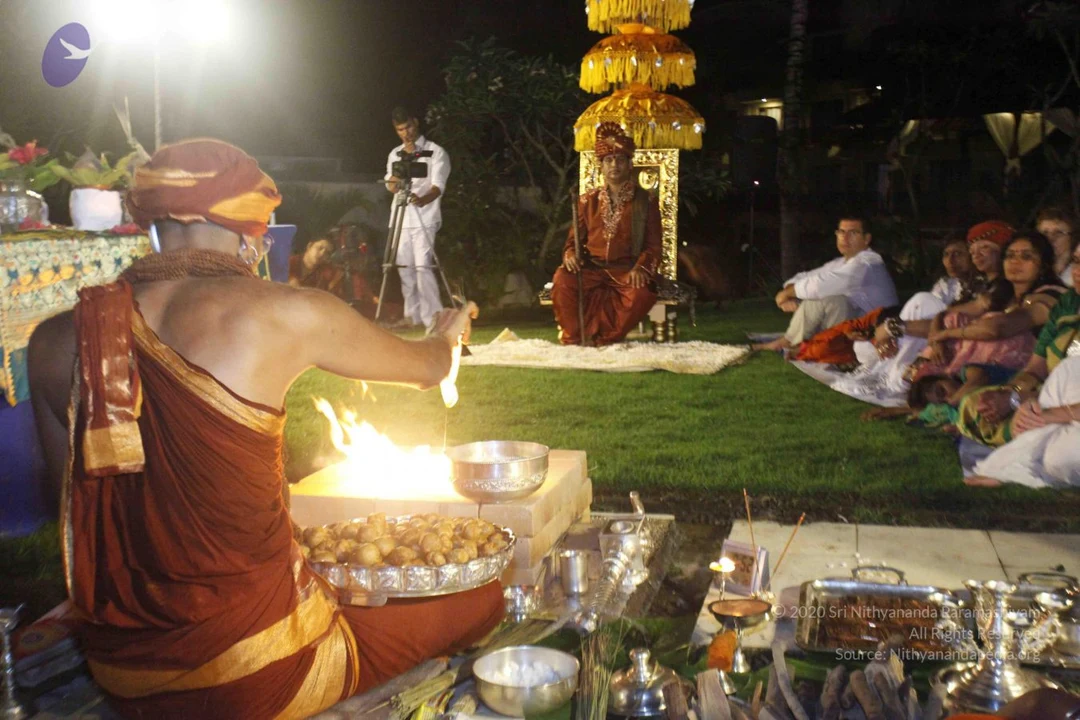
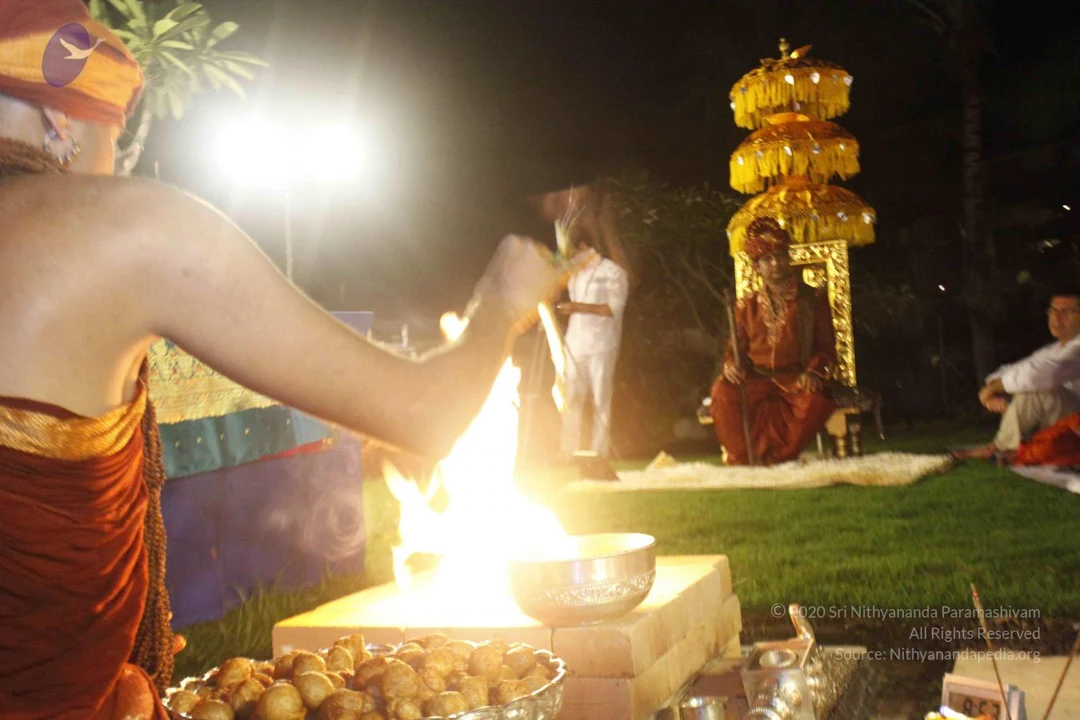
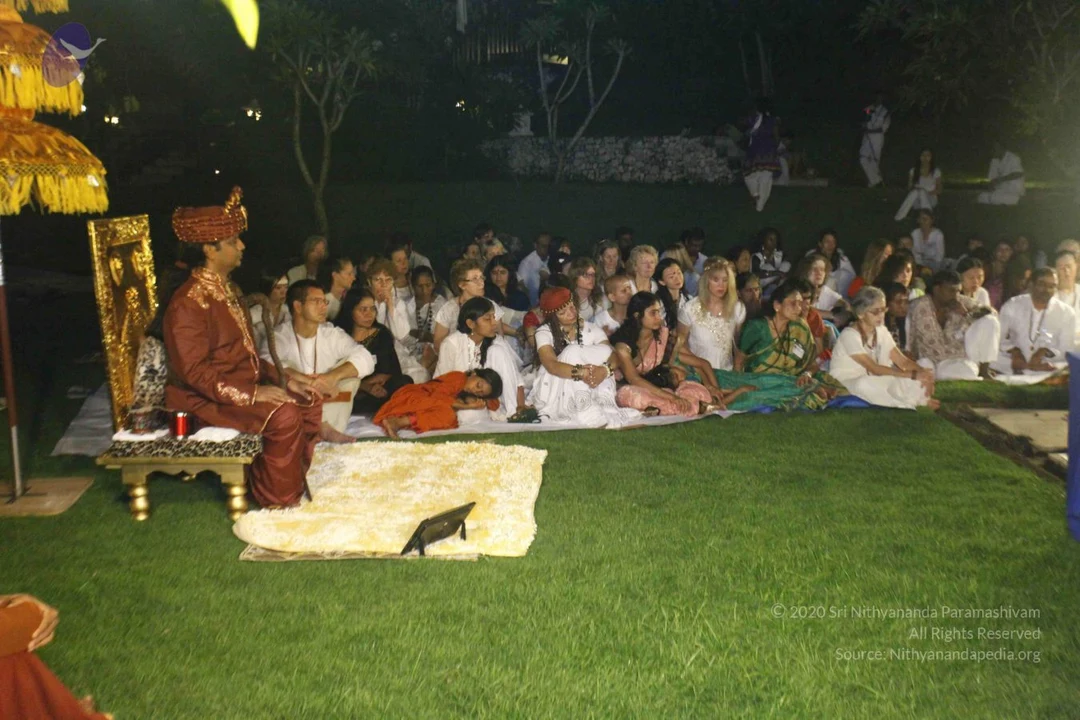
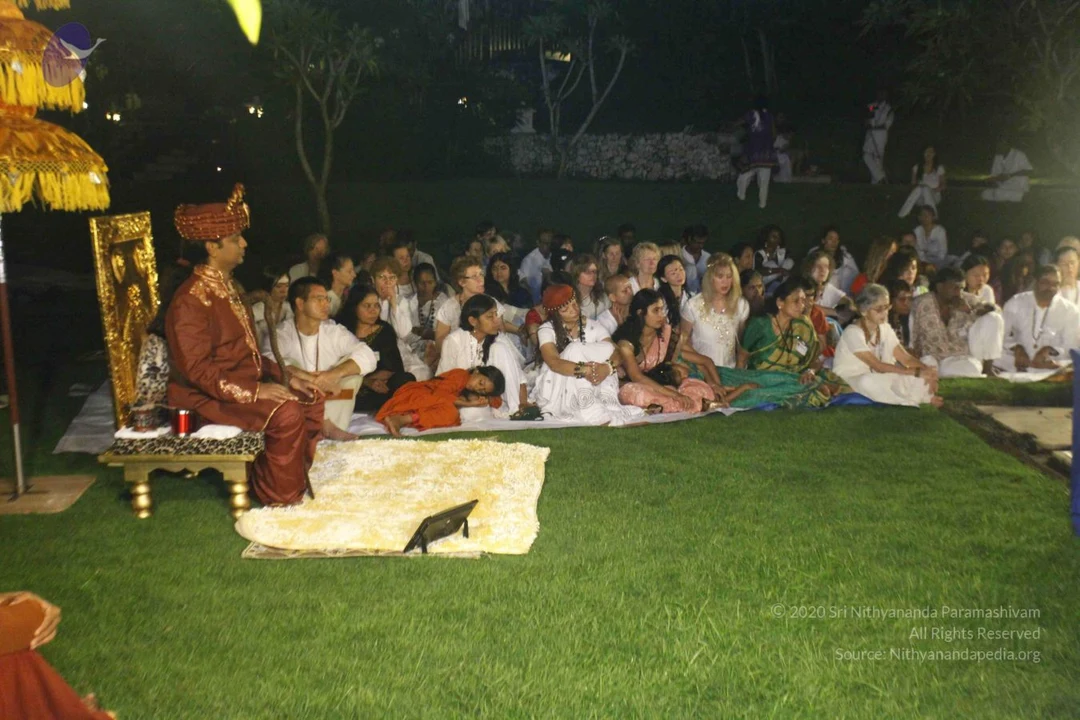
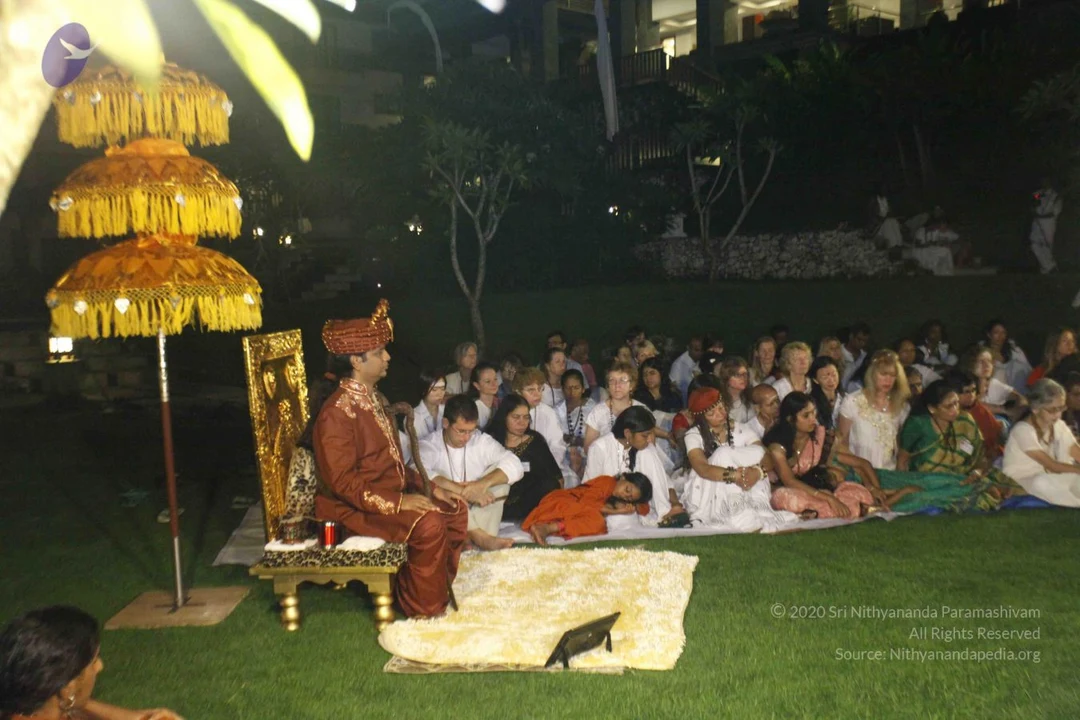
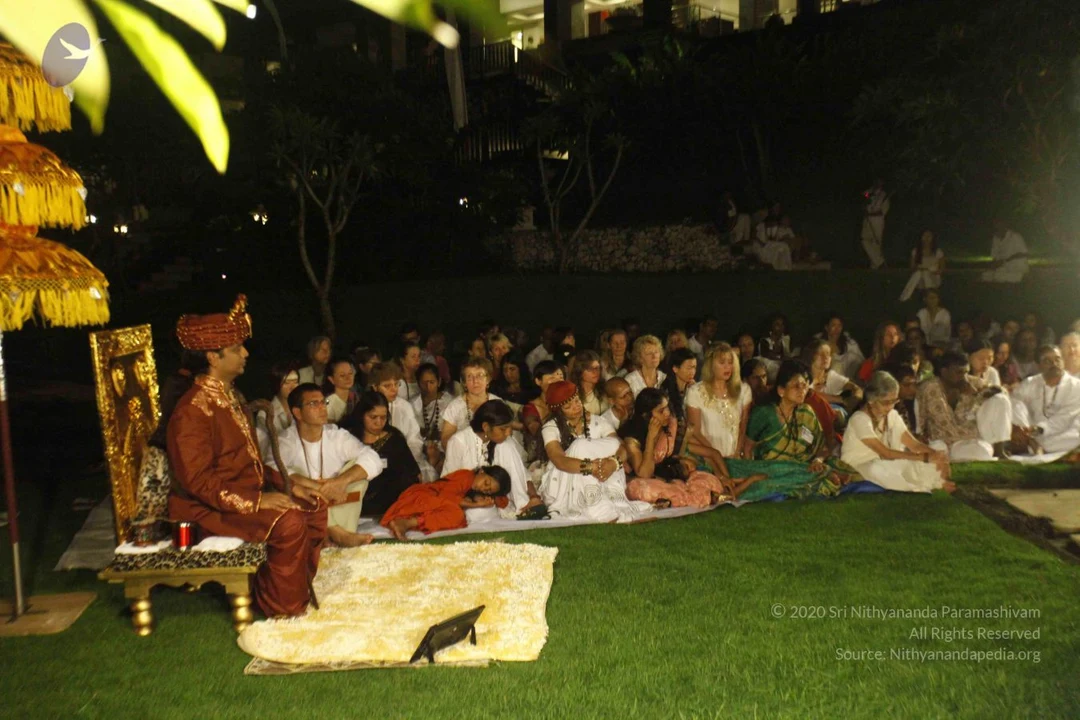
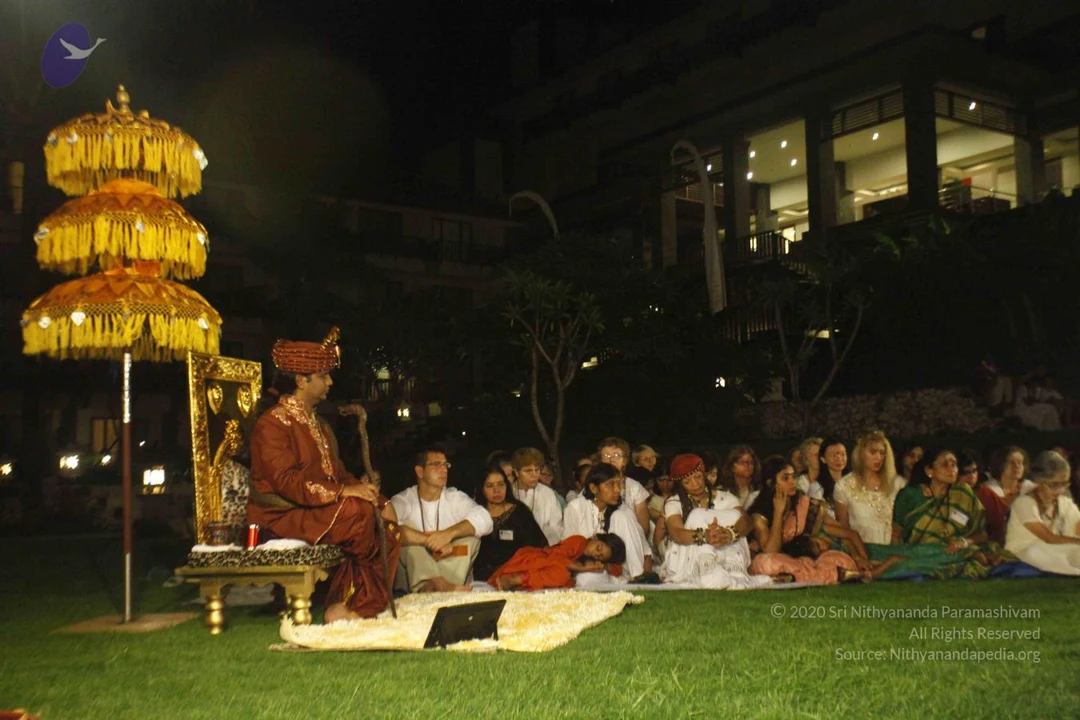
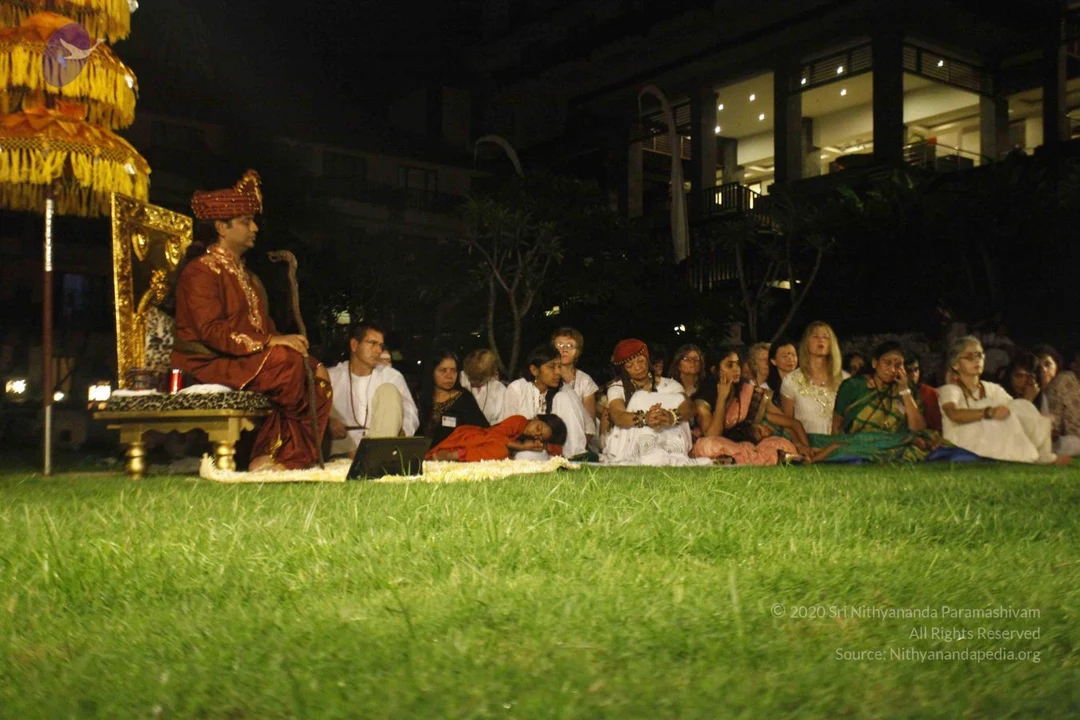
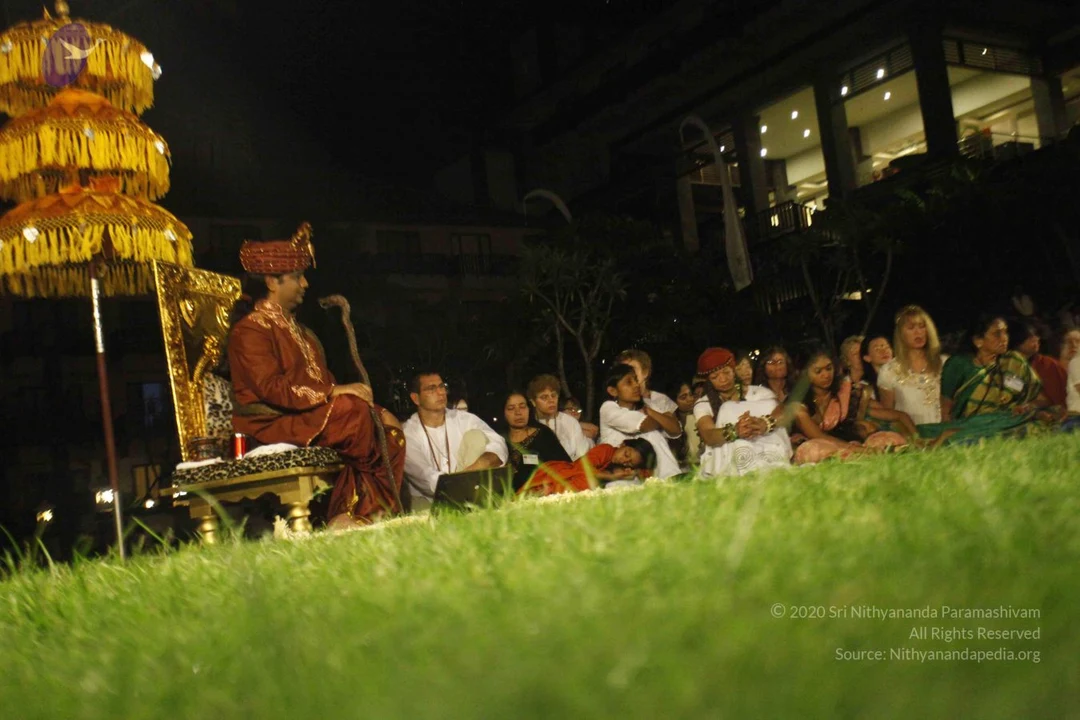
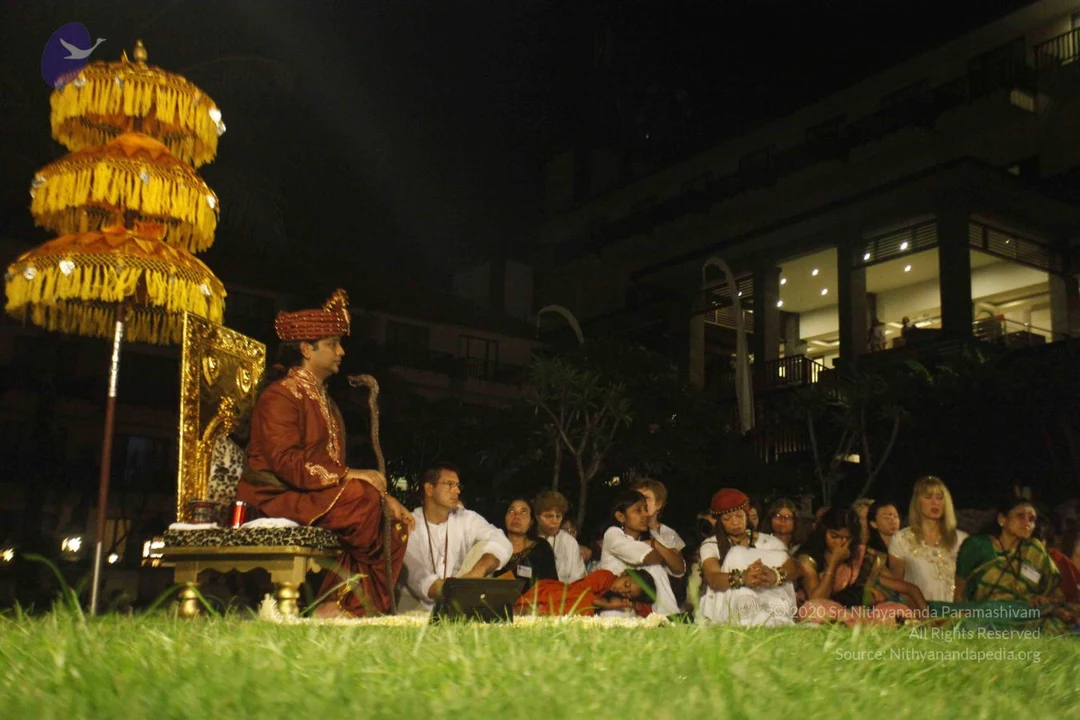
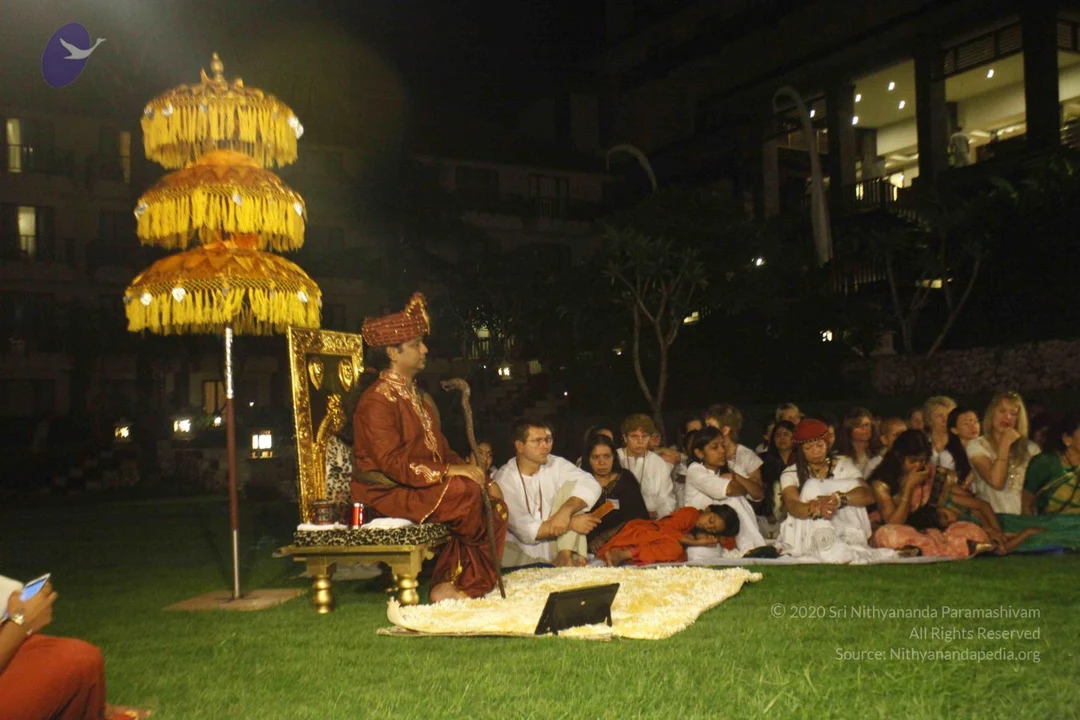
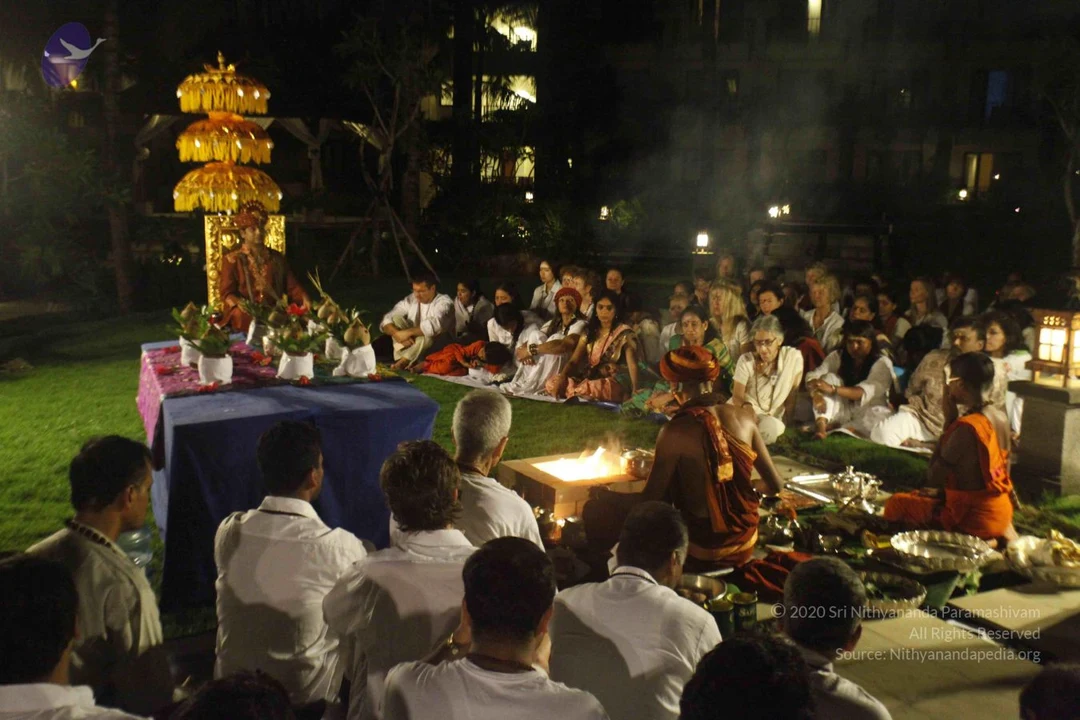
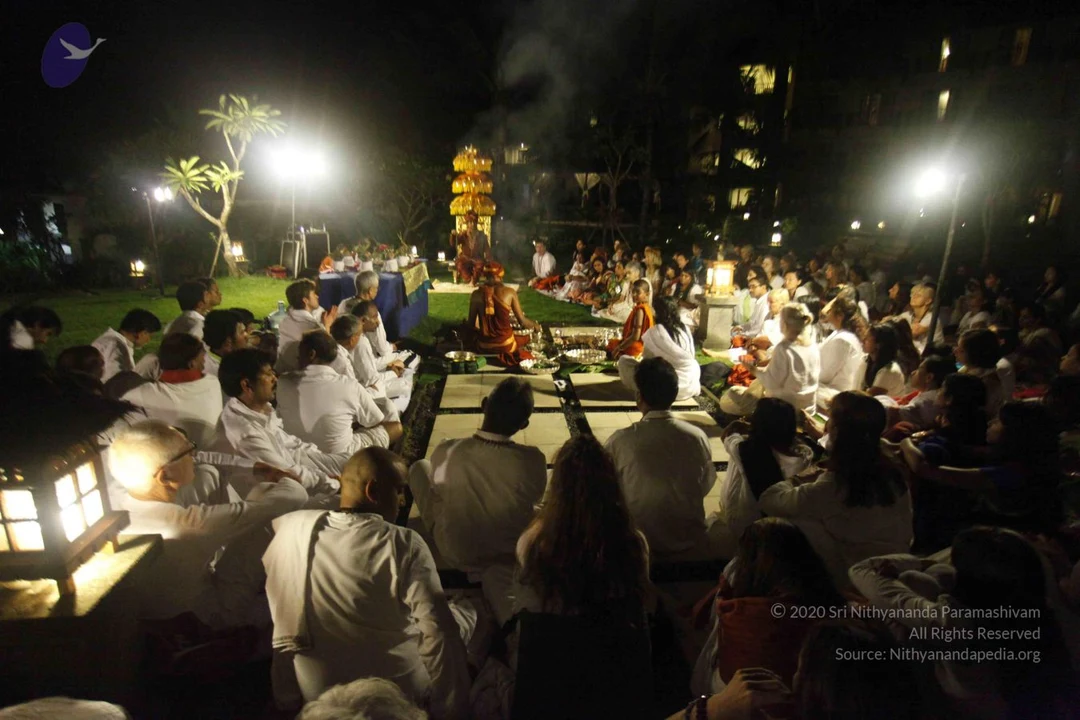
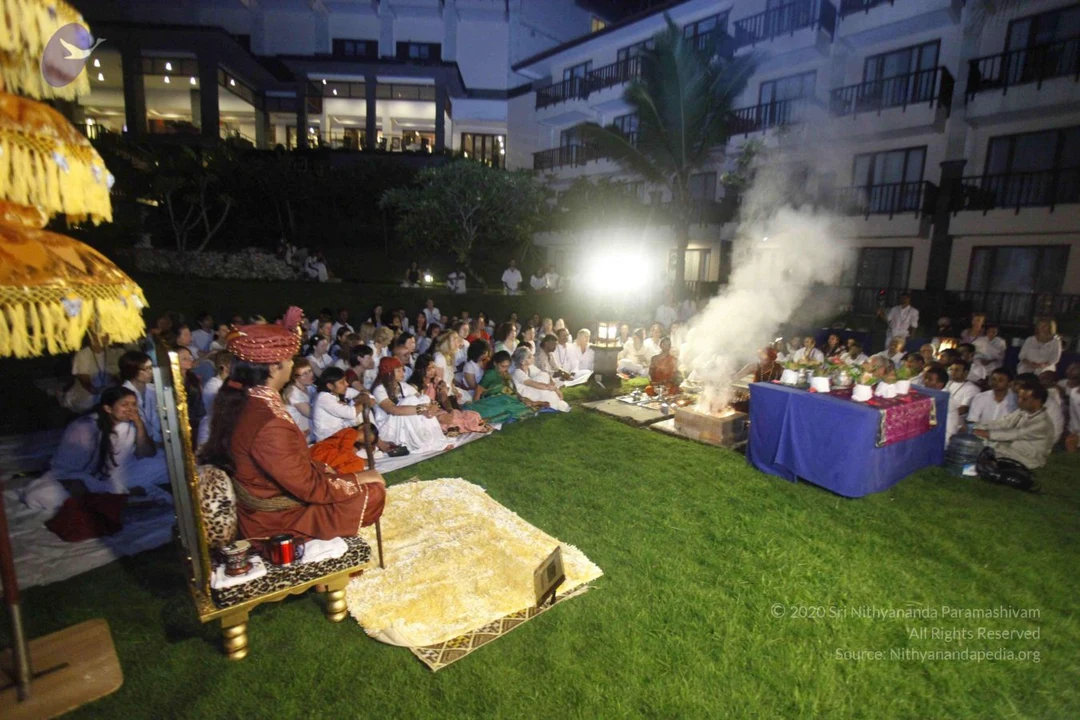
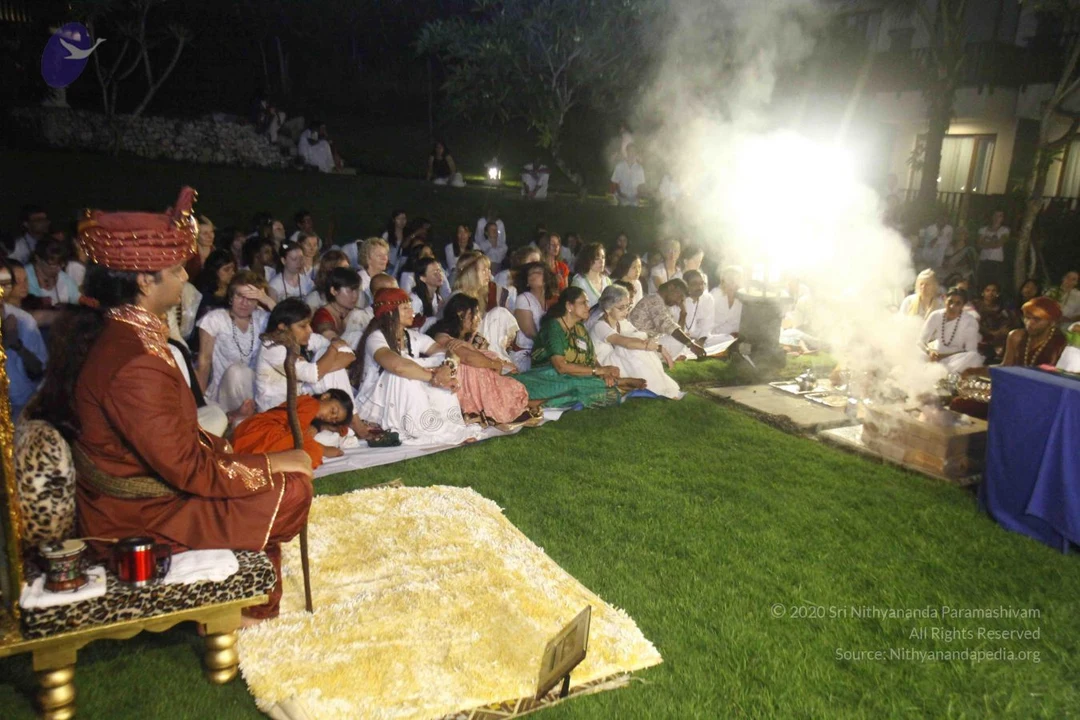
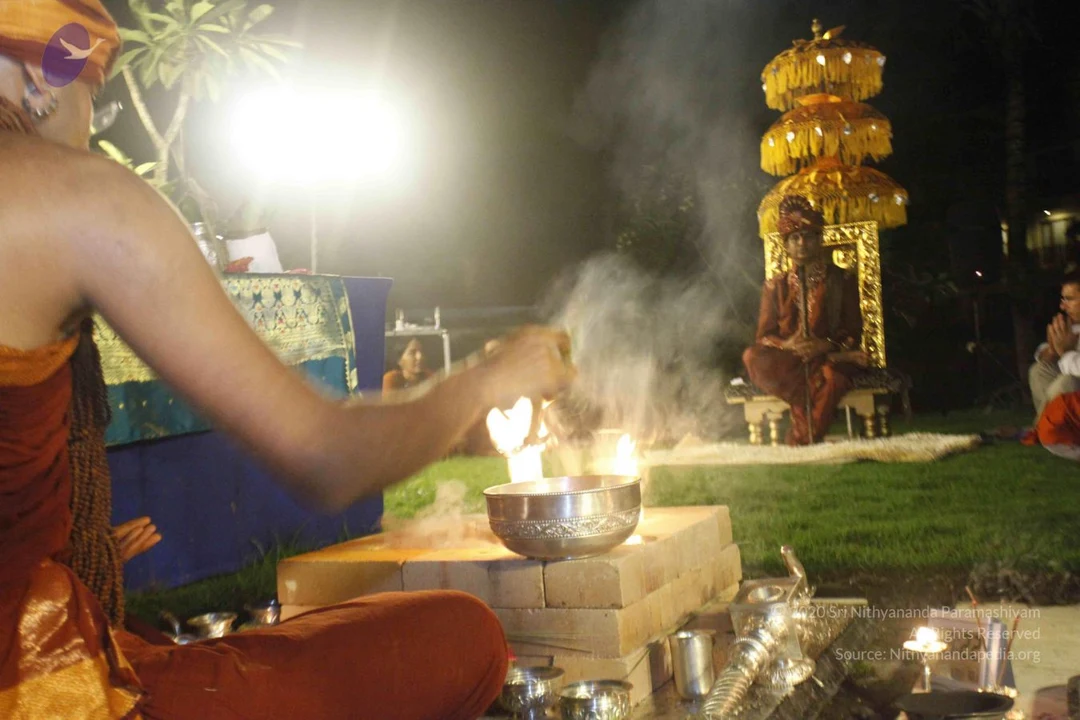
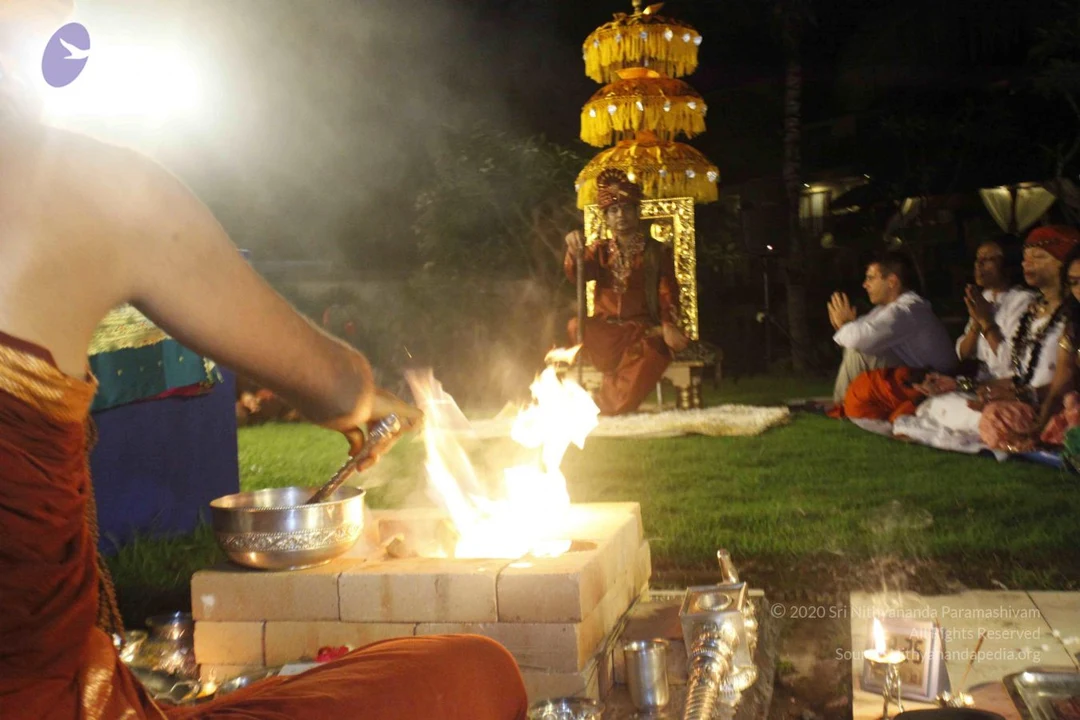
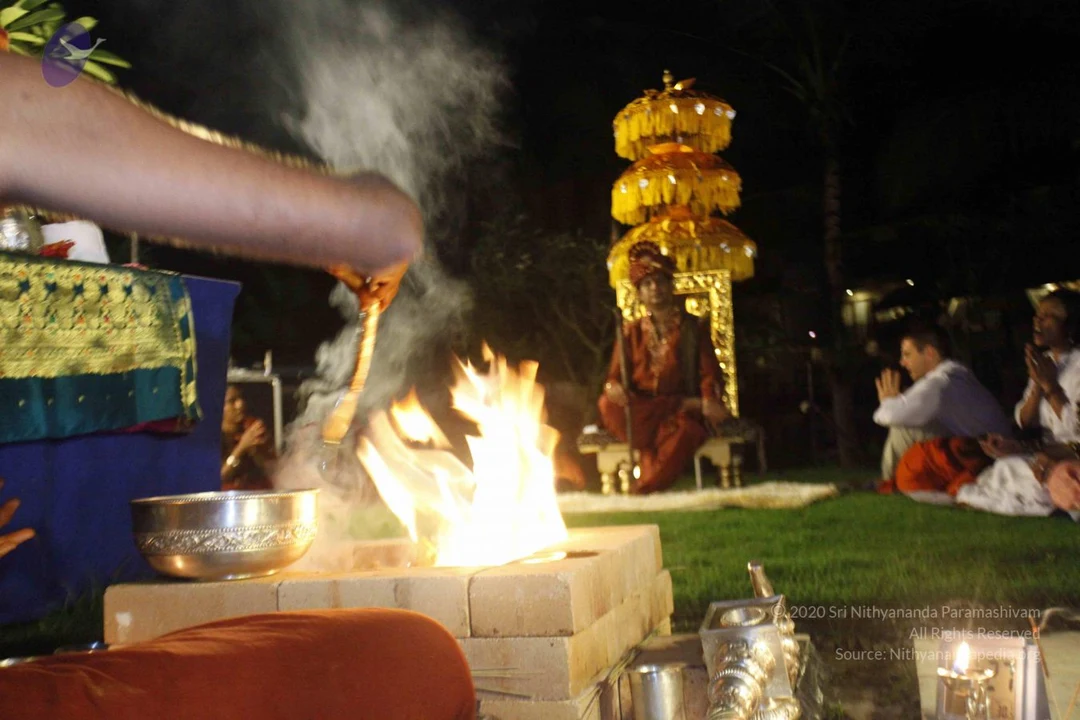
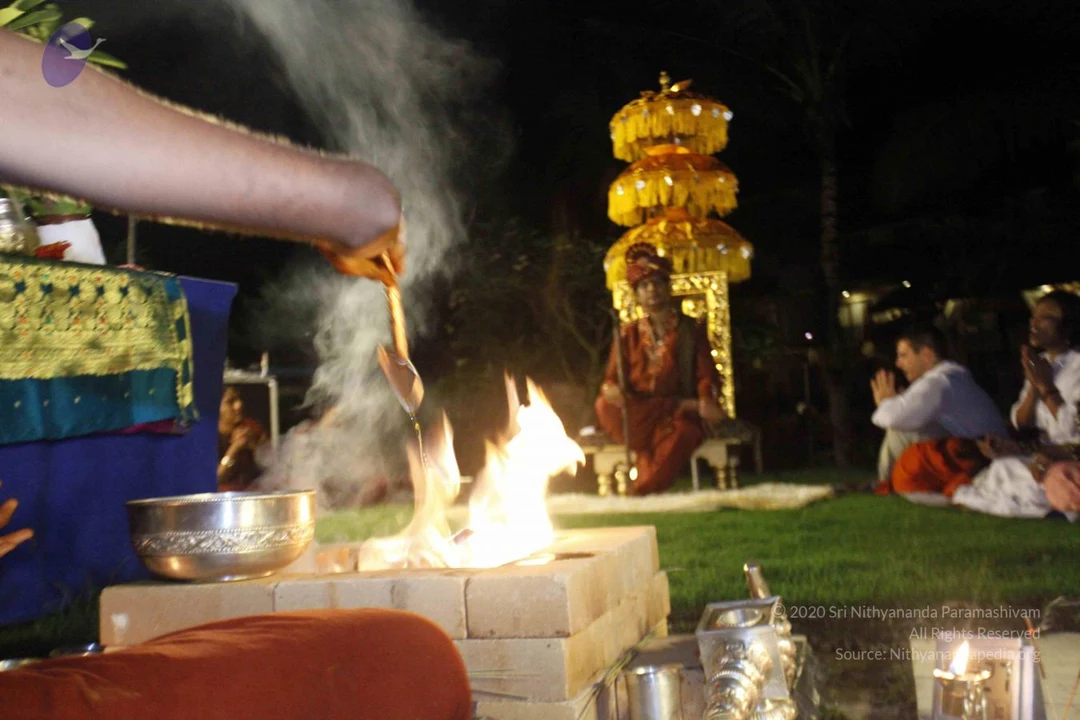
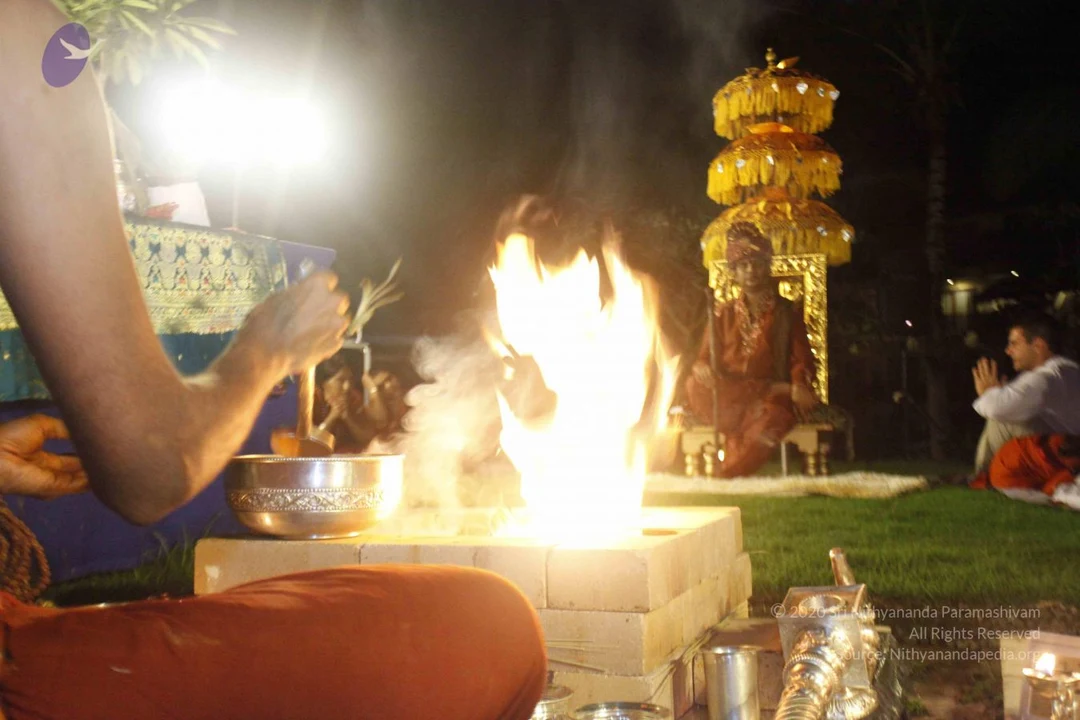
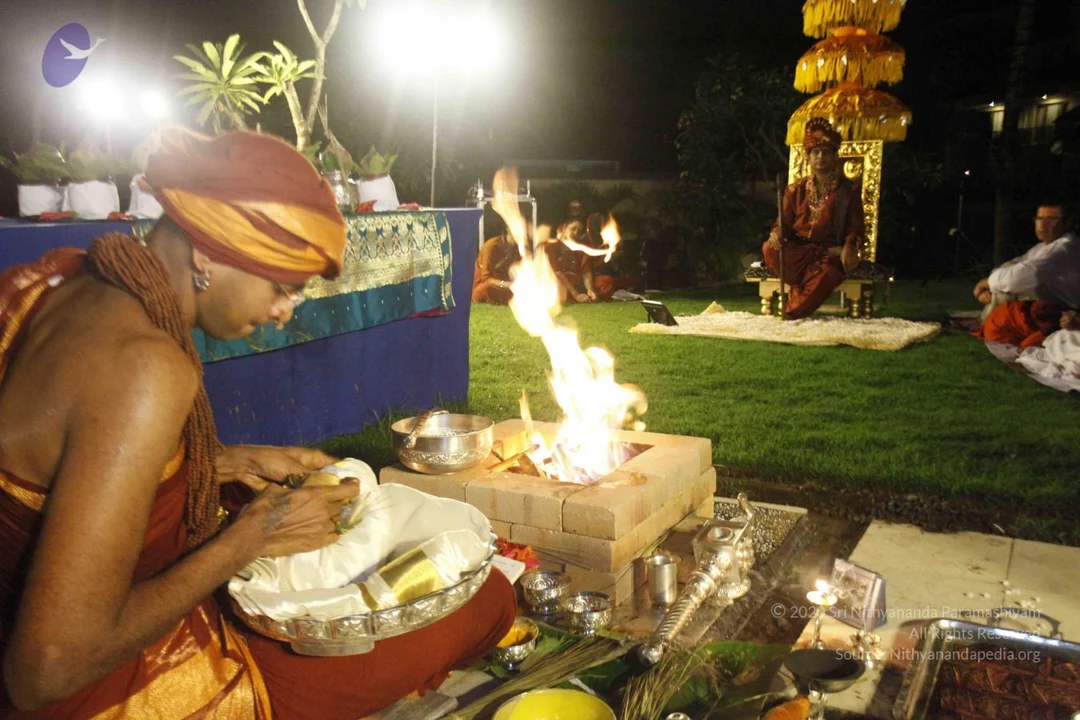
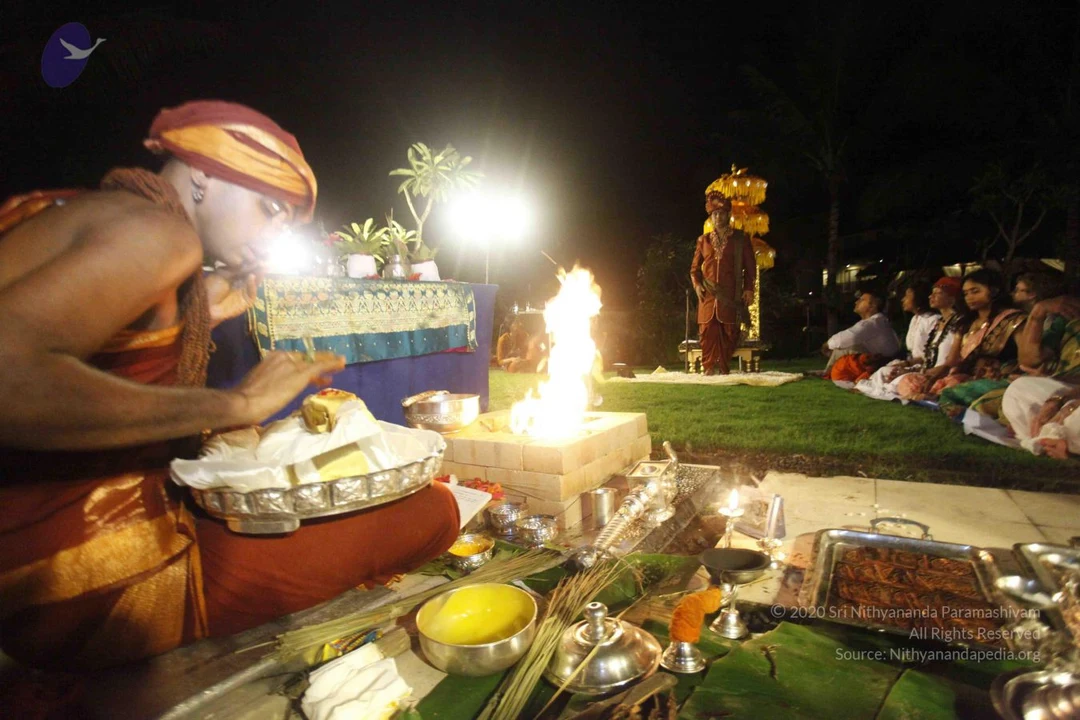
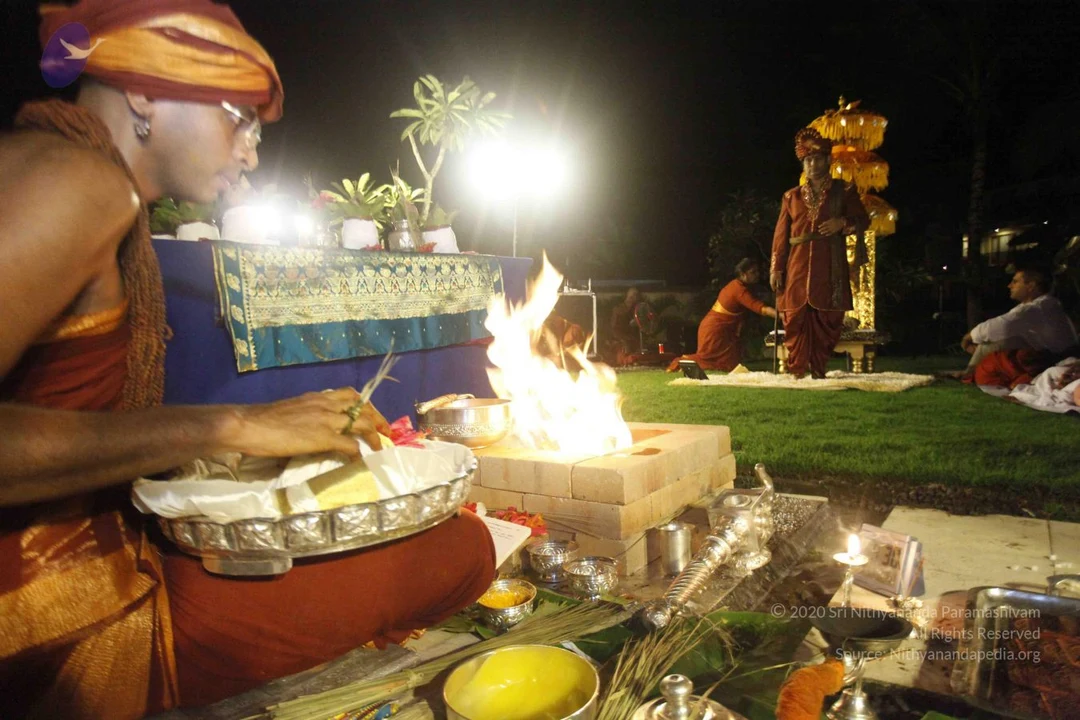
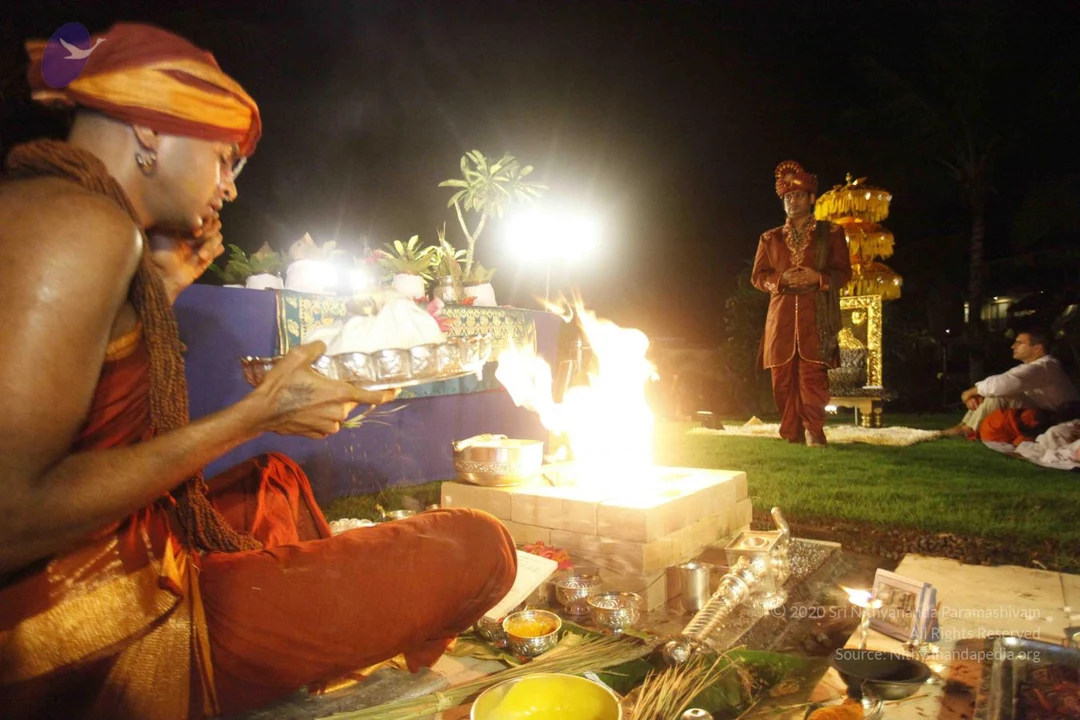
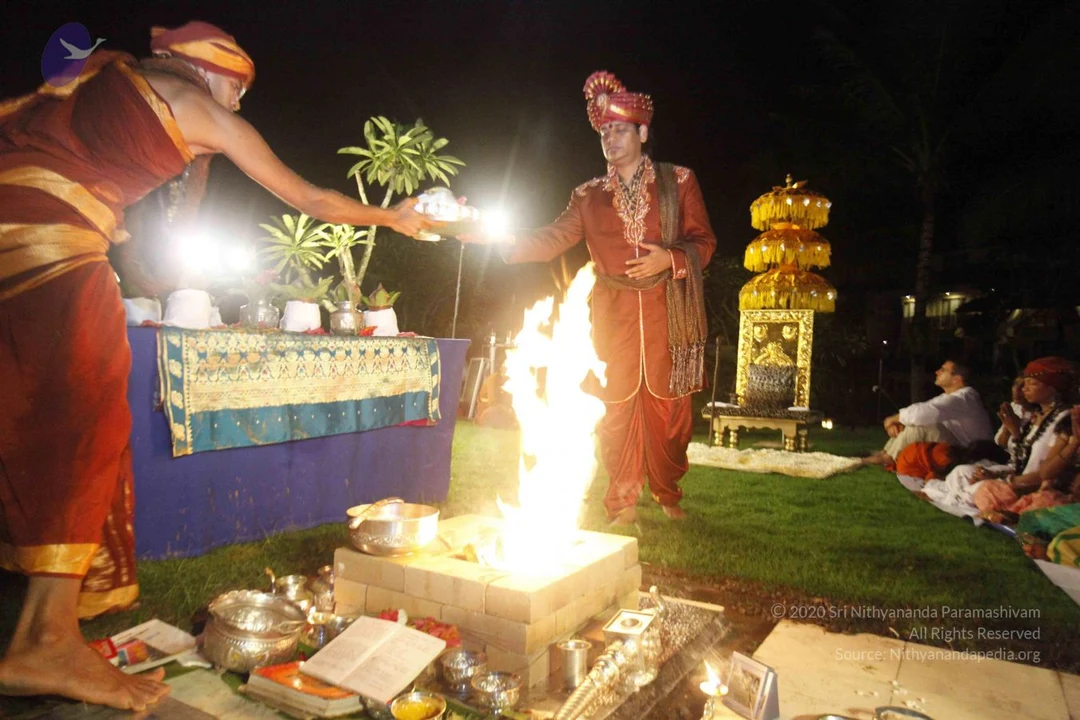
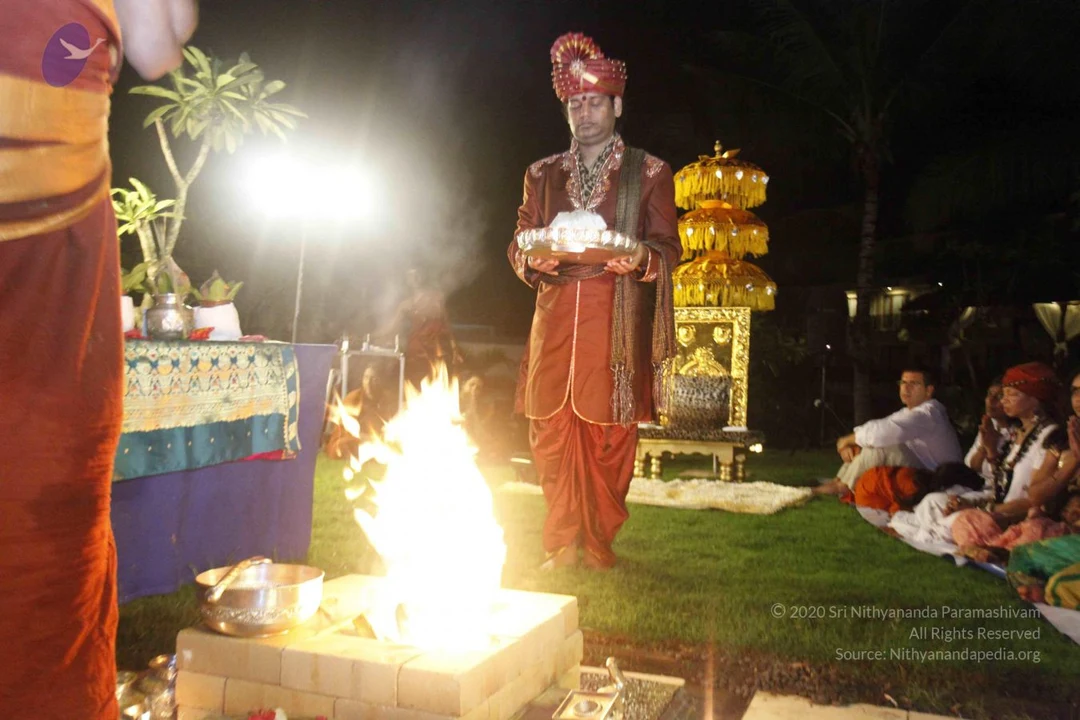
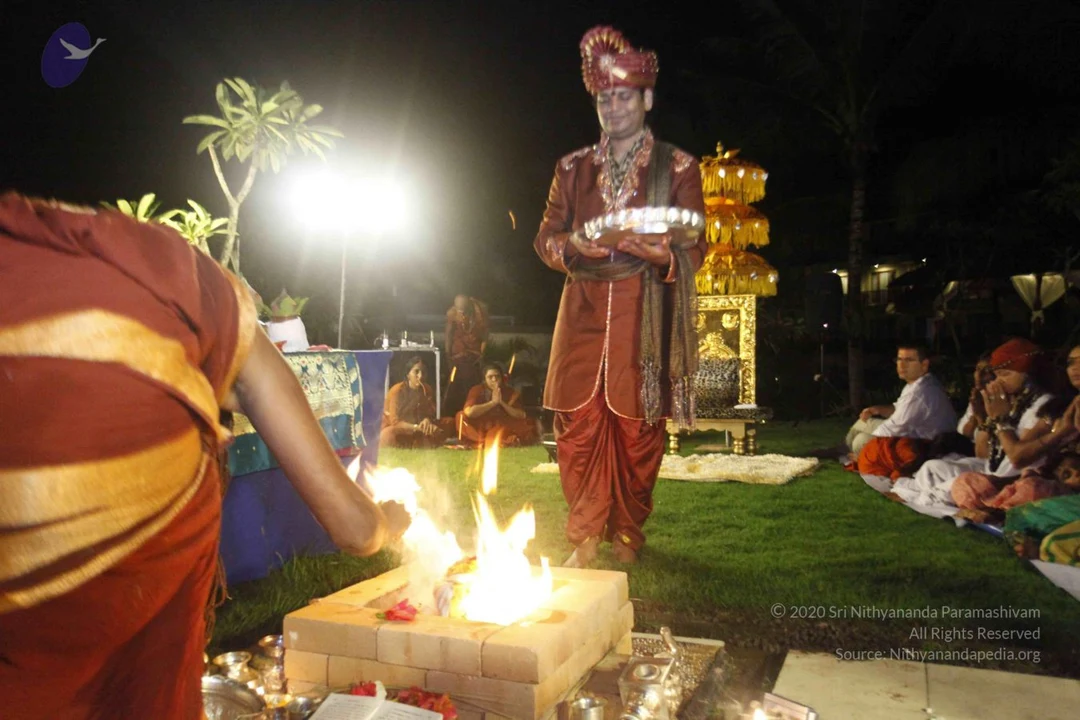
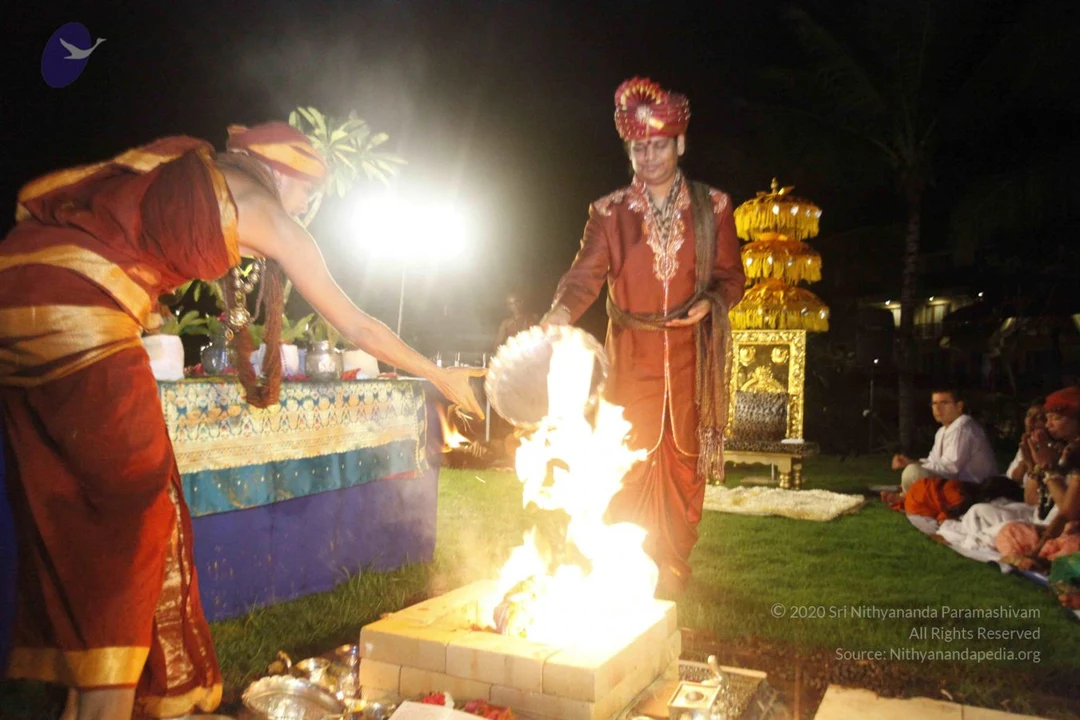
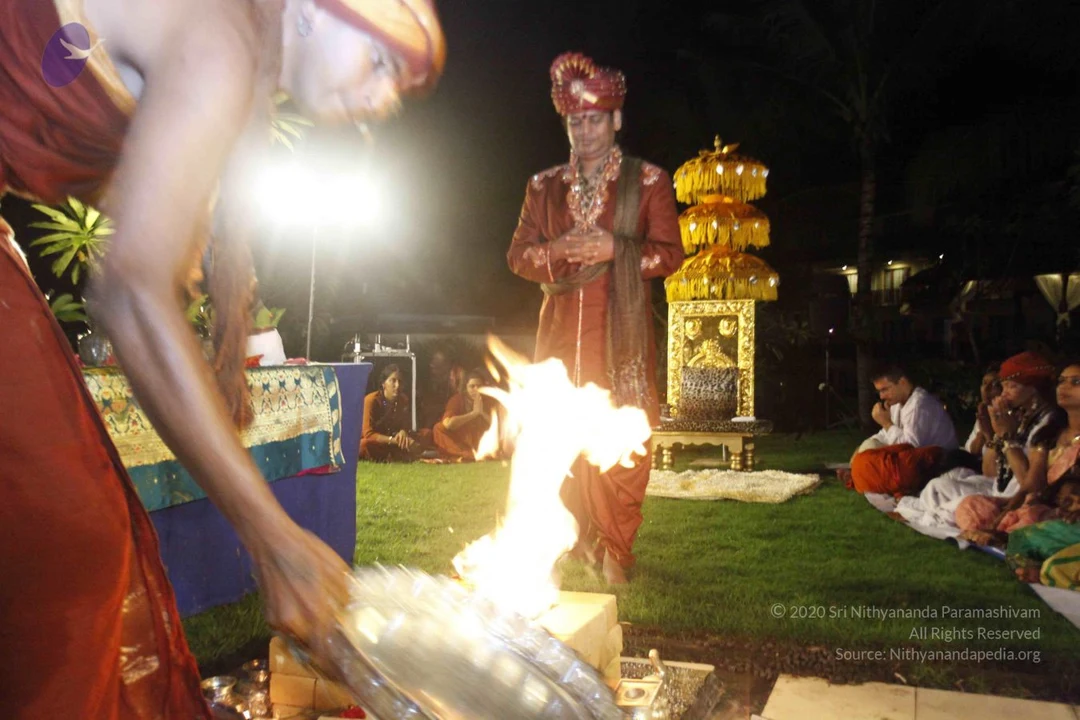
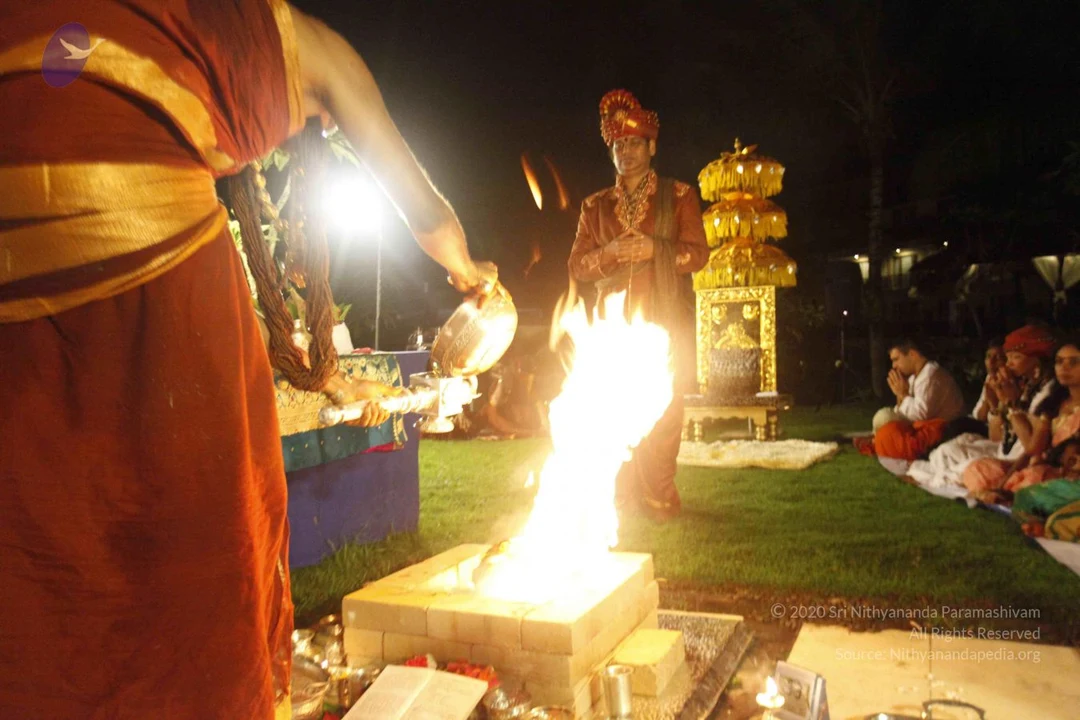
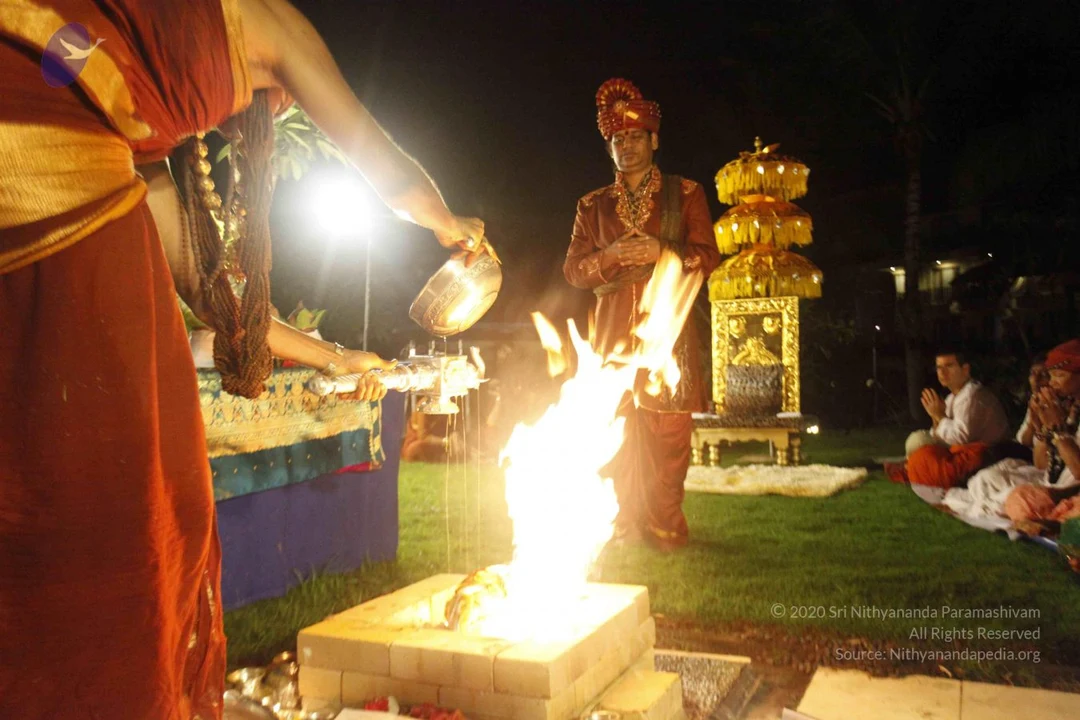
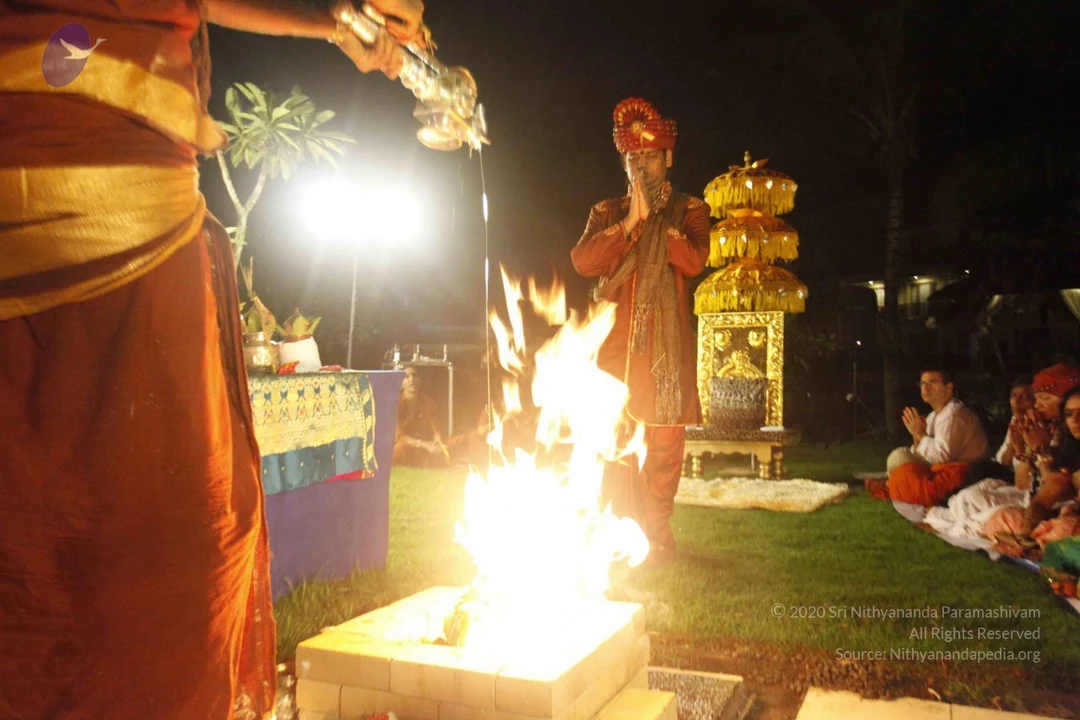
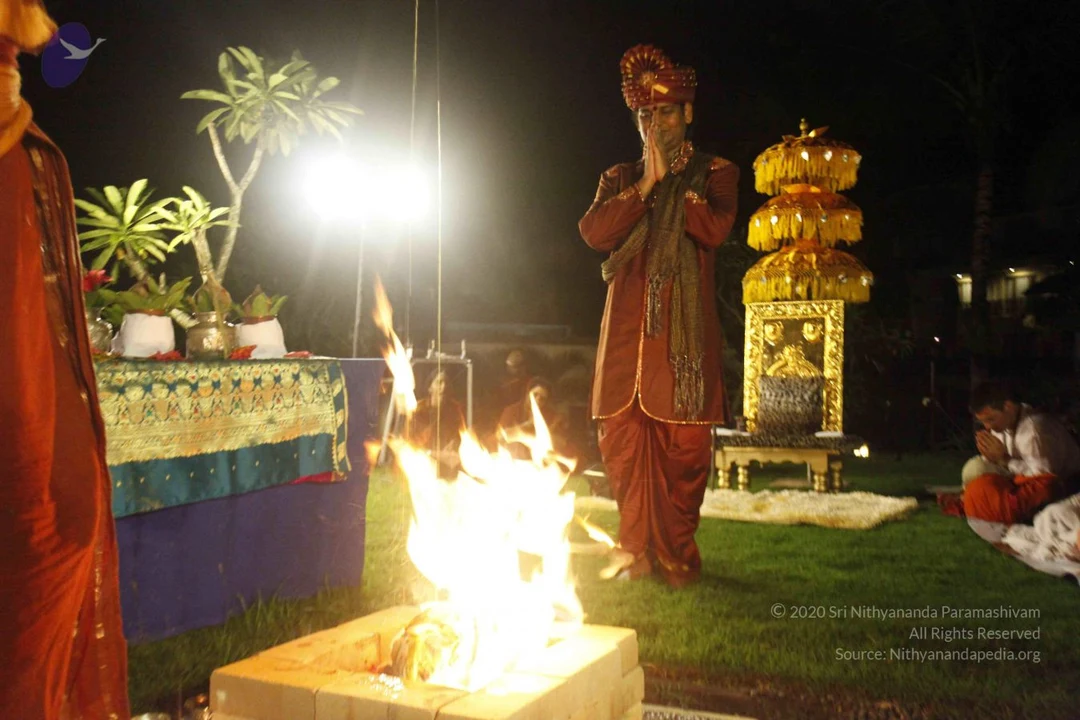
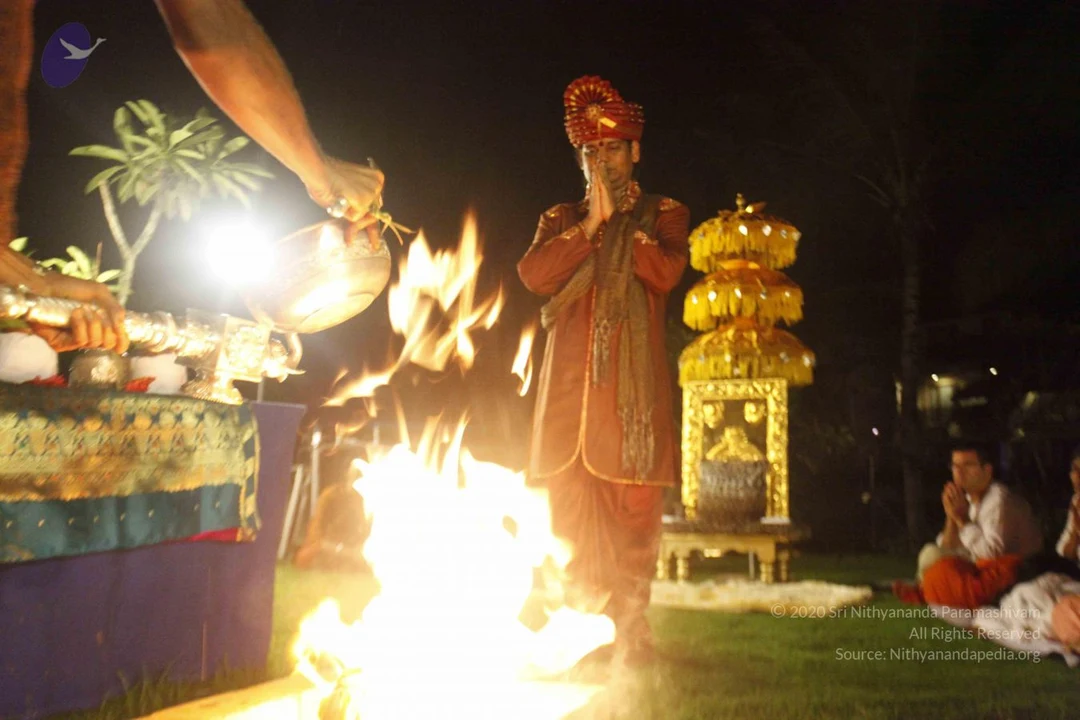
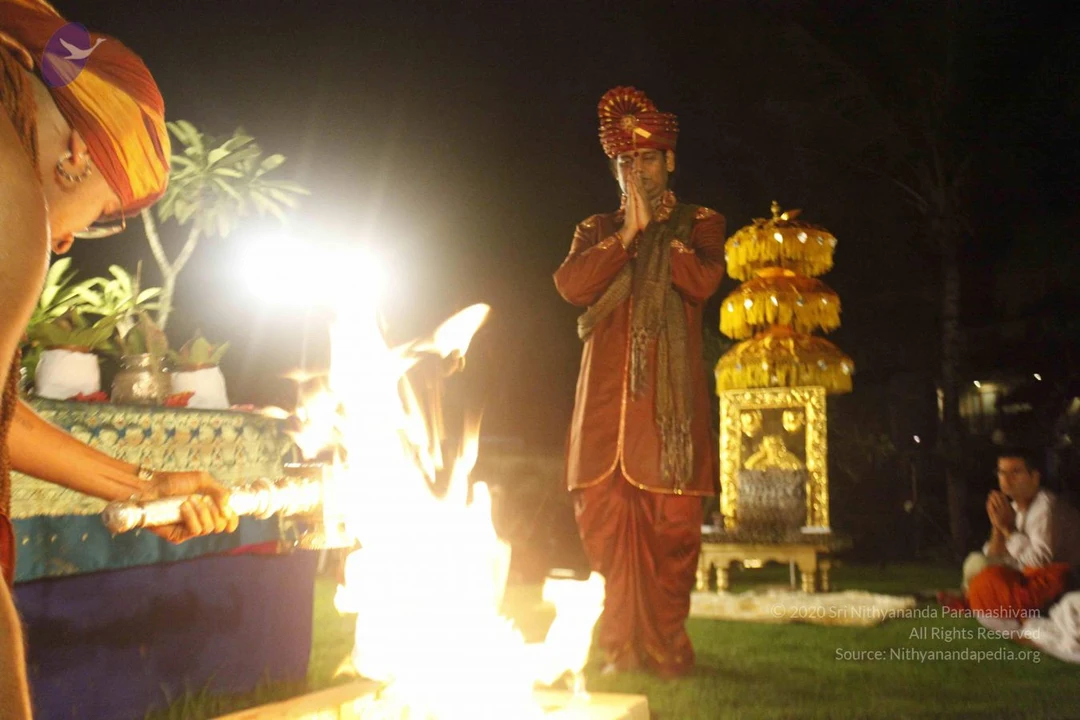
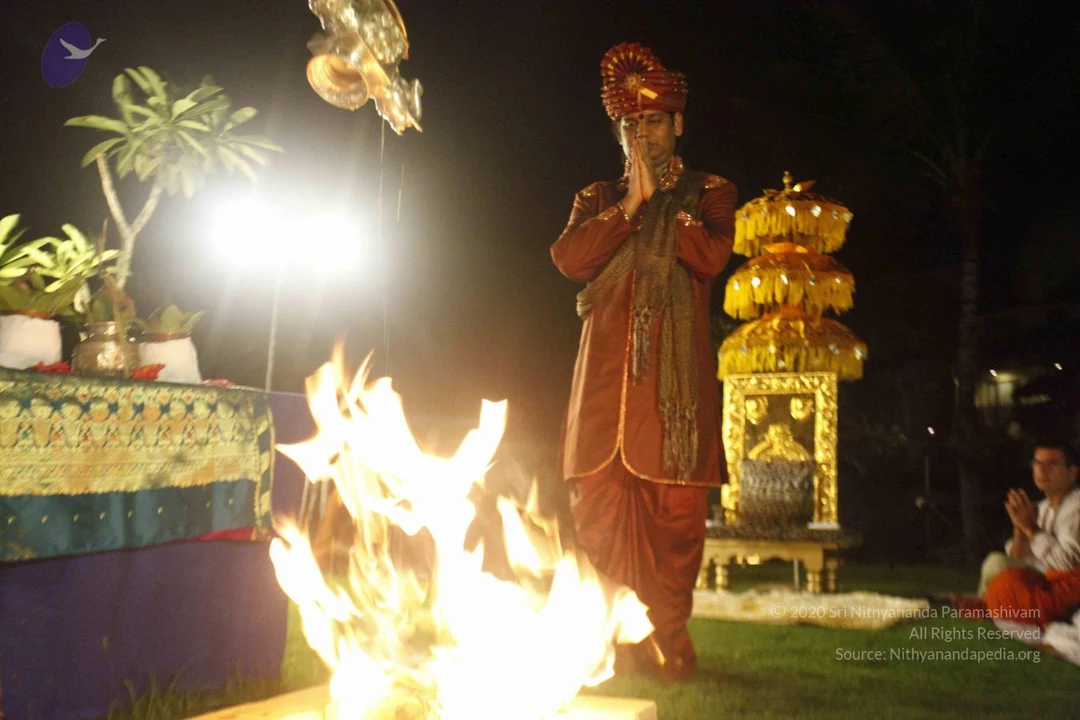
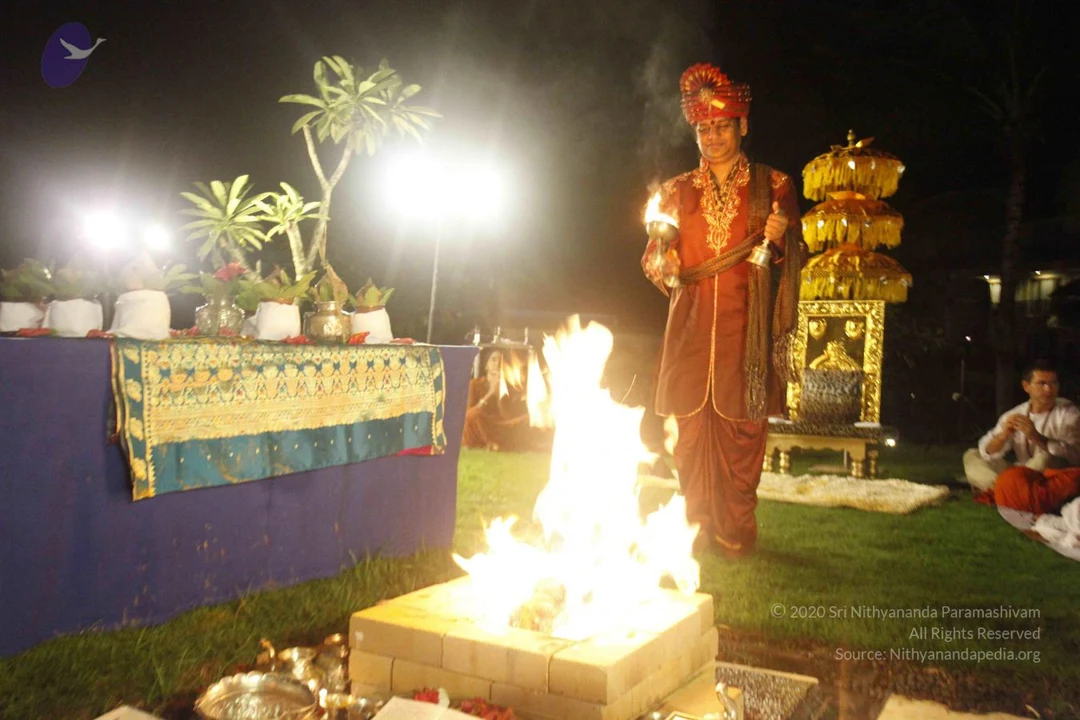
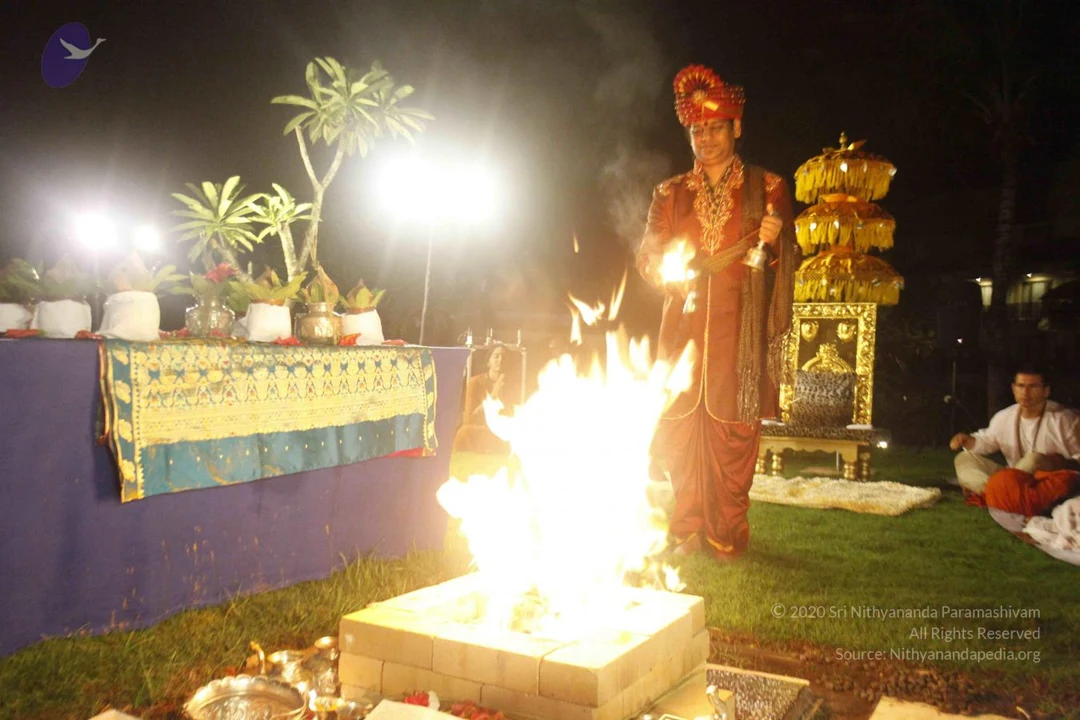
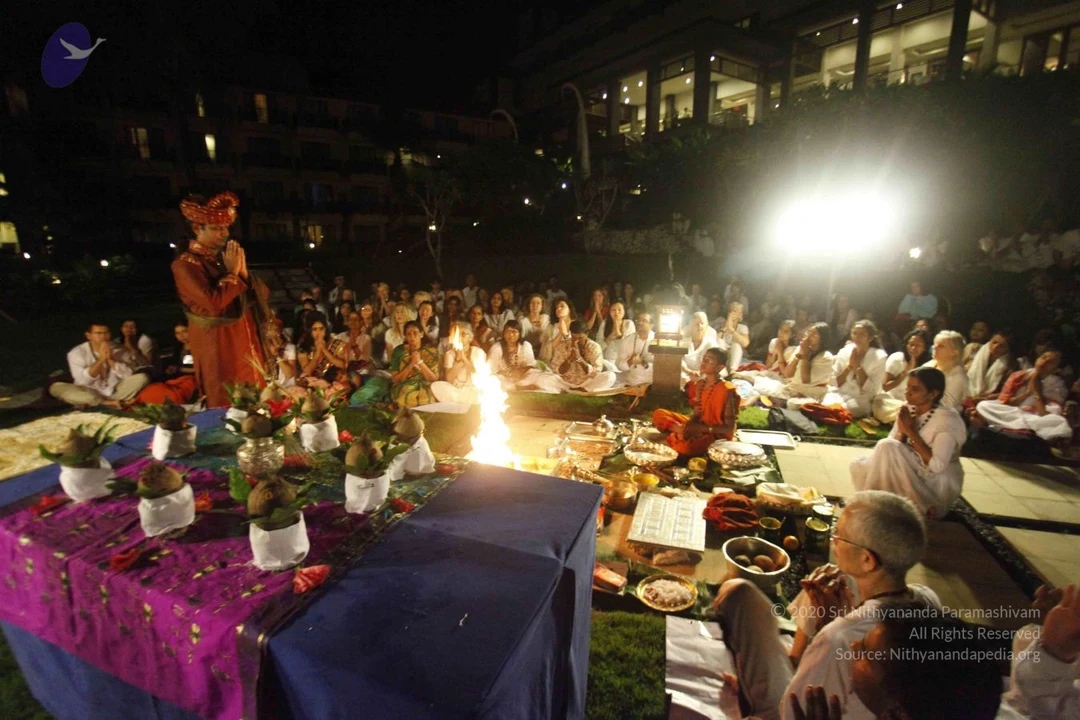
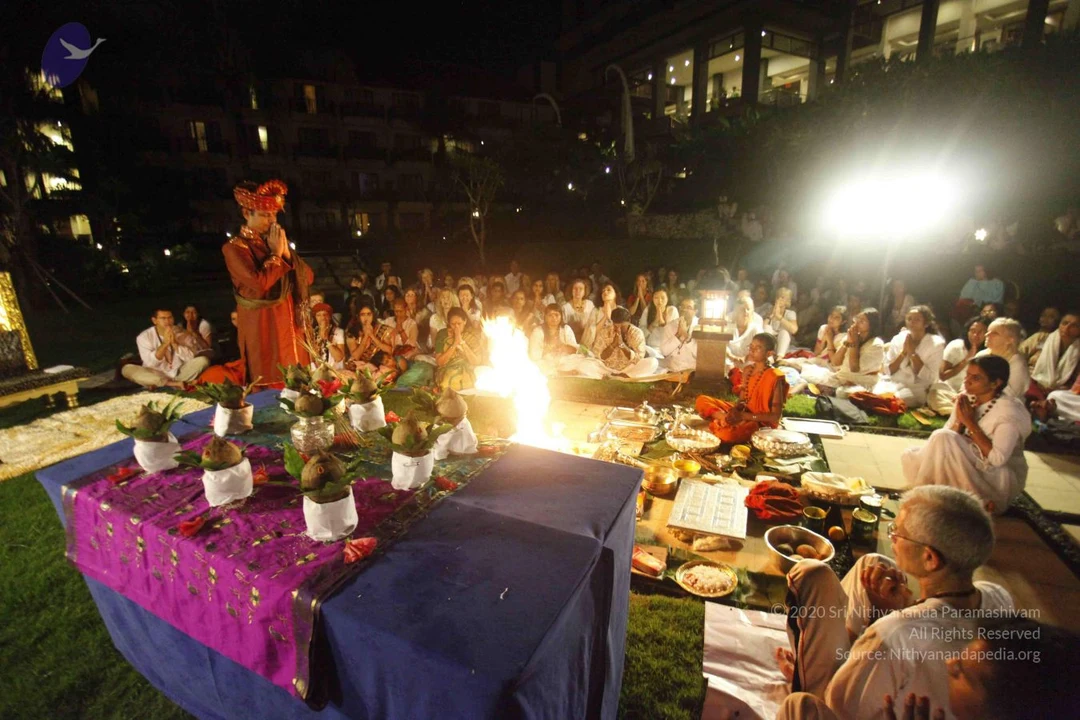
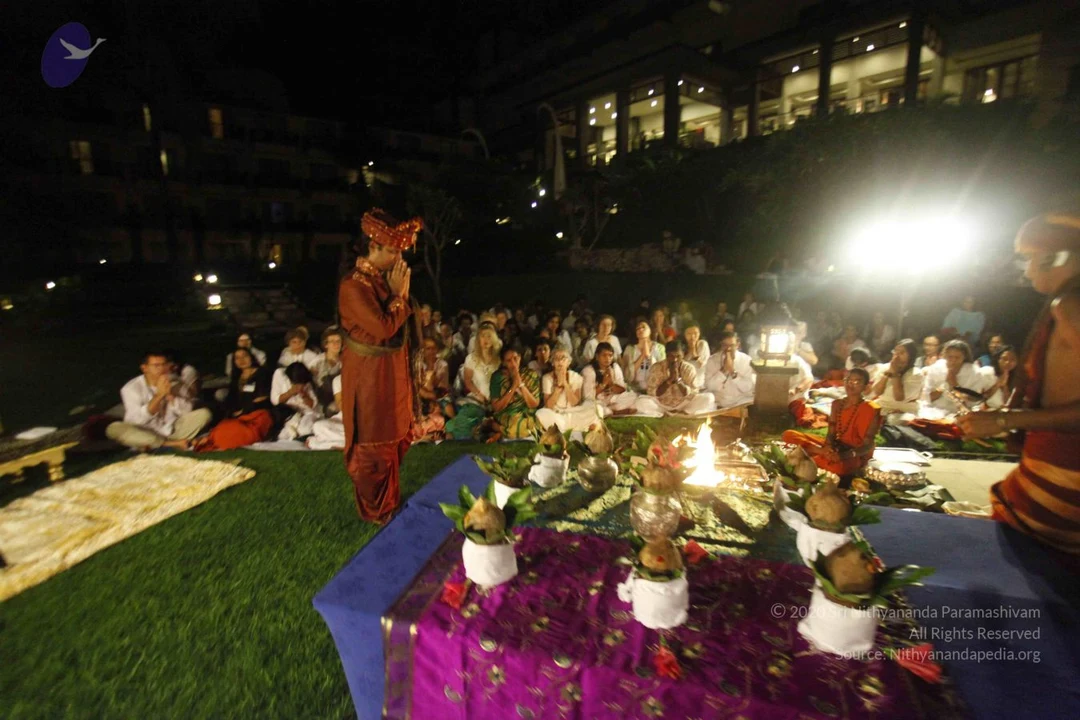
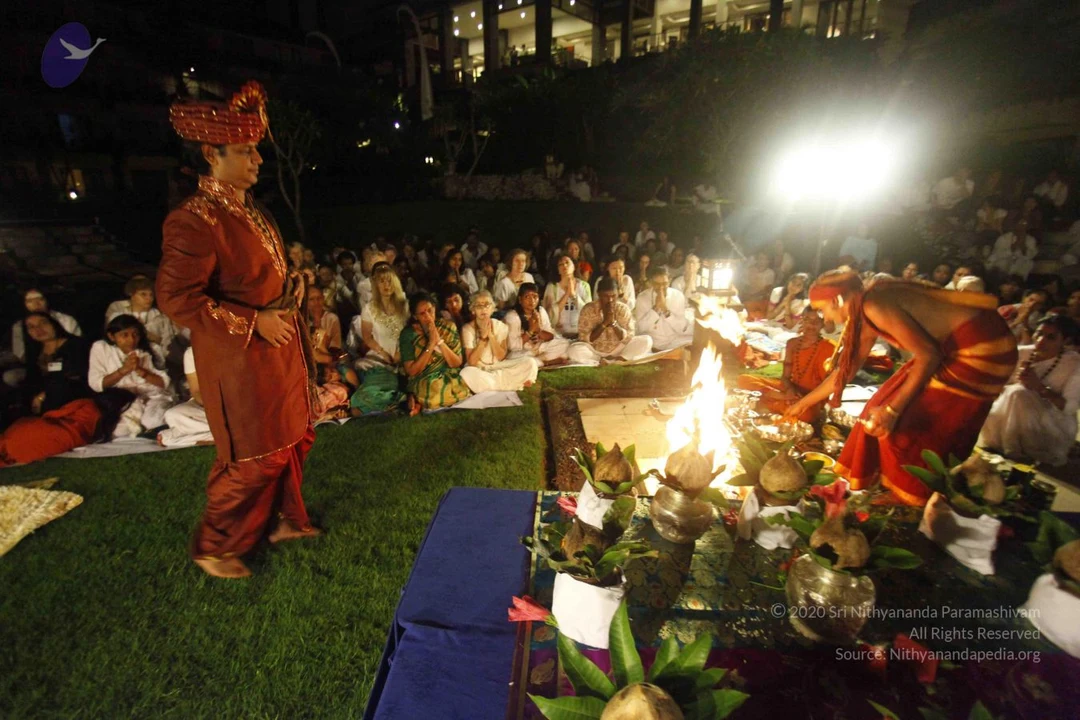
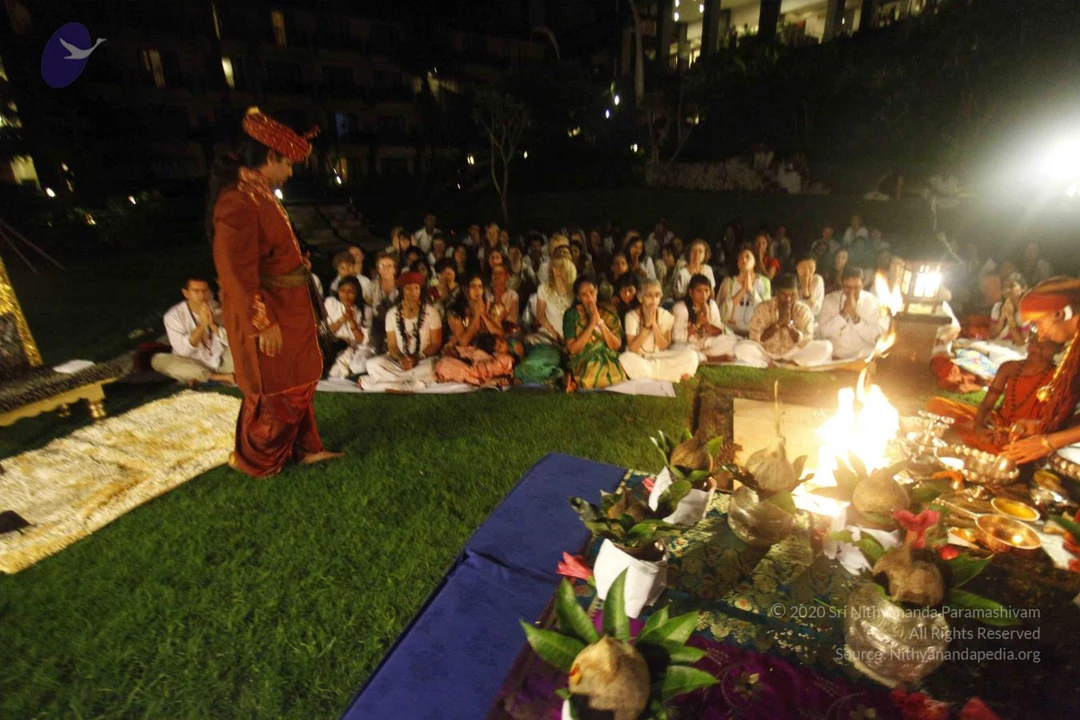
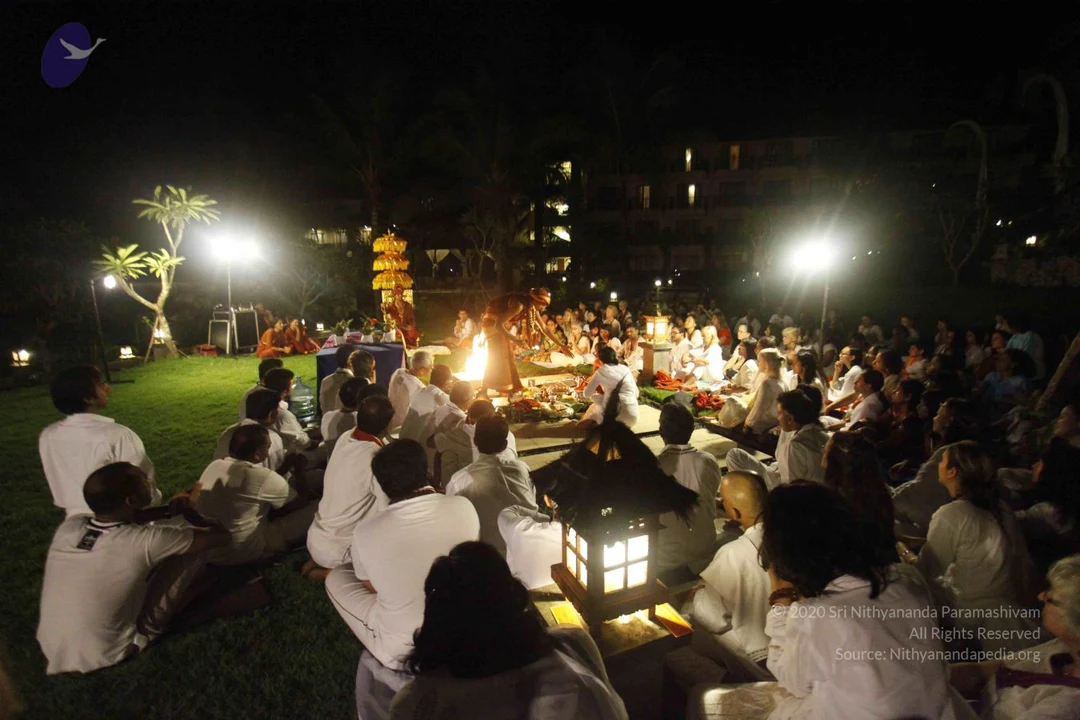
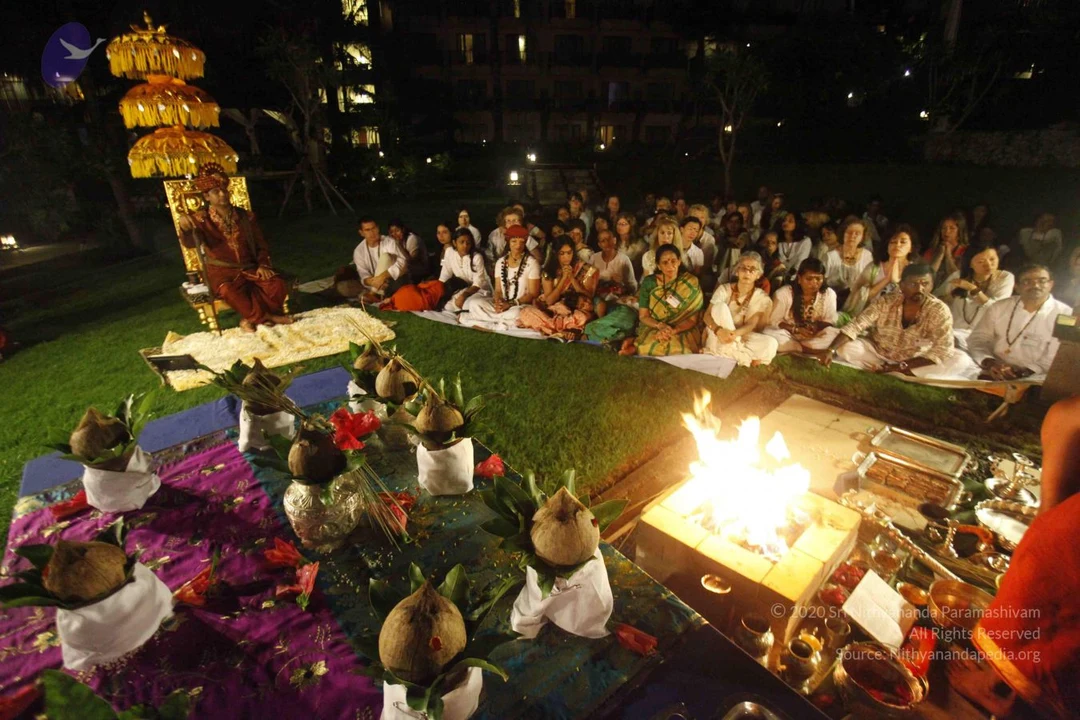
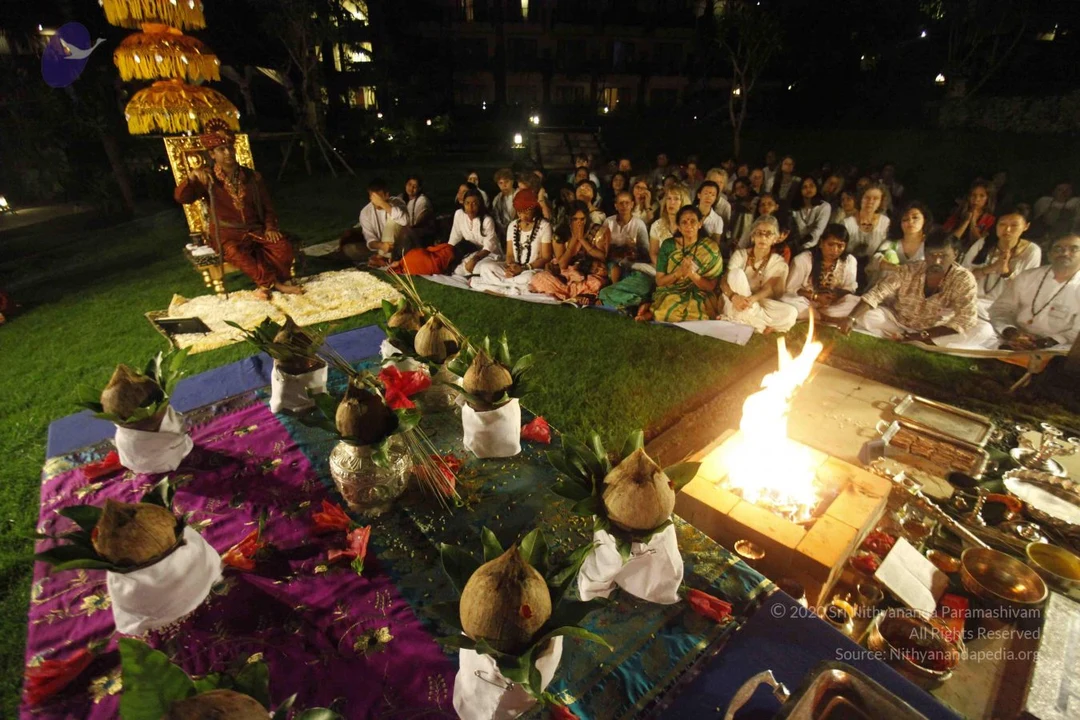
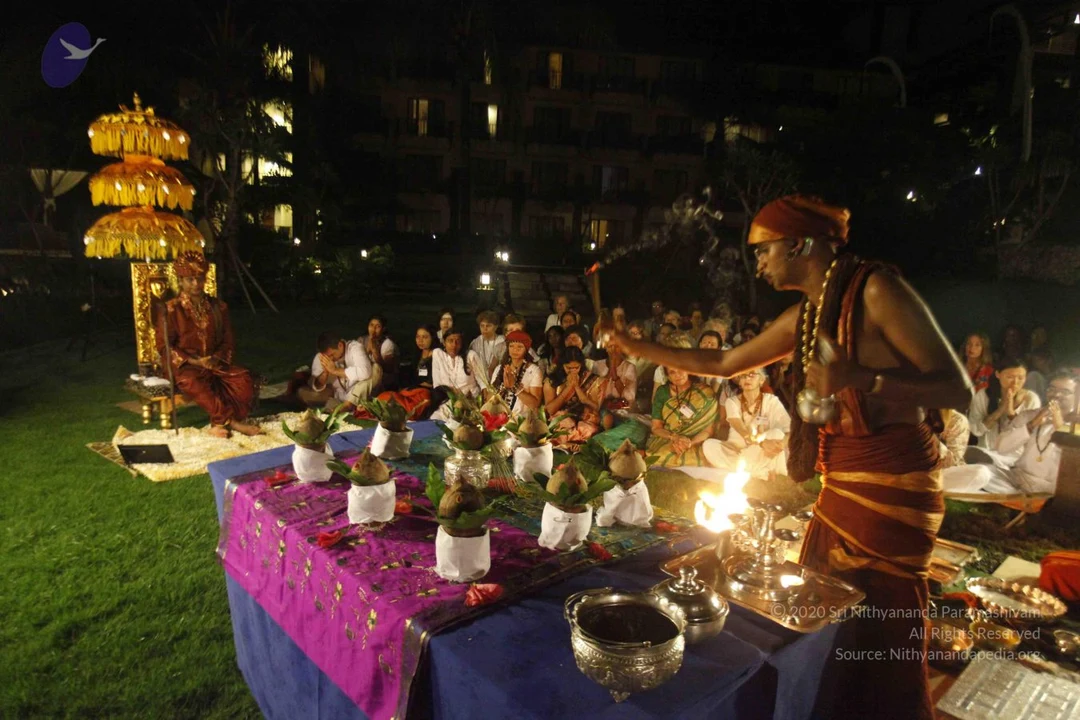
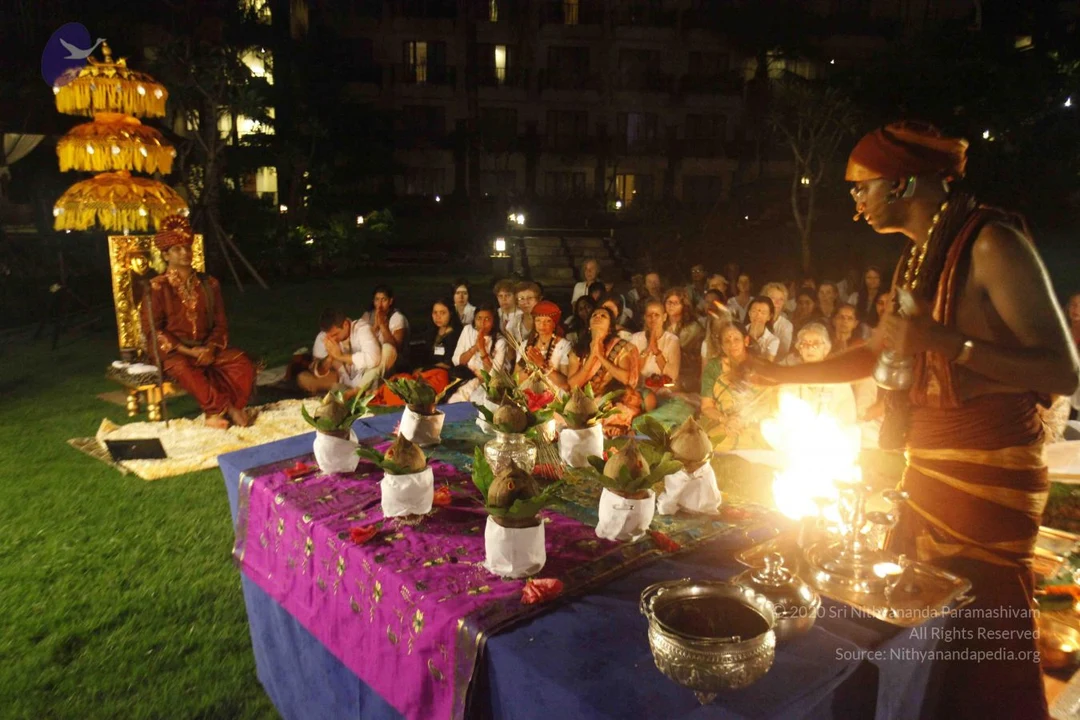
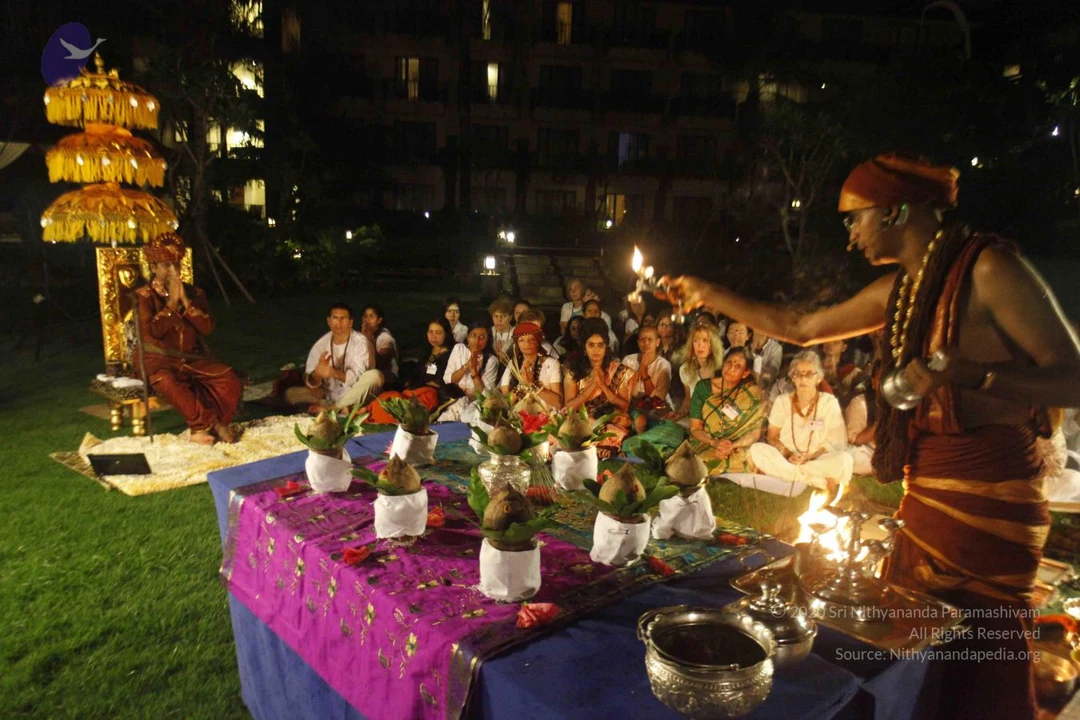
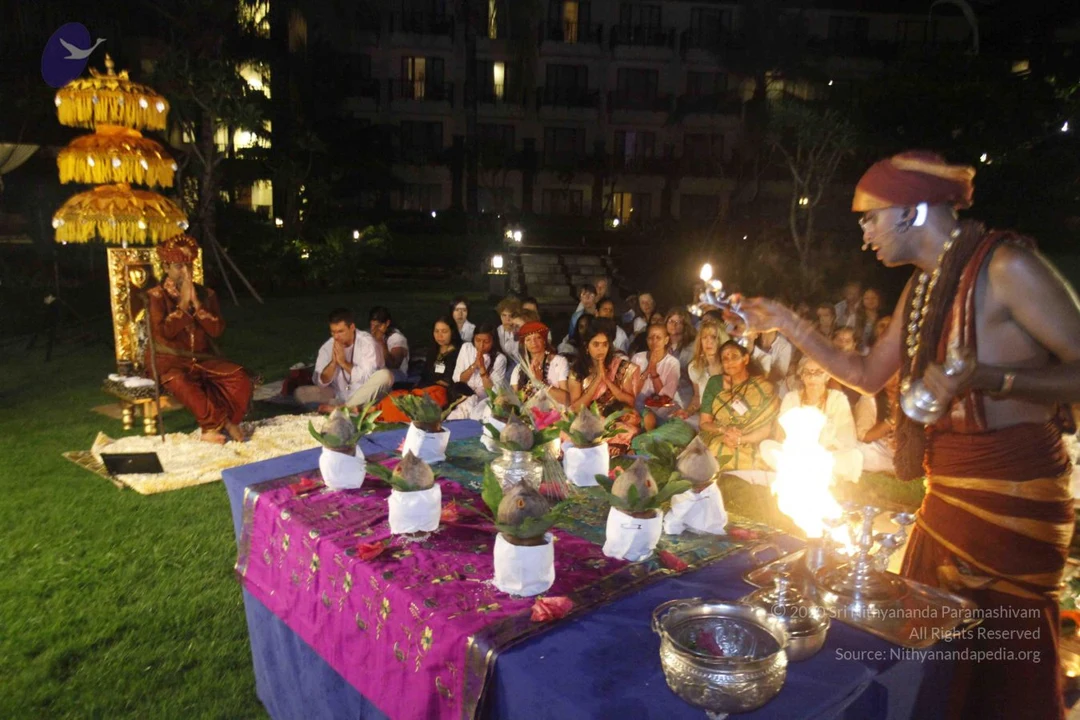
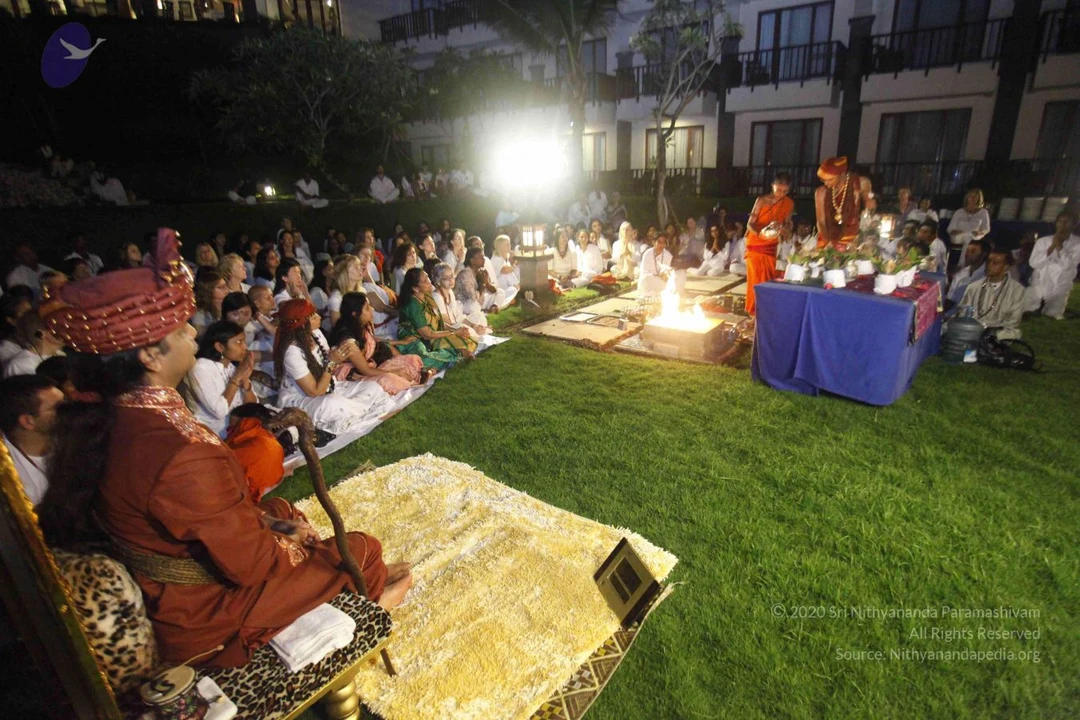
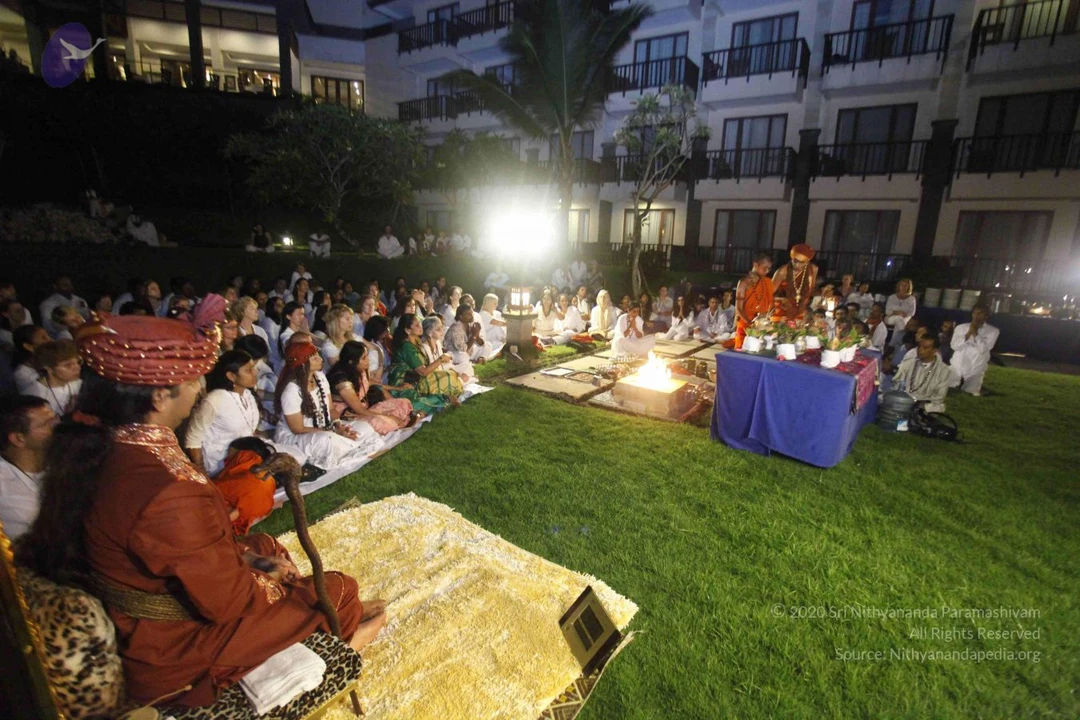
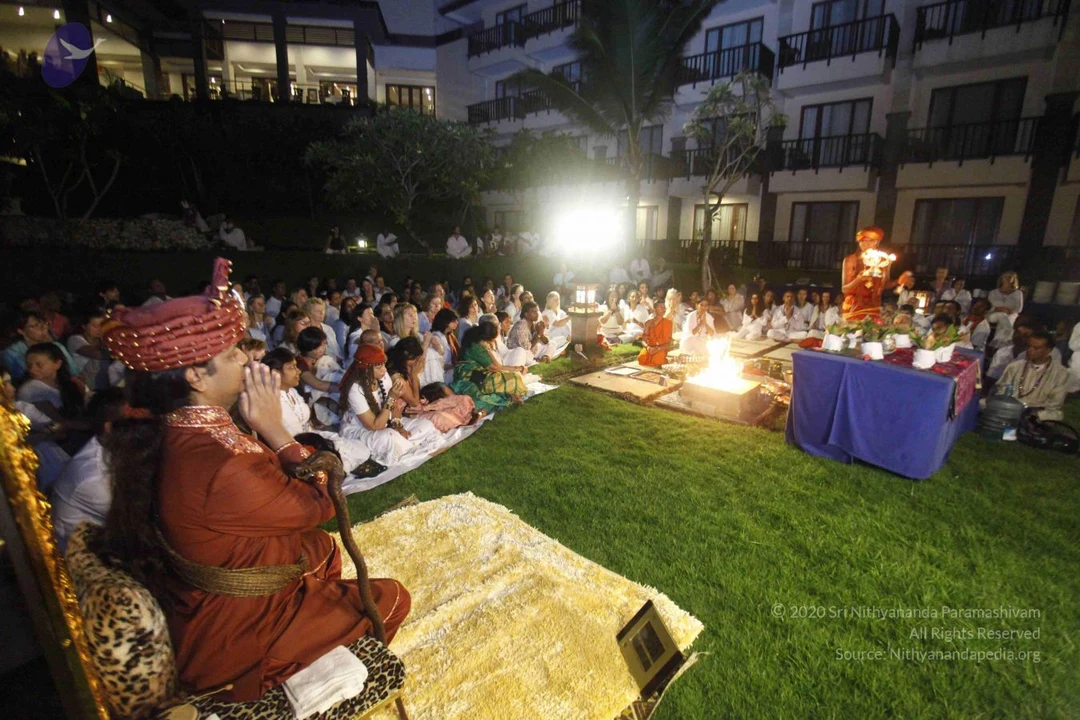
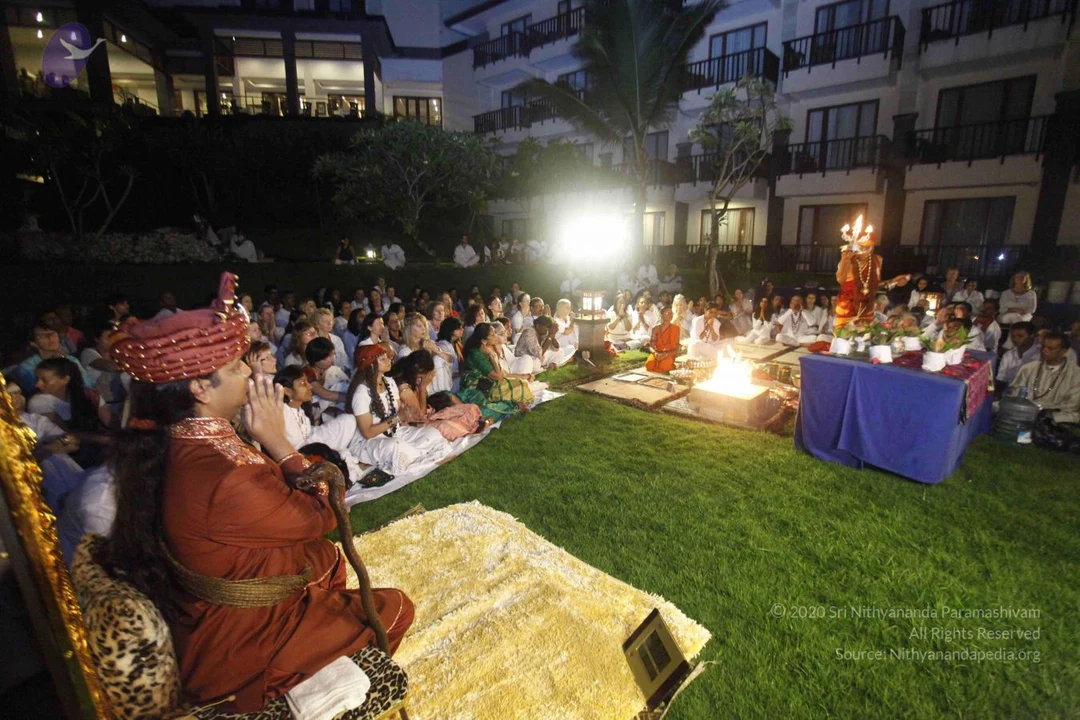
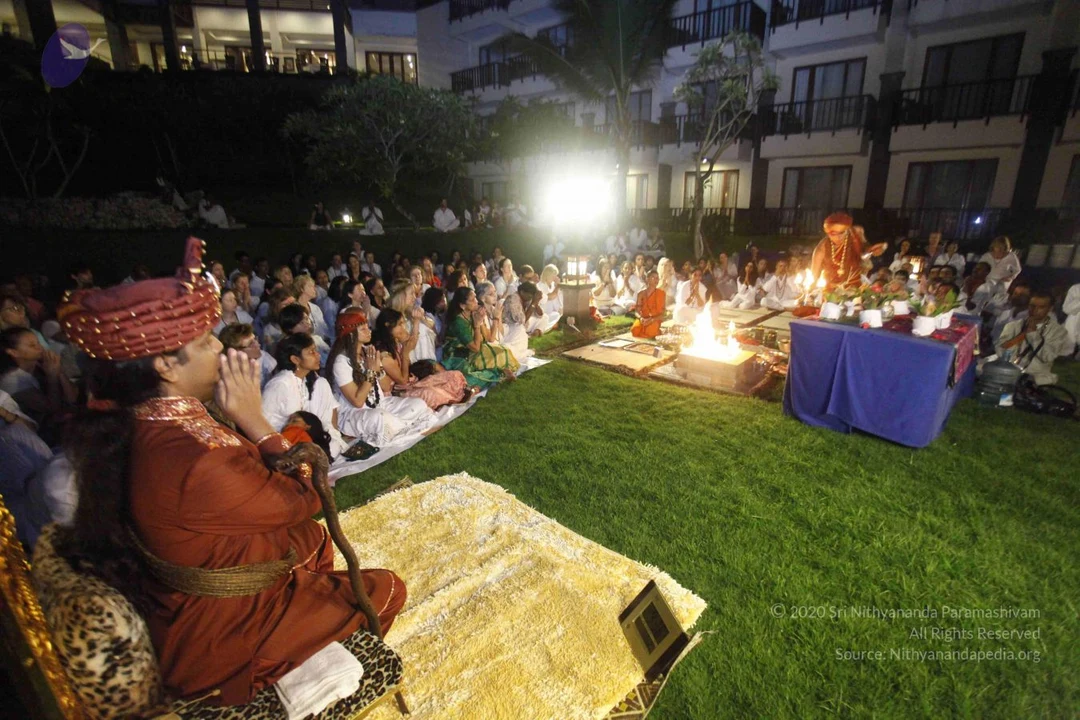
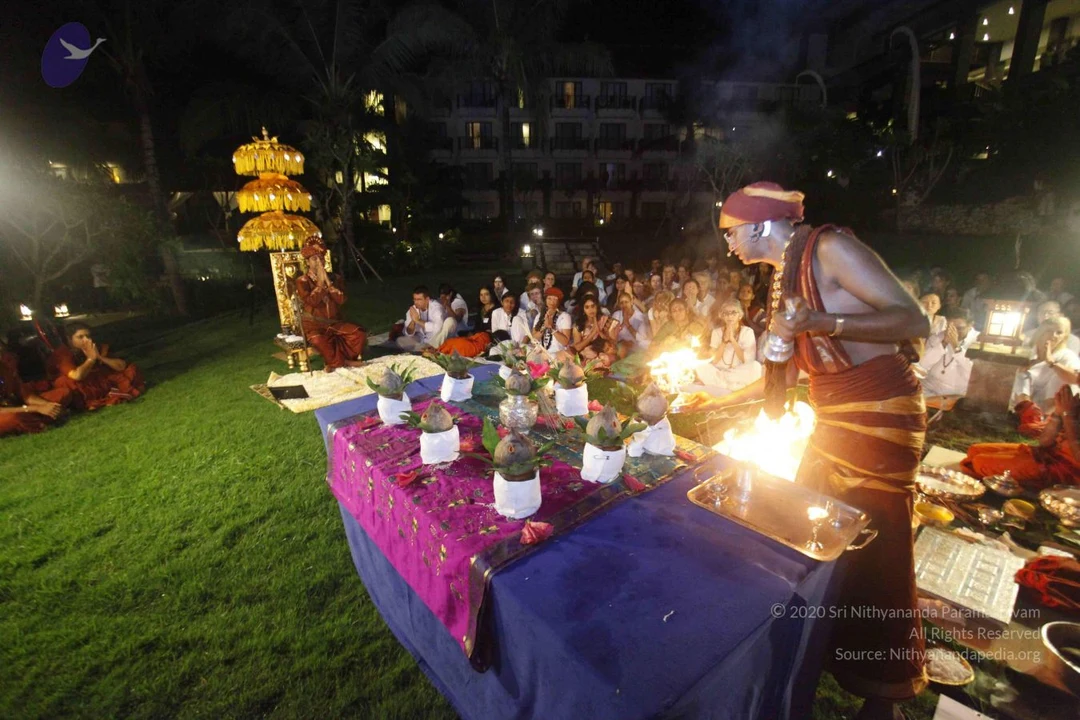
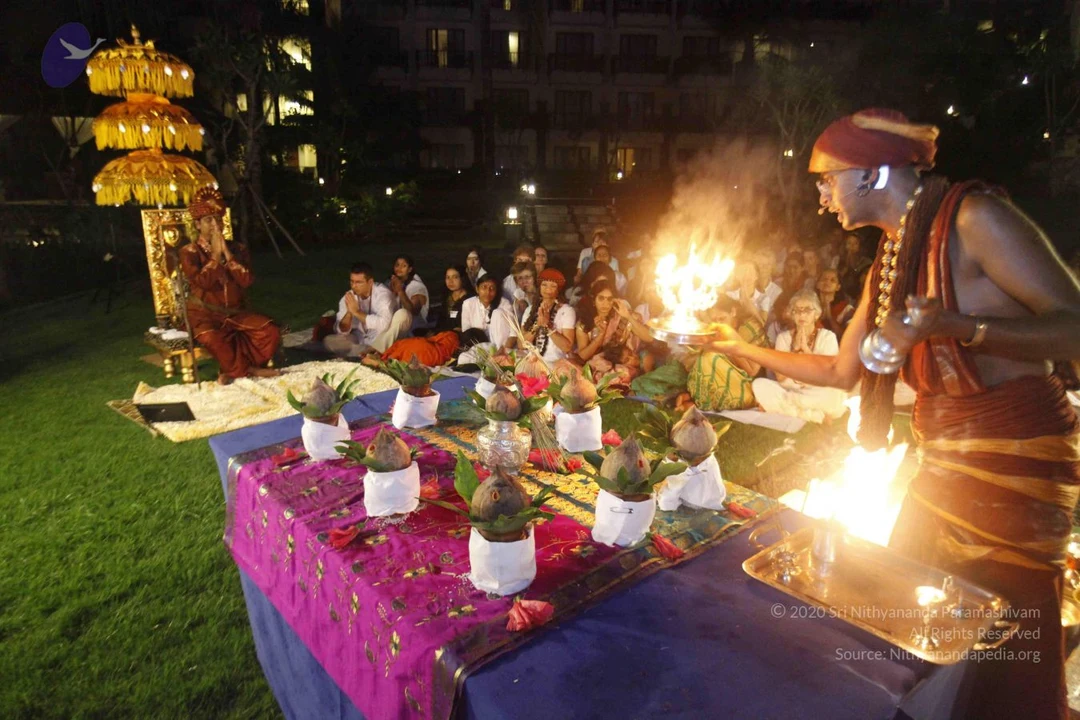
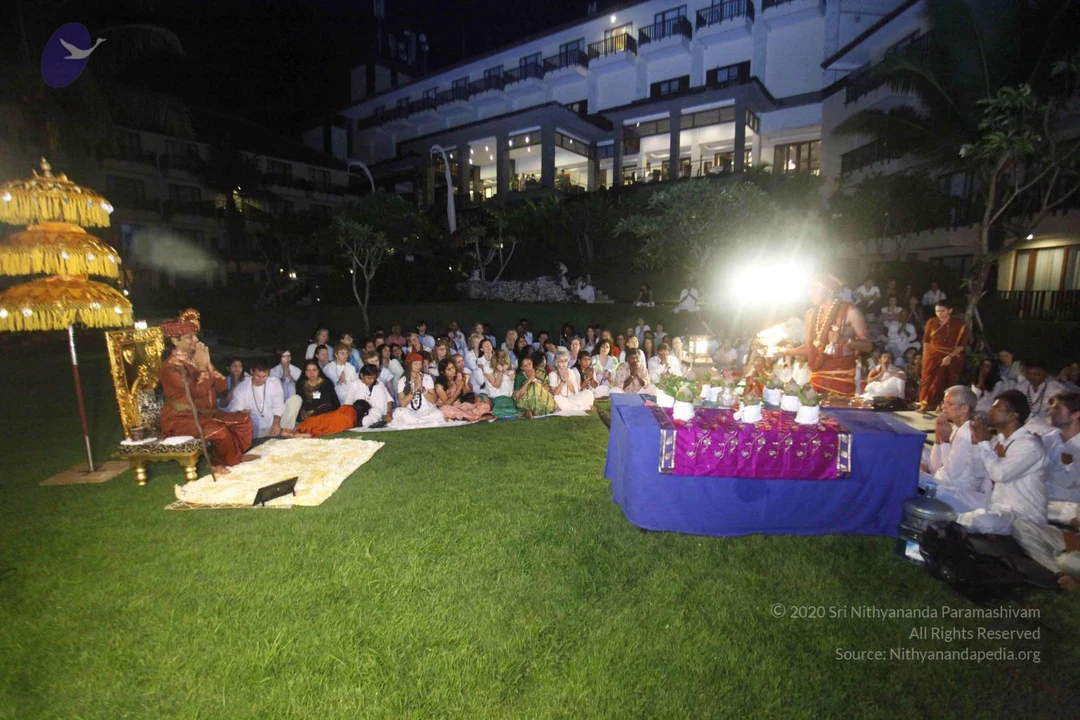
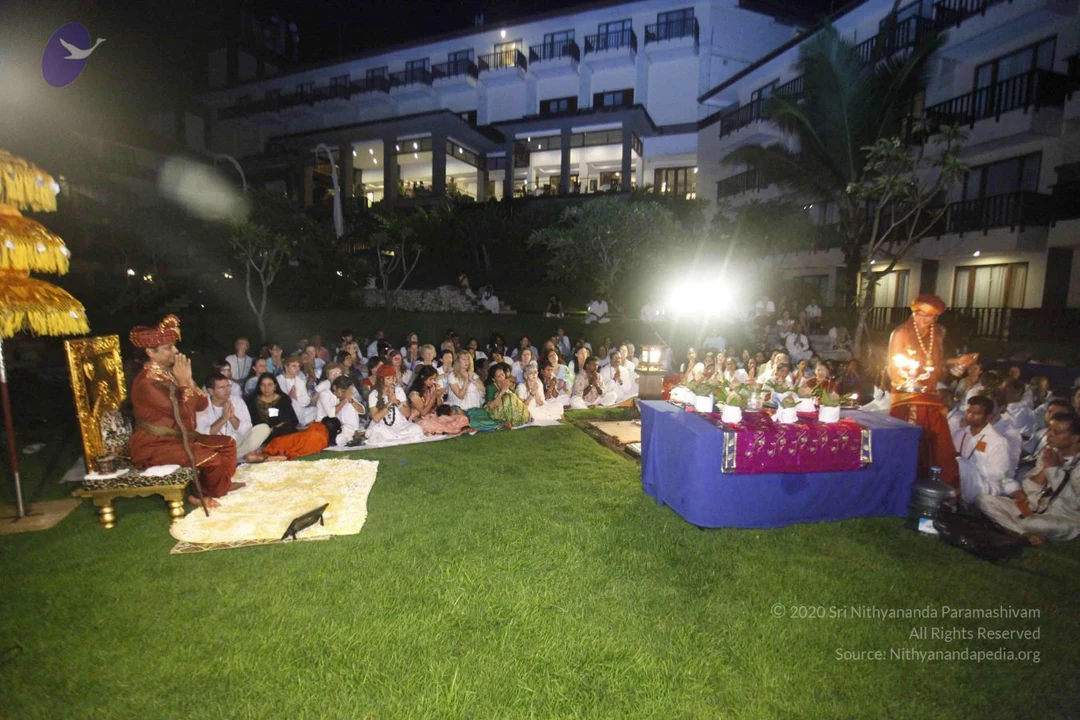
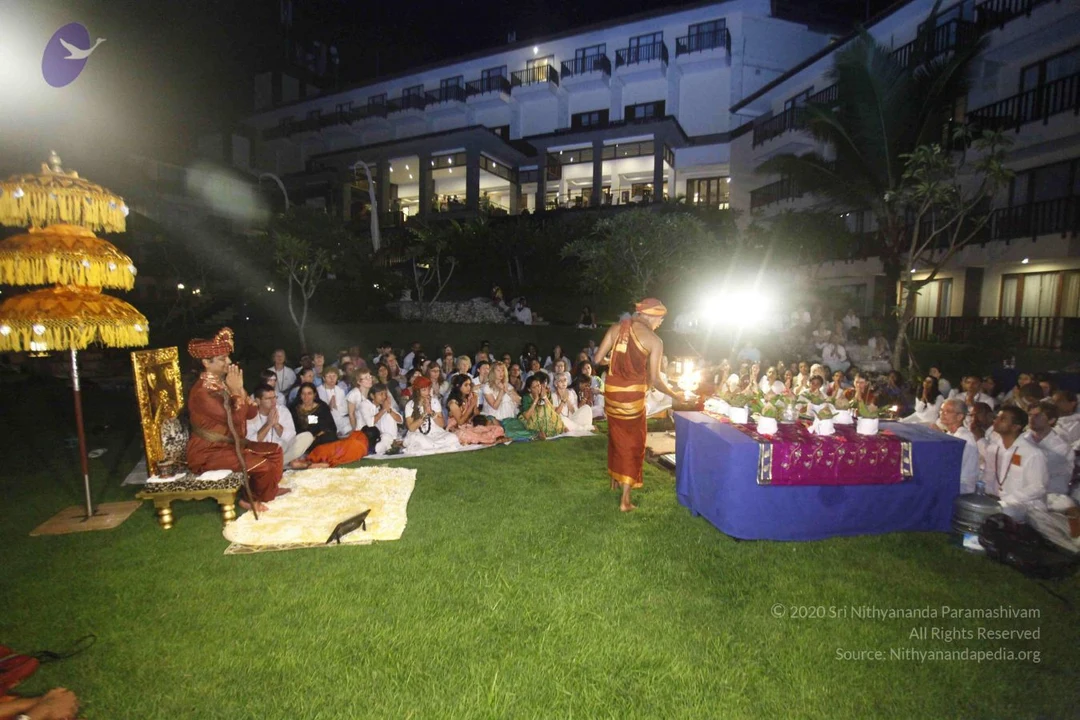
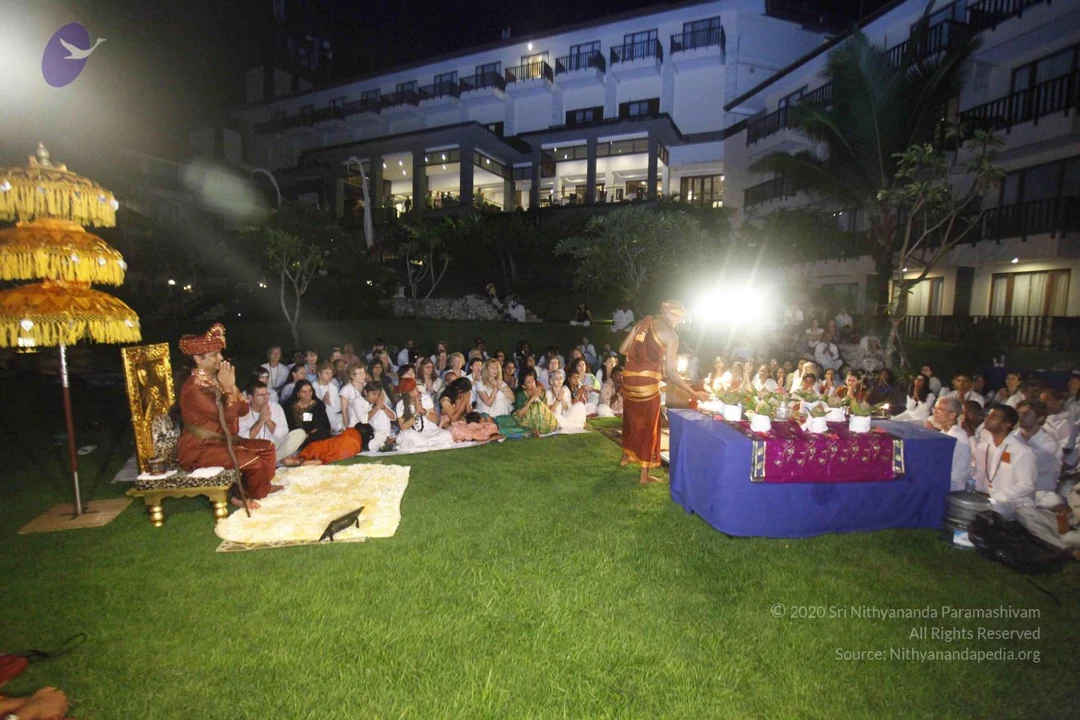
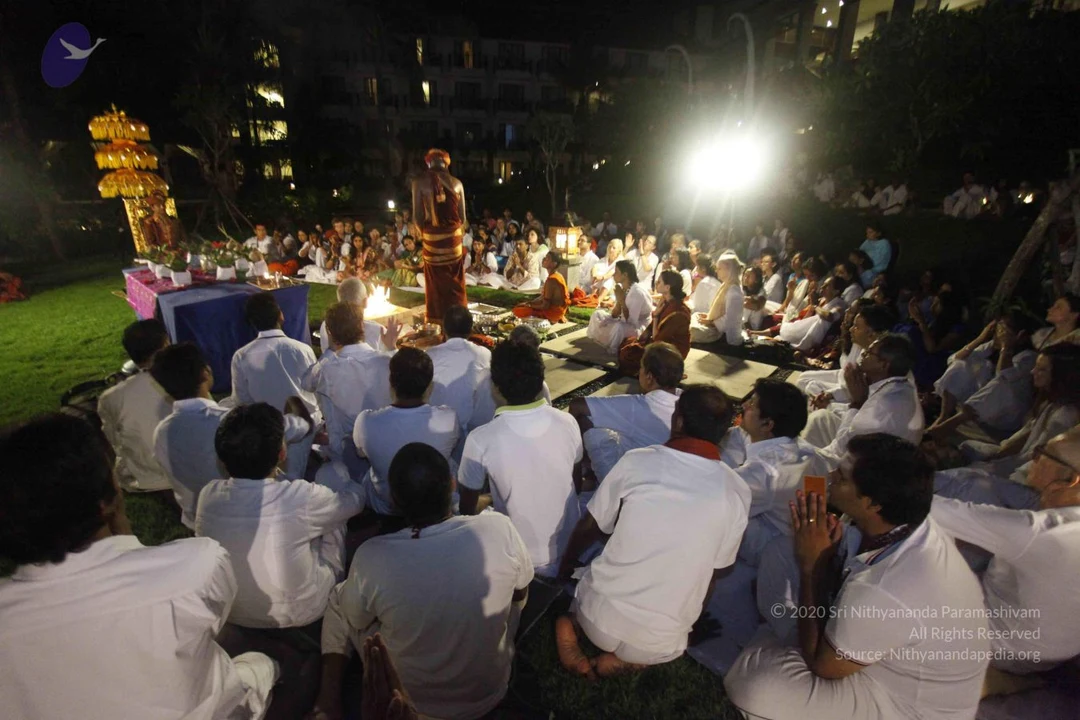
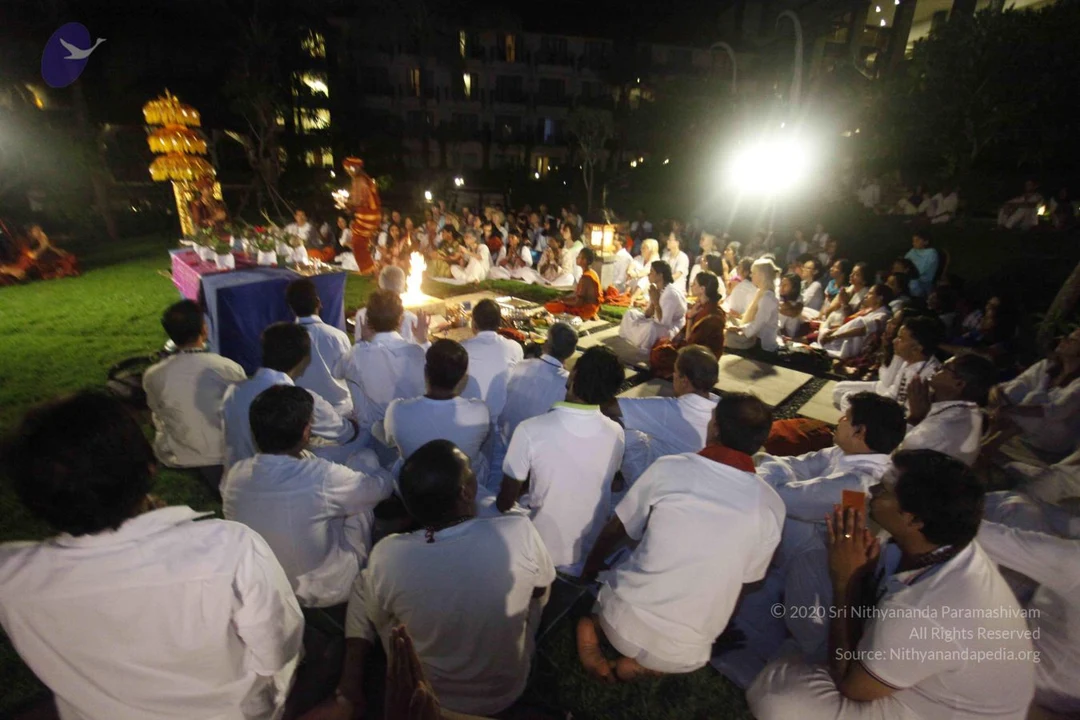
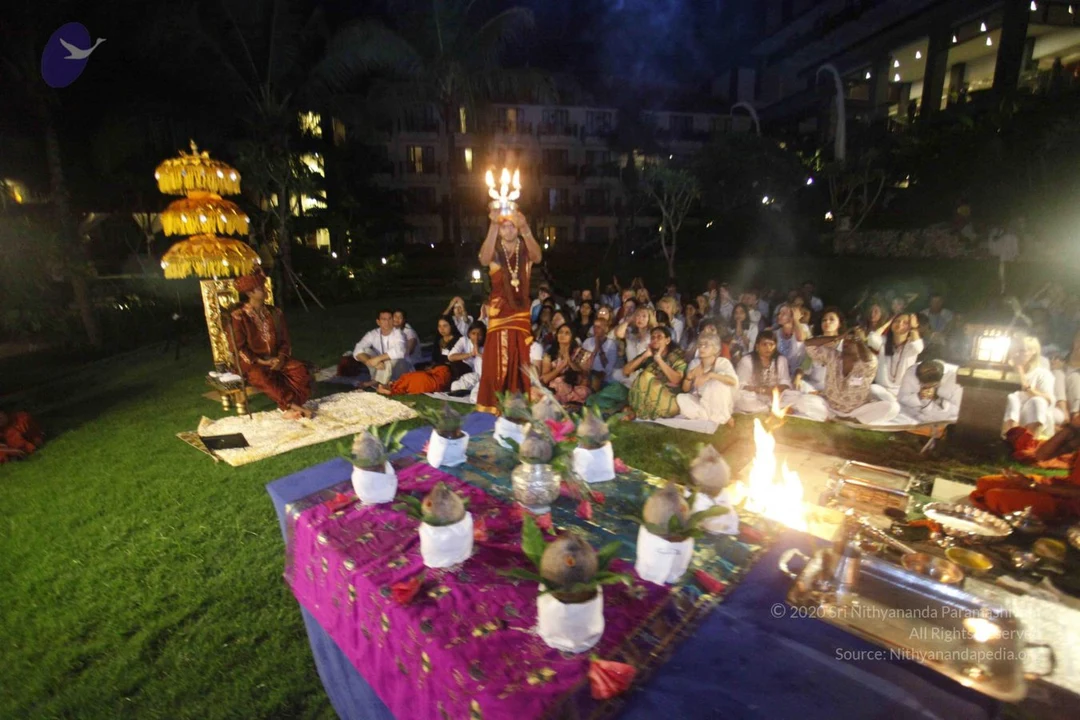
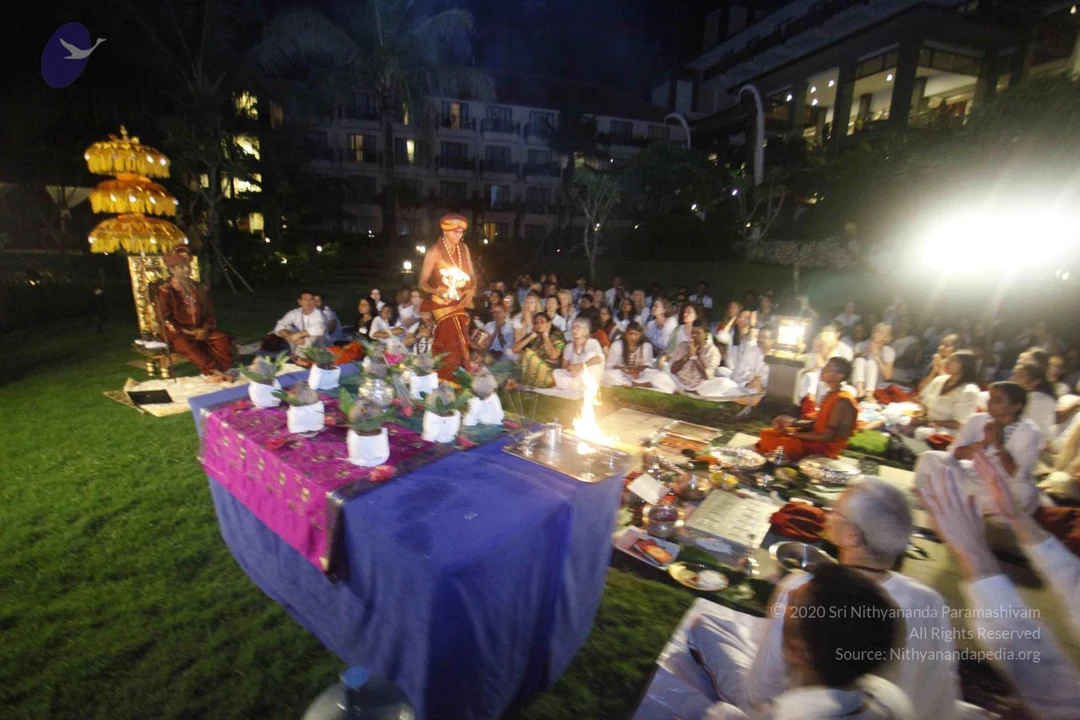
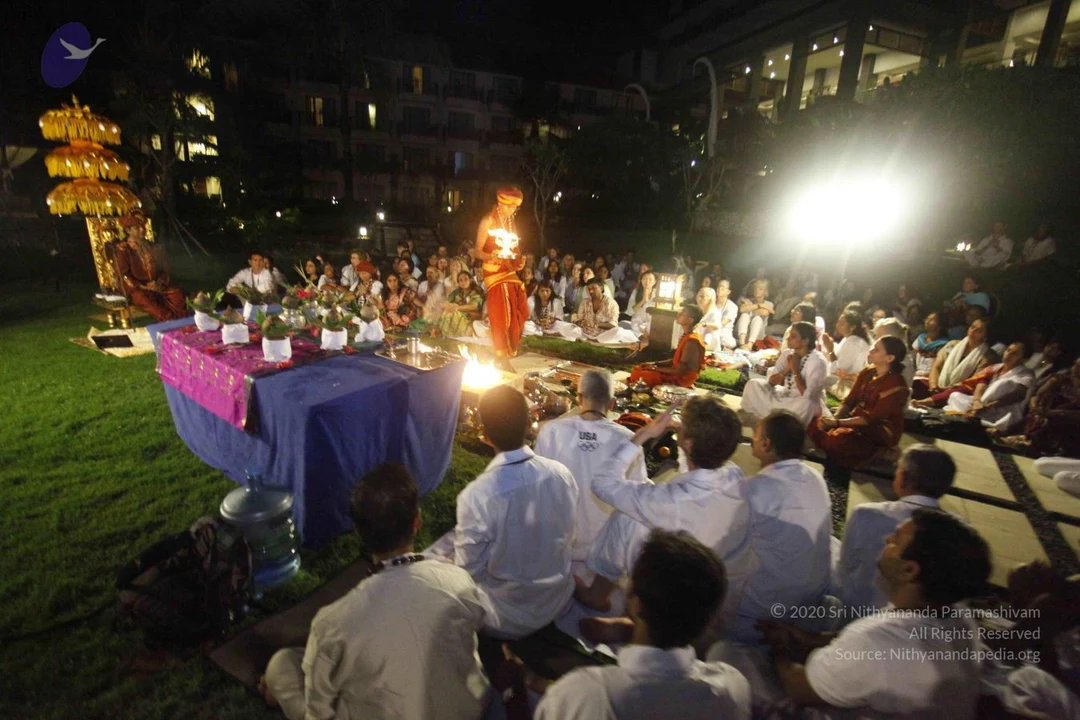
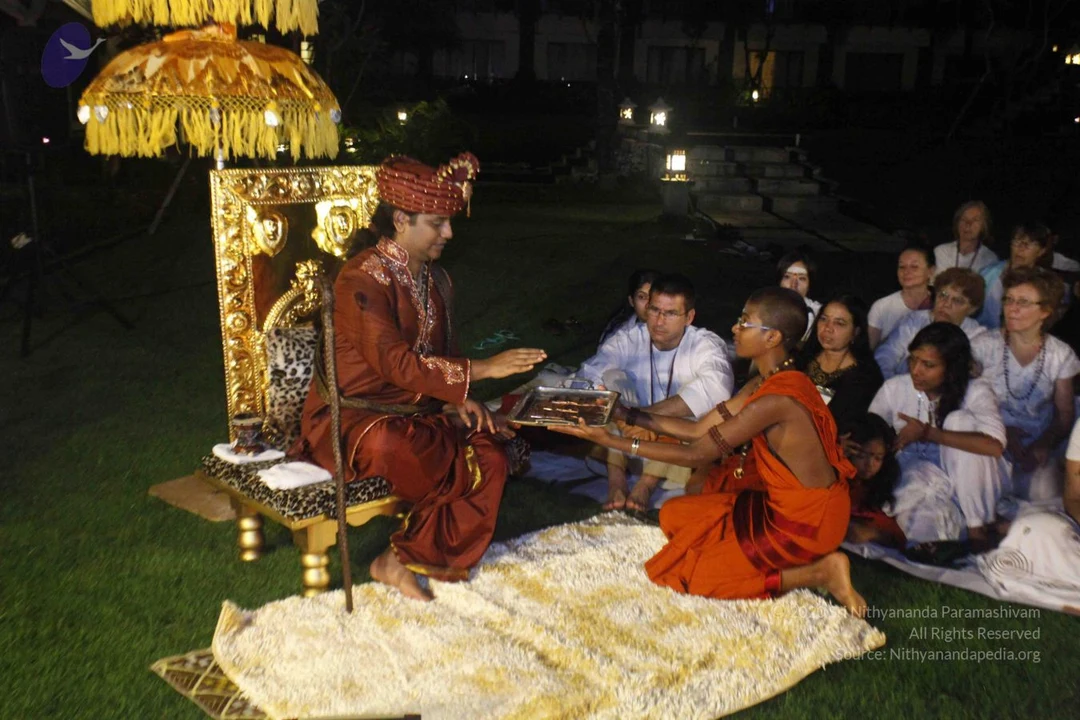
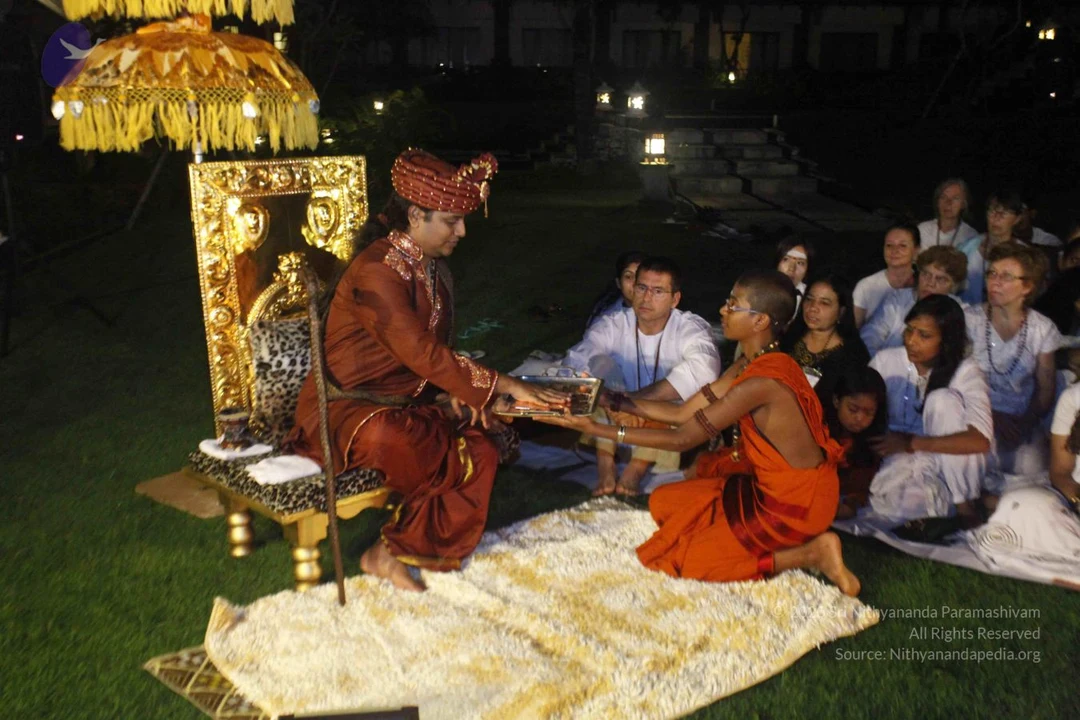
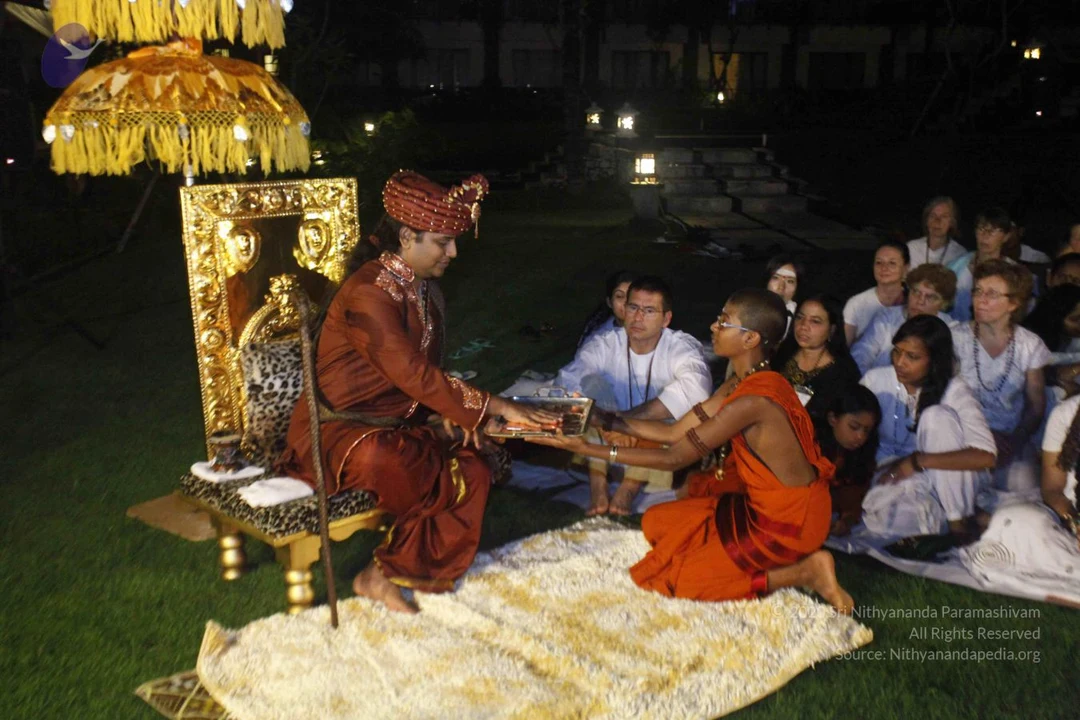
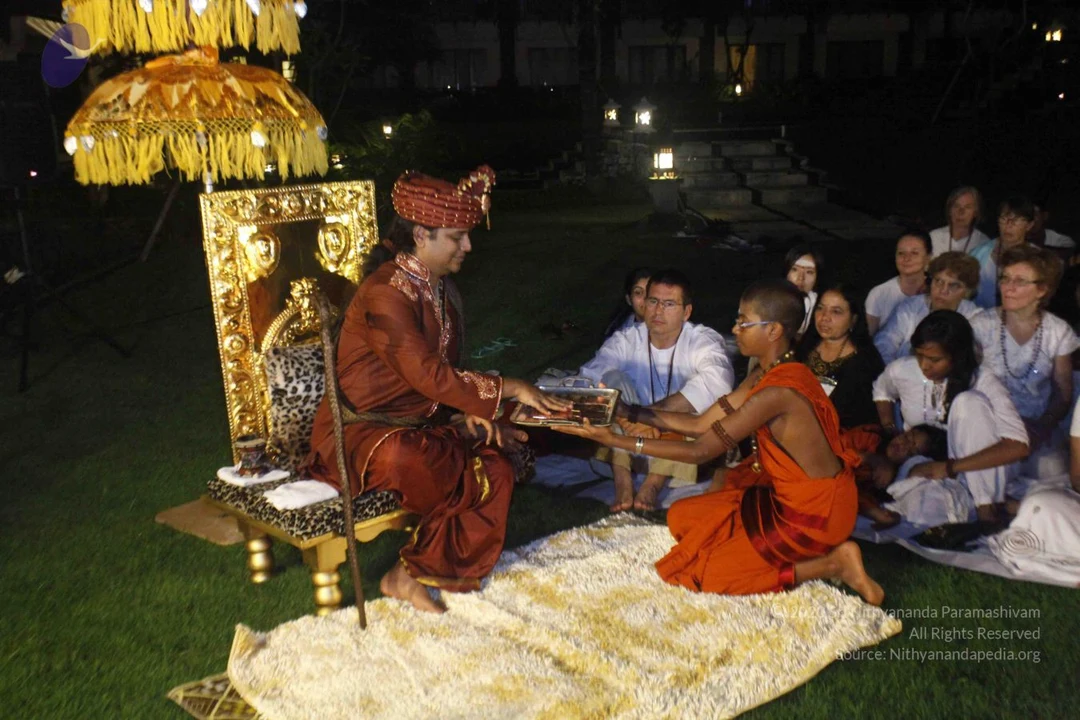
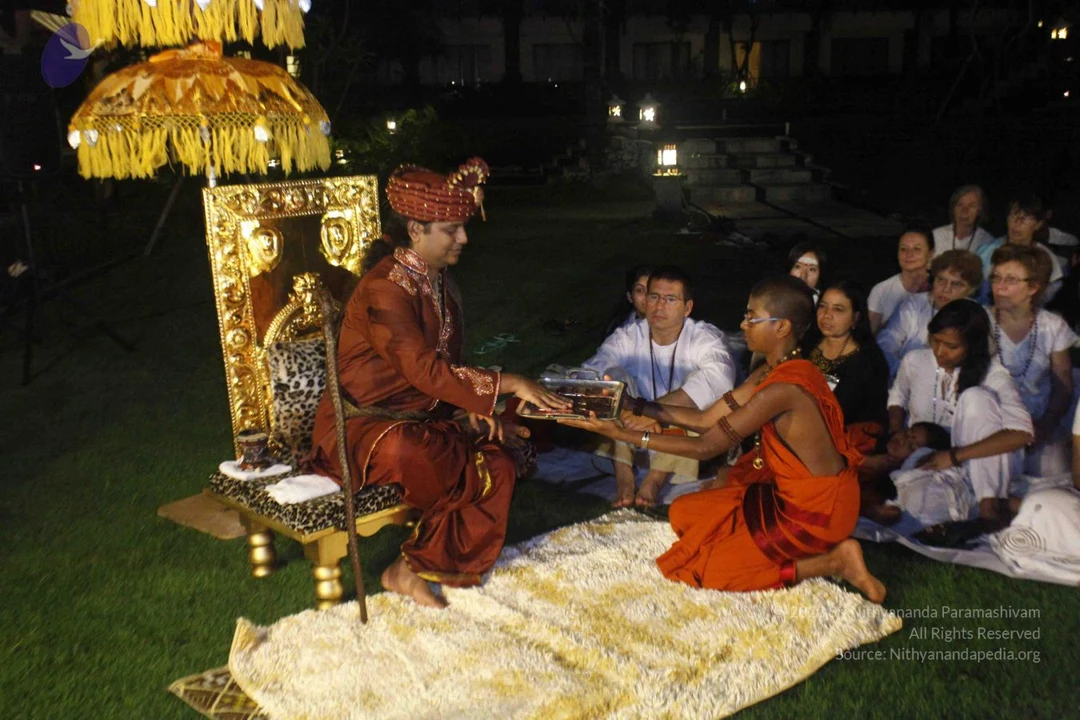
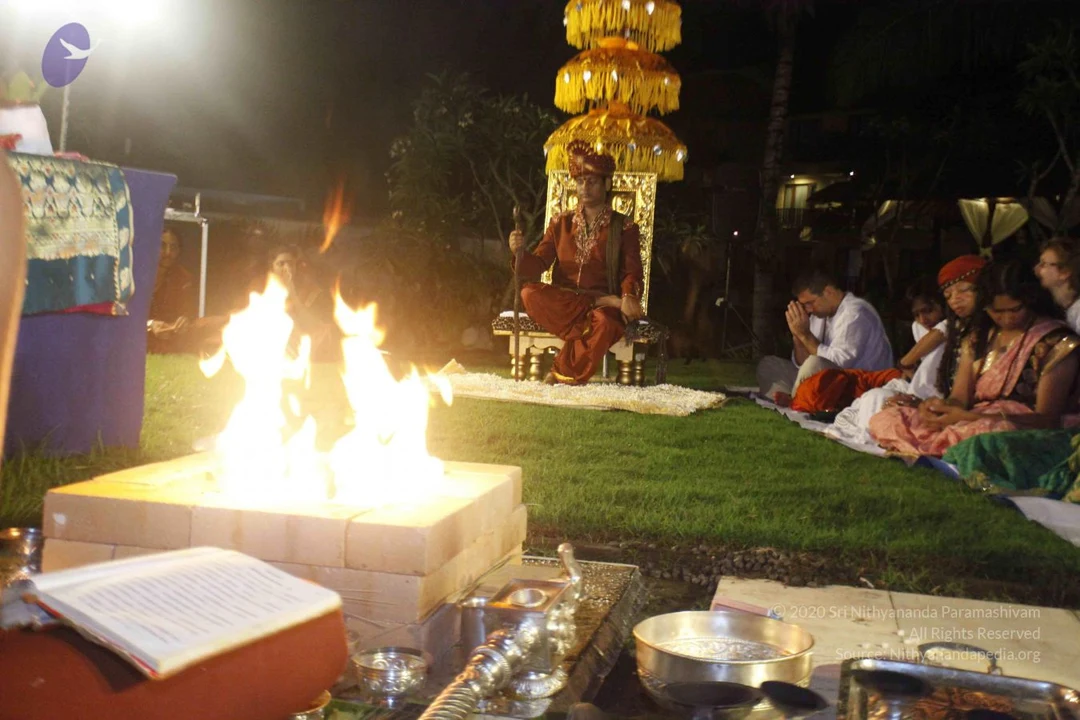
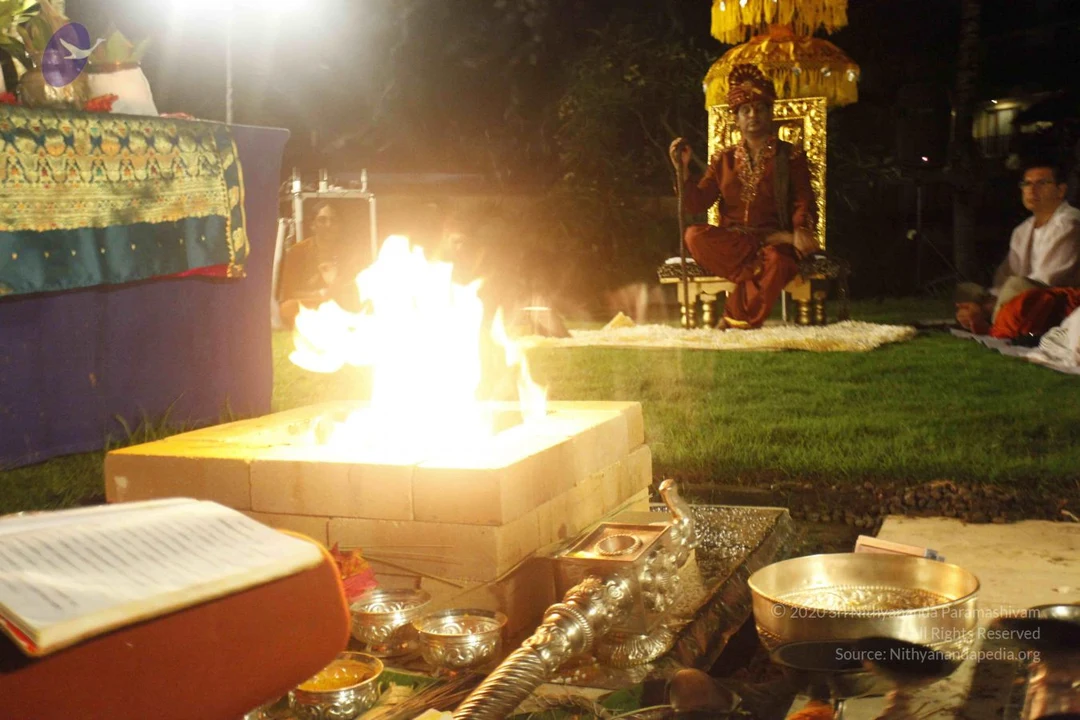
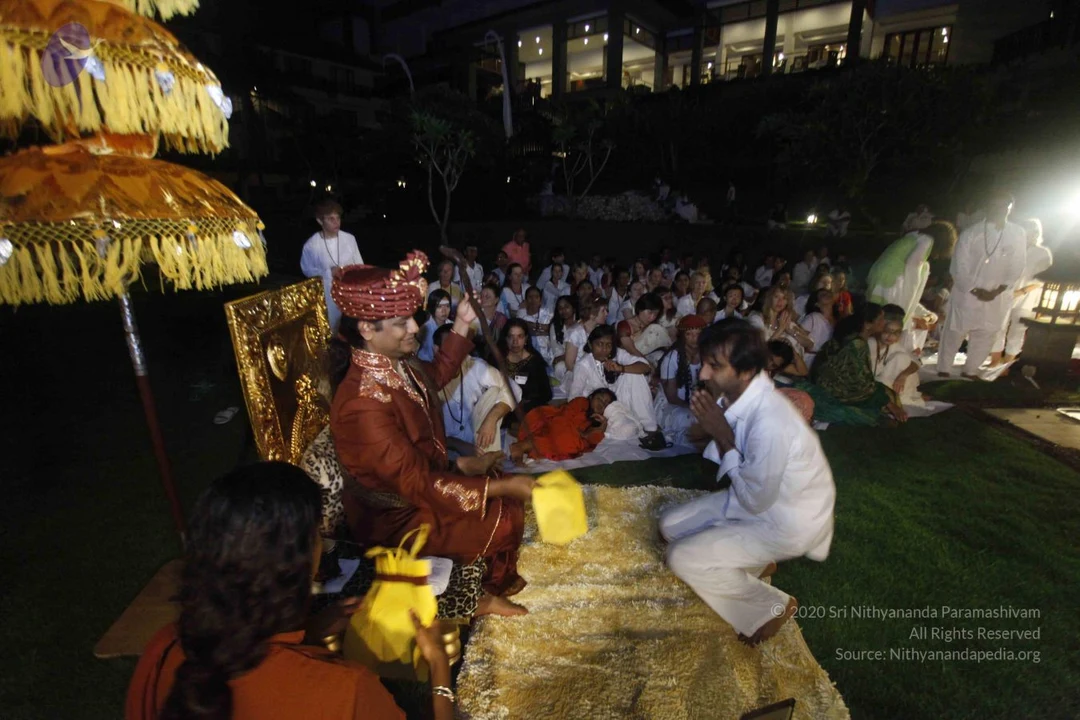
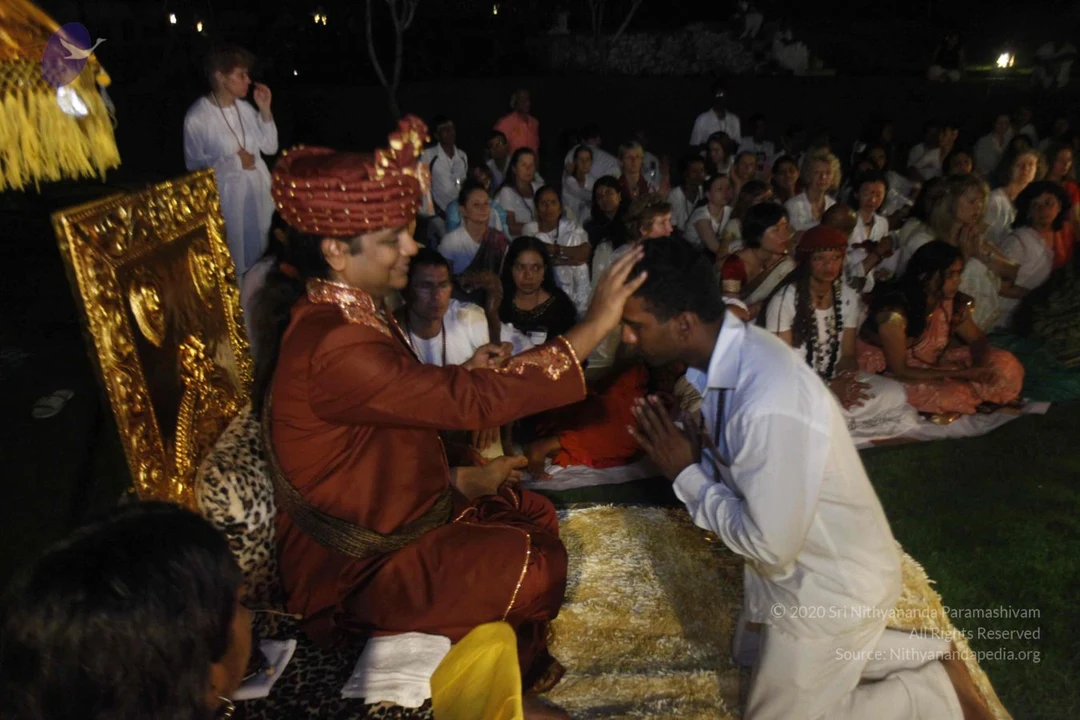
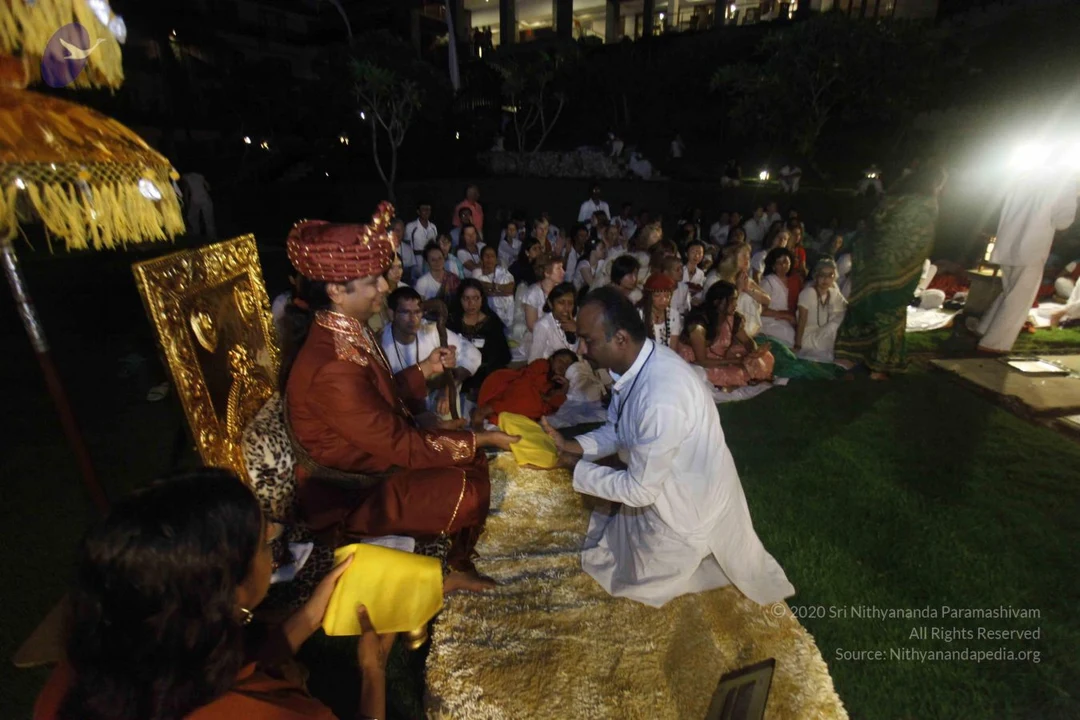
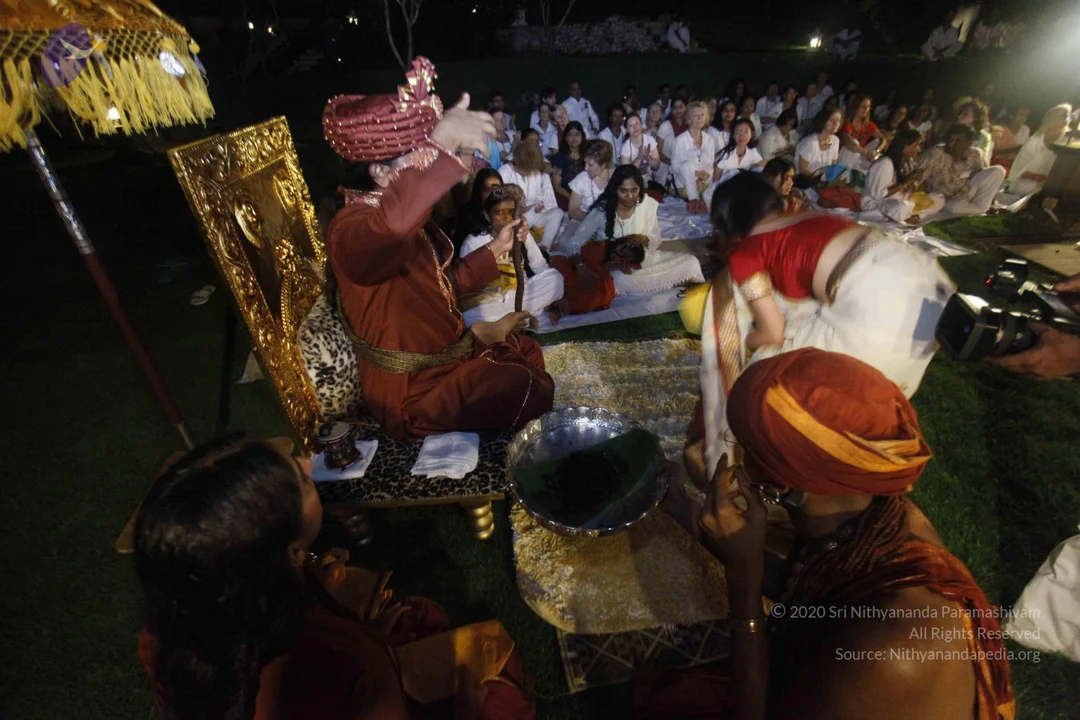
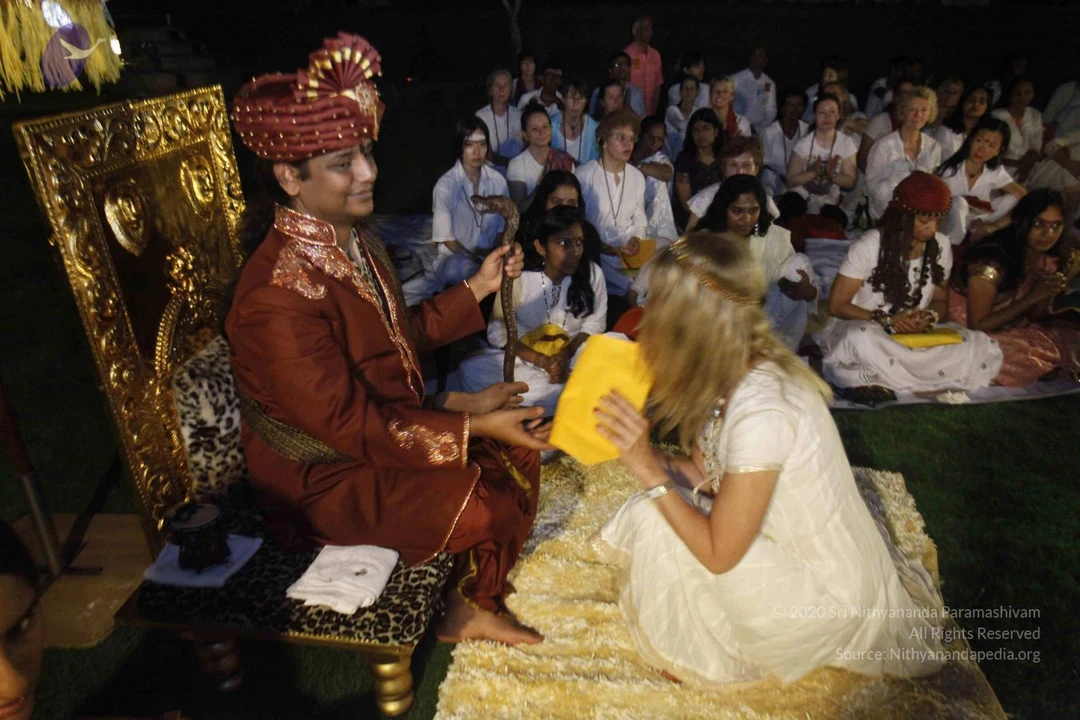
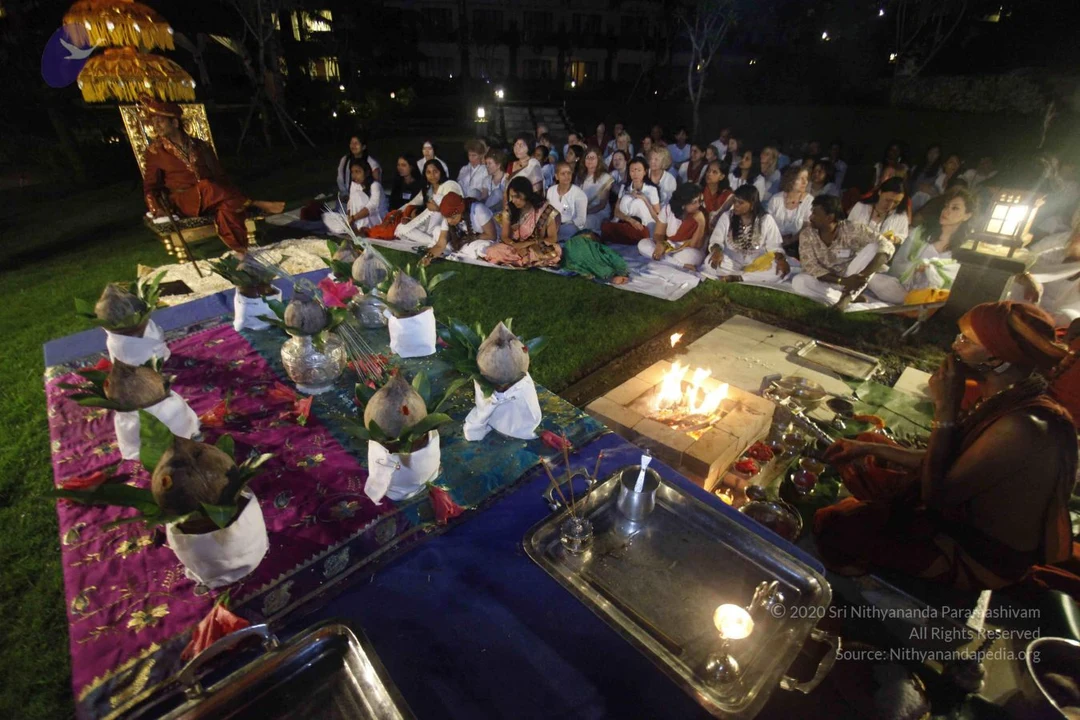
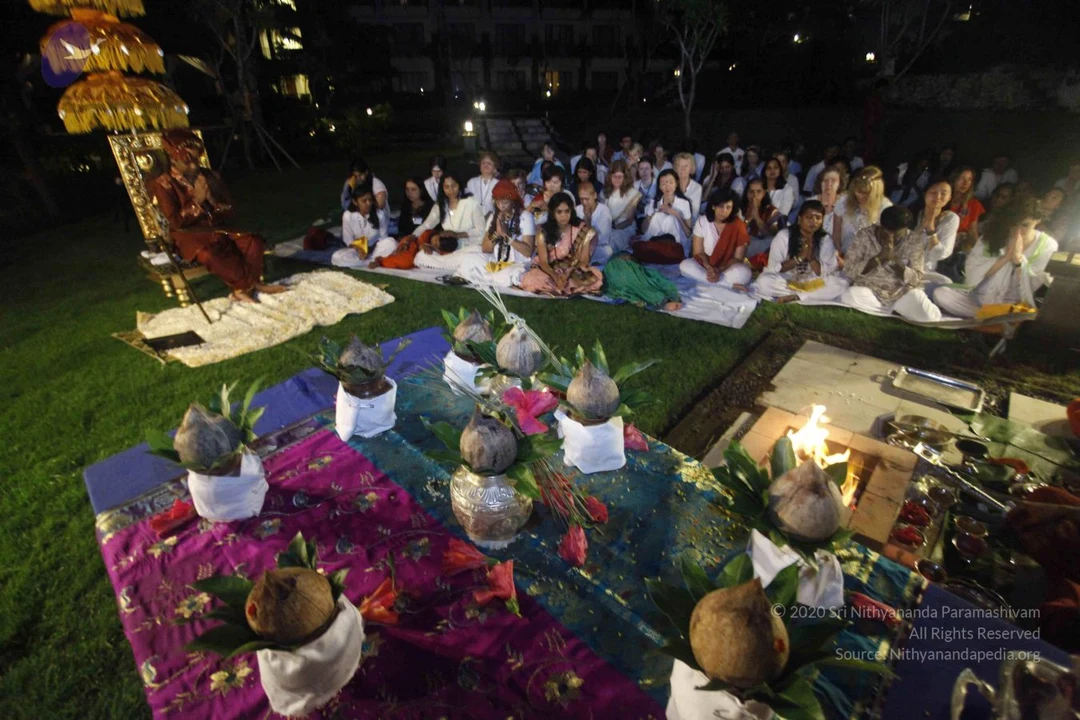
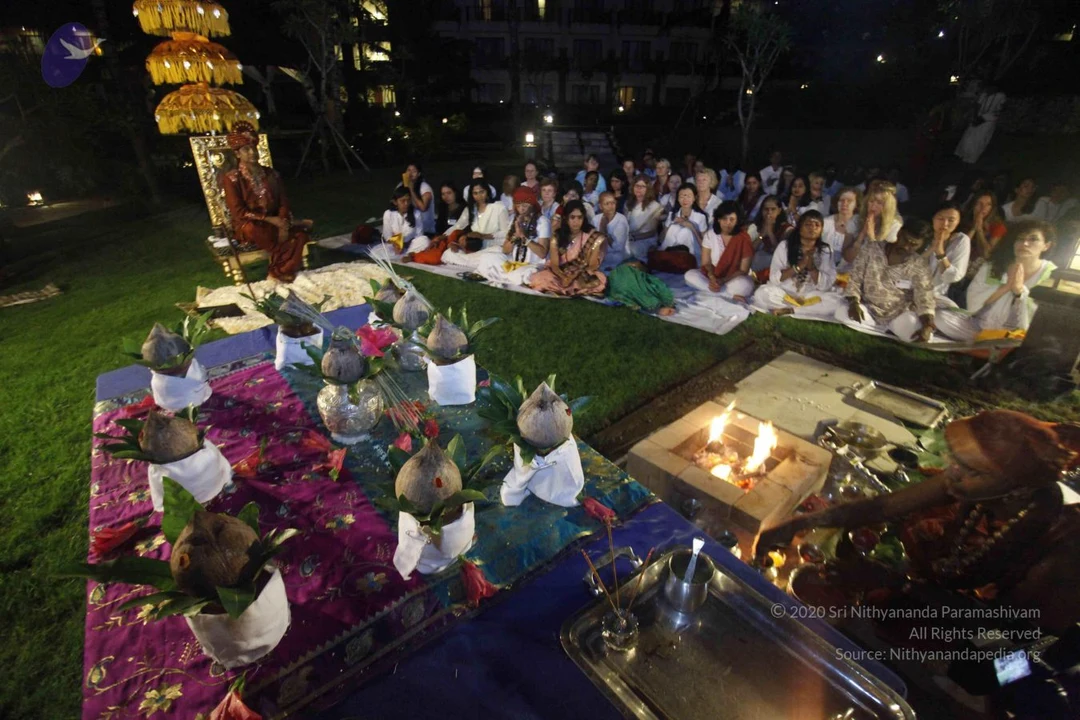
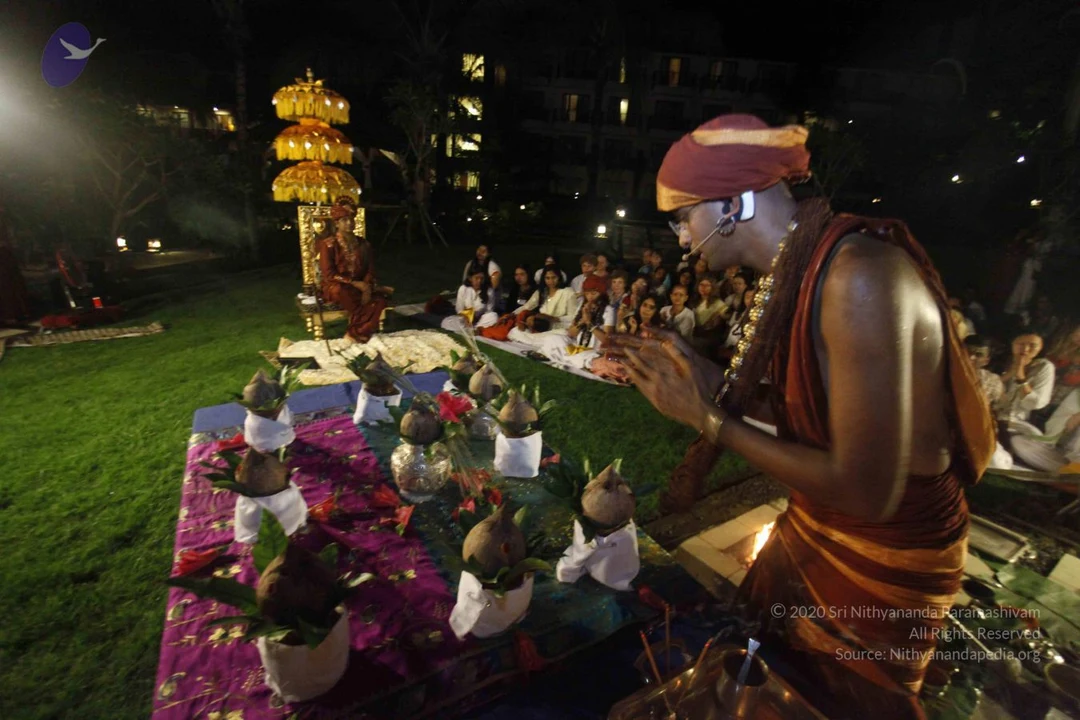
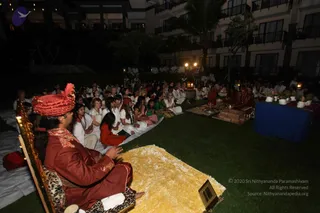
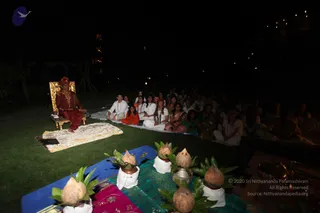
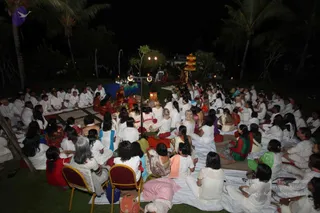
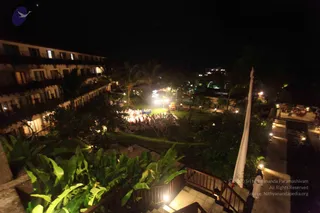
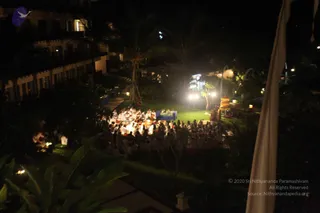
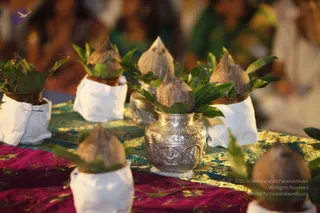
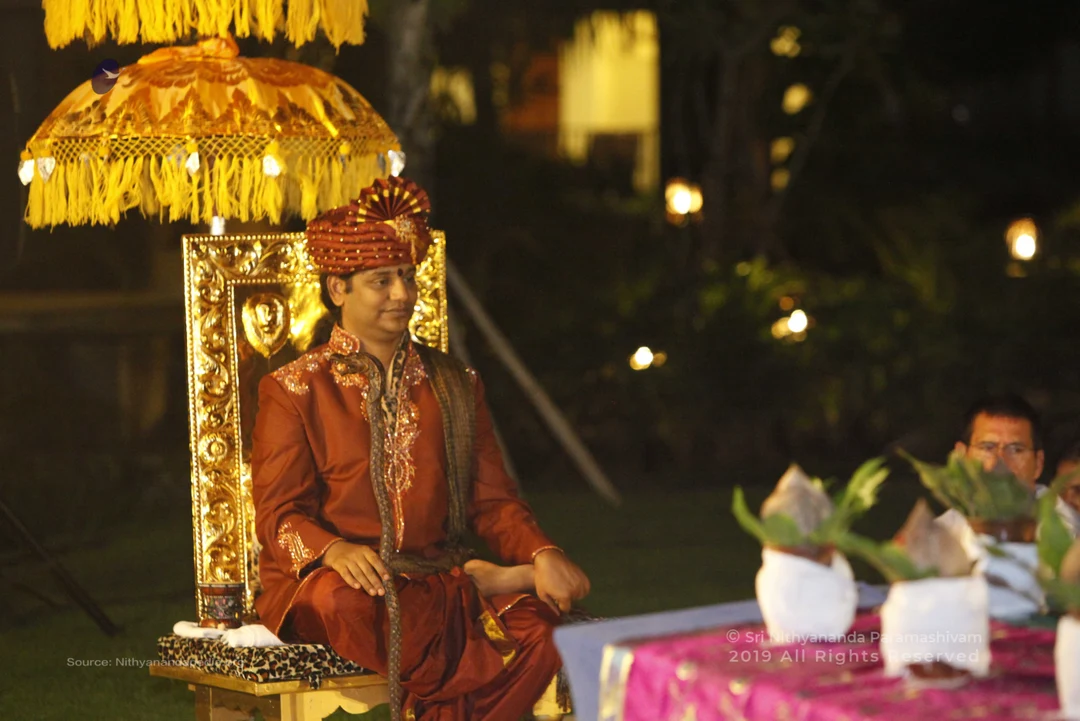
Evening outdoor satsang on a lawn at night, lit by lamps, with a large seated audience of mostly white-clad devotees facing a ceremonial setup. In the foreground, a man in a red-and-gold embroidered outfit and a red turban sits on a gold-framed seat with a leopard-print cushion, hands together in front of him. Nearby, several people in red and orange robes sit on a yellow rug before a brass puja arrangement with kalasha-like vessels, and a table with a blue cloth holds potted plants and offerings. Hotel balconies rise behind the lawn. The scene suggests a padapuja and satsang setting, though no printed name is visible.Night outdoor satsang on a lawn. A seated figure on a gold-framed throne wears a red-orange crown or turban and red-orange ceremonial robes with gold ornaments, sitting on a white flower-strewn mat. Before him, an audience of many devotees sits on white cloth; several wear white kurtas, saffron-orange garments, saris and rudraksha malas. In the foreground are coconuts with green leaves, arranged on blue and teal cloths with a brass vessel, a puja setup. Lamps glow in the background trees.Night-time outdoor gathering on a grassy lawn lined with palm trees, where a large crowd sits on white cloths in a semicircle facing a central ritual area. Many attendees wear white and some wear red or pink saris and shawls. Lanterns and oil lamps light the scene, and a tall ornate golden lamp stands at the right. In the centre, a figure in orange robes sits behind a low platform with a blue cloth, apparently conducting a puja or satsang. Several people in white sit in the front row on chairs and mats. The scene is a satsang or evening ceremony, and the clothing and setting suggest a ritual gathering.Night aerial view from an upper balcony of a multi-storey resort with lit rooms along its white facade. Below, a lawn is lit by warm lamps, and a small group of people in light clothing sits or stands in a cluster near a central stage area with a blue cloth and a few bright lights. Palm trees, tropical plants and a tall white flagpole frame the scene, with a stone pathway and steps lined with low lights in the foreground.A night photograph taken from an elevated balcony looking down onto a lit garden courtyard at a resort-style complex with palm trees and multi-storey buildings. A large group of people dressed in white clothing sits on the grass in front of a raised platform, with a blue-draped table and offerings arranged on it. Several bright floodlights illuminate the scene. A tall ornate yellow and orange Balinese-style offering tower stands at the right edge, and small lit lamps glow on the ground. A white banner hangs in the right foreground. The people are small and distant, so individual details are not clear.A close photograph of ritual kalasha pots arranged on a cloth-covered table. A central embossed silver pot holds green mango leaves topped by a coconut, surrounded by similar coconut-topped kalashas wrapped at their bases in white cloth, set on a gold-and-teal brocade runner over a magenta cloth. Blurred figures in warm clothing stand in the background, with no clearly visible faces. The setting suggests a puja or abhishekam preparation.

IA-Darshan-Basma-Deeksha

63 photosSource gallery
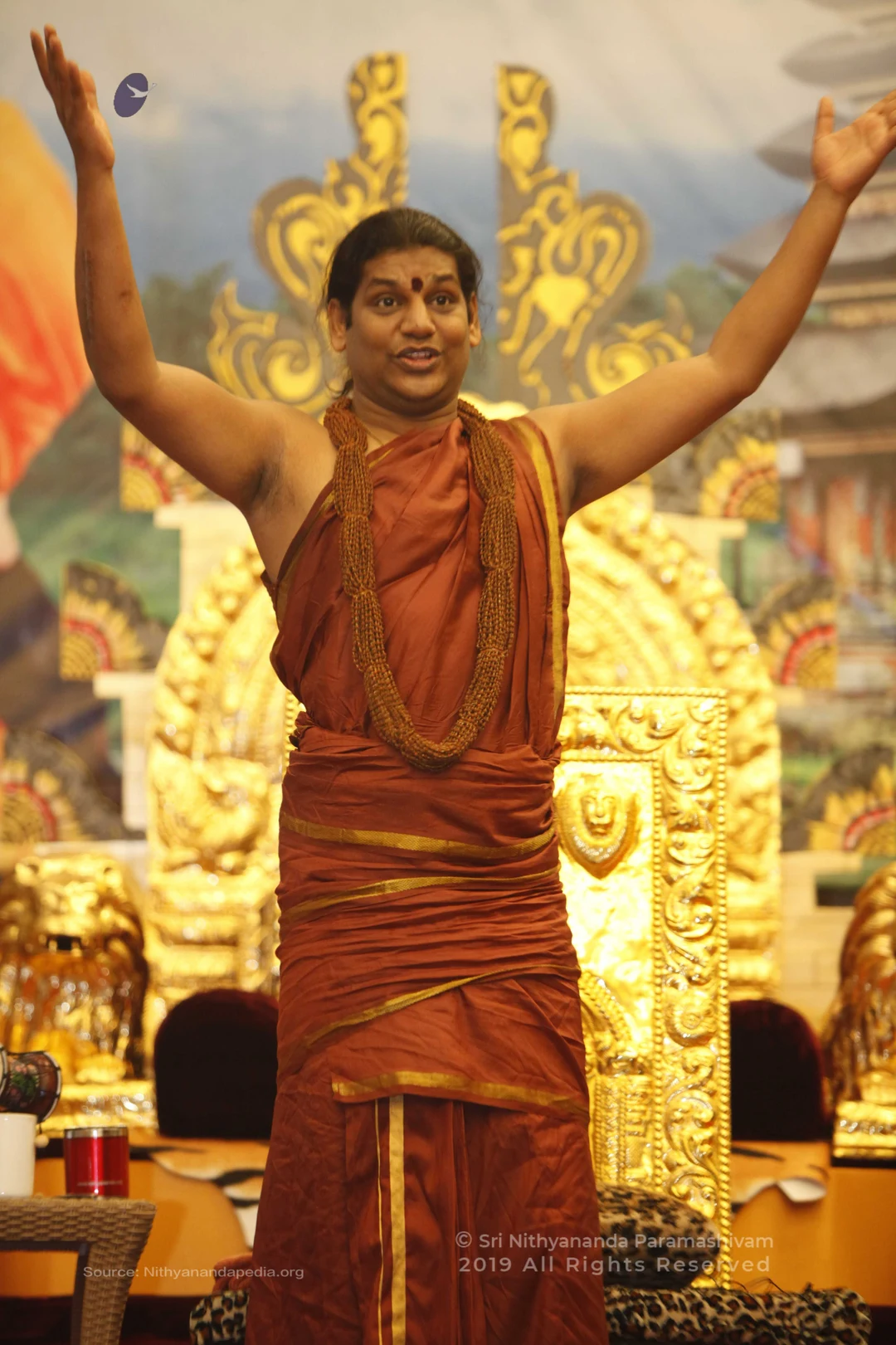
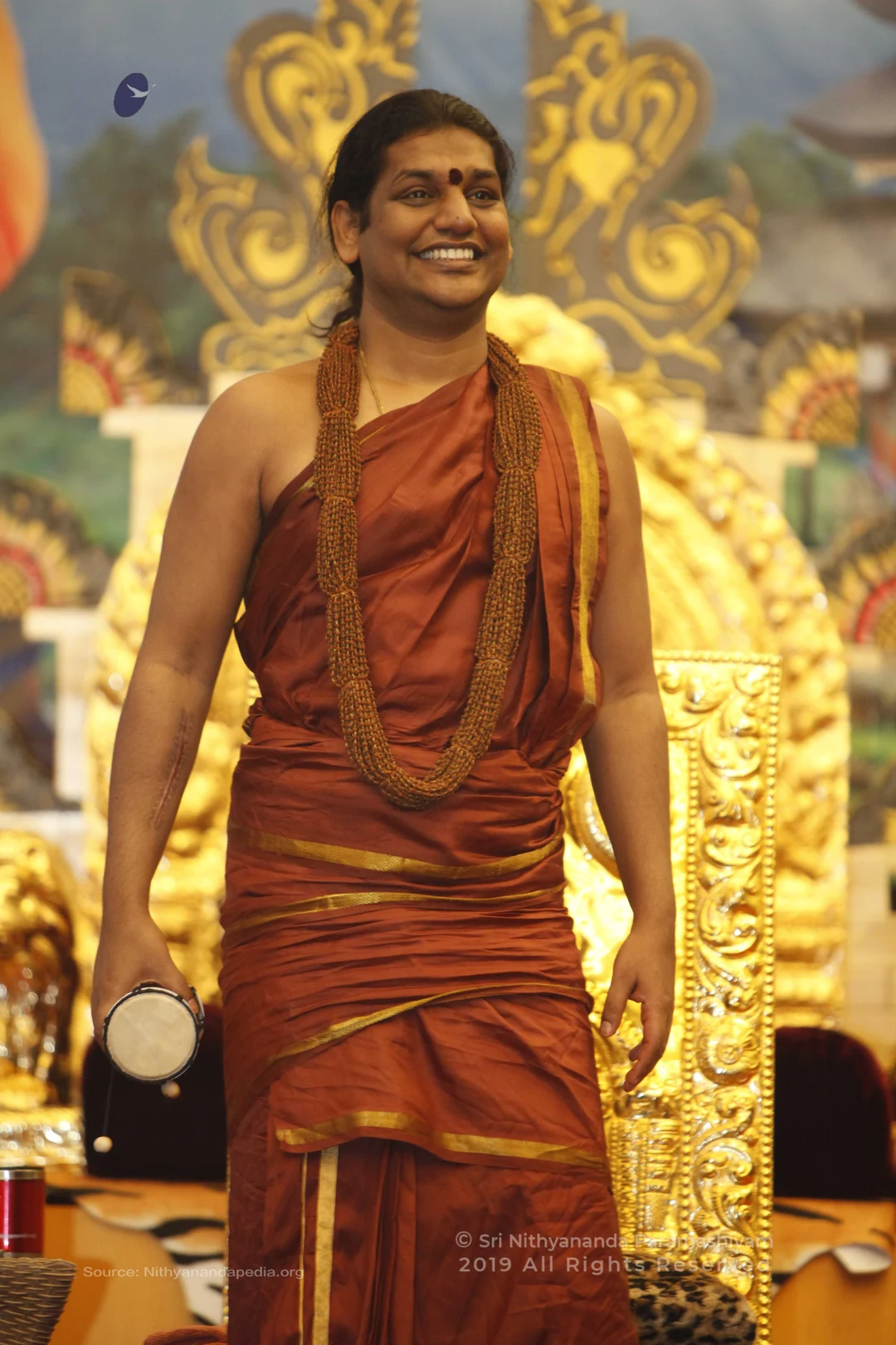
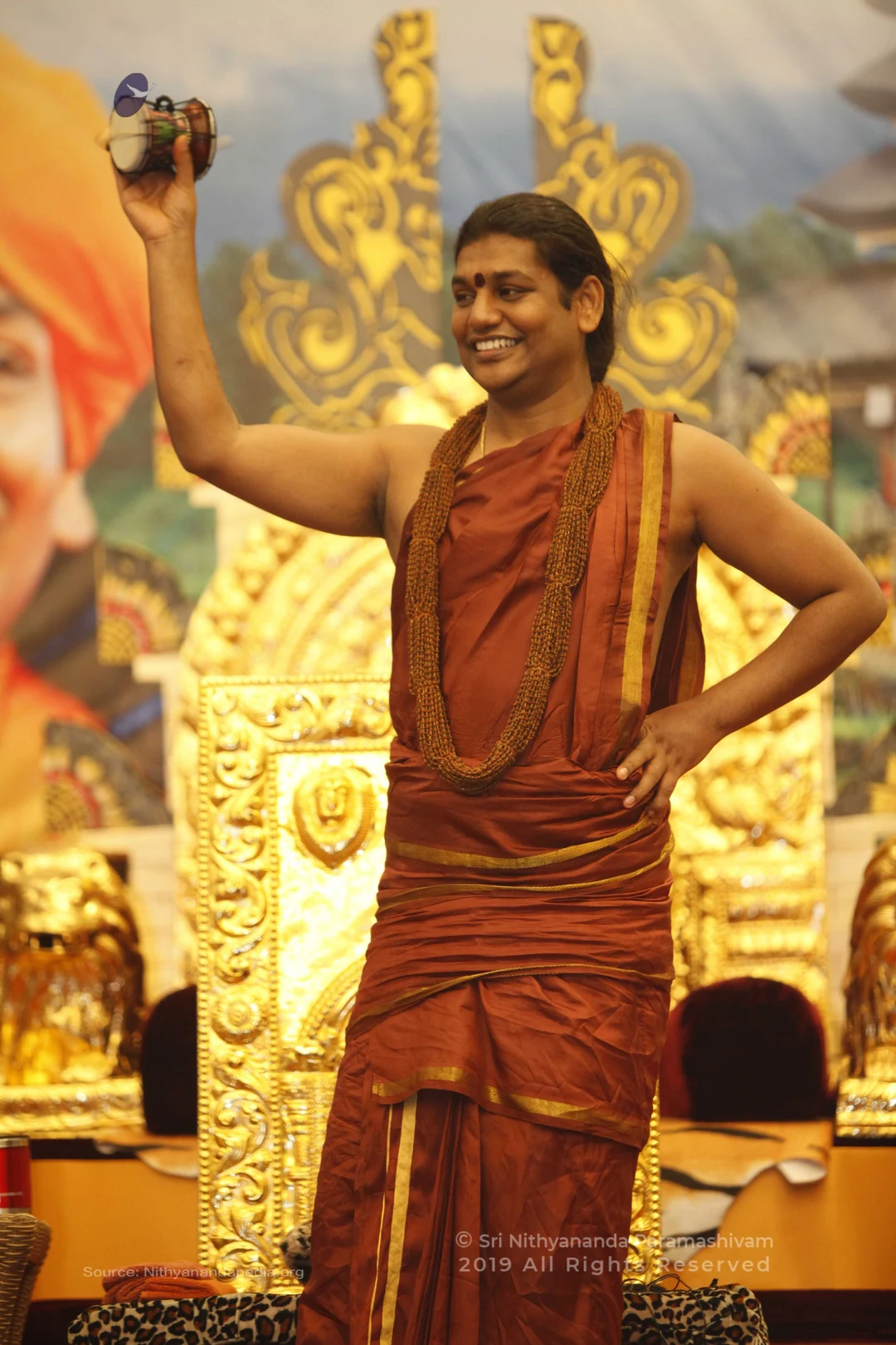
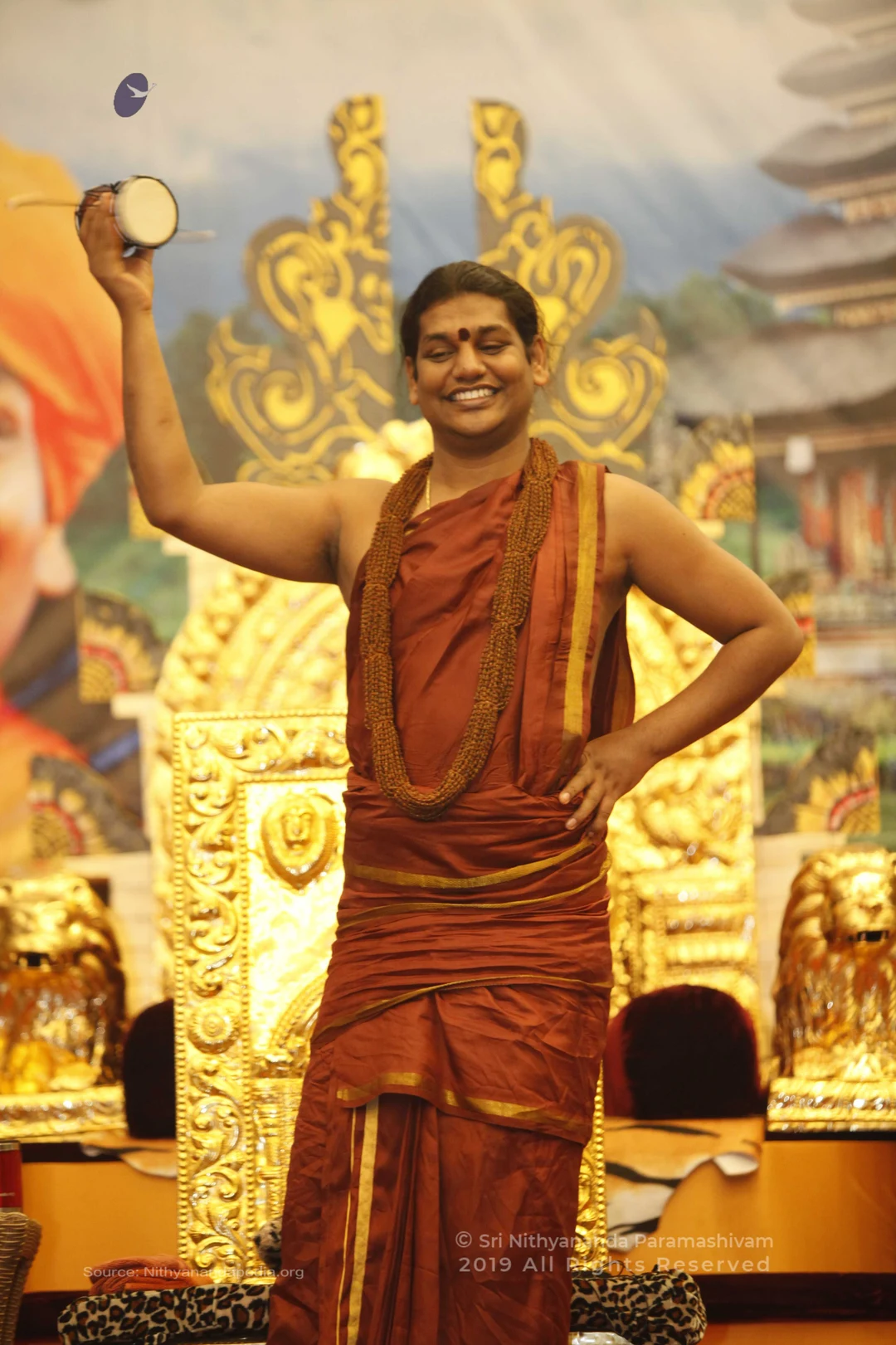
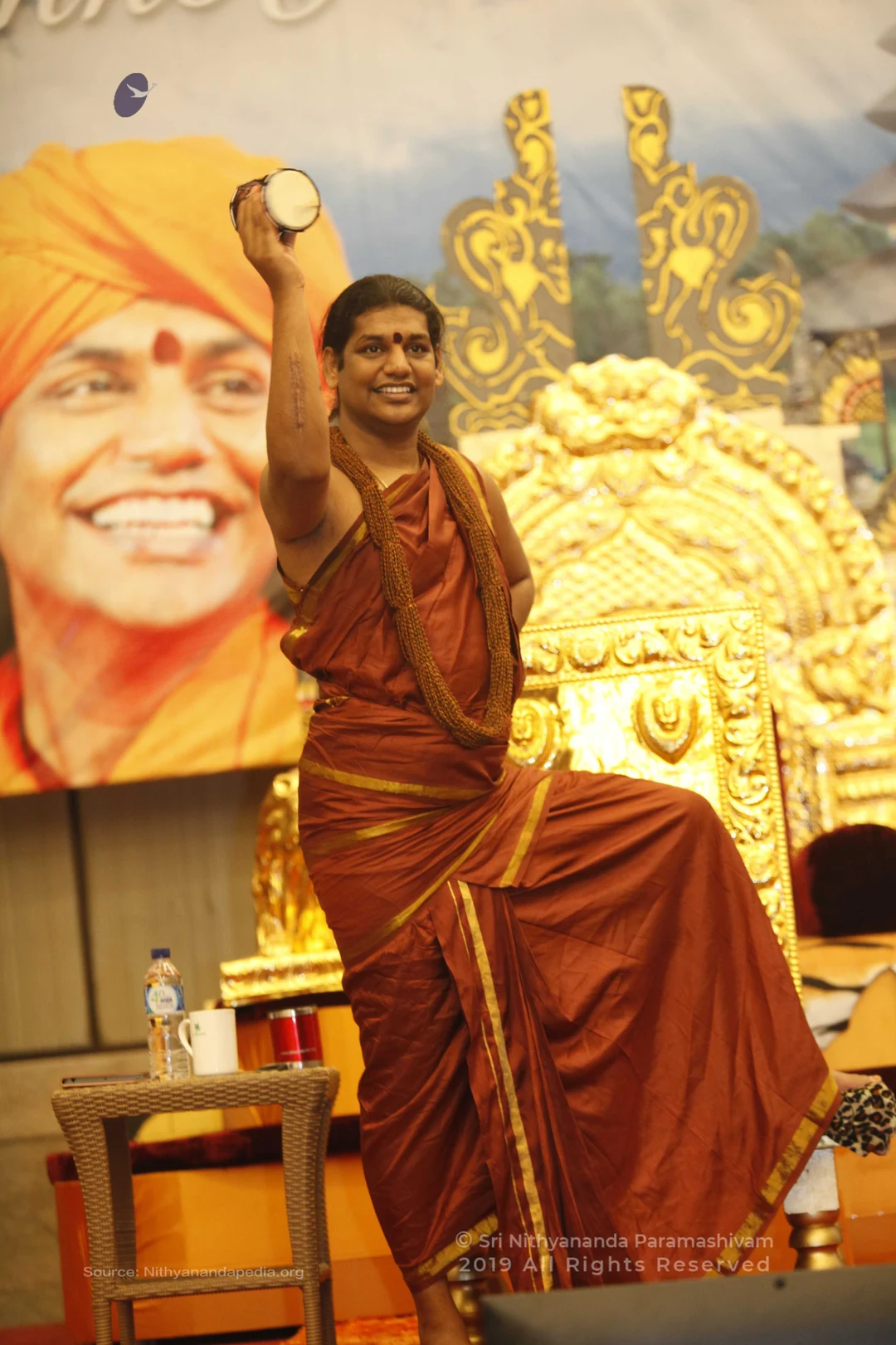
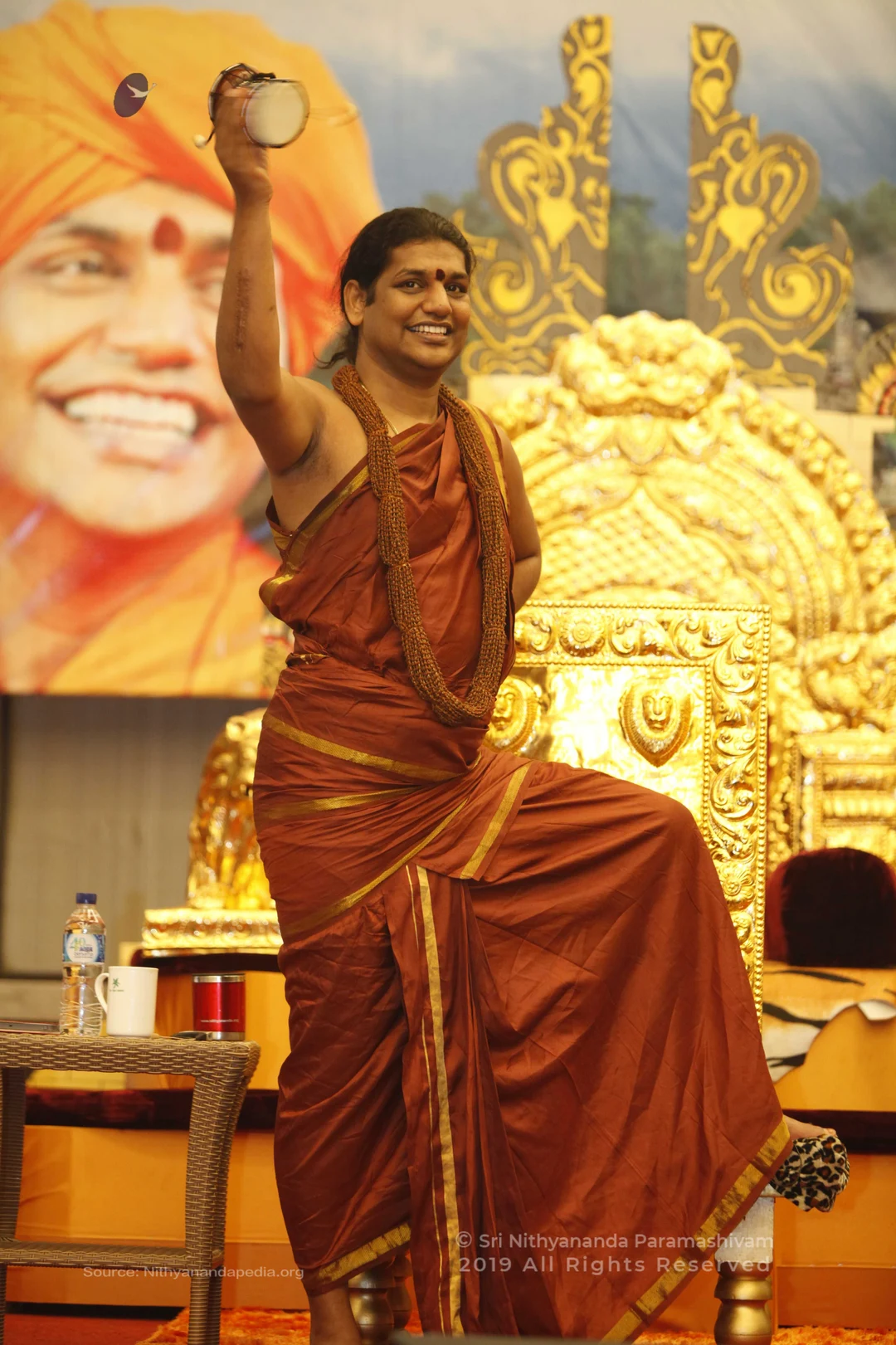
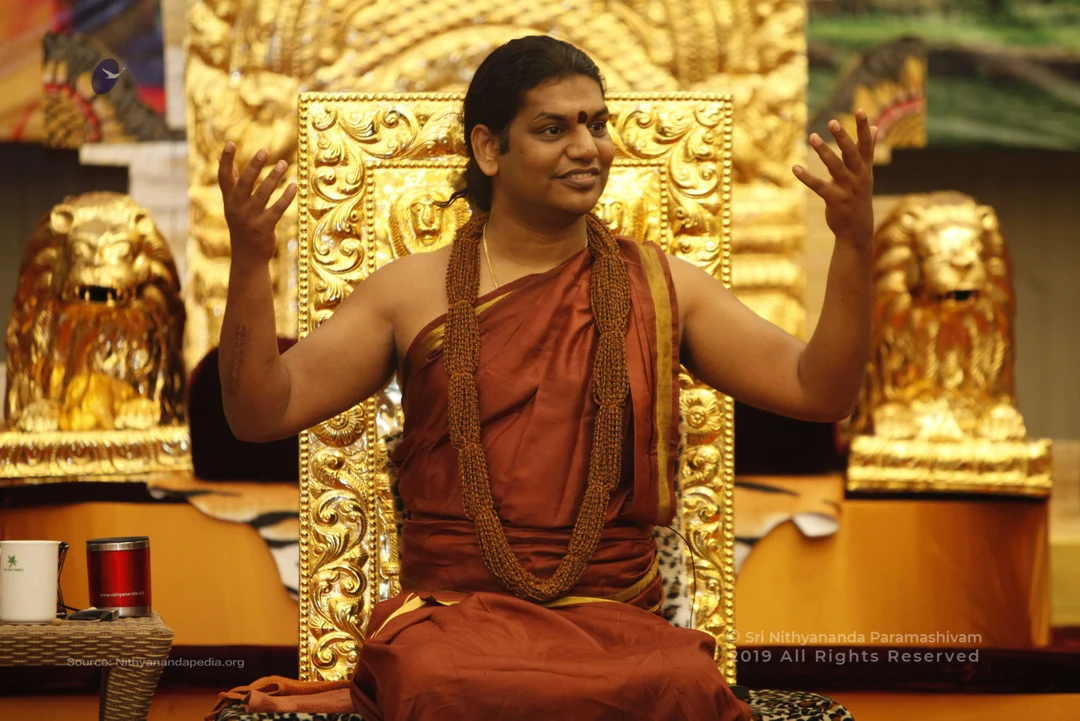
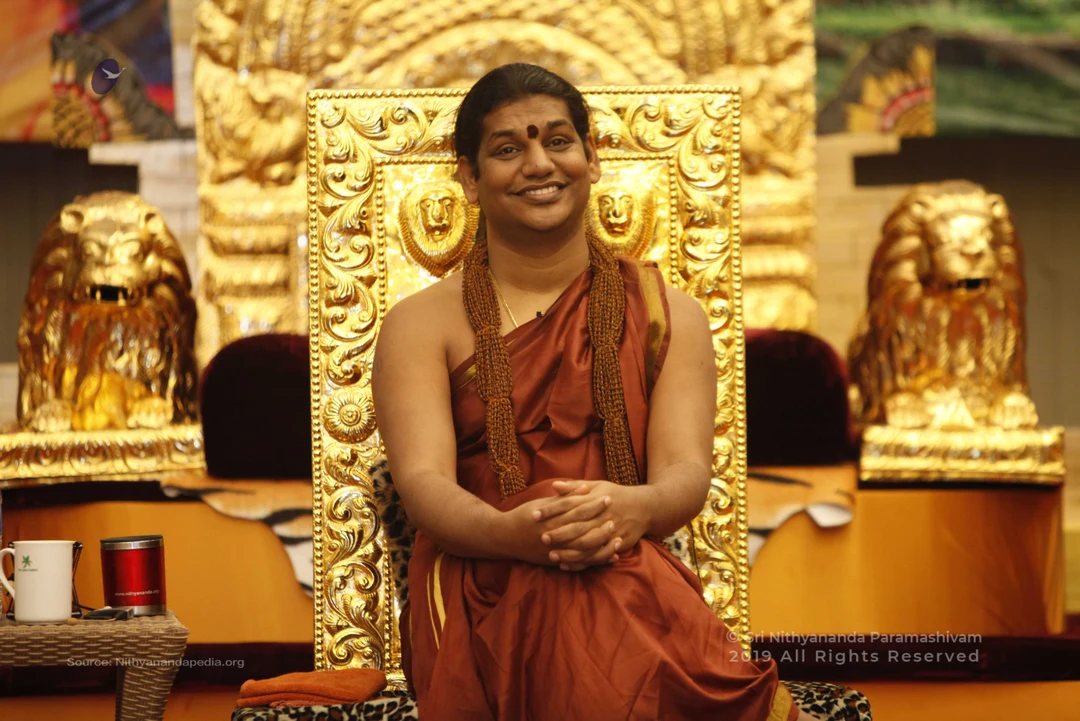
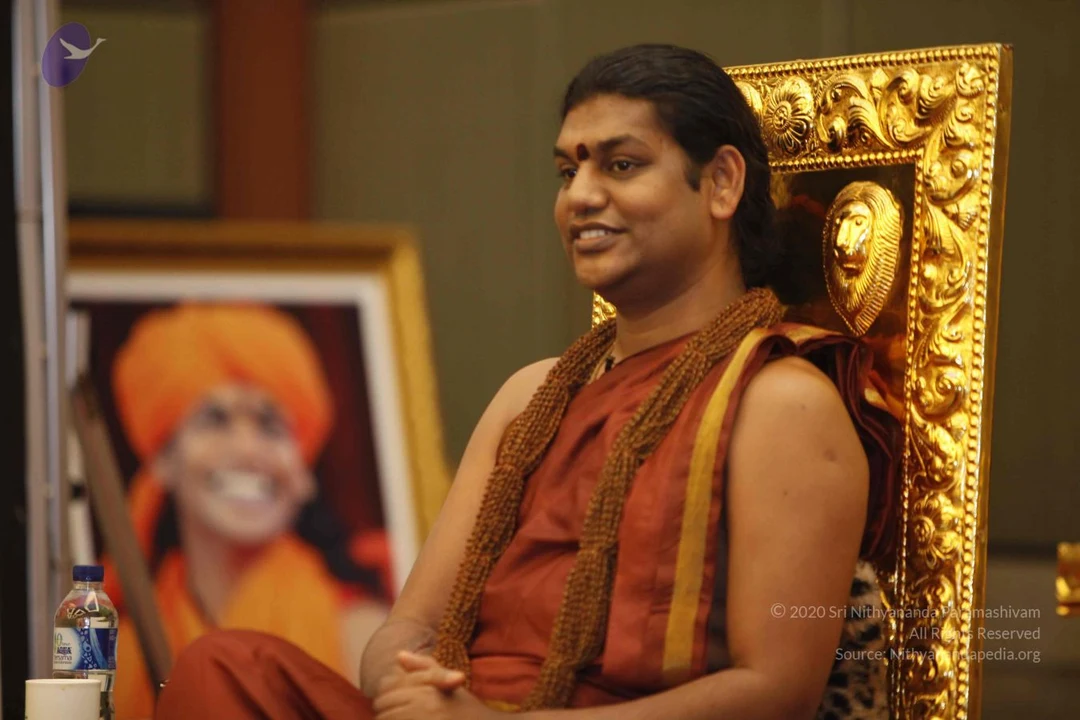
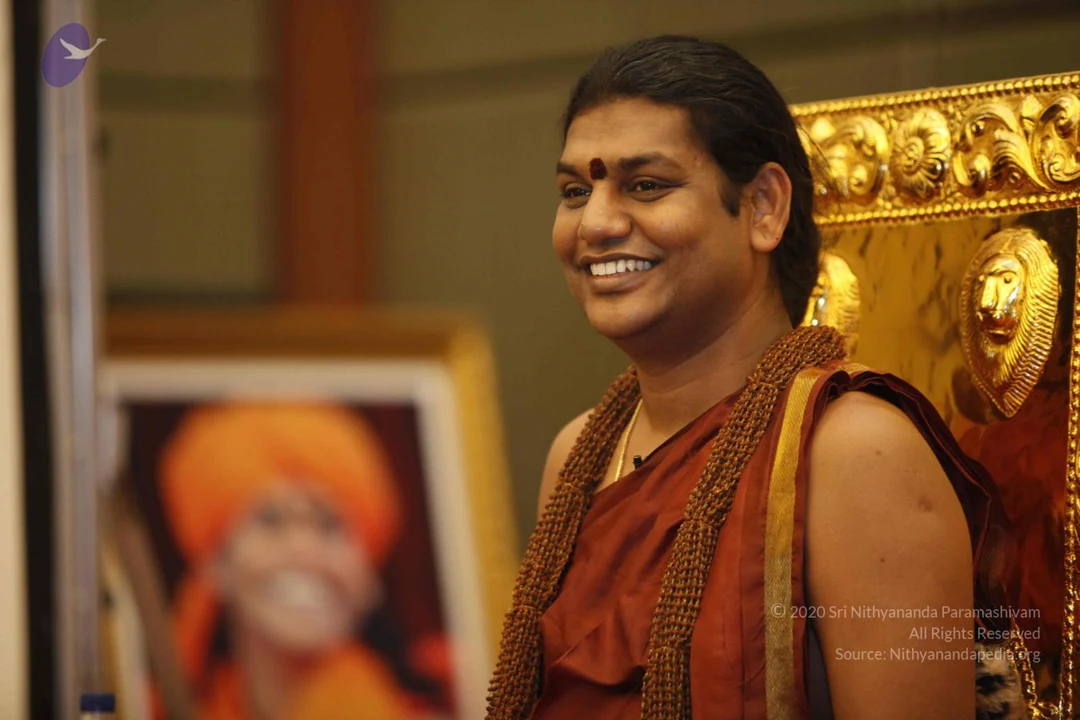
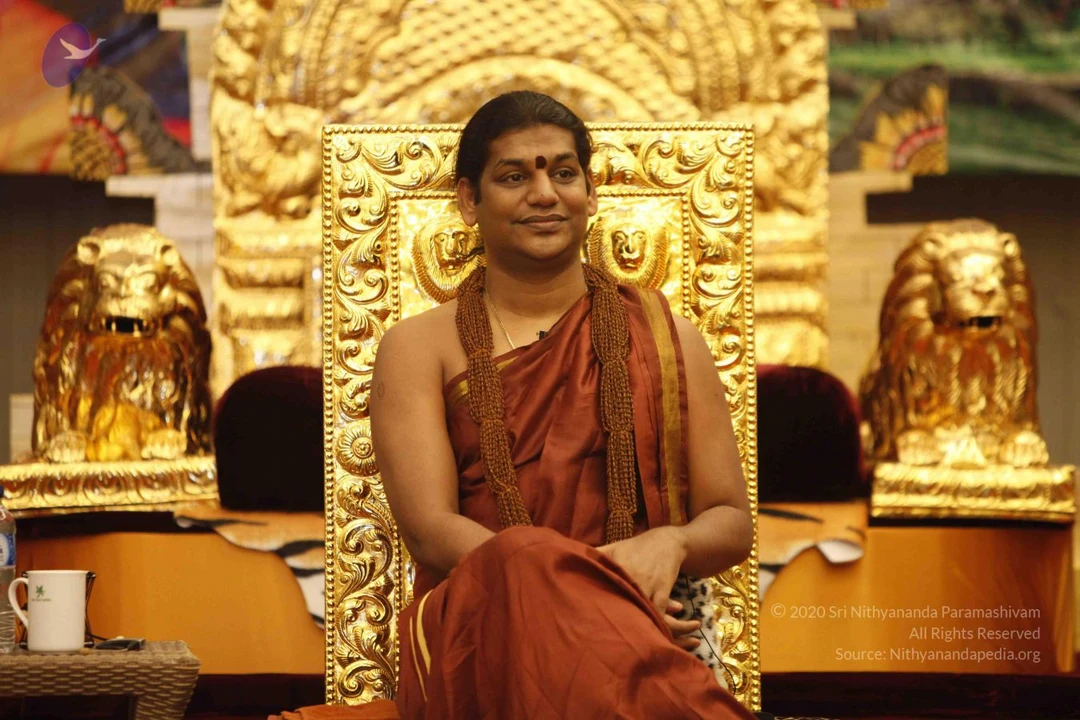
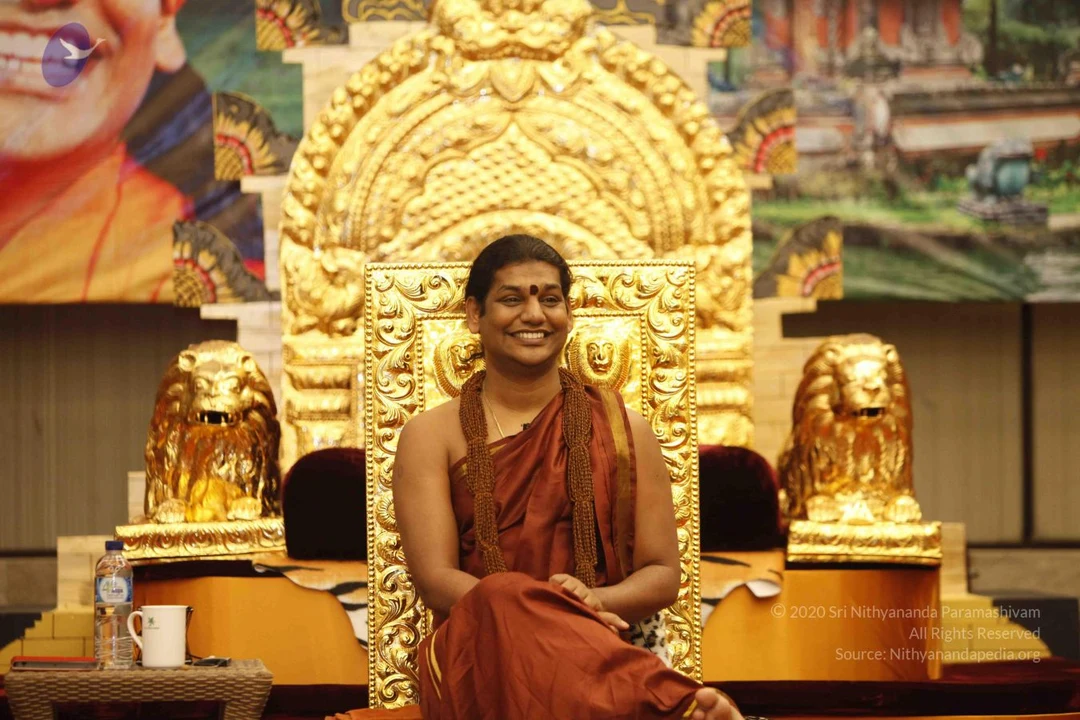
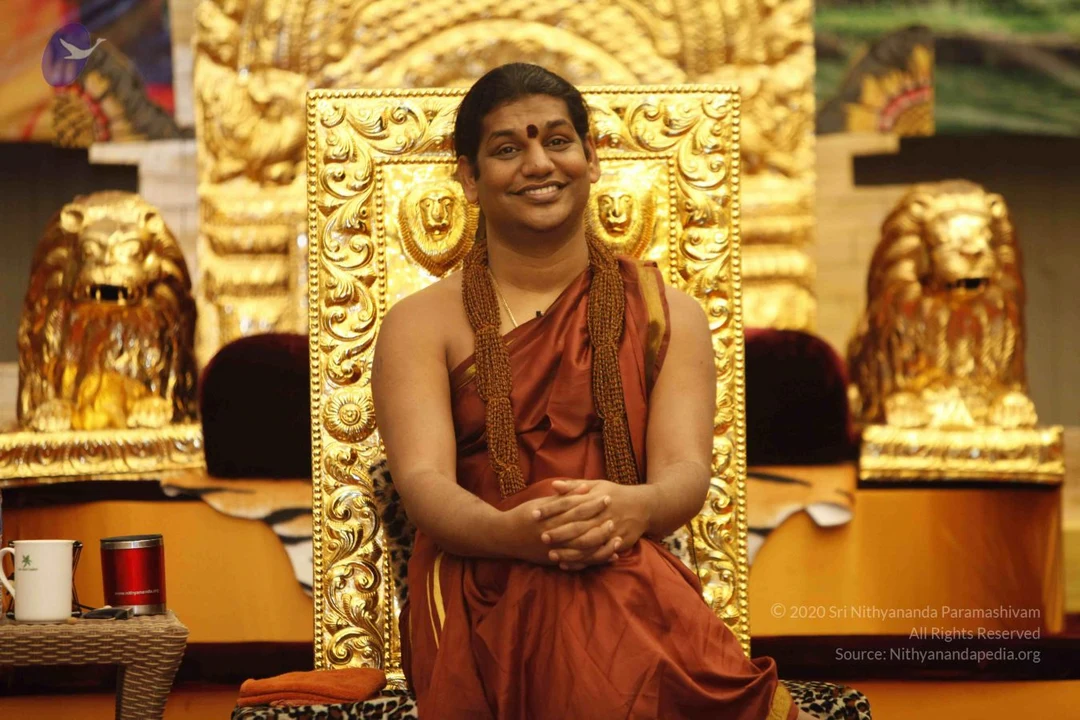
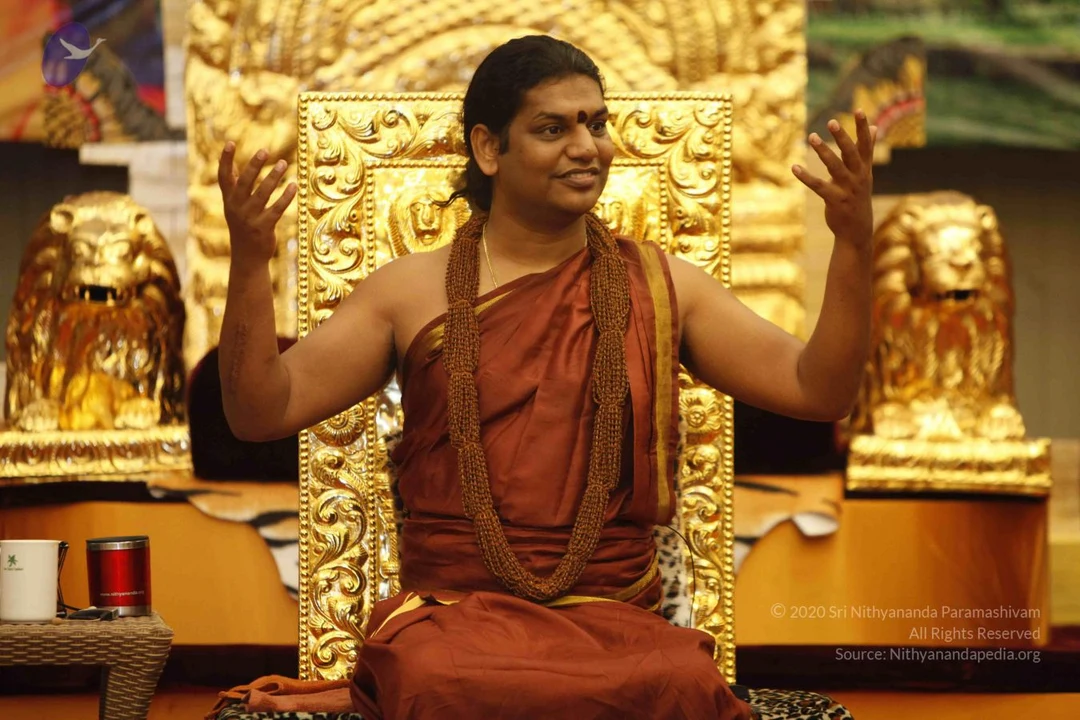
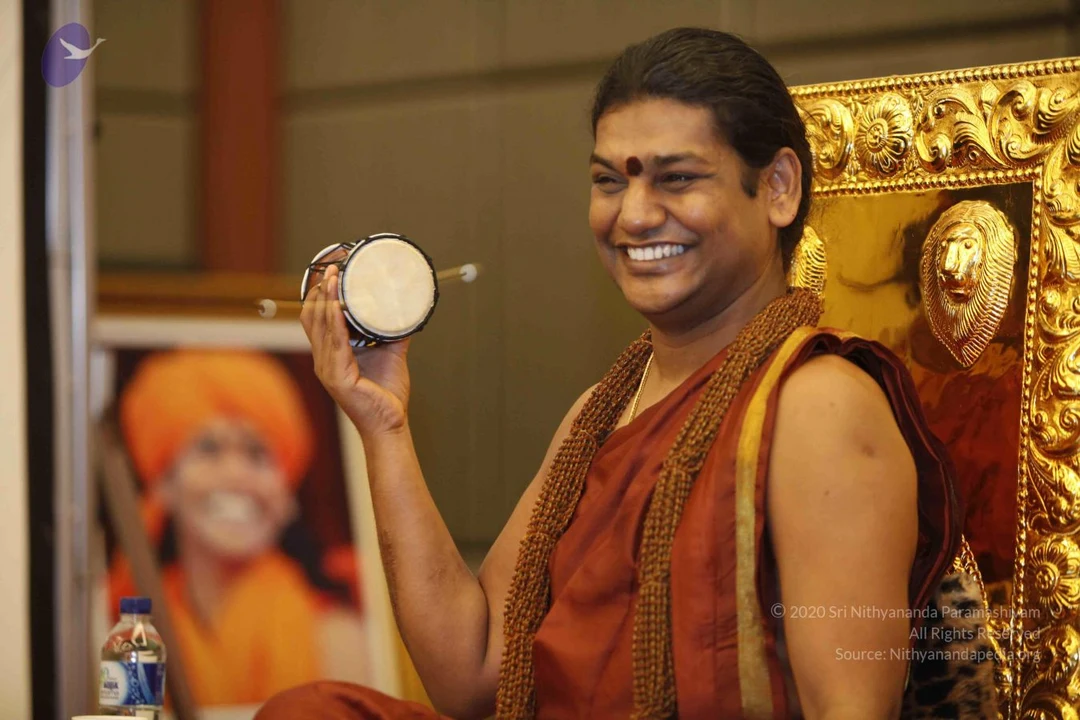
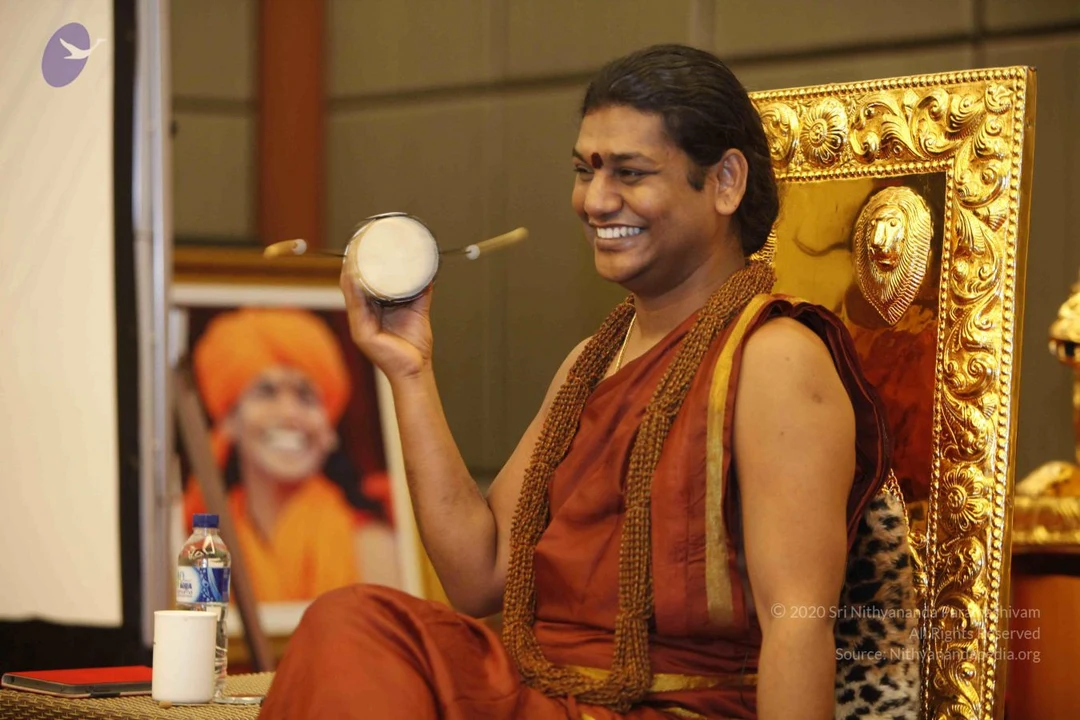
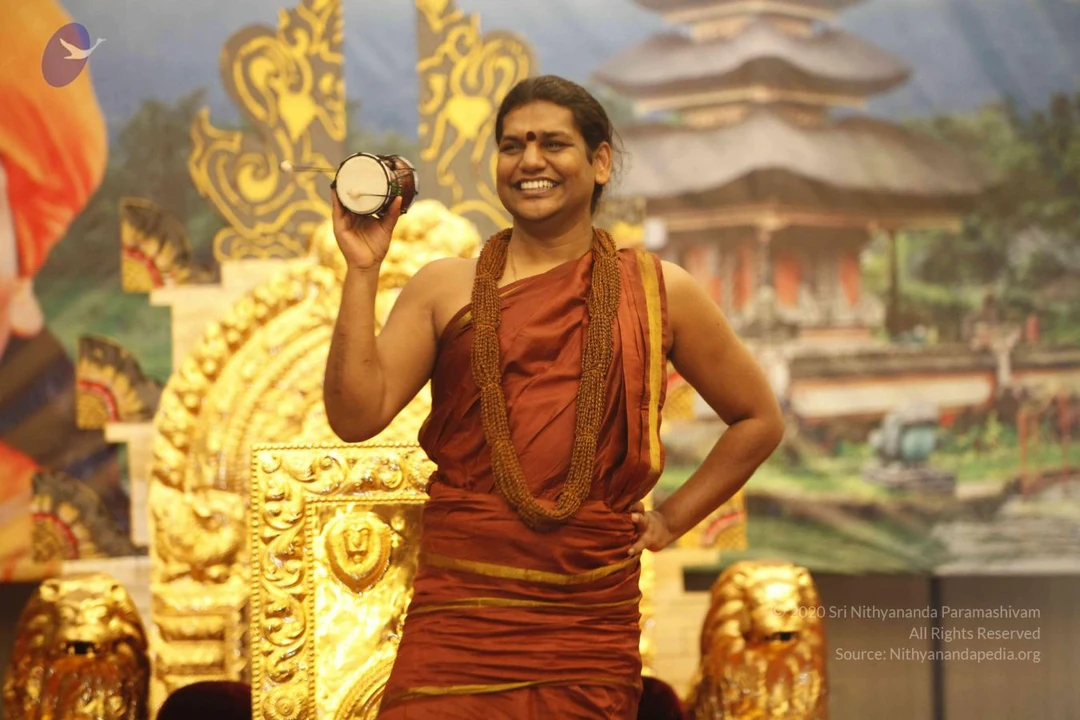
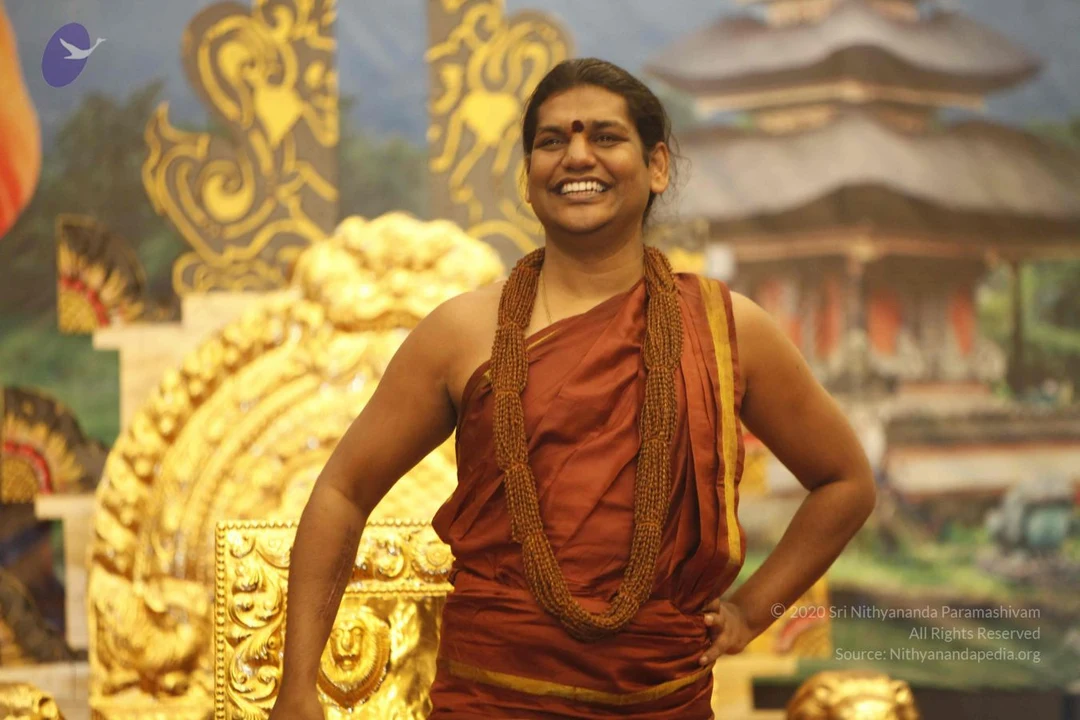
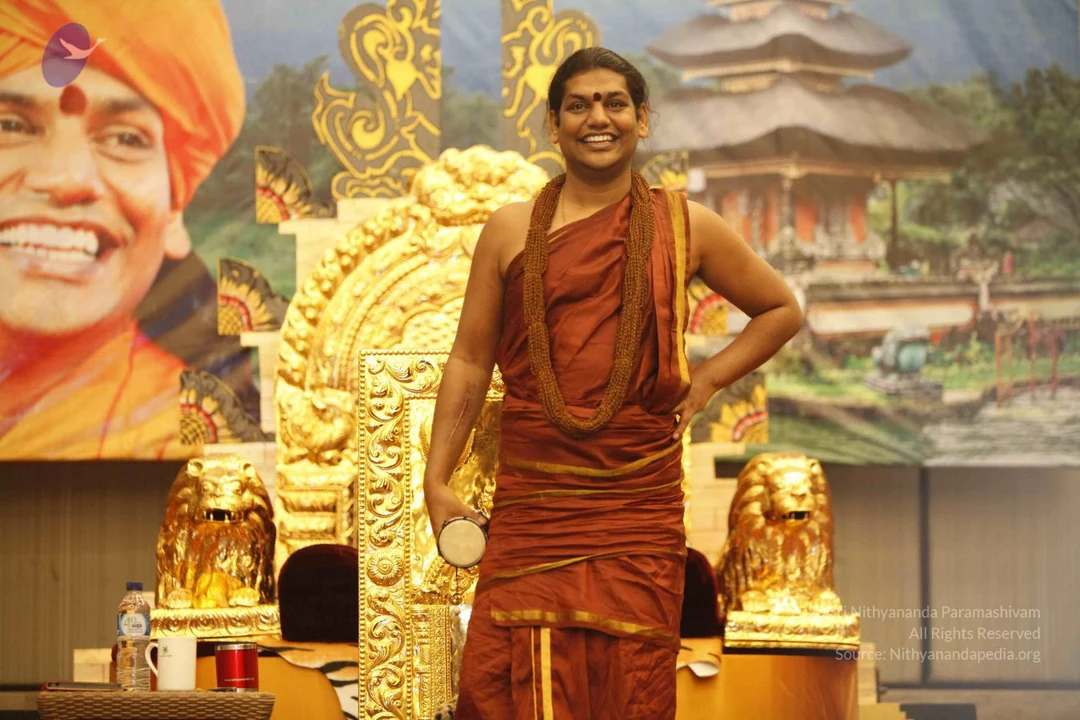
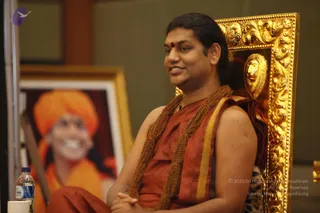
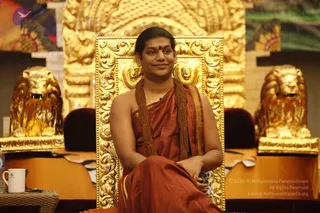
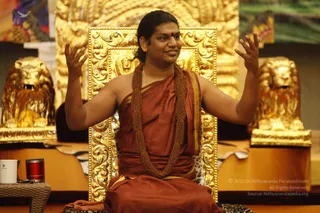
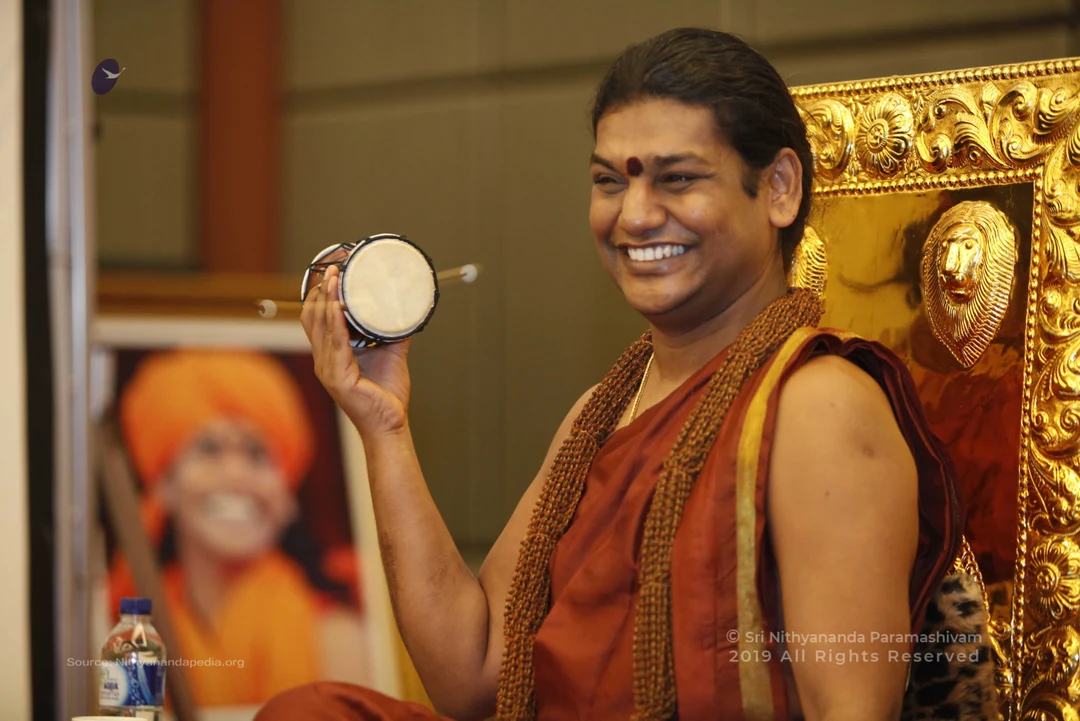
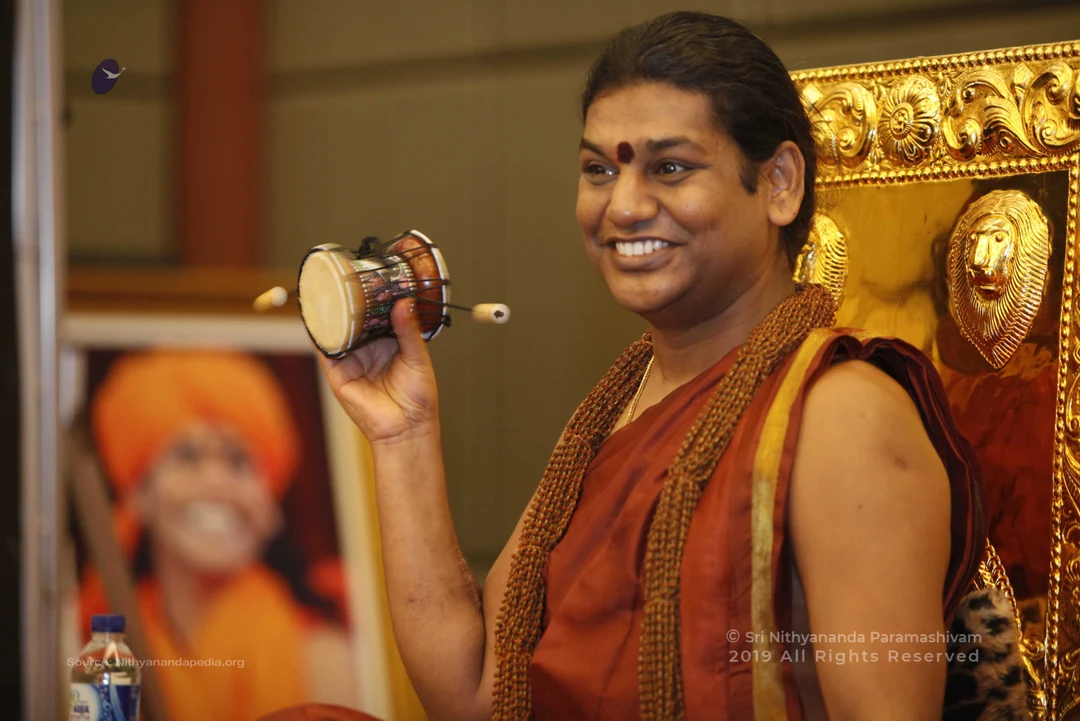
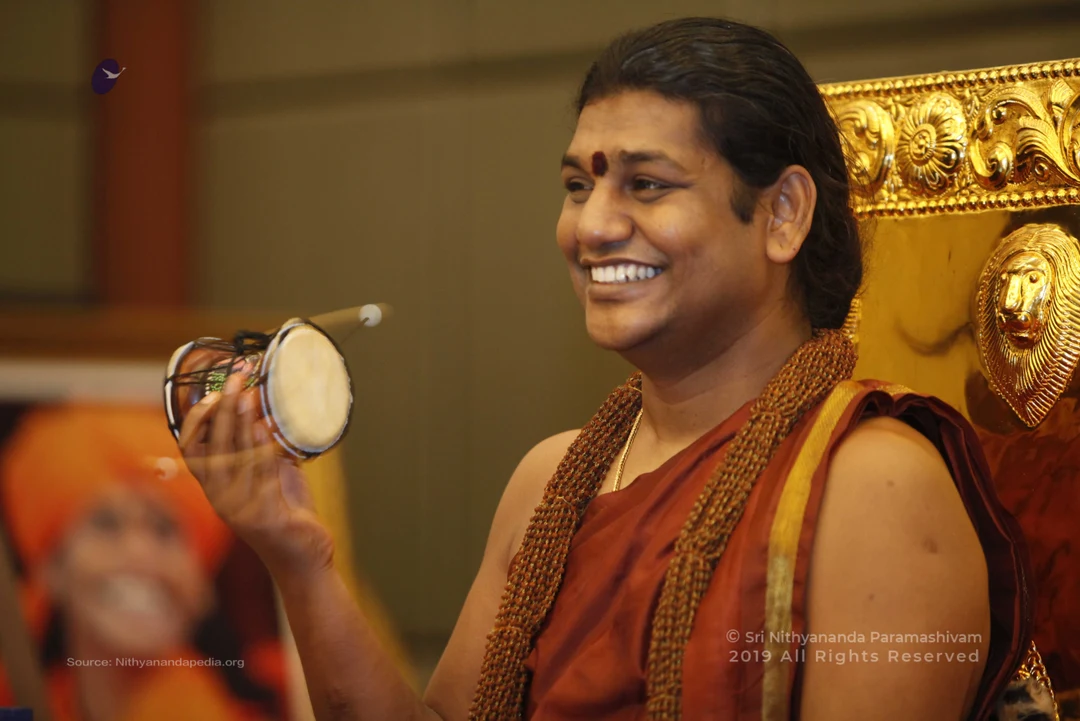
A seated man in a rust-red and gold-bordered robe with a rudraksha mala draped over his shoulders sits on an ornate gilded throne with a carved lion head, smiling and gesturing with clasped hands. Beside him stands a framed portrait of a smiling figure in an orange turban and saffron robe, and a water bottle sits on the table in the foreground. The man is an appearance-based probable candidate for a person, identified by the rudraksha mala and red robe with a throne setting, but the cues are not distinctive enough to confirm, so the a person field is unsure.A smiling man with swept-back dark hair and a red bindi stands before a gilded ornate throne with carved lion-head medallions. He wears a rust-red garment with a gold-bordered cloth over one shoulder, and long brown rudraksha malas drape his chest with a thin gold chain. Behind him to the left, a framed portrait shows a smiling figure in saffron-orange turban and clothing, labelled with no readable caption. The setting is an indoor hall with soft beige walls.A seated man in a rust-red and gold-bordered sannyasi-style cloth sits on an ornate gold throne carved with lion heads and floral scrollwork. He wears a thick rudraksha mala across his chest, a small gold chain, and a red bindi on his forehead, with hands resting in his lap. Flanking him are two large gold lion statues, and a gilded carved backdrop rises behind the throne. A white mug and a small wicker side table sit at the left edge of the frame.A smiling man with short dark hair and a red bindi sits on an ornate gold throne carved with lion motifs, flanked by two gilded lion statues. He wears a rust-orange robe and a long rudraksha mala draped over his shoulders, with his hands resting in his lap. Behind him a large painted backdrop shows a temple scene and a portrait of a smiling person in orange. A water bottle and white cup sit on a small wicker table at lower left. a person is seated centrally as the main subject, wearing orange robes and a rudraksha mala on the throne.A smiling man with short dark hair and a red bindi sits on an ornate gold throne with carved frame and lion-head motifs, flanked by two large gold lion statues. He wears a rust-orange wrap over bare shoulders and a long rudraksha mala over his chest, with his hands clasped in his lap. A white mug and a red tumbler sit on a small wicker table to the left, and a tiger-striped cloth covers the throne base. Appearance-based candidate: a person, seated in a satsang setting.A seated man in a rust-red ochre robe with a gold border and a long brown rudraksha mala draped over his chest sits on an ornate gold throne carved with scrollwork and lion heads. He raises both hands palms-up in an open teaching gesture while smiling, with a red bindi on his forehead. Golden lion statues flank the throne, and a white mug and a small red flask sit on a wicker table at left. Probable Swamiji seated in satsang: the long swept-back hair, ochre robe, rudraksha mala and gold throne are consistent with the page's identification, though the face is not used for identification.

Rudra Abhishekam
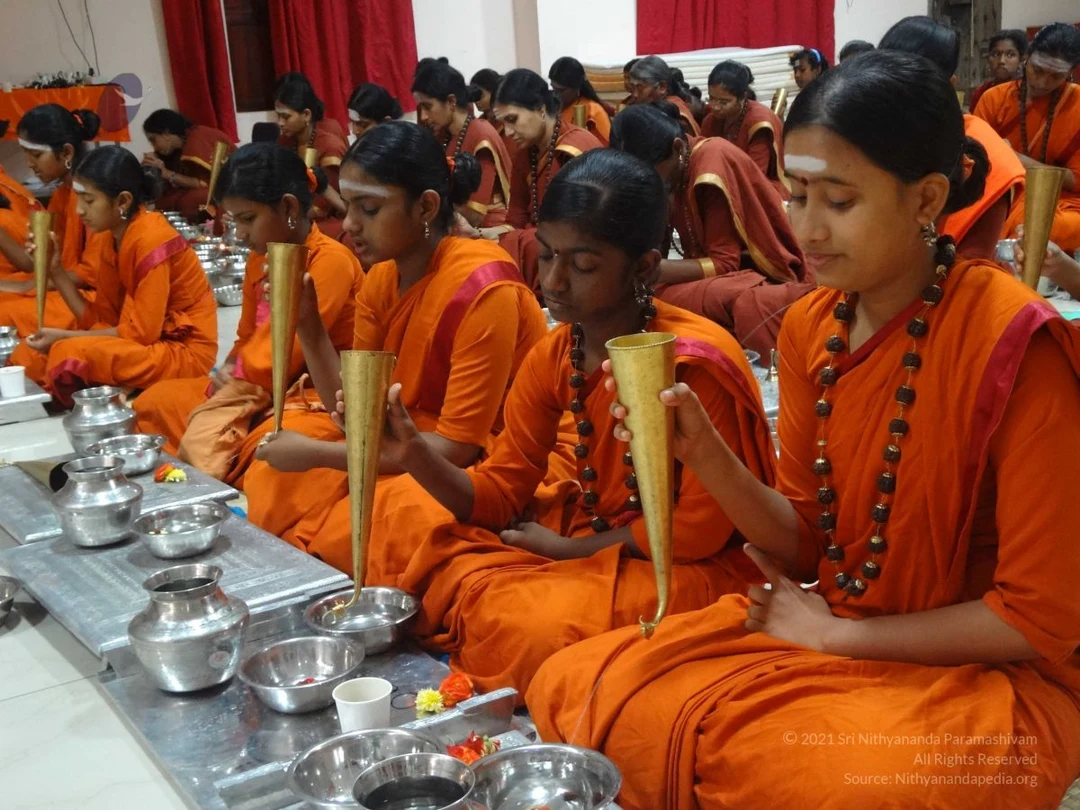
2 photosSource gallery
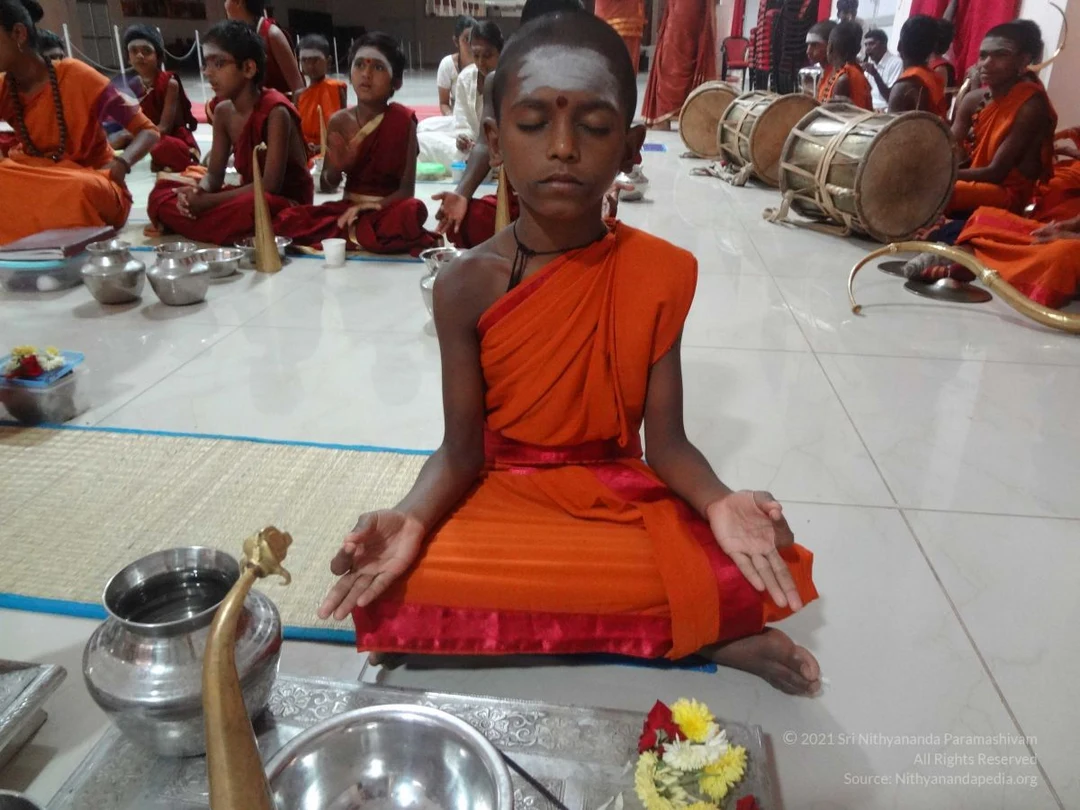
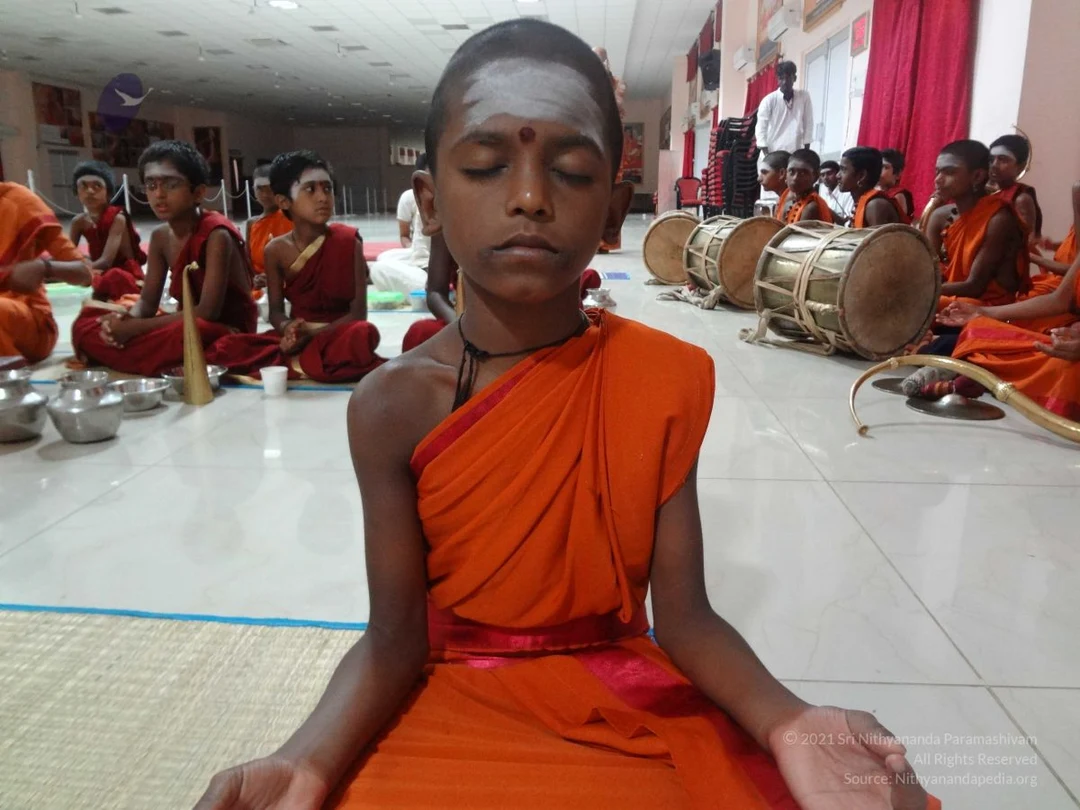
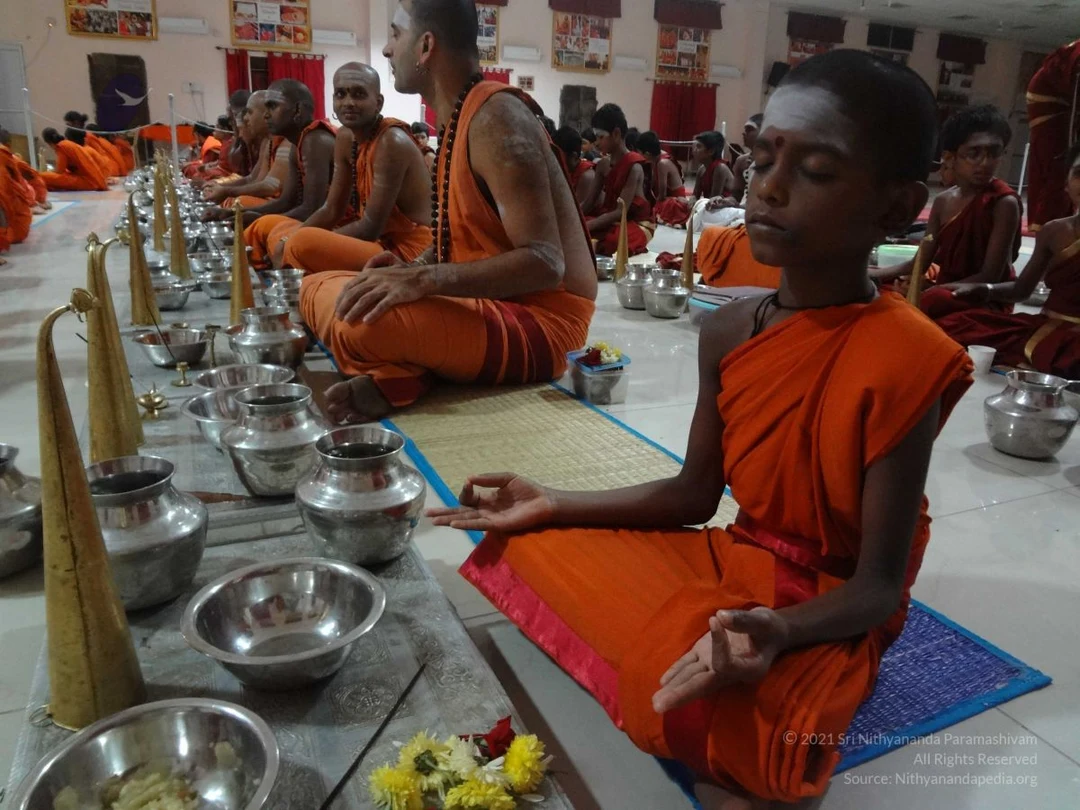
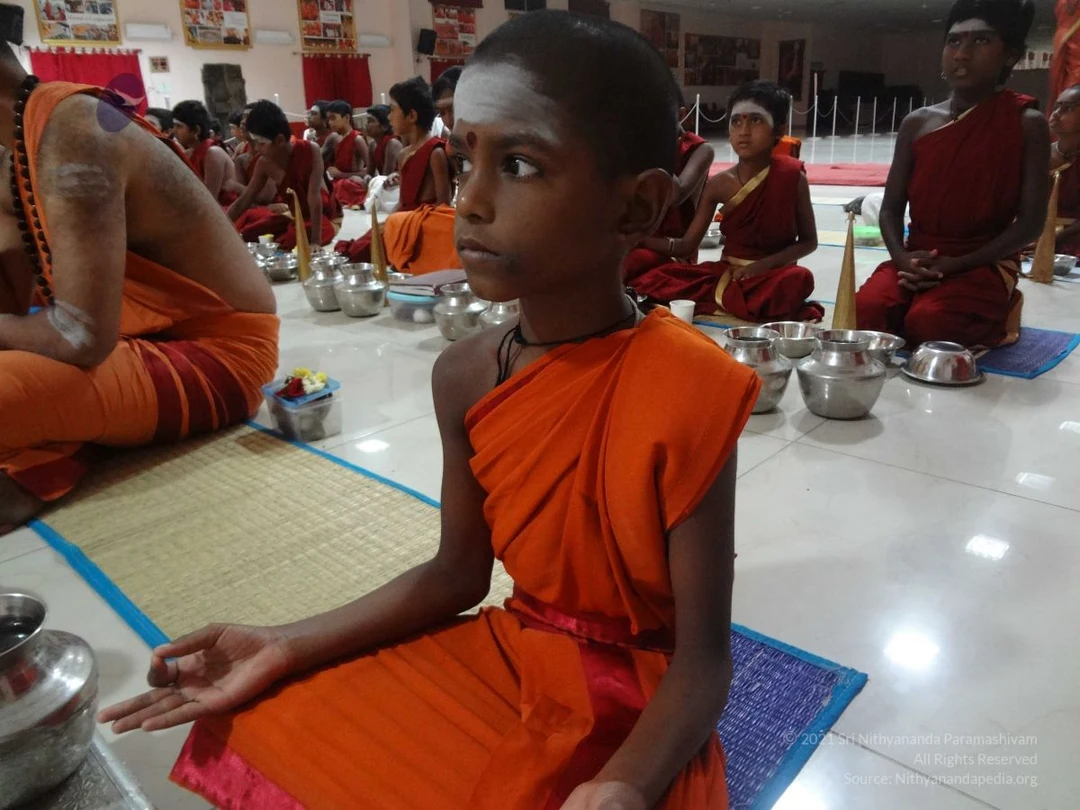
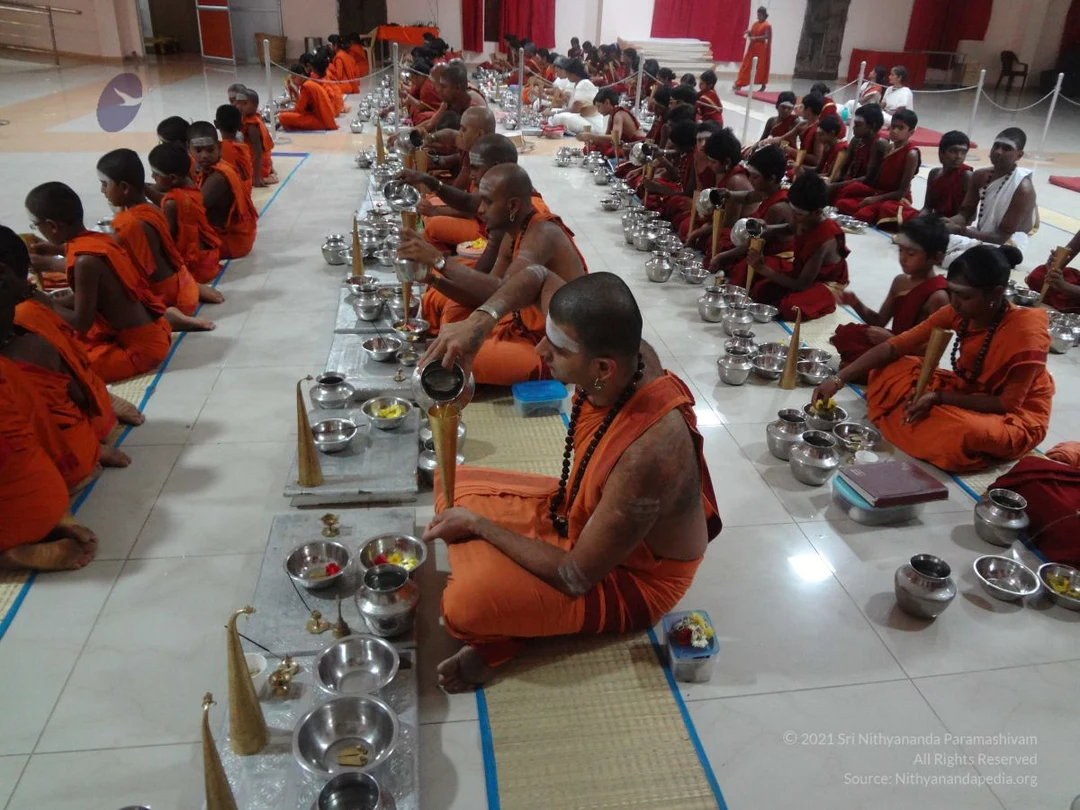
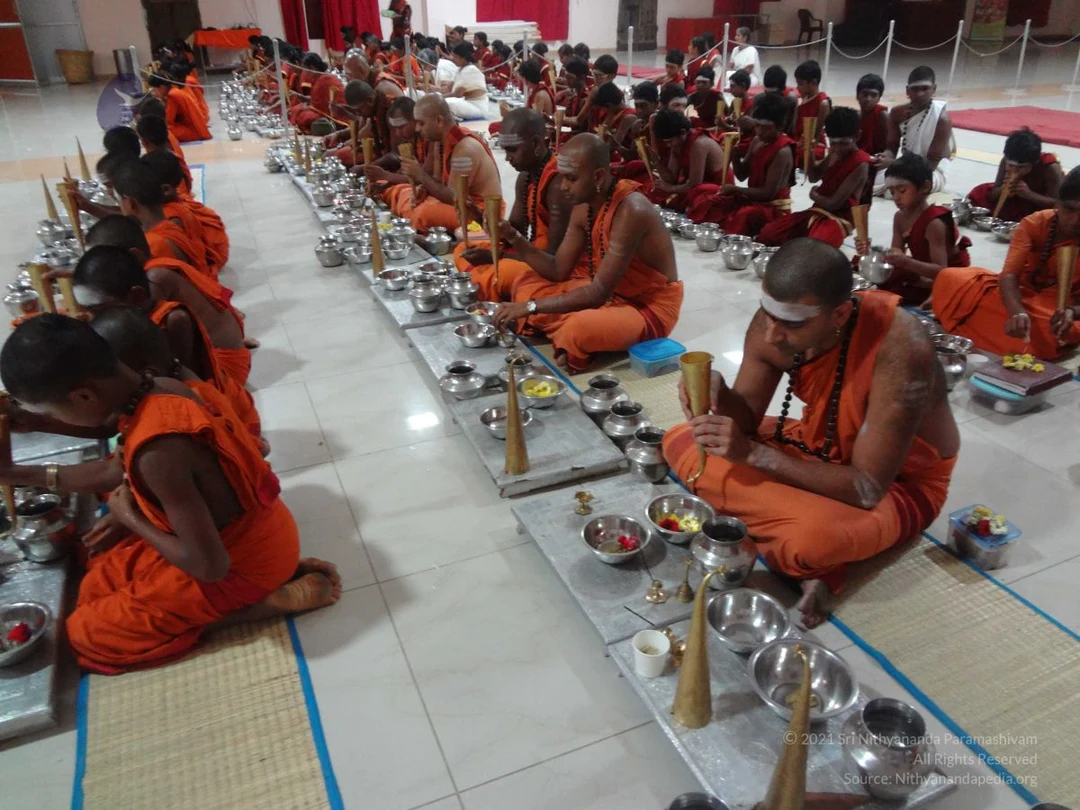
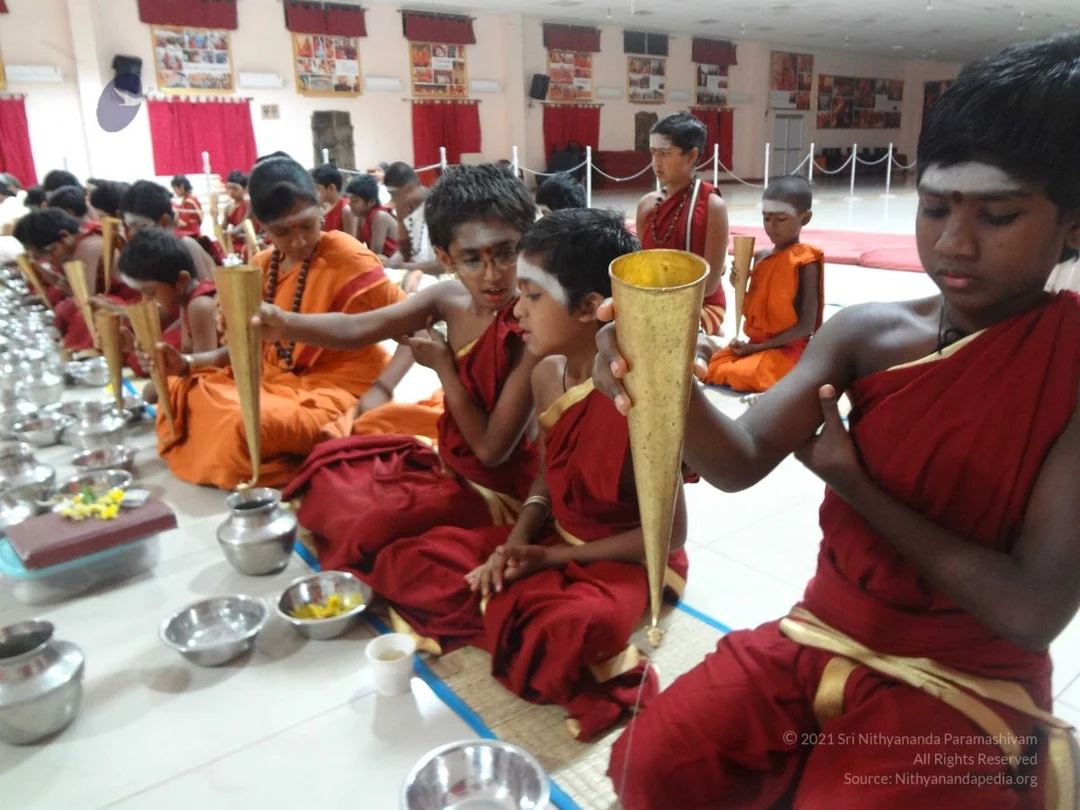
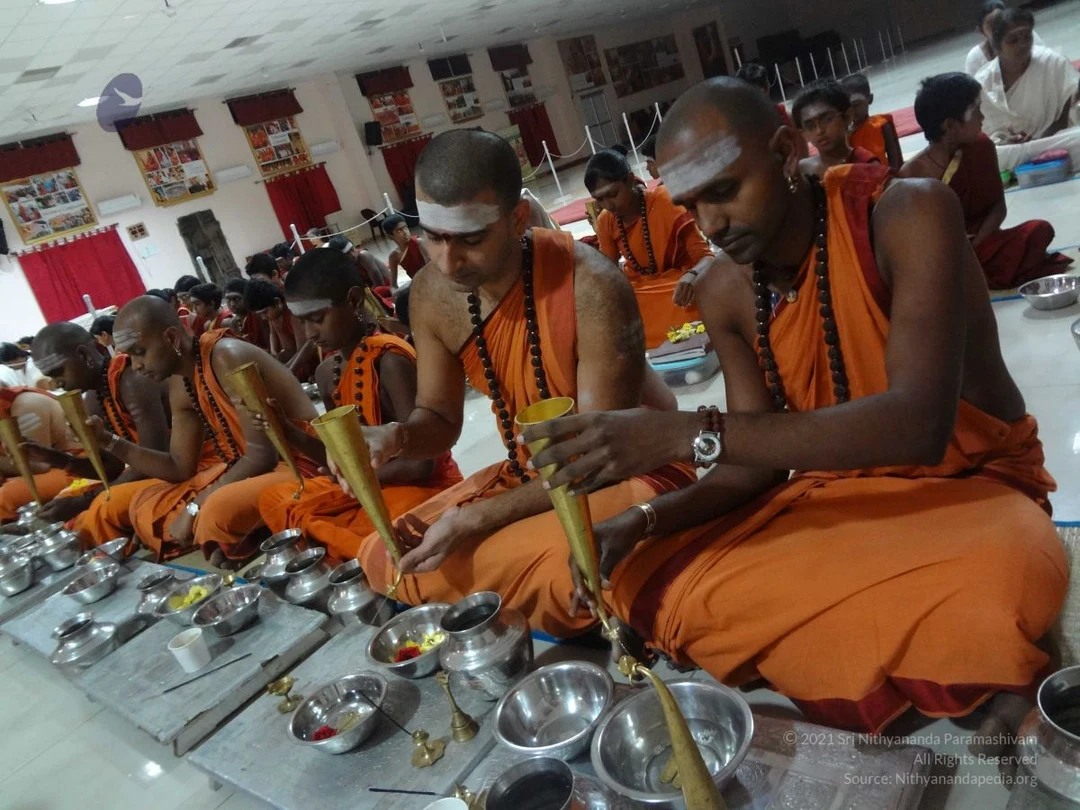
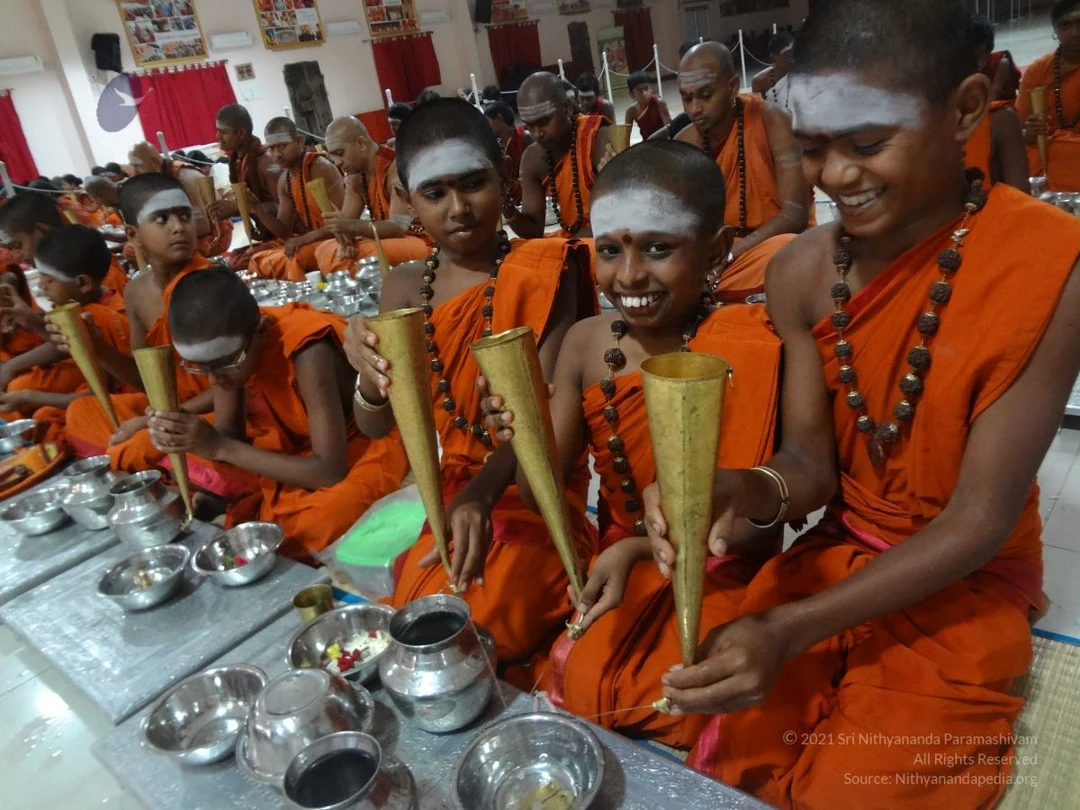
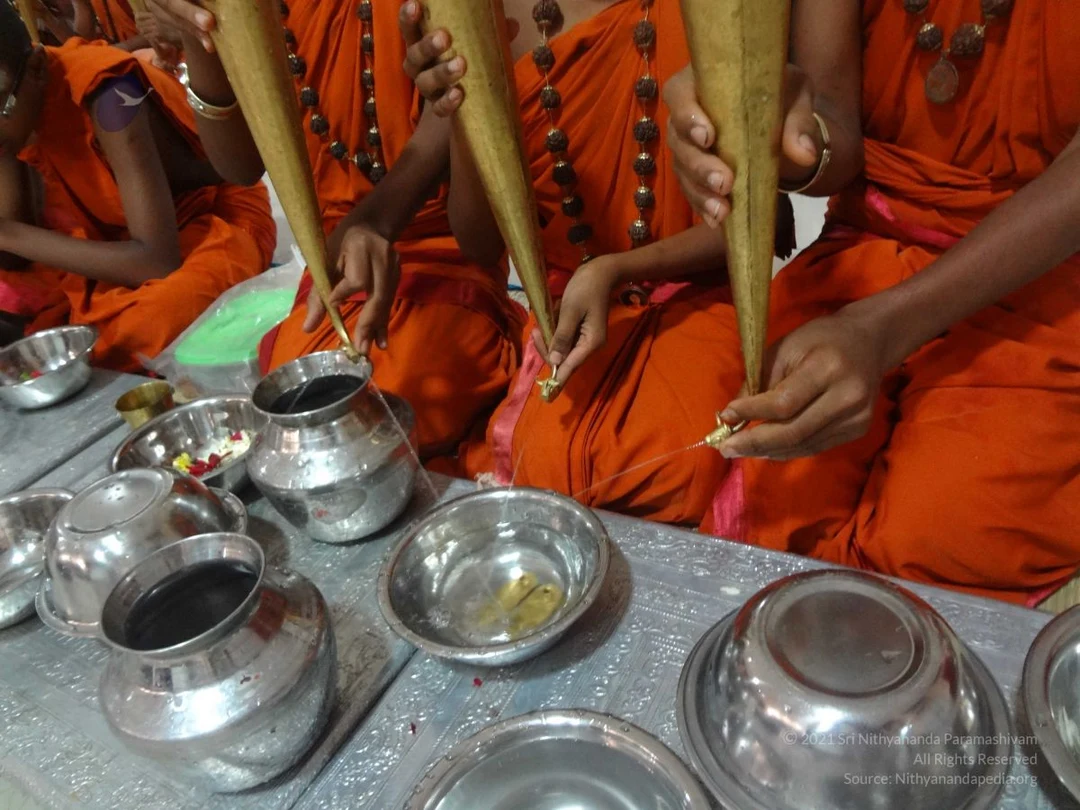
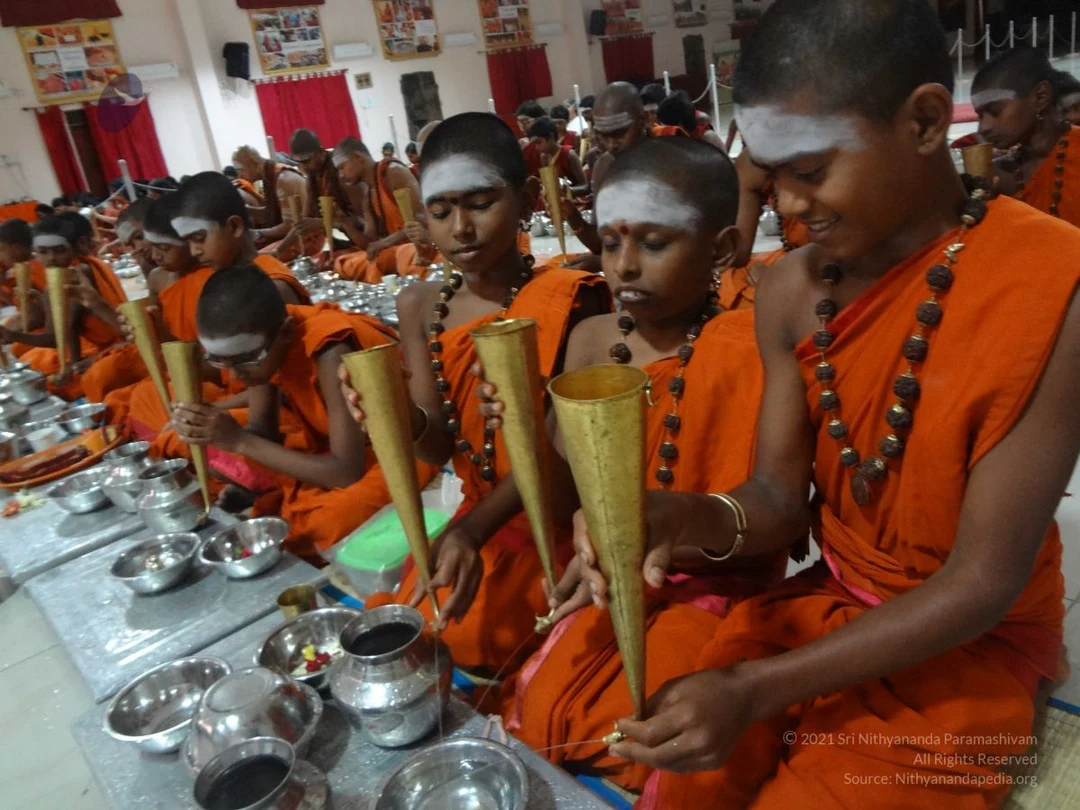
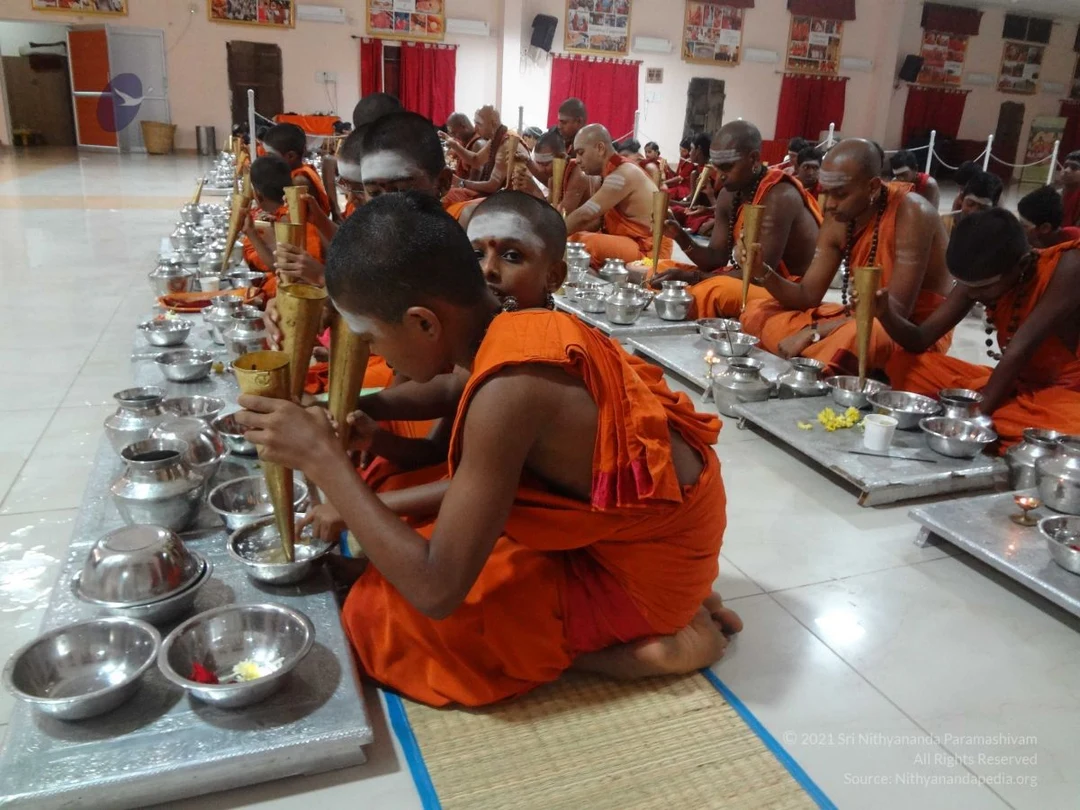
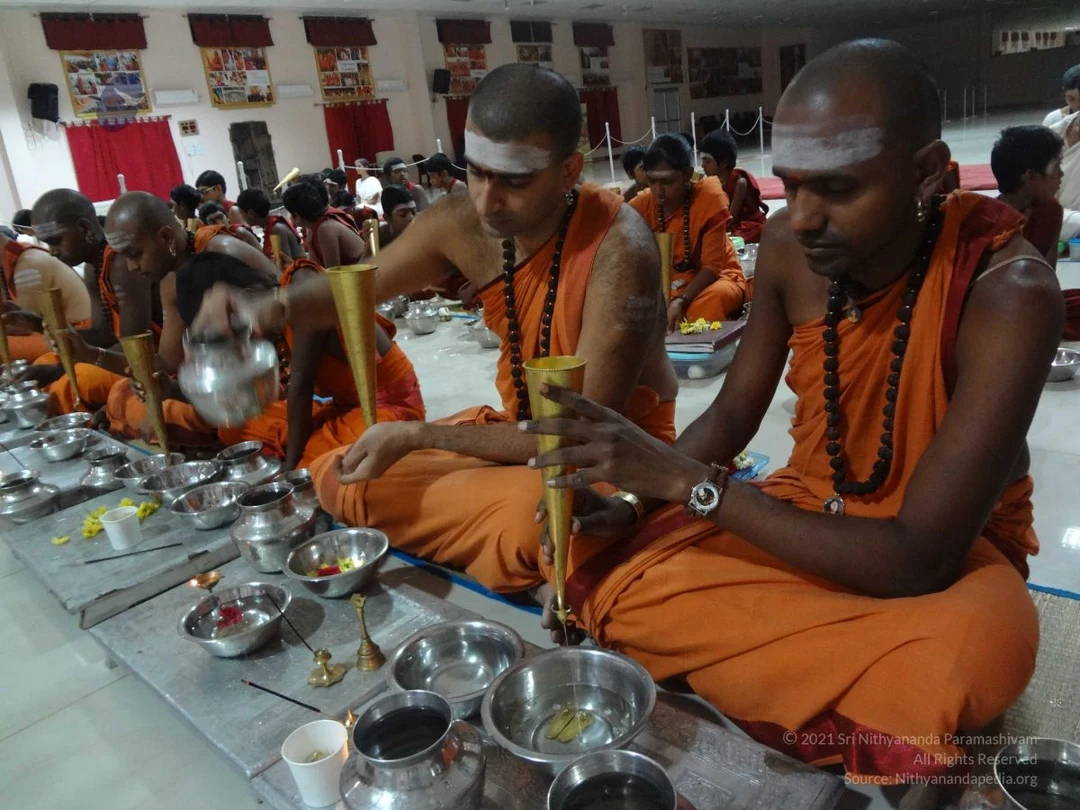
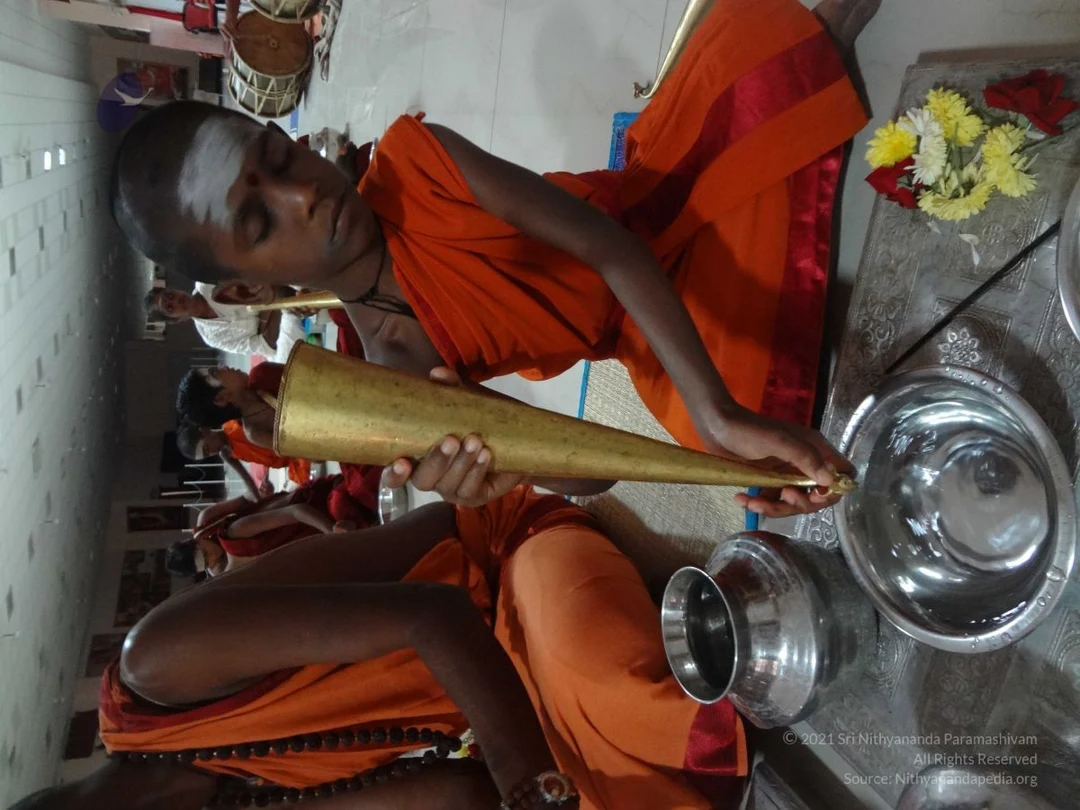
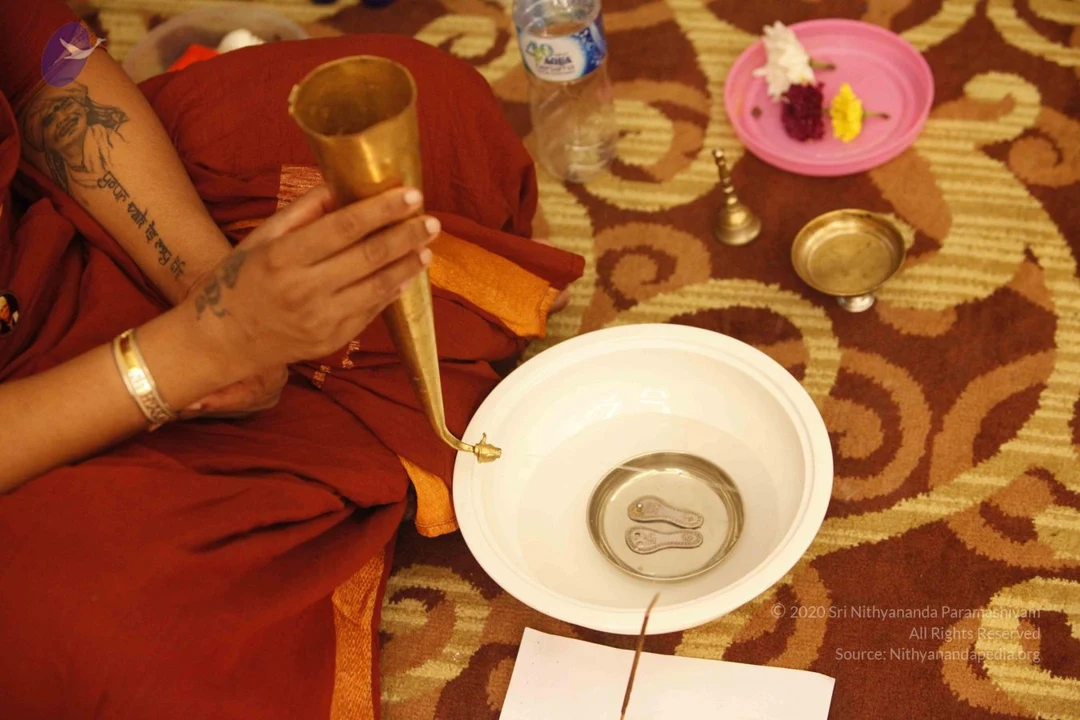
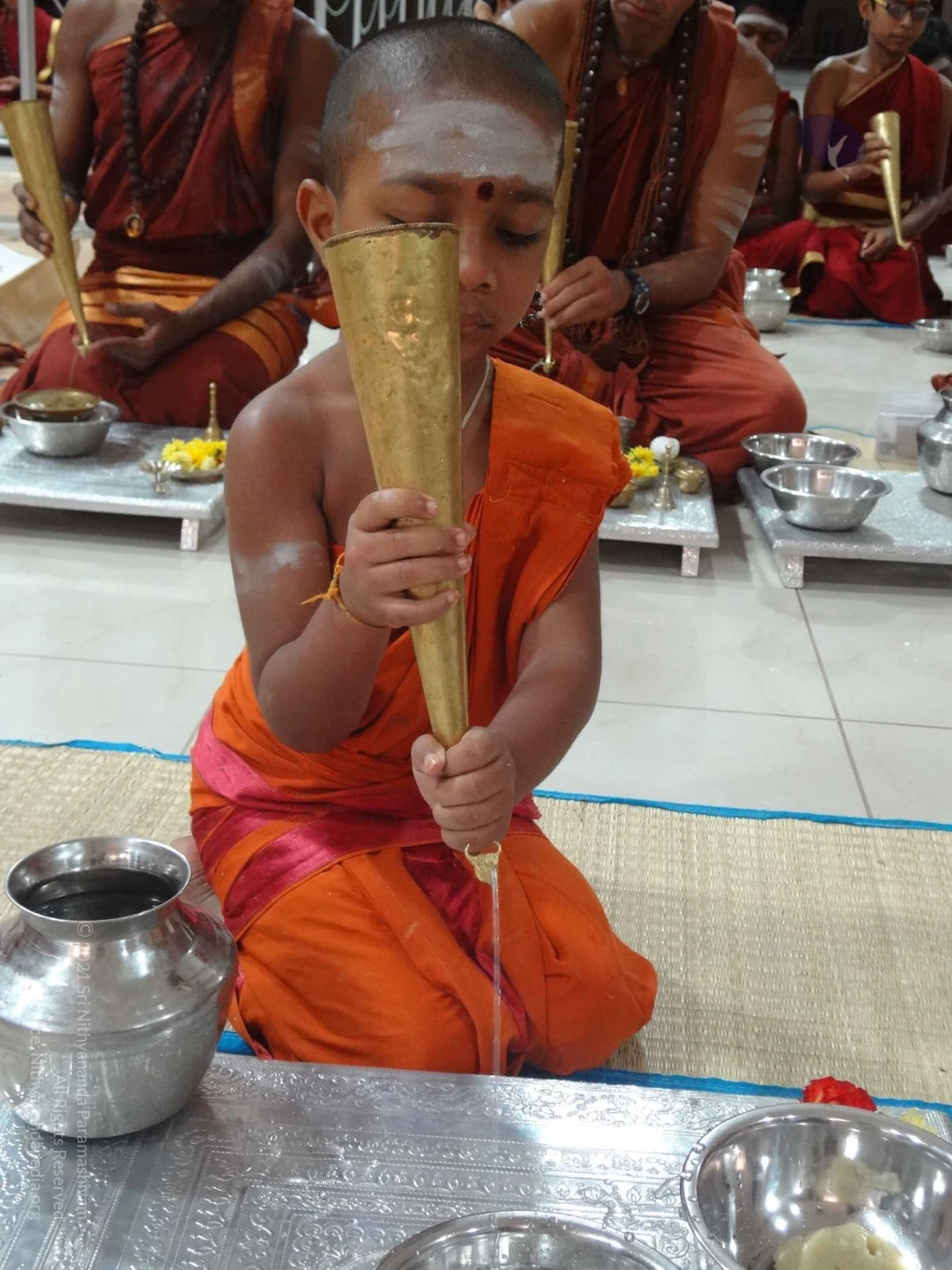
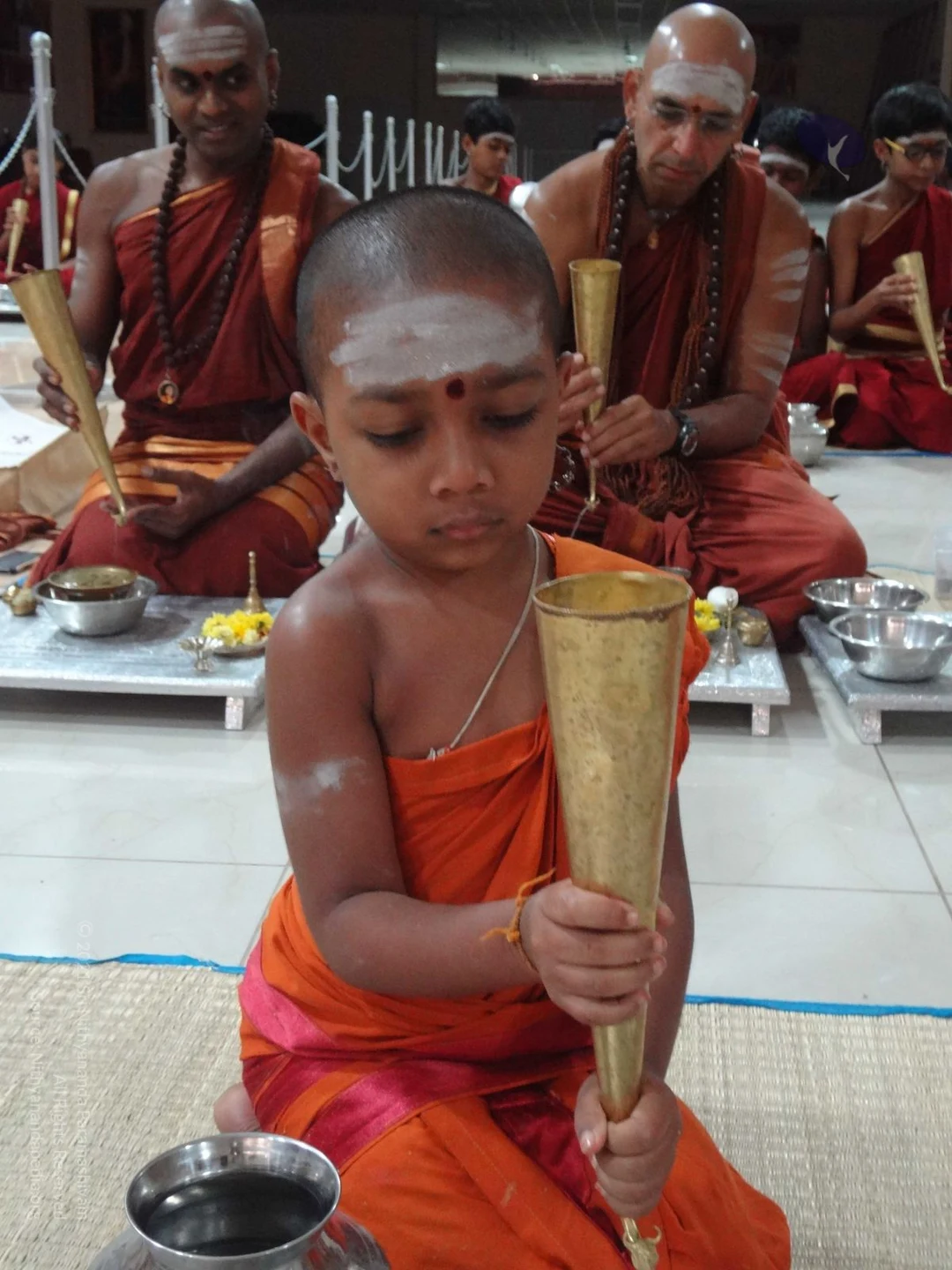
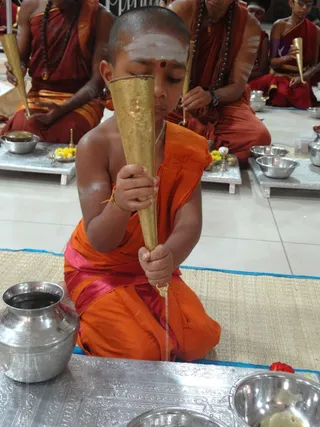
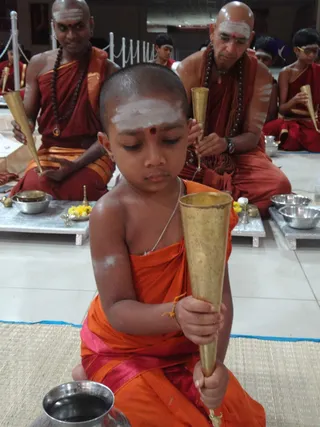
A shaved-headed young boy in an orange robe with a pink-red waistband kneels on a woven mat, pouring water through a long brass cone held in both hands. A red bindi and white markings adorn his forehead. Behind him, several seated figures in red-orange robes and rudraksha malas hold similar brass cones over steel plates. Steel pots, bowls, flower garlands and small brass lamps sit on silver-toned platforms.A young boy with a shaved head, white forehead marks and a red bindi sits in front, wearing an orange robe with a pink-red border and holding a tall brass horn-shaped vessel. Behind him, two seated men in red-orange robes with rudraksha malas and white ash markings on their heads and arms hold similar brass horns, while other boys in orange and red clothing sit nearby. Silver trays hold flowers, bowls and small brass items, and a steel pot stands in the lower left.