Skip to content
Monday

25 November 2013

Dated photos
679
Source pages
1
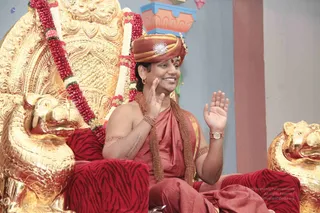
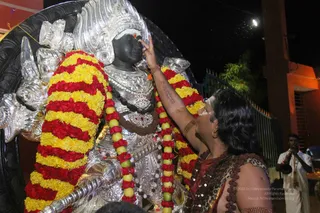
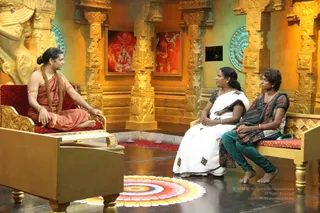
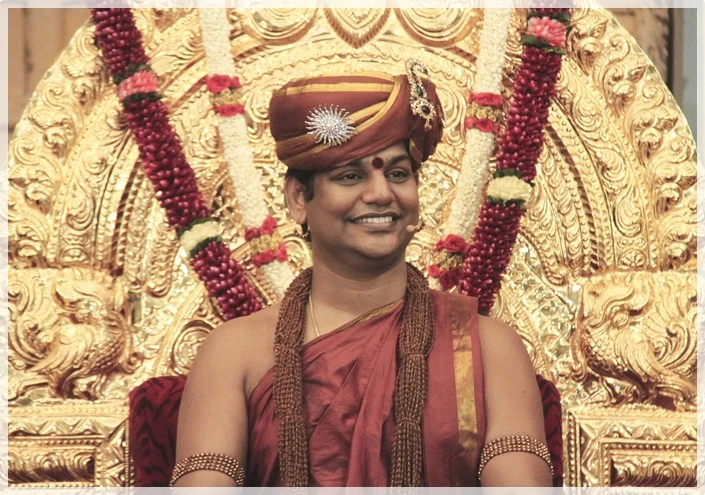
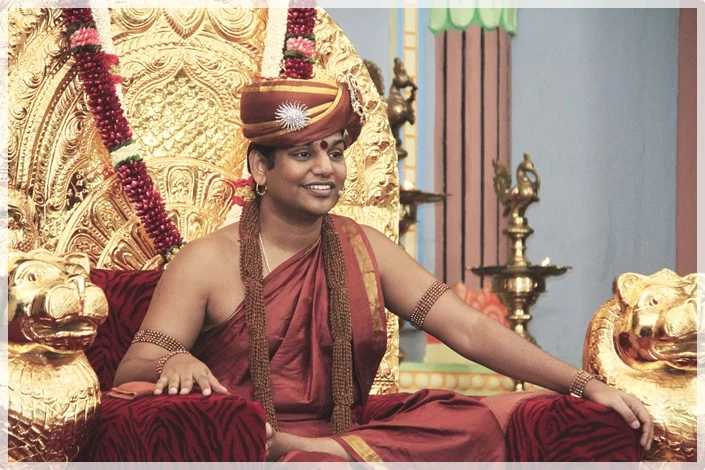
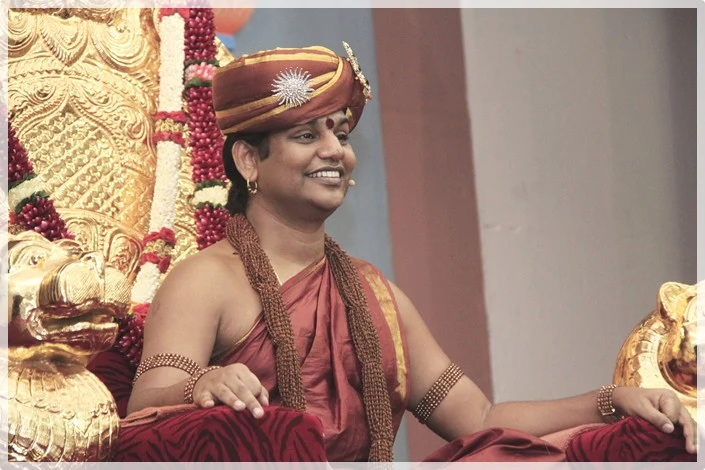
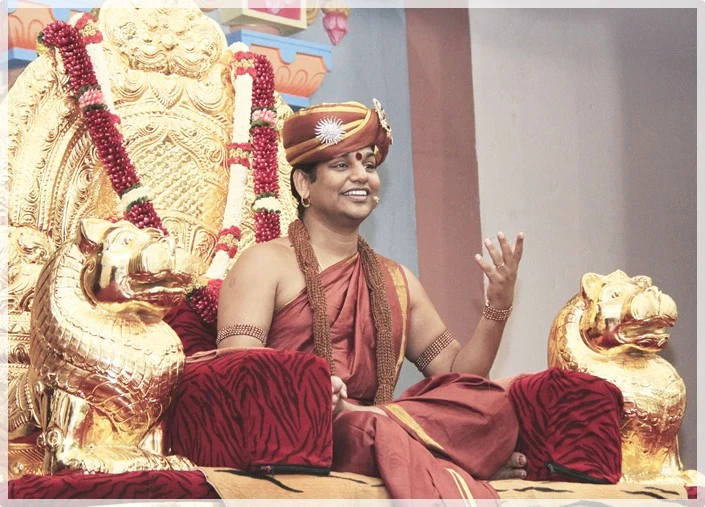
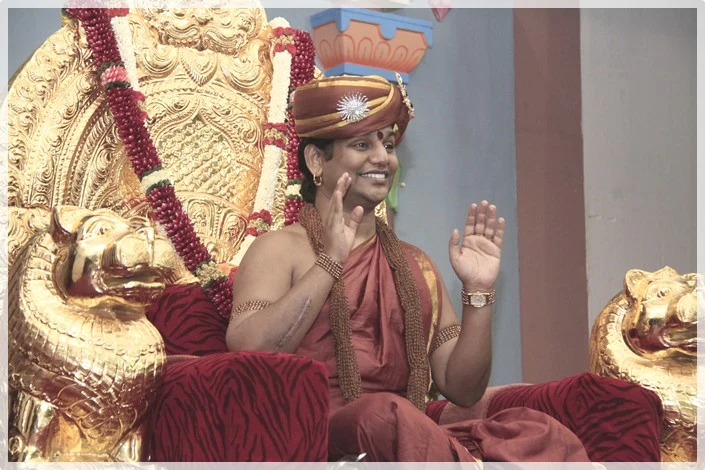
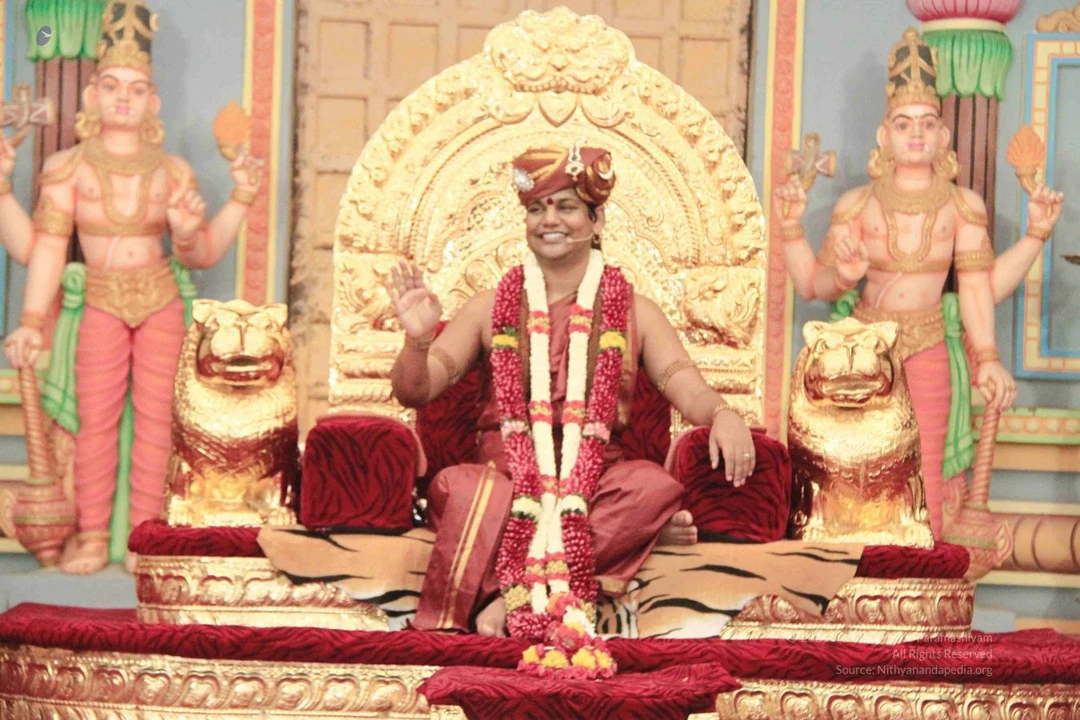
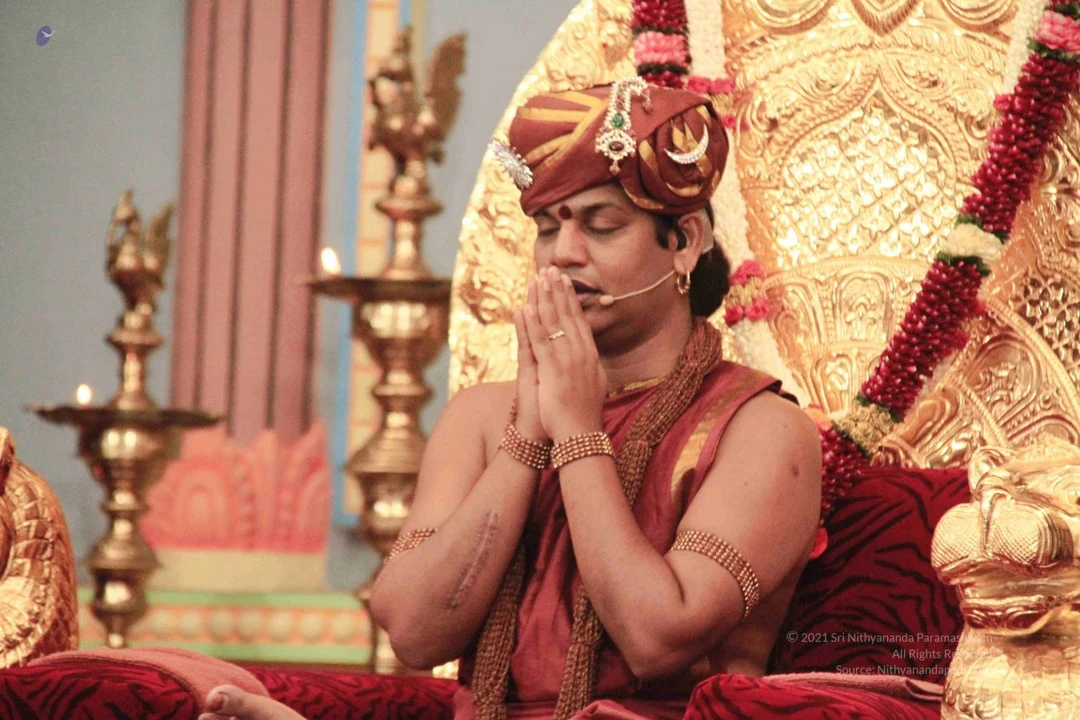
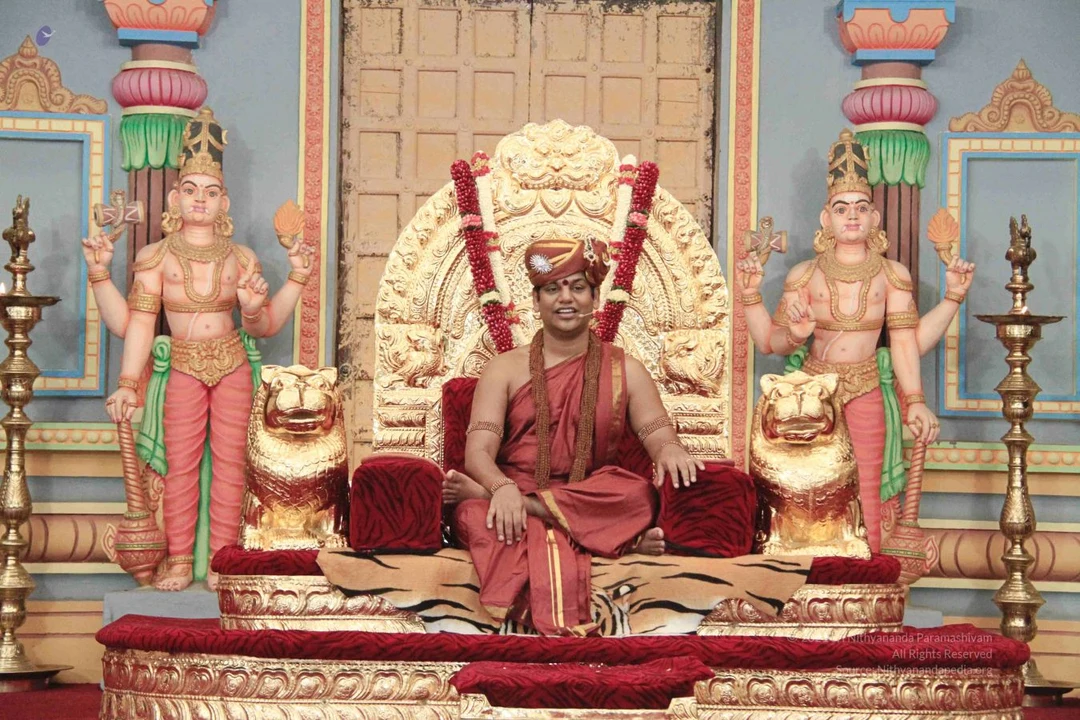
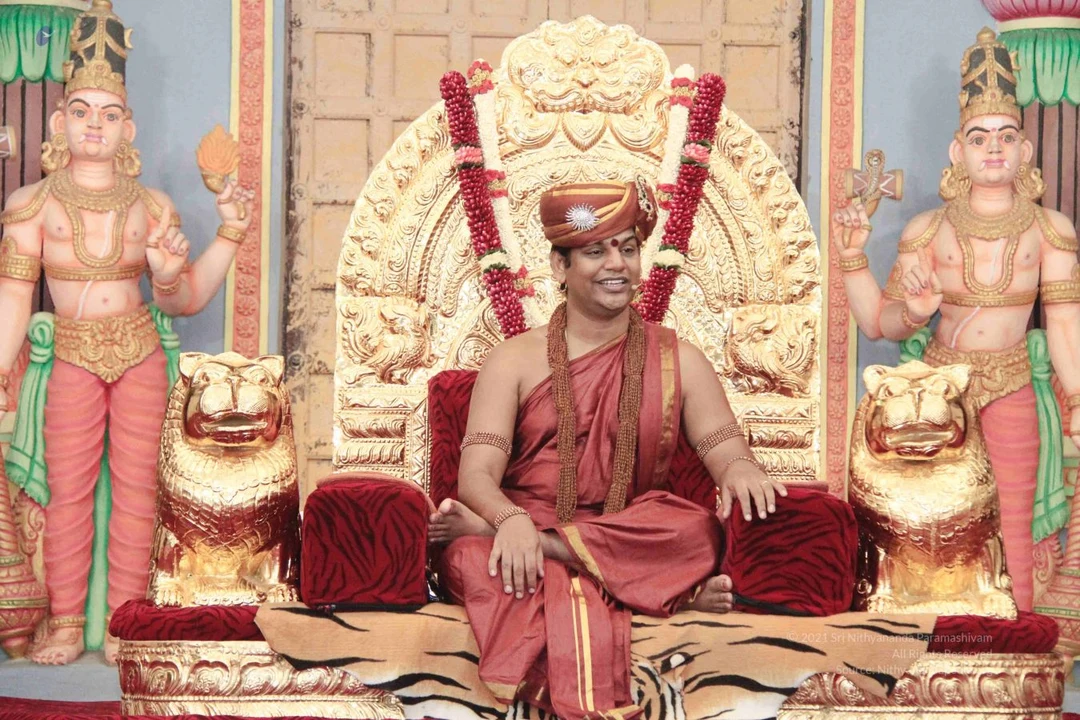
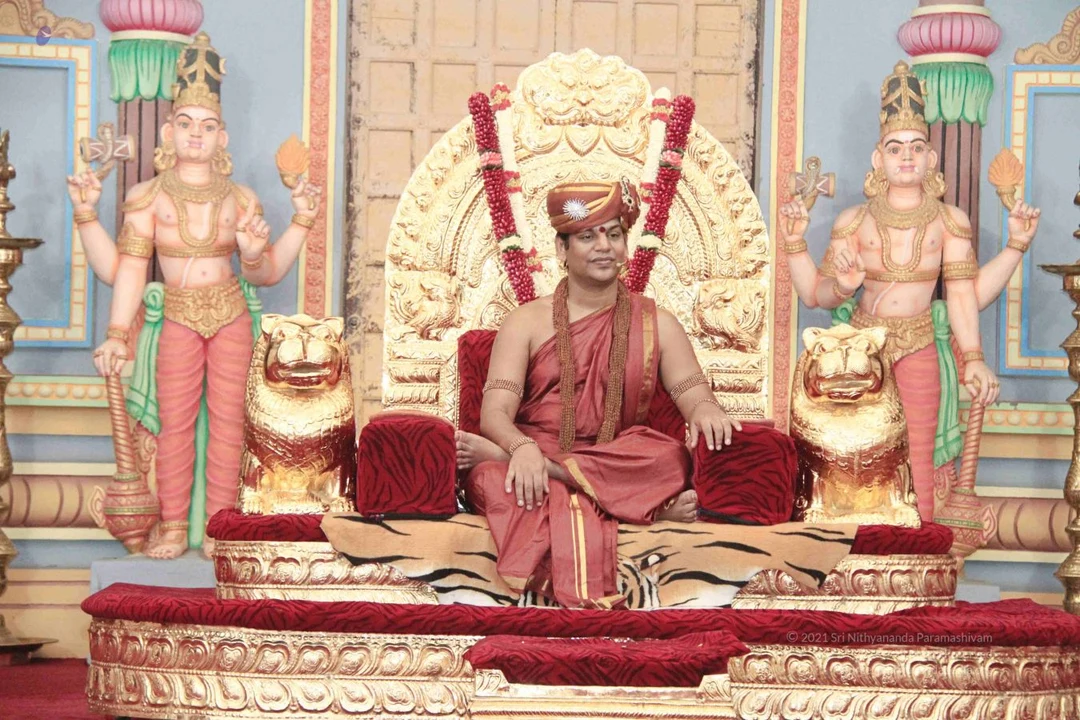
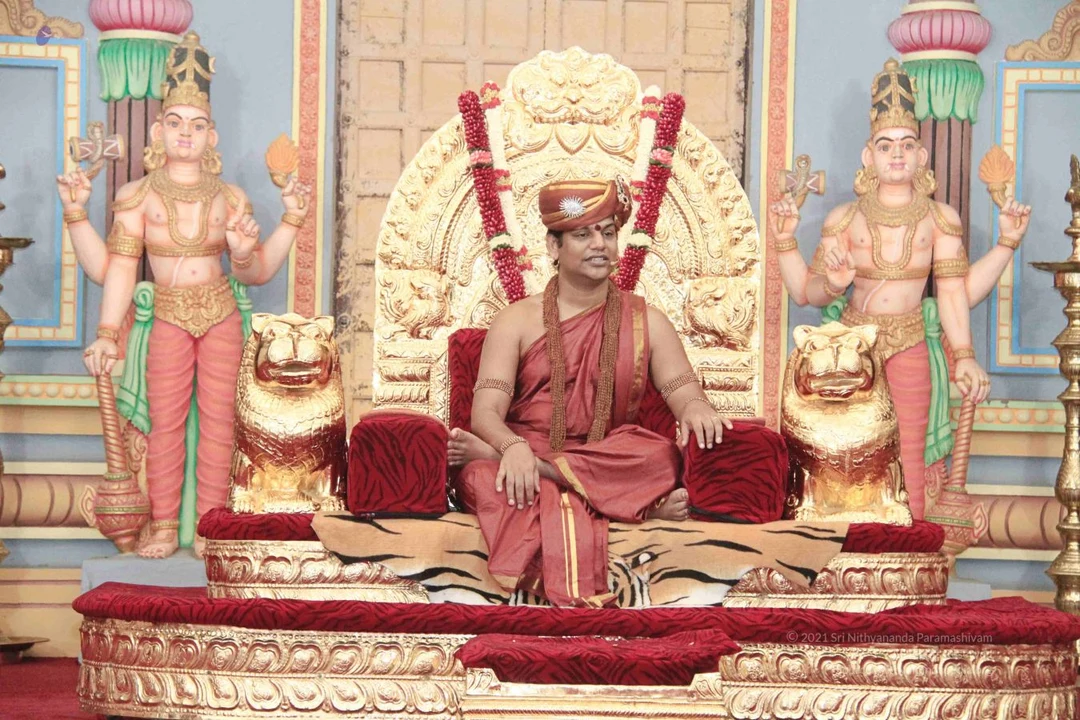
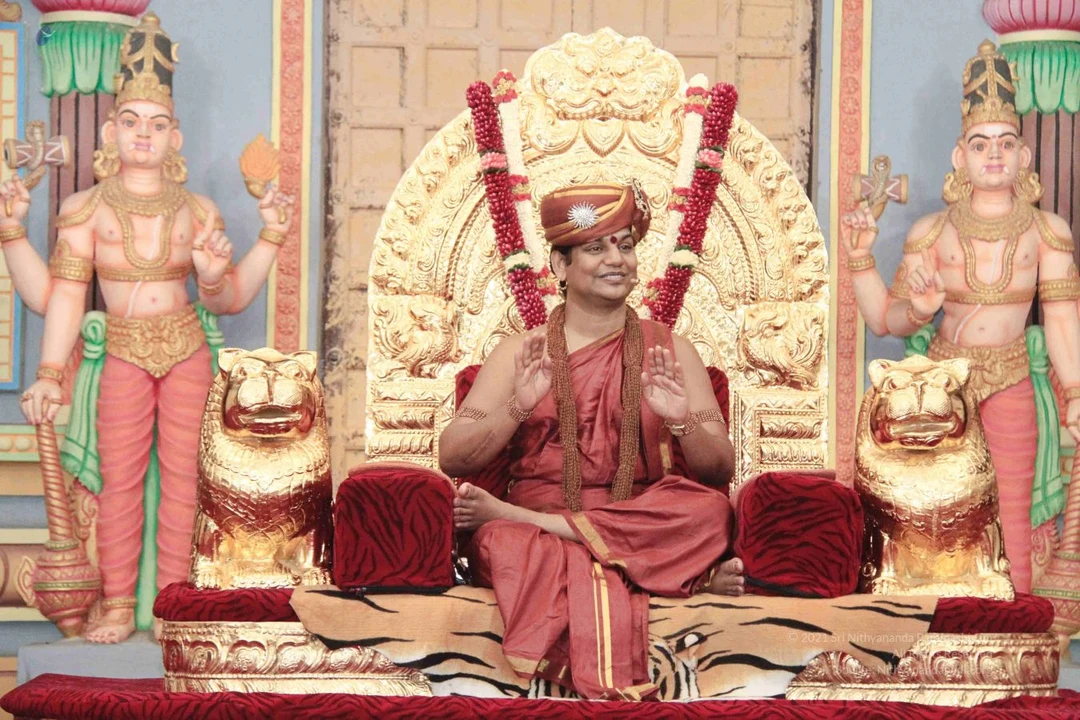
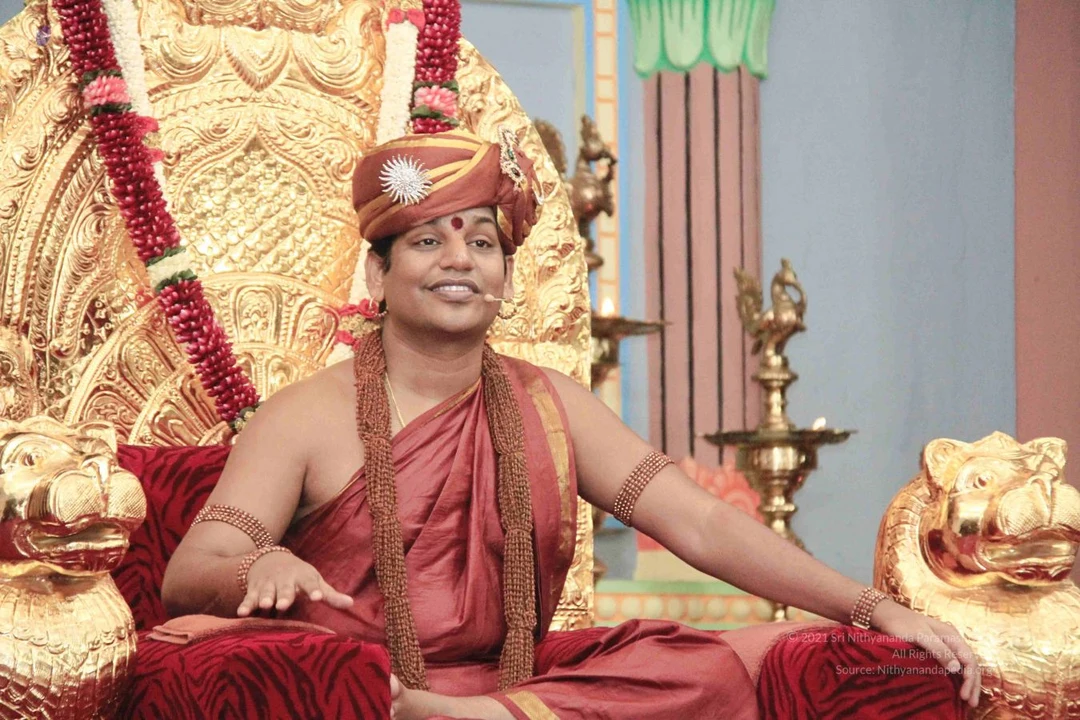
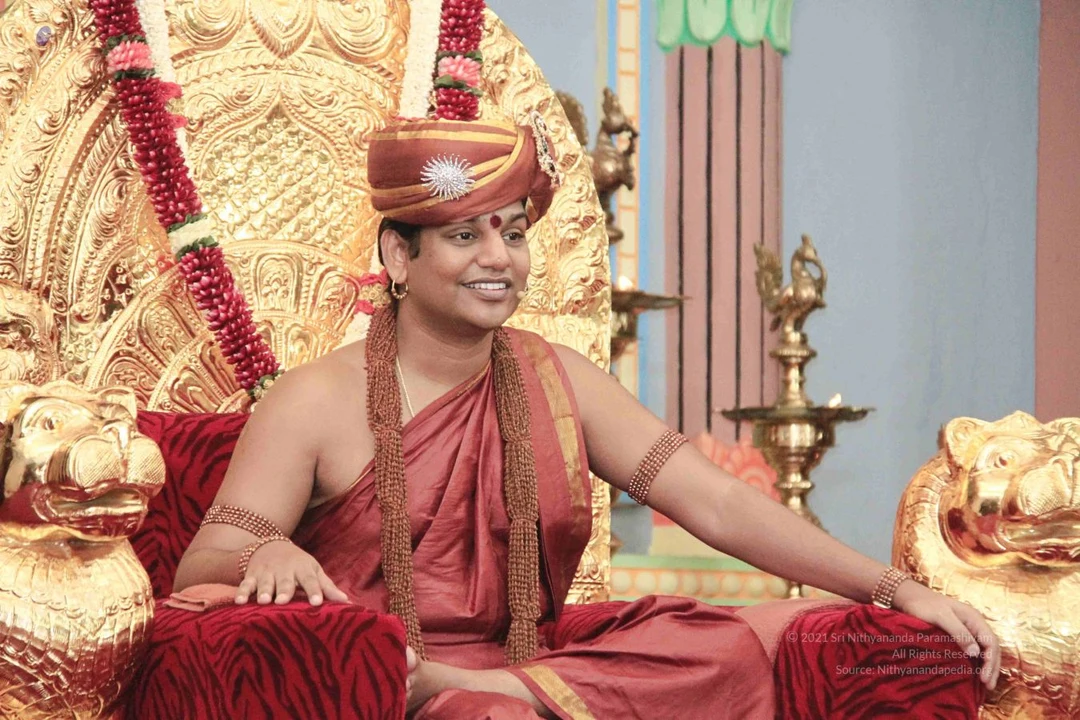
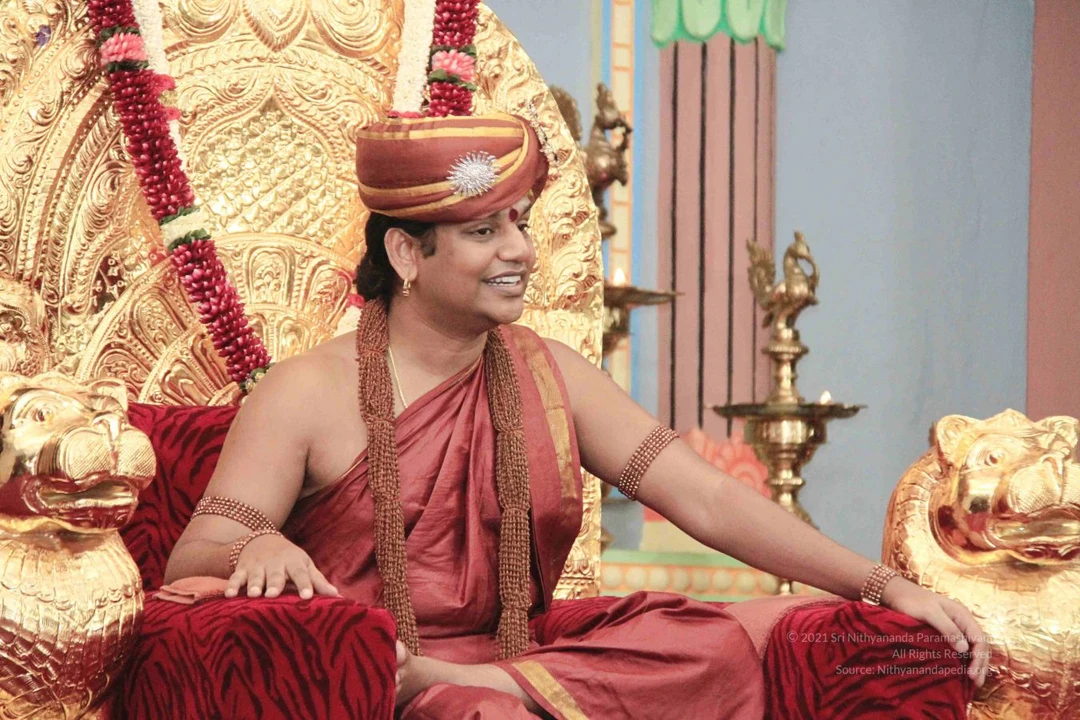
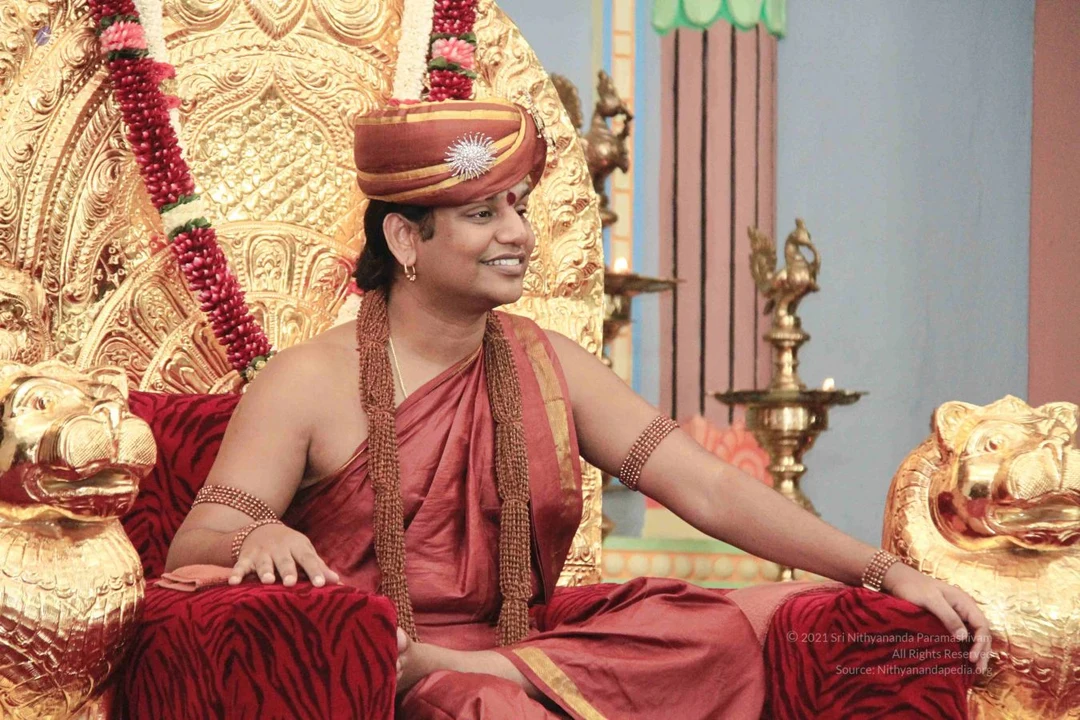
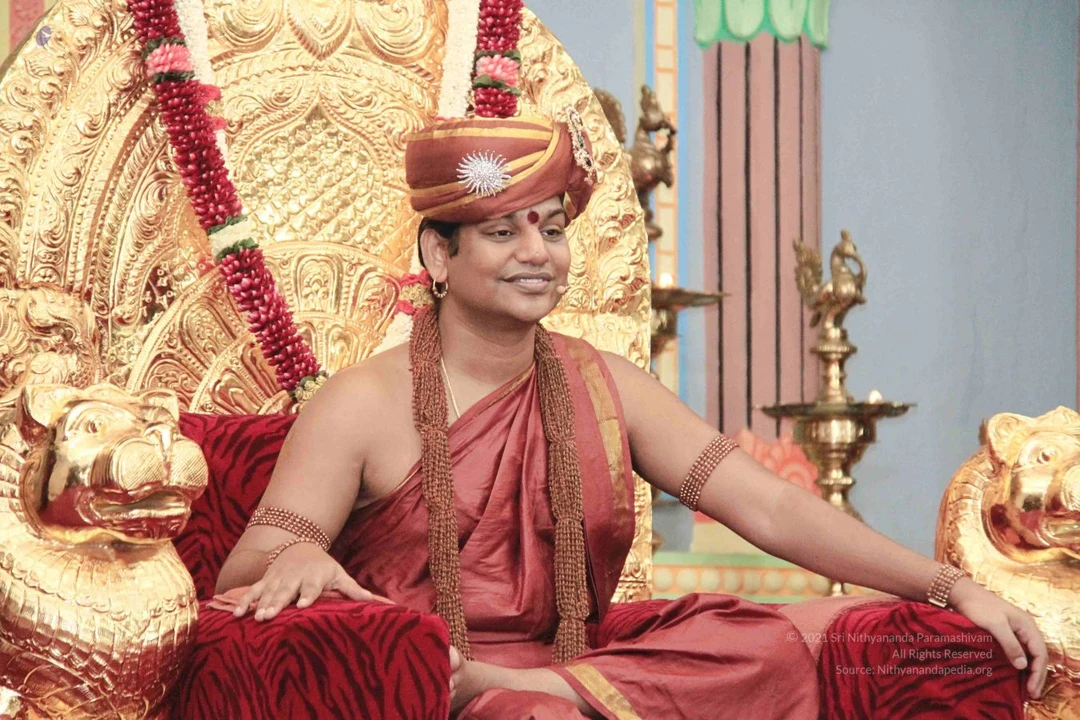
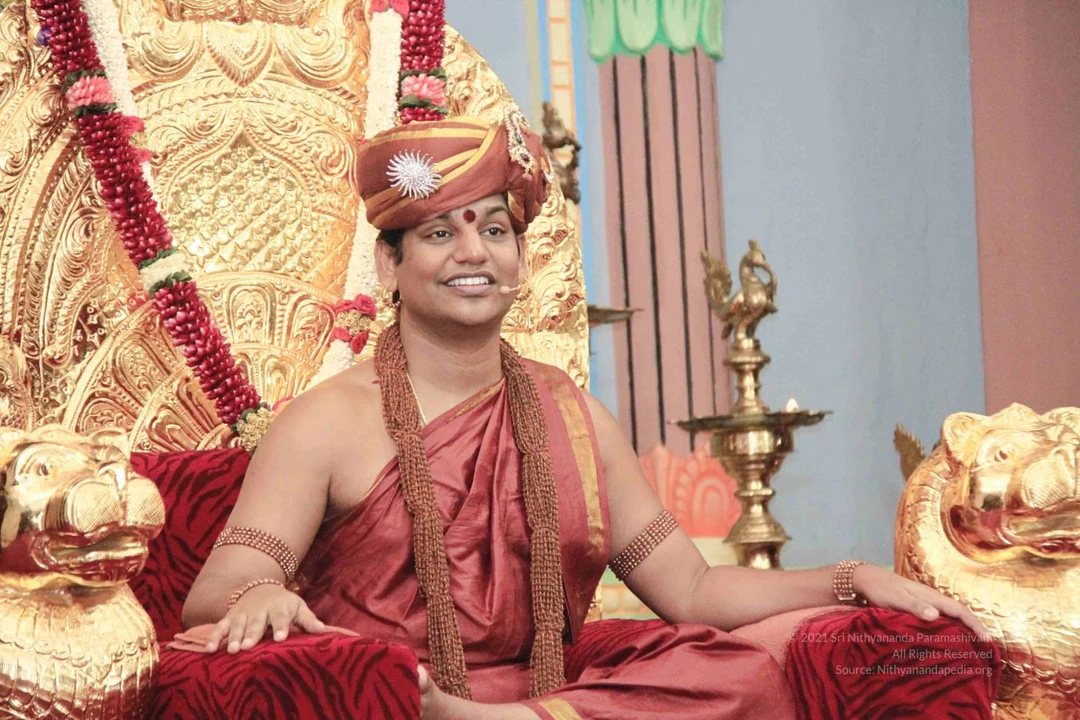
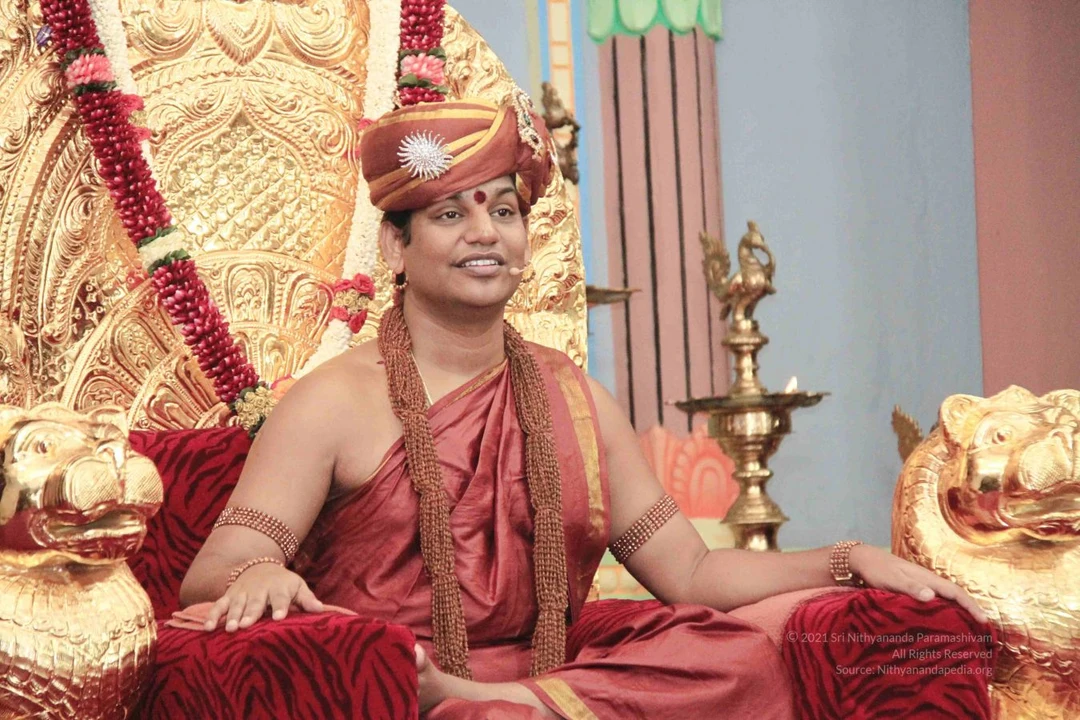
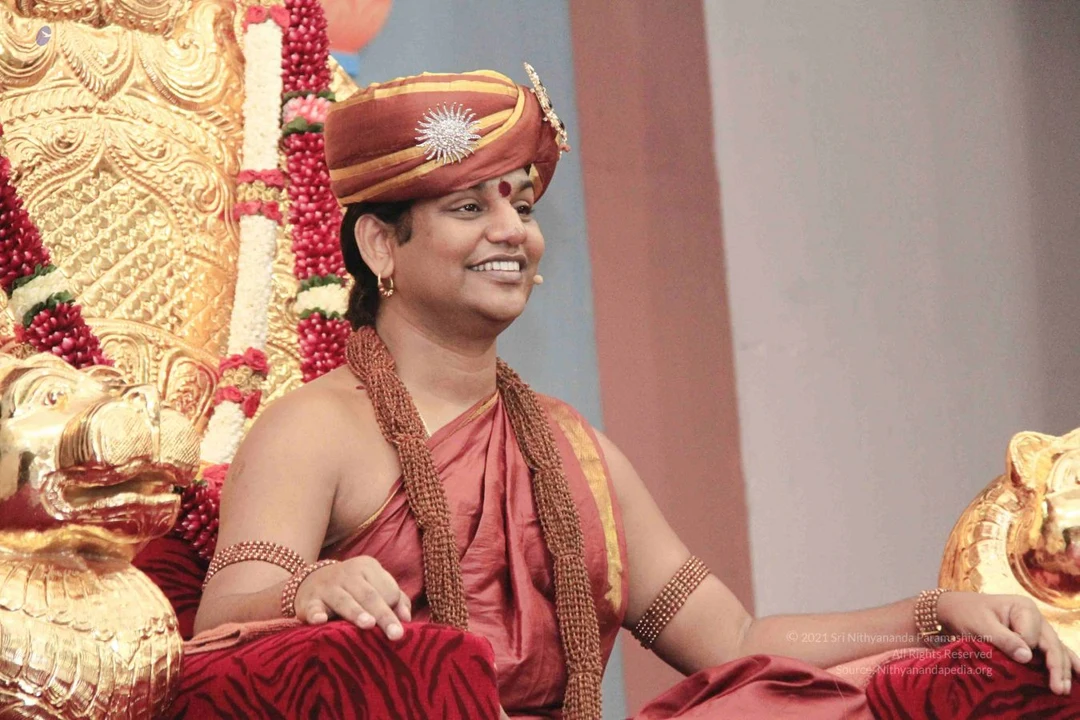
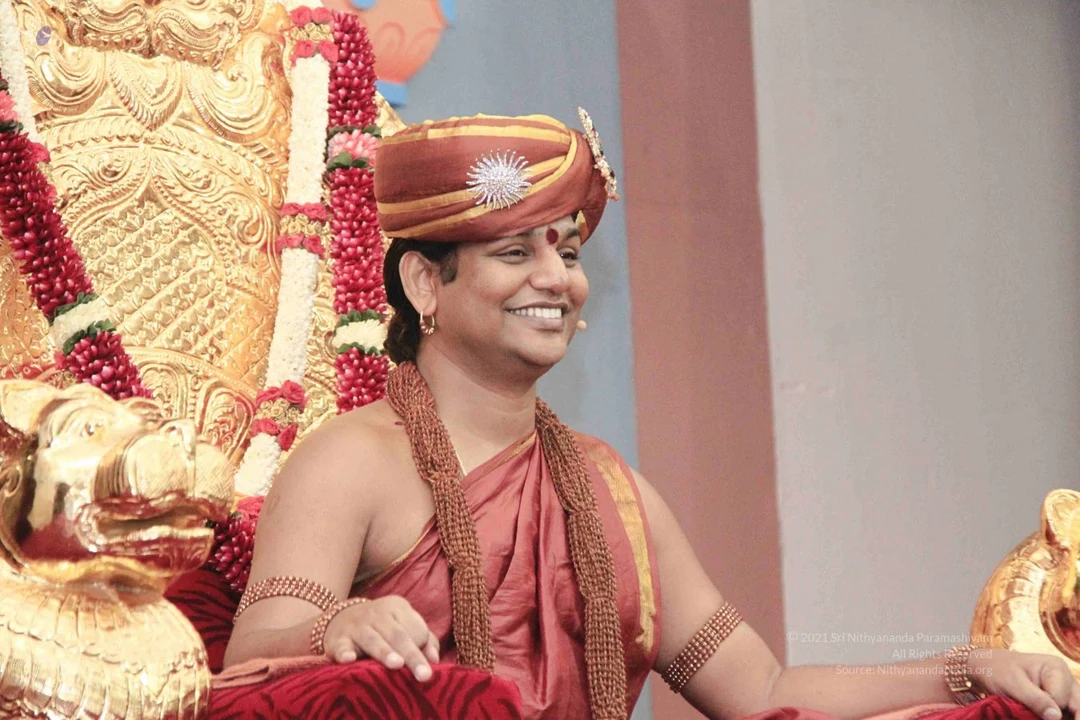
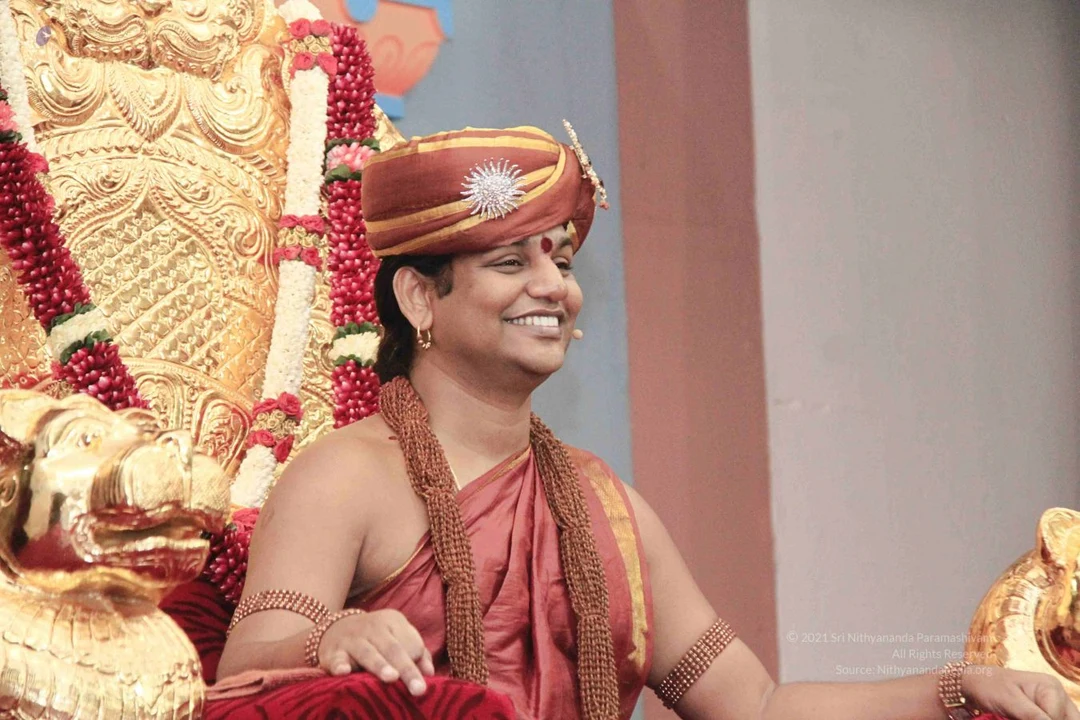
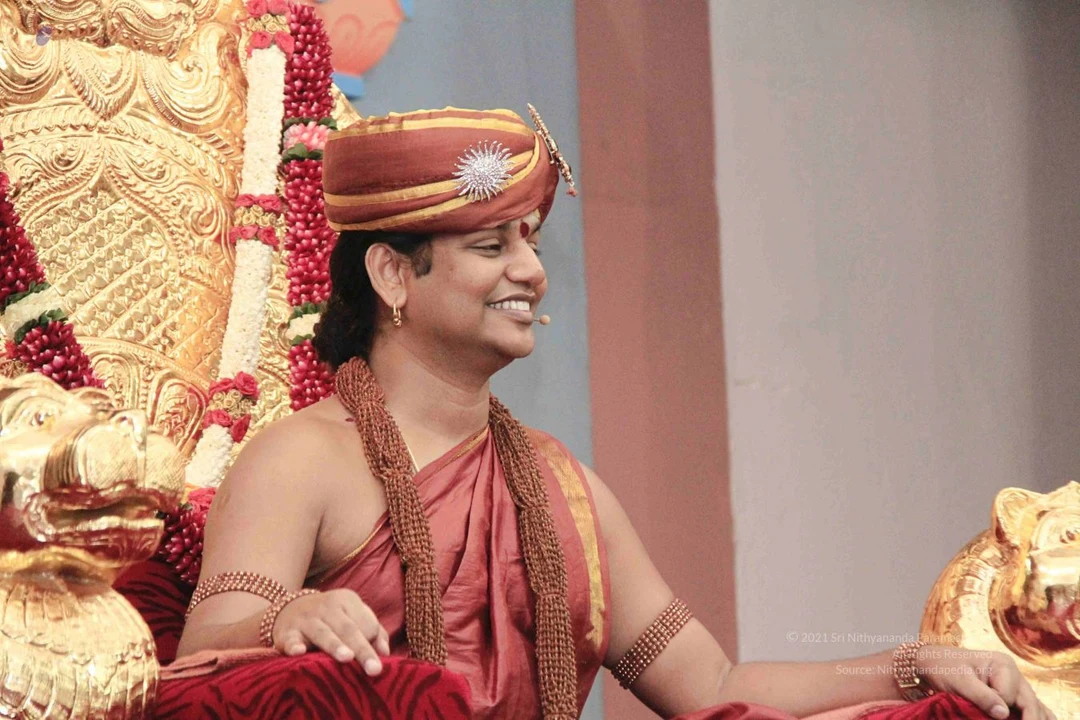
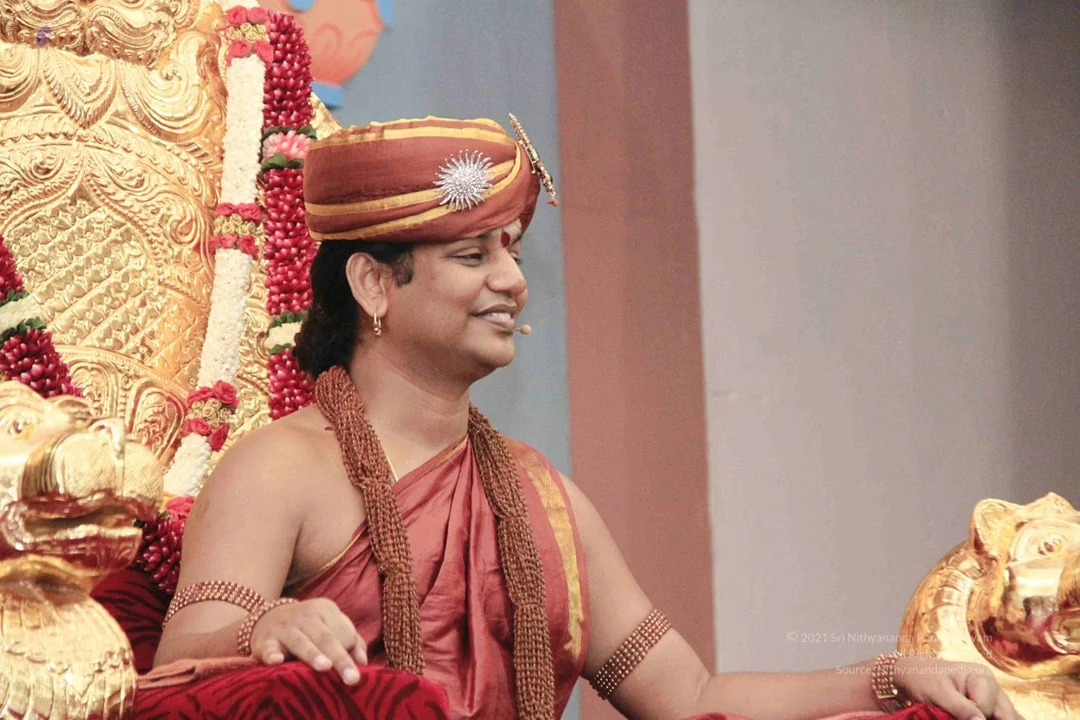
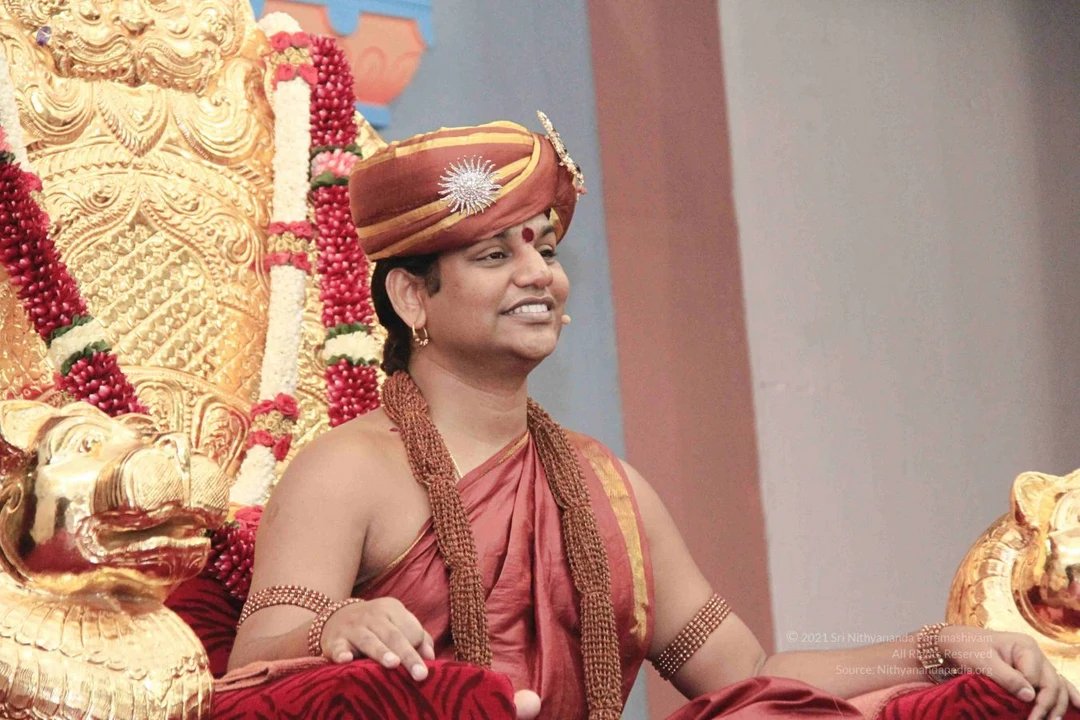
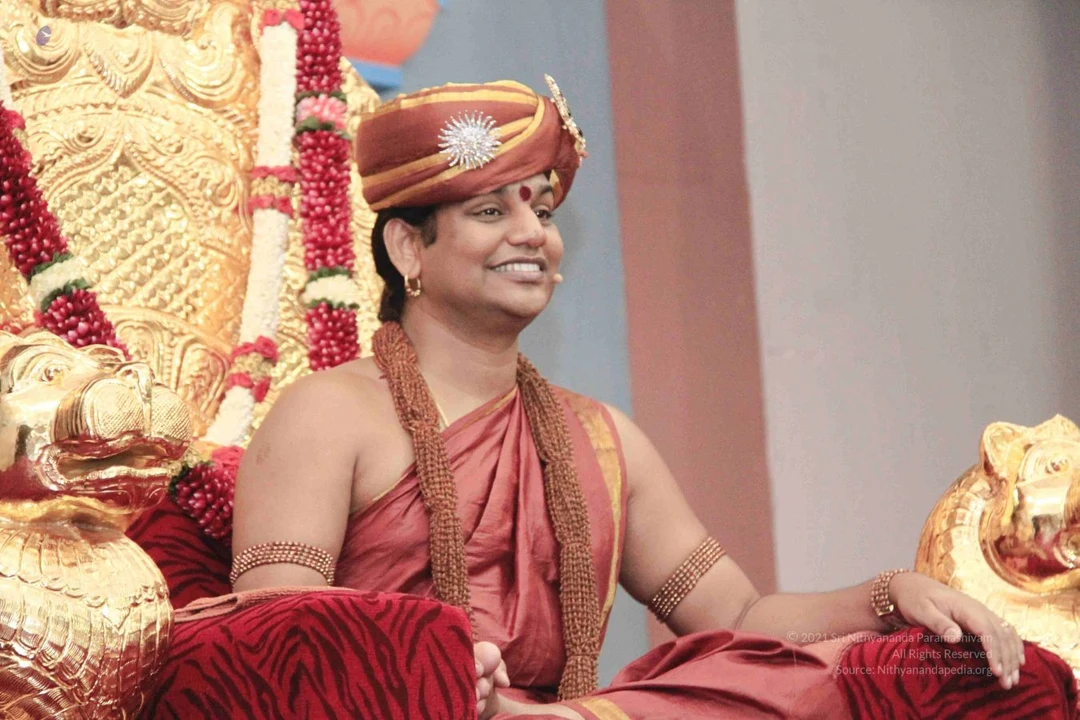
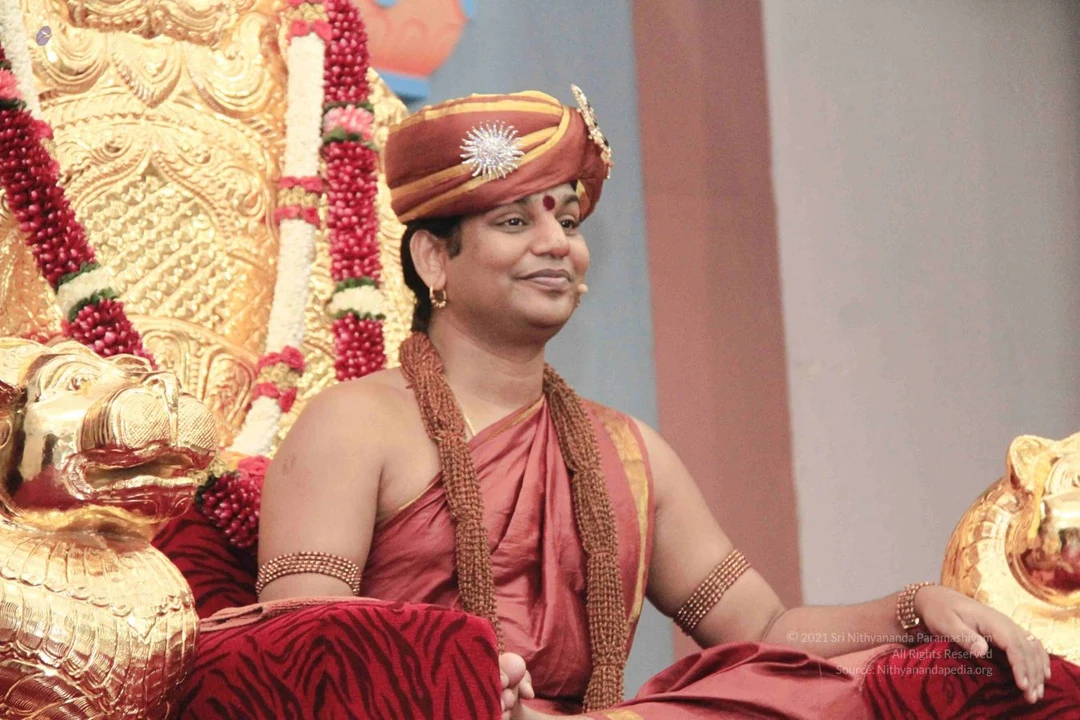
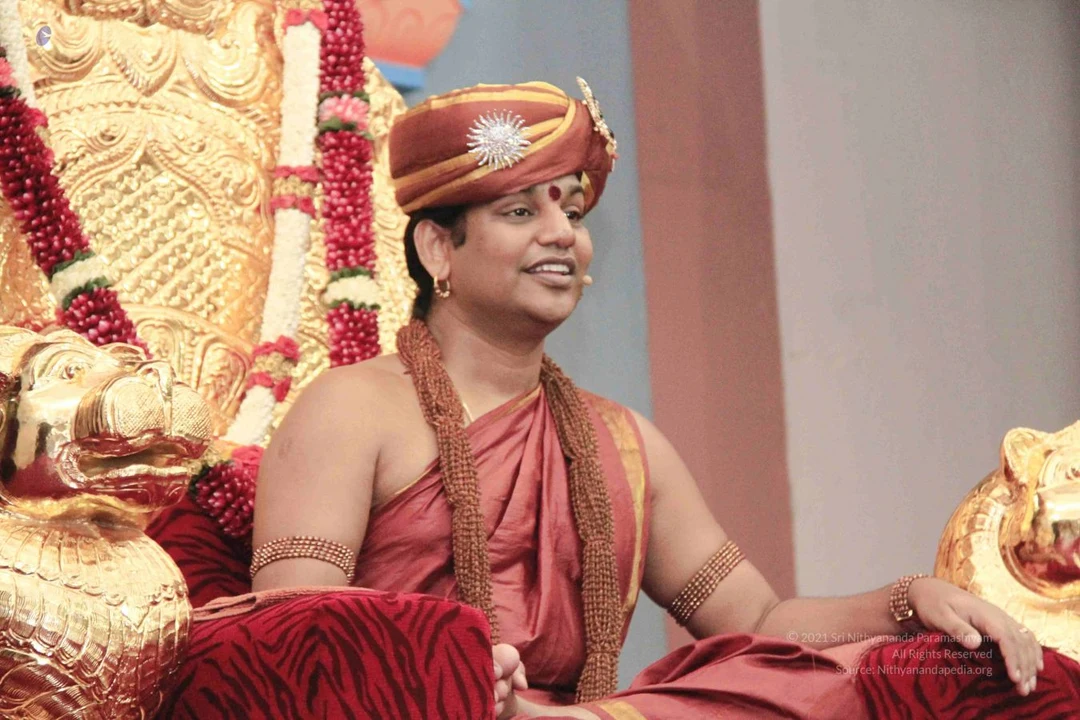
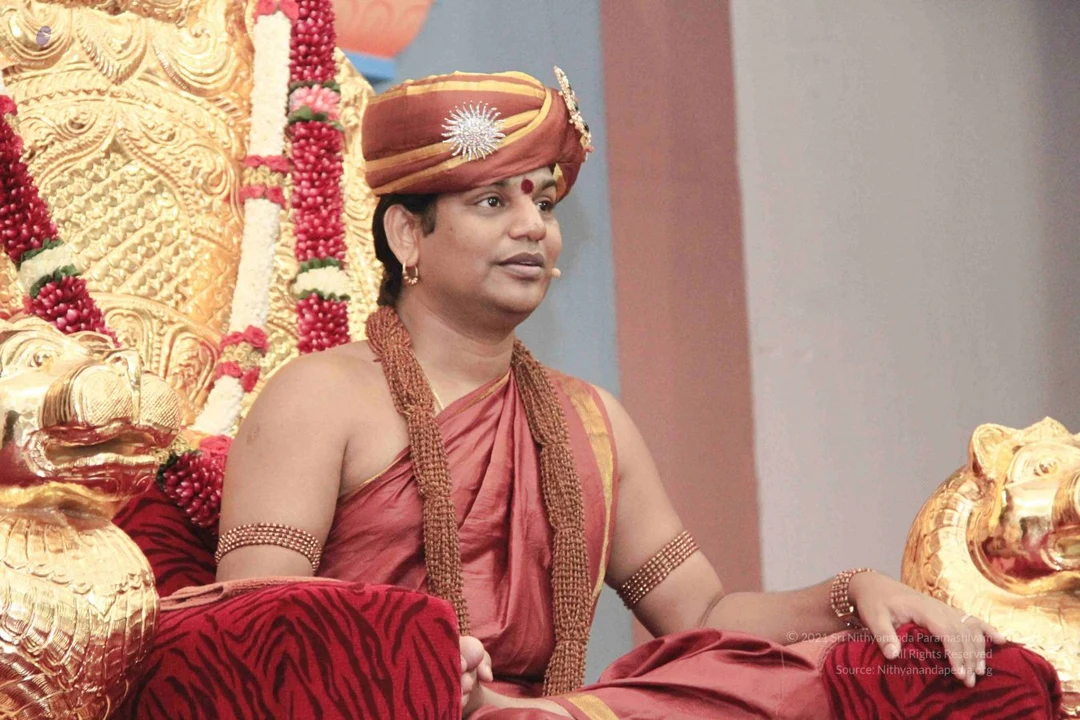
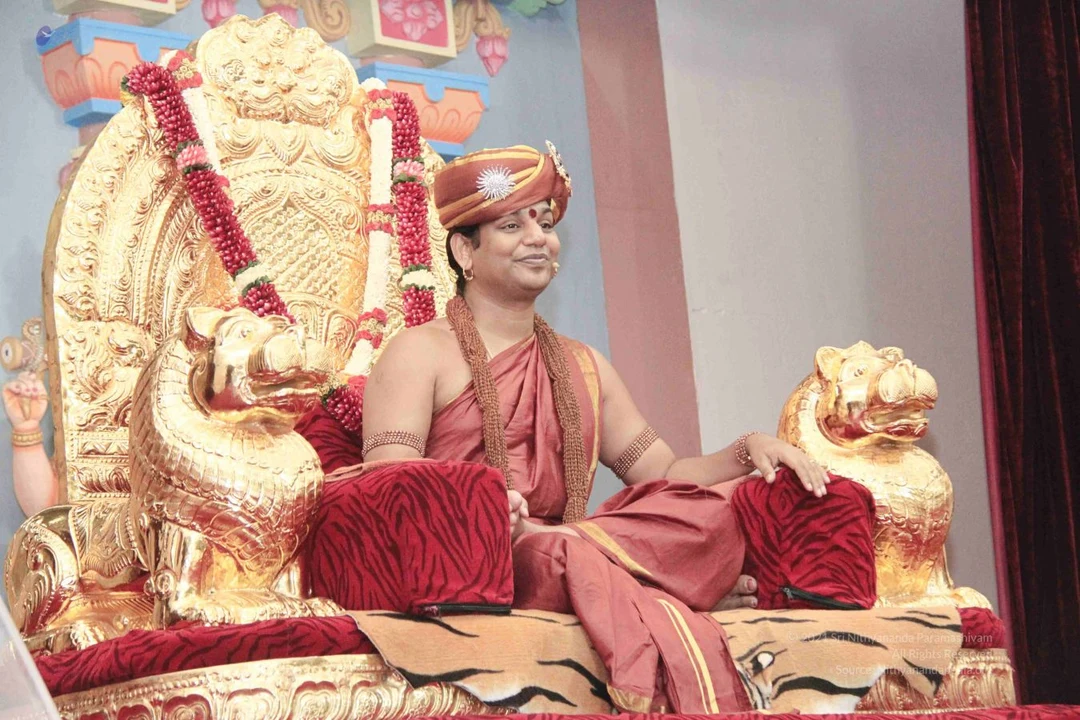
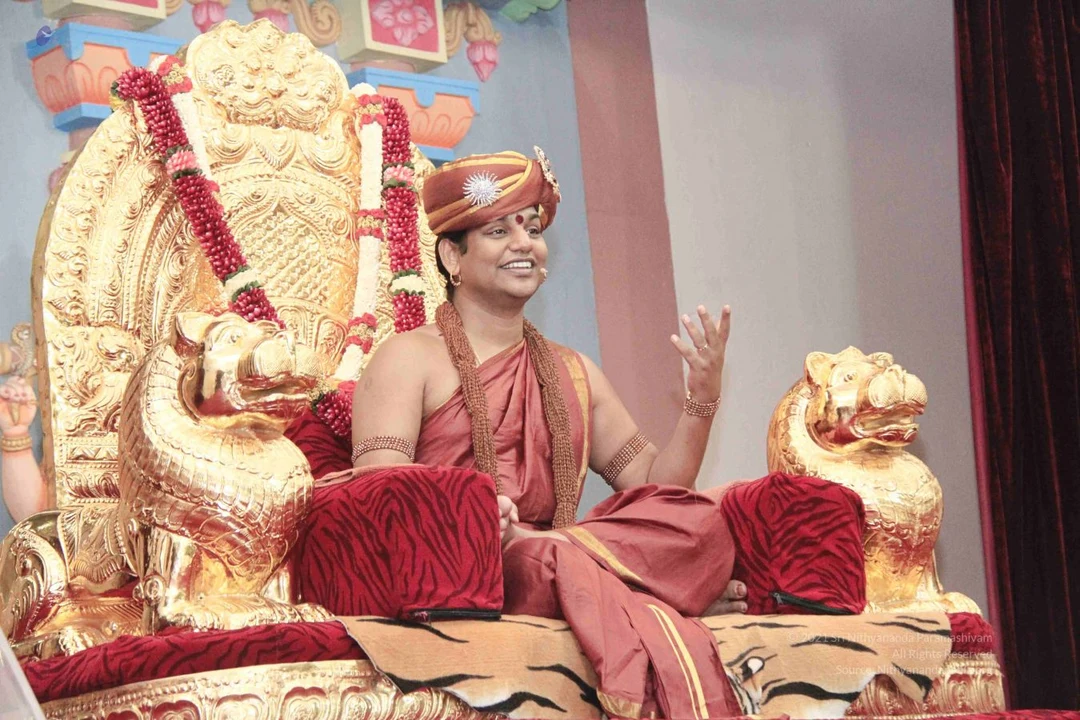
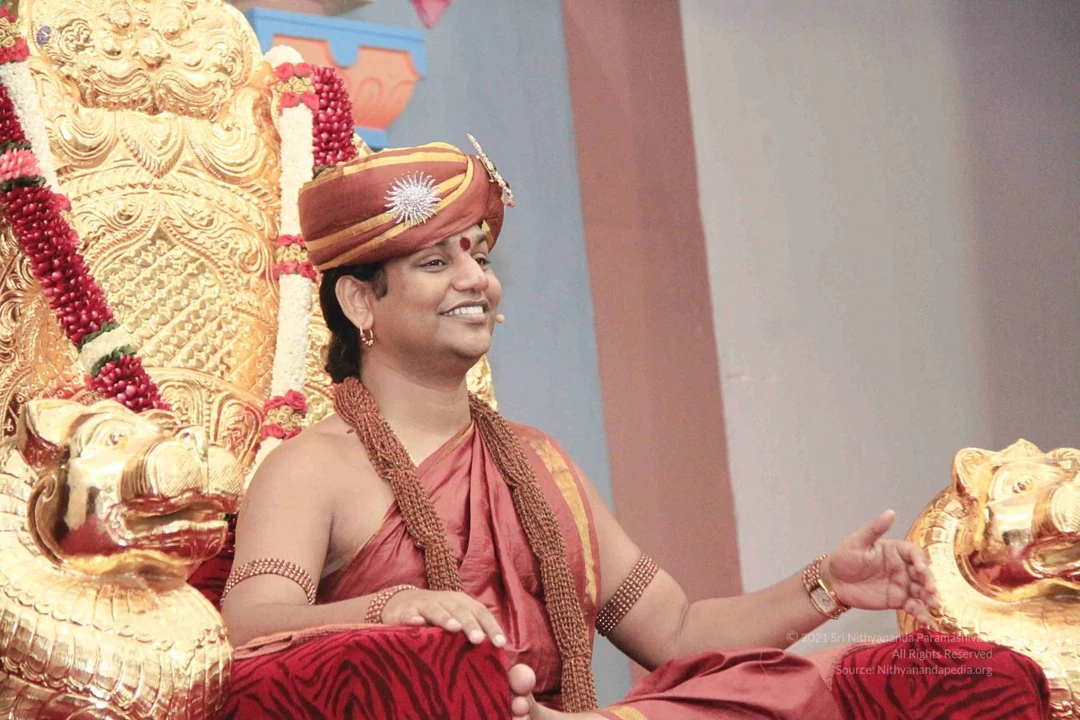
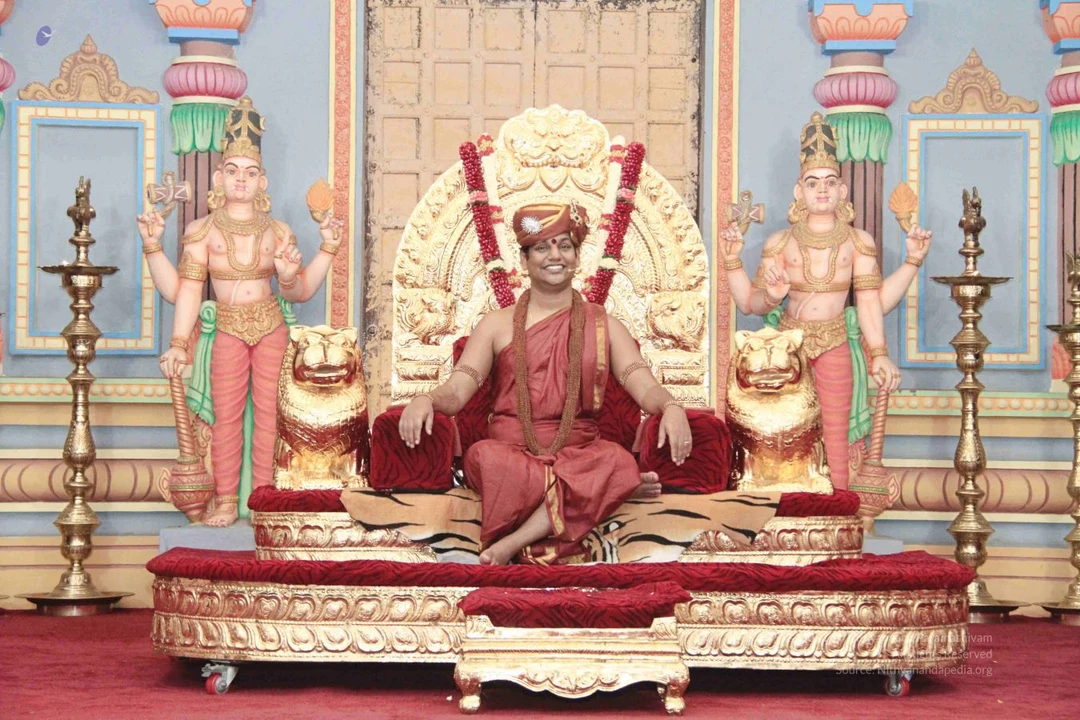
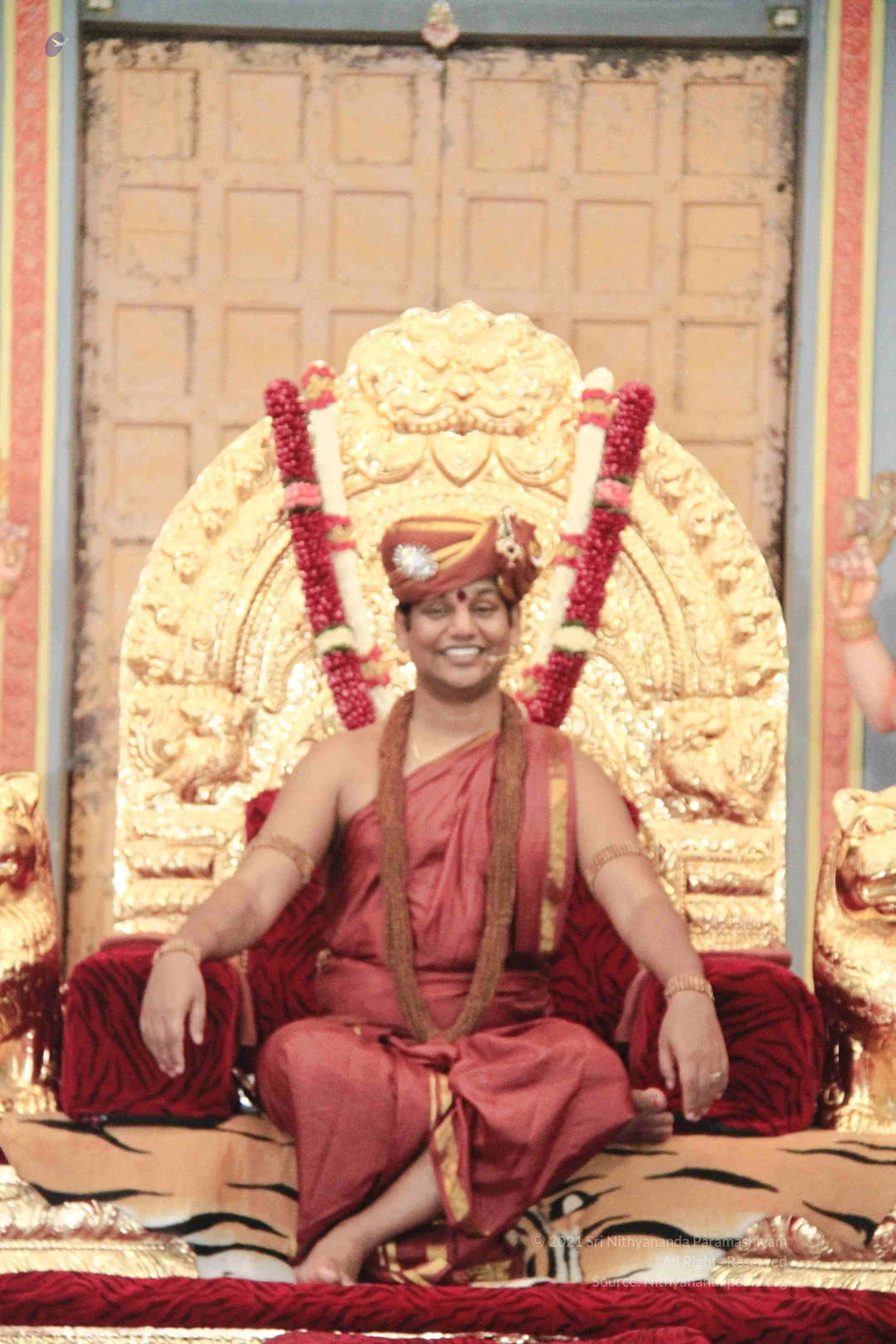
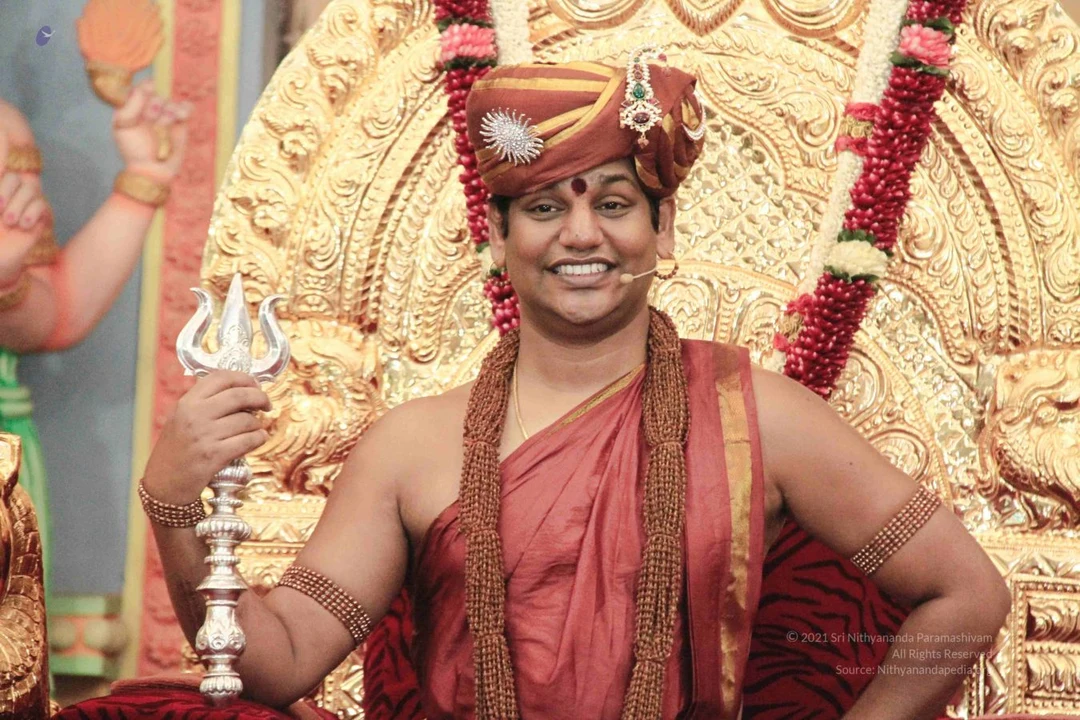
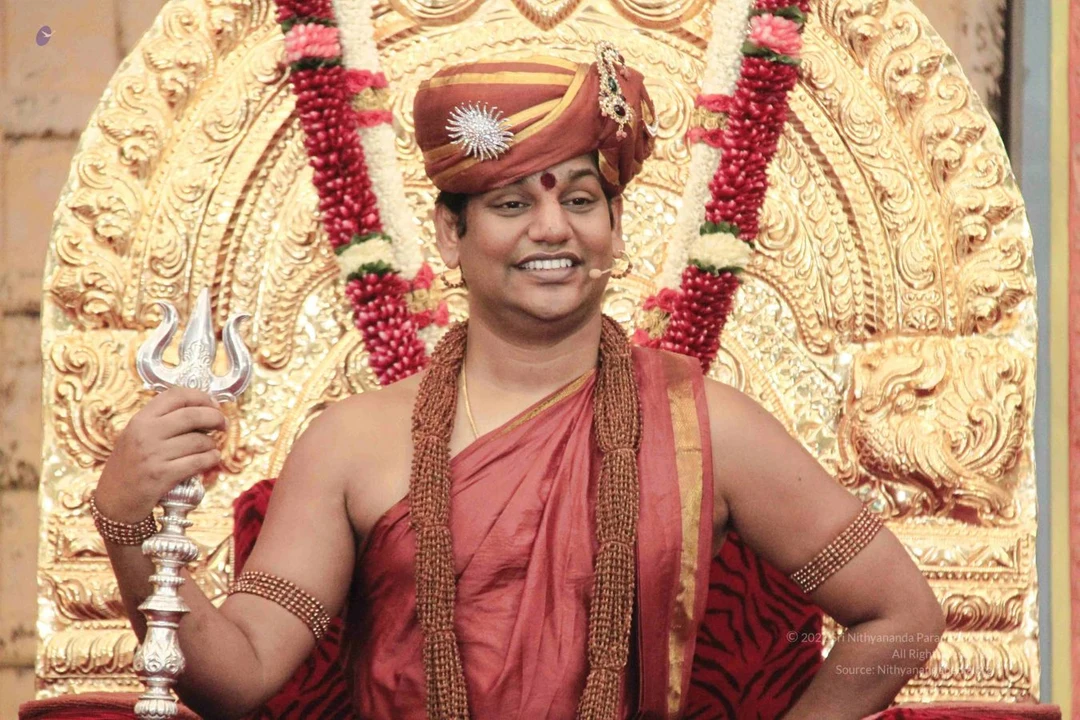
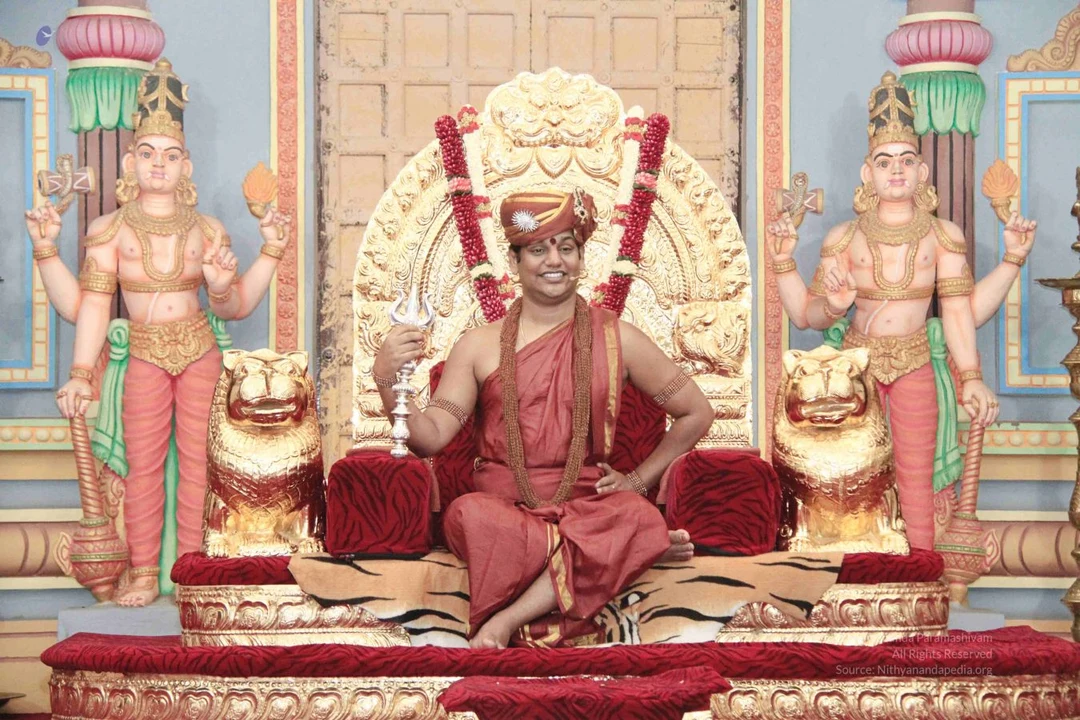
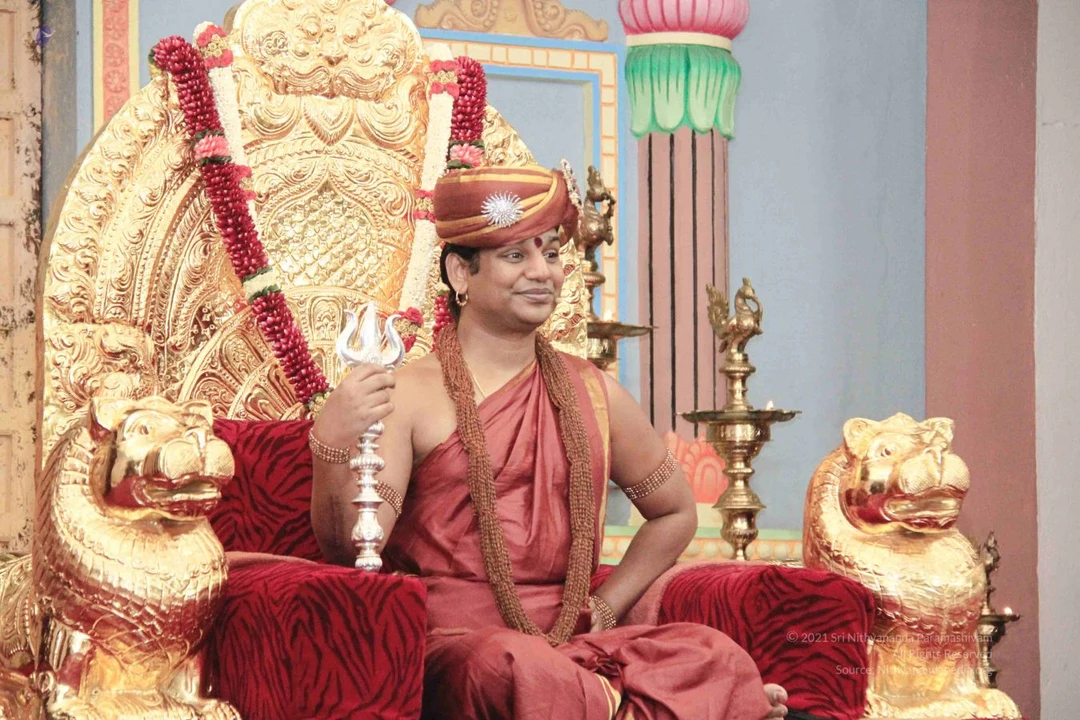
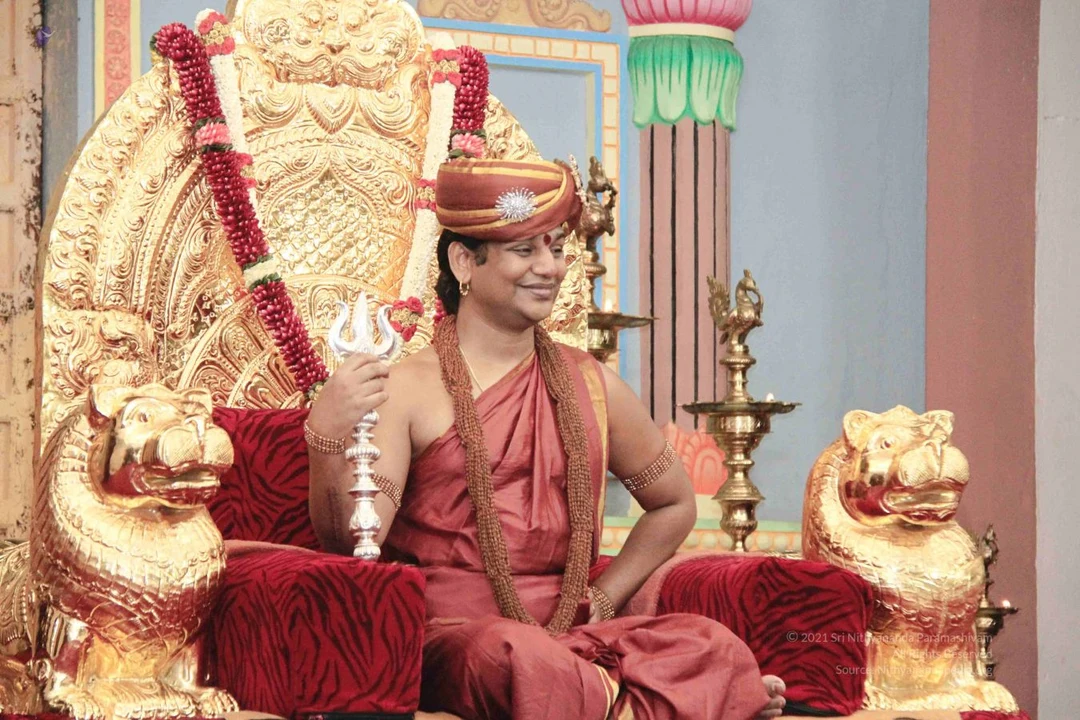
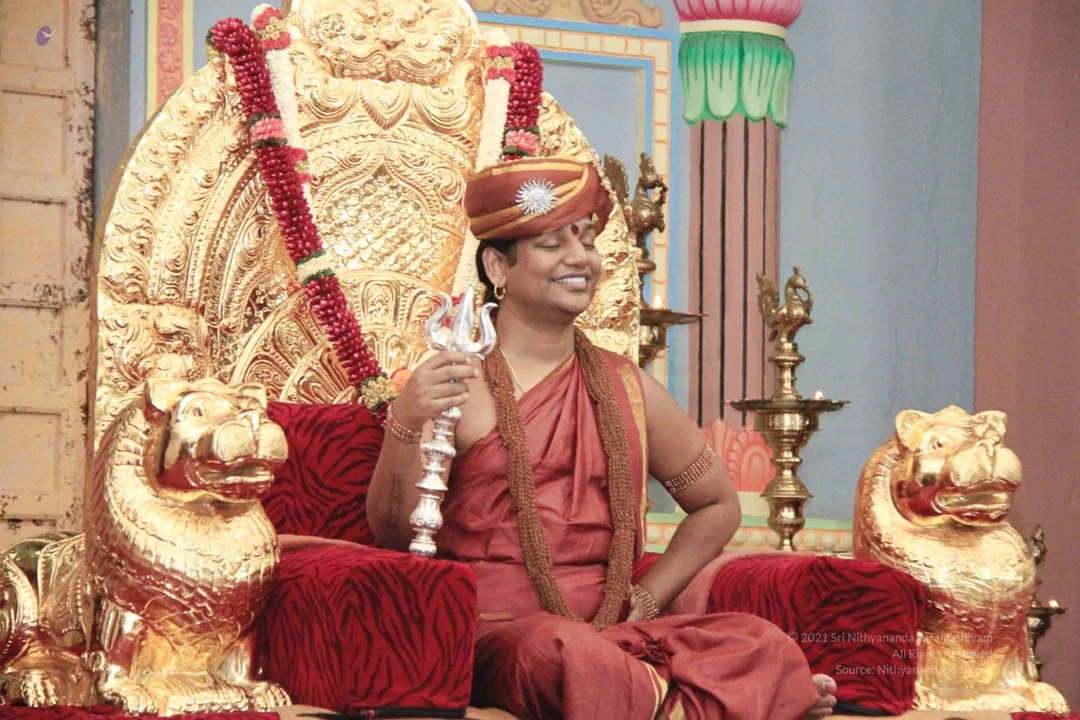
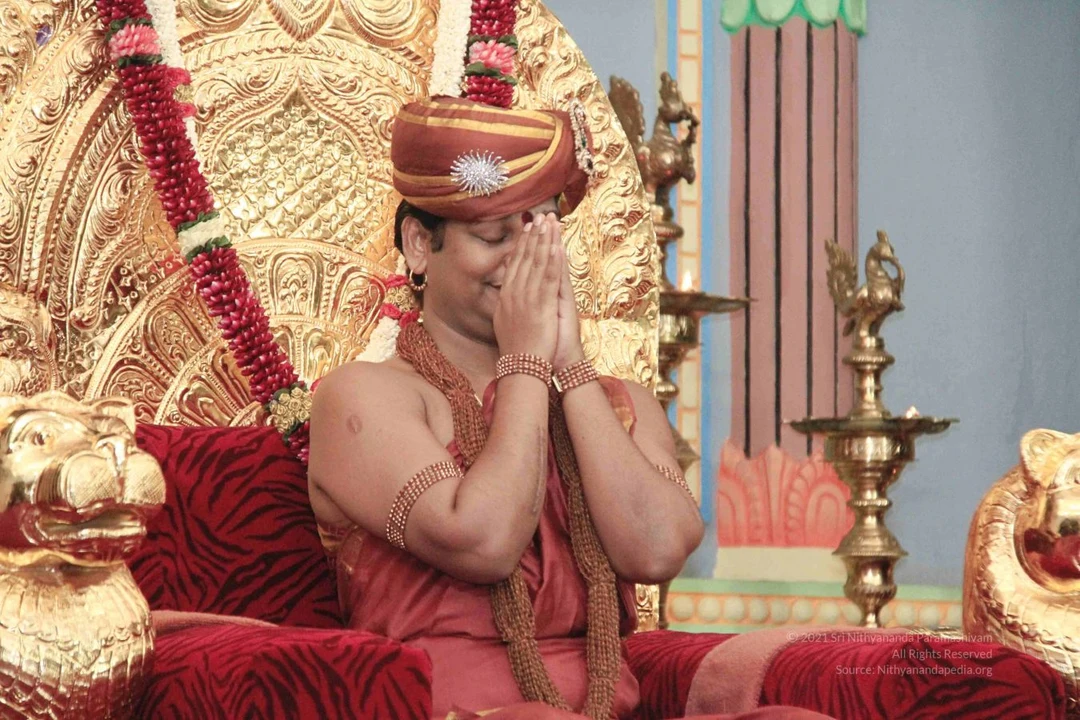
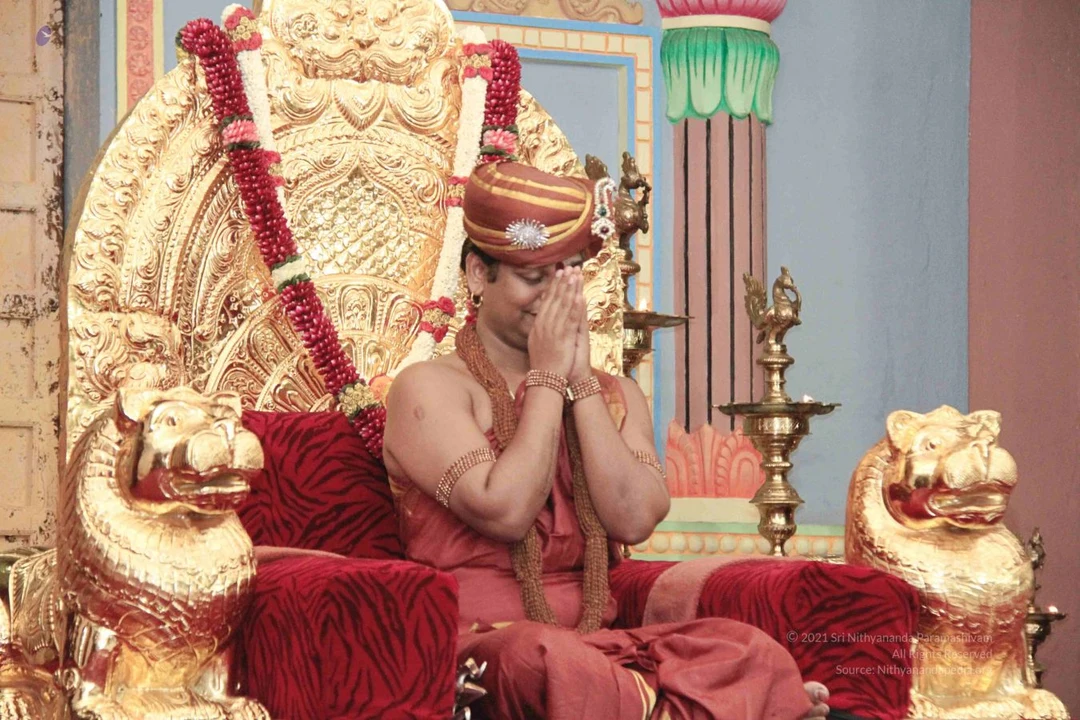
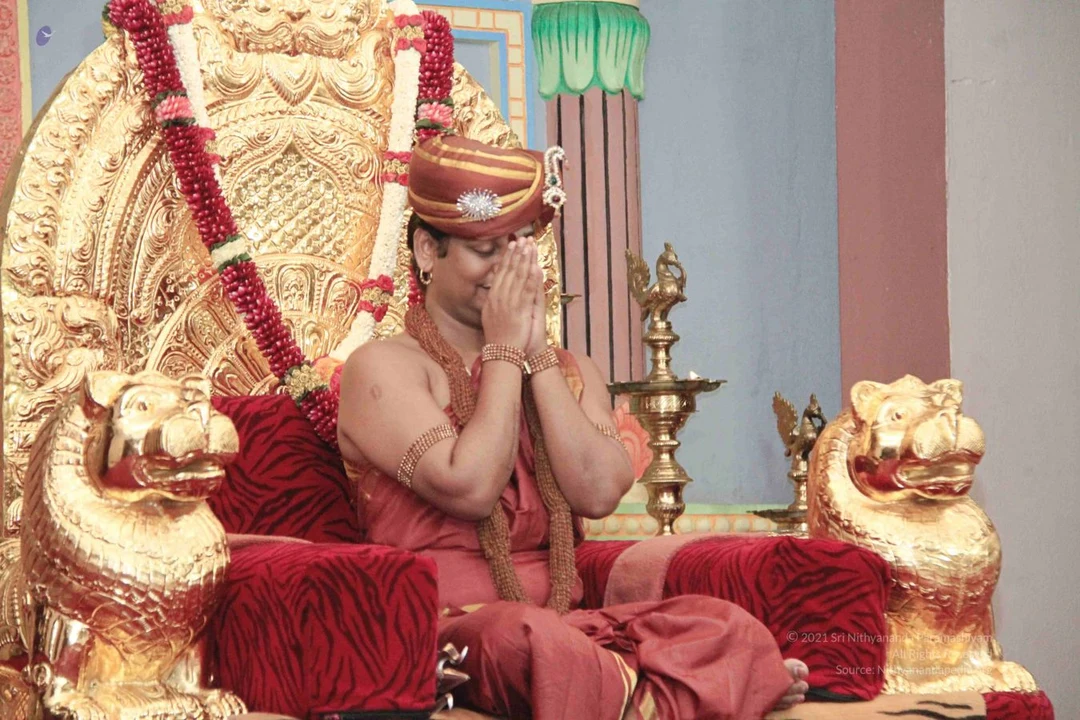
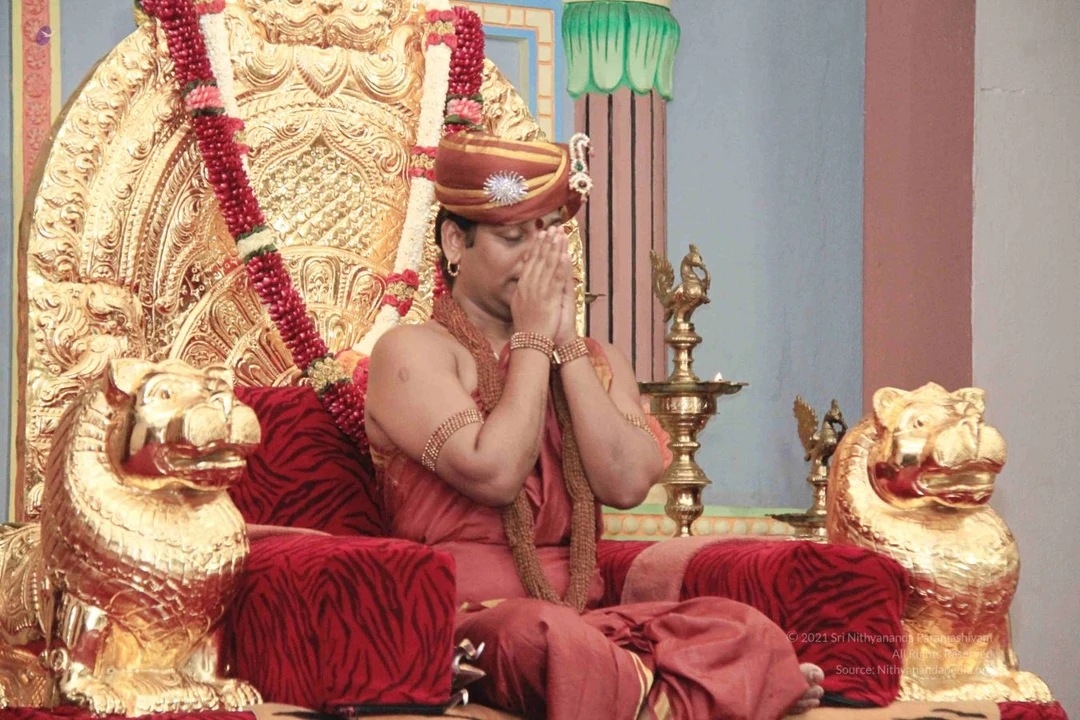
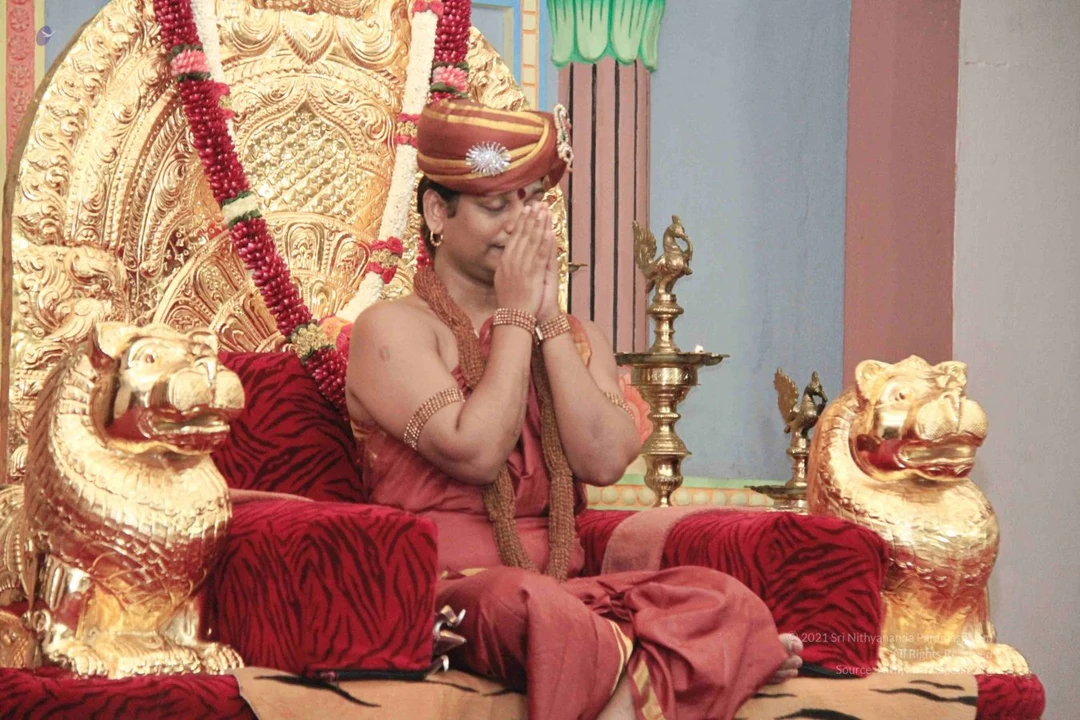
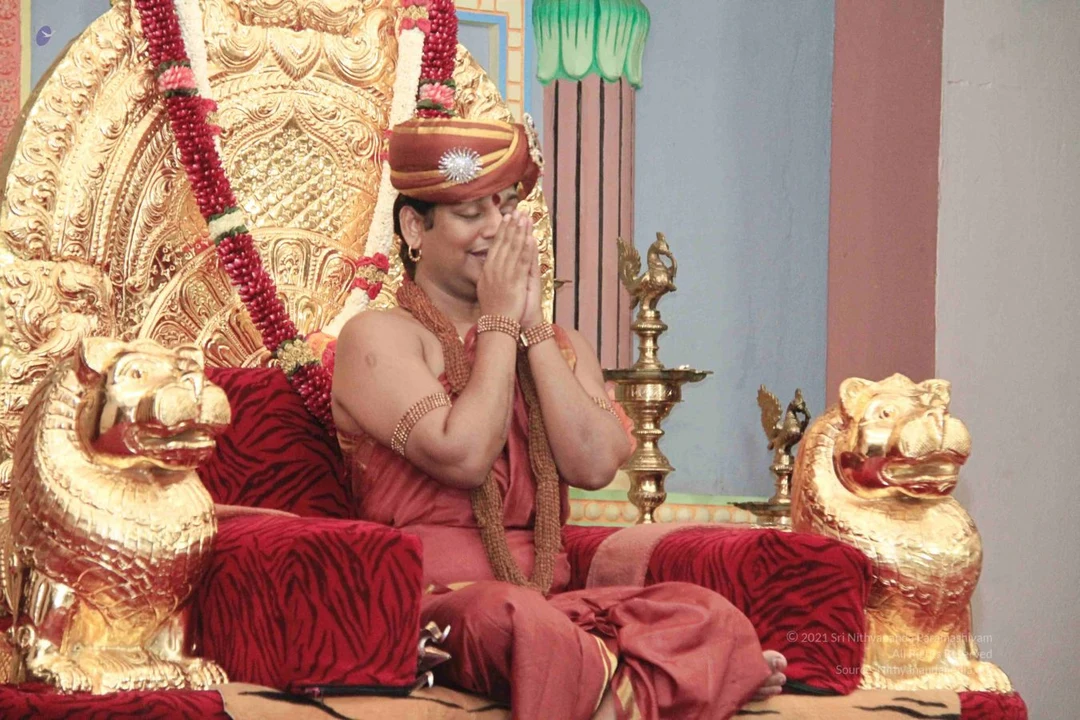
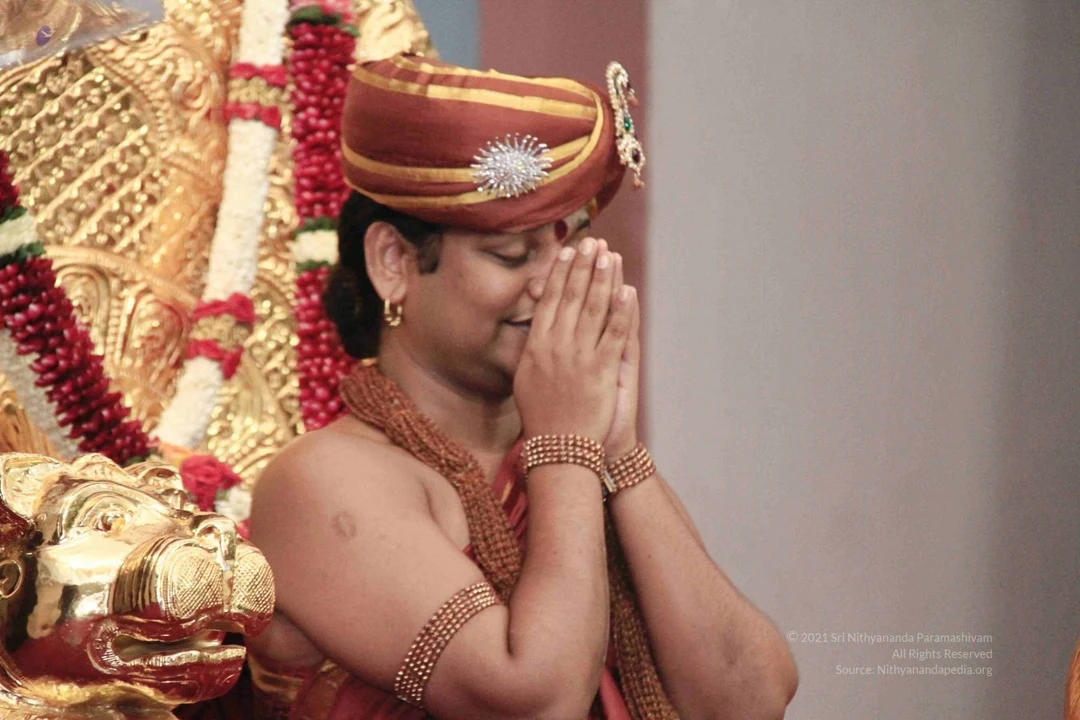
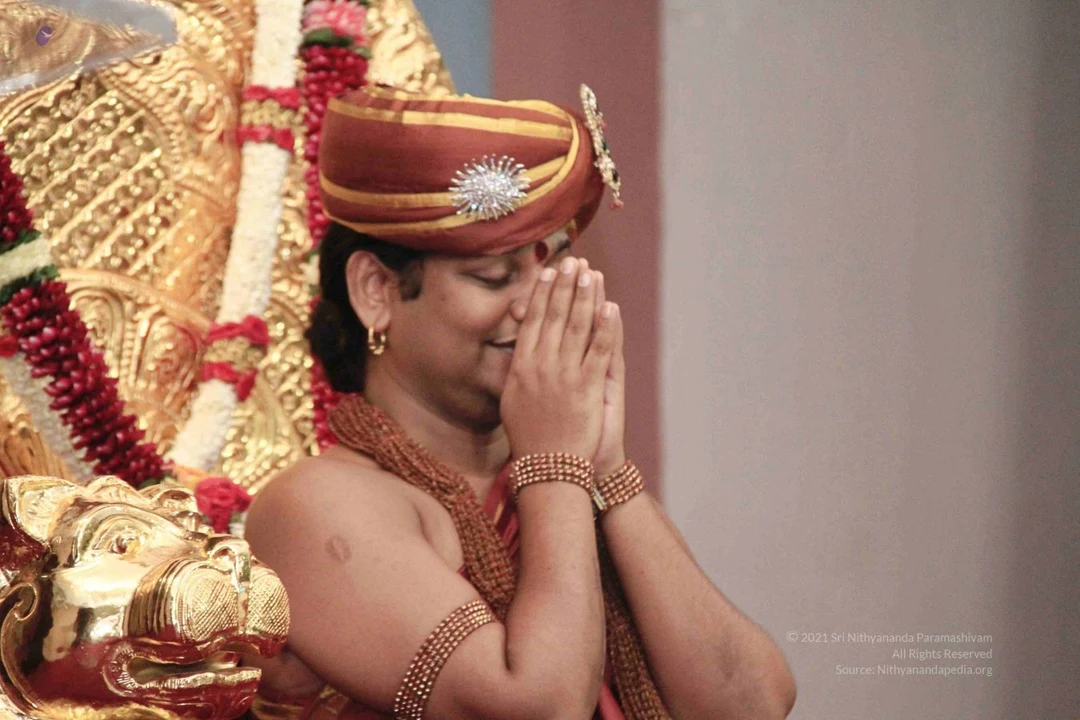
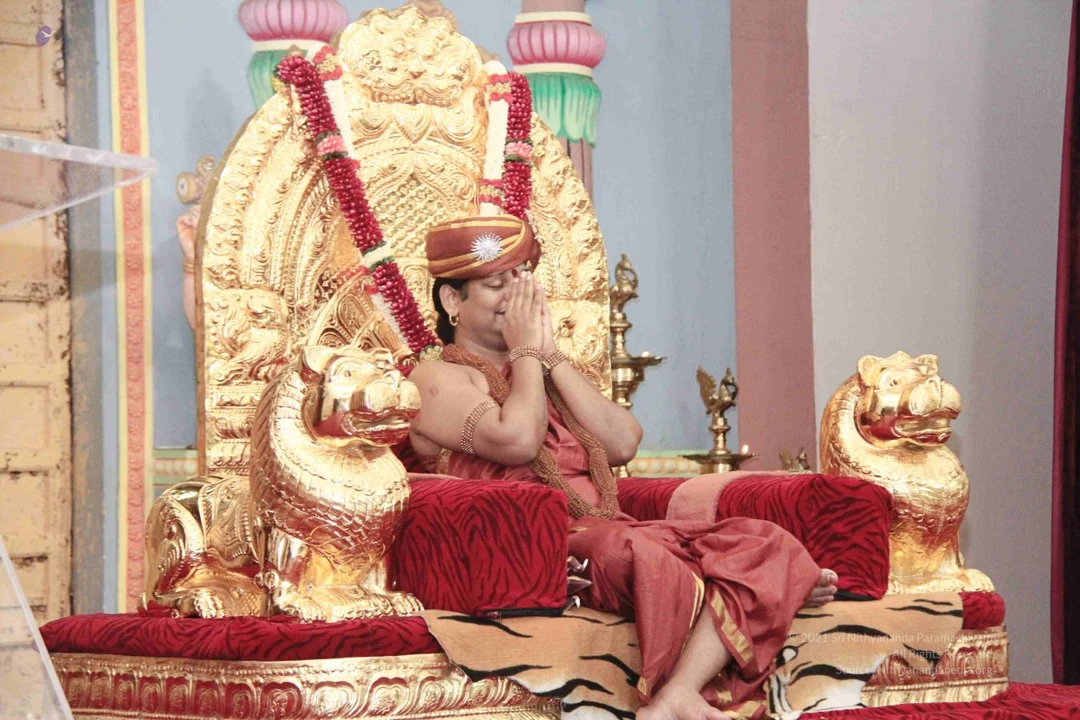
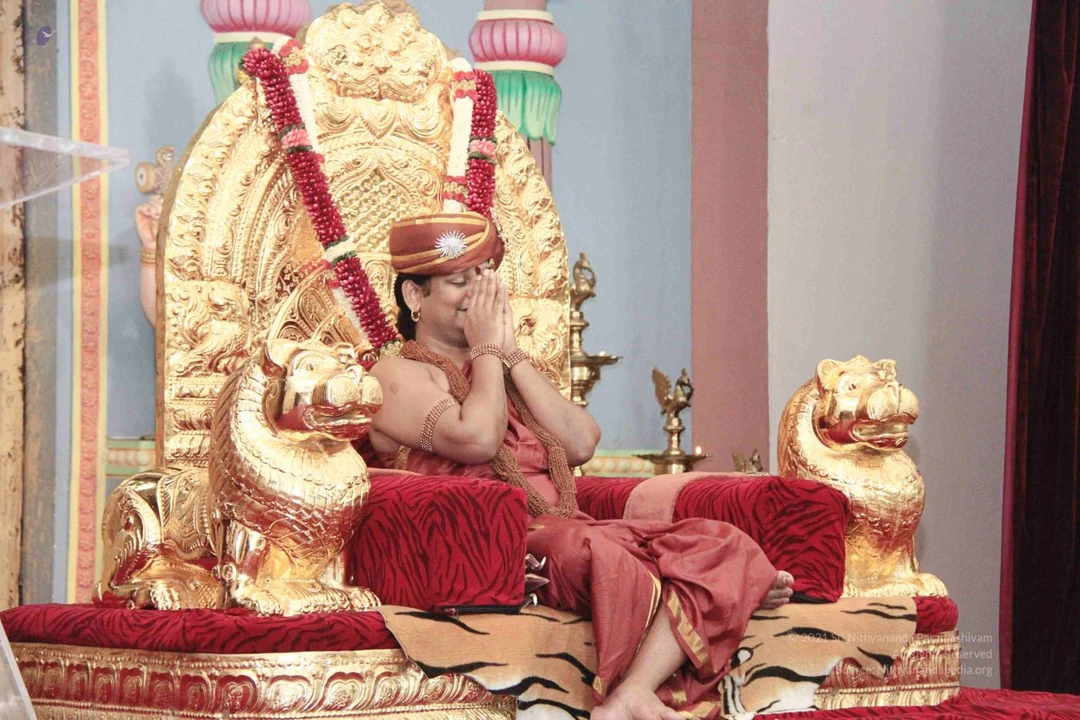
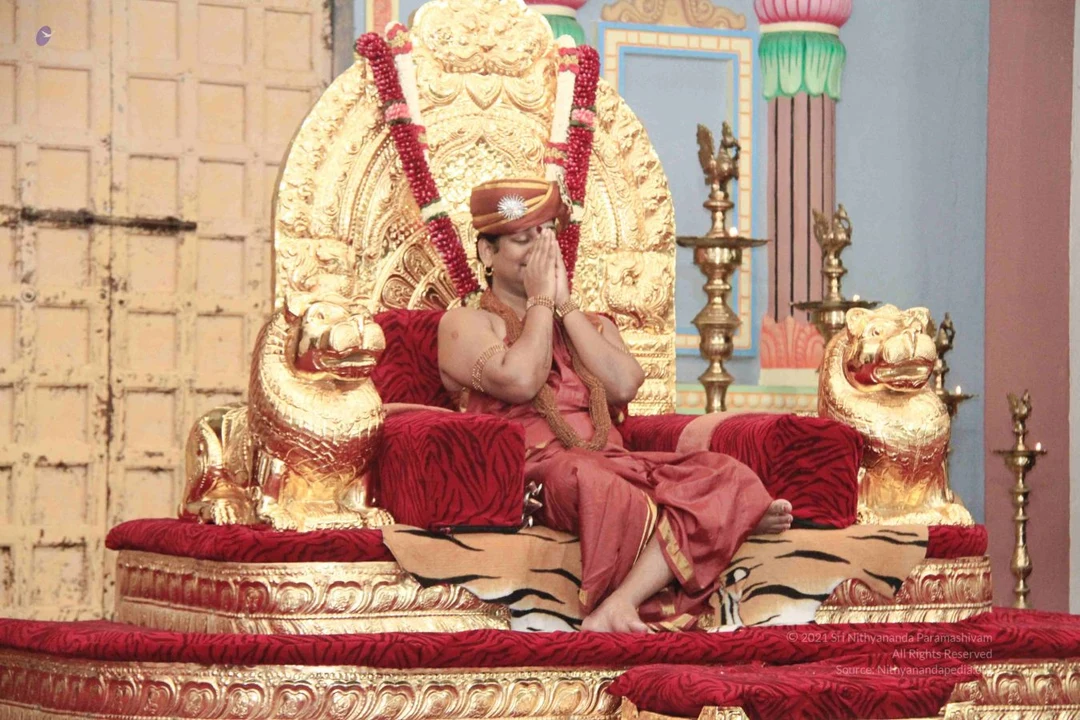
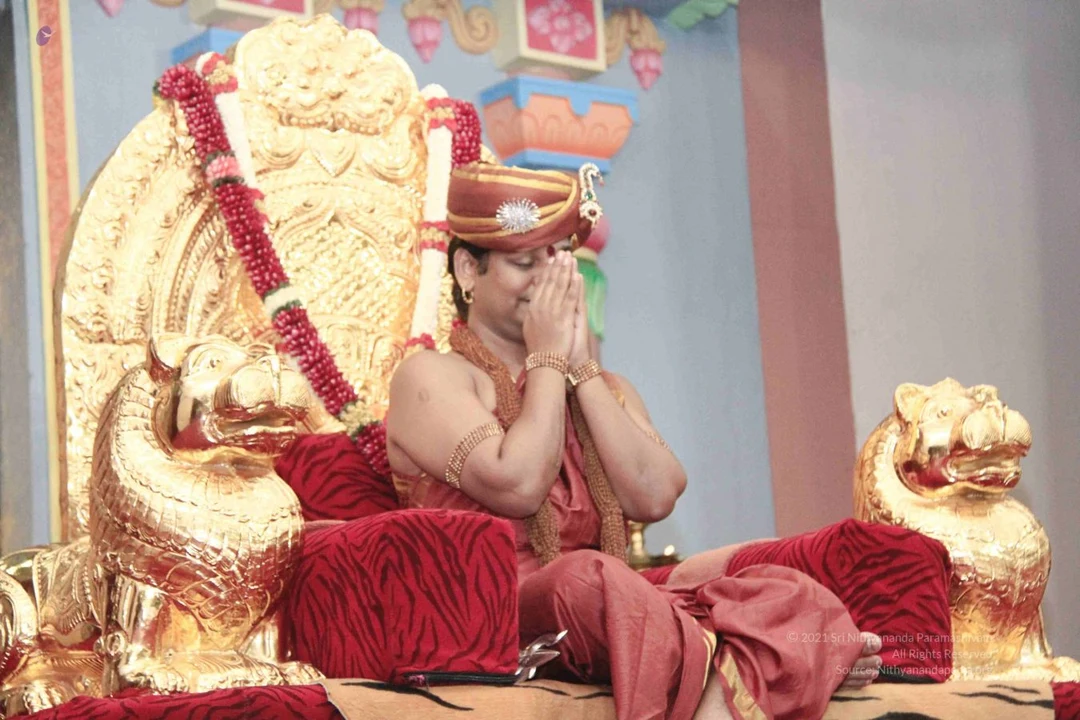
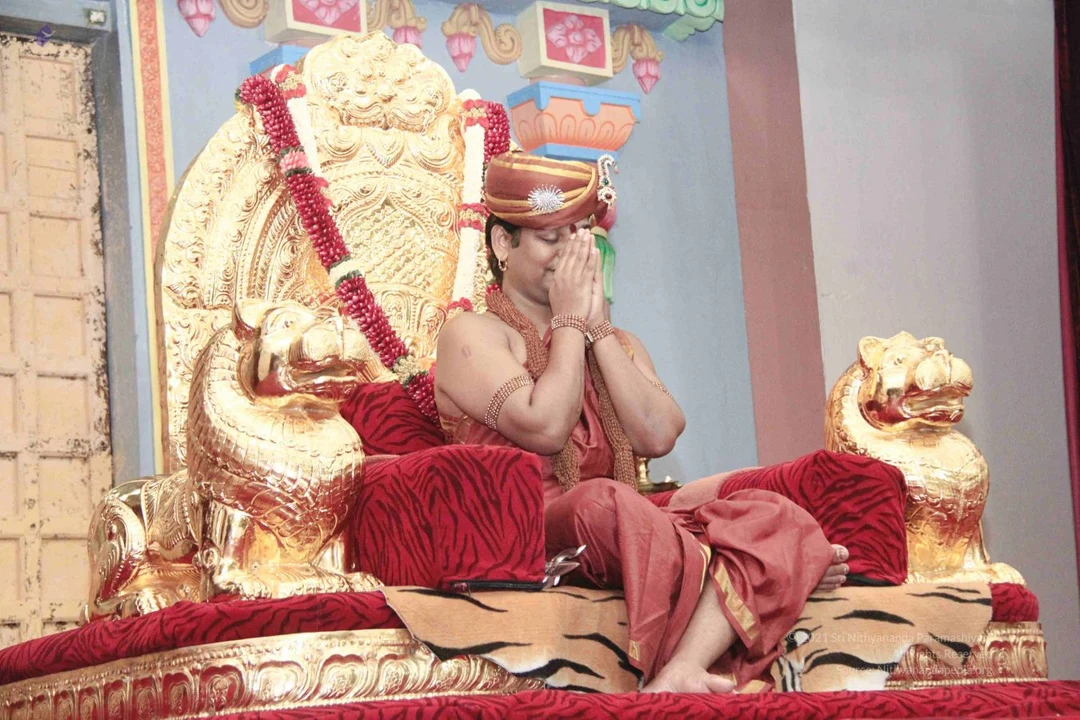
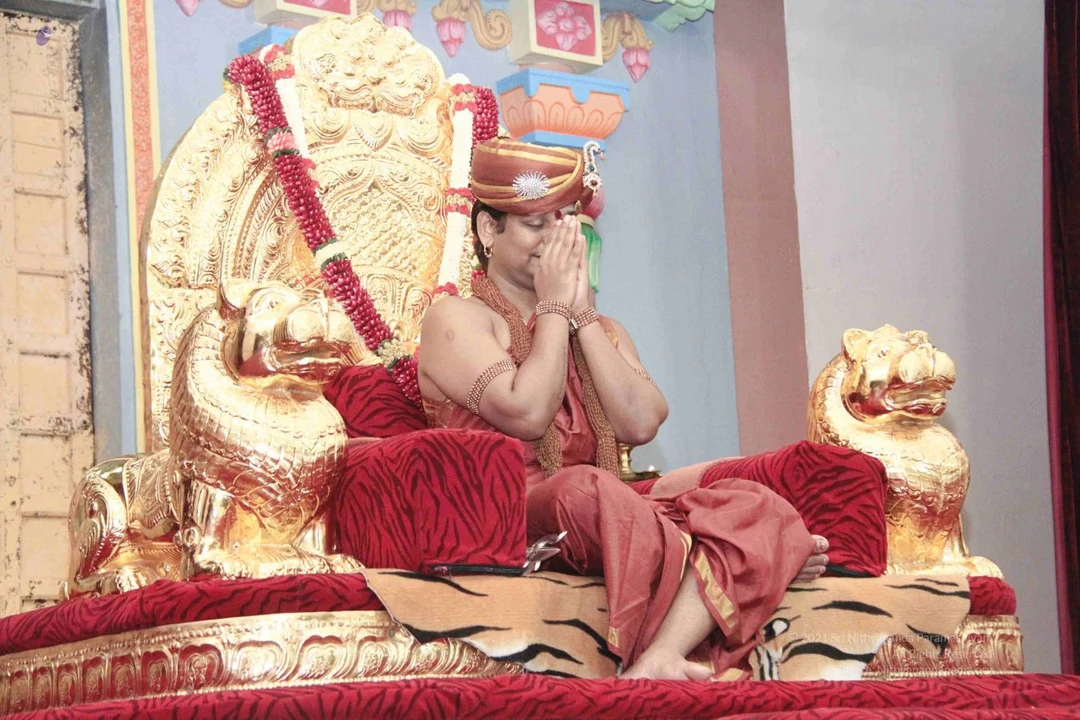
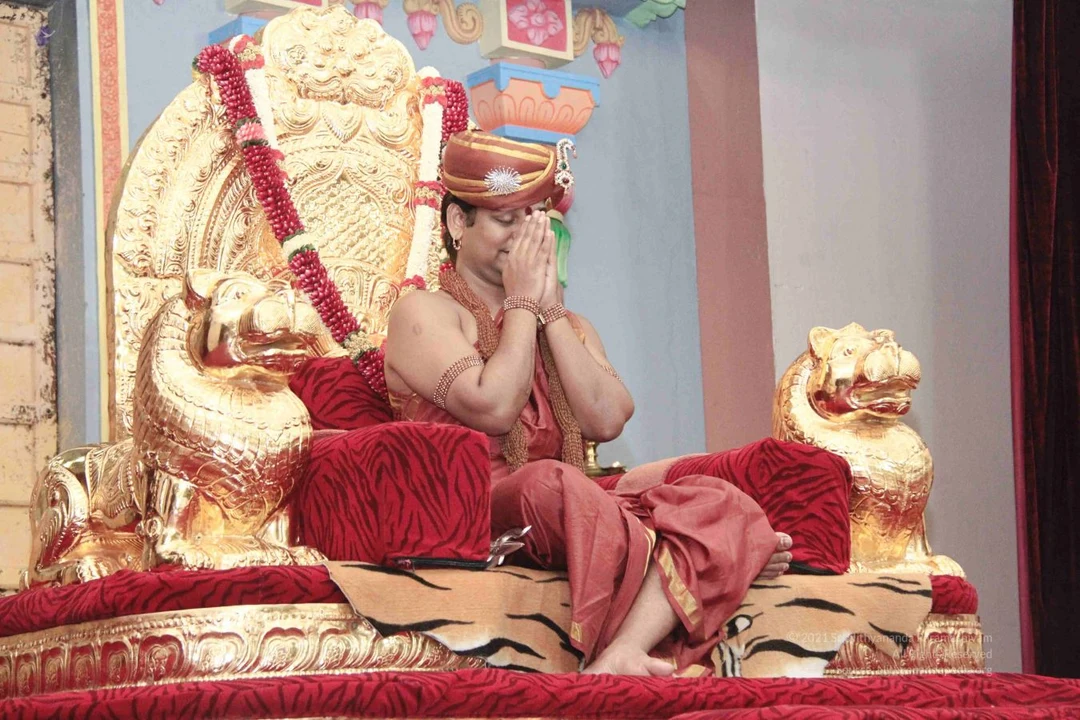
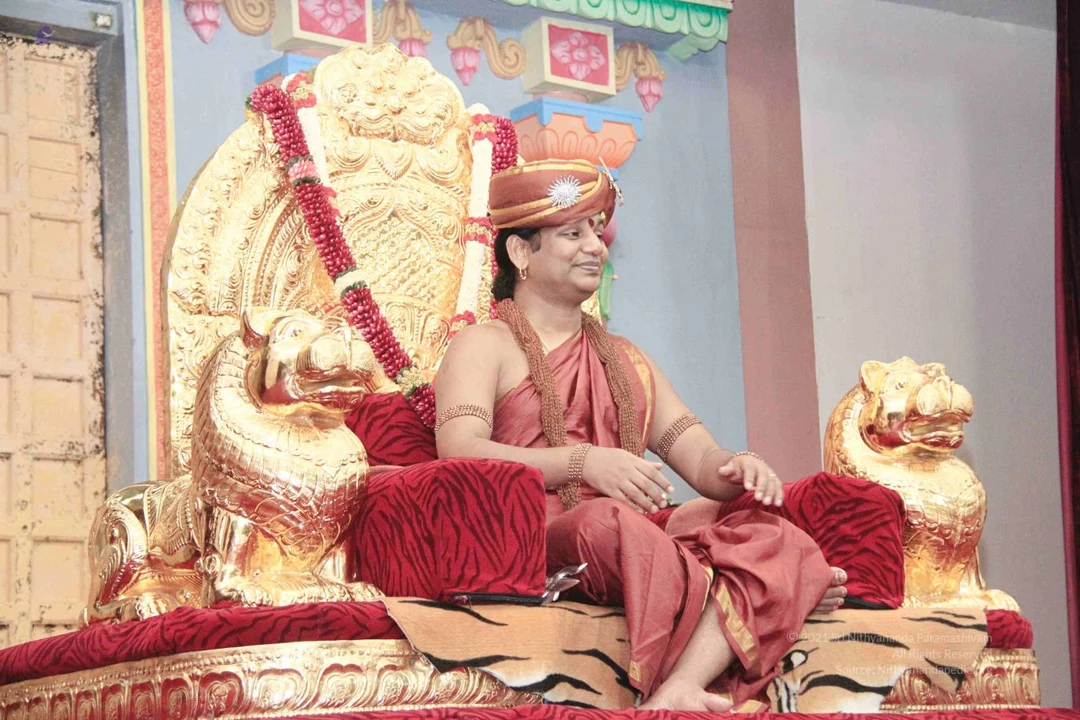
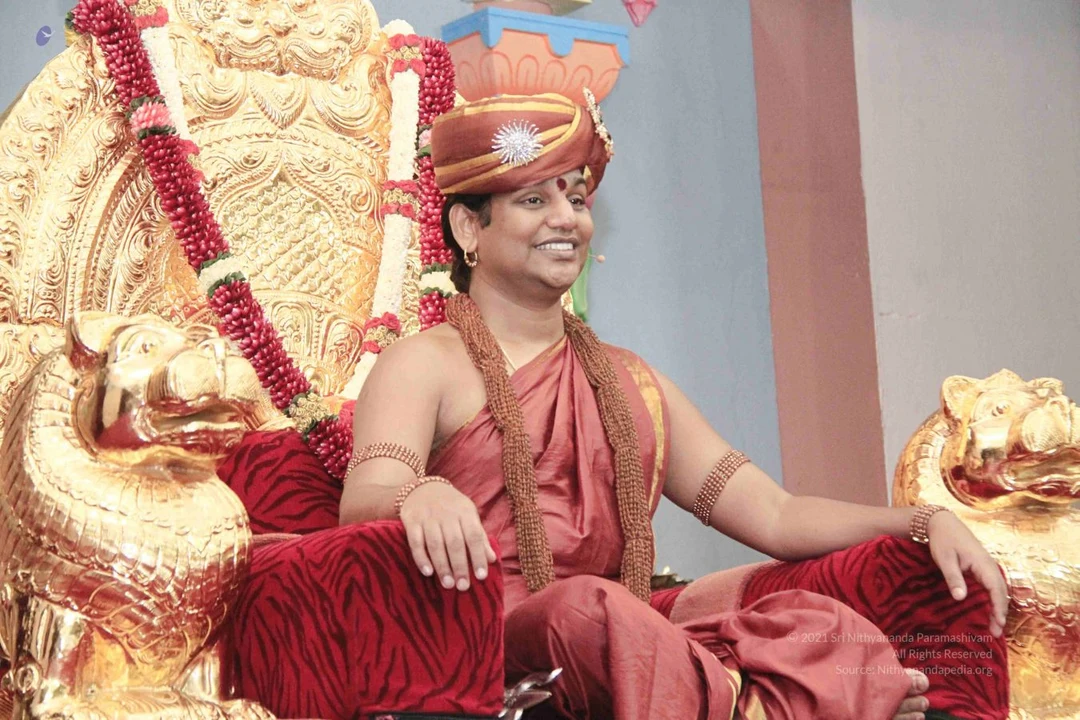
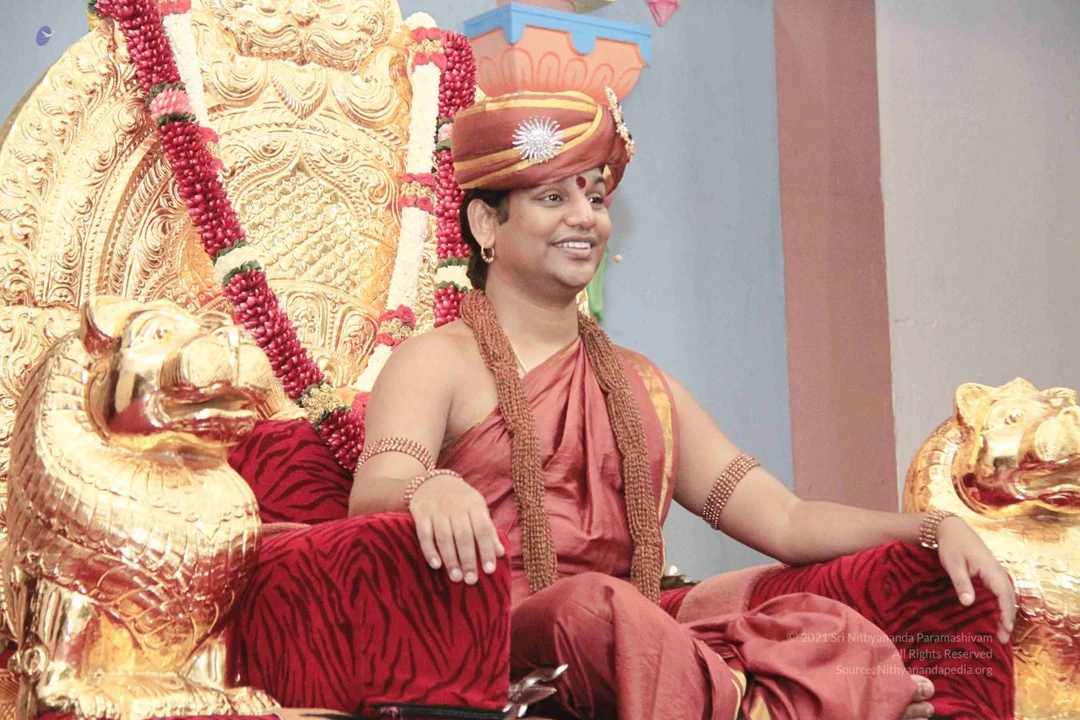
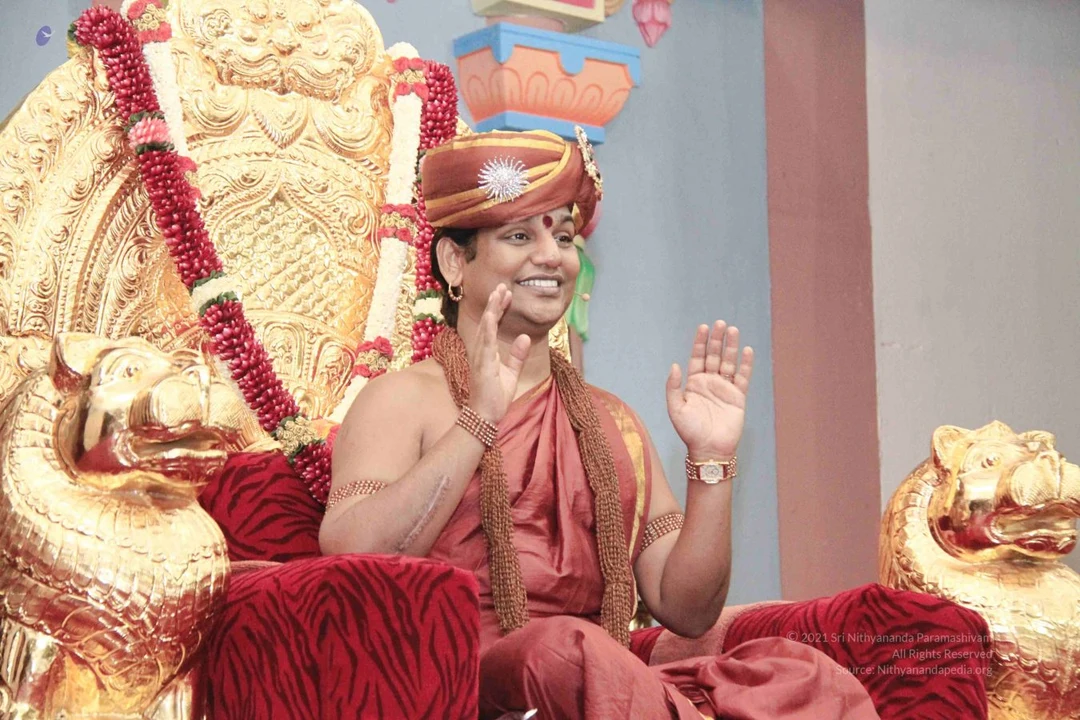
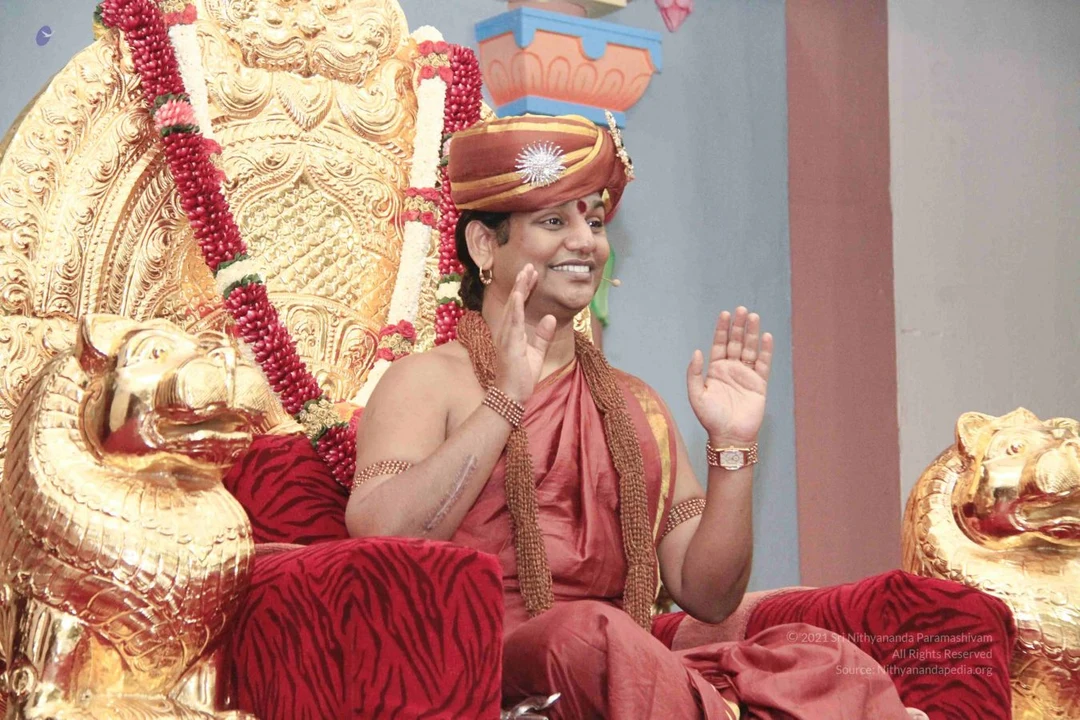
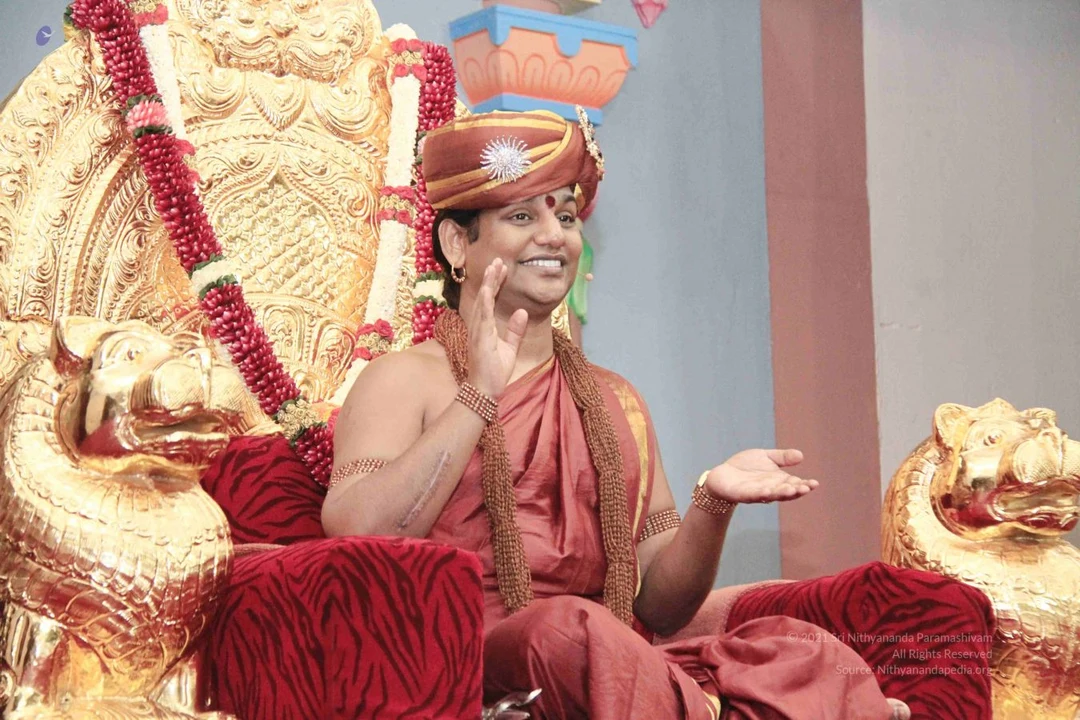
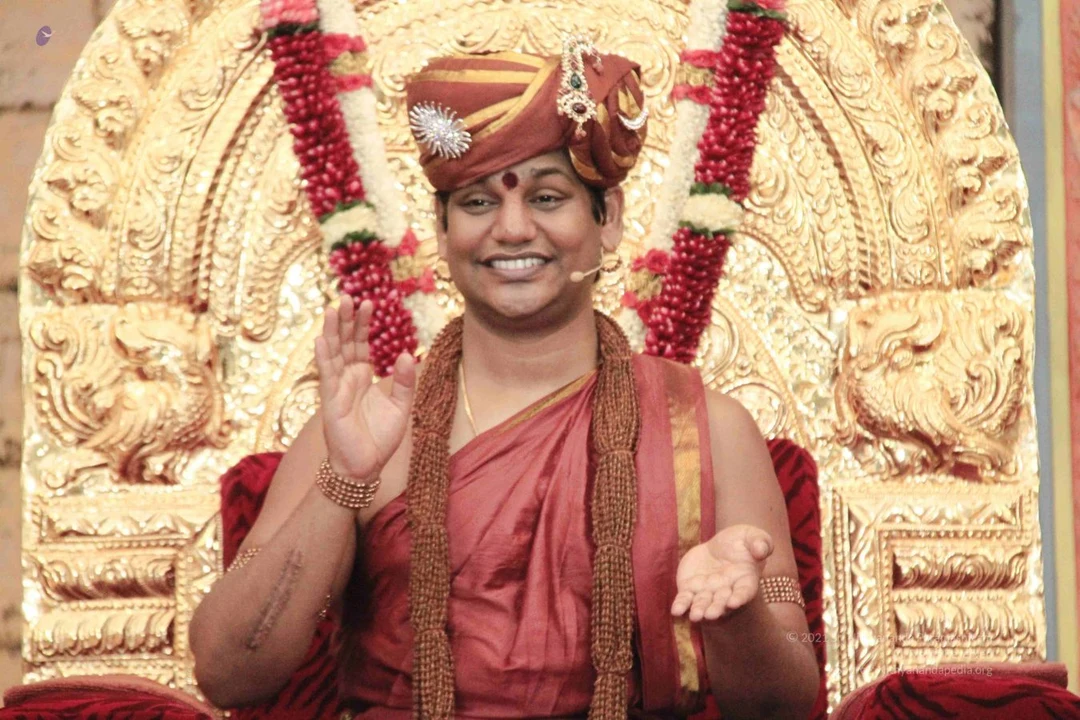
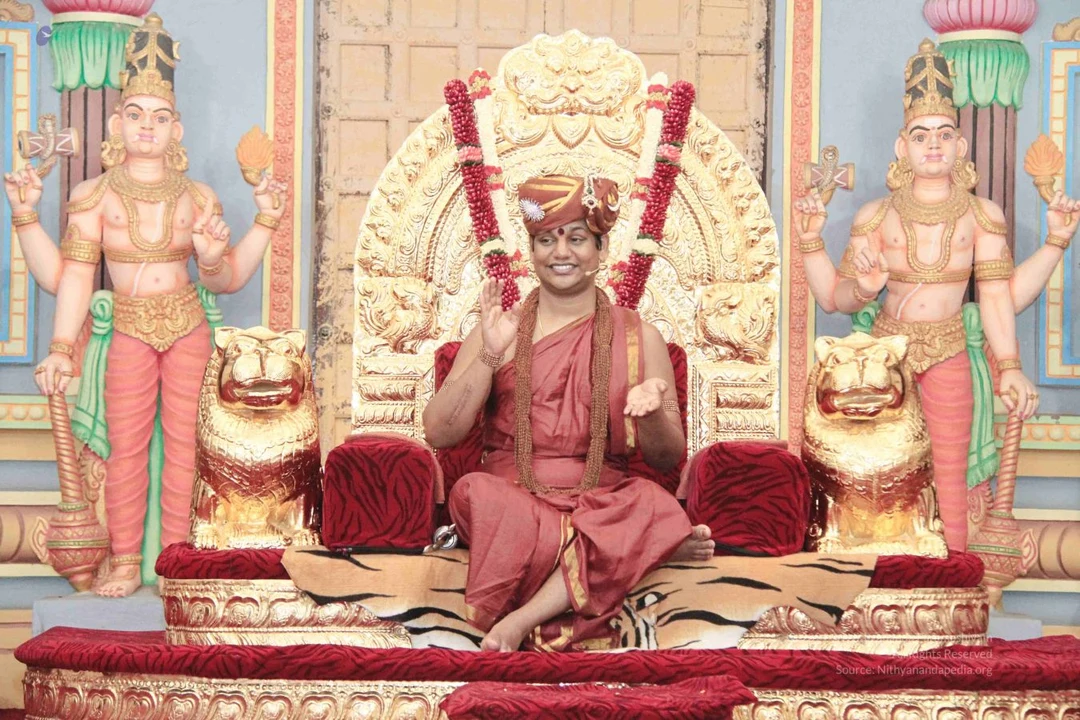
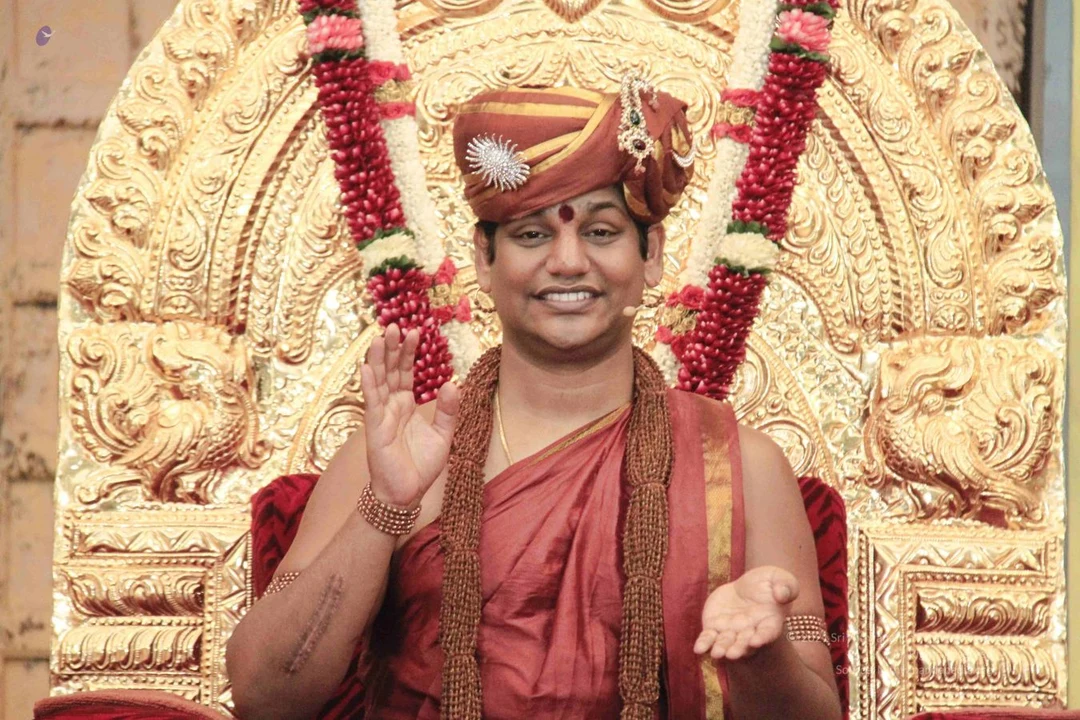
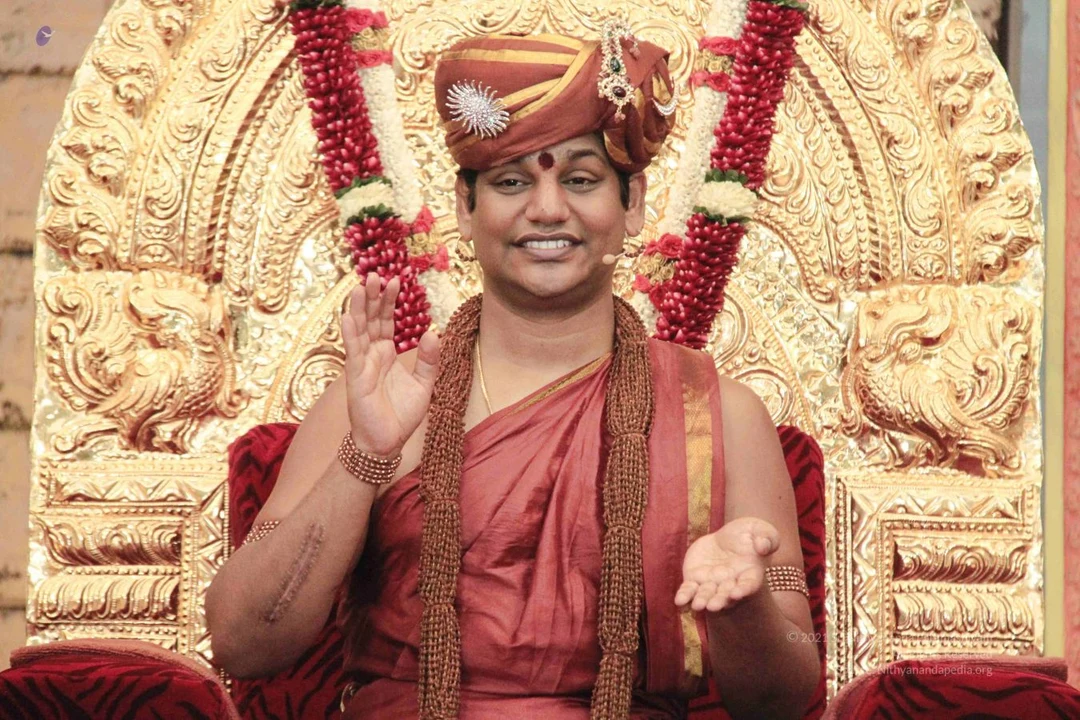
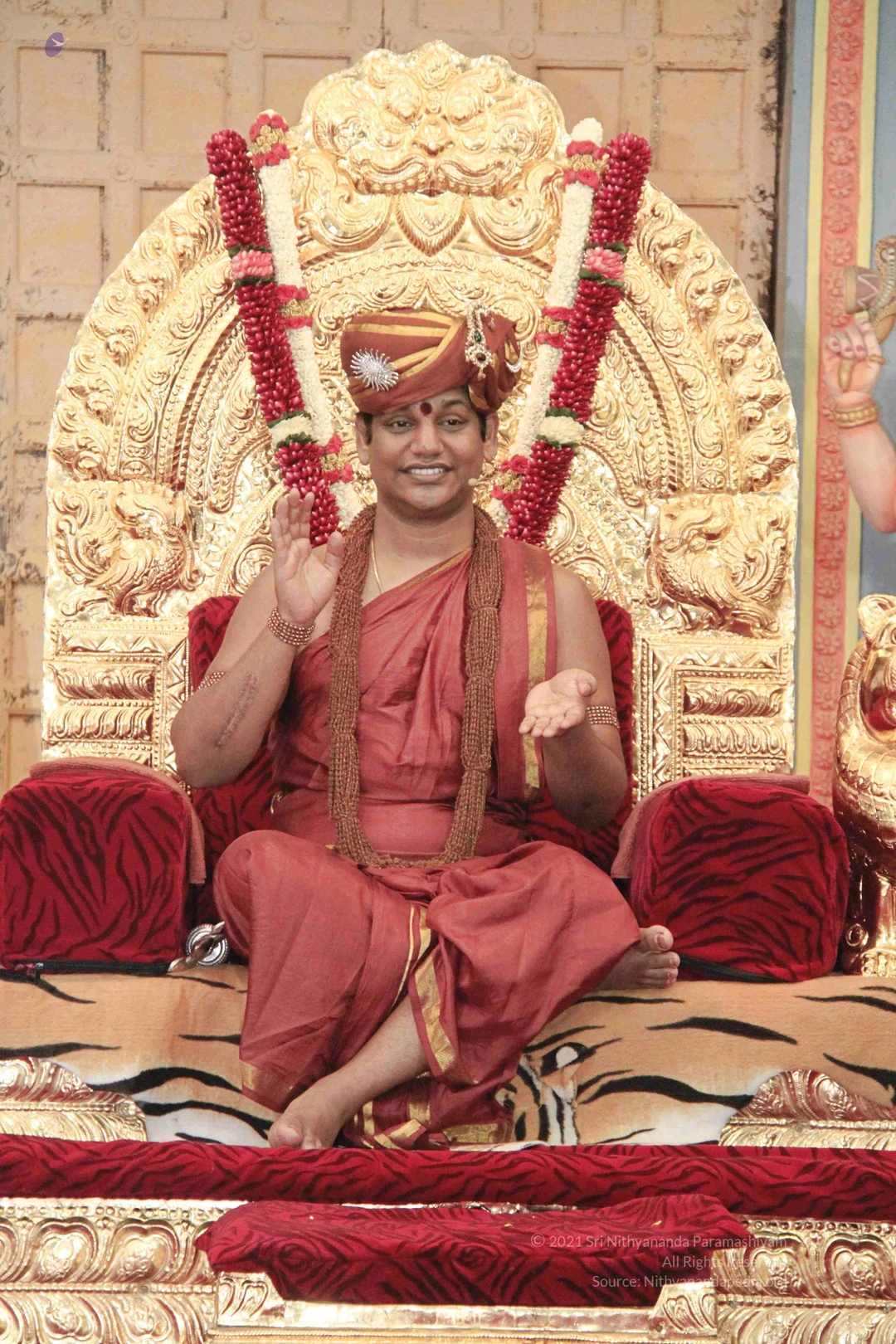
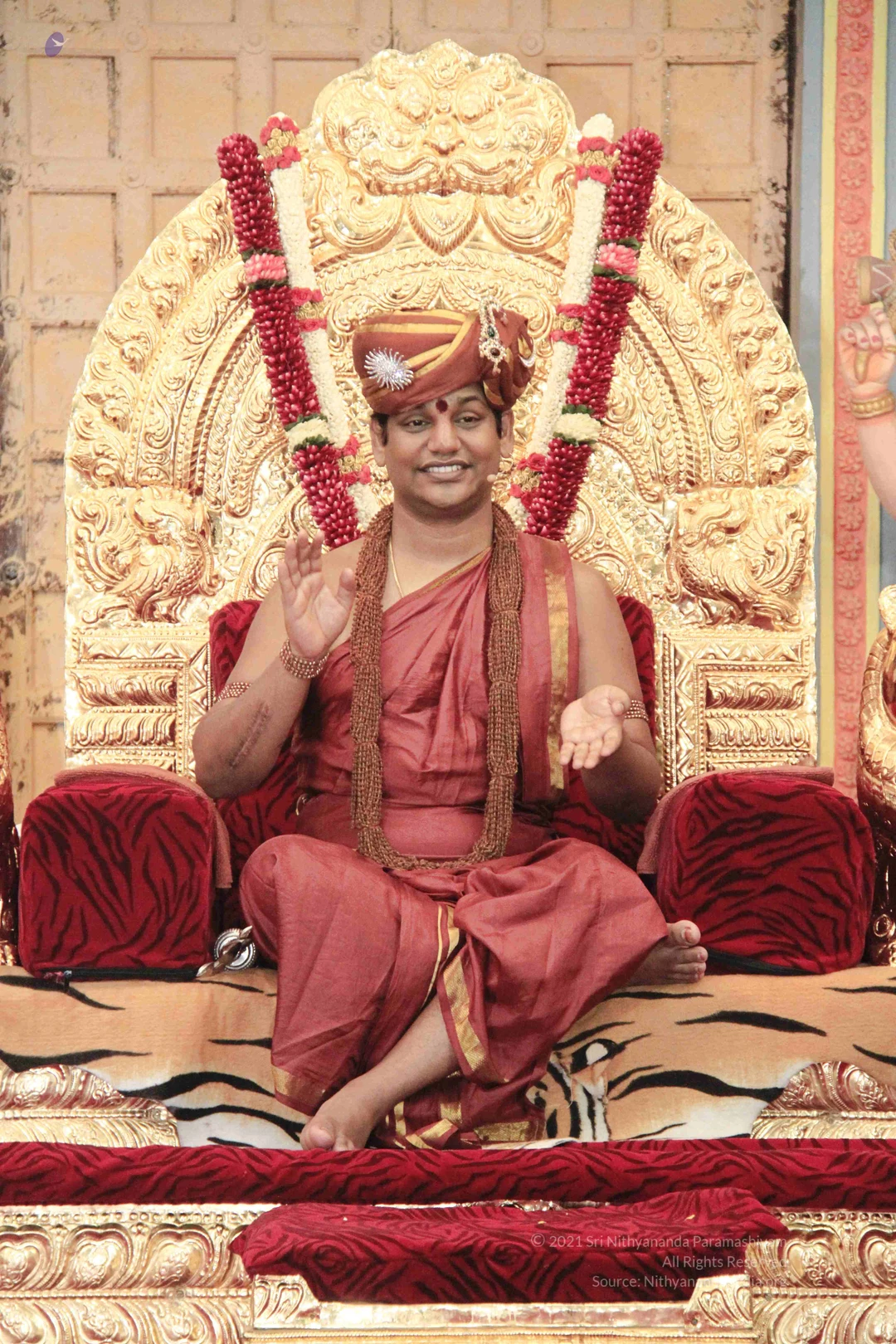
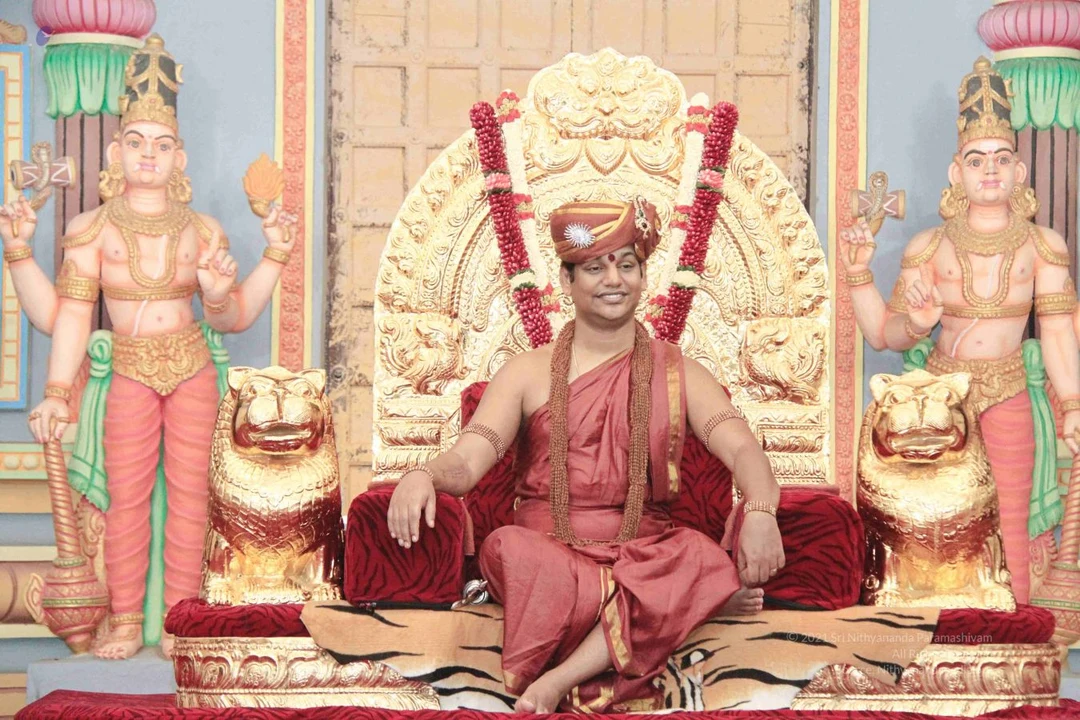
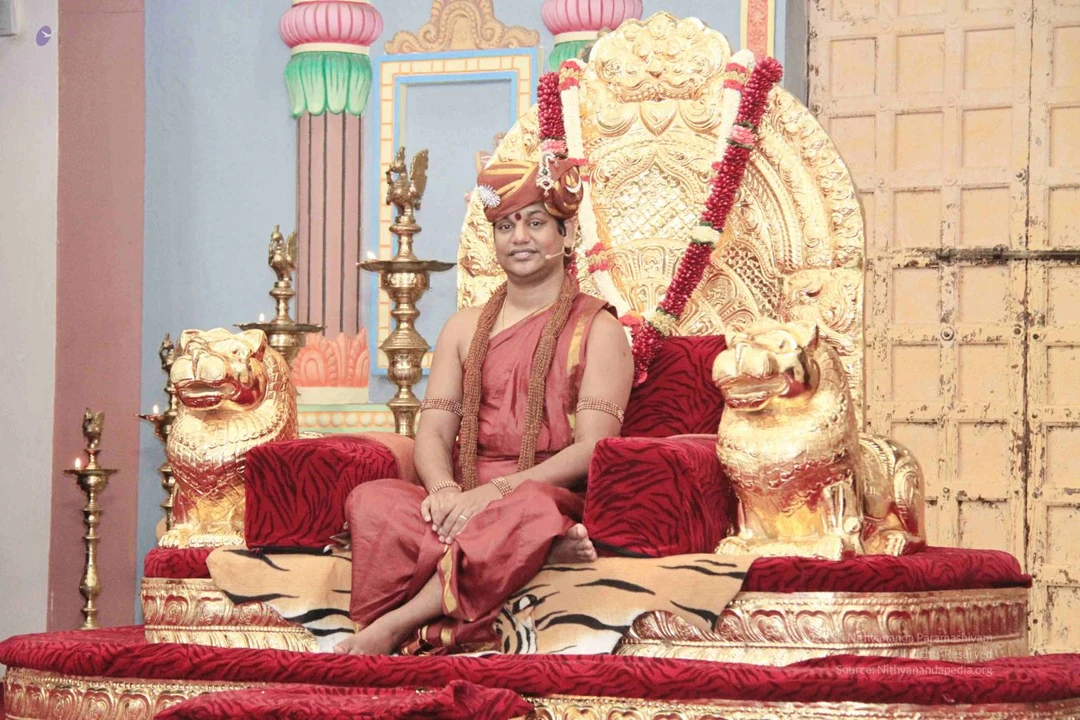
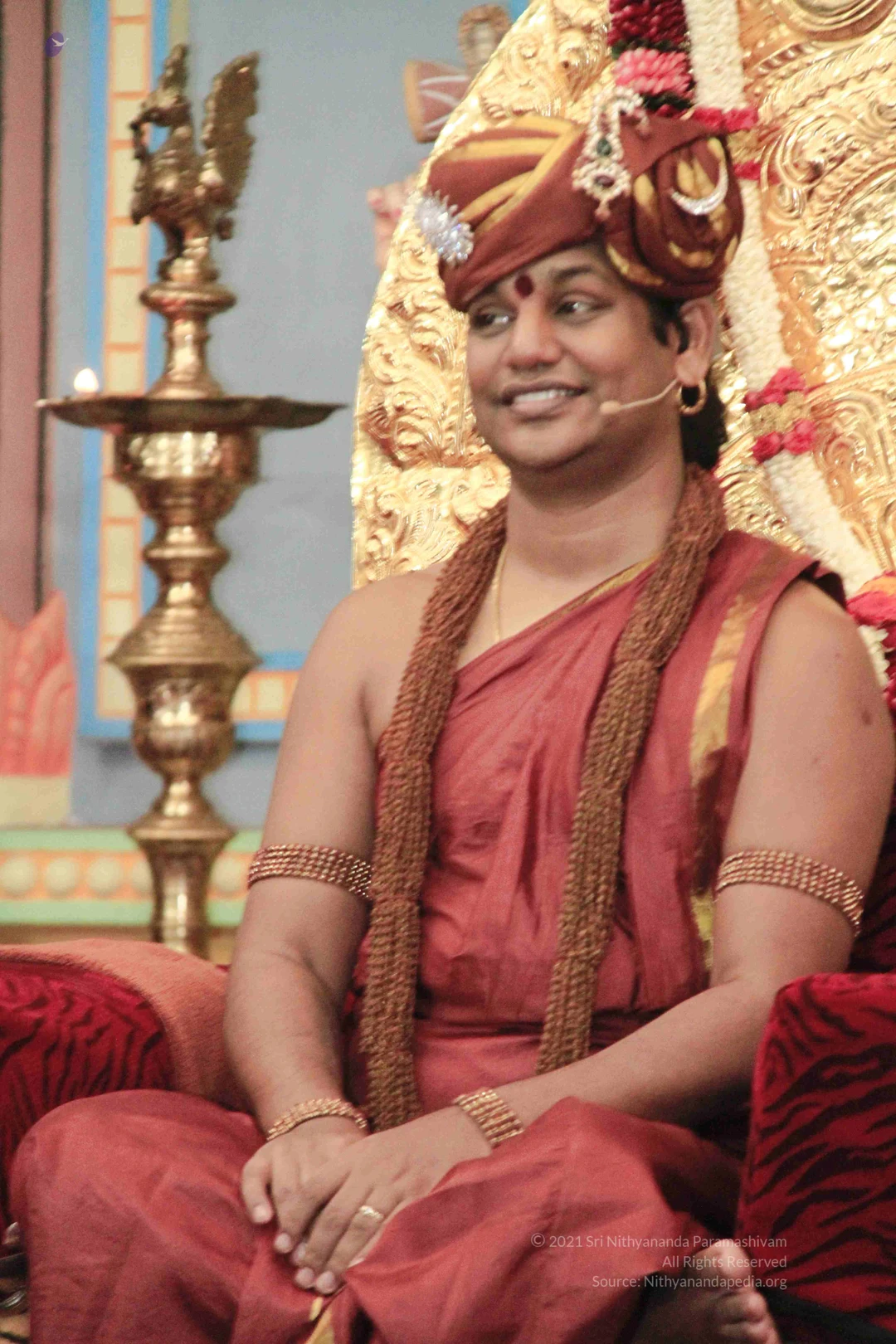
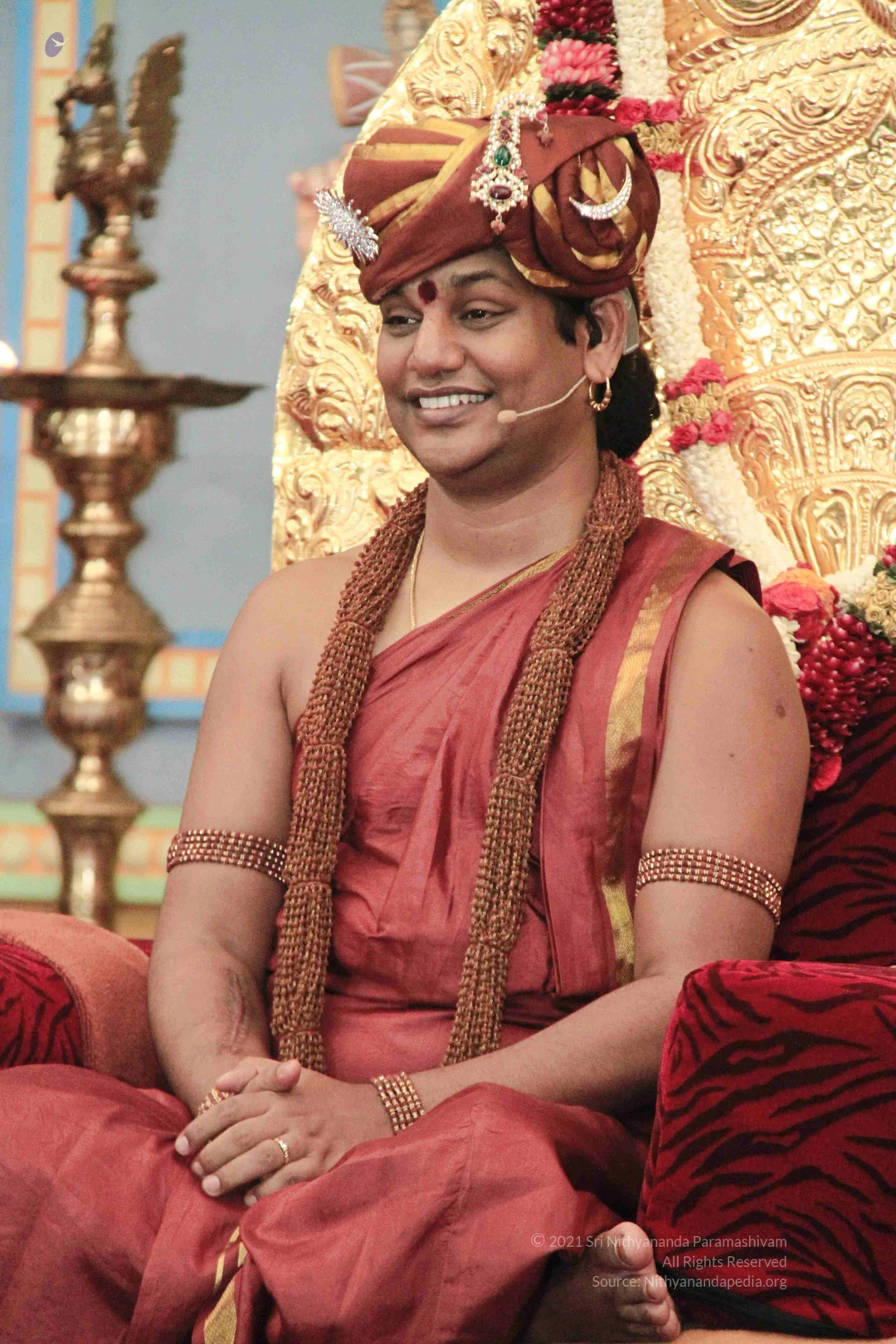
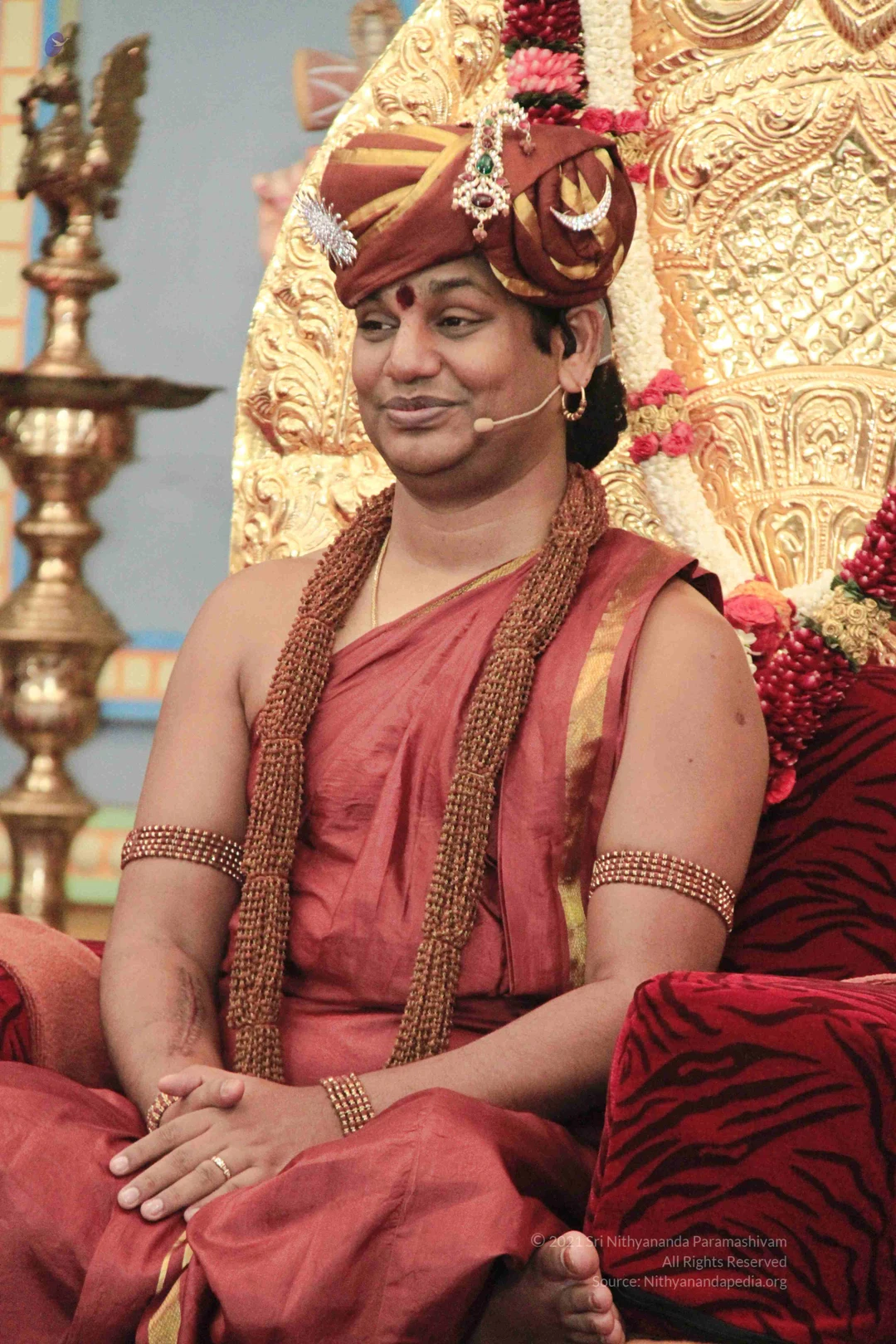
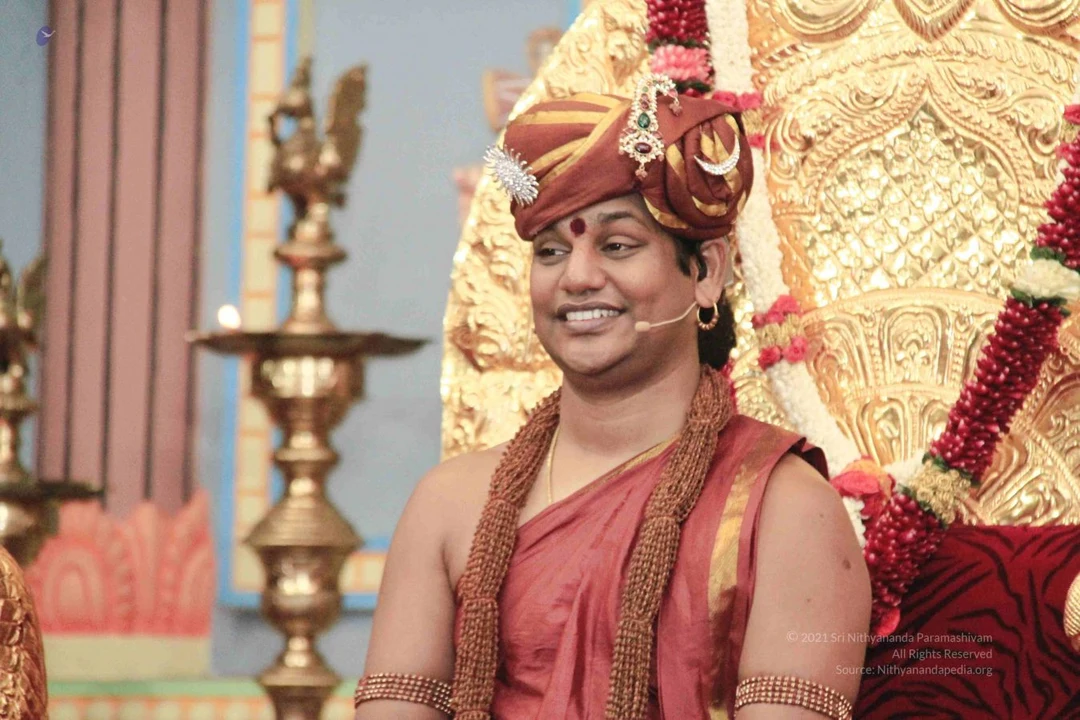
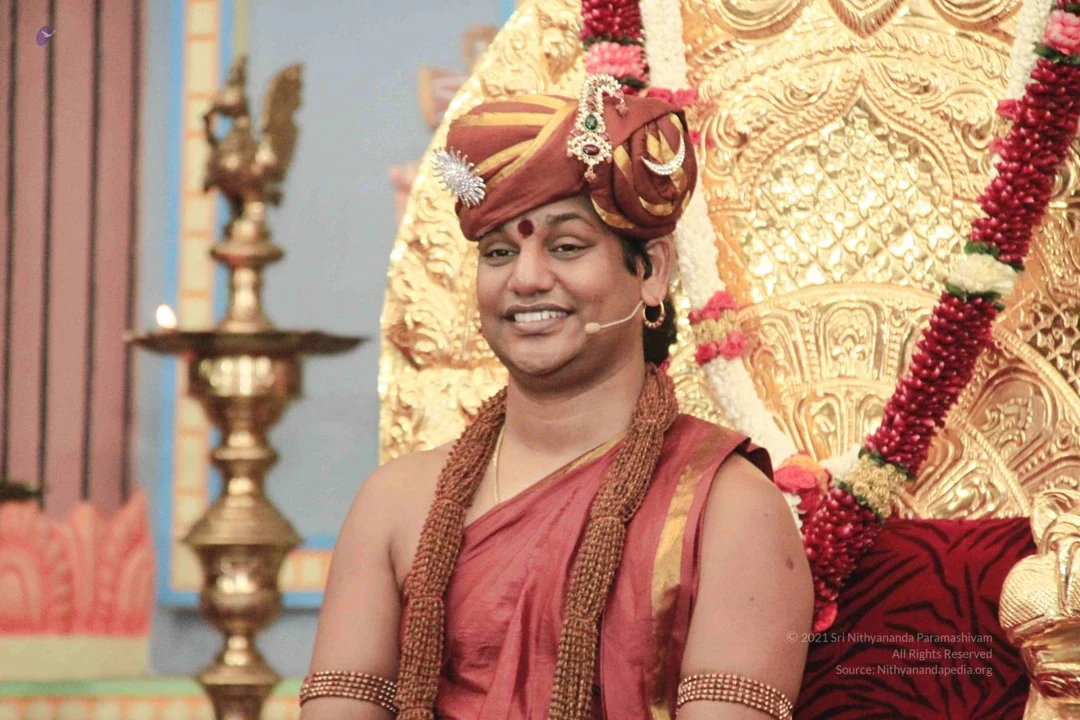
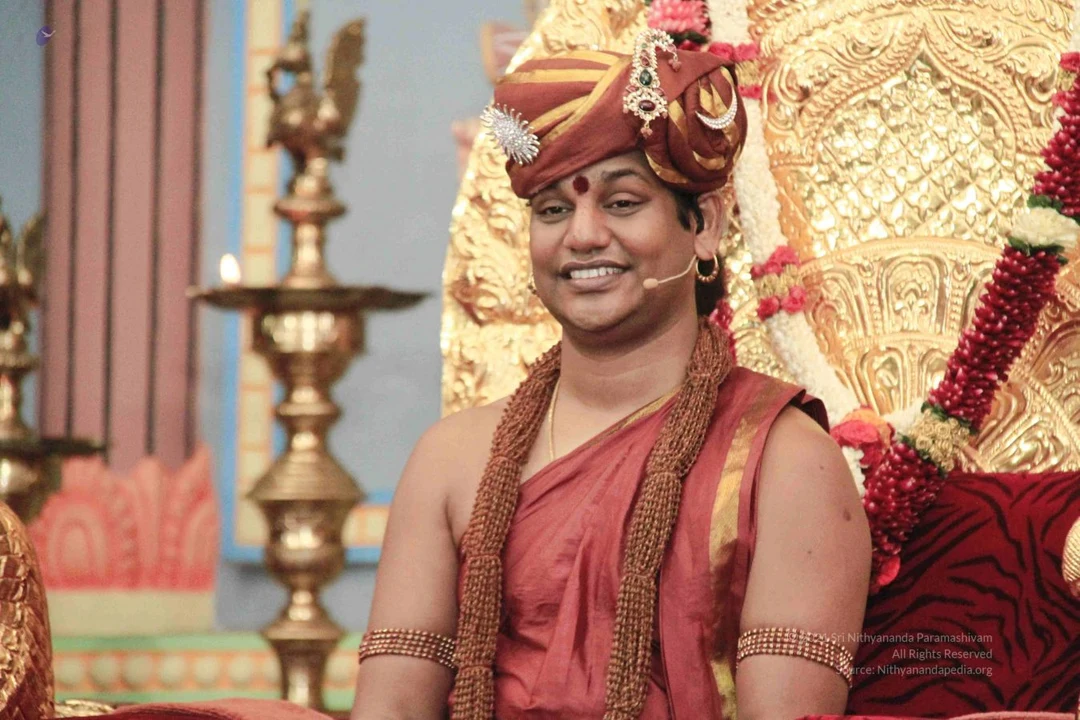
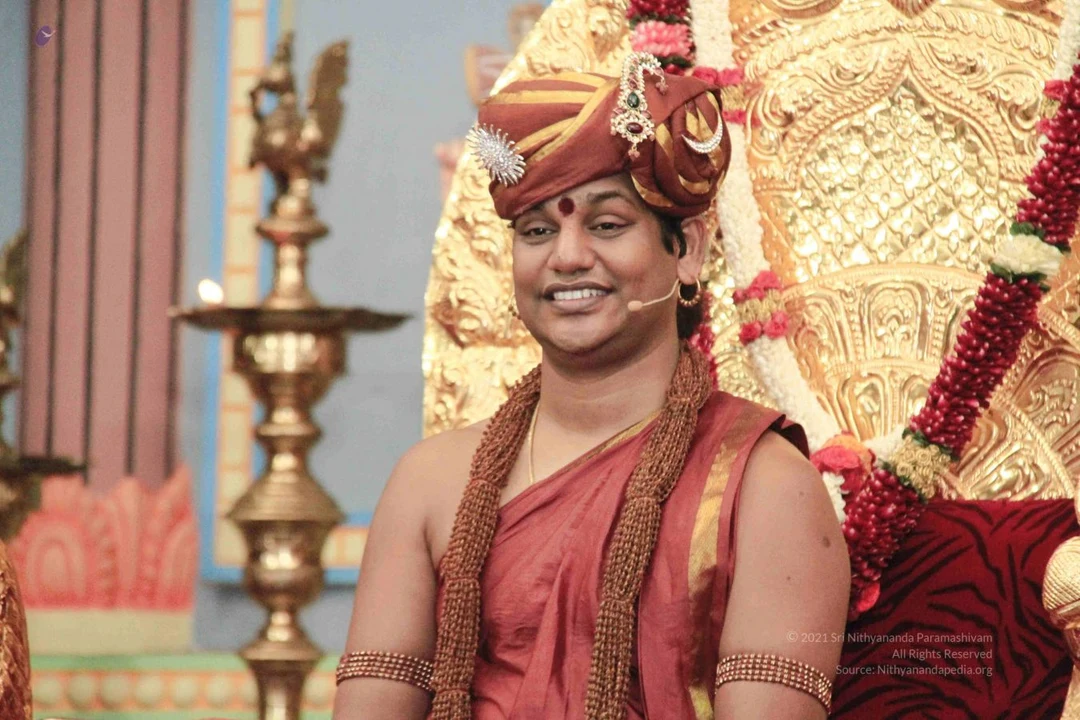
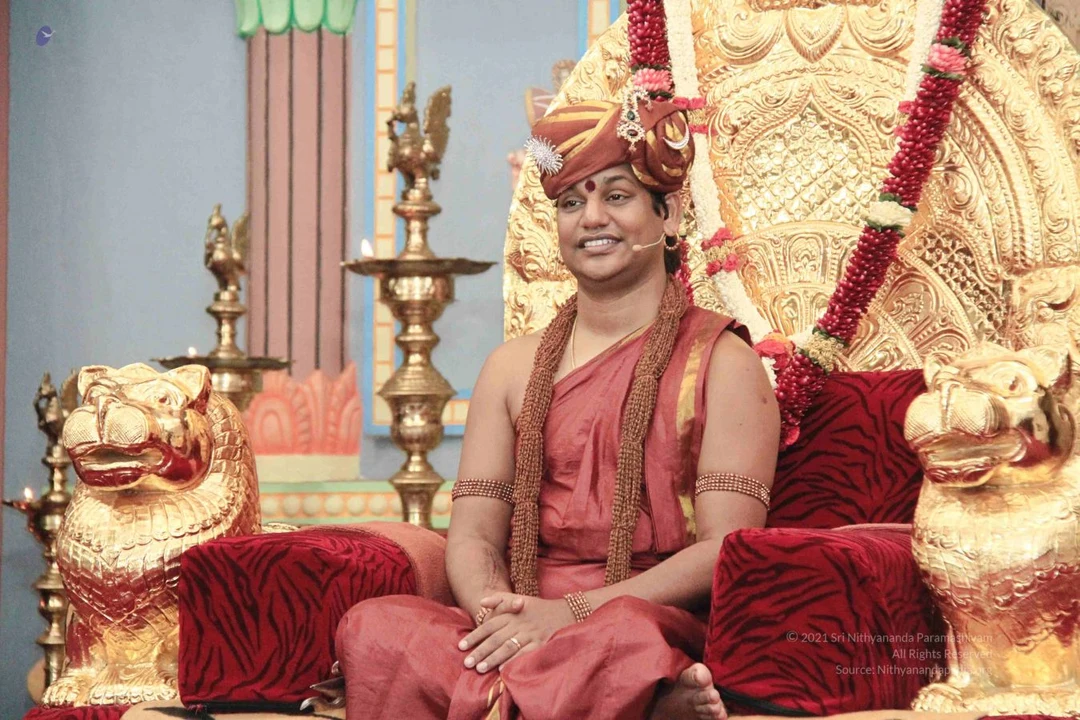
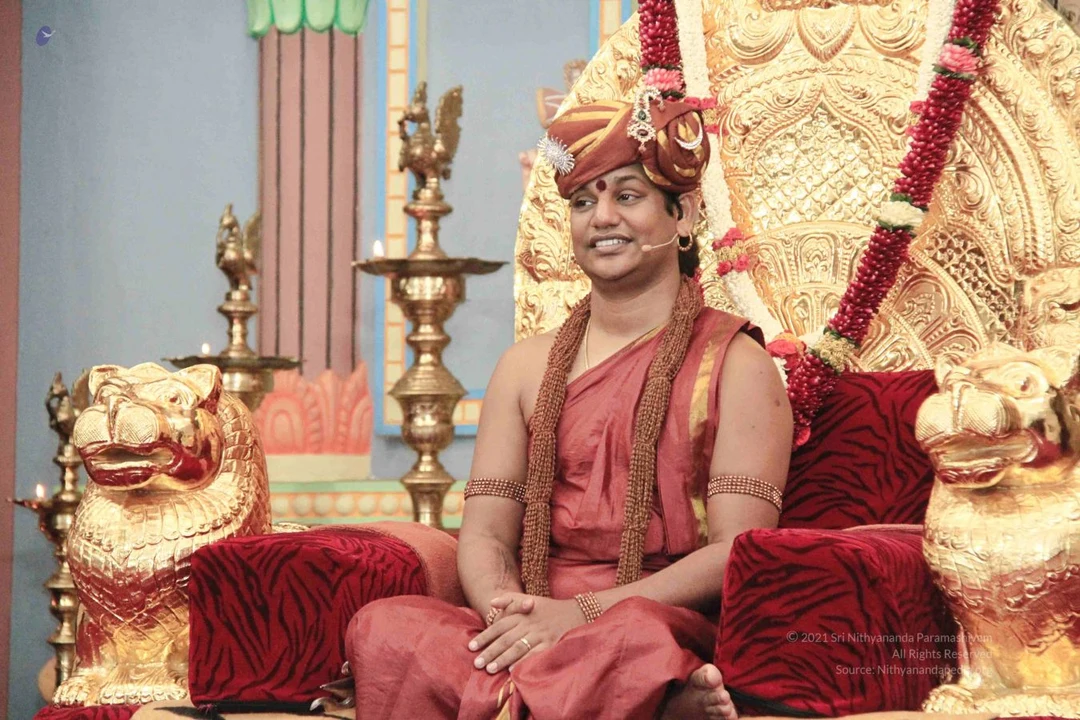
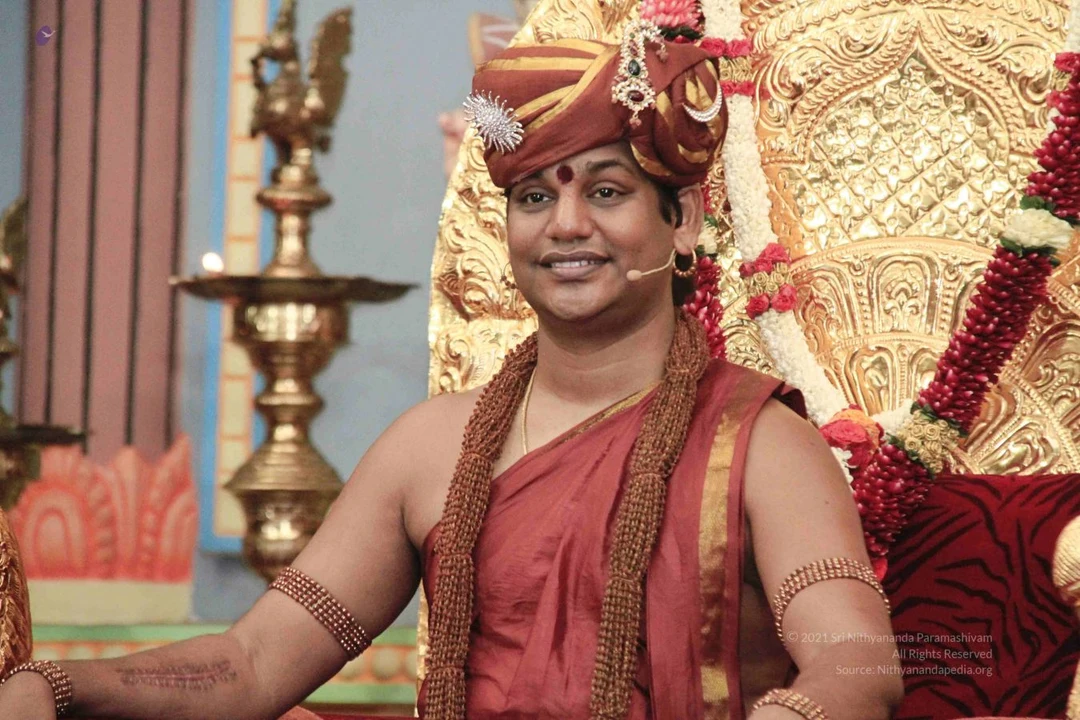
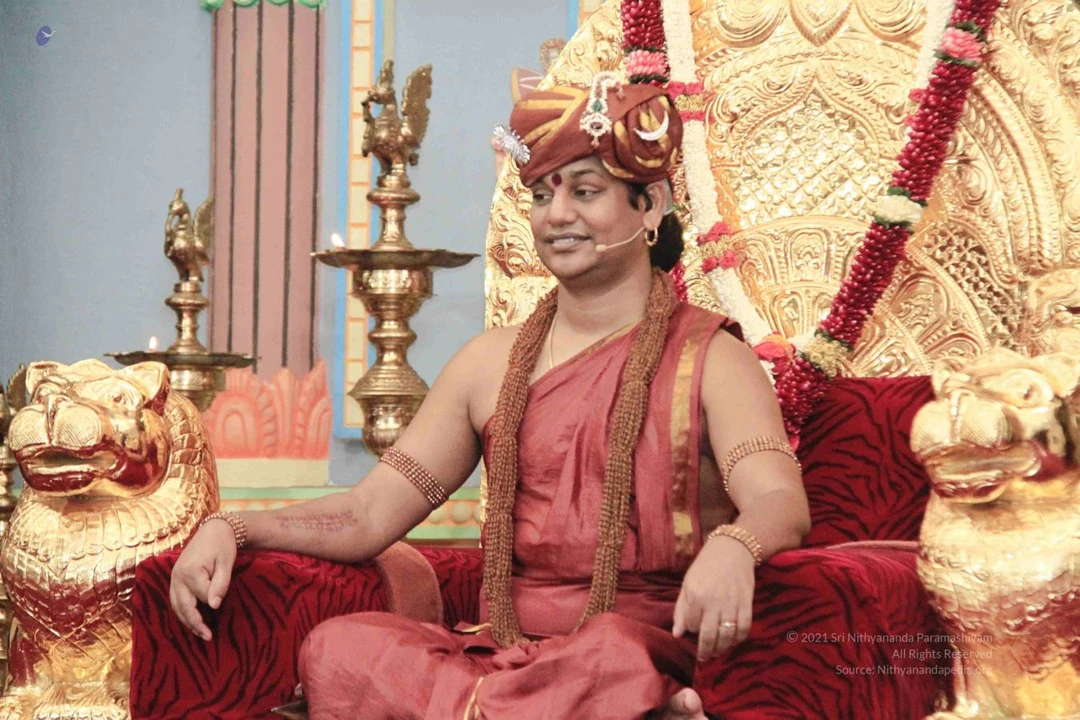
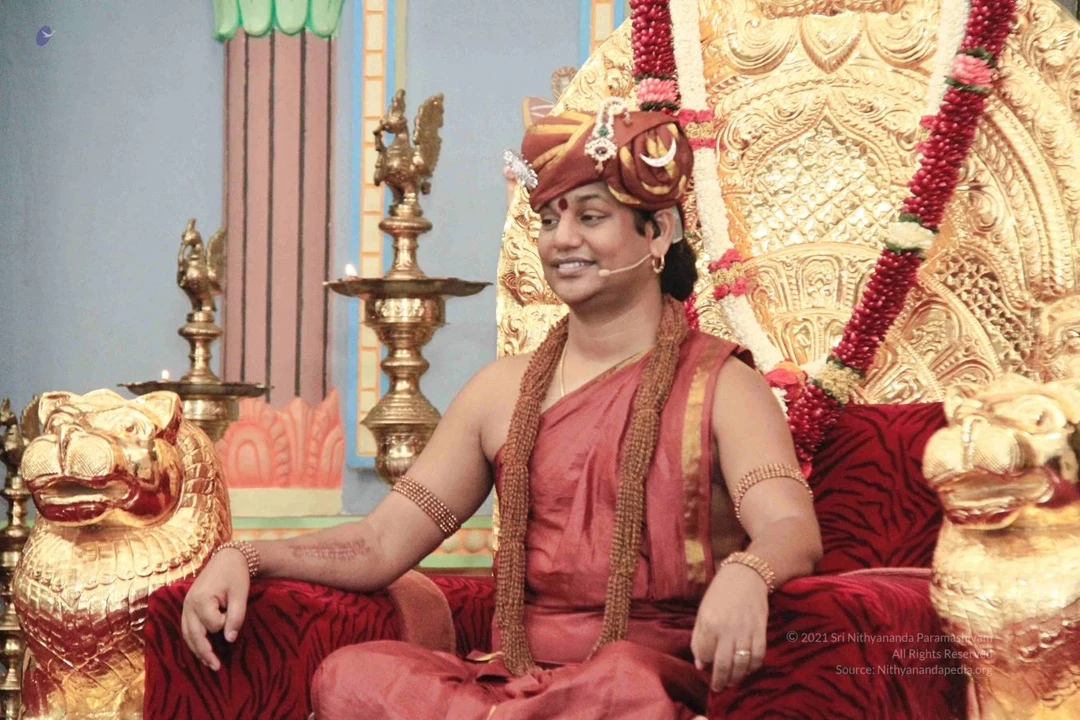
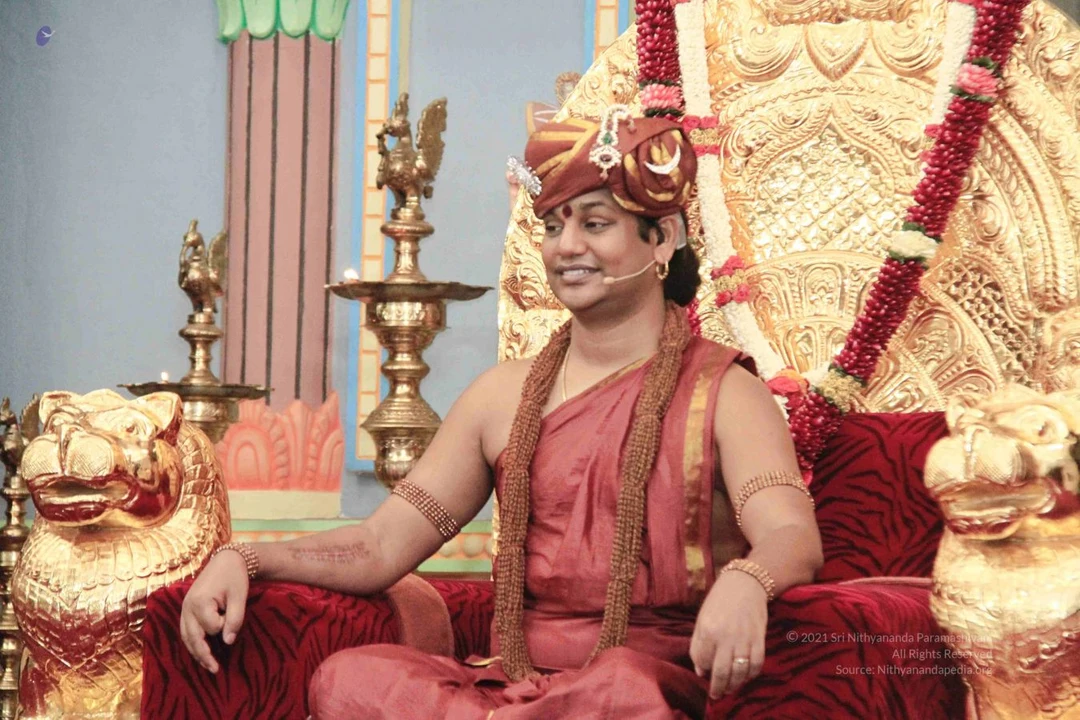
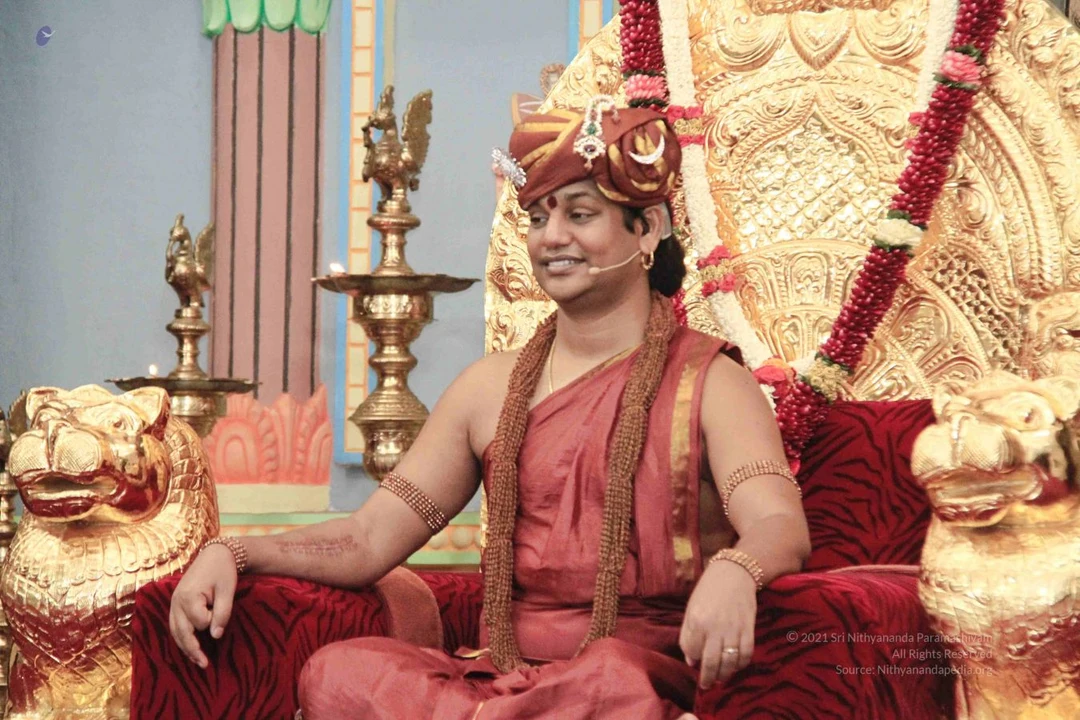
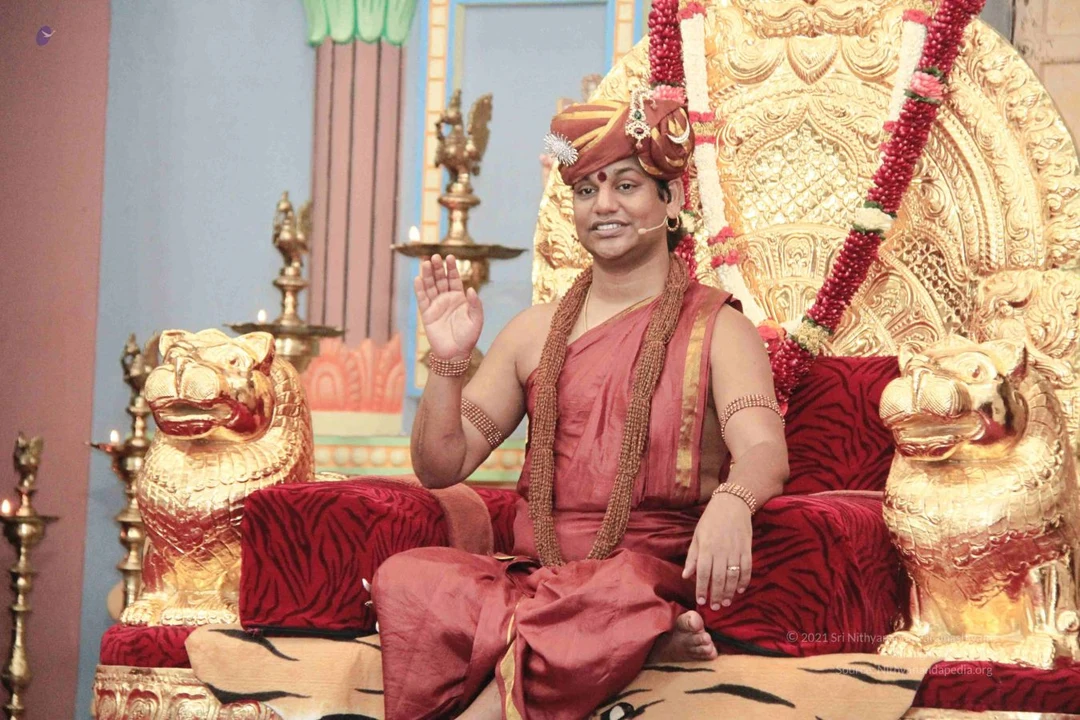
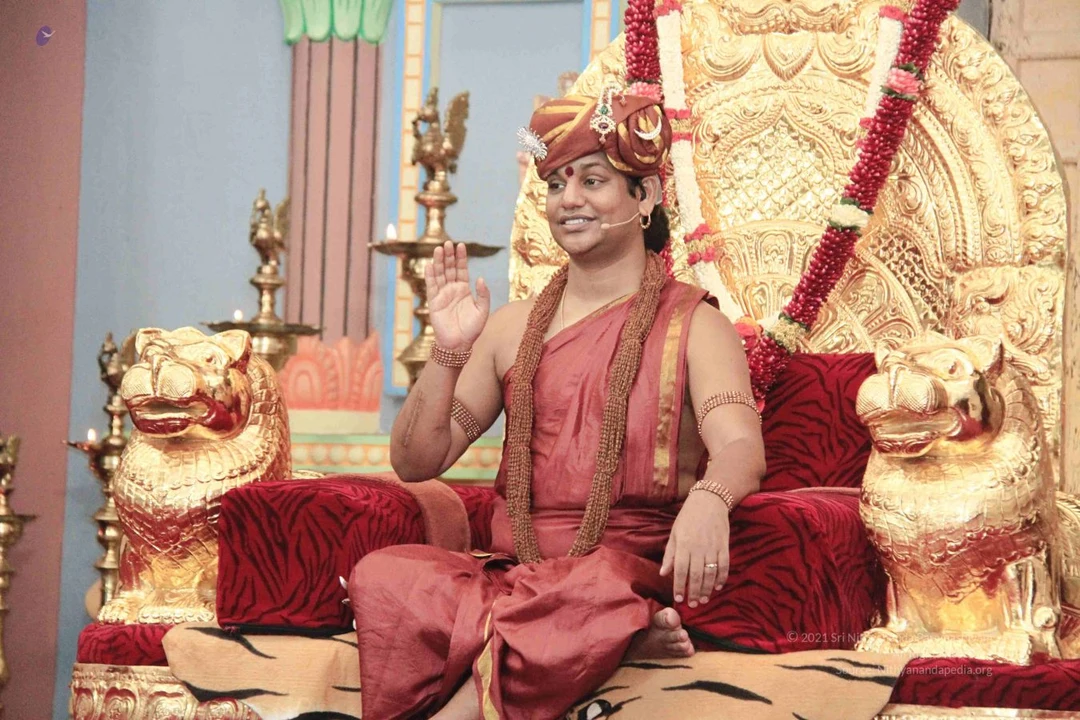
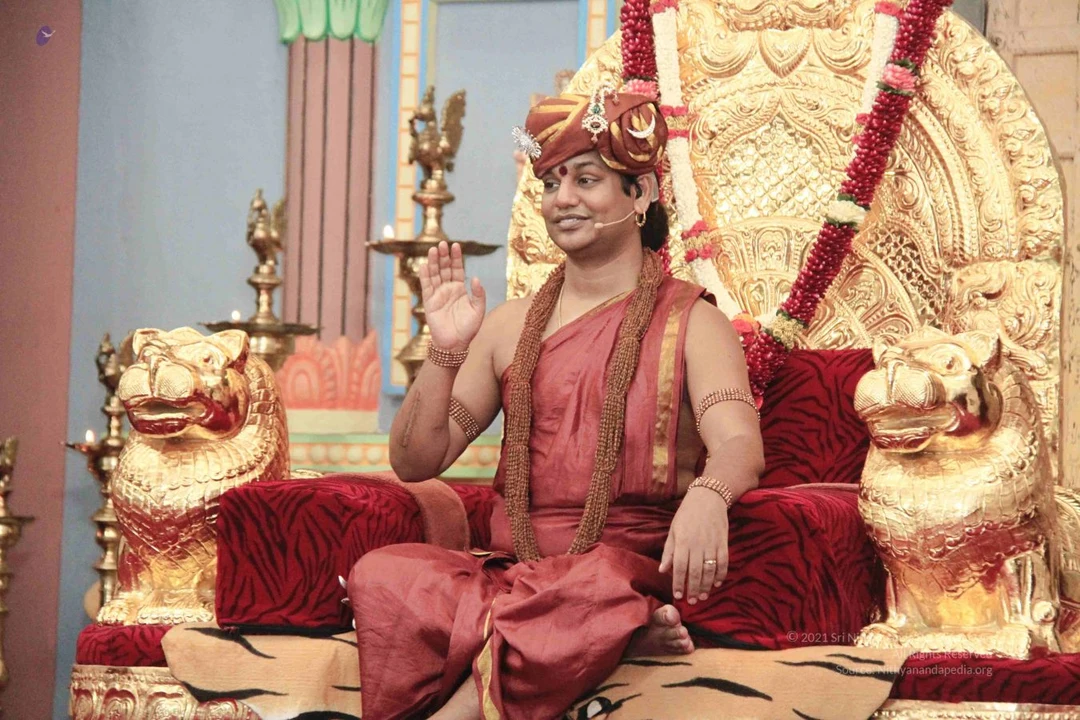
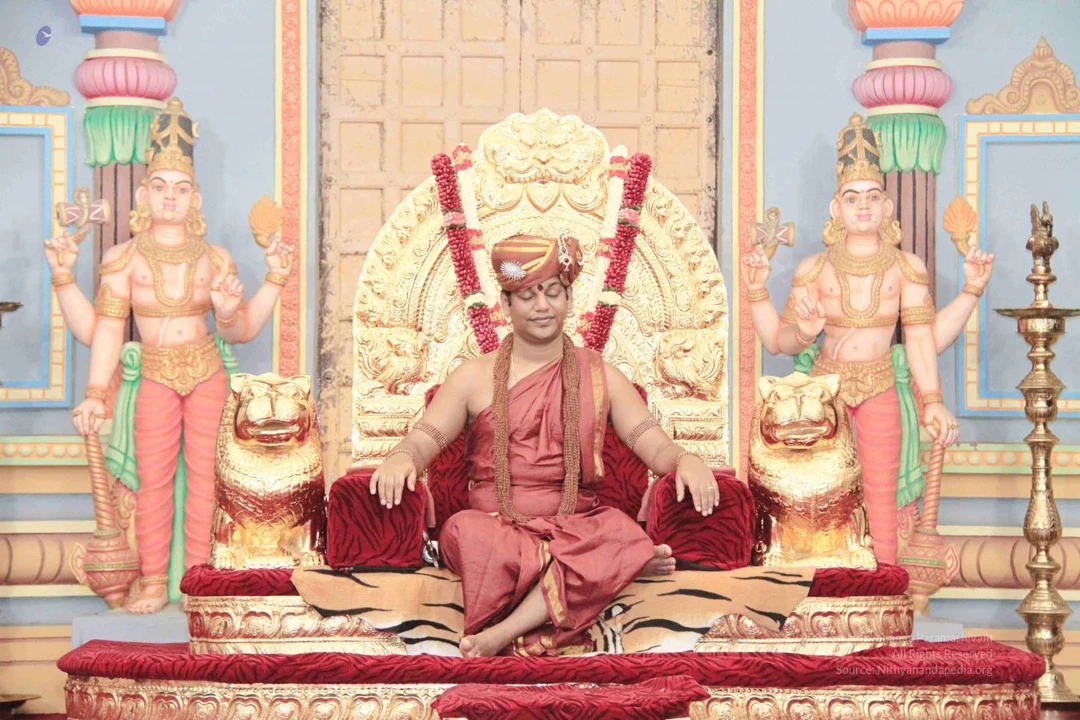
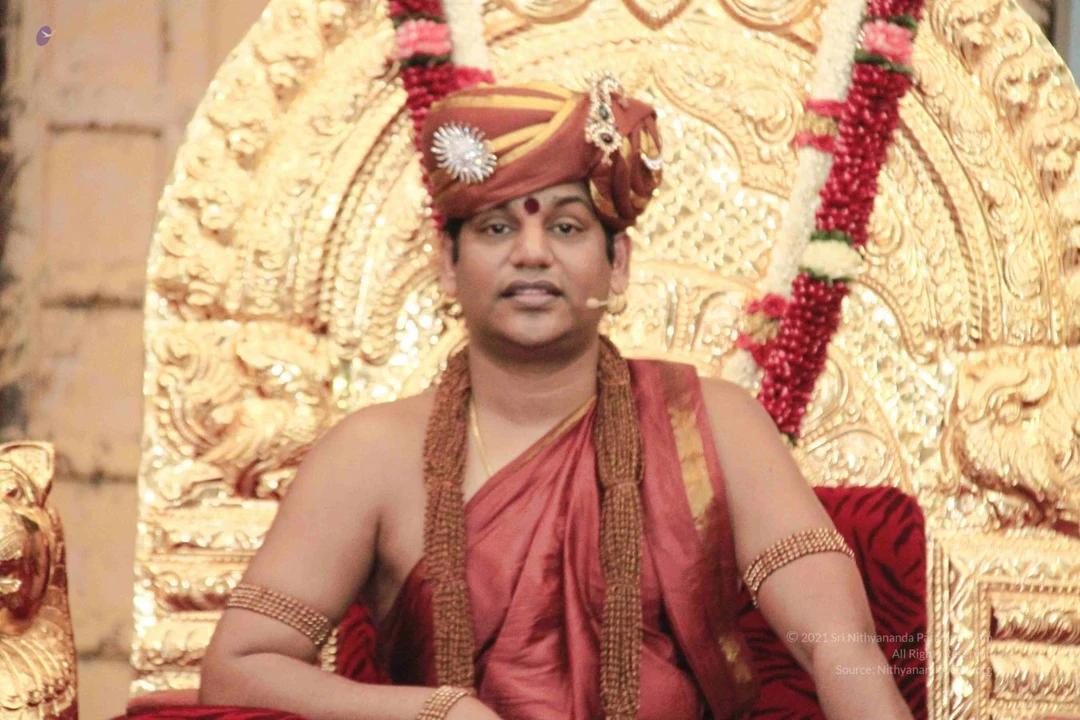
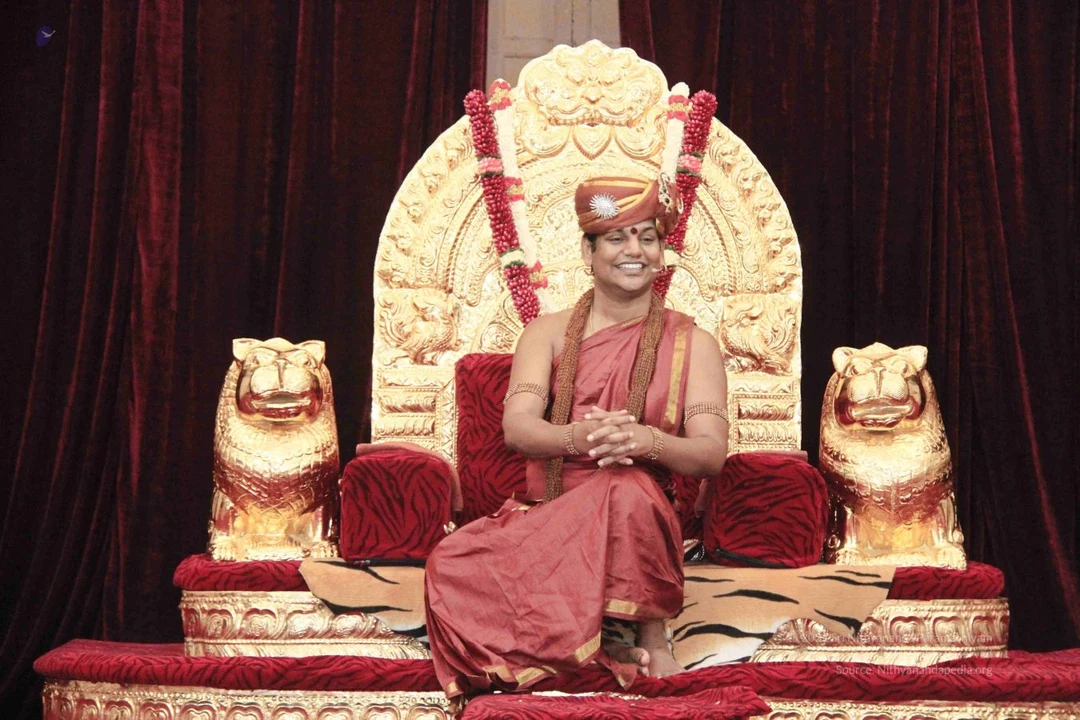
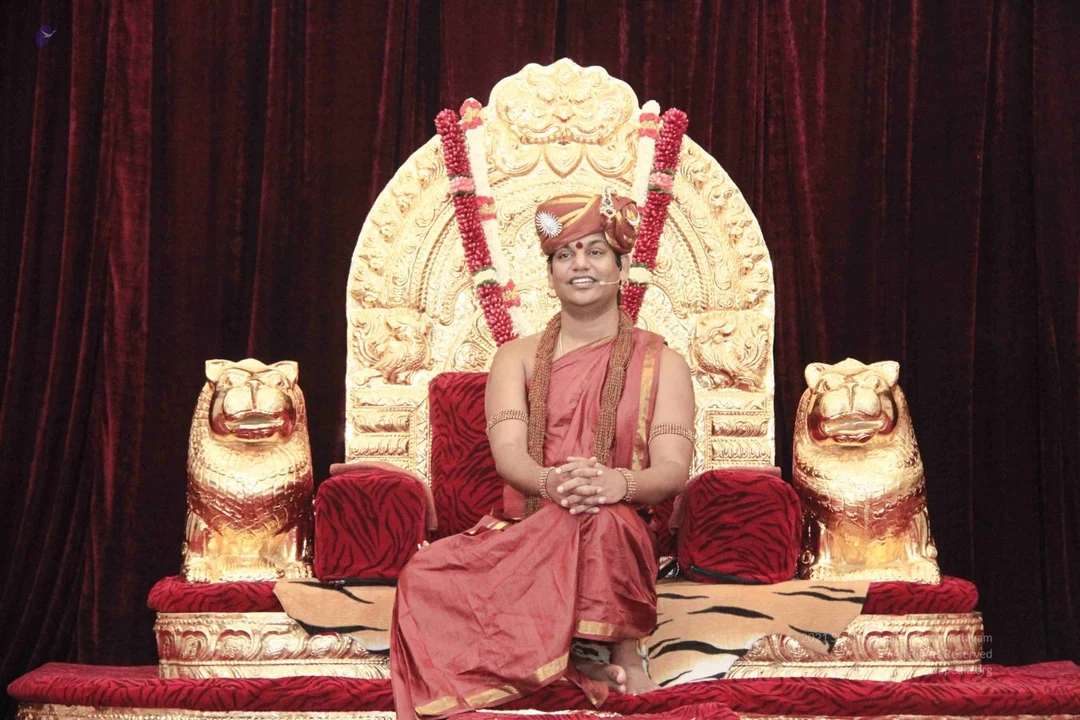
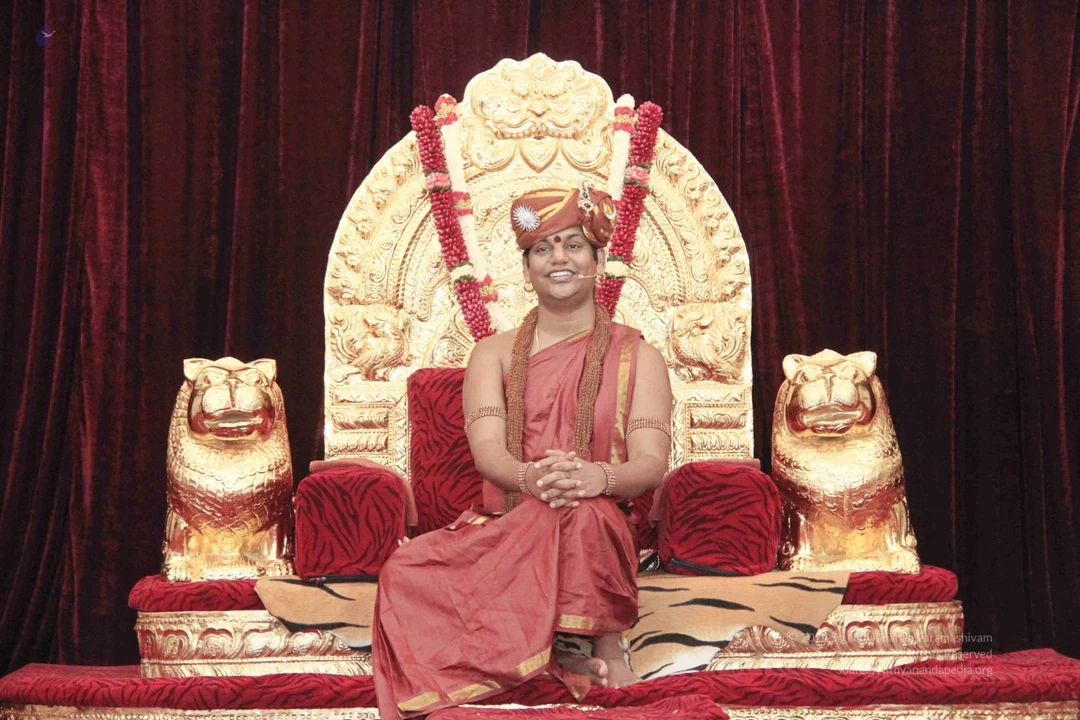
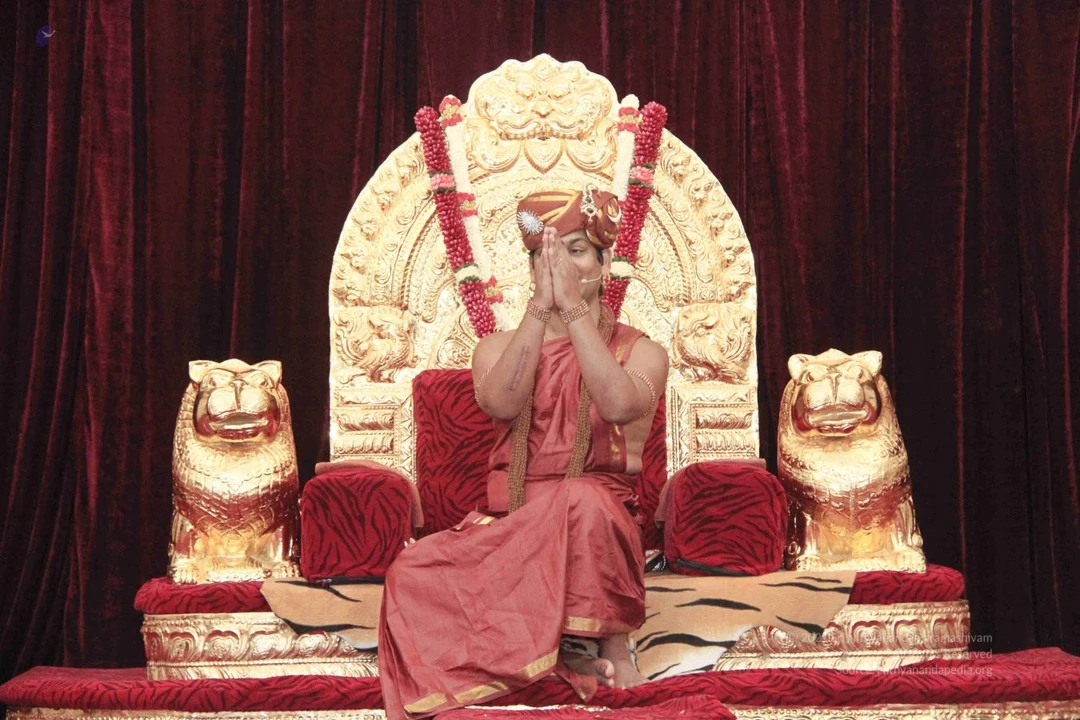
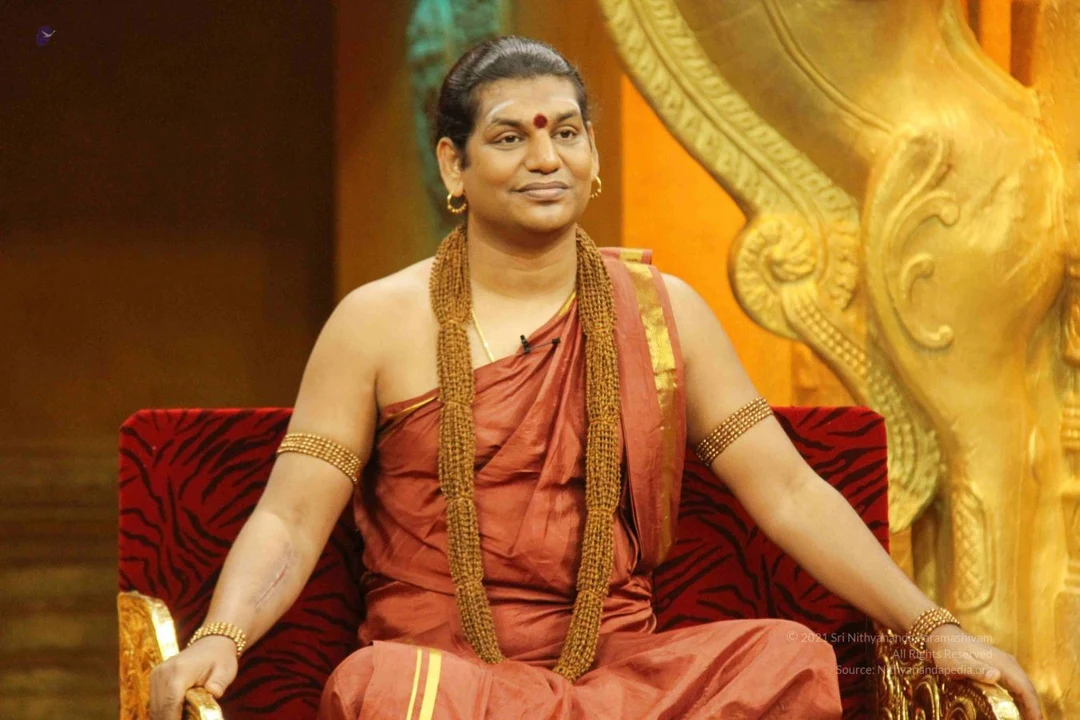
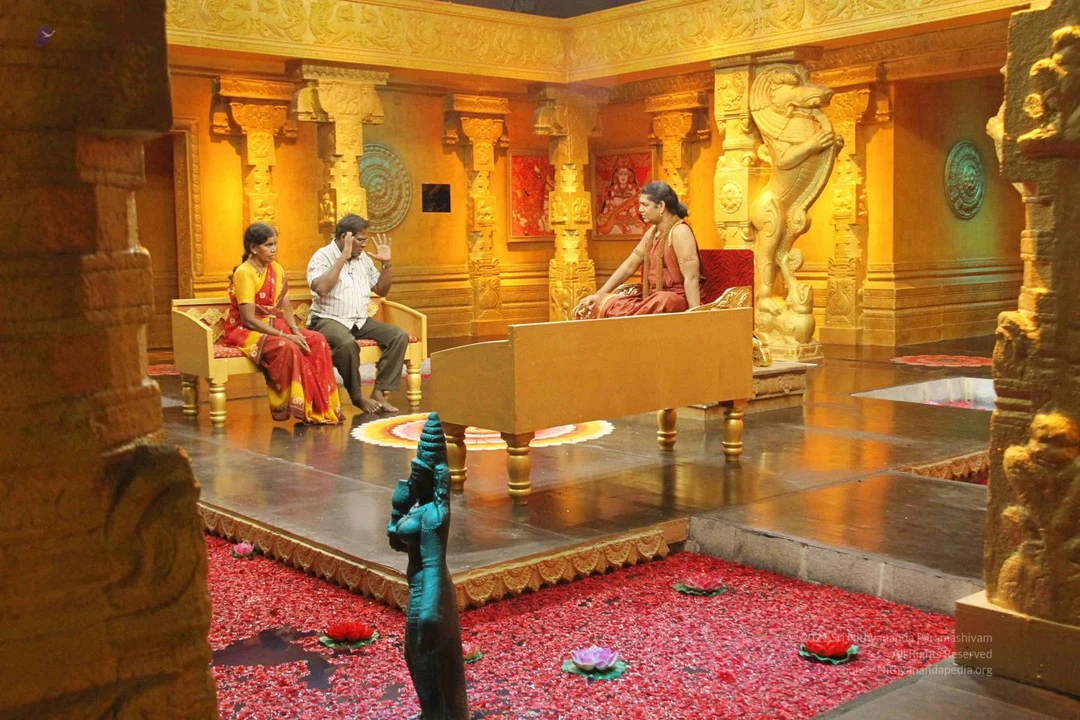
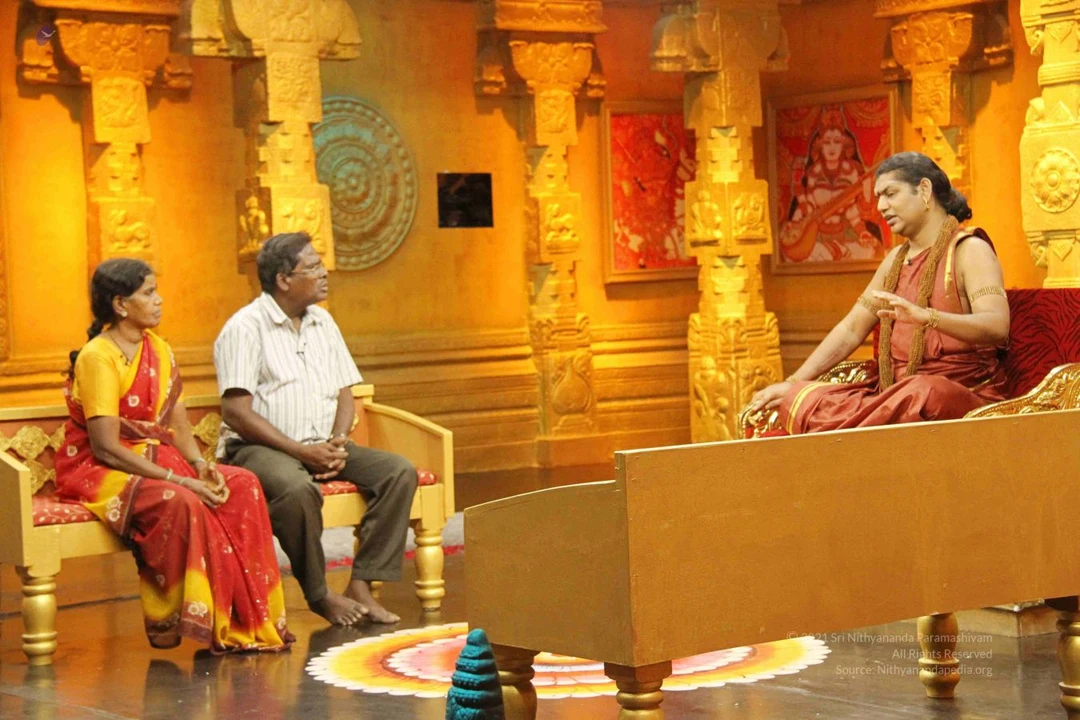
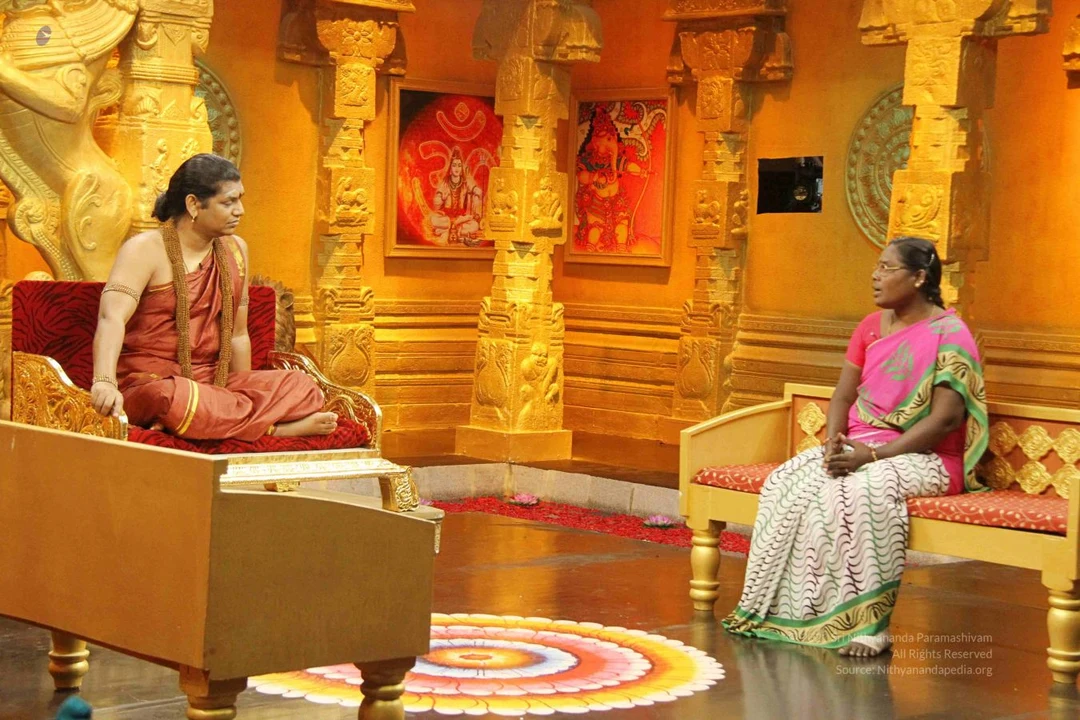
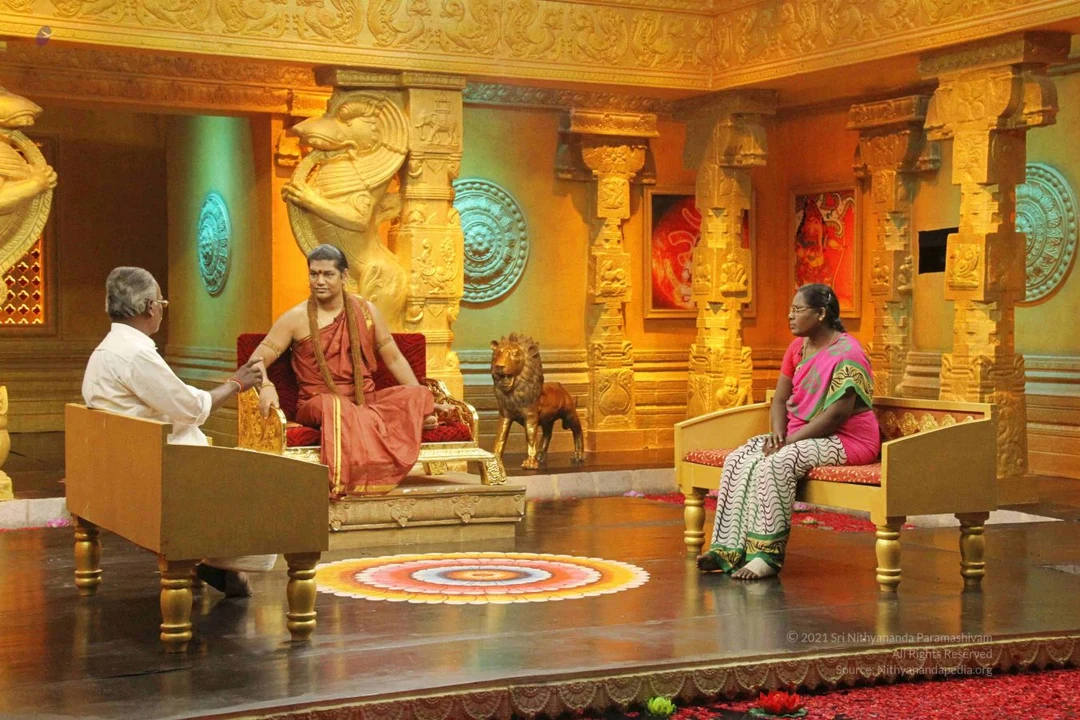
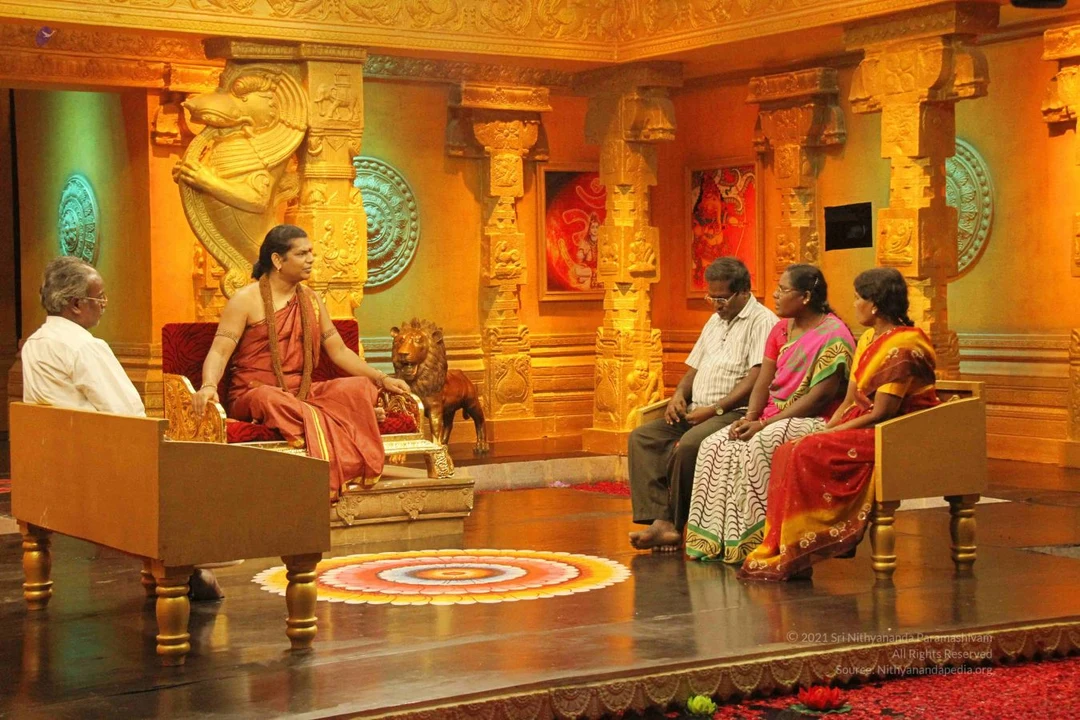
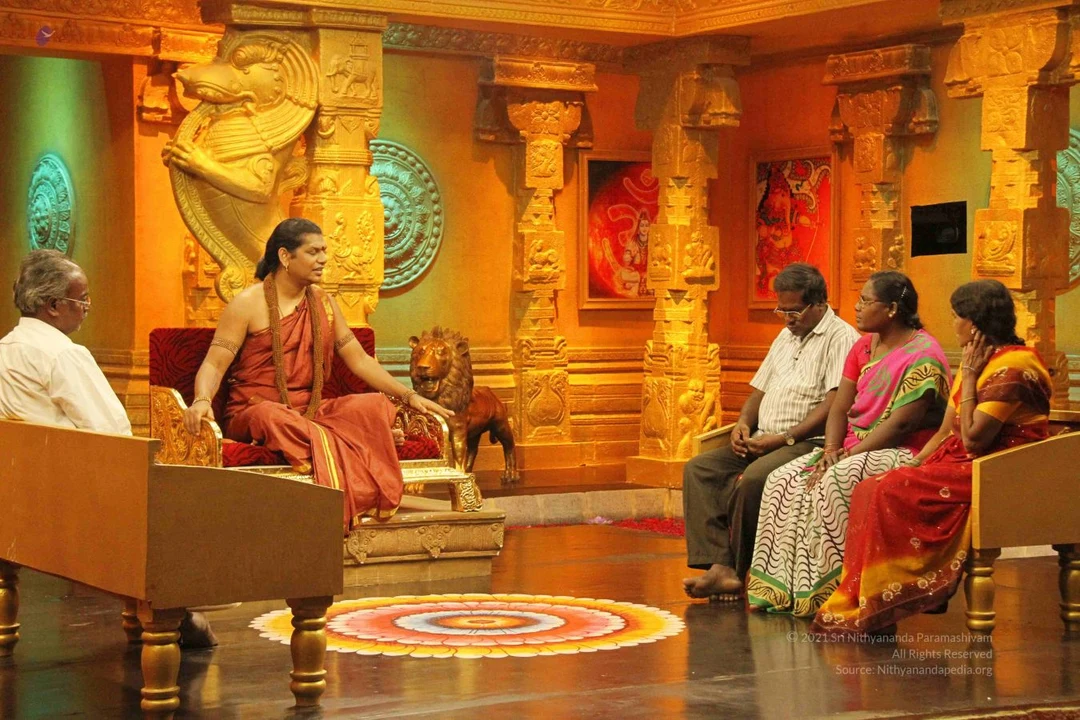
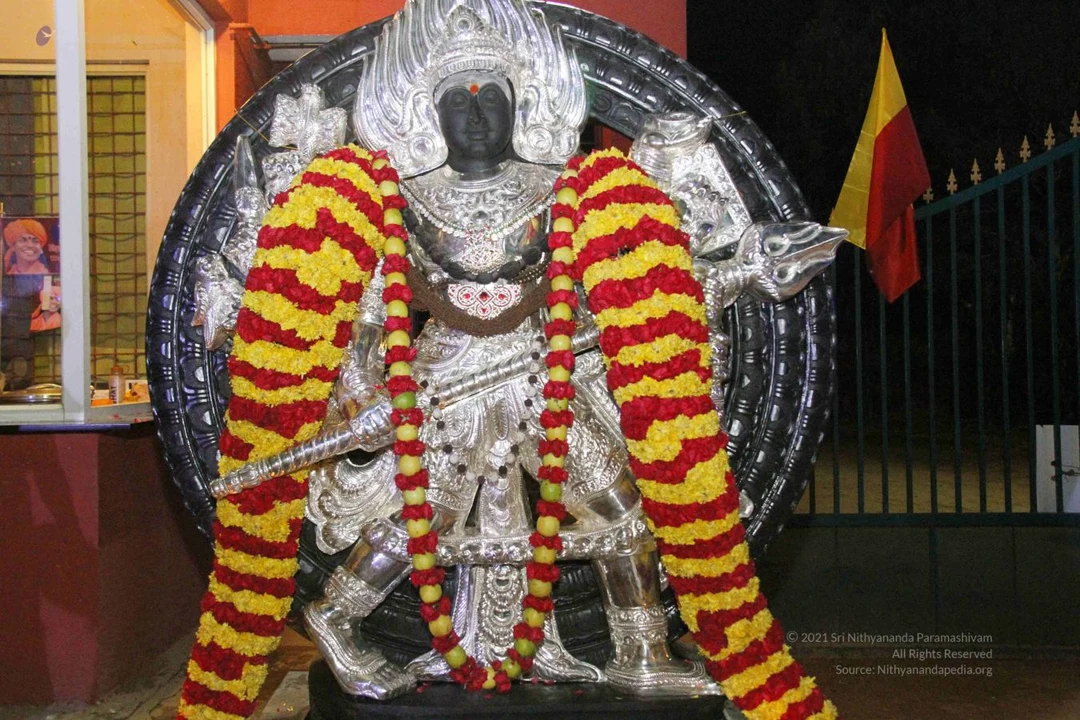
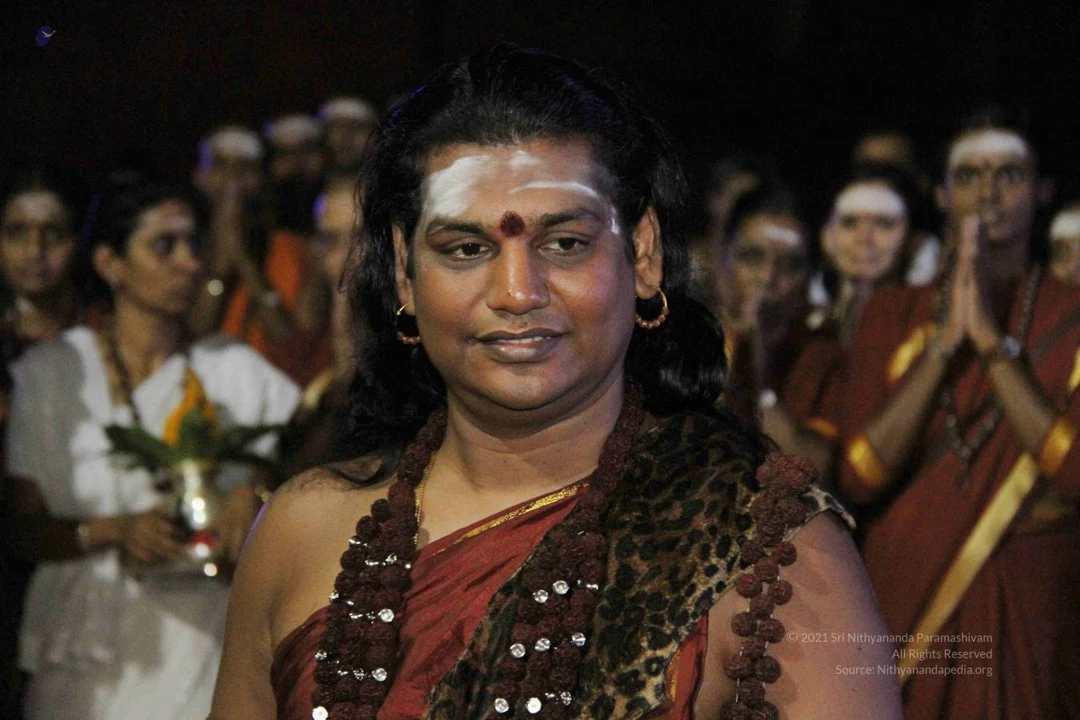
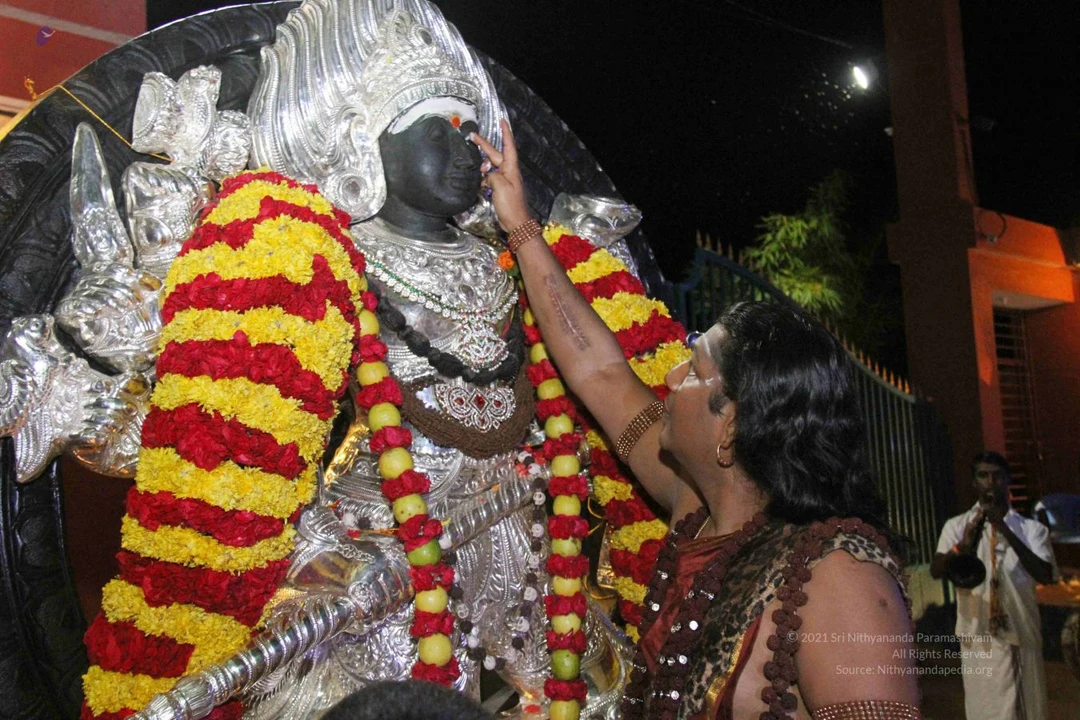
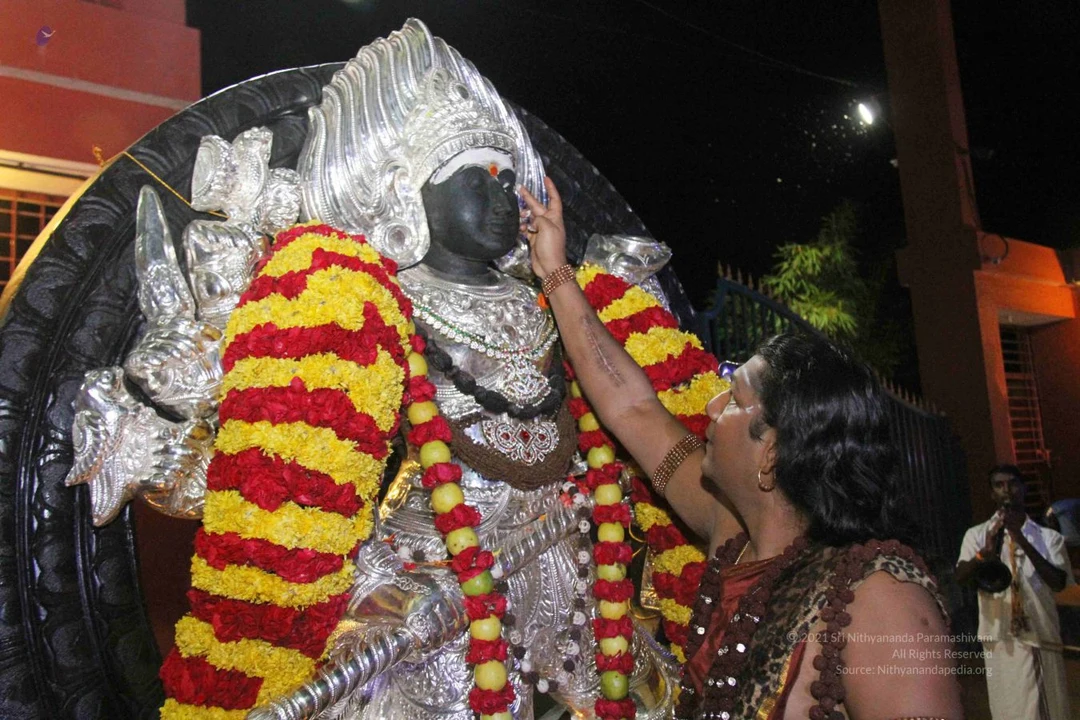
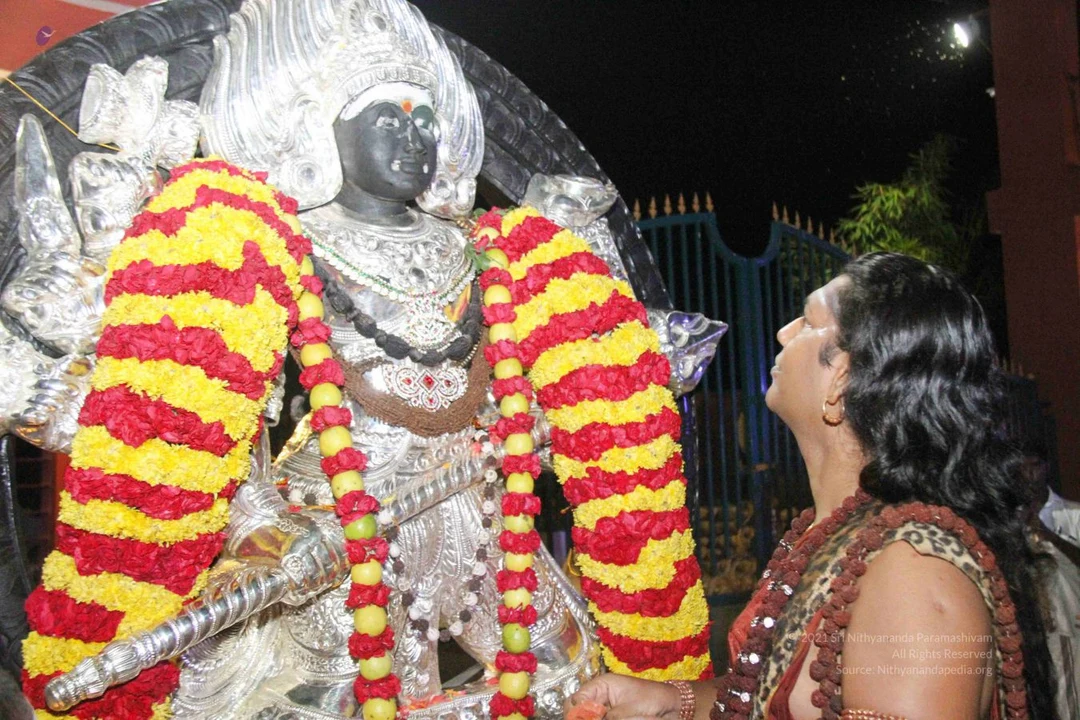
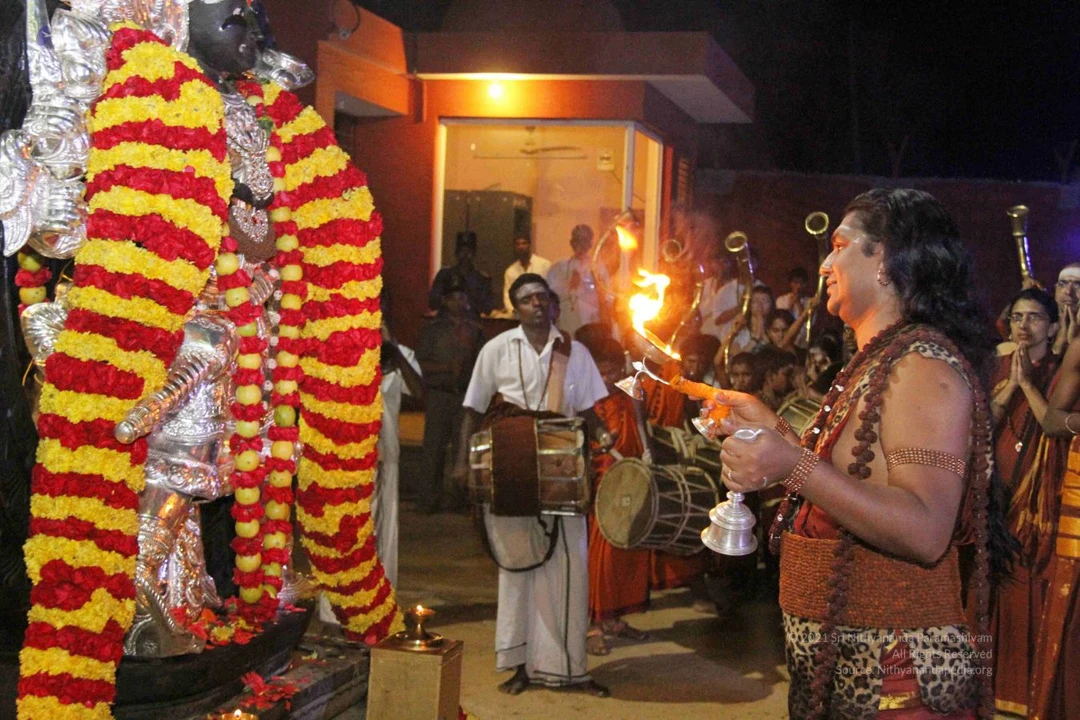
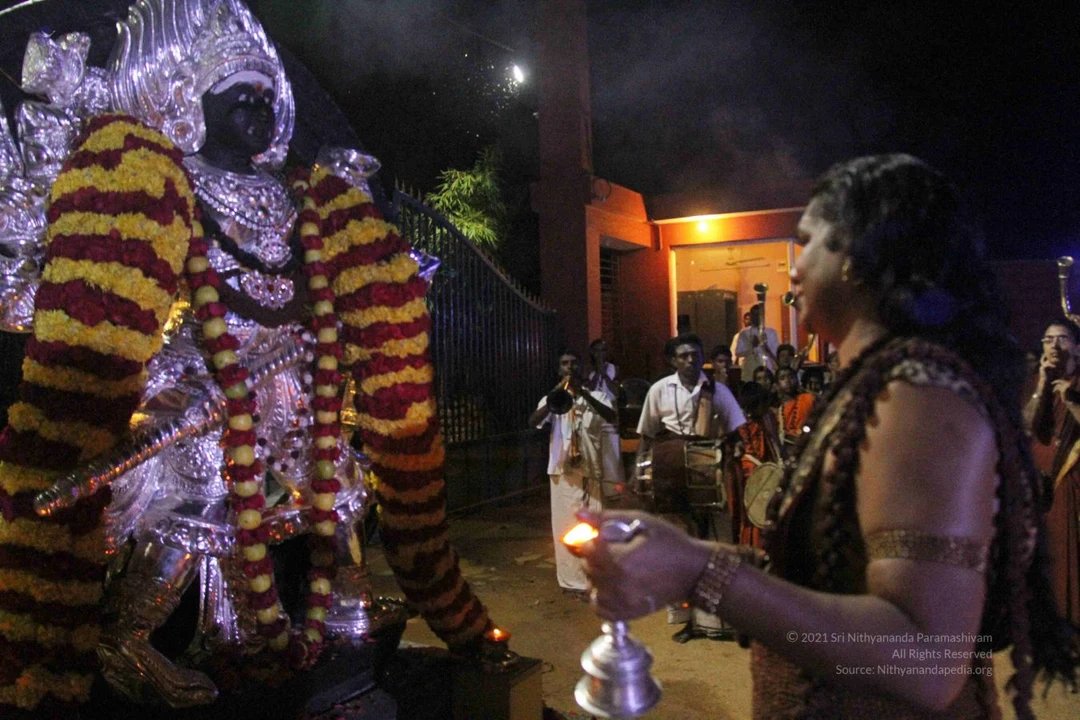
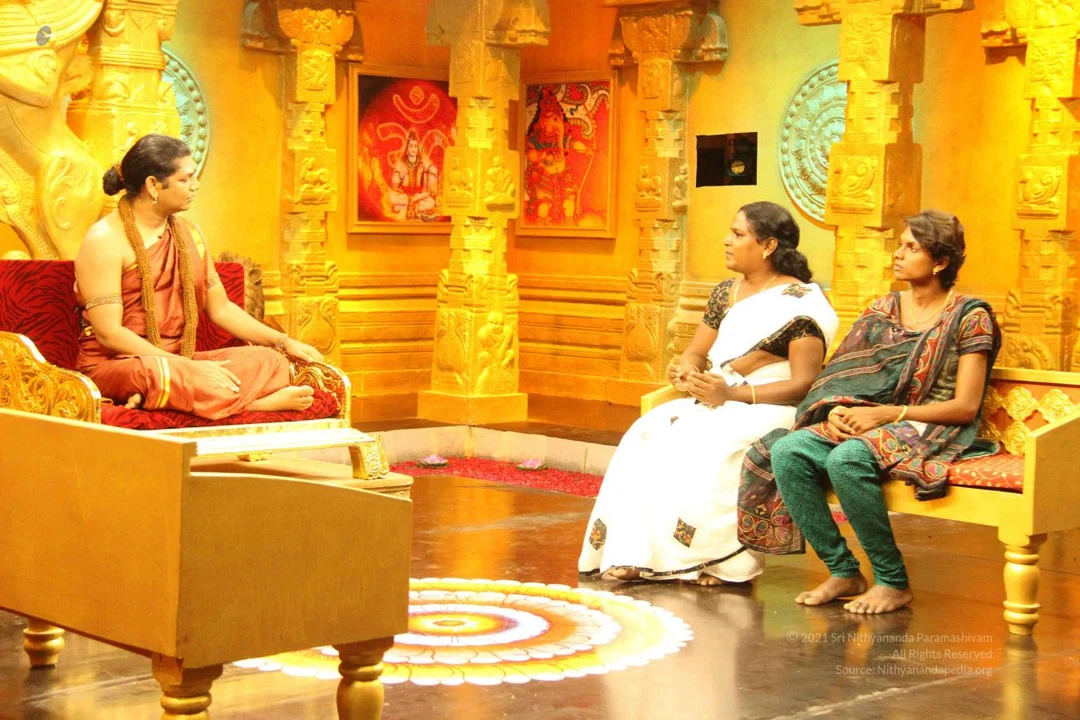
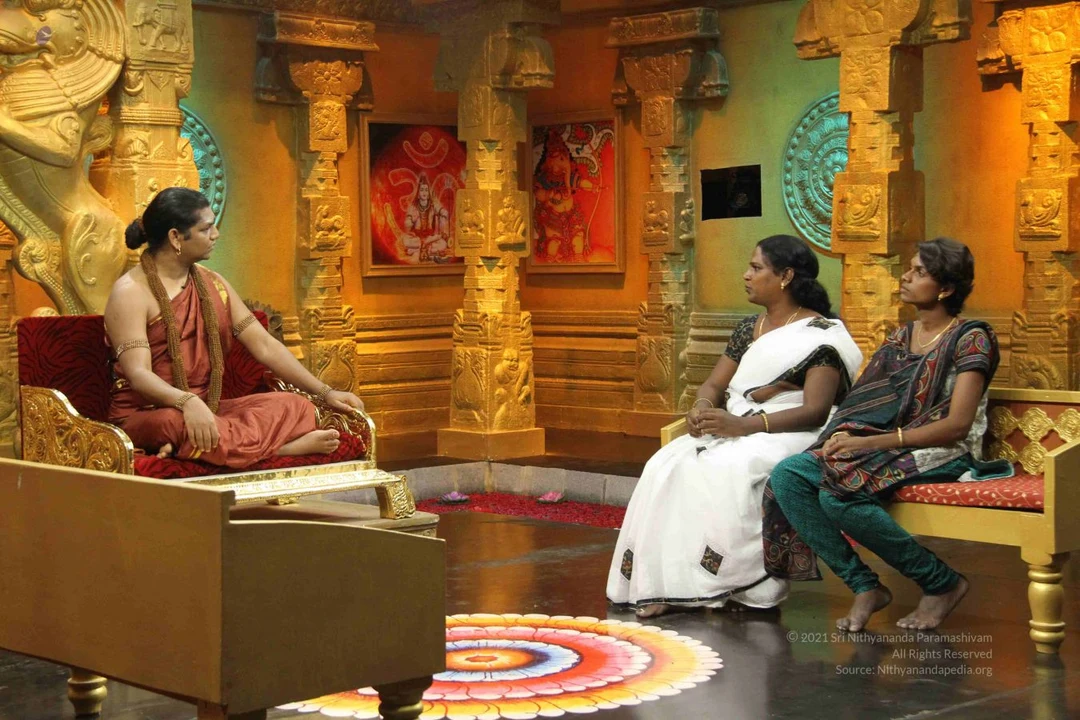
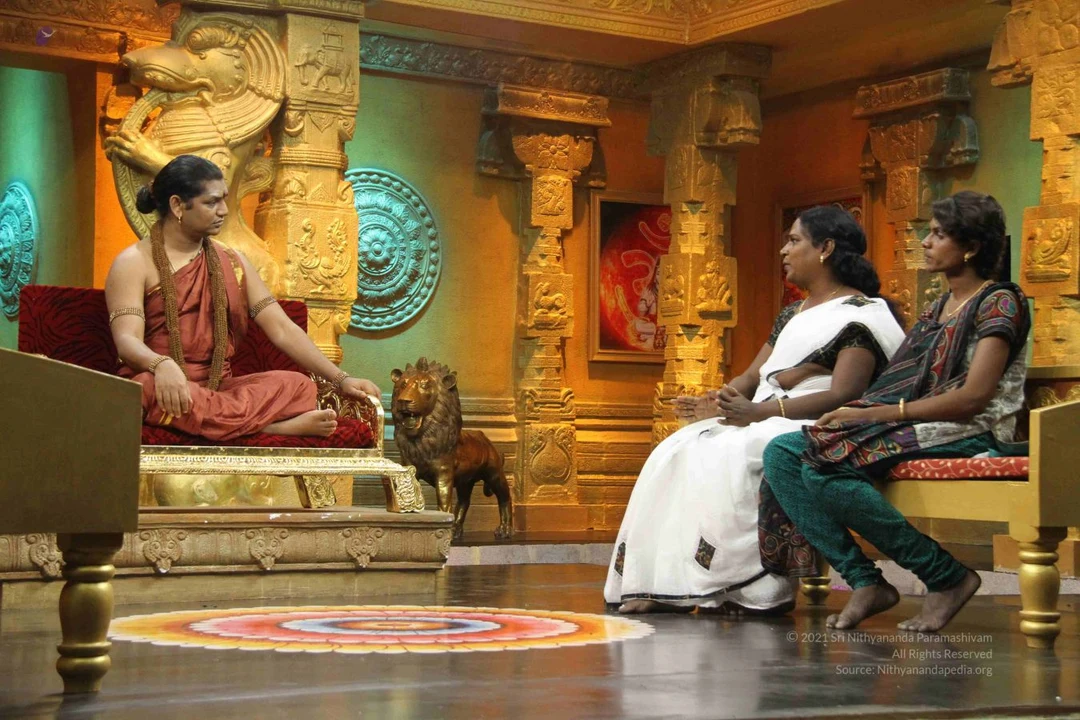
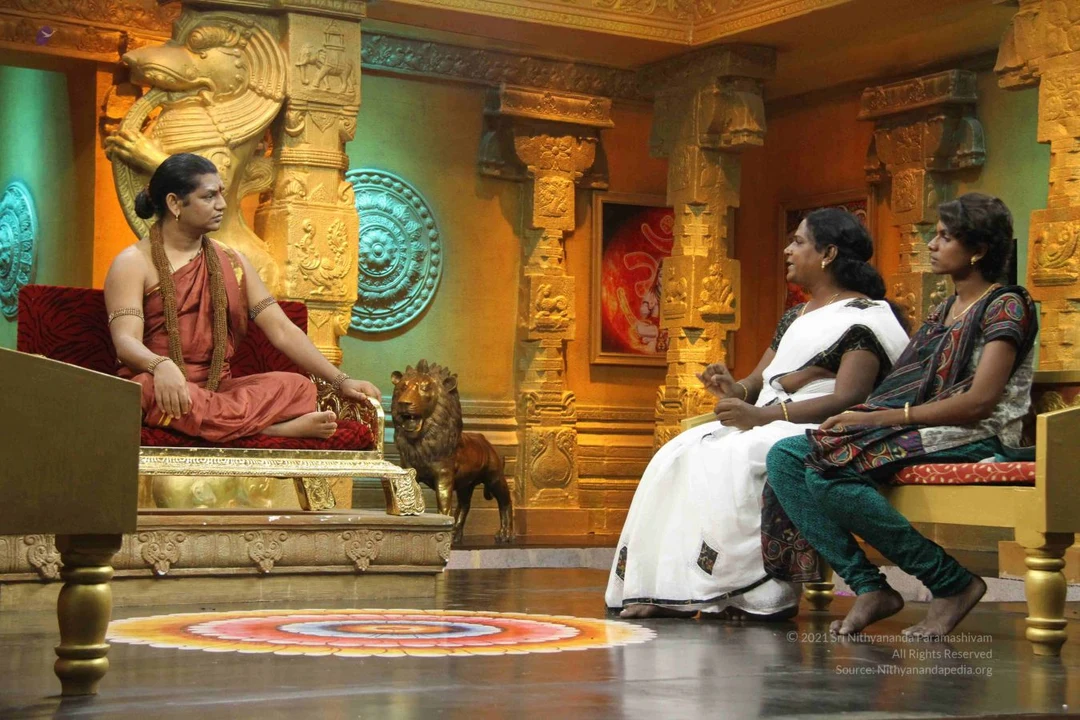
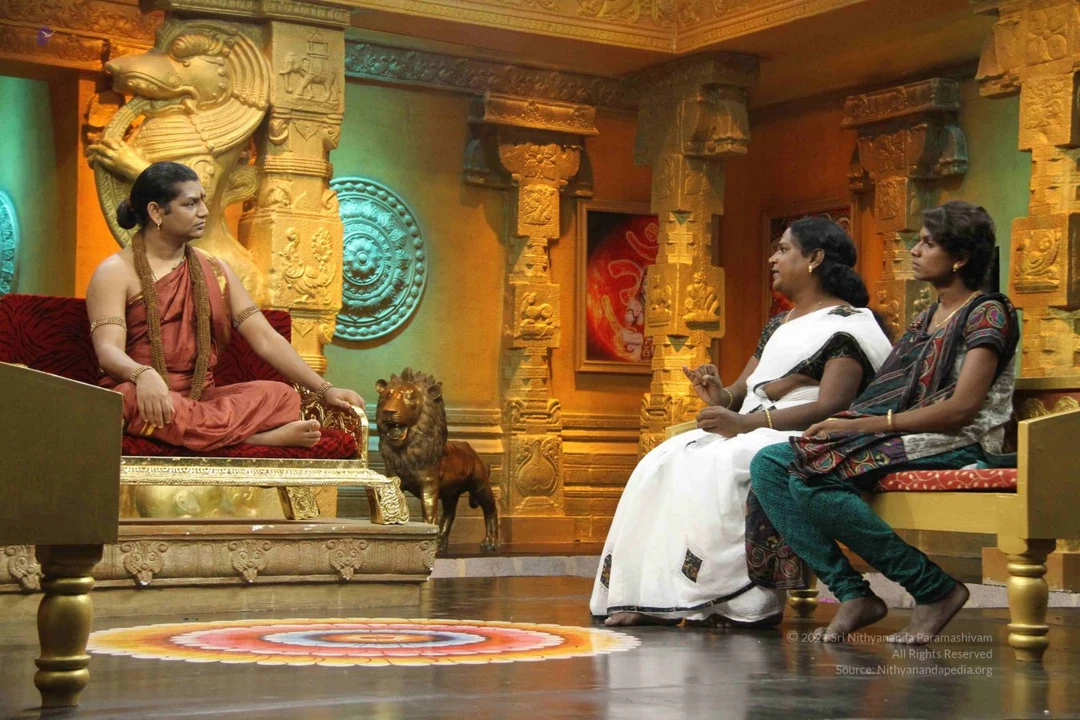
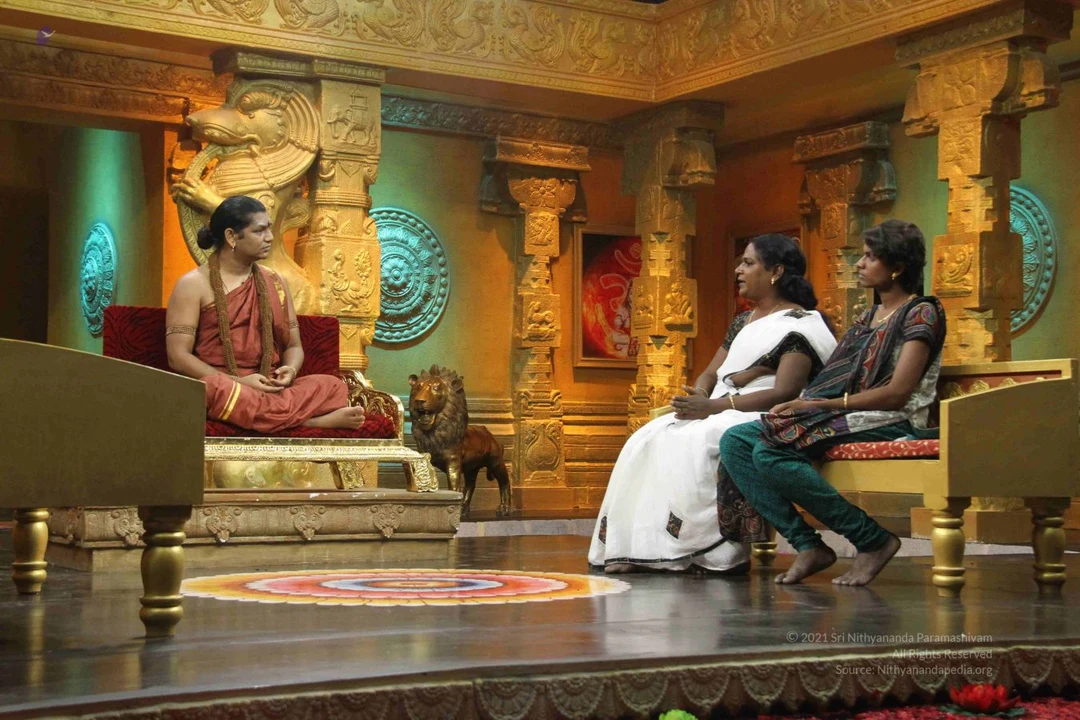
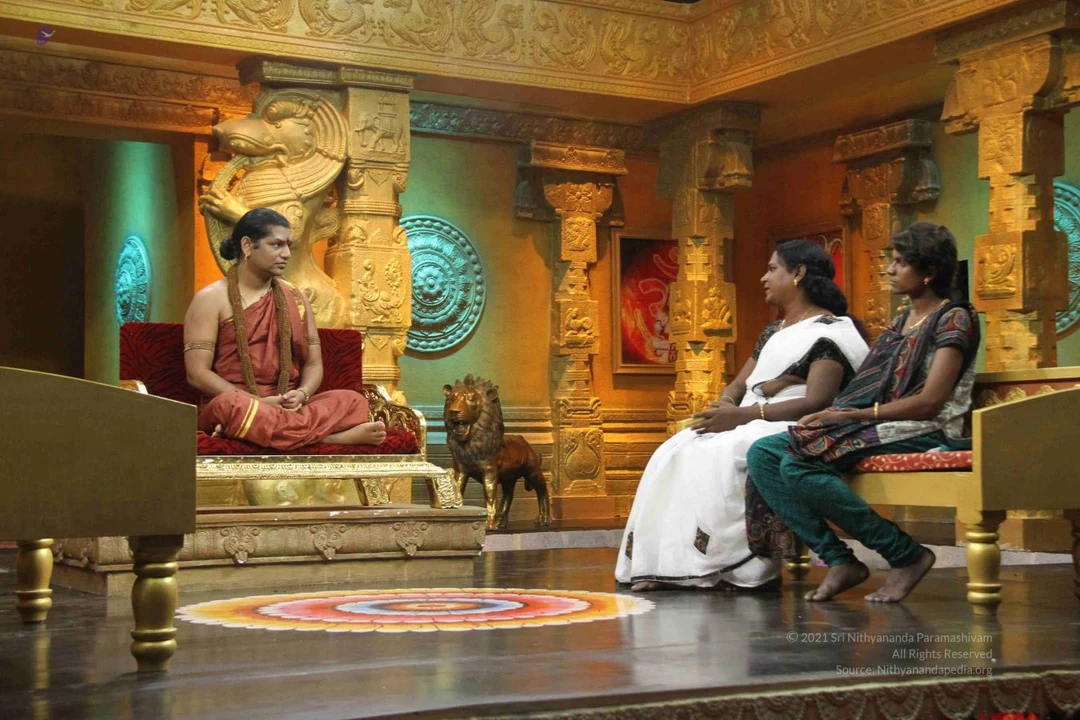
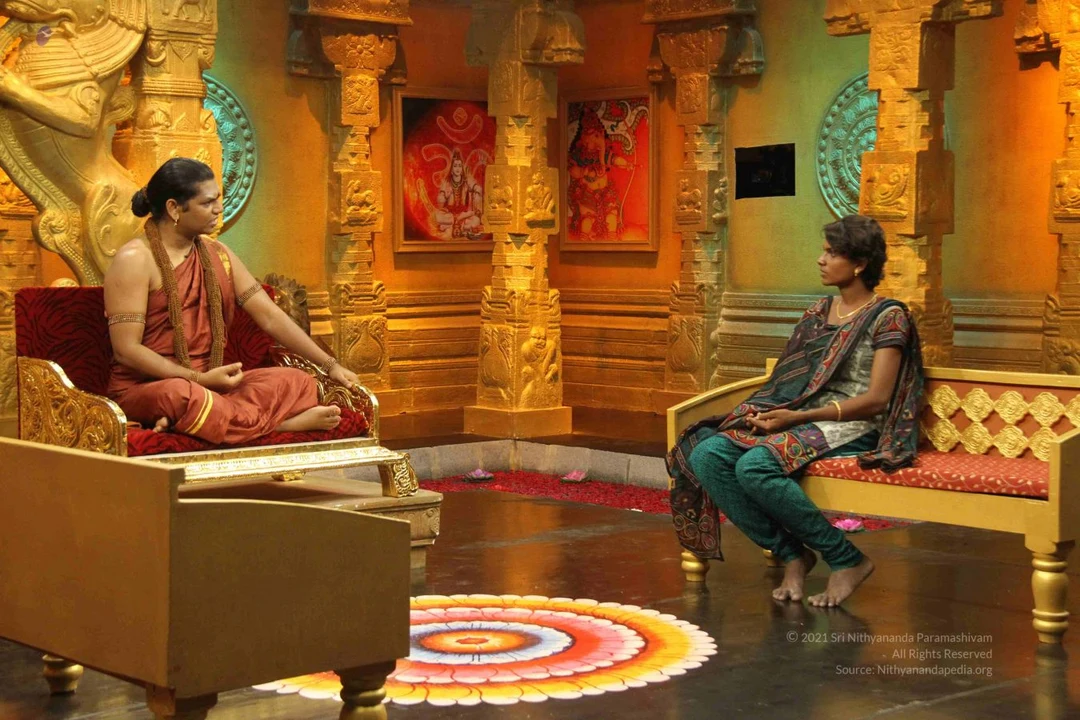
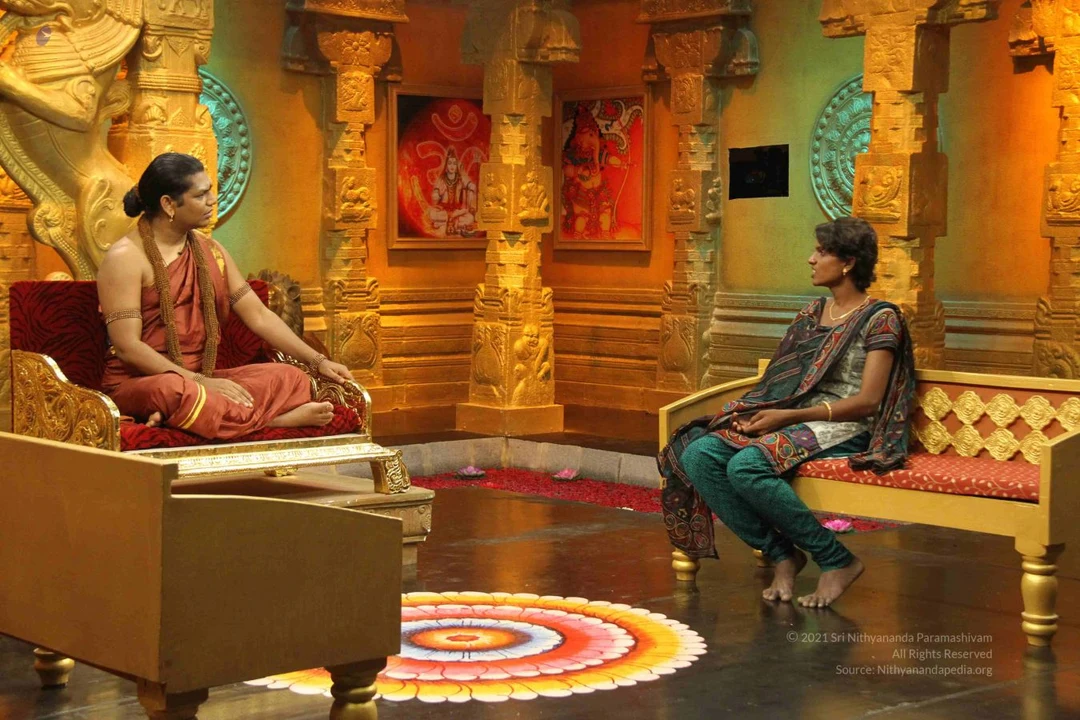
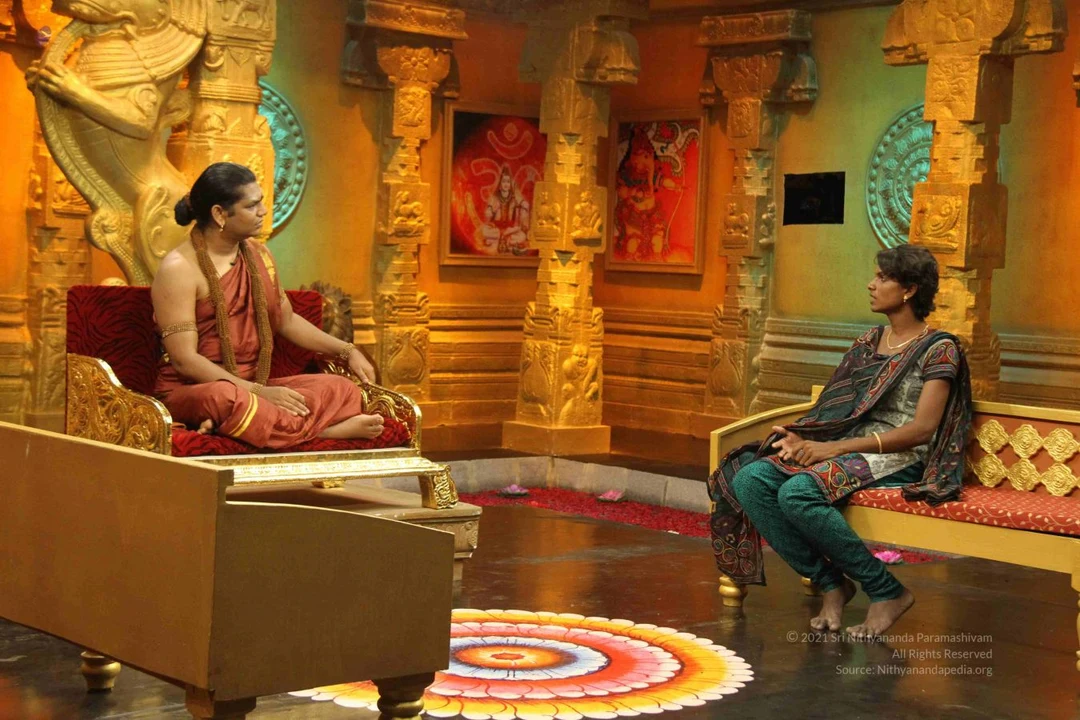
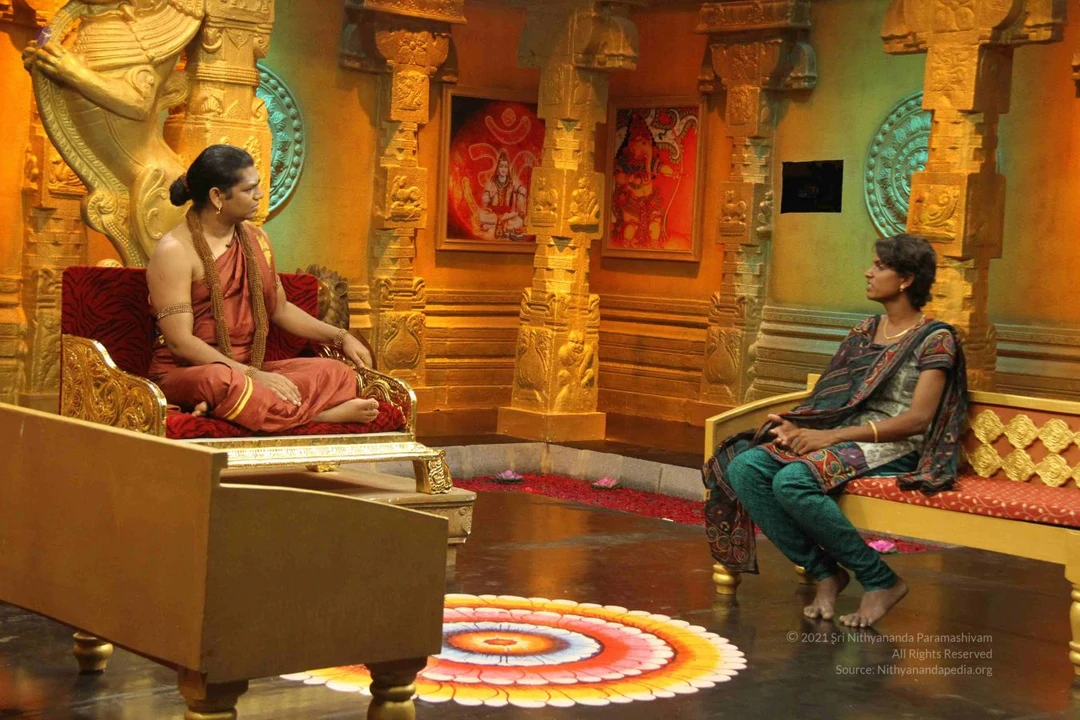
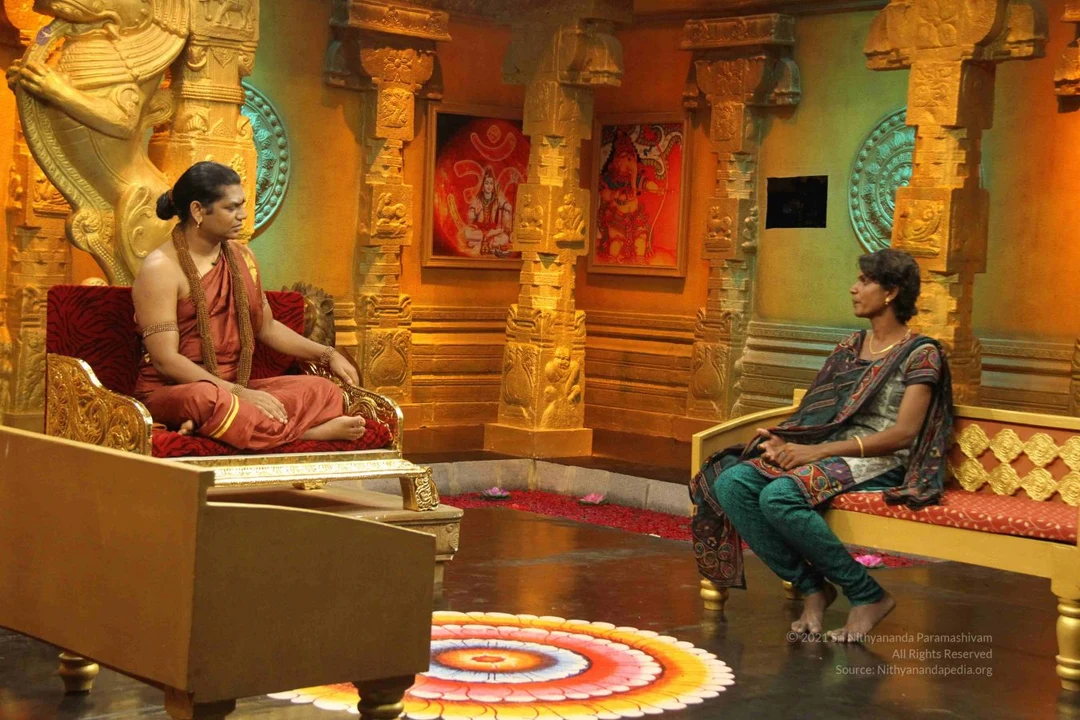
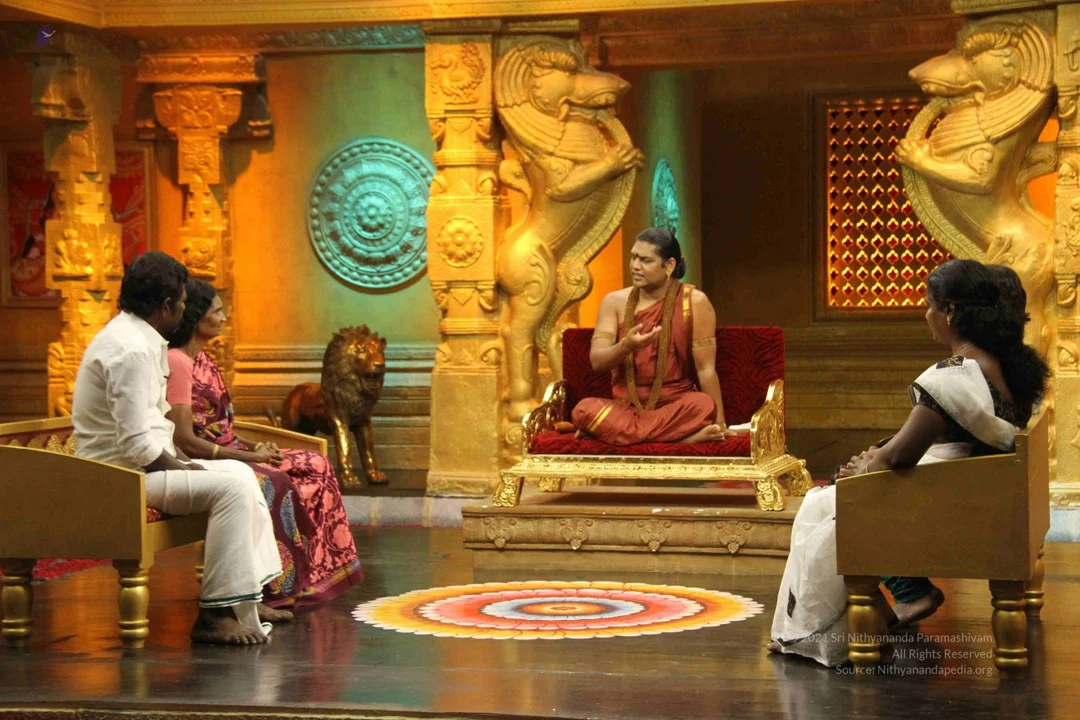
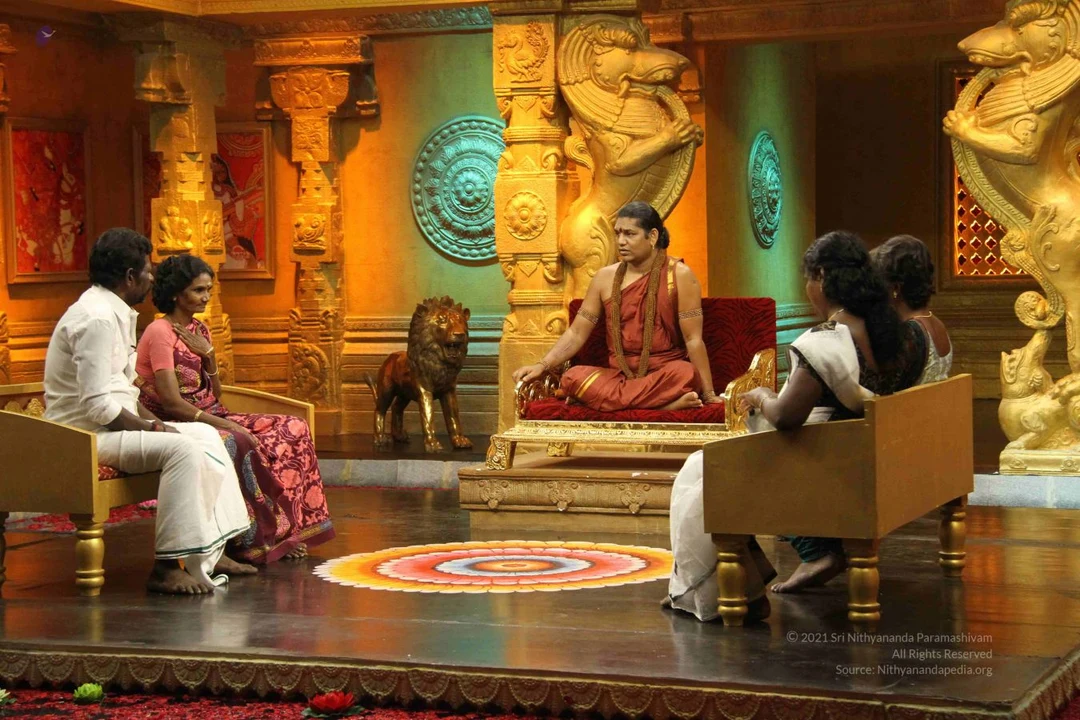
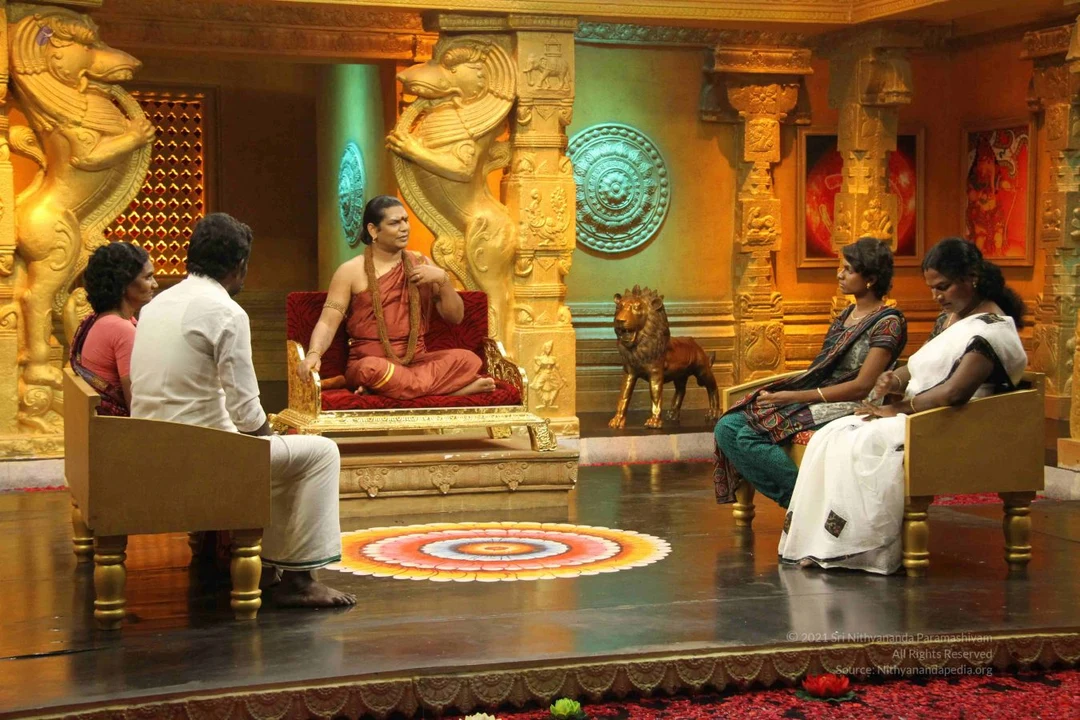
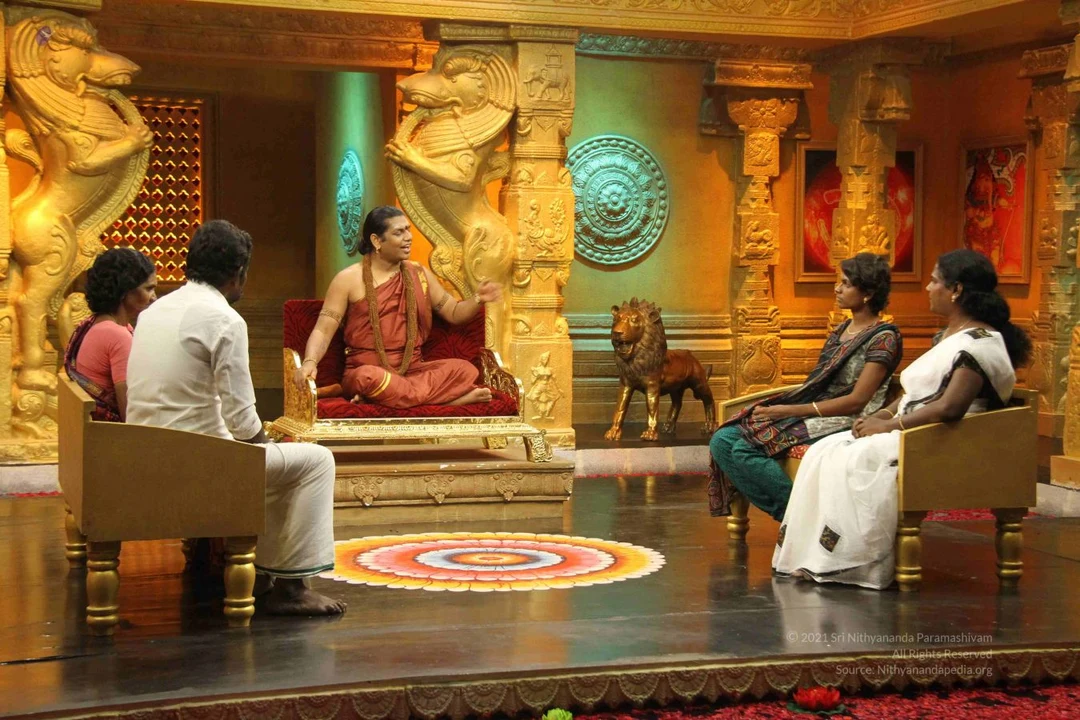
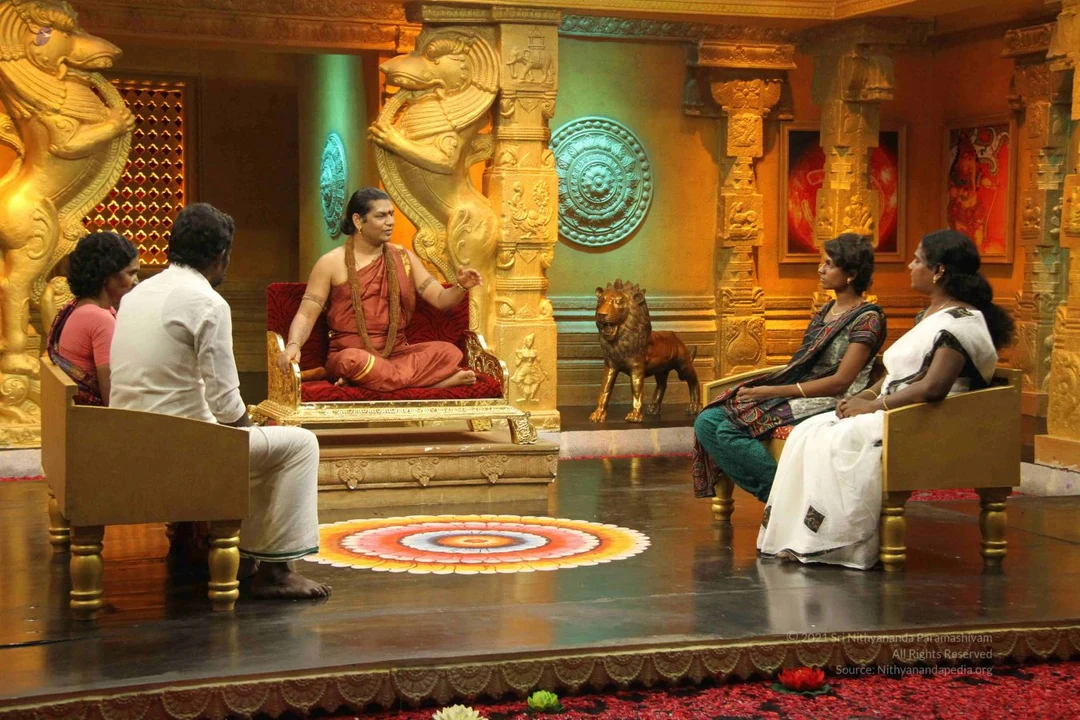
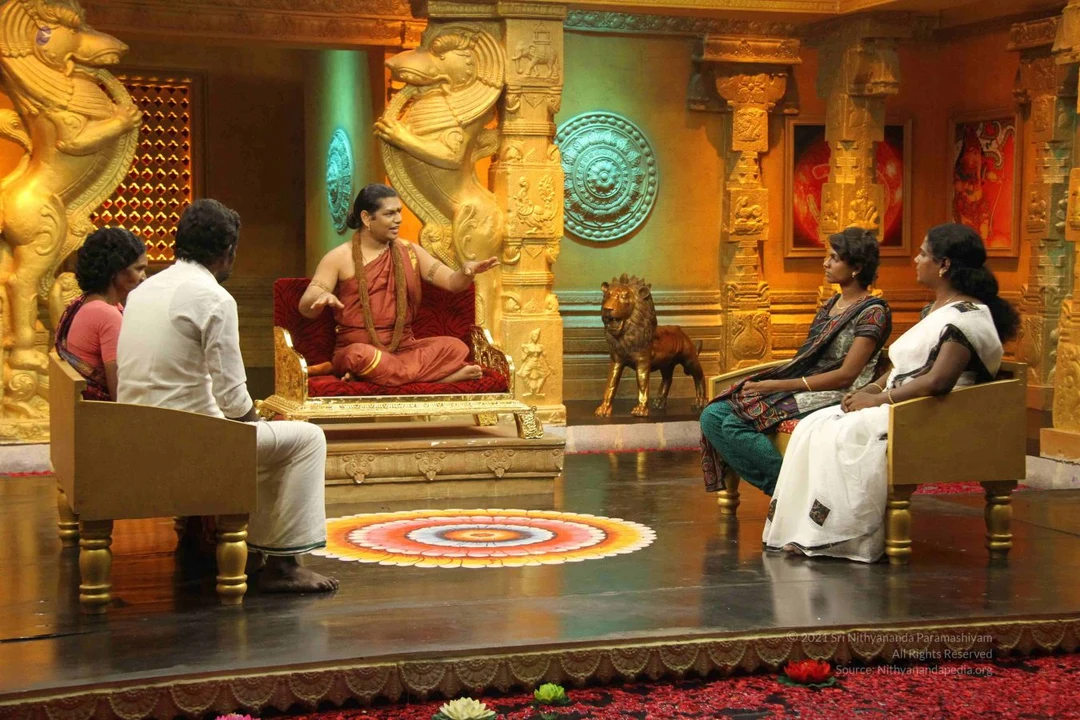
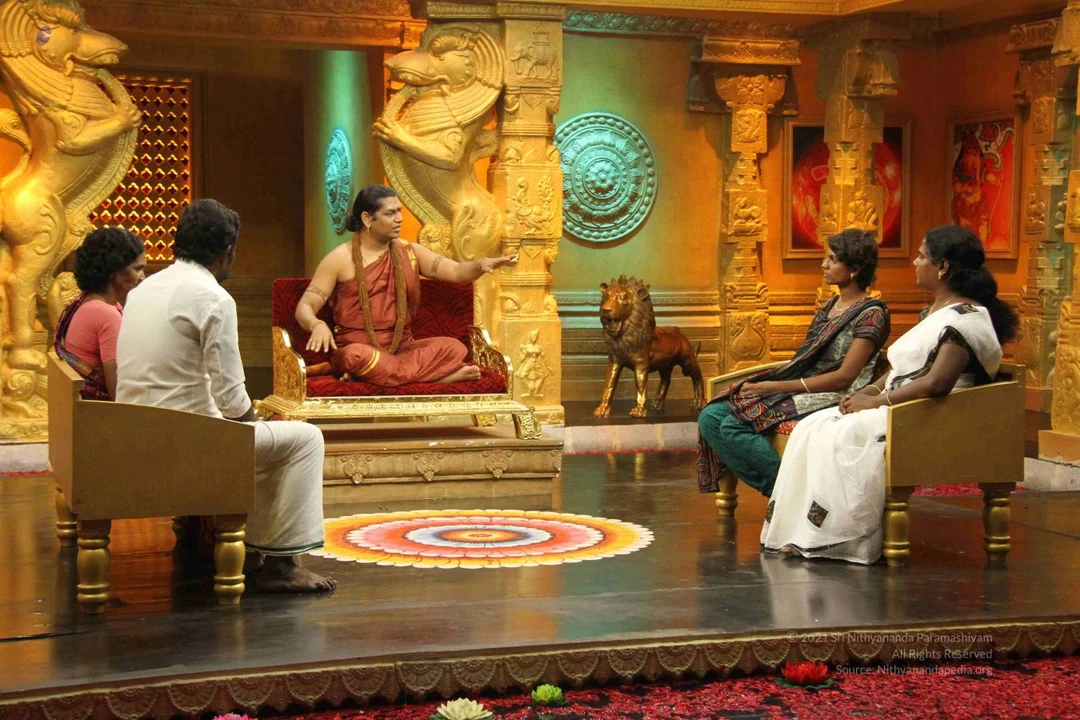
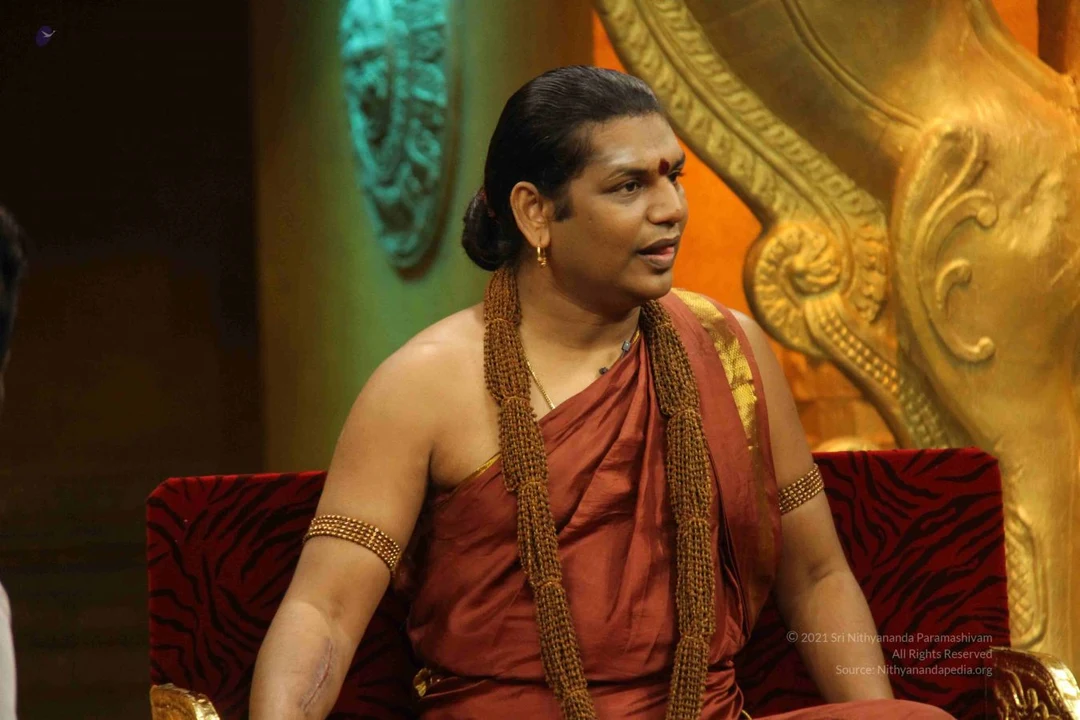
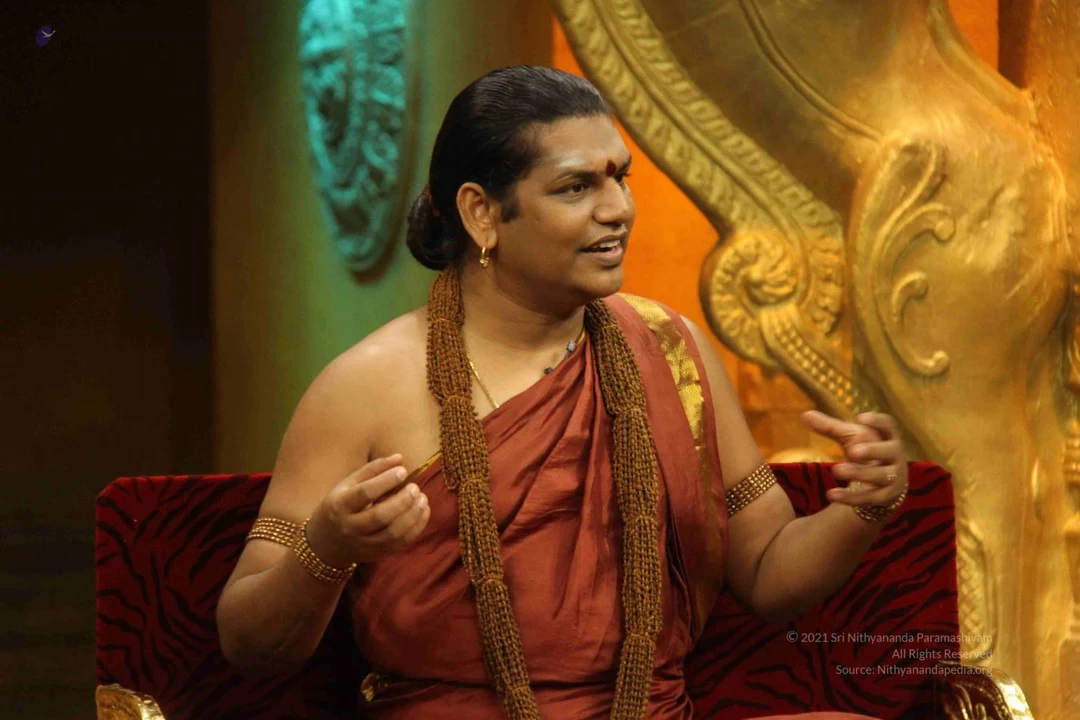
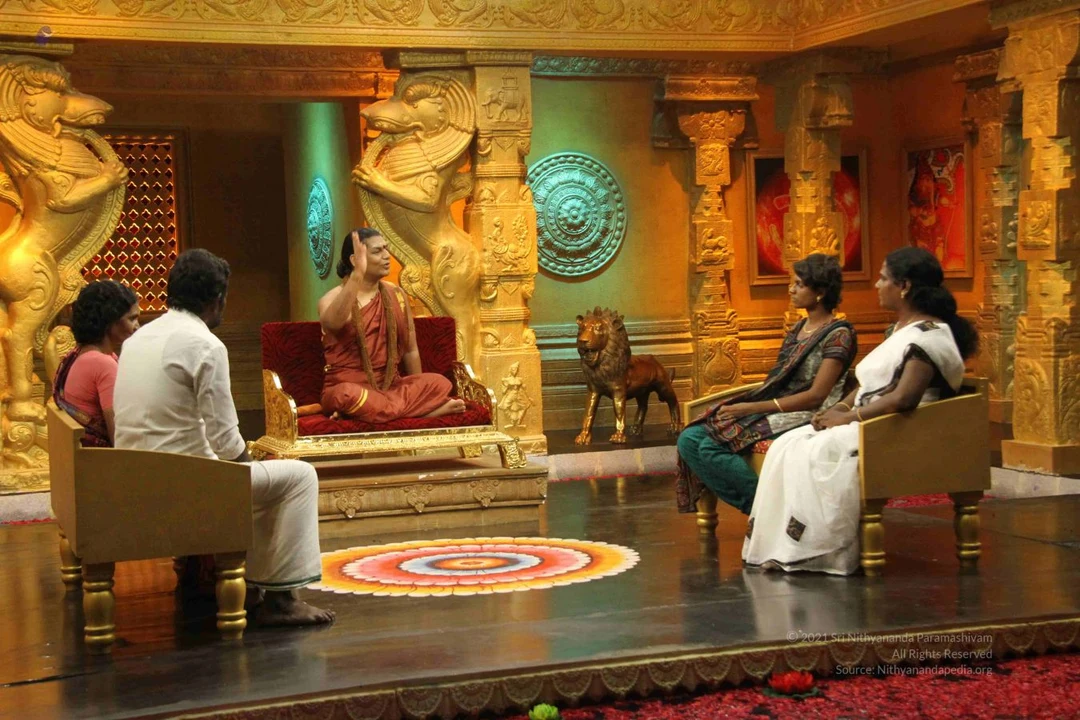
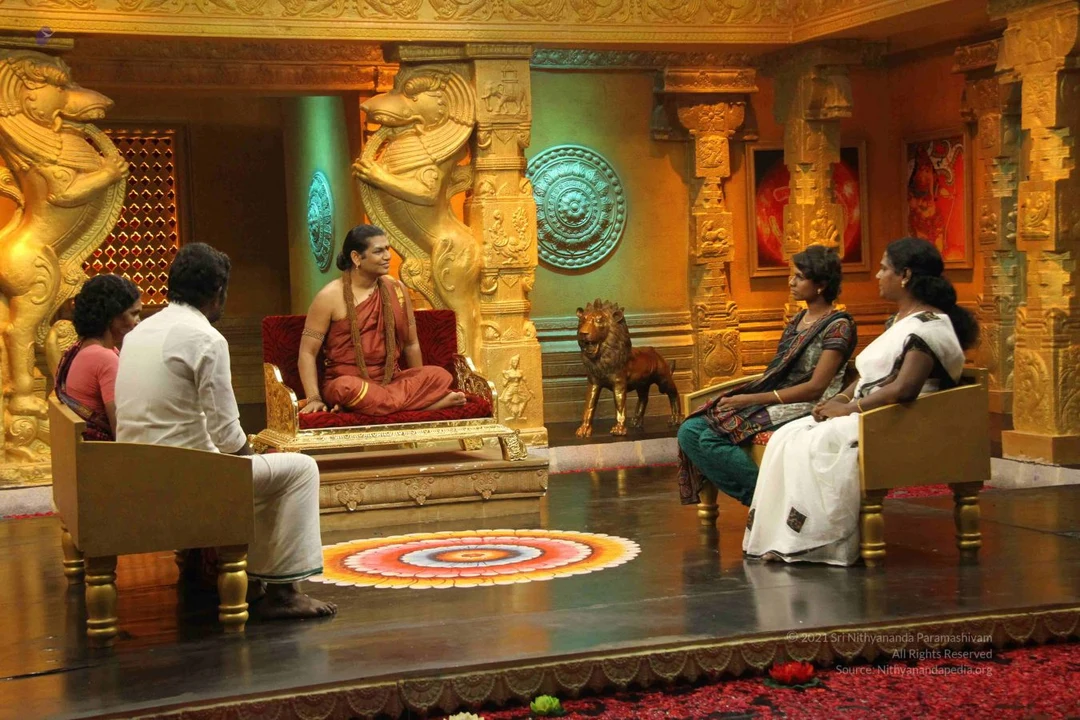
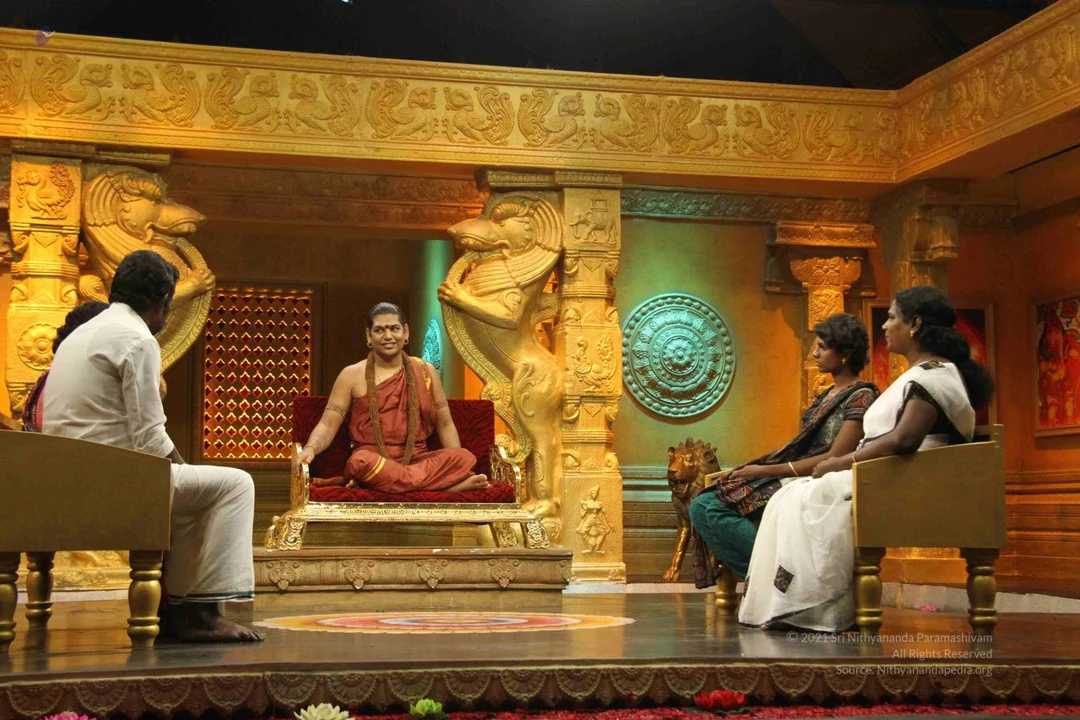
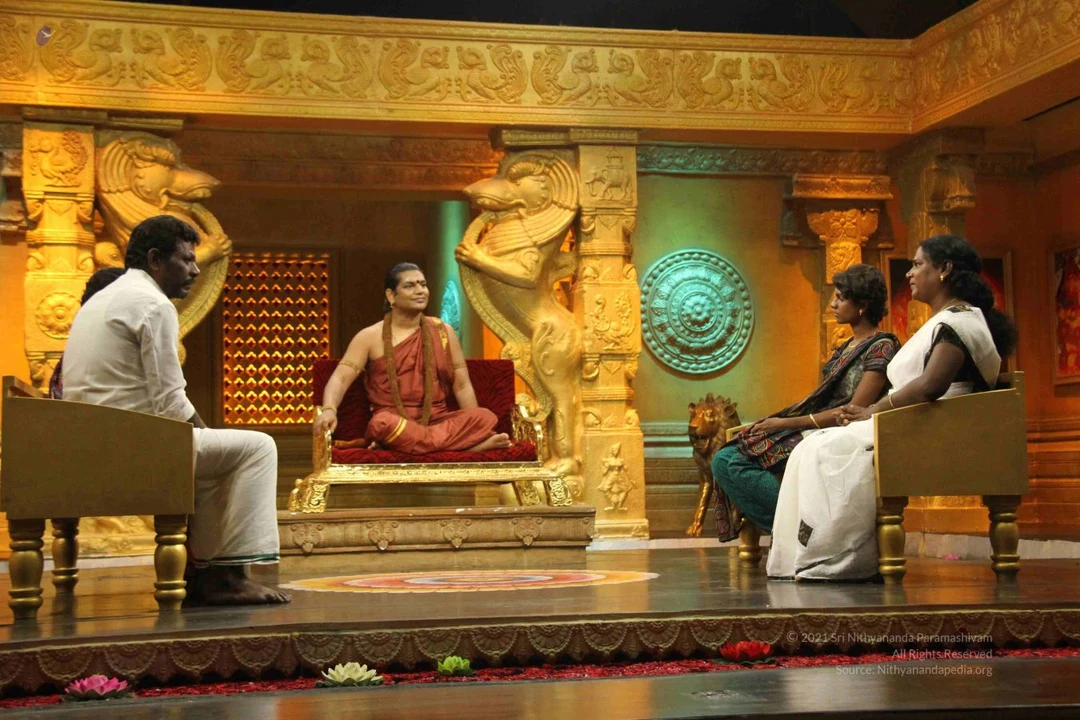
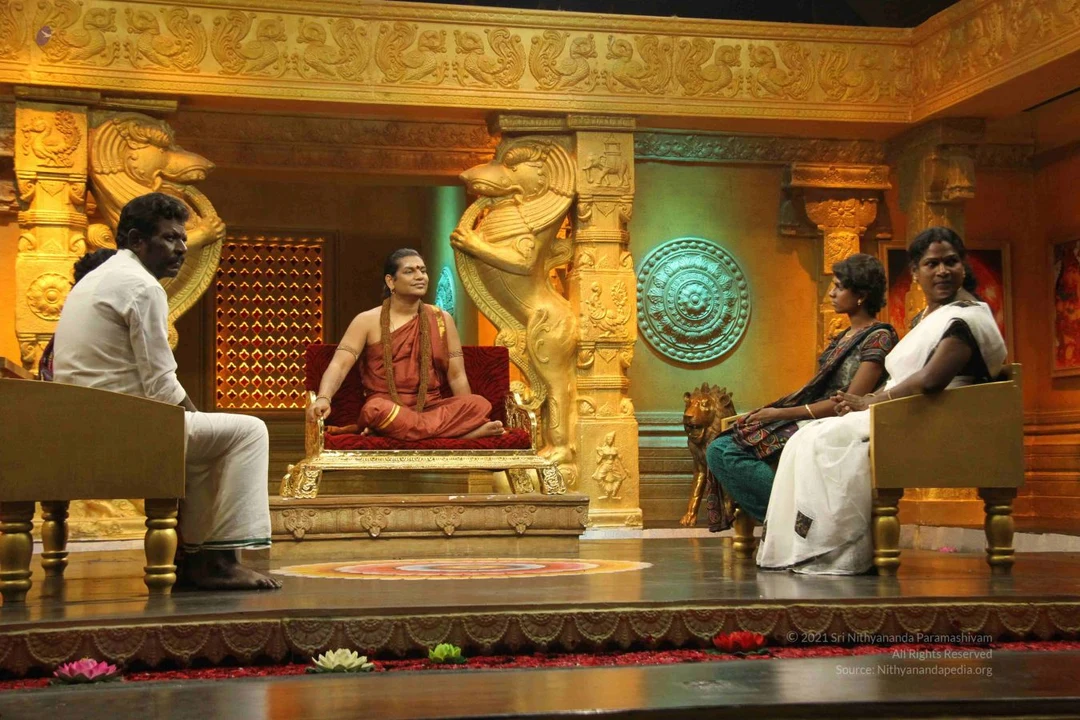
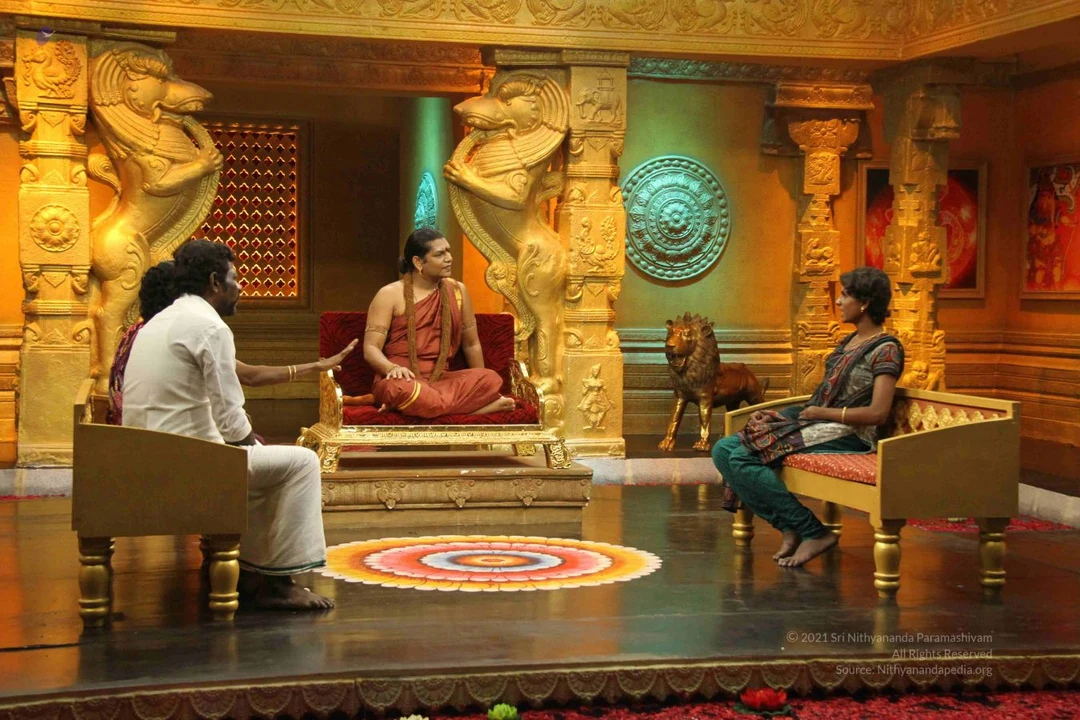
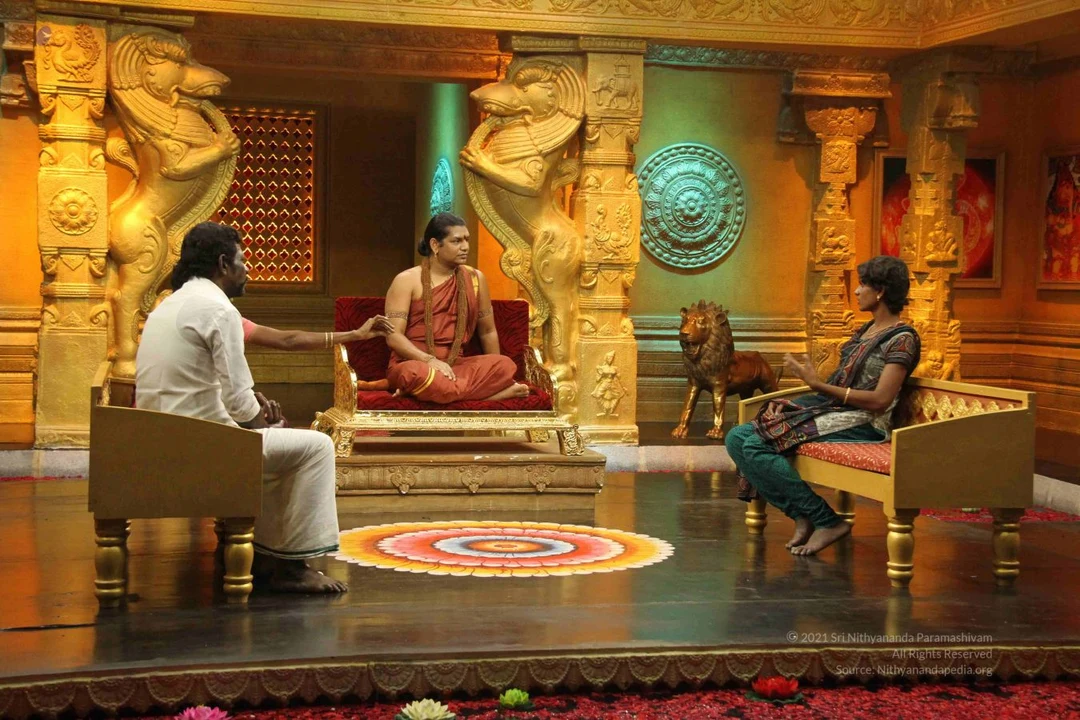
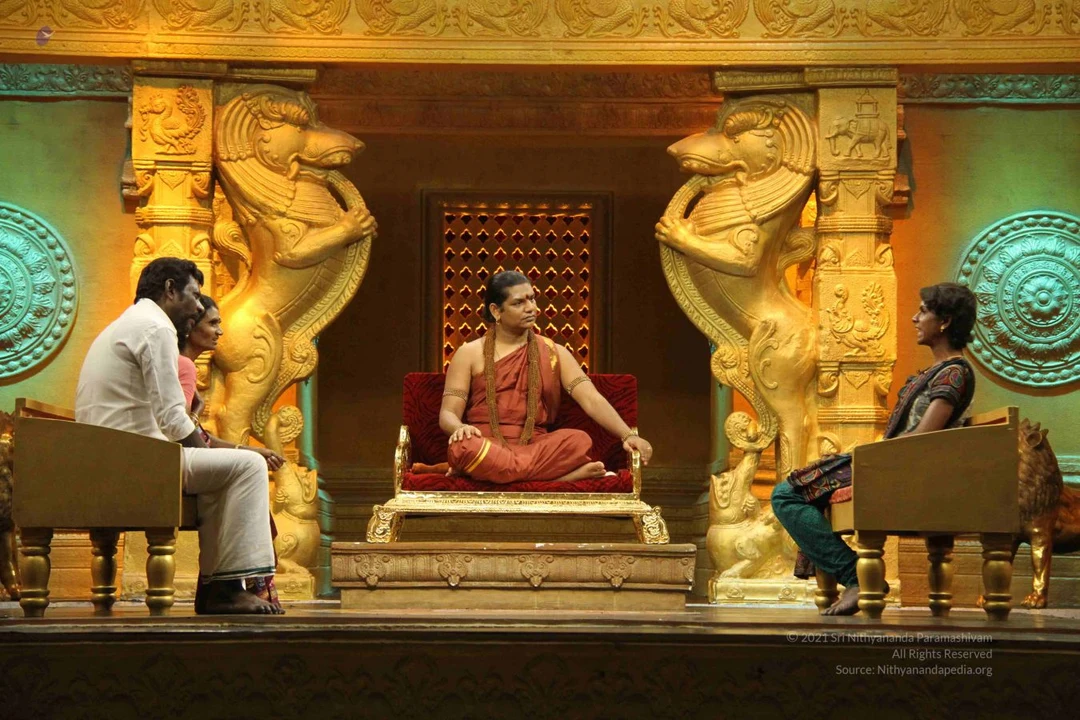
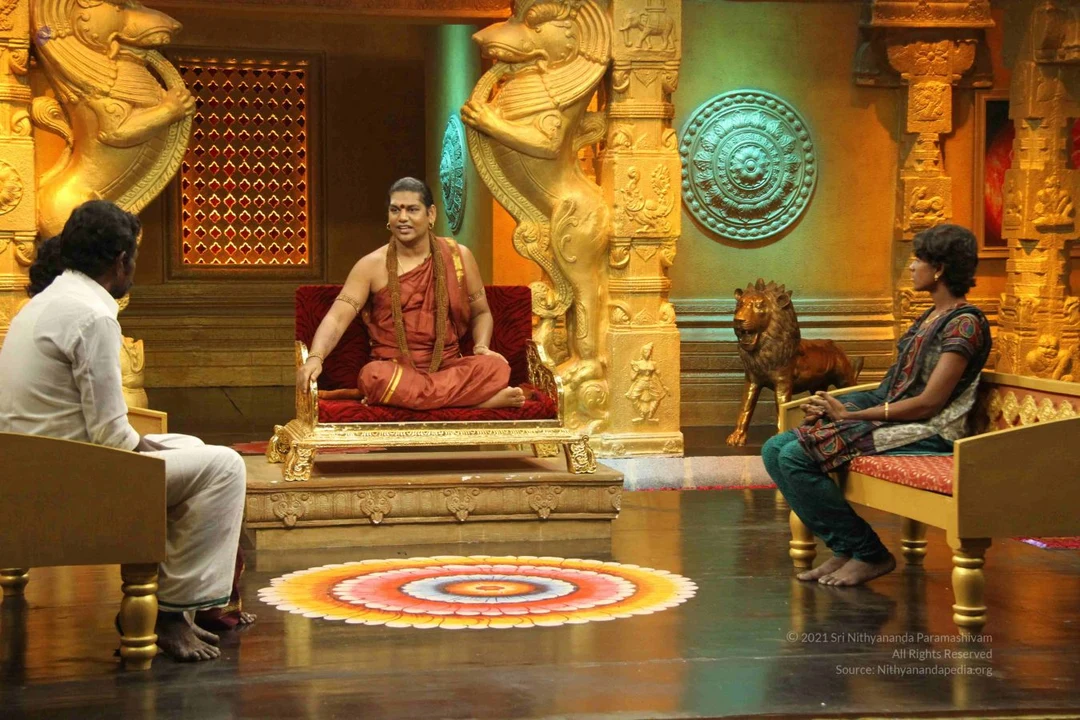
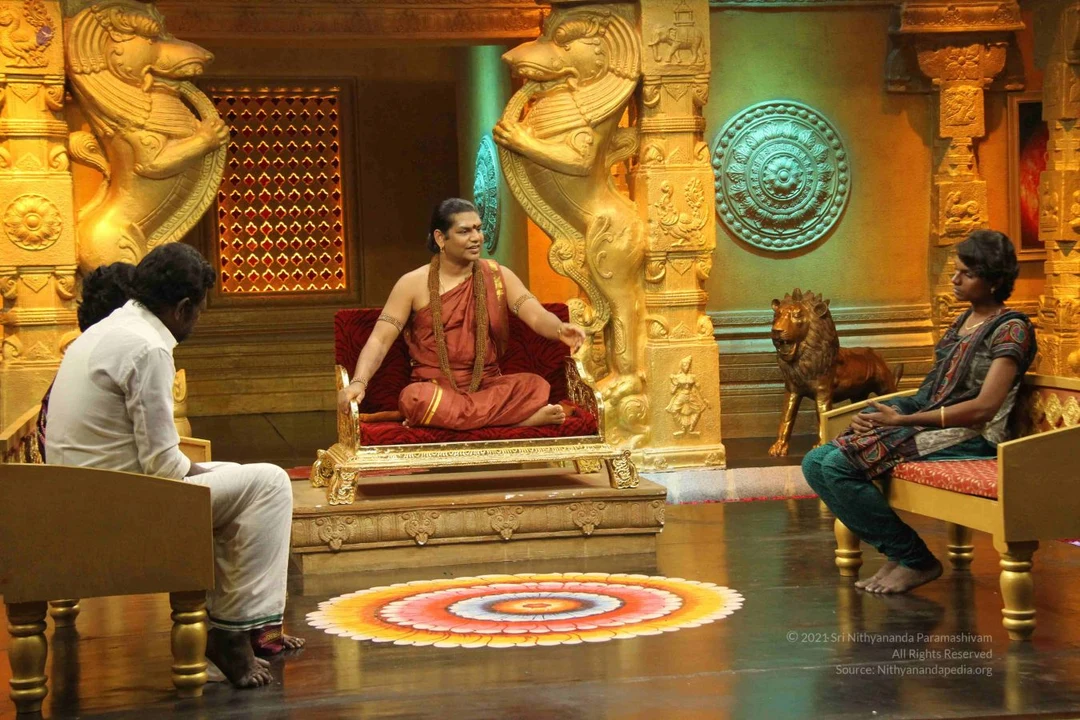
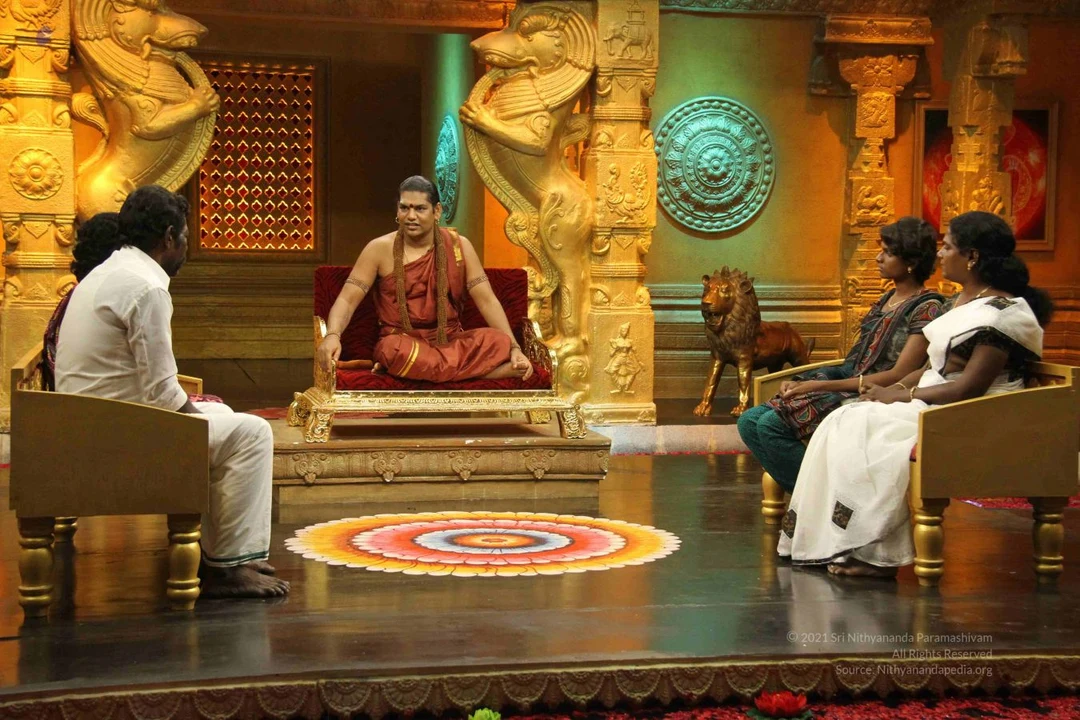
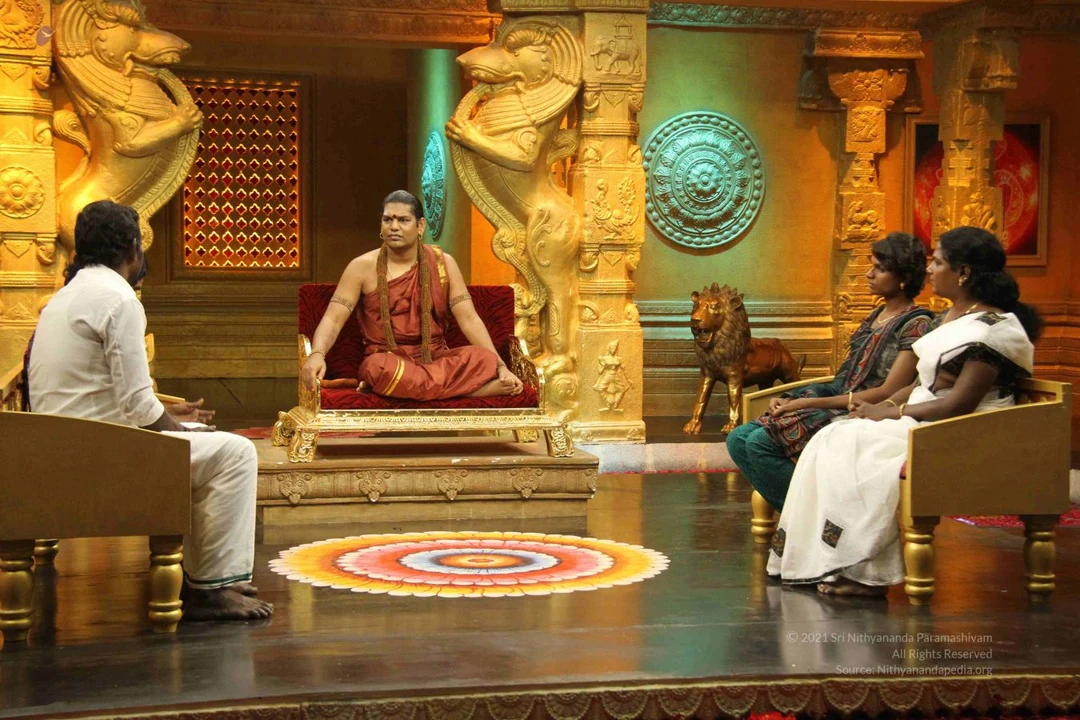
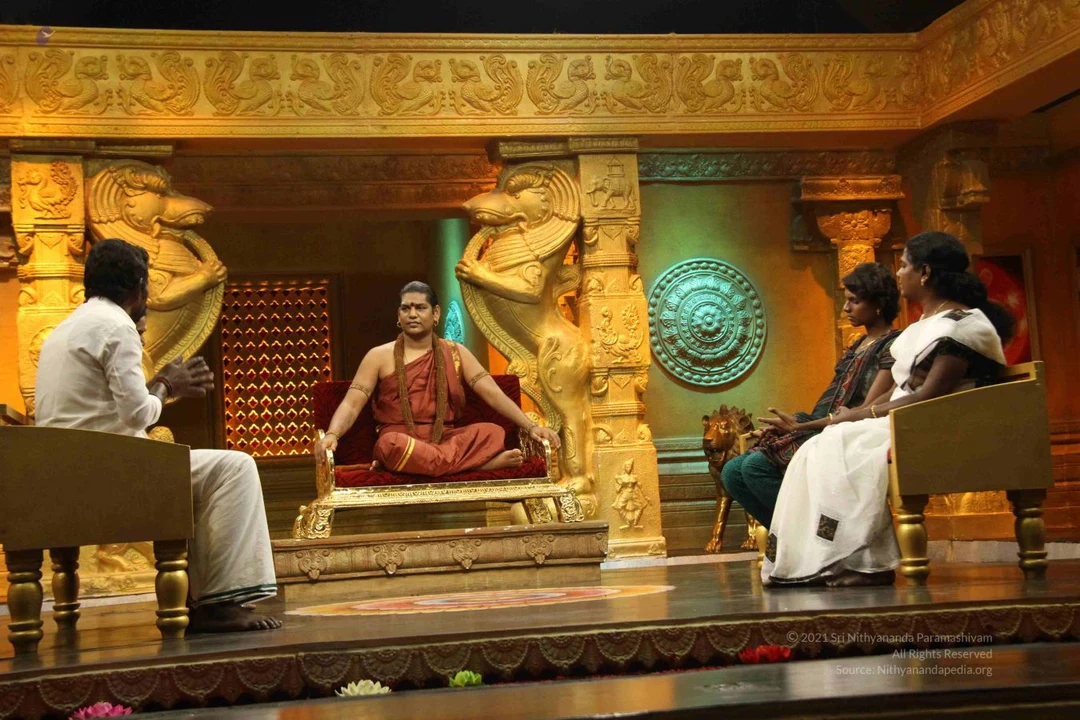
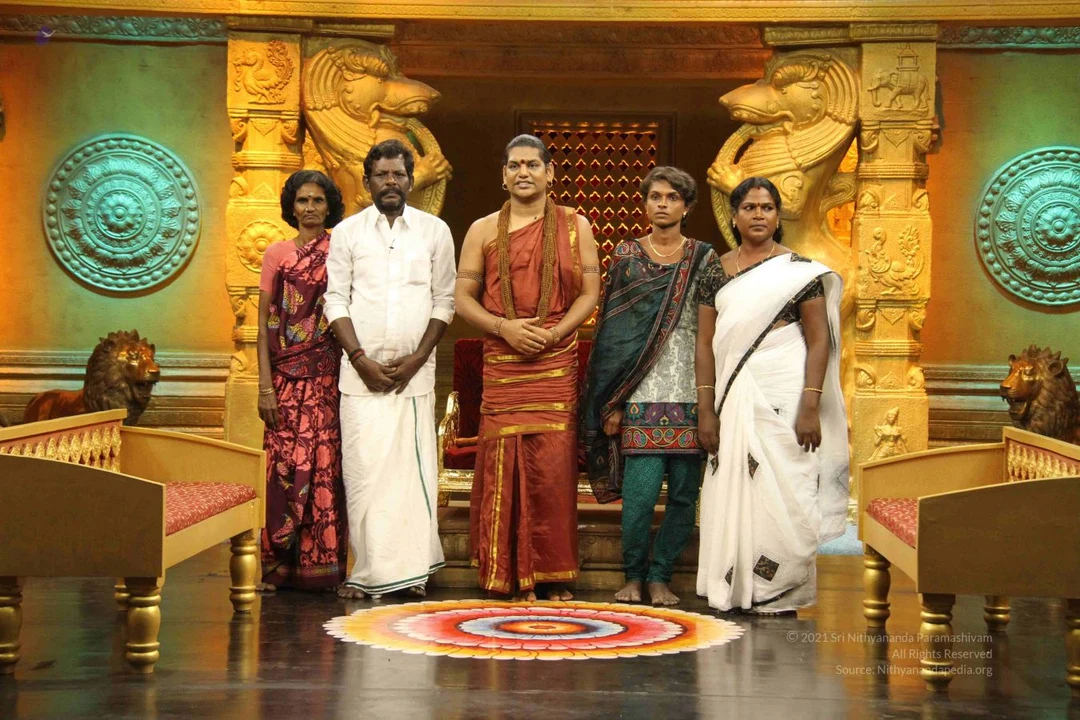
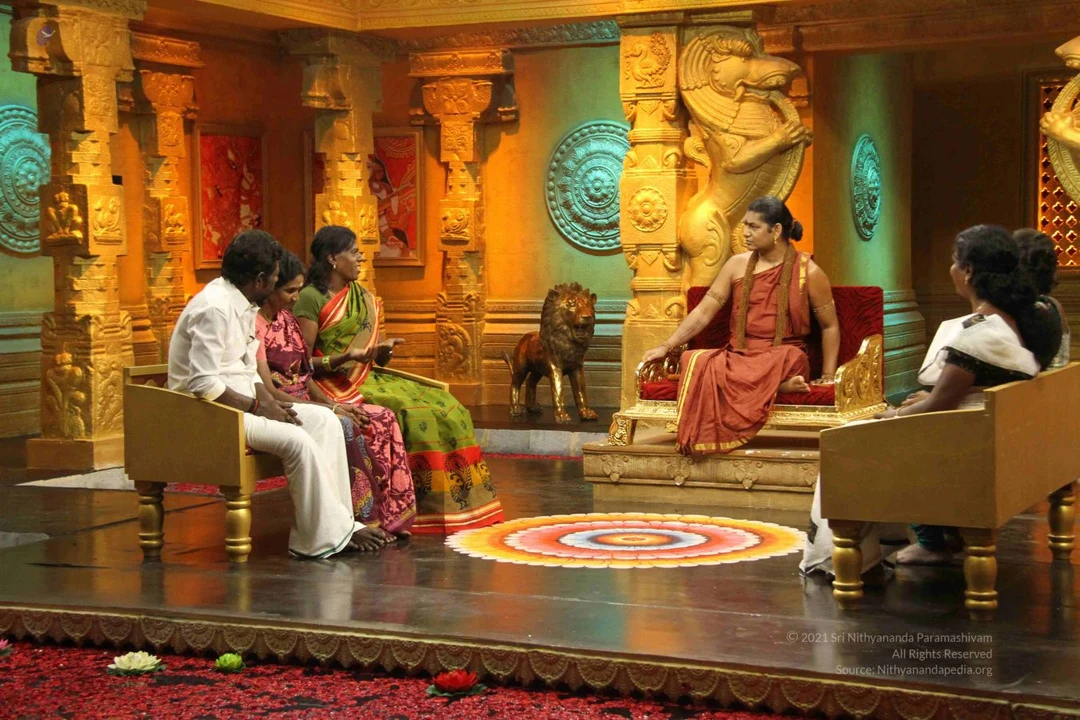
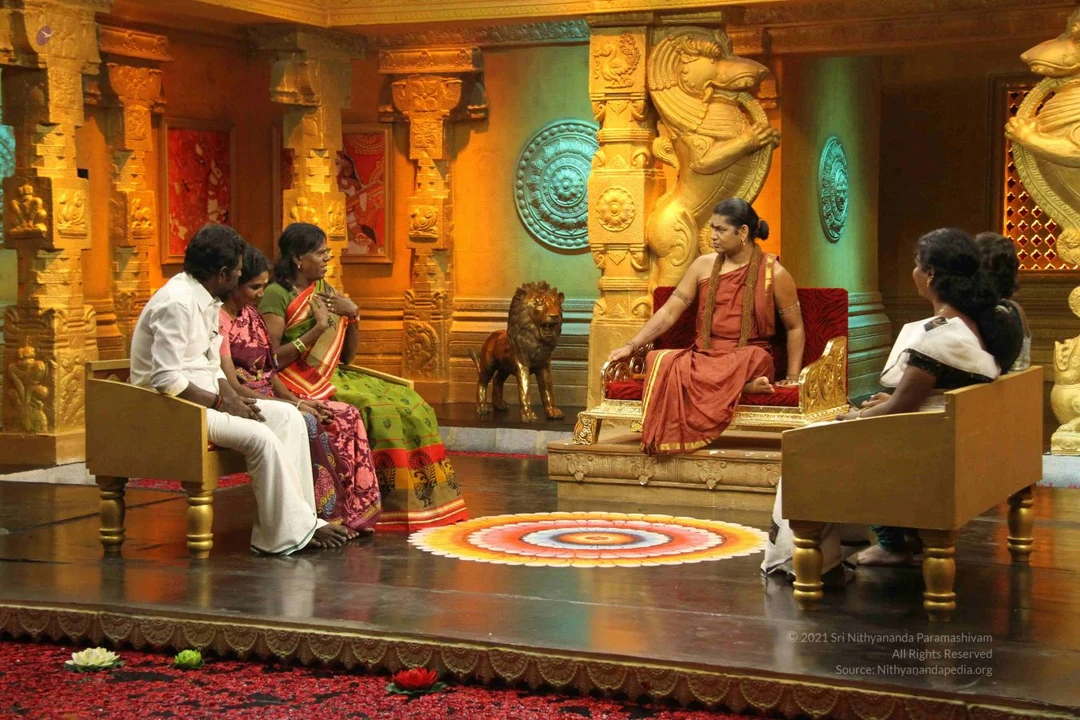
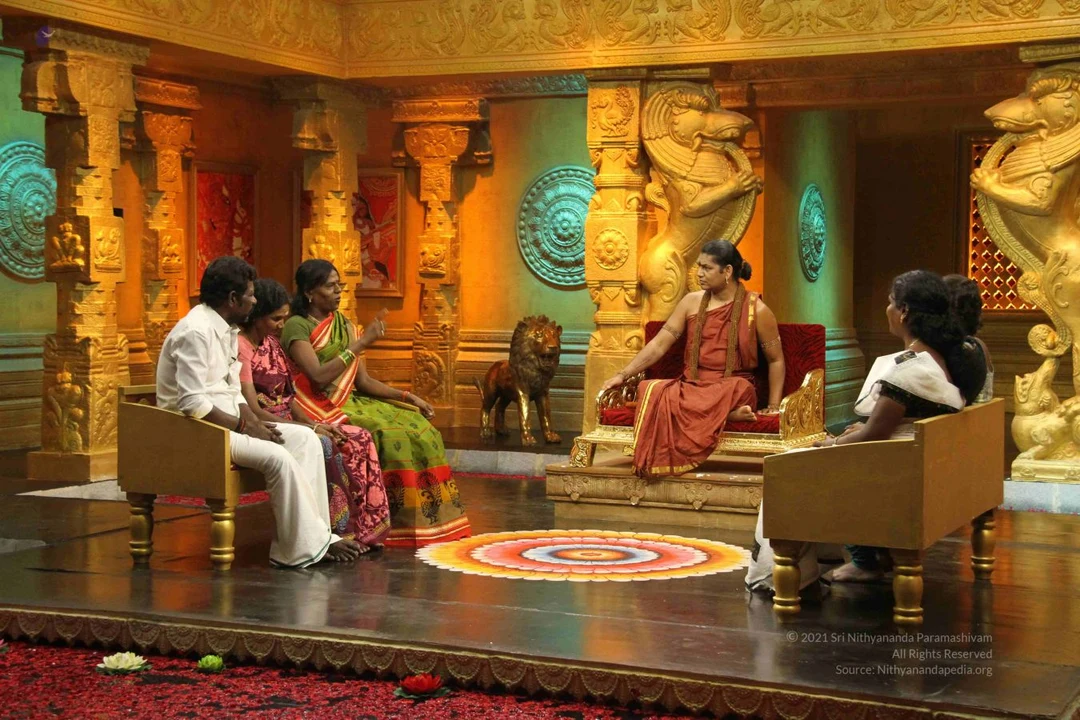
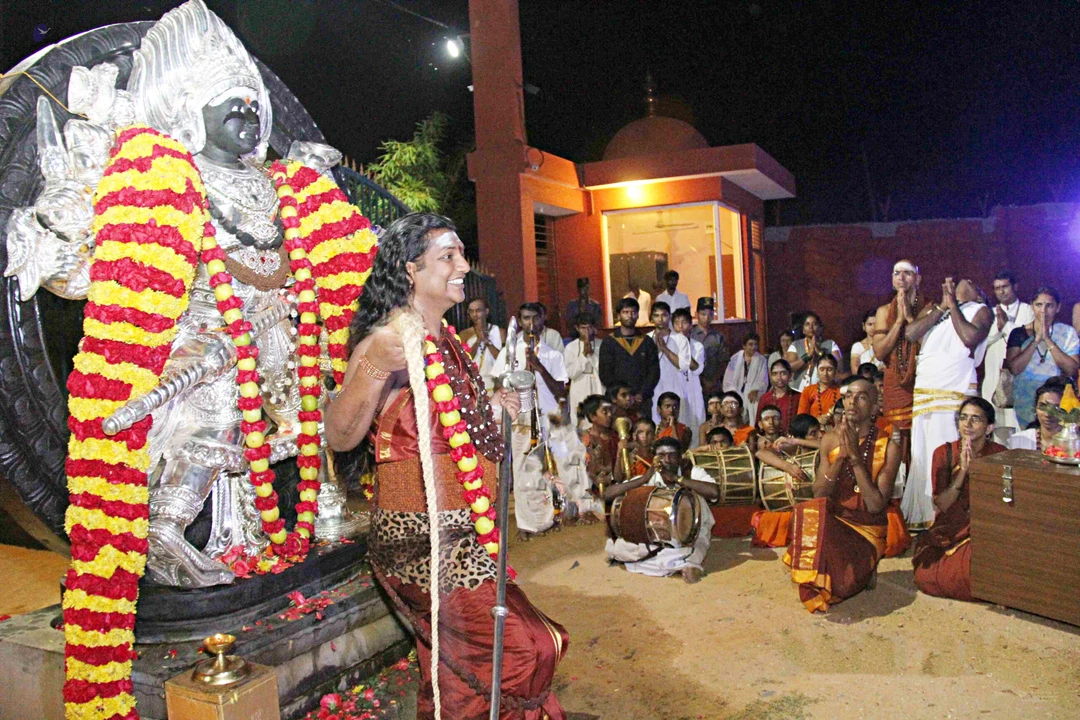
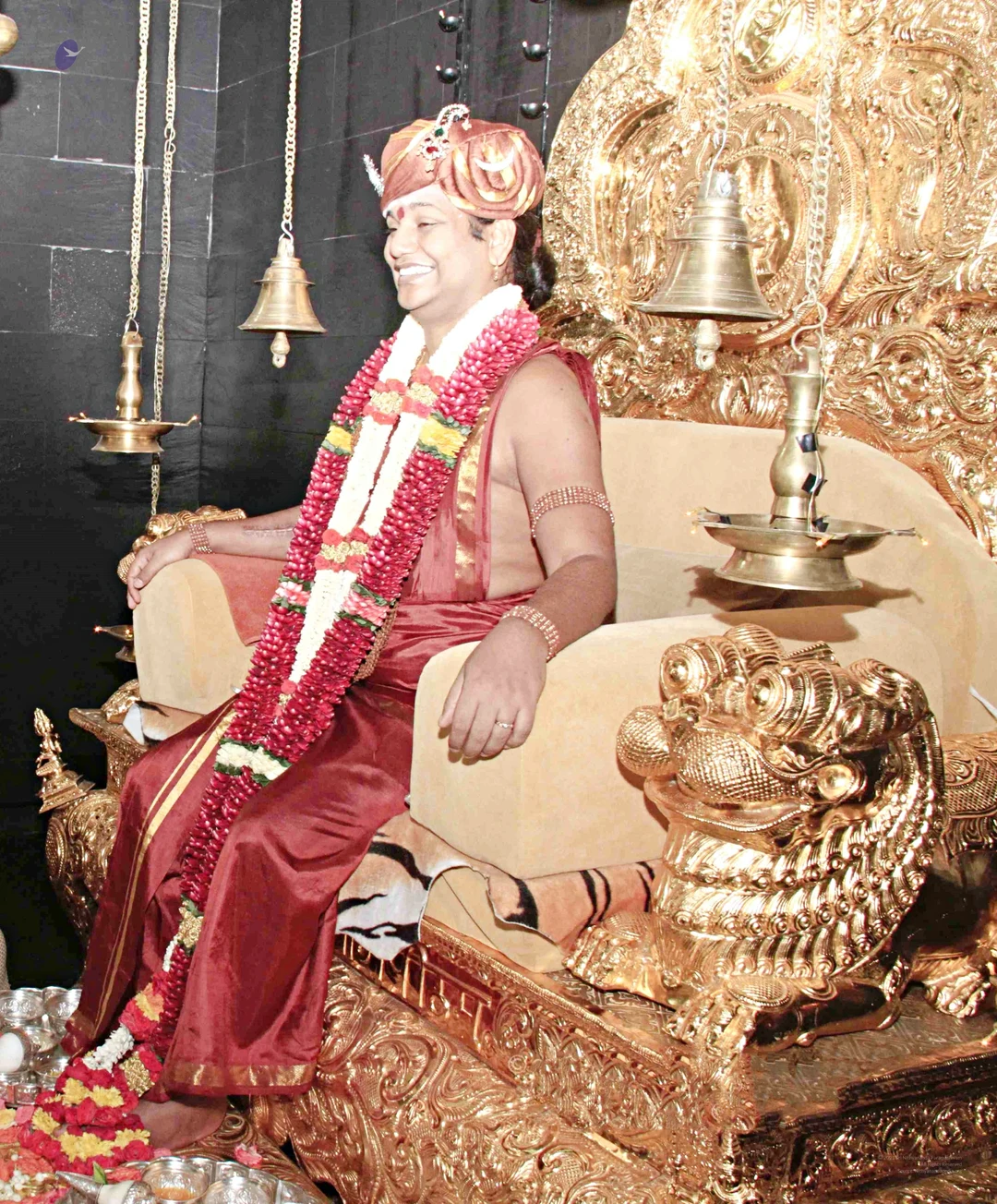
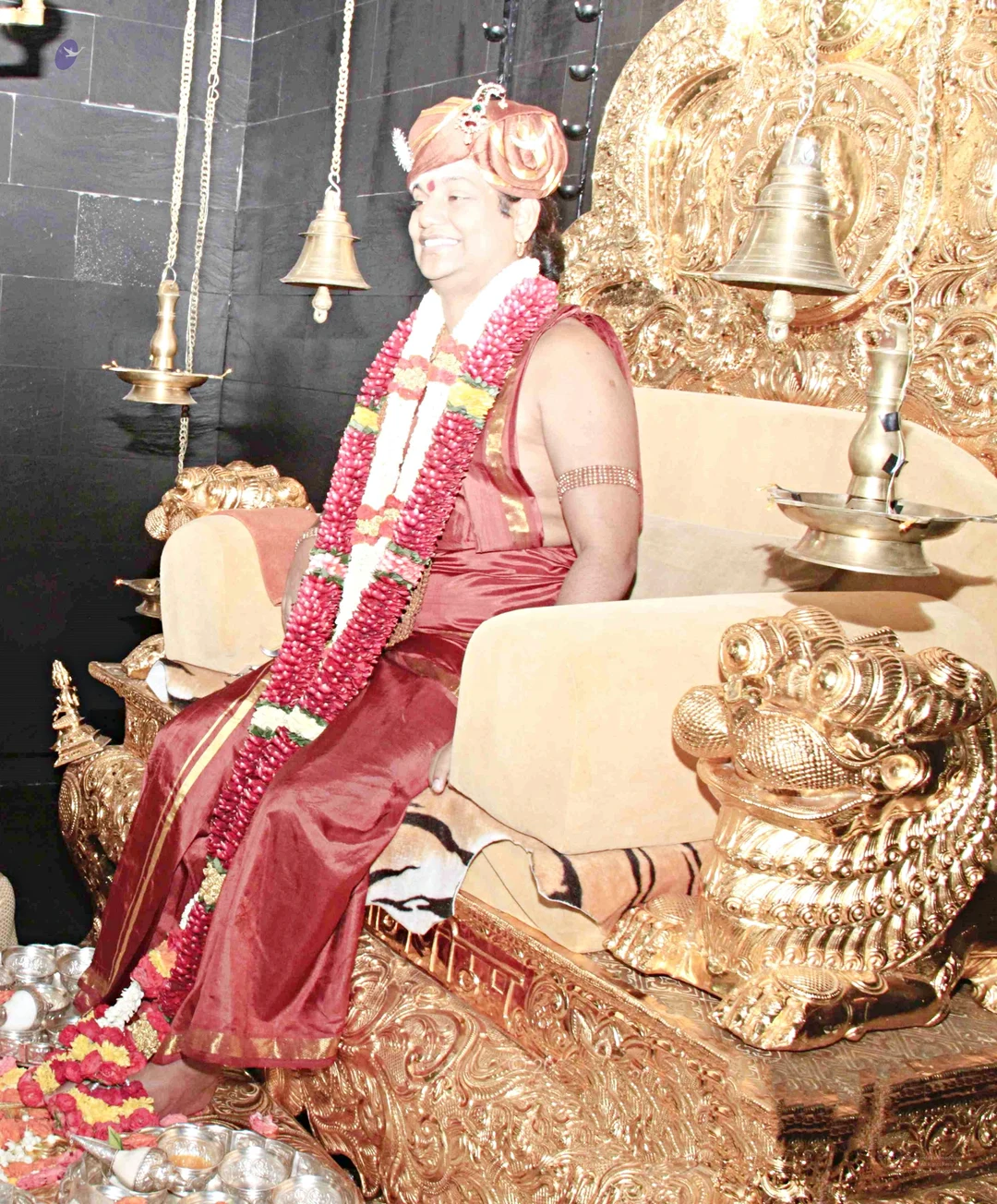
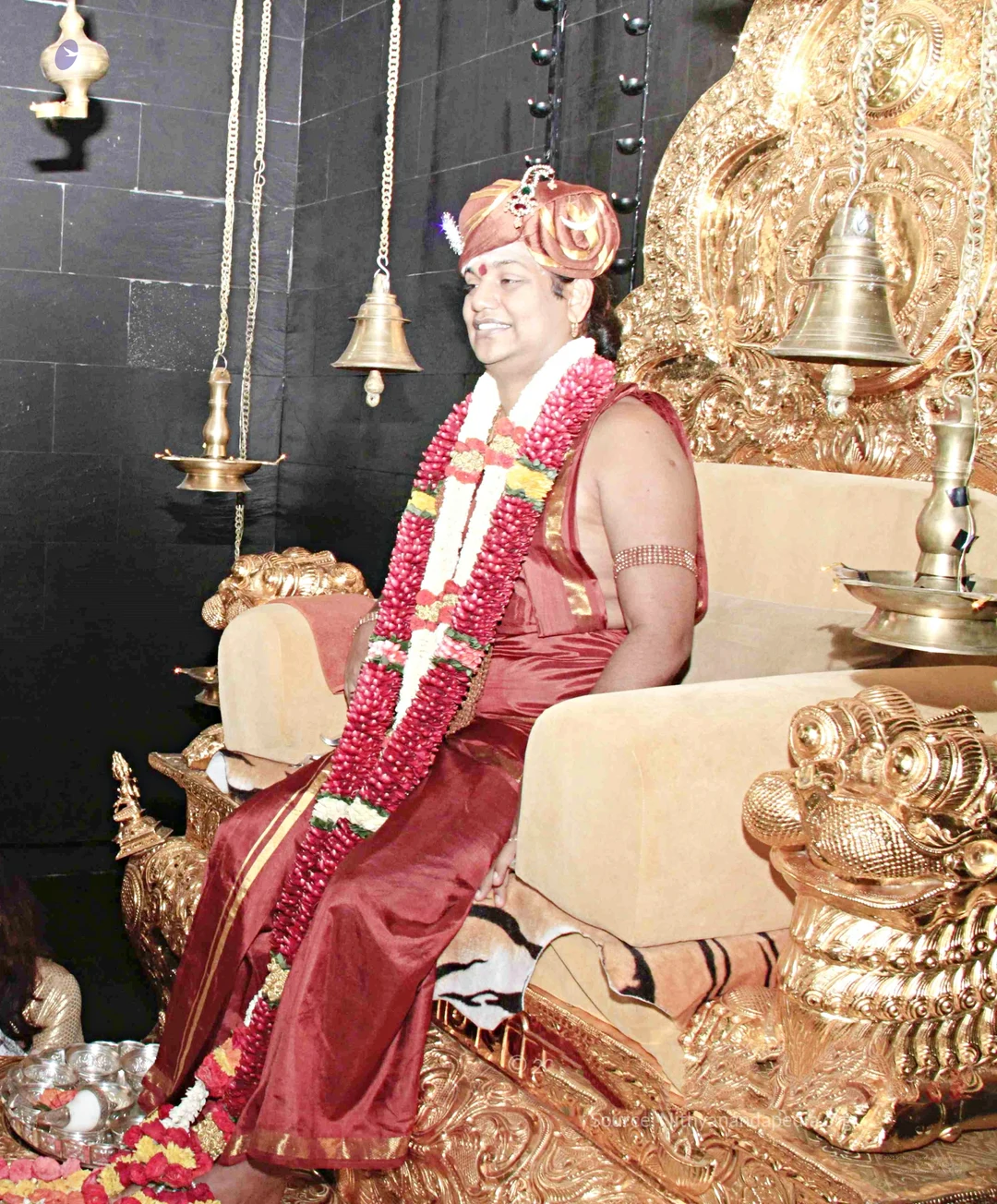
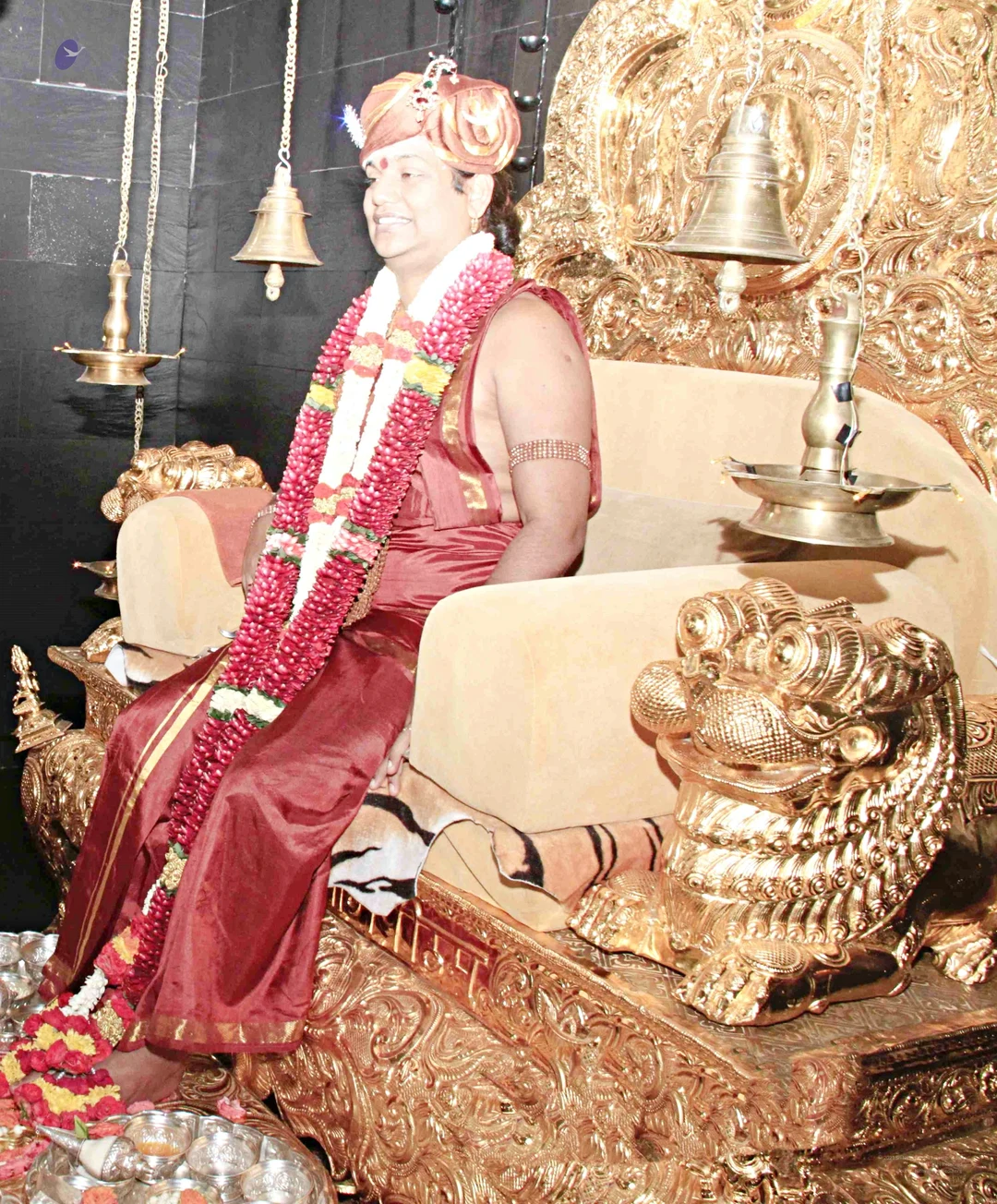
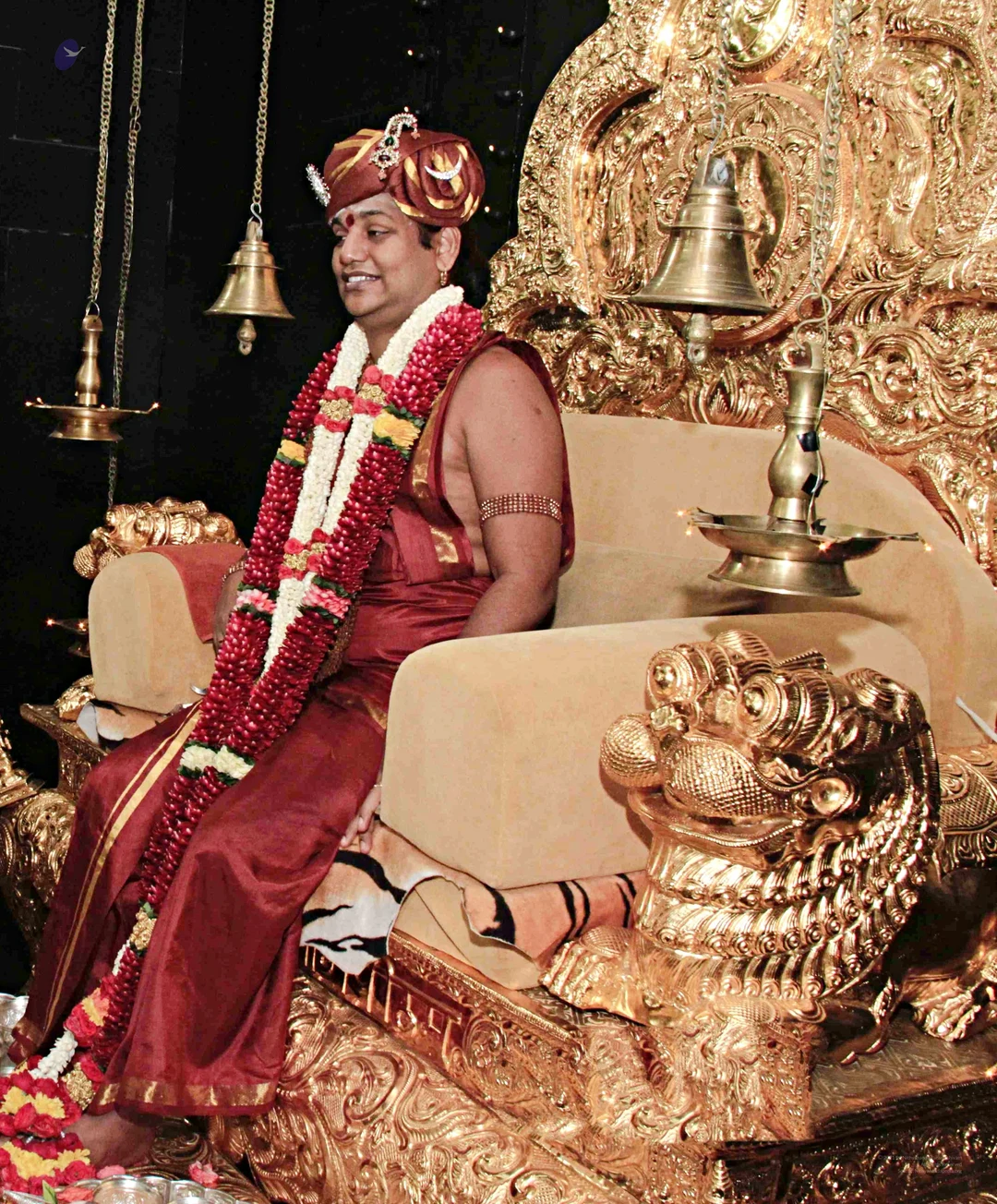
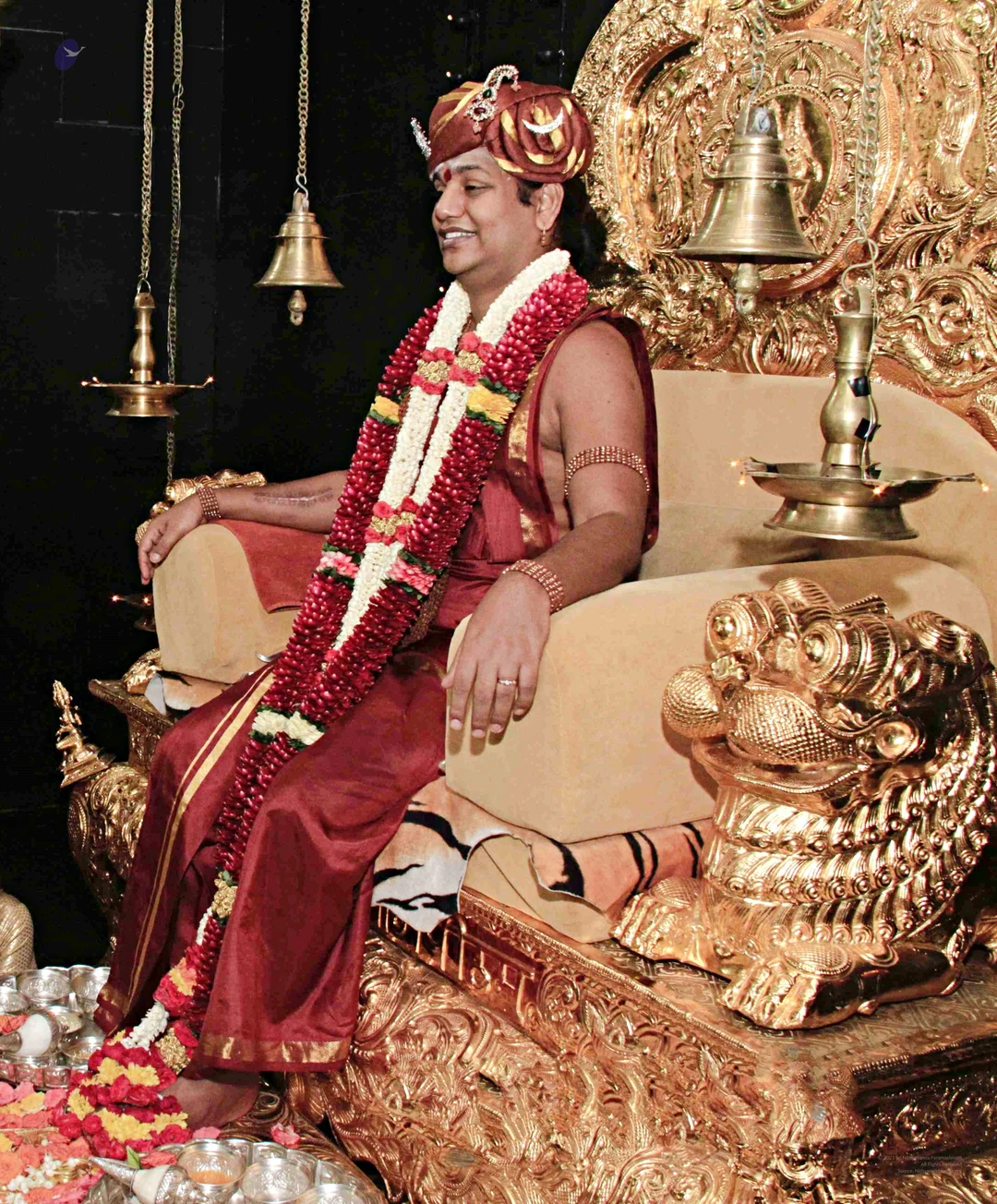
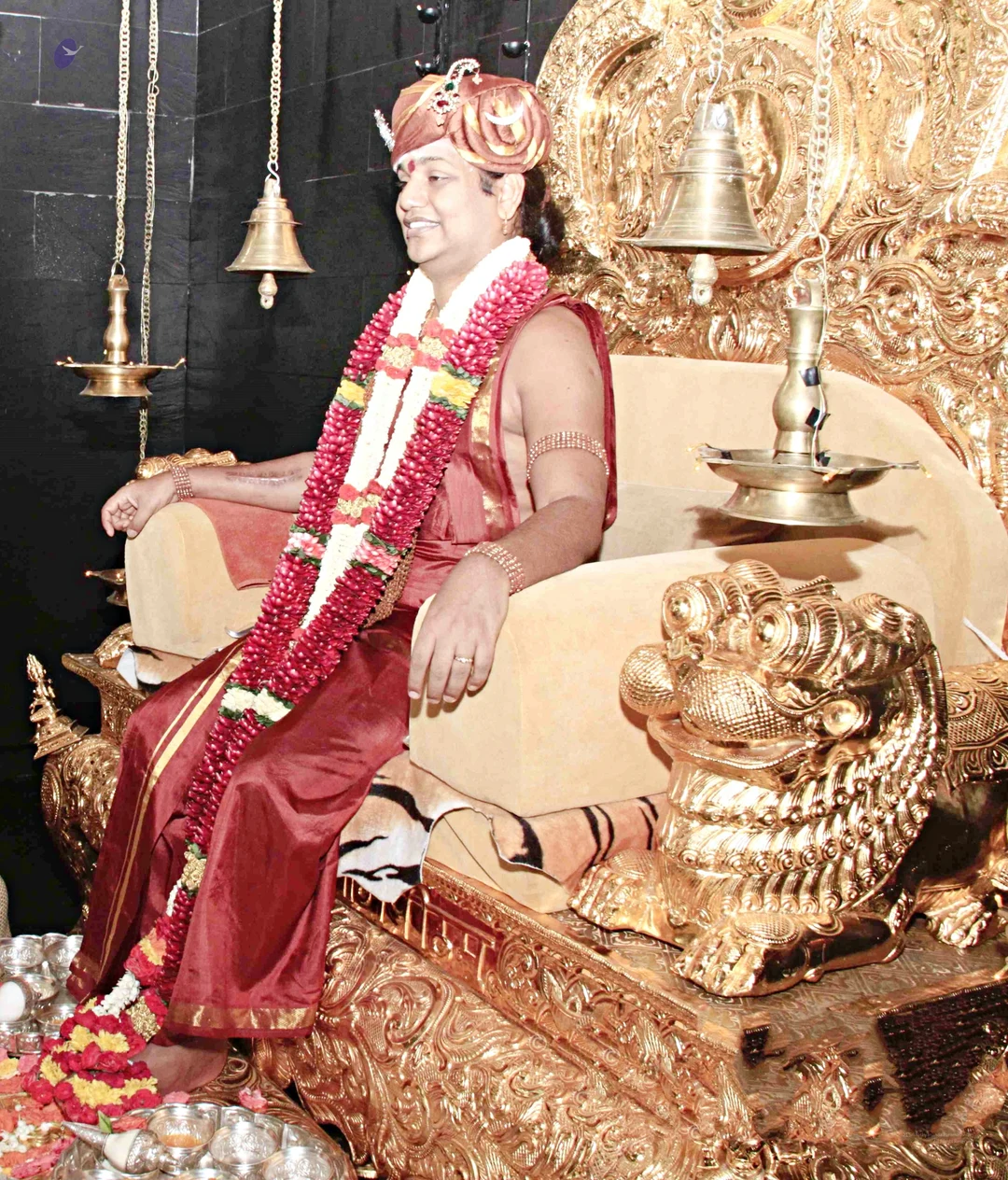
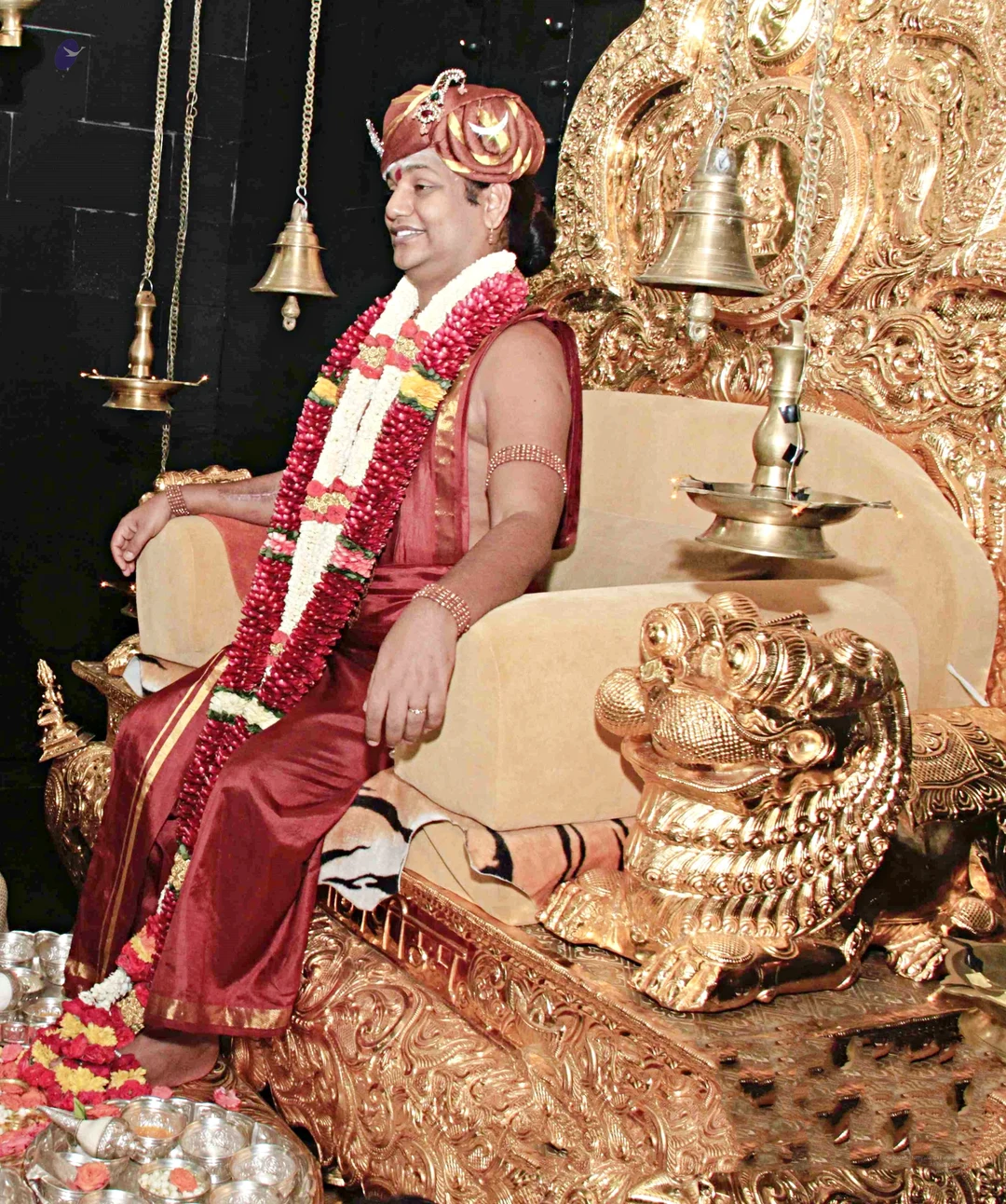
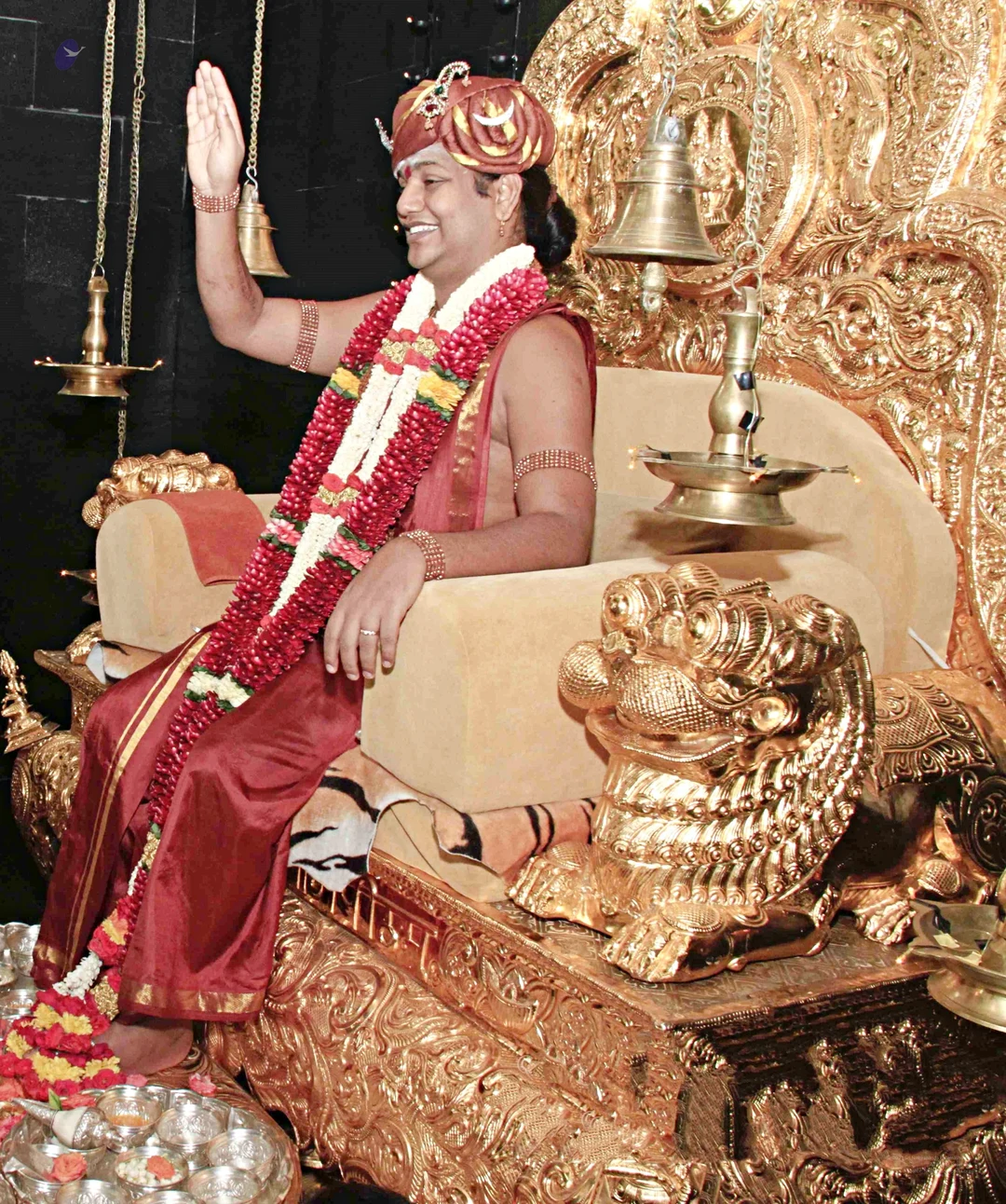
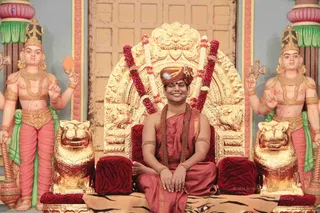
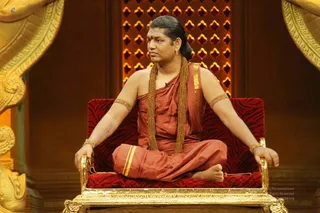
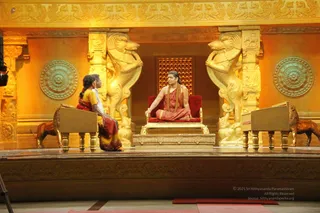
A smiling man seated on an ornate gold throne with carved lion-head armrests upholstered in red tiger-striped fabric. He wears a saffron-red turban with a silver star ornament, red-orange silk robes, a long beaded rudraksha-style mala and gold bangles, and raises both hands in a blessing gesture. A red-and-white flower garland hangs over the throne back. Behind him is a blue-grey wall with a painted decorative element and a red-and-orange architectural feature. A watch is on his wrist.A woman with shoulder-length dark hair and a brown-and-gold patterned blouse touches the forehead of a large black-faced deity murti at night. The murti wears a silver crown, silver ornaments and a black garland with a red-and-yellow flower garland and round green fruit. She wears bangles and earrings and a small red bindi. Behind her, a man in a white dhoti and shirt stands near an orange building. The setting is an outdoor temple or shrine area with a dark sky and a metal fence.A studio set for a television discourse with a golden temple-style backdrop of carved pillars and two framed red paintings of deities. On the left, a figure seated in a red-cushioned golden armchair wears a rust-orange garment with a shawl draped over the shoulders, bangles on the arms and hair tied in a bun; the figure has distinctive orange ornamented attire and bangles, a person presentation with unclear identity. Opposite, two women sit on a golden bench: one in a white sari with dark border and gold bangles, the other in a dark patterned sari over green trousers. Rose petals and a colourful floor rangoli lie in front of them.

November 25 2013

Original wiki page
Contents

Description:

In today’s morning Satsang, Paramahamsa Nithyananda directed us to live in the powerful space of Kalabhairava who embodies pure completion! The commitment of Sannyas should only be taken out of power and completion, not from giving up, powerlessness, or for escaping responsibilities. Let us meditate on Kalabhairava and create the space for power, joy, and completion in our lives!

Transcript:

Nithyanandeshwara Samaarambhaam Nithyanandeshwari Madhyamaam | Asmadaachaarya Paryanthaam Vande Guru Paramparaam ||

I welcome all the devotees, disciples, samajis, satsangis sitting with us through Nithyananda TV, Sadhna TV, Lotus News Channel, Janashree TV, Eshwar TV, and through two-way video-conferencing having Nayana Deeksha all over the world.

Cities sitting with us in two-way video-conferencing having Nayana Deeksha all over the world: Kuala Lumpur-Palani, San José-Madurai, Houston-Kalahasti, Nithyananda Nagaram-Hyderabad, Calgary-Amarnath, Los Angeles-Arunachalam, Guadeloupe-Rameshwaram, Toronto-Kailasam, Seattle-Chidambaram, Ohio-Prayag, Troy-Michigan, Tiruvanmiyur-Chennai, Gangamma Circle-Bangalore, Olympia-Washington, Oman-Sivagangai, Hosur Dhyanapeetam, San Diego-Ocean Side, Colorado Springs-USA, Astoria-New York, Vancouver-Bhubaneshwar, Hyderabad-Gupta Kashi, Singapore-Singapuram, St. Louis-Tirumala, Dubai-Vaidyanatham, Enriching Temple-Bidadi, Hong Kong-Sirkazhi, New York-Varanasi, Paris Home Temple, Dakota Dunes, Peethadeeshwari’s Training Center-Salem.....................

With this, I welcome all of you with my love and blessings.

Today, again, I will continue to expand on “THE CONNECTION, RELATIONSHIP BETWEEN THE SPACE AND SANNYAS”.

Please understand, your inner-space continues to go into more and more unconsciousness with more and more conflicts and contradictions. Your inner-space gets into higher and higher spaces with less incompletions. Please listen, I am not saying your inner-space becomes more unconscious if you live a householder life, or your inner-space will become more pure and higher conscious if you live a Sannyas life. No! I am not making that statement. I am making the statement: “The incompletions and complications make your inner-space unconscious”.

I have seen so many people almost like split personality they behave. When they ask for some boon, the personality they carry! When they become tired of handling what they are asking, how they ask, ‘Let me drop everything and run away and disappear!’

Please listen, the first thing that needs to happen in you, the first thing that needs to happen in your life is Completion of complicated patterns. I have seen, without completing when people take Sannyas, they get into more unconsciousness, because now they have created a big mess, extreme of incompletion, and the decision of Sannyas has come because of their fear to handle the incompletions, not because they want to be complete.

Please listen! The first thing you need to attend in your life is maturity of the inner-space that comes by Completion. Even your Sannyas decision should be taken, even your decision to be unclutched should be taken out of Completion; otherwise, many times, because of the fear to handle the responsibility, you don’t want to handle responsibility, you just want to escape from responsibility due to the incompletions. See, why the fear comes? Because of powerlessness. Why that powerlessness is there? Because of incompletions. Because of the incompletions you want to be Sannyasi. No! That won’t work! That doesn’t work! That doesn’t work! Your decision for Completion, your decision for Sannyas, even that should be from the right context. Decide to be in the space of Powerfulness; for that reason be Sannyasi. Not to escape from some responsibility, but to assume the higher responsibility, not to escape from some responsibility, but to assume higher possibility Sannyas should be taken.

Please understand, I am talking about Sannyas continuously every day, because this is one of the best ways to mature Planet Earth. It is maturity of the Soul. Please listen, if one monkey stands up with two legs and starts walking, all the monkeys will start following; that is a breakthrough from animal to human. Even a physiological breakthrough can do so much to humanity. If one man starts walking without complications and incompletion and the mind inside, that is going to be the next conscious breakthrough. So, please understand, Sannyas is one of the highest maturity, highest possibility, highest existence! I am not singing poetry; I am talking facts in prose! When I say “highest”, I mean highest! If you have already taken Sannyas, be very clear about the responsibility you are holding.

Completion, Completion has to be done with so much of powerfulness. The complications, confusions should be completed with so much of power!

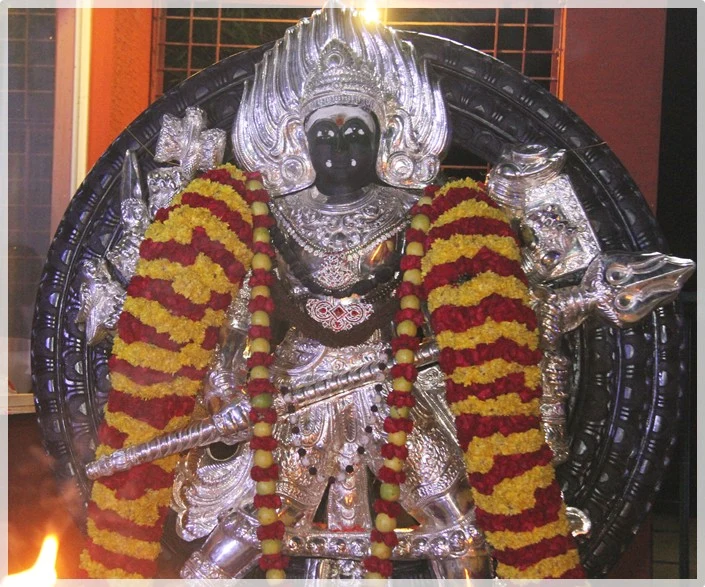
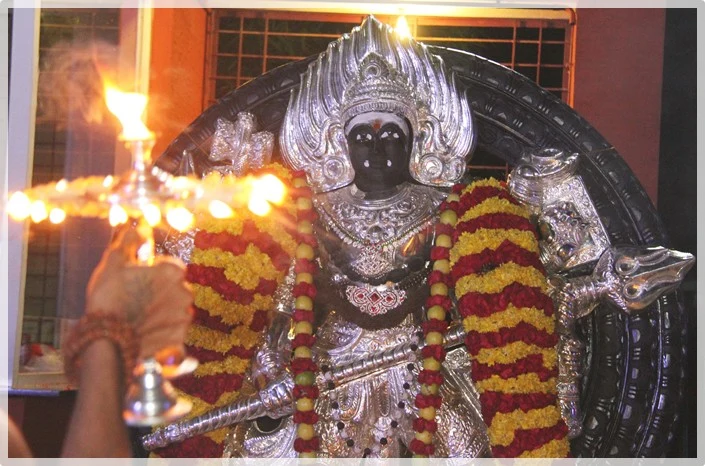
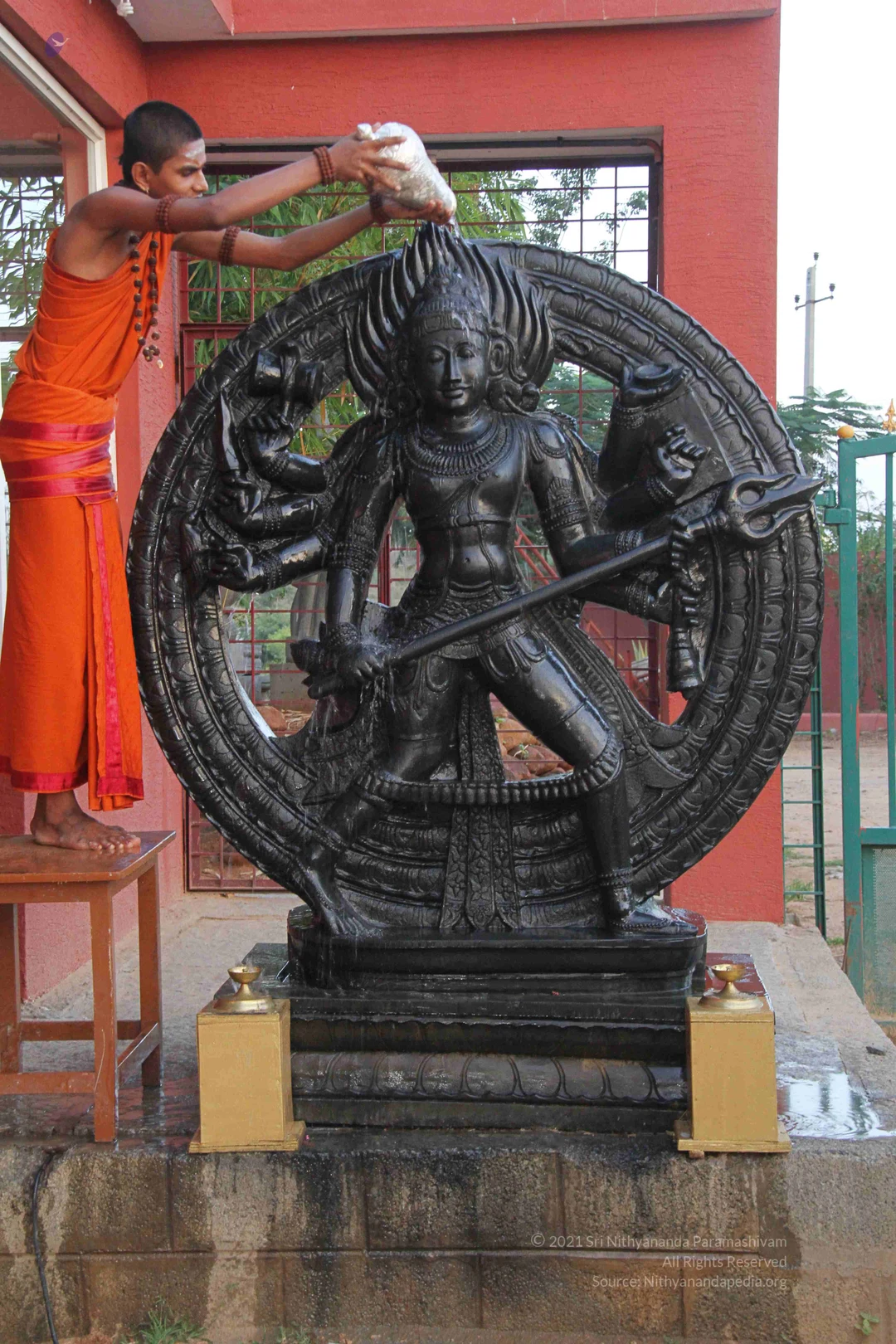
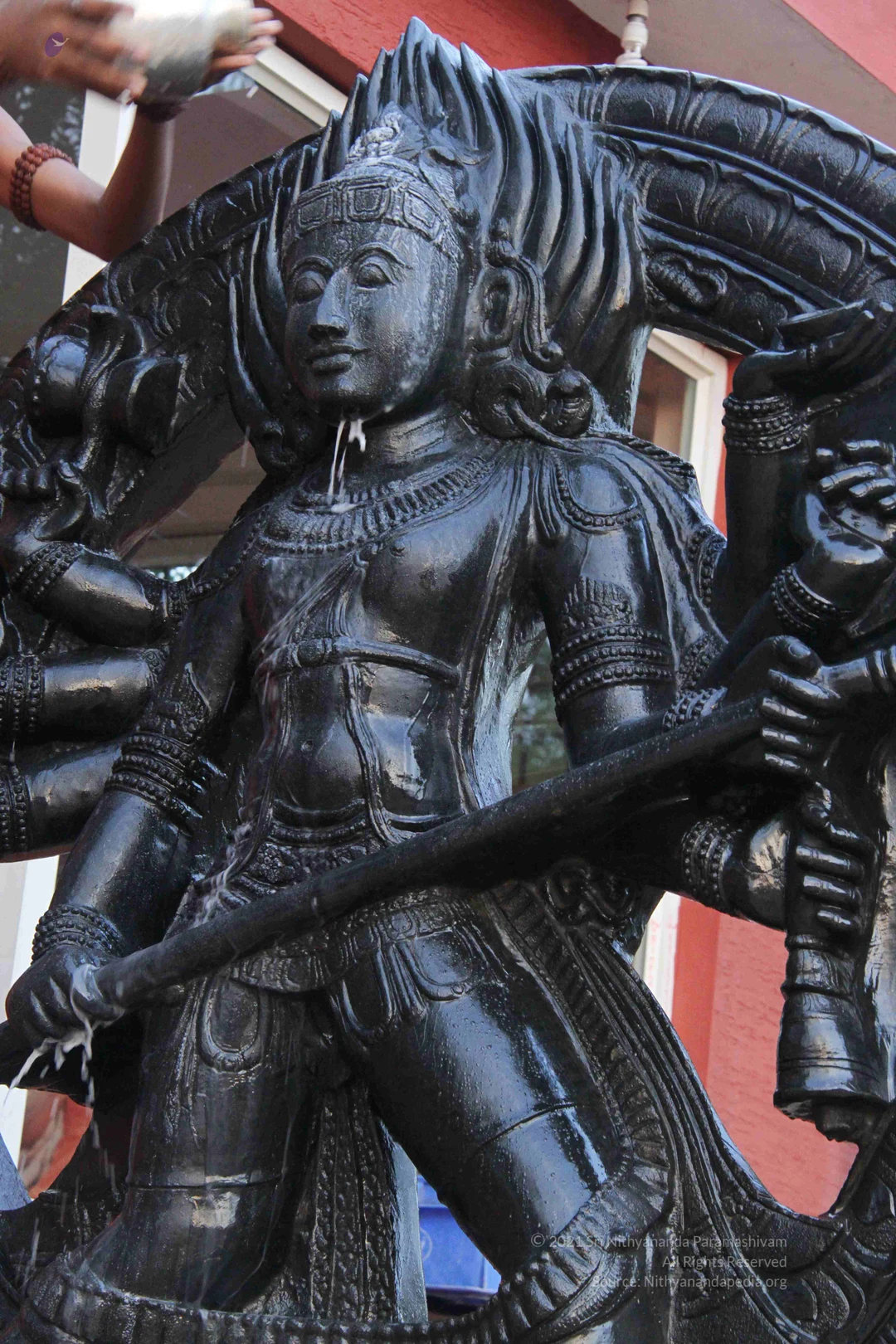
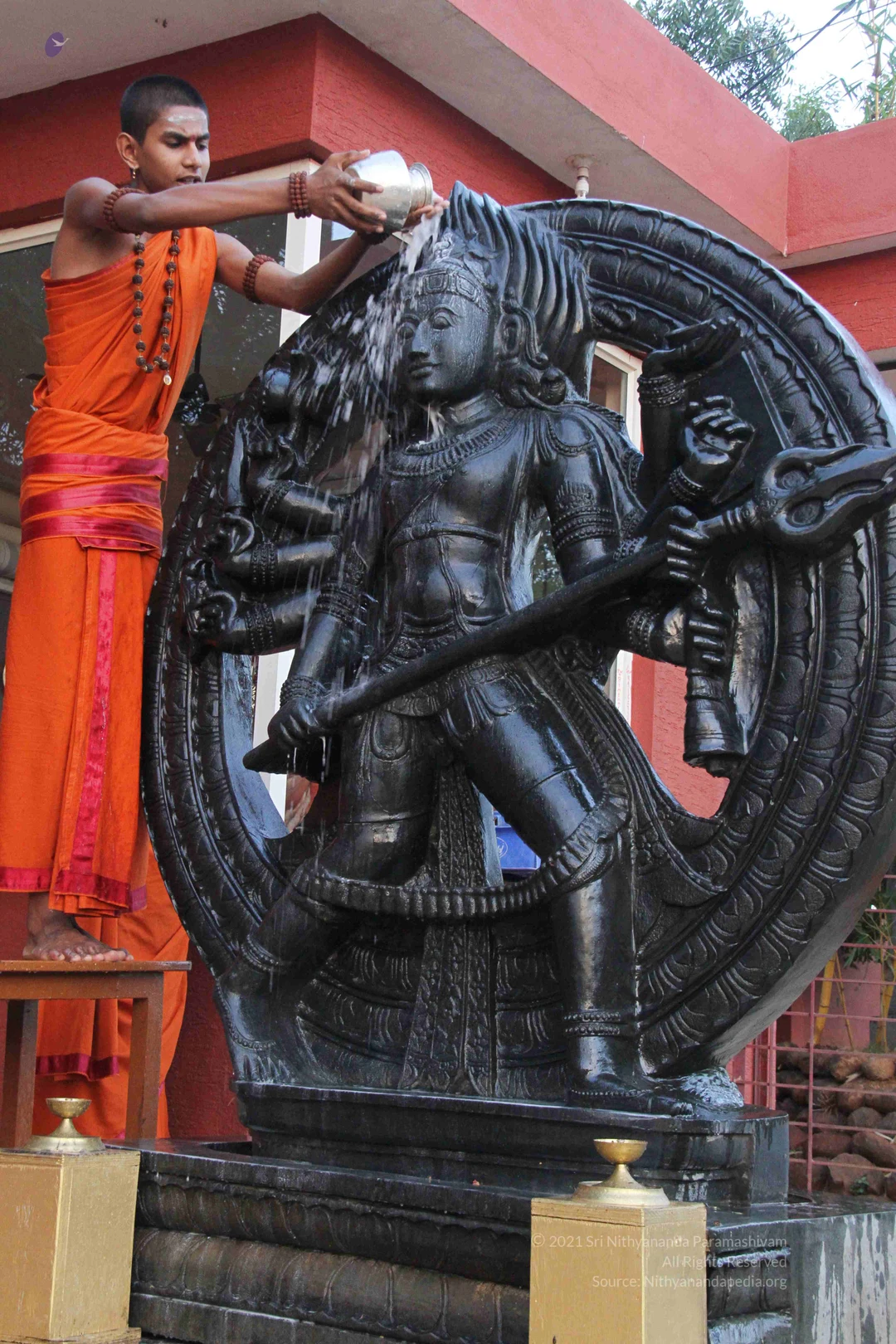
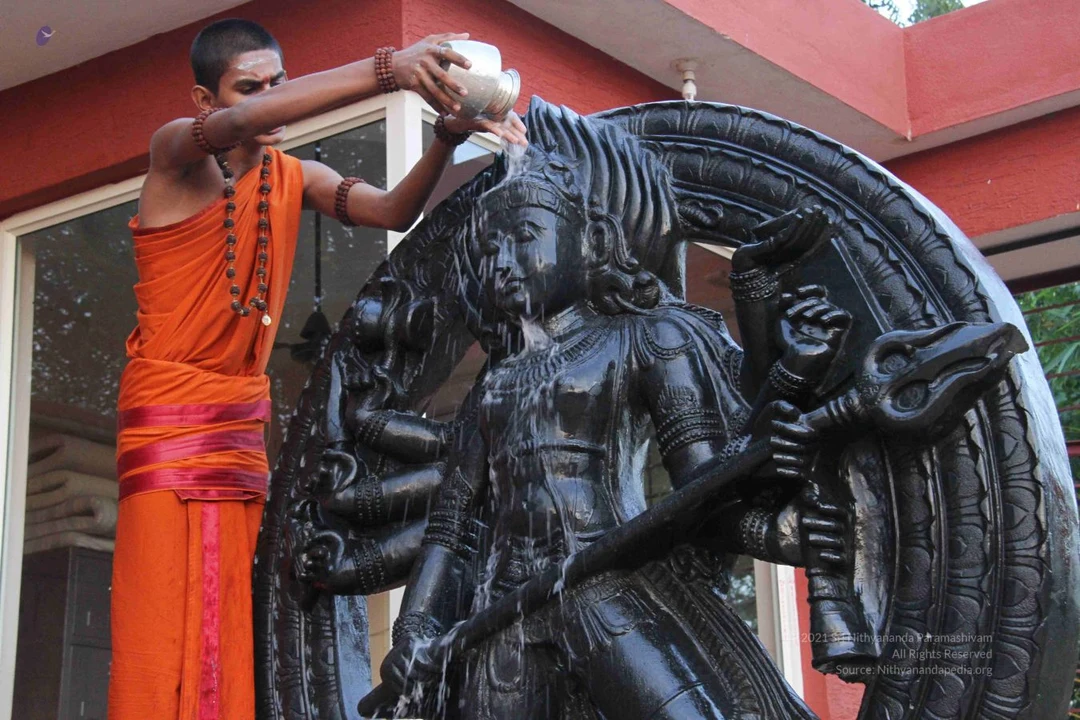
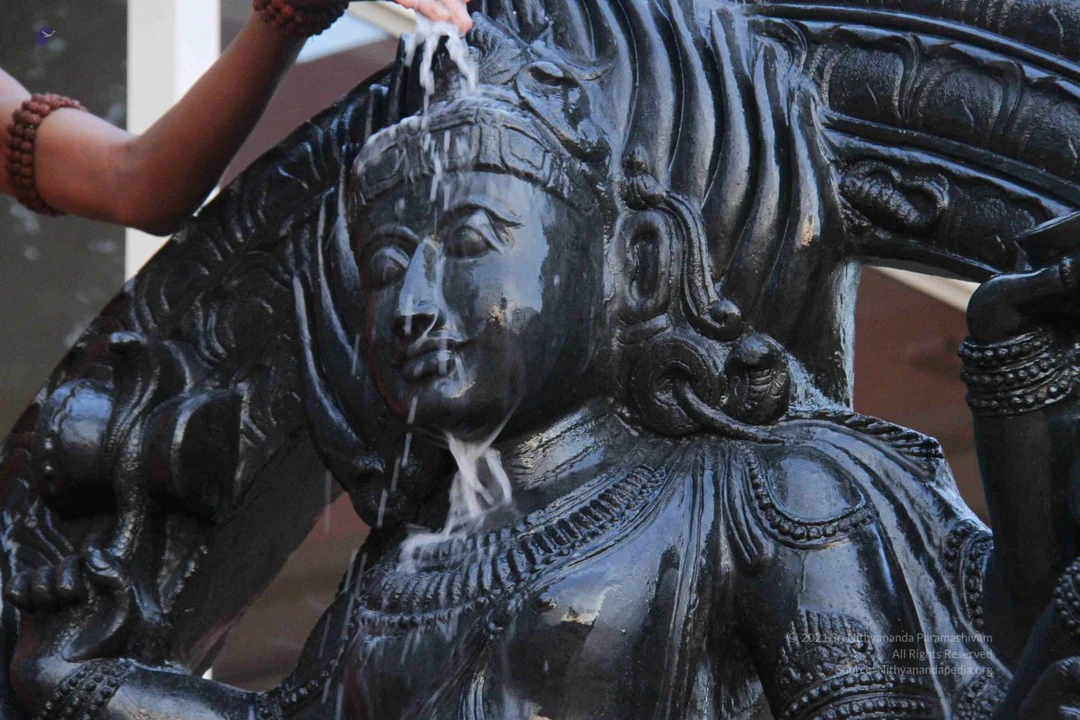
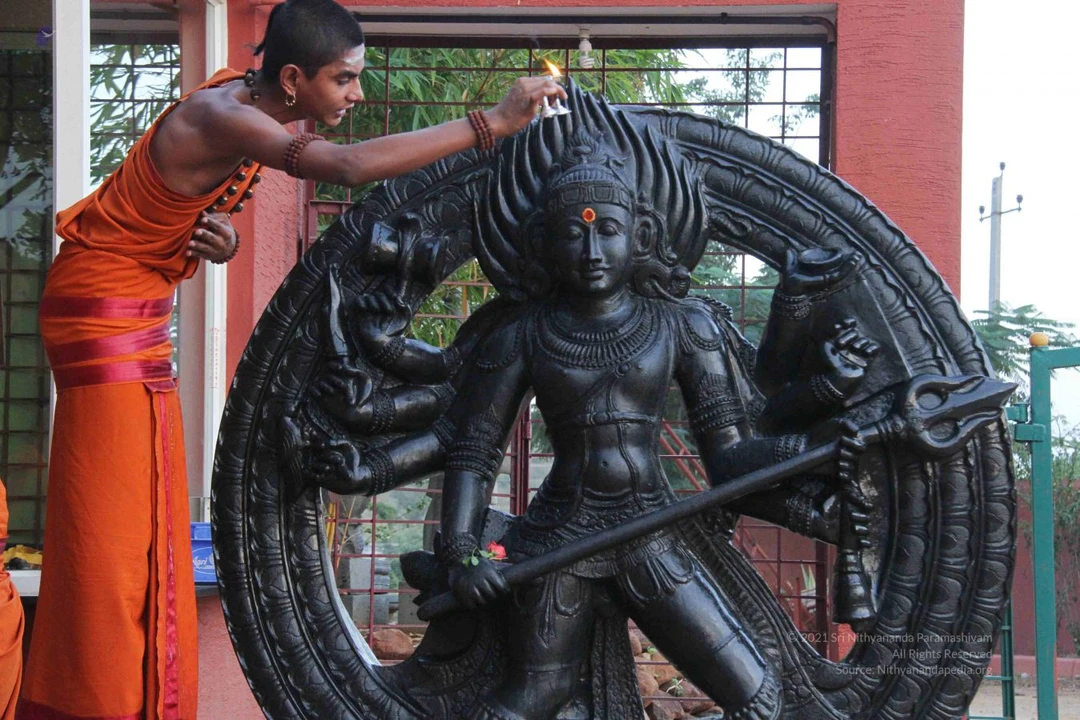
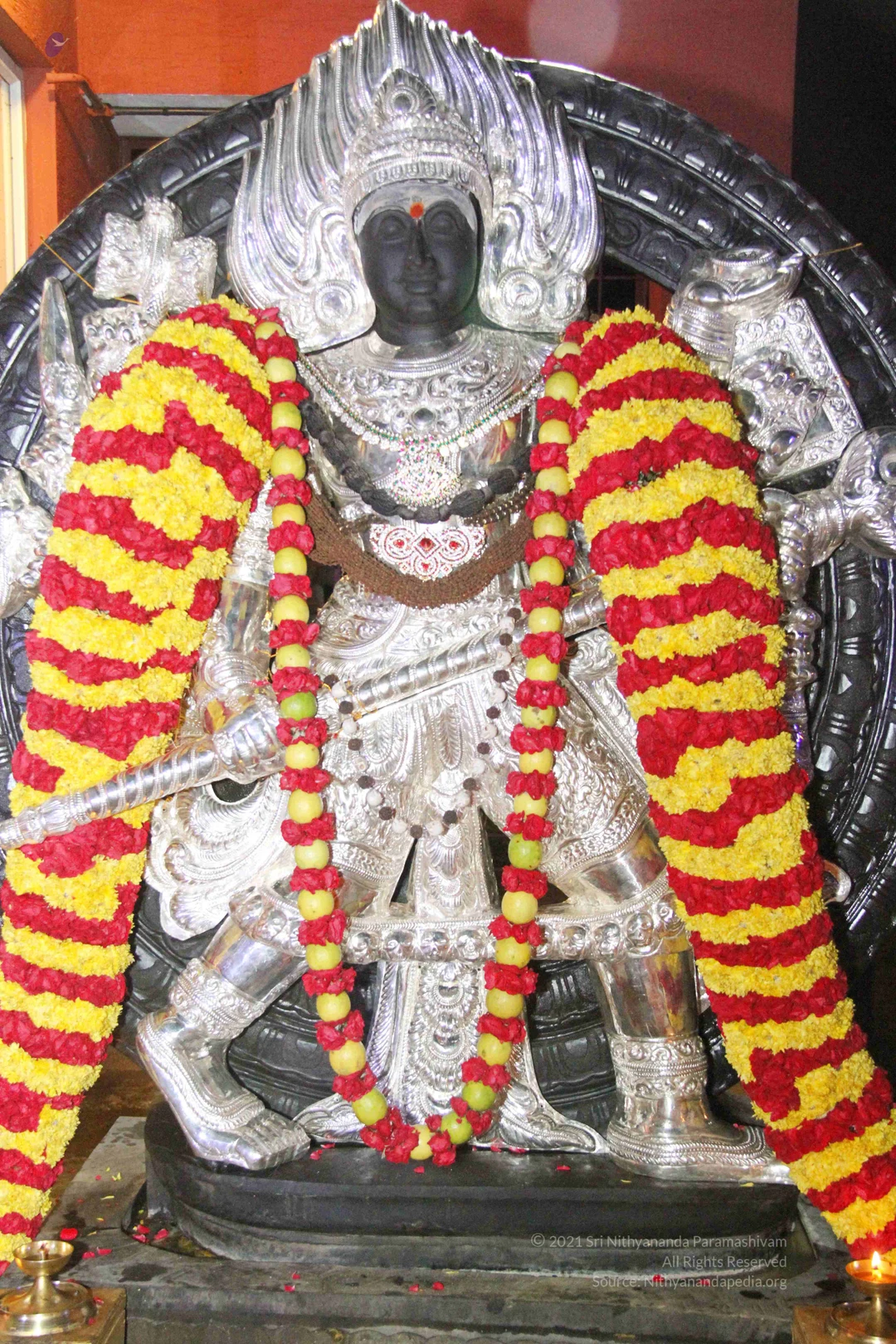
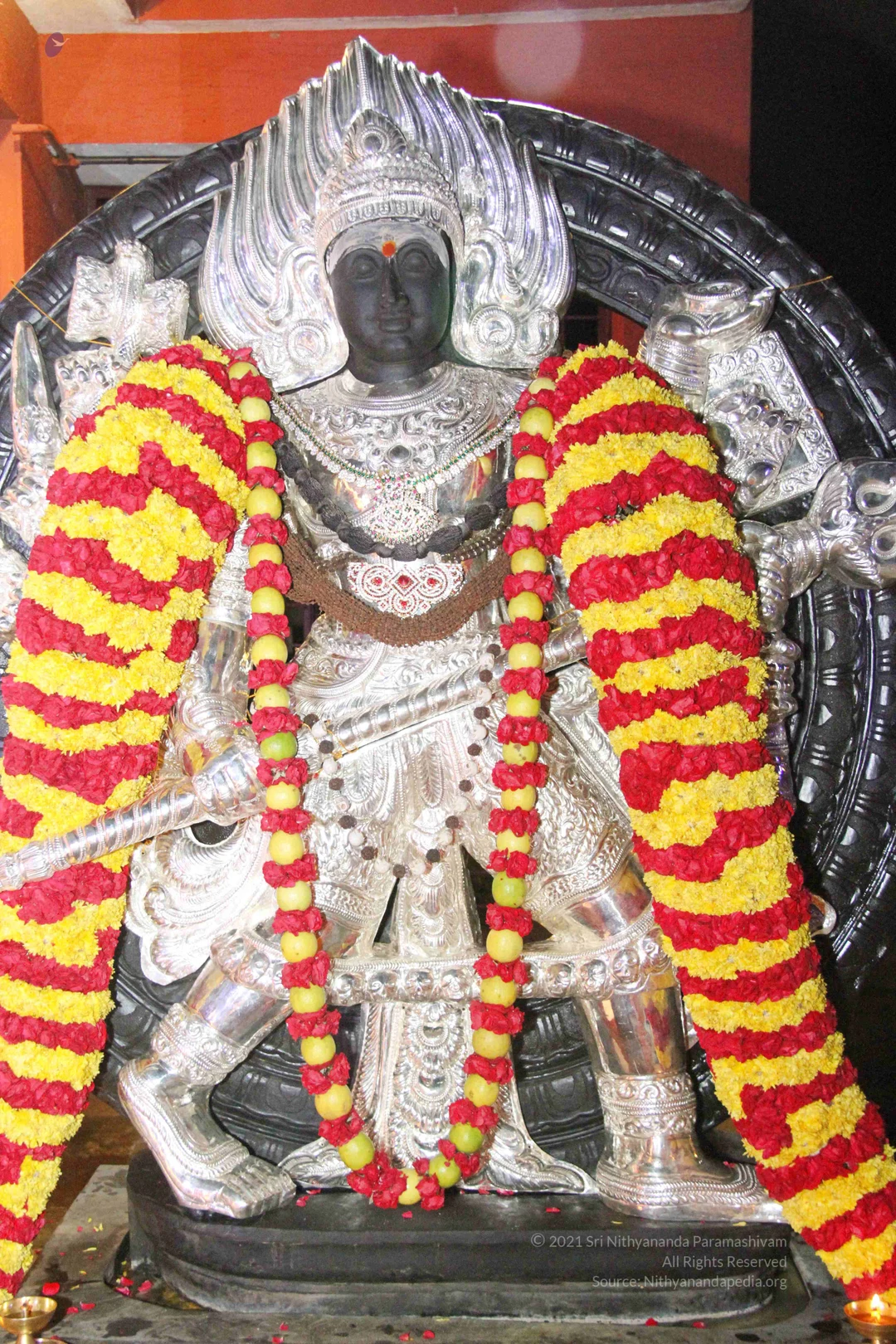
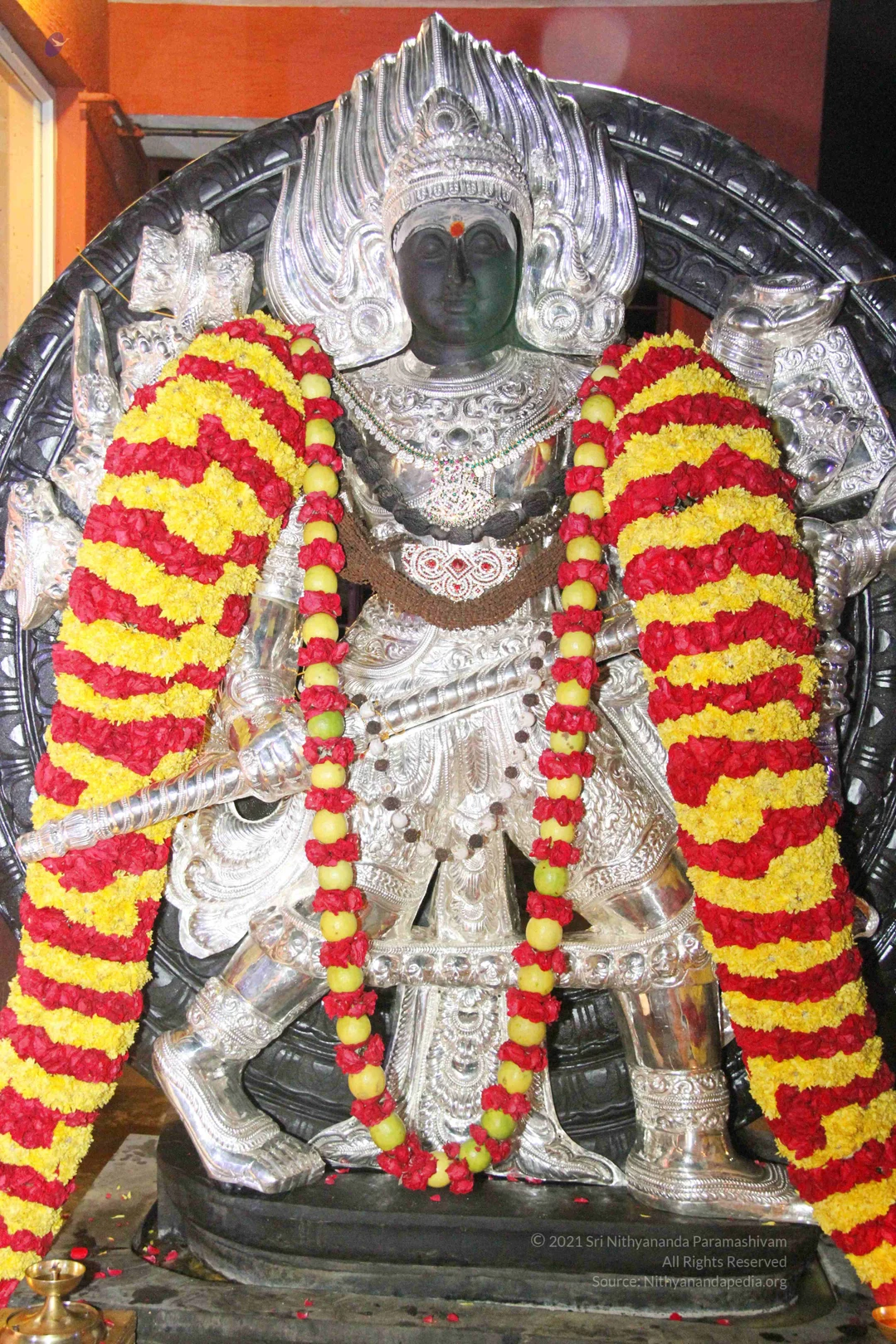
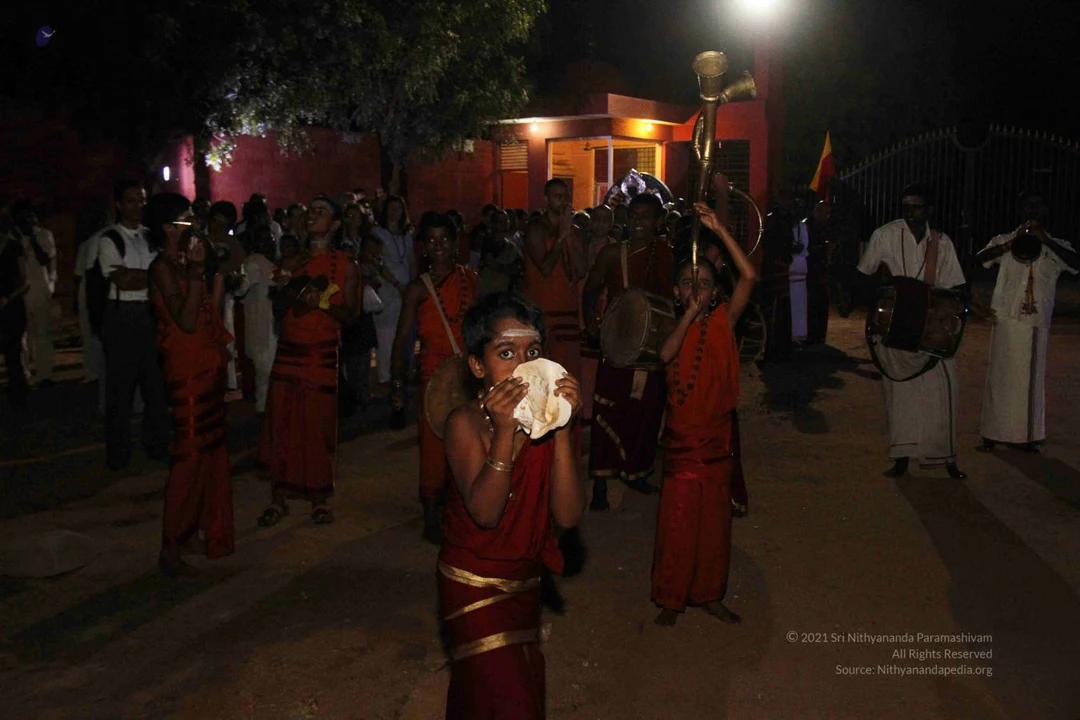
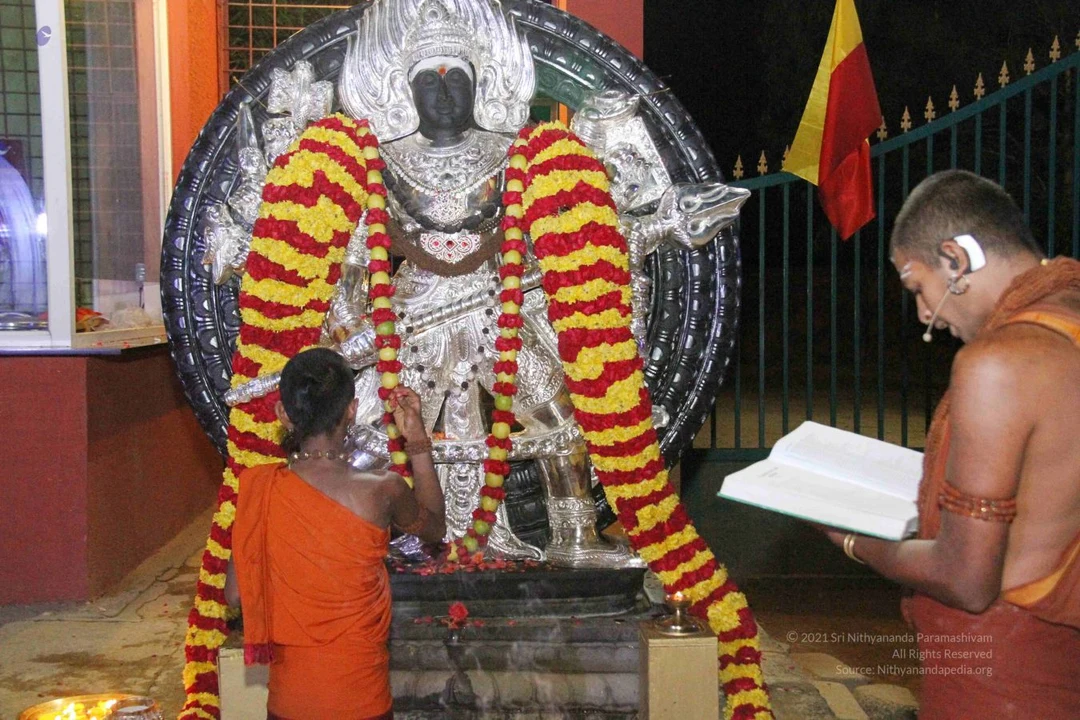
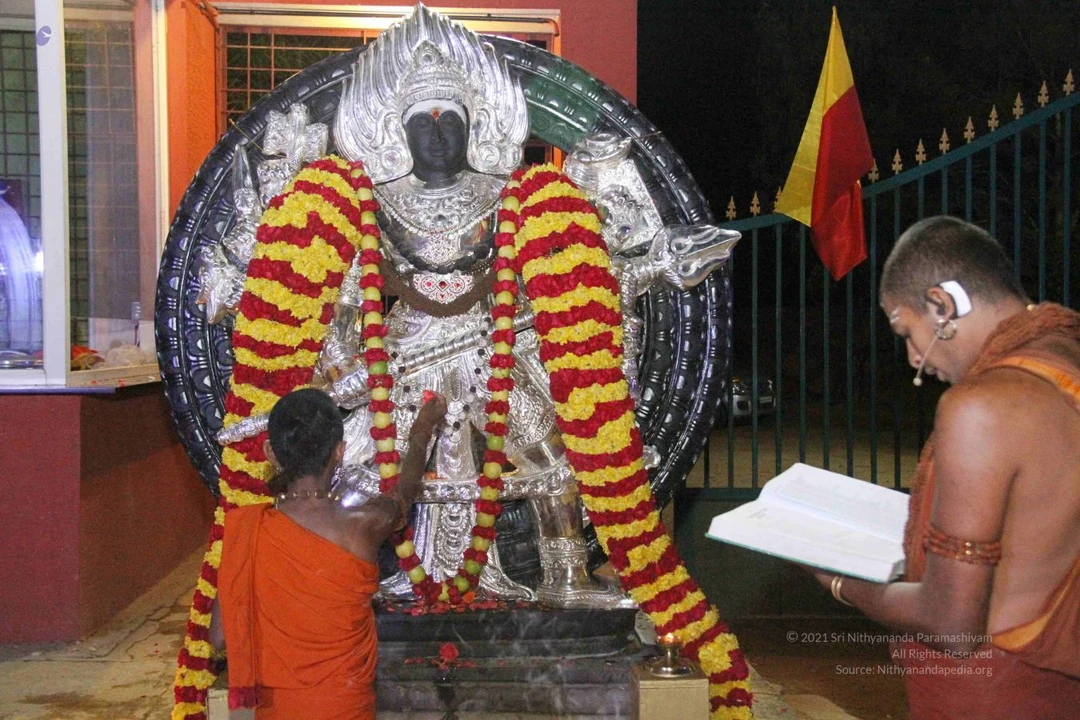
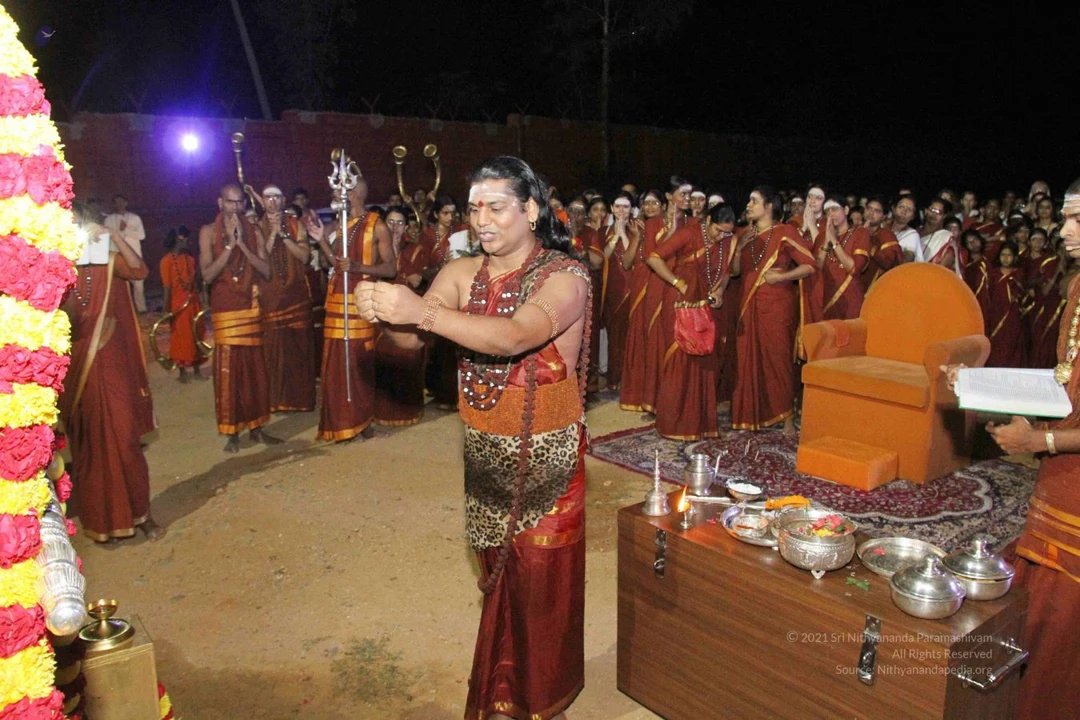
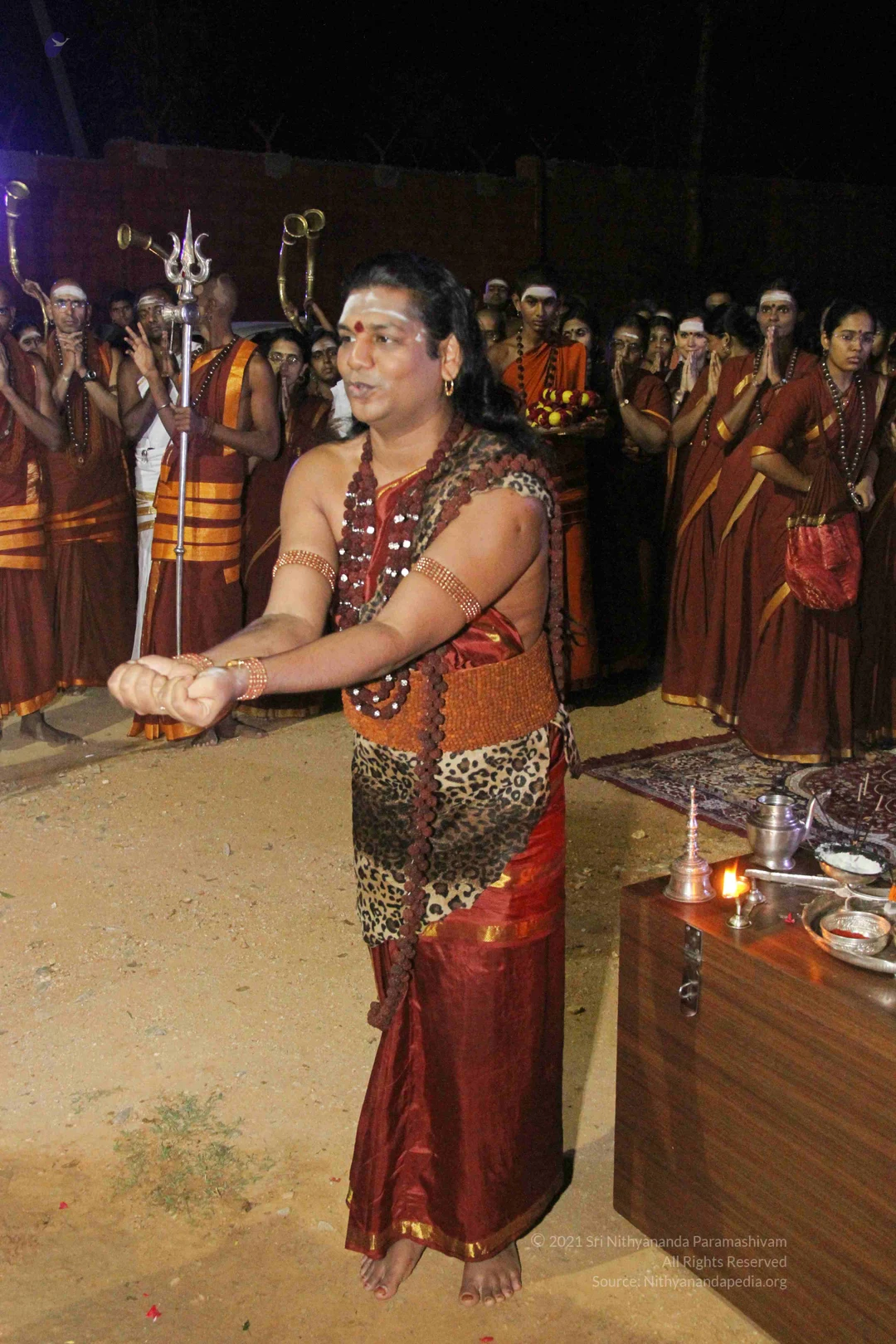
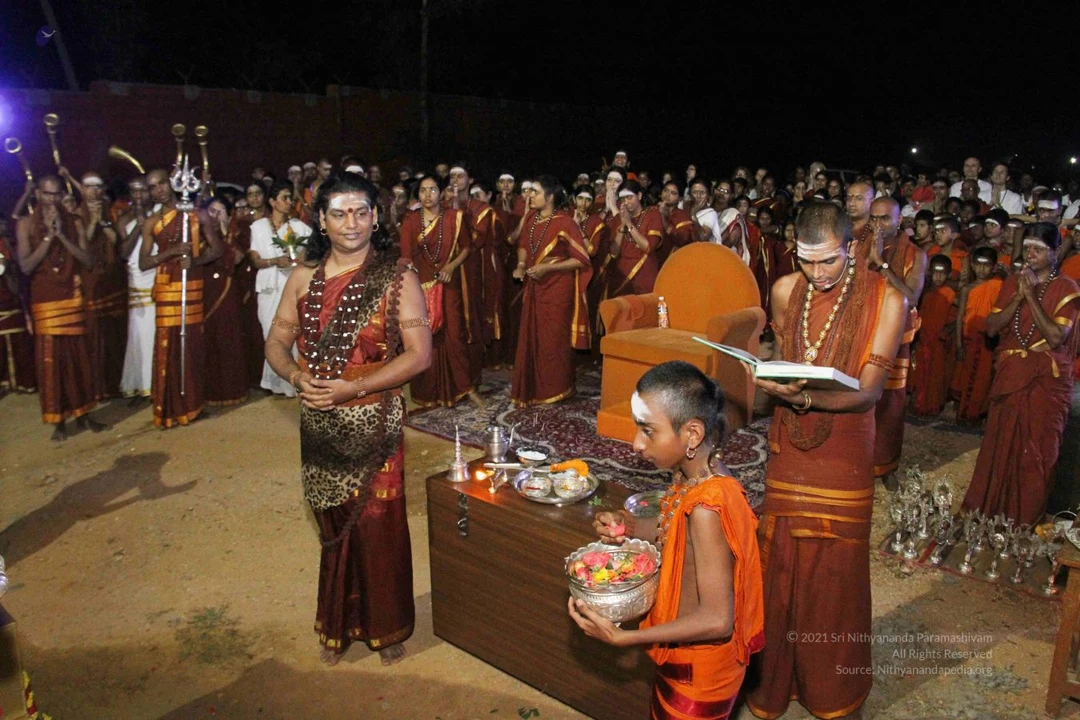
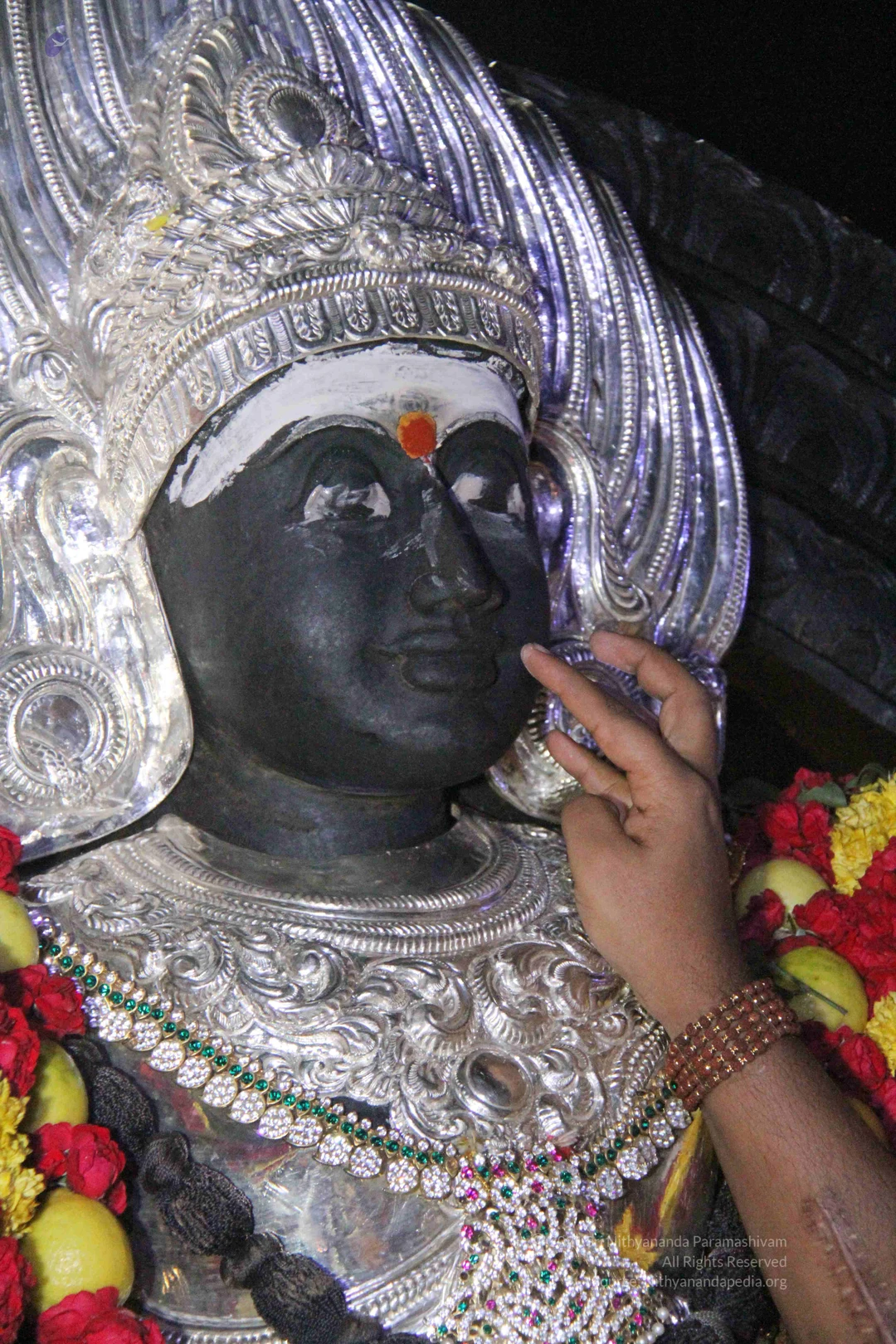
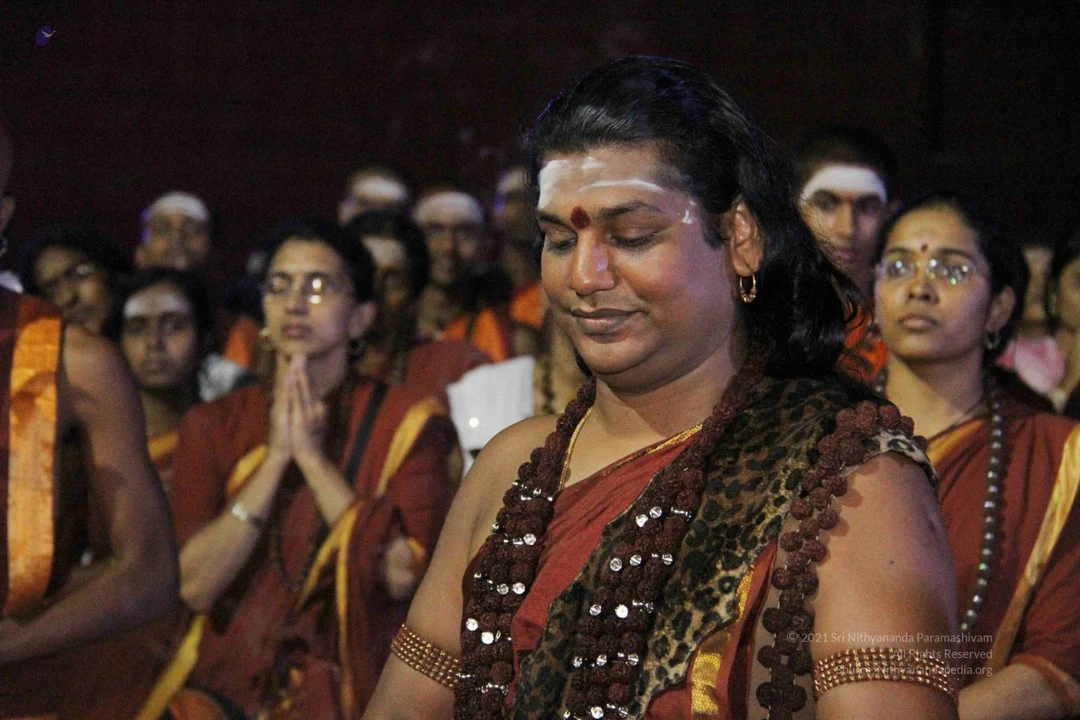
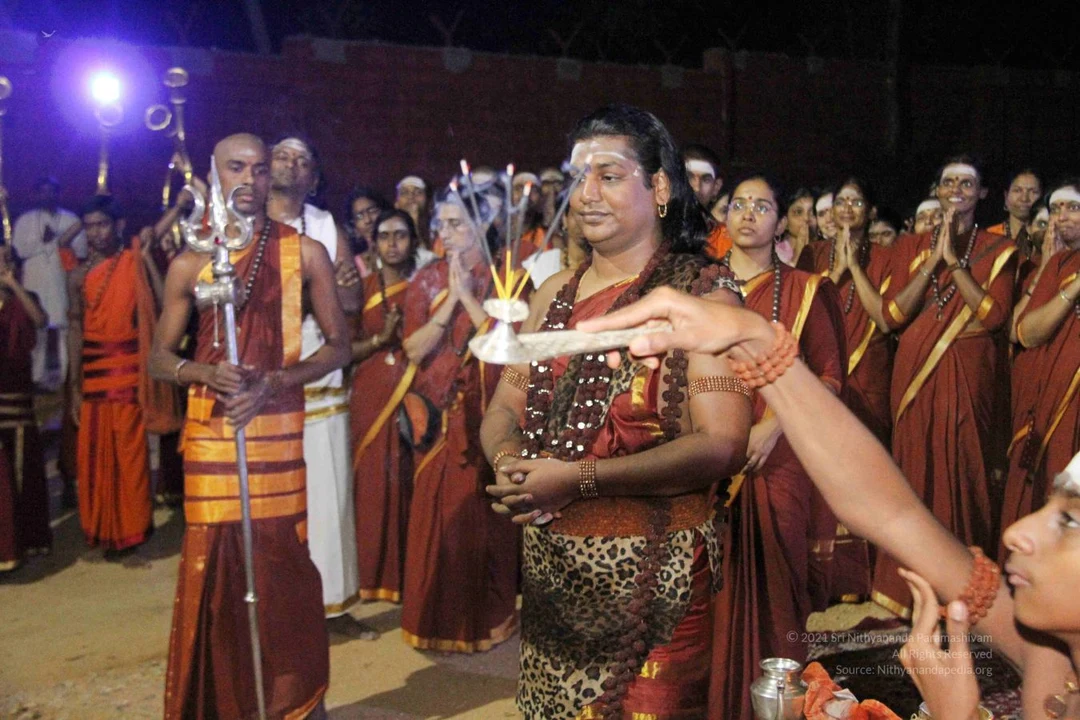
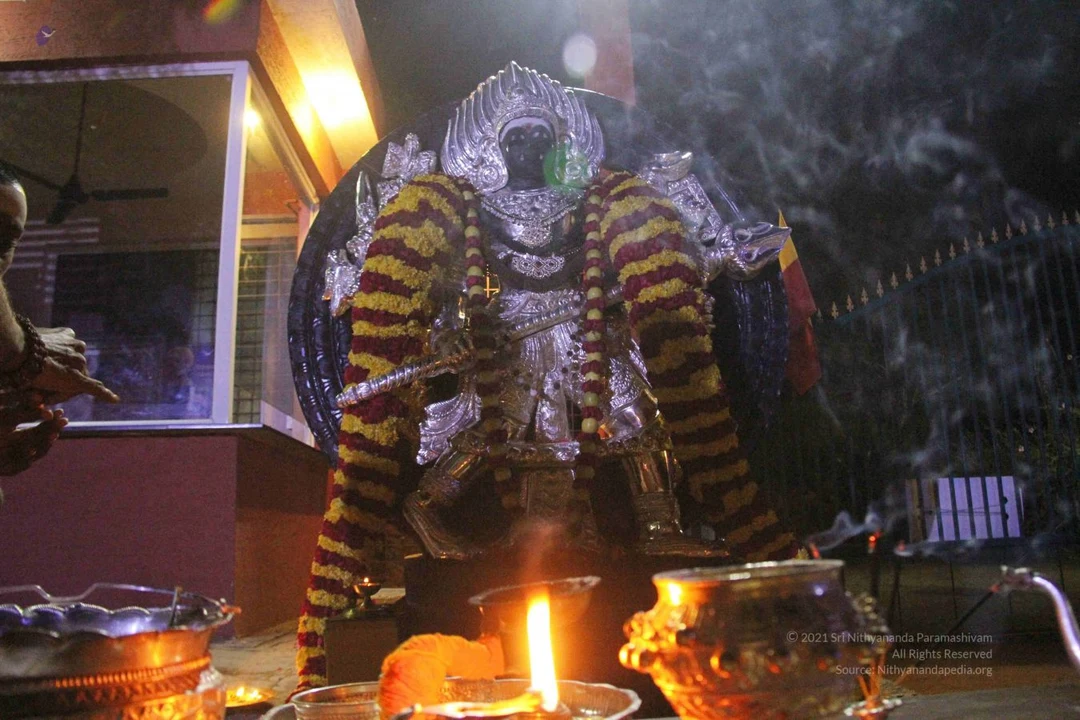
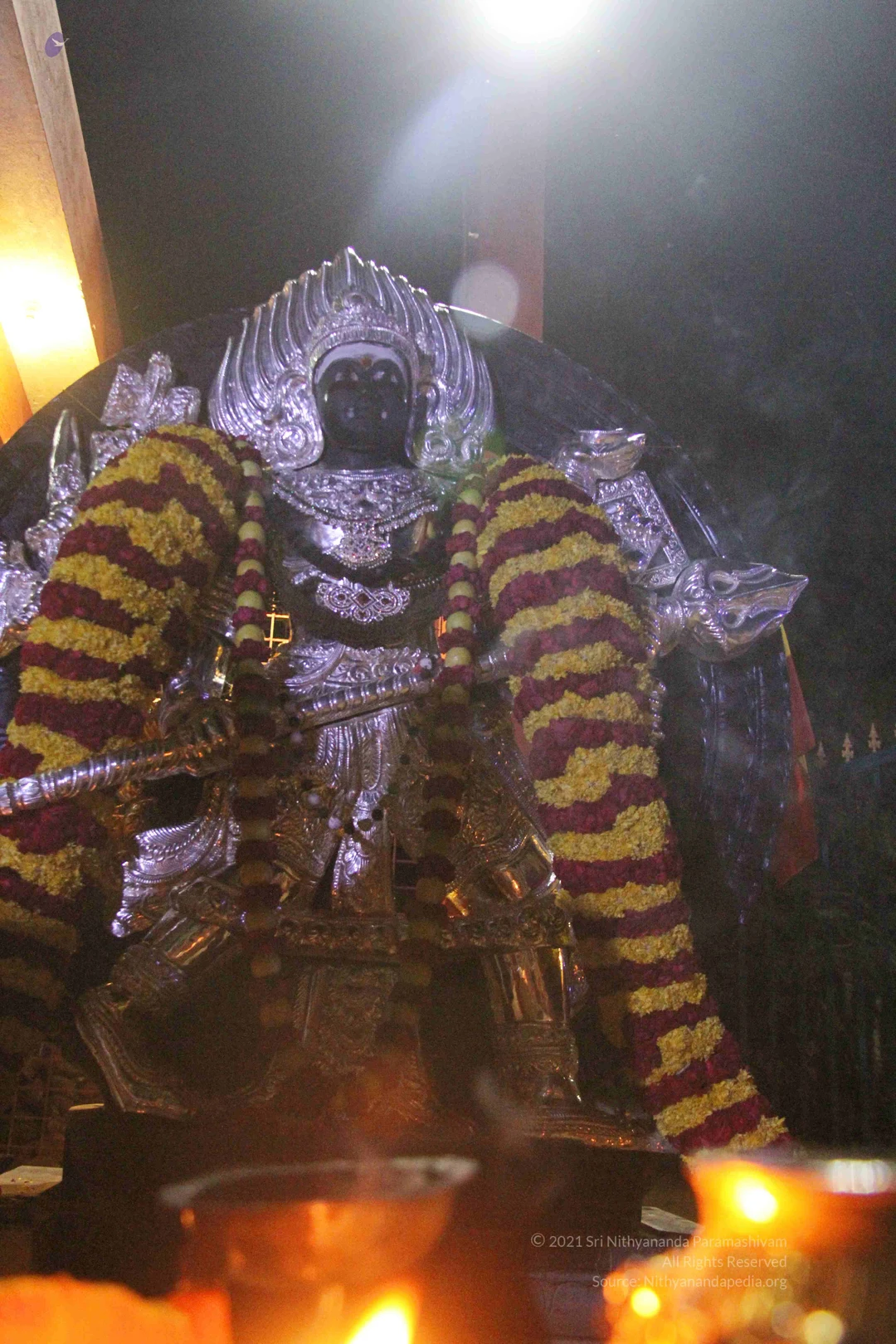
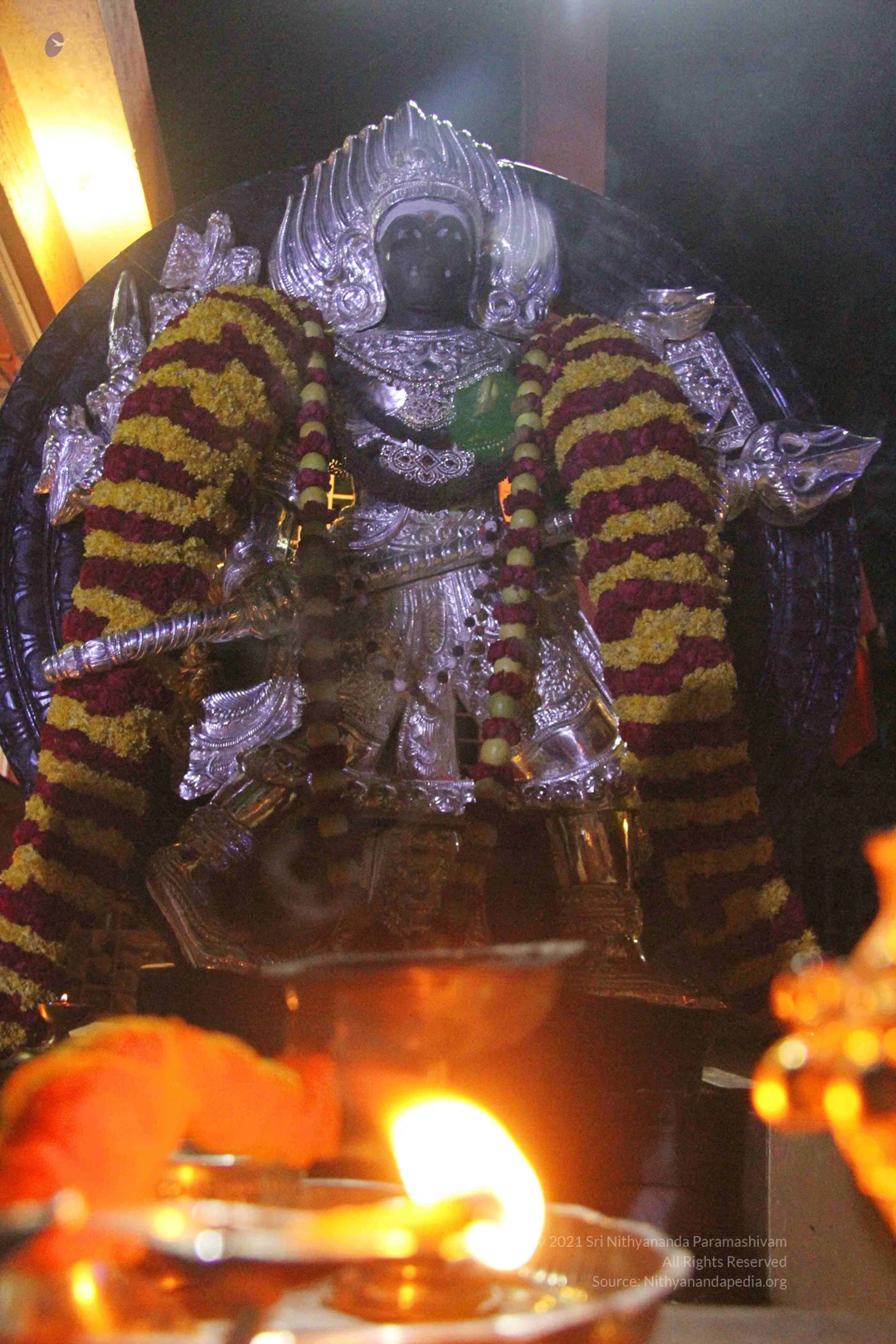
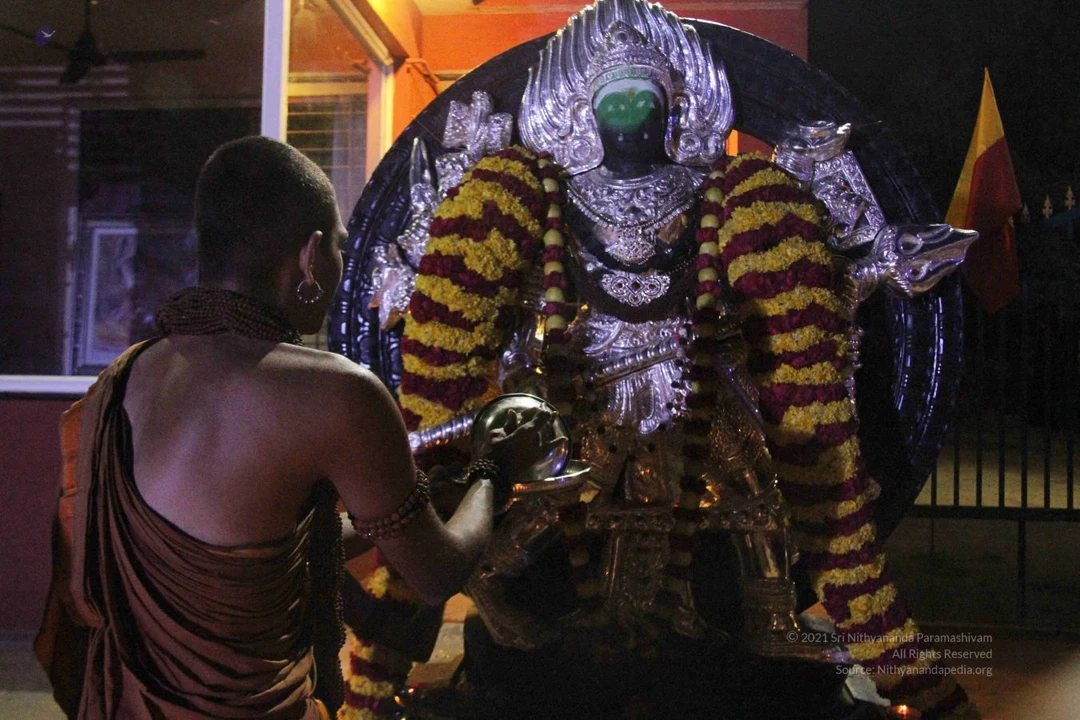
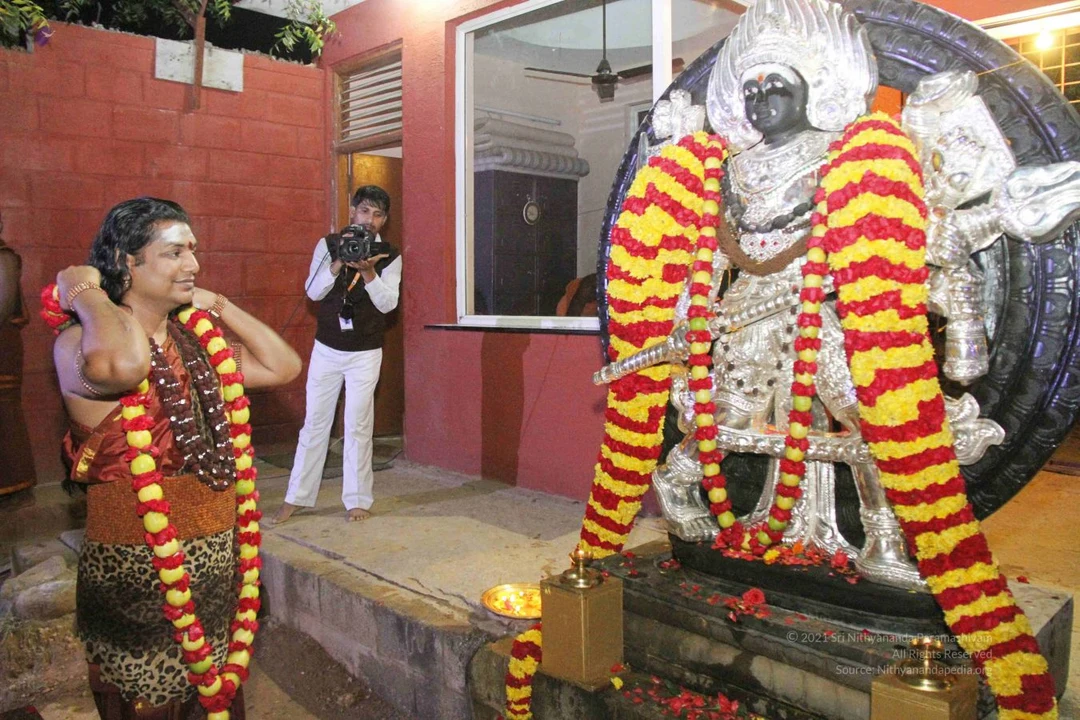
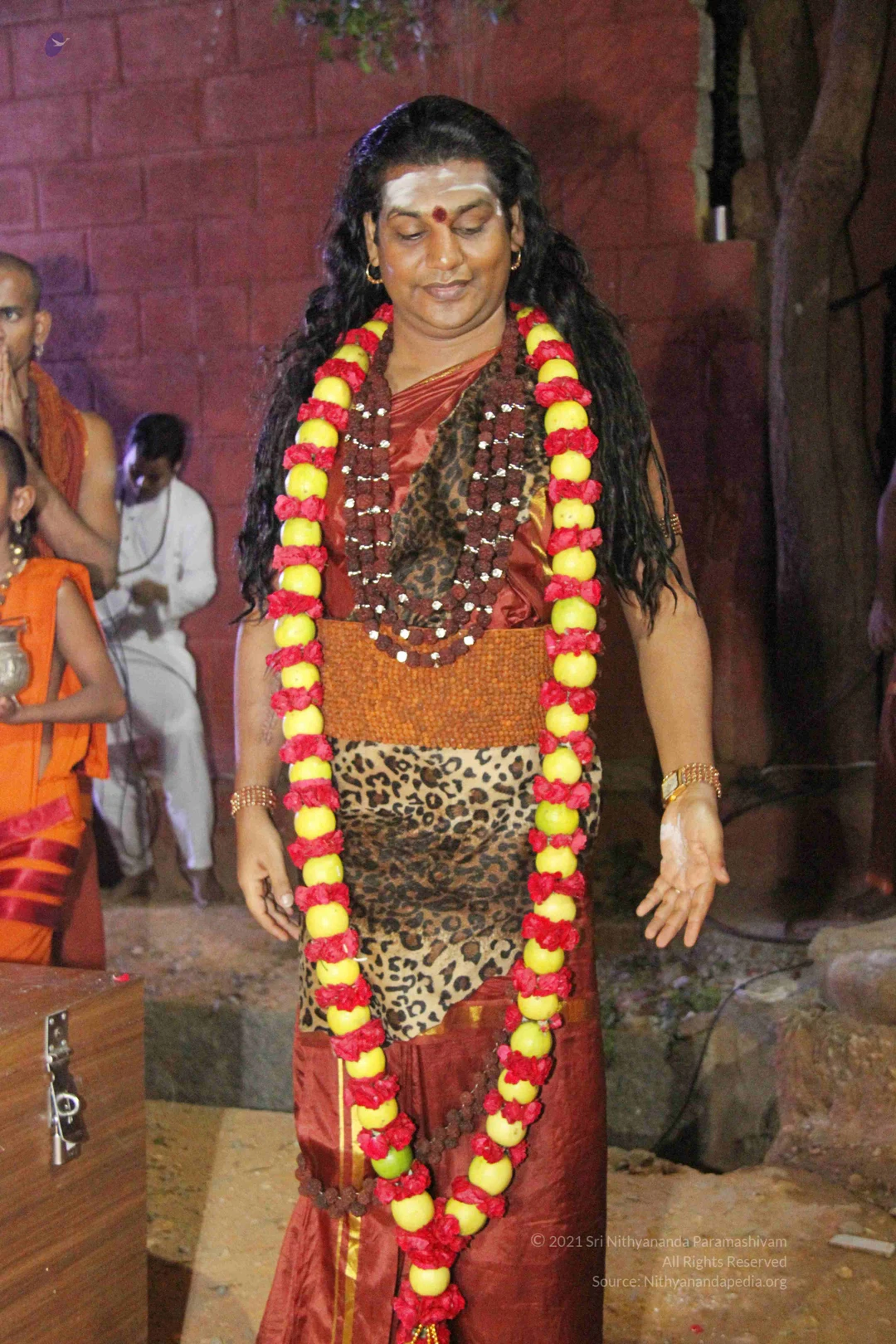
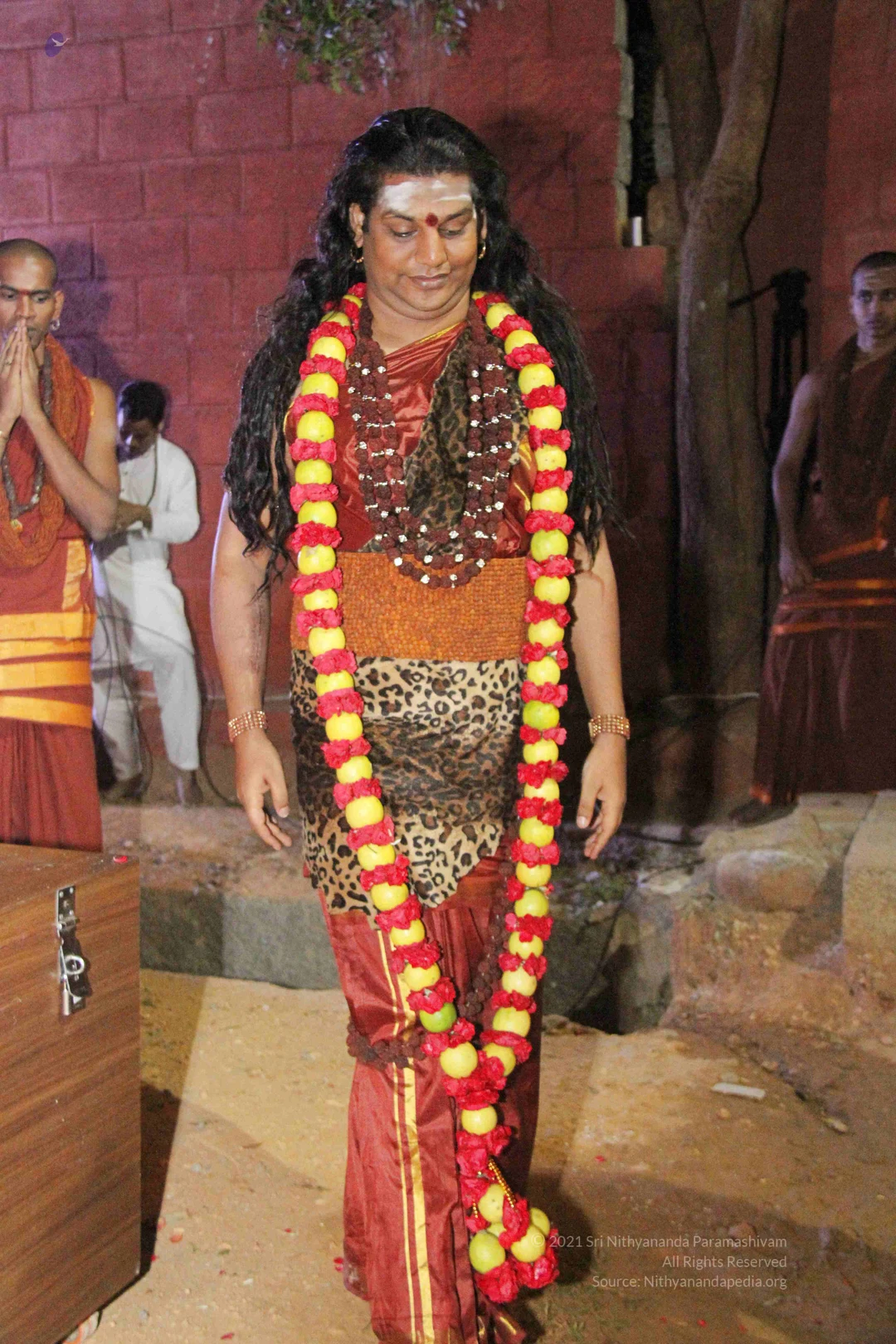
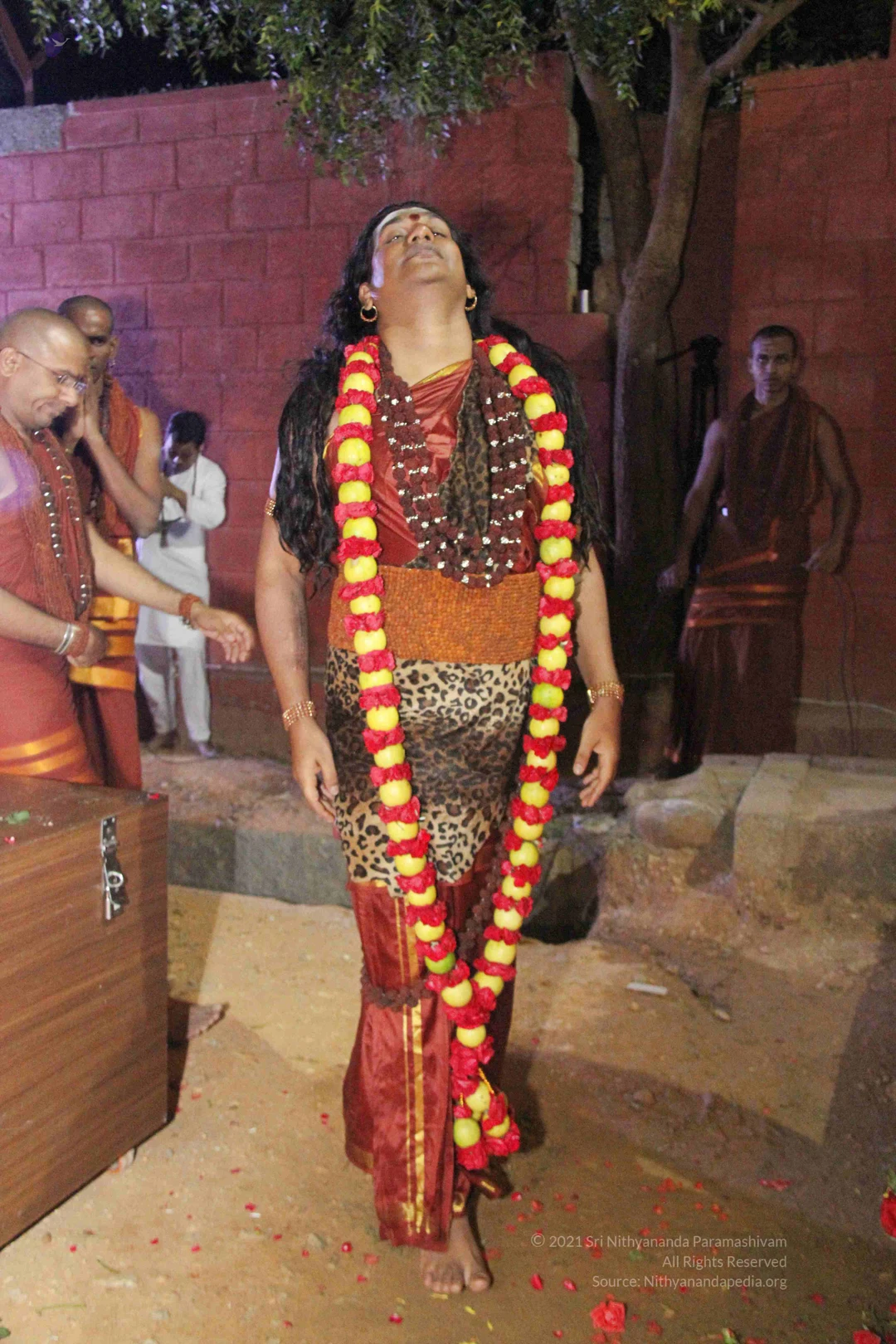
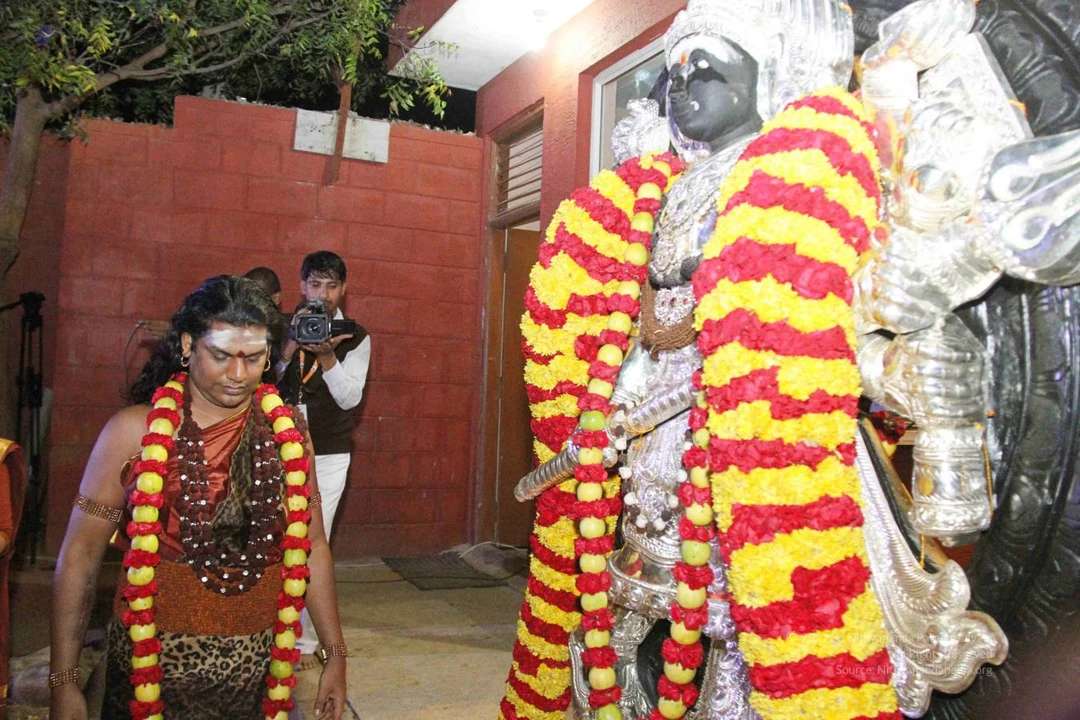
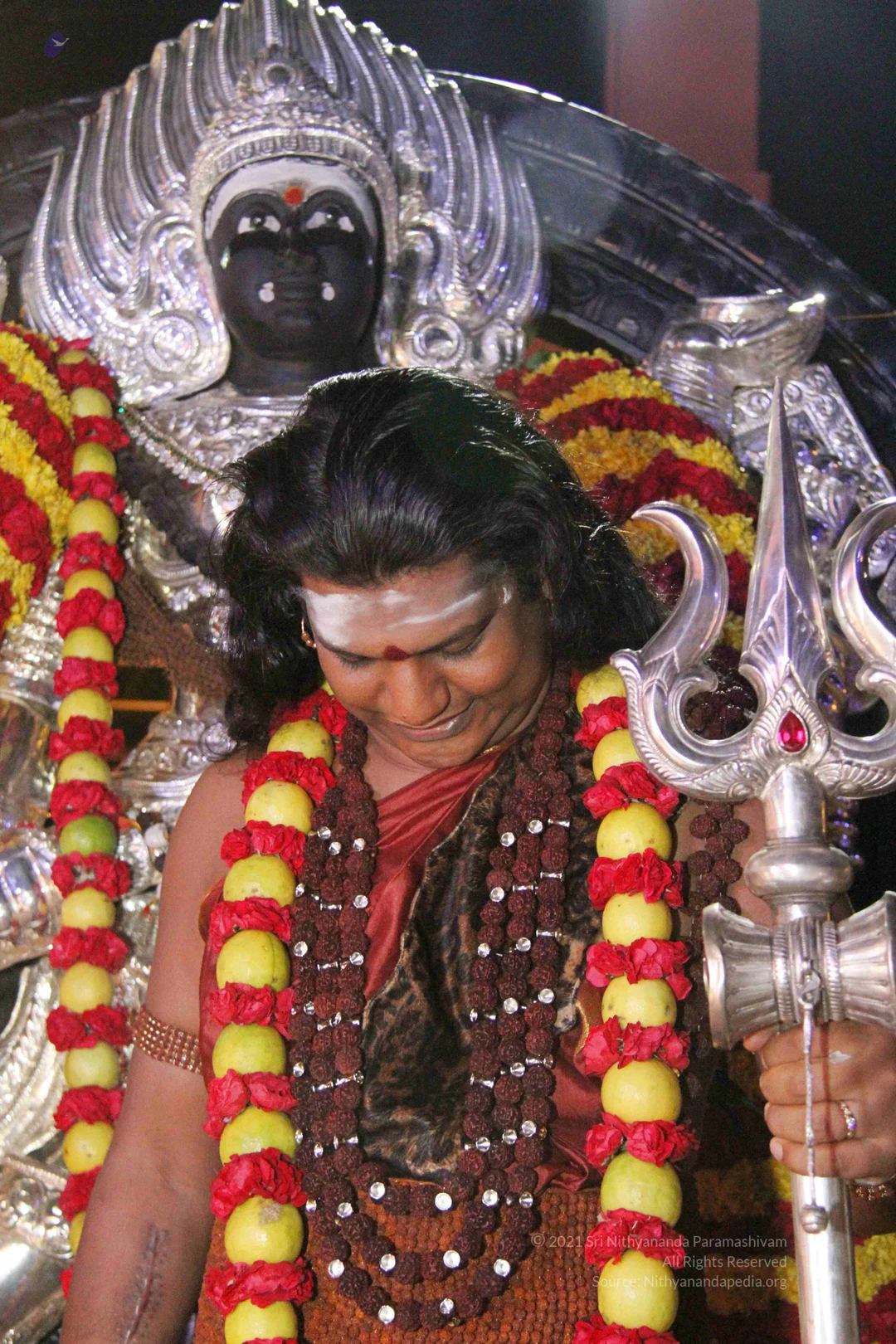
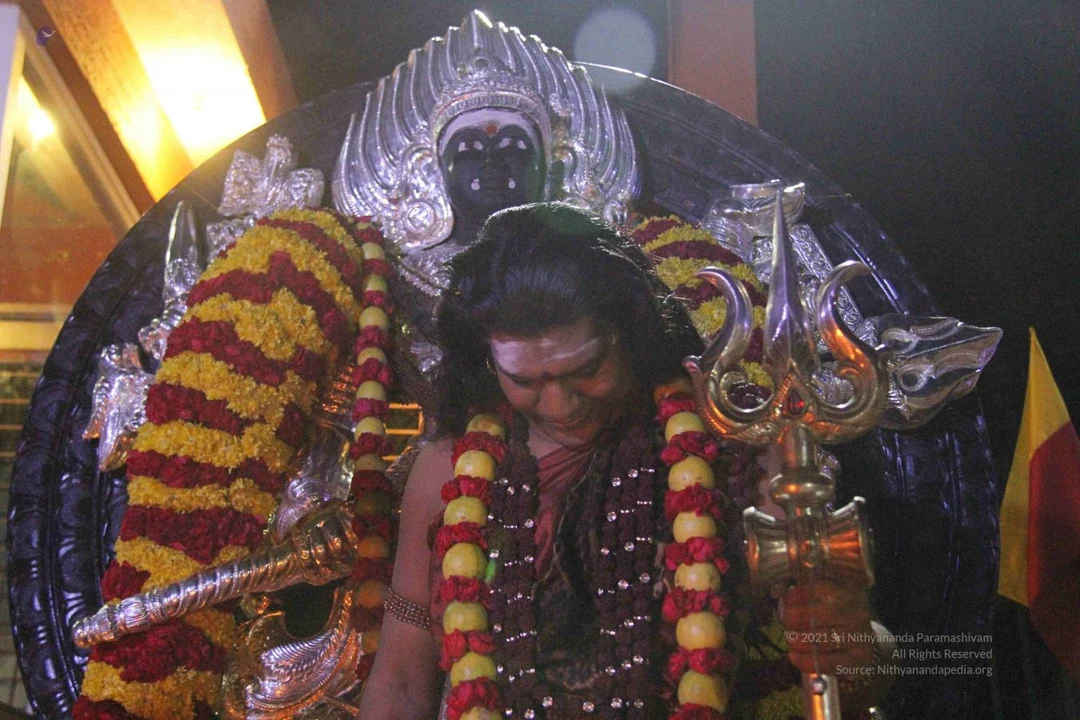
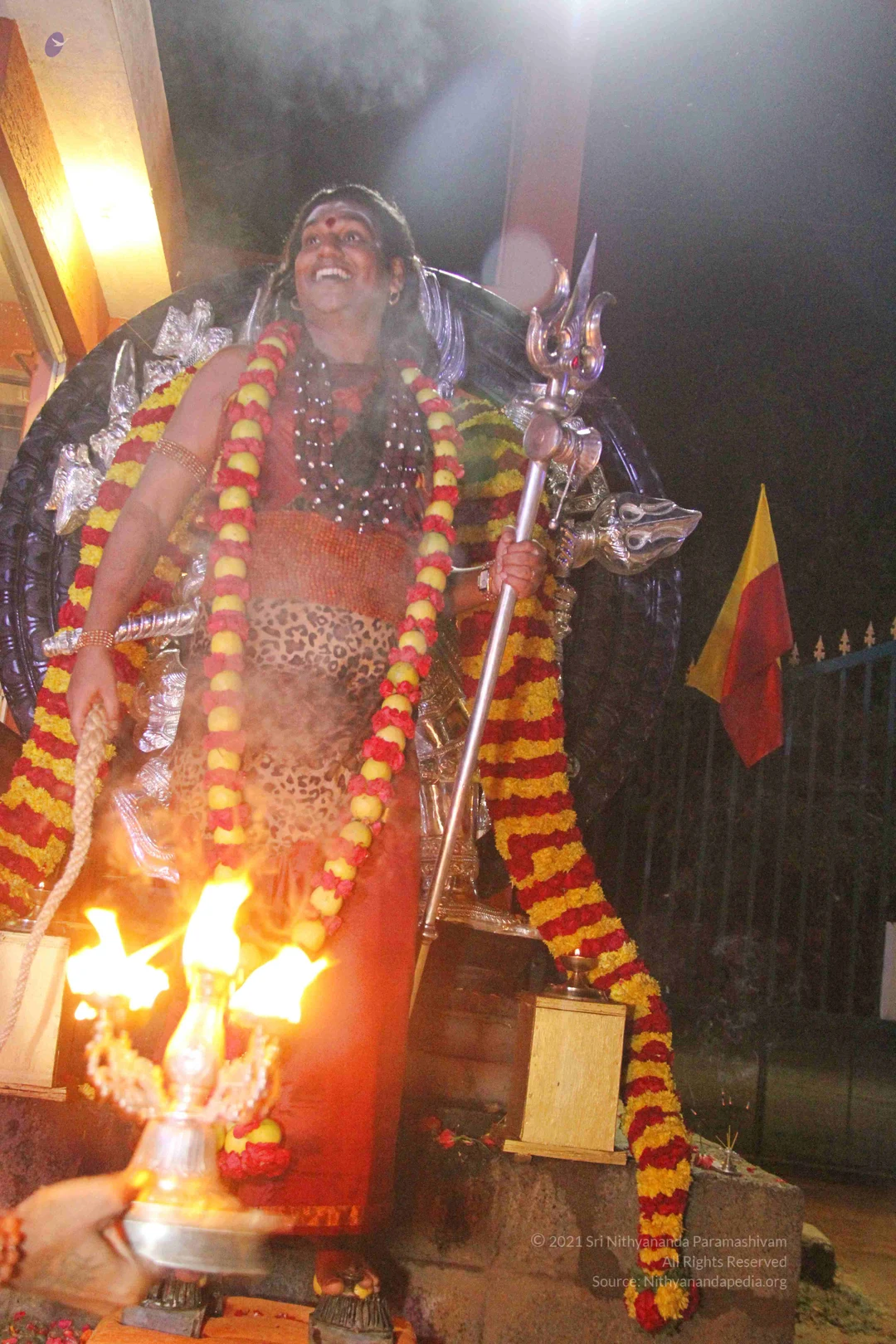
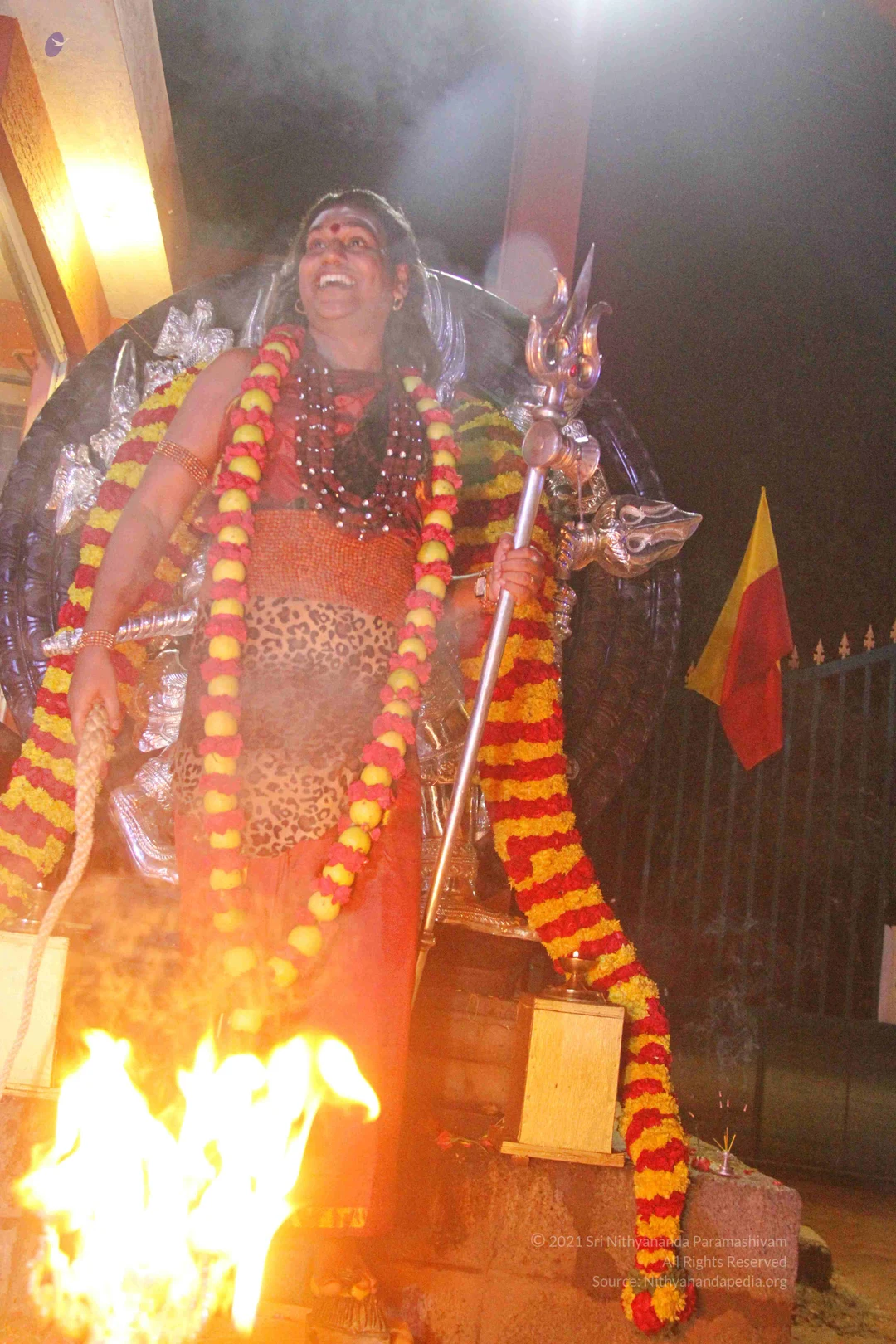
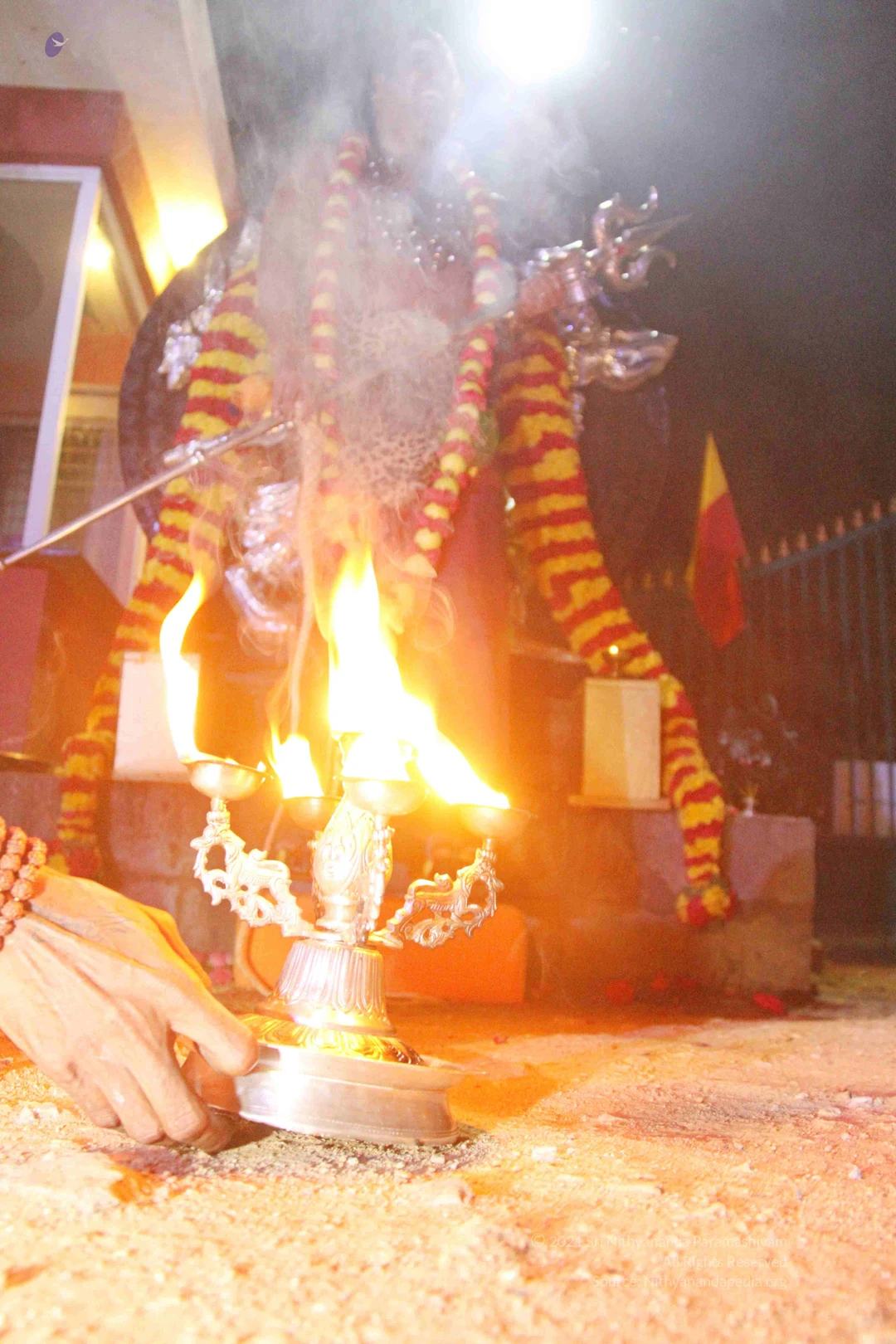
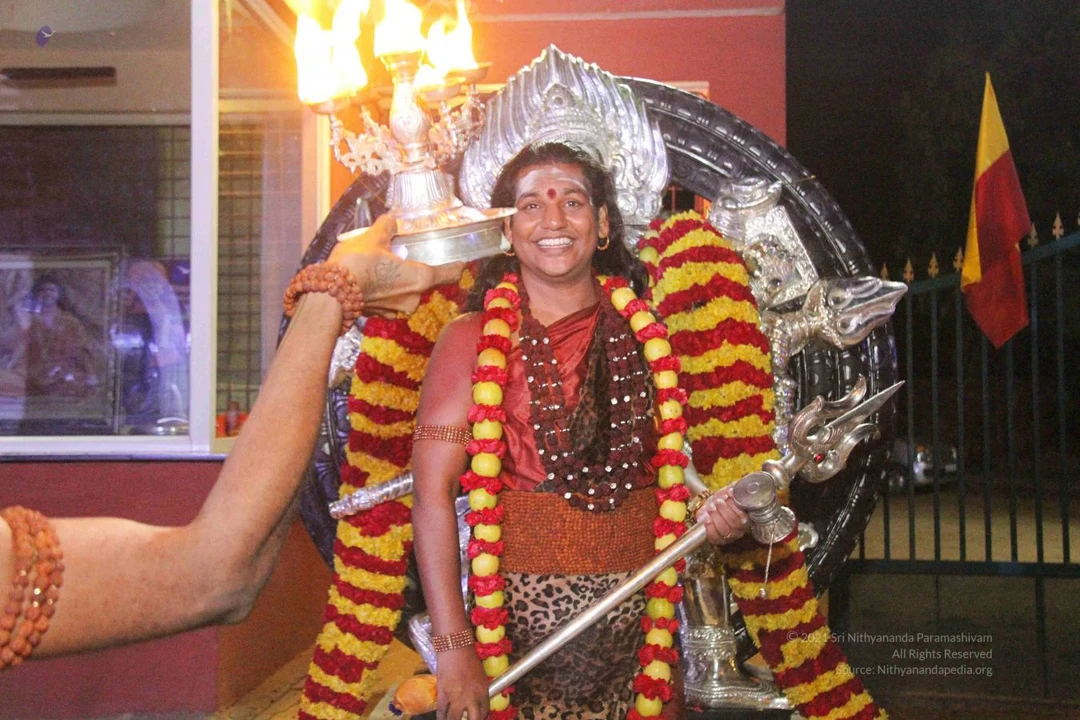
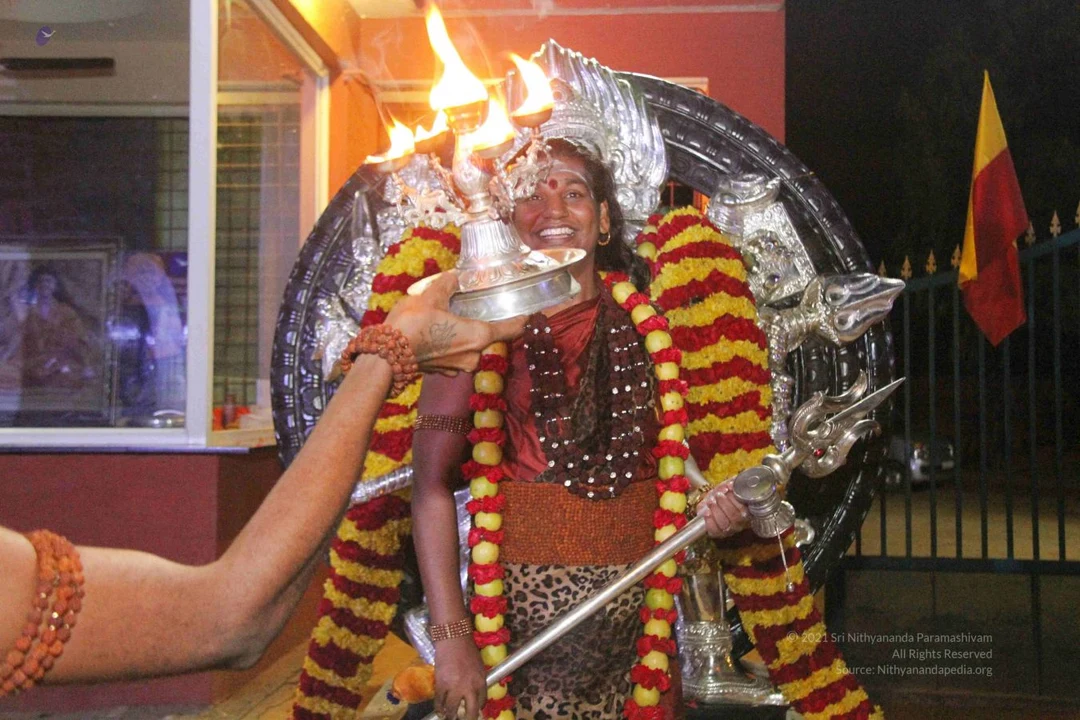
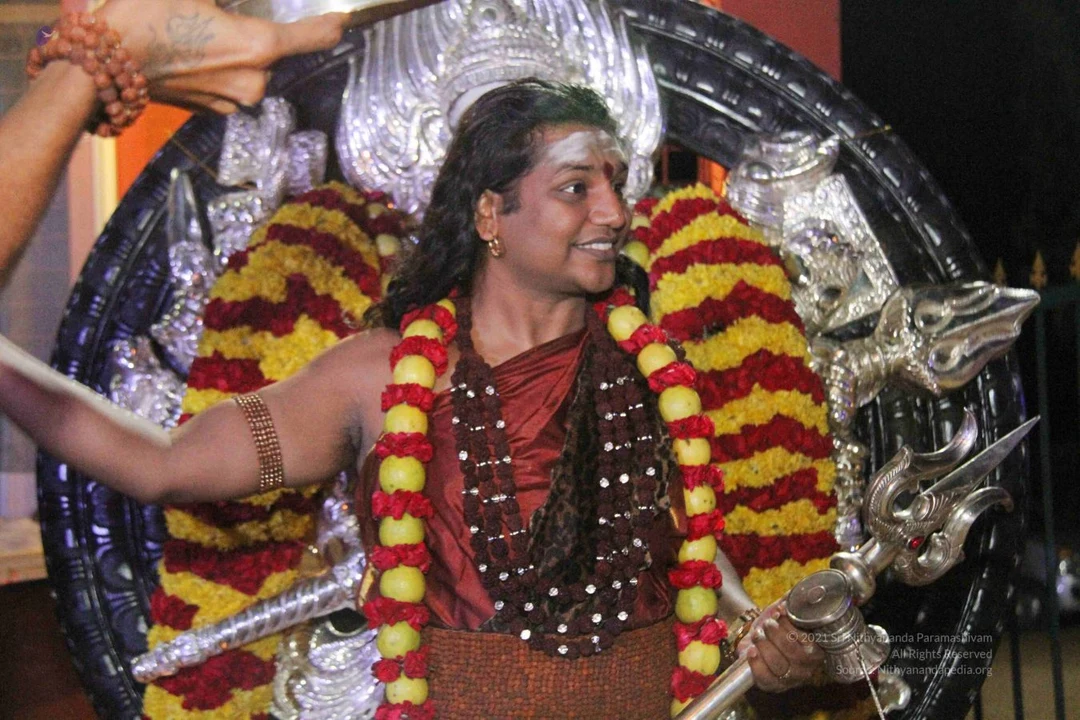
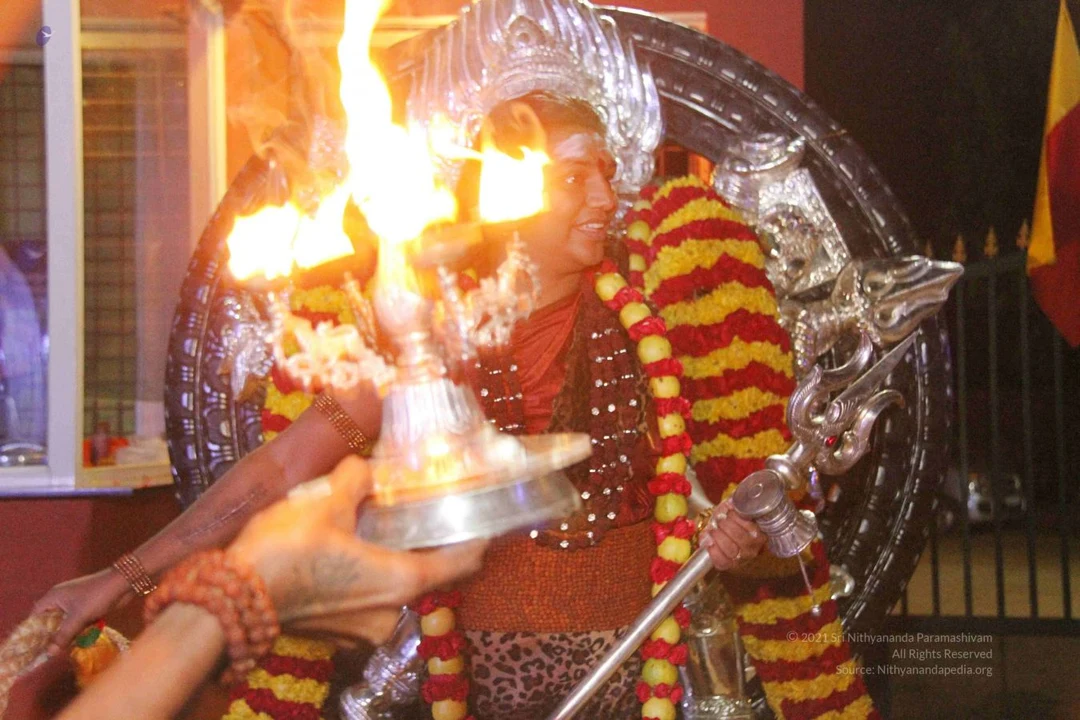
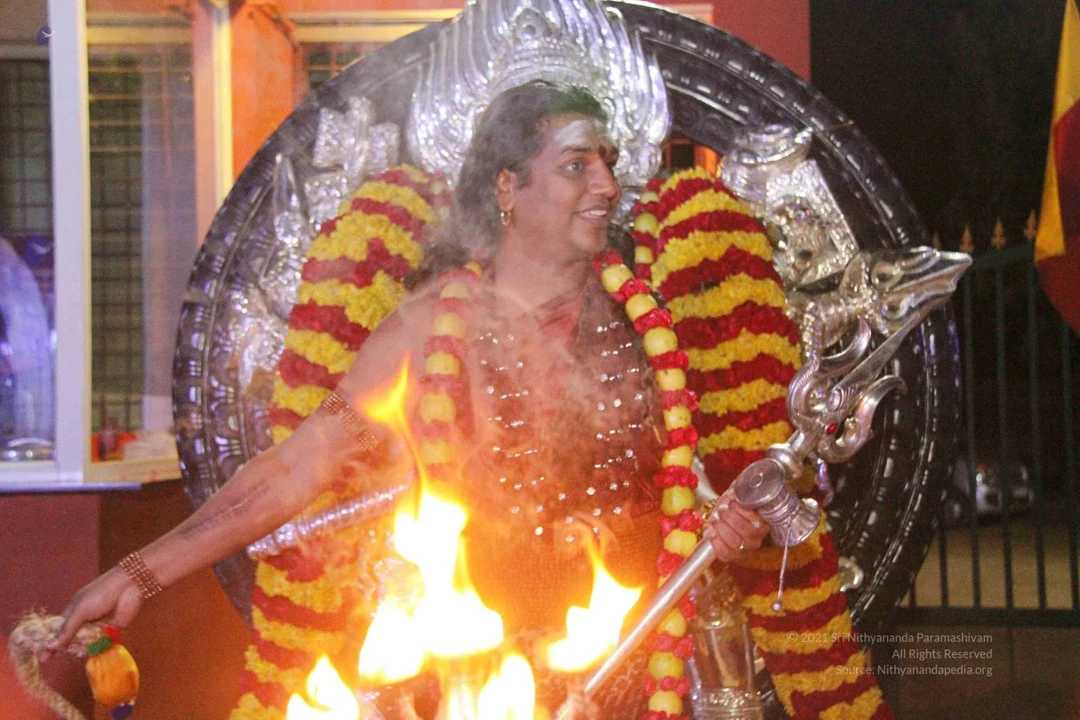
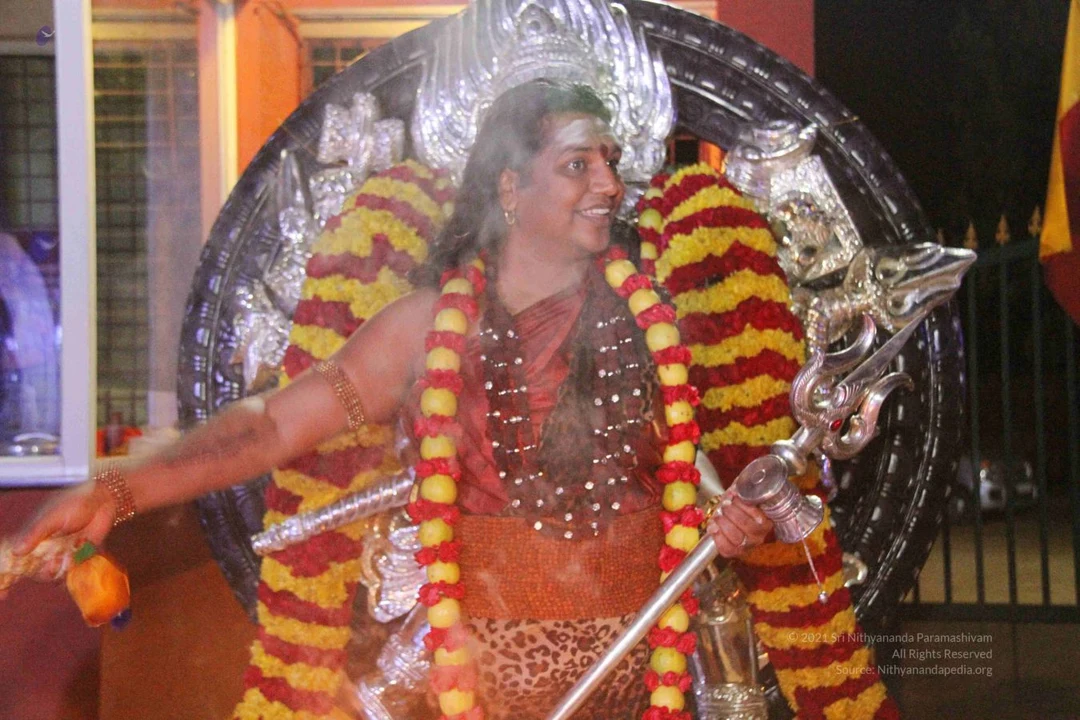
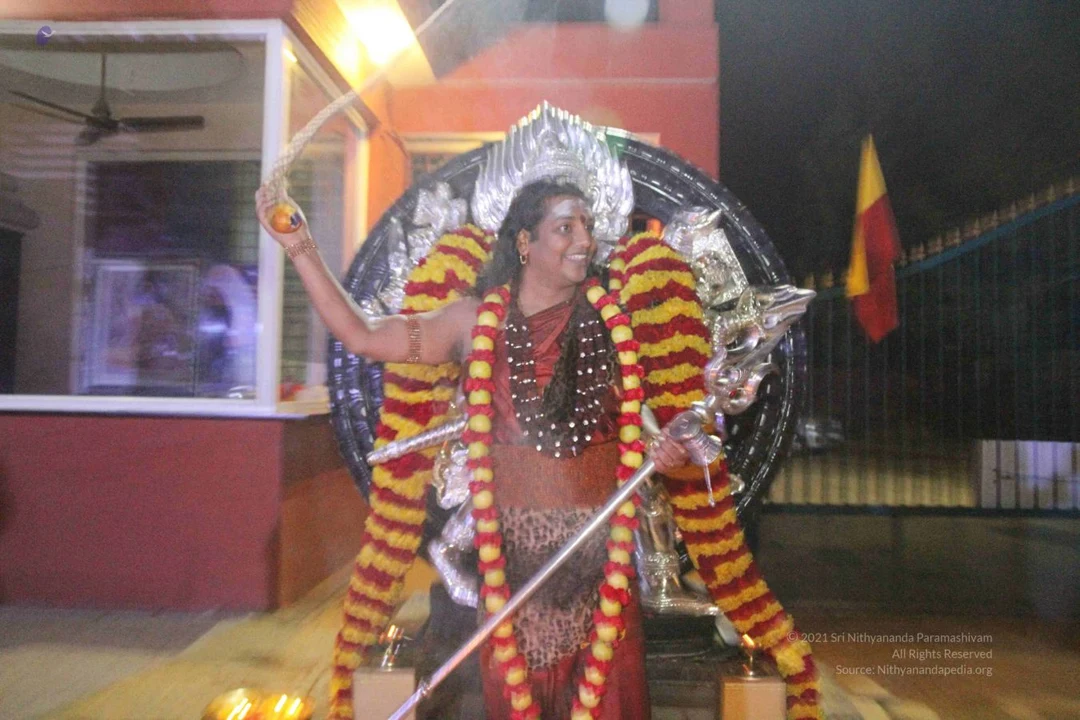
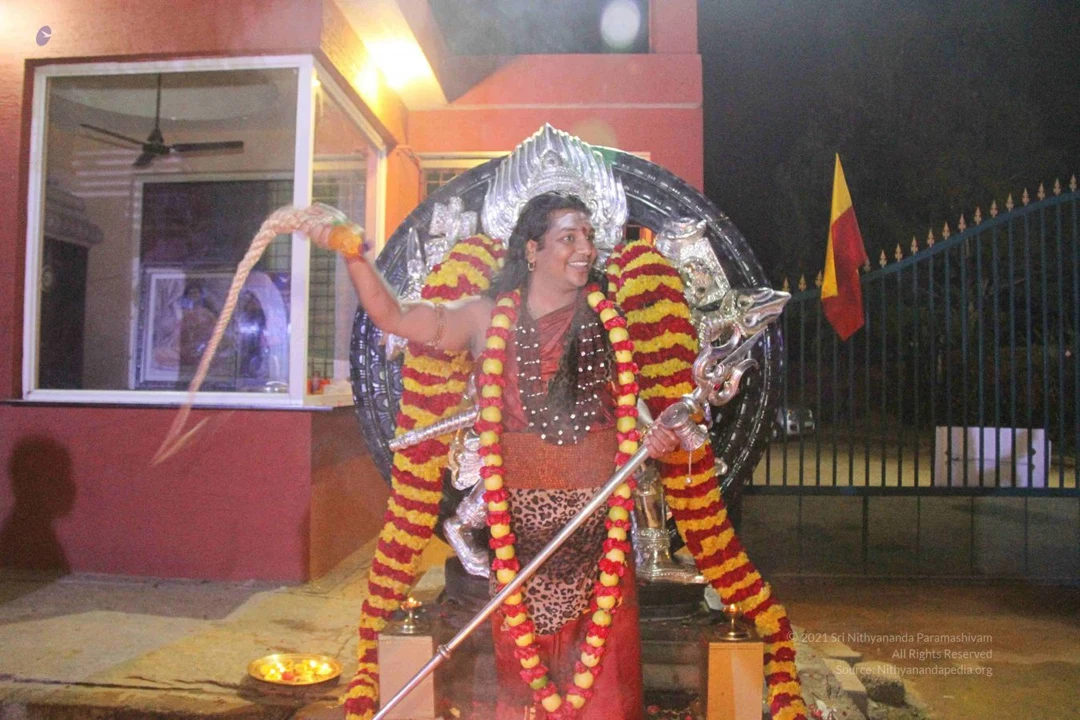
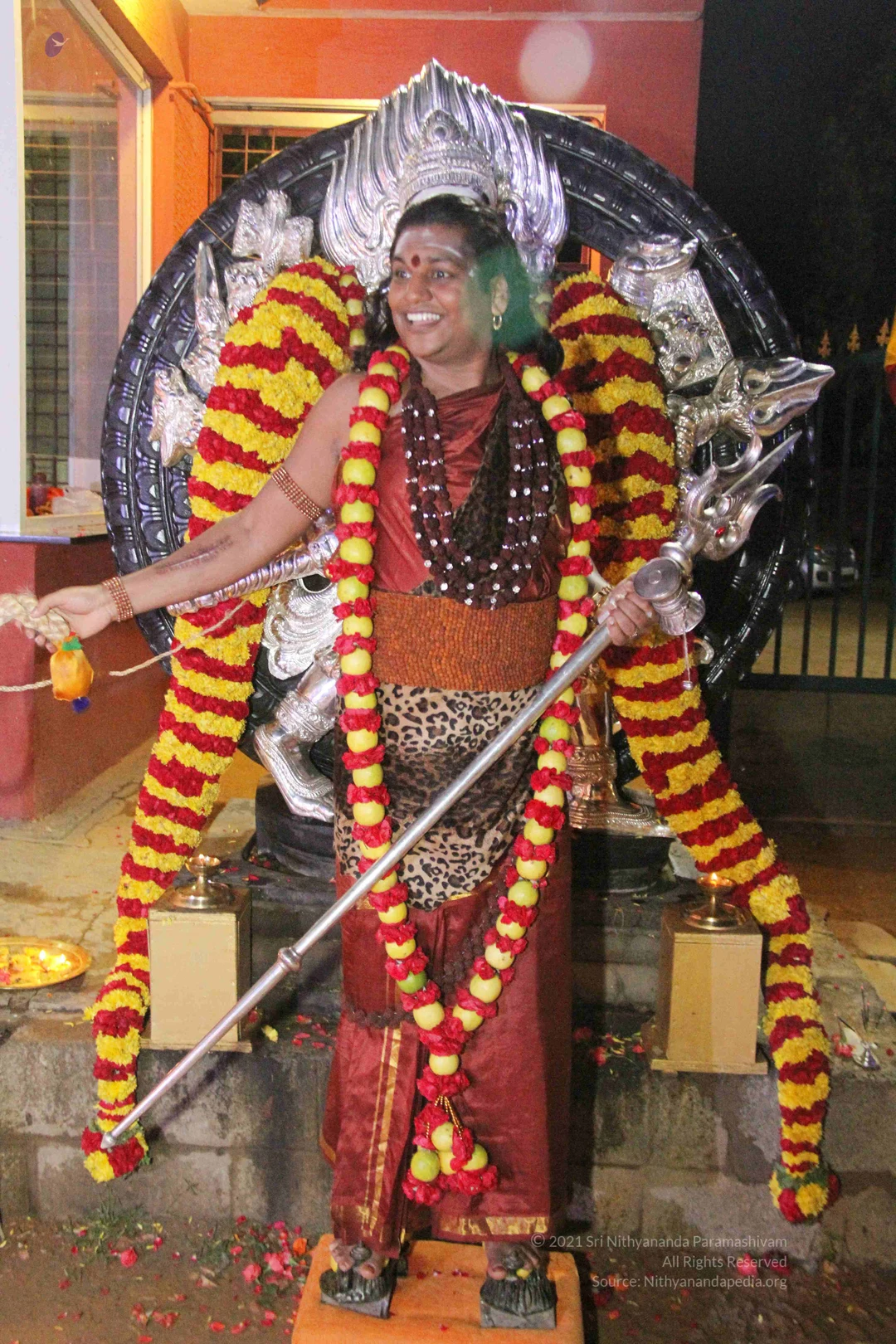
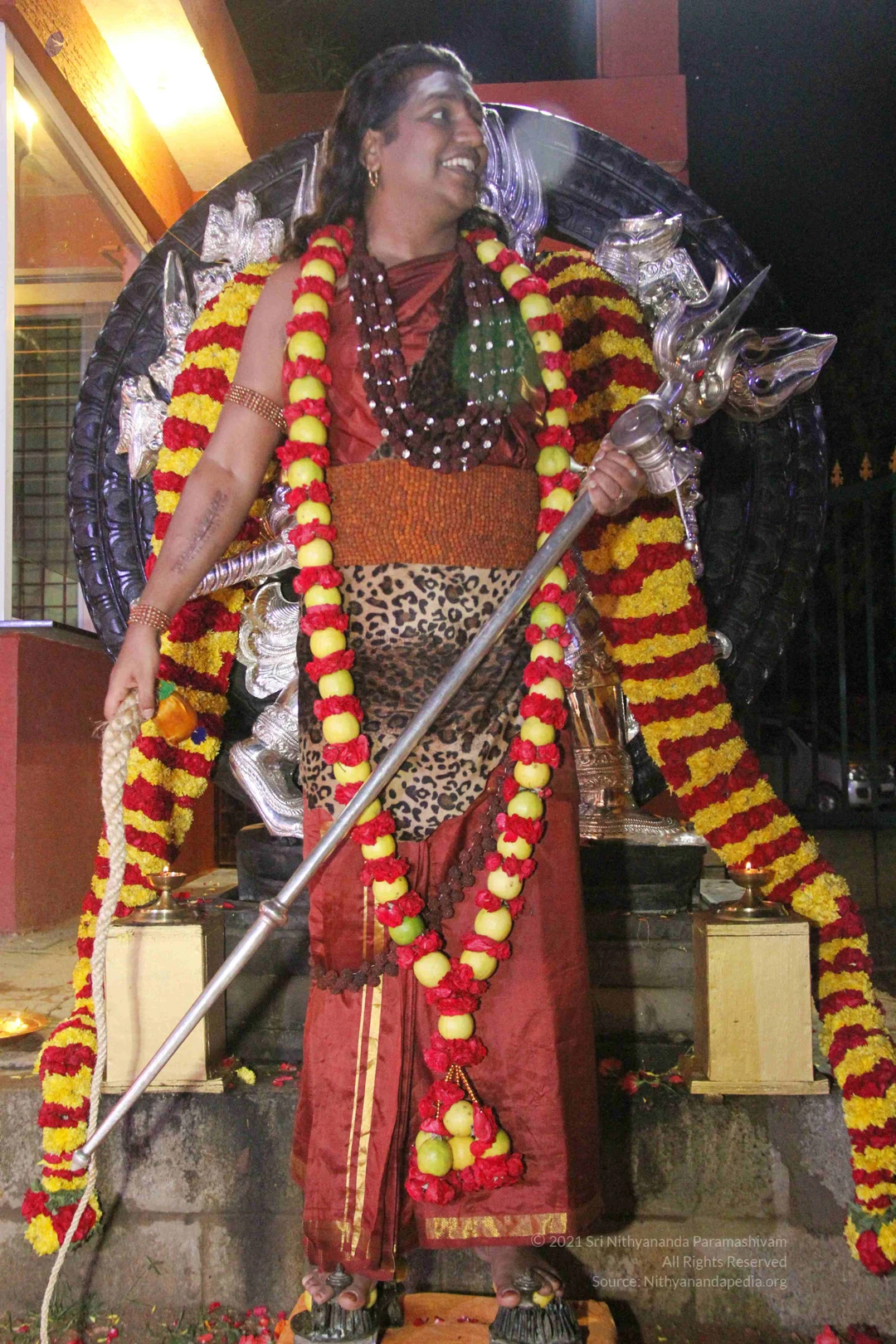
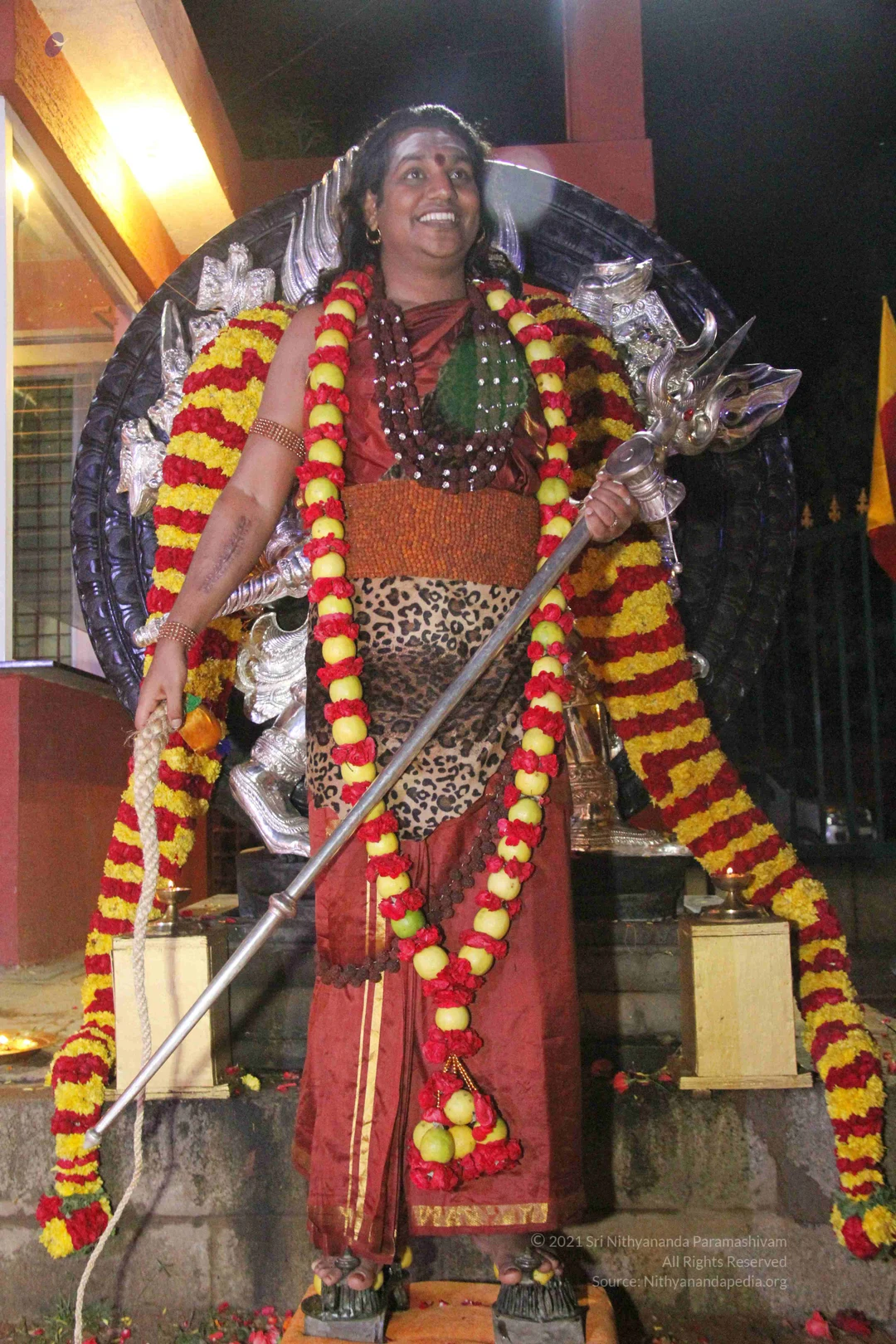
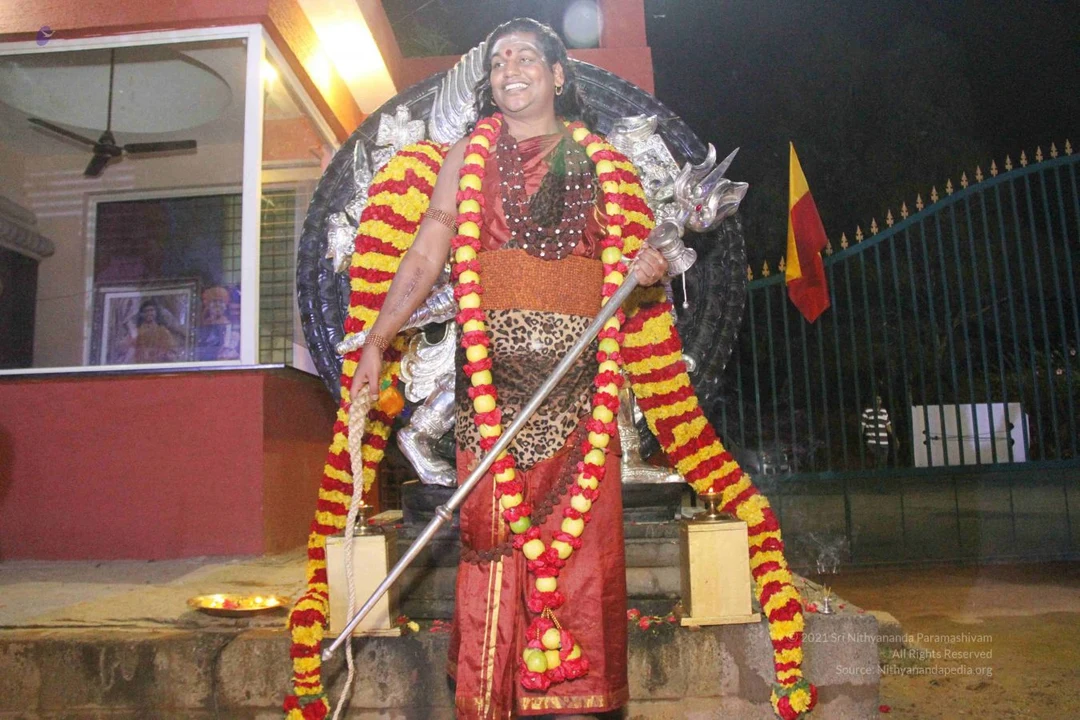
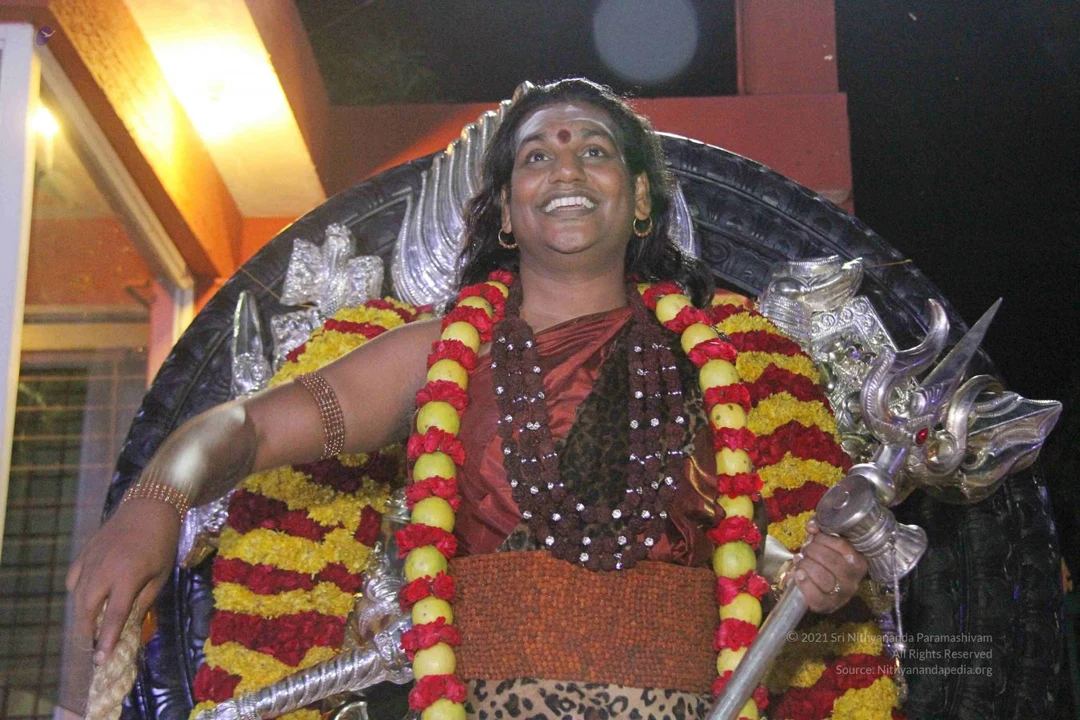
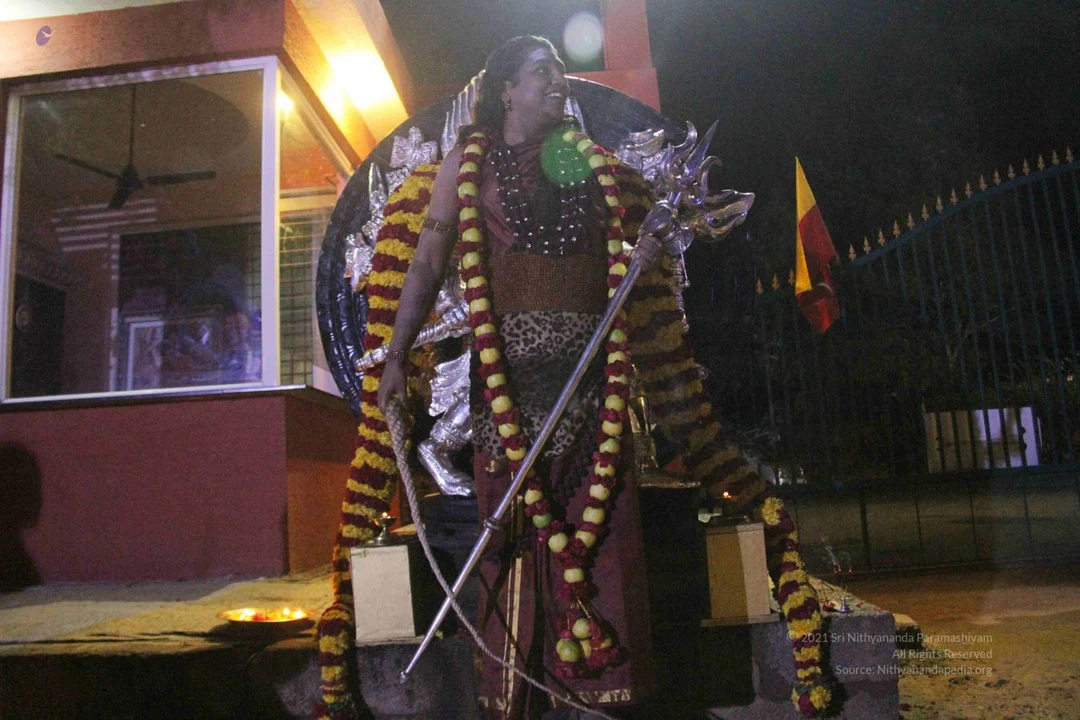
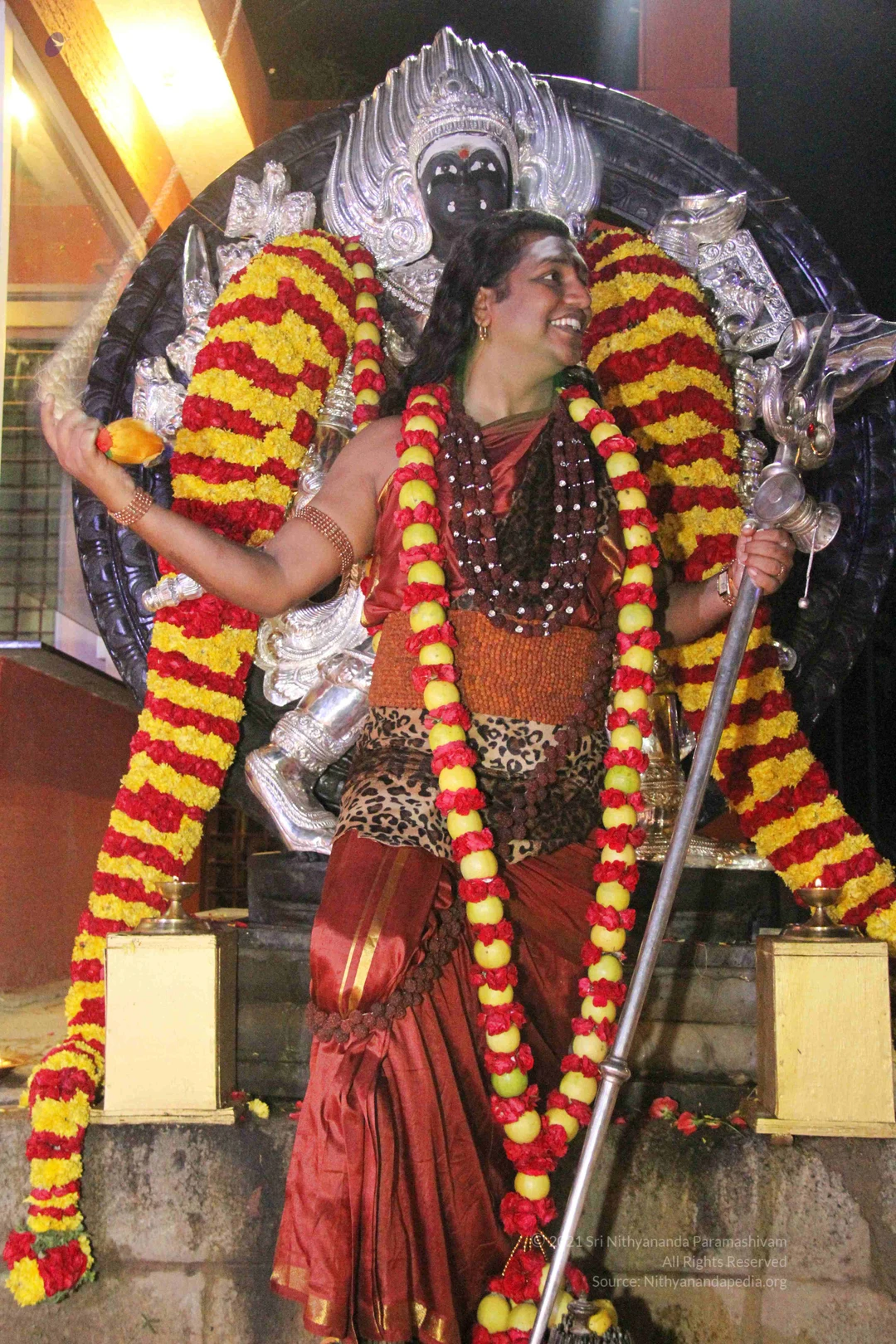
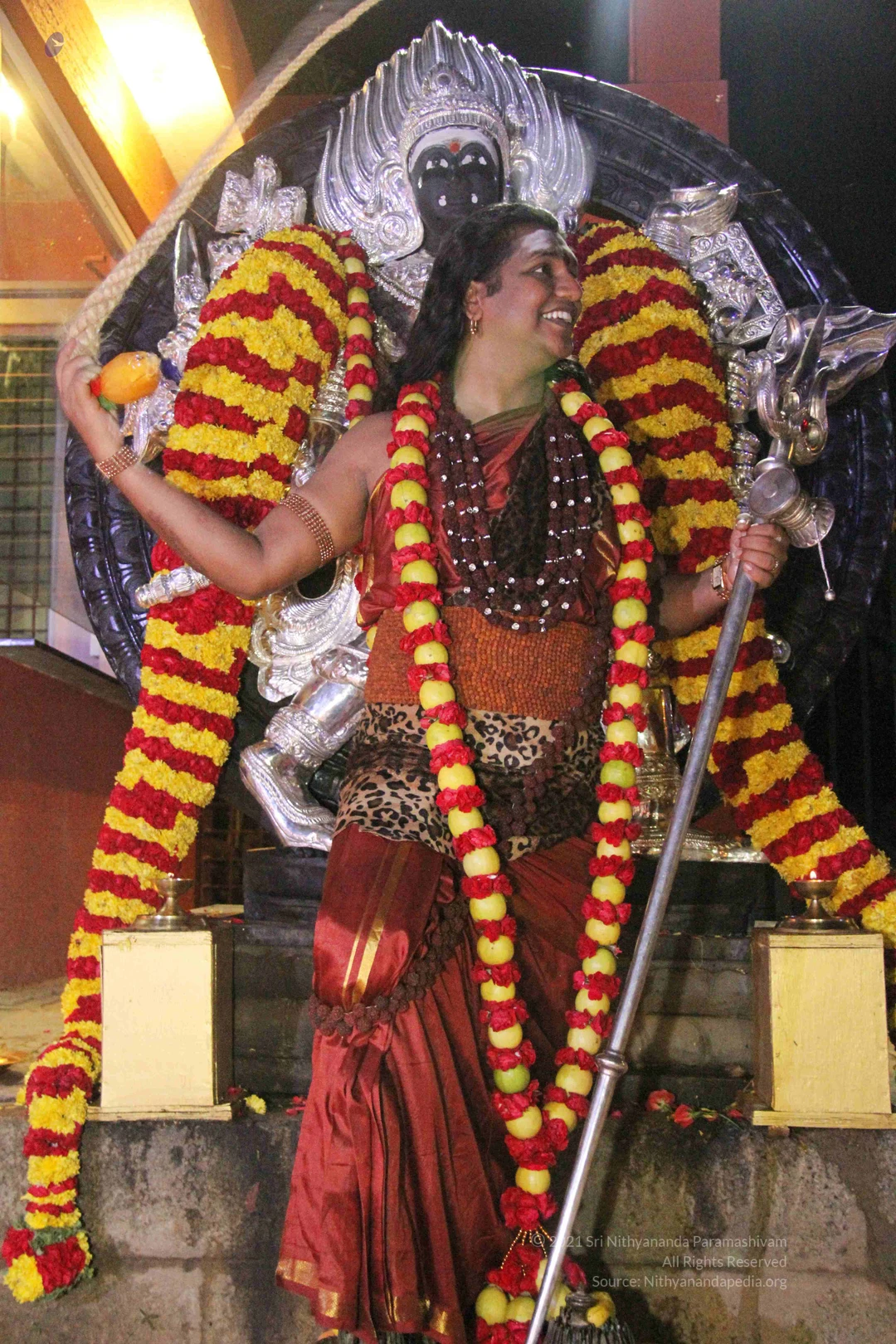
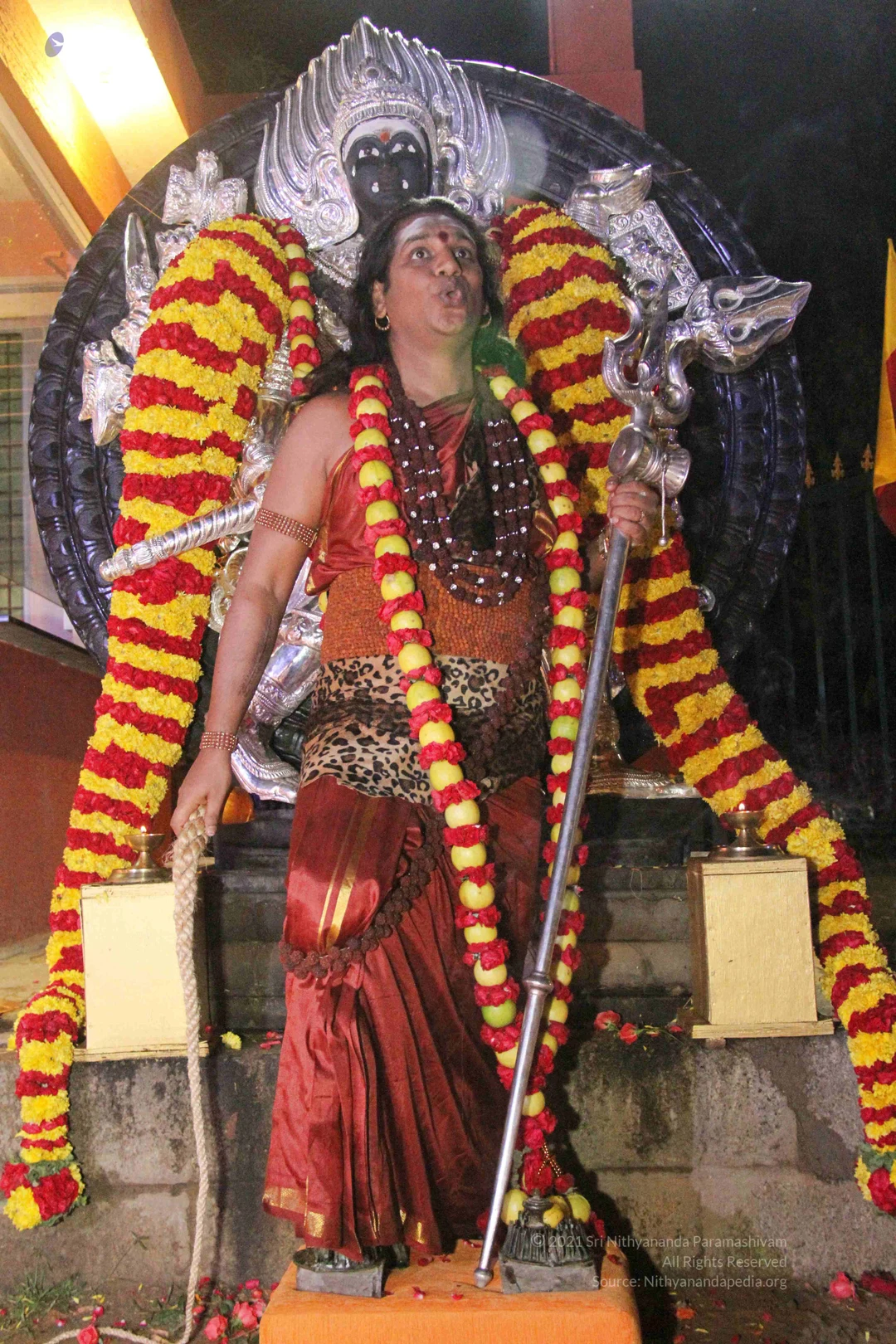
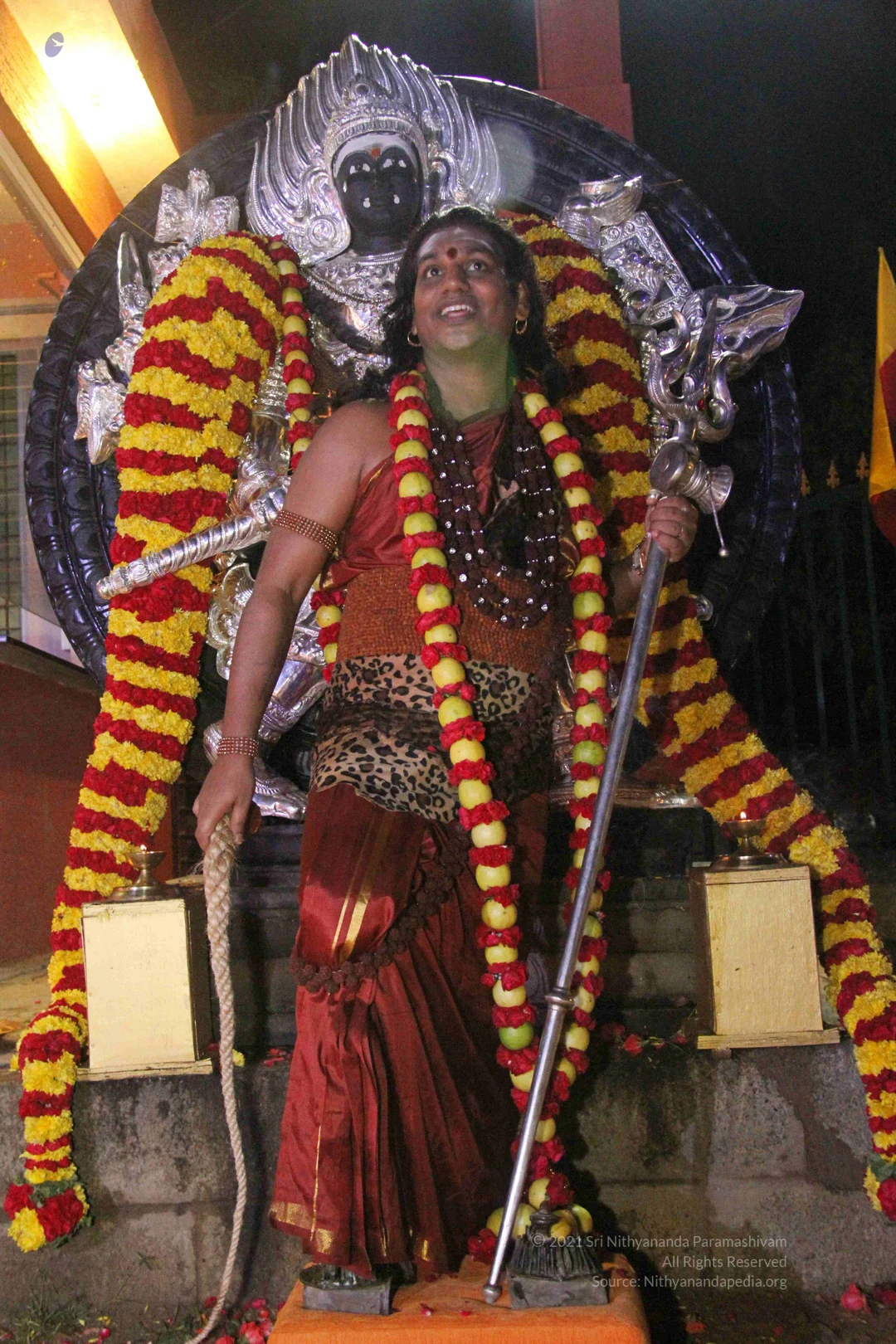
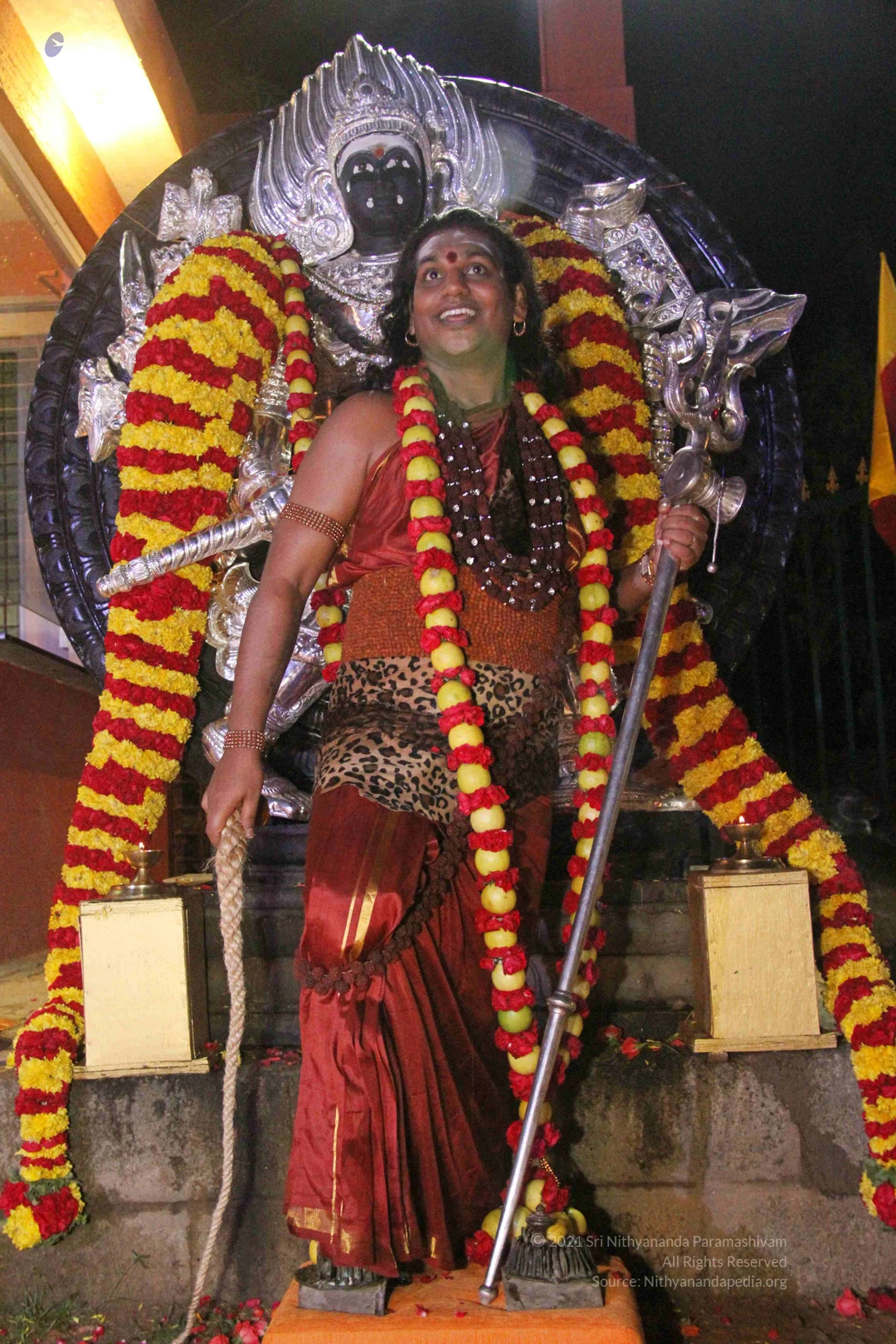
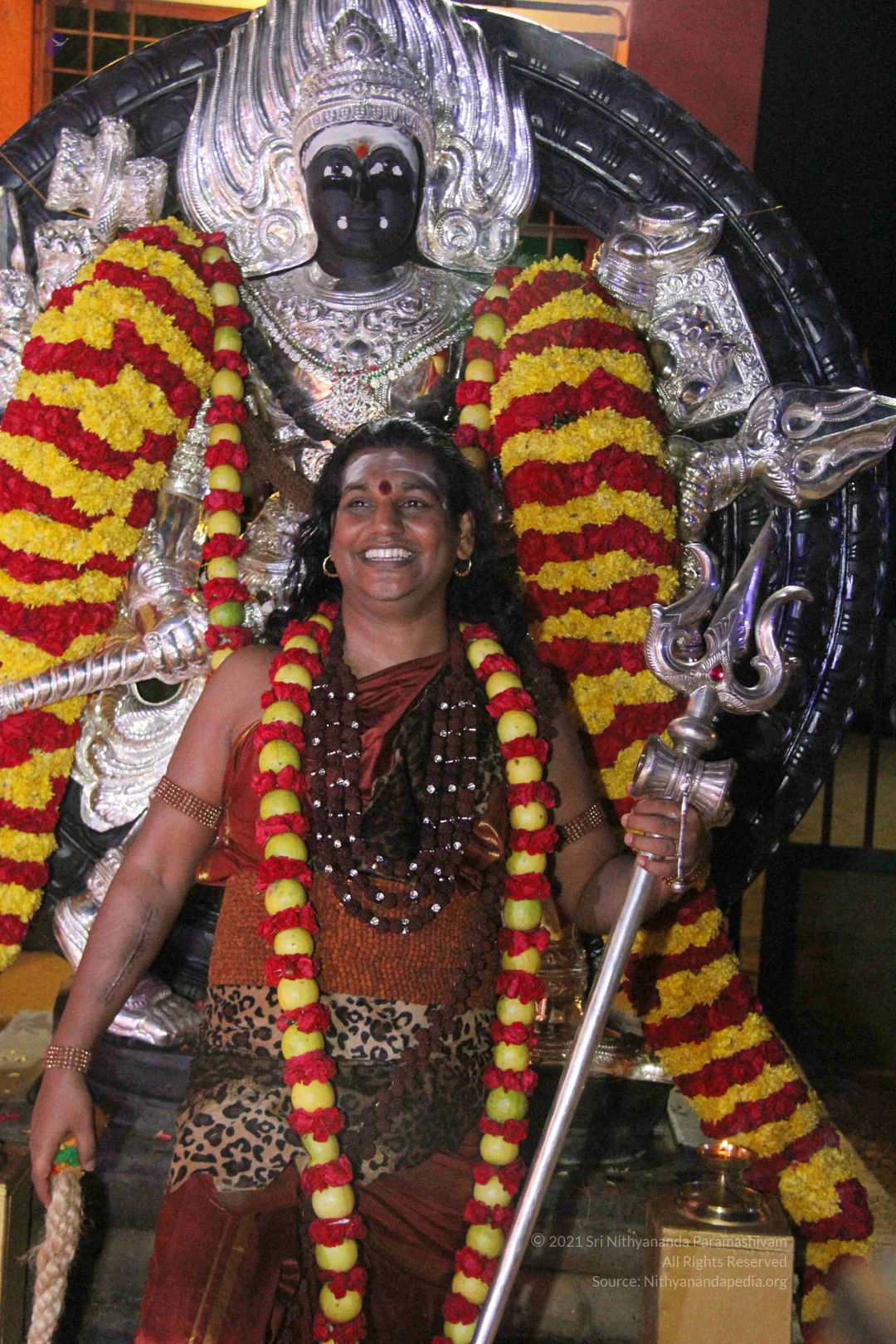
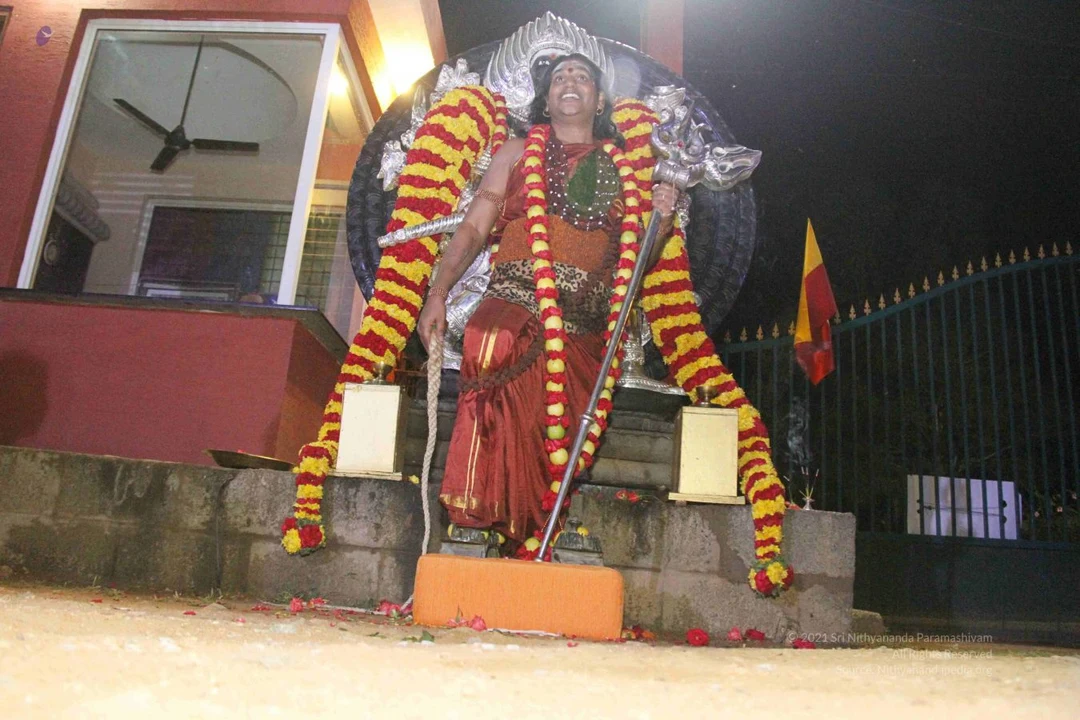
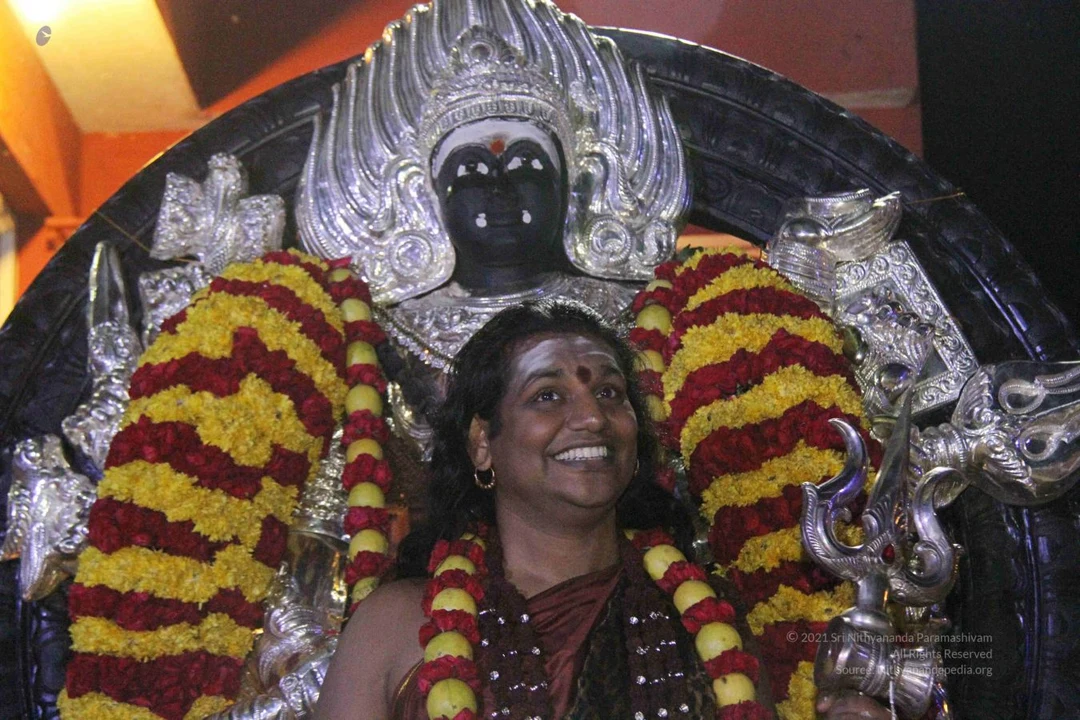
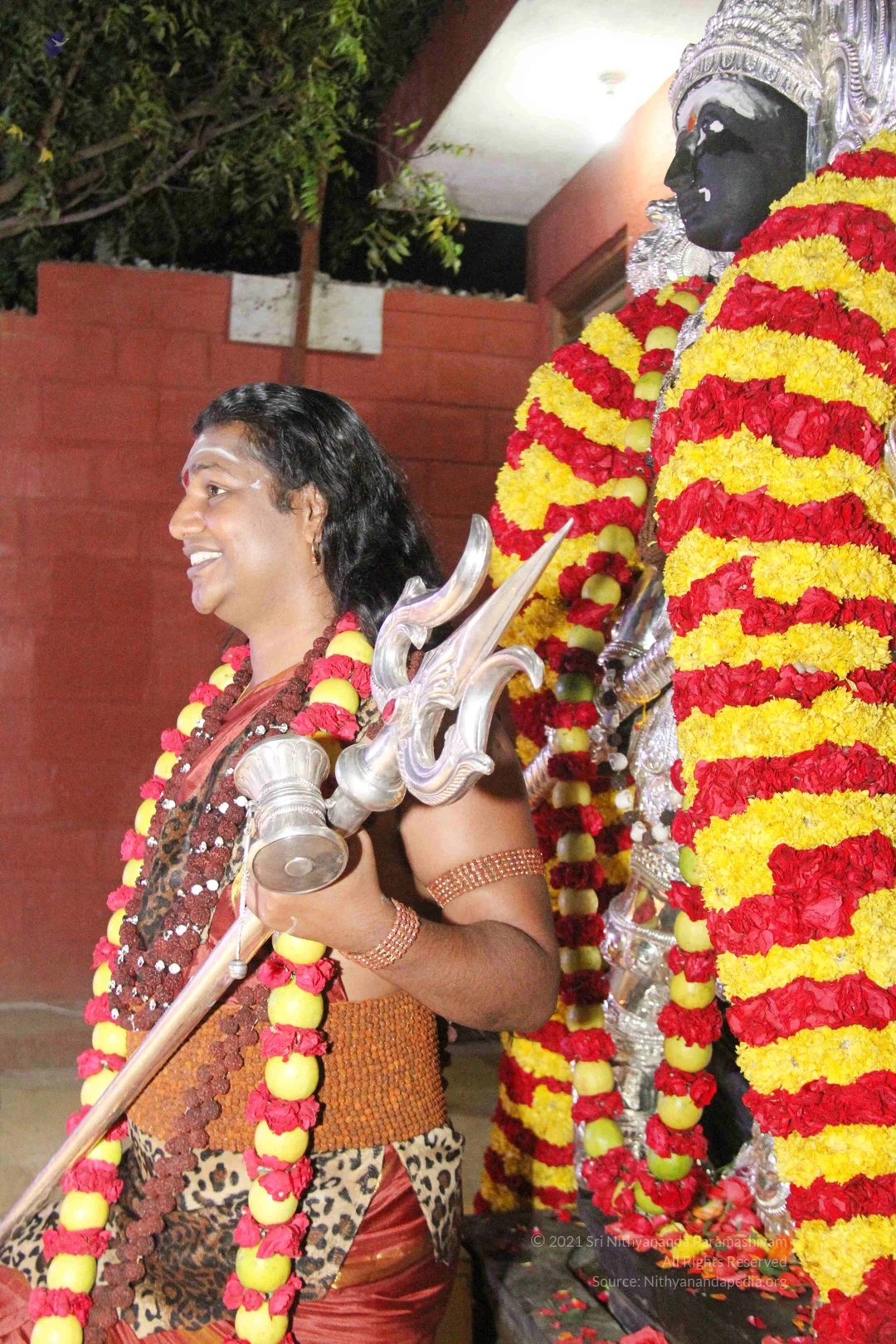
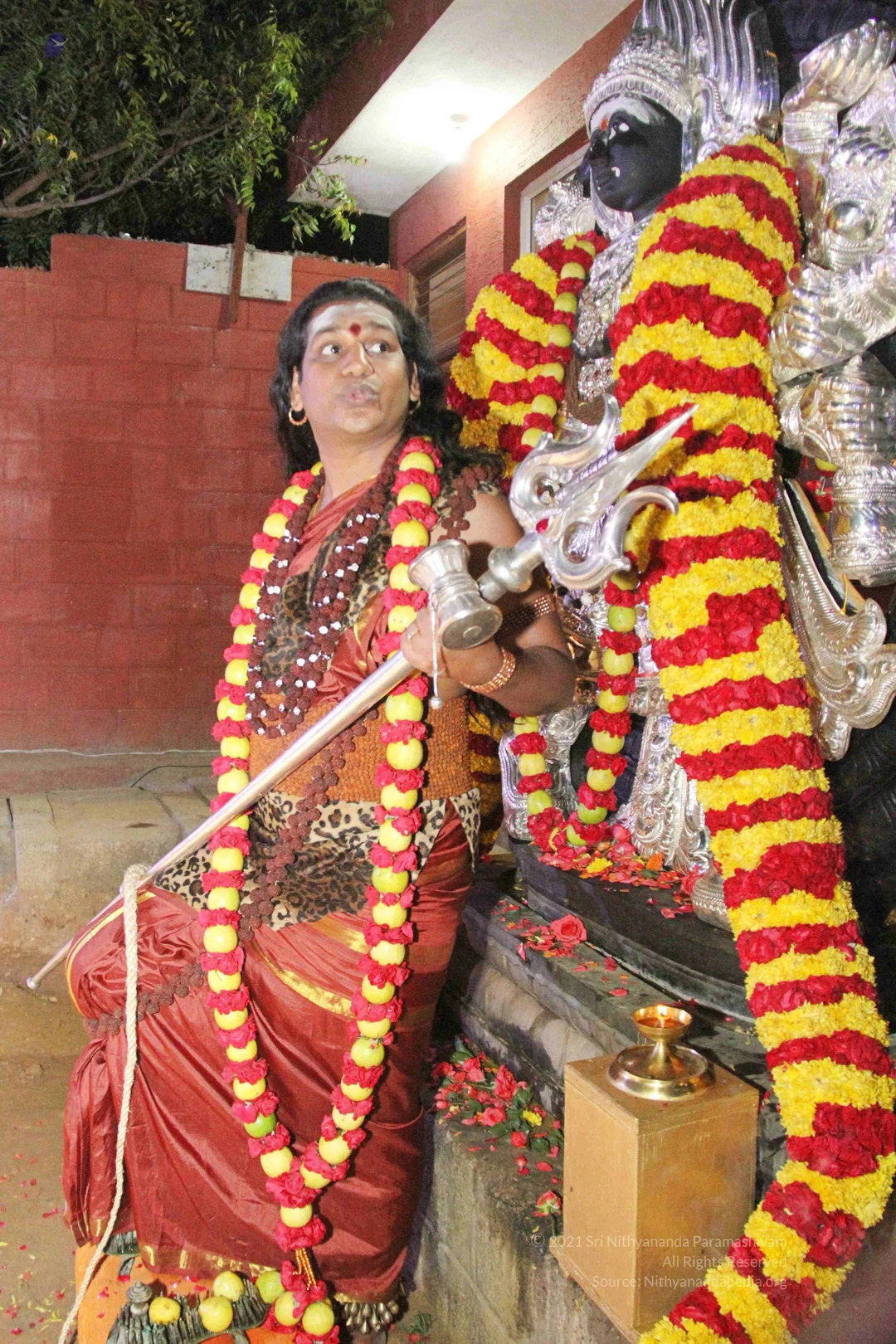
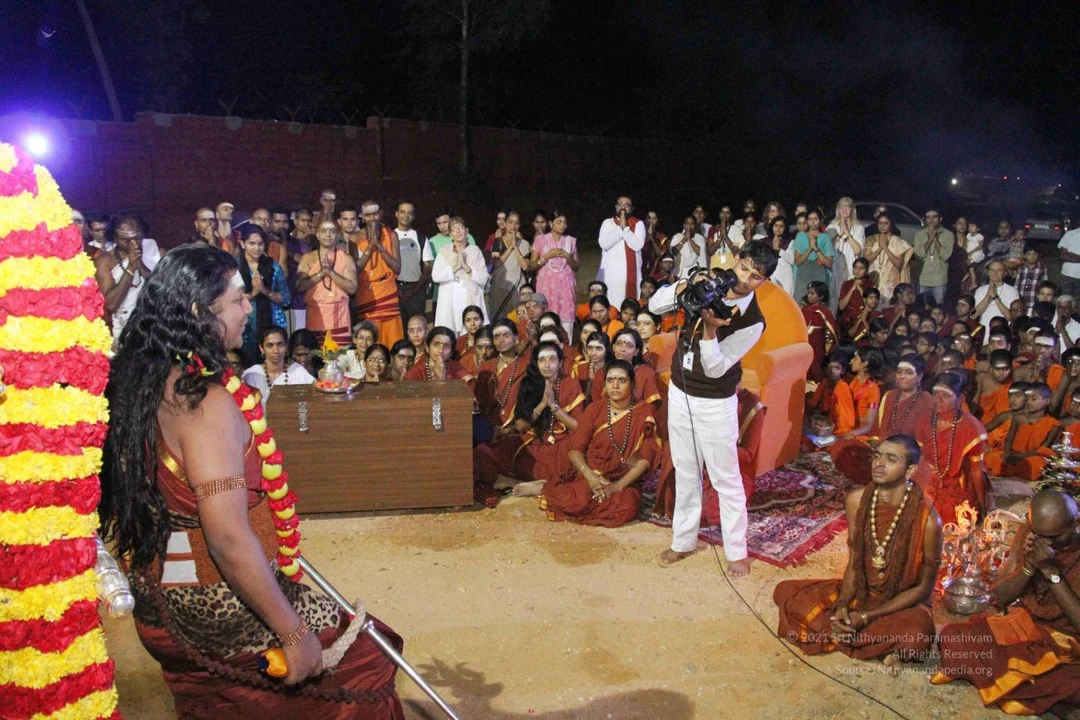
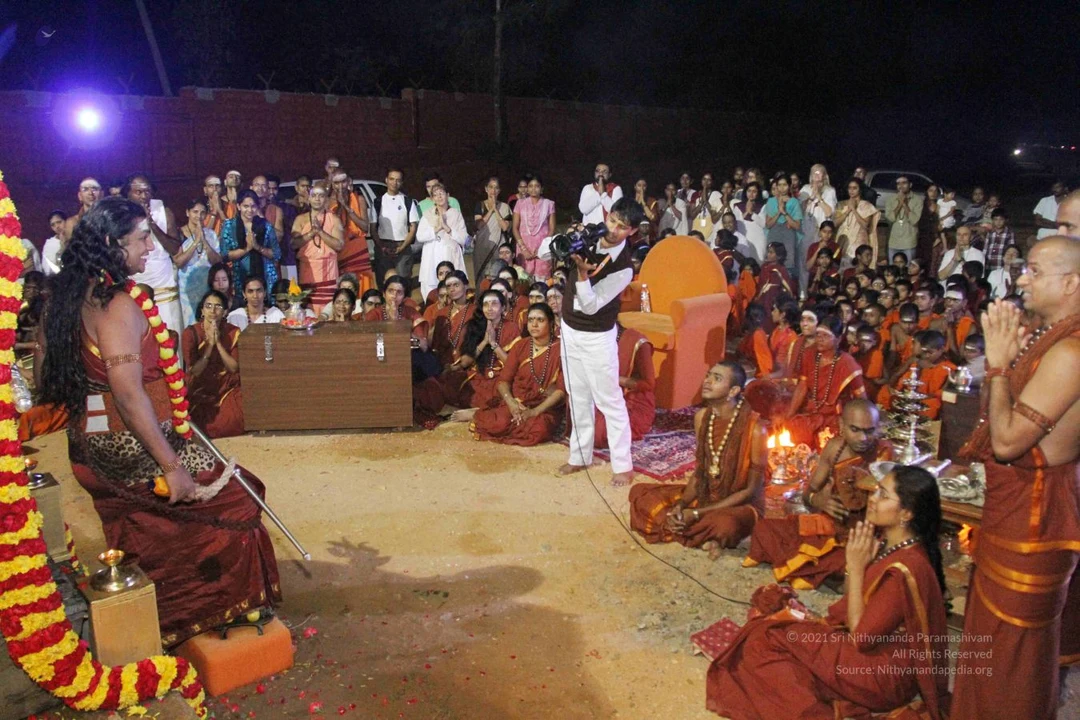
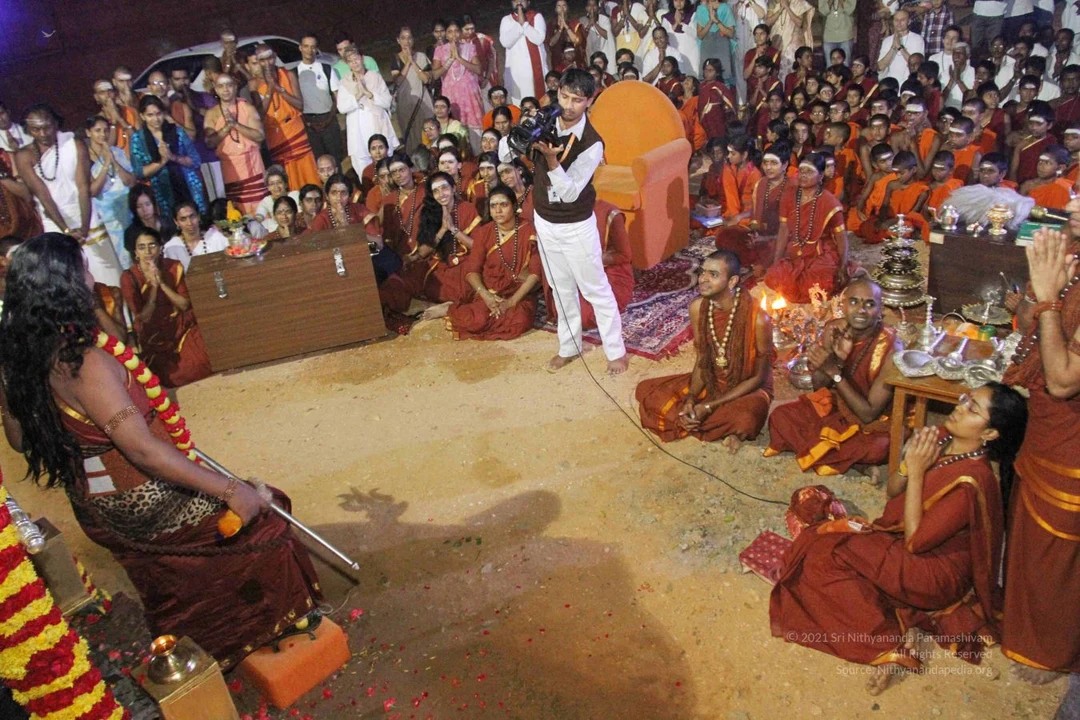
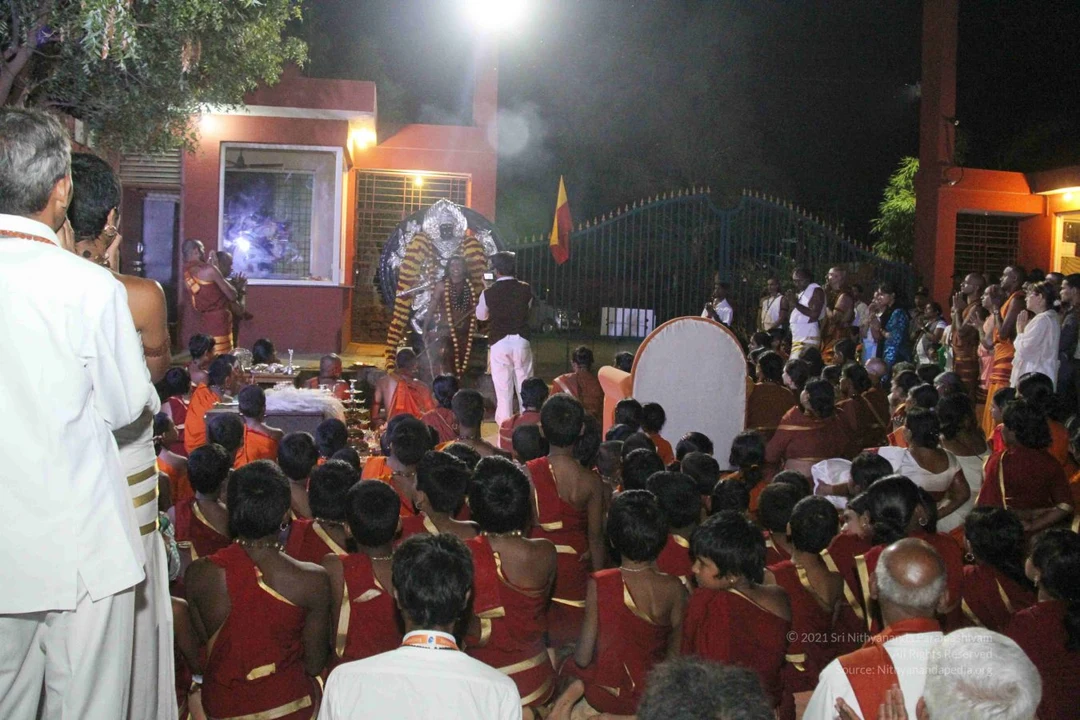
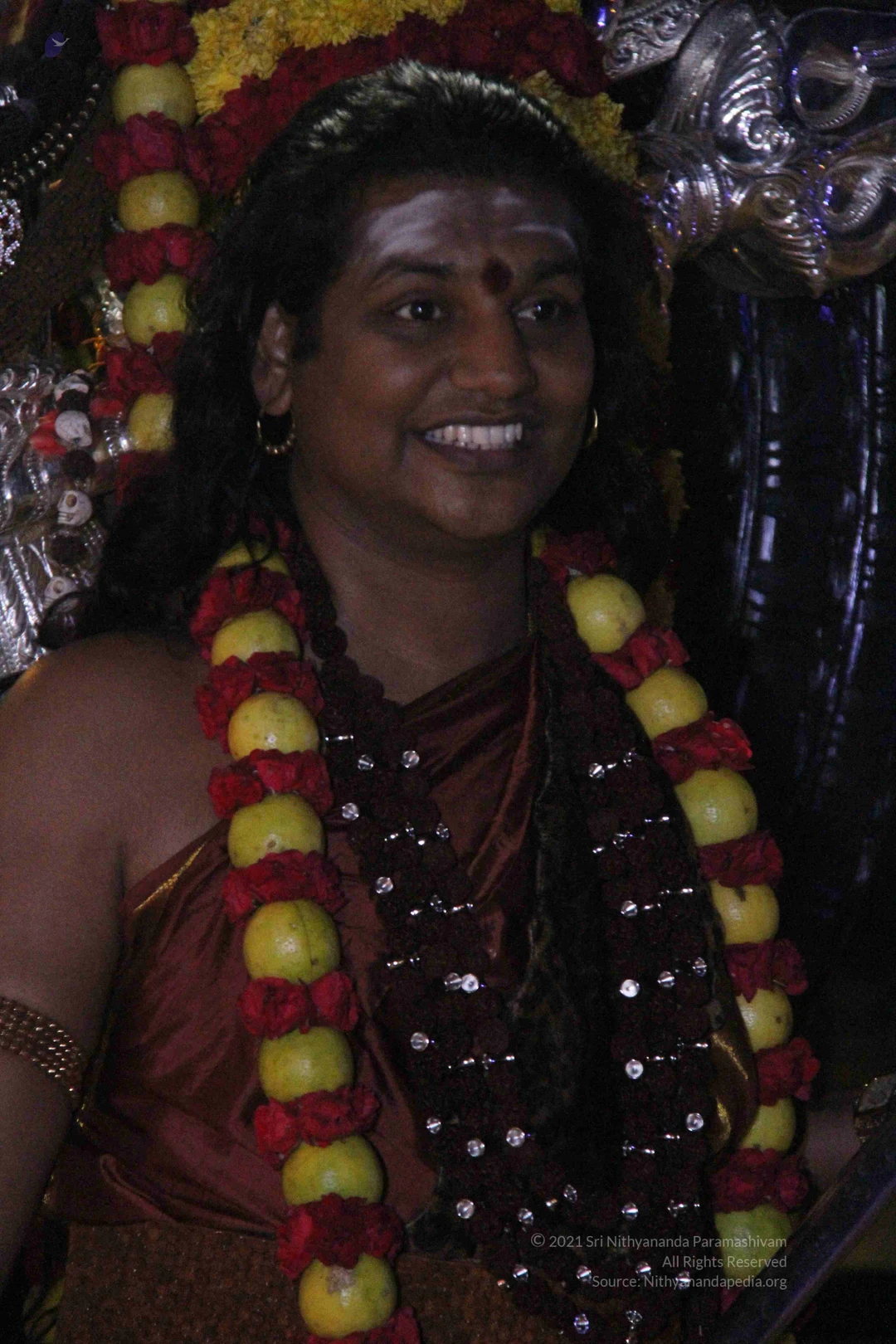
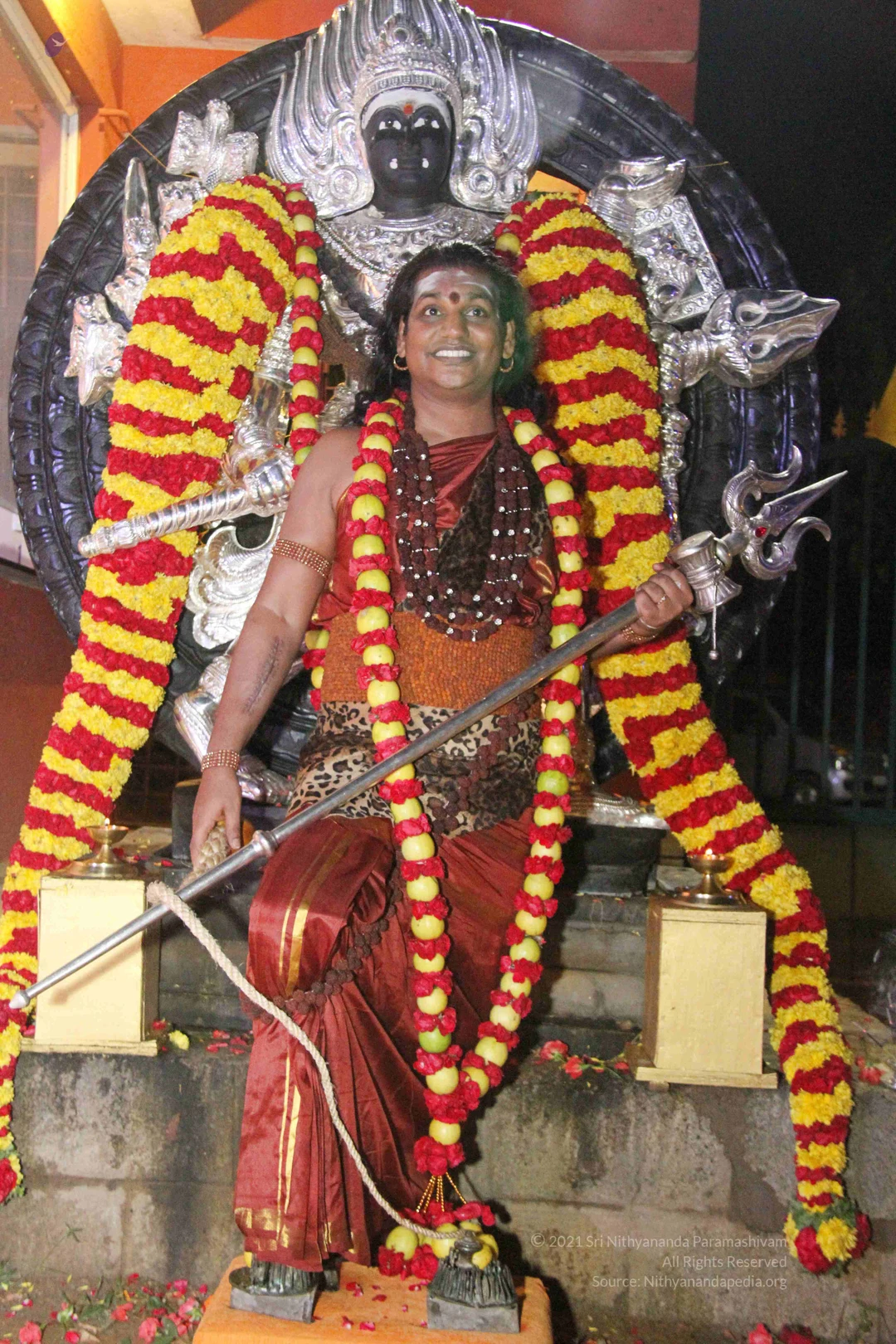
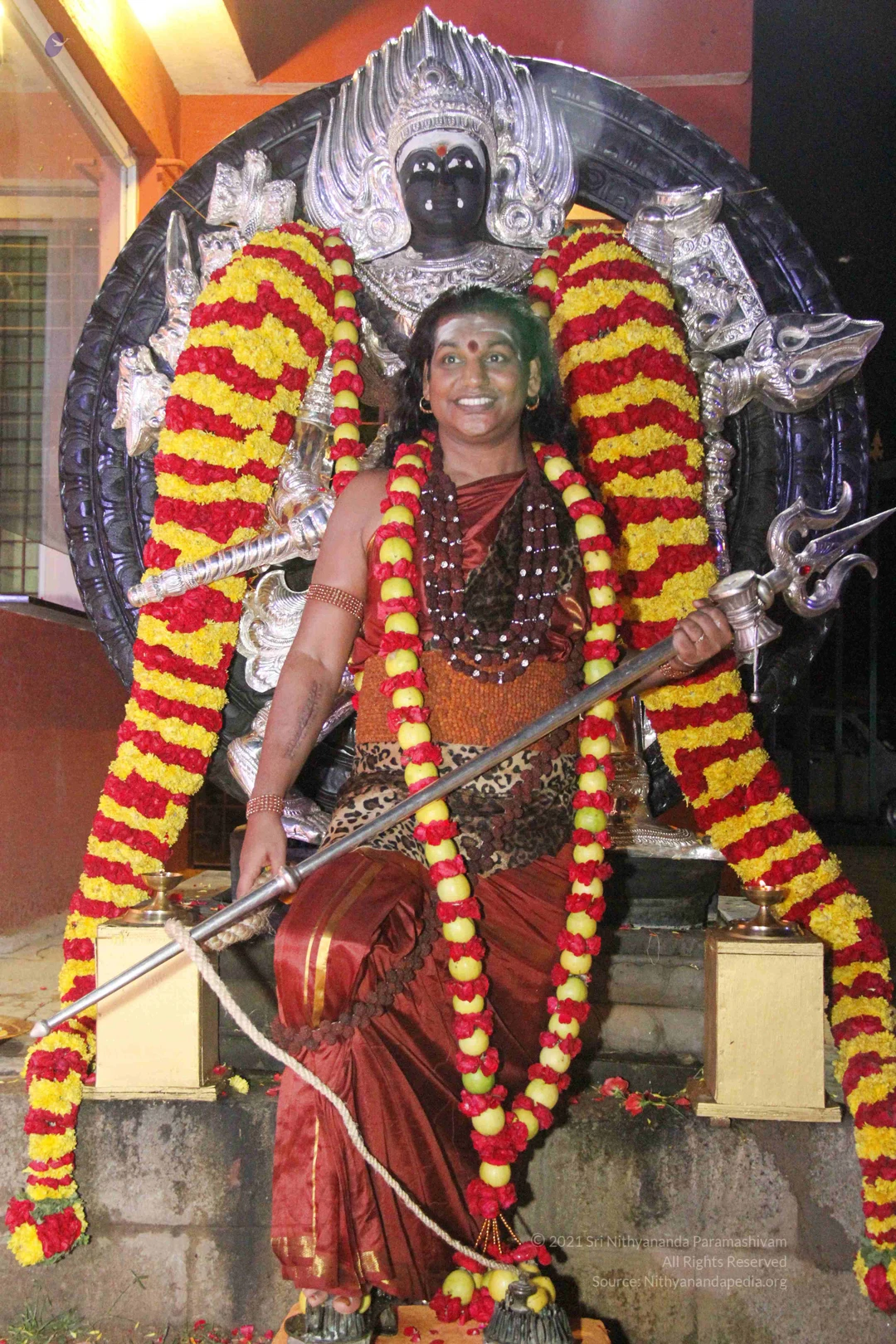
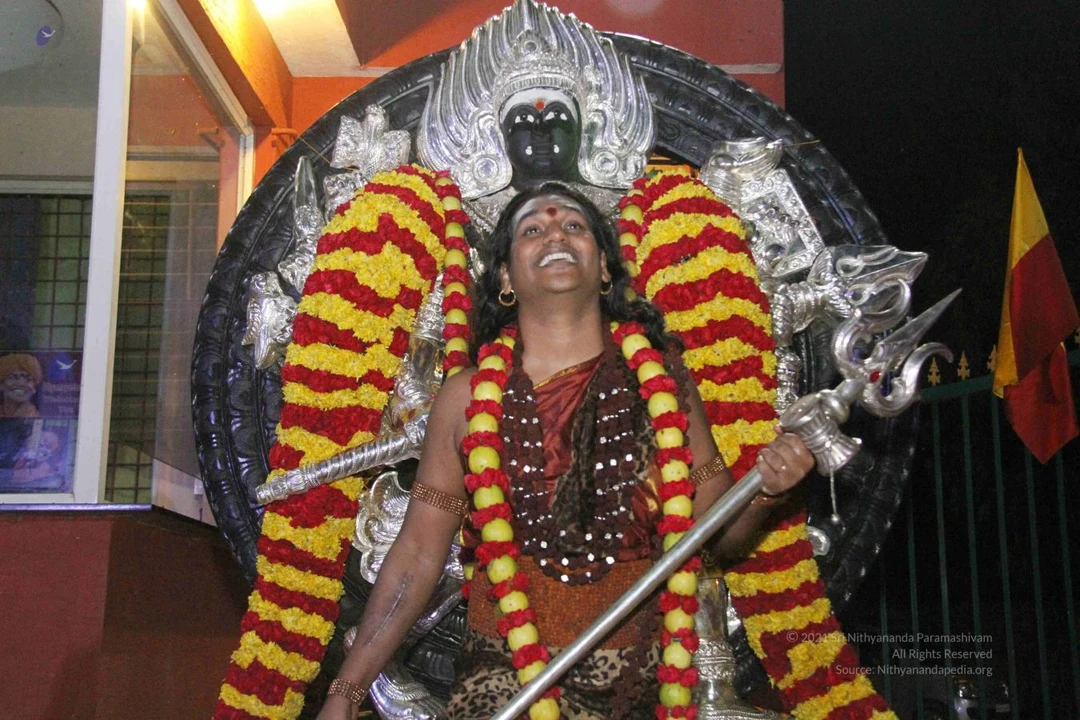
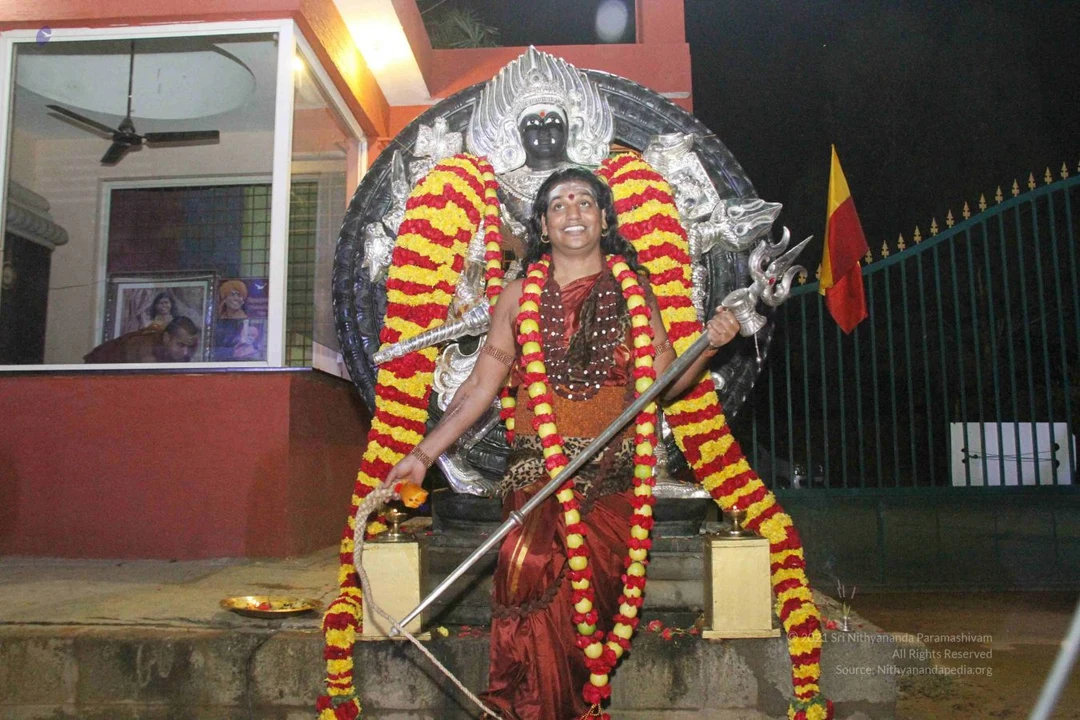
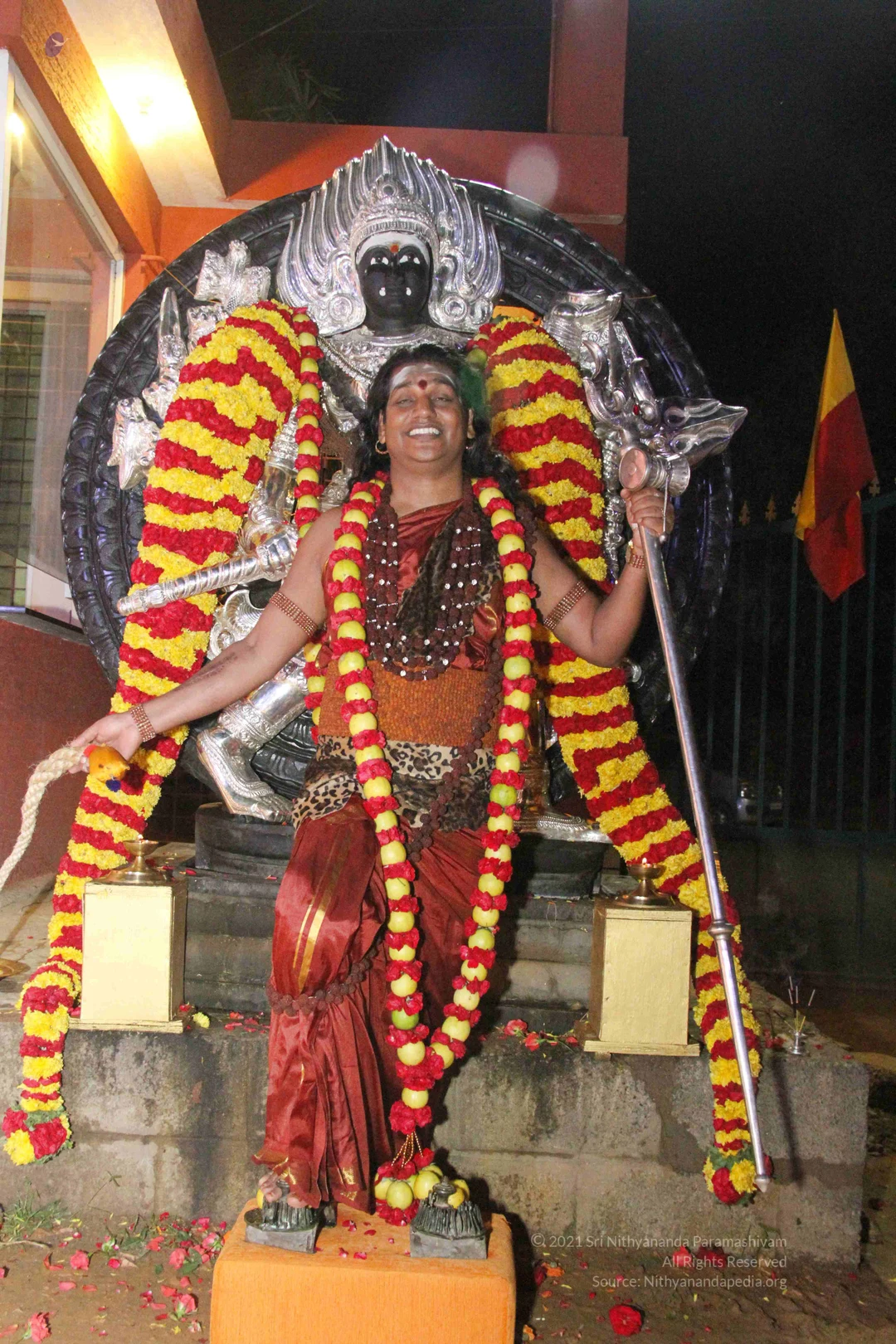
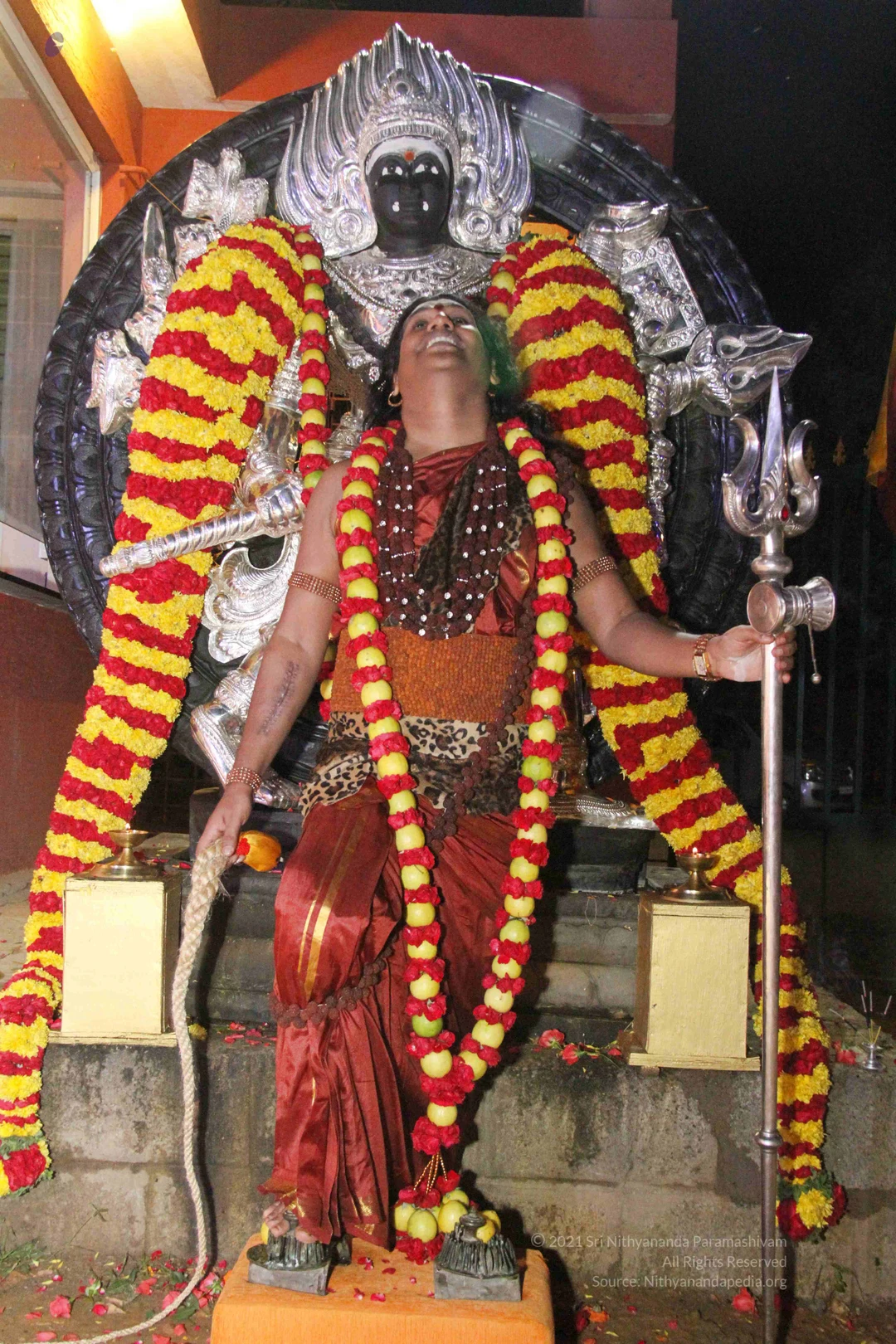
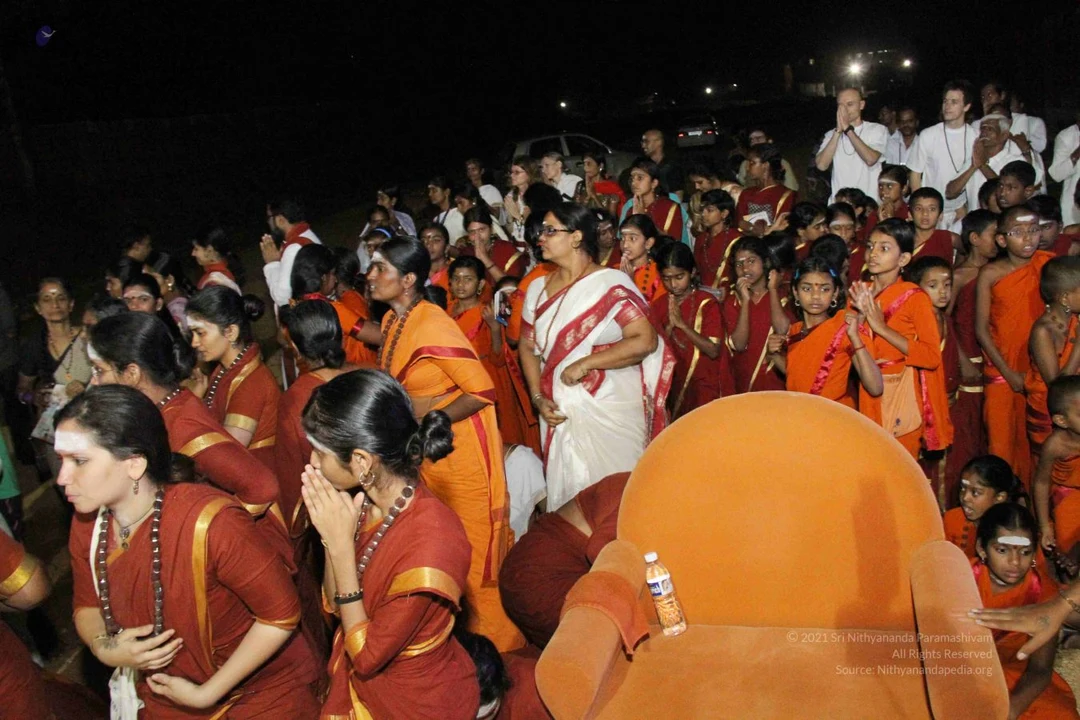
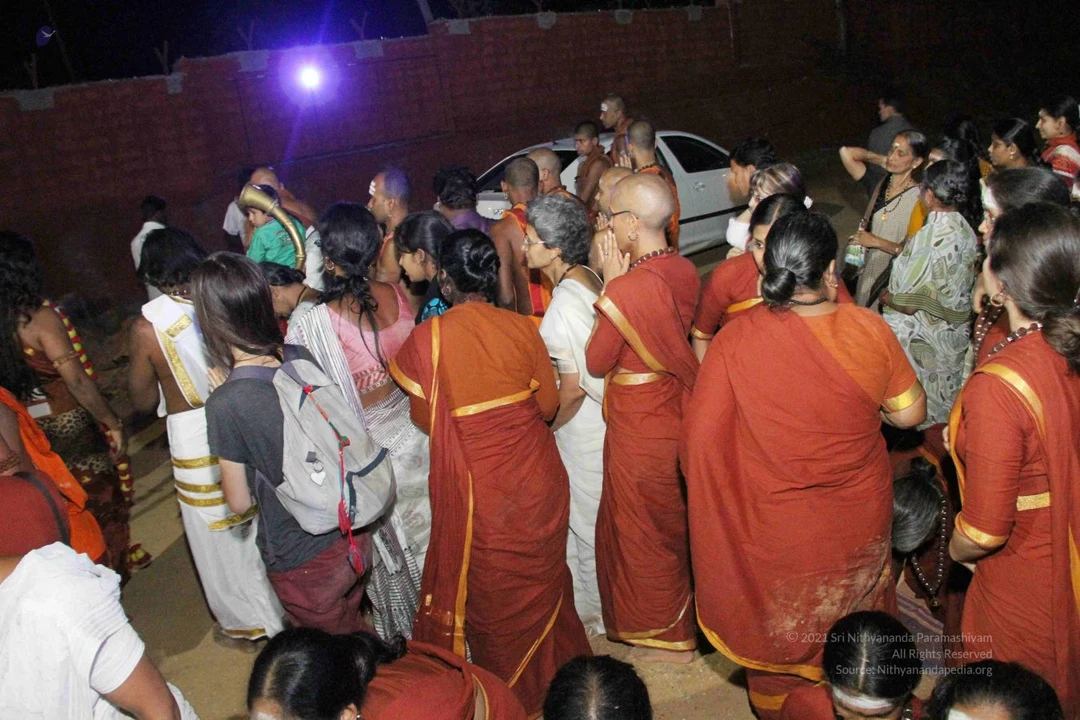
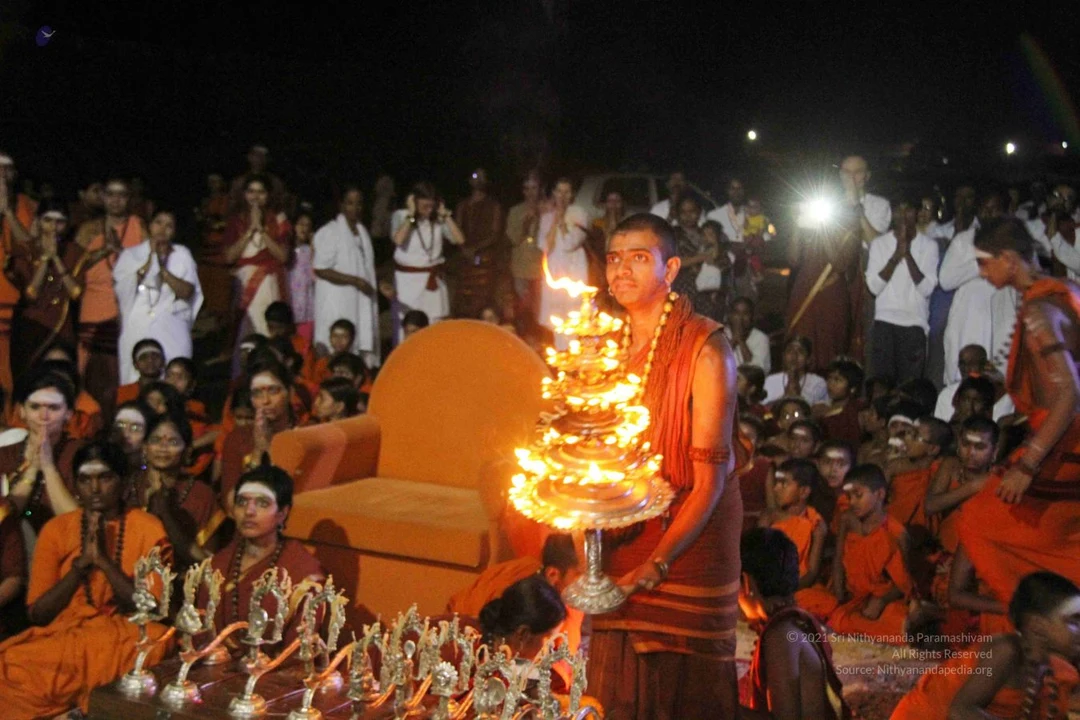
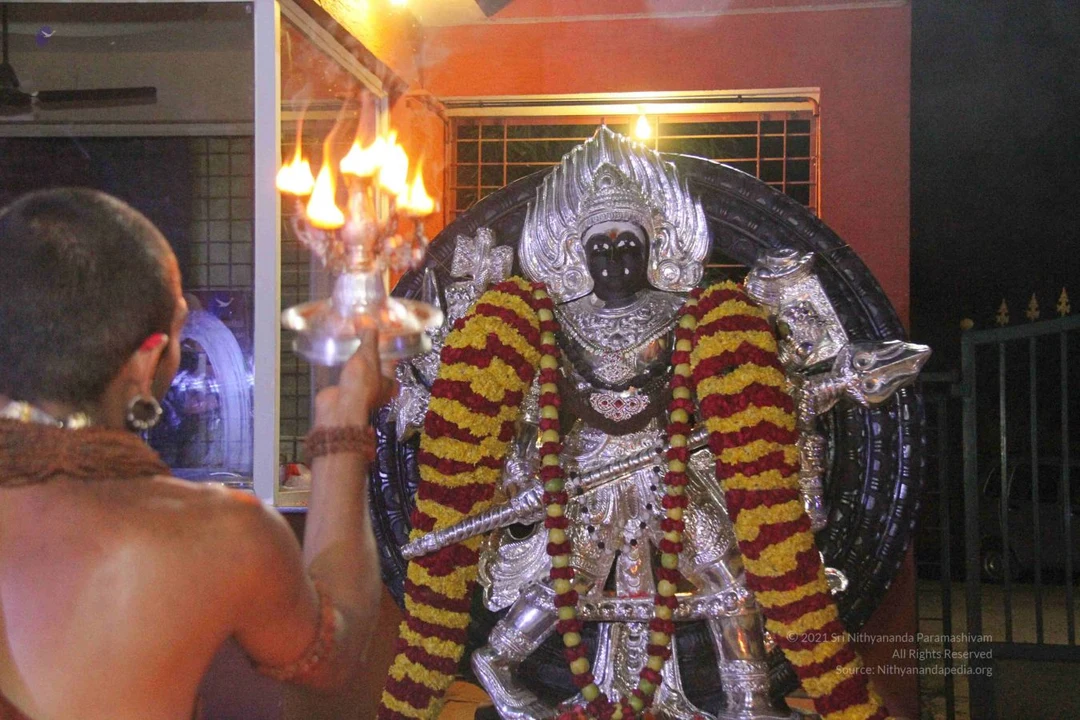
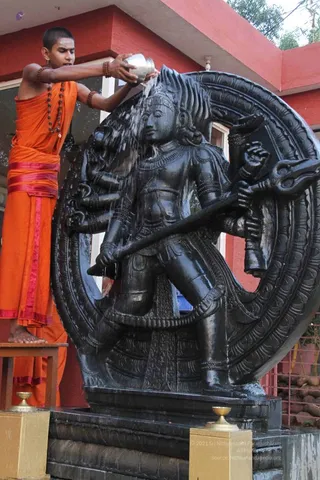
Today is Kaalabhairava Ashtami, the day Kaalabhairava happened, the day Mahadeva appeared as Kaalabhairava. Morning, before the end of the satsang, you guys will have darshan of Kaalabhairava. Evening, a special Kaalabhairava Darshan and Akashic Reading for all the volunteers, ashramites, staff staying in the campus. Devotees, you can have darshan, but I don’t think you will be able to ask questions because so many are there; but at least you can have darshan.

Mahadeva assumed the form of Kaalabhairava today to destroy the incompletions of Brahma. Brahma got into incompletion, hypocritical incompletion of thinking he is Sadáshiva. Sadáshiva also used to have five heads, Brahma also used to have five heads. But Brahma forgot that Sadashiva has got one more space in him, which is called “Adho Mukha”, the Super-Conscious, Enlightenment, “Avyaktha” – the Unmanifested.

See, the problem is, when you see a human incarnation with one head, you think, ‘Oh, he also has one head, I also have one head; he has two hands, I also have two hands; he has two legs, I also have two legs! Then what? We are equal! In what way is he special?’ You don’t understand, he has realized his unmanifested side of himself. Vyaktha, Avyaktha – Manifested, Unmanifested! You have realized only the Manifested side of you. You have not realized your Unmanifested side. An incarnation, enlightened being is one who has realized his unmanifested side also.

Mahadeva also has five heads, Brahma also has five heads. But Mahadeva has realized his Unmanifested side, the Avyaktha. Brahma has not realized his Unmanifested side. He knows he has realized only his Manifested side, Vyaktha. So, he started suddenly behaving like Mahadeva. He started saying, ‘What is there? He and I are one and the same! I have five faces. He also has five faces. Like in the movies, the comedians try to behave like a hero! So, when Brahma tried to behave like Mahadeva, He became a comedy piece! But people enjoyed his comedy show for a certain time. But not after it reached the level of claiming power over Parvathi. Brahma has gone to the extreme of claiming power over His own mother, Jagat Janani - Parvathi, Tripura Sundari, Paráshakthi! When that happened, neither Devi was ready to keep quiet, nor Mahadeva was ready to keep quiet.

Devi said to Mahadeva, ‘Mahadeva, you have to teach a lesson to him. Make him understand he can’t even think he is equal to you. So, physically you have to do something to him. Physically he should understand that he cannot be equal to you.’

Then, Mahaakaala, Mahákaalabhairava appears from Mahadeva’s body; means, Mahadeva’s own energy. Mahadeva takes the form of Mahákaalabhairava and removes one head of Brahma so that he lives with four heads. Understand, physically remembers he is not is not equivalent to Mahadeva. So, physically there is a difference.

So today is the day, Shirsha Maasa, Krishna Paksha, Ashtami Thithi, Mahadeva assumed the form of Kaalabhairava to complete all the incompletions of Brahma. Once Mahadeva removed the head of Brahma, immediately Brahma settled down and came to Completion. But all the incompletions of Brahma got stuck in Mahadeva’s hand in the form of that skull. Then, Devi offers food to that skull and completes it. Vishweshwara, Vishwanatha becomes Kaalabhairava to complete Brahma. Mahadevi becomes Annapoorni to complete the Brahma Kapaala.

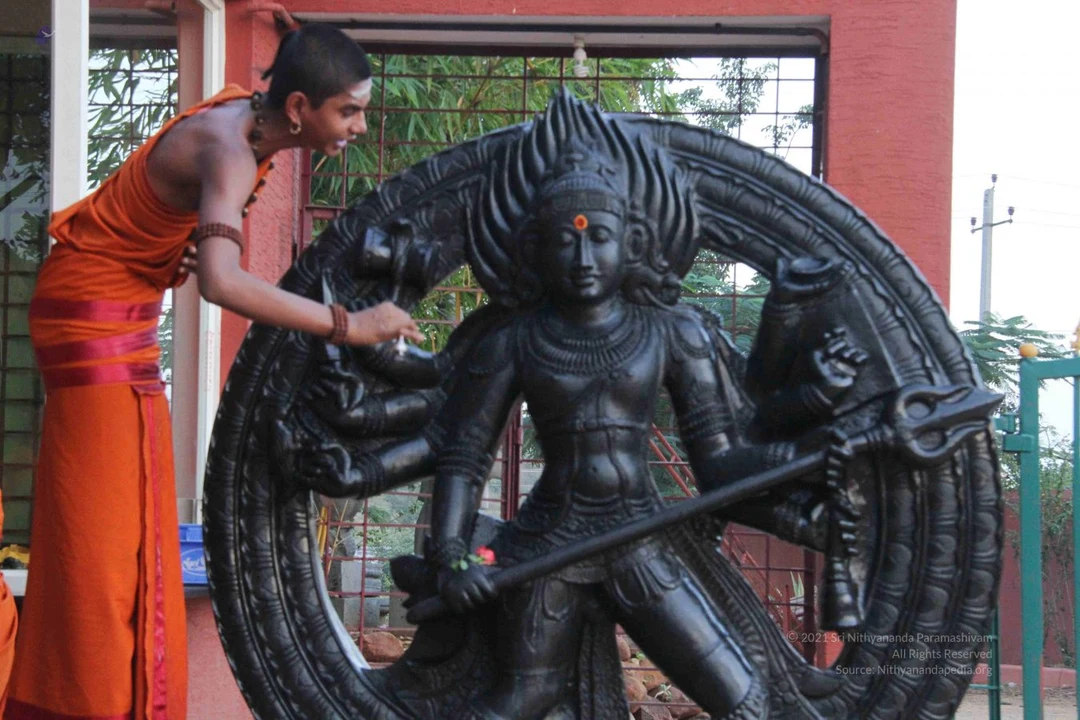
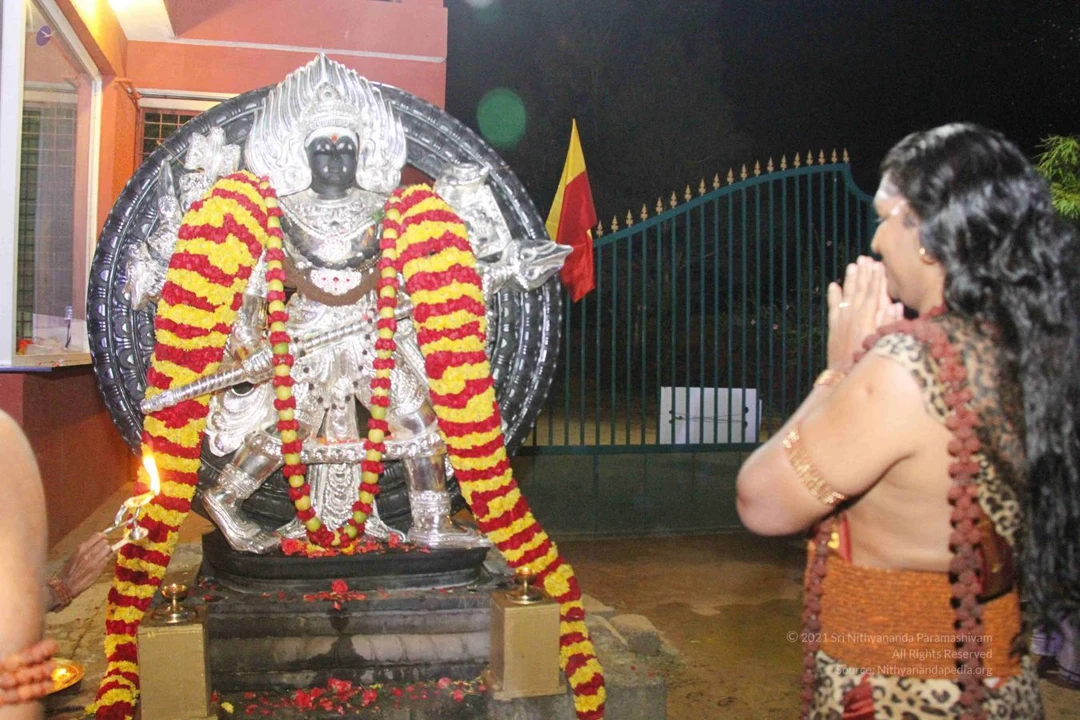
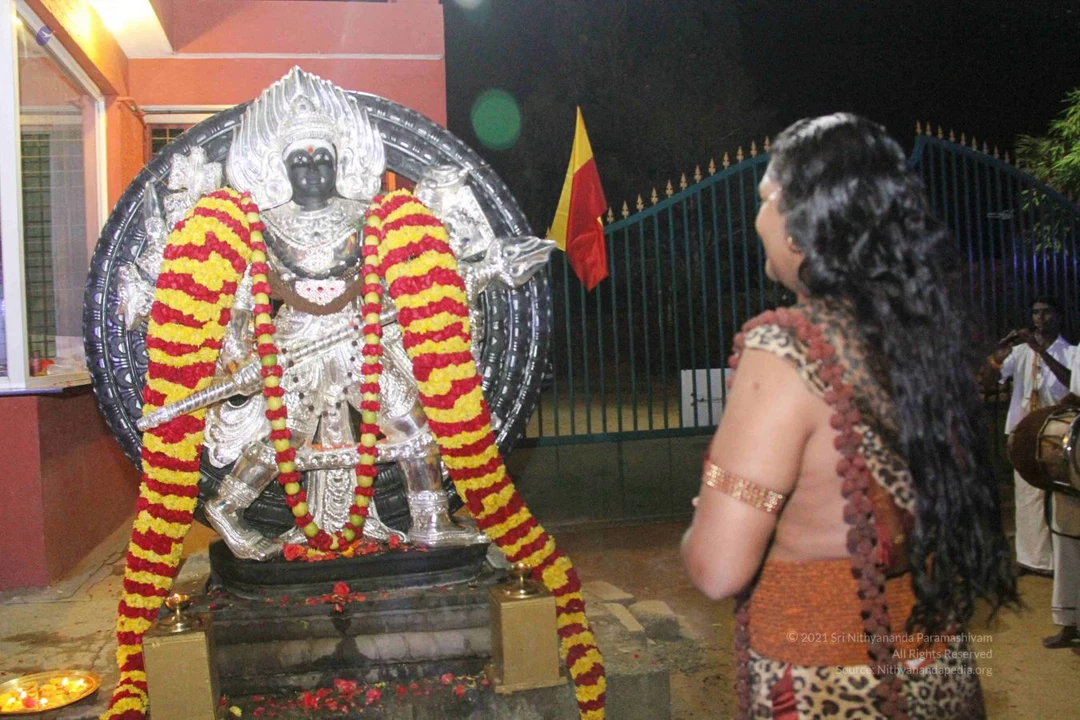
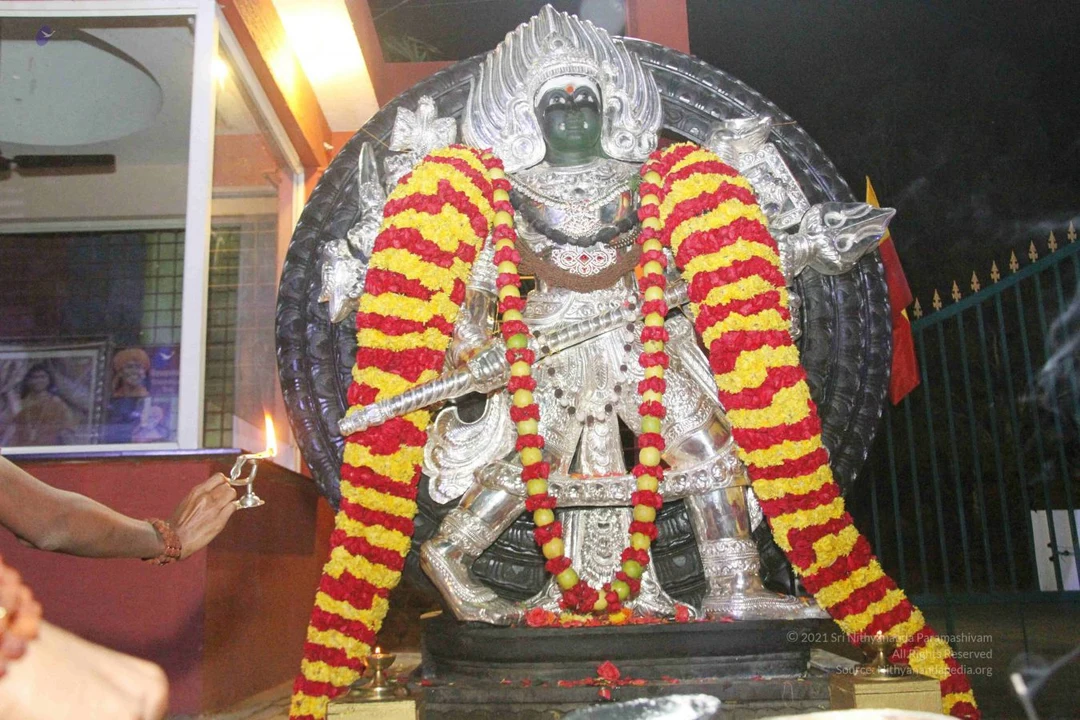
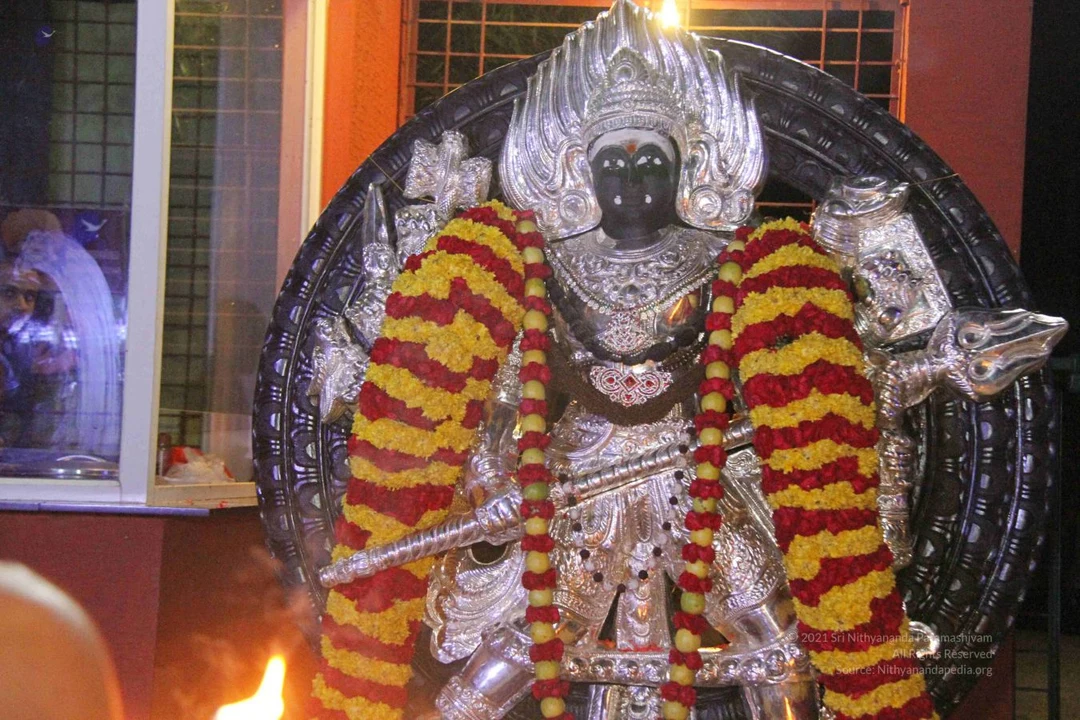
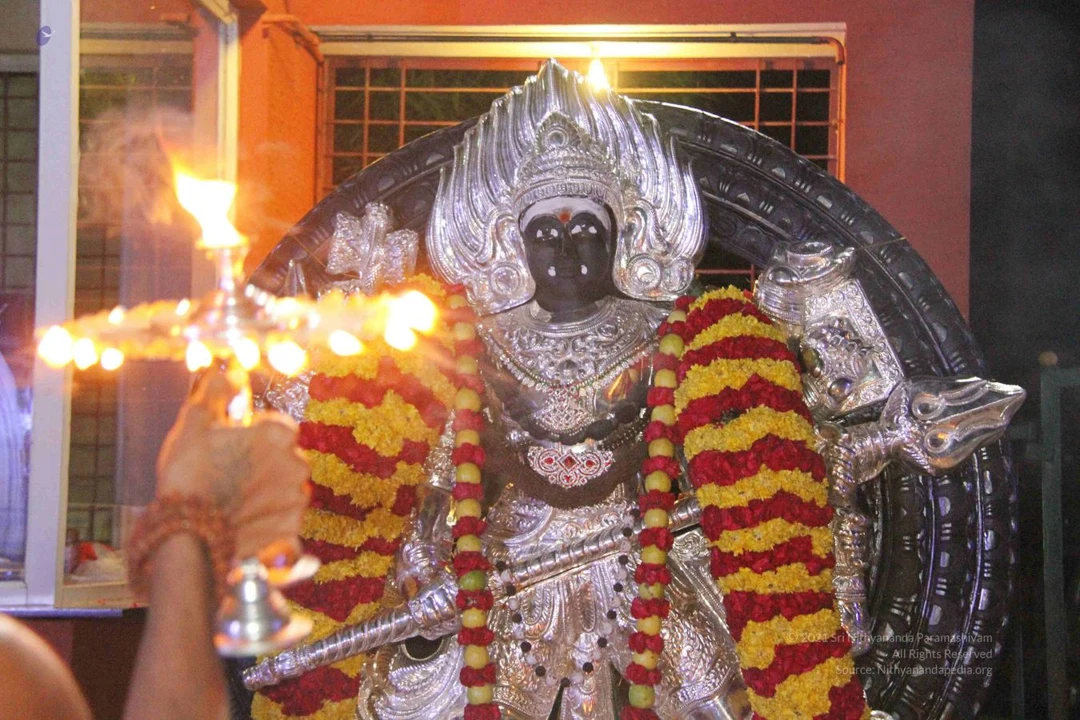
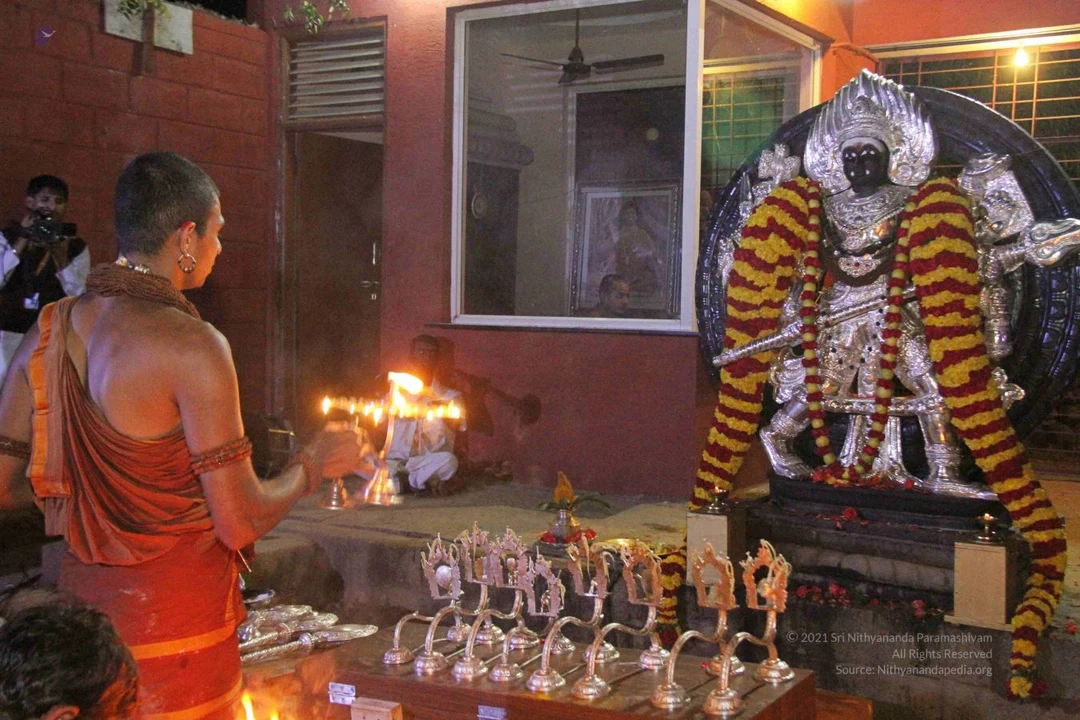
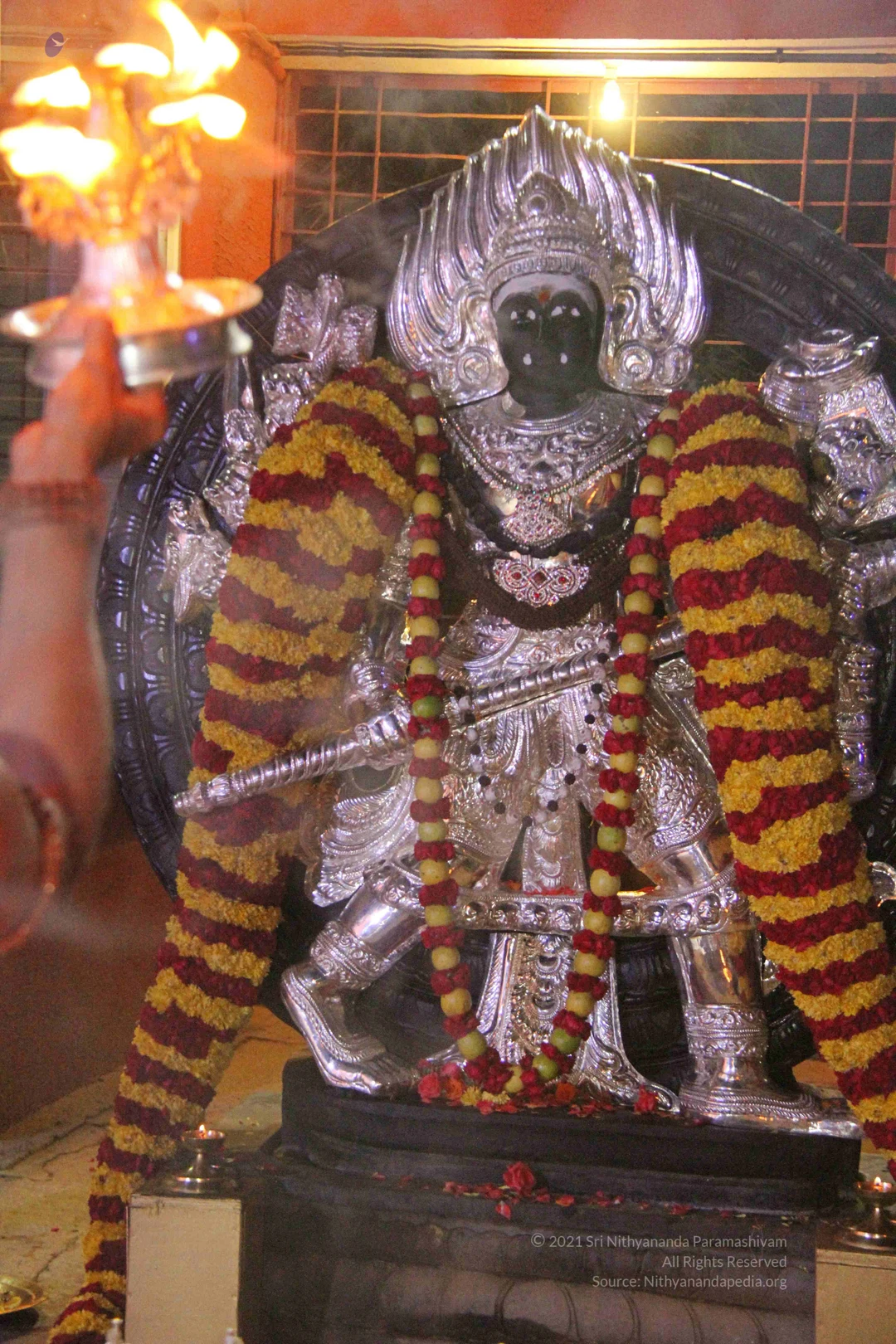
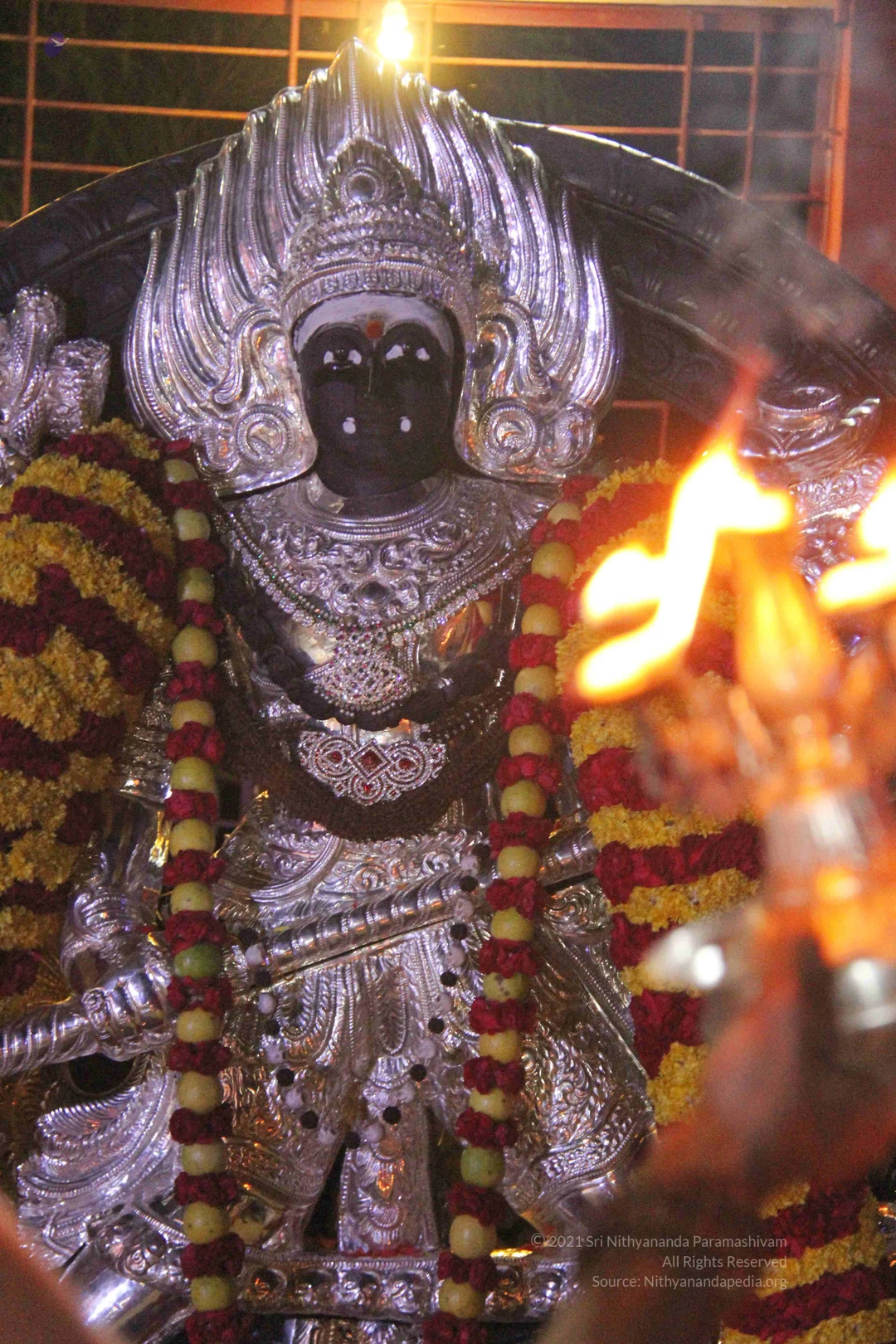
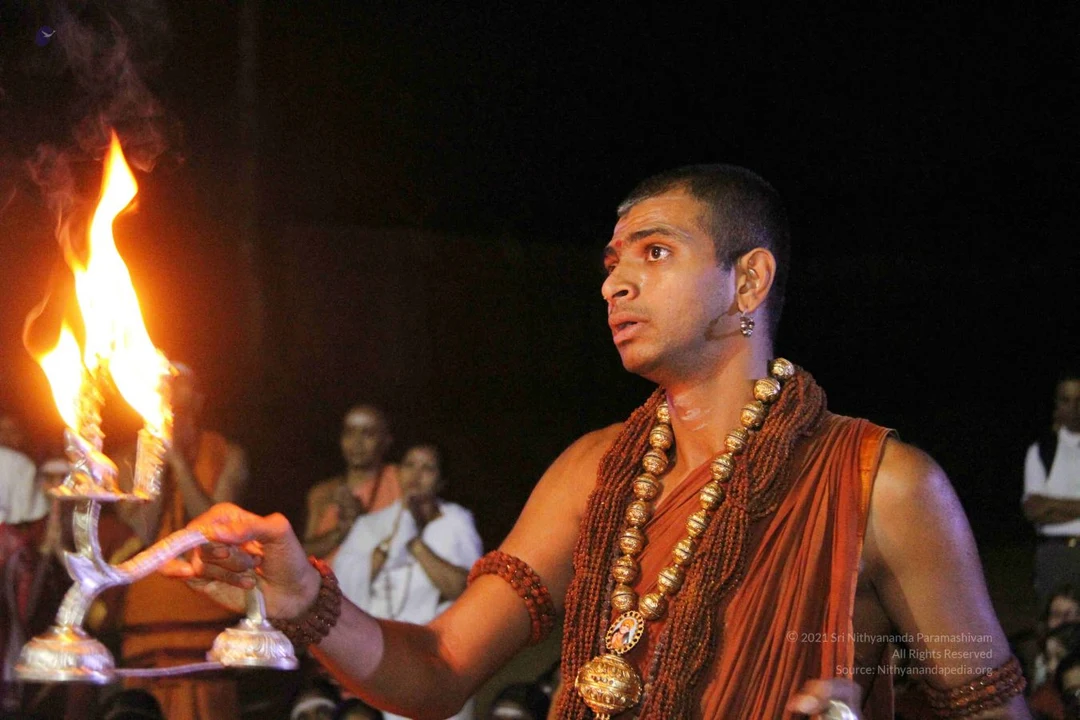
Today, there will be puja to Mahákaalabhairava in our Bidadi Adheenam. Around 5:30 P.M. we will have abhishekam and Silver Kavacham Alankara to Mahákaalabhairava. And you may have a special darshan of Mahákaalabhairava.

Be like Kaalabhairava when you have to complete with all your incompletions; because your incompletion always behaves like Brahma. Even though it doesn’t know, it acts like it knows. Your incompletions always behave like Brahma. Even though it doesn’t know, it tries to imitate and tells you it knows. It is okay as long as Brahma does not start possessing your life which is your Devi, Shakthi. When it tries to possess your Shakthi, you should not keep quiet. When your incompletions start making you powerless, you have reached the limit of tolerance; now you have to take the incarnation of Kaalabhairava to complete. Complete everything! All your incompletions should know they cannot have power over you. All your incompletions should know they cannot be running you and ruining you.

One of the biggest problems is, you put all your energy, in spite of again and again reminding you, you put all your energy to support your incompletions, saying, ‘If I don’t support my incompletions, people will exploit me, because others are all in incompletion.’ That is what I mean by “your incompletions trying to take over your Shakthi”. Insecurity.....if you feel insecurity, be very clear, you have already become Brahma. Now you need Kaalabhairava to happen in you. Any form of insecurity is Brahma. Remove that insecurity and incompletion from your life!

Listen! Now I want to repeat the statement I made when I began the satsangh:

“Out of incompletion, without completing, out of powerlessness, even if you want to detach or take Sannyas, renounce, it will lead to more complications and more unconscious slumber.”

In your life you can see in your experience, whenever stress builds up in your system, you just want to fall asleep, unconscious; you just want to forget everything; you just want to push everything into something and lie down – depression for three days. Because, complications always put you in deep slumber.

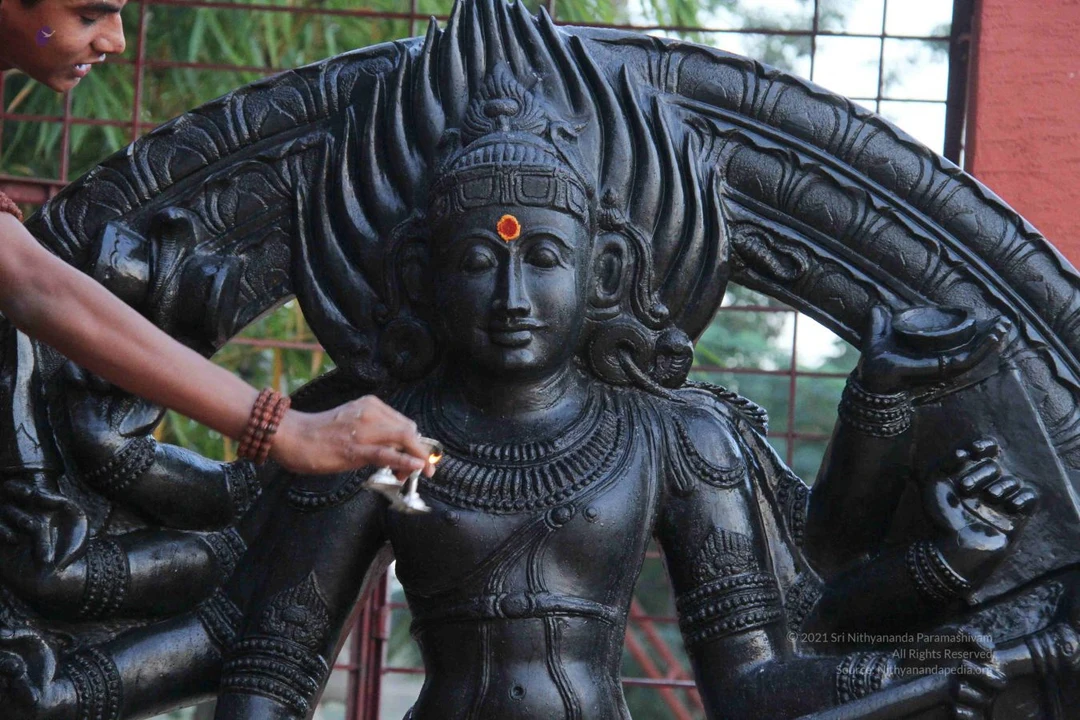
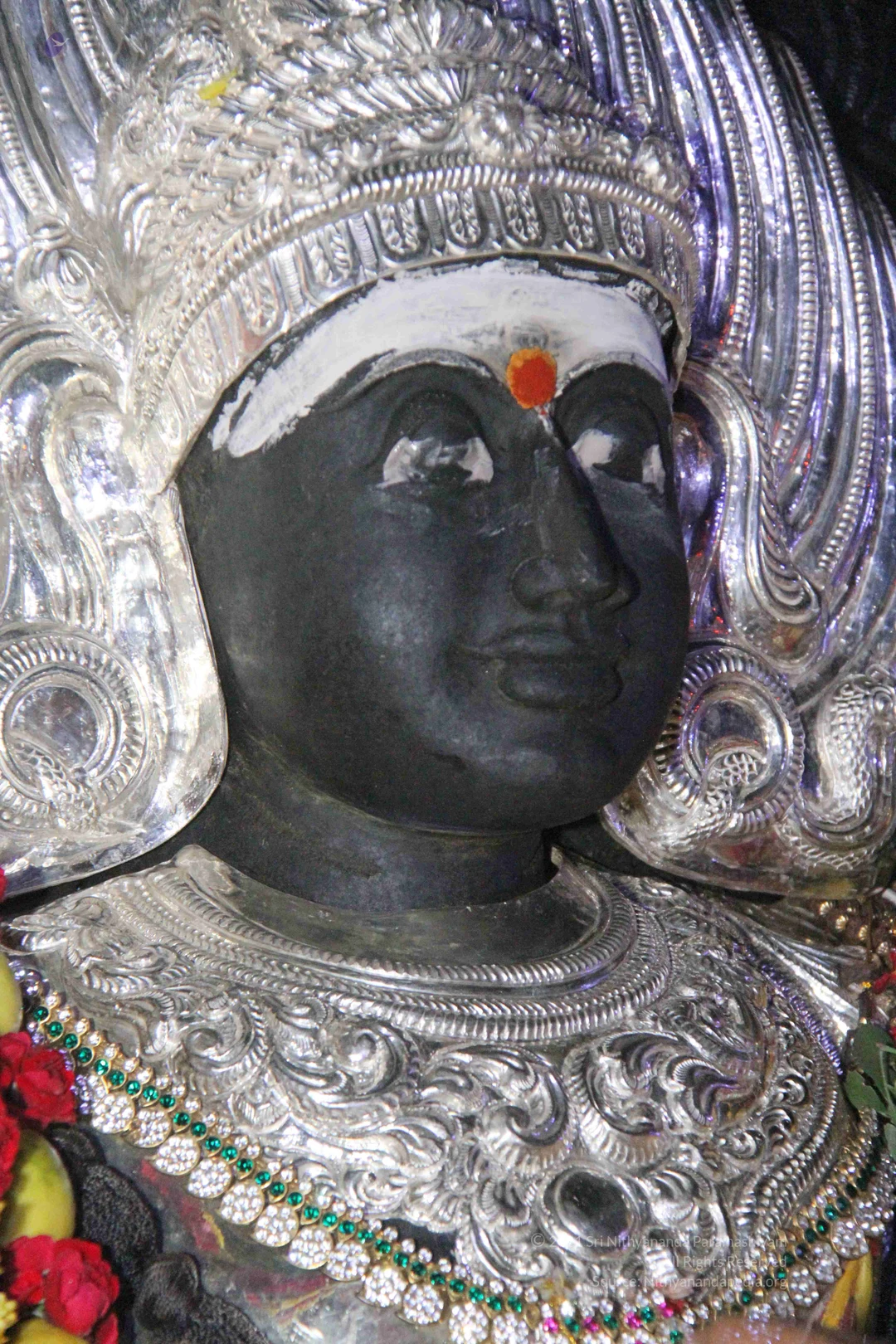
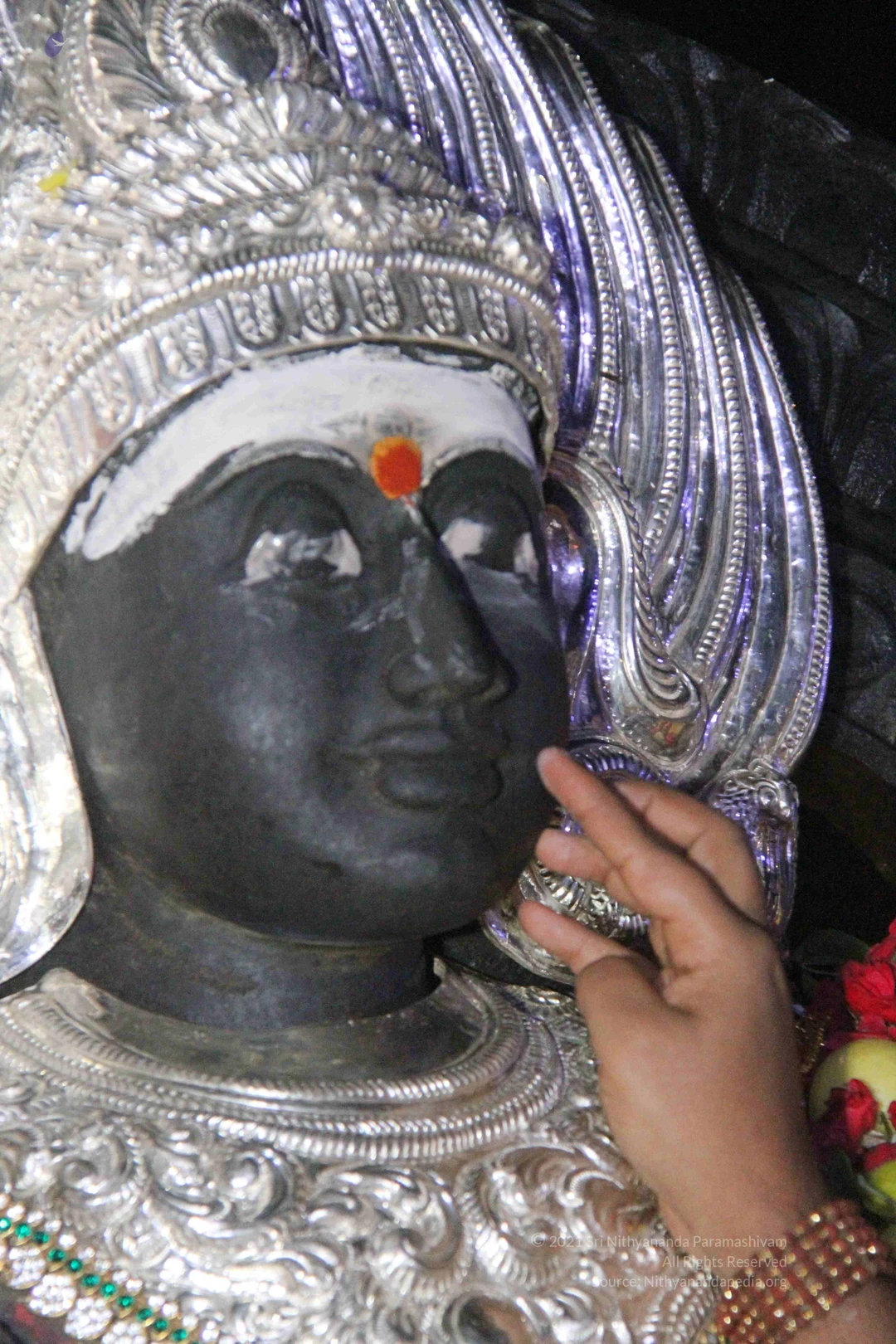
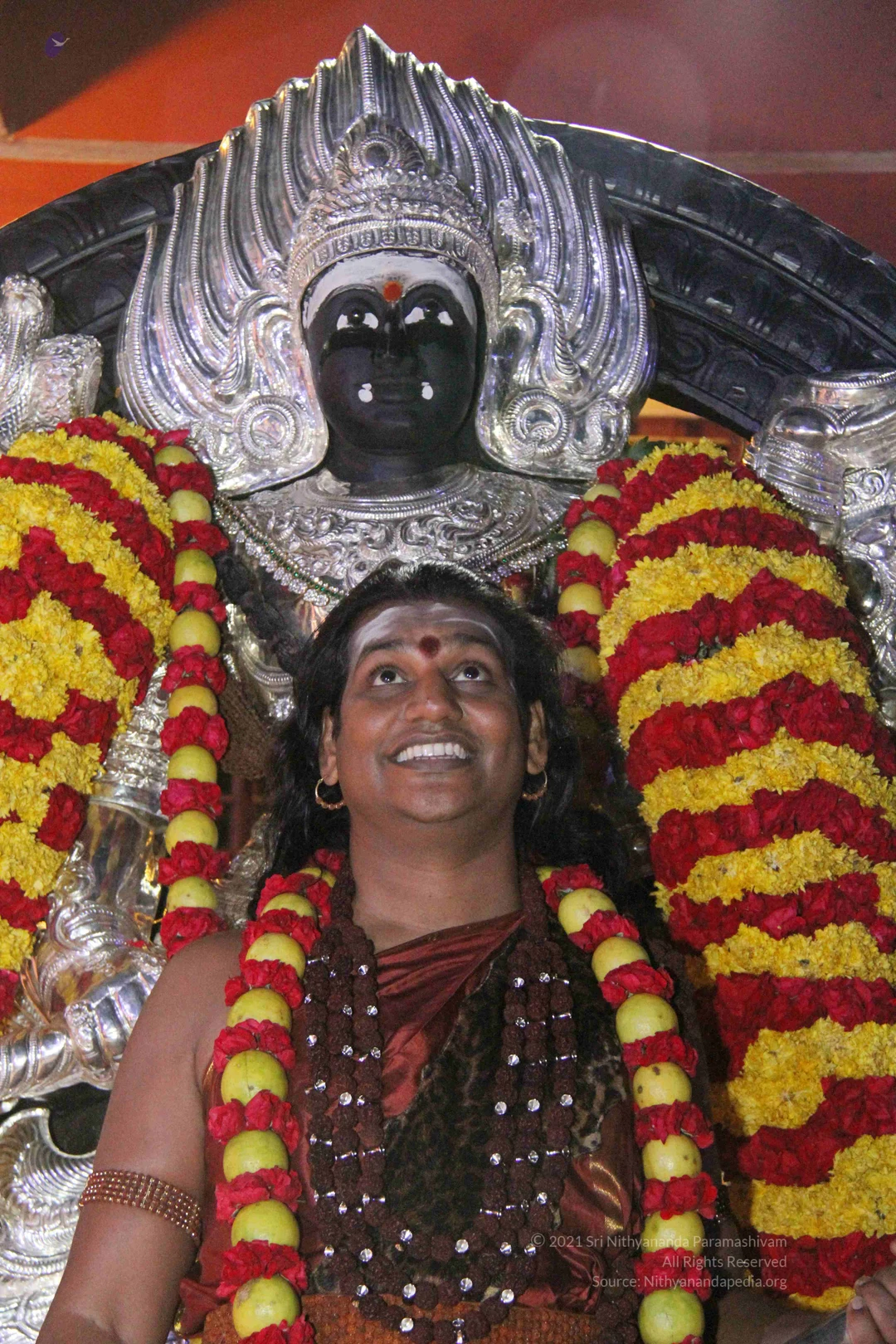
! Even Sannyas decision should not be taken out of powerlessness and incompletion. You have to complete, you have to take that decision out of powerfulness. The decision of Completion should be taken out of powerfulness. Power, clarity, joy, the joy you see in Kaalabhairava’s face! I have seen in a few Kaalabhairava deities the strong “prasanna”, presence!

It is very funny! A lot of Sanskrit words.....a lot of English words are directly from Sanskrit words! “Prasanna” and “Presence” – same meaning. I can be sure, the word “Presence” came from “Prasanna”, not “Prasanna” from “Presence”. There are people like Meerananda Kumar who try to claim “Prasanna” came from “Presence”! Anyhow.....! Let me make it very clear, surely the word “Presence” would have come from “Prasanna”.

I have seen in a few Kaalabhairava deities – one in Tiruvannamalai, of course our Bidadi Kaalabhairava, and Varanasi Mahaakaalabhairava– you can see the joy in the face! Understand, meditate on that joy and power. If you create a space for joy and power in you, you are Kaalabhairava! You have to handle all your incompletions with this one space of Power and Joy. When you sit for Completion, don’t sit with the feeling, ‘Oh, what will happen to me I don’t know. Aiyyo! Aiyyo! Aiyyo! Aiyyo! I don’t know...I am sitting... So many incompletions are there. When will I complete? I don’t know how many years I am sitting? My whole life is going with these incompletions....’

Sit like Kaalabhairava when you sit for Completion every night. Whether you sit in front of a mirror or you sit with yourself, declare! ‘I am Kaalabhairava! I am Kaalabhairava!’ So, these two qualities of Kaalabhairava – Power and Joy – with these two sacred sentiments, with these two sacred feelings, sit. You will see all the incompletions will look like a pygmy. You should sit in front of Kaalabhairava like Kaalabhairava. I don’t want my followers to be beggars! I want them to be me! Same way, Kaalabhairava wants his disciples to be Him, not ‘Oh, oh, oh ...’ No!

Please understand, when you are in the powerless mood, you may or may not love me. You may love me for some reason, or you may not love me. That love is not even trustworthy! But when you are in a powerful space, I love you! When you are alive and active, spiritually alive and active, I love you, which is the most stable, highest and eternal gift!

I tell you, Kaalabhairava is Power and Joy! If you think I am your Guru, if you think you are my followers, you should be like Kaalabhairava! This is the Guru Vaak! The Power and Joy! Because, these two qualities complete all your incompletions. All your incompletions will be complete. Your very DNA should be programmed with the space of Kaalabhairava – Power and Joy! Mahaakaalabhairava– embodiment of Power and Joy! Only Power and Joy brings Completion and keeps you alive, awake, aware. Only that space, that energy, only from that space, even if the decision of Sannyas is taken, it will be successful. If not, even that decision is not complete. Don’t try to jump from the frying pan into the fire.

There was a fish alive, put in the pan for frying. That fellow thought it is too hot and jumped into the fire! Most of you, because you are not able to handle the incompletions of your householder’s life and responsibilities, you think Sannyas will be a very good way to escape. If you are thinking that, be very clear, you are jumping from the frying pan into the fire!

The decision of Sannyas should be taken from the space of Power and Joy. Then you will see, you achieve Enlightenment, you achieve Completion!

Let Kaalabhairava land and do the Akashic Readings and grace all of us after a small break.

Namah Shivaya!

I bless you all! Let Mahadeva’s presence grace all of us! Let you all radiate with Integrity, Authenticity, Responsibility and Enriching, with eternal bliss, Nithyananda! Thank you!

26:47 min – Hindi Translation

Followed by Kalabhairava Darshan

Photos
Tags:

Paramahamsa Nithyananda, space, Kalabhairava, completion, Sannyas, power, meditate, create, power, joy, lives.

Photos Of The Day:

RUDRABHISHEKAM
PADA-POOJA
NITHYA-SATSANG

SARVA-DARSHAN

FINAL-BLESSING

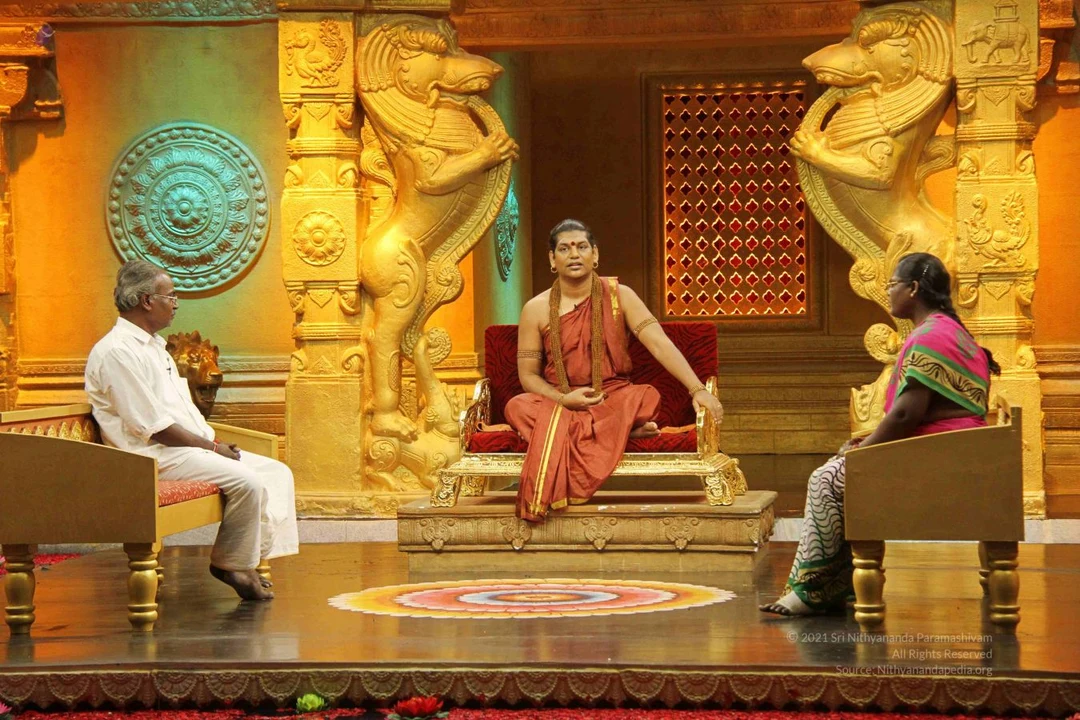
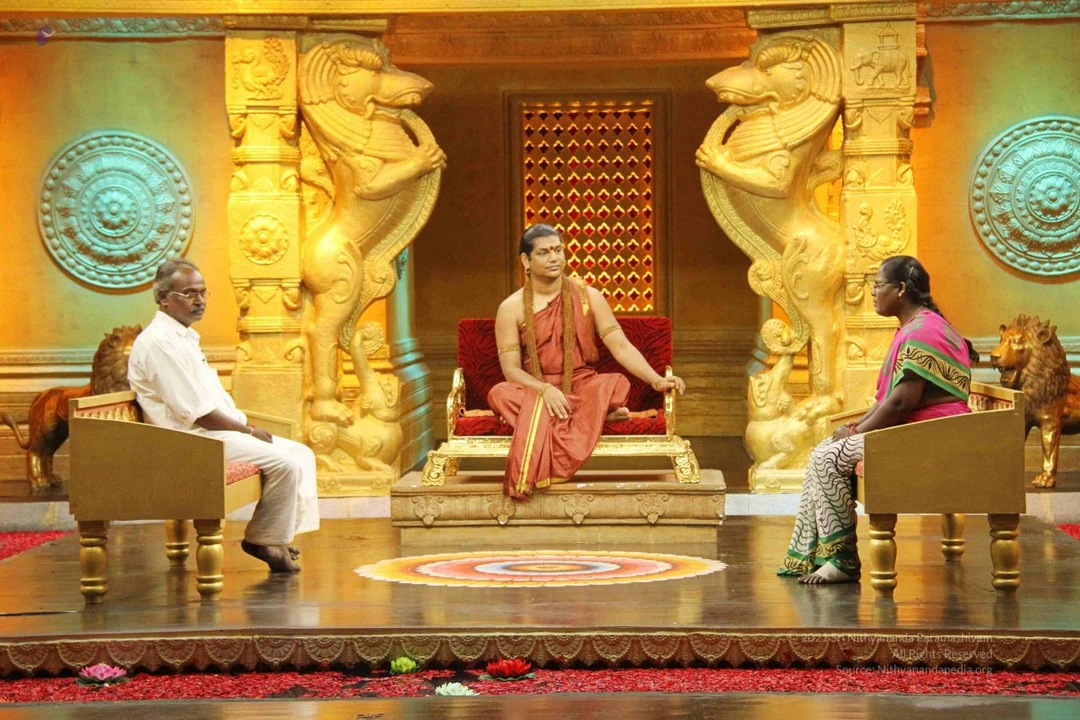
NITHYA-DHARMAM-THANTHI-TV-SHOW

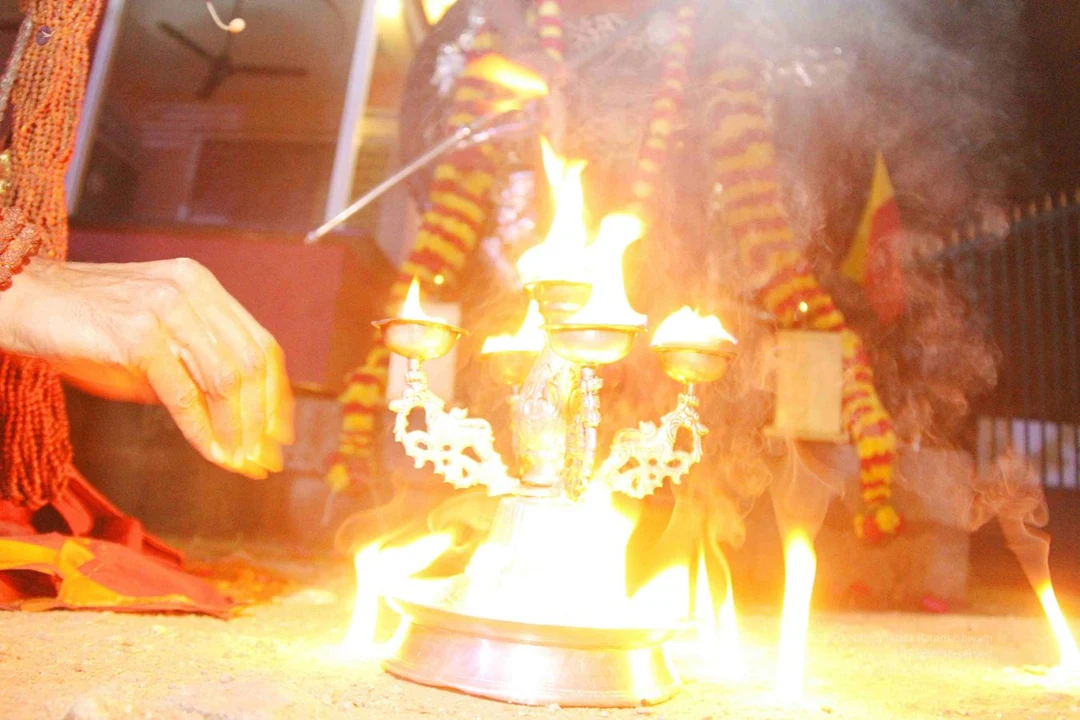
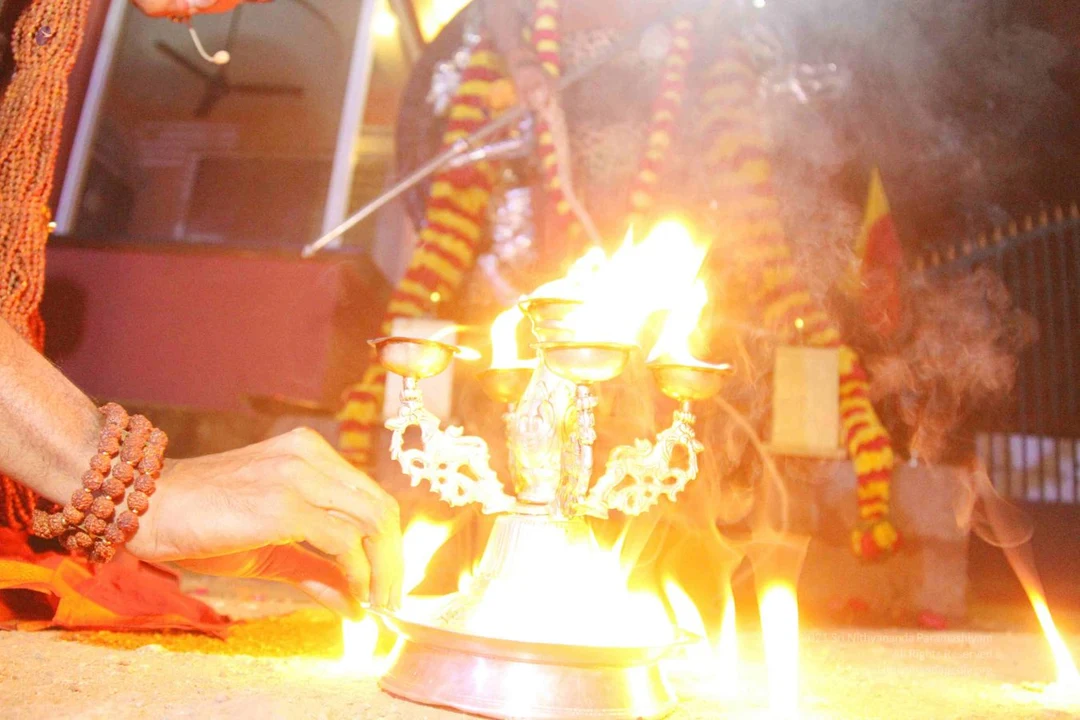
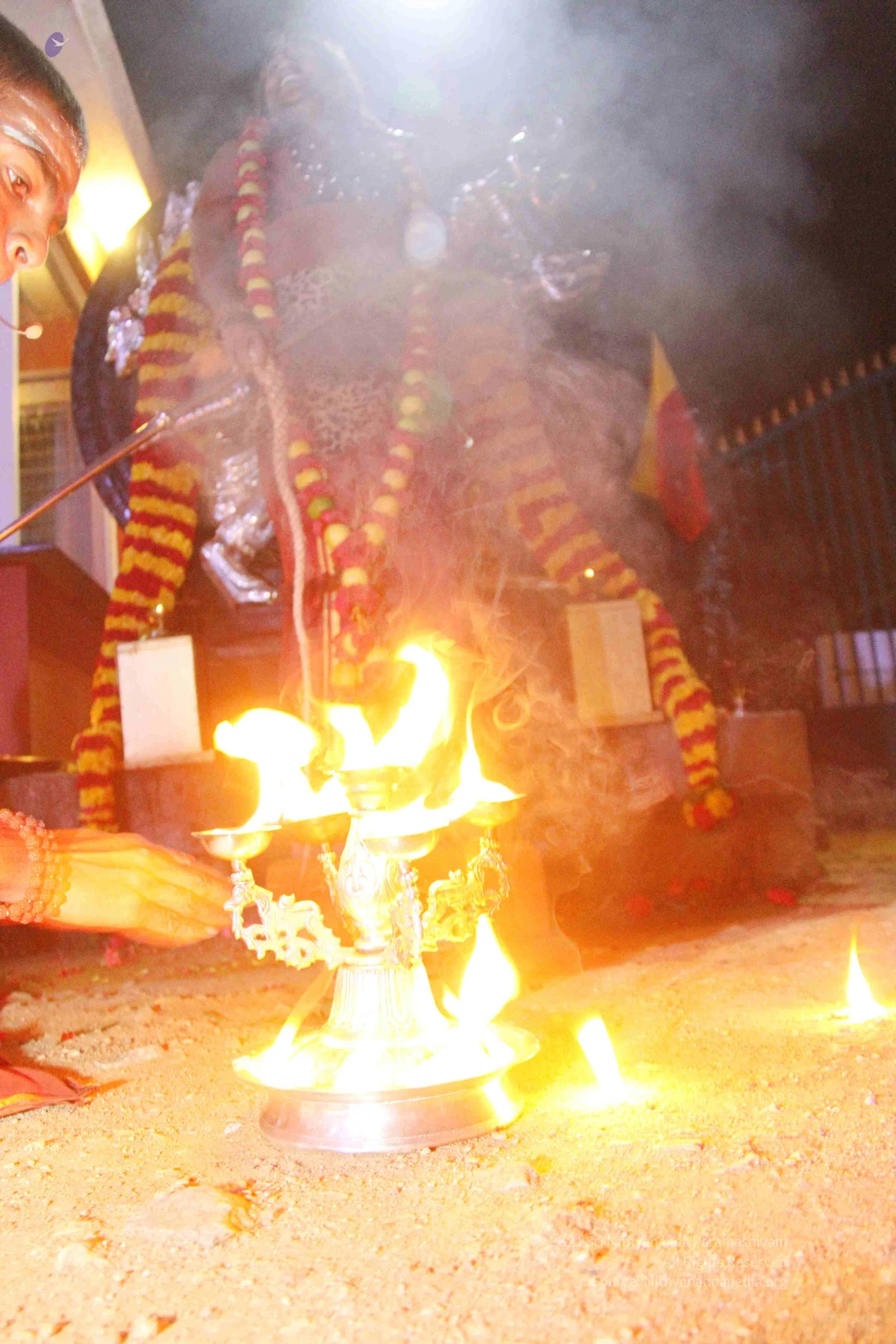
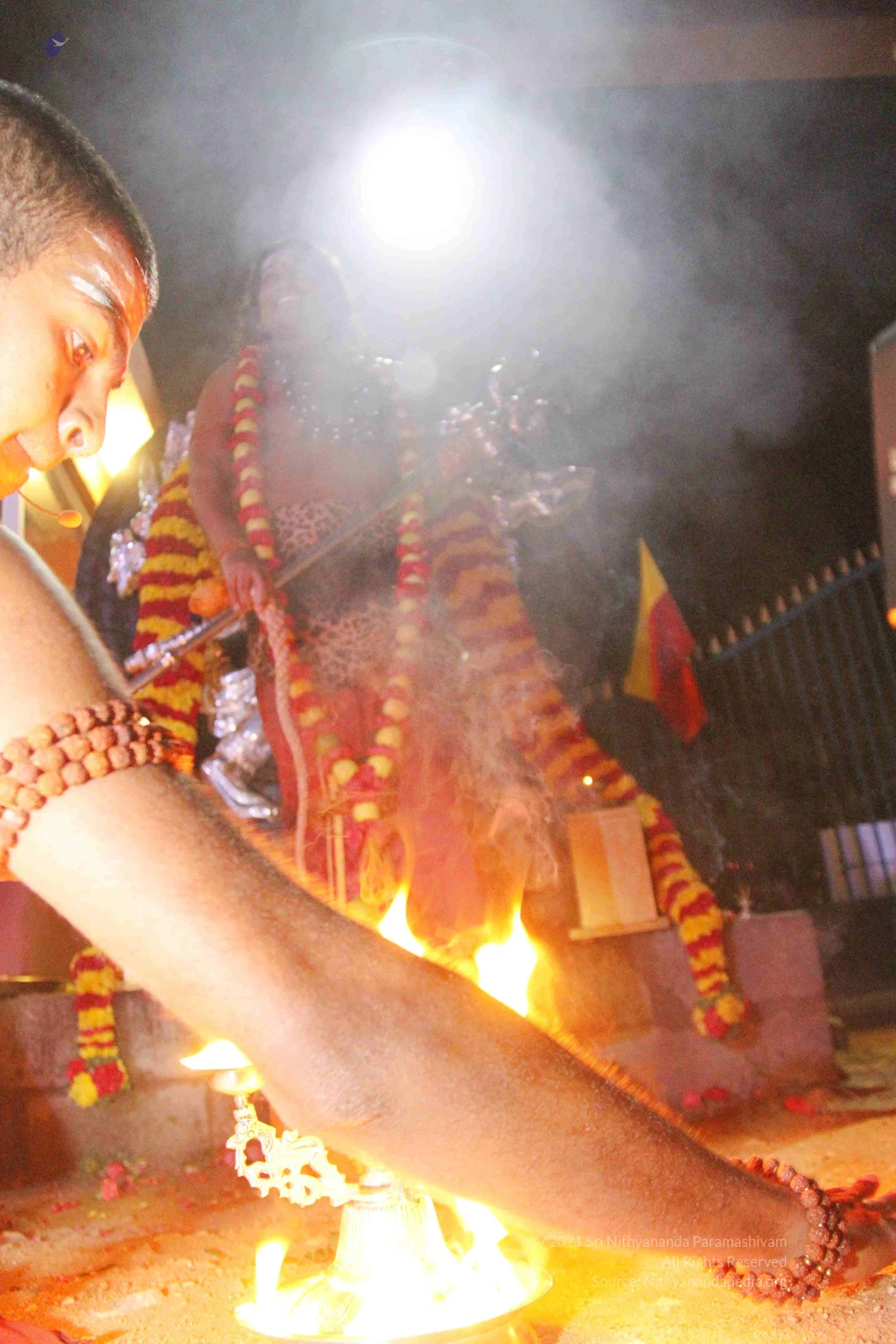
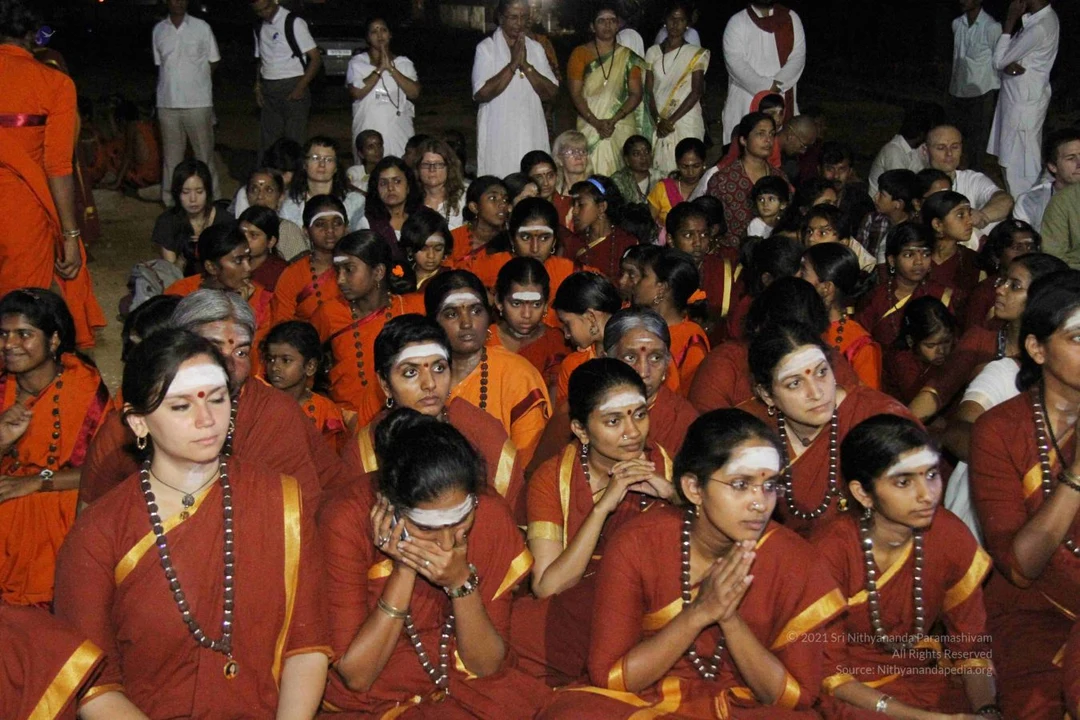
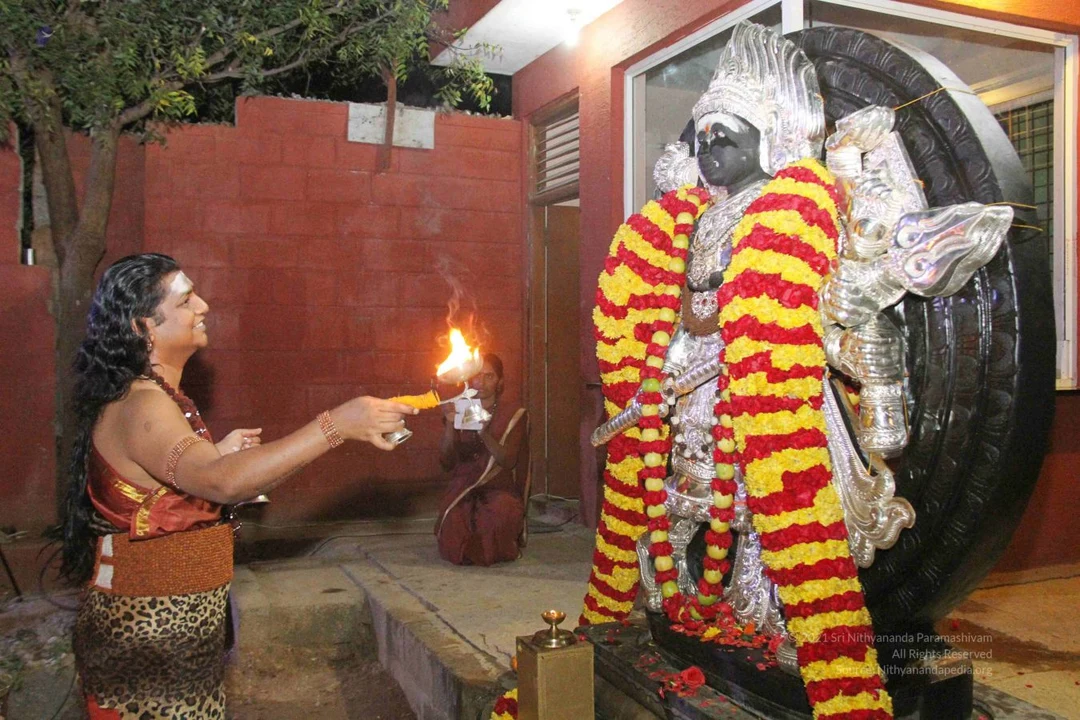
KALABHAIRAVA-ASHTAMI-CELEBRATIONS-IN-BIDADI-ADIKAILASA

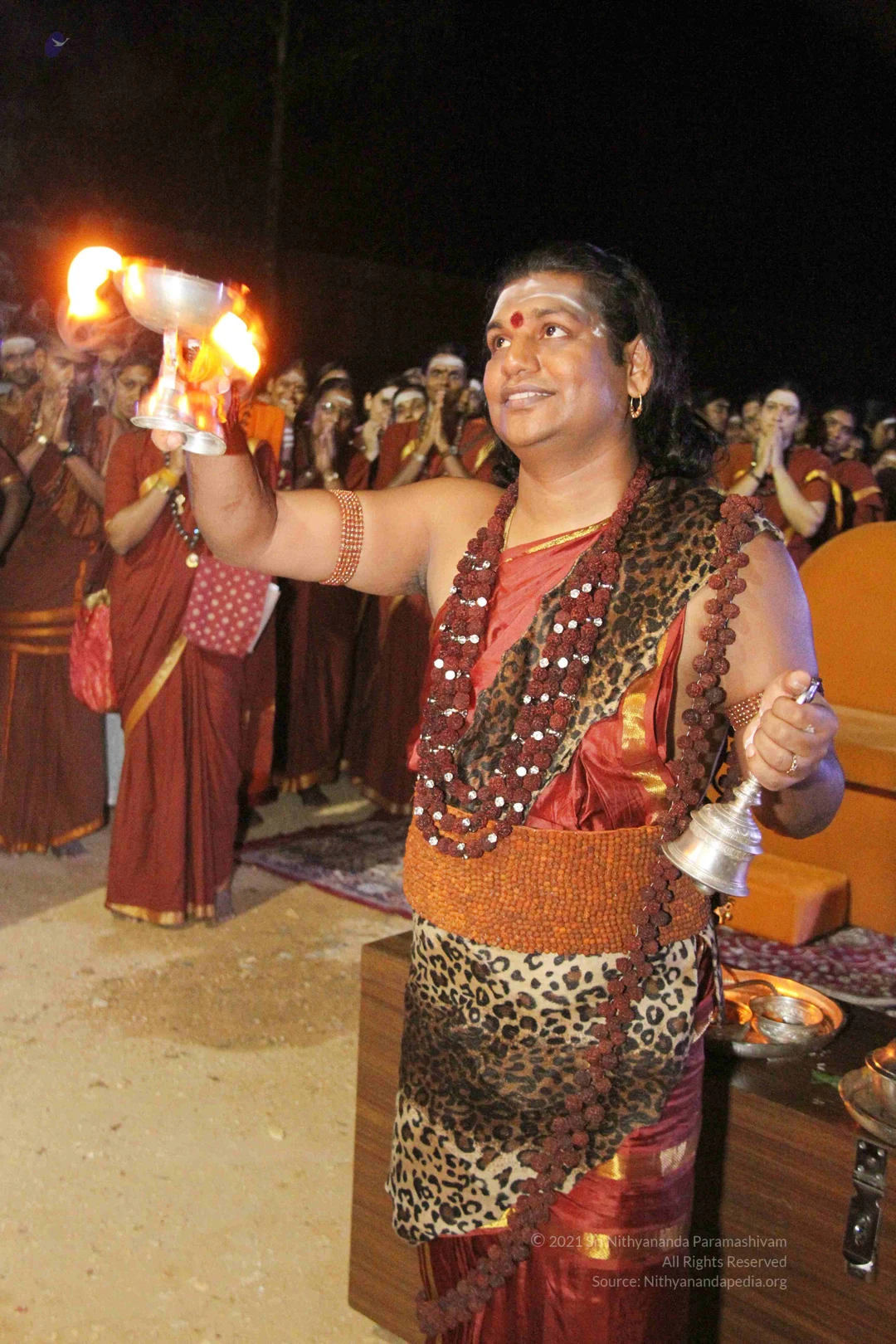
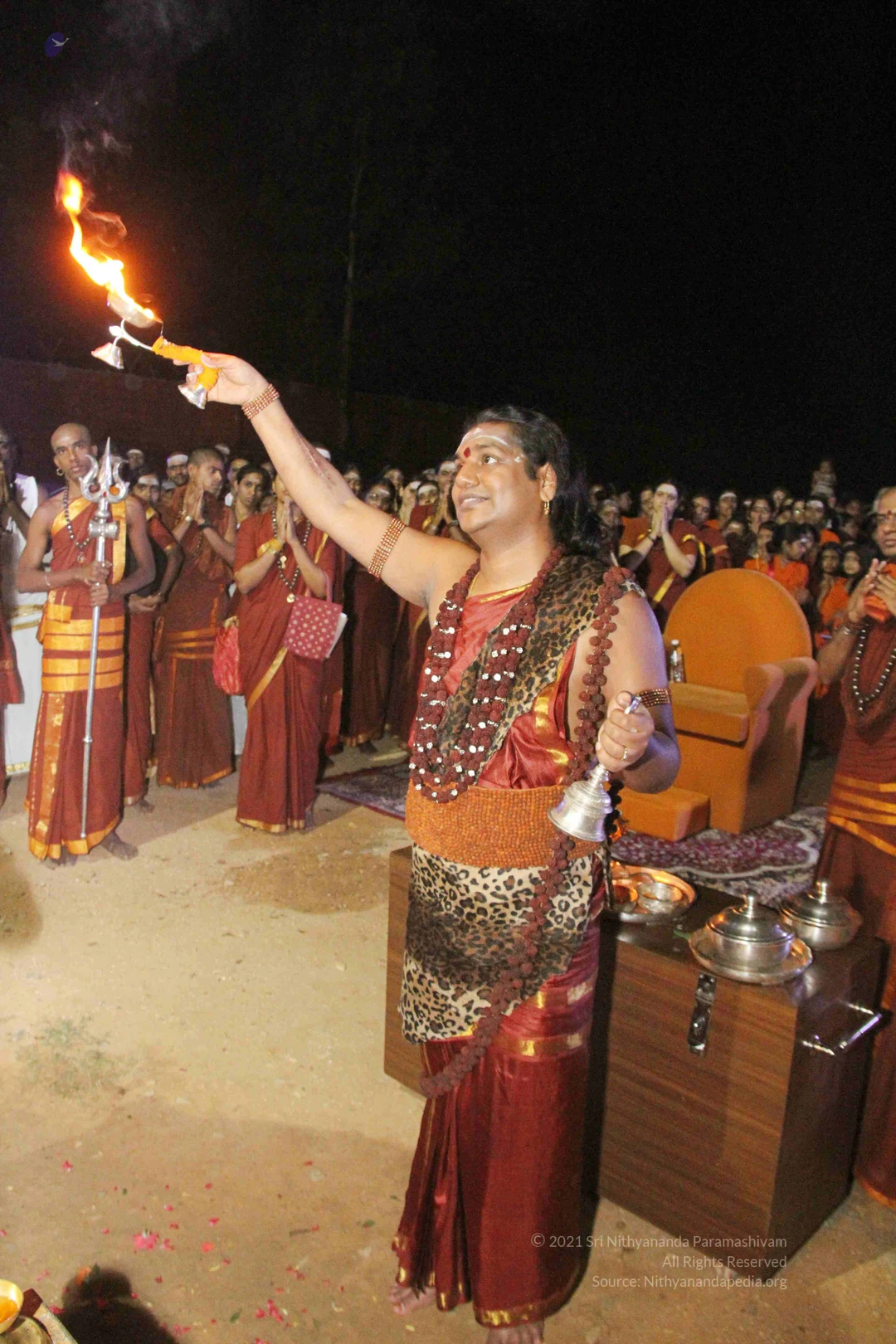
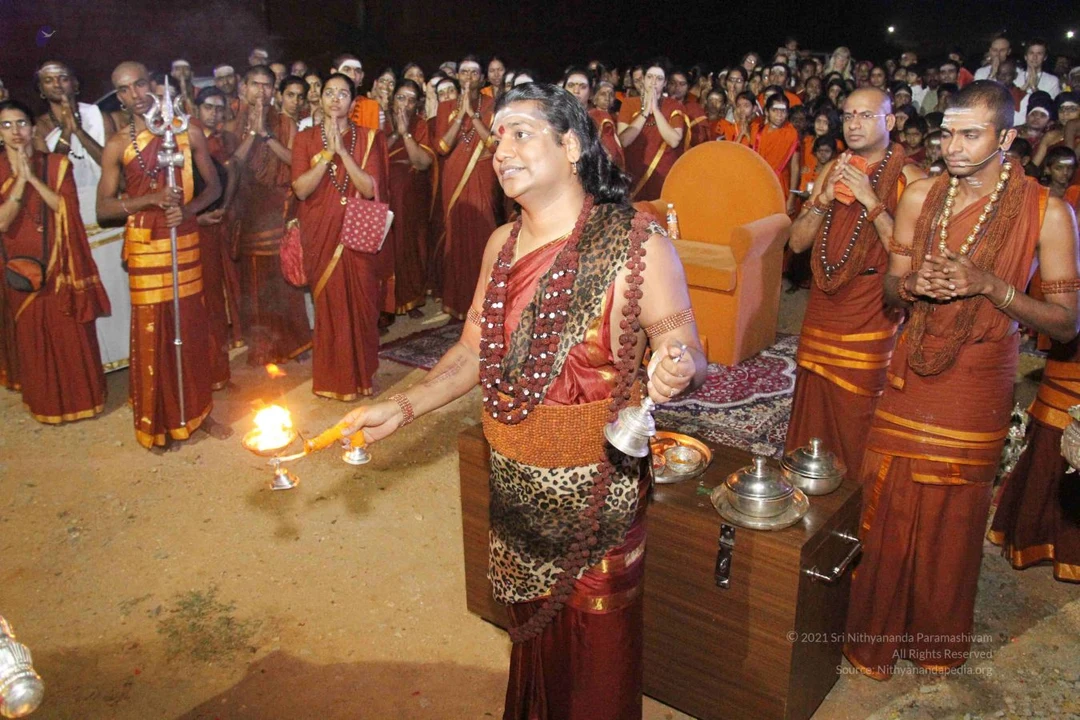
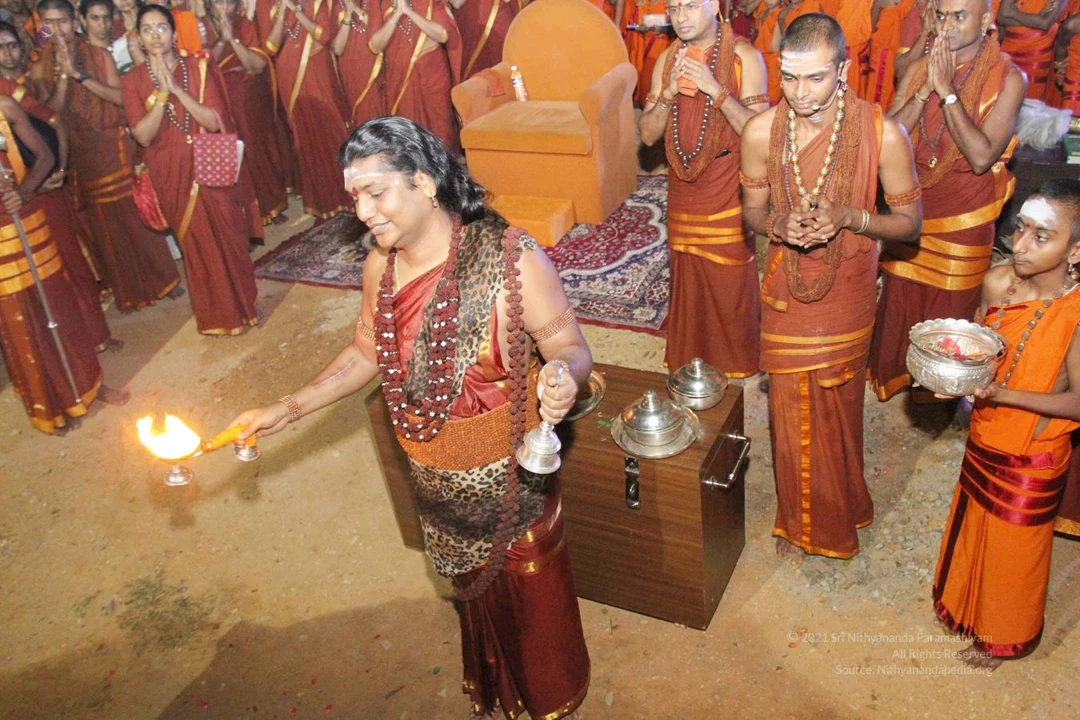
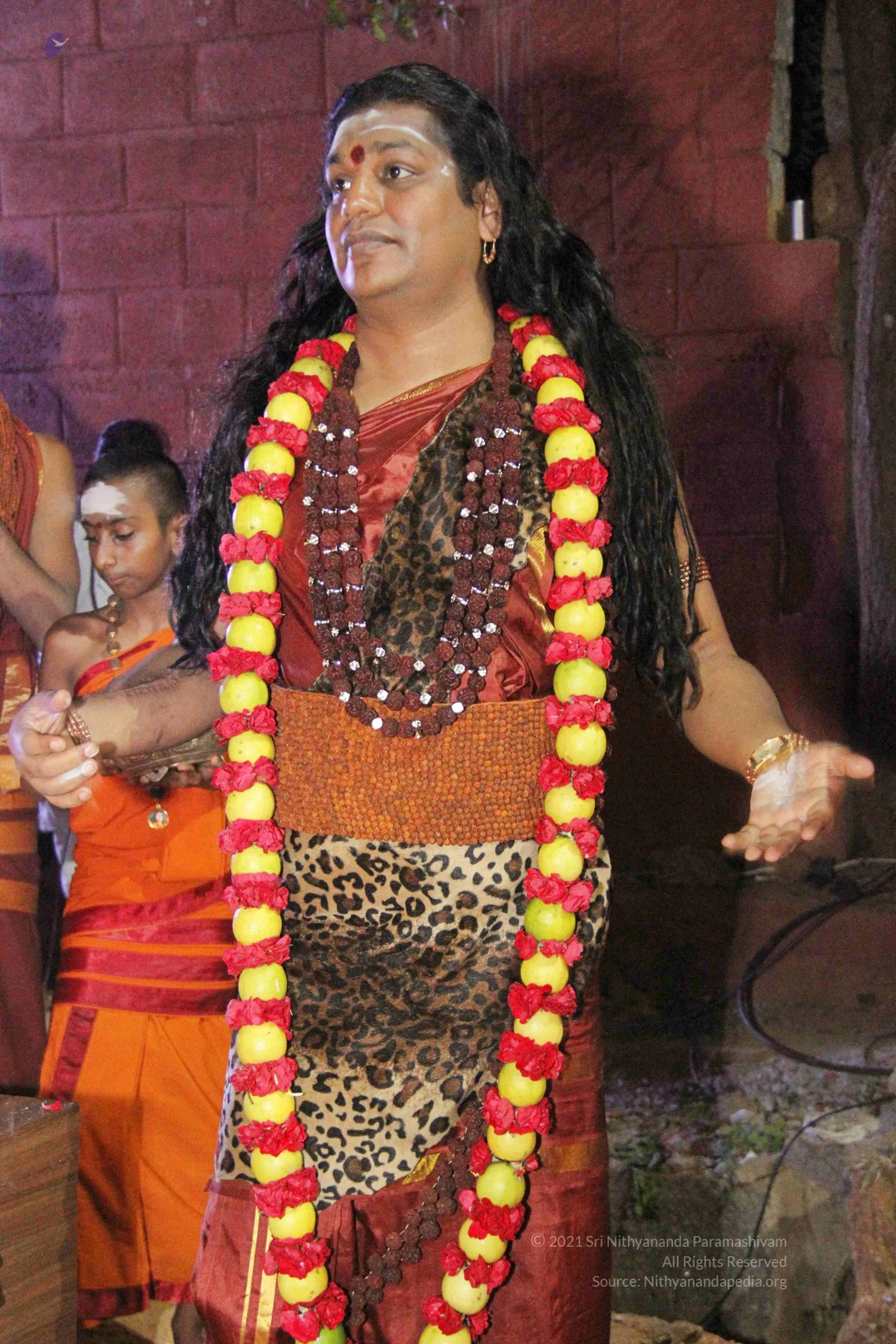
KALABHAIRAVA-DARSHAN

Photos Of The Day:

Thanthi-TV-Show

1-Pada-Pooja-Bidadi

Photos from this day

View all 679 photos

RUDRABHISHEKAM

14 photosSource gallery
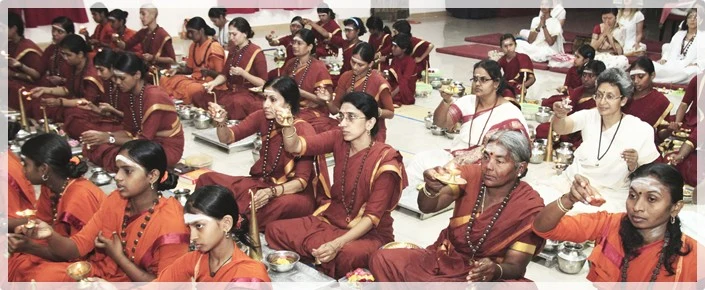
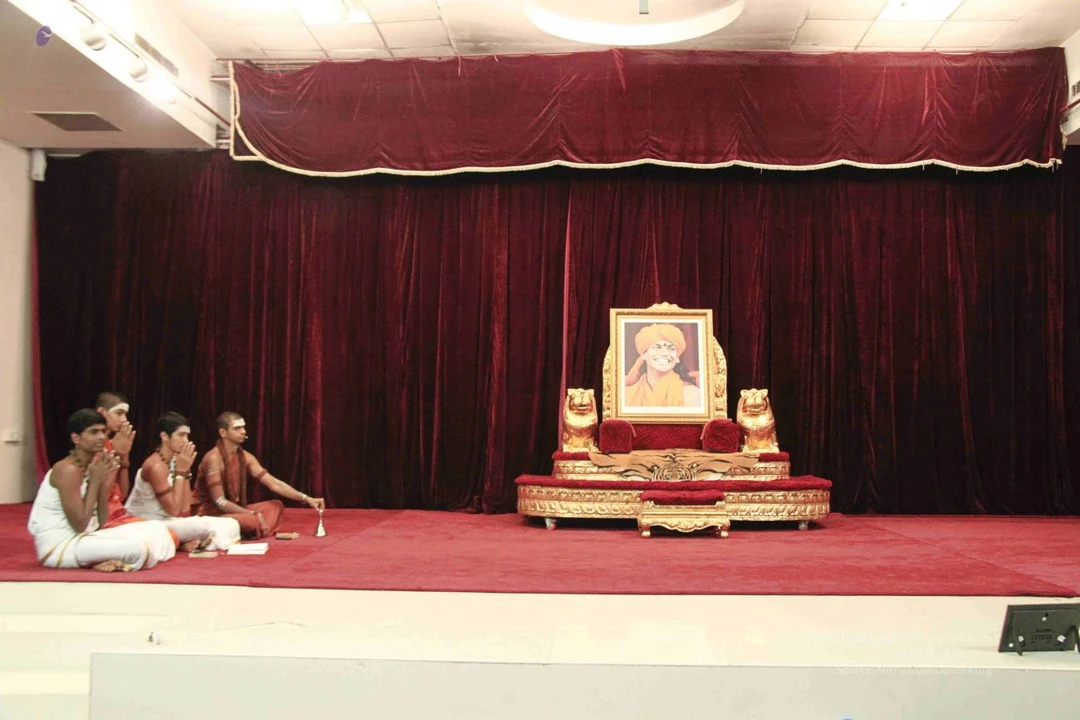
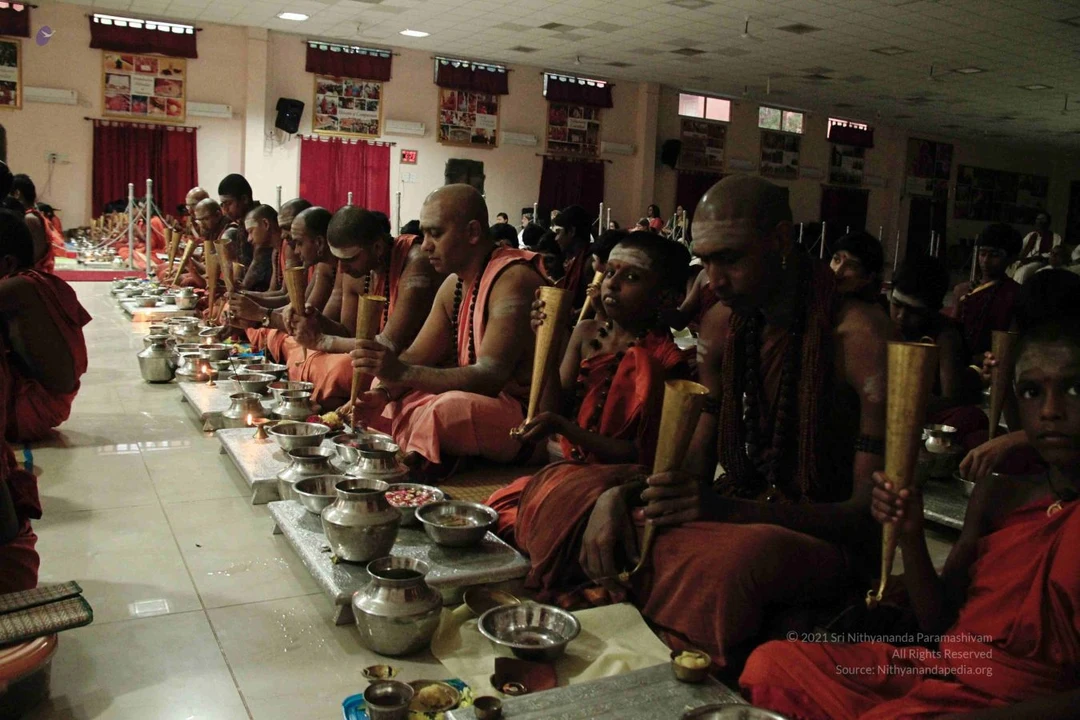
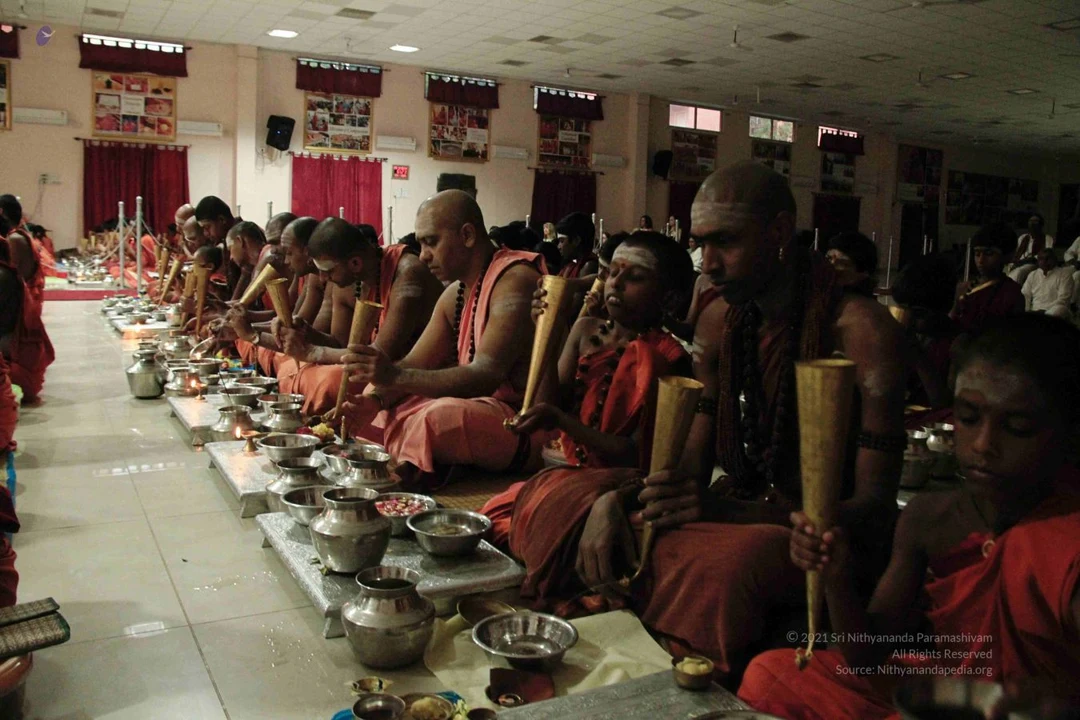
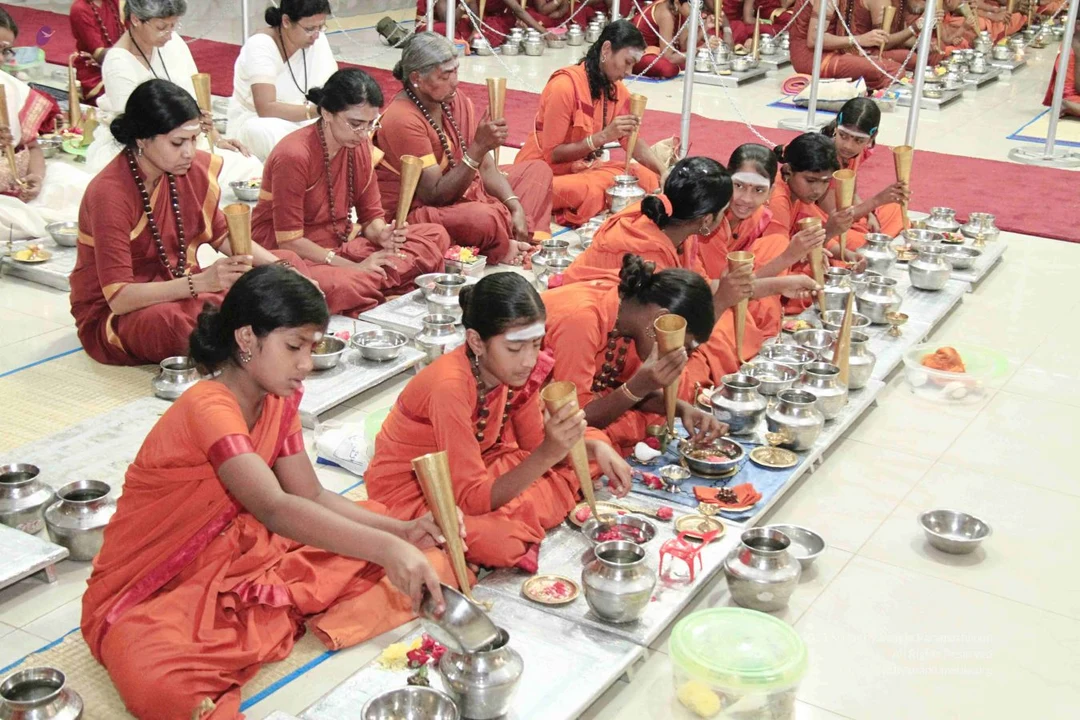
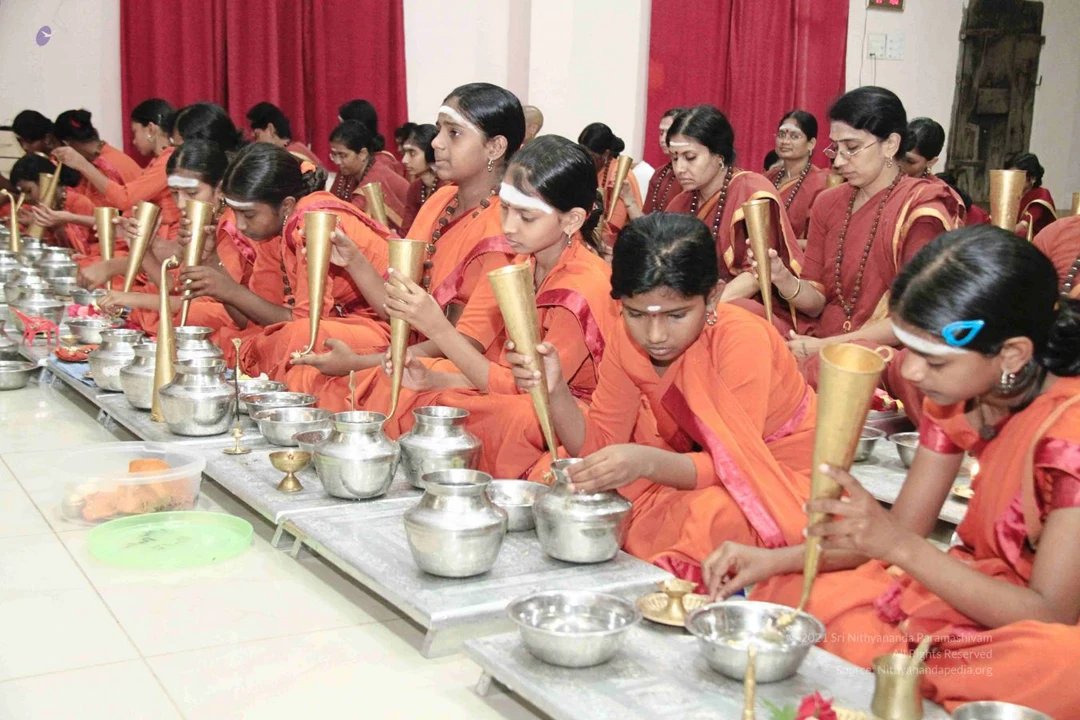
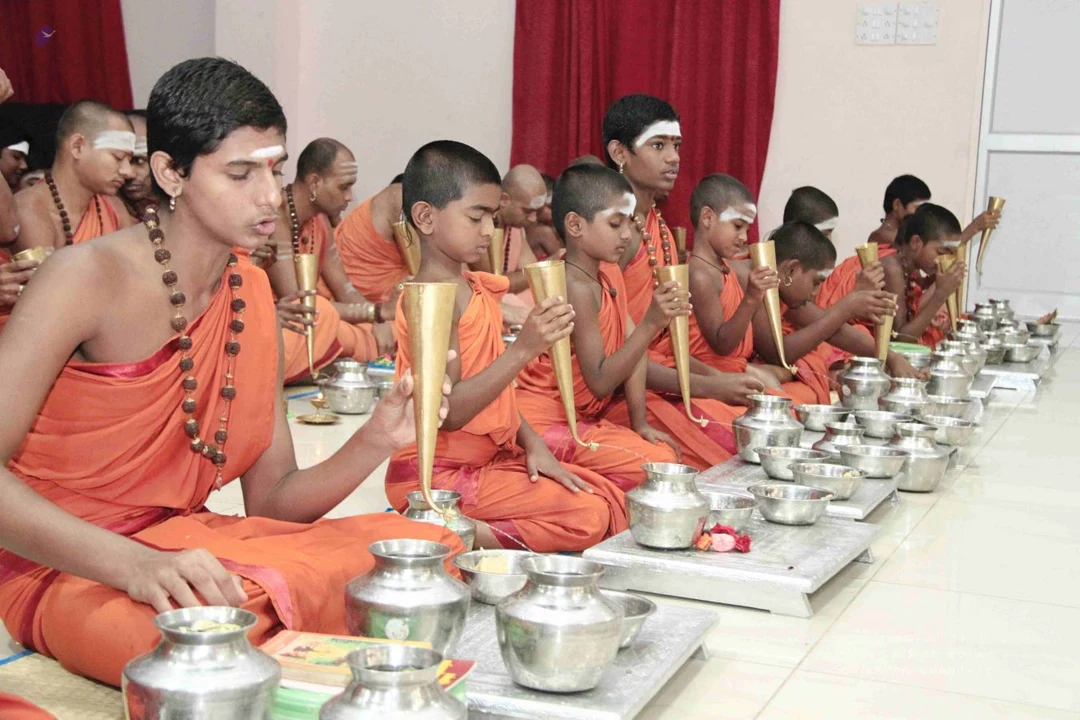
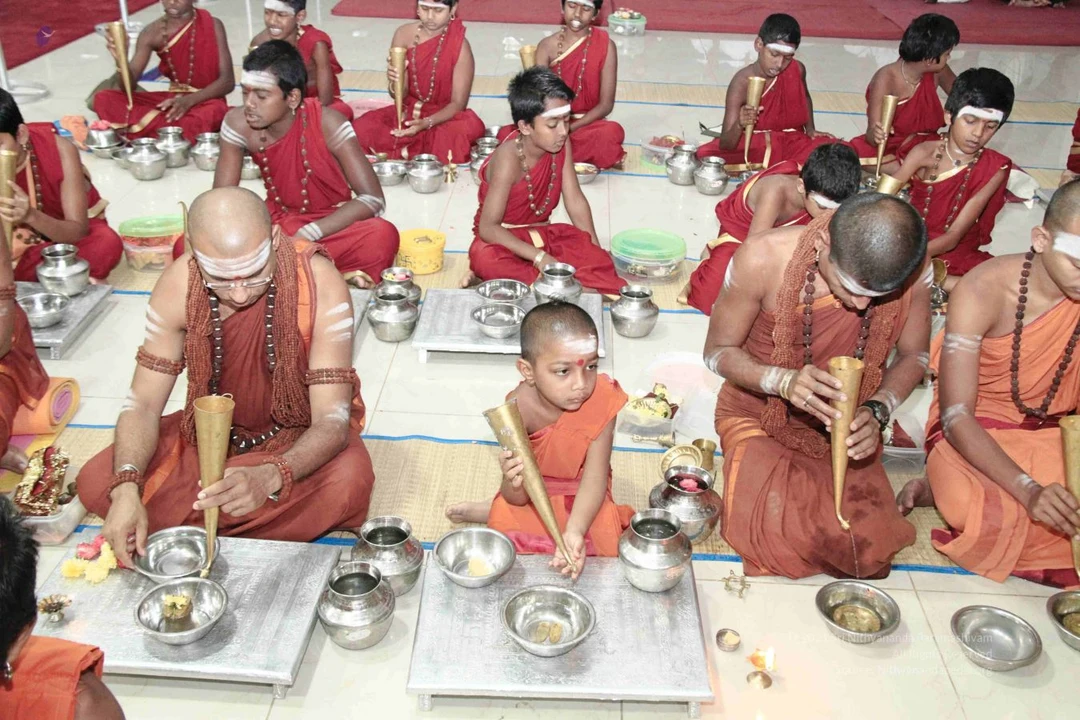
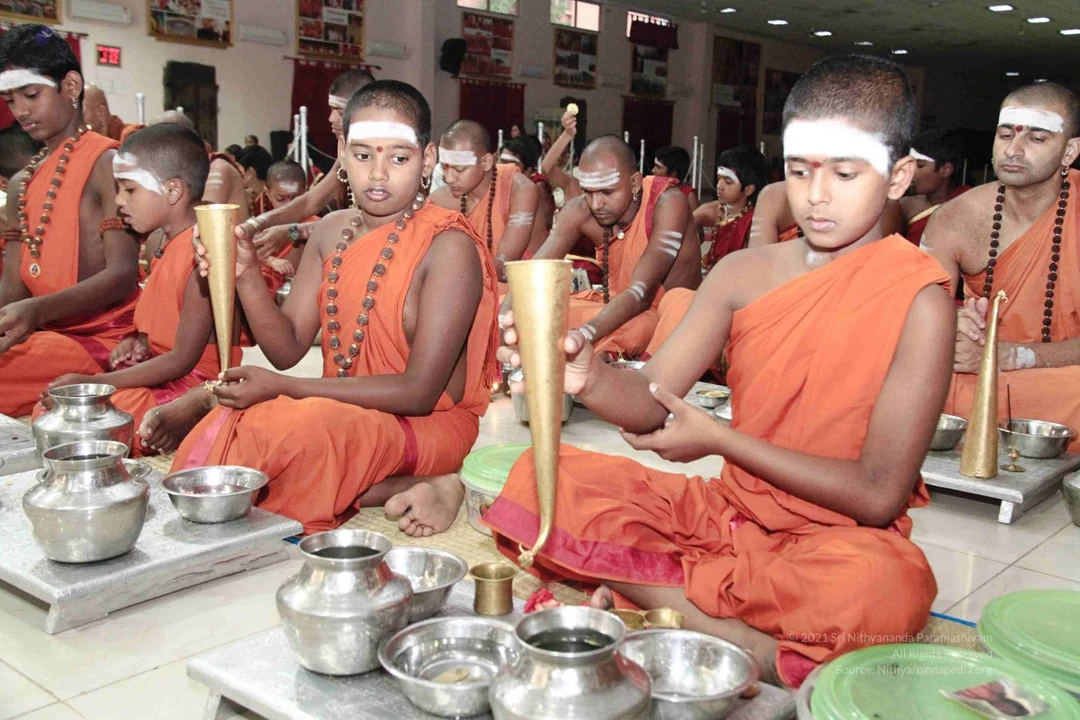
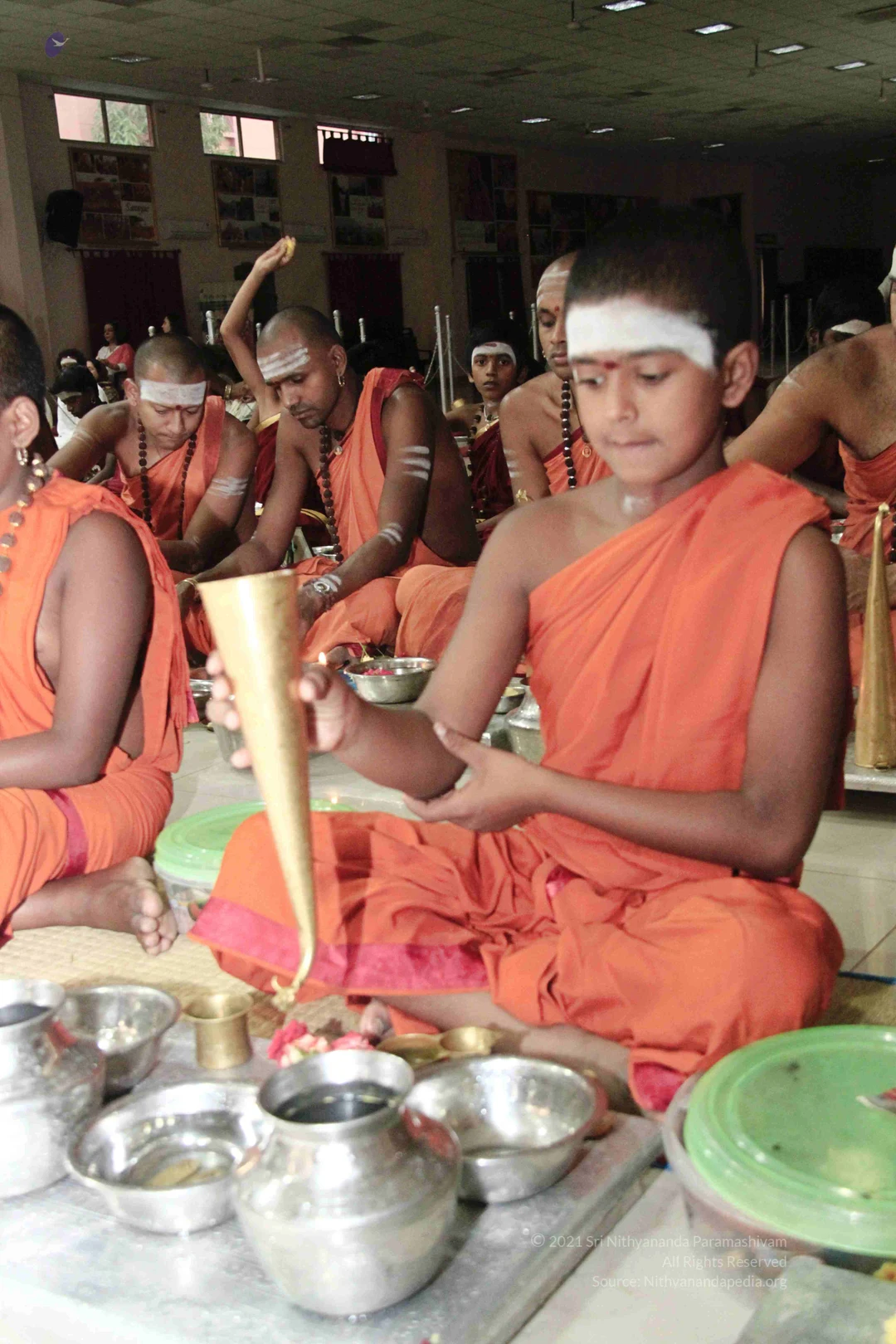
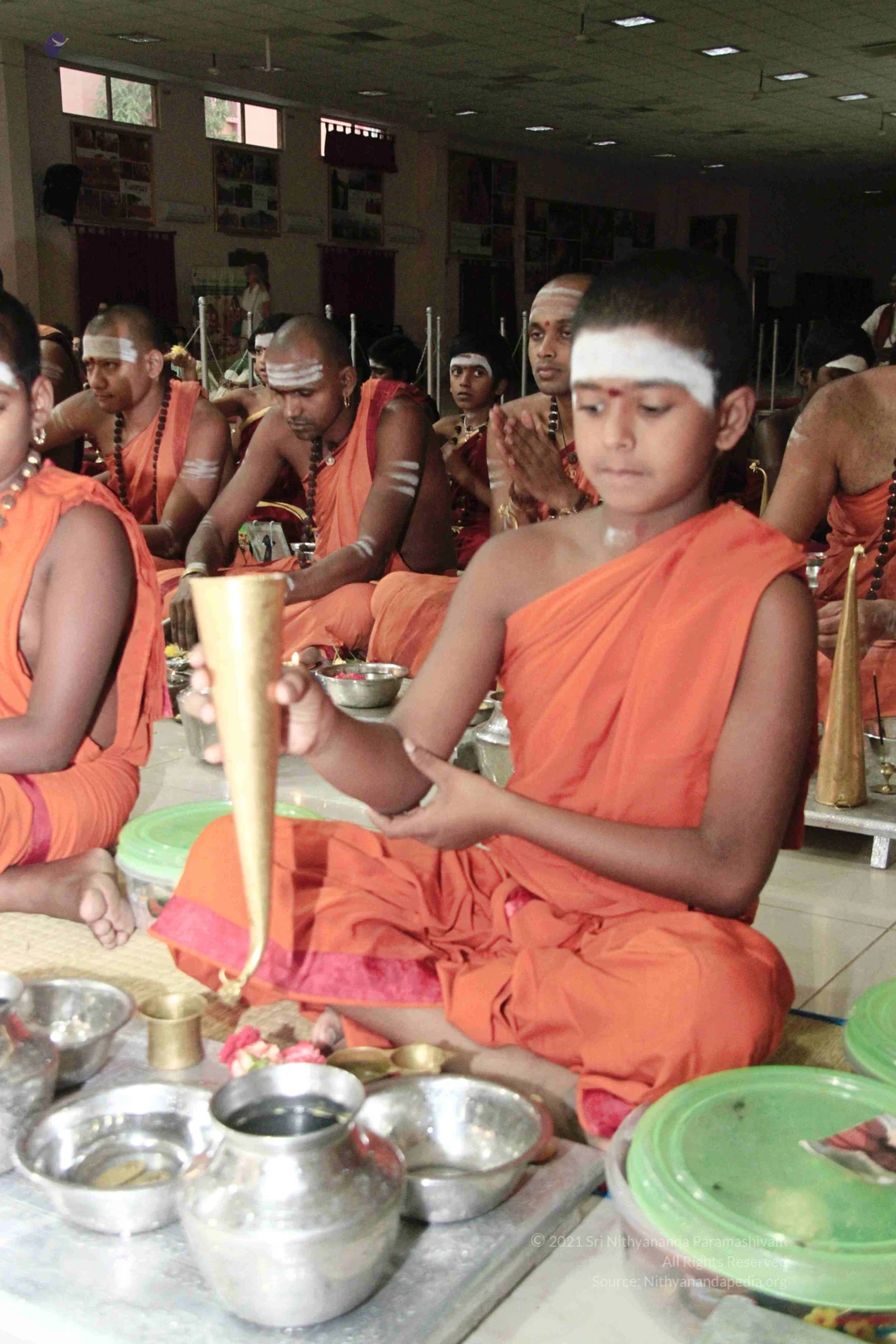
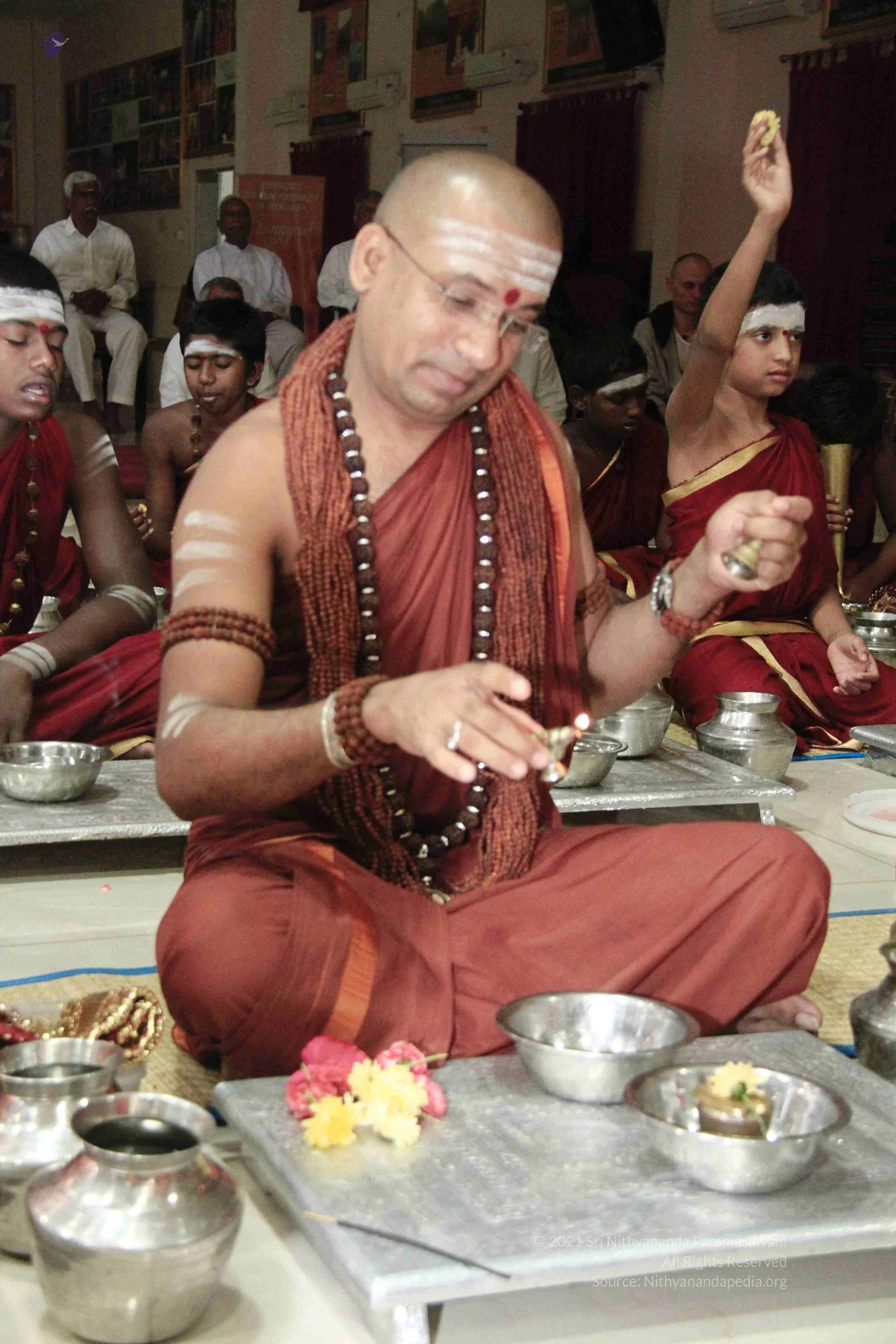
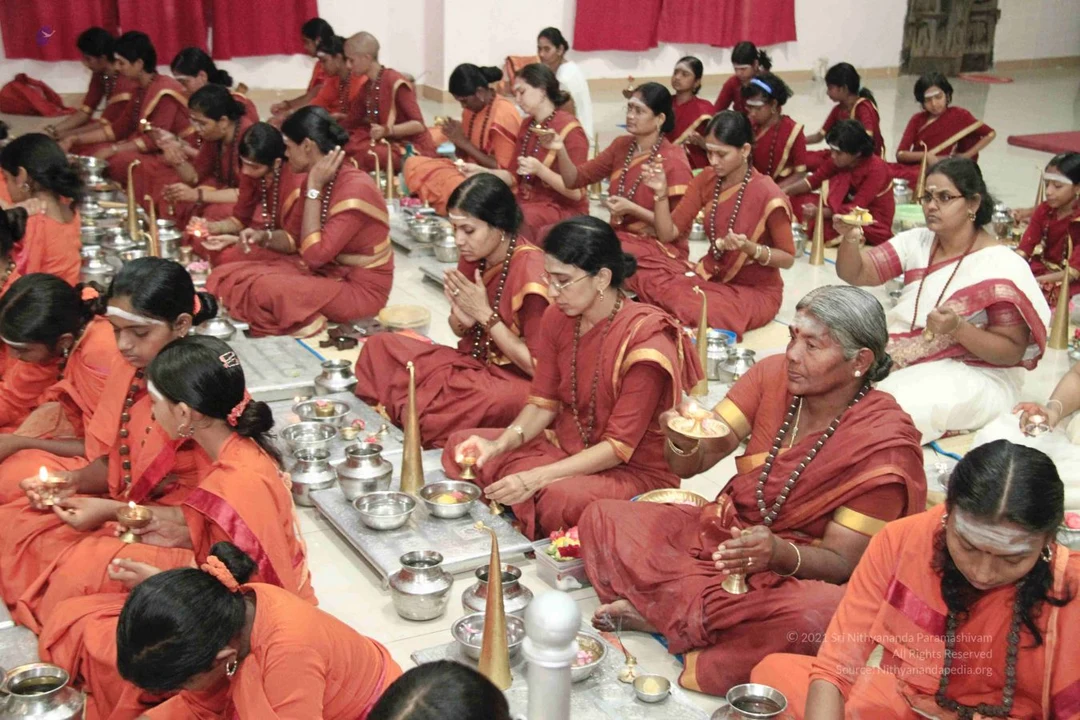
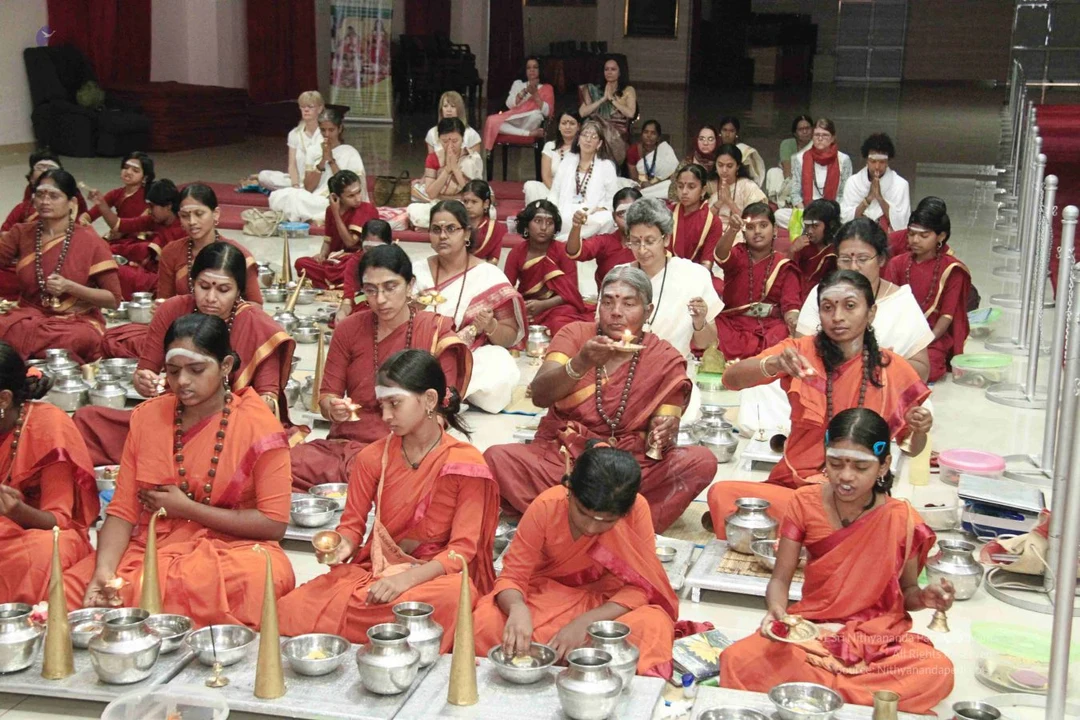
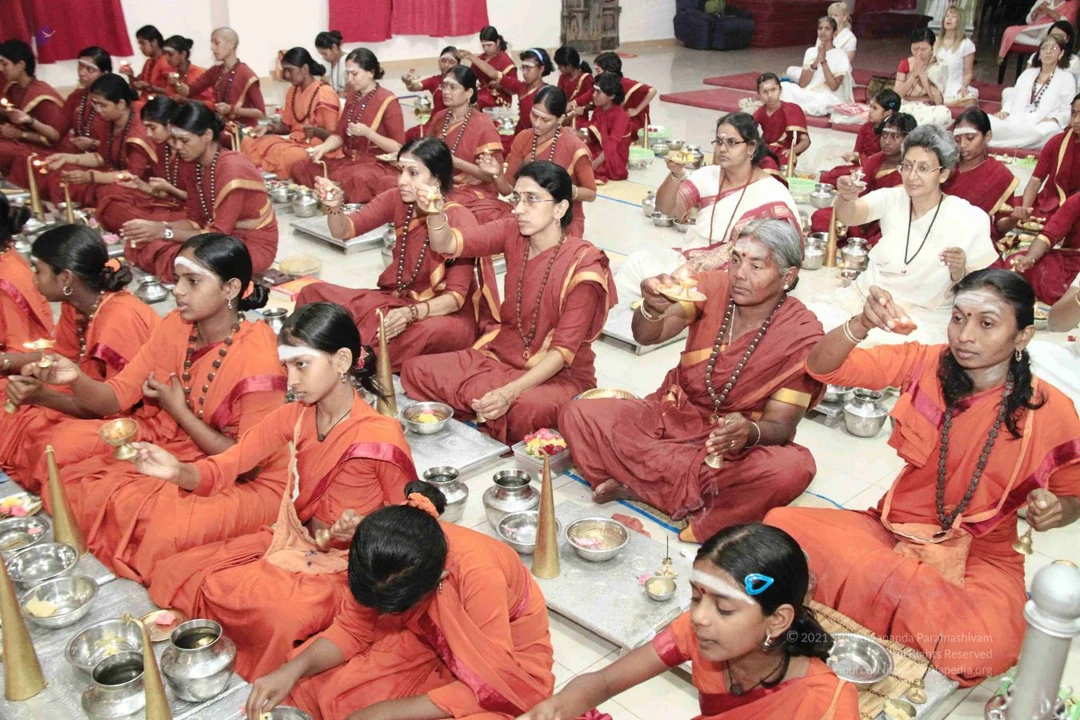
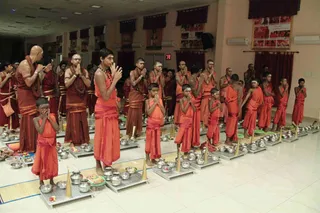
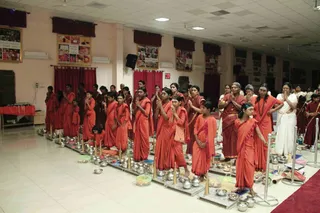
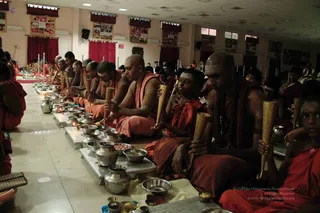
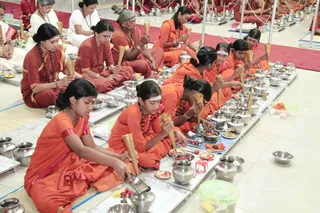
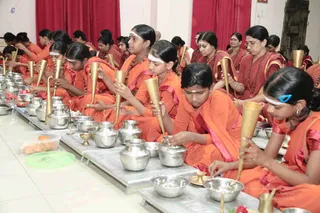
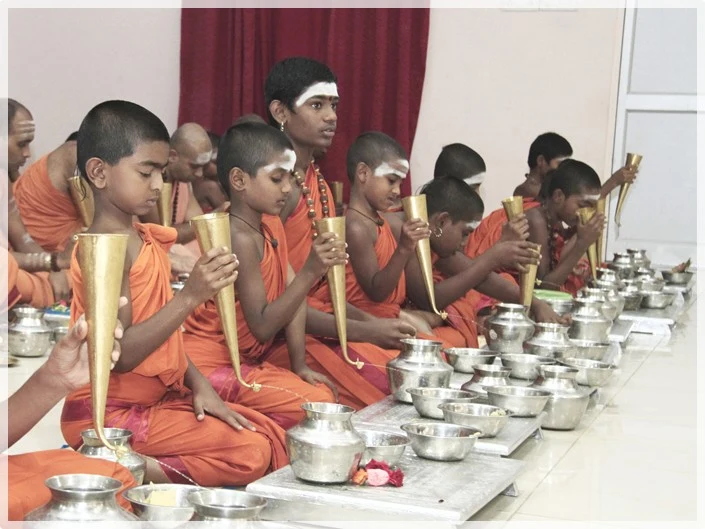
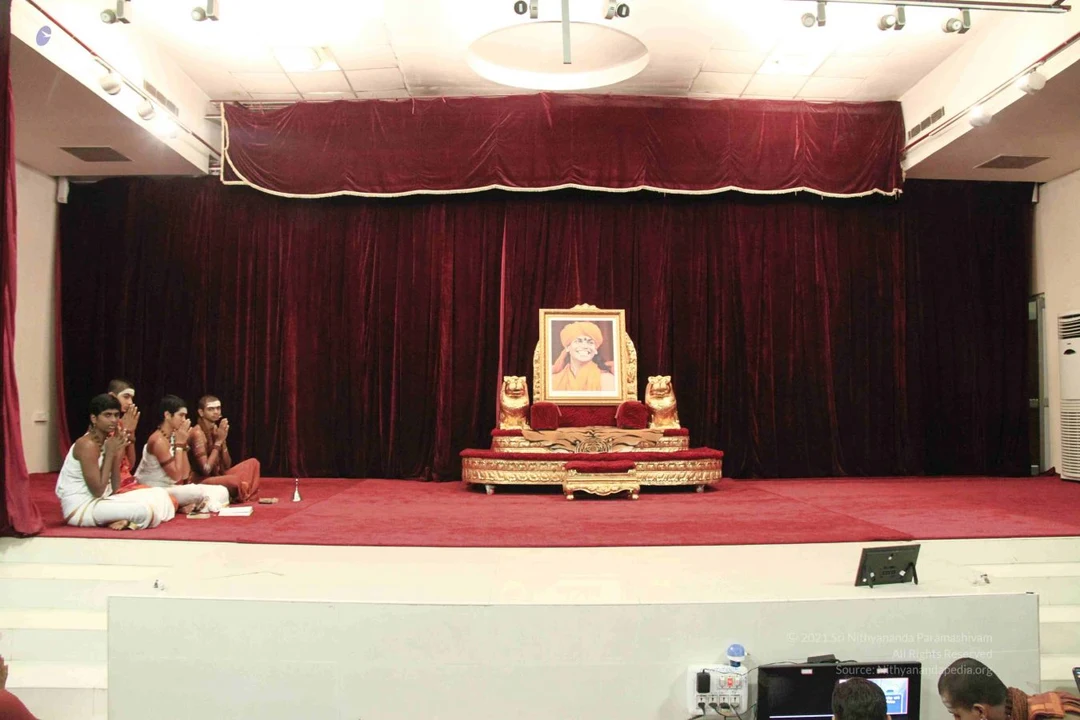
Photograph of a stage with deep red velvet drapes and a red carpet. Centred on a gilded throne with lion-head armrests and red cushions sits a framed portrait of a saffron-robed figure with a tall orange turban, smiling and gesturing near the face. Four men kneel at the left edge in folded-hand namaskar, dressed in white dhotis and orange or saffron cloths, with rudraksha-style neck adornments visible. Below the stage, the edge of a monitor and a few seated people are visible at the bottom right. Overhead are stage lights and an air conditioning unit on the right wall.A indoor hall with cream tiled floor and wall-mounted air conditioners shows a line of saffron-robed sannyasis and young boys standing with palms pressed together in namaskar. Rows of silver puja trays hold steel bowls, brass lamps and conical offerings on mats. Several older men in orange and red robes with rudraksha malas stand at the front left, while boys in orange cloth with white forehead marks stand in front. A framed picture and banner hang on the back wall above maroon curtains.A hall with pale walls, red curtains and framed photo collages lined on the walls. Many devotees in orange and maroon saris and dhotis stand in long rows with palms pressed together in namaste, facing forward. Behind them, brass vessels and kalasha pots sit on low platforms beside small oil lamps, with a red carpet running down the right side. Several women in white saris stand at the right edge, also in prayer. The scene suggests a group puja or ritual offering, with the rows of pots and lamps as the focus.A long row of seated men and boys in saffron-orange robes sits on the floor of a hall, each with a brass or metal pot and small bowls set on stone or metal platforms in front of them. Several hold long golden horn-shaped instruments to their mouths. Many have white markings on their foreheads and bare arms, some wear rudraksha malas and shawls. Small oil lamps flicker on the floor, and bowls hold offerings. Red curtains and framed photo displays line the walls, with a ritual kalasha-style set-up in progress.A group of women and girls in orange saffron sarees and orange robes sit cross-legged in rows on white floor mats during a ritual. Many hold long brass or copper horns or funnels, and several pour liquid from small steel pots into bowls laid on low wooden trays. Steel and brass vessels, kalashas and bowls of flowers, petals and orange offerings sit before them. Some wear rudraksha malas, and one girl has white vibhuti on her forehead. Red carpet and white pillars with hanging chains frame the hall. The scene looks like an abhishekam or puja preparation.A row of young women and girls in saffron-orange robes with pink borders sit cross-legged on a long white table behind rows of silver vessels. Each holds a tall brass cone-shaped funnel, pouring or measuring liquid into the silver pots and bowls, with small brass oil lamps and brass cups among the items. Several wear white forehead markings, rudraksha malas and small earrings. Red curtains hang behind them, and the scene appears to be a ritual preparation such as abhishekam offerings. Some women in the back wear the same robes and watch the work.

PADA-POOJA
7 photosSource gallery
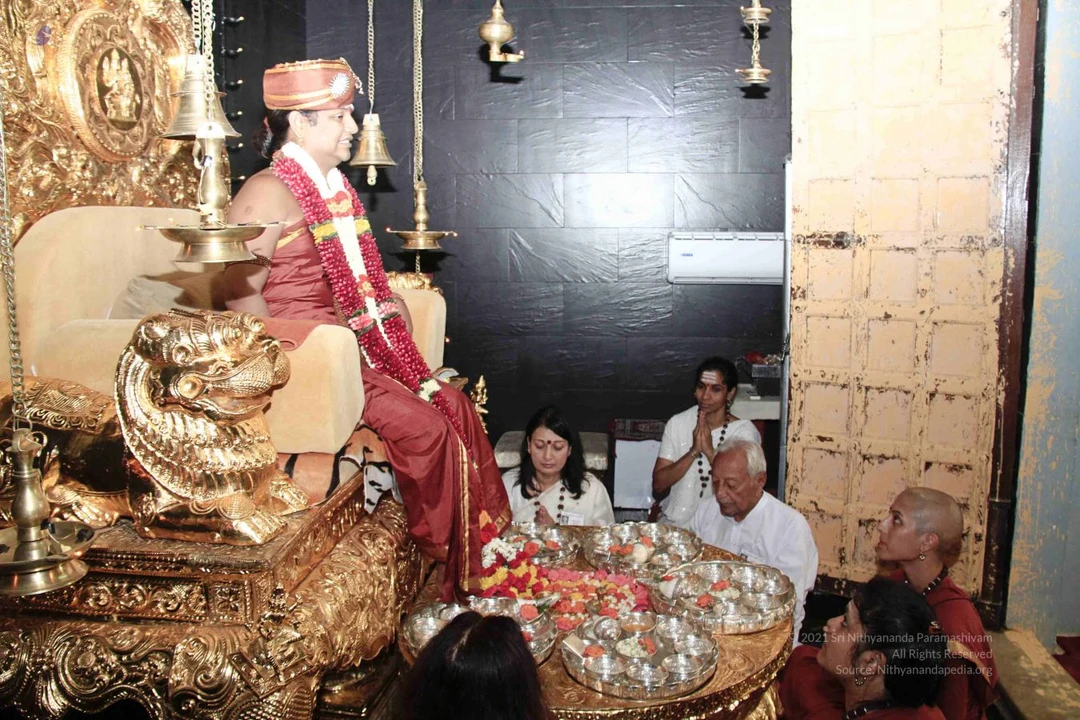
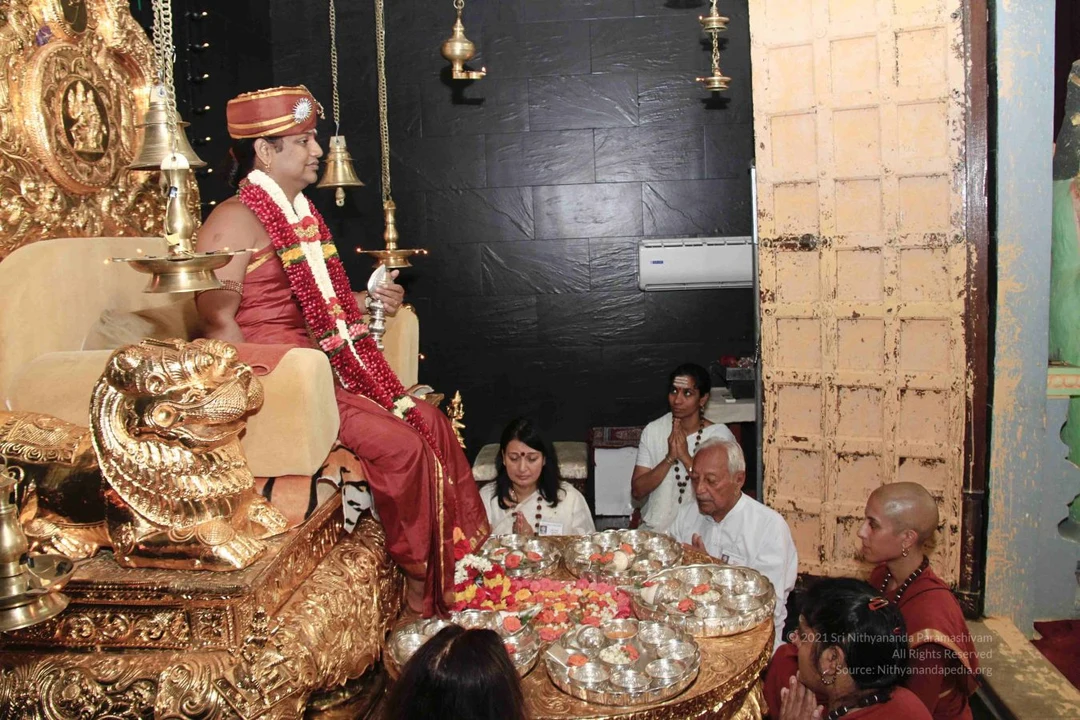
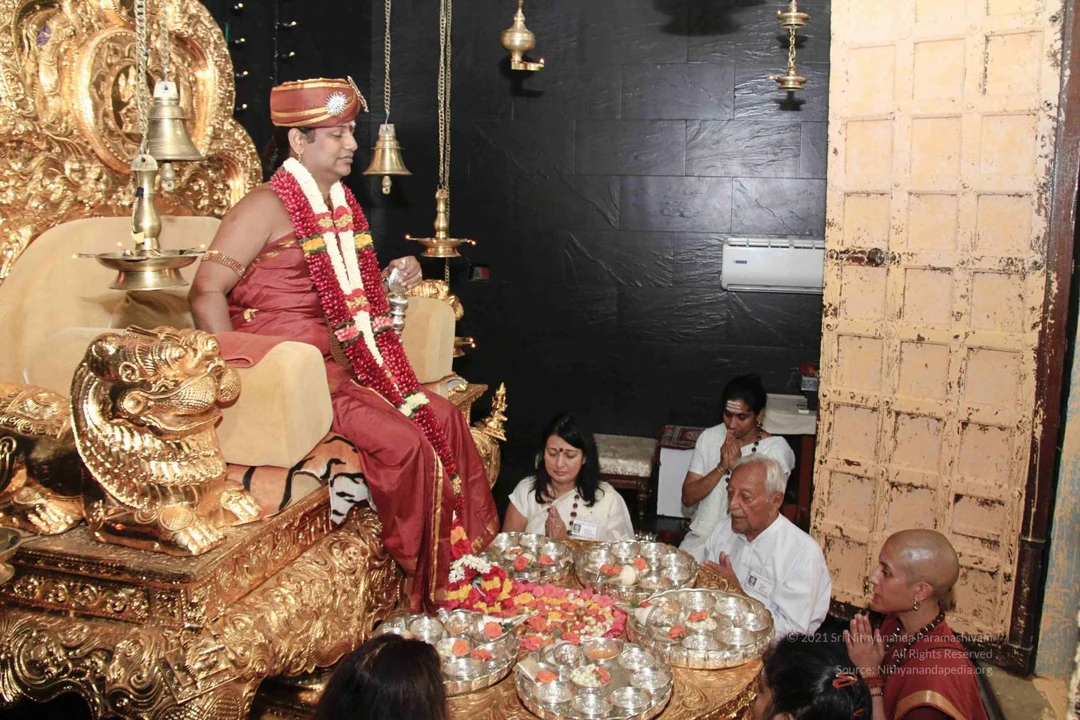
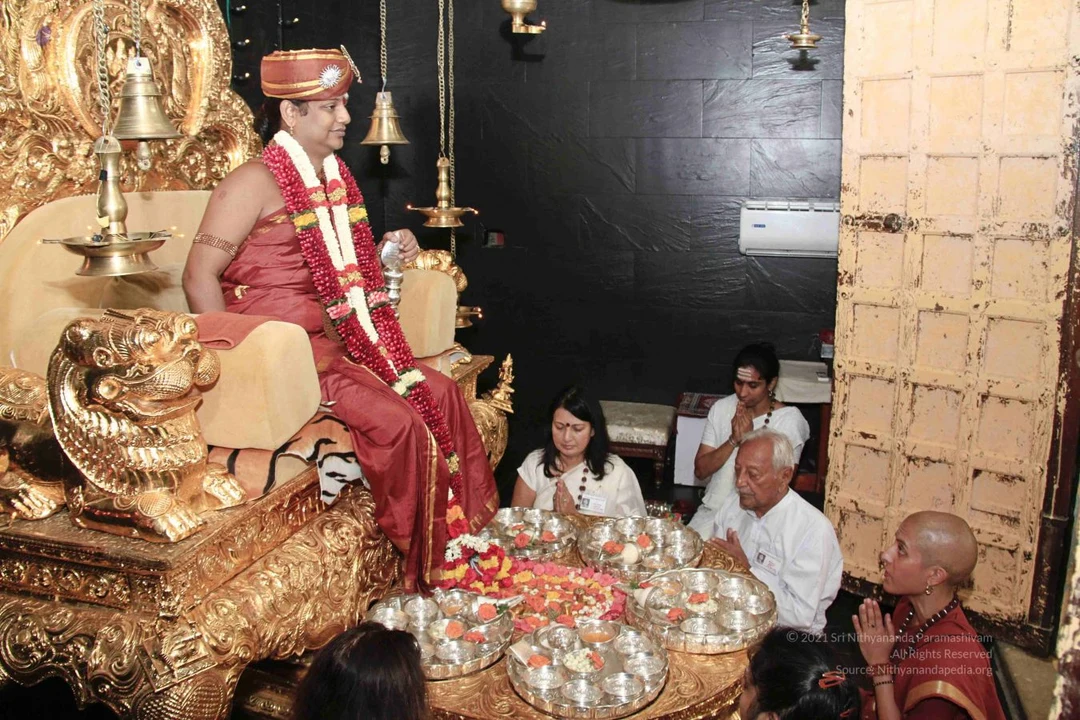
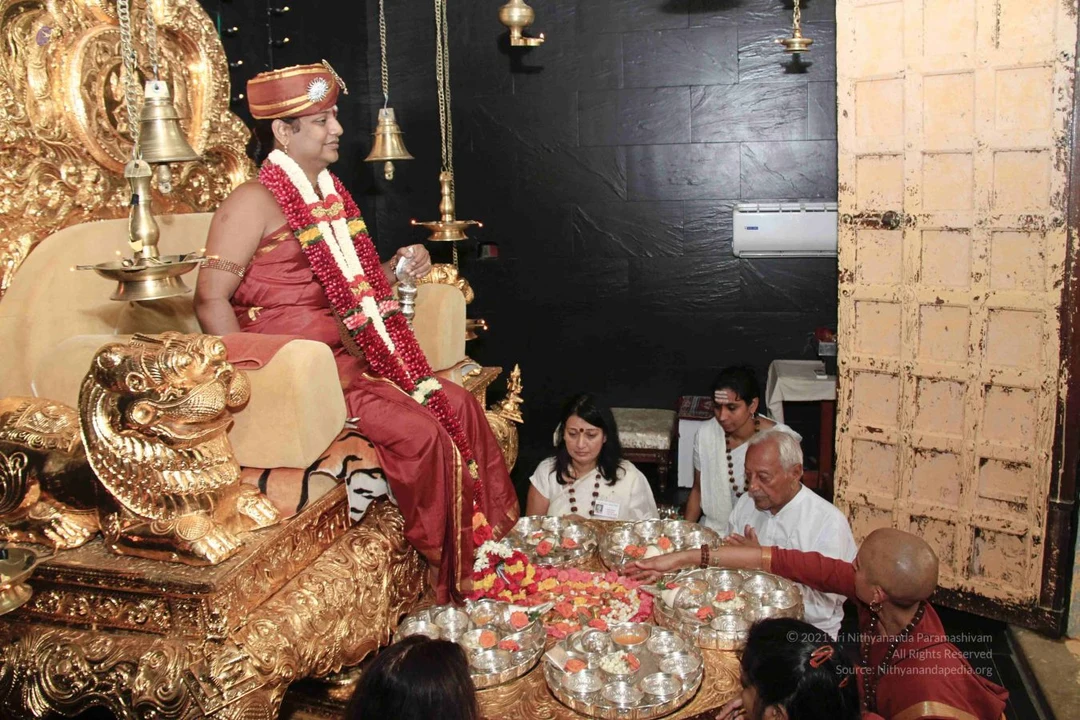
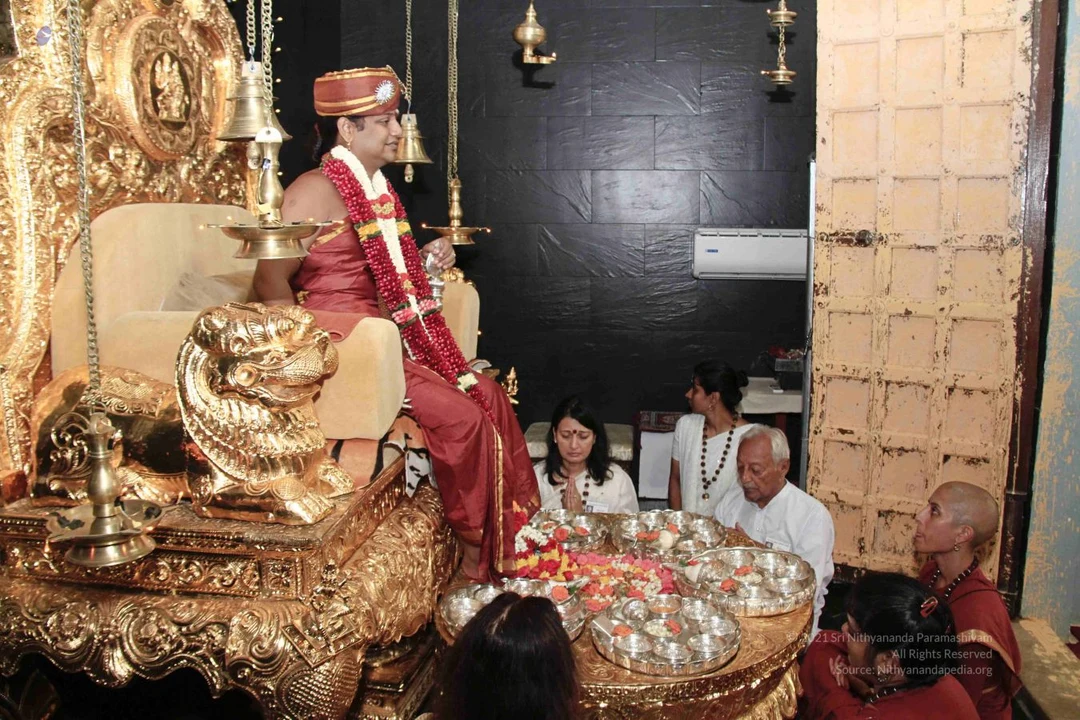
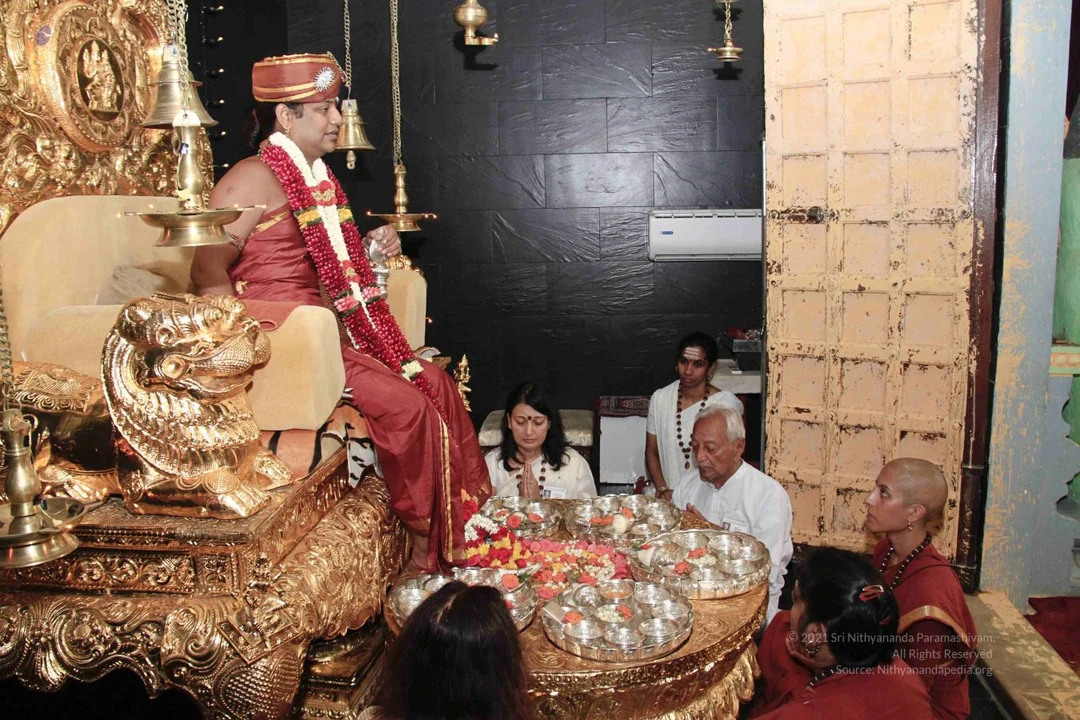
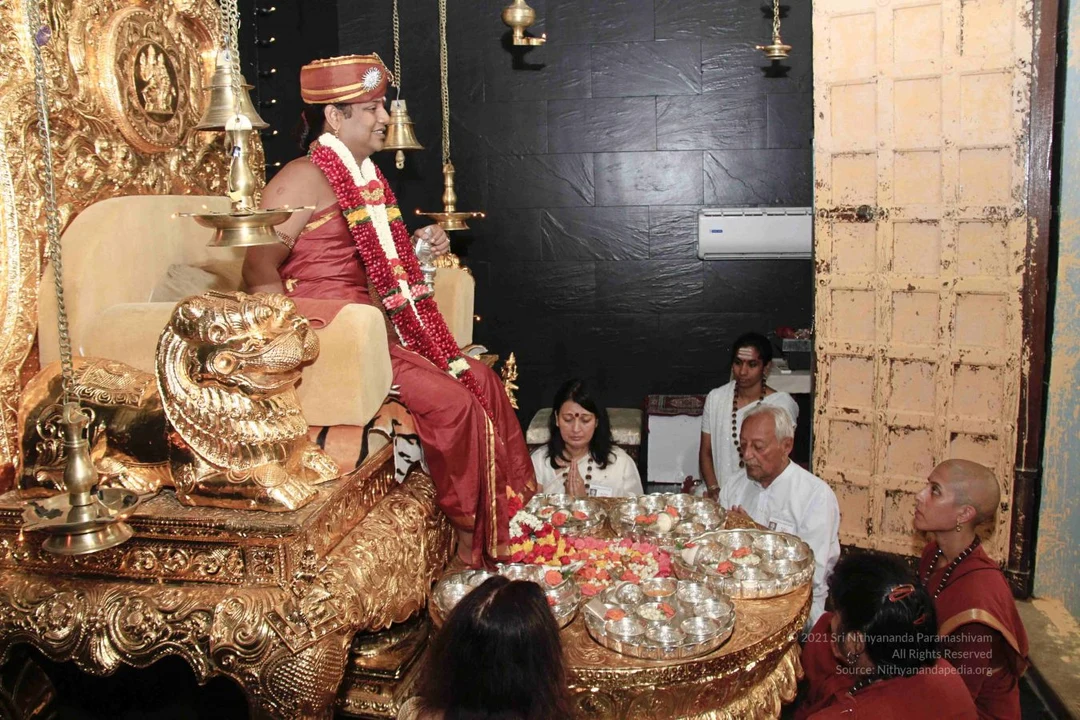
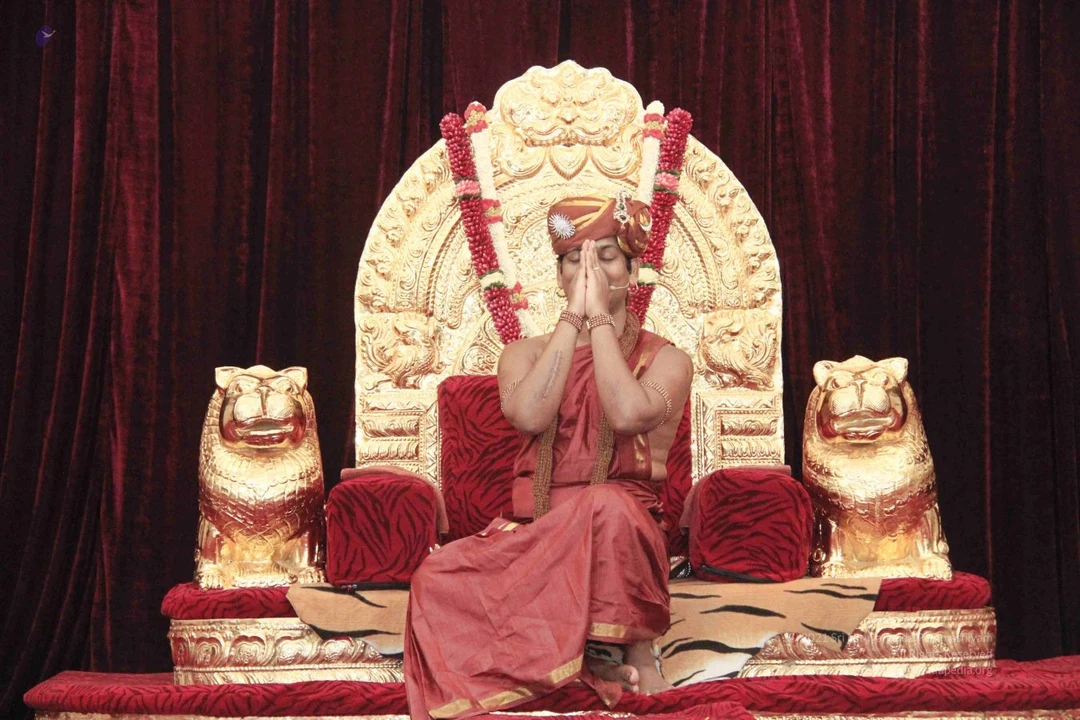
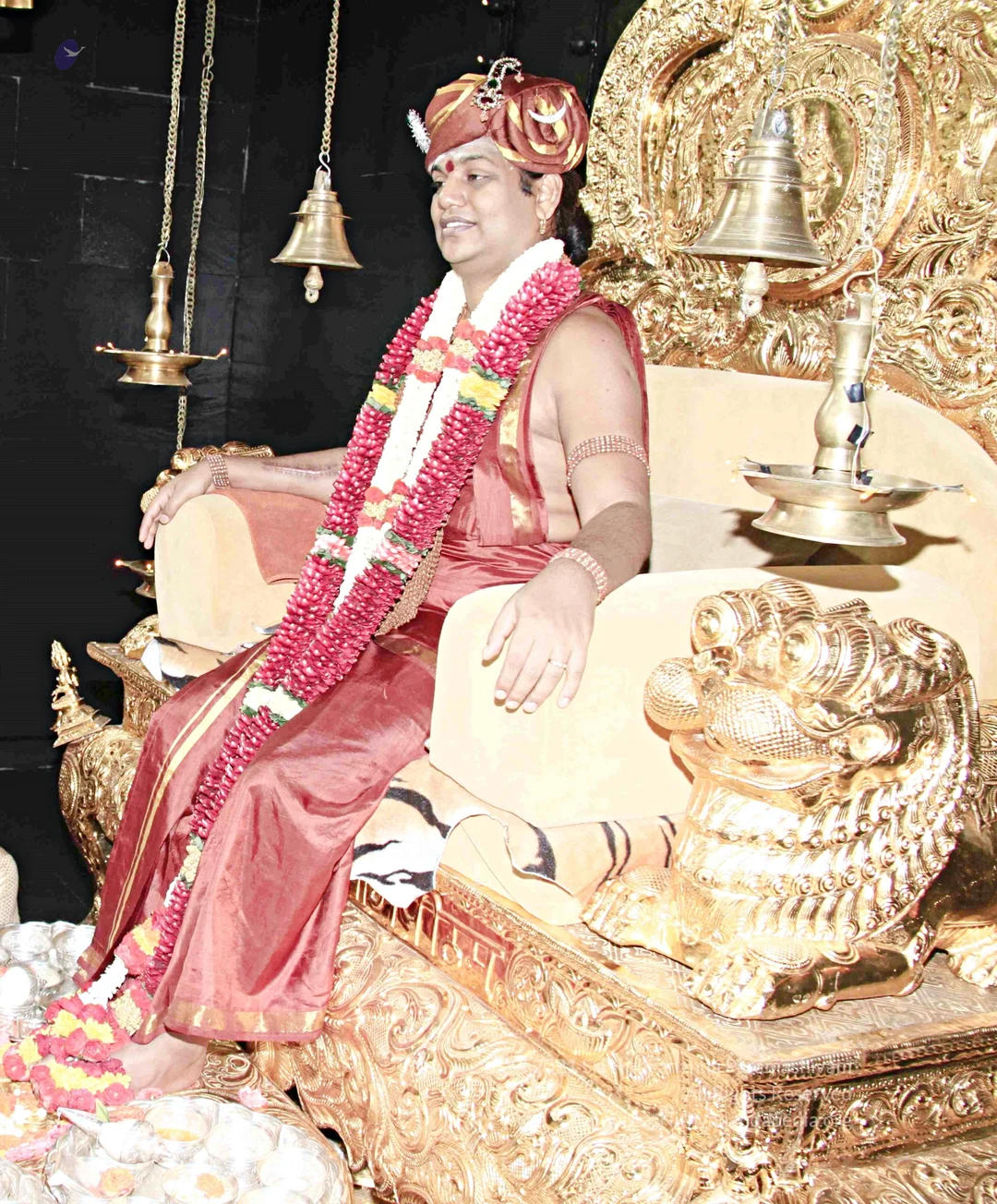
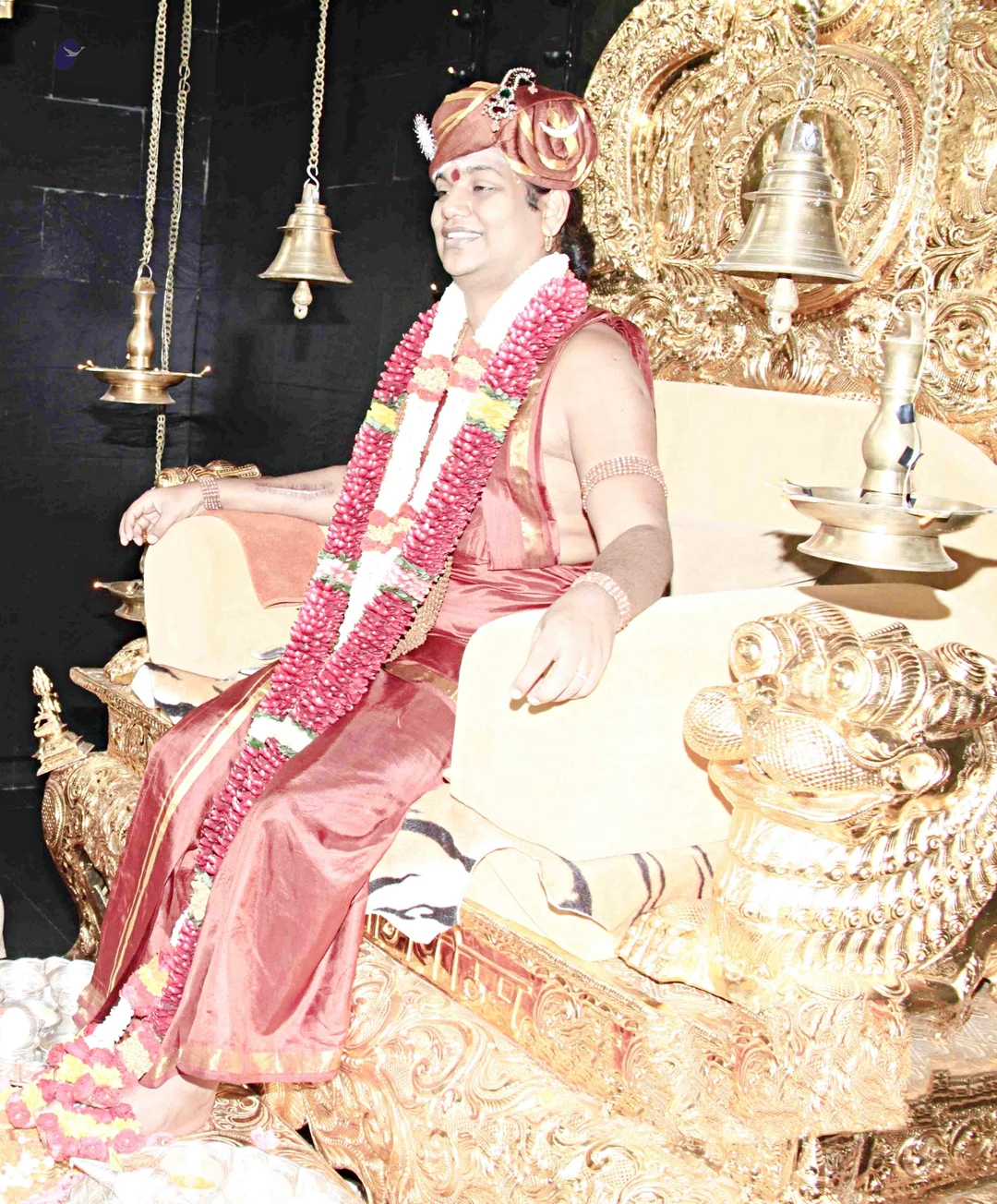
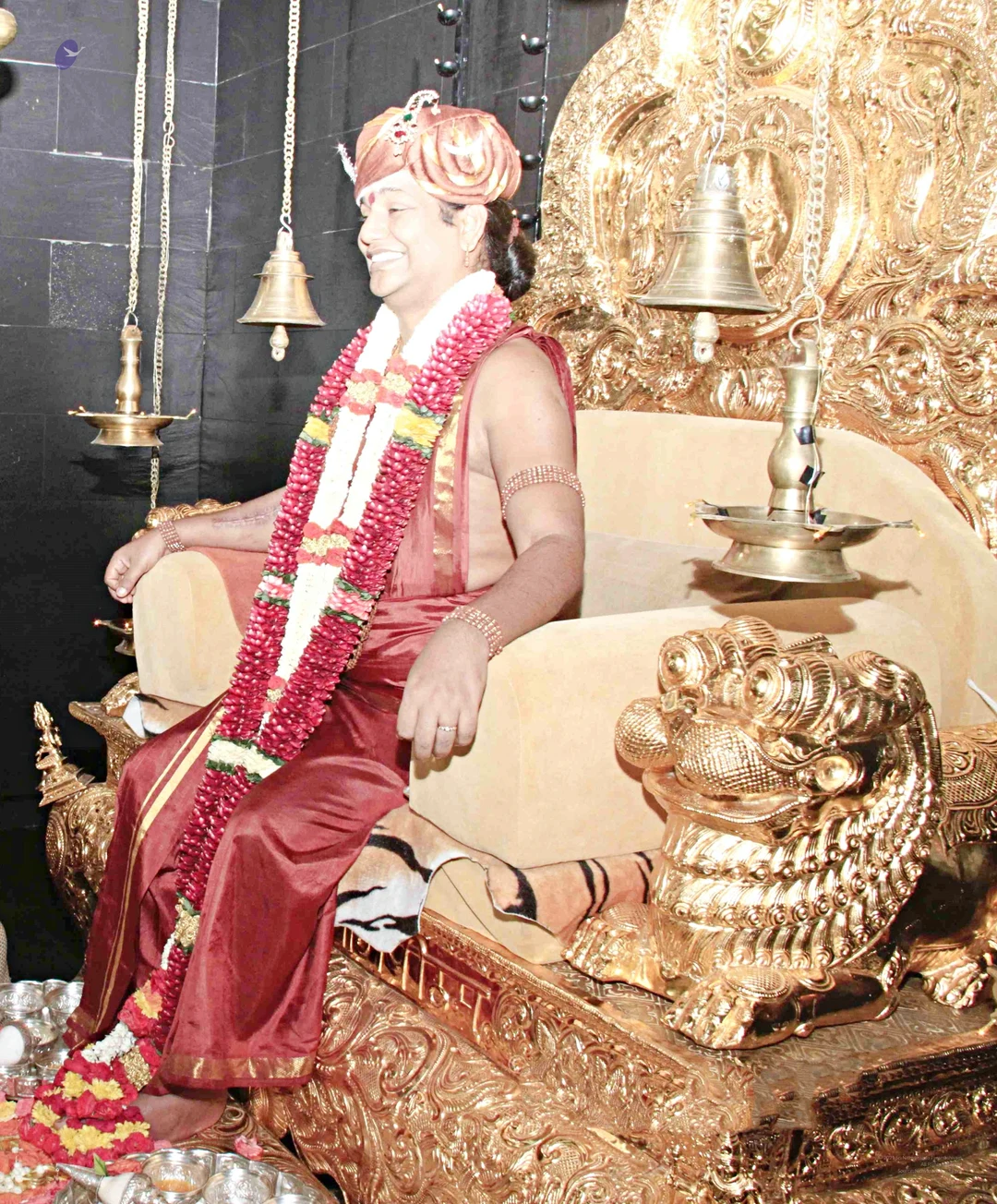
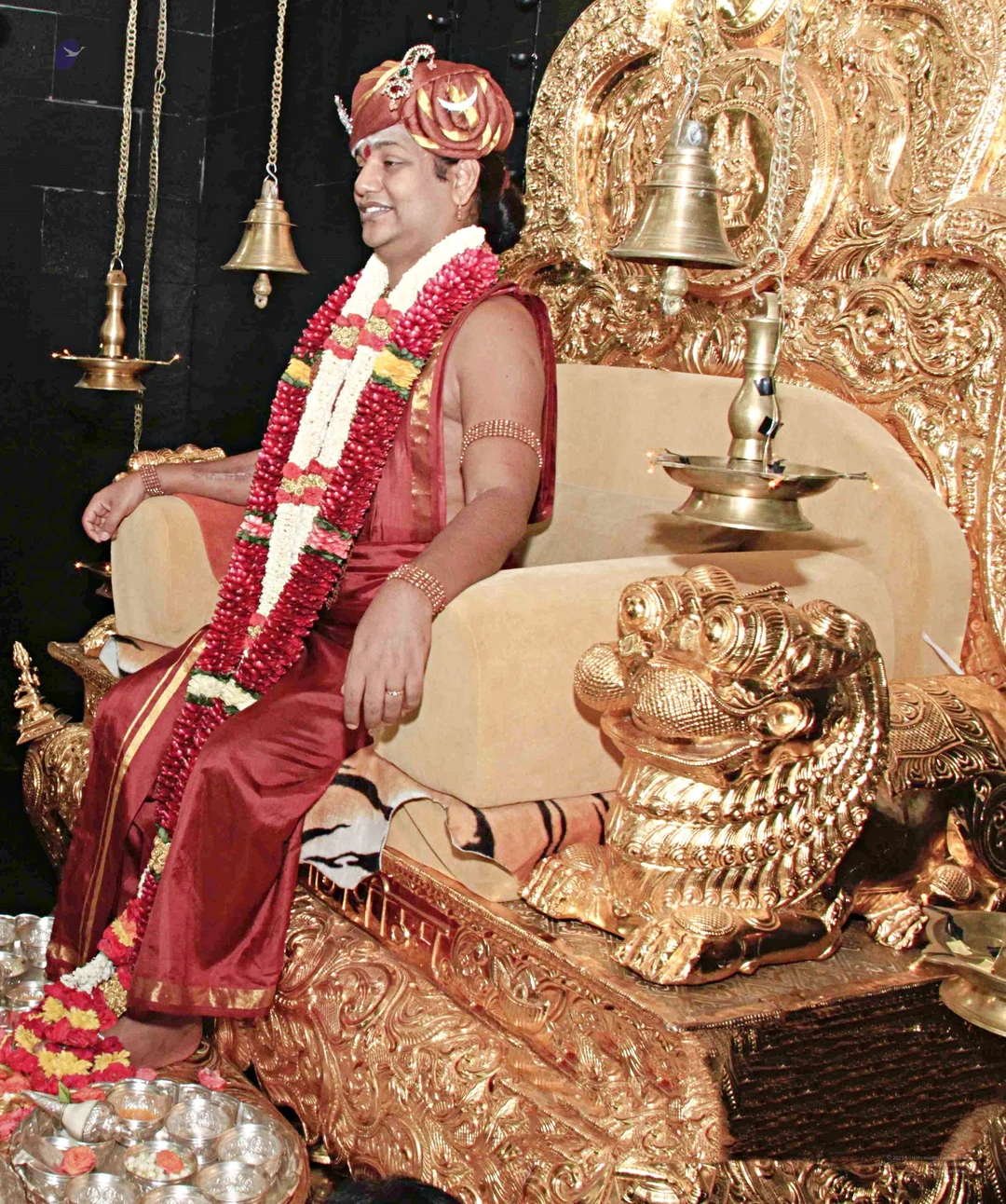
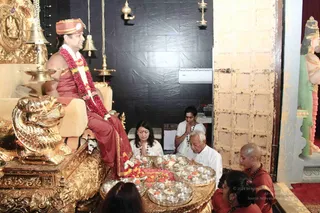
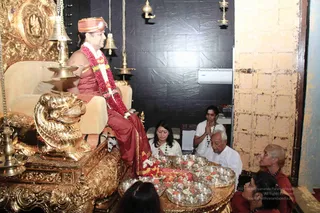
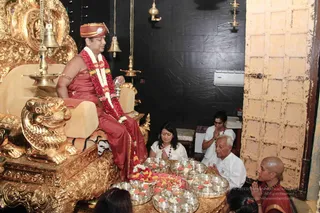
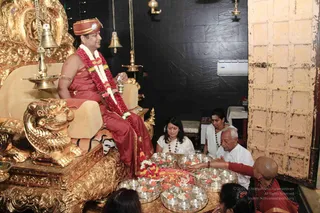
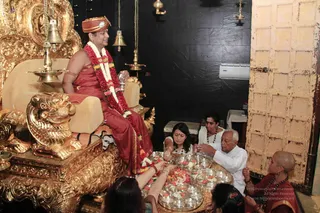
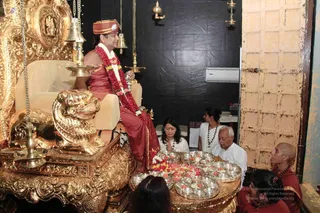
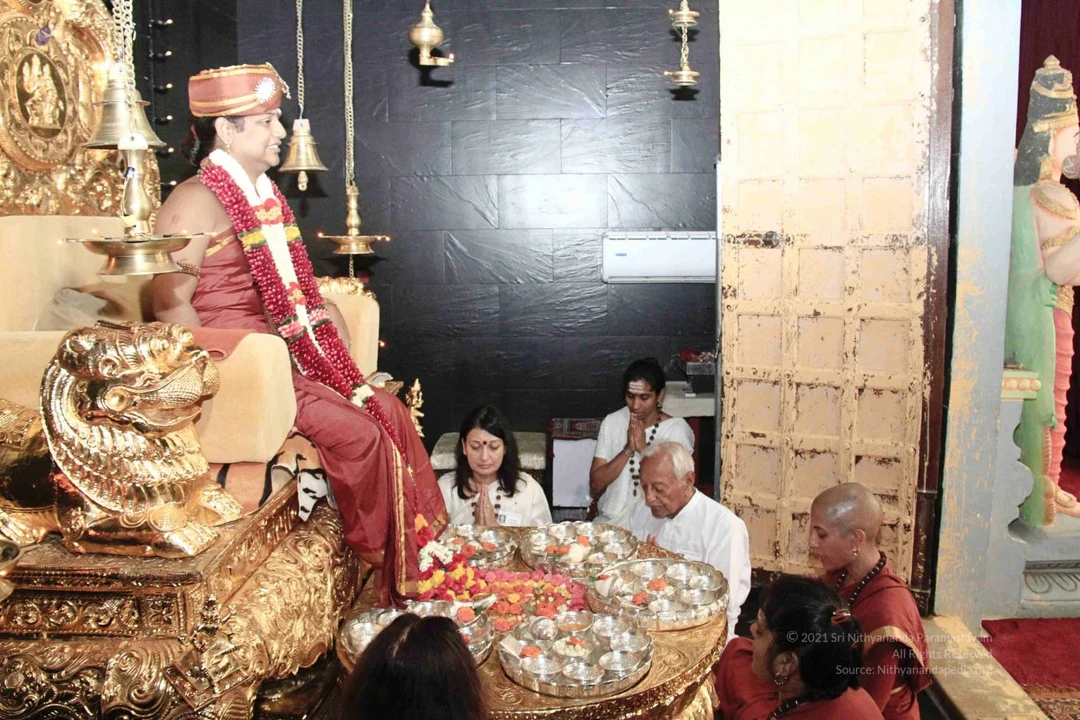
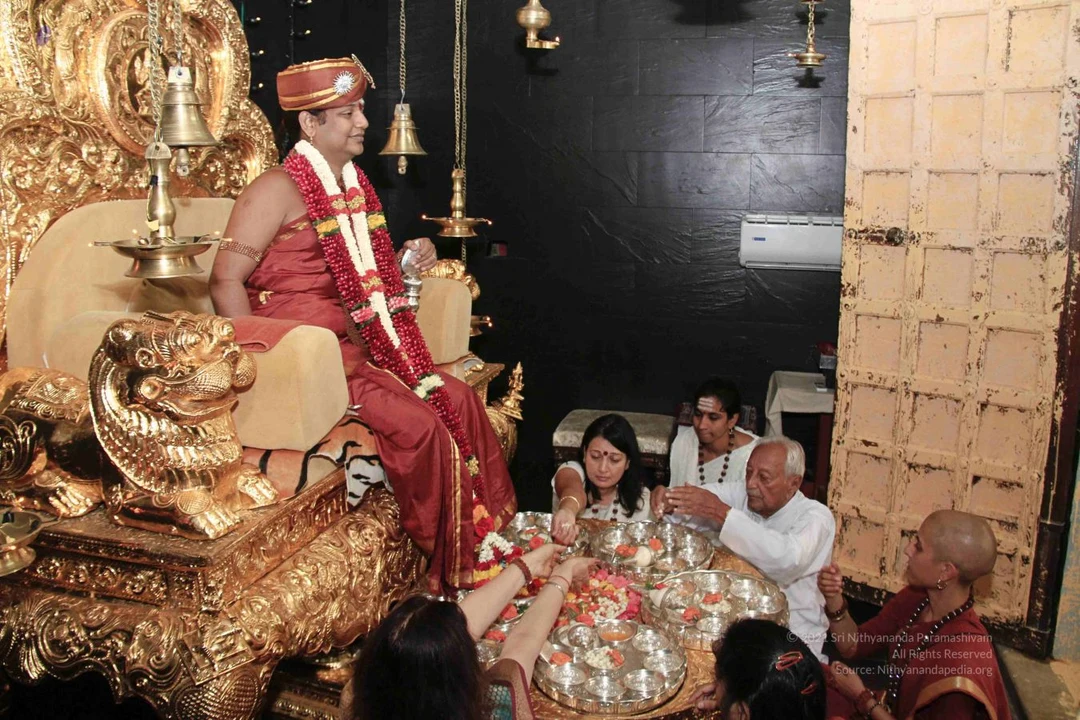
A photograph of a seated man on an ornate golden throne with a lion-head armrest, wearing a red-orange dhoti and shawl, a red and multicolored flower garland, and a saffron-and-red turban-style headwear. He sits to the left, facing right. In front of the throne, a round brass-and-gold table holds many silver and brass thali plates with flower petals, orange and red marigolds, and small offerings. Seated to the right, a woman in white with a mala, a bald person in red-orange robes with a mala, and a man in white with folded hands sit near the offerings; a partly visible figure in dark clothing is at the bottom. Brass oil lamps and bells hang above, and a painted deity statue stands at the right edge. Several people are visible, and this appears to be a puja or aarti at a temple-like hall.A seated figure on an ornate gold throne with a carved lion-head armrest, wearing a red-orange turban, a red-and-orange garland with white flowers, and reddish-maroon robes, smiles toward devotees. Brass oil lamps and hanging bells surround the throne. In front, a low golden table holds silver plates of flowers, fruit and offerings. A woman in white with a red bindi sits with hands together, a man in white sits beside her, a shaved-headed woman in red sits at the right edge, and a person in white with folded hands sits near the doorway of a dark tiled wall with a wall air conditioner. Visible people: about five.A seated figure in a red-orange dhoti-style garment and a saffron-red turban with a white emblem sits on an ornate gold throne with carved lion-head armrests. A long red and white flower garland hangs over his chest and he holds a small object in his hand. Brass oil lamps and hanging bells surround the throne against a dark black wall. In front, brass thalis of offerings with red flower petals and marigolds sit on the floor. Devotees kneel and sit with hands folded: a woman in white, an older man in white, and a shaved-headed woman in a red-orange top. A man in white with a sandalwood-marked forehead sits behind them. A cream wooden door with iron studs stands on the right. The figure is shown in an appearance-based presentation matching the ceremonial setting with several cues: saffron turban, ornate gold throne and red garland. a person is seated in person on the throne receiving devotion.A seated figure on an ornate gold throne with carved lion-head armrests wears a red-and-gold turban, a red robe and a long multicolour flower garland, holding a small silver vessel. Beside the throne hang brass bells and oil lamps. In front, a woman in white and an older man in white sit near a round spread of silver thalis filled with flowers, sweets and kumkum, while a shaved-headed person in red robes reaches over the offerings. A white-clad woman with a dark head covering stands to the right beside a carved wooden door, and a person in the foreground is partly visible. The figure on the throne is an appearance-based candidate for a person, seated with a turban, garland and red robes, receiving a puja.A seated figure on an ornate gold throne with carved lion-form armrests wears a red turban with a sun-shaped ornament, red garments, and a long garland of red and white flowers; he holds a small silver vessel. Around the low table, a woman in white kneels to offer from a steel plate of flowers and lamps, an elderly man in white sits beside her, and a woman in red-orange robes with a shaved head and rudraksha mala is at right. Brass oil lamps and hanging bells decorate the dark slate wall, and a large carved wooden door stands behind. Several plates hold flower petals, fruit, and small oil lamps. Several people in the foreground have their hands on the offering trays.A seated man in a gilded ornate throne with carved lion-shaped armrests receives ritual honours. He wears a red and gold turban, a long red garland, and a red-maroon dhoti-style wrap, with a red cloth draped over his shoulder. Swamiji (probable) is seated on a golden throne with a lion figure, distinguished by the crown-like turban, the ornate saffron-red clothing and the garland. Before him stands a large brass tray of offerings, with silver plates of flowers, fruit and lamps. Hanging brass bells and oil lamps decorate the dark wall above. To the right, a woman in white with a mala sits, an older man in white kneels with folded hands, and a shaved-headed person in red robes sits on the floor. A woman in white stands at back beside a small table, and a woman in white sits near the centre with hands raised in offering.

NITHYA-SATSANG
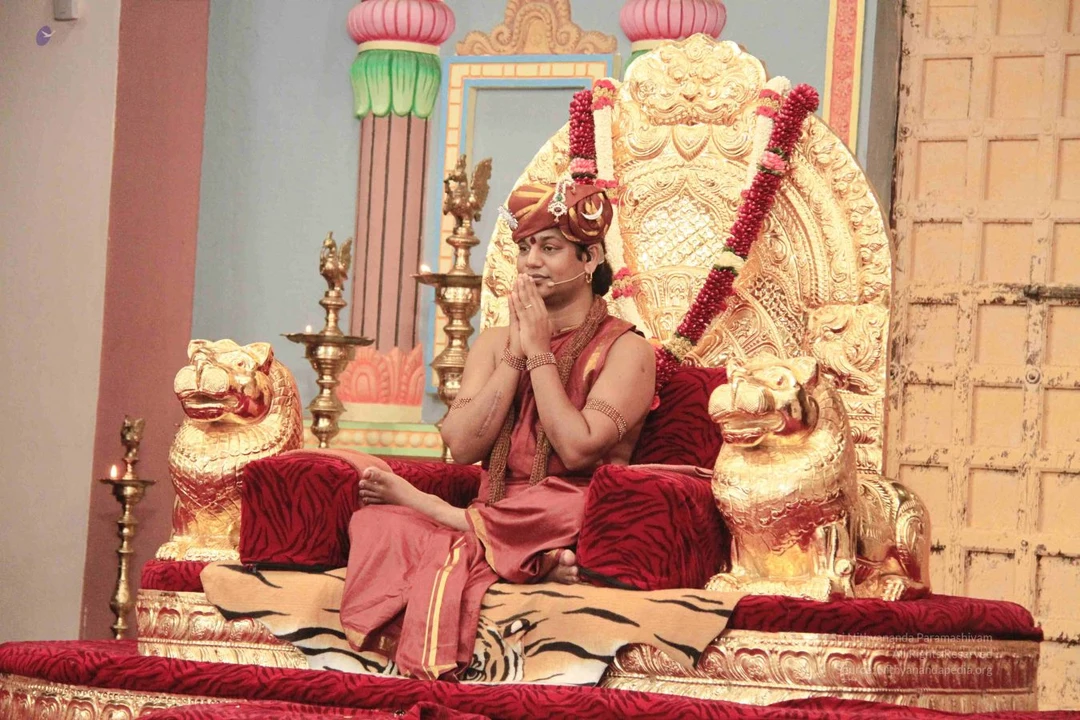
125 photosSource gallery
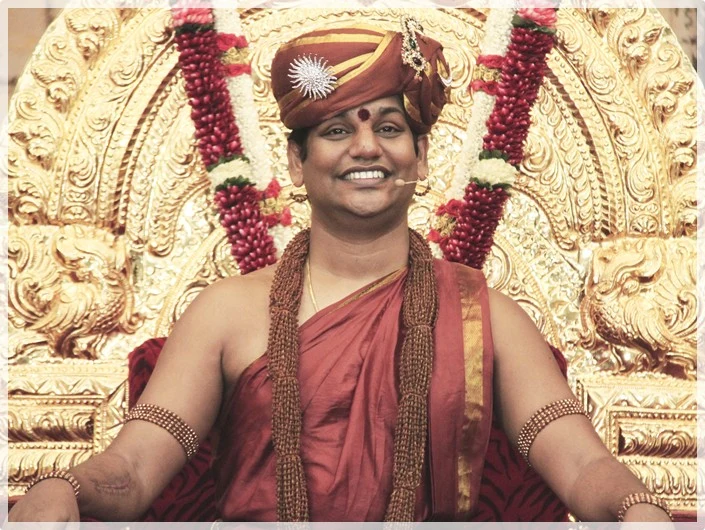
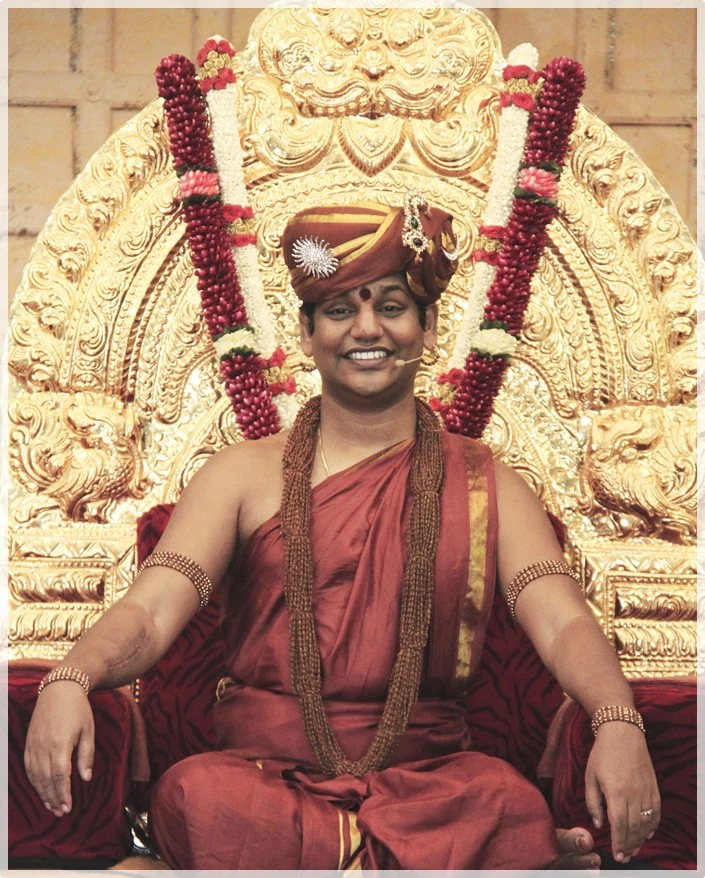
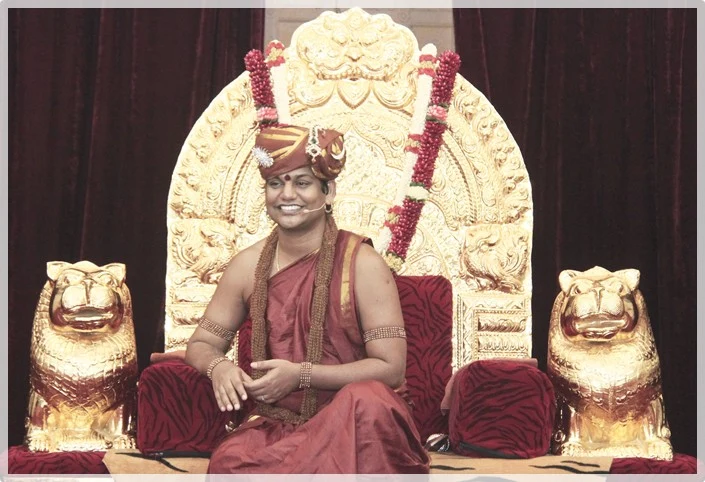
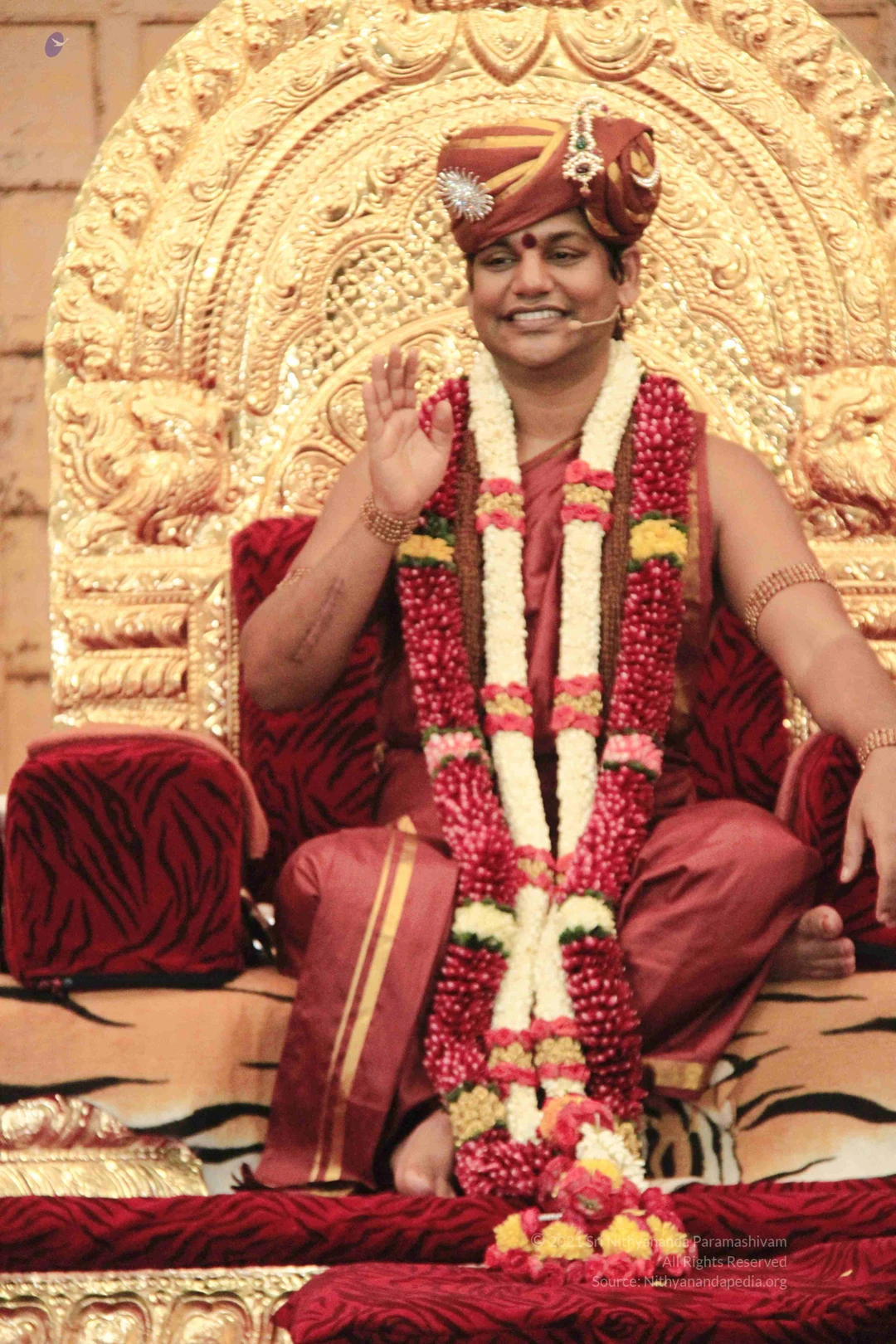
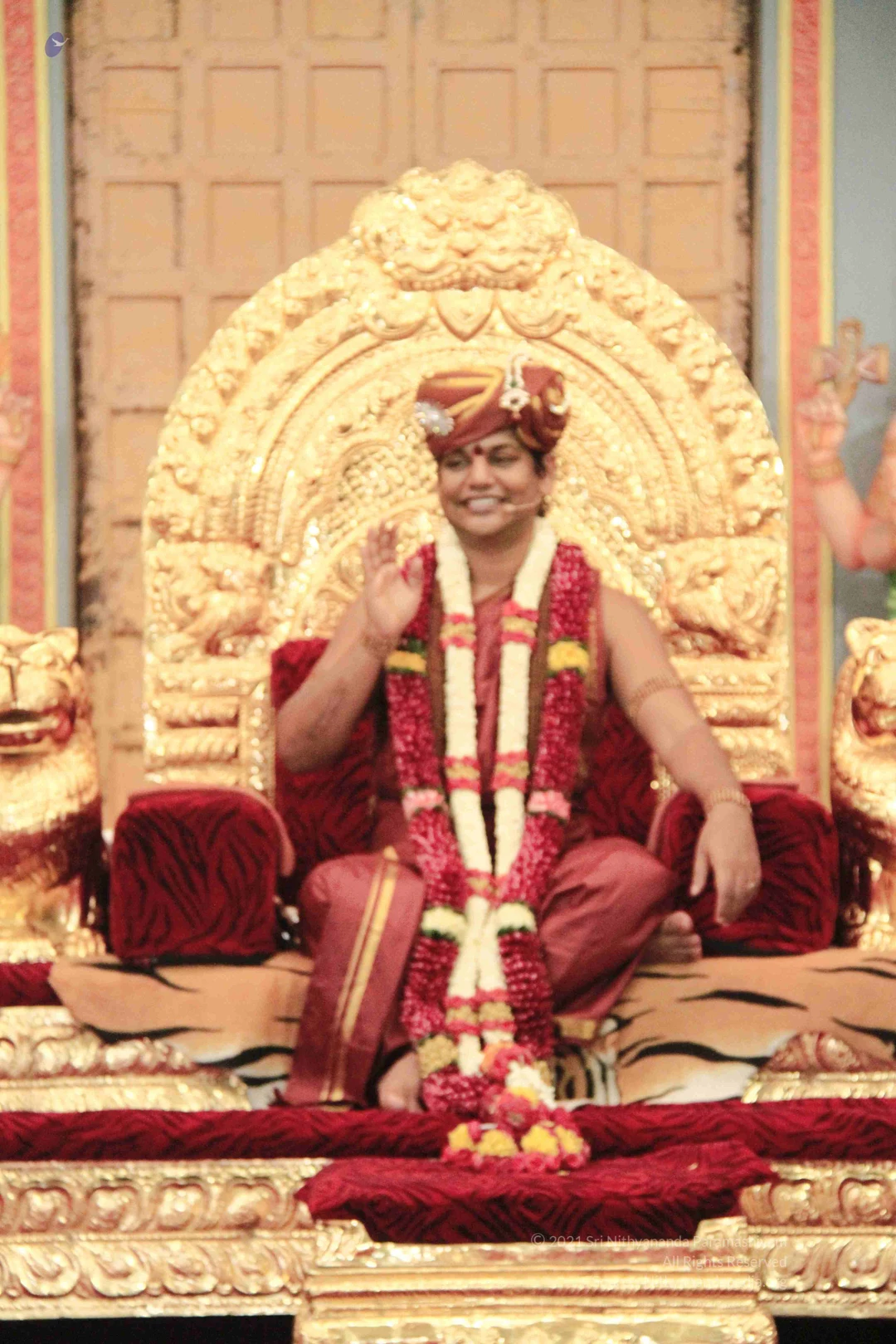
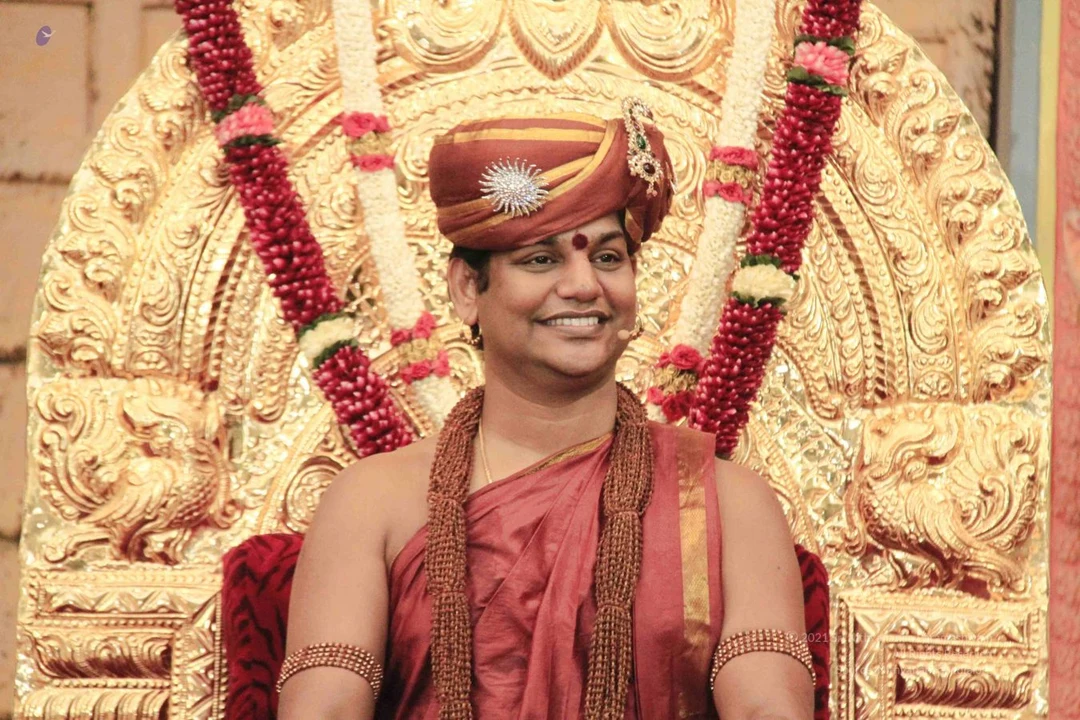
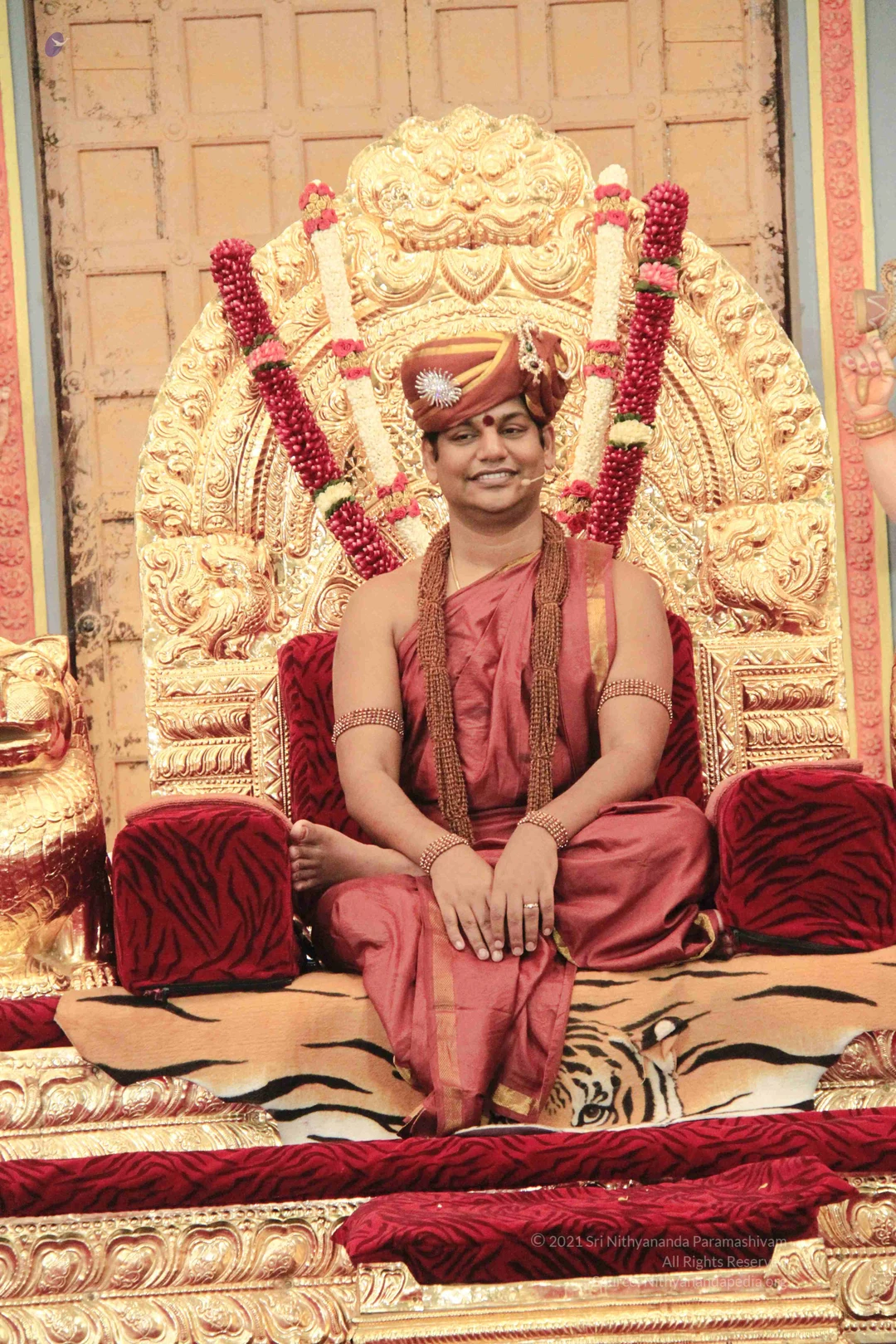
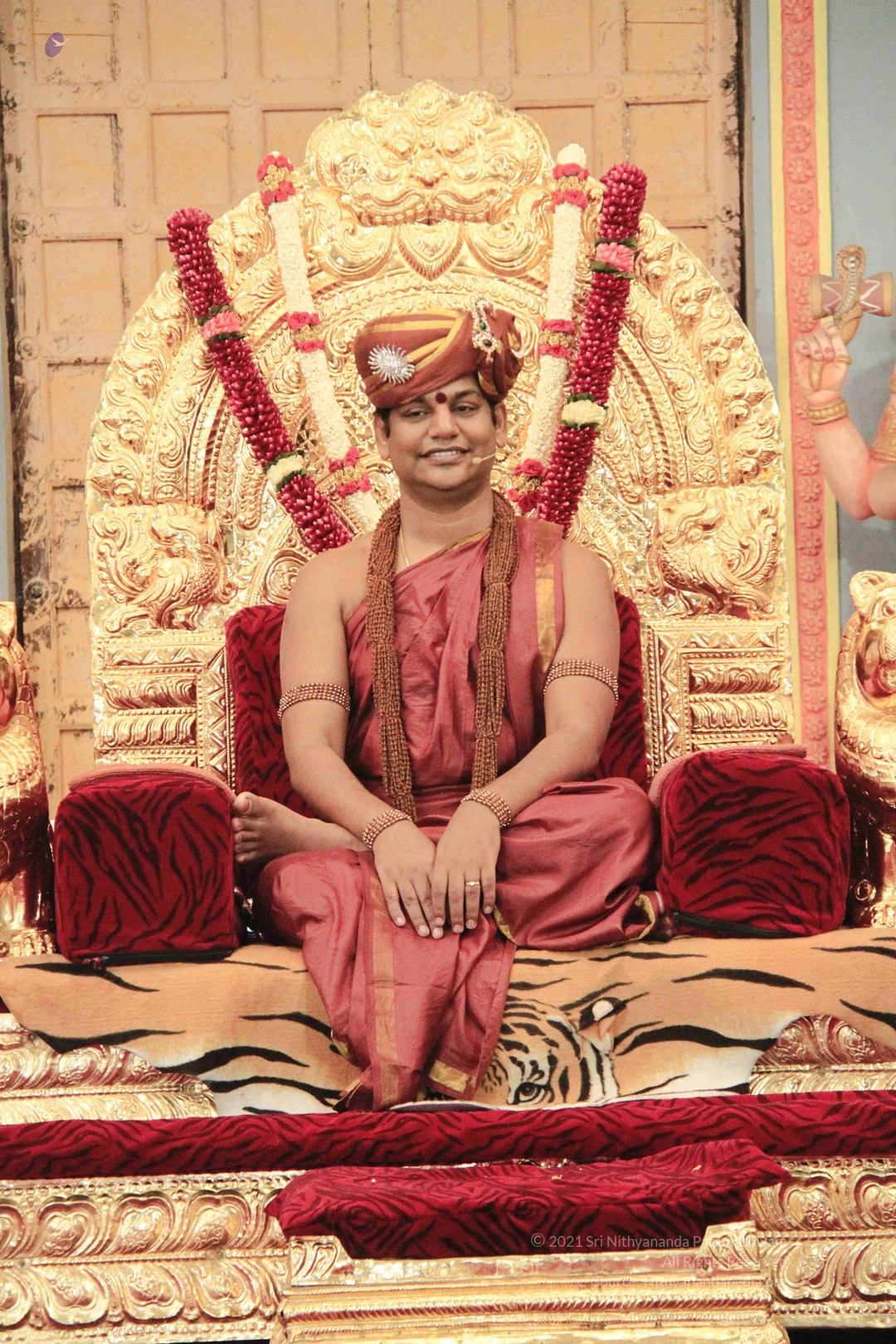
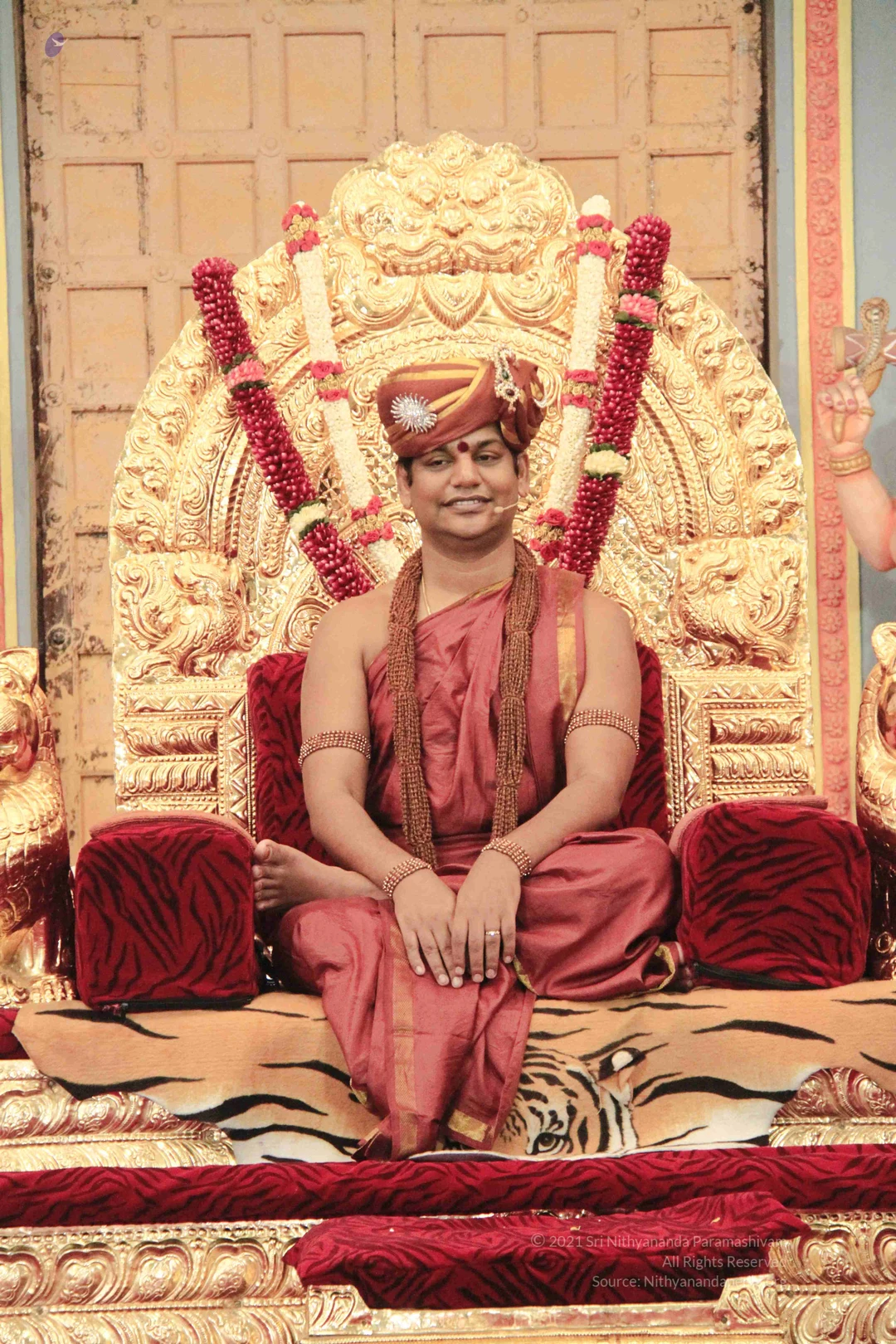
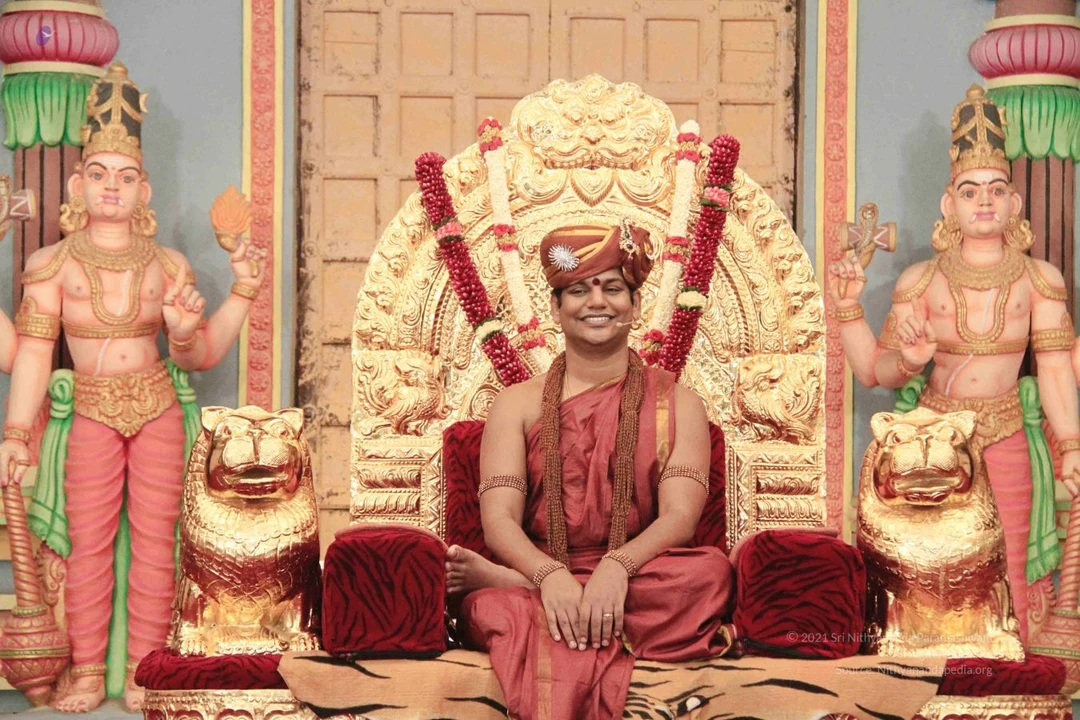
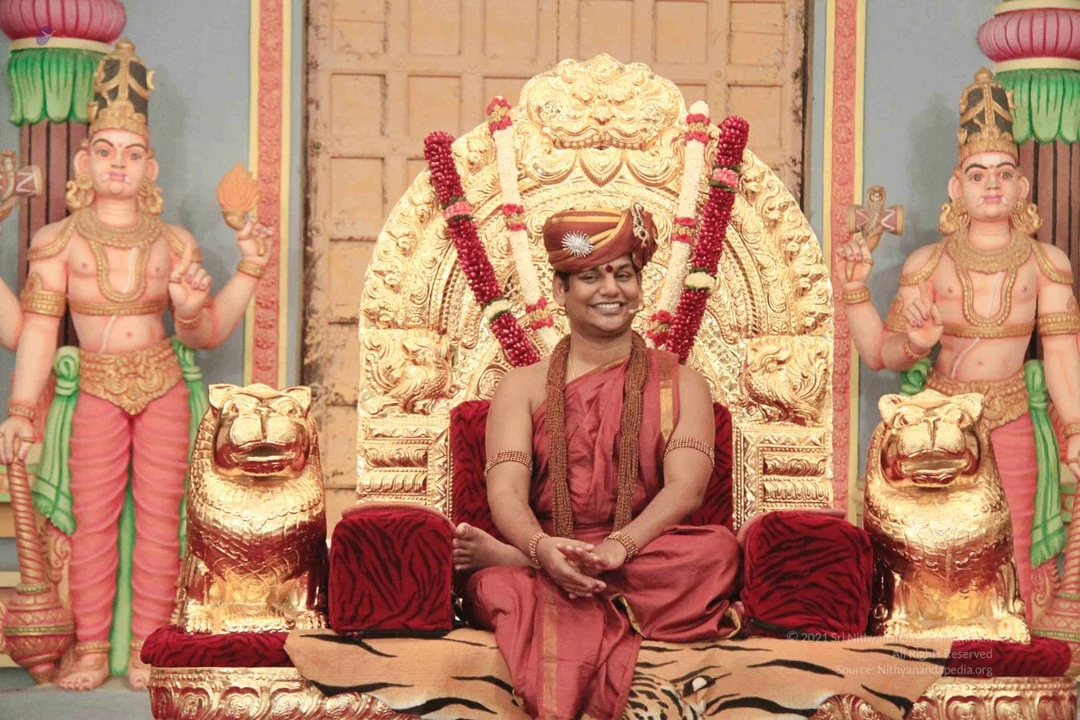
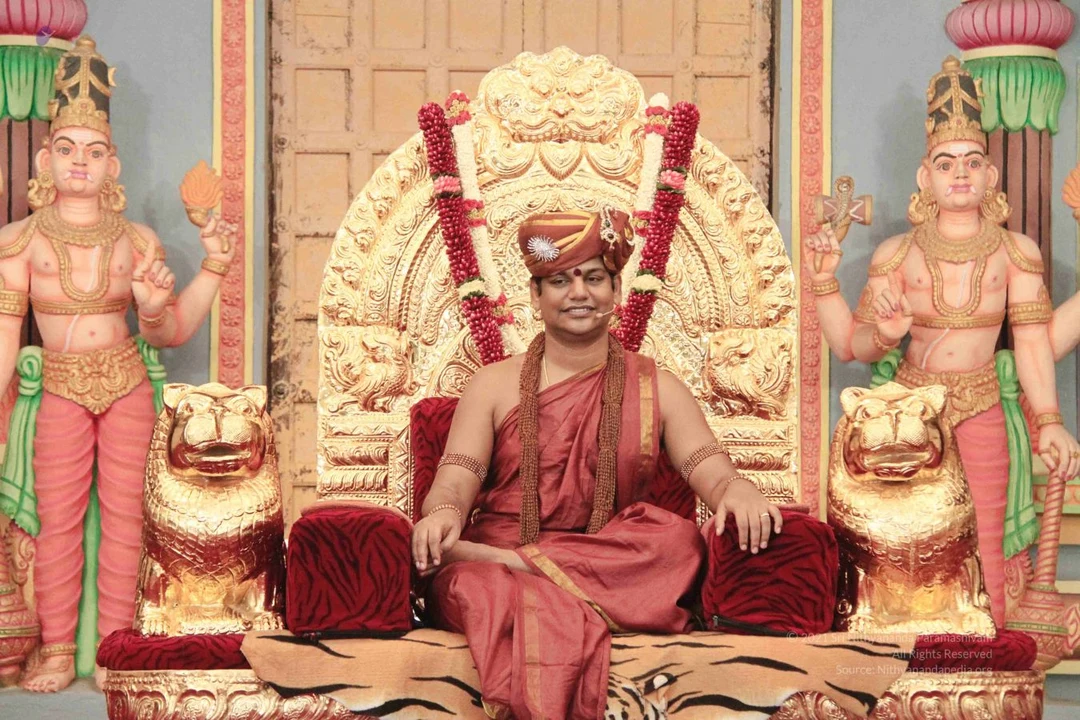
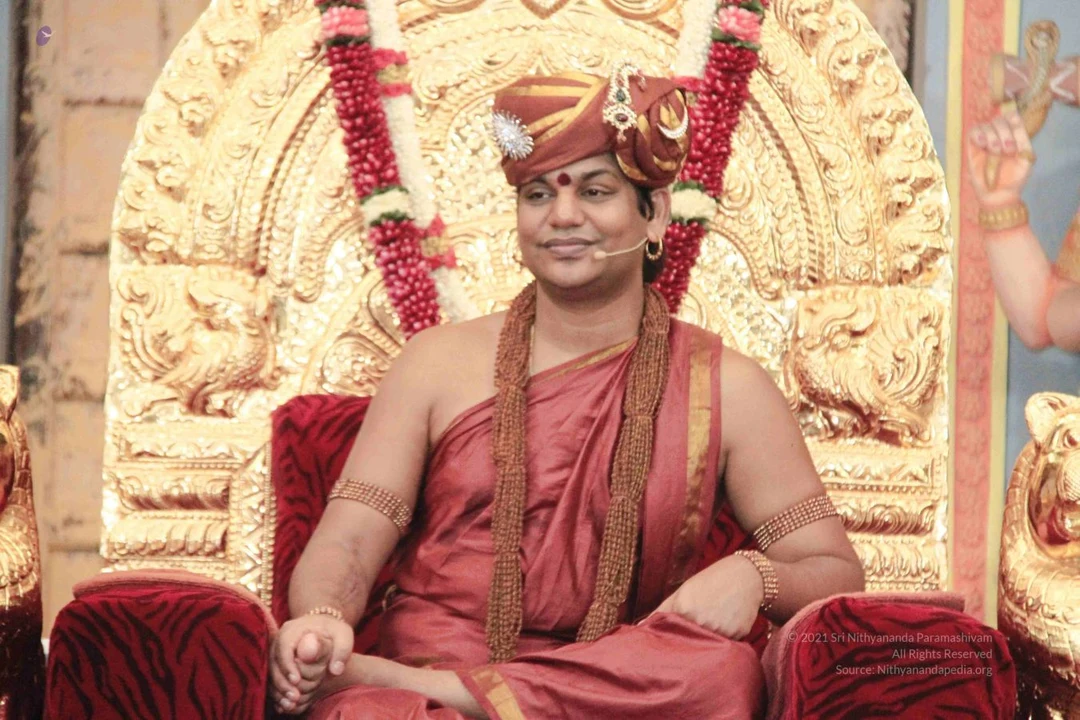
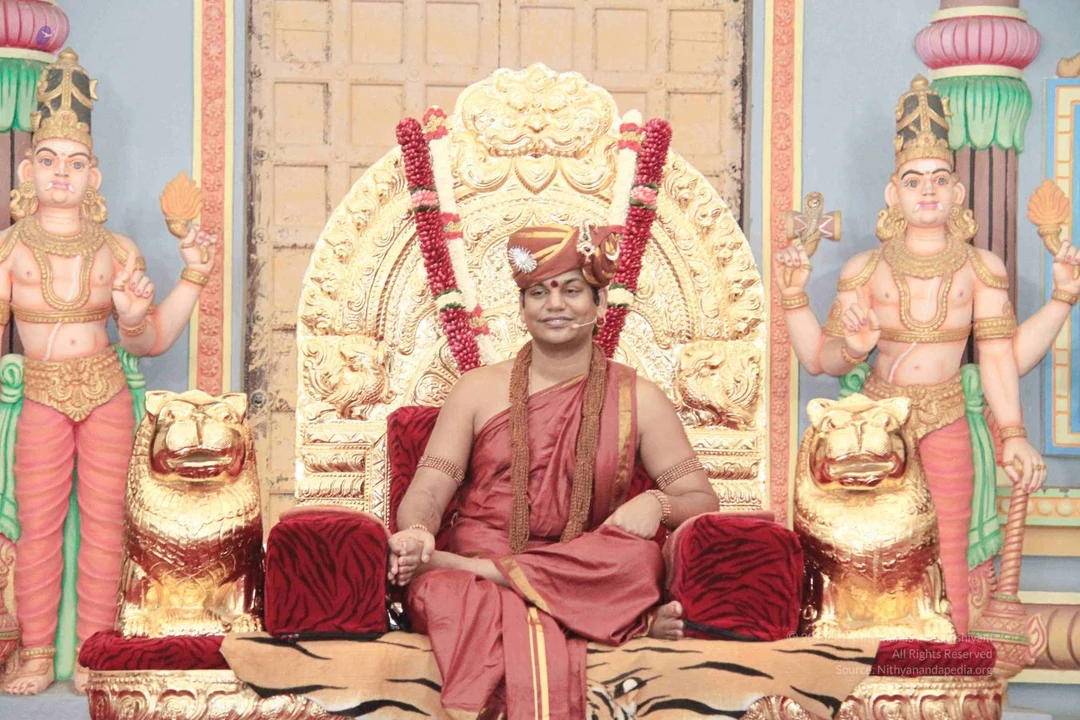
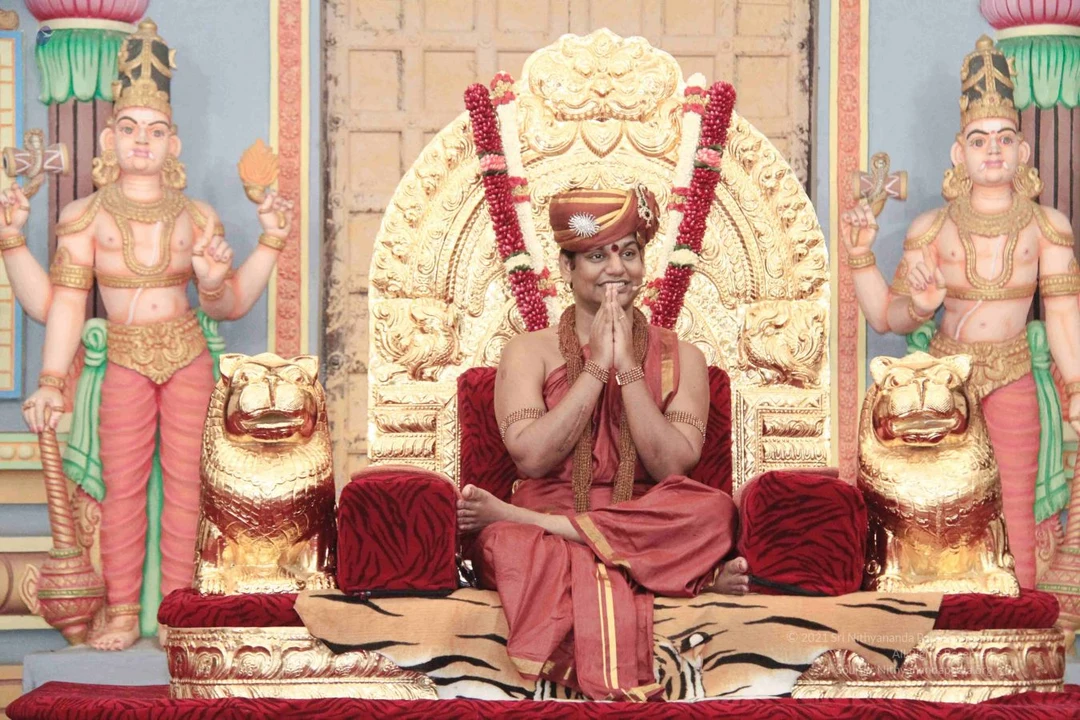
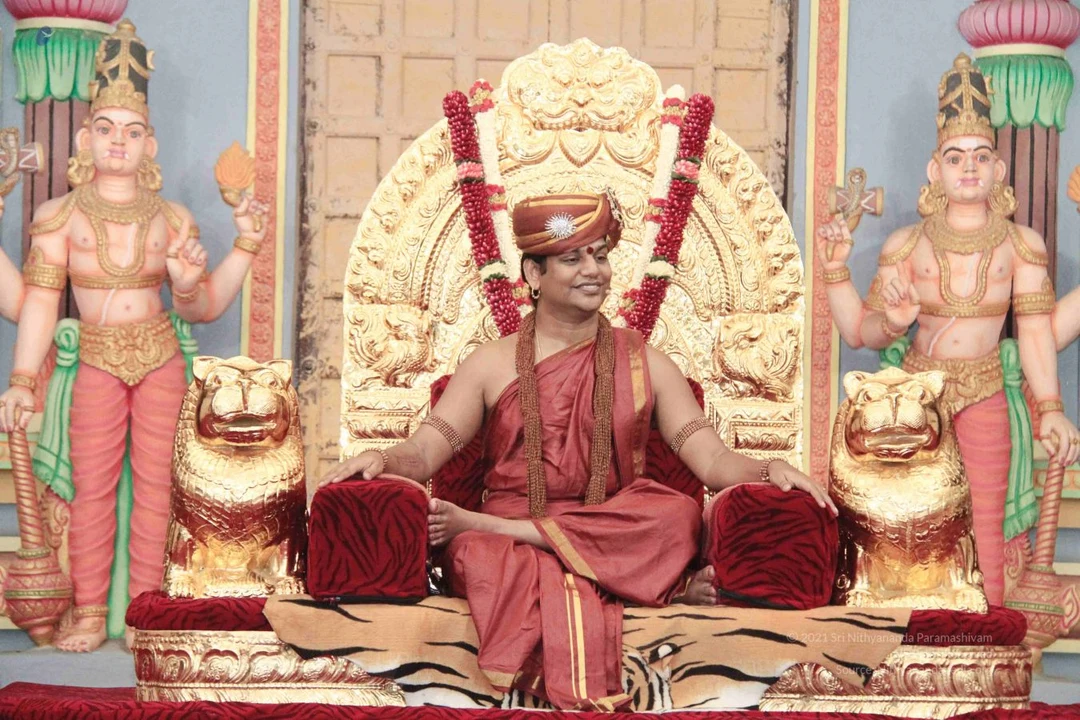
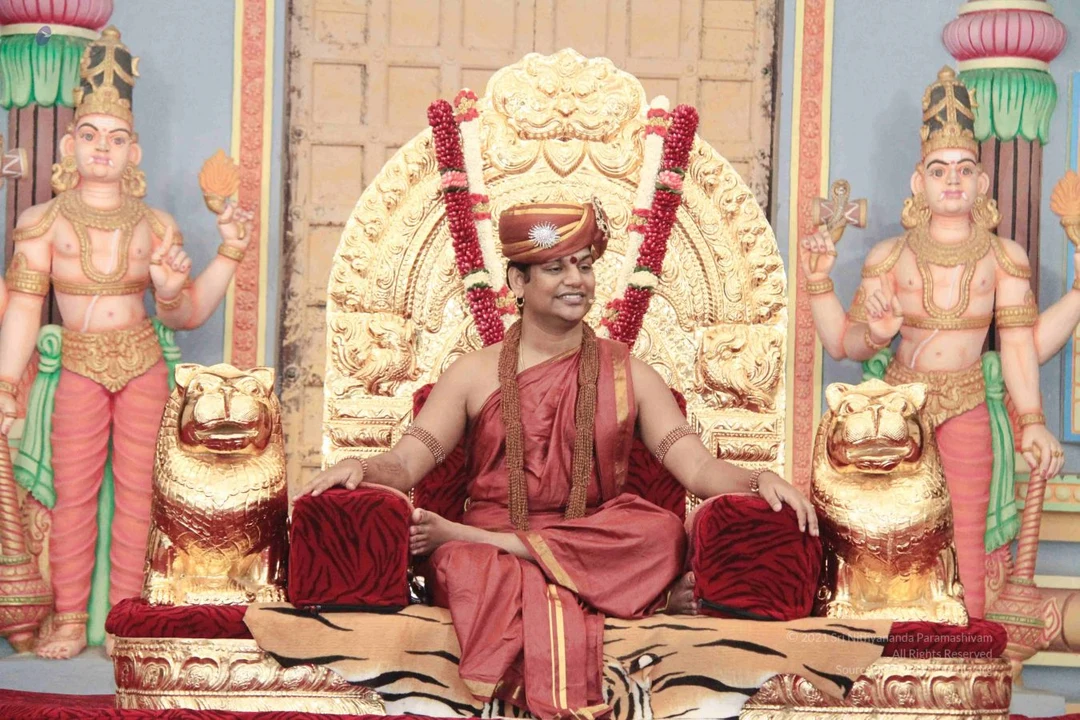
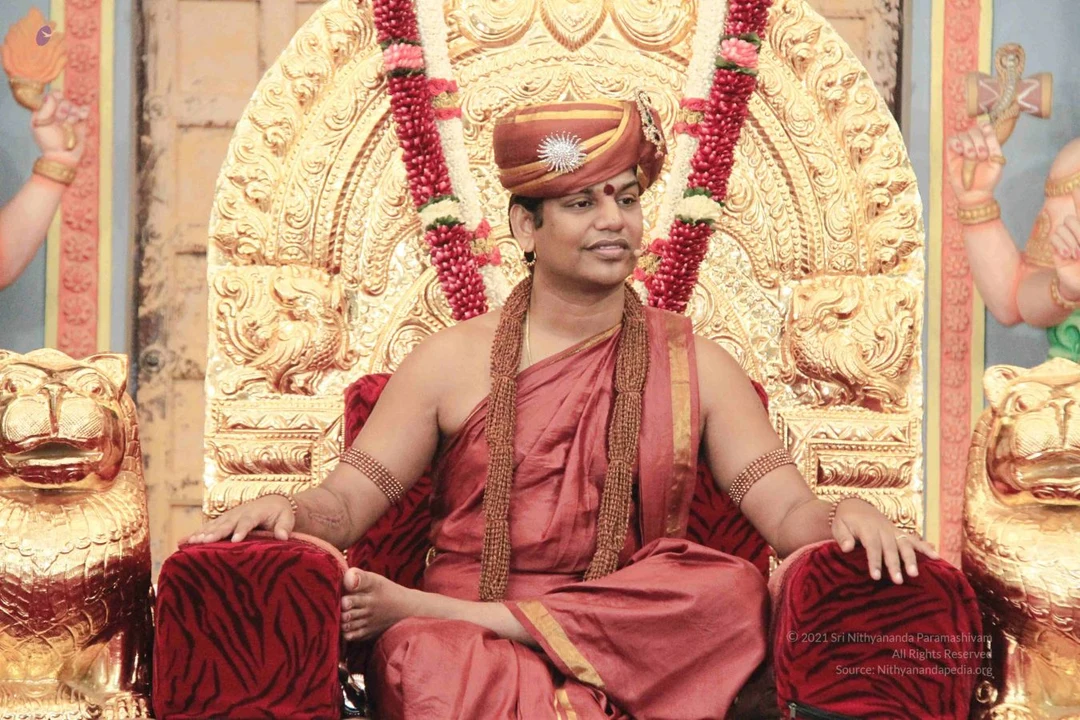
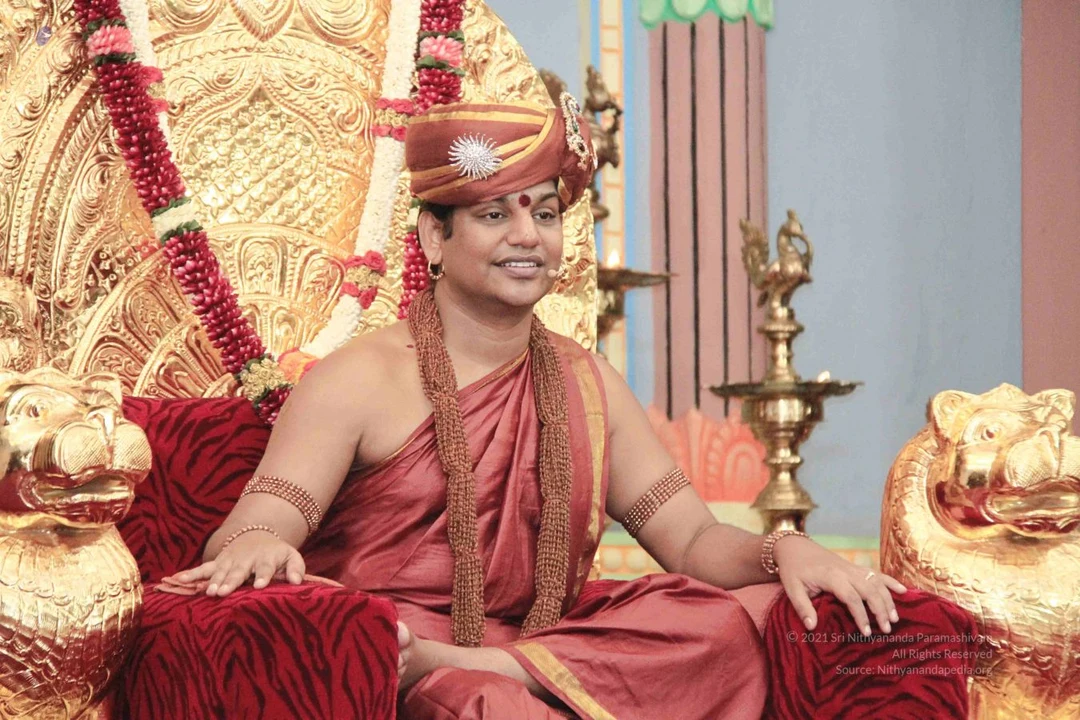
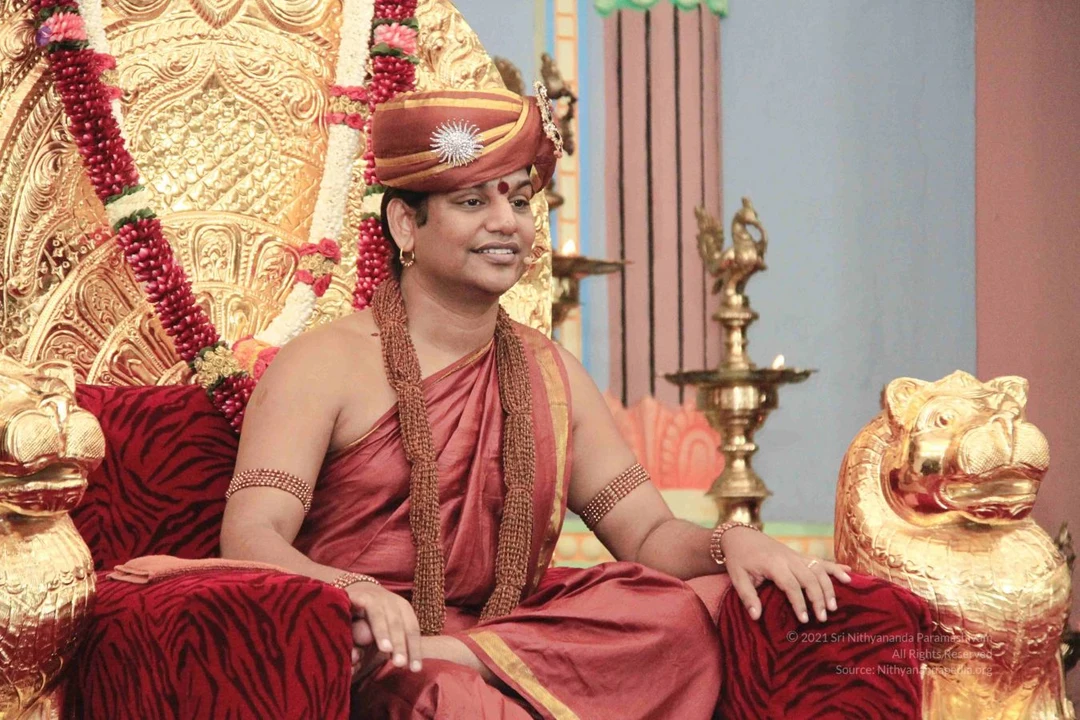
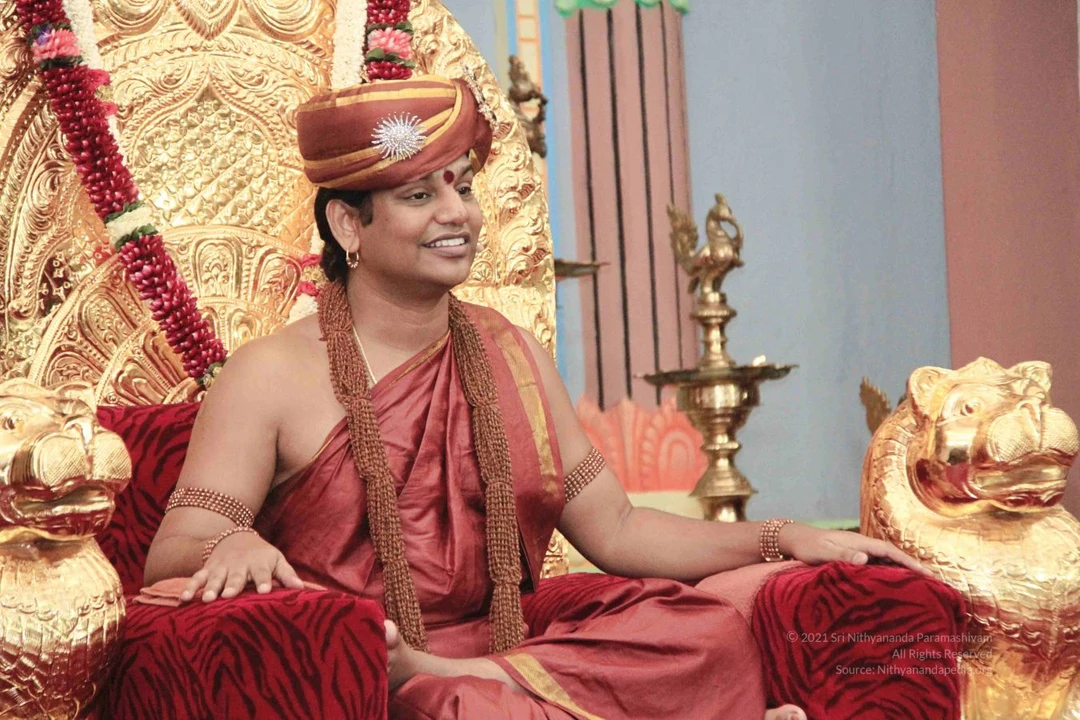
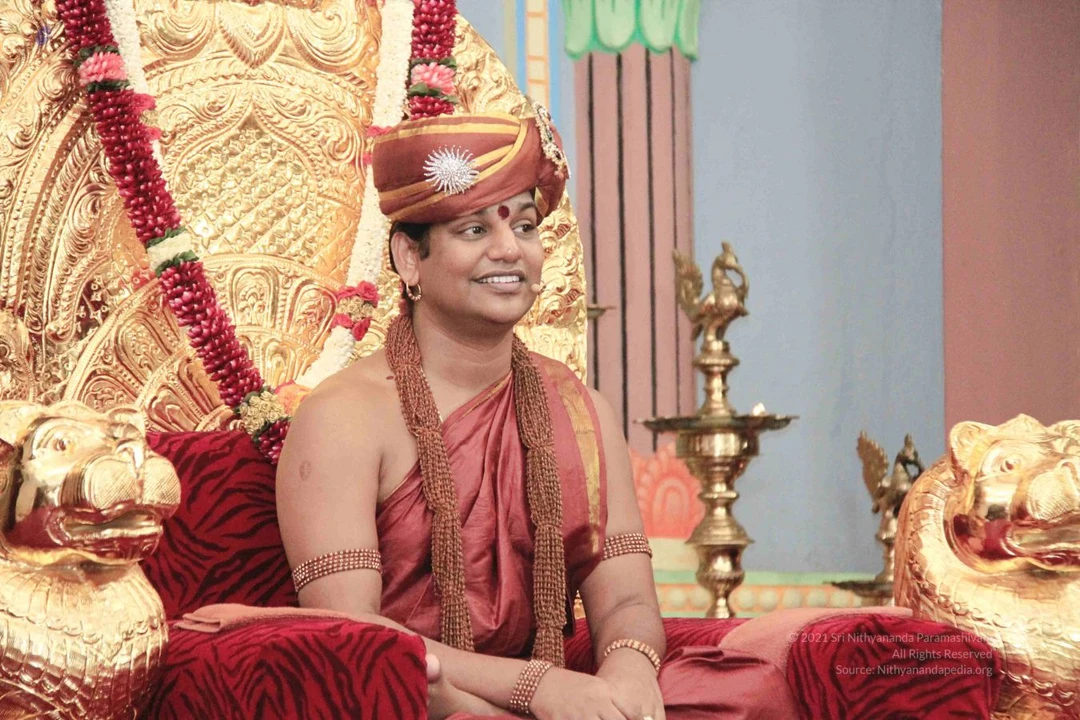
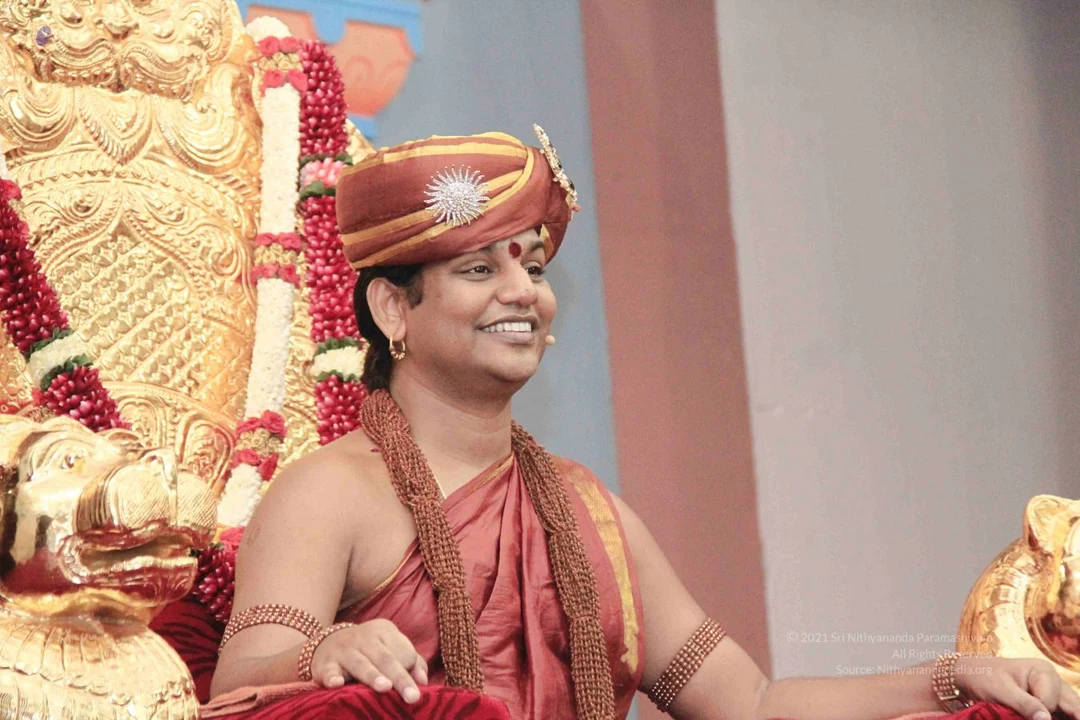
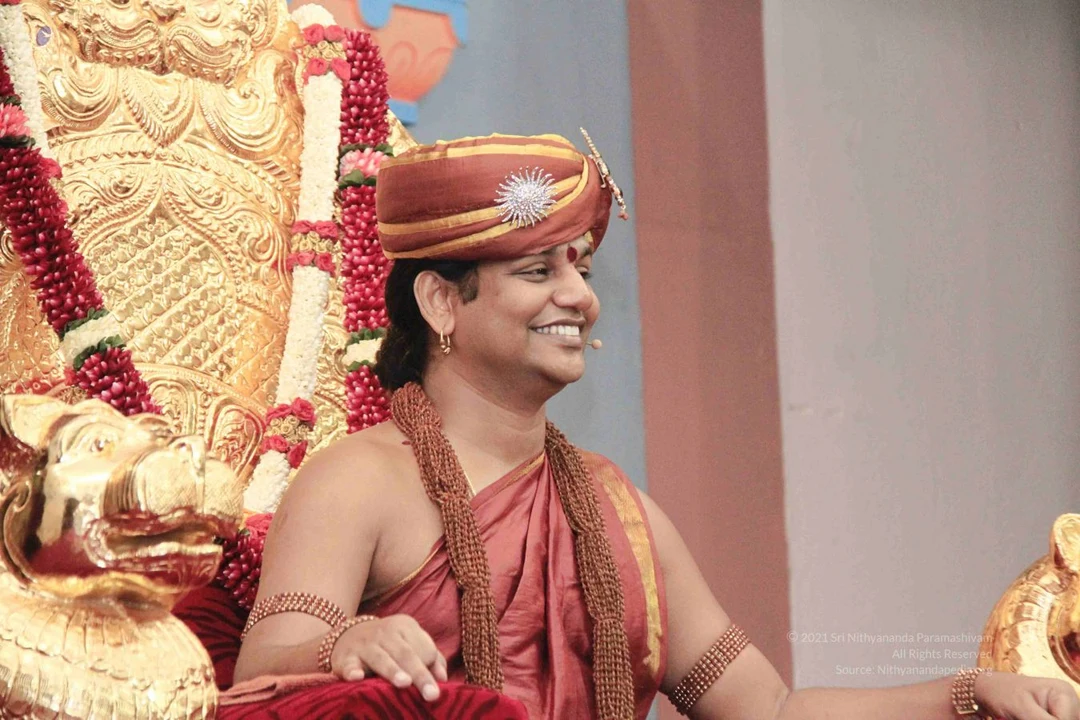
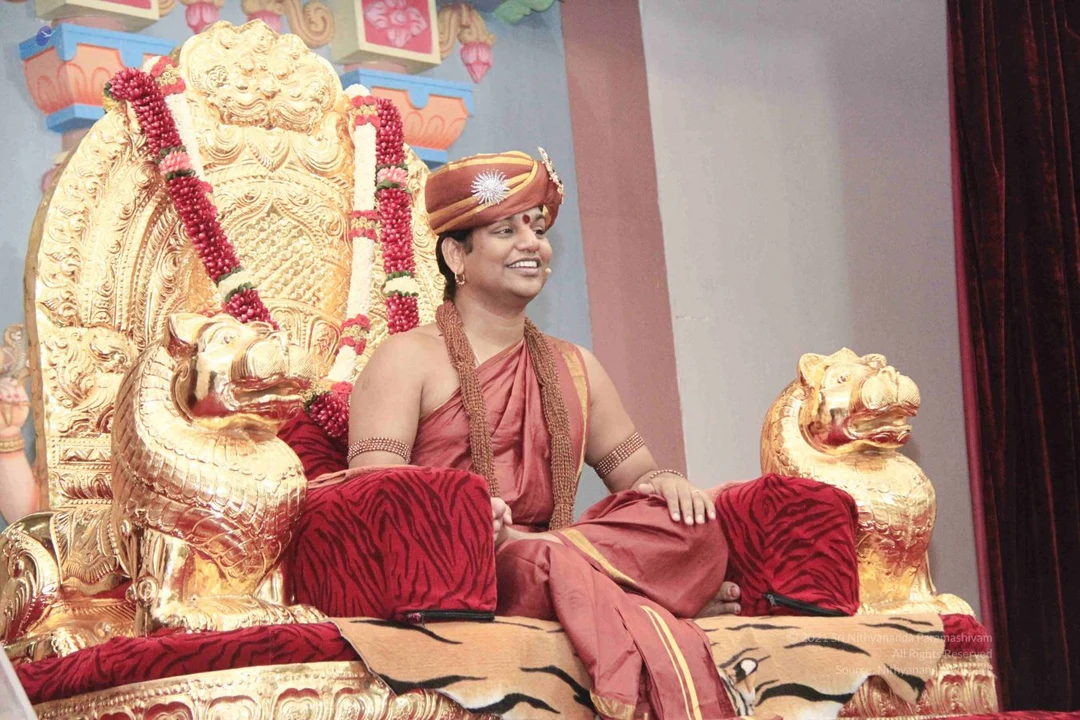
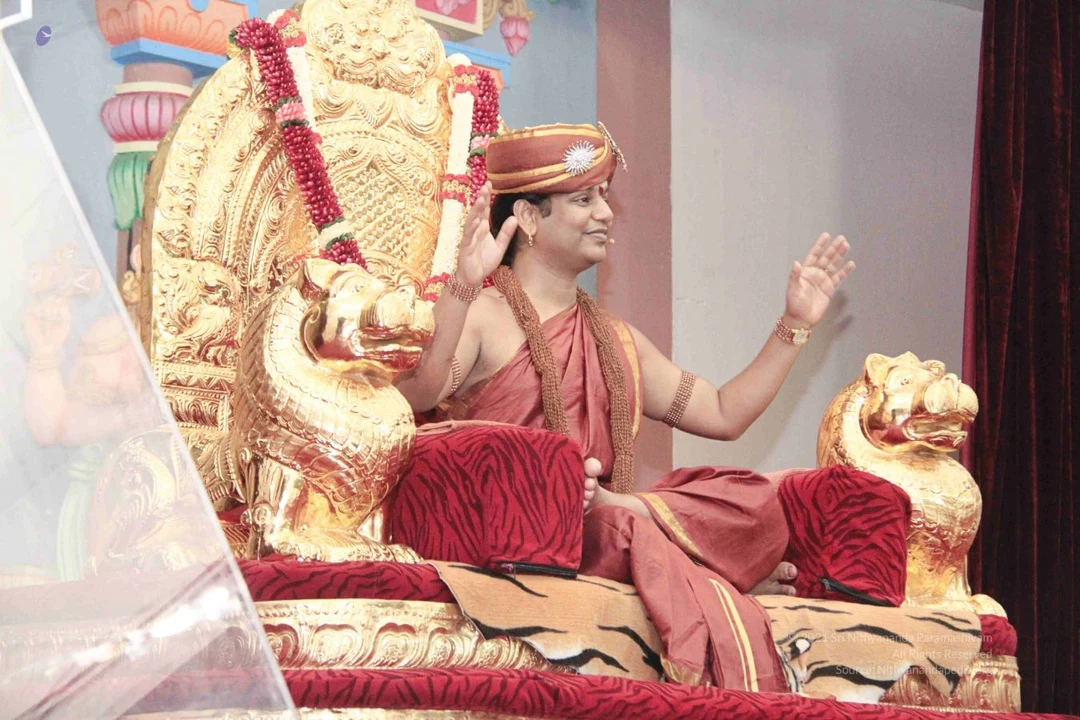
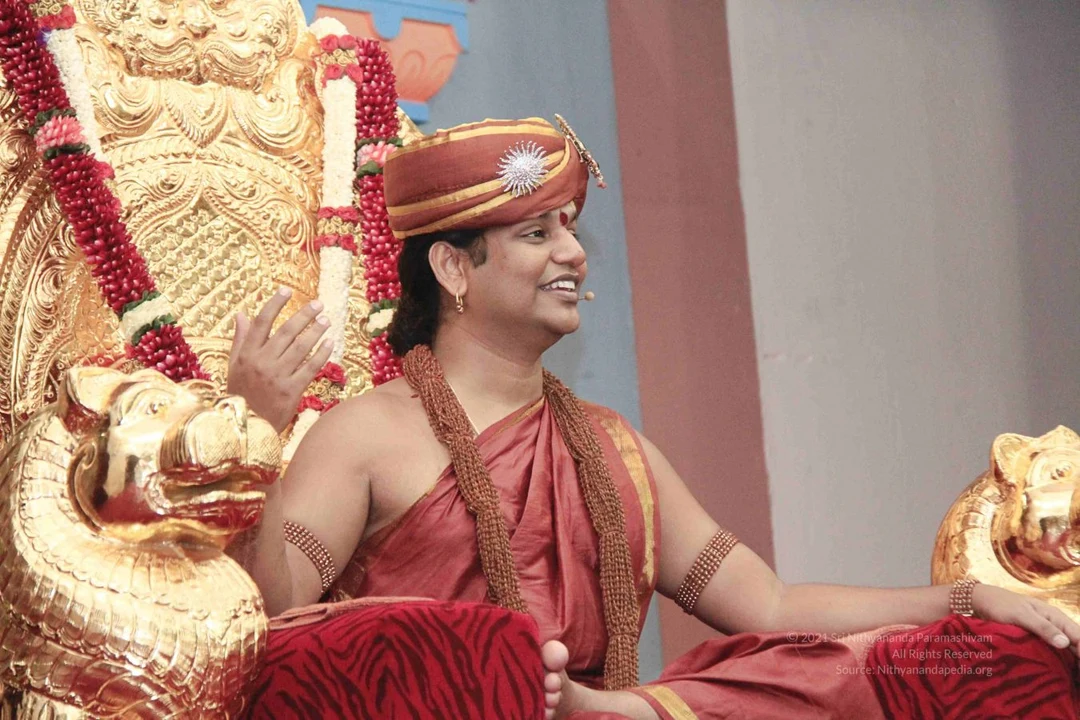
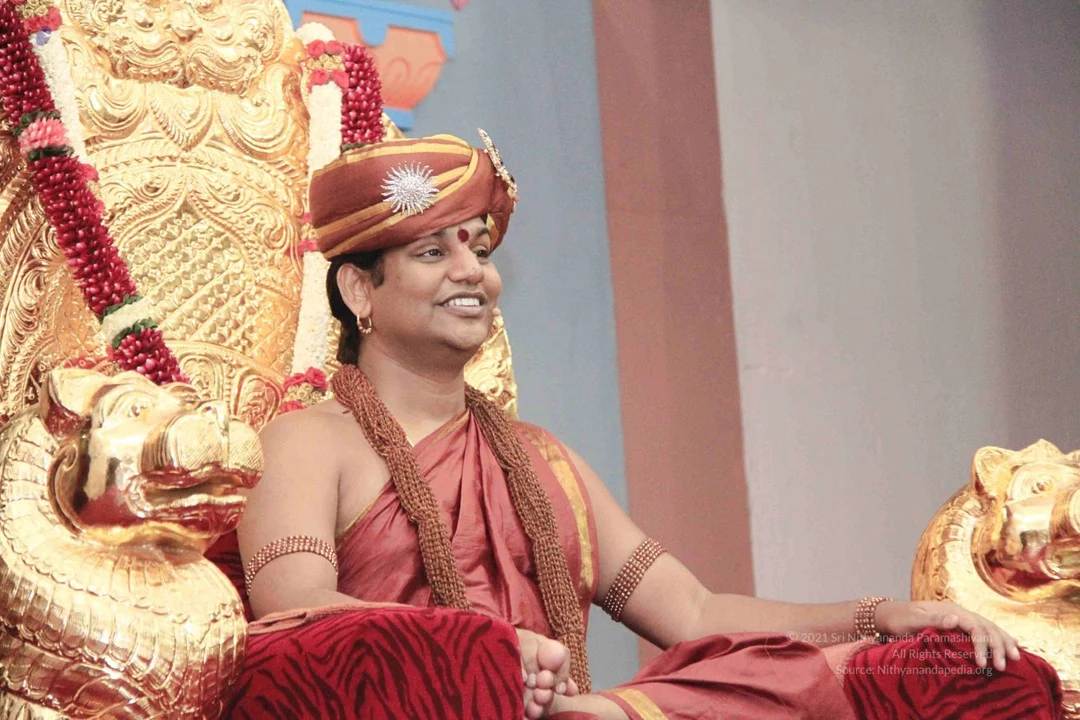
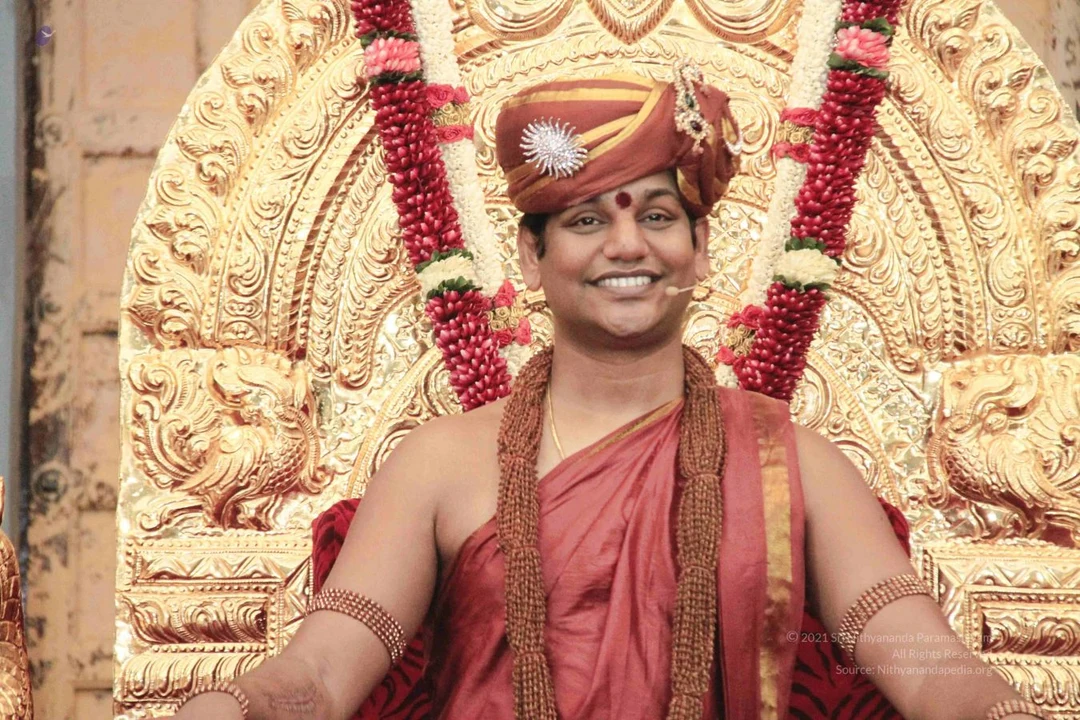
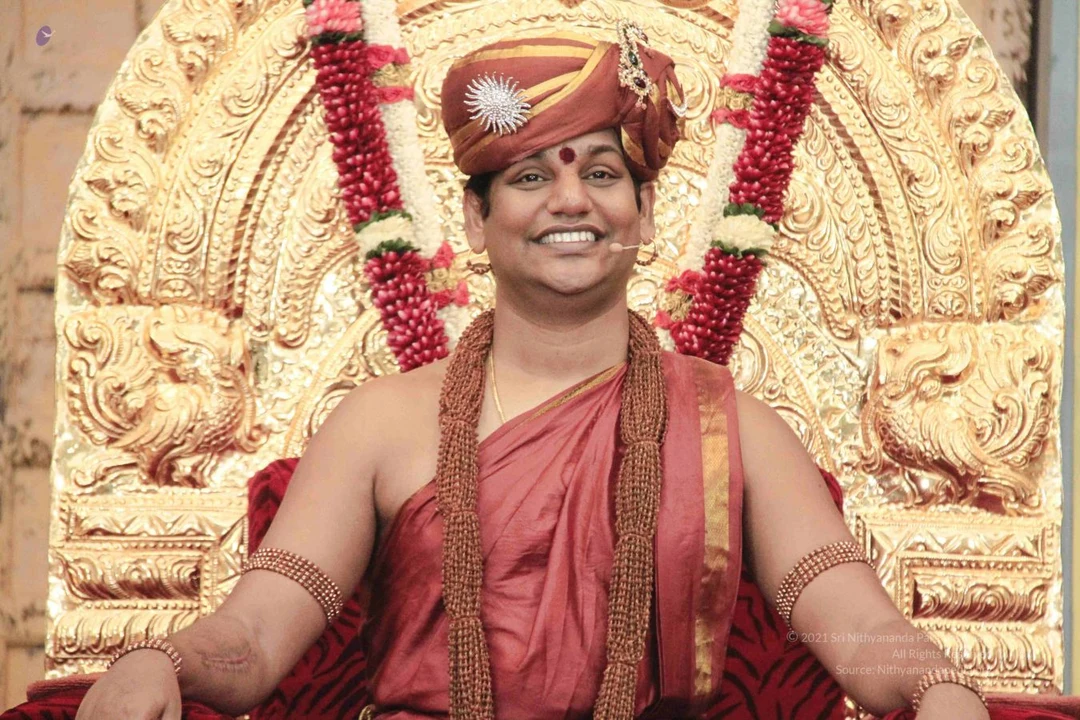
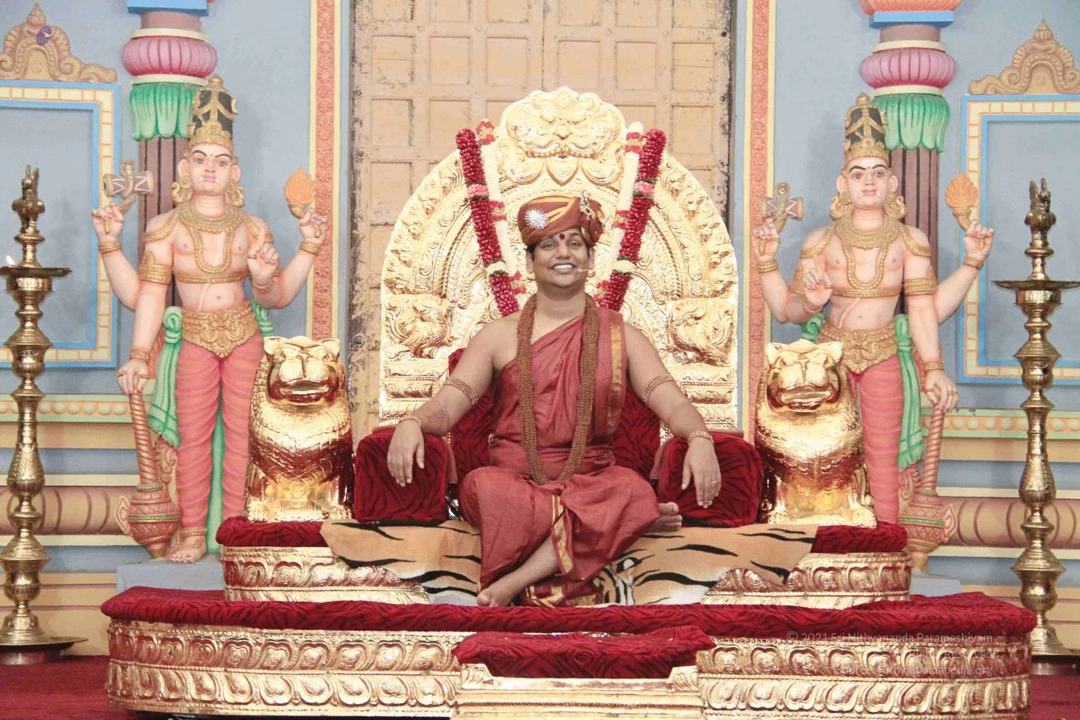
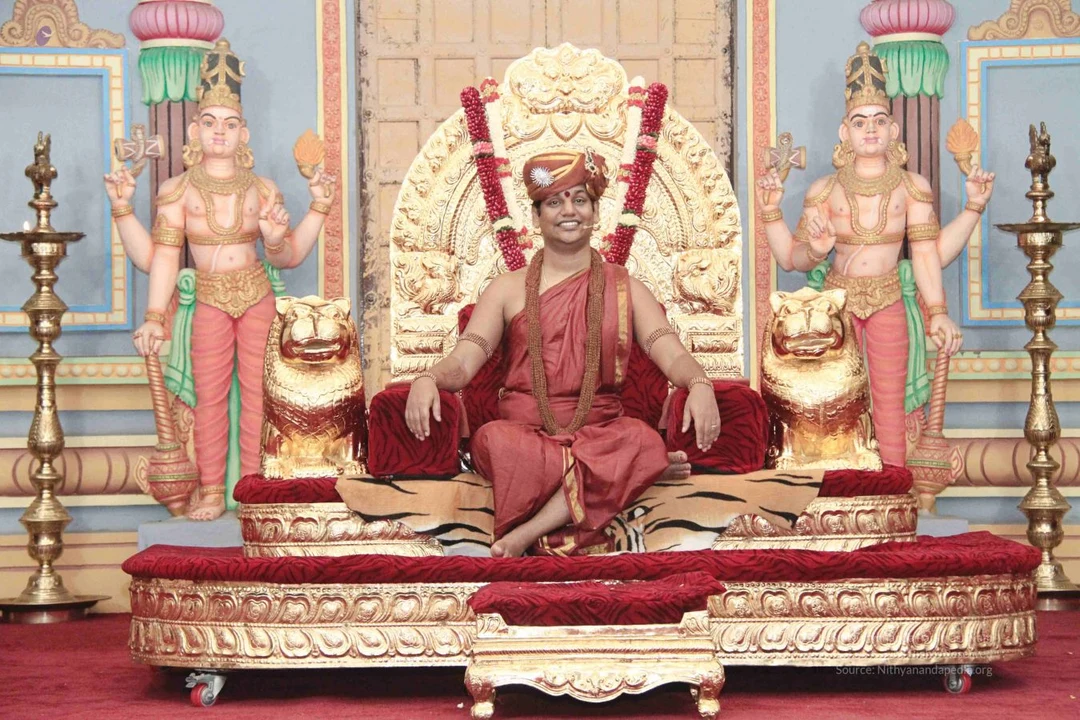
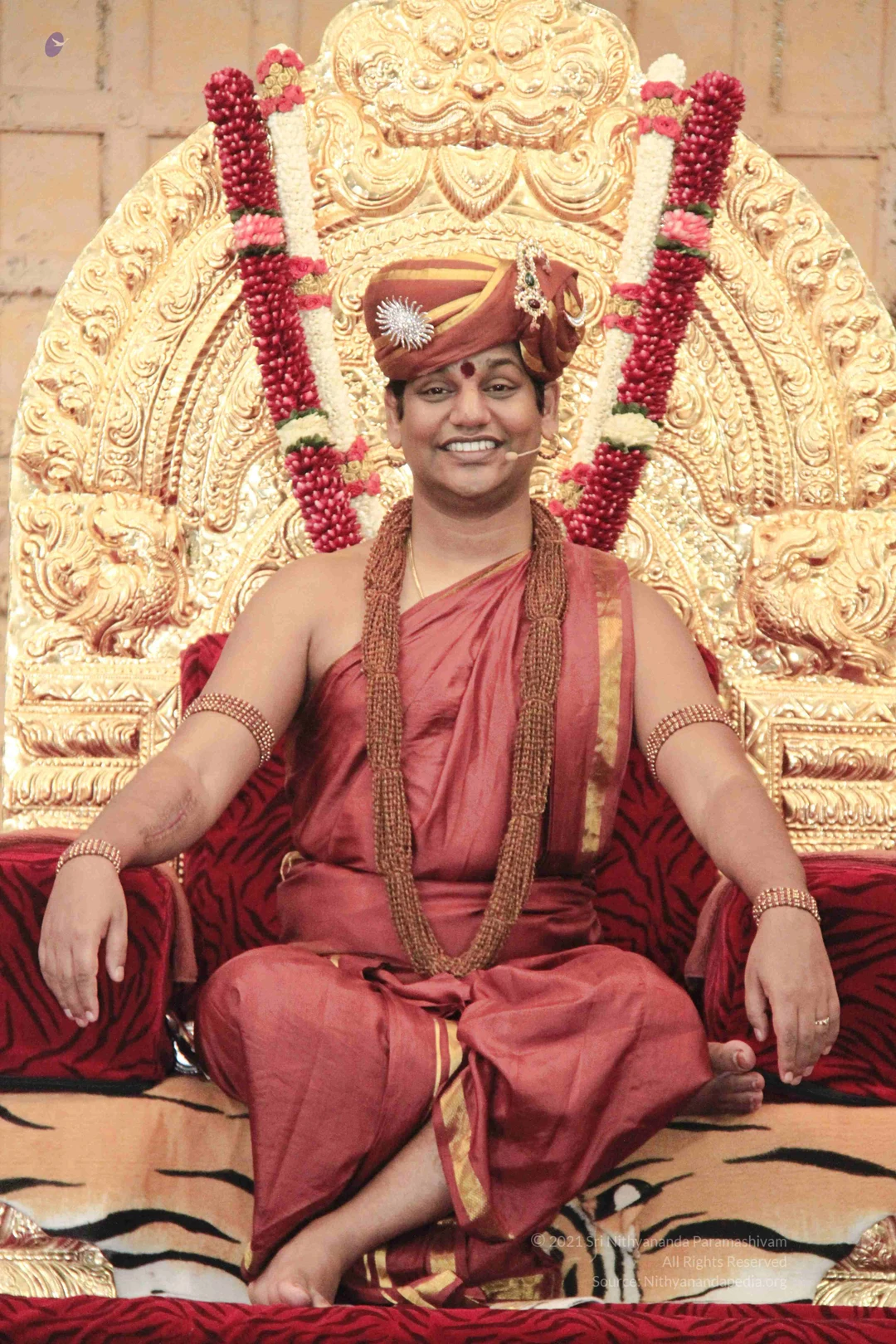
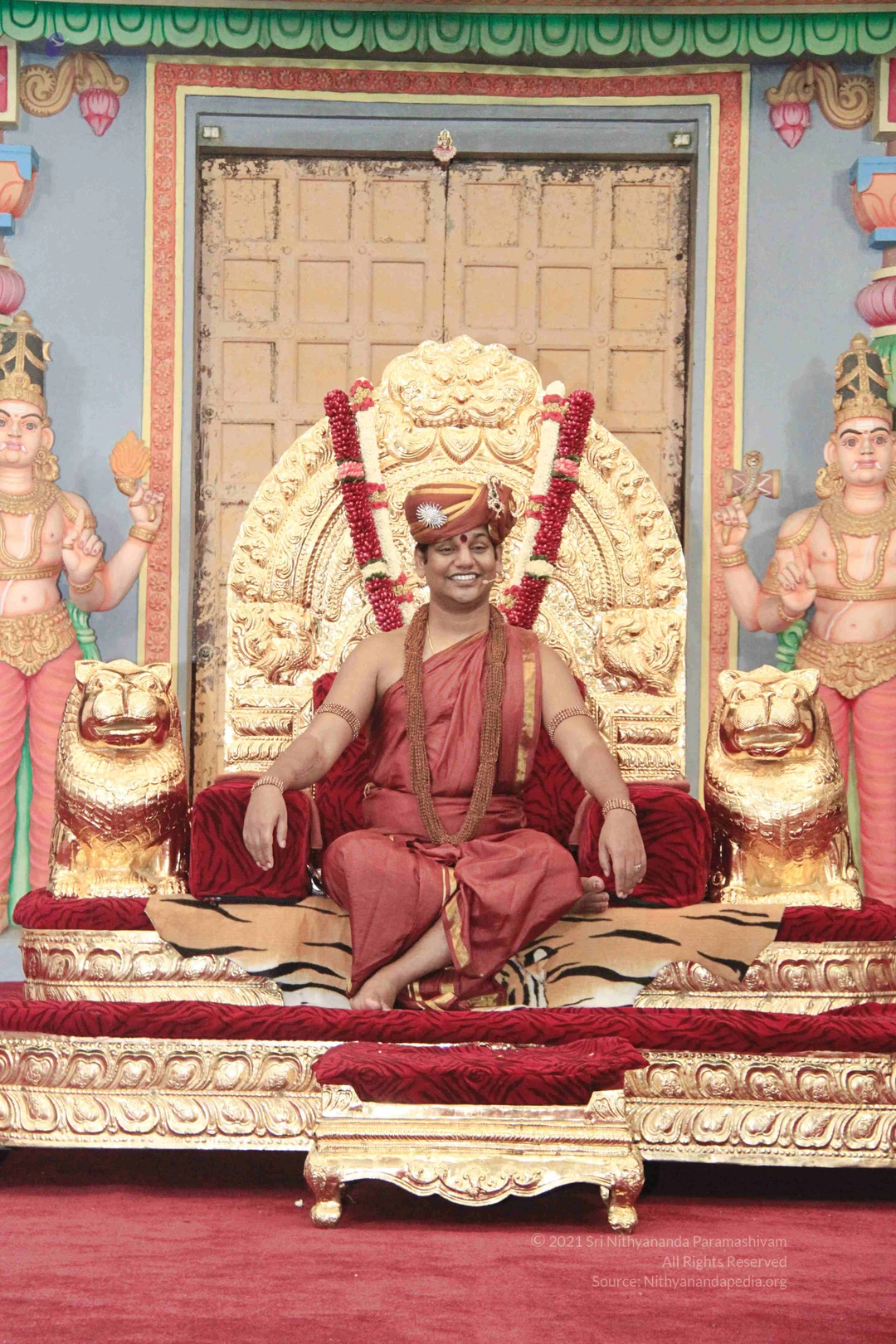
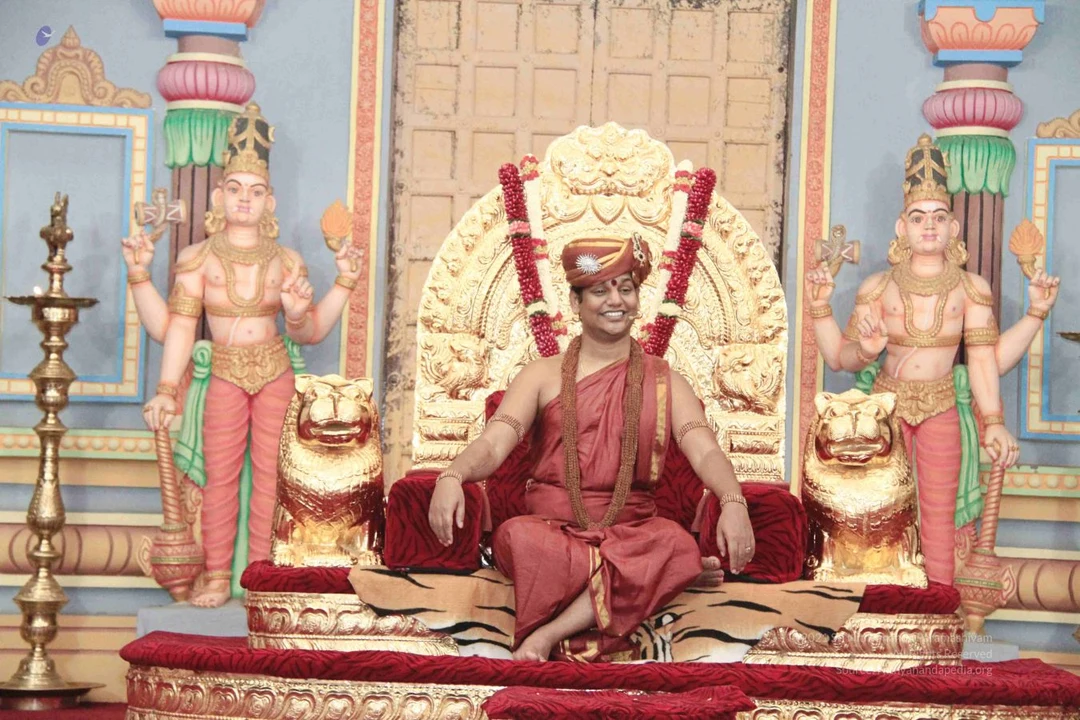
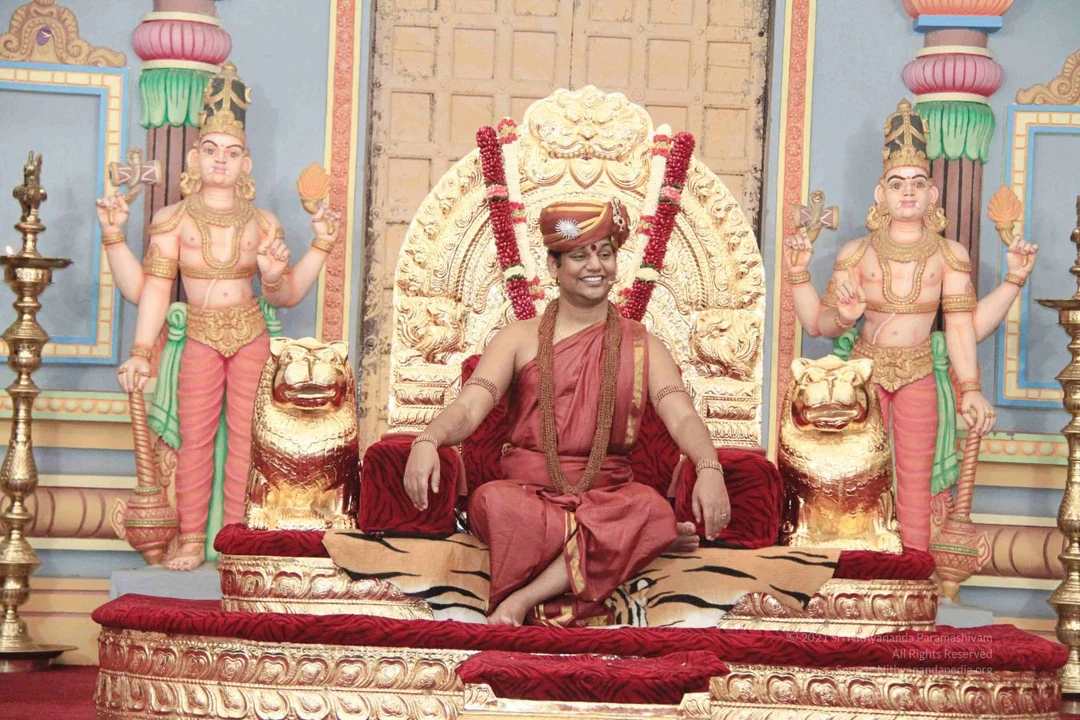
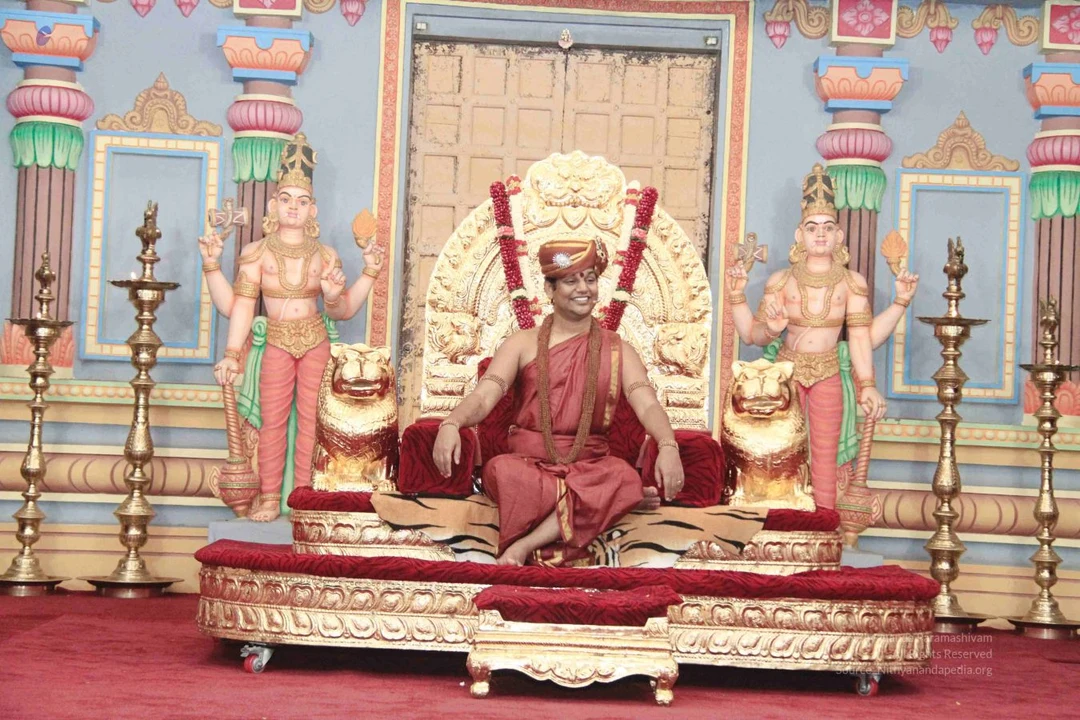
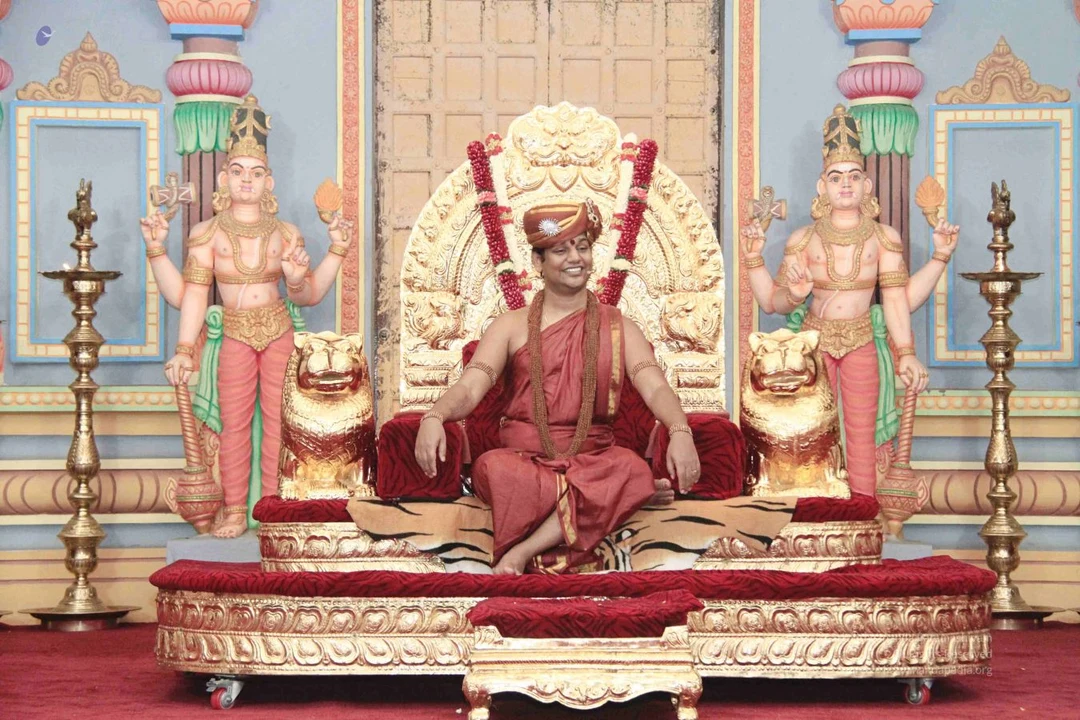
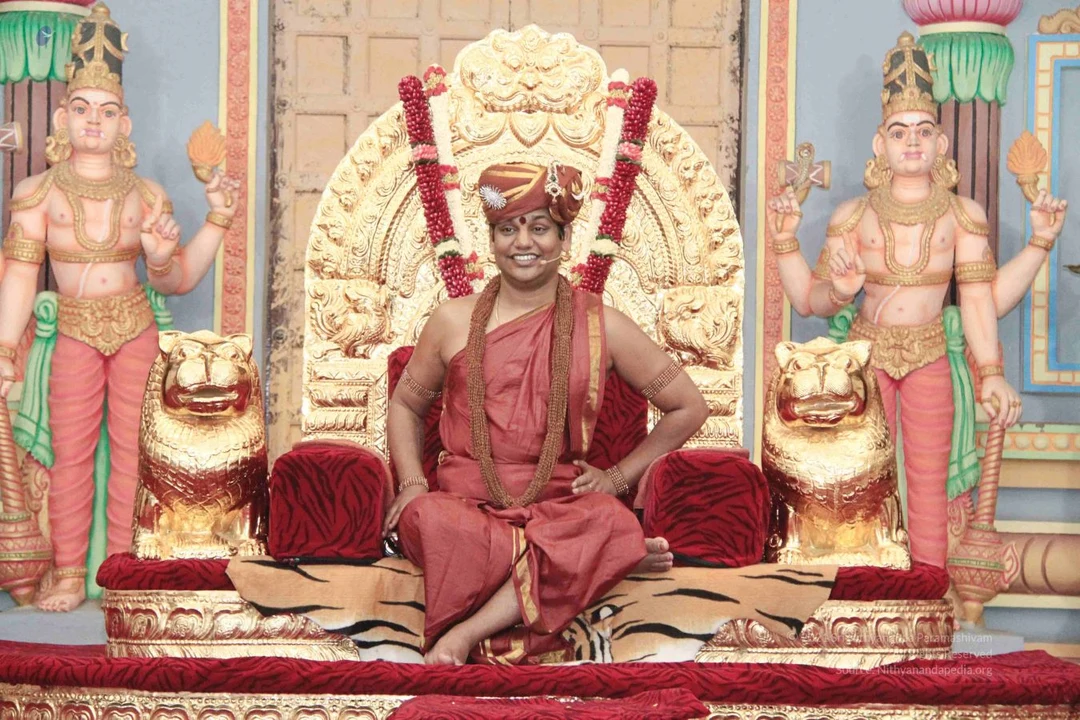
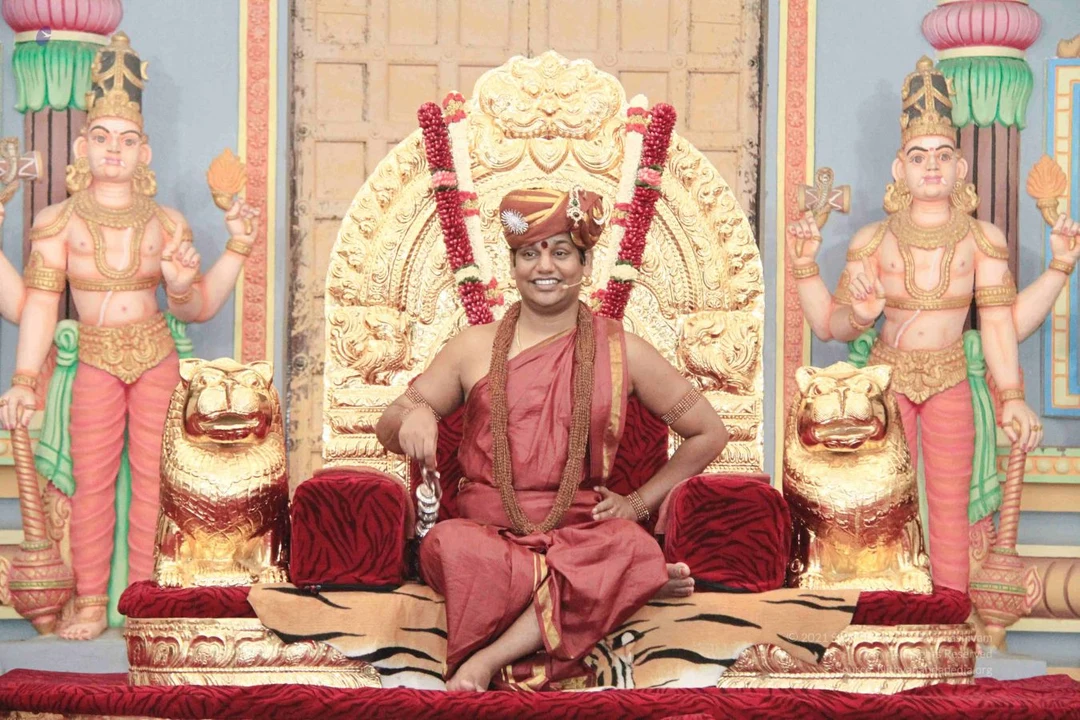
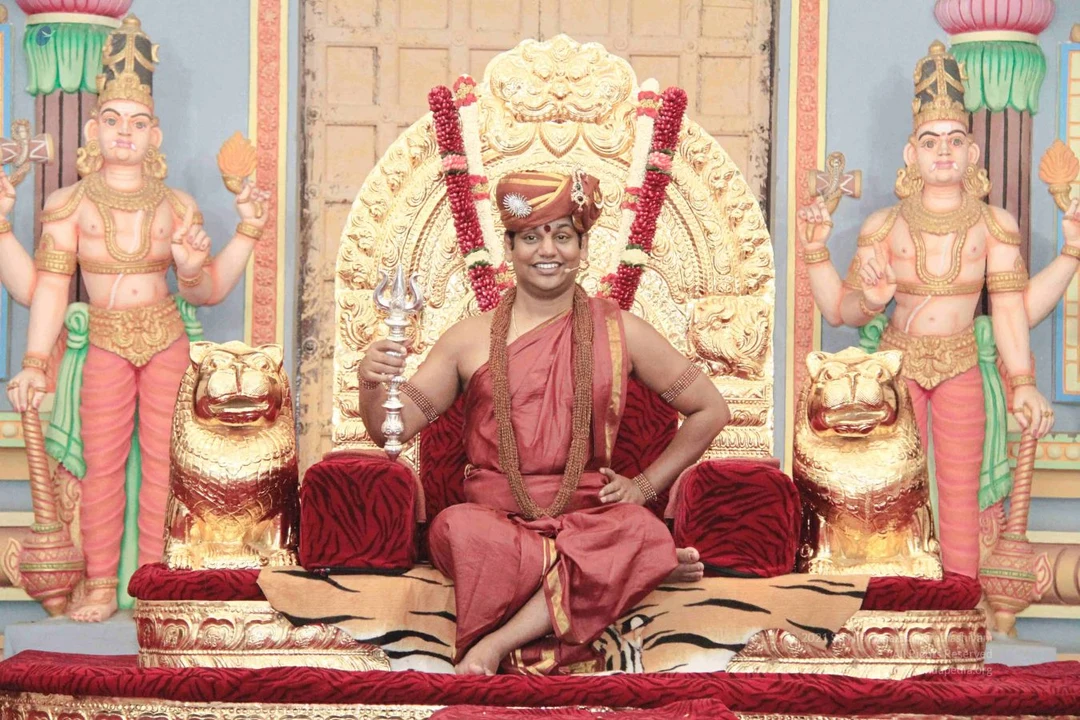
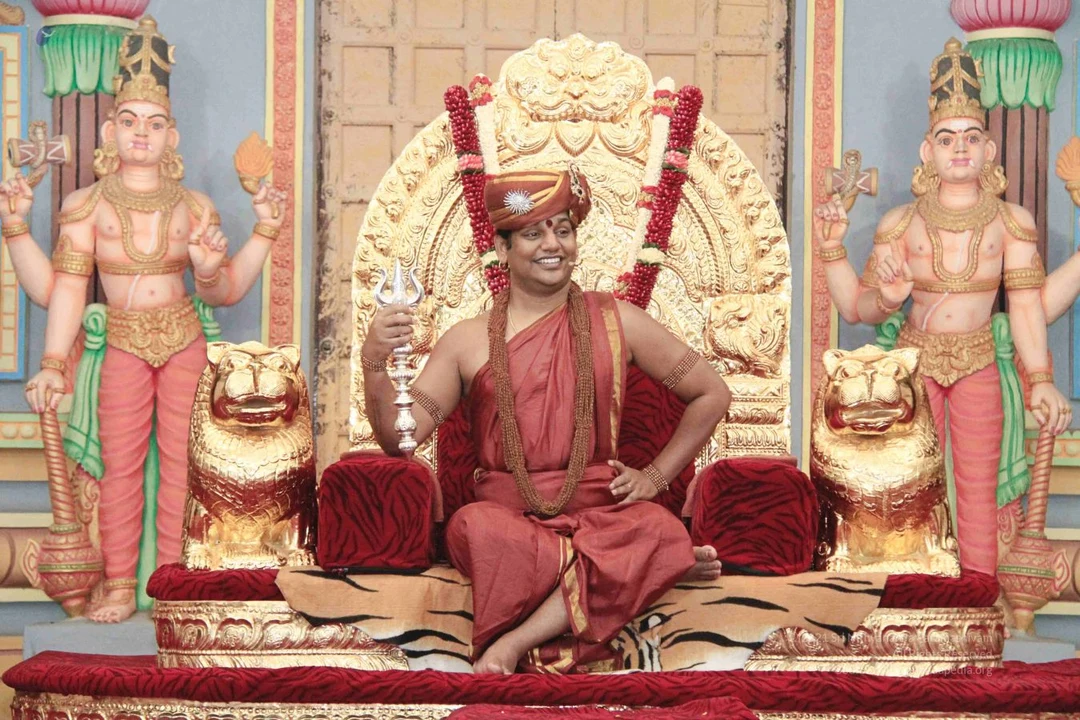
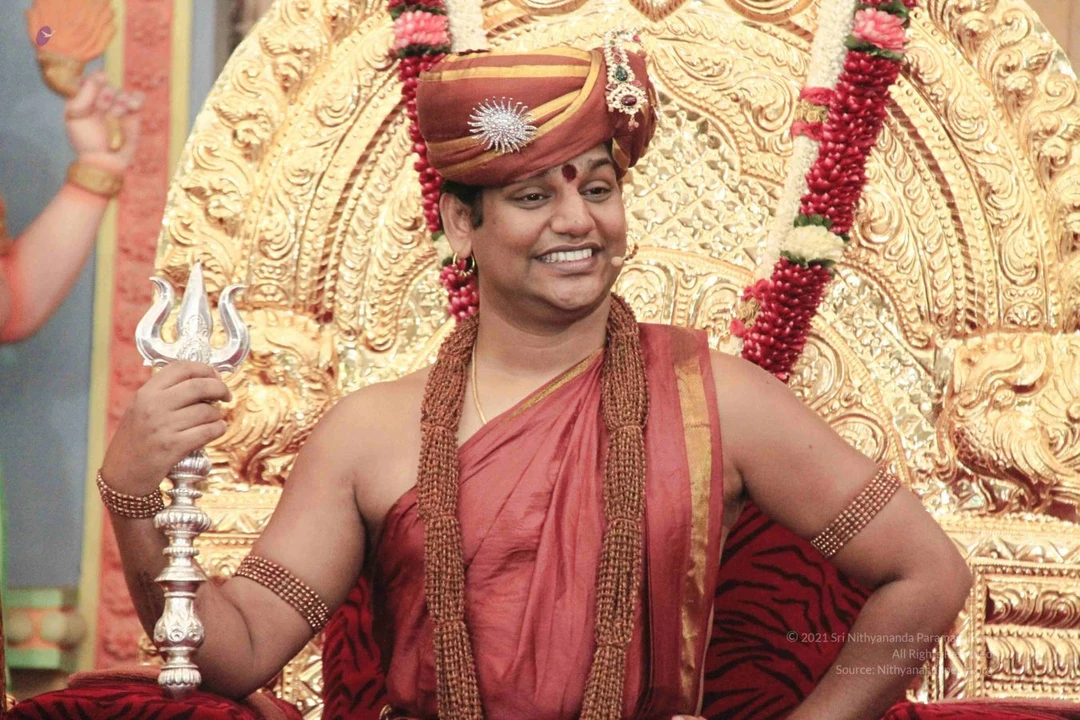
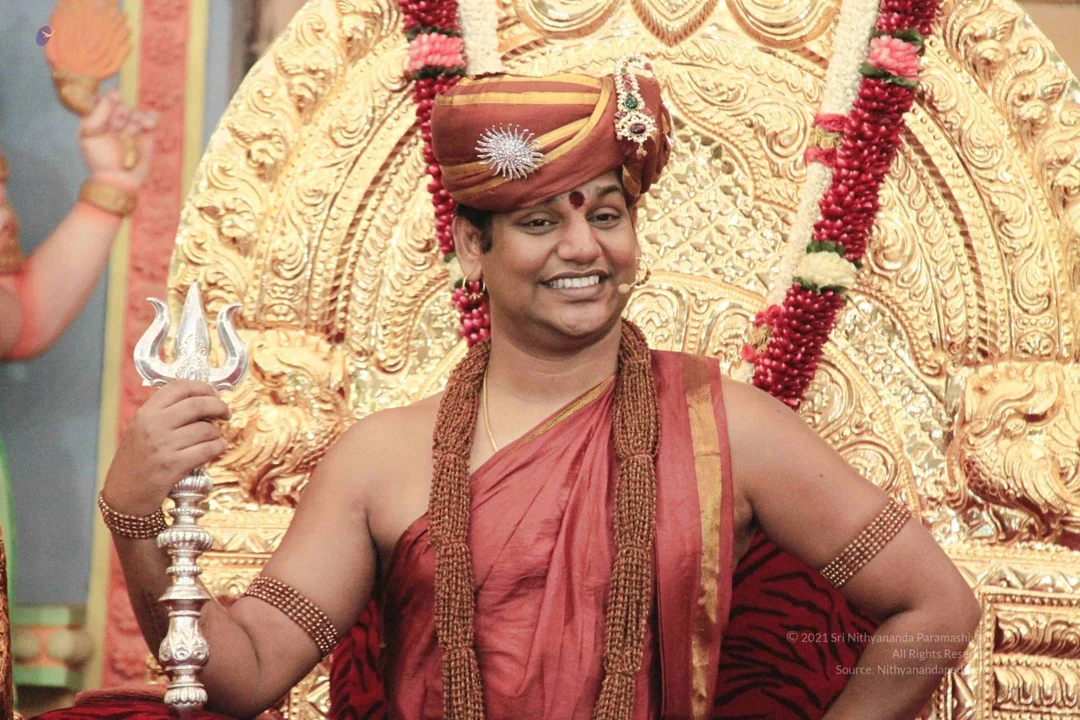
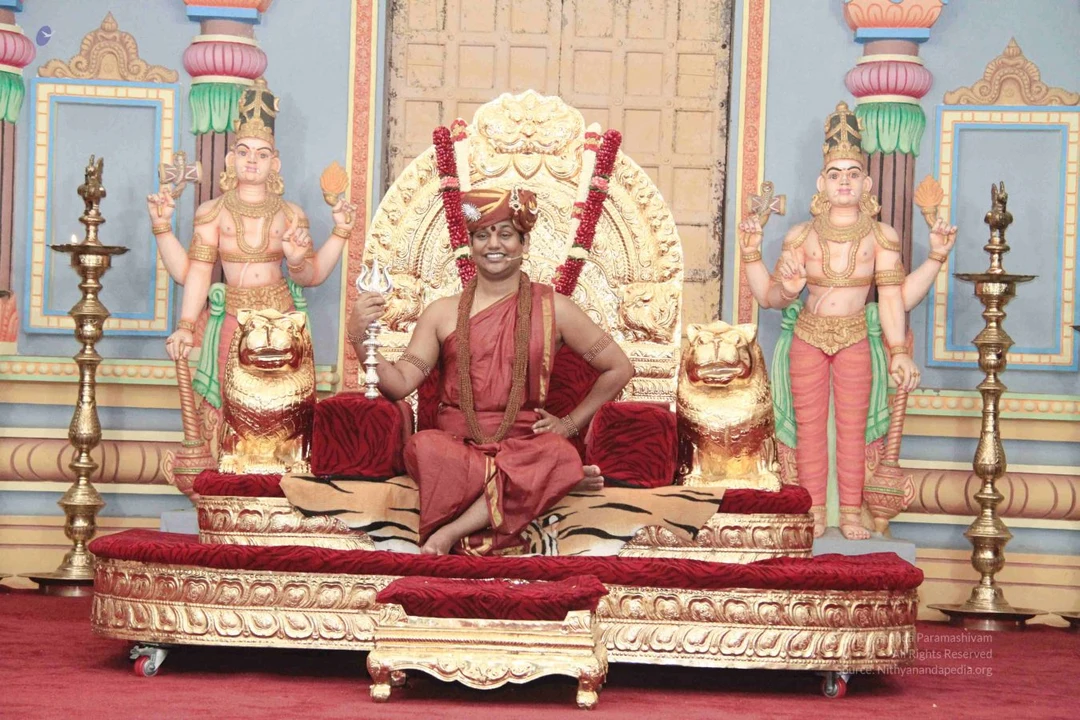
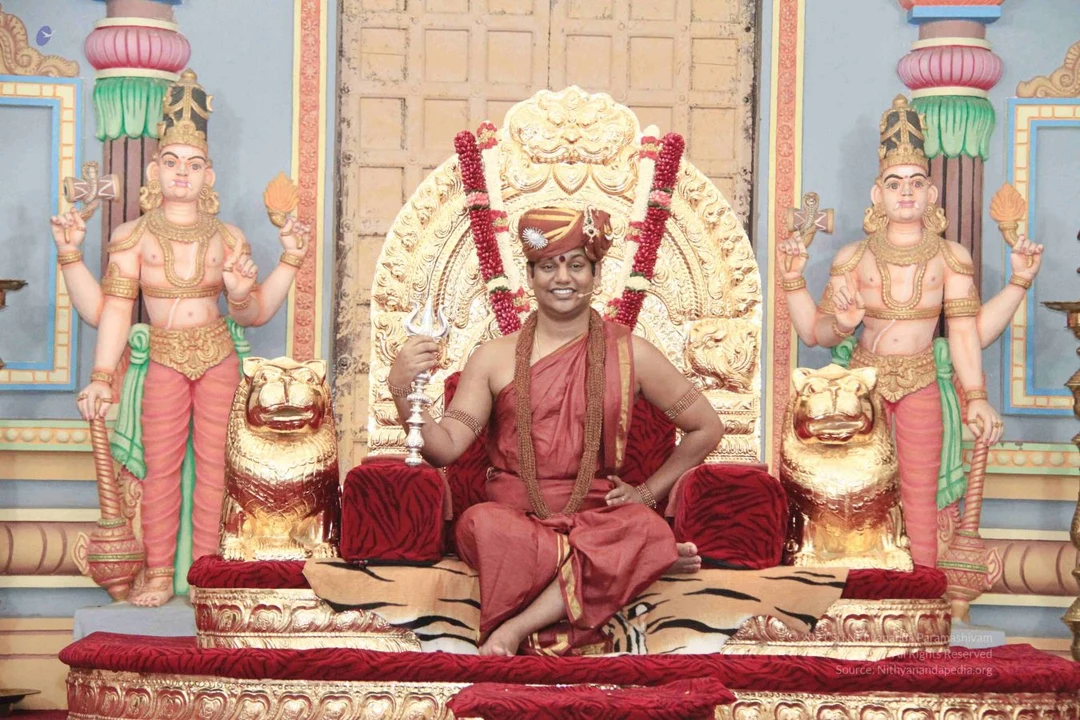
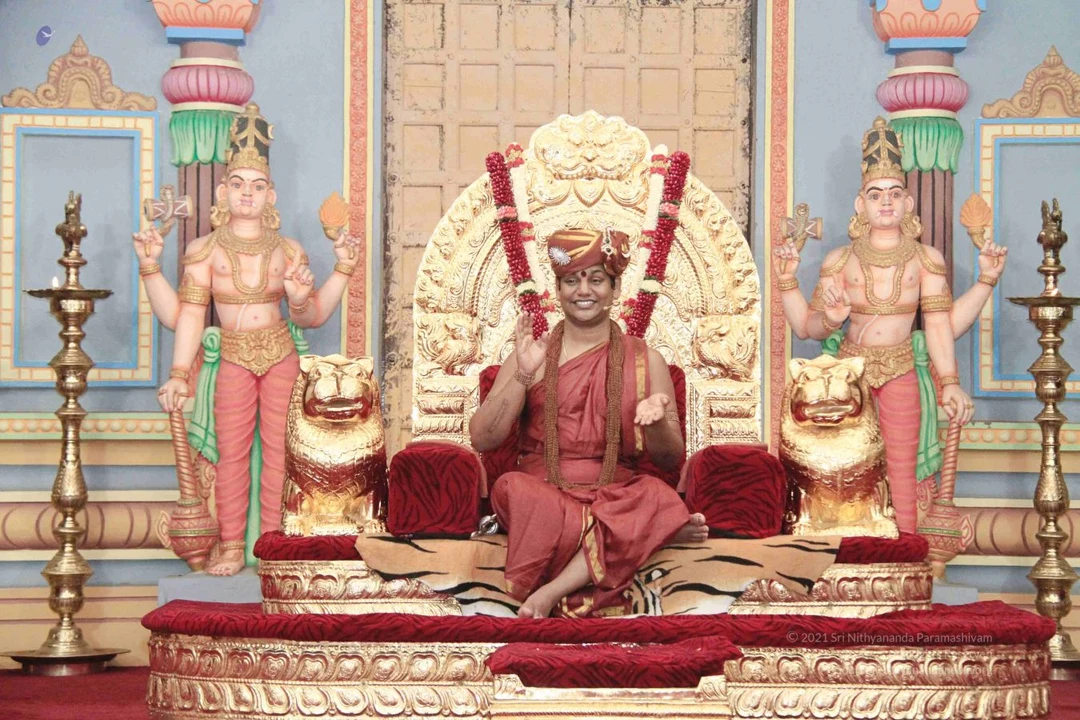
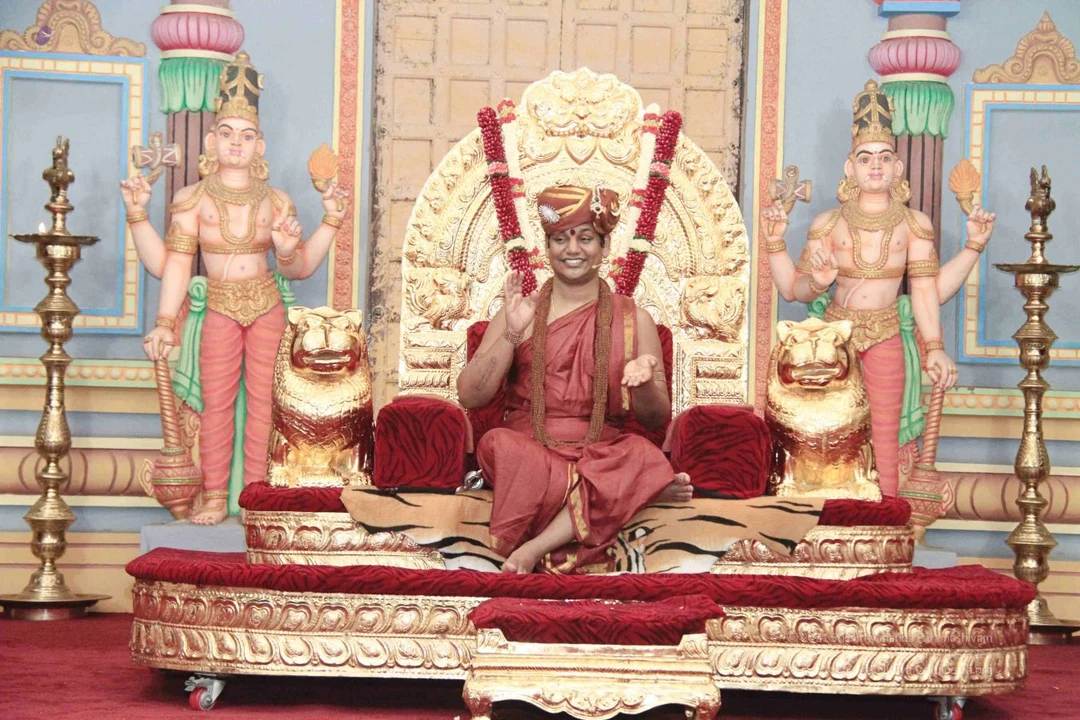
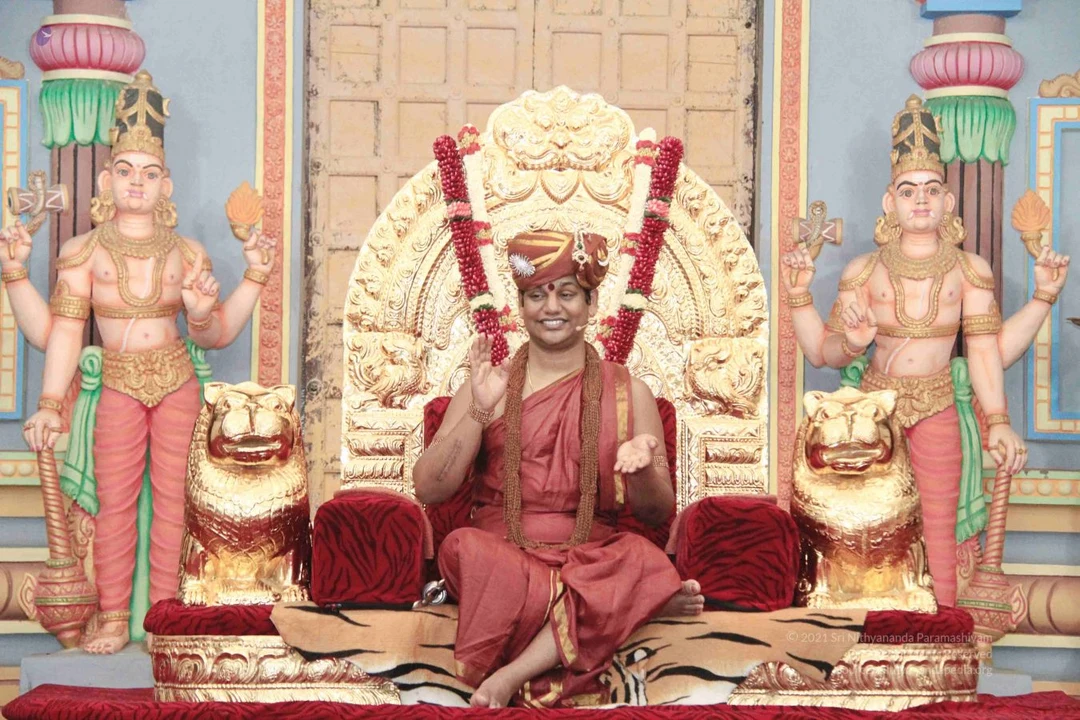
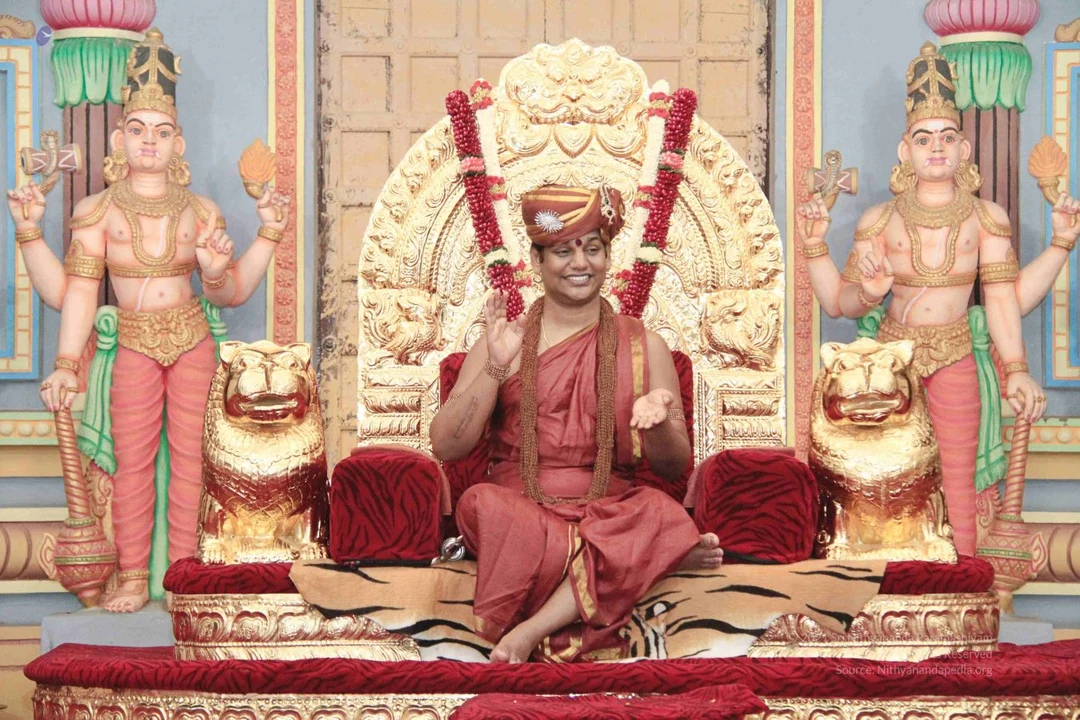
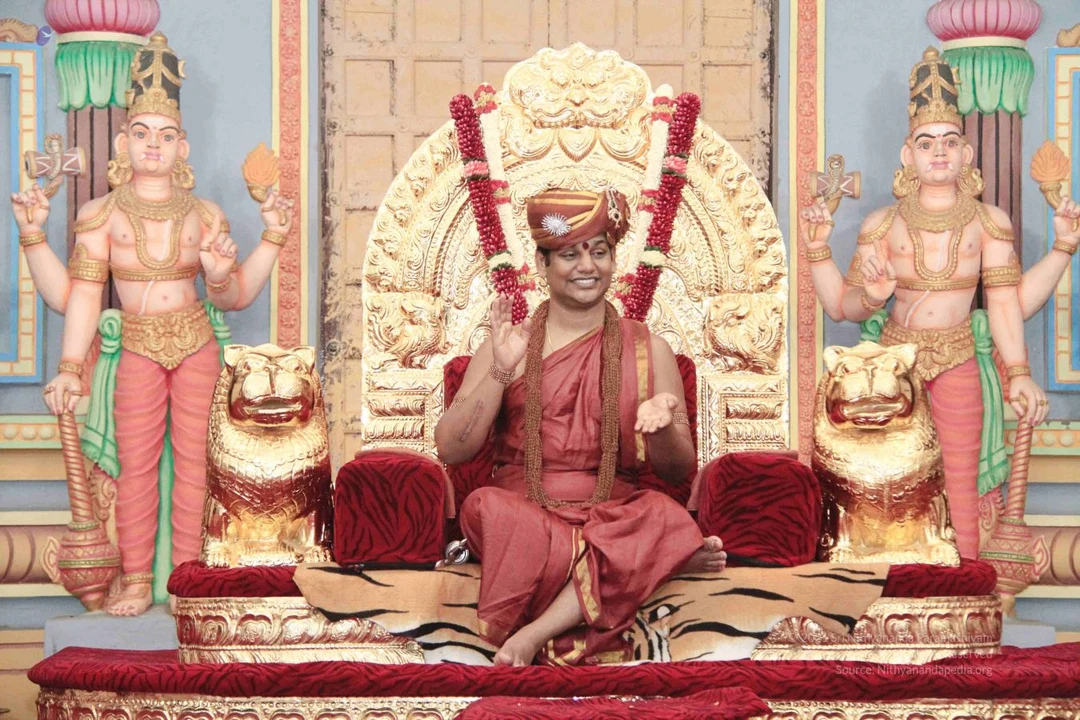
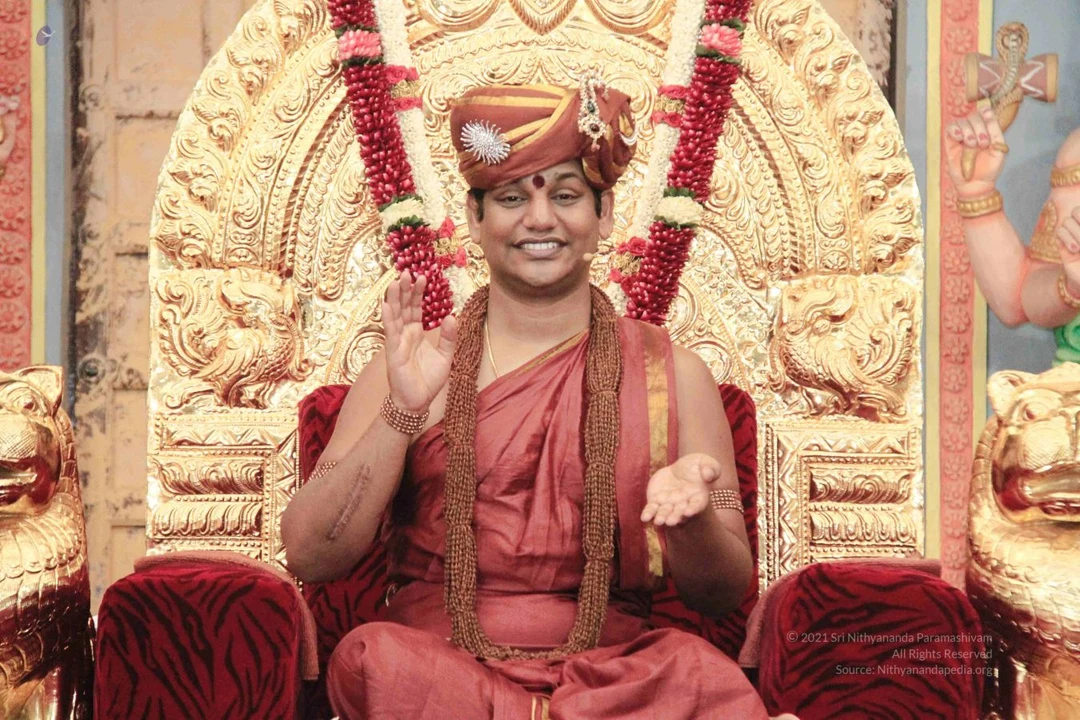
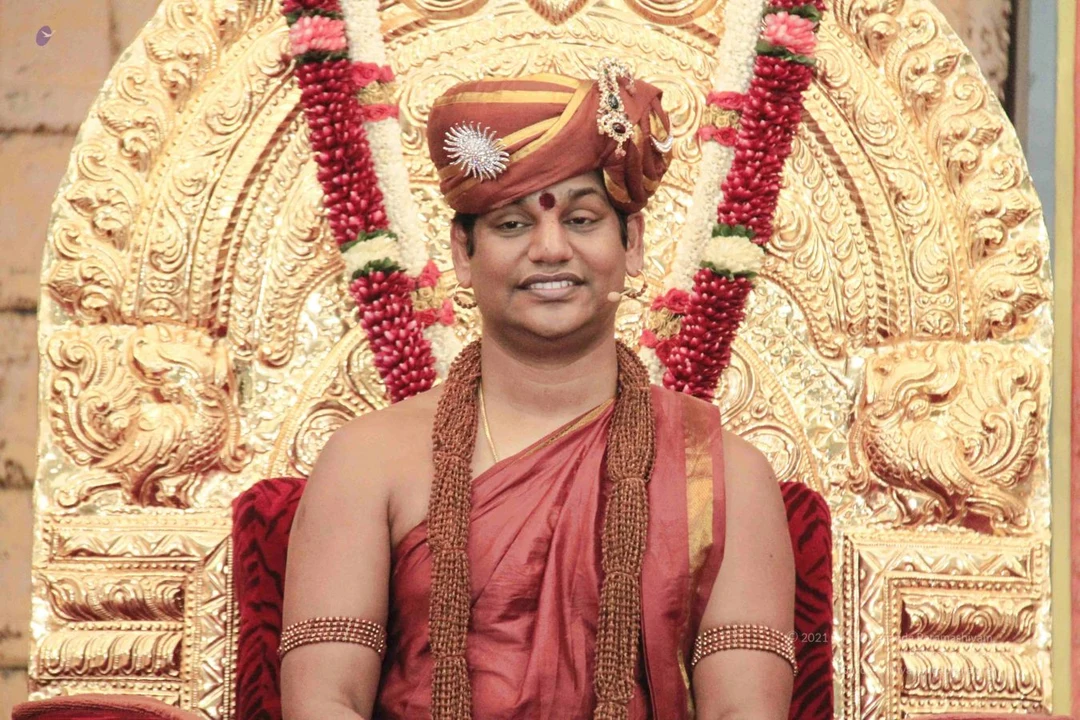
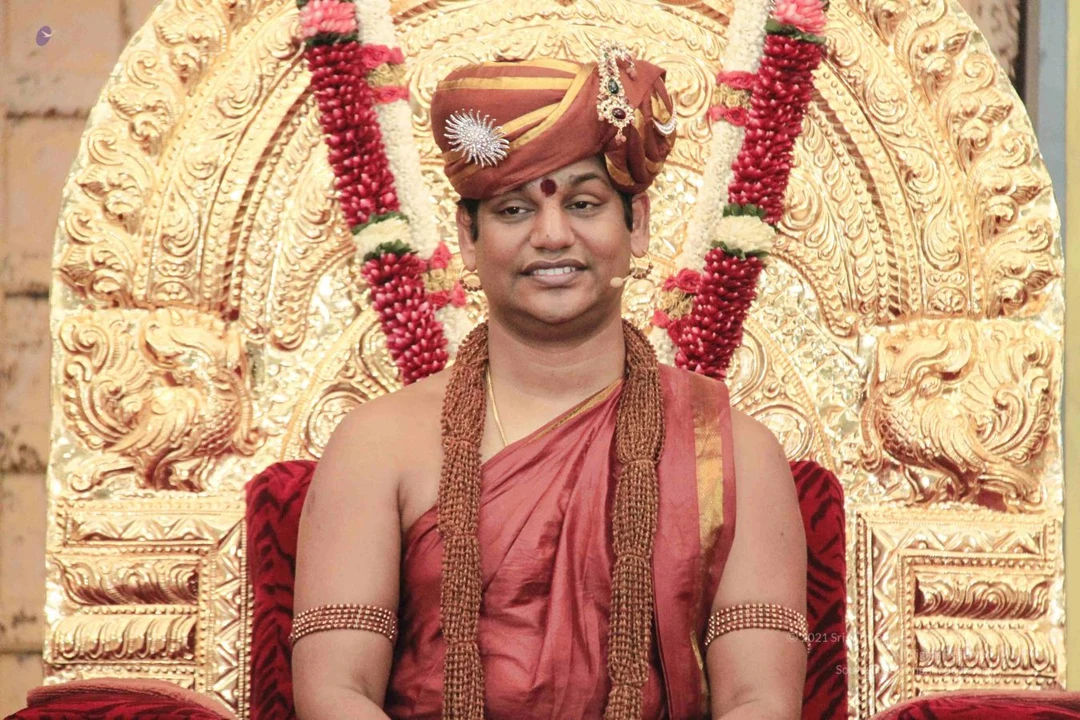
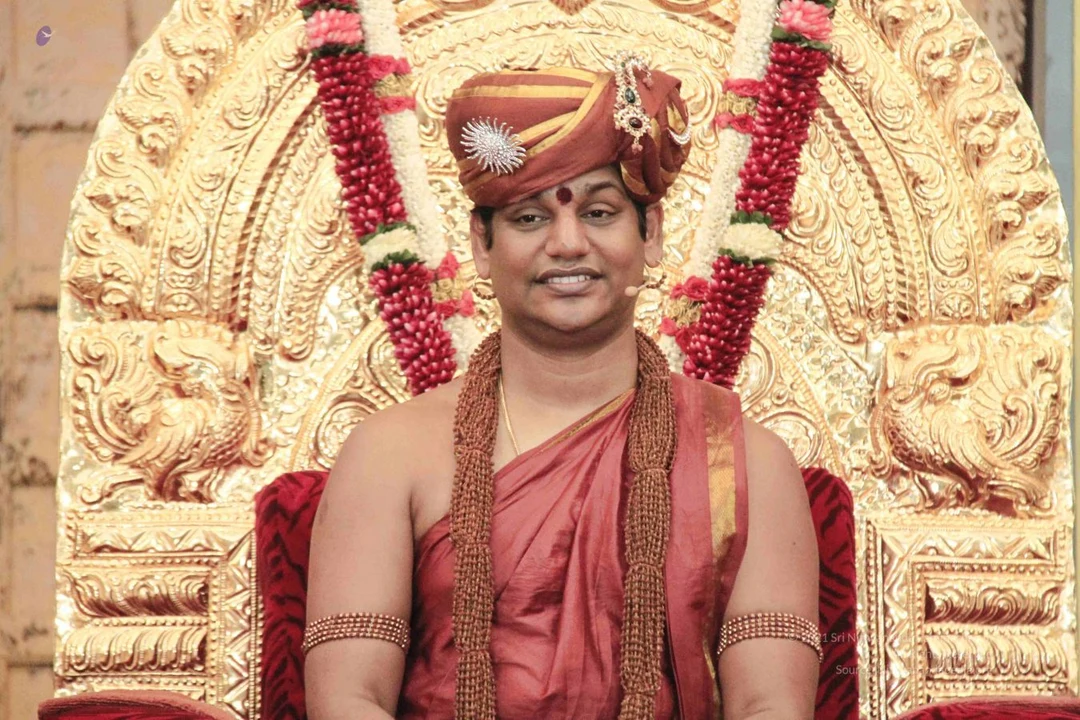
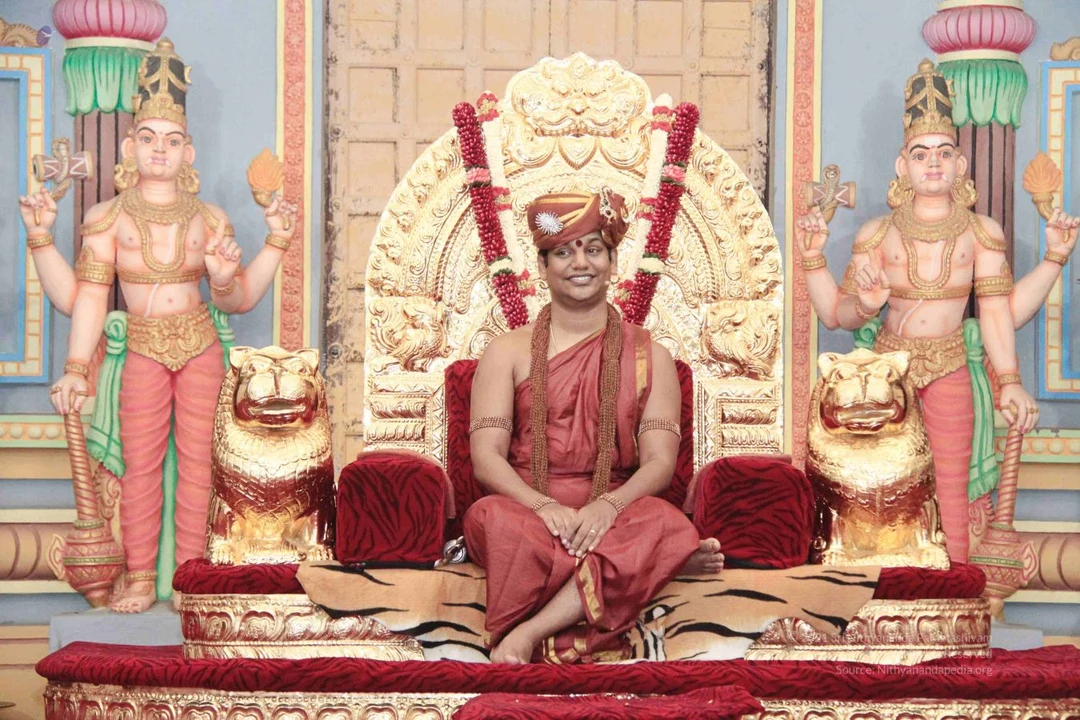
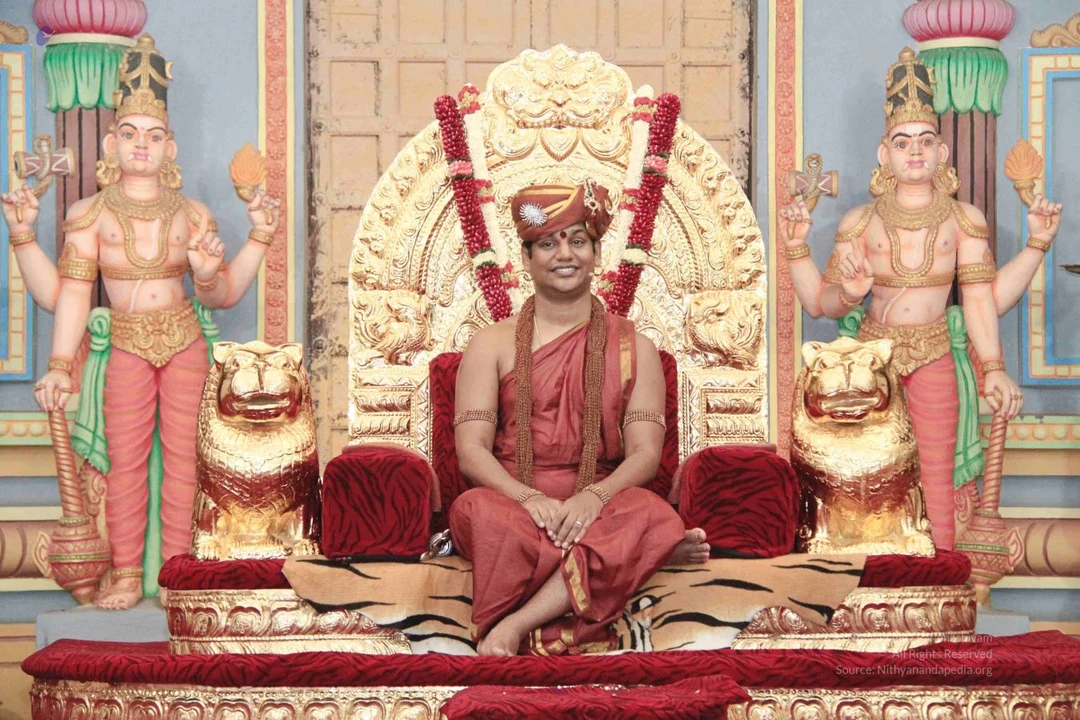
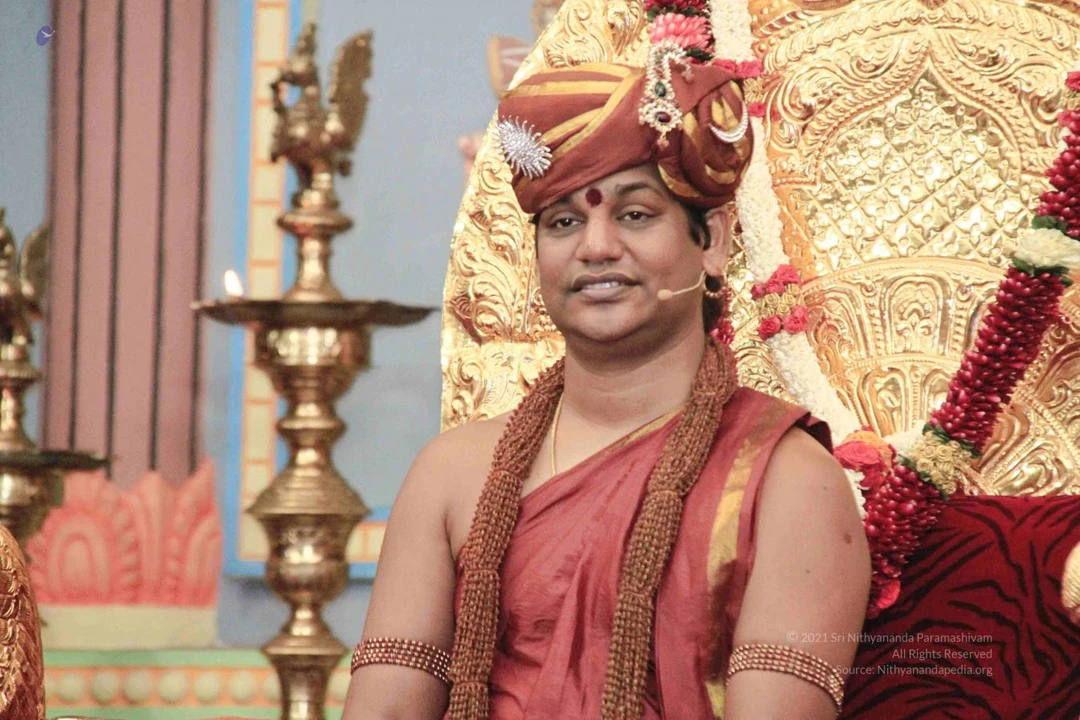
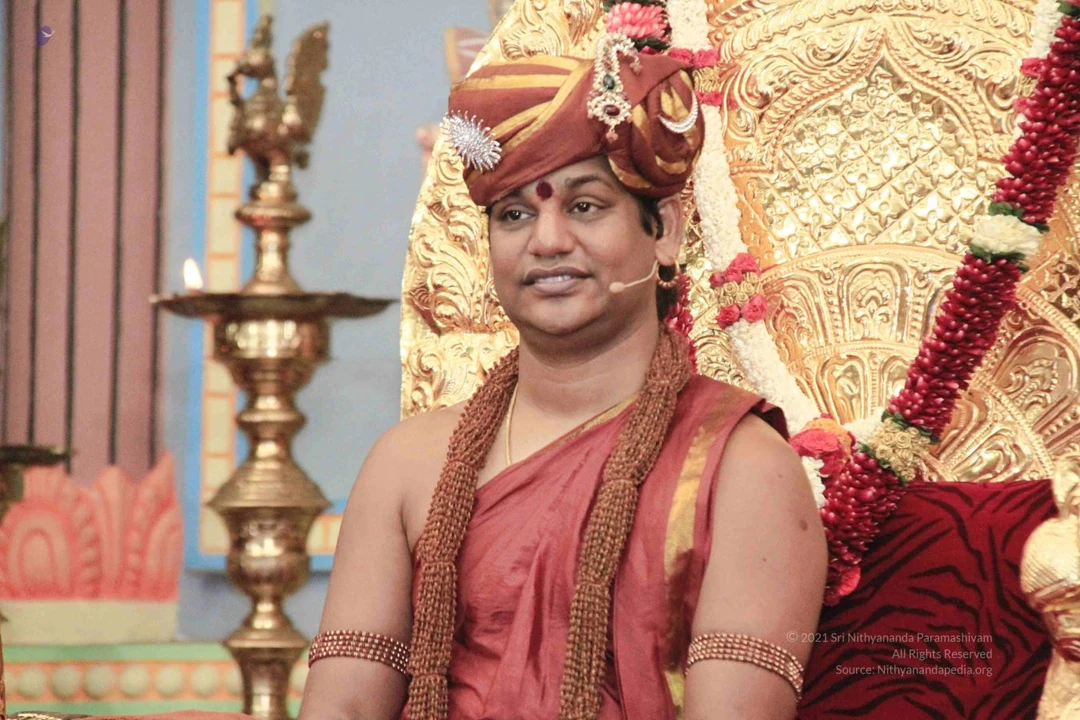
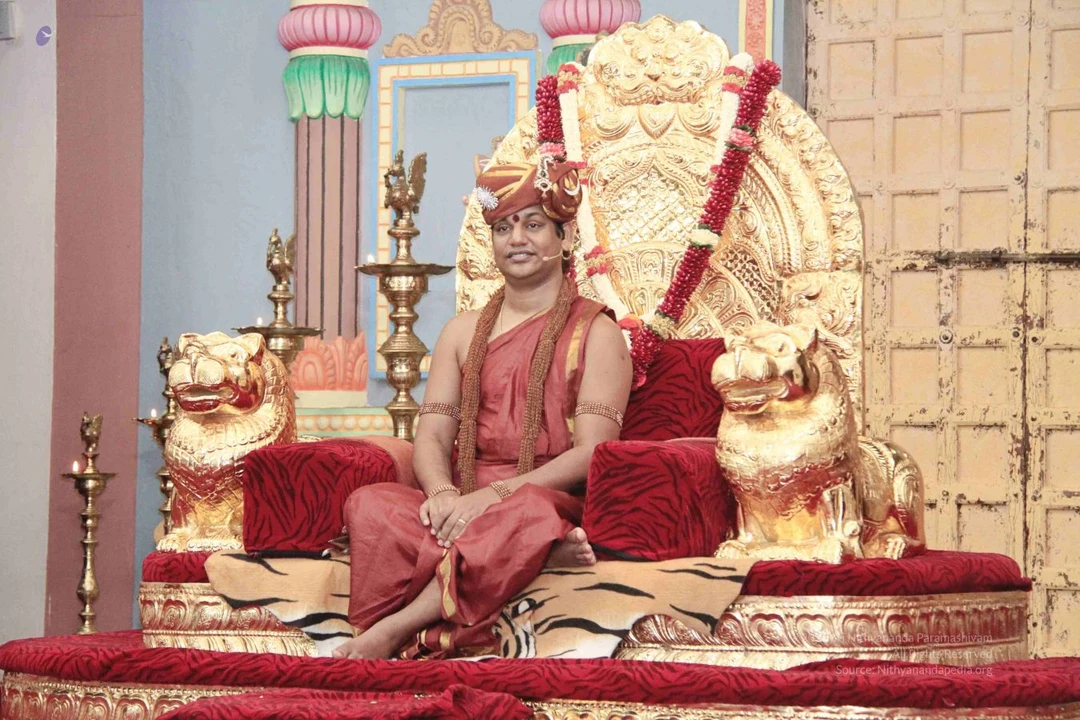
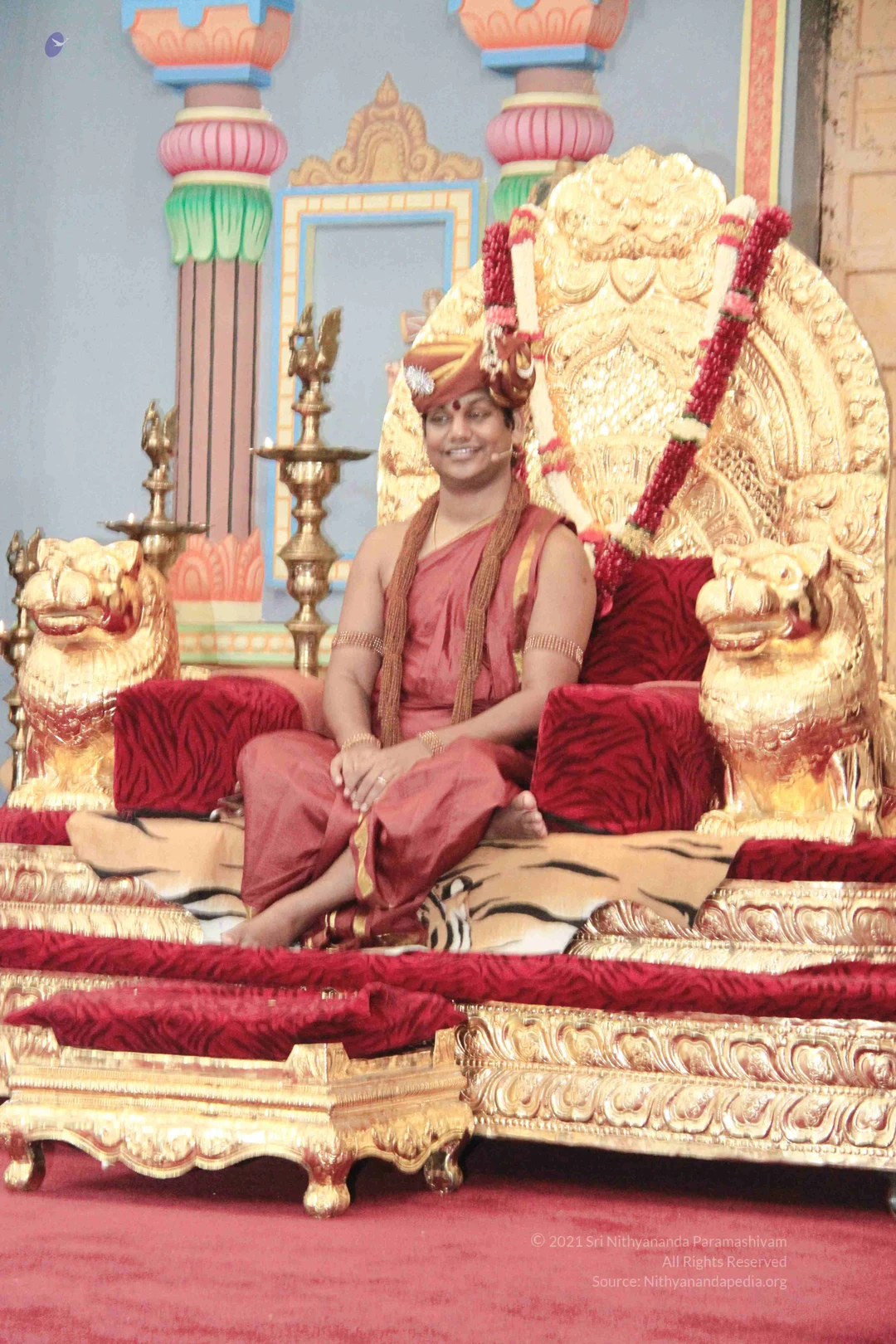
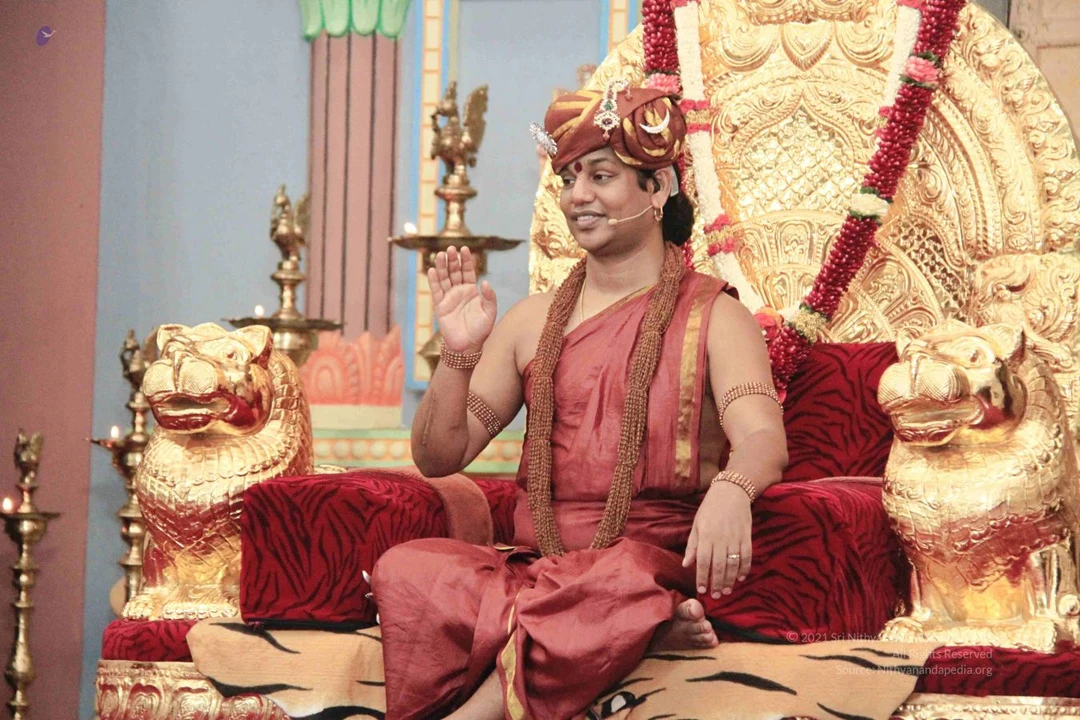
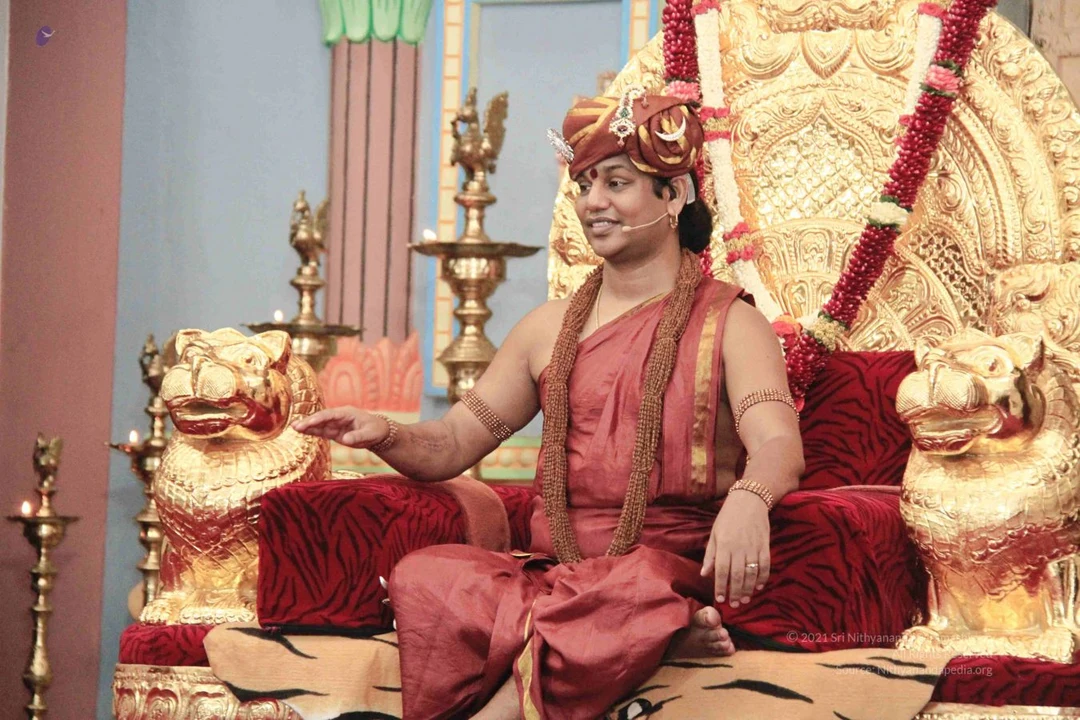
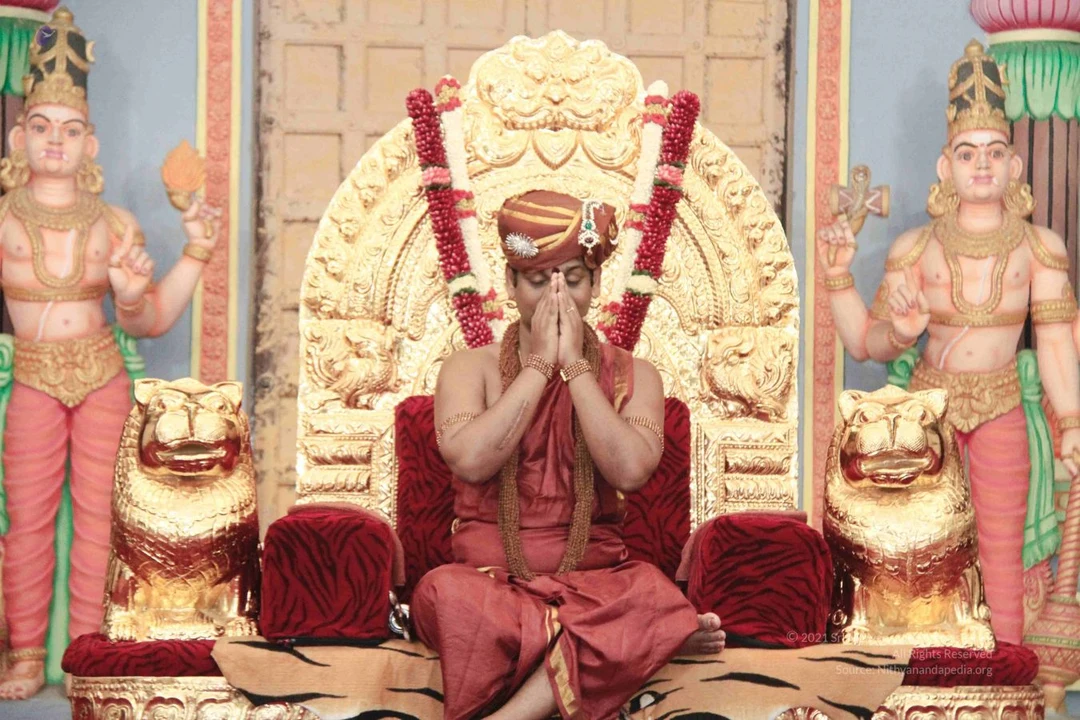
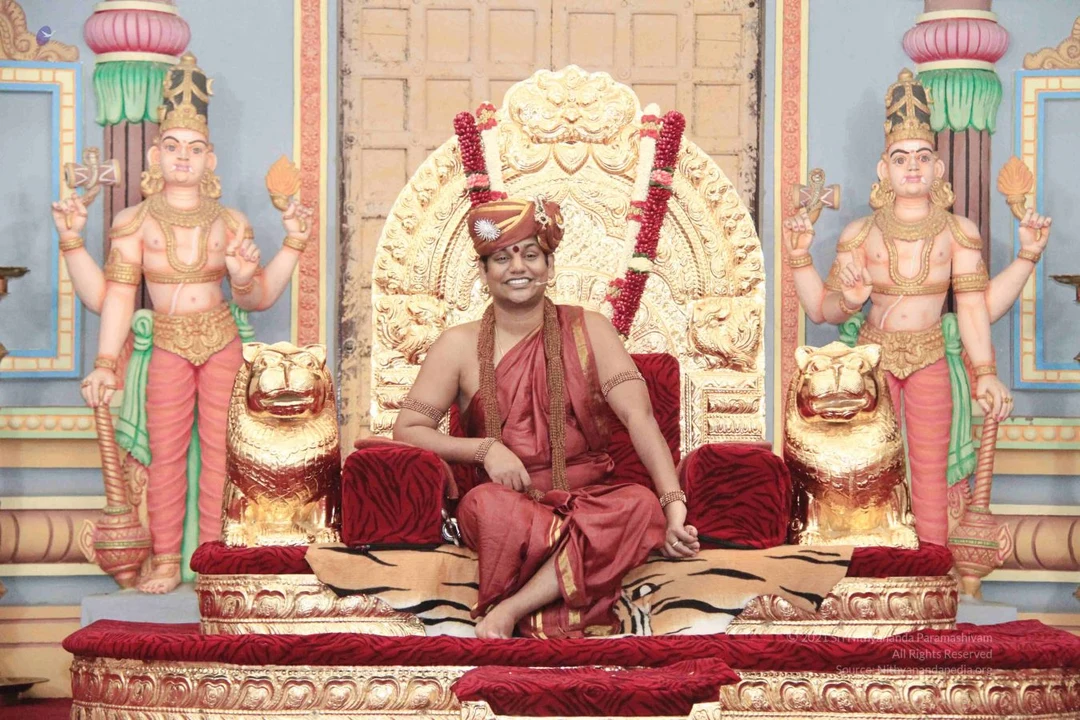
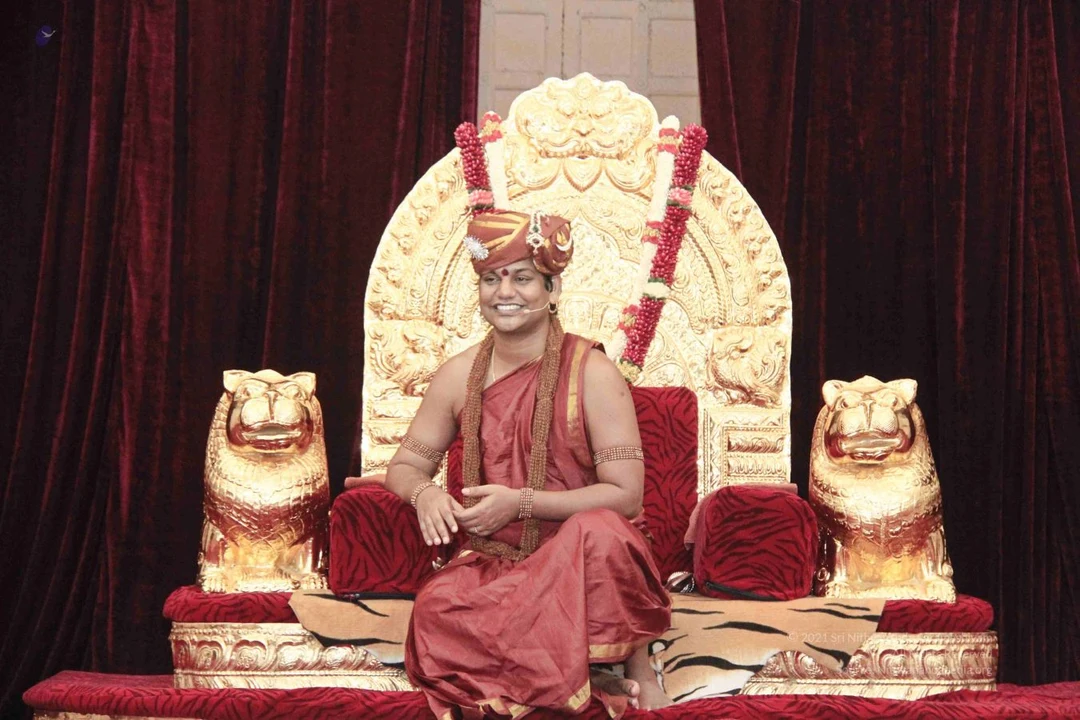
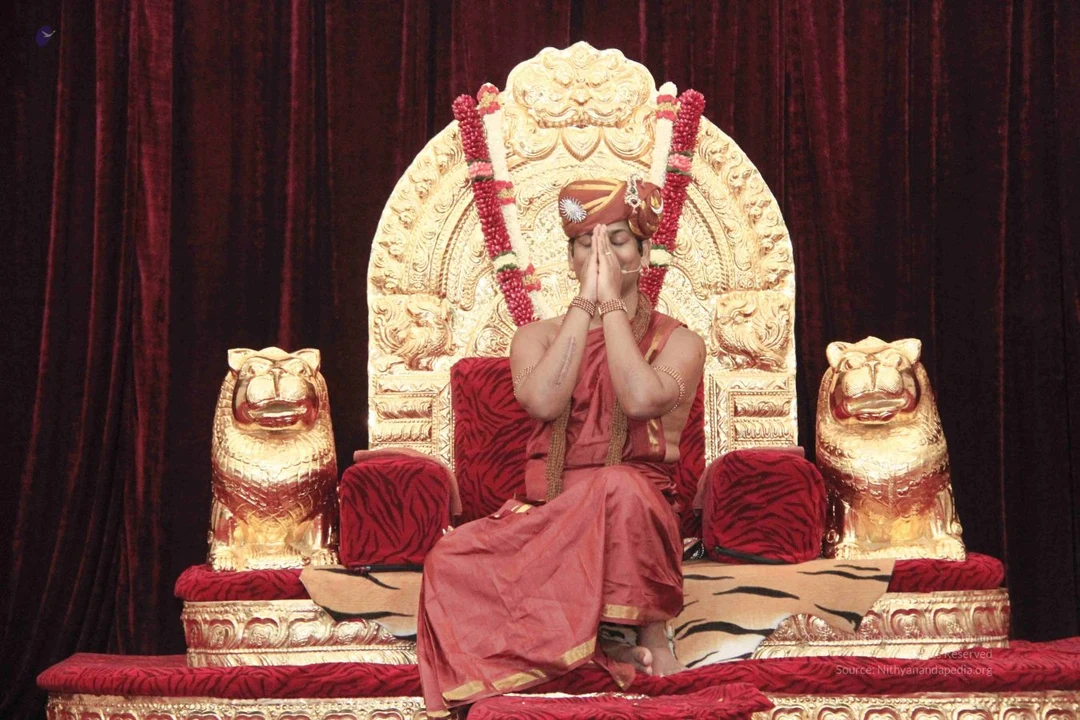
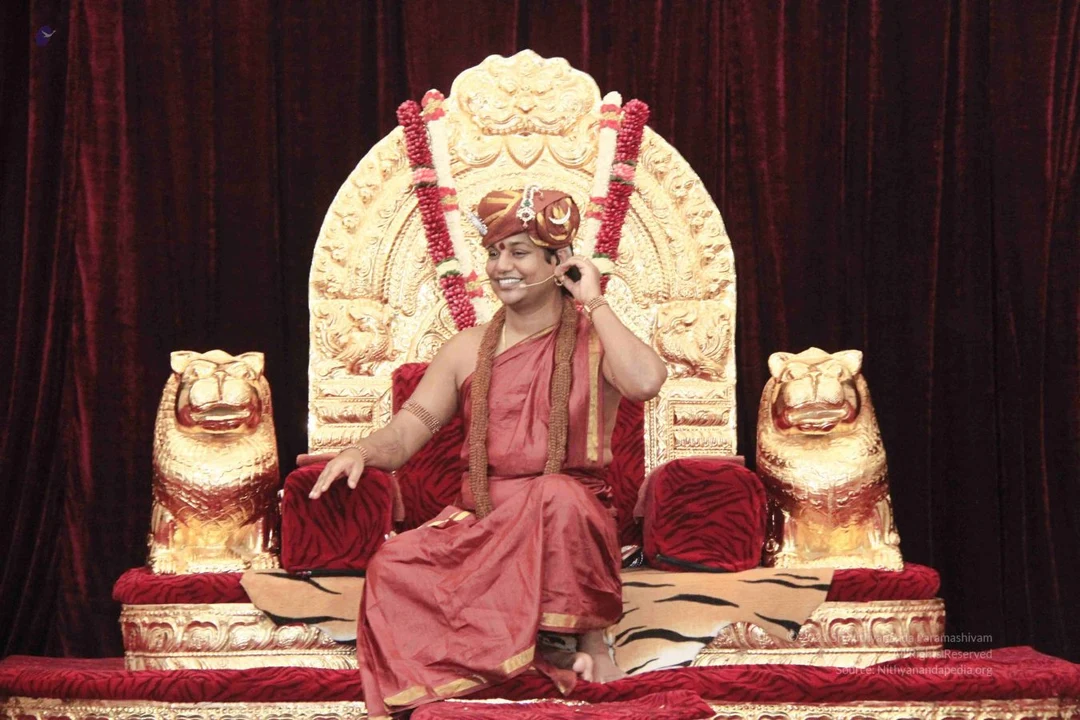
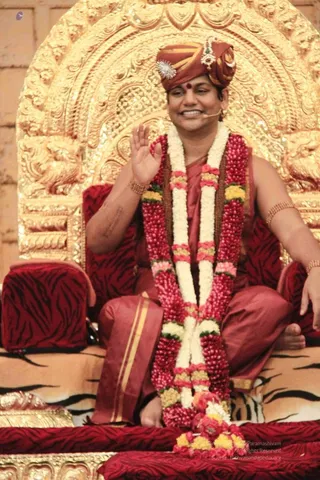
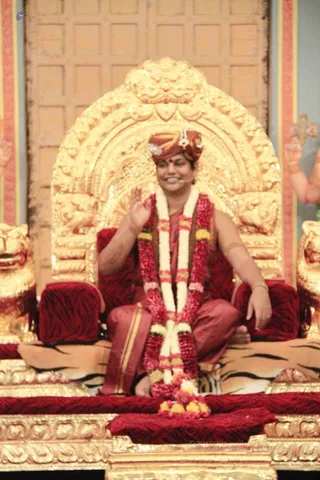
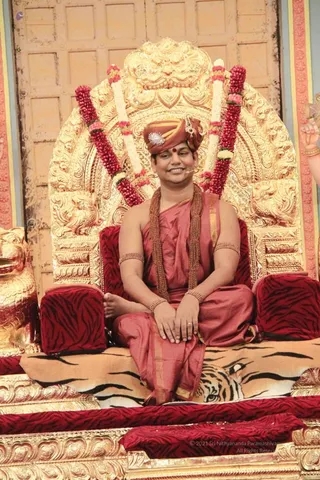
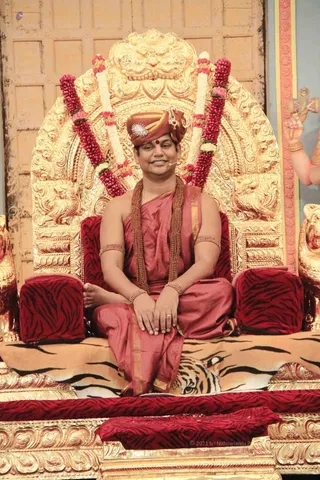
A man seated on an ornate gilded throne with carved lion-like finials, draped in a red tiger-striped cushion, raises his right hand in greeting while smiling. He wears a rust-red turban with a jewelled brooch, a red-brown silk shawl and dhoti with gold border, a red bindi, gold bangles and armlets, and a headset microphone. A long garland of red roses, white jasmine and yellow marigolds hangs to his knees, with a flower offering at his feet. Swamiji (probable): the crown-like turban, ornate ceremonial clothing and garland, with the page noting his presence at a satsang, fit the appearance cues, though the face is not used to confirm identity.A photograph of a person seated on an ornate golden throne with a carved arched back and gilded lion-head armrests, draped in a tiger-skin cushion and red velvet cushions. The seated figure wears a maroon-red turban with a white and gold ornament, a maroon-red dhoti-style garment, and a long layered garland of red, white and yellow flowers over the shoulders, with a marigold garland at the feet. The figure raises one hand in a blessing or greeting gesture and smiles. A small microphone is visible near the face. Behind the throne is a wooden panelled wall with red and gold pillars. a person: the appearance shows a turban, layered flower garlands, and a seated position on a throne, but the face and presentation are not clearly distinctive enough to be sure.A seated man in a golden throne with a large ornate arch sits on red and tiger-striped cushions atop a raised dais, wearing a maroon-orange turban and a maroon-orange cloth. He smiles, raises one hand in blessing, and wears a long garland of red, white and yellow flowers. Golden lion heads flank the throne. Two gilded, multi-armed deity murti stand on either side with pink and green garments and elaborate crowns. a person: the seated figure wears a turban, orange-maroon clothing and a long floral garland, but the appearance cues are only moderately distinctive, so the identification is uncertain.A seated man on an ornate gold throne with a red-and-gold tiger-striped cushion and red velvet seat pads. He wears a rust-red turban with a silver brooch, a red-maroon silk dress, a long brown rudraksha mala, and beaded bangles on his arms and wrists. A red kumkum dot marks his forehead. Red and white flower garlands hang over the throne back, and a gold lion carving stands at the left edge. He is barefoot, smiling, with hands resting in his lap, and wears a small microphone clip. a person is present in person, seated as the speaker at this satsang.A man in a maroon-red silk sannyasi-style wrap and a red-and-gold turban with a silver brooch sits cross-legged on an ornate gold throne with a tiger-striped red velvet cushion and tiger-skin rug. Red and white flower garlands hang over the throne back, and he wears rudraksha beaded necklaces and beaded gold armlets, smiling toward the audience. A gold-and-red carved backdrop and a partial deity figure with a raised hand appear at the right edge.A smiling man in a maroon-red robe and matching turban with a white ornamental brooch sits cross-legged on a gilded throne with a golden lion-face armrest on each side. Red and white garlands drape over the throne back, and a rudraksha-style necklace rests on his chest with bangles on both wrists. Flanking him are two large painted deity murti statues with raised hands, pink dhoti-style lower garments and gold ornaments. The throne sits on a tiger-striped cloth with red velvet cushions, in front of a carved wooden door.

SARVA-DARSHAN

14 photosSource gallery
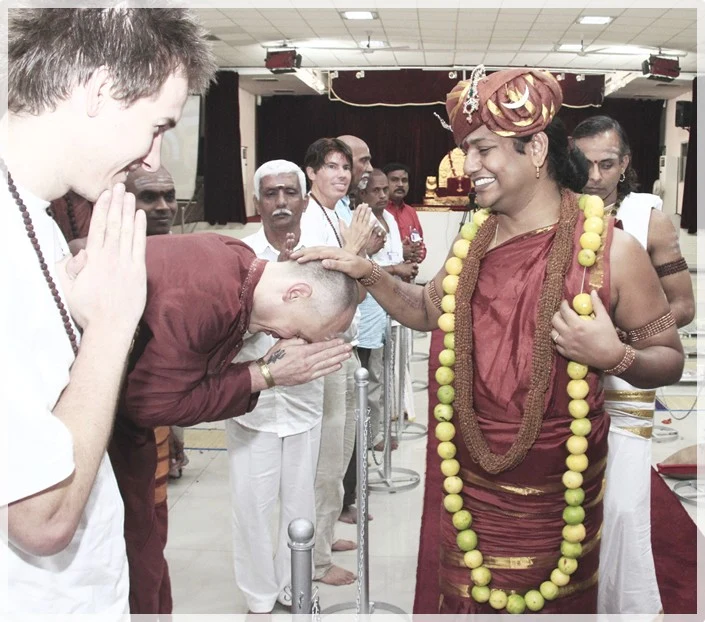
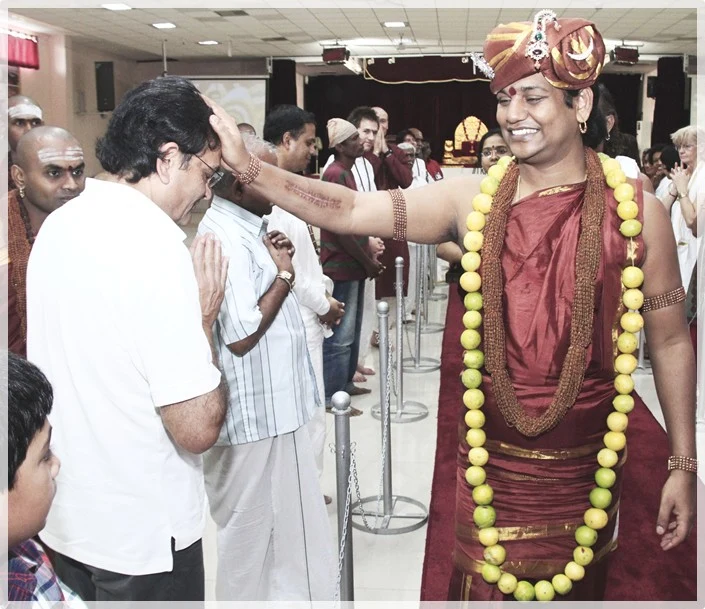
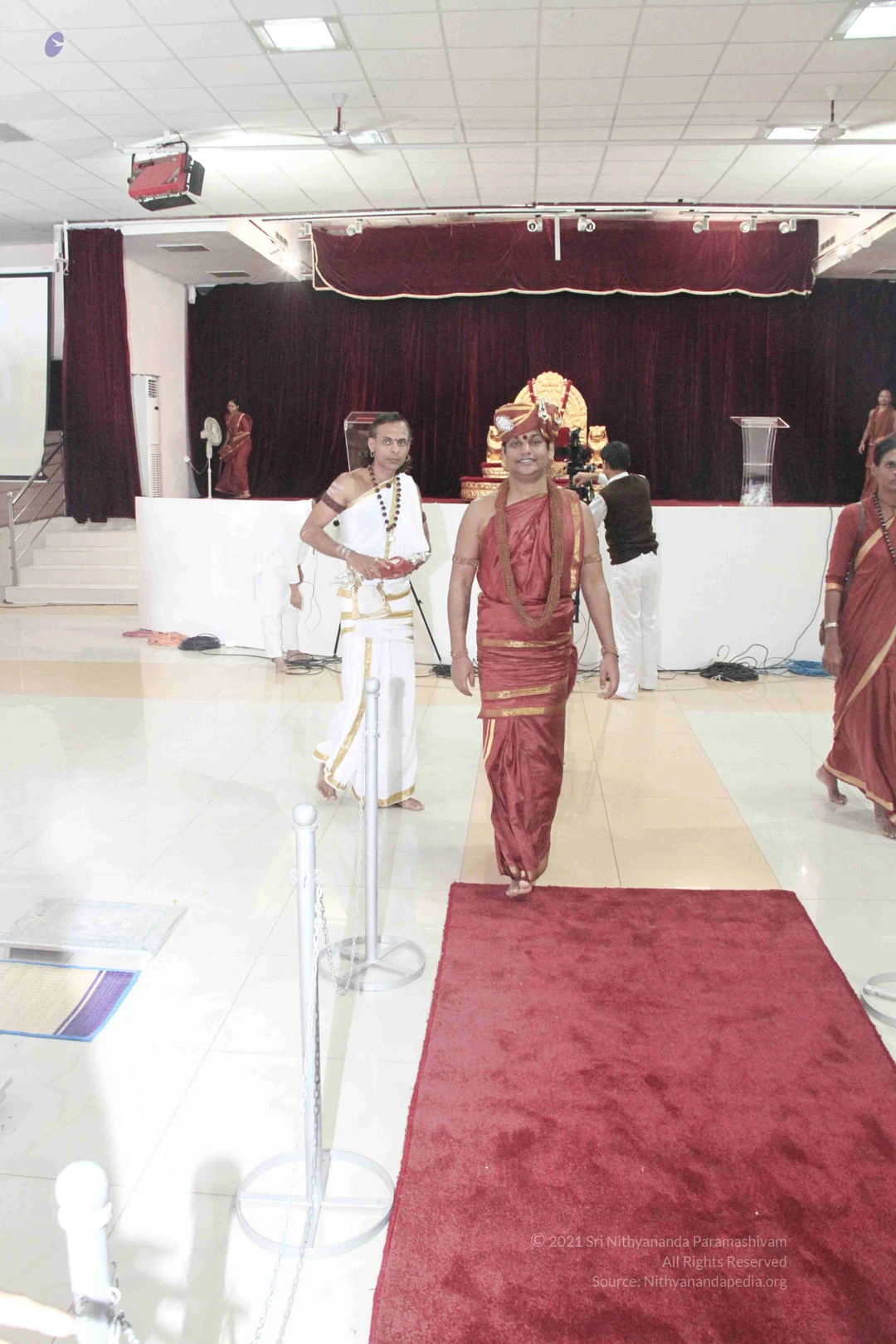
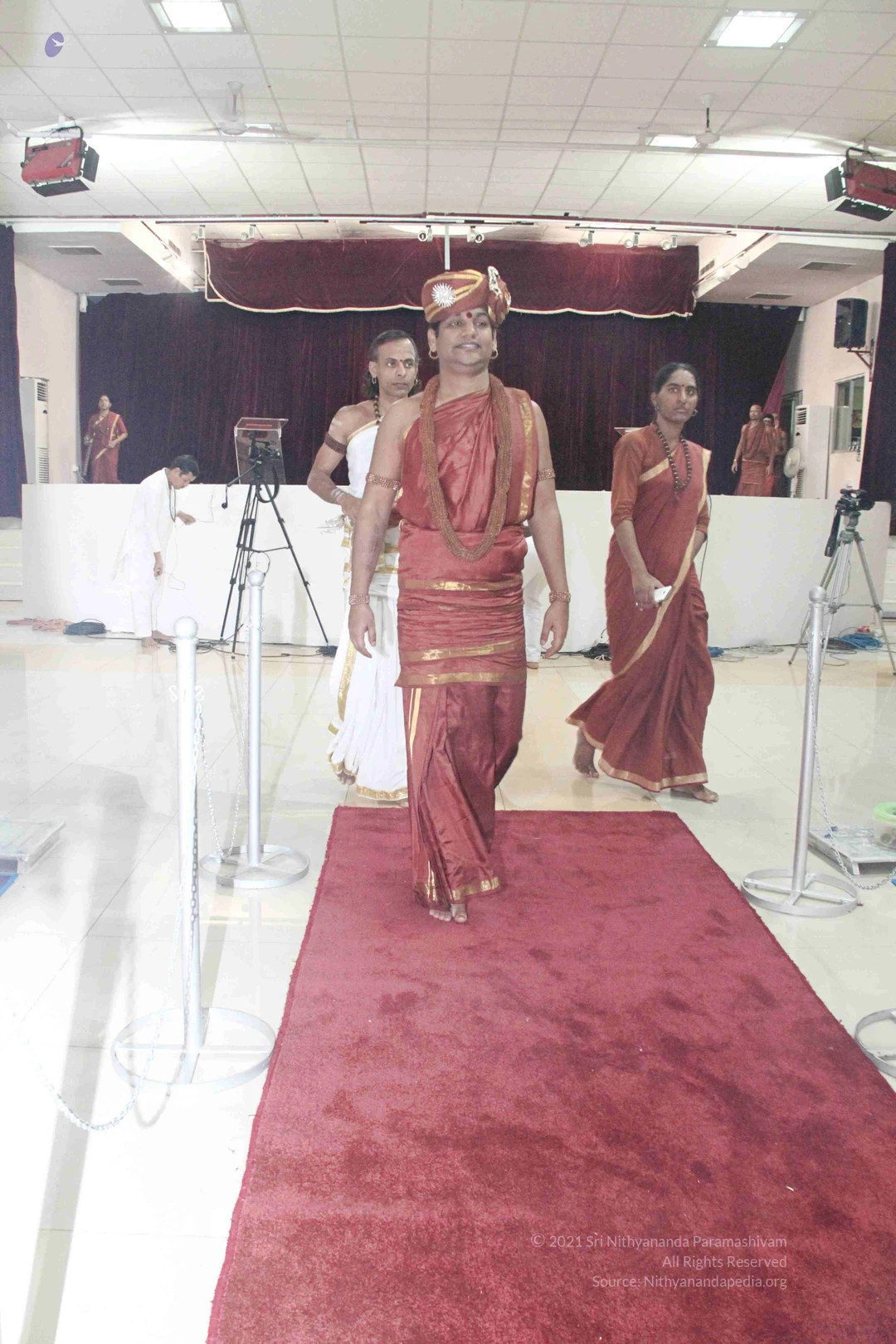
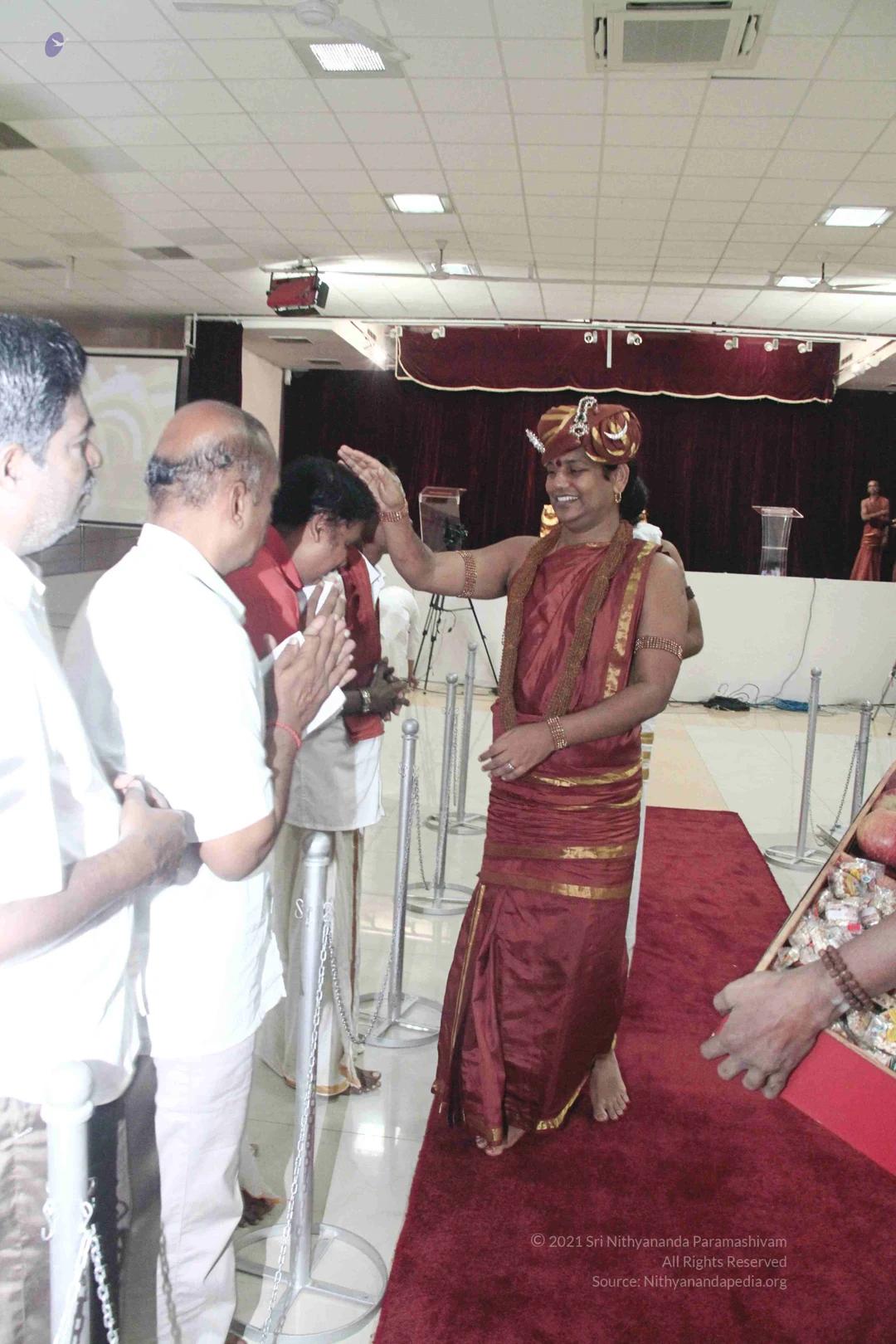
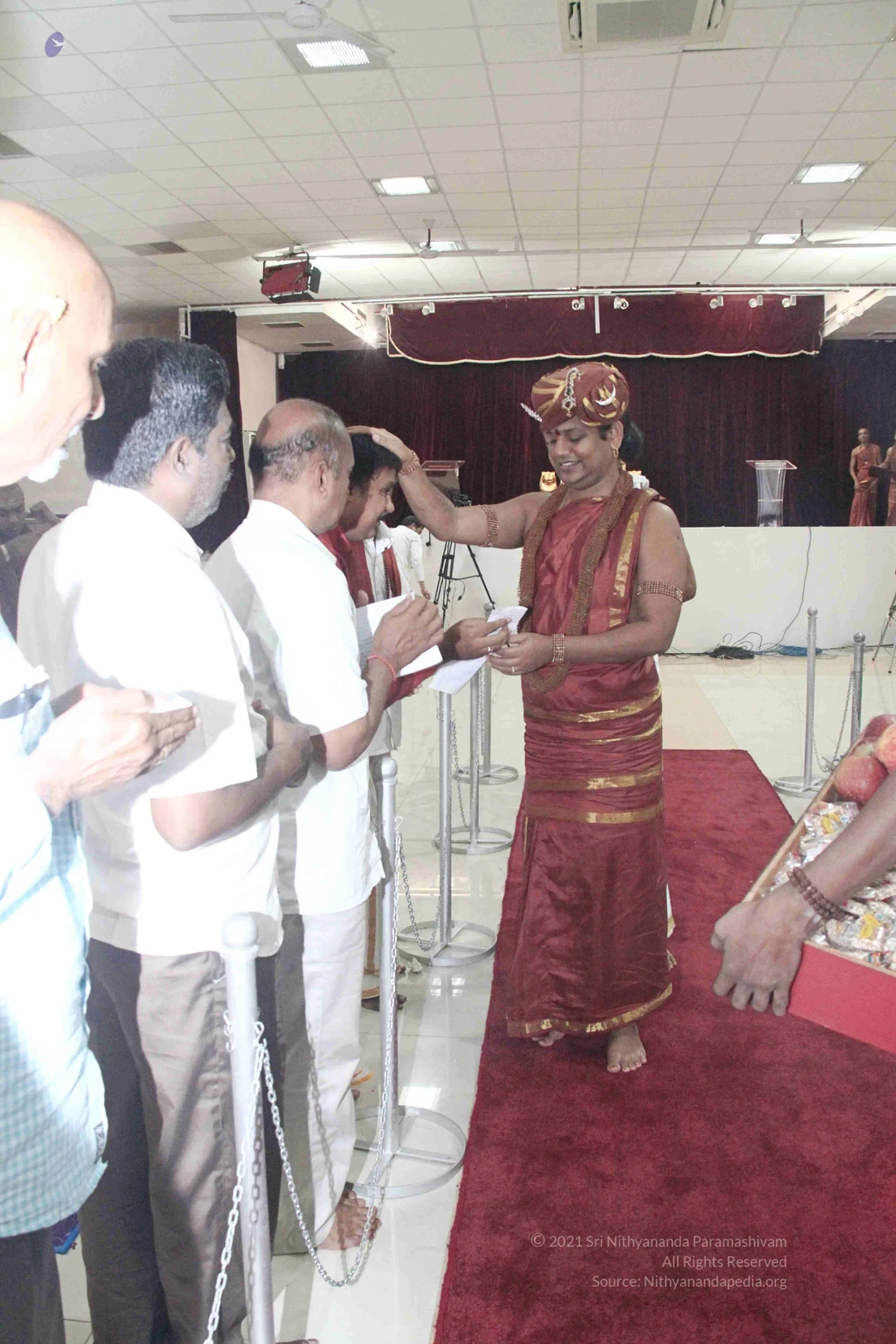
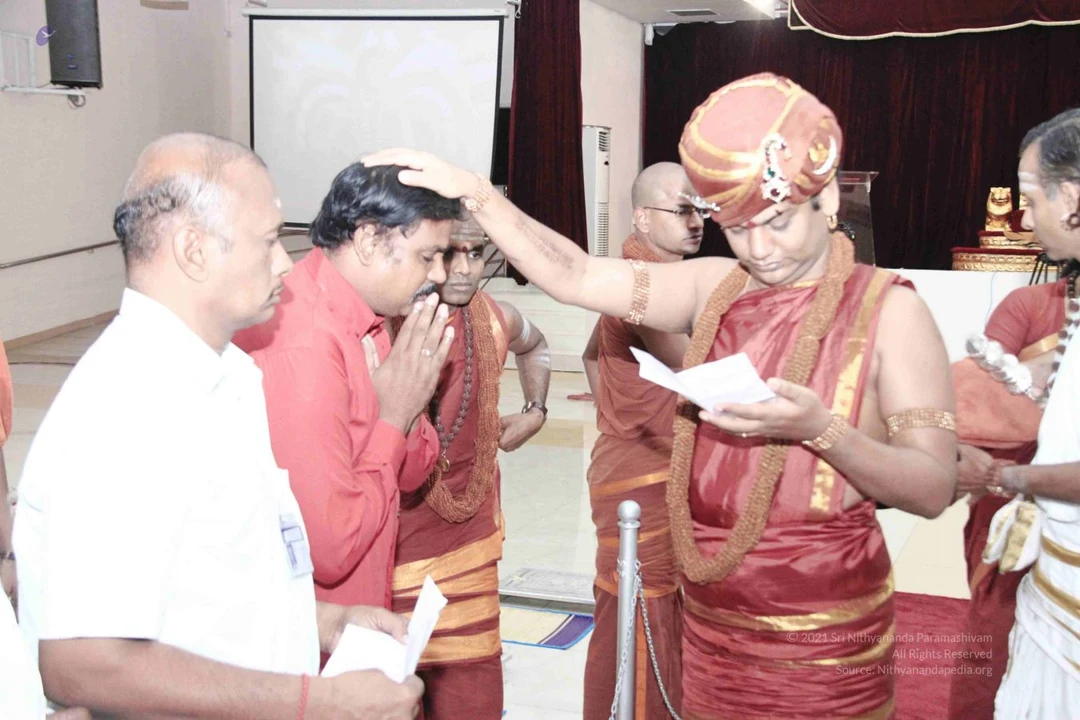
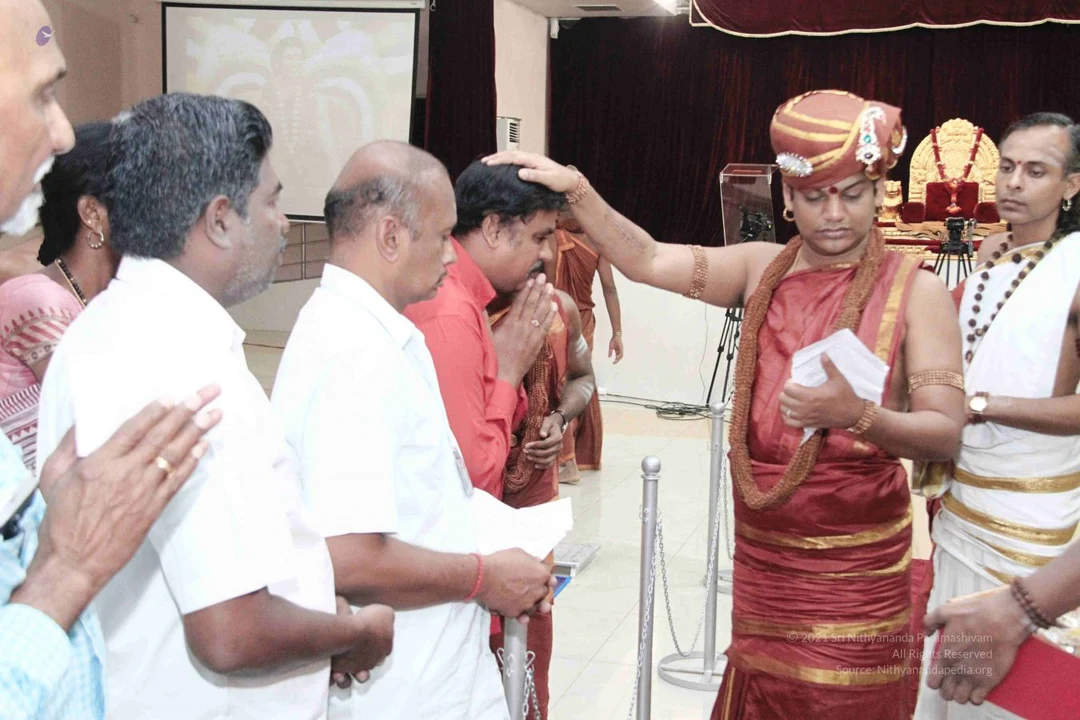
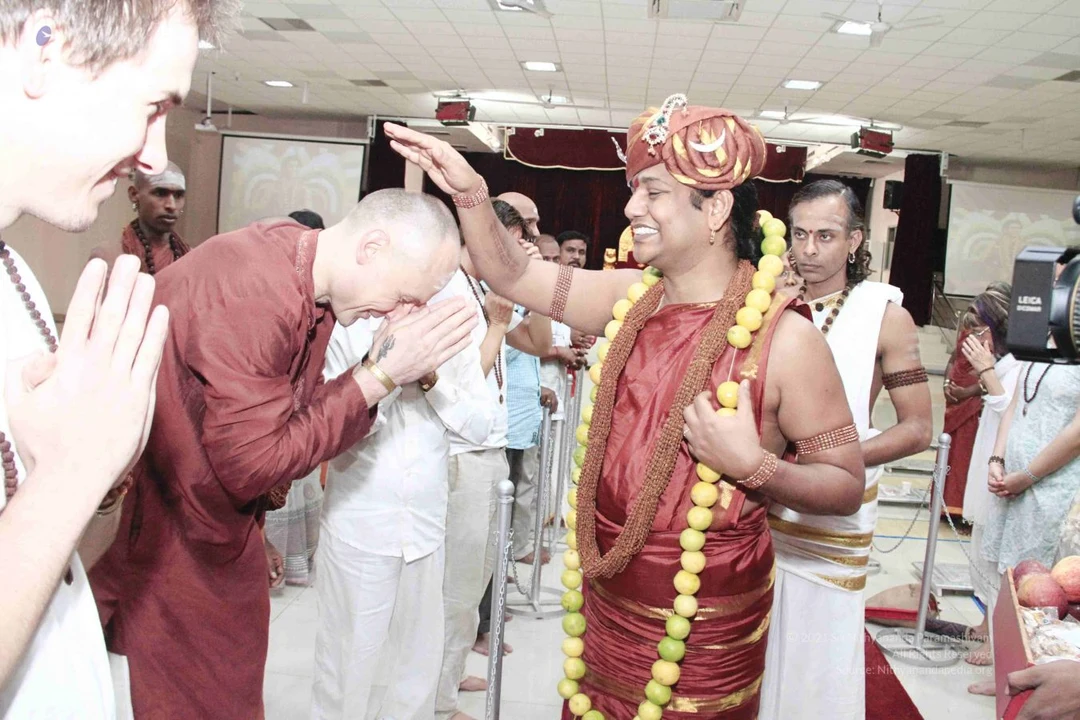
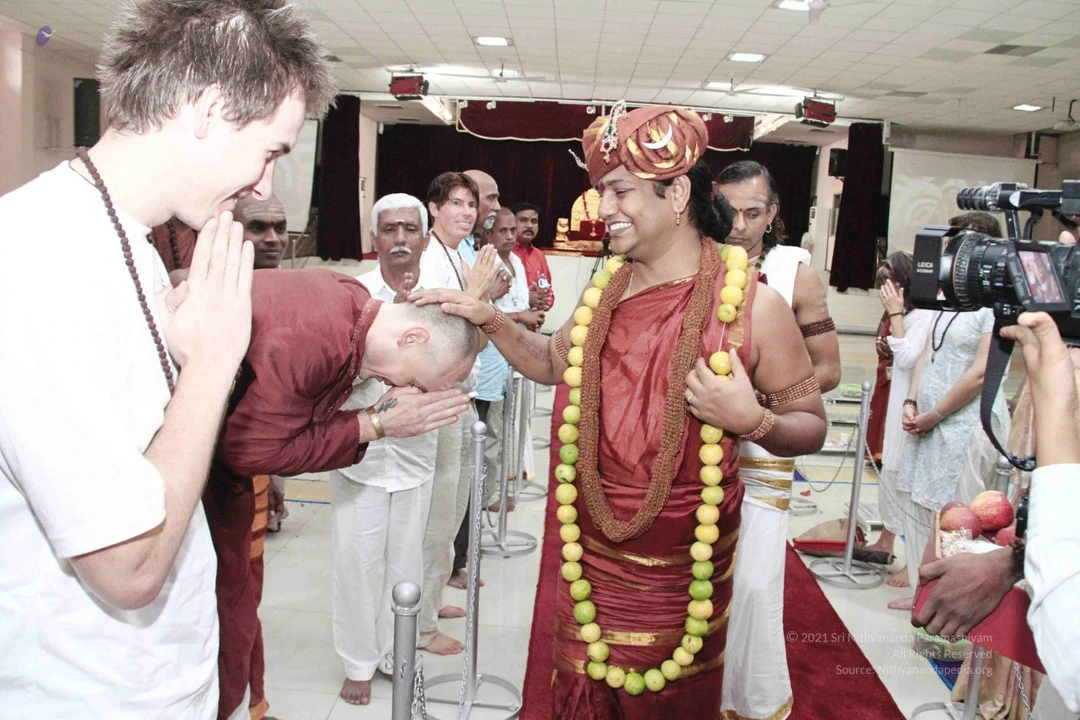
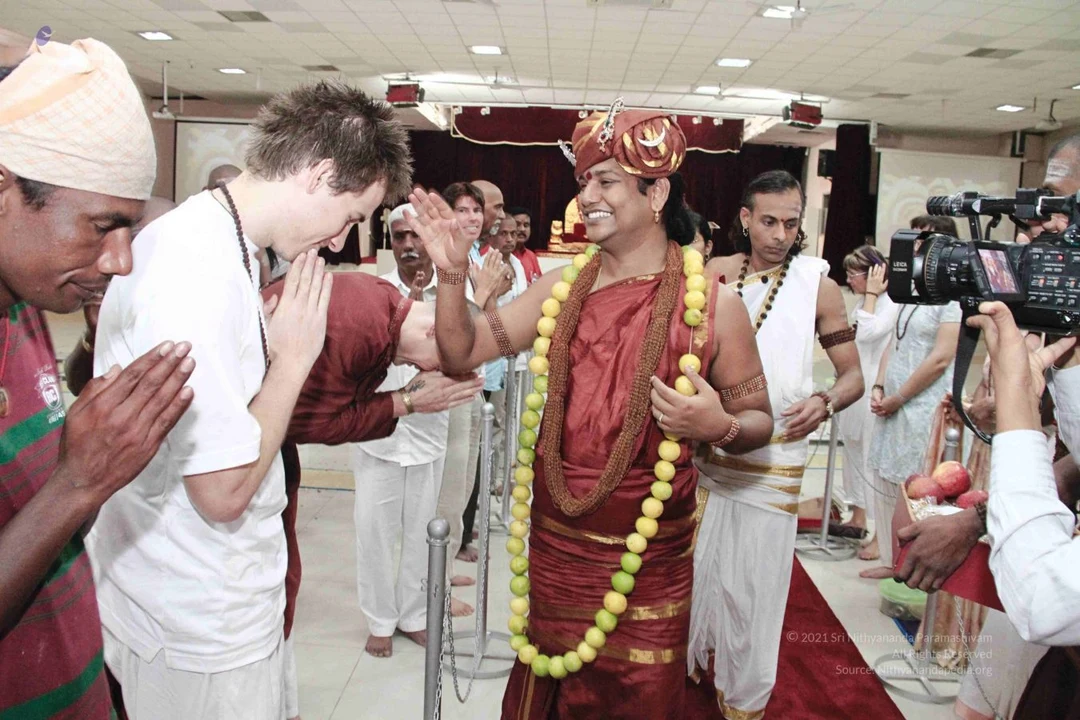
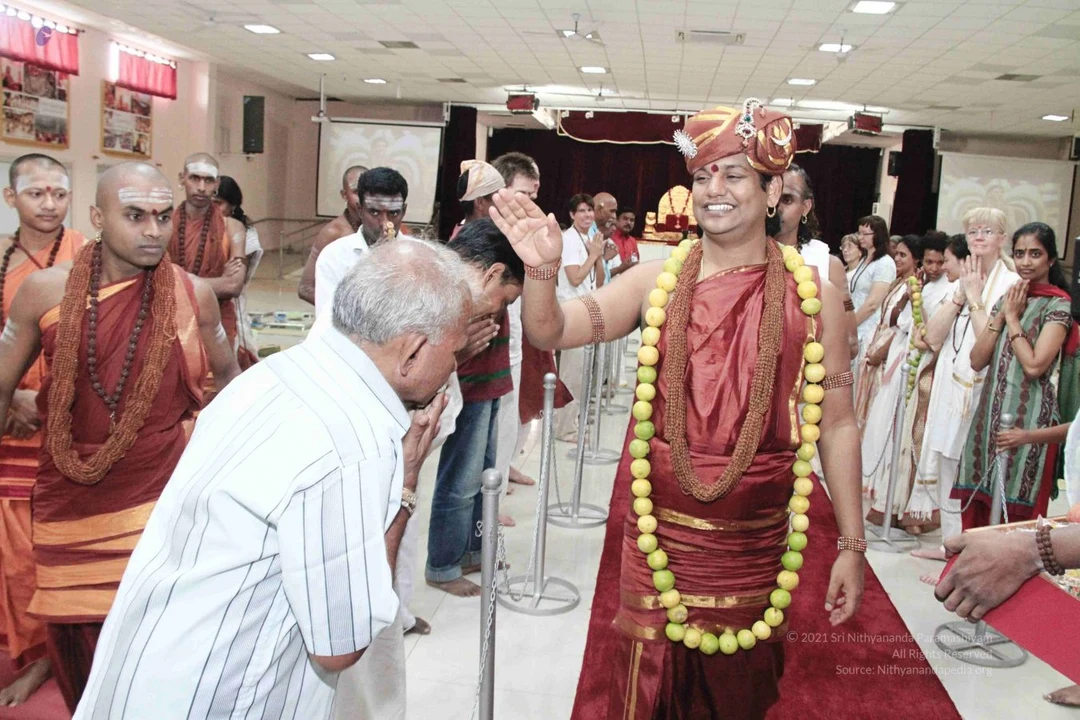
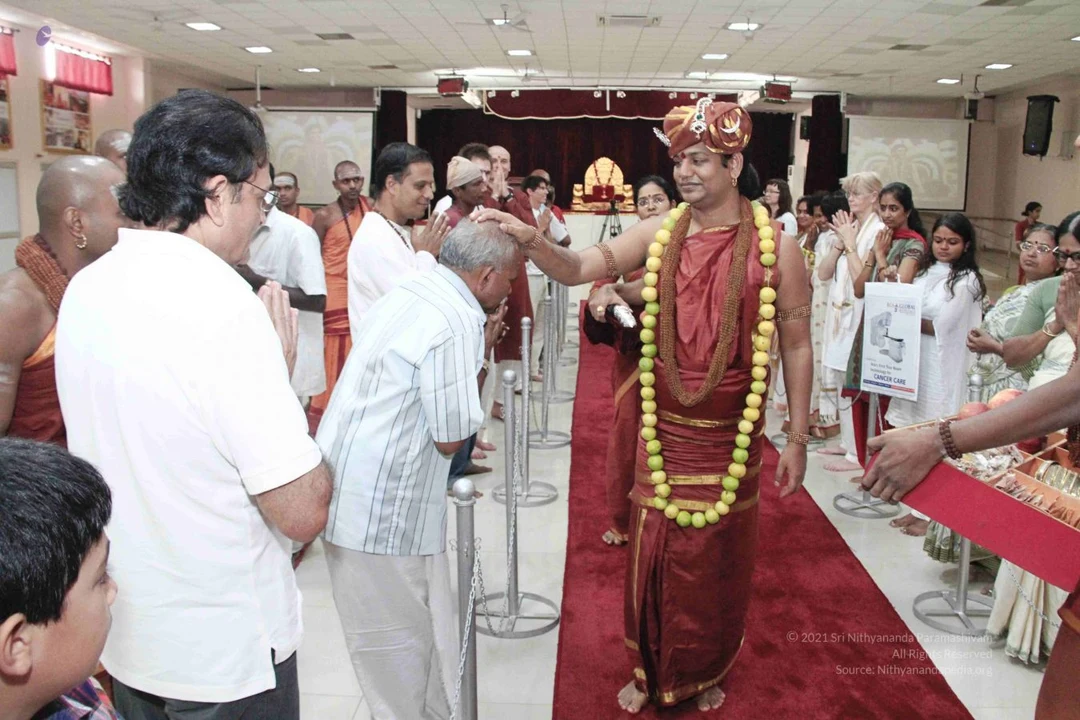
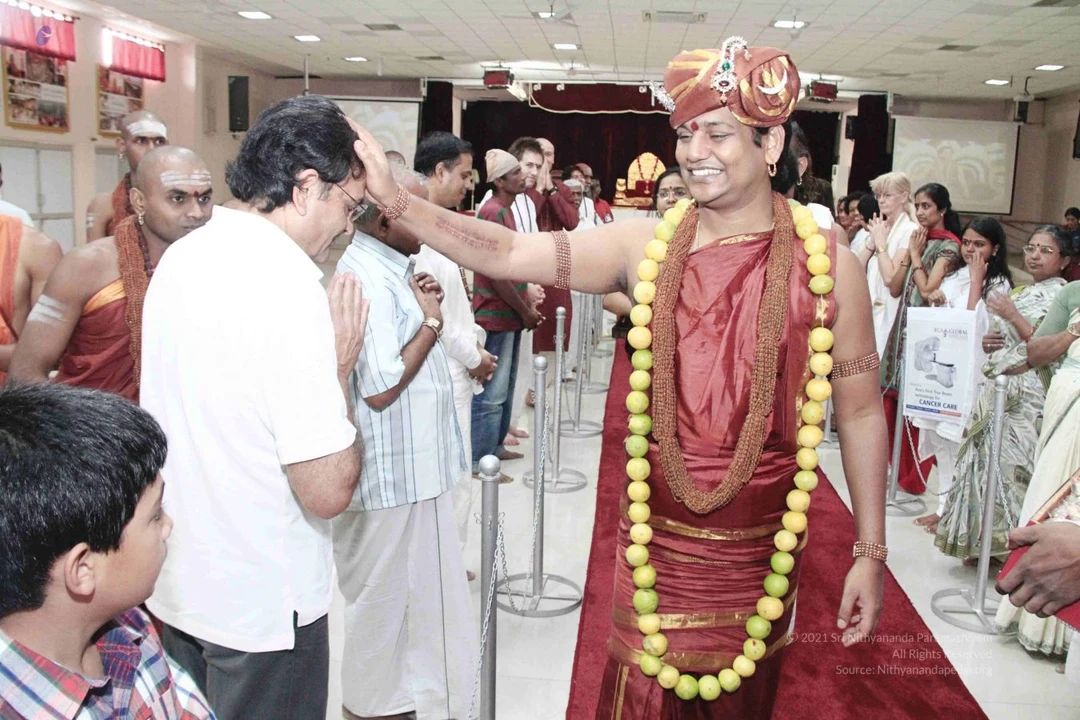
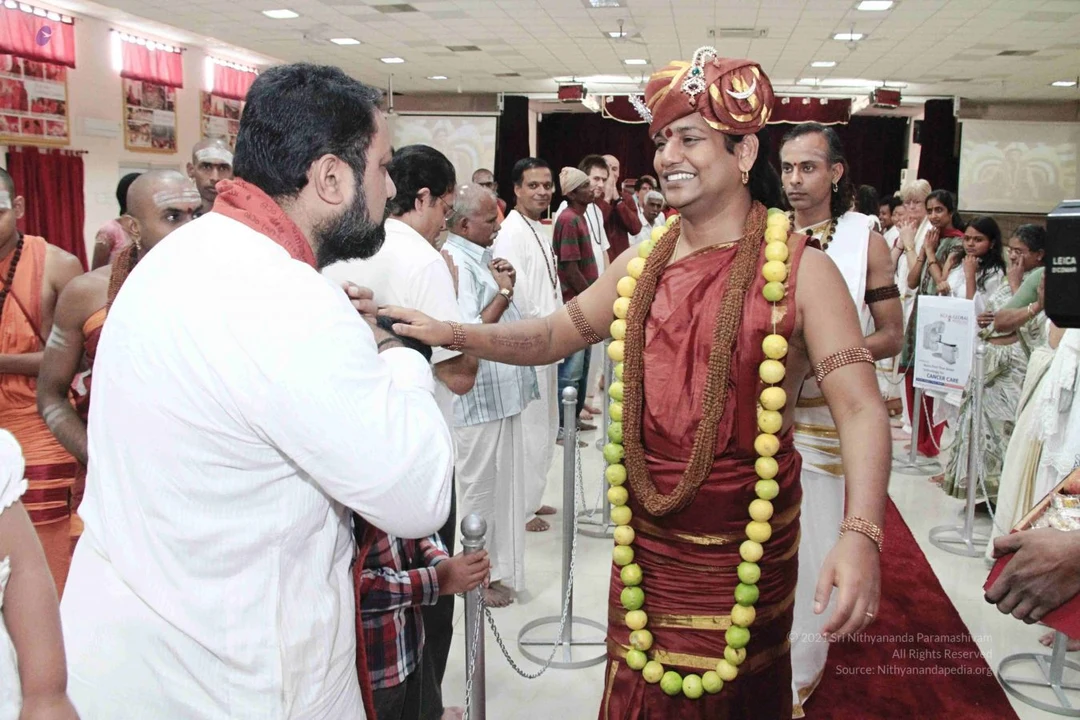
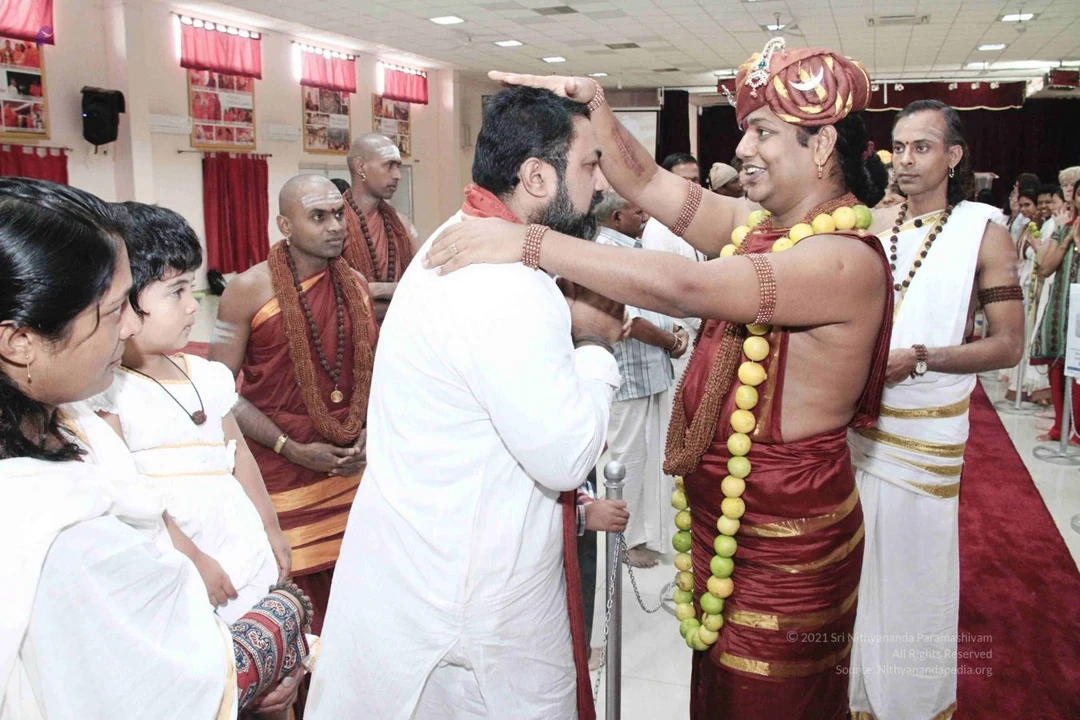
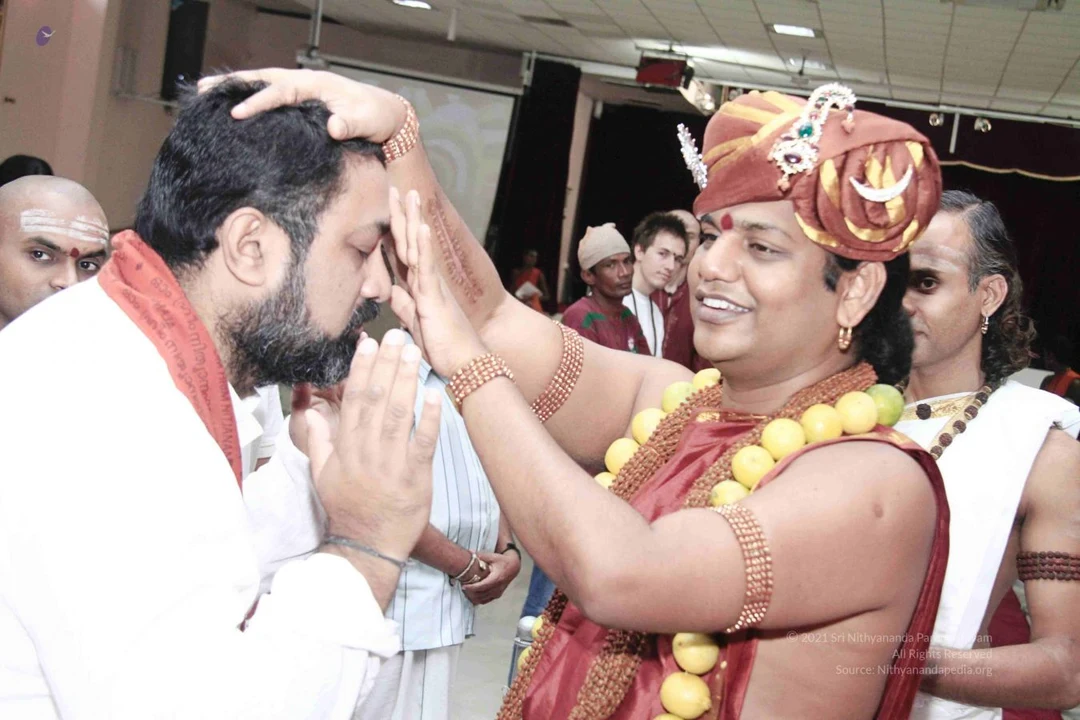
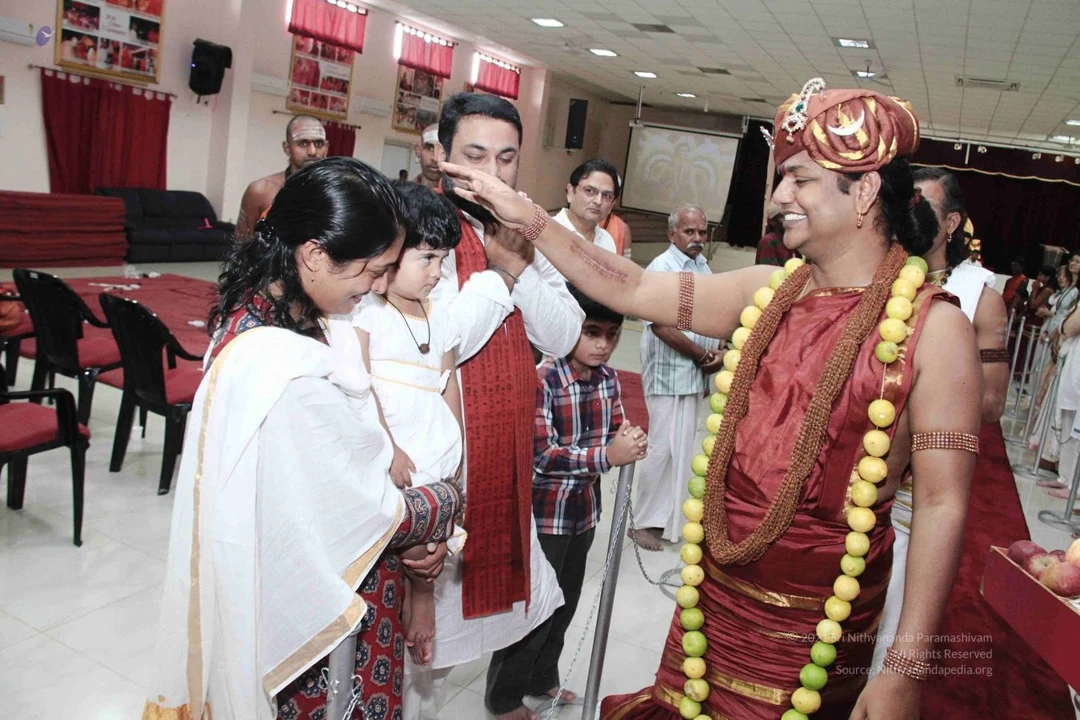
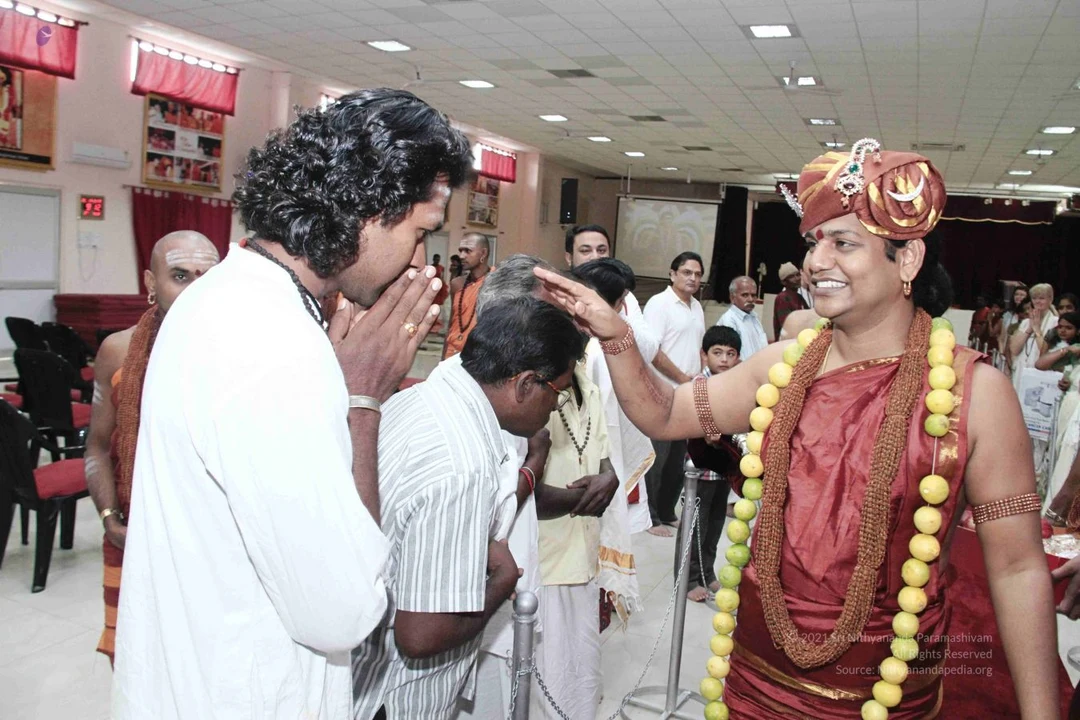
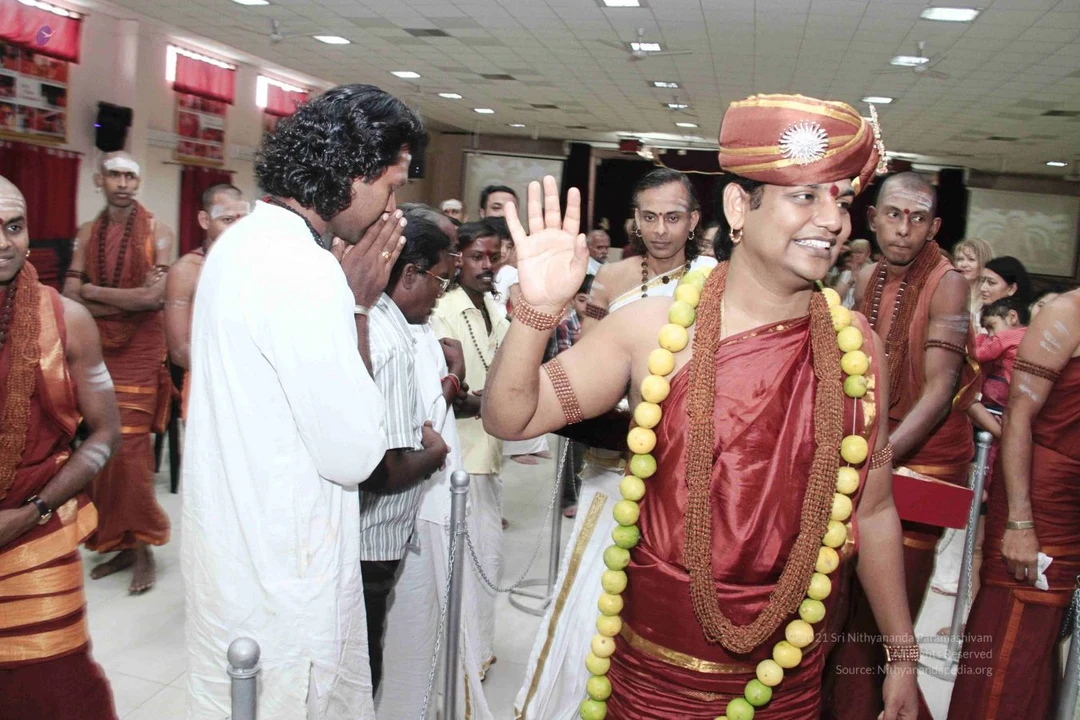
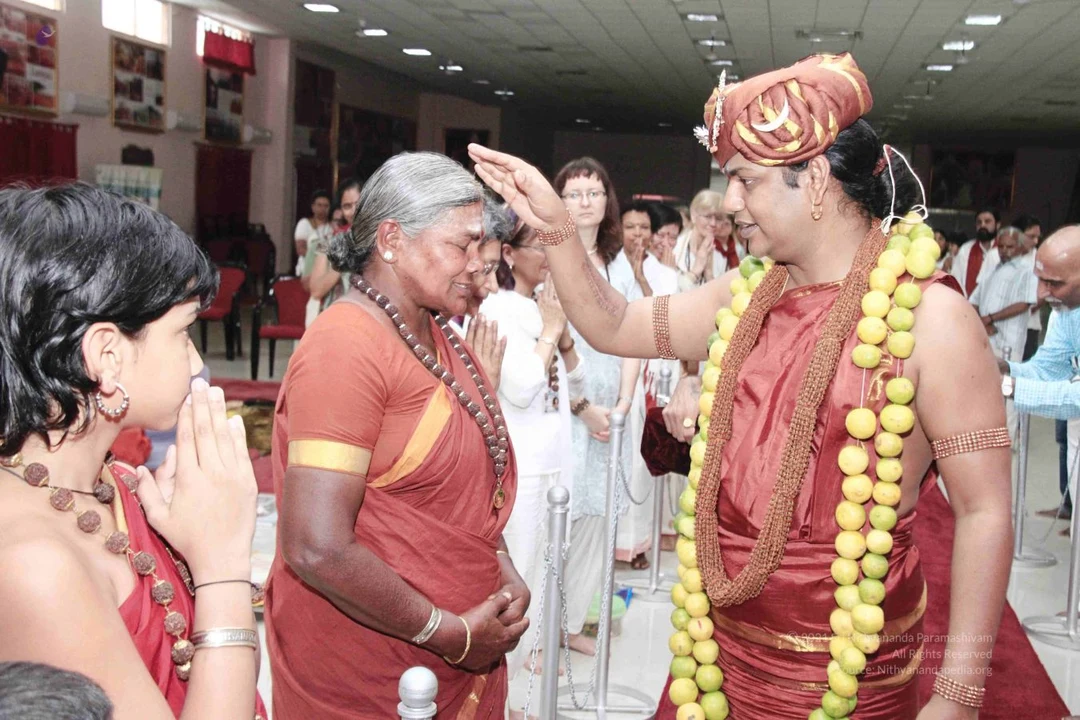
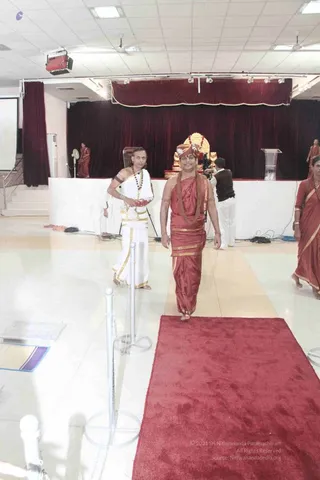
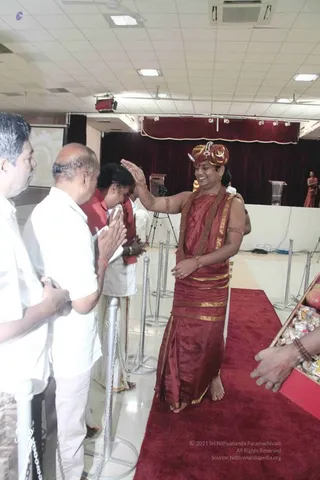
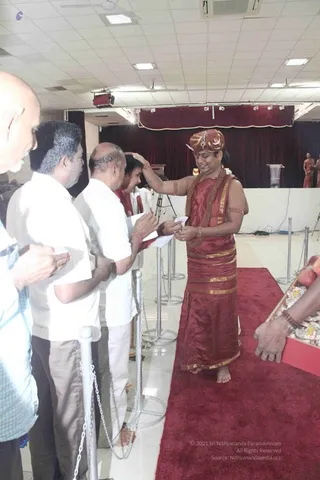
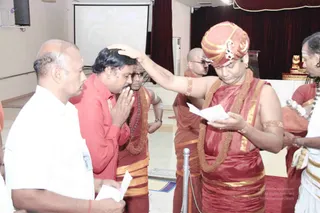
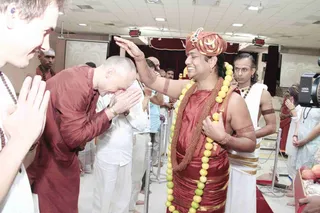
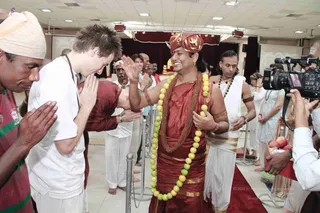
A photograph of an indoor hall with a red velvet backdrop and a golden throne-like seat on a raised stage. In the foreground, a man in a deep red-brown silk robe with gold borders, a matching turban and a long rudraksha-style bead garland walks barefoot along a red carpet runner. Beside him, a man in white dhoti and shawl with gold borders, wearing rudraksha beads, carries a red offering vessel. Women in red-brown saris stand near the stage and at the right edge, and a cameraman in dark clothing works near the throne. The white floor is lined with stanchions and chains.Photograph in an indoor hall with a red carpet runner and silver stanchions with chains. A smiling person in a deep red silk garment with gold borders and a red-and-gold turban with a crescent ornament raises a palm in blessing toward two men in white shirts who stand with hands pressed together in namaste. Another man in a red shirt and white dhoti bows with folded hands behind them. A red velvet stage backdrop and a lectern are visible at the back, with a robed figure near the stage. A tray of sweets and offerings sits at the lower right, held by a hand. The person in red wears a rudraksha-style bracelet and a beaded necklace with gold ornaments.Indoor hall with a red carpet runner and stanchions with chains. A figure in a maroon-red dhoti-style garment with gold-striped bands, a matching turban with gold ornament, rudraksha-style beaded necklaces and bangles stands on the carpet placing a hand on the head of a man in white shirt and trousers, who bows. Other devotees in white shirts wait in line holding small papers, and a tray of fruit and sweets sits at right. Stage with maroon drapes and a lectern appears behind, with two figures in orange-red robes at far right. a person: the standing figure in the red-gold turban and beaded malas, shown in a blessing gesture, is a.A photograph of an indoor ritual setting in an ashram hall. A man in a red-saffron turban and matching red-orange robe with a thick beaded necklace stands at the centre, his right hand resting on the head of a devotee who has his hands folded in namaskar. The devotee wears a red shirt and a dark beaded mala. A man in a white shirt on the left looks on and holds a folded paper, and another robed man with a bald head and rudraksha mala stands behind. A gold seated deity murti and a dark red curtain are visible in the background, with a projector screen on the wall.A photograph of a central figure in a red-maroon dhoti and matching shawl, wearing a red and gold turban with a crescent ornament and a long rudraksha-style bead garland of green-yellow fruit beads, smiling and raising his right hand in blessing over a bowed, bald man in a maroon kurta. The bowed man has his palms joined and forehead lowered toward the blessing hand. Nearby, a figure in white dhoti with a silver-grey vest stands beside a red-garbed attendant, and a man in white with rudraksha malas kneels or stands in the background. A trolley with fruit sits at the lower right, and a video camera is visible at the right edge. Hall with ceiling fans, a projection screen and maroon drapes in the background. The central turbaned figure matches the Swamiji (probable) cues: a turban, ornate red-and-gold clothing and a long ceremonial garland, and he is physically present, giving a blessing.A photograph in an indoor hall with a suspended ceiling, fluorescent lights and a red curtain backdrop. A central figure in a maroon-red ceremonial robe with gold trim, a matching red and gold turban with a crescent ornament, a long rudraksha-style bead mala and a large garland of yellow-green fruit-like beads smiles with palms raised in greeting. A young man in a white shirt with a bead necklace stands with hands folded in anjali, bowing toward the central figure, while a man in a red and green shirt beside him also presses palms together. Behind, a man in white dhoti-style clothing and another in white with bead necklaces stand among devotees. A cameraman with a professional video camera films on the right, and a tray of apples sits near the red carpet at the lower right.

FINAL-BLESSING
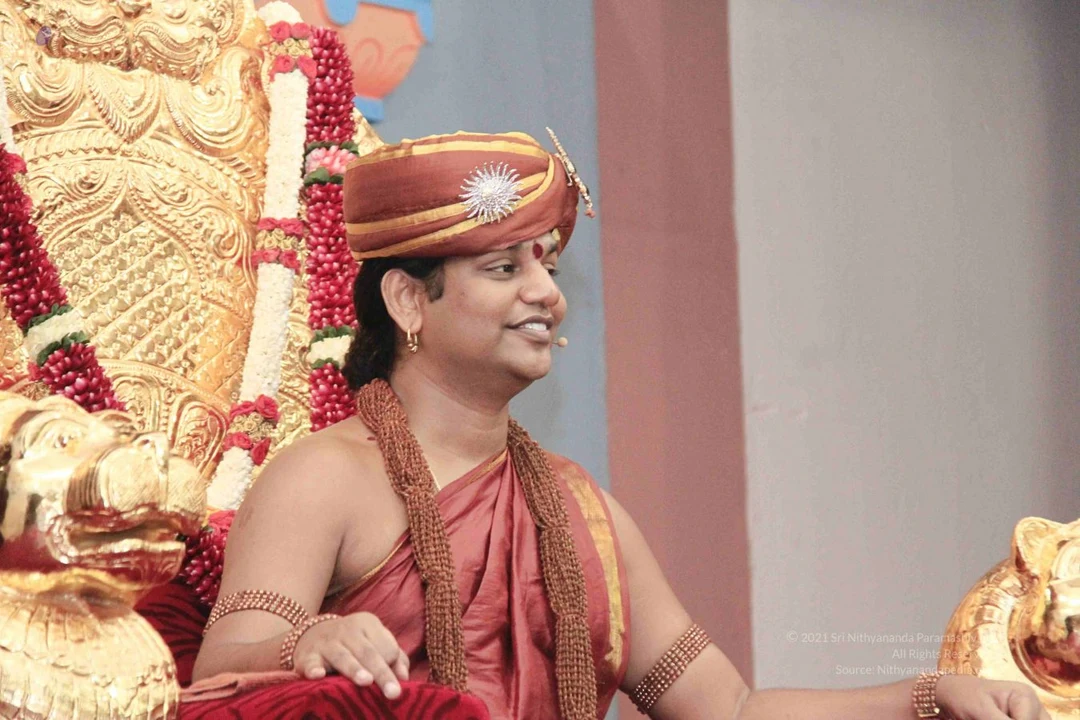
4 photosSource gallery
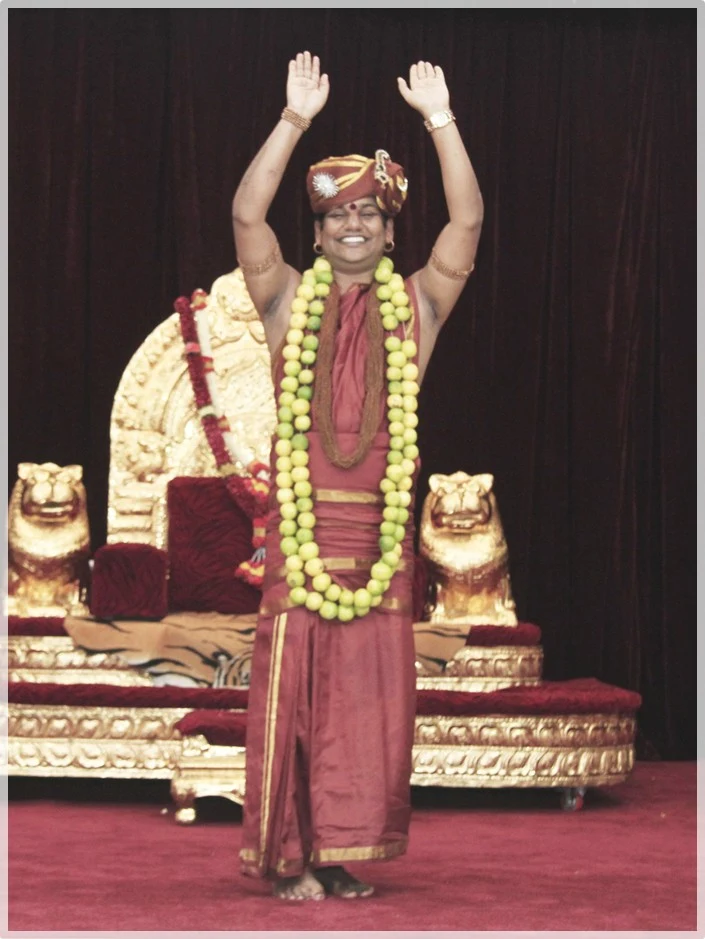
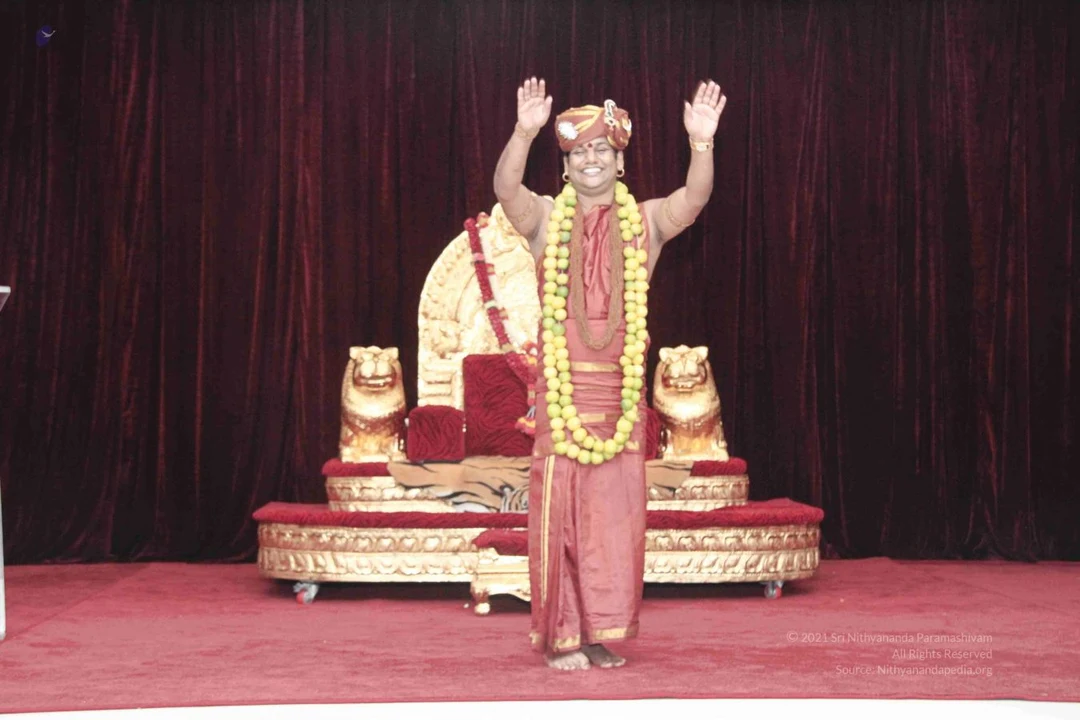
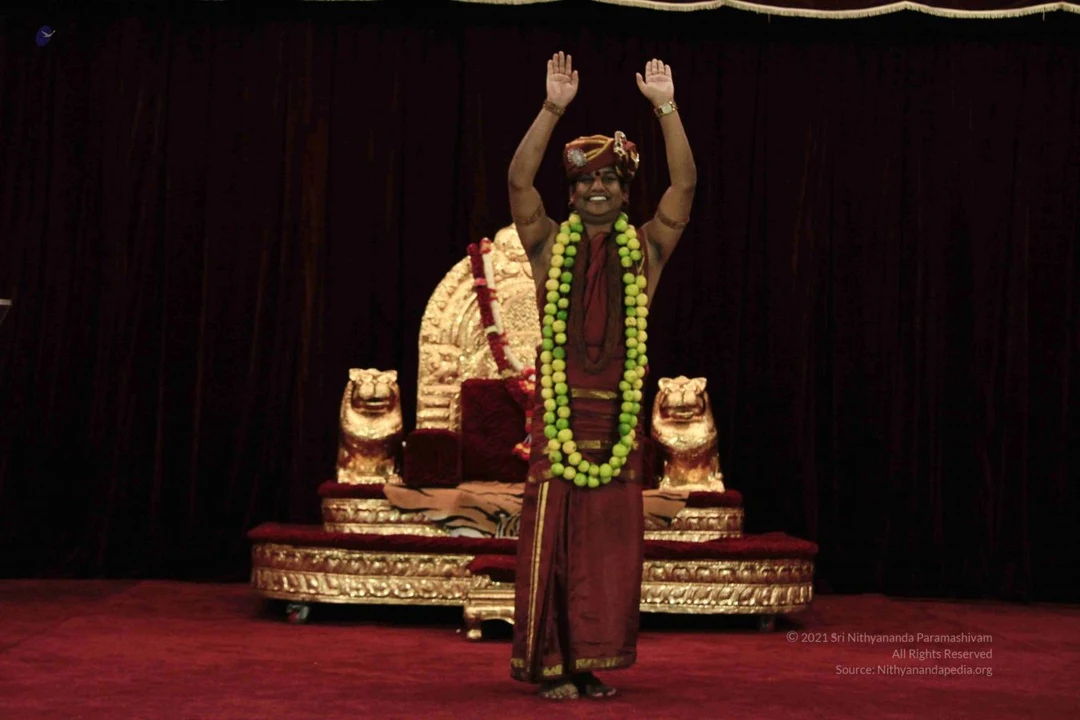
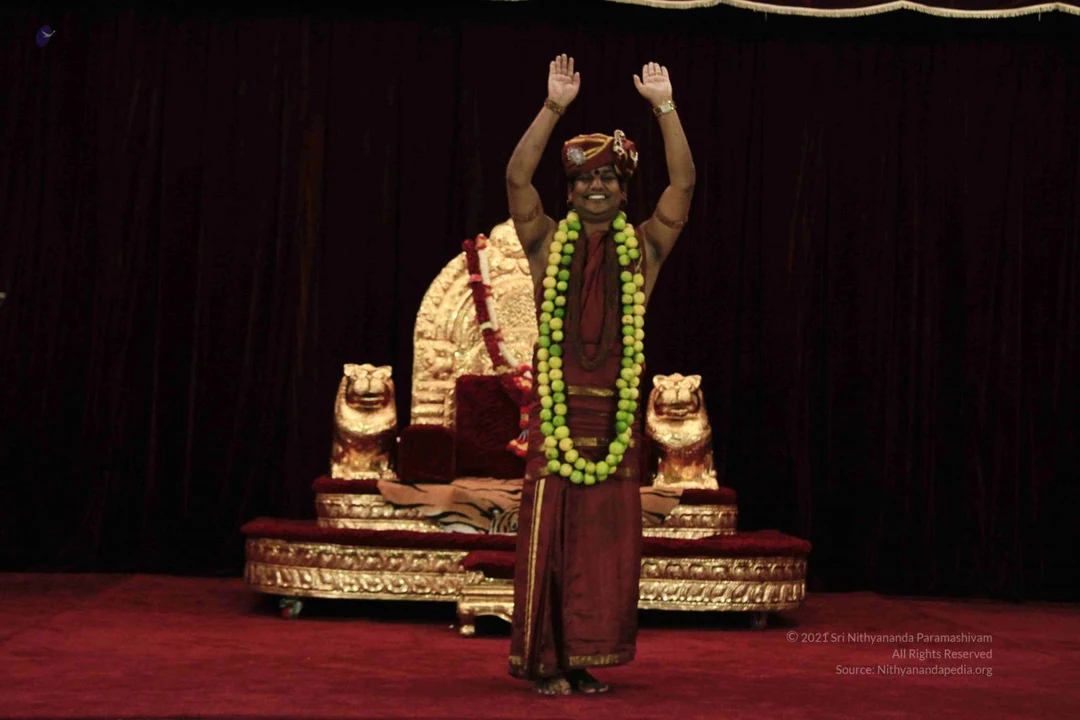
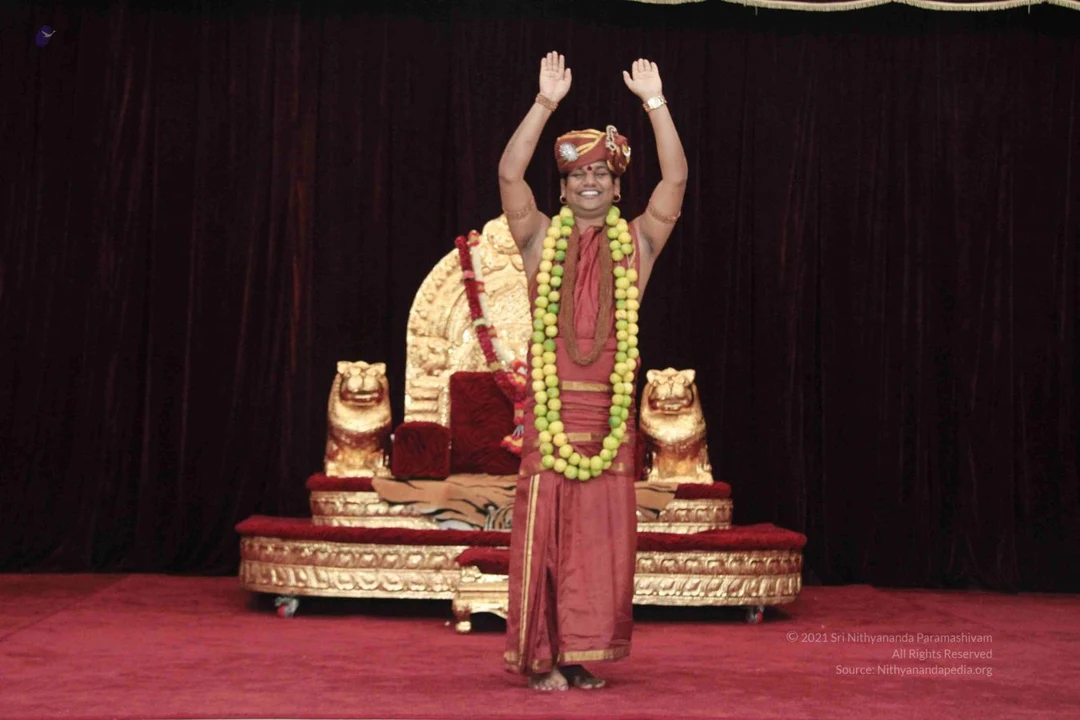
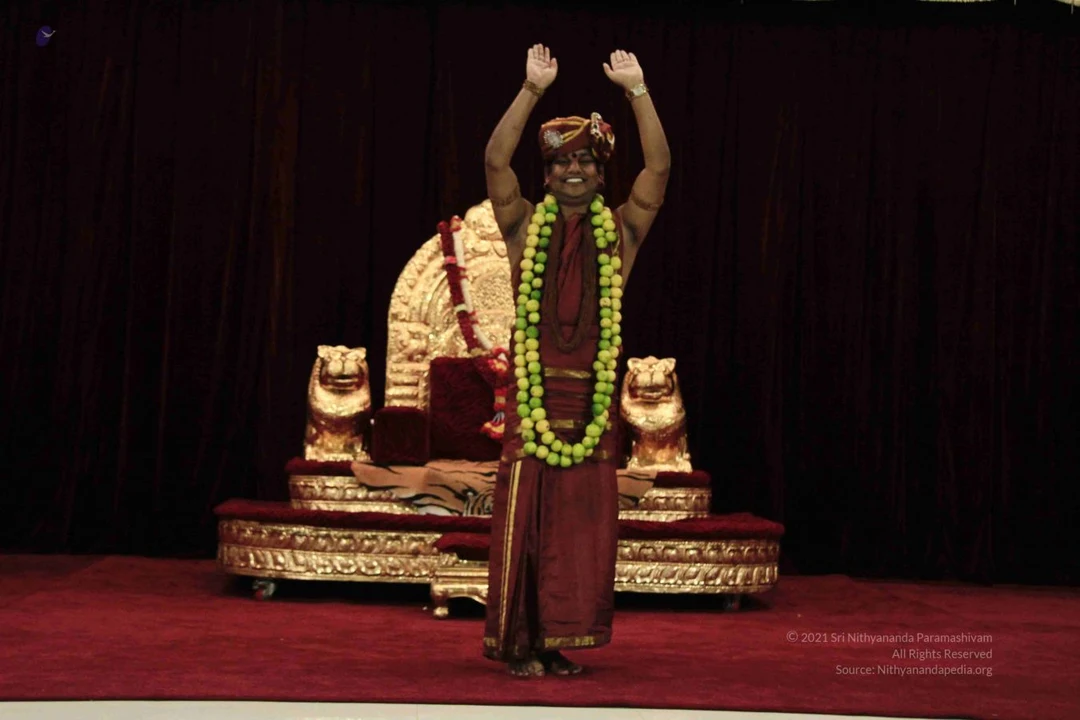
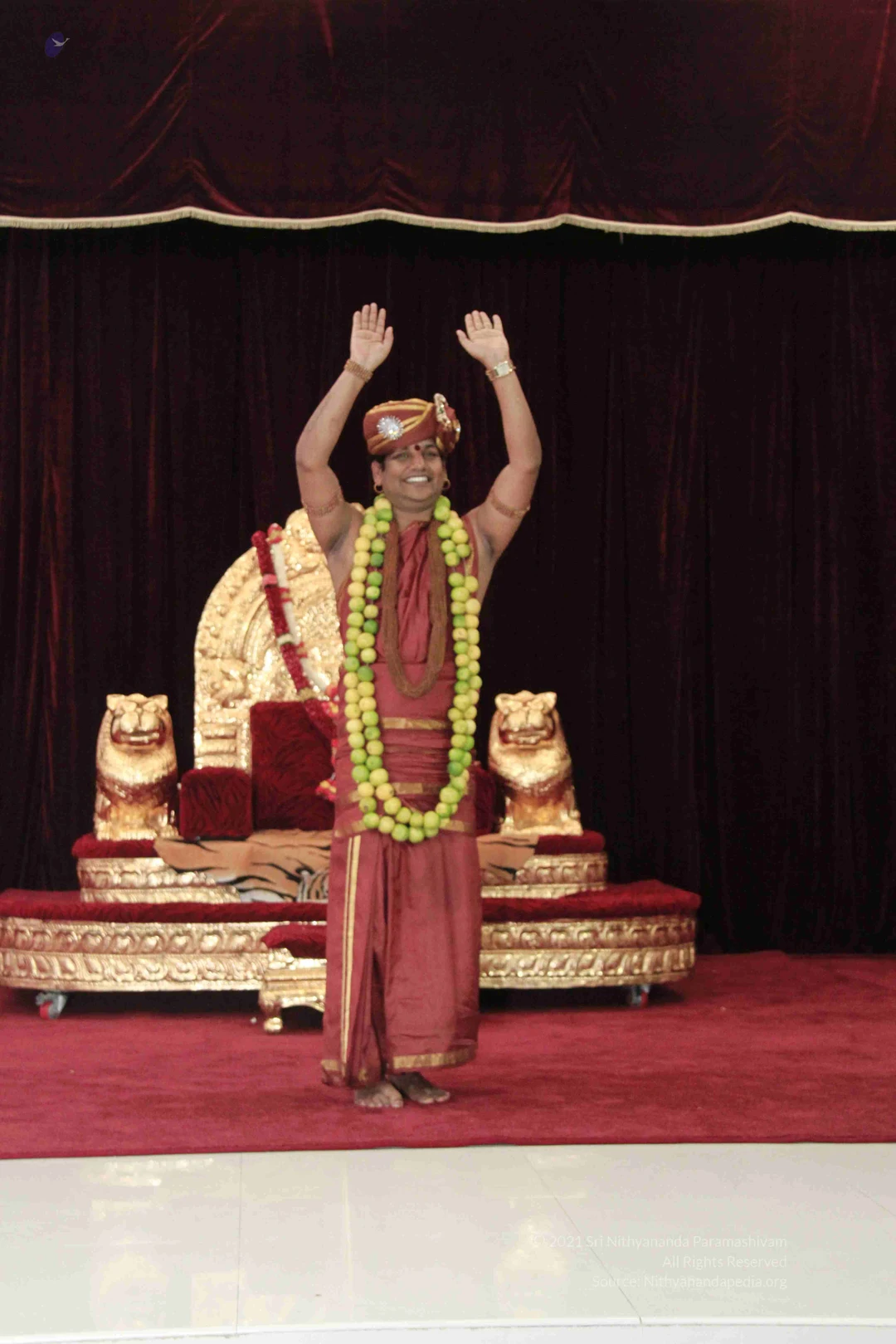
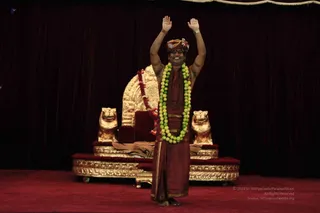
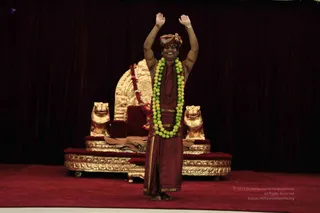
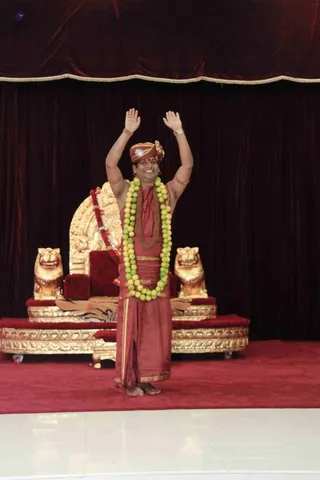
A standing man on a red carpet raises both arms overhead in an expressive gesture on a stage. He wears a maroon and orange turban with a decorative brooch, a long green bead garland, and a maroon robe with gold border, with a red shawl draped over the shoulders. Behind him stands an ornate gold throne with carved lions at its arms, backed by dark red drapery and a red garland draped over the seat. The setting resembles a satsang stage. a person cues are not sufficiently distinctive here, so the person is described by role.A standing man in a maroon and red sannyasi robe with a gold-bordered dhoti stands barefoot on a red carpeted stage, arms raised high in greeting with a smile. He wears a red and gold turban, bangles, a wristwatch, and a long green and yellow bead garland, with rudraksha beads around his neck. Behind him is an ornate gold throne with lion-shaped armrests and a gold backrest, flanked by red velvet drapes and a red cushion, with a red and white flower garland draped over the throne.A photograph of a man standing alone on a red carpeted stage before a golden throne with carved lion figures and a gold arched back, against dark maroon drapes. He raises both arms overhead, smiling, wearing a maroon turban, a long green-bead garland, a rudraksha mala and maroon draped robes with gold trim. A red and white floral garland hangs on the throne's back.A man stands on a red carpeted stage with both arms raised and a smile, wearing a maroon-red turban with a jewelled ornament, a red-maroon robe draped over one shoulder and tied at the waist, and a long green-and-yellow bead garland with a rudraksha-style mala at the chest. Behind him is an ornate gold throne with carved backrest and two gold lion figures on the armrests, cushioned in red, set before dark red velvet drapery with a gold fringe. He wears bangles and a wristwatch and stands barefoot.

NITHYA-DHARMAM-THANTHI-TV-SHOW
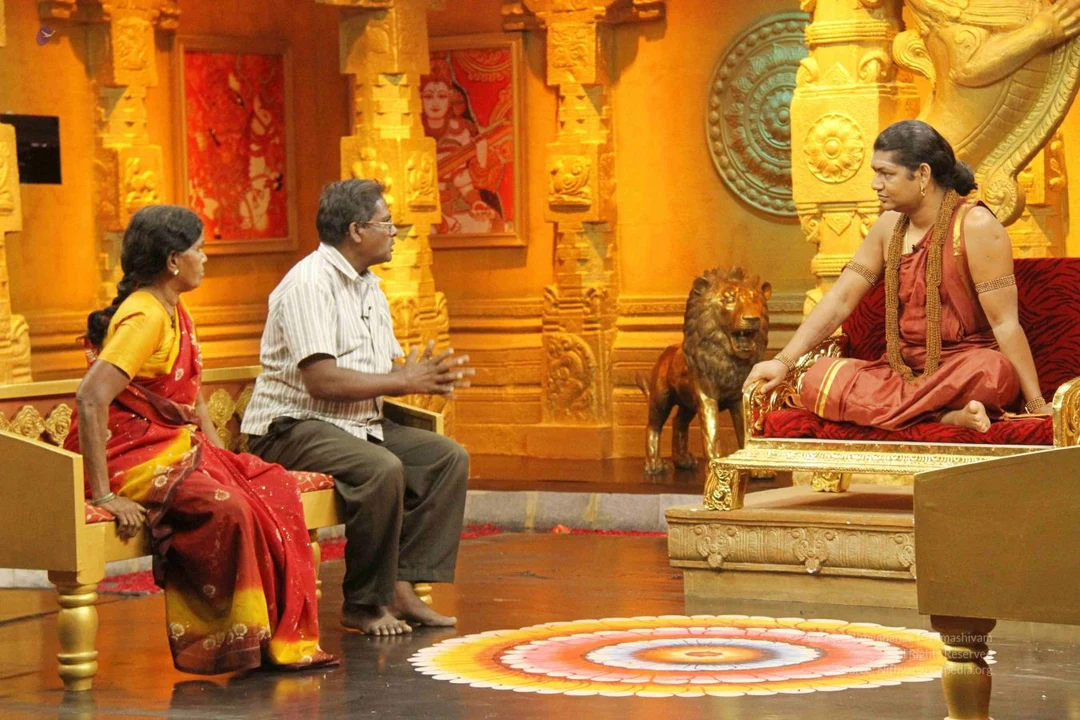
59 photosSource gallery
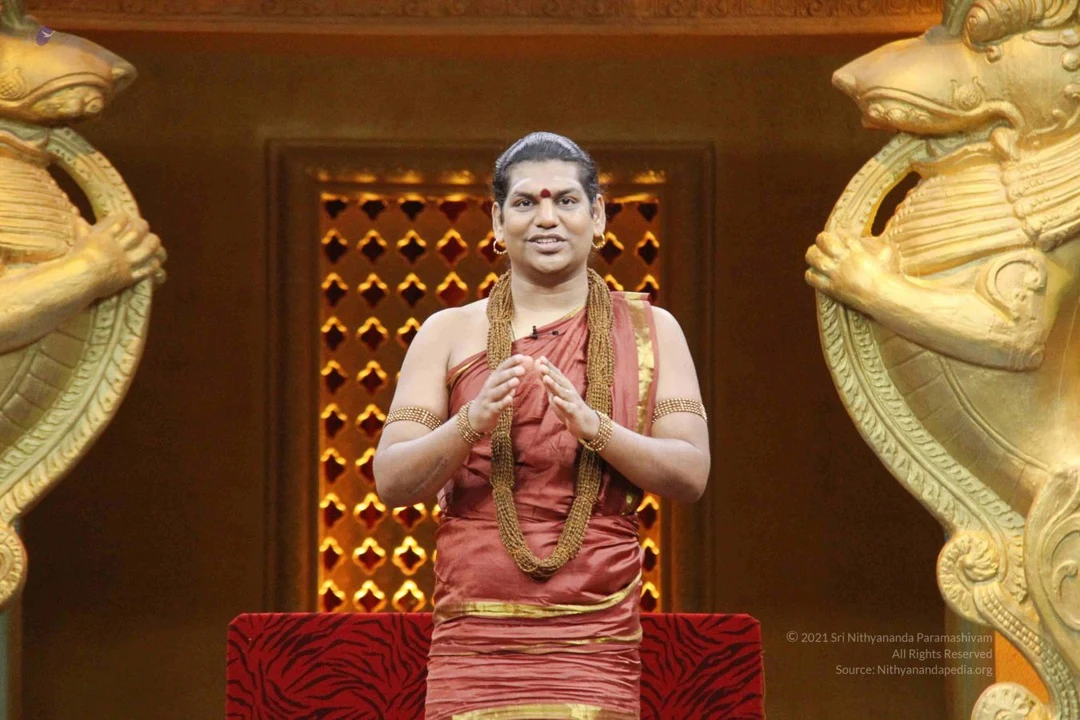
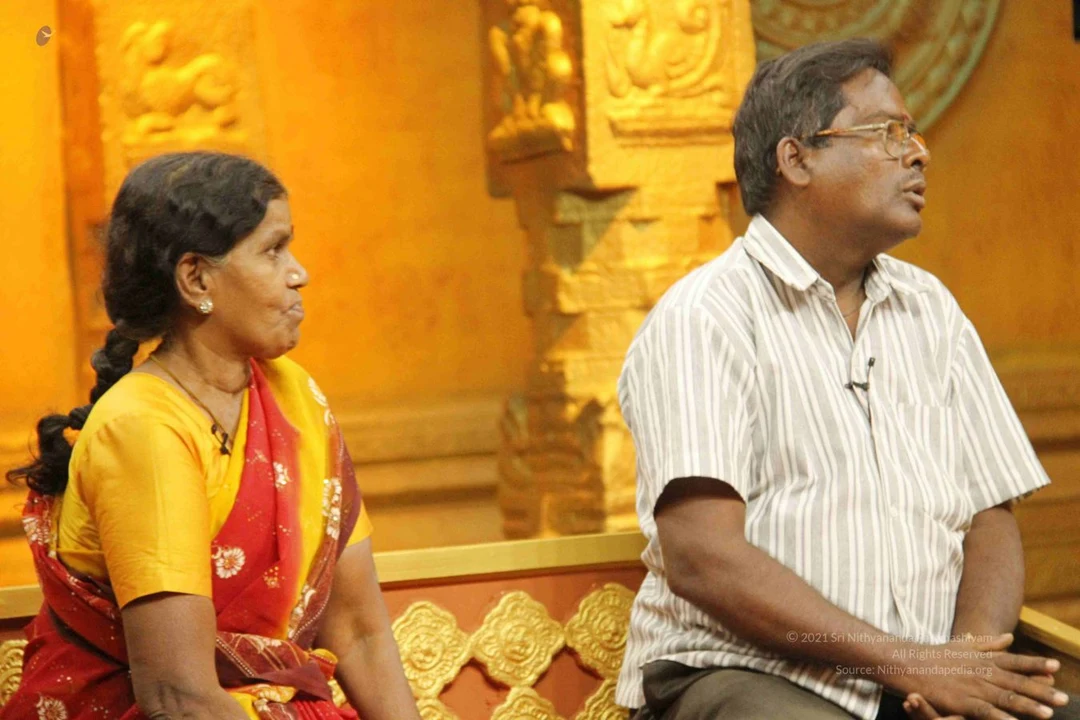
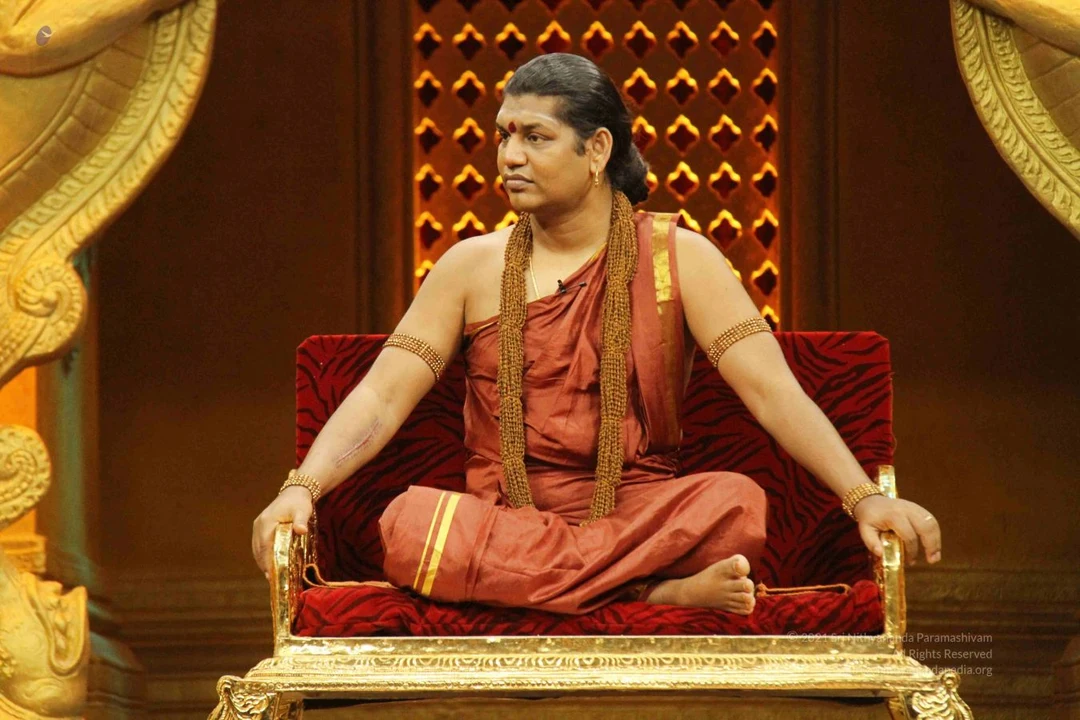
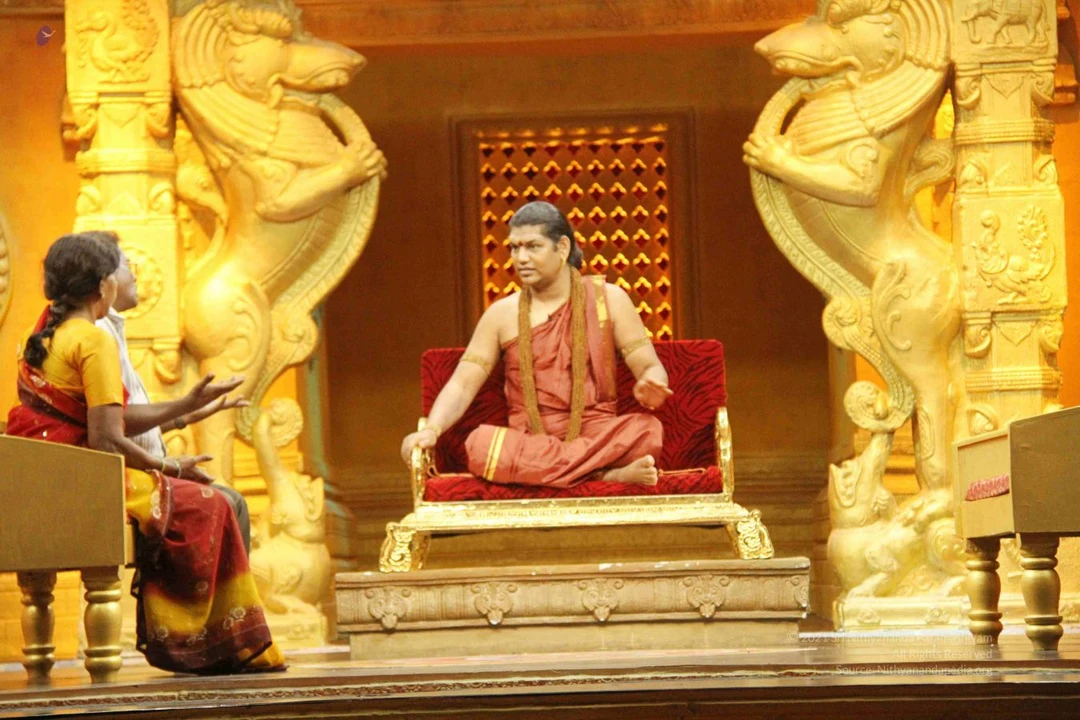
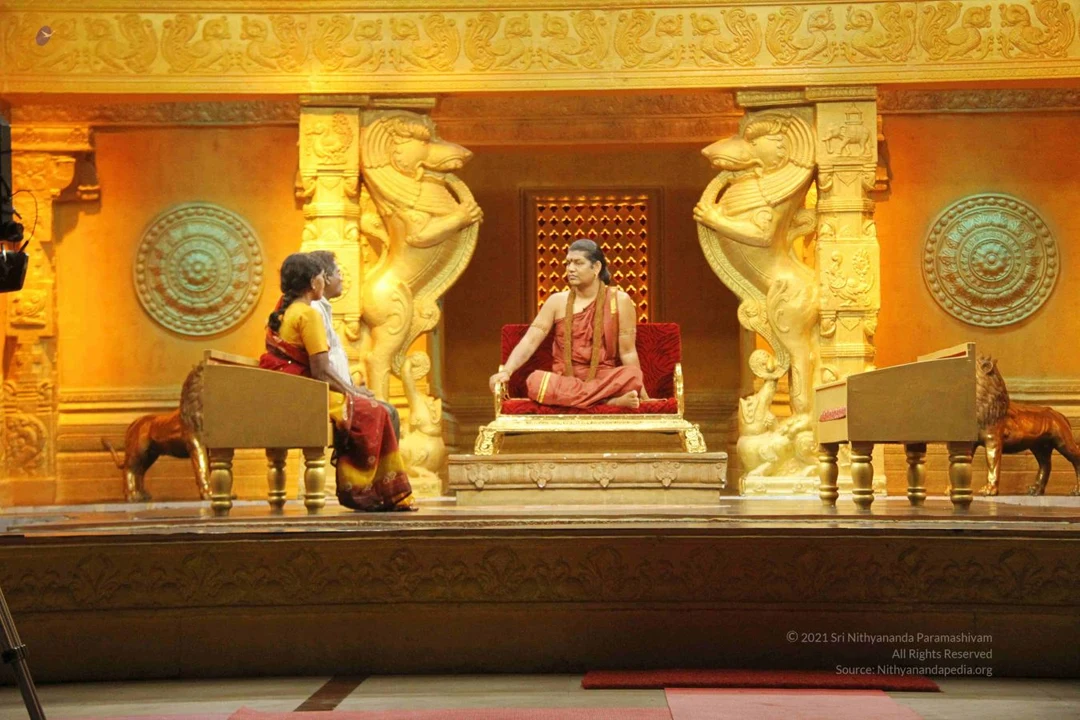
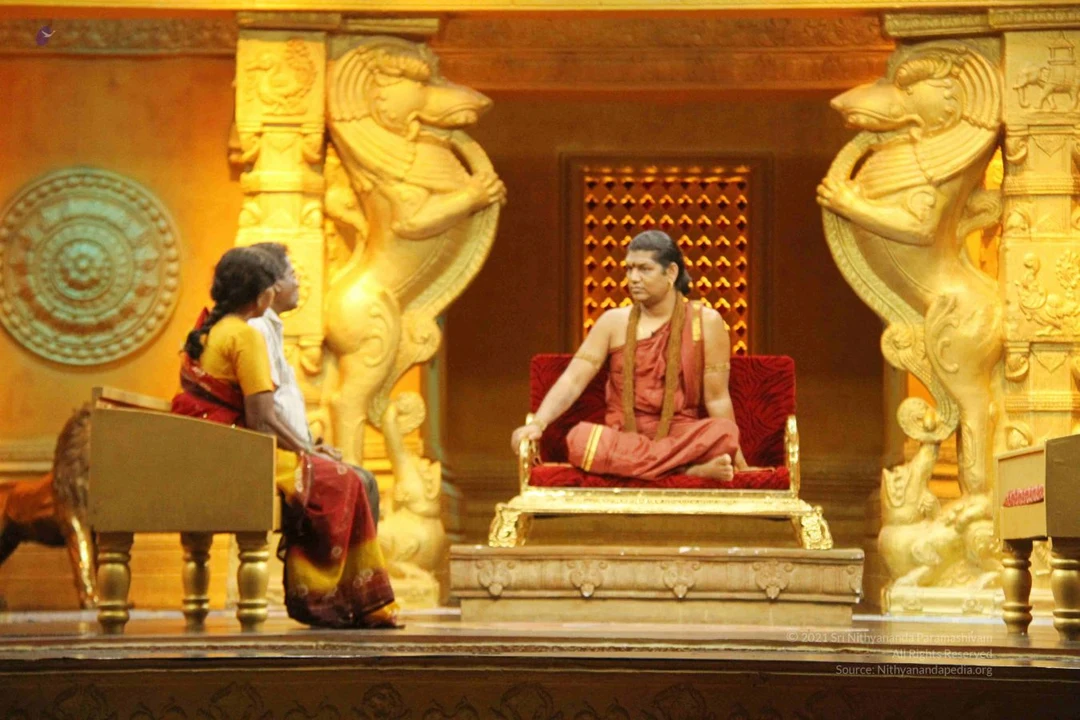
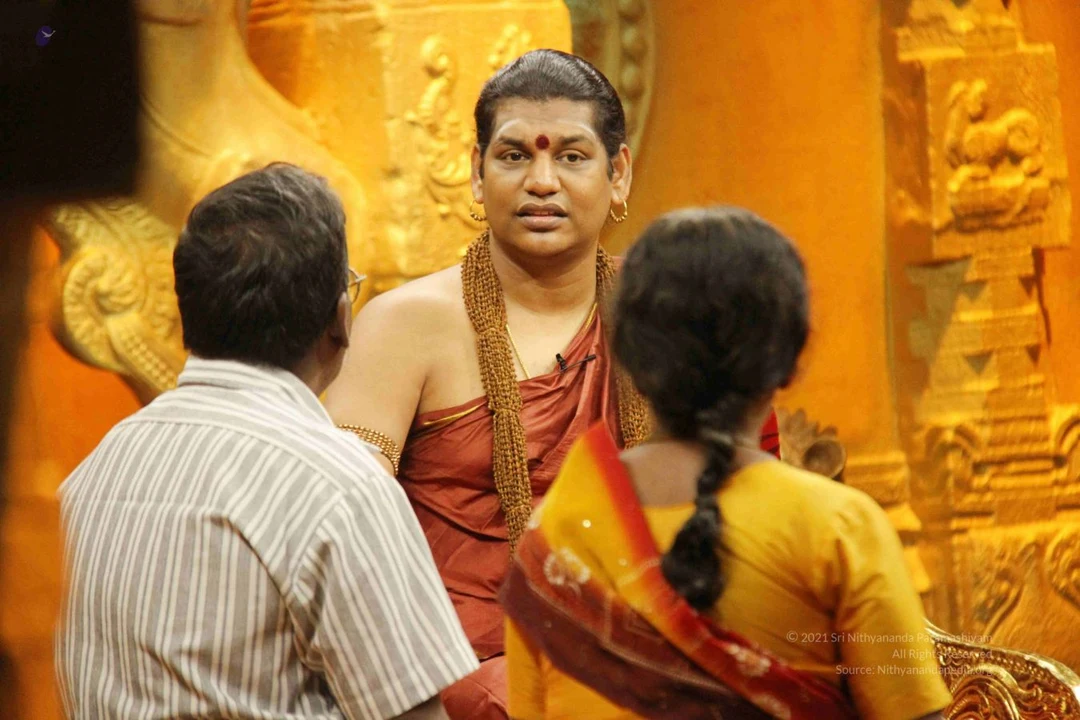
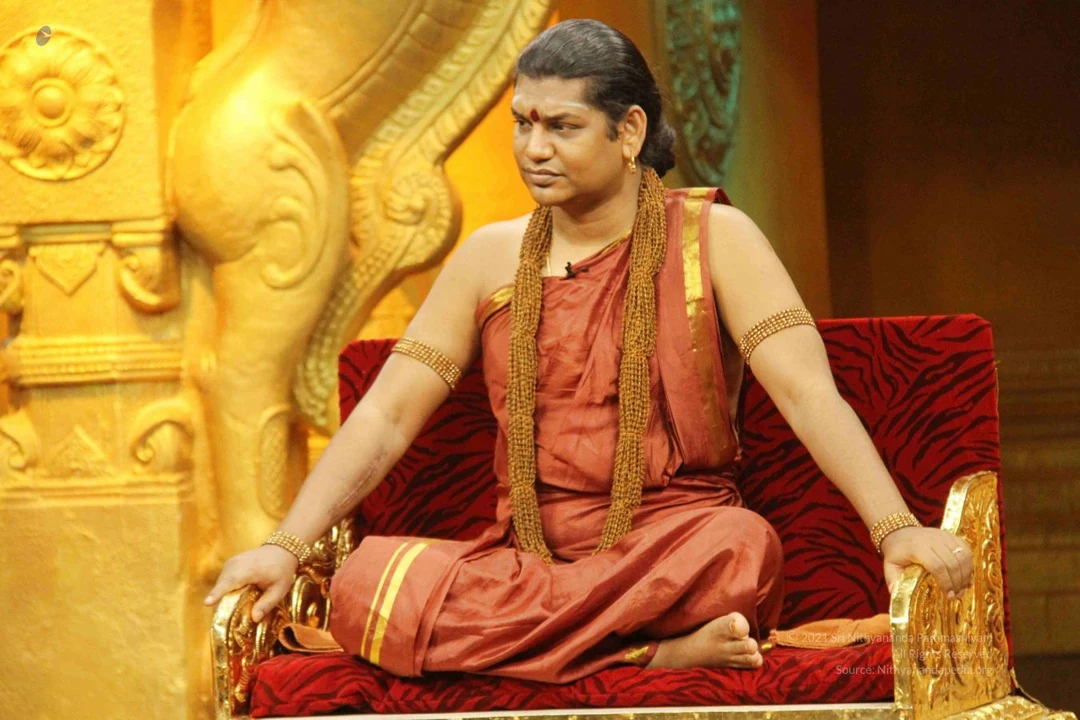
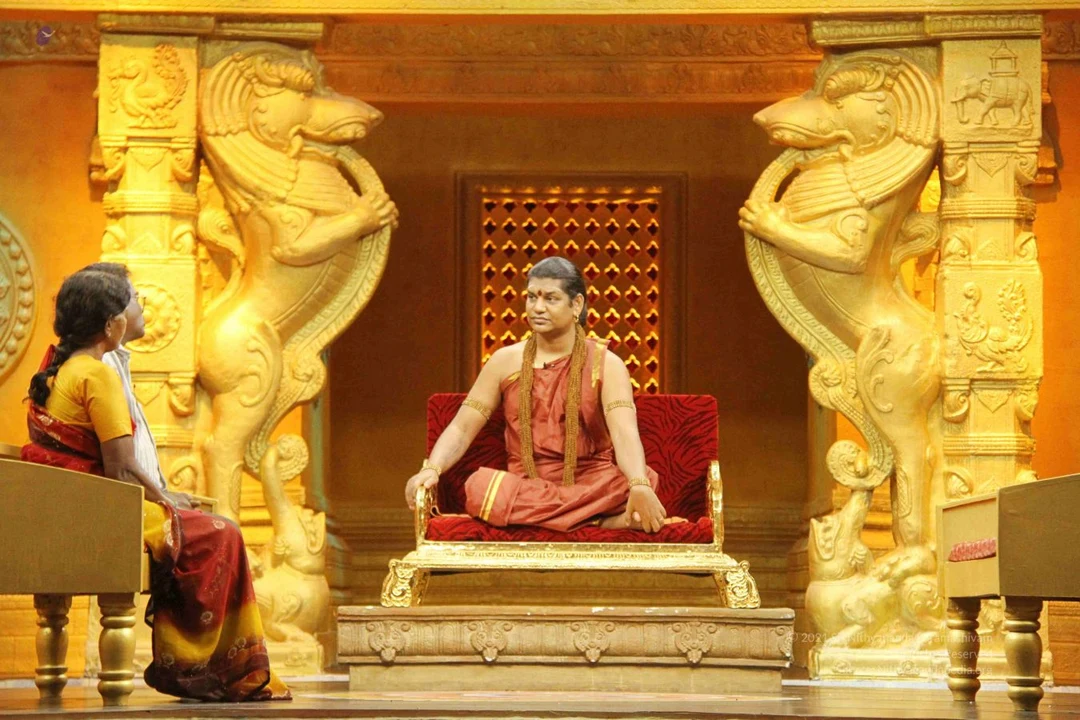
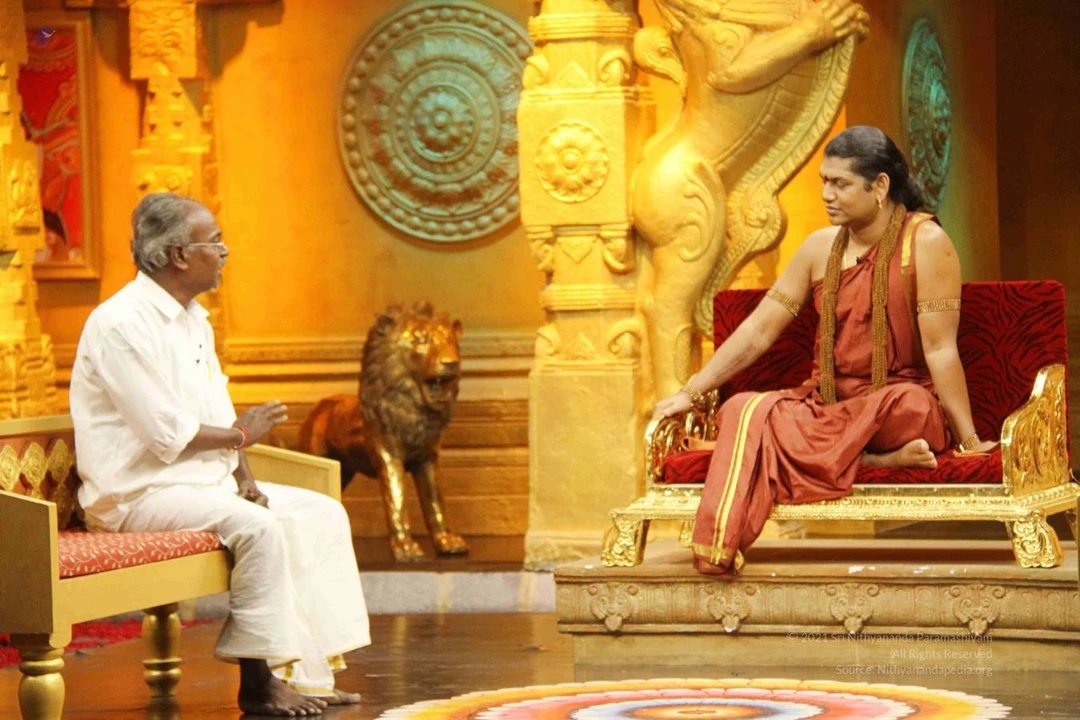
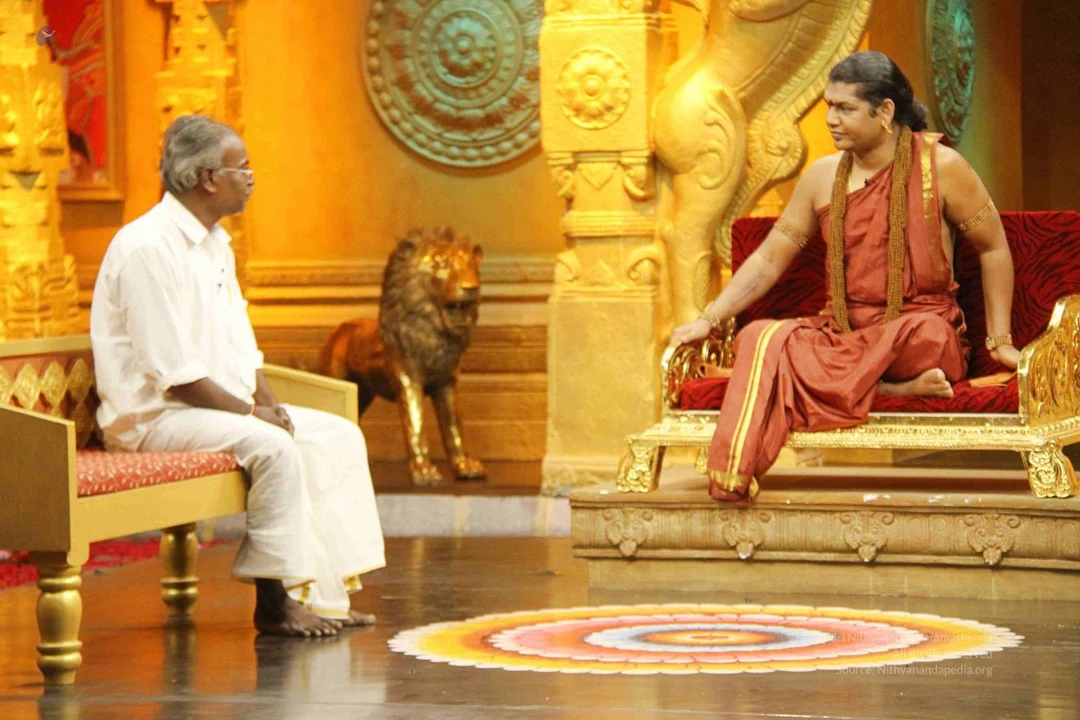
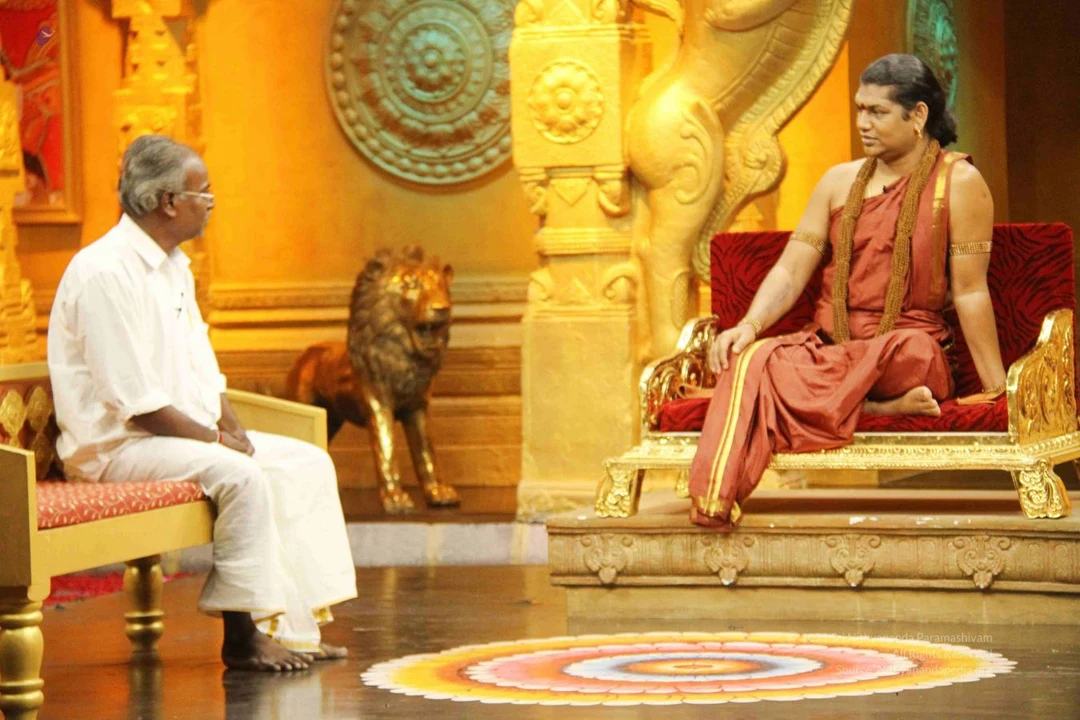
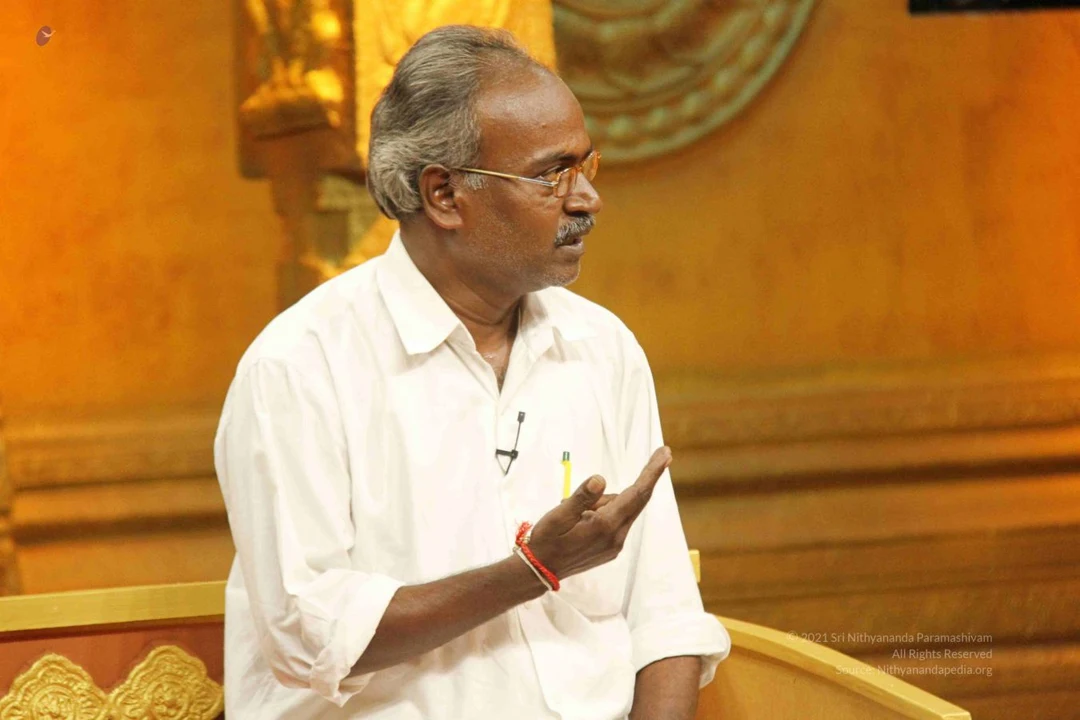
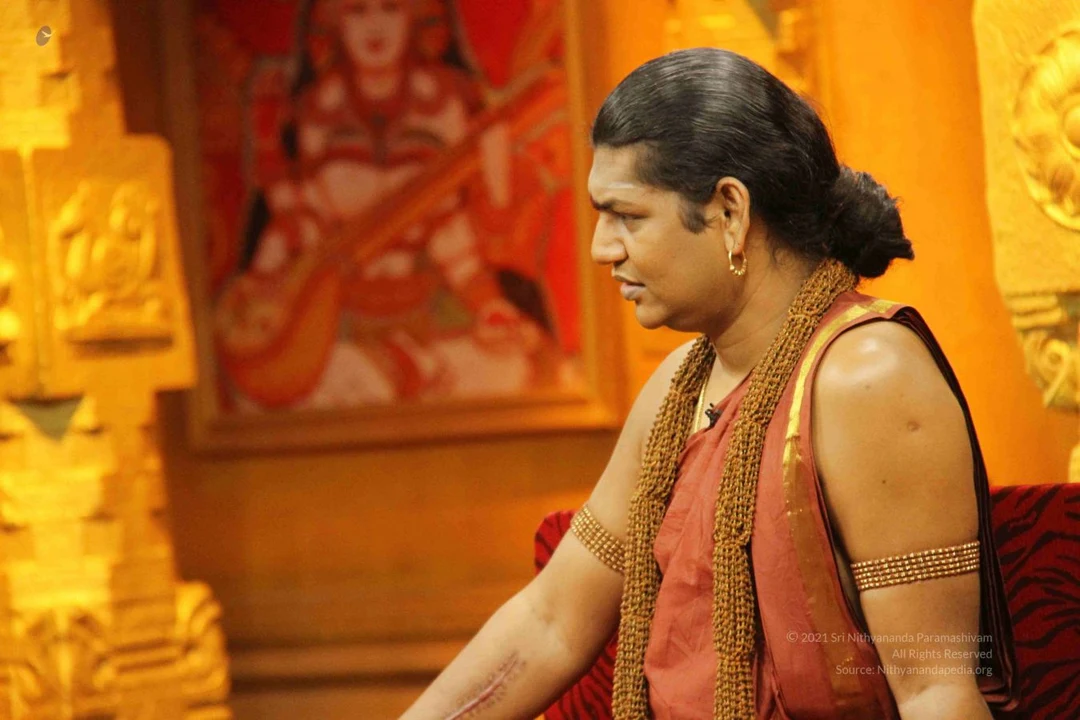
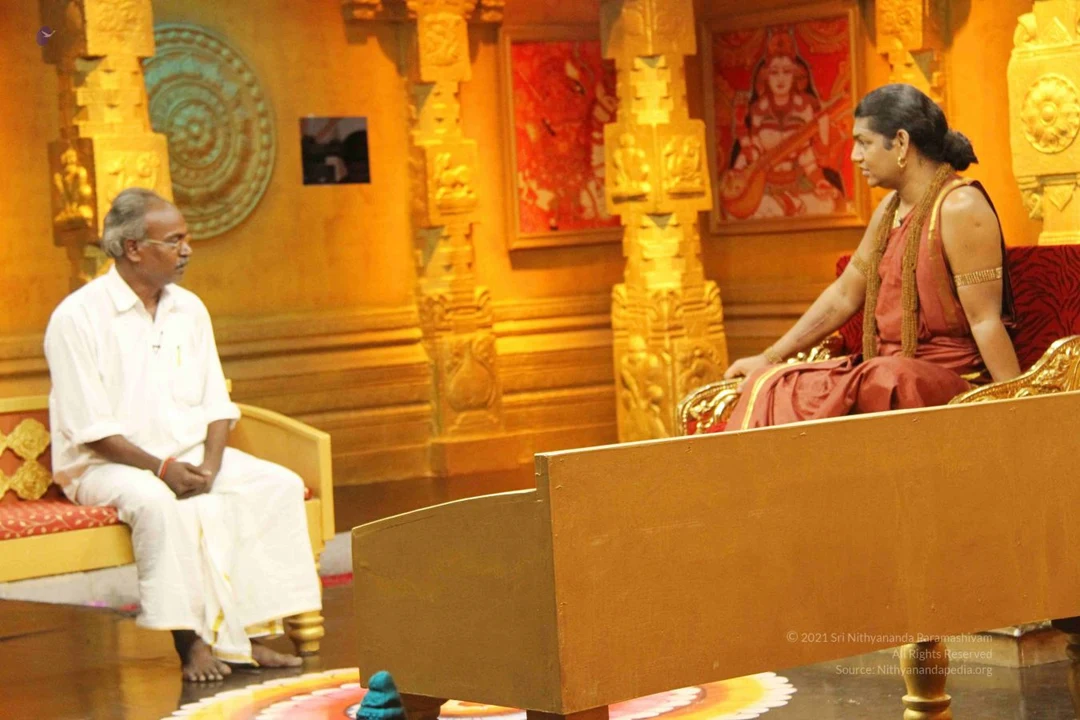
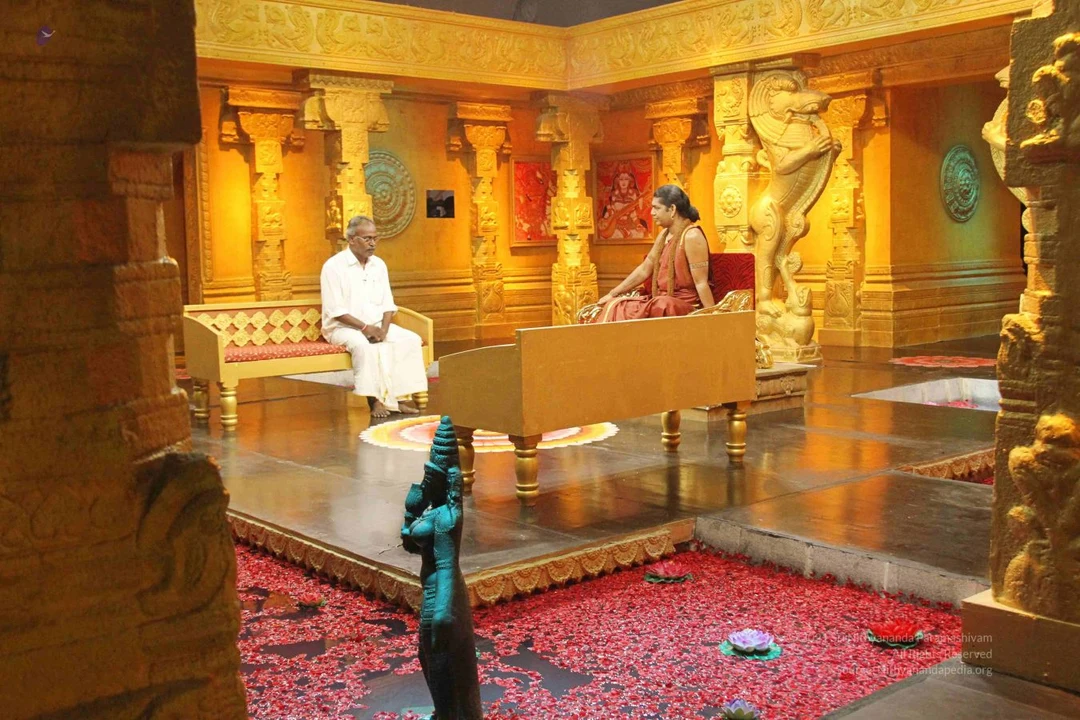
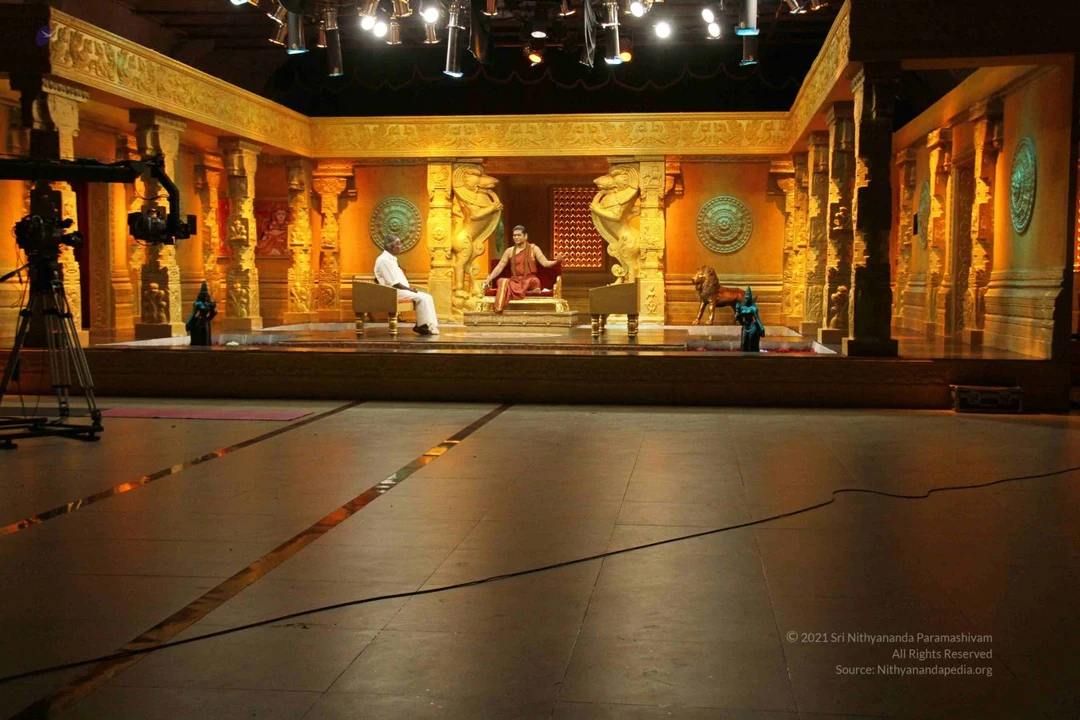
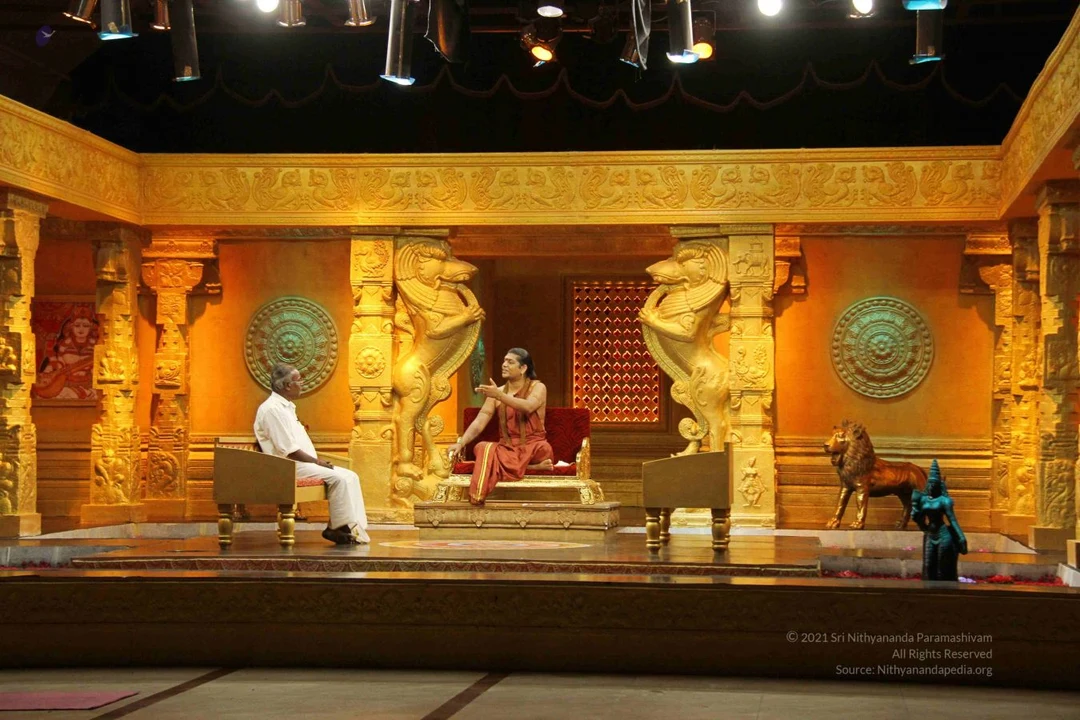
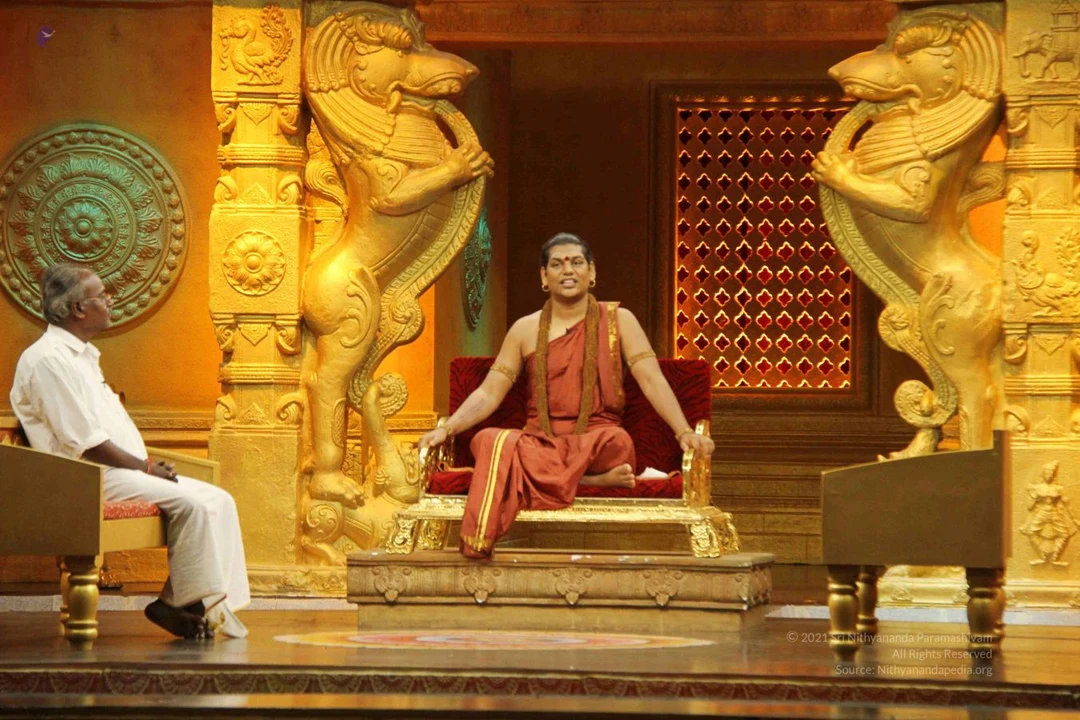
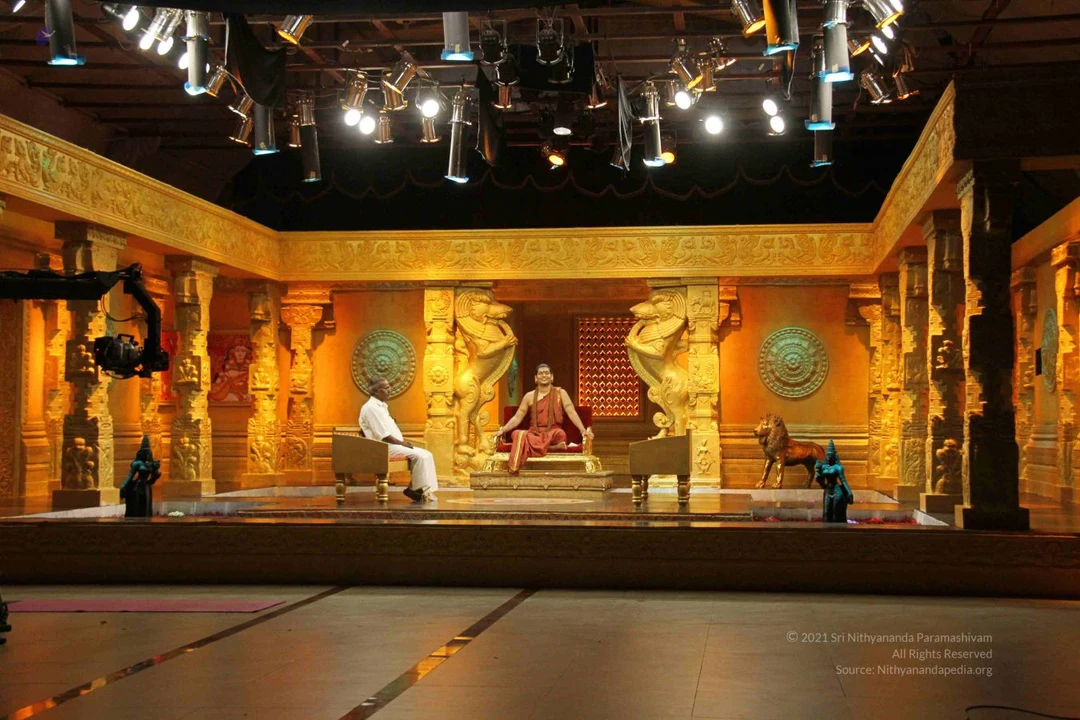
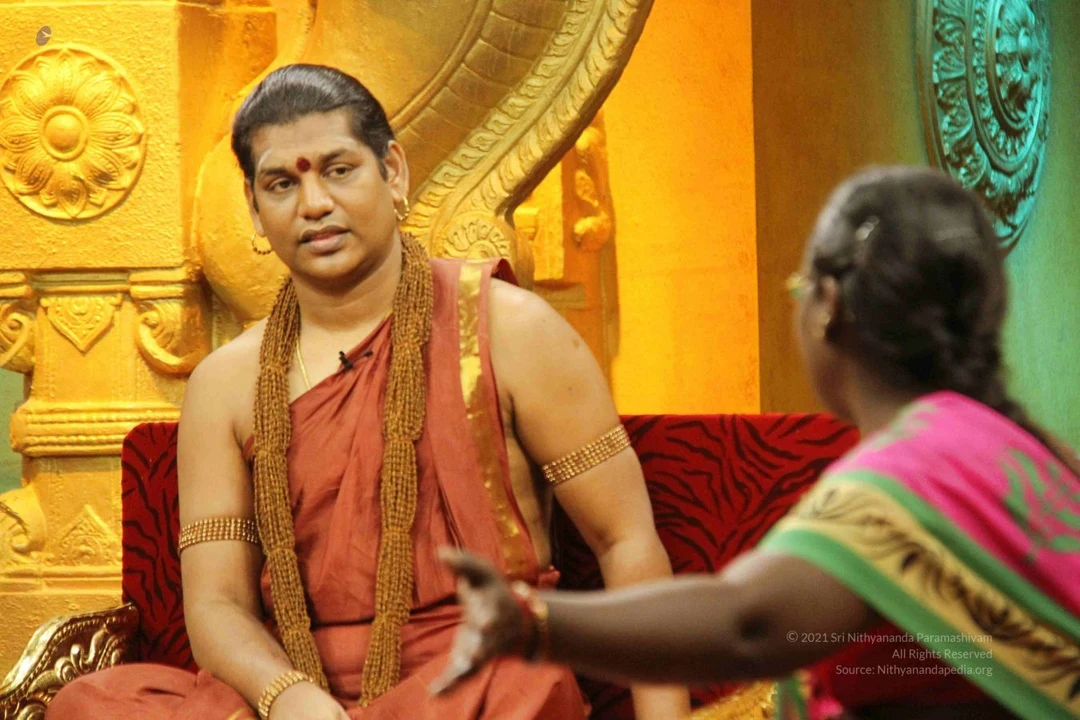
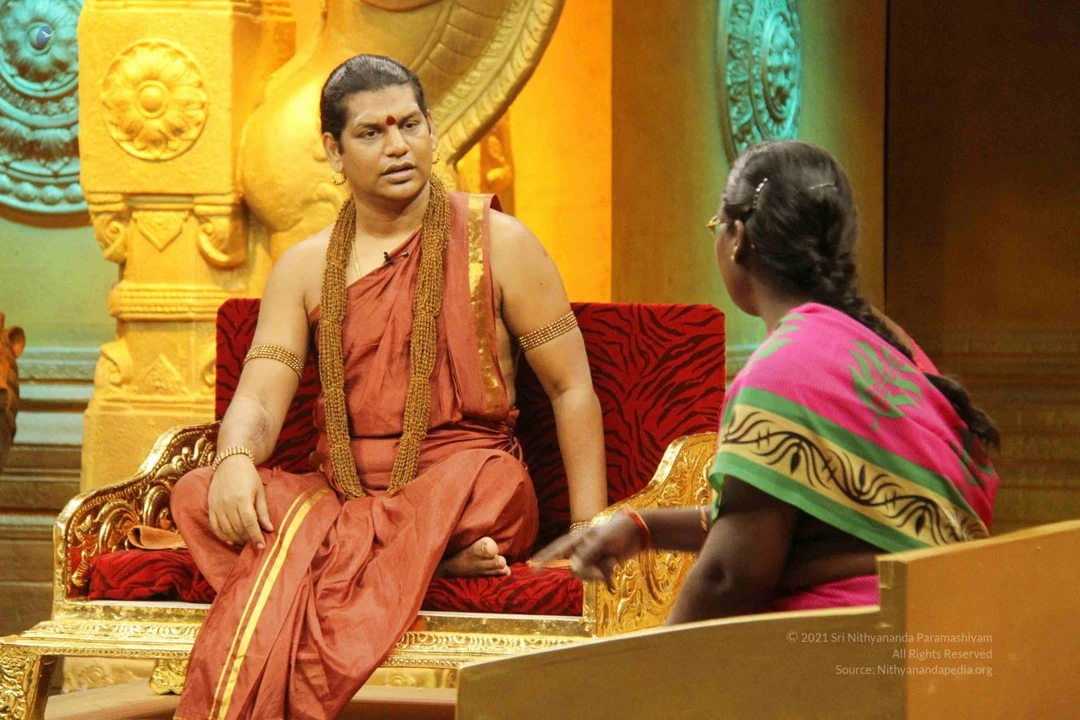
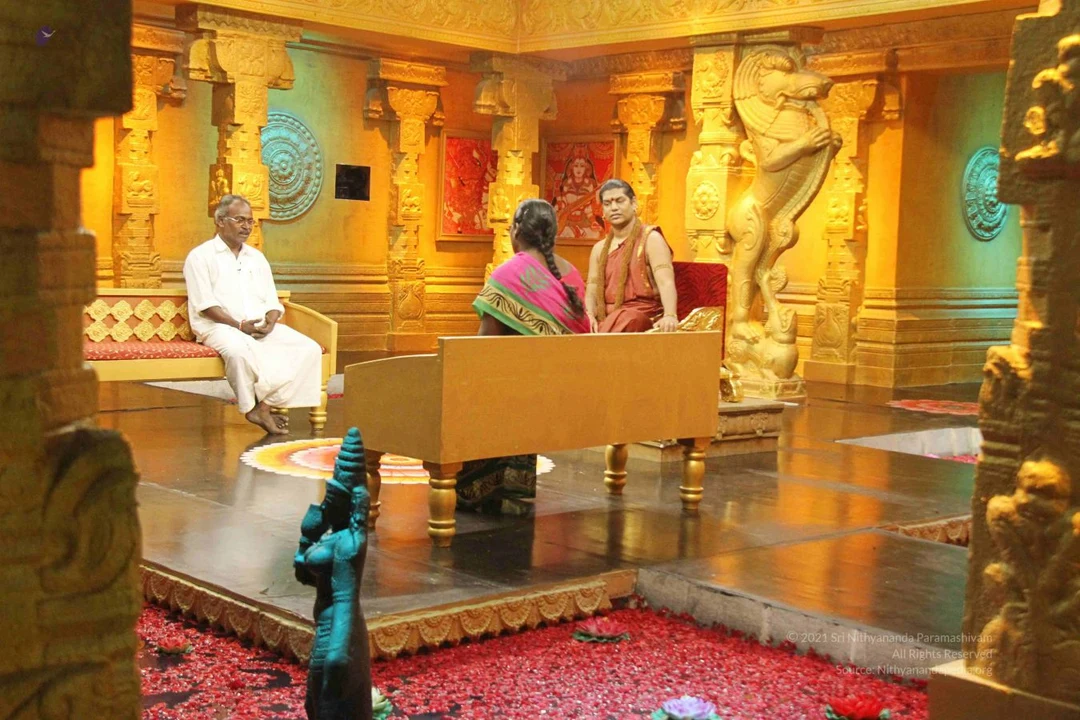
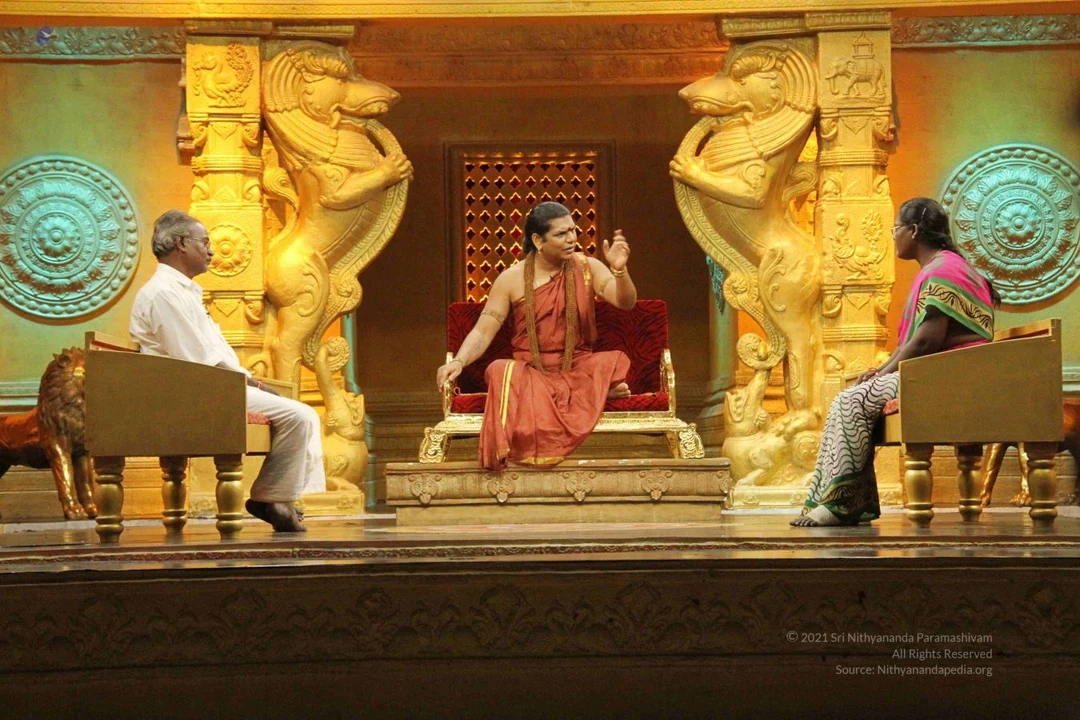
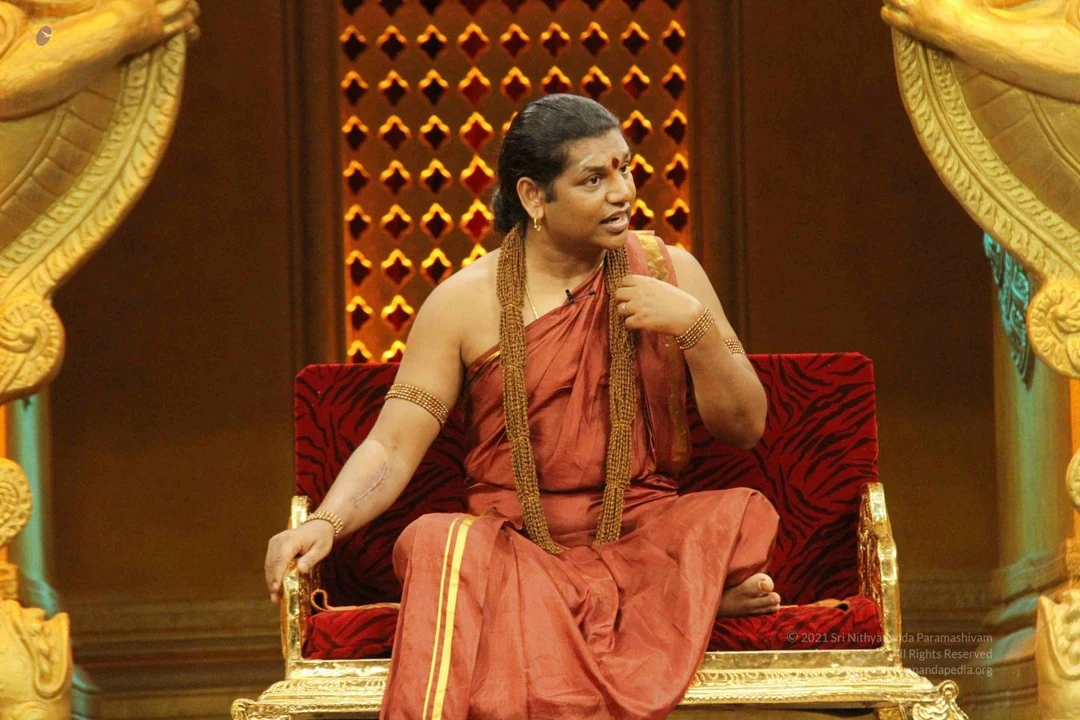
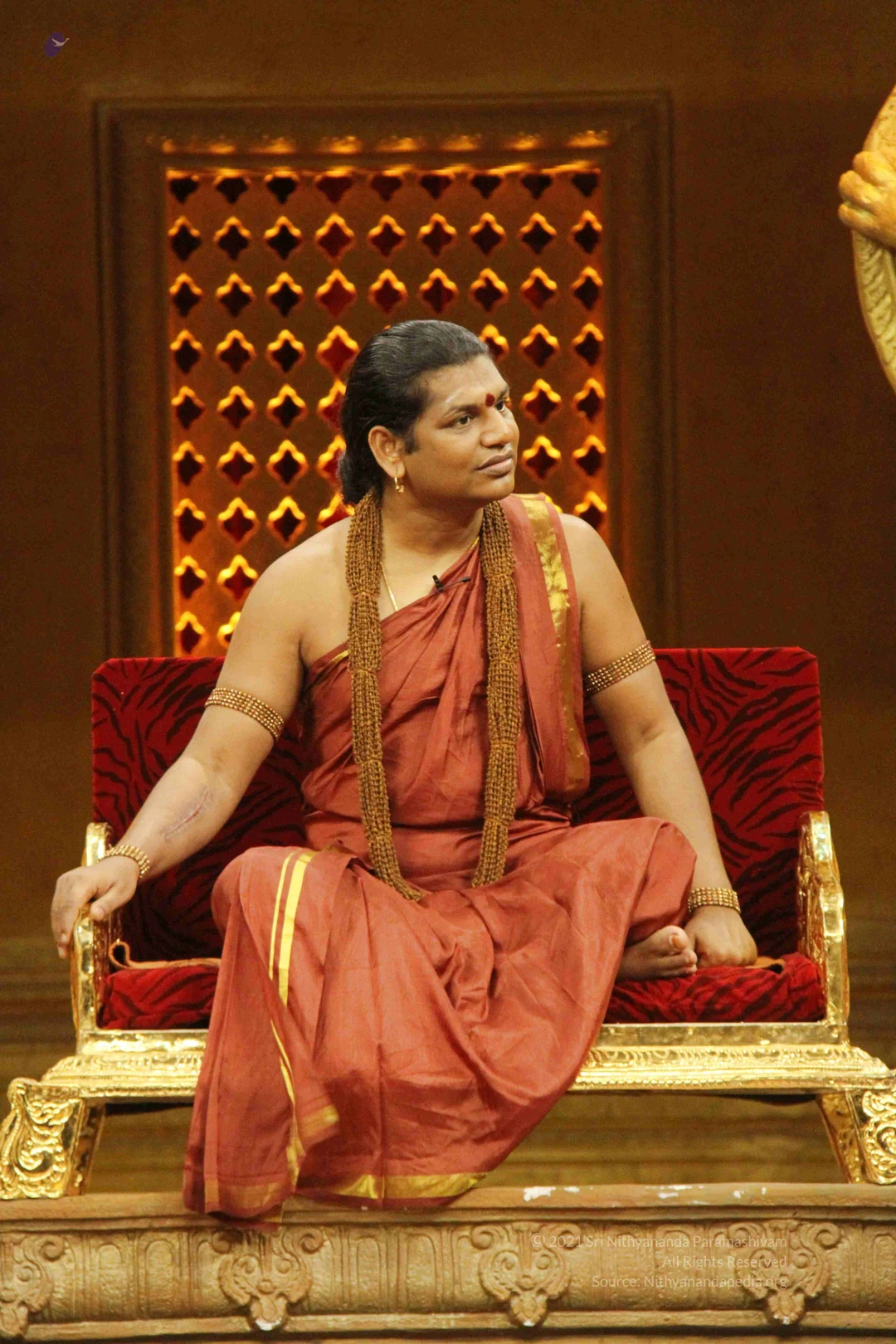
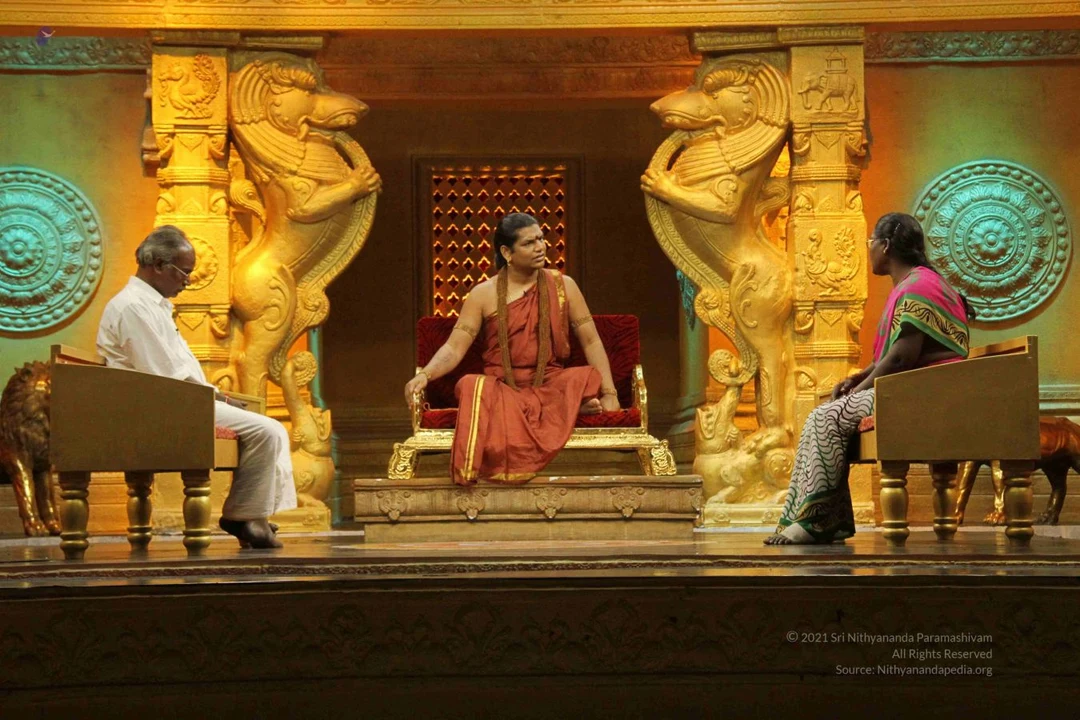
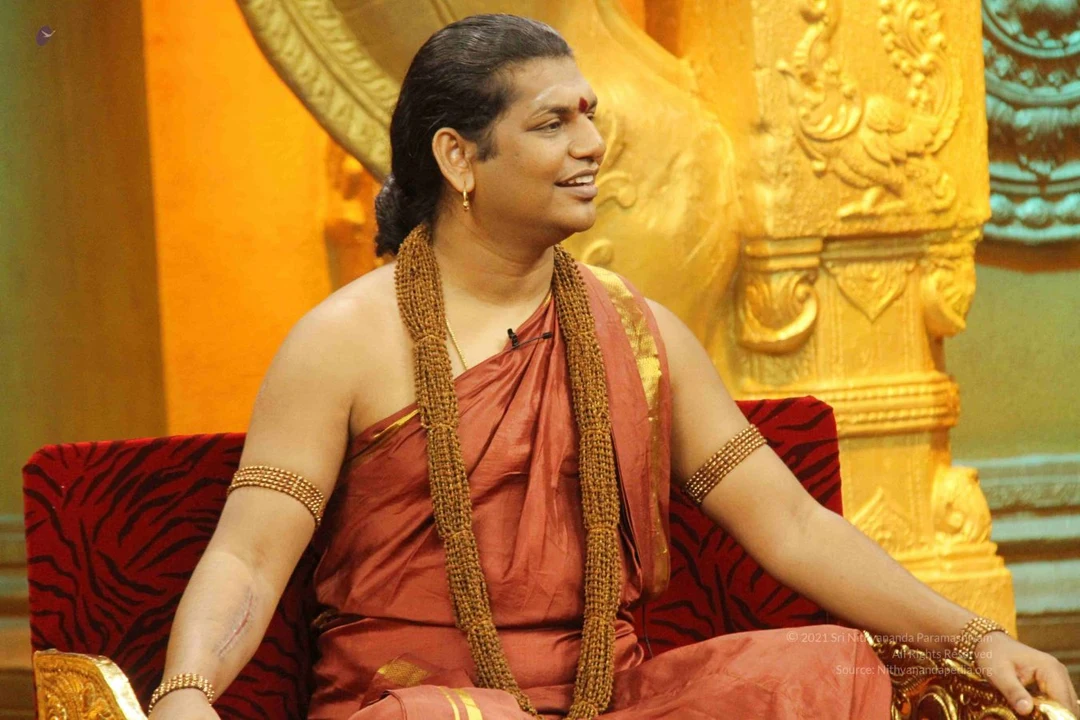
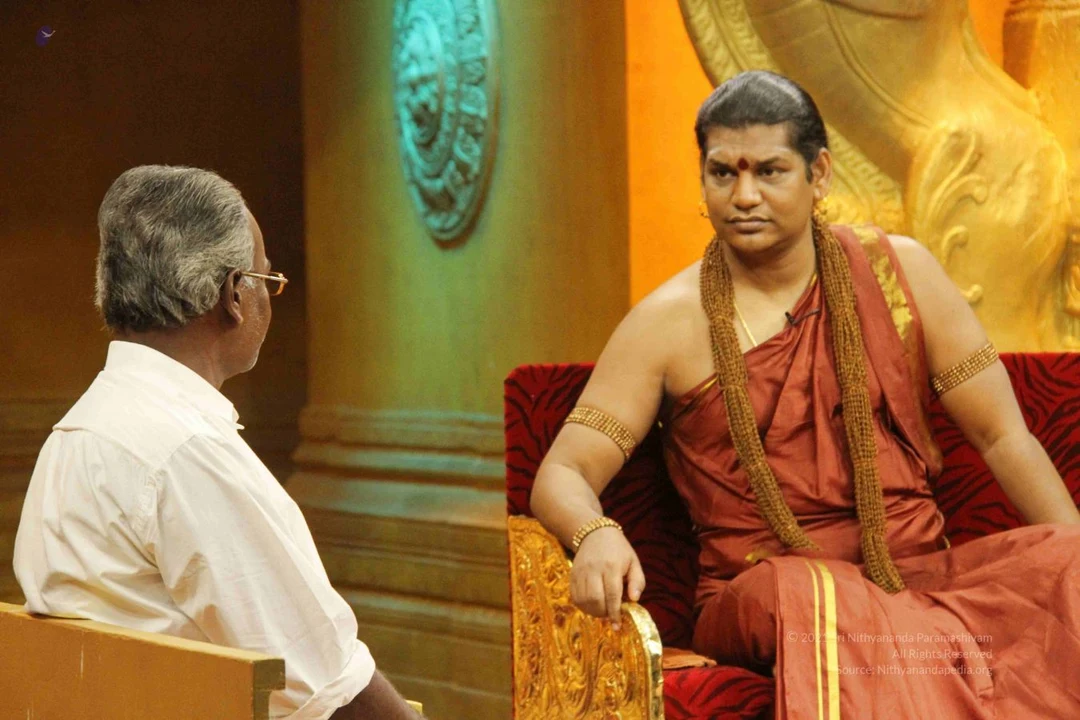
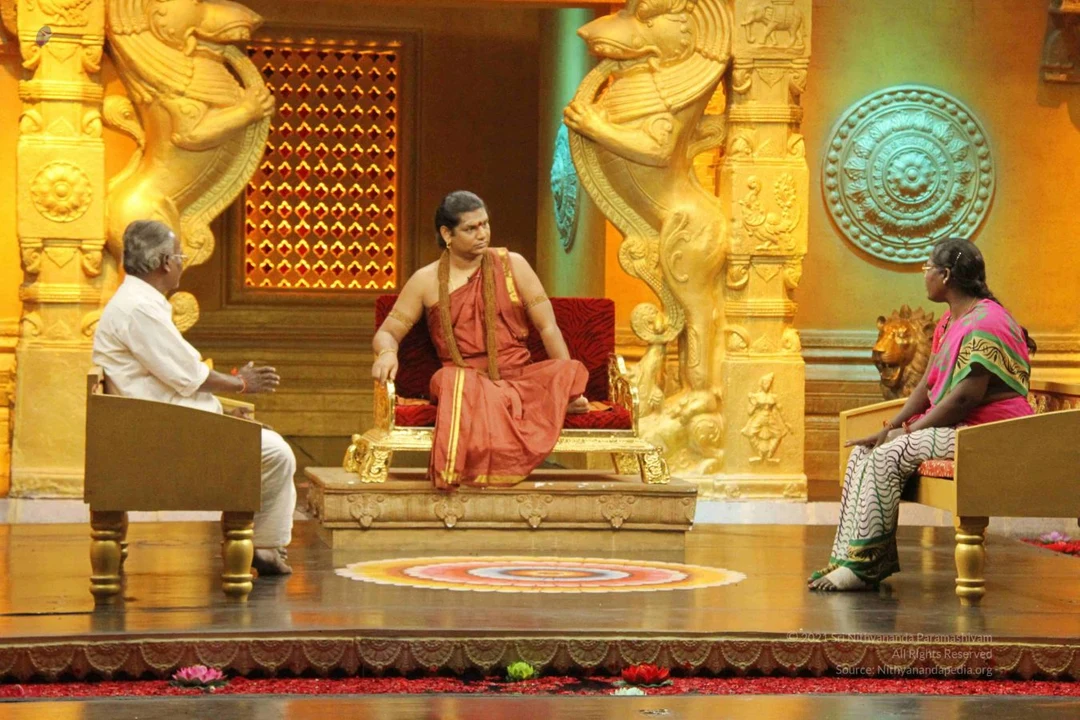
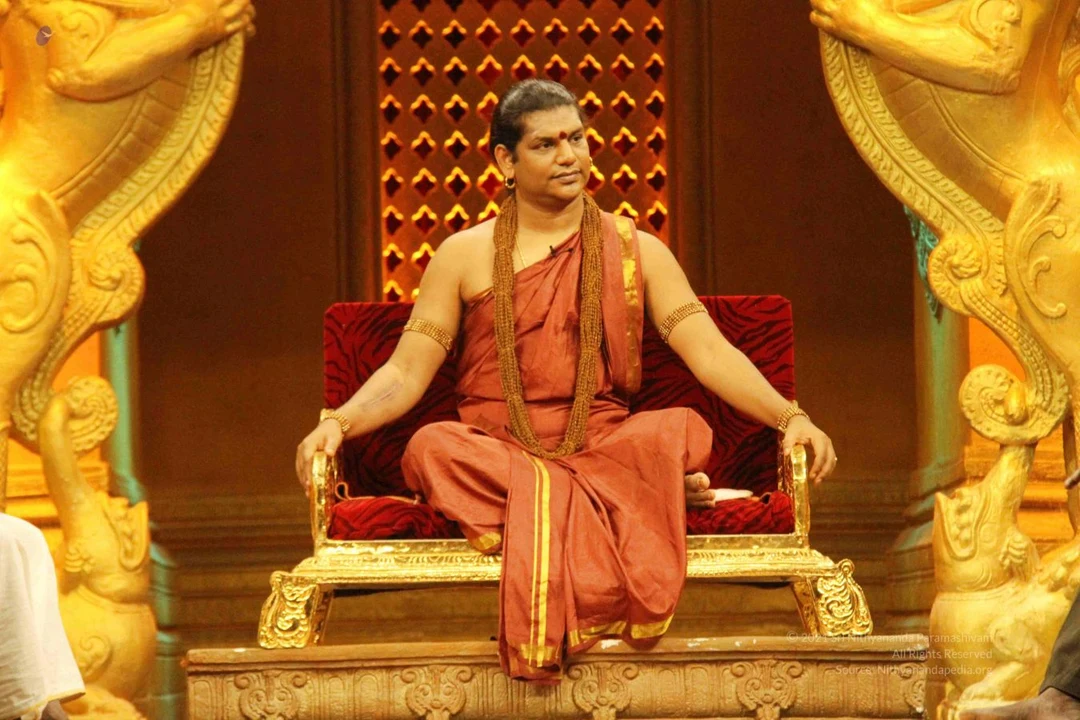
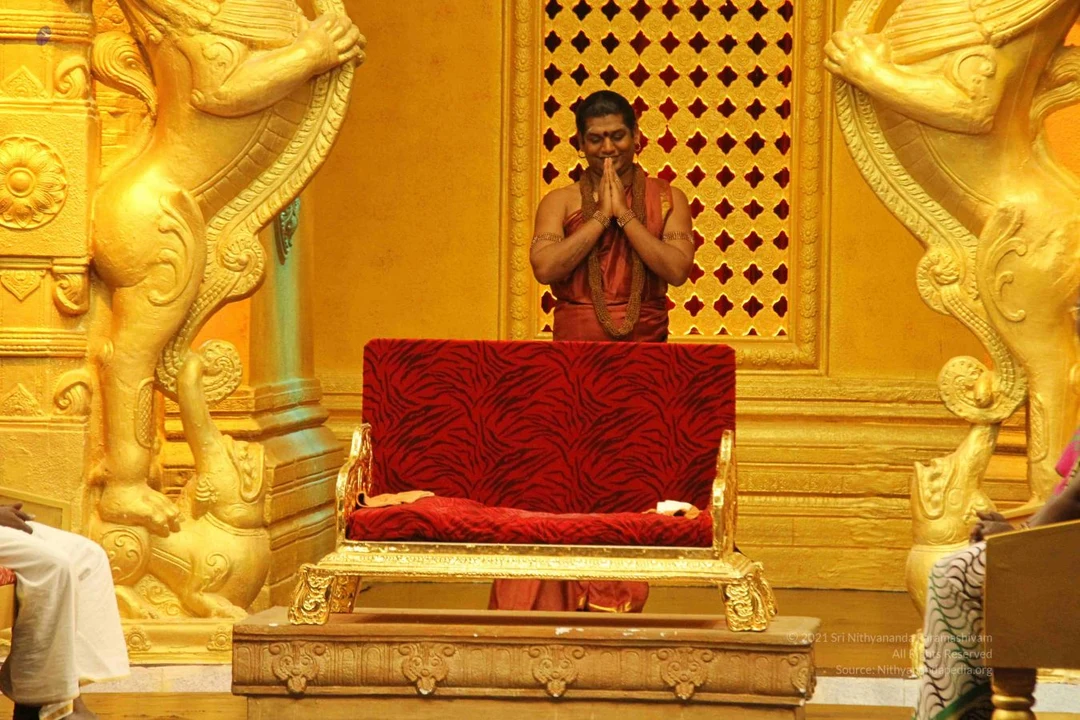
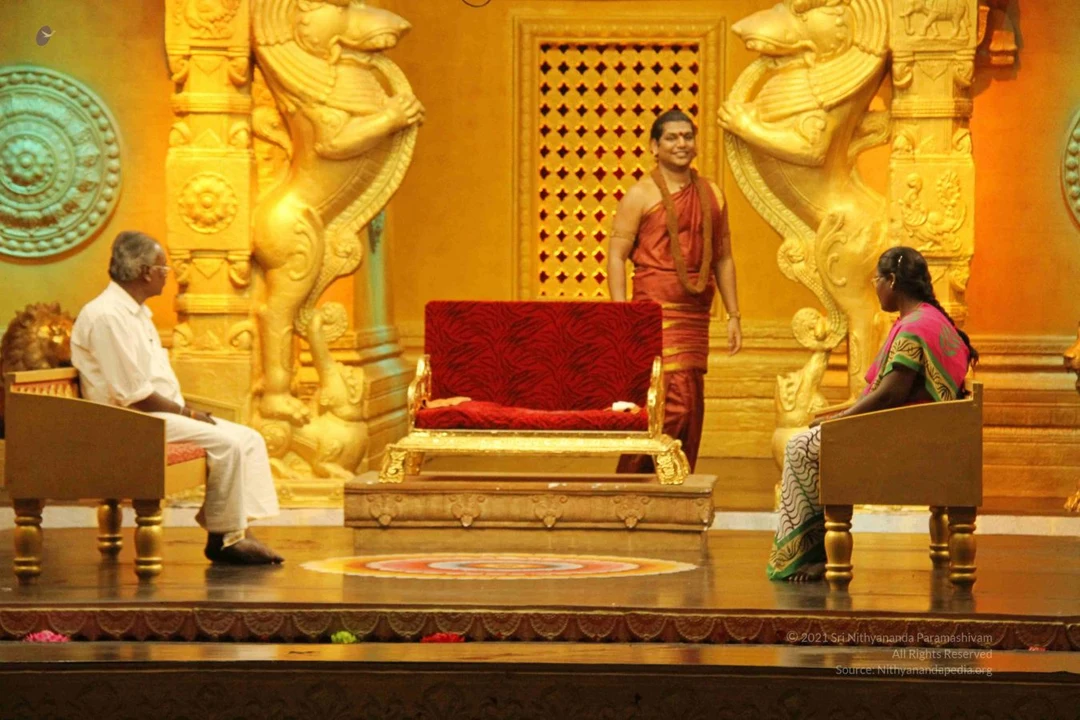
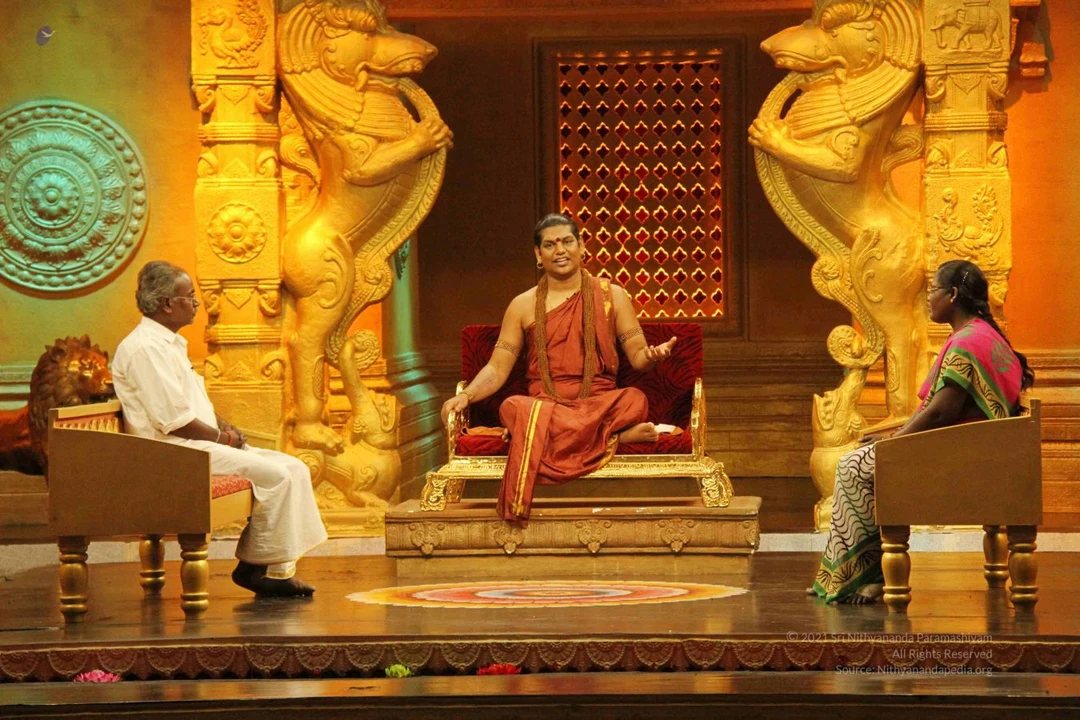
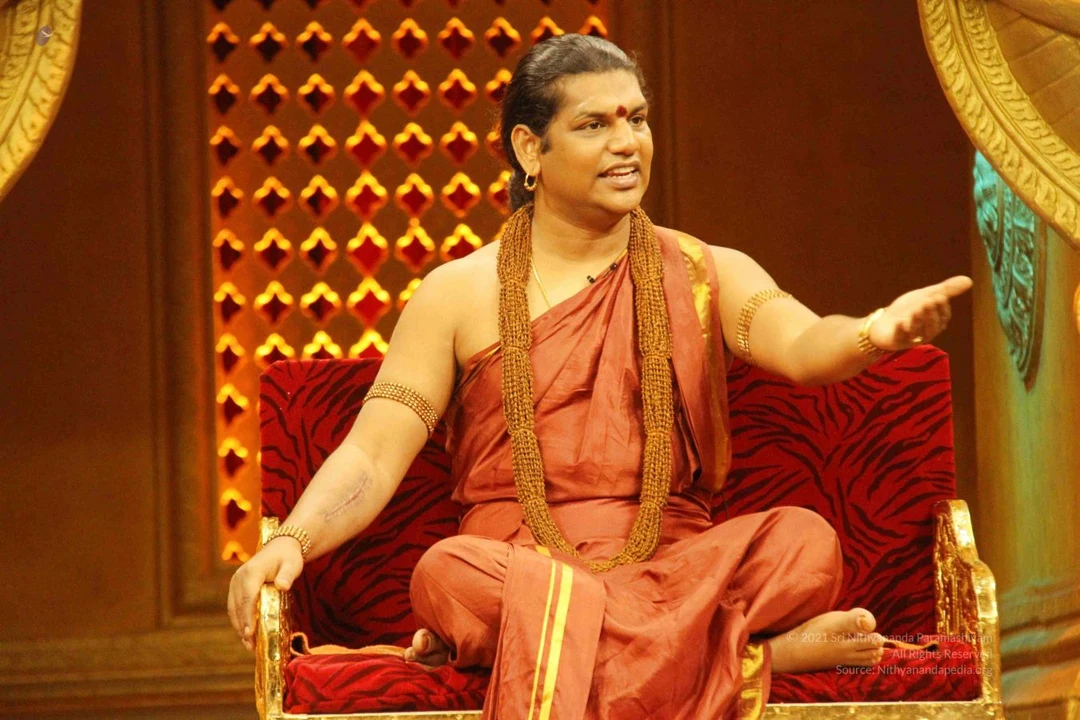
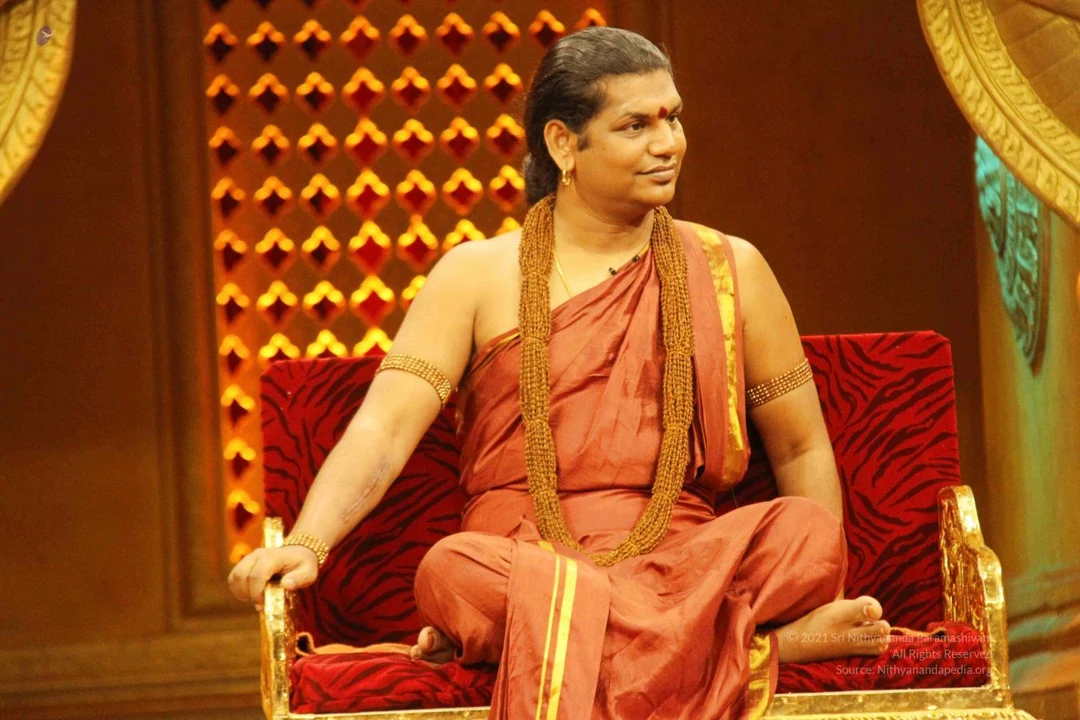
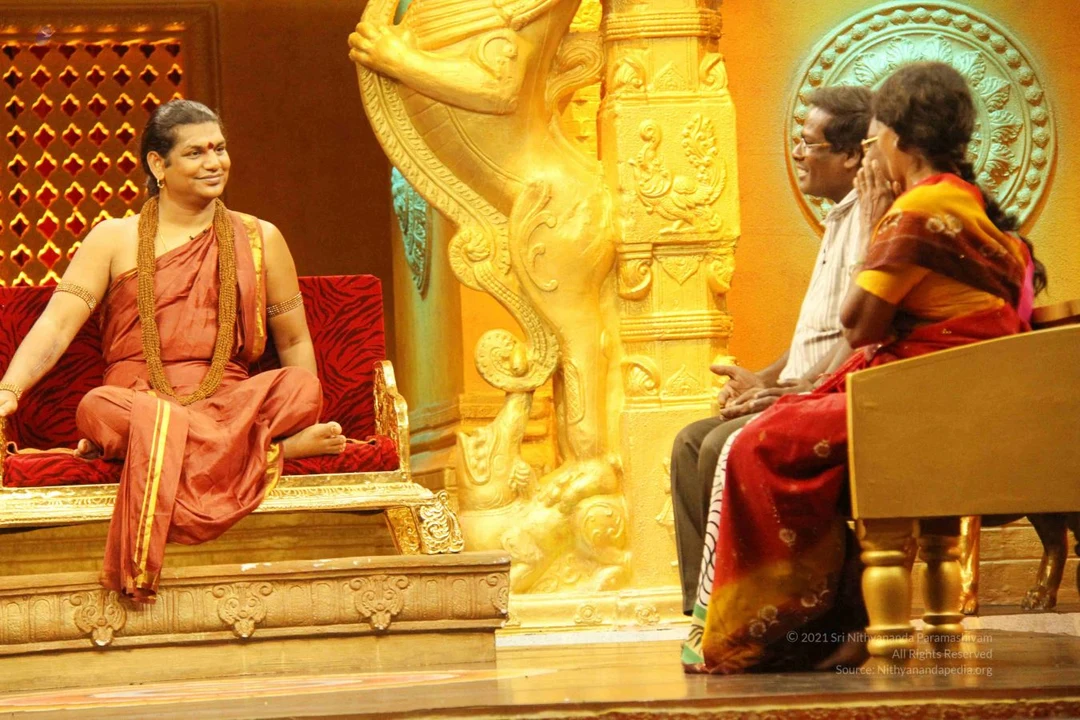
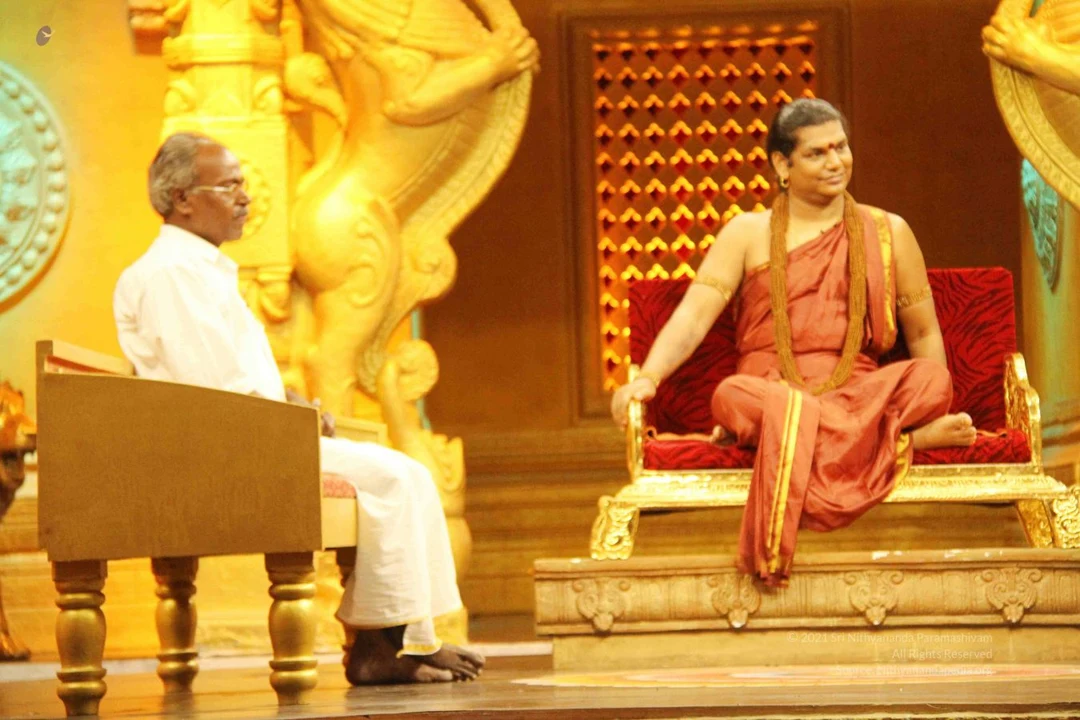
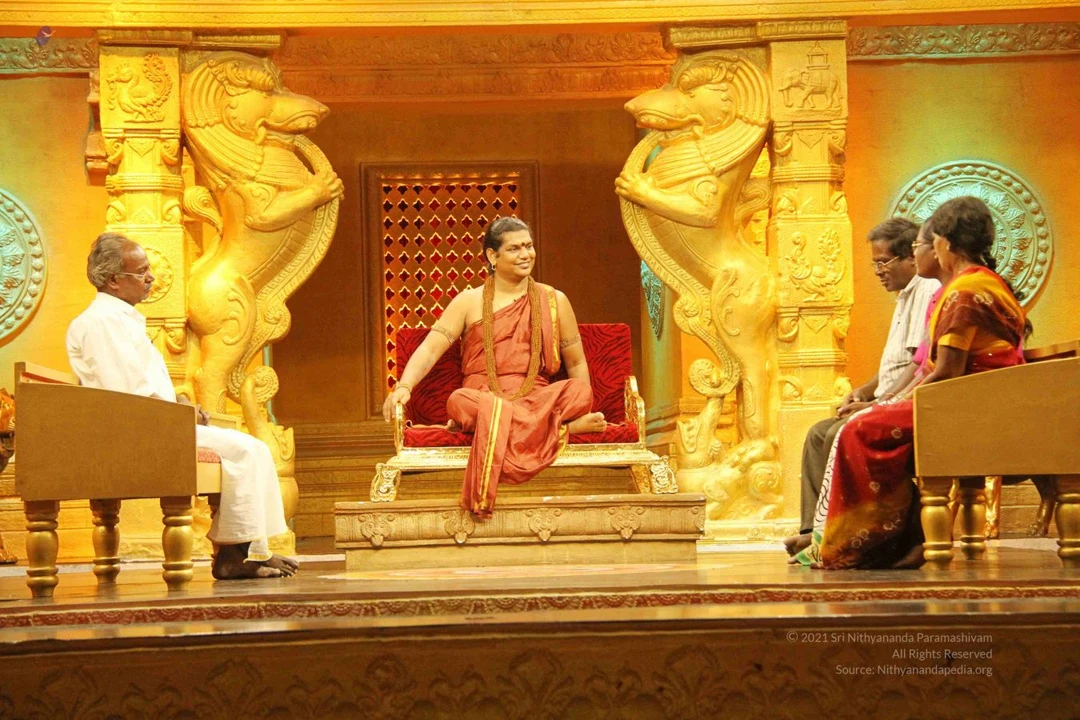
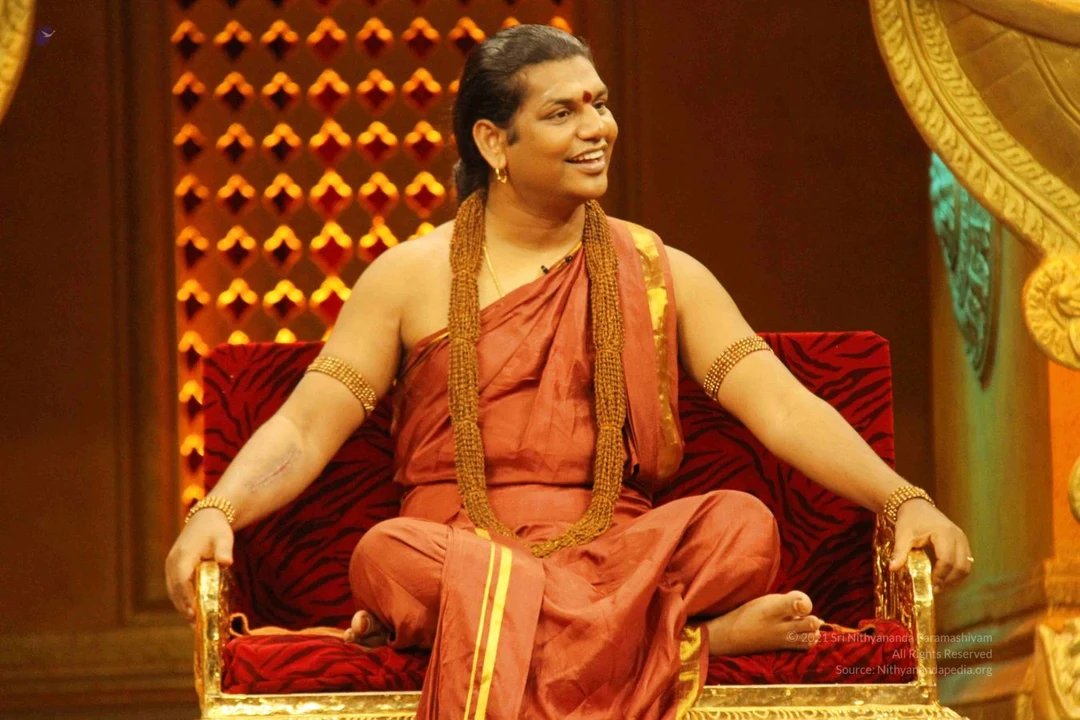
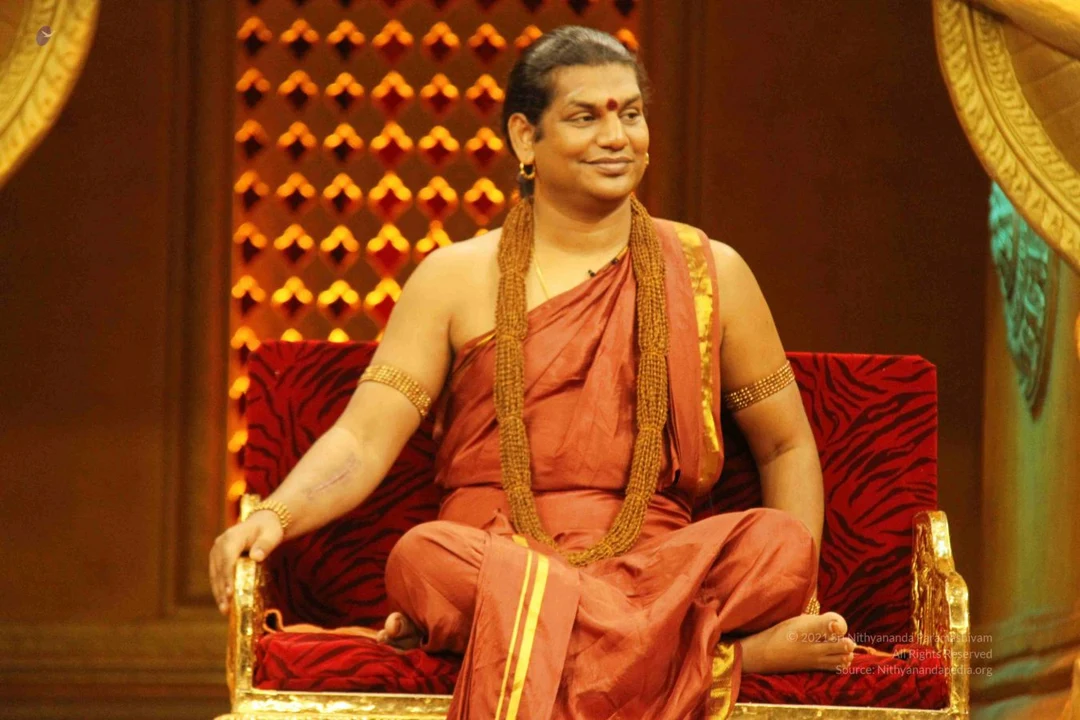
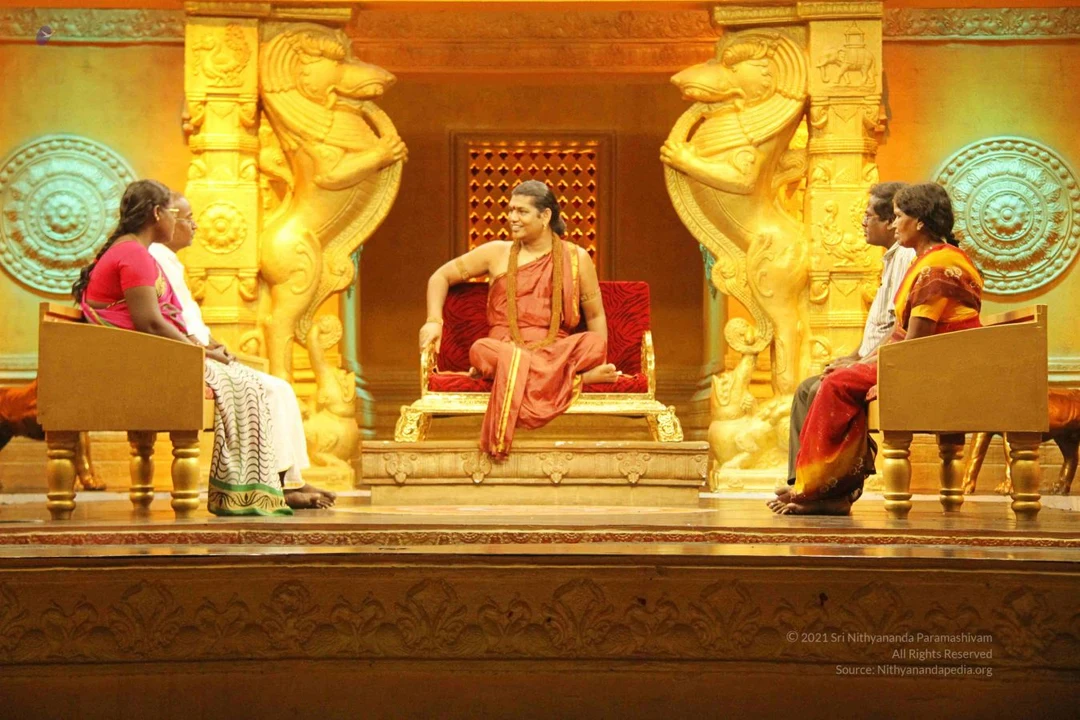
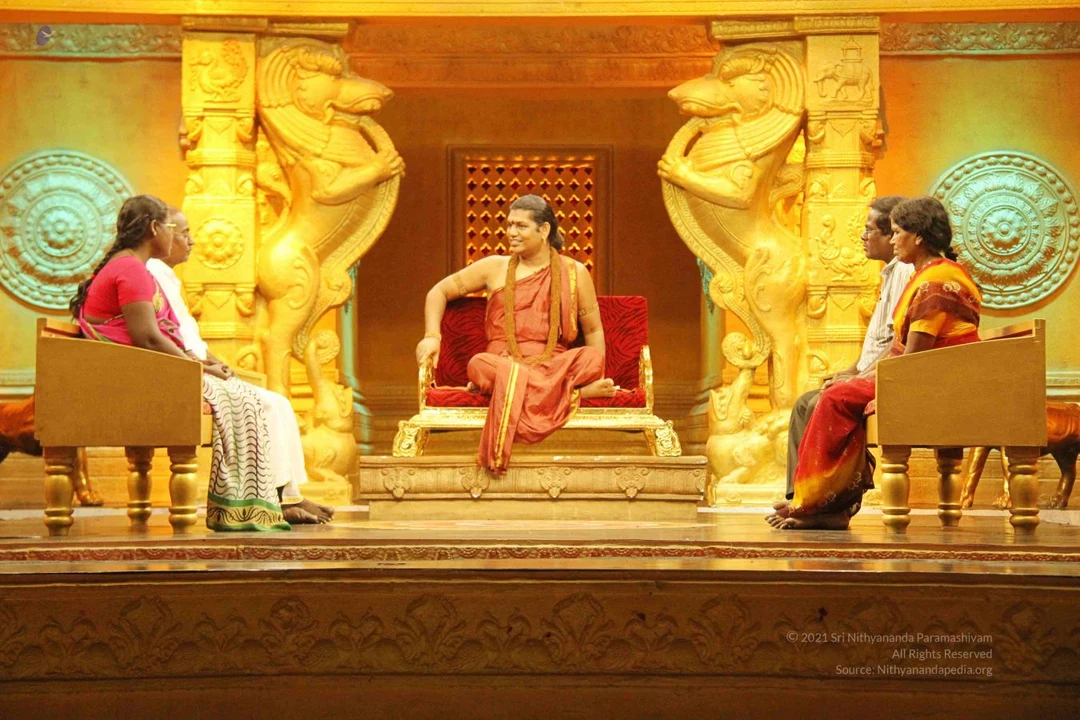
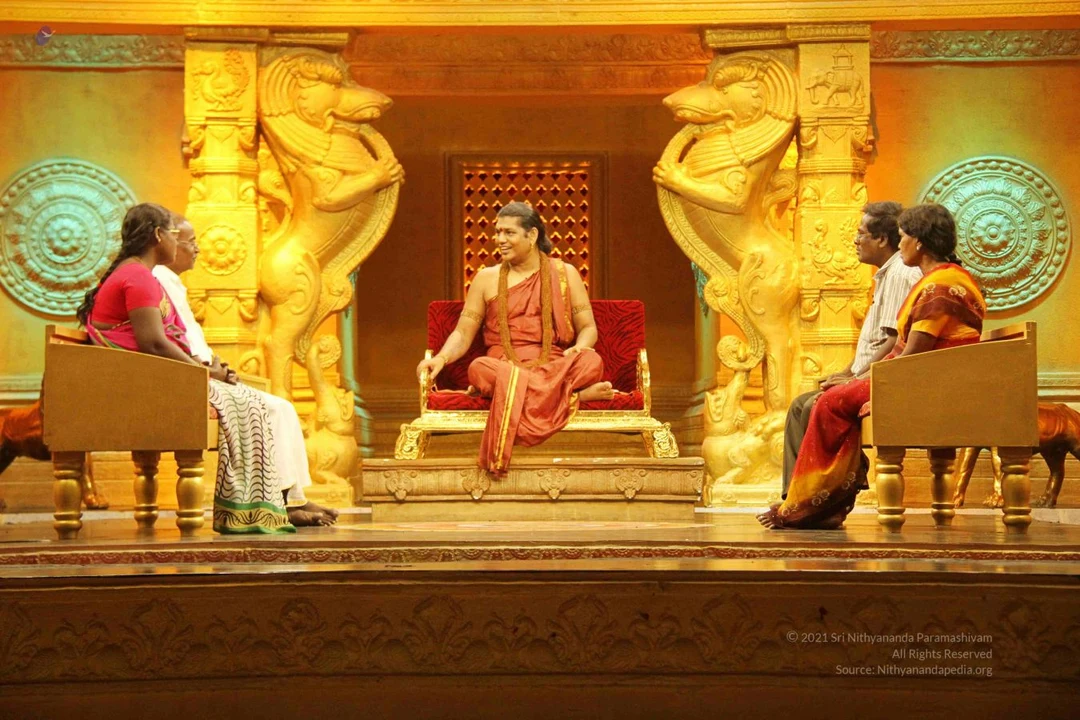
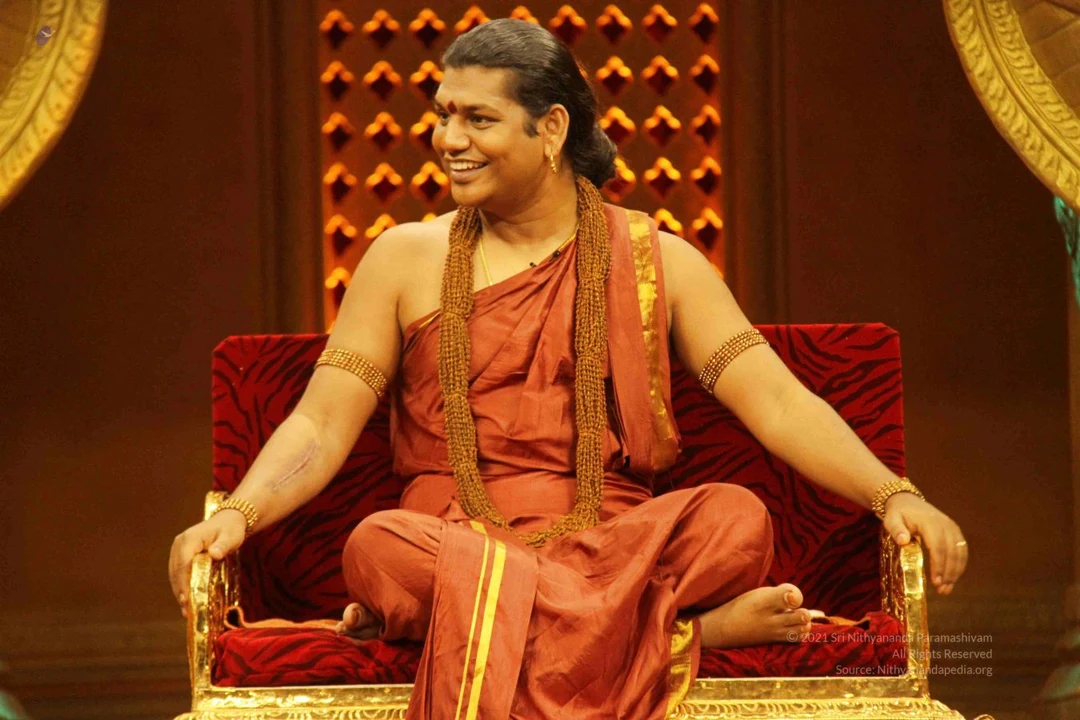
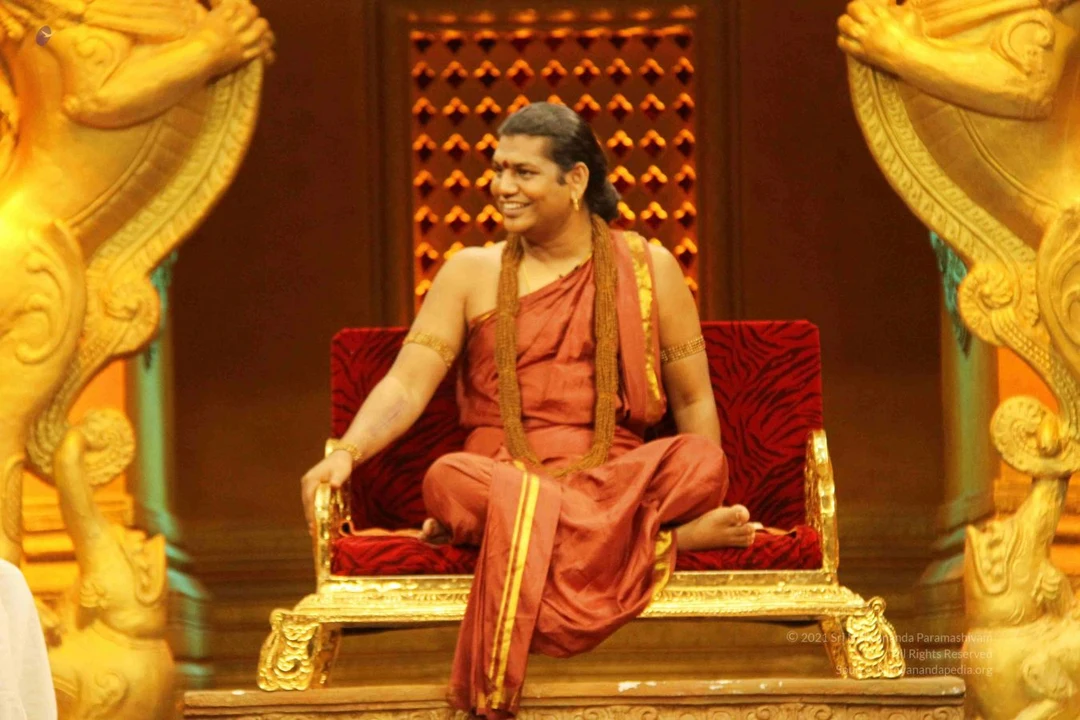
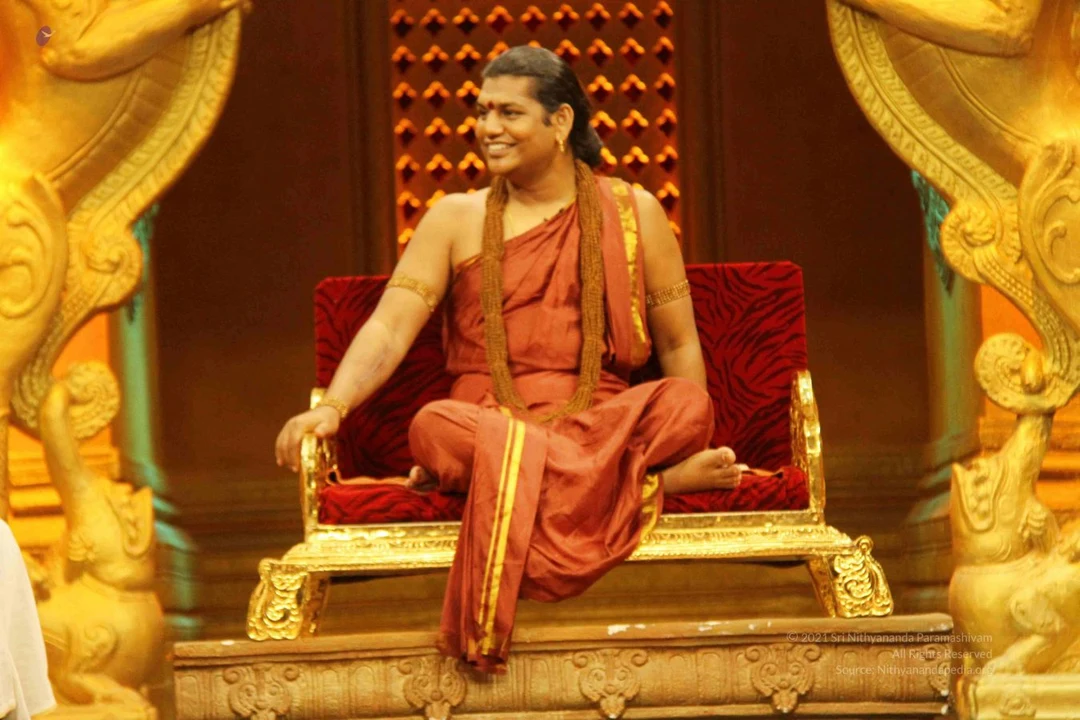
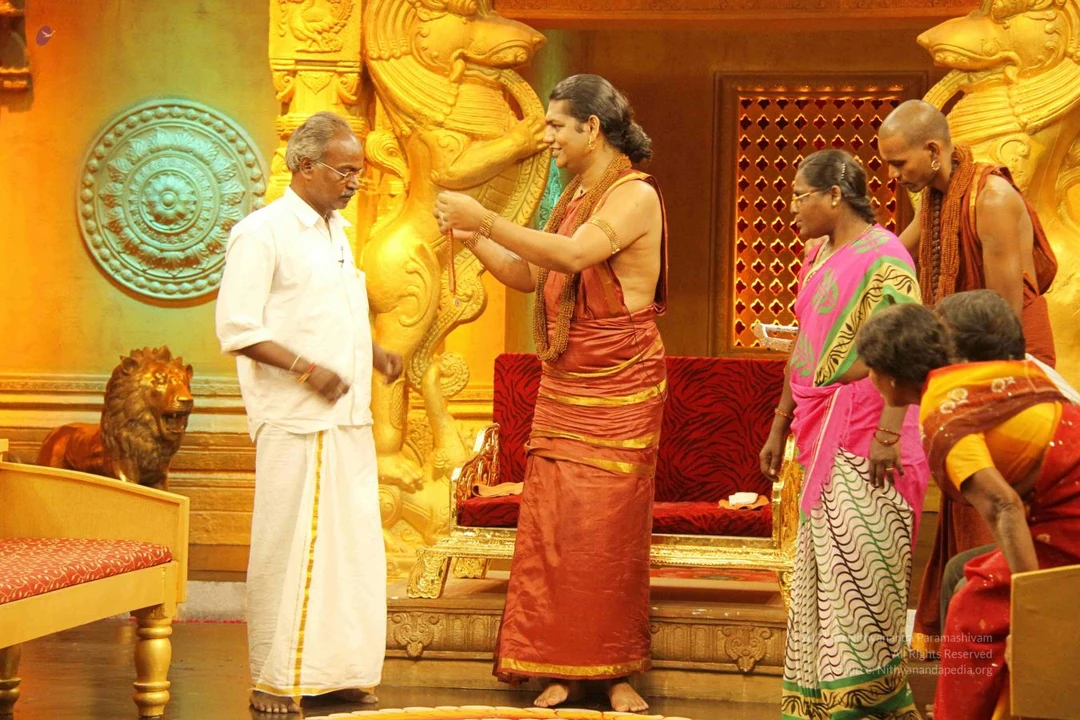
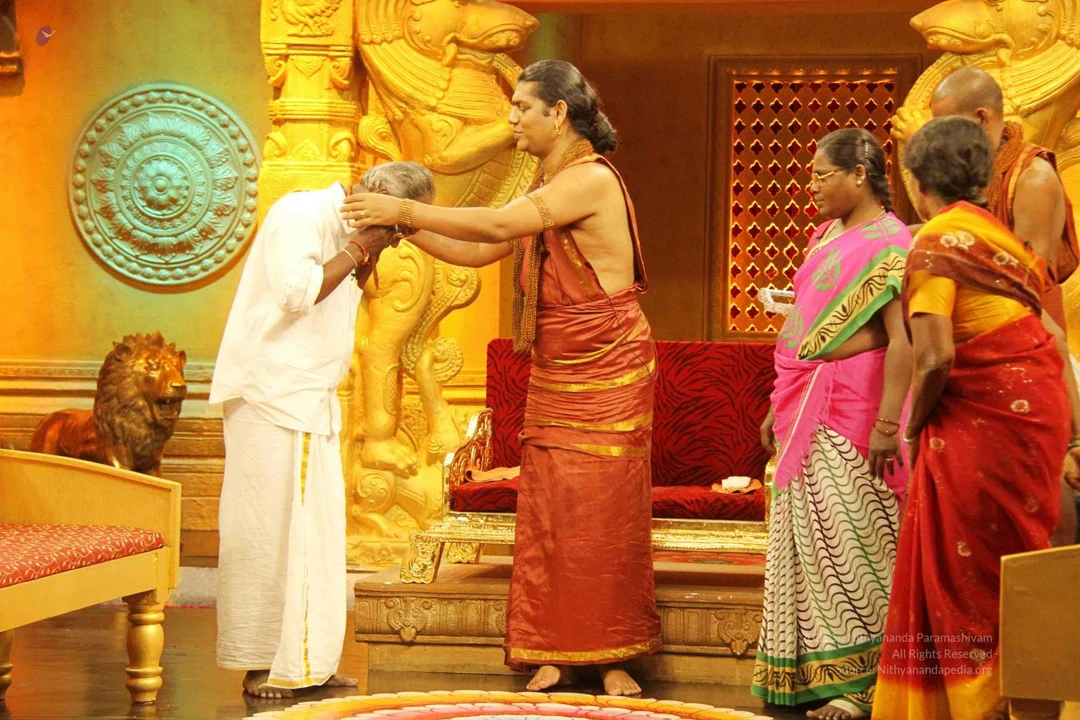
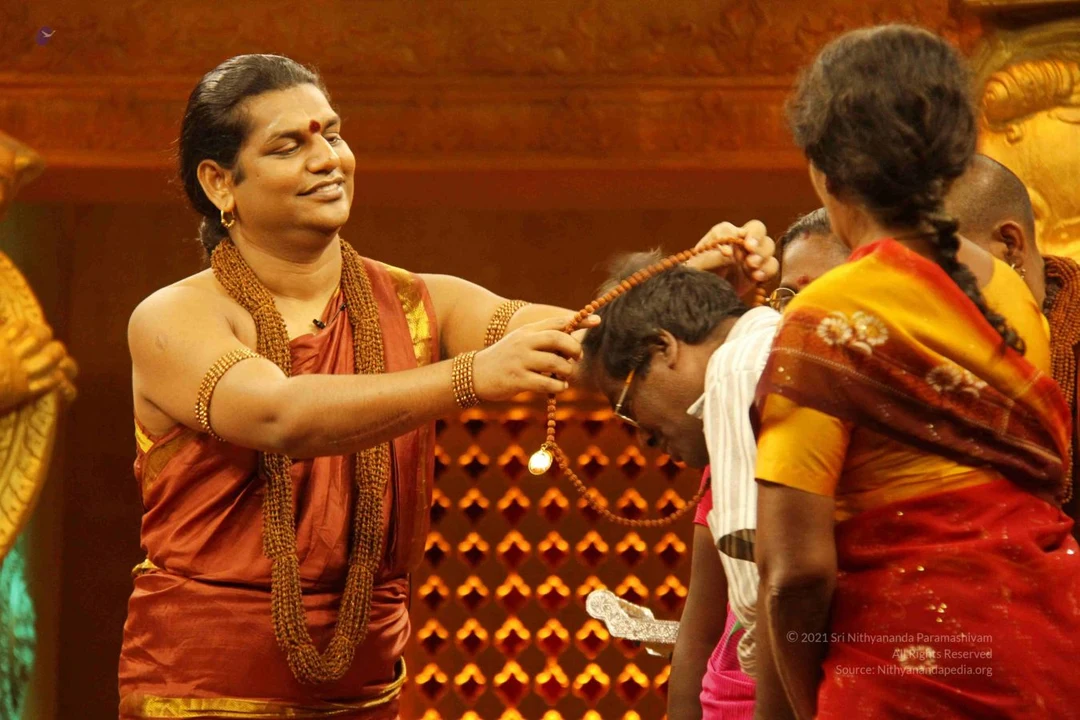
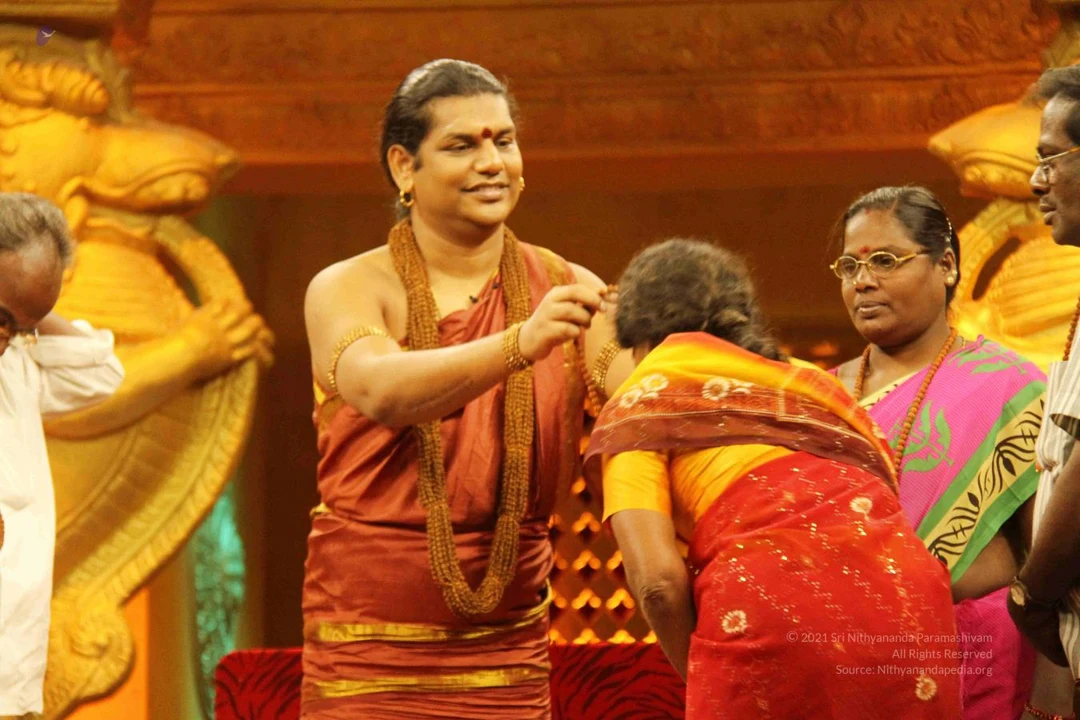
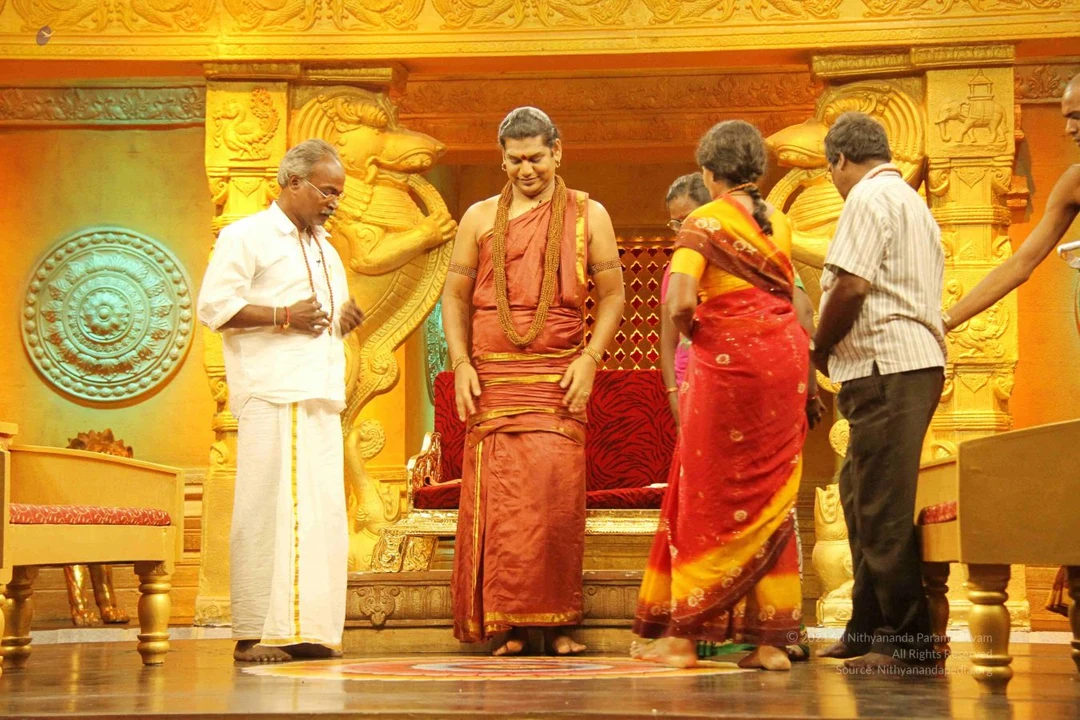
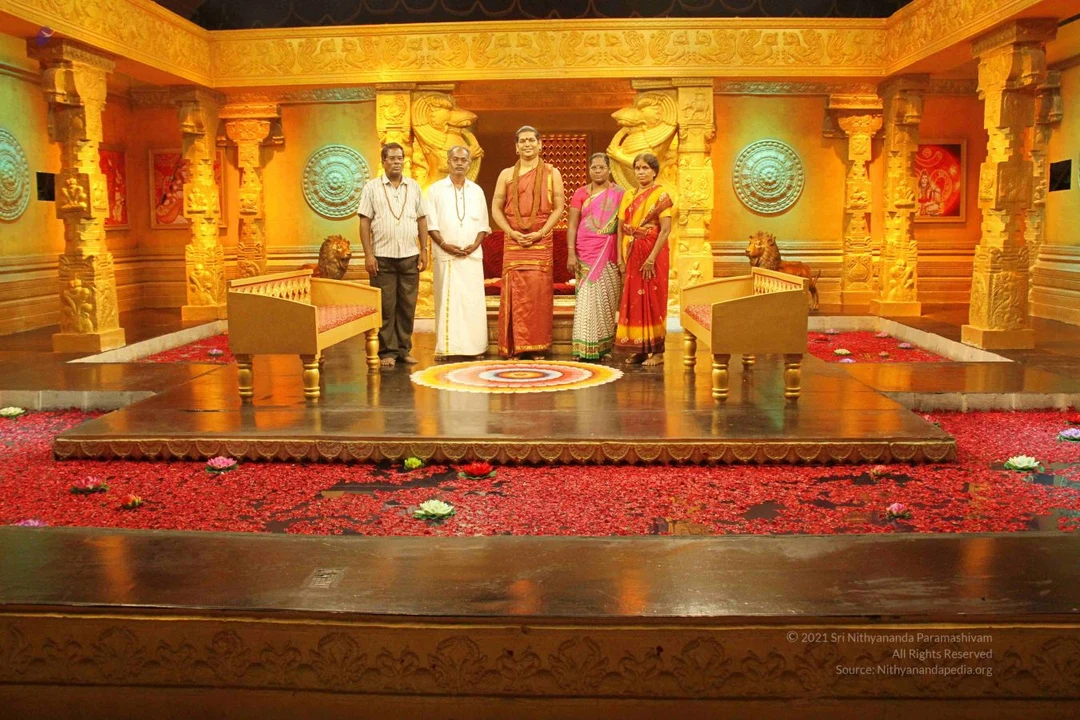
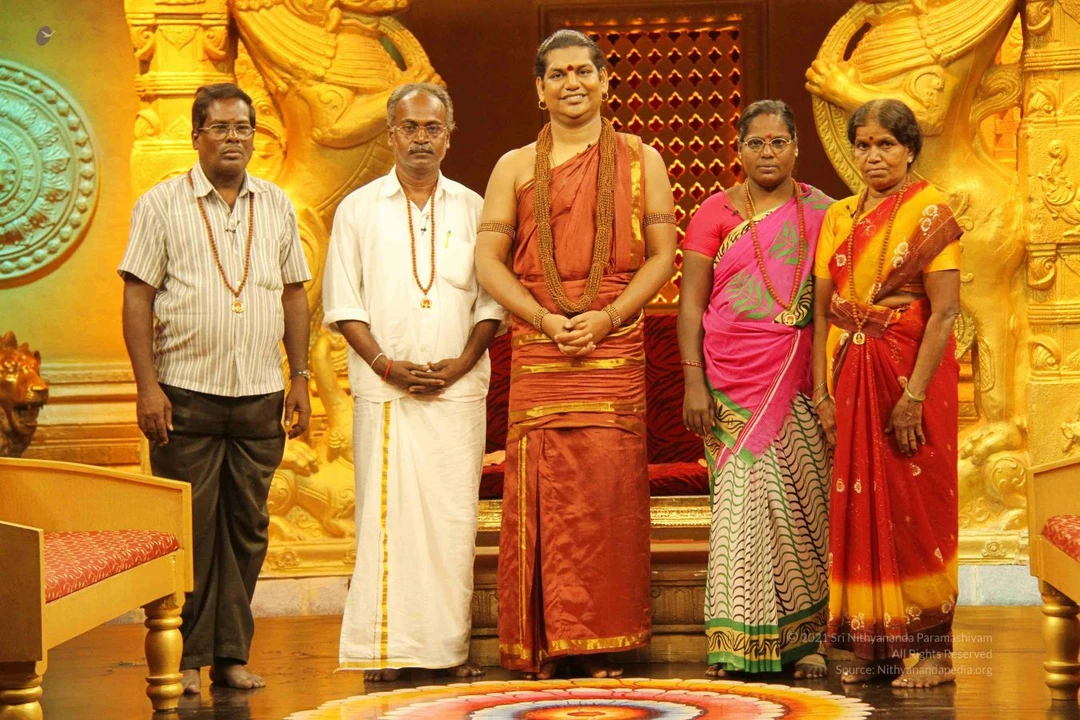
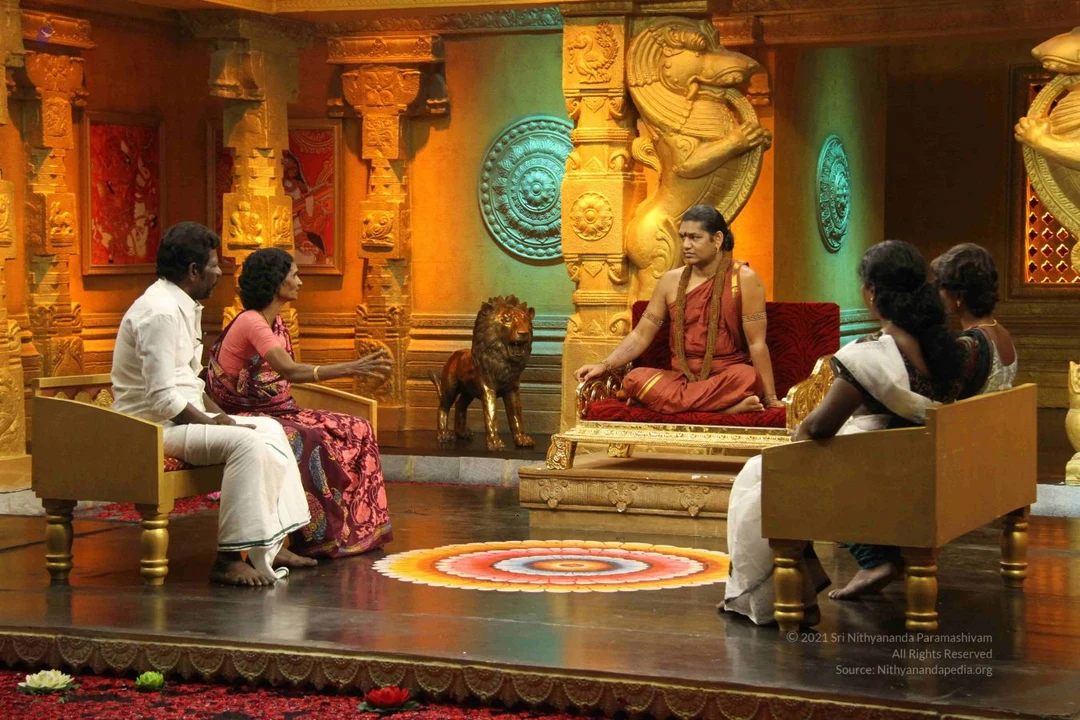
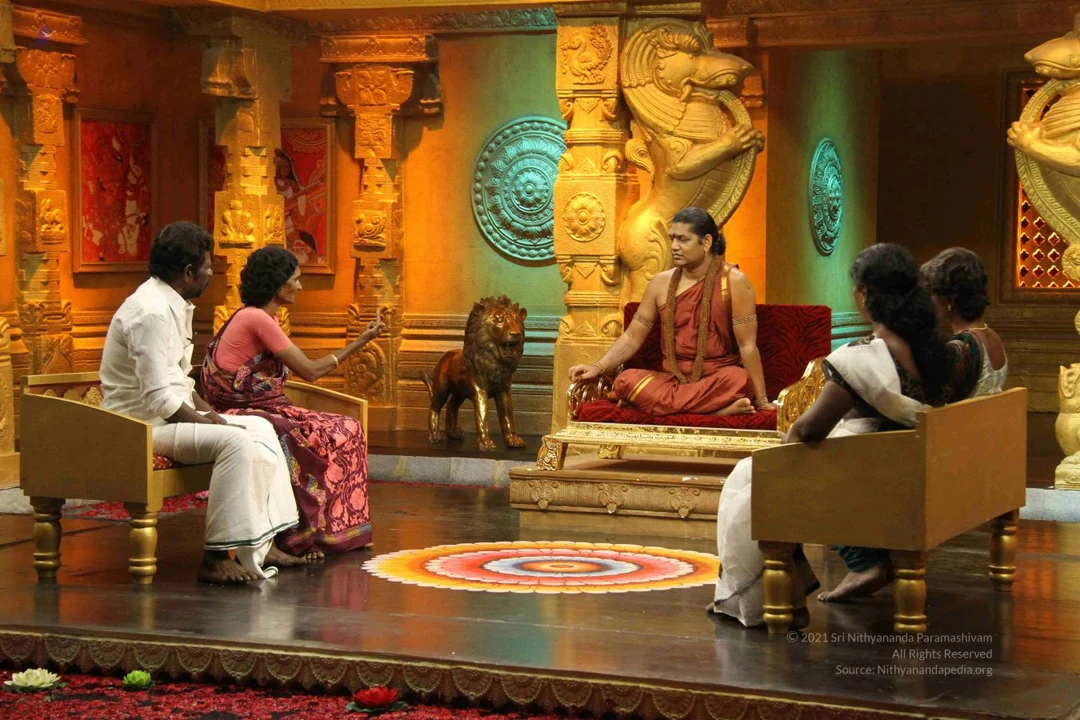
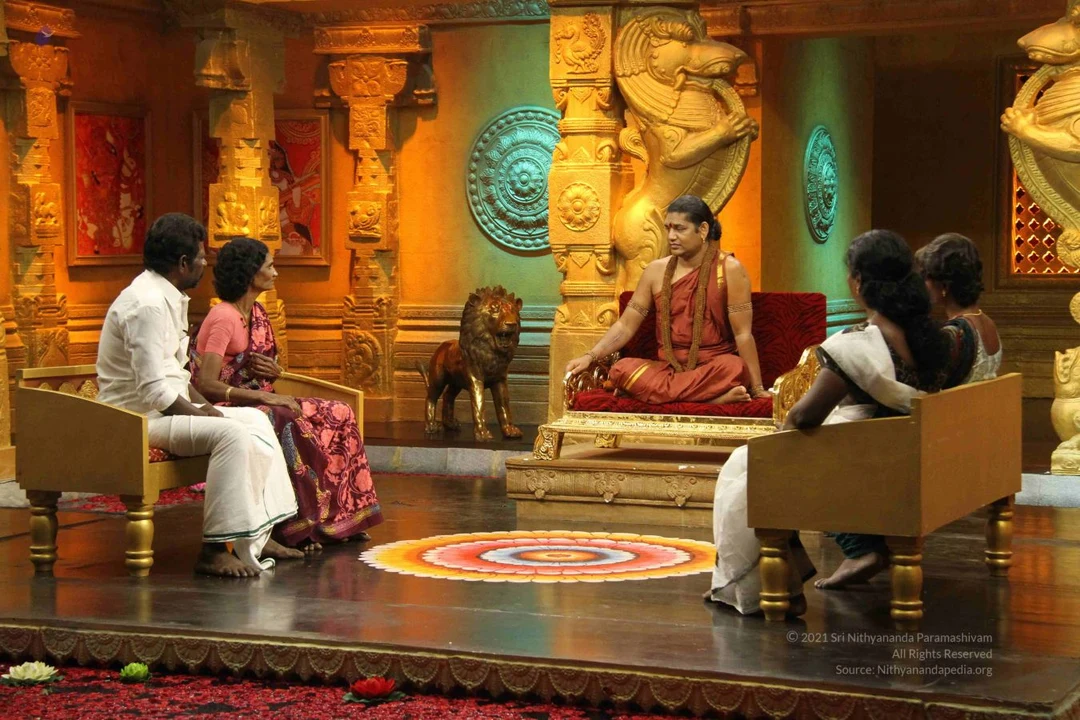
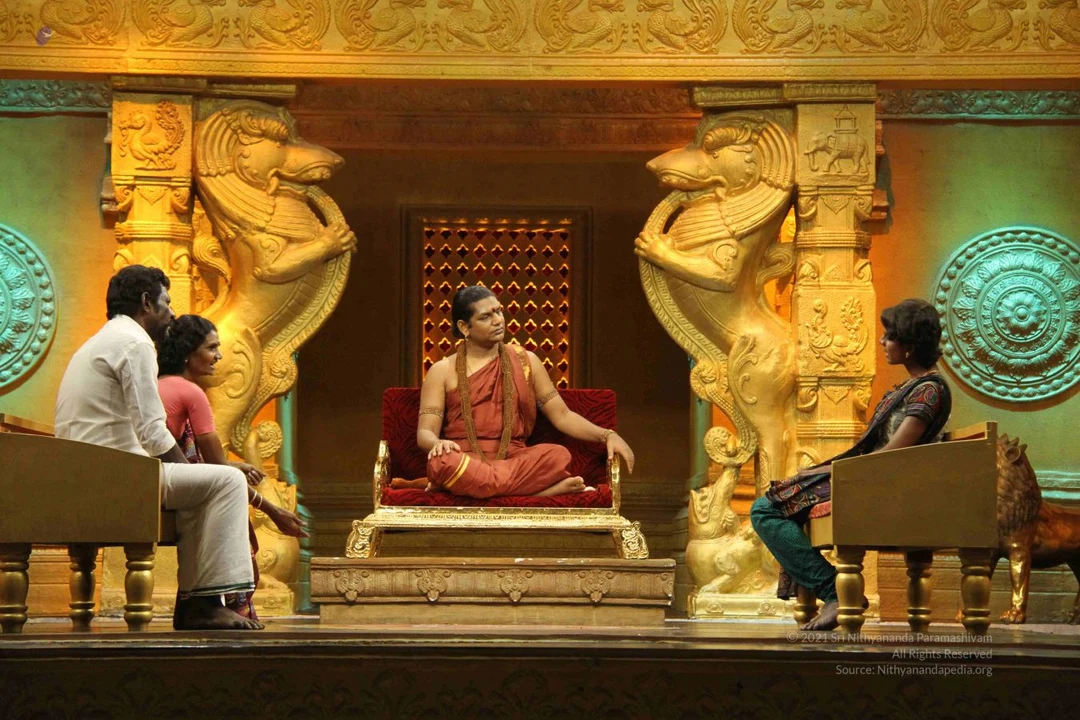
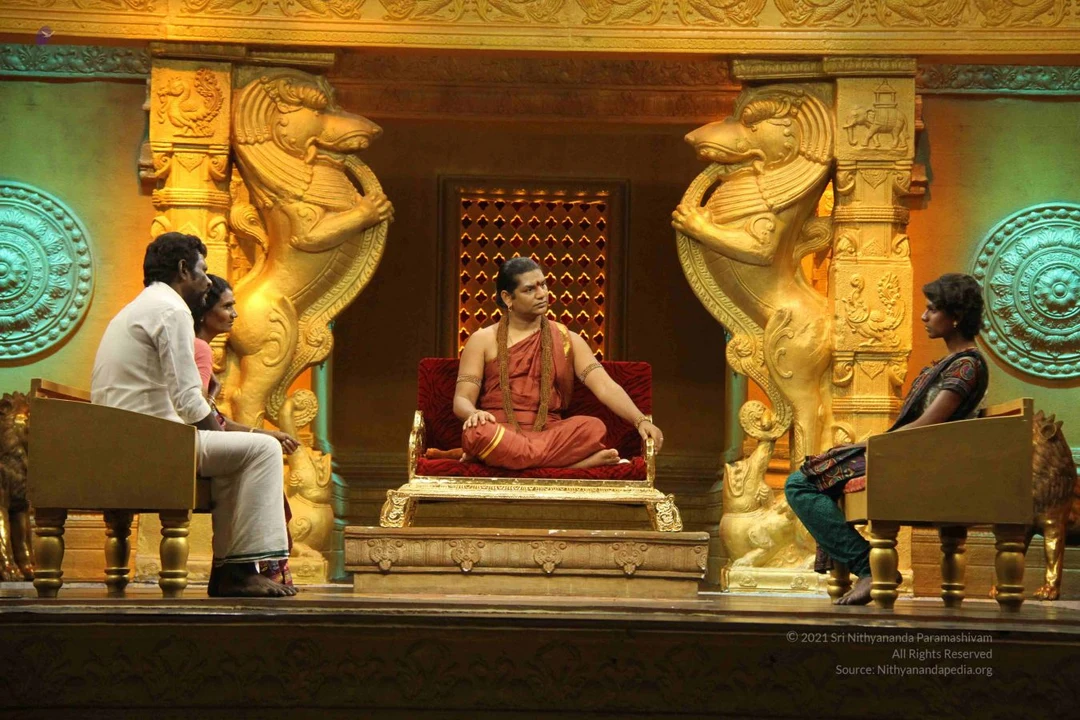
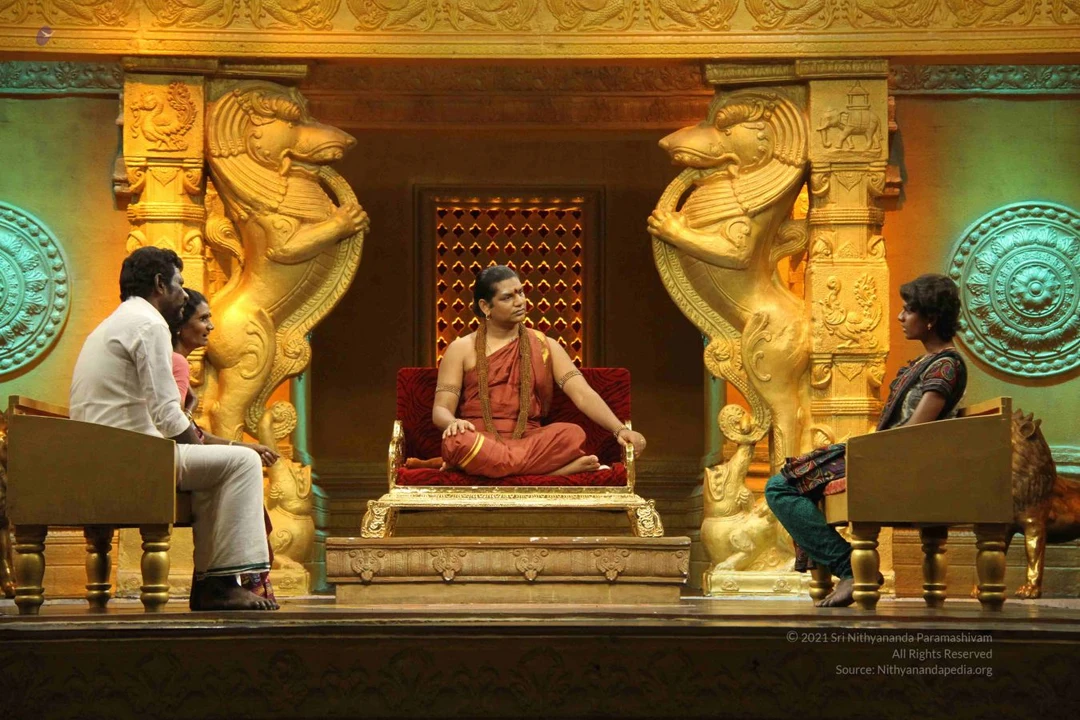
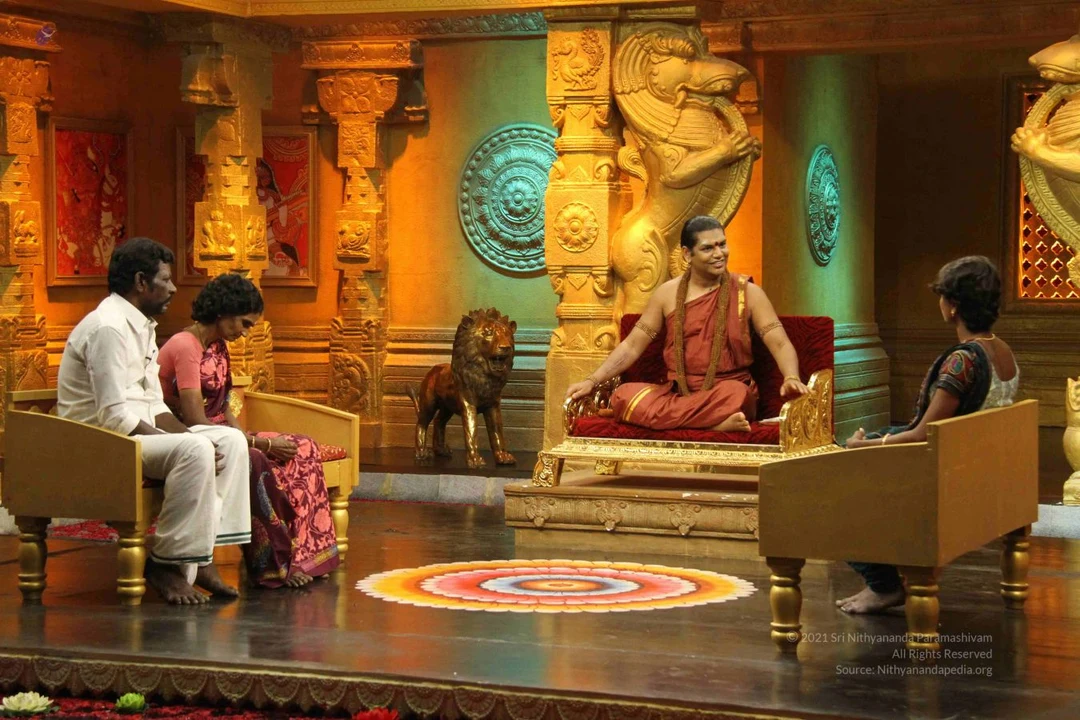
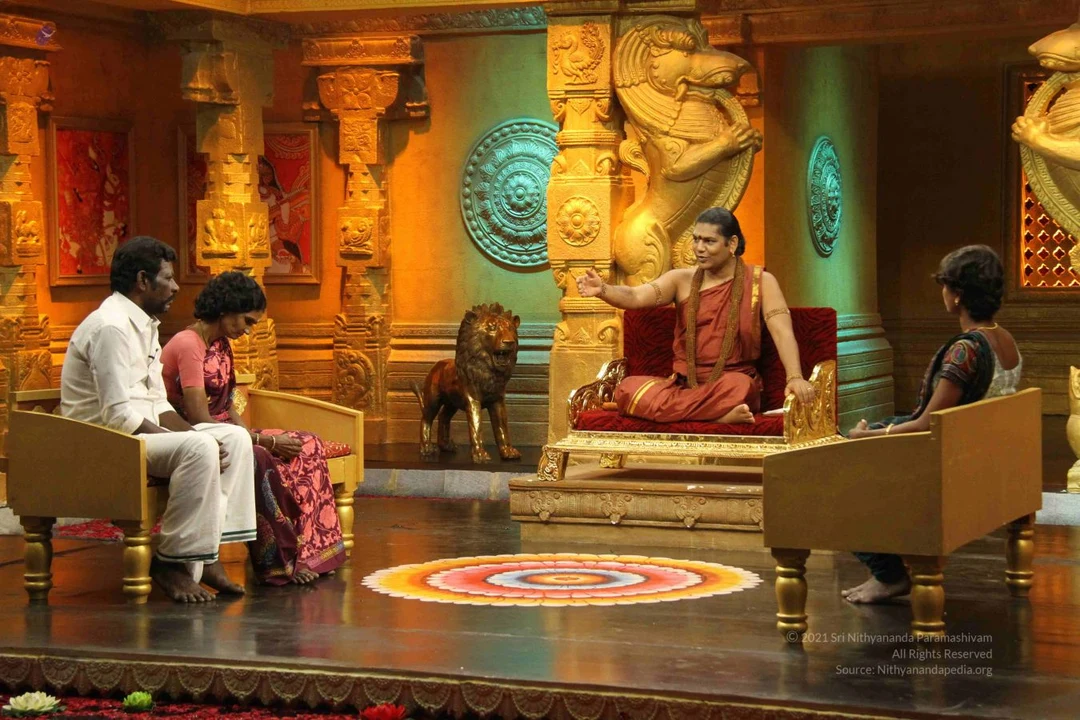
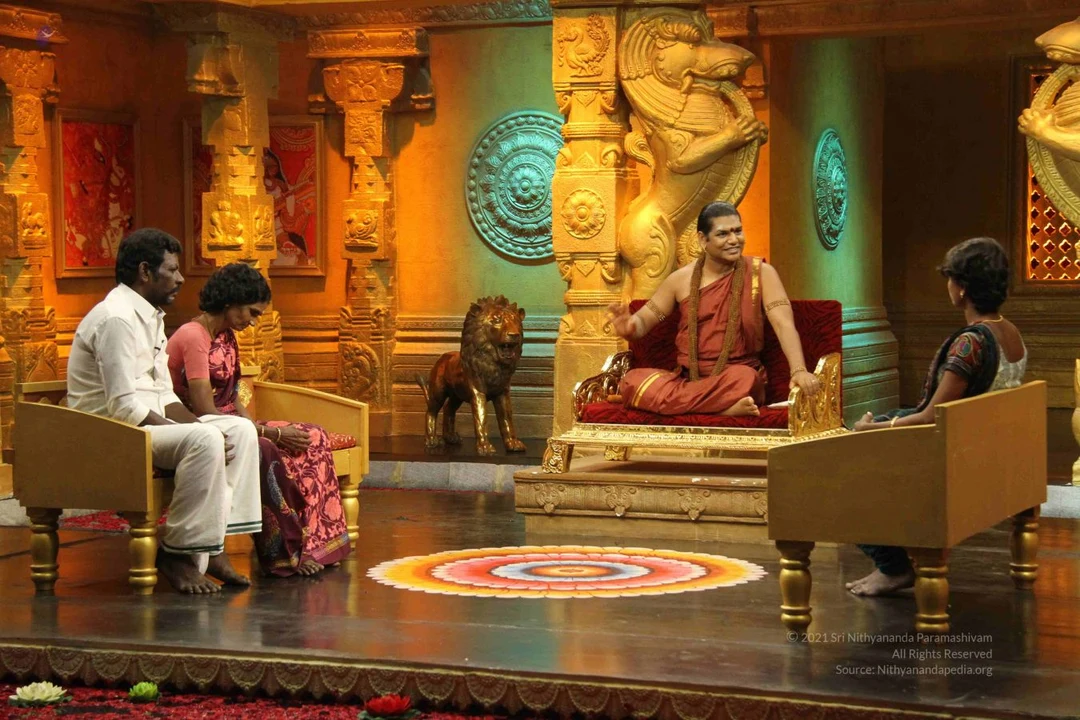
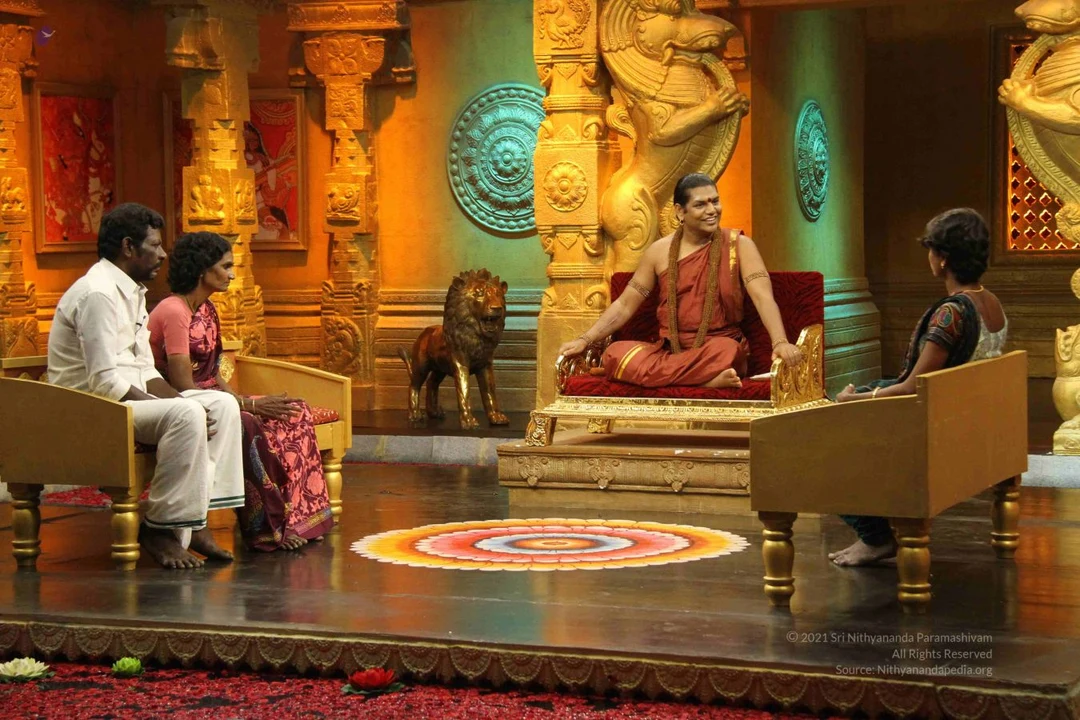
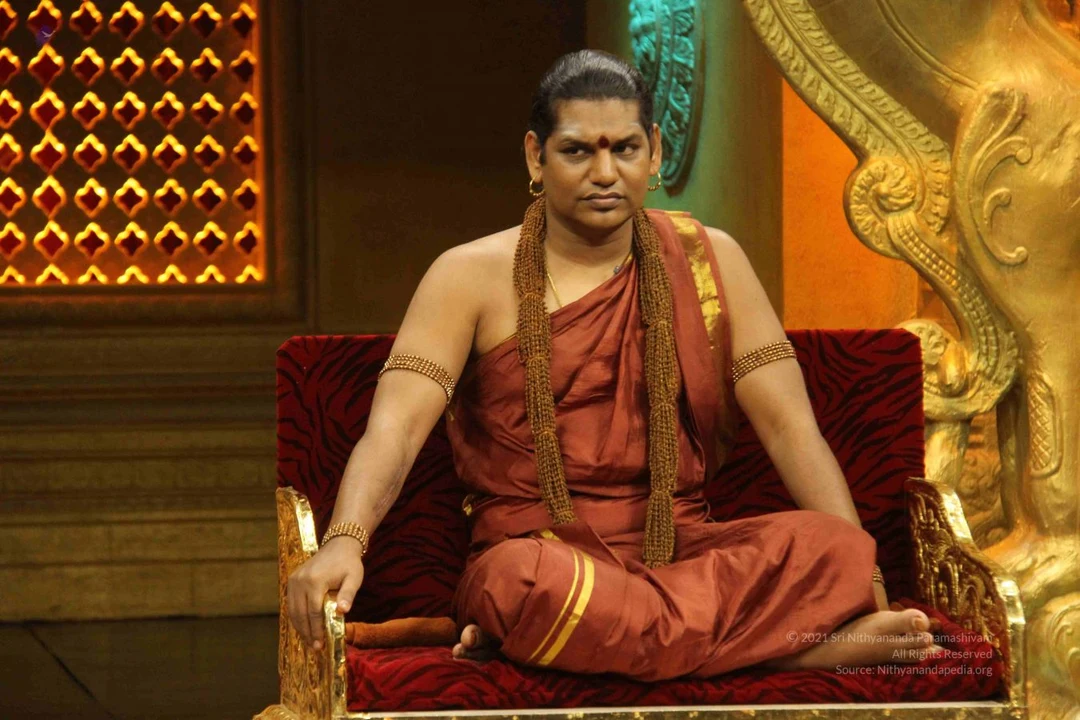
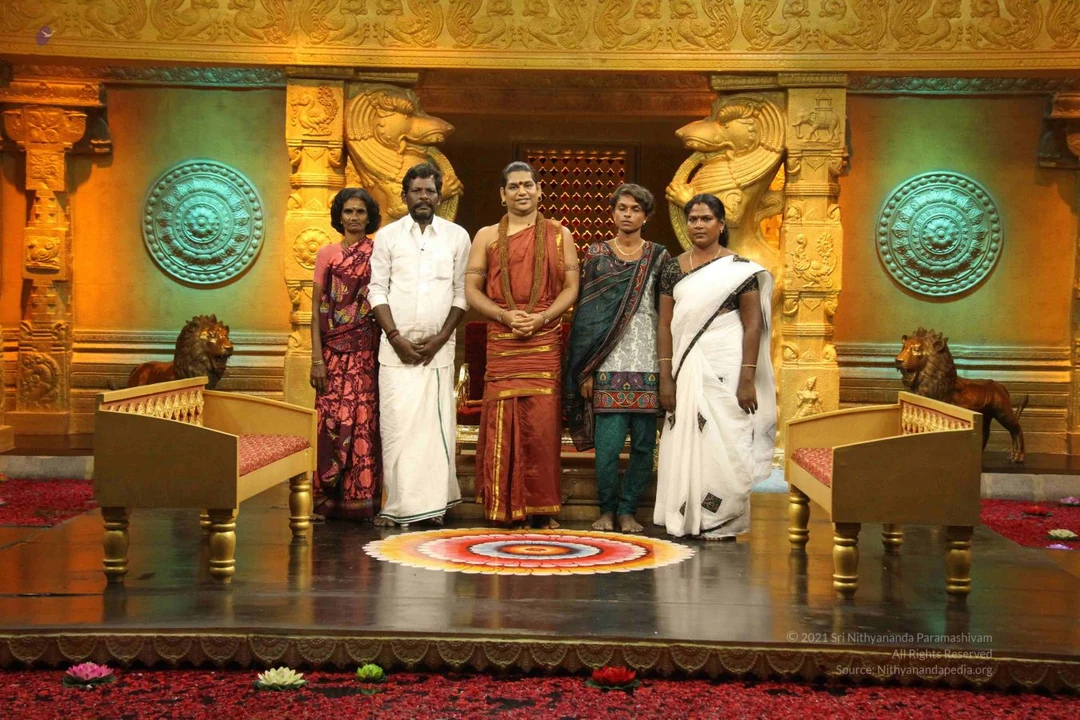
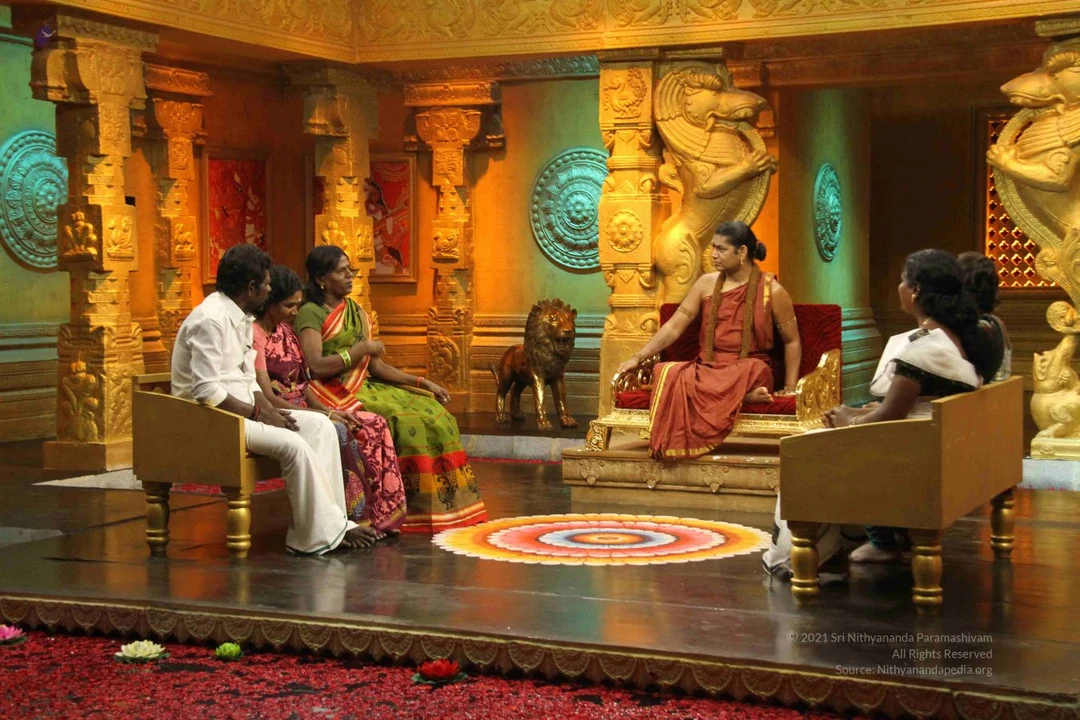
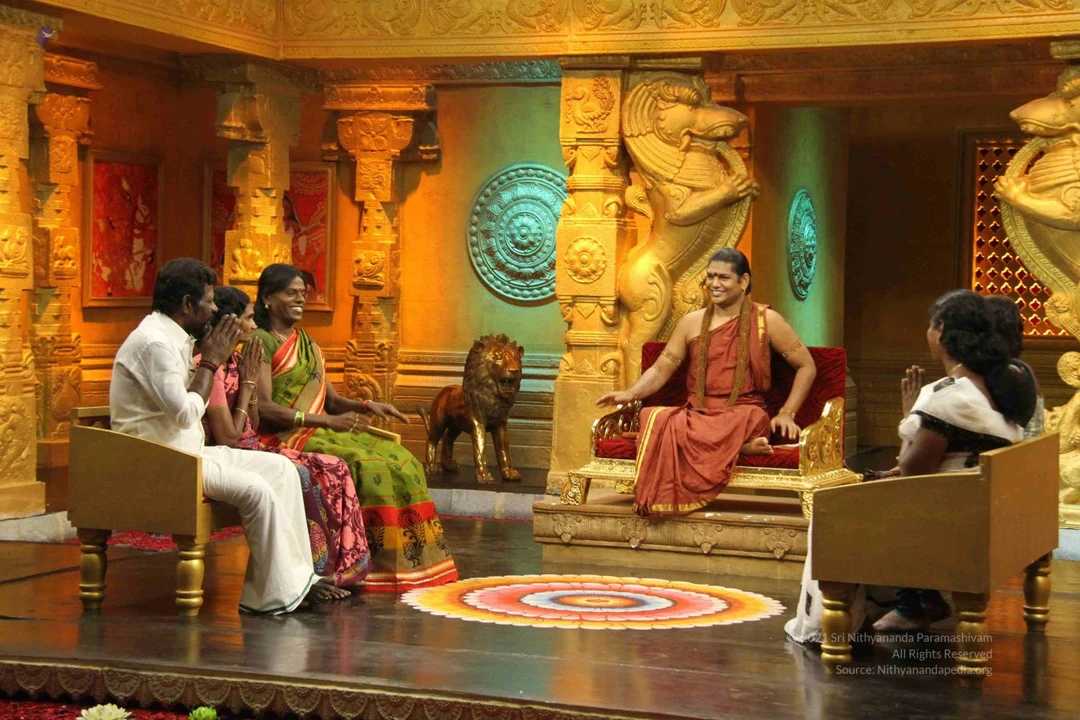
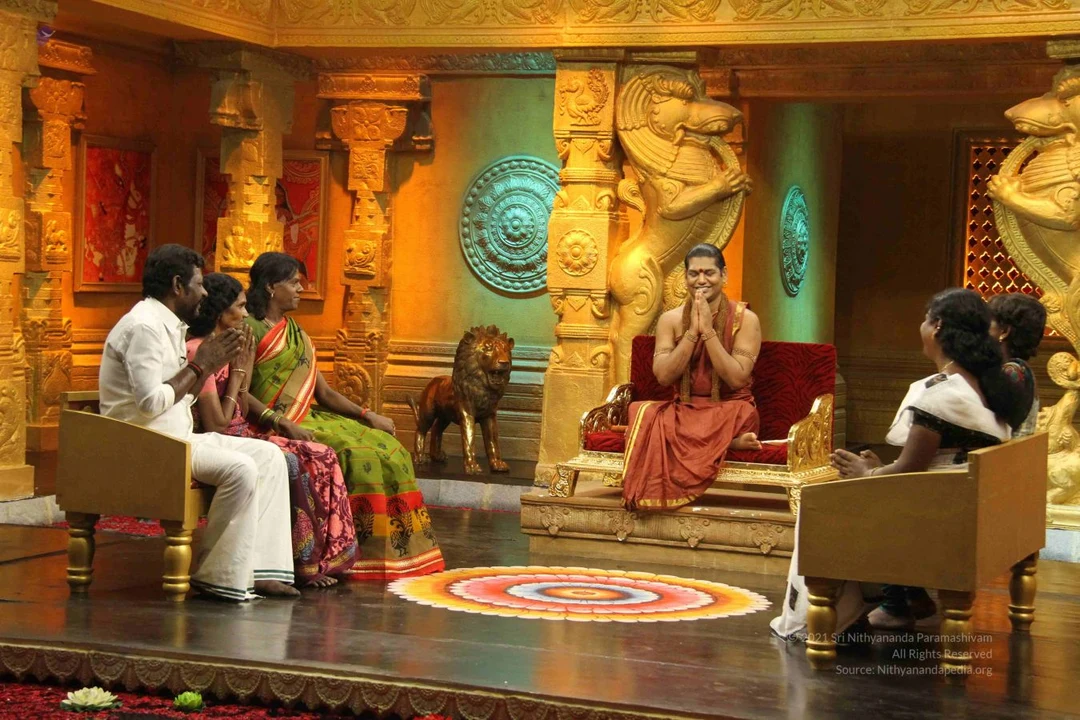
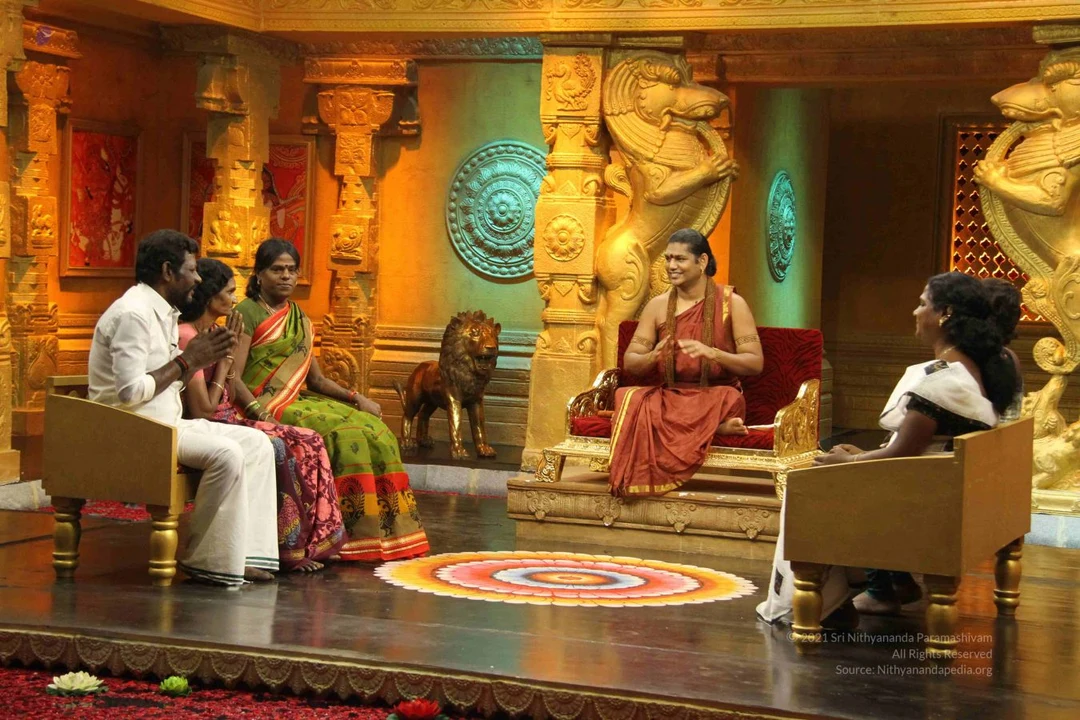
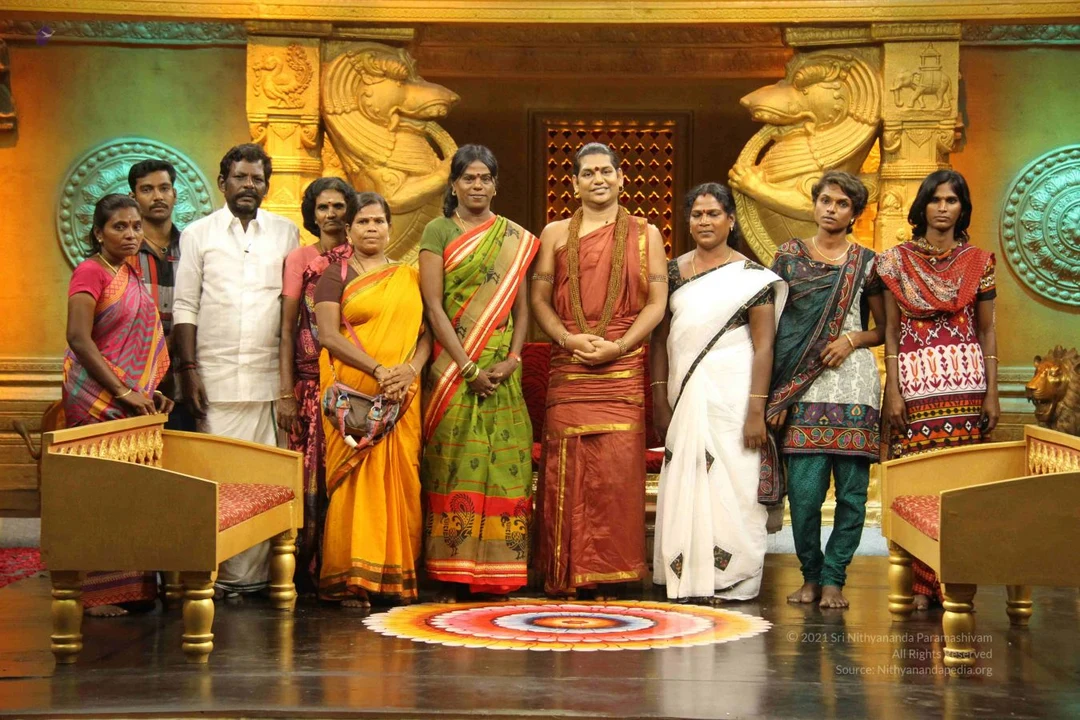
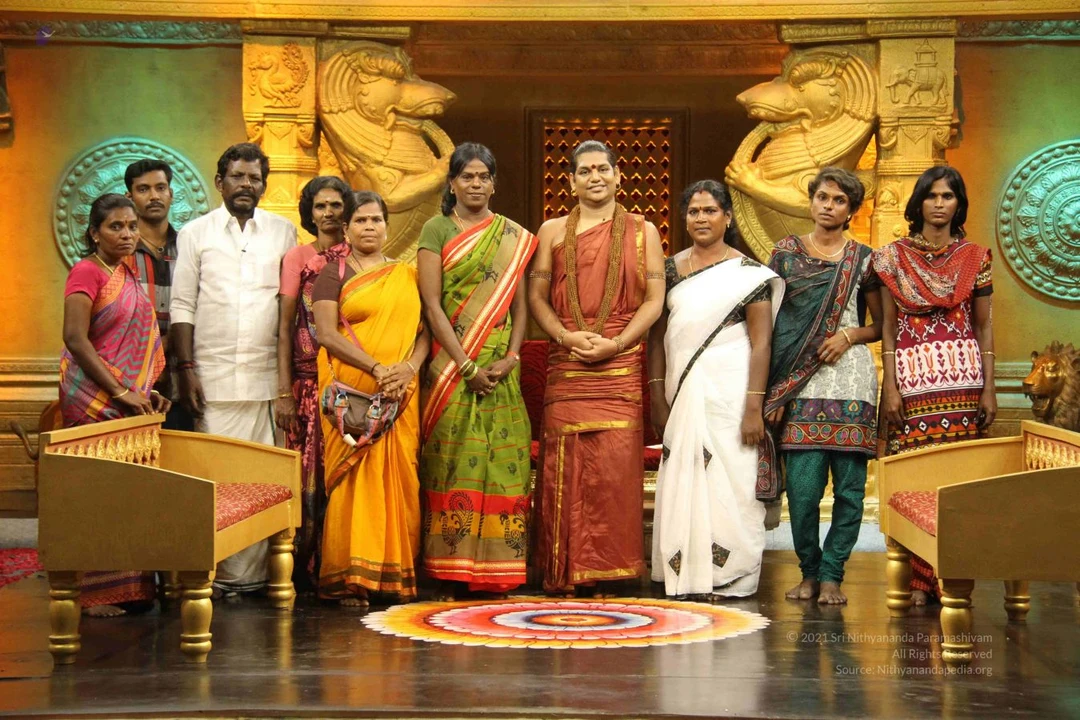
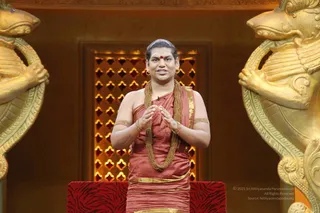
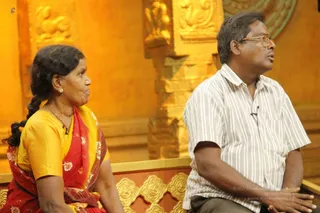
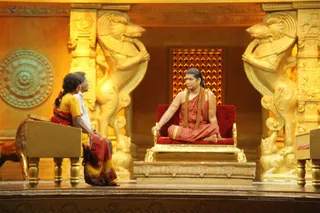
A man stands centrally on a raised red-and-black tiger-striped platform in a gilded hall, with two large golden mythical lion-like guardian figures flanking him on either side. He wears a rust-red draped garment with gold borders, a long beaded mala necklace of gold-toned beads, gold armbands and bangles, and a red dot on his forehead, with his hair swept back. He stands with palms pressed together in a greeting gesture, facing forward, before an ornate golden lattice window. The setting resembles a discourse stage. Printed text in the lower right reads a copyright credit and source attribution.Two people sit side by side on a gilded wooden bench in front of a golden carved temple-style wall with ornate figurative relief. On the left, a woman with a long braid wears a yellow blouse and a red-and-yellow floral saree, and she gazes to the right. On the right, a man with short grey hair and rimless glasses wears a white-and-grey striped short-sleeved shirt with a small clip-on microphone, looking off to the side while speaking. Their hands rest on their laps. The gold and orange setting resembles a studio set.A man with swept-back long dark hair and a red bindi sits cross-legged on a red and black zebra-patterned cushioned throne with ornate gold arms. He wears a rust-red dhoti and matching shawl, a long rudraksha-style mala and gold beaded necklace, and gold armlets and bangles. He gazes off to the side. Behind him is a gold lattice screen with glowing amber diamond motifs and gold carved drapes frame the scene. A pedia.org. Swamiji (probable): the seated man has long swept-back hair, a bindi, rudraksha mala and ornate gold necklace consistent with the page's reference, seated in ceremonial dress on a thronePhoto of a satsang on an ornate gold stage with carved golden lion-like guardian figures flanking a red-cushioned gold throne. A man in a rust-orange dhoti and matching shawl, with long swept-back hair, a long gold-coloured beaded necklace and gold armbands, sits cross-legged on the throne with one hand raised mid-gesture as he speaks. To the left, a woman in a yellow blouse and red-and-yellow sari gestures toward him while a second person sits beside her. A lattice panel glows behind the throne. Appearance-based label: a person, seated in the speaker role on the throne.A photograph of a golden stage set with ornate carved pillars topped by rearing lion-like figures and circular carved medallions on the walls. A man with long dark hair, wearing a red-orange robe and a sash, sits cross-legged on a red cushioned golden throne at centre, appearing to be a central figure in a discourse. To the left, a woman in a yellow and red sari with a long braid and a man in a white shirt sit on a low golden bench facing him. Two wooden lion-shaped stools flank the stage, and a small stage light is visible at the left edge. Three people are present on stage.A man in a red-orange robe with a gold-coloured shawl sits cross-legged on a red velvet and gold throne on a golden stage, flanked by carved golden lion-headed pillars. He wears gold armlets and a long braid, and faces left toward two seated people. On the left a woman in a yellow and red saree with a long braid sits beside a man in a white shirt on a wooden-legged bench. The backdrop has a golden lattice panel and a round carved medallion. The stage is a lavish golden set with a dais in front.

KALABHAIRAVA-ASHTAMI-CELEBRATIONS-IN-BIDADI-ADIKAILASA
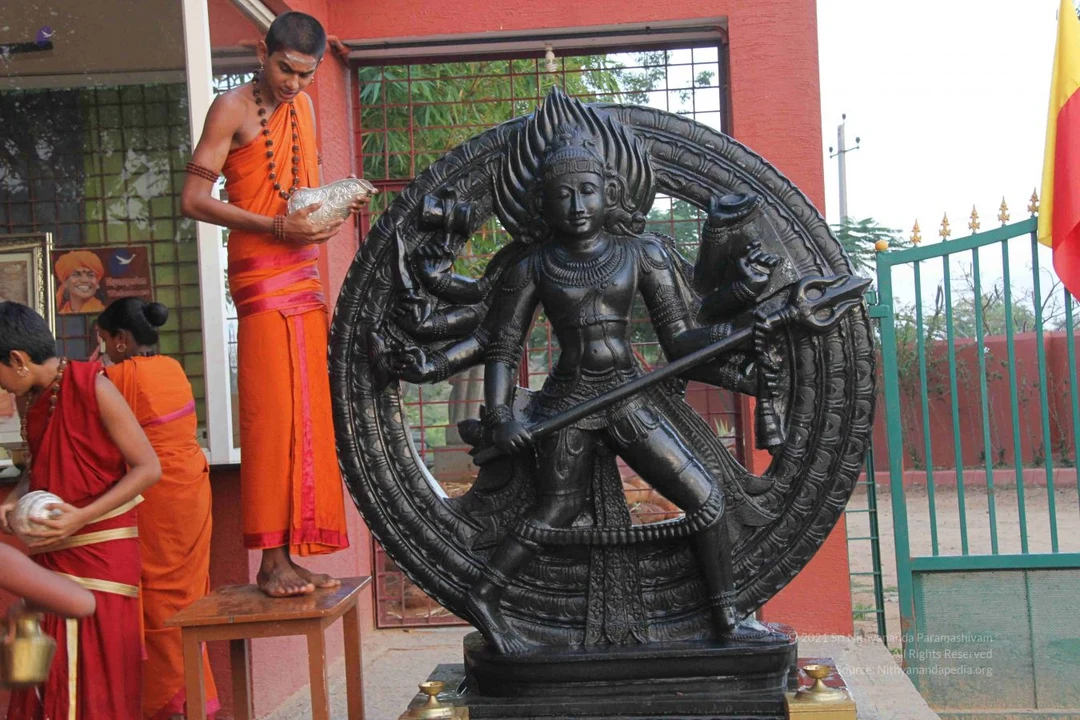
93 photosSource gallery
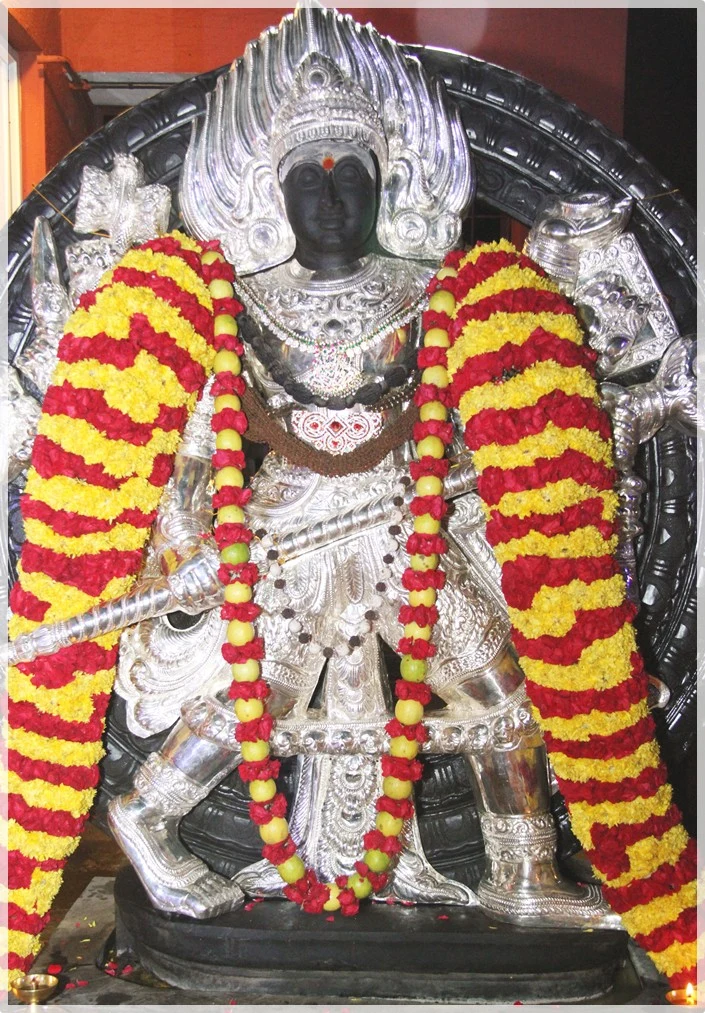
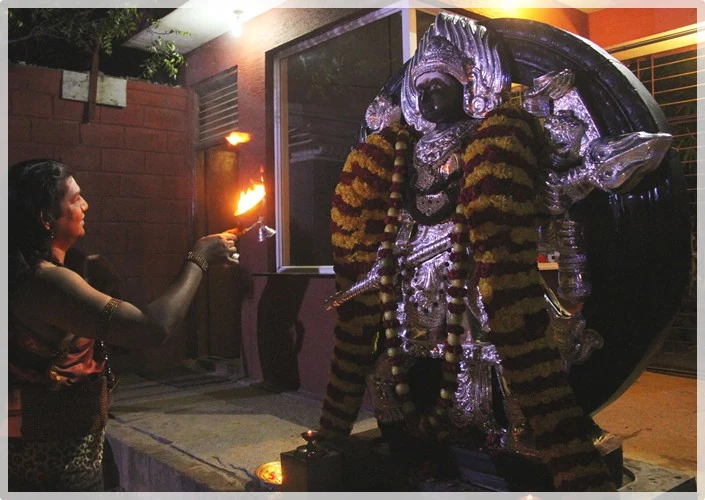
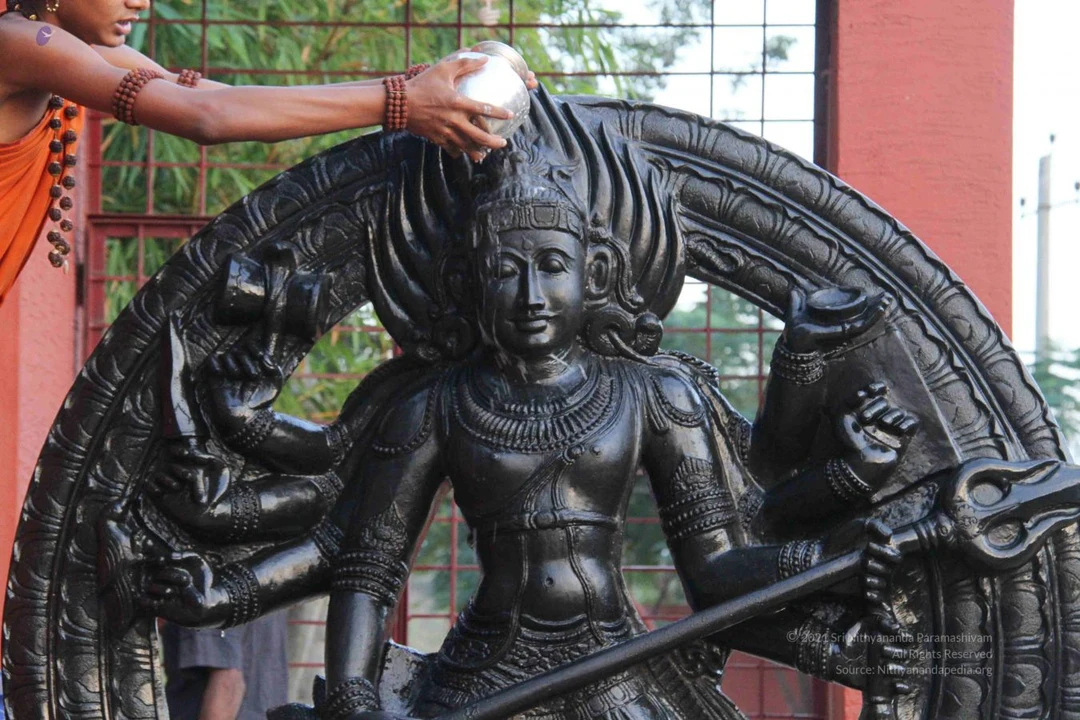
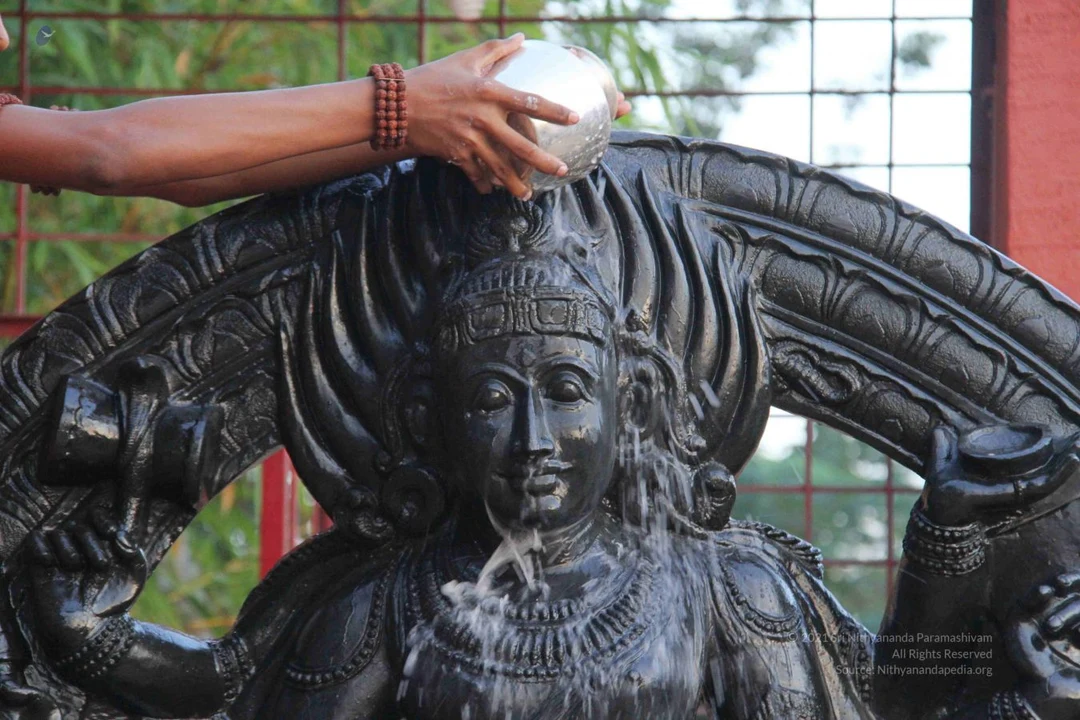
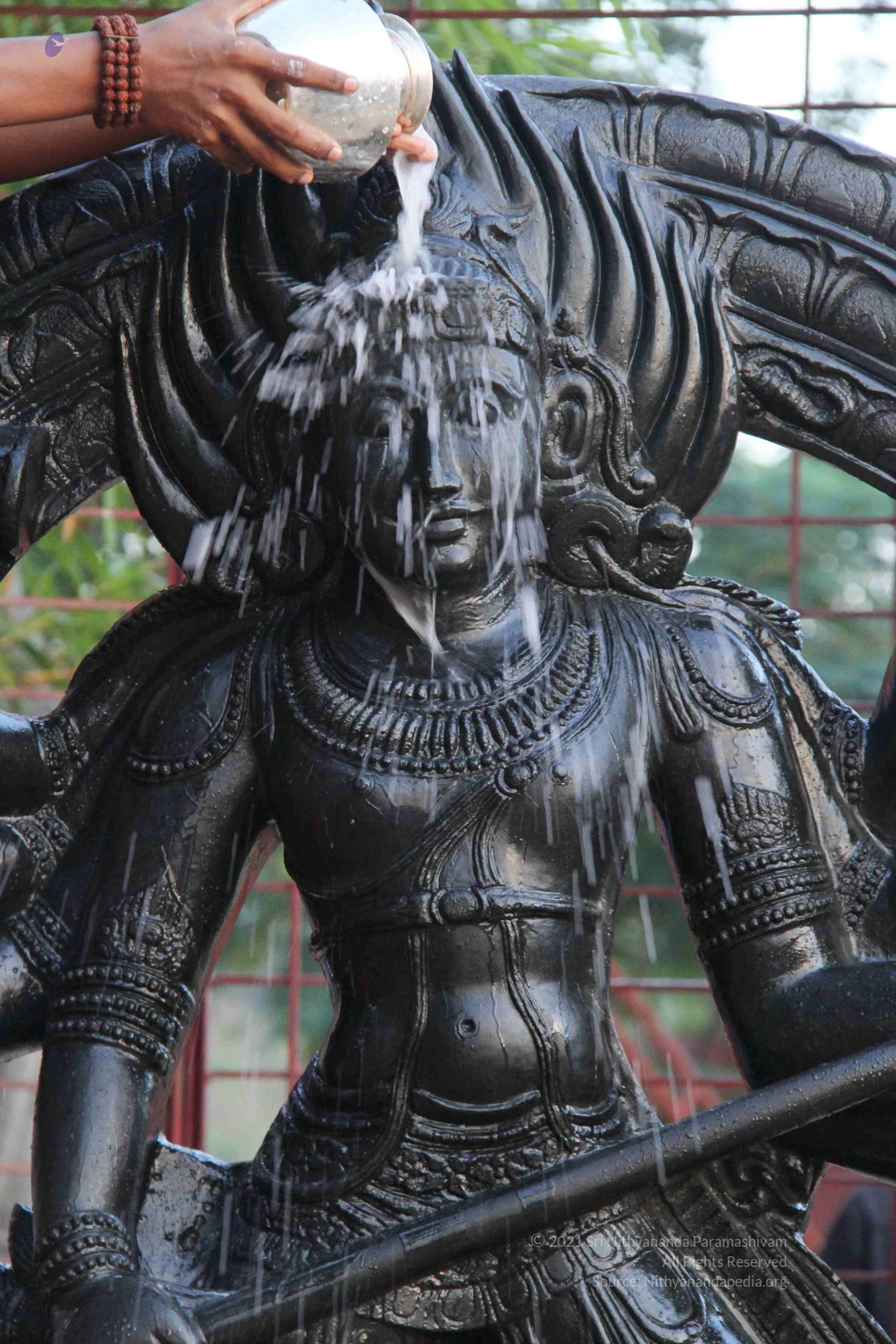
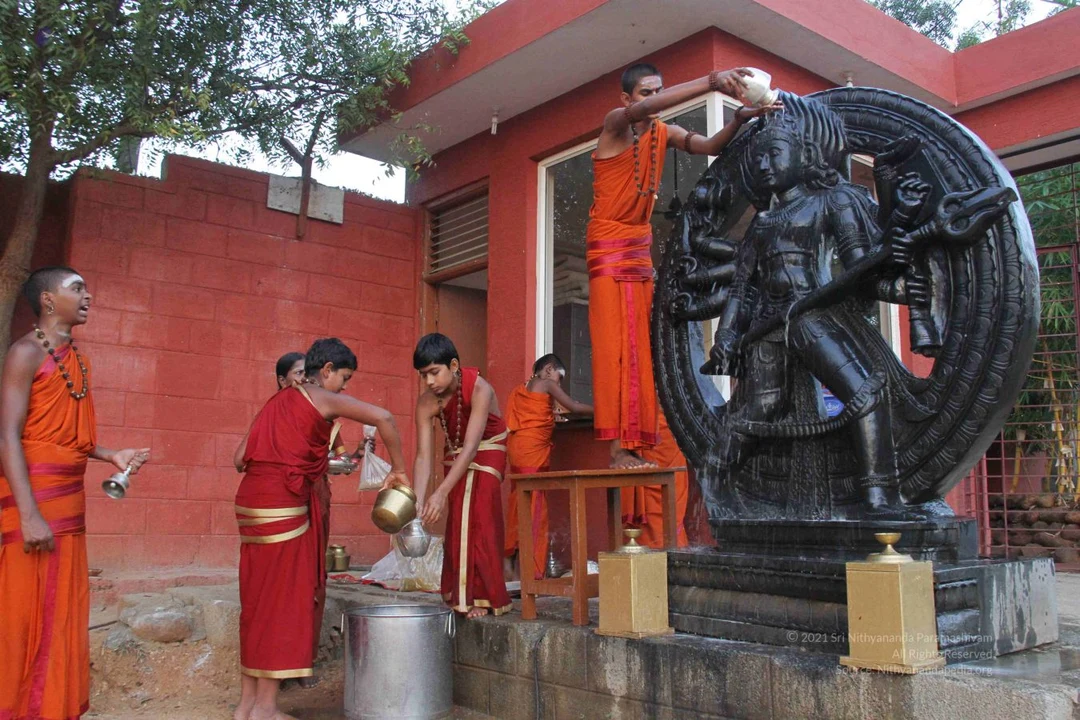
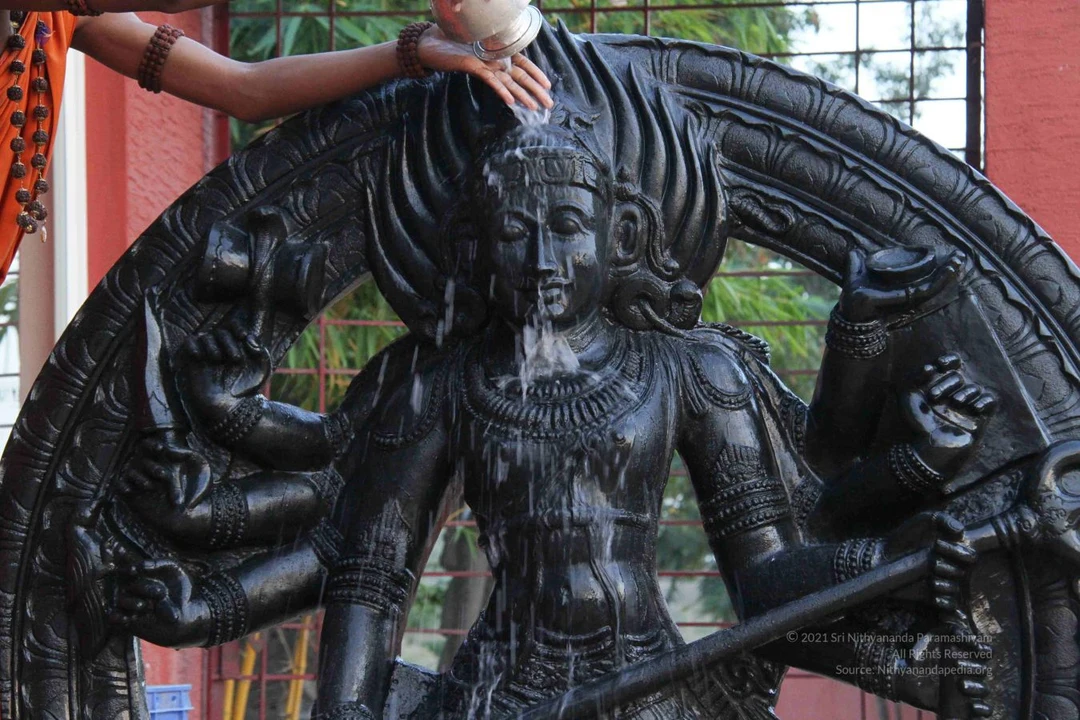
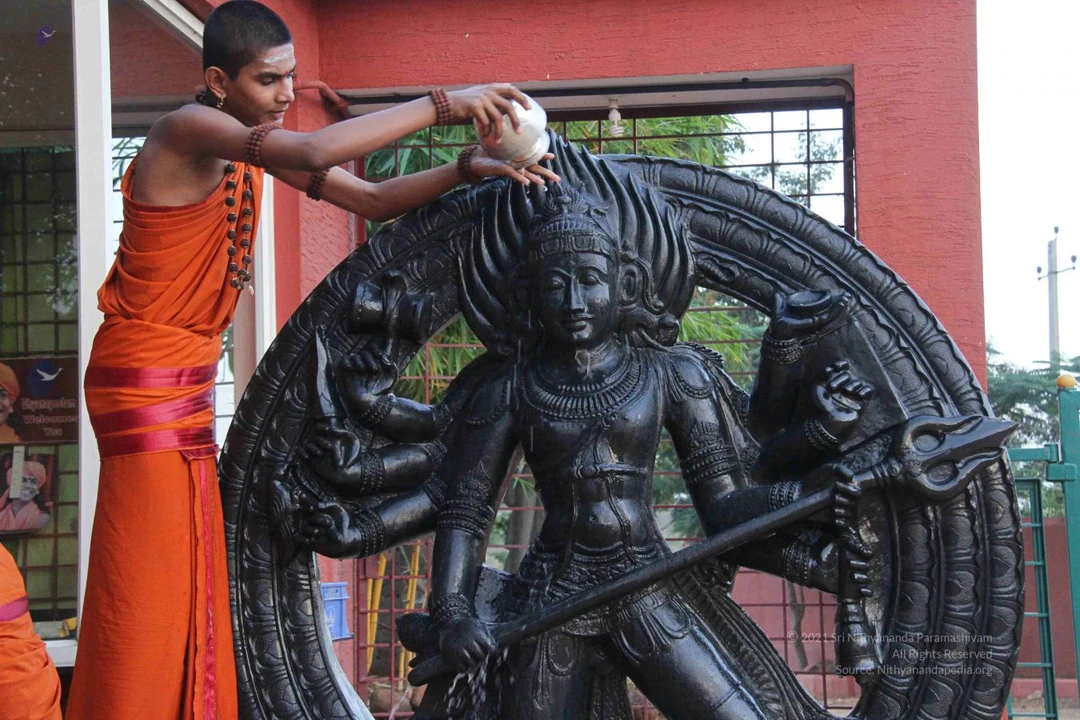
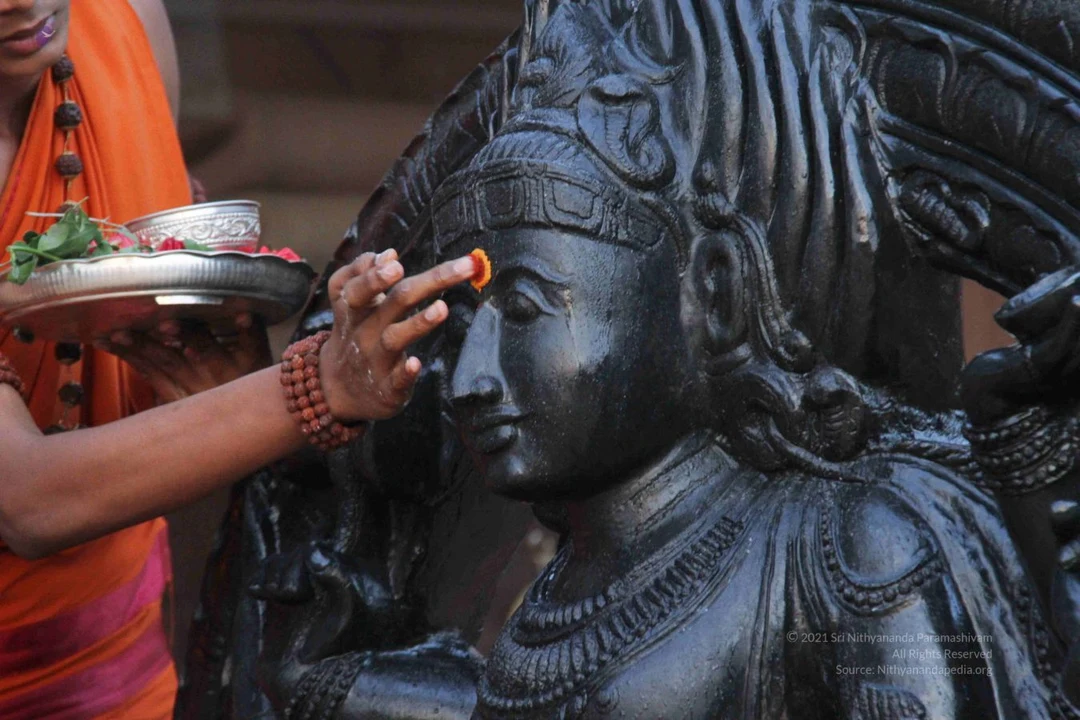
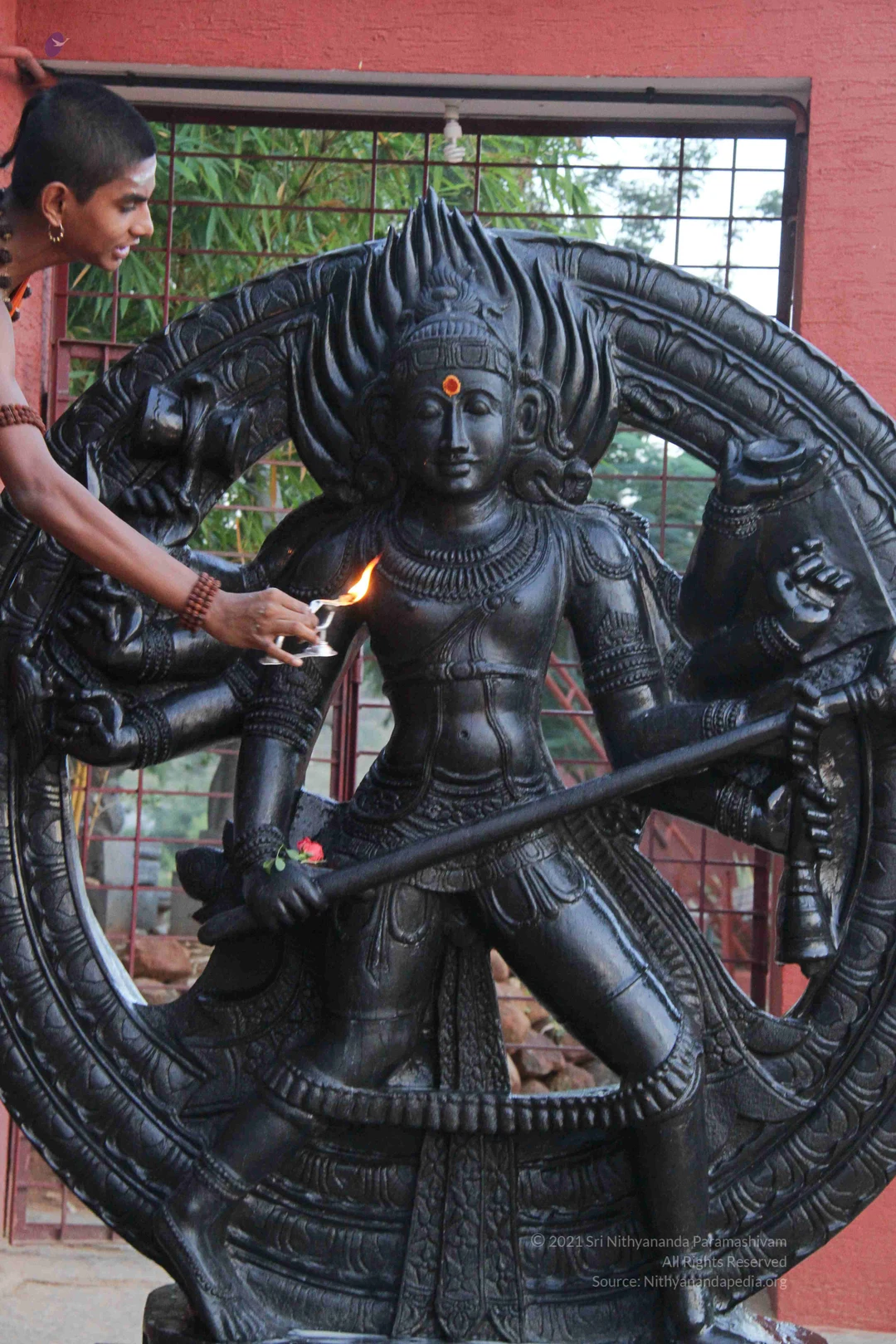
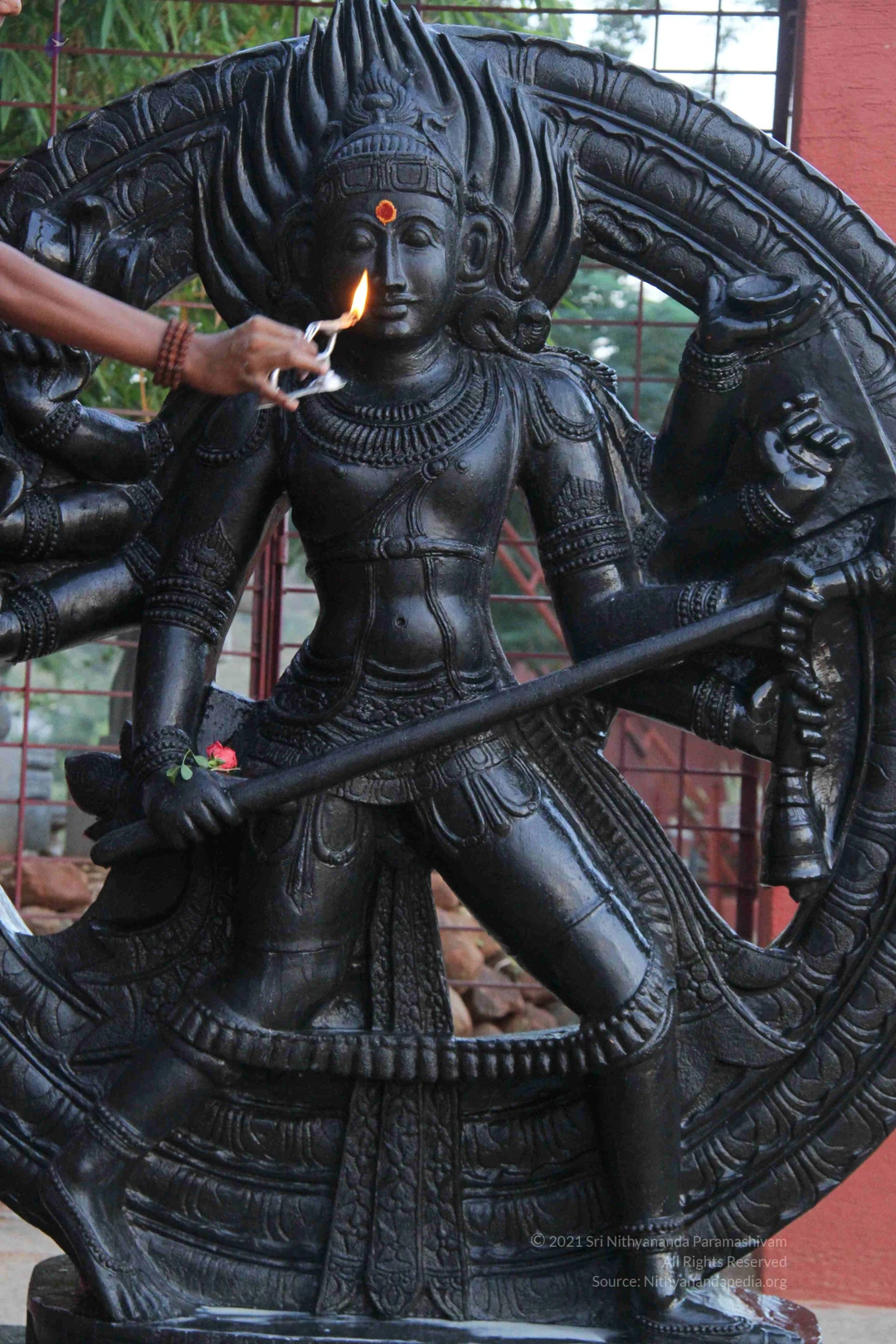
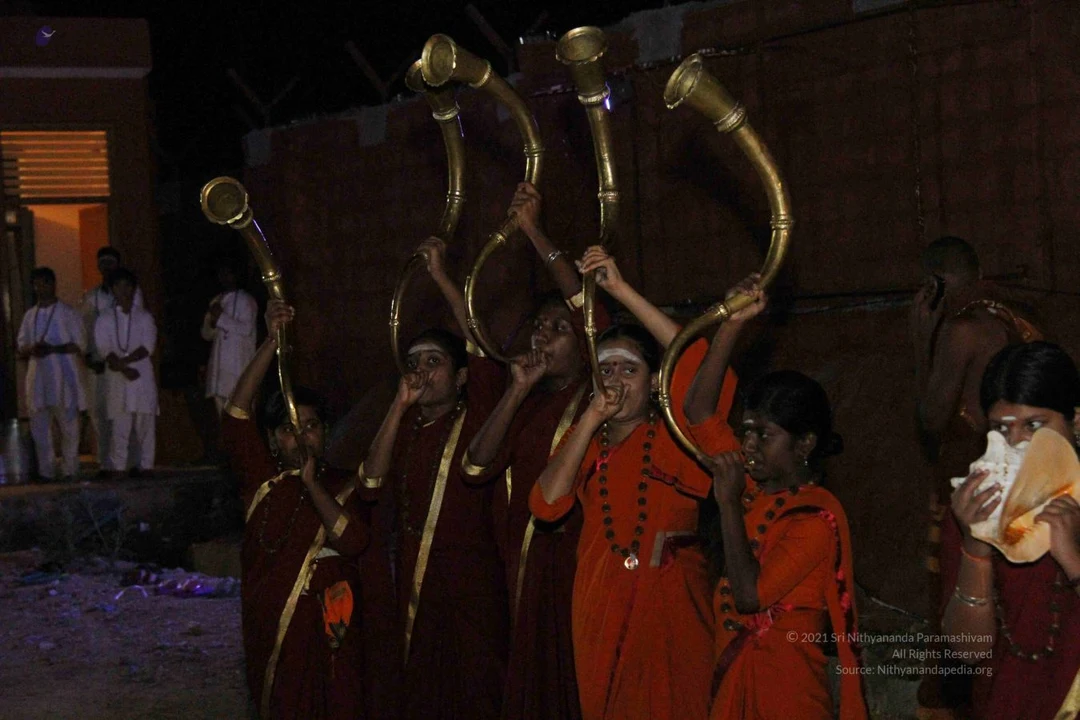
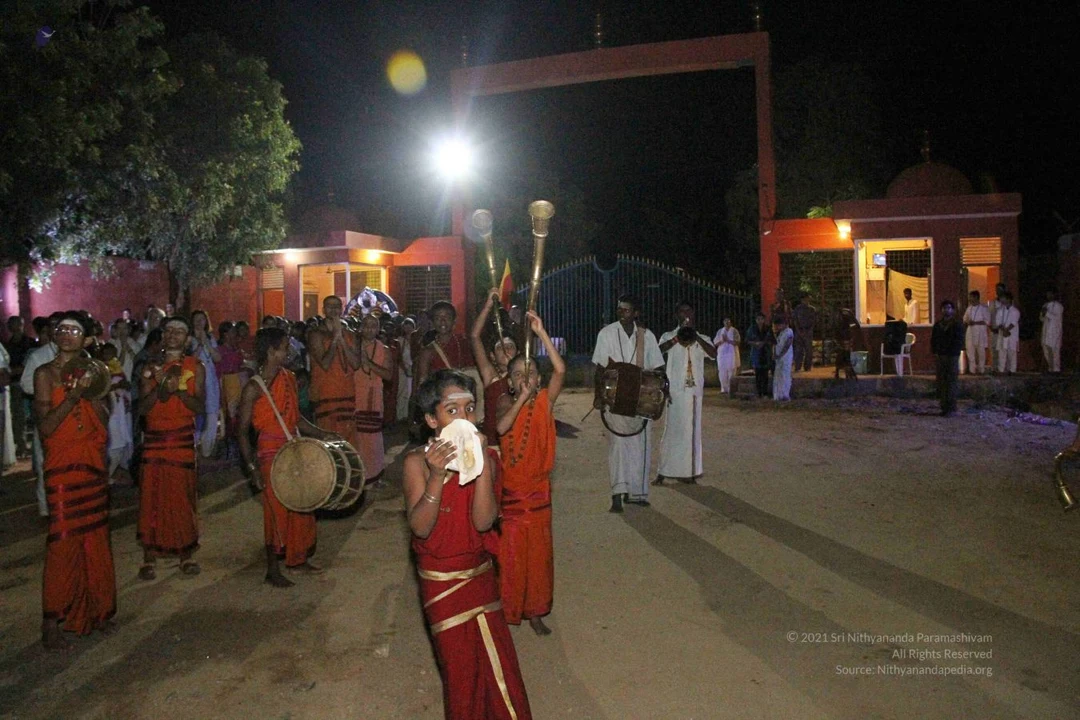
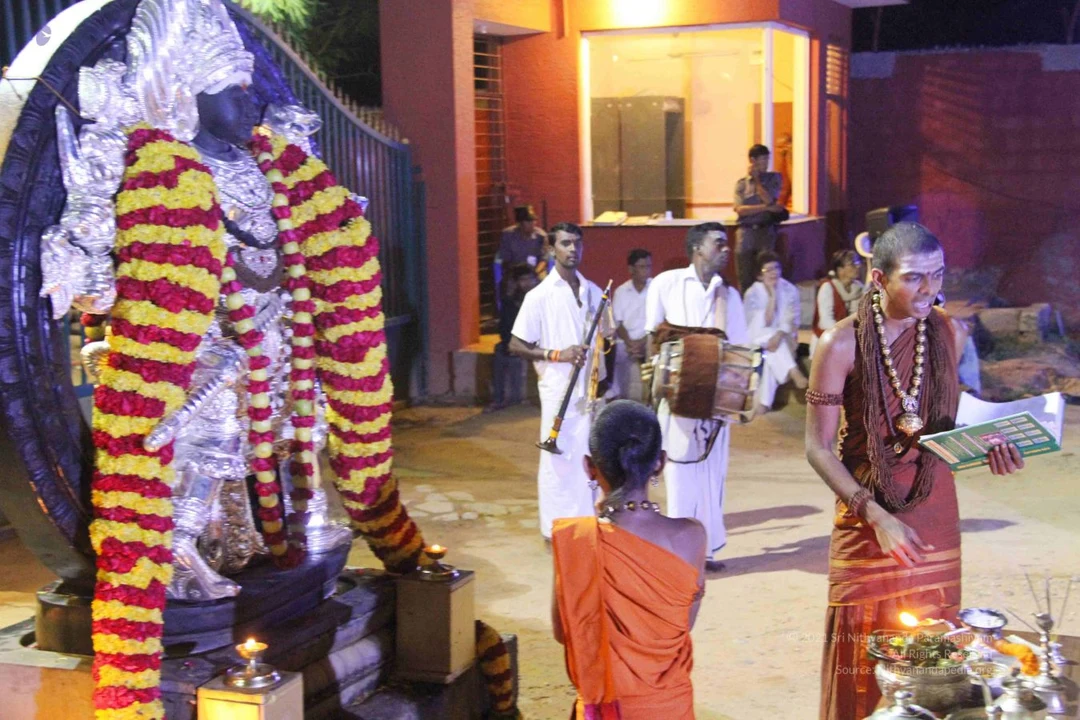
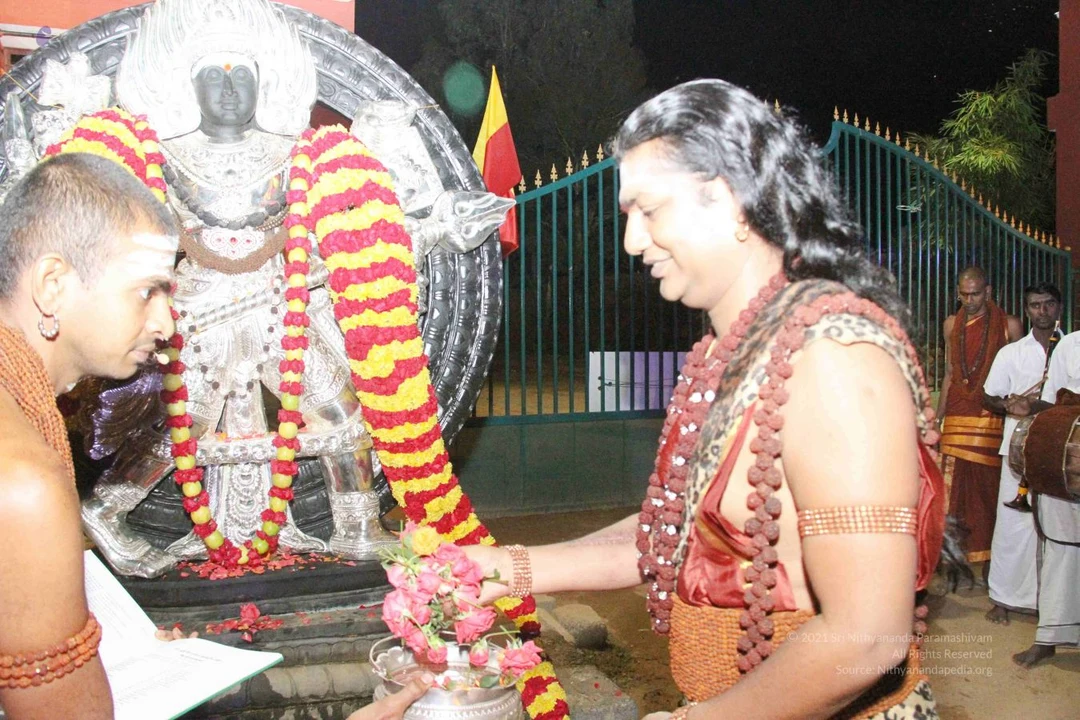
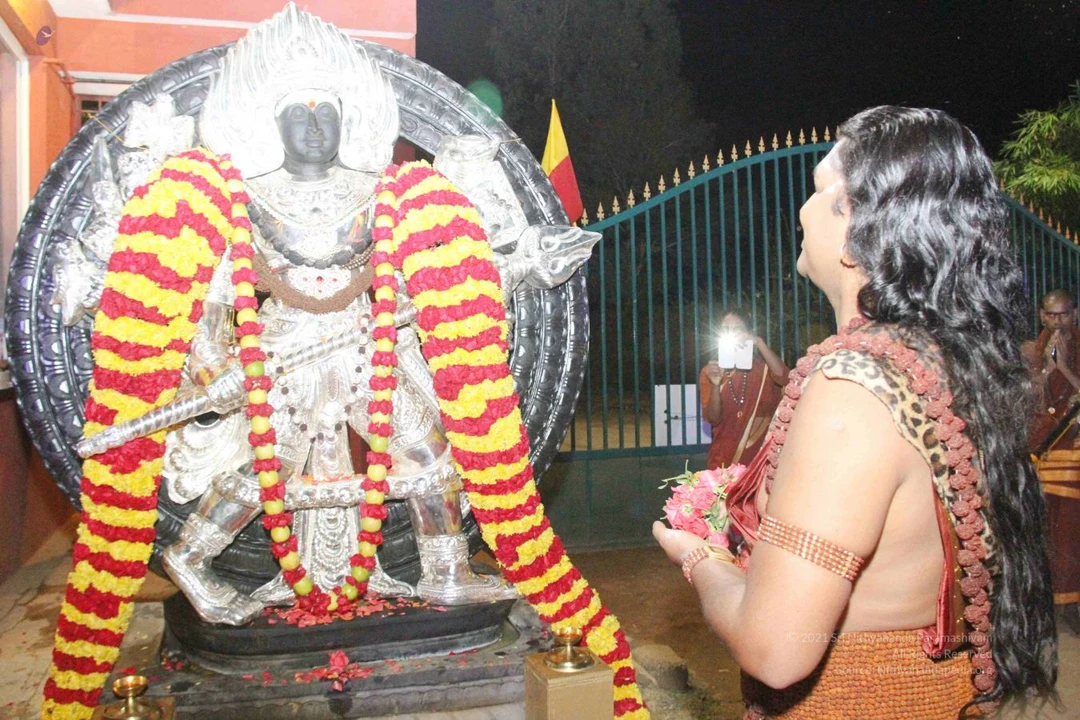
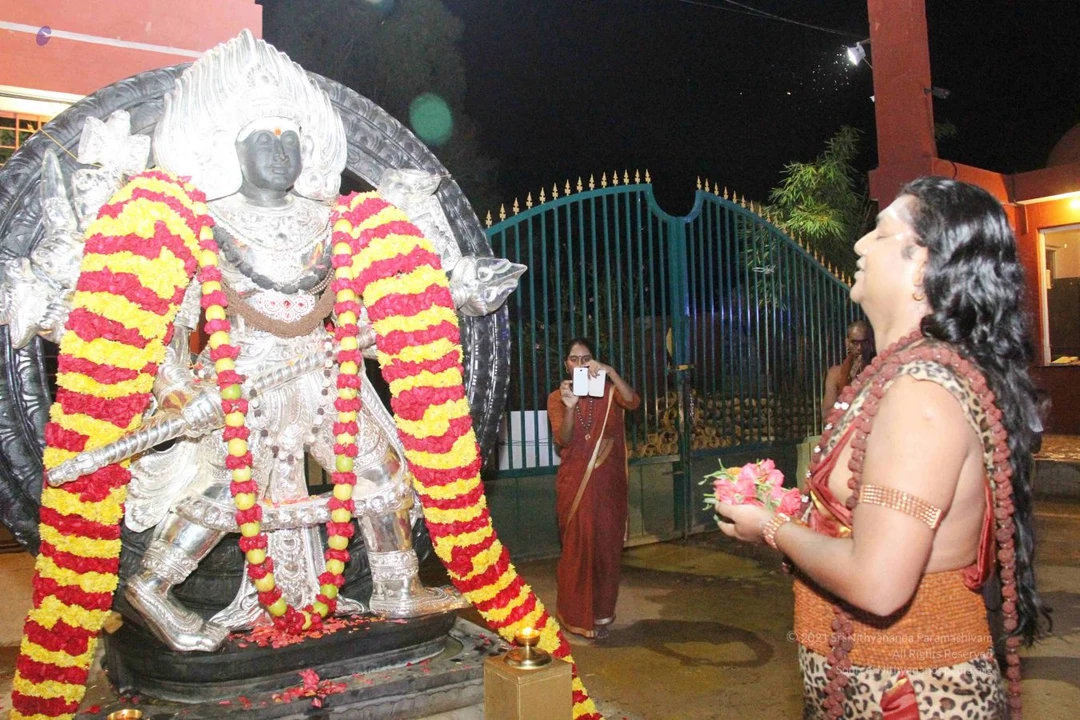
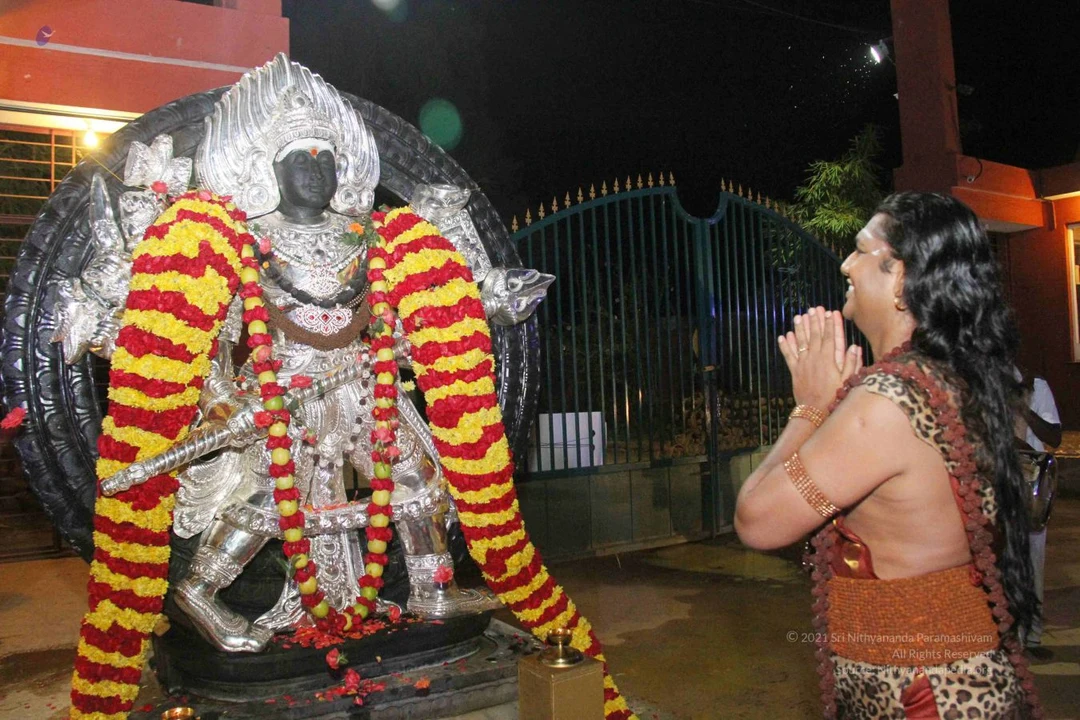
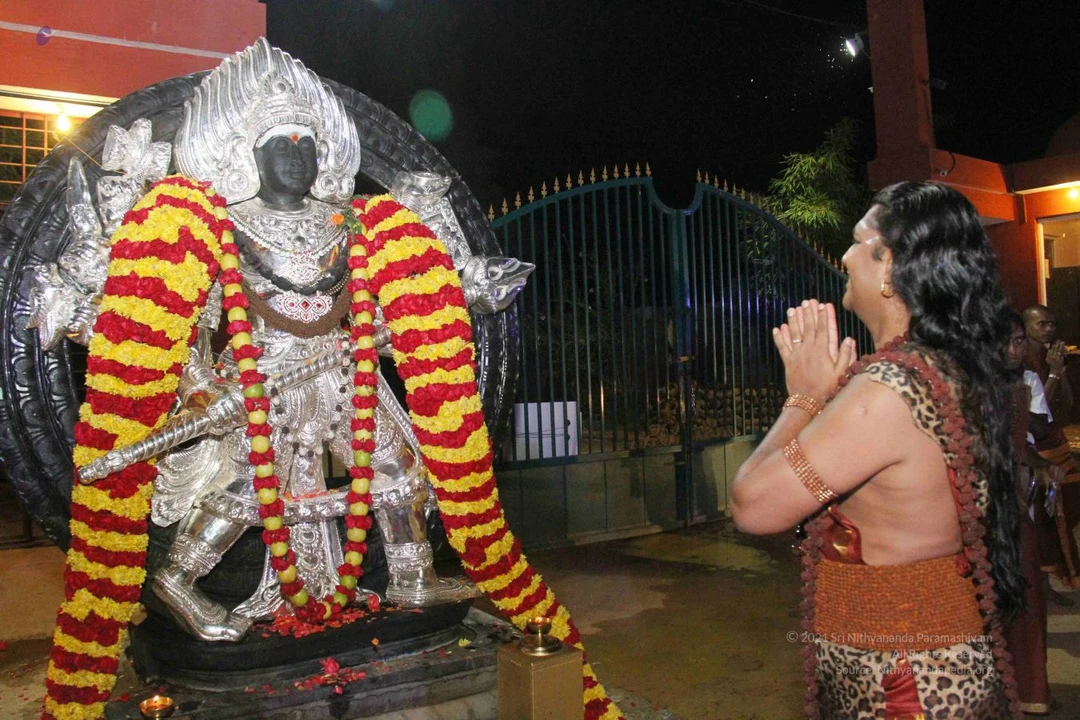
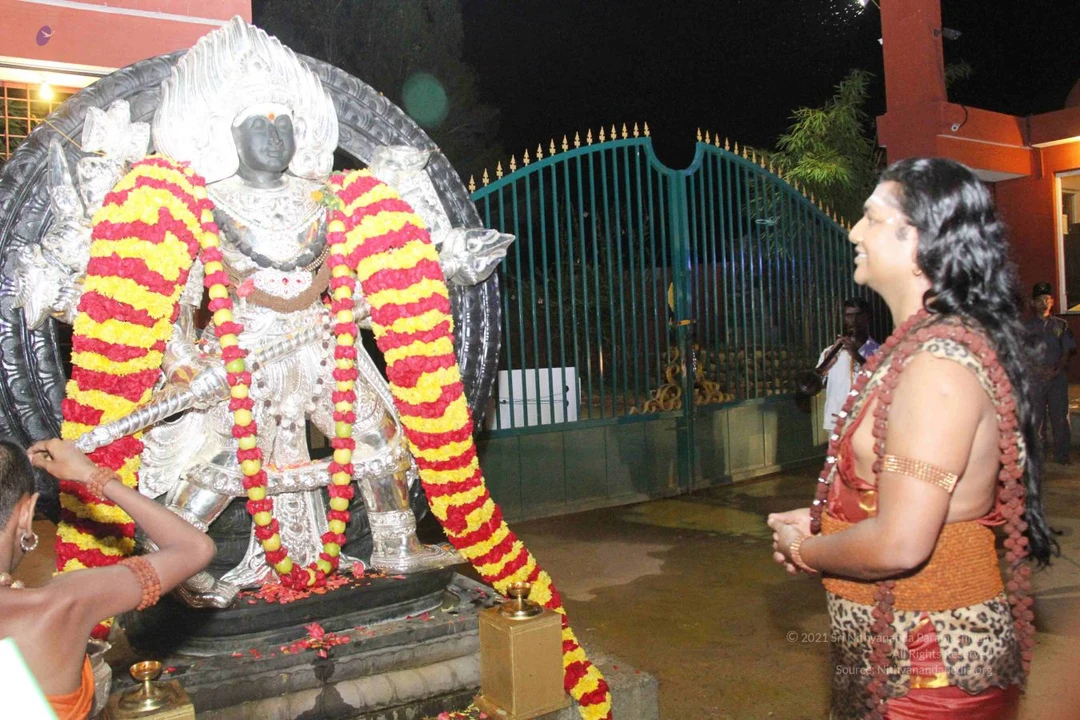
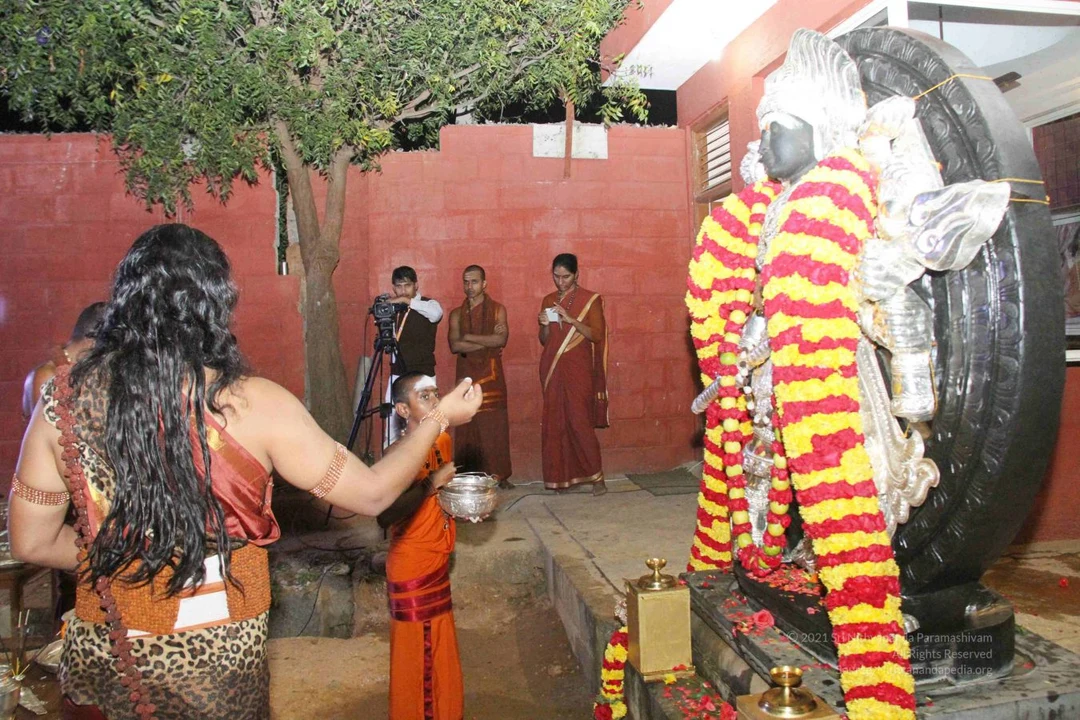
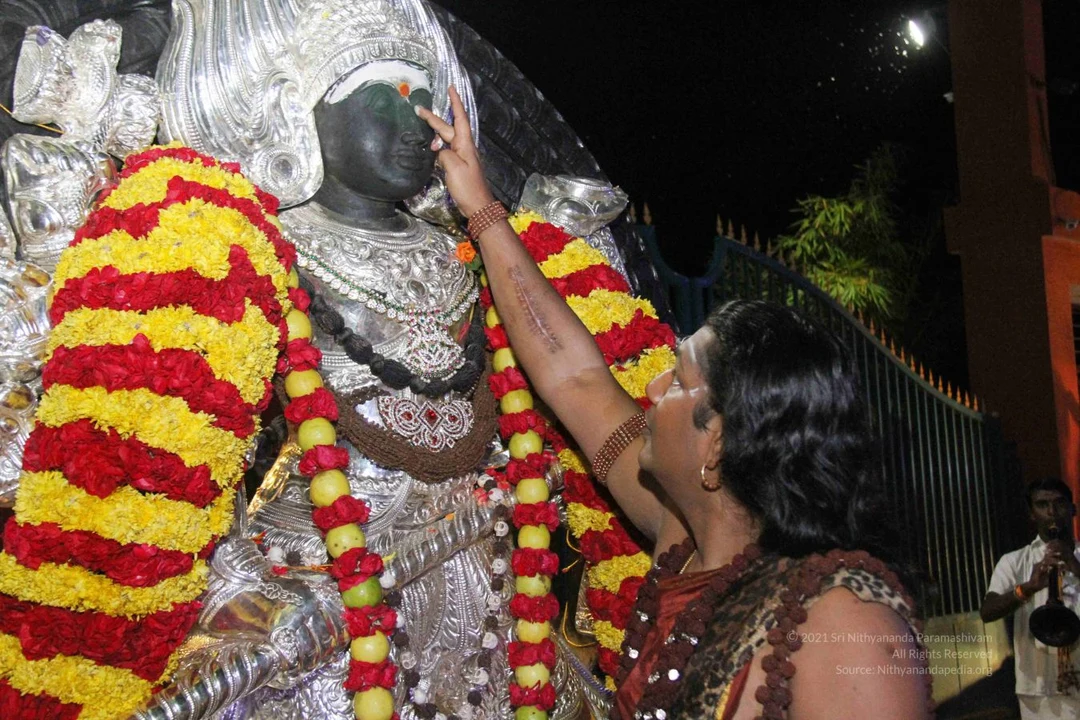
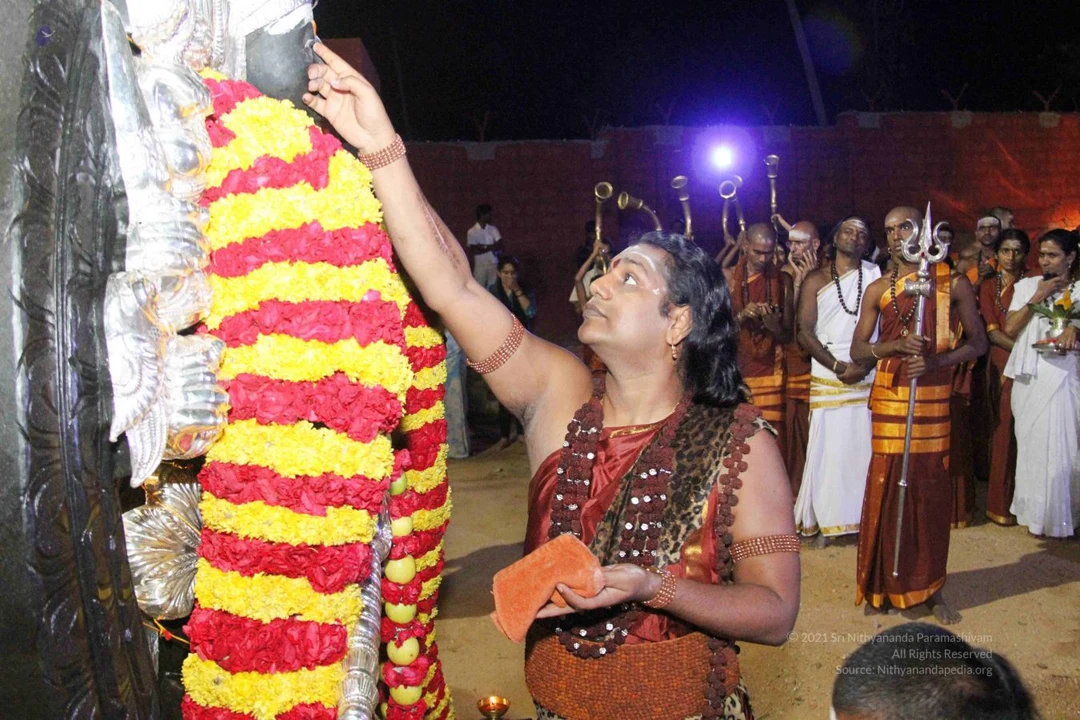
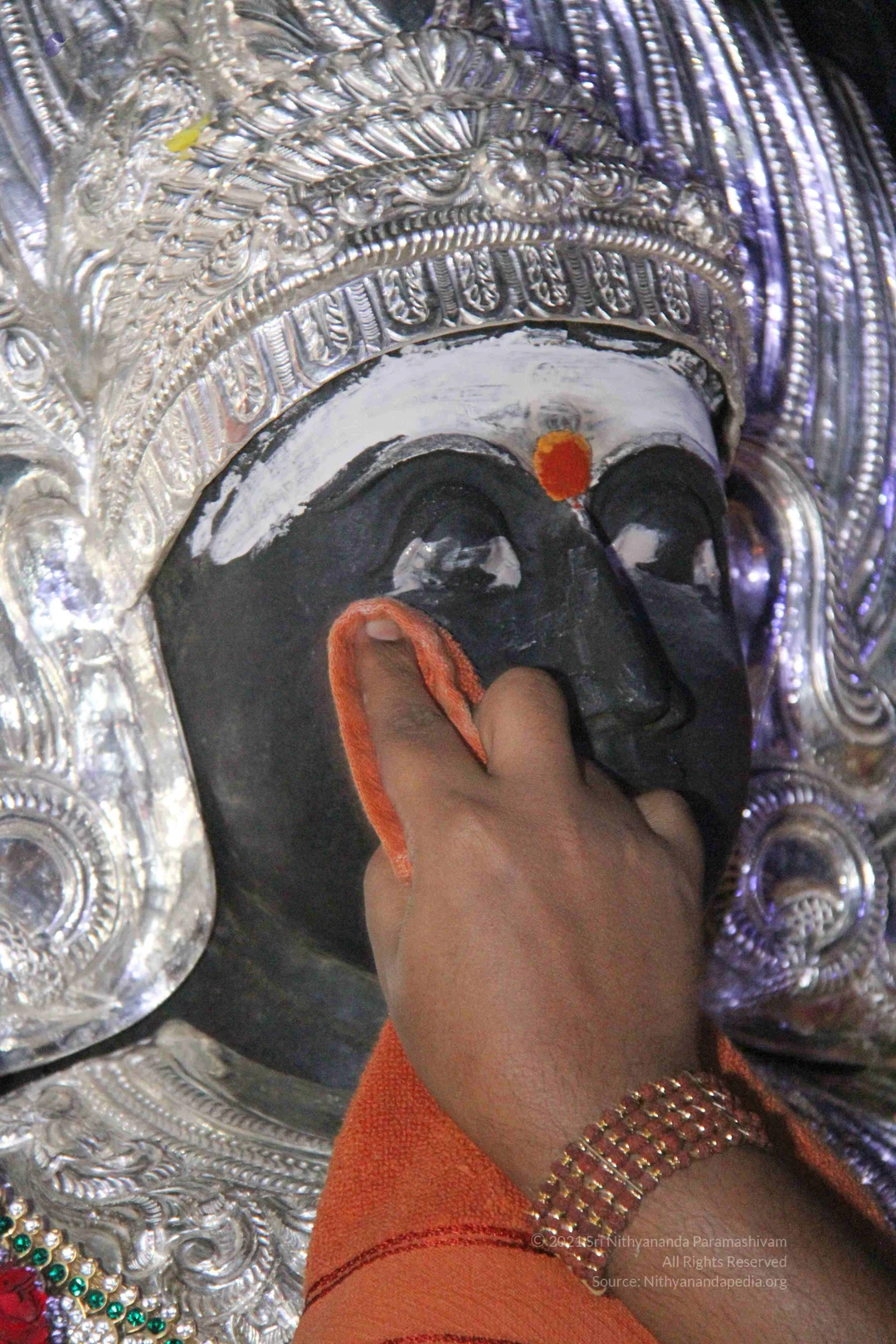
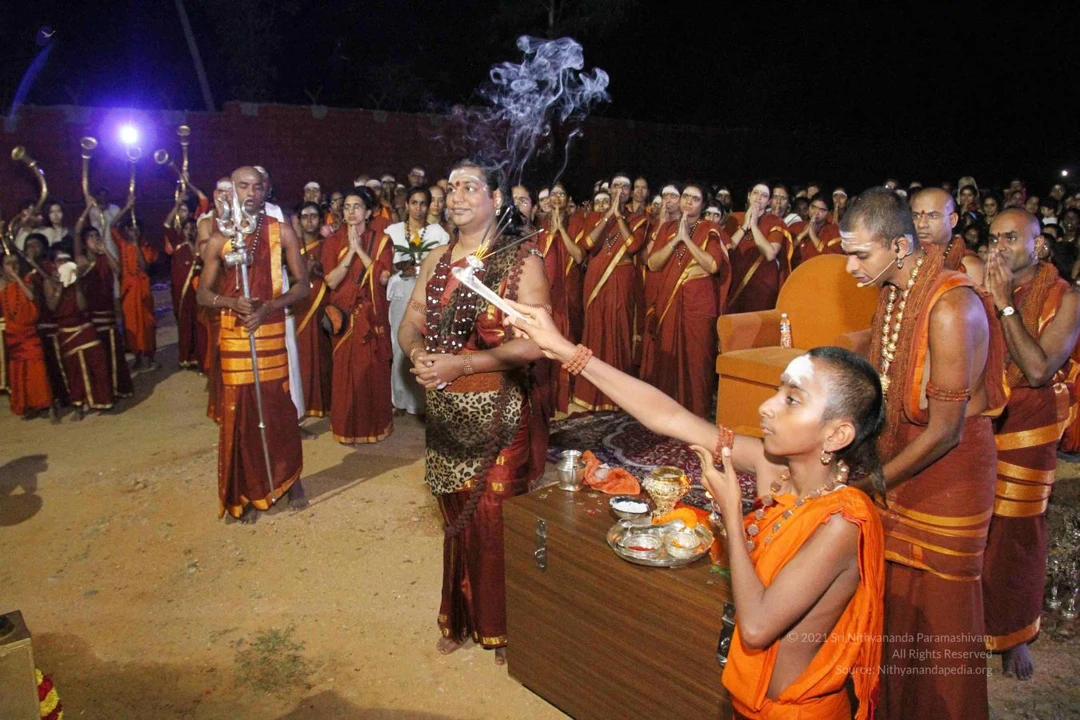
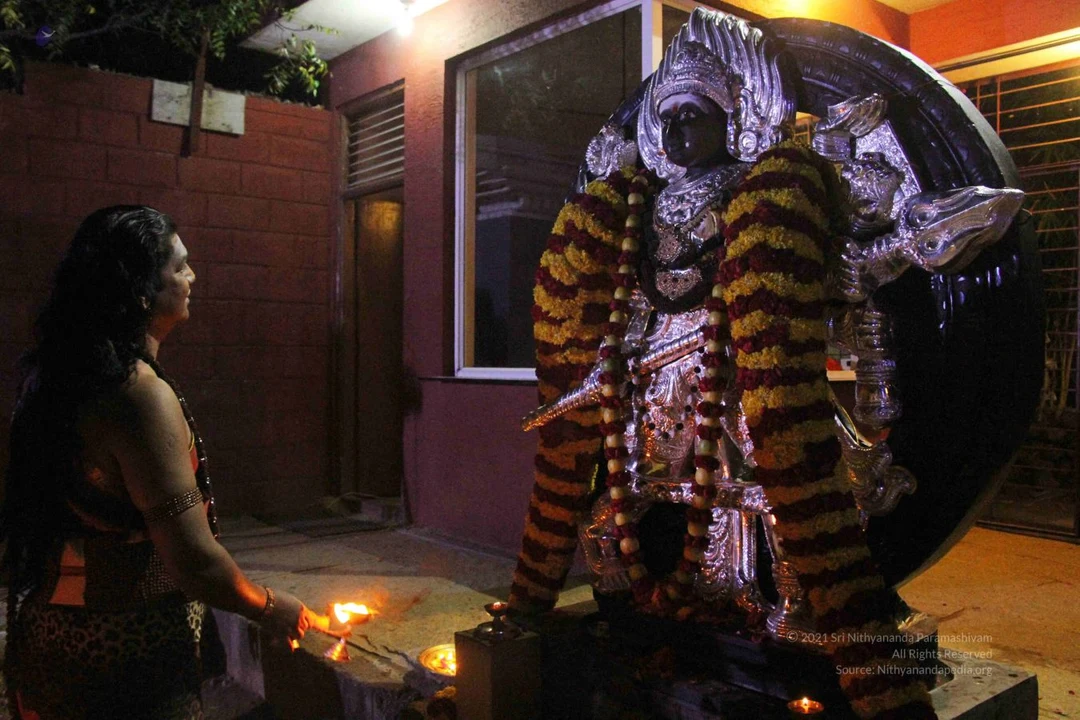
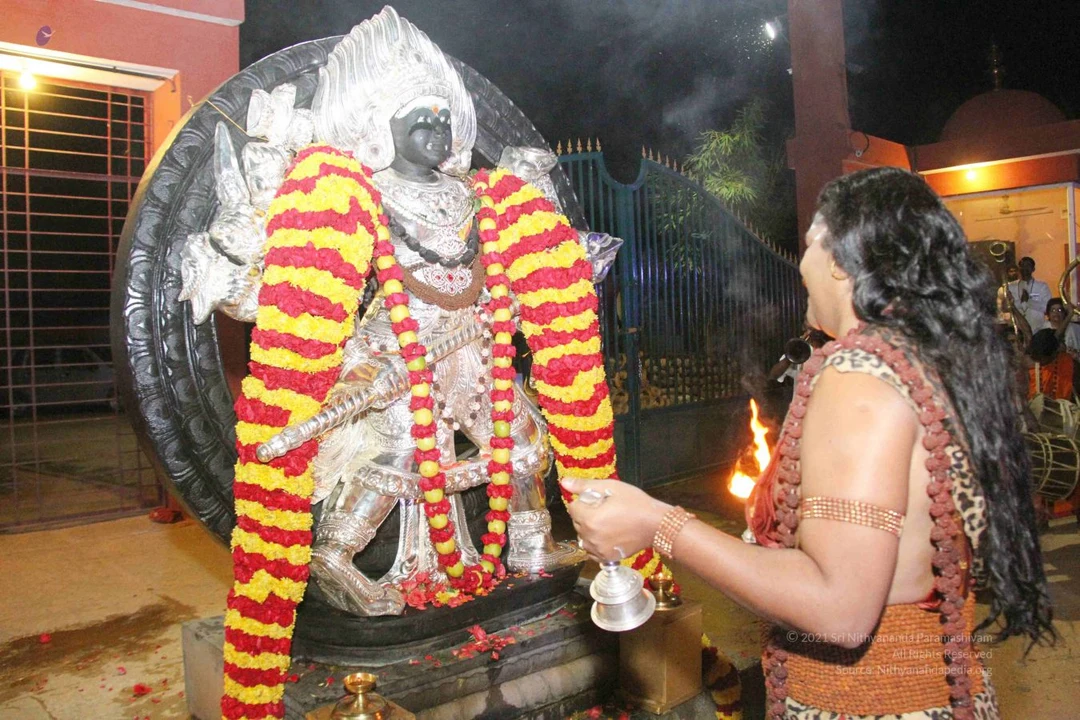
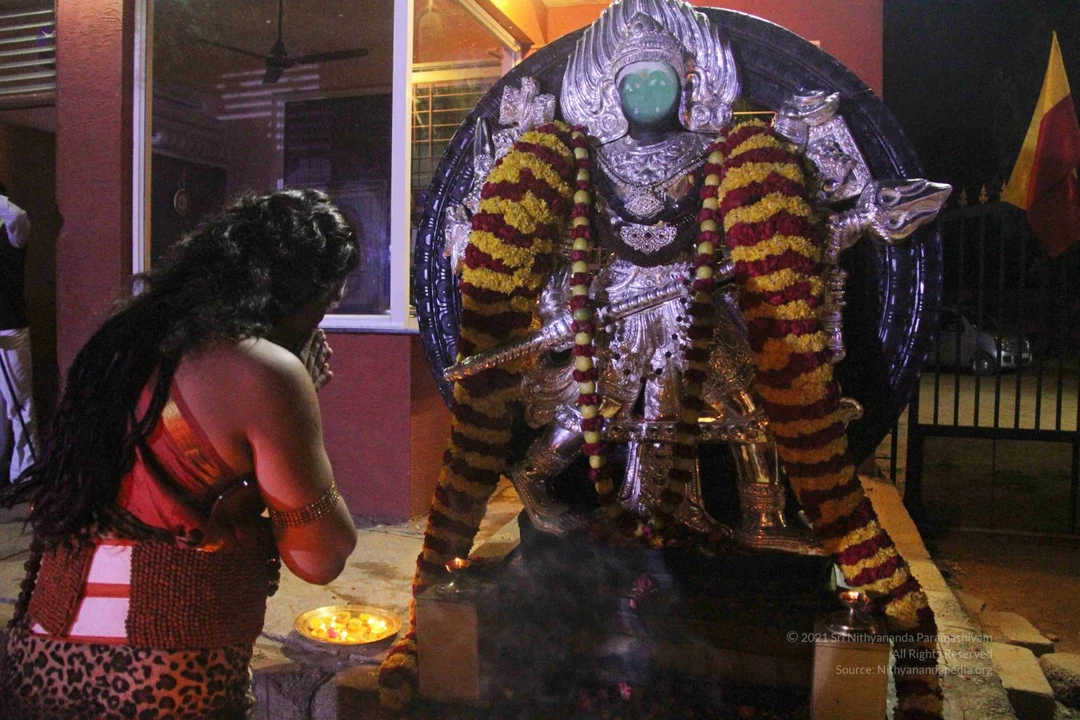
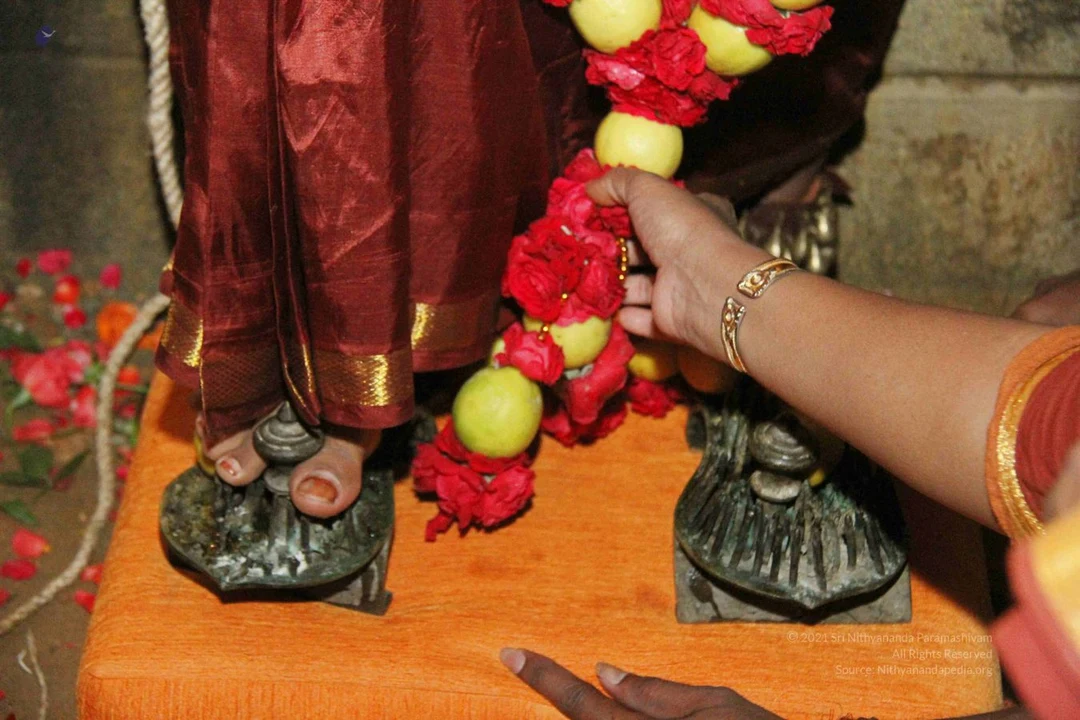
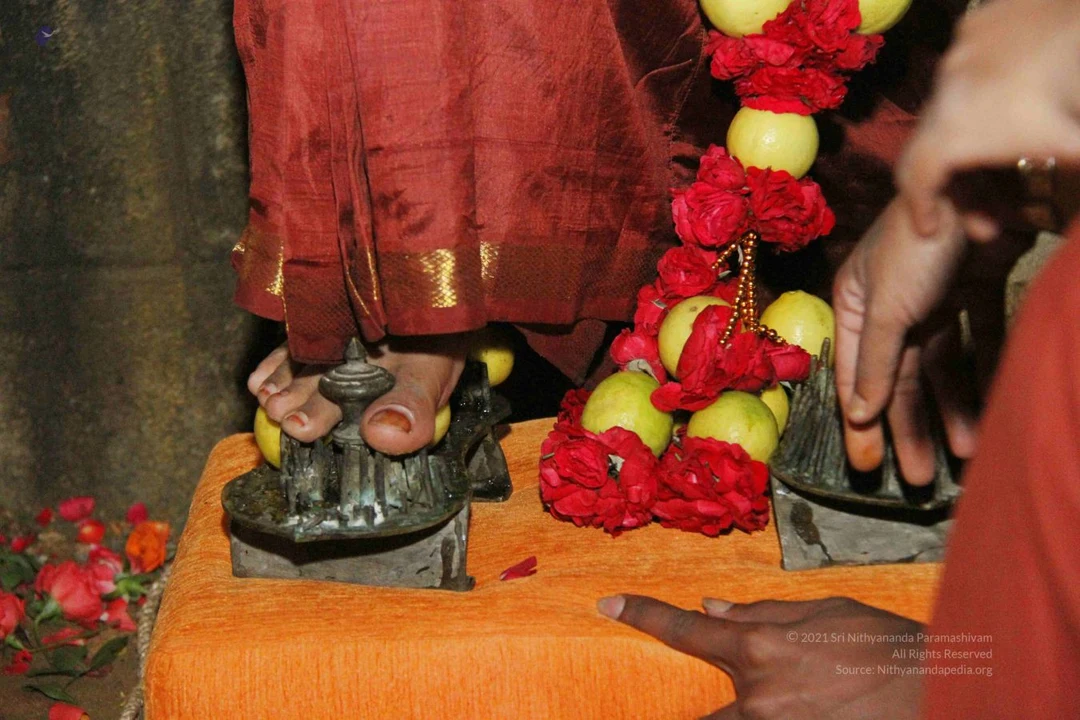
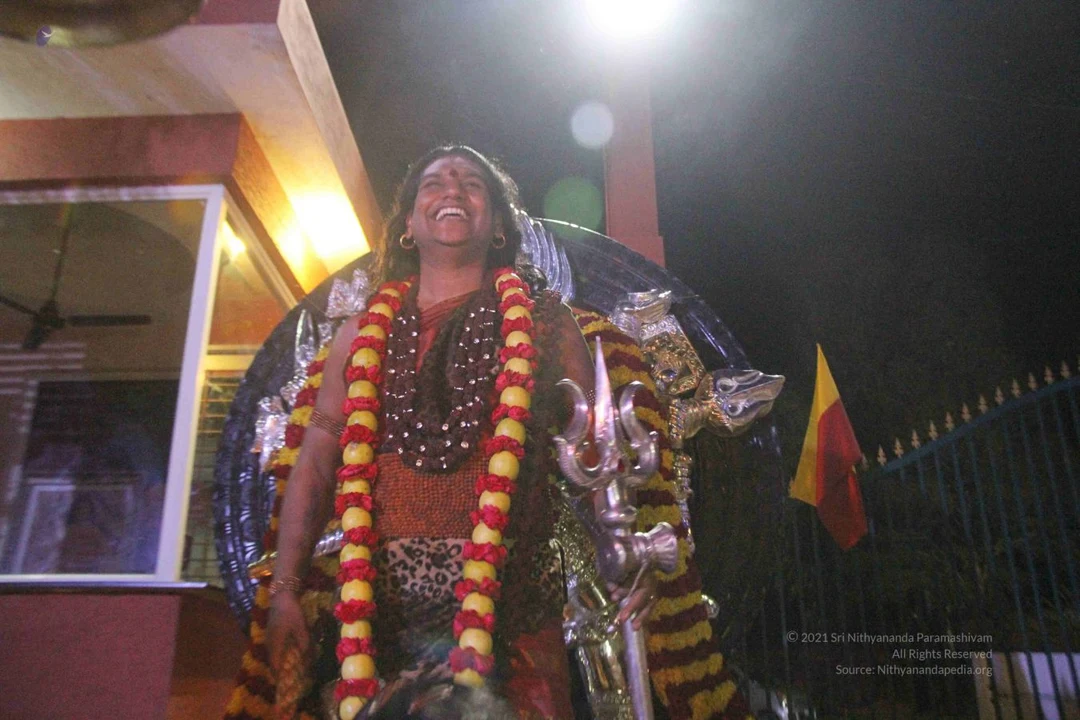
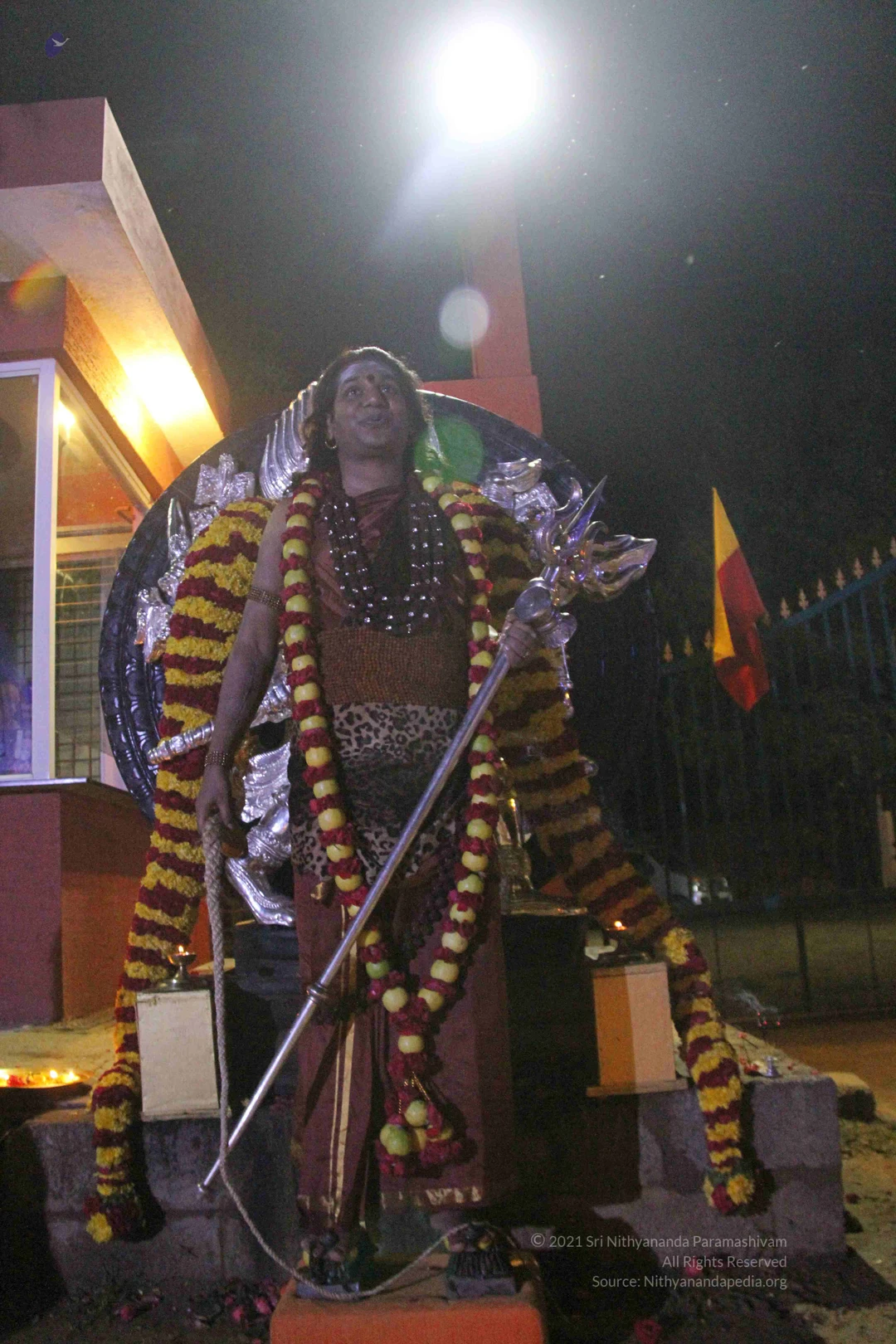
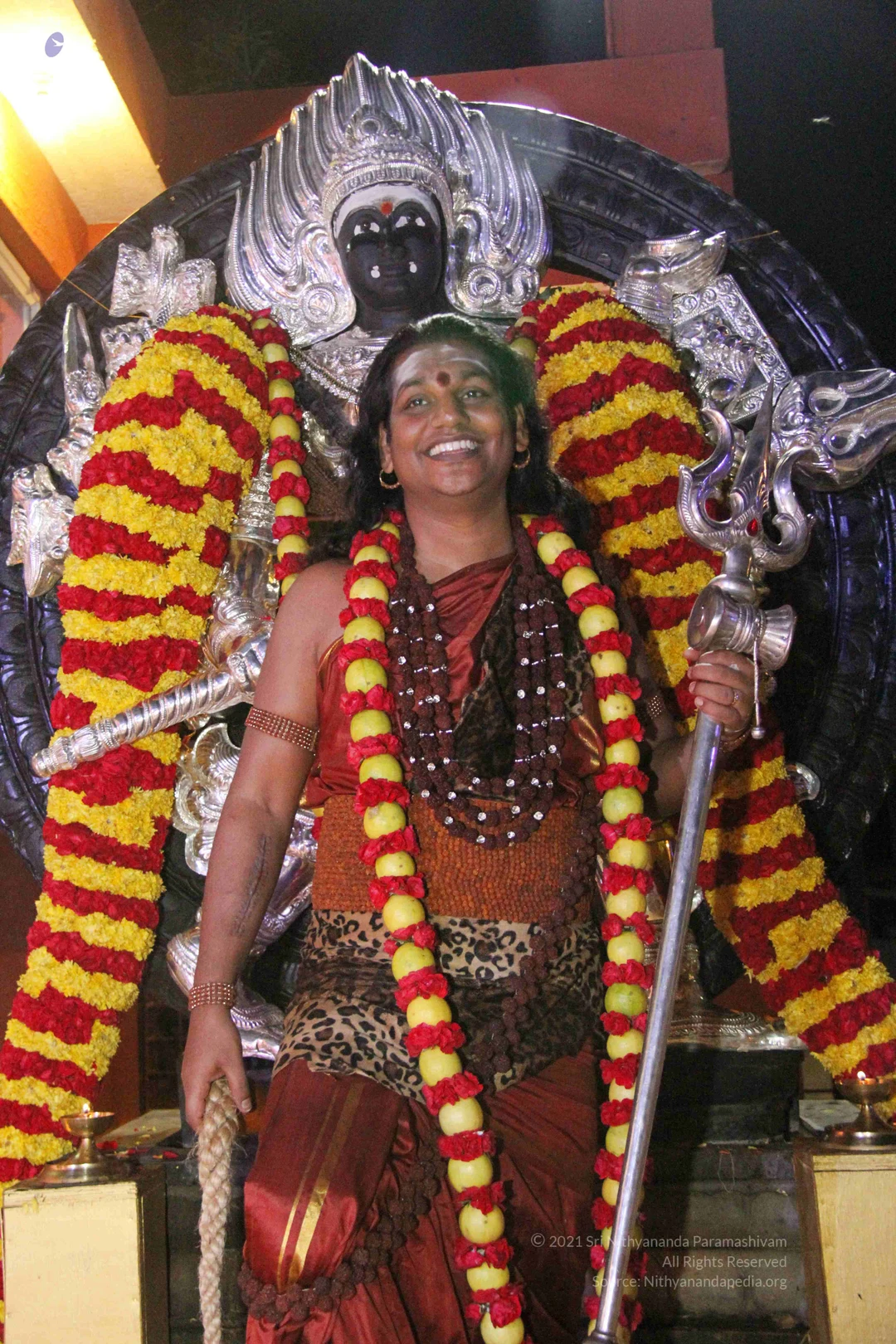
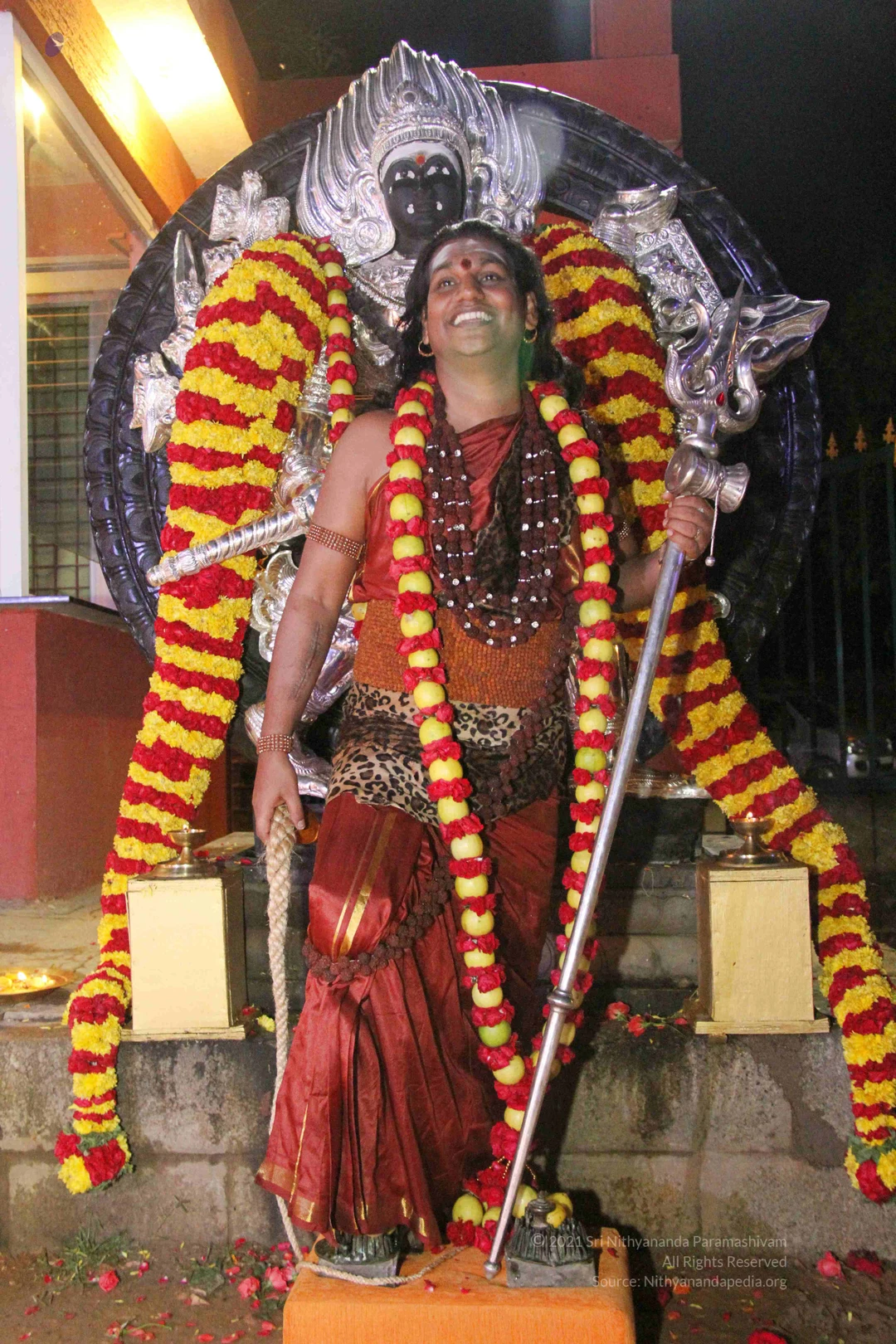
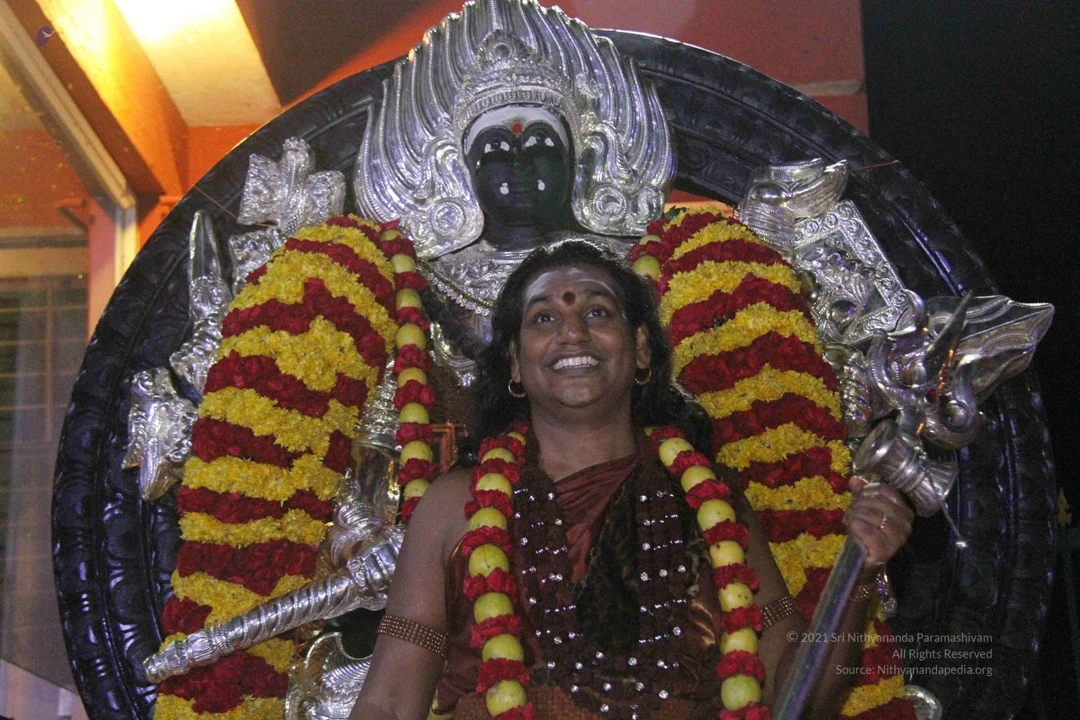
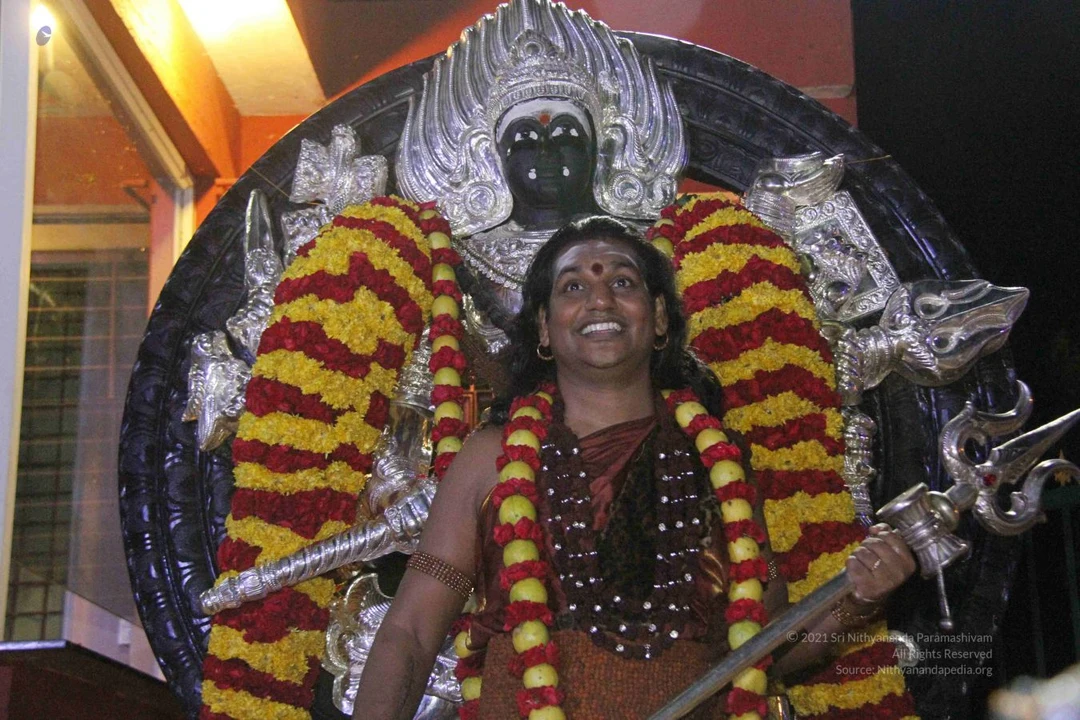
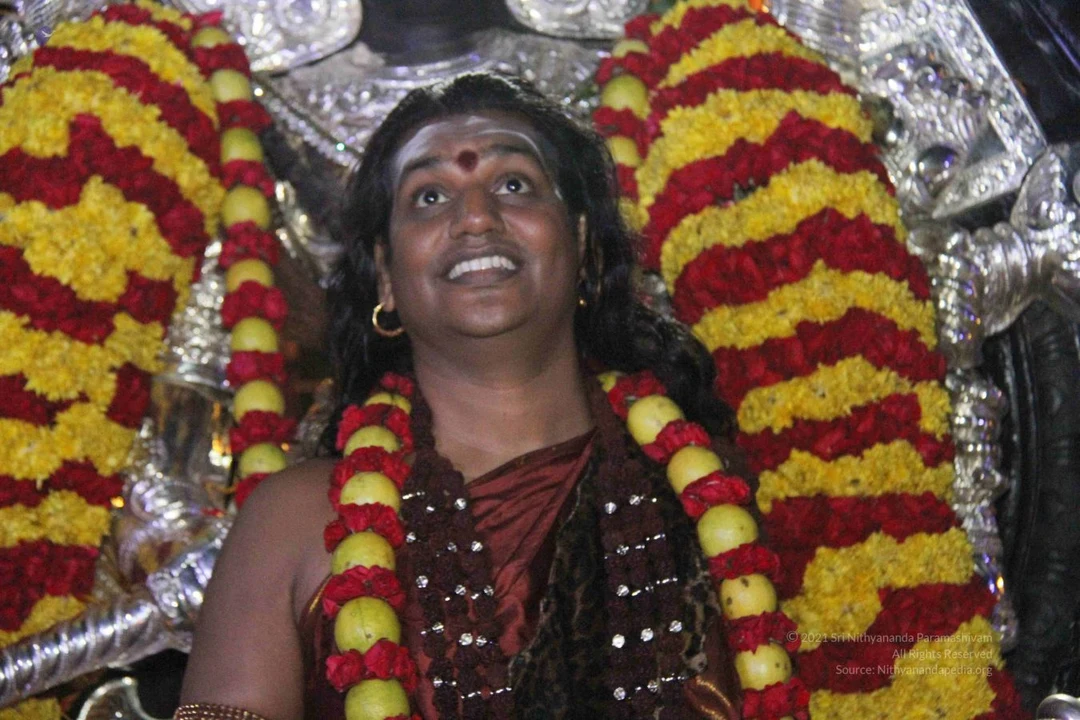
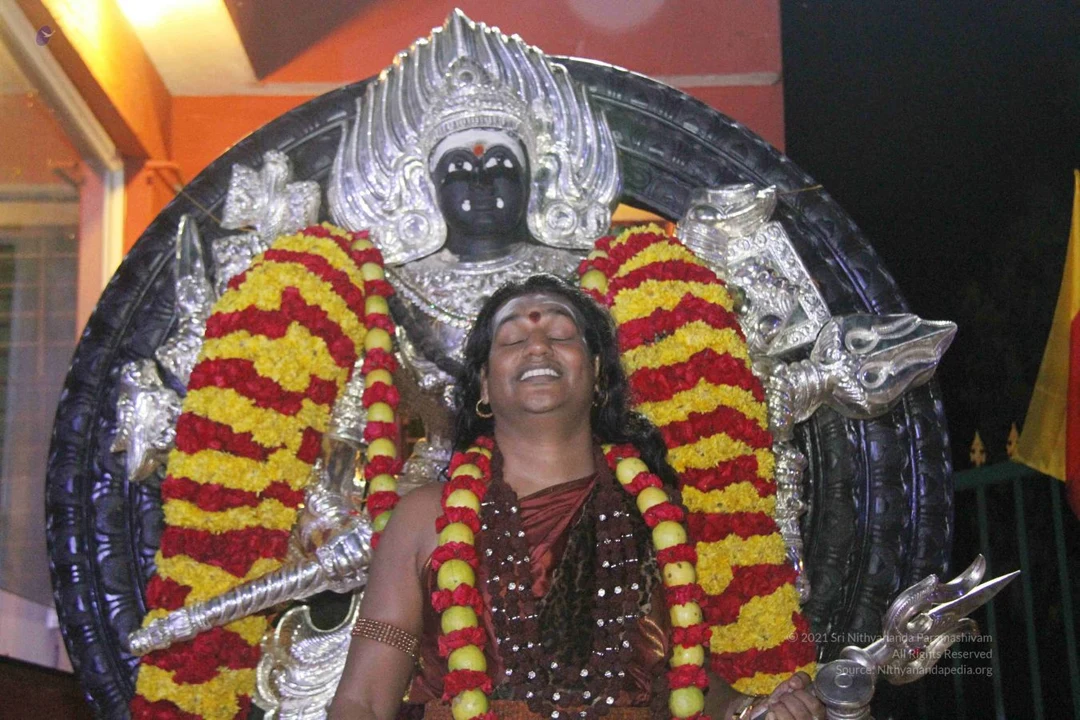
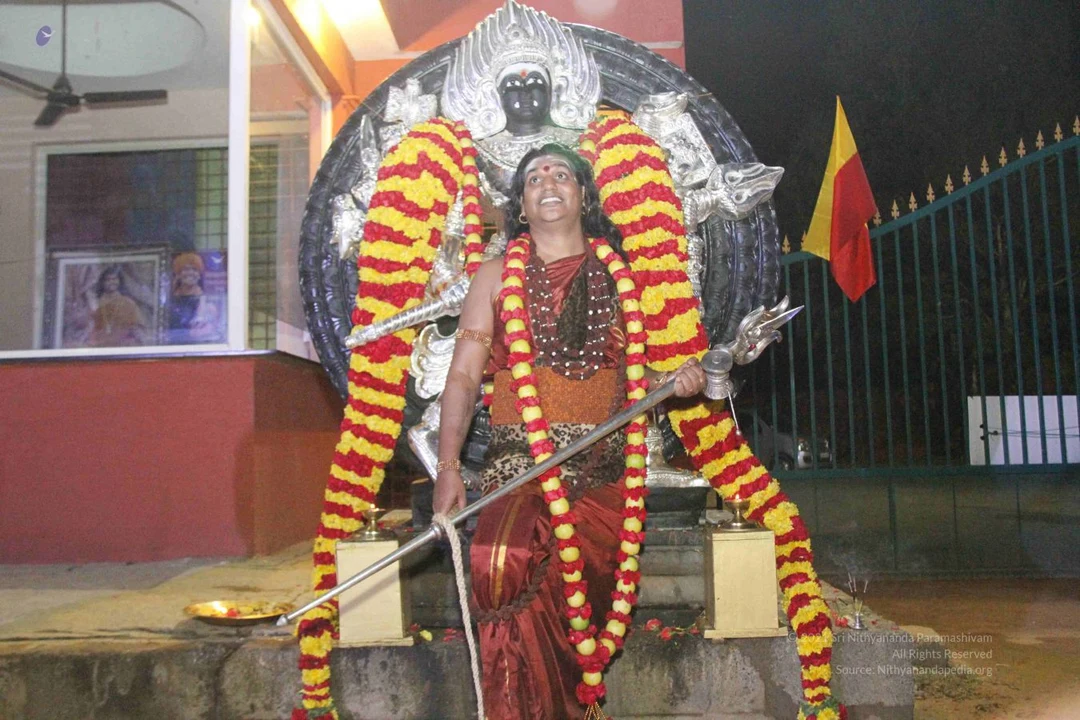
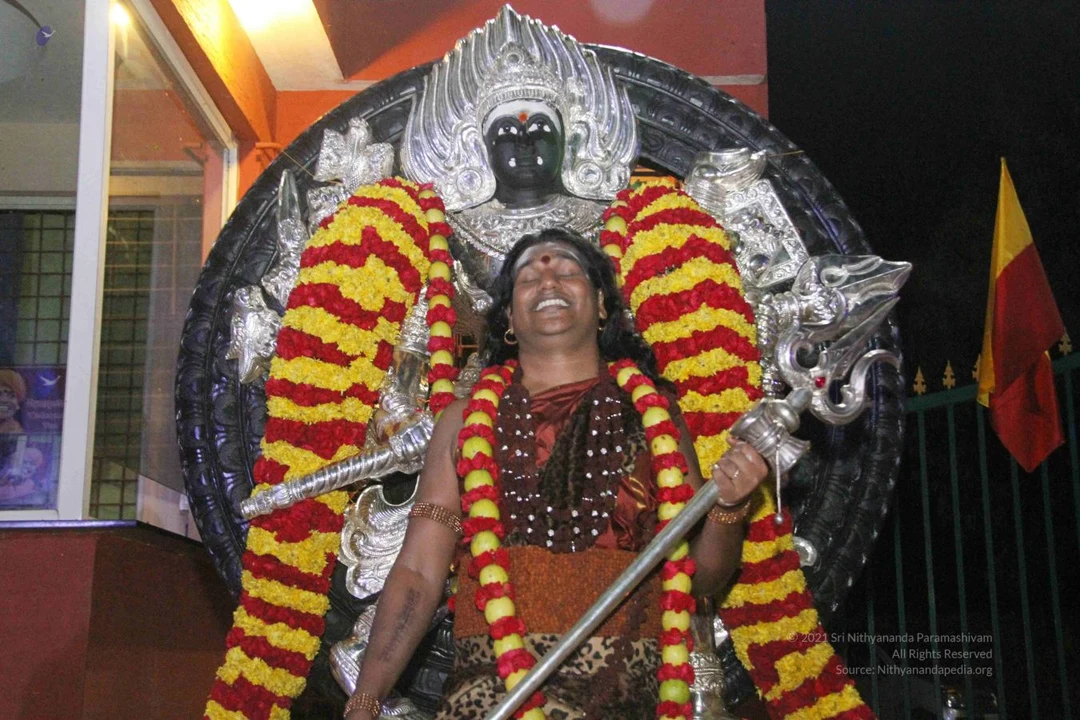
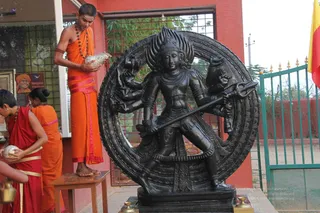
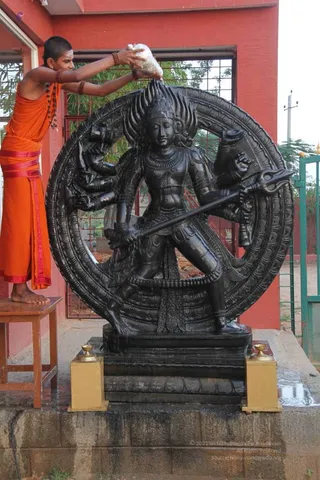
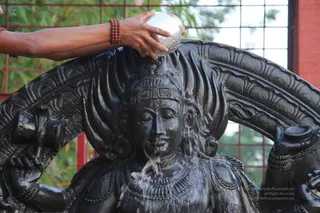
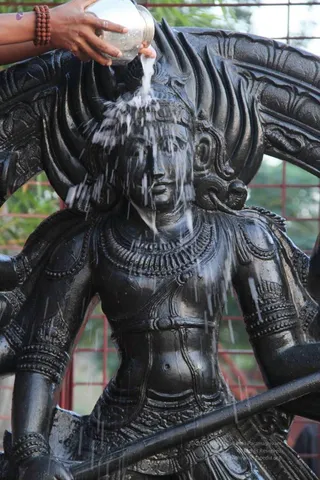
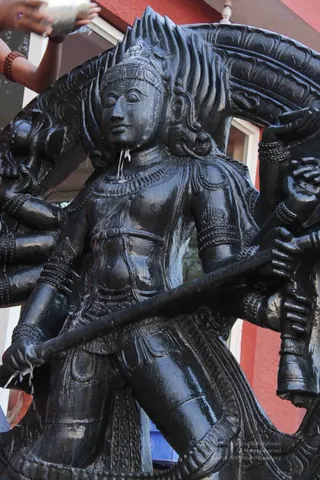
A large black stone statue of Kalabhairava, a multi-armed deity murti with a flaming halo and a trident, stands in a circular frame in front of a red-walled building. A young man in saffron-orange dhoti and shawl, with rudraksha beads and bangles, stands on a small wooden stool pouring from a silver vessel. Beside him, two women in red and orange saris with gold borders hold brass and silver vessels for abhishekam. A brass kalasha sits at the statue's base, and a yellow-and-red flag flies at right beside a green iron gate.A young shaved-headed devotee in orange saffron dhoti and shawl with red border stands on a small wooden stool, pouring water from a white vessel over a large black stone murti of Kalabhairava. The deity has multiple arms holding a trident and other implements, flaming hair, and a circular prabhavali halo, mounted on a black pedestal with brass oil lamps at its base. A red-painted building and green gate form the background. The scene shows an abhishekam being performed outdoors. Rudraksha beads are visible around the devotee's neck and wrists.Close photo of a black stone deity murti of Kalabhairava, with a flame-like halo behind the head, a tall ornate crown, heavy beaded necklace and arm ornaments. A person's bare arm, wearing red-brown rudraksha wristbeads, pours water from a silver vessel over the murti's head, and water streams down its face and chest. A red metal grille and green foliage are behind.A black stone statue of Kalabhairava, a fierce deity murti with a flame-like halo of upswept hair, a heavy beaded necklace and armlets, stands holding a long staff. A person's arm with rudraksha malas on the wrist pours water from a silver vessel over the statue's head, and water streams down its face and chest, as in an abhishekam. A red metal grille and green foliage sit in the background.A close photograph of a glossy black stone deity murti. Water runs down the statue's face, chest and staff. The background shows red painted walls and a white window frame. No physical people are shown beyond partial hands pouring water.A young shaven-headed priest in orange saffron dhoti and shawl with a red border and rudraksha malas stands on a wooden stool, pouring water from a silver vessel over a large black stone statue of Kalabhairava. The dark murti has a crown, a many-armed form, and a large trident held diagonally, with a flame-like arch behind it. Brass oil lamps sit on the granite base, and a red building wall is behind the scene.
KALABHAIRAVA-DARSHAN
99 photosSource gallery
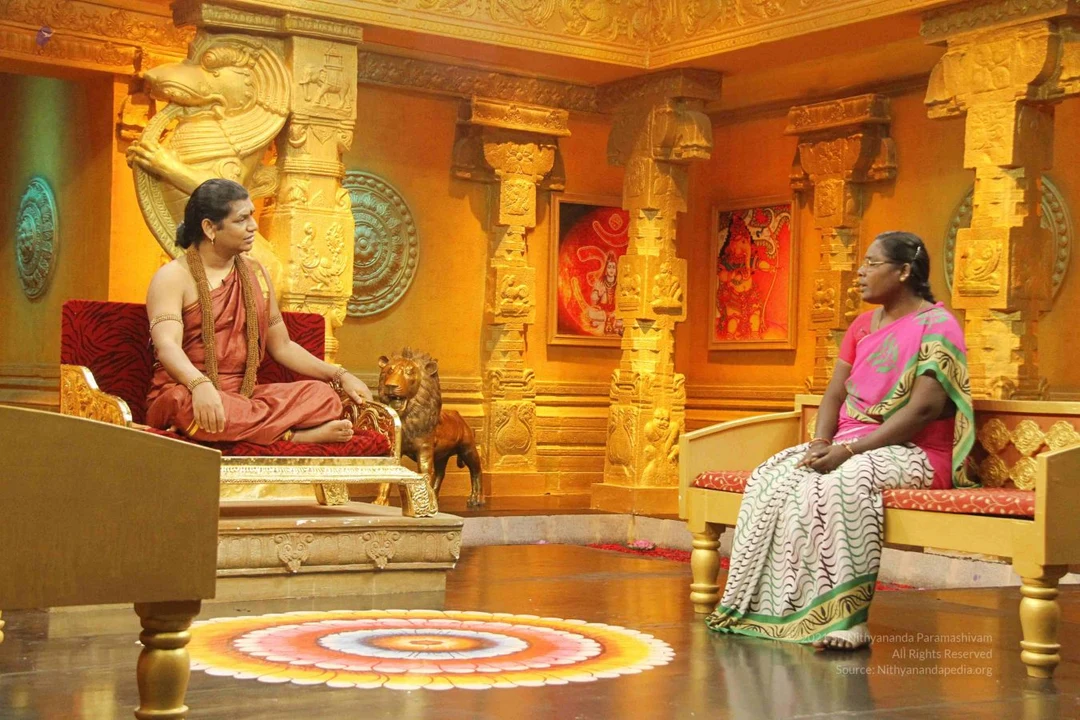
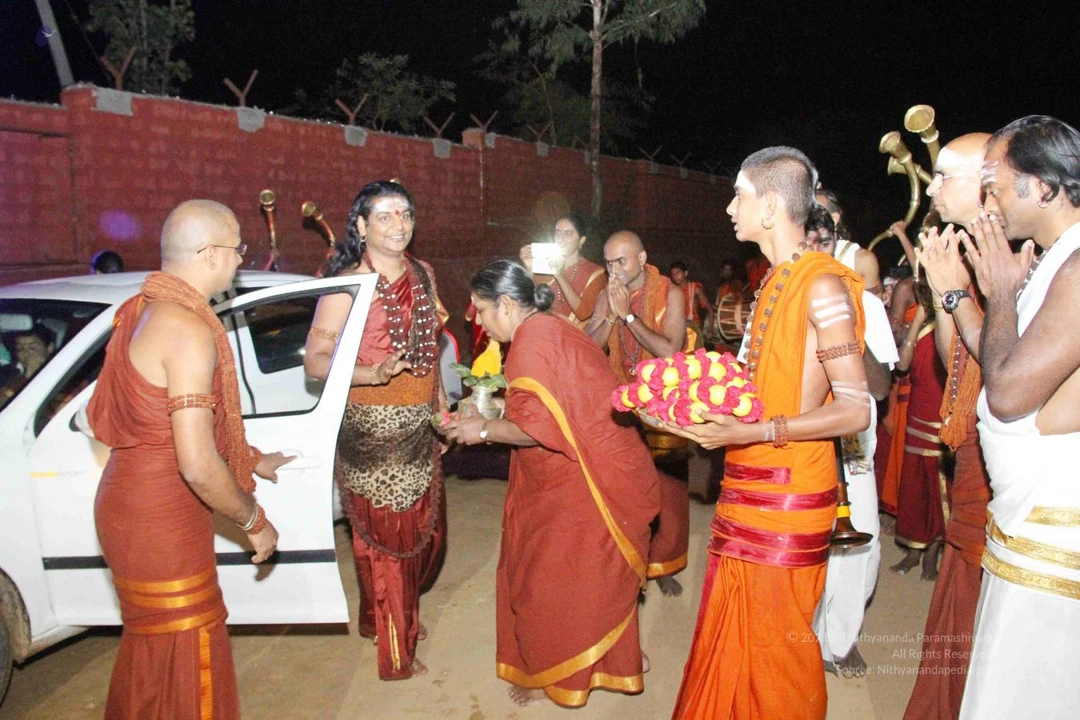
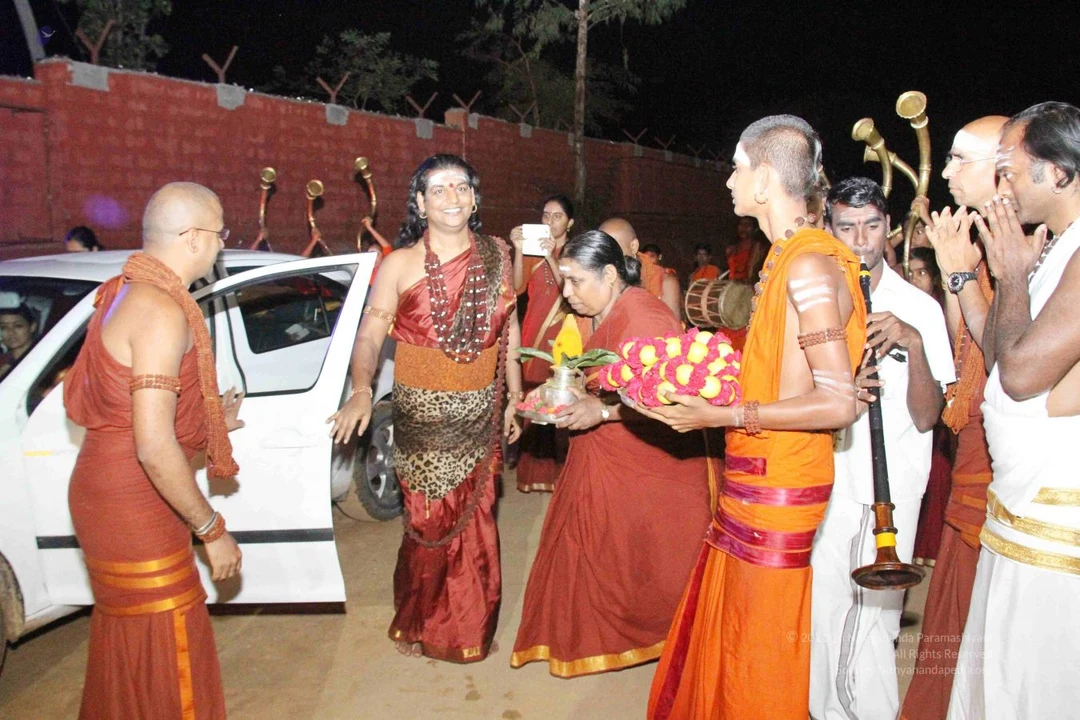
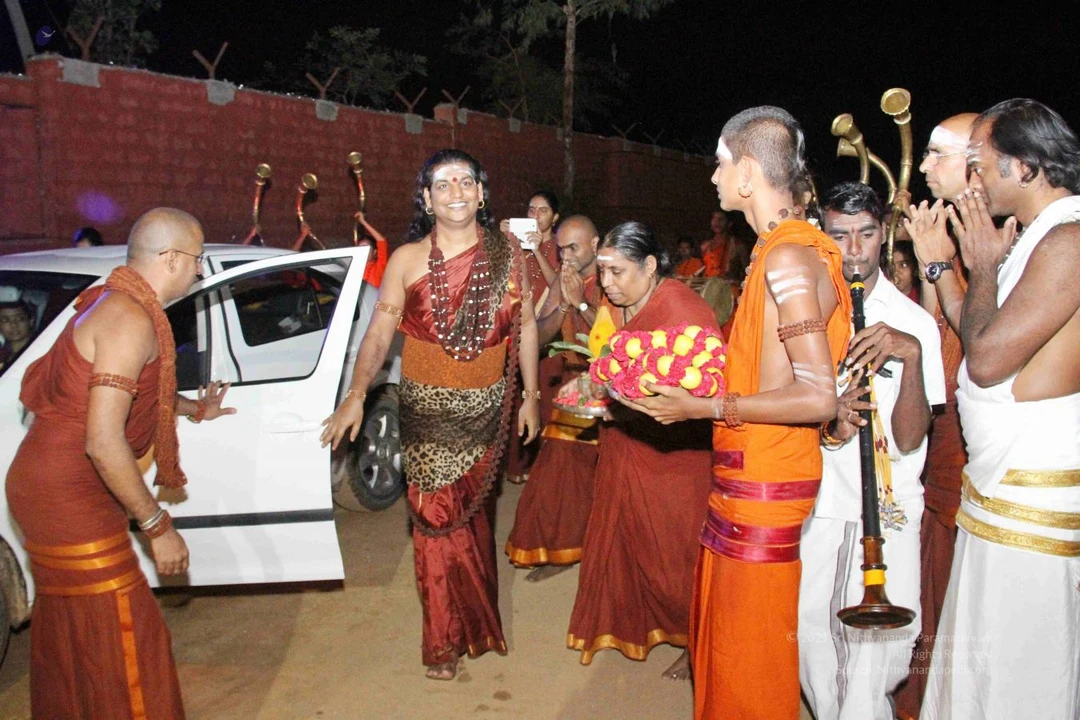
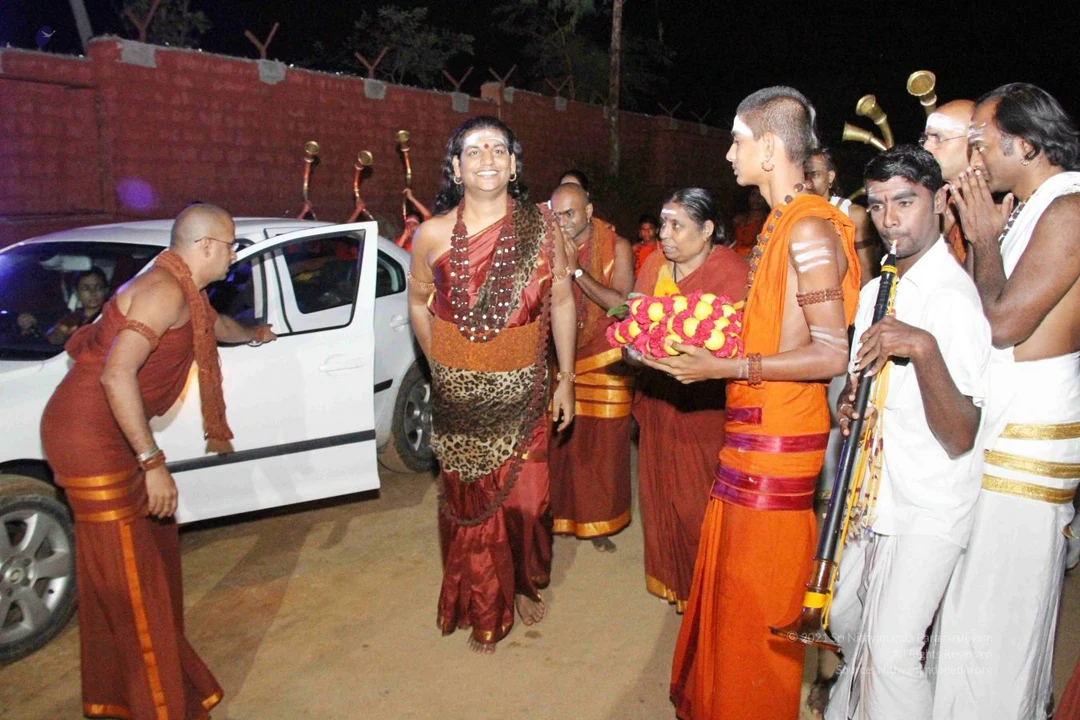
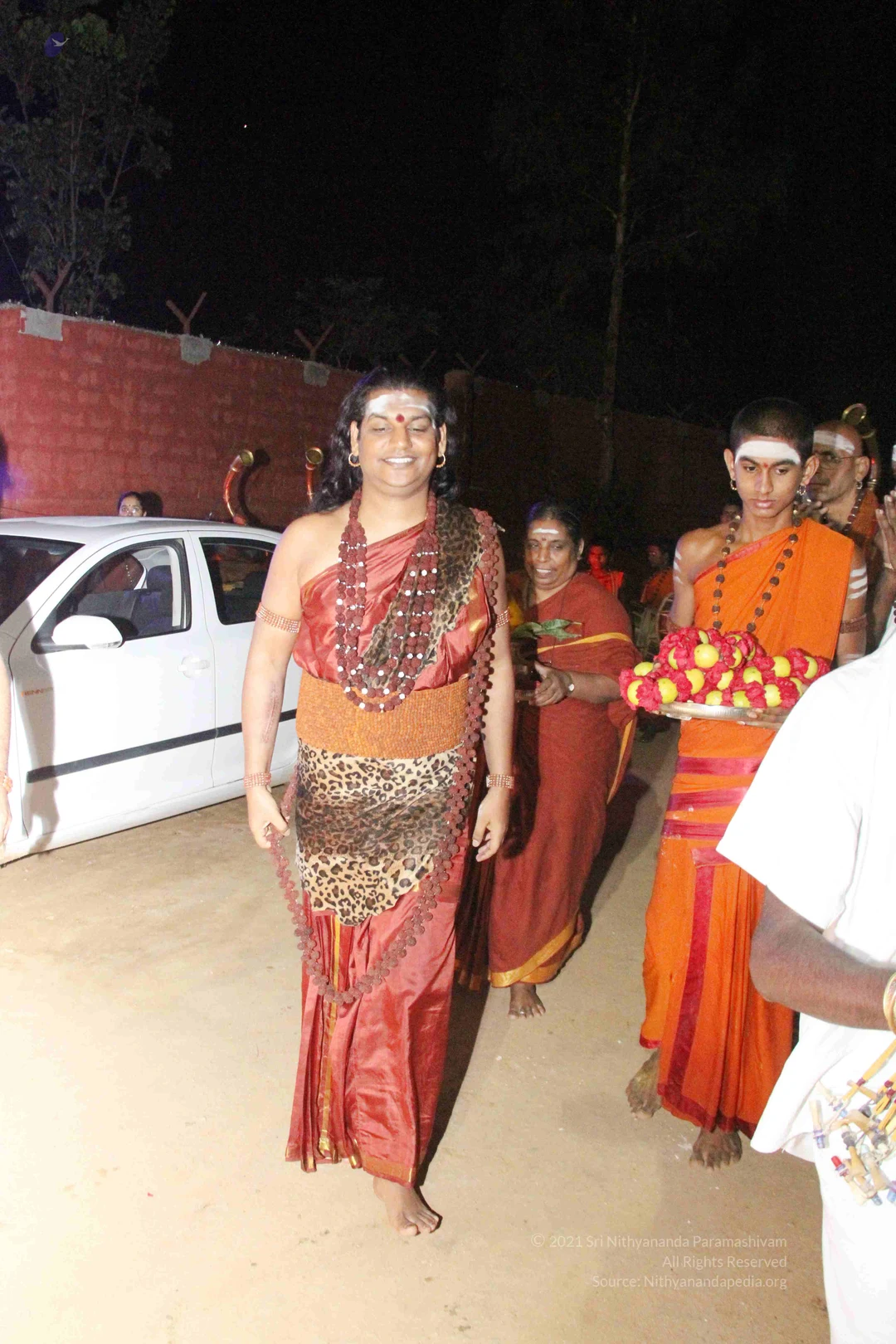
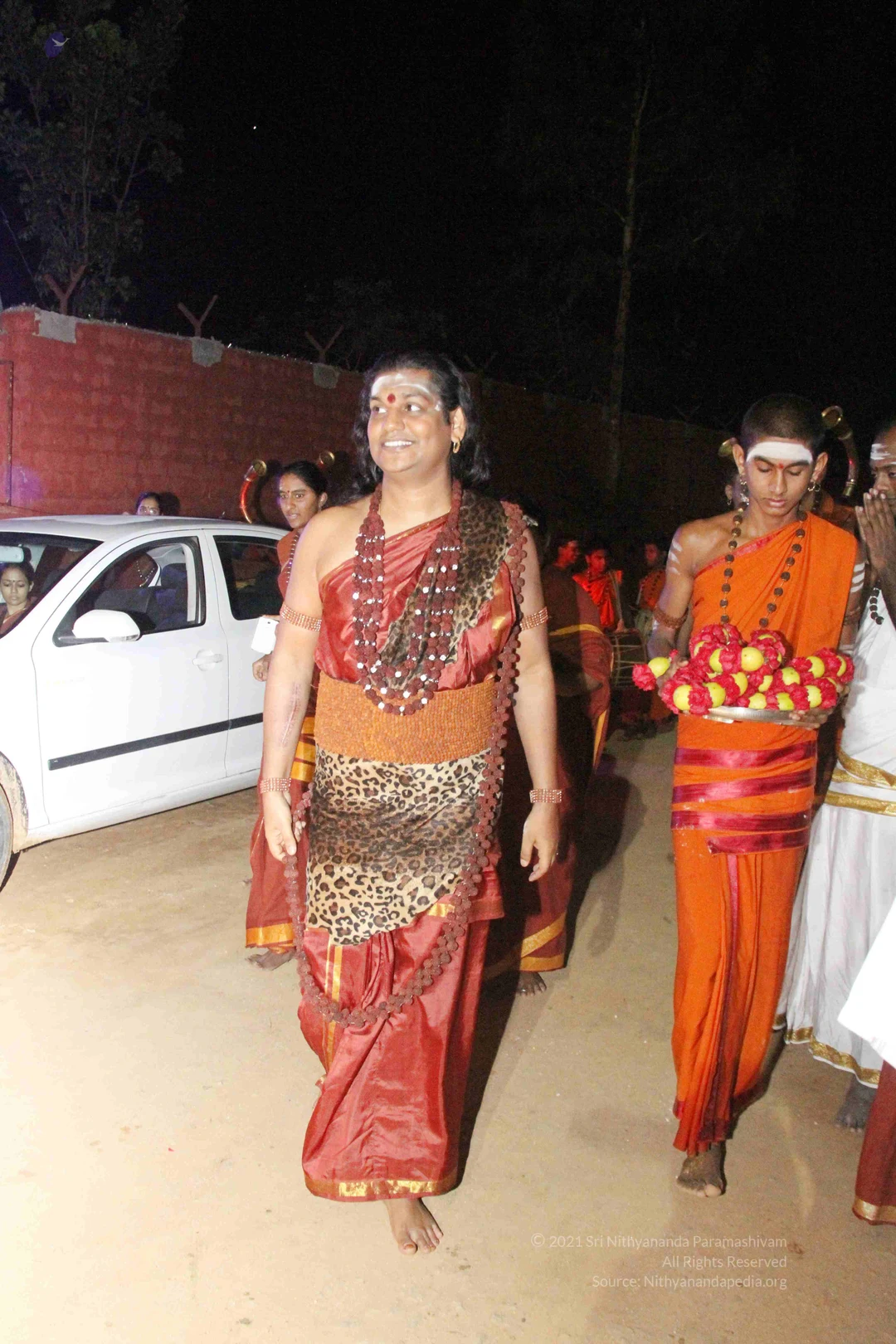
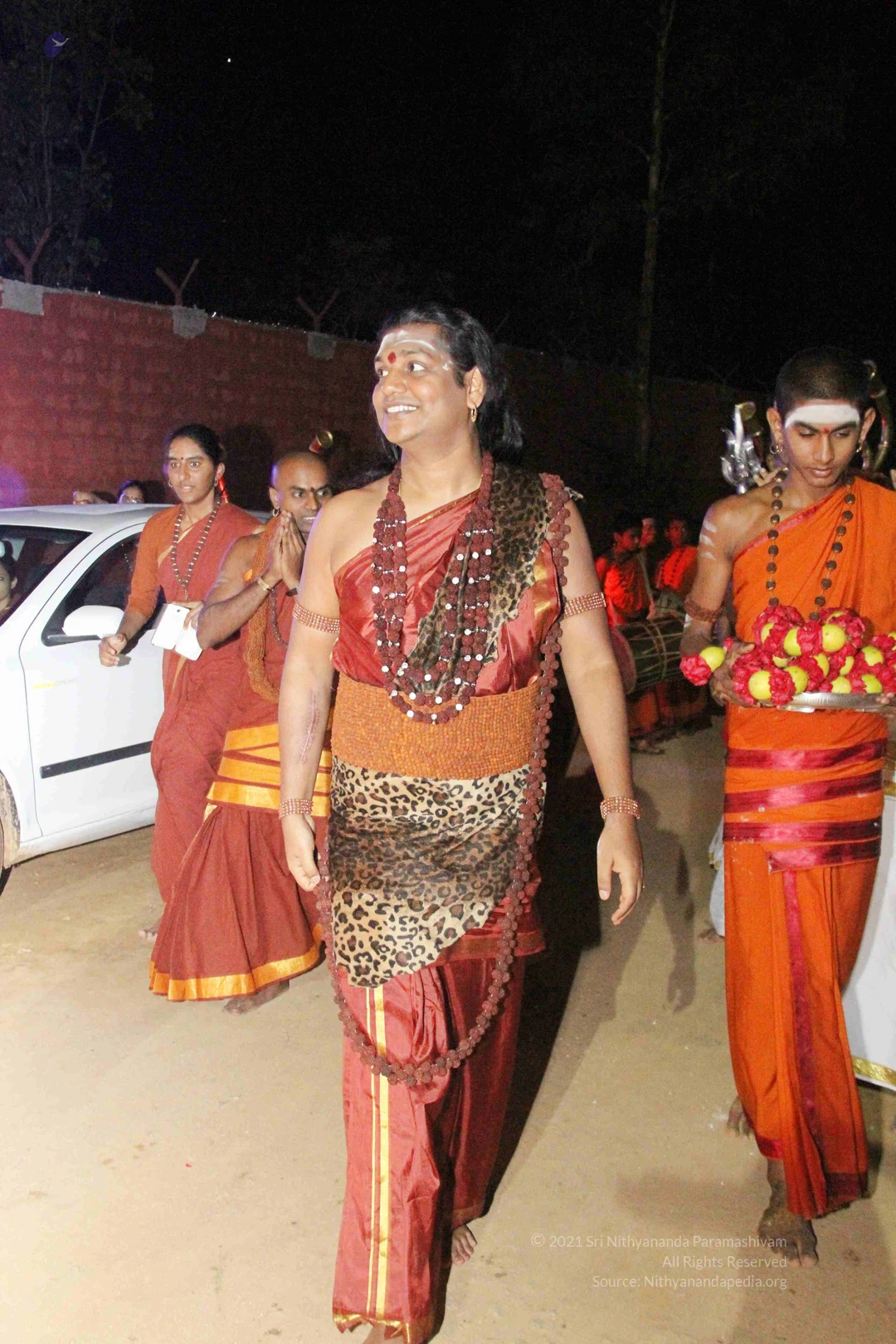
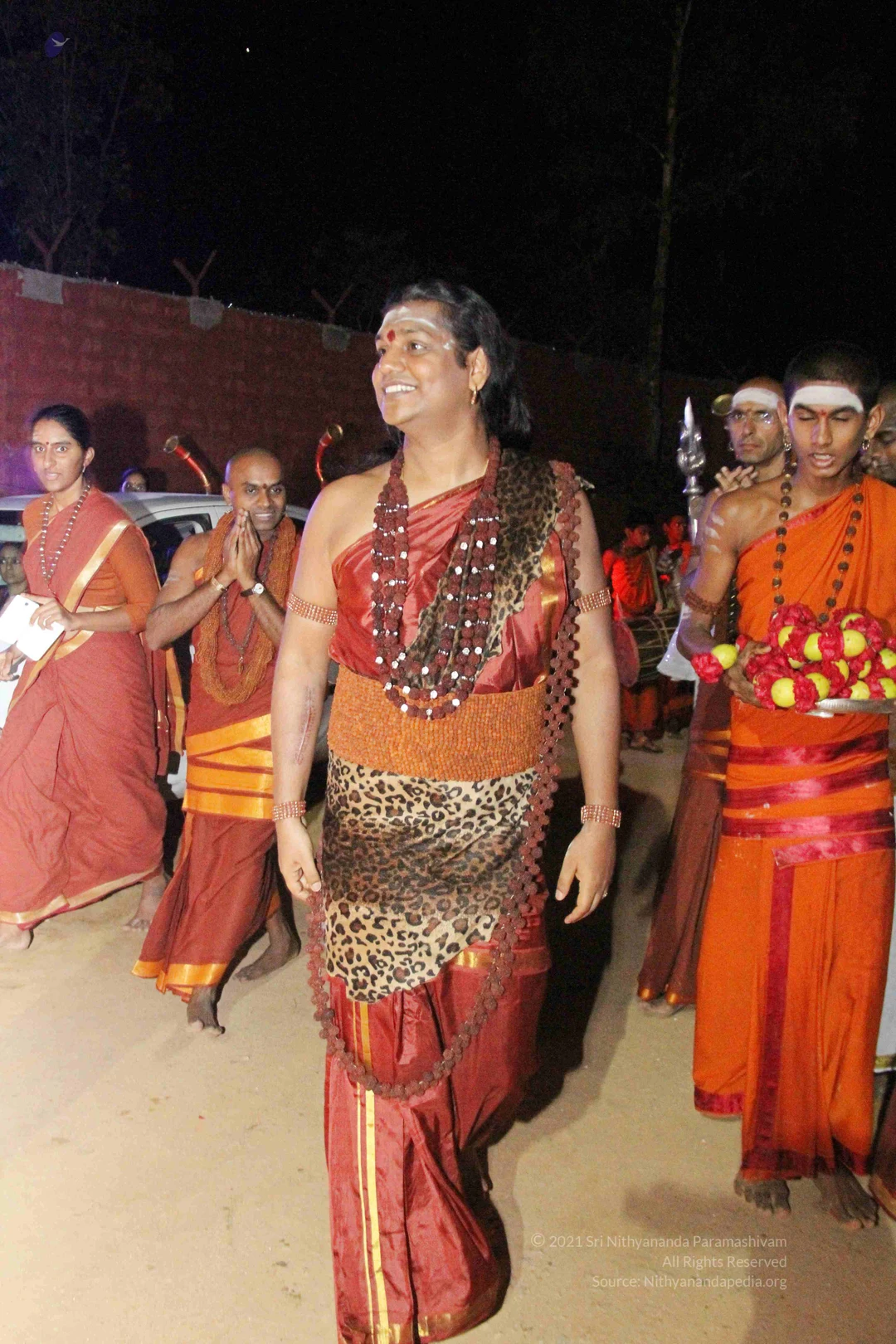
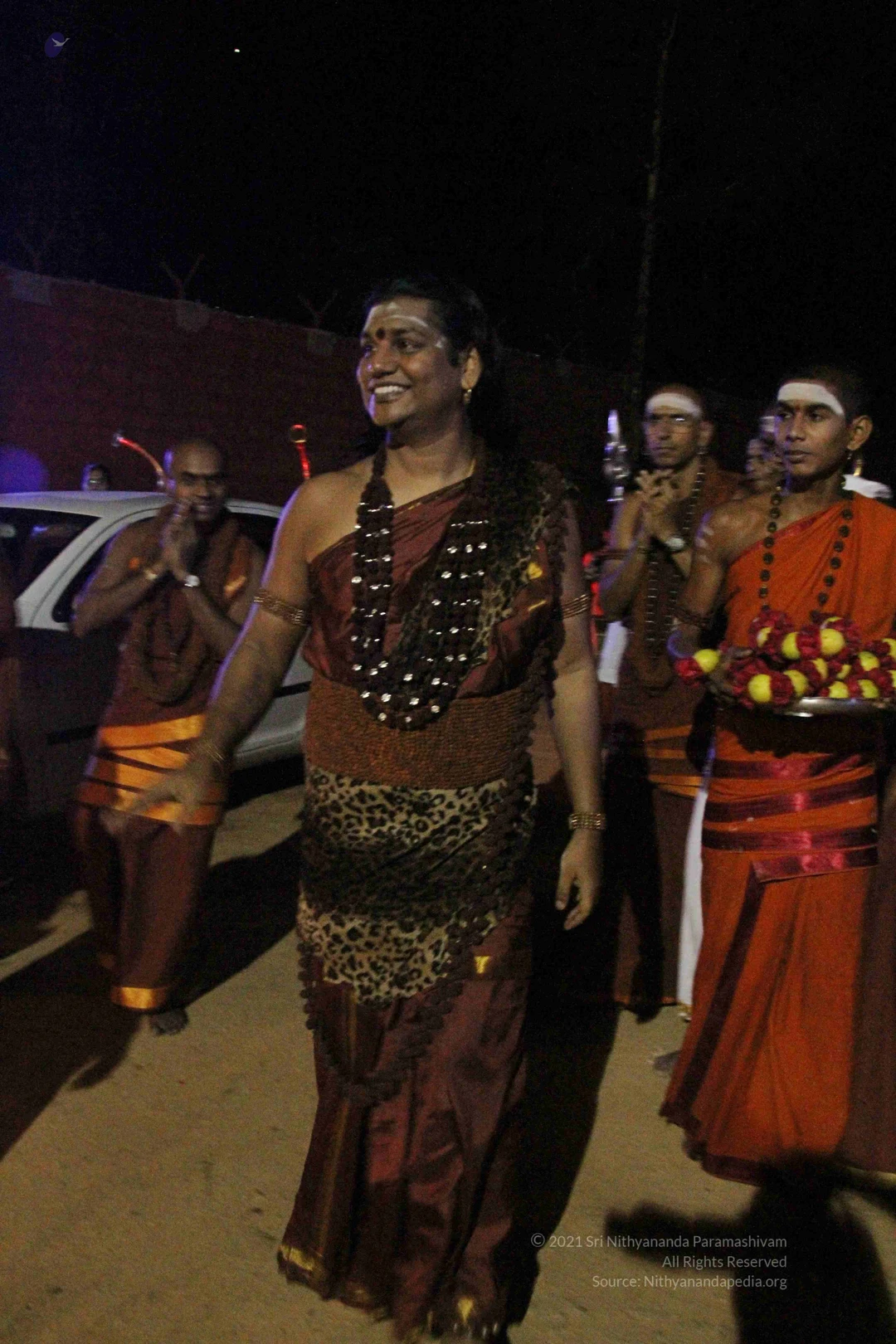
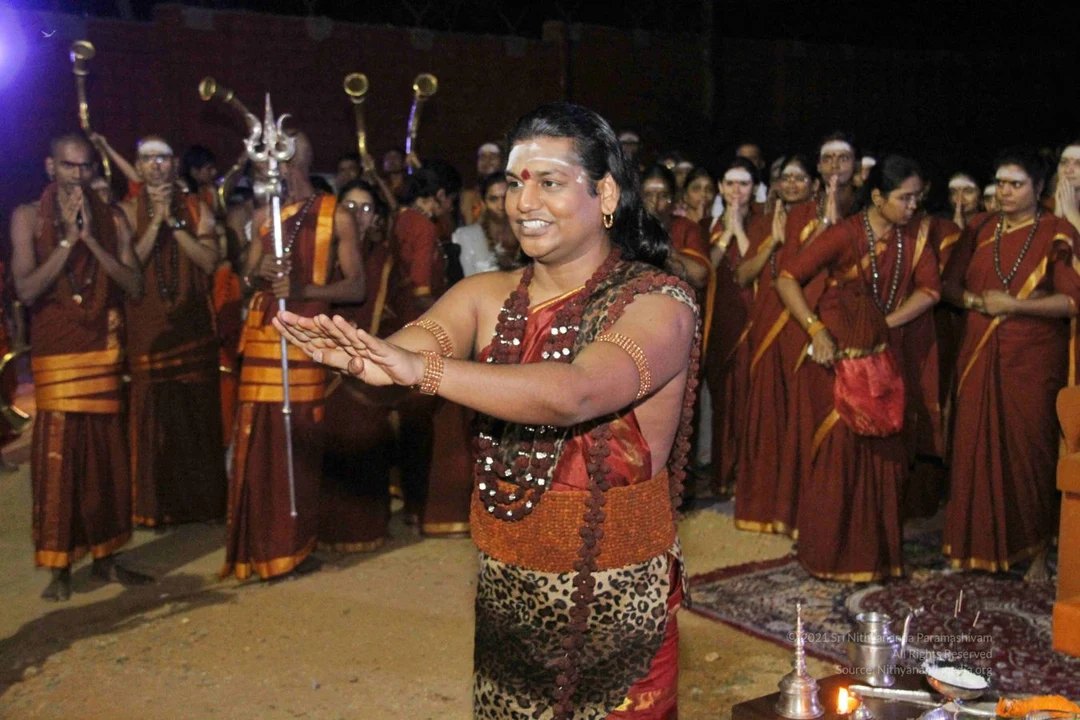
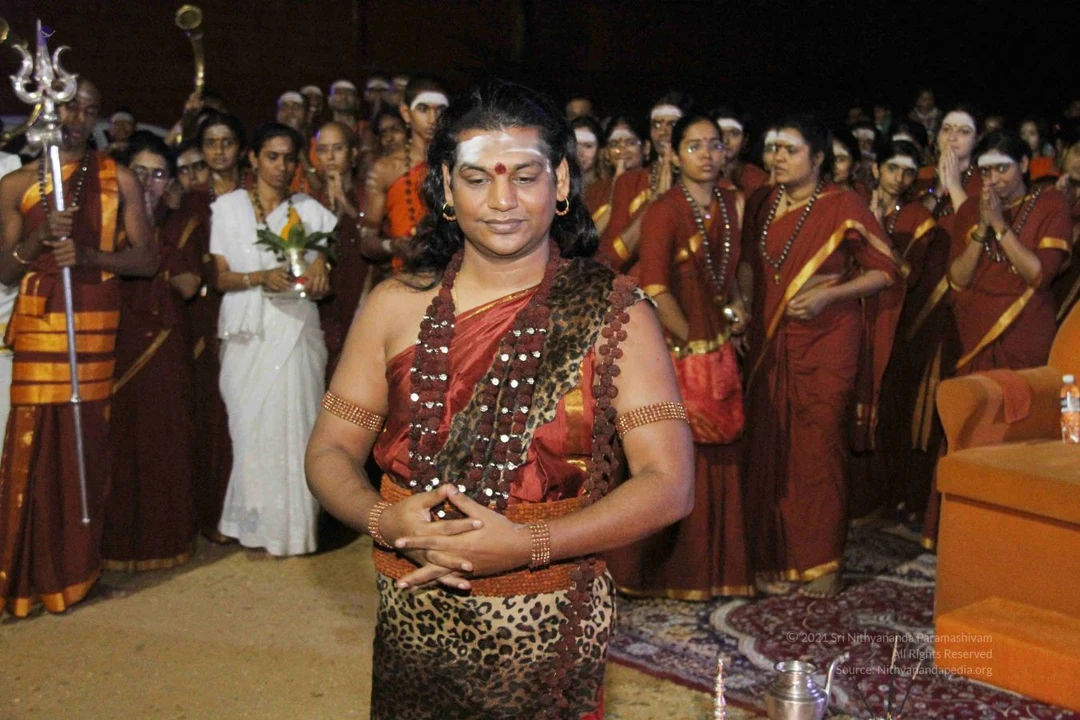
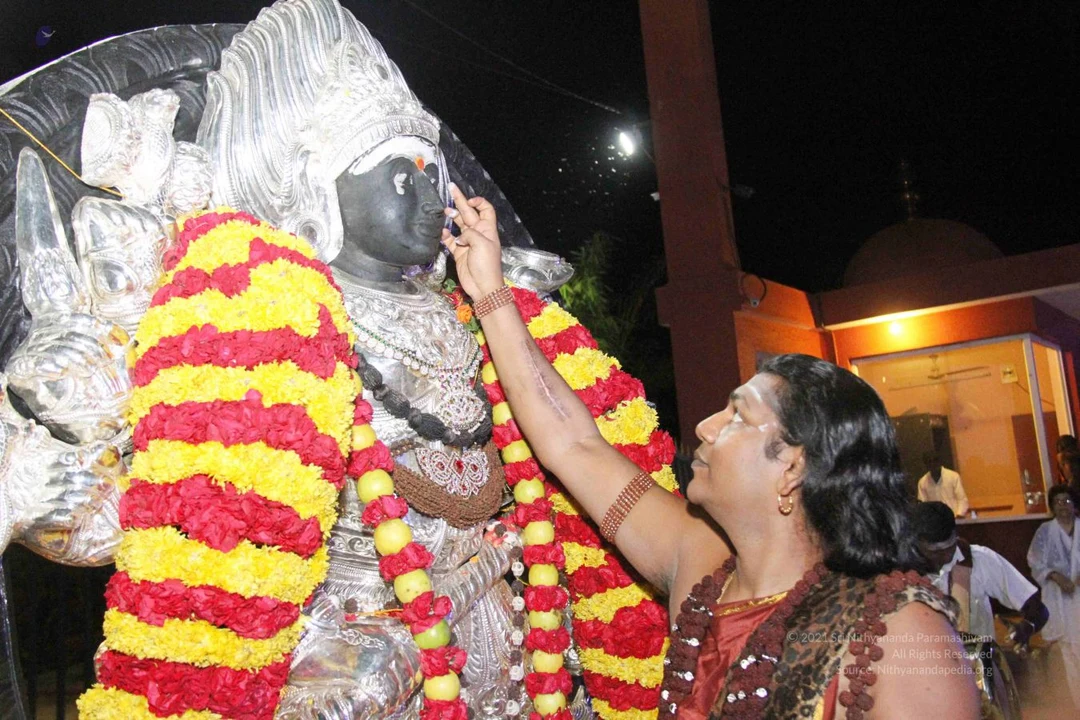
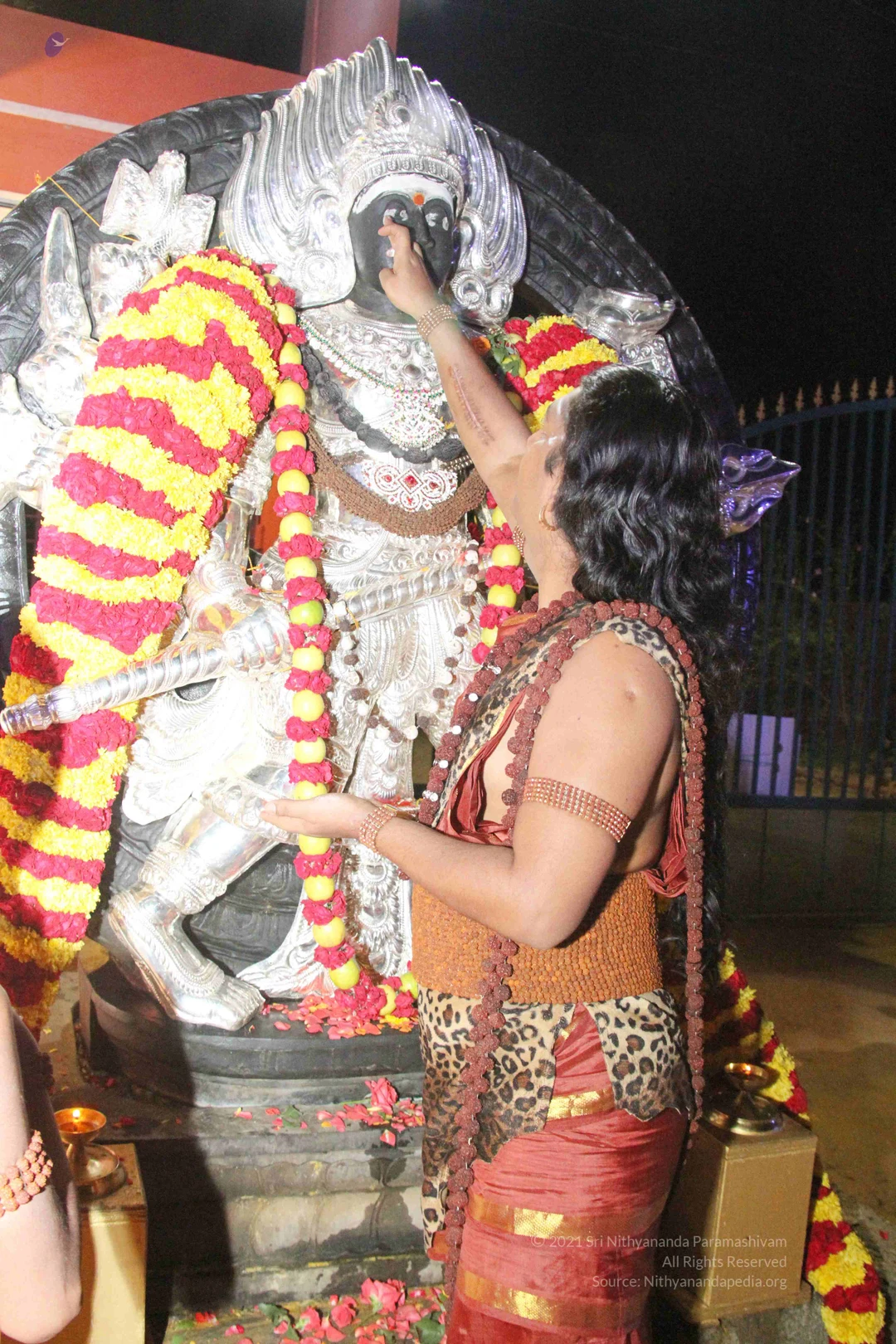
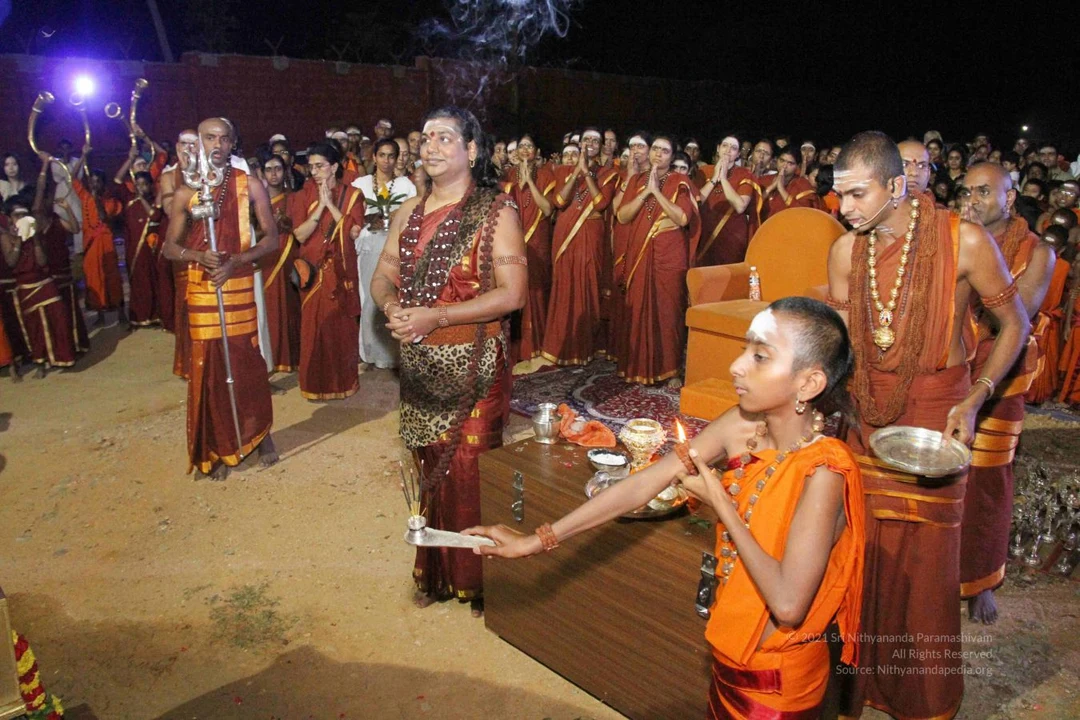
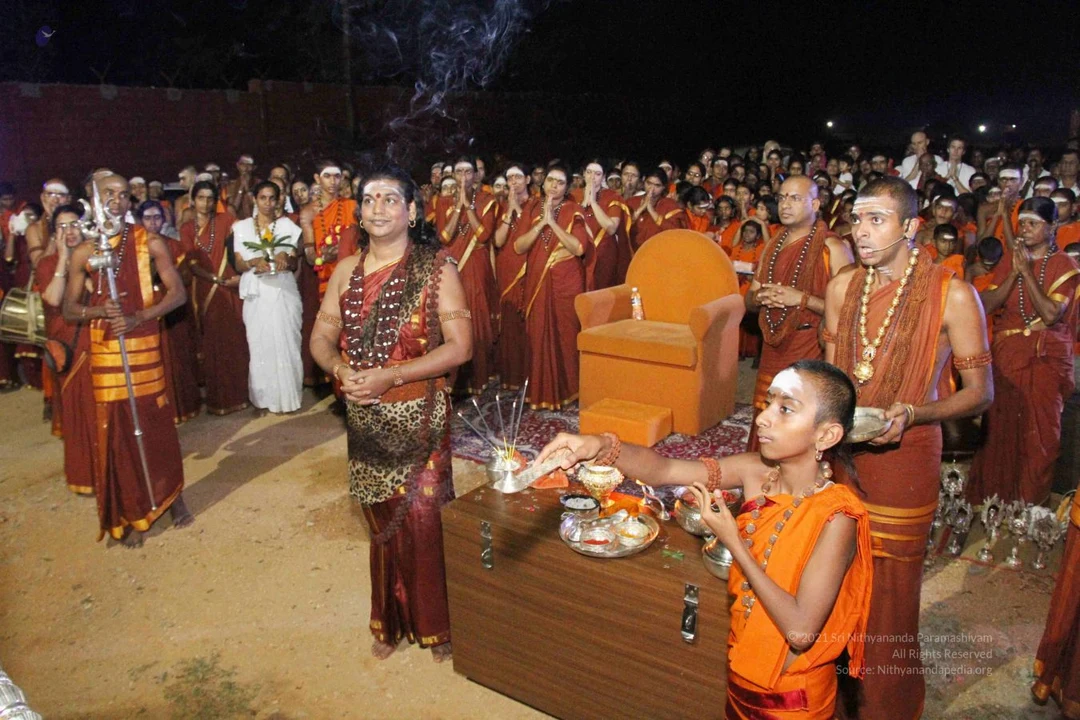
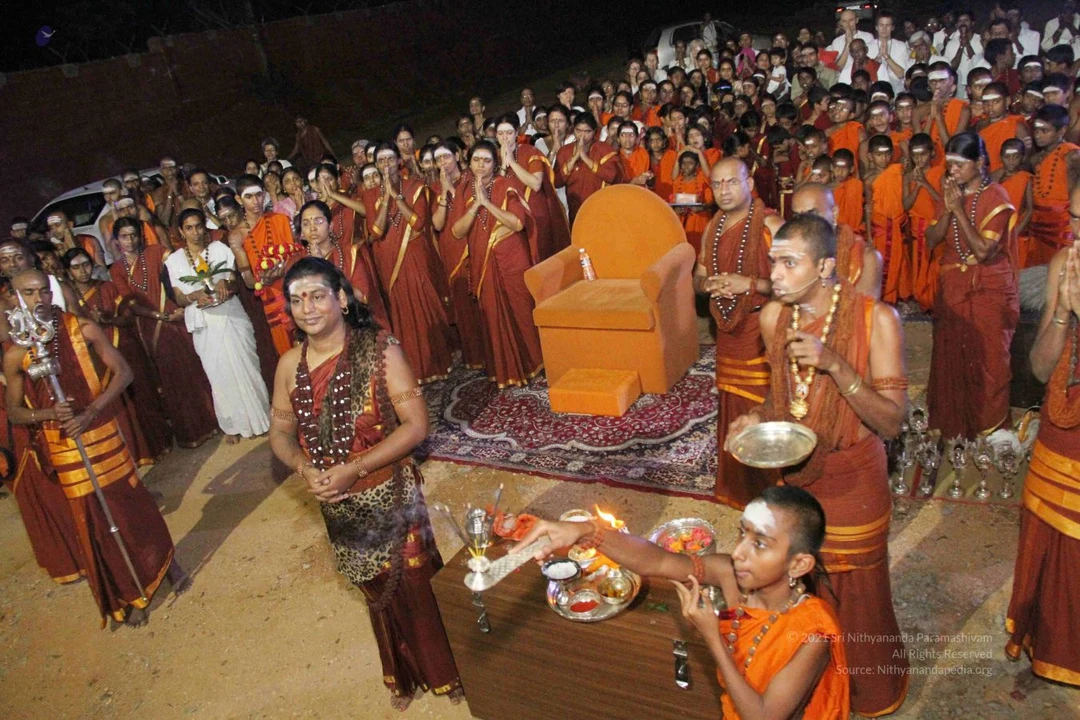
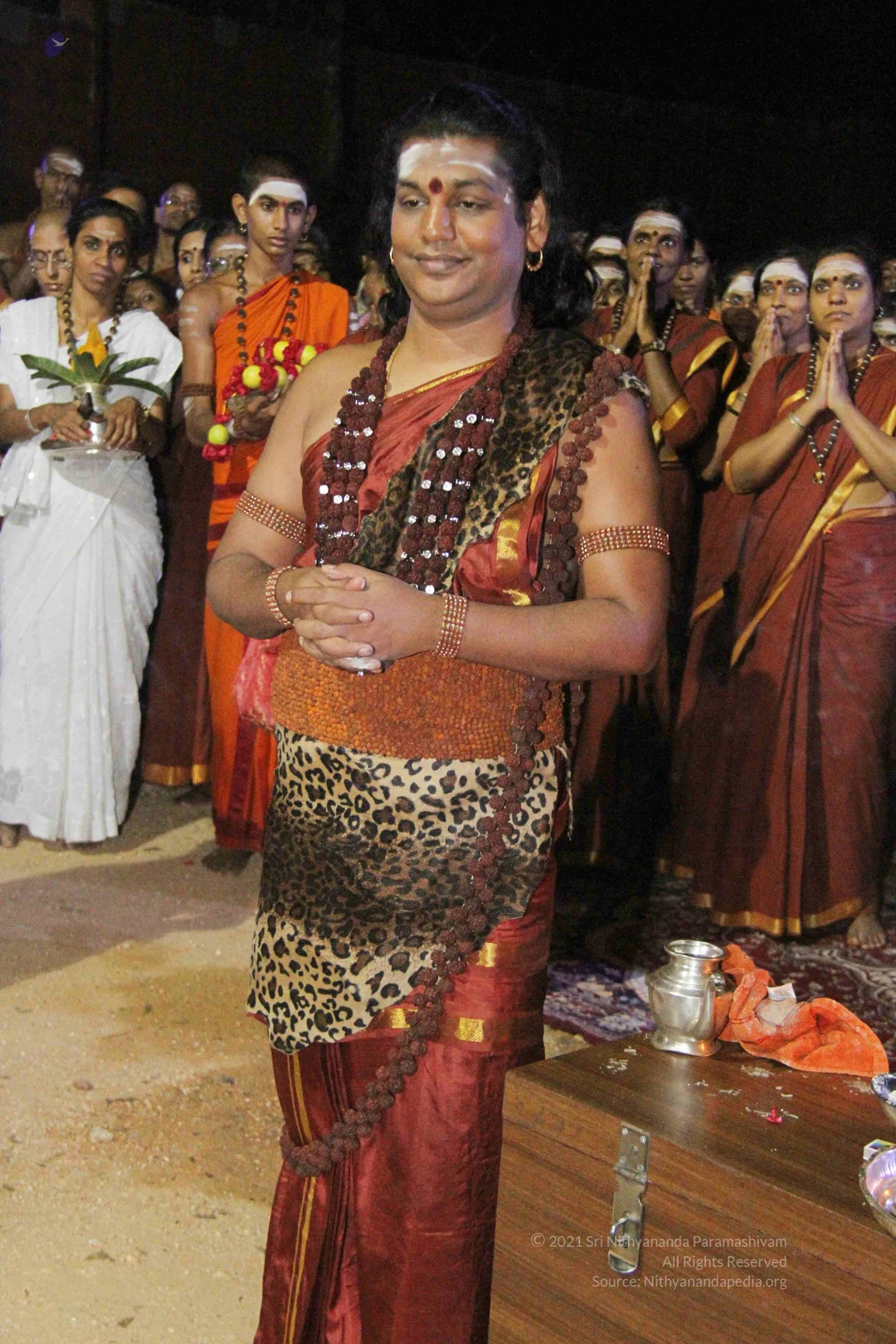
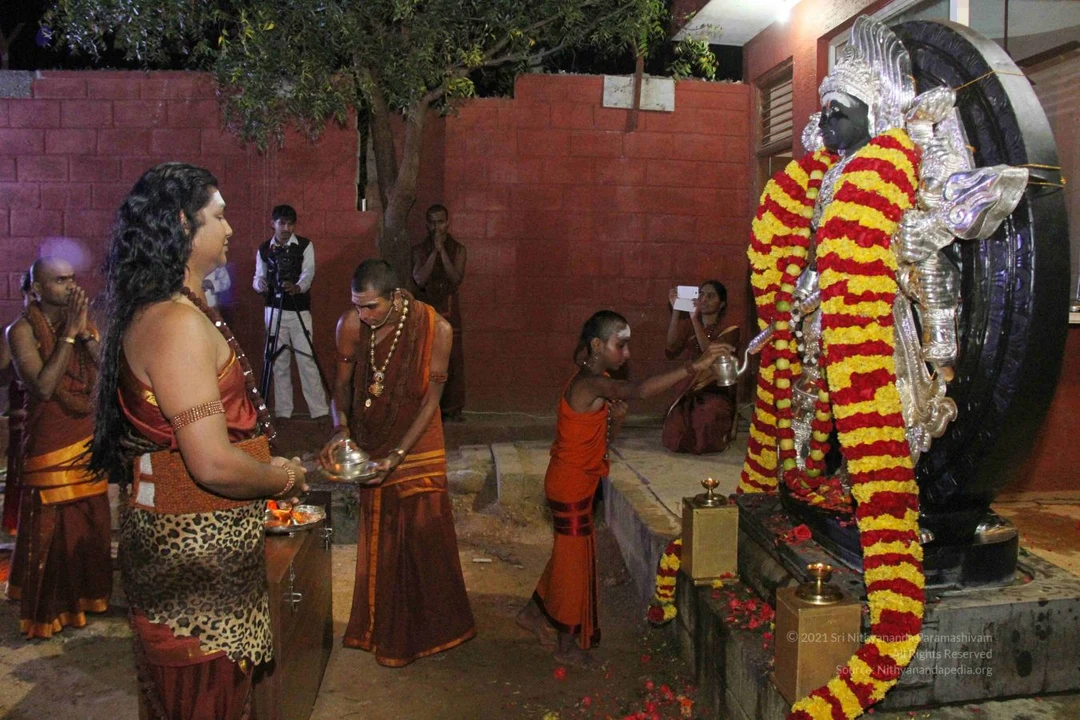
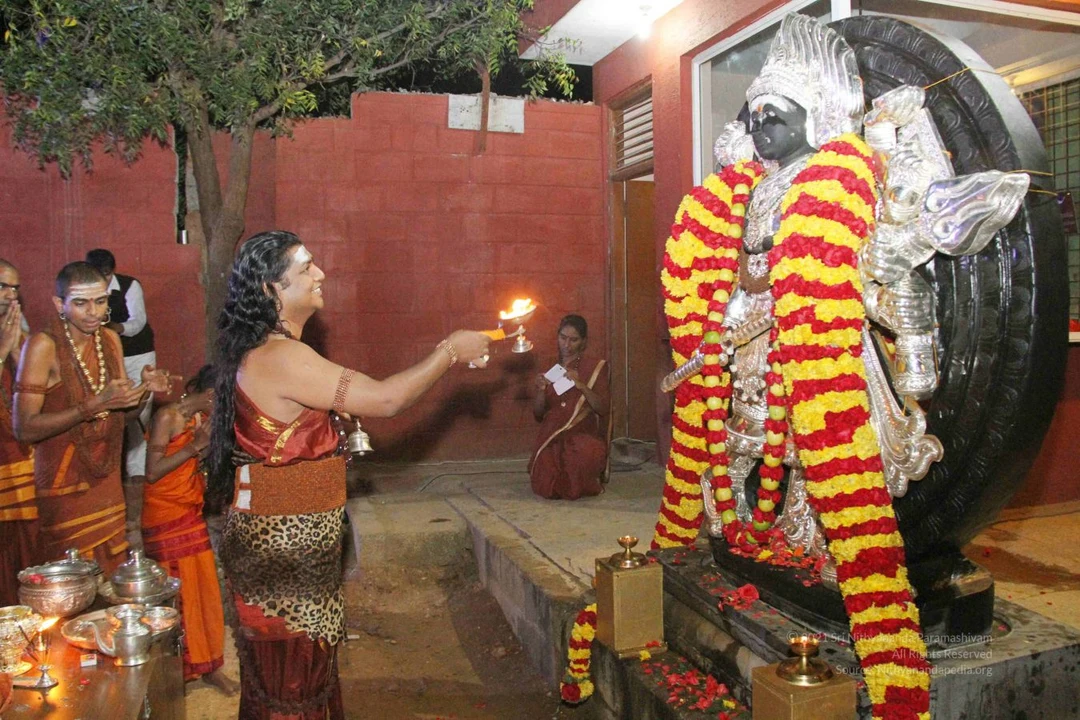
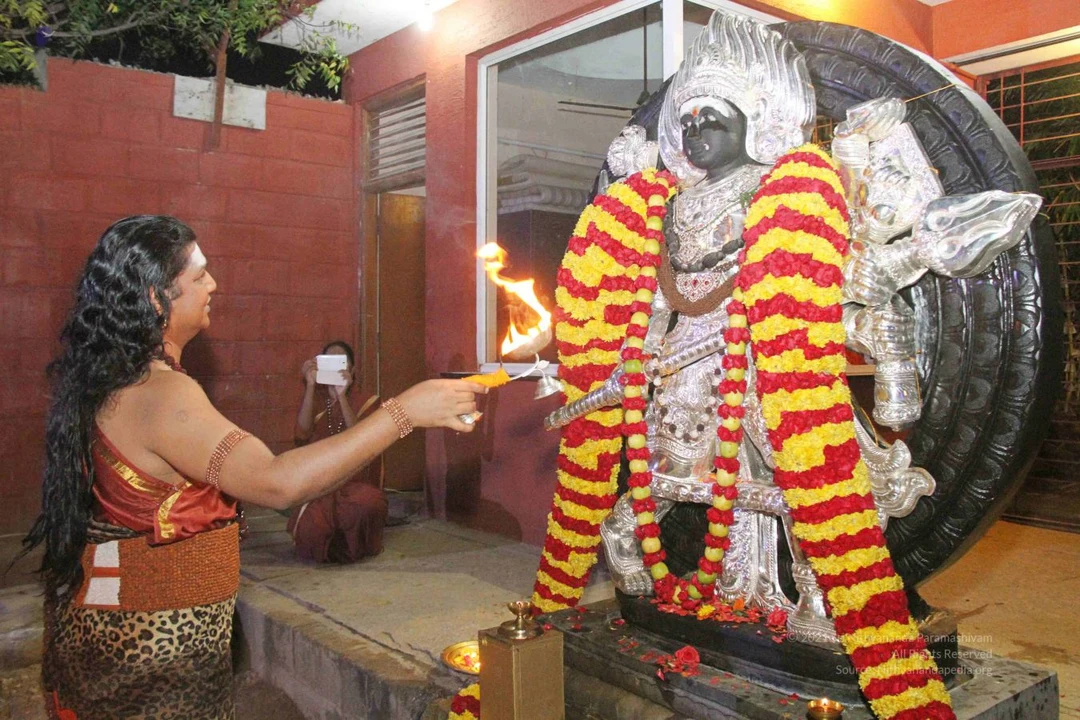
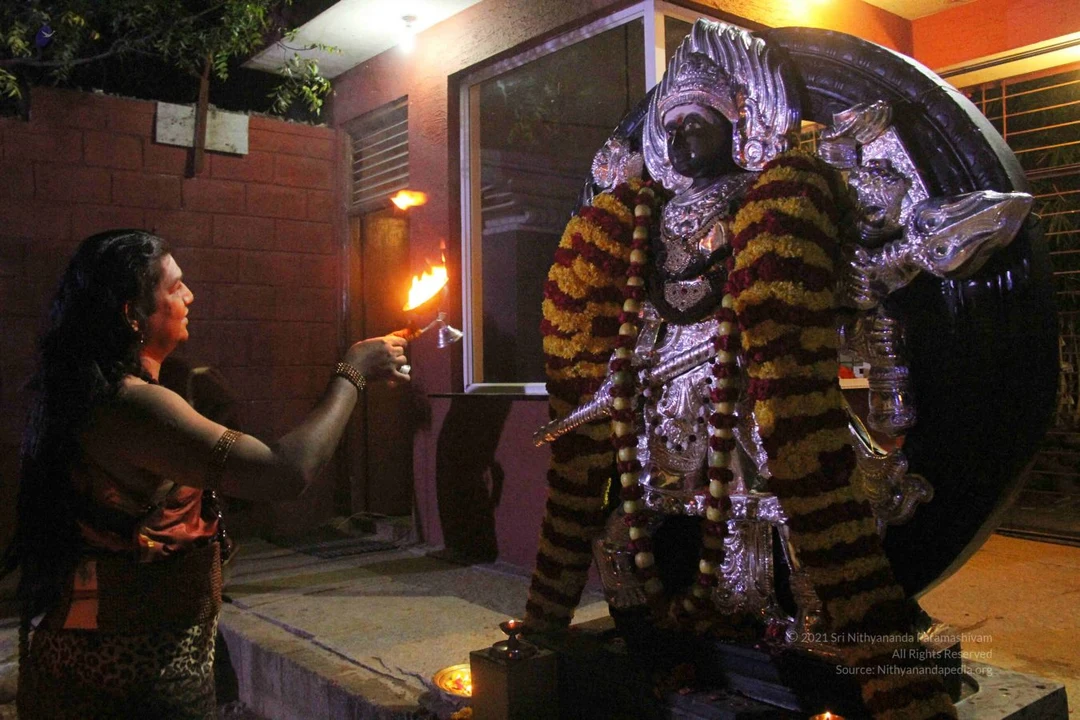
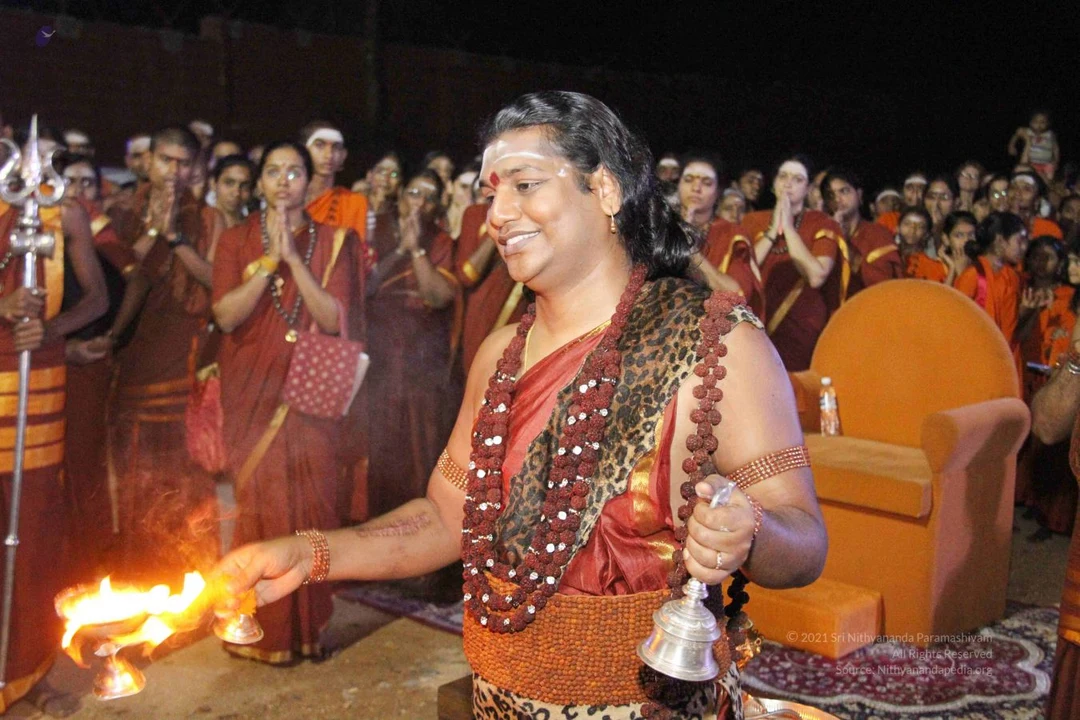
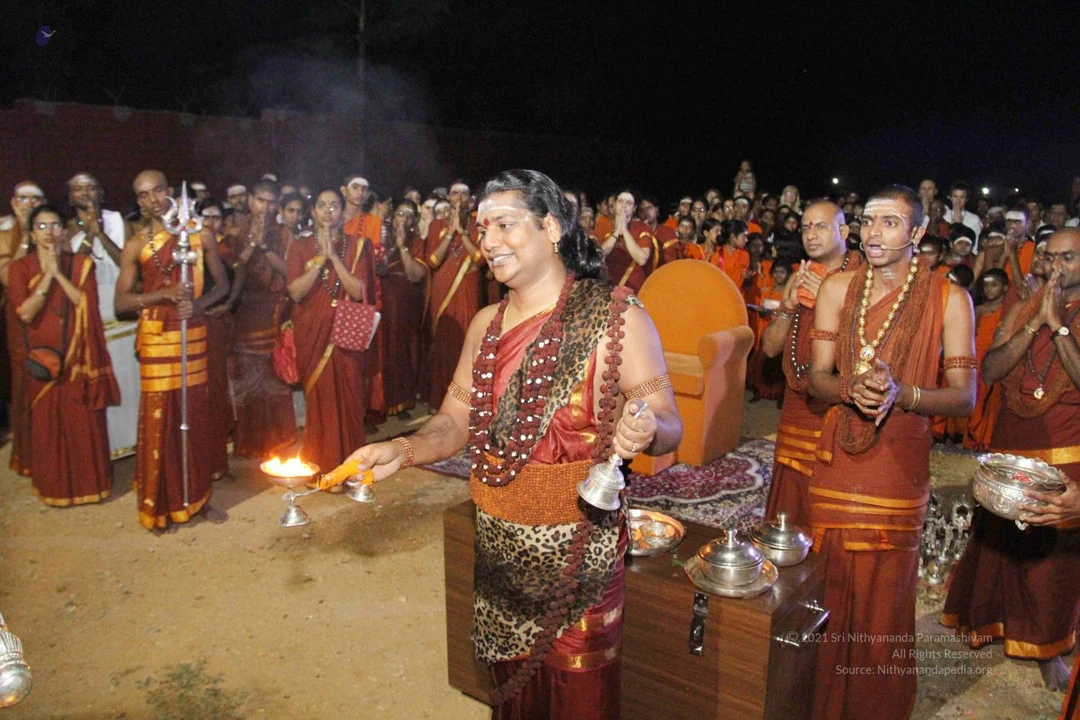
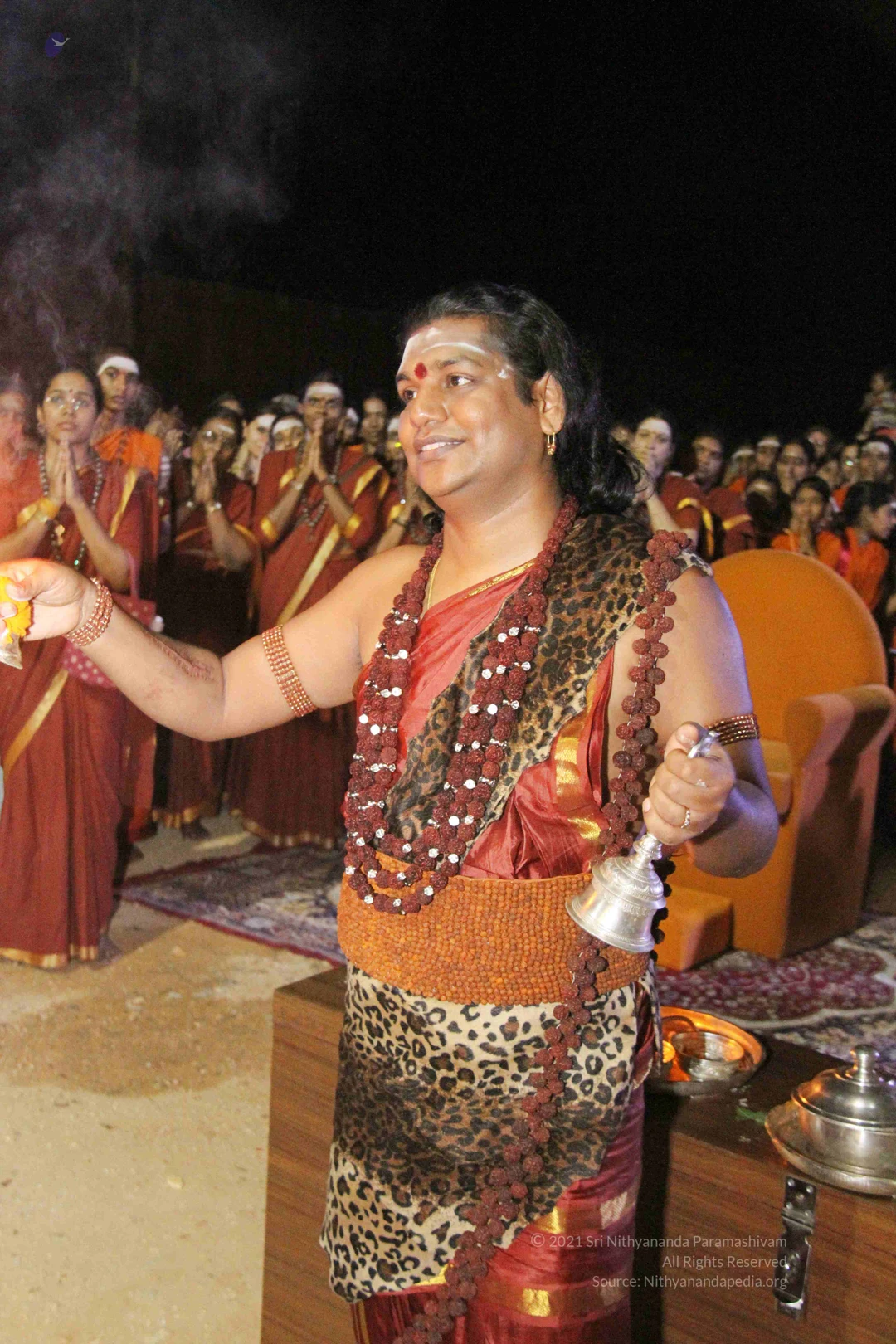
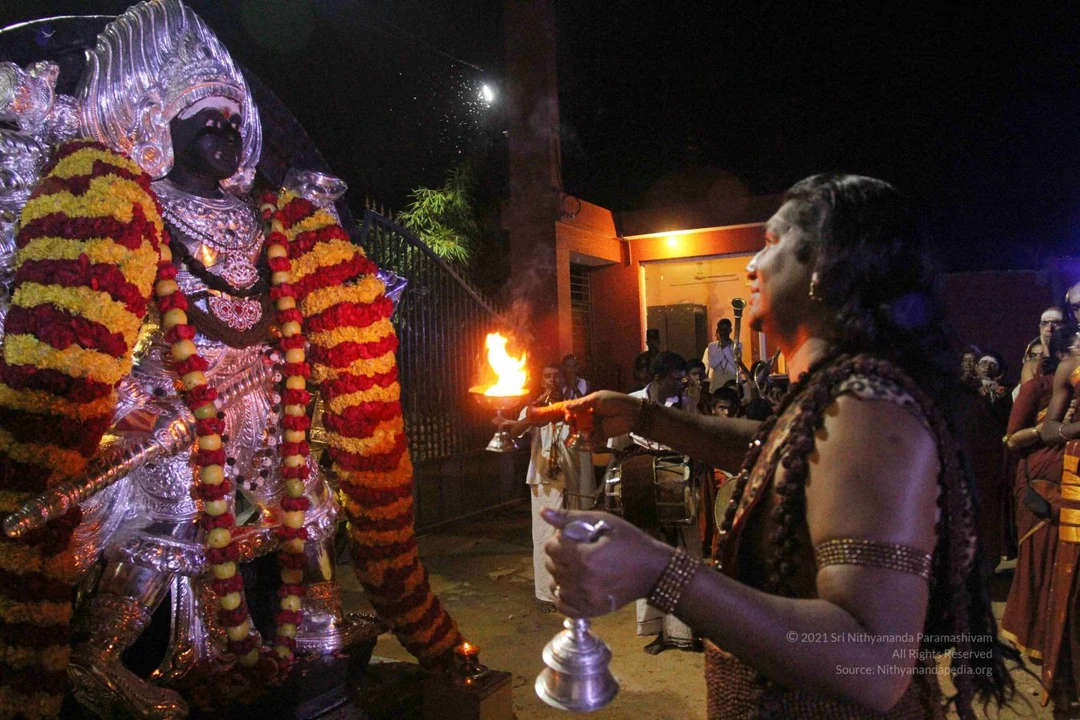
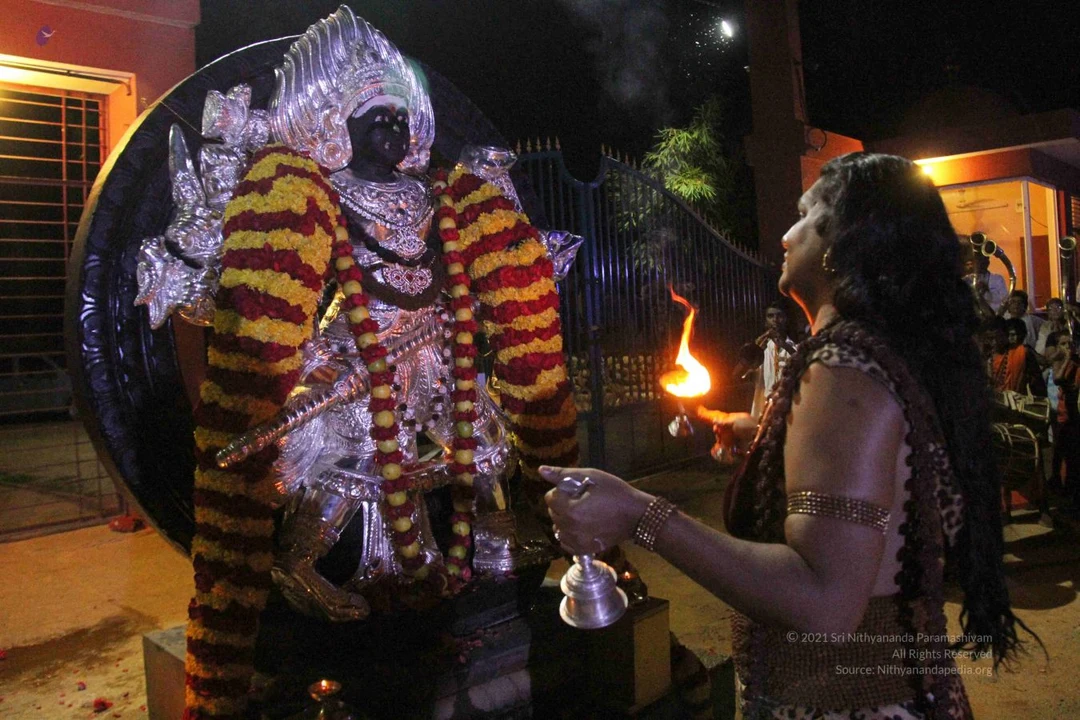
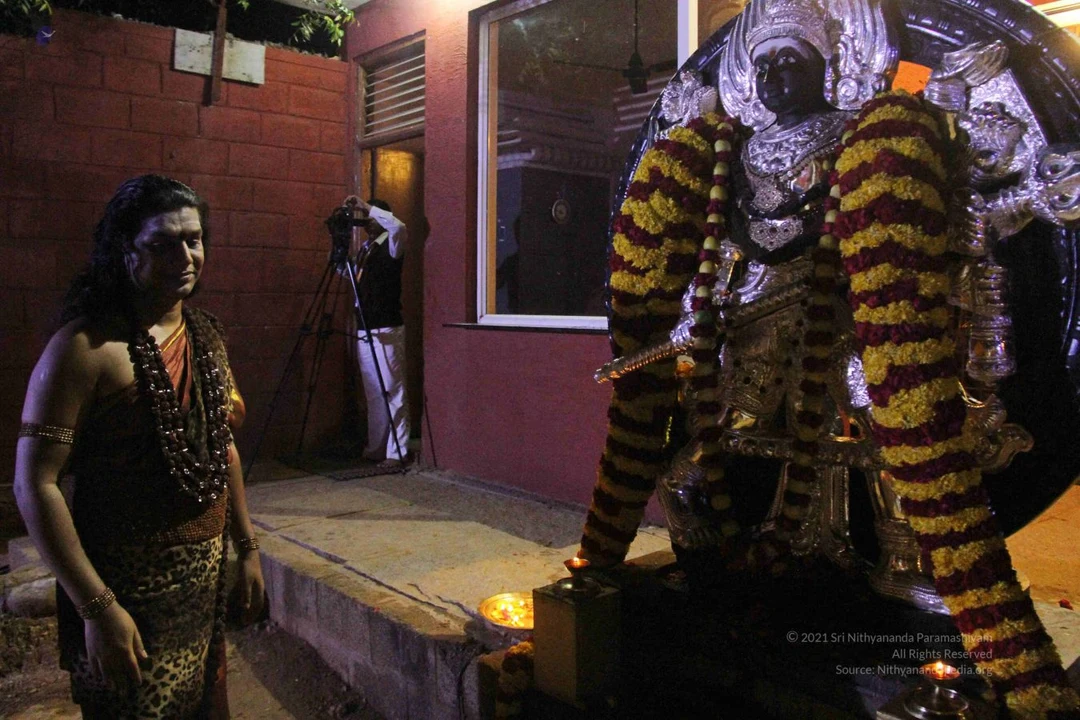
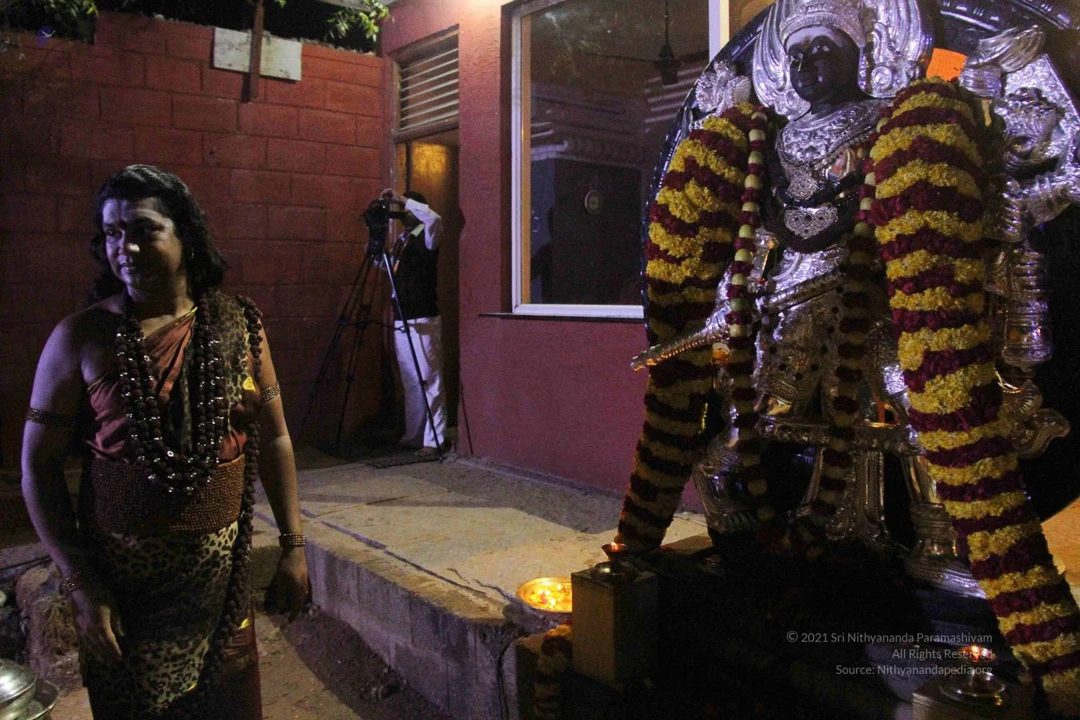
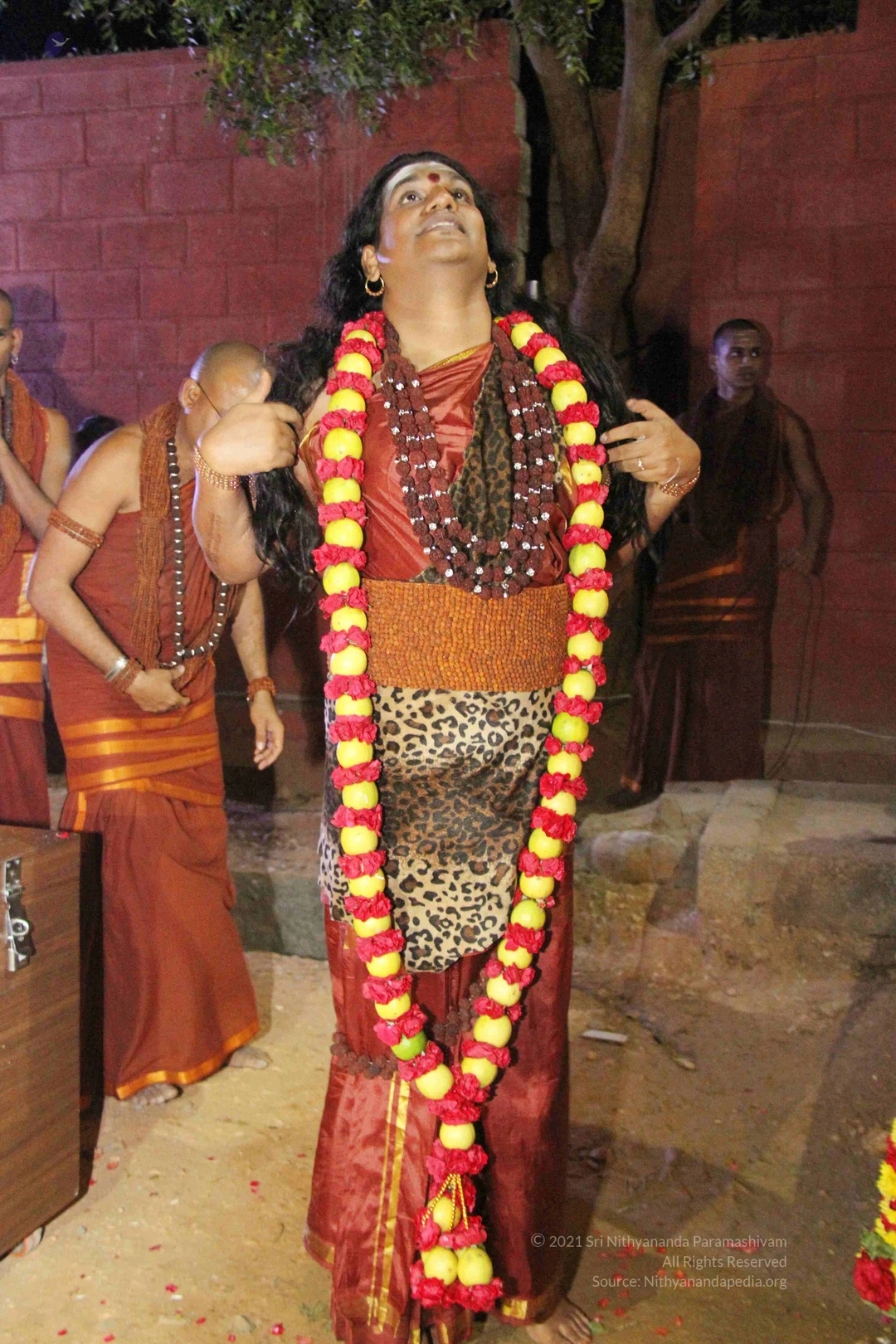
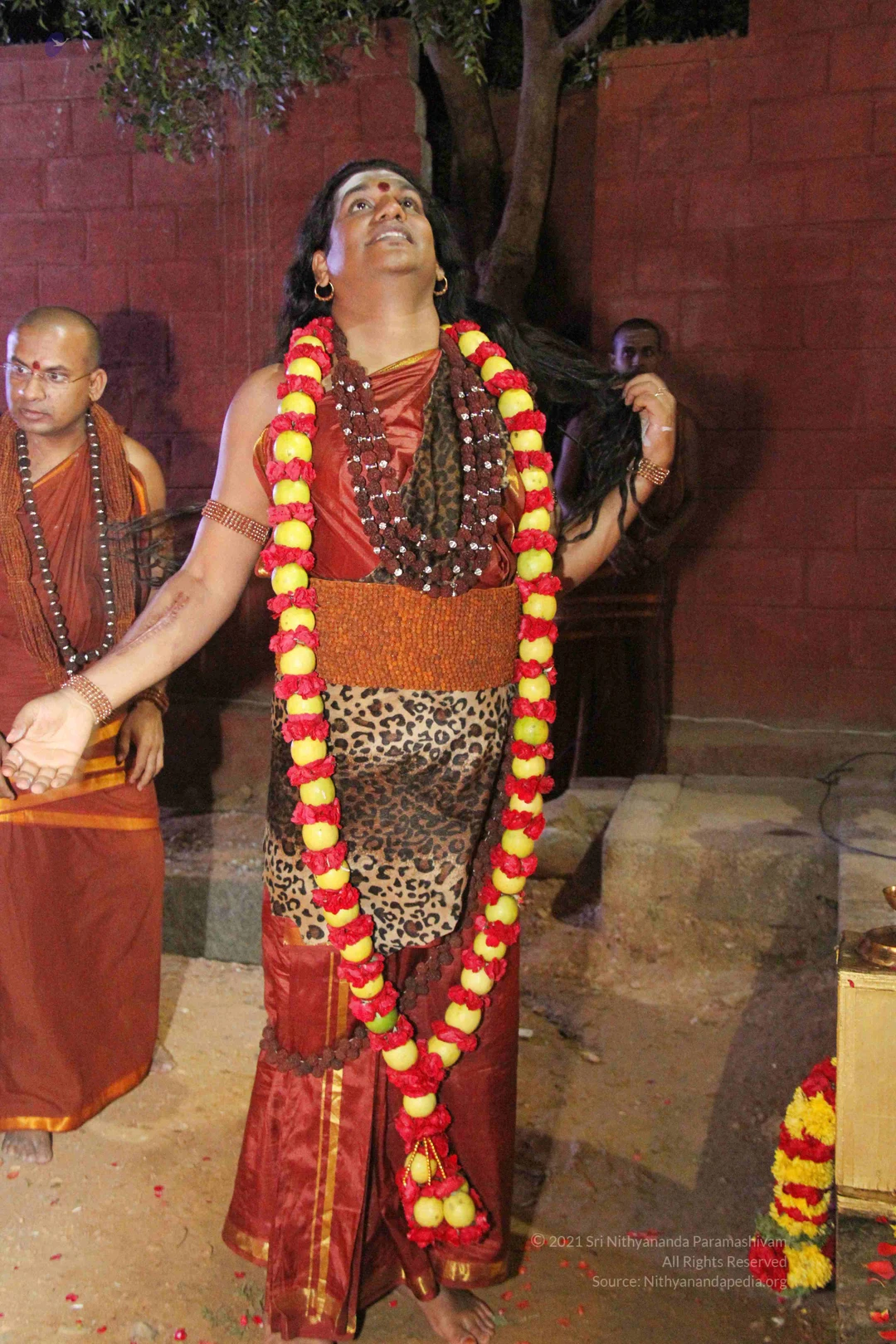
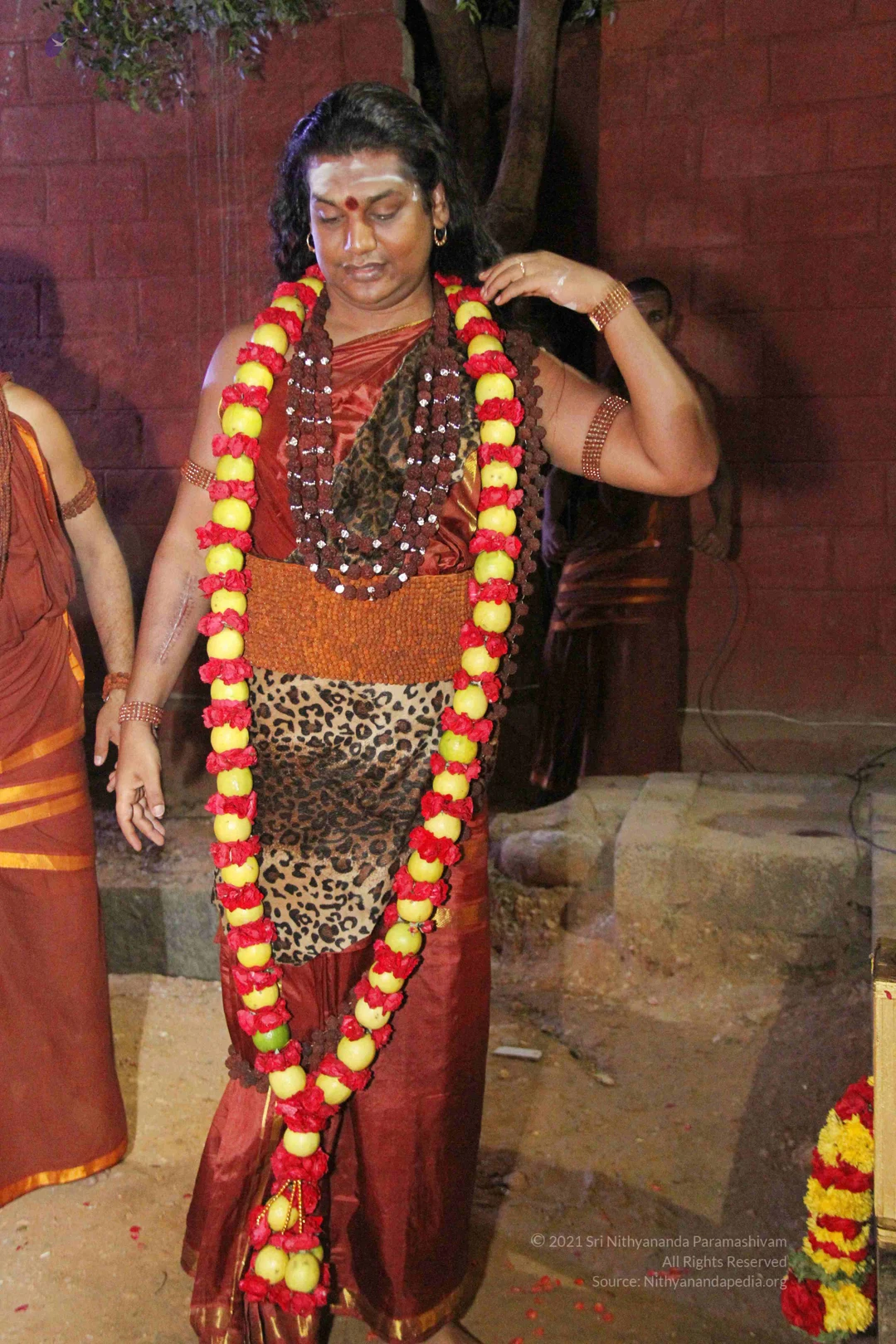
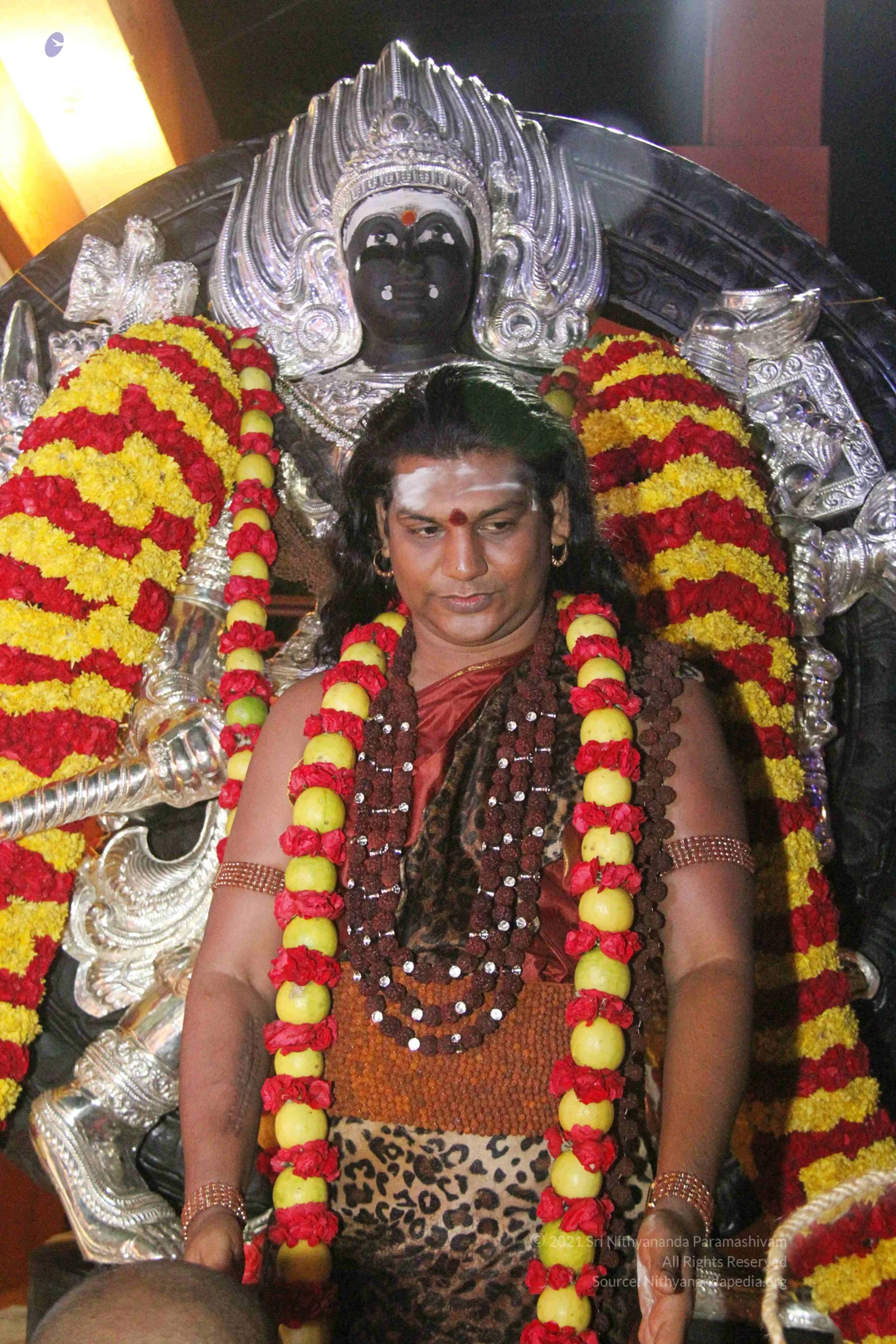
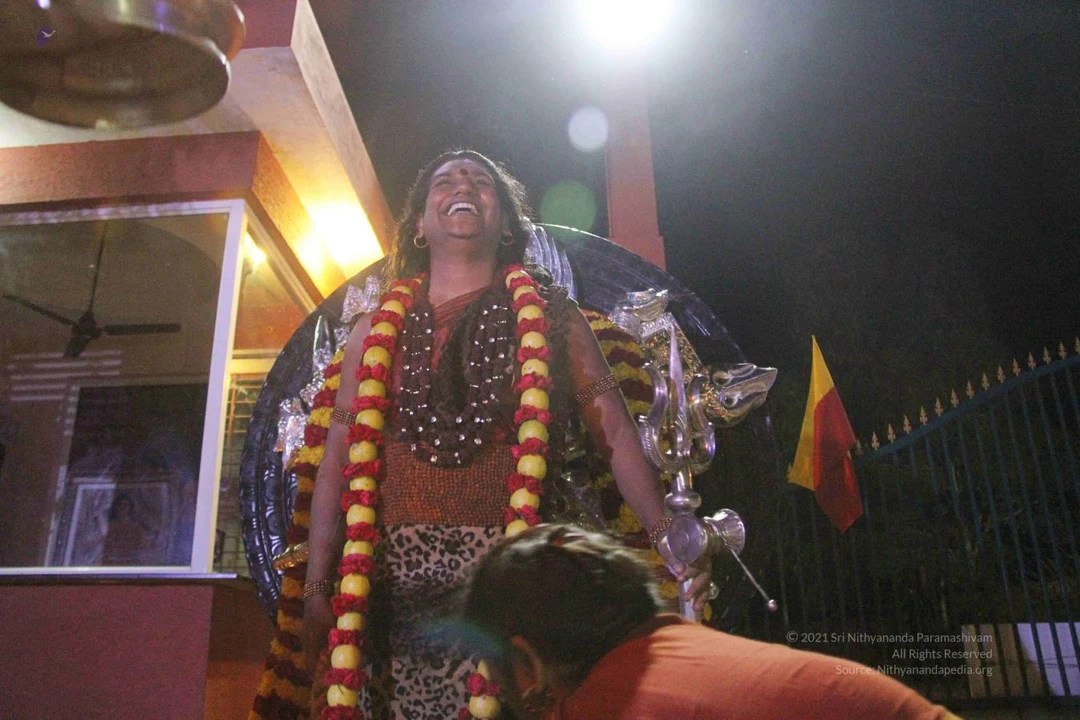
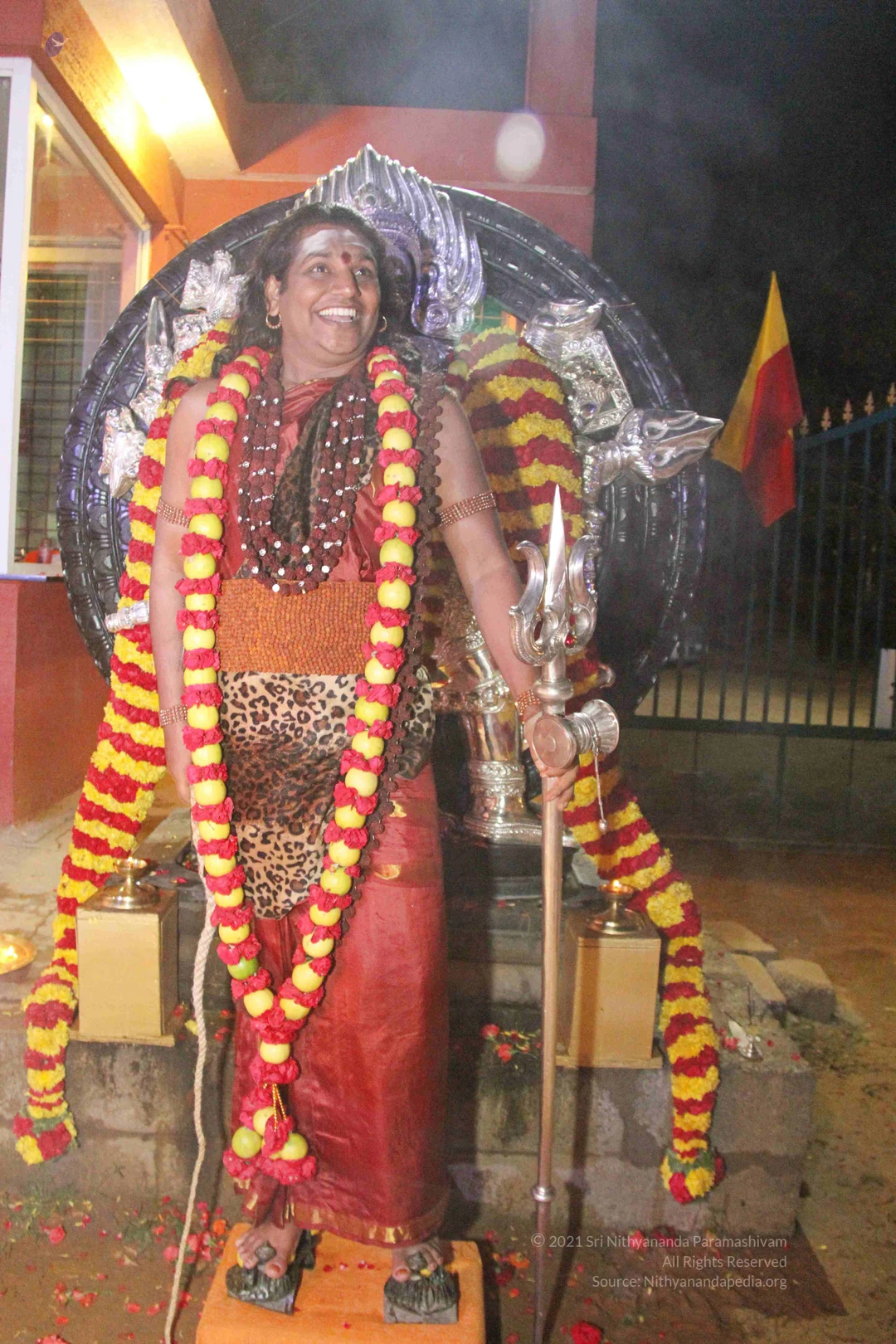
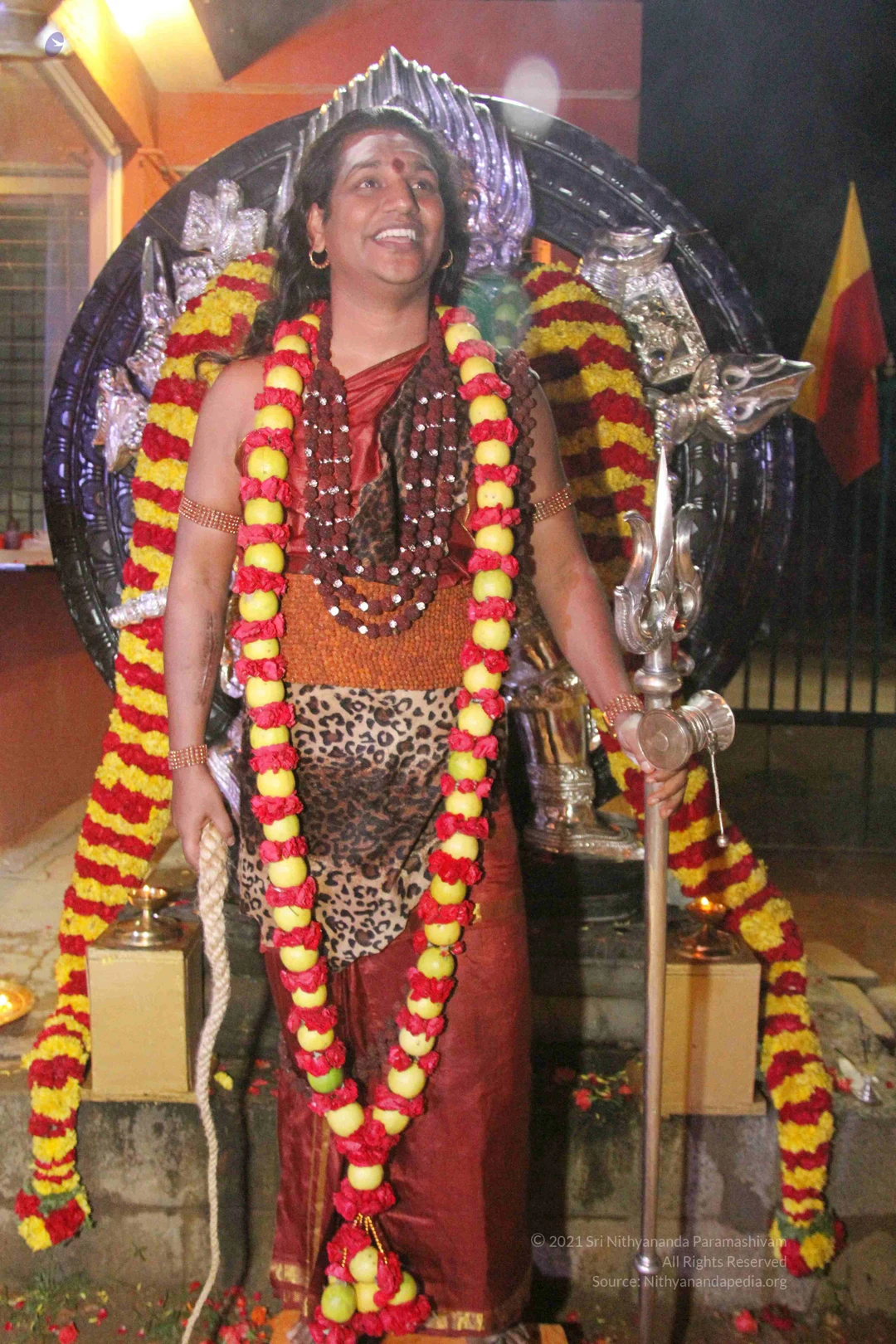
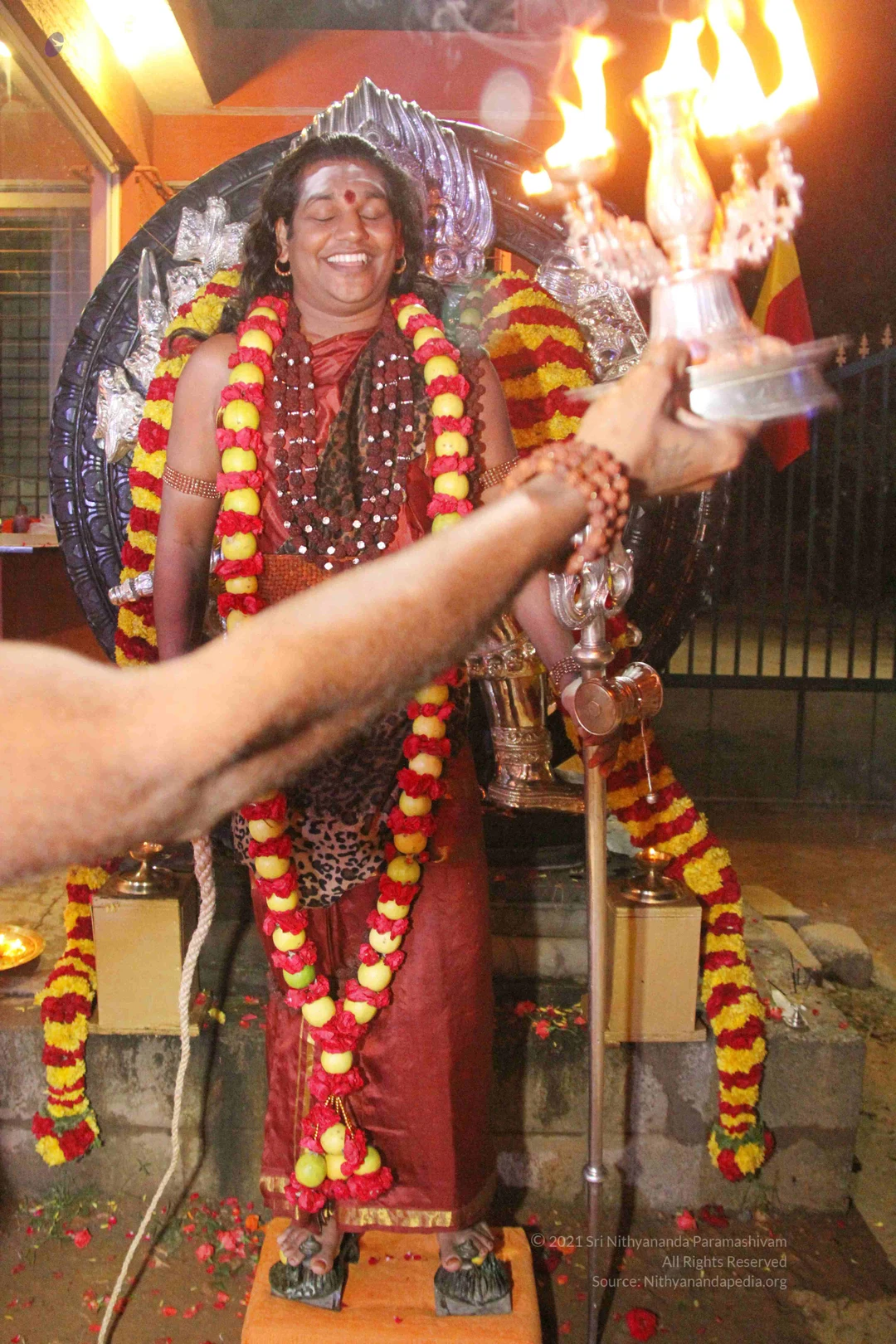
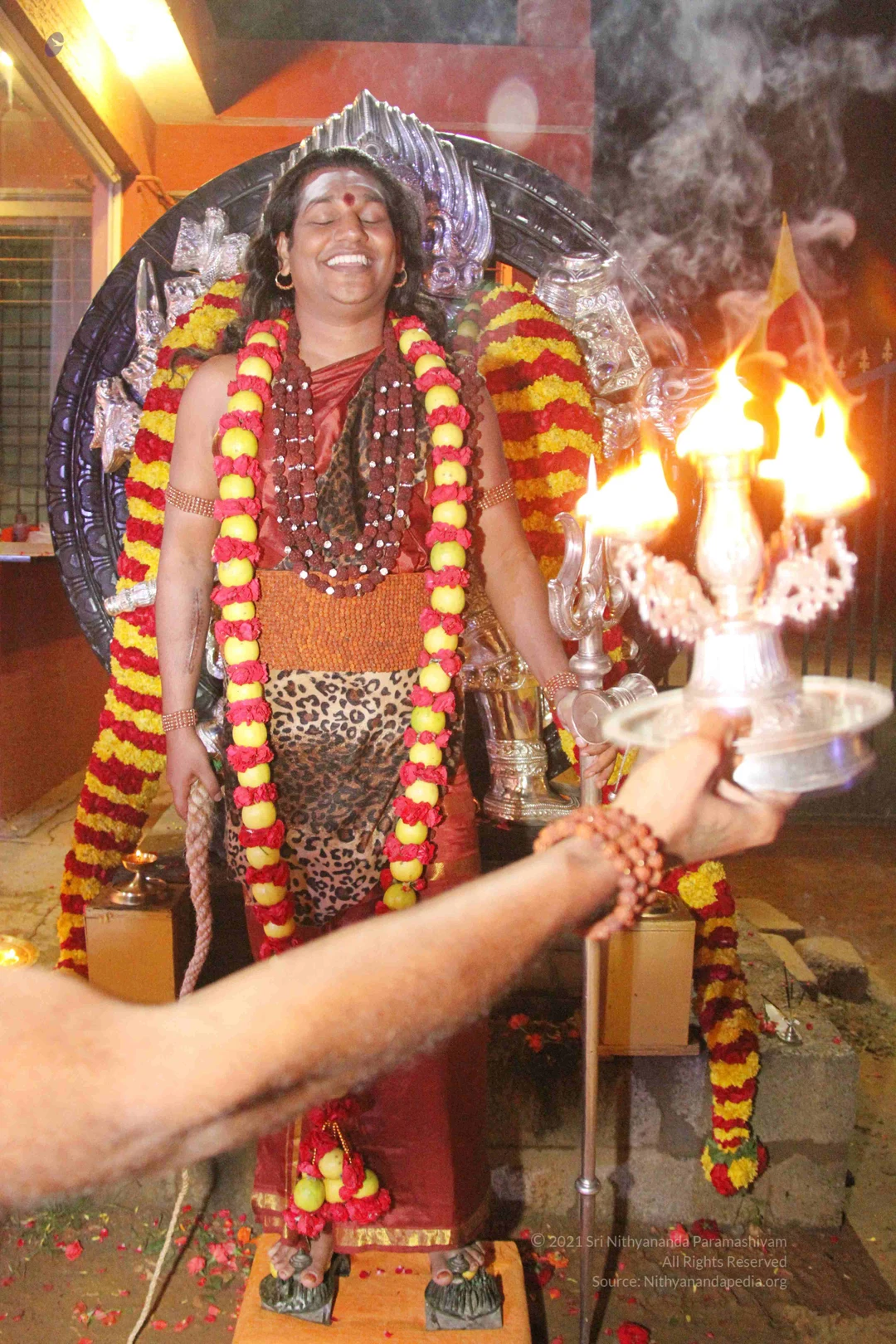
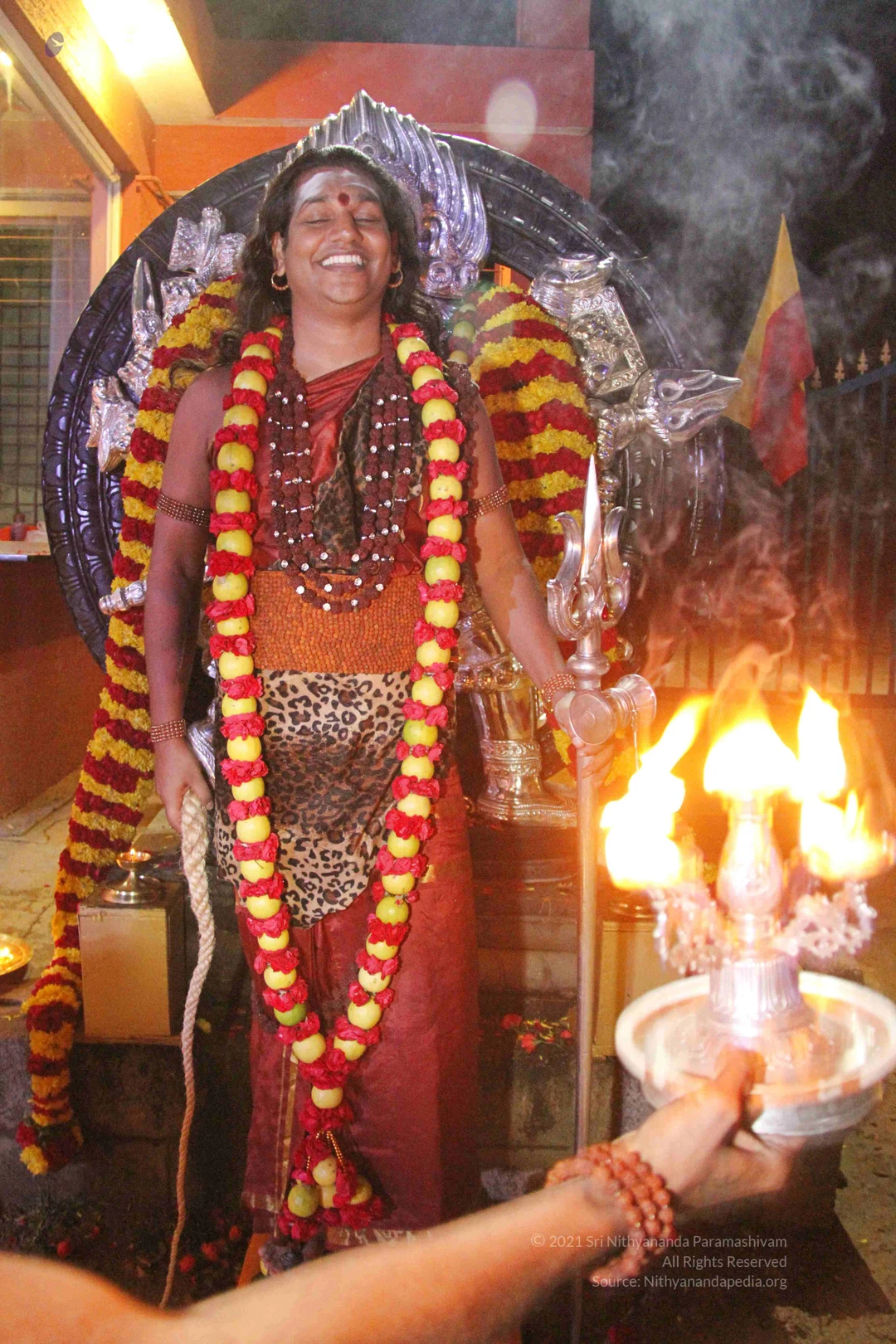
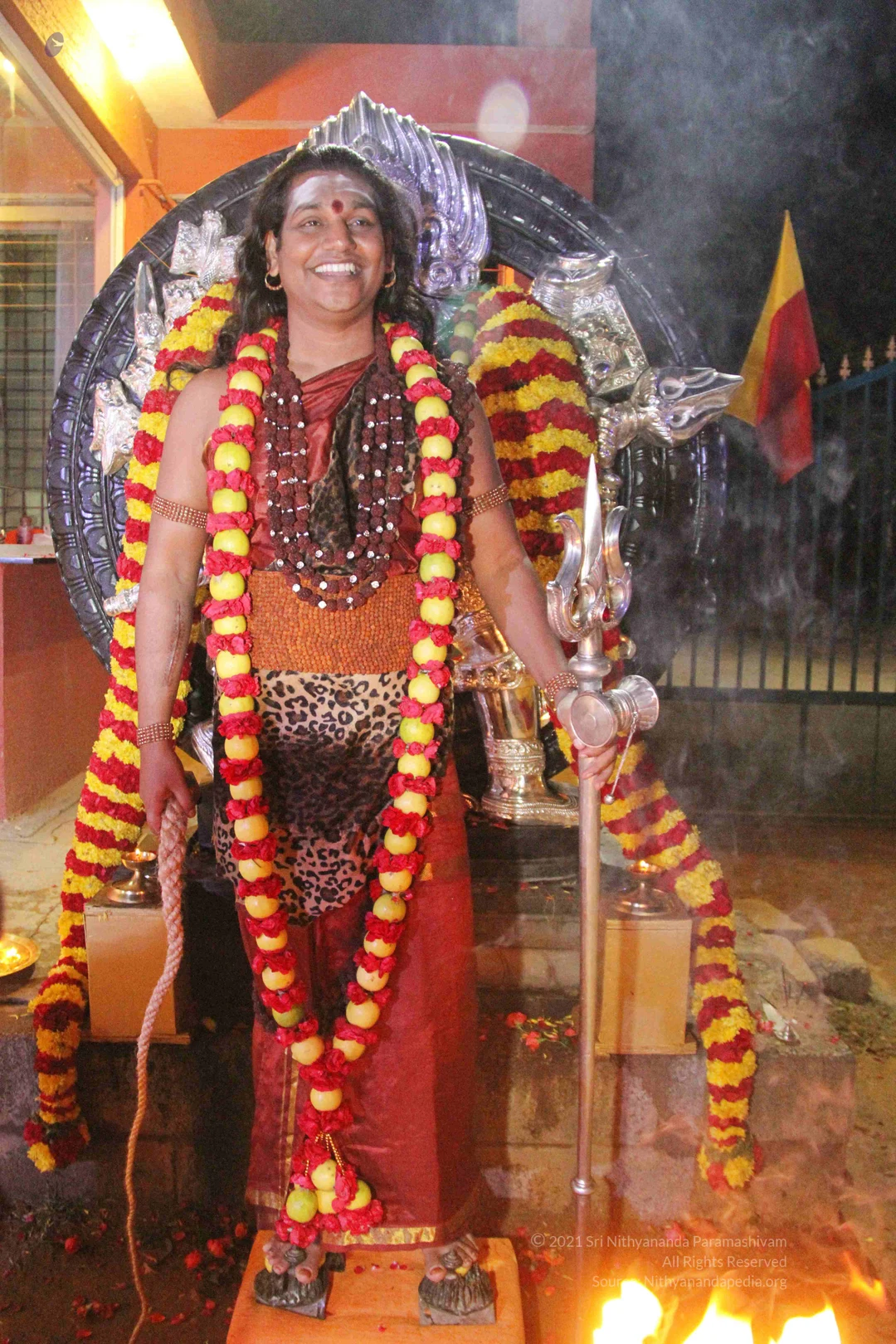
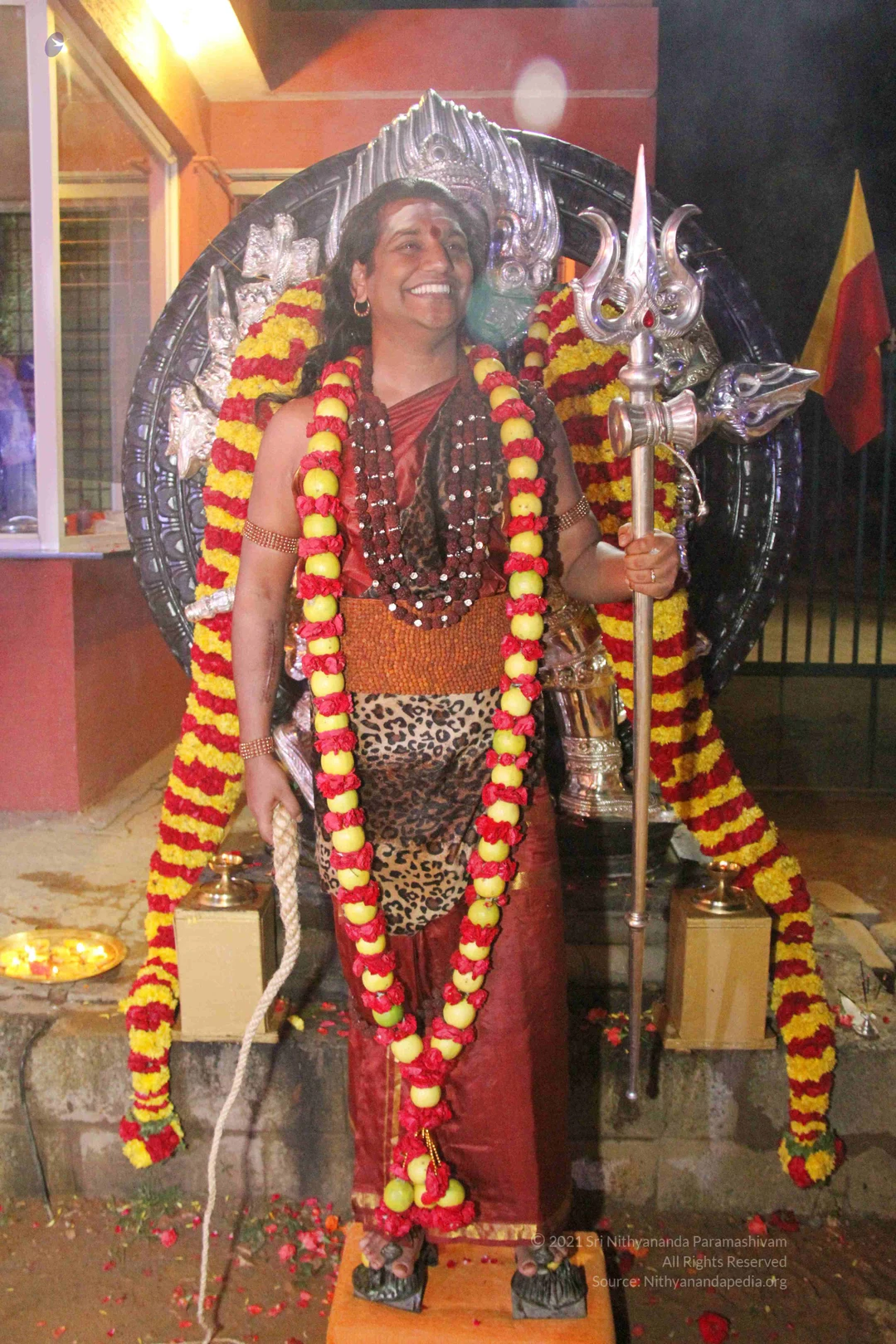
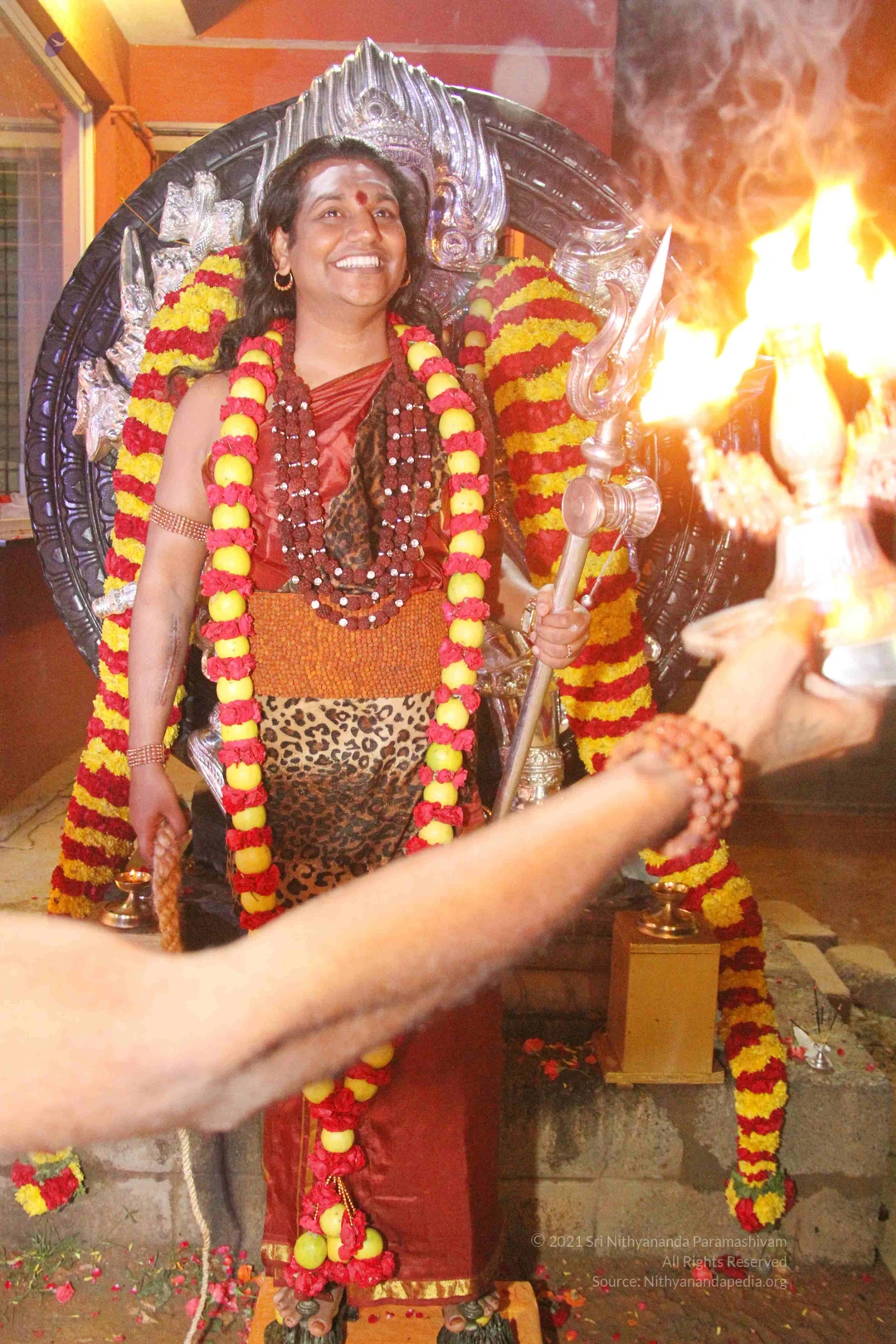
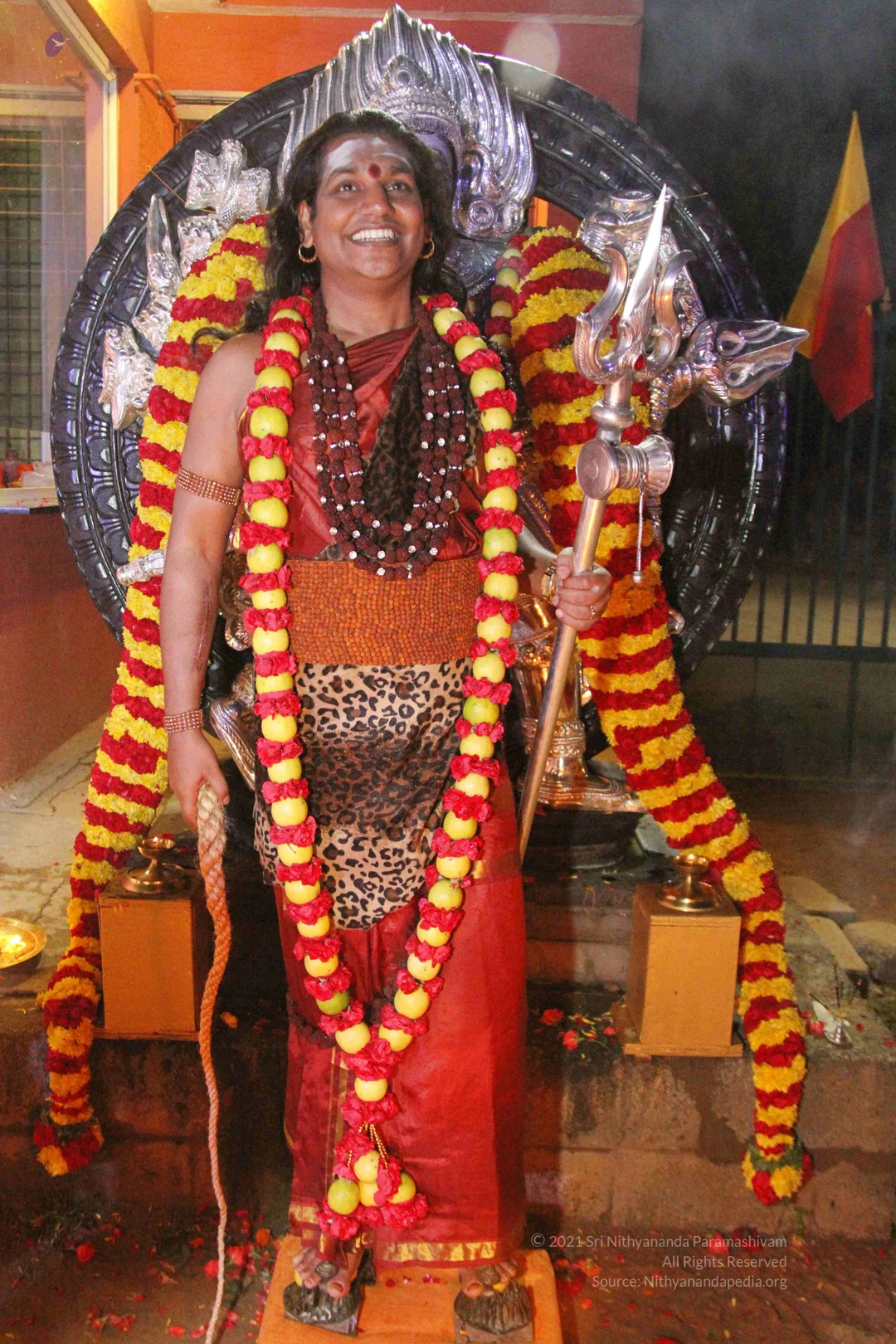
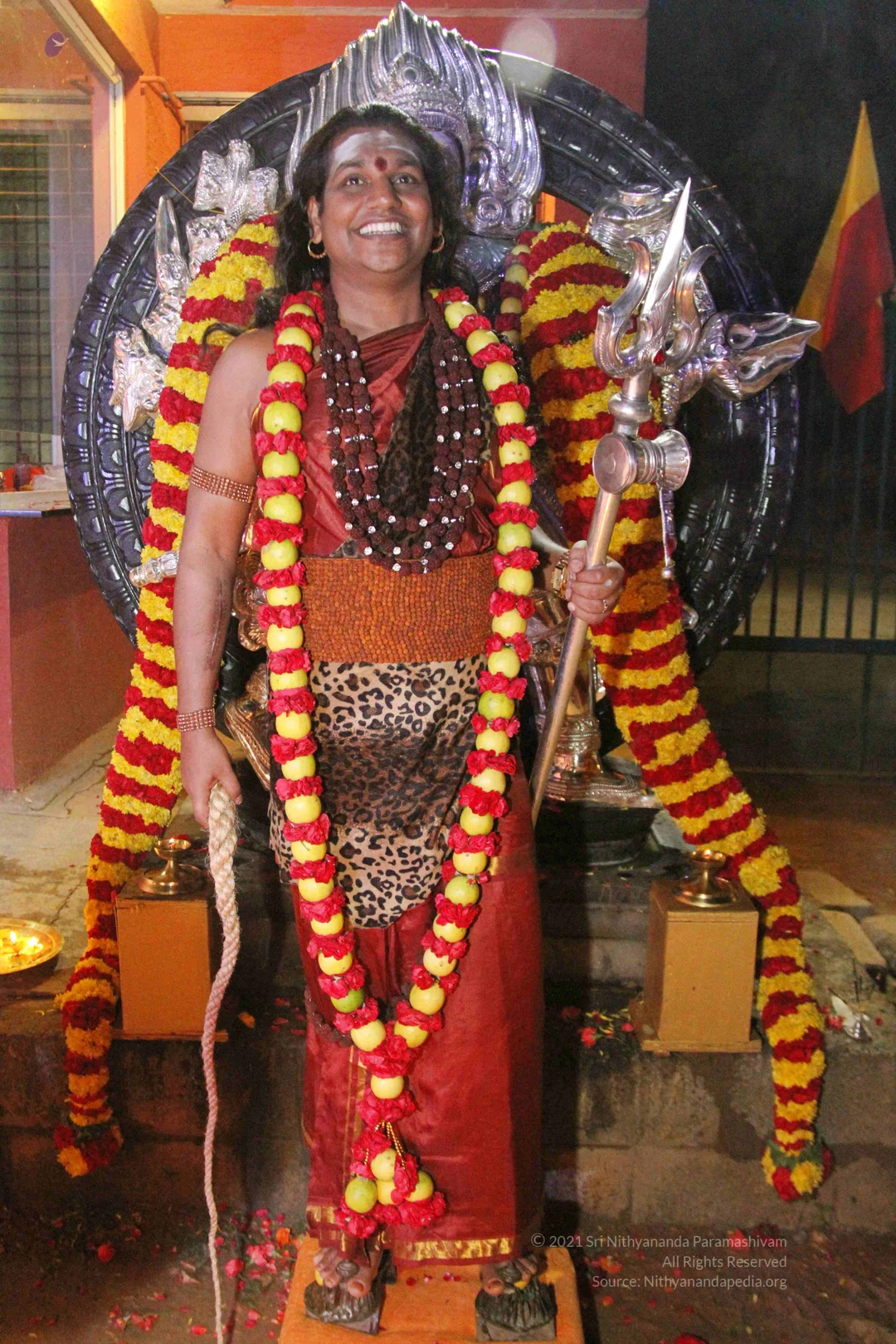
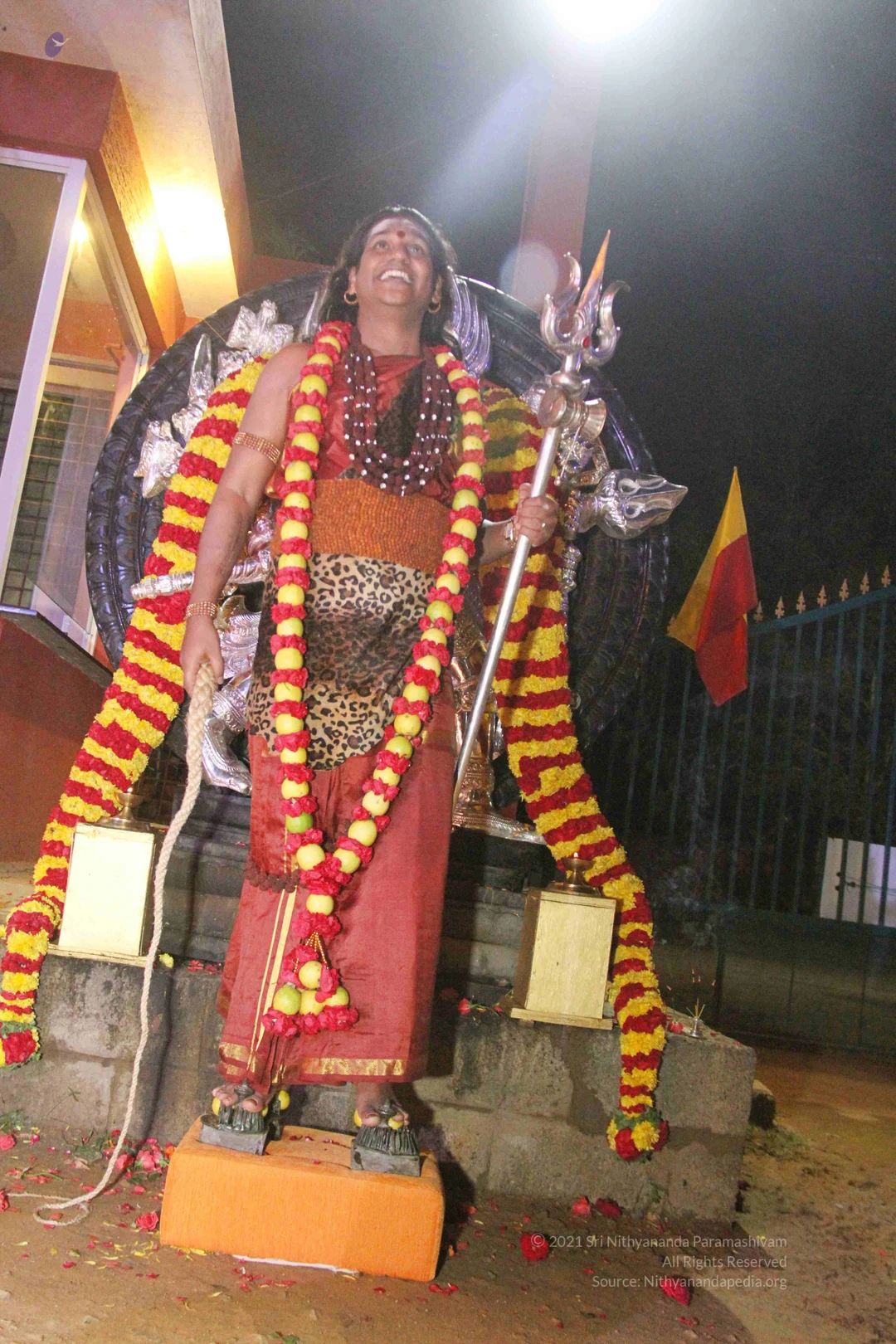
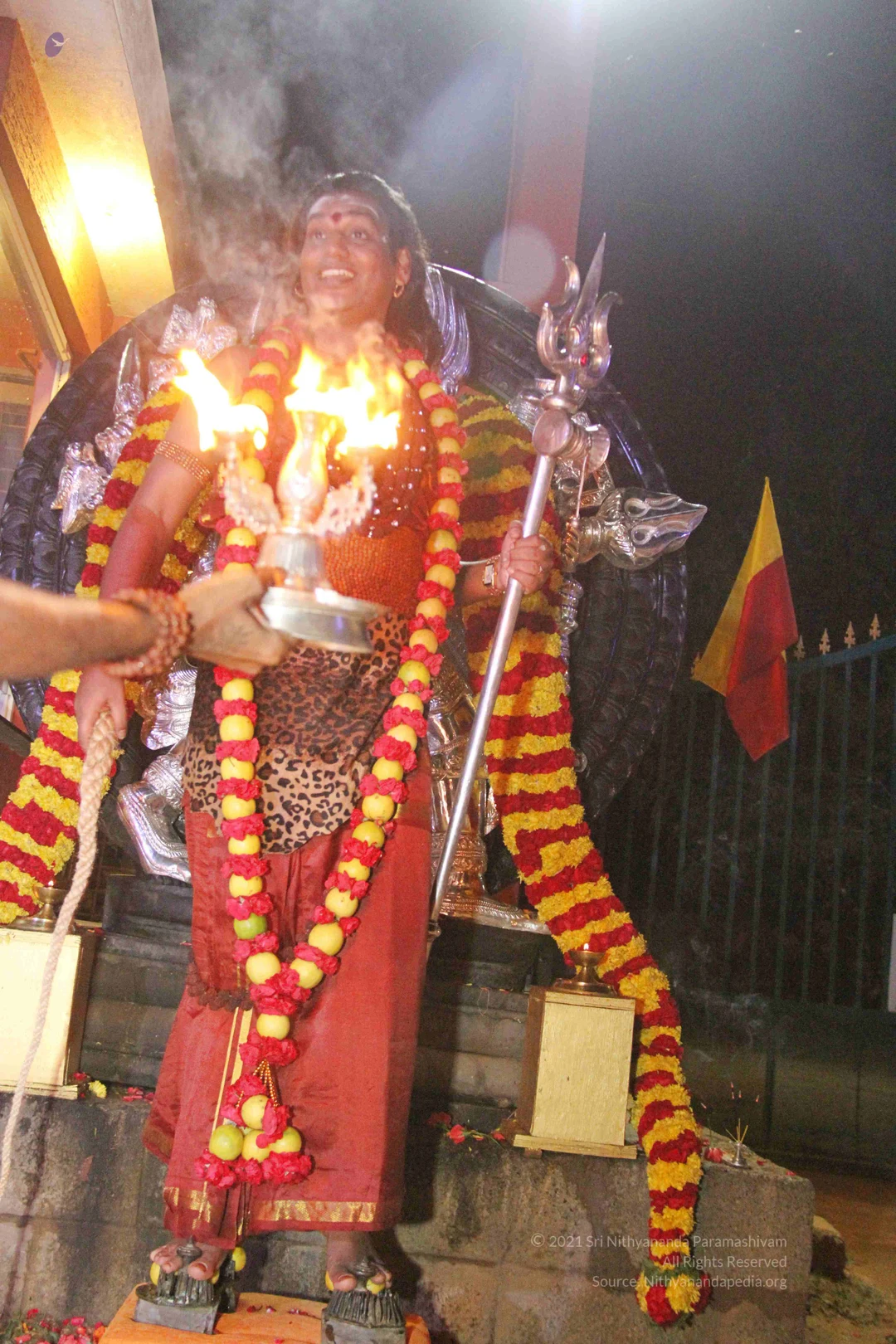
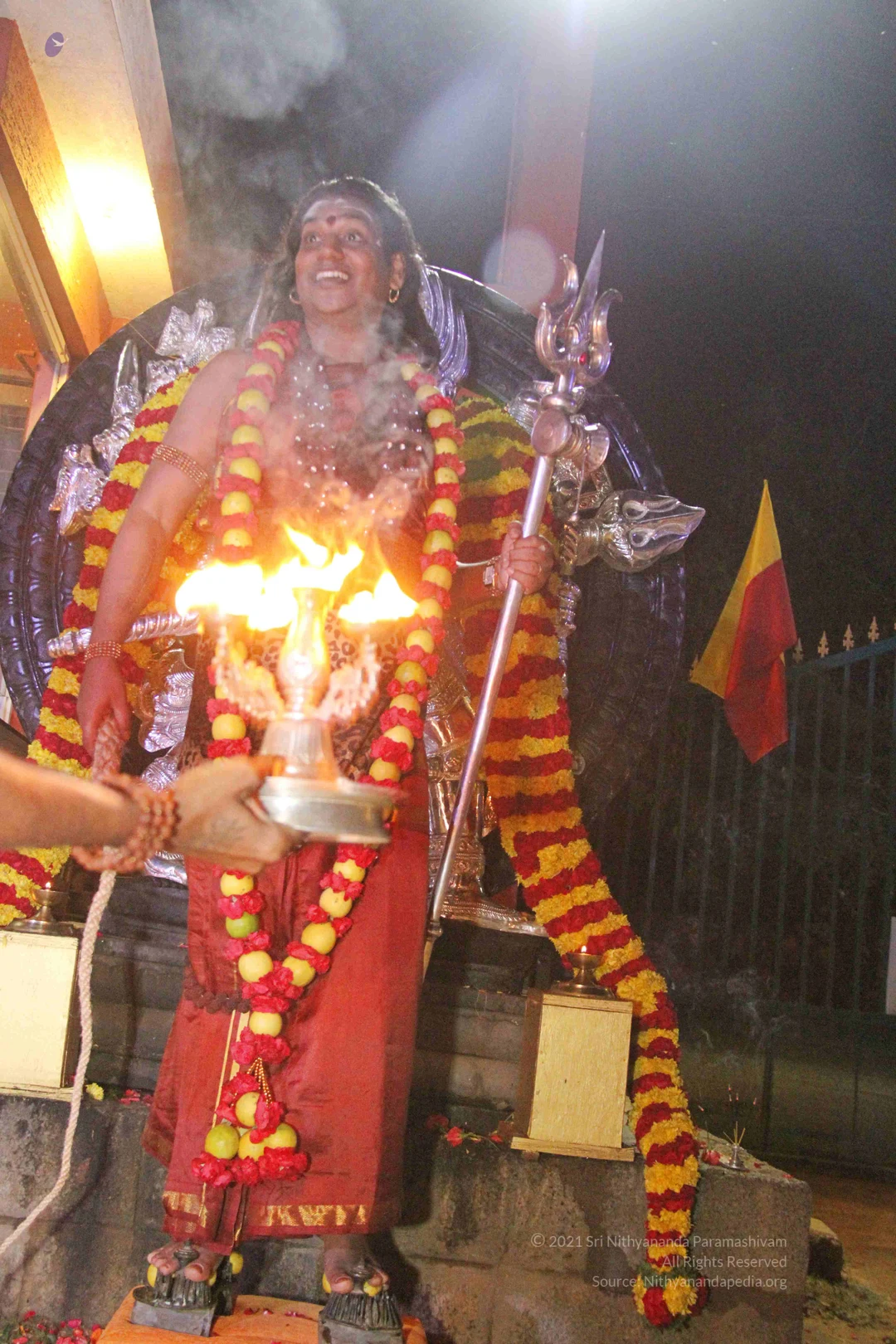
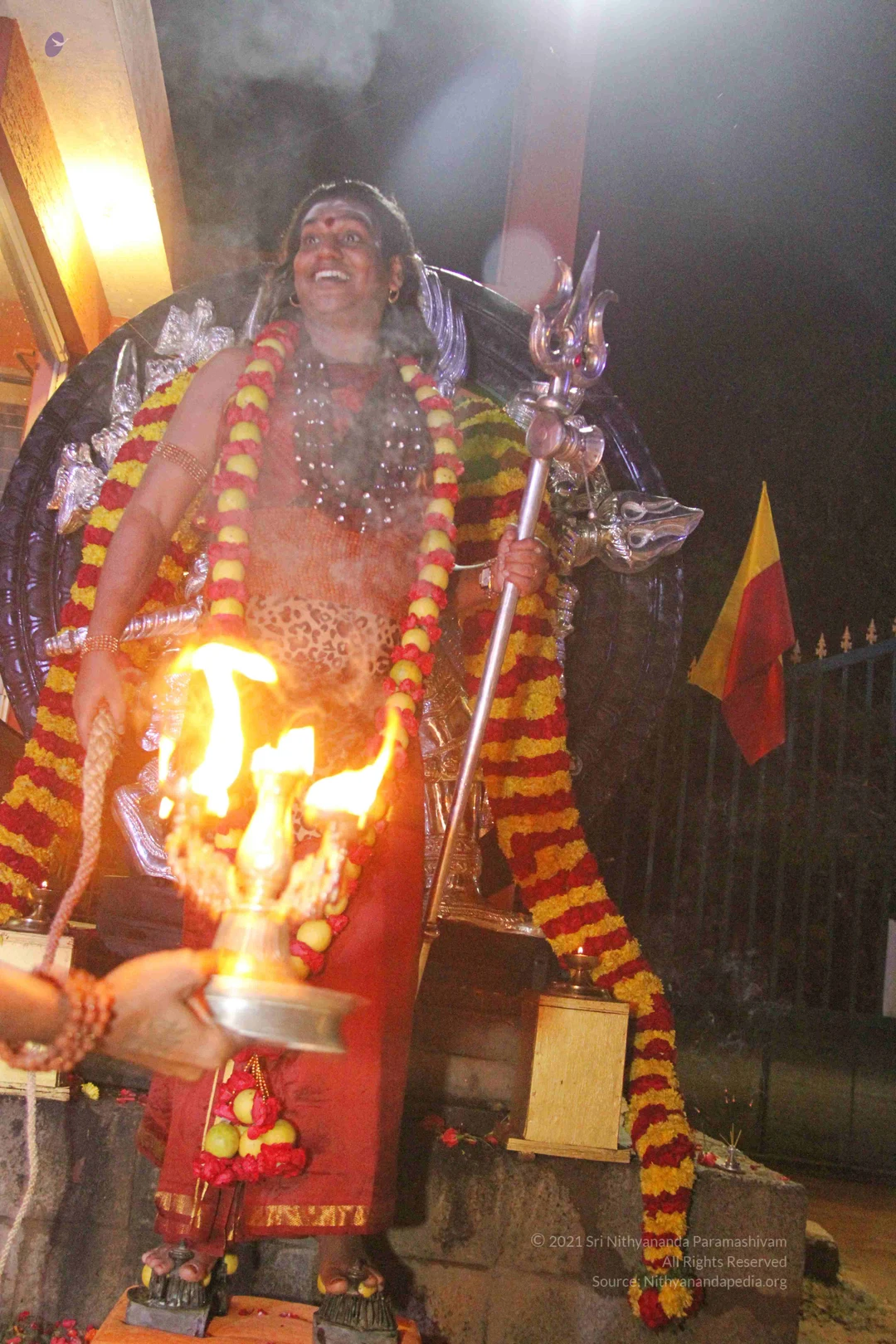
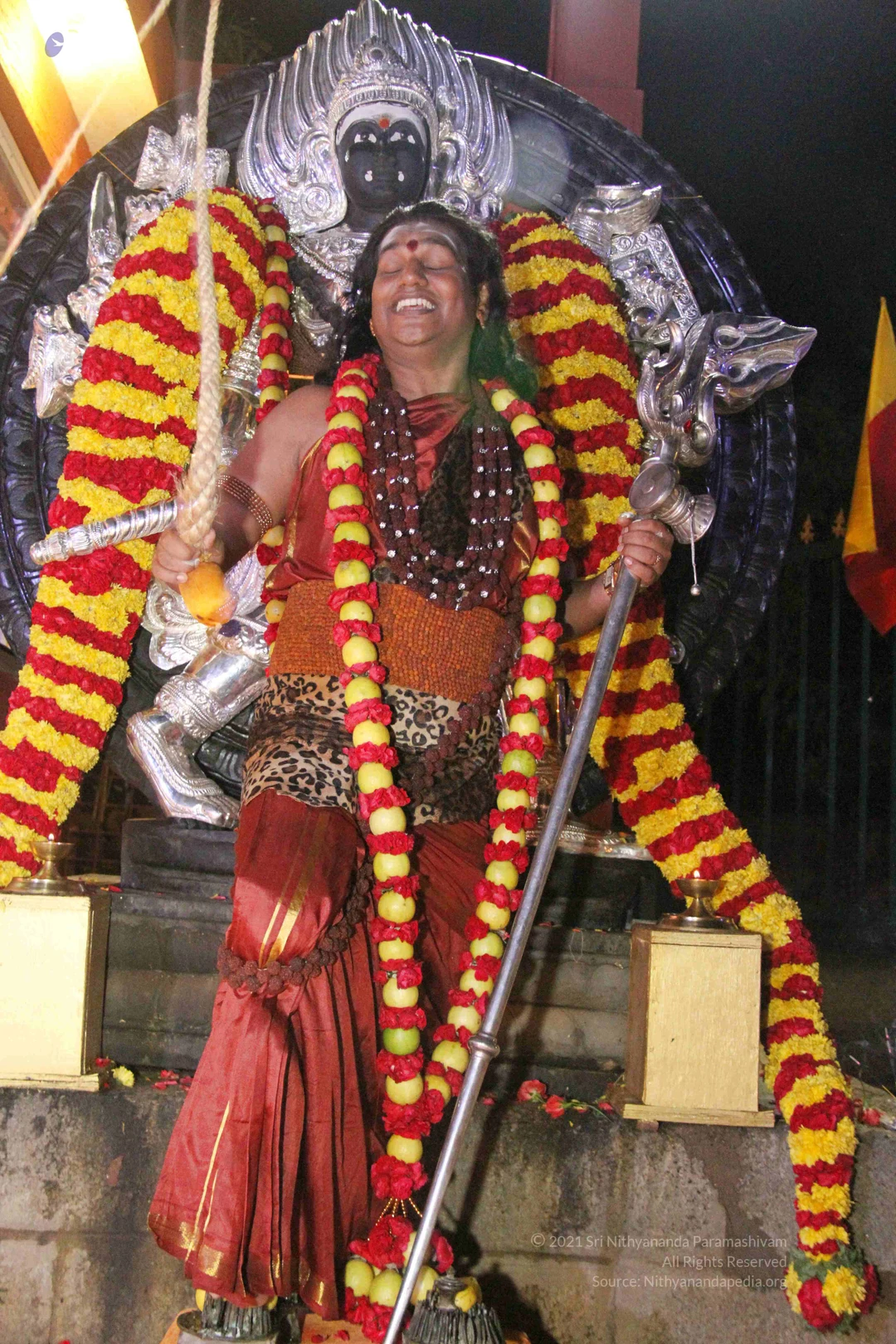
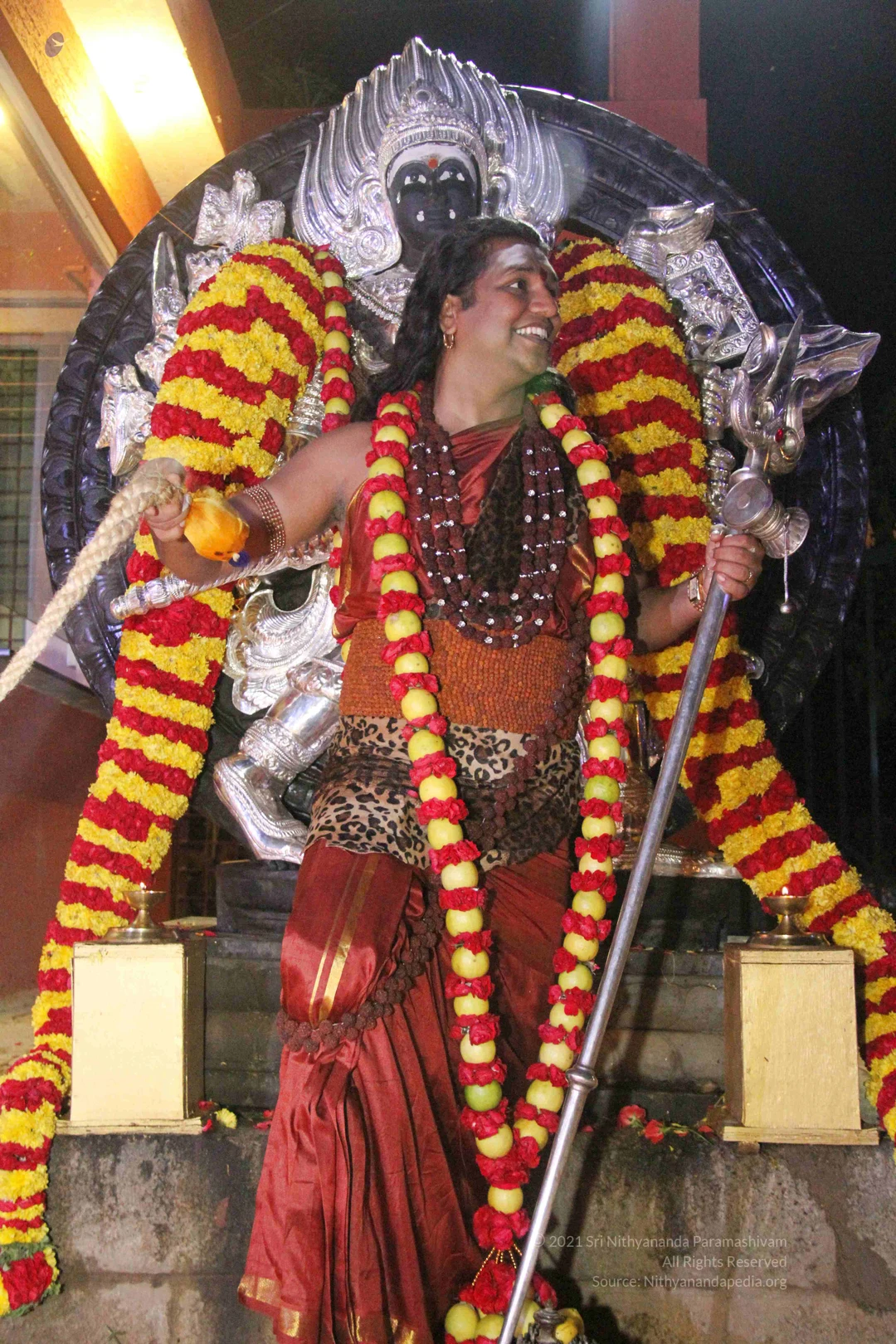
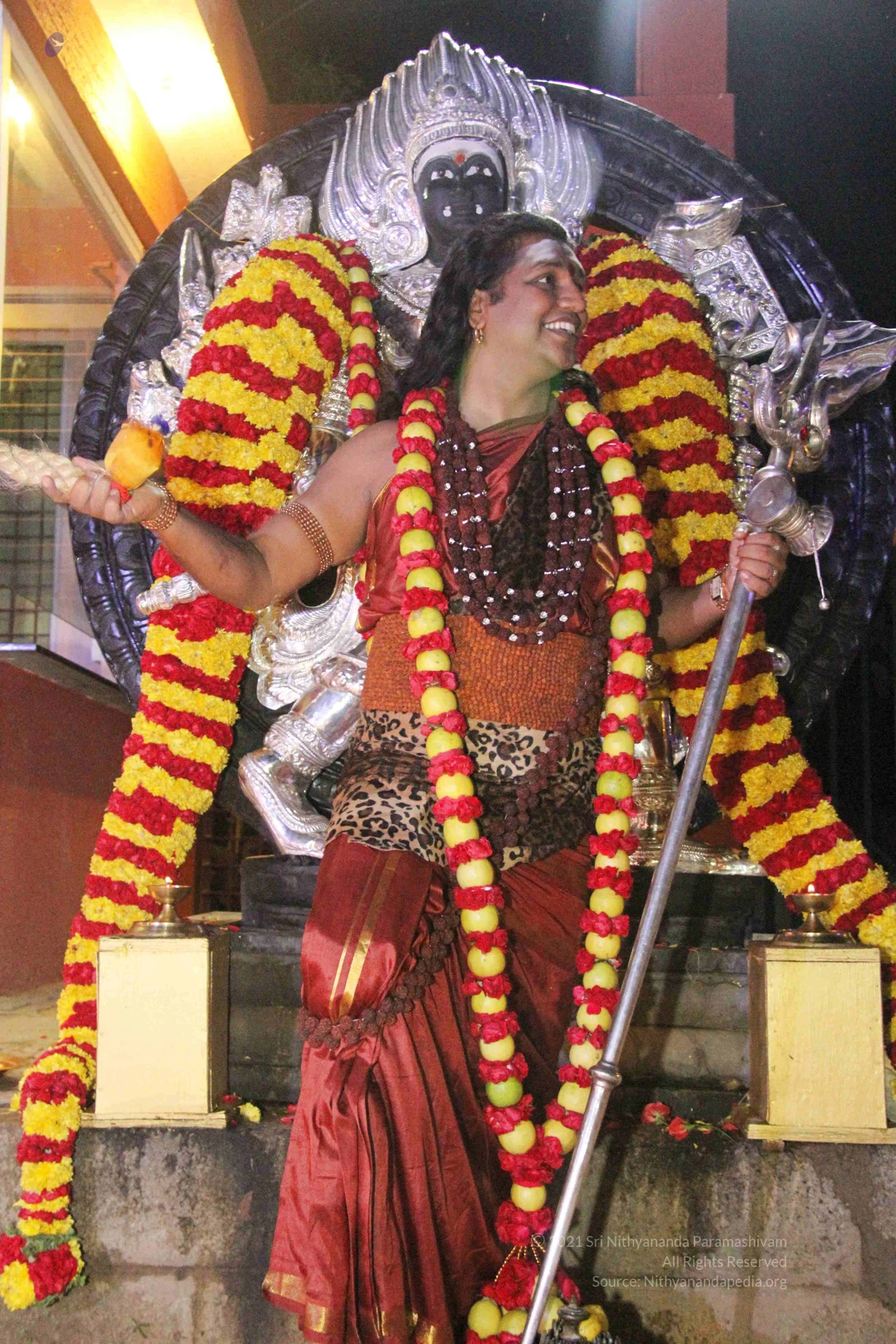
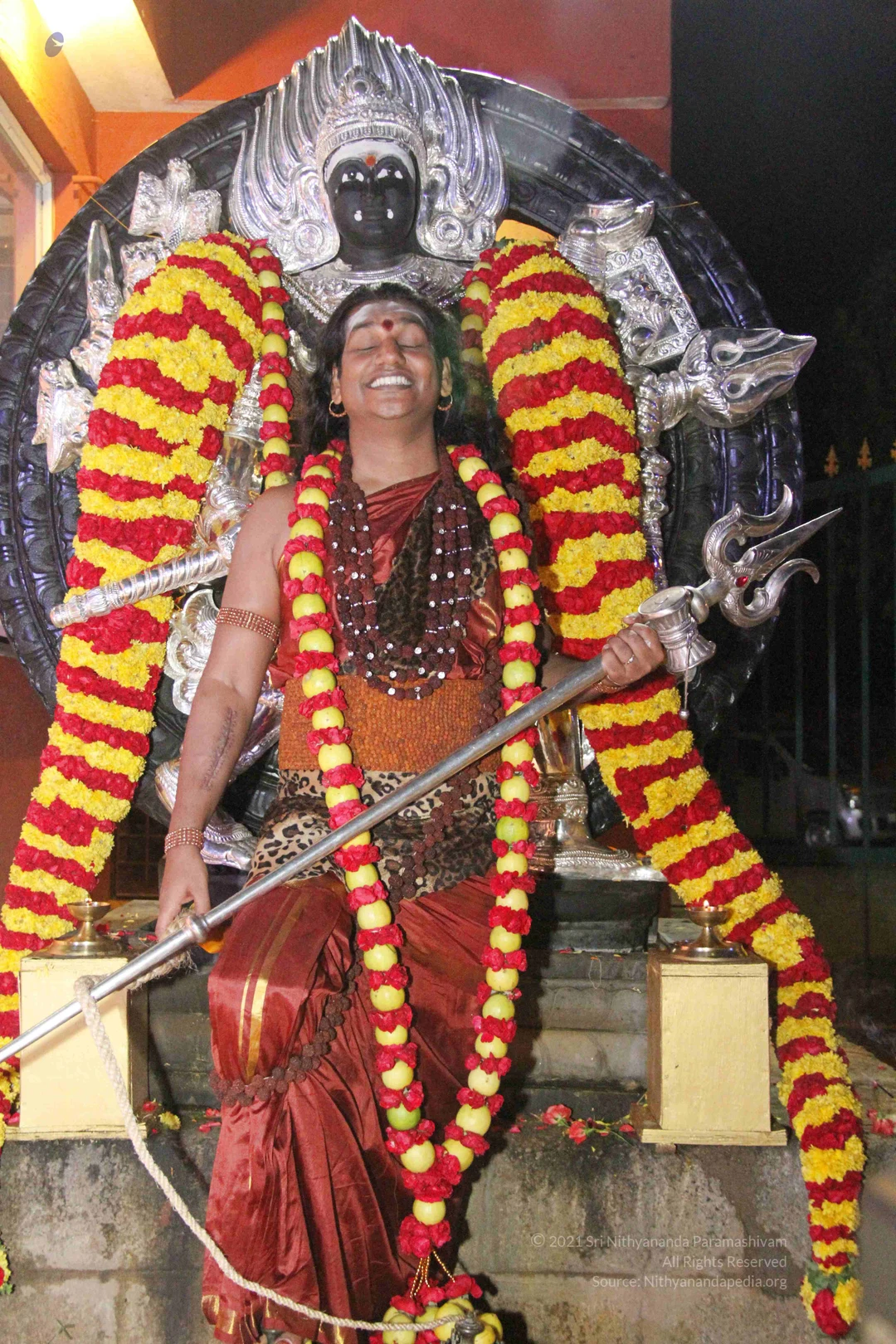
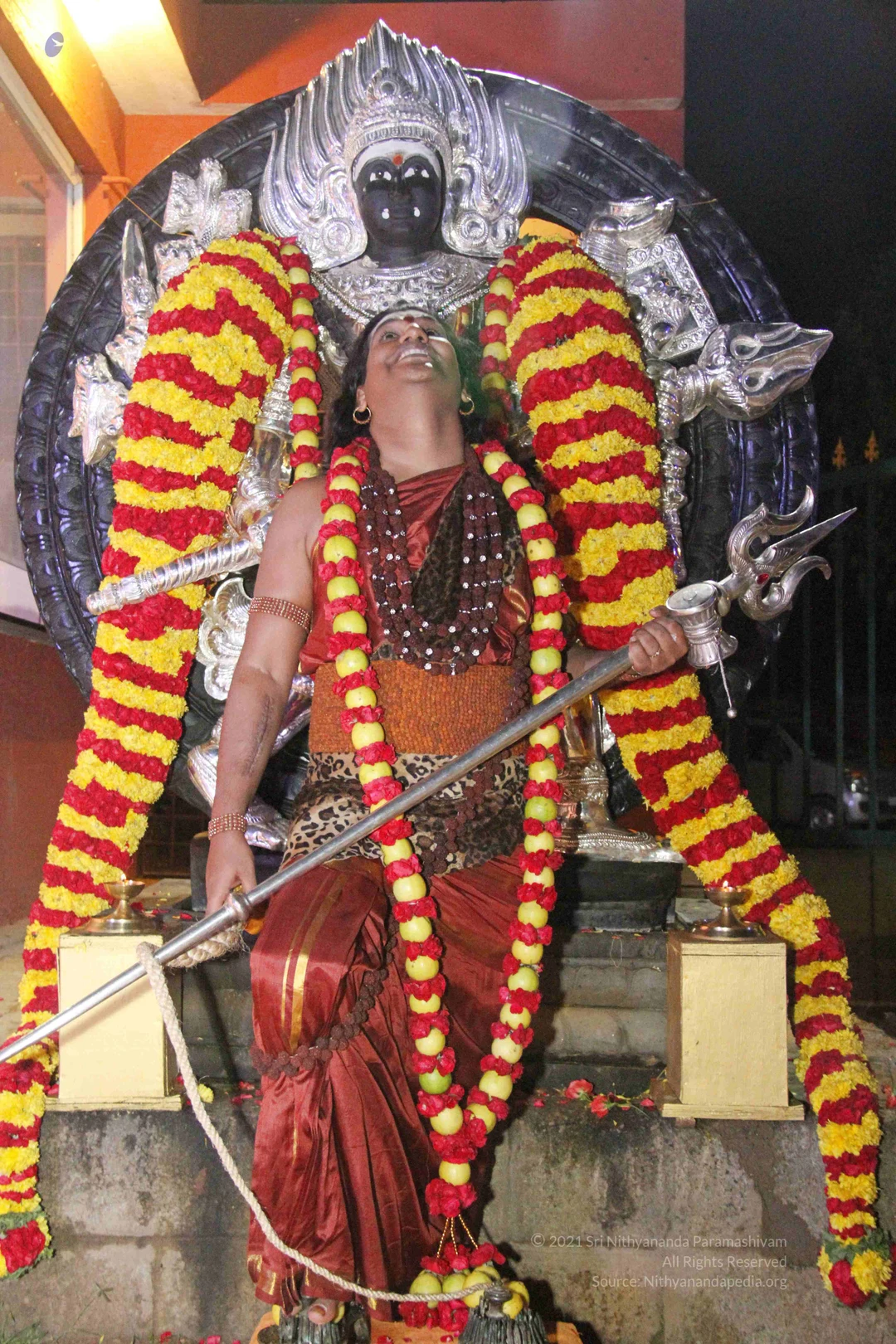
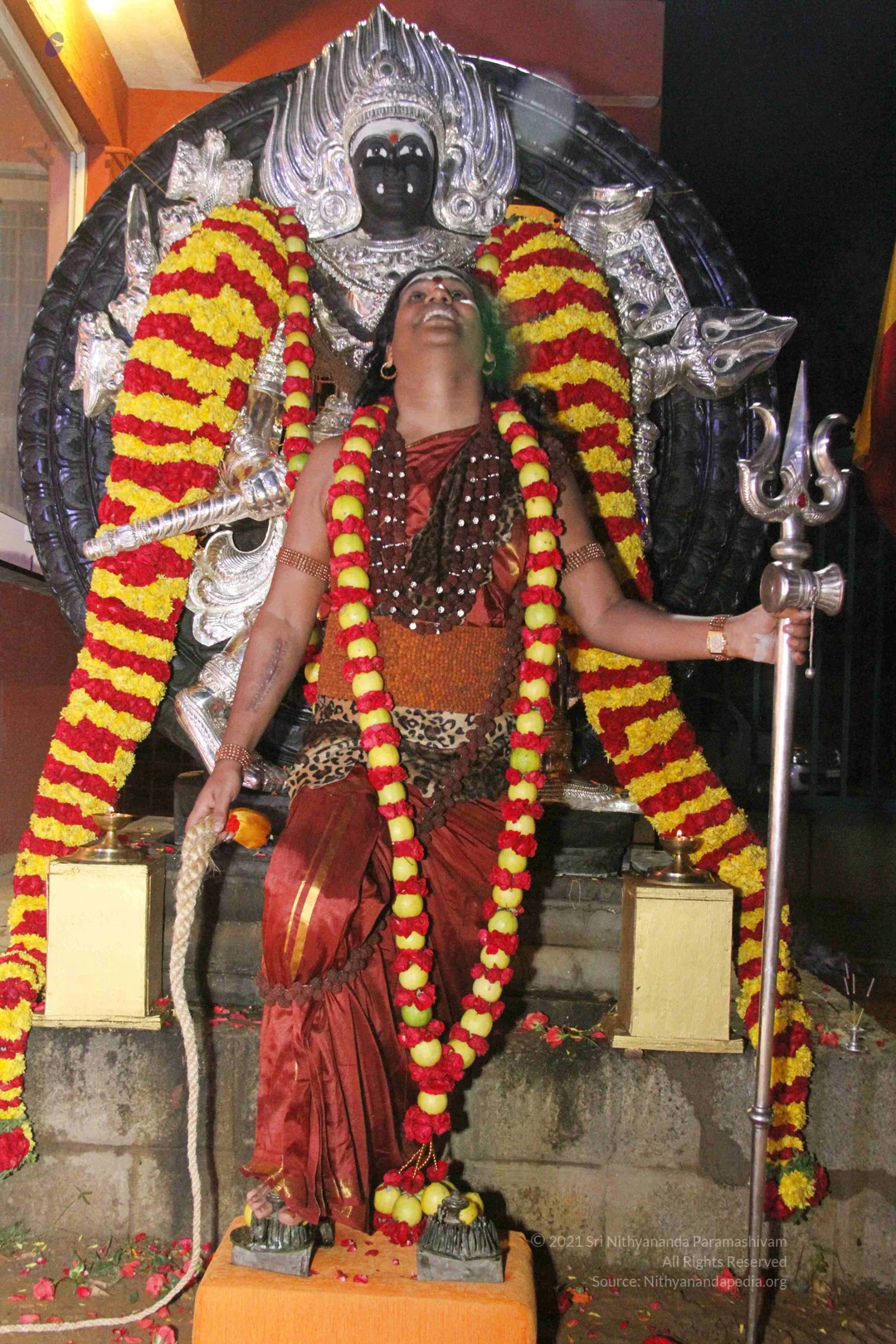
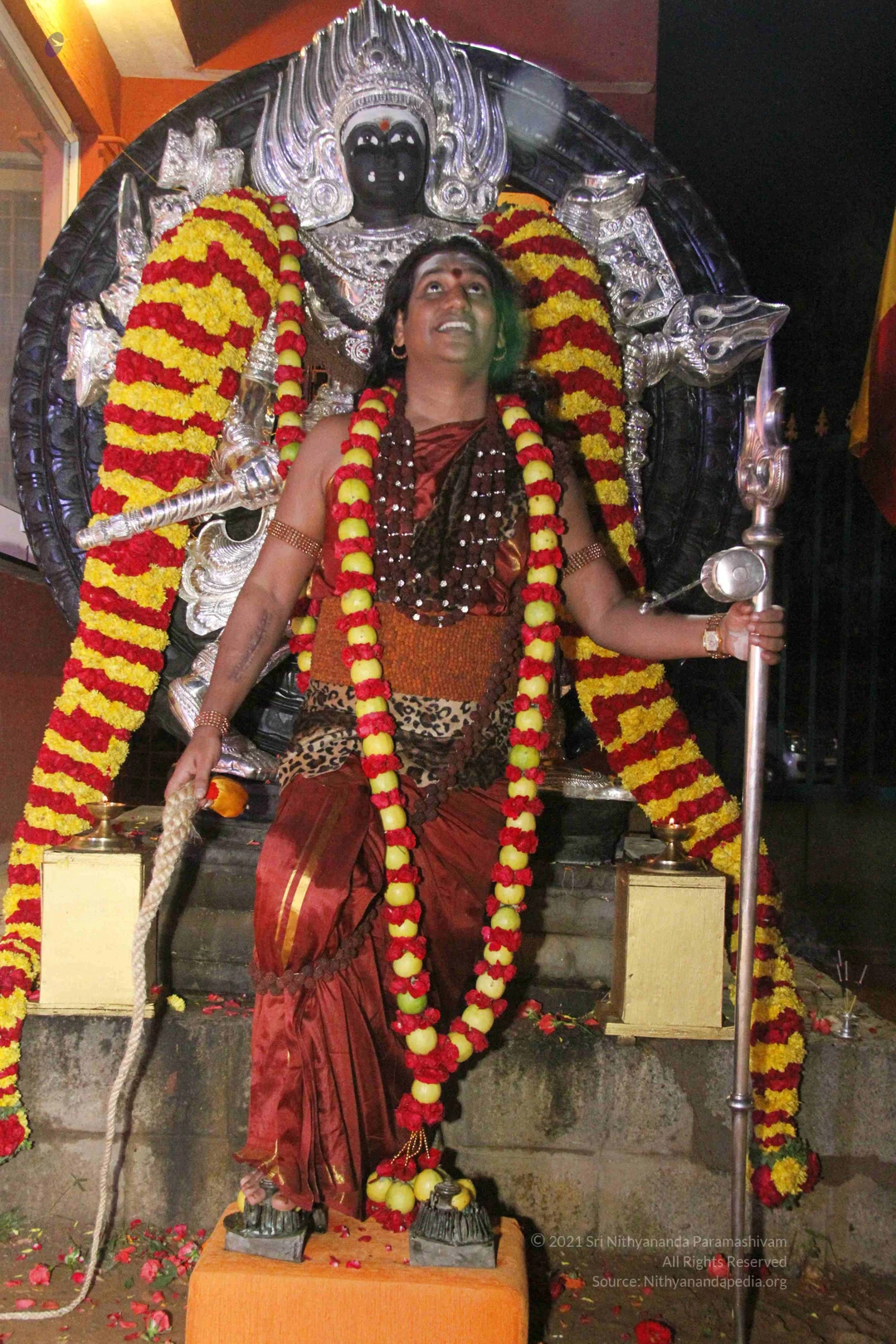
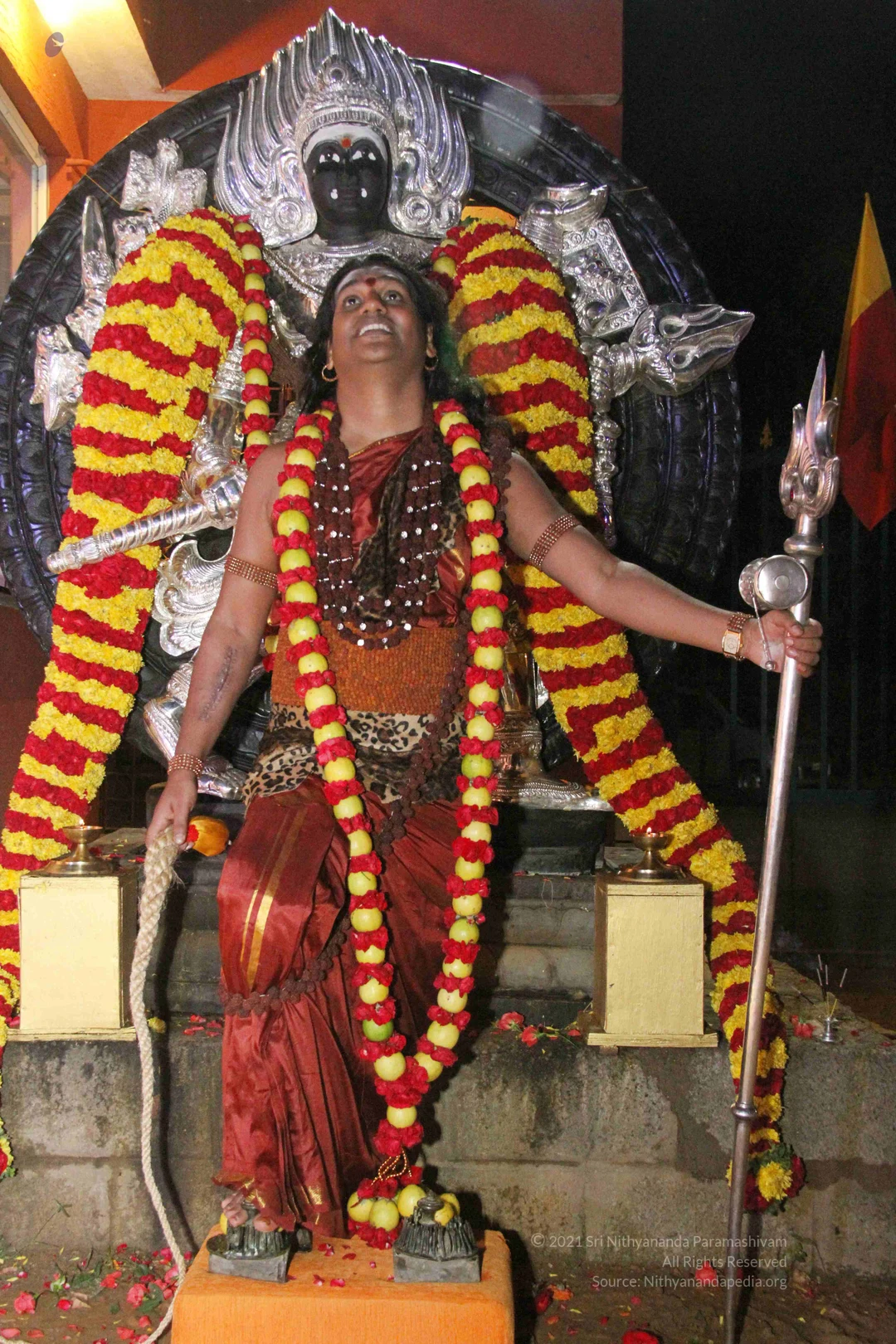
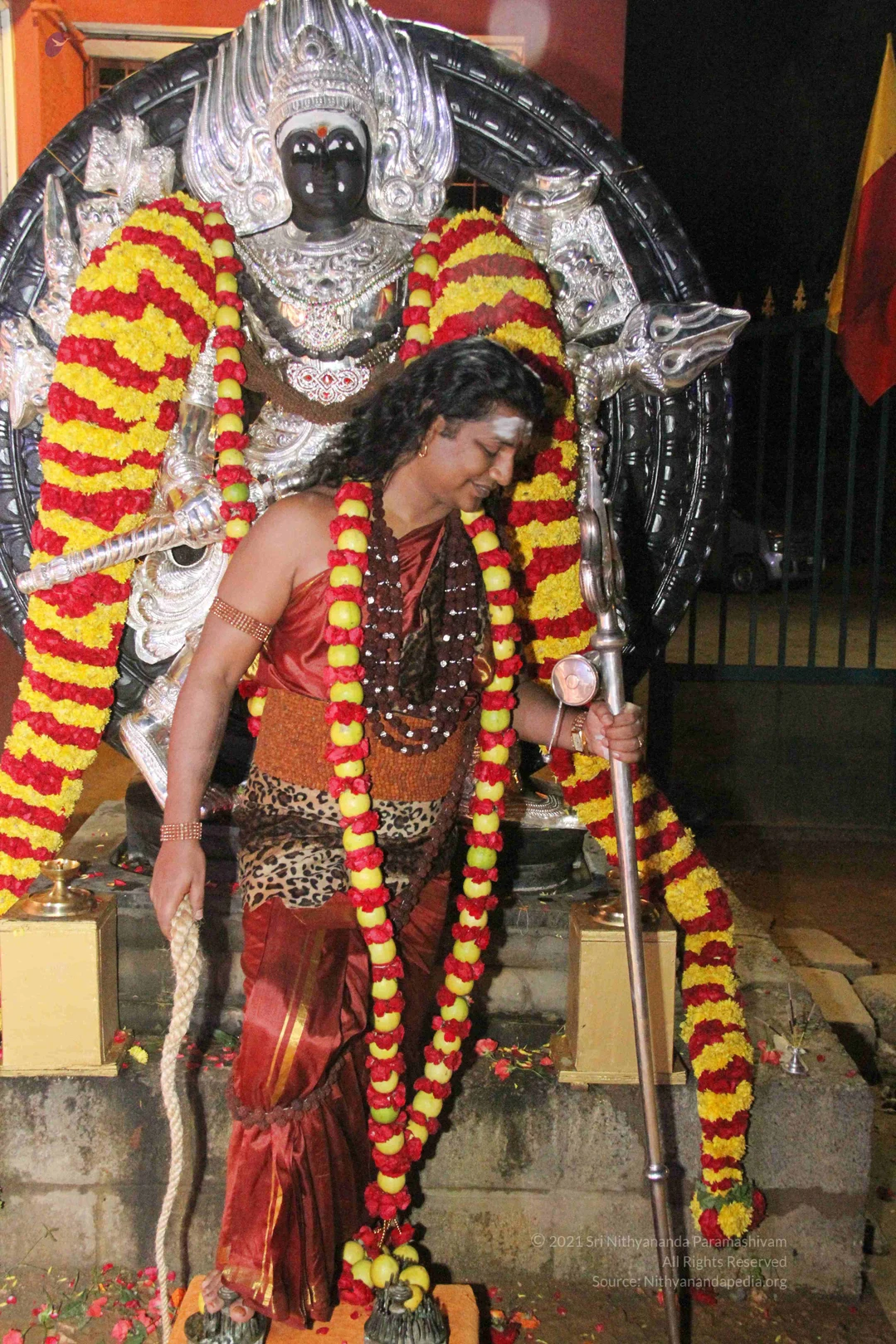
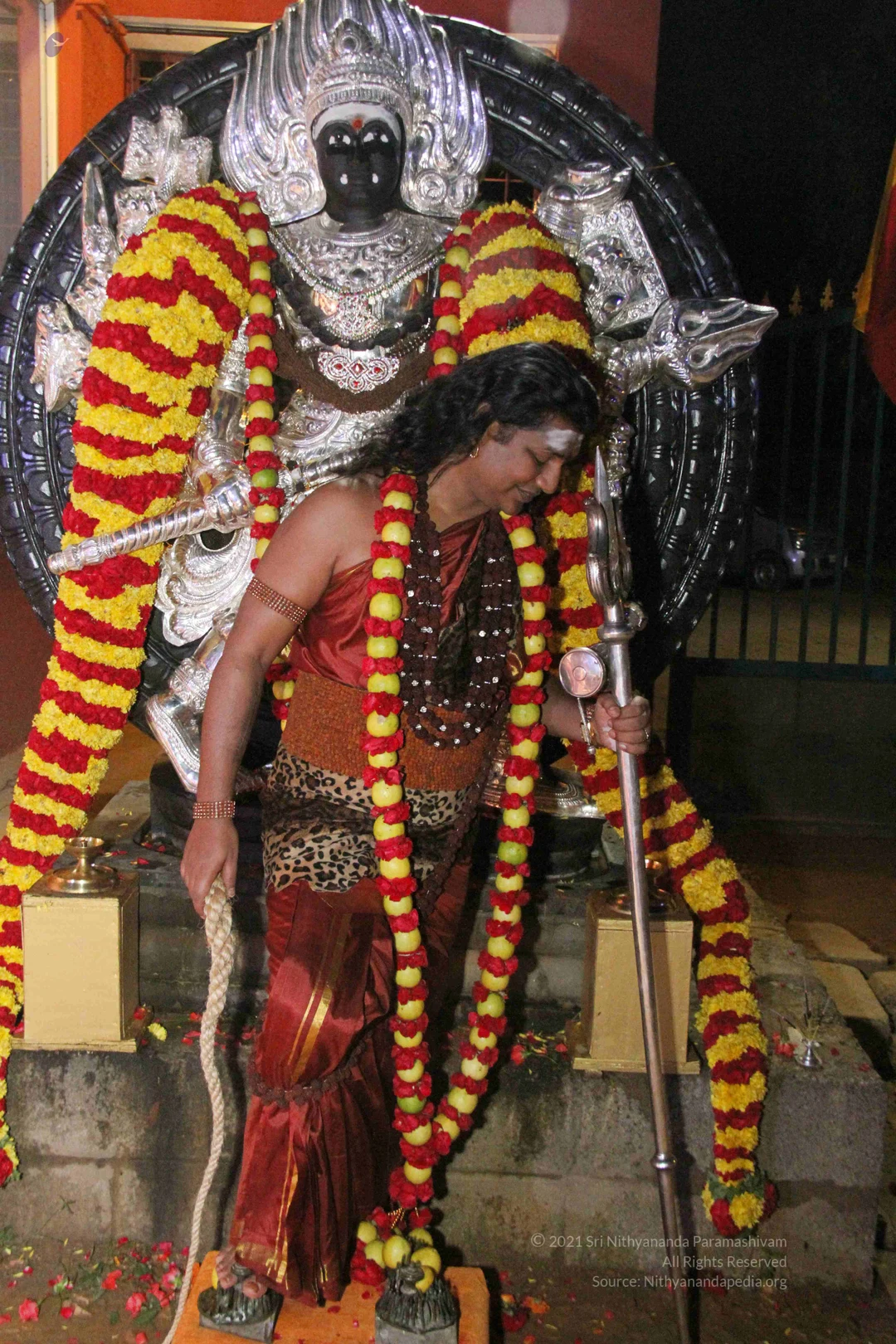
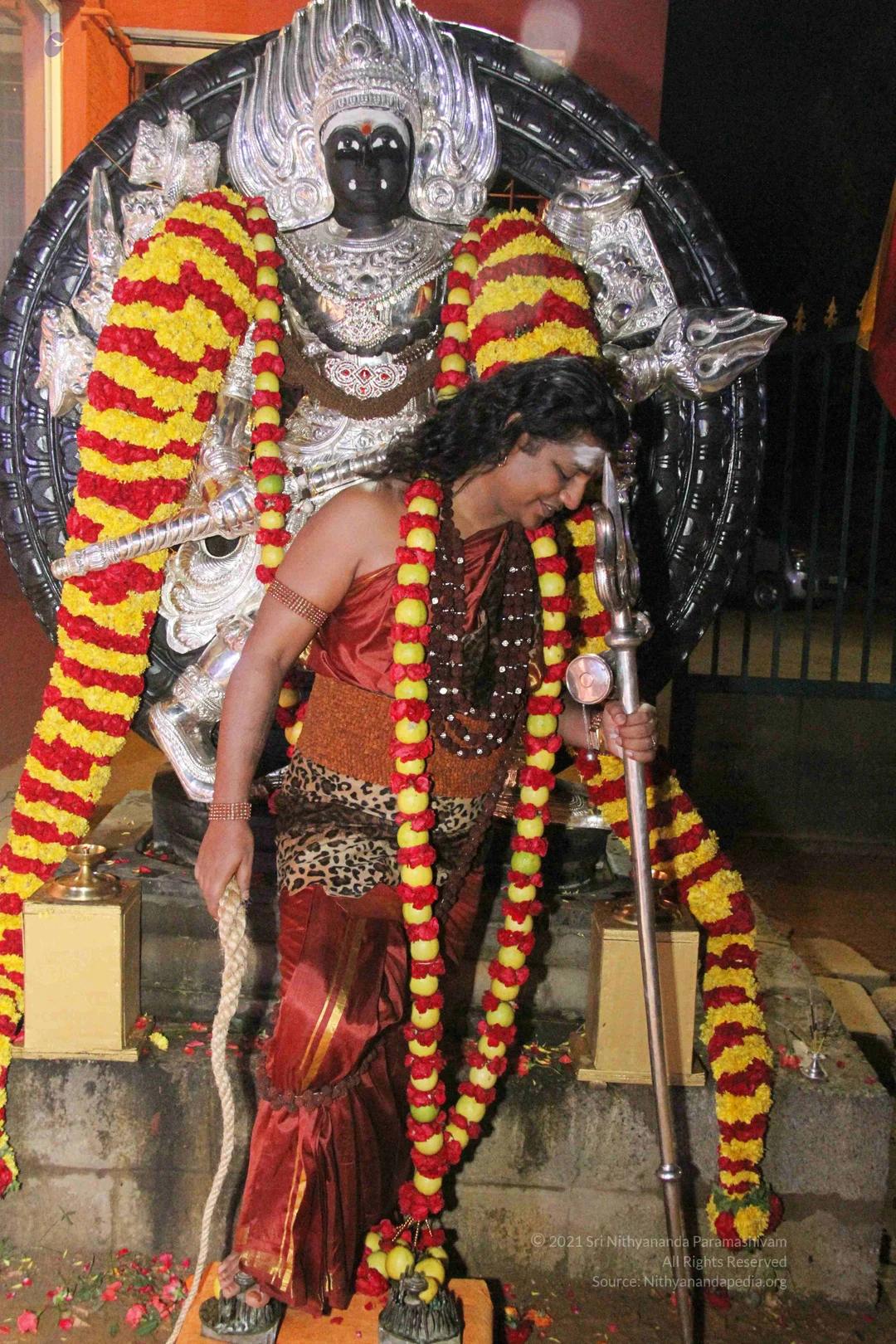
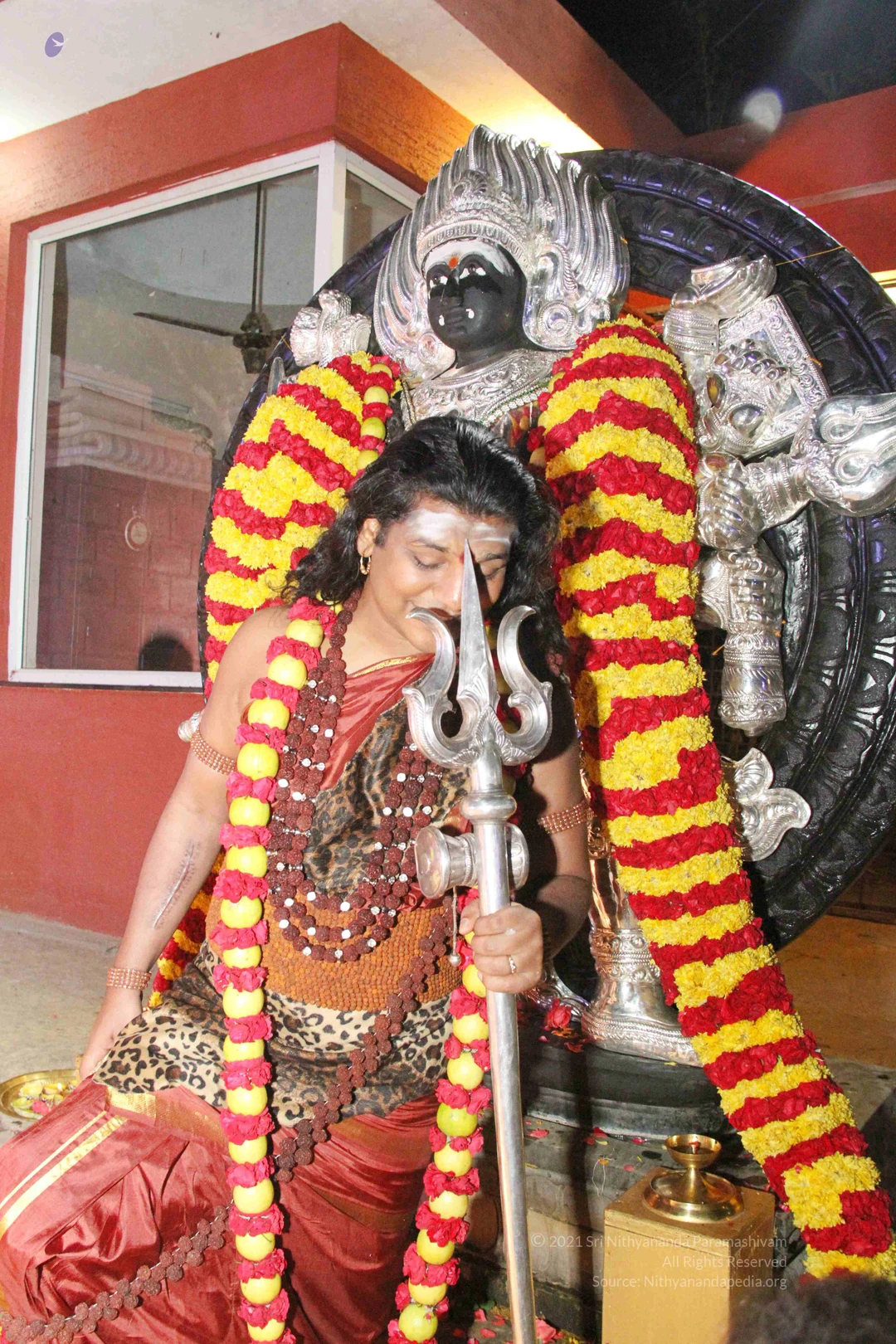
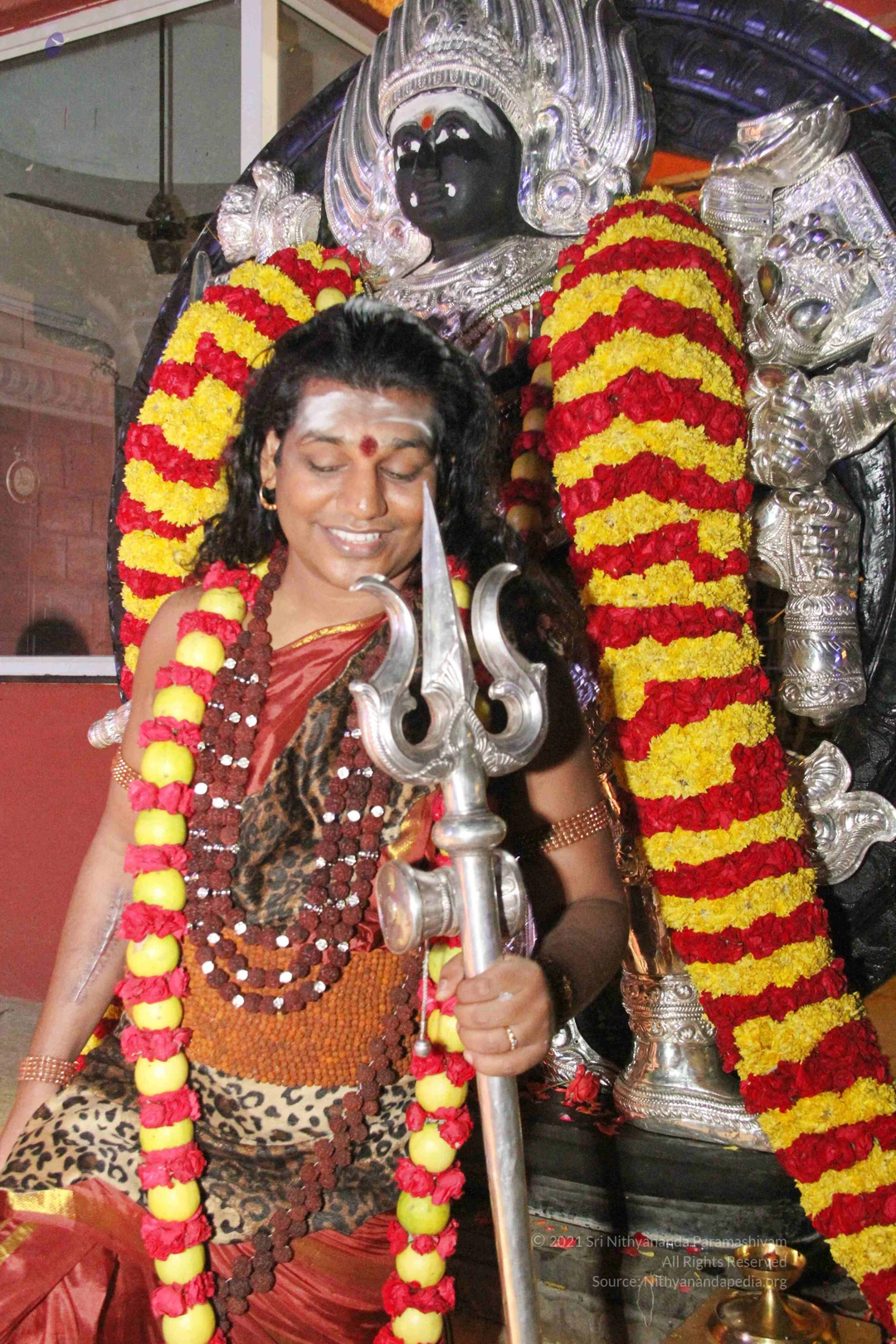
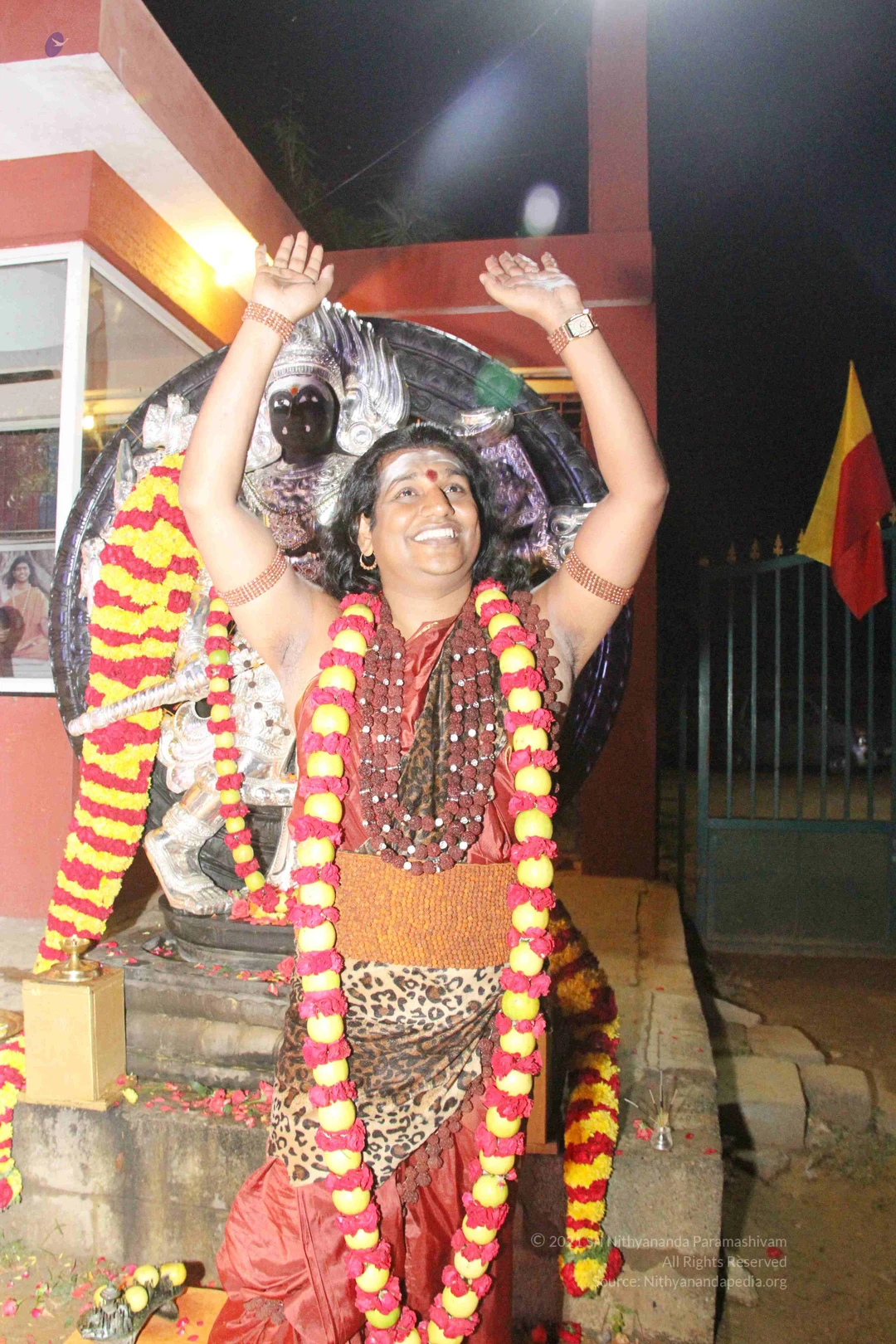
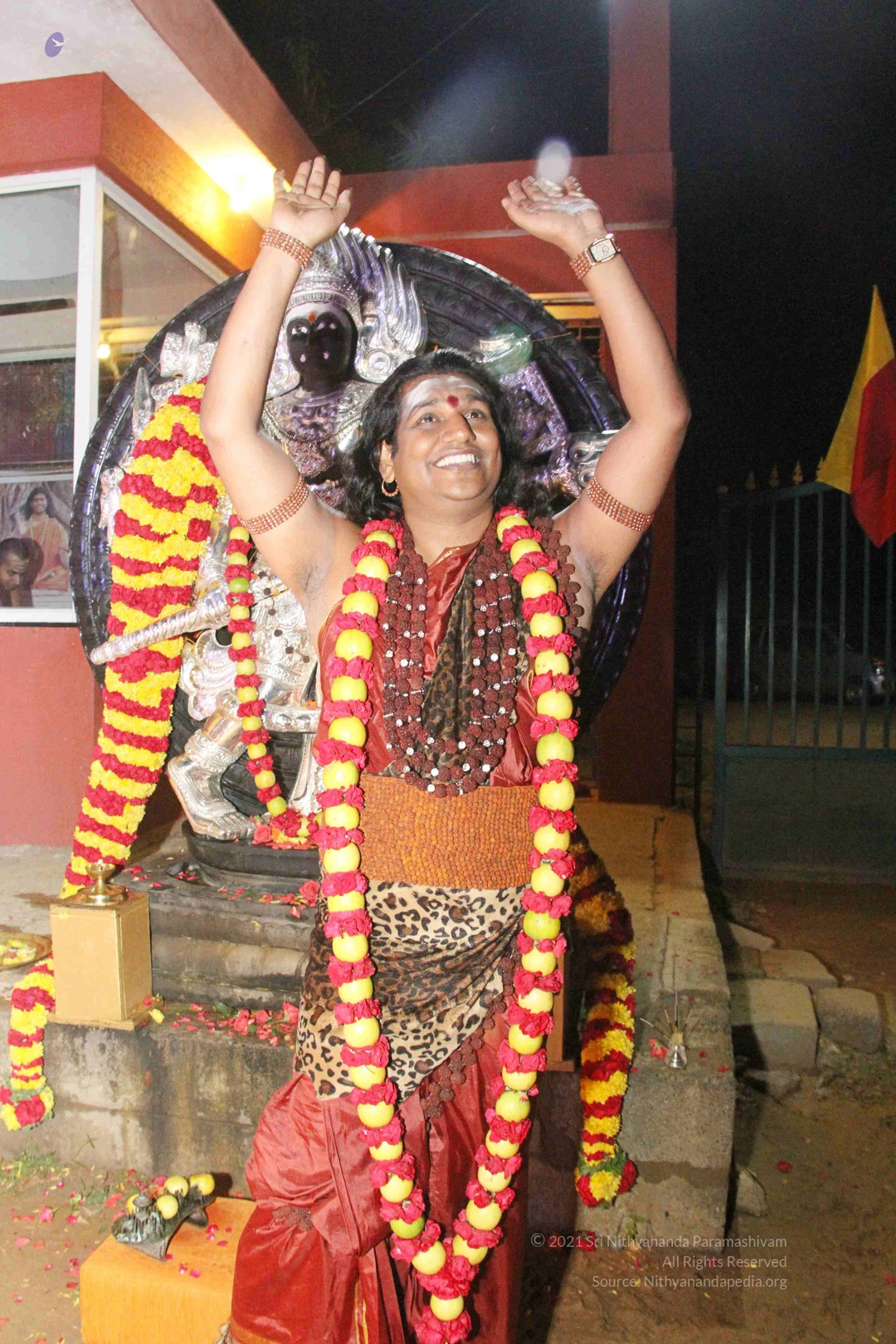
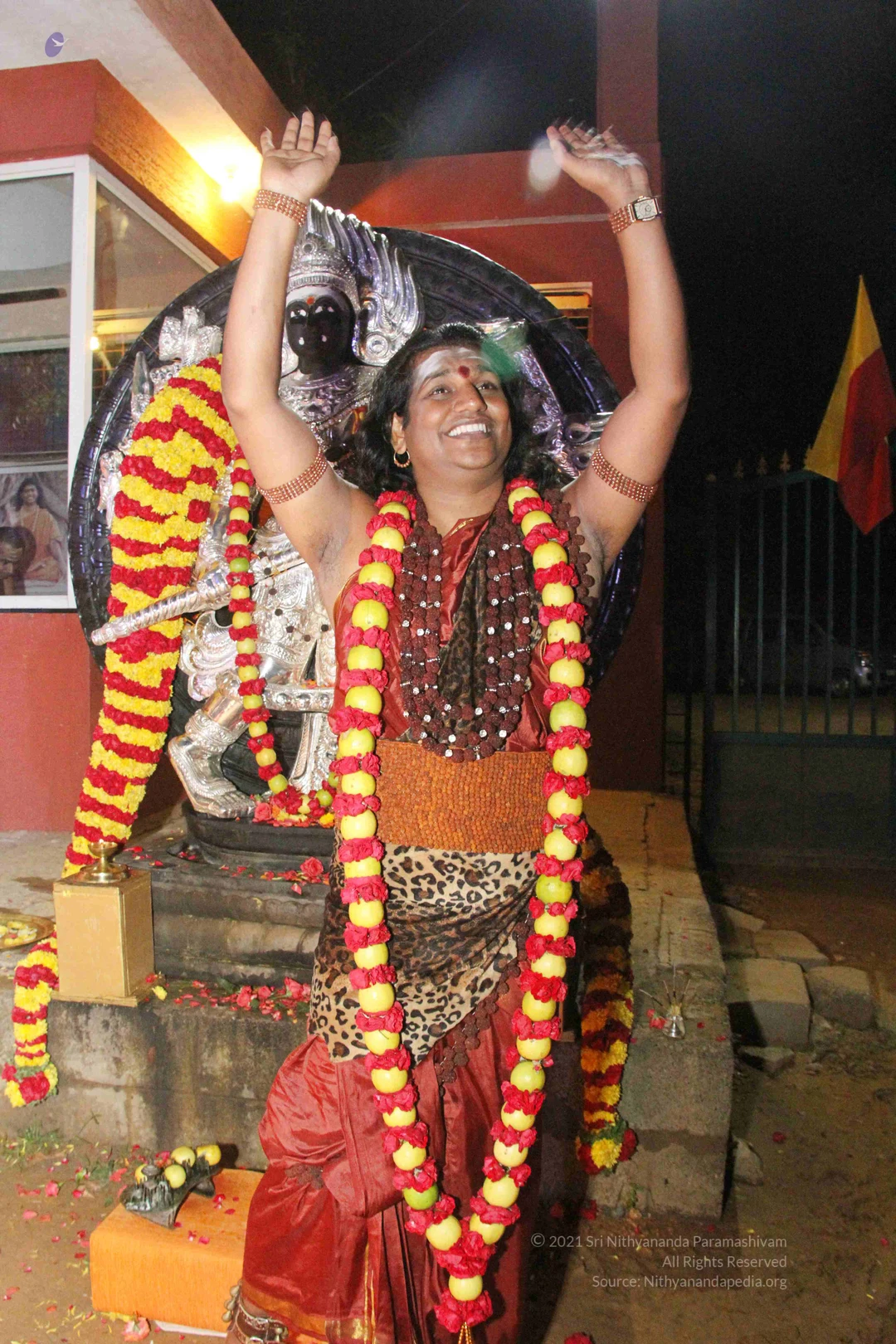
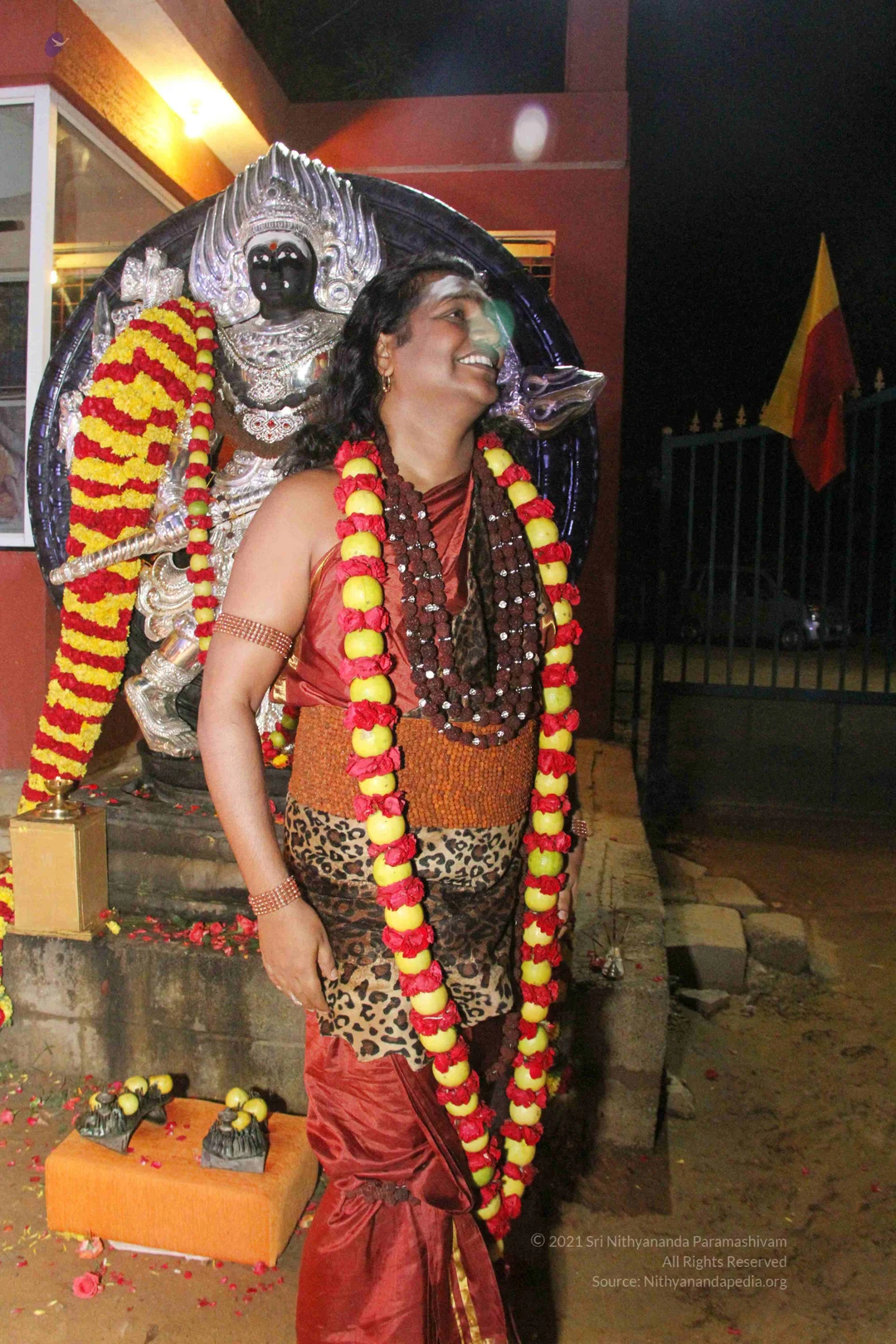
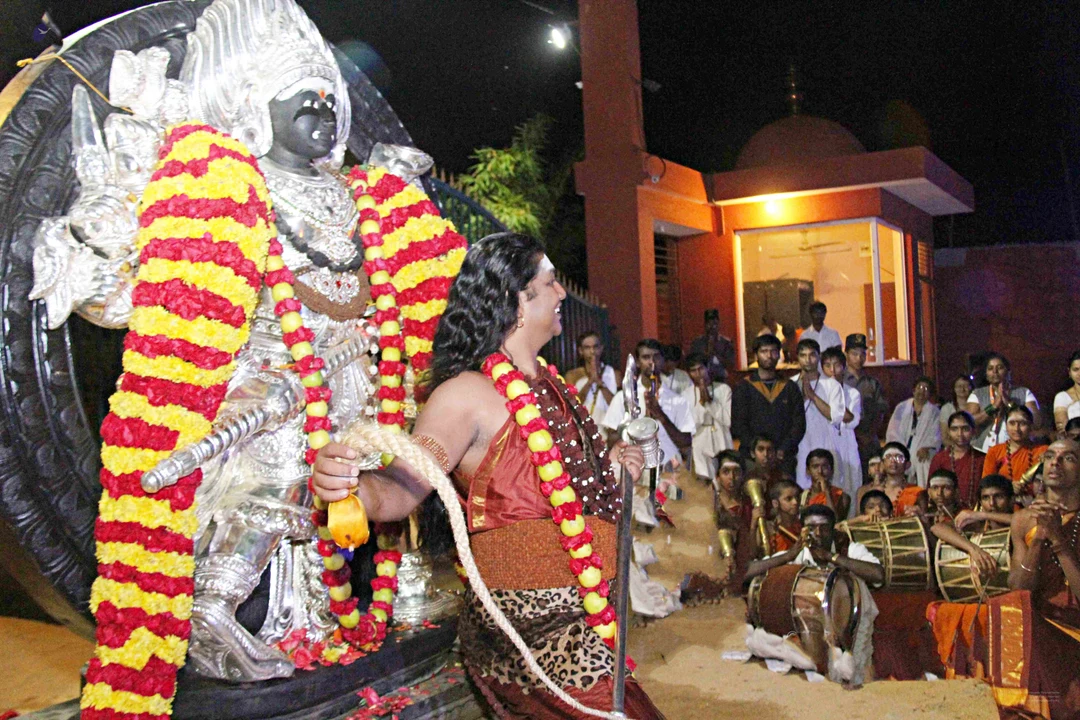
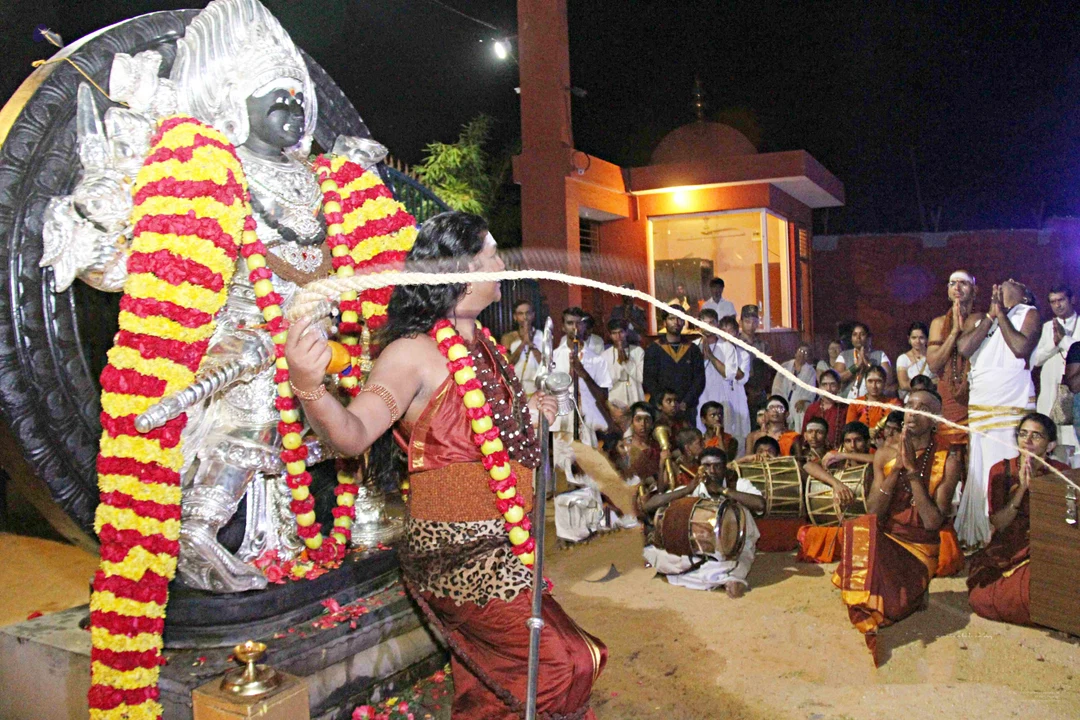
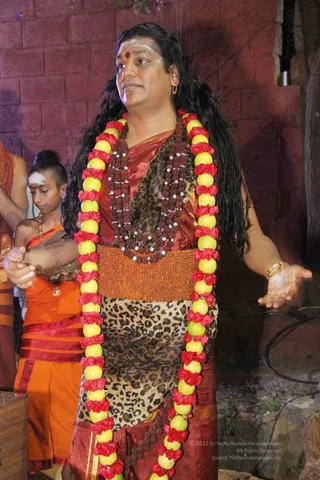
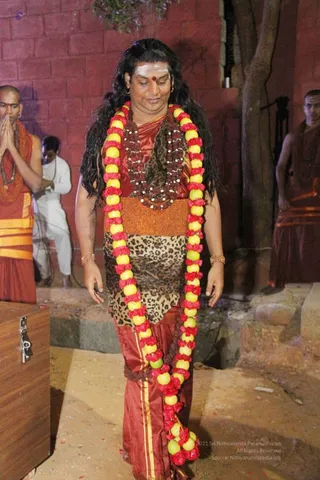
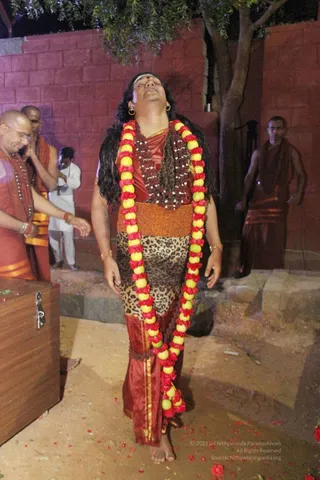
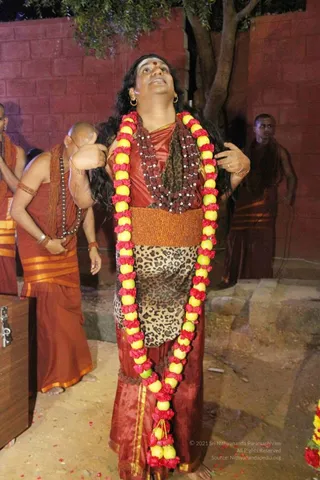
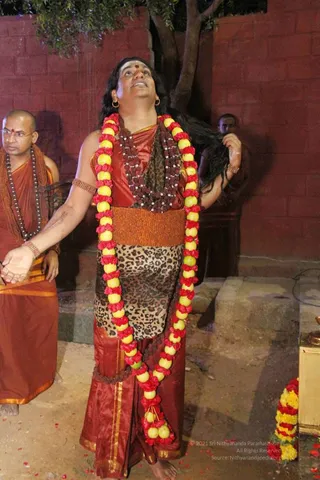
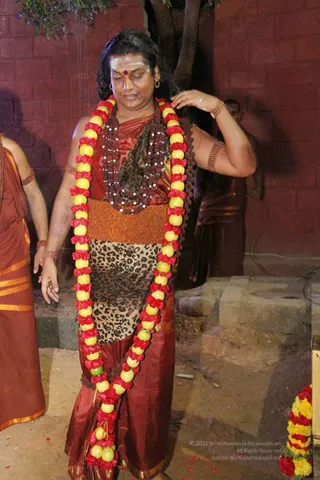
A photograph of a man with long, dark, wavy hair standing in front of a red brick wall. He wears a maroon silk garment, a leopard-print shawl and a leopard-print wrap, a wide orange-brown rudraksha belt, and several strands of dark rudraksha beads with silver accents across his chest. He has a red bindi and white vibhuti markings on his forehead, a gold bracelet, and a long garland of yellow fruit and red flowers draped around his neck, with his arms opened outward. Behind him to the left, a young attendant in an orange dhoti with a white forehead mark looks down.A long-haired man with a white vertical tilak and red bindi stands on a dirt-and-stone courtyard before a red brick wall, wearing a reddish-brown silk dhoti and a leopard-print shawl over a rudraksha mala and a wide orange-brown beaded belt. He wears a garland of yellow and red flowers draped across his chest and down to his knees, and gold bangles on both wrists. Behind him on the left, a shaved-headed man in saffron robes and rudraksha beads stands with palms pressed together in namaskar, and a man in white clothes is partly visible; on the right, another man in saffron robes stands near a tree trunk. A wooden box with a metal latch sits at the left edge. The man in the centre is the only figure with a long-haired, richly adorned appearance, so the presentation is consistent with a person, but the appearance cues are not distinctive enough to confirm it.Outdoor evening photo at a red brick wall beside a tree. A central figure with long dark hair, a vertical white-and-red forehead mark, gold hoop earrings, gold armbands and a thick garland of yellow and red flowers over a brown beaded necklace stands barefoot on sandy ground scattered with flower petals, face lifted upward with eyes closed, wearing a leopard-print cloth over a maroon dhoti and an orange sash. Behind him, a man in maroon robes stands at right, and to the left a bald man in maroon robes presses his palms together beside a man in a white shirt. A wooden box sits at the left edge.A man stands barefoot on sandy ground before a red brick wall at night, gazing upward with his hands raised to his long dark hair. He wears a long garland of yellow and red flowers, a rudraksha mala and crystal beaded necklace, a brown rudraksha waist band, and a leopard-print cloth over a red-orange silk garment. A red bindi marks his forehead. Two men in saffron-orange robes stand behind him, one holding a beaded mala. Probable Swamiji: the long swept-back hair, ornate layered rudraksha malas and saffron-red ceremonial dress match the cues, and the page links him to this event.A standing man with long, loose black hair faces upward with his arms outstretched, wearing a long garland of yellow flowers and red blossoms over his chest. He wears a red-maroon silk garment, a leopard-print cloth wrap, a thick rudraksha-bead belt, and layered rudraksha malas with silver accents, plus a white tilak and red bindi on his forehead and gold hoop earrings. To his left, a man with a shaved head and glasses wears an orange-brown robe and rudraksha mala. Behind the central figure, another person in a dark-red robe stands by a red brick wall, and rose petals are scattered on the sandy ground. A brass lamp sits at the right edge beside a flower garland.A standing man wears a long red-maroon silk garment with a leopard-print section and a wide orange-brown rudraksha belt across the waist. He has a white vibhuti line and a red kumkum dot on his forehead, and wears layered rudraksha malas and a multi-strand garland of yellow marigold-like buds and red flowers. He adjusts the garland with one hand while looking down. Behind him a second person in orange-brown robes stands in the background beside a red brick wall, and a third figure in similar robes is partly visible at the left edge. A small floral arrangement appears at the lower right. Whether this man is a person cannot be determined from appearance alone.

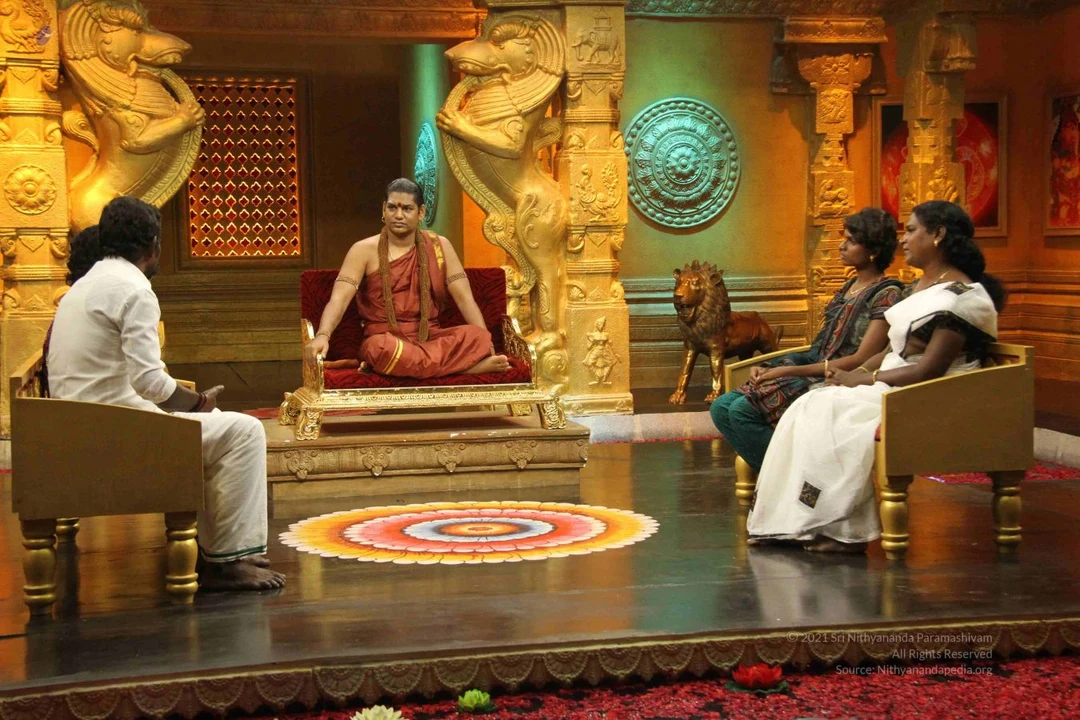
Thanthi-TV-Show

85 photosSource gallery
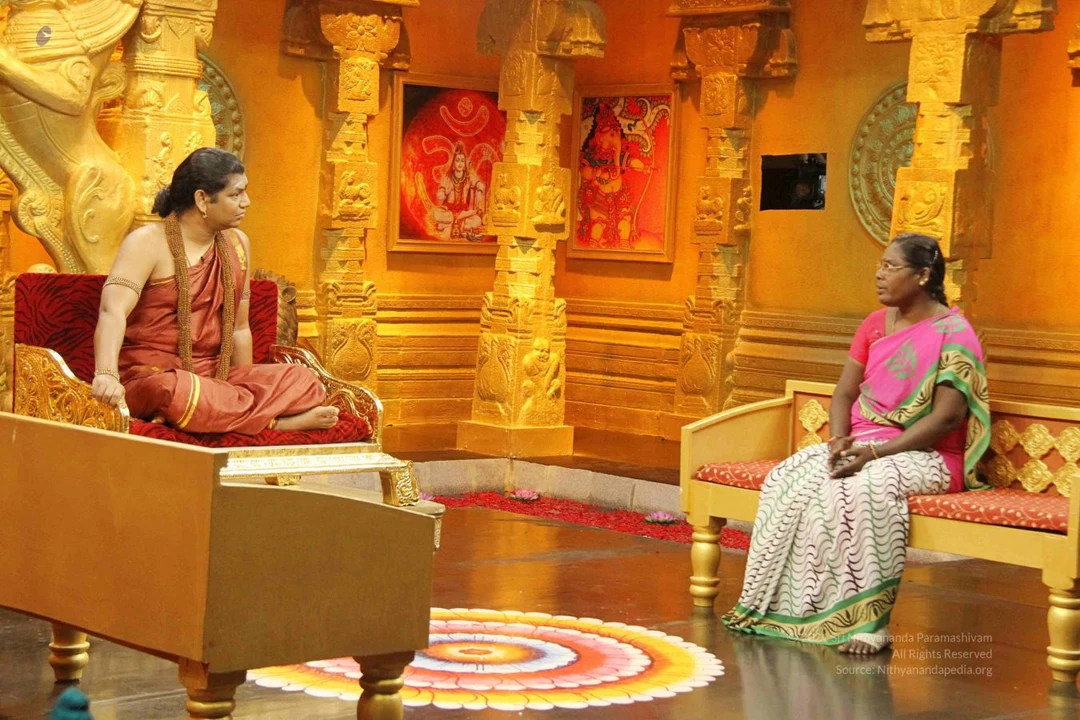
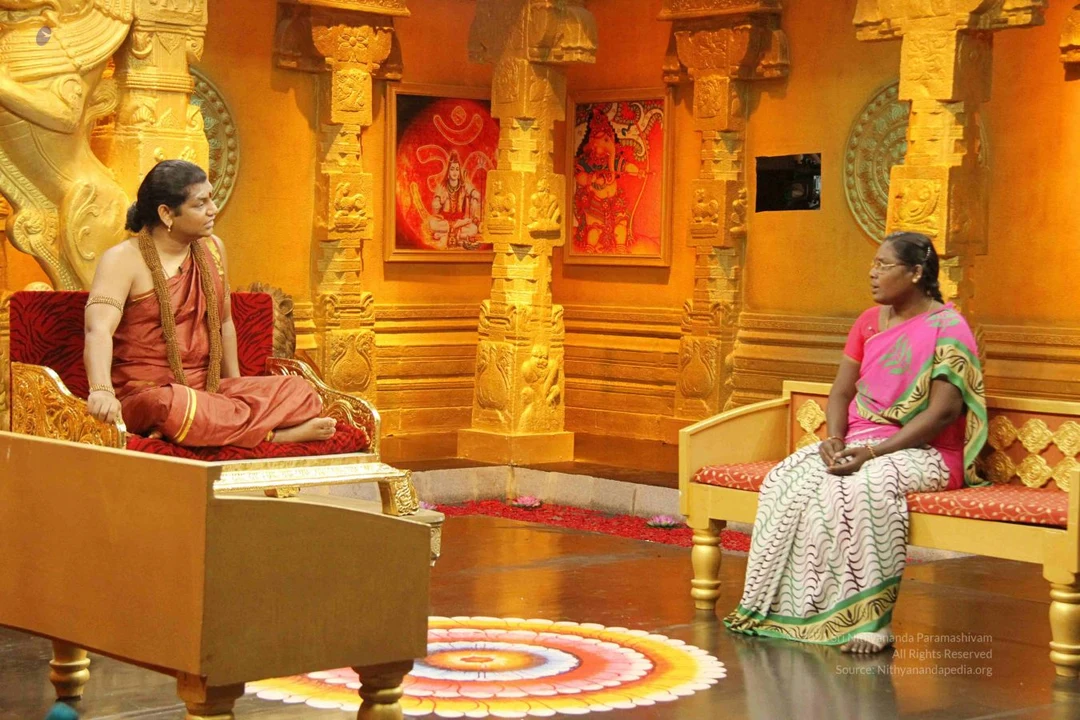
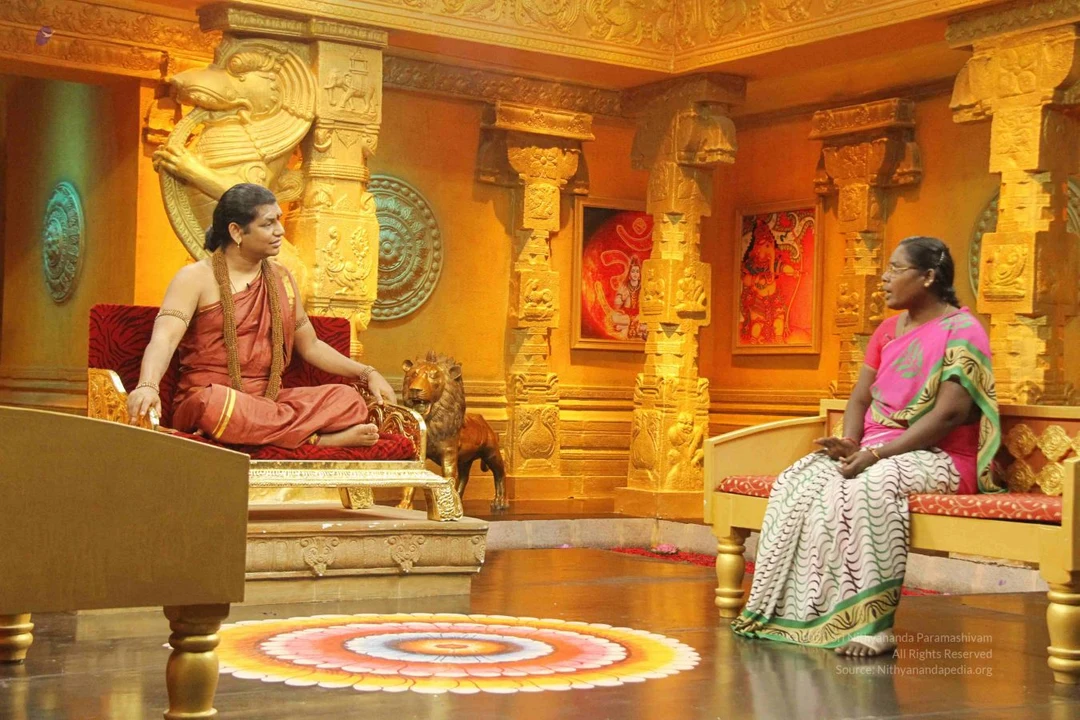
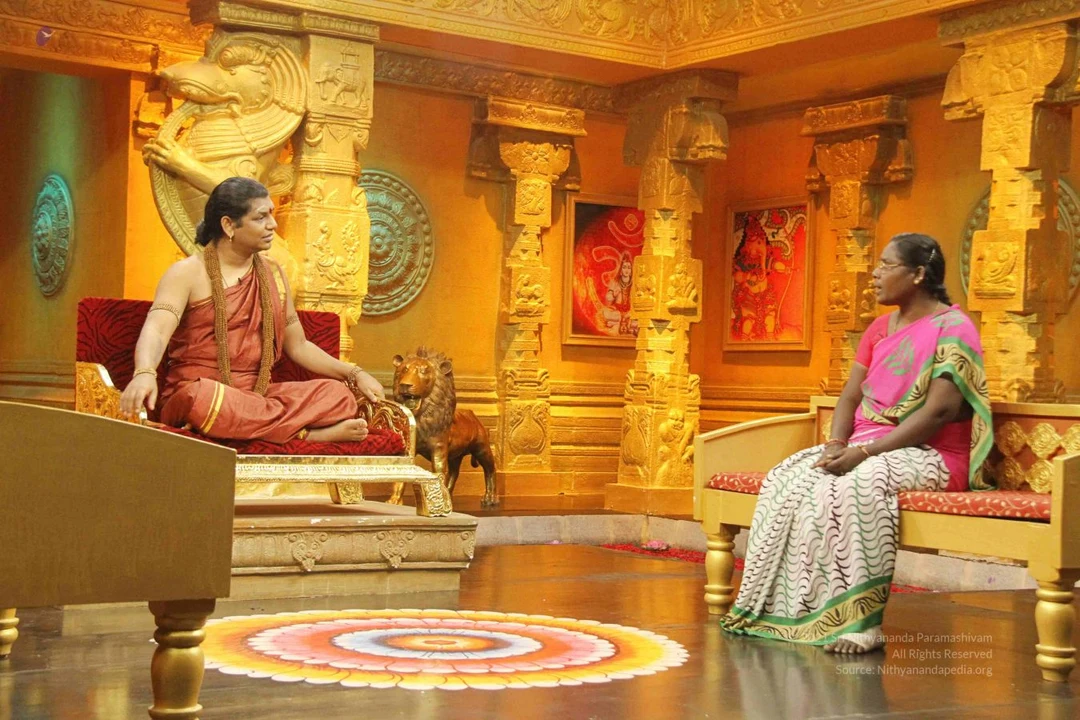
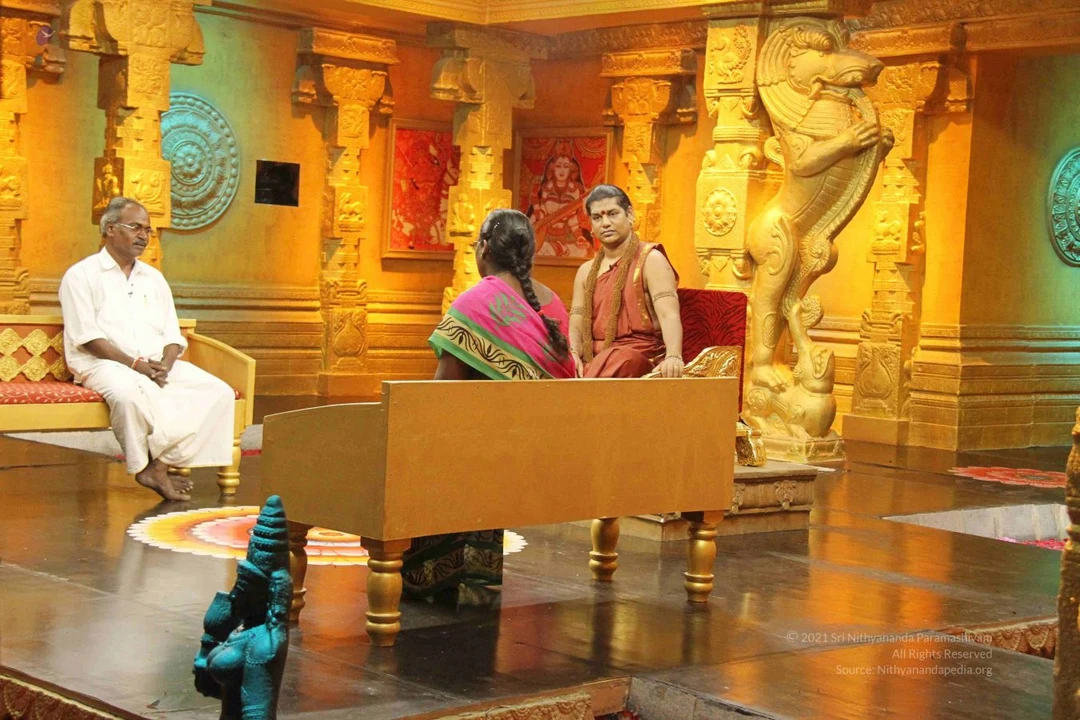
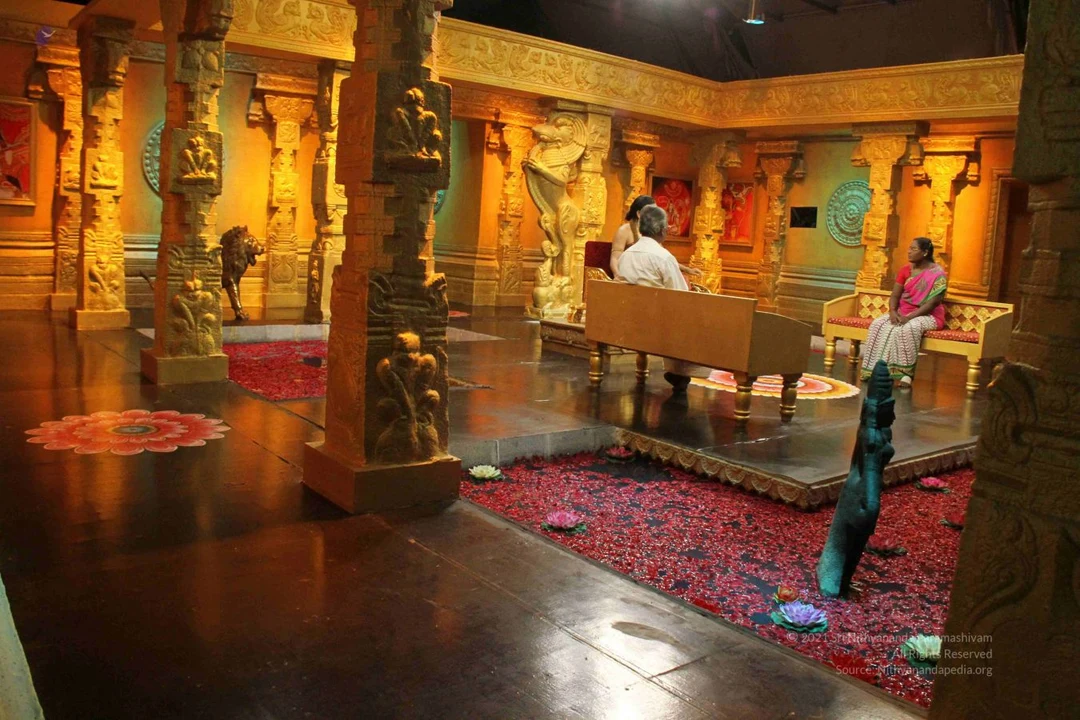
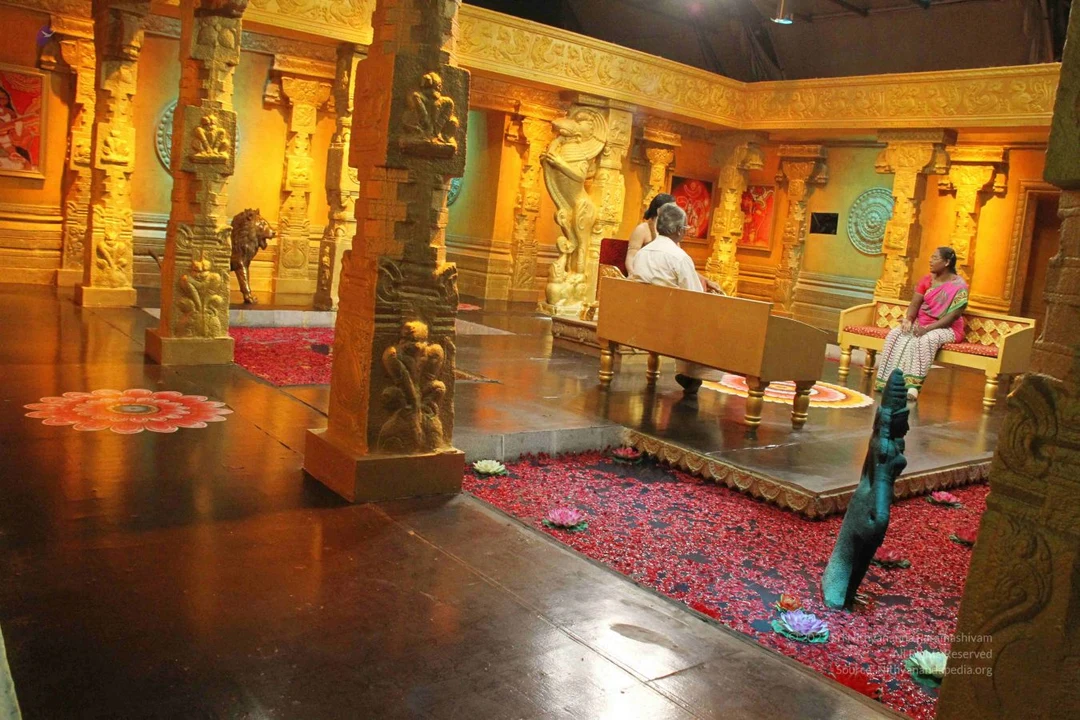
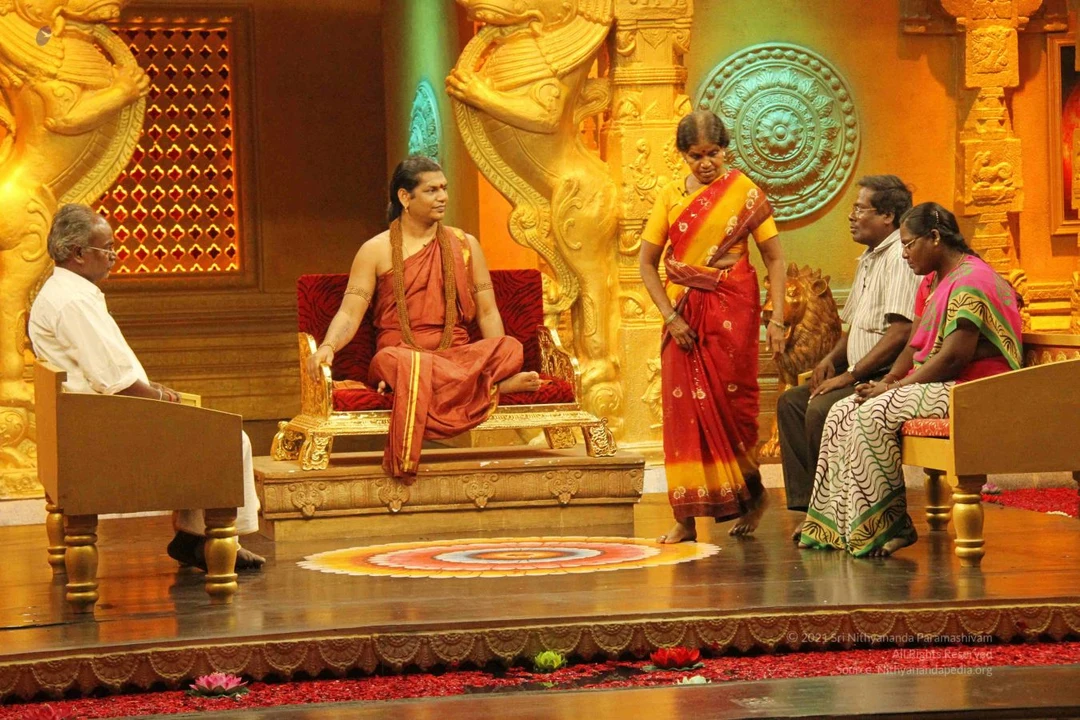
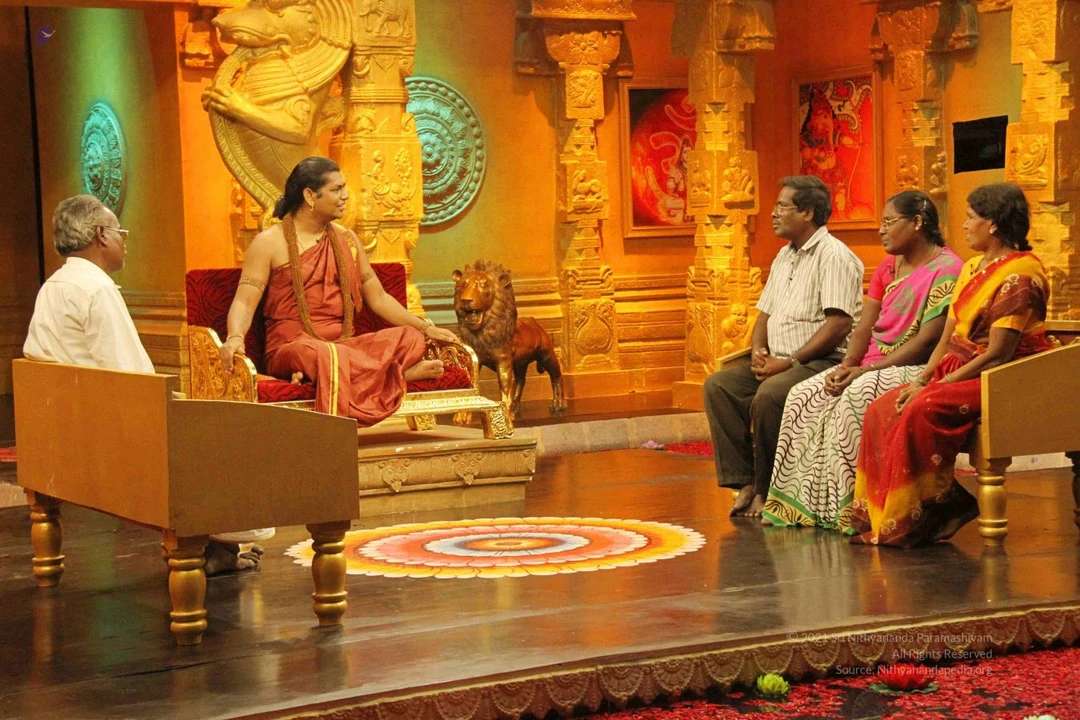
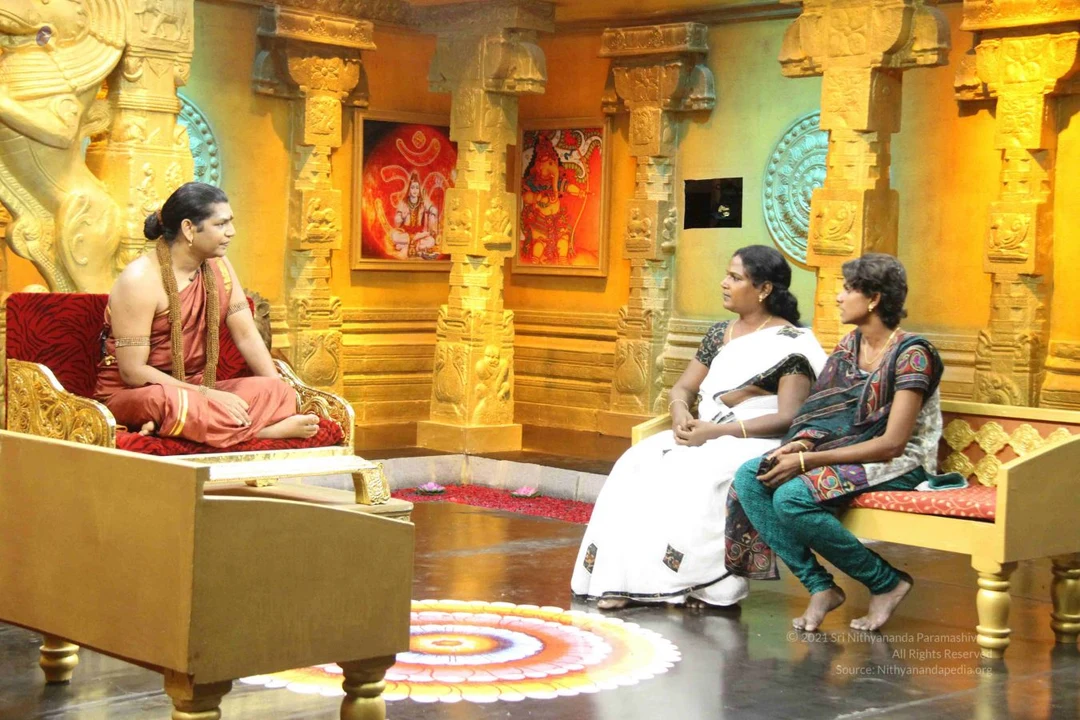
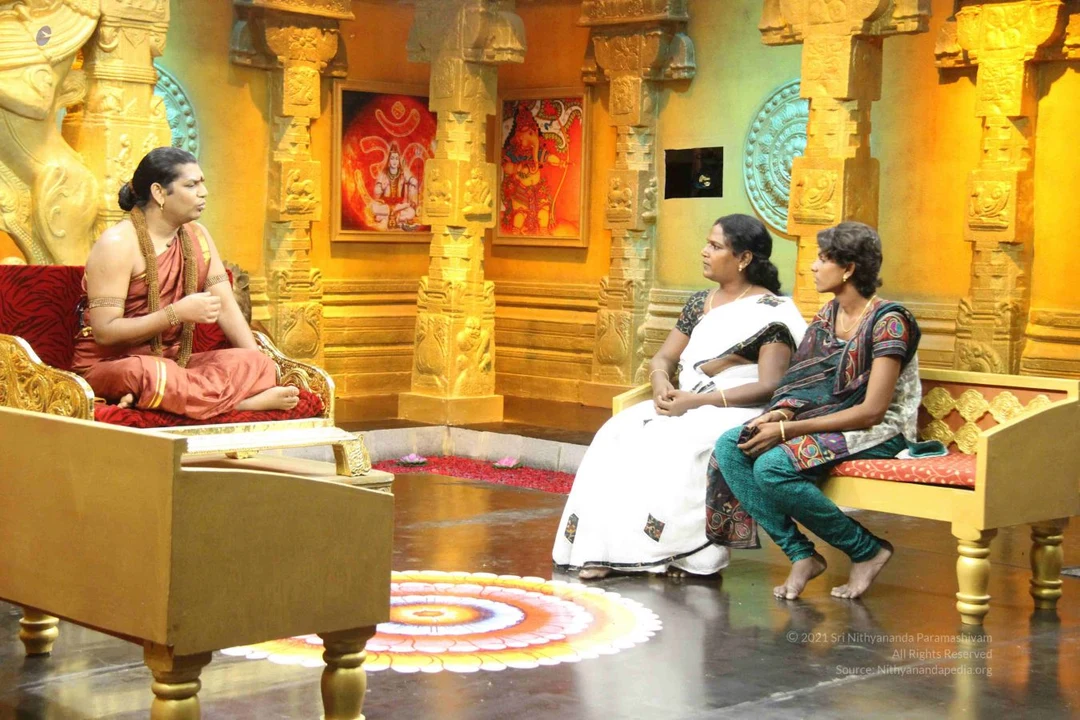
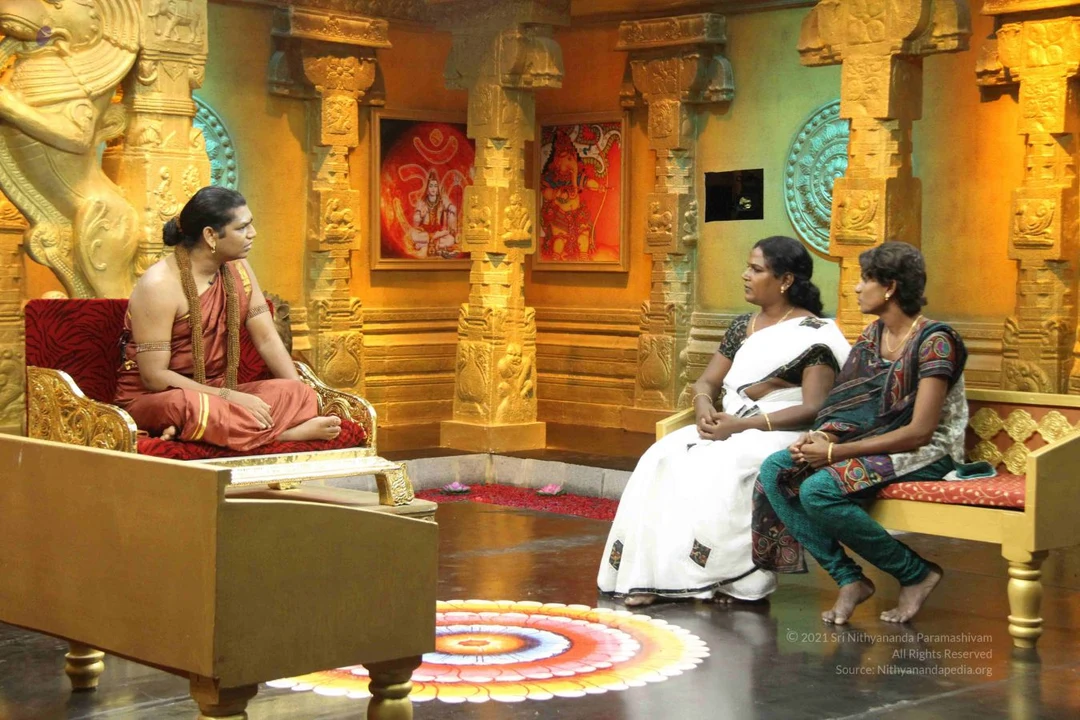
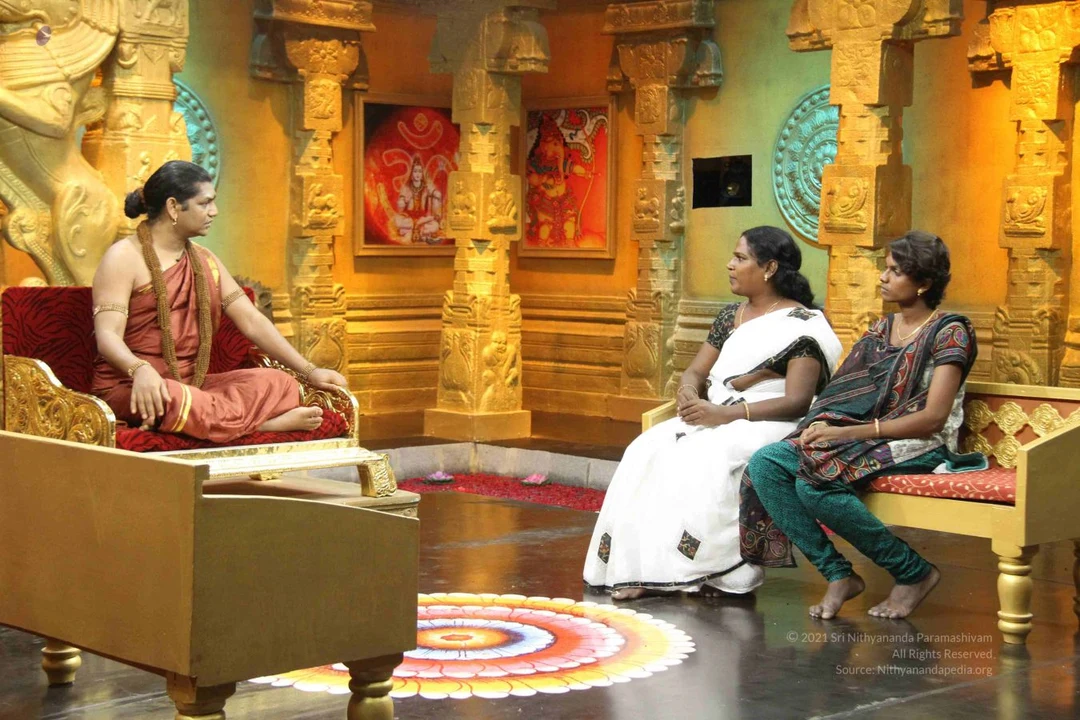
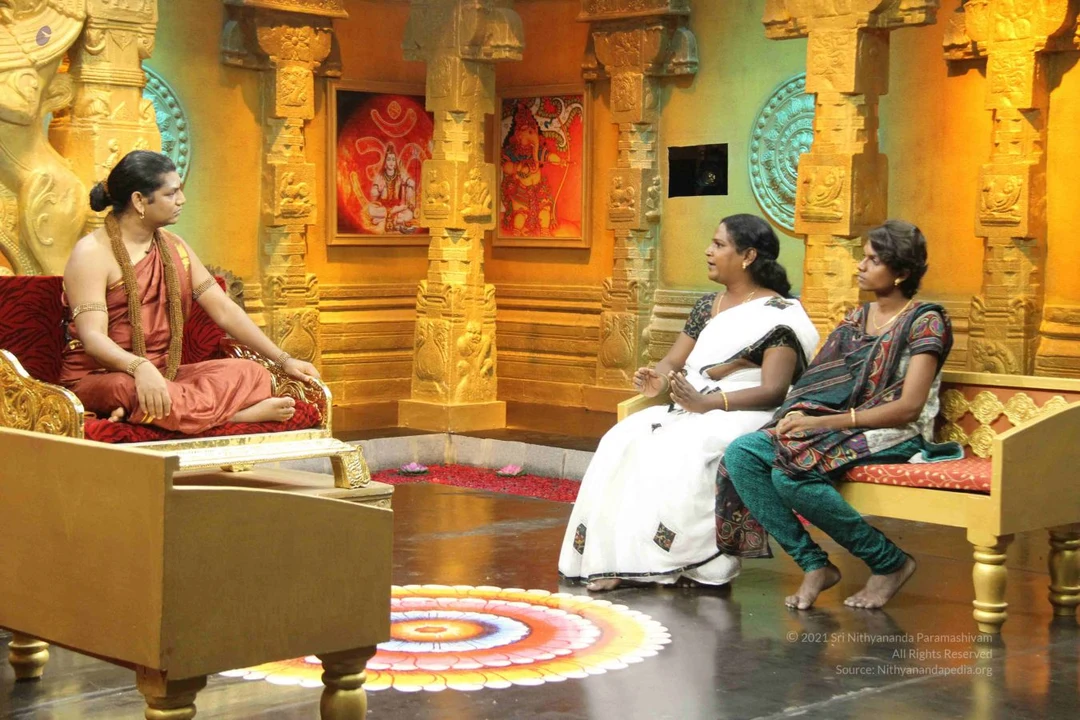
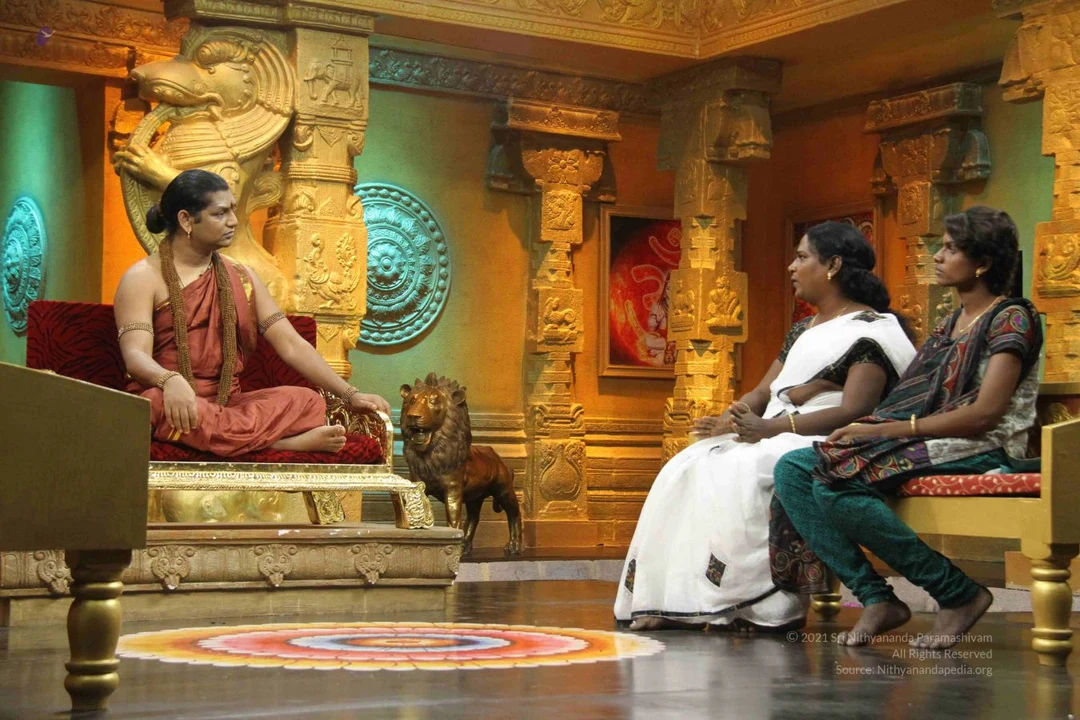
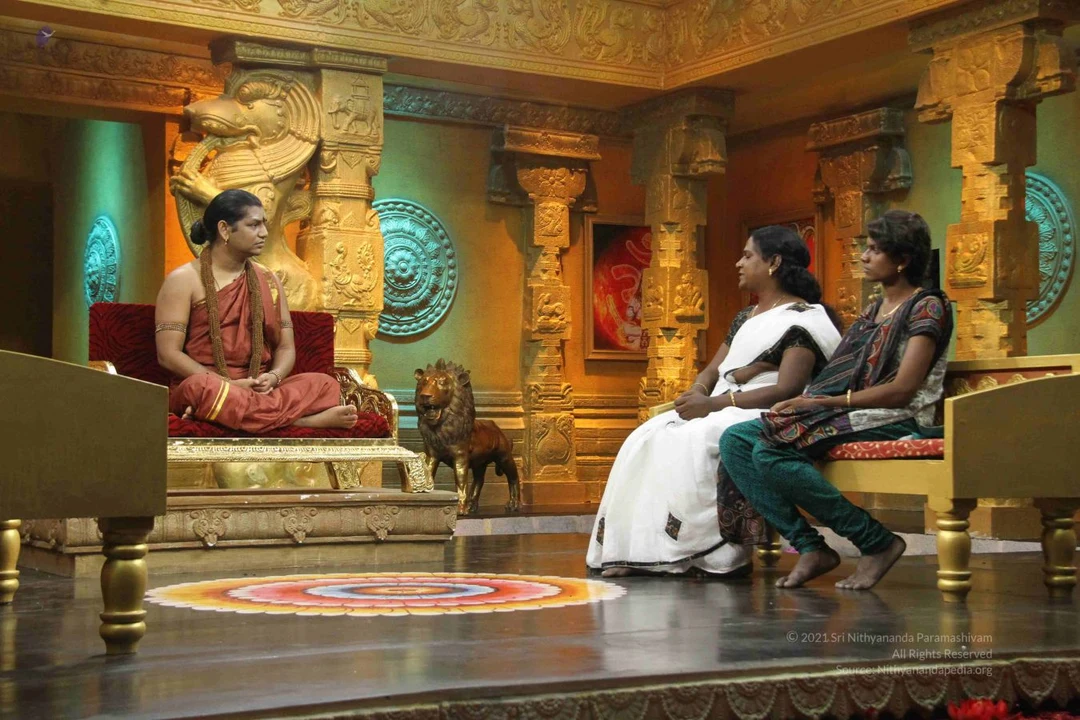
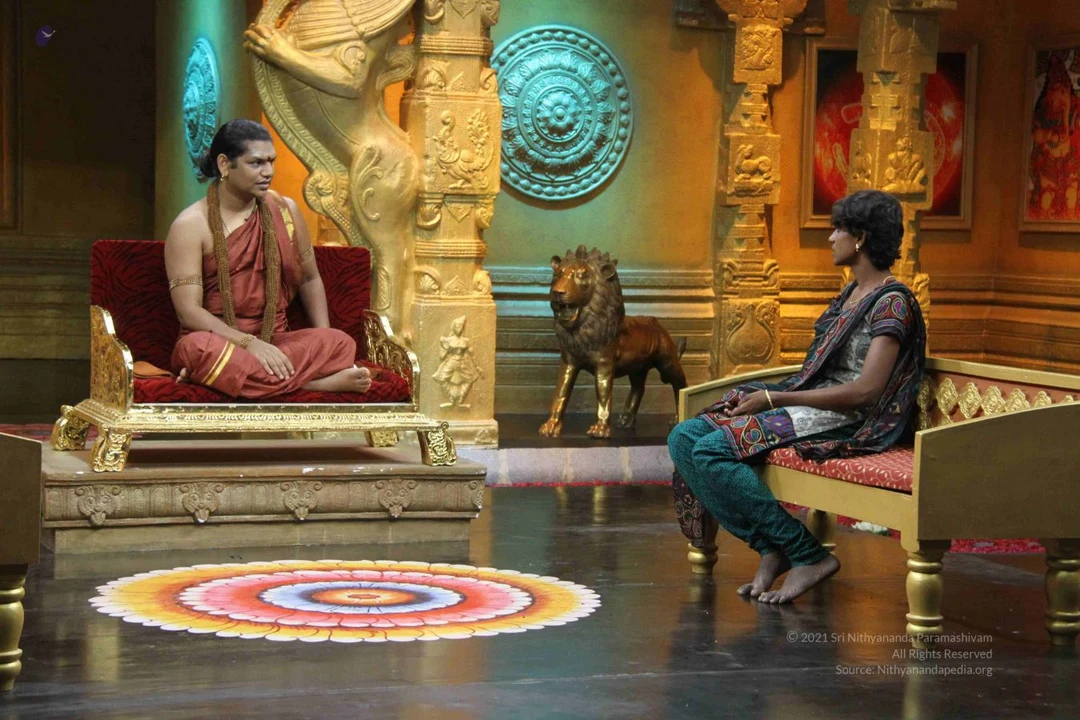
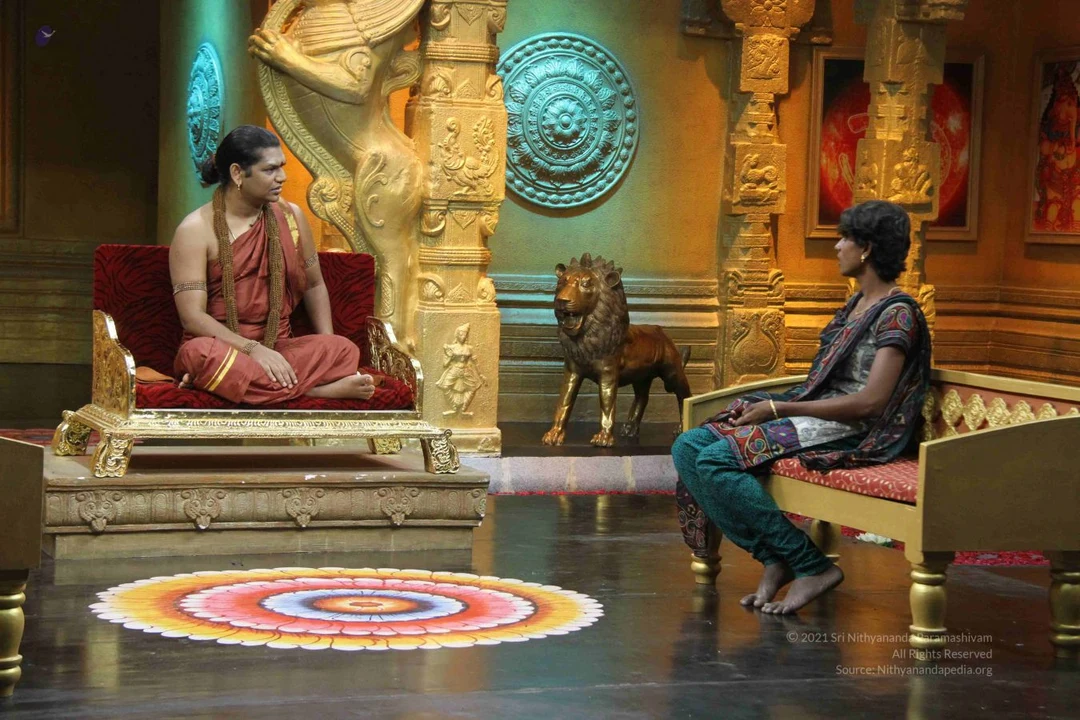
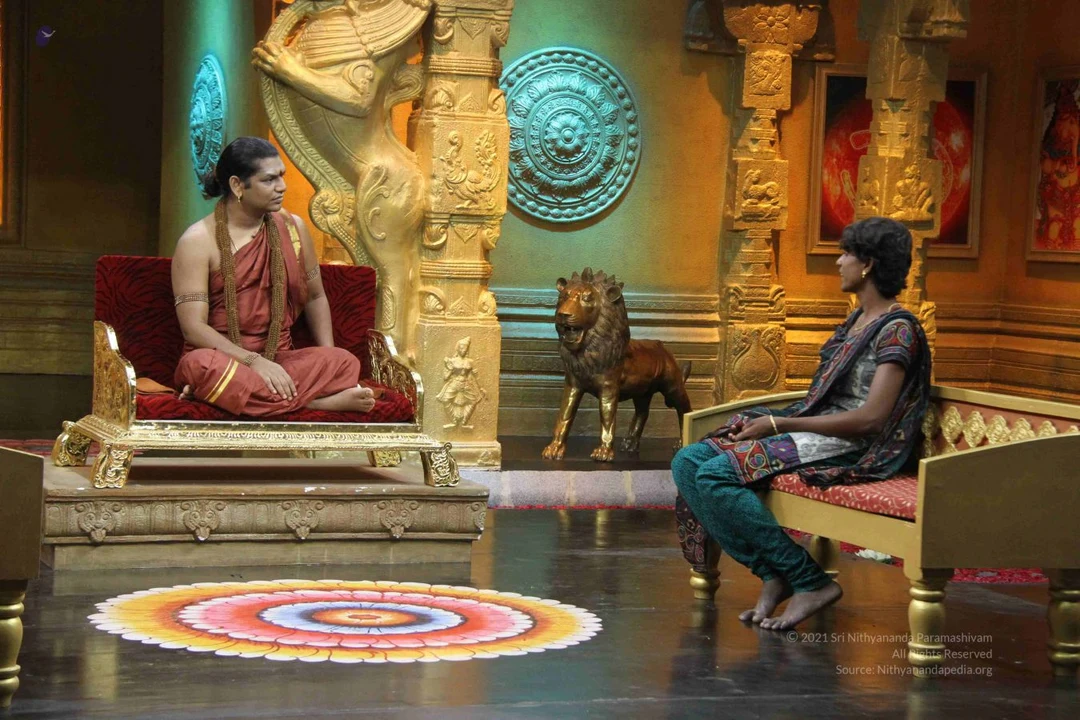
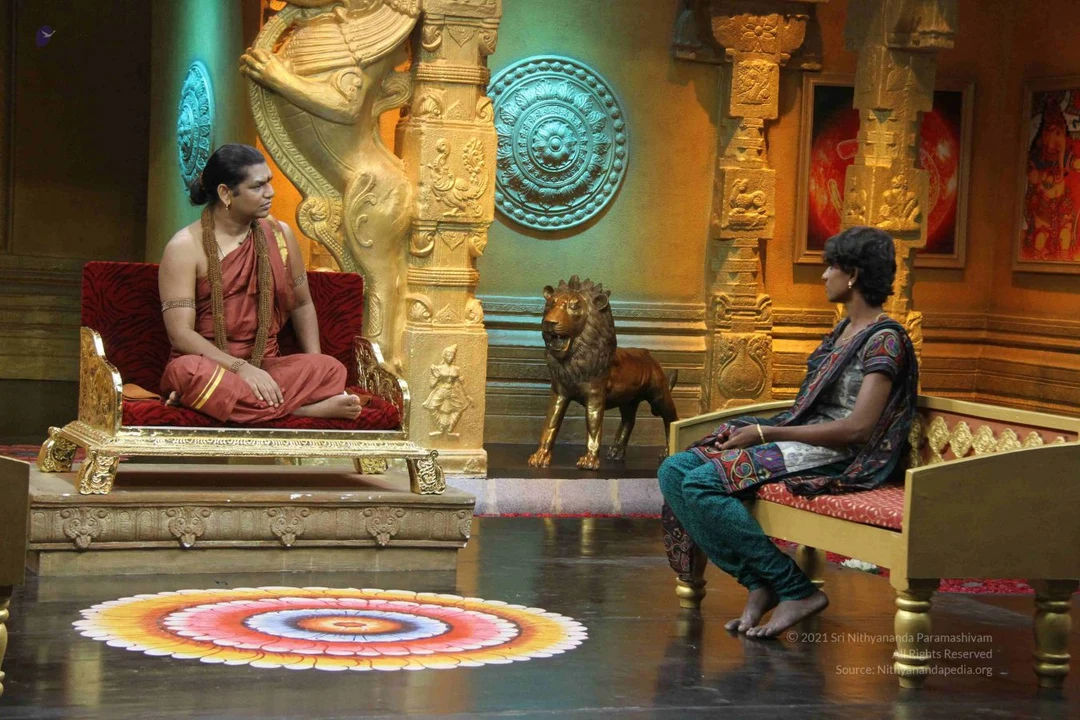
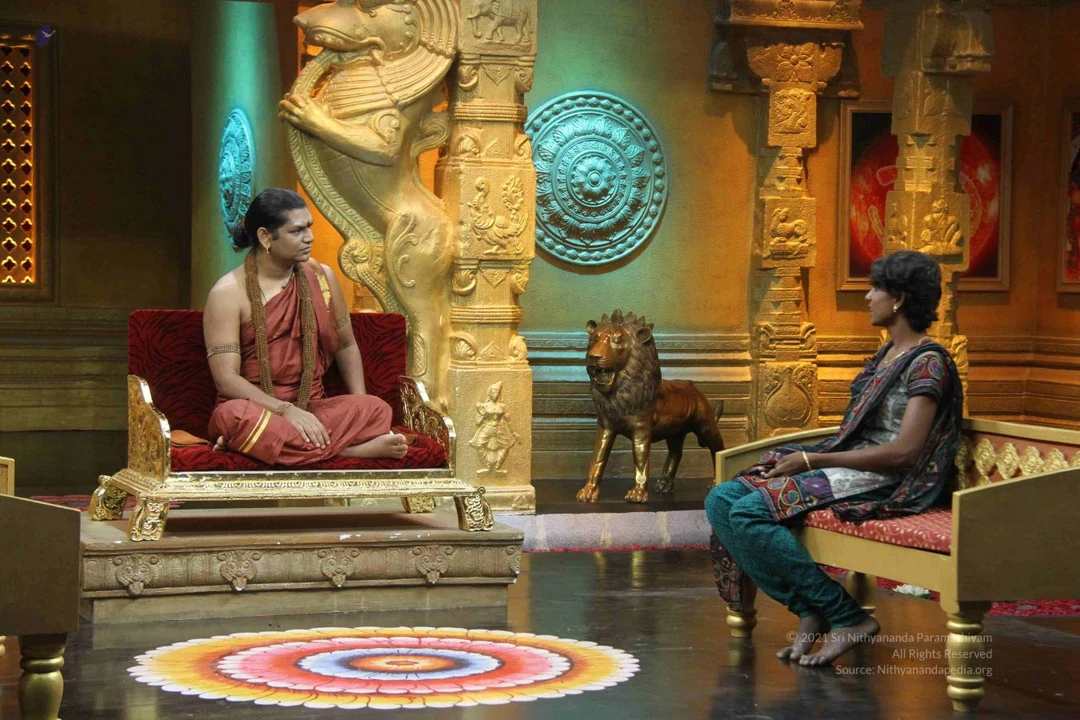
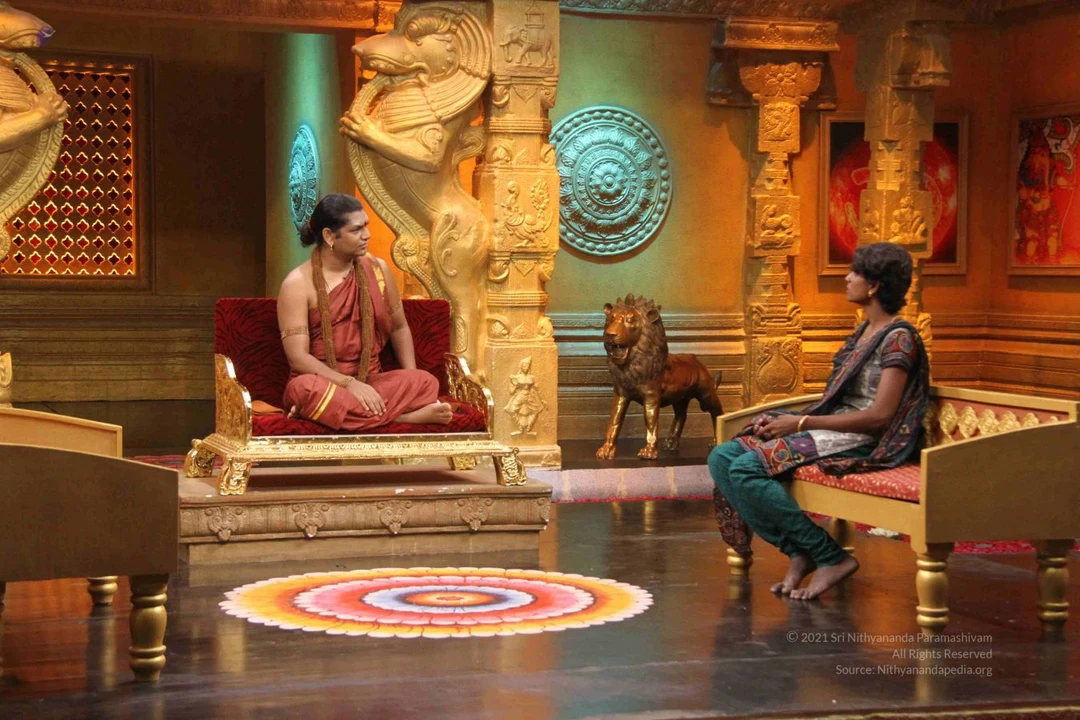
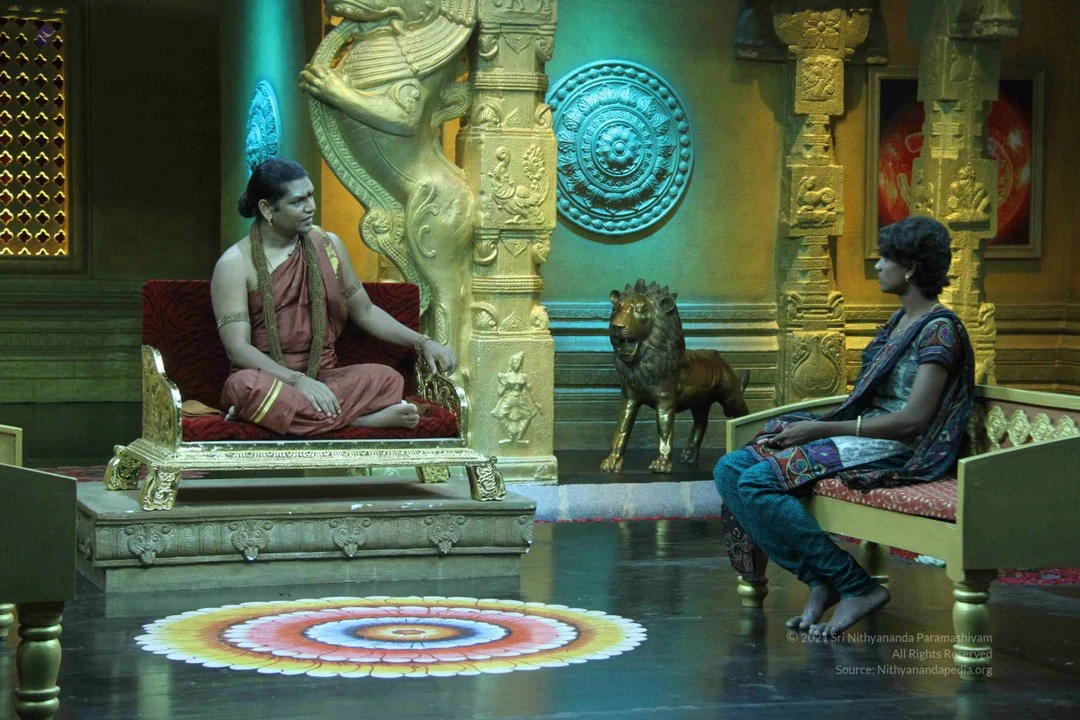
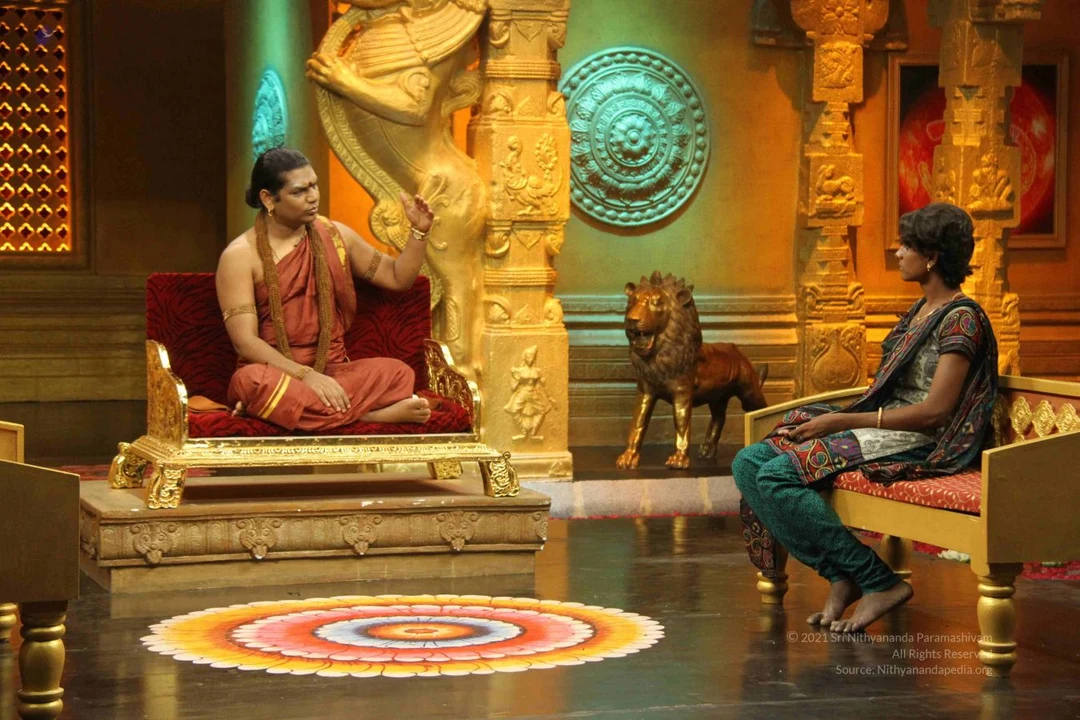
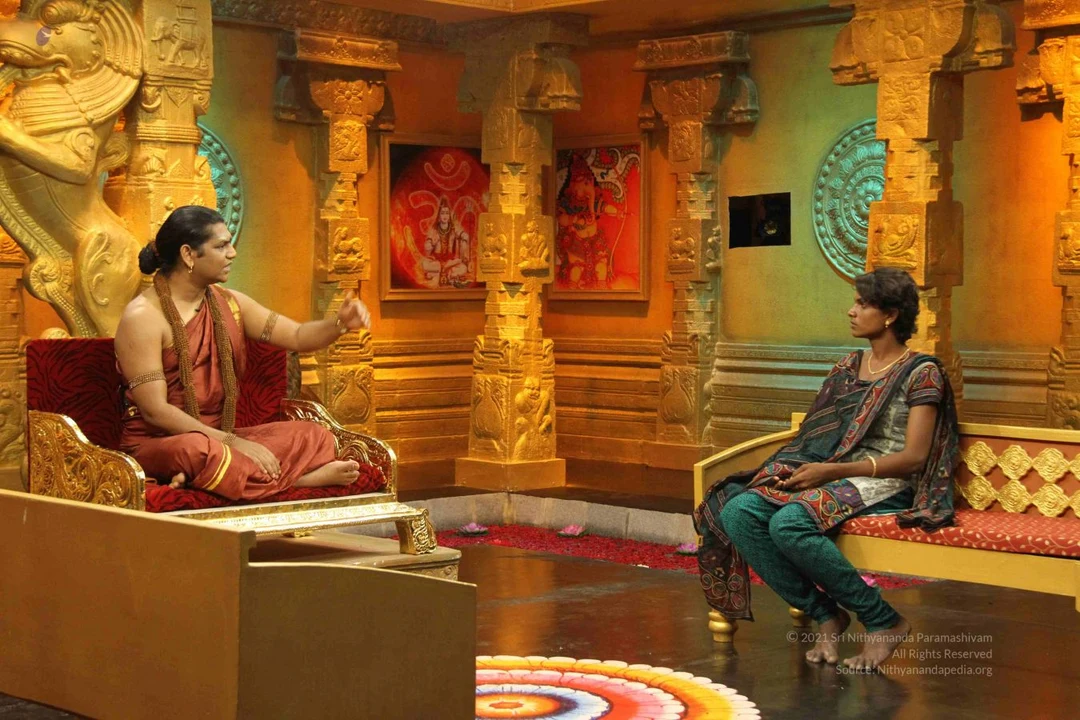
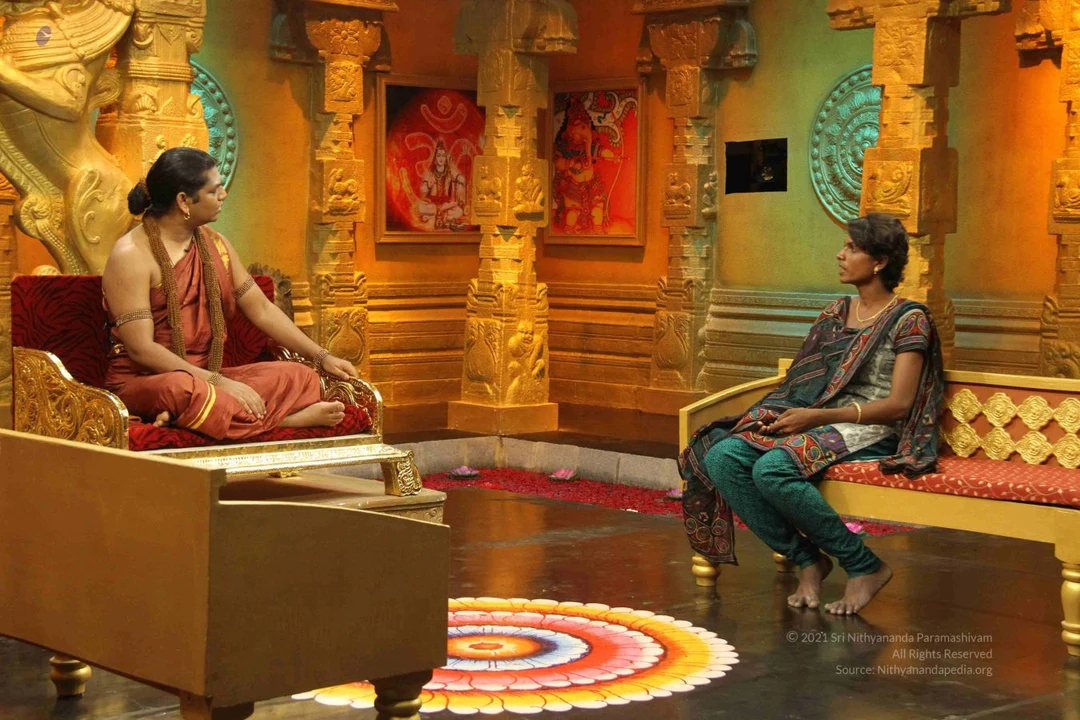
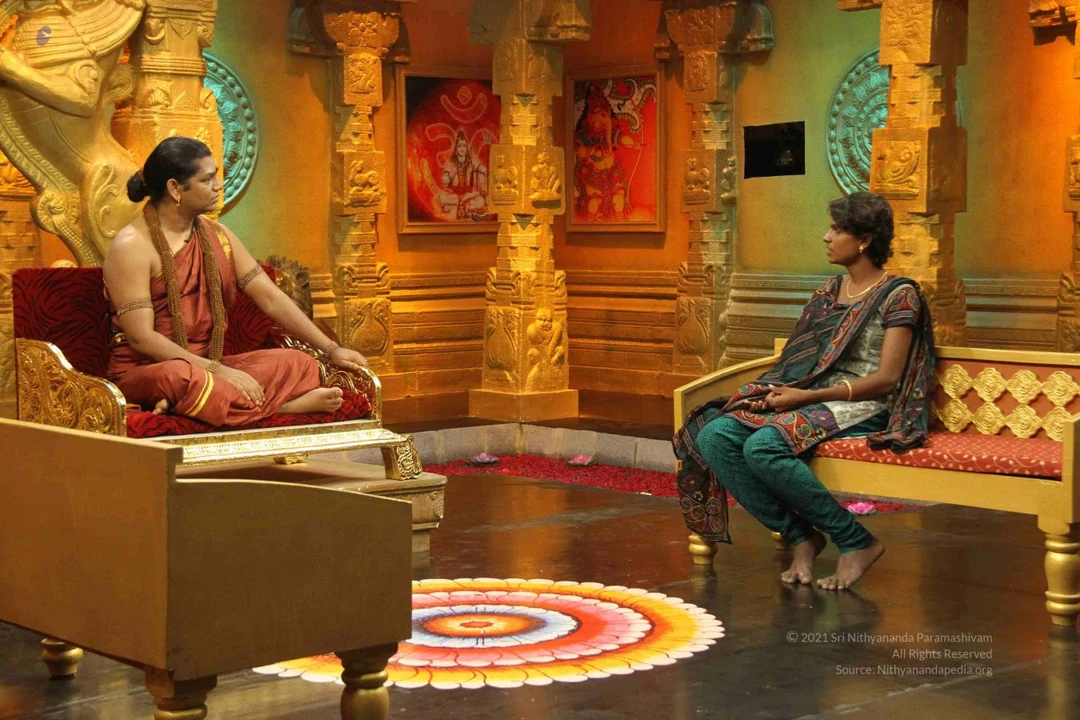
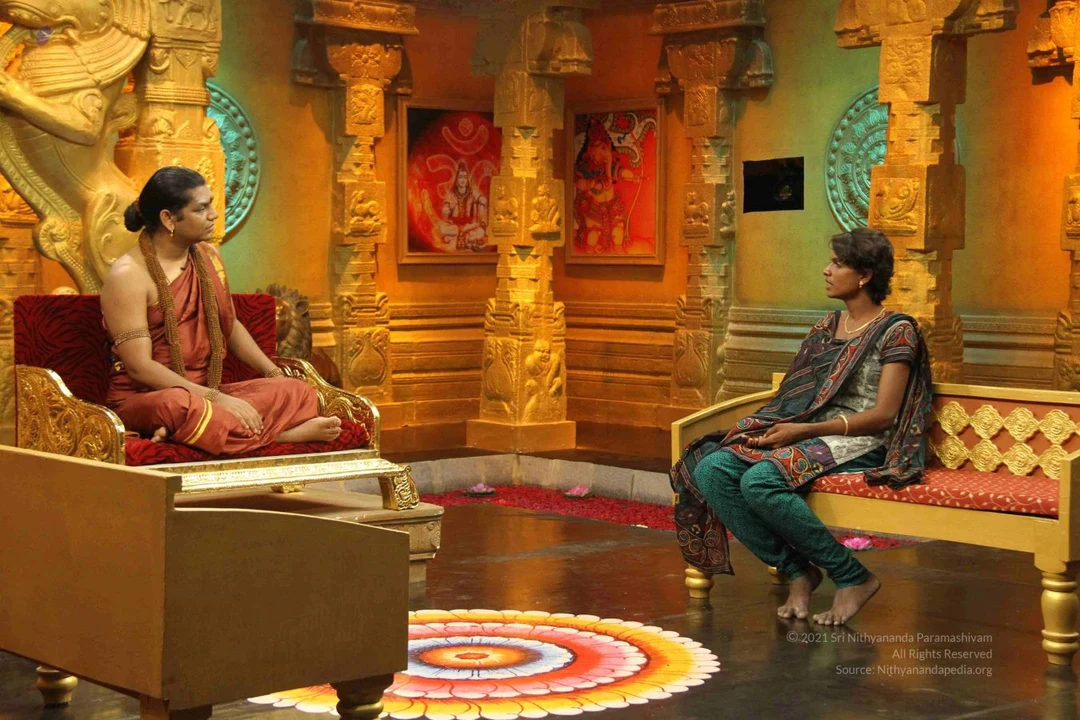
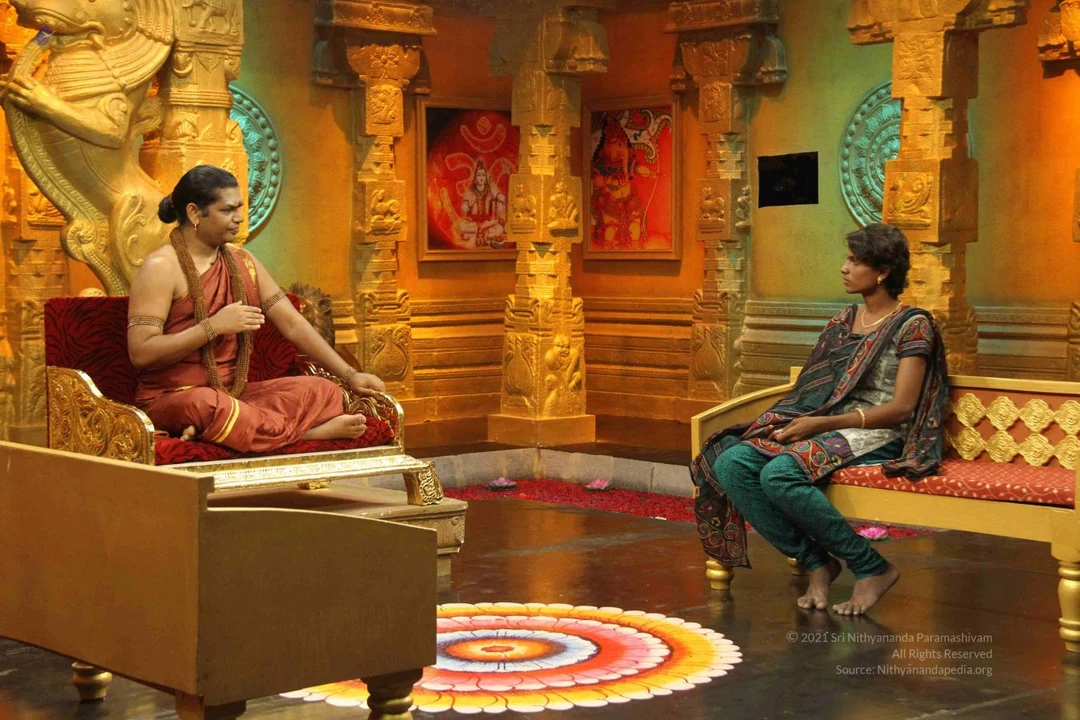
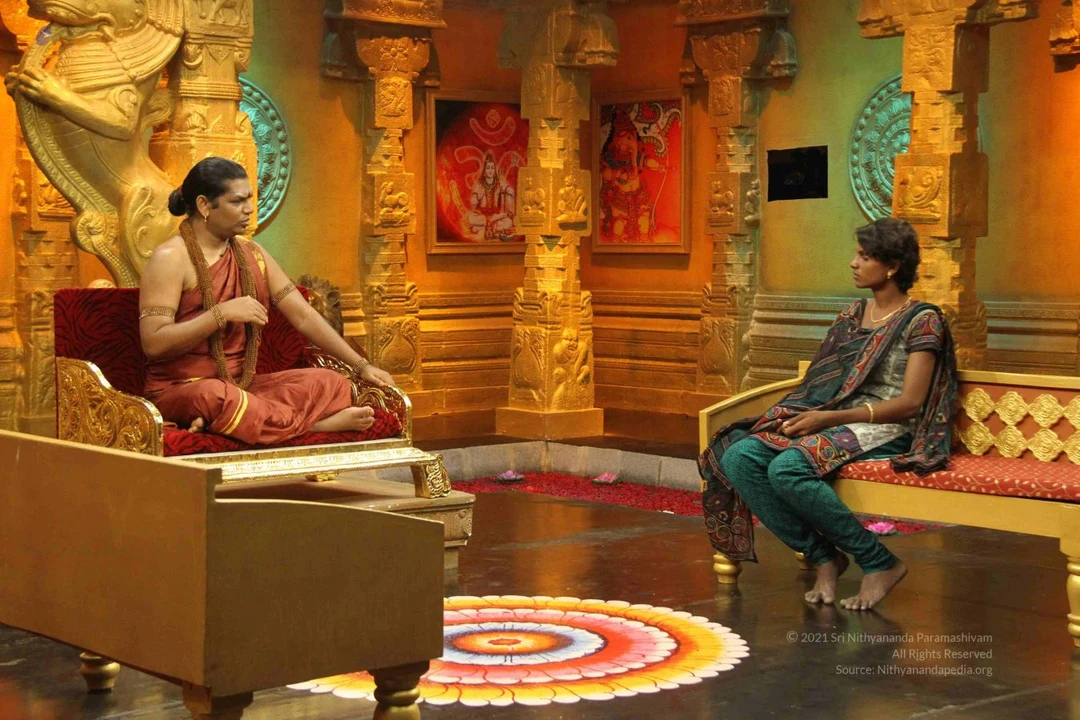
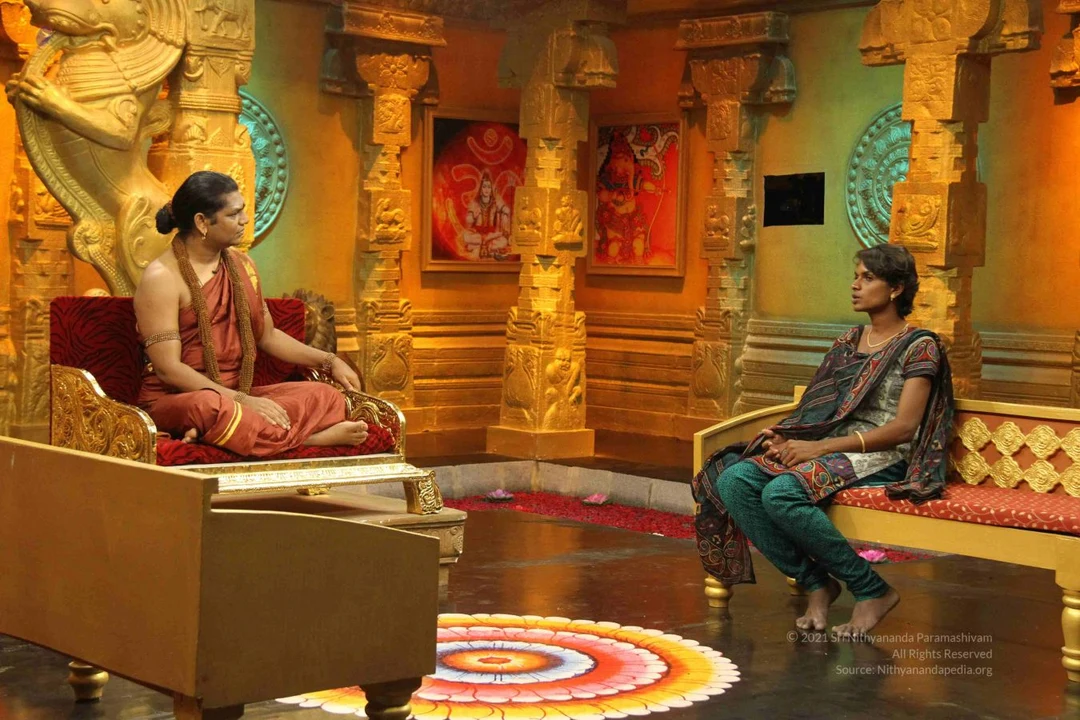
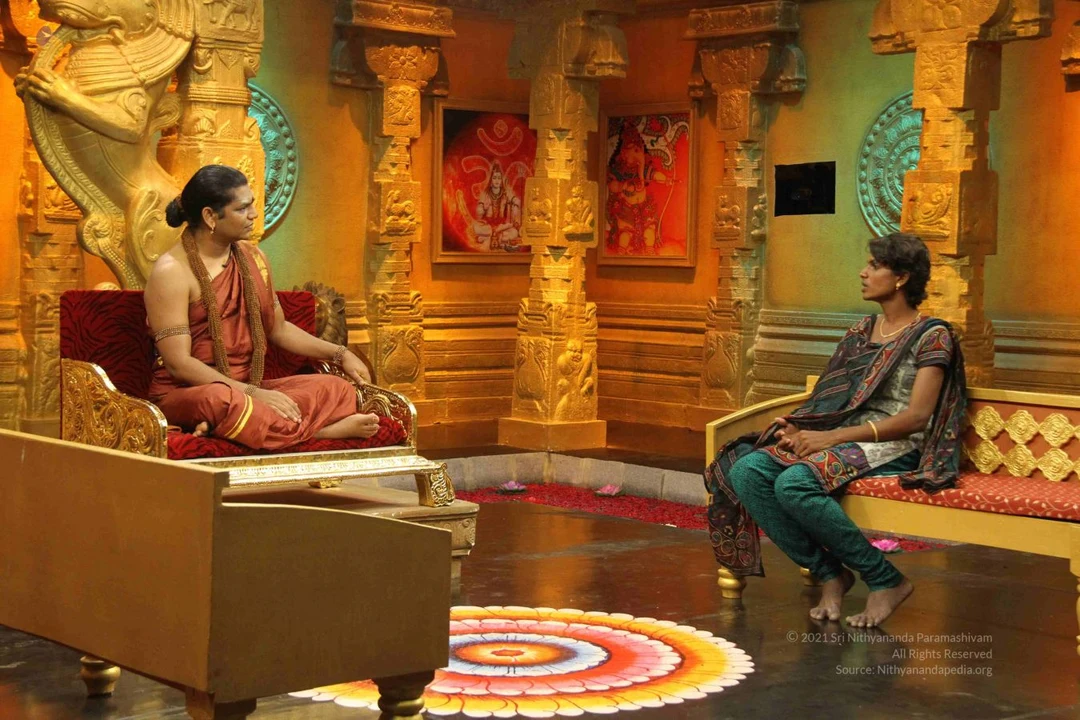
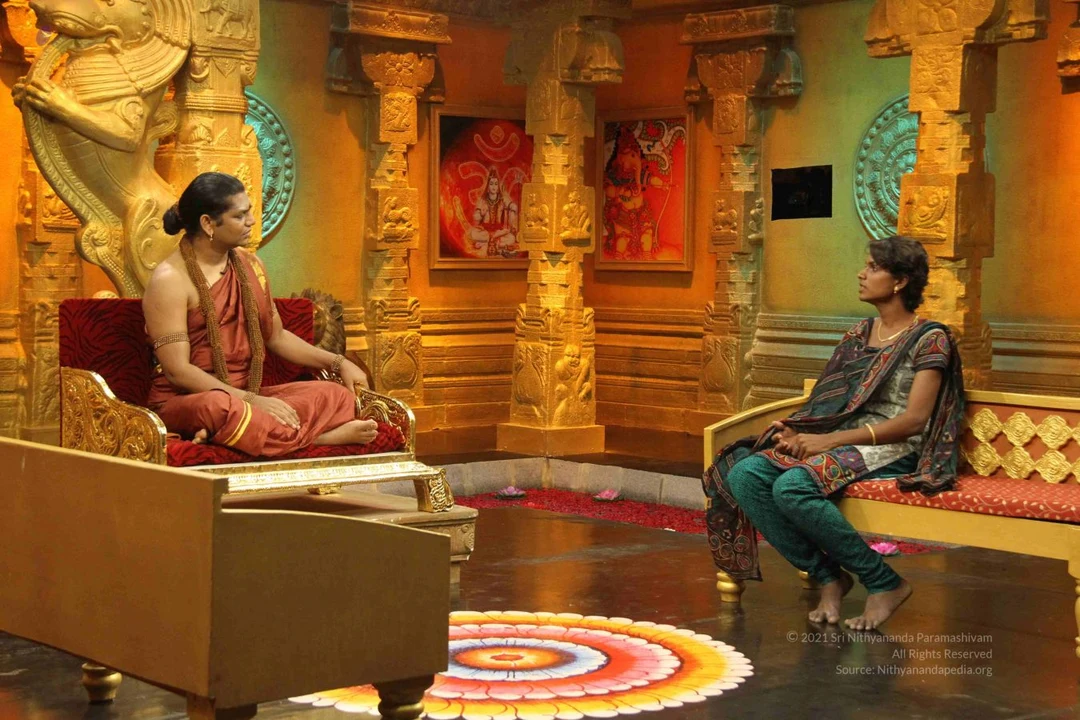
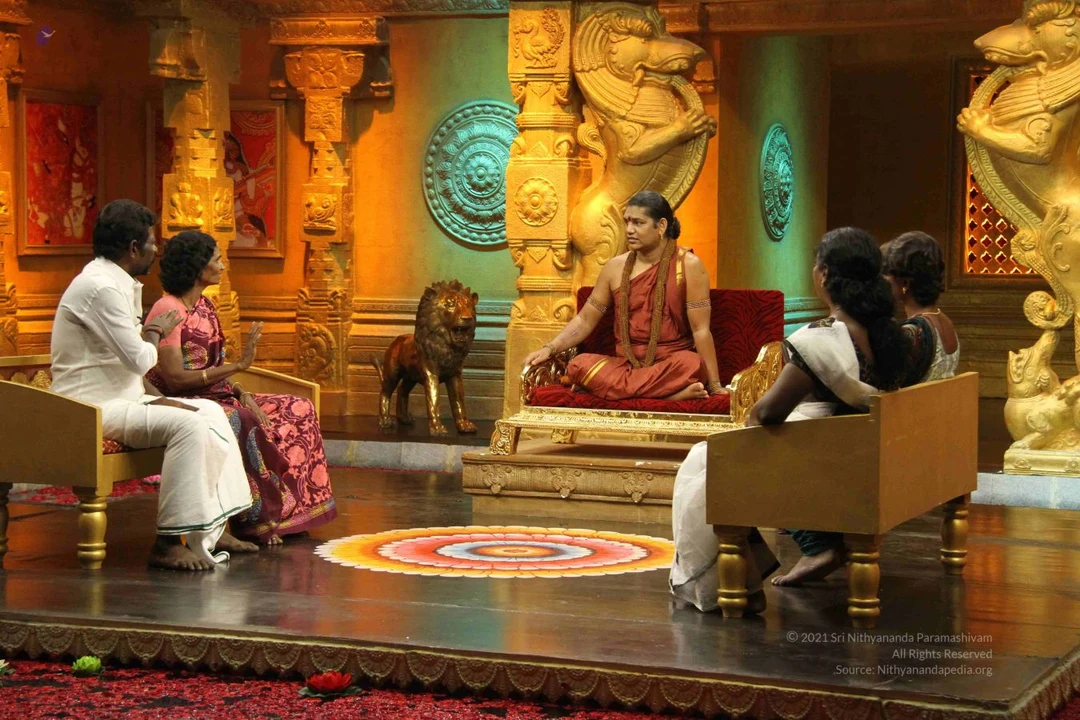
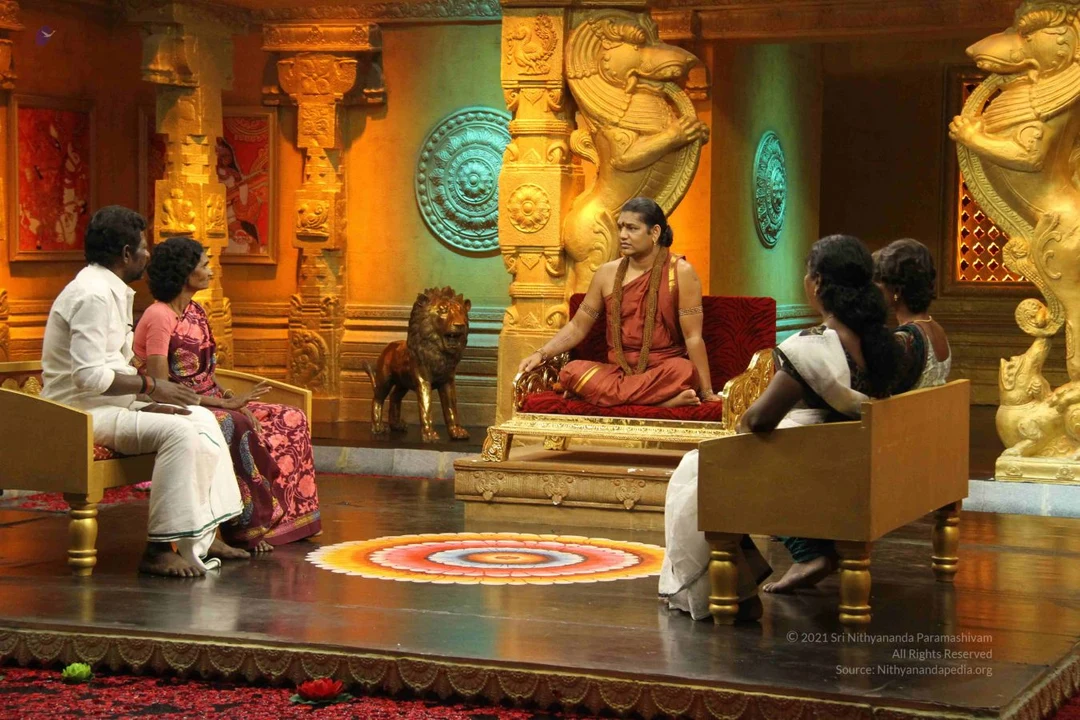
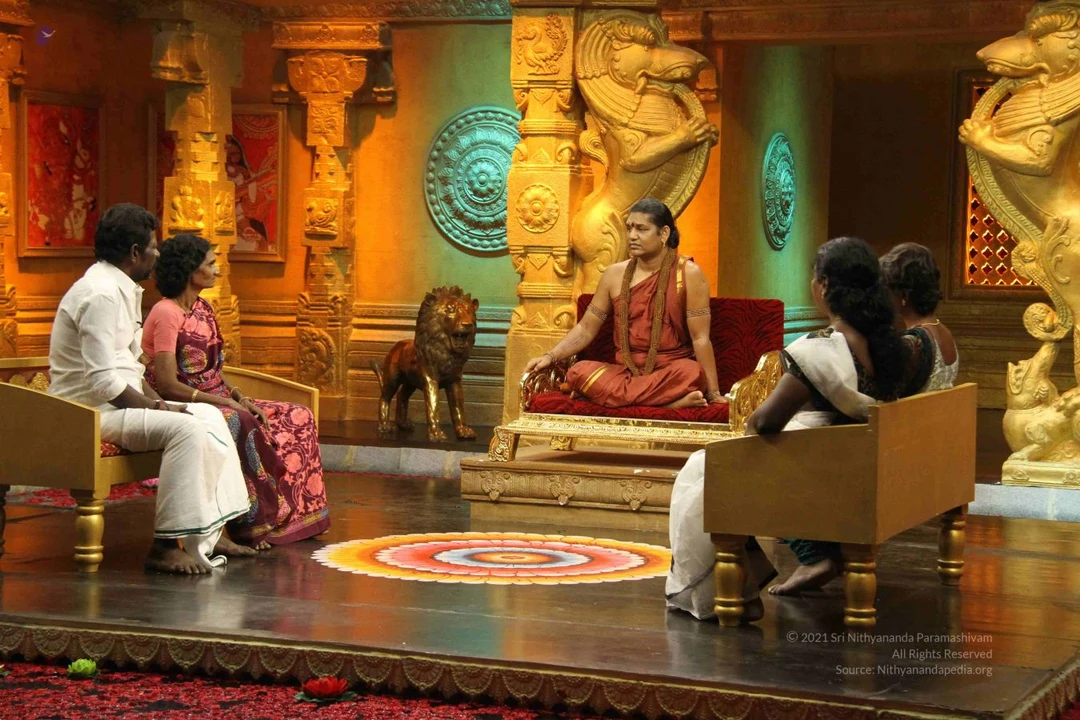
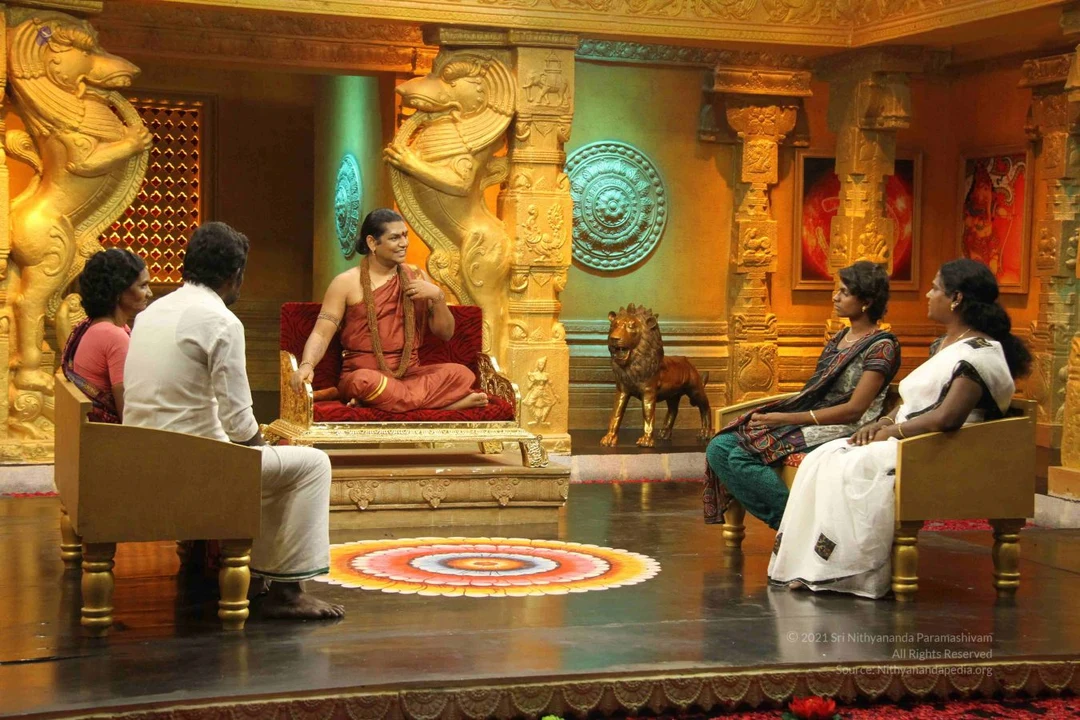
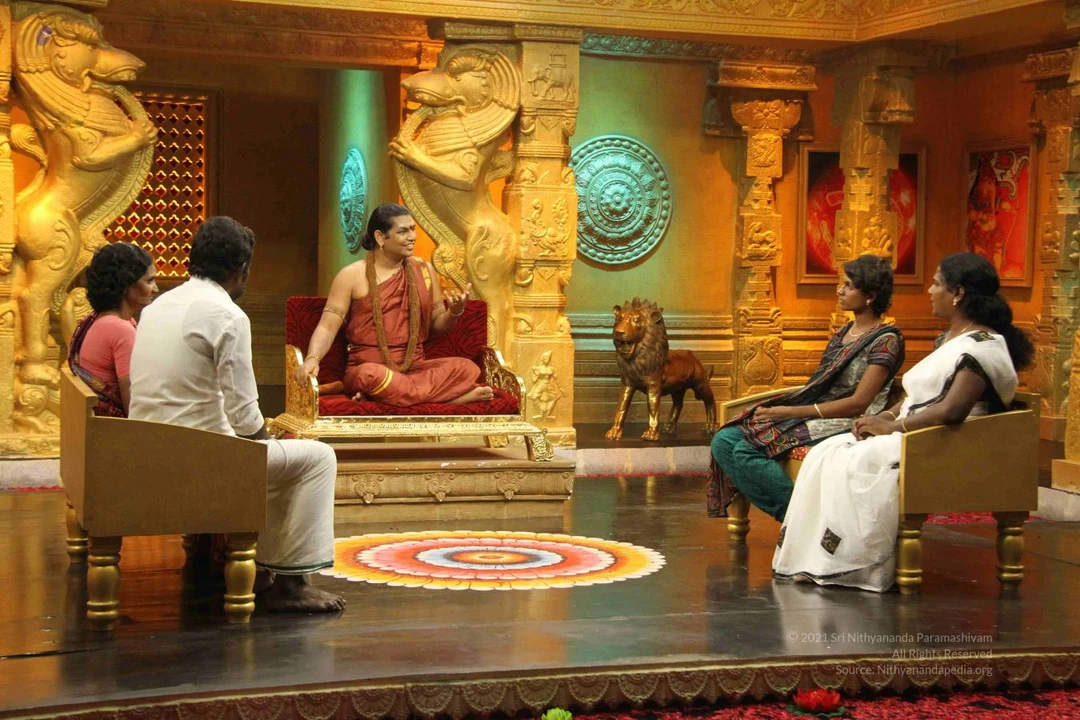
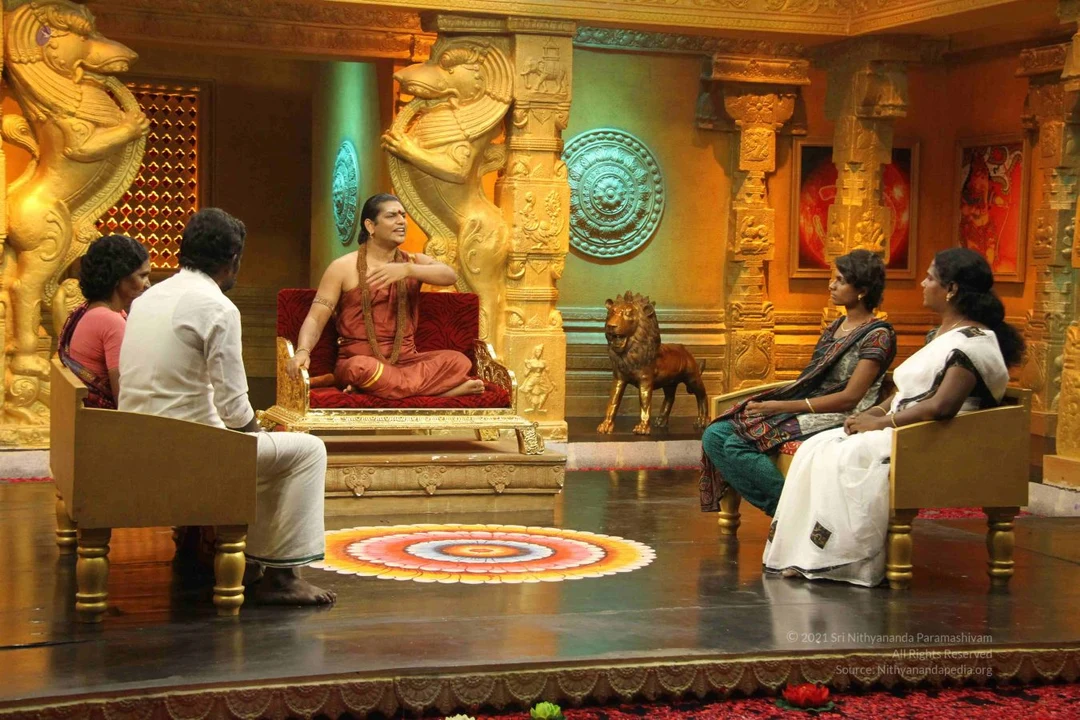
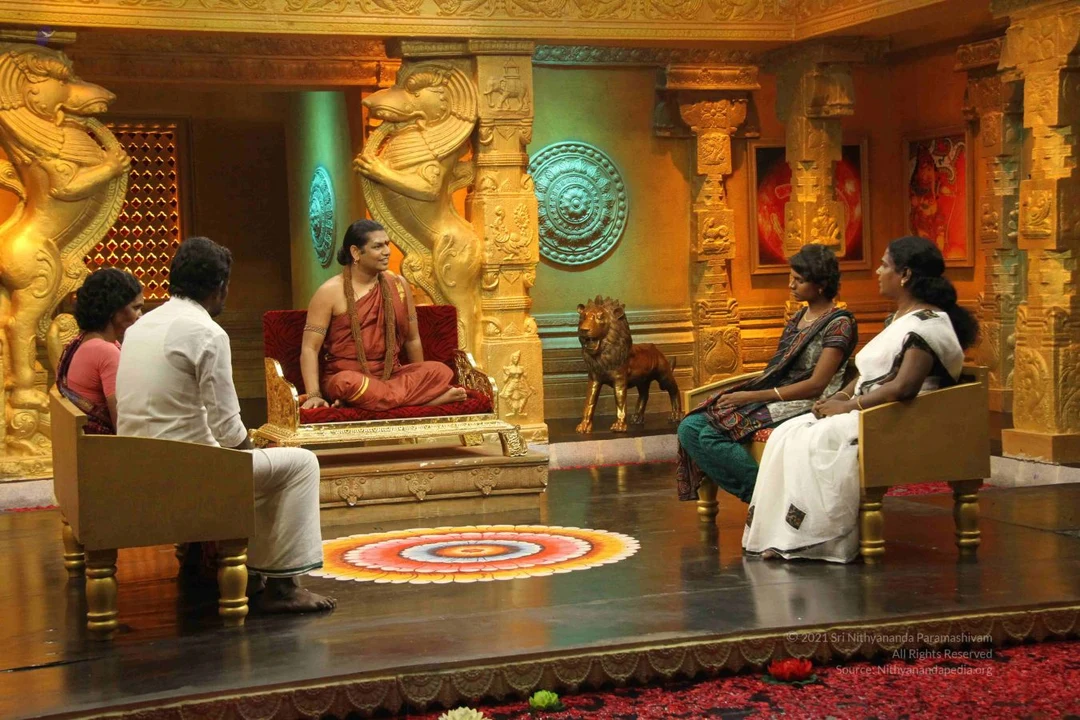
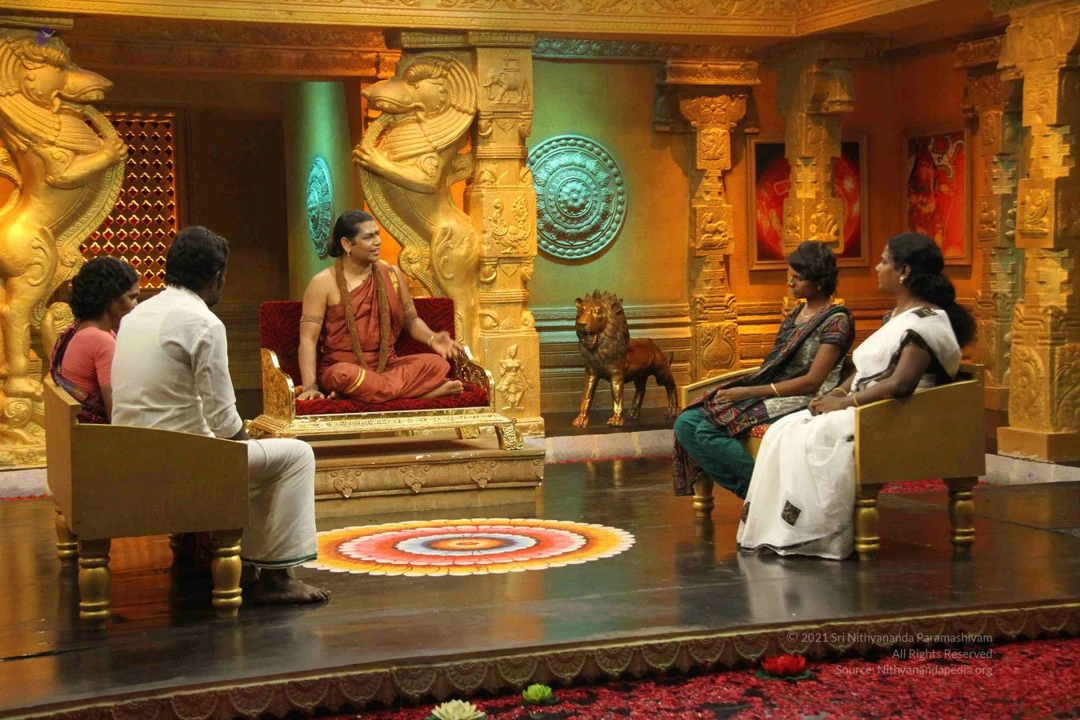
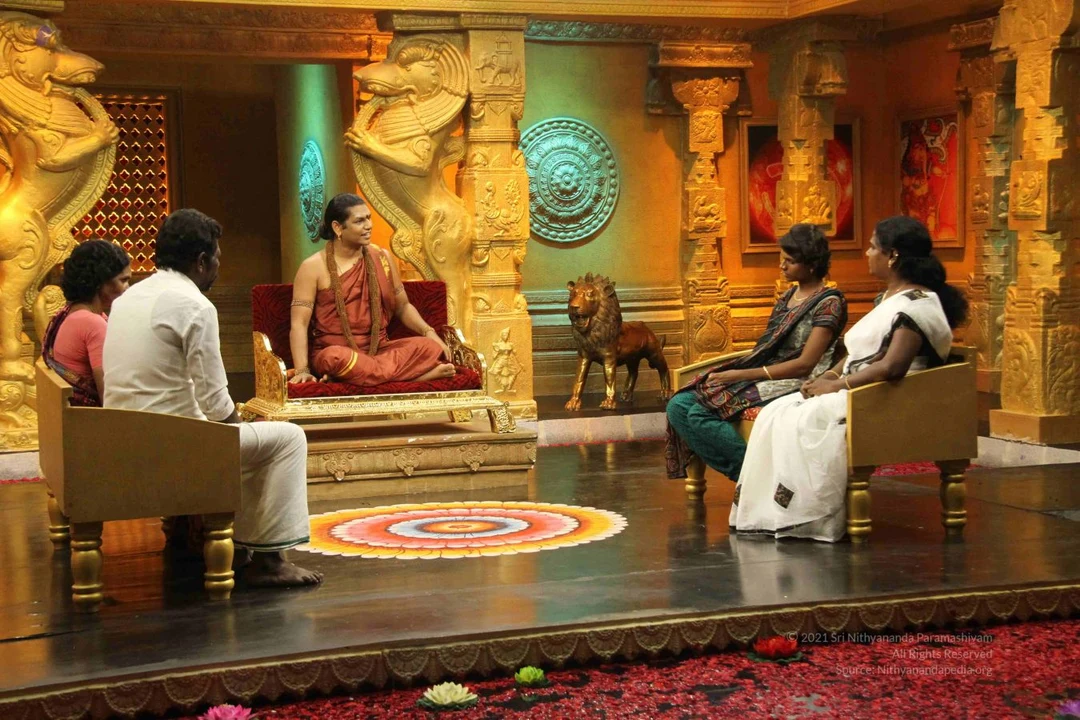
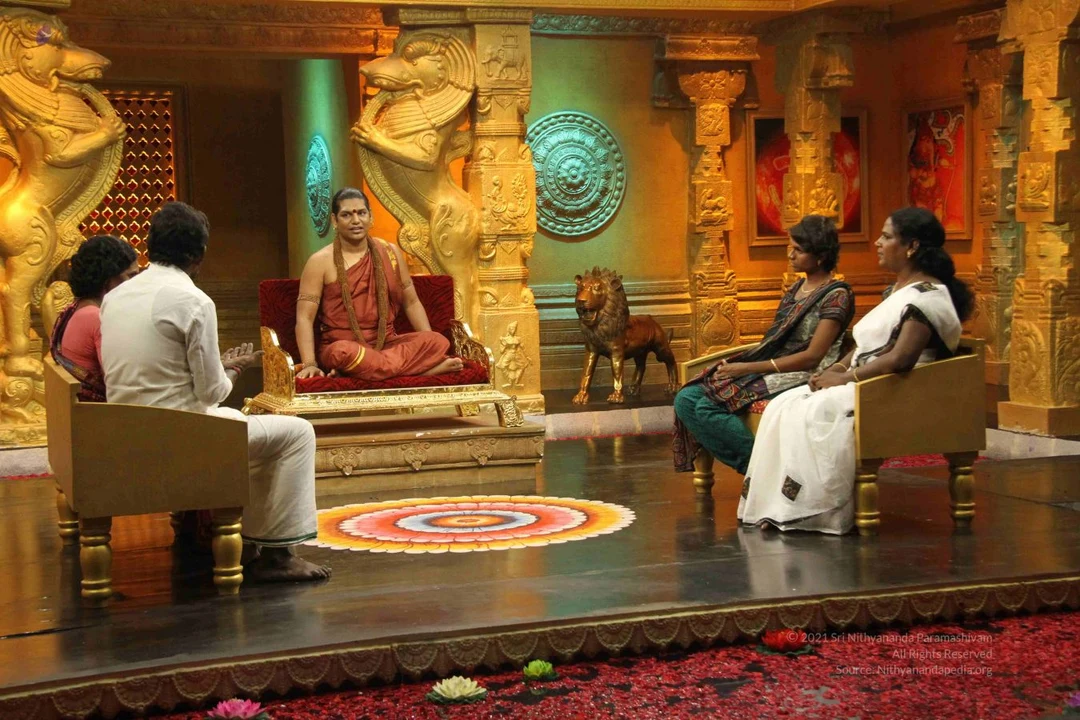
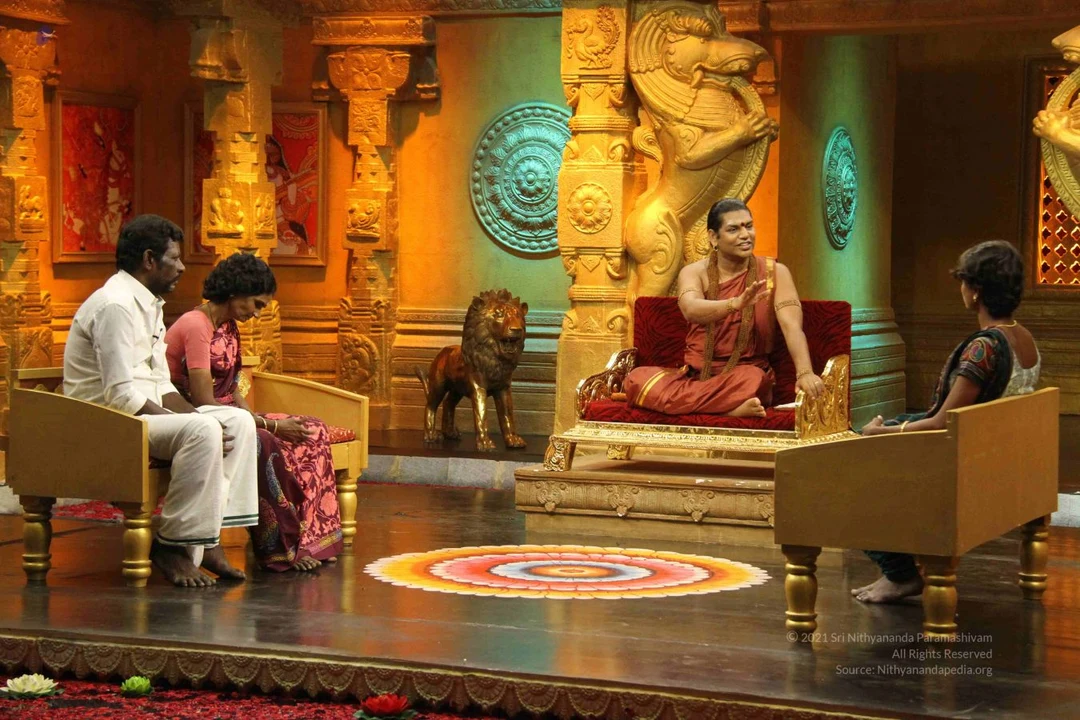
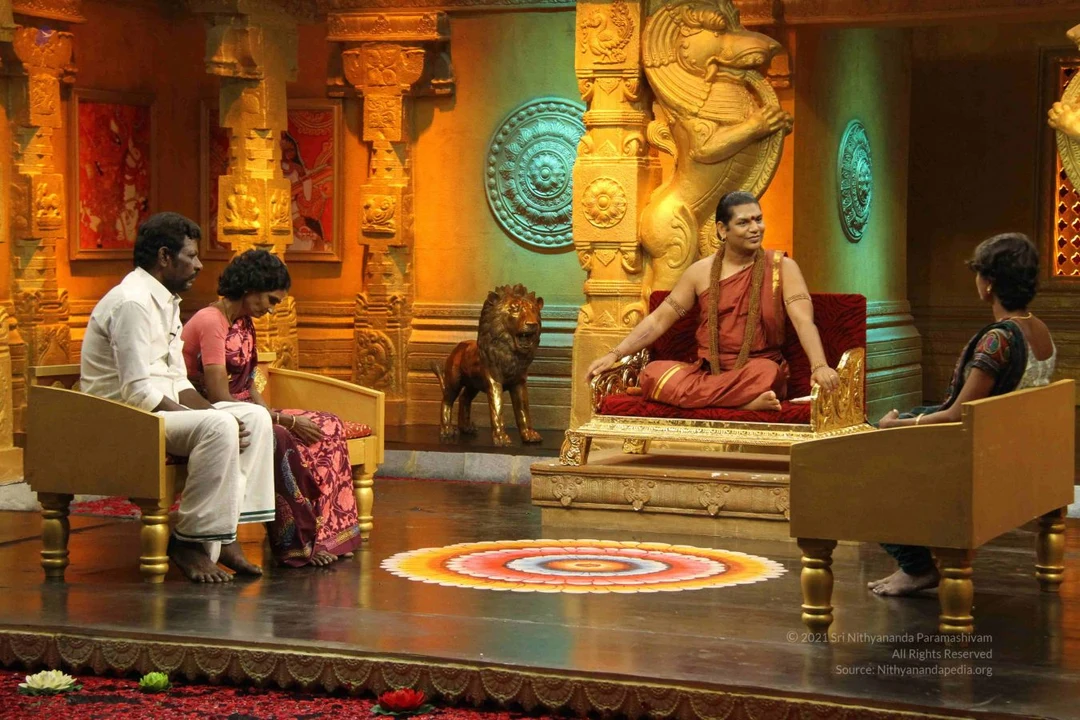
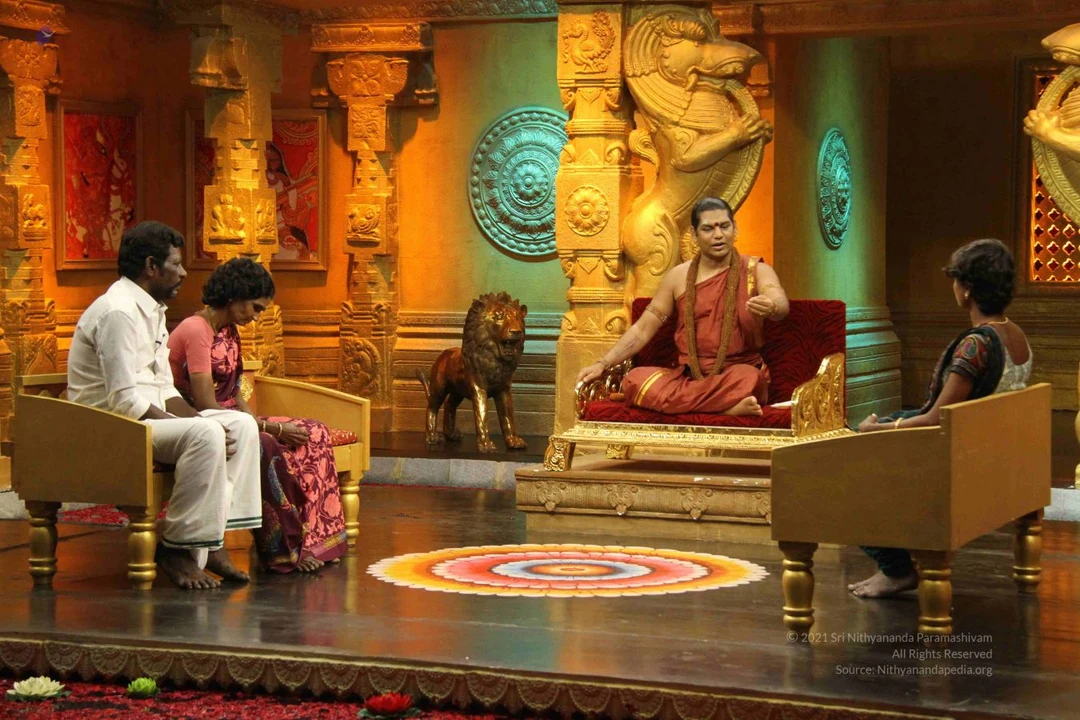
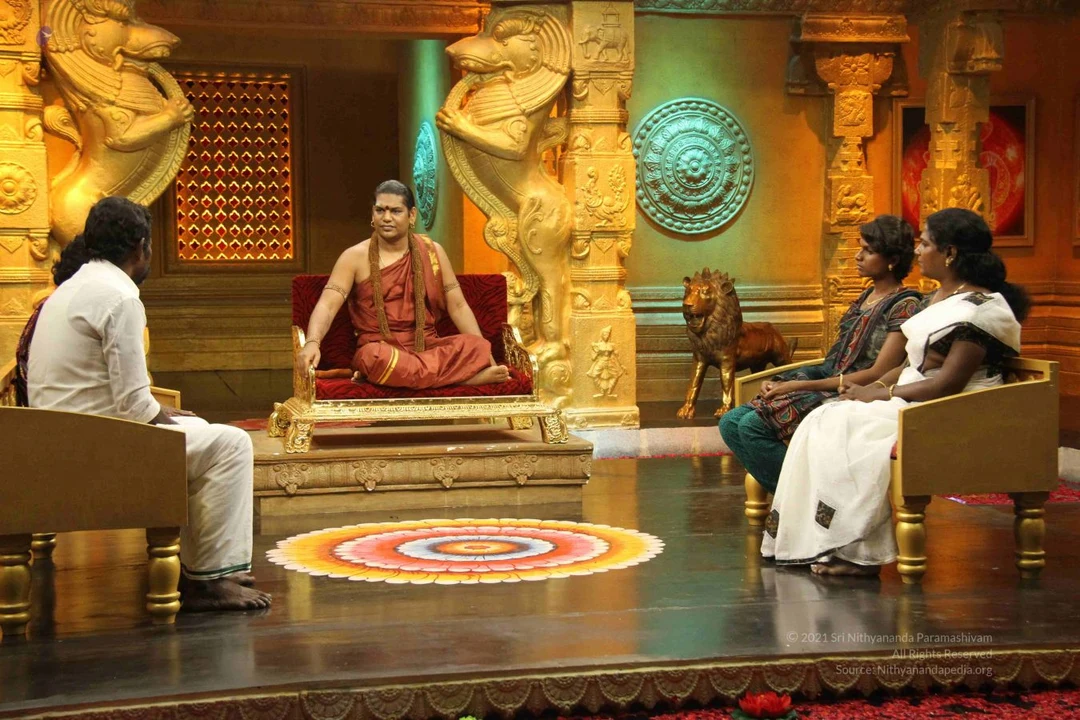
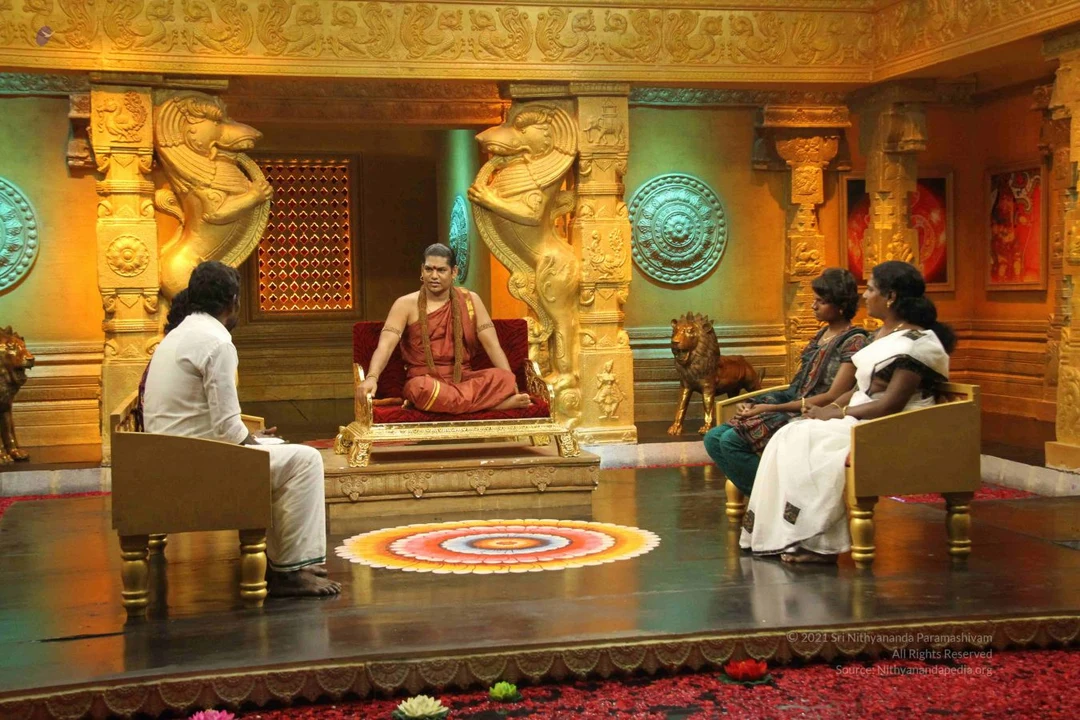
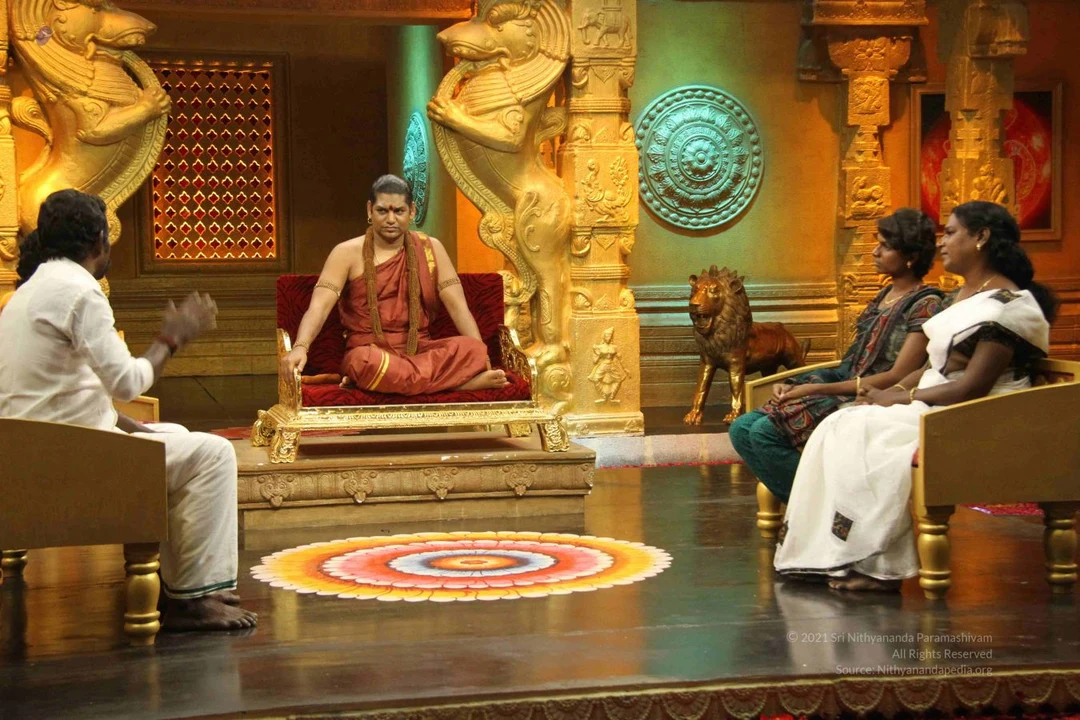
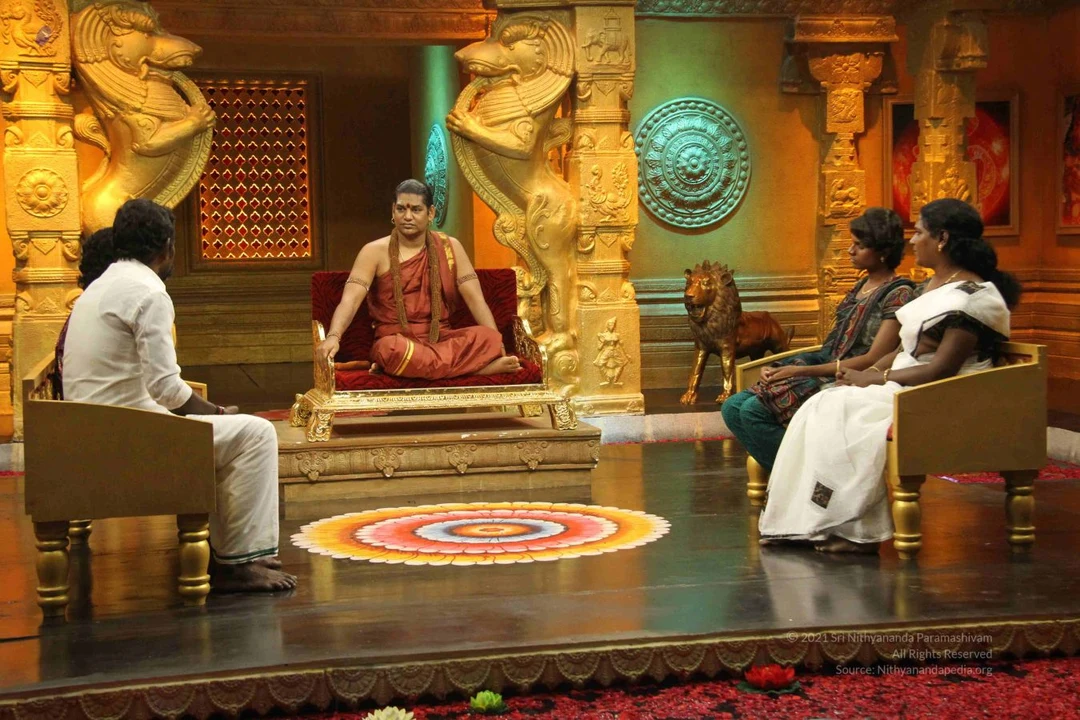
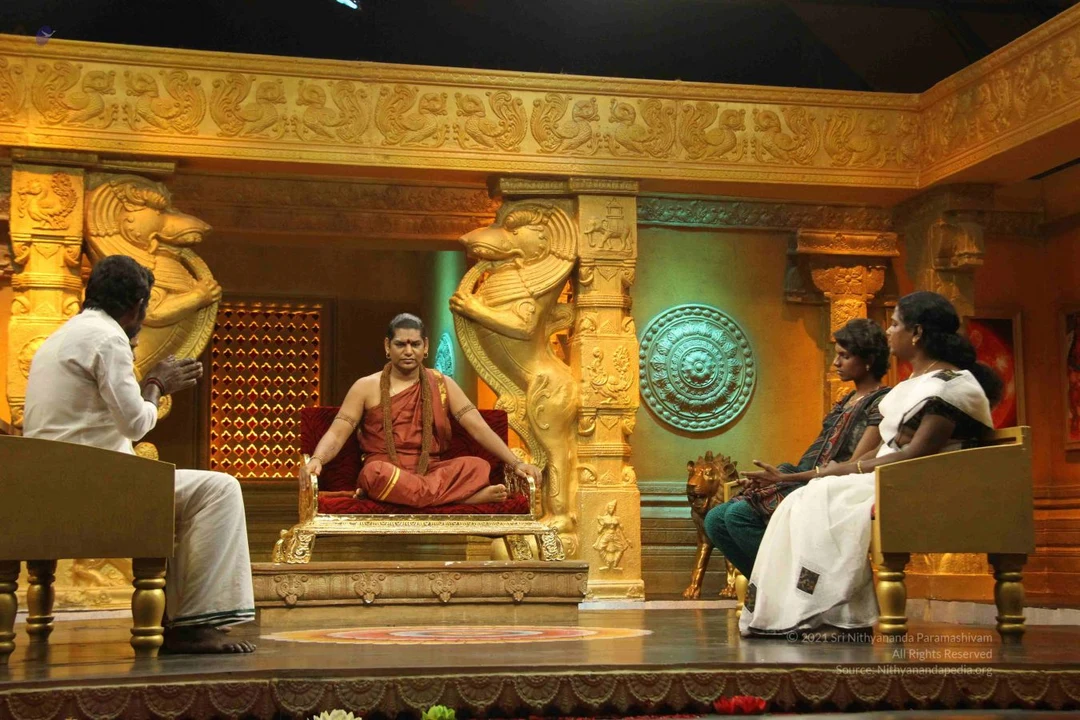
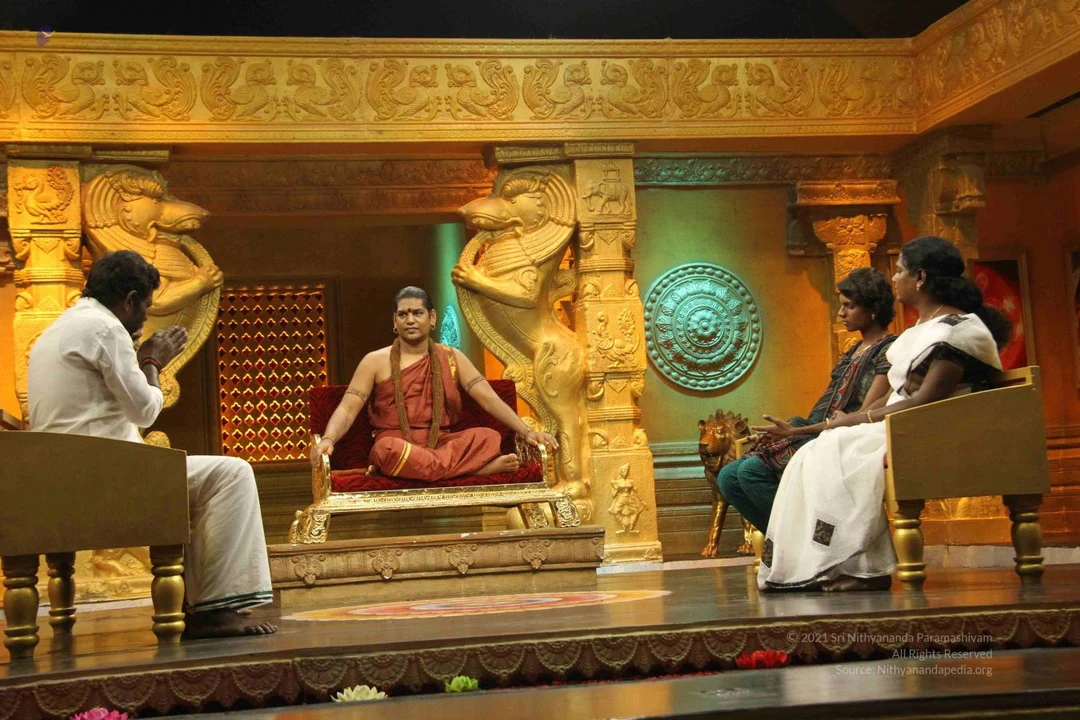
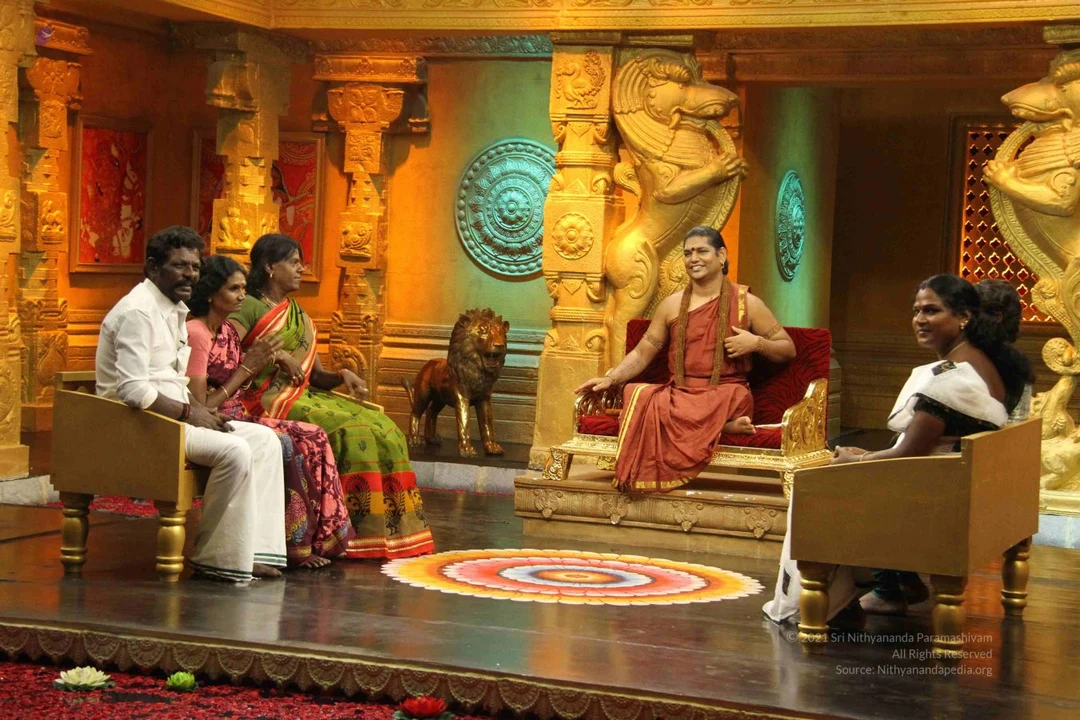
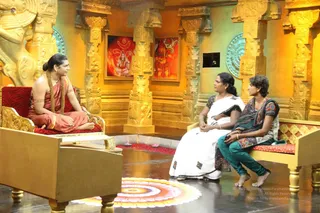
A studio talk-show set with ornate golden pillars and carved temple-style panels. A person with hair tied back in a bun, wearing a rust-orange draped garment and a long beaded necklace, sits cross-legged on a red-cushioned golden chair at left. Two women sit on a golden bench at right: one in a white sari with a dark border, the other in a patterned top and teal trousers. Behind them hang painted deity pictures in red and orange tones, and a rangoli floral design lies on the floor with small lamps.A studio-set discussion in a golden temple-style hall with carved pillars and a painted lotus-patterned floor. A man seated on a red-cushioned golden throne wears an orange-red sannyasi robe, bare shoulders with arm bands, and a long beaded necklace; he is a person by his long swept-back hair, saffron robe and ceremonial necklace cues. Two women sit on a gold bench facing him: one wears a white sari with a dark border and the other a patterned blue-green sari with teal trousers. Behind them hang painted devotional pictures of Shiva and a deity, and a red and orange rangoli-style floral design lies on the floor.A studio set for a television discourse with a golden temple-style backdrop of carved pillars and two framed red paintings of deities. On the left, a figure seated in a red-cushioned golden armchair wears a rust-orange garment with a shawl draped over the shoulders, bangles on the arms and hair tied in a bun; the figure has distinctive orange ornamented attire and bangles, a person presentation with unclear identity. Opposite, two women sit on a golden bench: one in a white sari with dark border and gold bangles, the other in a dark patterned sari over green trousers. Rose petals and a colourful floor rangoli lie in front of them.A studio set for a television satsang with golden temple-style pillars and framed painted deity images on the back wall. A man with hair tied back, wearing a rust-orange draped garment, gold armlets and a long beaded mala, sits cross-legged on a red-cushioned golden throne, gesturing with one hand; the appearance is consistent with the a person cues of ornate orange clothing, a mala and a seated teaching posture. Opposite him, two women sit on a golden bench: one in a white sari with a dark blouse and gold jewellery, hands clasped, and one in a multicoloured patterned sari with green leggings, barefoot. A colourful floral rangoli is on the floor and a red flower-petal arrangement lies by the platform.A studio set styled as a temple hall with carved golden pillars, a golden lion sculpture at left, and red and orange painted panels on the back wall. A man in a saffron-orange dhoti and shawl sits cross-legged on an ornate gold-and-red throne at left, with a long rudraksha-style mala and gold armlets, hair tied in a bun, gazing toward two women seated on a gold bench at right. One woman wears a white sari with a dark border and gold necklace; the other wears a patterned maroon-and-blue sari with teal trousers and gold earrings. A colourful rangoli mandala lies on the floor in front, with a red rose-petal patch behind. Candidate depiction of a person: the seated man has a saffron shawl, rudraksha mala and ornate gold jewellery, but the image is not clearly distinctive enough for certainty, so the identity is marked unsure.A photograph of a studio-set discourse in an ornate temple-style hall with carved golden pillars and a wooden lion sculpture. A man with hair tied up sits cross-legged on a red-cushioned golden throne, wearing a rust-orange wrap and bracelets, with a long rudraksha-style mala hanging to his chest; he is the a person by appearance, presiding in a teaching role. Two women sit facing him on a golden bench: one in a white sari with a dark border, the other in a dark patterned top and green trousers. Rangoli-style concentric colored patterns lie on the floor, and a framed painting hangs on the wall behind.