Skip to content
Tuesday

26 November 2013

Does your Life Have Blind Spots.

Dated photos
267
Source pages
1
Media
2
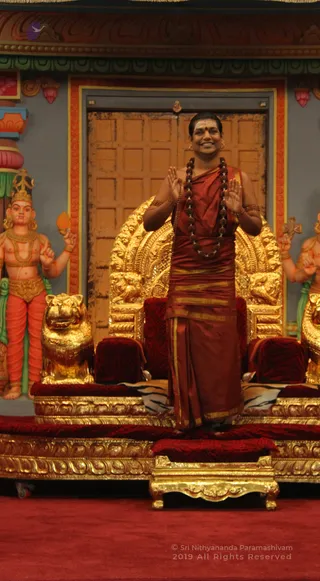
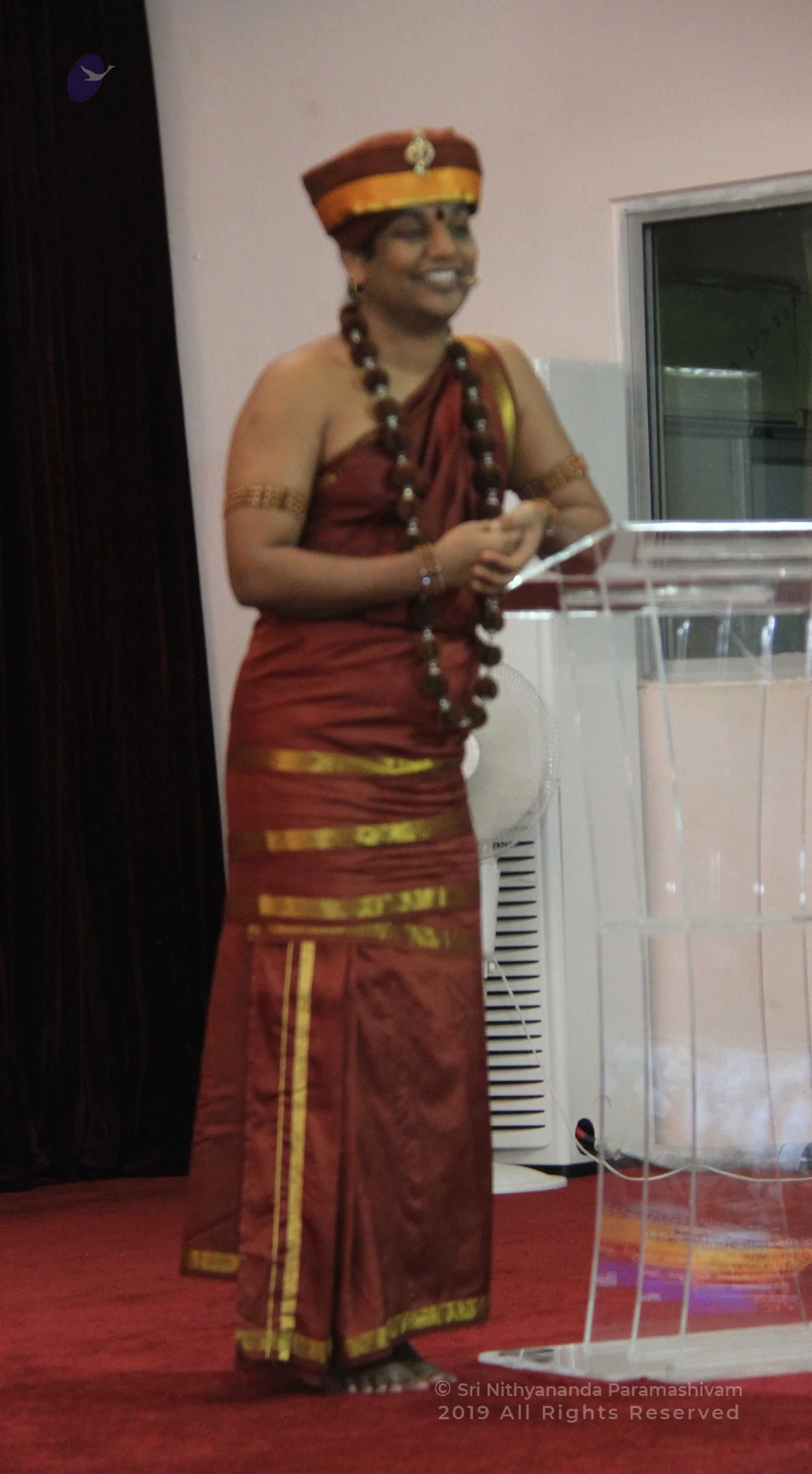
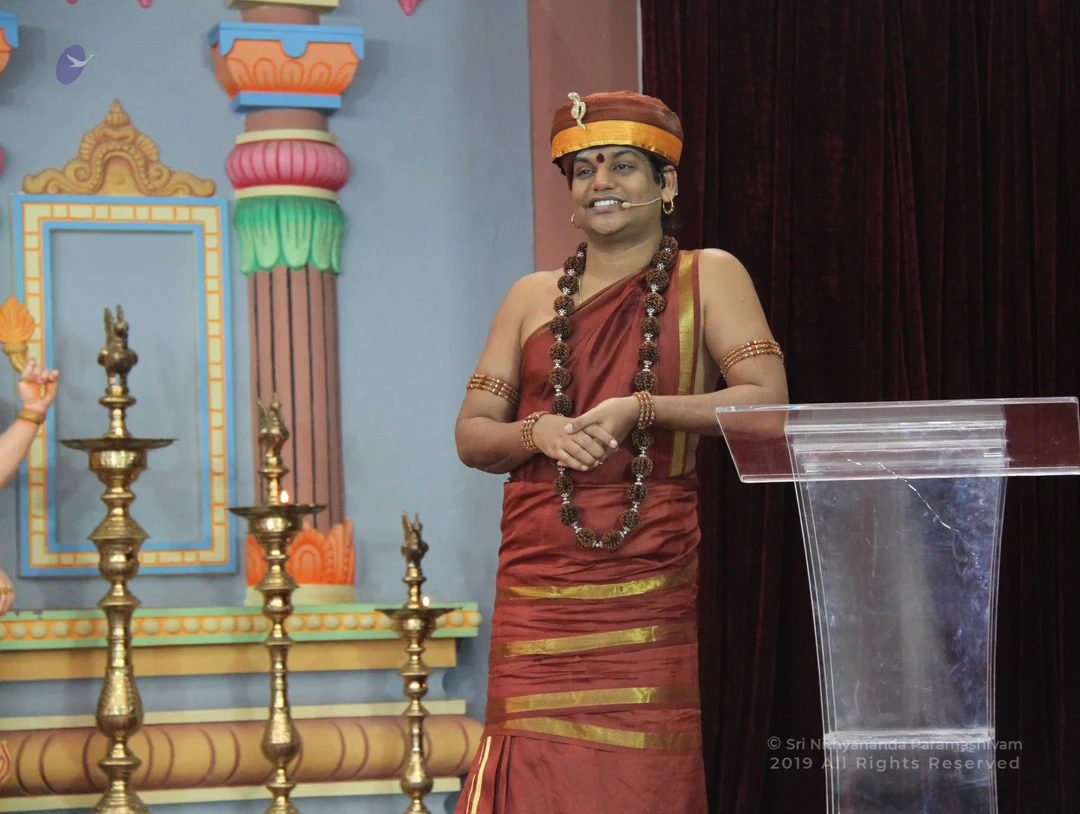
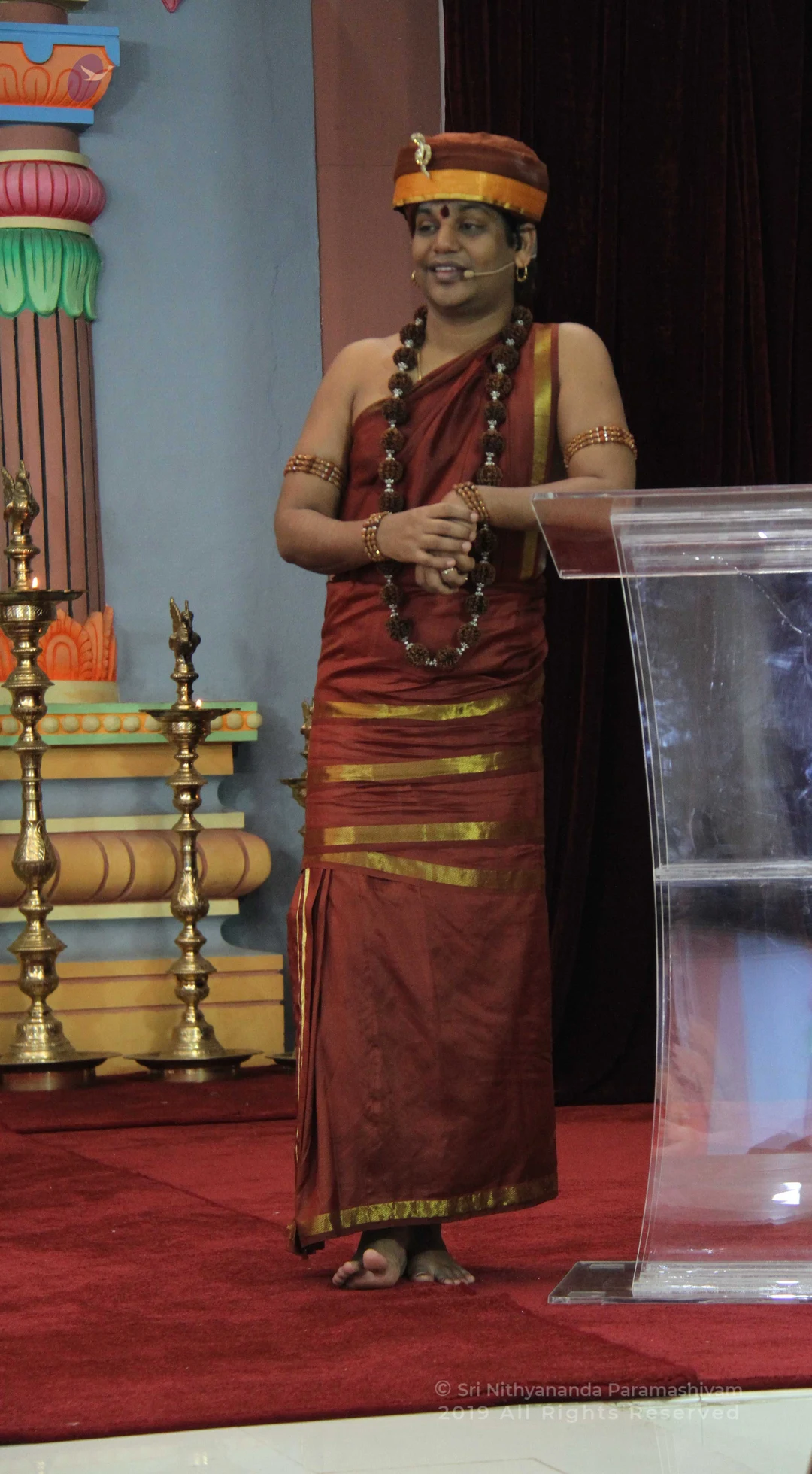
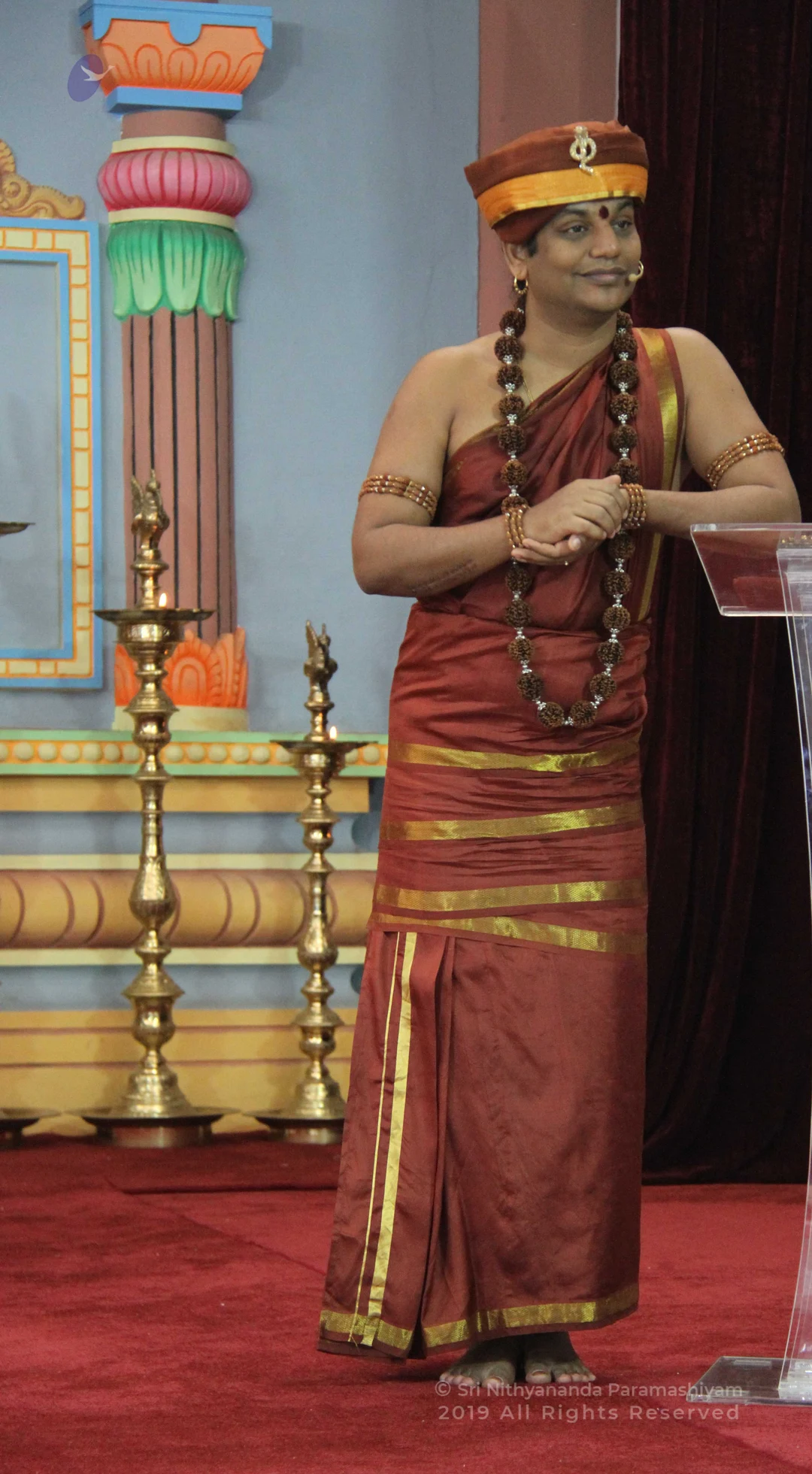
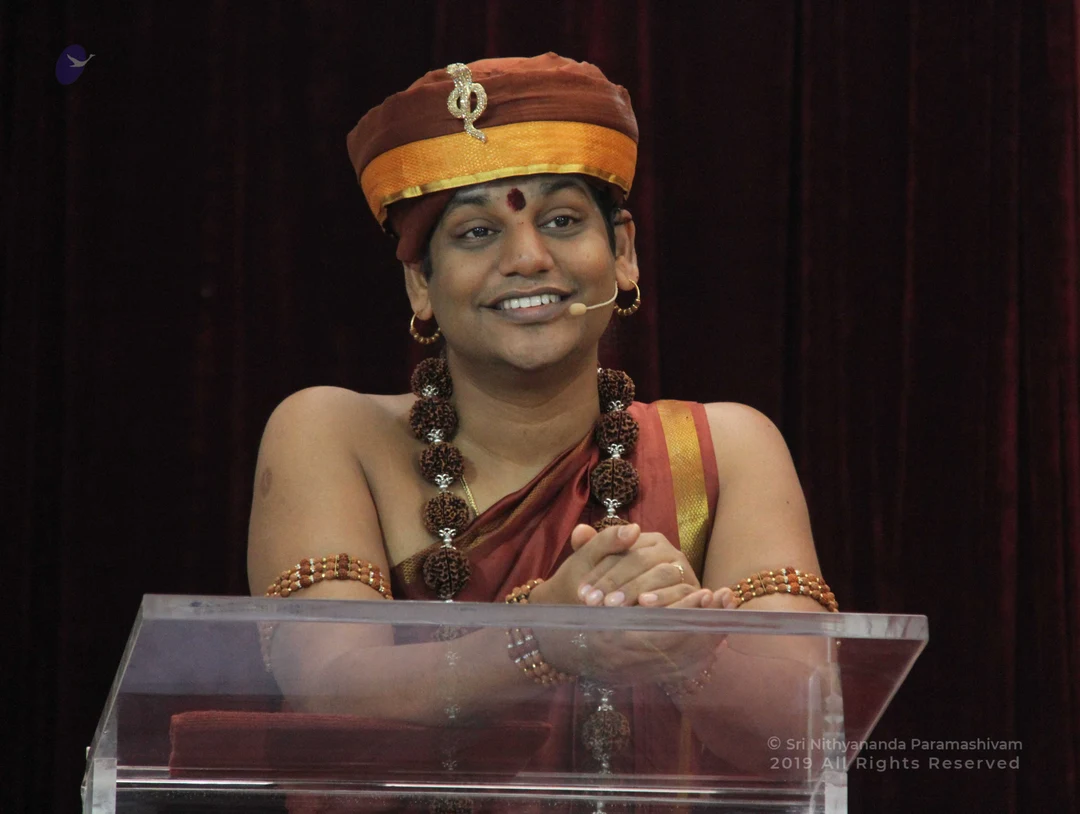
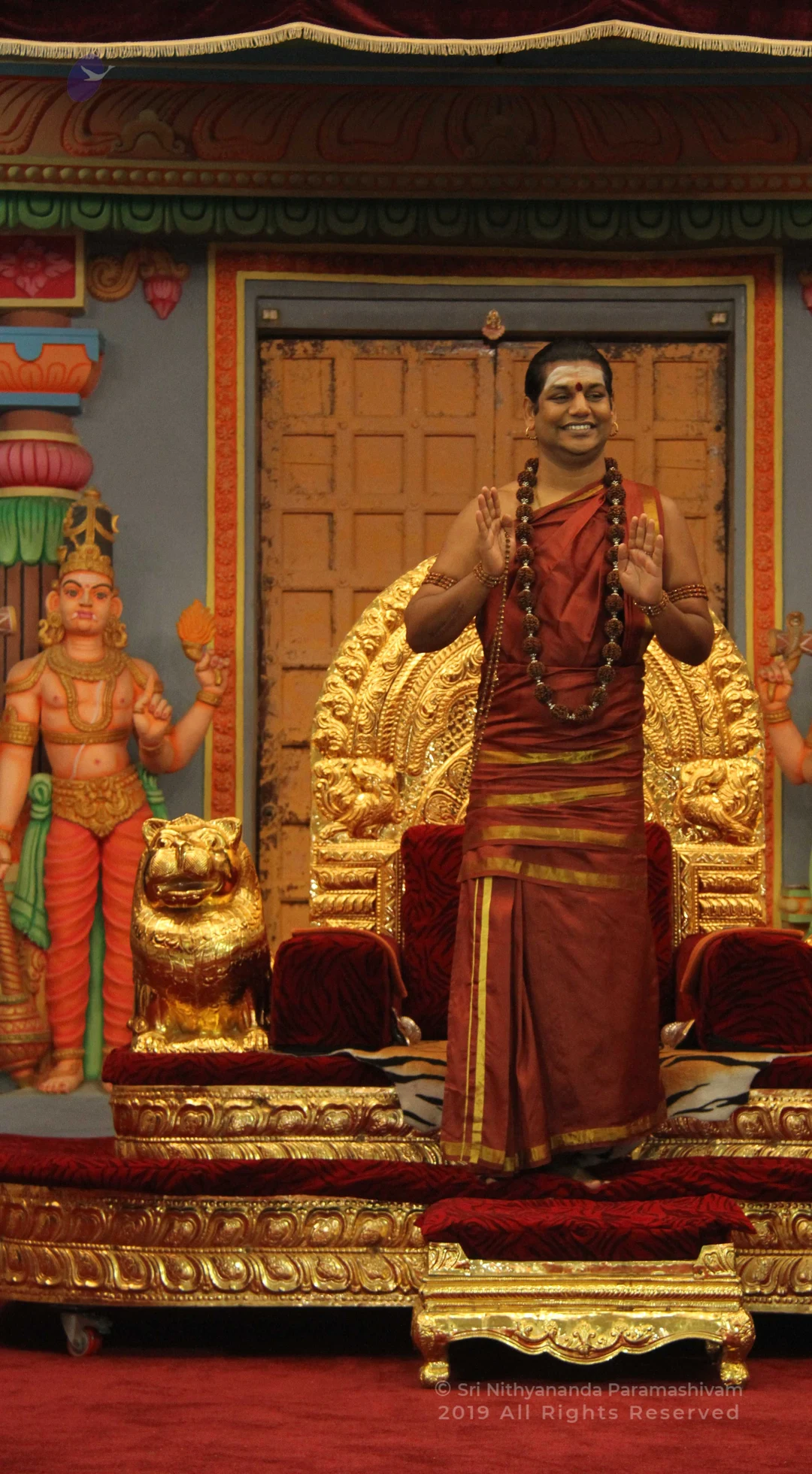
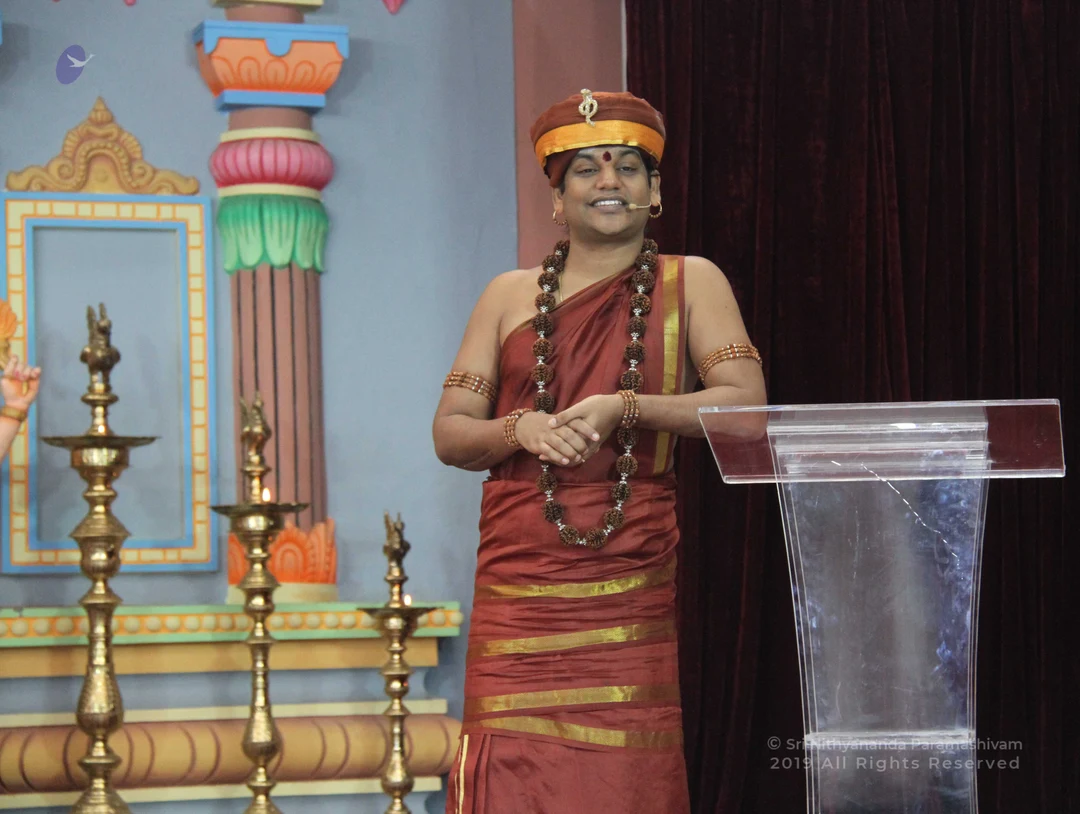
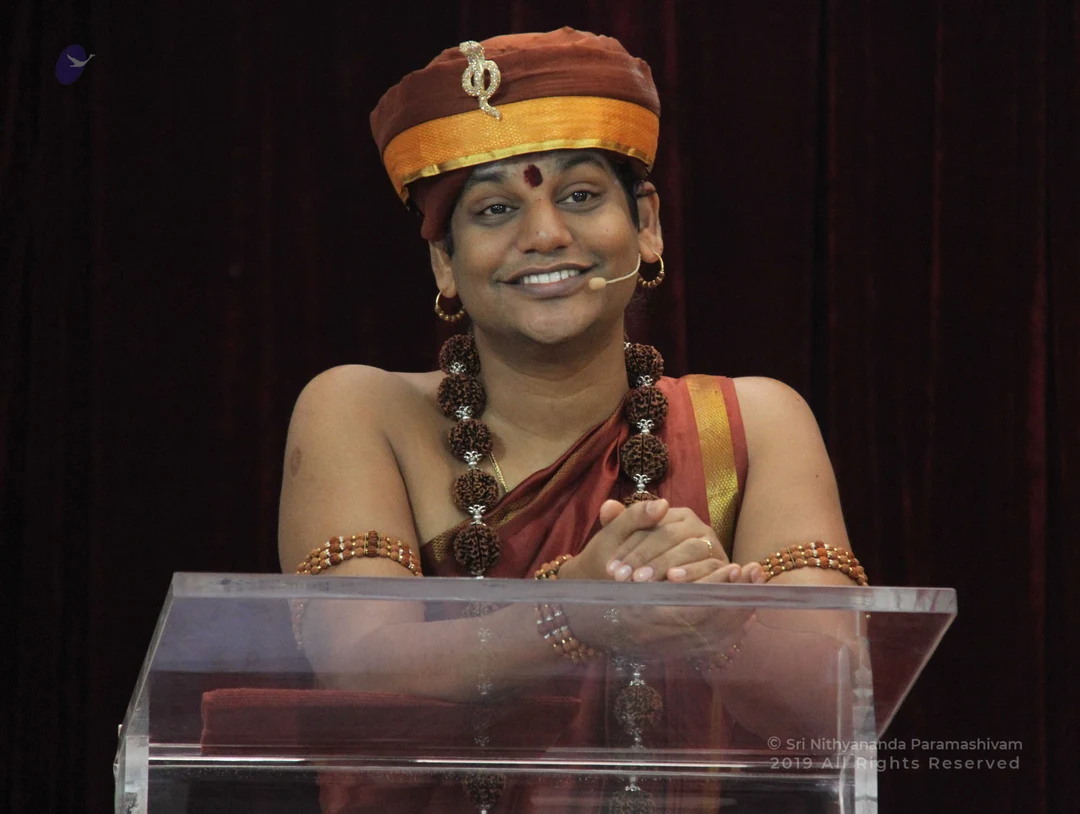
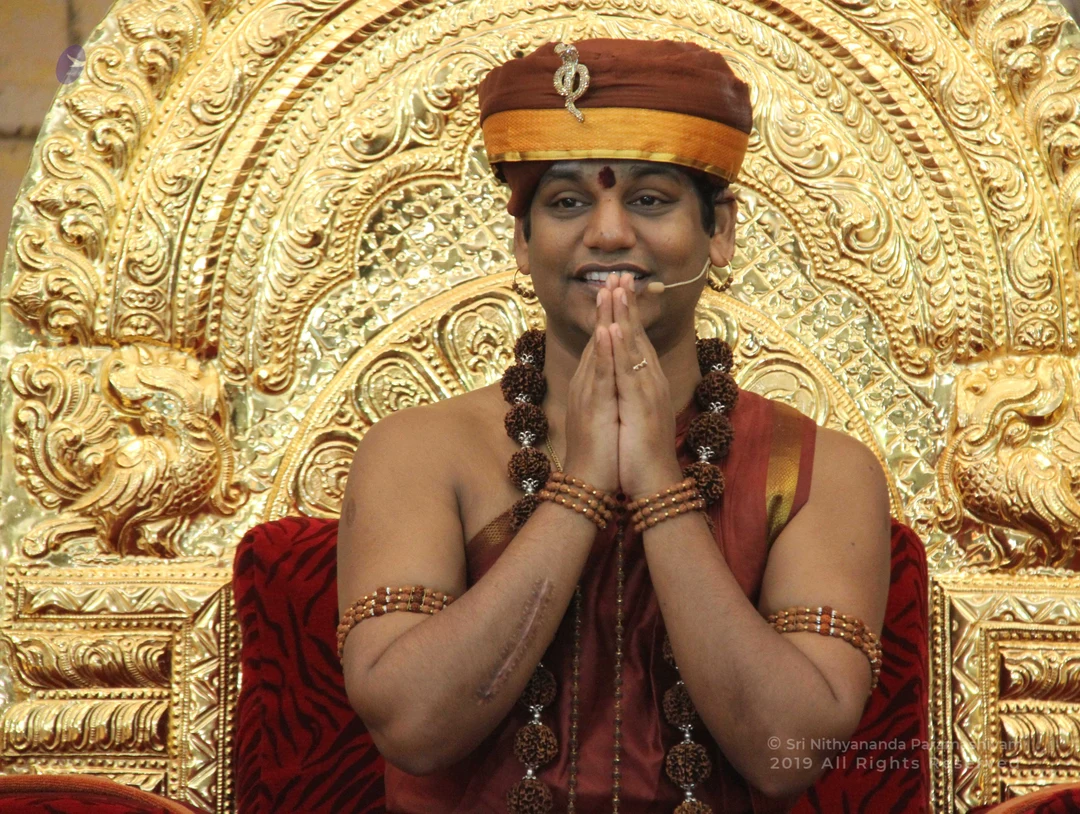
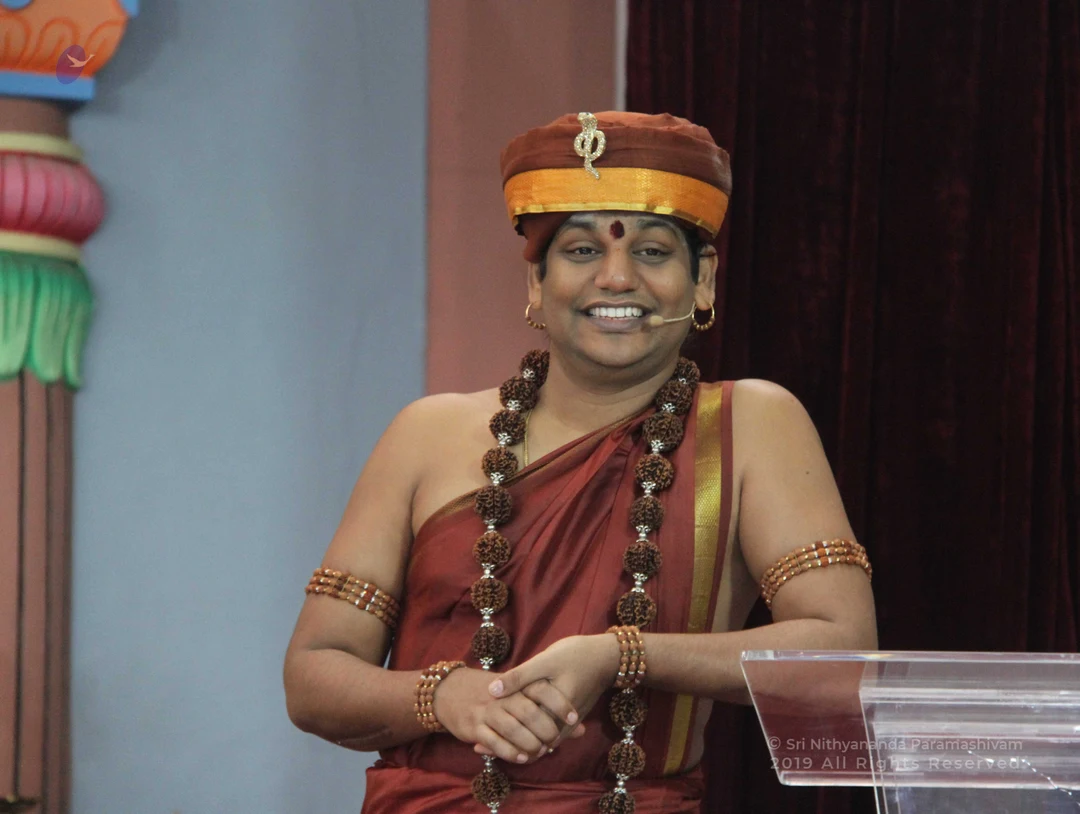
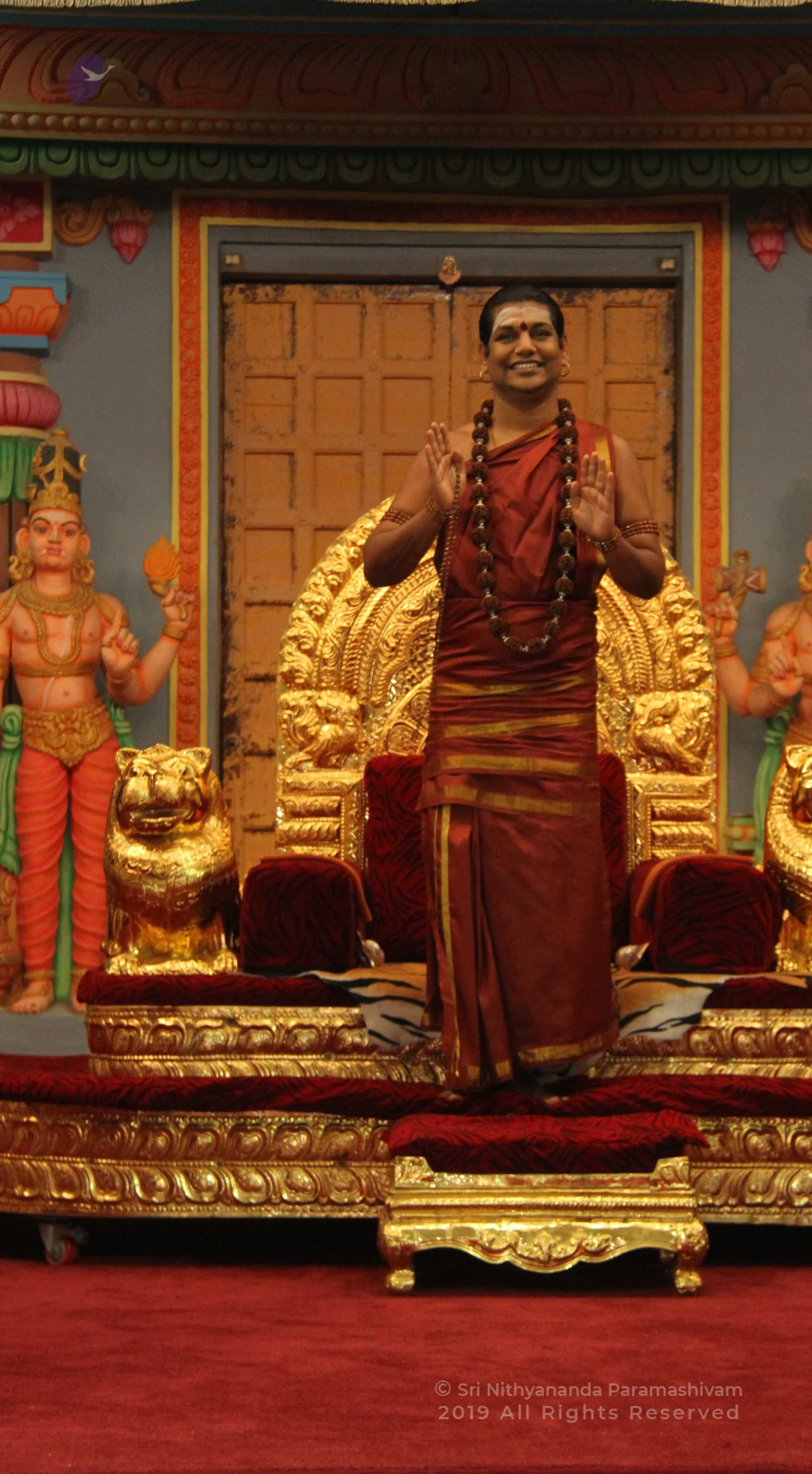
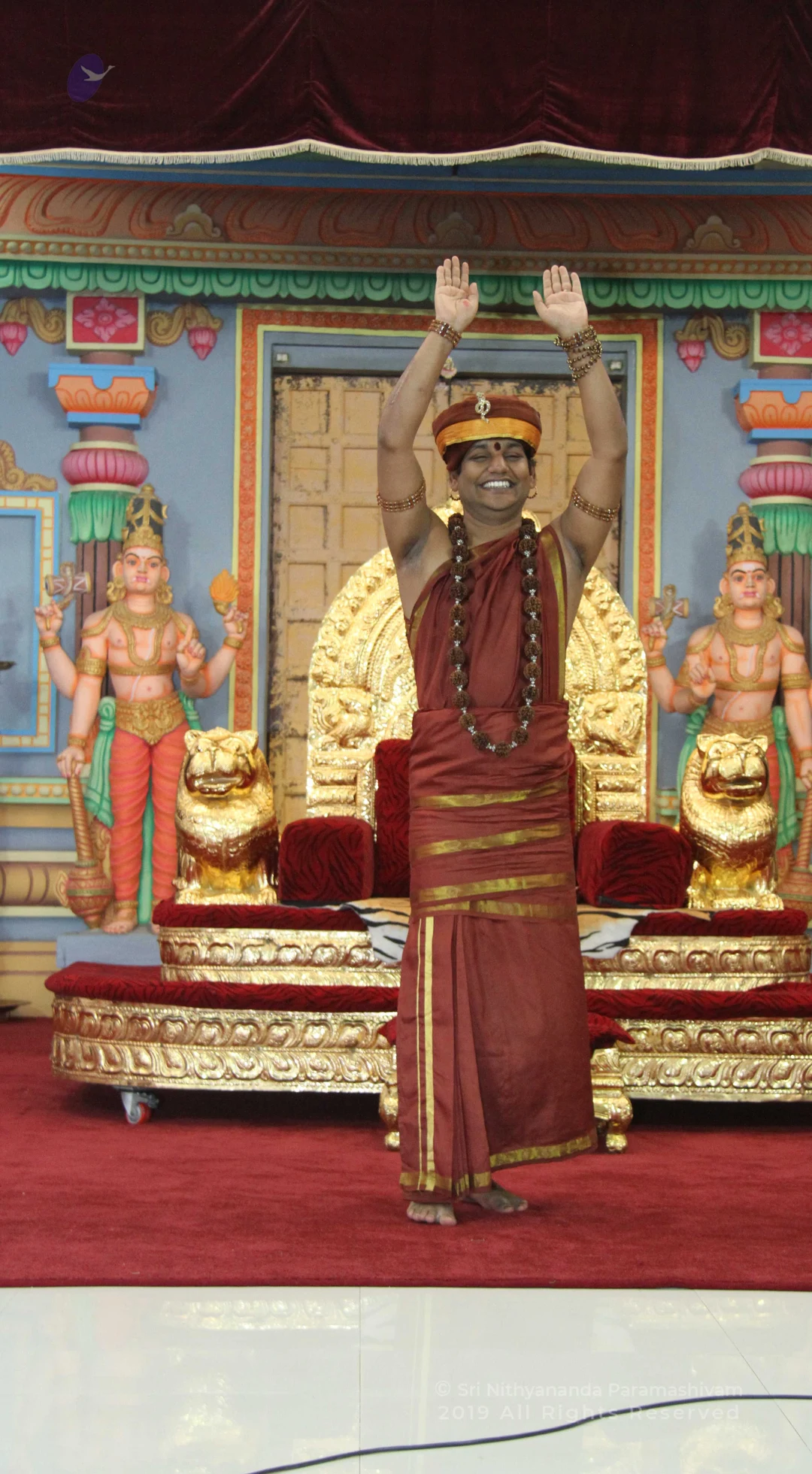
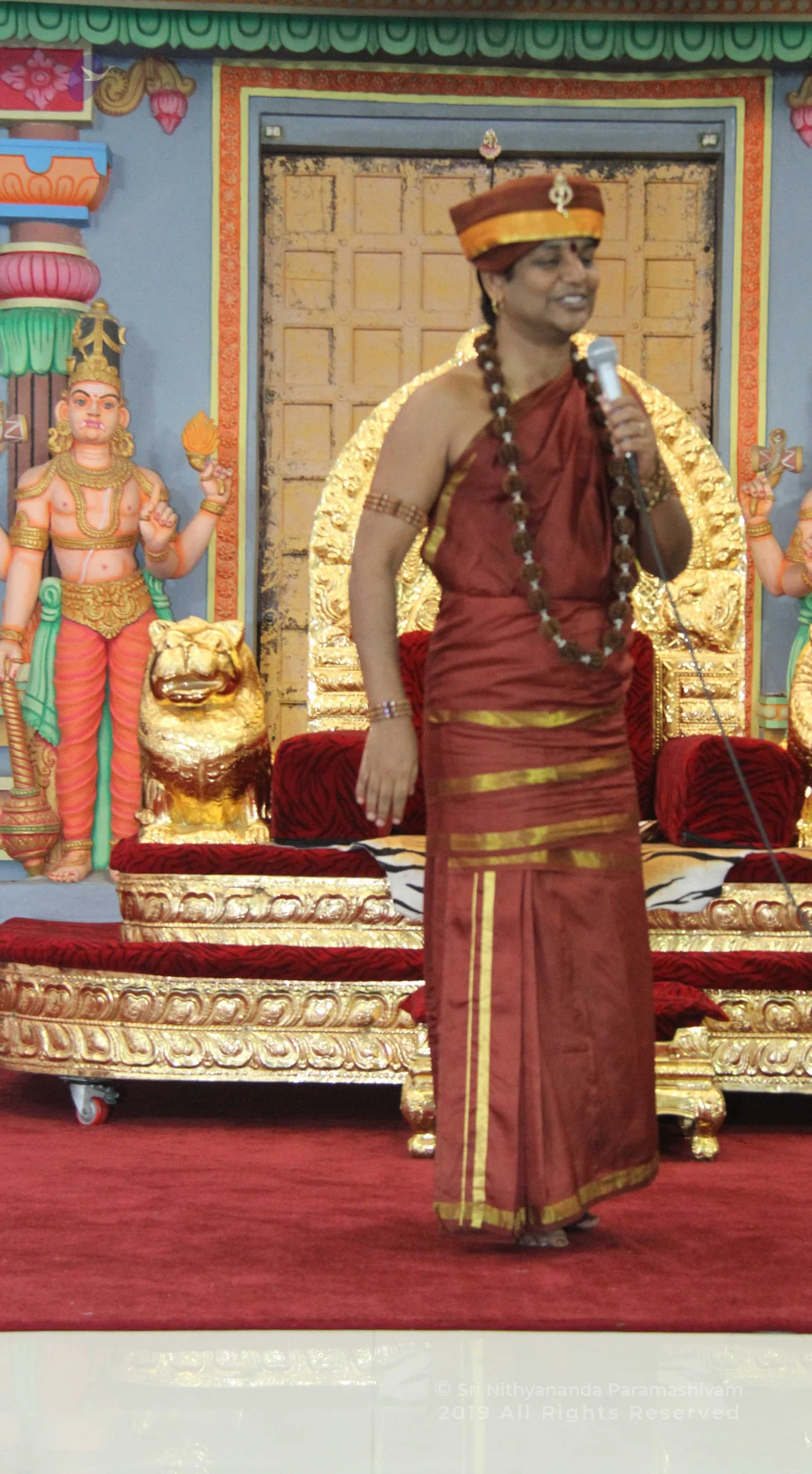
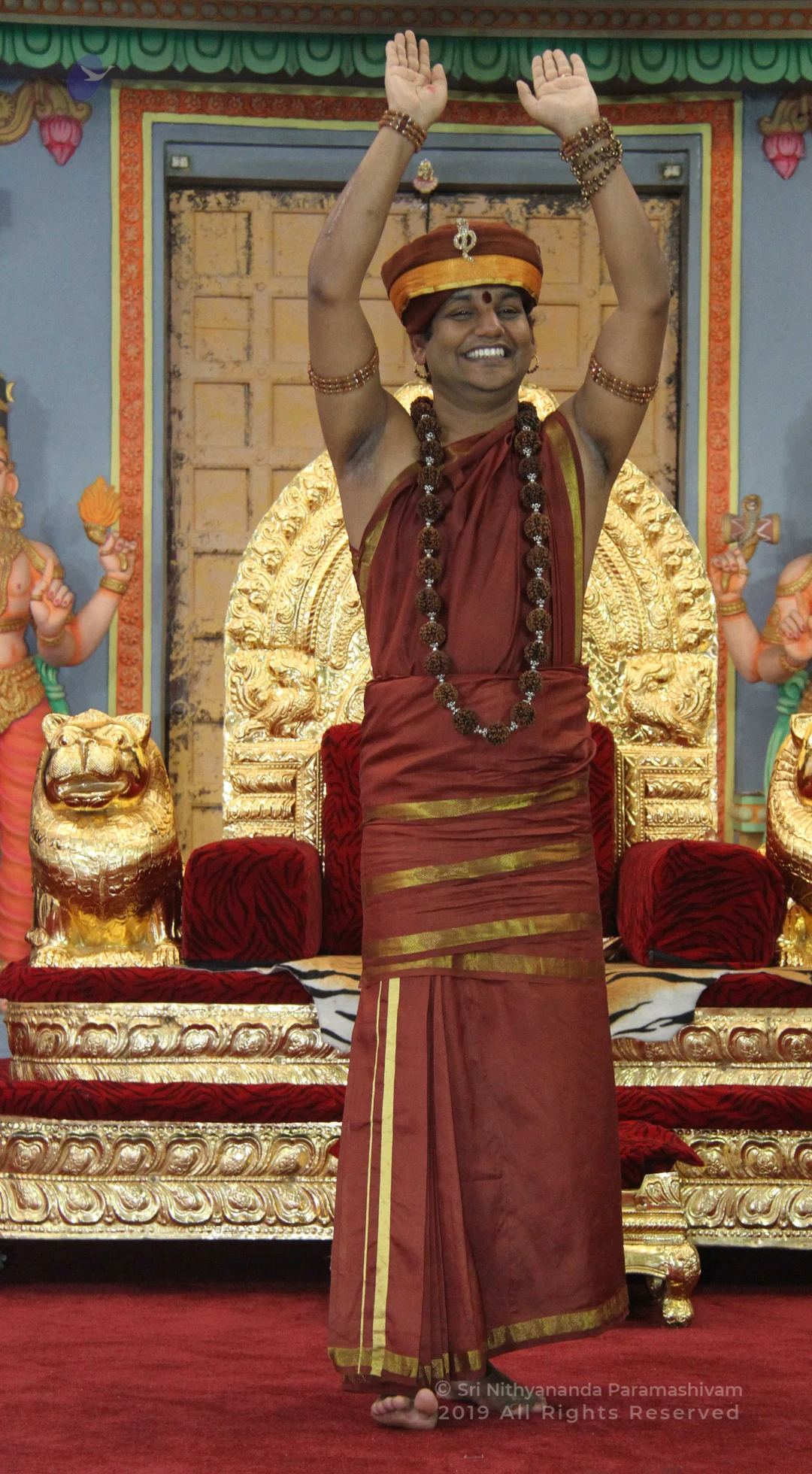
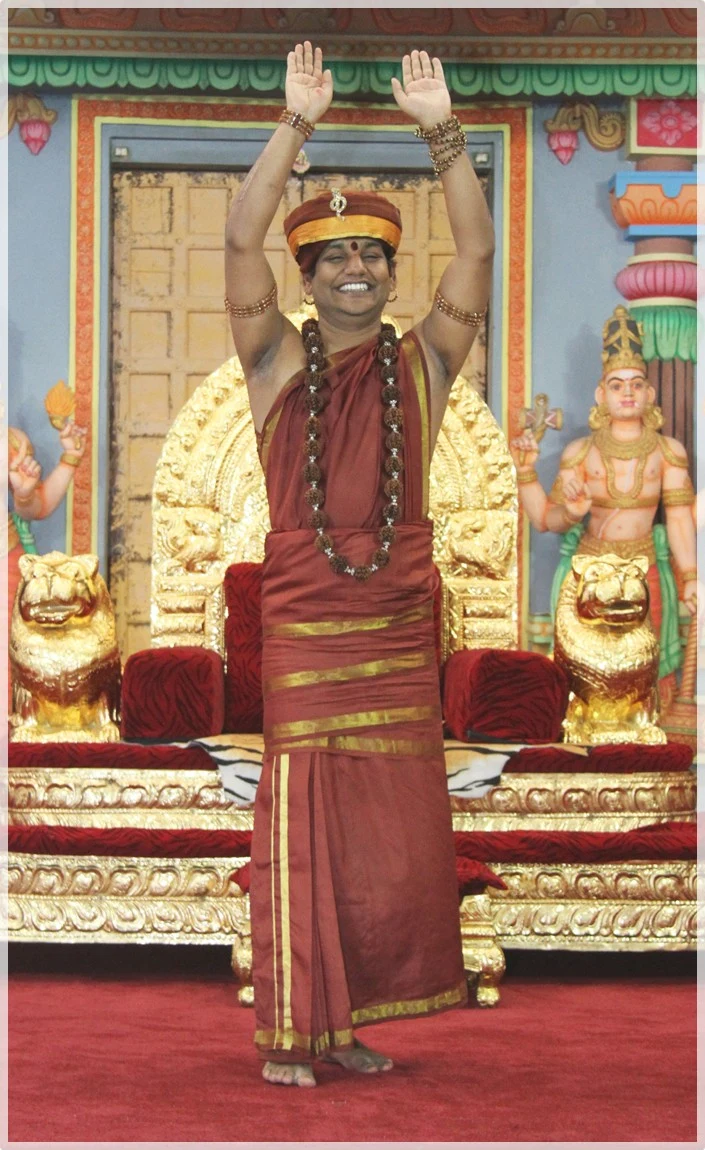
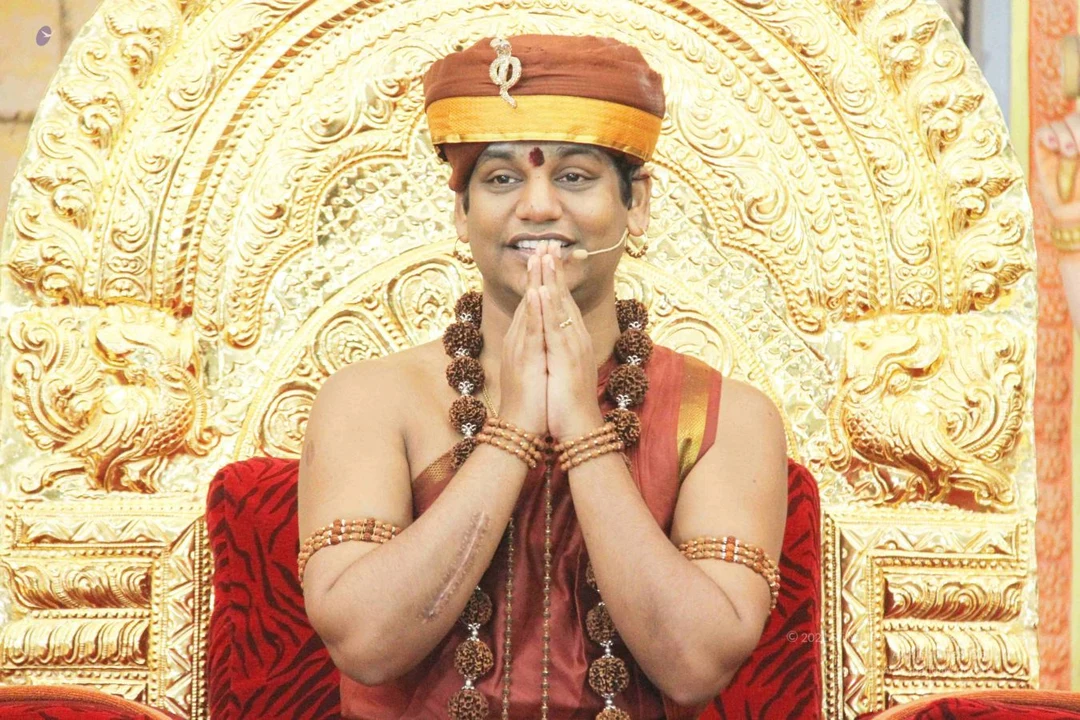
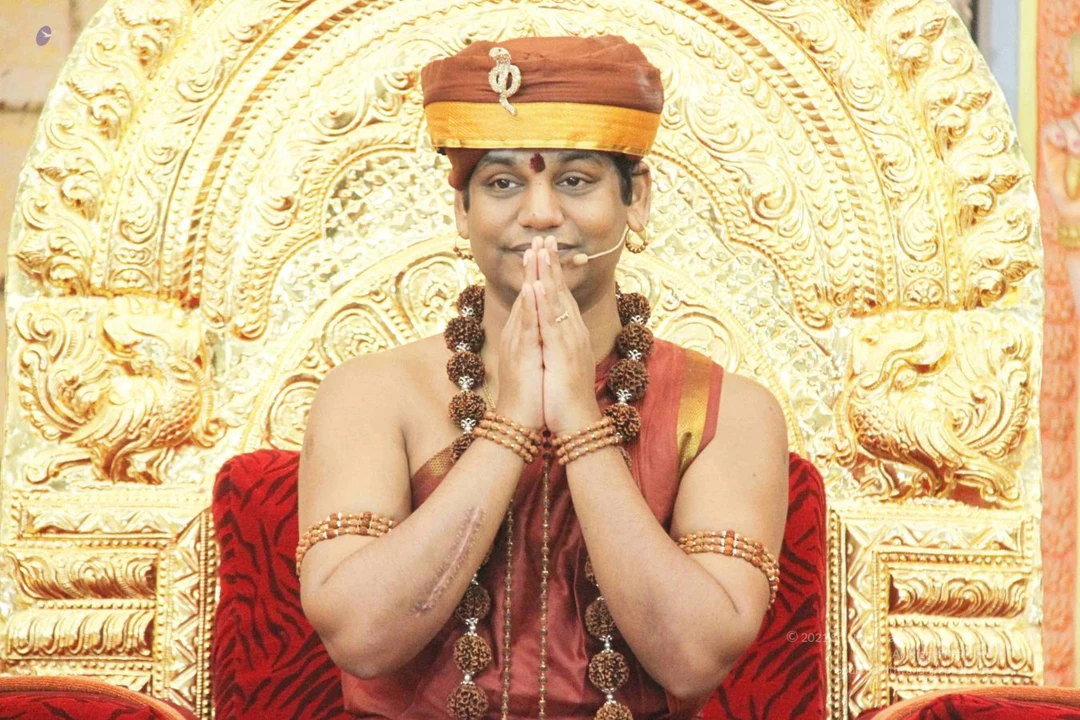
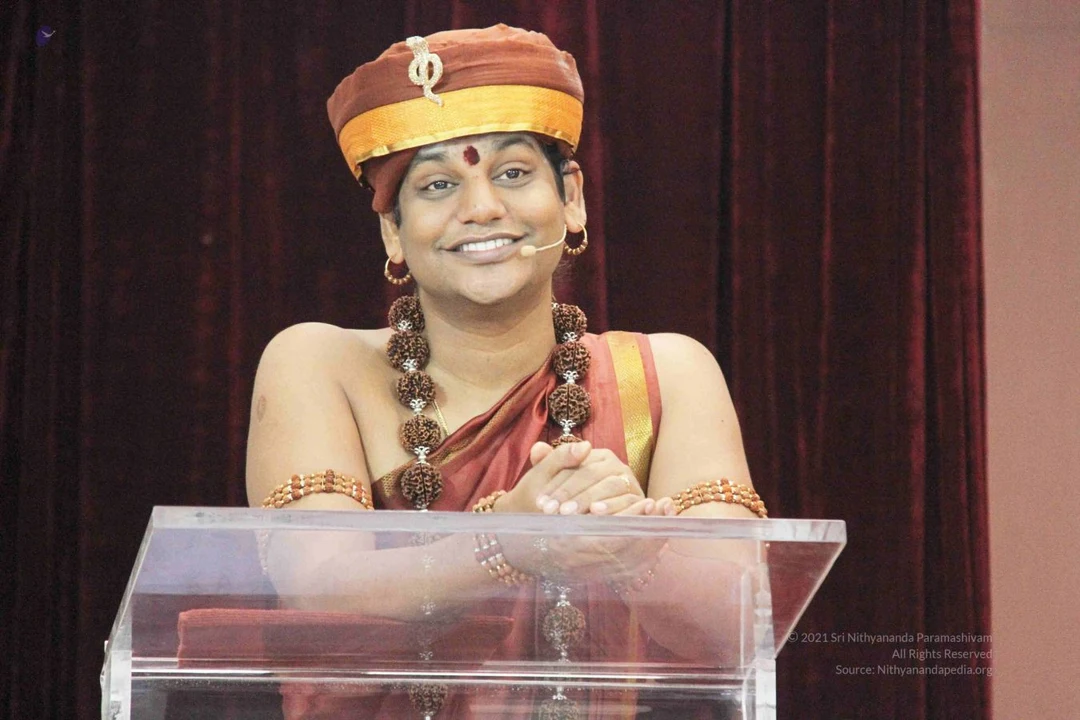
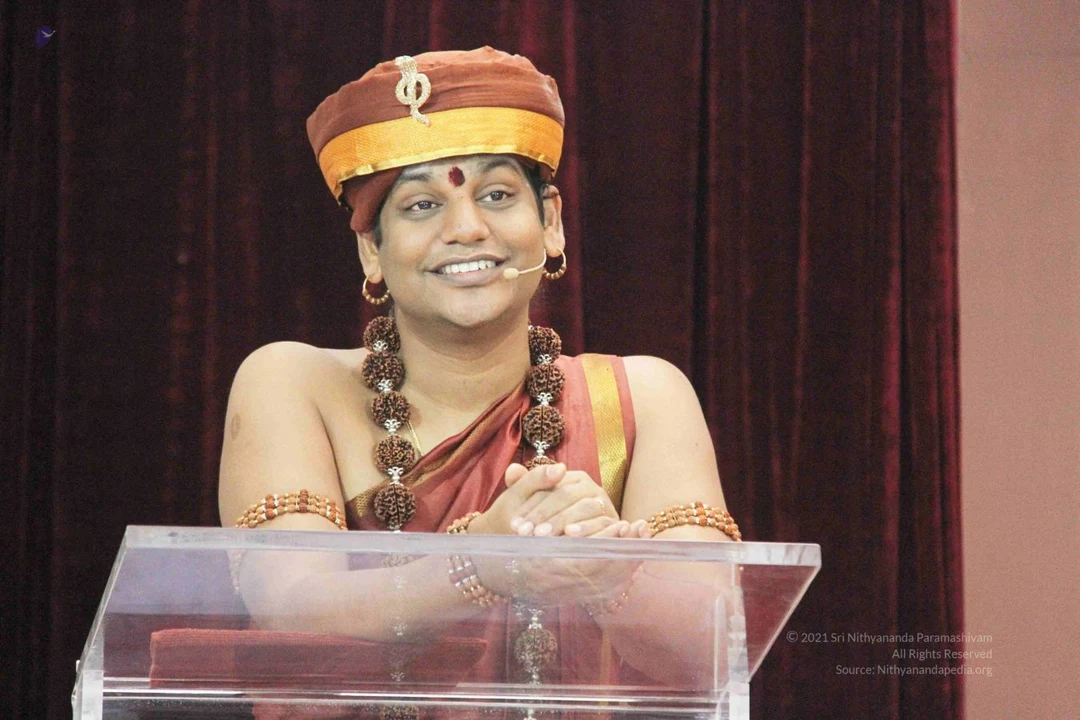
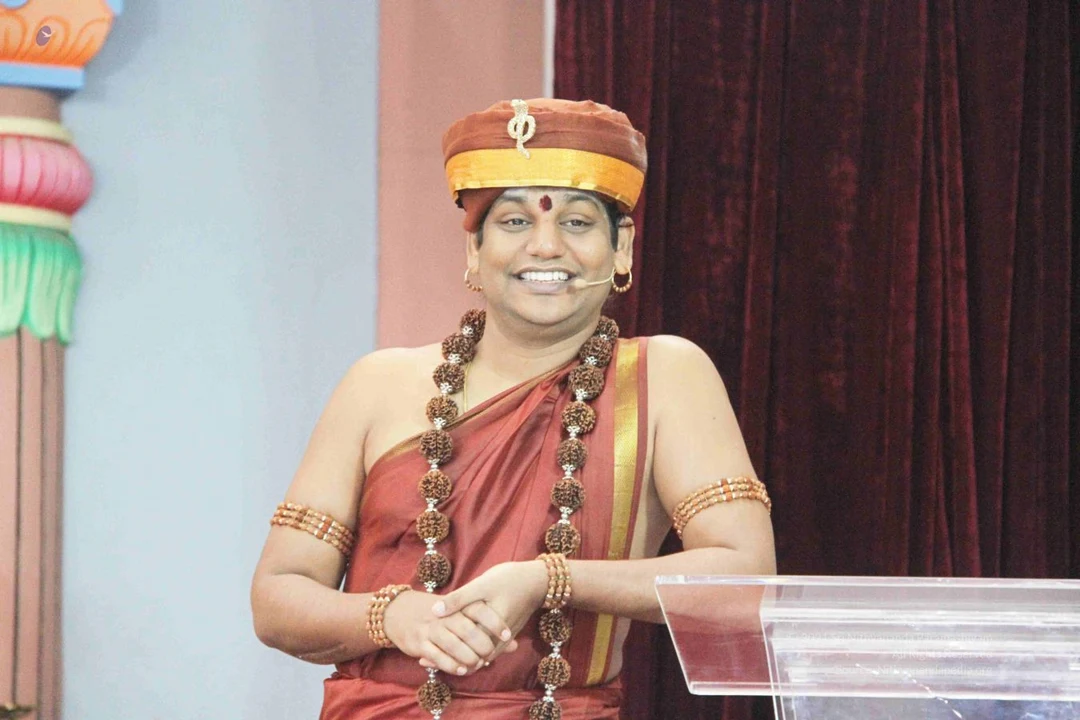
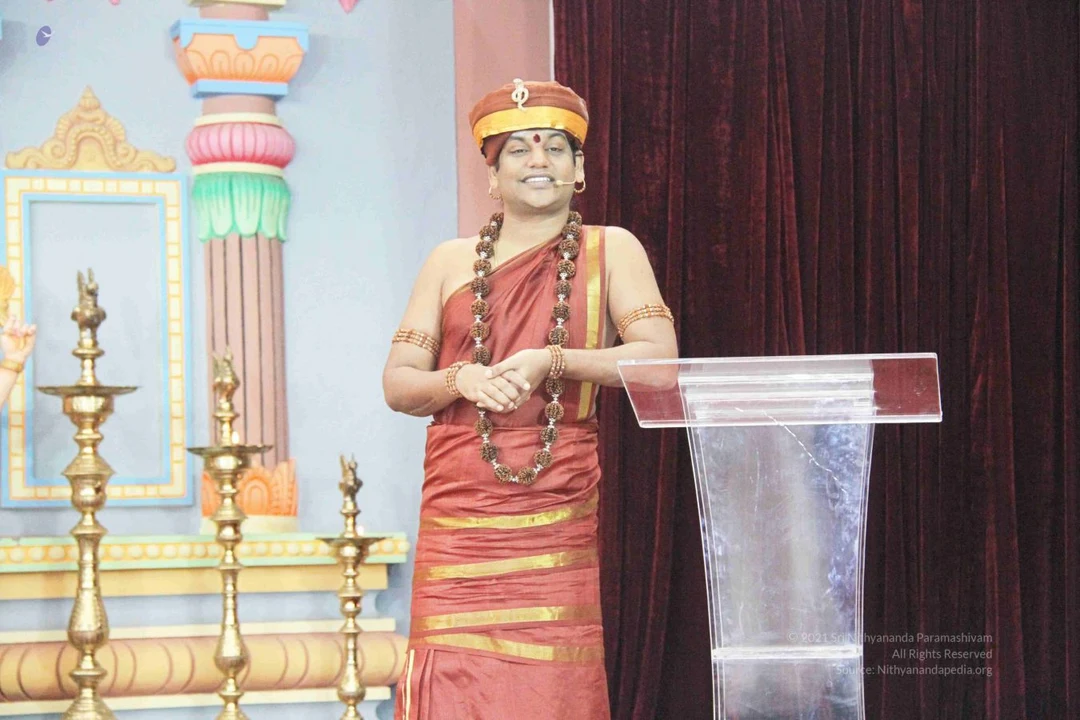
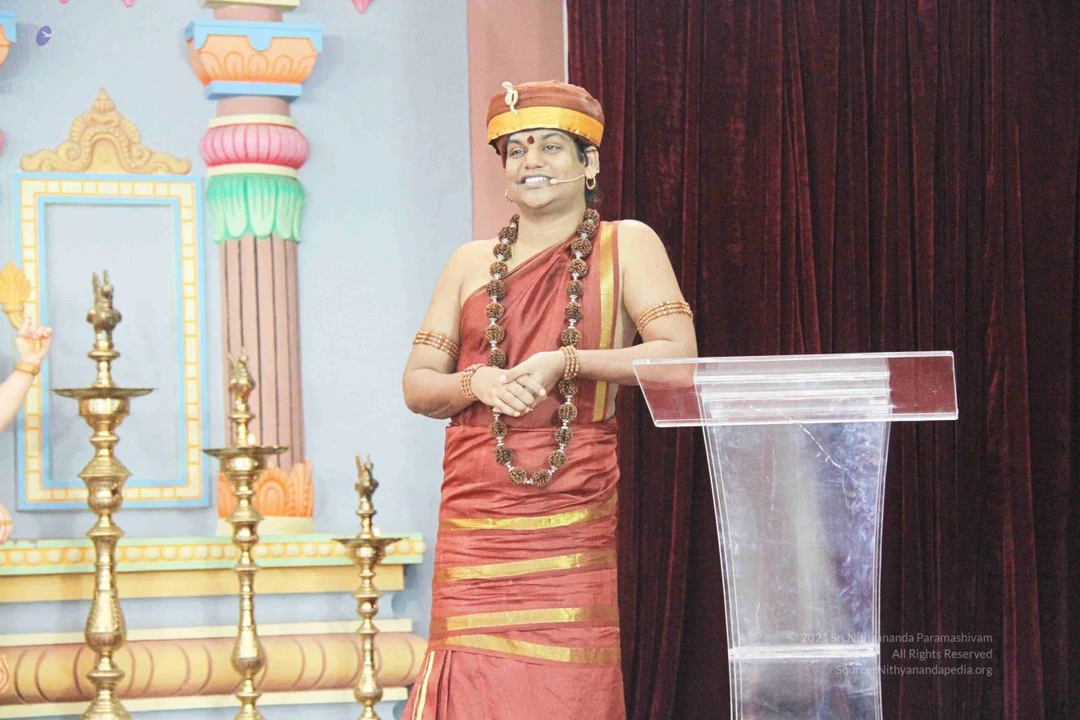
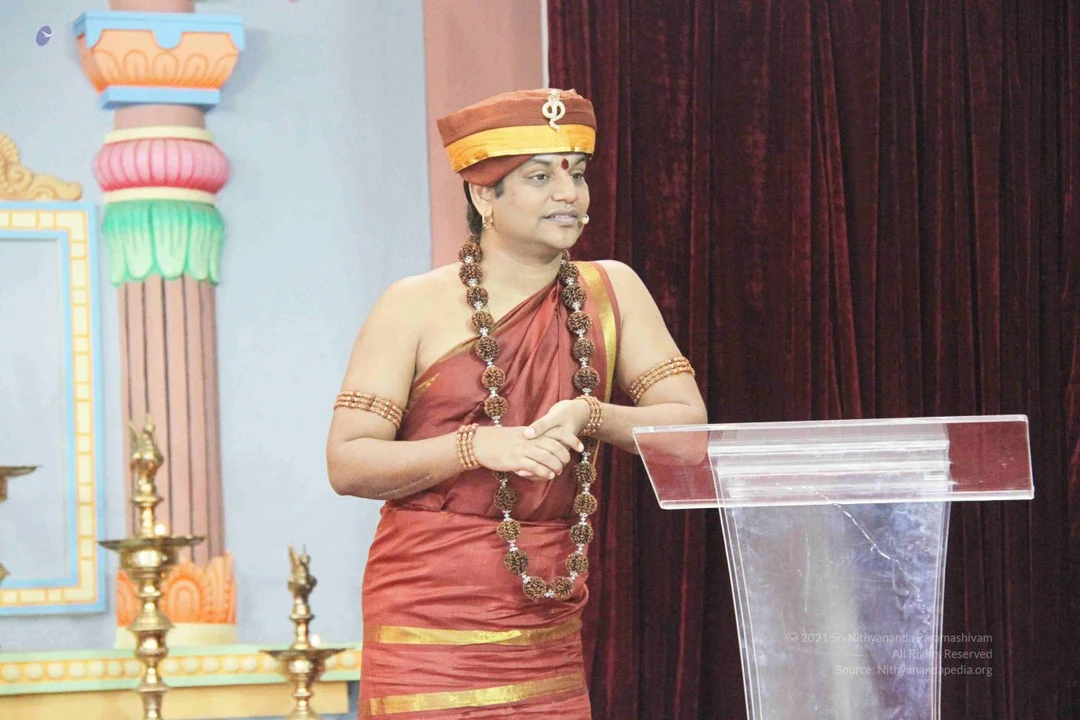
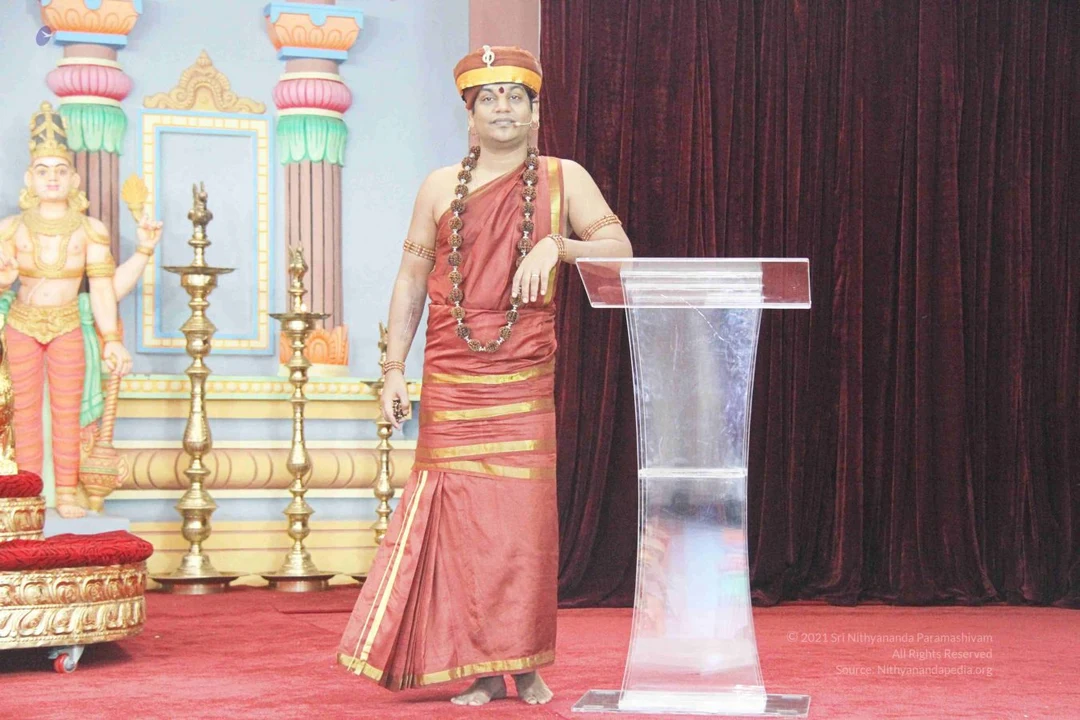
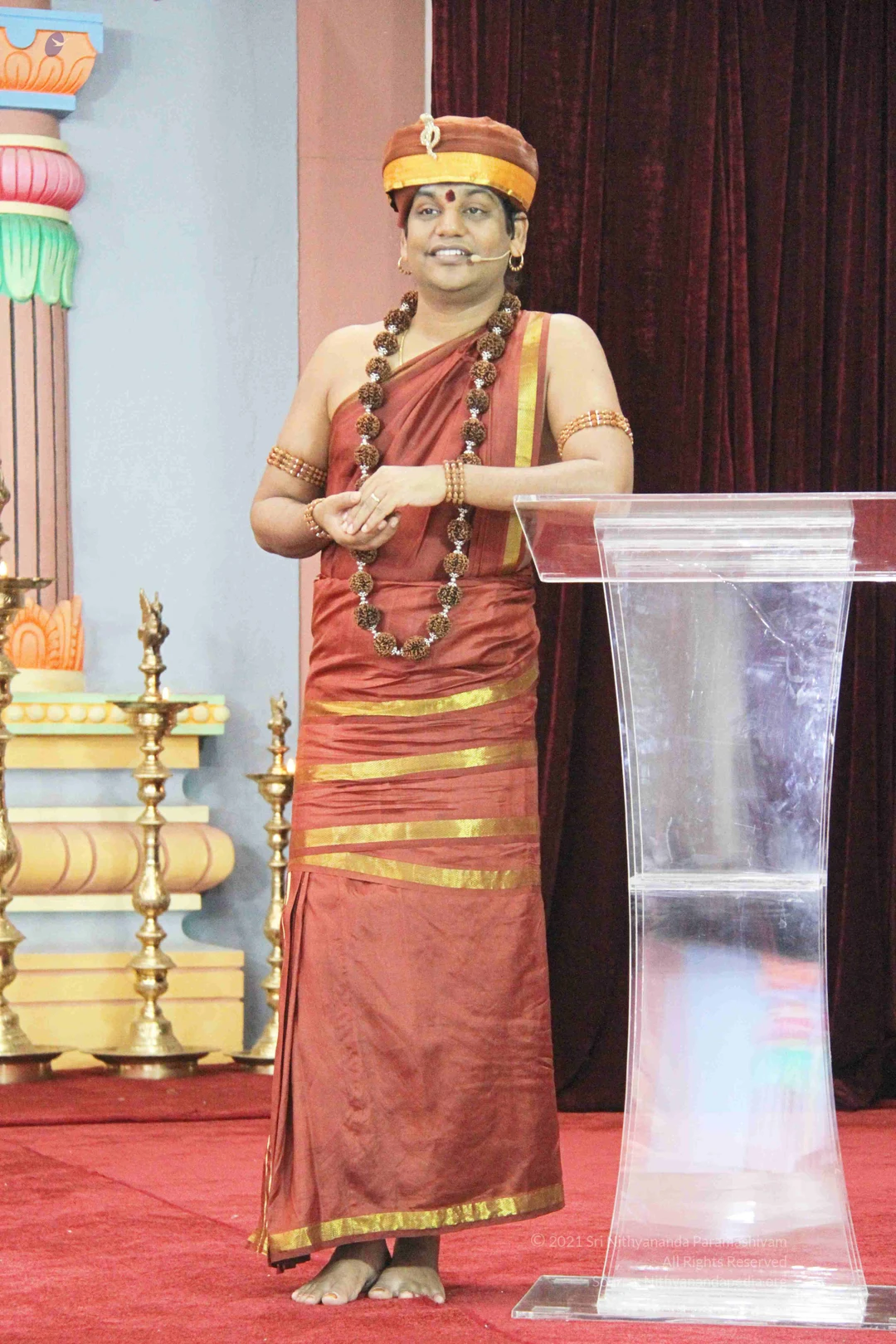
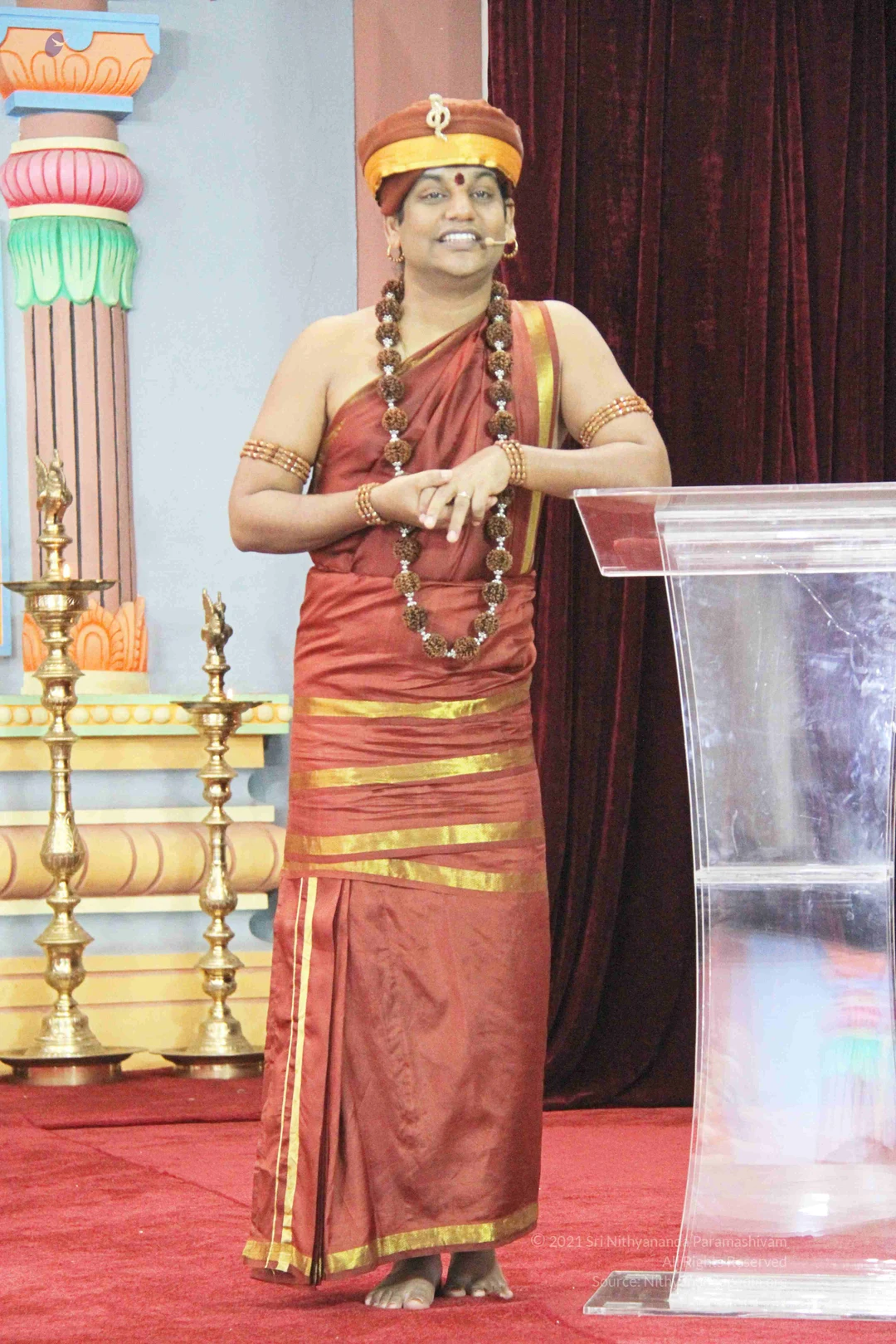
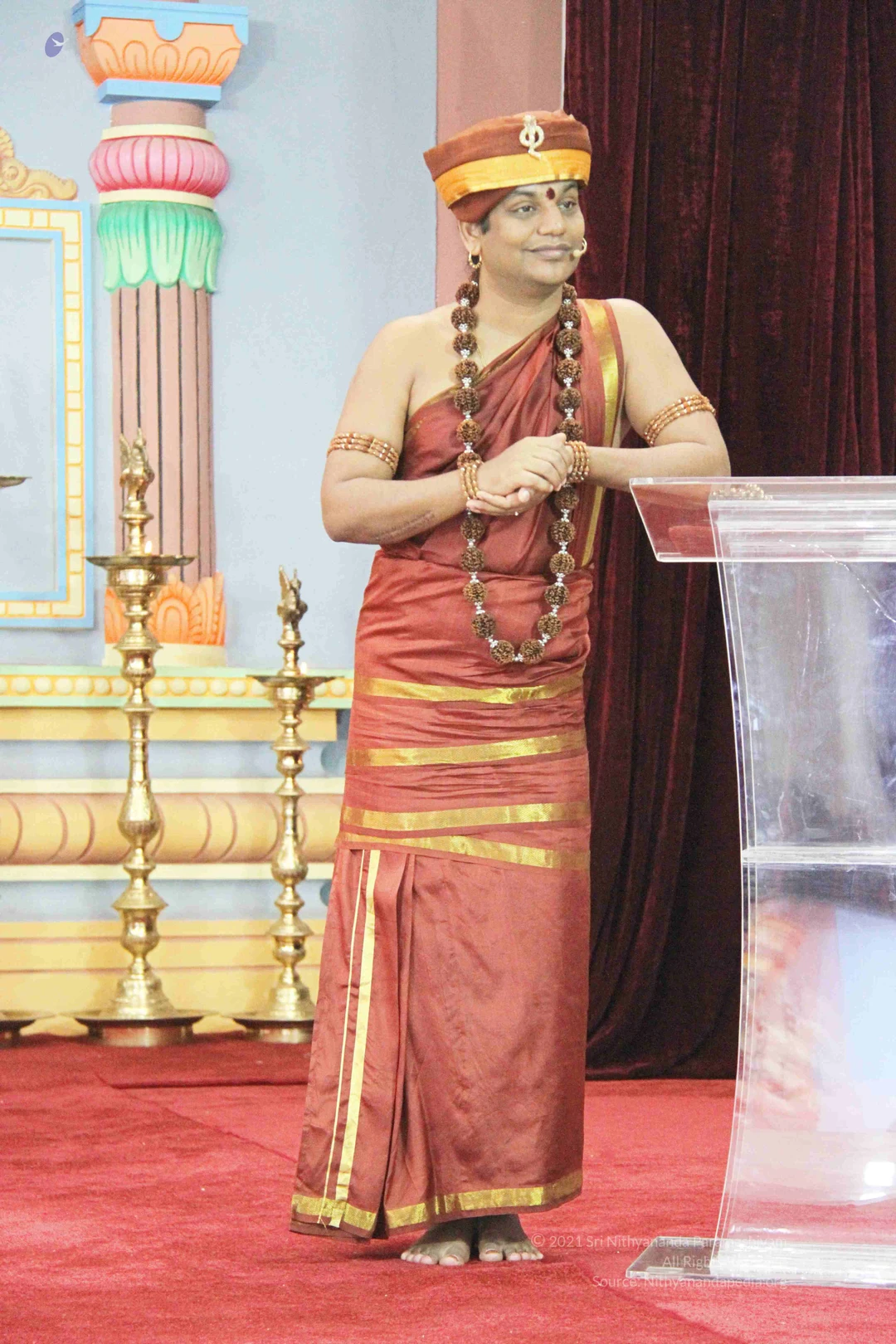
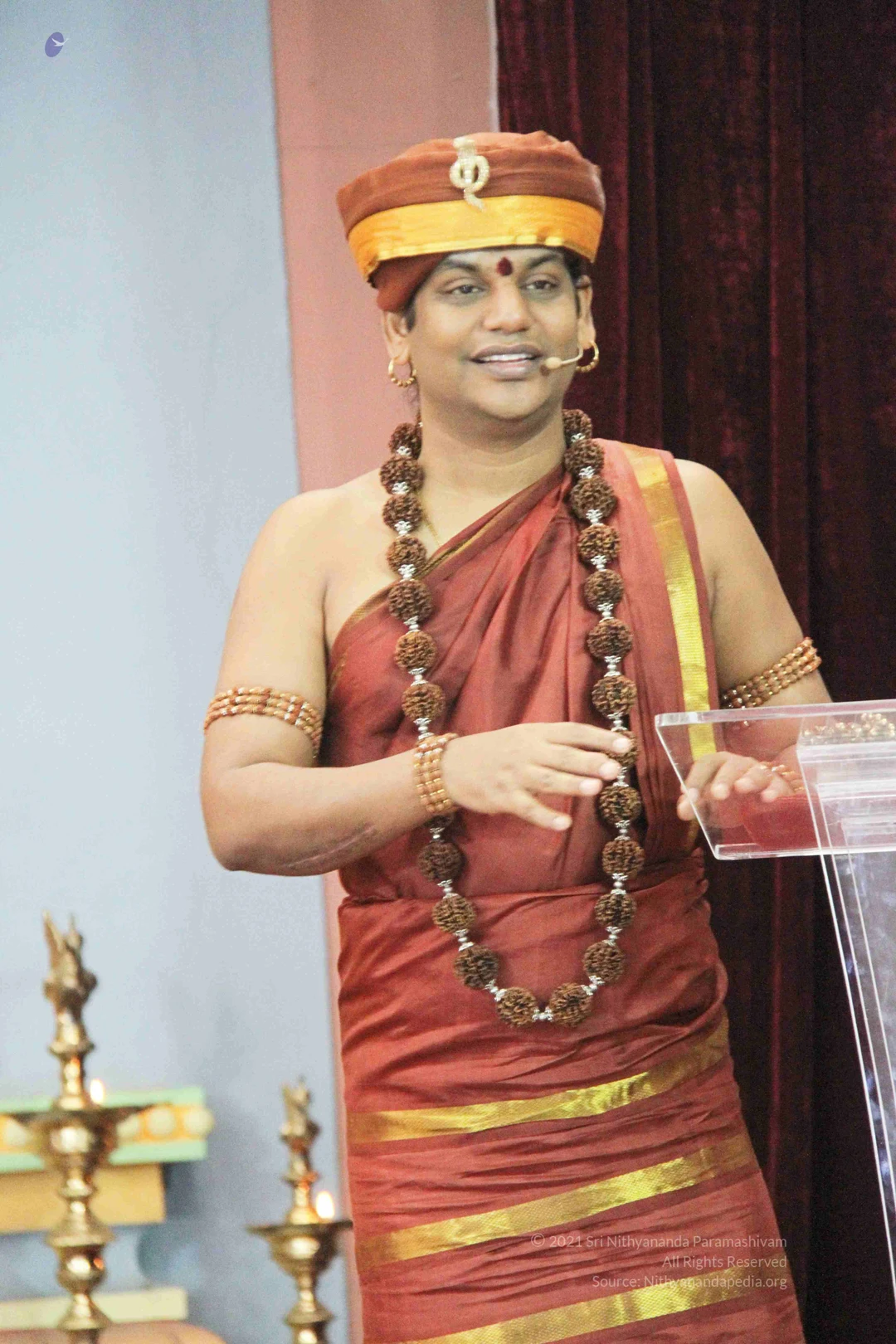
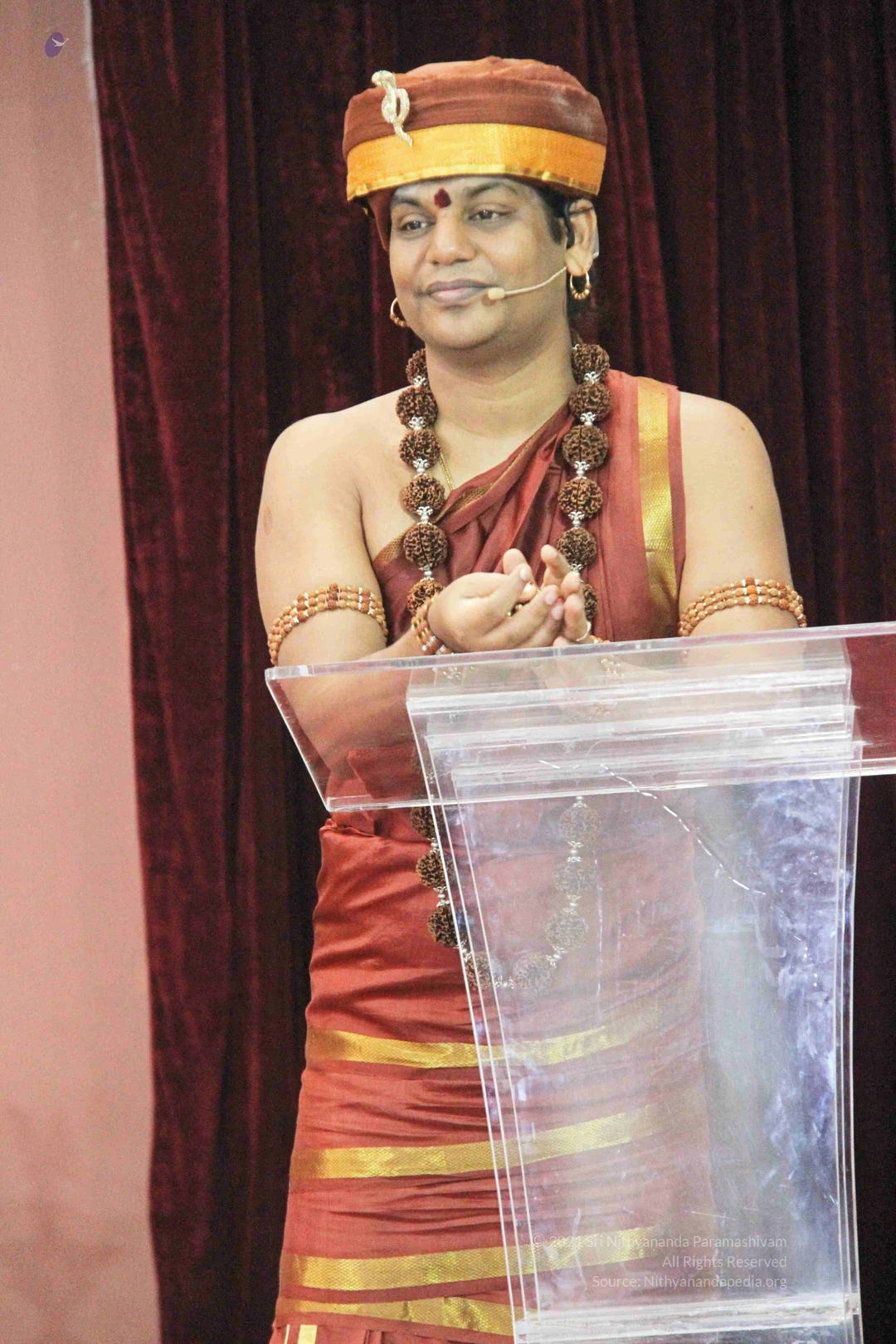
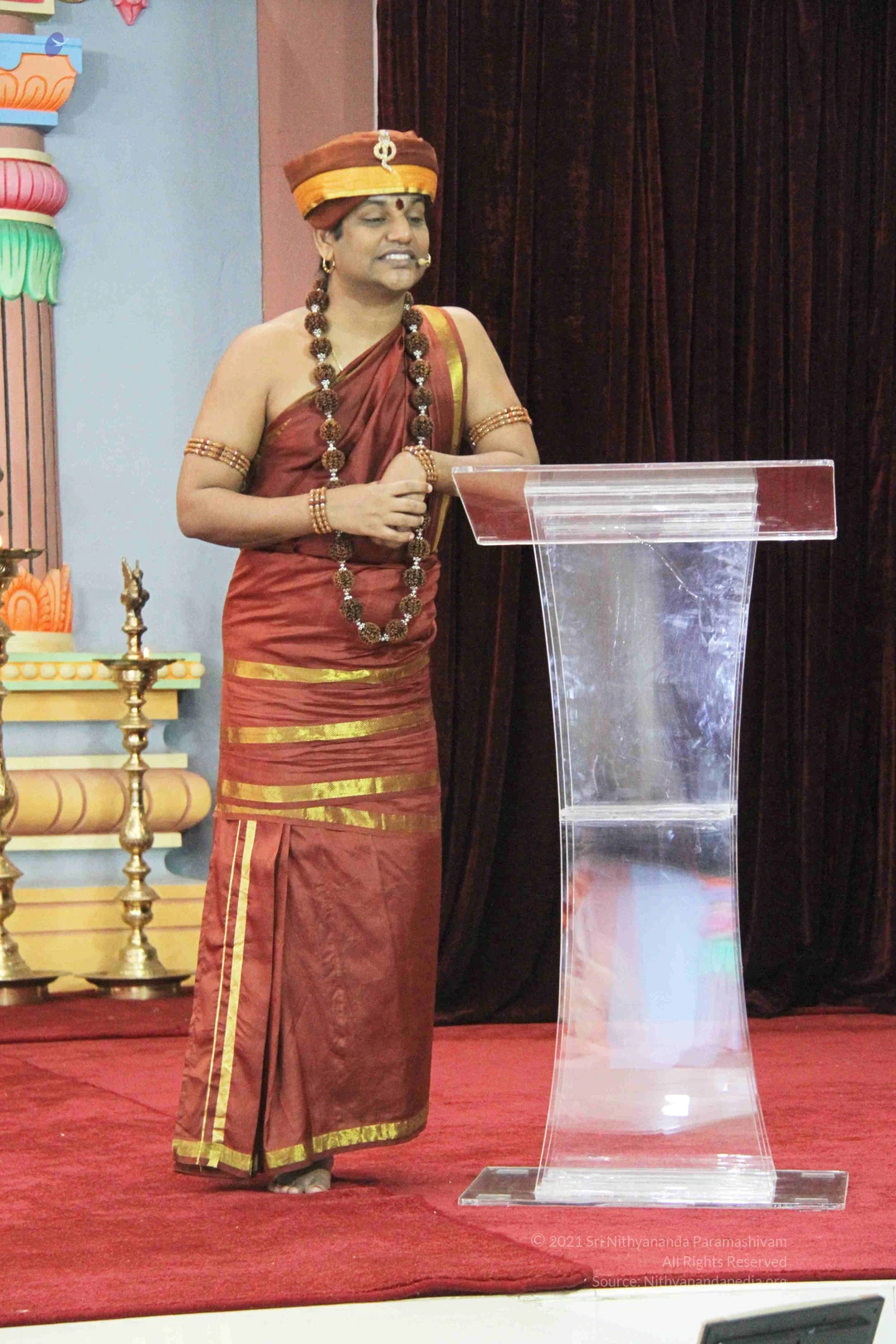
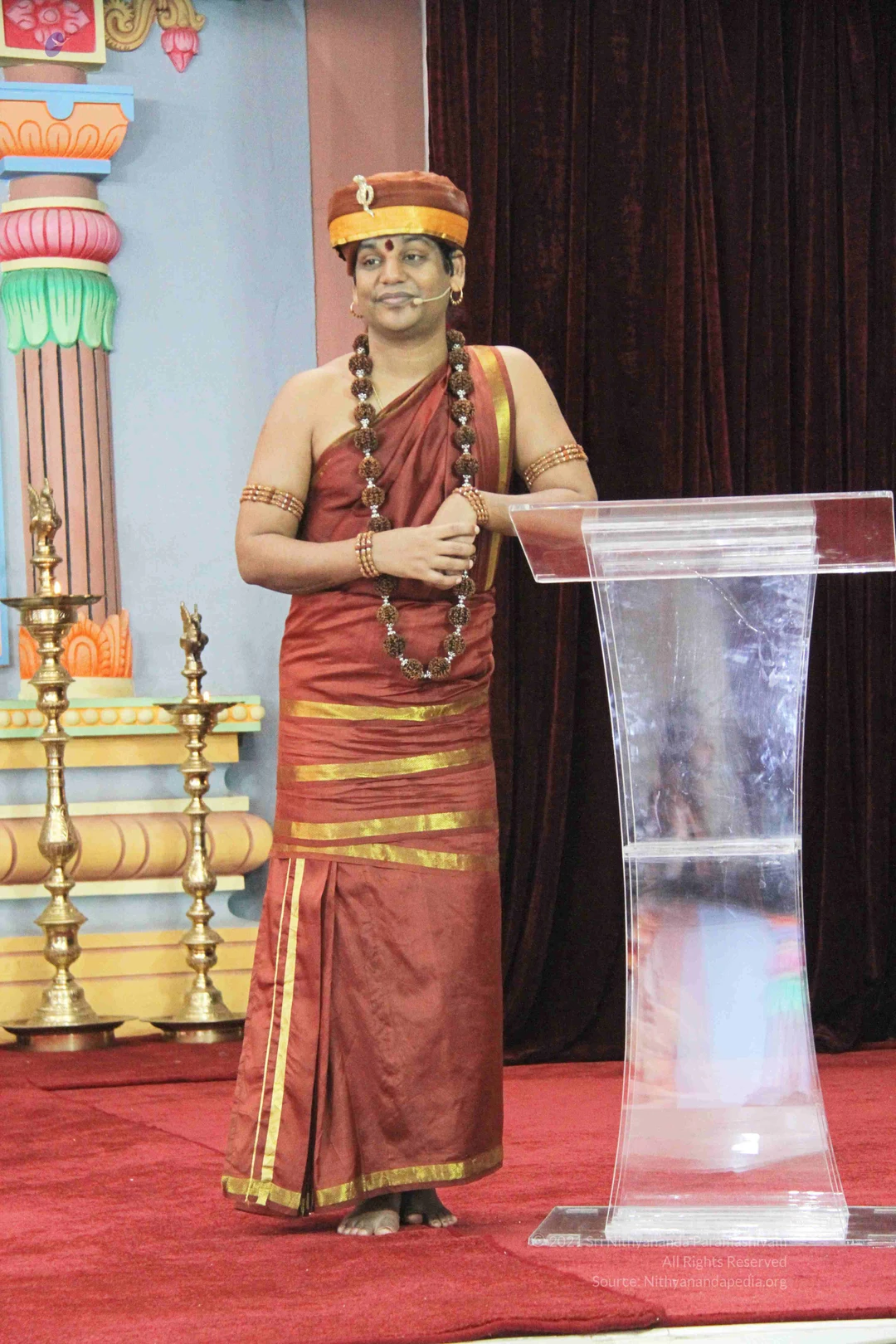
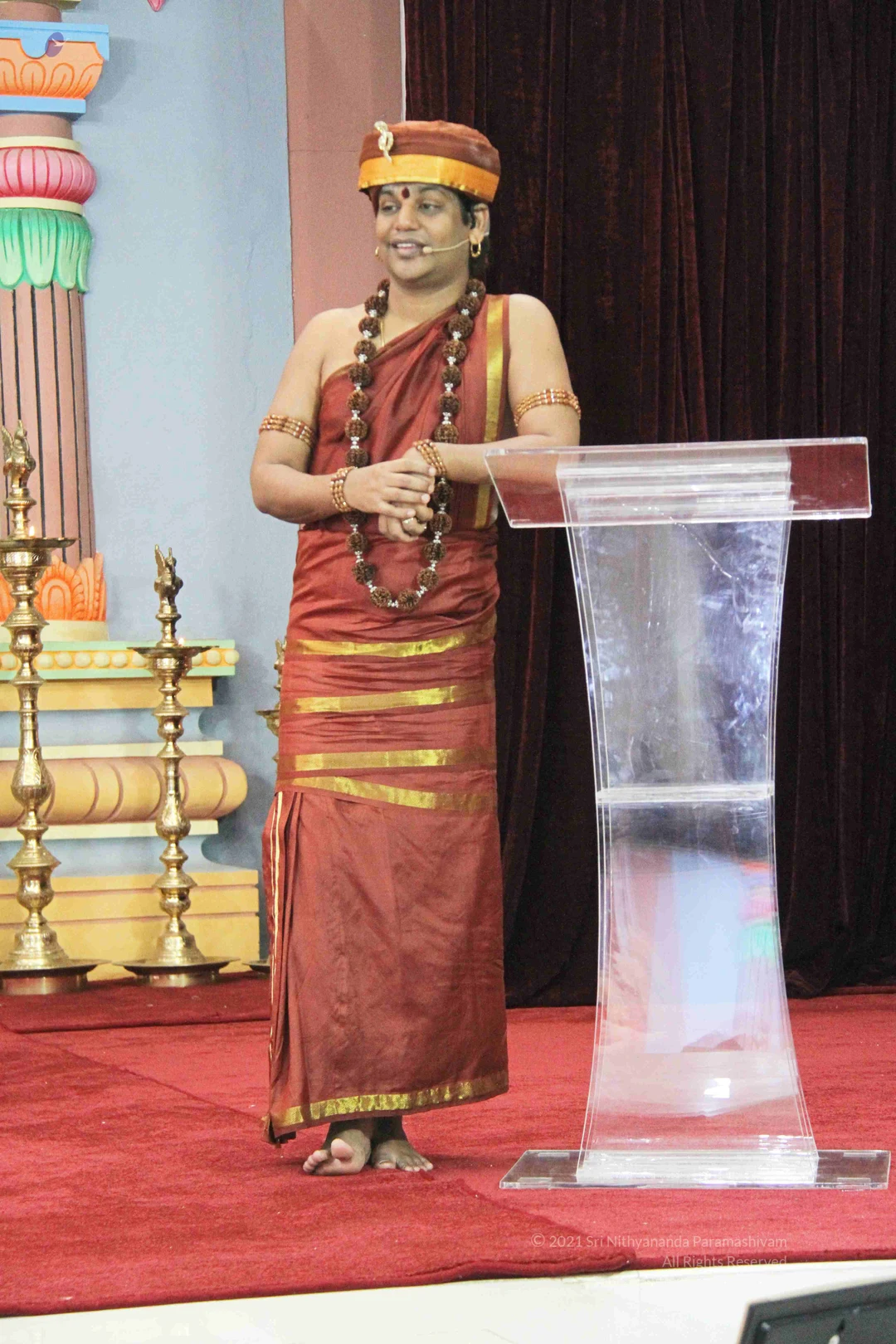
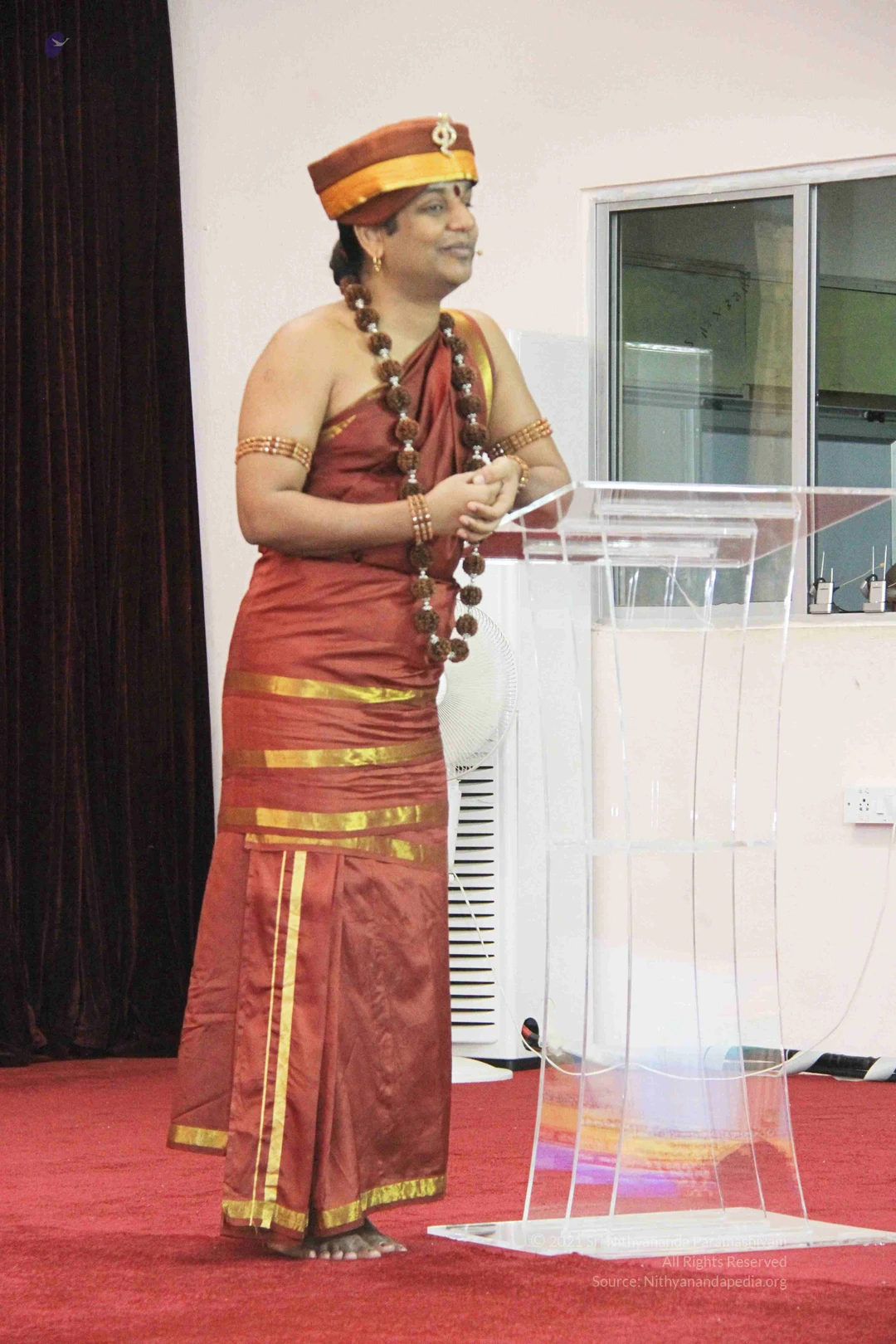
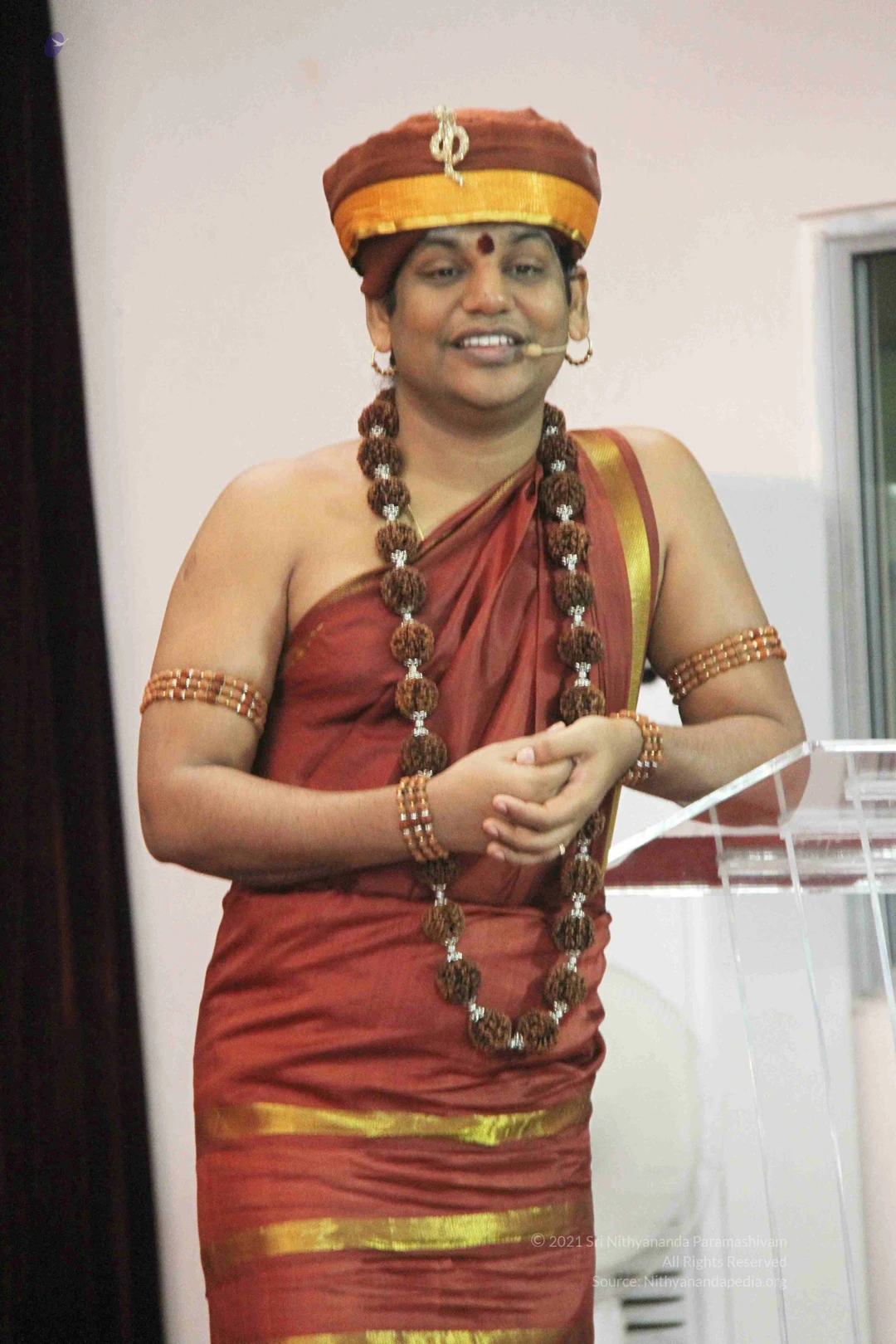
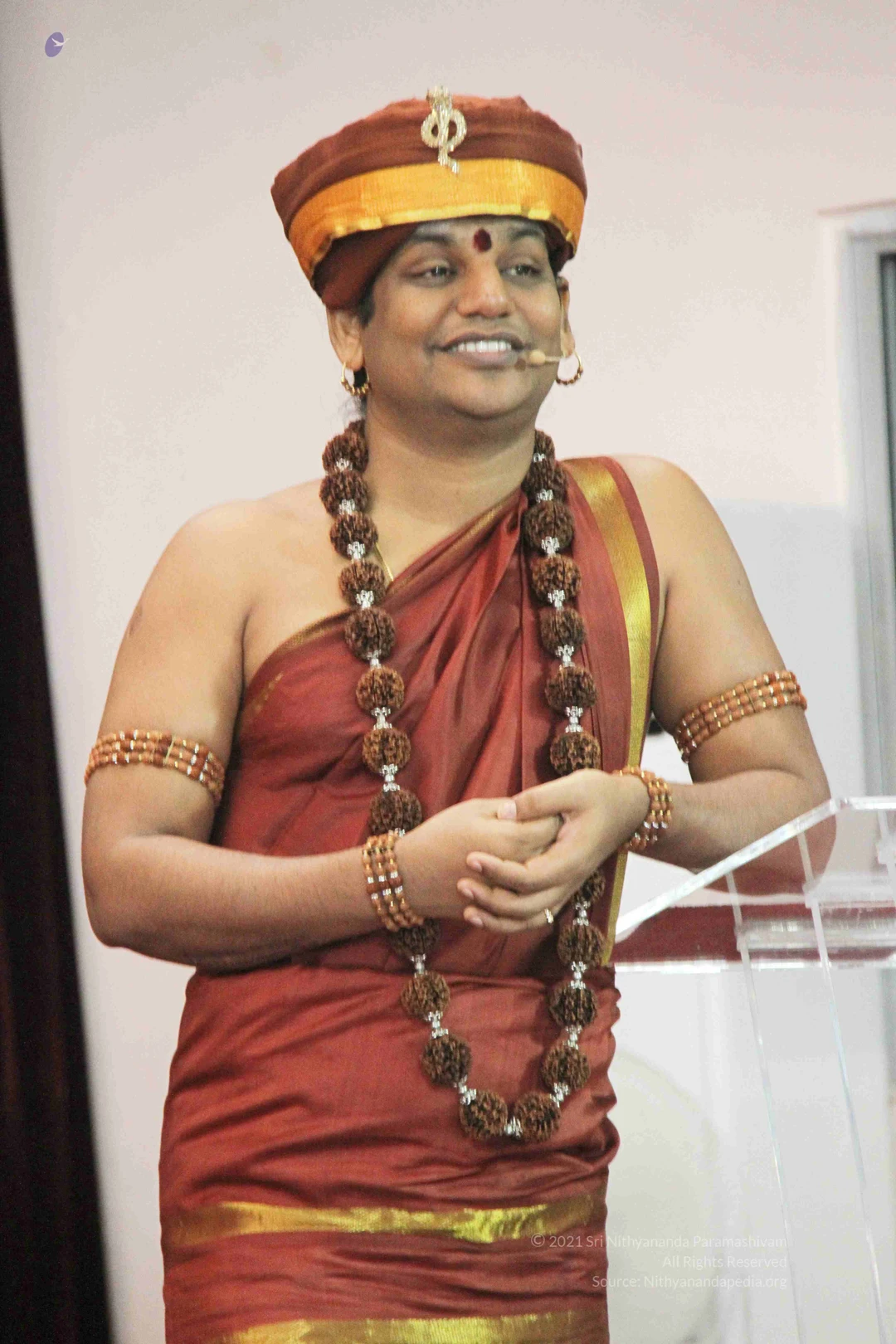
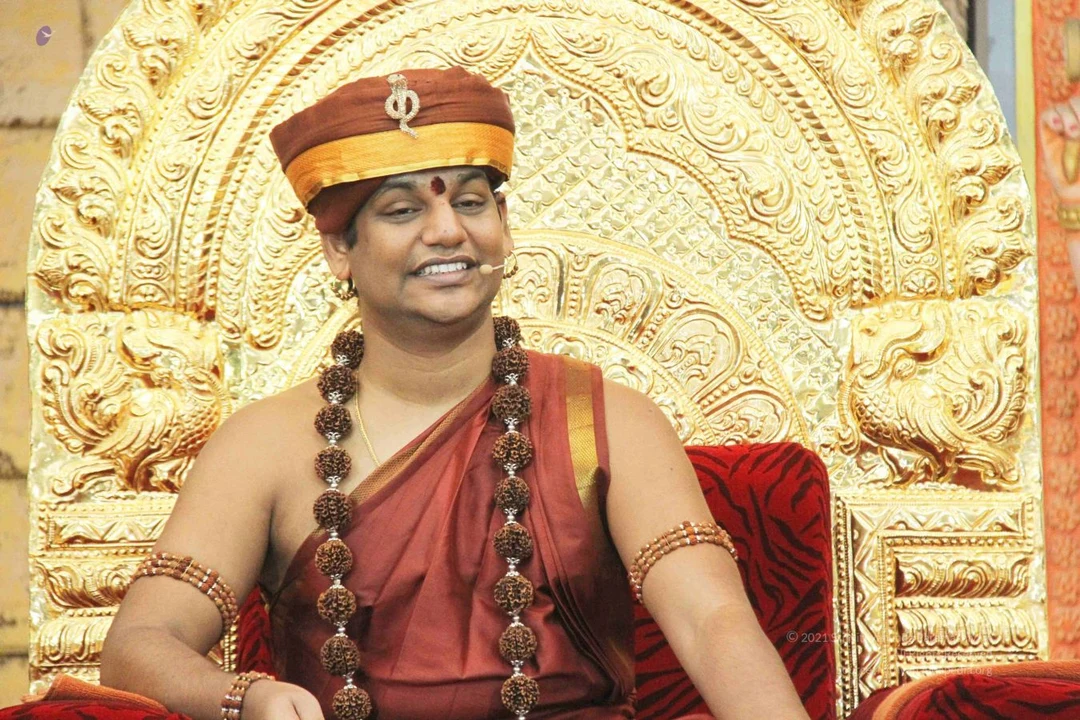
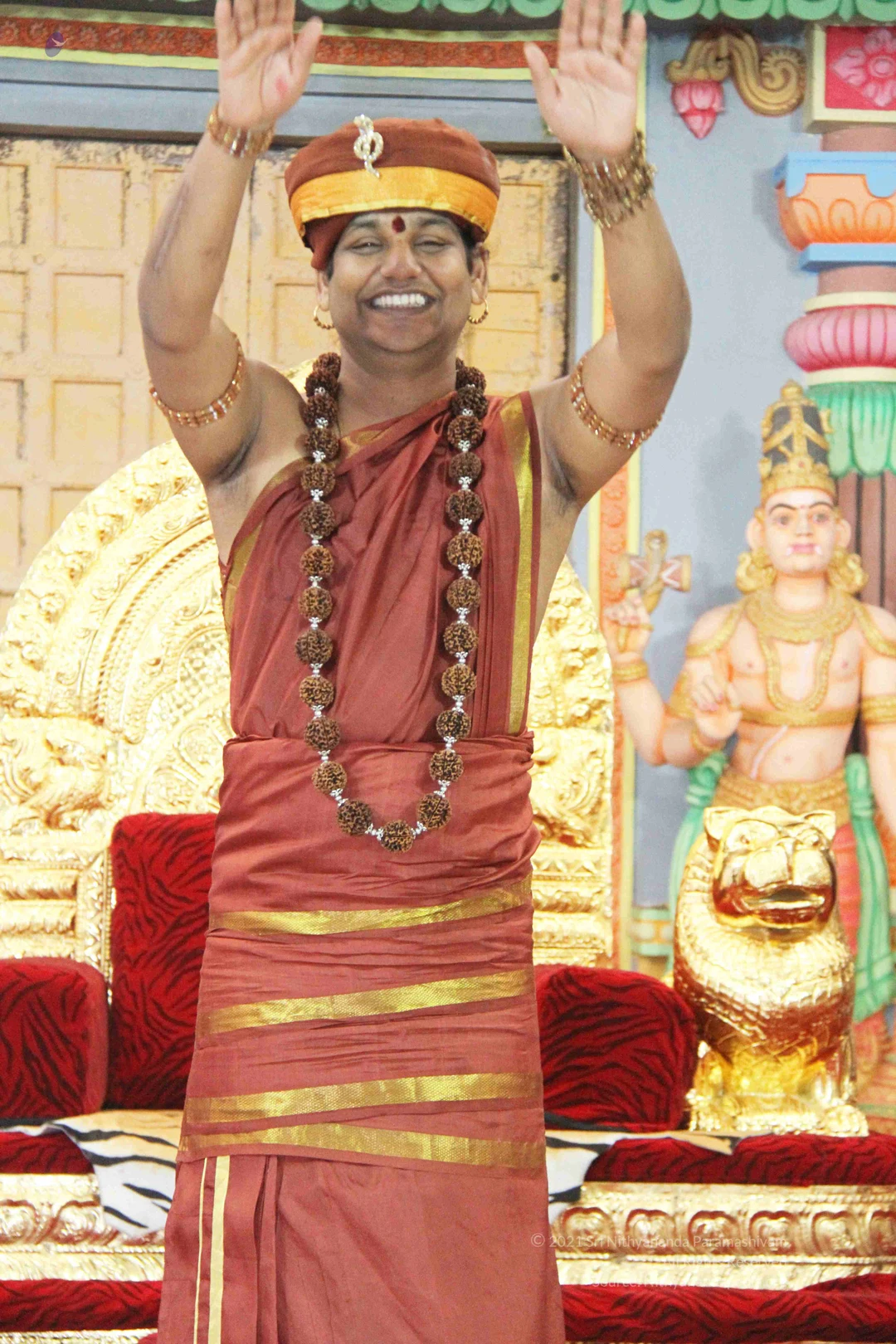
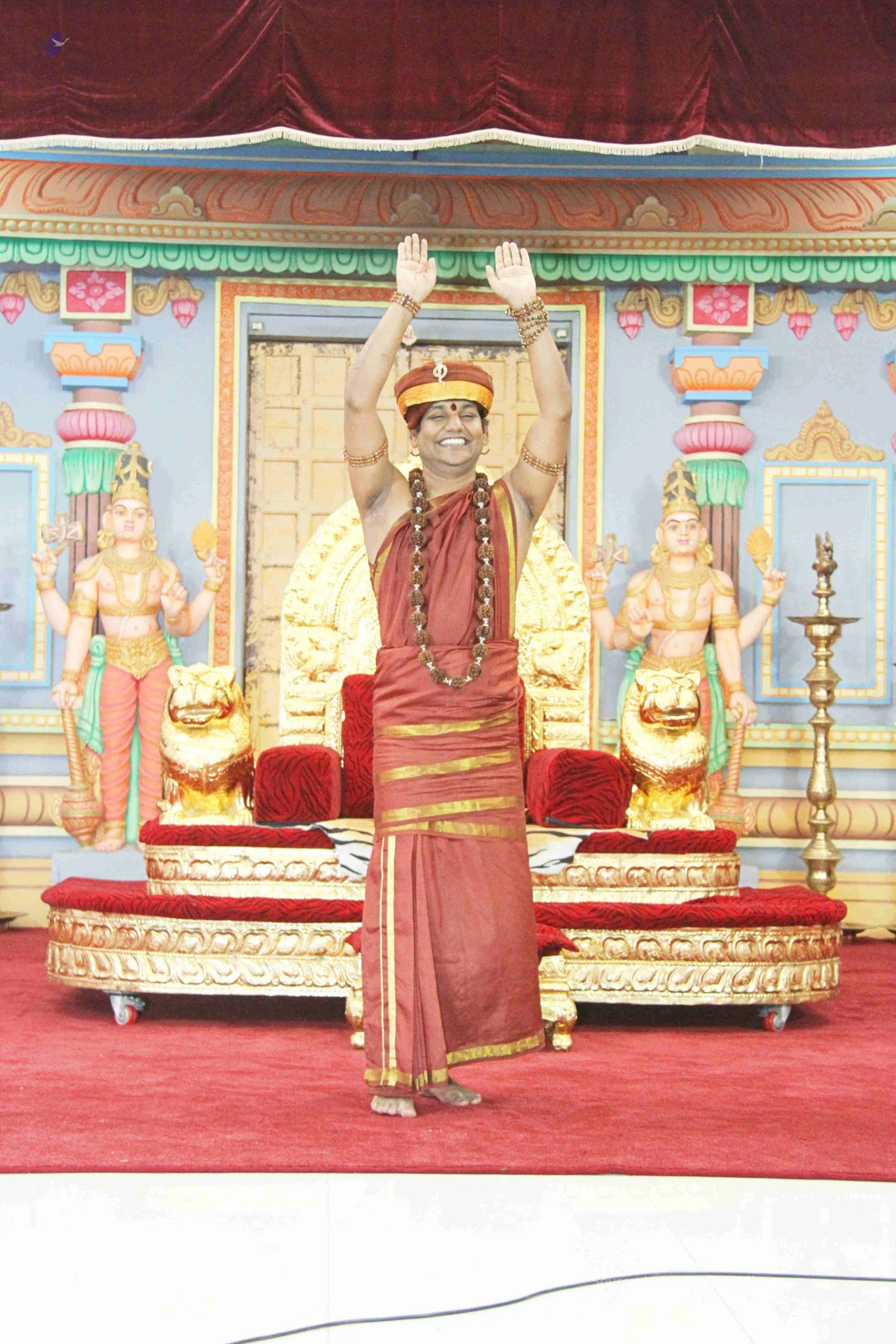
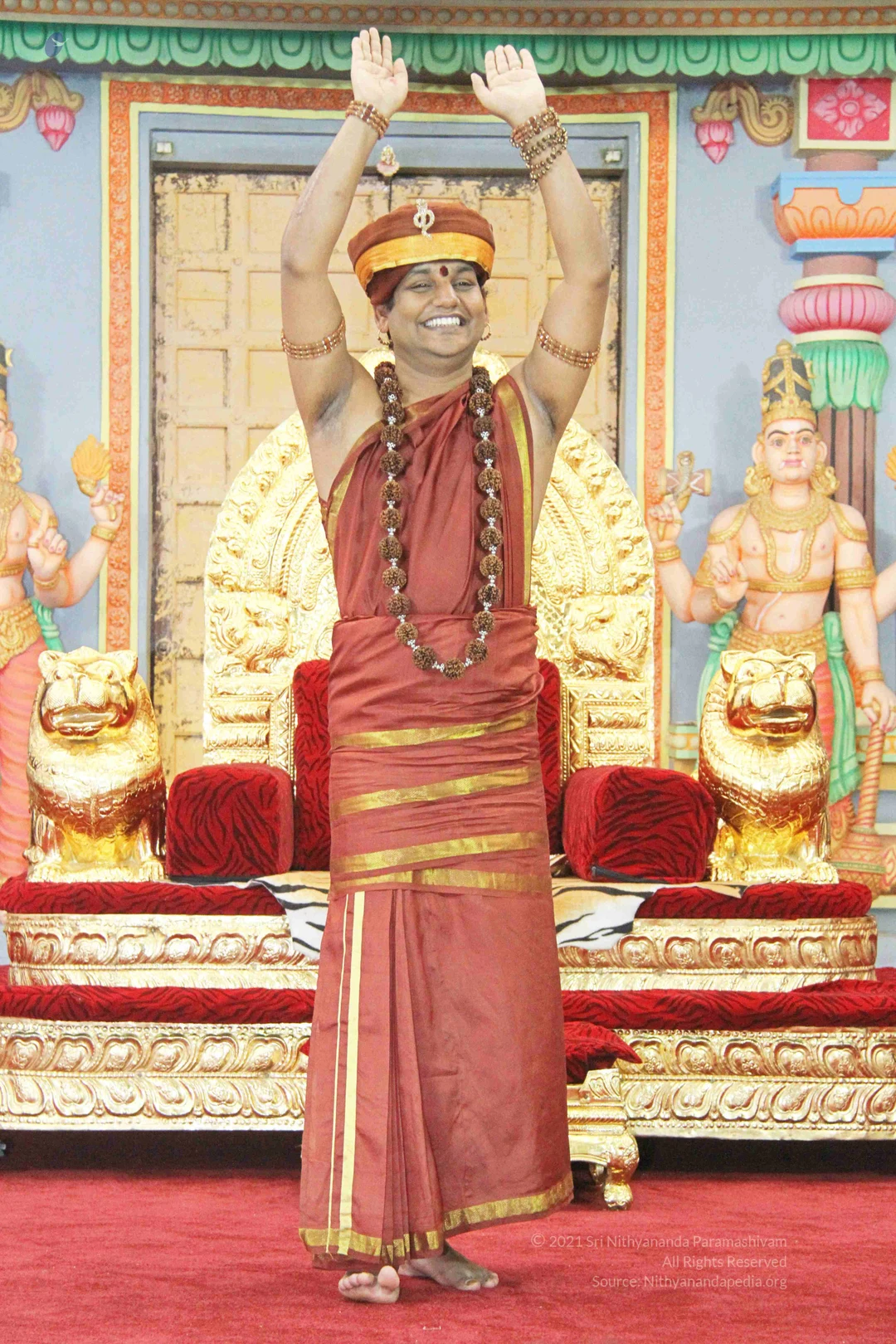
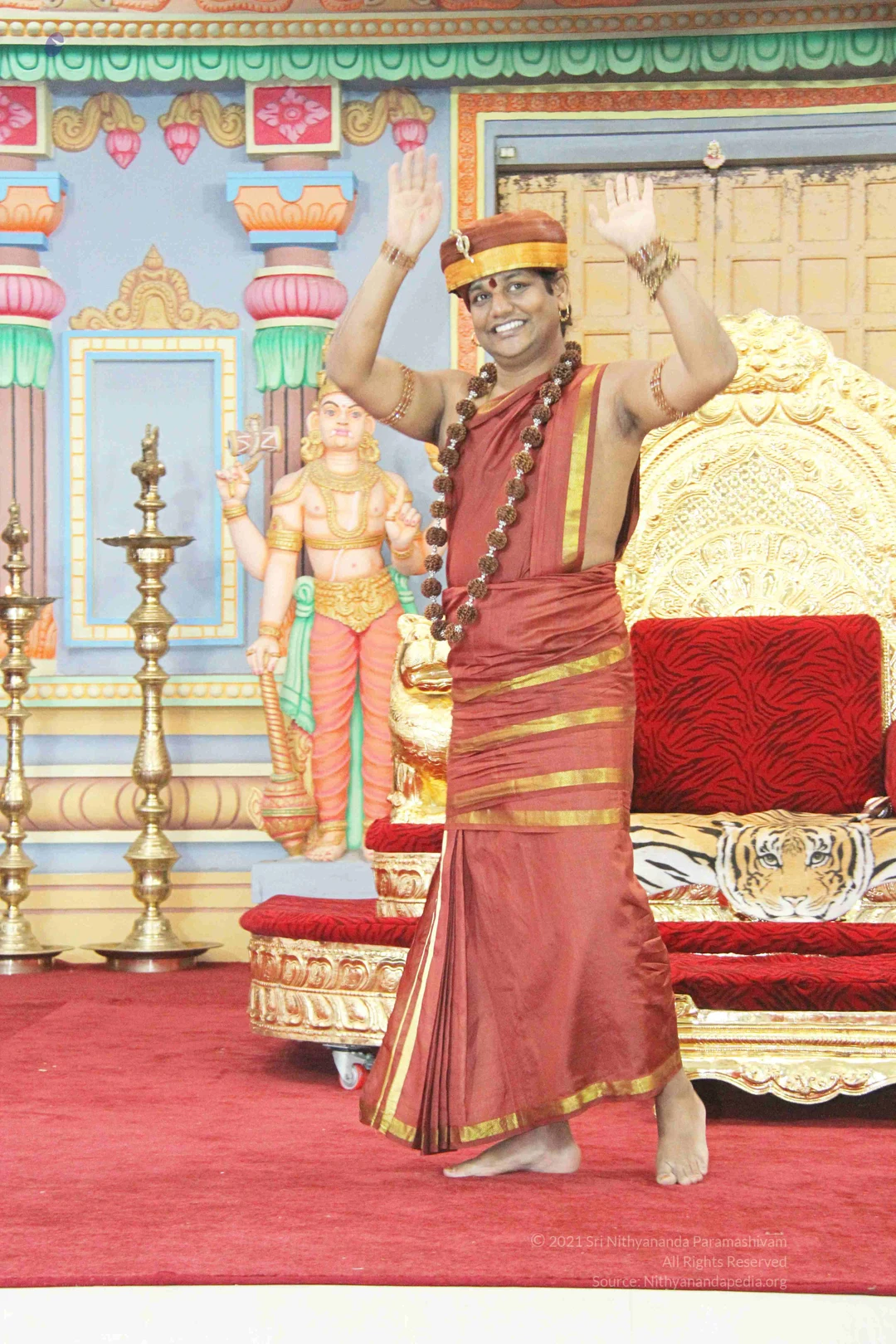
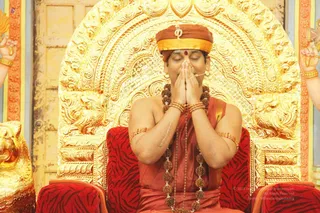
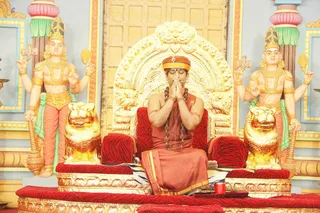
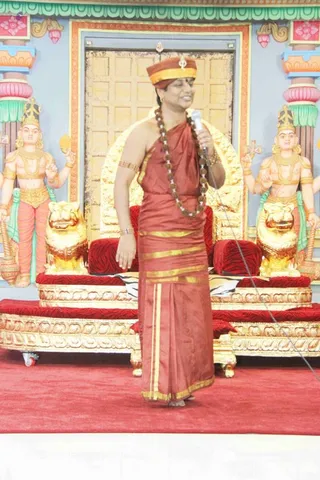
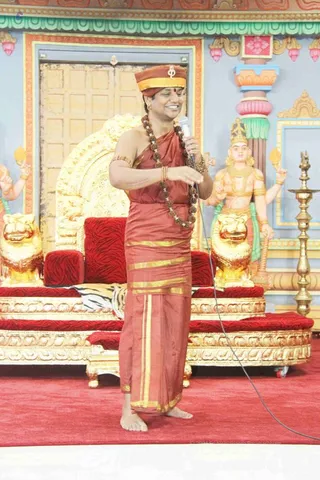
A photograph of a man standing on a raised golden throne platform in a temple-style hall. He wears a rust-red robe draped over one shoulder with gold-edged borders, a long rudraksha mala necklace, bangles, a red bindi on his forehead and small hoop earrings. He stands with palms pressed together in a greeting gesture and smiles. The throne is ornate gold with carved lion heads, red velvet cushions and a tiger-striped cloth. Behind him are an orange wooden door and painted colourful deity figures in orange and gold on either side. A red carpet covers the floor. Based on the appearance cues of long swept hair, saffron-red robe and rudraksha mala, this appears to be a person, seated on a throne in an Ashram setting.A person seated behind a clear acrylic lectern, smiling, with hands clasped on the podium. They wear a maroon head cloth with a gold band and a silver ornament at the front, a red bindi, a small gold hoop earring, and a red-orange garment draped over the shoulders with a gold border. Multiple rudraksha mala beads hang around the neck and wrists, and a headset microphone is visible near the mouth. The background is a dark red curtain. a person appearance-based label applies only if qualifying cues are judged sufficient: the rudraksha malas, saffron-orange ornate clothing and head cloth are present, though a clear face-independent match remains uncertain.A photograph of a smiling figure in a maroon and gold-bordered head wrap with a small gold emblem, standing behind a clear acrylic lectern against a dark red velvet curtain. The figure wears a red-brown garment with a gold border draped over the shoulder, a multi-bead rudraksha mala across the chest, a red bindi on the forehead, gold hoop earrings, and a small headset microphone. Hands are clasped on the lectern.

November 26 2013

Original wiki page
Contents

Title:

Does your Life Have Blind Spots.

Description:

In today’s morning Satsang, Paramahamsa Nithyananda explains how the biggest obstacle in creating the space for our own reality is double intelligence – psychodrama. Double Intelligence is the logic with which we handle others and the logic with which we handle ourselves. When we can assimilate the psychodrama that we create inside with the psychodrama that exists outside, we have completed with both sides, removing the blind spots which allows us to create the space for what we want - making it a reality in our lives!

Link to Video:

VideoAudio

Transcript:

Nithyanandeshwara Samaarambhaam Nithyanandeshwari Madhyamaam | Asmadaachaarya Paryanthaam Vande Guru Paramparaam ||

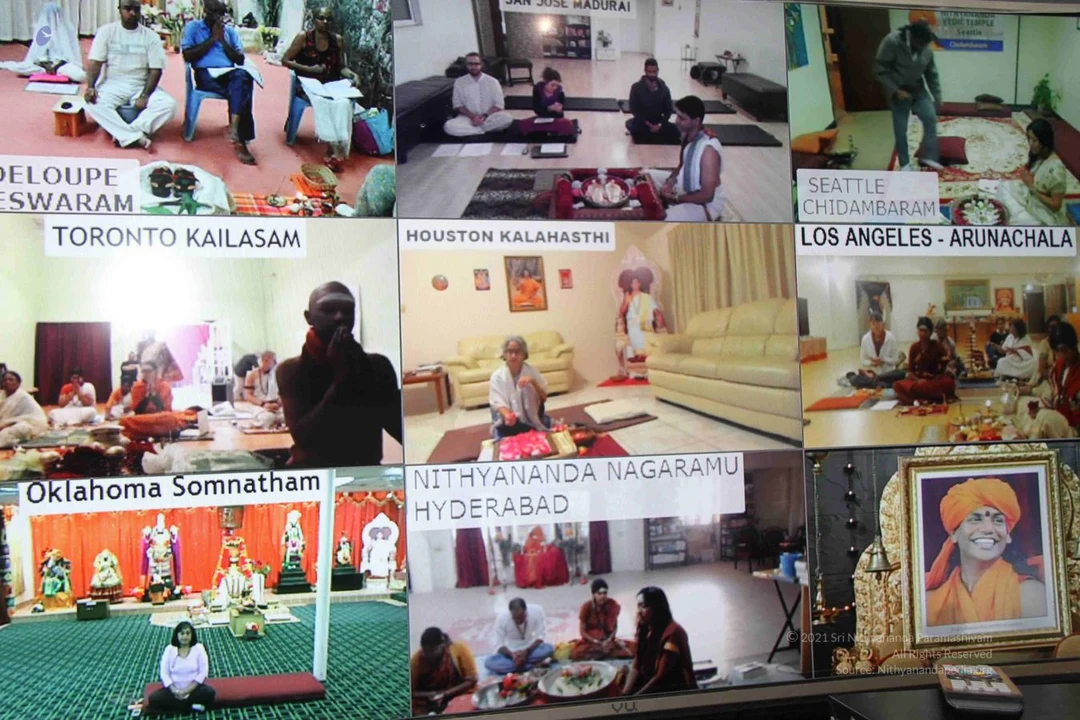
I welcome all the devotees, disciples, samajis, satsangis sitting with us through Nithyananda TV, Sadhana TV, Lotus News Channel, Janashree TV, Eshwar TV, and through two-way video-conferencing having Nayana Deeksha.

Cities sitting with us in two-way video-conferencing having Nayana Deeksha: Tiruvanmiyur Dhyanapeetam-Chennai, Hosur, Jorpati-Nepal, Kuala Lumpur, Gangamma Circle, Devon-UK, Paris Home Temple, Vancouver-British Columbia, Dubai-Vaidyanatham, Hong Kong-Sirkazhi, Singapore-Singapuram, Oman-Sivagangai, Dakota Dunes, San Diego-La Jolla, Salem-Nithyananda Dhyanapeetam, Bangalore North, Hyderabad-Gupta Kashi, Guadeloupe-Rameshwaram, San José-Madurai, Seattle-Chidambaram, Toronto-Kailasam, Oklahoma-Somanatham, Enriching Temple-Bidadi, Ohio-Prayag, Nithyananda Nagaram-Hyderabad, Houston-Kalahasti, Los Angeles-Arunachalam.......

I welcome all of you with my love and blessings!

Today I will expand on “how the space you create becomes reality, sometimes why it fails, and how you can remove all these obstacles and make it into reality”.

Please listen!

Unfortunately, human-beings strongly believe, unfortunately human-beings strongly cognize that double-intelligence is the best strategy. Please listen, I am introducing a new word – “double-intelligence”. This word you need to internalize – “double-intelligence”. The logic with which you handle others and the logic with which you handle yourself, the logic with which you look at others and the logic with which you look at yourself.

Please listen, everyone understands everything is psycho-drama, everything is delusion, illusion, as long as it happens to others.

This lifestyle, thinking style of “double-intelligence”...... please understand, I don’t want to use the word “hypocrisy” which is normally used. I am using the word “double-intelligence”, because in this double-intelligence both sides can be assimilated and become part of you. If I use the word “hypocrisy”, both sides have to be discarded. See, you have two logic functioning. If I use the word “hypocrisy”, both have to be discarded. But I am using the word “double-intelligence”; both have to be completed and assimilated. The intelligence which you use to measure others, the intelligence which you use to measure yourself, both should be assimilated. Actually, both will be complementing each other. Both will have different qualities which, when assimilated together, will make you a complete human-being.

I can give you an example. Whenever you are very angry, violent with others, you will have a deep guilt about yourself. Whenever you have a deep love for yourself, you will have a deep hatred for others. The qualities which complement, if digested by the Completion process, both will become strength for you. That is why I am using the word “double-intelligence”; I am not using the word “hypocrisy”. Actually, what society, normal human-beings call as “hypocrisy”, that is what I am calling as “double-intelligence”. But I don’t want to use the word “hypocrisy”.

Listen, understanding that everything is a psycho-drama, you become master of the outer world and you know how to create a psycho-drama for everybody and make them do what you want them to do. But, when you understand that even what you are thinking about you and the way you are handling you is also a psycho-drama, you are an enlightened being! You understanding what you are doing with yourself is also a psycho-drama is the first step to create a powerful space inside you. The ability to create the right space inside you happens. Please understand! Whenever you do not understand what is happening inside you also is a psycho-drama, even if you create a space for some reason inside you, you will not know the side-effects and after-effects of that space. Whenever you leave a blind spot about the side-effects and after-effects of the space you create, the space you create gets destroyed, the space you create becomes more and more dangerous, the space you create does not get fulfilled; that is the ultimate effect.

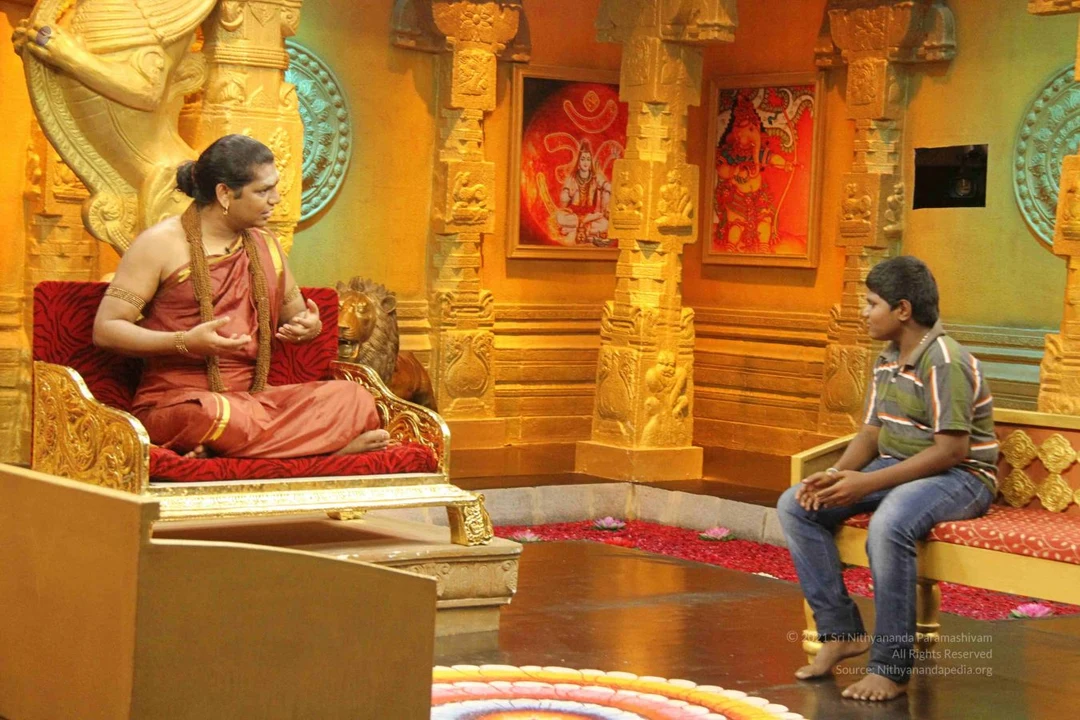
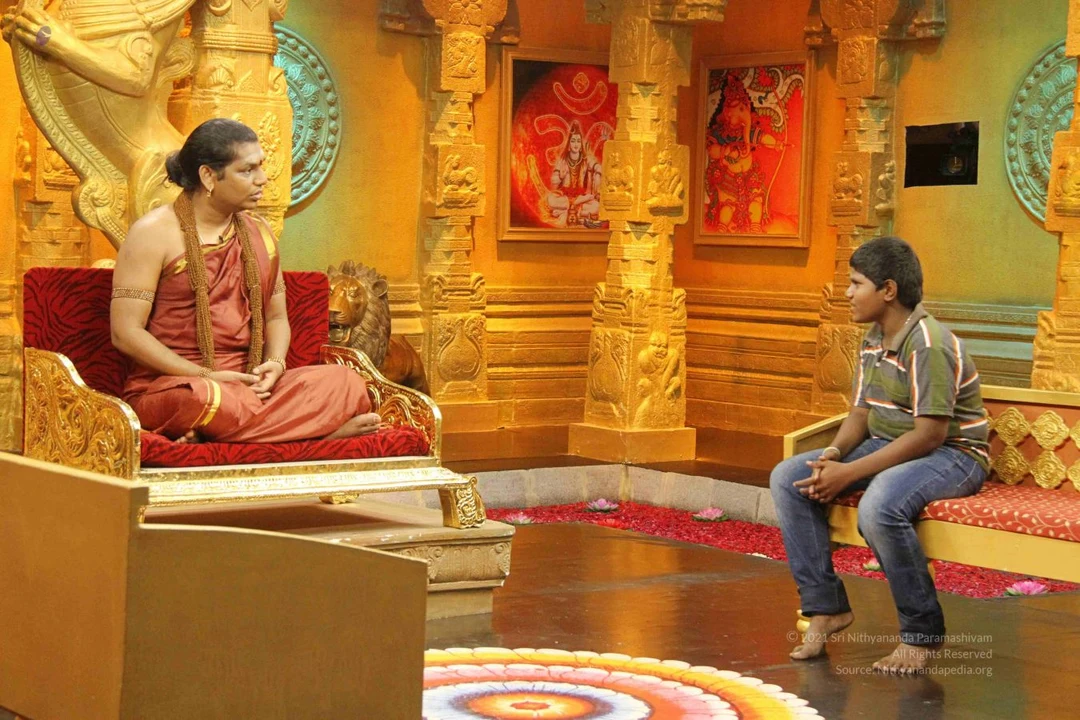
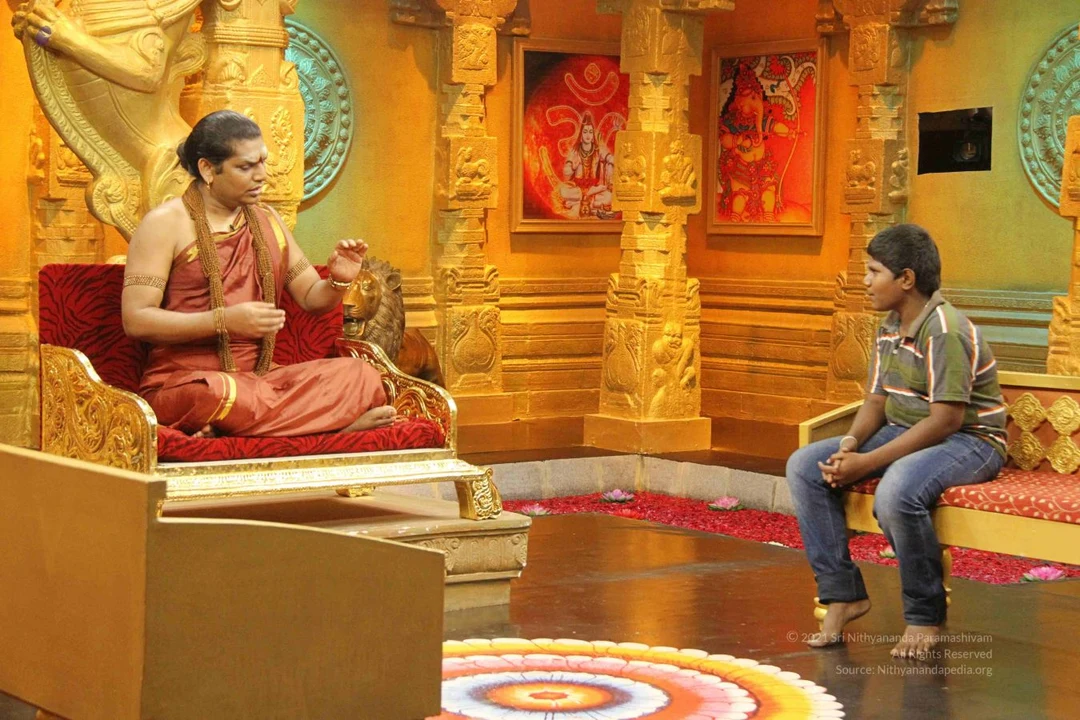
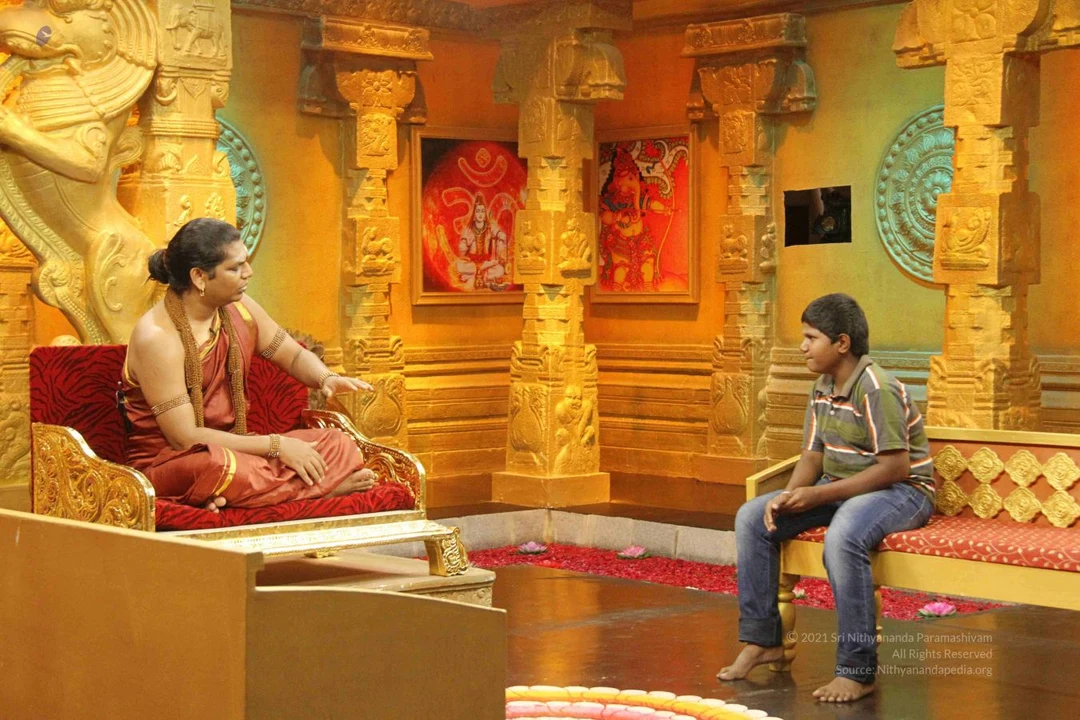
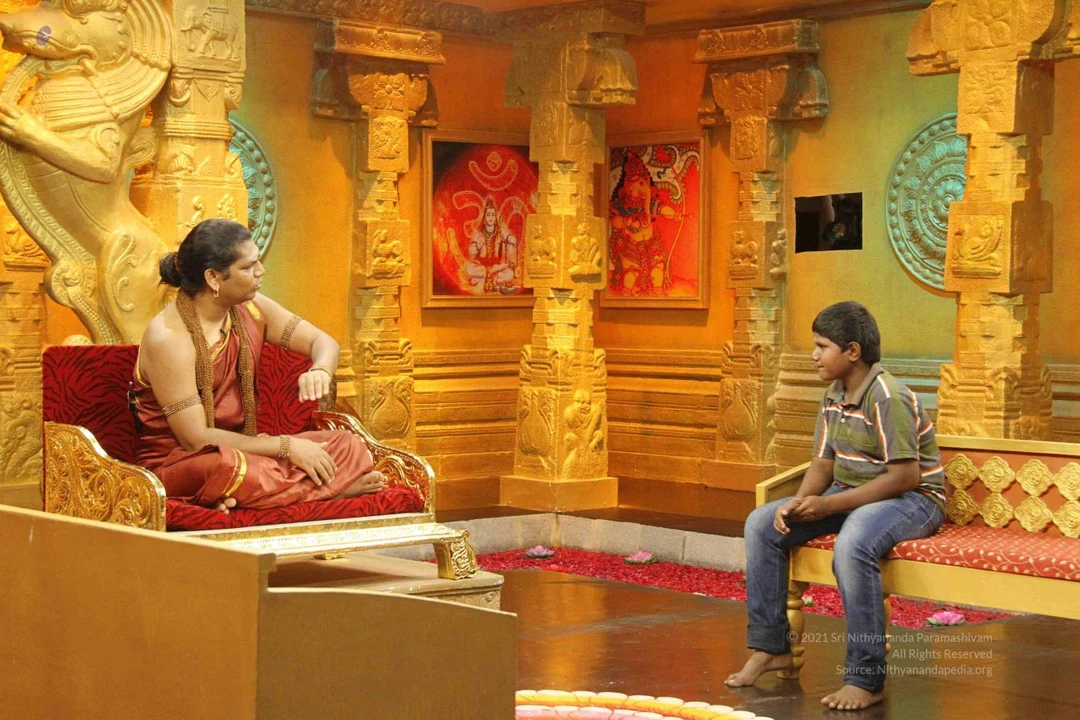
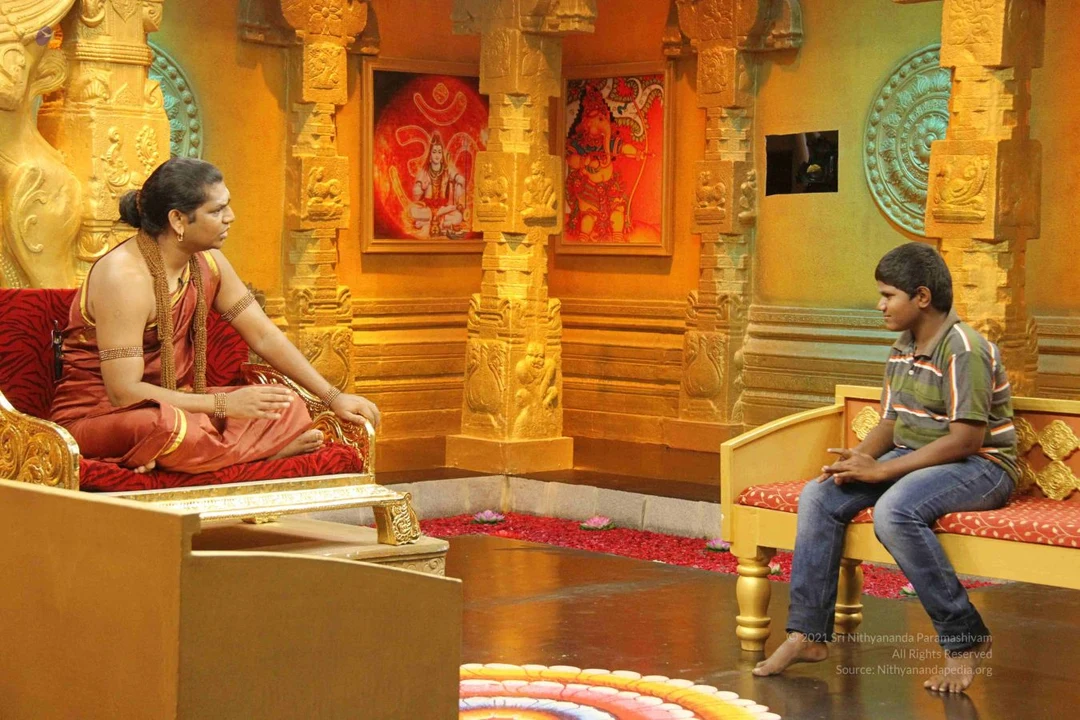
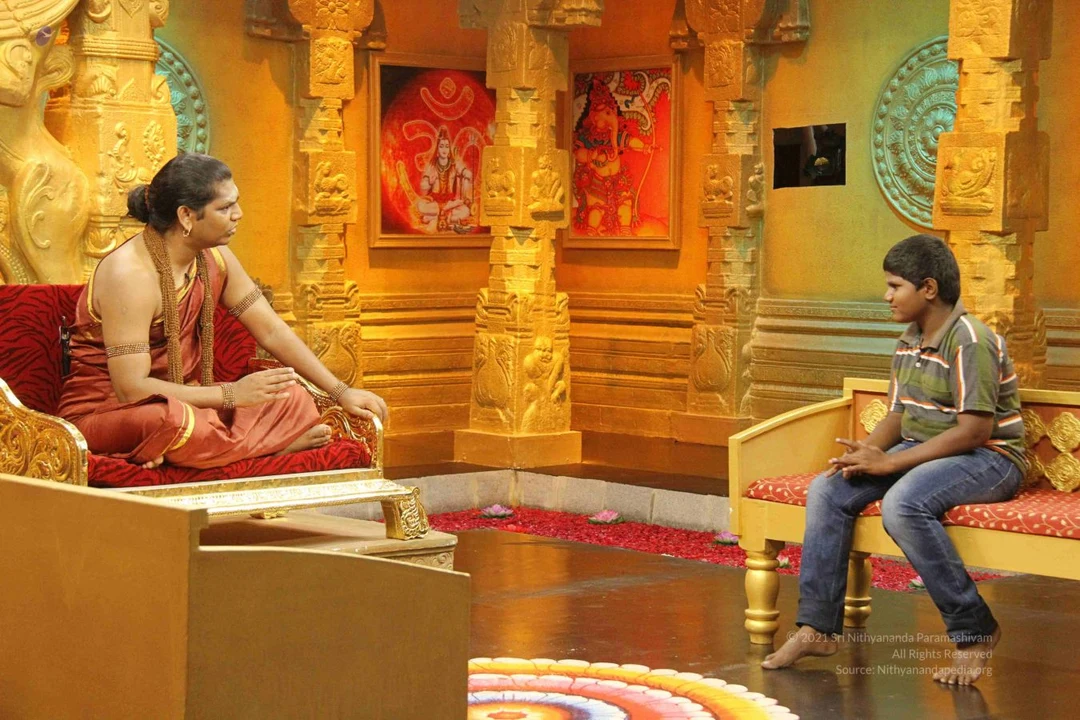
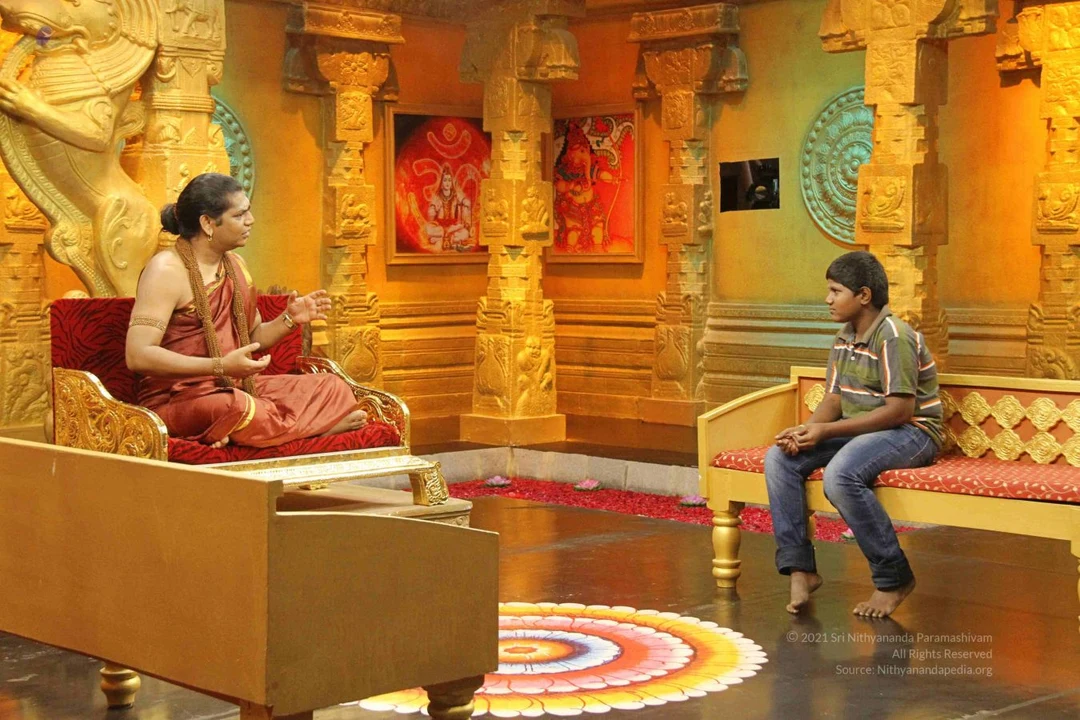
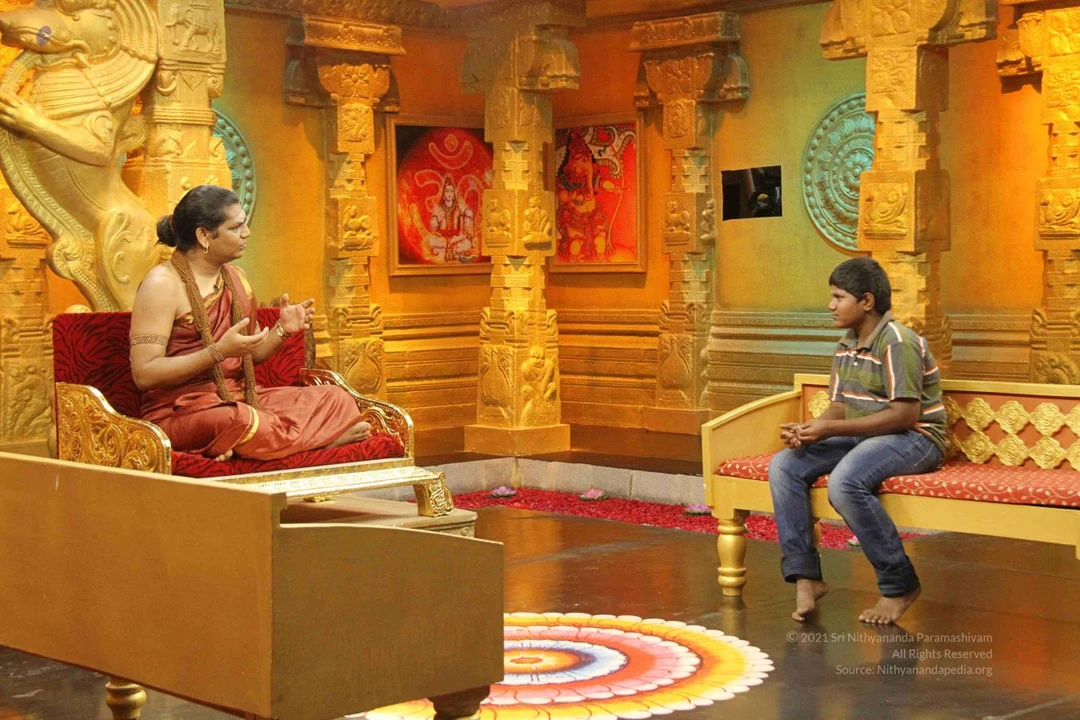
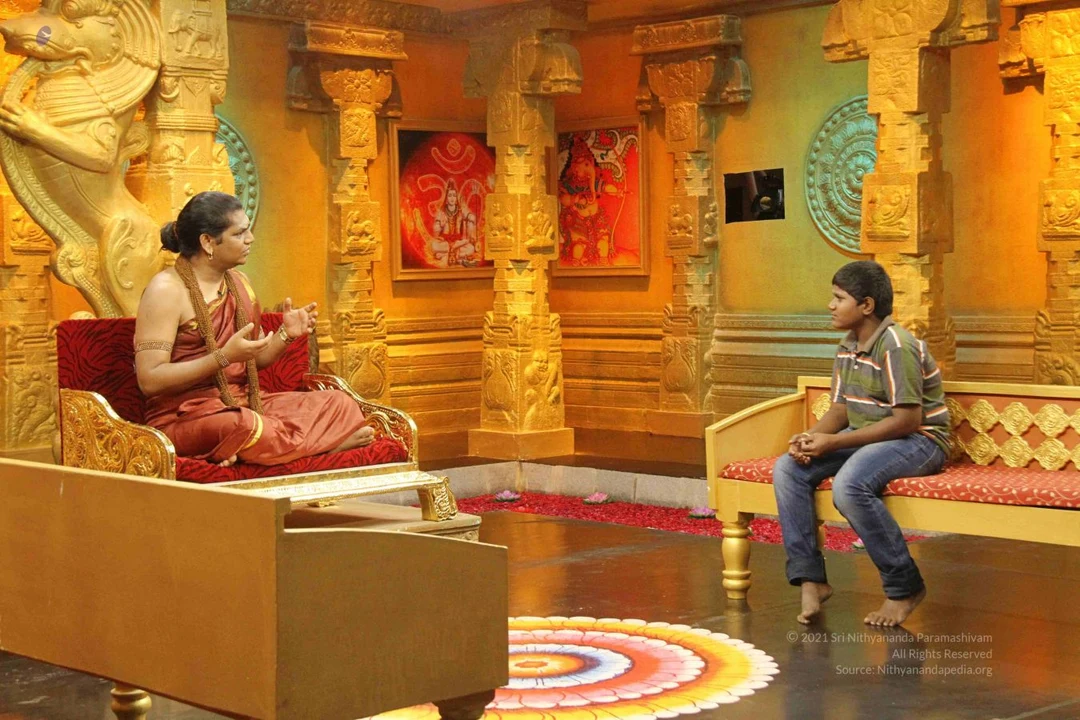
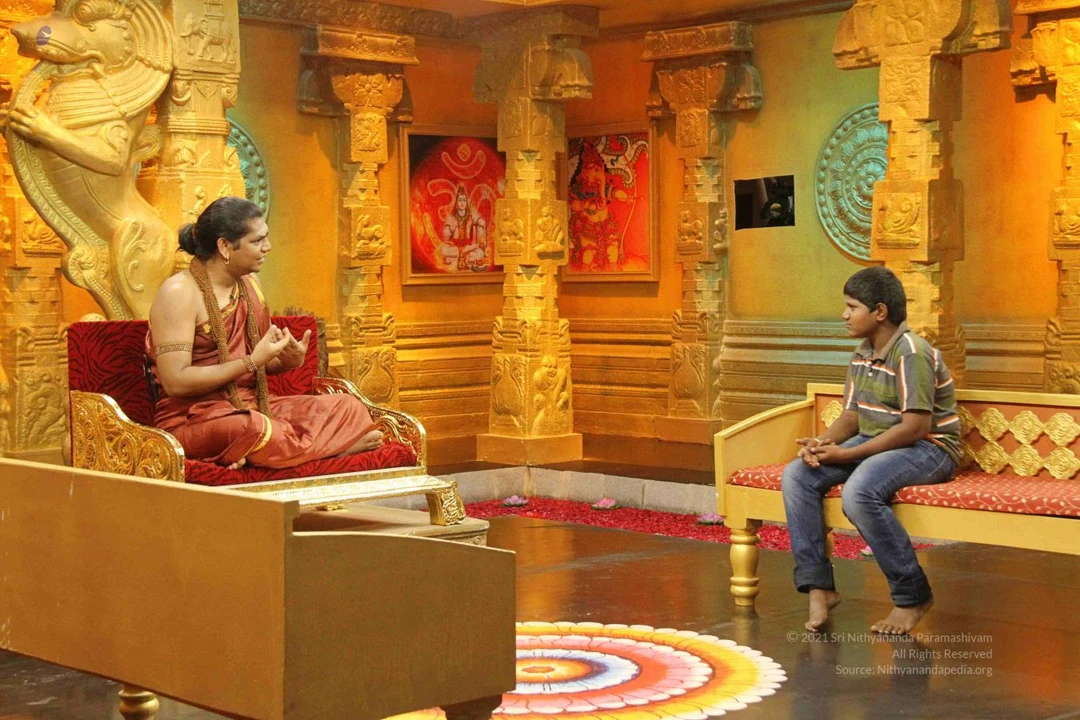
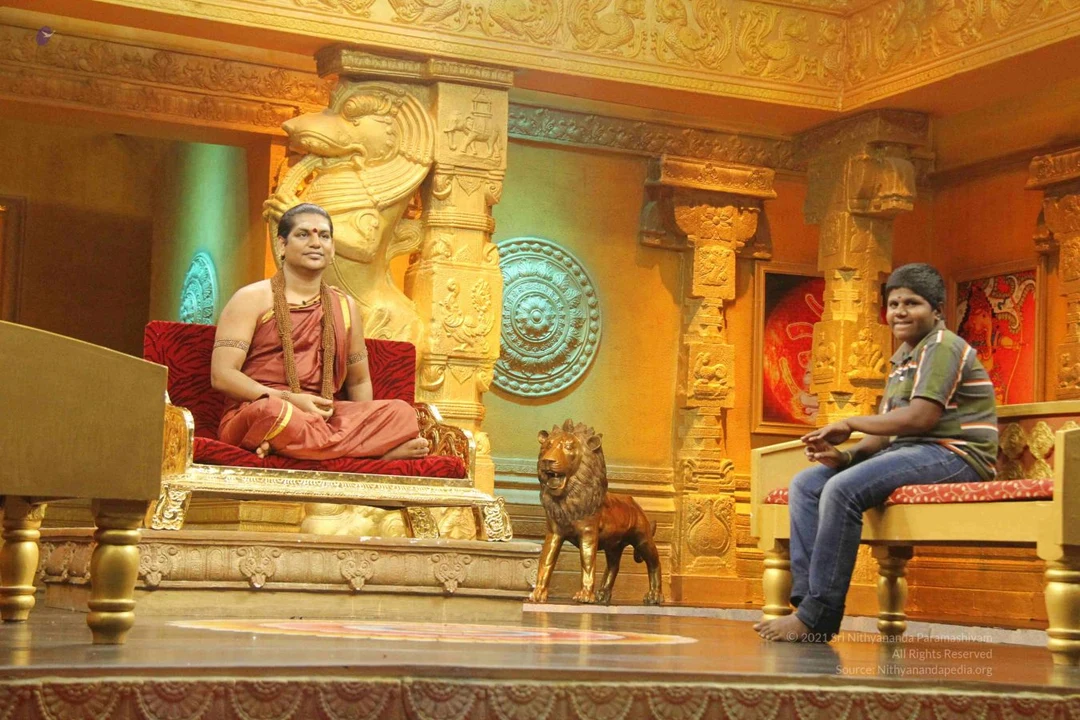
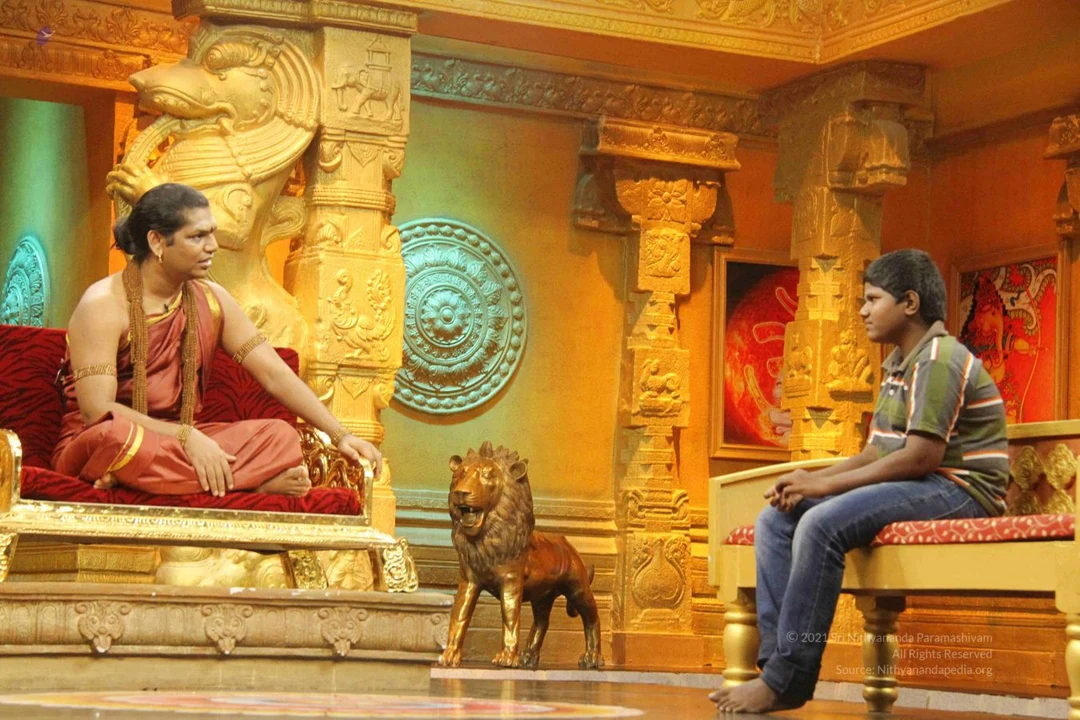
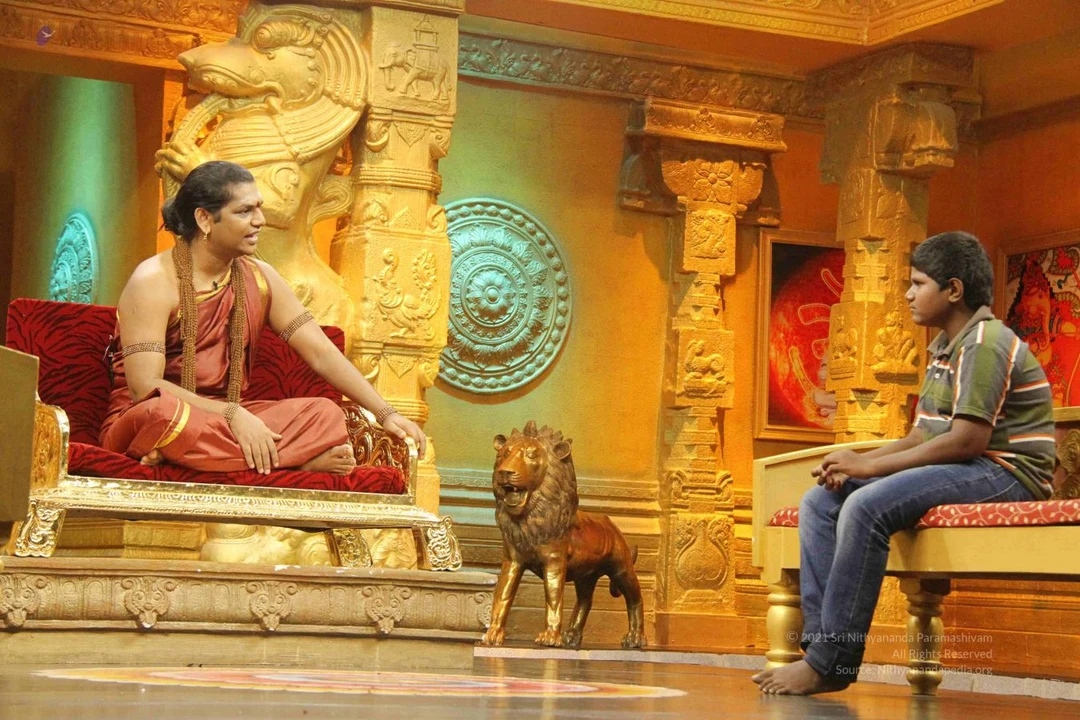
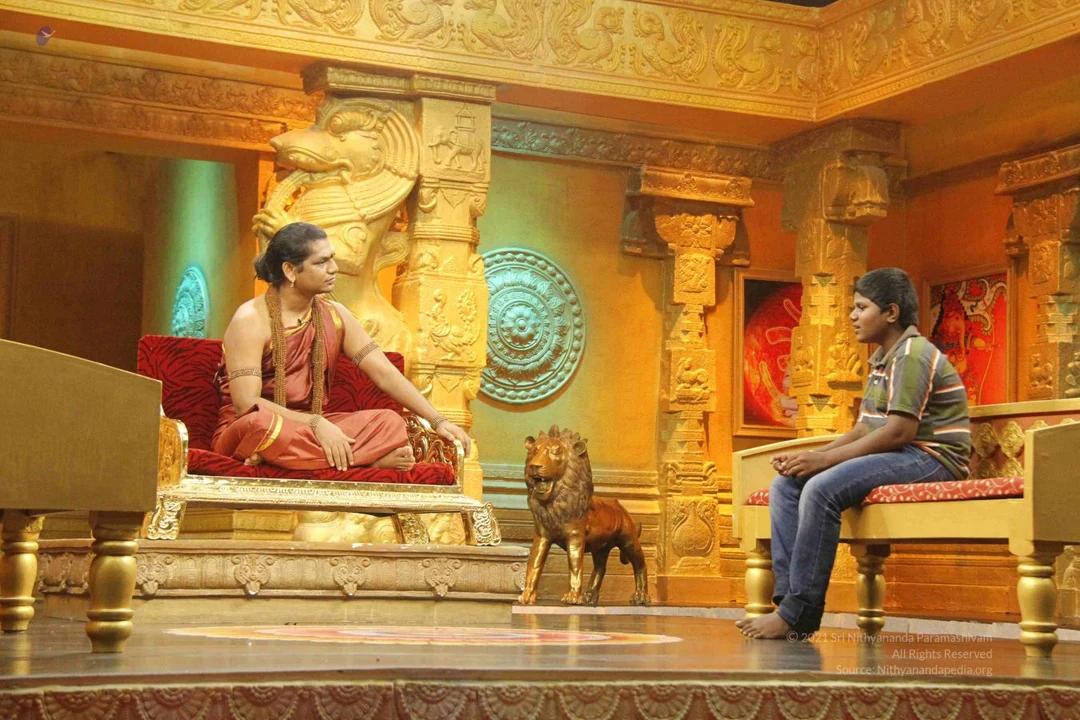
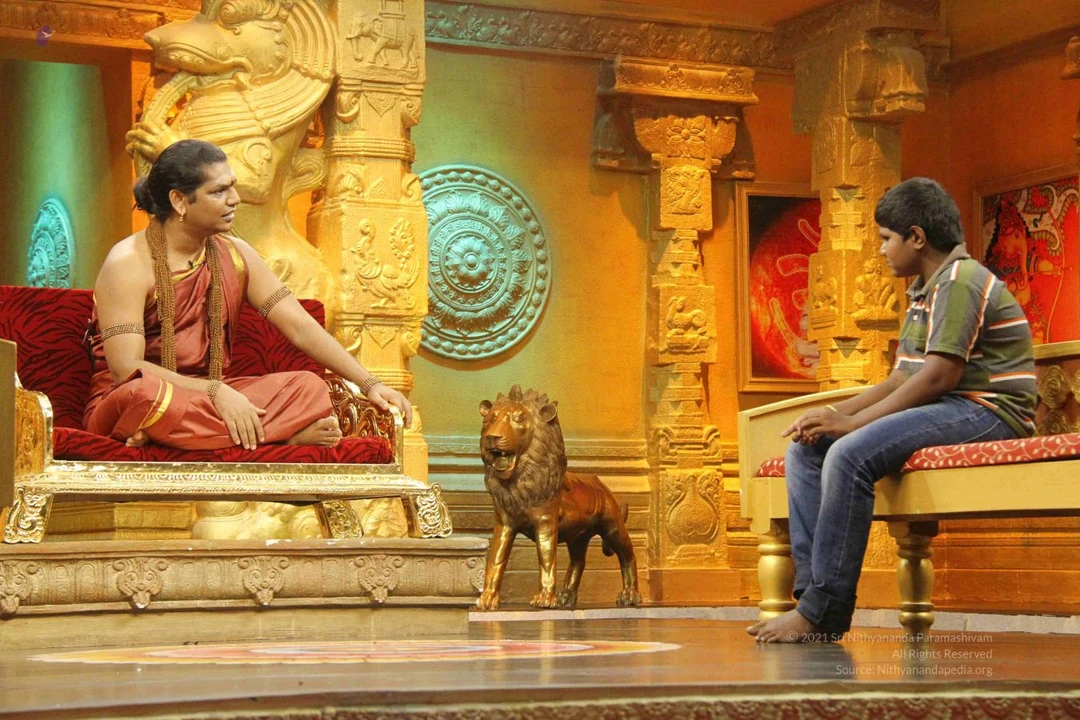
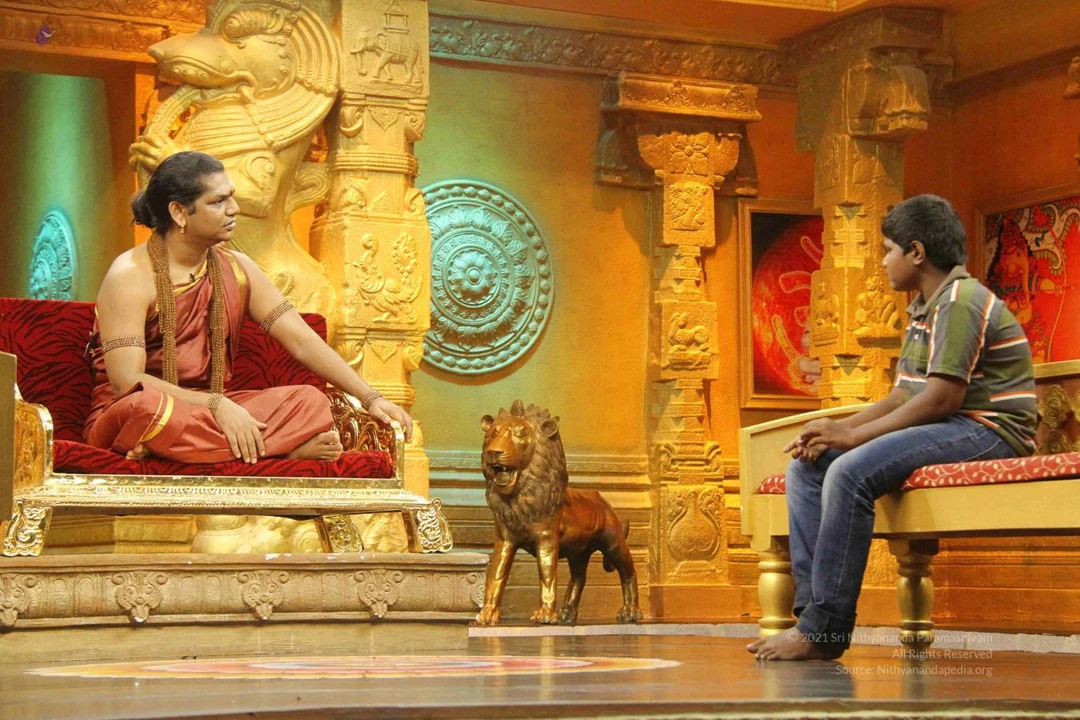
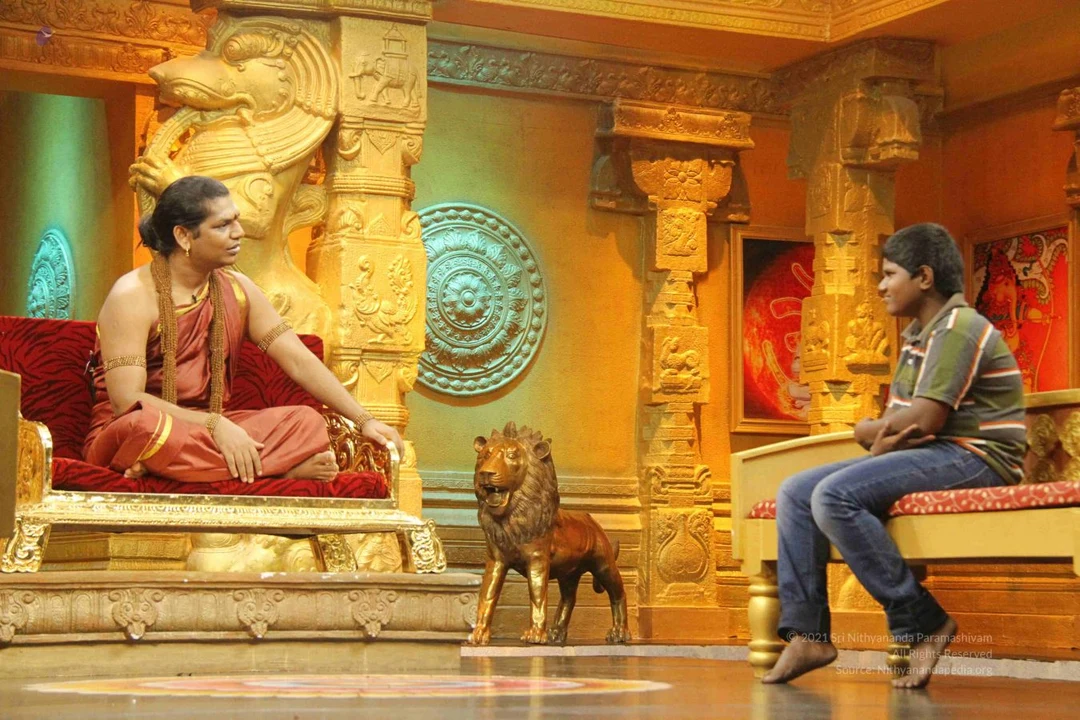
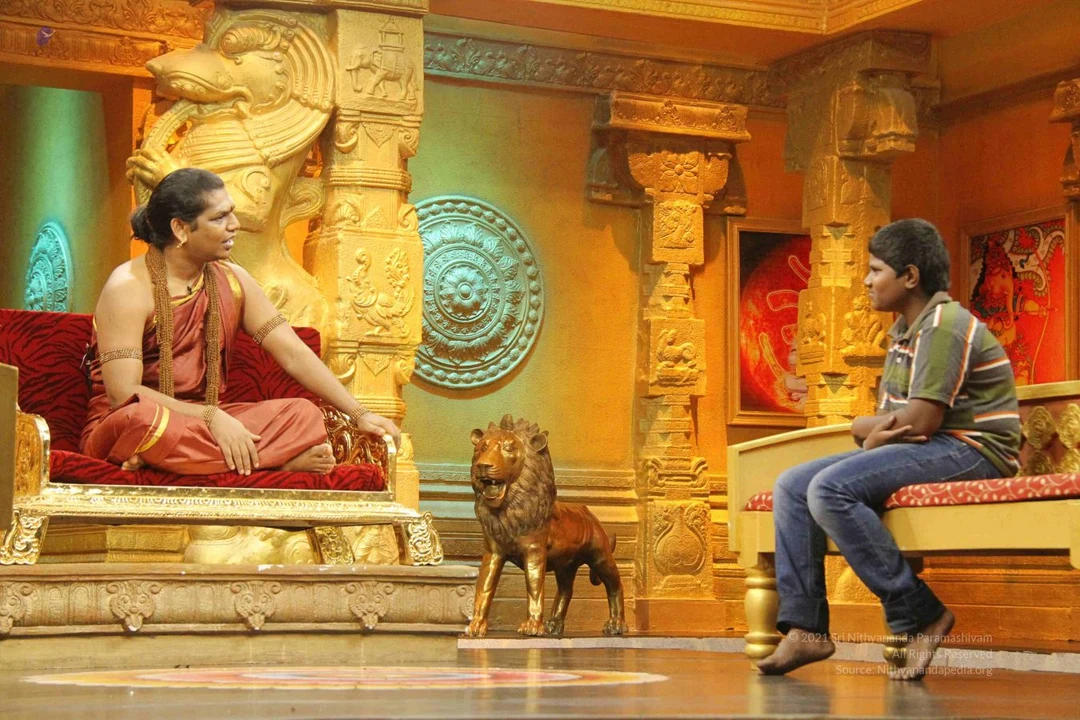
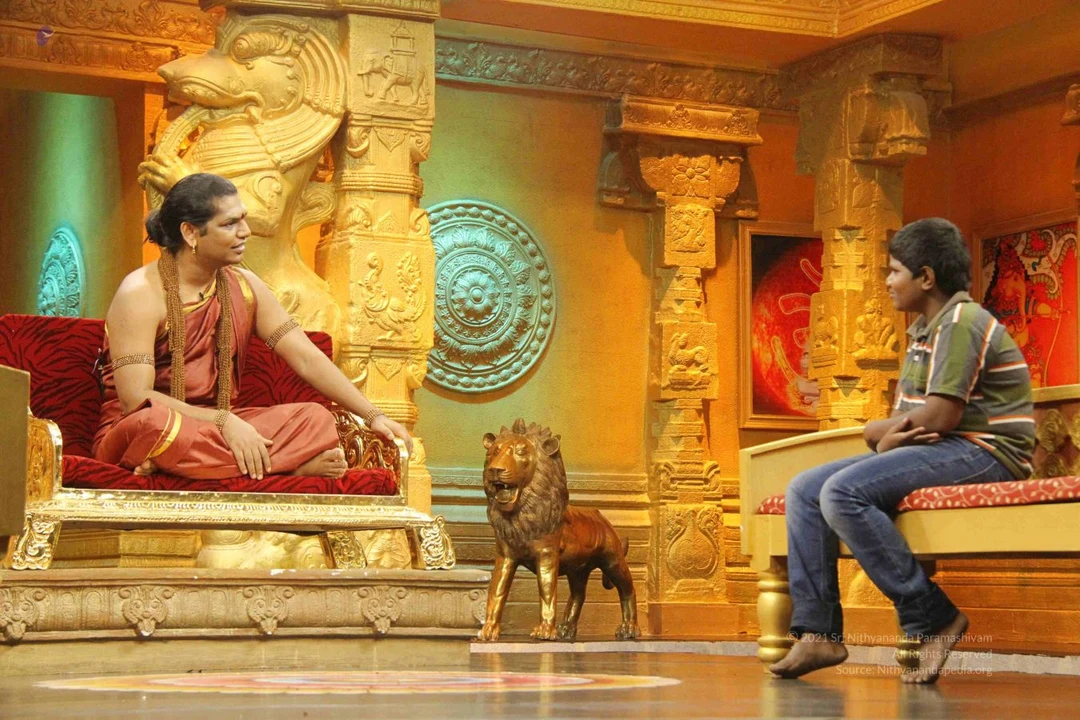
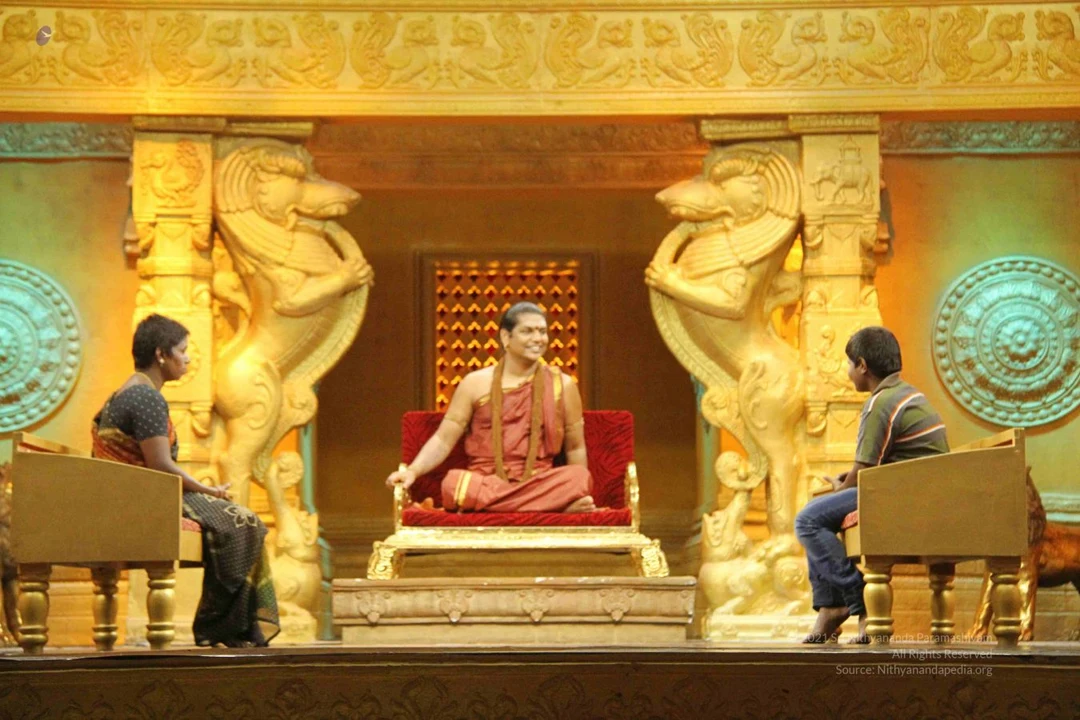
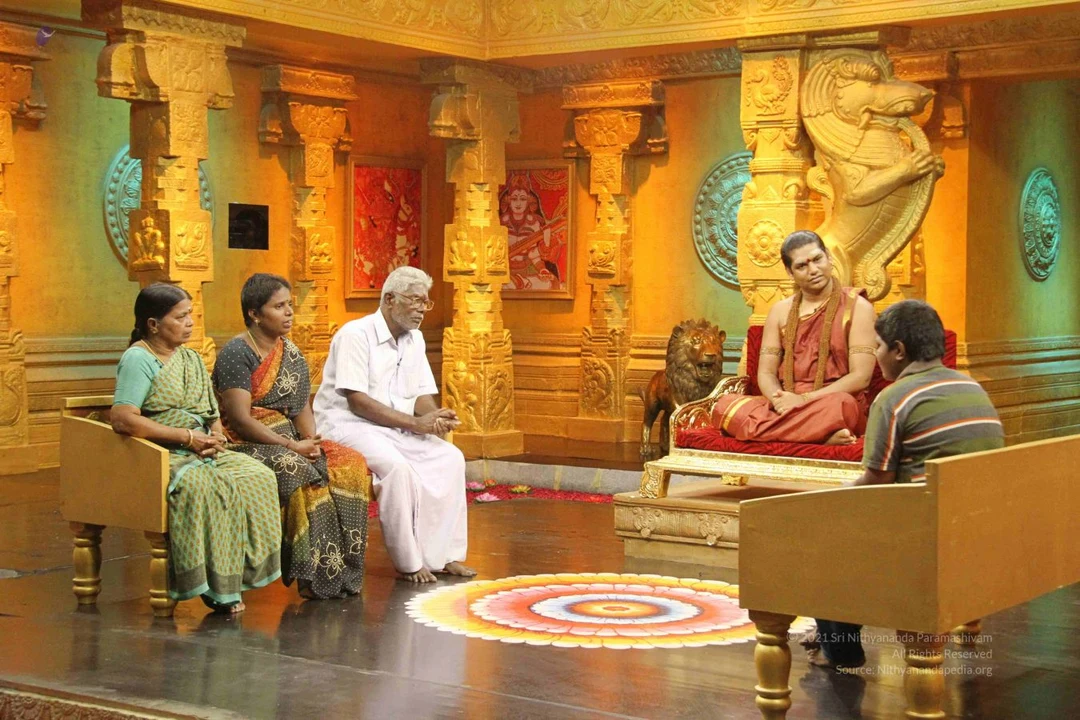
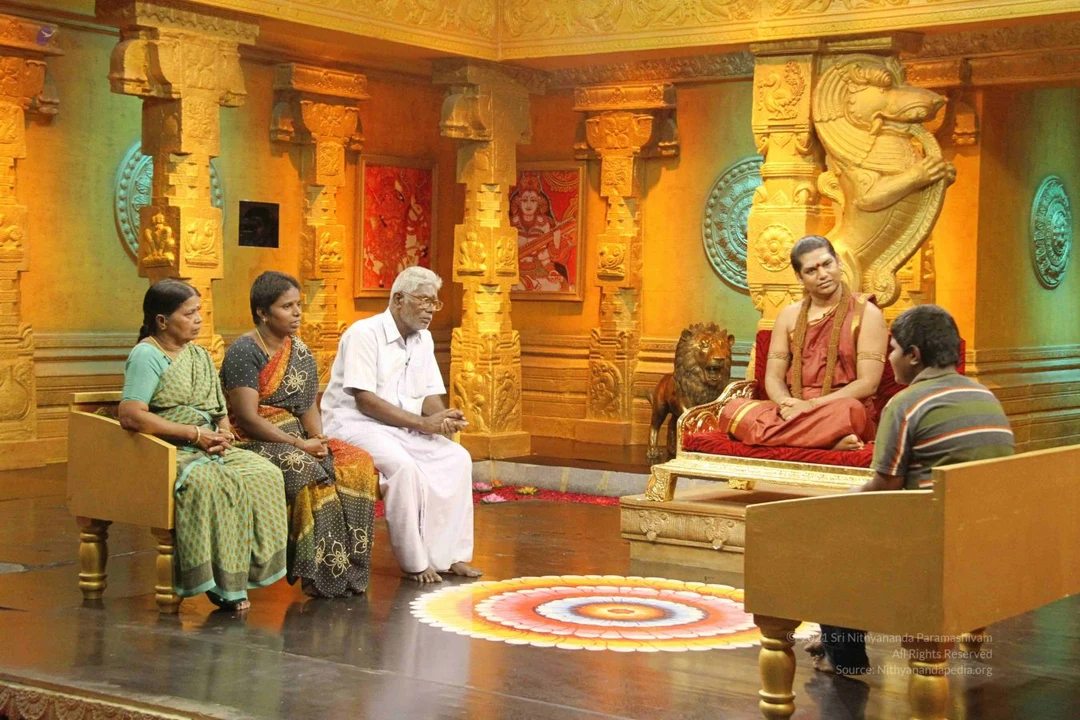
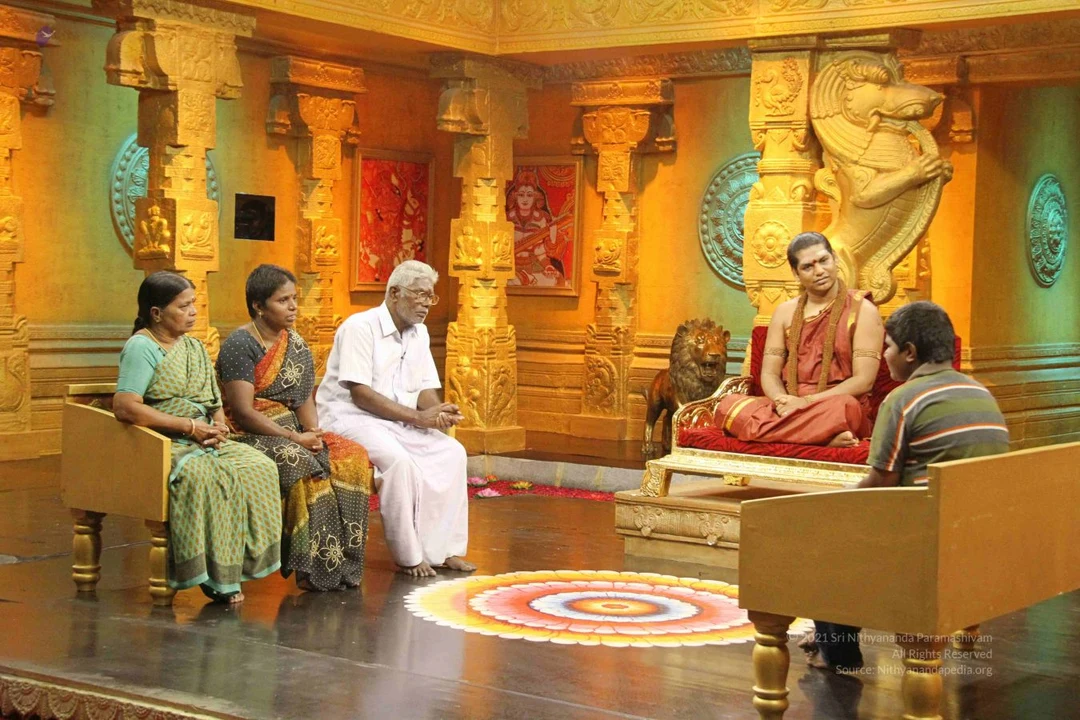
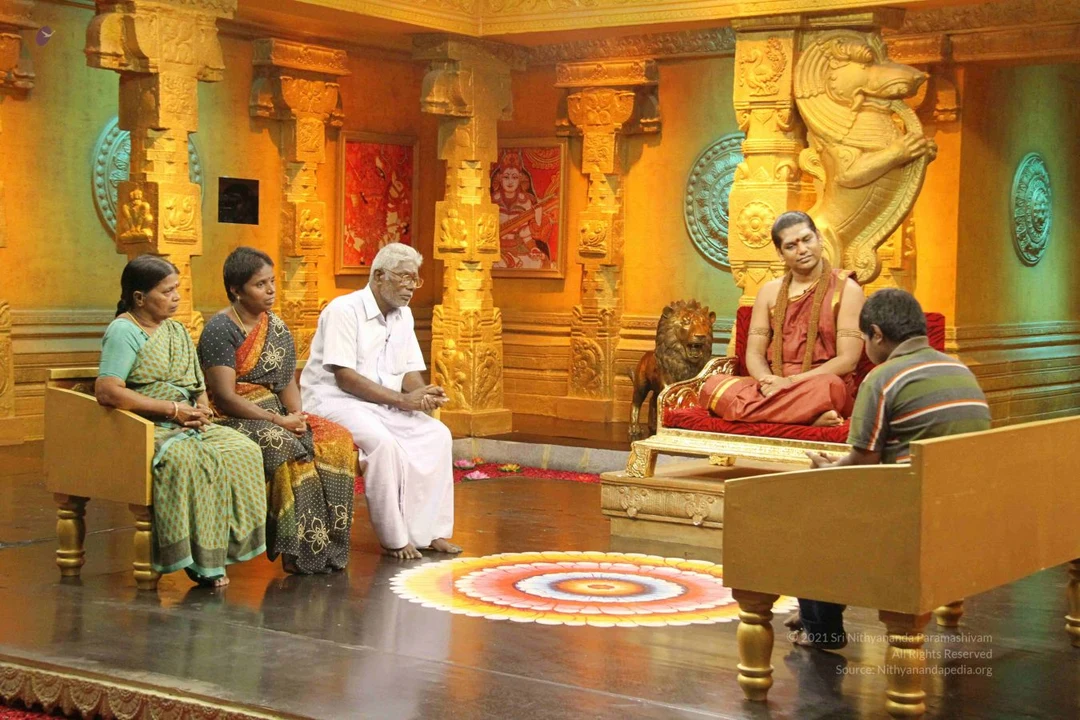
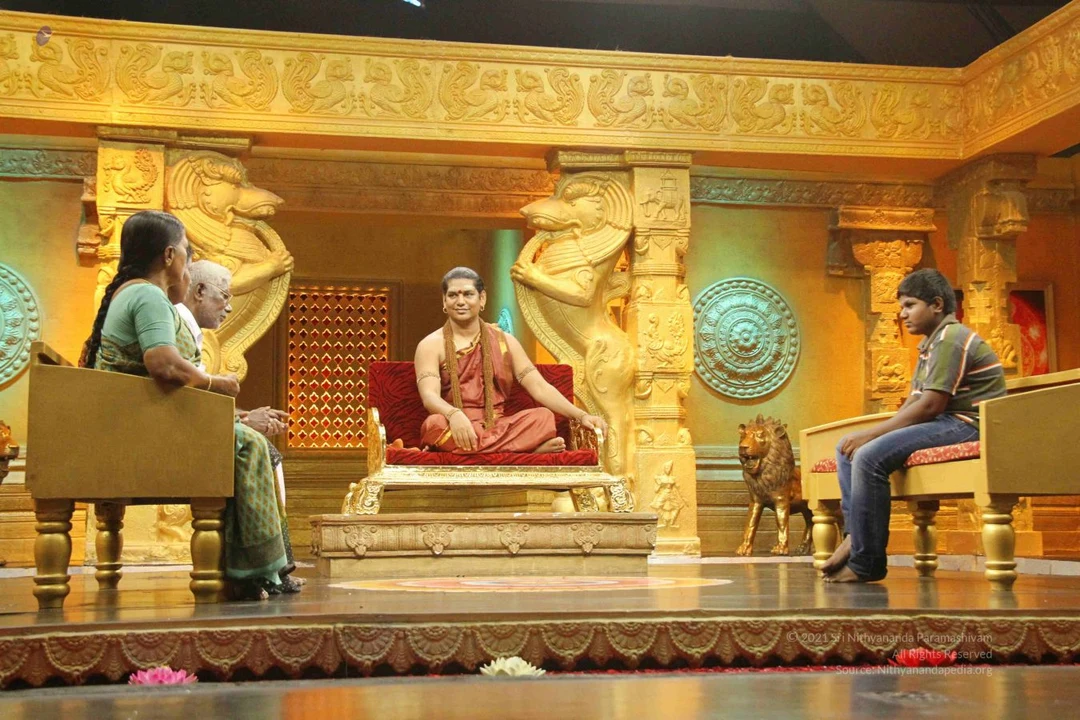
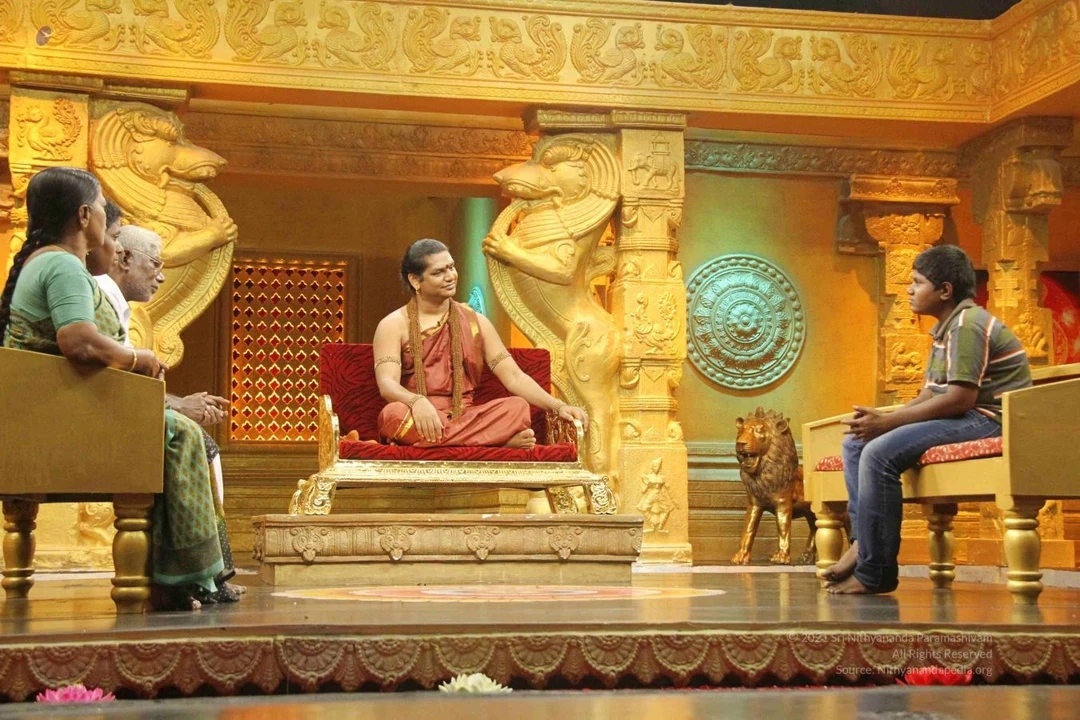
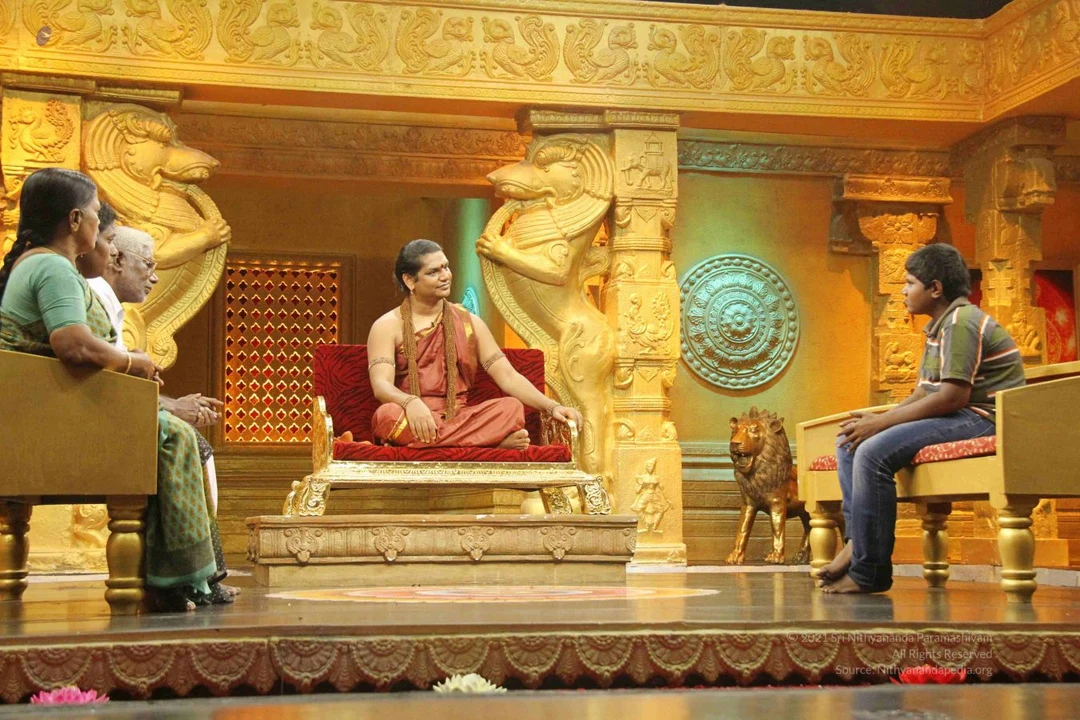
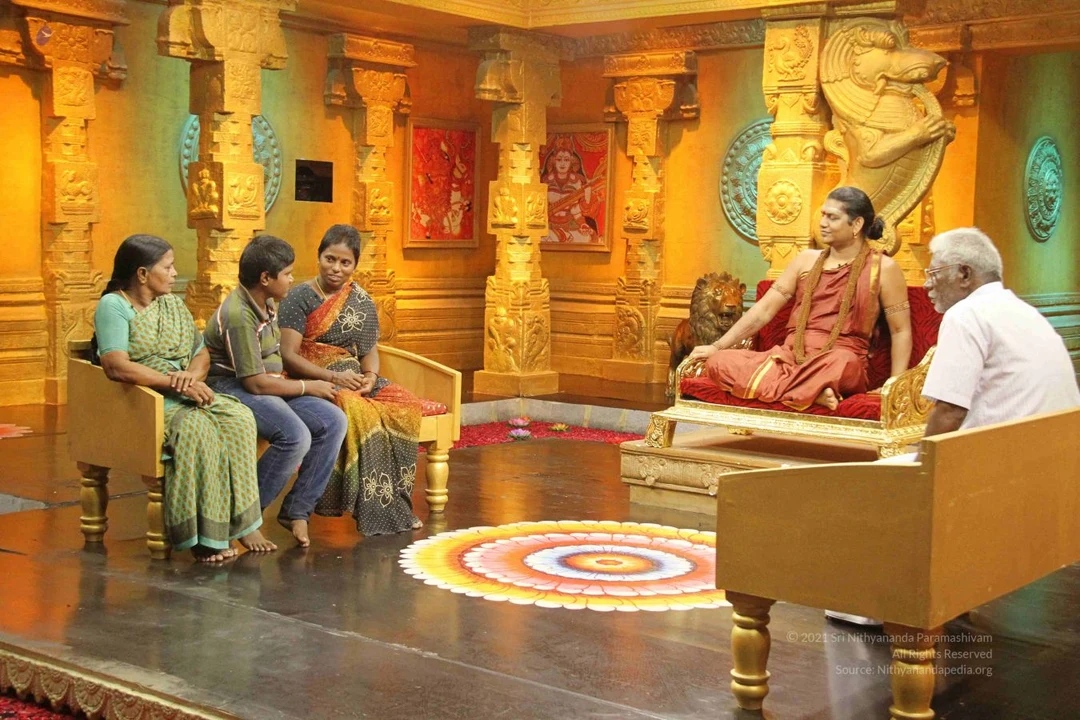
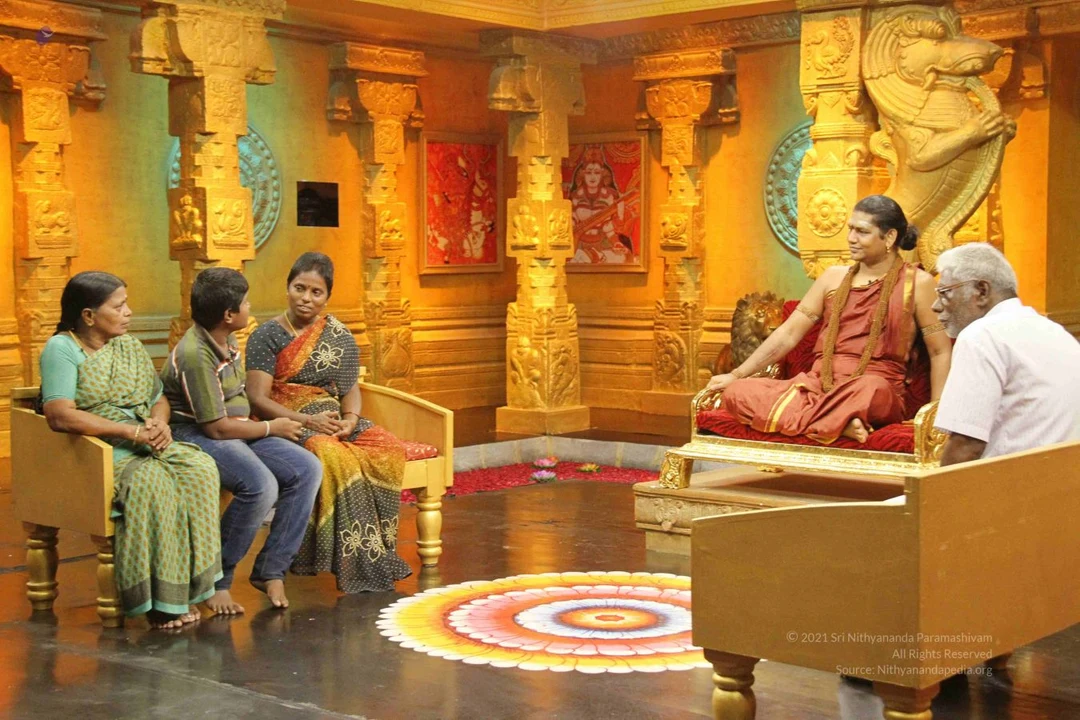
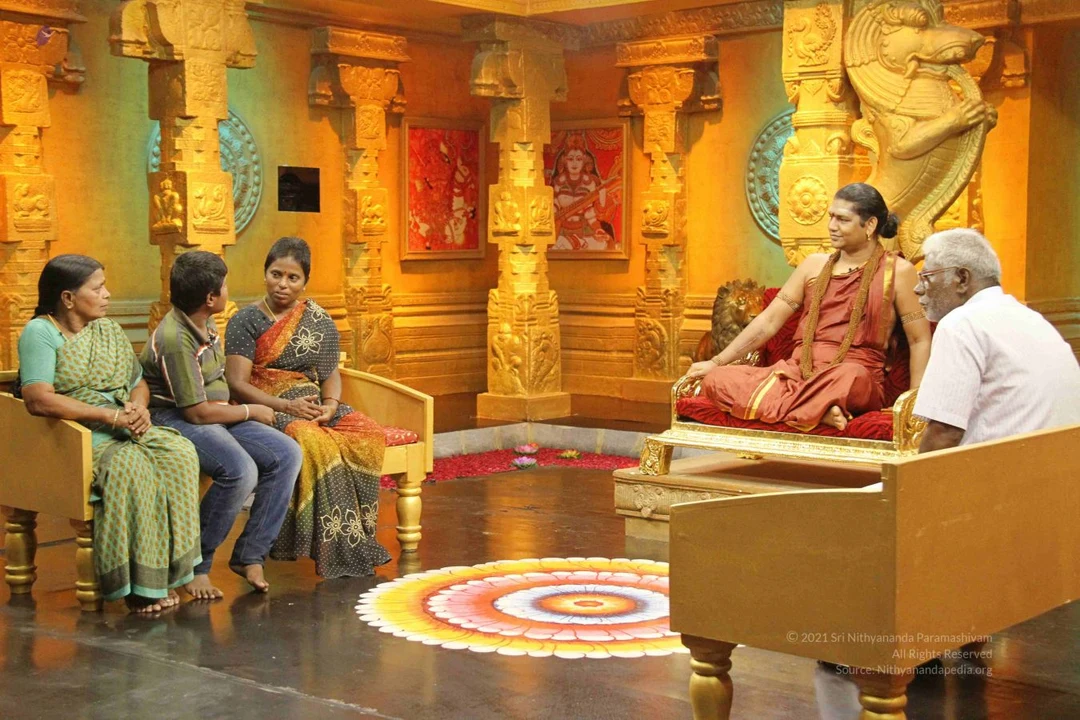
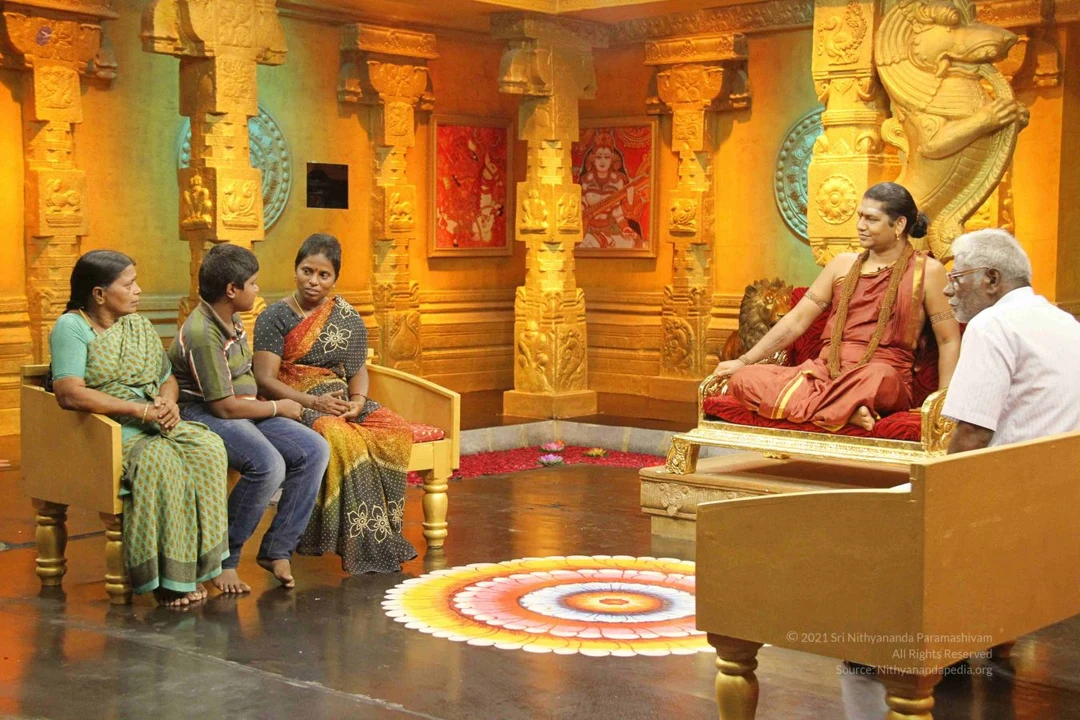
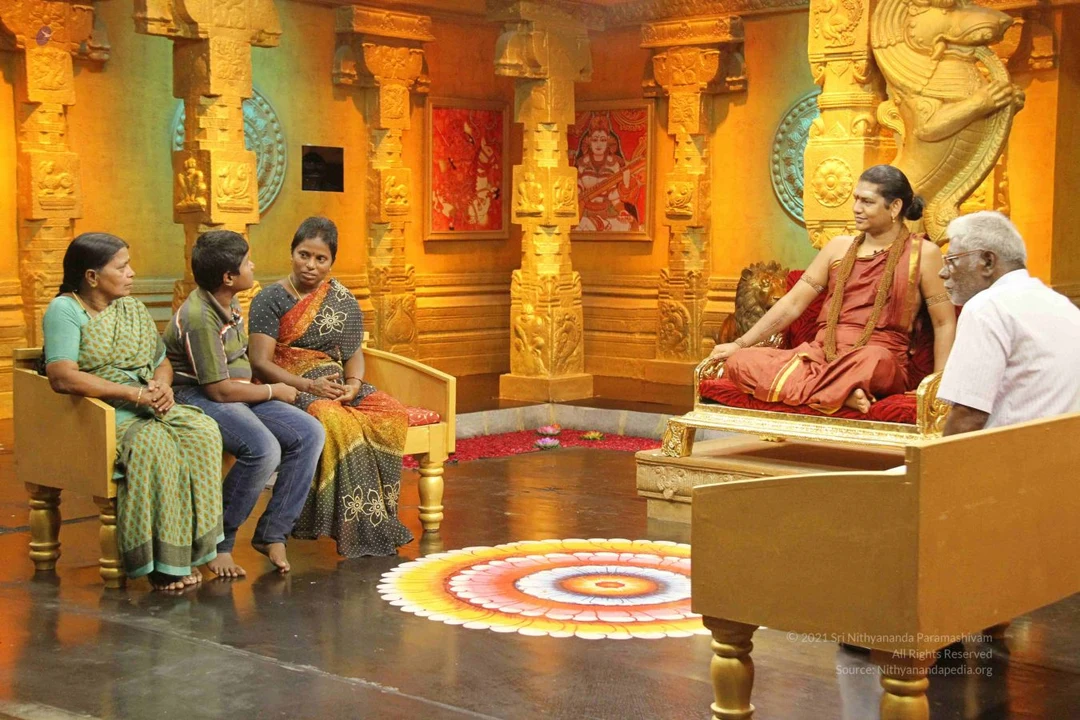
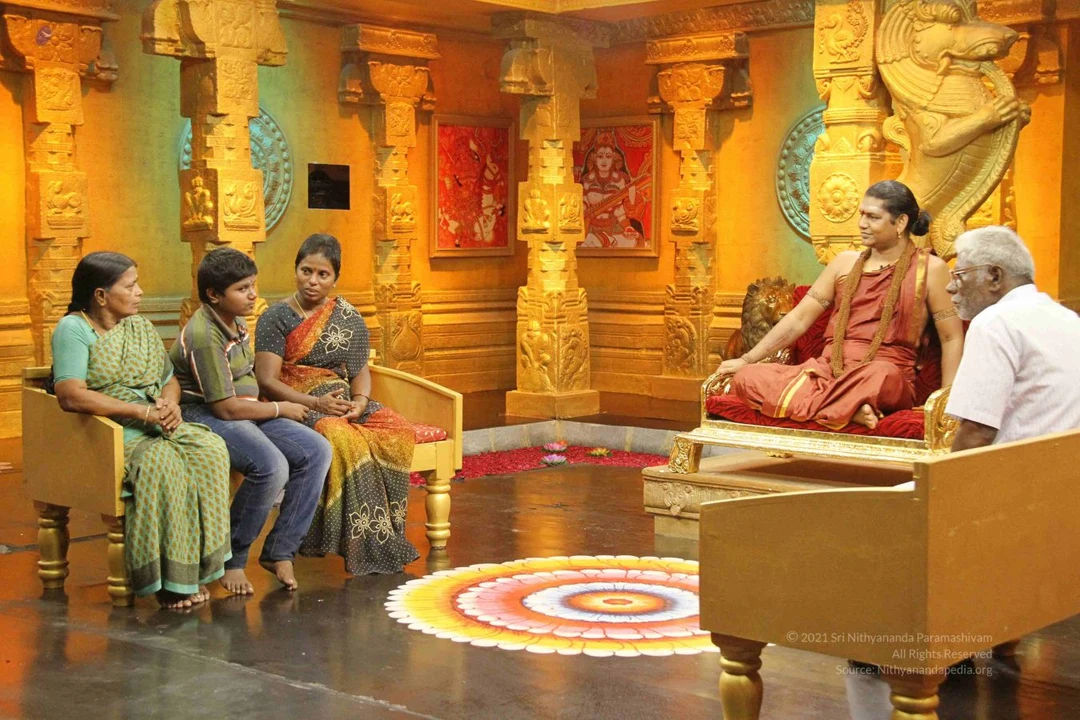
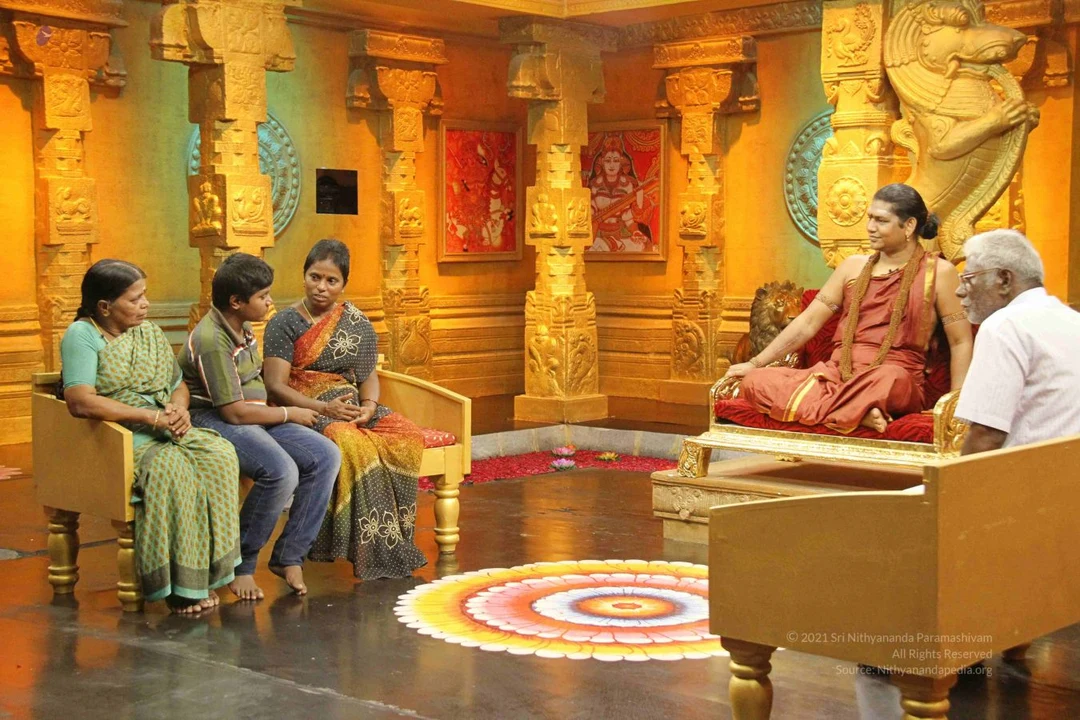
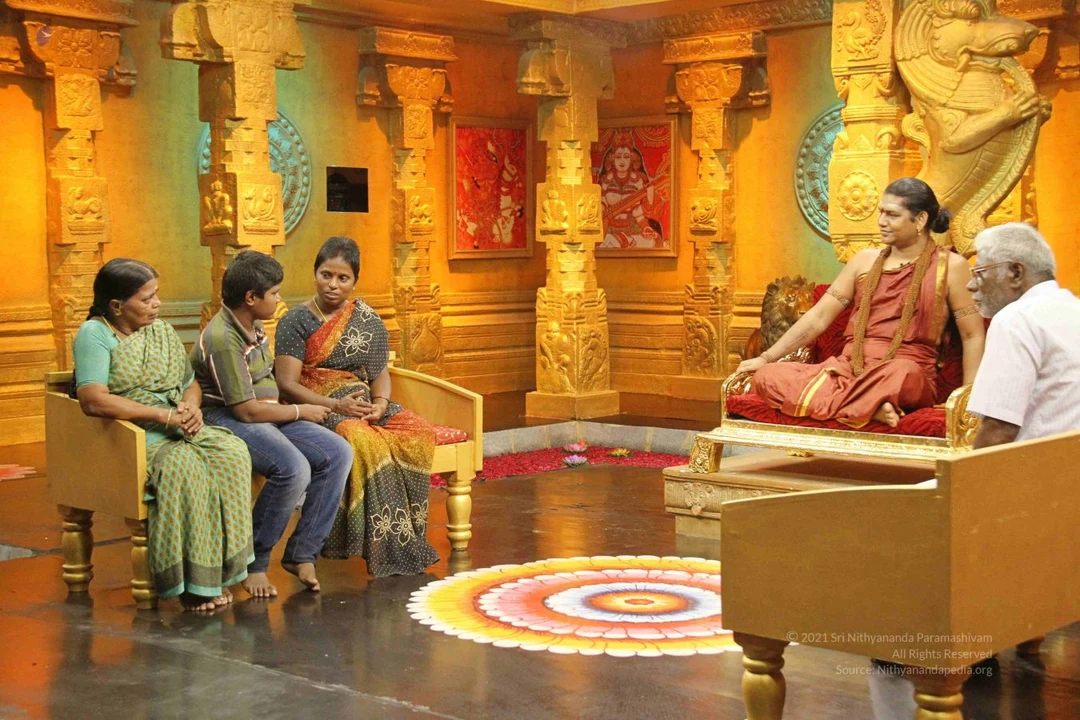
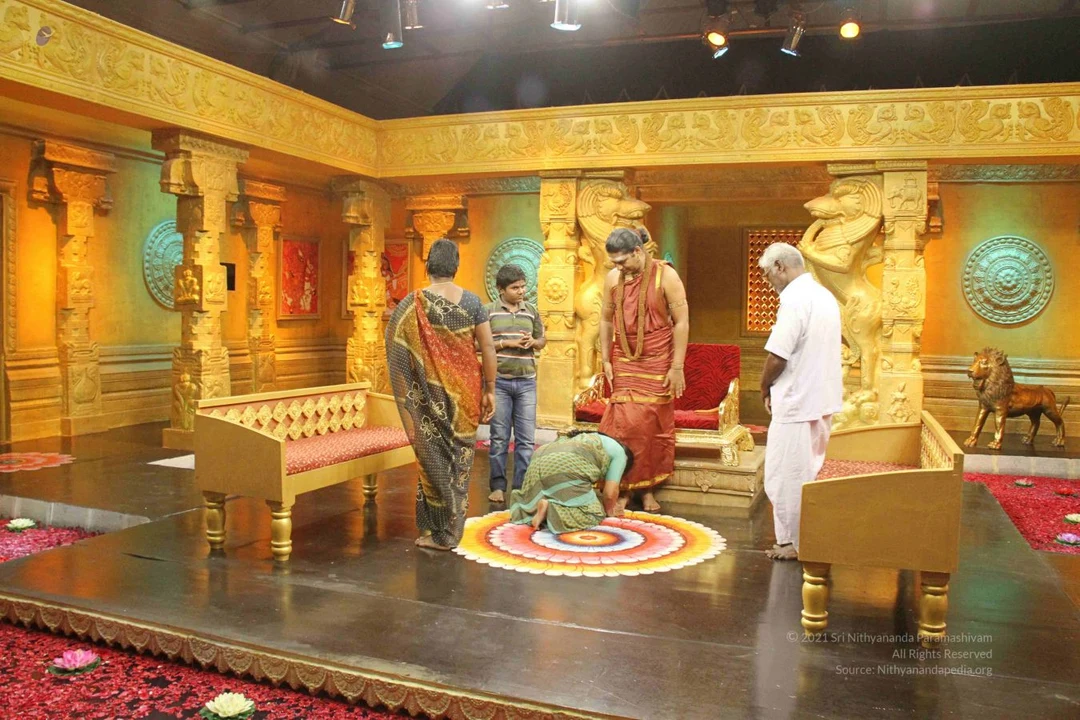
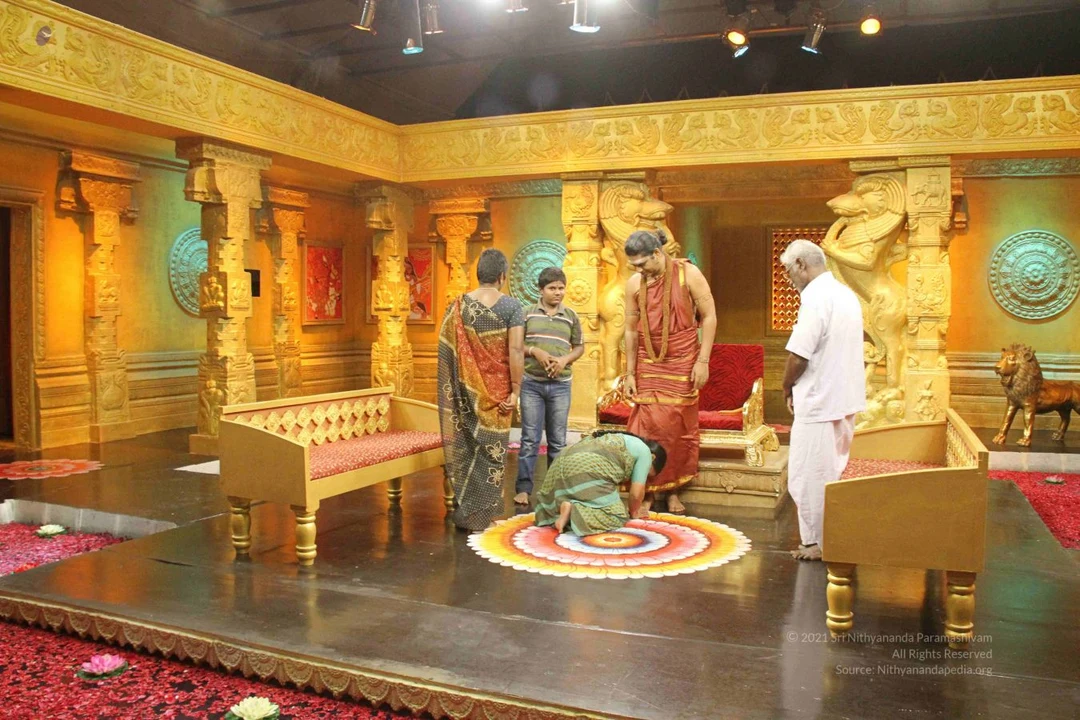
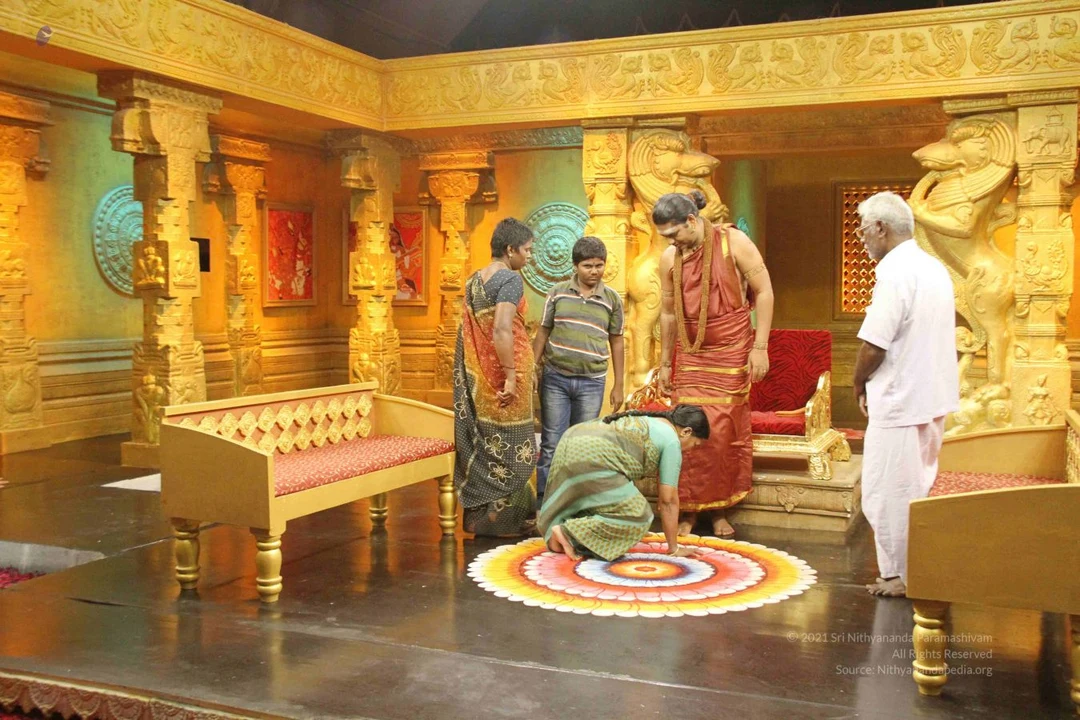
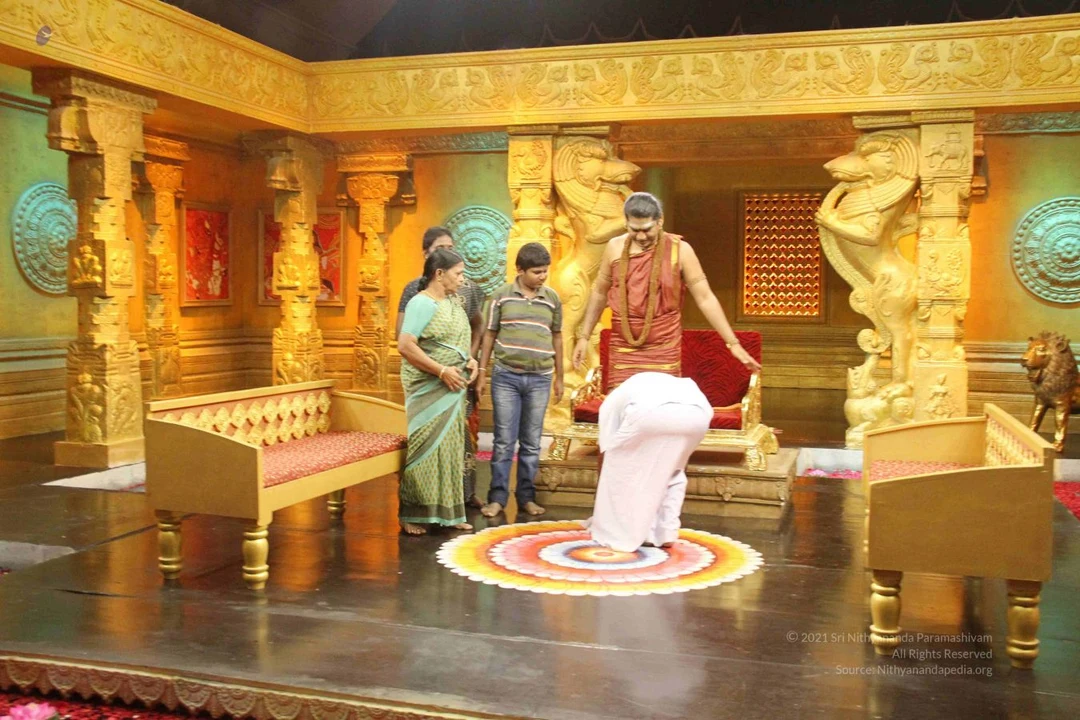
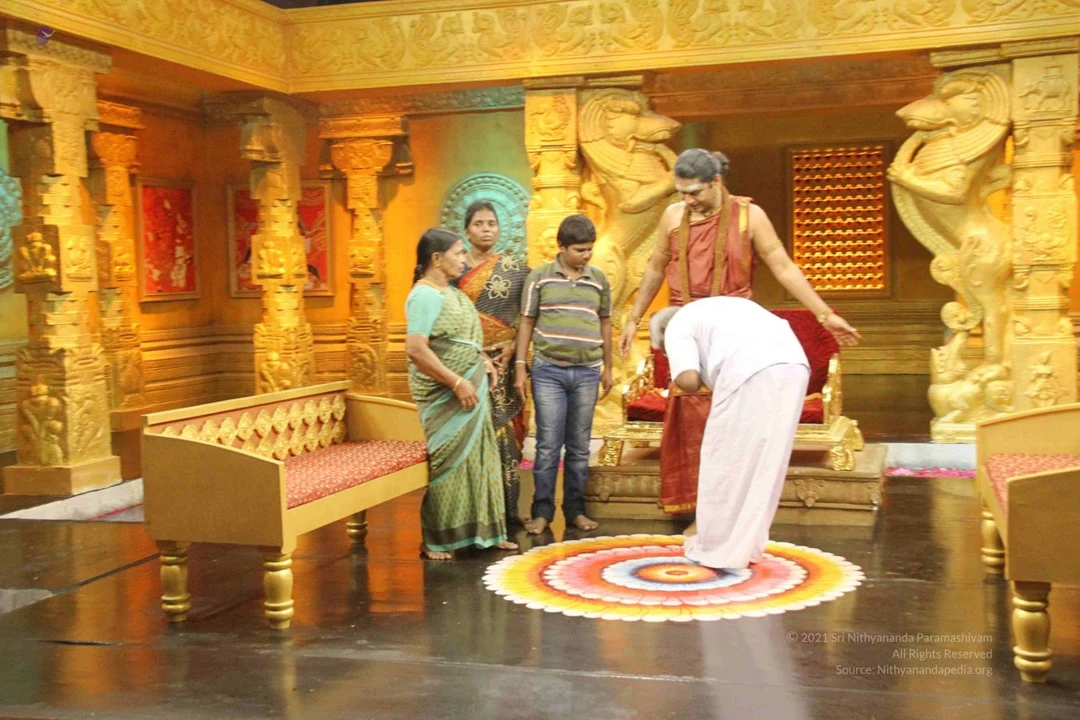
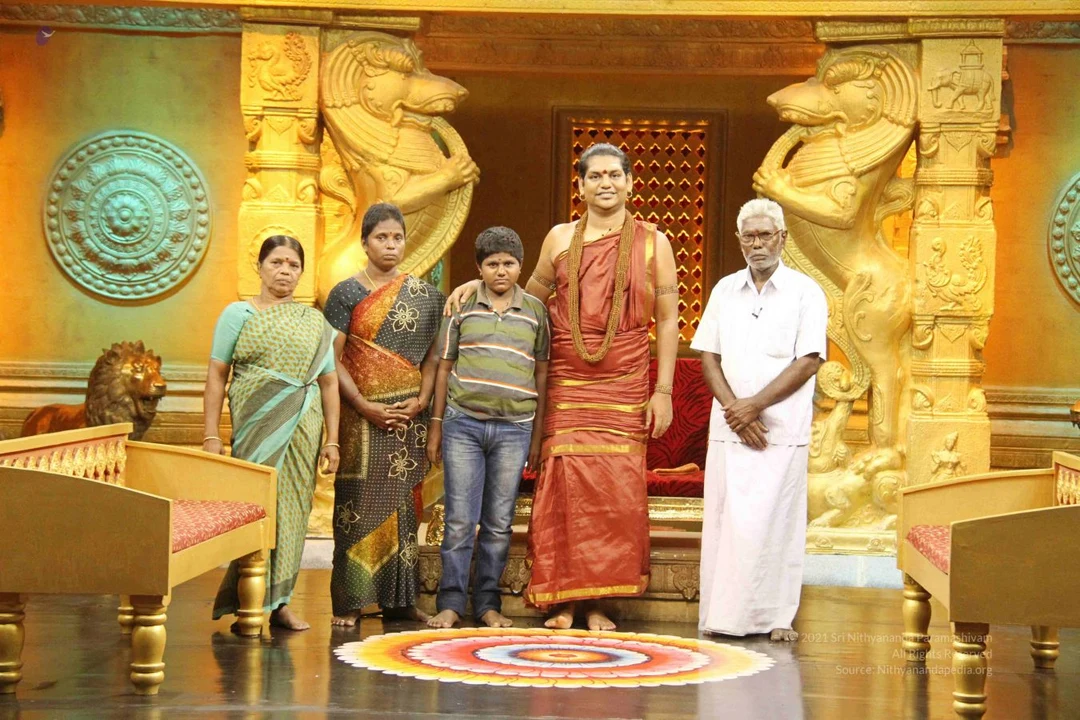
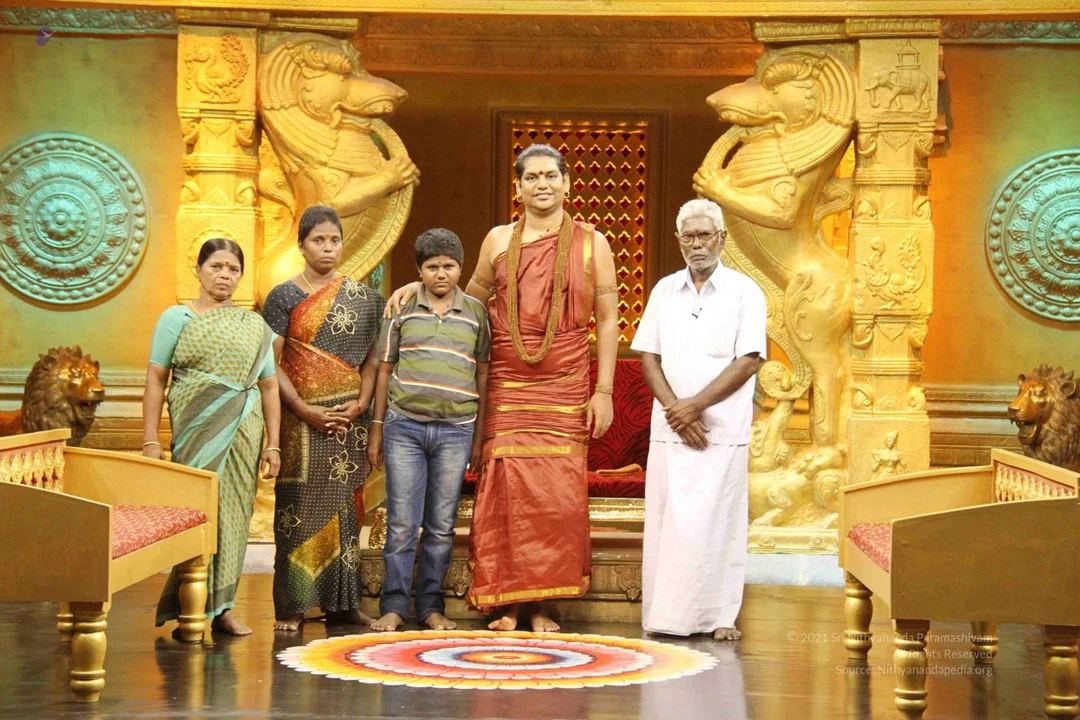
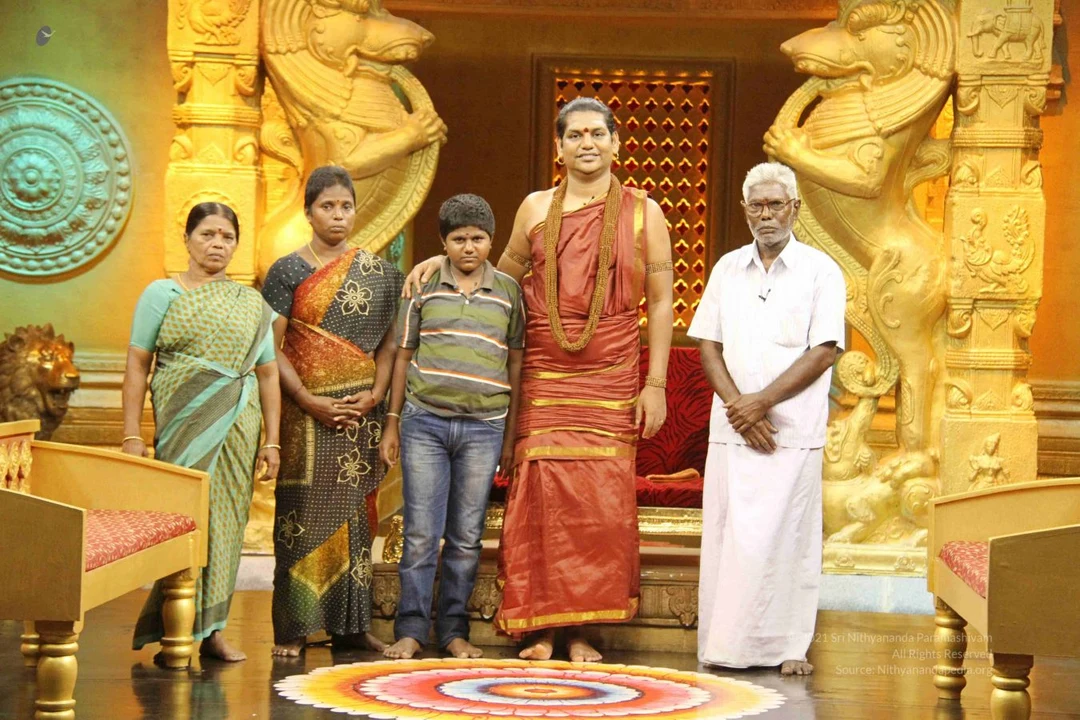
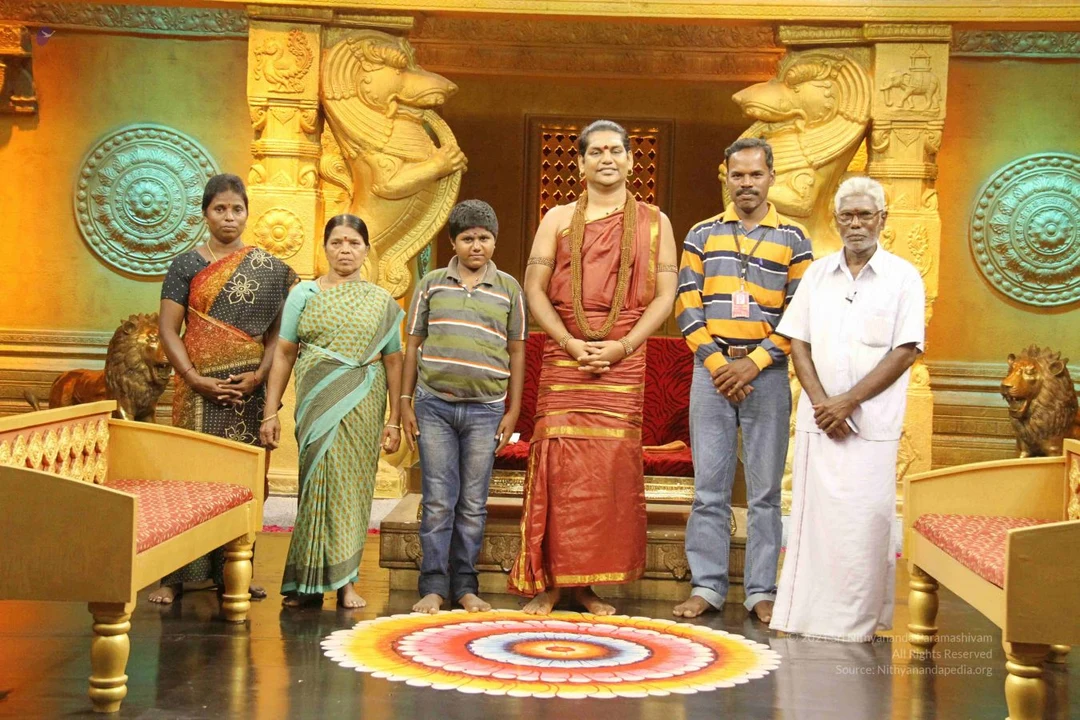
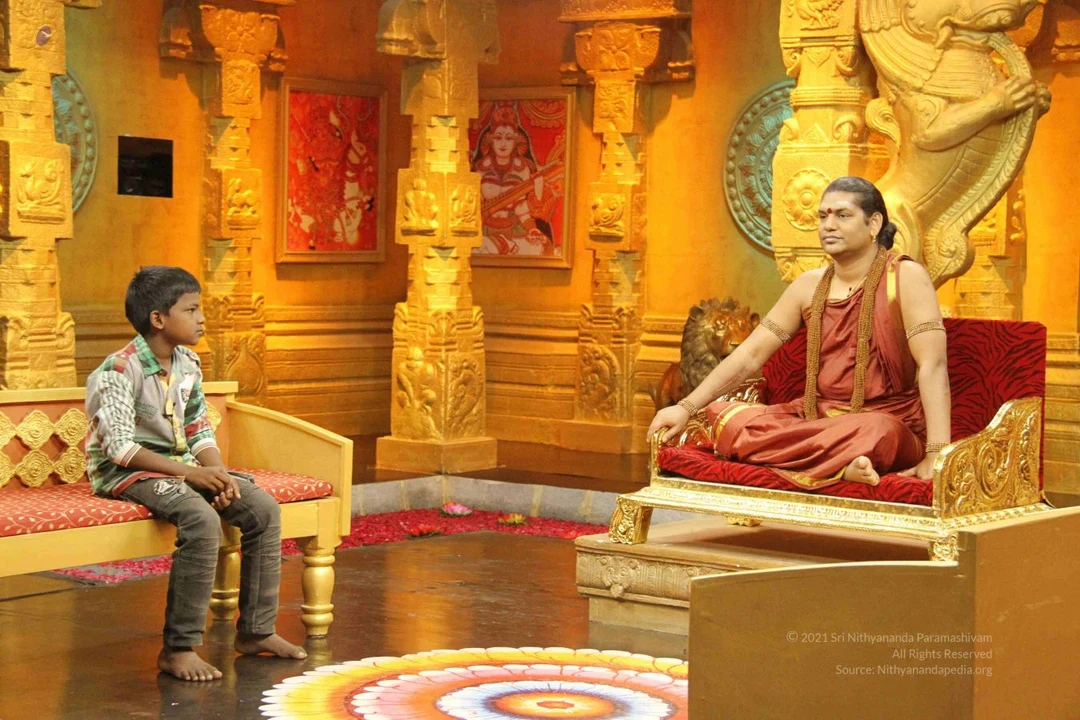
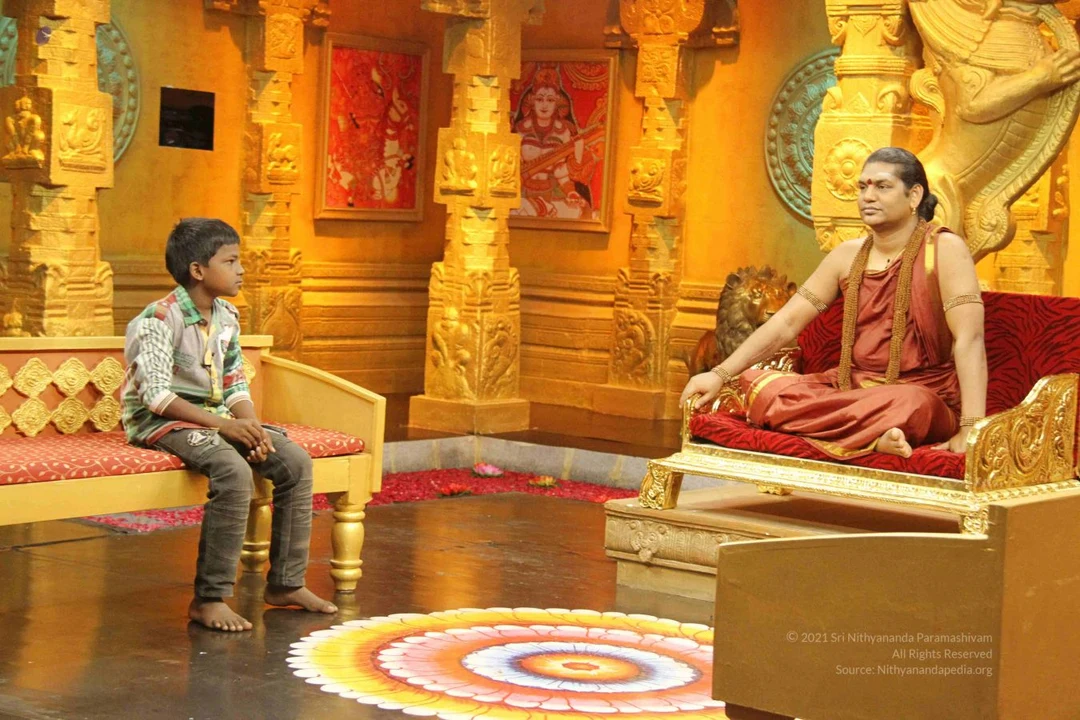
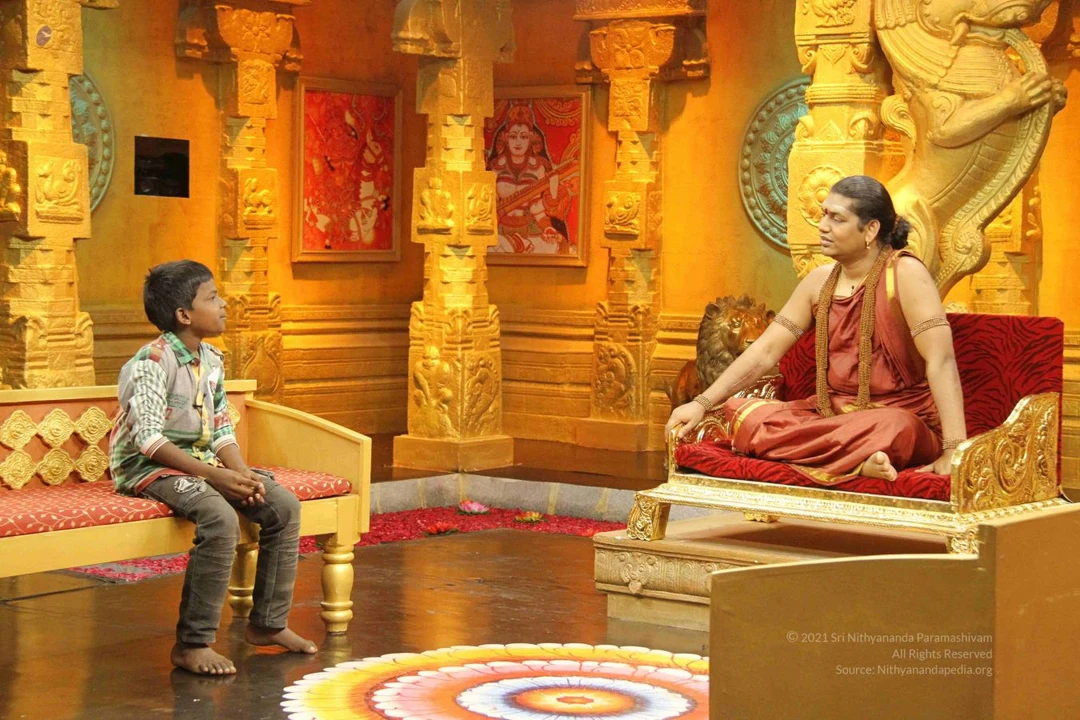
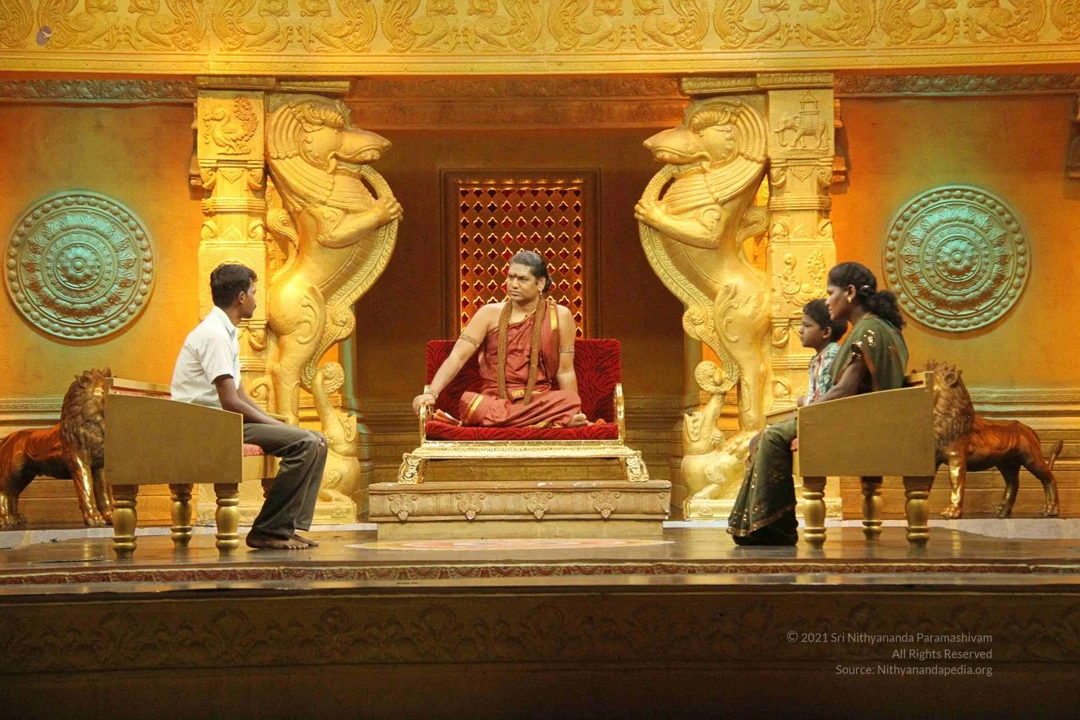
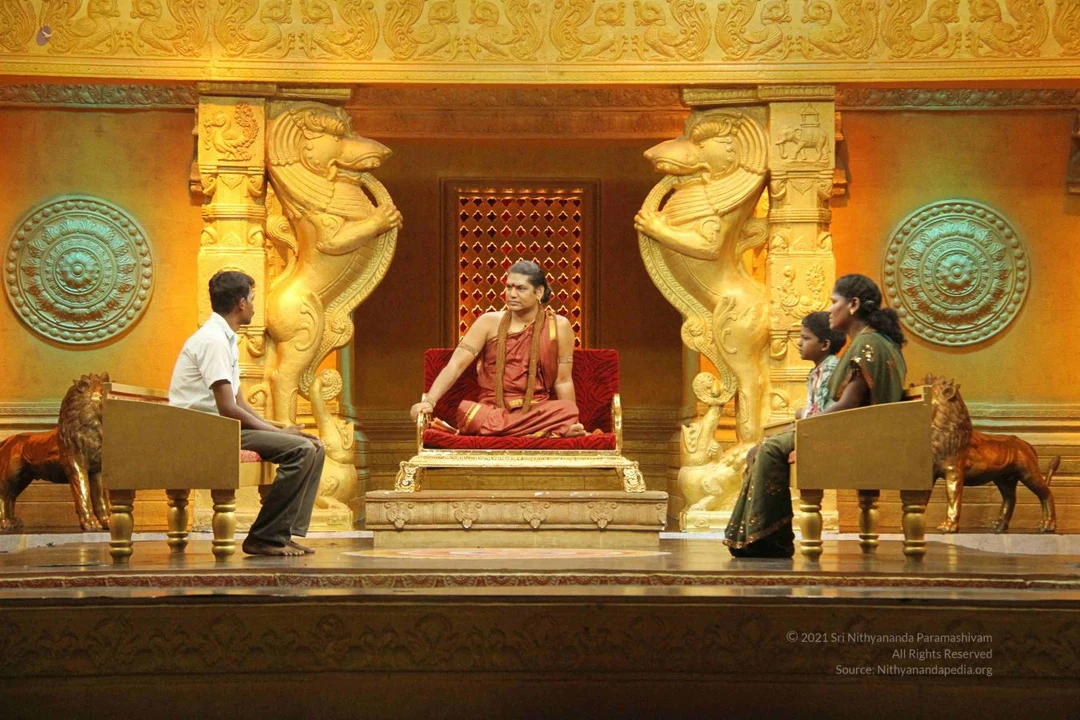
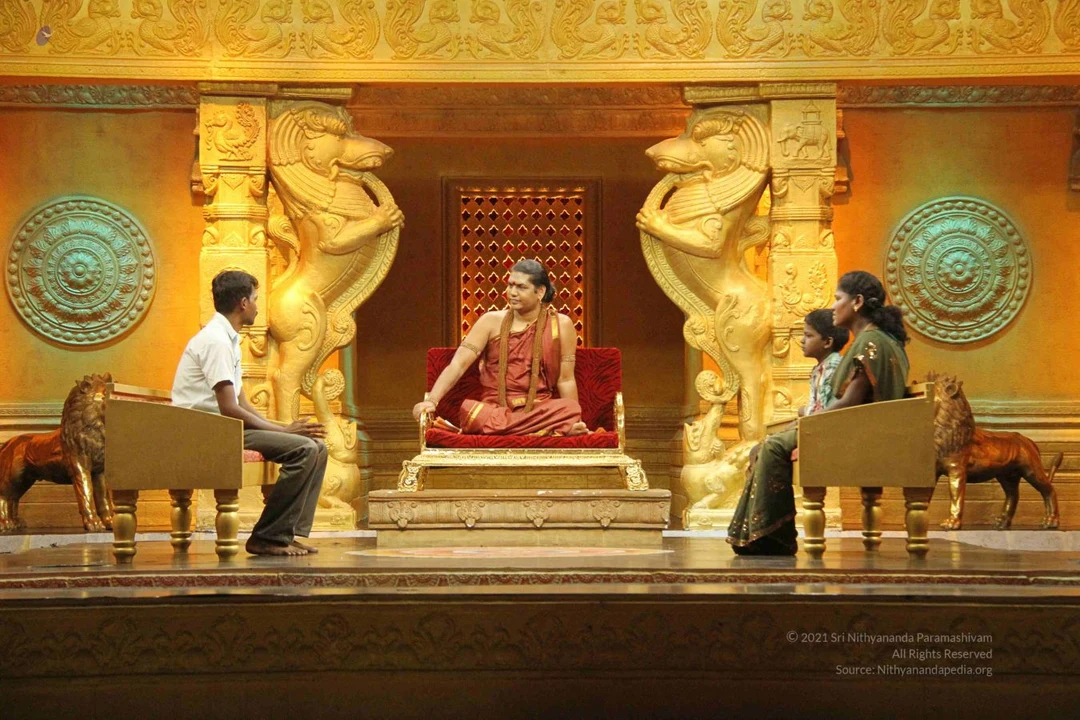
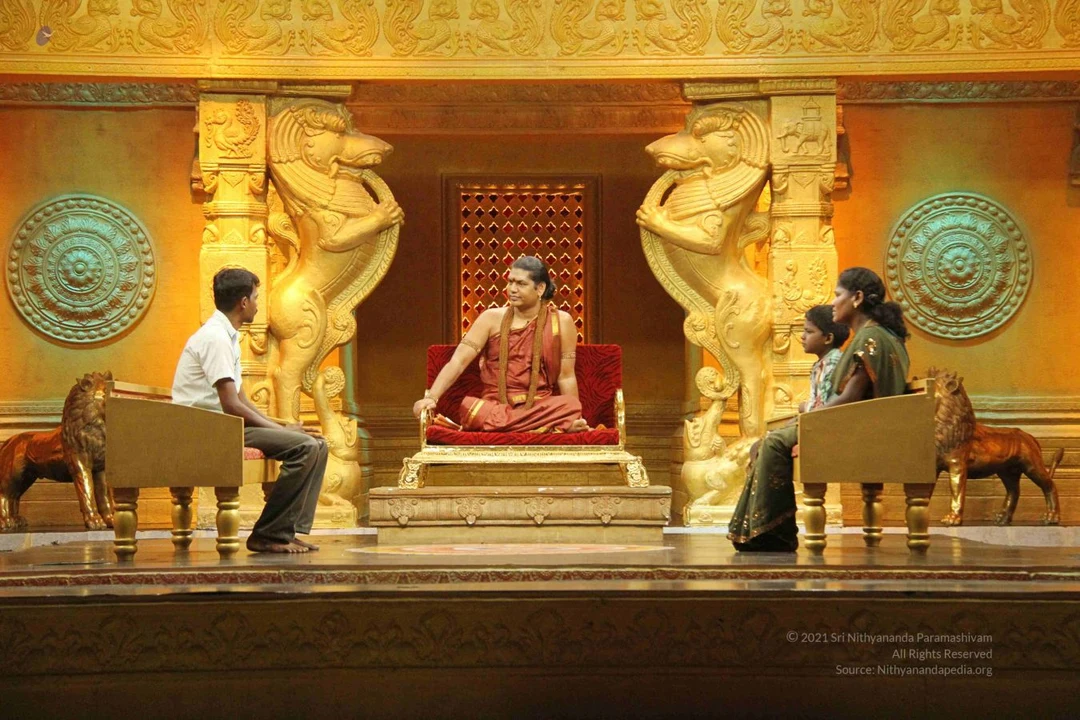
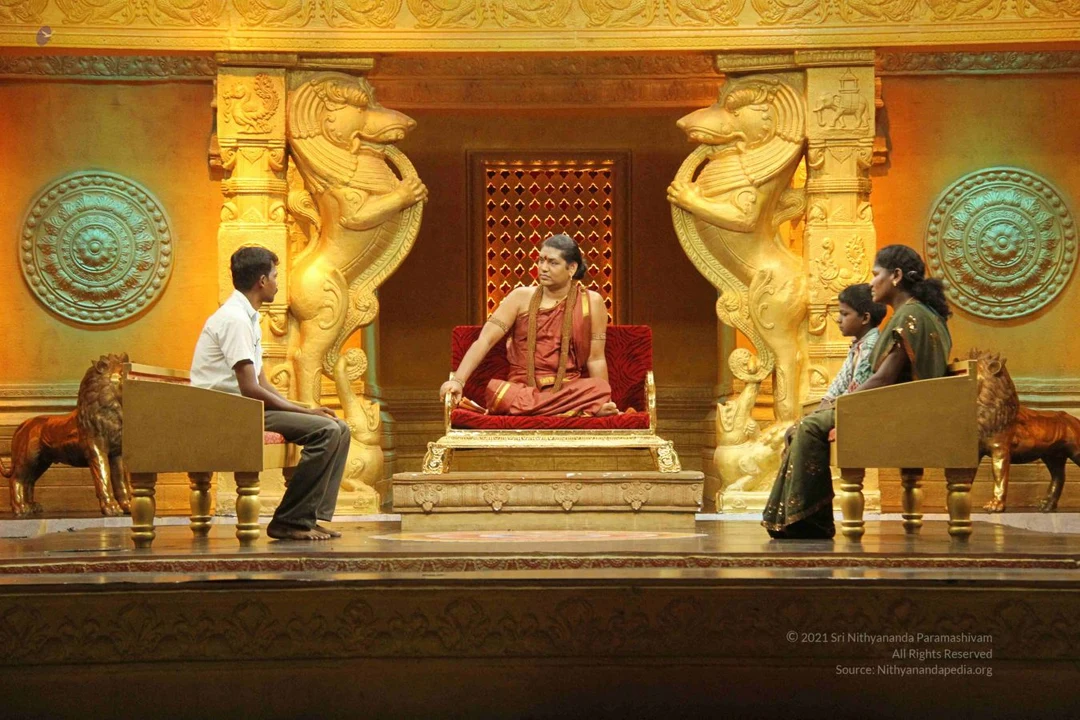
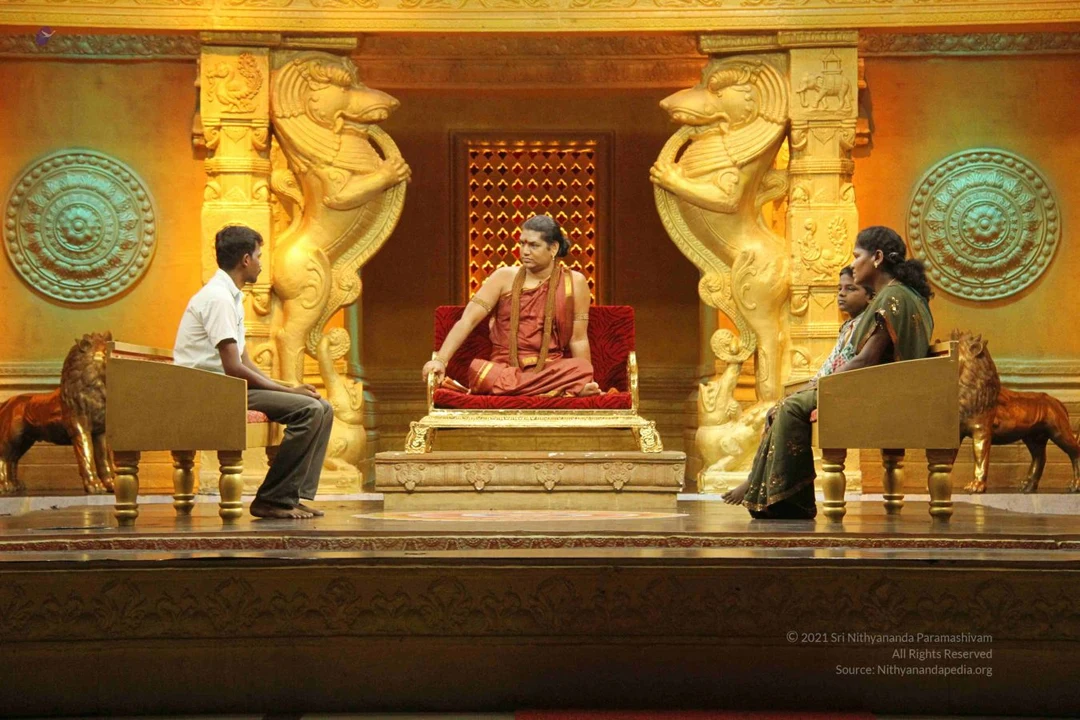
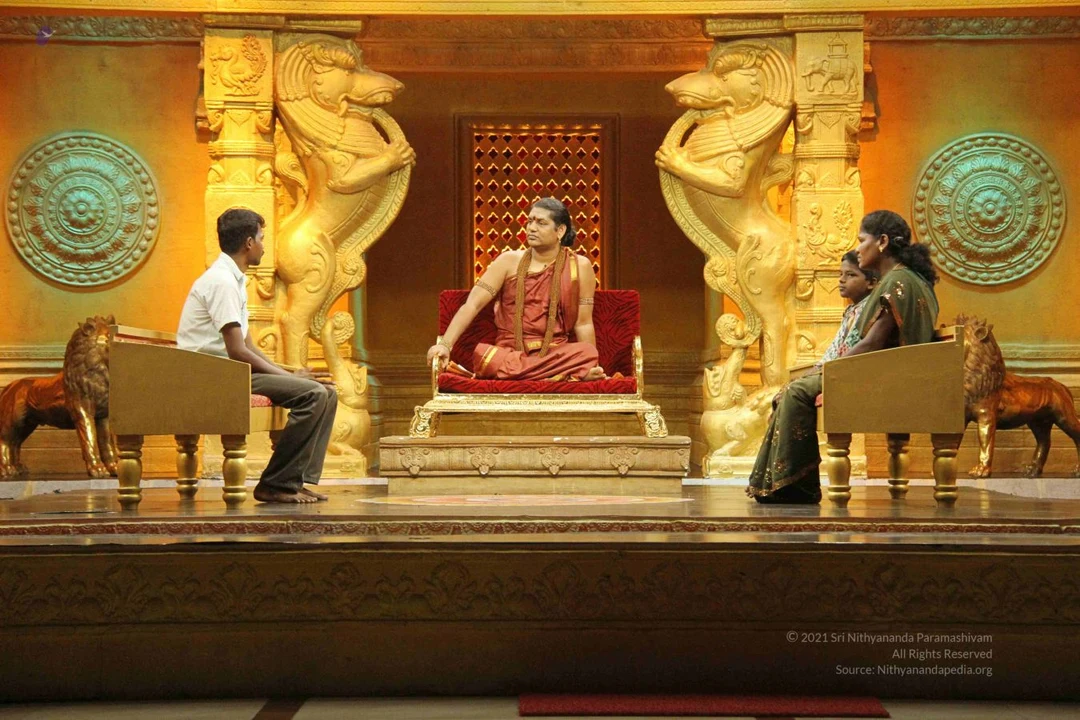
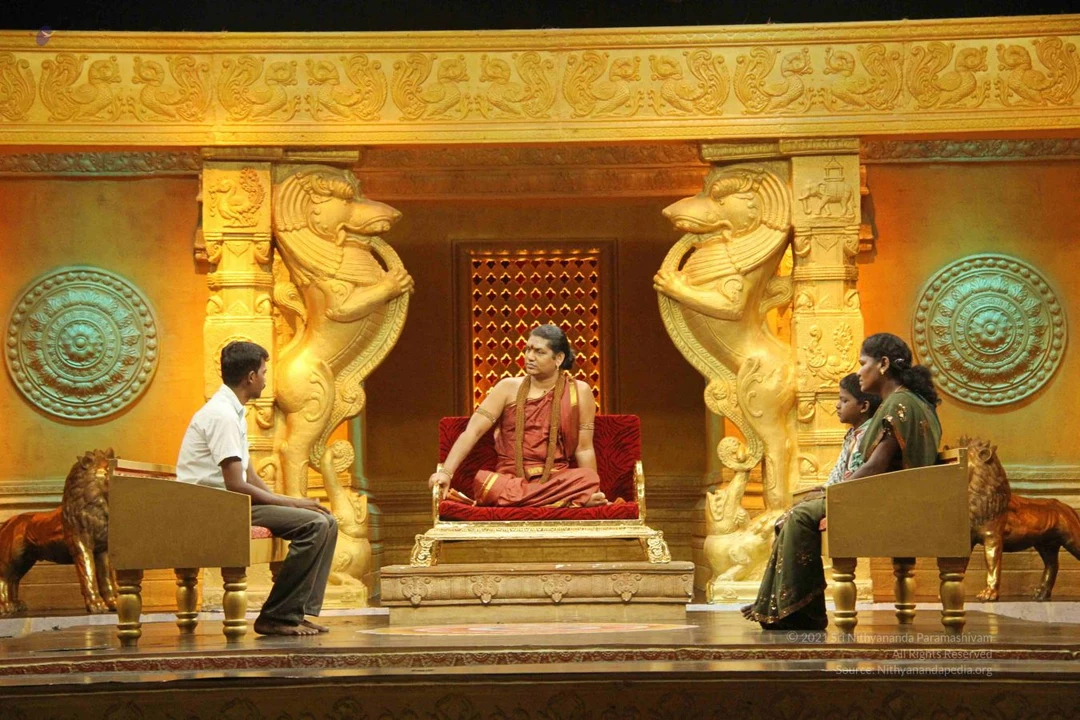
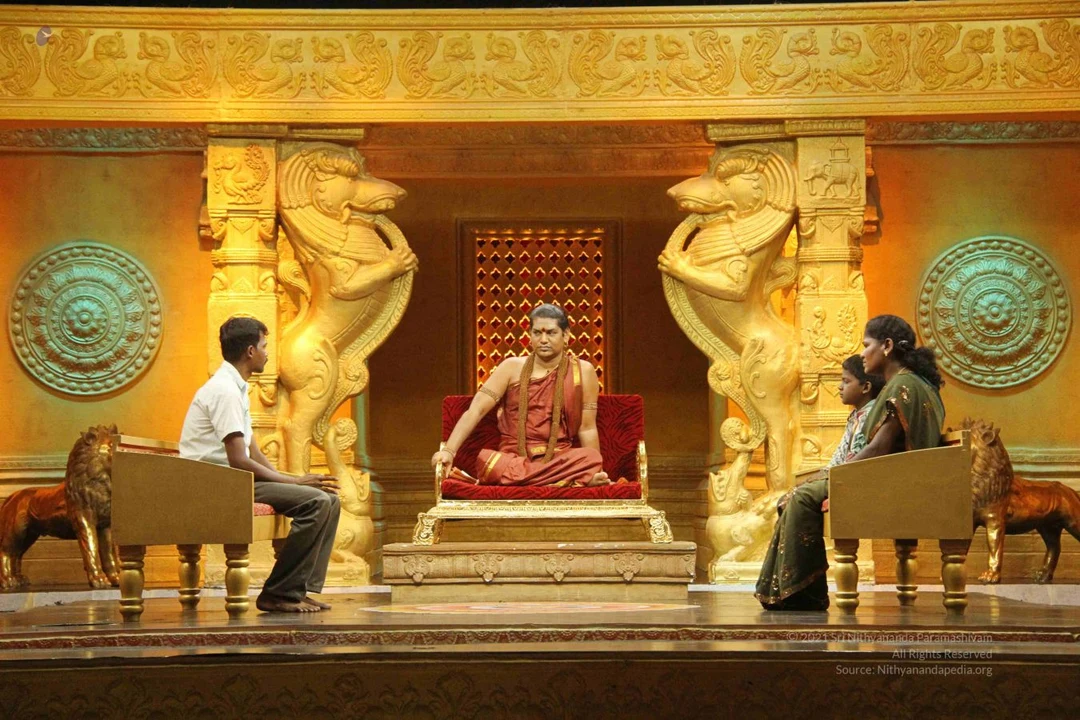
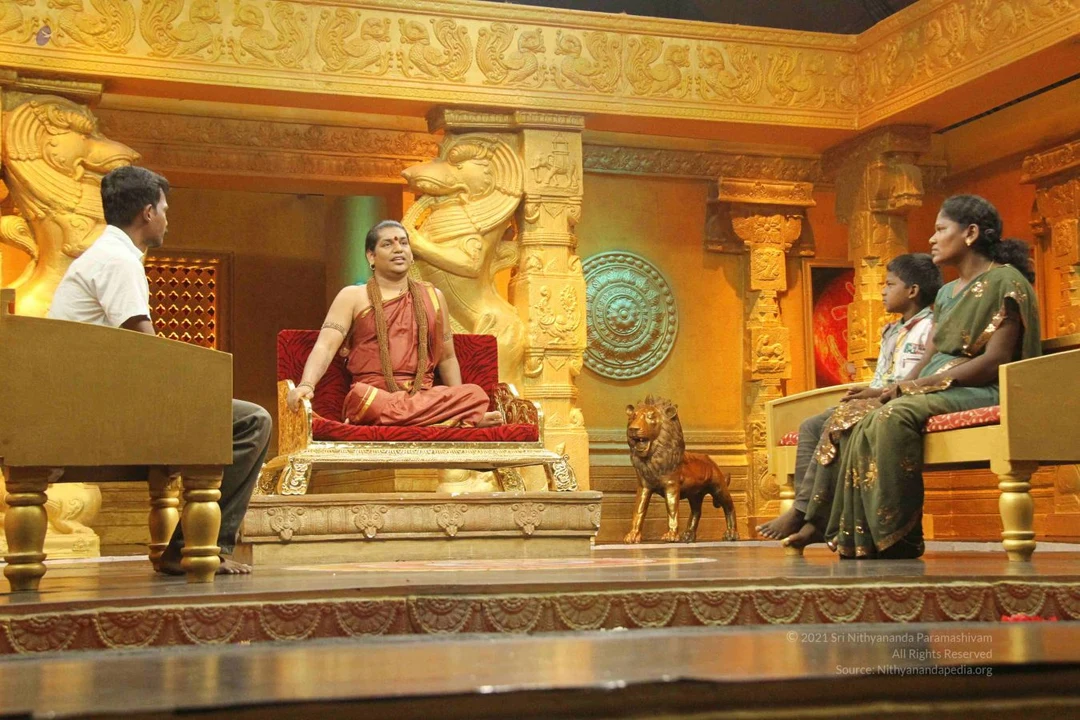
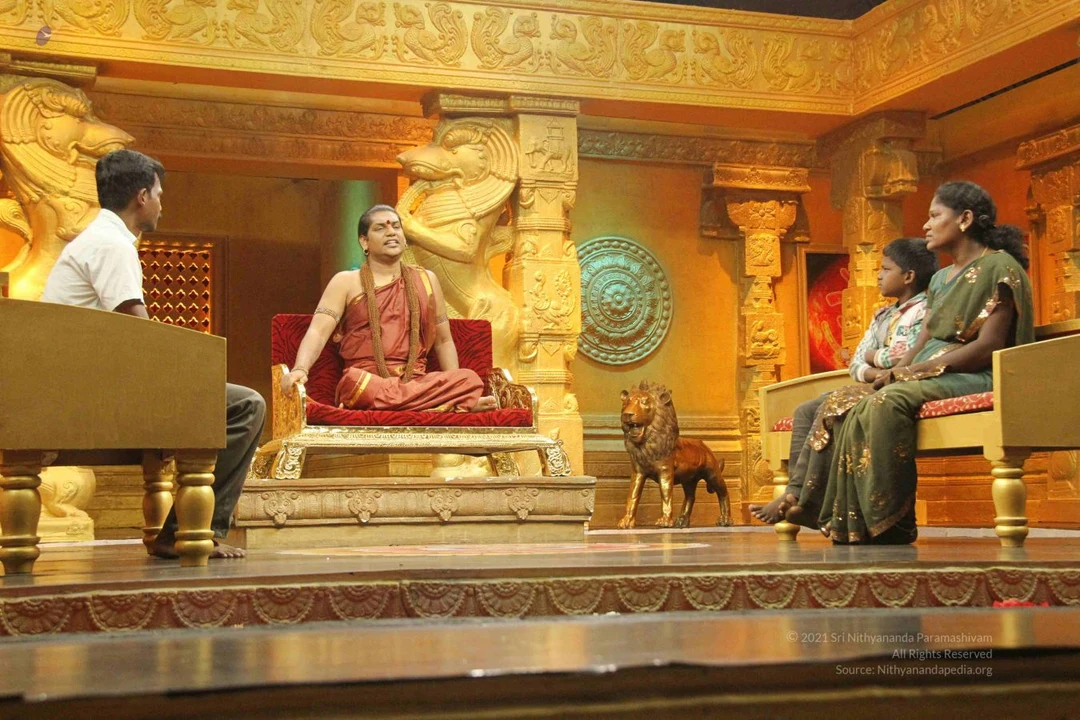
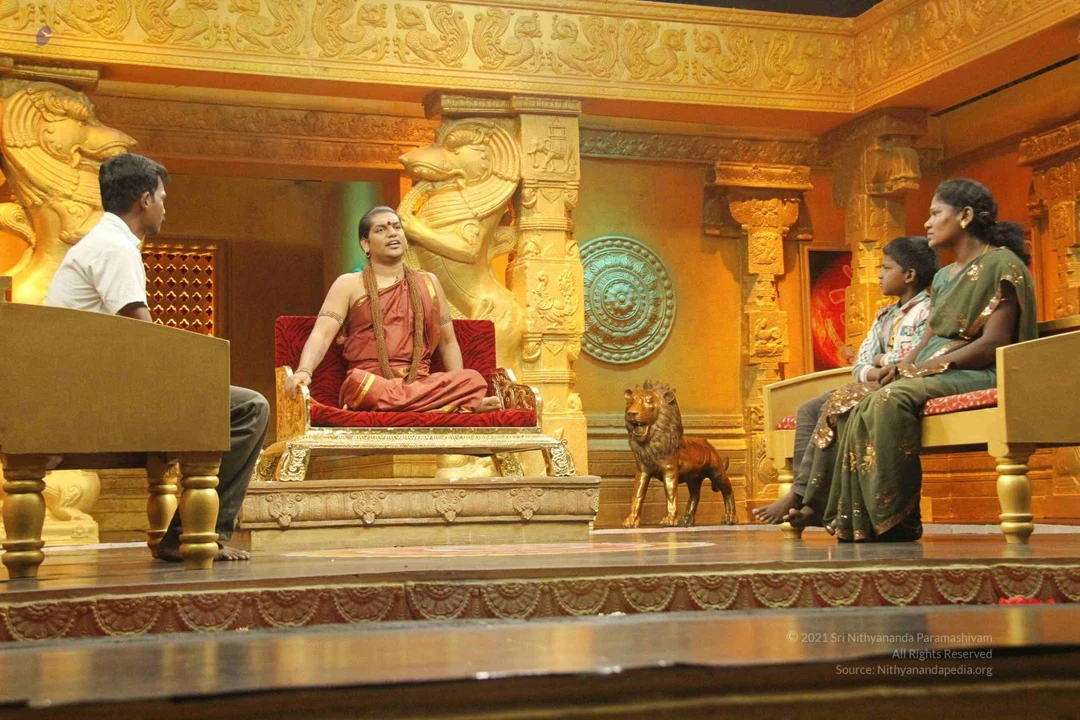
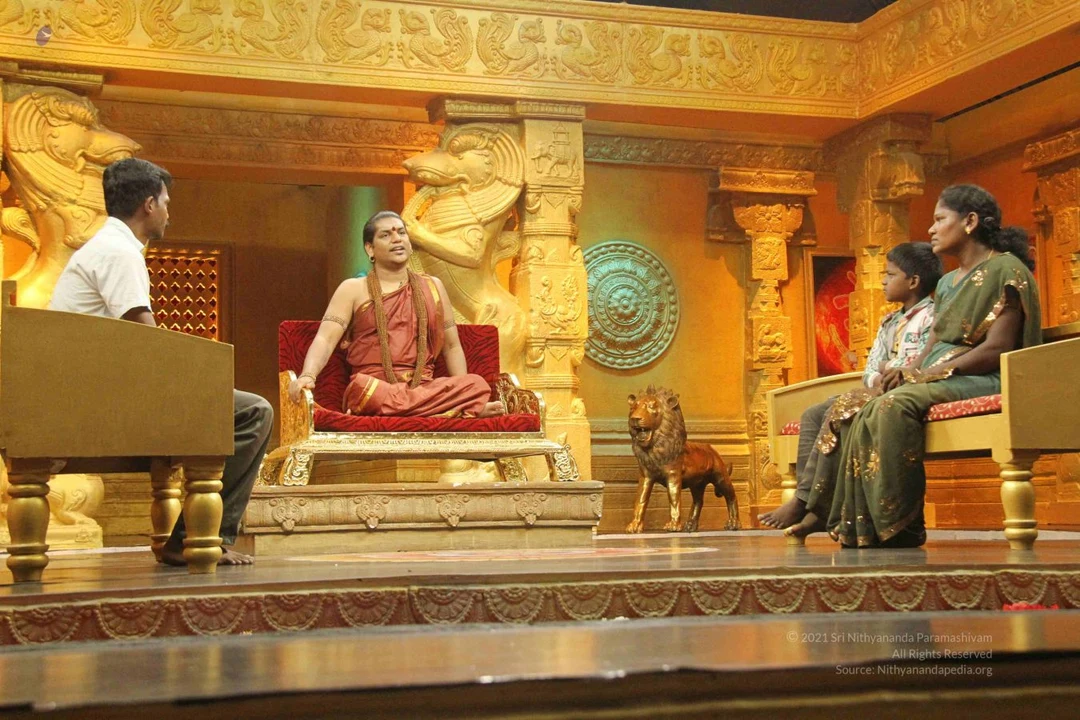
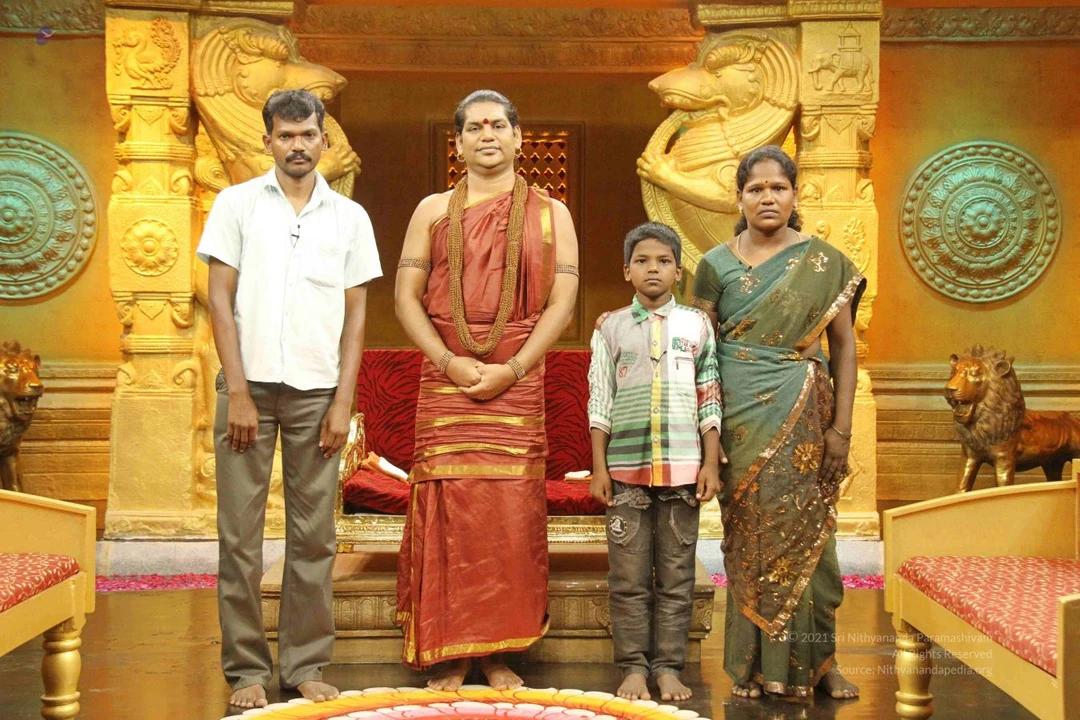
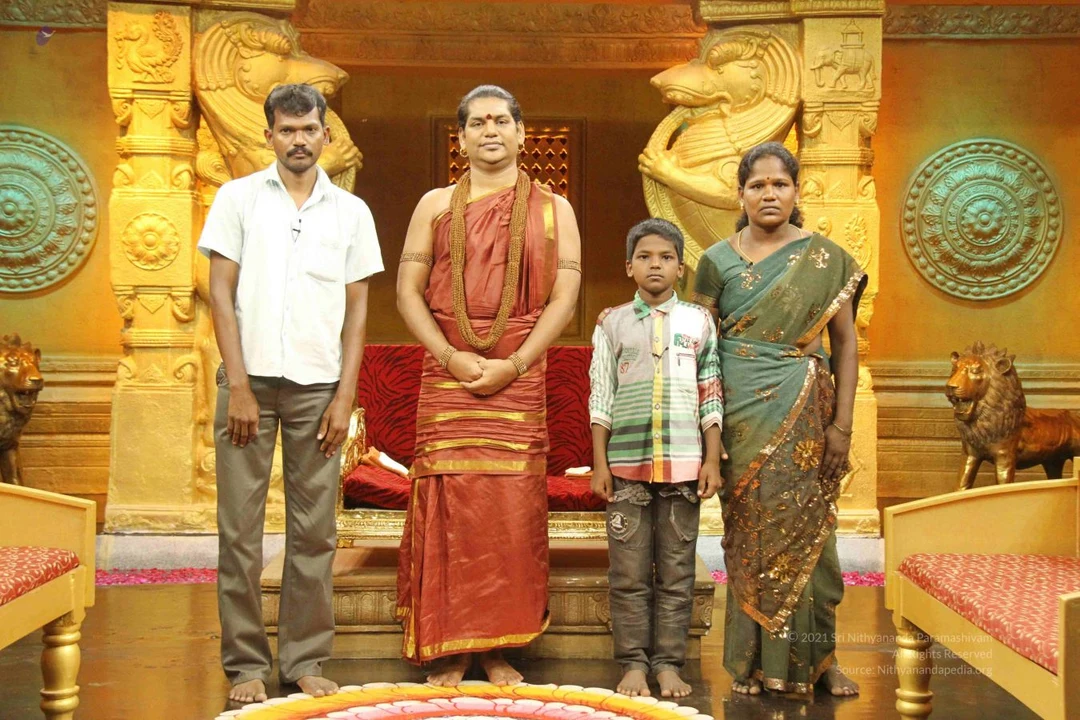
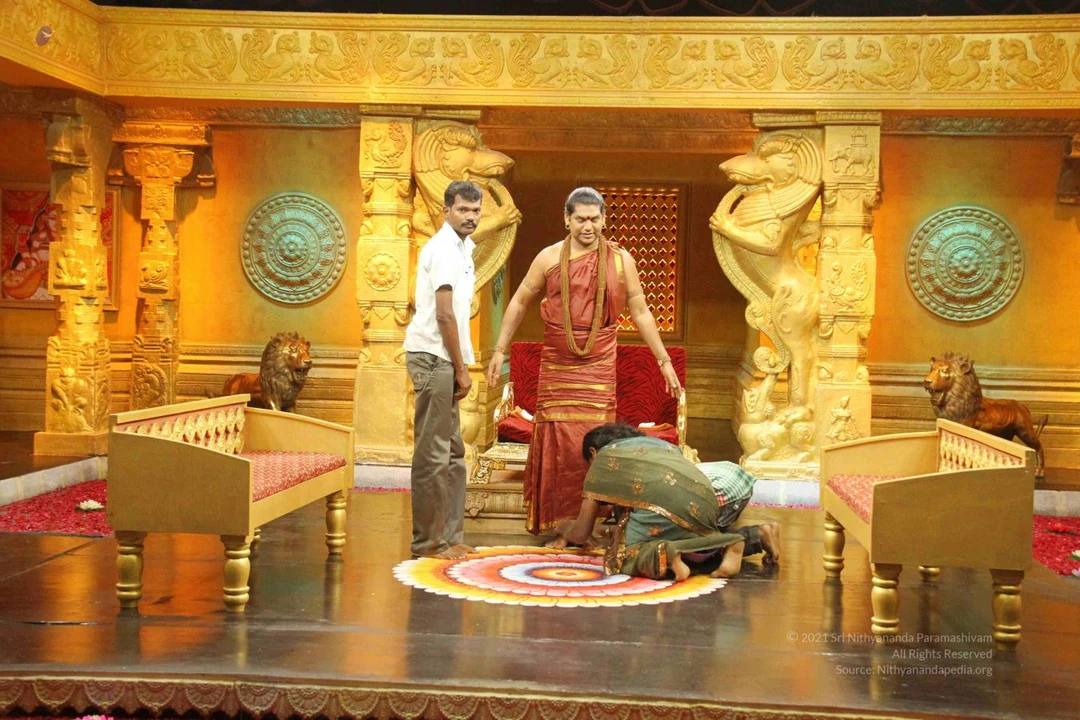
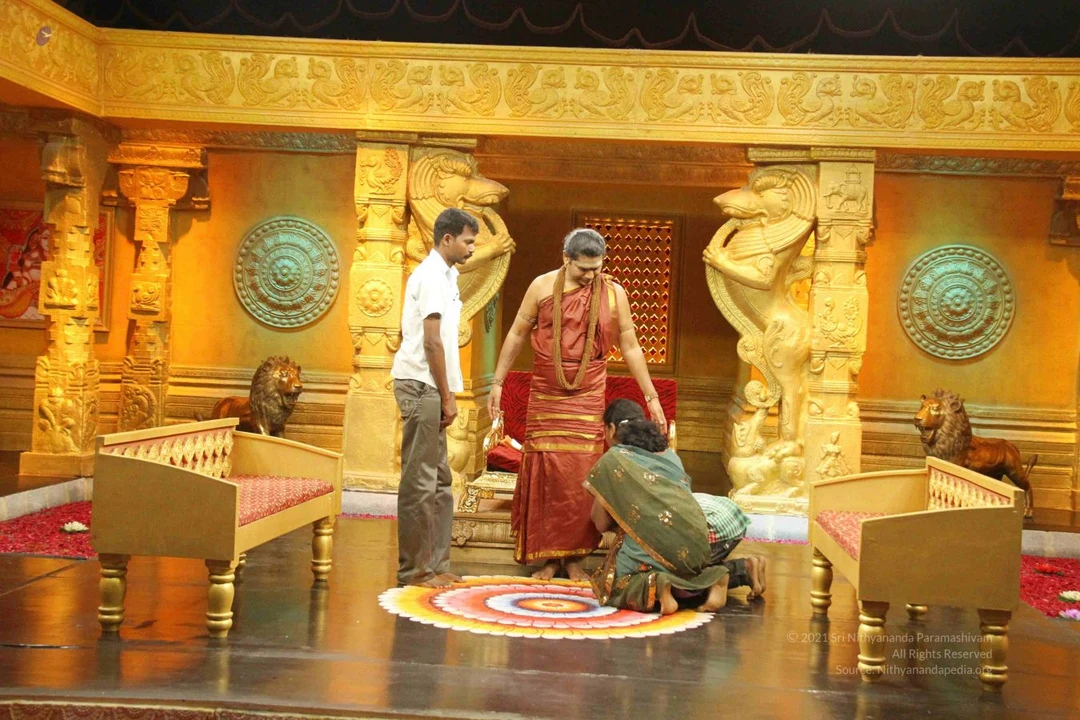
Please understand, yesterday I was having a shooting for the Nithya Dharmam reality show, the last two days overtime schedule, every day we are shooting two-three episodes, because, you know that I’ll be in Bali for almost the next twenty-five days. One nice thing is that these guys have managed this time in such a beautiful way, that I’ll not be missing the satsang even for a single day, even on the days when I’m traveling. The flights have been booked in such a way that I’ll not be missing the satsang even for a single day, when I’m going to Bali or coming back from Bali. Because I’ll not be available in India for twenty-five days, we are continuously shooting.

I could see, just not having a simple intelligence about life, the amount of suffering people cause to themselves! What they cause to others is one, but the amount of suffering they cause to themselves is unimaginable! Just because they can’t tolerate one word, they are ready to give up their whole life’s earnings and go and live somewhere in a small corner! I am talking about the fight between husband and wife. After fifty years of living together, just one word.....and this lady says, ‘No! I am going somewhere and living!’ This guy says, ‘I am going somewhere and living!’ What about the wealth they earned together? Not only wealth, even the moral support they gave to each other! For almost fifty years, whenever one person has a problem, he immediately thought the other is a mental support. That is also earning! Trust! And now both are ready to put themselves in a constant suffering because they can’t handle one word! Because they can’t handle the suffering of one minute, they are ready to put themselves in suffering eternally! What an unfortunate thing! And they are not even able to look at this whole thing.

When I was sorting out that issue, I told that lady, ‘What was your problem? Two days you were suffering just because he has uttered this word! Now what is your decision? Once for all you want to go and live alone. So what do you think is going to happen? Those two days’ loneliness is going to be permanent in this old age!’

Suddenly she awakened, she woke up! She said, ‘Yes, yes, yes!’

I said, ‘What a foolish decision! It is like by mistake one day he gave me a little poison, so I decided to drink poison every day! Simple intelligence about life, simple maths about life...!’

Then she says, ‘Oh, I never looked at it this way. It is such a big blind spot.’

Please understand, many, many, many times, again and again and again, when you create a space for your future about your life, you leave many blind spots.....you leave many blind spots. Whenever you leave blind spots, Cosmos protects you by not fulfilling the space you created, not fulfilling the request you put. It says, for example, one day you fight with your partner and you decide to separate and create a space, ‘Let me become………’ If God fulfills that, it is almost like He is punishing you!

Understand, when you understand that whatever is happening outside is a psycho-drama, you are a leader. When you understand whatever is happening outside and inside, both are psycho-drama, you are a Sannyasi. When you understand that both are psycho-drama, you know how to create a space without leaving a blind spot, you know the after-effects and side-effects; all the after-effects and side-effects of the space you are creating. The side-effects and after-effects of the space you are creating should be clearly realized without leaving a blind spot. So, please listen, when you complete again and again and again, assimilate both the intelligence as part of you, you are a completely complete being. Completely complete being is what I call a “Sannyasi”. Sannyasi should be a completely complete being. Without a completely complete being, greater achievements are not possible, greater activism is not possible. Greater activism is the side-effect of complete Completion. Please understand, greater activism is a side-effect of complete Completion.

I feel this is the only way I am going to revive the Mahanirvani Akhada, creating ten lakh Sannyasis who live and radiate the space of Completion, who teach Completion to the whole world. Please understand, all we need is just ten lakh Sannyasis living Completion and teaching Completion, living the Science of Enlightenment and teaching the Science of Enlightenment to others. That is the only way I can revive the Mahanirvani Akhada, means, Hinduism. The main-stream Integrated Sanatana Hindu Dharma which has so much to offer to the world should be kept alive, should not be let down.

Whenever you create a space for something, look in and see whether you left any blind spot about the side-effects and after-effects of the space you are creating. If you remove the blind spots, God will not be blind towards you. If you remove the blind spots, Cosmos will not be blind towards you. Remove the blind spots. That is the way. The one and only way, the one and only powerful way to make your space into reality is to see that there are no blind spots when you create the space.

Let you all radiate with Integrity, Authenticity, Responsibility and Enriching, with eternal bliss, Nithyananda! Thank you!

Photos From The Day

<
>
Tags:

Paramahamsa Nithyananda, psychodrama, double intelligence, create, blind spots, space, reality.

Photos Of The Day:

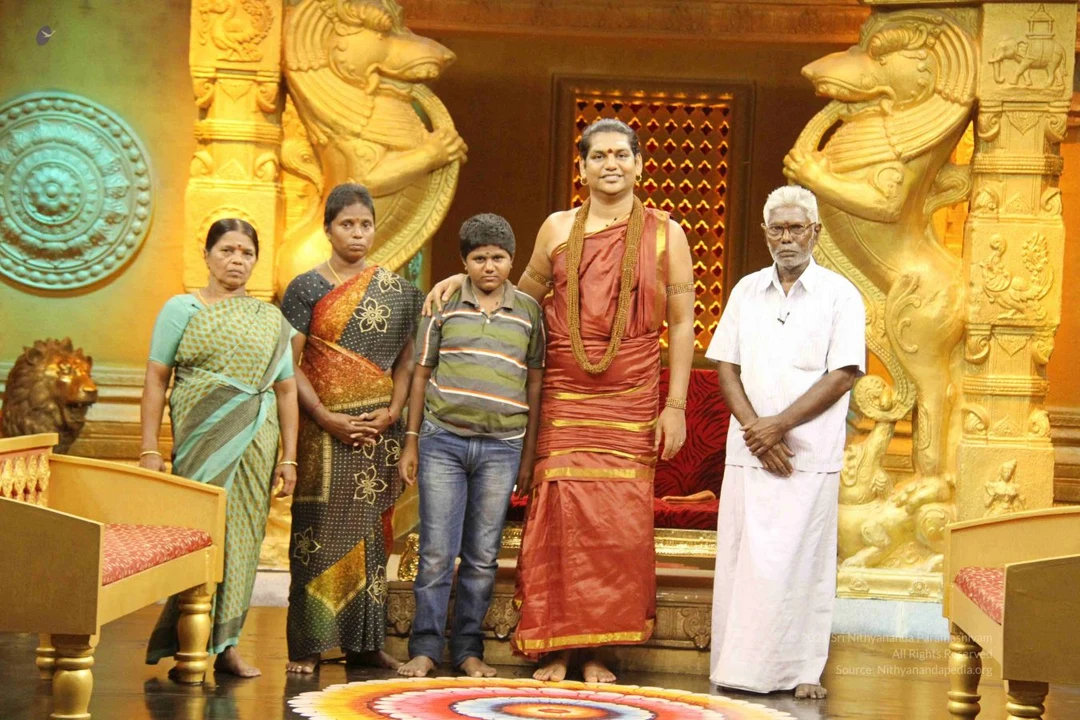
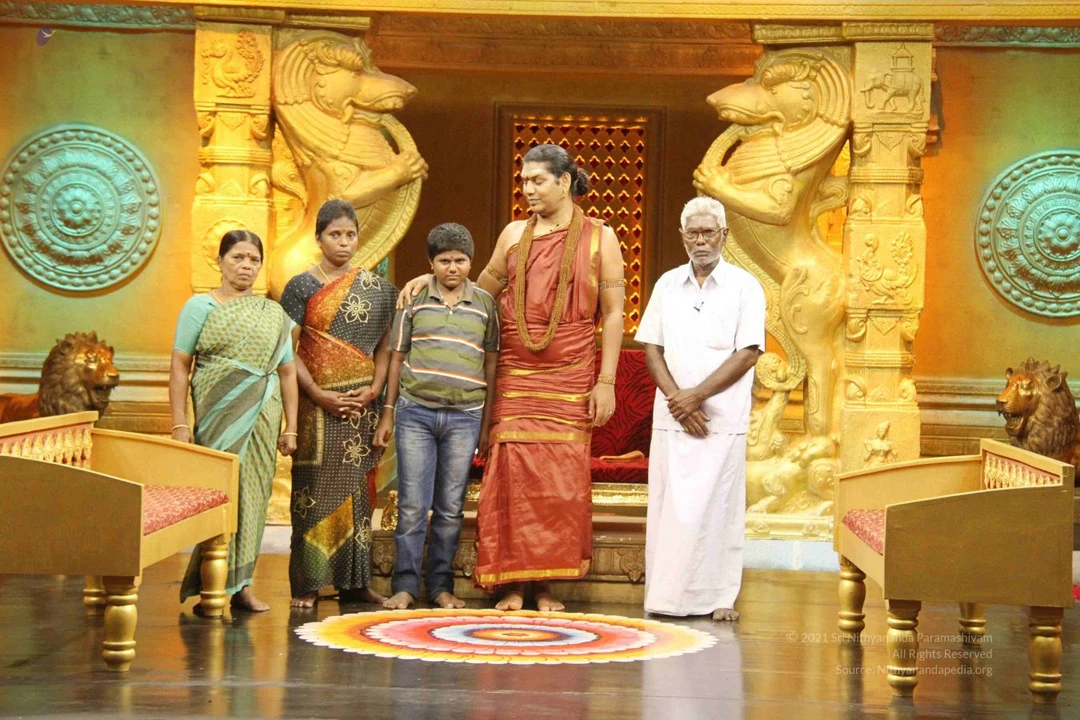
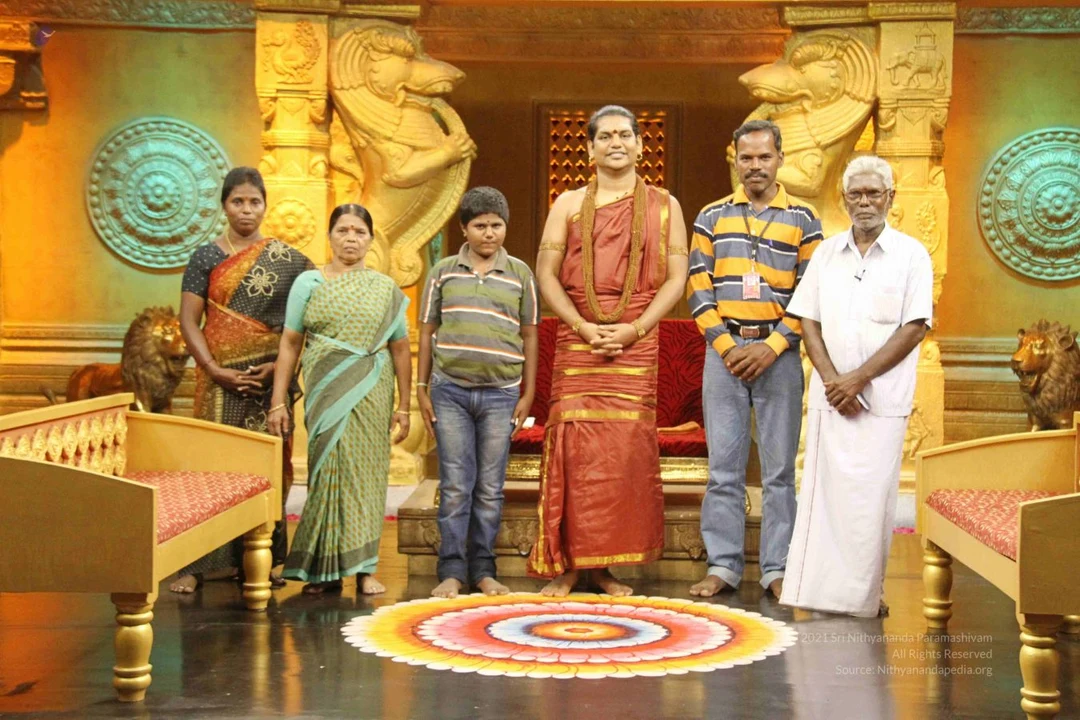
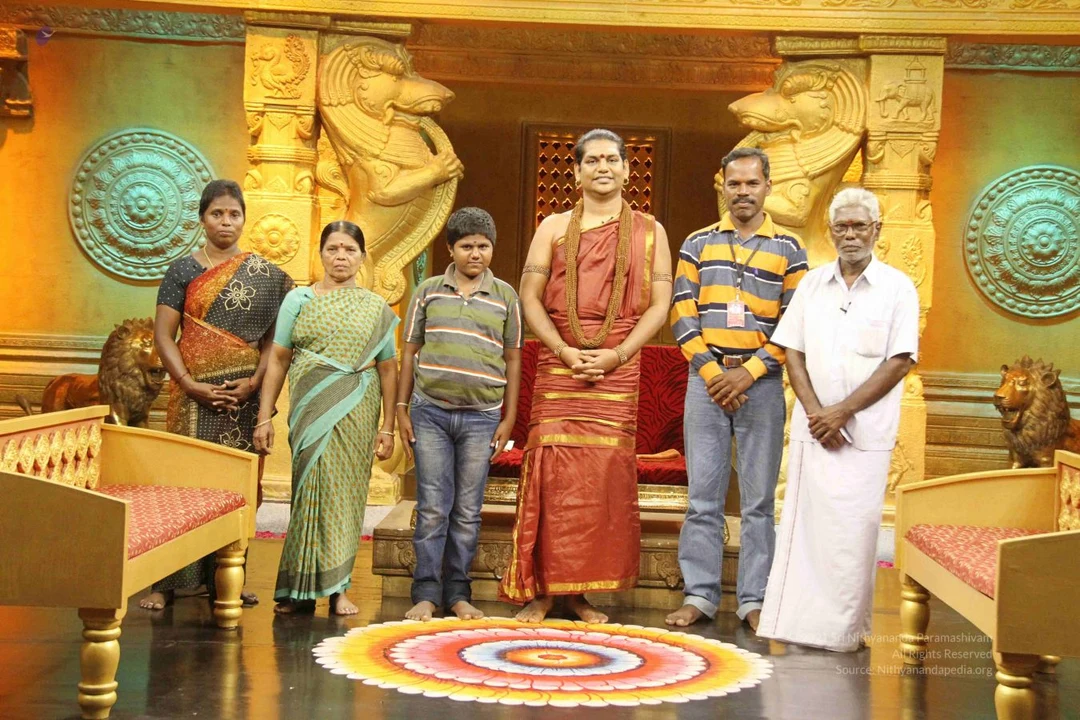
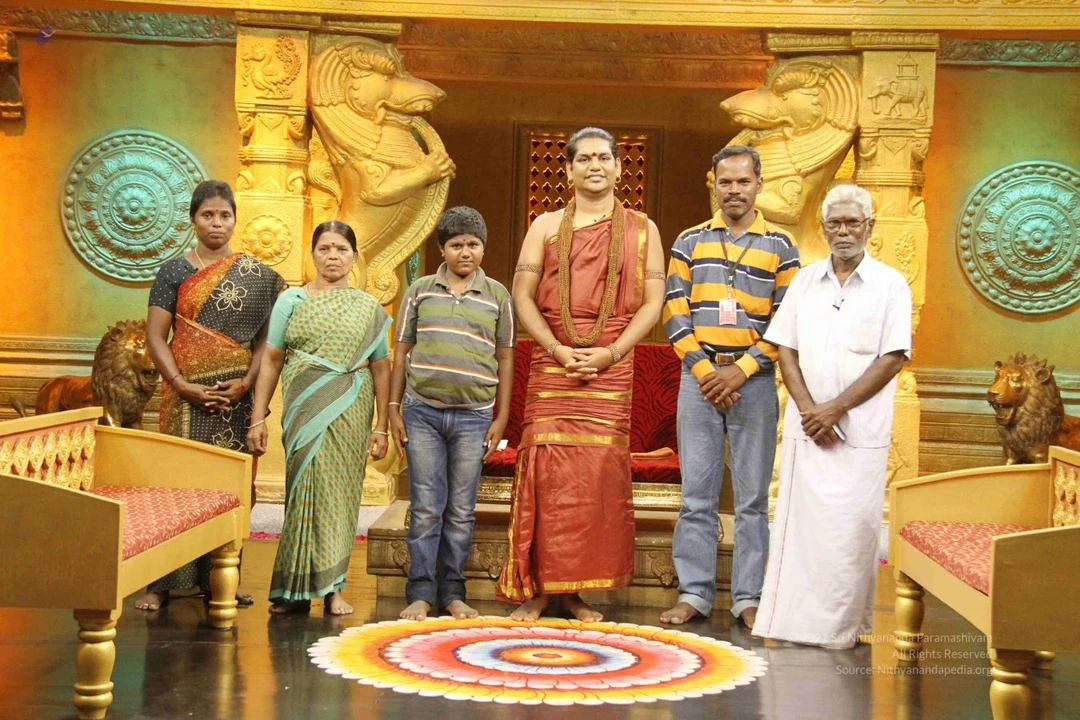
Thanthi-TV-Show-Nithya-Dharmam
Photos Of The Day:

Pada-Puja

Nithya-Satsang

Sarva-Darshan

Final-Blessing

Photos from this day

View all 267 photos

Photos From The Day

25 photosSource gallery
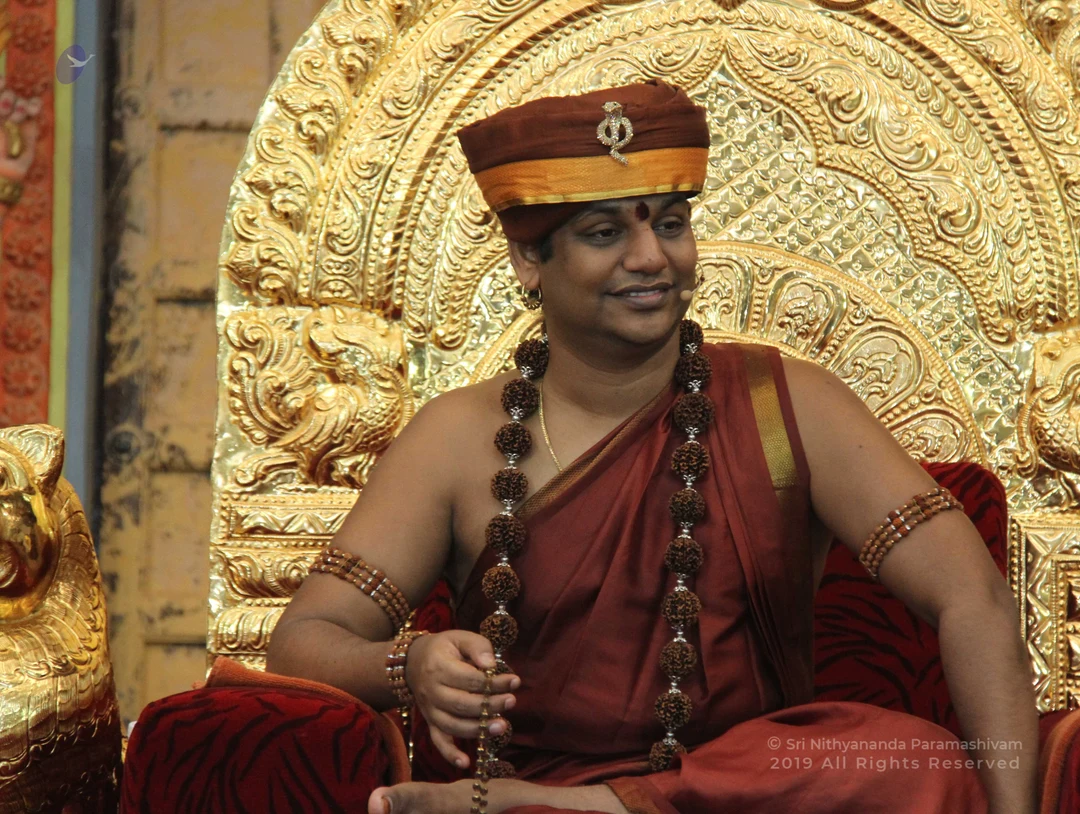
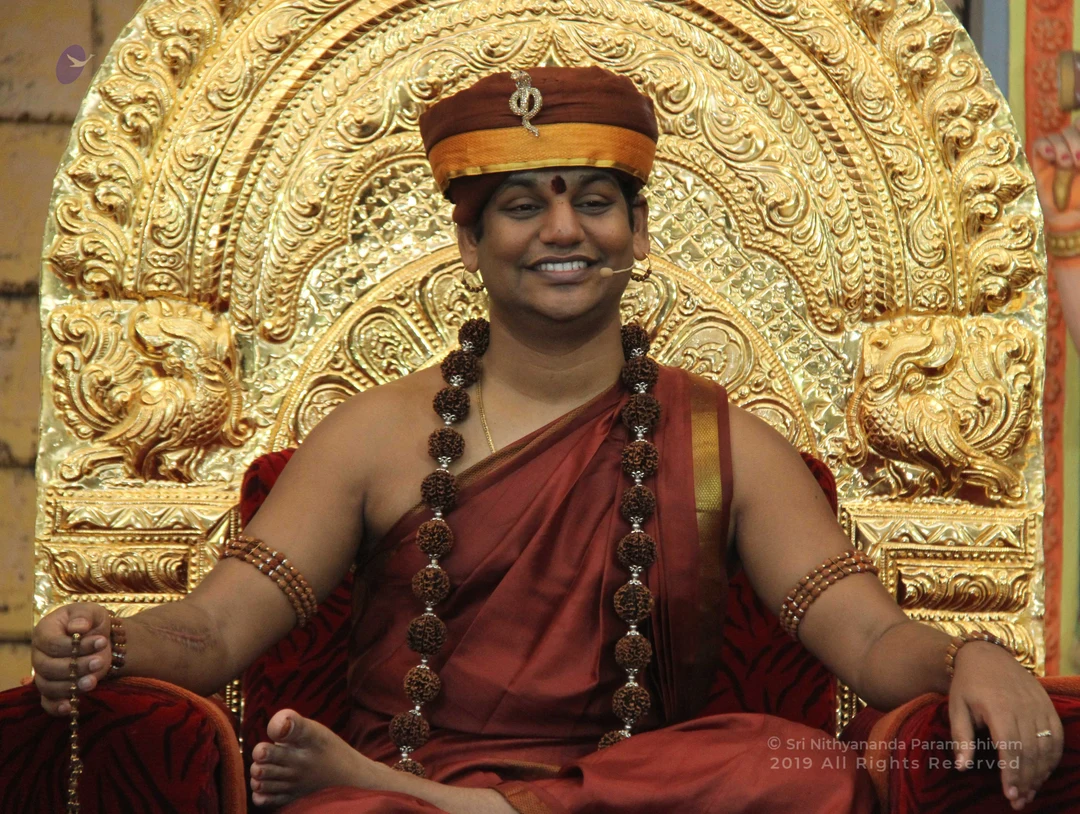
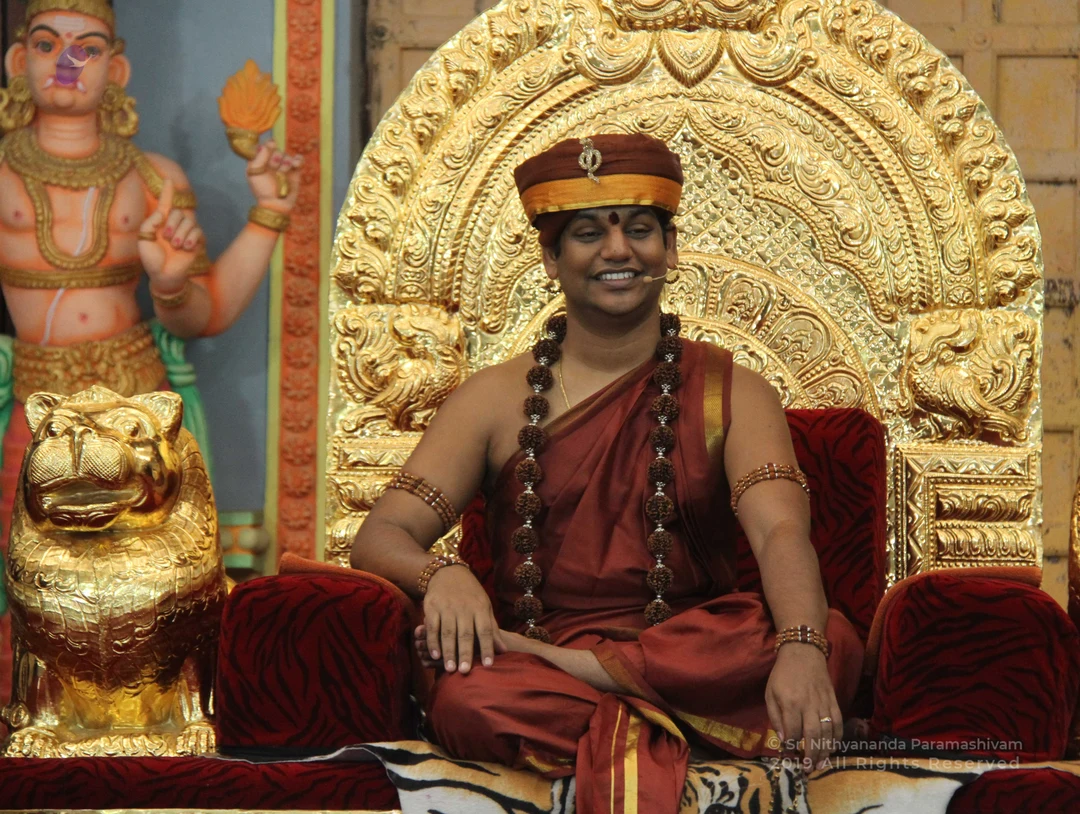
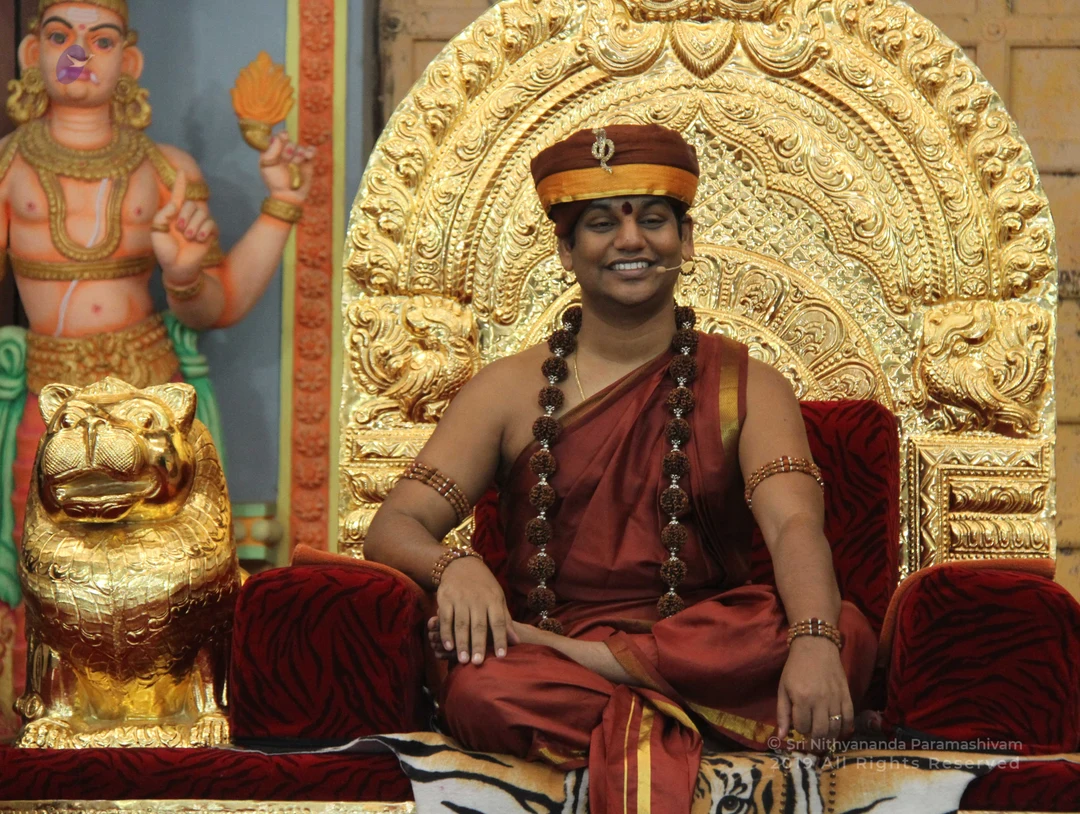
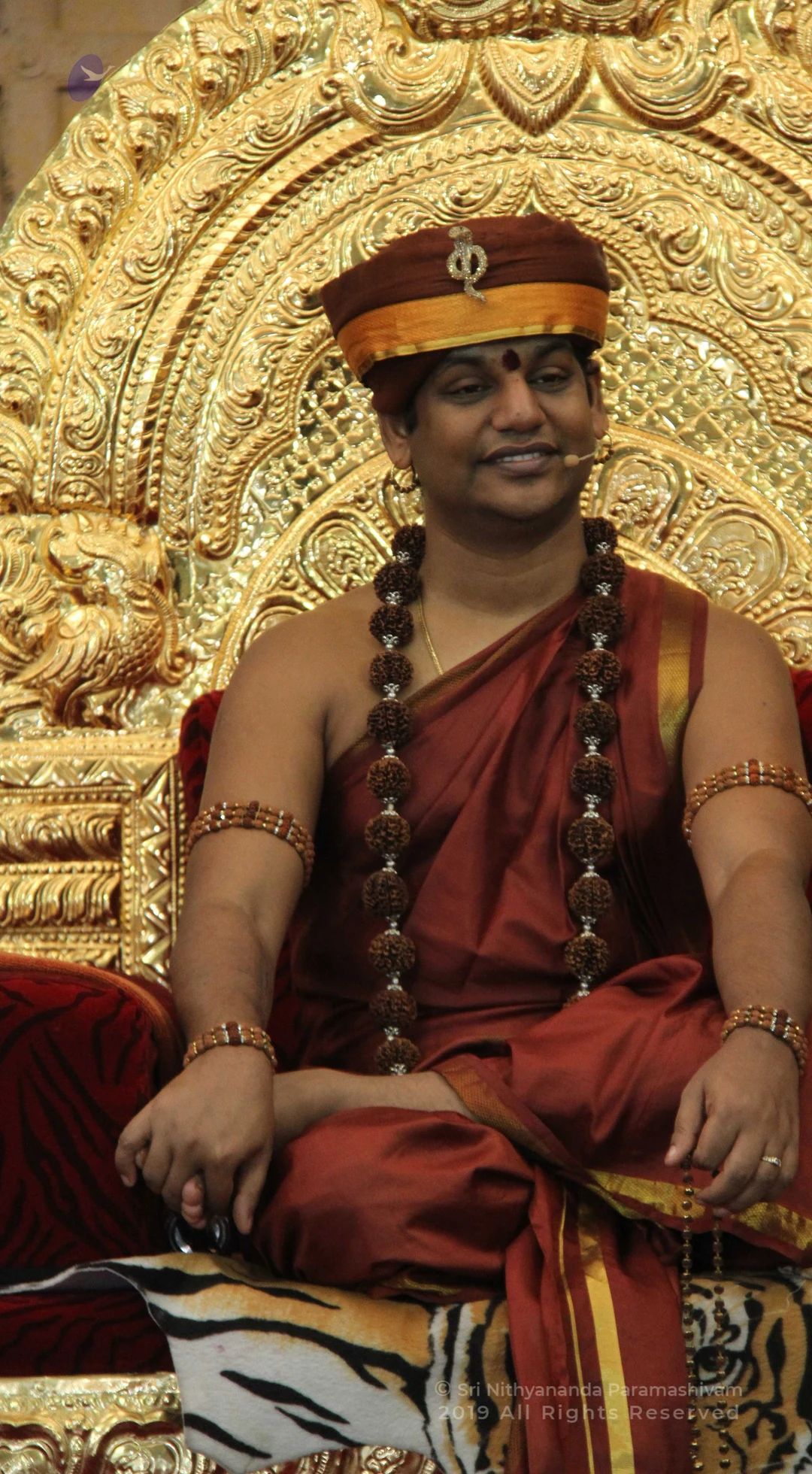
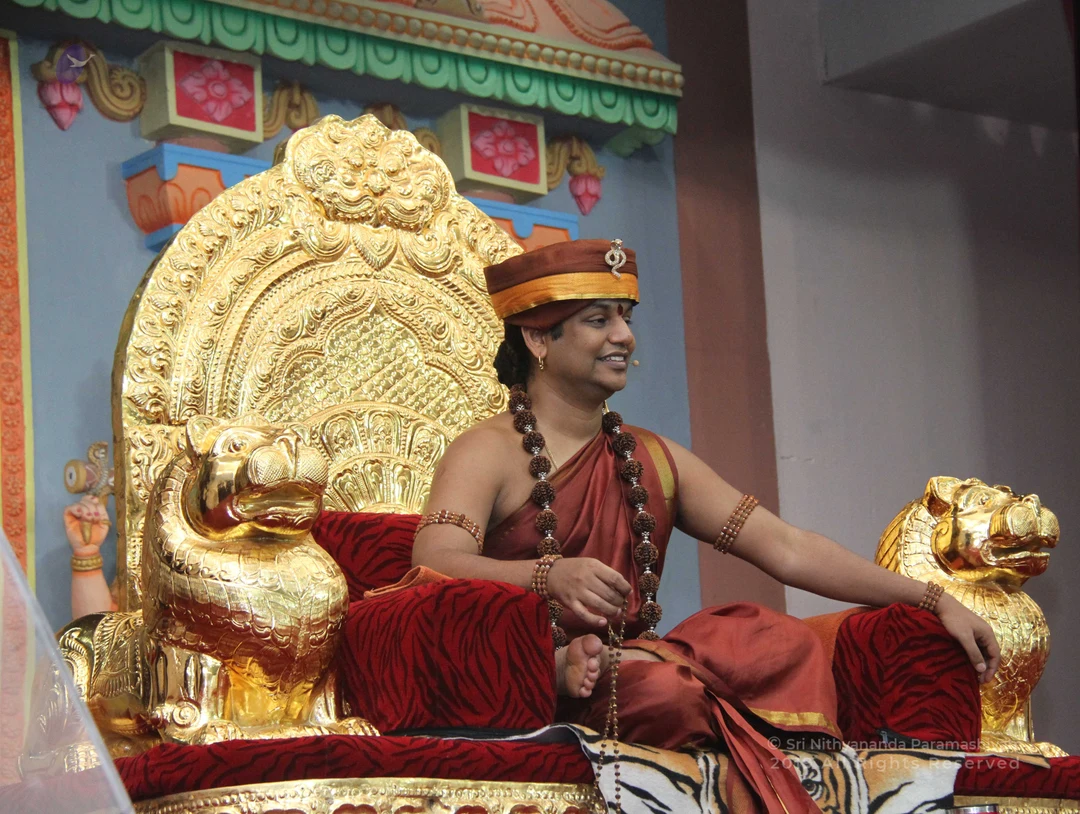
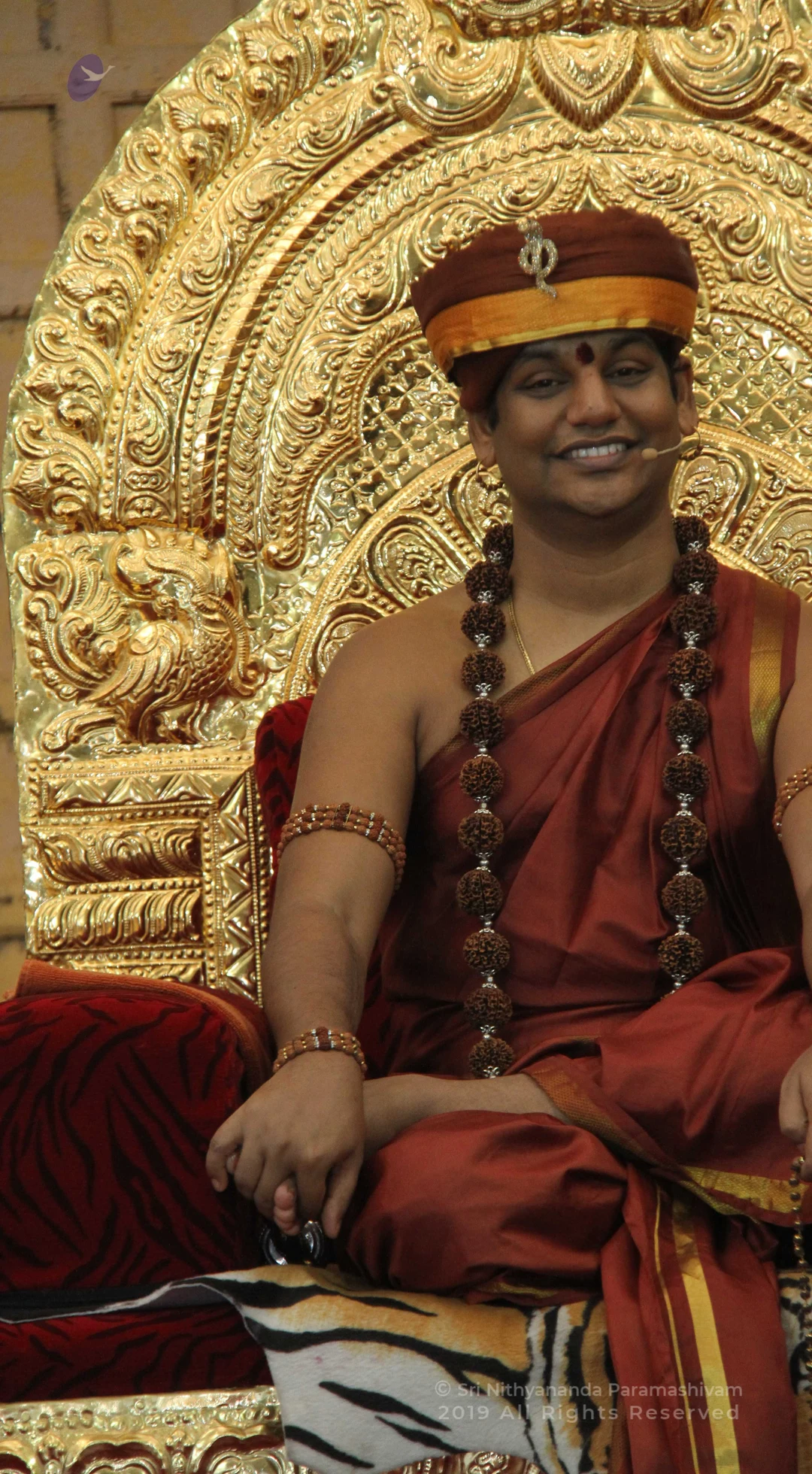
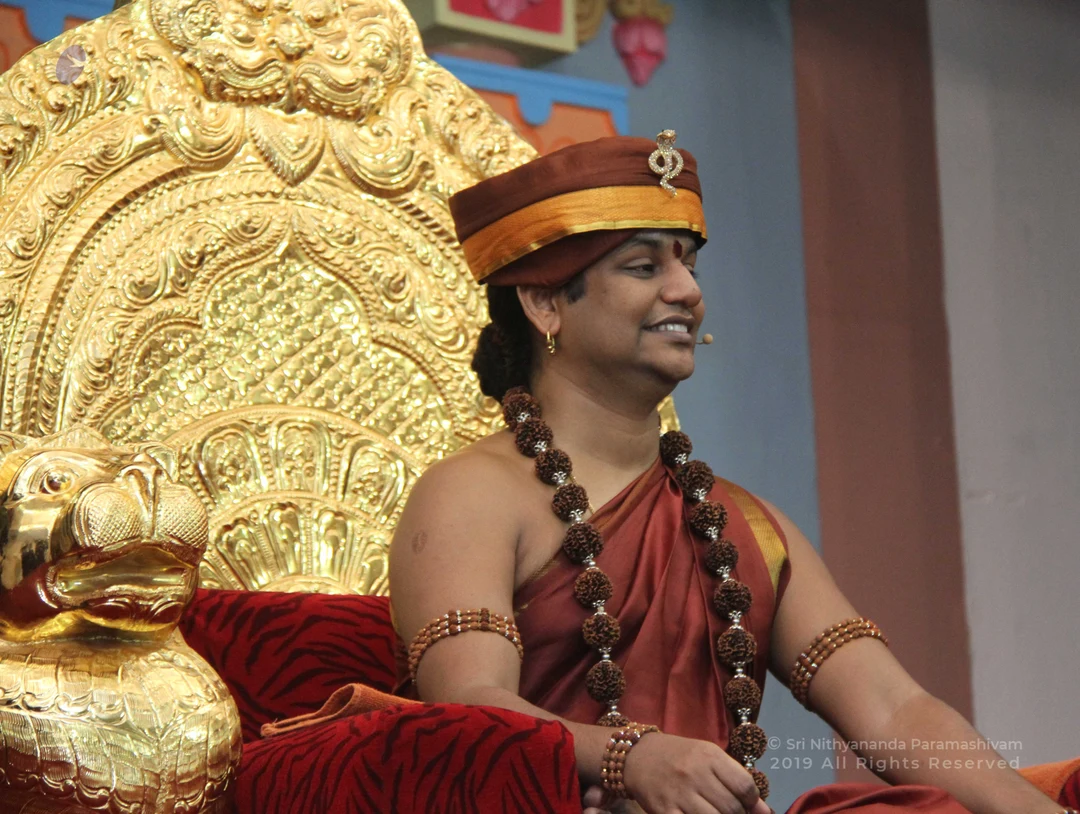
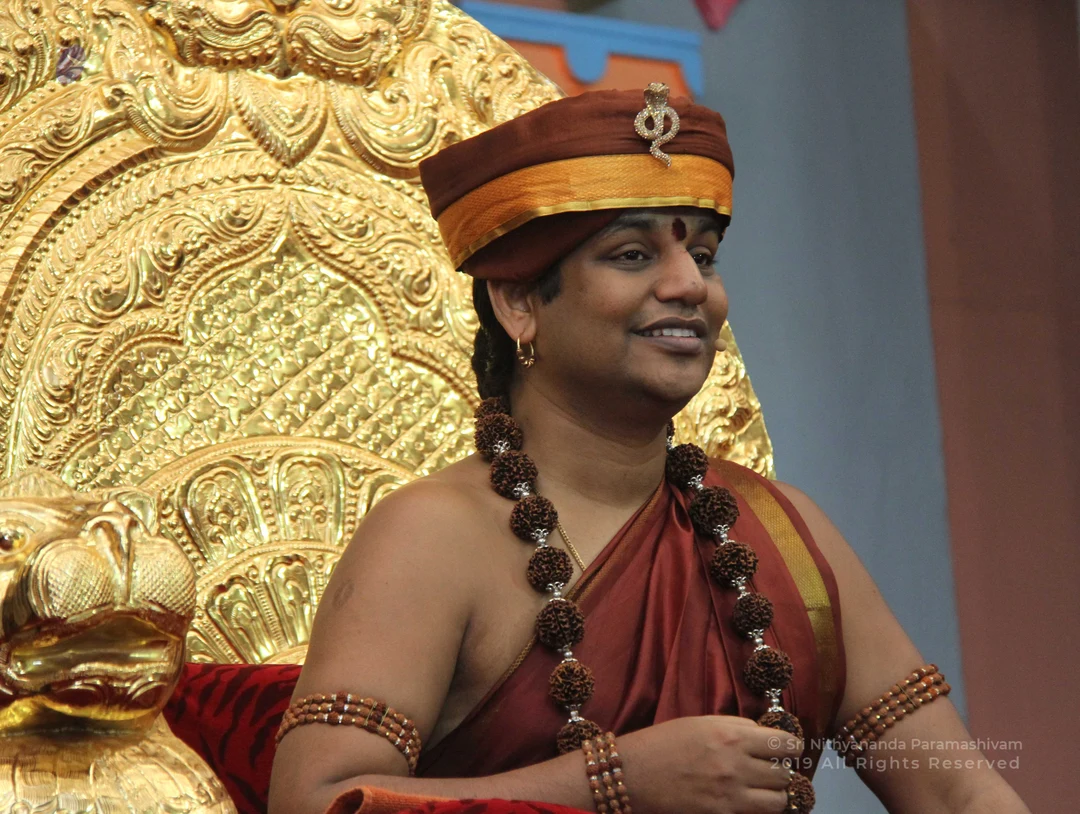
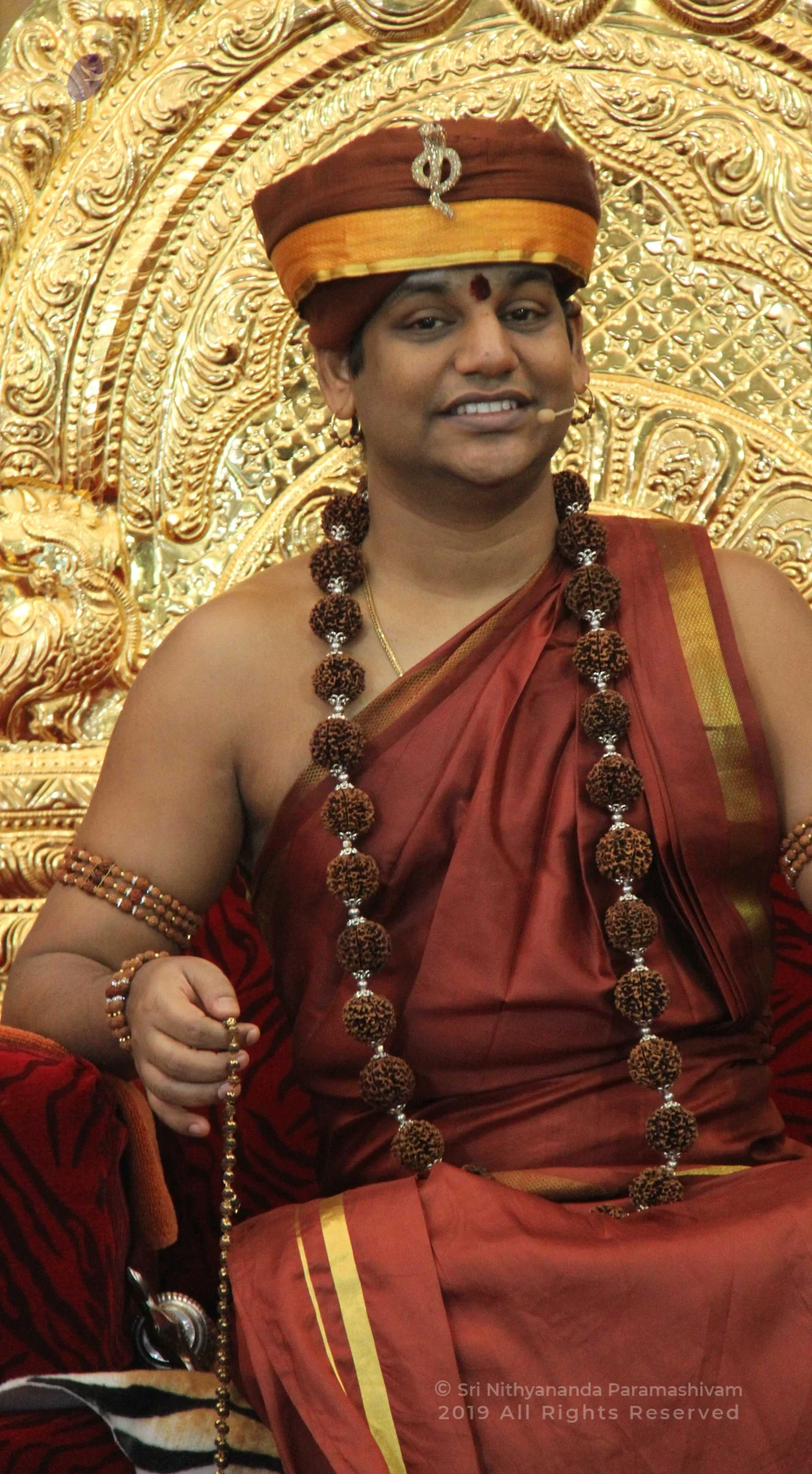
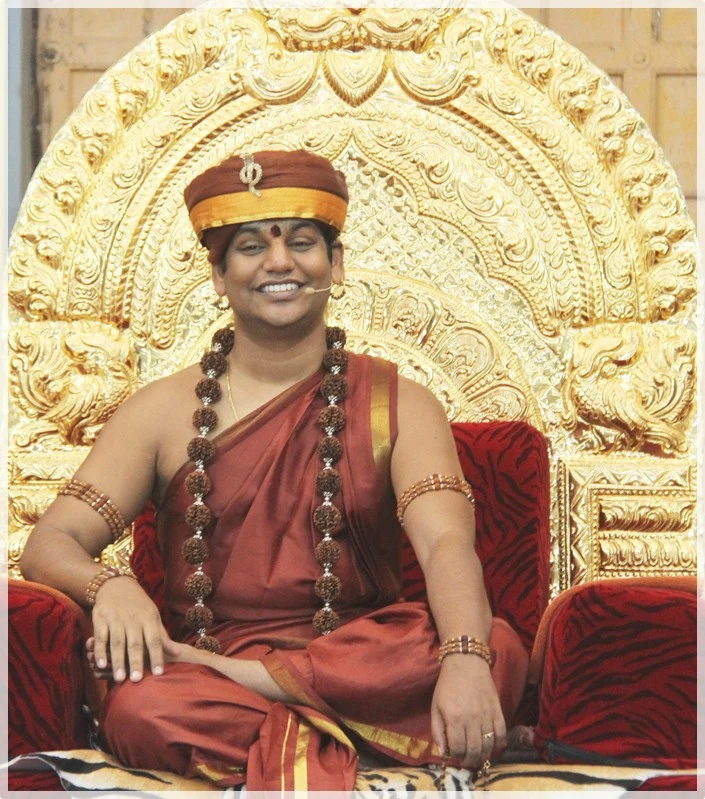
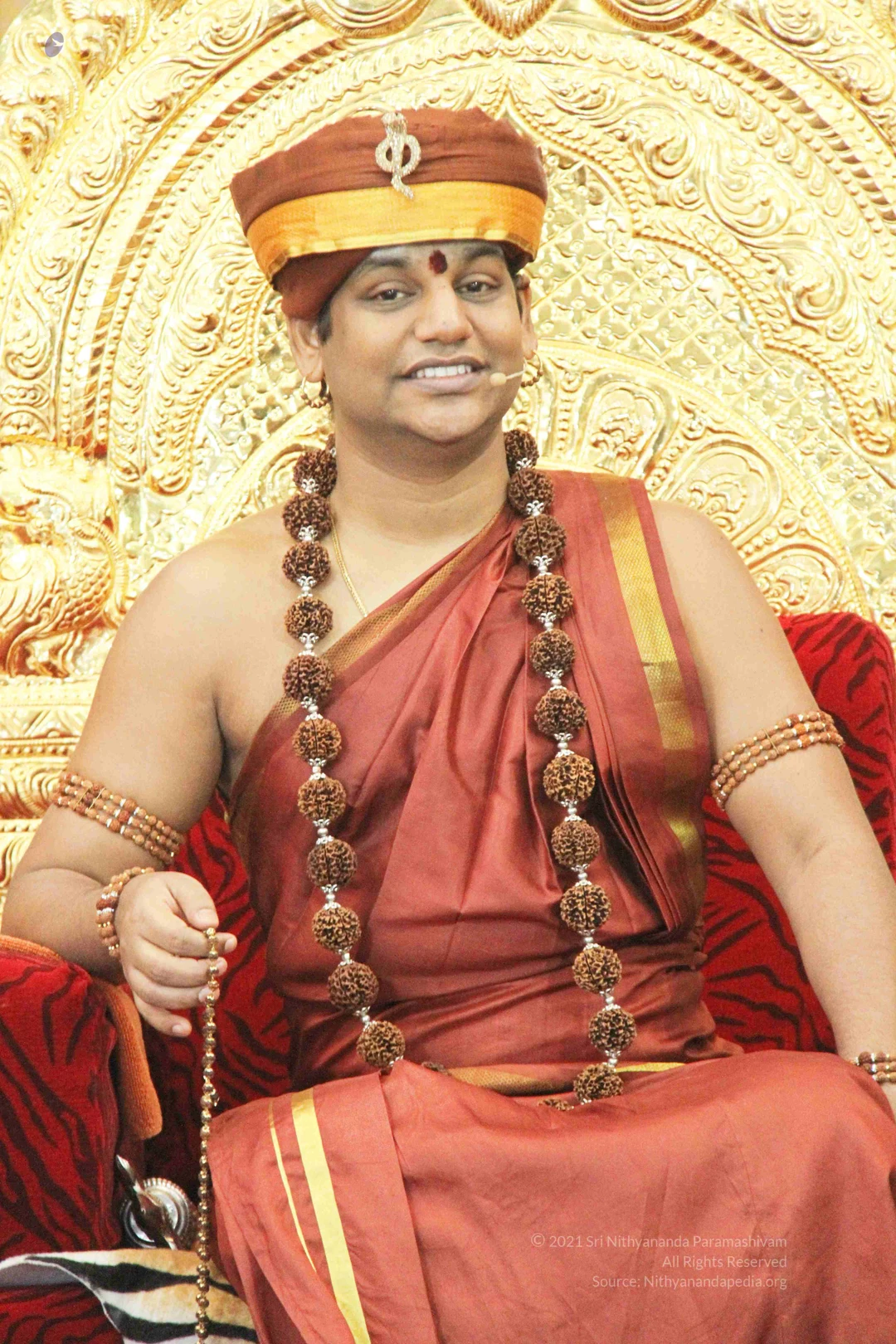
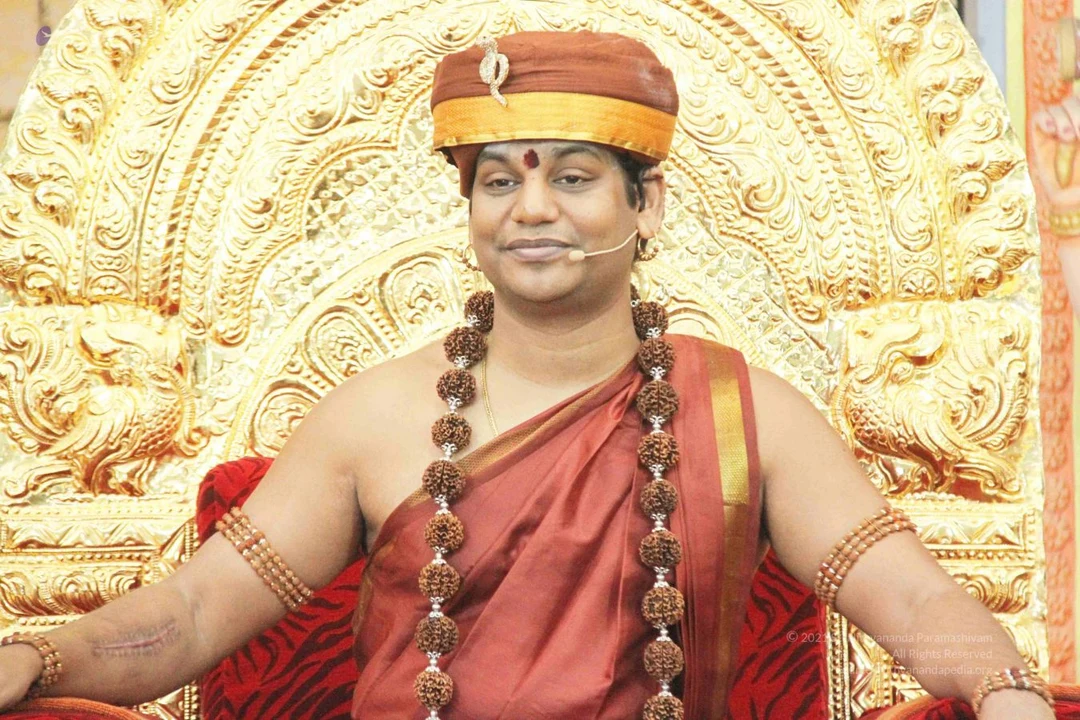
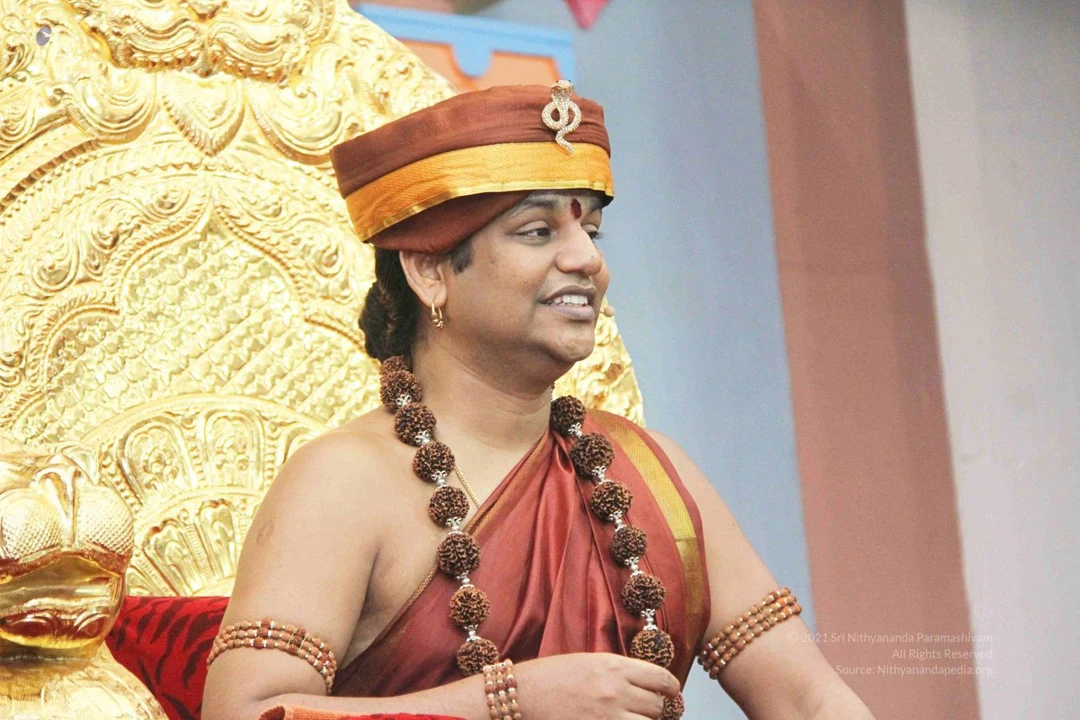
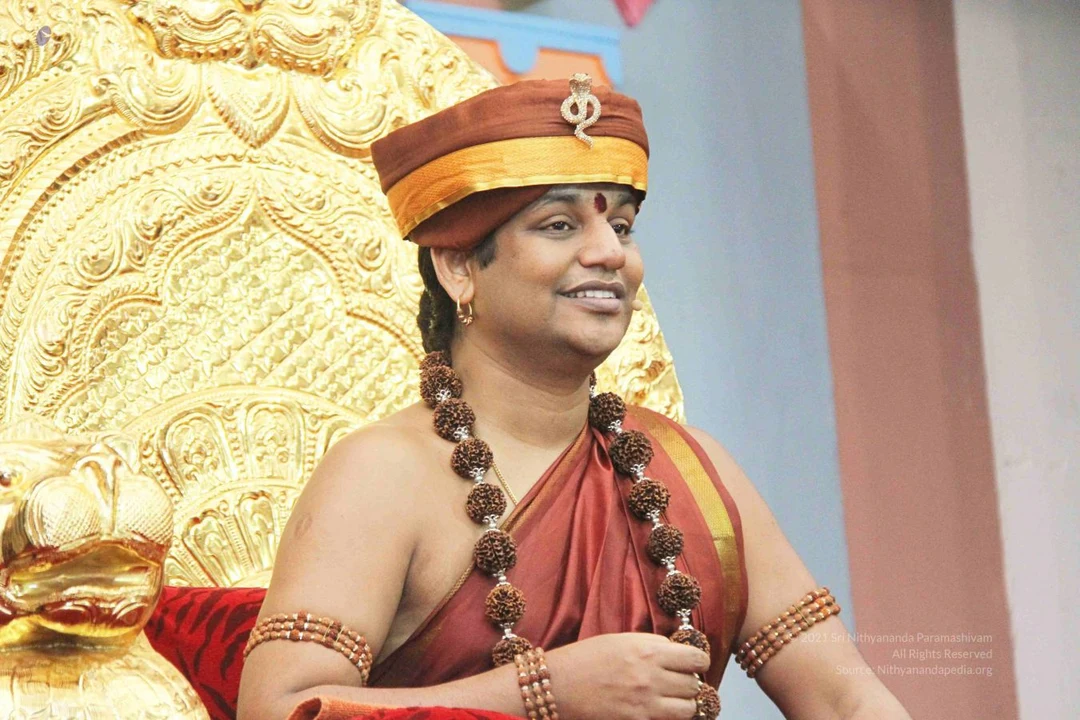
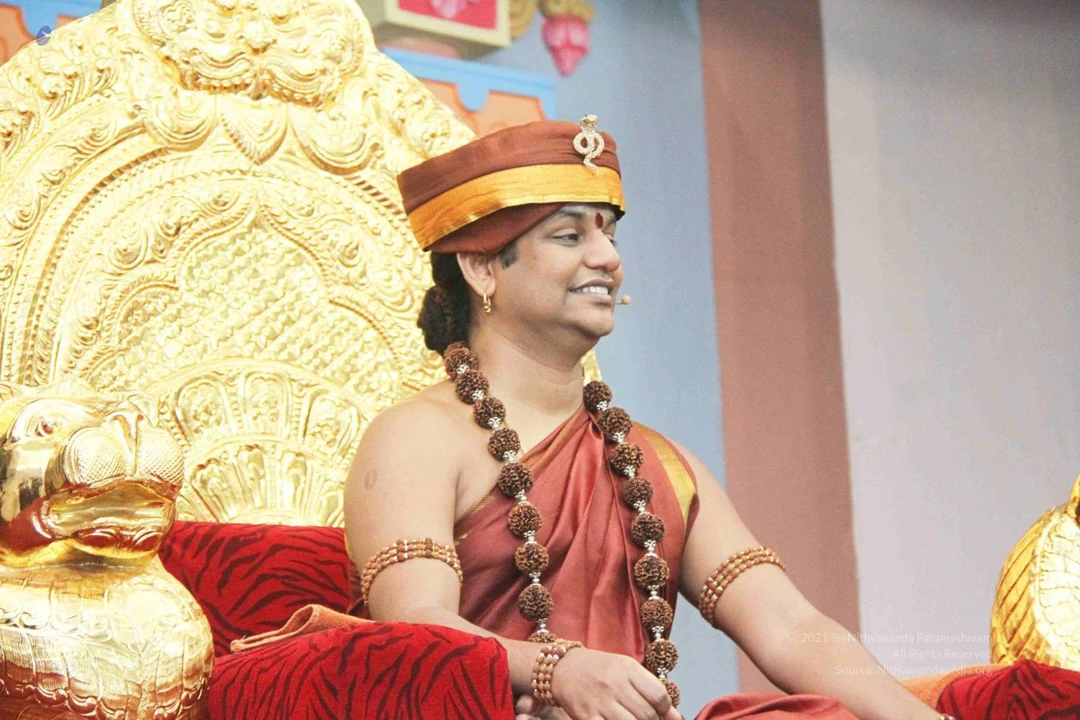
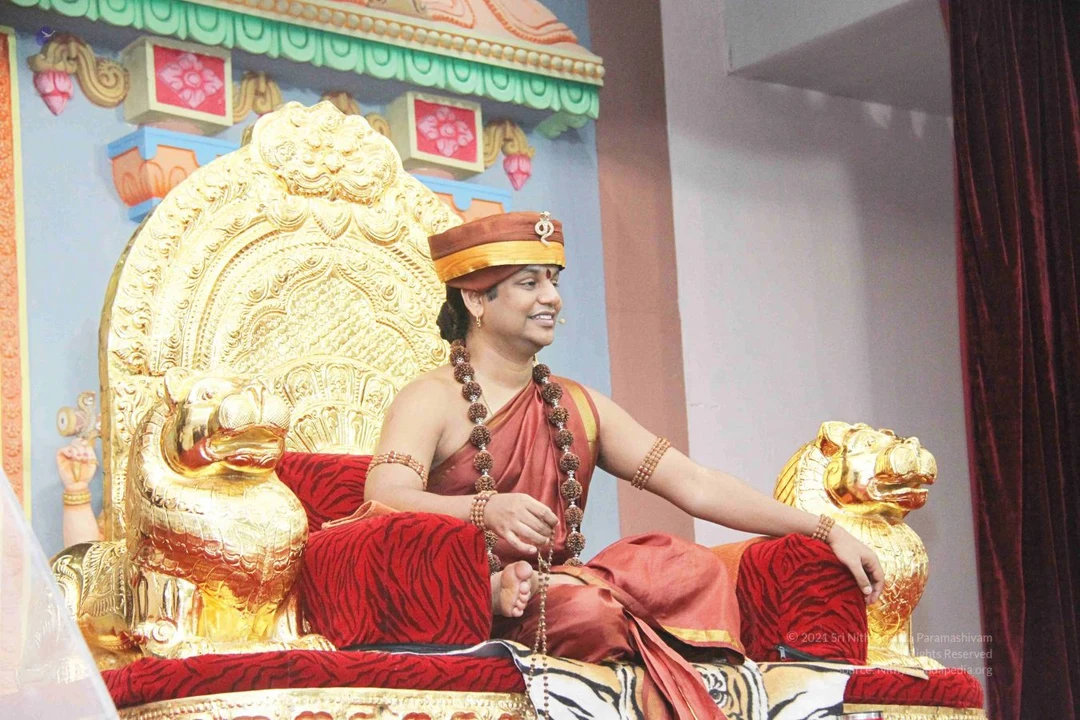
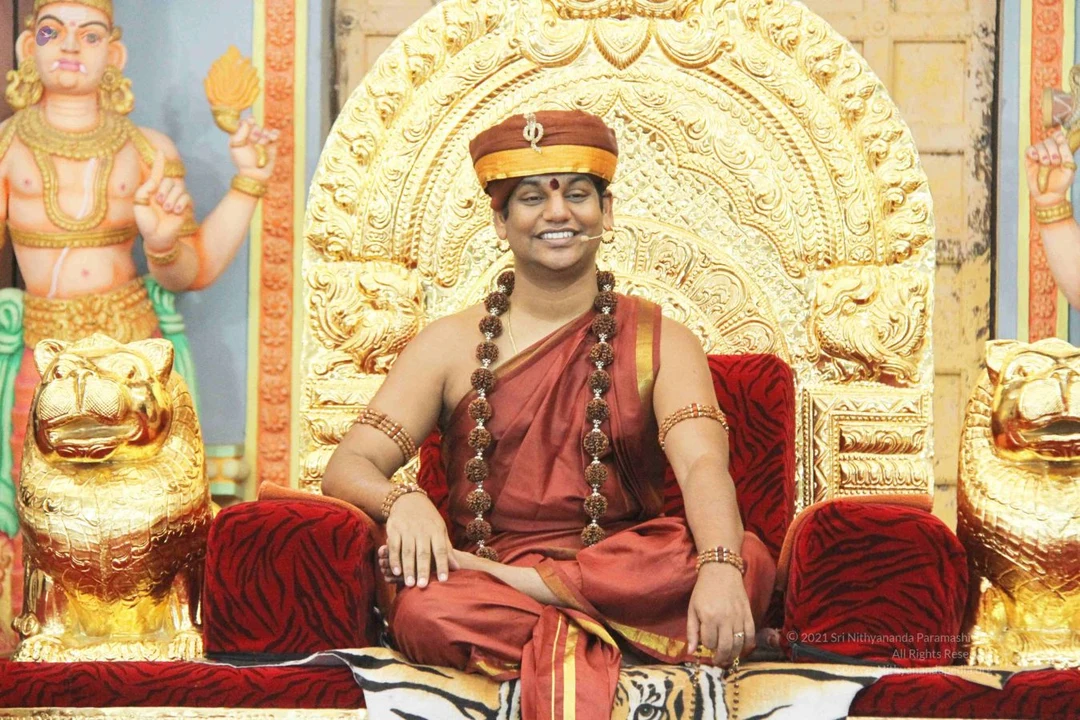
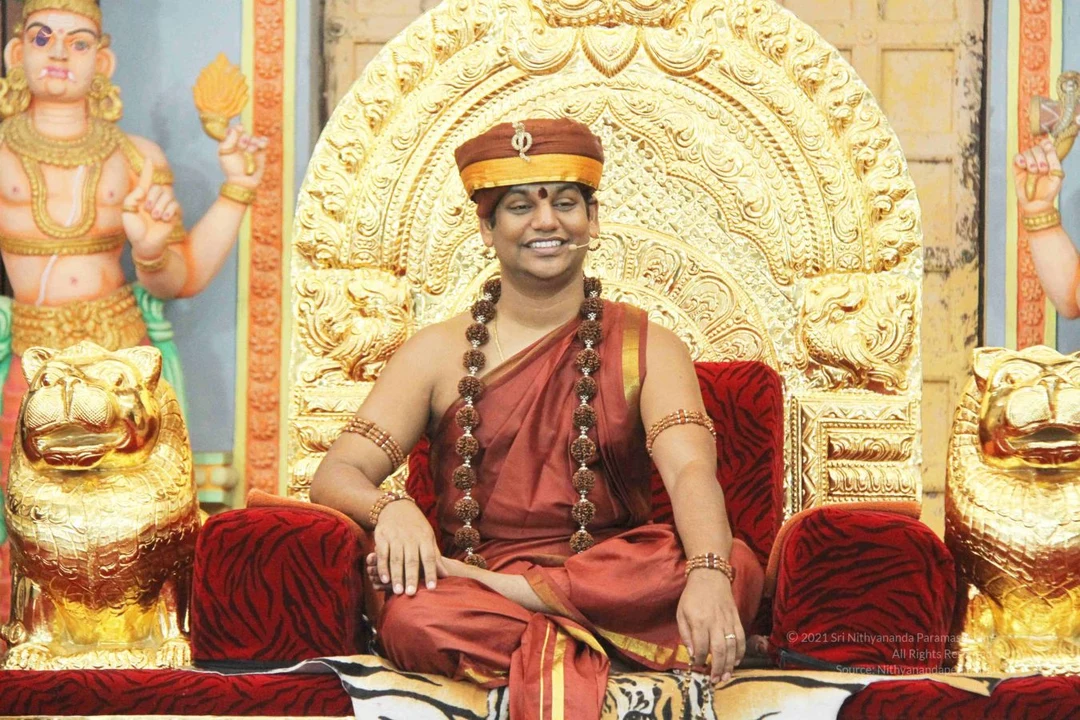
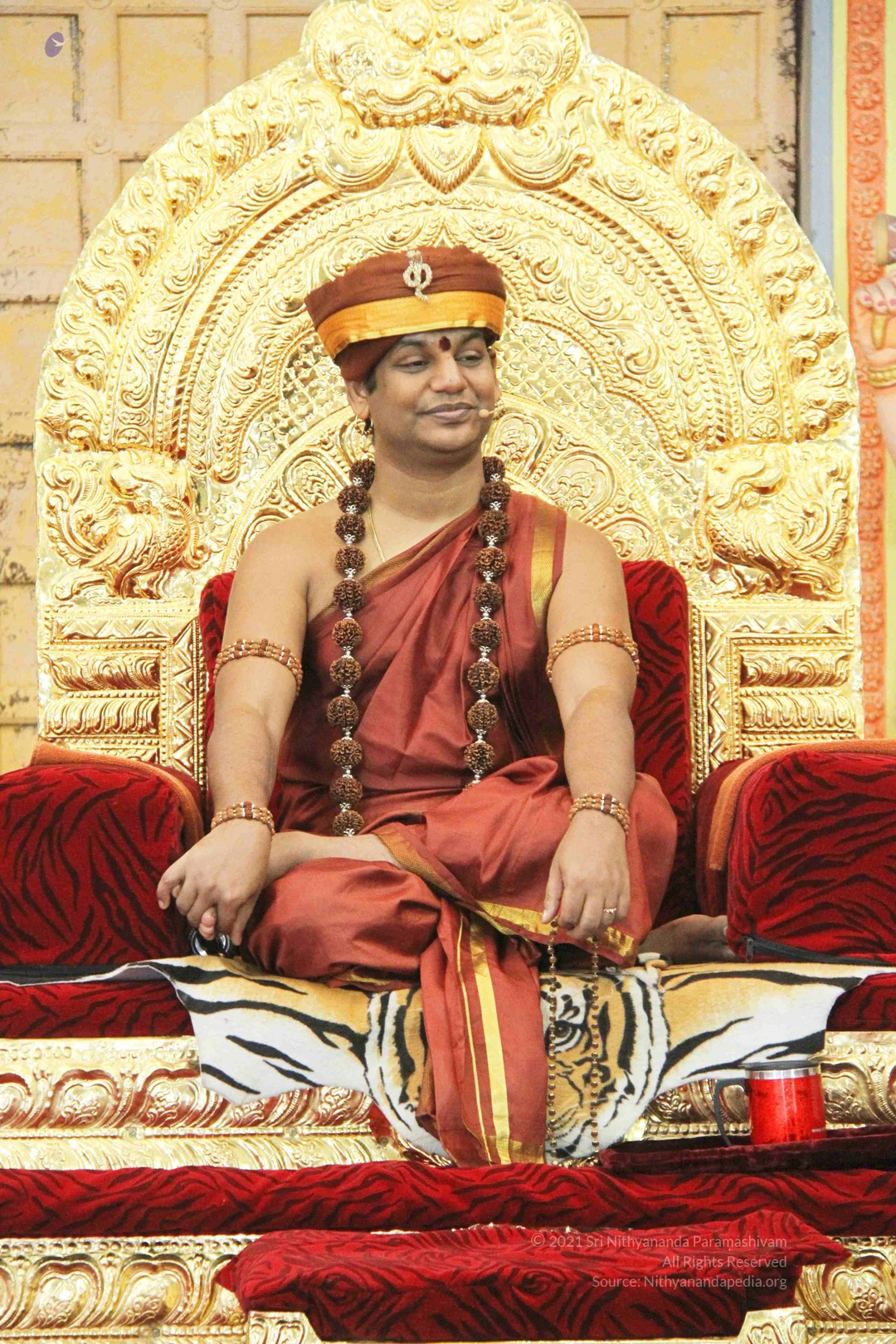
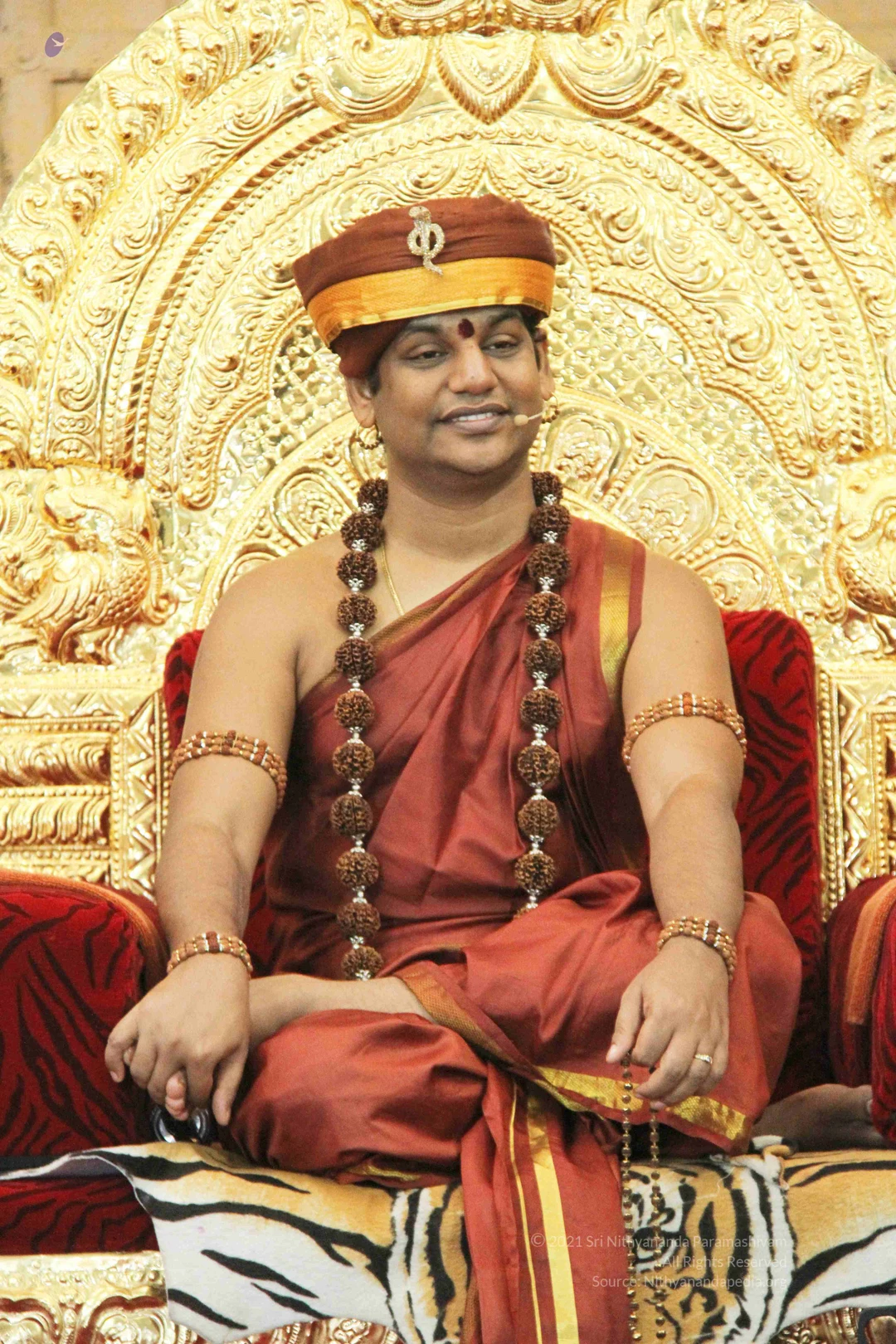
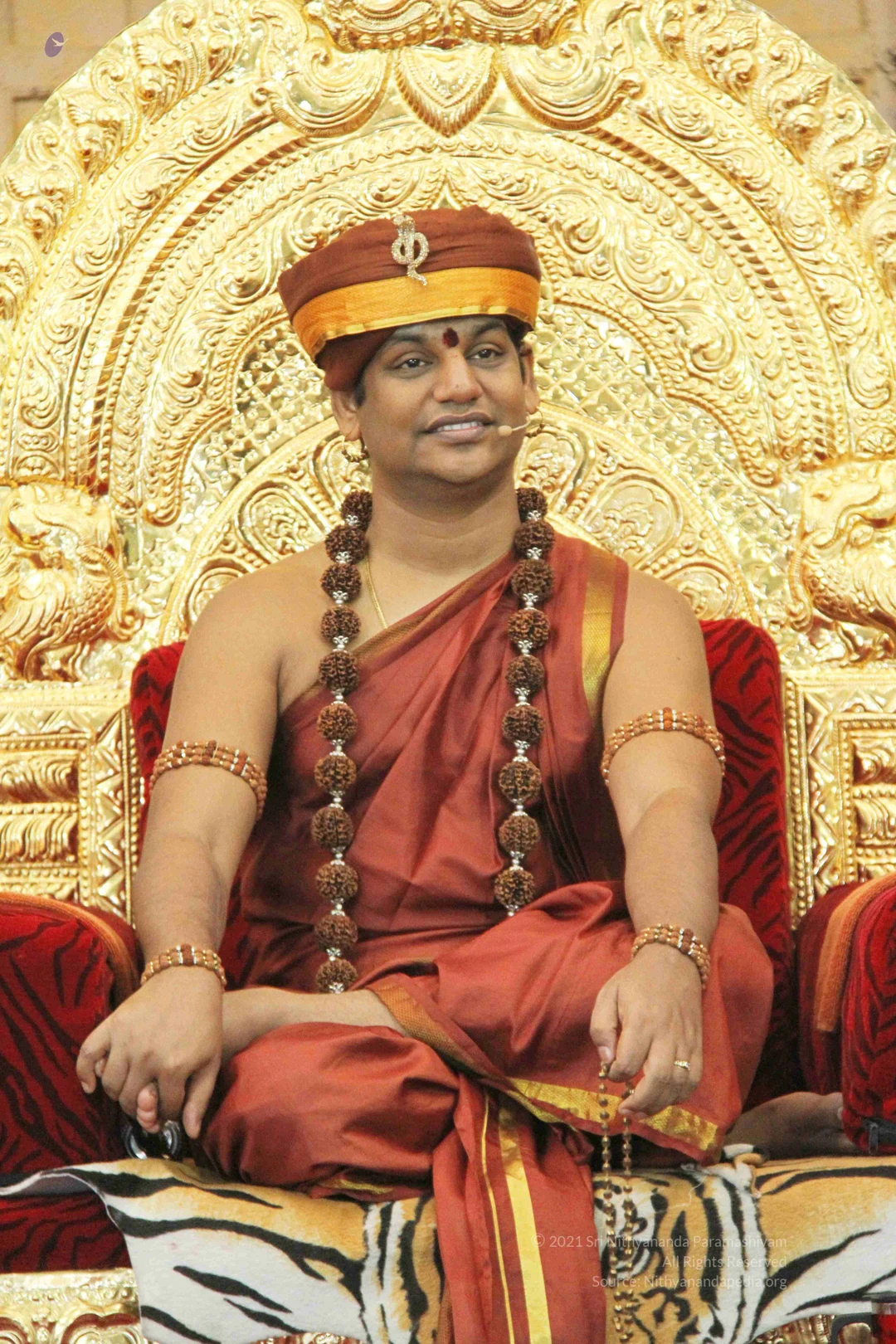
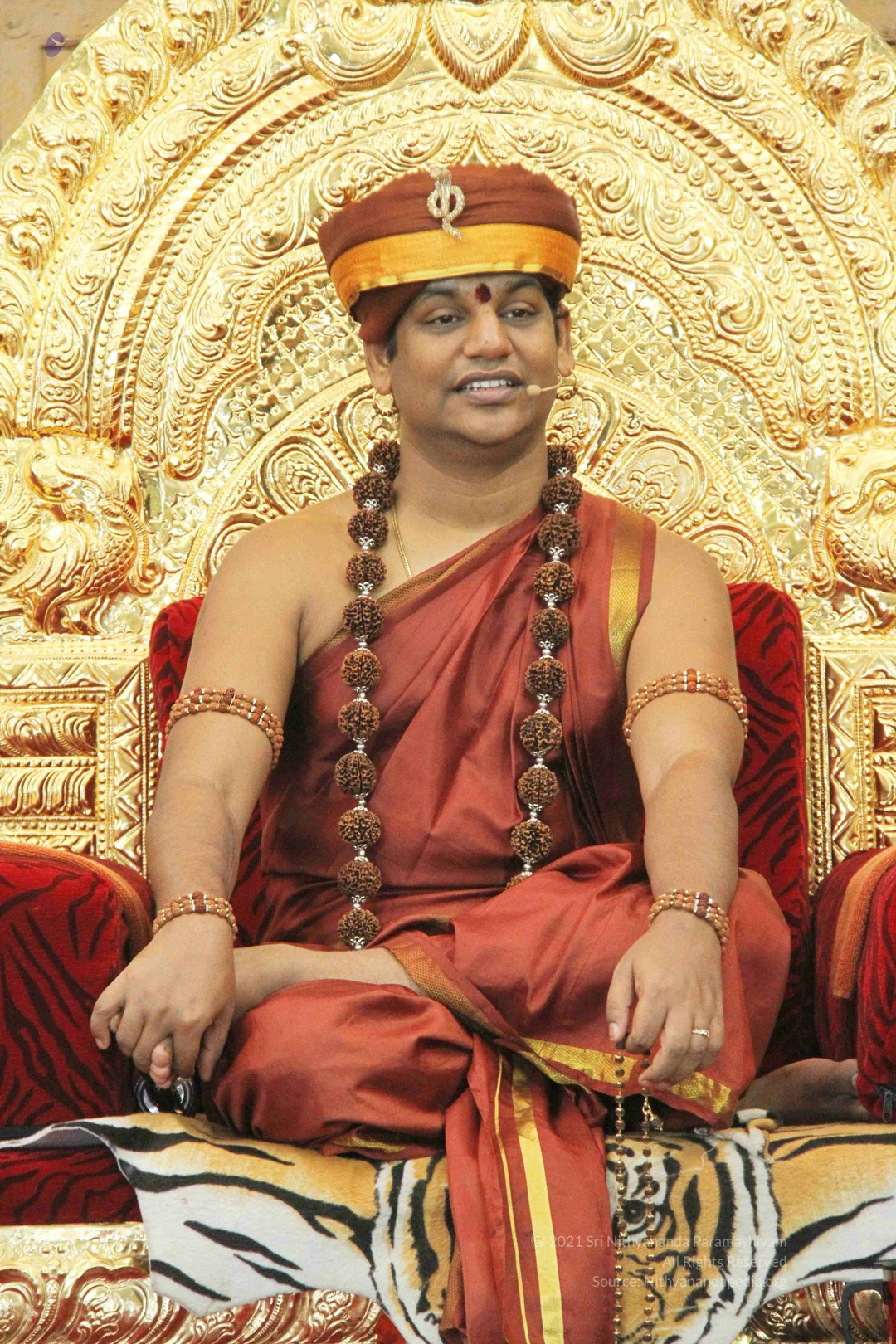
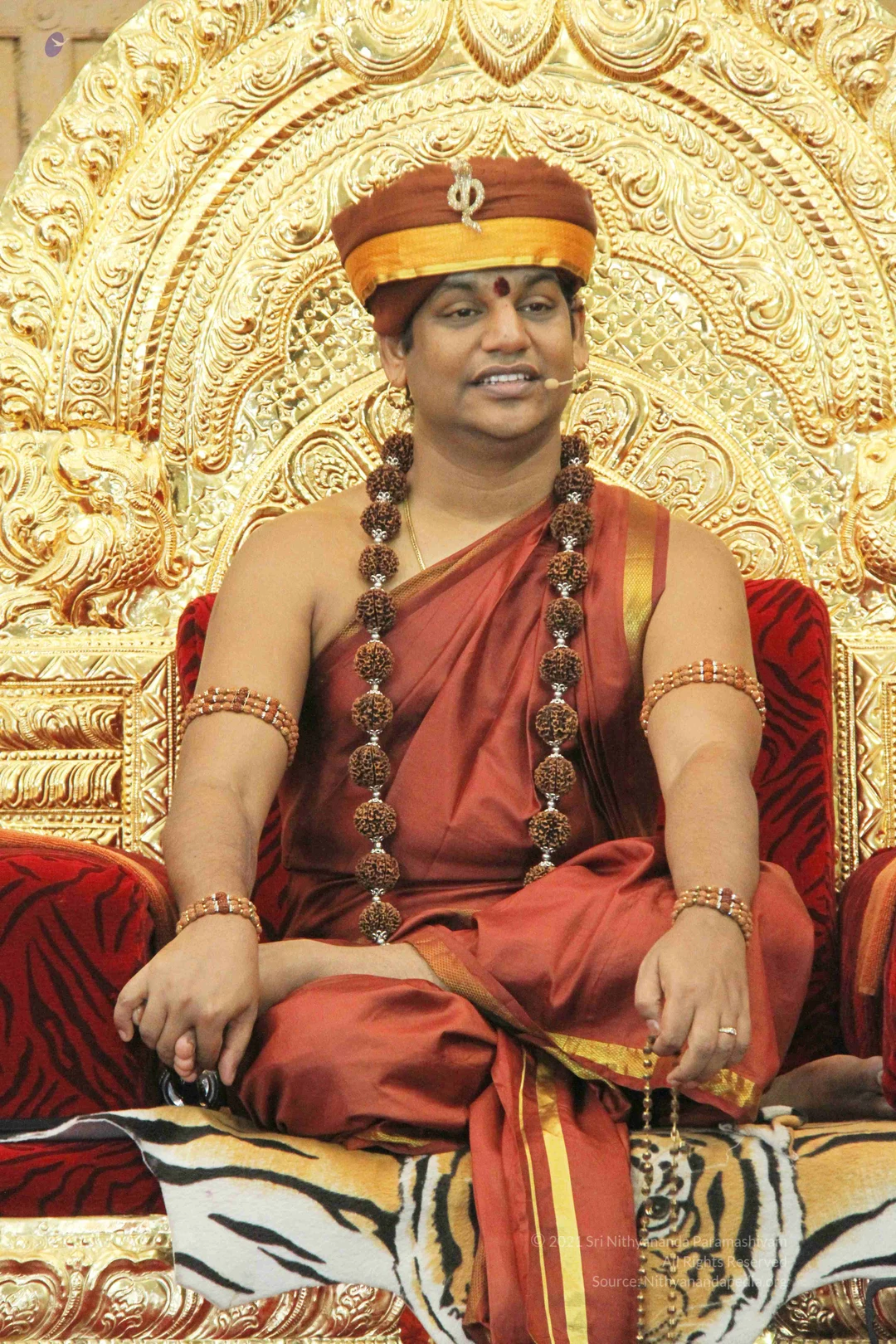
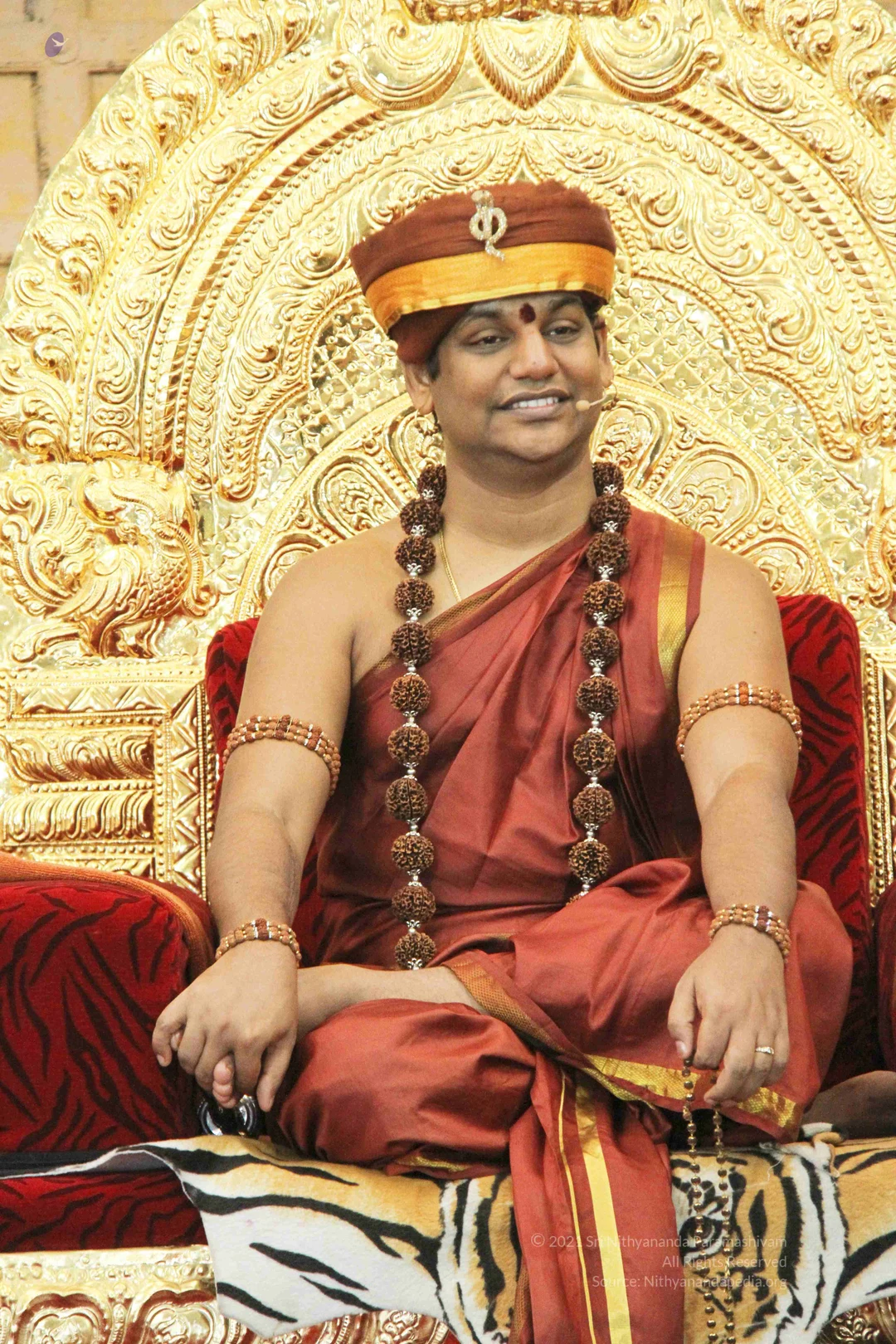
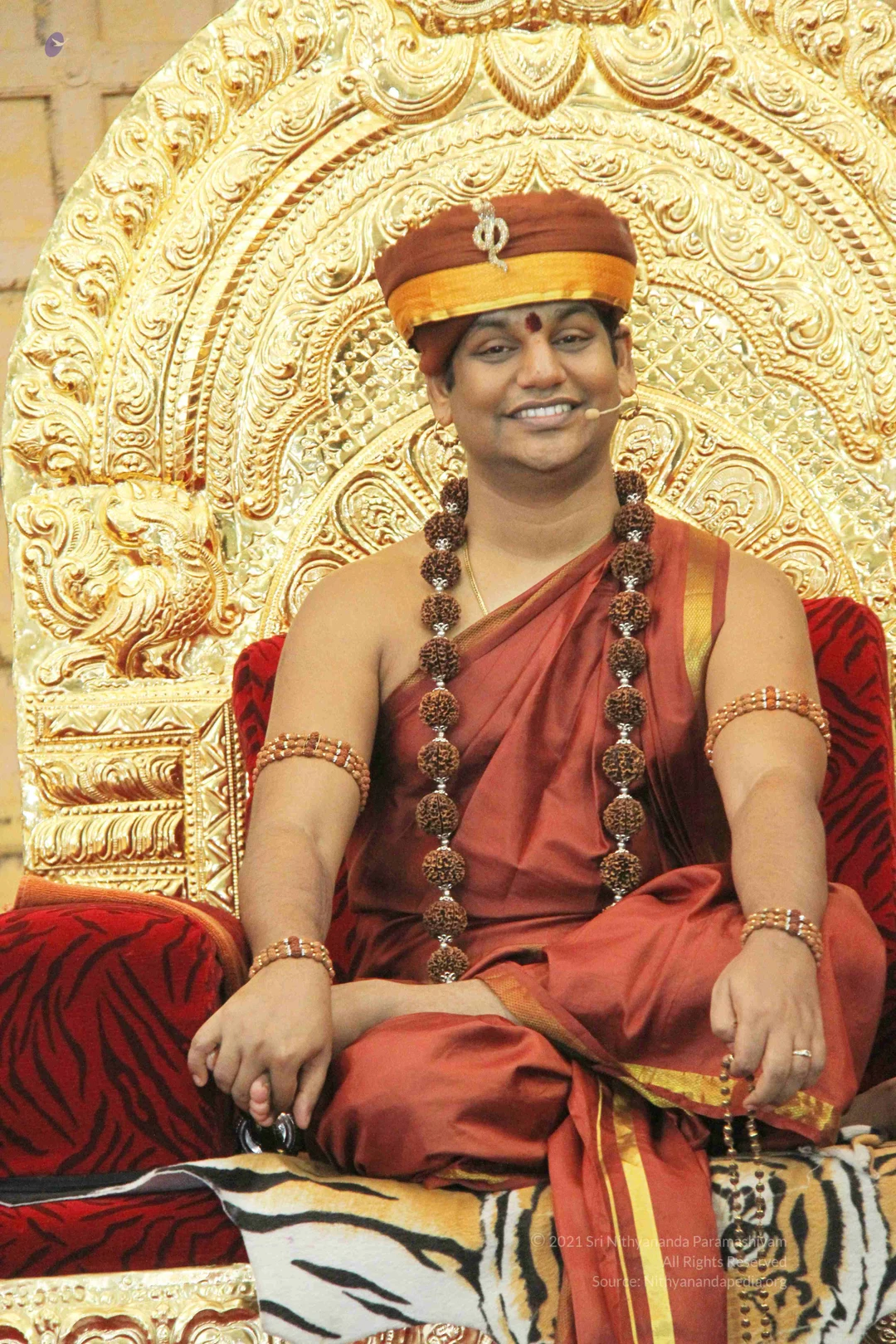
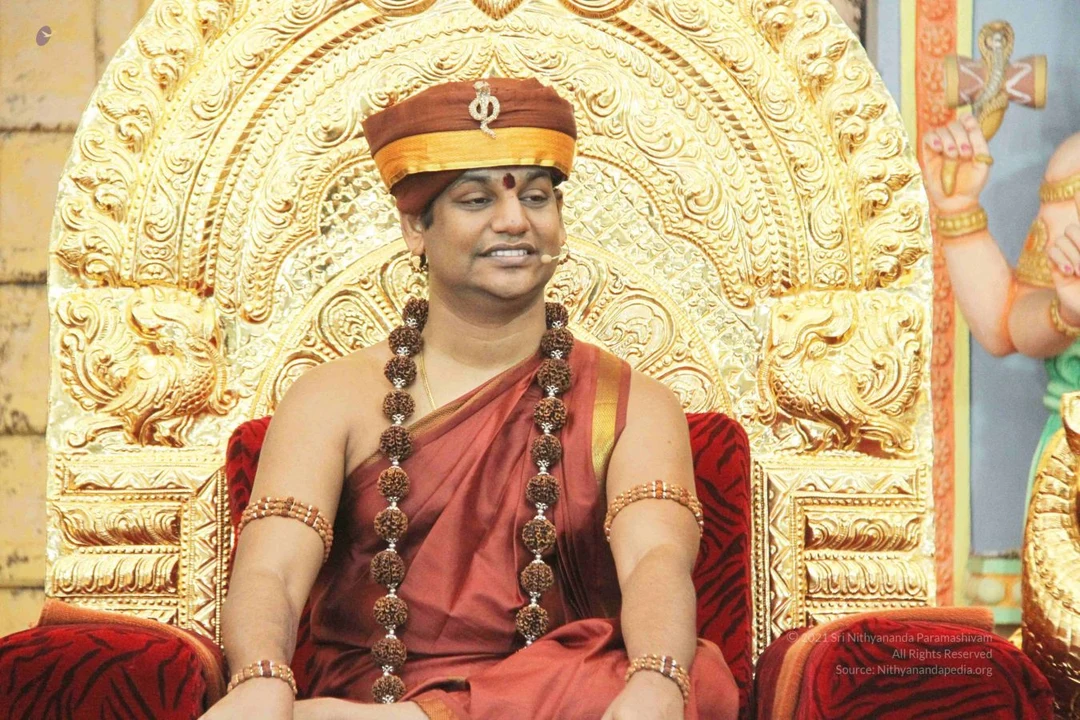
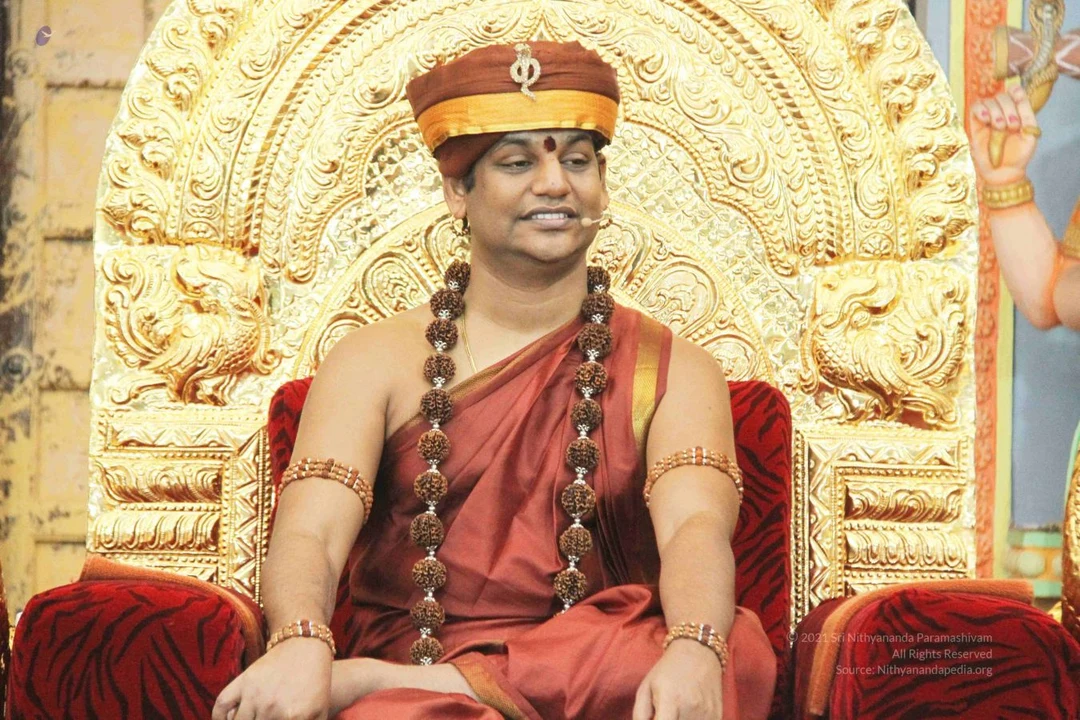
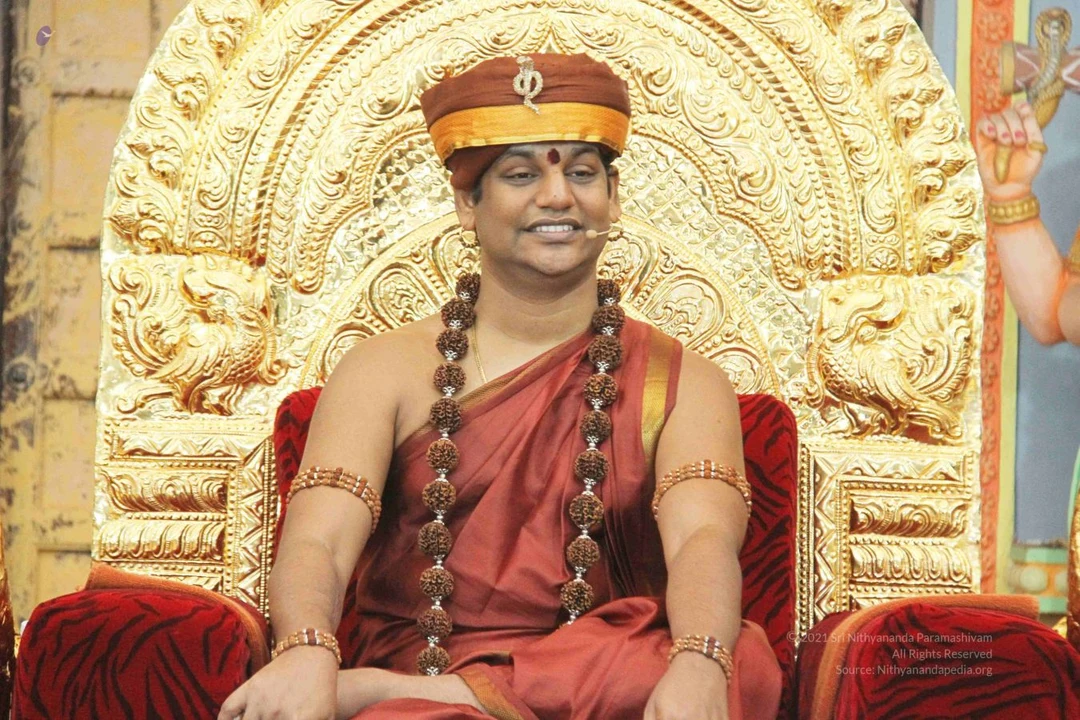
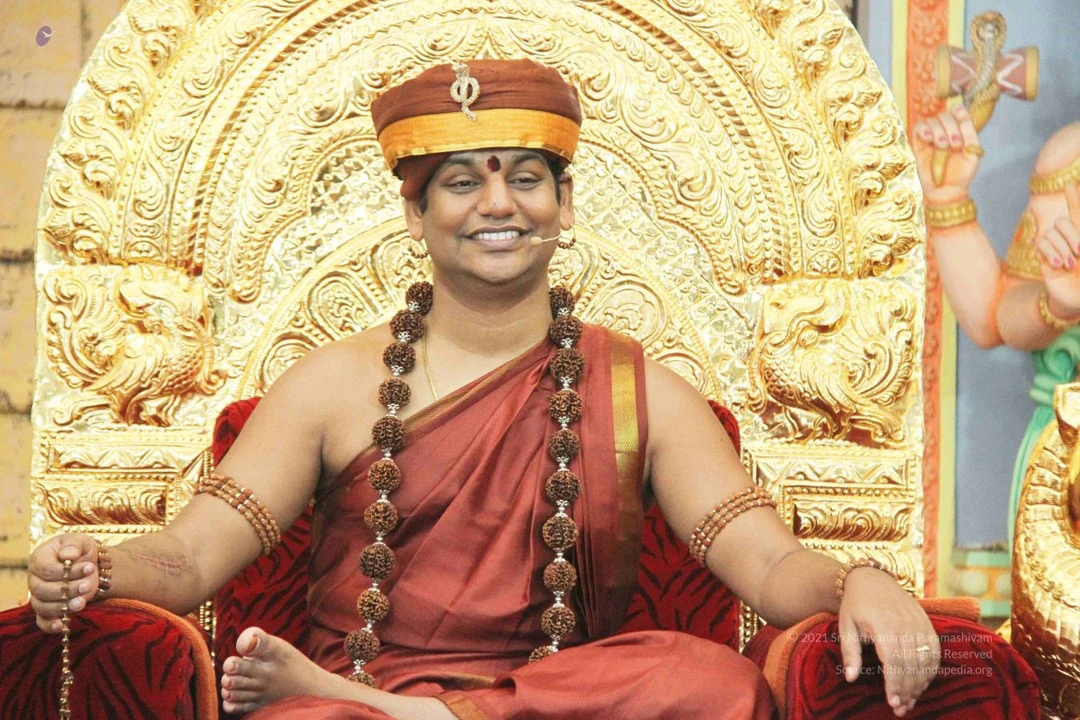
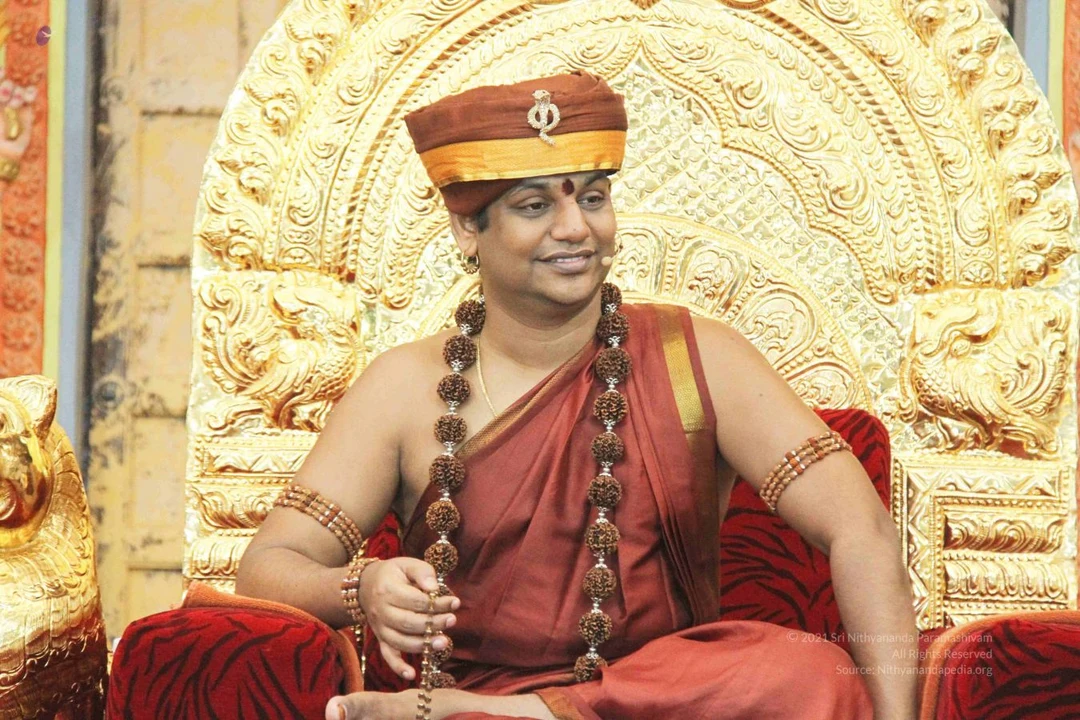
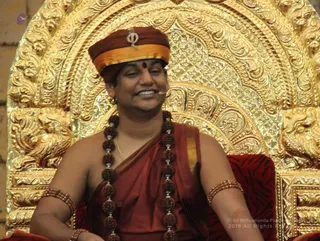
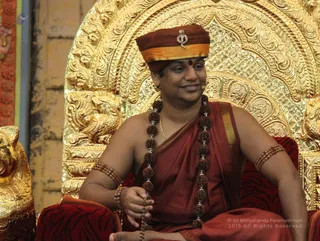
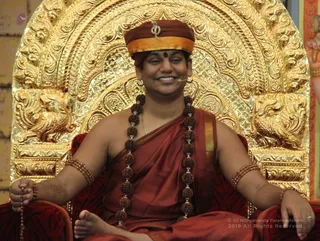
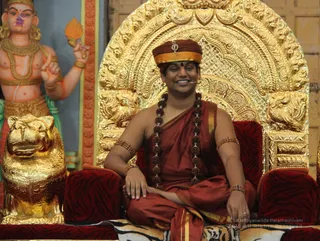
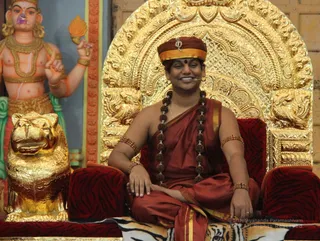
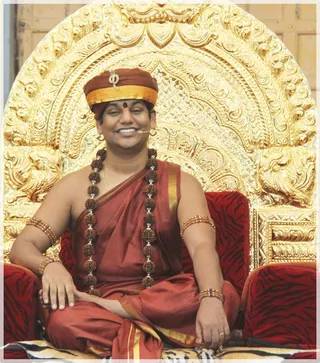
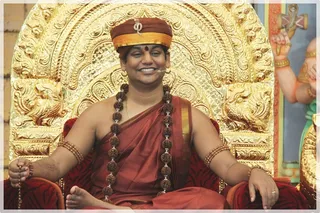
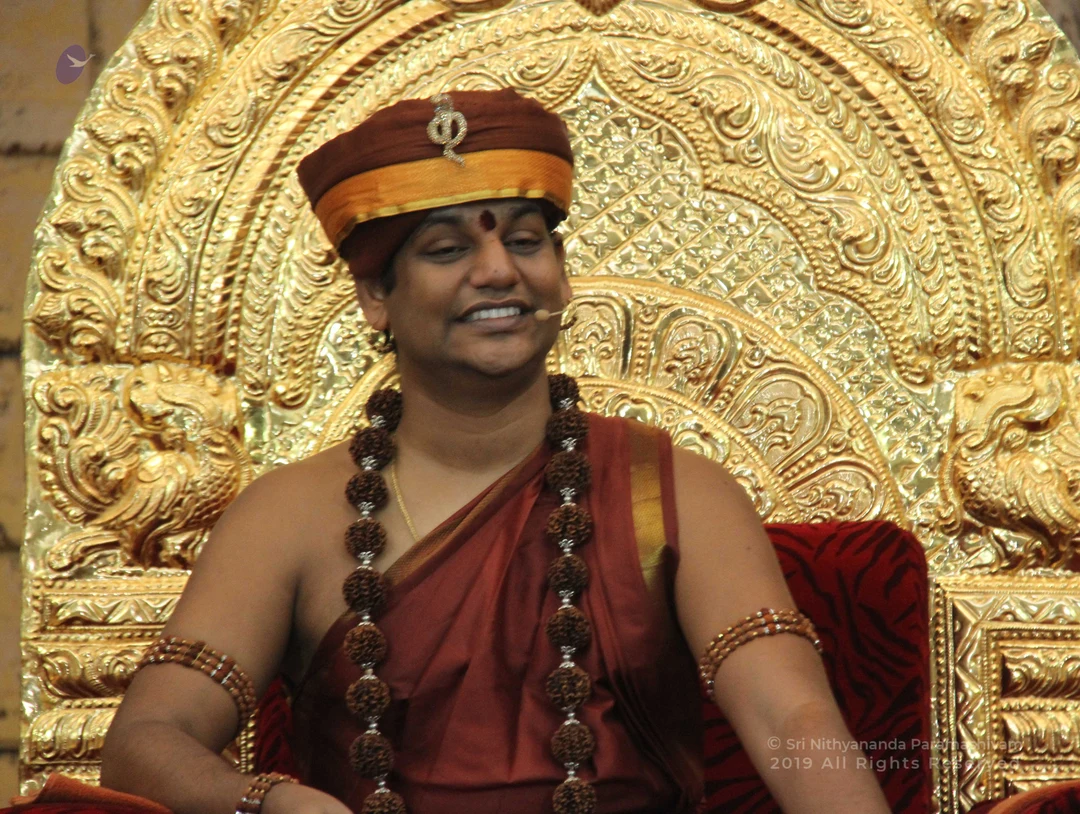
A seated man in a maroon-red turban with a gold band and a silver emblem smiles while speaking, a small microphone at his cheek. He wears a rust-red robe with a gold-edged shawl, a long rudraksha mala draped across his chest, rudraksha bangles on his upper arms, a red bindi and a thin gold chain. He sits in front of an ornate gold throne with carved scrollwork and a red tiger-striped cushion.A seated man in a maroon-red and gold-bordered robe sits on an ornate gold throne with carved gold filigree and lion-motif side panels. He wears a dark red turban with a gold band and a small gold emblem at the front, a red bindi, a gold earring, and a long multi-strand rudraksha mala with silver caps draped over his chest. Rudraksha bracelets are on both upper arms and wrists, and he holds a rudraksha mala in one hand while smiling and looking to the side. Probable Swamiji by appearance cues including the turban, saffron-red ceremonial clothing and rudraksha malas, seated on a throne in a satsang setting.A smiling man sits cross-legged on an ornate golden throne with repoussé floral and lion-like carvings and a red tiger-striped cushion. He wears a maroon-red turban with a gold band and small silver emblem, a red dot on his forehead, a long rudraksha mala with silver spacers, rudraksha bracelets on his arms, and a maroon-red robe with a gold border. He holds a mala in one hand and has a small headset microphone.A seated man in a rust-red and maroon saffron-toned robe with gold border sits on an ornate gold throne with a carved arched back, on red velvet cushions over a striped tiger-skin rug. He wears a maroon turban-style head covering with a gold band and a small ornament, a long rudraksha mala with ceremonial beads, and gold armbands; a small microphone is clipped to his face. He smiles while seated, hands resting on his lap. Beside him is a gold lion statue, and behind him a painted deity figure holds a flame lamp. The scene resembles a satsang setting. Visible cues include the rudraksha mala, the red-and-gold robe and the throne, and the person is labelled with a probable Swamiji identity.A smiling man in a maroon and gold robe sits cross-legged on an ornate golden throne with red velvet cushions and a tiger-striped rug. He wears a maroon turban with a gold emblem, a rudraksha mala of large beads across his chest, and beaded bracelets on his wrists and upper arms. A gold lion-shaped statue sits at the left edge, and a painted deity murti with raised hand and flame-like object stands behind. The Nithyananda Paramashivam candidate is visible in person, with the appearance cues of a turban, rudraksha mala and saffron-maroon robe.A seated man sits on an ornate gold throne with repoussé floral and scroll carving, draped in a red-brown silk garment with gold border. He wears a maroon head cloth with a gold band and a metallic emblem, a red dot on his forehead, a headset microphone, and a long multi-strand rudraksha mala with silver spacers. Rudraksha bracelets are on his arms and wrists, and a beaded mala hangs from one hand. A tiger-striped cloth covers the seat. a person presiding as a speaker in a ceremonial setting, indicated by the throne, rudraksha malas and saffron-red ceremonial clothing.

Photos From The Day

7 photosSource gallery
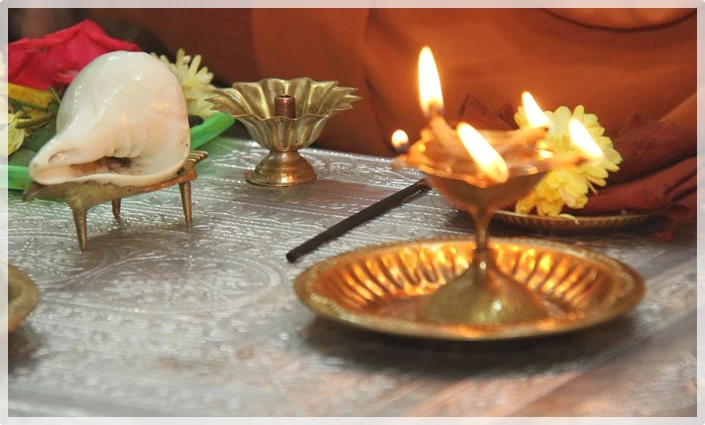
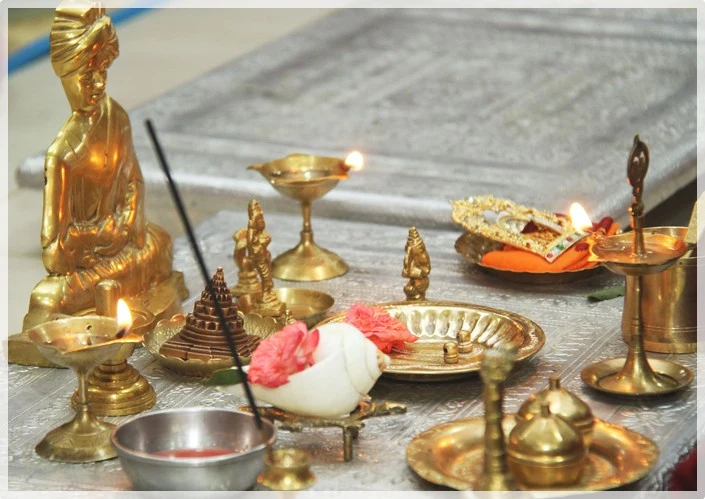
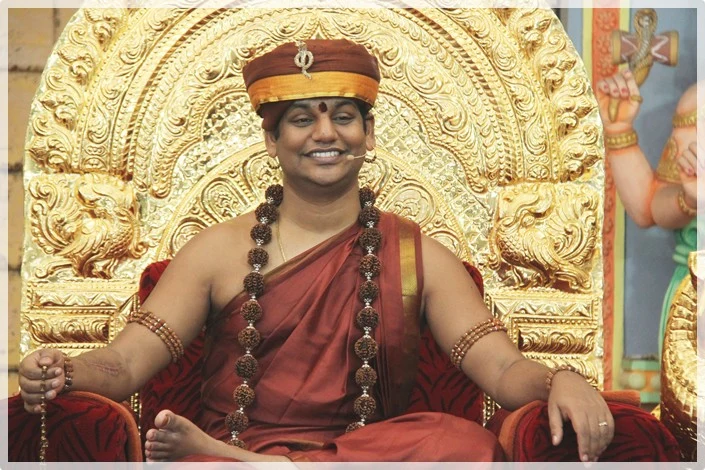
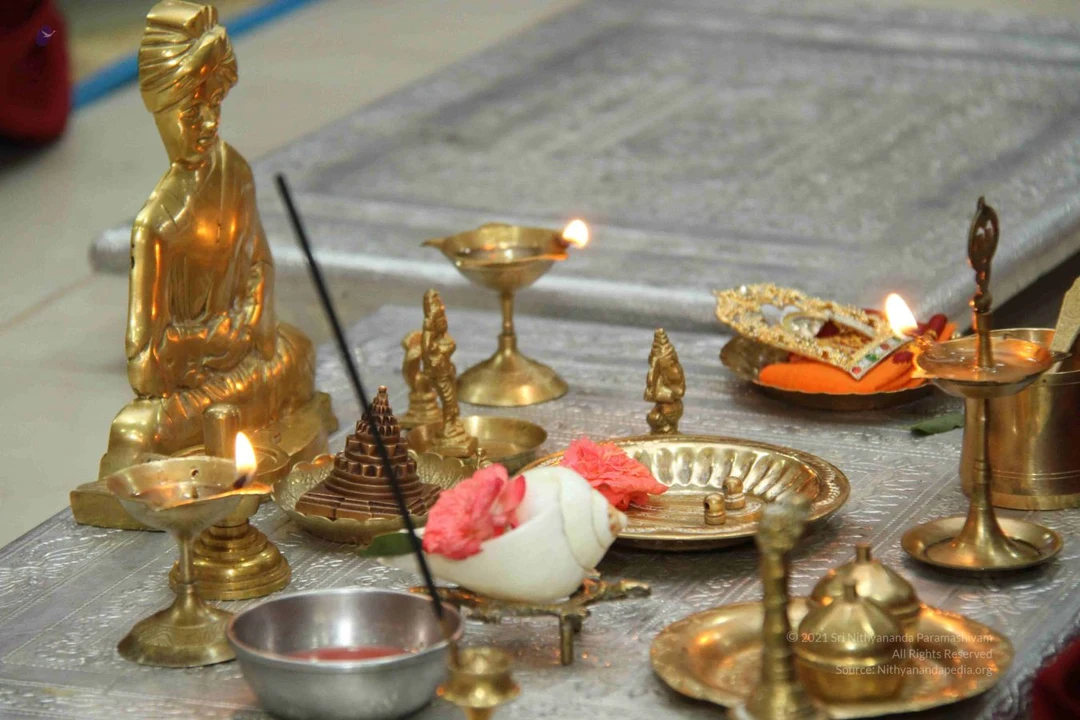
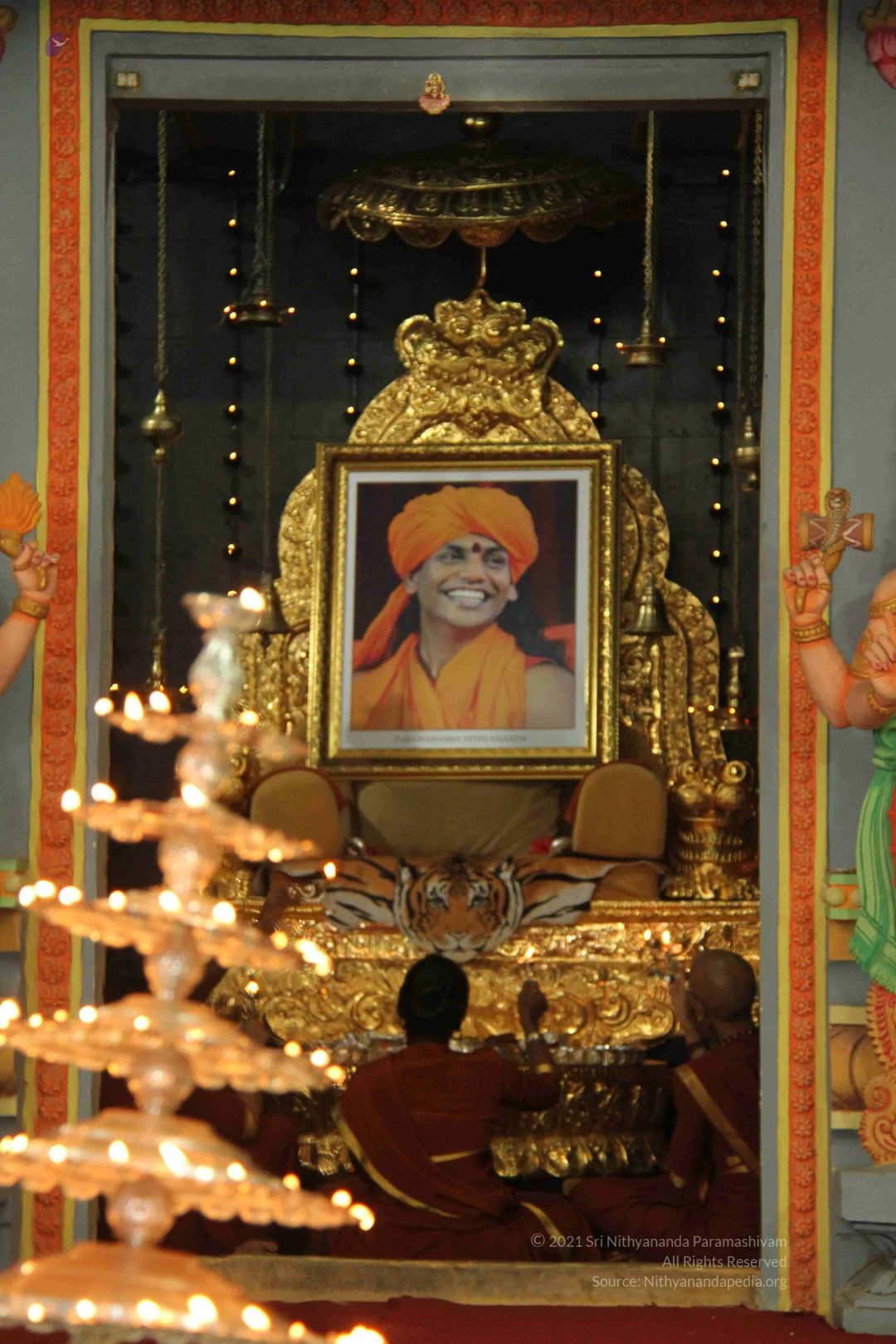
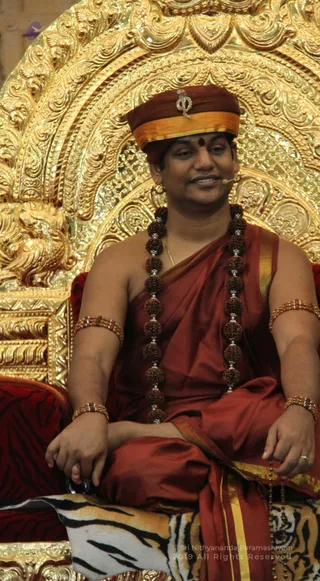
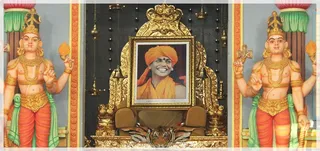
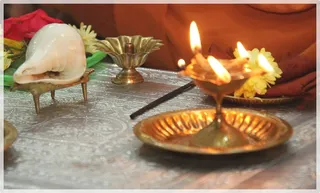
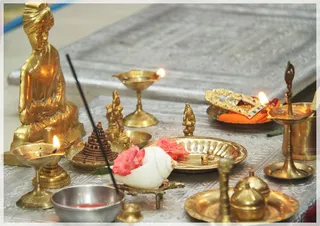
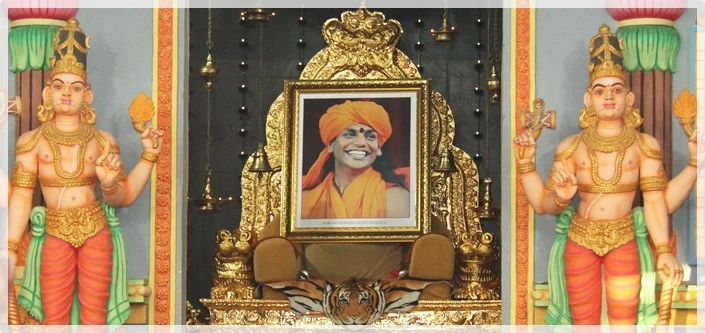
A shrine arrangement with a central framed portrait of a smiling man in an orange turban and saffron robe, labelled "Paramahamsa Nithyananda" in small printed text beneath it. The portrait sits within an ornate gilded frame on a golden throne-like seat, with a carved tiger face at its base, bells and brass lamps hanging above. Two painted, multi-armed deity statues in red-orange and gold dhoti-style garments with gold necklaces flank the portrait on either side, holding ritual items. No physical people are visible; the portrait is a printed depiction.Close photo of a ritual table draped with a silver-patterned cloth. In the foreground, a brass lamp with a lit oil wick sits on a brass tray beside an incense stick. Behind it, a white conch shell rests on a small brass stand next to a brass cup, with yellow flowers and a red flower in the background. At the top edge, the sleeve of an orange-saffron garment and a folded red cloth are visible. No people are clearly shown; the scene is a puja setup with an oil lamp, conch shell and flowers.A puja altar arrangement on a silver-metal table with a golden seated figure of a sage wearing a tall turban and robe, a golden statue of Swamiji in meditation pose. Lit brass oil lamps (deepams) with flames sit among the items, a brass tray holds pink flower petals and a white conch shell garlanded with pink flowers, a small brass pyramid-shaped object stands near incense sticks, and a brass plate of kumkum and an ornate tray with orange cloth and decorative trimmings are placed nearby. No people are visible.A smiling man sits cross-legged on a red velvet and gold ornate throne with a gilded arched backrest, wearing a maroon turban with a gold band and a small silver emblem, a red bindi, a headset microphone, a long rudraksha mala with gold beads, a rust-red dhoti-style wrap with gold border, gold armbands and bangles. Swamiji (probable): long-haired presentation with the turban, rudraksha mala and ceremonial ornaments; the attribution is appearance-based only. He is seated in the person-on-throne posture, a satsang setting with a zebra-striped cushion beneath.A smiling man sits cross-legged on an ornate gold throne carved with lion-like motifs and scrollwork. He wears a red-and-gold turban with a silver emblem, a saffron-red dhoti-style wrap with a gold border, and long strands of dark rudraksha malas around his neck. He has gold bangles on both wrists and holds a mala in one hand. A microphone is clipped near his face. Beside the throne, a partial figure in green and gold, possibly a deity murti, is visible at the right edge. Swamiji (probable) based on the turban, rudraksha malas and ceremonial attire, seated in a satsang setting.A smiling man in a red-maroon dhoti-style garment with gold border and a maroon headpiece with a gold band stands at right, wearing a long rudraksha mala and gold bangles on his arms. He raises one hand in blessing toward a man in a white shirt at left, who presses his palms together in greeting. Other devotees in white and red-orange clothing stand behind them in a temple hall with silver railings, with a painted backdrop of deity murtis and gold-topped pillars.

Thanthi-TV-Show-Nithya-Dharmam
146 photosSource gallery
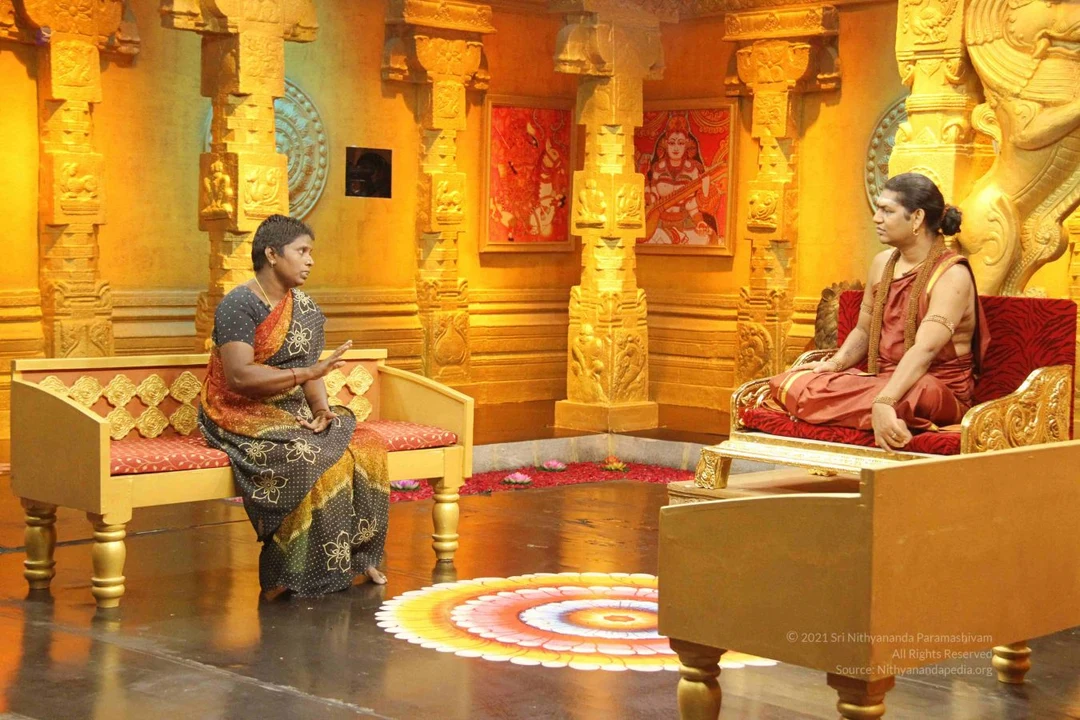
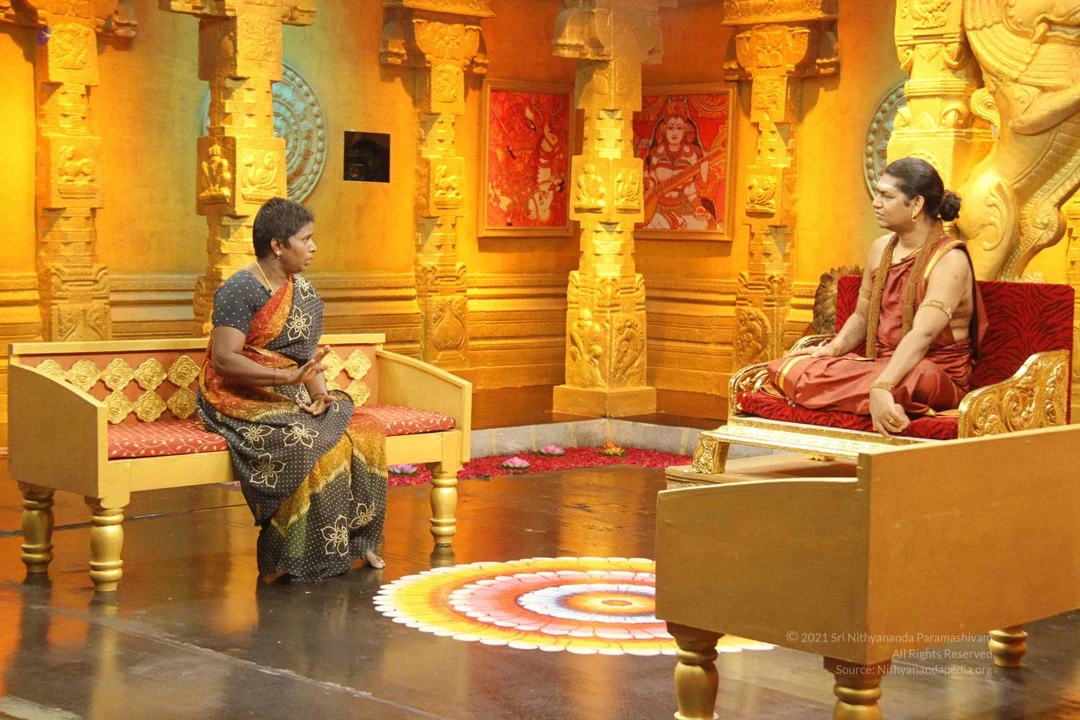
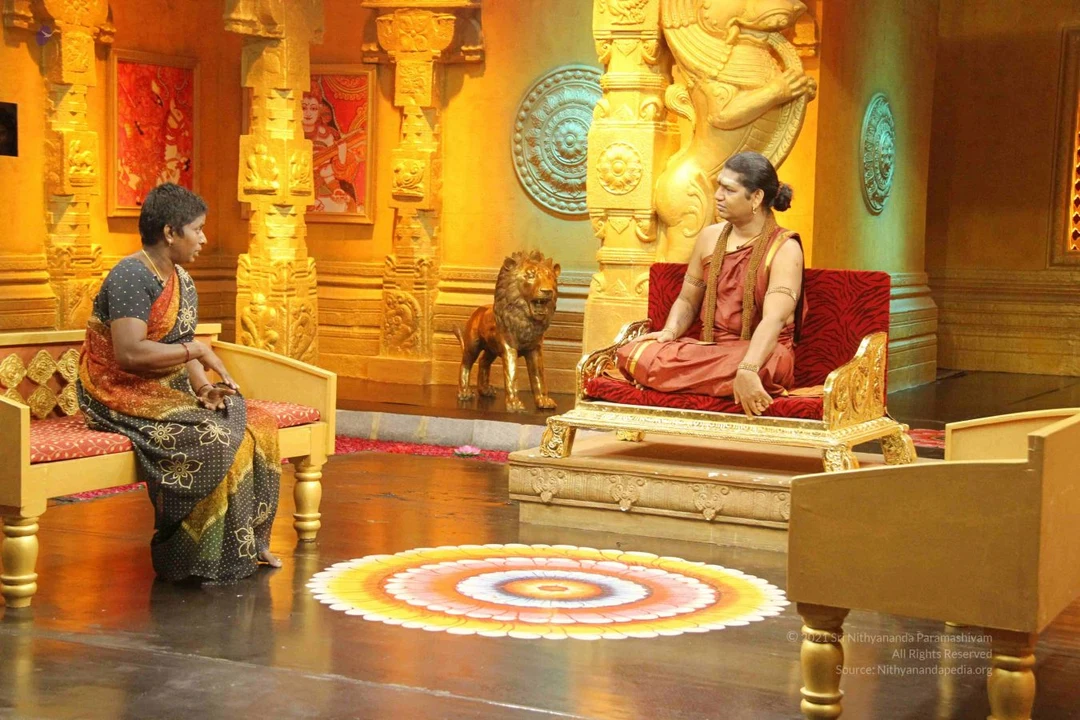
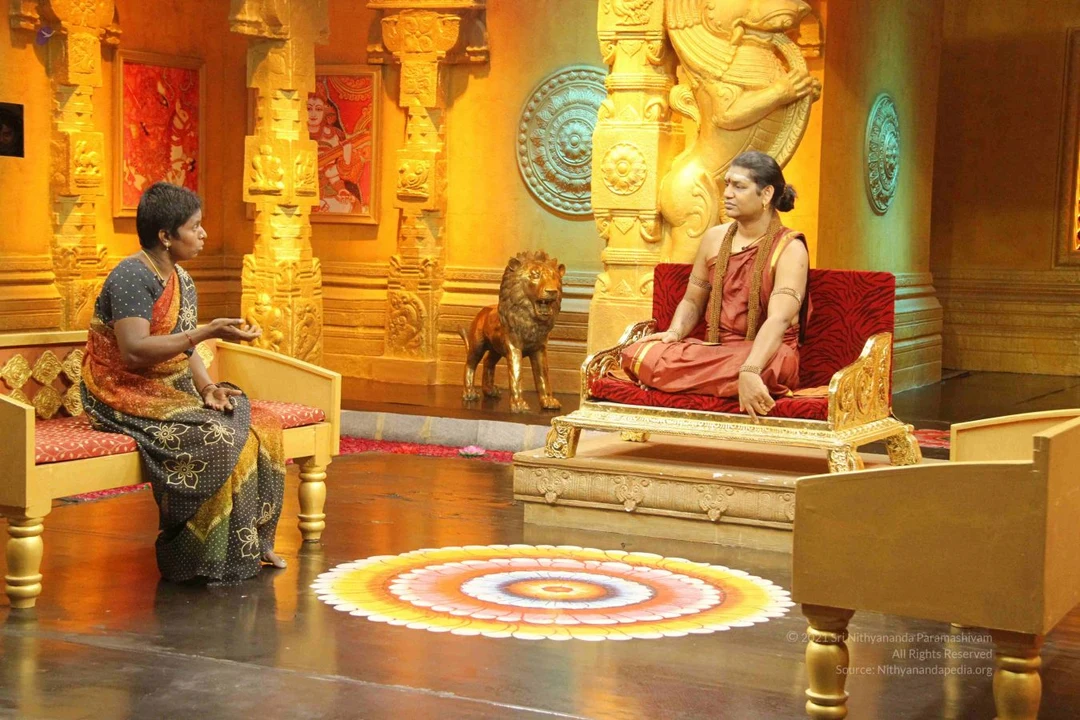
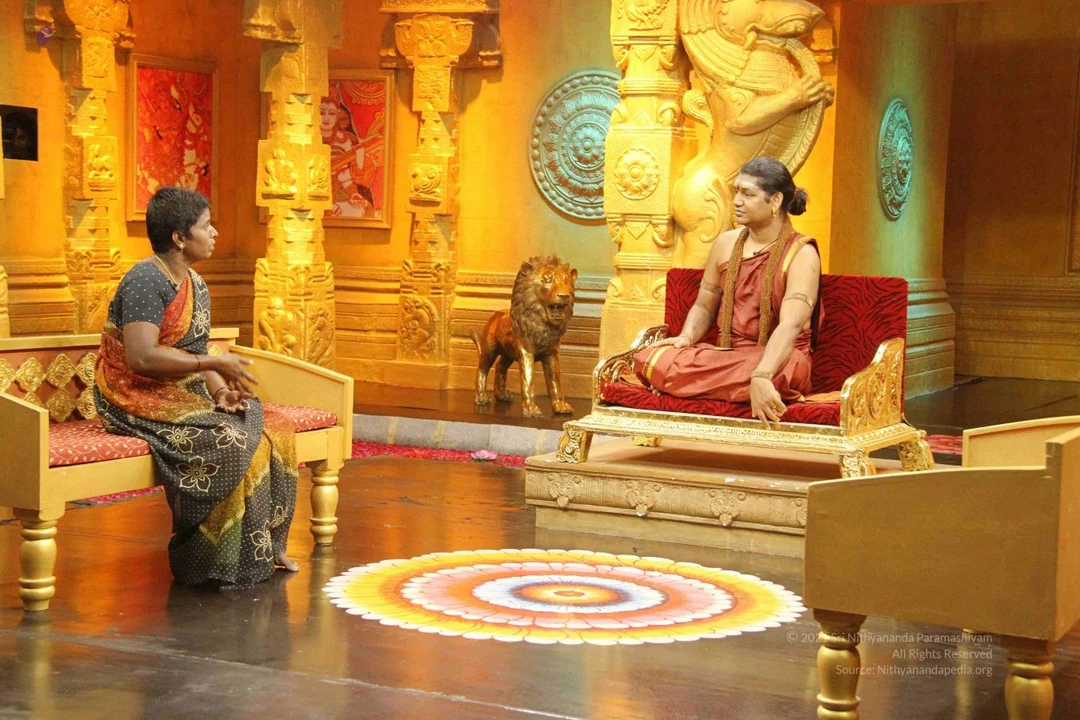
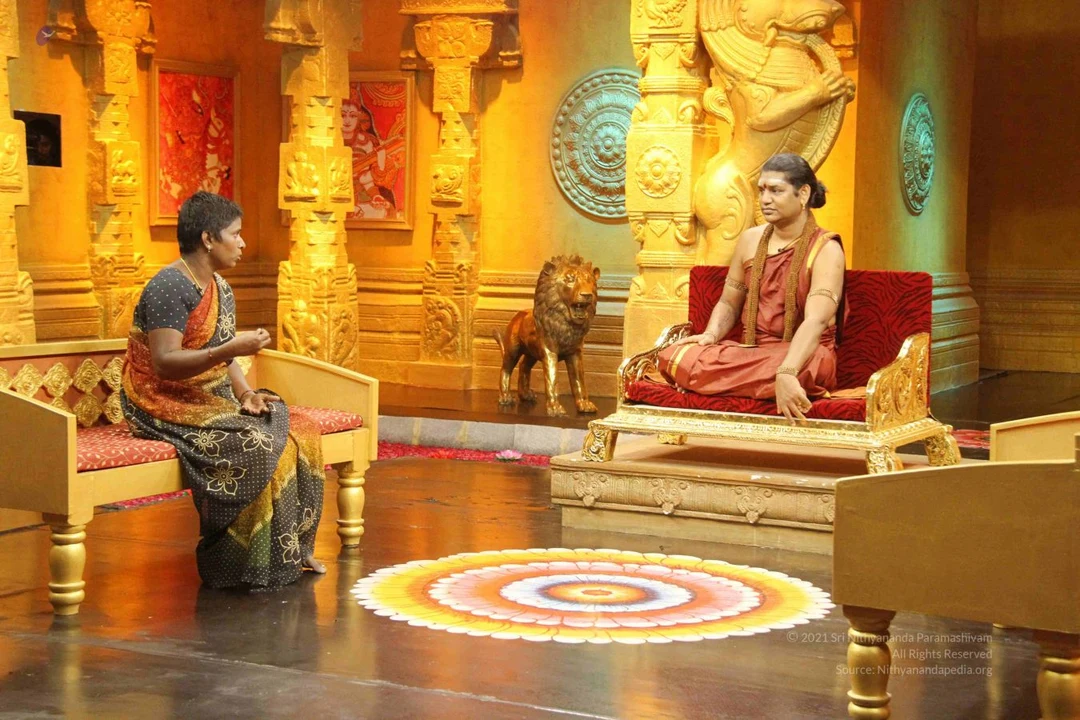
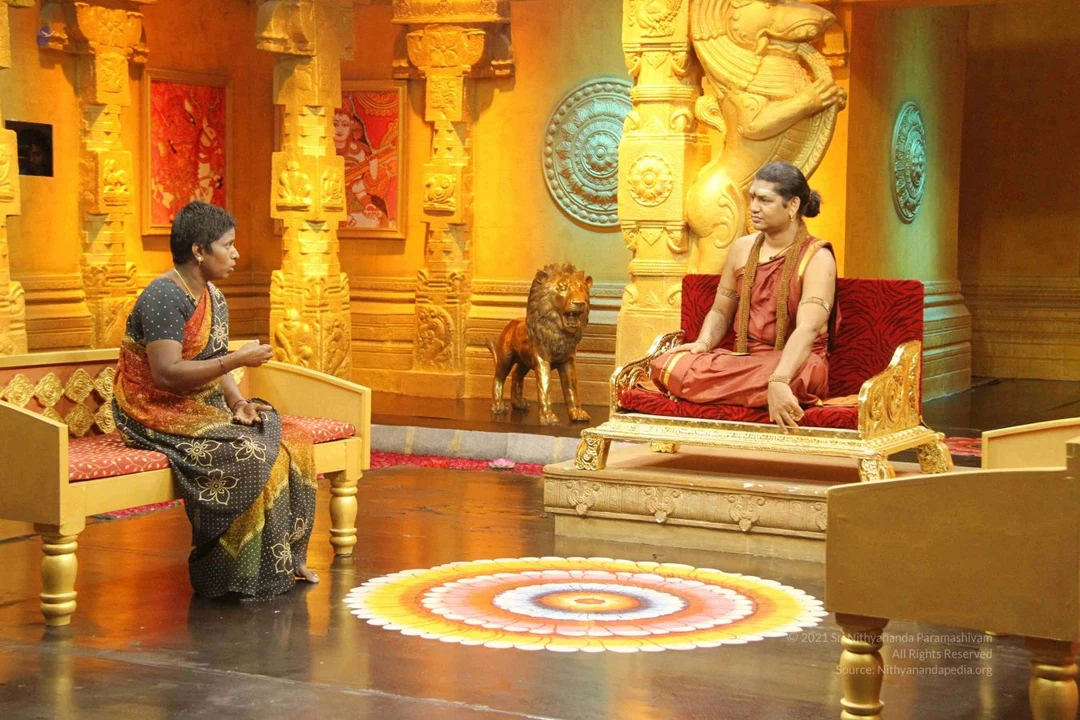
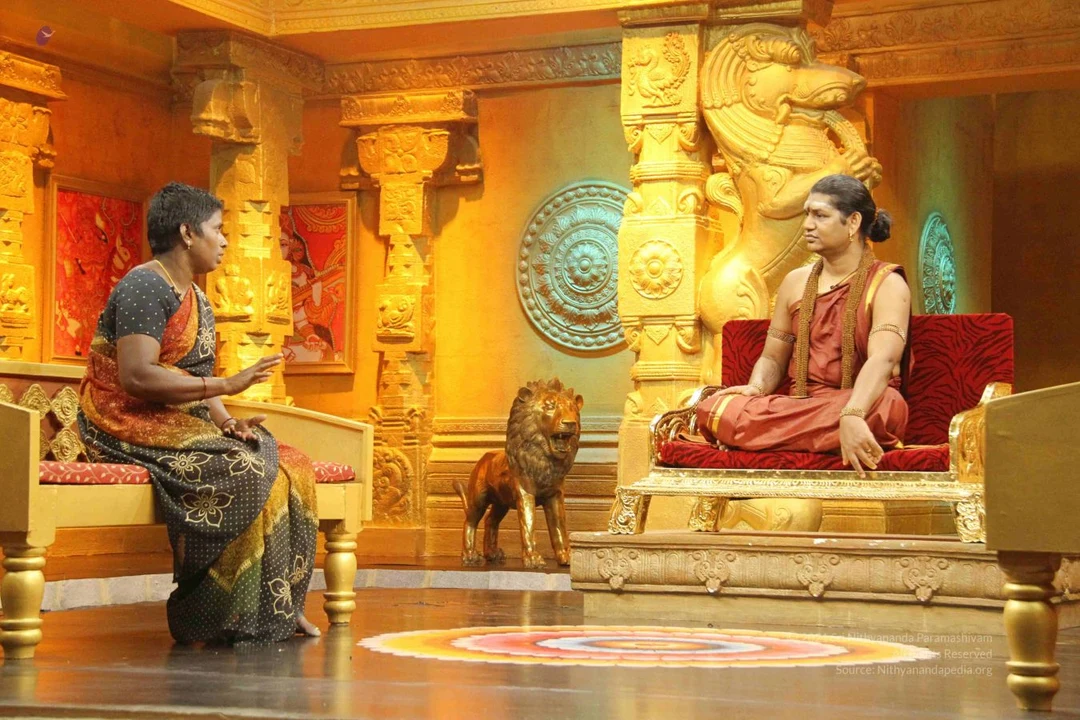
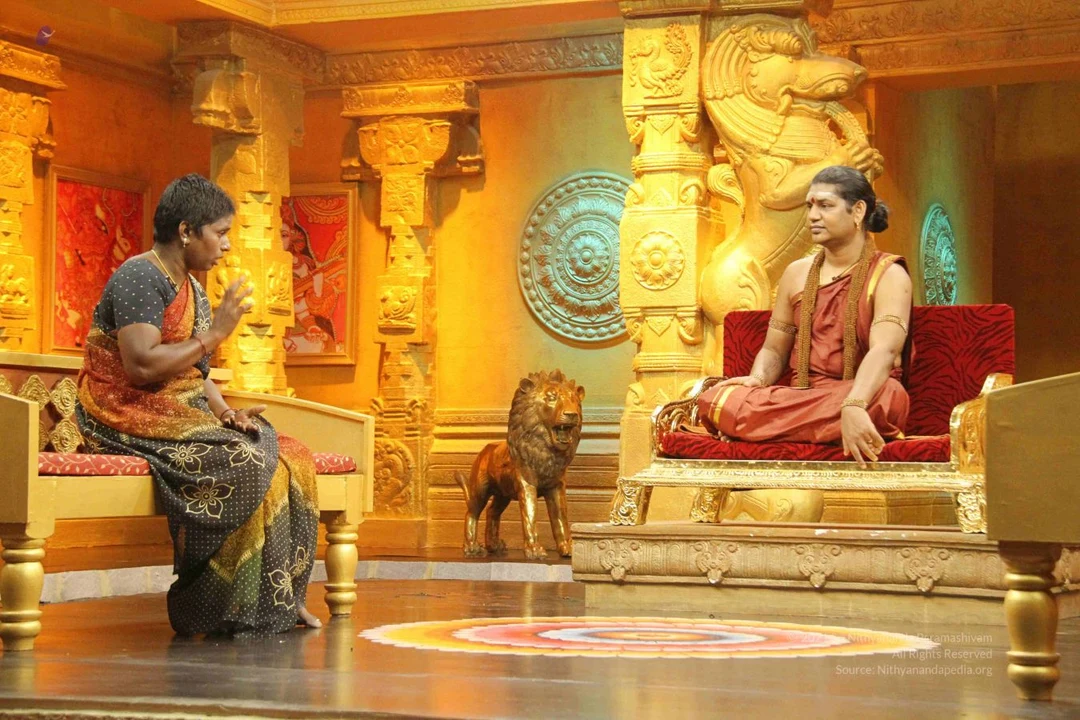
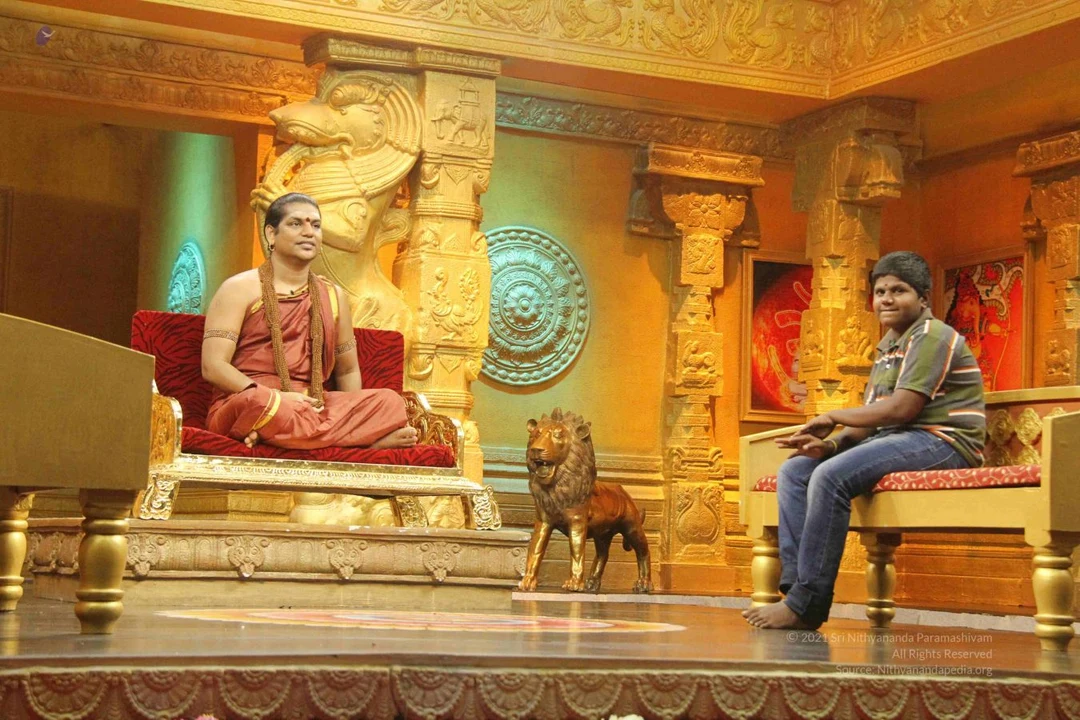
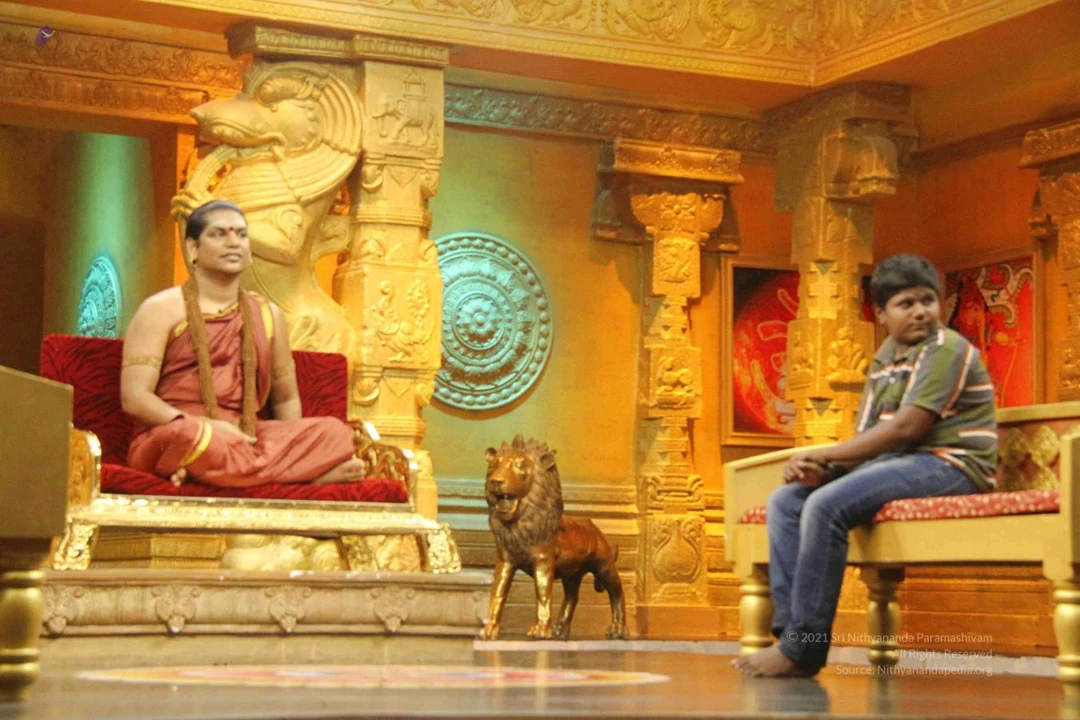
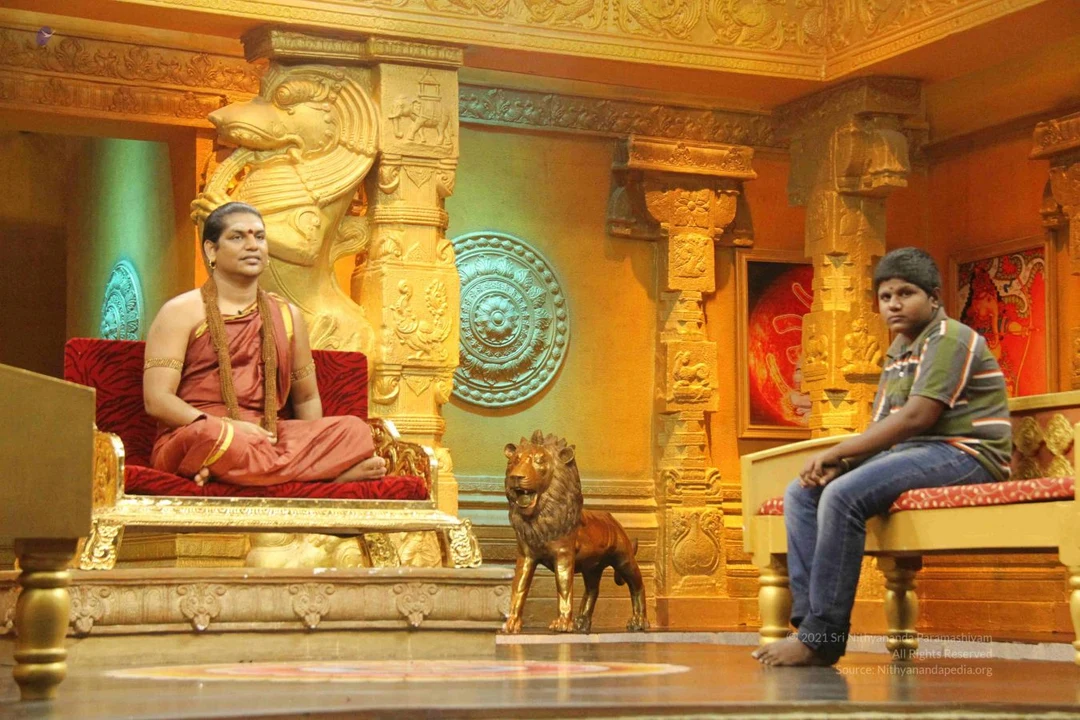
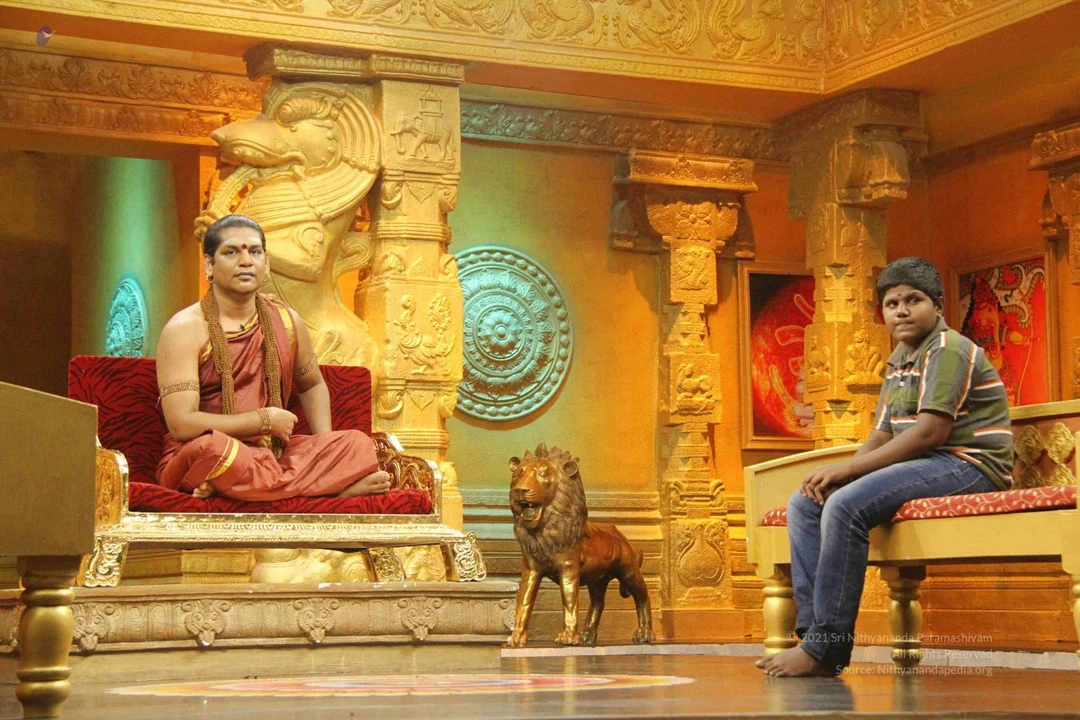
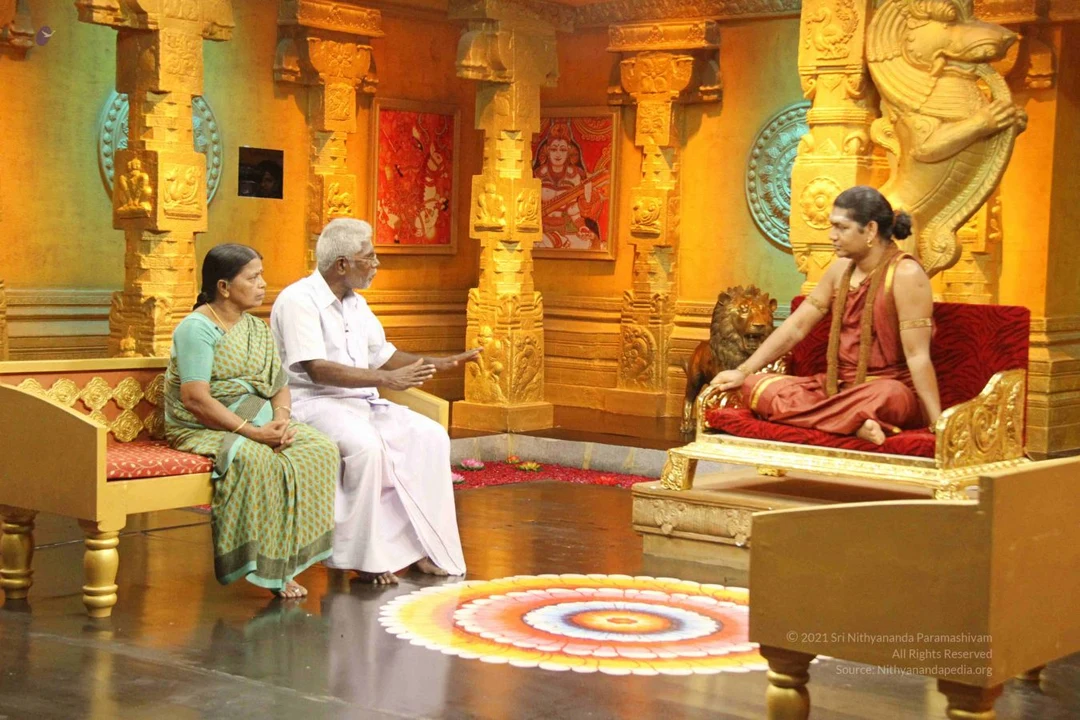
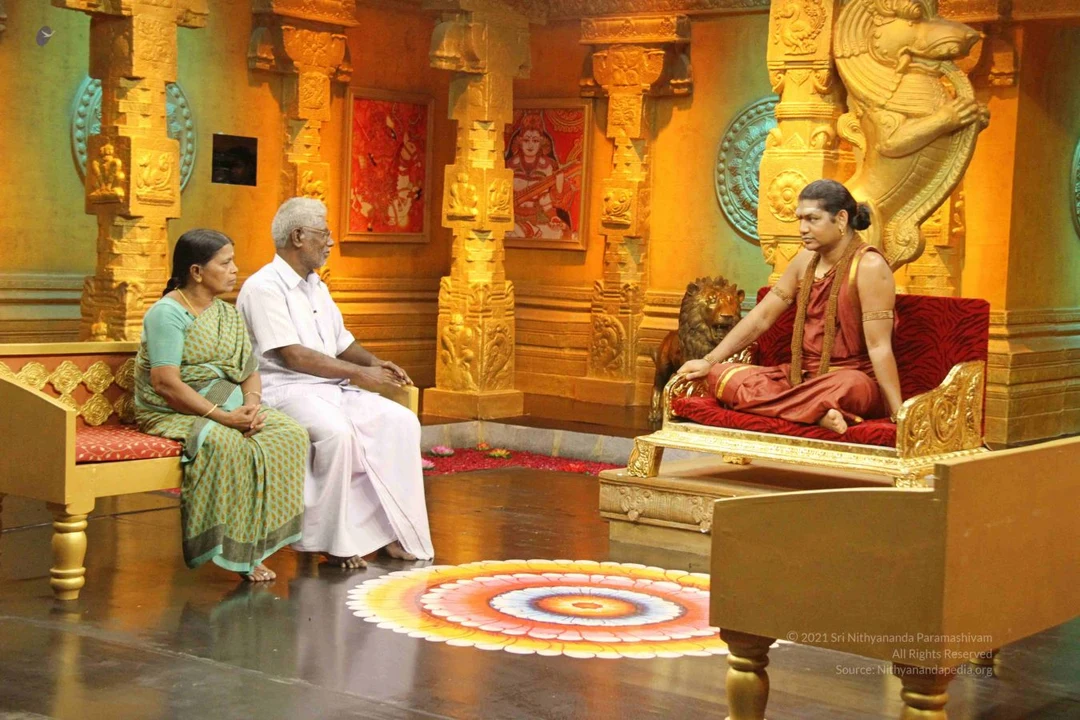
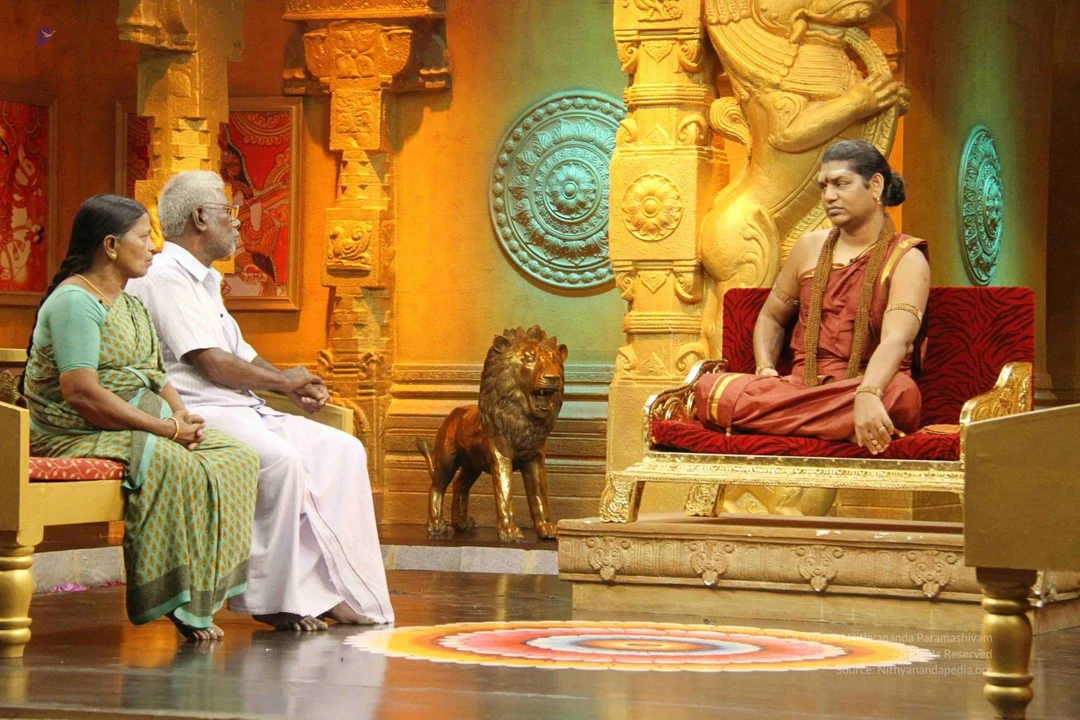
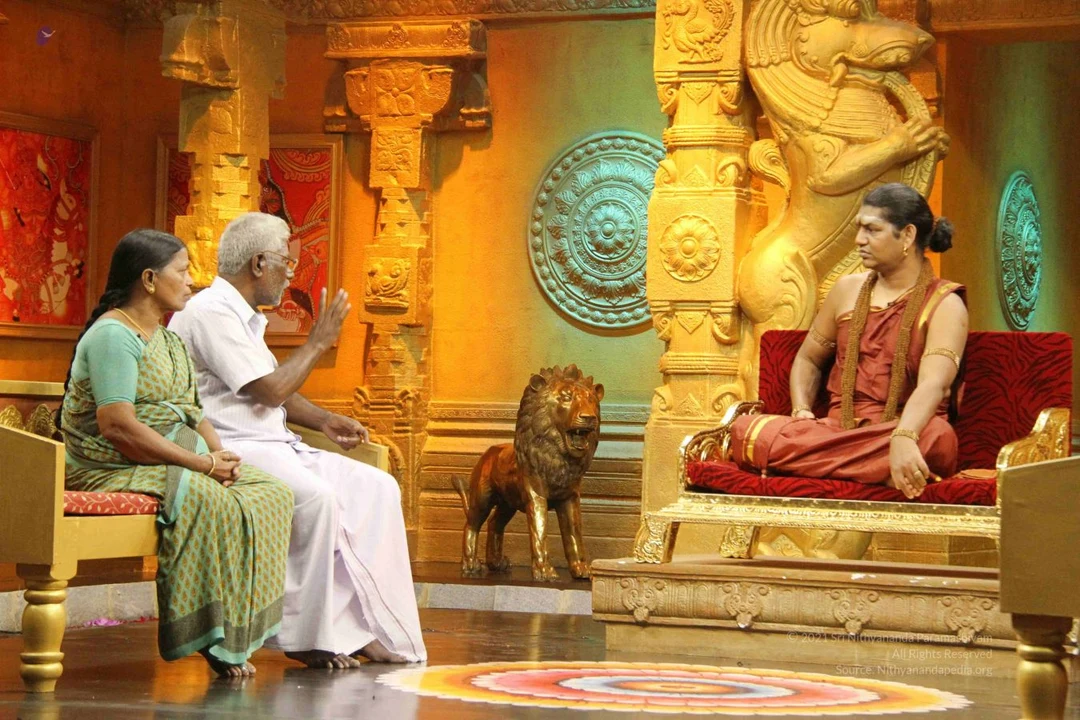
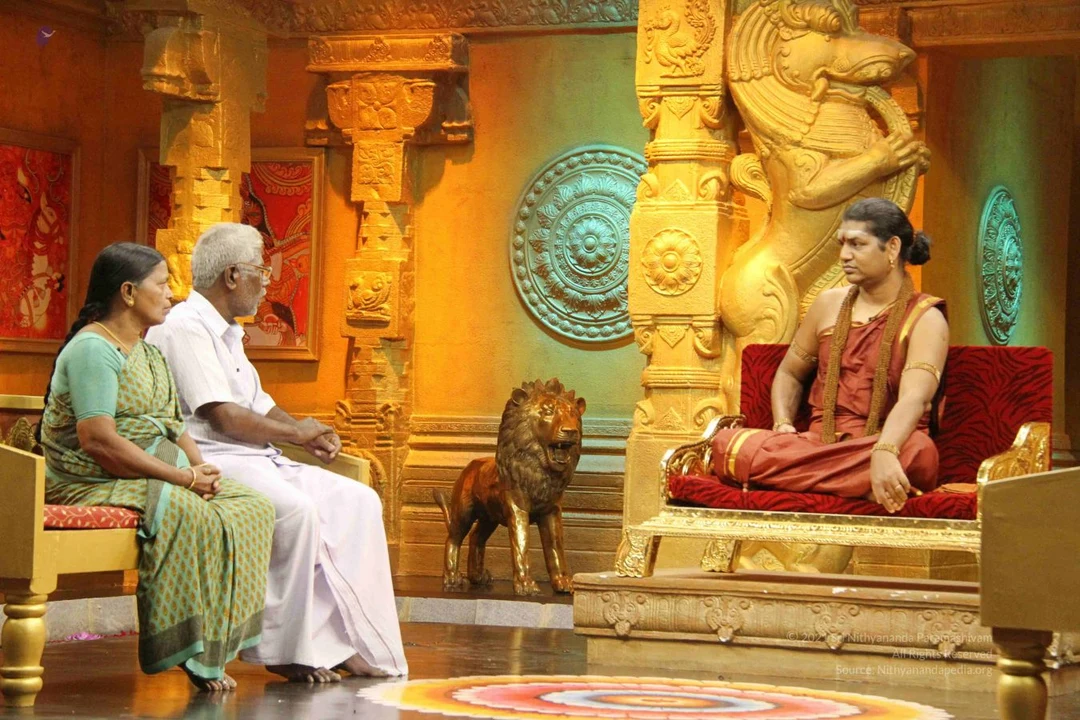
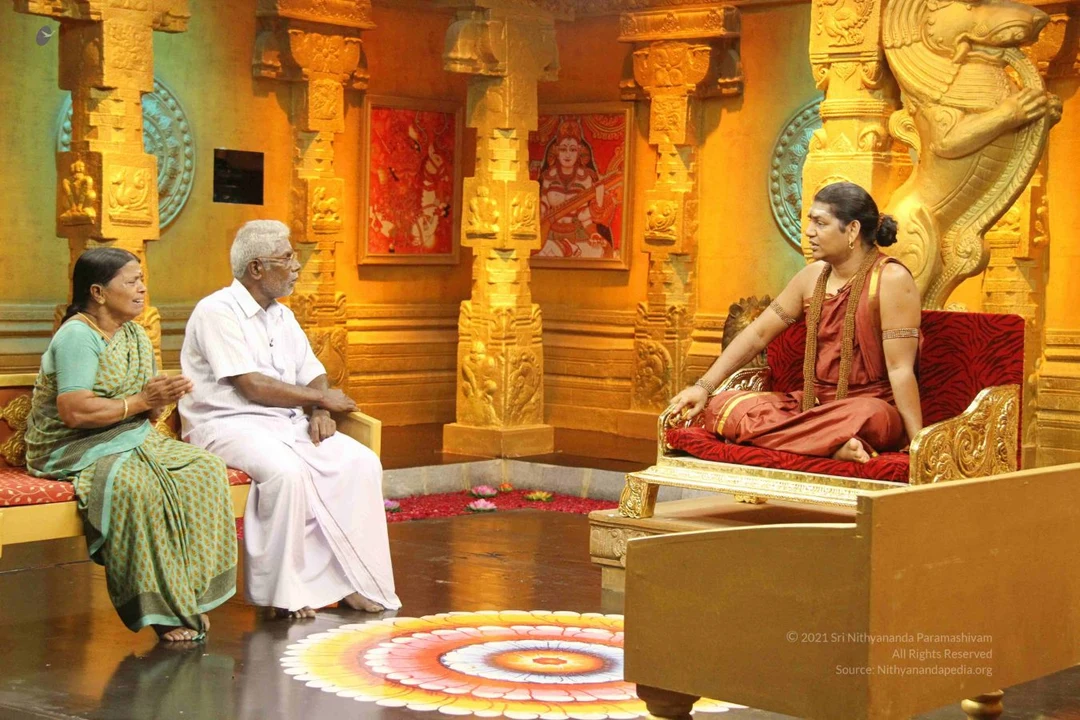
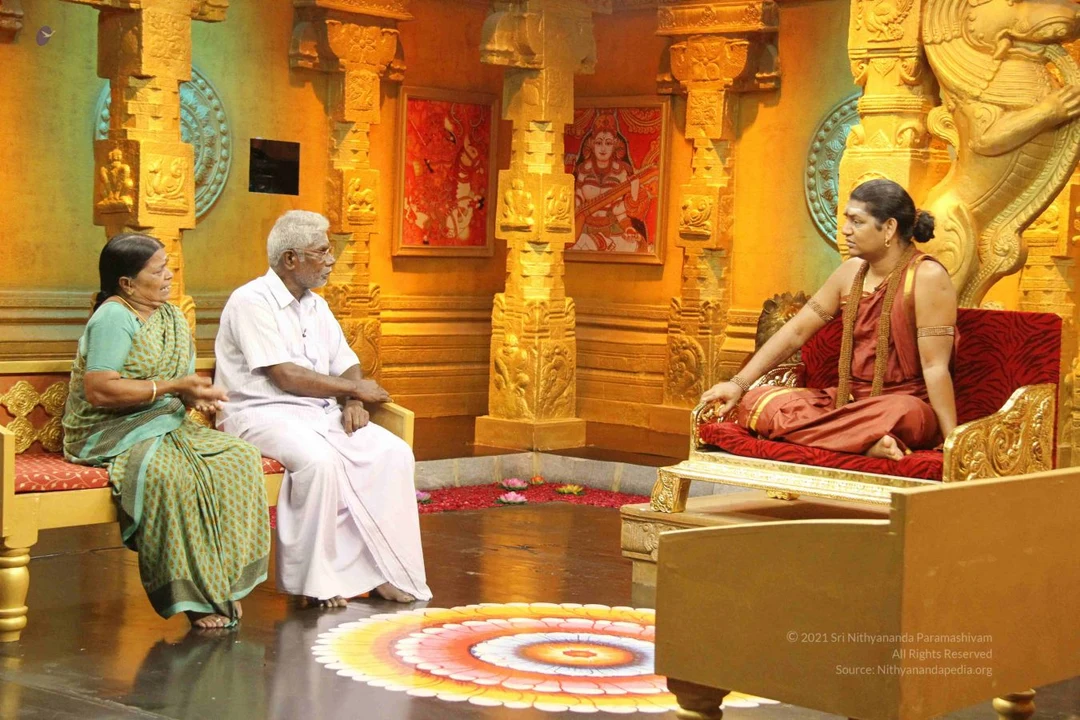
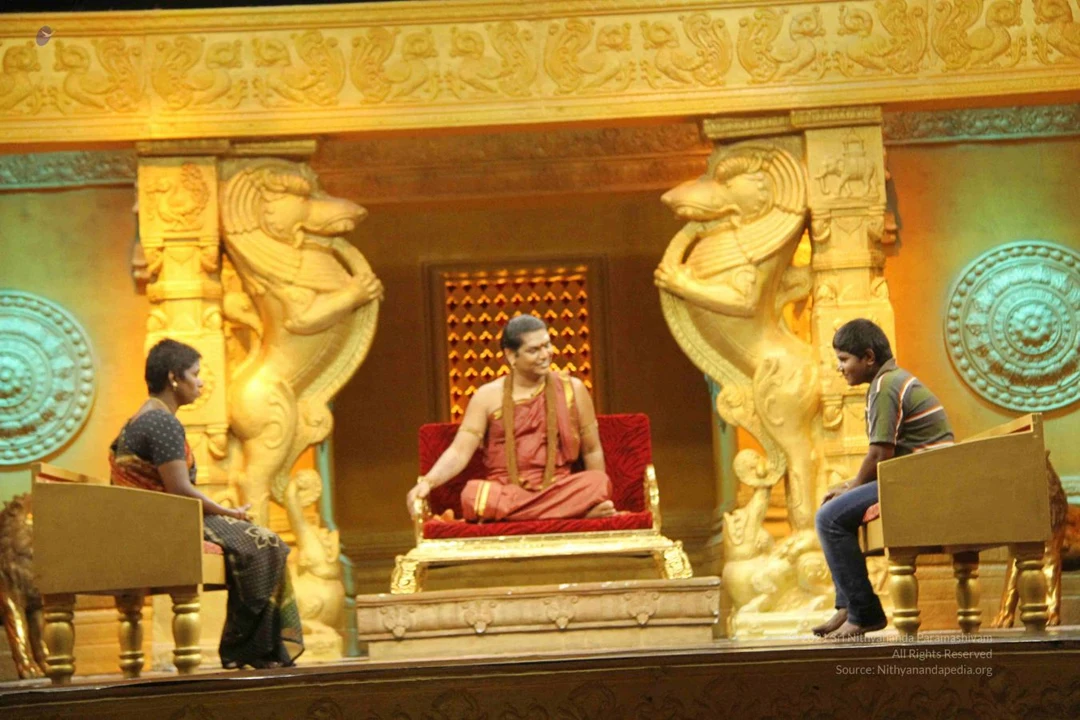
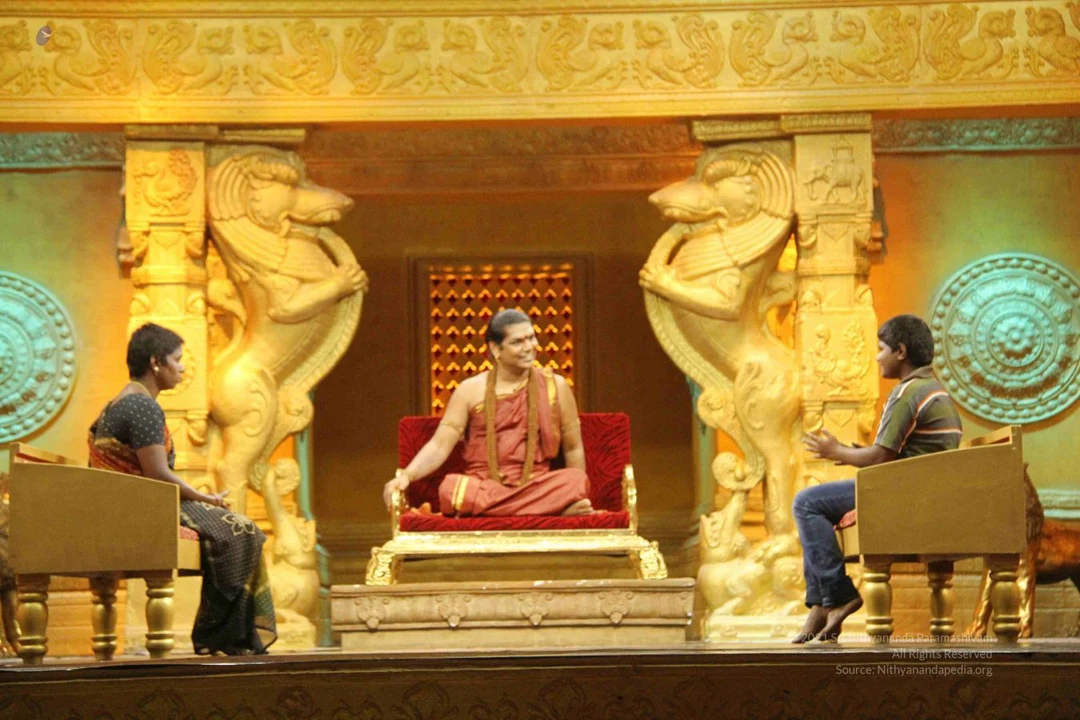
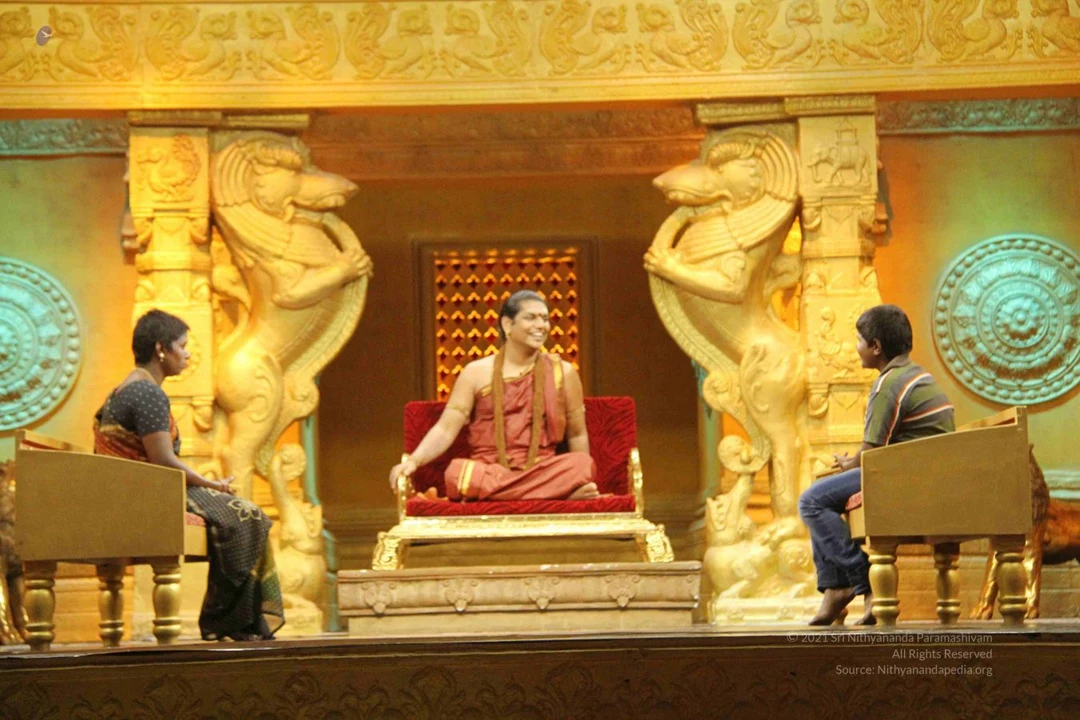
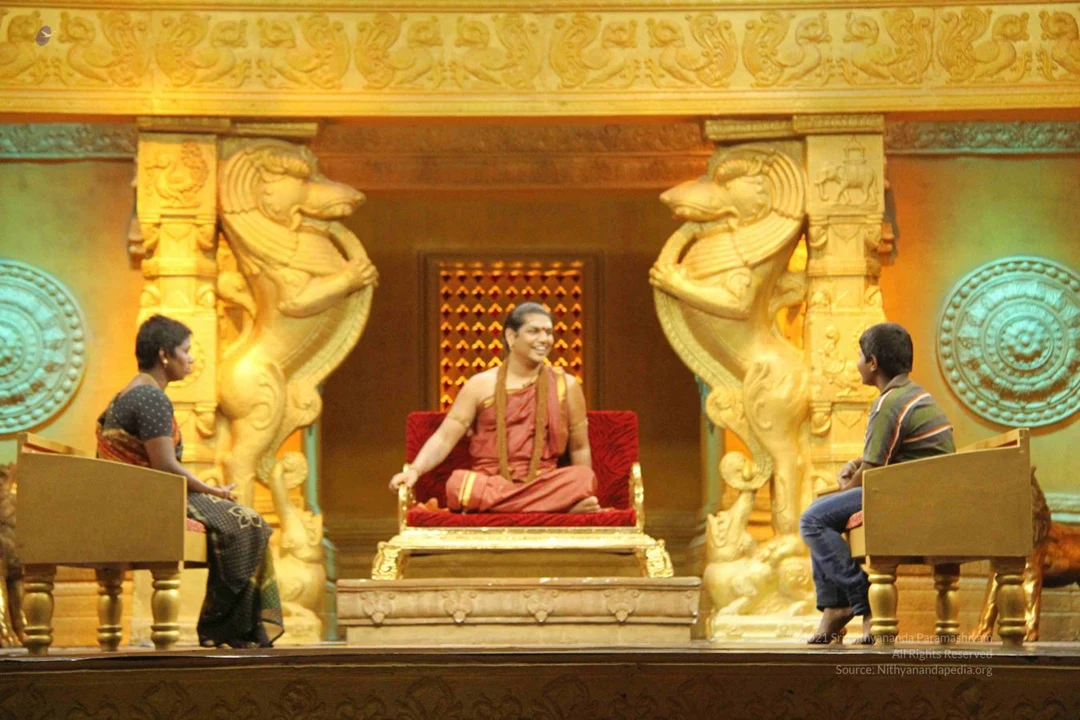
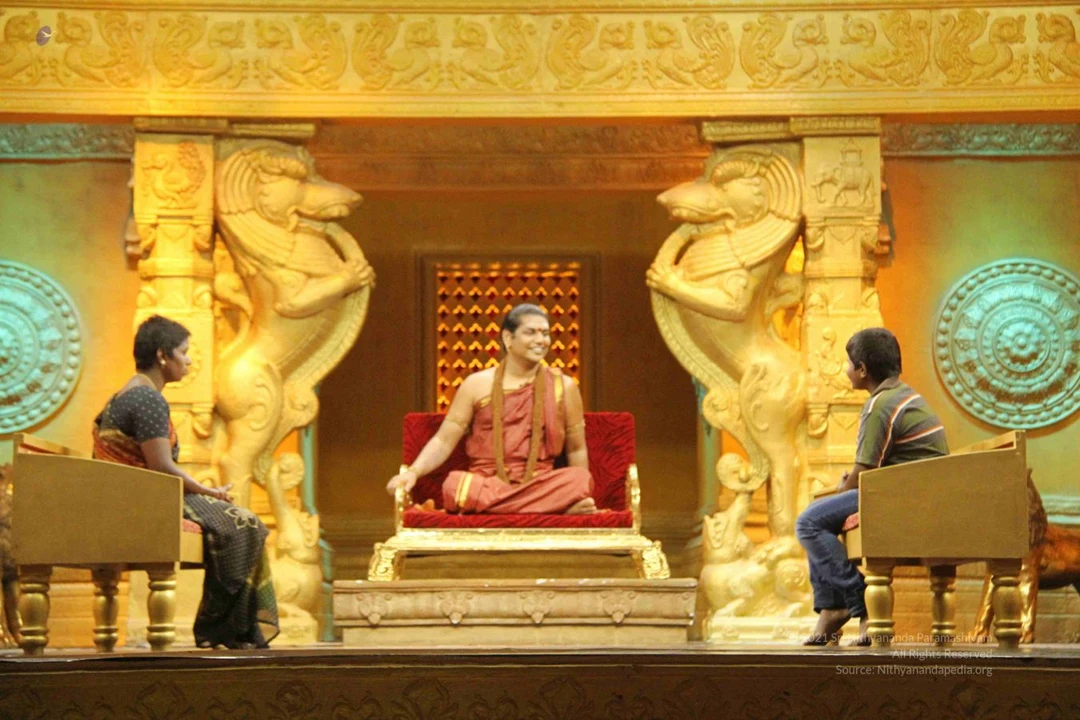
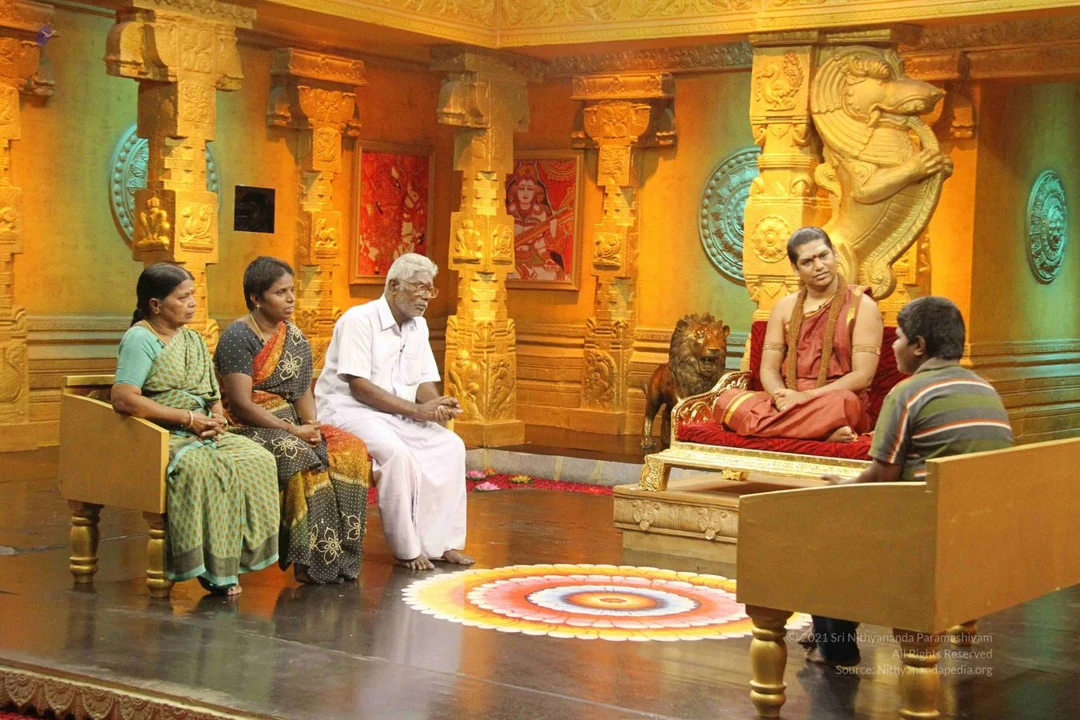
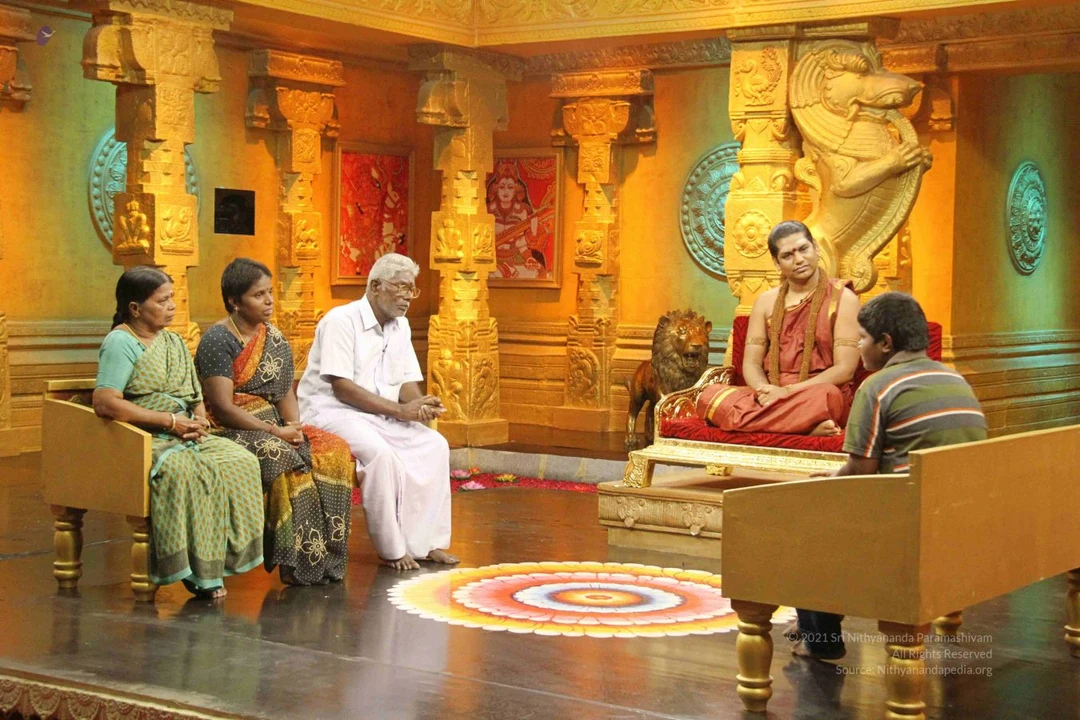
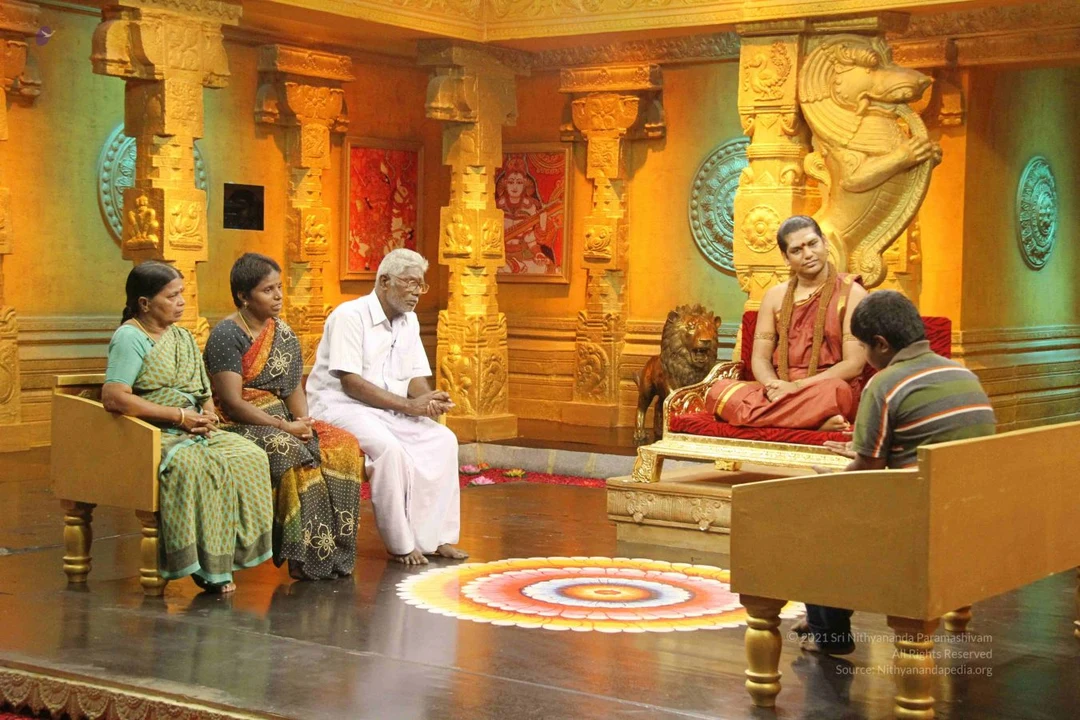
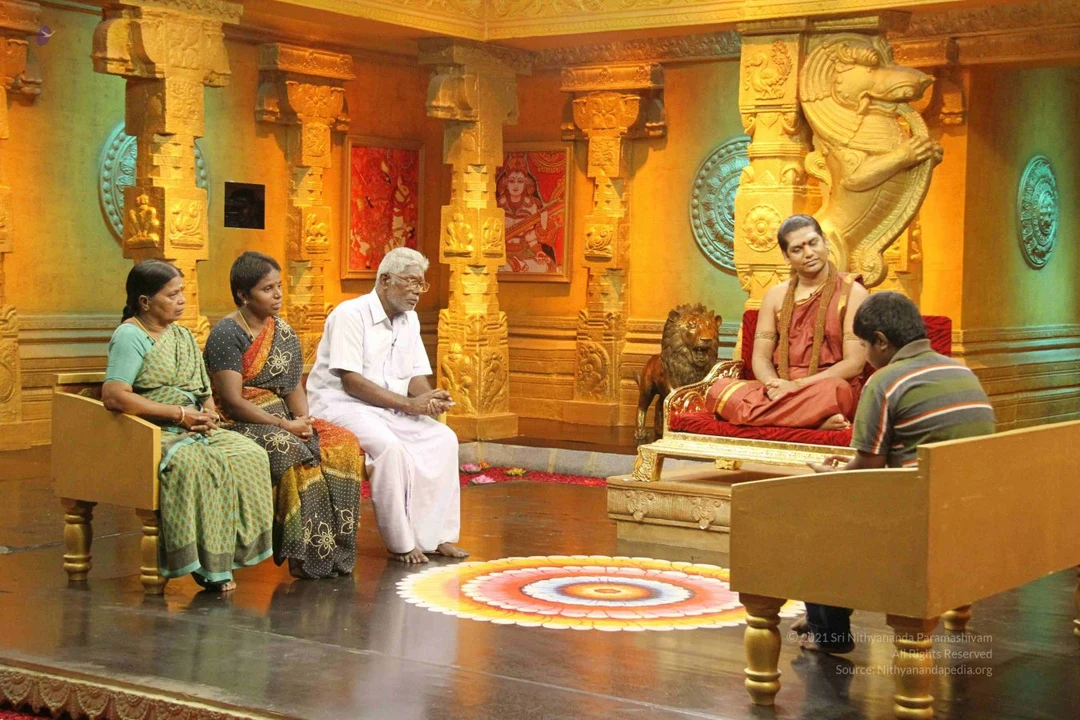
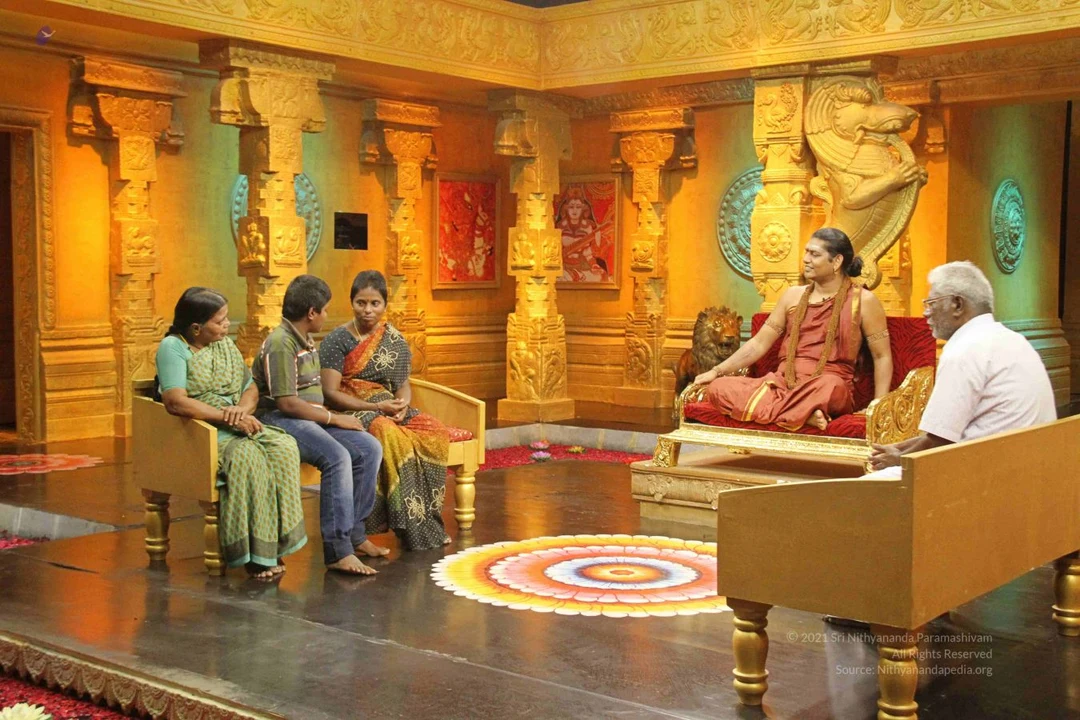
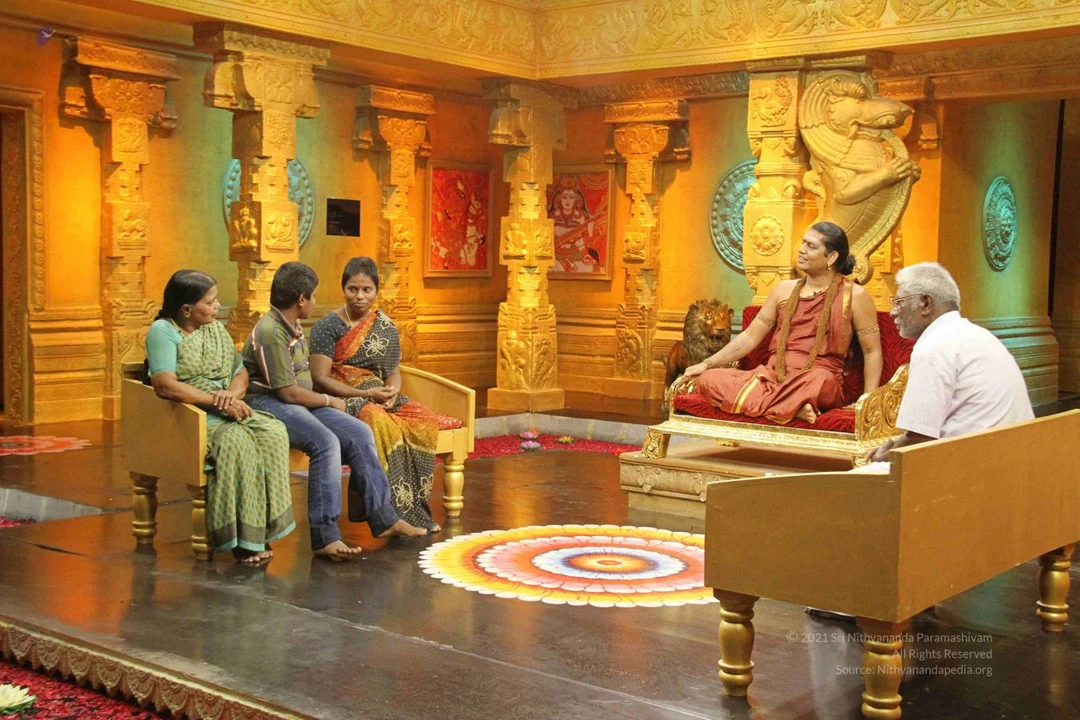
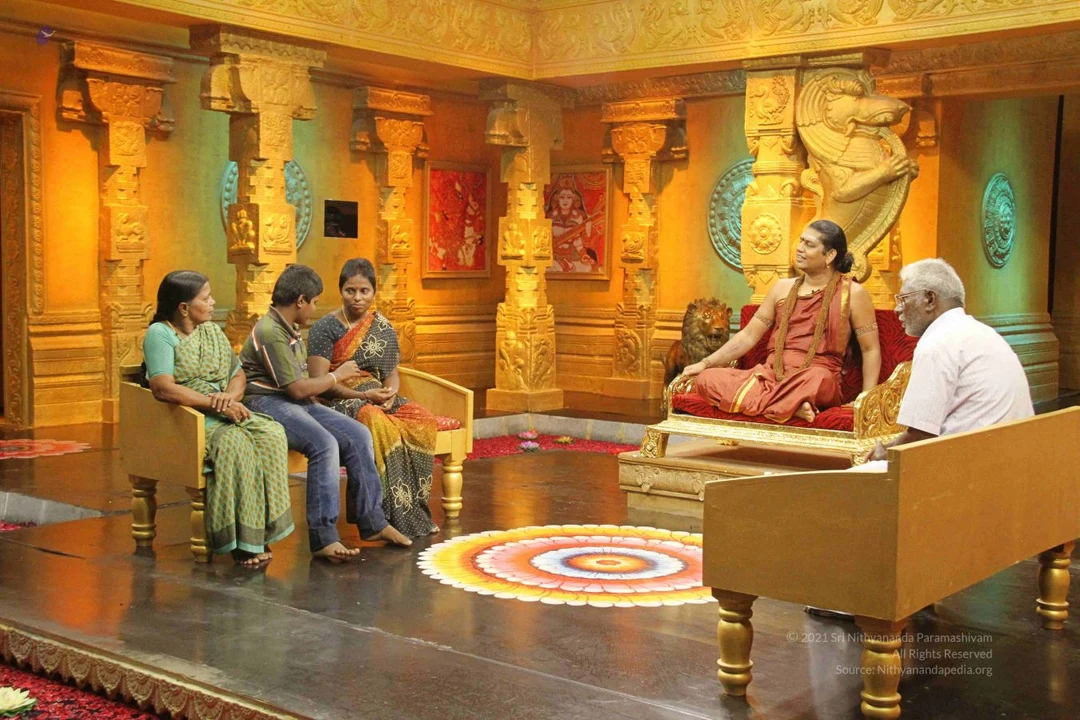
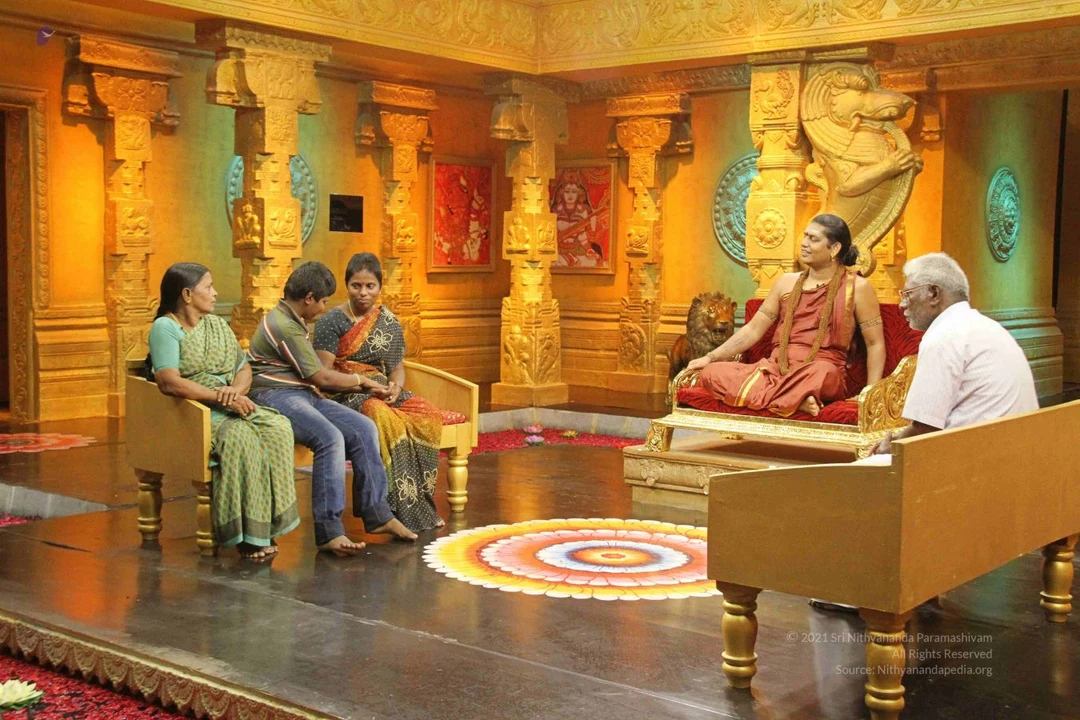
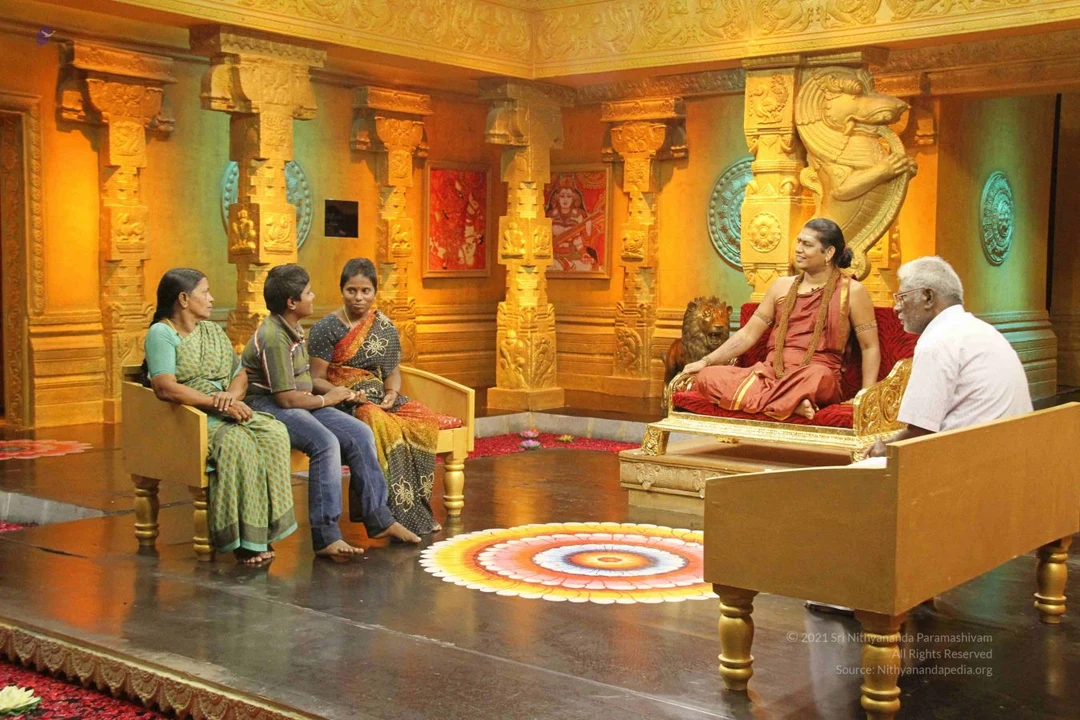
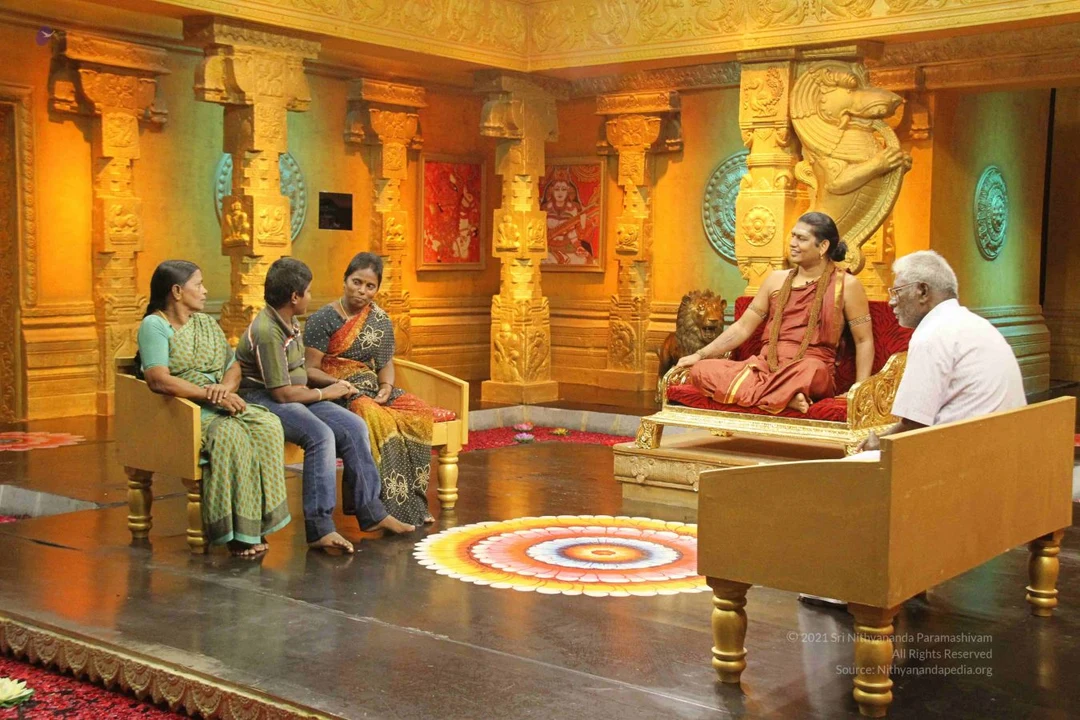
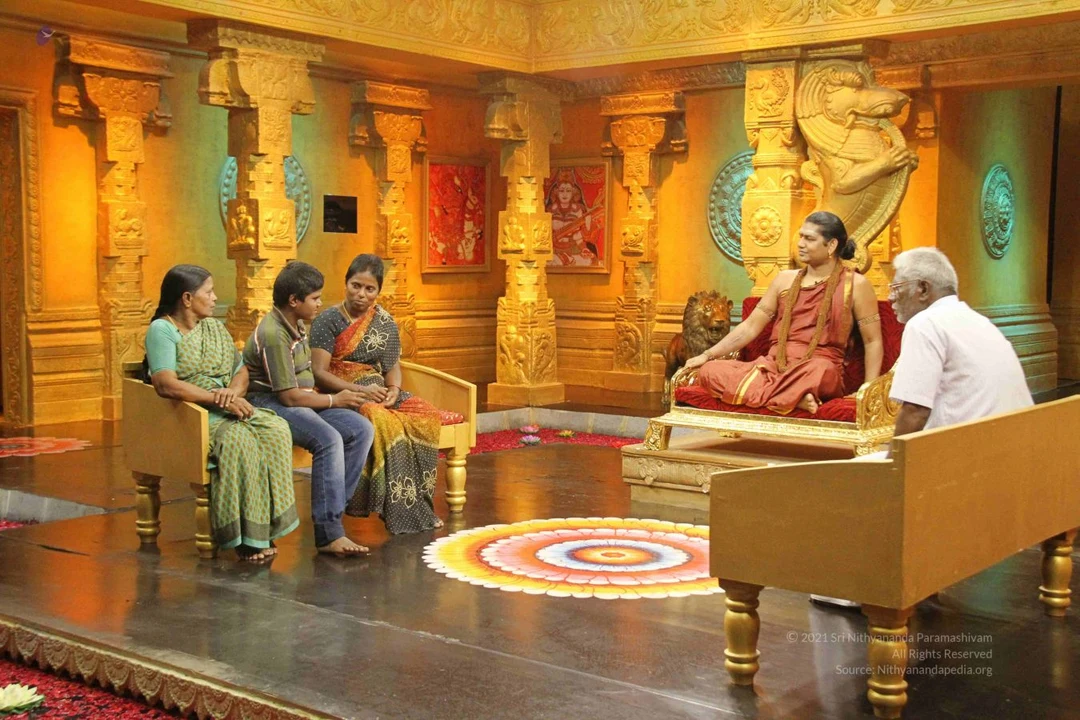
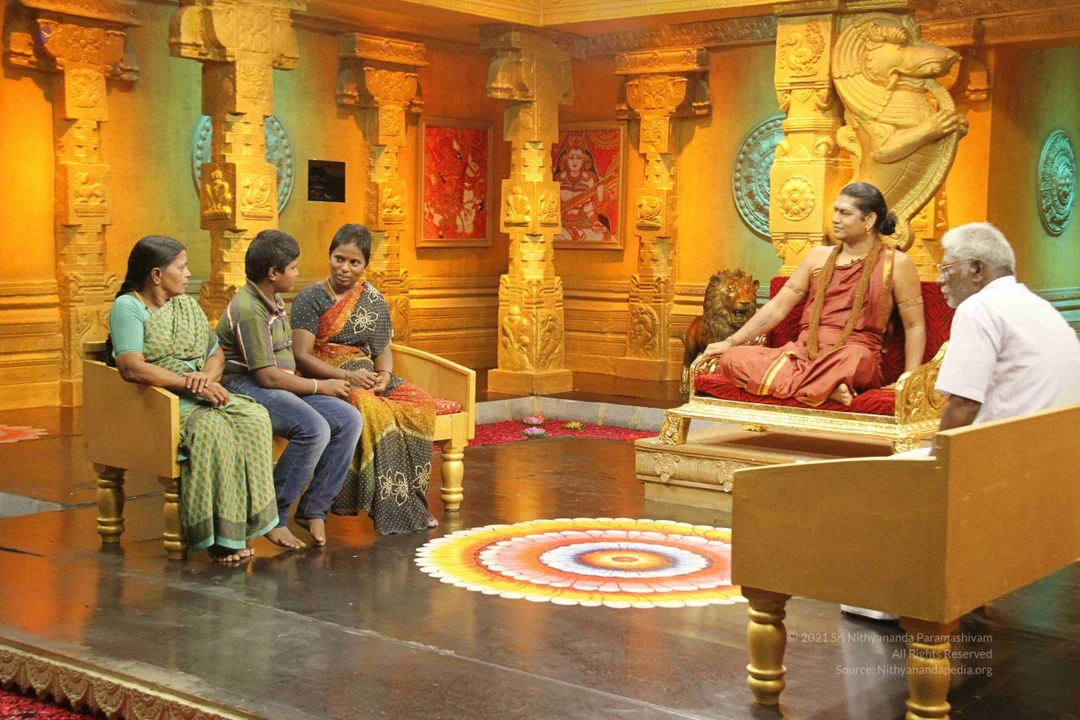
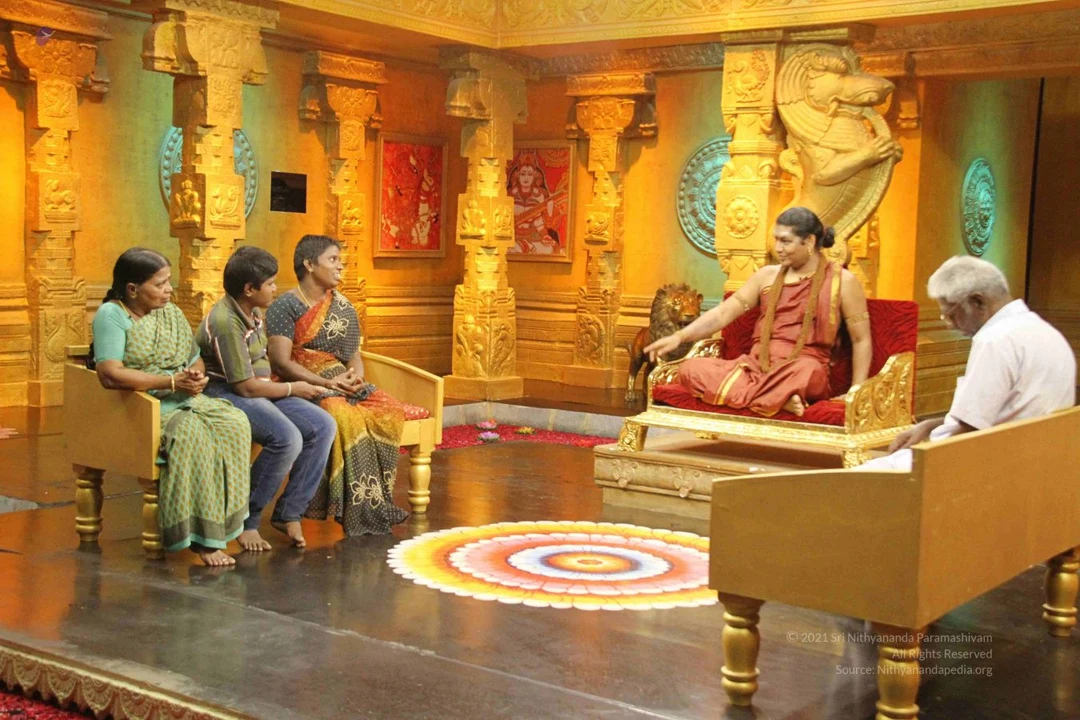
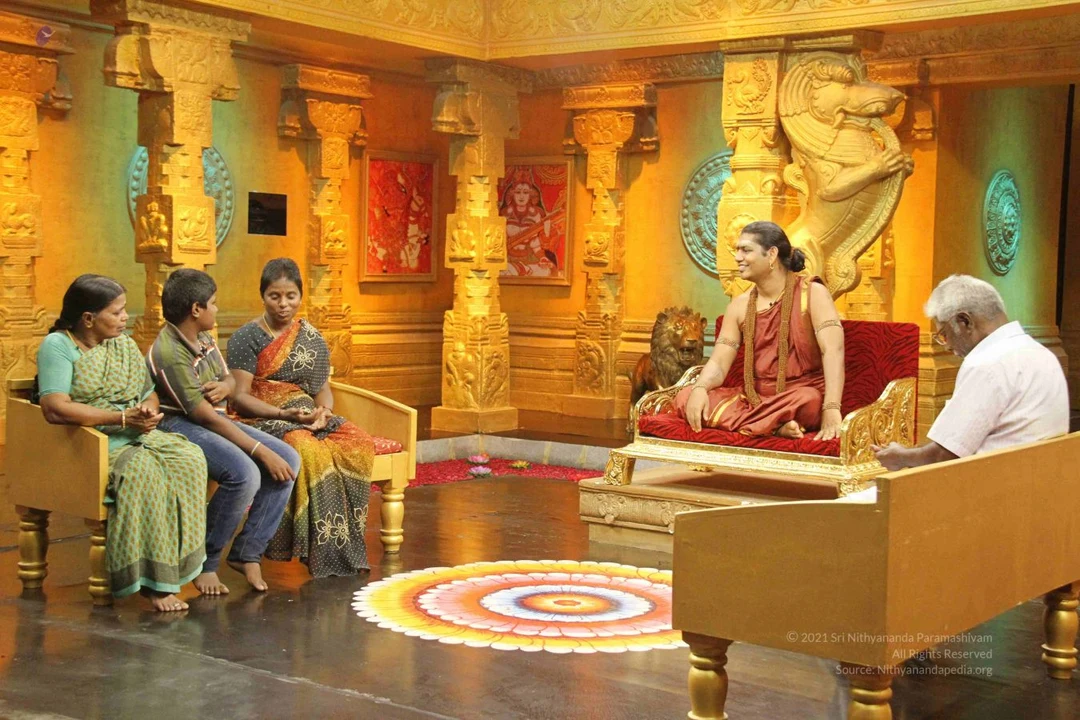
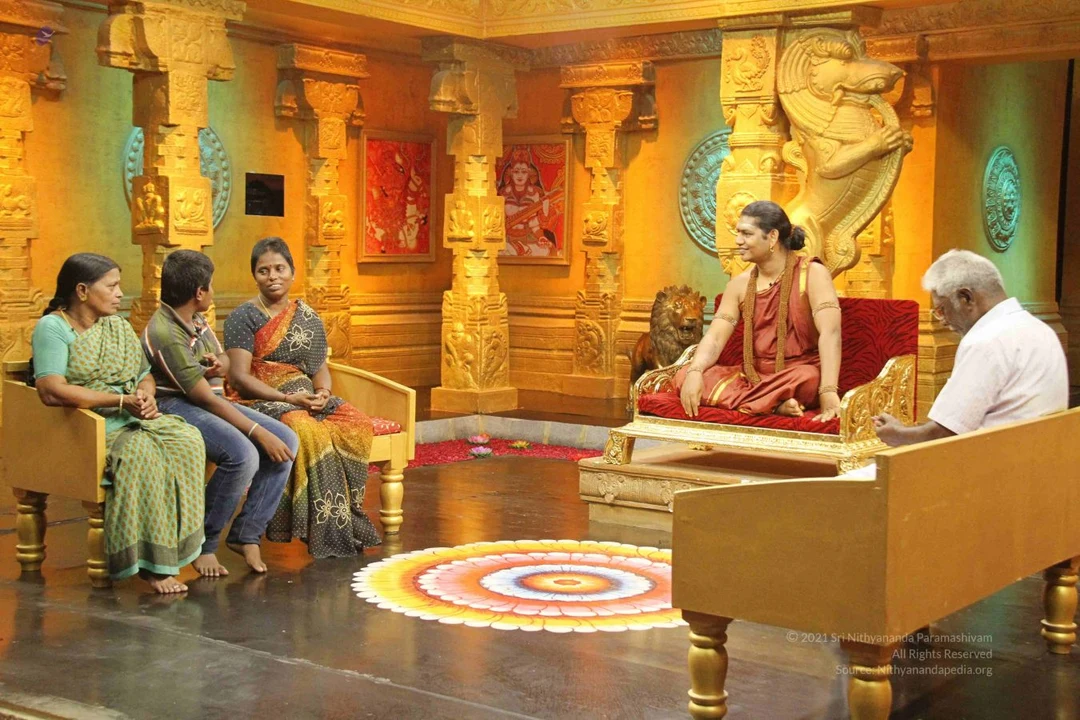
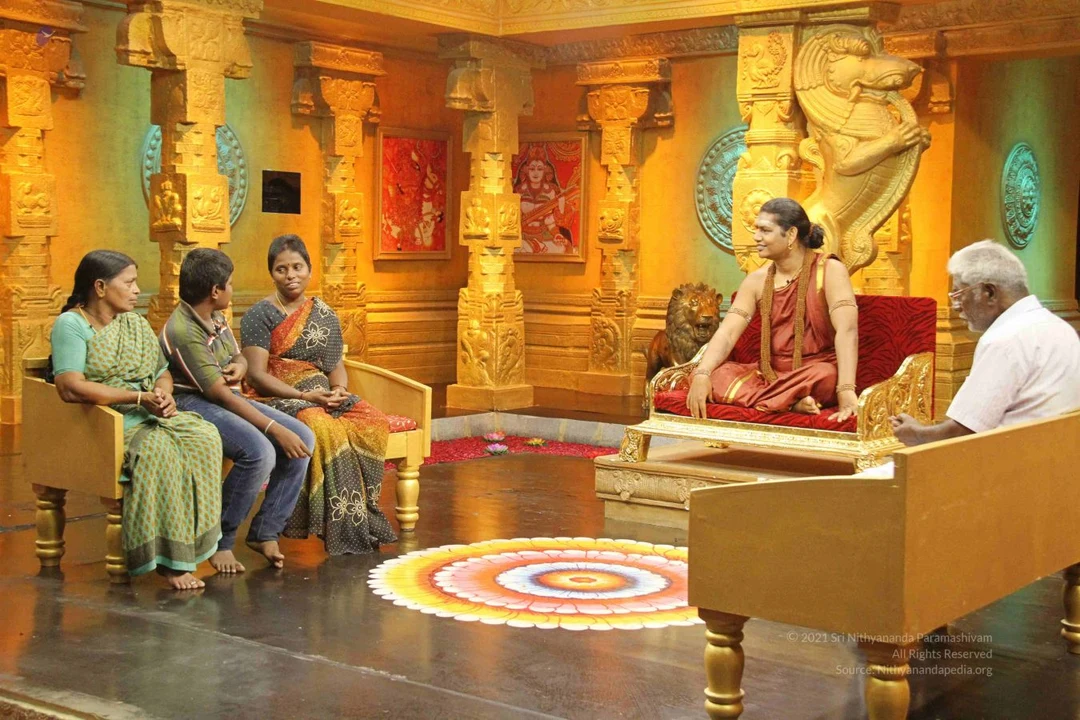
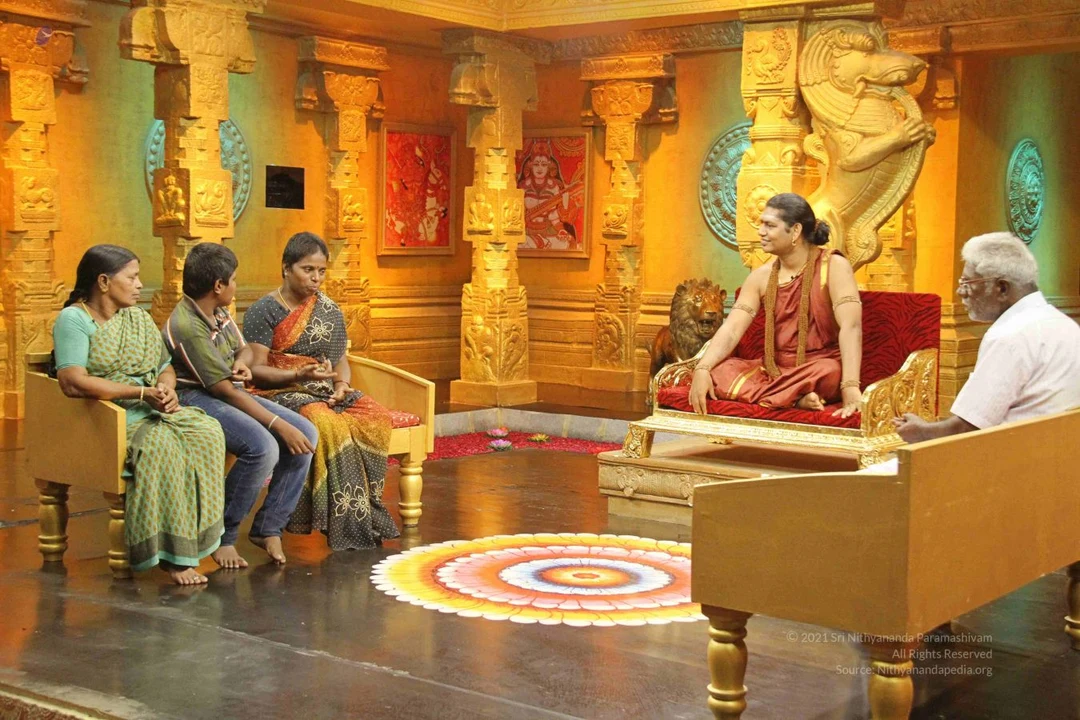
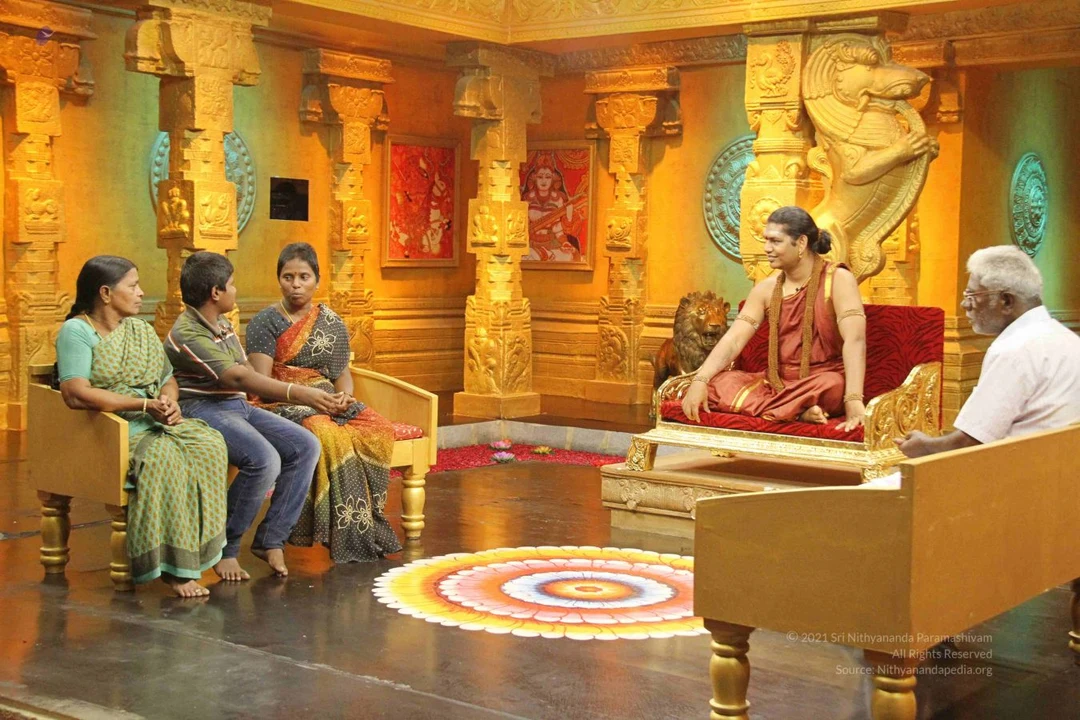
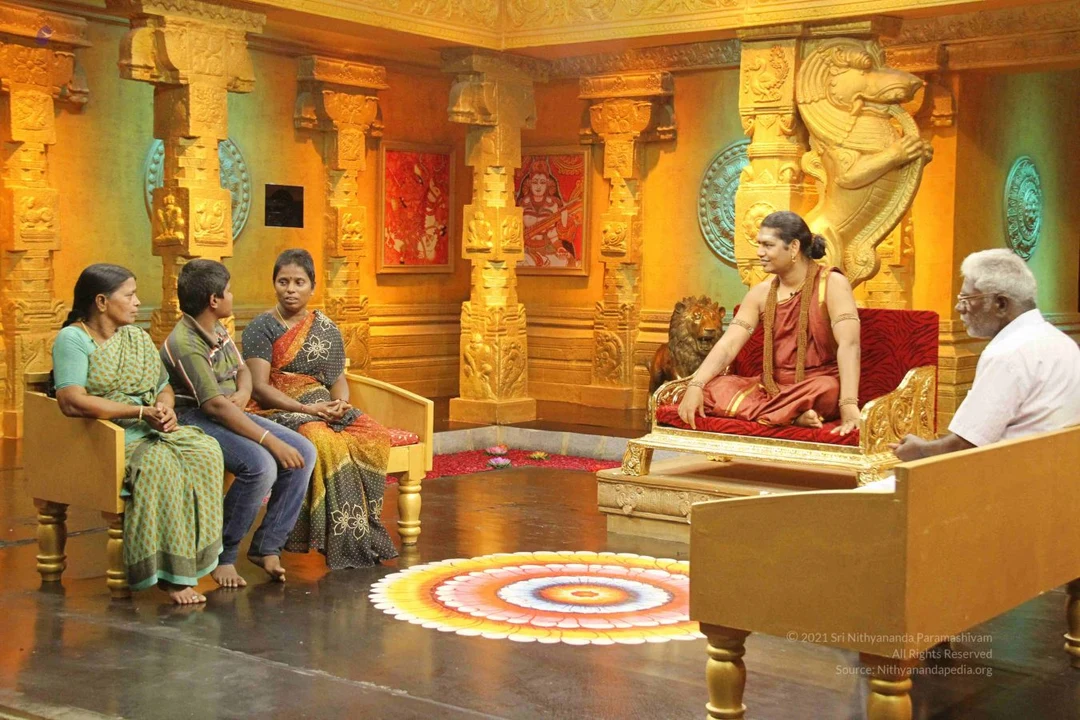
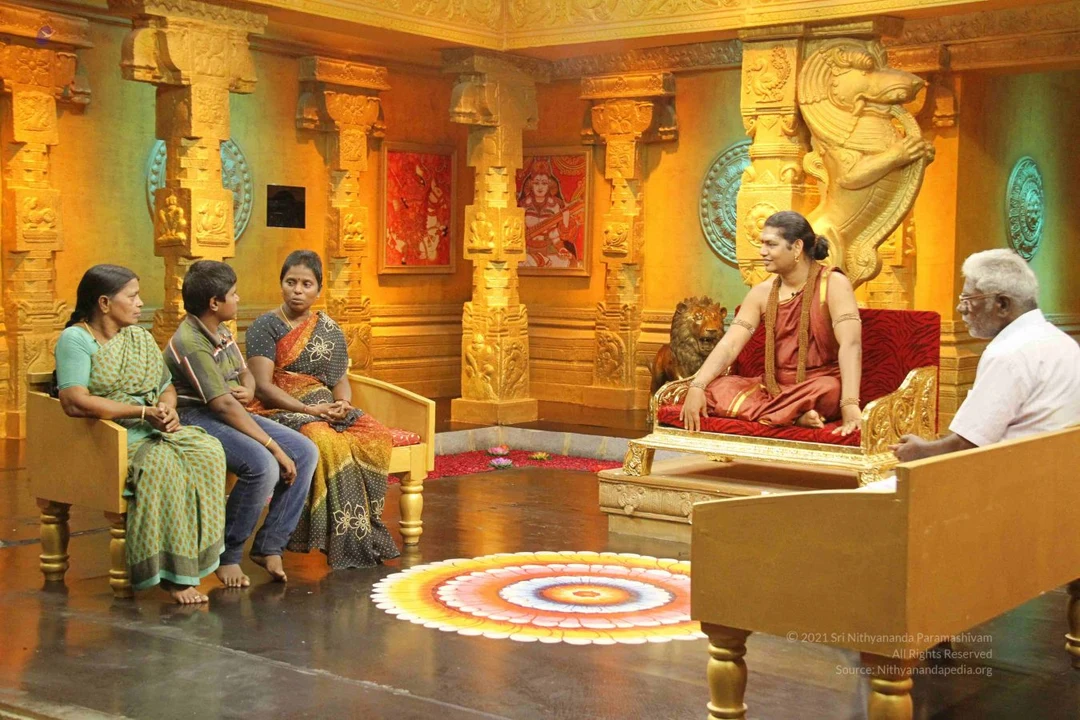
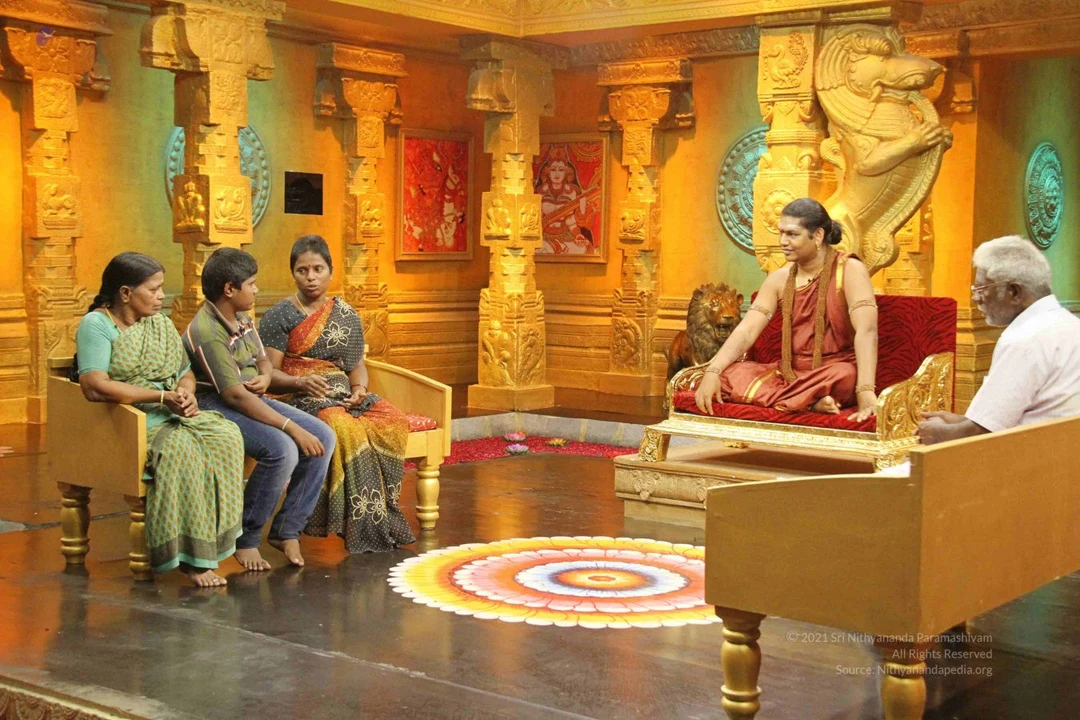
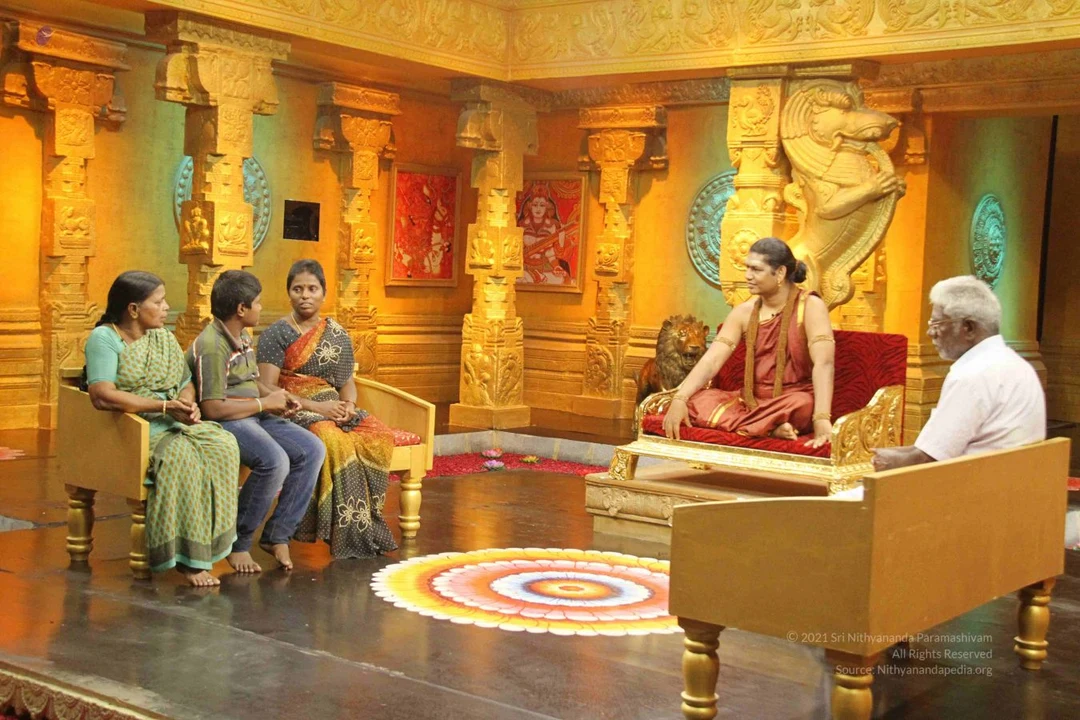
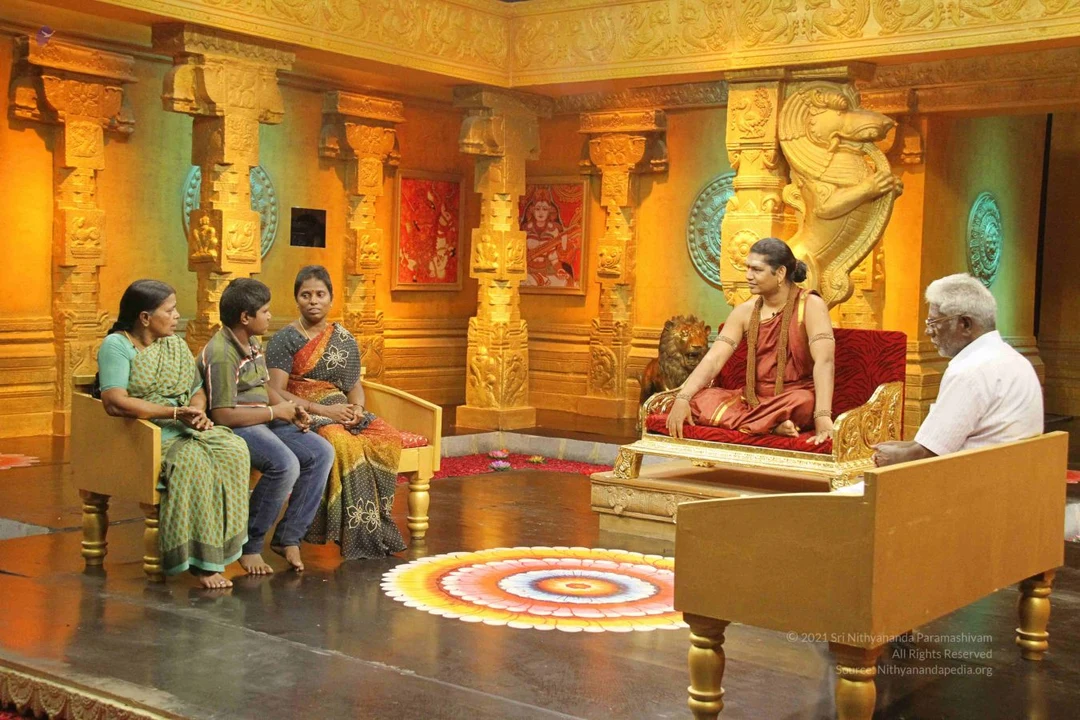
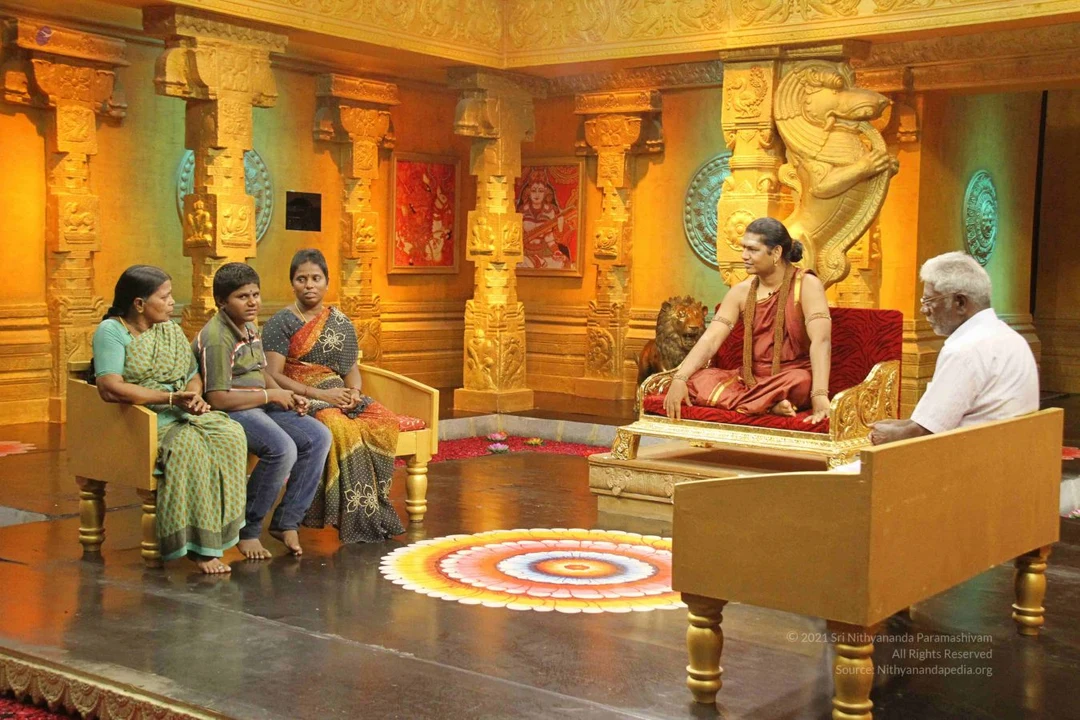
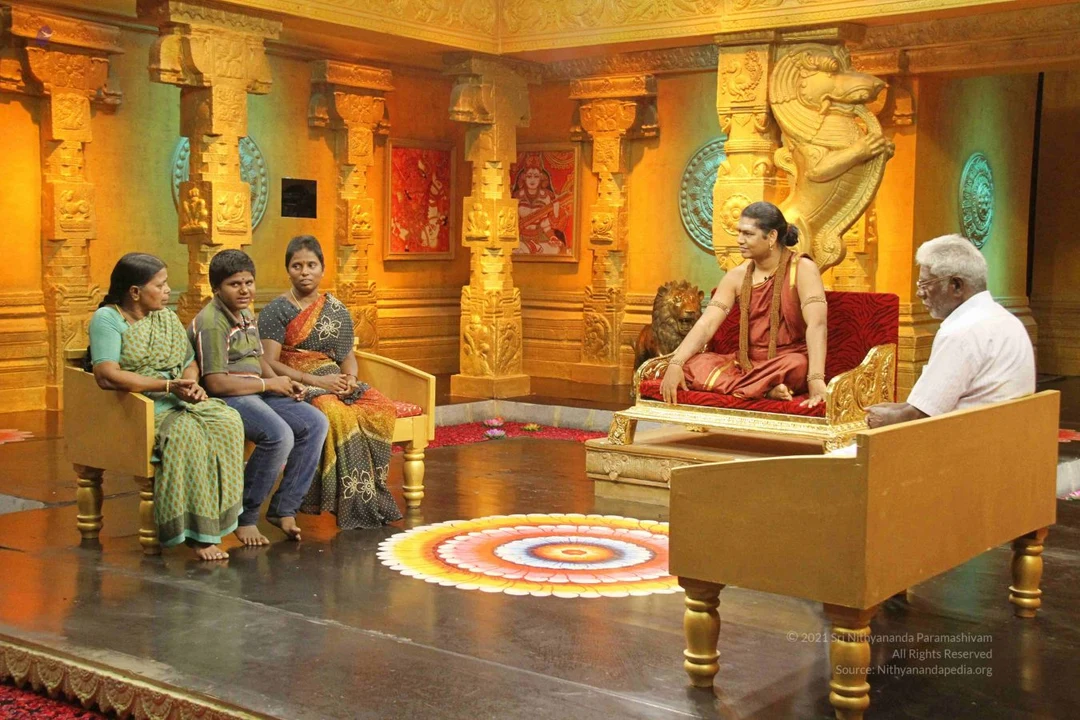
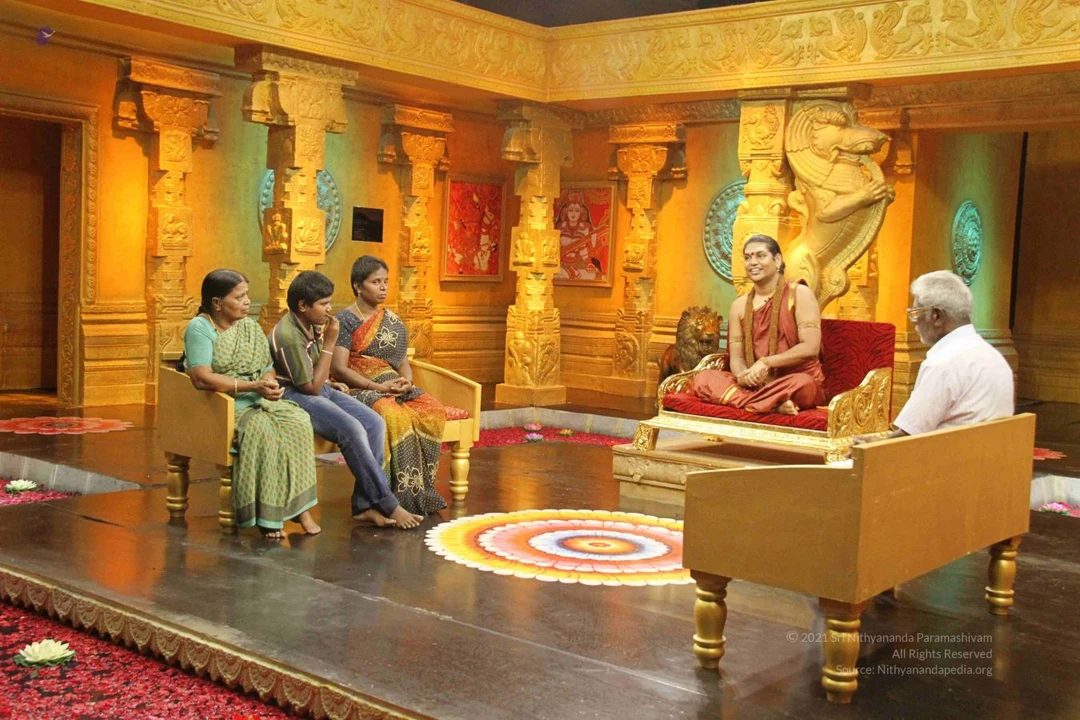
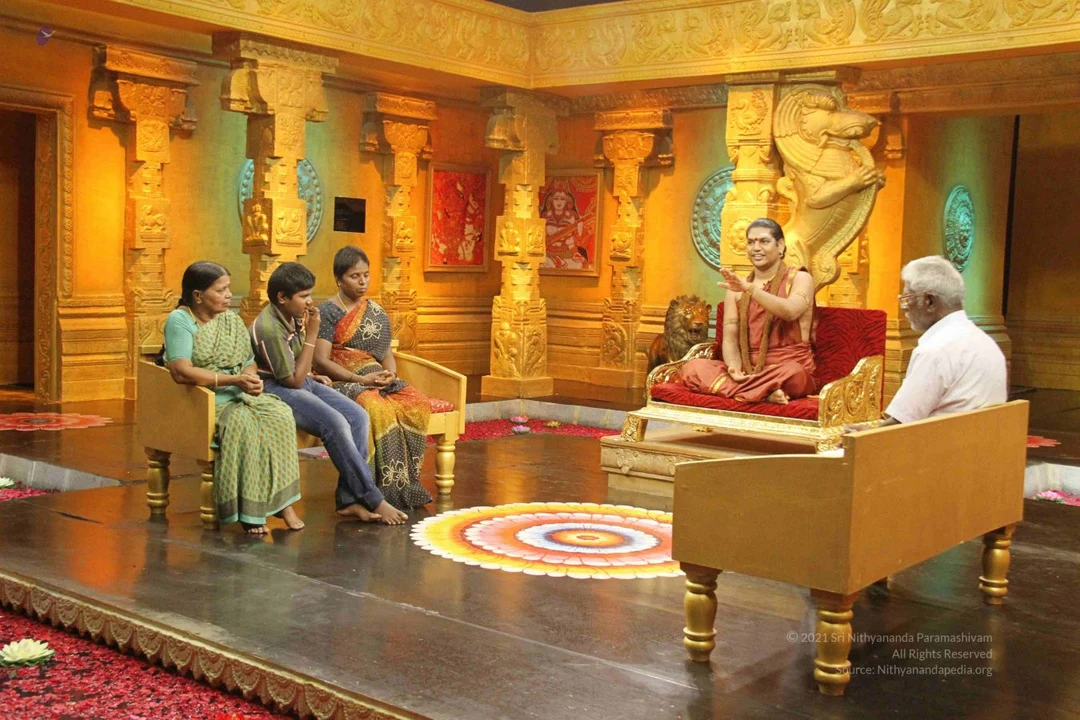
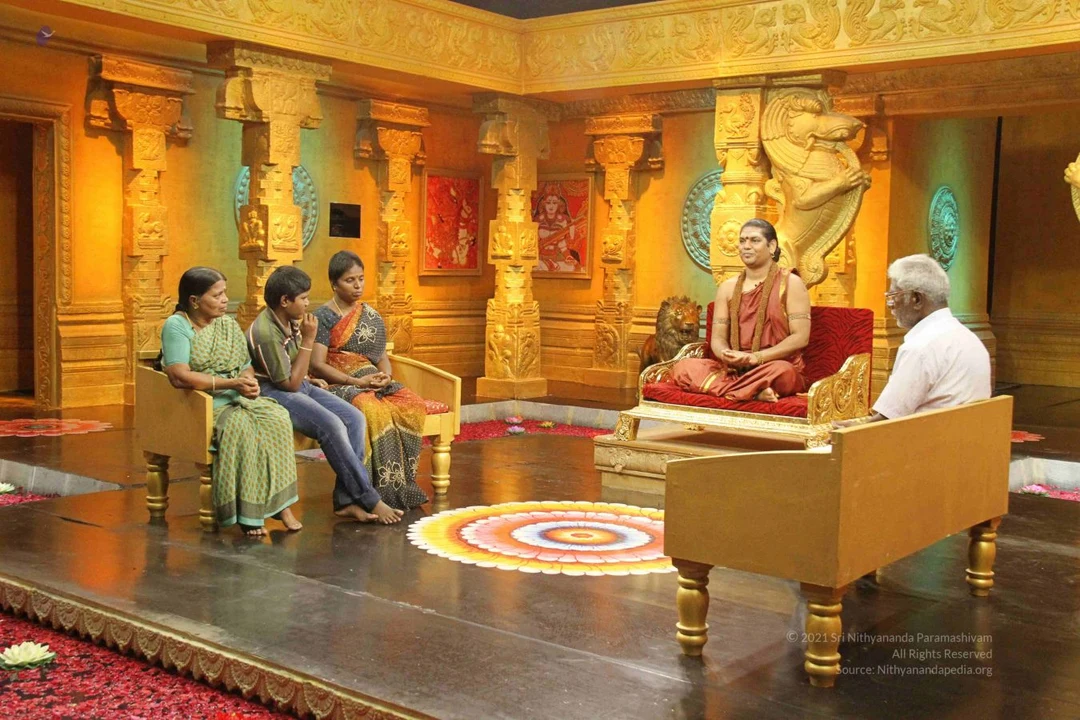
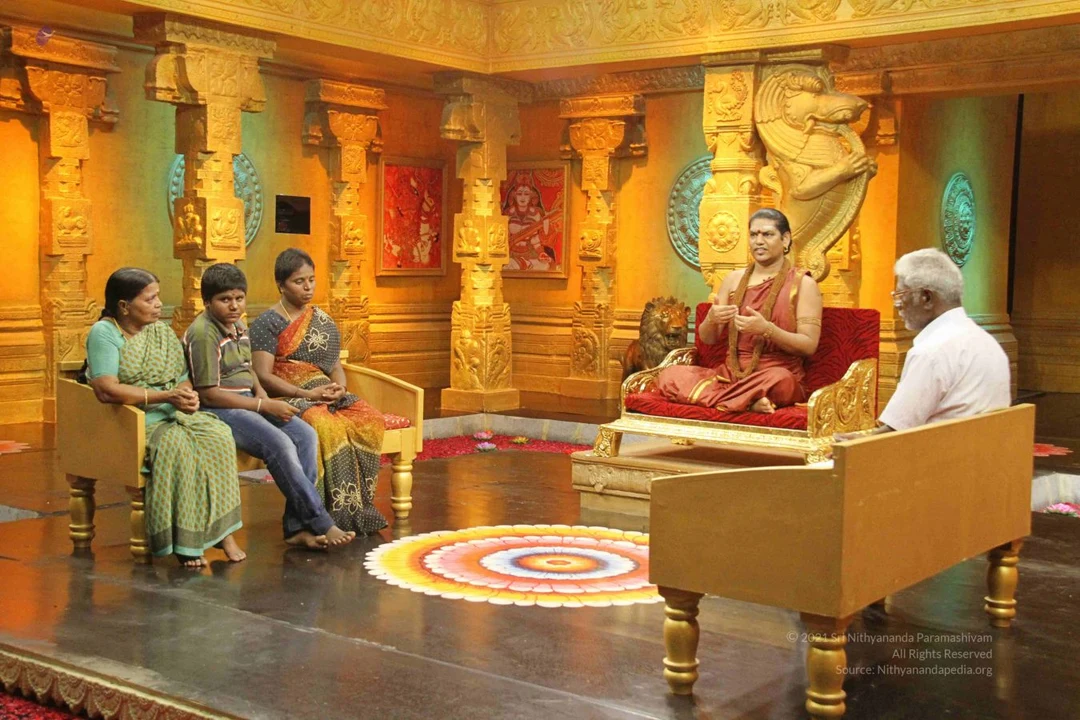
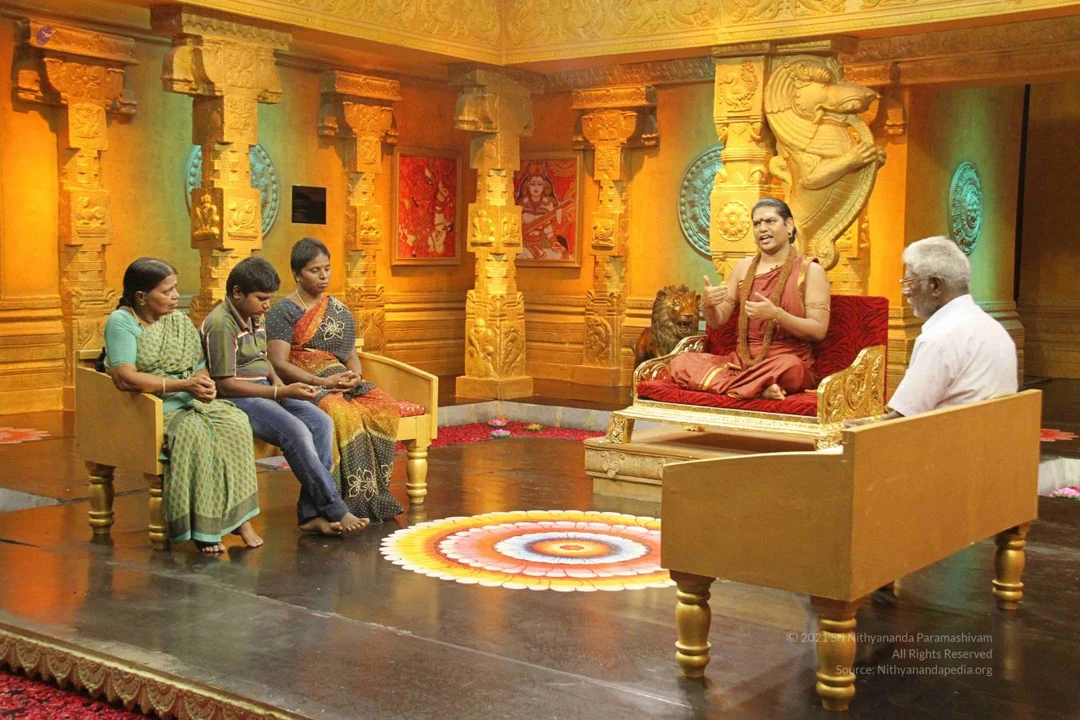
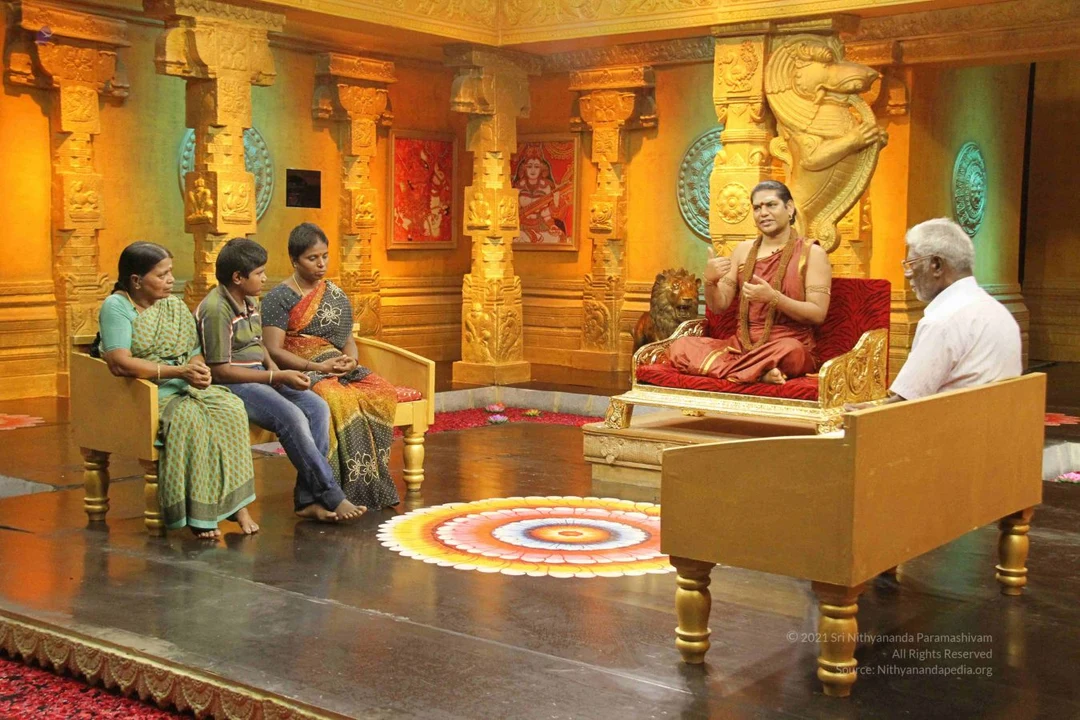
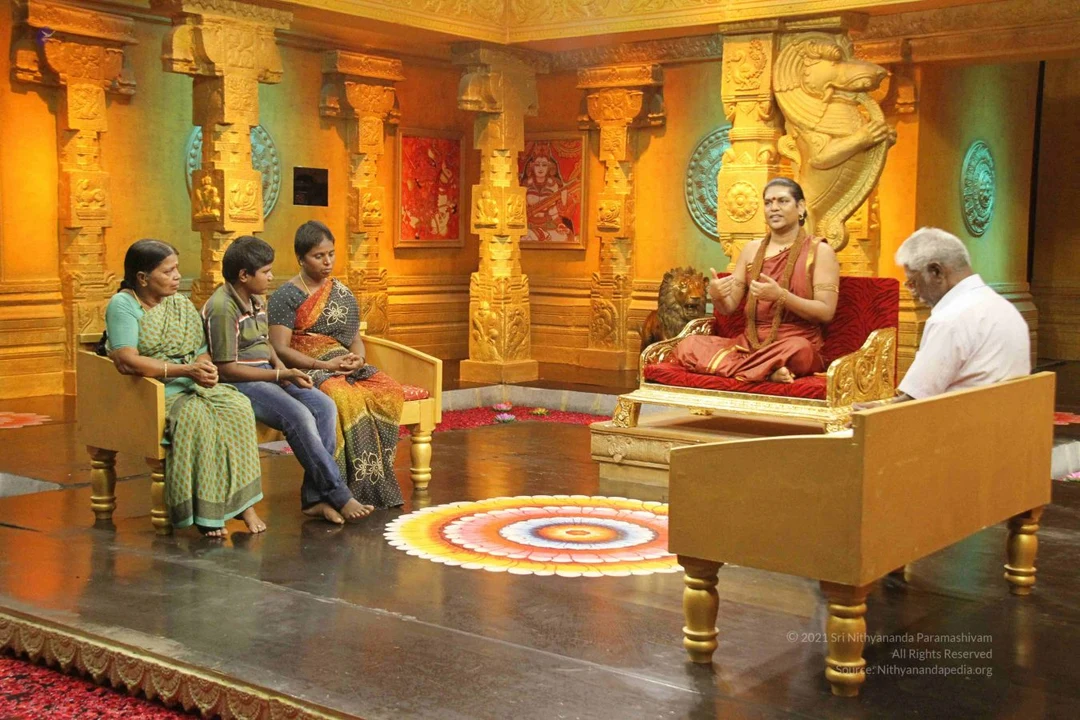
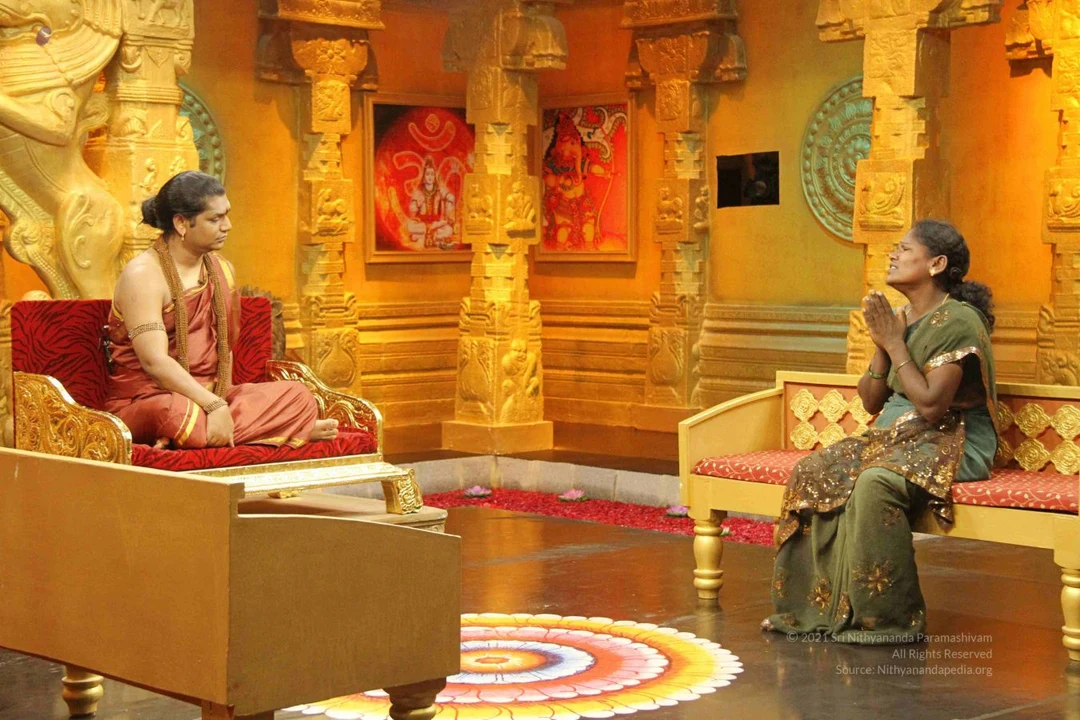
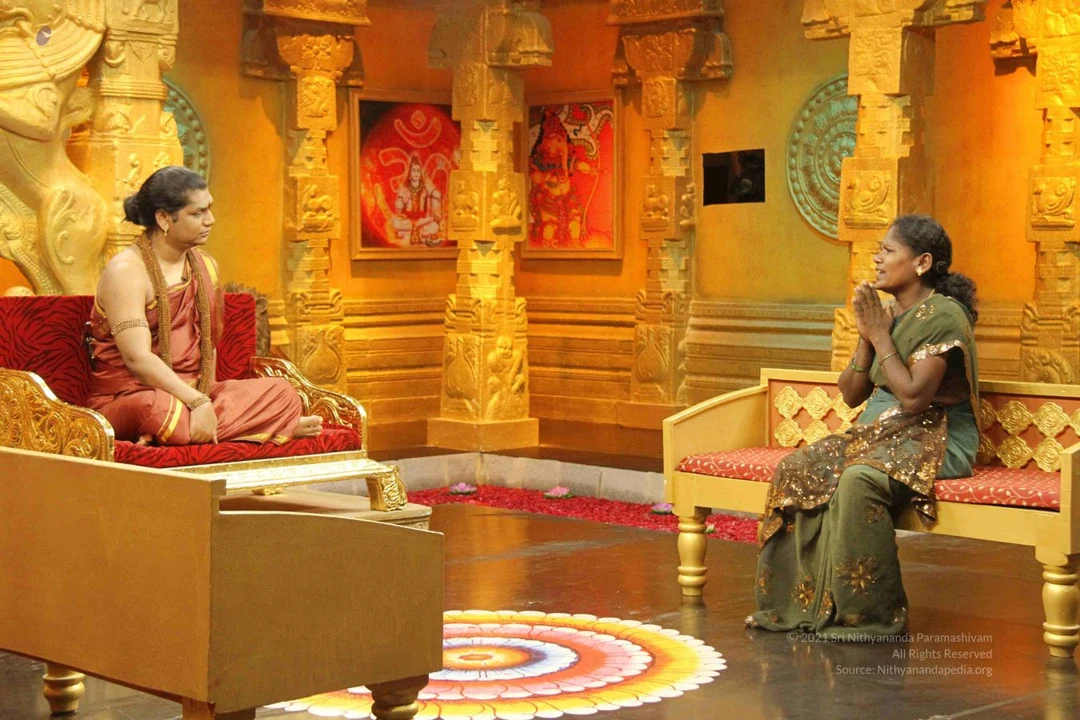
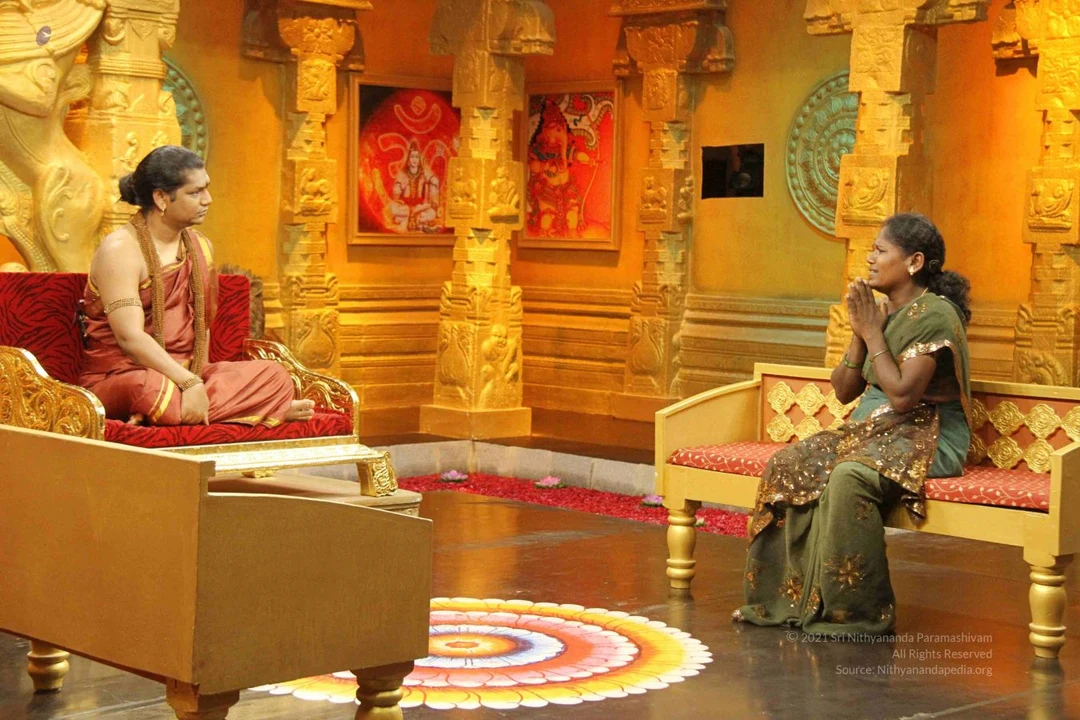
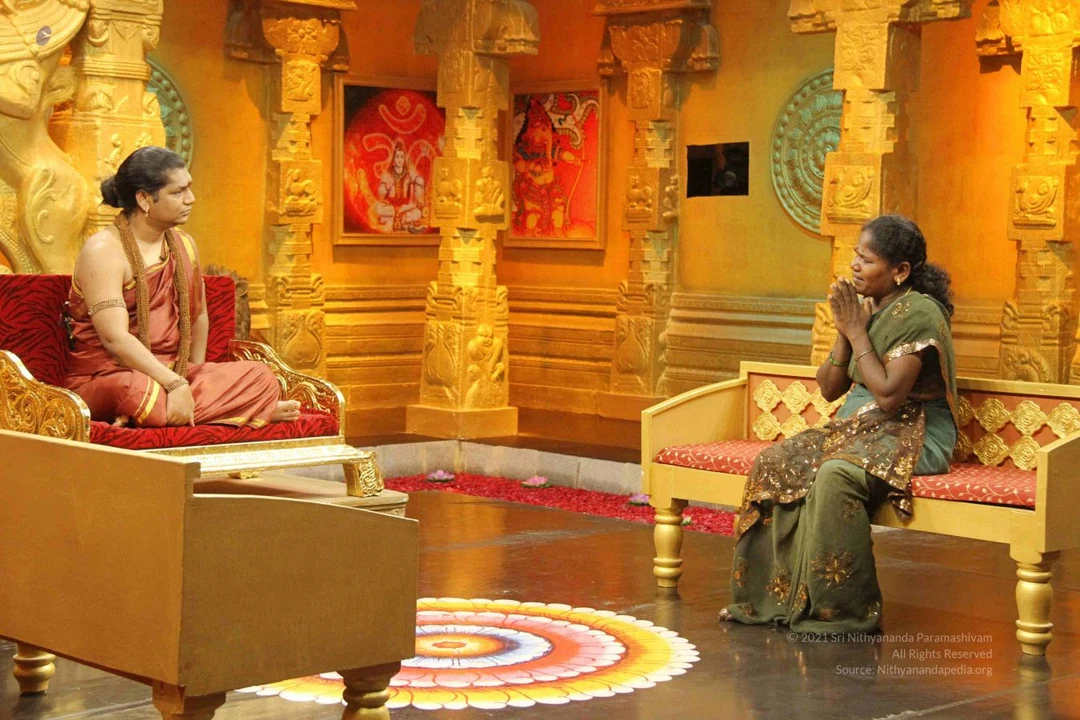
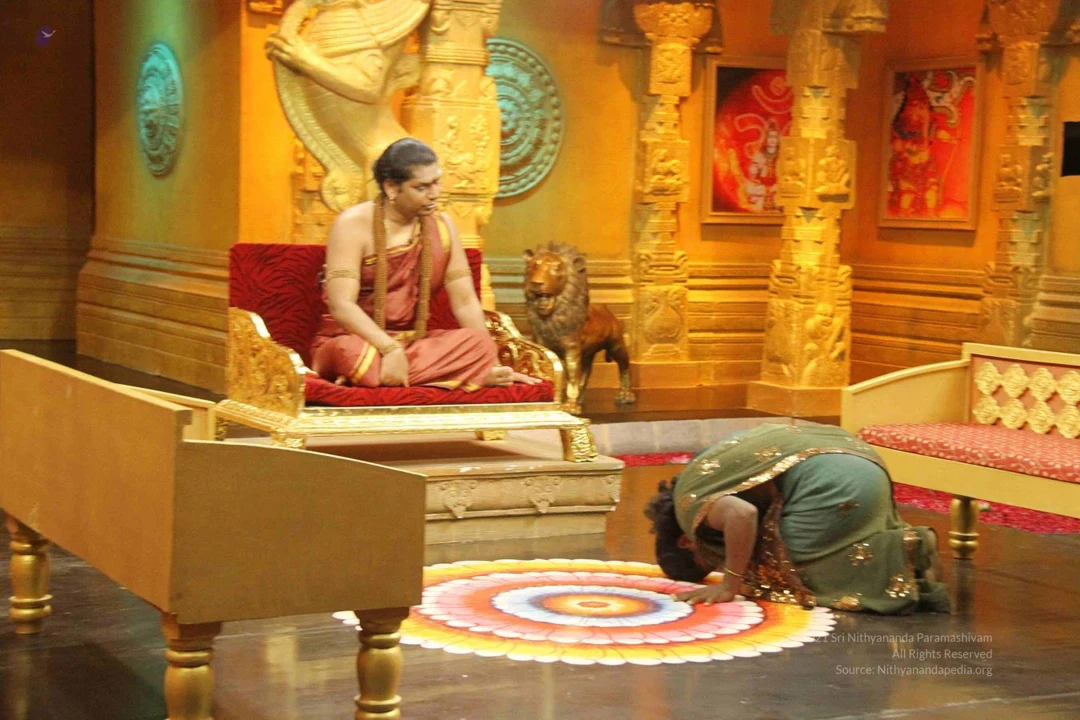
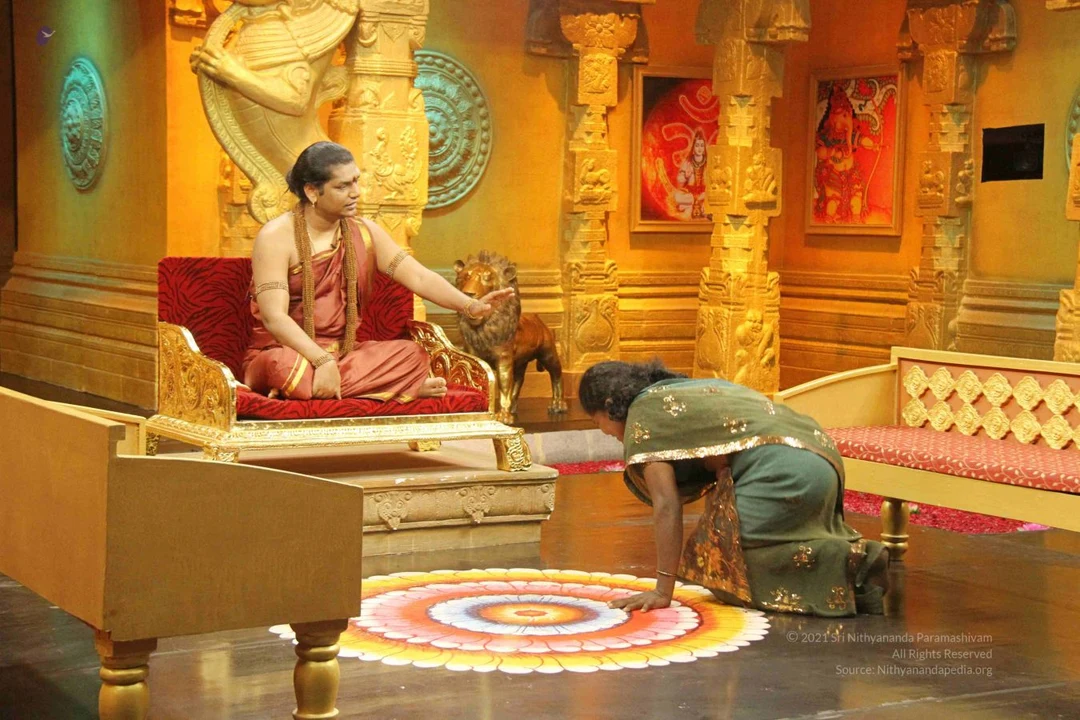
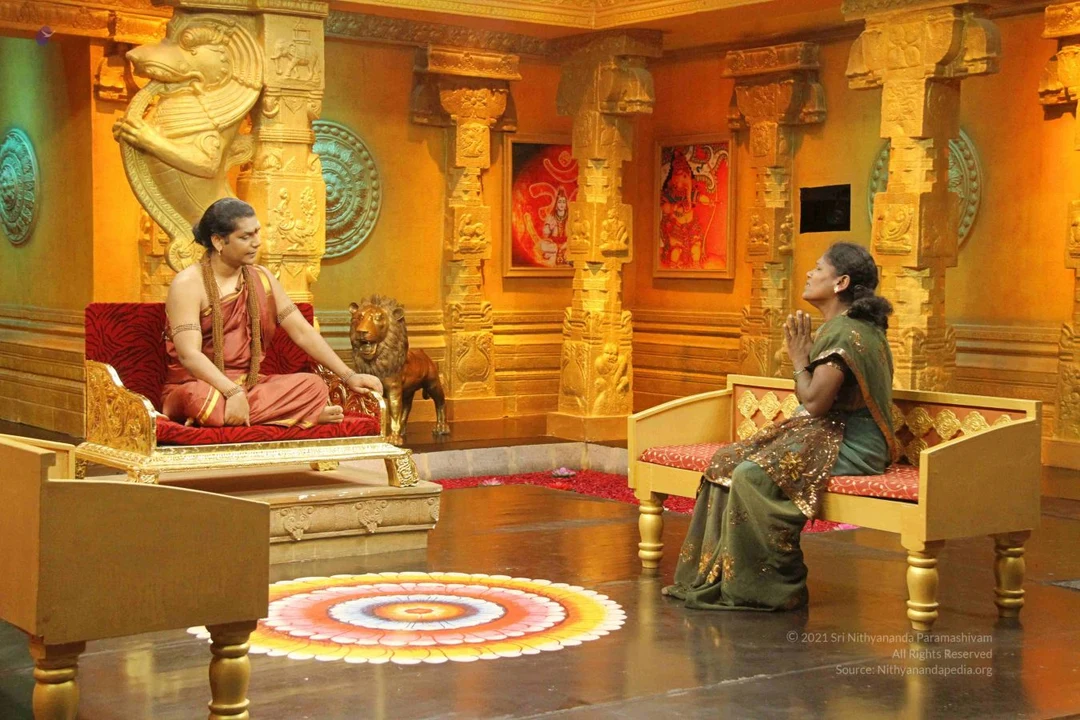
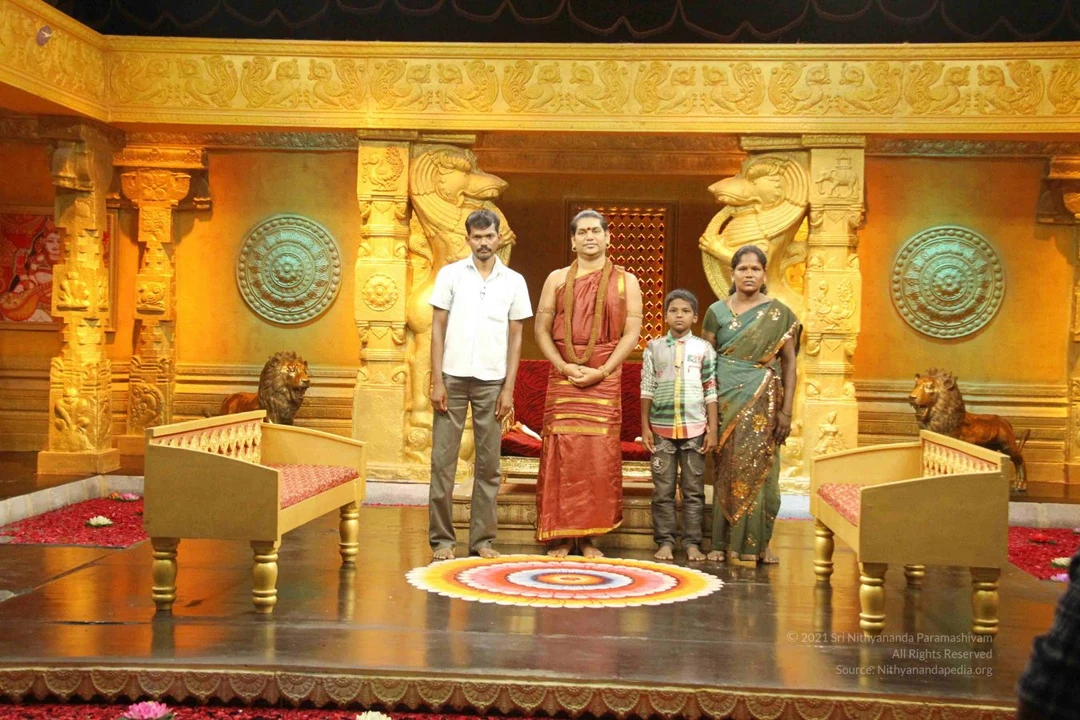
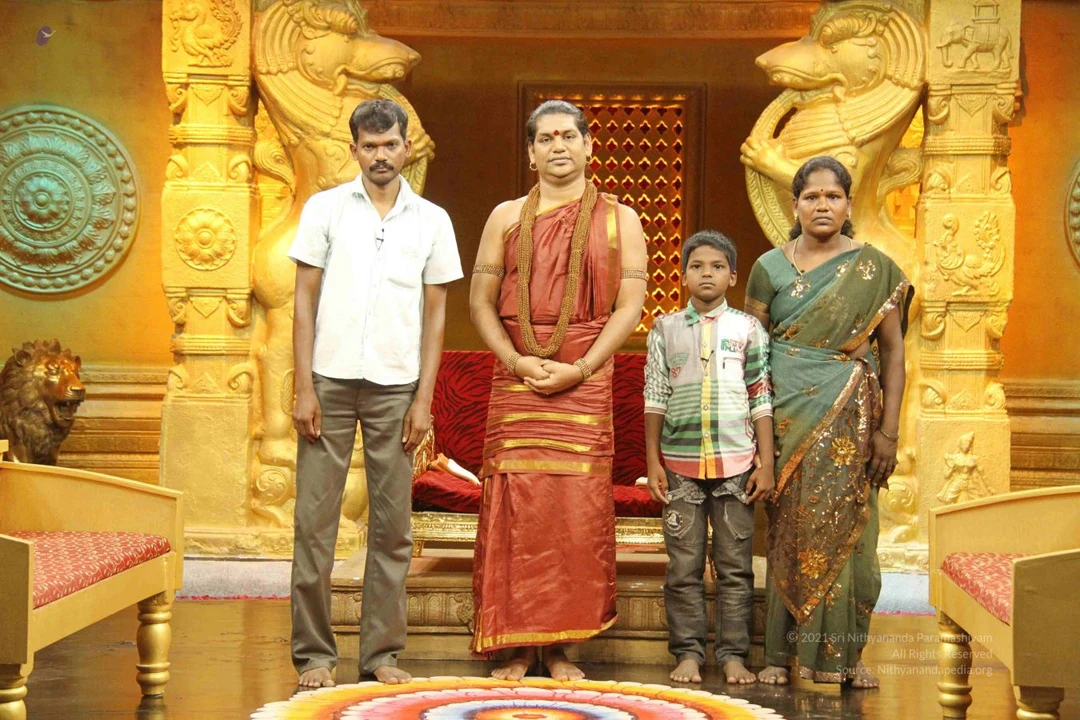
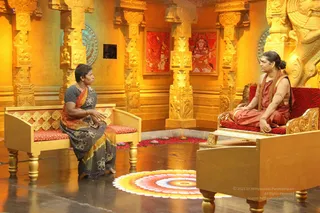
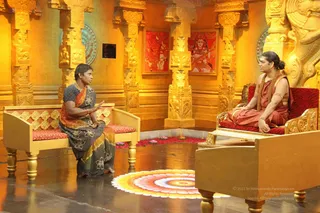
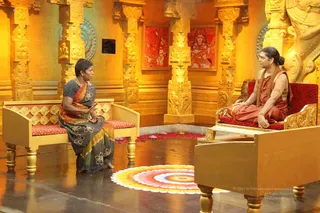
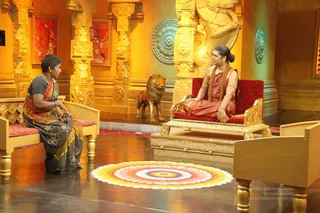
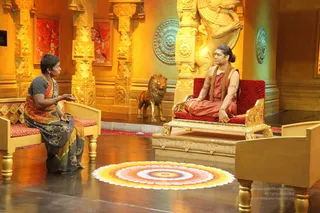
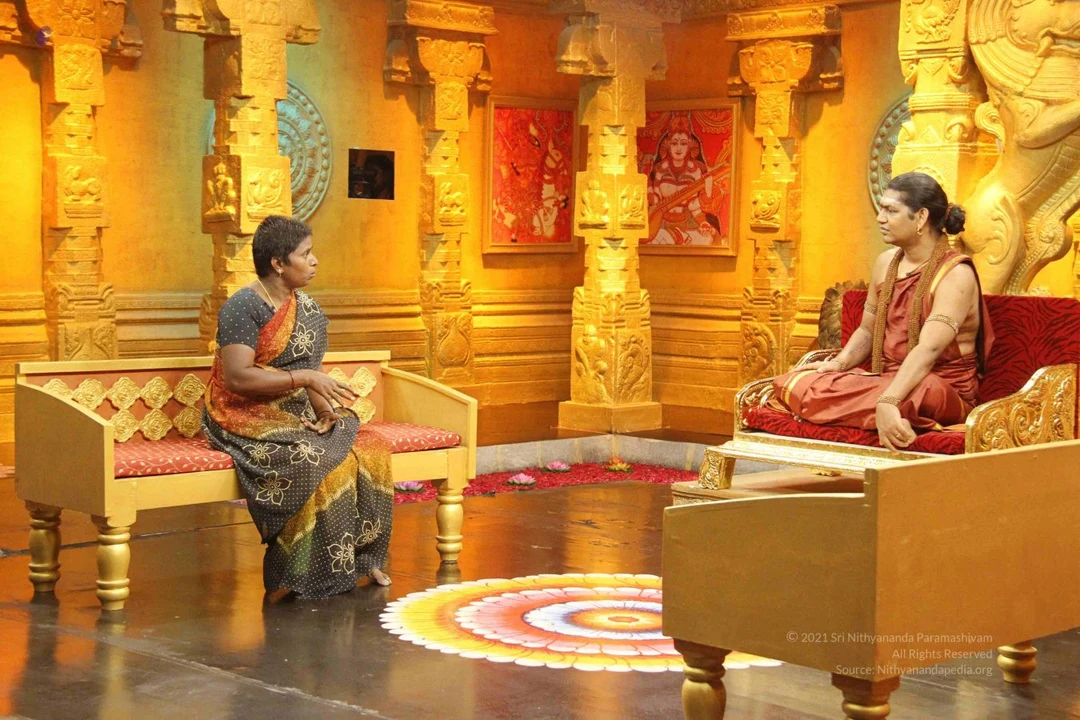
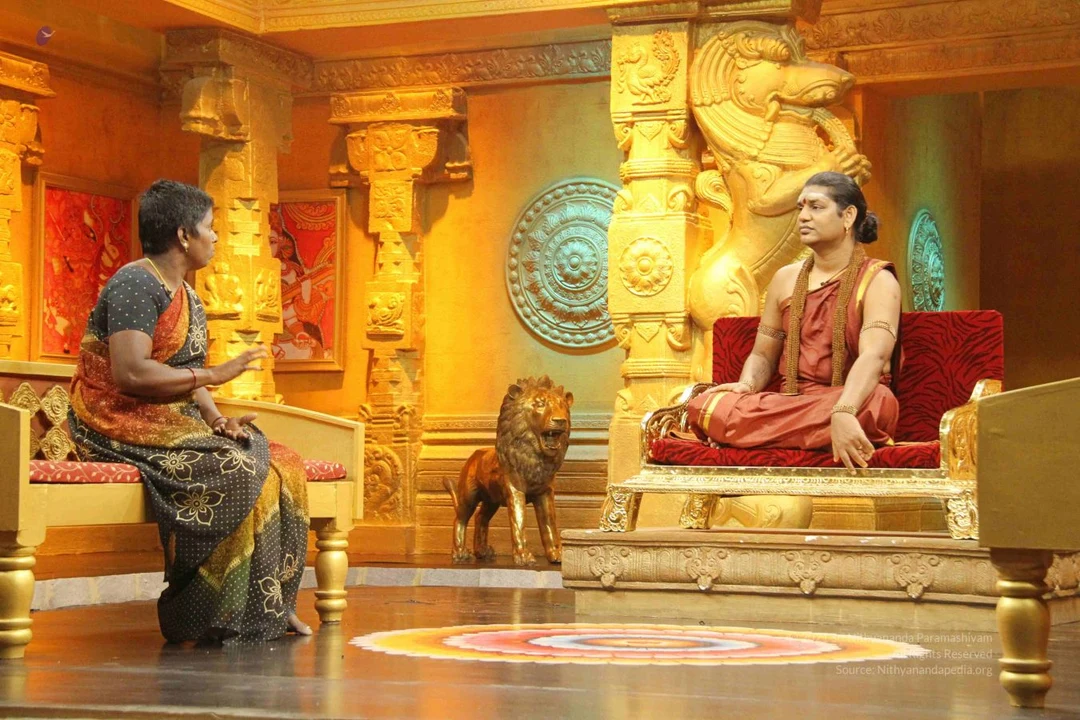
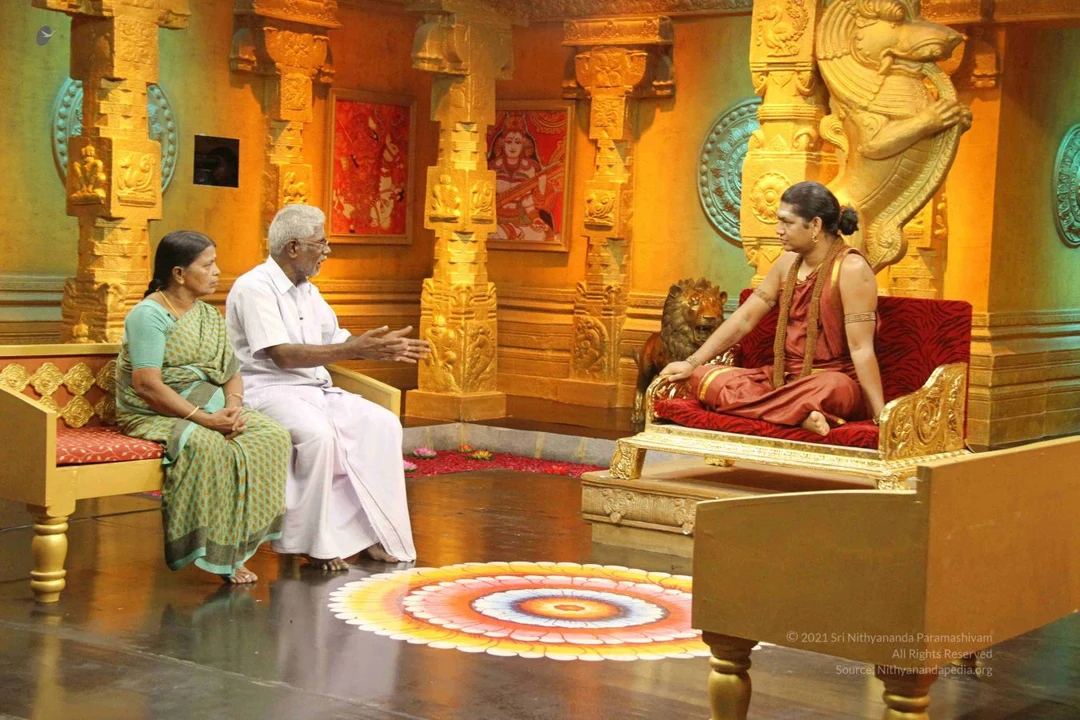
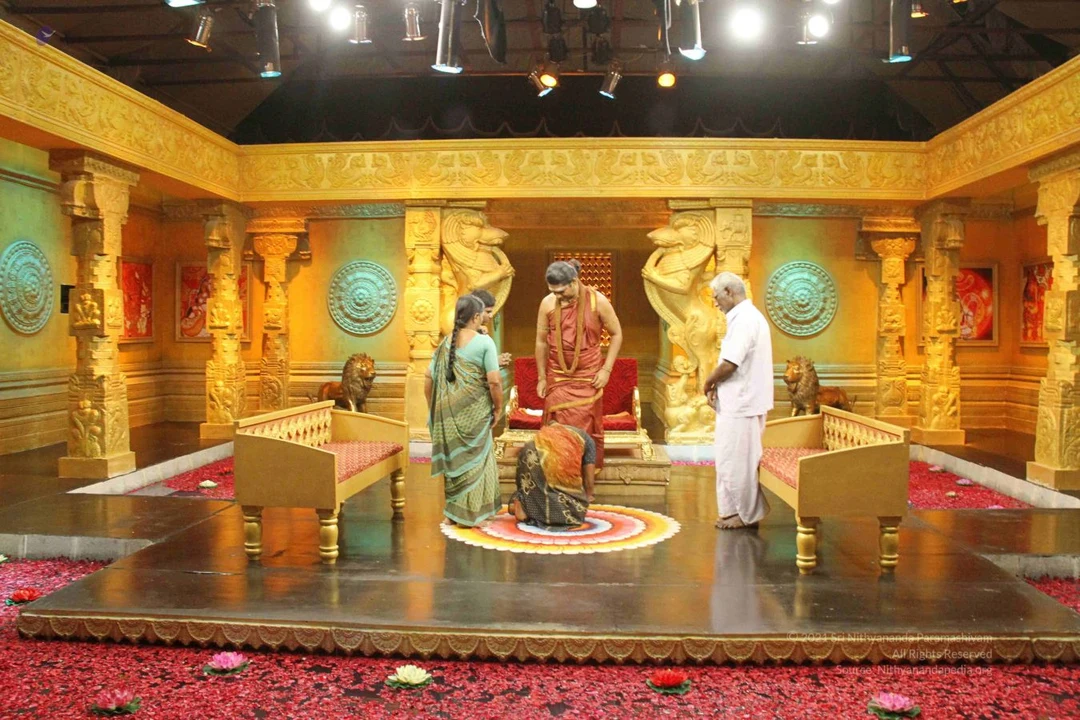
A studio talk set with ornate golden pillars and carved wall panels. A seated man in a rust-orange wrap and dhoti, with a long rudraksha mala and gold necklace, sits on a red-cushioned golden throne-style chair with his hair tied up, facing a woman in a dark patterned sari with orange and gold border who sits on a golden bench with red cushions. Two framed red-toned goddess paintings hang on the wall behind them, and a floor rangoli with lotus flowers in red and orange sits between them. a person (appearance cues: rudraksha mala, gold necklace, orange ceremonial wrap) seated in discourse with a devotee.A photograph of a television-style satsang set with ornate golden pillars and carved temple-style walls. On the right, a figure in a rust-red robe with a draped shawl and a rudraksha-style necklace sits on a red-cushioned golden throne, hands resting on lap, in a manner consistent with the a person candidate; the appearance cues are a red-ochre robe, rudraksha mala and a hair knot, but identity is uncertain. On the left, a woman in a dark patterned sari with floral prints and a red border sits on a golden-framed bench, gesturing as she speaks. Between them is a floor rangoli of concentric pastel rings with small flowers. Two framed red-toned deity paintings hang on the back wall.A photograph of a satsang discourse set in a gold-toned temple-style hall with carved golden pillars and red-and-gold seating. On the right, a person in a rust-red robe with a shawl and gold bangles sits on an ornate gold-and-red throne-like chair, hands resting on their lap, with hair in a bun. On the left, a woman in a dark grey and orange patterned sari sits on a gold-framed bench facing them, hands clasped. Behind them hang red painted deity images, and a rangoli-like concentric floral design and scattered flower petals lie on the floor between them. Two people are visible.A studio set staged as a golden temple hall for a televised satsang. Opposite him, a woman with short hair in a dark patterned sari with yellow and red accents sits on a gold-framed bench facing him. Between them a golden lion statue stands, a large concentric rangoli in orange, yellow and blue lies on the floor, and carved gold pillars, a turquoise medallion and painted deity panels decorate the walls.A satsang-style studio set with gold-painted pillars, a carved lion statue and a colourful concentric floor rangoli. A man in a maroon-red robe with a gold shawl and a rudraksha-style necklace sits on a gold-framed throne with red zebra-patterned upholstery, hair tied back, hands resting on his lap. Facing him, a woman in a dark patterned sari with gold-yellow floral print sits on a gold bench, gesturing with her hands as if speaking. Painted deity panels hang on the walls behind them. a person is the seated man in red-maroon robes, appearing on a throne in a discourse setting, consistent with a Satsang discourse.A televised satsang set styled like a golden temple hall. A seated man in a rust-orange dhoti-style wrap and draped orange shawl with a long dark braid sits on an ornate red-cushioned golden throne beside a bronze lion statue. Across from him a woman in a dark patterned sari with floral print sits on a golden bench, gesturing as she speaks. A rangoli-style circular floral design lies on the floor, and carved golden pillars and framed red deity paintings decorate the walls. Two people are visible.
Pada-Puja

20 photosSource gallery
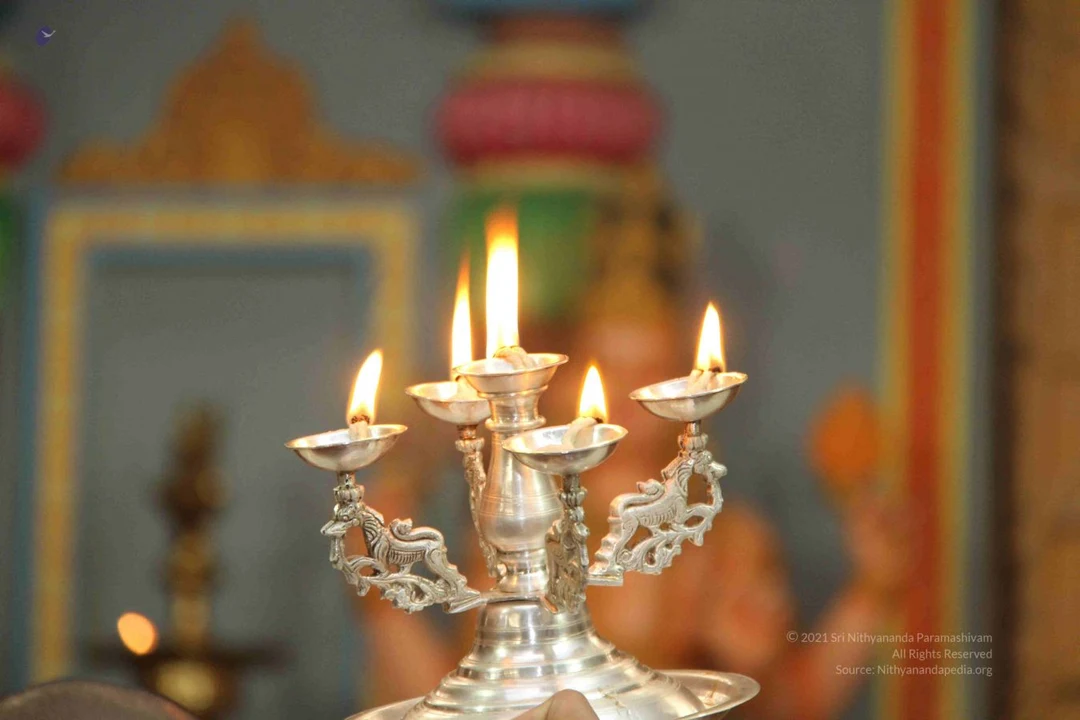
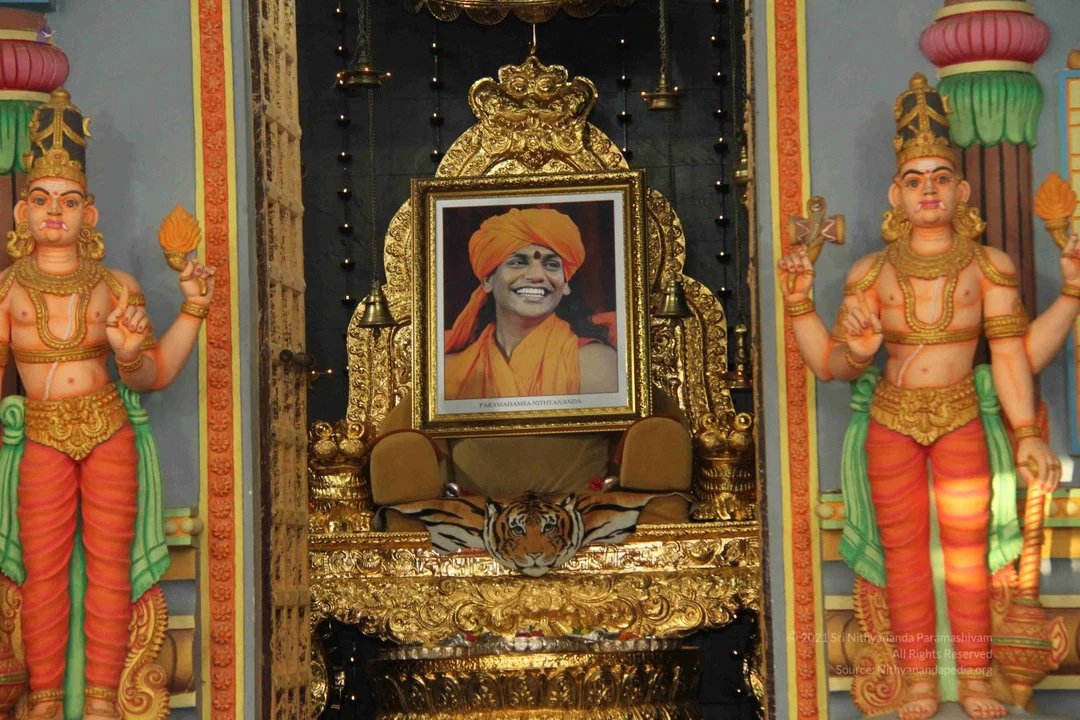
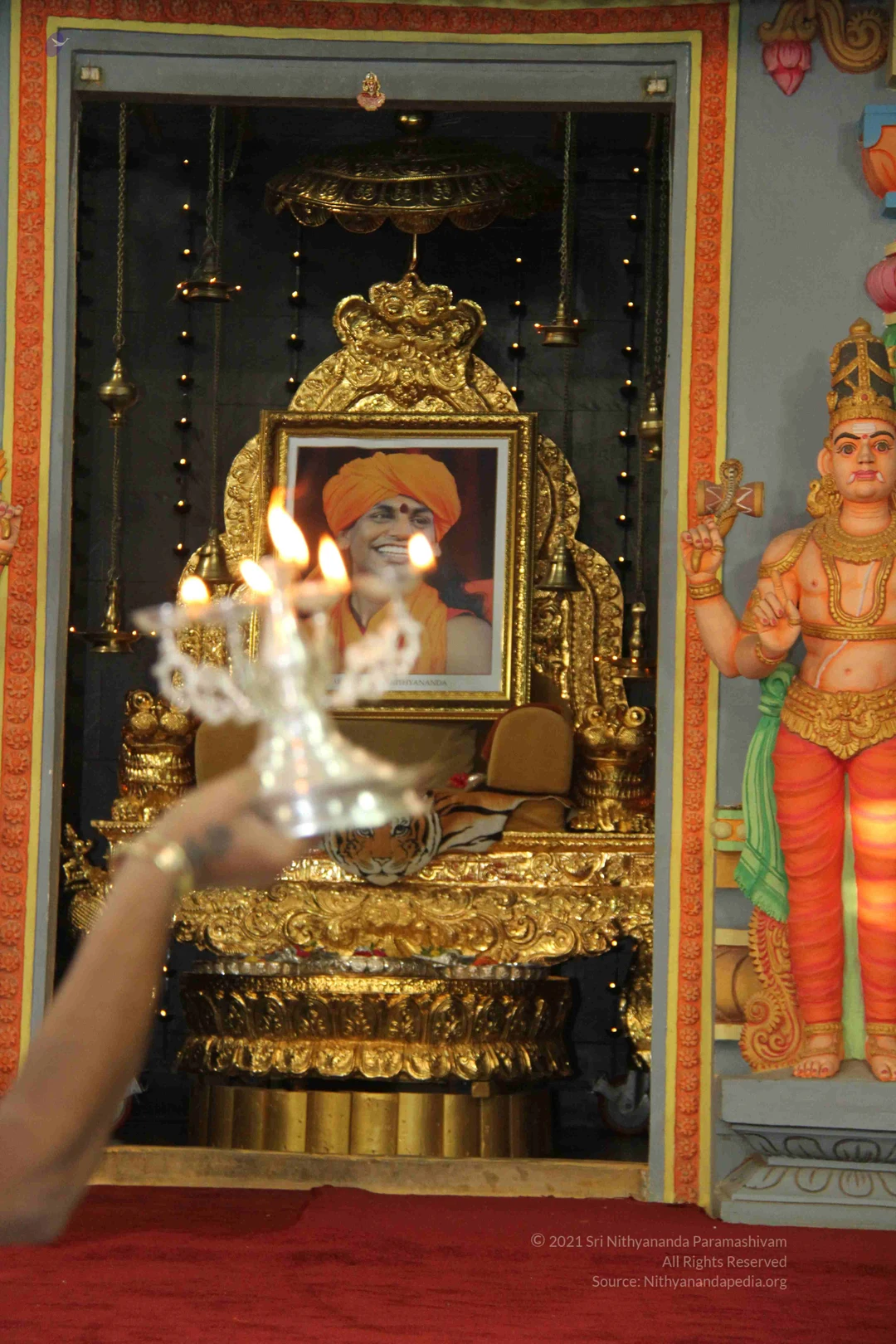
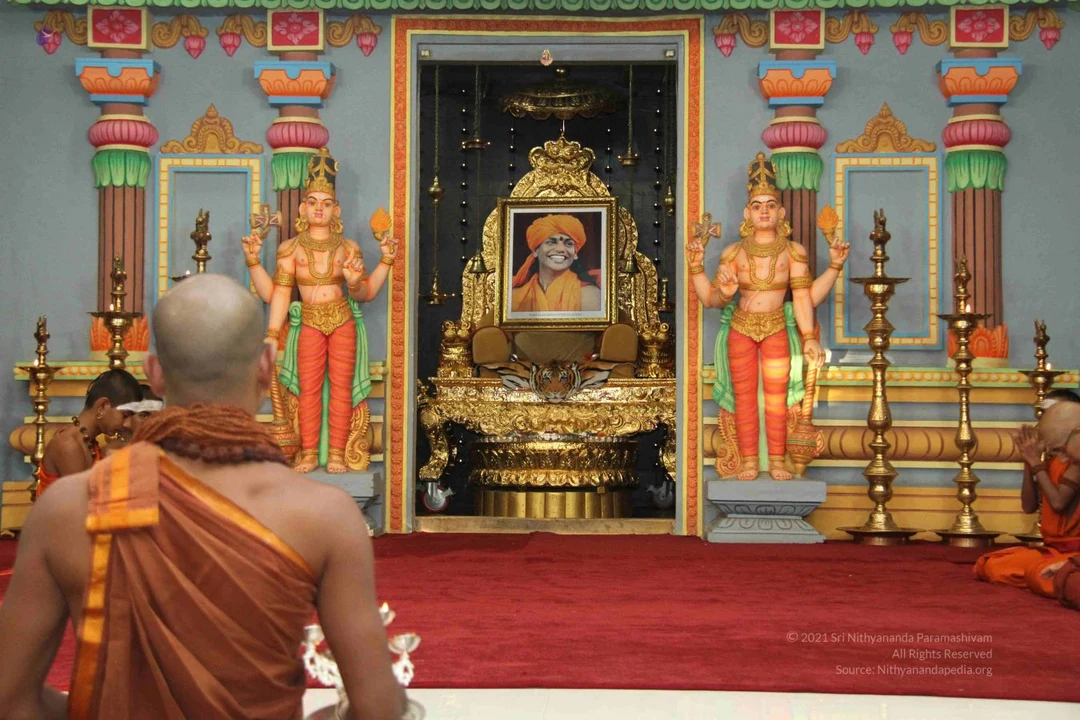
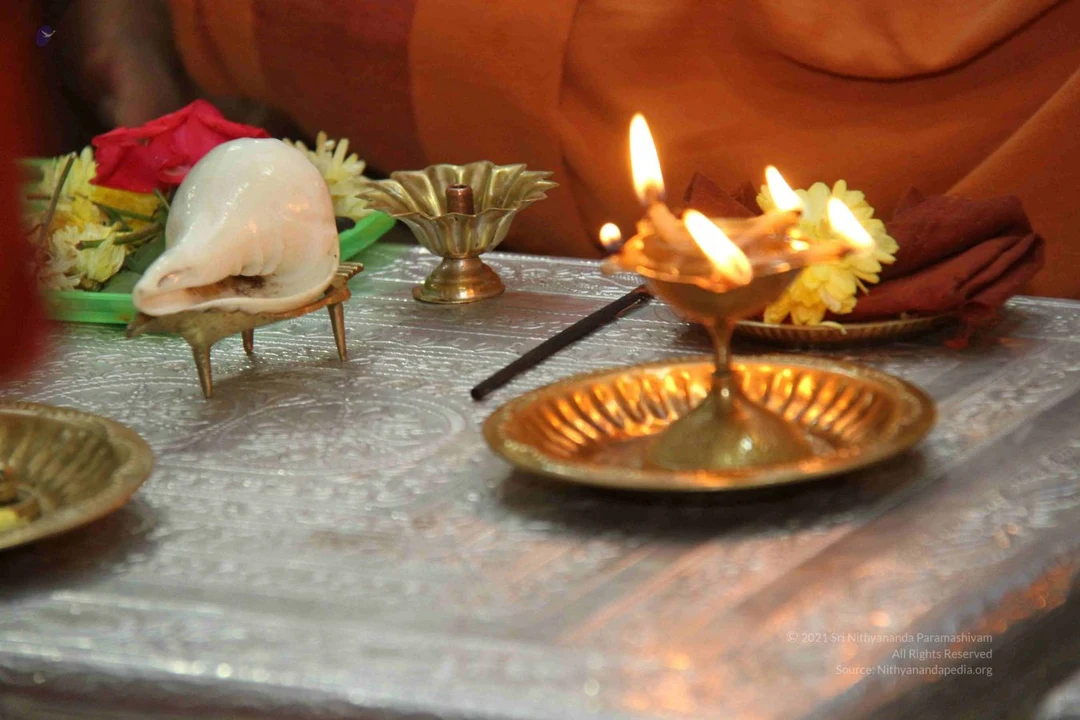
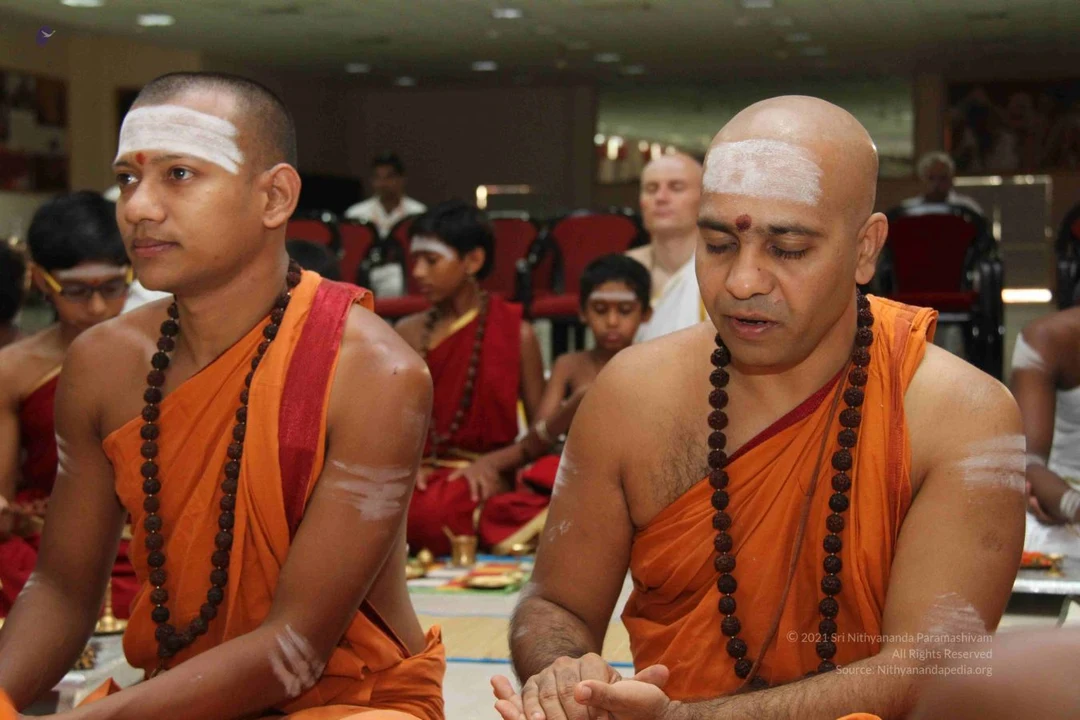
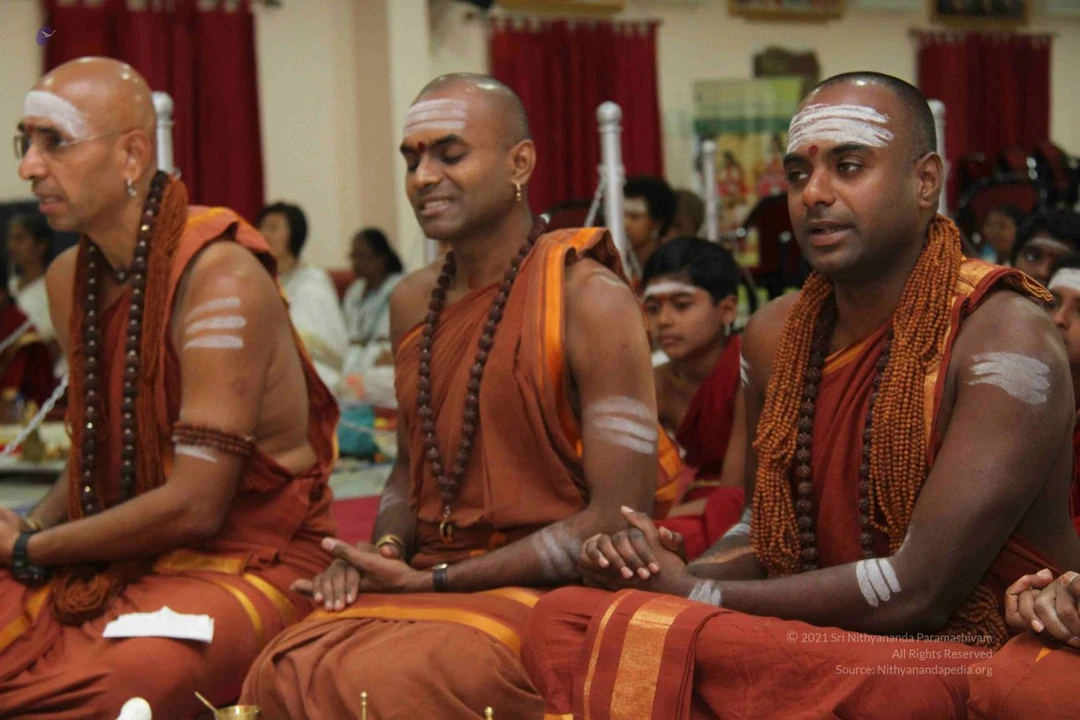
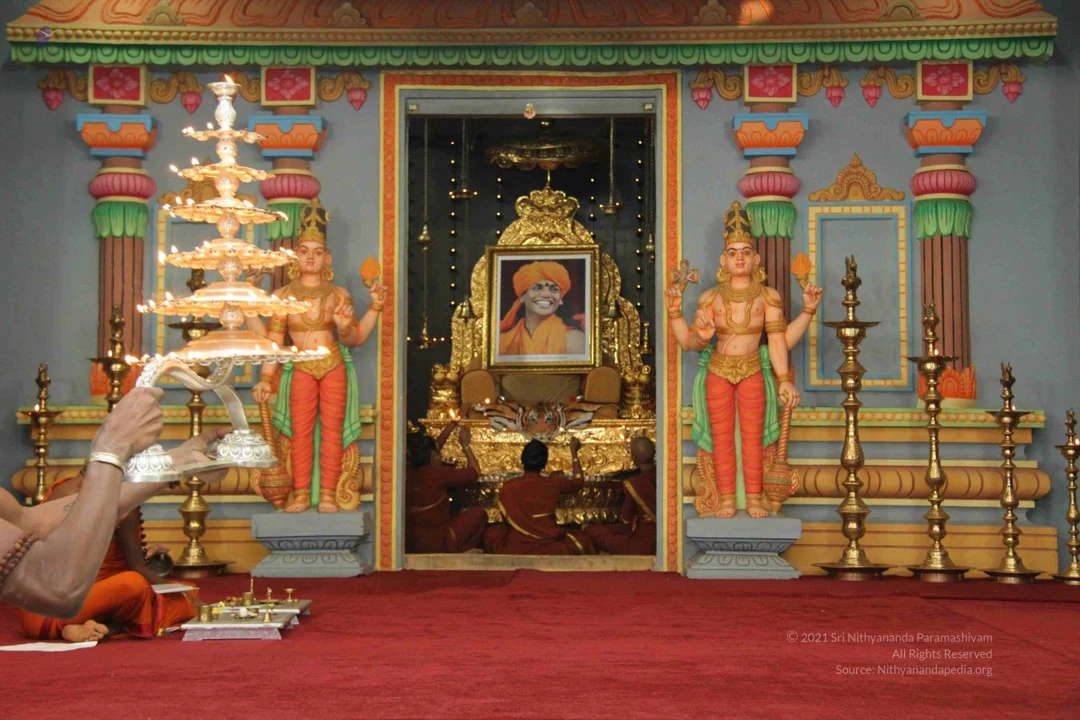
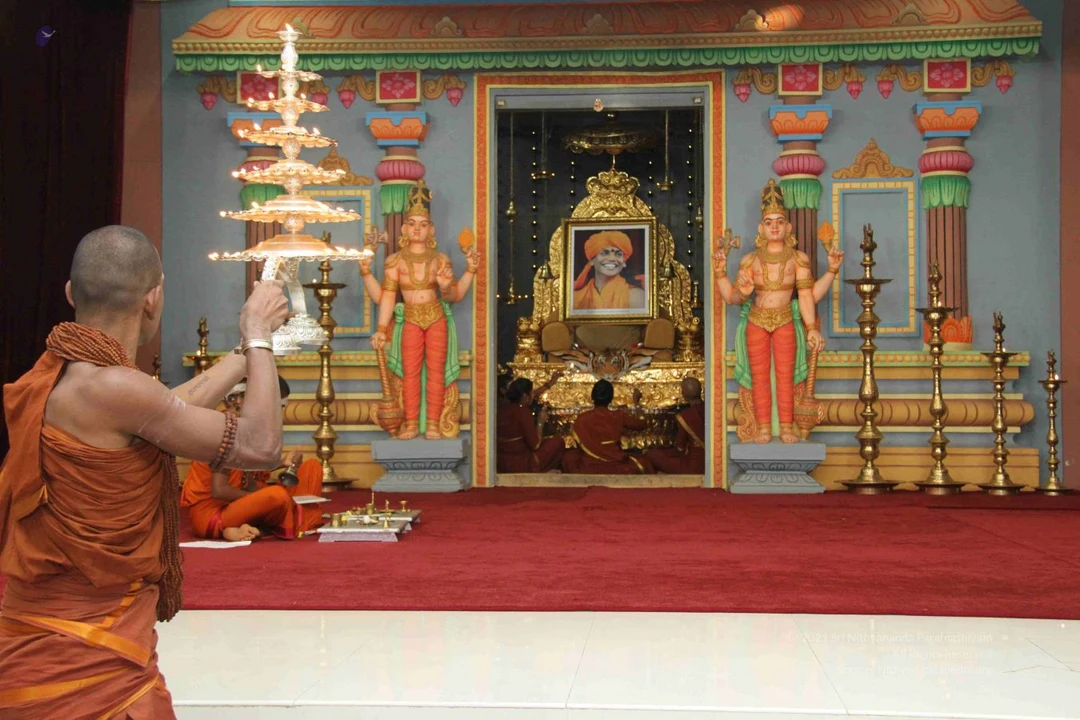
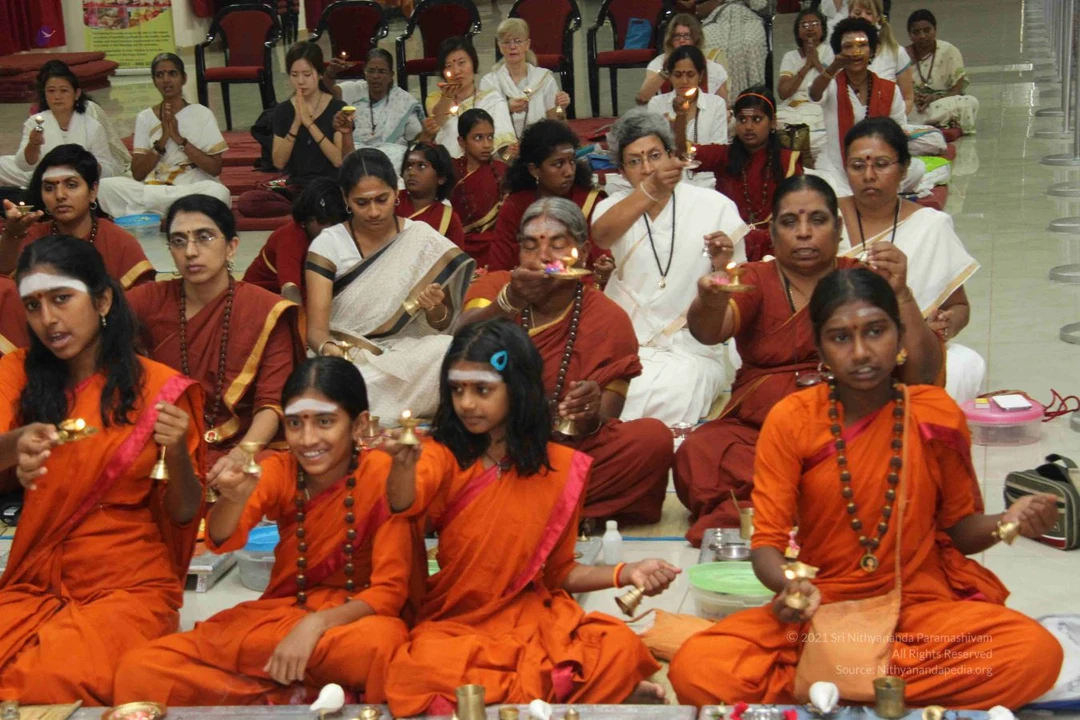
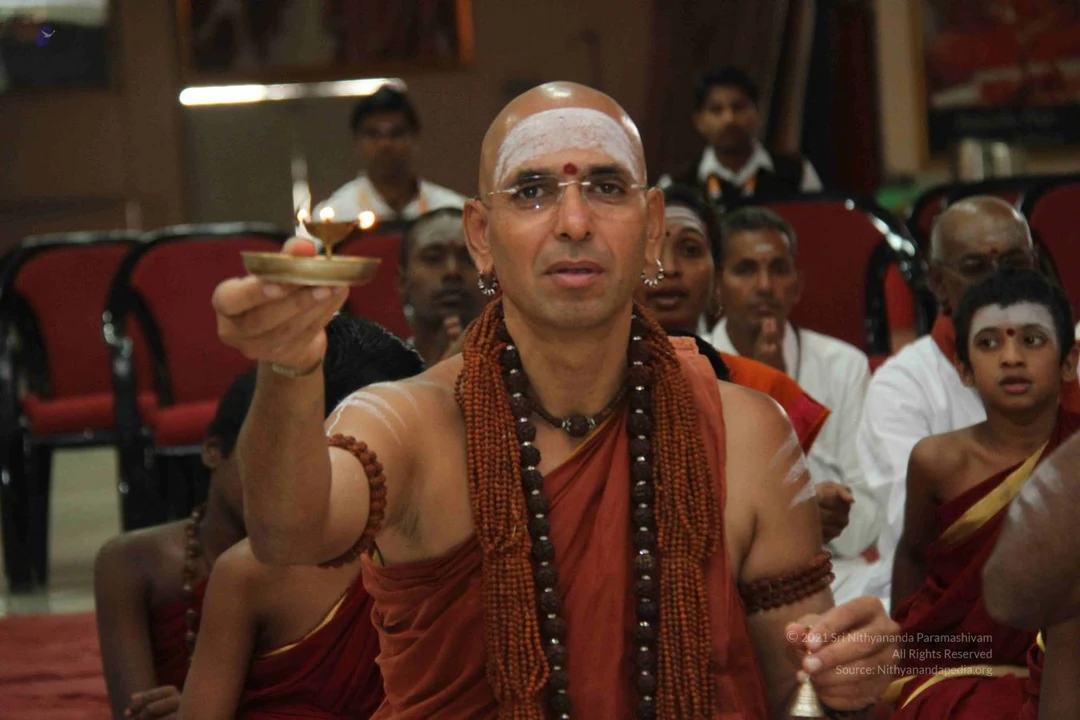
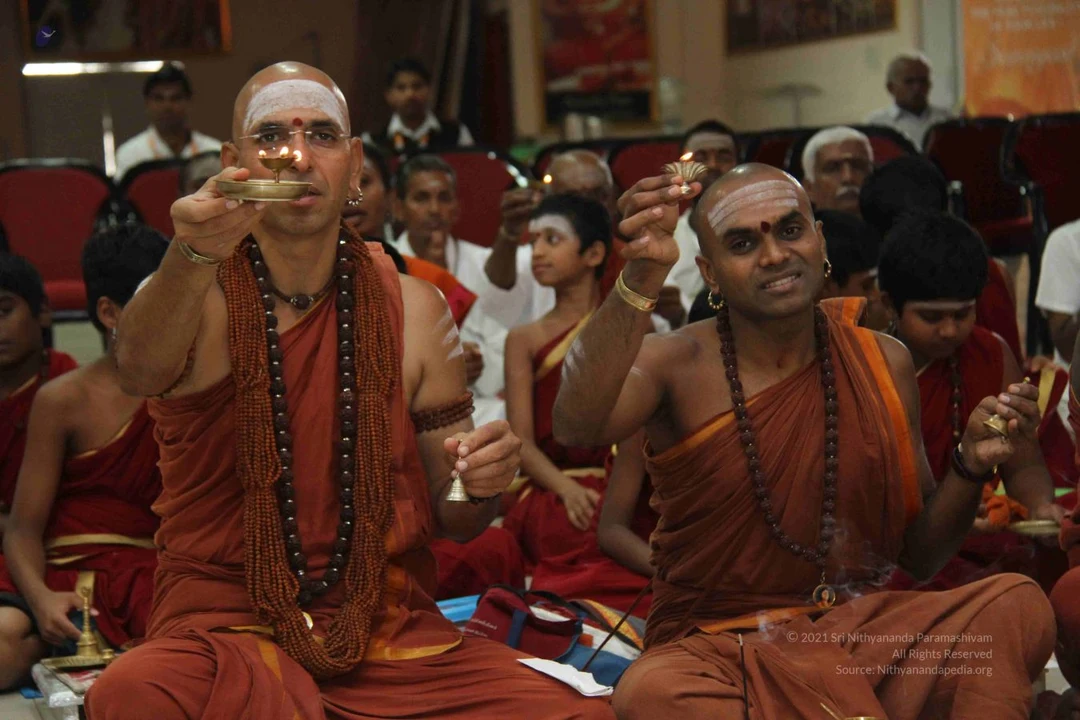
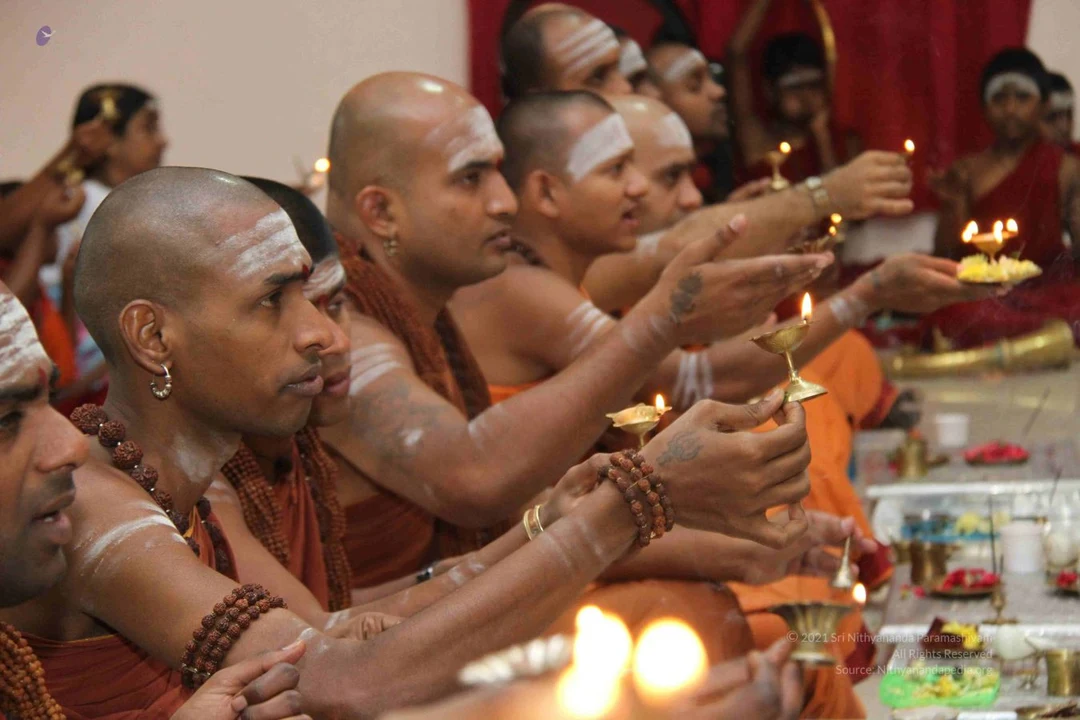
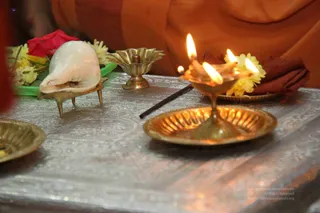
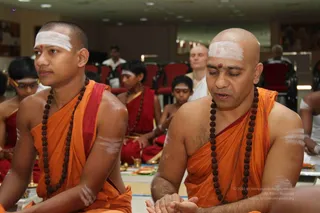
Close-up photograph of a silver multi-branched oil lamp with five lit wicks in small cups, each arm ending in a carved animal-head or mythical creature motif, held in a hand at the bottom edge. The soft blurred background shows a painted shrine wall in teal, yellow and red with a deity murti and a brass lamp stand out of focus. No people are clearly visible beyond the holding hand, and the image is not a graphic or poster.A photograph of a shrine centred on an ornate golden throne with a tiger-skin cushion at its base. Seated on the throne is a framed portrait of a smiling man in an orange turban and orange robe, labelled "PARAMAHAMSA NITHYANANDA" on the frame. Two tall painted statues flank the shrine, each with a golden crown, gold jewellery and orange and green draped garments, holding ceremonial items. Hanging bells and lamps hang above, and the shrine appears to be a devotional display rather than a living person in the scene. The portrait is a depiction, not a physical person present.A photo of a shrine niche with a gilded throne-like seat under a gold canopy. A framed portrait of a smiling man in an orange turban, red bindi and orange shawl is set above the seat, labelled with a printed caption reading Paramahamsa Nithyananda. A tiger-striped cloth lies on the seat. In the foreground, a person's hand holds a silver multi-wick oil lamp with flames. To the right stands a painted deity murti with four arms, a crown, gold jewellery and an orange-red dhoti with a green sash. Red carpet and hanging brass lamps complete the scene.Photograph of a temple shrine with a golden throne-like seat draped in red cloth, set before a framed portrait of a smiling man in an orange turban and orange clothing, flanked by two painted deity murtis with four arms, crowns and green-and-orange garments. Brass oil lamps stand on both sides of the red carpet. In the foreground a bald man in orange robes faces the shrine from behind, and to the right two people in orange clothes sit with palms pressed together in namaskar. The portrait is a depiction, not a person in the room, and the framed image has no readable caption. Several people are visible.Close-up photograph of a ritual table with a silver embossed surface. In the foreground a brass oil lamp with multiple lit wicks sits on a brass plate beside an incense stick. Behind it are a white conch shell resting on a small brass stand, a brass lotus-shaped bowl, a red flower and yellow marigolds on a green tray, and folded maroon cloth. A blurred orange-robed arm is visible at the top edge. No people's faces are shown.Photograph of an indoor ritual gathering. In the foreground two shaved-headed men in saffron-orange robes and dark rudraksha malas sit cross-legged on a mat, both with white vibhuti bands on their foreheads and bare shoulders marked with white ash. The man on the right has his eyes closed and hands held together in front of him, seemingly chanting. Behind them, younger boys in red and orange robes with white forehead marks sit in rows, and a few adults in white clothing are visible further back. Brass vessels and plates of offerings lie on the floor in front, and red chairs line the background.

Nithya-Satsang
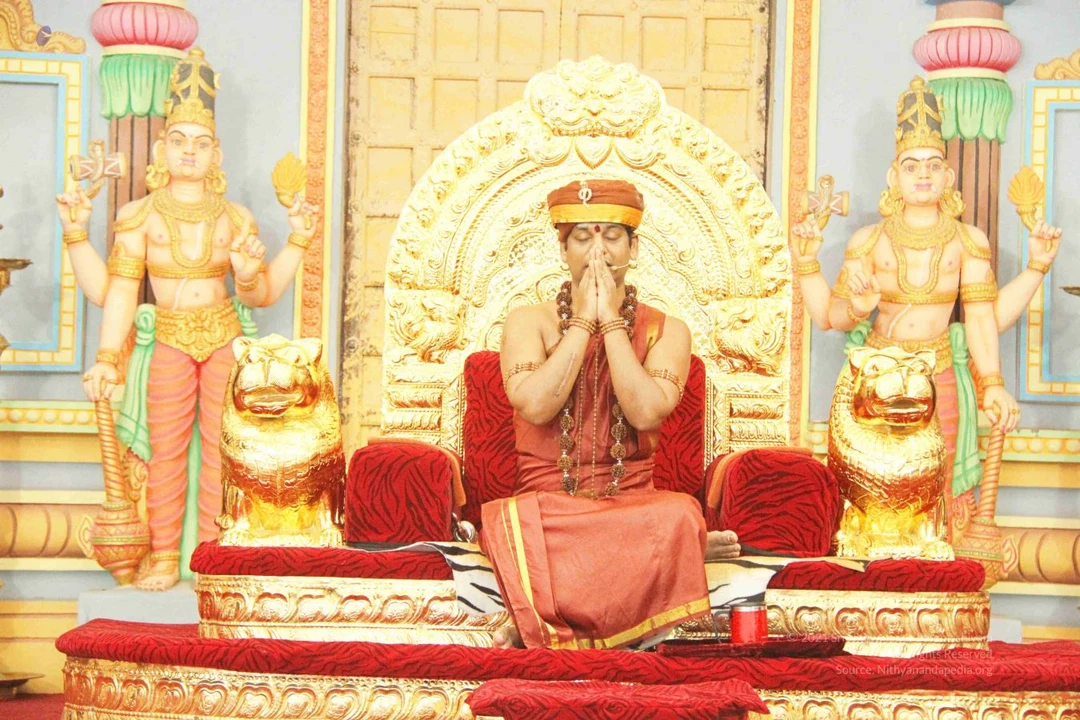
50 photosSource gallery
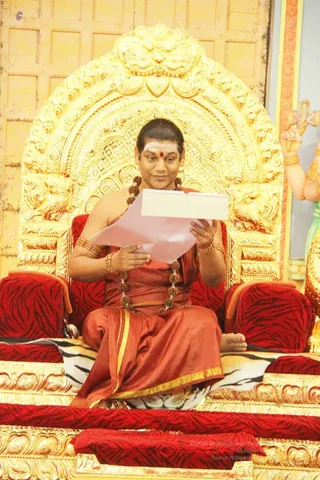
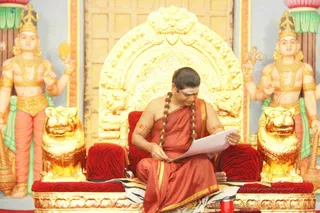
A man seated on an ornate gold throne with carved lion heads and a gold arched back, draped with red and black tiger-striped cushions and a tiger-stripe cloth on the dais. He wears a rust-orange dhoti and shawl with a gold border, multiple rudraksha malas, gold bangles and armbands, a white forehead marking and red bindi, and holds a white sheet of paper or booklet while reading it. A carved figure with a raised hand stands partly visible at the right edge. Swamiji (probable): the seated man shows long swept-back hair, rudraksha malas, gold armlets and orange ceremonial clothing on a throne.A seated man in a red-orange robe with a rudraksha mala draped across his chest reads a sheet of paper on an ornate gold throne with red velvet cushions and tiger-striped cloth. Two gilded lion heads flank the seat, and two gold-and-pink standing deity murti figures with crowns and jewelry stand on either side. A white tilaka marks his forehead and he wears gold armbands and bangles. Swamiji (probable): long-haired figure in saffron-red robes with rudraksha mala and ceremonial ornaments, seated on the throne, reading during a satsang setting. Watermarked archive image.A seated man with closed eyes presses his palms together in anjali mudra at chest height. He wears a saffron-orange head wrap with a small white emblem and a red bindi, a rust-red garment draped over the shoulders, and multiple rudraksha malas and beaded bracelets. He sits on a red-and-black striped cushioned throne in front of an ornate gold-leaf arch carved with lion motifs, with a gold lion figure at left and gilded hands visible at the edges. A small microphone is clipped near his face. a person given the saffron attire, rudraksha malas and ceremonial throne setting.A seated man with a shaved head in an orange-saffron wrap and a long rudraksha mala sits on an ornate golden throne with a red and gold cushioned seat, palms pressed together in namaskar with eyes closed. Flanking him are two painted and gilded figures with multiple arms and golden lion-faced pedestals, in a colourful temple-style hall. A small red candle sits on a low tray in front. The figure wears a saffron headband and his face is partly hidden by the pressed hands, so the appearance cues are limited; the seated man is a devotee-style presence on a throne in a satsang setting, with no clear identifying cues.A seated man in saffron-orange robes sits on an ornate golden throne with red velvet cushions and gold lion-head armrests, hands pressed together in namaste at chest level. He wears a red-and-gold head cloth, a long rudraksha mala, and multiple bracelets. Two tall gilded deity murti statues flank the throne, each with multiple arms holding ritual objects and wearing gold crowns and necklaces. Behind them is a golden arched backdrop. A striped tiger-skin style cloth lies beneath the throne. A small red object sits on the platform. The setting is a temple-style stage. a person: long-robed sannyasi with rudraksha mala and saffron attire seated on the throne.A seated man in an orange-saffron cloth and matching orange turban with a small emblem sits in namaste with palms pressed together and eyes closed, wearing layered rudraksha malas and gold bangles. He sits on a gold ornate throne with red velvet cushions and a tiger-striped cloth, flanked by two gold lion sculptures. On either side stand gilded multi-armed deity murti figures in crowns, holding ritual objects. A brass oil lamp stands at left and a small red candle sits at the lower centre. The background has a large carved gold arch and wooden doors with painted pillars in pink and green. a person: the seated man has saffron clothing, a turban and multiple rudraksha malas, cues consistent with the page's claim.
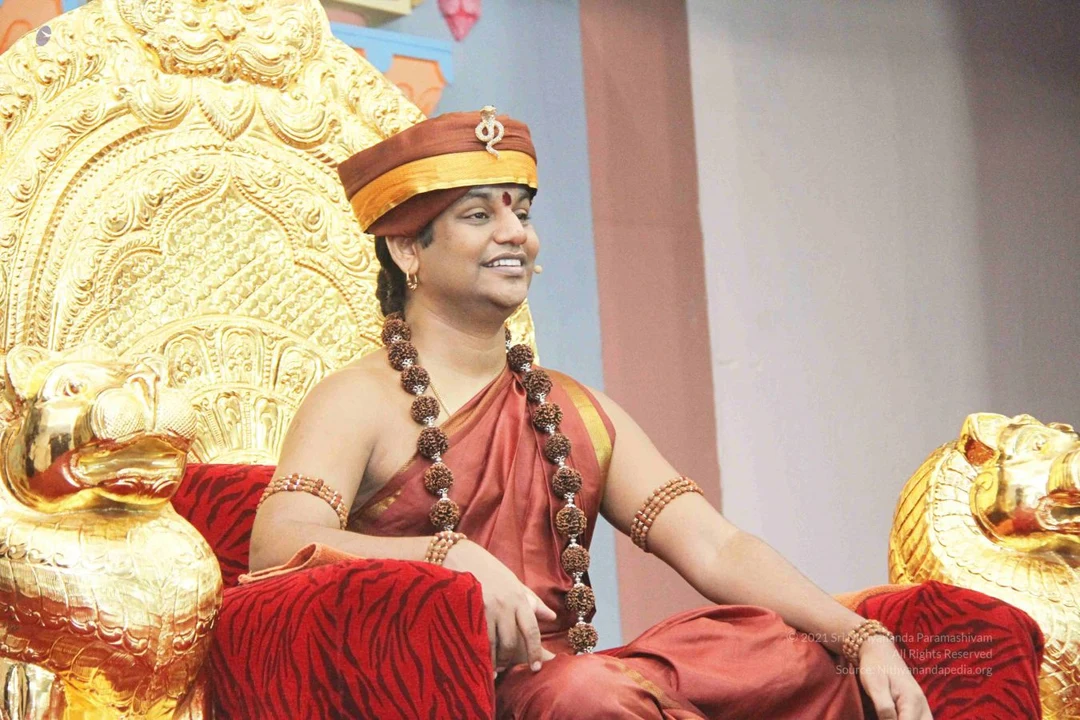
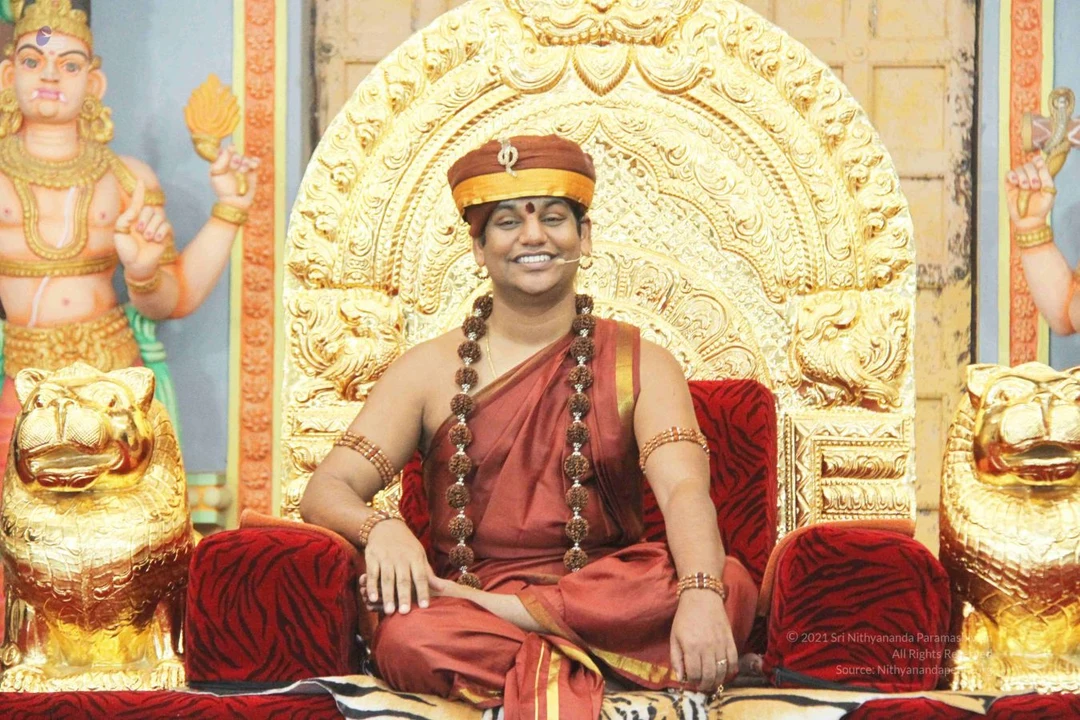
Sarva-Darshan

8 photosSource gallery
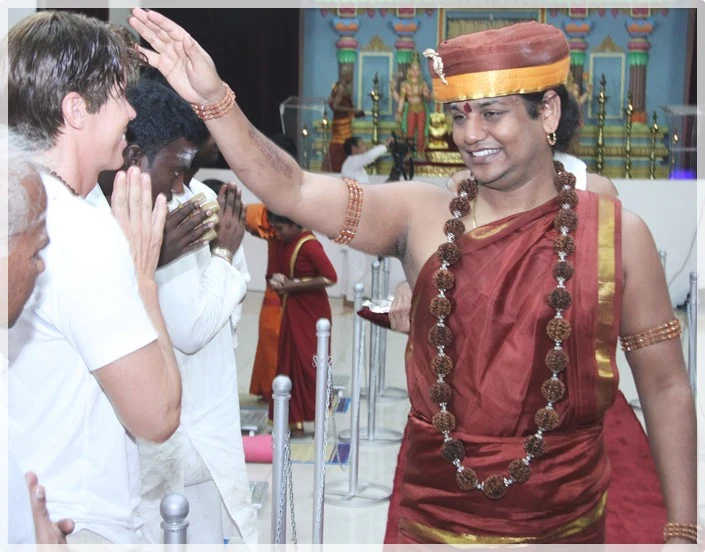
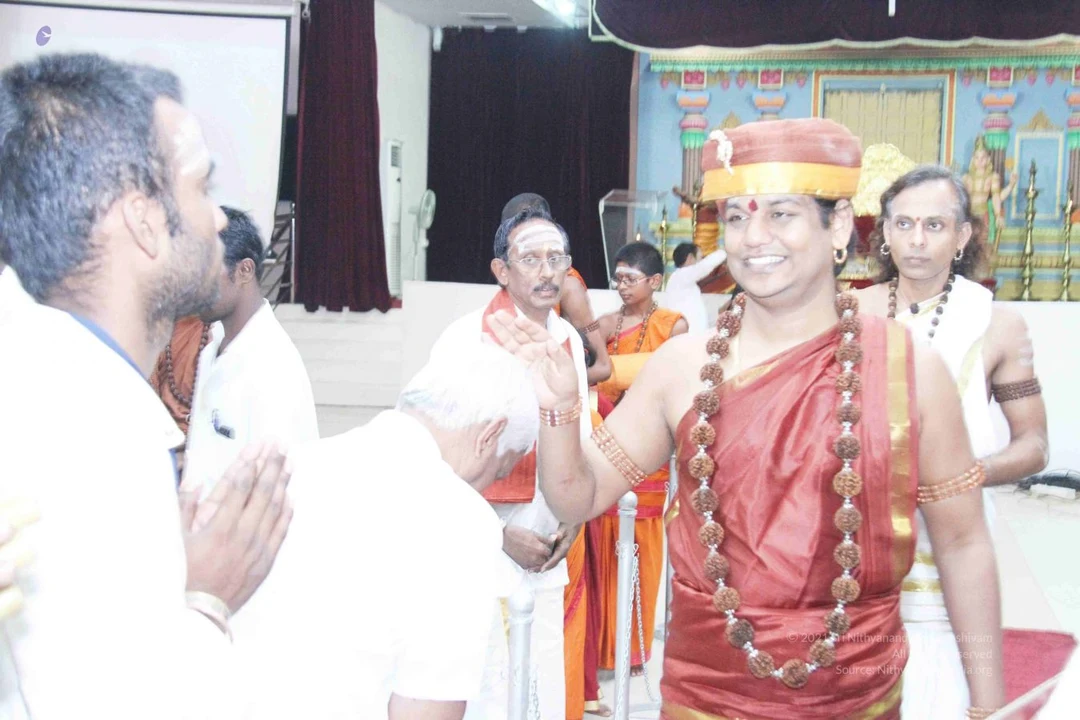
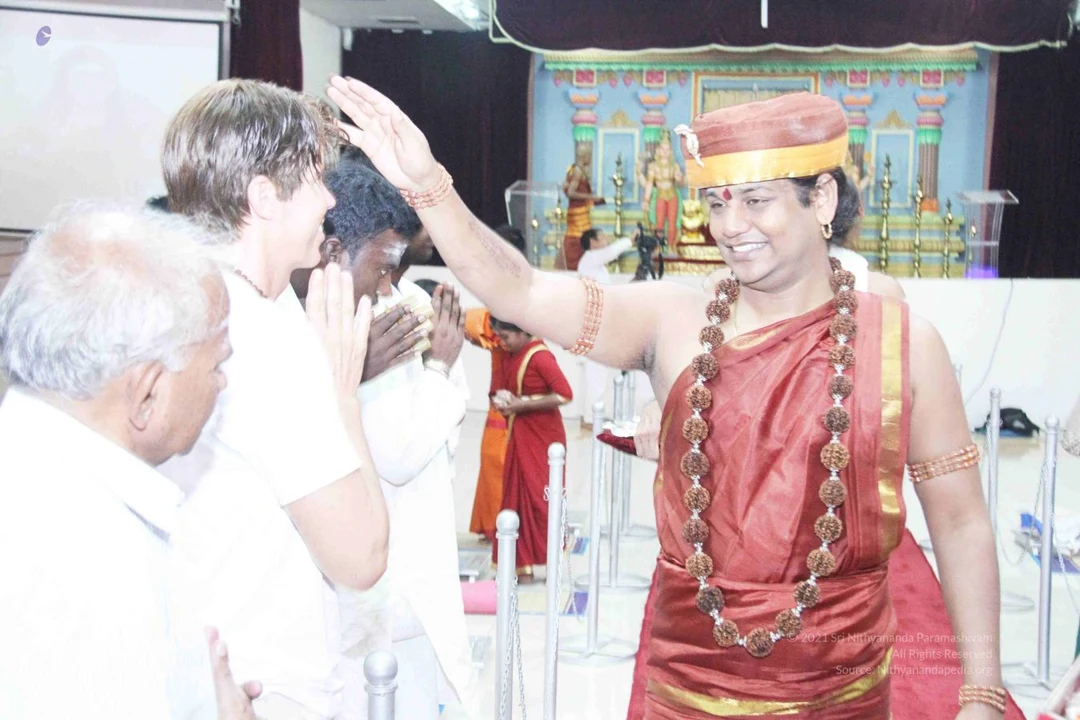
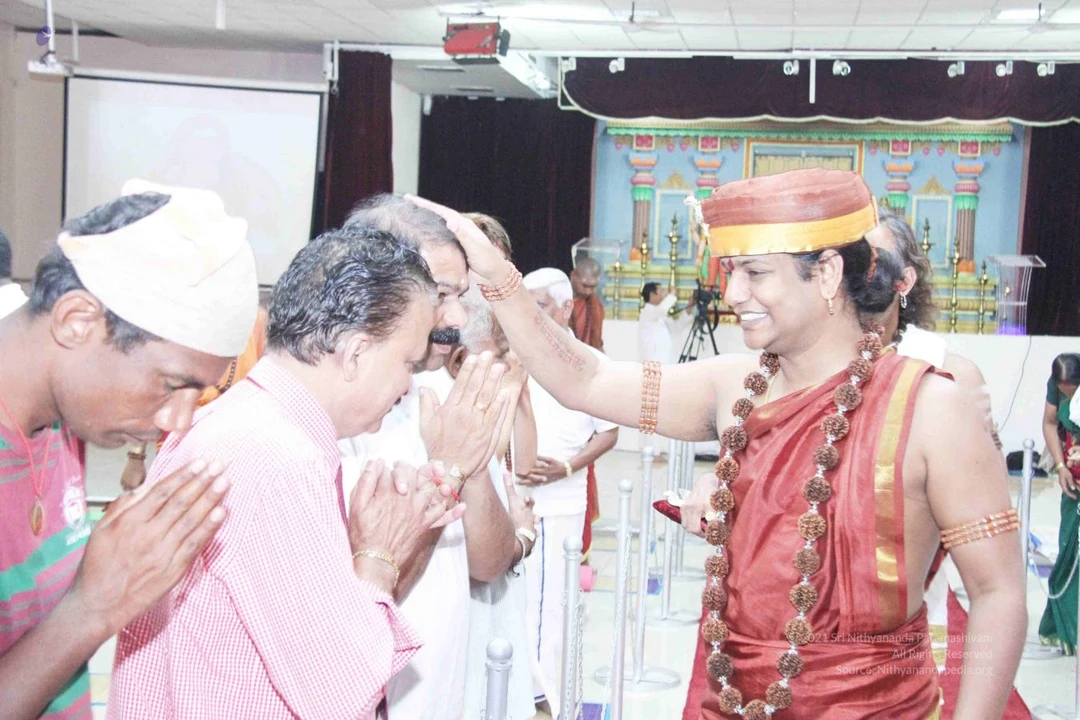
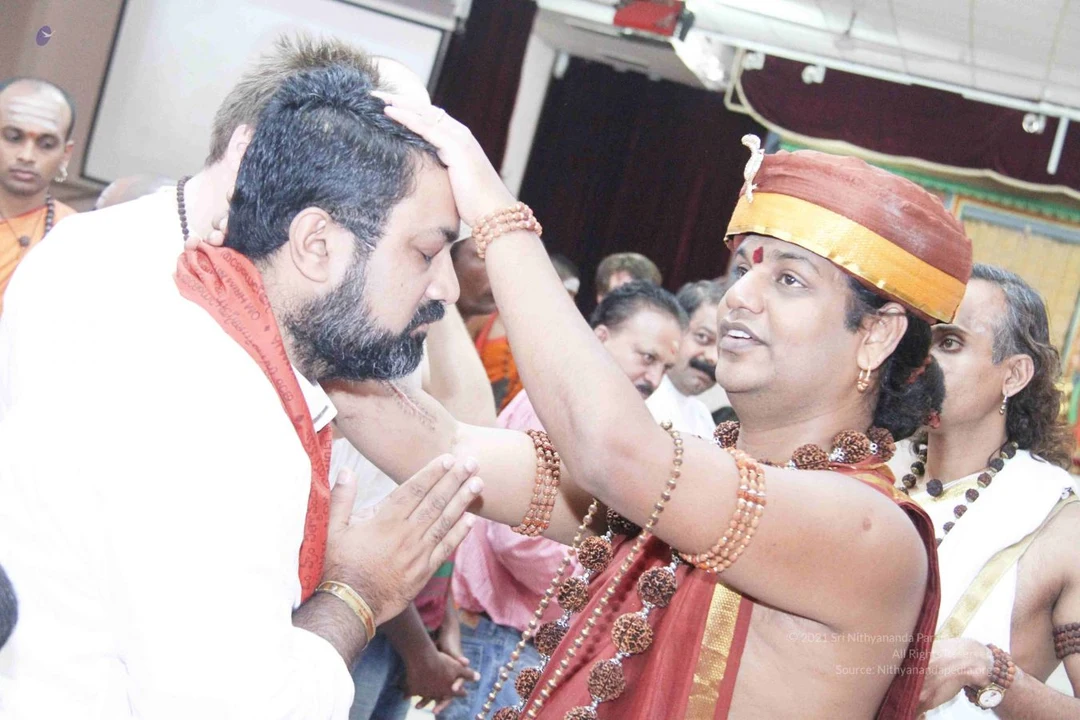
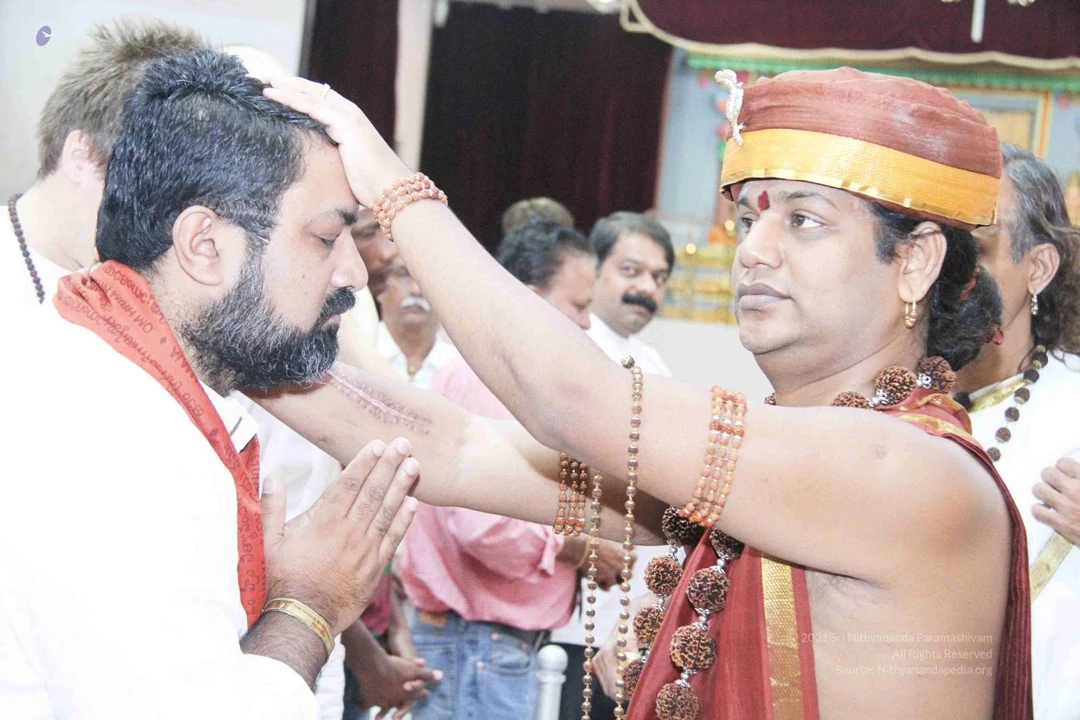
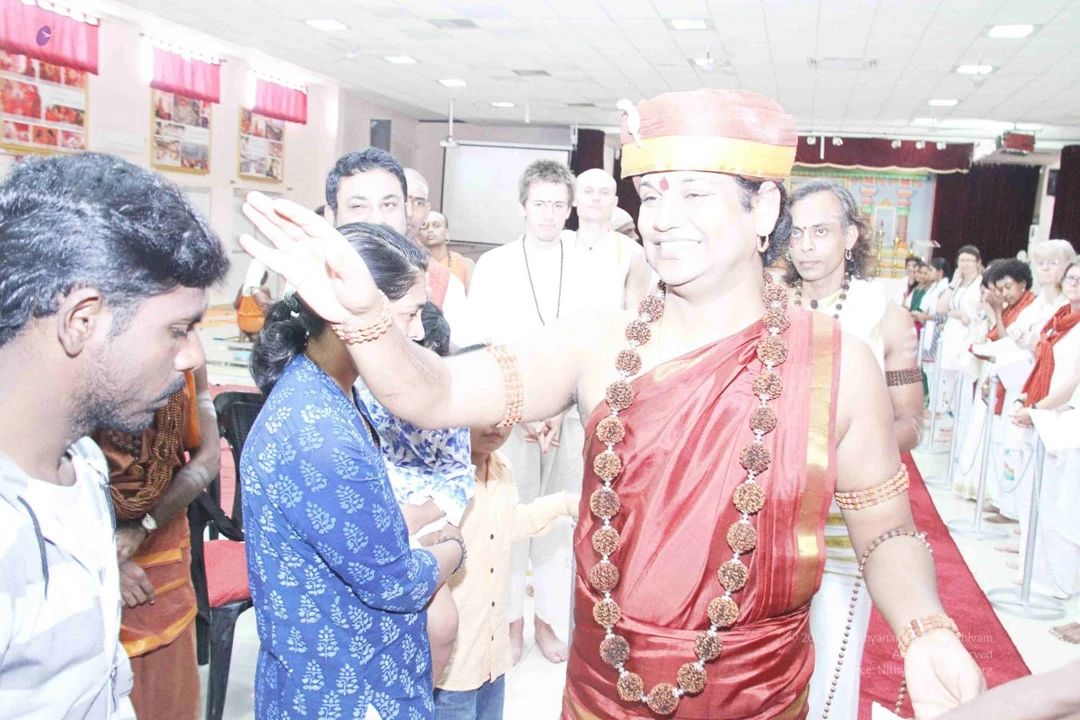
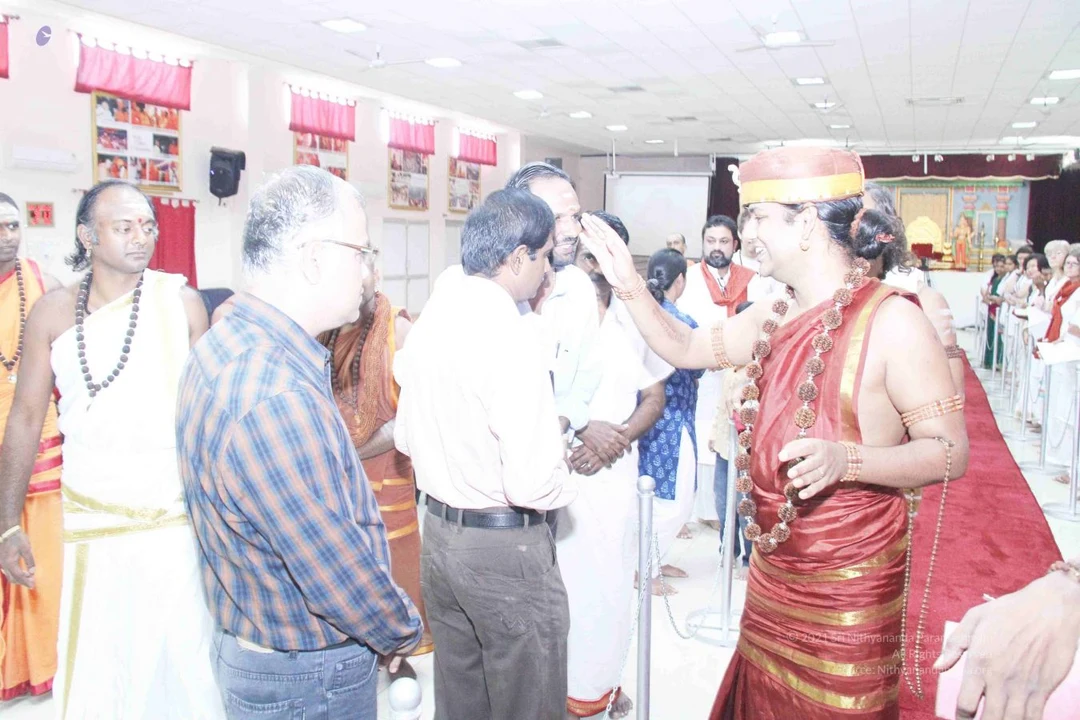
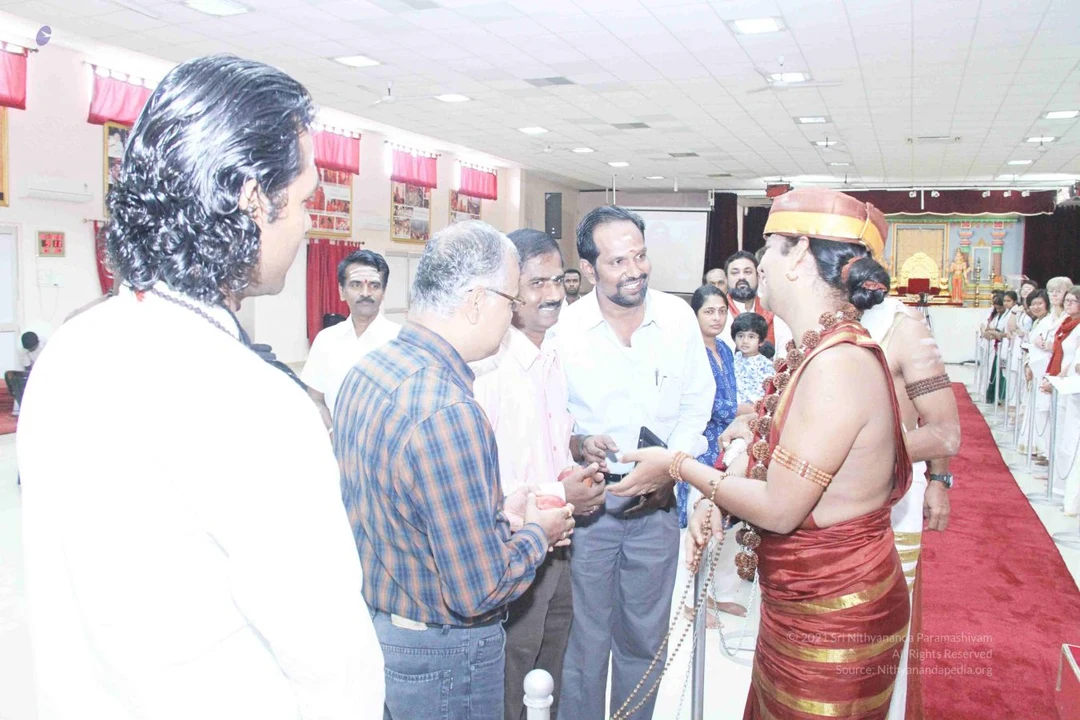
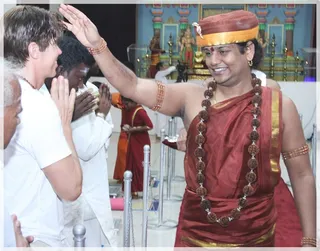
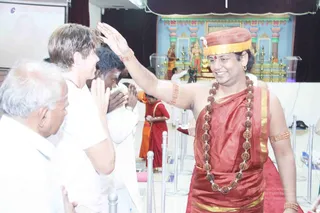
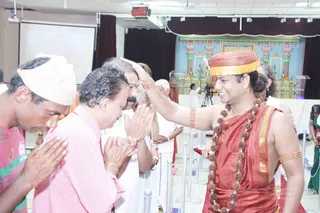
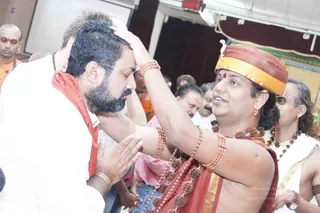
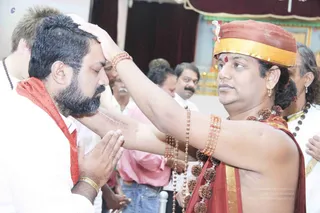
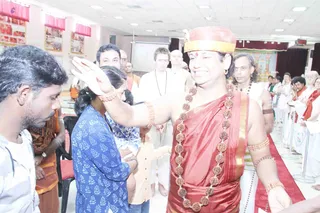
A photograph of an indoor hall with a stage backdrop decorated in blue and gold with temple-style pillars and a deity murti. In the foreground a man in a white shirt presses his palms together in greeting while an older white-haired man in white clothing bends forward. Centre right, a smiling man in a deep red-brown silk dhoti and shawl with gold border wears a red turban, a long rudraksha mala, bangles and an upright red tilak, raising one hand in blessing. Behind him a woman in white with a red bindi and a man in saffron-orange robes stand near the stage, and a bald man in white with a striped tilak and glasses stands behind. Rudraksha beads are prominent. A projector screen hangs at upper left.A photograph of a man in a red and gold ceremonial headdress and red-saffron dhoti-style garment with gold border, wearing a long rudraksha mala and bracelets, raising his right hand in blessing toward a kneeling-or-bowing devotee with folded hands in a white shirt. A bald older man in white stands at left, and another devotee in white with a red-streaked forehead bows with hands joined. Behind them, attendees in white and red-orange robes stand in a hall with a stage backdrop of painted gold-and-blue temple pillars and a deity figure, with a lectern and silver barrier posts in front.A photograph of a ceremonial blessing in a hall. A man in a rust-red dhoti and red-and-gold head wrap, wearing long rudraksha mala necklaces and gold-coloured armbands, stands bare-chested and places his right hand on the head of a devotee who has bowed forward with palms pressed together. The devotee wears a white cloth on his head and a red-and-white checked shirt; other devotees in white dhotis and a man in a pink-and-green shirt stand with hands folded in namaste, eyes lowered. Behind them is a decorated stage with blue and gold painted panels and ornate pillars, a lectern, a tripod-mounted camera, and metal barrier posts. a person (red-and-gold head wrap, rudraksha malas) is performing the blessing.A photograph of a bearded man in white clothes with a red-orange shawl having his head held by a bare-chested man in a red-maroon dhoti with a gold border, wearing a maroon and gold headband, a red tilak mark, and multiple rudraksha mala necklaces and bracelets. The standing man places his hands on the bearded devotee's head in what looks like a blessing. Around them stand other people in orange and white clothes, including a shaved-headed man in orange at left, and a background with maroon curtains and a screen. The man in the headband has long swept-back hair and gold earrings, and appears to be speaking.A photograph of a diksha-style blessing. A bare-chested man in a red-and-gold cloth with a red-and-gold turban, wearing thick rudraksha malas and a gold-toned bracelet, places his right hand on the forehead of a bearded man in white clothes with an orange-red shawl bearing printed script. The bearded man stands with palms pressed together and eyes closed. Behind them, several onlookers in white and pink shirts watch; a partly visible figure stands at the right edge. A dark red curtain and a gold-trimmed backdrop frame the room.A photograph of a ceremonial indoor gathering in a hall with white walls, a ceiling panel, and red curtains. In the centre a man in a red-and-maroon silk wrap with gold border and a large rudraksha mala, wearing a red headpiece with gold trim and a red tilak, smiles and extends his right hand toward a woman in a blue patterned top who holds a small child. Behind him are other people in white and orange clothing, and to the right a red carpet runway lined with seated devotees in white. a person: the central figure wears a red headpiece, rudraksha mala and ceremonial red silk, cues consistent with the page's attribution of this event to a person.

Final-Blessing

11 photosSource gallery
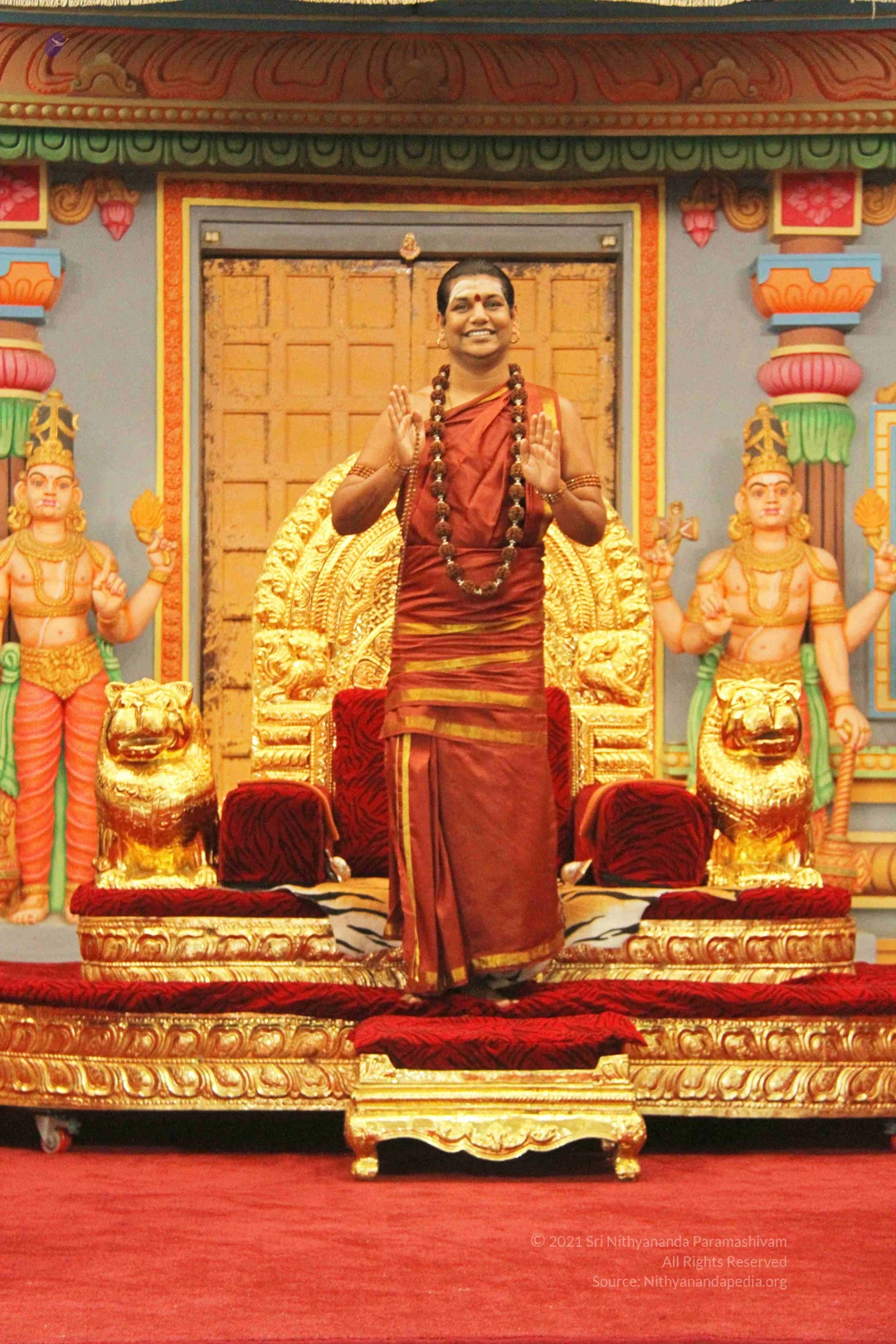
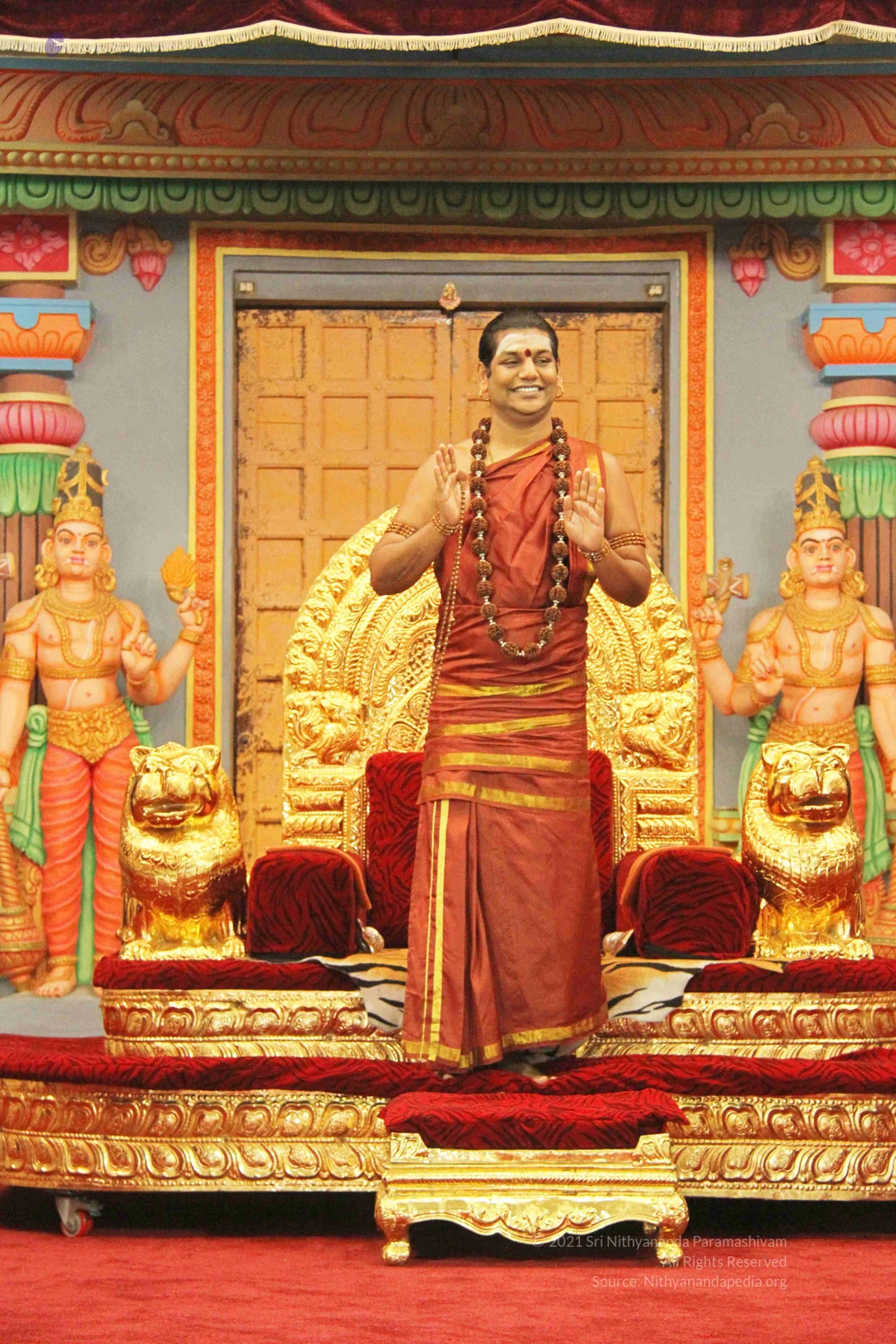
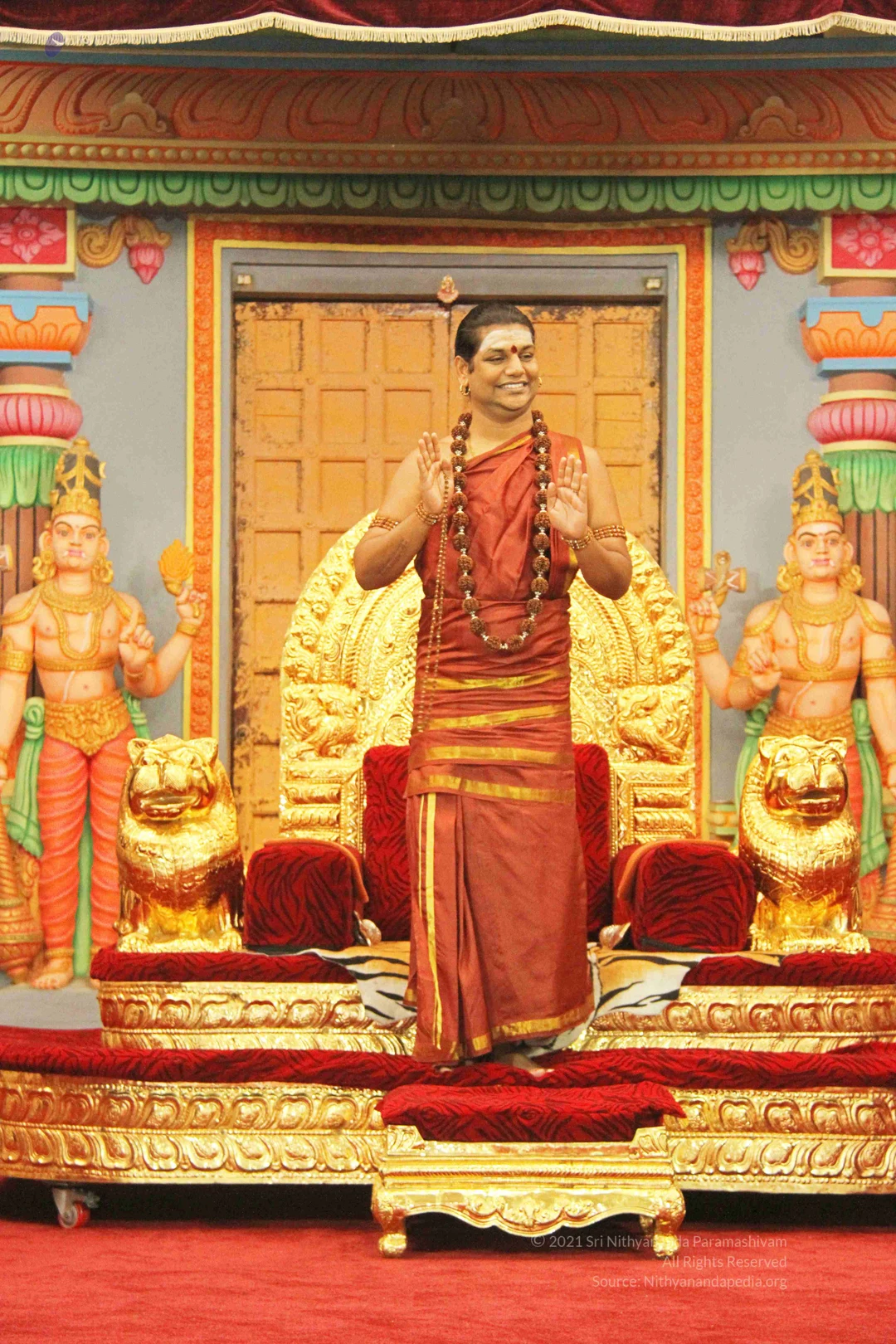
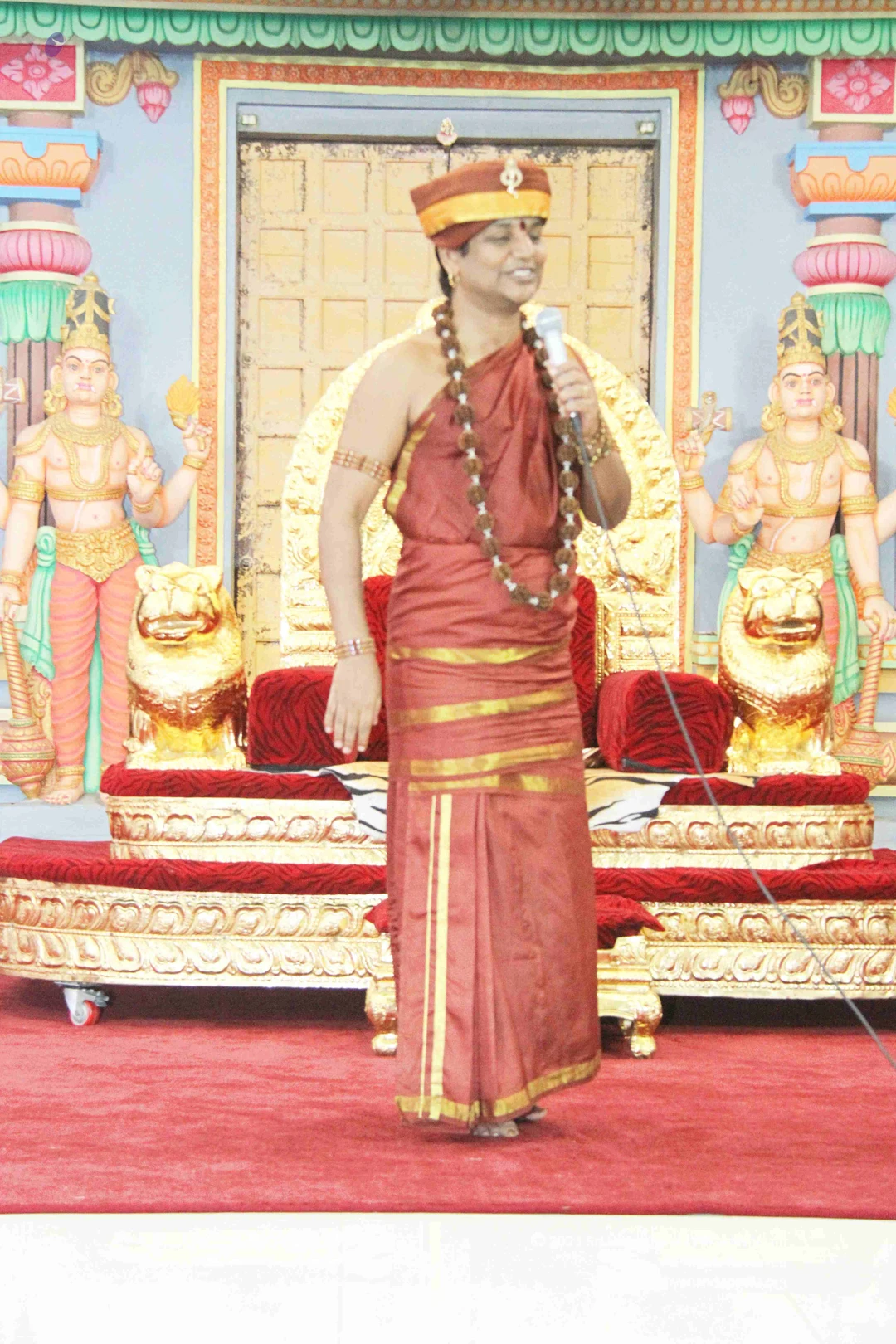
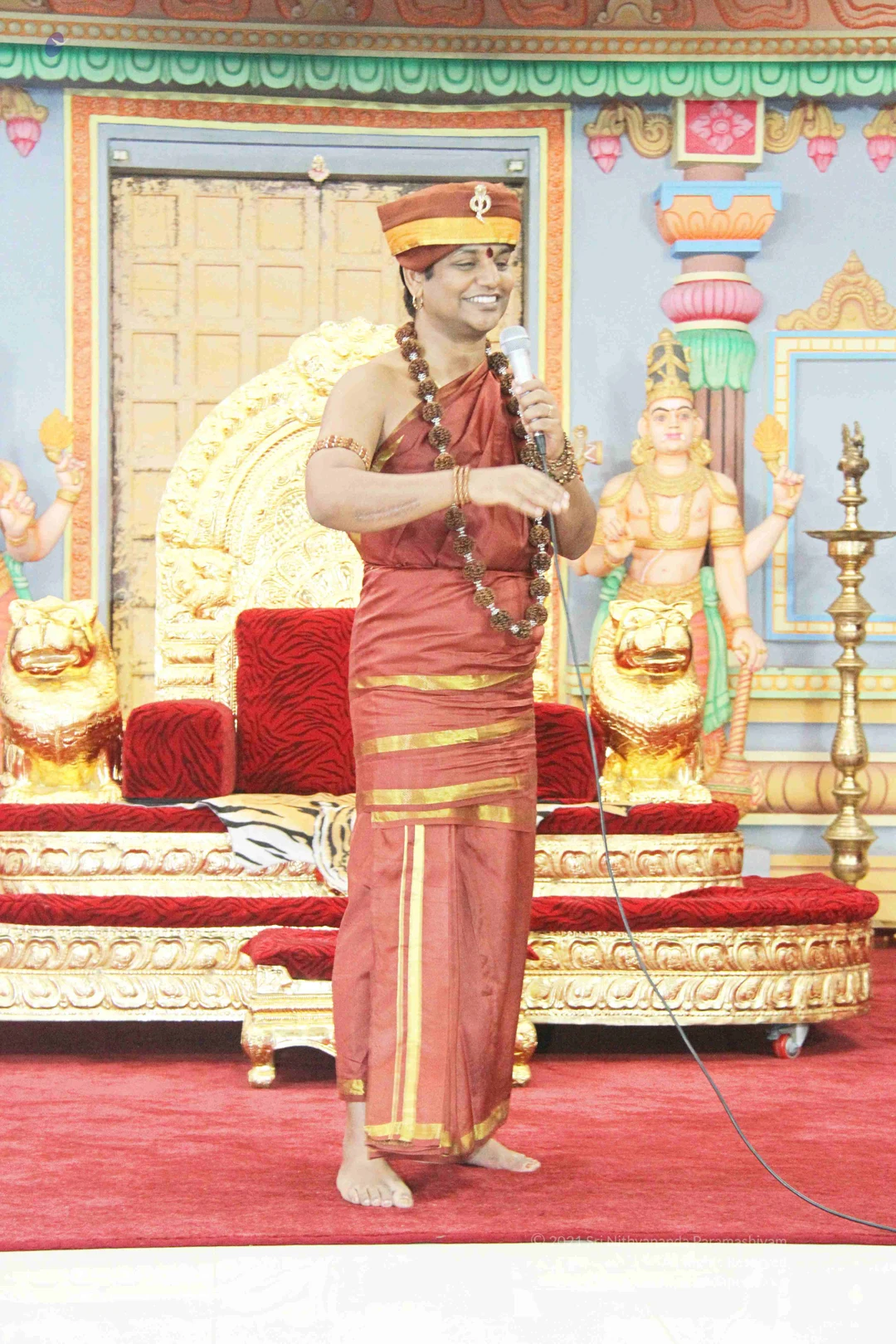
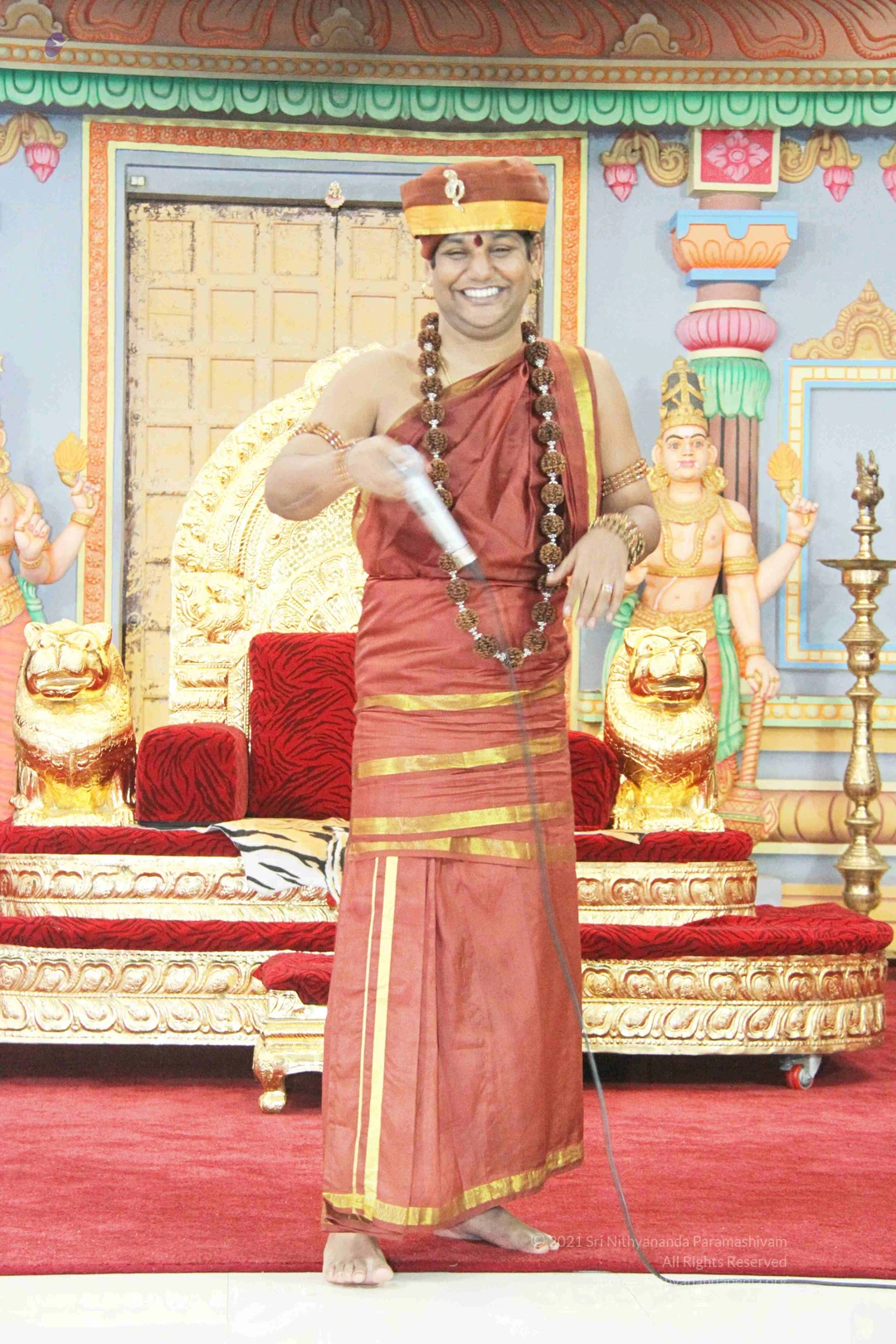
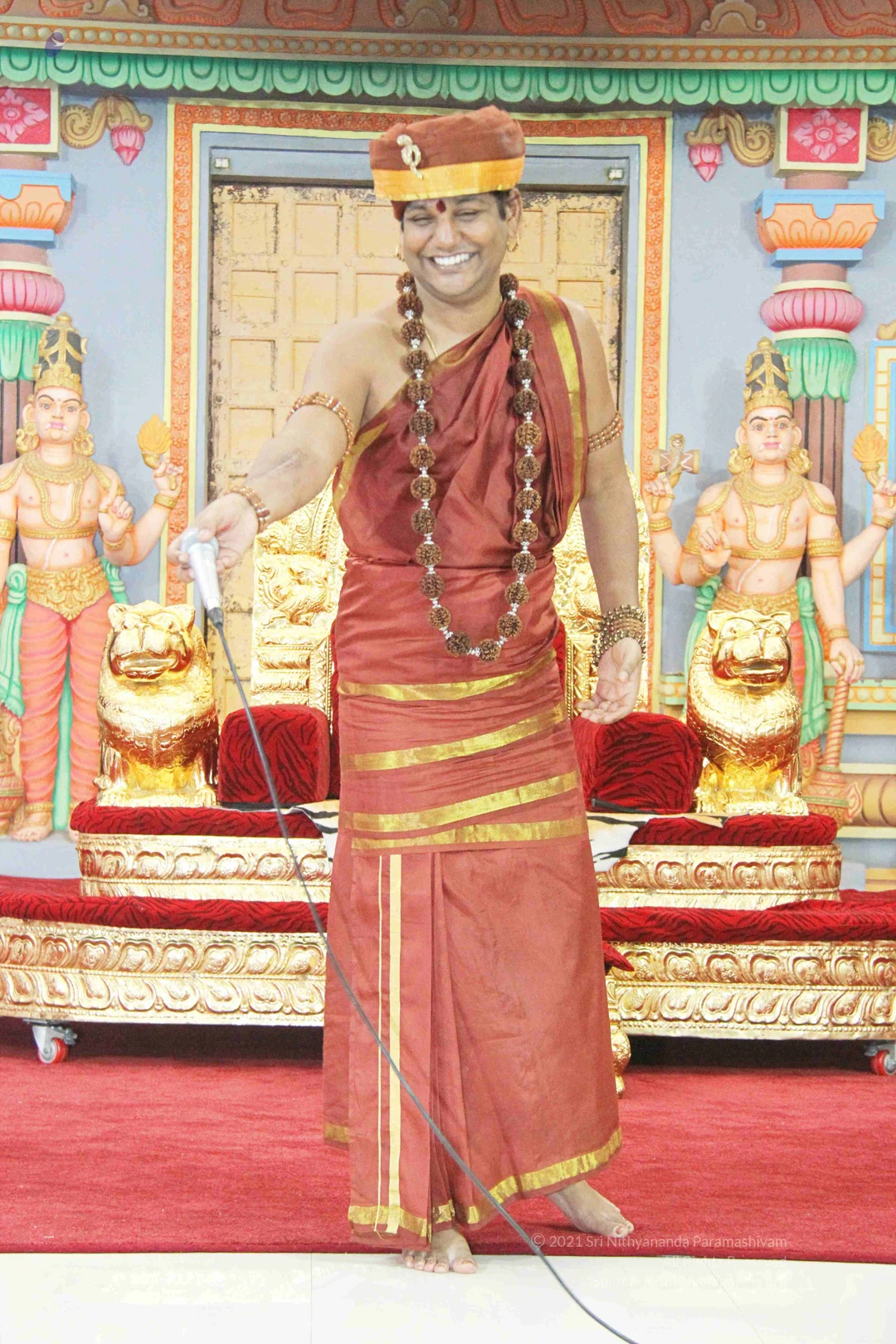
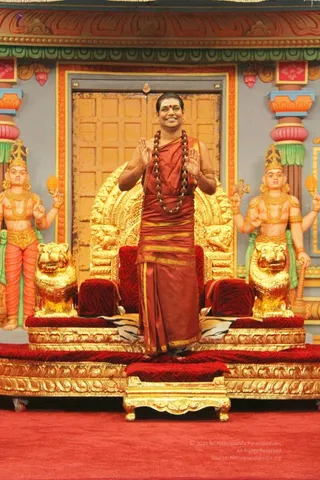
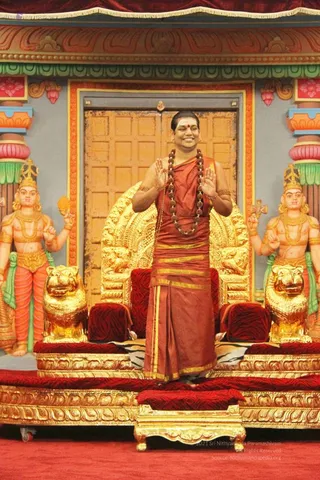
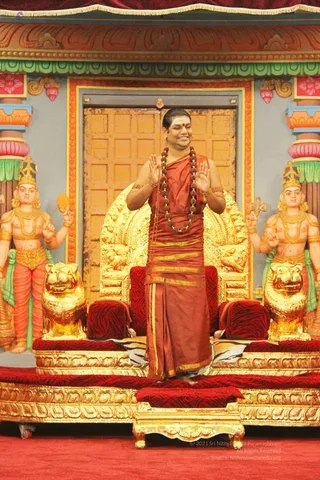
A man stands on a red-carpeted dais in front of an ornate gold throne flanked by two golden tiger sculptures, with red tiger-striped cushions. He wears a rust-red robe with gold-edged borders and a long rudraksha mala around his neck, and he presses his palms together in greeting, smiling. Behind him are a wooden double door and two painted multi-armed deity murti figures in orange and green, holding ceremonial objects. The setting resembles a temple-style stage.A man stands centred on a raised stage before a golden throne flanked by two gold lion sculptures on red velvet cushions. He wears a rust-red garment with gold borders, a long rudraksha mala around his neck, a red bindi and gold bangles, and holds his palms together in front of his chest in greeting. Behind him is a wooden door framed in red and orange, and on each side stand painted deity murti figures with crowns and gold jewellery, one holding a lotus. a person, a sannyasi-style figure in saffron-red robes with a rudraksha mala, seated-stage setting consistent with a satsang dais; the throne and standing pose are shown in person.A man stands in front of a gilded throne on a red-carpeted stage, smiling with palms raised in greeting. He wears a rust-red and gold-bordered dhoti and shawl, a long rudraksha mala, a red bindi, and bangles. Behind him, a golden lion-backed throne with red tiger-striped cushions sits before a wooden door framed by painted pillars. Two painted multi-armed deity statues in orange and green flank the throne, and a gold lion stands on each side. a person: the long rudraksha mala and red-and-gold robes suggest a teacher seated or standing at his throne, though the appearance is only partly distinctive.A standing figure in a maroon-red silk dhoti-style garment with gold borders and a matching maroon head wrap with a gold band and a small emblem, holds a handheld microphone and speaks on a stage with red carpeting. A long rudraksha mala hangs over the chest and a gold armlet and bangles are worn. Behind is an ornate golden throne with lion-headed arms and red velvet cushions, flanked by two painted and gilded deity murti figures with multiple arms and crowns on decorated pillars. The figure's appearance matches the description of a person through distinctive rudraksha mala and ornate saffron-toned clothing, standing in front of the throne as a speaker.A man stands barefoot on a red carpet holding a handheld microphone and smiling while speaking. He wears a rust-red turban with a gold band and a small emblem, rudraksha malas with silver spacers, rust-red silk draped over one shoulder and a gold-bordered dhoti. In the background a gold throne with red tiger-striped upholstery and gold lion armrests sits before a painted wall with a brass lamp stand and a painted deity figure holding a lamp. A cable runs across the stage floor.A smiling man stands barefoot on a red carpet holding a corded handheld microphone, speaking to an audience. He wears a maroon-red cap with a gold band and small gold emblem, a red-brown dhoti and shawl edged with gold stripes, a red bindi, a long rudraksha mala, and gold bangles on his arms. Behind him stands a red and gold throne with golden lion-head armrests and red patterned cushions. Painted deity figures with gold crowns and ornaments flank the throne, and a brass oil lamp stands at the right. The scene is a stage set in a temple-style hall.