Skip to content
Wednesday

26 November 2014

Change the World with Chanting

Dated photos
341
Source pages
1
Media
3
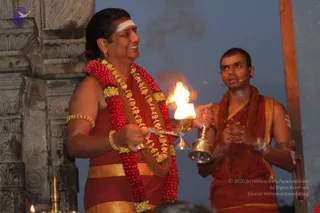
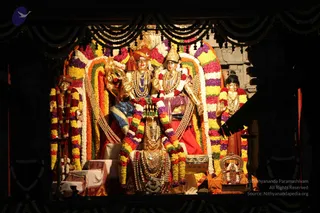
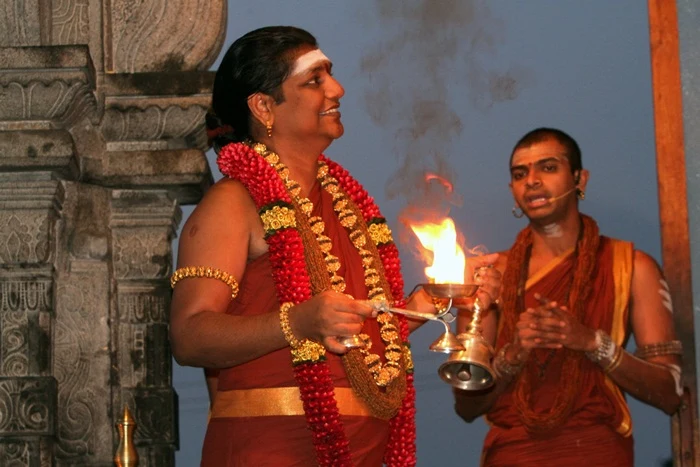
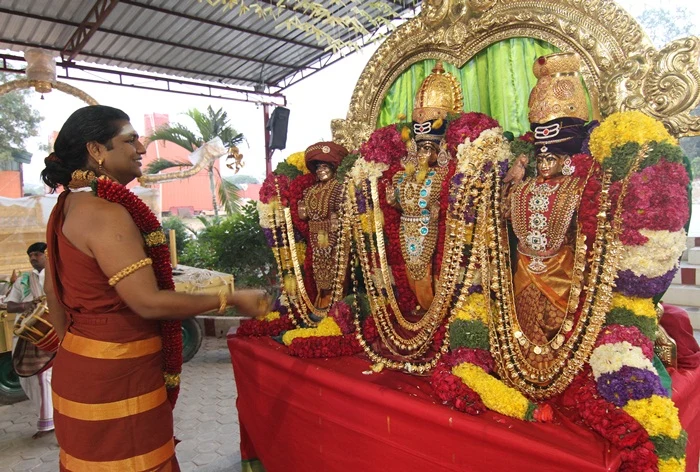
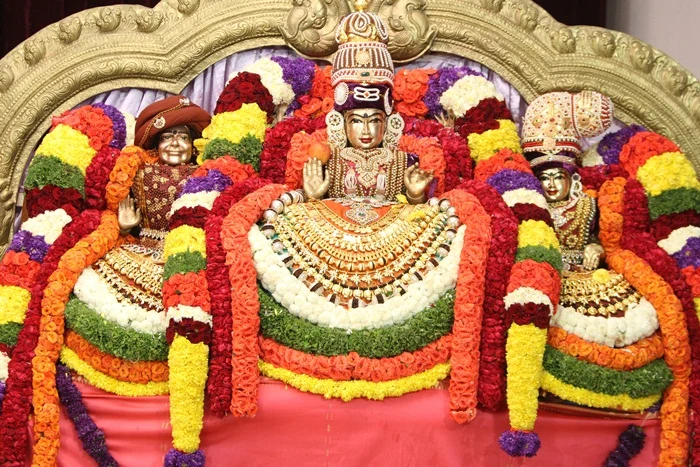
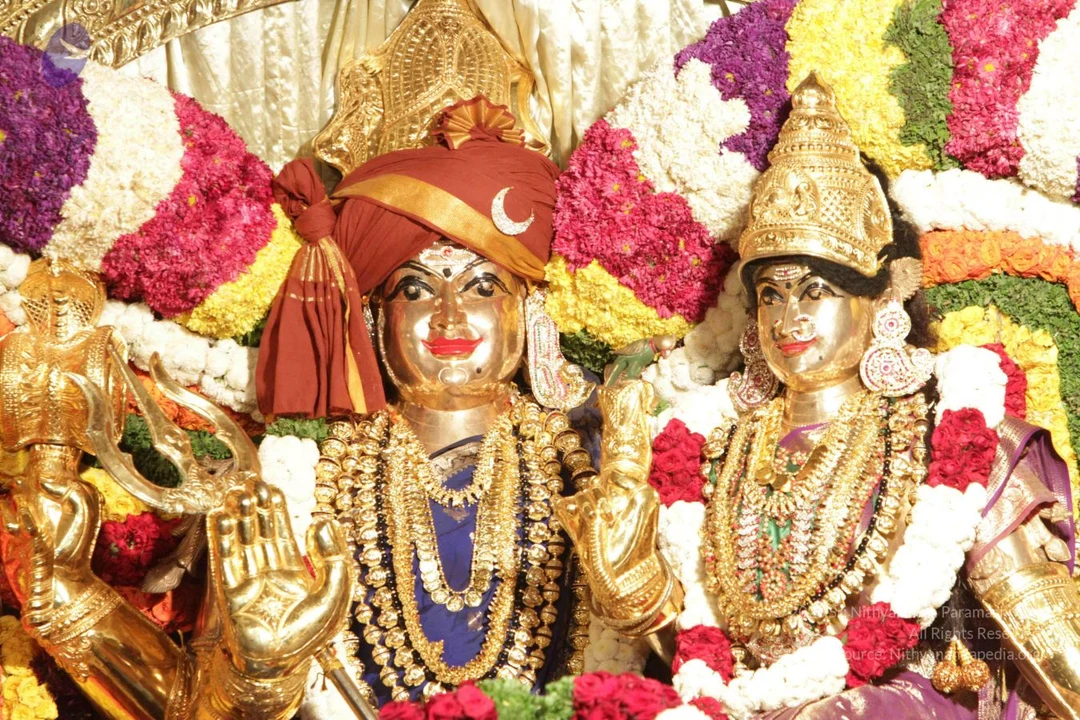
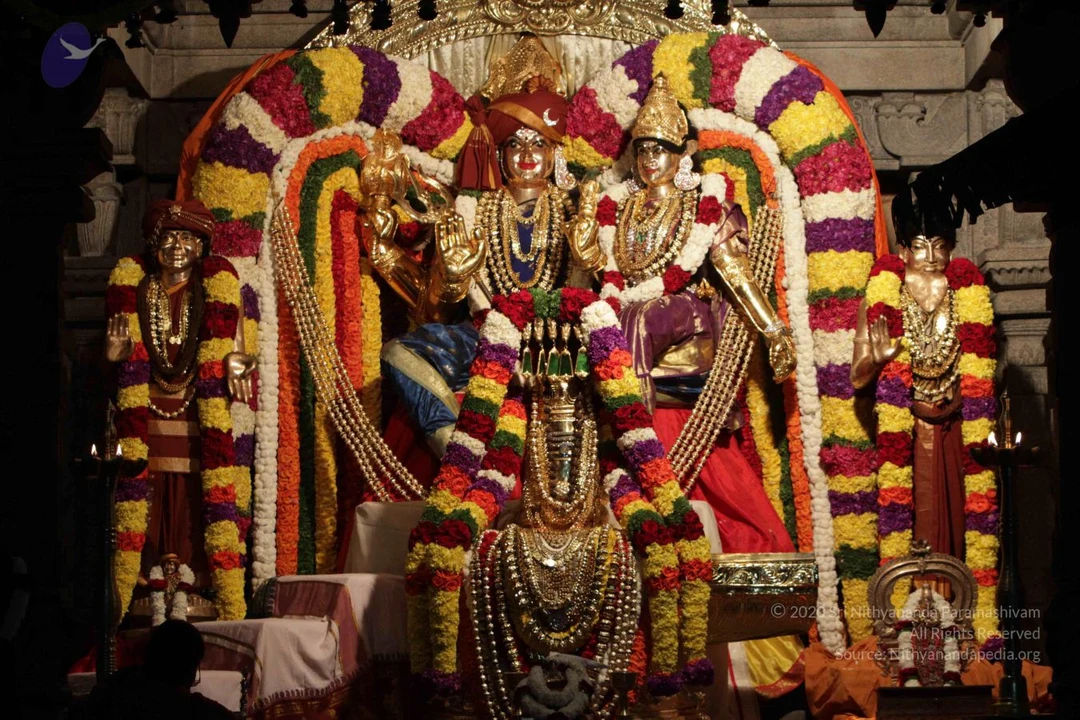
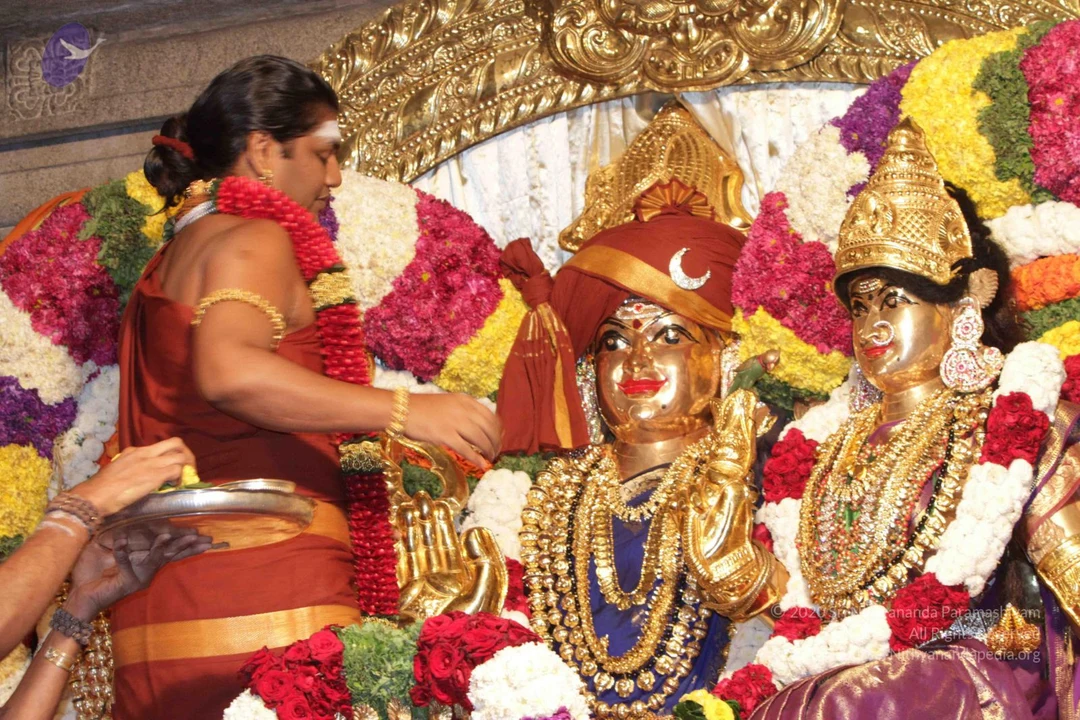
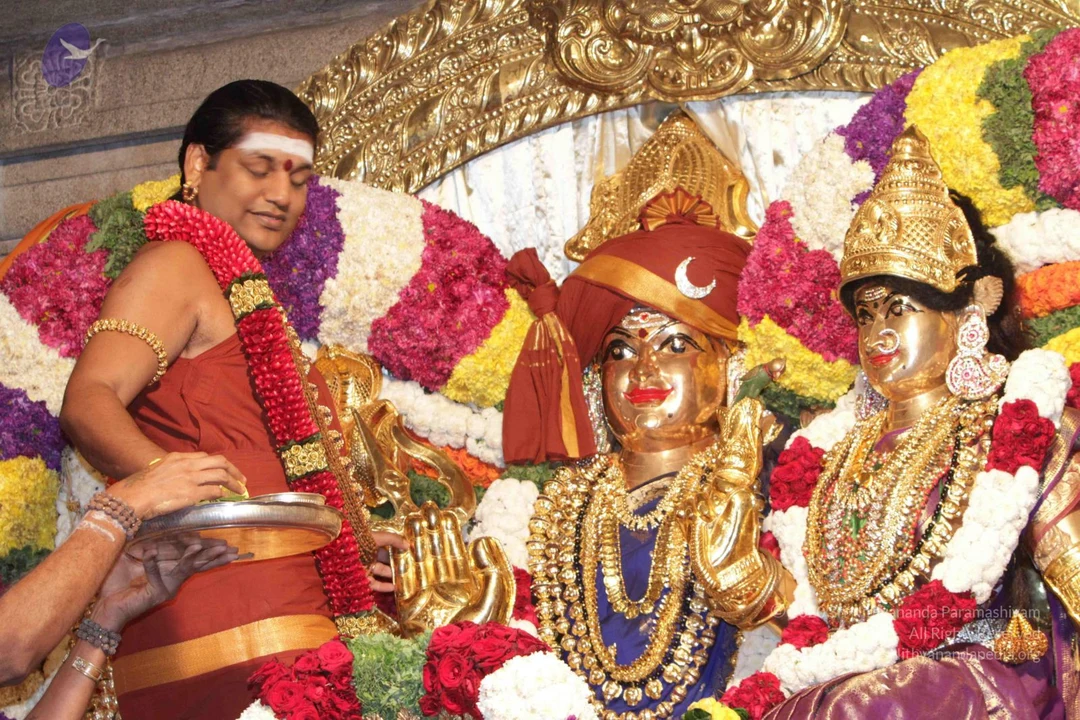
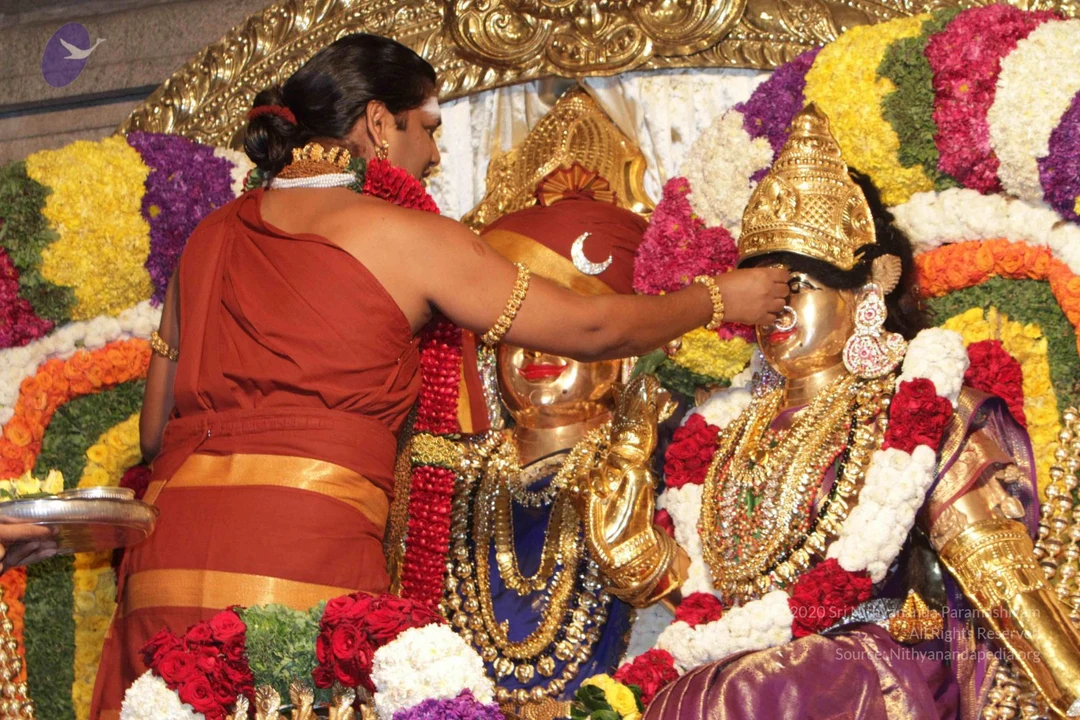
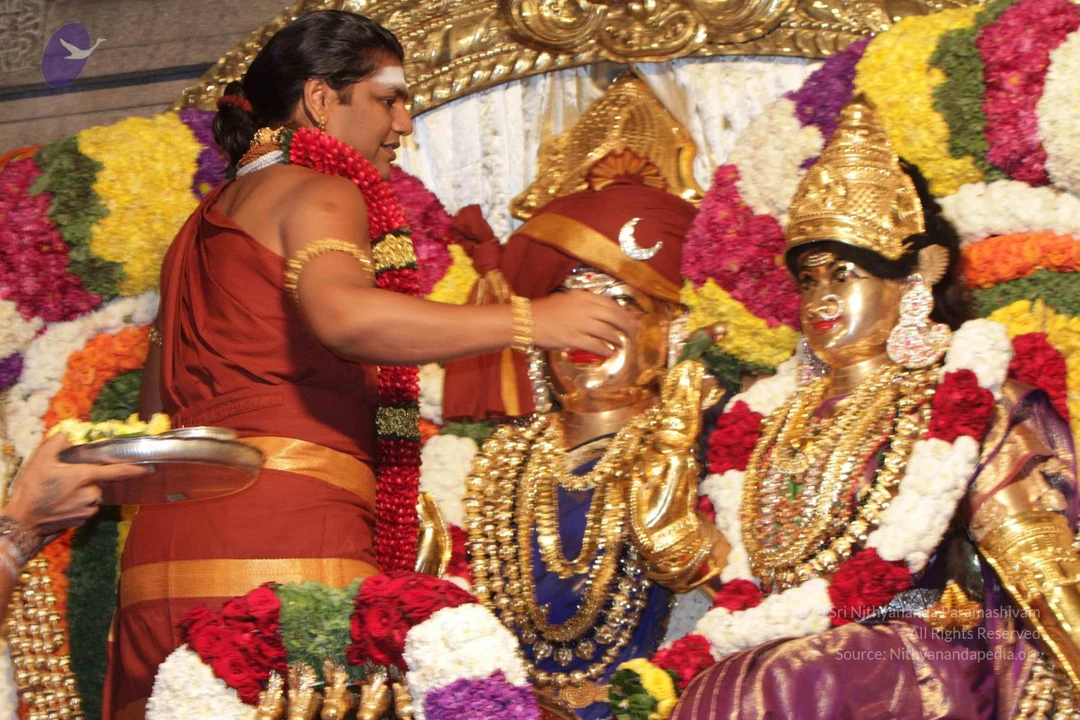
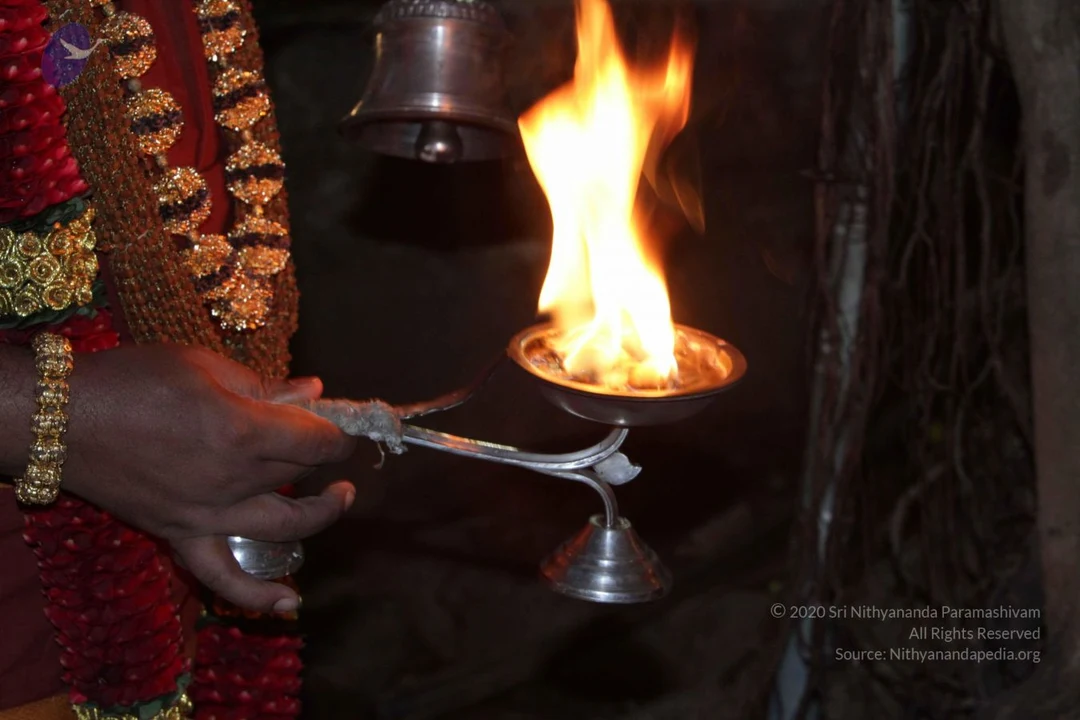
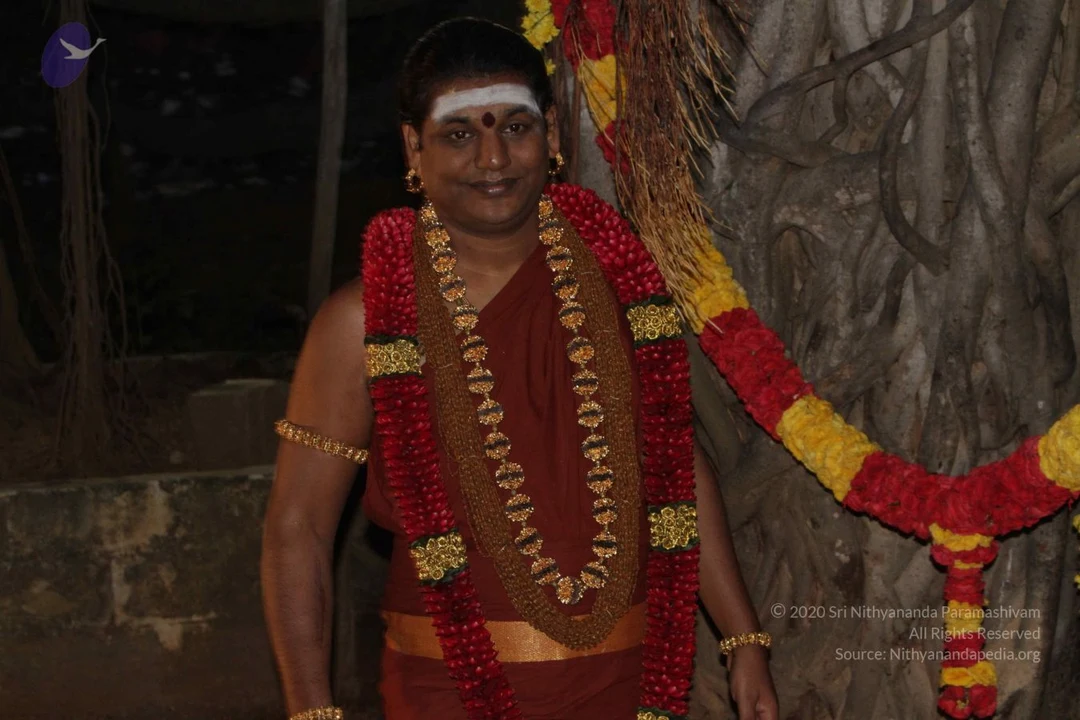
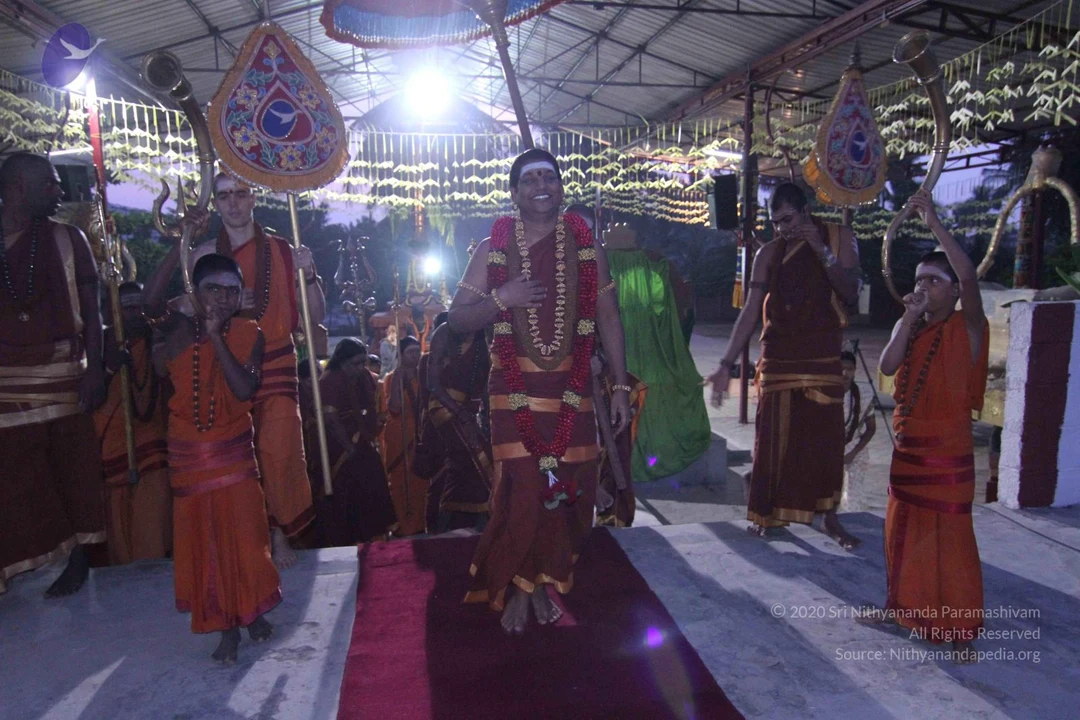
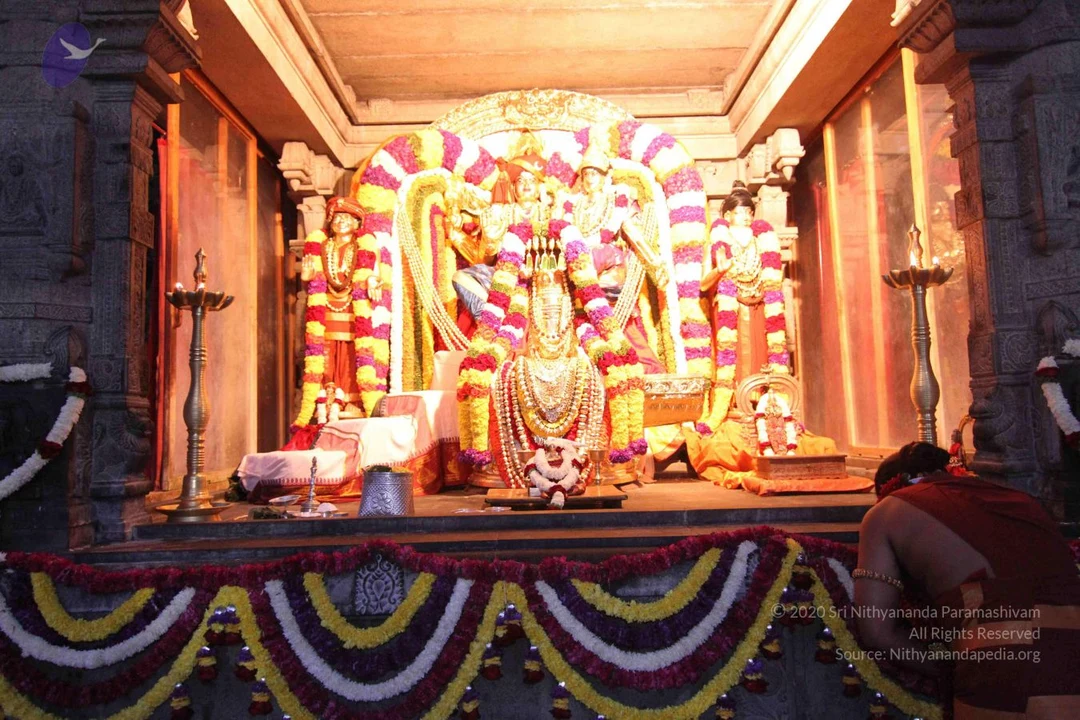
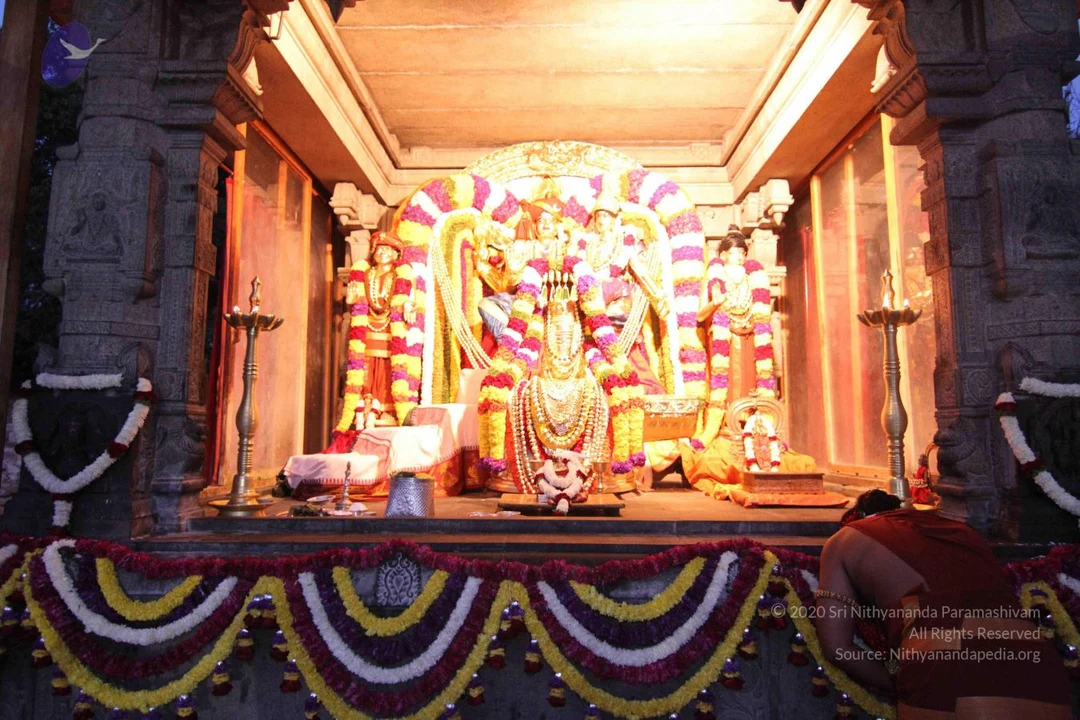
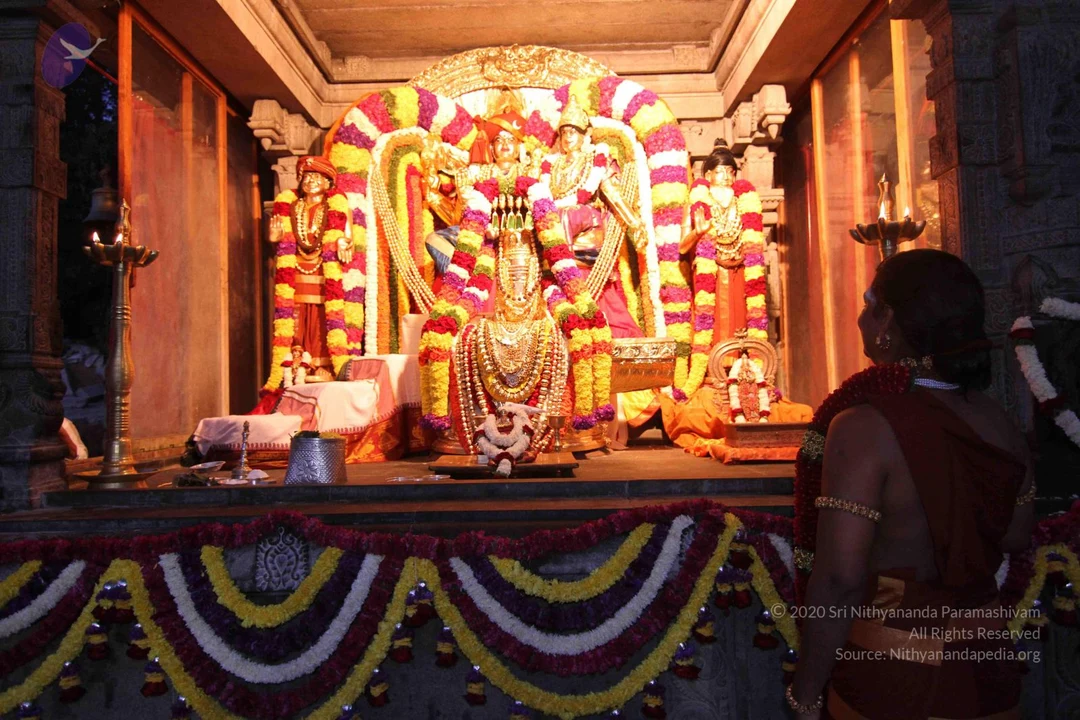
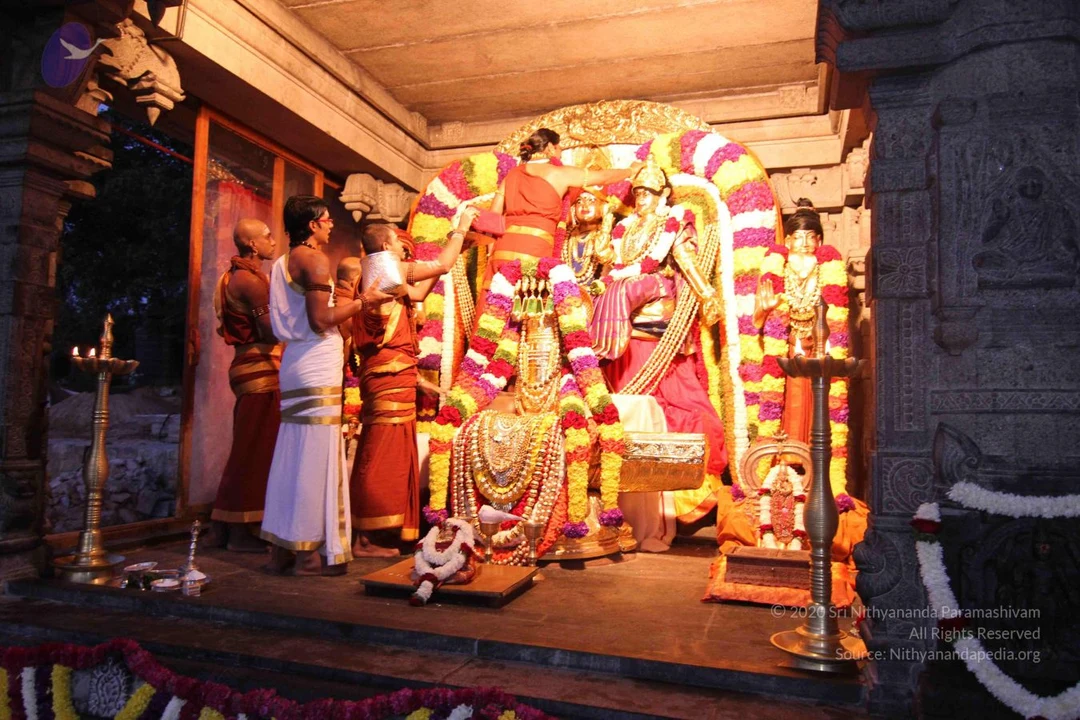
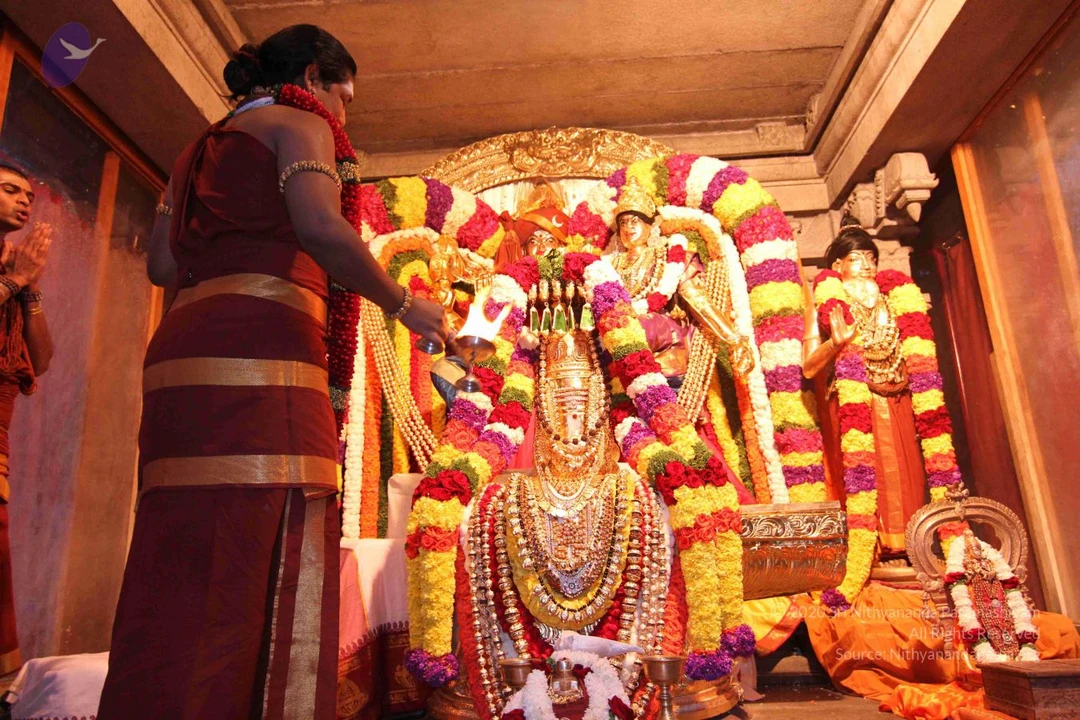
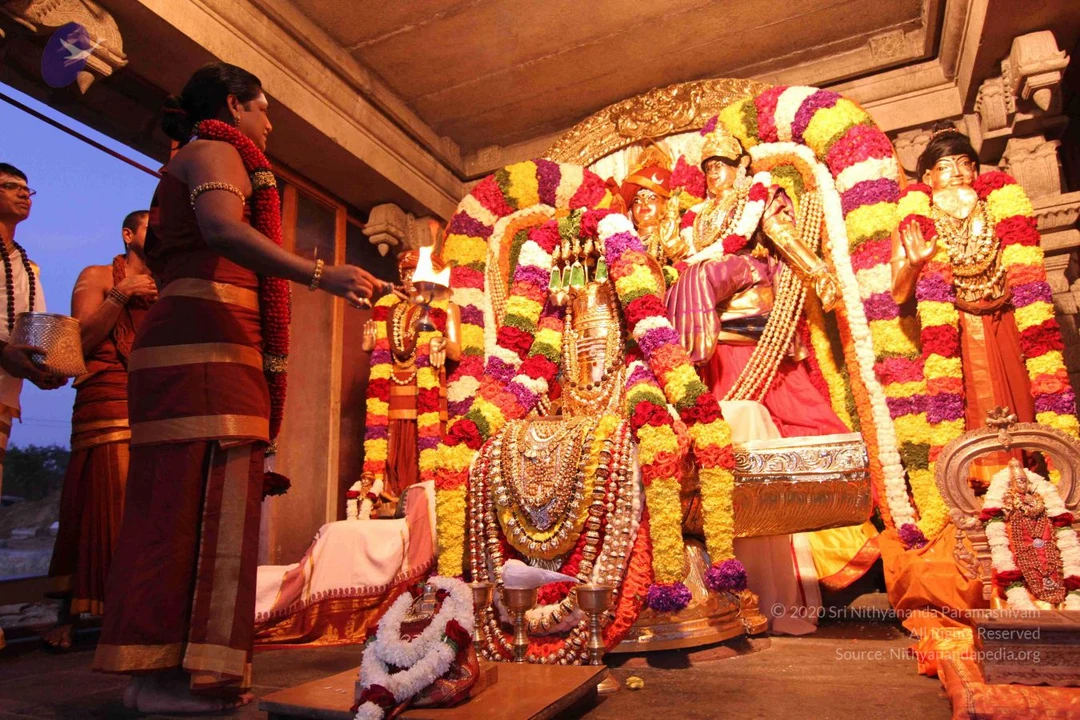
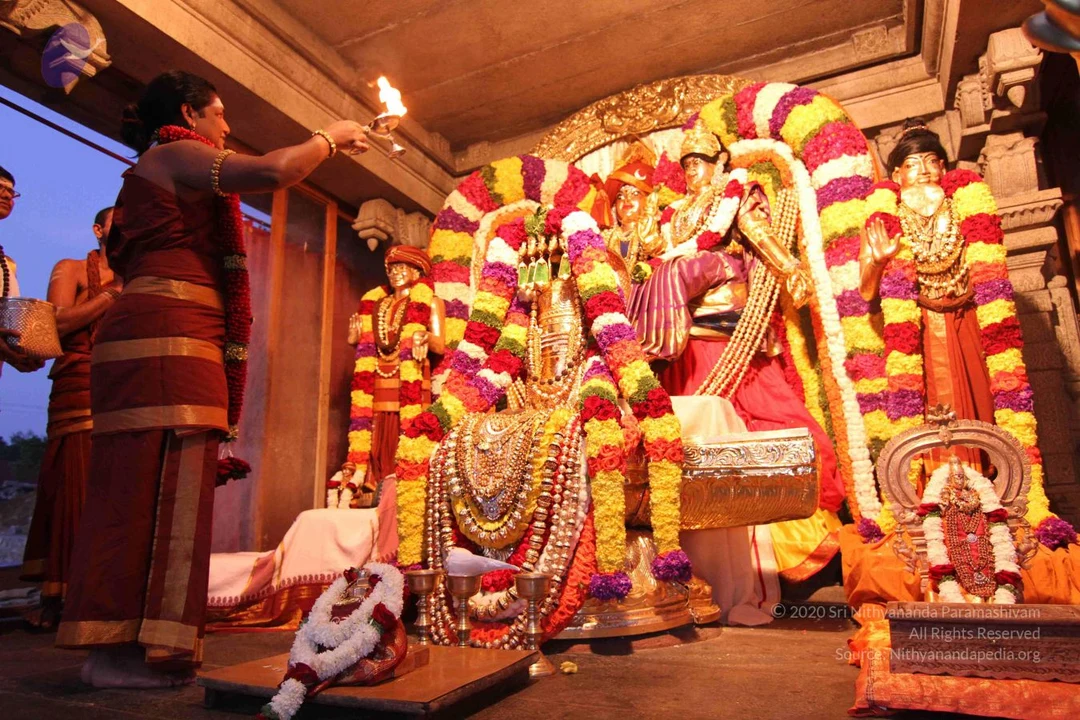
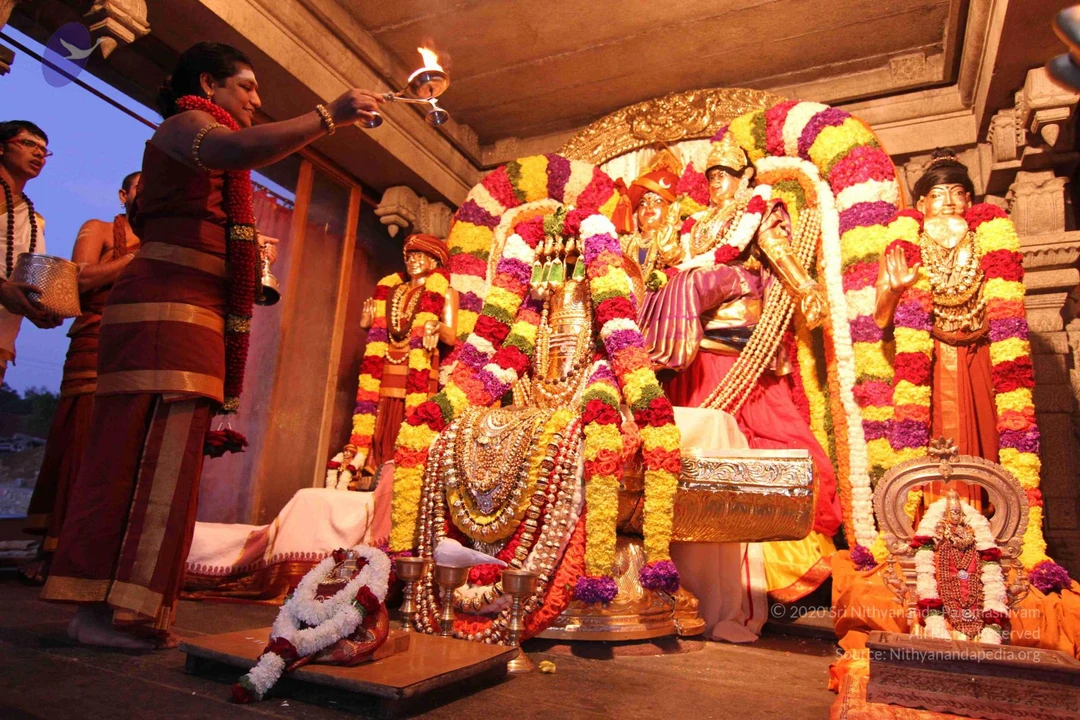
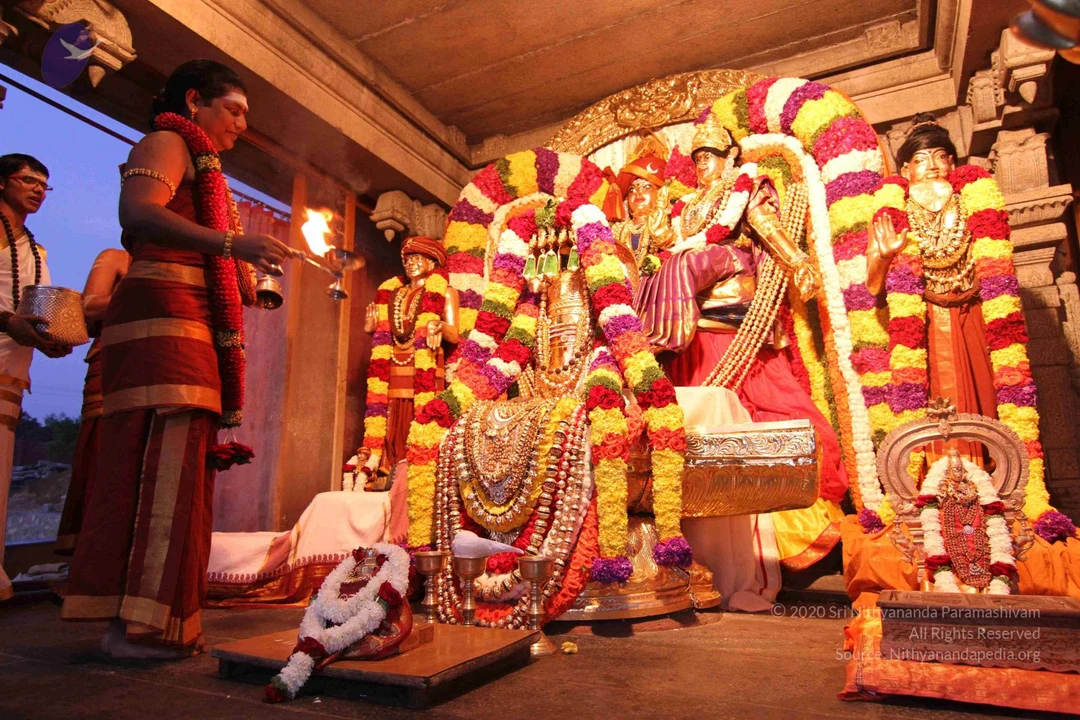
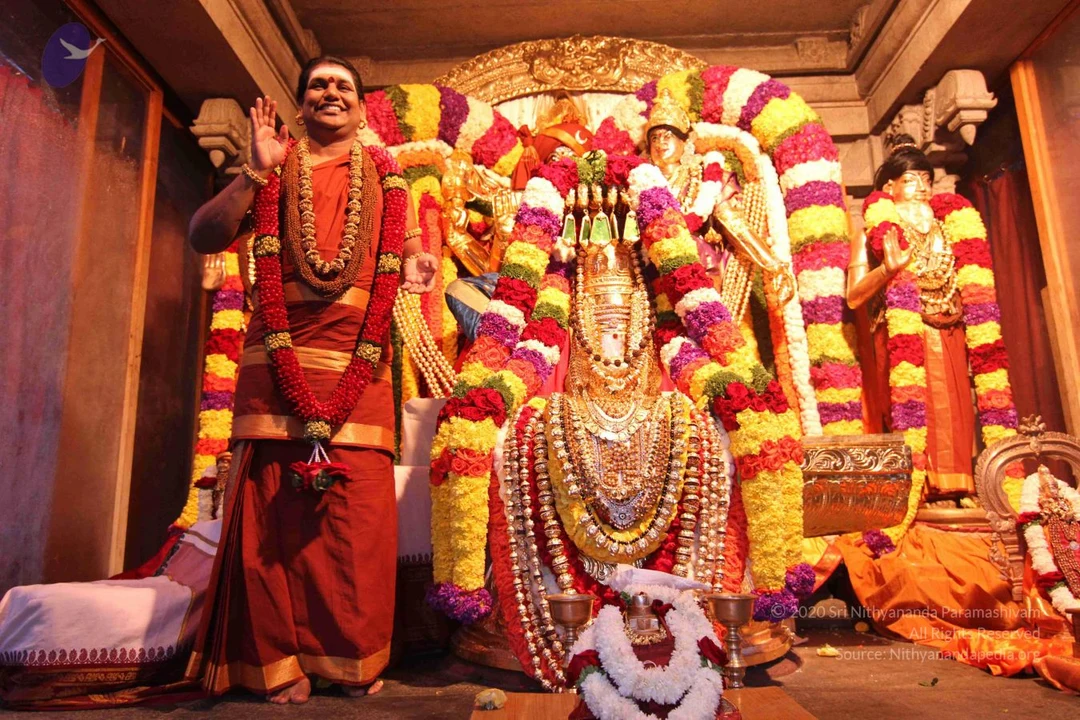
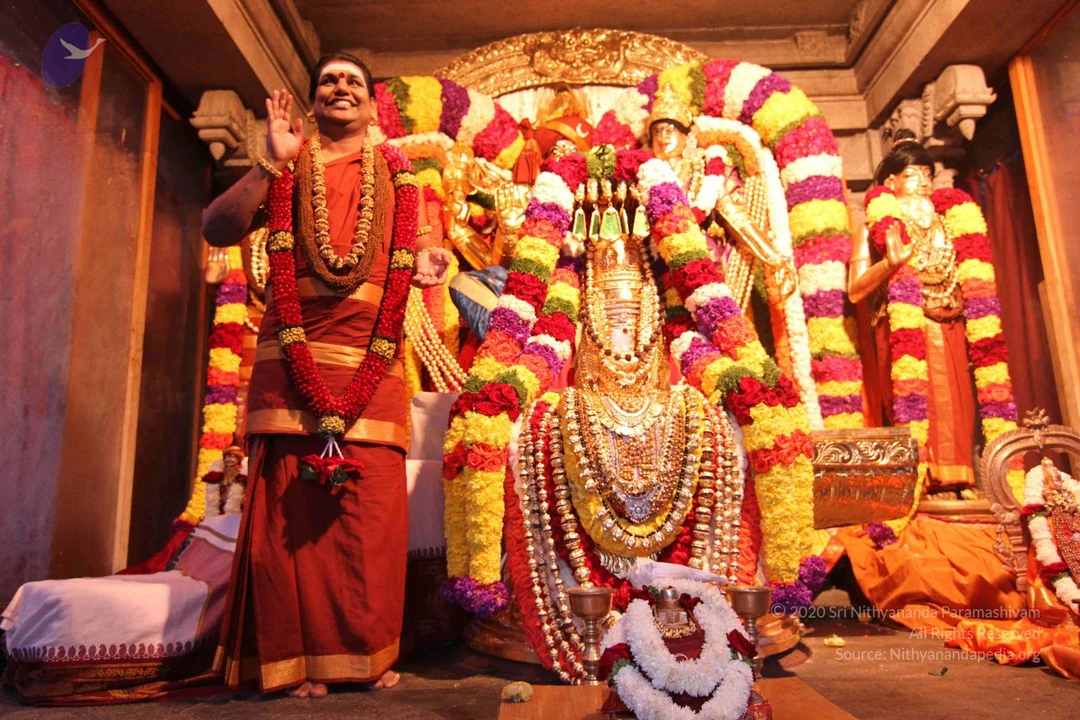
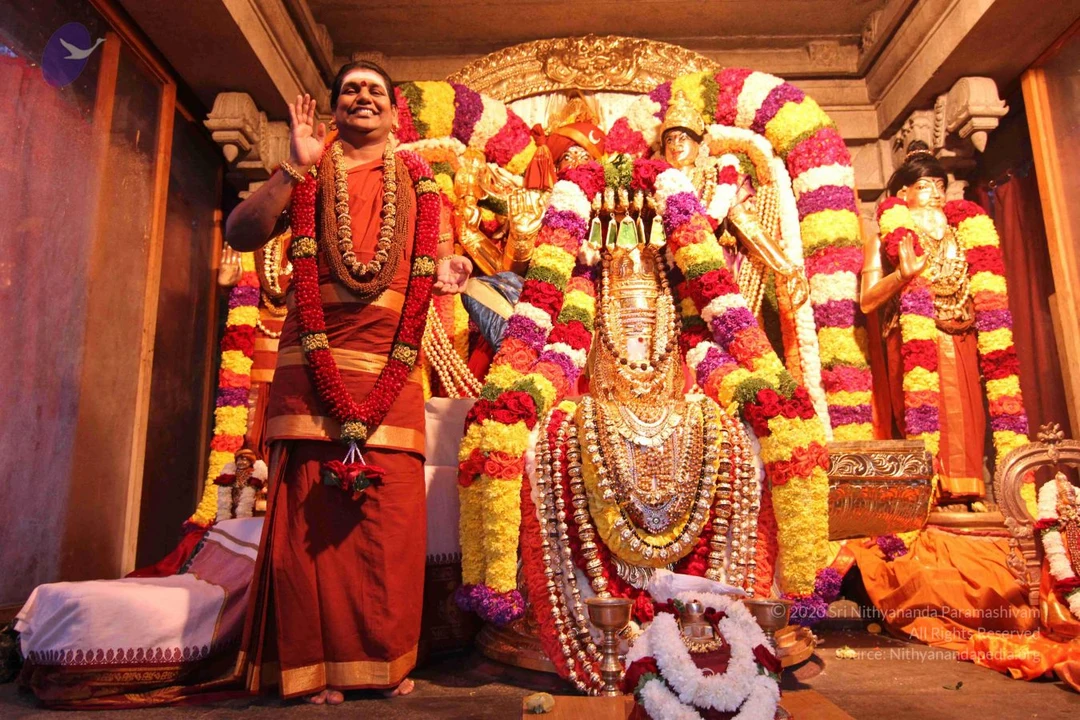
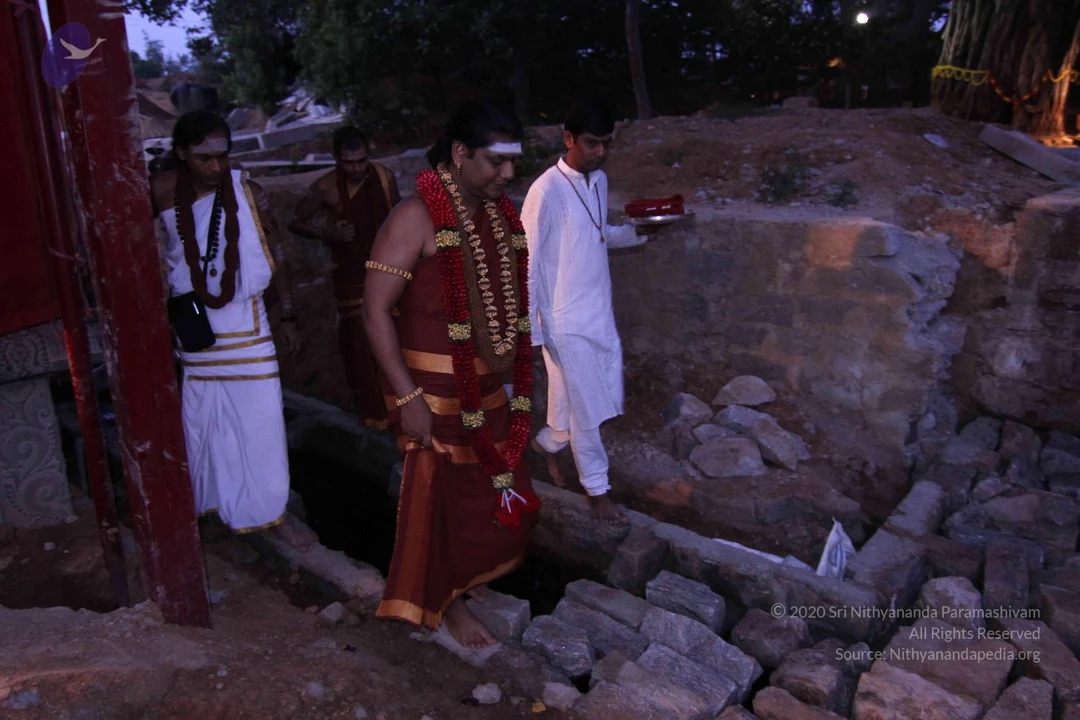
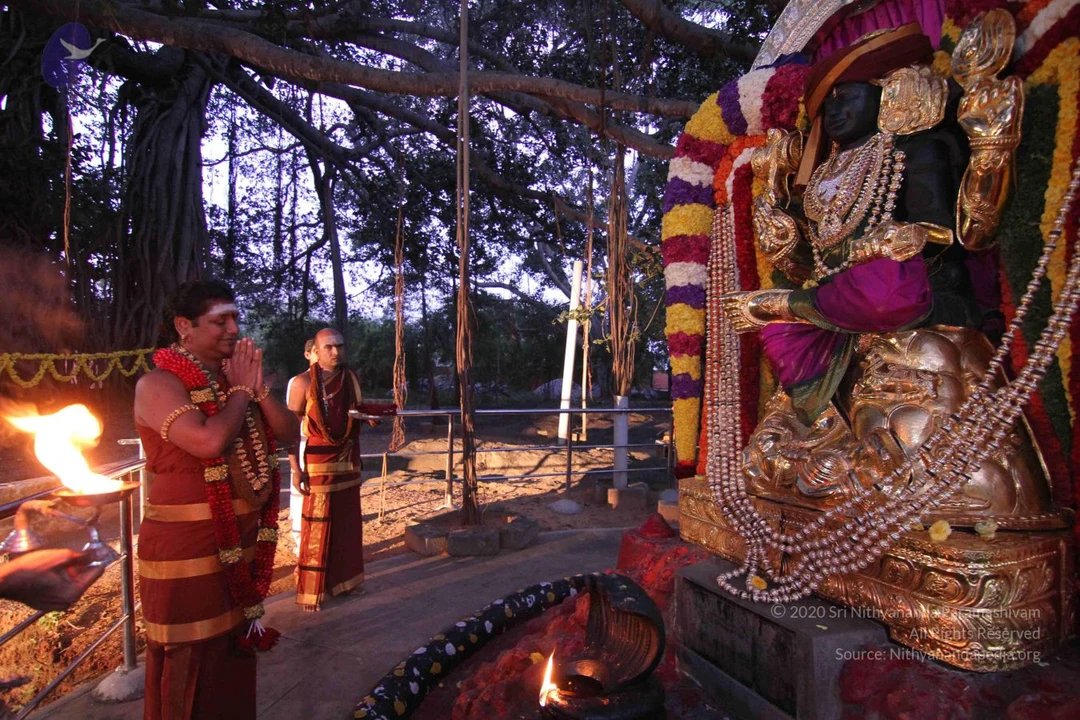
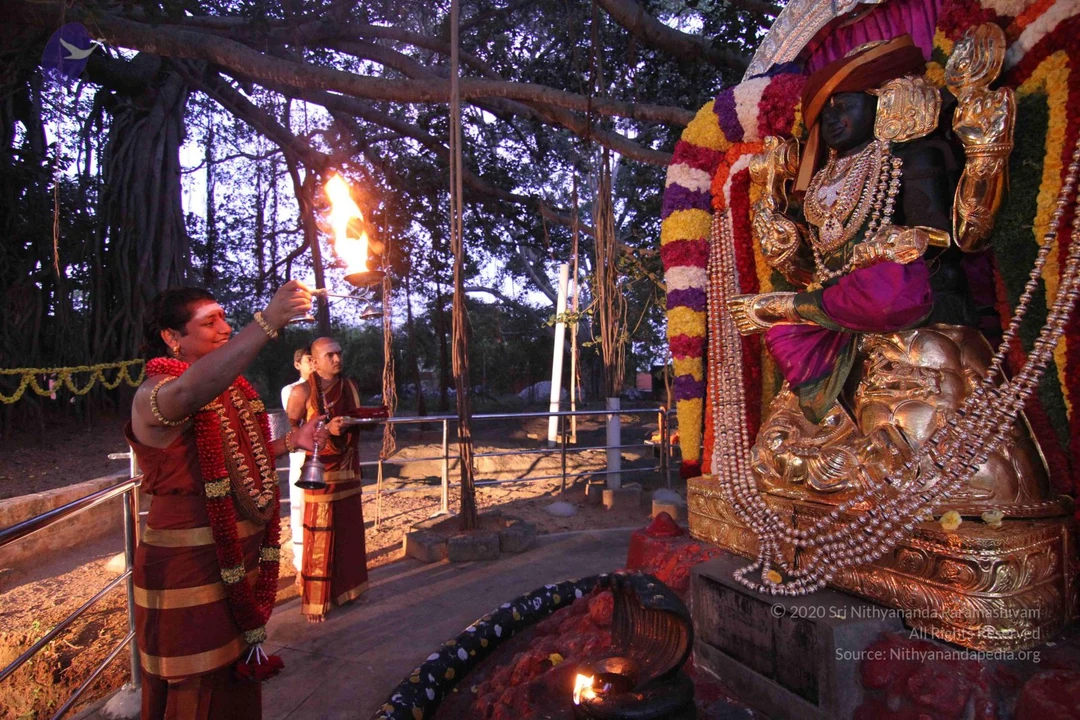
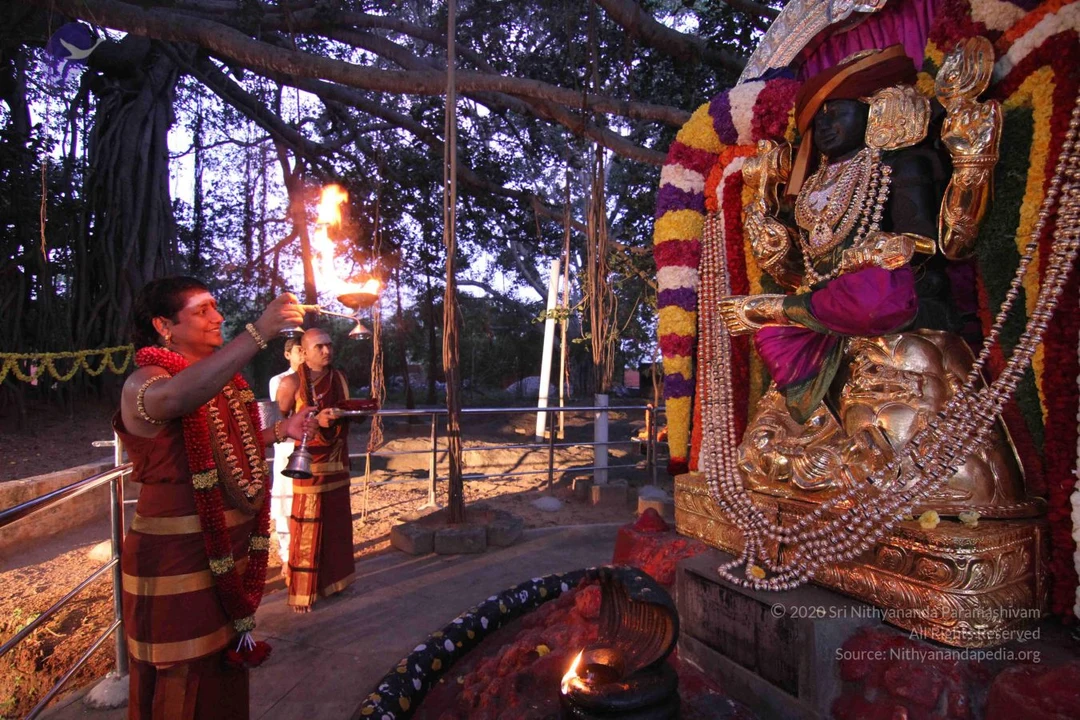
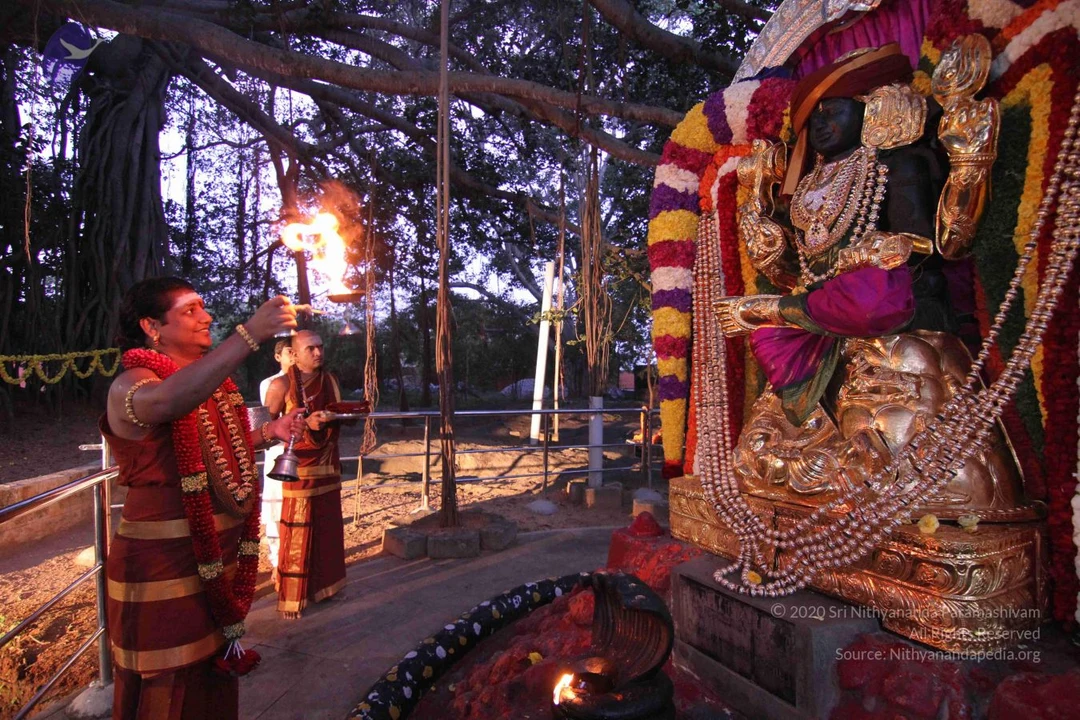
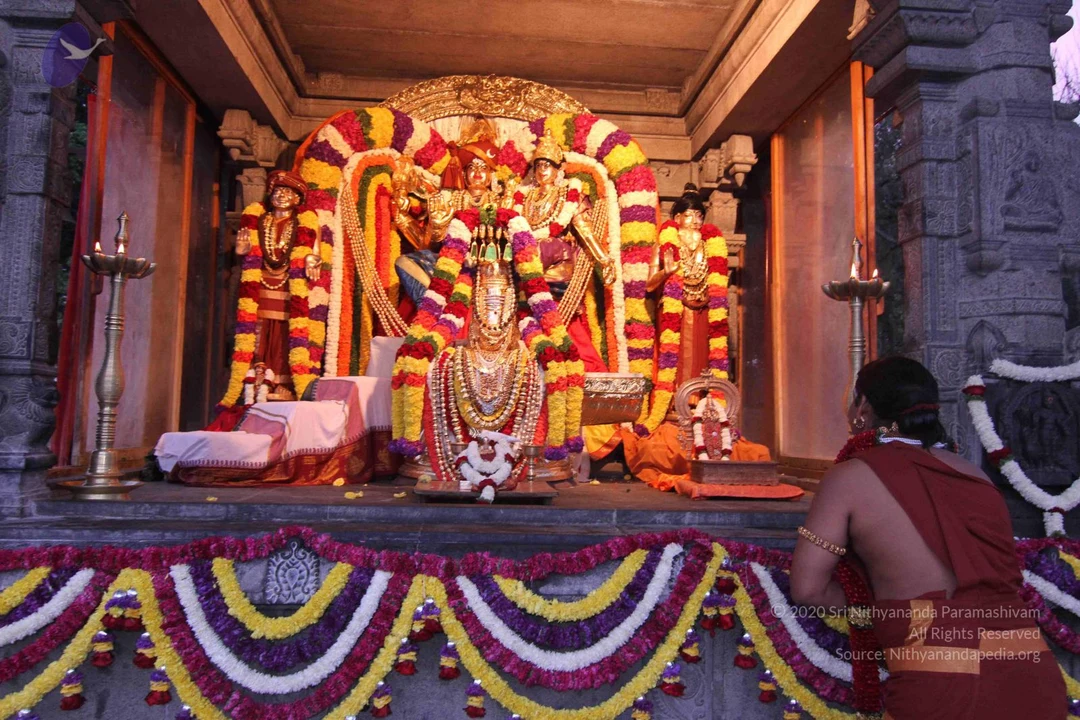
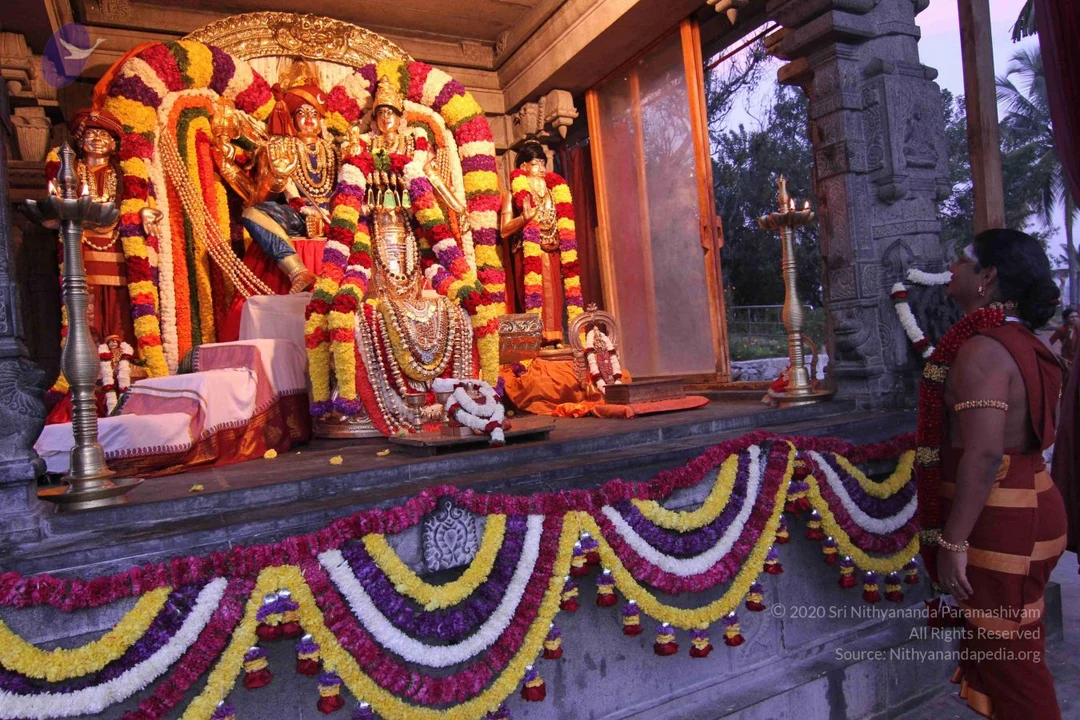
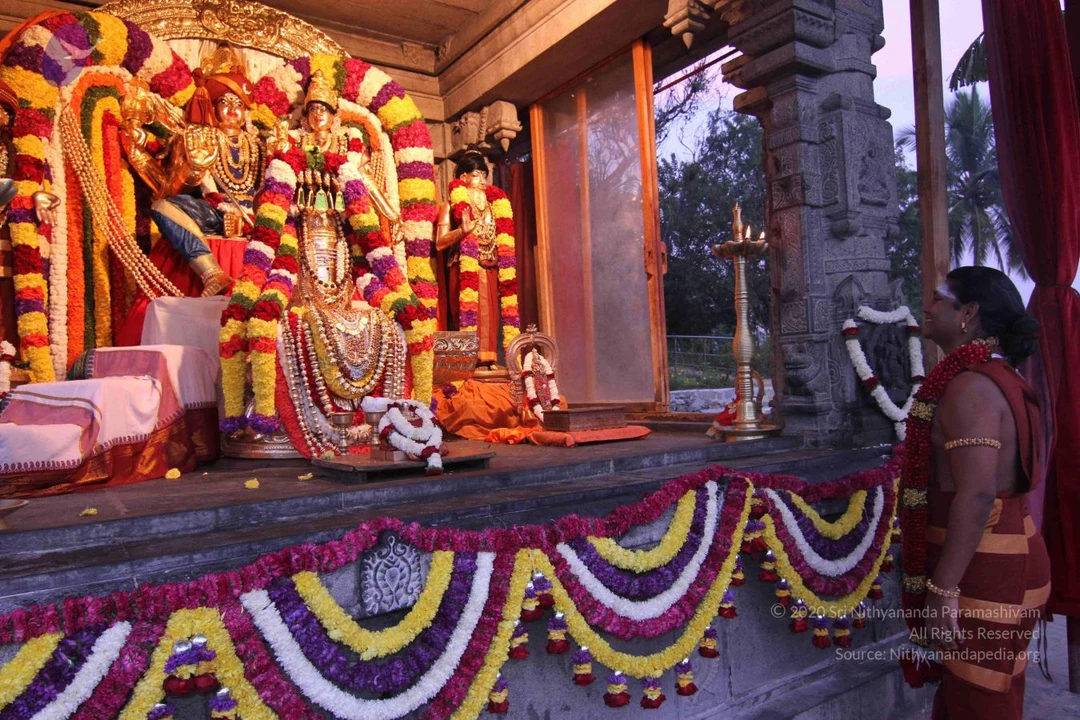
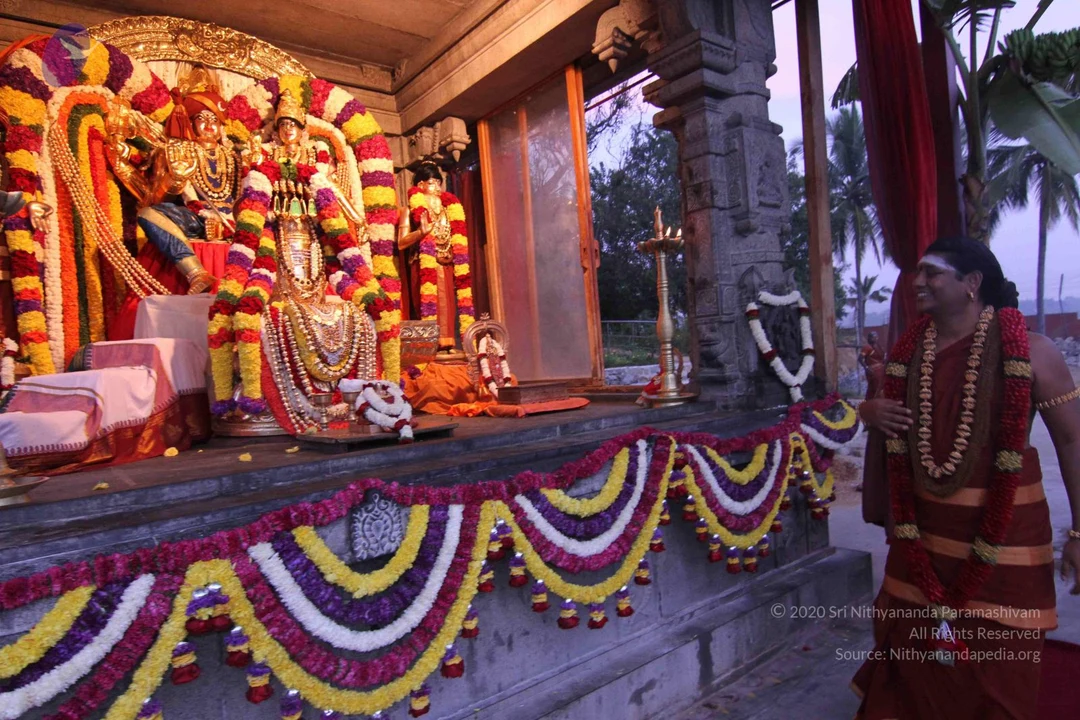
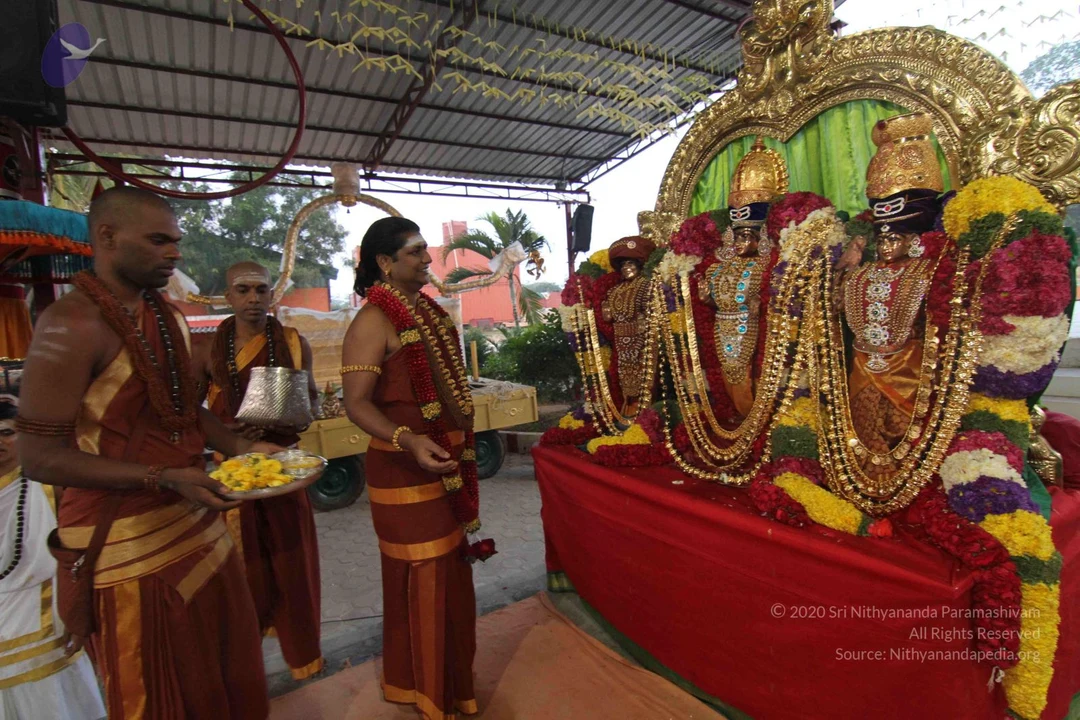
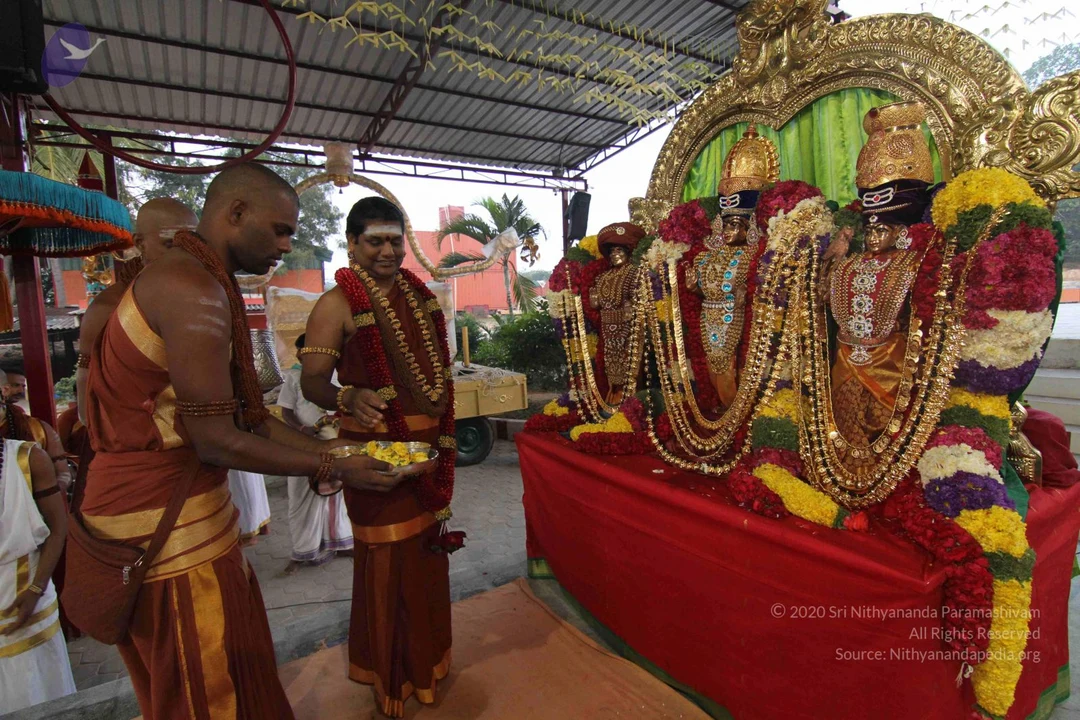
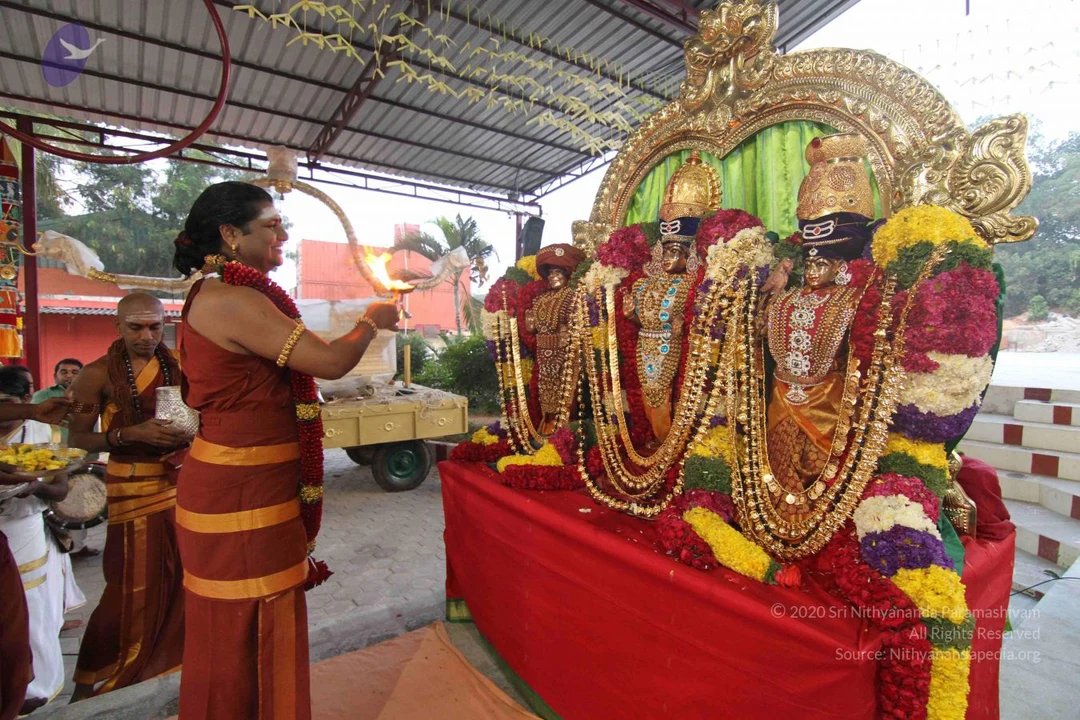
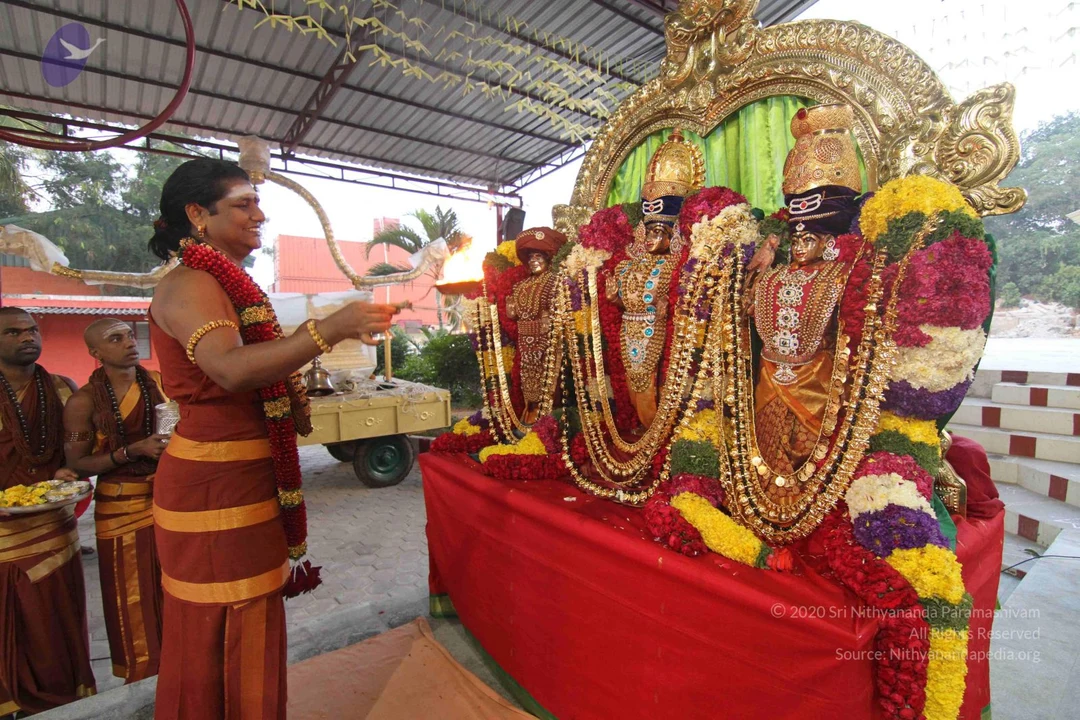
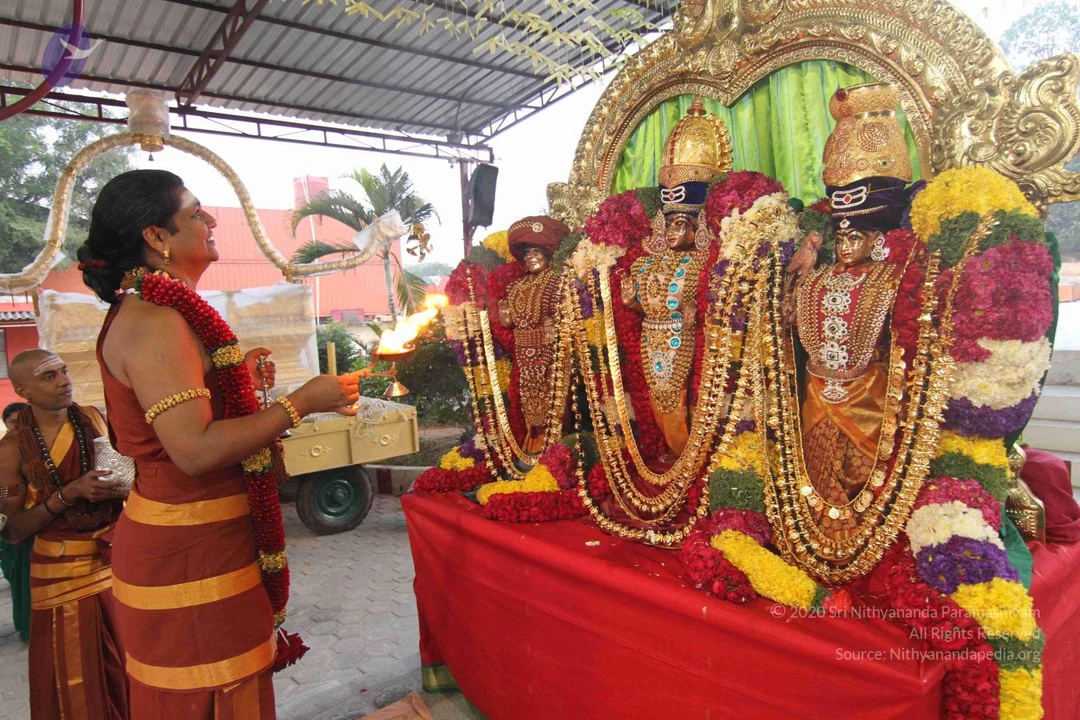
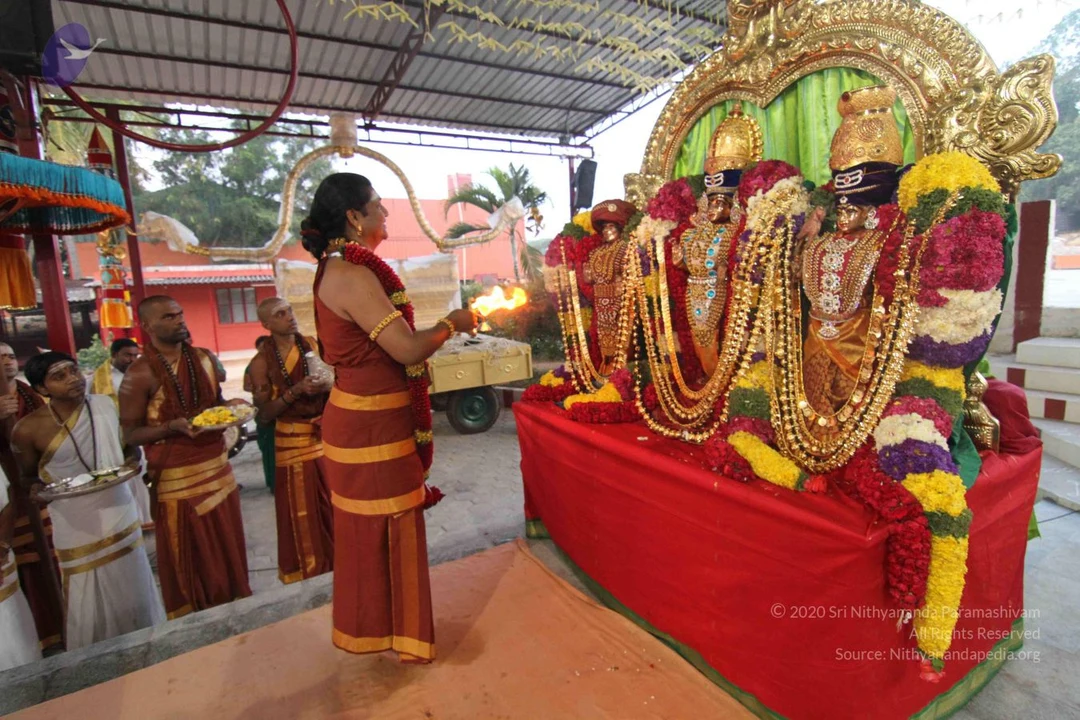
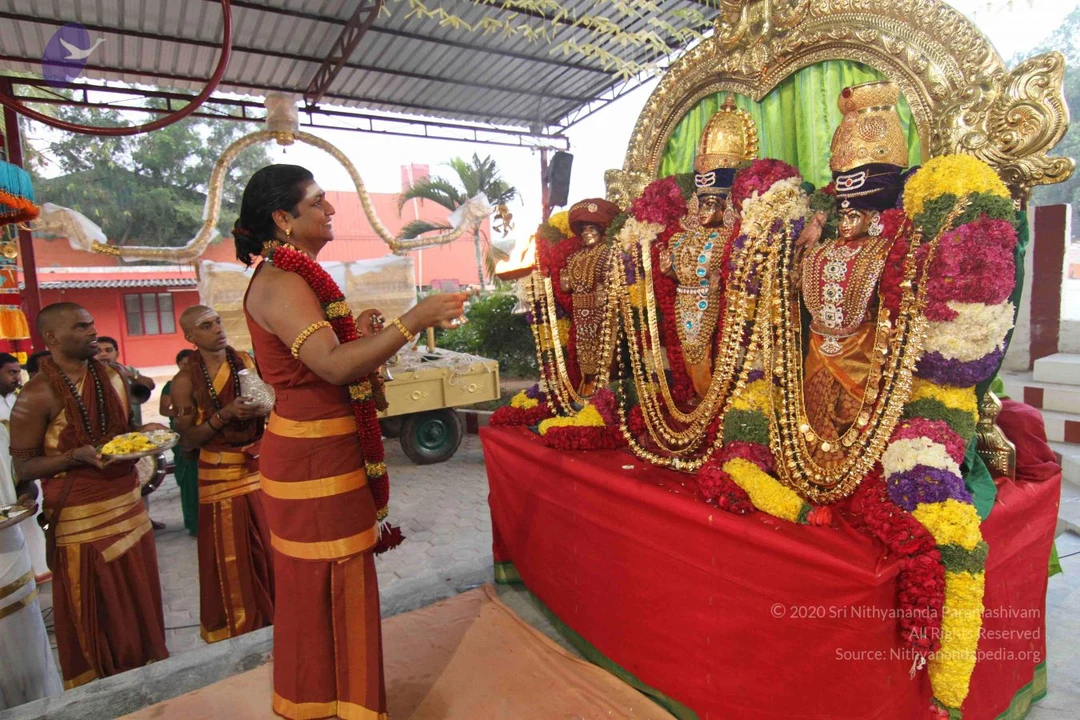
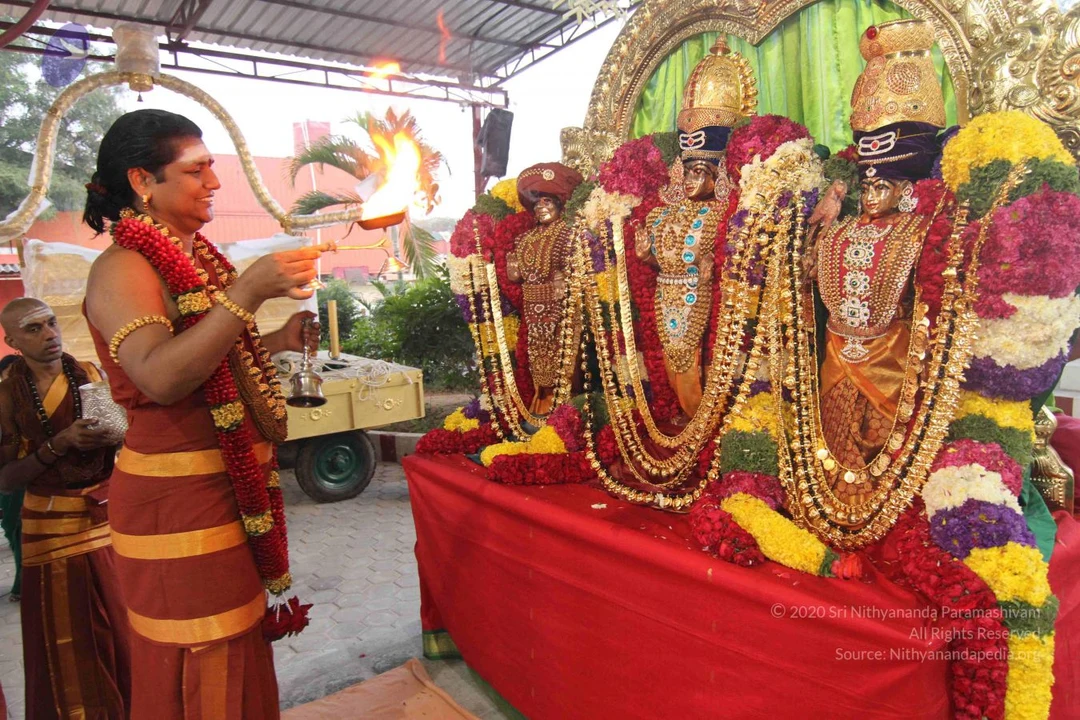
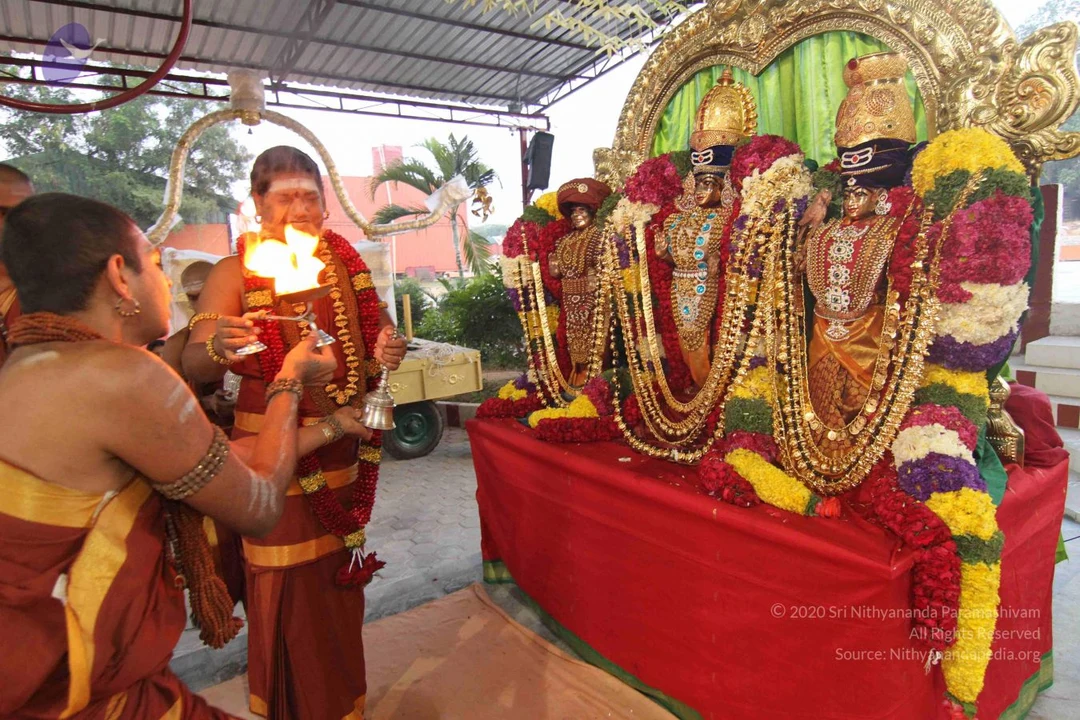
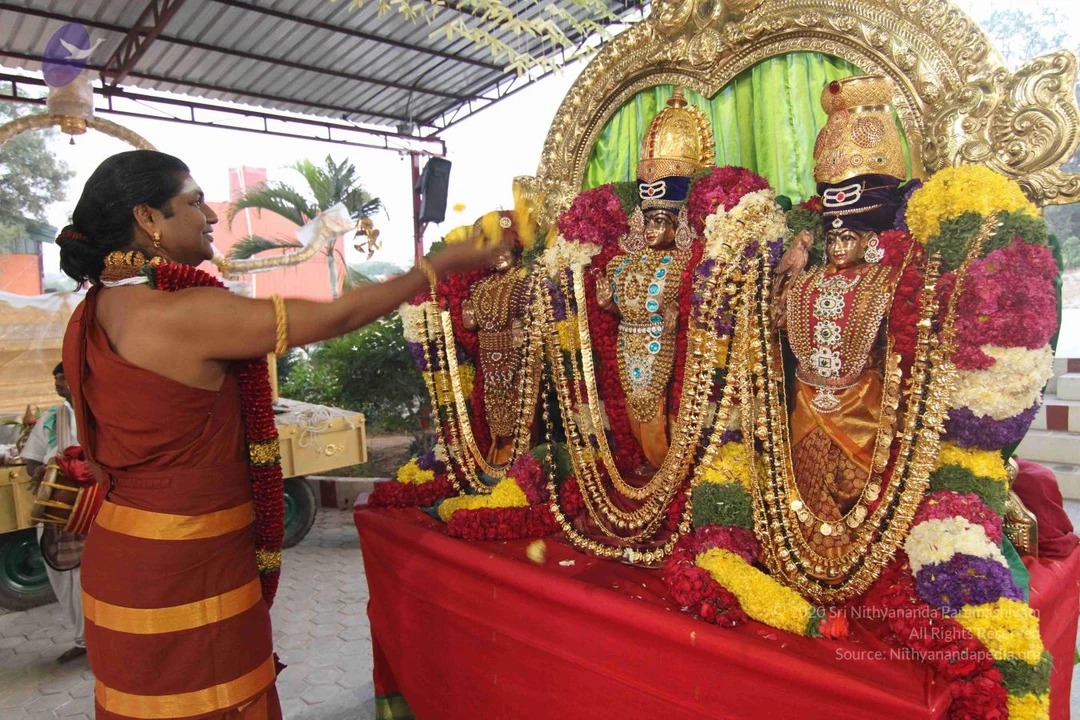
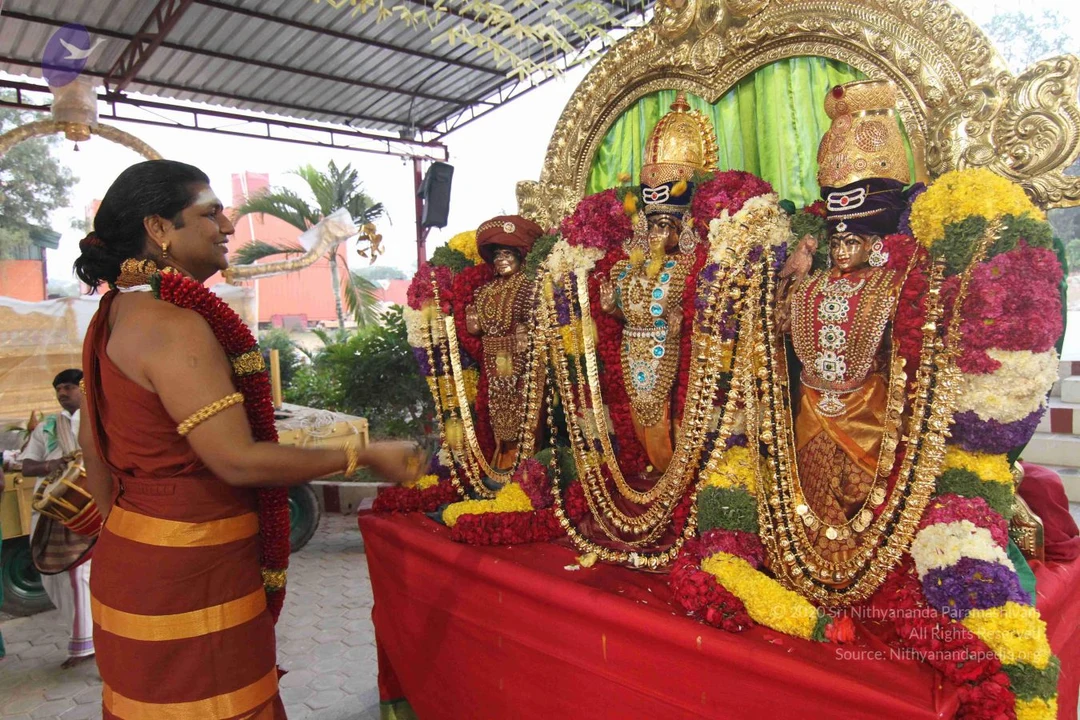
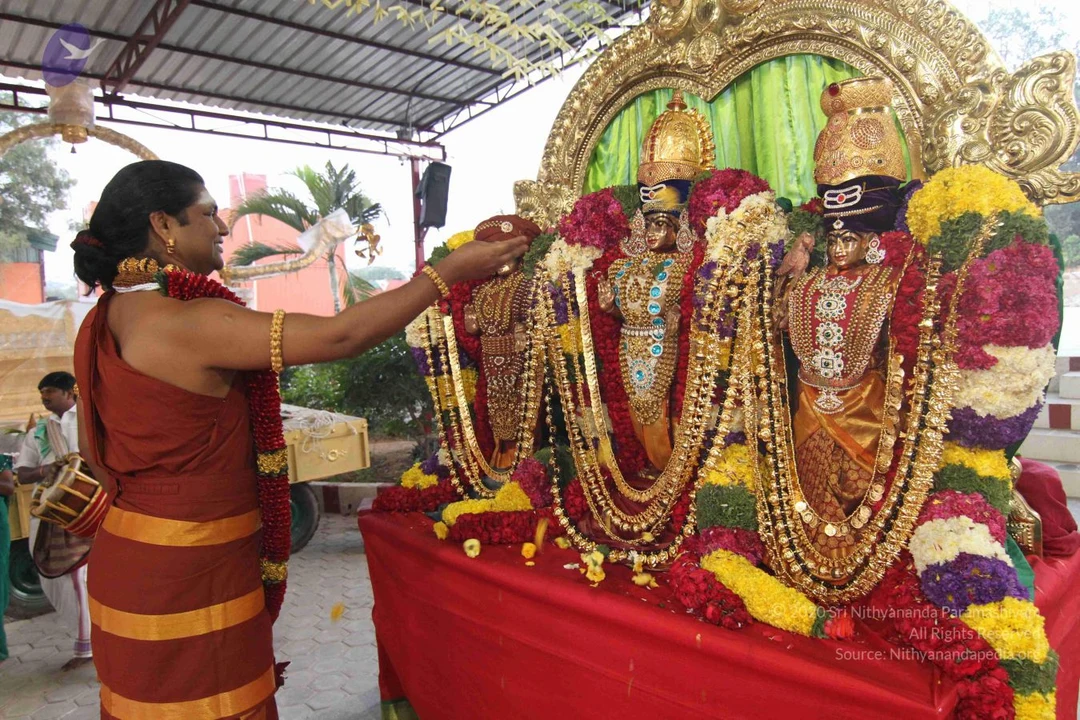
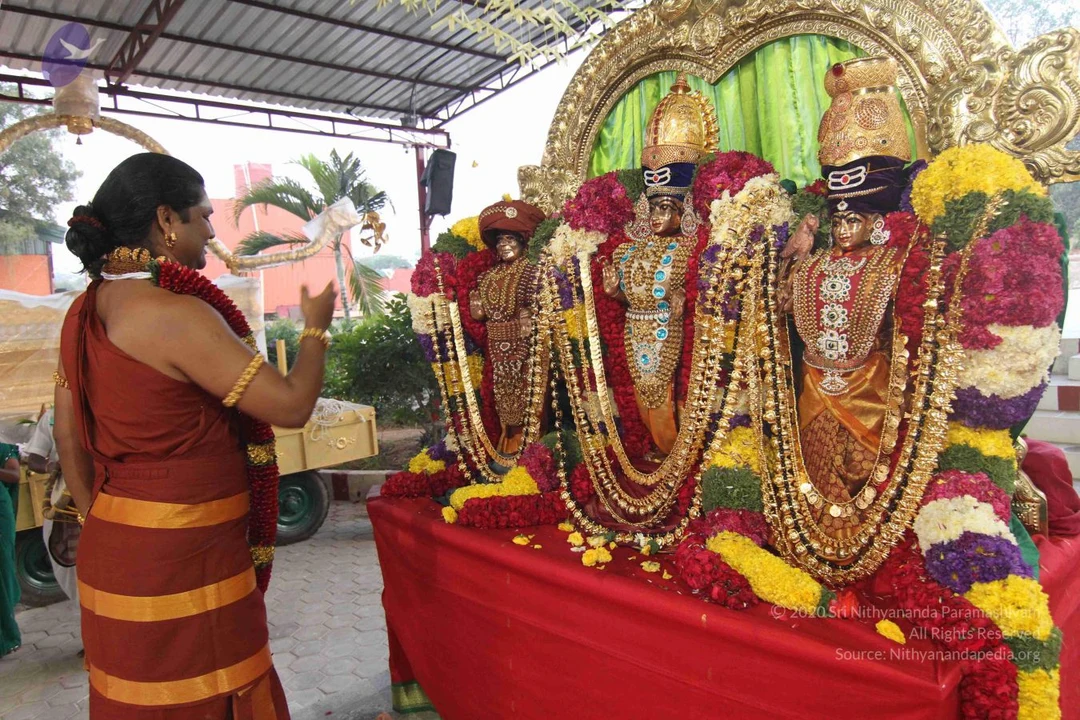
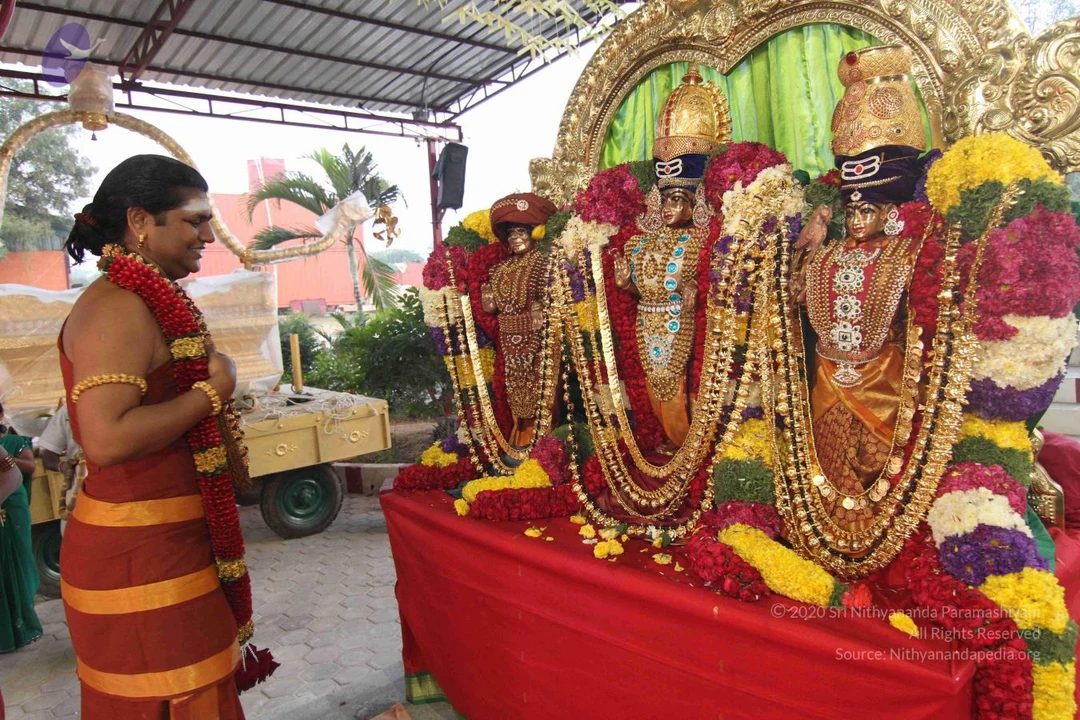
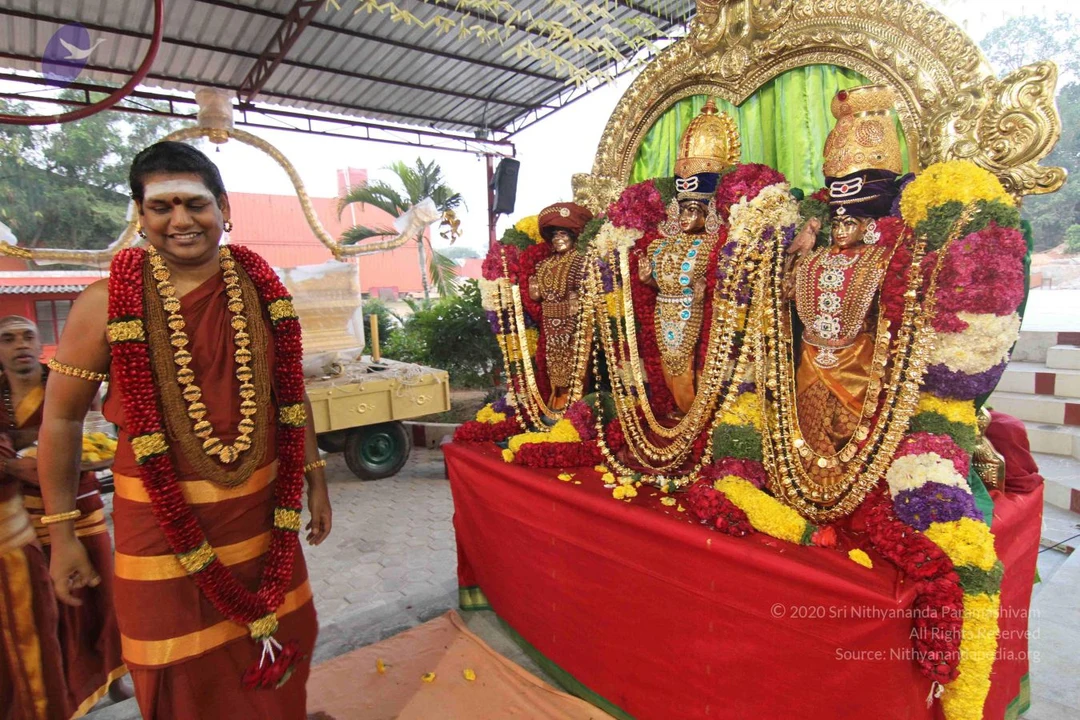
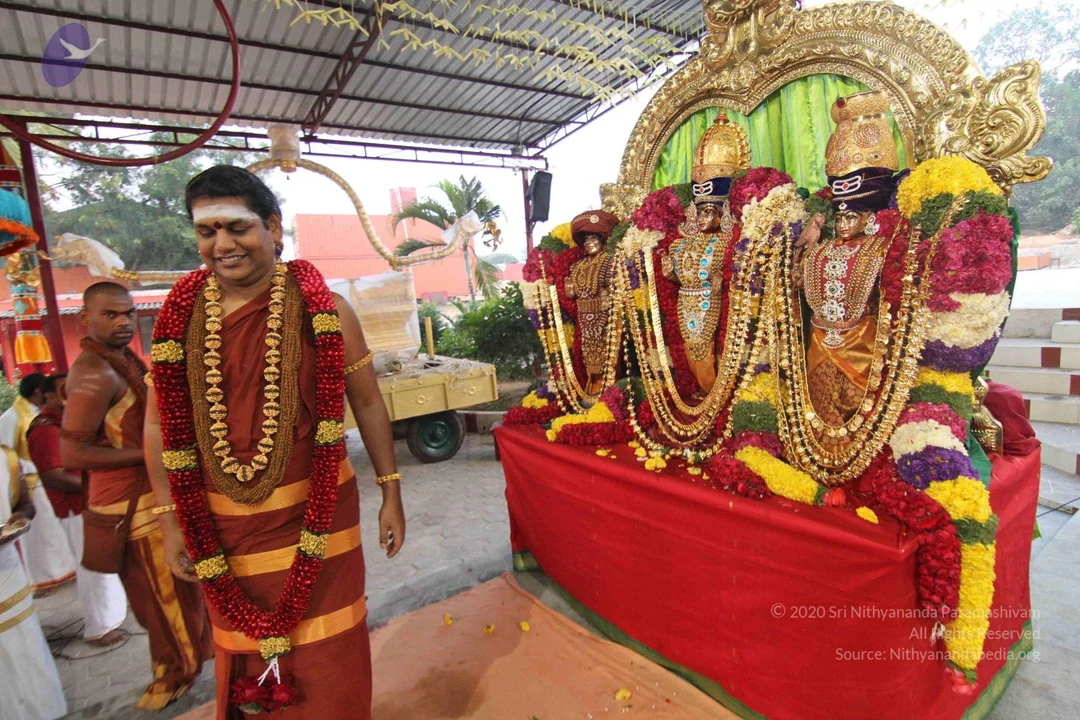
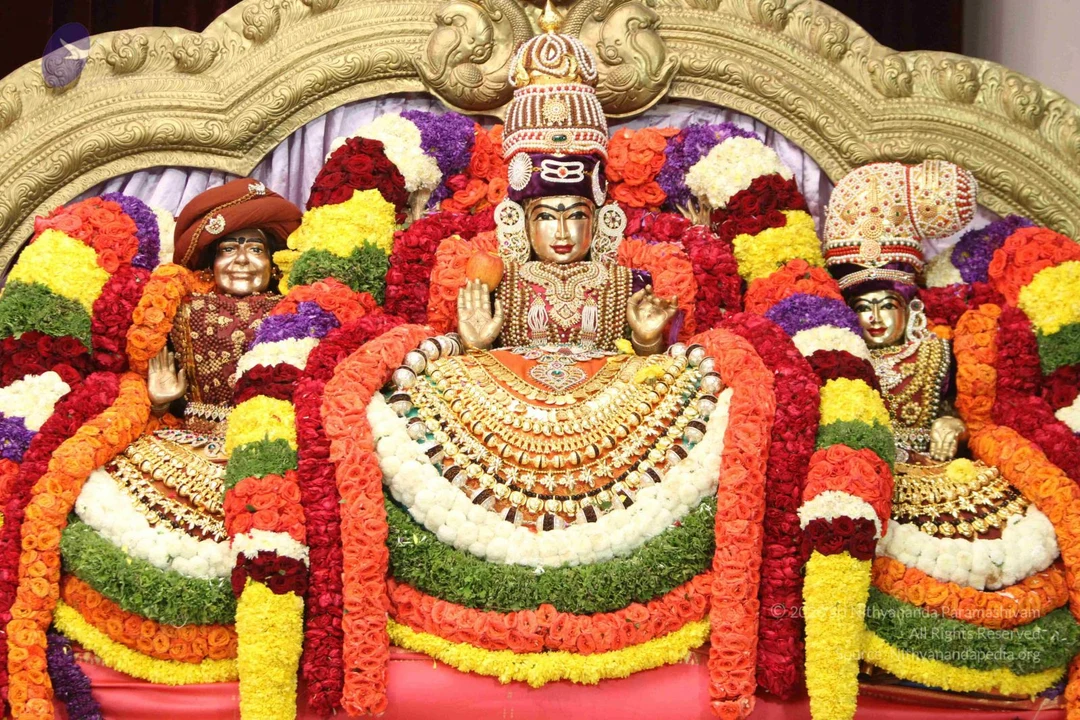
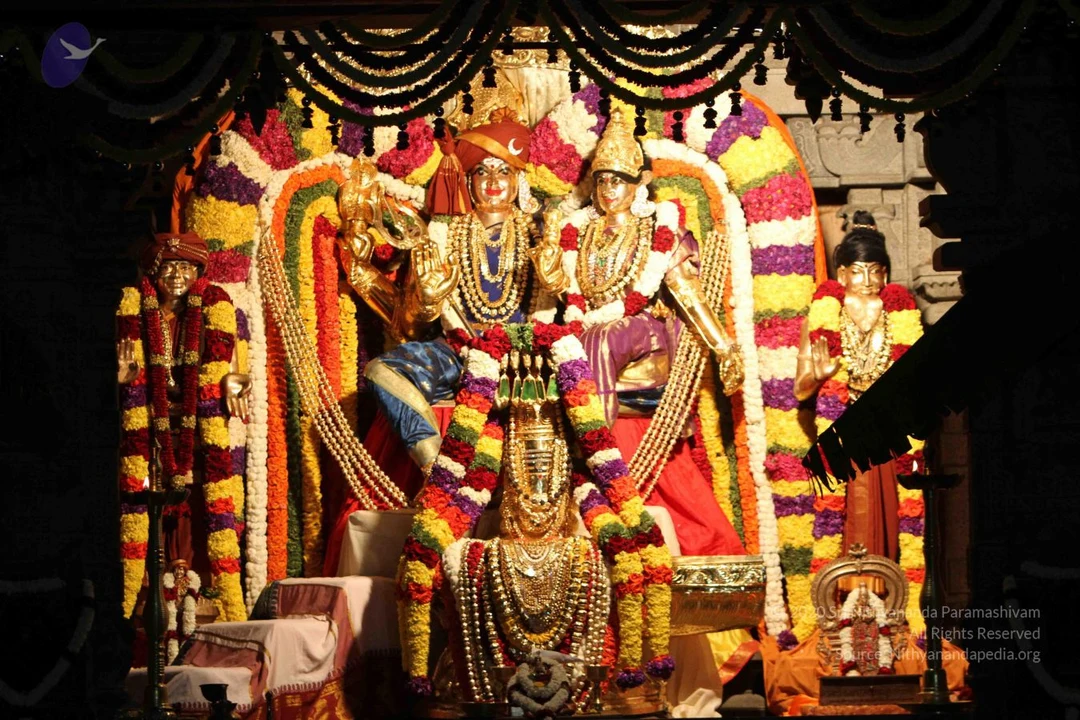
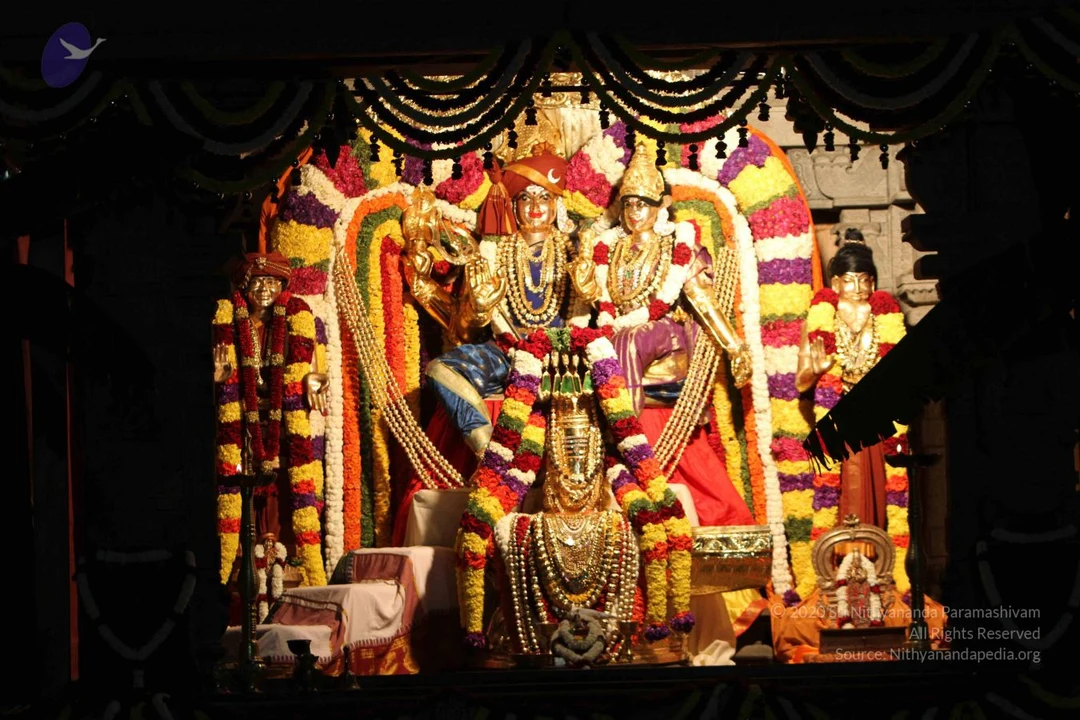
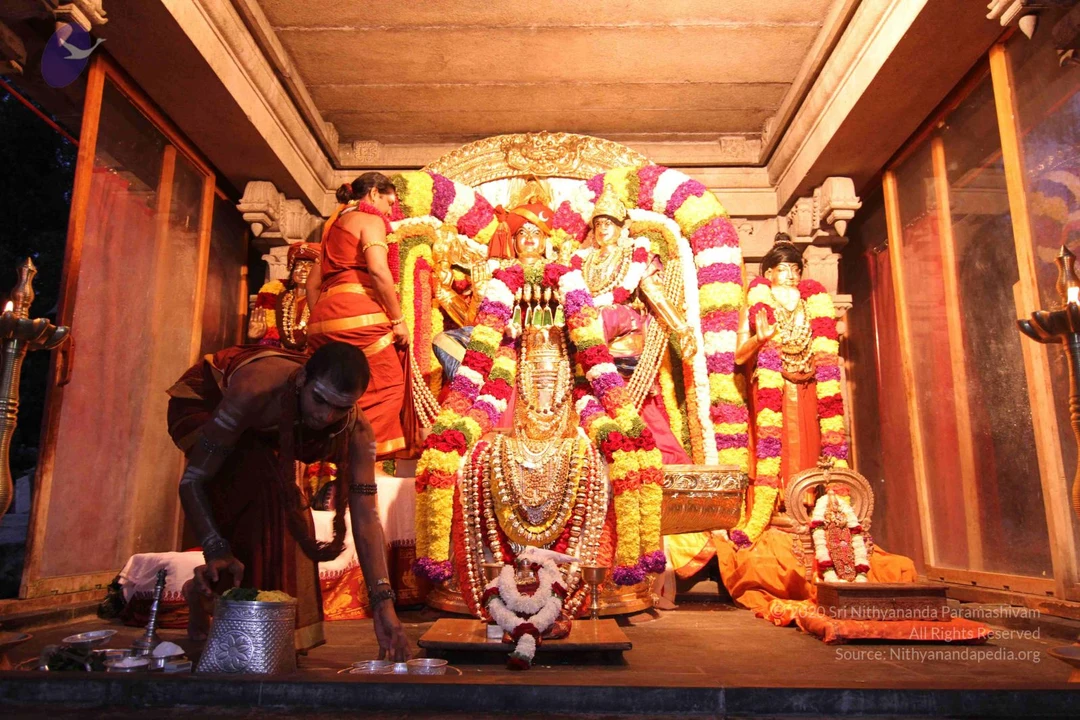
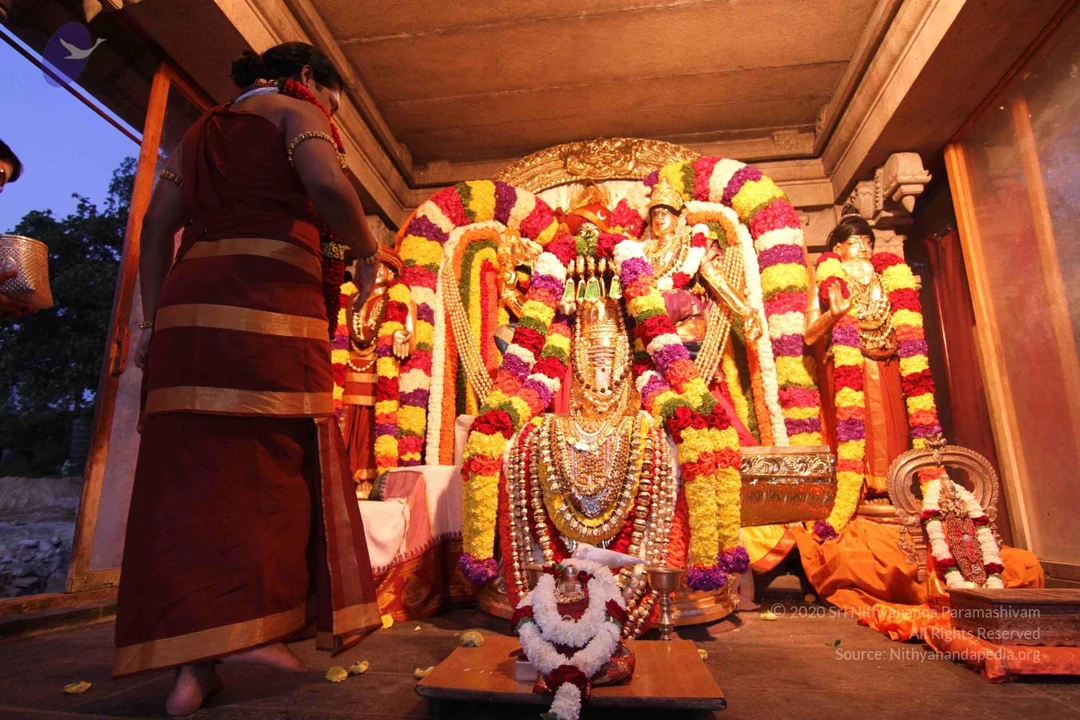
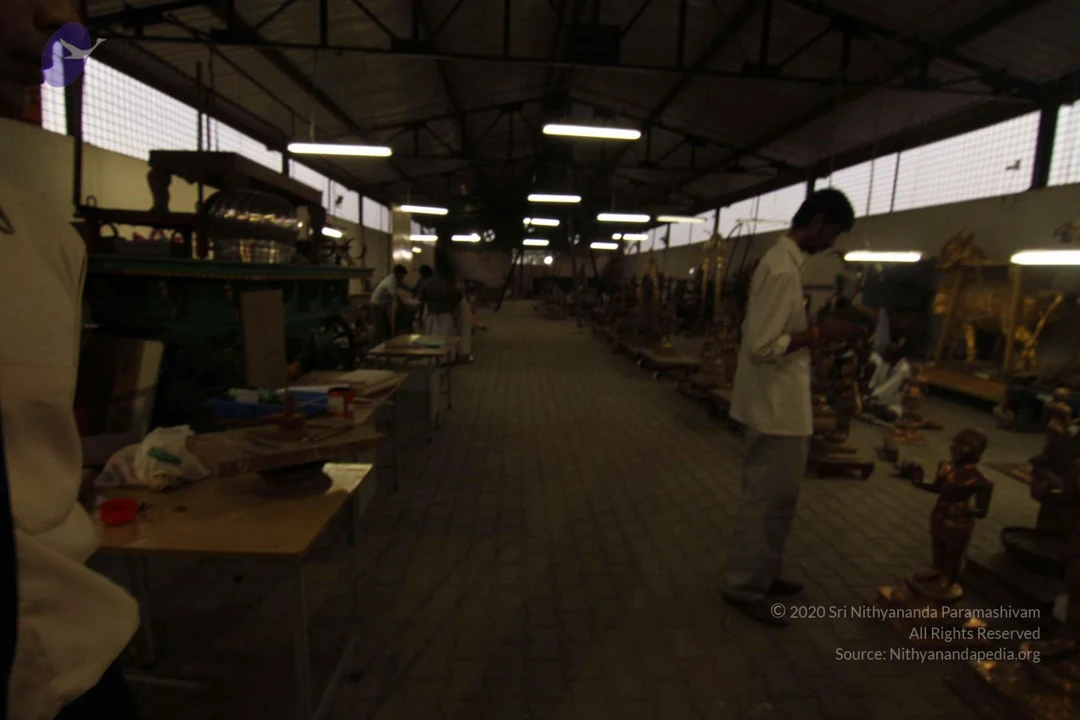
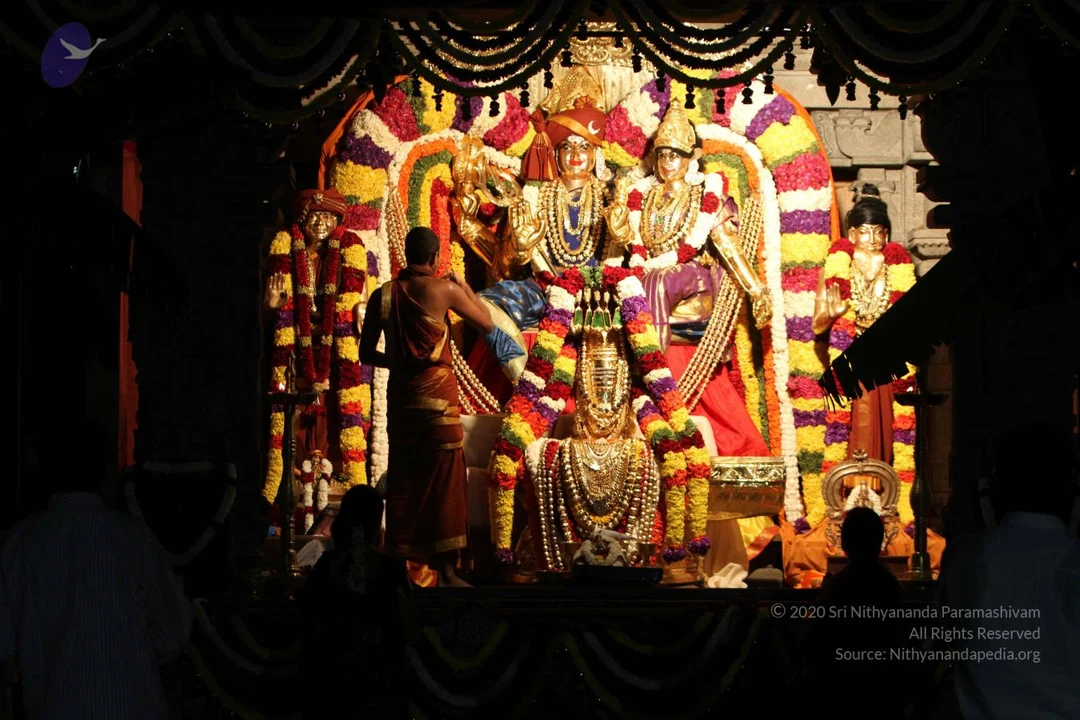
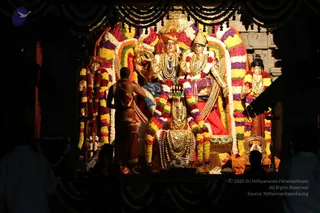
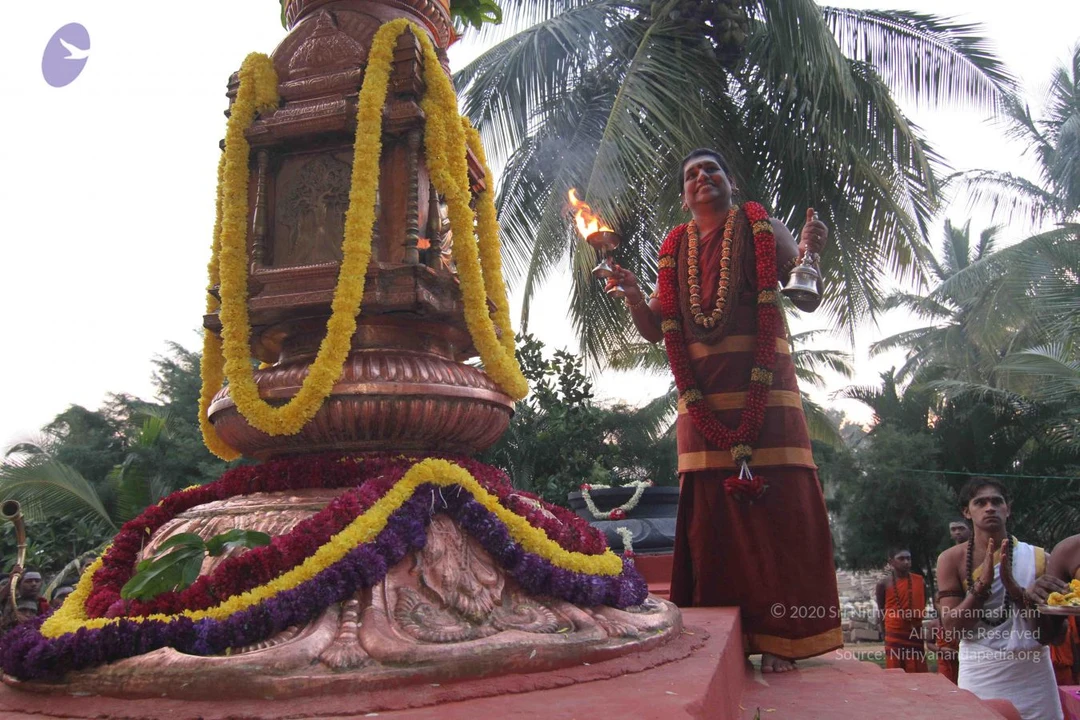
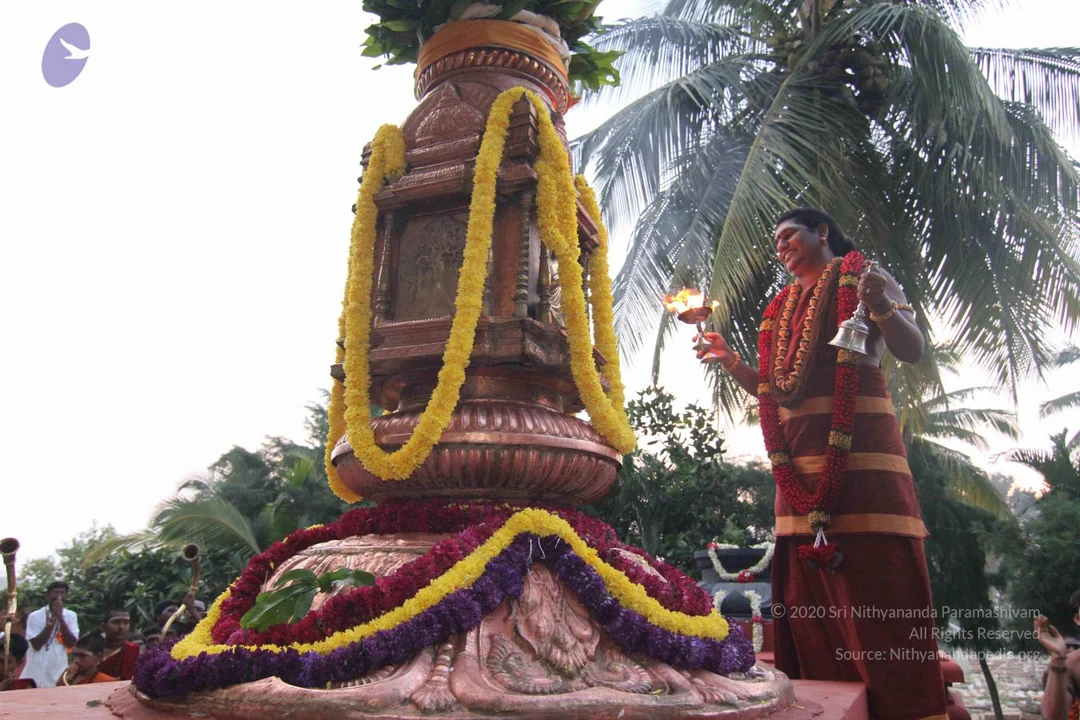
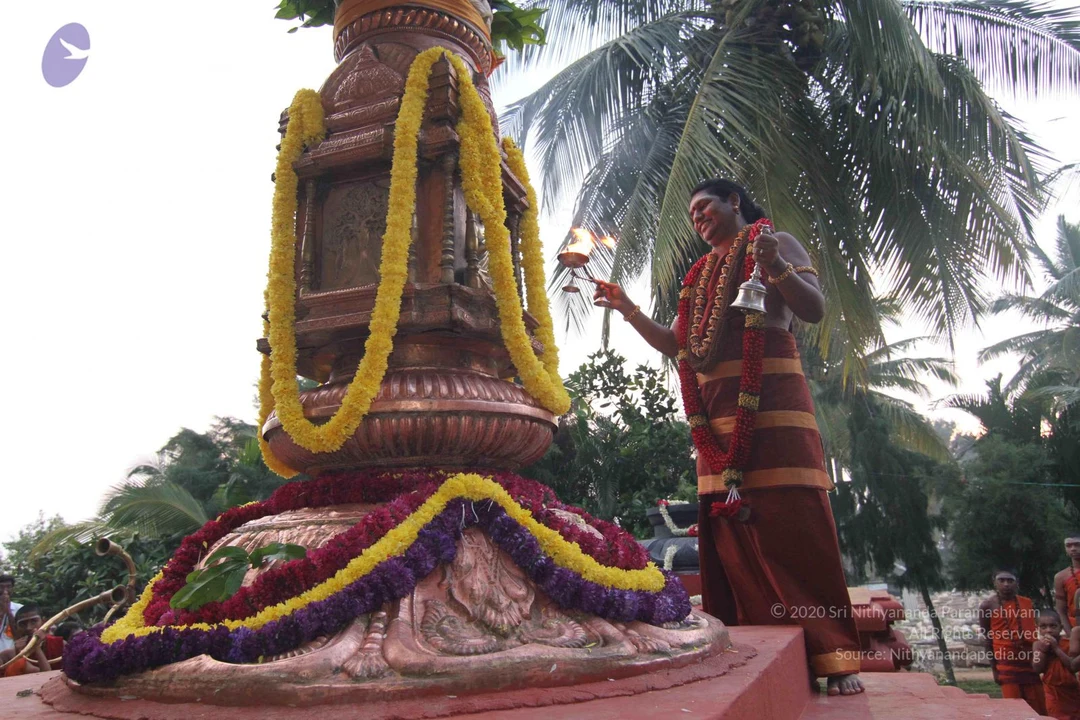
A photograph of an outdoor ritual at dusk beside a carved stone temple pillar. A man in saffron-orange robes wears a long red and yellow flower garland, layered gold-bead necklaces, gold bangles and a white forehead mark; he holds a lit oil lamp with a flame and a small brass bell-handled implement. Beside him a second man in orange robes with a shaved head and an orange shawl claps his hands and speaks. A brass lamp burns at lower left and smoke rises in the background.A photograph of a lavishly decorated deity display inside a dark temple-like setting, with no living people visible. The central figures are a pair of painted murti statues seated side by side, one wearing a red and gold turban with a crescent ornament and the other a tall golden crown, both adorned with gold necklaces and multi-strand pearl garlands. They are surrounded by arches of marigold and rose garlands in yellow, orange, purple and red, with a kalasha-like ornament and a small figure in the lower center. Two additional standing statues flank the scene on the left and right, one in a turban and one in a red garment, each wearing garlands. Trays of offerings and a folded white cloth sit at the lower left, and a decorated palanquin-style structure appears at the lower right. Overhead hang strings of green and purple festoon decorations.A photograph inside a long, low-roofed workshop lit by overhead tube lights, with a brick-paved central aisle. Along both sides stand rows of finished and unfinished deity murtis and ritual figures, many gold-toned or reddish, placed on wooden bases and tables. Near the centre-right a man in a white shirt and light trousers stands beside the figures, with a second worker in white further down the aisle. On the left, the edge of a person in white clothing is visible in the foreground, next to workbenches holding tools, cloth and a few small objects. Machinery and a wooden framework are visible on the left. Sheet-metal roofing and mesh-covered side windows frame the space.

November 26 2014

Original wiki page
Contents

Title

Change the World with Chanting

Description:

In today’s morning Satsang, Paramahamsa Nithyananda explains the power of chanting Shivoham and the process in which the chant penetrates our very beings. When it penetrates into the being, our whole body vibrates with this space, sending the intense waves of Shivoham to the world. The more we expand and experience and the more we live Shivoham, the more we become enlightened. Decide to merge into that space of Shivoham!

Link to Video:

VideoAudio

Transcript:

Nithyanandeshwara Samarambhaam Nithyanandeshwari Madhyamaam | Asmath Aachaarya Paryanthaam Vandhey Guru Paramparaam ||

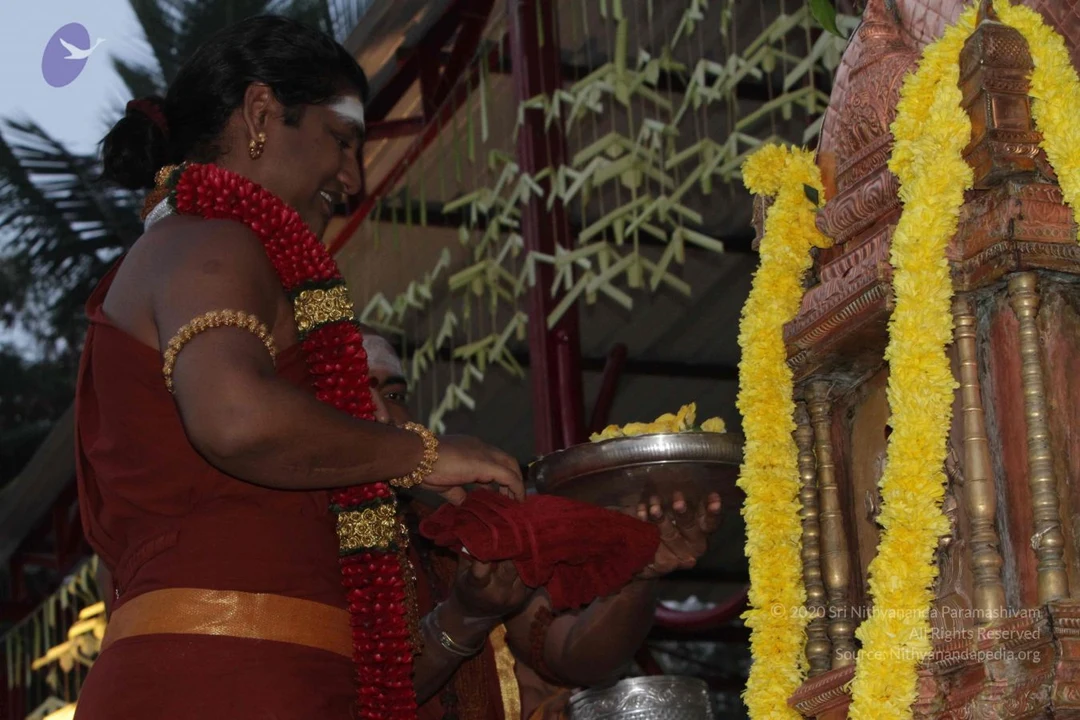
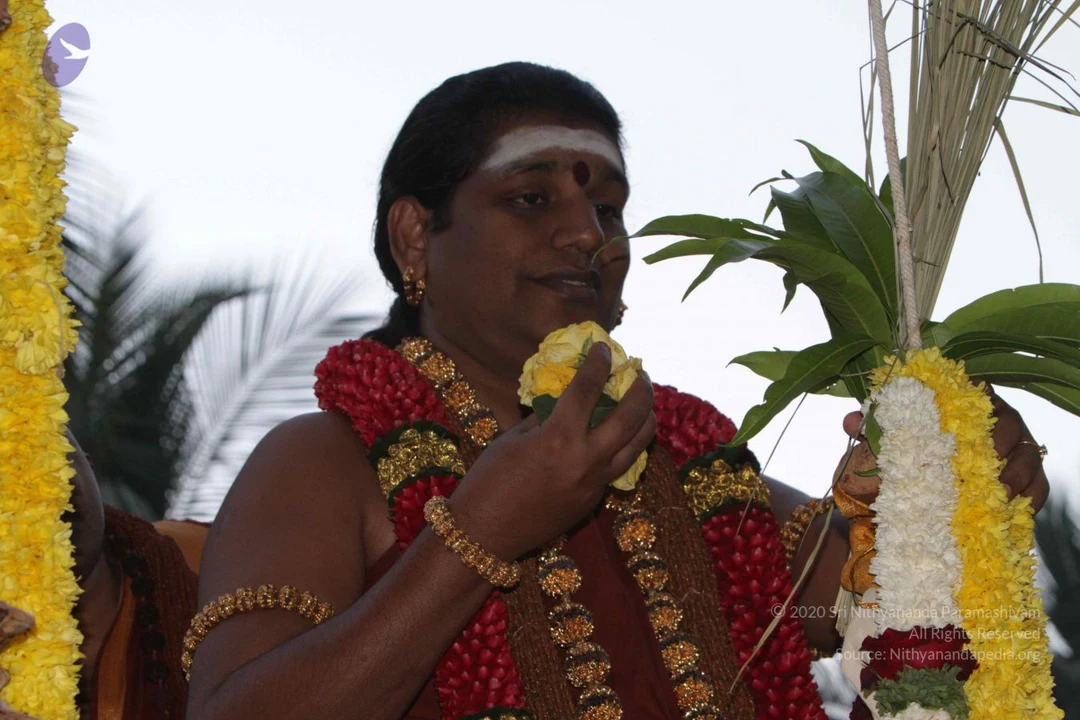
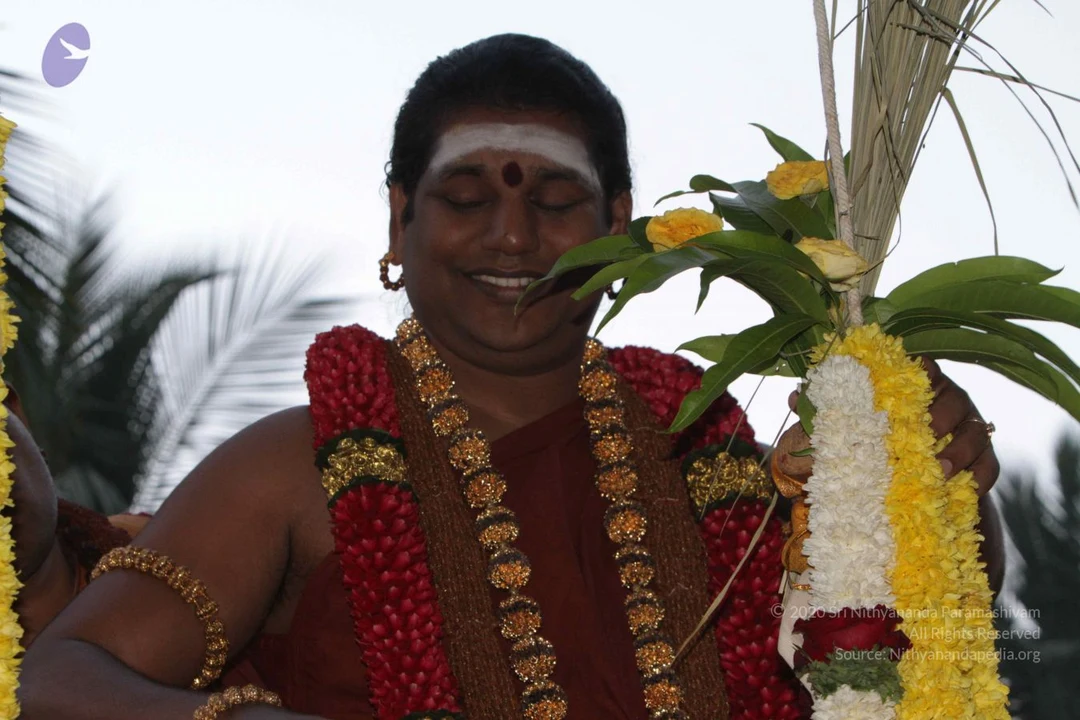
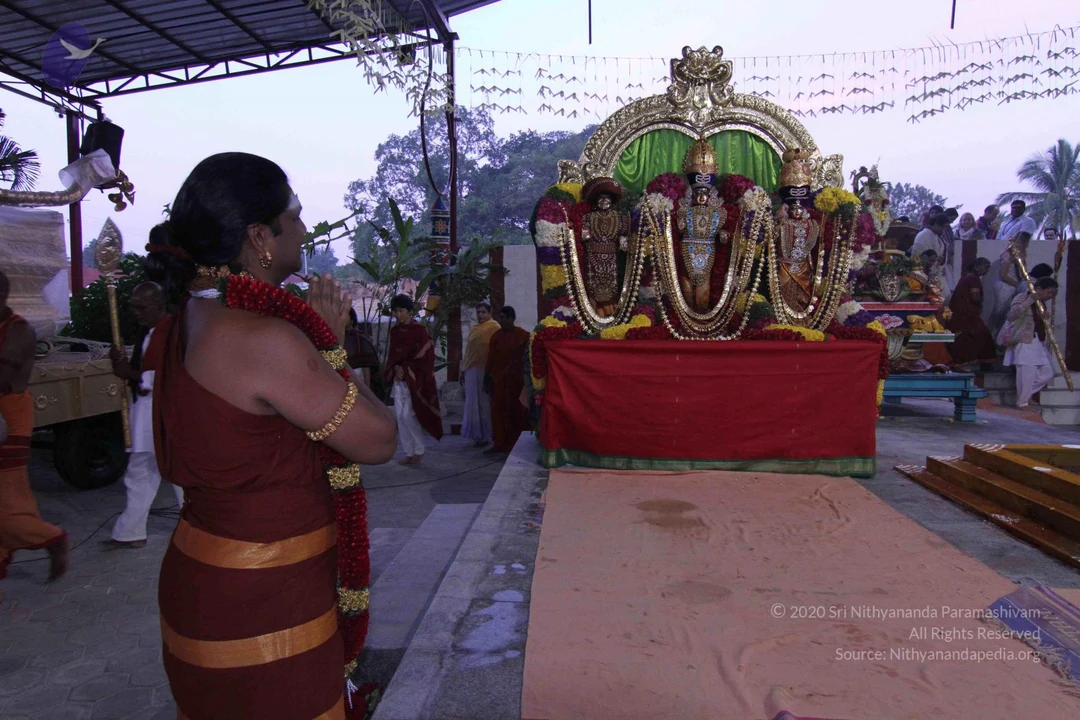
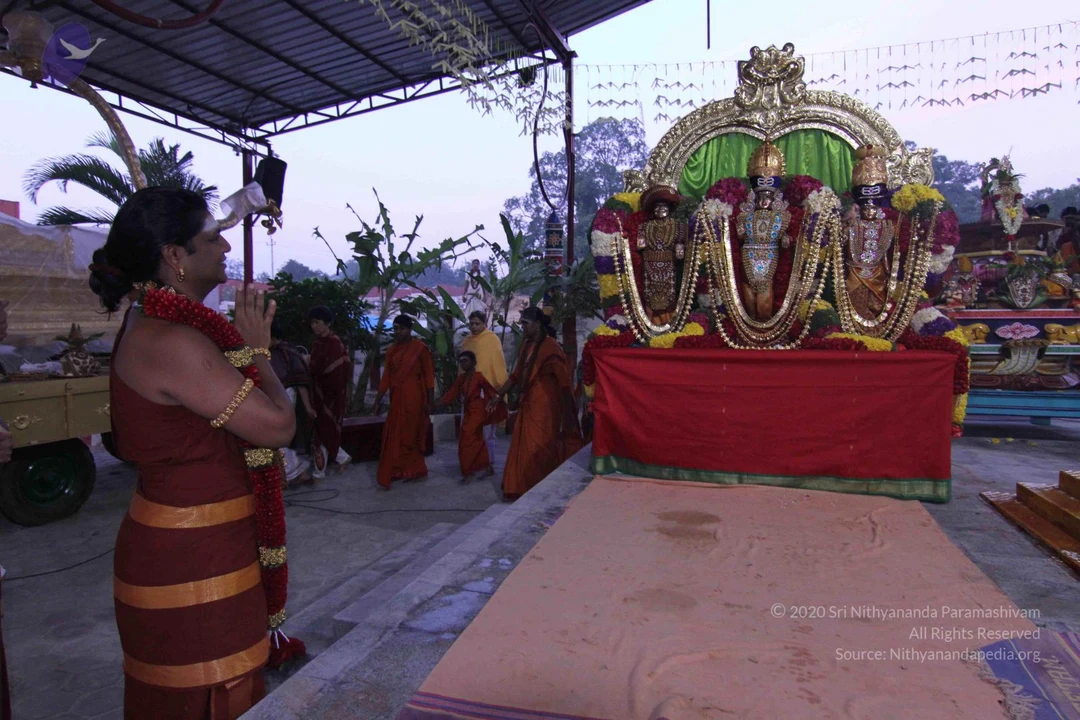
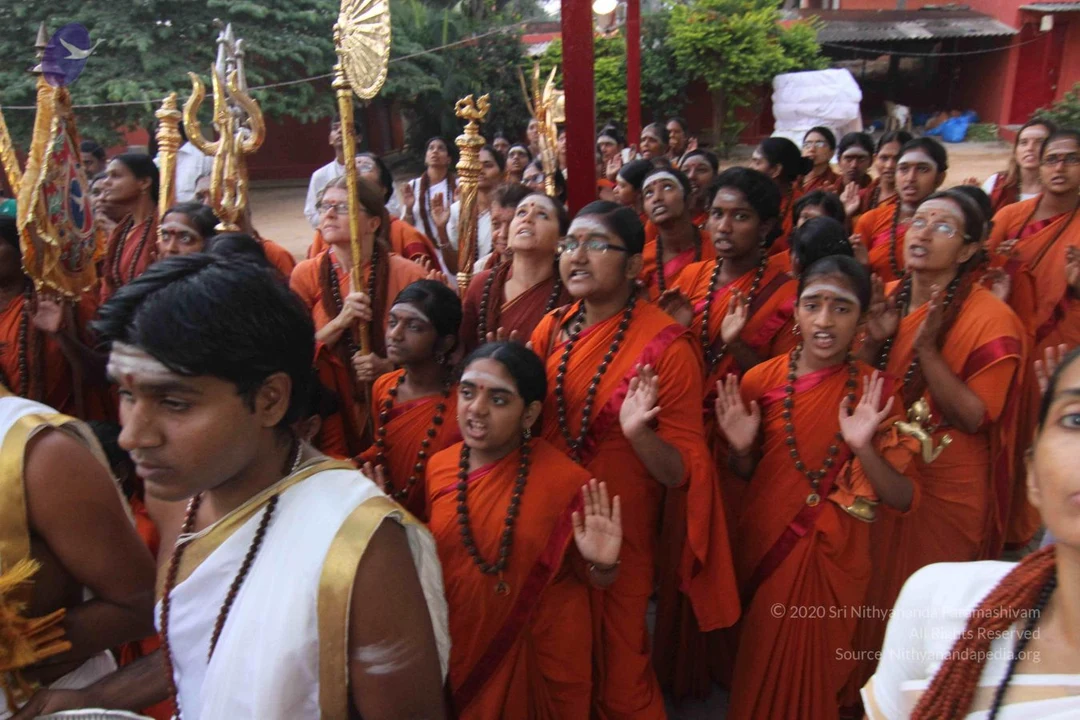
I welcome all the Devas, Devatas, Devis, Ganas, Munis, Rishis, Gandharva, Yaksha, Kinnara, Kimpuruda, Bhootha, Pretha, Shivagana, and all the Shrimahants, Mahants, Kotharis, Thanedars, samajis, satsanghis, visitors, viewers, every one of you, for this great, auspicious, Nithyanandeshwara Brahmotsavam.

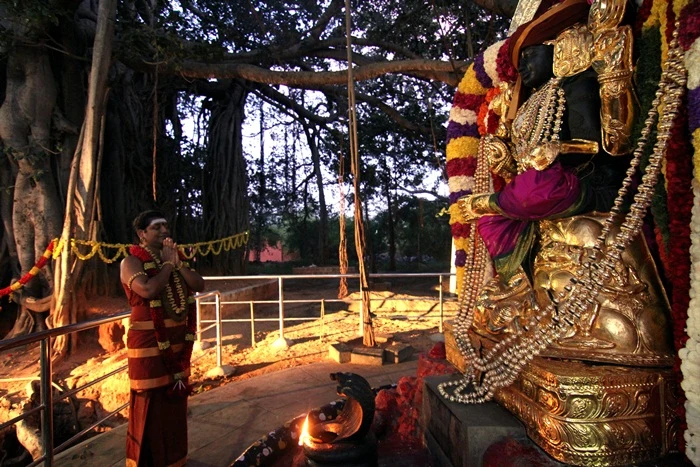
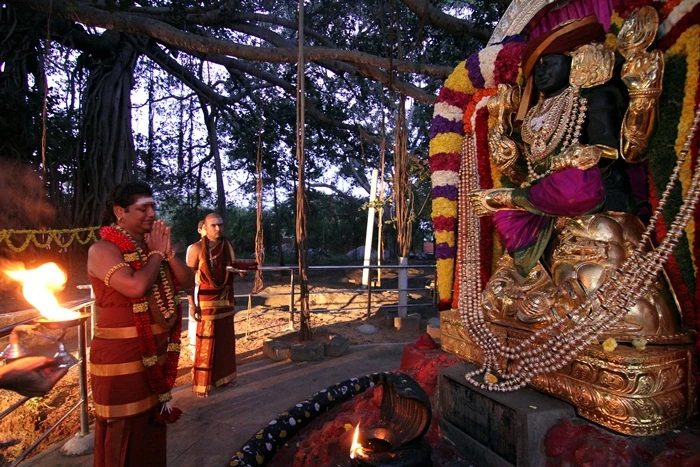
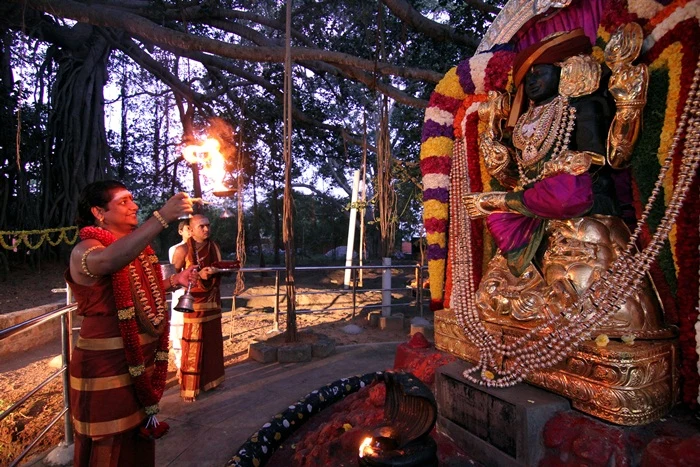
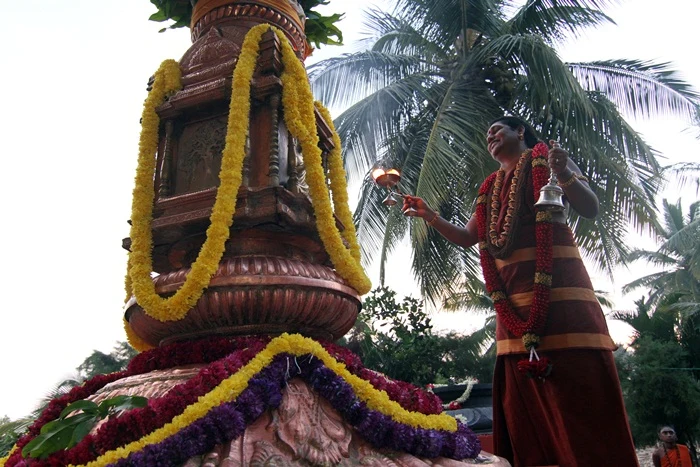
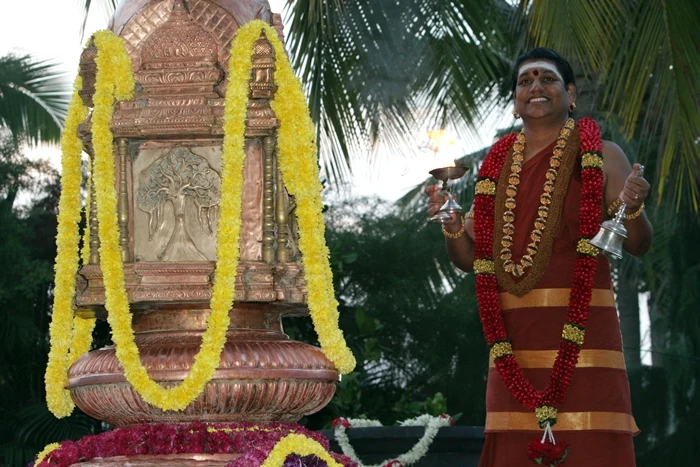
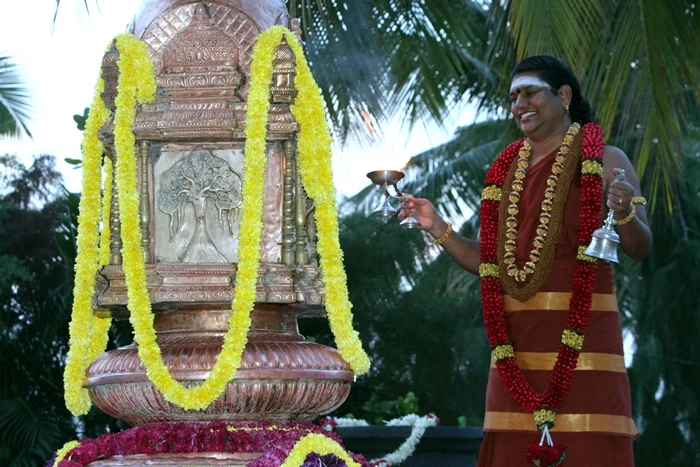
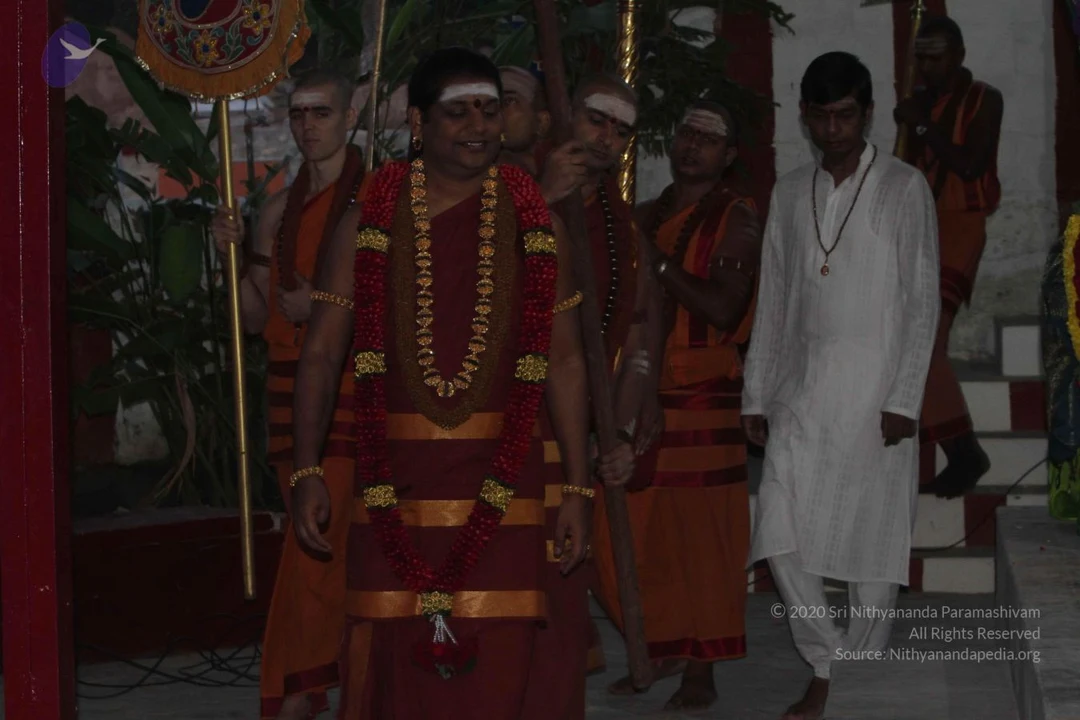
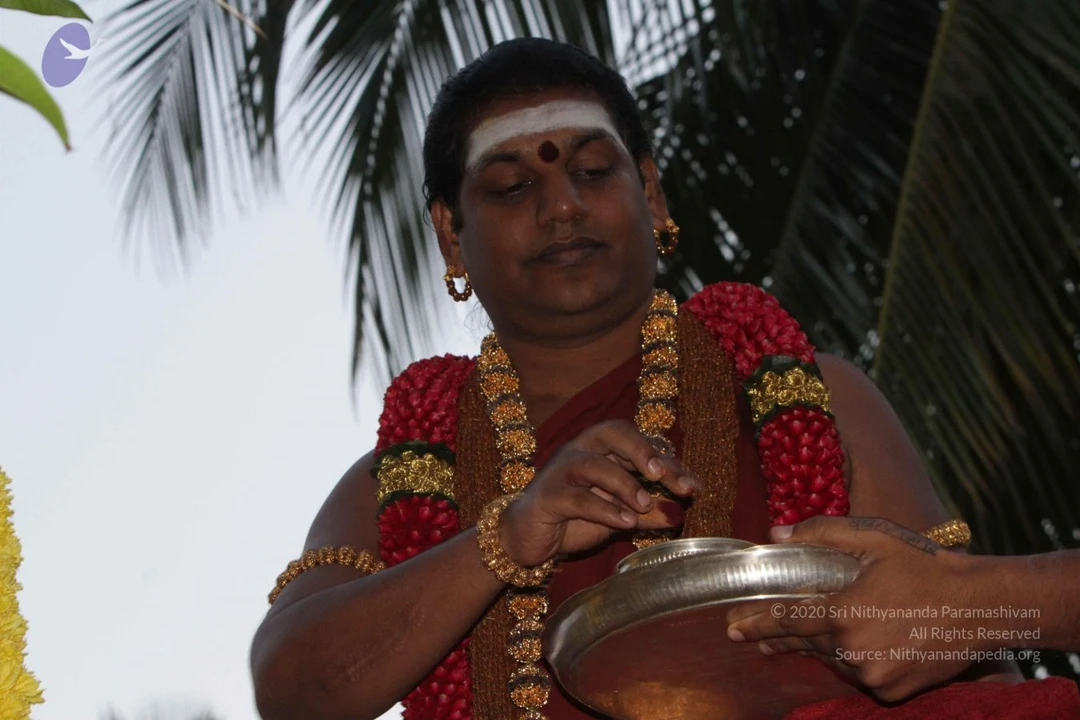
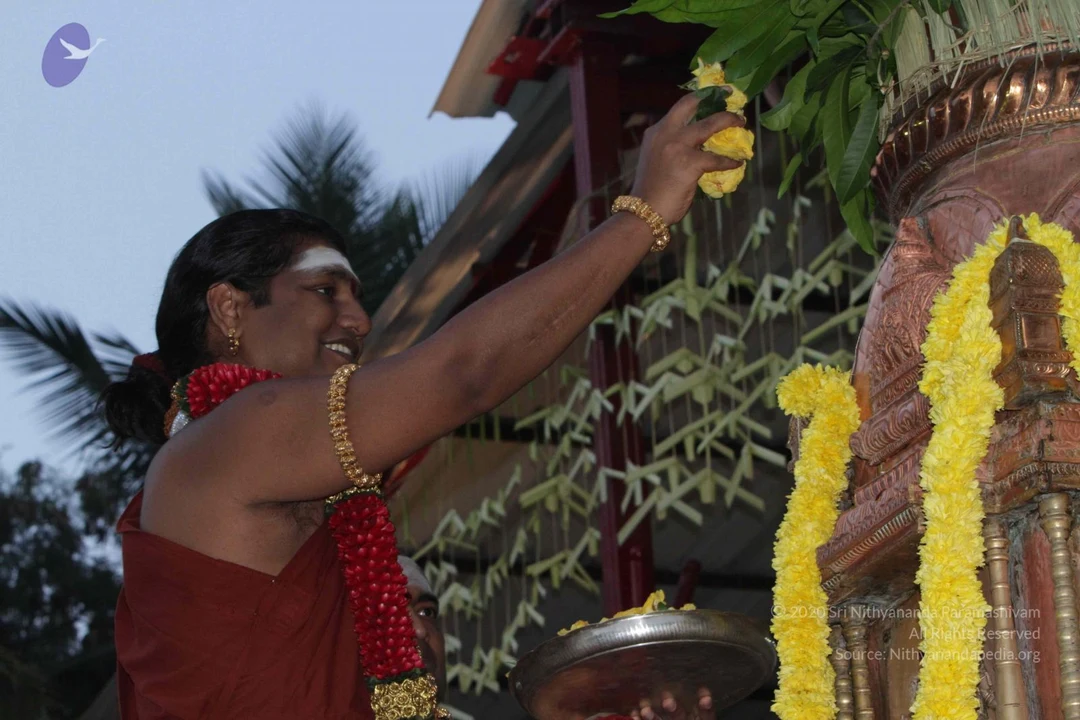
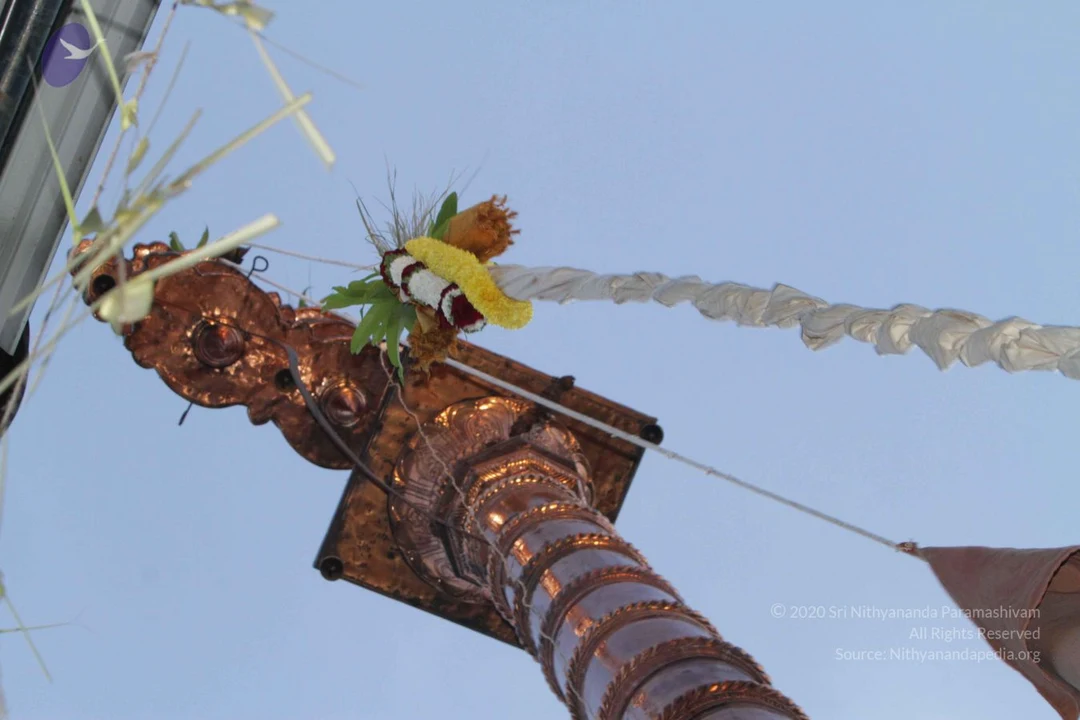
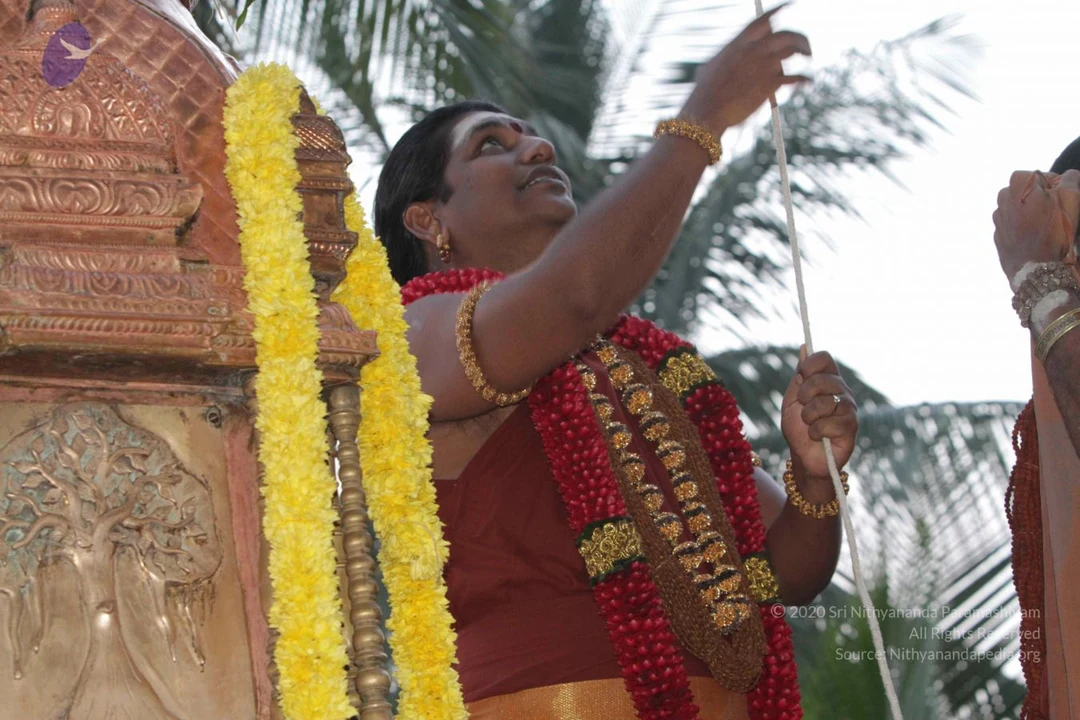
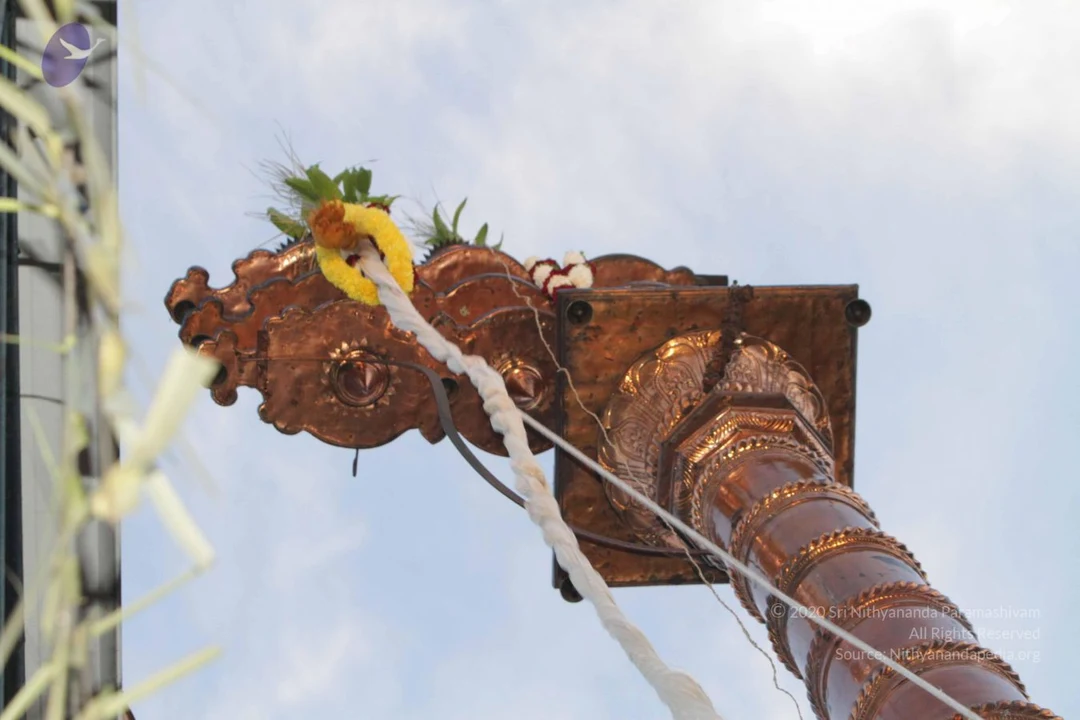
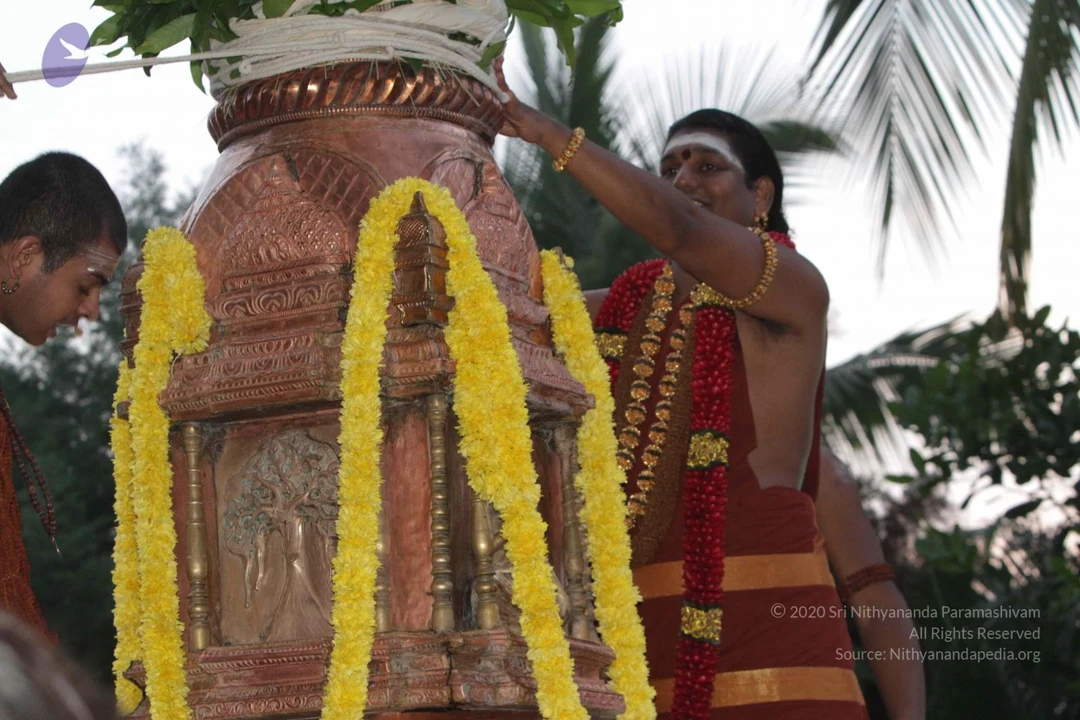
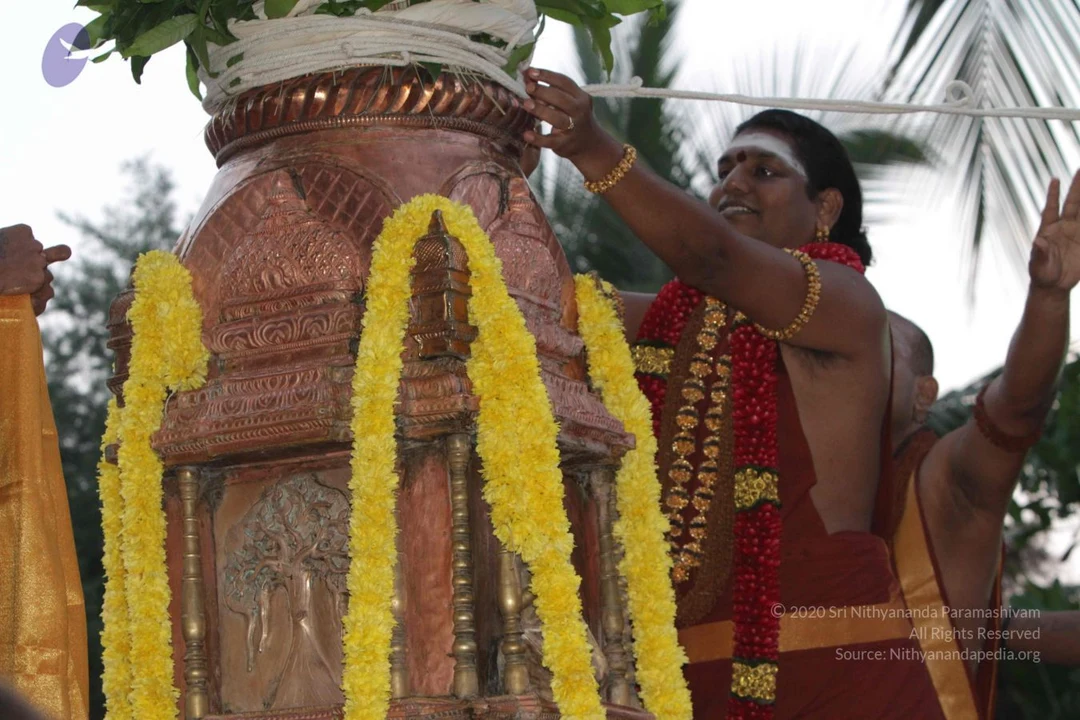
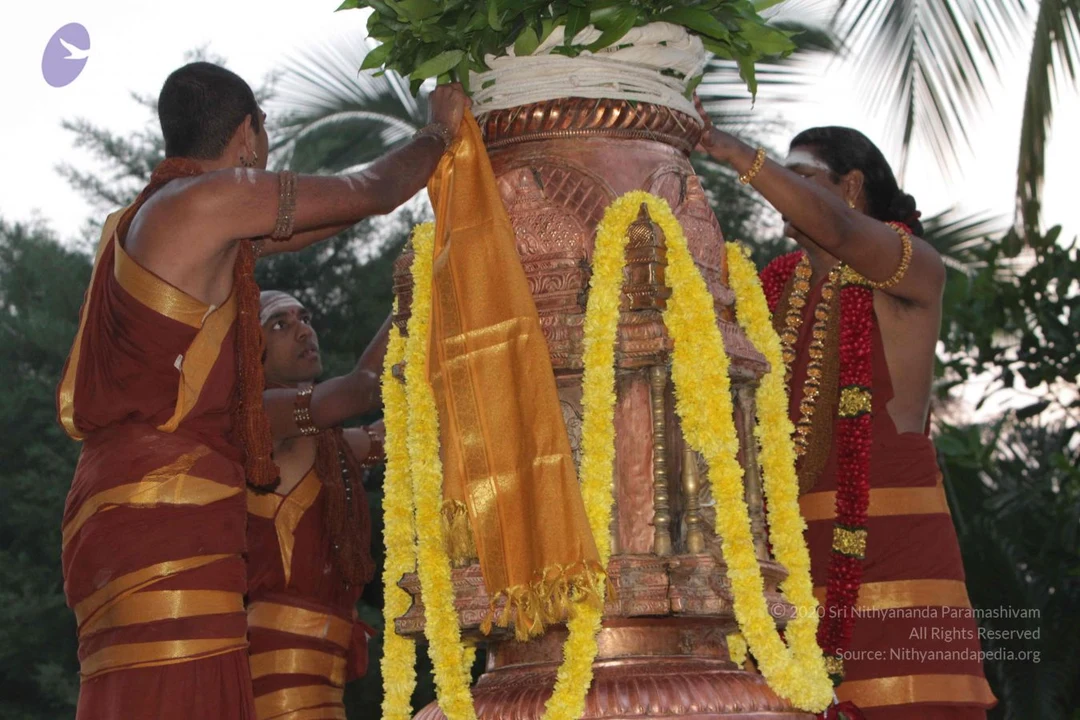
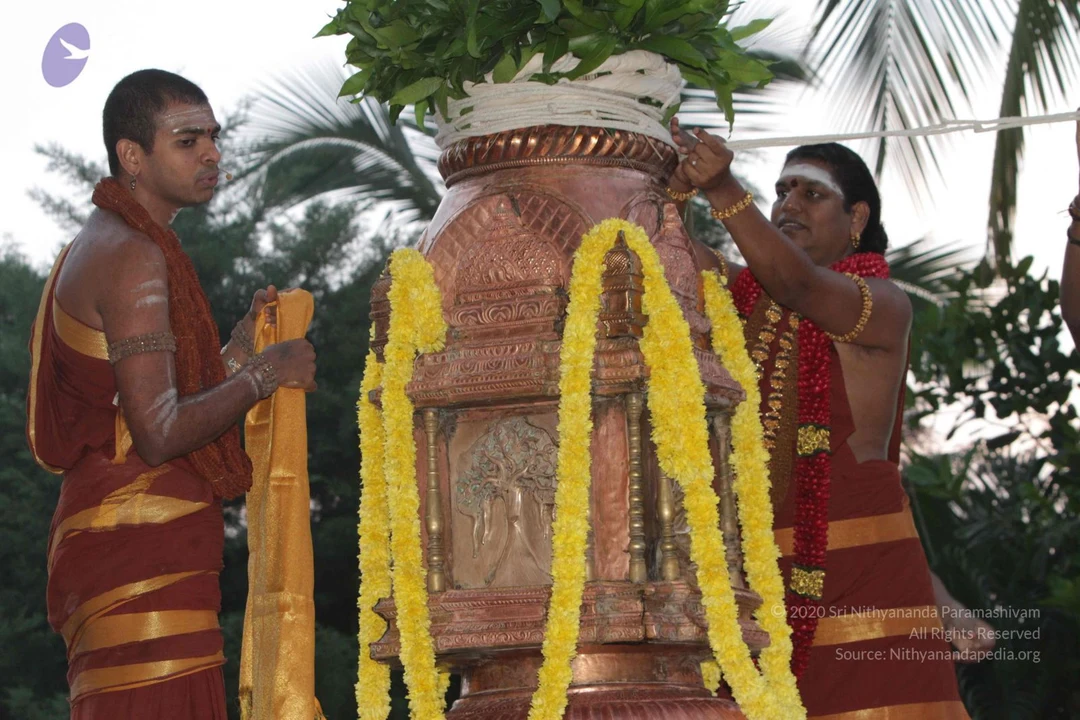
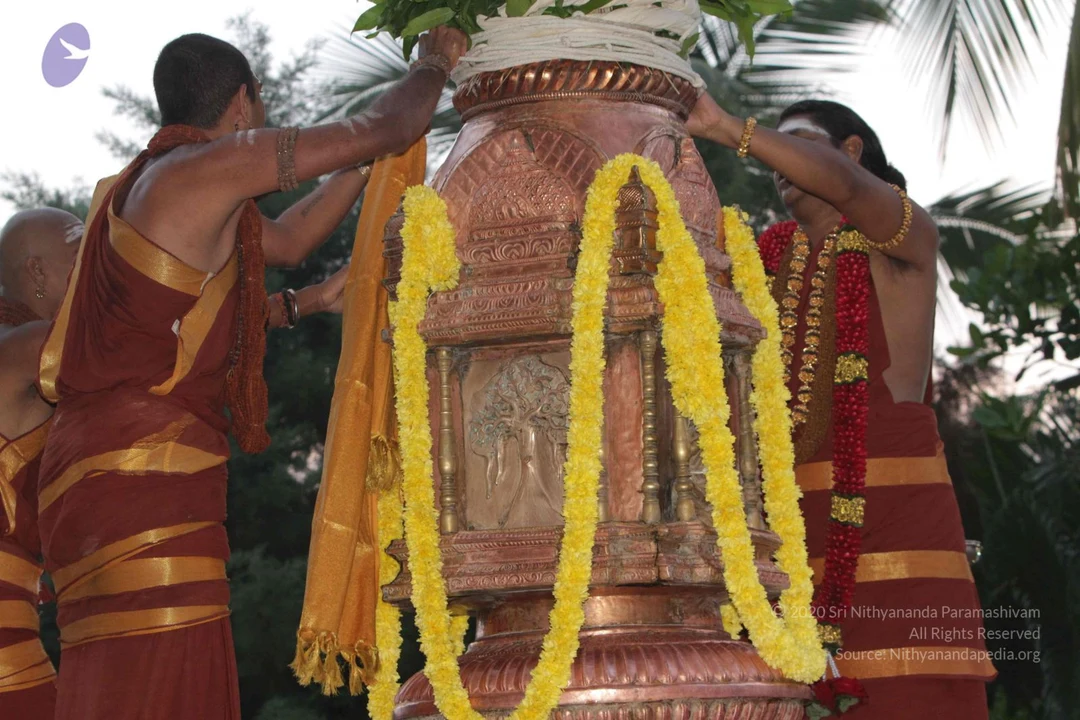
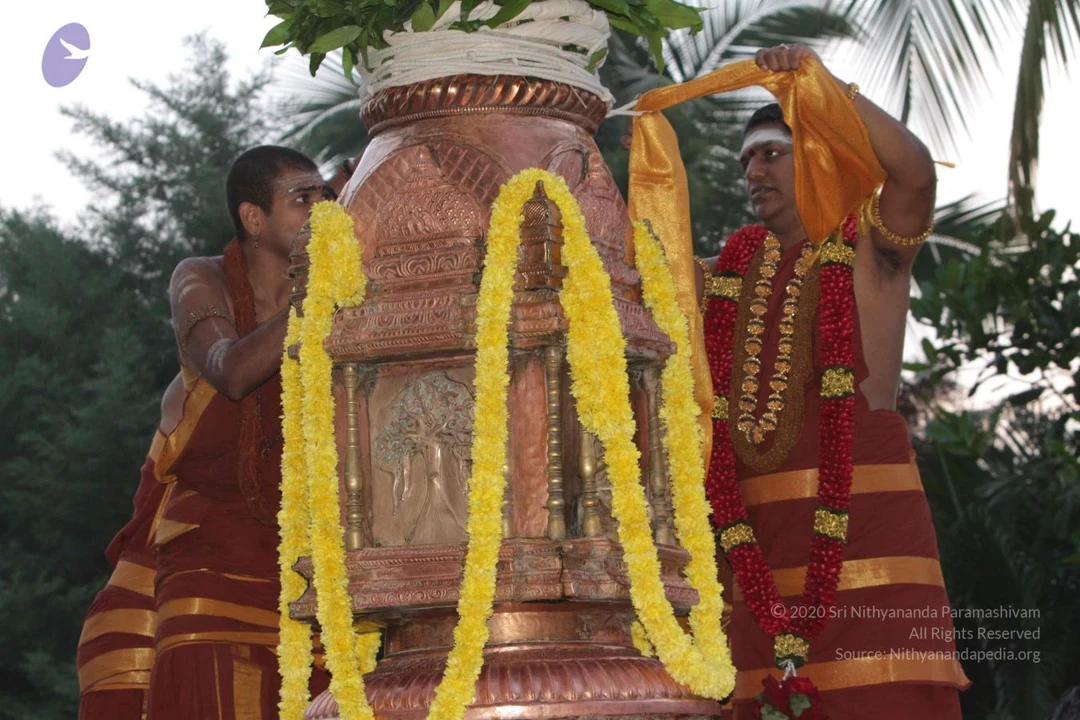
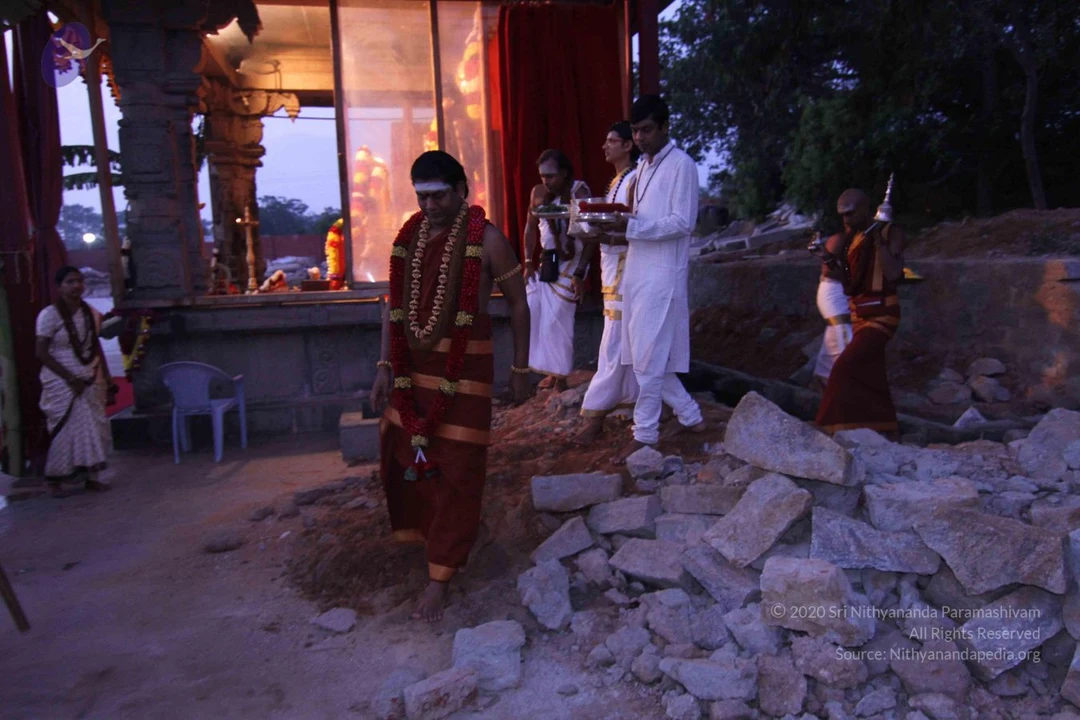
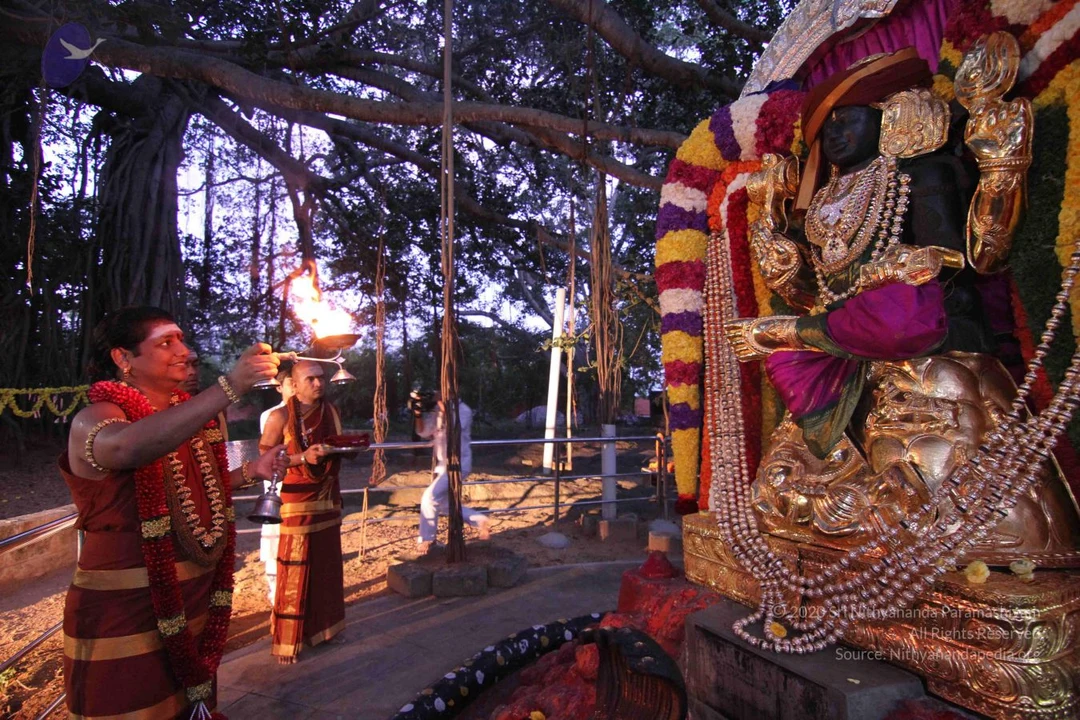
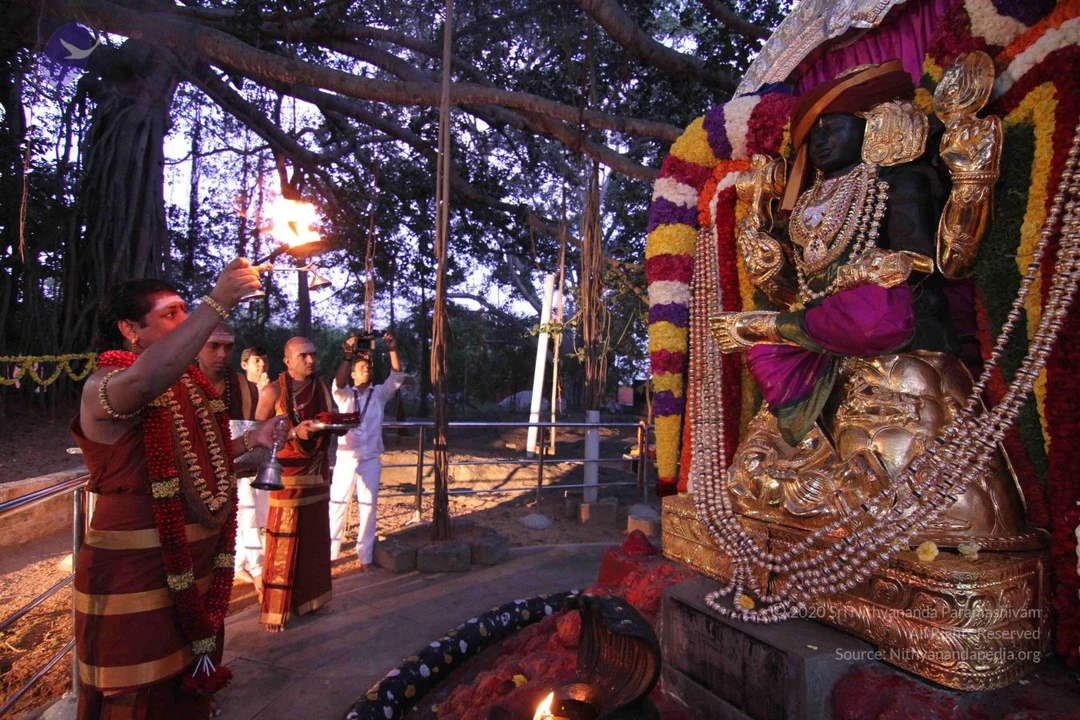
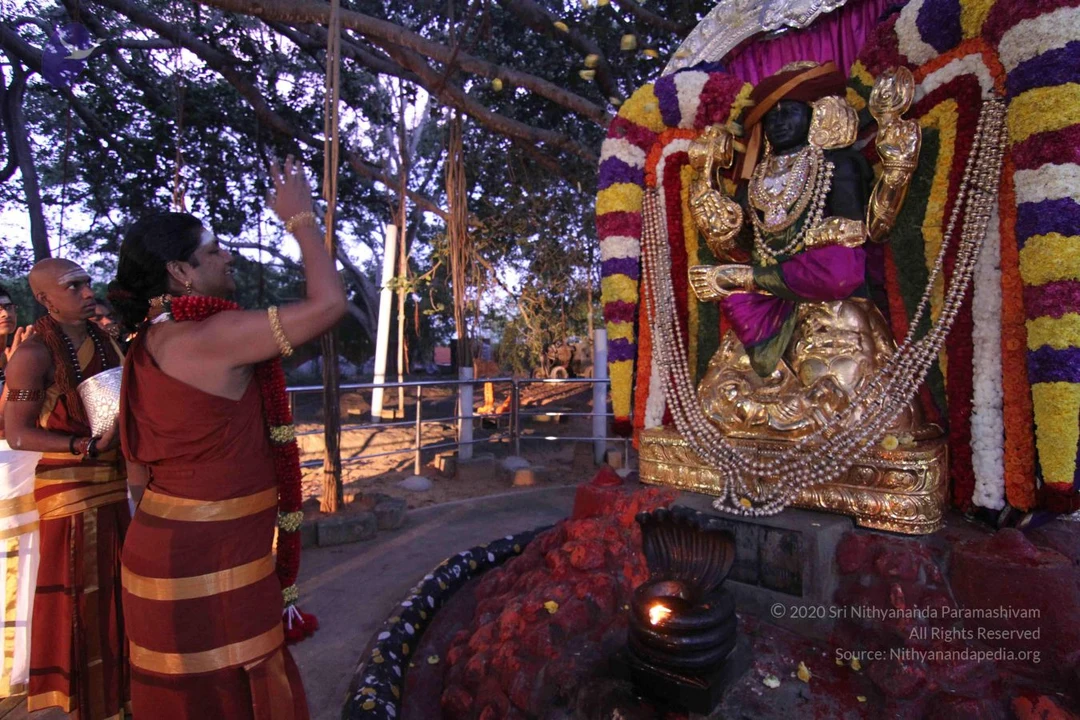
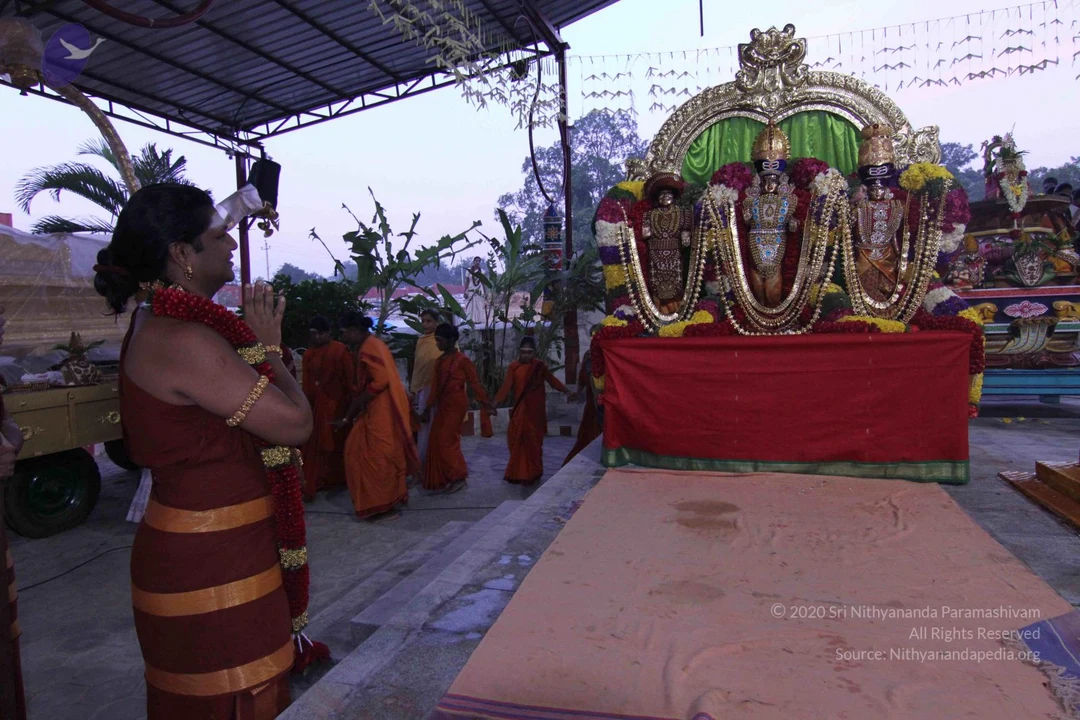
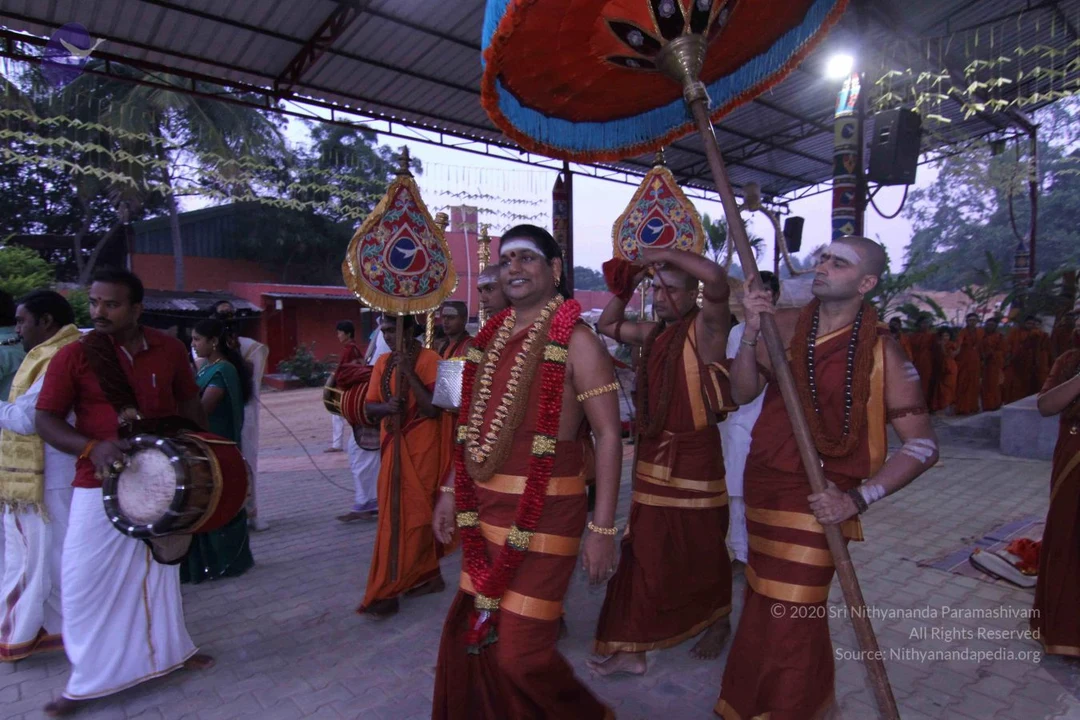
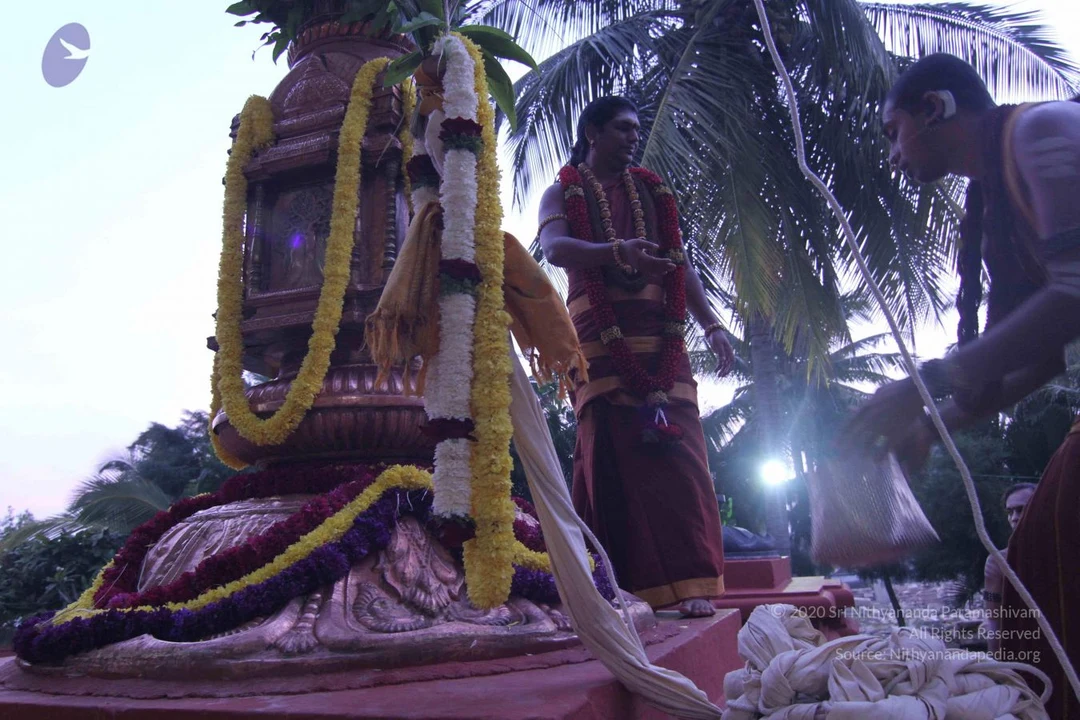
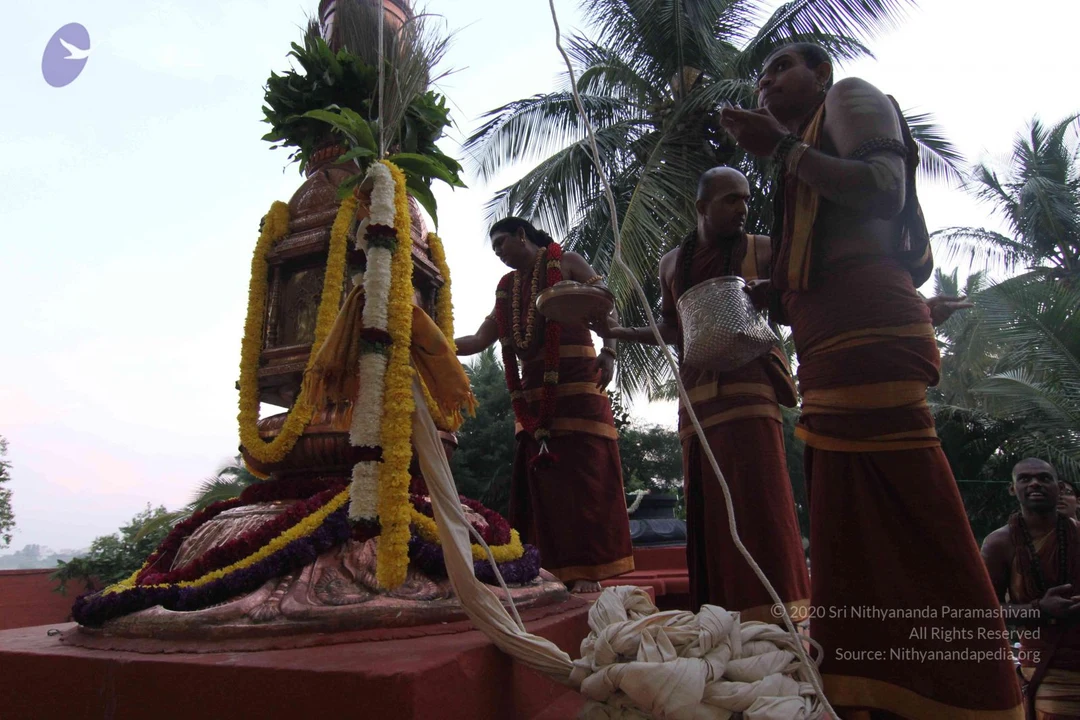
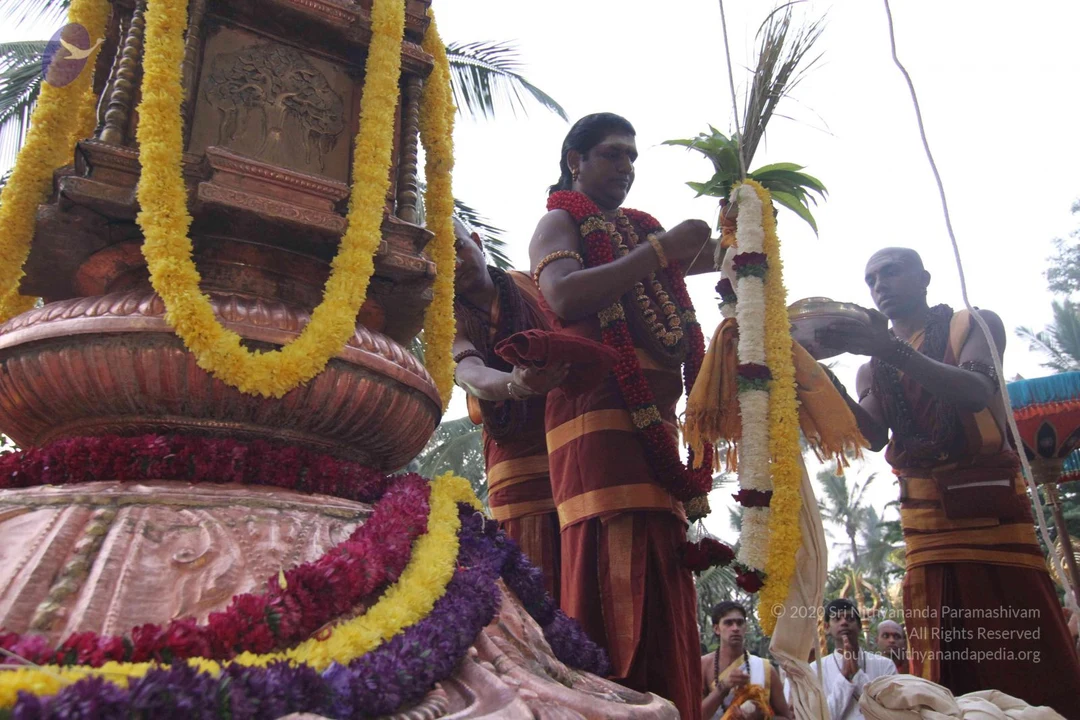
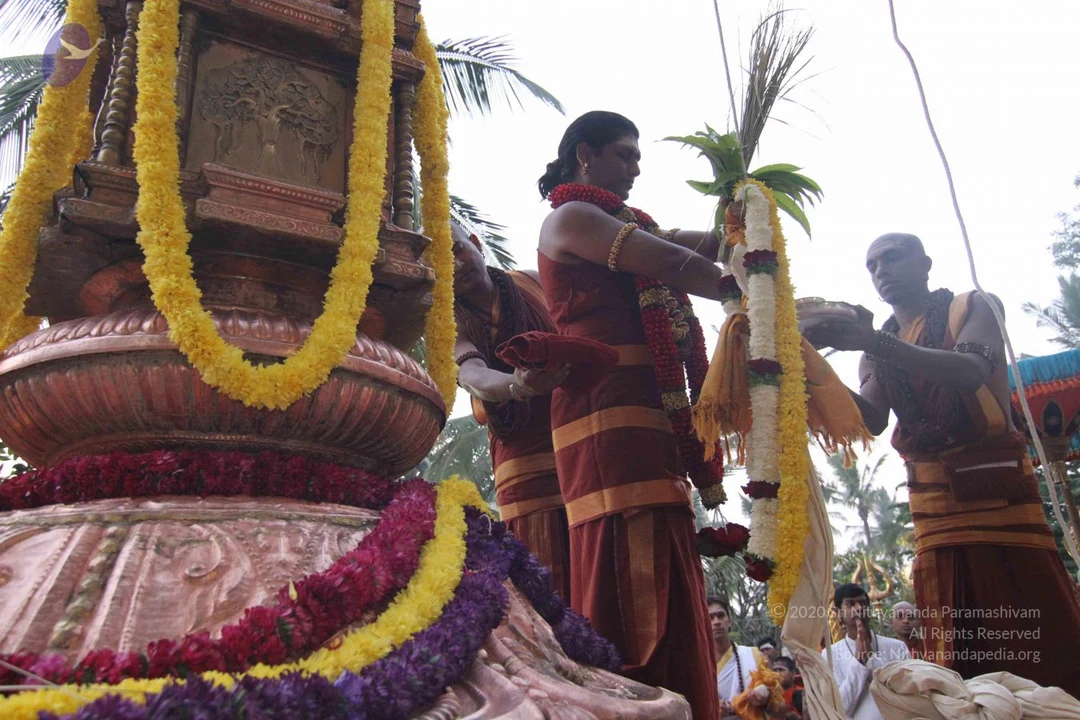
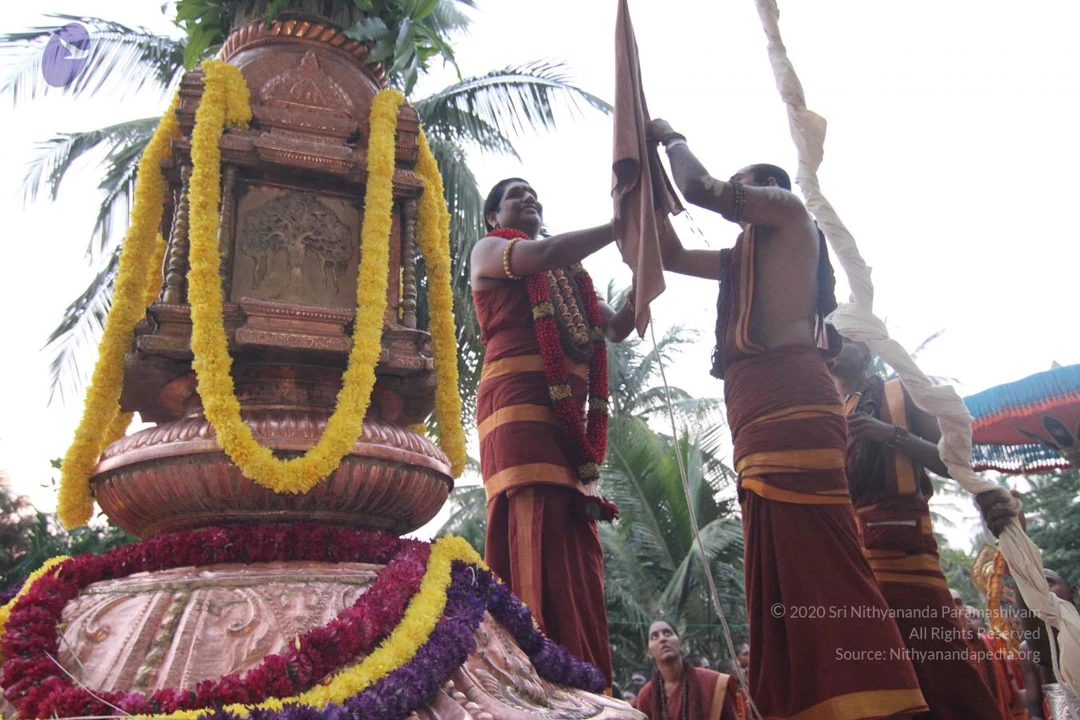
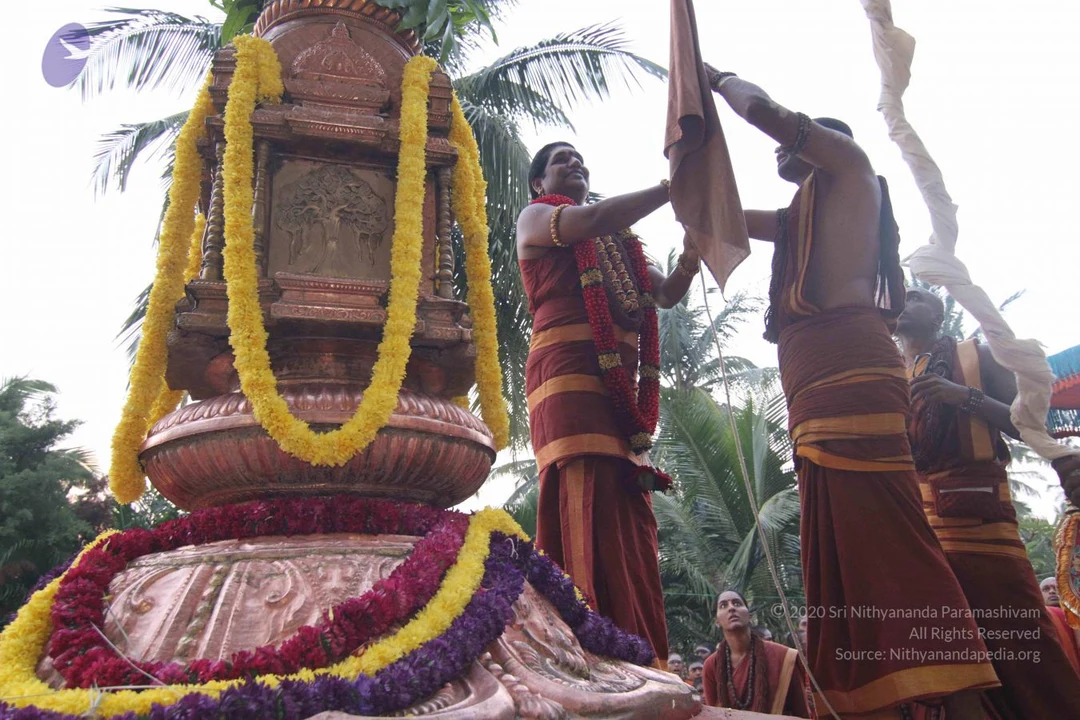
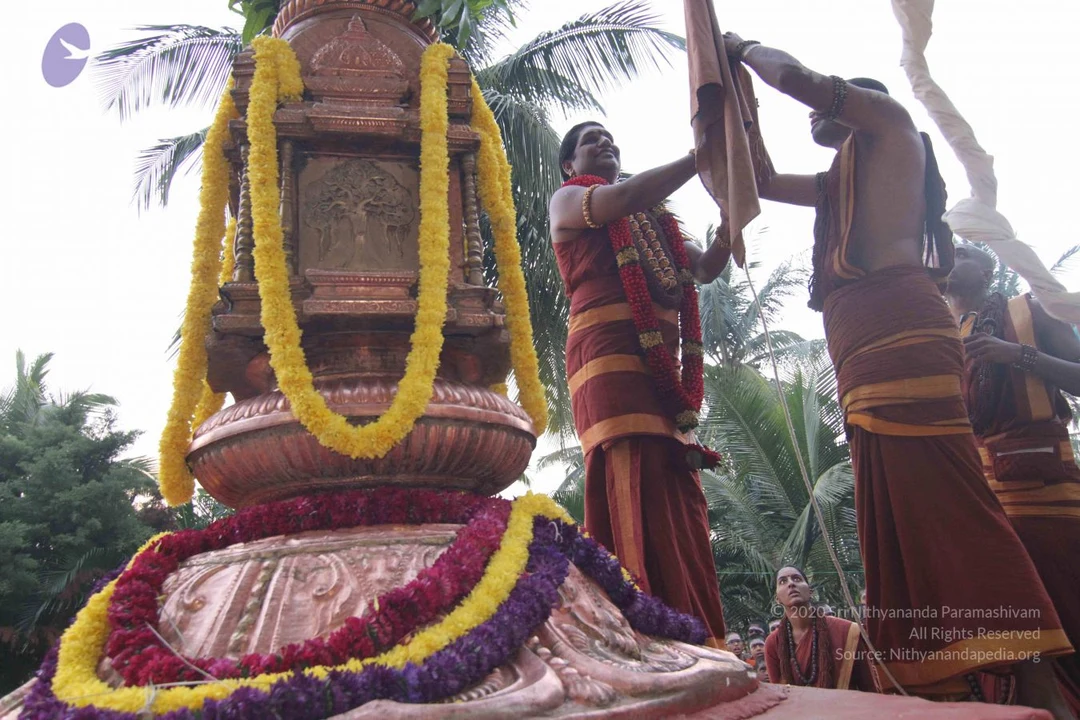
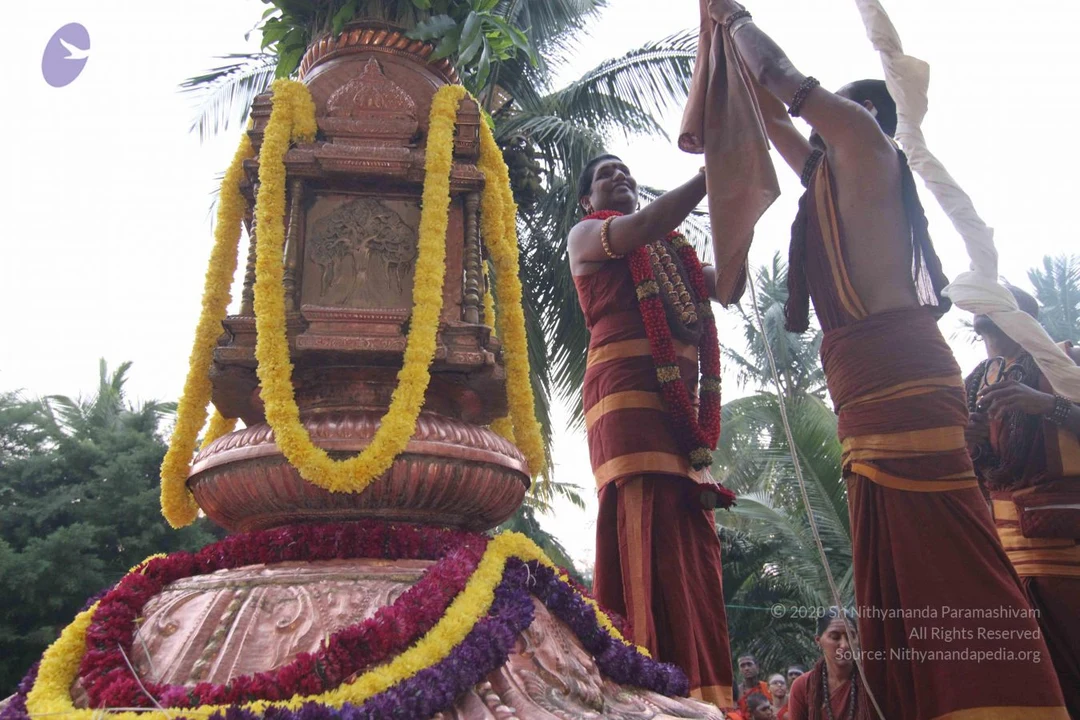
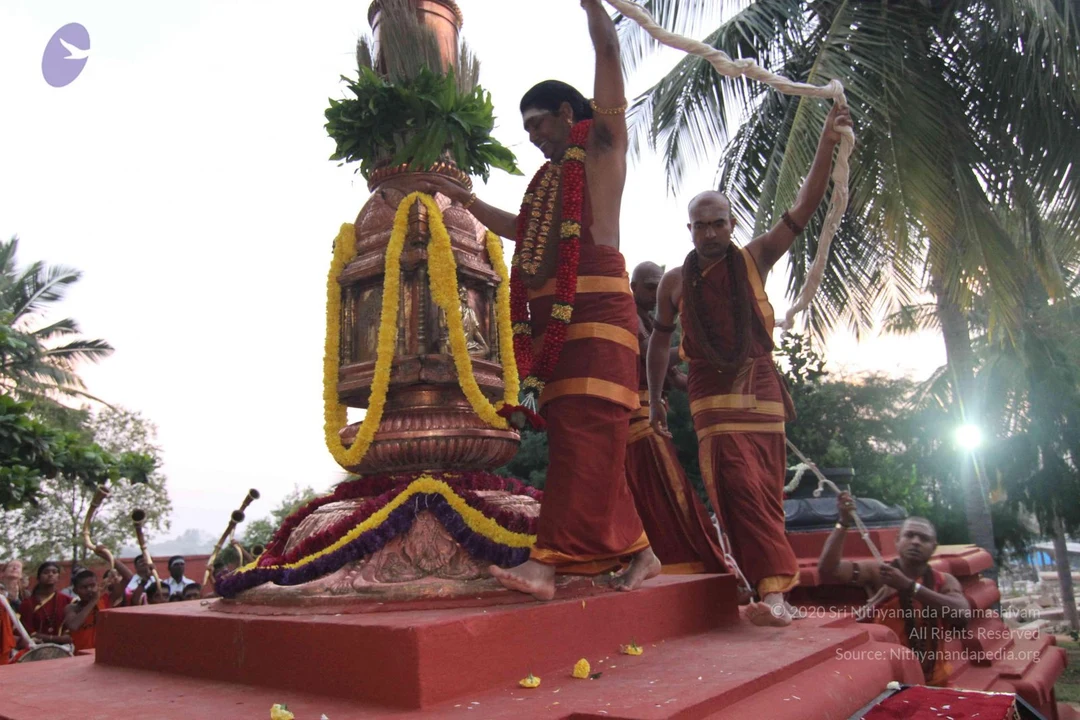
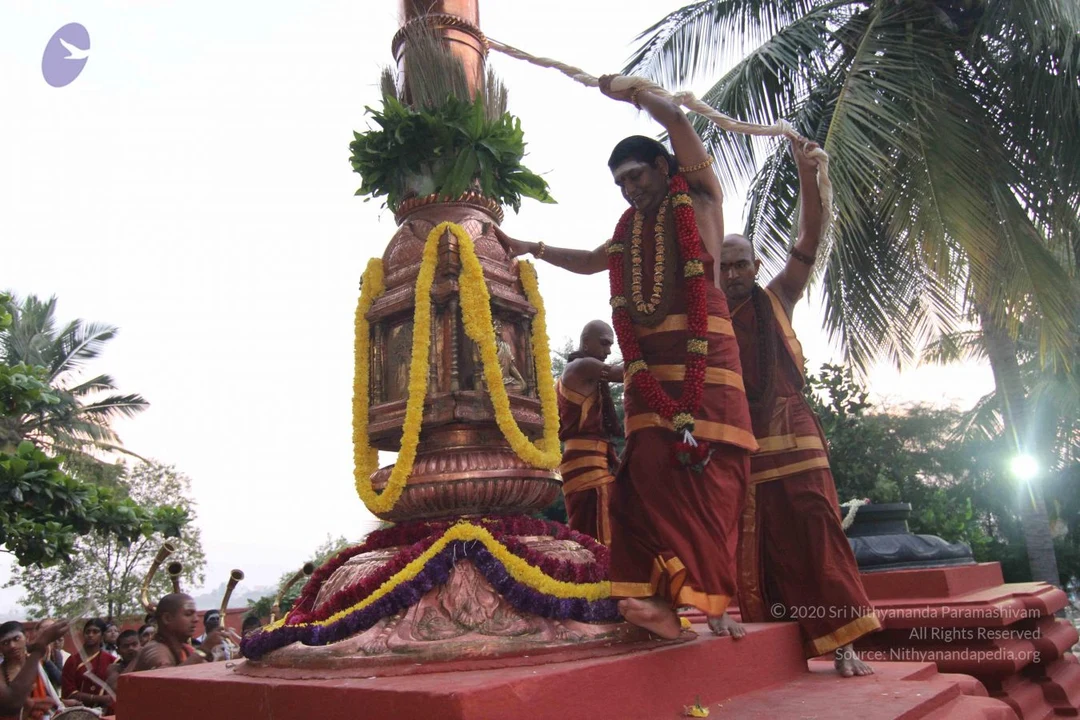
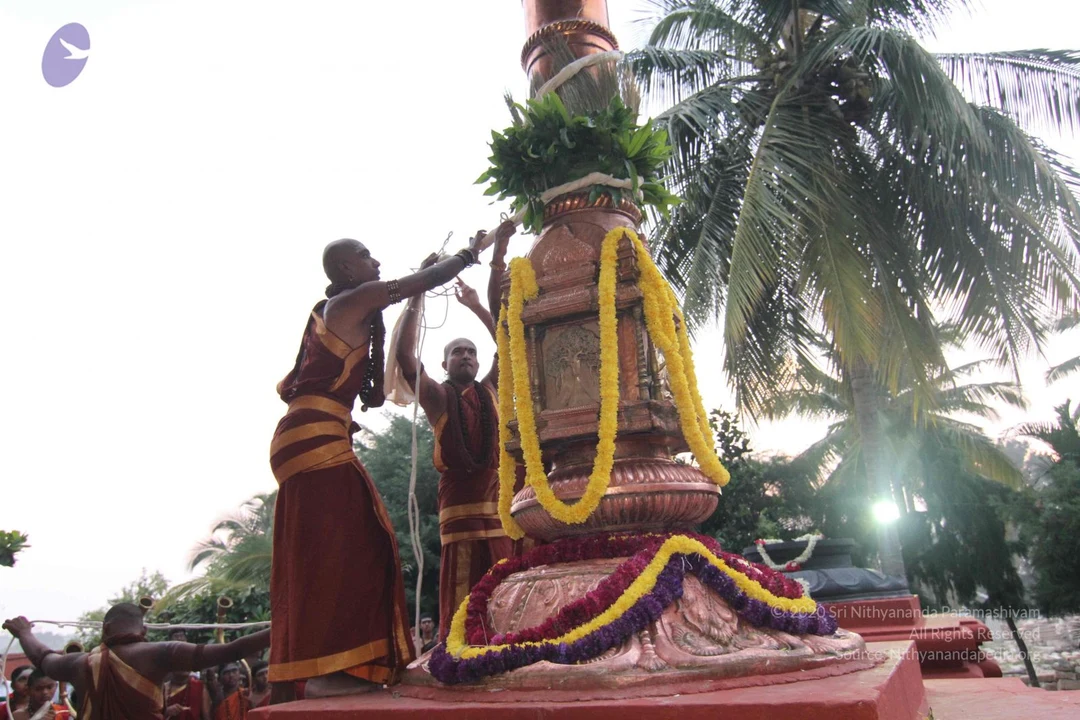
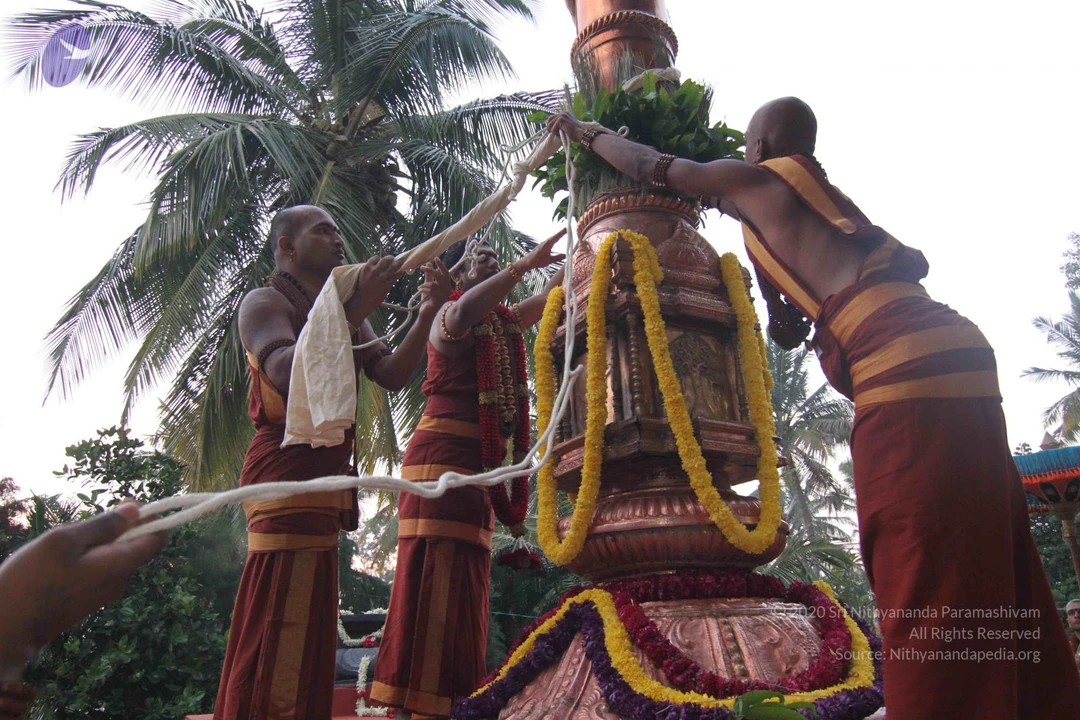
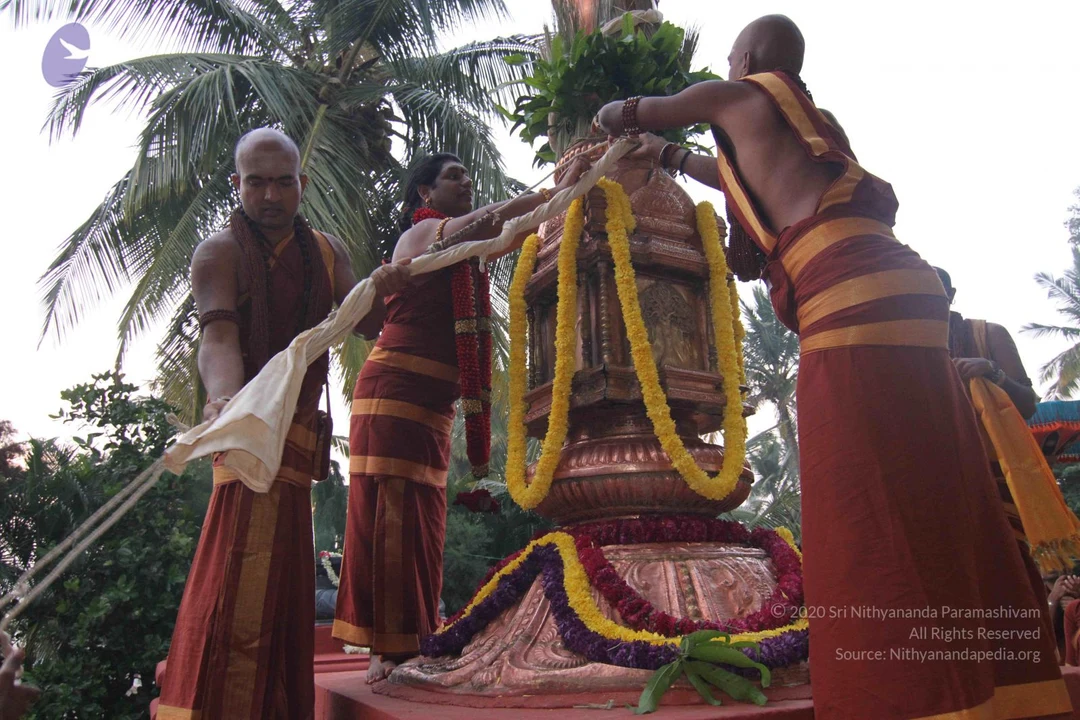
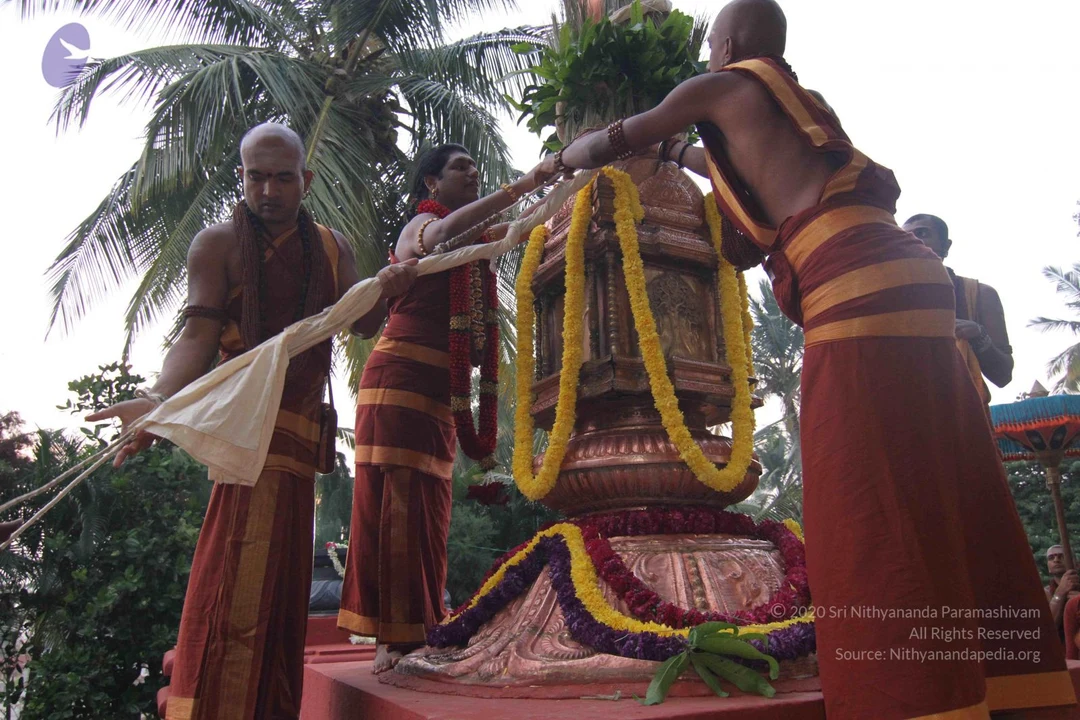
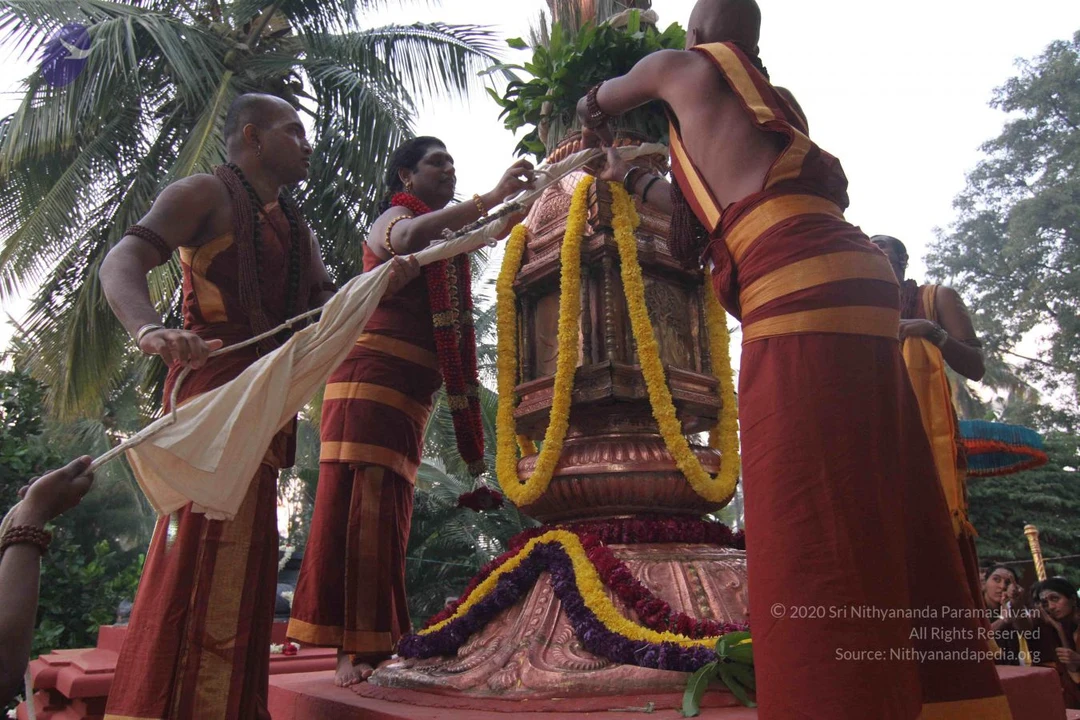
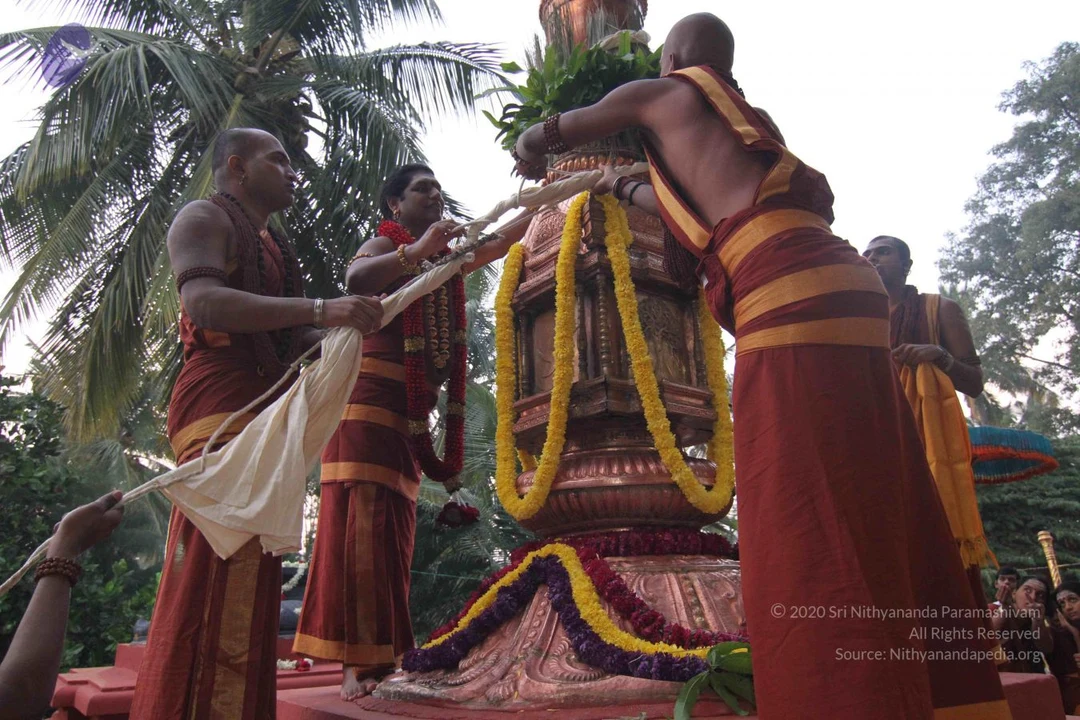
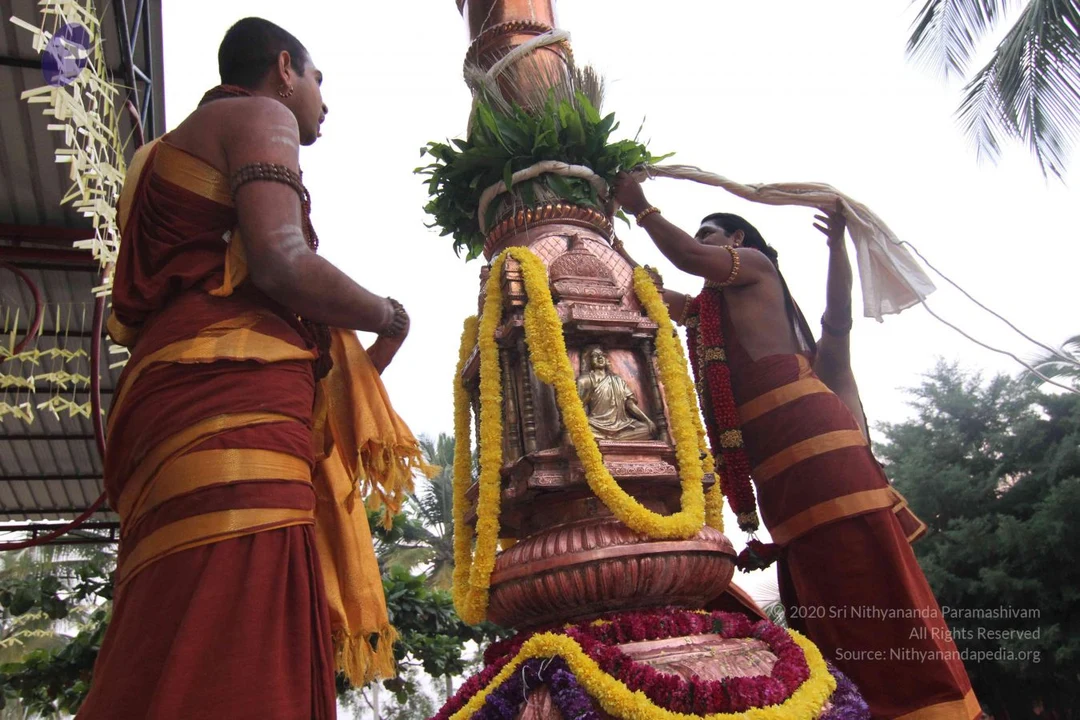
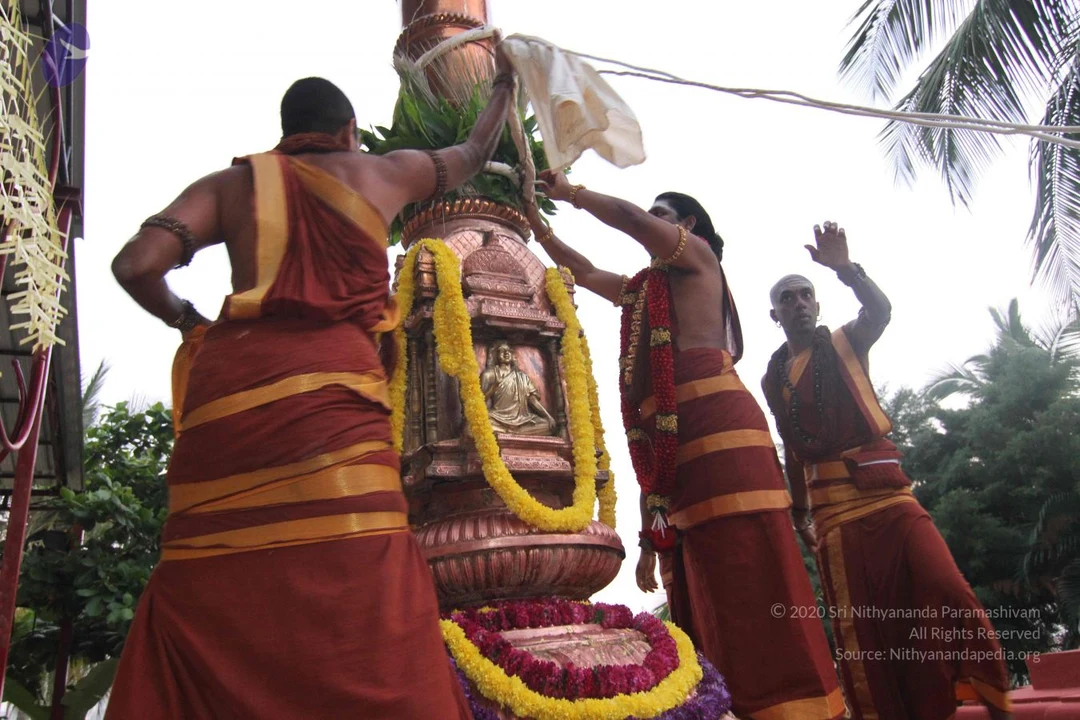
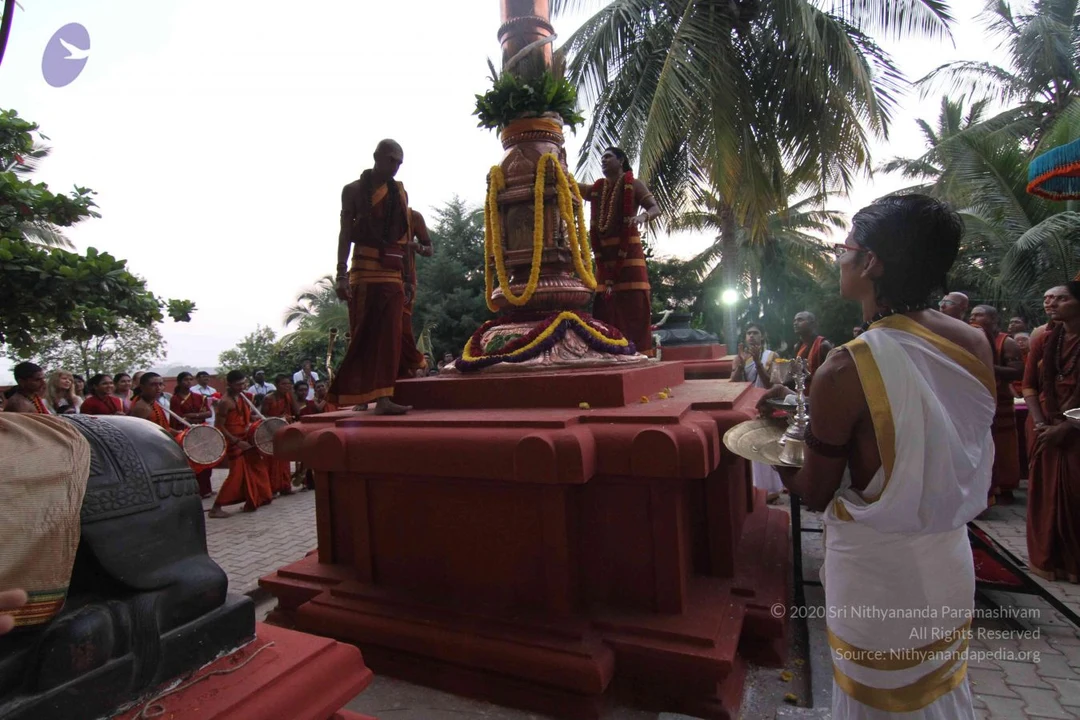
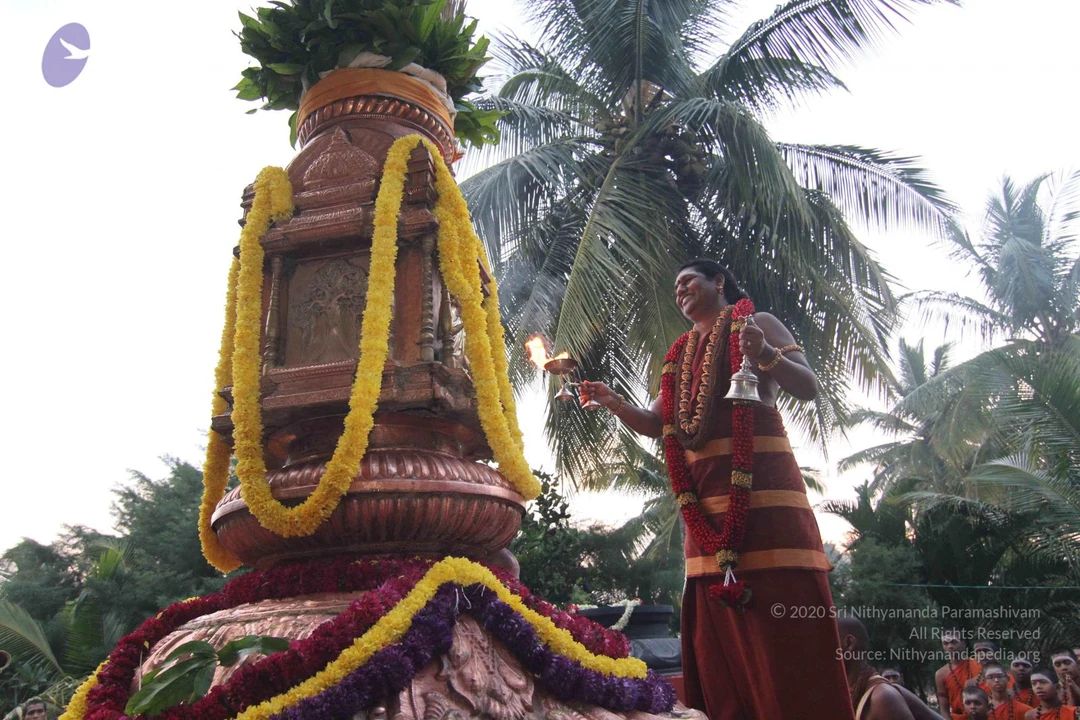
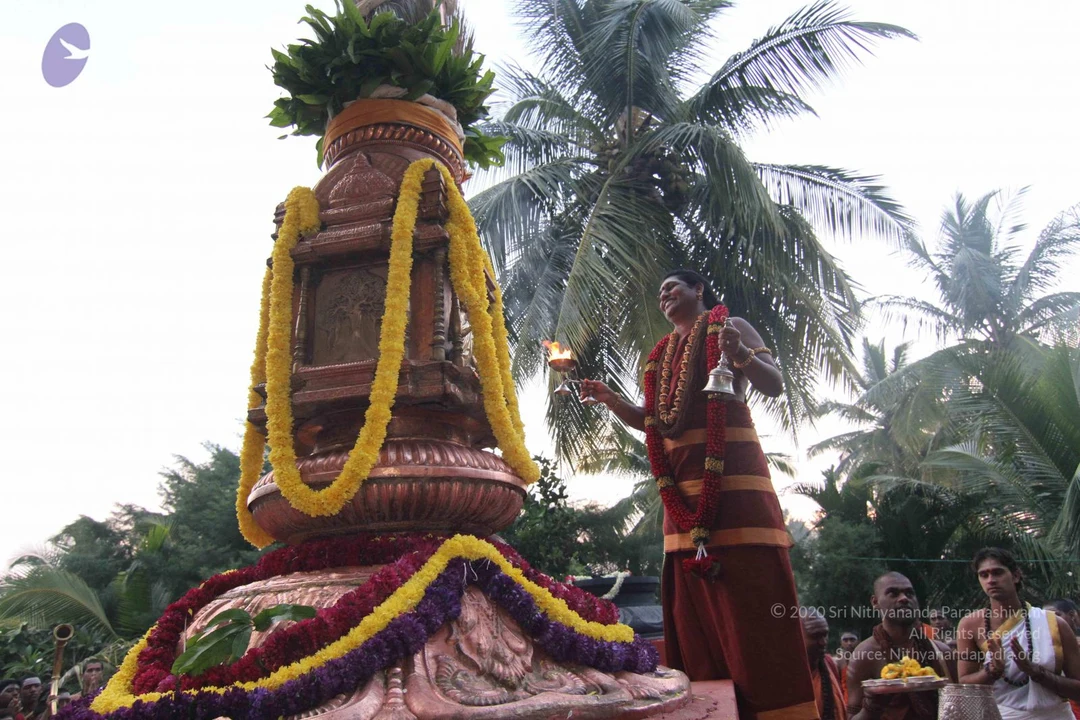
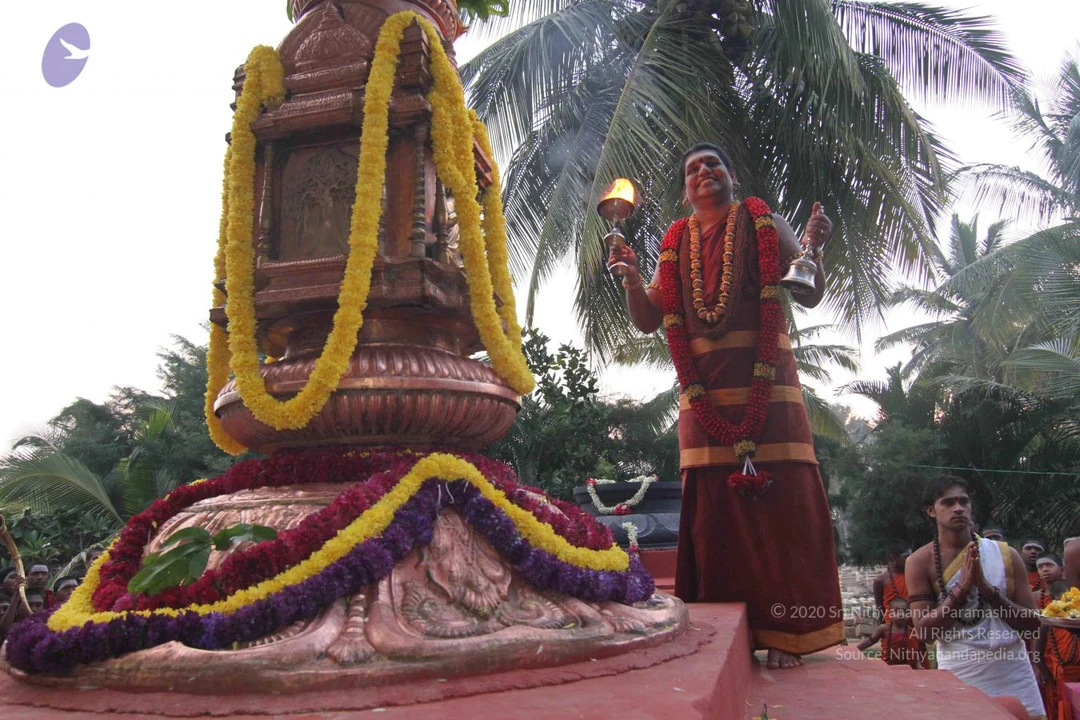
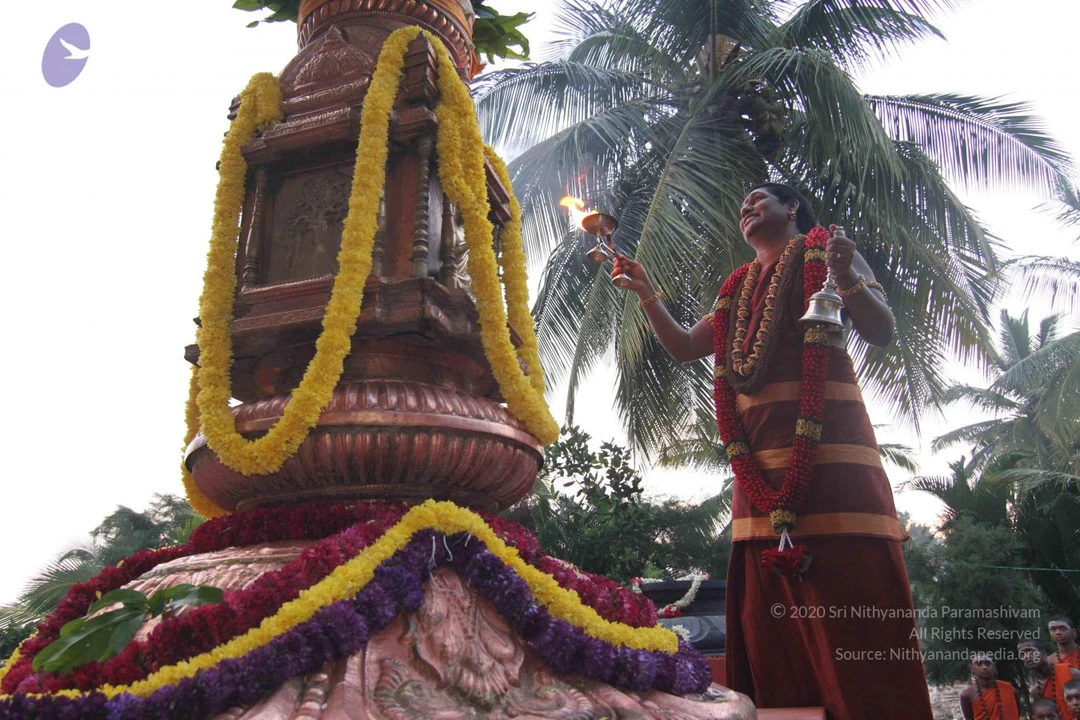
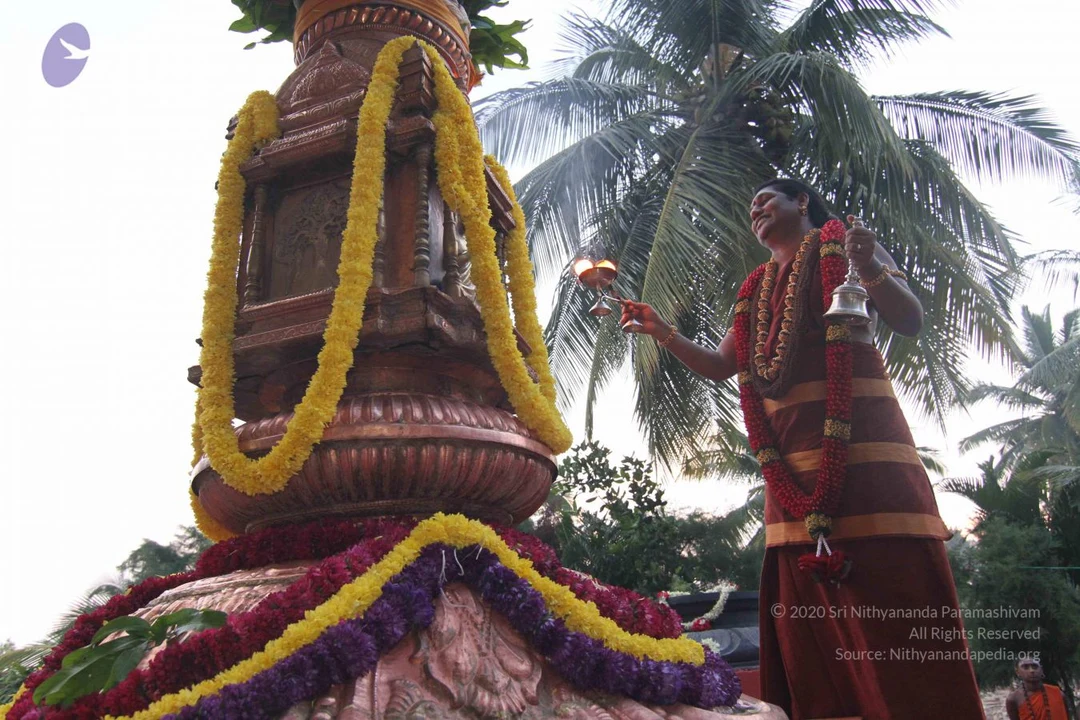
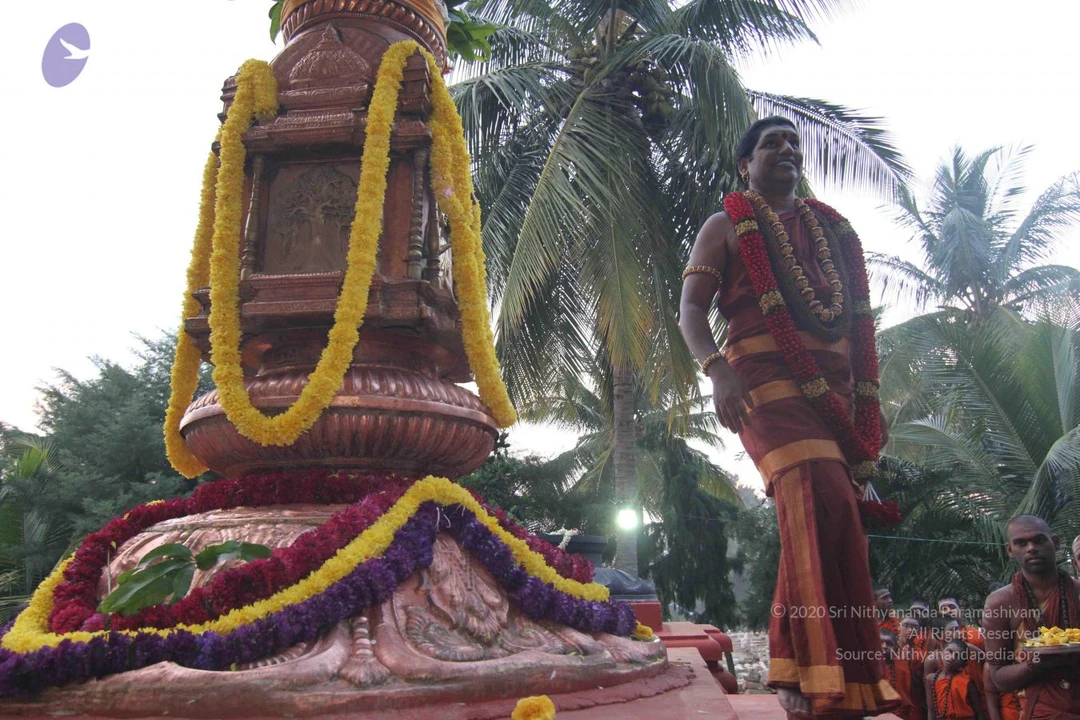
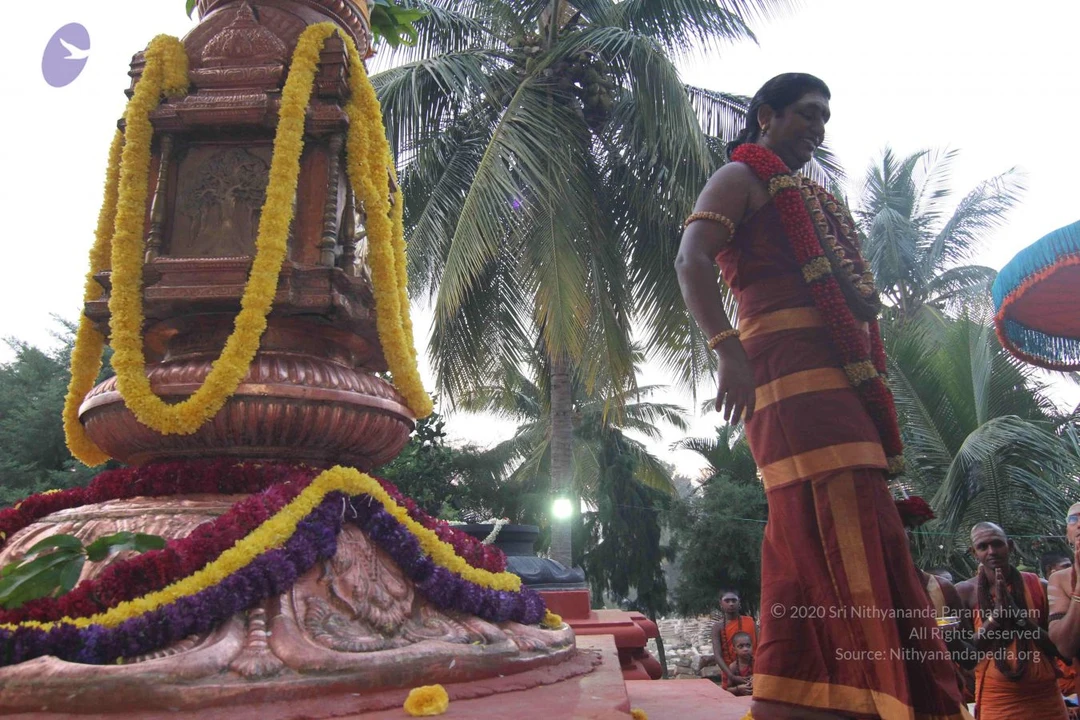
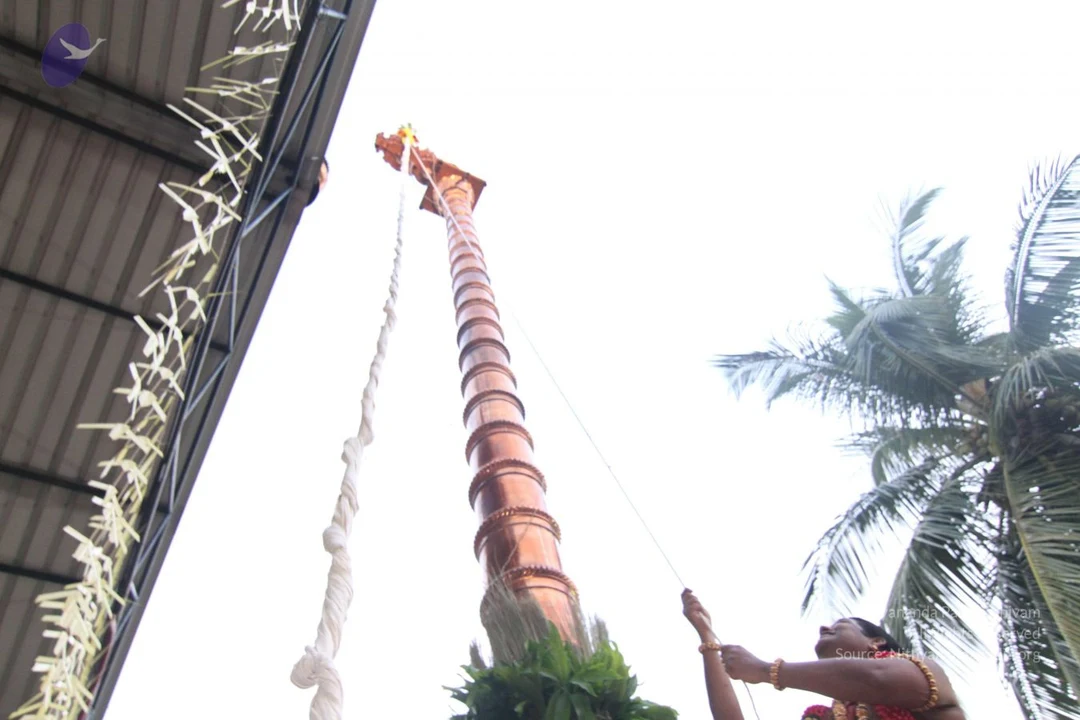
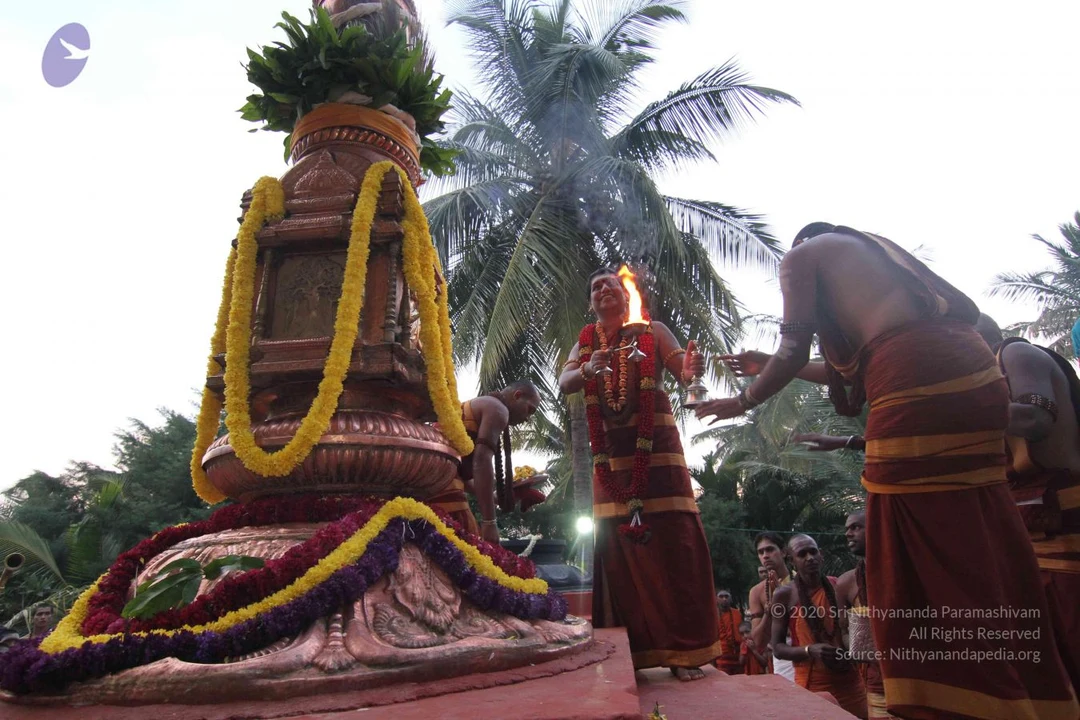
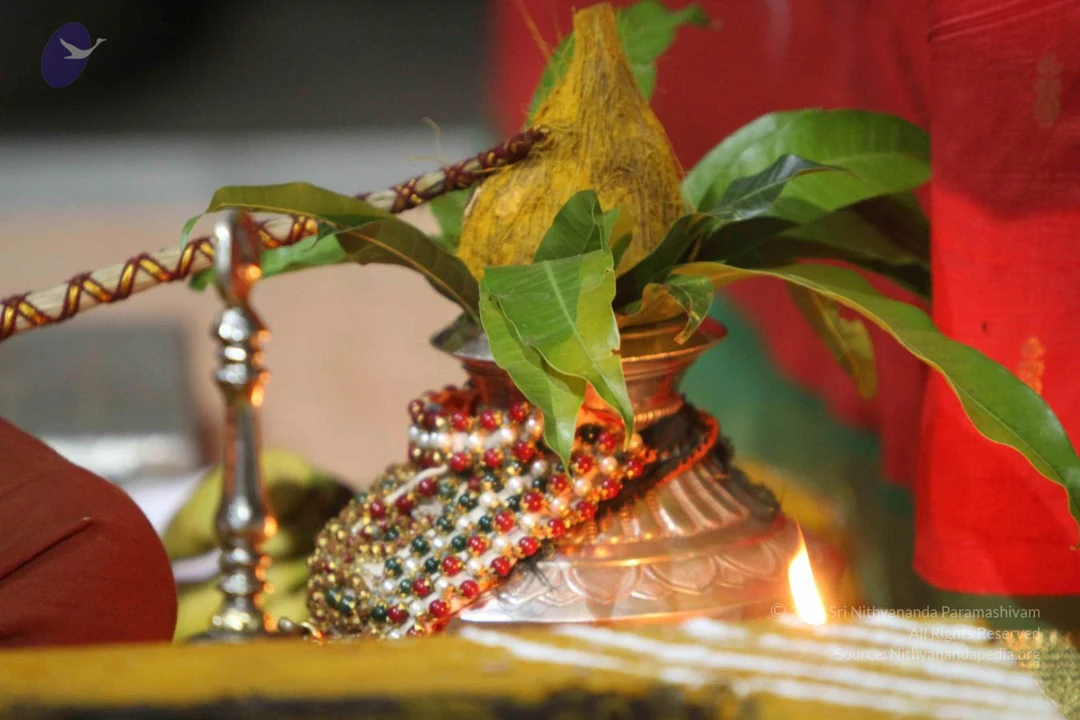
Dhwajarohanam is done! Flag is raised for Nithyanandeshwara Brahmotsavam! So, I invite all the Devatas, Ganas, Rishis, Kinnara, Kimpuruda, Gandharva, Siddha, Yogi, Jnana, Videha Muktha, Jeevan Muktha, Shivagana, everyone, to celebrate this great celebration on this amazing spiritual “punya bhoomi”, Bidadi Kshetra.

Cities sitting with us in two-way video-conferencing having Nayana Deeksha: Oklahoma-Somanatham, Seattle-Chidambaram, Los Angeles-Arunachalam, Toronto-Thiru Kailasam, Morris Plains-New Jersey, Houston-Kalahasti, Scottsdale-Arizona, Hong Kong-Sirkazhi, Chicago, Amersfoort-Netherlands, Los Angeles, Vizhupuram, Los Angeles-Hollywood, Charlotte-Srisailam, Sadhanananda, China, Hyderabad, Guadeloupe, Tiruvannamalai, Dakota Dunes, Paris, Ohio, Malaysia, Singapore-Singapuram, Ohio-Prayag, Rajapalayam, San Jose-Madurai, Dubai, Nepal, Warrington-UK and many more cities are joining. Hong Kong-Sirkazhi.

I welcome all of you with my love and respects.

As I committed, I’ll continue to expand on Keep It Simple Shivoham Series. Keep It Simple Shivoham Series.

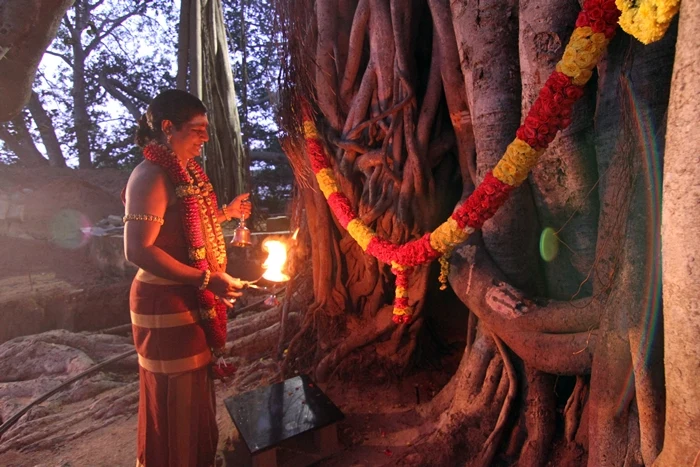
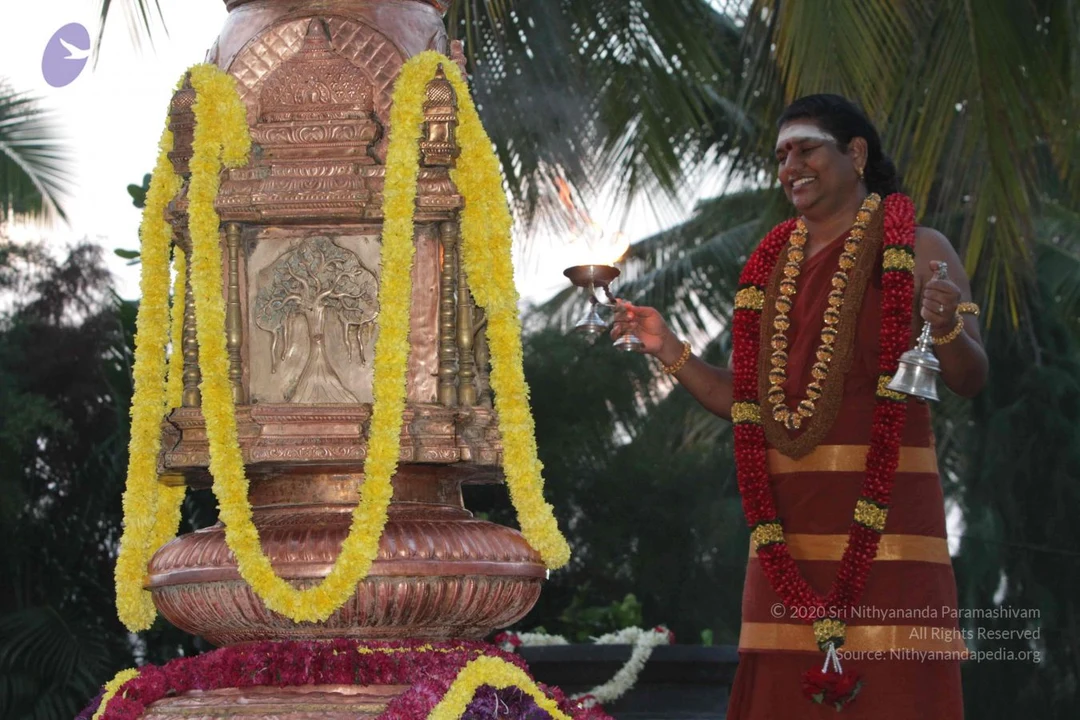
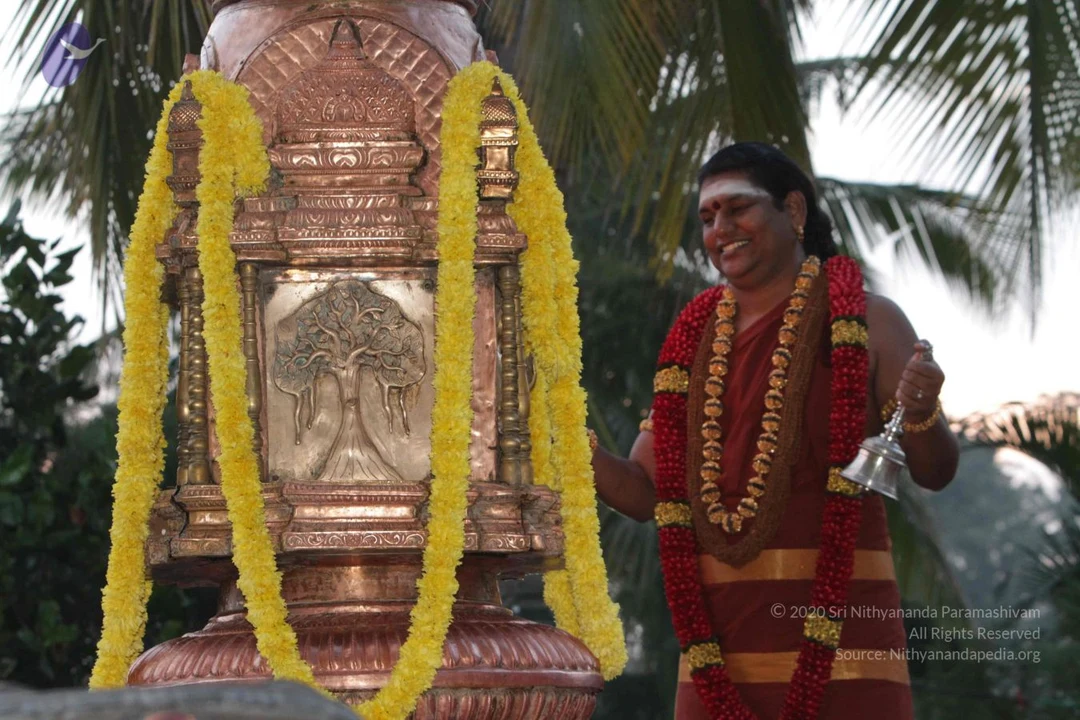
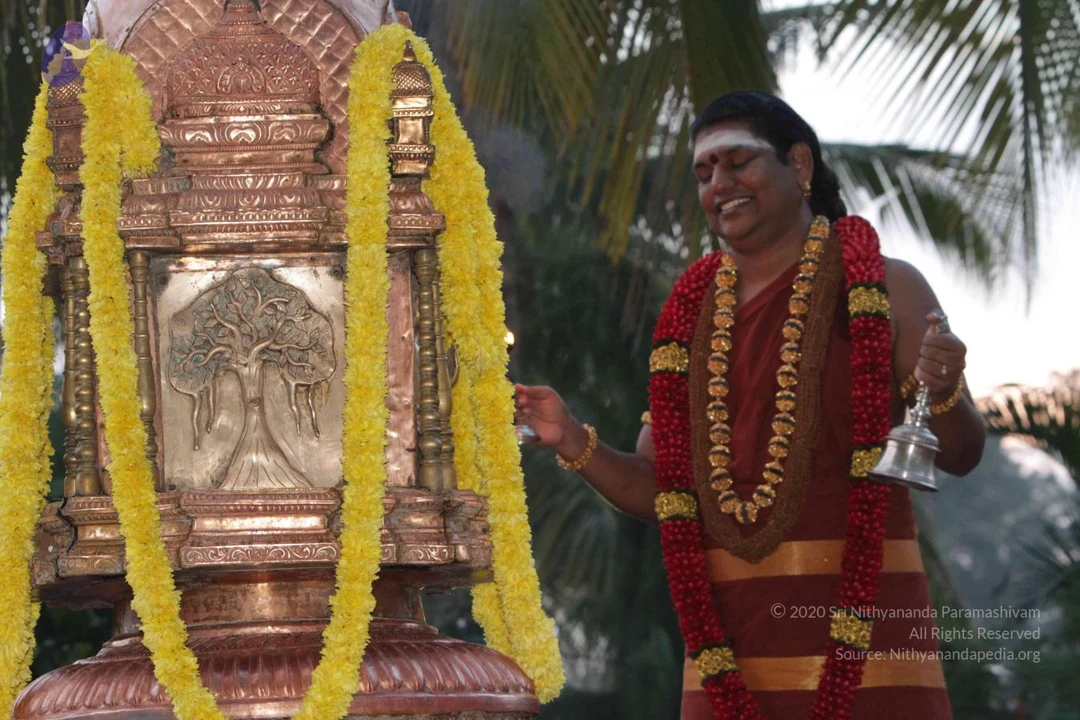
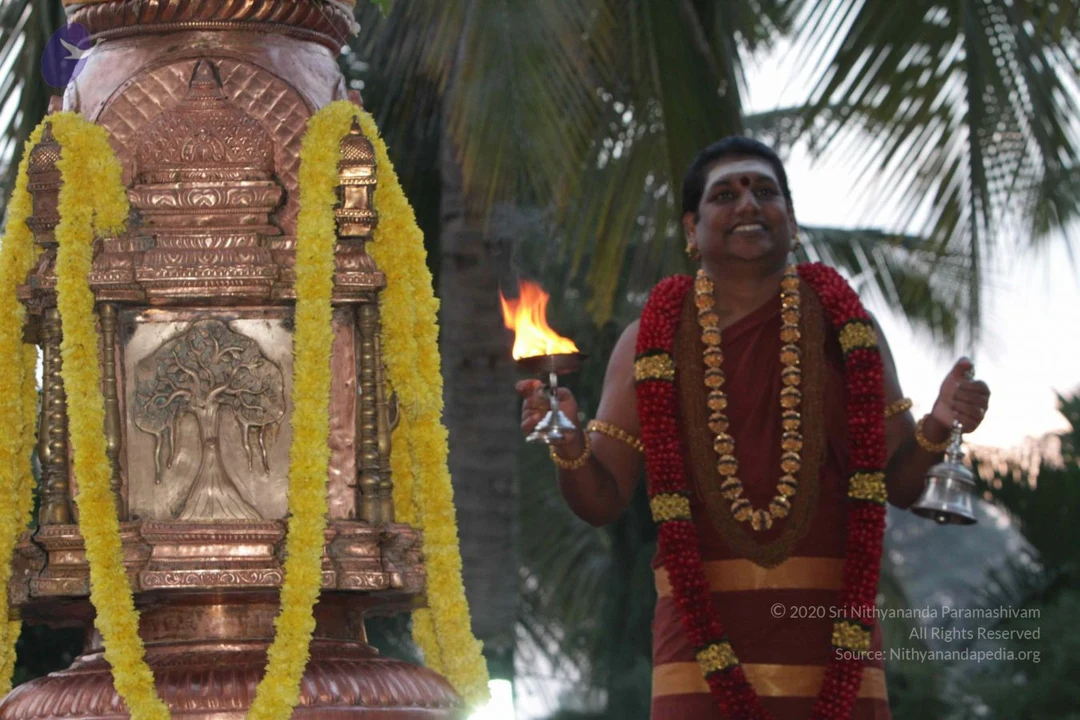
Listen. Today let us all invoke Mahadeva into our being so that he can make us experience Shivoham, just like he gave this same experience to Devi. I don’t know how many millions of years before, but on this very day, Karthigai Deepam day, which is falling on this year December 5th, Devi was given that Shivoham experience by Mahadeva. We are celebrating the same Brahmotsavam. We are celebrating the same festival as a ten-day festival, Brahmotsavam.

First thing, from today, till January 13th, means Nithyananda Brahmotsavam – my birthday – till then, all over the world, we will also do, and we will inspire millions of people to chant and reside in the space of Shivoham, at least thirty-eight crore times. If one person continues to reside in that space and does Ajapa Japa of Shivoham, he will do at least one-lakh times, understand. When you do Ajapa Japa, it is not that every second you chant once; your heart chants, your lungs chant, your throat chants! The depth, more and more depth it goes into your being, more and more parts of your being resonates with that Shivoham! So, only when you start, it will be like every second you will chant once – Shivoham, Shivoham, Shivoham, Shivoham; but by second day, third day, especially if that space has started penetrating into your dream. First it will penetrate as a word; then you will see it will penetrate as a space. As long as it remains as a word, I can say, once a second, japa will happen. When it penetrates into the being, your whole body is vibrating. So it cannot be counted as once; it cannot be counted at all! Your whole being is constantly sending the intense waves of Shivoham to the world! Let’s make at least a few lakh people radiate the space of Shivoham and culminate it into Adi Rudra Maha Yagna, with the central theme of “Shivoham”.

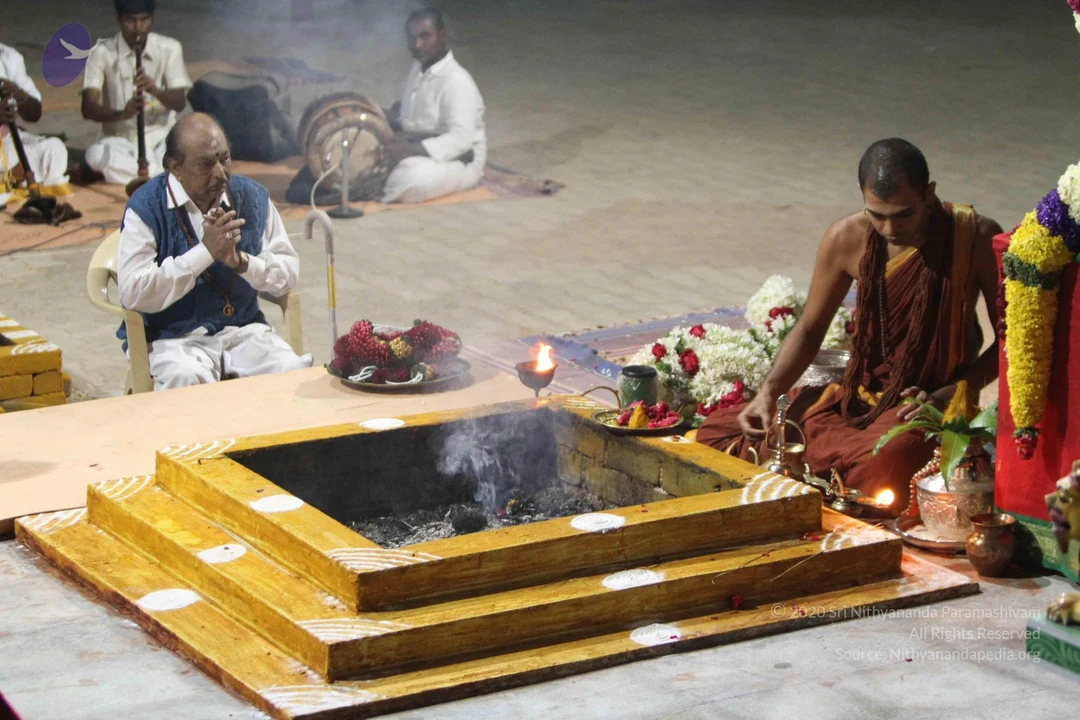
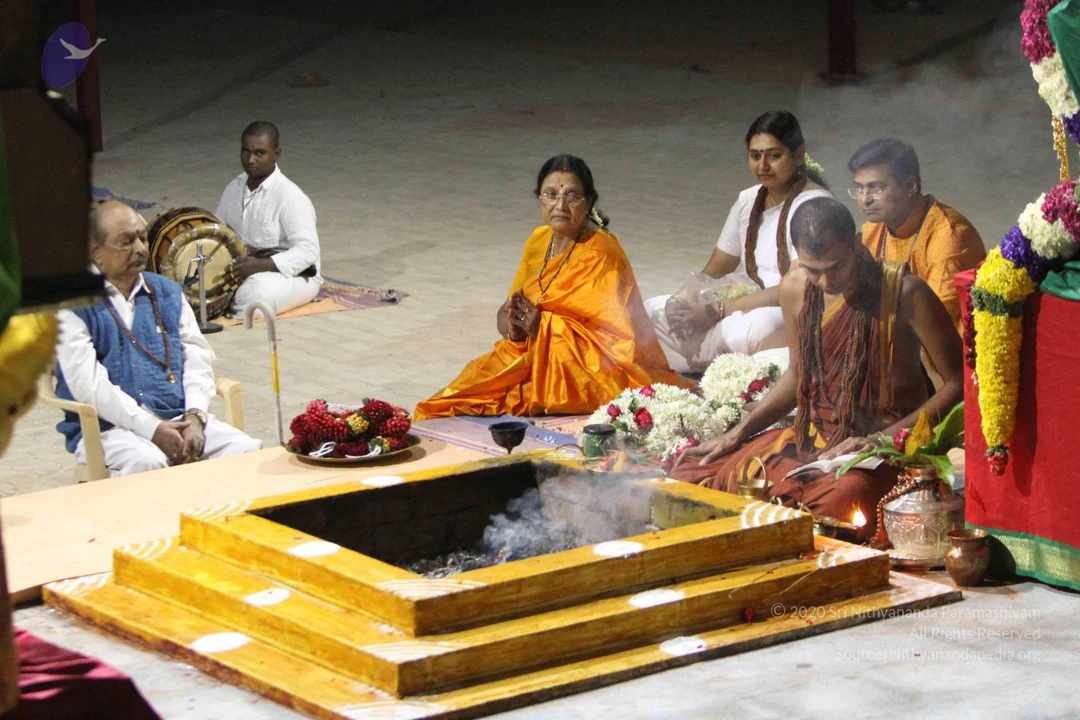
January 11, 12, 13, we are going to have Adi Rudra Maha Yagna with 108 Homa Kundas, 108 priests, trained priests, sitting and chanting, doing Rudra Homa continuously, with all our sannyasis, brahmacharis, devotees, gurukul kids, rishis, all of them also joining.

Let’s make this great offering to Mahadeva and surrender to him, asking him to shower all of us with the experience of Shivoham.

And enrich as many numbers as possible. All the Kotharis, Thanedars, Mahants, devotees, disciples, when you are going for “bhiksha prachaara yatra” every day, request people to chant Shivoham. Give “naama dhaana”. Formally, with the grace of Mahadeva, I give you all now the naama dhaana, Shivoham,Maha Vaakya dhaana, Shivoham, and I authorise all of you go round and give this Maha Vaakya dhaana, Shivoham. It is Maha Vaakya and Maha Mantra, both!

“Mantra” means: Worshipping the Lord. “Maha Vaakya” means: Realizing you are the Lord. In this “Shivoham”, both happen! In “Aham Brahmasmi”, only realizing you are the Ultimate happens; Maha Vaakya. In “Namah Shivaya”, only worshipping Mahadeva happens. In this “Shivoham” both happen! When you say, “Shivoham” – “I am Shiva” – it means what? You are surrendering you to Shiva, you are offering you to Shiva, you disappear into him, you relax into him, you rest into him! So, “Shivoham” is Maha Vaakya and Maha Mantra, both together.

Go around and give Maha Vaakya dhaana, Maha Mantra dhaana, naama dhaana. And make as many people as possible chant Shivoham, Shivoham, Shivoham! Shivoham, Shivoham, Shivoham! Shivoham, Shivoham, Shivoham! Shivoham, Shivoham, Shivoham! Shiva! Shiva!

Be in the space of Shivoham, and help everyone chanting and being in the space of Shivoham. Help everyone to be in the space of Shivoham. Shivoham! Shivoham! Shivoham!

Understand the more and more you expand, more and more you experience, more and more you live Shivoham, more and more you become enlightened. Decide to merge into that space – Shivoham. Just be in that! Just be in that! That’s all! Just drop yourself, whatever you know as you, into Mahadeva, and see Mahadeva is there in the space you were in long, long ago, once upon a time.

I request, all over the world, all our temples also, raise the flag and start the celebration. It is the most important Brahmotsava in our Sangha. As Nithyanandeshwara is our “ishta devatha”, Mahadeva is our “ishta devatha”, all the temples should start raising the flag and start the Brahmotsava. This time “Shivoham” will be the theme, central experience of the whole Brahmotsava and more.

Understand, “enriching” means, really, really being active, alive, starting from the scratch, and raising yourself! That is why I am saying, start from going to house to house, enriching everyone with that experience of Shivoham. Start with that. Naturally you will find Mahadeva’s grace showering on you. Basically we are we are Shivates so this is the main Brahmotsava we conduct for Mahadeva. Even though we celebrate Shivaratri, it is a one-day festival. This is the ten-day Brahmotsava formally we celebrate for Mahadeva. Even the Chittirai Brahmotsavam we celebrate is centred on Devi; it is centred on Meenakshi. This is the only Brahmotsava we celebrate centred on Mahadeva. So everyone should celebrate, in all our centres, ashrams, temples; because, all of our temples are actually dedicated to Mahadeva. He is the main deity. So all our temples, ashrams, schools, institutions, all over the world, should celebrate this great Brahmotsava celebrating Mahadeva happening on the Planet Earth, and Mahadeva giving the experience of Shivoham to Devi.

“Karthigai Deepam” is the day Mahadeva happened, assuming the form of a huge light shaft, to give the Shivoham experience to Vishnu and Brahma, remove the conflicts within them, and incompletions within them, and bring Completion to them. And, this is the same day he appeared for Devi and gave Shivoham experience to her.

So, let’s celebrate all these great “utsavas”, all these great festivals, and experience Shivoham.

Essence of today’s satsangh: LET US ALL AUTHENTICALLY RADIATE AND ENRICH THE WORLD WITH SHIVOHAM, SHIVOHAM, SHIVOHAM!

With this, I bless you all. Let’s all radiate with Integrity, Authenticity, Responsibility, Enriching, and Causing eternal bliss, Nithyananda.

Title

Nithya Kirthan Nithyanadeswara Jai

Description

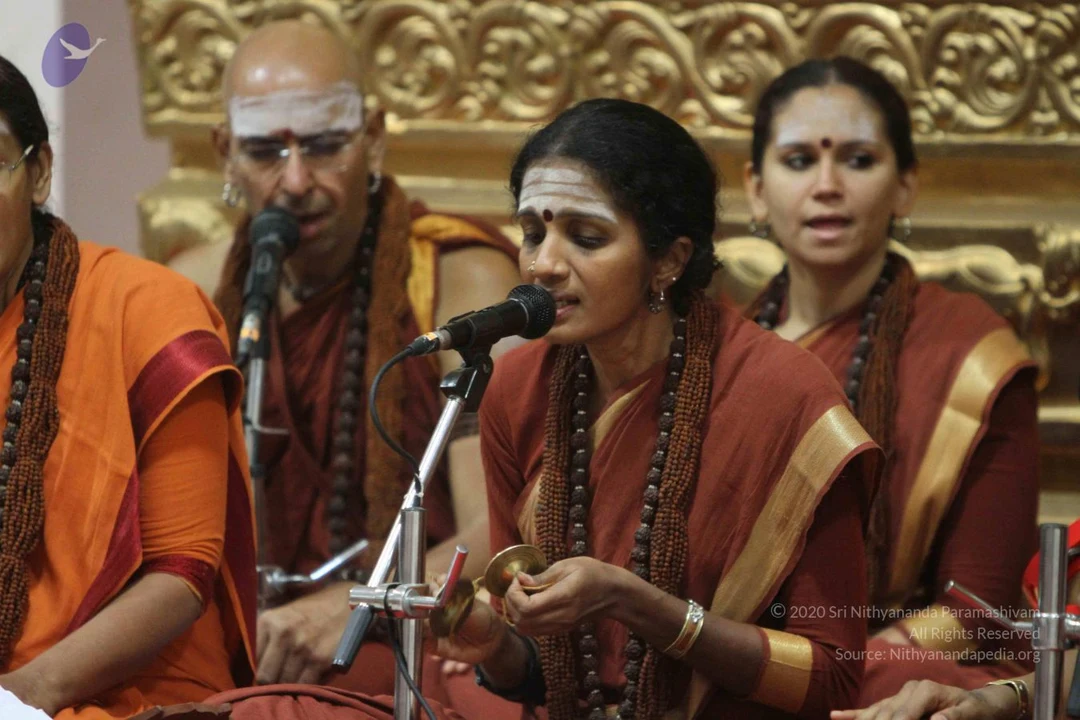
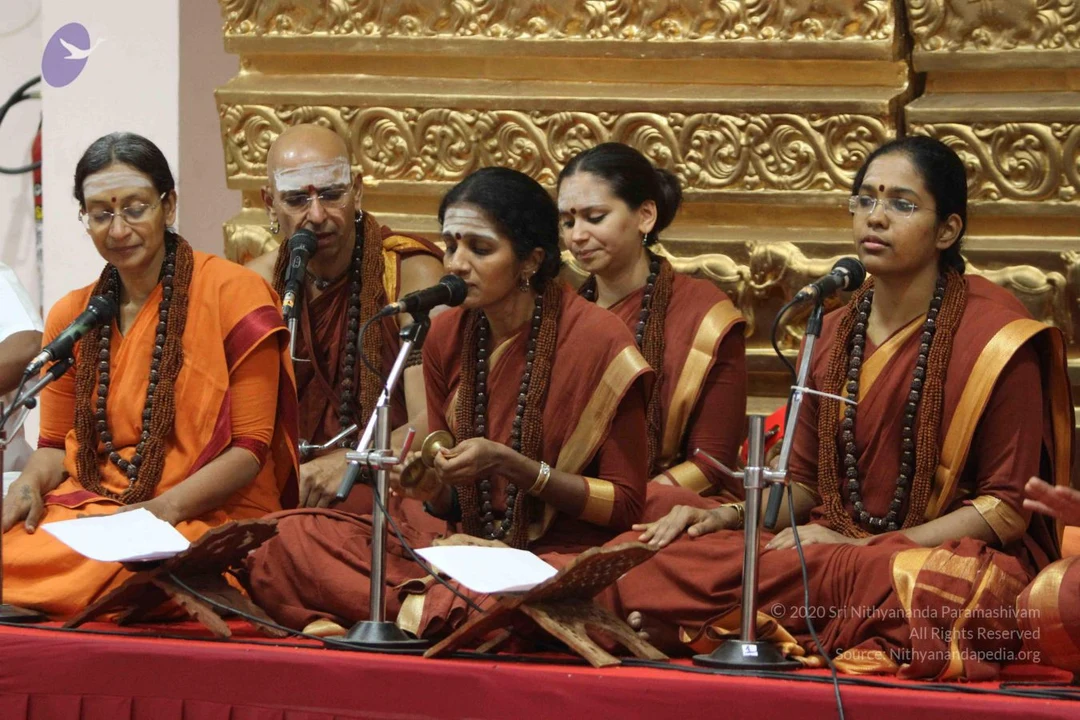
Nithya Kirtan Sung in the presence of Paramahamsa Nithyananda on the 26th of November, 2014

Link to Video:

Photos From The Day:
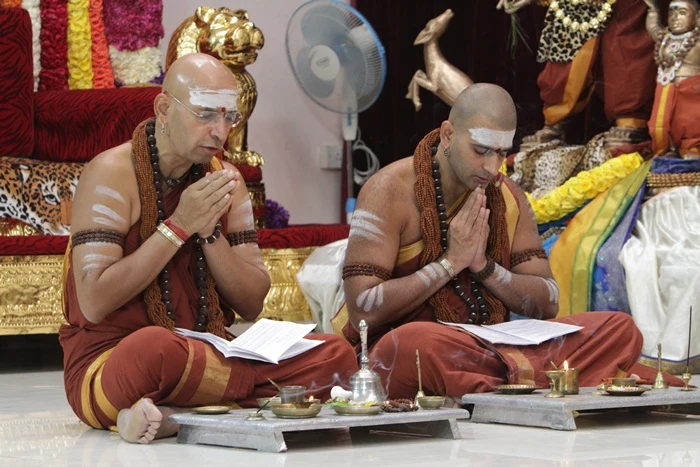
Tags:

Paramahamsa Nithyananda, Shivoham, being, live, enlightened, space.

Photos Of The Day:

NithyanandeswarBrahmotsav-Flaghosting

Nithyanandheshwara-Brahmotsavam-Floghosting

Morning-Satsang

Lawyers-Press-Meet

Sacred-Arts

Temple

Photos Of The Day:

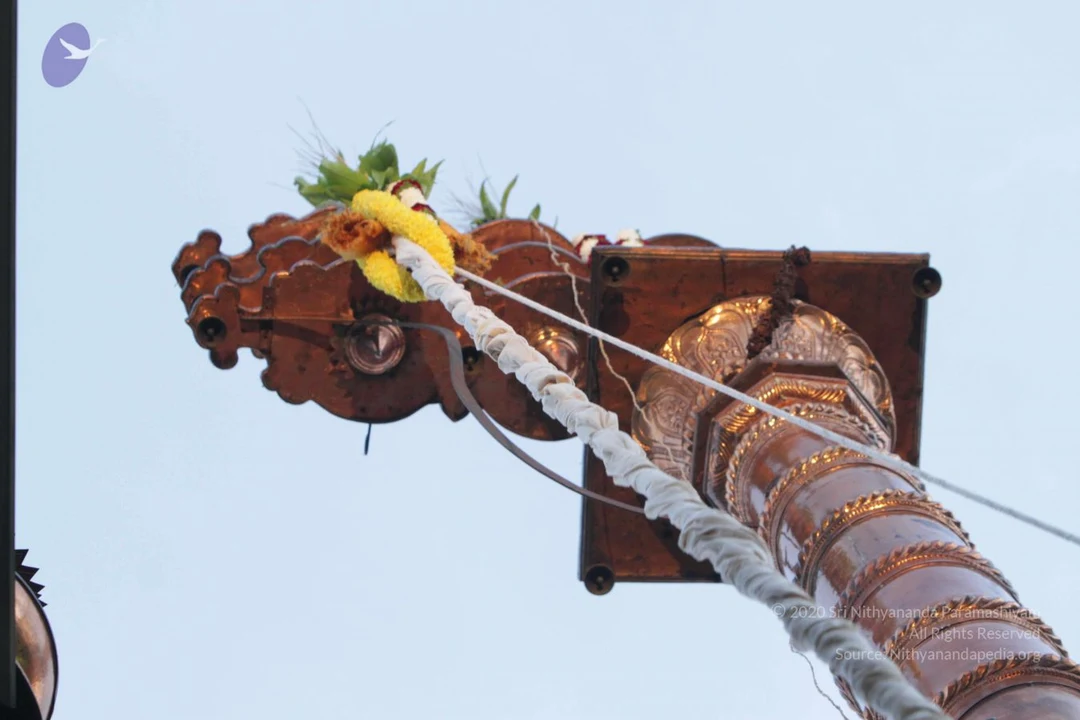
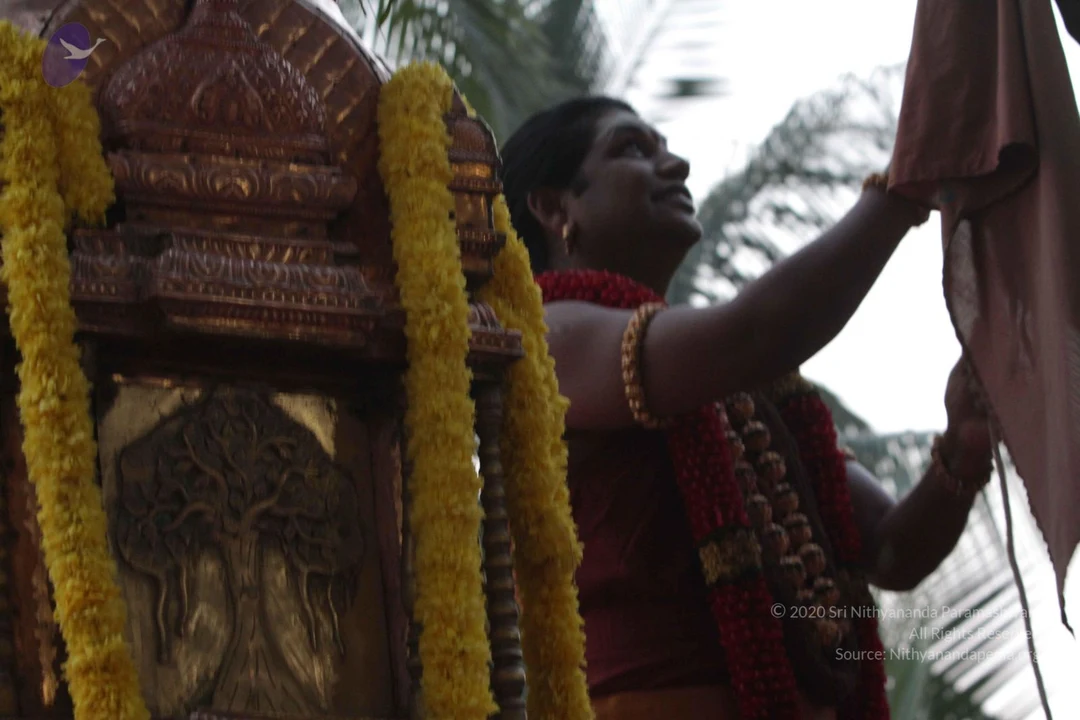
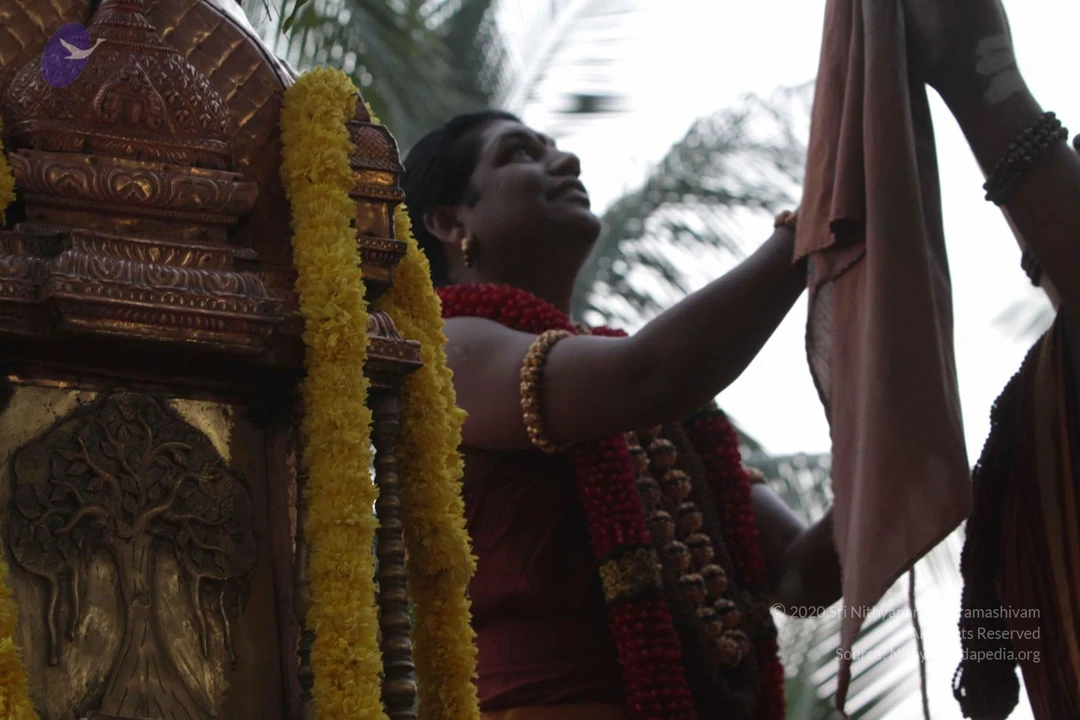
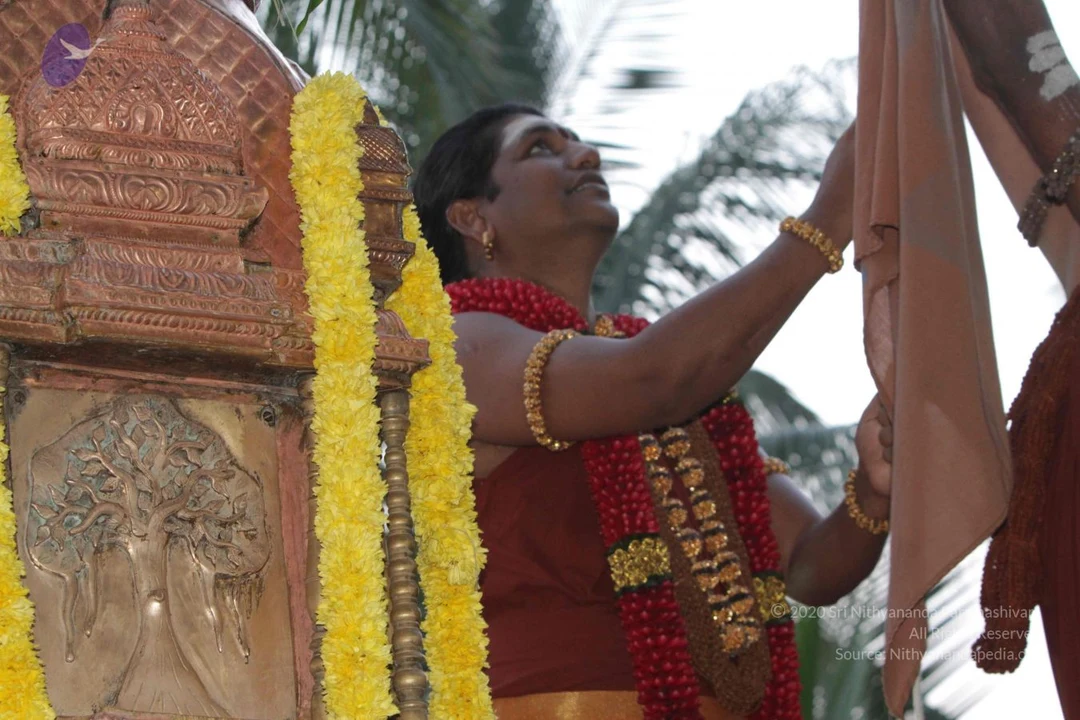
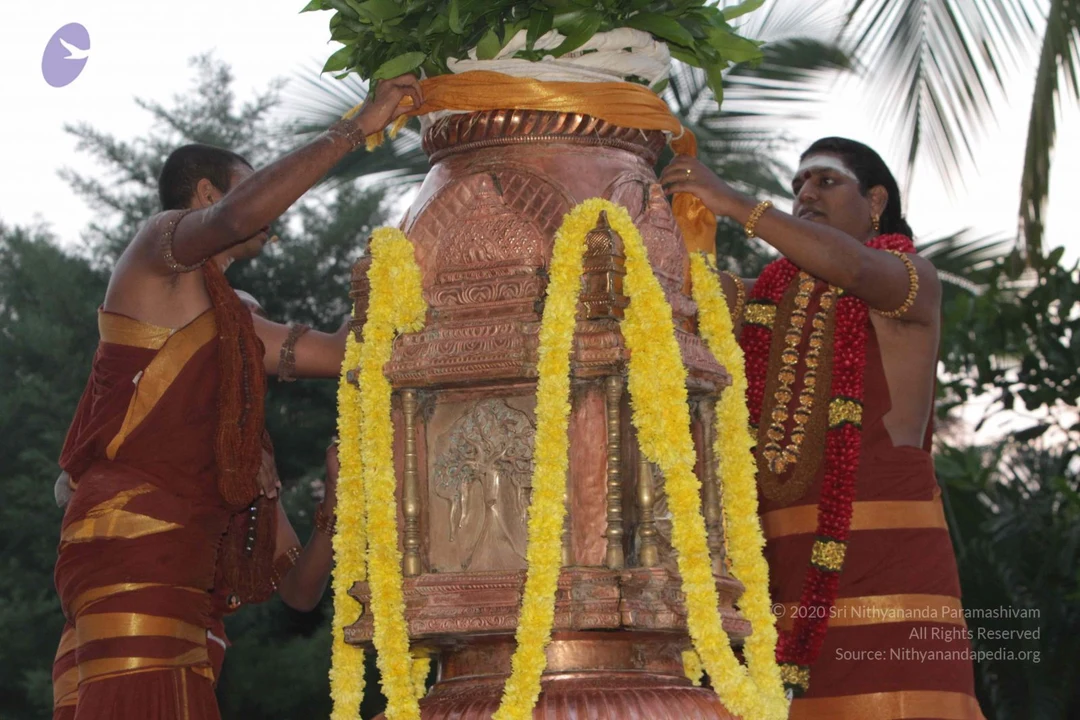
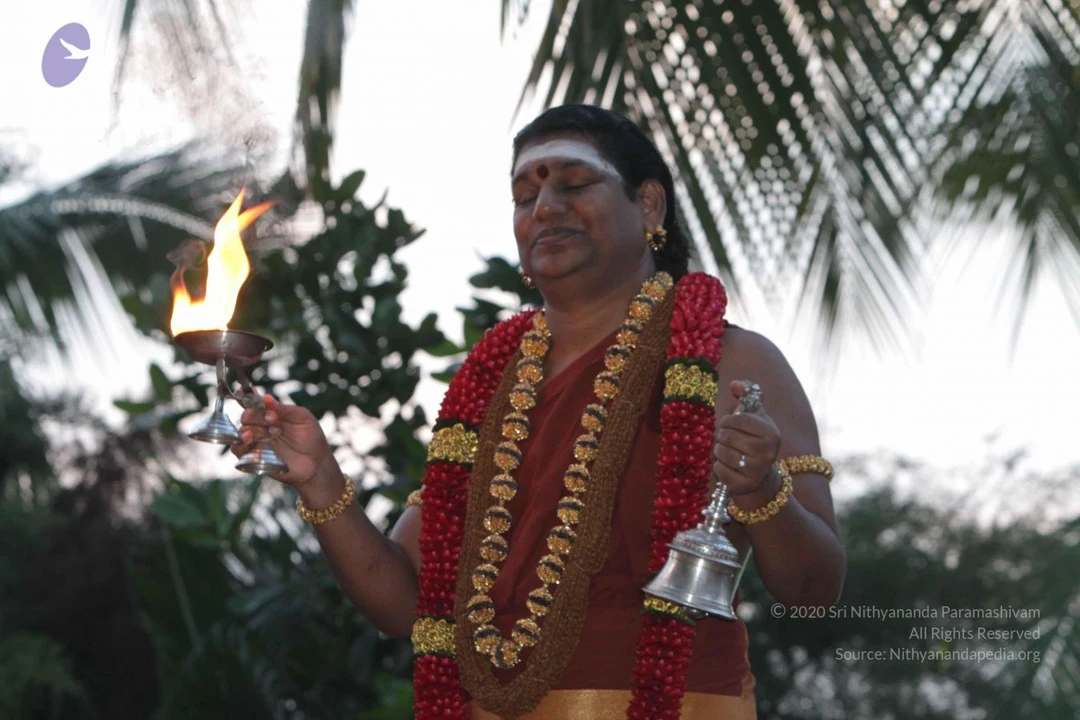
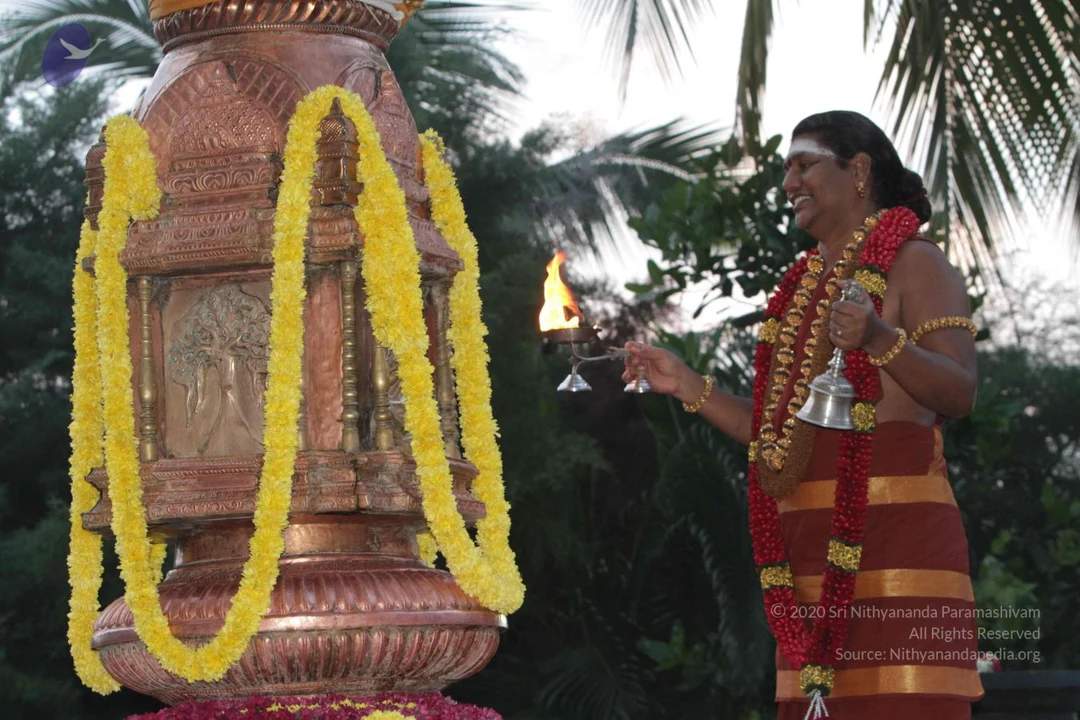
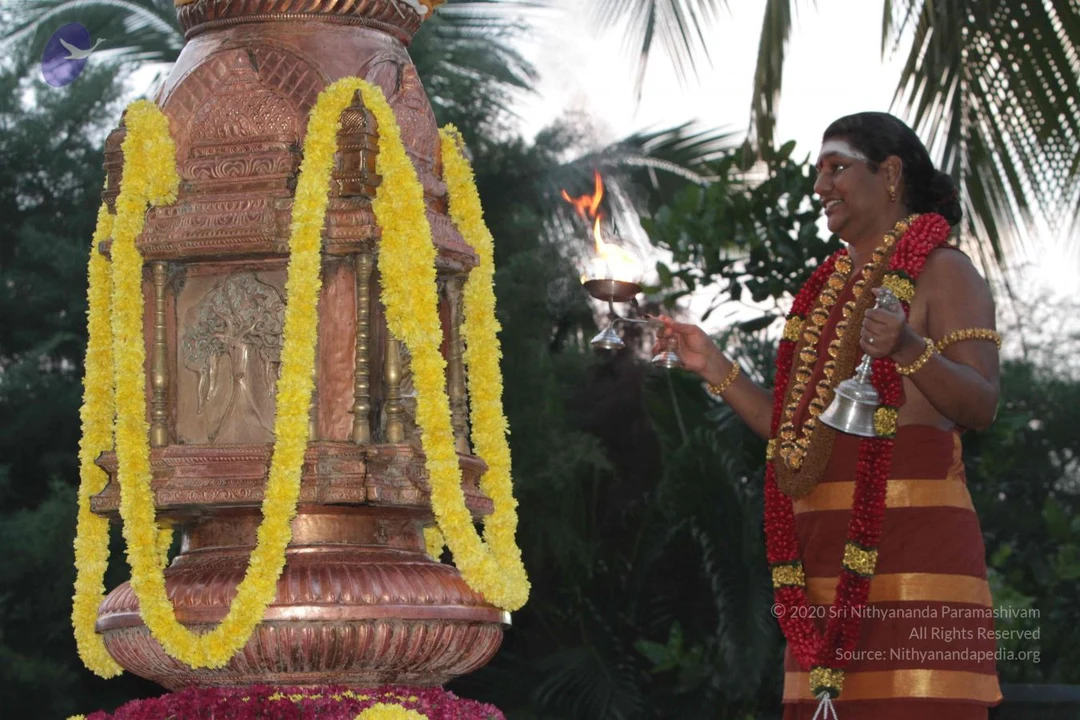
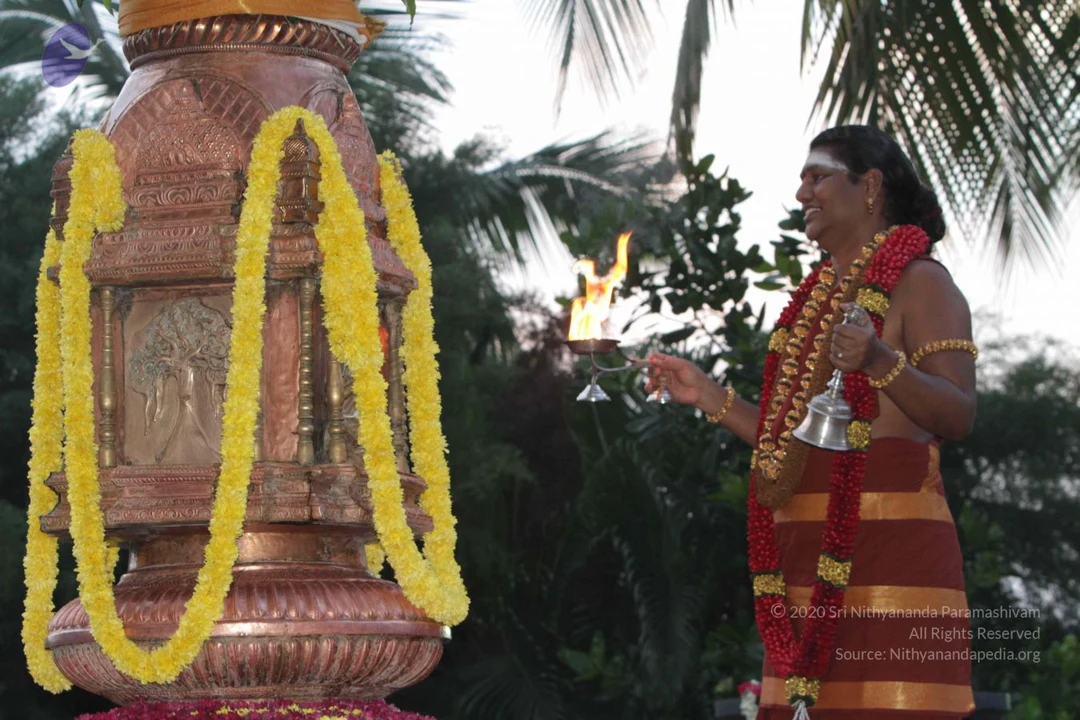
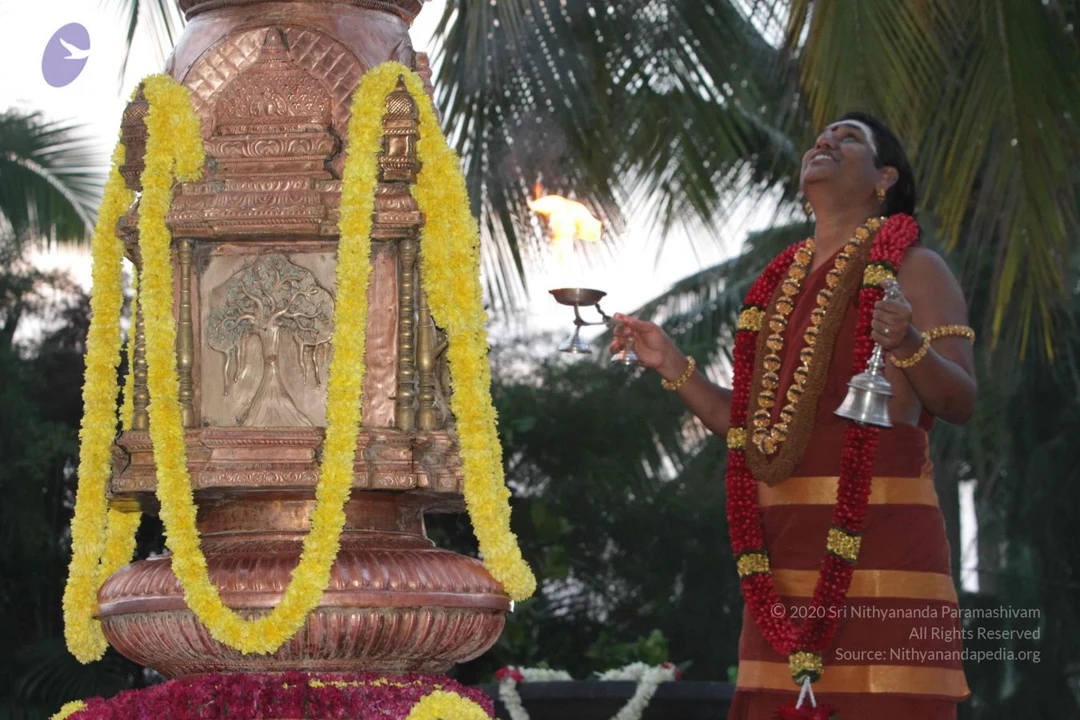
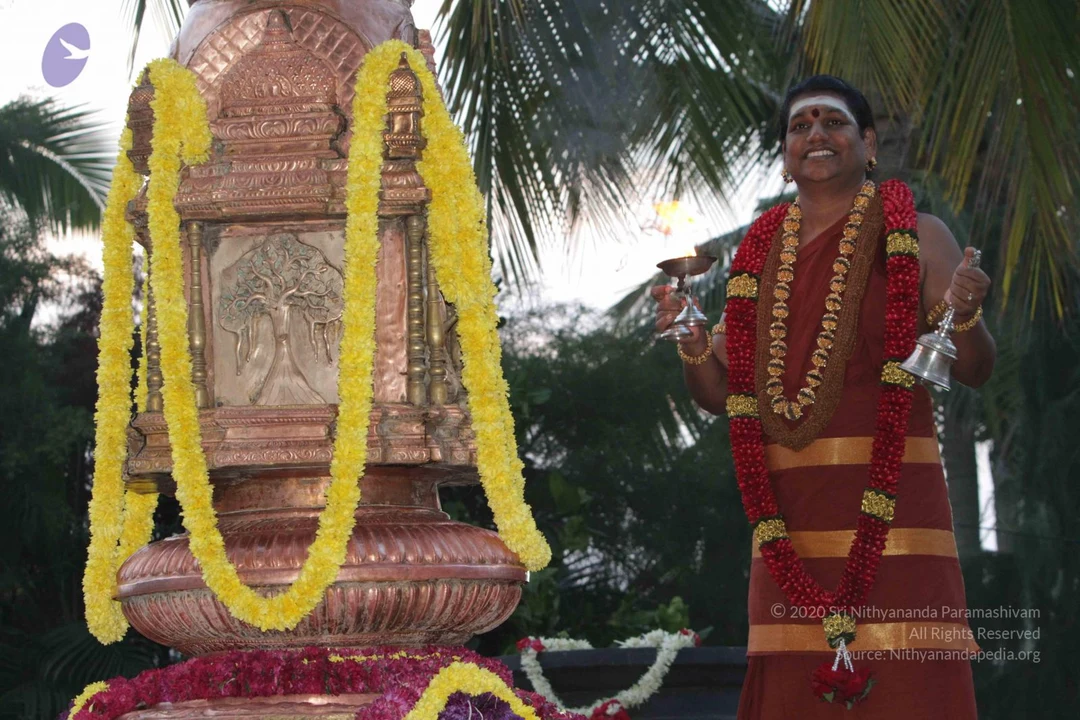
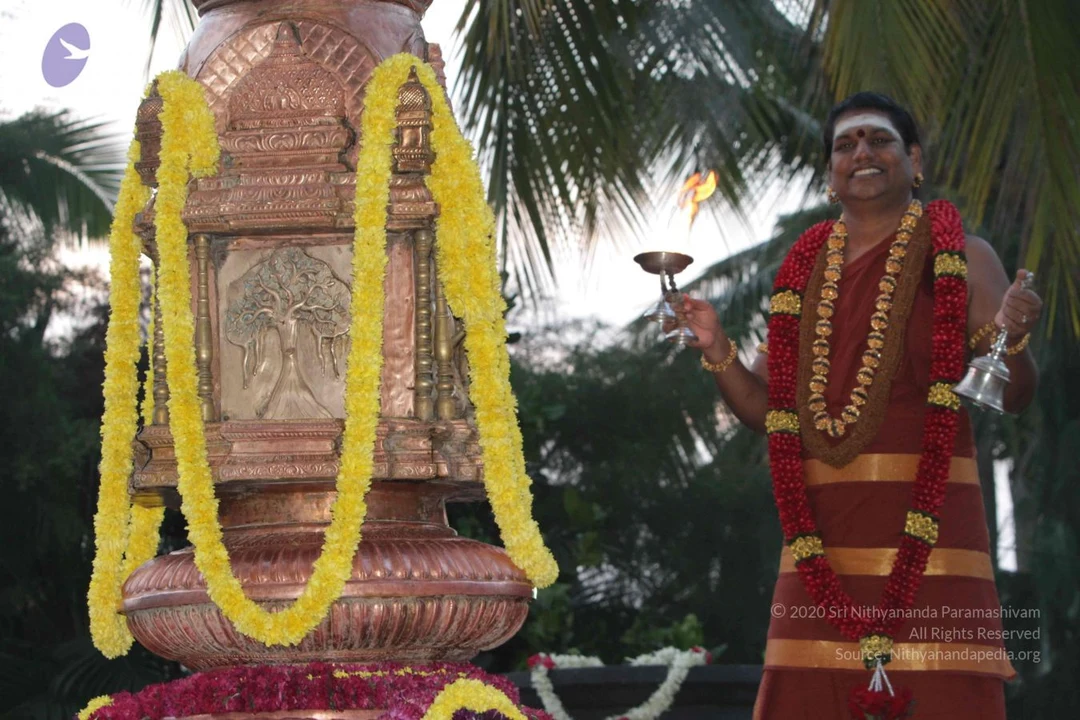
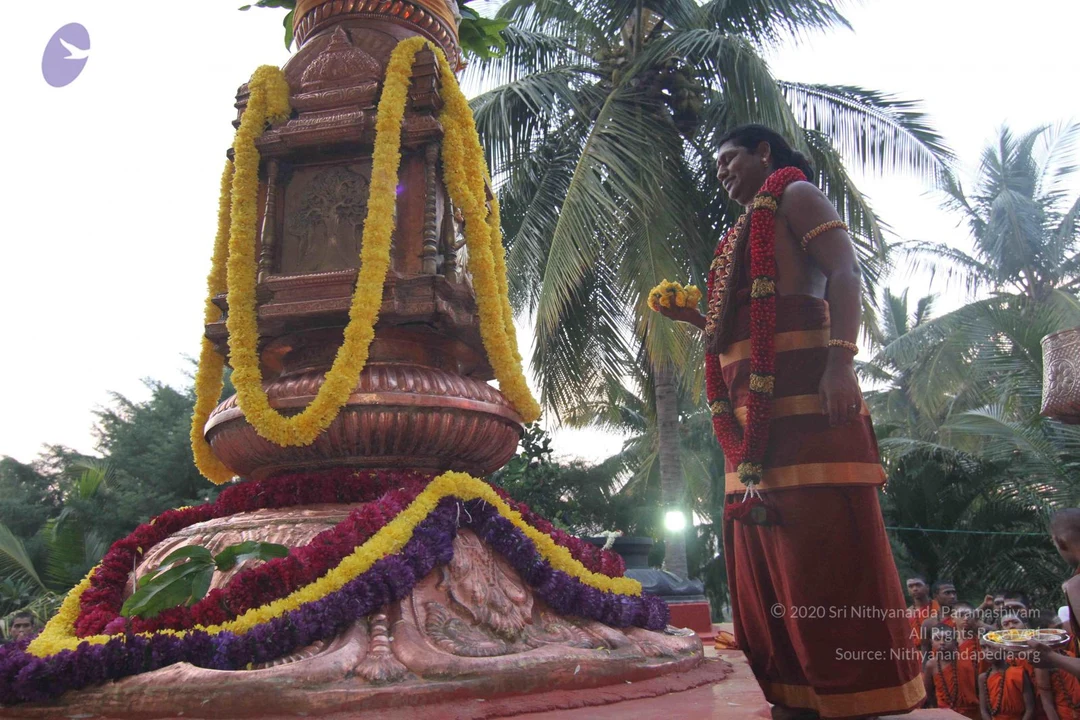
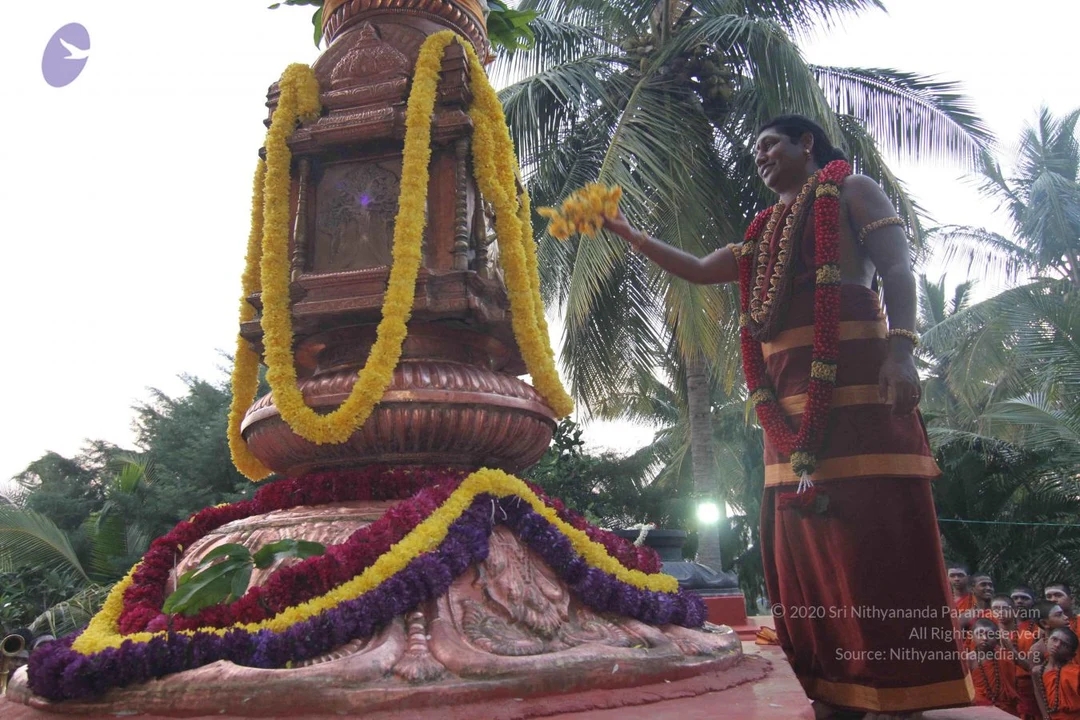
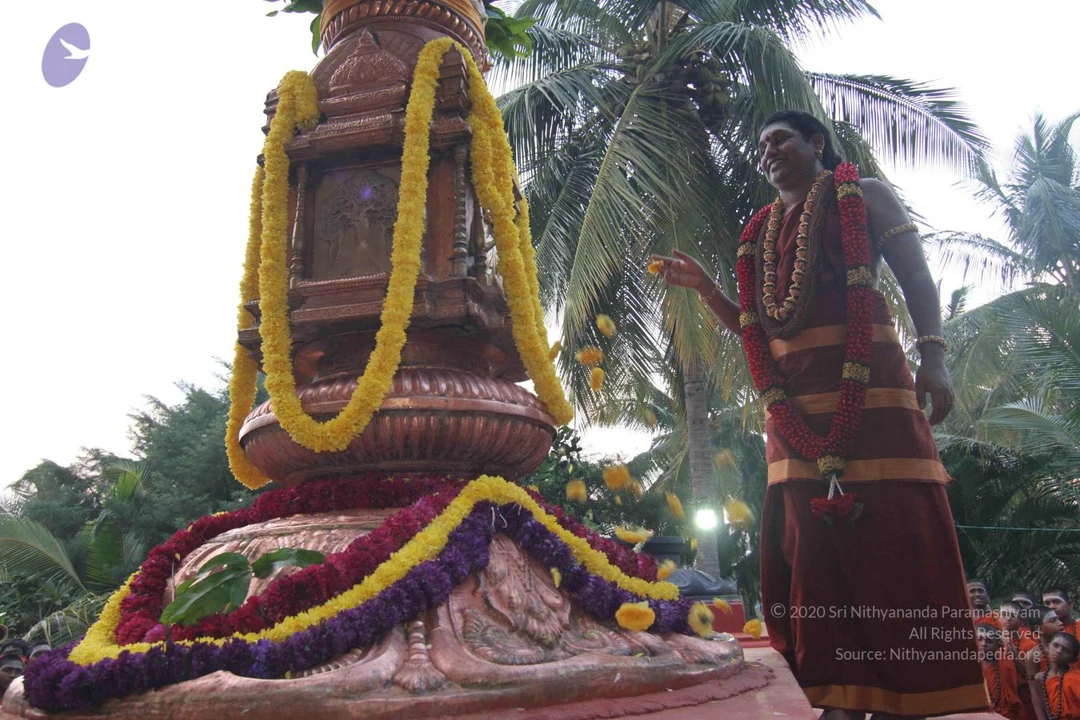
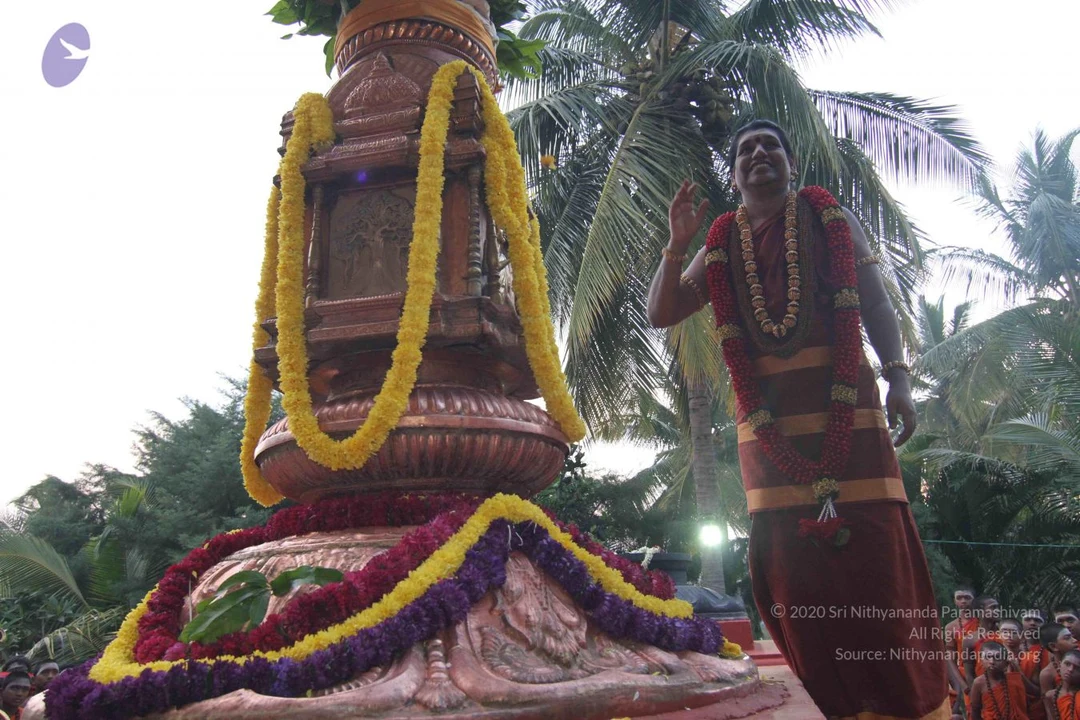
Nithyanandeshwar-Brahmotsav-Dwajarohanam

Nithyanandeshwara-Brahmotsav-Dwajarohanam

Morning-Satsang

Lawyer-Visits-Sacred-Arts

Engagement-Ramesh-Shanmugam

Photos from this day

View all 341 photos

Photos From The Day:
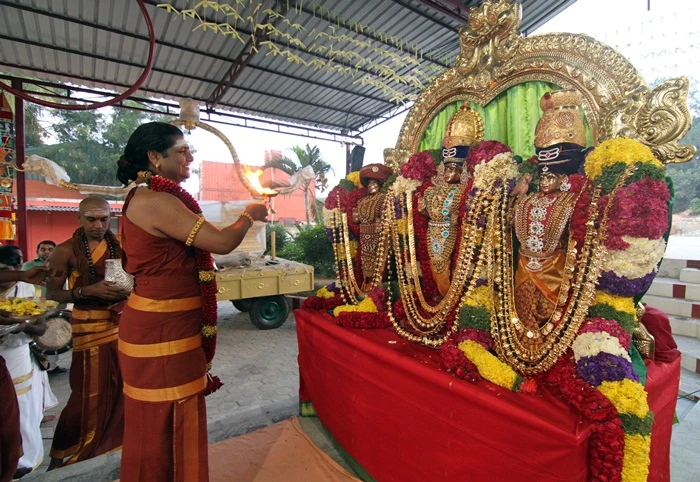
32 photosSource gallery
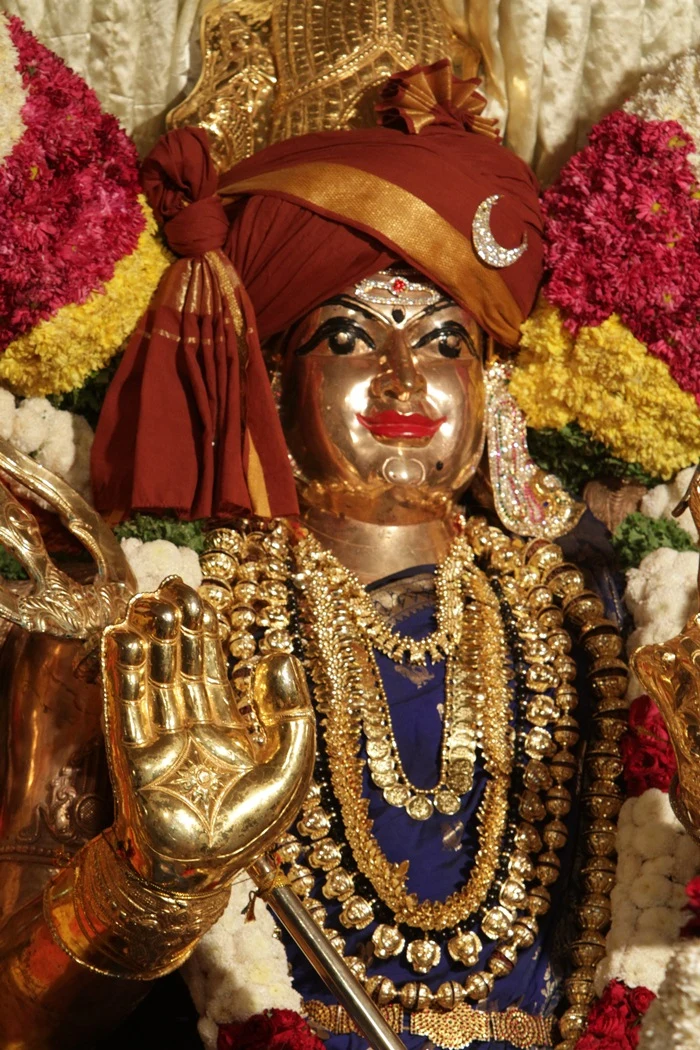
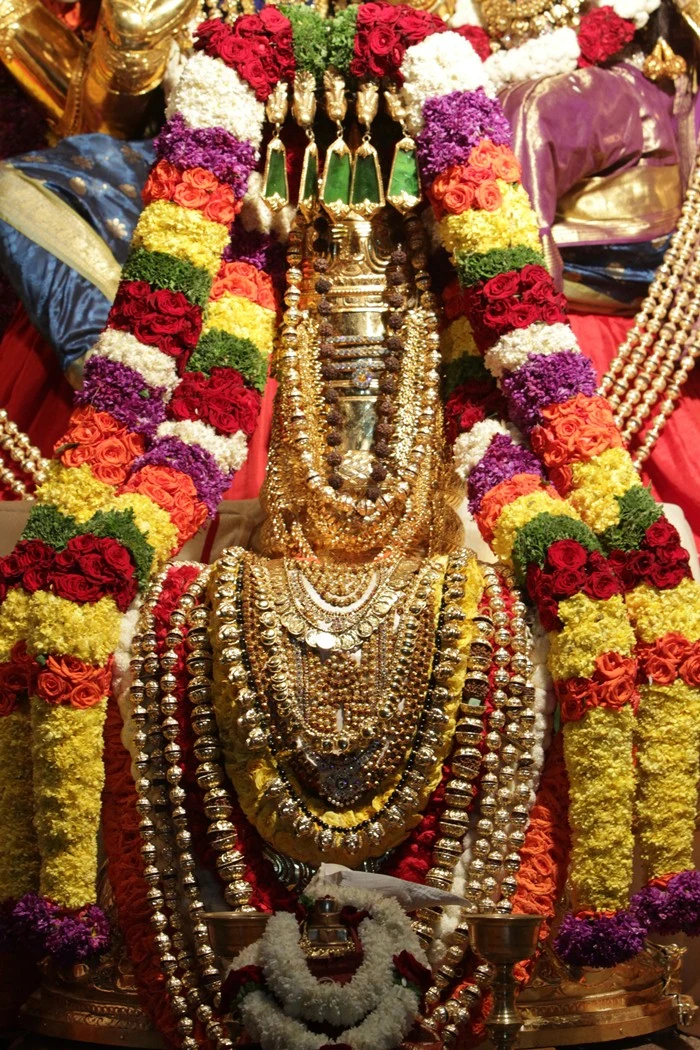
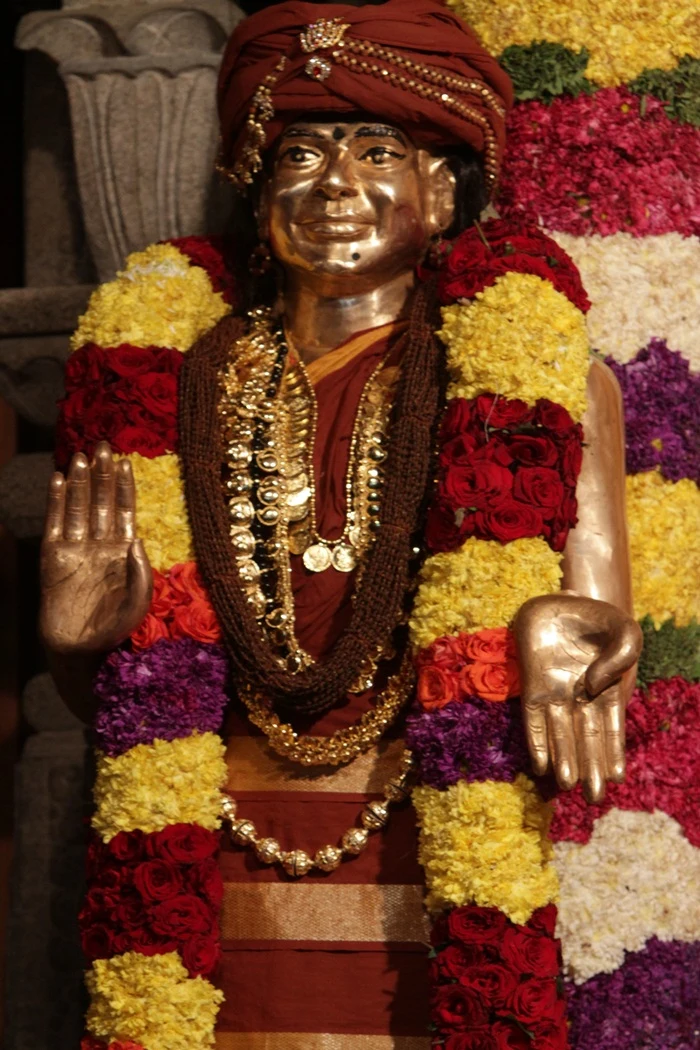
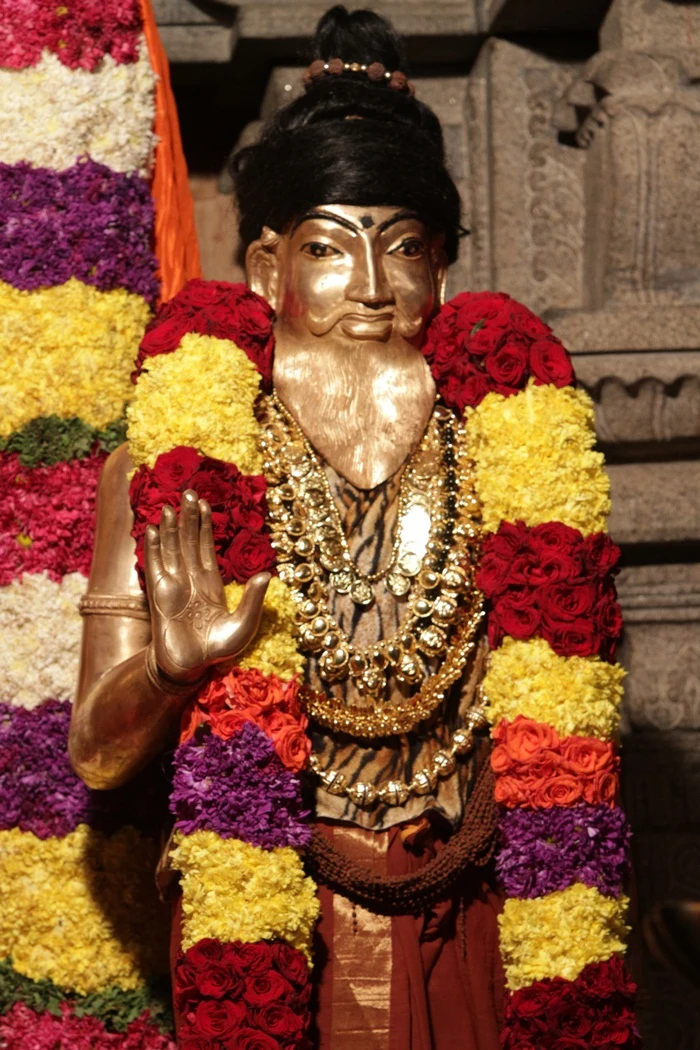
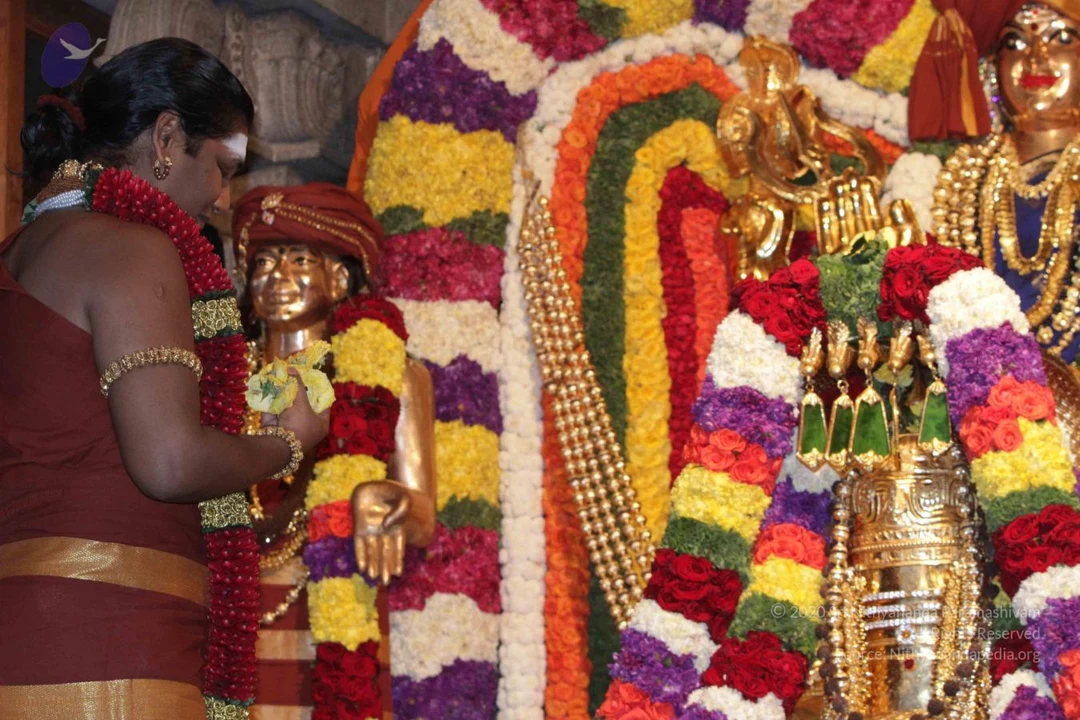
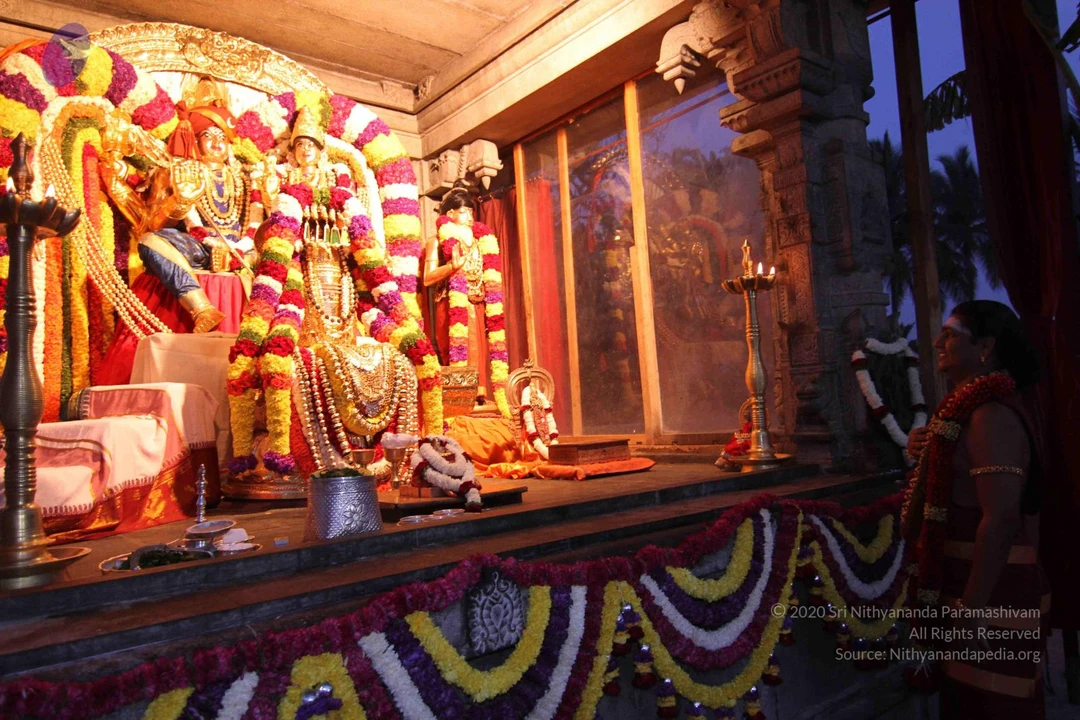
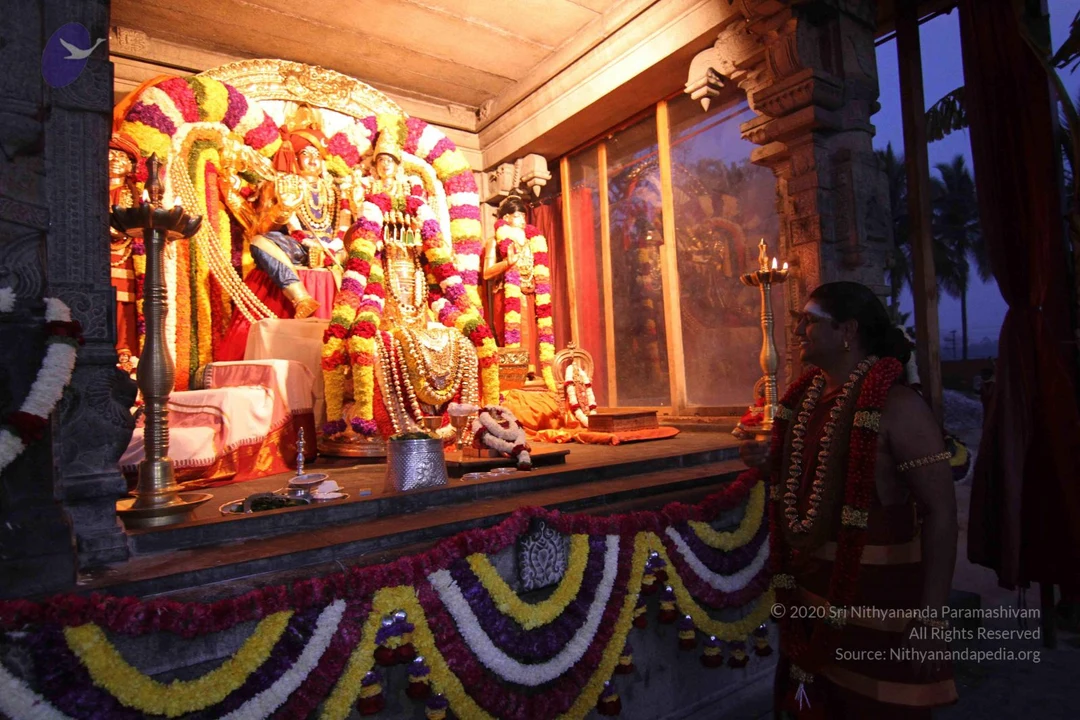
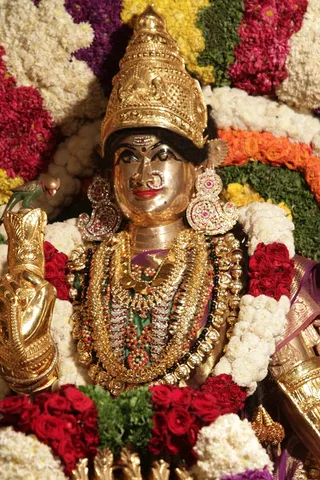
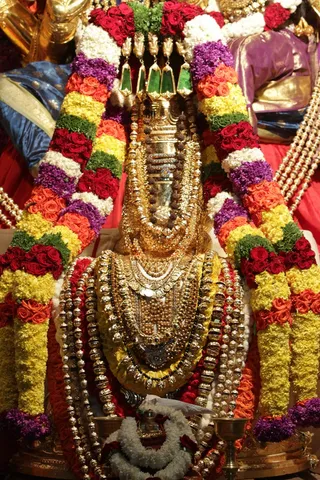
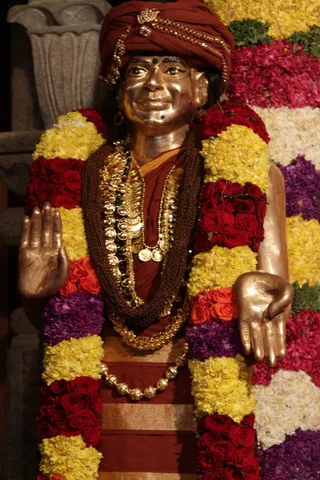
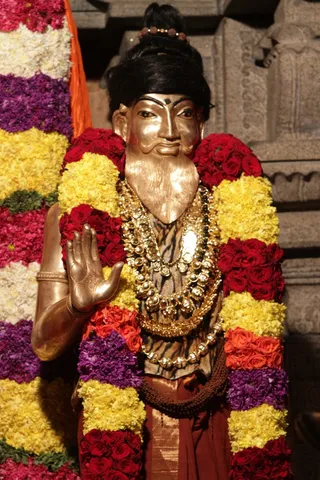
A photograph of a temple shrine with ornate deity murtis decorated with multicoloured flower garlands in red, orange, yellow, purple and white, arranged in a curved arch behind them. The central murtis wear gold crowns, gold necklaces and jewelled ornaments; one holds a raised hand in abhaya gesture. Standing attendant figures flank the shrine on either side, also garlanded and adorned with gold necklaces. A large brass kalasha-like ornamental vessel and layered gold and pearl necklaces are placed in the foreground, with a small oil lamp at the base. A partly visible person sits at the bottom left edge. The setting is a dimly lit temple interior with stone pillars. No identifiable physical candidate for a person is visible.A close-up photograph of a gilded metal murti of a deity with a polished copper-gold face, red lips and kumkum on the forehead. It wears a deep red turban with a gold band and a silver crescent ornament, and is adorned with layered gold necklaces, large gold beaded malas and a jewelled earring. Its raised right hand is gold-plated with a palm forward, and a blue garment is visible at the chest. Behind it are garlands of pink, red, yellow and white flowers. No physical people are visible.A deity murti heavily adorned for worship, shown frontally in a shrine. The figure wears layered gold necklaces, strings of beads and rudraksha-like beads, and a tall gold crown with green stone or glass panels. Long garlands of red roses, orange roses, yellow marigolds, white flowers, purple blooms and green leaves drape down both sides. Brass oil lamps stand at the base, and a red and gold cloth is visible behind. No people are visible in the frame.A gilded statue of a standing male figure, shown in a close frontal view, is draped in garlands of yellow marigolds, red roses and purple flowers. The figure wears a deep red turban with a jewelled ornament, a red-brown shawl over a saffron garment, a brown rudraksha-style mala and layered gold coin-style necklaces. The right hand is raised in blessing and the left hand is lowered with palm open. Behind the statue, a wall of red, pink, white and purple flowers frames the scene. The statue is a depiction, not a living person, and no physical people are present.A gilded sage statue. The figure has a golden face with a moustache and beard, a black hair bun topped with a rudraksha-style bead band, layered gold necklaces, and a tiger-striped garment with a brown dhoti. Its right hand is raised in an abhaya mudra. No living people are visible.

NithyanandeswarBrahmotsav-Flaghosting

88 photosSource gallery
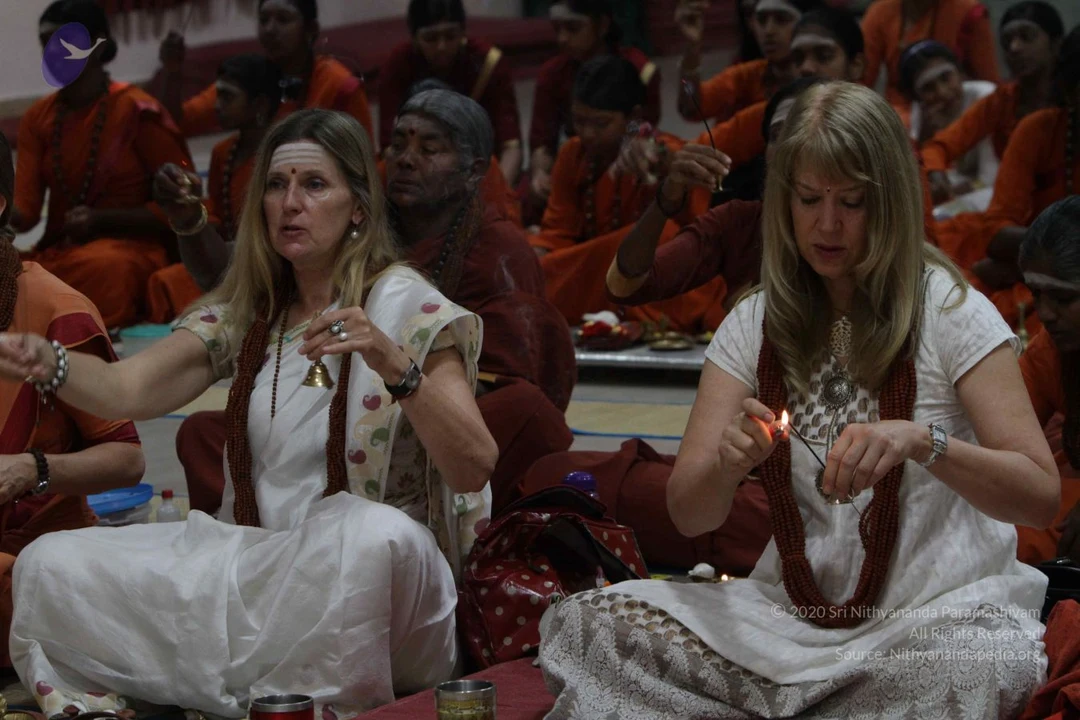
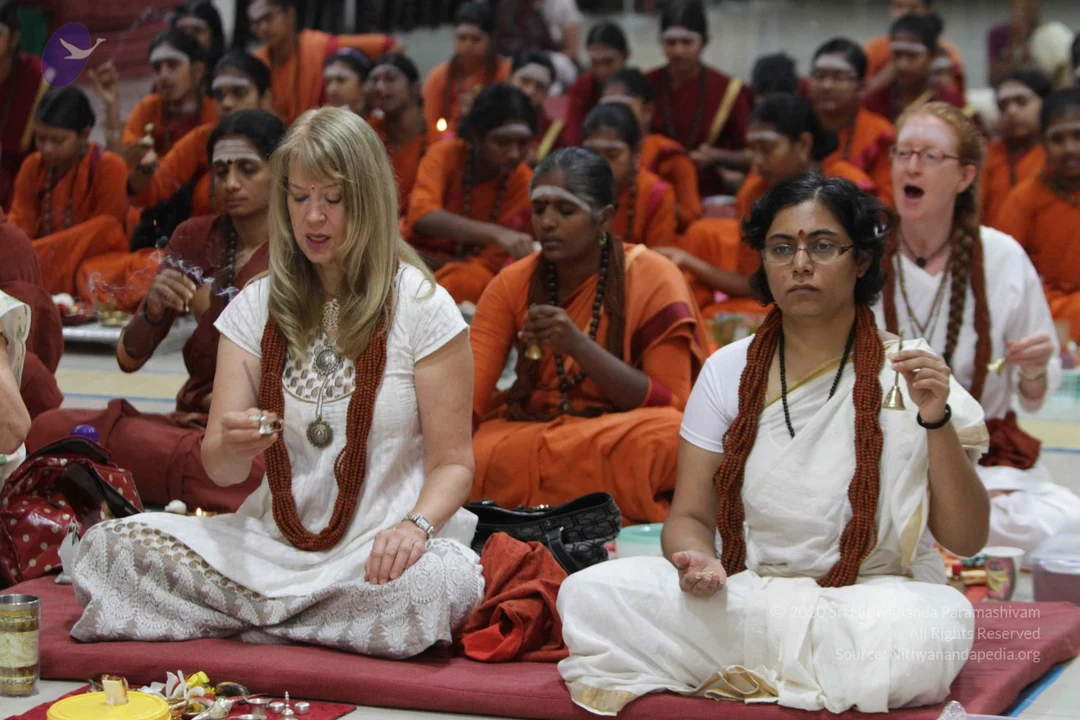
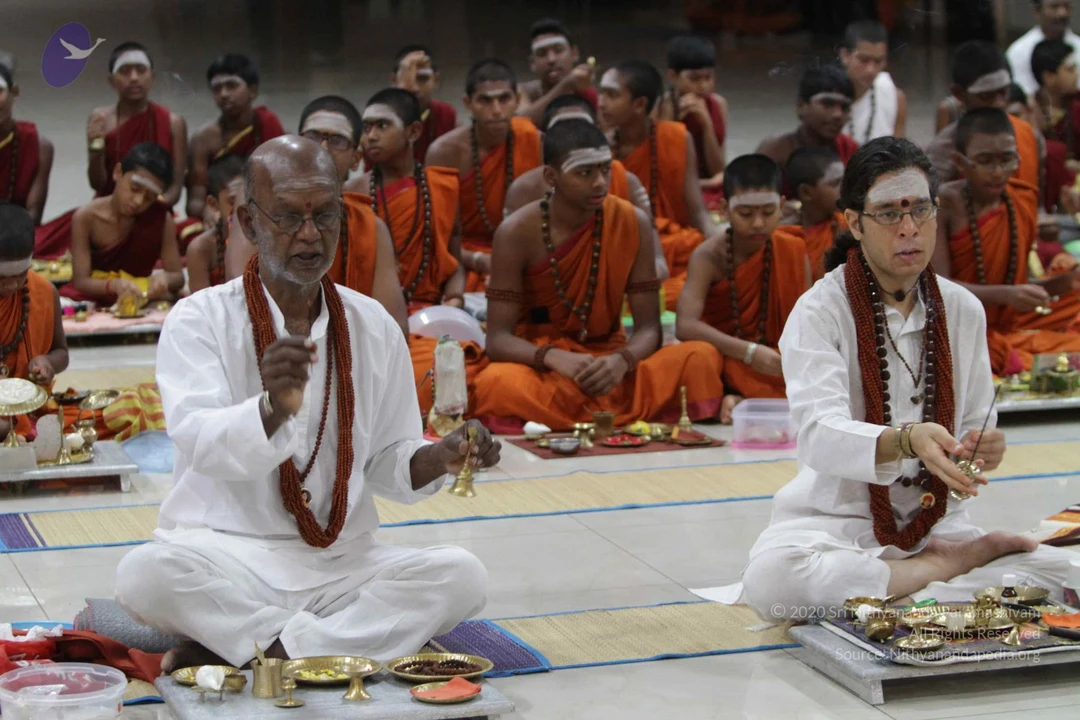
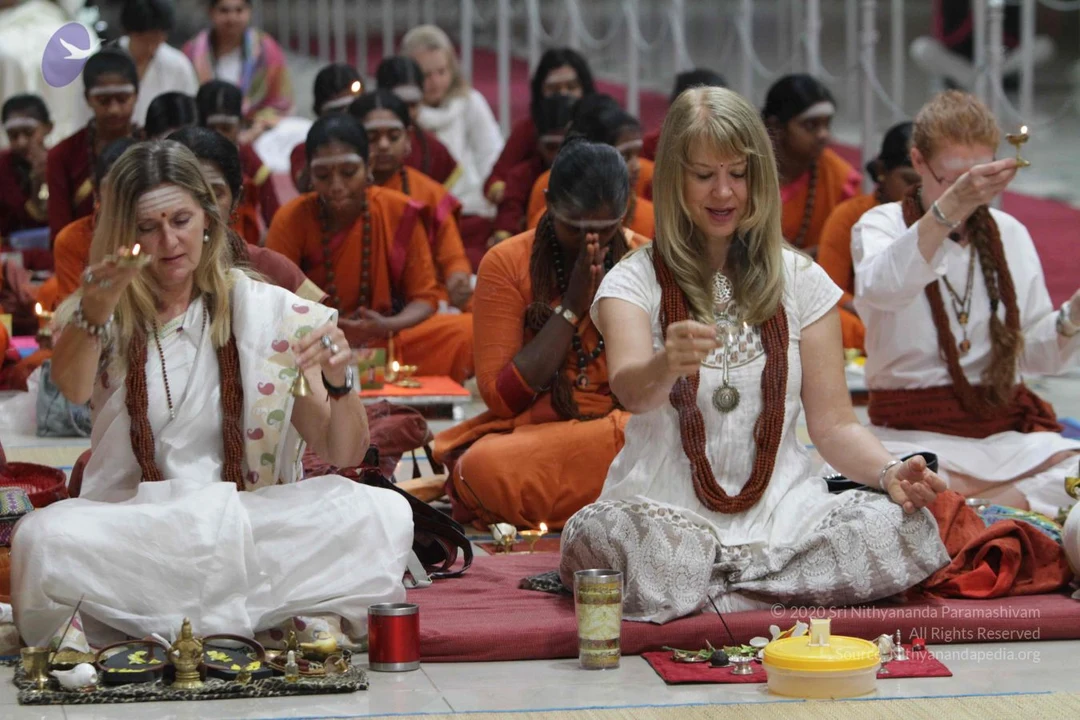
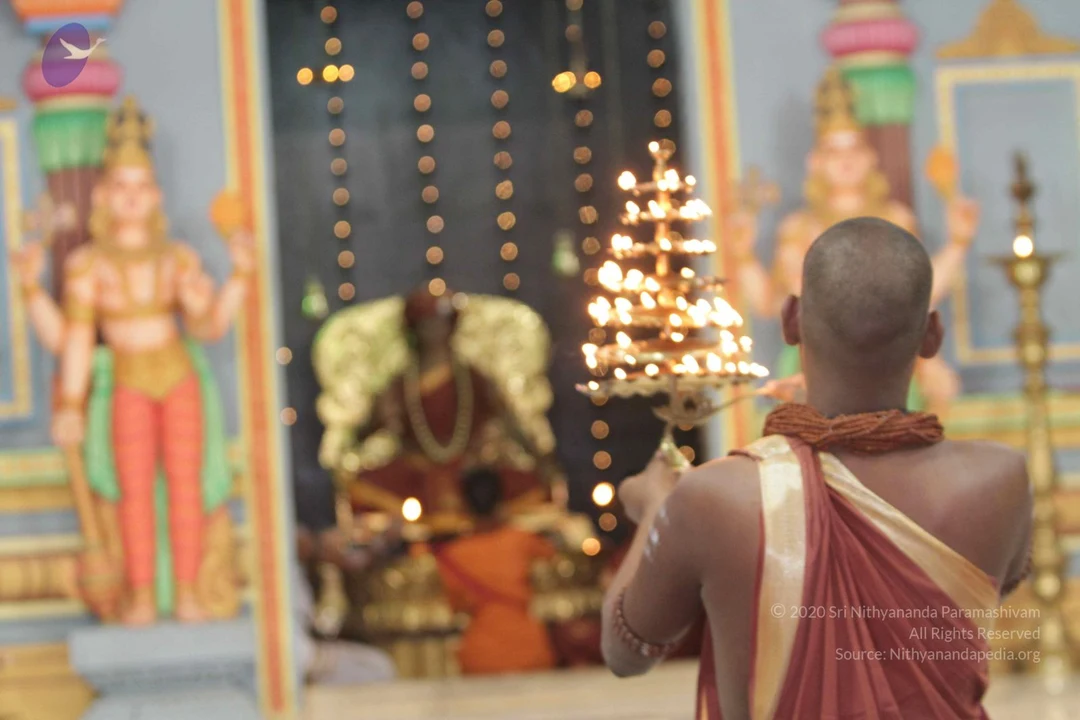
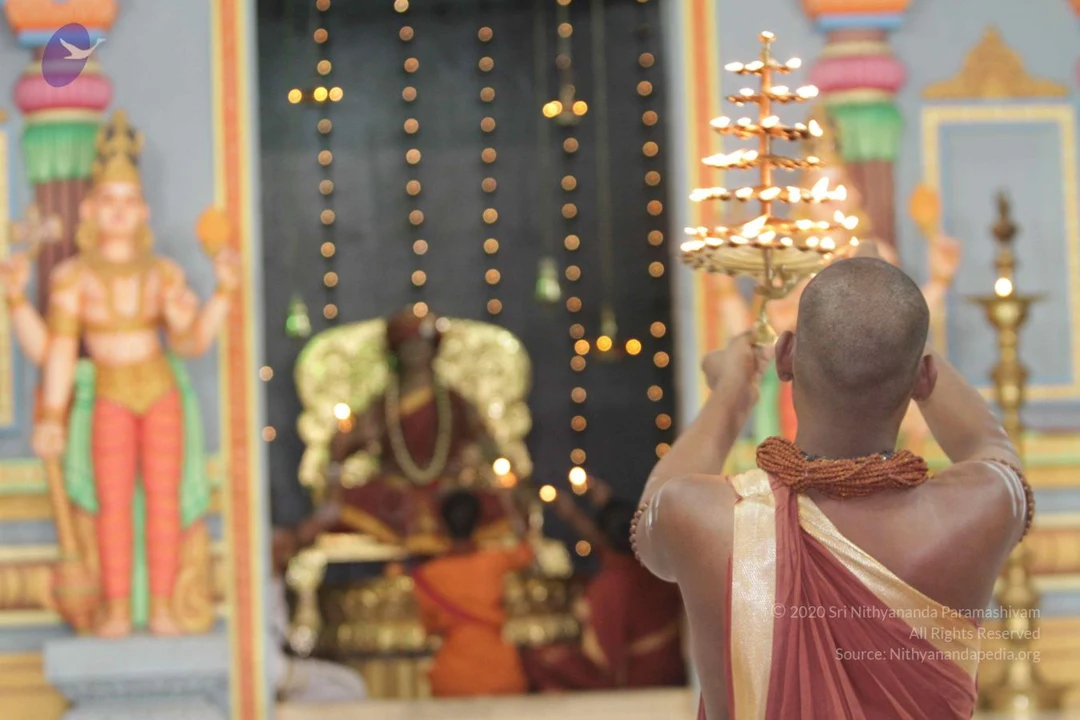
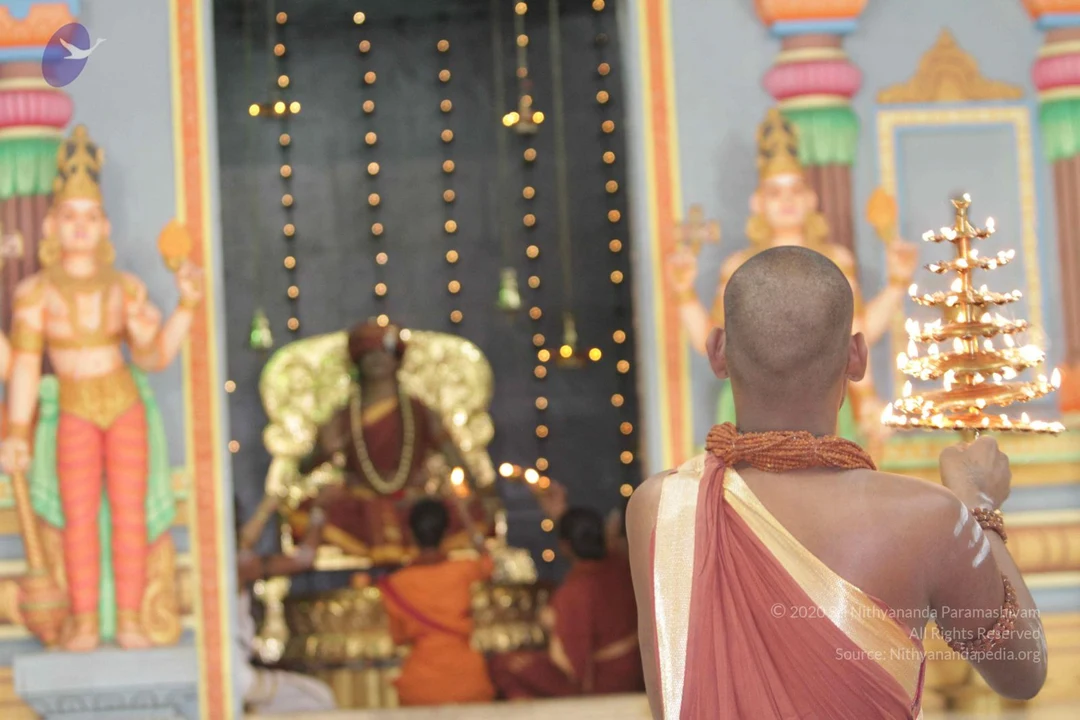
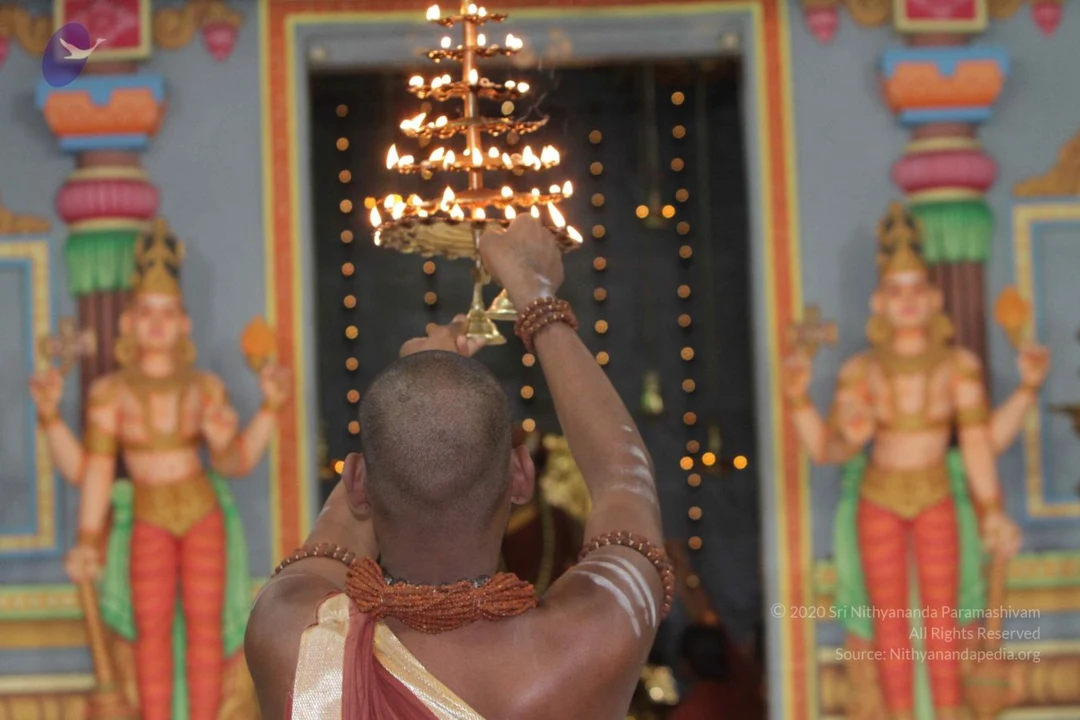
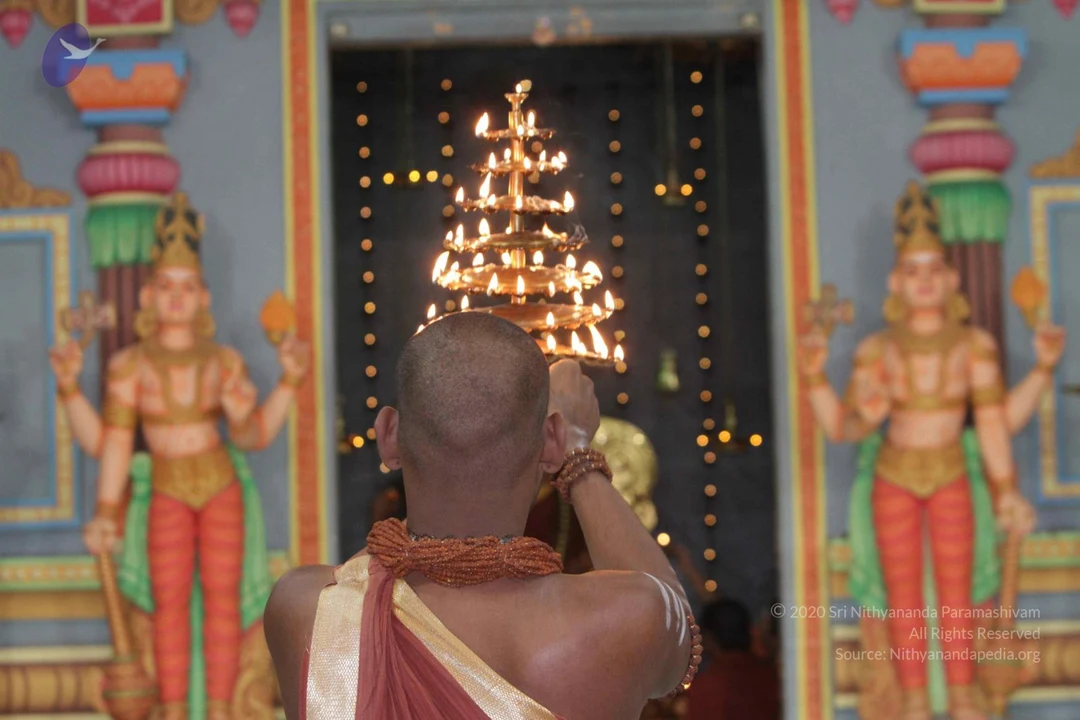
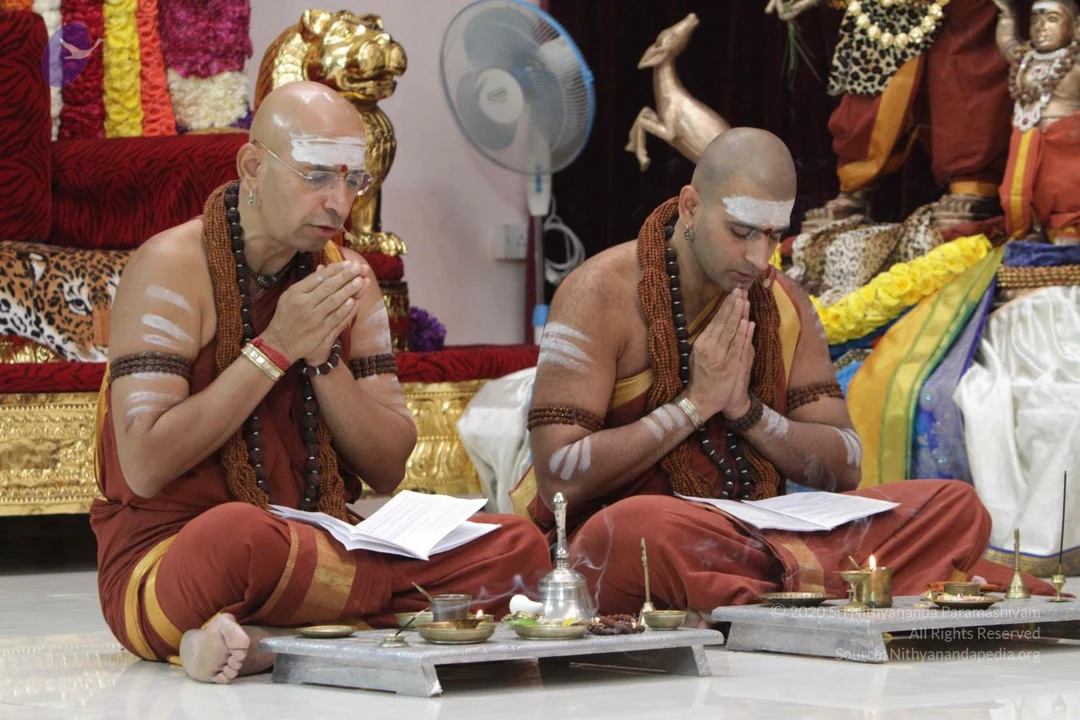
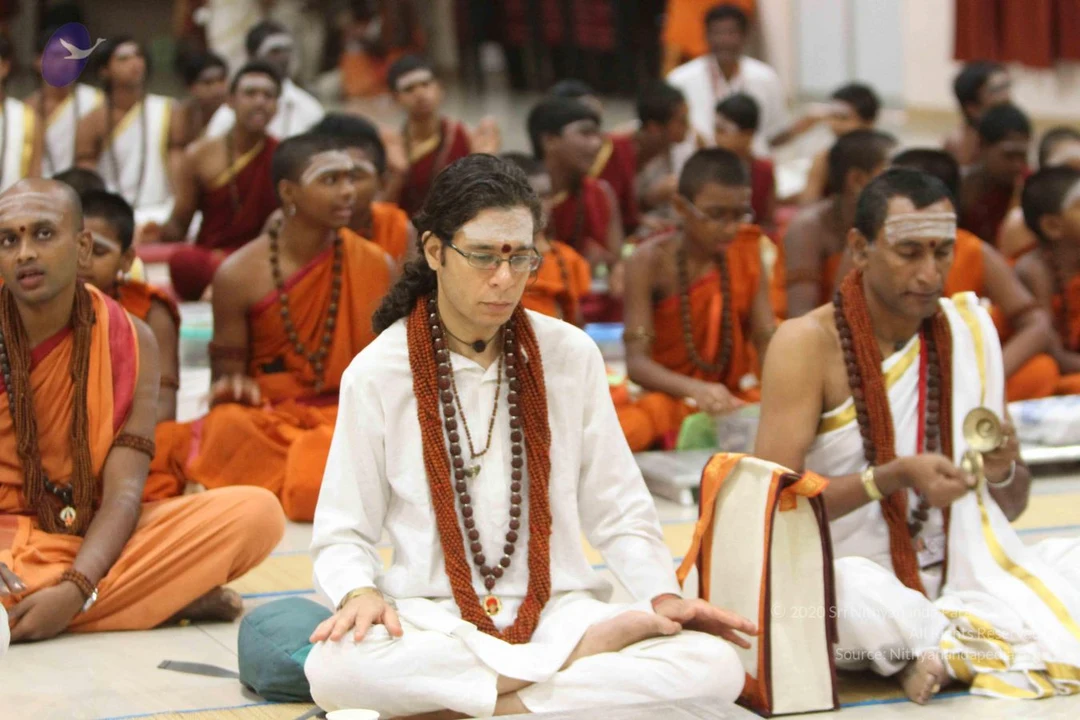
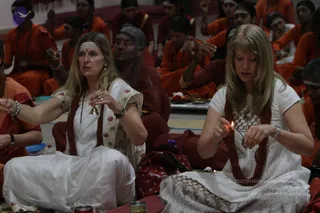
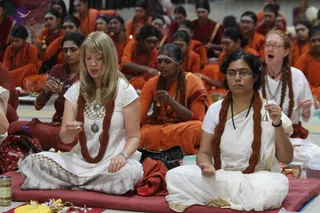
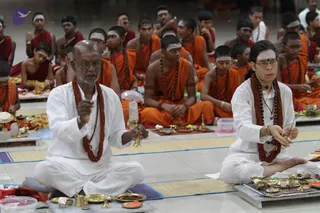
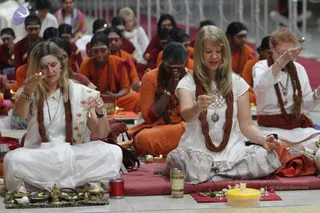
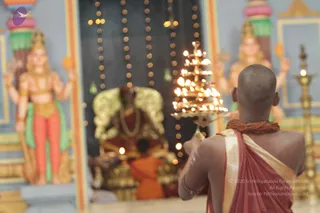
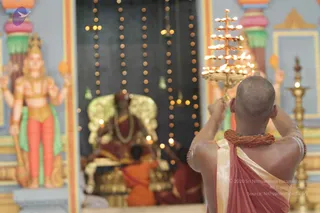
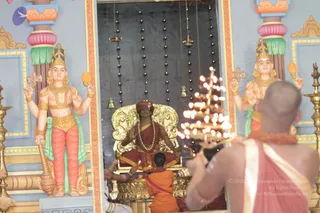
A seated group ritual in a hall, with a crowd of devotees in orange and maroon robes and rudraksha malas behind. In the foreground, two women in white garments wear long rudraksha mala necklaces; the woman on the left holds a small brass bell and has white sacred markings on her forehead, while the woman on the right lights a wick or incense stick over a small flame. Brass lamps and offering vessels sit on the floor. Several people behind hold objects toward the centre.A photograph of a large devotional gathering in which many seated participants wear orange and maroon robes with white forehead bands. In the foreground, two women in white clothing sit on red cushions wearing long rudraksha mala garlands; the woman on the left holds a small object in her hand and the woman on the right holds a small bell and a hand gesture near her chest. Others in the background wear orange and maroon, some holding incense sticks and bells. Brass puja items and a small oil lamp sit on a red cloth at the lower left. The scene suggests a satsang or chanting session. Red and orange garments dominate the background crowd.A photograph of a ritual puja in a hall with a tiled floor and bamboo mats. In the foreground, two seated men in white ritual clothes wear rudraksha malas; the older man on the left, with glasses and a shaved head, holds a brass bell and a small vessel, while the younger man on the right, also with glasses and a white tilak on his forehead, holds a small brass lamp and a ritual implement over brass plates of offerings. Behind them, rows of young boys in saffron-orange robes, rudraksha malas and white forehead tilak sit cross-legged and perform ritual actions with brass objects. Brass trays, bowls, lamps and fruit surround the scene. The page suggests a person is present, but the seated figure on the right is not clearly recognizable, so identity is uncertain.A group ritual in a hall with red carpeting. In the foreground, two women in white sit cross-legged holding small oil lamps and brass bells over brass puja trays with offerings. Behind them, rows of seated devotees wear orange and red garments, forehead markings and rudraksha malas, many with hands folded or holding lamps. A woman in white on the right holds a lamp aloft. No a person candidate is visible in the frame. A brass dish, lamps, a small brass deity figure and a yellow container sit on the floor.A photograph of a priest seen from behind, shaved head, wearing a maroon-red cloth over the shoulder with a gold border and a rudraksha mala around the neck, performing aarti with a multi-tiered brass lamp holding many lit flames. He faces a shrine where a seated figure in orange and red robes sits on a golden throne with a gold-backed seat, and flanked by painted guardian deity figures with multiple arms on pillars. Strings of beads hang across the dark background, and the foreground is blurred. A small flame glows beside the seated figure. The seated figure's face is not clearly visible, so no identity is established from appearance.A shaved-headed priest seen from behind performs aarti with a multi-tiered lit brass lamp held high in both hands before a deity murti. He wears a rust-red and gold-bordered cloth over bare shoulders and a rudraksha mala around his neck. The inner shrine is decorated with hanging strings of beads and small lamps, and a gold-clad deity is seated on a throne. Two attendants in orange and red robes are partly visible in front of the murti. Ornate painted pillars with a pink-and-green figure of a deity frame the scene, and a tall brass lamp stands on the right. The priest's role is conducting the aarti.

Nithyanandheshwara-Brahmotsavam-Floghosting

127 photosSource gallery
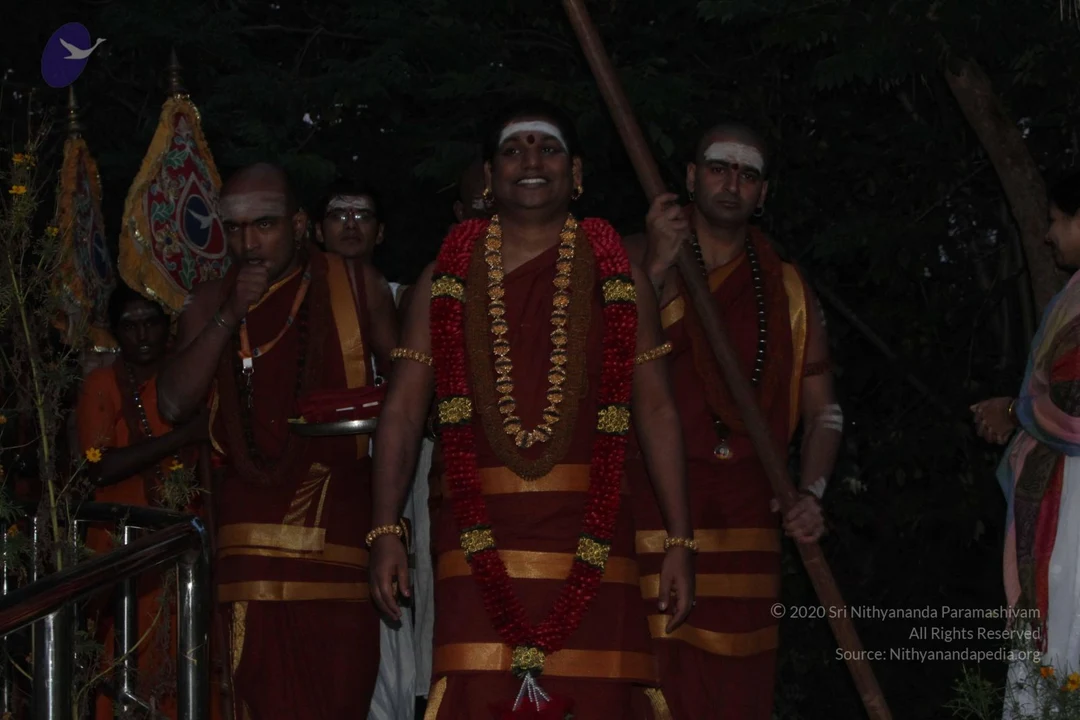
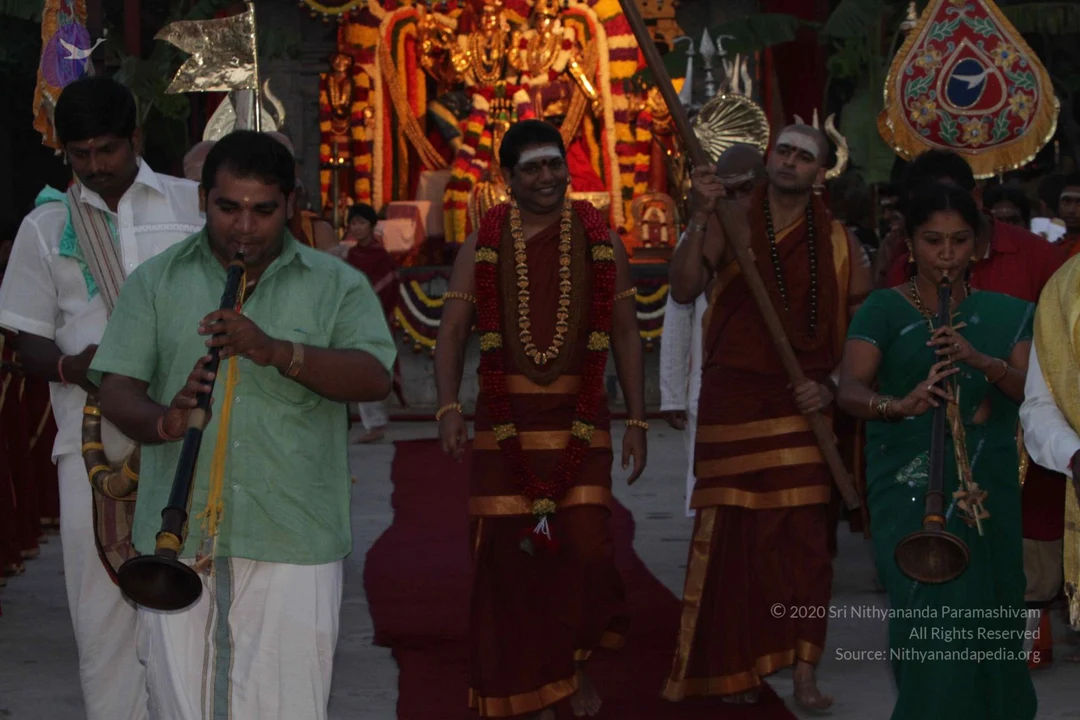
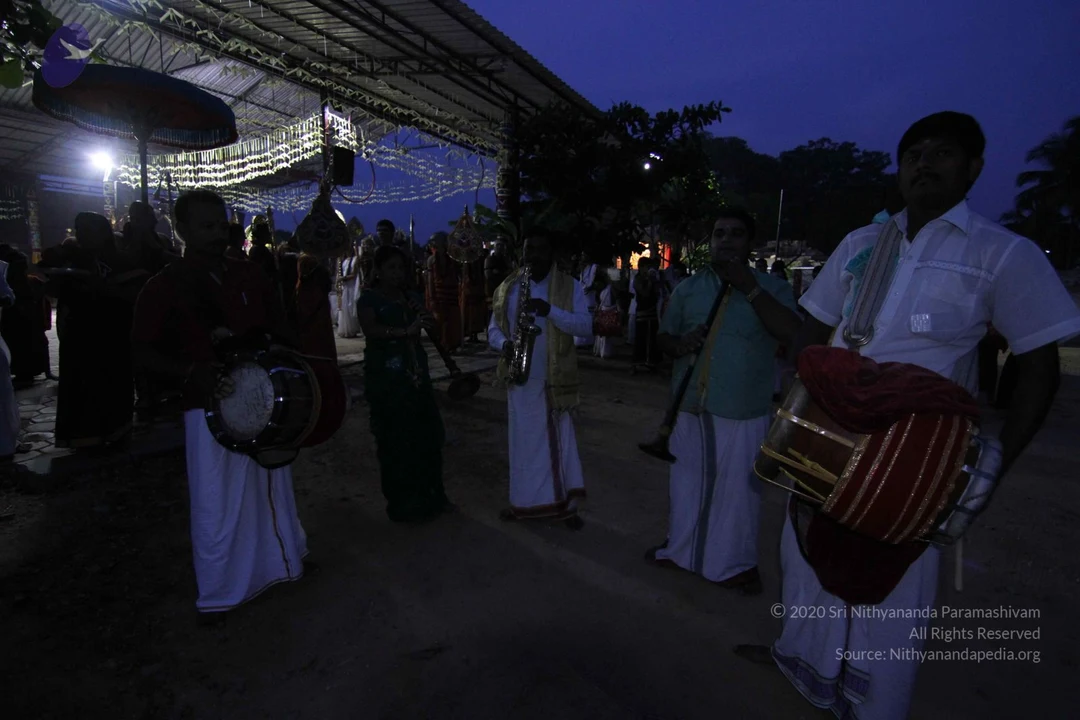
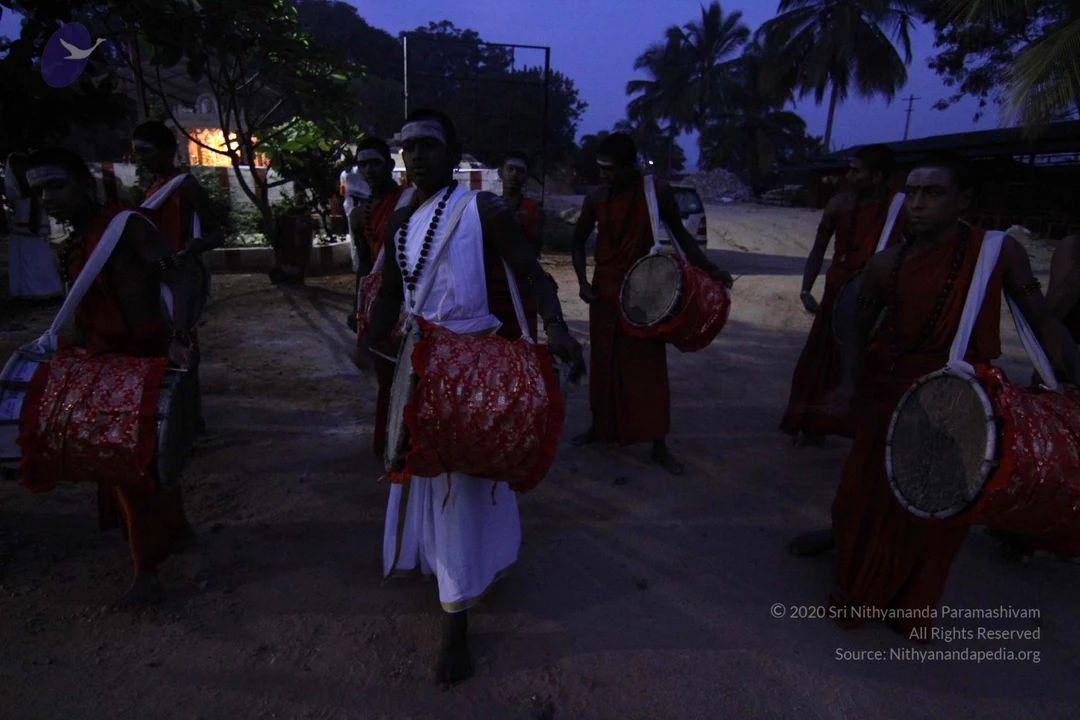
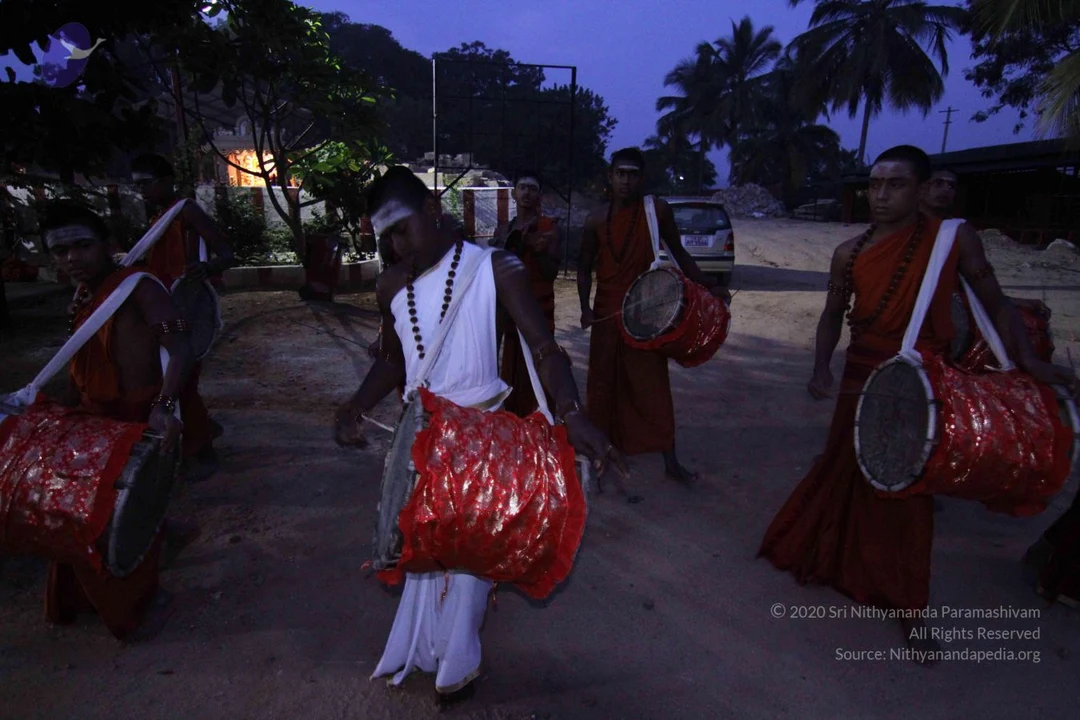
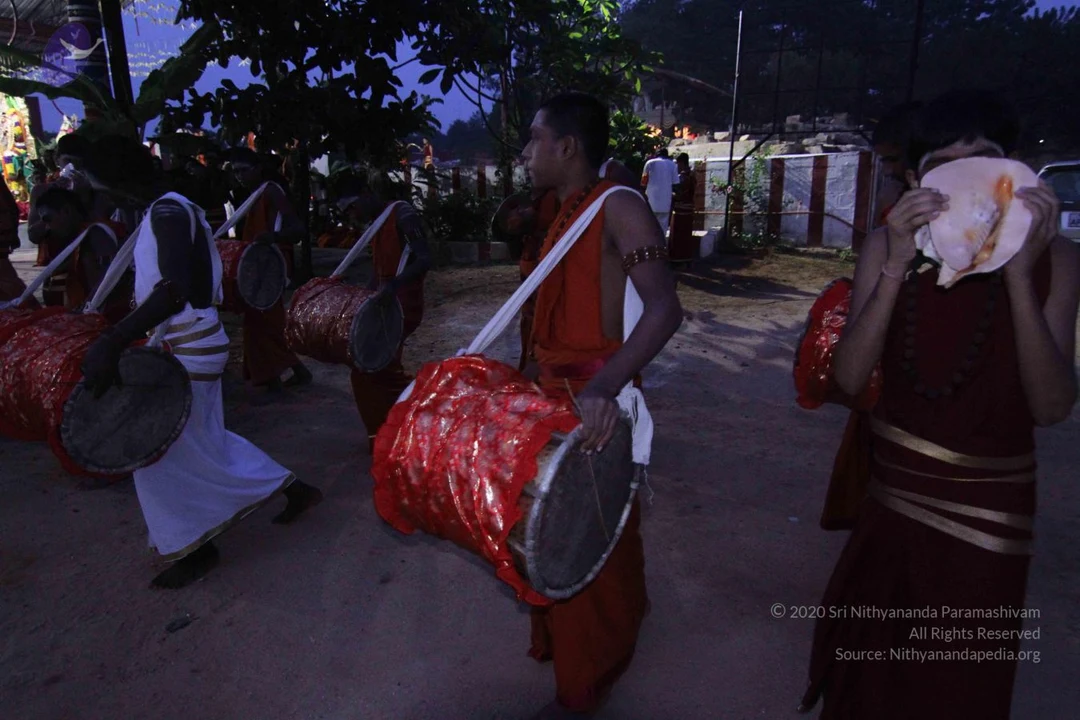
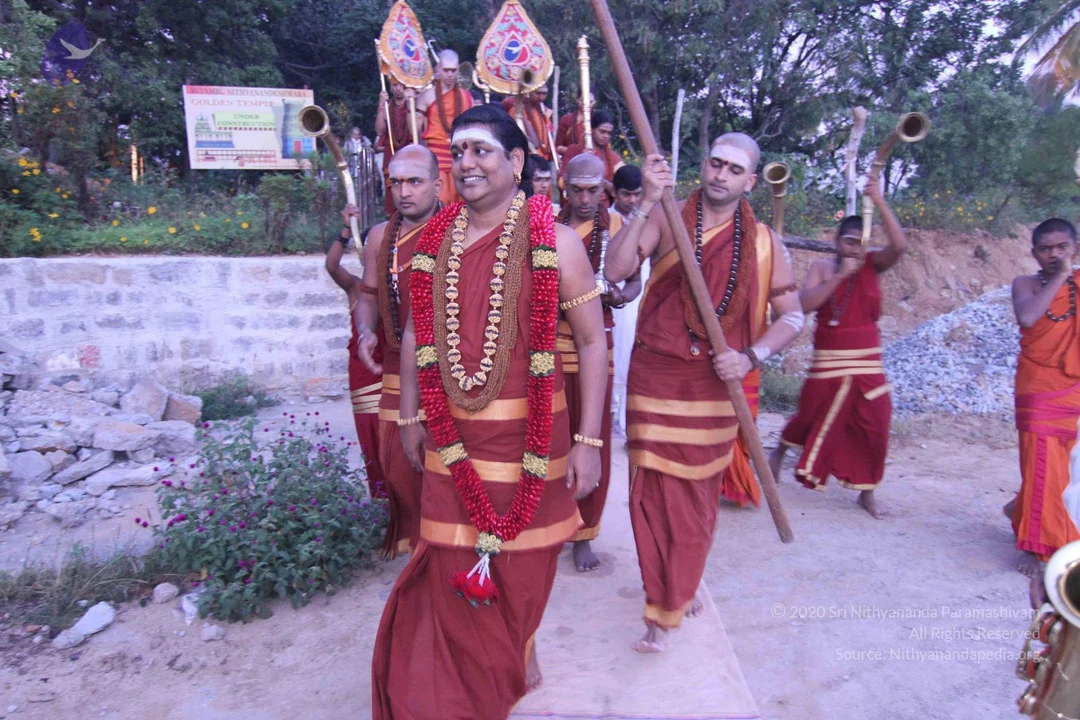
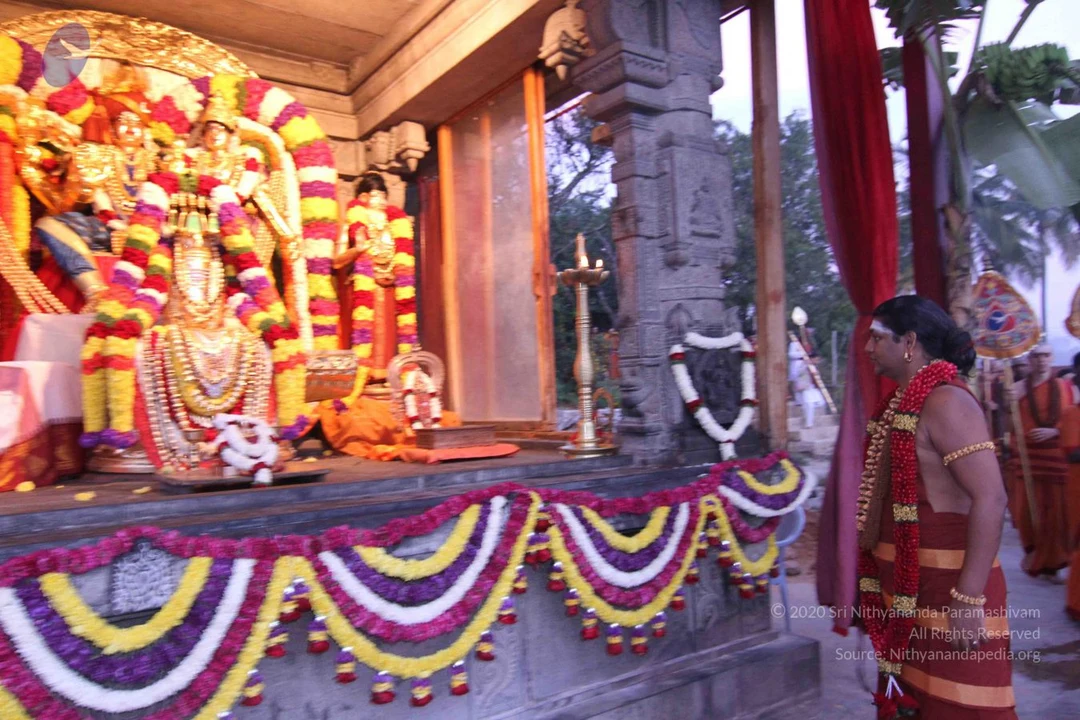
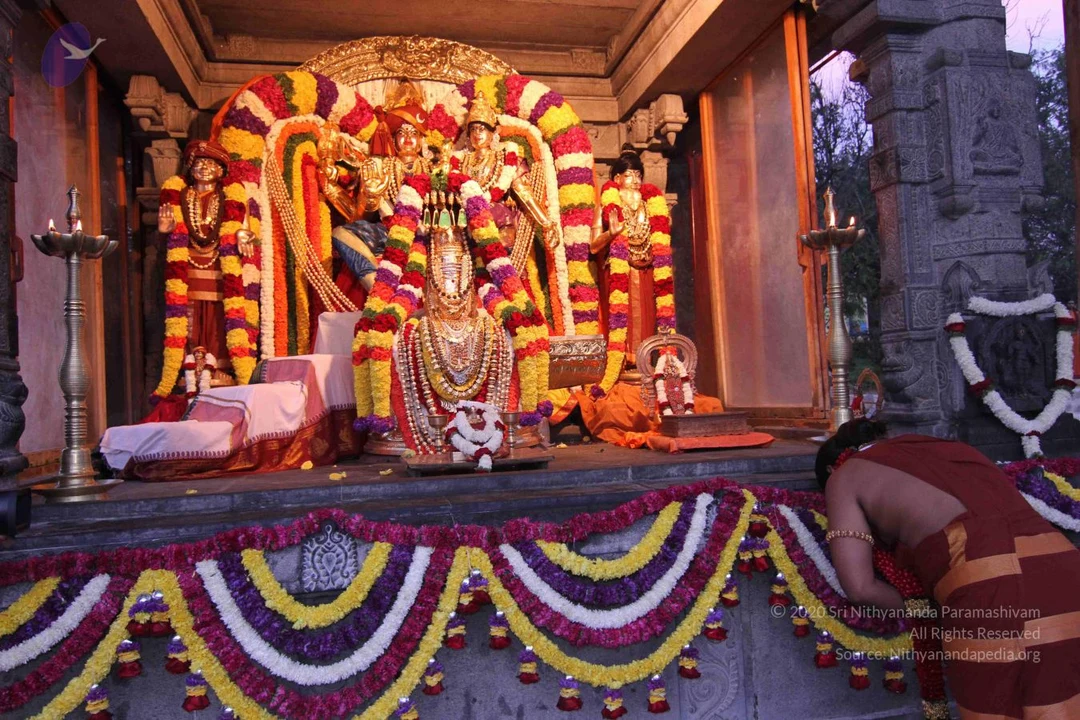
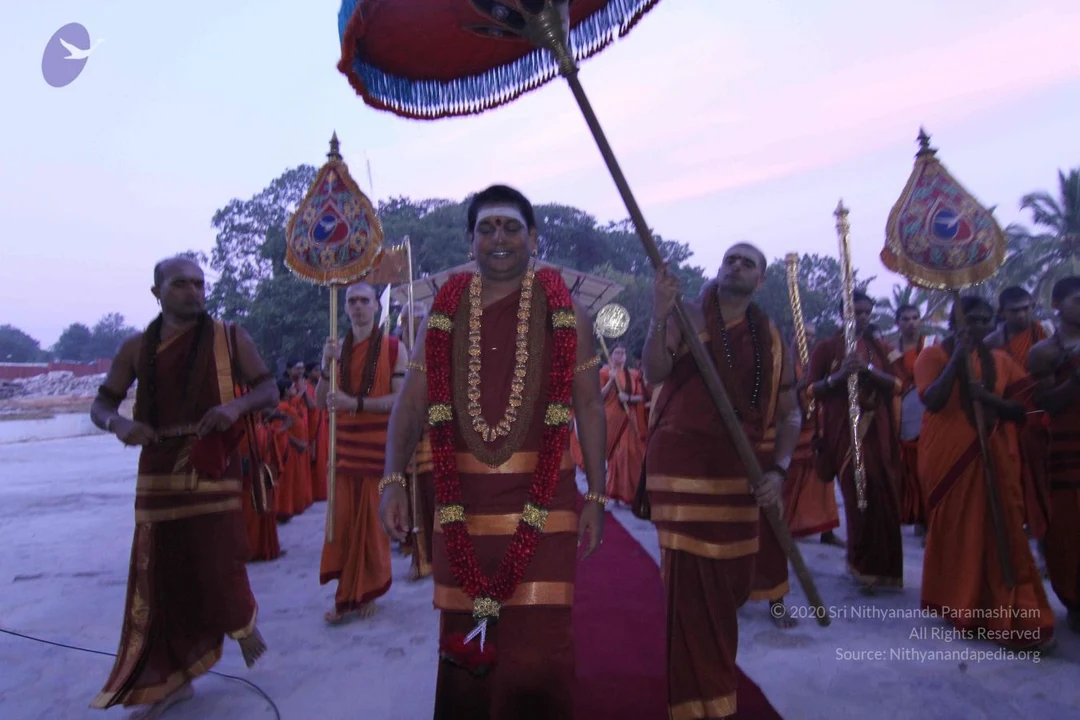
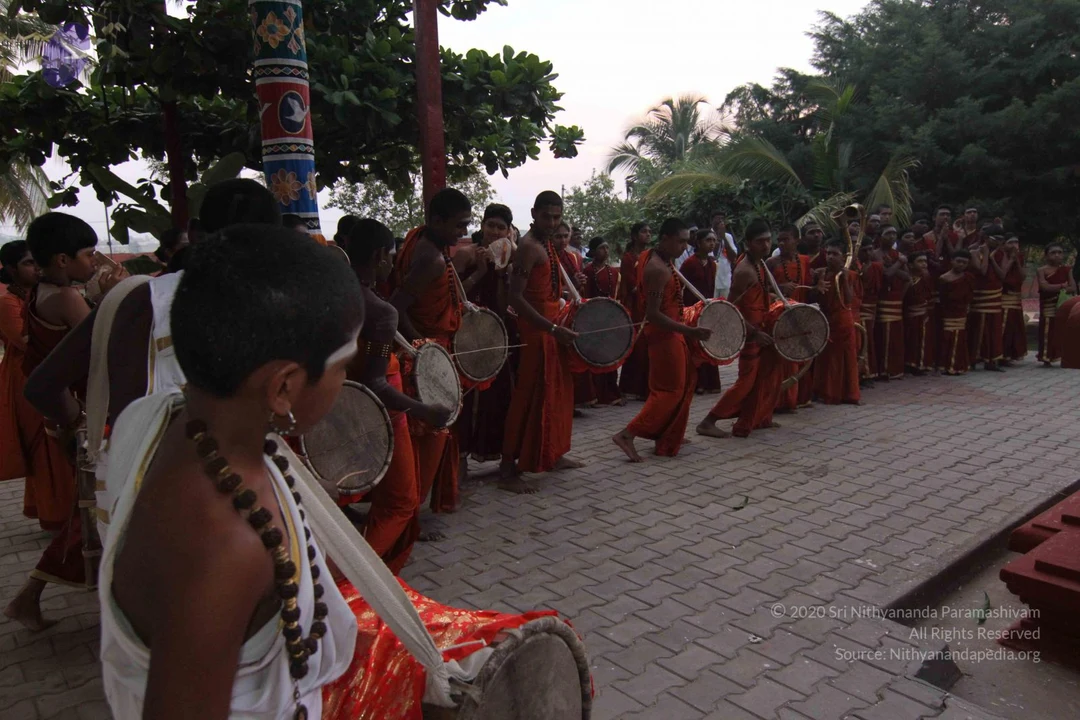
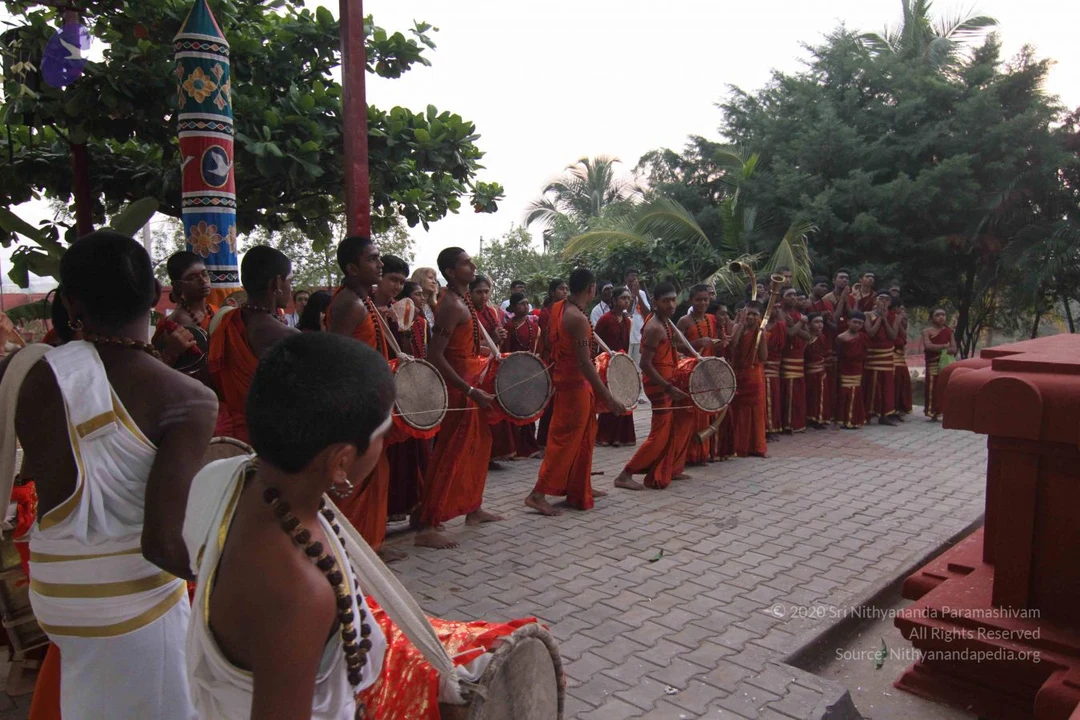
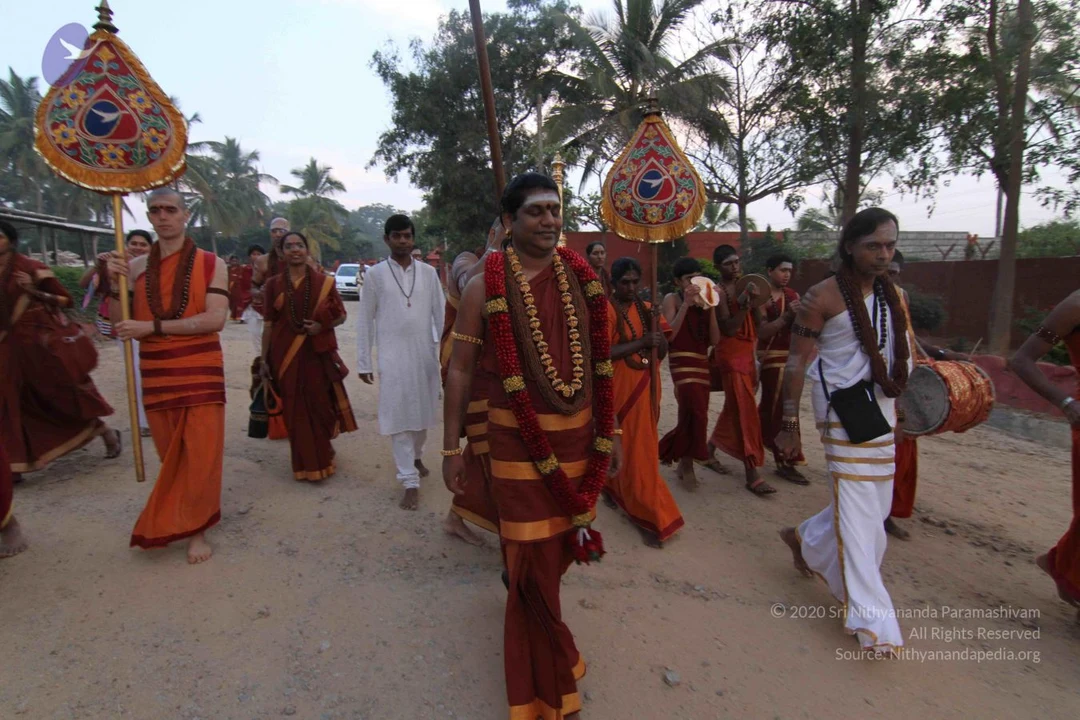
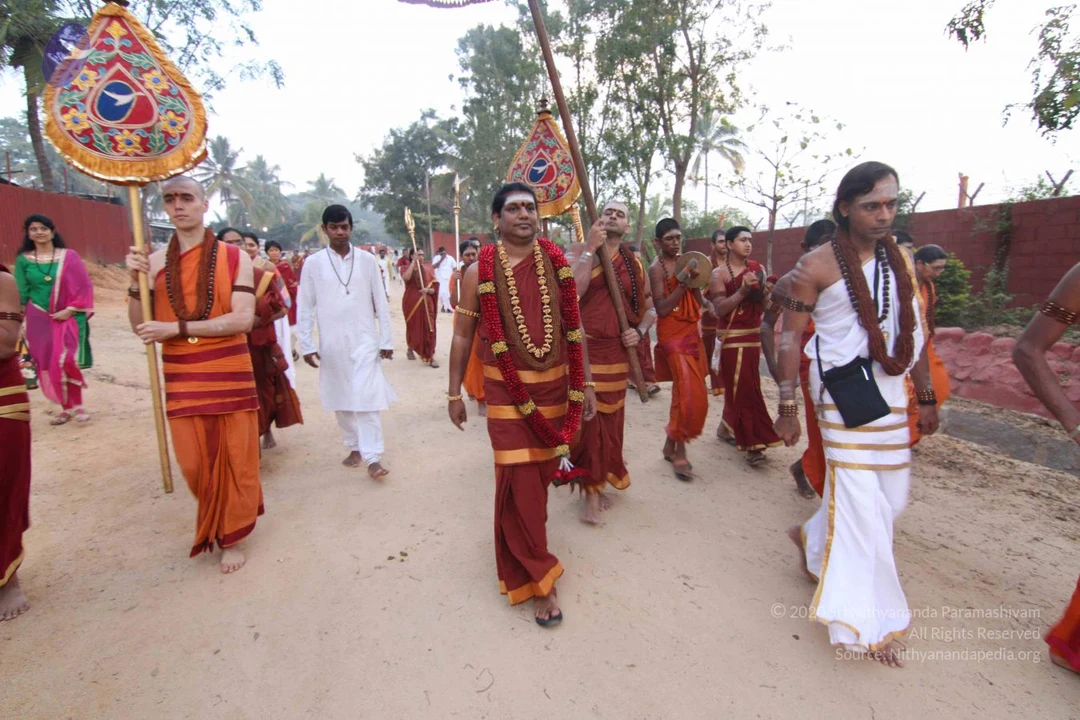
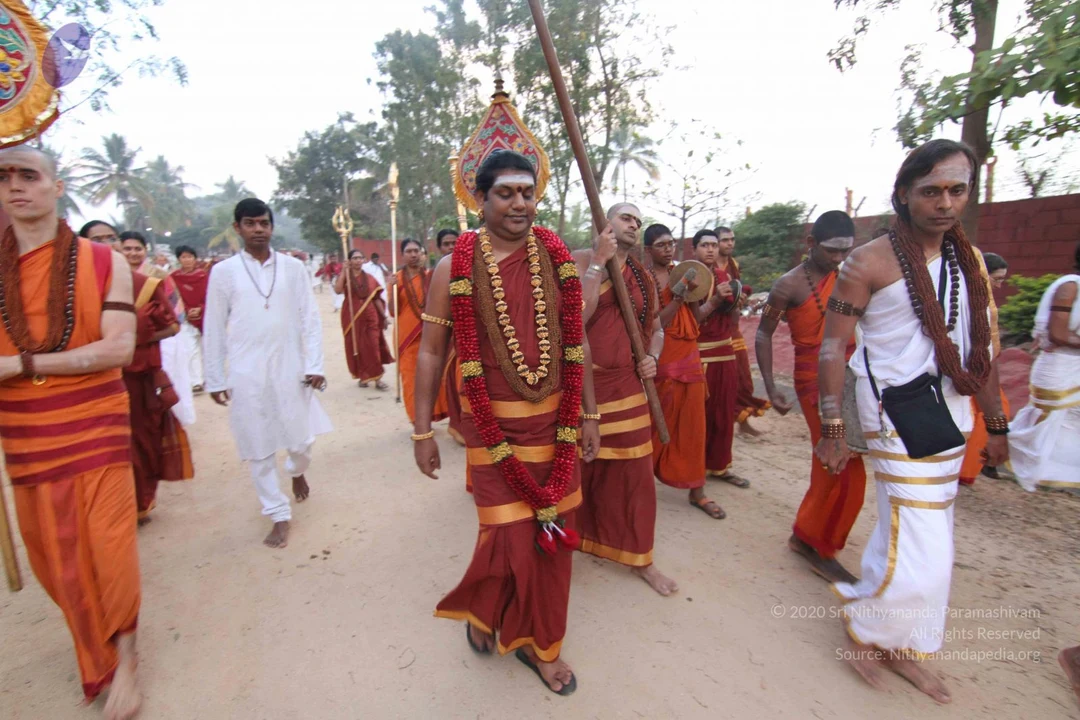
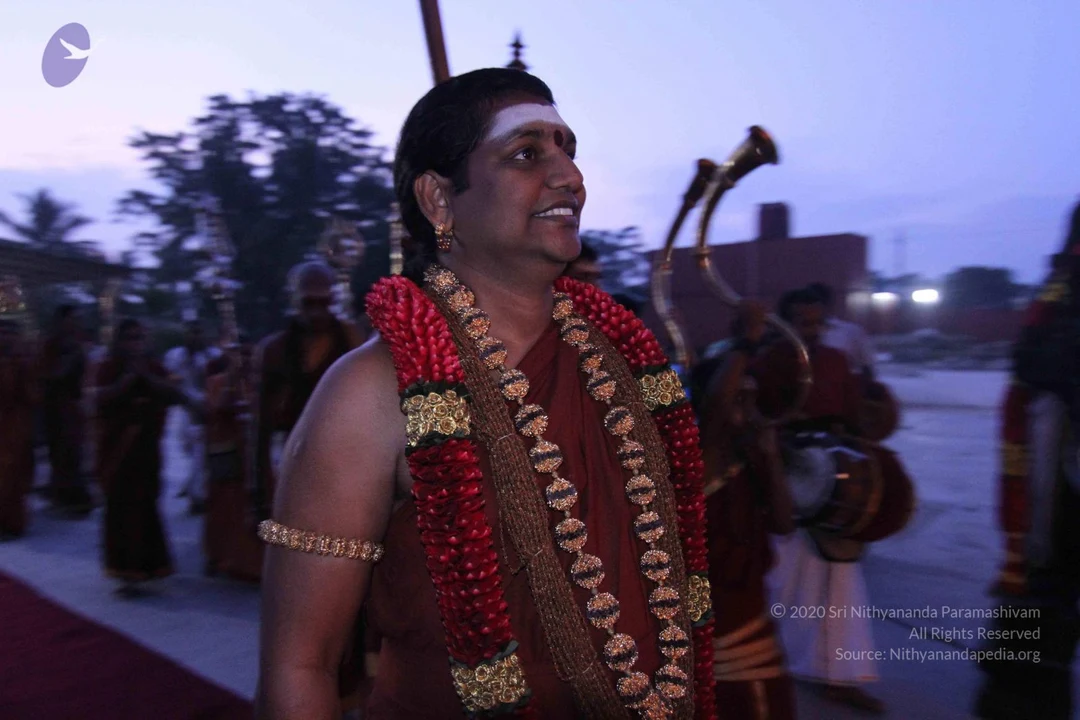
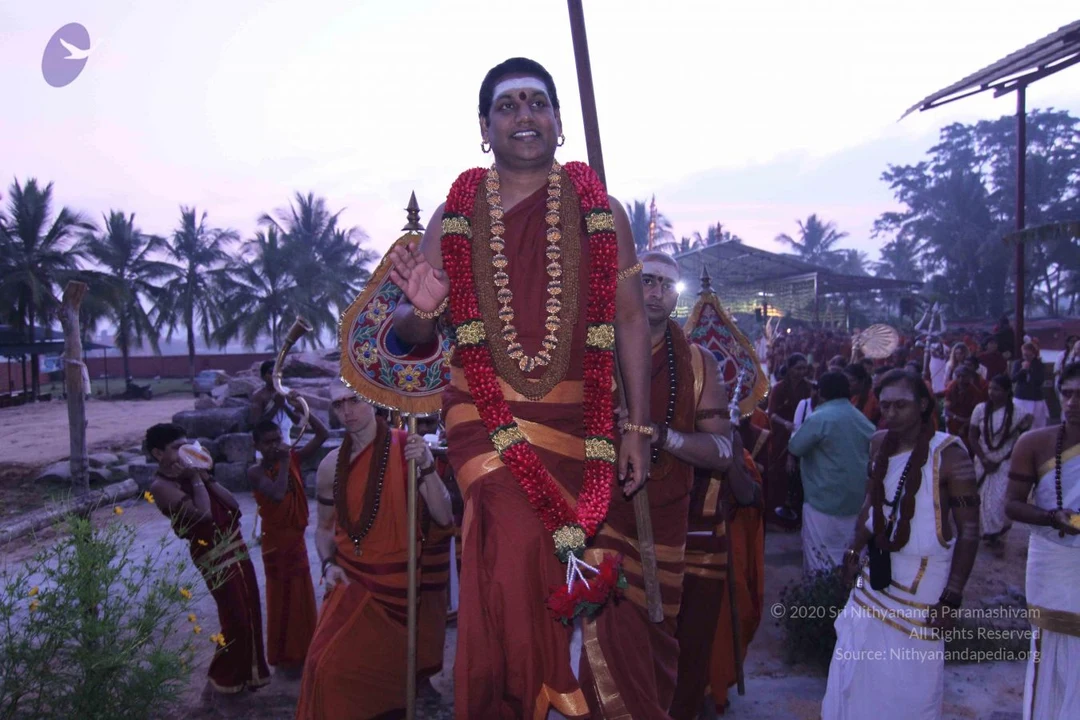
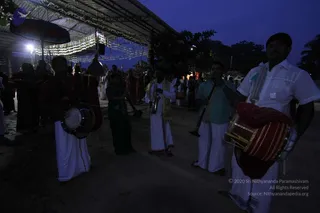
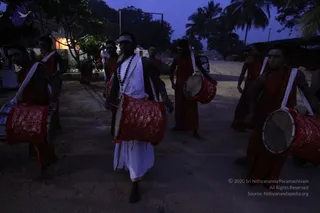
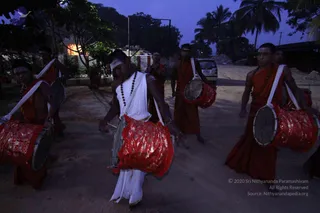
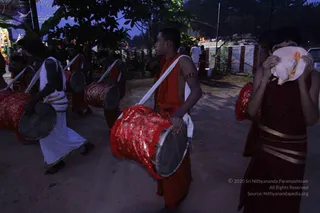
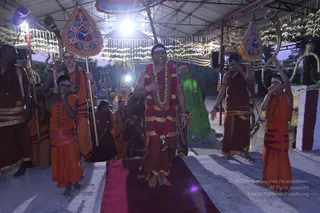
Evening procession at dusk under a corrugated roof strung with lights. Four musicians in white dhotis lead the group: at left a drummer plays a small hand drum, a figure in a green sari stands center, a man in a white dhoti and gold-trimmed shawl plays a saxophone-like wind instrument, a man in a teal shirt plays a long pipe, and at right a man in a white shirt and white dhoti carries a red-and-gold drum slung at his side. Behind them, figures in dark and colourful garments and ornate umbrellas or standards move along the procession route under strings of white lights. No identifiable a person figure is visible.Dusk procession on a dirt road with palm trees and a lit building behind. Several drummers in saffron-red robes with white headbands and rudraksha malas walk toward the camera, carrying red brocade-covered drums slung over their shoulders with white straps. The central drummer wears a white dhoti and white shawl, and walks barefoot in front of the group.A photograph at dusk of a group of drummers walking along a dirt road past palm trees and a parked silver car. Several men in saffron-orange robes and rudraksha malas carry large red drums with gold-threaded covers slung over their shoulders, striking them with sticks. The central drummer wears a white dhoti and a white sash, with white ash marks on his forehead. A few more drummers in orange are visible at the edges, and a lamp glows in the background among the trees.Dusk procession on a dirt path with several young men in saffron and orange robes carrying large red-covered drums slung from white shoulder straps. The foreground drummer in orange dhoti and a white shoulder cloth beats a drum wrapped in red fabric. Beside him a figure in maroon robes with a gold waist band and a rudraksha mala holds a large conch shell to his face. Other drummers in white dhotis walk behind, with a small temple shrine lit with lamps and a tree at upper left.A procession on a red carpet under a open-sided pavilion strung with yellow and white floral garlands. A central man in a rust-brown and gold-bordered robe wears a long red flower garland, a beaded necklace and bangles, and stands with his hand on his chest. Around him, young men in saffron-orange robes and rudraksha malas blow long curved brass horns, and others carry tall ornate standards with teardrop-shaped embroidered banners, a trident-like staff and a ceremonial parasol. A green draped cloth hangs behind. The scene suggests a ritual procession.A photo of a temple shrine decorated with garlands of yellow, white, pink and purple flowers. At the centre sits a large deity murti adorned with layered gold necklaces, with a smaller figure before it and additional sculpted figures behind in an arched frame. Brass oil lamps stand on either side, and a priest in a reddish-brown garment bends forward at the lower right corner. The foreground is edged with a festoon of marigold-like flowers.
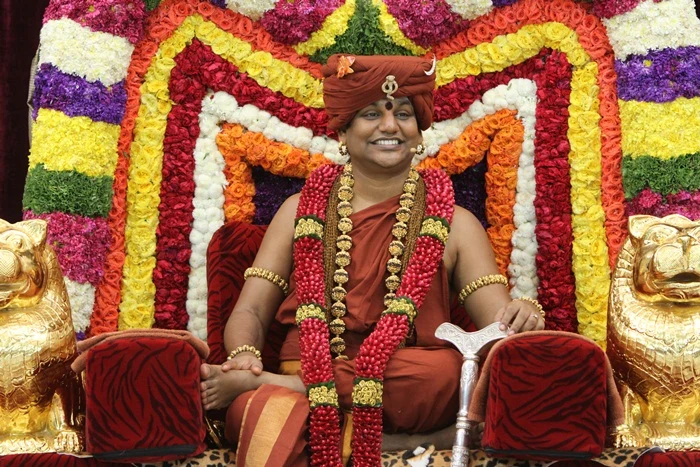
Morning-Satsang

51 photosSource gallery
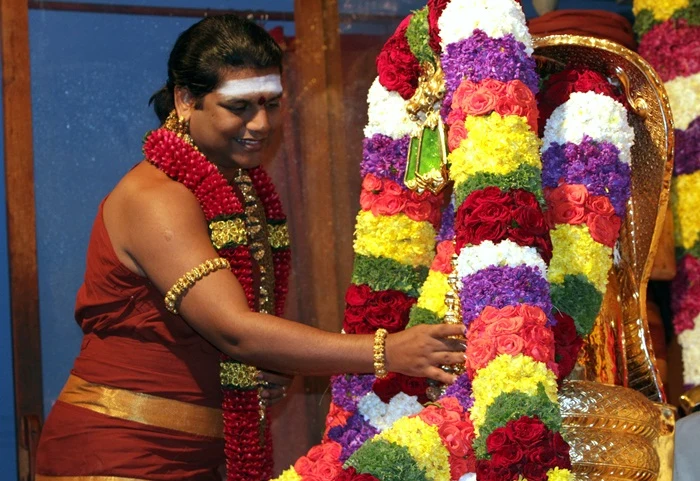
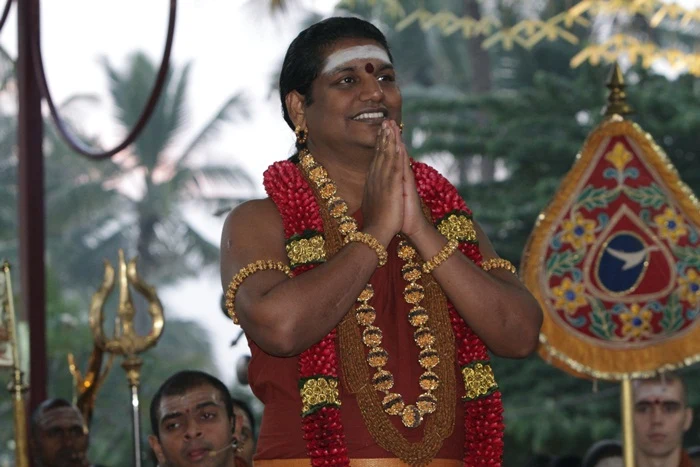
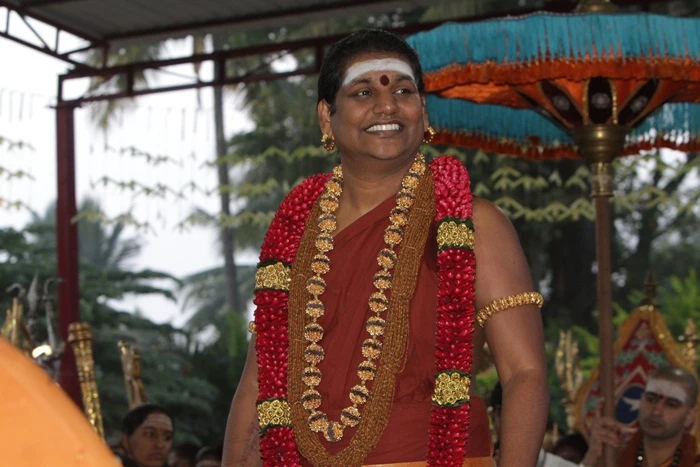
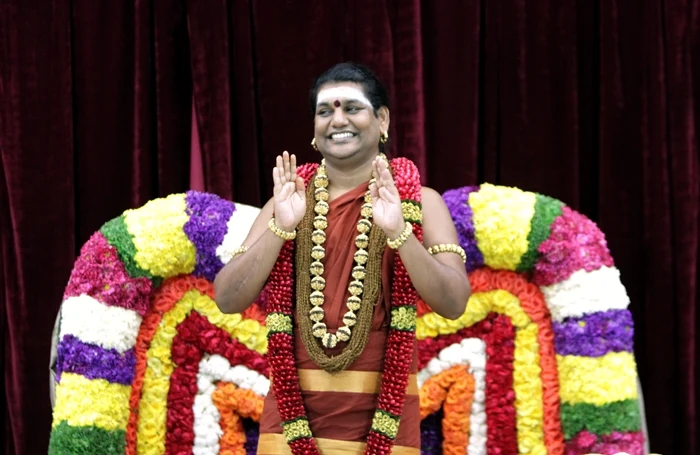
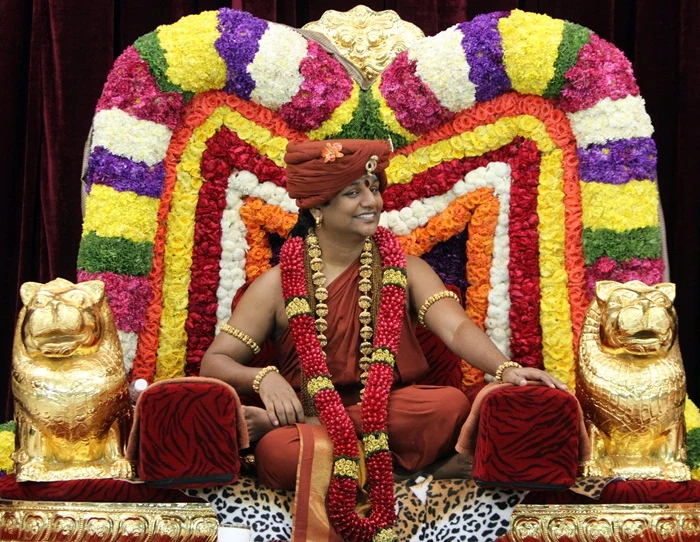
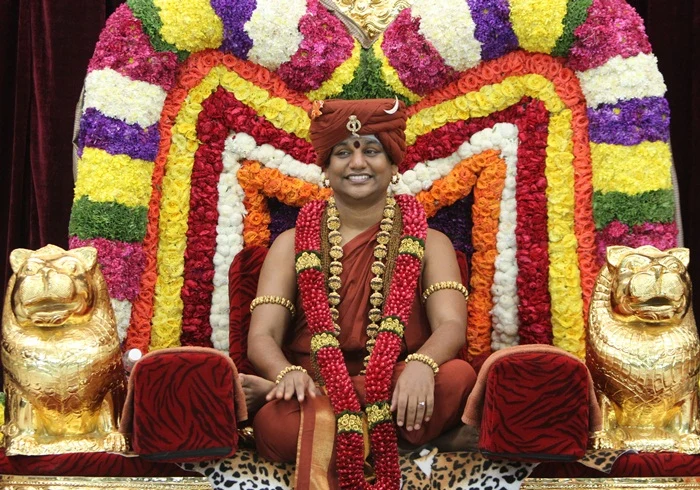
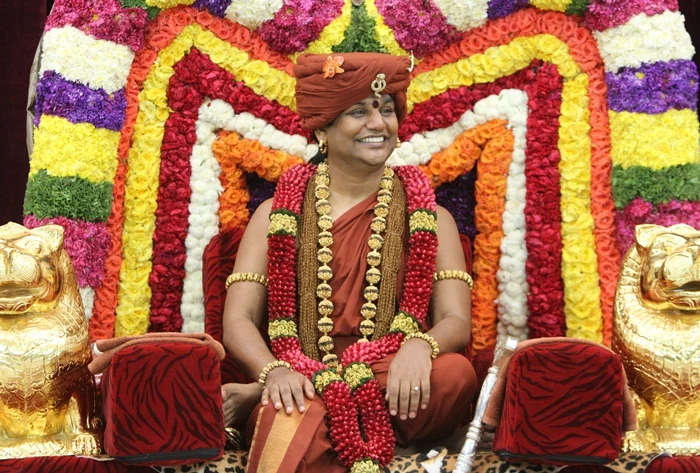
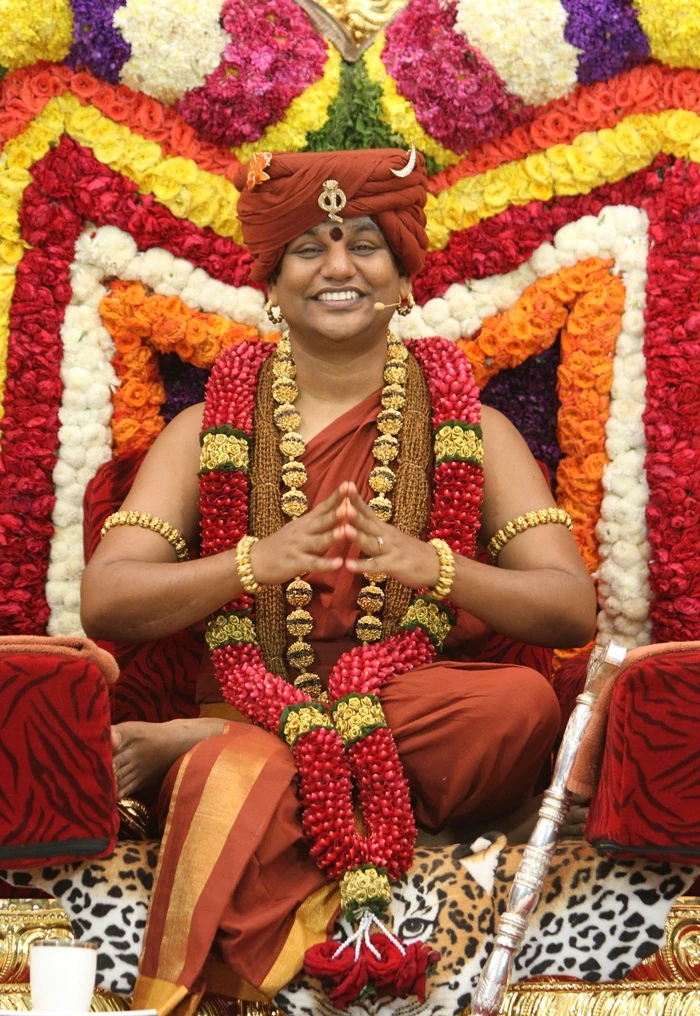
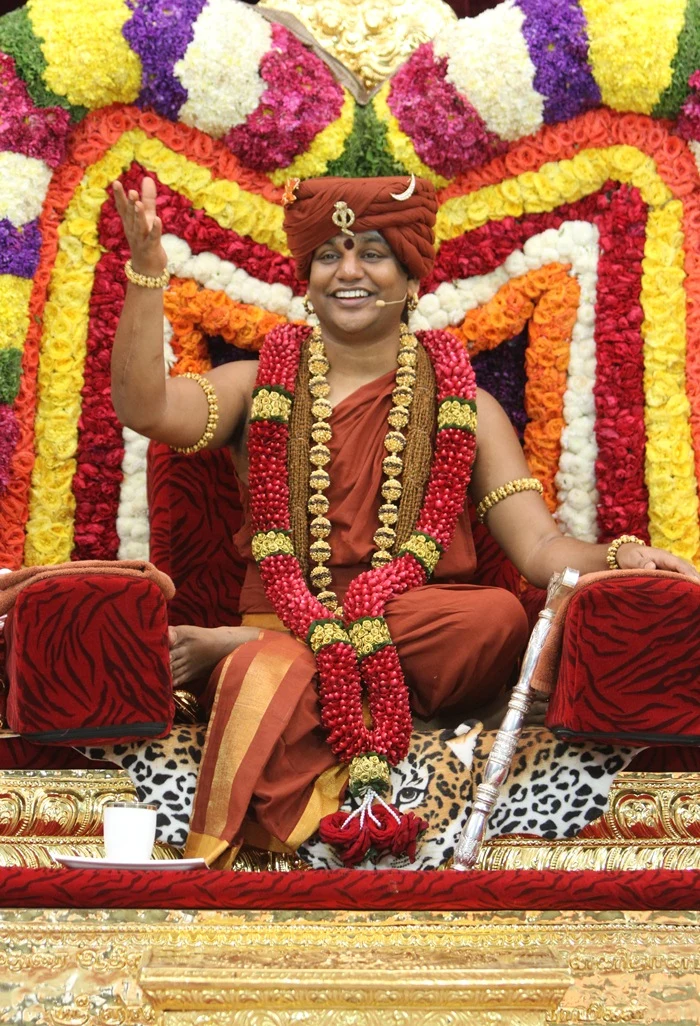
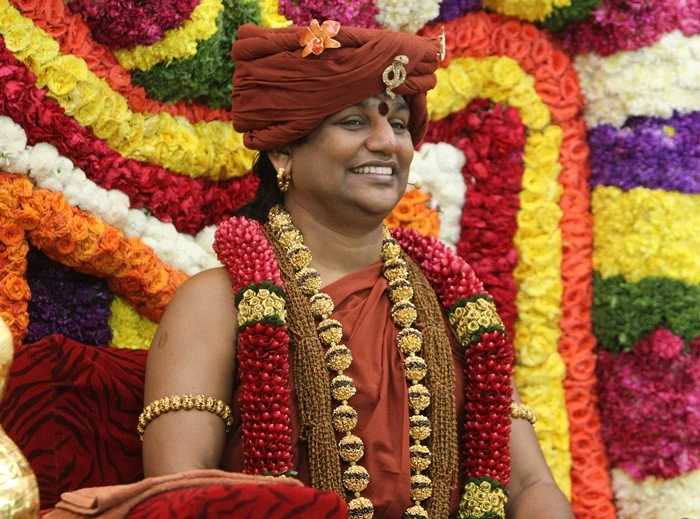
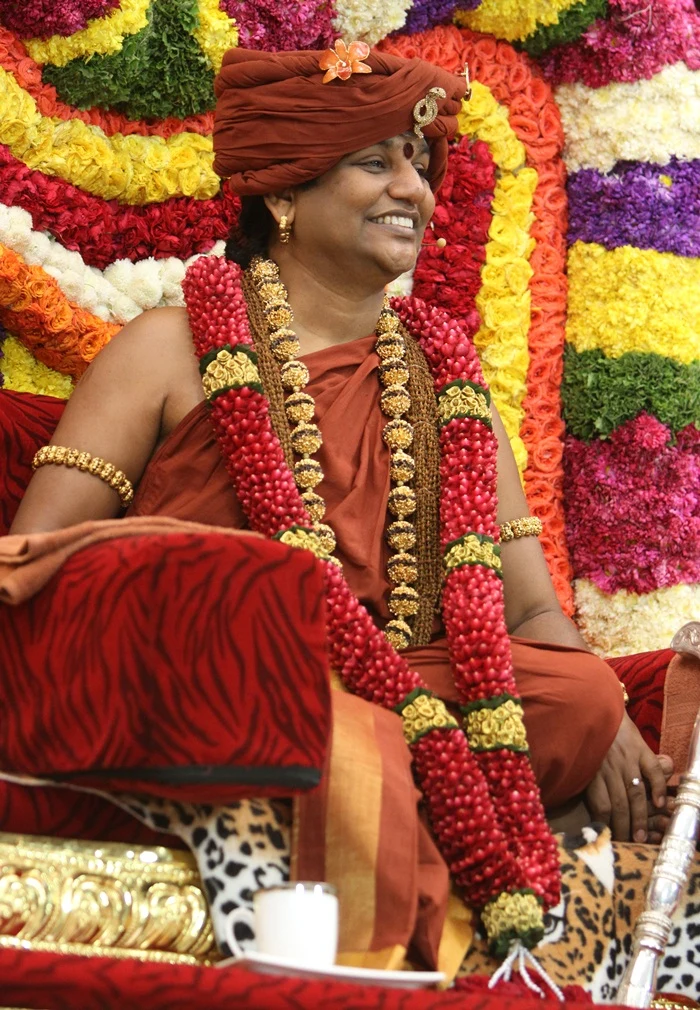
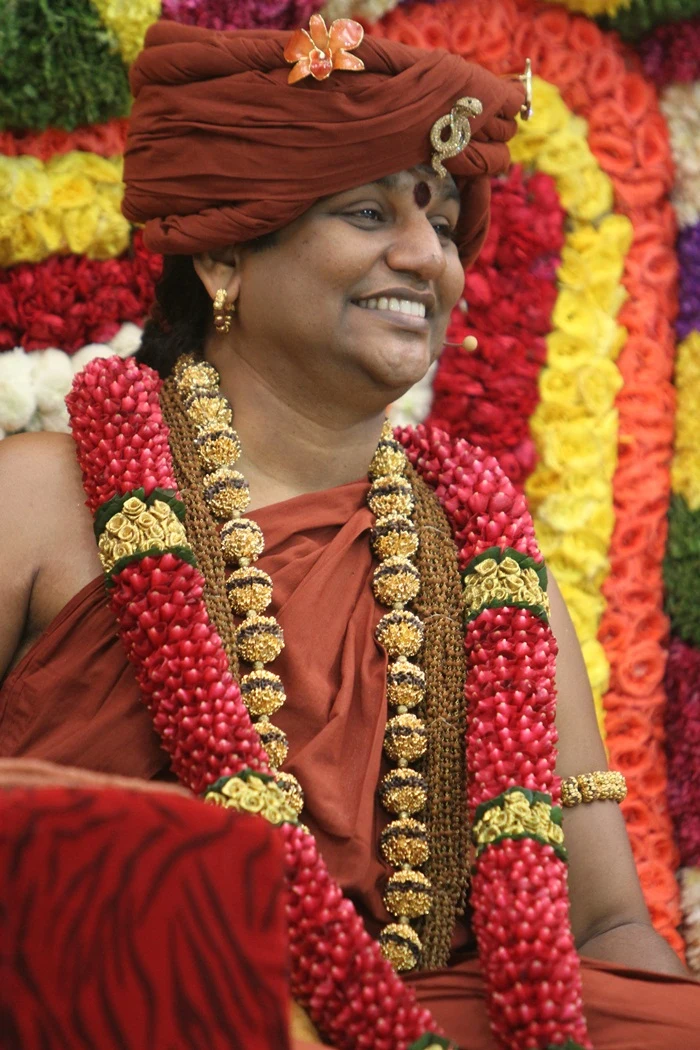
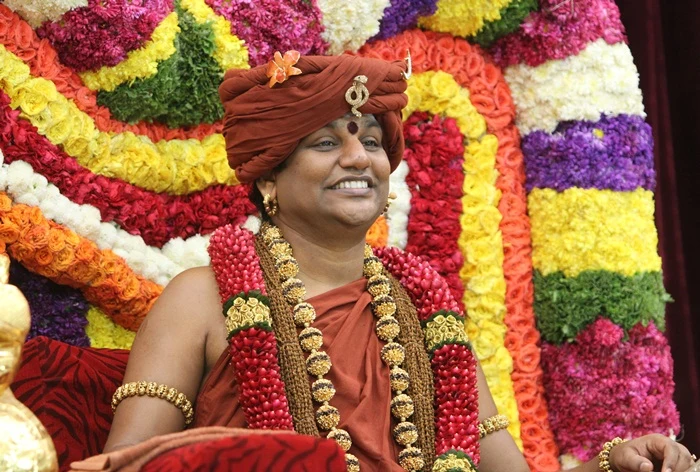
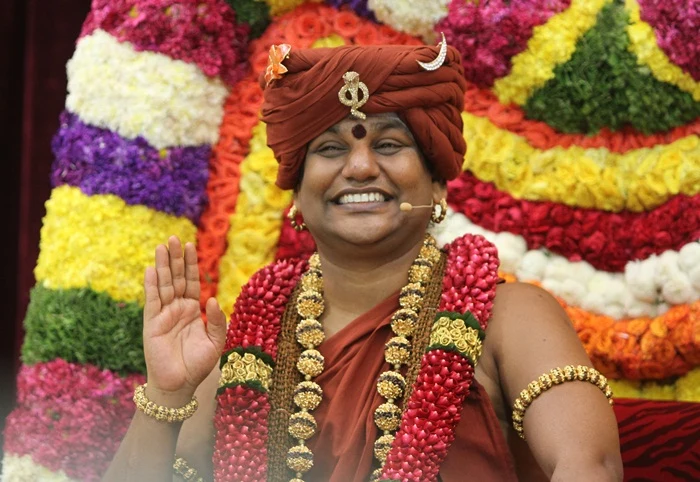
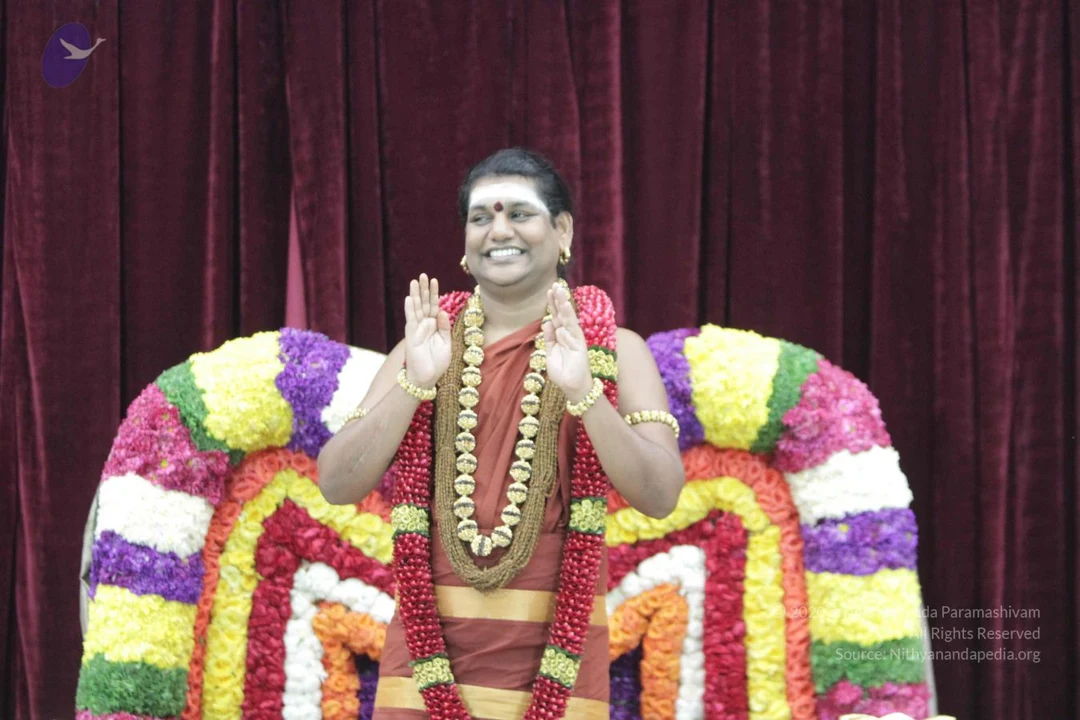
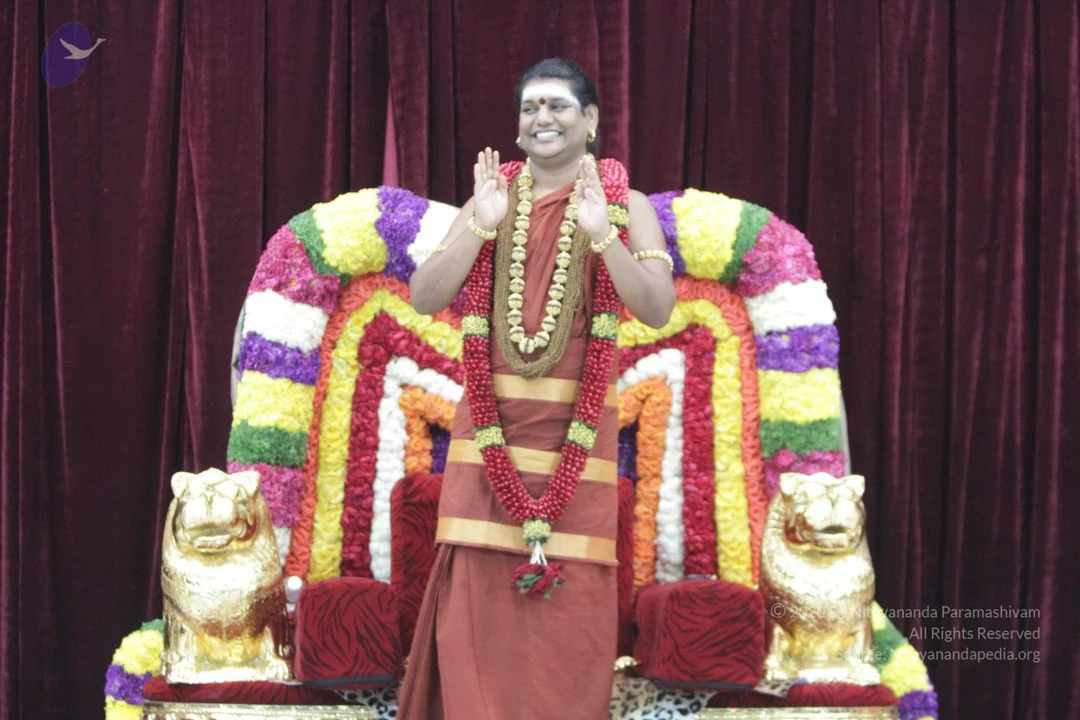
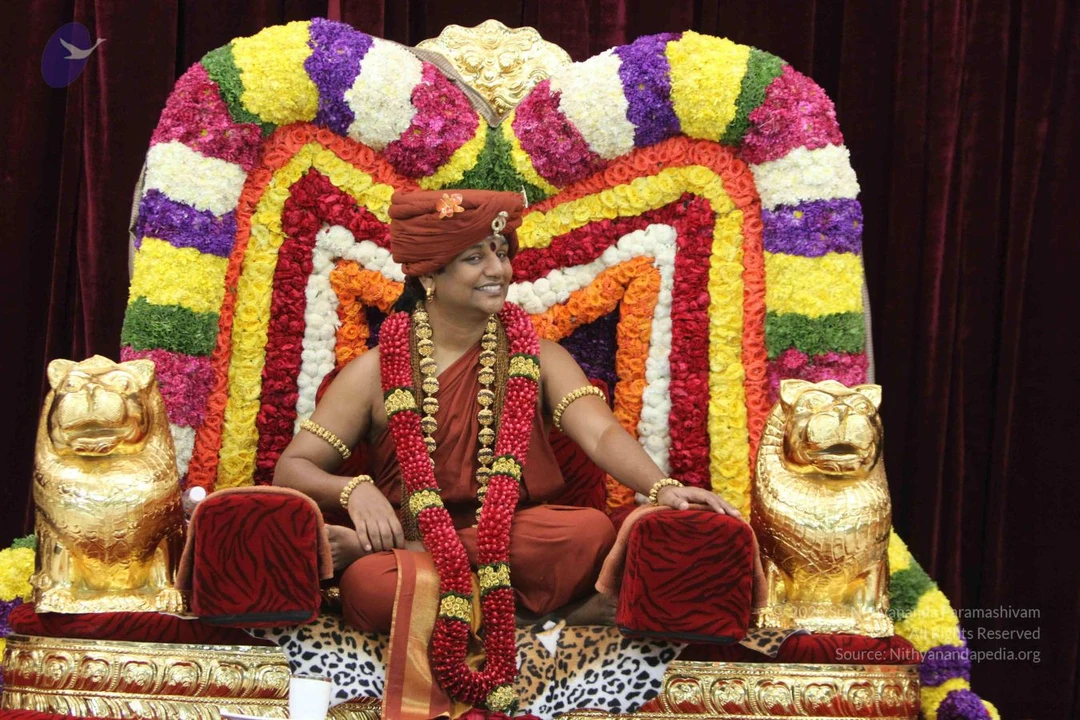
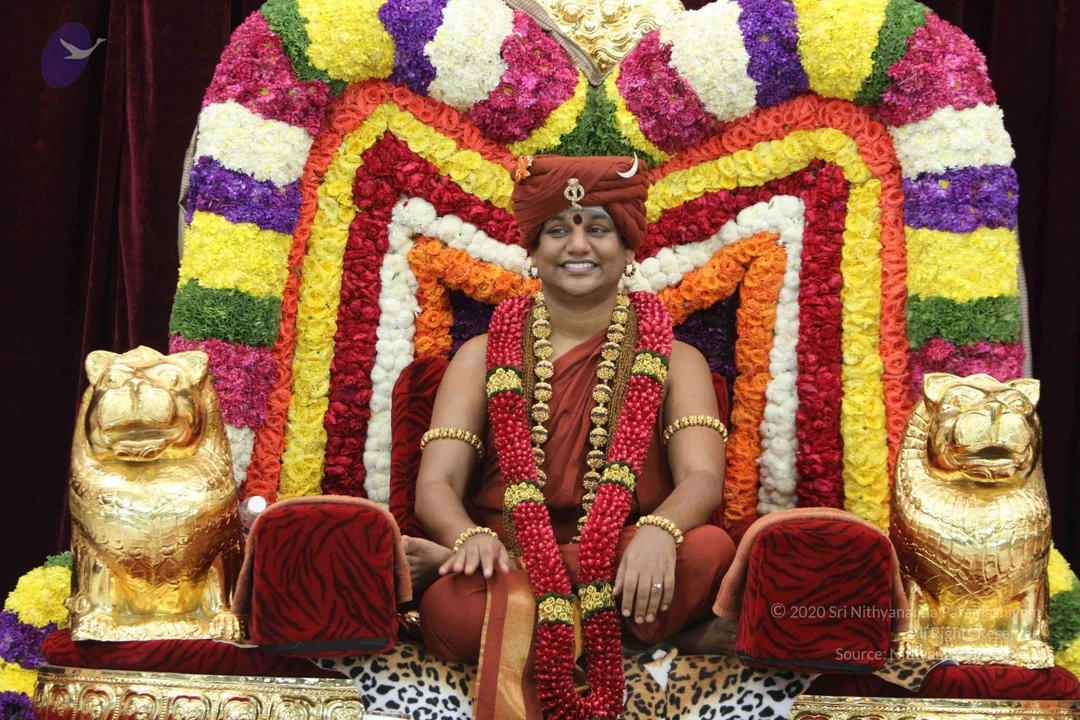
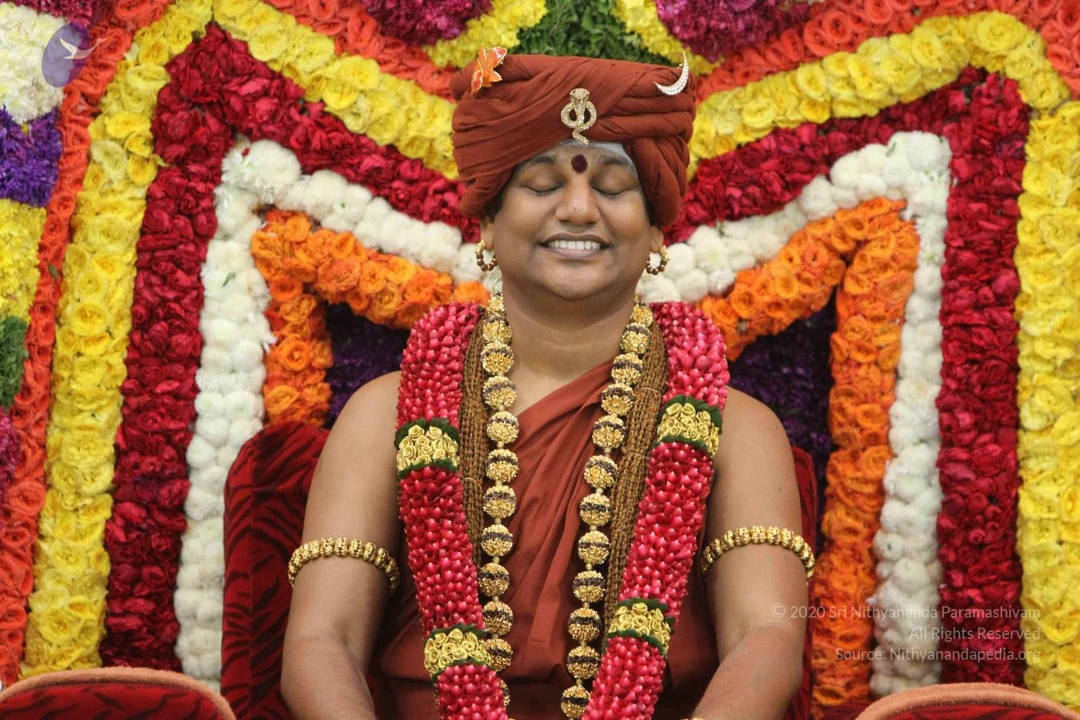
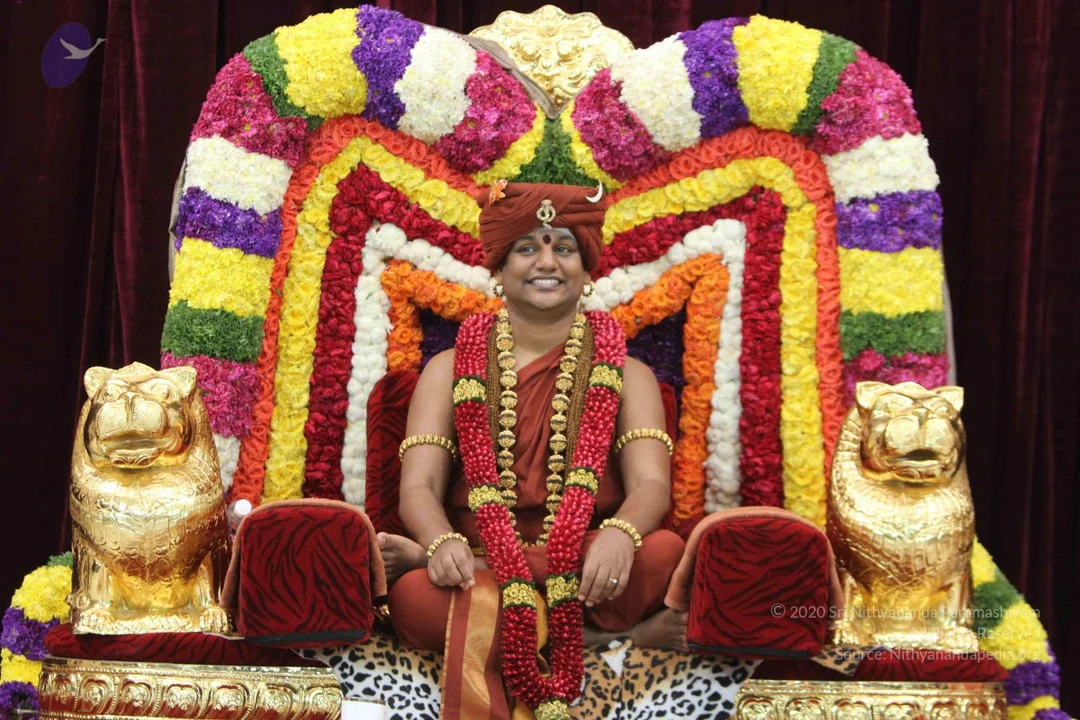
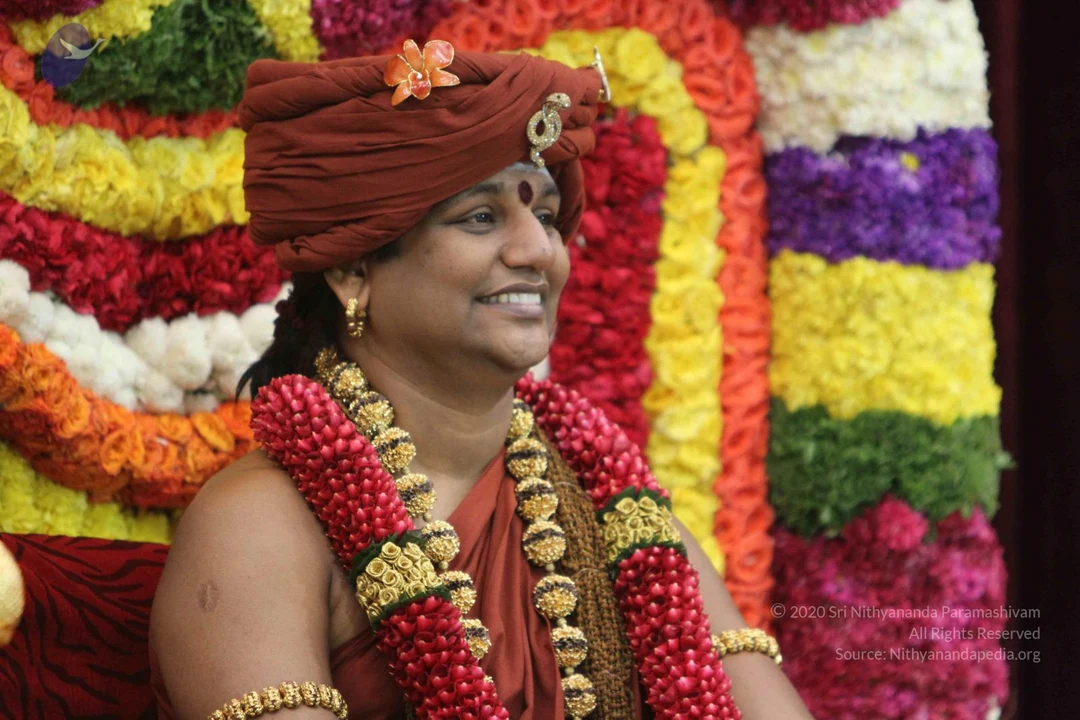
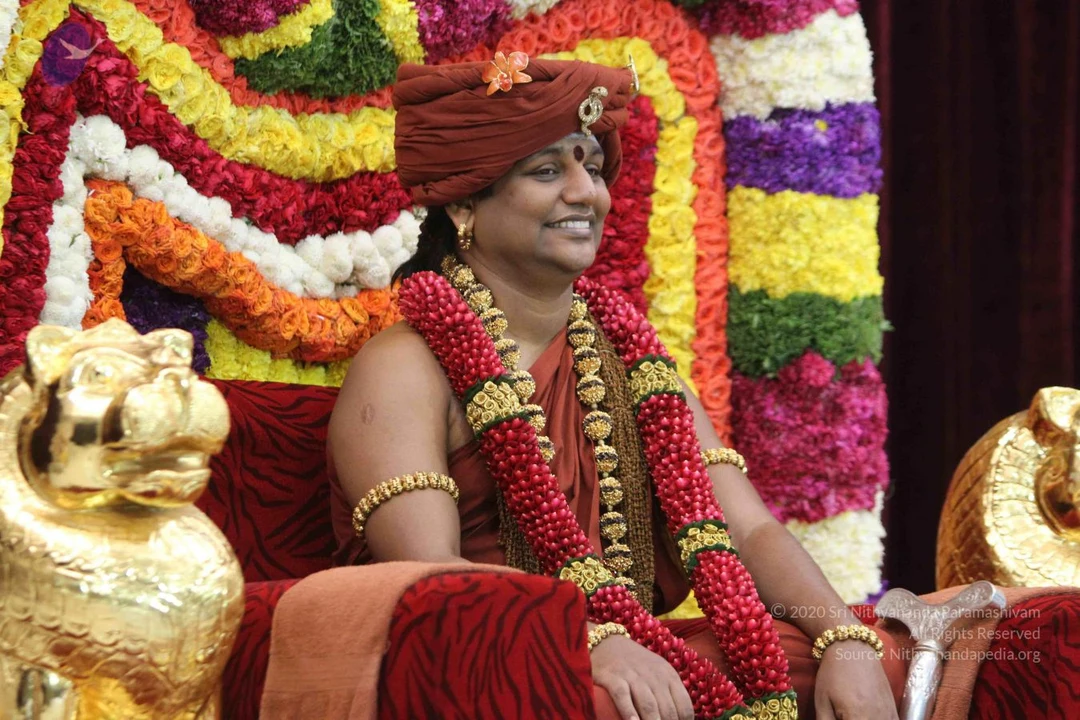
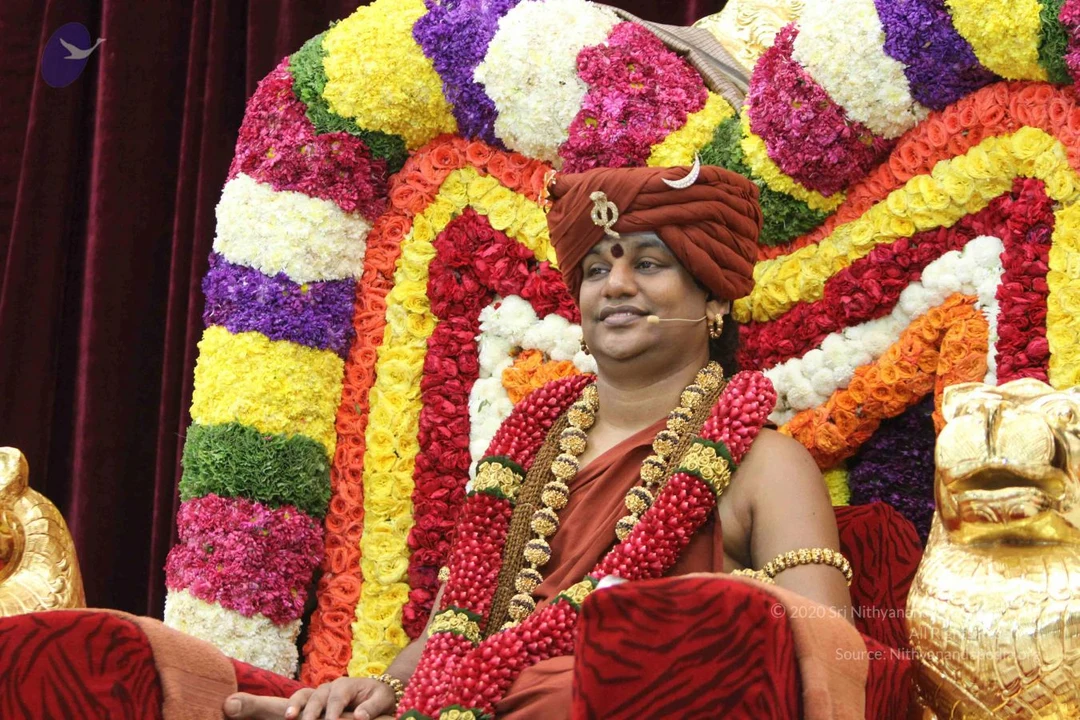
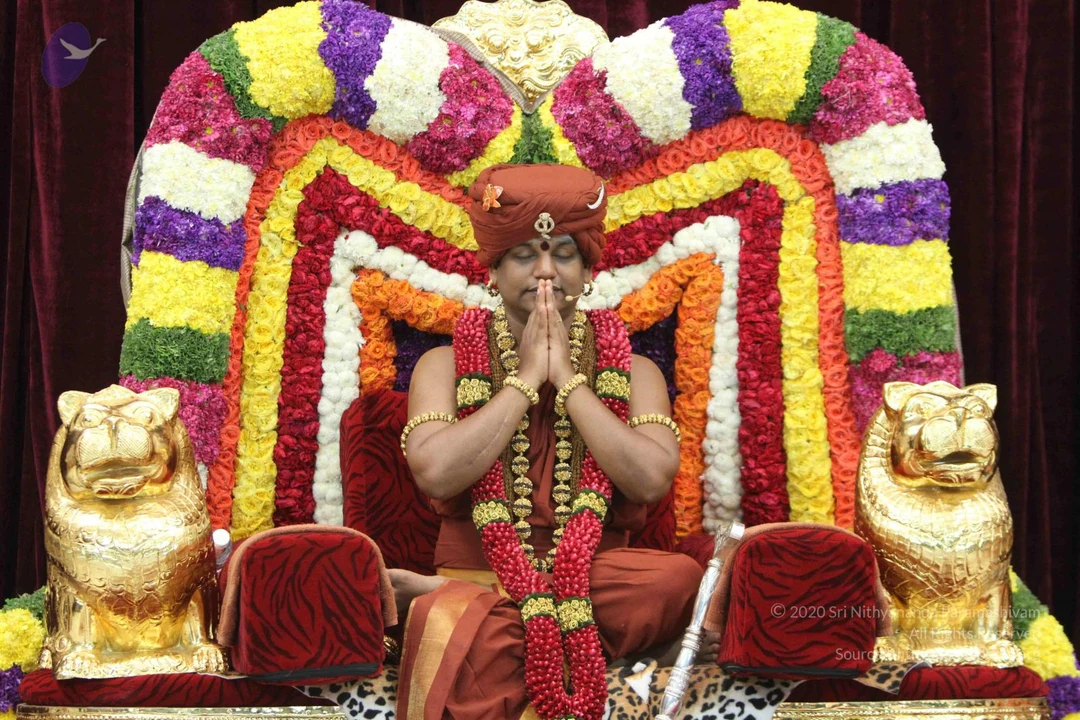
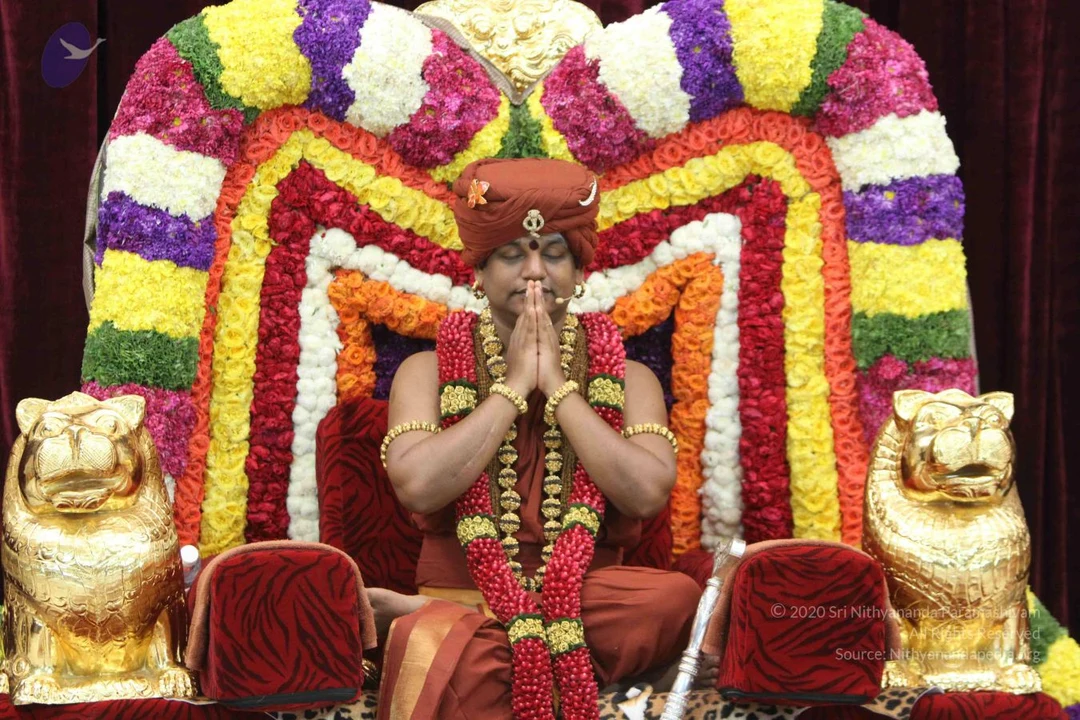
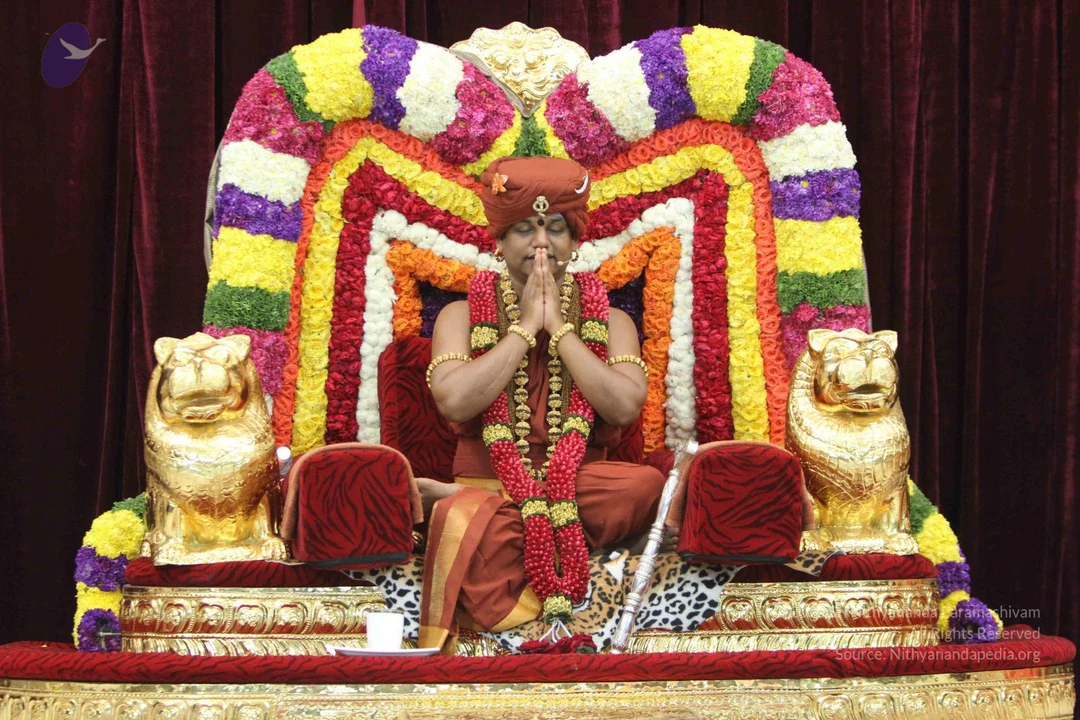
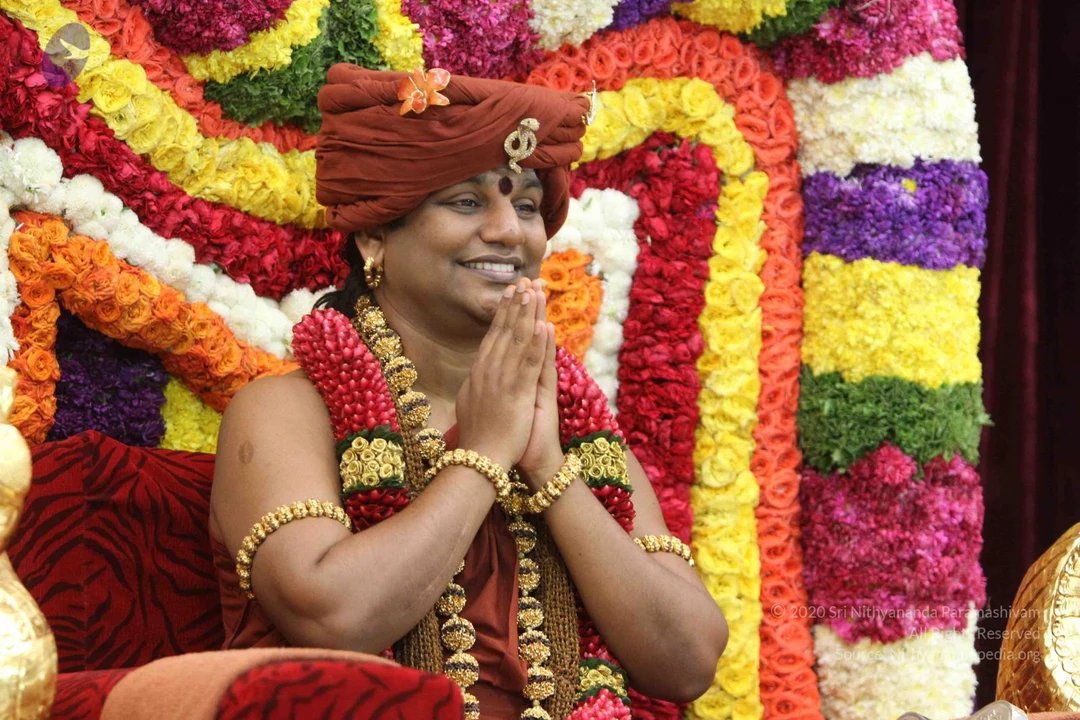
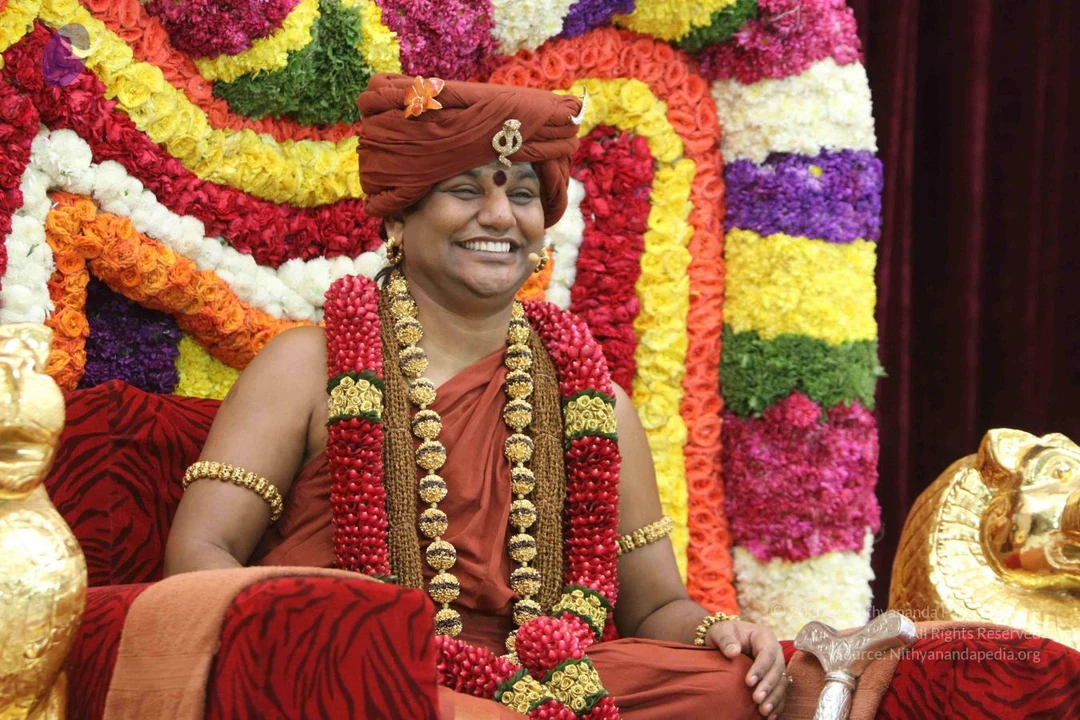
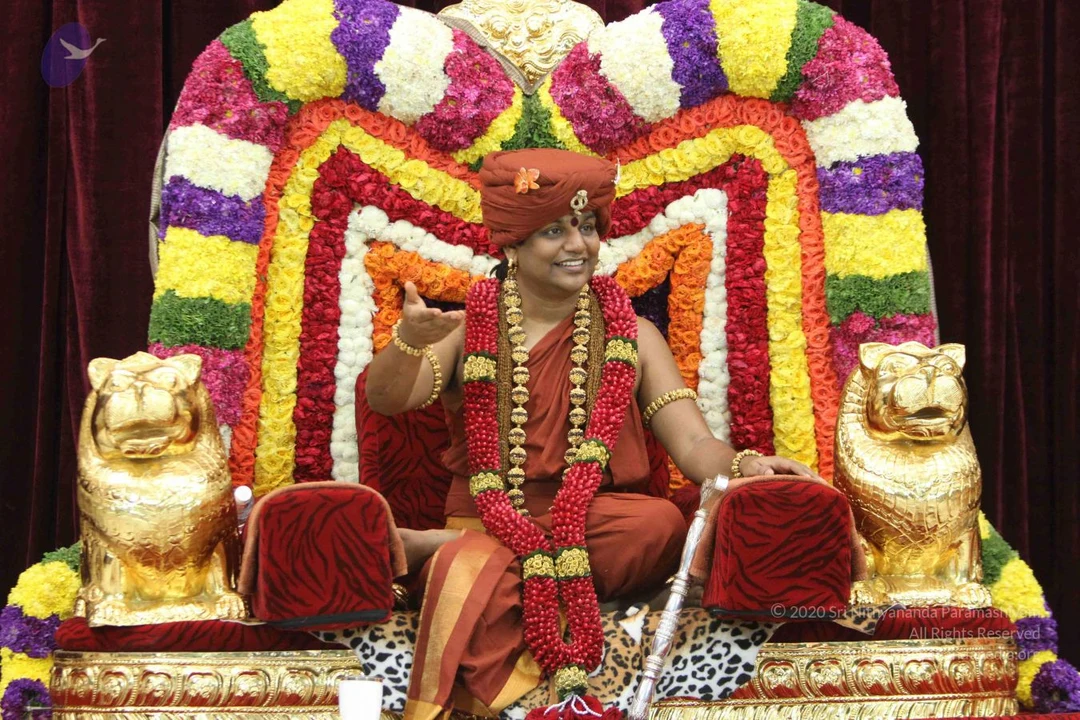
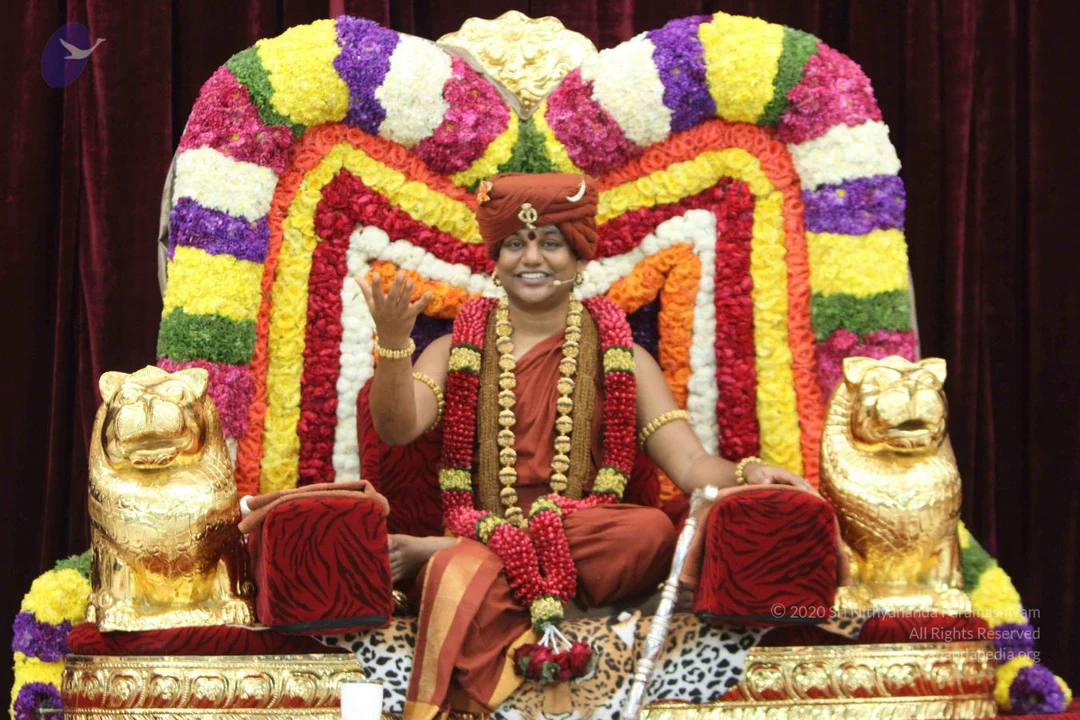
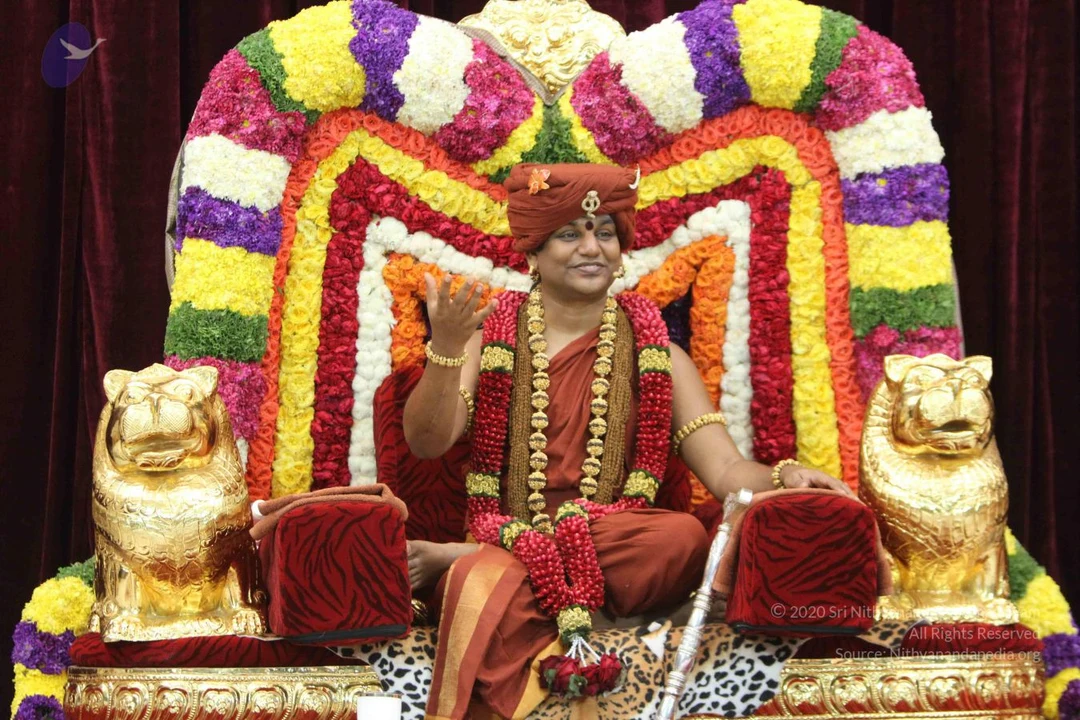
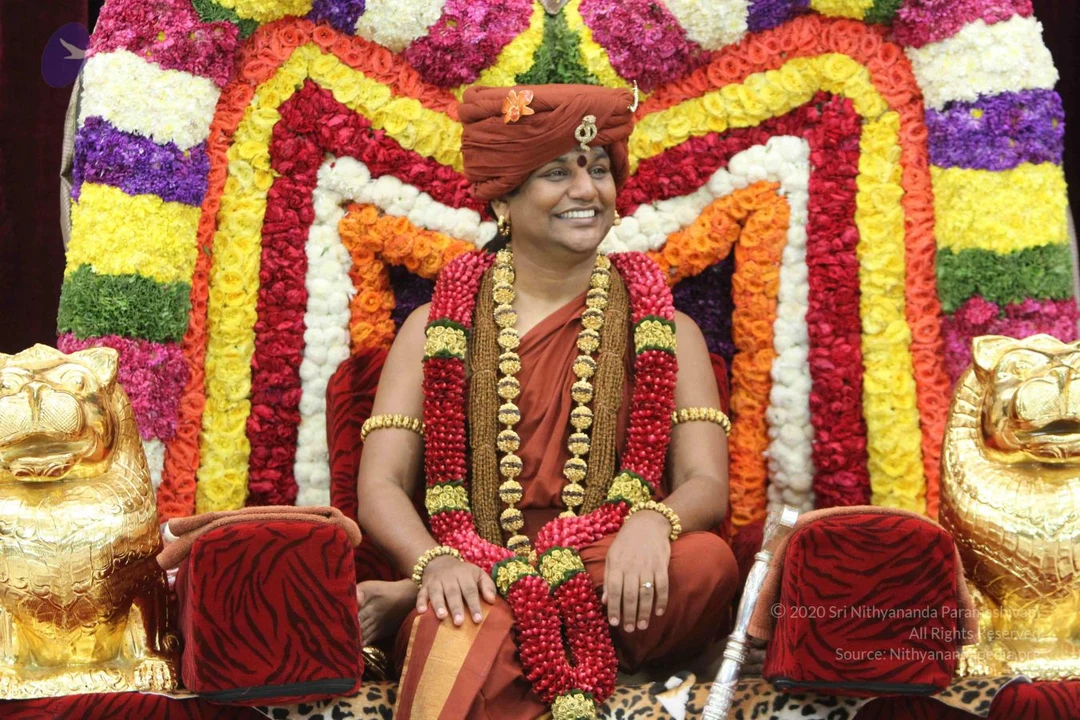
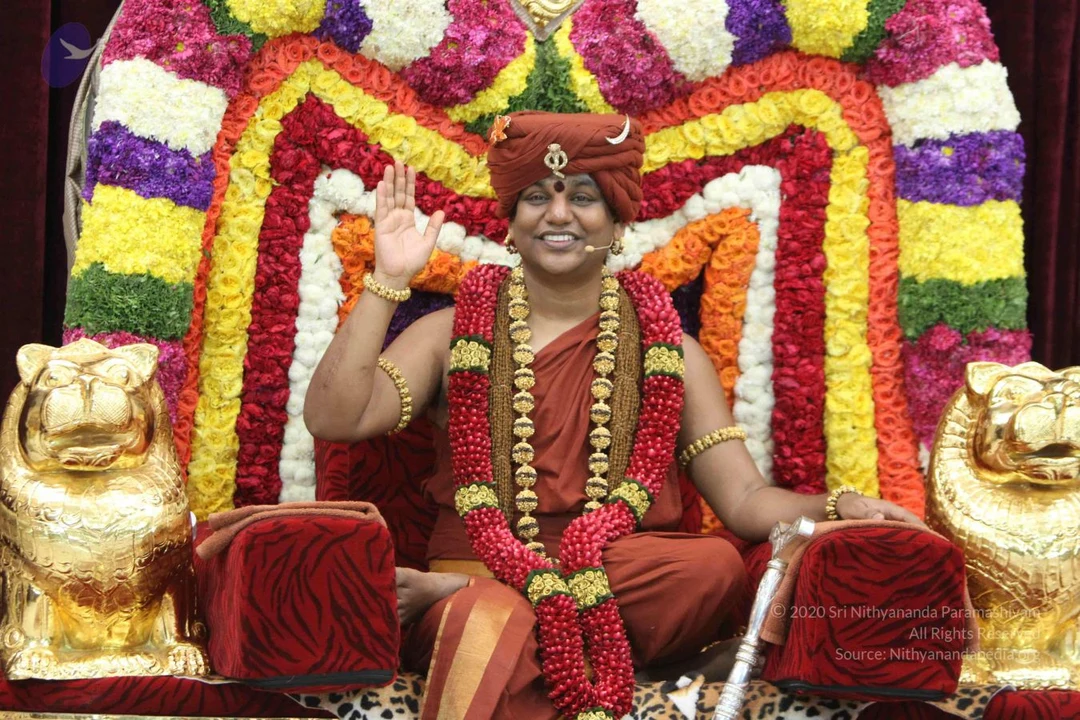
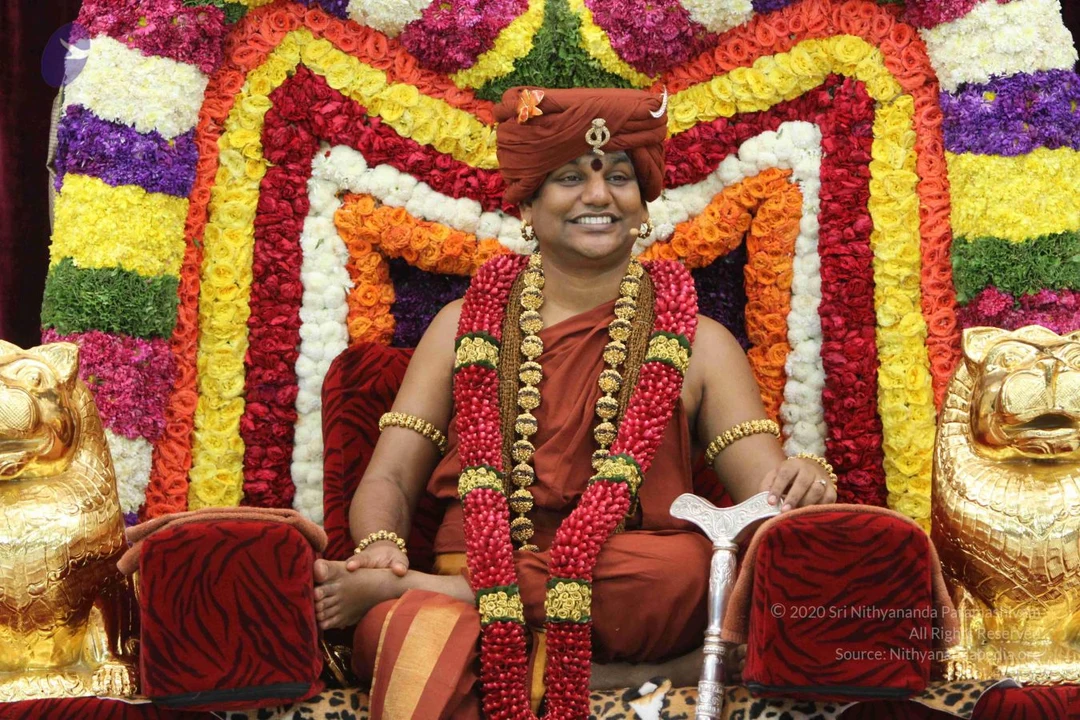
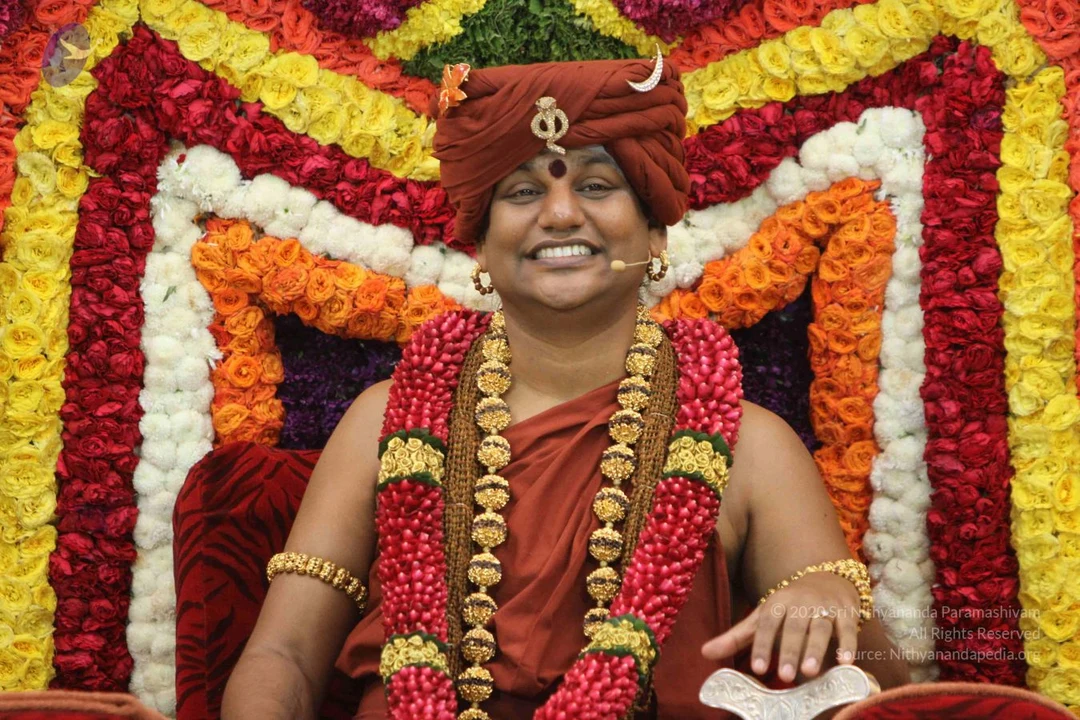
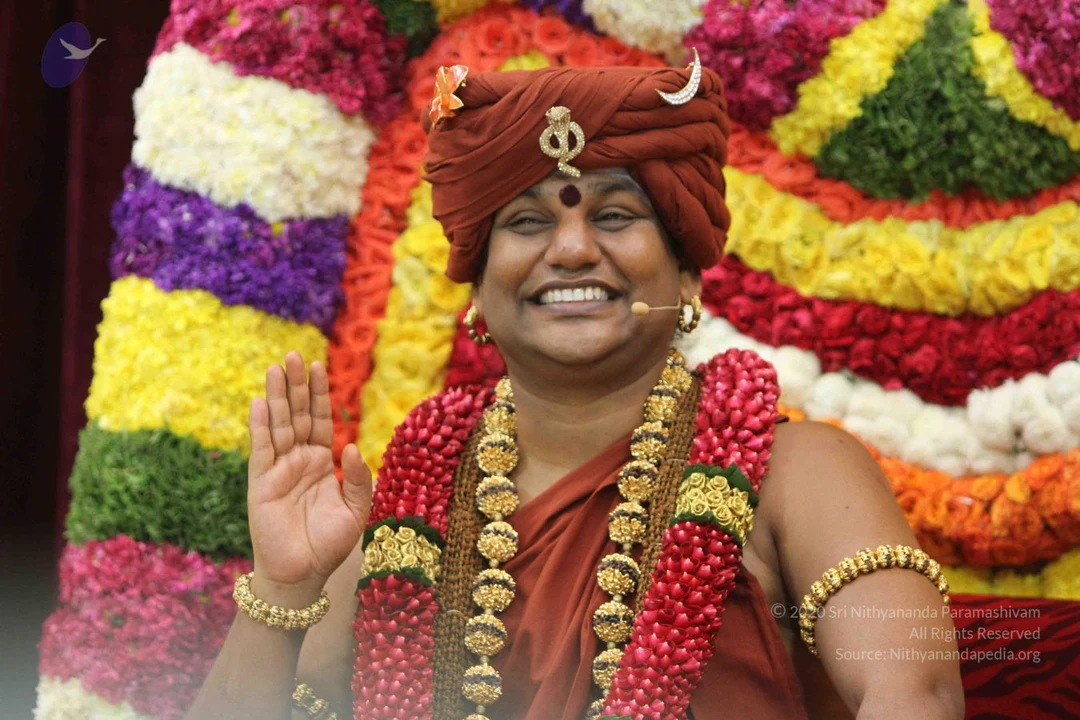
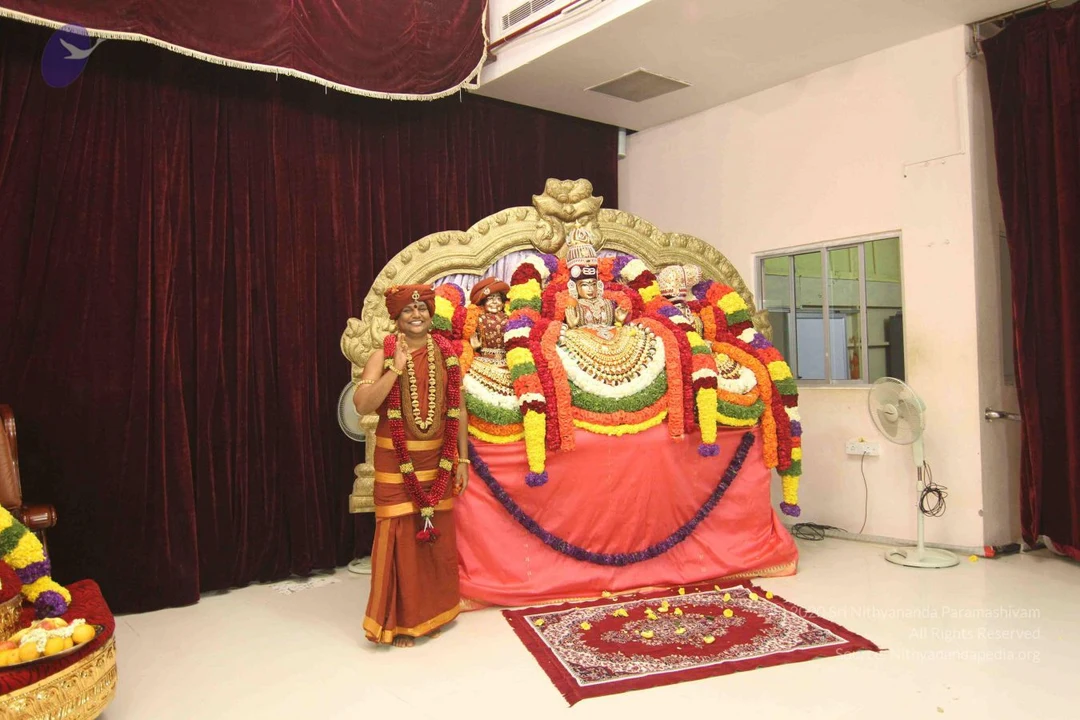
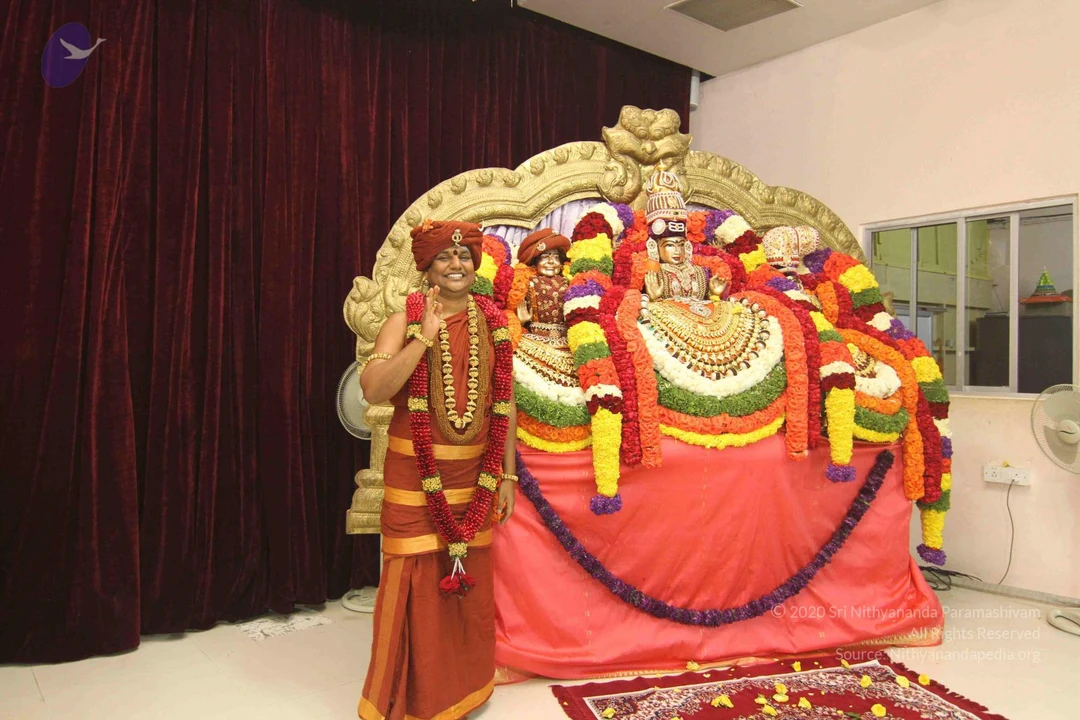
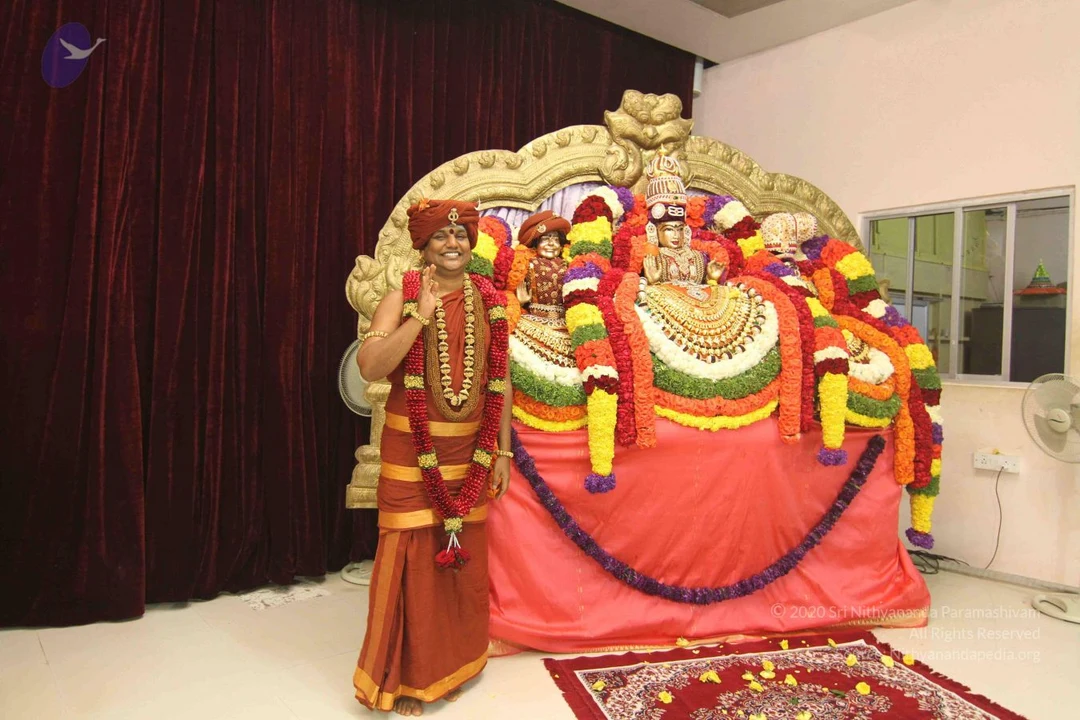
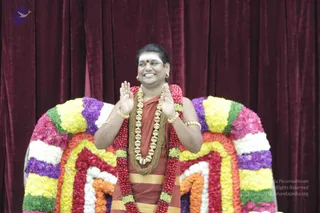
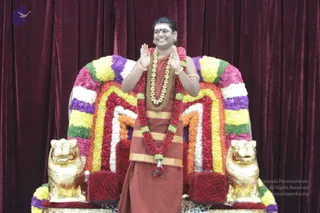
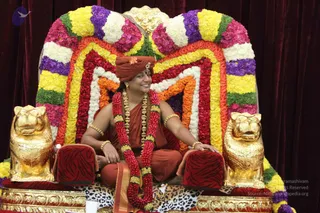
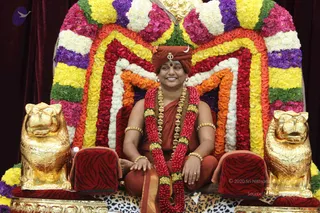
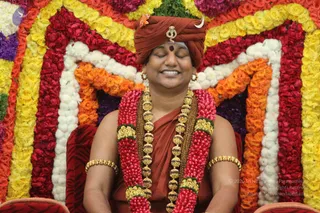
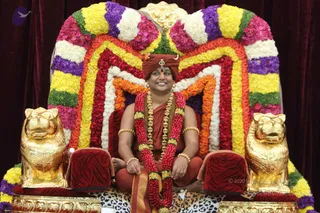
A smiling person stands before a floral-decorated seat backed by deep maroon velvet drapes. The person wears a rust-red garment with a gold-toned sash, a long gold bead necklace with a red and green flower garland, gold bangles, a red bindi and white forehead markings. Both hands are raised palms-forward in a blessing or greeting gesture. The seat is covered in bands of yellow, white, purple, pink and red flowers.A standing person in a rust-orange robe and wrap with a red-and-white flower garland and a gold-and-shell necklace stands before a floral-decorated throne with golden lion heads and a deep maroon velvet backdrop. The person has palms pressed together in greeting and a broad smile, with a red tilak on the forehead. The throne is draped with garlands in yellow, purple, white, orange and green. One person is visible.A photograph of a seated person on an ornate throne decorated with rows of marigold and mixed-colour flower garlands in yellow, white, purple, red and orange. Two gilded lion figures flank the throne, and a zebra-print cushion rests on the platform. The seated person wears an orange-red turban with a small decorative pin, an orange-red robe, a long red-and-white beaded garland, gold necklaces, gold bangles and an armband, and sits cross-legged with one hand resting on a red-and-gold cushion. A dark red velvet curtain forms the backdrop. One person is visible.A photograph of a smiling man seated on an ornate throne heaped with garlands of yellow, orange, red, white and purple flowers, with a golden crescent-moon and emblem ornament above. He wears a rust-orange turban with a tilak, a rust-orange robe, a long tiered gold and red bead necklace, a red flower garland, gold armlets and bangles. Golden lion sculptures flank the throne on a leopard-print cloth, and a deep red curtain stands behind. One person is physically present.A seated figure with eyes closed and a broad smile sits before a backdrop of dense floral decoration in red, yellow, orange, white and purple roses and marigolds arranged in chevron bands. The figure wears a rust-orange turban with a gold crescent and ornament, a red-orange robe, a red bindi, gold earrings, gold armlets and layered garlands of red flowers and gold beads. Probable Swamiji by appearance cues: an ornate turban, rudraksha-style beaded gold necklaces and saffron-toned robes, seated in a plush red throne-like seat. The image is a photograph of the seated figure at a ceremonial setting.A seated person sits cross-legged on a throne framed by a tall arch of garlands in red, orange, yellow, white, purple and green, with golden lion figures flanking the seat. The person wears an orange-red turban with a crescent emblem, an orange-red robe, a large red and white flower garland and gold necklaces, with gold bangles on the arms. A leopard-print cloth lies beneath the throne and a red velvet backdrop hangs behind. Swamiji (probable): the seated figure has long dark hair under the turban, saffron robes and ornate gold jewellery, consistent with the page's Swamiji reference, but the seated person is the only candidate and appearance-based identification is uncertain.
Lawyers-Press-Meet

4 photosSource gallery
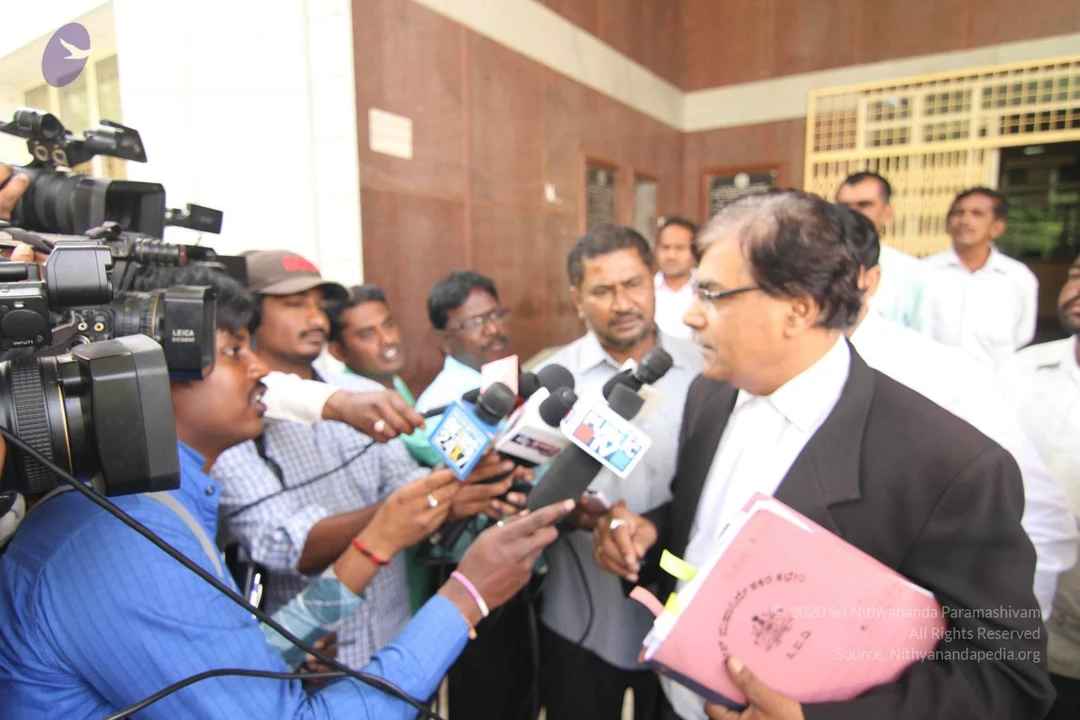
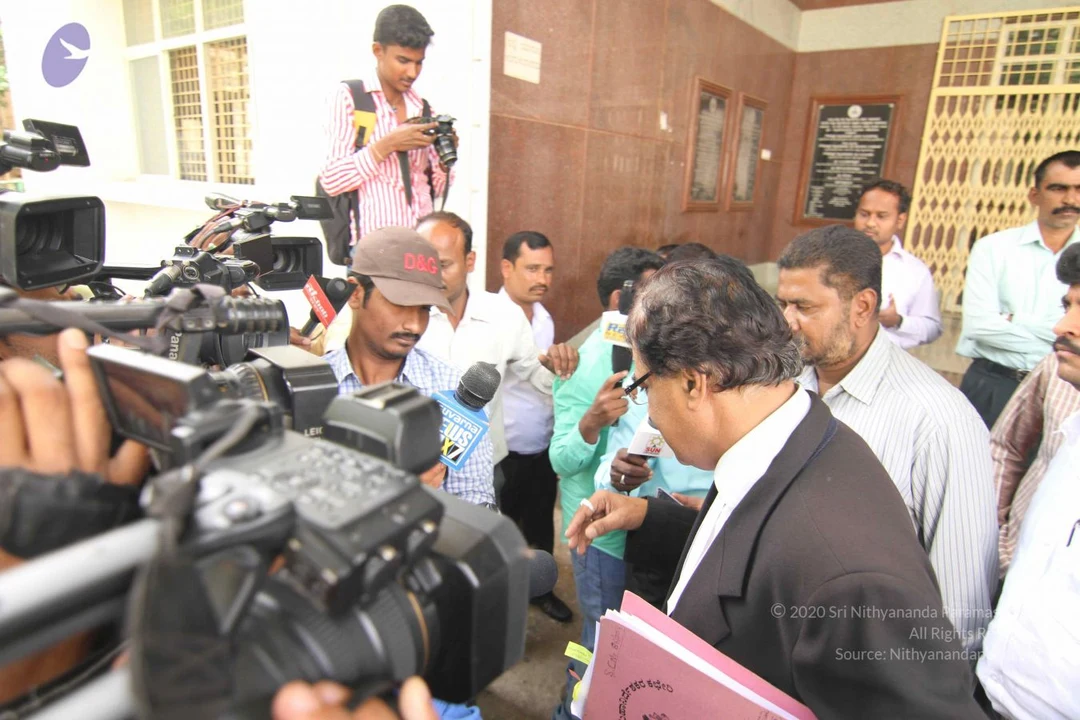
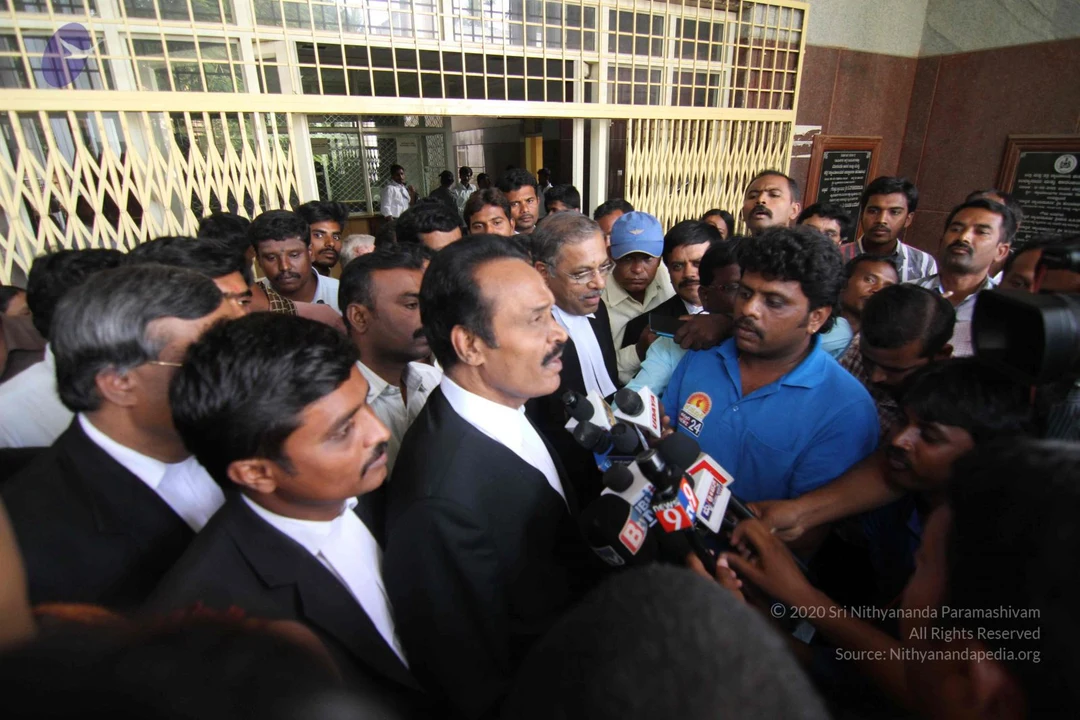
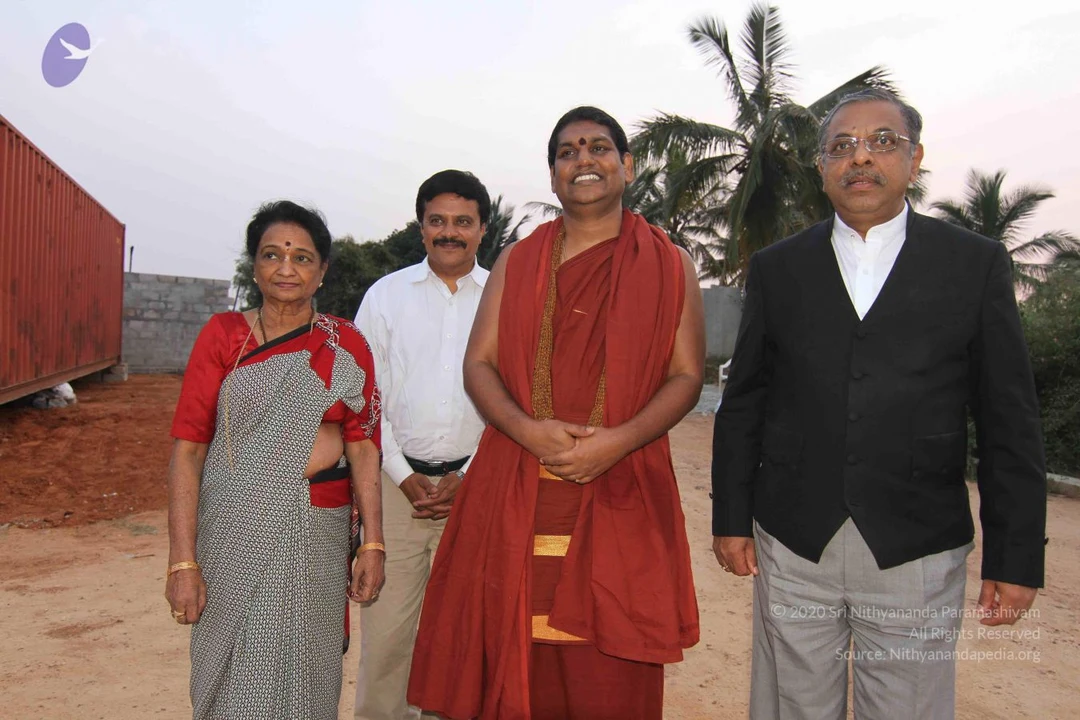
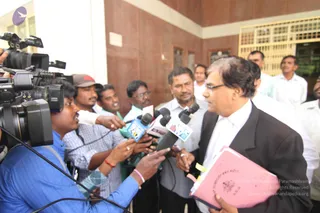
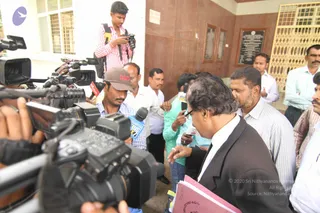
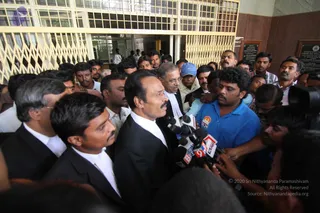
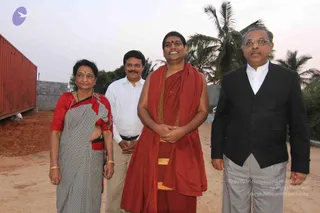
A press scrum outside a building with reddish-brown panelled walls and a grilled window. A man in a dark suit jacket, white shirt and glasses holds a pink folder and speaks into several microphones, including ones marked with TV station logos. Around him, reporters and a cameraman with a large video camera press forward; one wears a blue shirt, another a checked shirt and a maroon cap. Several other men stand behind in white and grey shirts. No person is clearly identified as a person in this scene.A press scrum outside a building entrance with a brown tiled wall and framed plaques. A lawyer in a dark brown suit and white shirt, holding pink and white document folders, gestures toward reporters. Camera operators in the foreground shoulder large video cameras, and reporters hold microphones labelled with channel logos. A cameraman in a red-and-white striped shirt photographs from above, and a man in a brown cap with DAC lettering stands among the crowd. Several men in shirts stand around the group.A photograph of a crowd gathered outside a building entrance with a yellow lattice gate. A man in a black suit and white shirt stands at the centre, surrounded by reporters holding microphones, including ones marked with channel logos. Beside him a man in a black suit and white band collar stands near another lawyer in a black coat and white bands, and a man in a blue cap and a man in a blue polo shirt are in the crowd. Dozens of people press in around them. Two dark signboards are mounted on the wall at the right.Four people stand together on a dirt ground outdoors in the late day, with a red shipping container and a concrete block wall behind them and palm trees beyond. On the left a woman in a red blouse and grey patterned sari with gold bangles looks to the side. Next to her a man in a white shirt and beige trousers stands with his hands clasped. In the centre a smiling person with a red-saffron robe, a red bindi and a long gold necklace holds his hands together in front of him, and a man in a black jacket, white shirt, grey trousers and glasses looks upward to the right. Some people are at a site visit.

Sacred-Arts

3 photosSource gallery
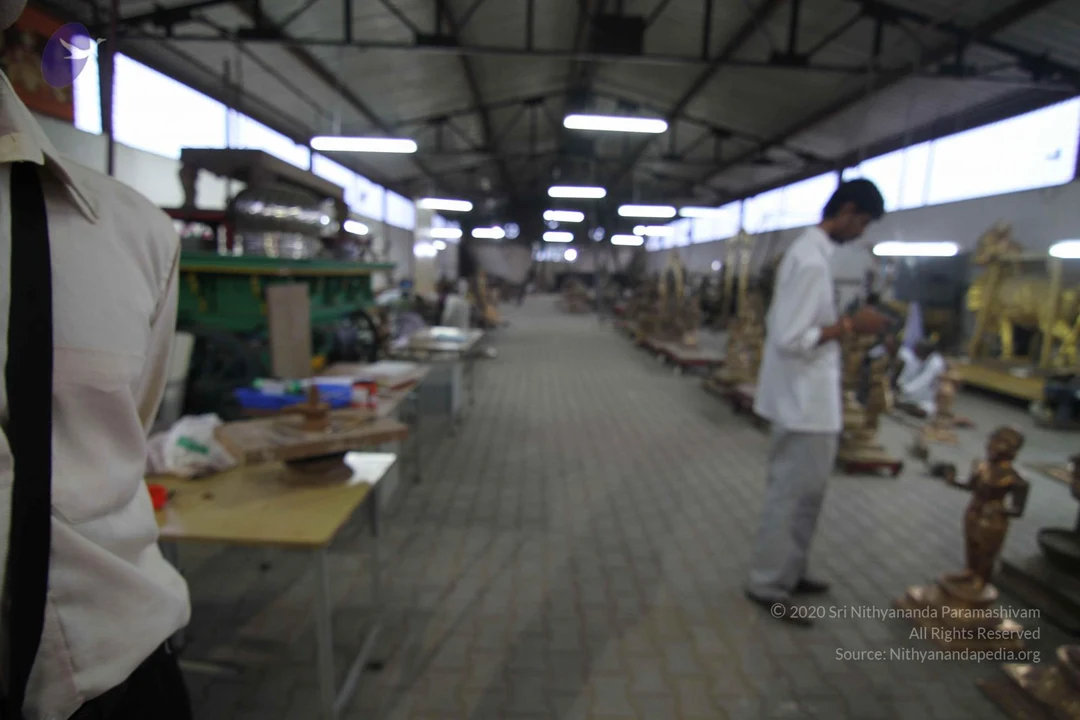
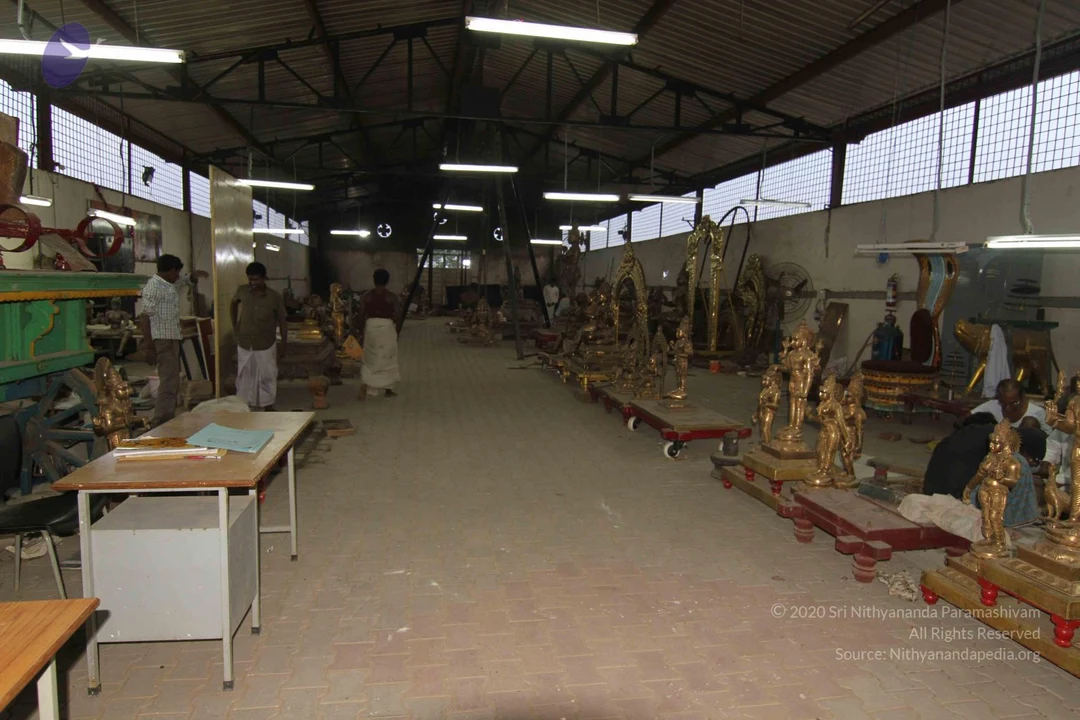
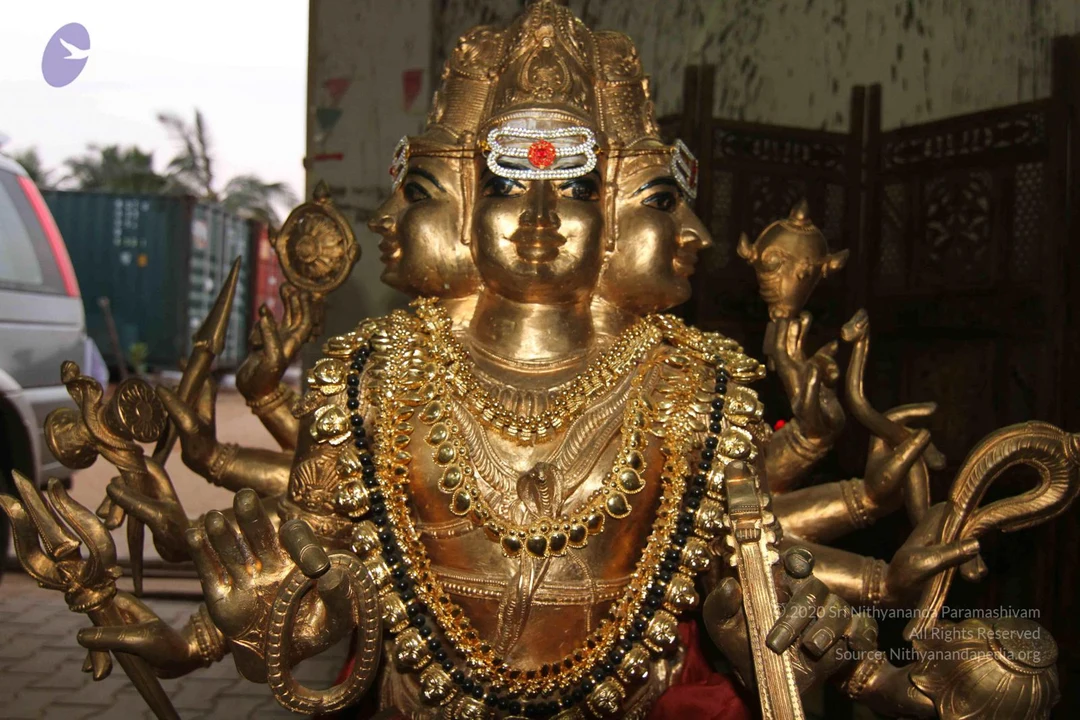
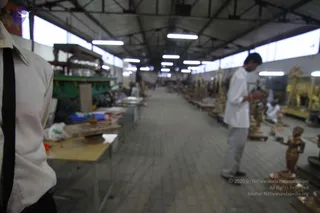
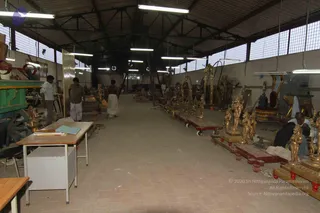
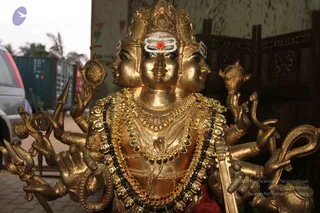
A long covered workshop hall with a tiled floor and rows of gilded brass statues and temple figures on tables along both sides. A man in a white shirt and white trousers stands at the right, bending toward a statue, while another worker in white is further back. A blurred figure in a white shirt stands at the left edge. Fluorescent lights hang from the metal roof, and a green machine and wooden work tables sit in the foreground.A large covered workshop with a corrugated roof and high mesh-windowed walls, housing many gold-finished metal deity statues and ornate temple elements on wheeled wooden carts and bench platforms along a brick-paved aisle. Several men in white dhotis and shirts walk and work among the statues, and a few people sit at the lower right beside gilded figures. A wooden table with papers stands at left, and a green-painted wooden cart with carved trim sits at the left edge. Overhead fluorescent tubes light the hall.A close-up photograph of a gilded metal deity murti with multiple faces and many arms, adorned with layered gold necklaces, a black bead mala, and a jewelled crown with a Shiva-lingam-like emblem marked with a red stone at the forehead. Several arms hold ritual objects including a trident, a snake, a drum and a small pot. A silver car and a metal container stand in the background, with a carved wooden screen to the right. The murti is the sole subject, with no people visible.

Temple

4 photosSource gallery
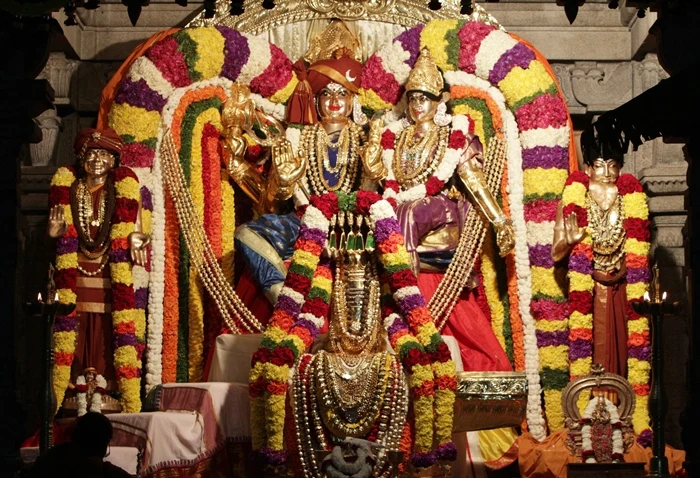
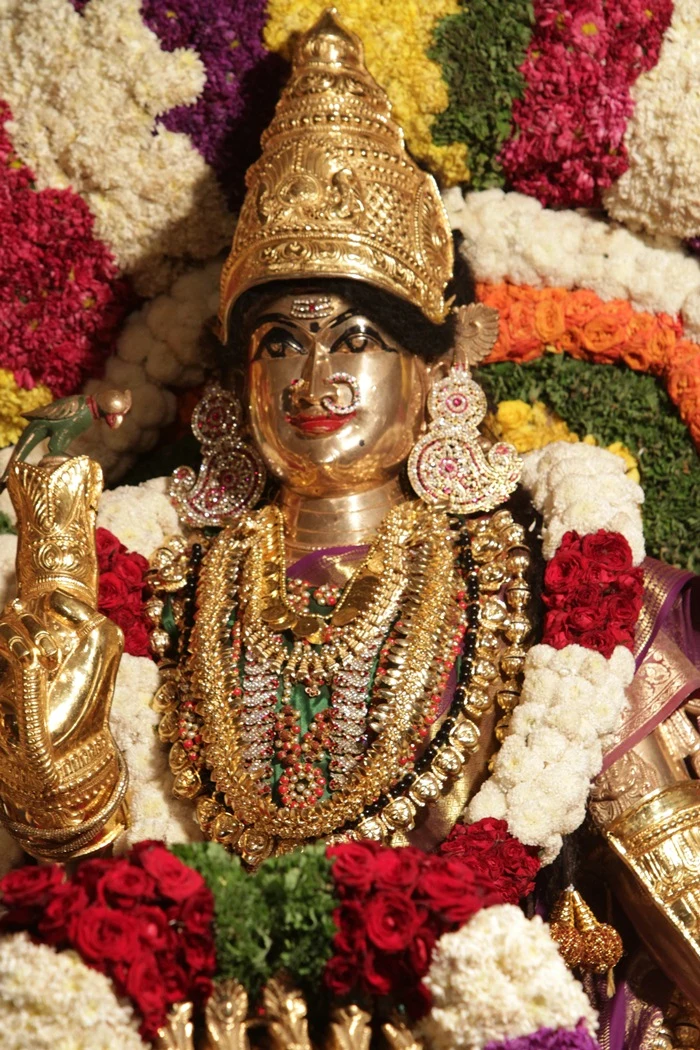
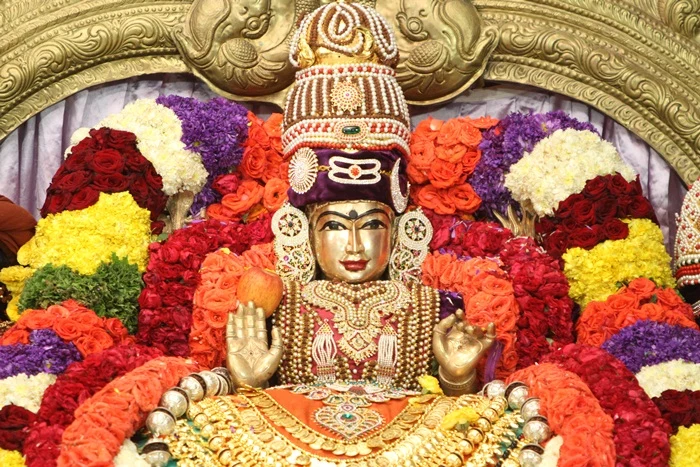
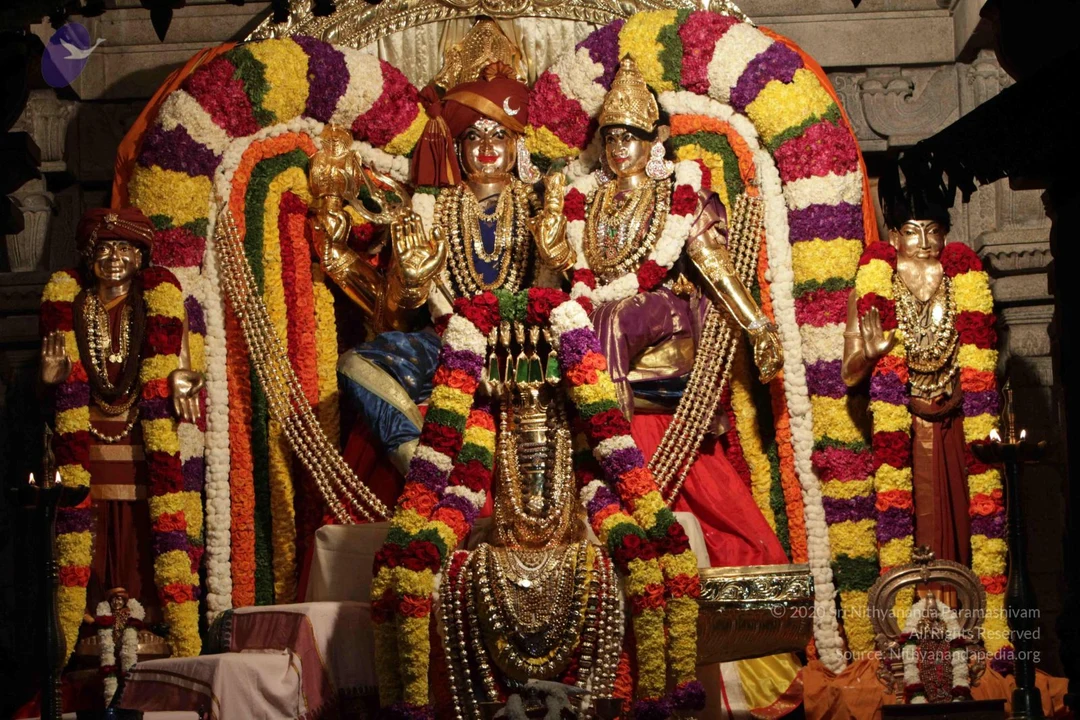
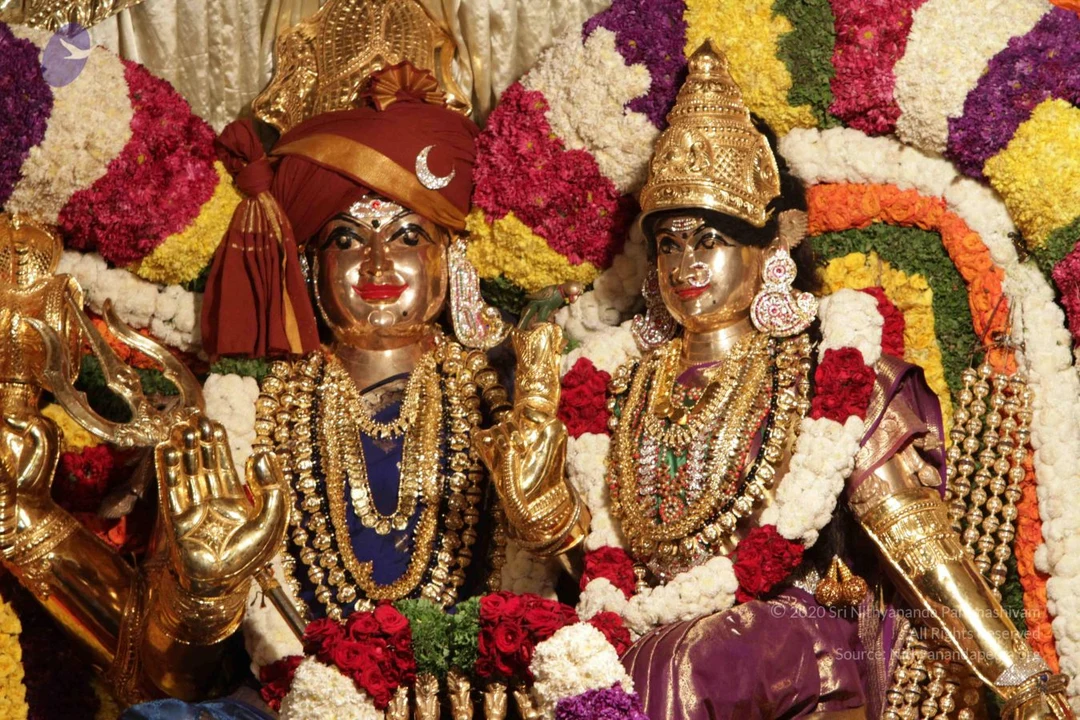
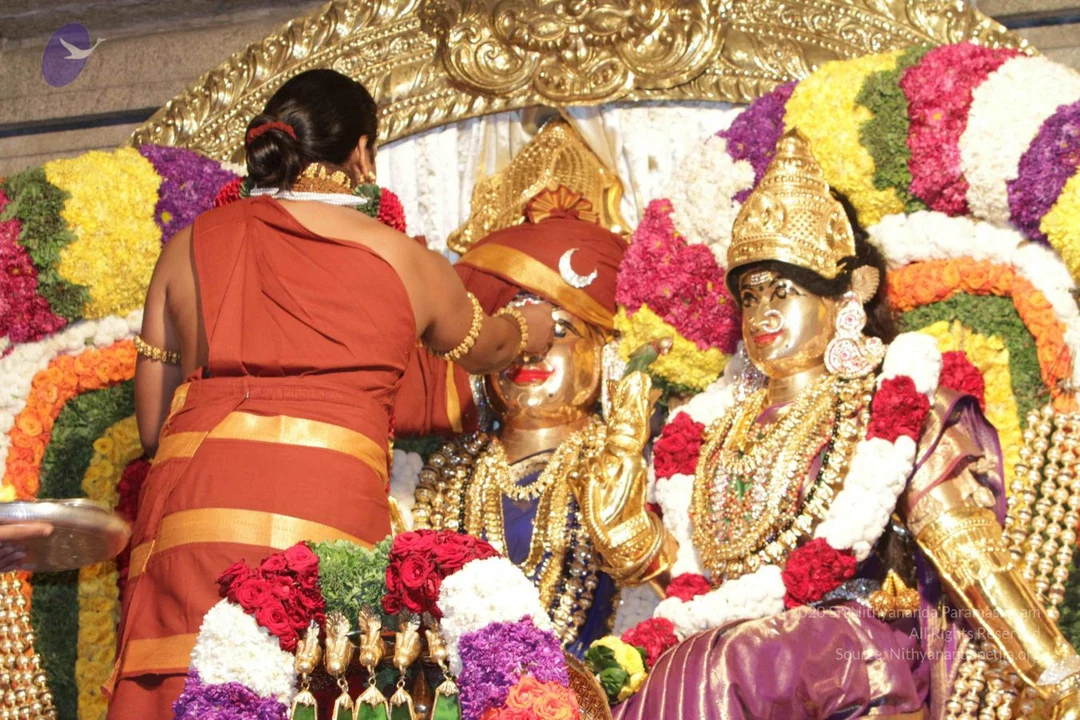
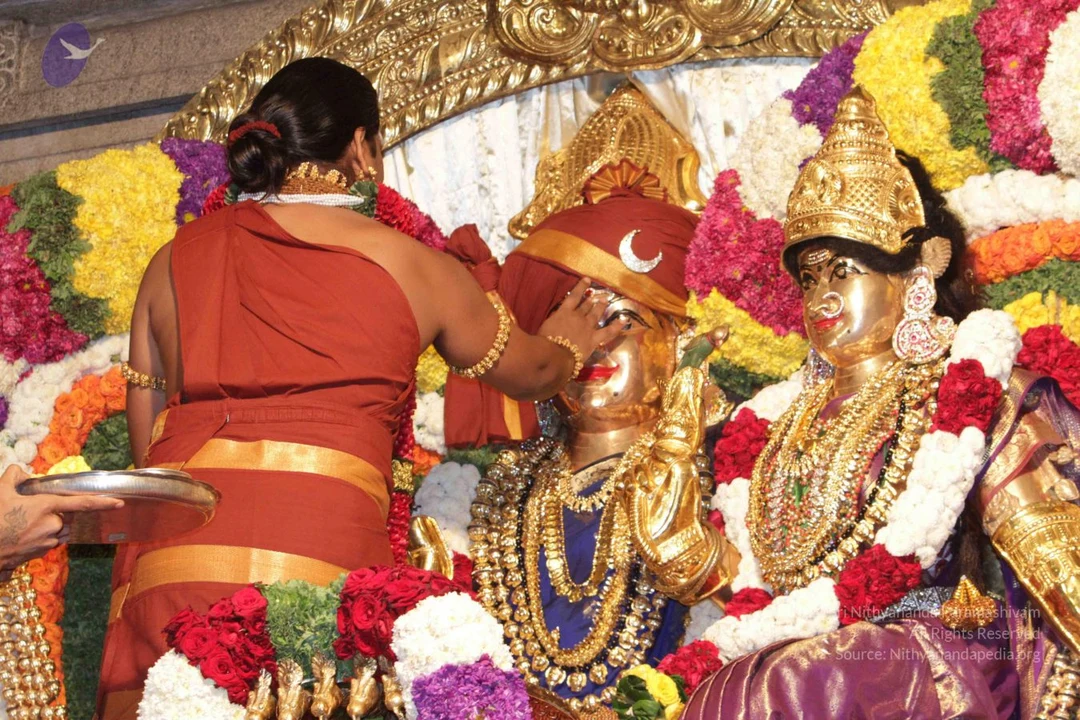
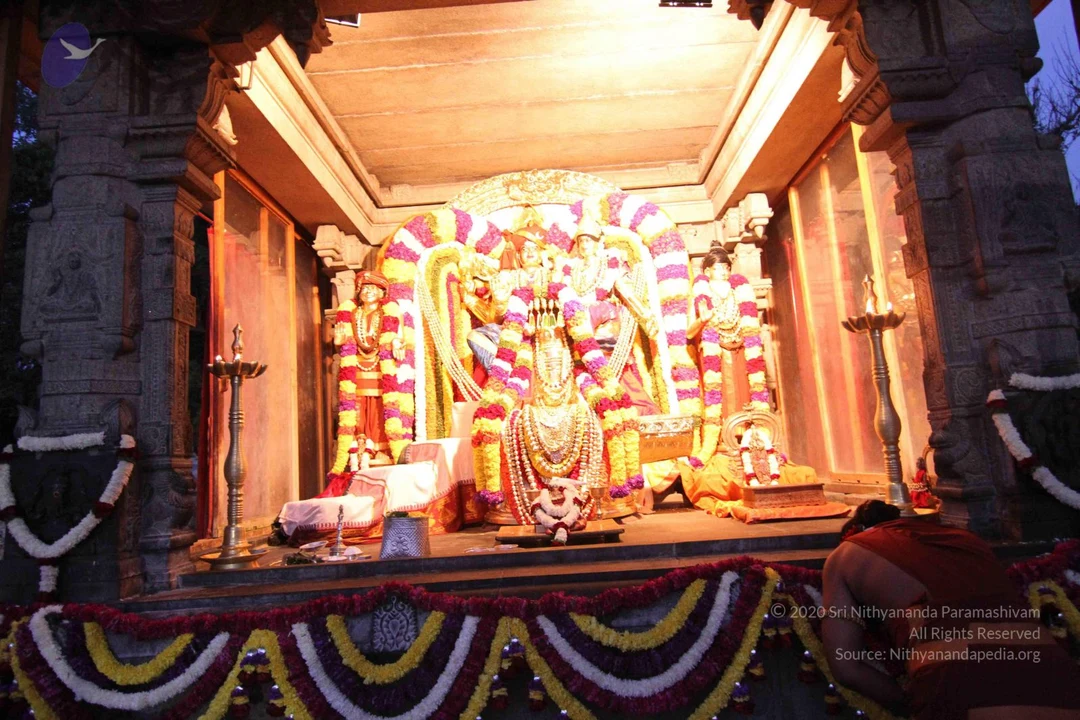
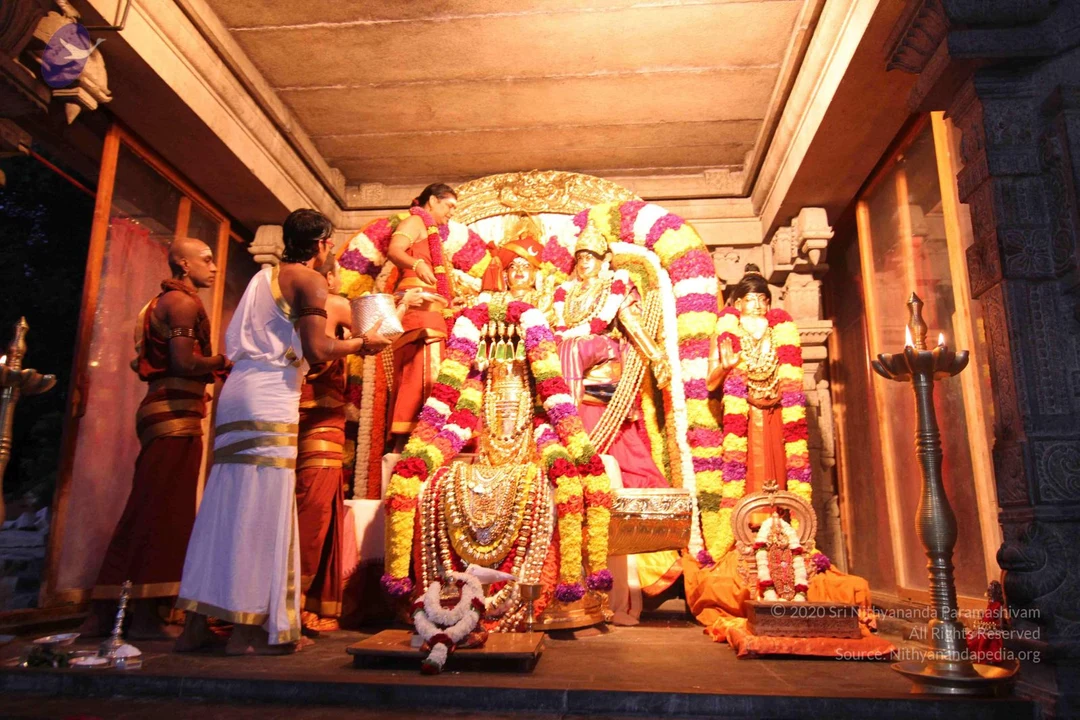
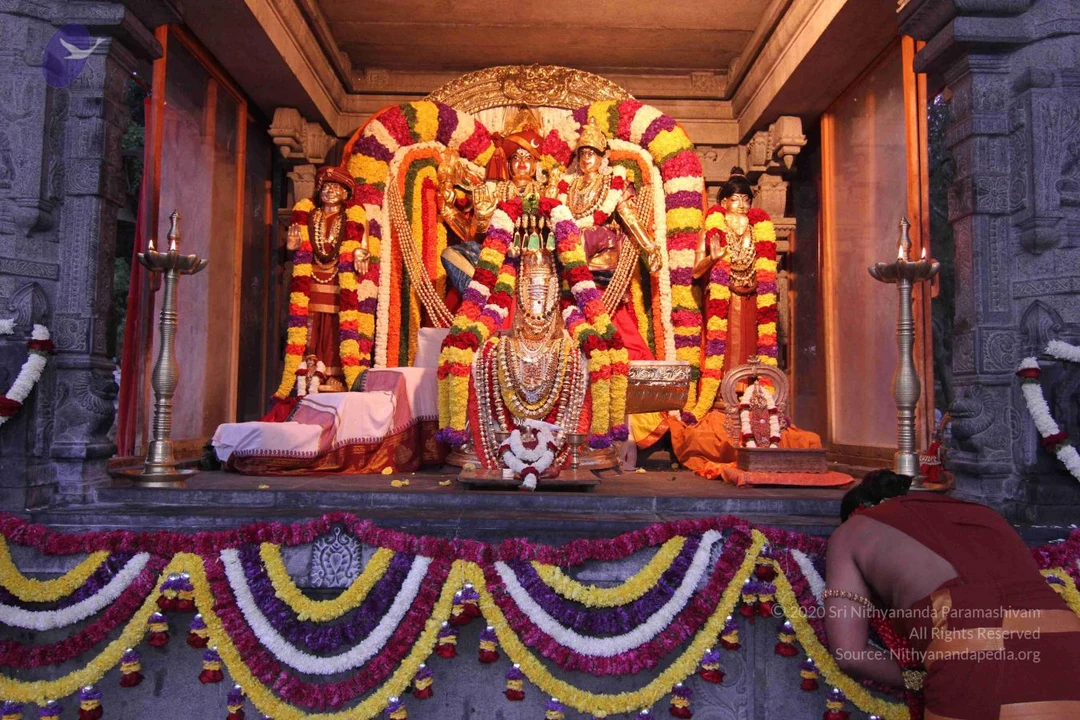
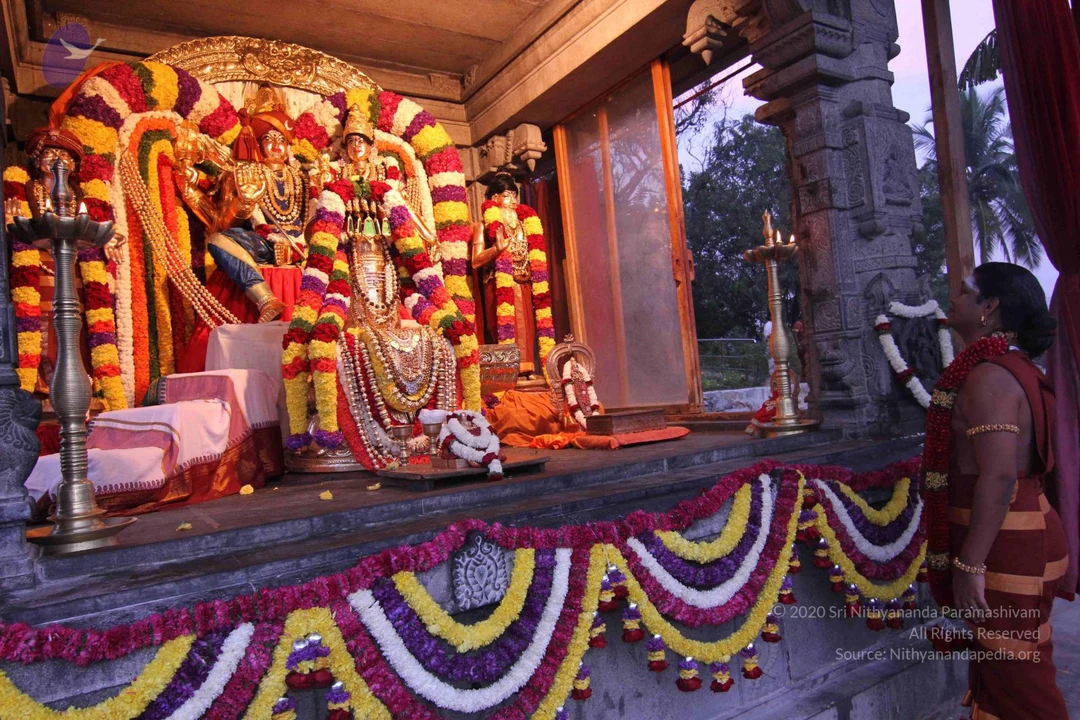
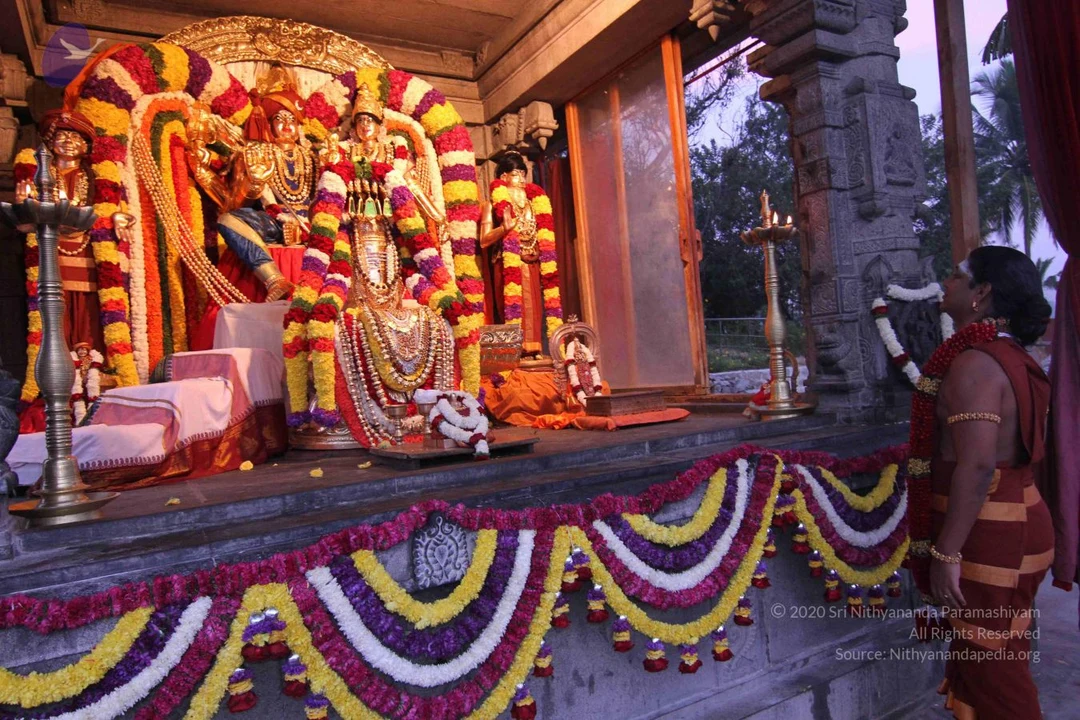
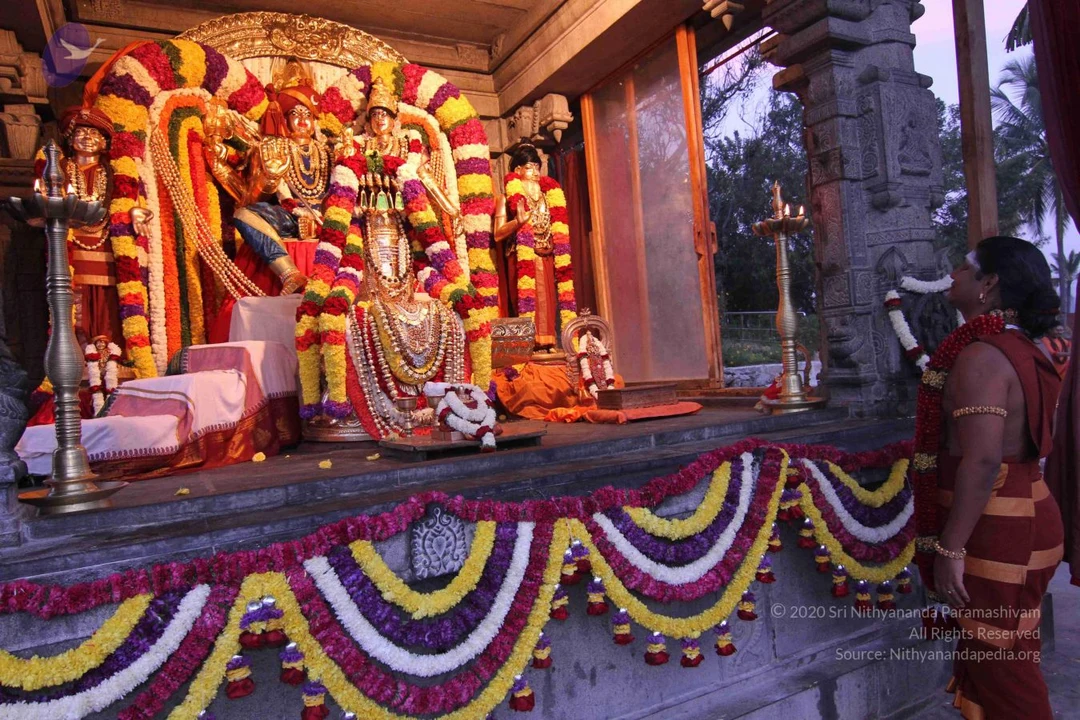
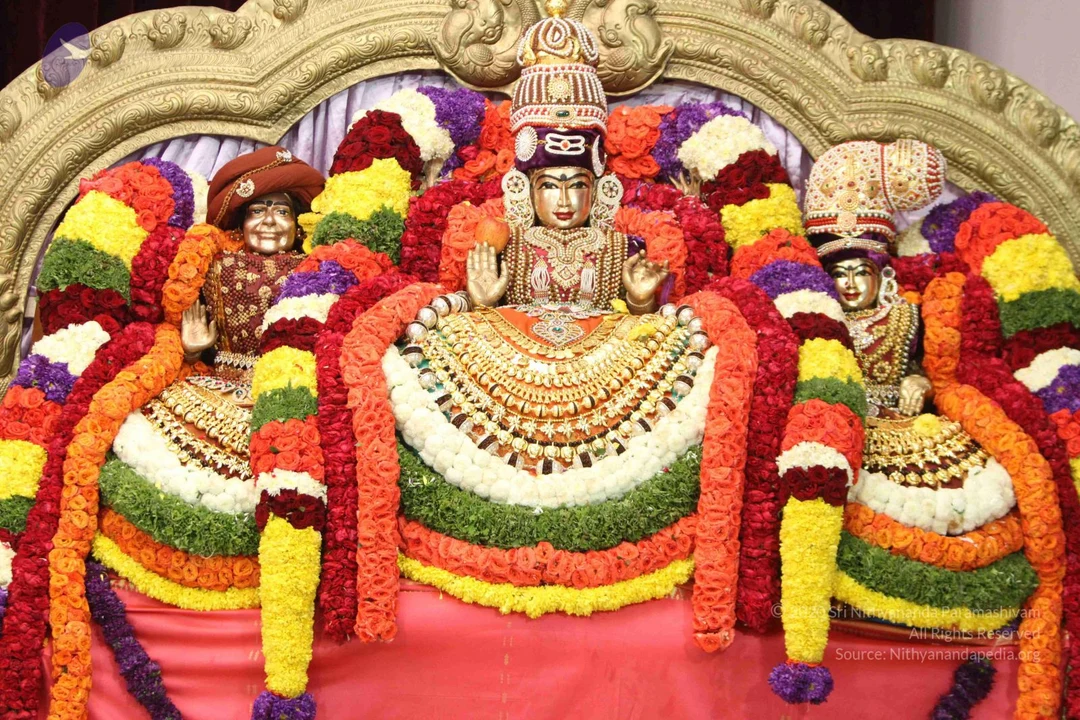
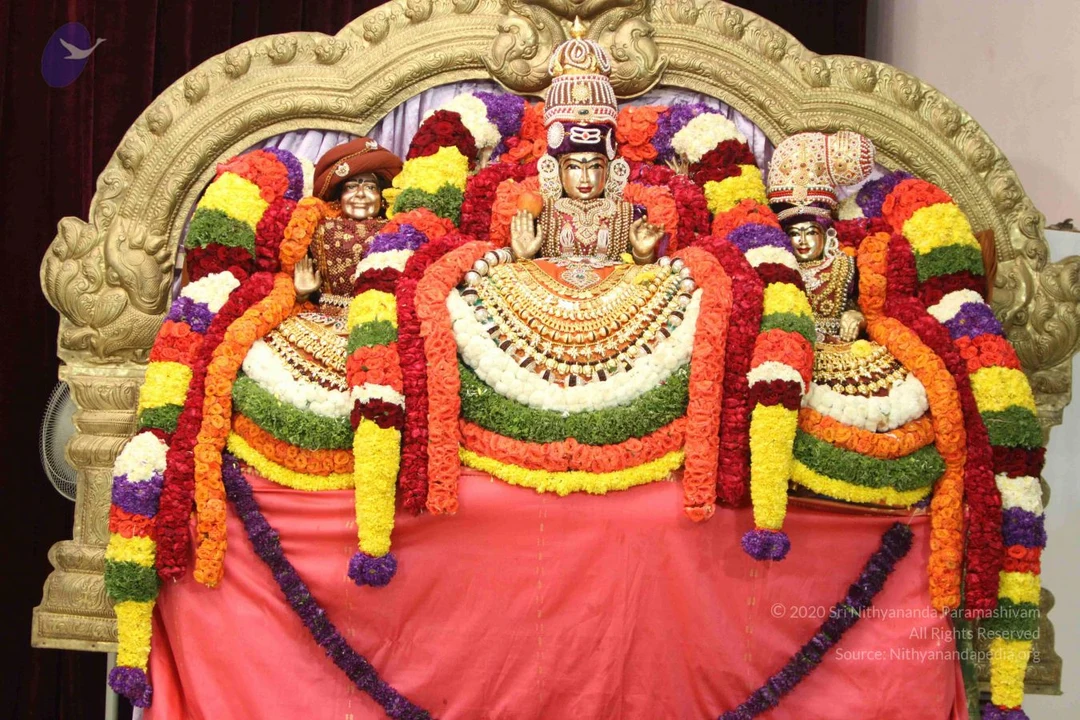
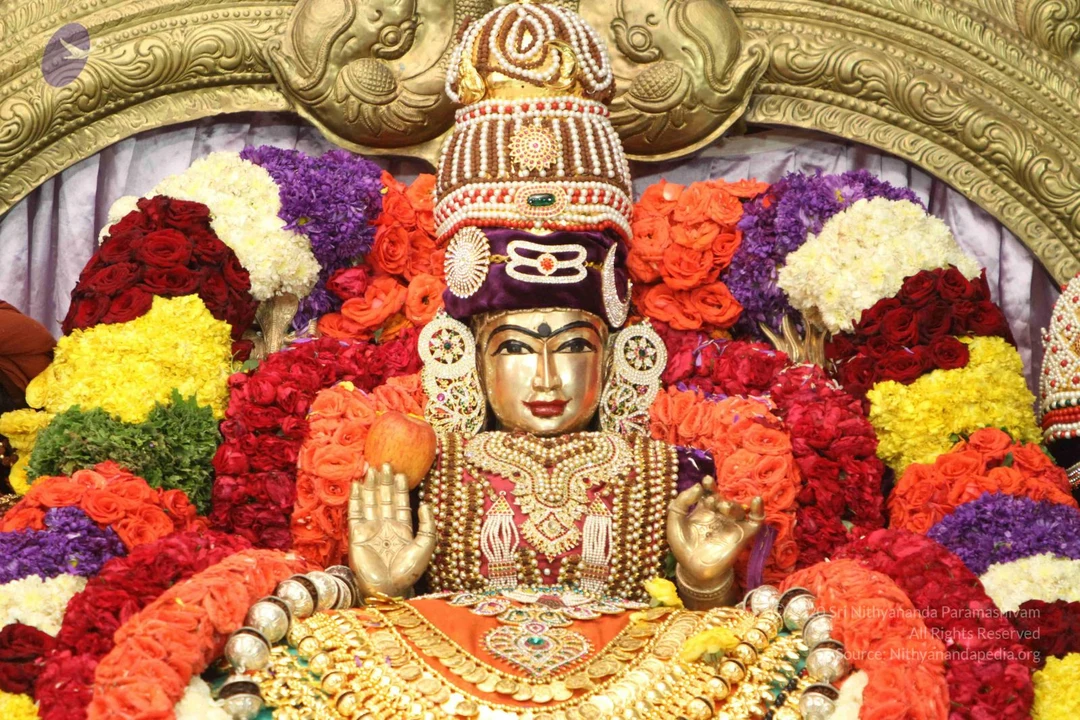
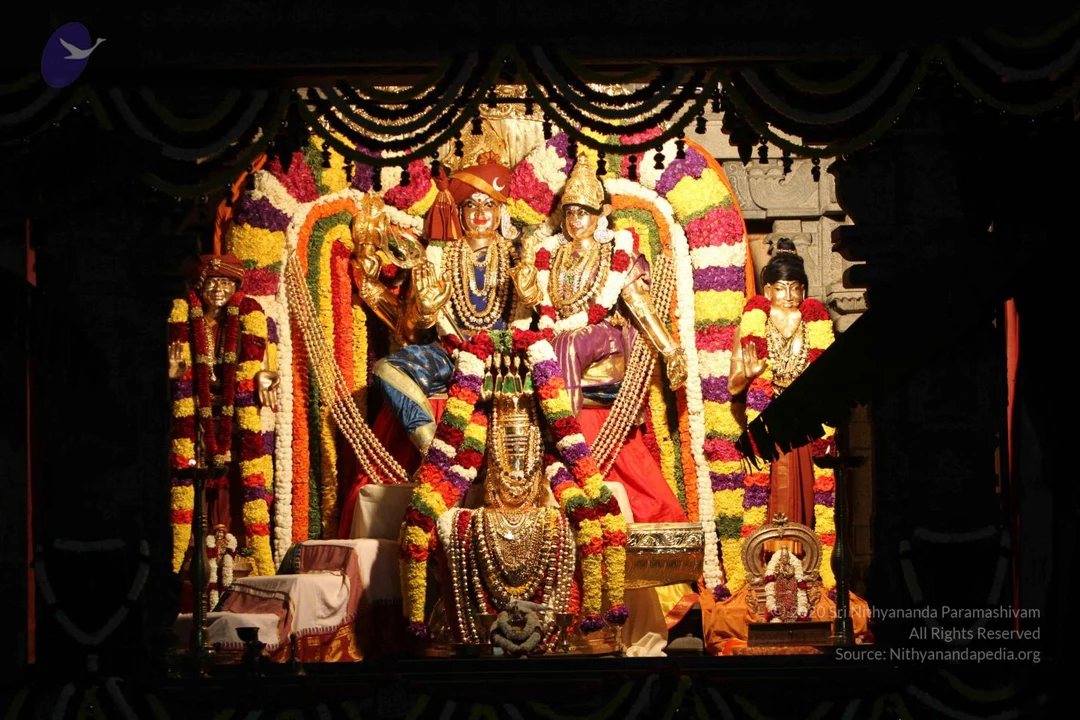
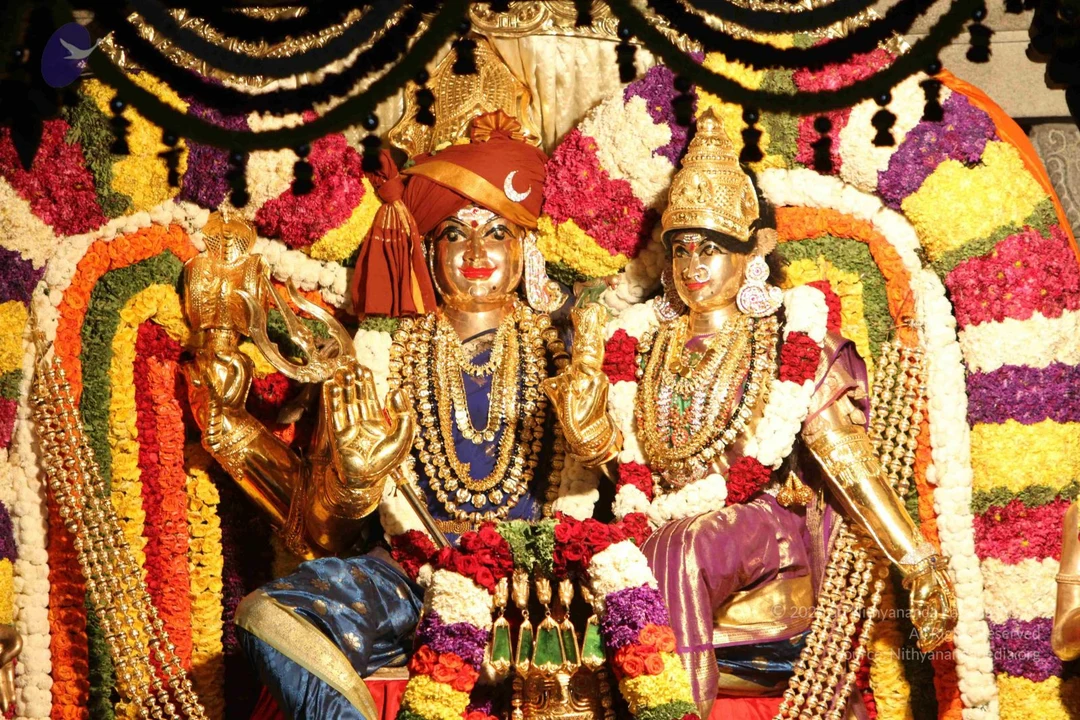
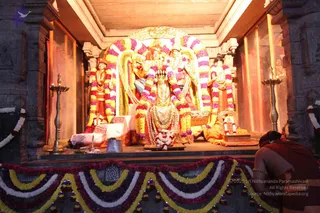
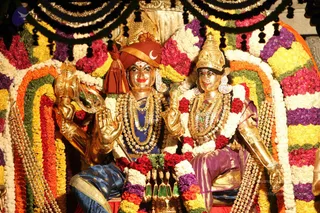
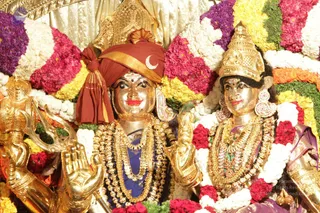
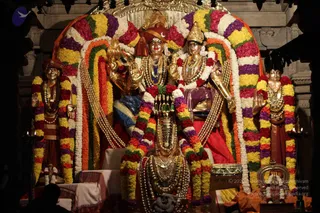
A photograph of a lavishly decorated deity display inside a dark temple-like setting, with no living people visible. The central figures are a pair of painted murti statues seated side by side, one wearing a red and gold turban with a crescent ornament and the other a tall golden crown, both adorned with gold necklaces and multi-strand pearl garlands. They are surrounded by arches of marigold and rose garlands in yellow, orange, purple and red, with a kalasha-like ornament and a small figure in the lower center. Two additional standing statues flank the scene on the left and right, one in a turban and one in a red garment, each wearing garlands. Trays of offerings and a folded white cloth sit at the lower left, and a decorated palanquin-style structure appears at the lower right. Overhead hang strings of green and purple festoon decorations.Photograph of two golden murti statues of deities seated side by side, heavily decorated with marigold and rose garlands in red, orange, yellow, purple and white. The figure on the left wears a red turban with a crescent moon, a blue garment and multiple gold necklaces, and raises a hand in blessing while holding a trident-like staff. The figure on the right wears a gold crown, a purple and gold sari and layered gold necklaces, with a gold arm ornament. No living people are visible.A photograph of a decorated temple shrine showing a deity murti group: two gilded figures seated on a raised platform, one wearing a red and gold crown and holding a staff, the other wearing a tall gold crown, all draped in layered gold necklaces and garlands of yellow, red, purple and white flowers. Garlands also drape the flanking standing figures and an arched frame. Dark silk hangings with tassels hang above. In front, a tall ornate silver-and-gold linga-like form is decorated with garlands and a heavy gold necklace. Offering vessels and an ornate brass lamp stand at the sides. Statues, not living people, are depicted; no physical people are visible.A photograph of a decorated festival shrine at night, framed by dense garlands of marigold and multicoloured flowers in red, yellow, orange, purple and white. Two gilded metal deity murtis sit side by side on a raised platform, one wearing a red and gold crown and layered gold necklaces, the other in a golden crown with a purple garment, both adorned with garlands. A large ornate gold ceremonial figure with many necklaces is in the foreground, and a smaller figure in red and gold stands to the right with flower garlands. Dark drapery and hanging flower strings surround the scene, with a white draped table to the left.

Nithyanandeshwar-Brahmotsav-Dwajarohanam

81 photosSource gallery
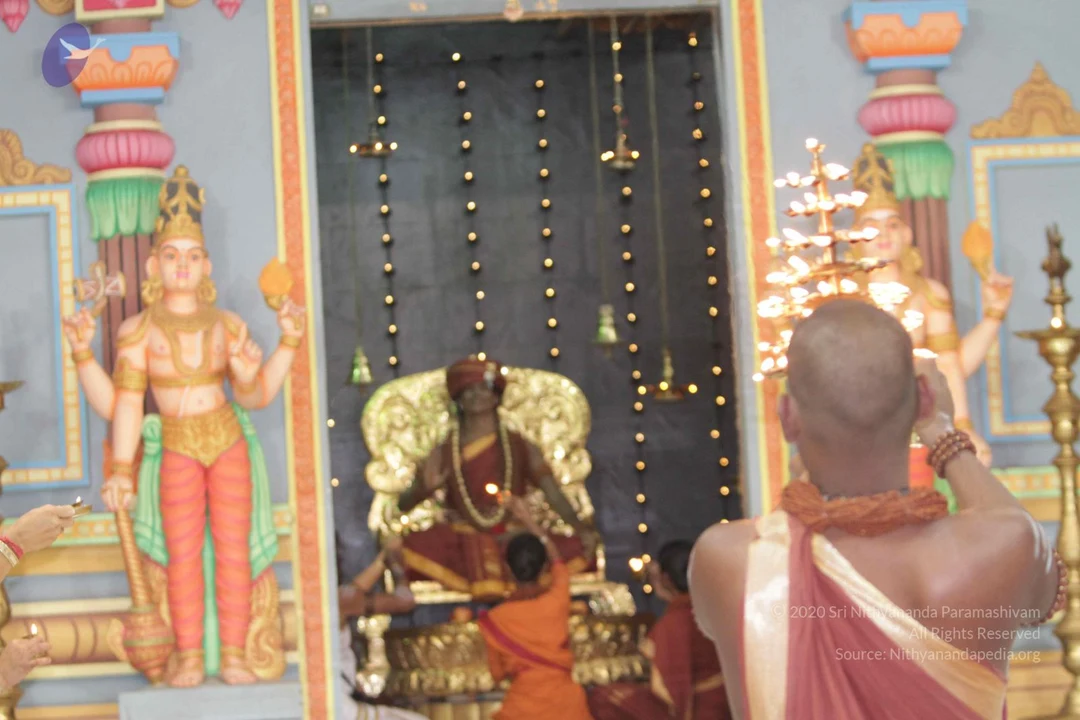
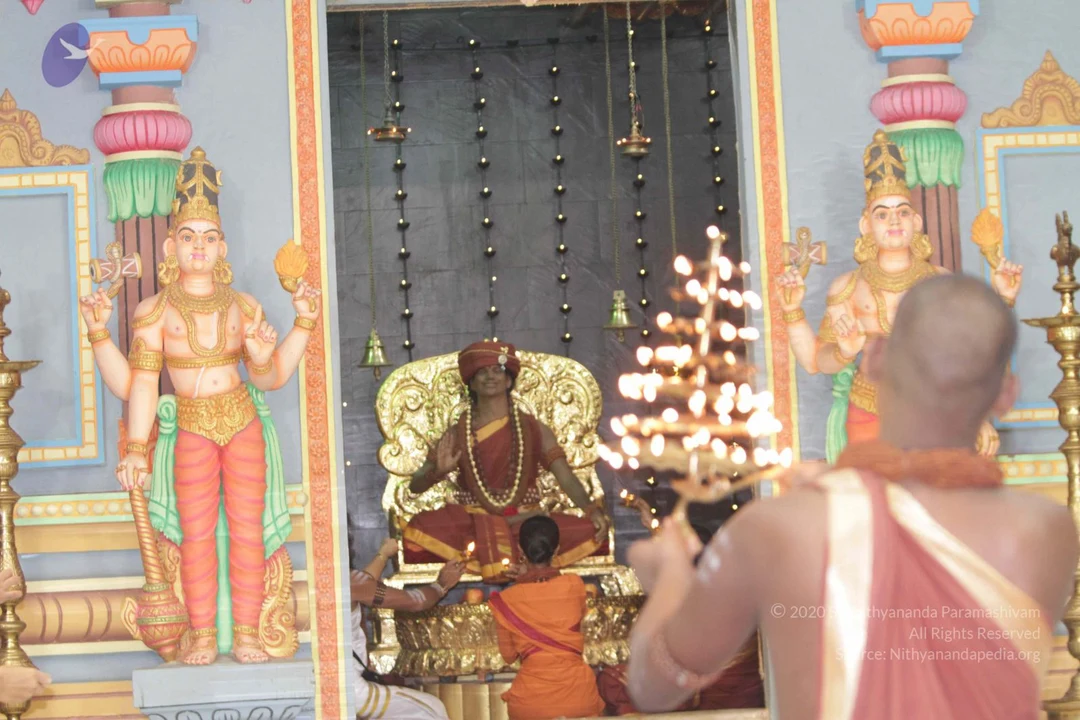
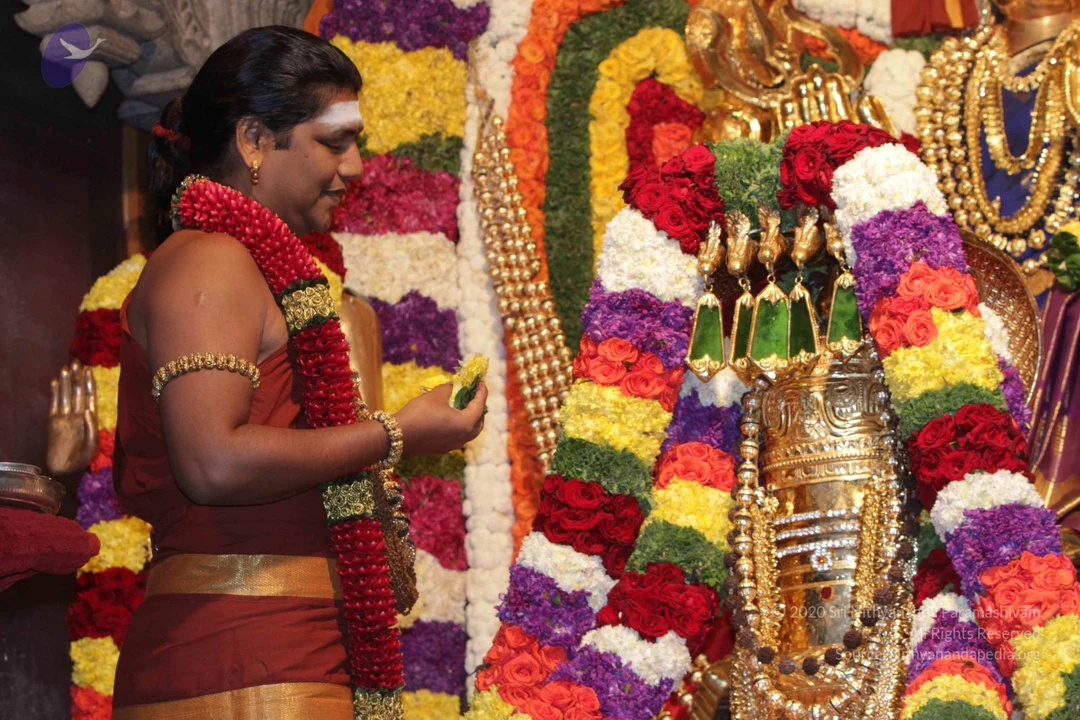
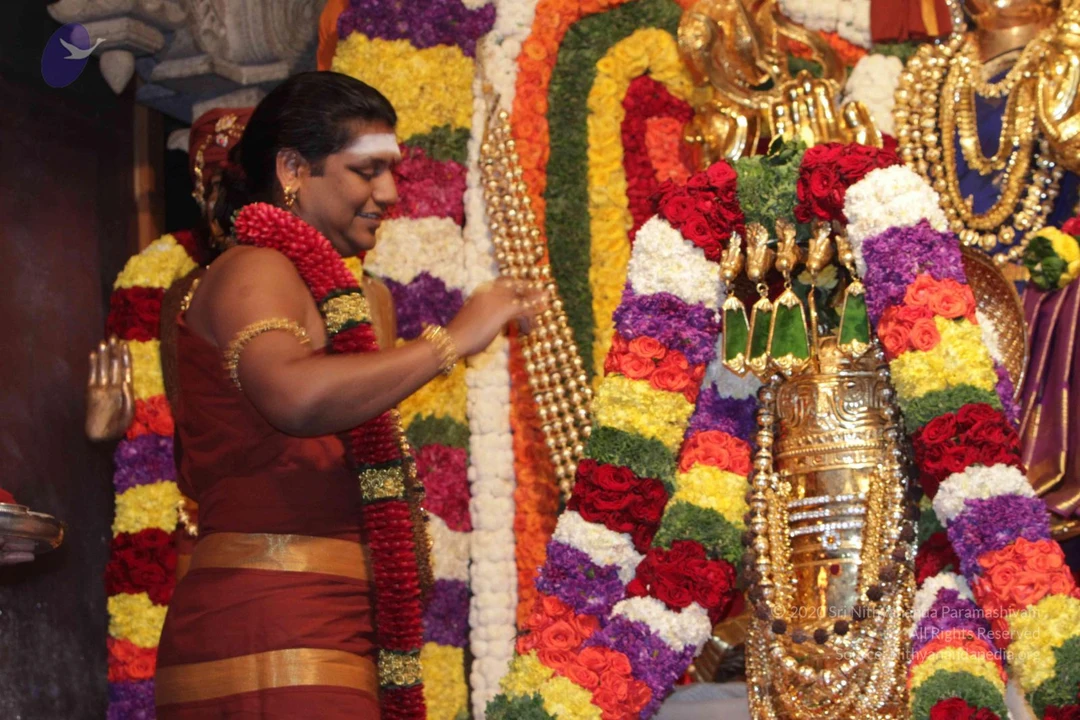
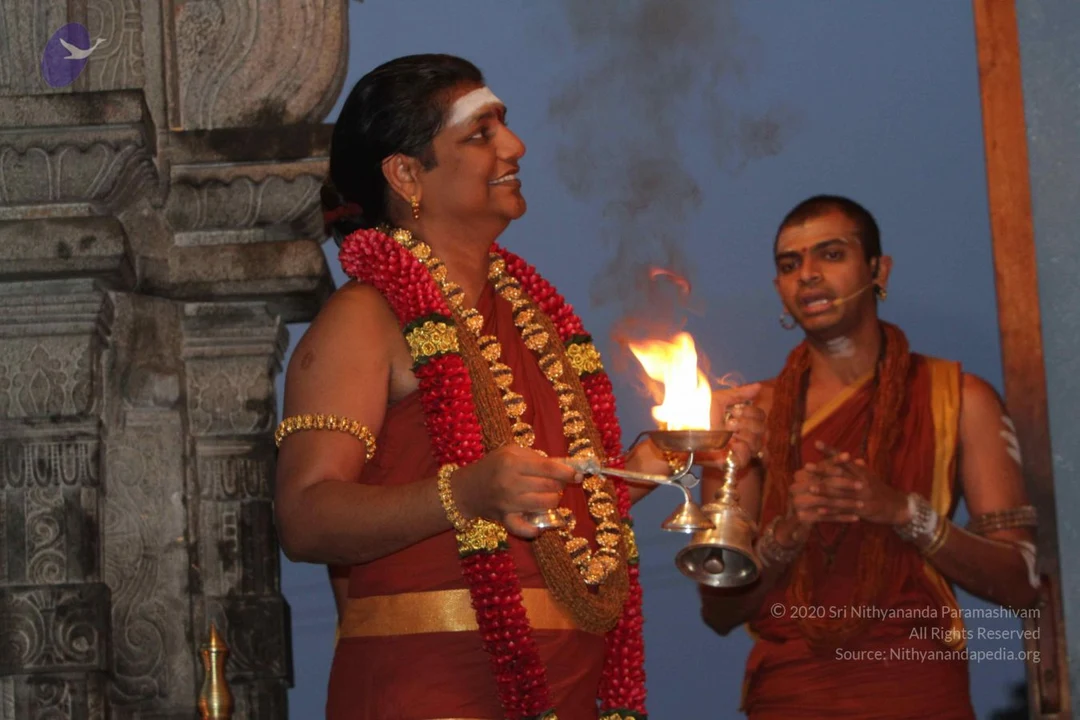
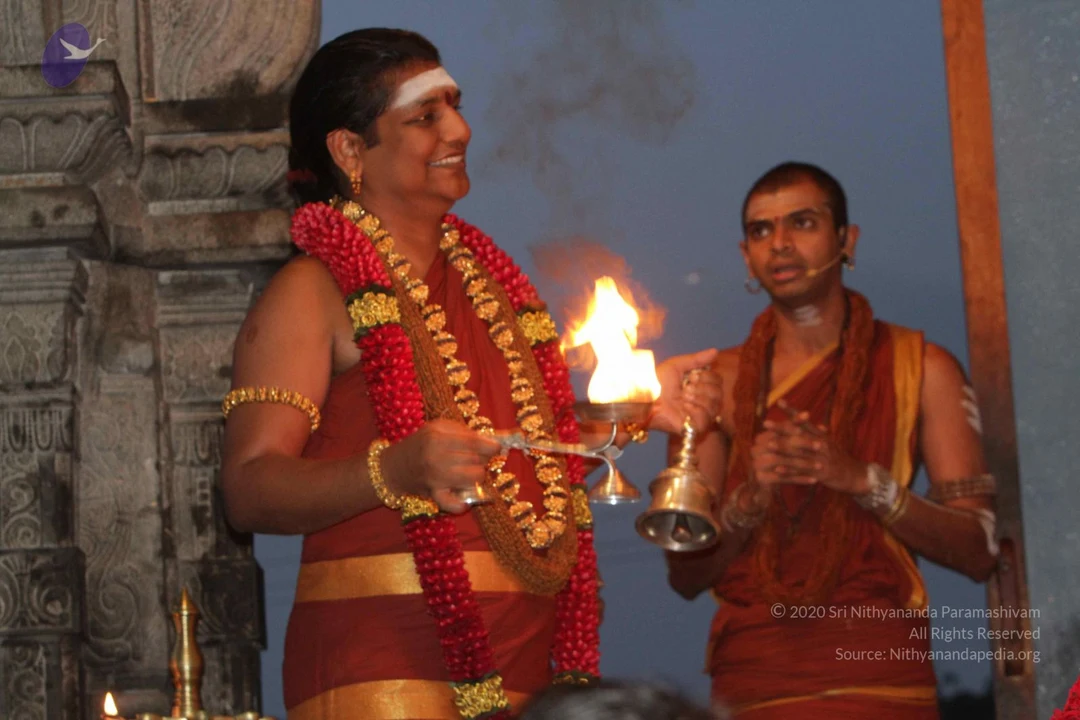
A photograph of a large devotional gathering in which many seated participants wear orange and maroon robes with white forehead bands. In the foreground, two women in white clothing sit on red cushions wearing long rudraksha mala garlands; the woman on the left holds a small object in her hand and the woman on the right holds a small bell and a hand gesture near her chest. Others in the background wear orange and maroon, some holding incense sticks and bells. Brass puja items and a small oil lamp sit on a red cloth at the lower left. The scene suggests a satsang or chanting session. Red and orange garments dominate the background crowd.A photograph of a ritual puja in a hall with a tiled floor and bamboo mats. In the foreground, two seated men in white ritual clothes wear rudraksha malas; the older man on the left, with glasses and a shaved head, holds a brass bell and a small vessel, while the younger man on the right, also with glasses and a white tilak on his forehead, holds a small brass lamp and a ritual implement over brass plates of offerings. Behind them, rows of young boys in saffron-orange robes, rudraksha malas and white forehead tilak sit cross-legged and perform ritual actions with brass objects. Brass trays, bowls, lamps and fruit surround the scene. The page suggests a person is present, but the seated figure on the right is not clearly recognizable, so identity is uncertain.Inside a temple shrine, a seated figure in a red-brown wrap and red turban sits on an ornate gold throne with a rudraksha mala, raising one hand in blessing, while a kneeling devotee in orange robes bends toward the throne. In the foreground, a priest with a shaved head and an orange-and-cream shawl holds a lit multi-tiered brass lamp aloft during aarti. Flanking the entrance are painted stucco guardian figures with multiple arms, gold crowns and jewellery, and hanging strands of black beads and small brass bells frame the doorway. A pedestal lamp stands at the right edge.Two golden murti statues of a deity couple are adorned with dense garlands of purple, red, white, yellow and green flowers. The male figure wears a maroon turban with a crescent moon ornament, a blue garment, layered gold necklaces and rudraksha-style beads, and holds a trident. The female figure wears a gold crown, jewelled earrings, gold necklaces and a purple sari. A gold canopy with a curtain forms the backdrop. No living people are visible.A photograph of gold-coloured deity murti in a temple shrine, decorated with dense garlands of red, yellow, orange, purple and white flowers arranged in arches around the figures. The central figure wears a red and gold turban with a crescent ornament, a gold necklace and a rudraksha-style bead mala, with a raised hand. A second figure to the right wears a gold crown and white earrings. Flanking figures on each side are also garlanded and adorned with gold necklaces. Lit oil lamps stand in the foreground, and a silver-decorated kalasha or ritual vessel sits below, with a devotee visible in the lower left corner. Dim, warm lighting highlights the ornaments.A photograph of a decorated deity murti group in a temple shrine, with golden figures of a seated deity pair framed by an arch of garlands in red, orange, yellow, purple and white flowers. Multiple gold necklaces and beaded malas hang from the figures and a central metal stand. Two smaller standing attendant figures in gold stand on either side, and a small brass lamp stand with oil lamps sits at the lower corners beside a white-draped table. No living people are visible; the figures are statues.
Nithyanandeshwara-Brahmotsav-Dwajarohanam

135 photosSource gallery
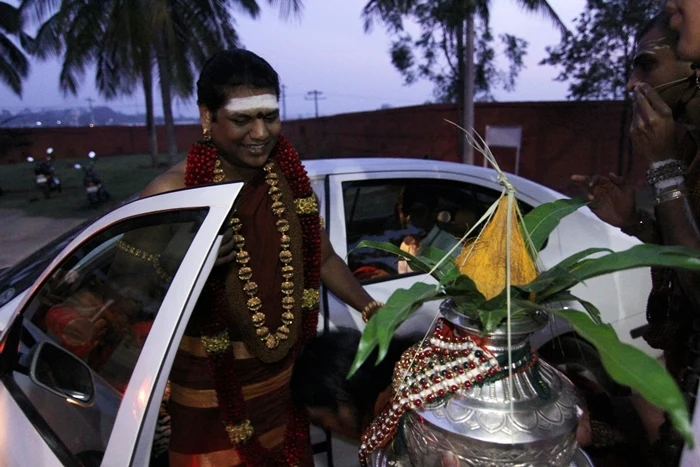
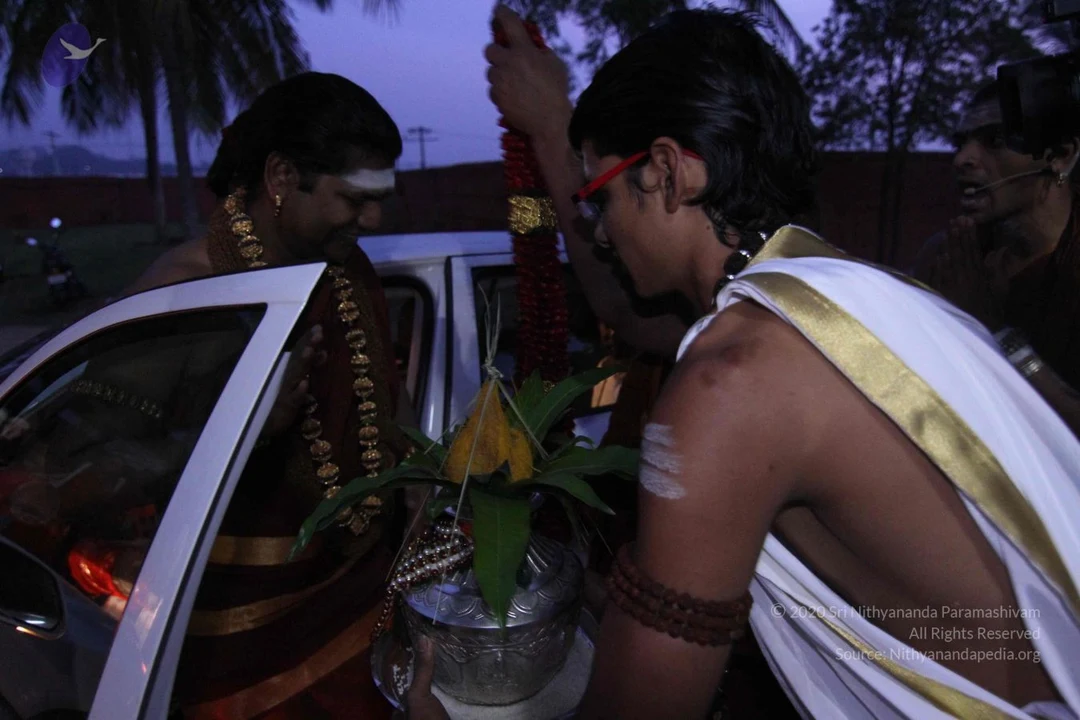
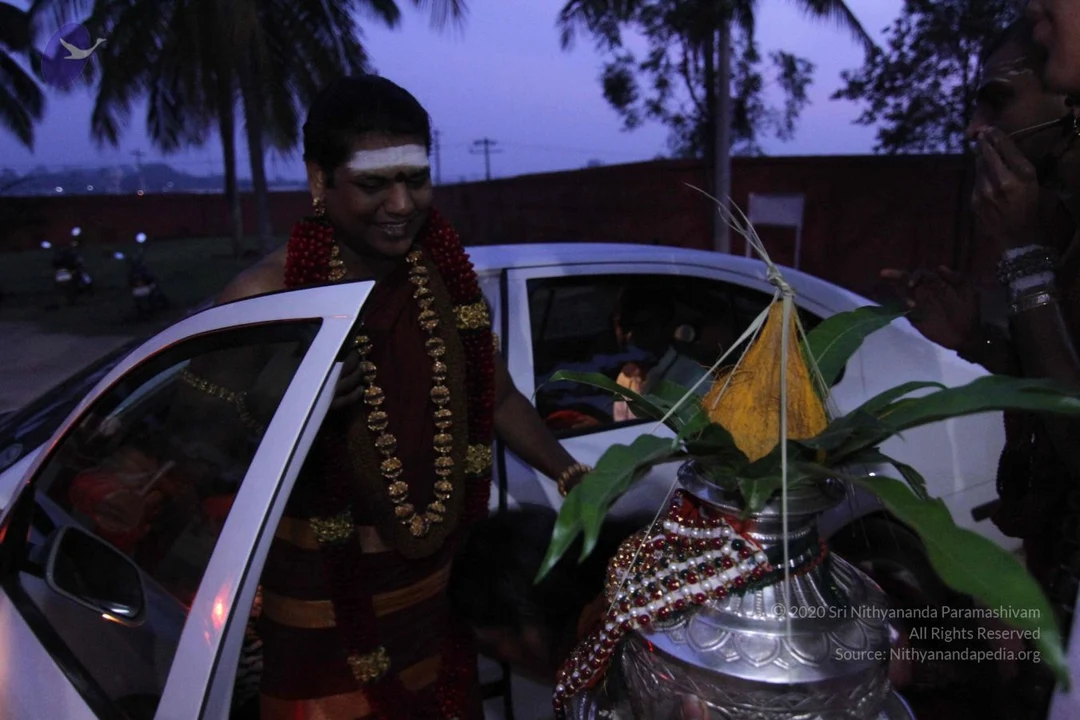
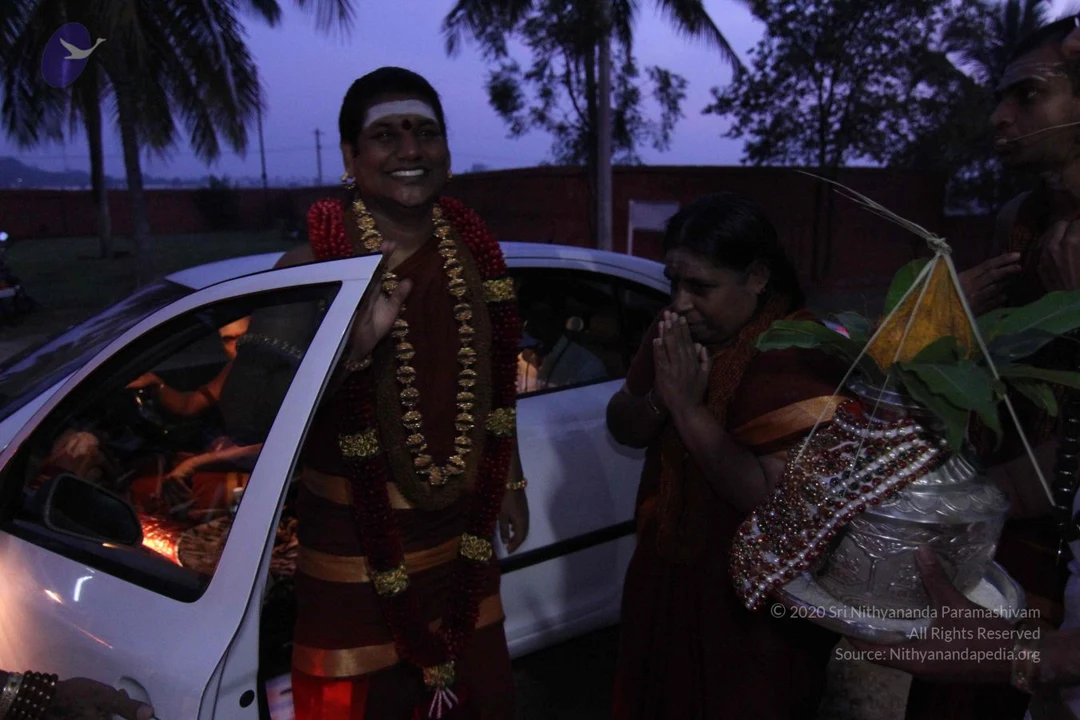
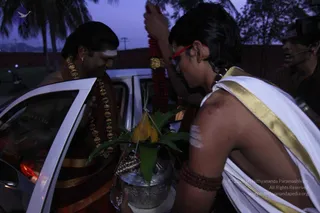
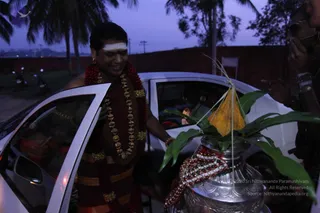
Evening procession at dusk under a corrugated roof strung with lights. Four musicians in white dhotis lead the group: at left a drummer plays a small hand drum, a figure in a green sari stands center, a man in a white dhoti and gold-trimmed shawl plays a saxophone-like wind instrument, a man in a teal shirt plays a long pipe, and at right a man in a white shirt and white dhoti carries a red-and-gold drum slung at his side. Behind them, figures in dark and colourful garments and ornate umbrellas or standards move along the procession route under strings of white lights. No identifiable a person figure is visible.Dusk procession on a dirt road with palm trees and a lit building behind. Several drummers in saffron-red robes with white headbands and rudraksha malas walk toward the camera, carrying red brocade-covered drums slung over their shoulders with white straps. The central drummer wears a white dhoti and white shawl, and walks barefoot in front of the group.A photograph at dusk of a group of drummers walking along a dirt road past palm trees and a parked silver car. Several men in saffron-orange robes and rudraksha malas carry large red drums with gold-threaded covers slung over their shoulders, striking them with sticks. The central drummer wears a white dhoti and a white sash, with white ash marks on his forehead. A few more drummers in orange are visible at the edges, and a lamp glows in the background among the trees.Dusk procession on a dirt path with several young men in saffron and orange robes carrying large red-covered drums slung from white shoulder straps. The foreground drummer in orange dhoti and a white shoulder cloth beats a drum wrapped in red fabric. Beside him a figure in maroon robes with a gold waist band and a rudraksha mala holds a large conch shell to his face. Other drummers in white dhotis walk behind, with a small temple shrine lit with lamps and a tree at upper left.Dusk outdoor scene beside a white car with its door open. A man in a dark maroon-brown robe with a gold-edged sash and a long beaded gold necklace stands at the door, with a white forehead mark. Beside him a younger man in a white dhoti with a gold border and a red-framed pair of glasses holds up a red-and-gold flower garland and a steel kalasha with mango leaves and a yellow cloth. A bystander in the background has hands folded in namaste. The setting is a yard with palm trees and a red wall.A photograph at dusk of a man in a white forehead band and layered red and gold beaded garlands, wearing a reddish-brown dhoti and gold-embellished armband, stepping out of a white car with its door open. Beside him, a silver kalasha pot decorated with red and white beads and a mango-leaf bundle with a yellow cloth is placed on the ground, while a woman in a dark outfit with bangles is partly visible at the right edge, holding up her hand. Palm trees and a red wall stand behind, with motorbikes at the left.

Morning-Satsang

50 photosSource gallery
A smiling person stands before a floral-decorated seat backed by deep maroon velvet drapes. The person wears a rust-red garment with a gold-toned sash, a long gold bead necklace with a red and green flower garland, gold bangles, a red bindi and white forehead markings. Both hands are raised palms-forward in a blessing or greeting gesture. The seat is covered in bands of yellow, white, purple, pink and red flowers.A standing person in a rust-orange robe and wrap with a red-and-white flower garland and a gold-and-shell necklace stands before a floral-decorated throne with golden lion heads and a deep maroon velvet backdrop. The person has palms pressed together in greeting and a broad smile, with a red tilak on the forehead. The throne is draped with garlands in yellow, purple, white, orange and green. One person is visible.A photograph of a seated person on an ornate throne decorated with rows of marigold and mixed-colour flower garlands in yellow, white, purple, red and orange. Two gilded lion figures flank the throne, and a zebra-print cushion rests on the platform. The seated person wears an orange-red turban with a small decorative pin, an orange-red robe, a long red-and-white beaded garland, gold necklaces, gold bangles and an armband, and sits cross-legged with one hand resting on a red-and-gold cushion. A dark red velvet curtain forms the backdrop. One person is visible.A photograph of a smiling man seated on an ornate throne heaped with garlands of yellow, orange, red, white and purple flowers, with a golden crescent-moon and emblem ornament above. He wears a rust-orange turban with a tilak, a rust-orange robe, a long tiered gold and red bead necklace, a red flower garland, gold armlets and bangles. Golden lion sculptures flank the throne on a leopard-print cloth, and a deep red curtain stands behind. One person is physically present.A seated figure with eyes closed and a broad smile sits before a backdrop of dense floral decoration in red, yellow, orange, white and purple roses and marigolds arranged in chevron bands. The figure wears a rust-orange turban with a gold crescent and ornament, a red-orange robe, a red bindi, gold earrings, gold armlets and layered garlands of red flowers and gold beads. Probable Swamiji by appearance cues: an ornate turban, rudraksha-style beaded gold necklaces and saffron-toned robes, seated in a plush red throne-like seat. The image is a photograph of the seated figure at a ceremonial setting.A seated person sits cross-legged on a throne framed by a tall arch of garlands in red, orange, yellow, white, purple and green, with golden lion figures flanking the seat. The person wears an orange-red turban with a crescent emblem, an orange-red robe, a large red and white flower garland and gold necklaces, with gold bangles on the arms. A leopard-print cloth lies beneath the throne and a red velvet backdrop hangs behind. Swamiji (probable): the seated figure has long dark hair under the turban, saffron robes and ornate gold jewellery, consistent with the page's Swamiji reference, but the seated person is the only candidate and appearance-based identification is uncertain.
Lawyer-Visits-Sacred-Arts

4 photosSource gallery
A photograph inside a long, low-roofed workshop lit by overhead tube lights, with a brick-paved central aisle. Along both sides stand rows of finished and unfinished deity murtis and ritual figures, many gold-toned or reddish, placed on wooden bases and tables. Near the centre-right a man in a white shirt and light trousers stands beside the figures, with a second worker in white further down the aisle. On the left, the edge of a person in white clothing is visible in the foreground, next to workbenches holding tools, cloth and a few small objects. Machinery and a wooden framework are visible on the left. Sheet-metal roofing and mesh-covered side windows frame the space.A large covered workshop with a corrugated roof and high mesh-windowed walls, housing many gold-finished metal deity statues and ornate temple elements on wheeled wooden carts and bench platforms along a brick-paved aisle. Several men in white dhotis and shirts walk and work among the statues, and a few people sit at the lower right beside gilded figures. A wooden table with papers stands at left, and a green-painted wooden cart with carved trim sits at the left edge. Overhead fluorescent tubes light the hall.A close-up photograph of a gilded metal deity murti with multiple faces and many arms, adorned with layered gold necklaces, a black bead mala, and a jewelled crown with a Shiva-lingam-like emblem marked with a red stone at the forehead. Several arms hold ritual objects including a trident, a snake, a drum and a small pot. A silver car and a metal container stand in the background, with a carved wooden screen to the right. The murti is the sole subject, with no people visible.Four people stand together on a dirt ground outdoors in the late day, with a red shipping container and a concrete block wall behind them and palm trees beyond. On the left a woman in a red blouse and grey patterned sari with gold bangles looks to the side. Next to her a man in a white shirt and beige trousers stands with his hands clasped. In the centre a smiling person with a red-saffron robe, a red bindi and a long gold necklace holds his hands together in front of him, and a man in a black jacket, white shirt, grey trousers and glasses looks upward to the right. Some people are at a site visit.
Engagement-Ramesh-Shanmugam

13 photosSource gallery
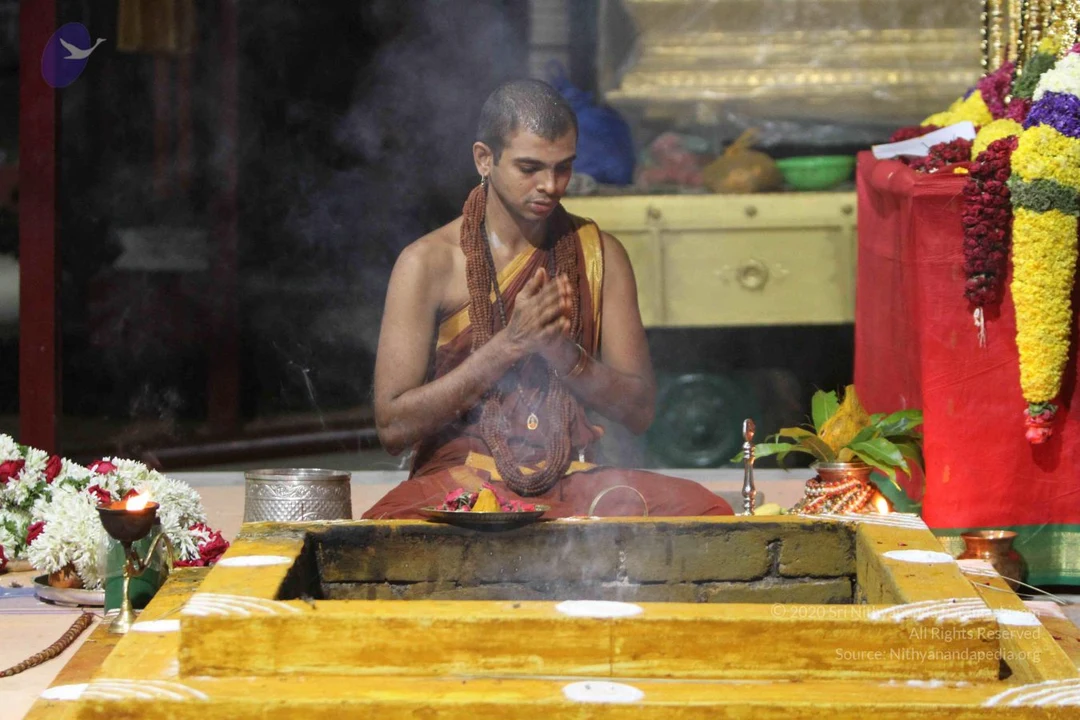
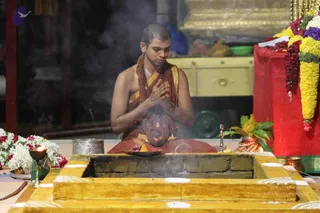
A photograph of a lavishly decorated deity display inside a dark temple-like setting, with no living people visible. The central figures are a pair of painted murti statues seated side by side, one wearing a red and gold turban with a crescent ornament and the other a tall golden crown, both adorned with gold necklaces and multi-strand pearl garlands. They are surrounded by arches of marigold and rose garlands in yellow, orange, purple and red, with a kalasha-like ornament and a small figure in the lower center. Two additional standing statues flank the scene on the left and right, one in a turban and one in a red garment, each wearing garlands. Trays of offerings and a folded white cloth sit at the lower left, and a decorated palanquin-style structure appears at the lower right. Overhead hang strings of green and purple festoon decorations.Photograph of two golden murti statues of deities seated side by side, heavily decorated with marigold and rose garlands in red, orange, yellow, purple and white. The figure on the left wears a red turban with a crescent moon, a blue garment and multiple gold necklaces, and raises a hand in blessing while holding a trident-like staff. The figure on the right wears a gold crown, a purple and gold sari and layered gold necklaces, with a gold arm ornament. No living people are visible.A photograph of a decorated temple shrine showing a deity murti group: two gilded figures seated on a raised platform, one wearing a red and gold crown and holding a staff, the other wearing a tall gold crown, all draped in layered gold necklaces and garlands of yellow, red, purple and white flowers. Garlands also drape the flanking standing figures and an arched frame. Dark silk hangings with tassels hang above. In front, a tall ornate silver-and-gold linga-like form is decorated with garlands and a heavy gold necklace. Offering vessels and an ornate brass lamp stand at the sides. Statues, not living people, are depicted; no physical people are visible.A photograph of a decorated festival shrine at night, framed by dense garlands of marigold and multicoloured flowers in red, yellow, orange, purple and white. Two gilded metal deity murtis sit side by side on a raised platform, one wearing a red and gold crown and layered gold necklaces, the other in a golden crown with a purple garment, both adorned with garlands. A large ornate gold ceremonial figure with many necklaces is in the foreground, and a smaller figure in red and gold stands to the right with flower garlands. Dark drapery and hanging flower strings surround the scene, with a white draped table to the left.A photograph of a temple shrine decorated with multicoloured flower garlands in yellow, purple, red and white. Central deity murti figures are adorned with gold jewellery and a crown, with a red and gold covering behind them. A priest in a saffron-brown dhoti stands with his back to the camera, facing the shrine and performing a ritual. A smaller figure in a red turban and garland stands at the left. Silhouetted devotees in the foreground watch from the dark edges of the frame. The scene is lit by warm lamps against a dark background.A shaved-headed priest sits cross-legged with palms pressed together in namaste before a yellow-bordered fire pit (homa kunda) with a smoking fire. He wears a saffron-orange dhoti and shawl and a long rudraksha mala draped over his shoulders. Behind him stands a red-draped altar with yellow and purple marigold garlands, a brass kalasha and a small oil lamp burning on the left. A plate of flowers and fruit sits near the fire pit, with smoke rising in the dim hall.