Skip to content
Thursday

27 November 2014

Live Your Subjective Truth

Dated photos
77
Source pages
1
Media
2
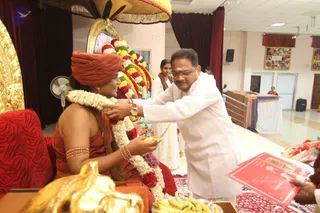
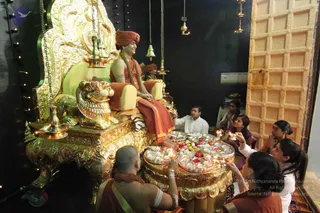
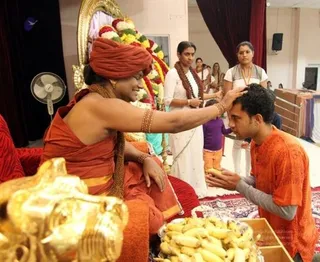
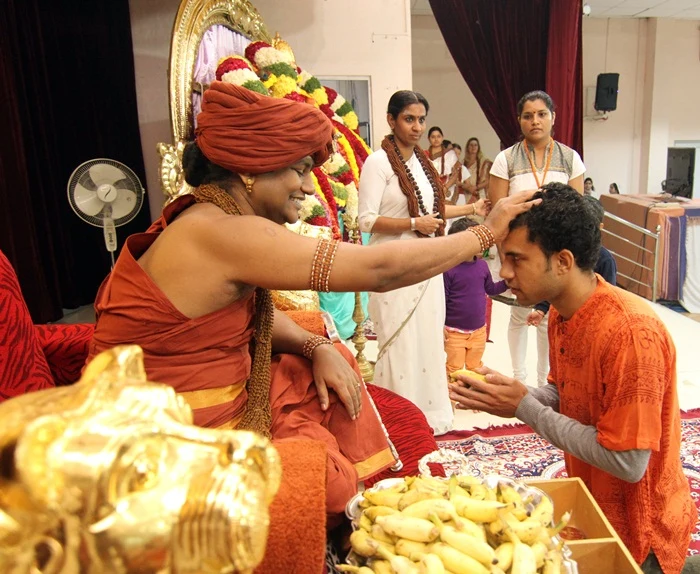
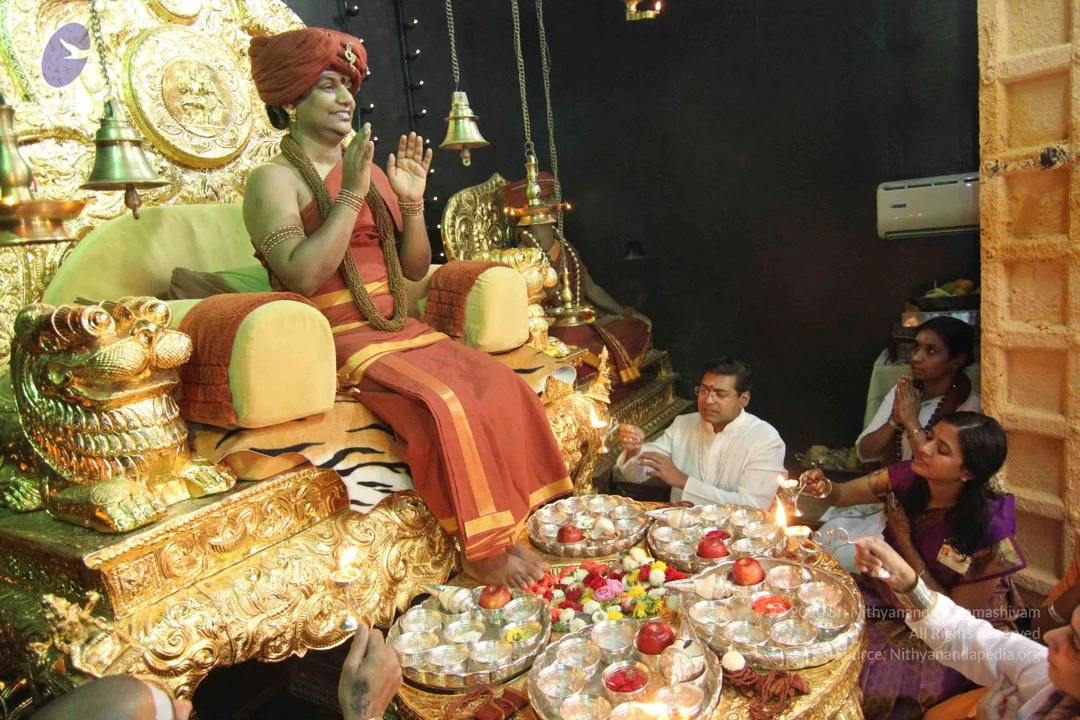
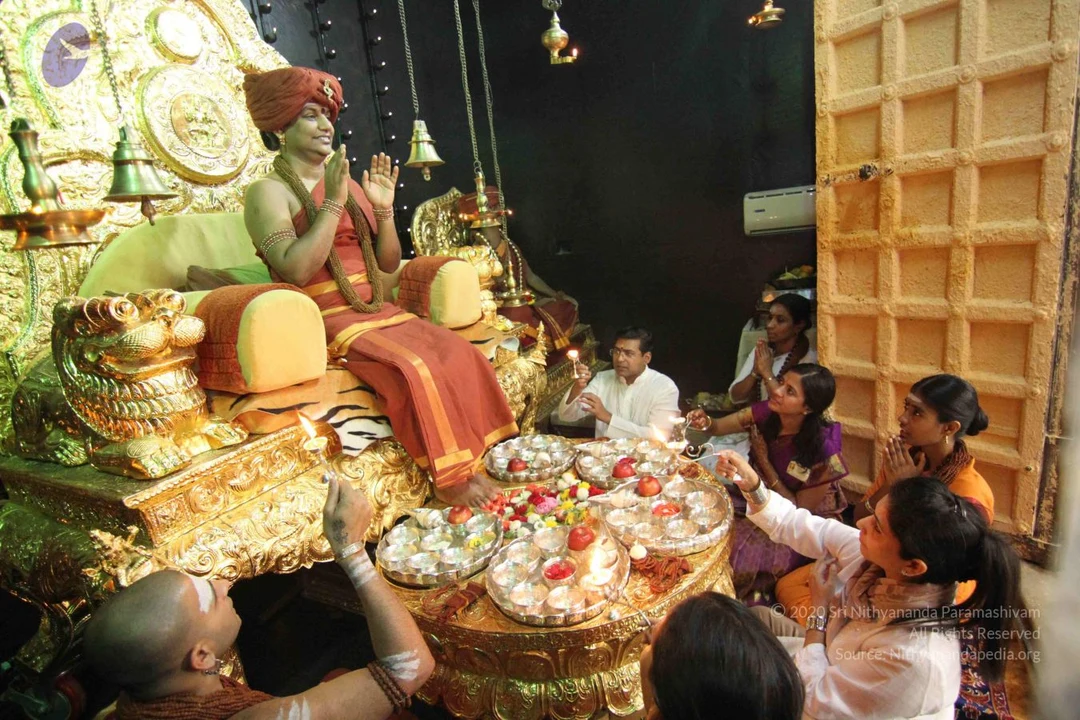
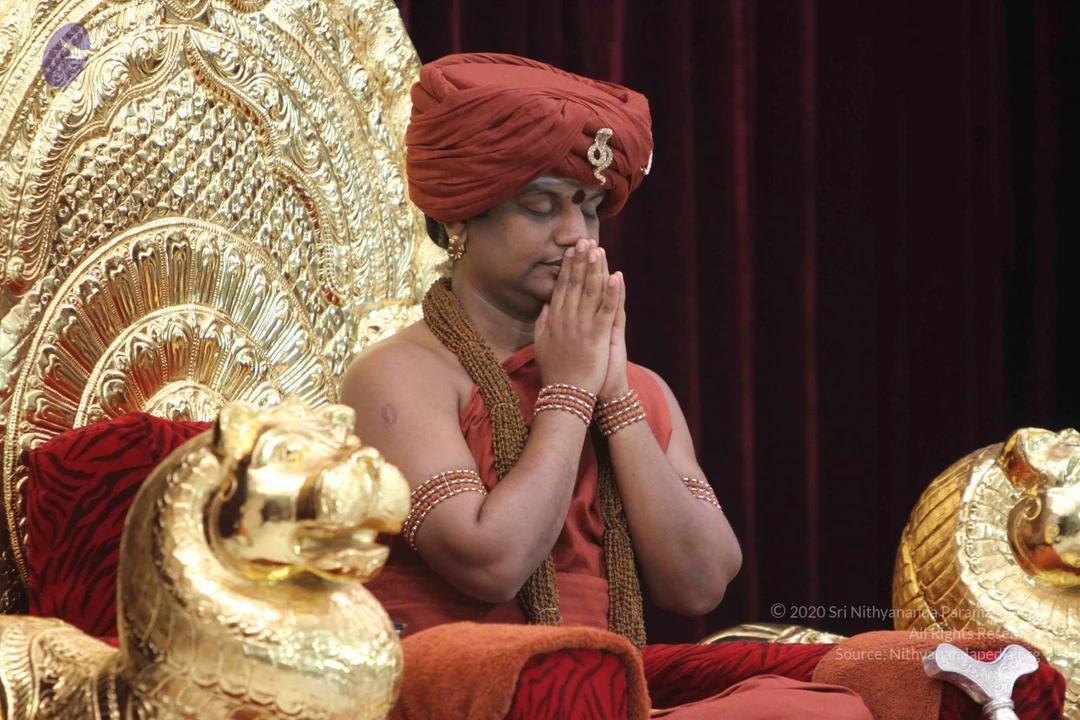
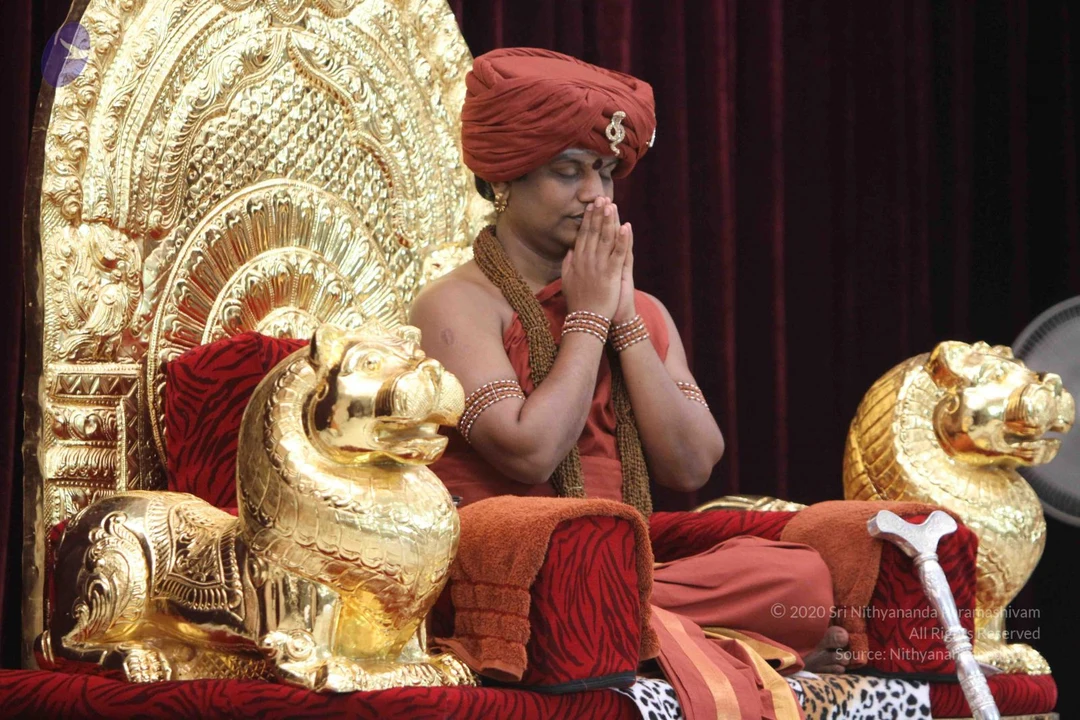
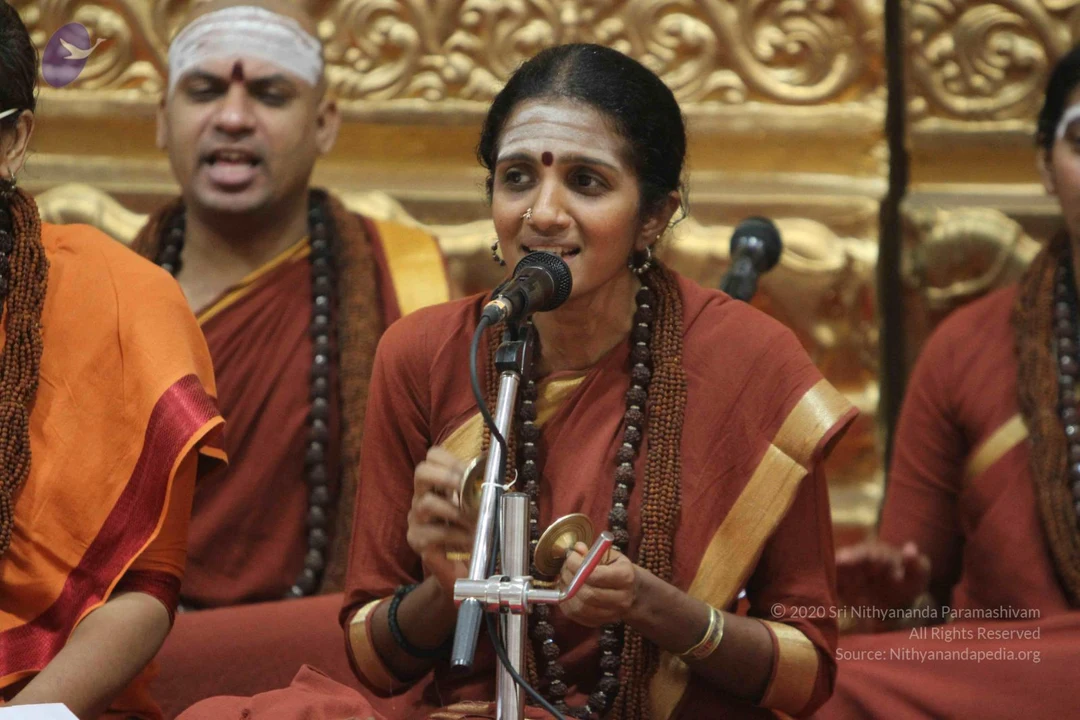
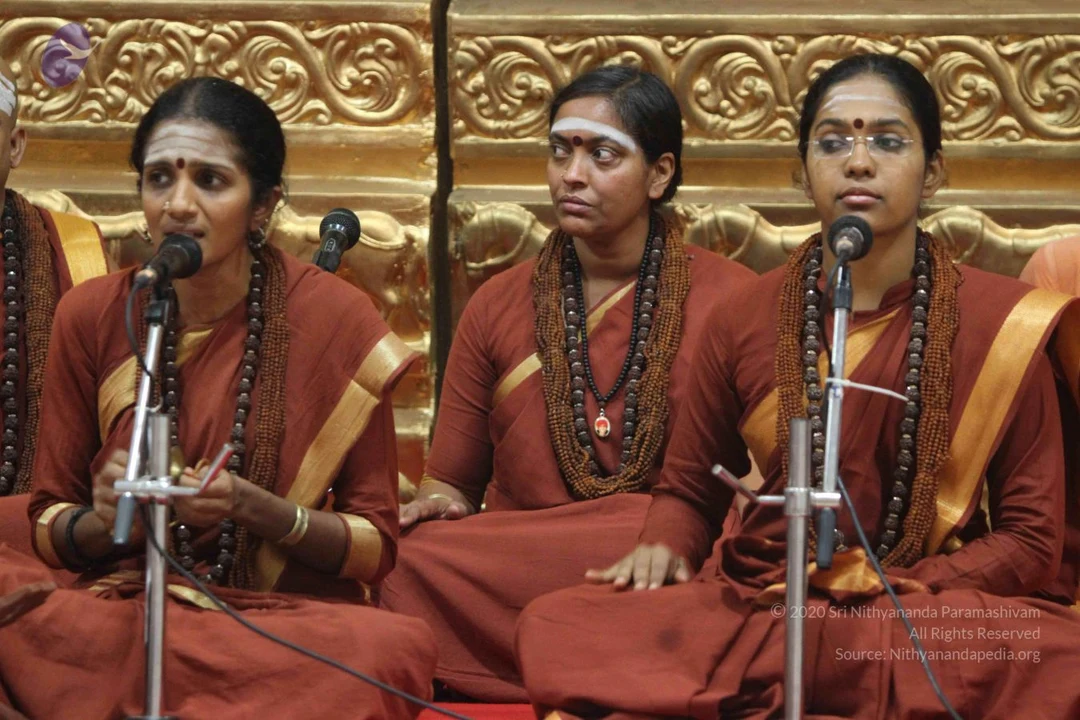
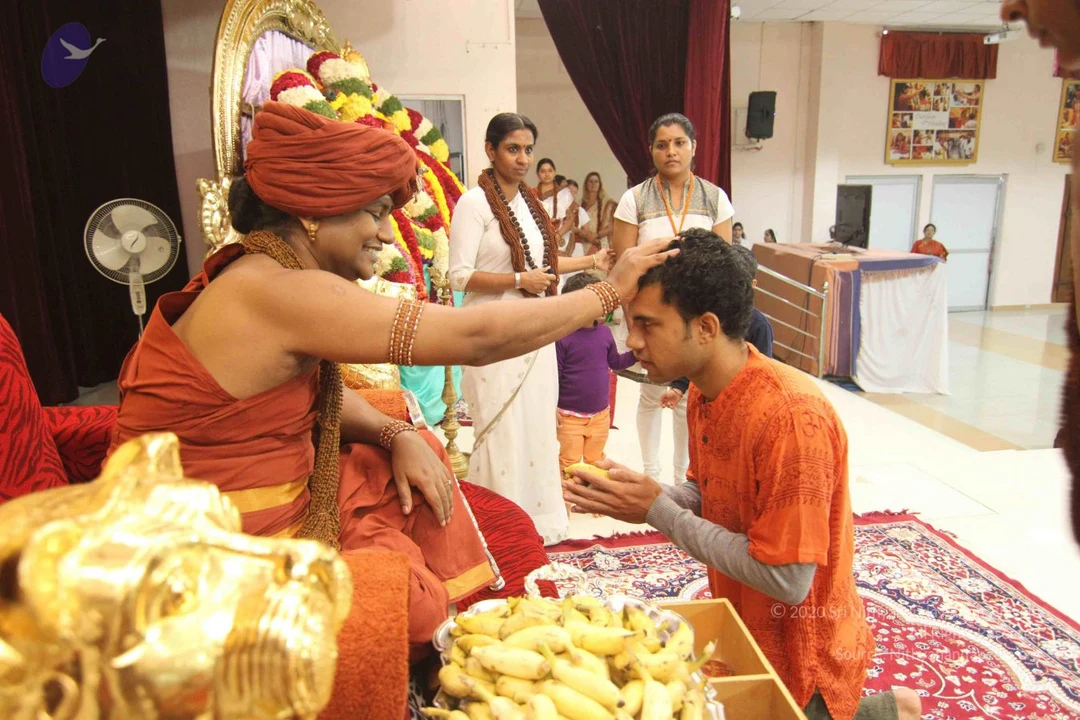
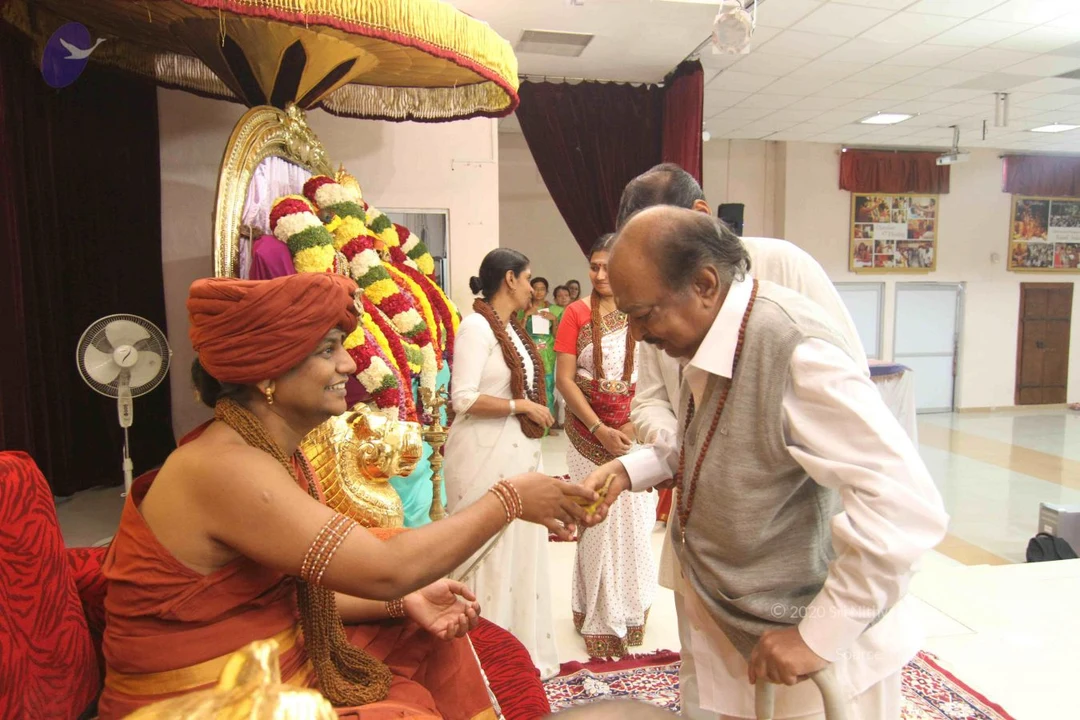
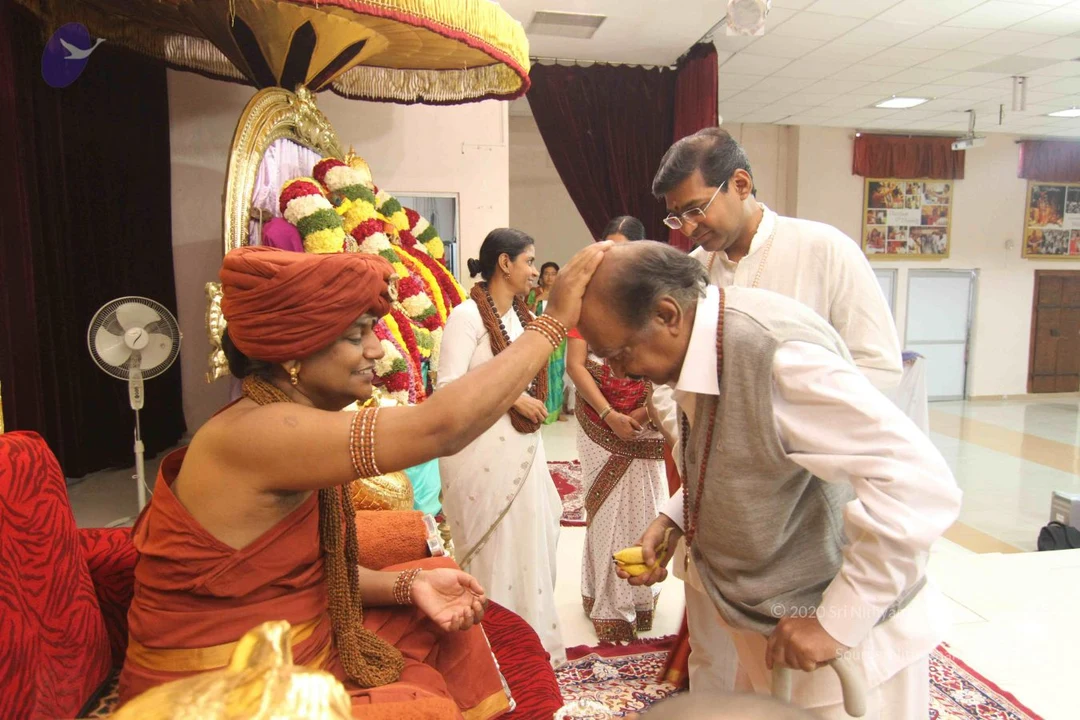
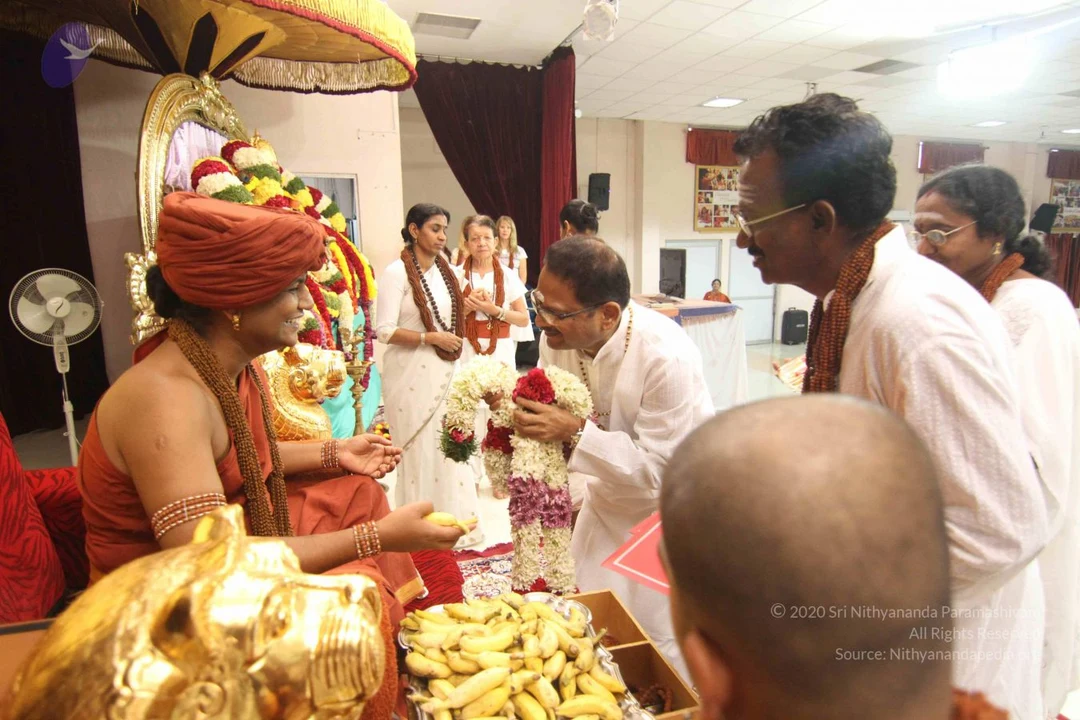
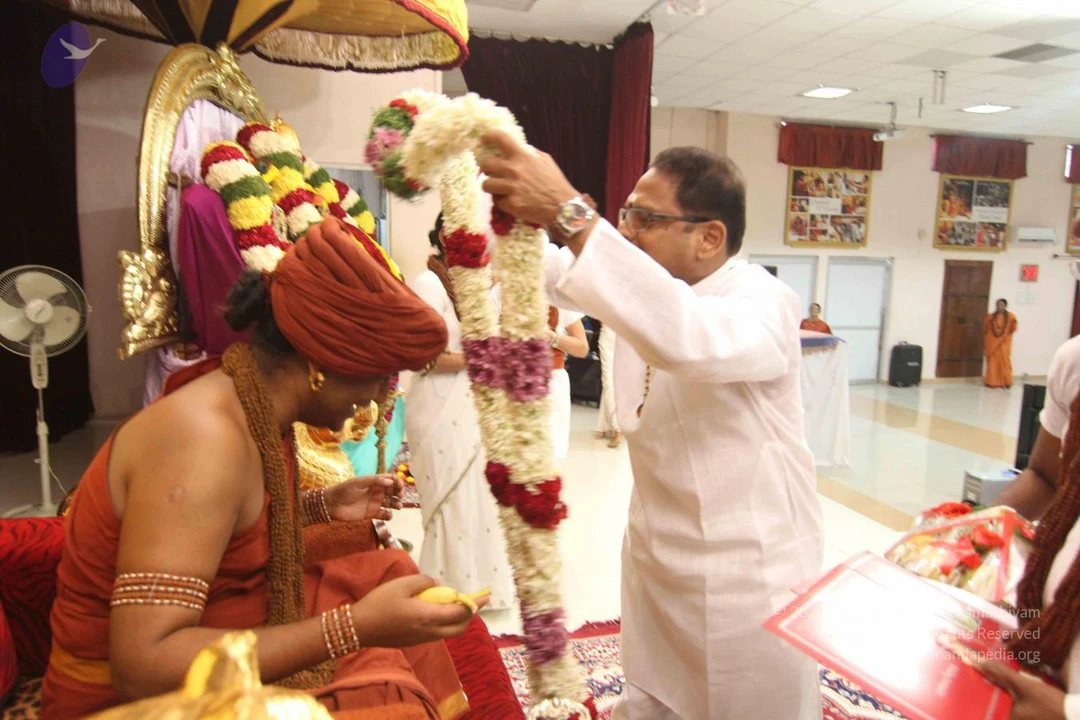
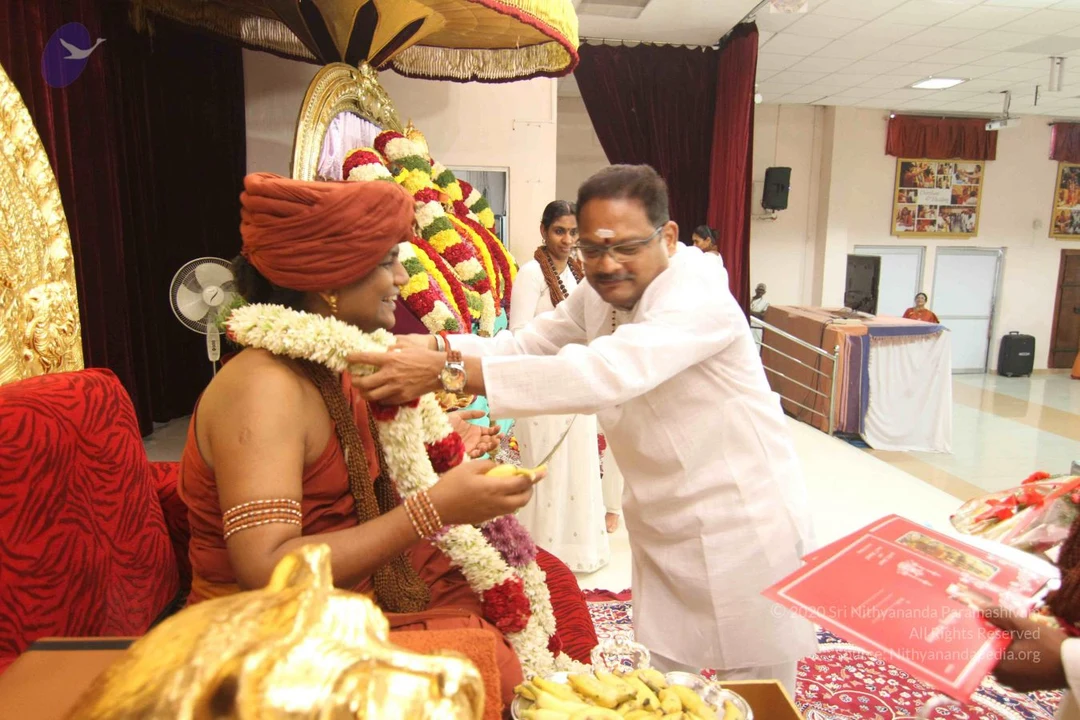
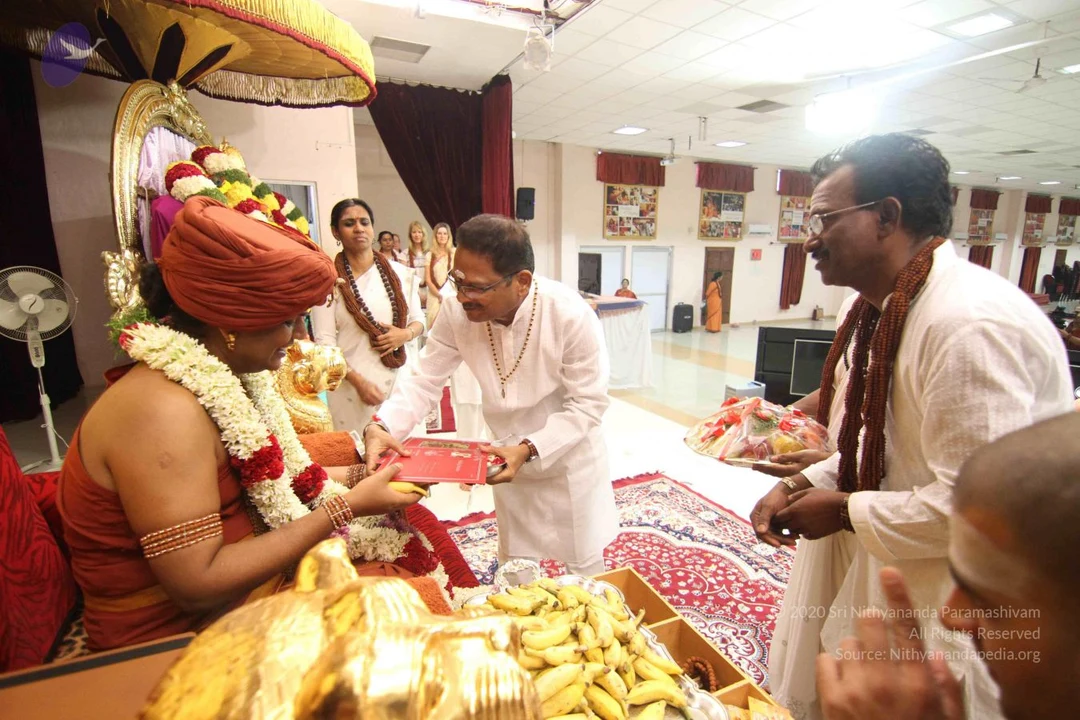
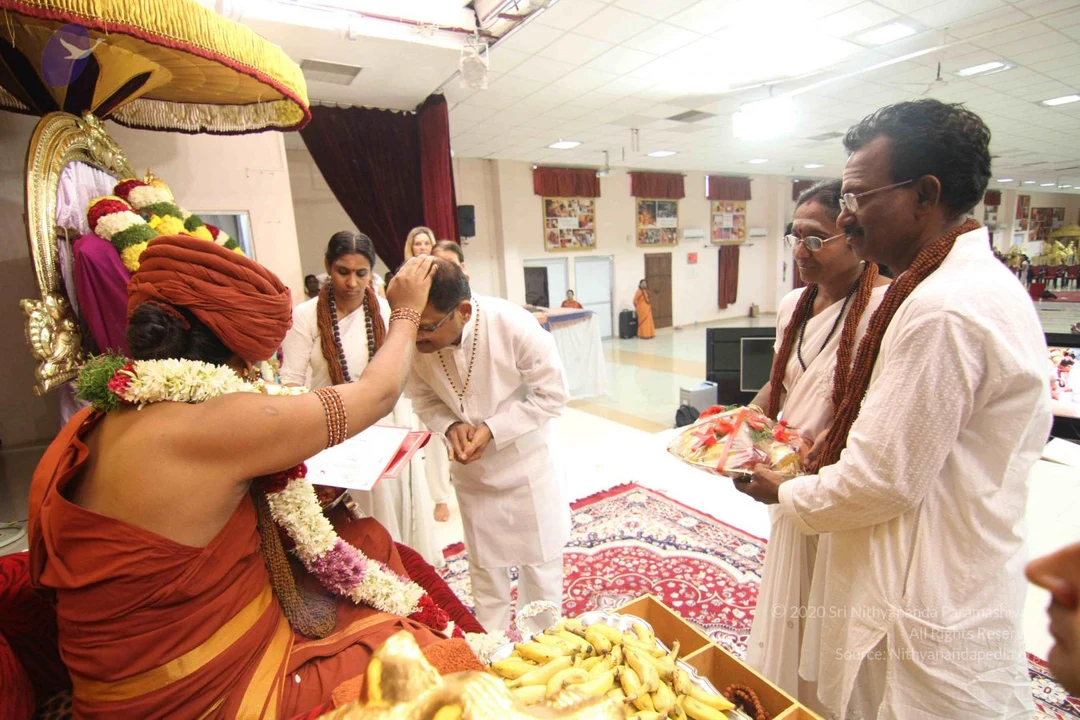
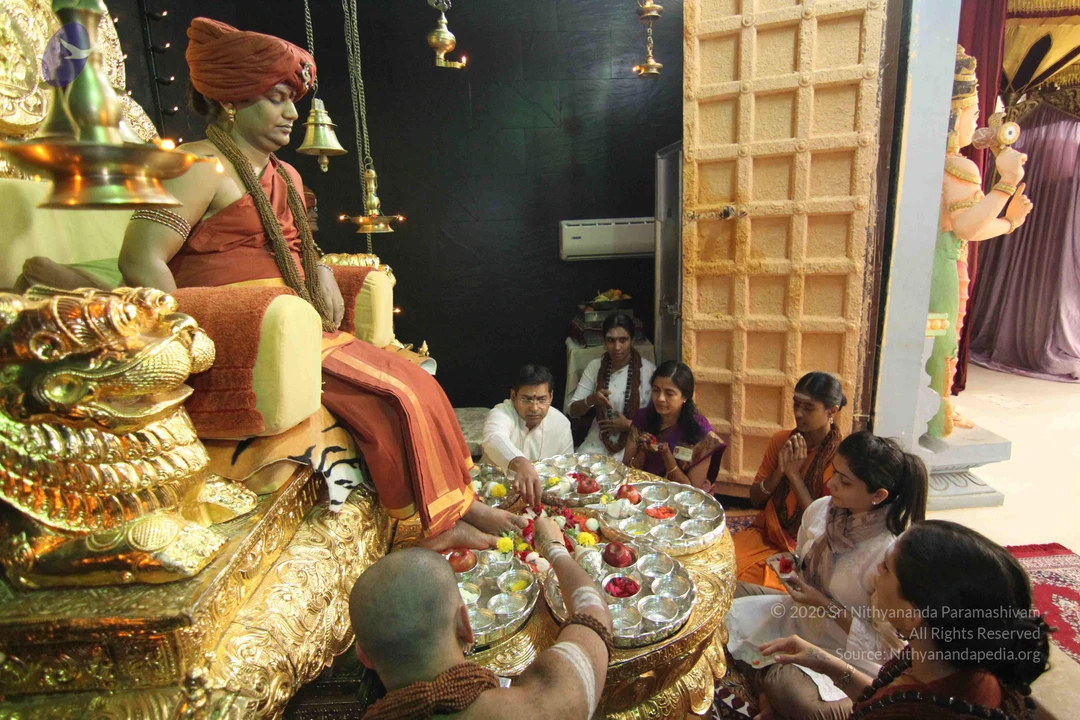
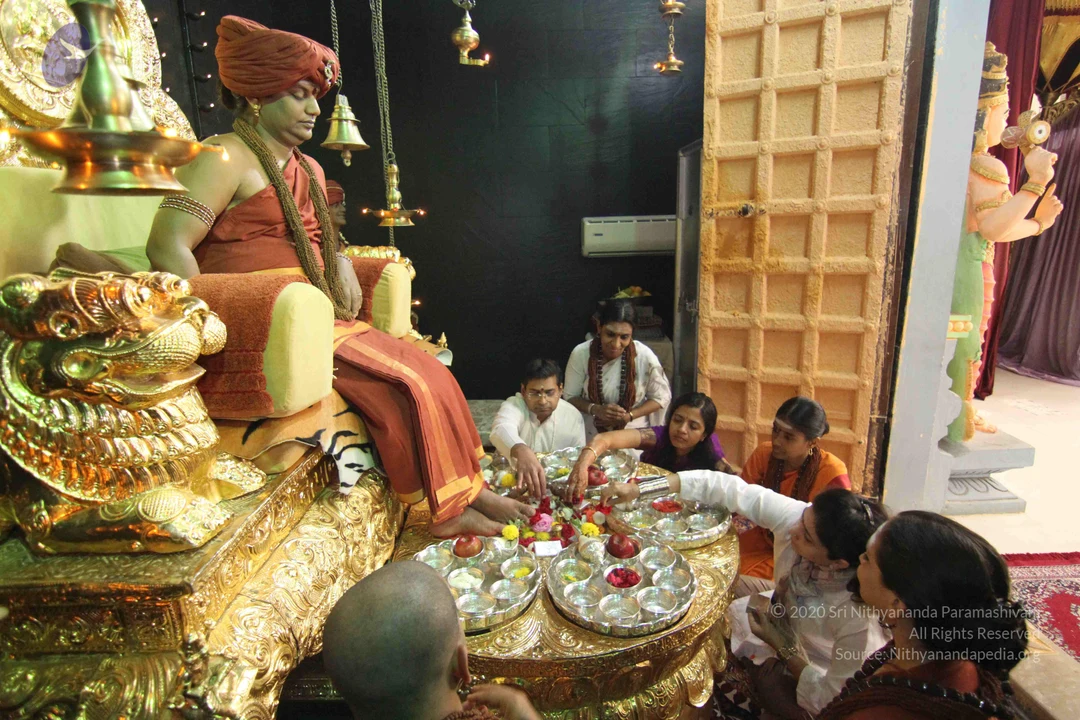
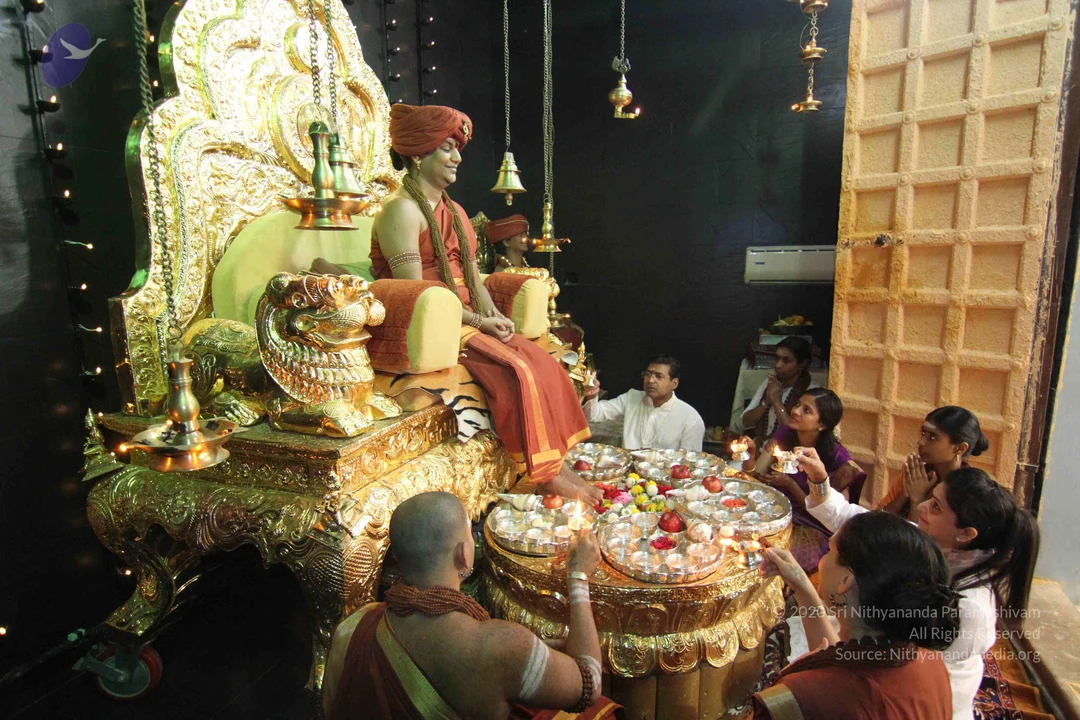
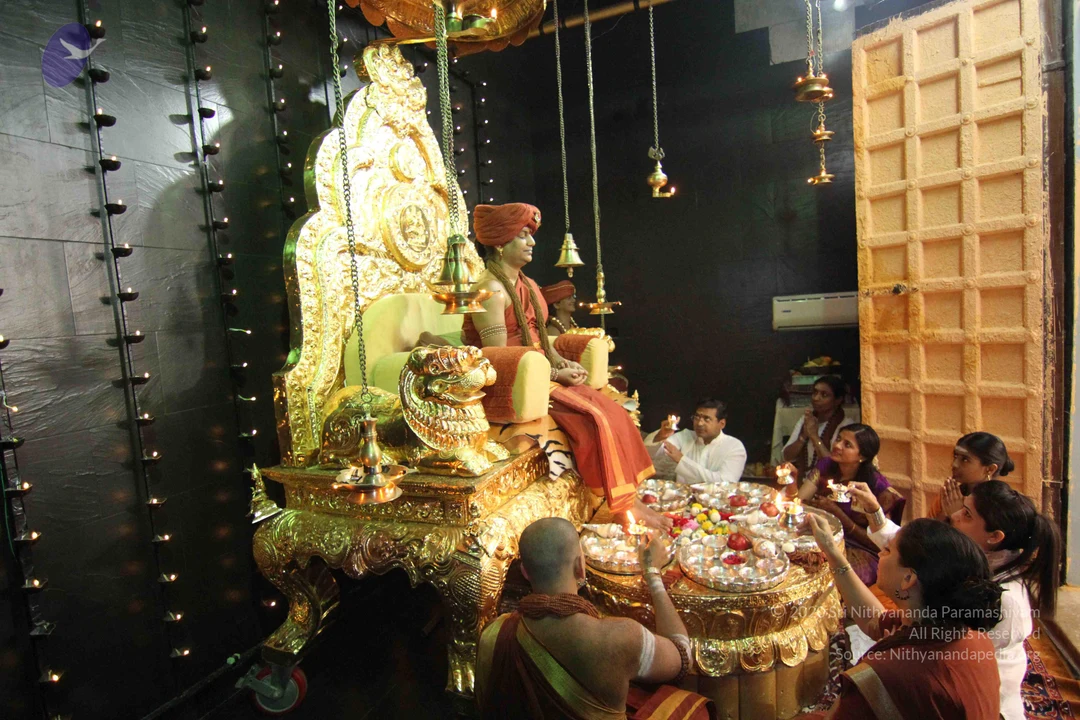
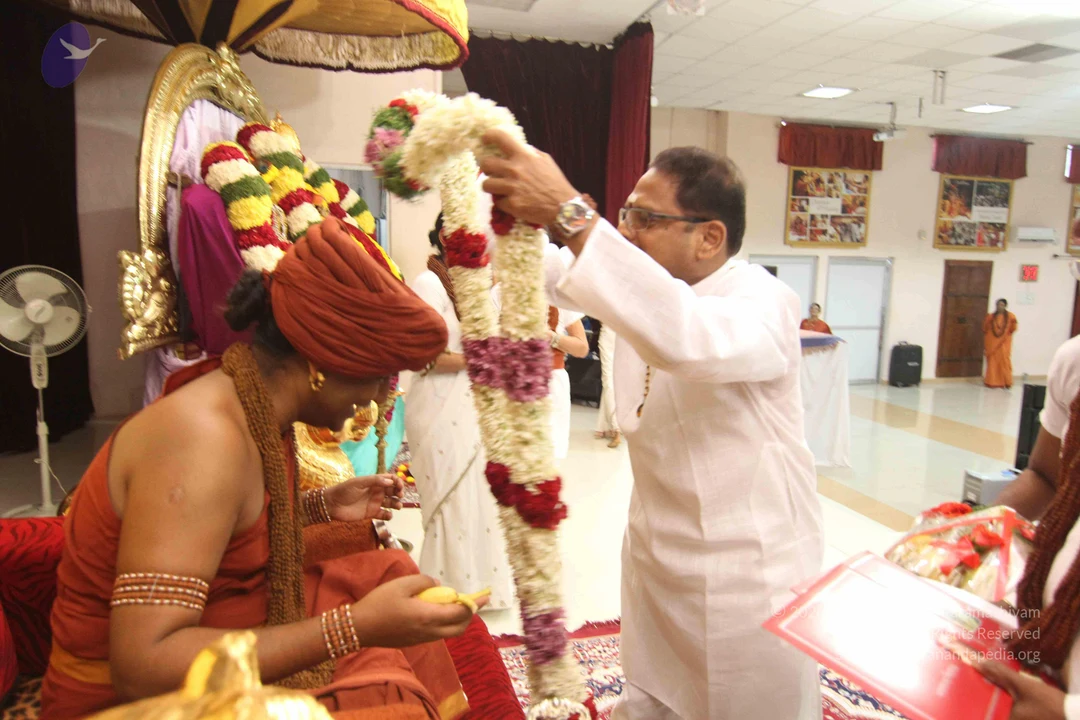
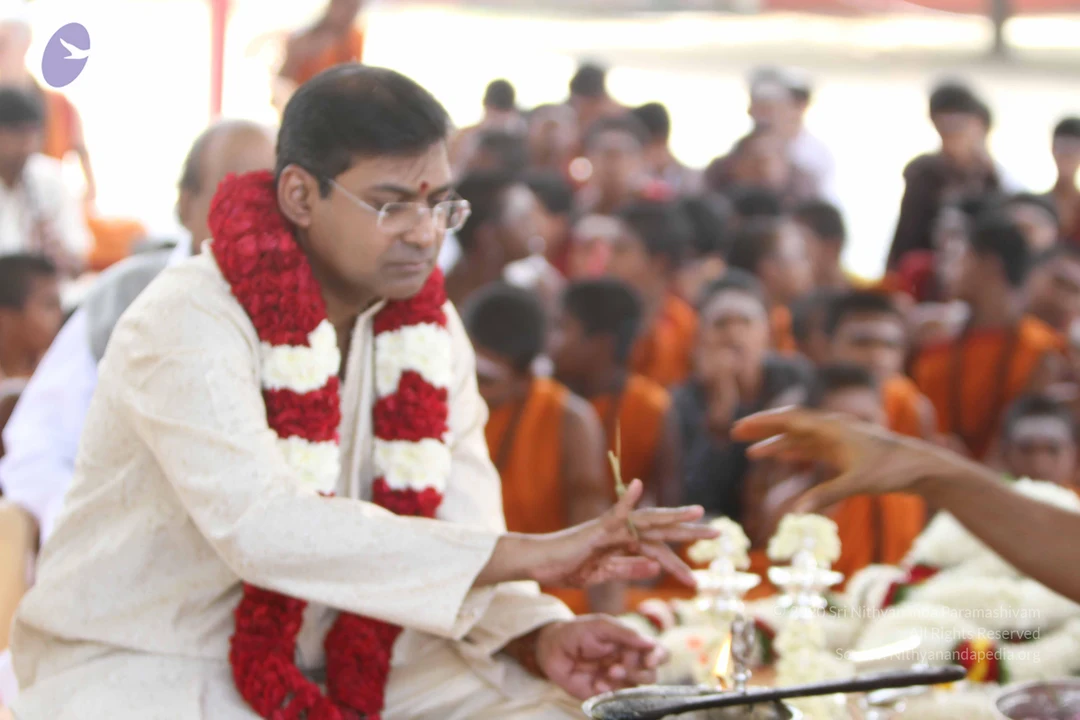
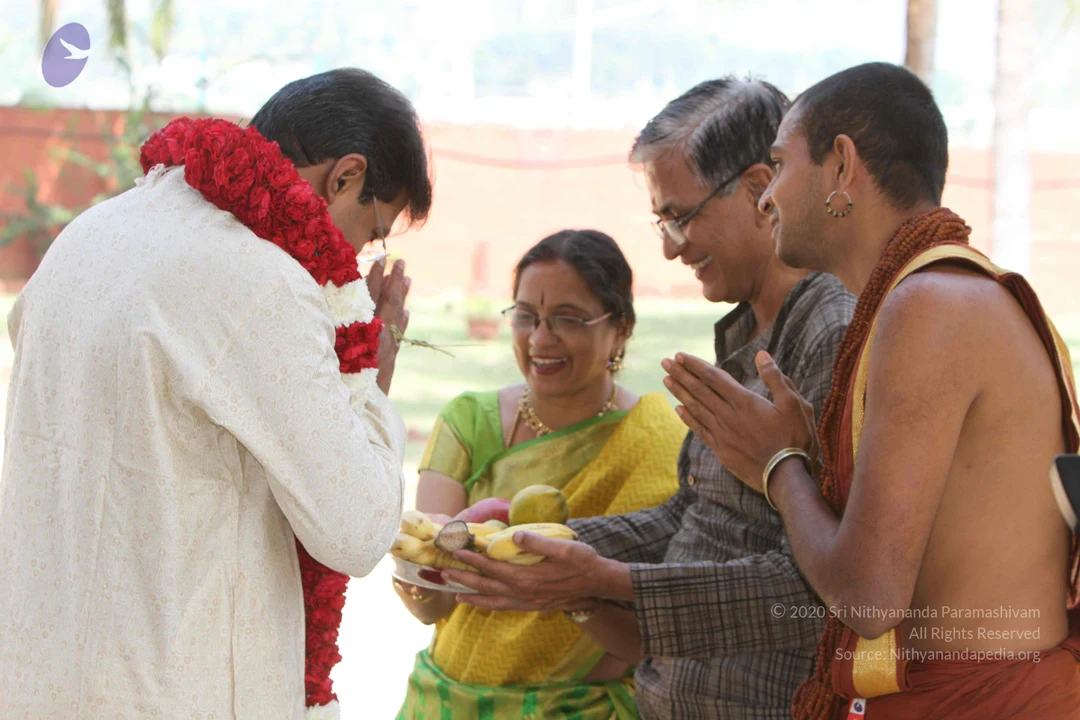
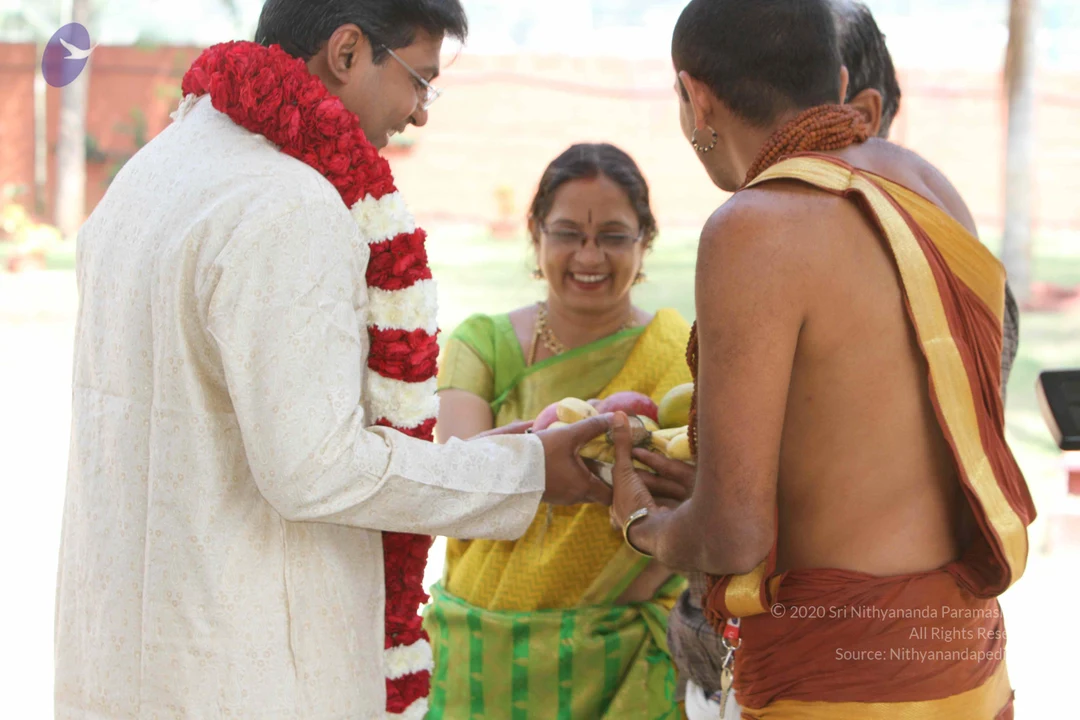
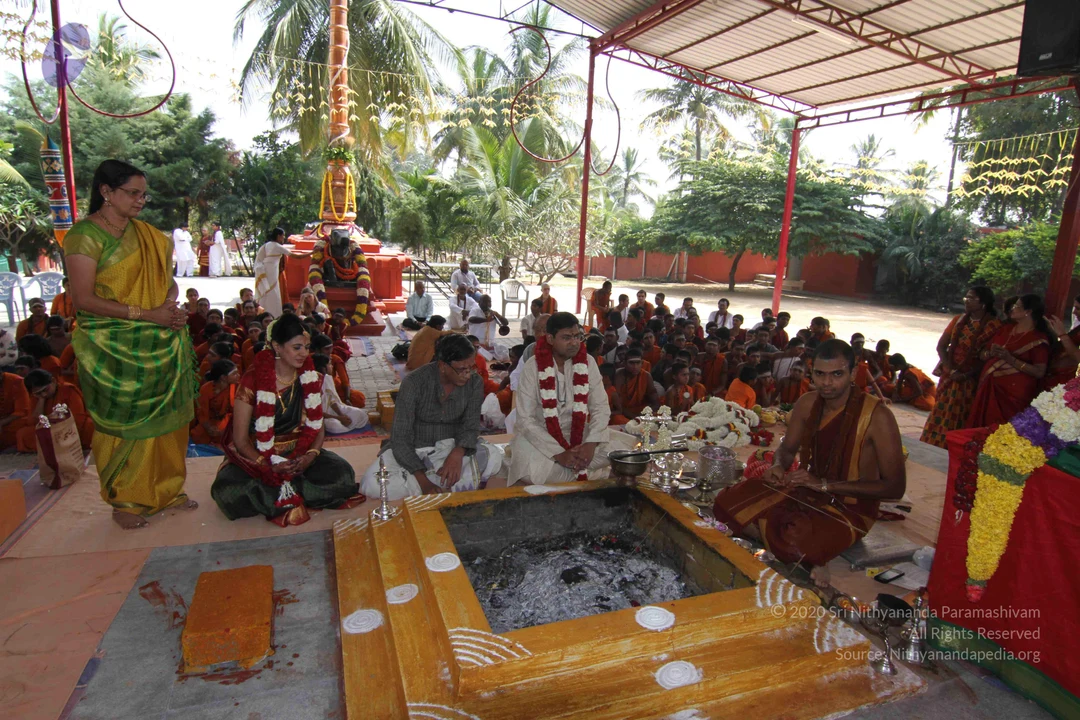
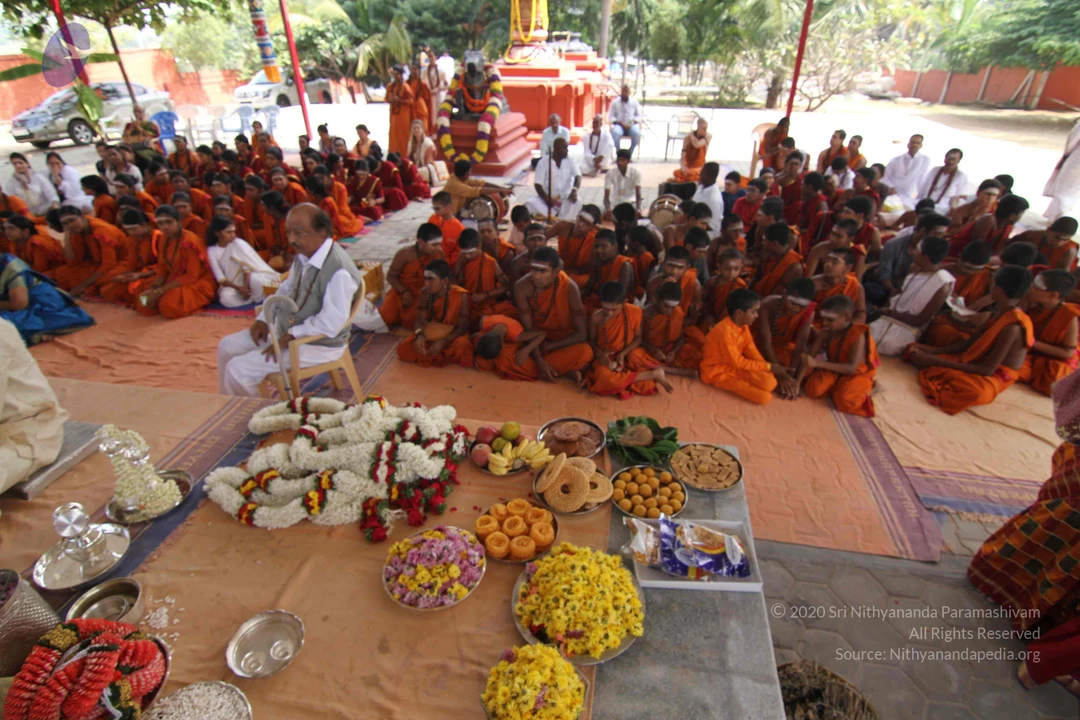
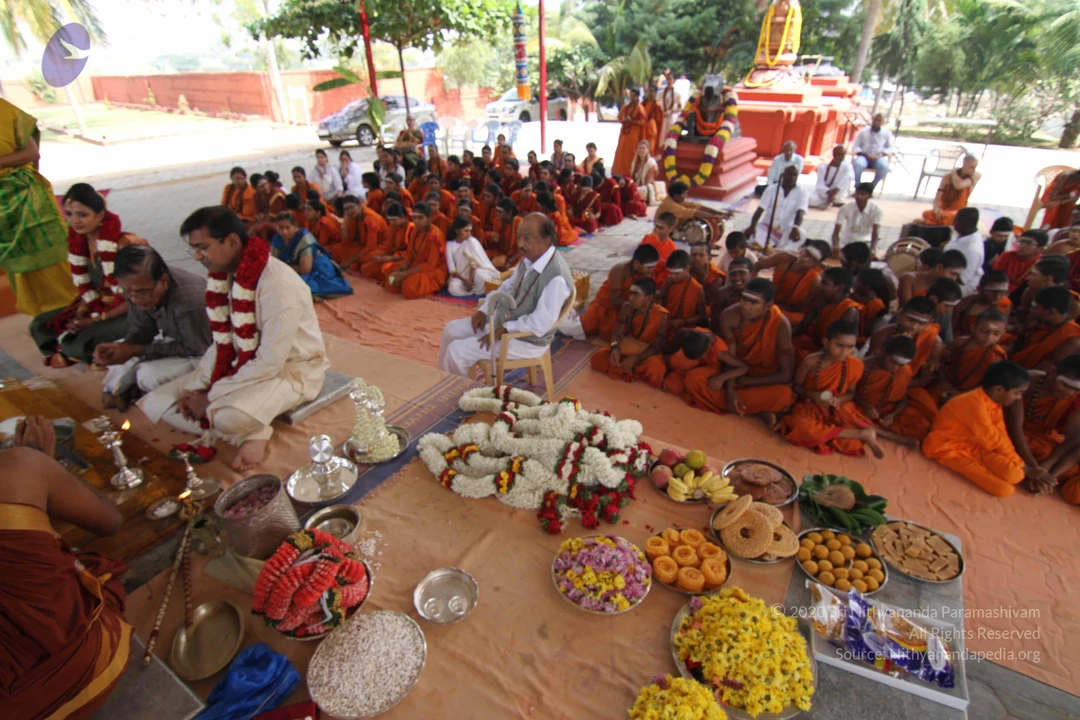
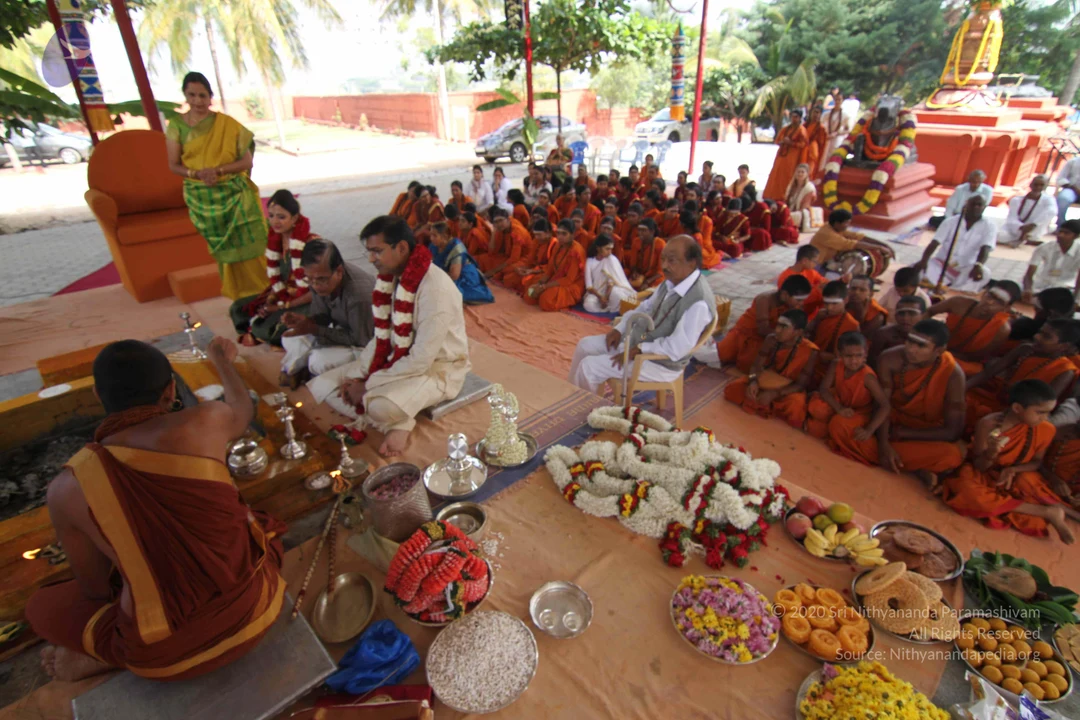
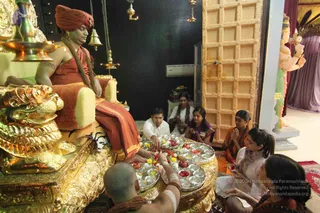
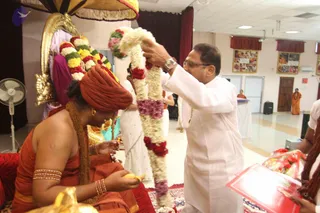
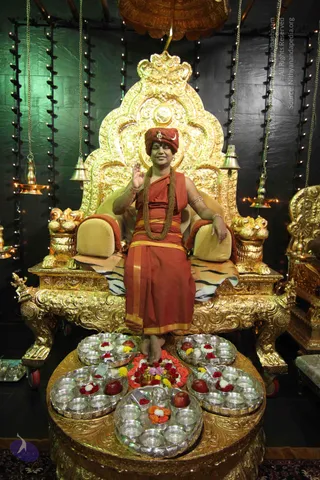
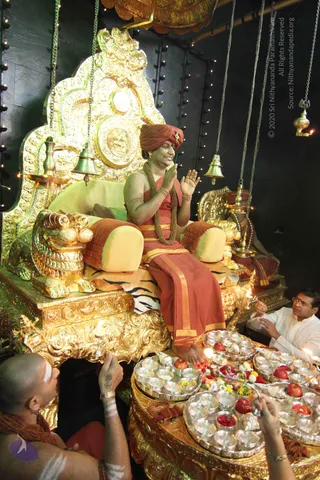
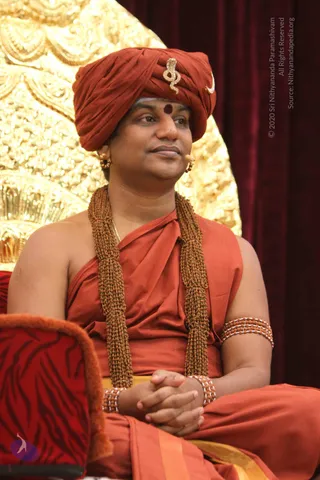
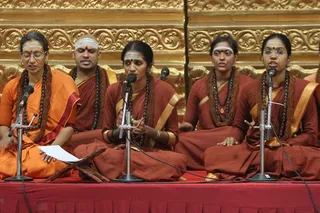
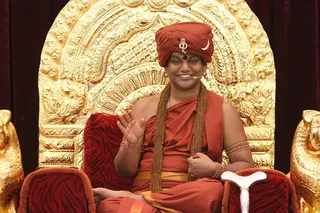
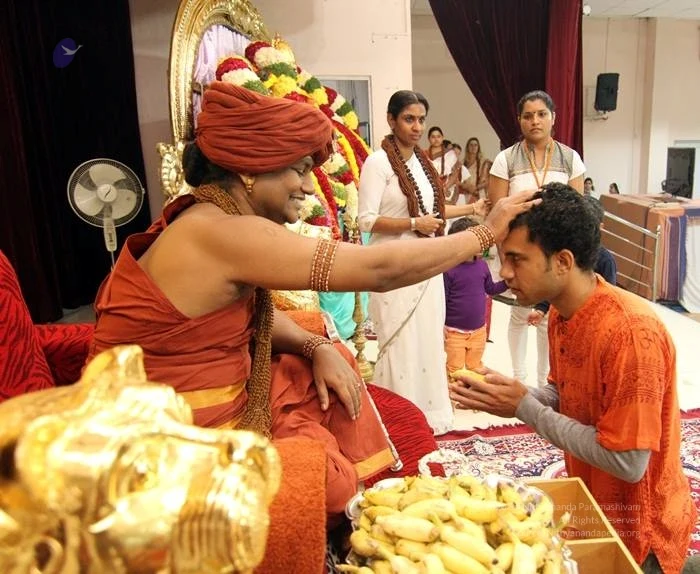
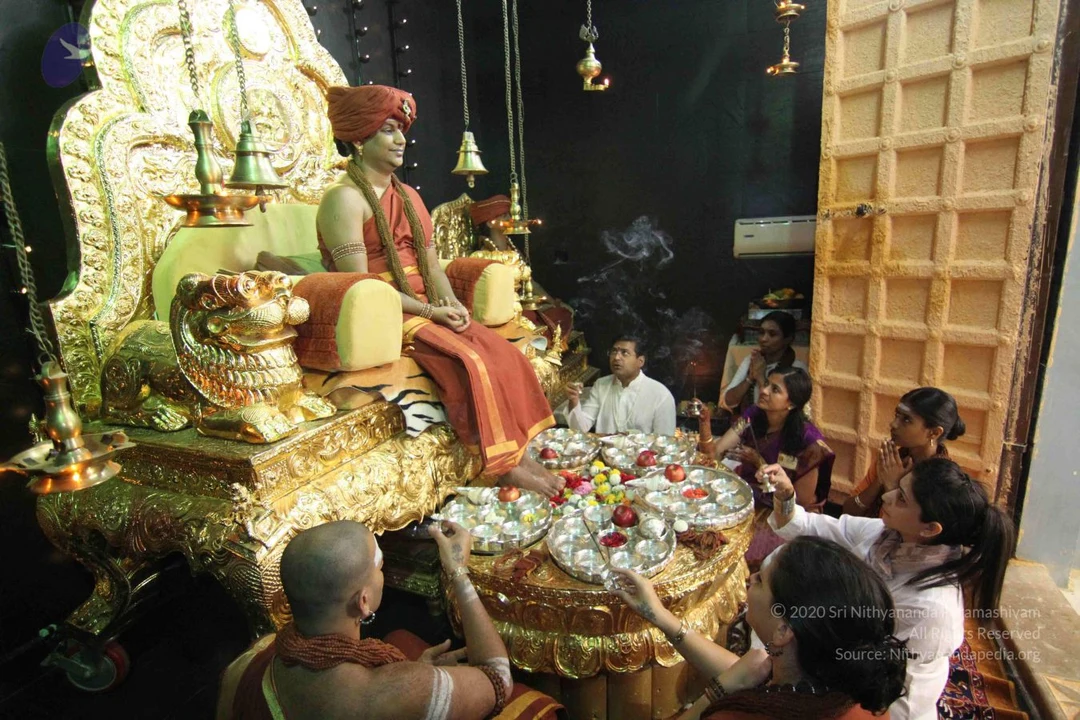
A seated person in an orange-red turban and orange-red robe sits on a red zebra-patterned cushioned seat beside a gold lion-carved throne frame. A garland of white jasmine and multicoloured flowers hangs across their shoulders, with a rudraksha mala and gold bangles visible. A man in a white kurta with glasses and a wristwatch stands before them, placing a garland and holding a yellow offering, while a woman in white stands behind. Trays of bananas and other offerings sit on a red cloth in front. Garlanded flower rows and draped fabric decorate the hall behind, with framed photo boards on the far wall.A golden ornate throne holds a seated figure in an orange-red turban, rudraksha-style beaded necklace, and orange-red draped cloth, with a golden lion-head armrest and tiger-skin-like cushion. The figure is a statue or depiction rather than a living person, appearing lifelike and gold-trimmed. In front, a bare-chested priest in white and orange-red cloth with a shaved head lights and offers from a golden table laden with brass thalis of fruit, flowers, and oil lamps. Several women in saris and salwar kameez sit on the floor with hands folded in prayer, and a man in white kurta stands nearby. Brass bells and lamps hang from chains; a carved wooden door is at right.A seated figure in an orange-red turban and bare-shouldered orange-red garment, wearing gold bangles and a gold necklace, extends a hand in blessing onto the head of a young man kneeling in front of him. The kneeling man wears an orange kurta over grey undershirt and holds a banana. Behind them a woman in white sari and rudraksha-style necklace stands with a hand raised, and a gold ornamental throne-side with garlands of yellow and red flowers frames the scene. A tray of bananas sits in the foreground beside a gold kalasha-like object on a red cushioned seat, with a carpet and a standing fan in the background.

November 27 2014

Original wiki page
Contents

Title

Live Your Subjective Truth

Description:

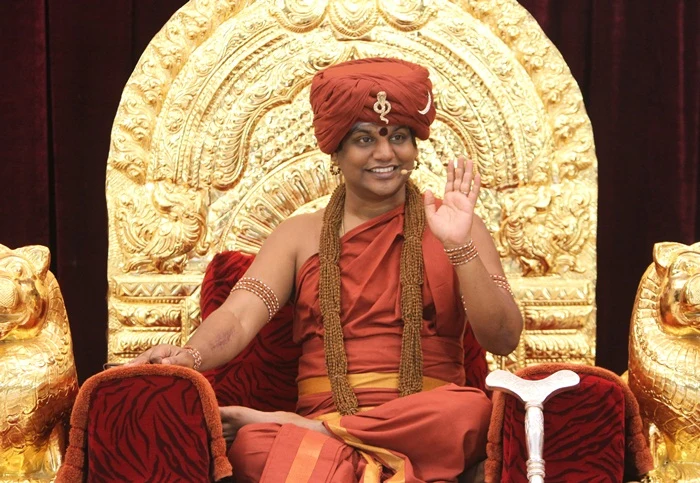
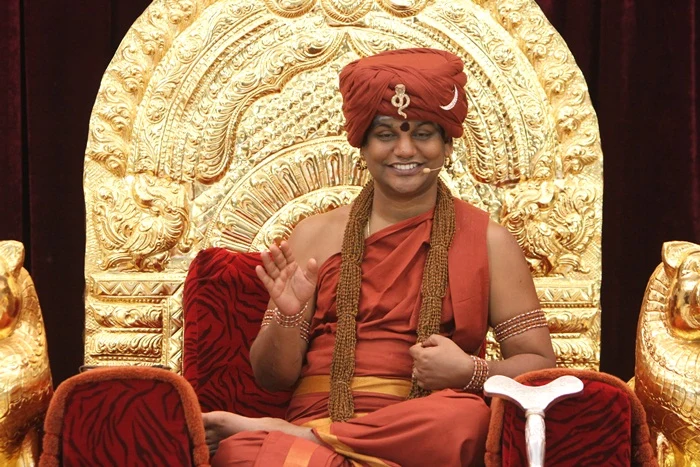
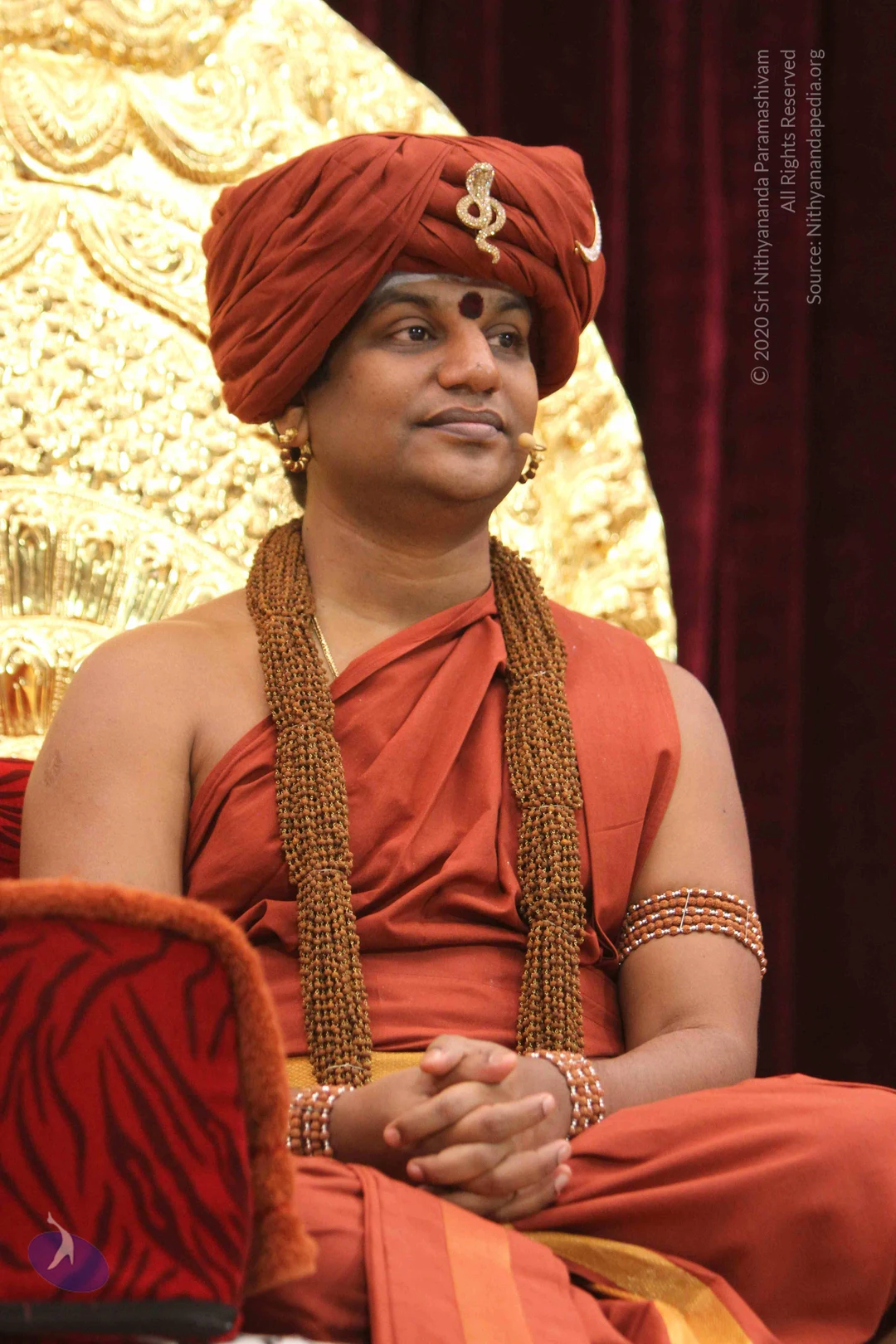
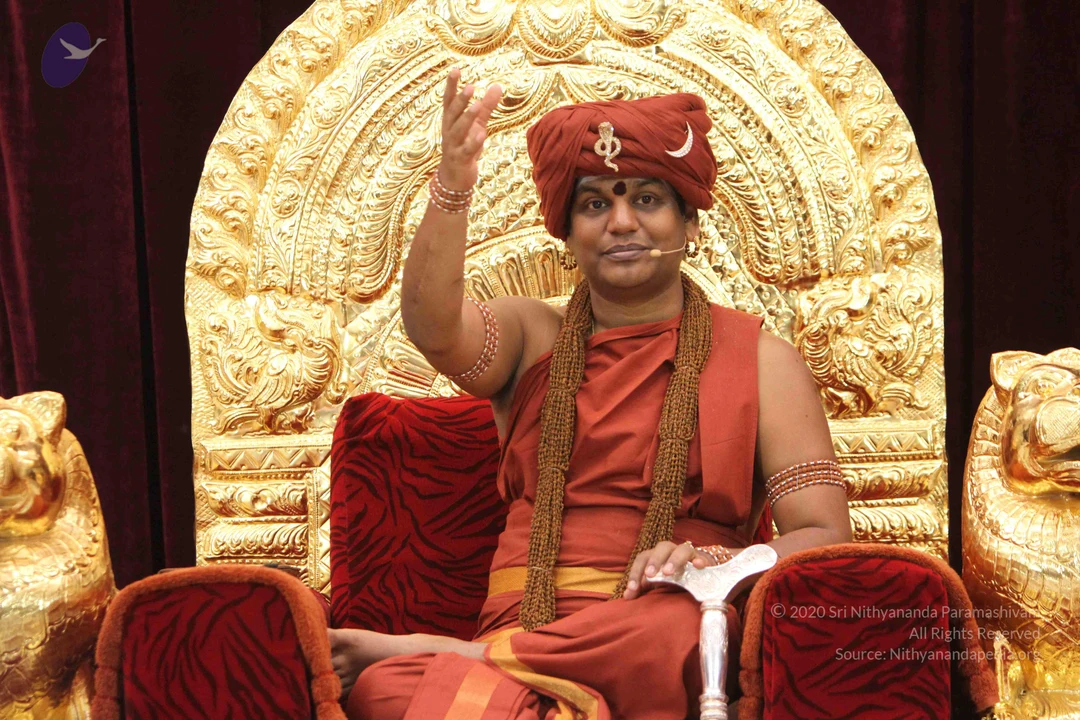
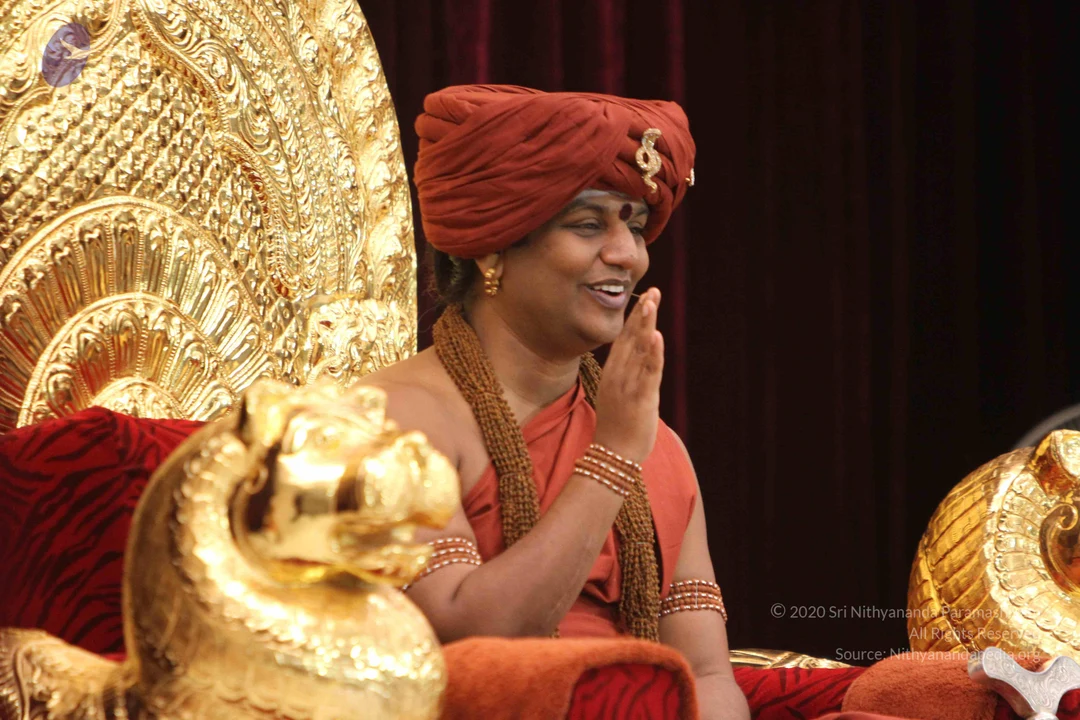
In today’s (27th November, 2014) morning Satsang, Paramahamsa Nithyananda expands on an important truth called “subjective truth”. For example, if you declare: “Shivoham - I am Mahadeva”, then it is not false or a myth - it is subjective truth. If you decide to live Shivoham, then it is truth. Additionally, attacks on you should not create a doubt in you whether Shivoham is true or false. It should only strengthen your subjective truth.

Link to Video:

VideoAudio

Transcript:

Nithyanandeshwara Samaarambhaam Nithyanandeshwari Madhyamaam | Asmath Aachaarya Paryanthaam Vandhey Guru Paramparaam ||

I welcome all of you with my love and respects.

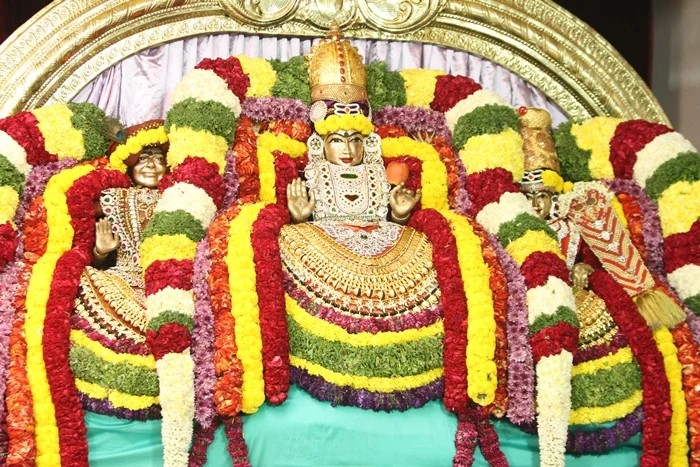
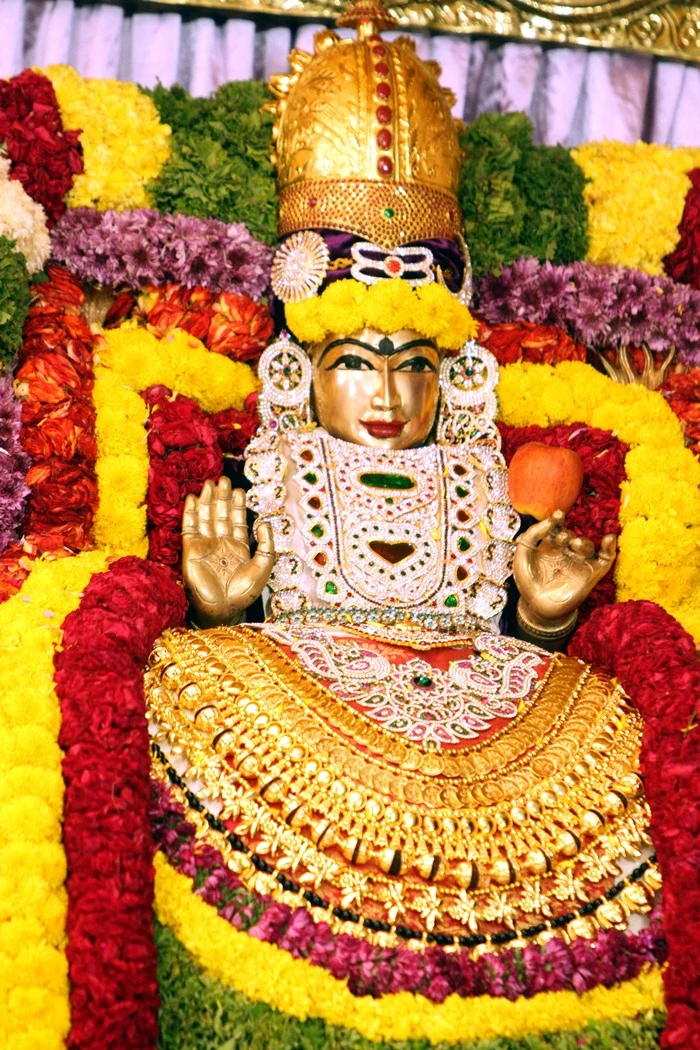
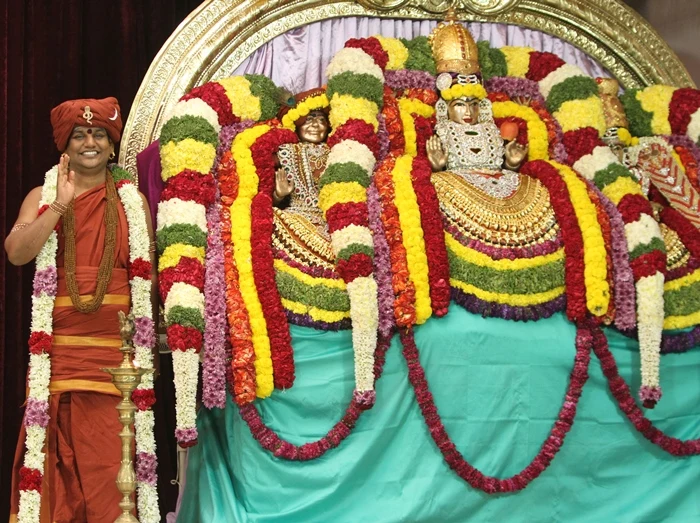
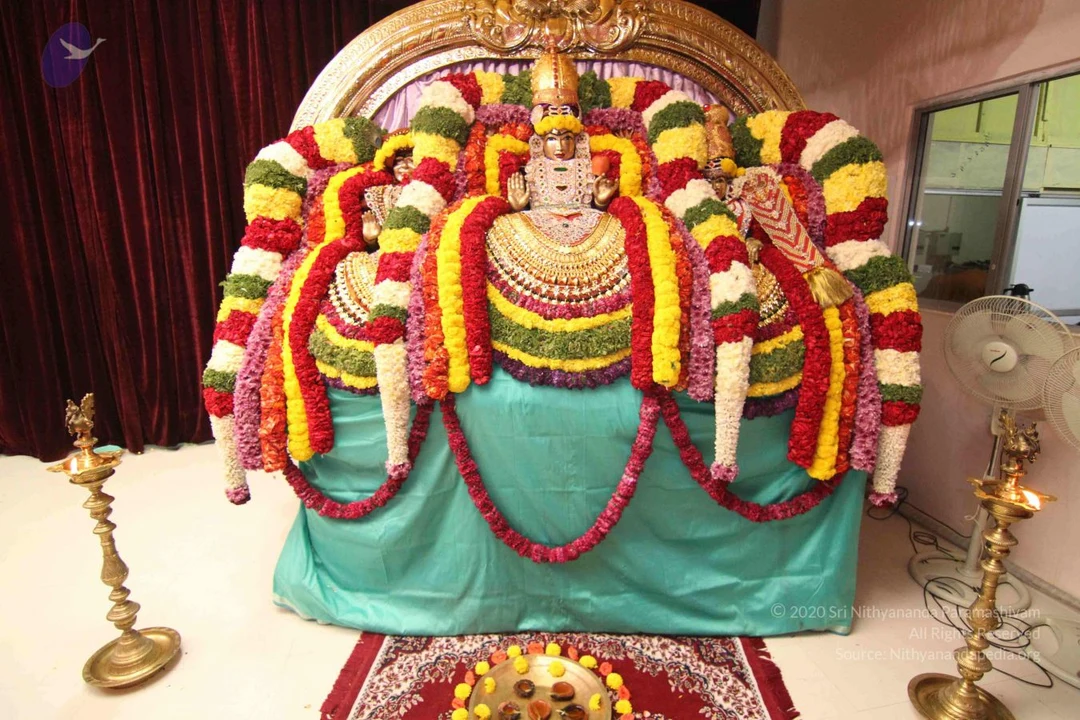
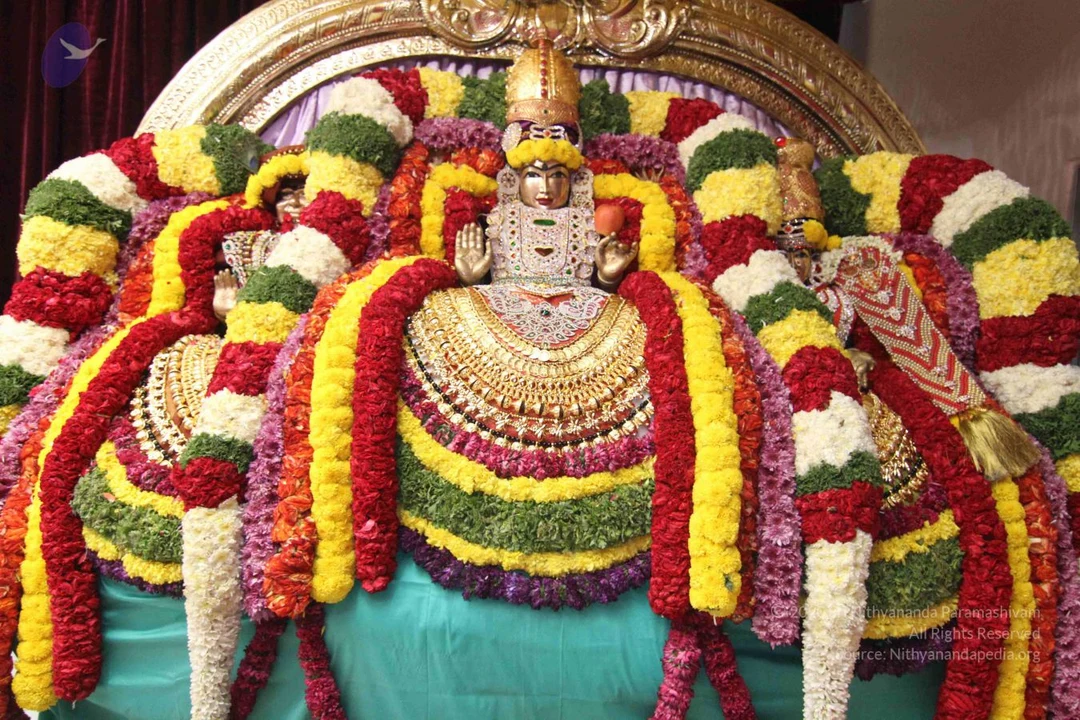
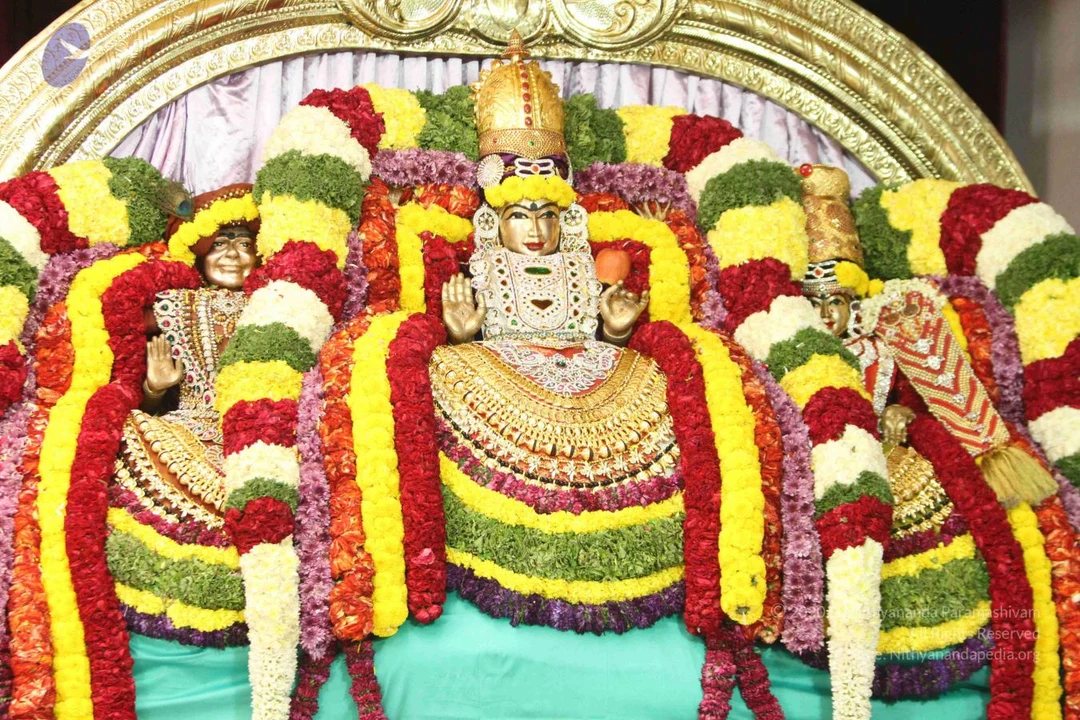
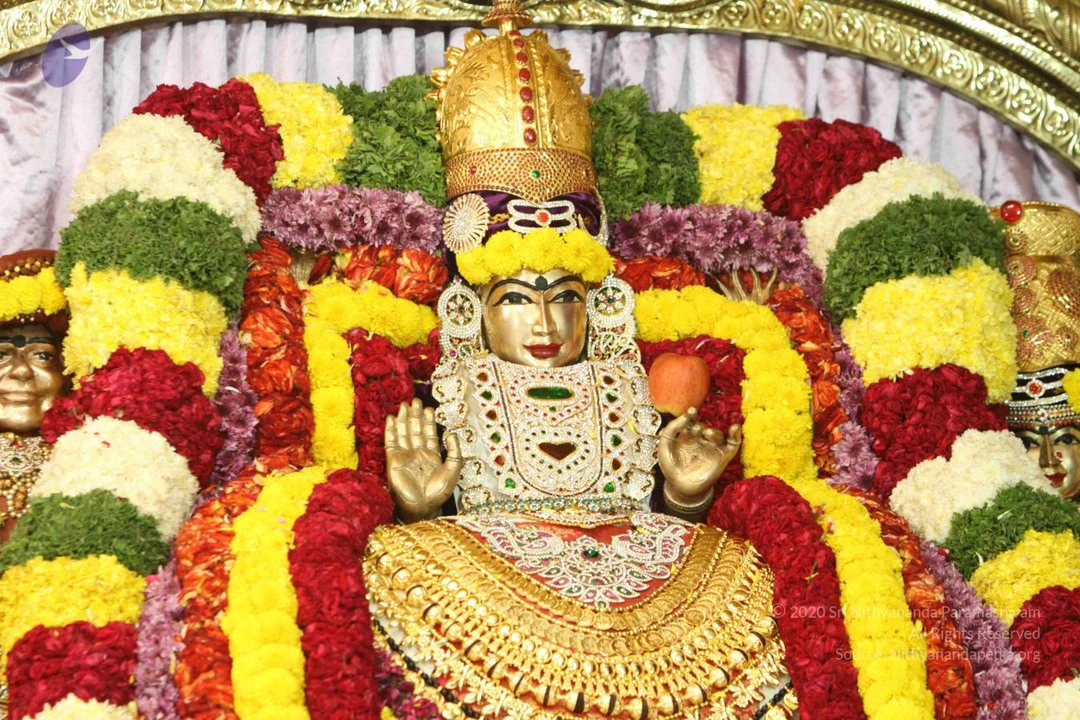
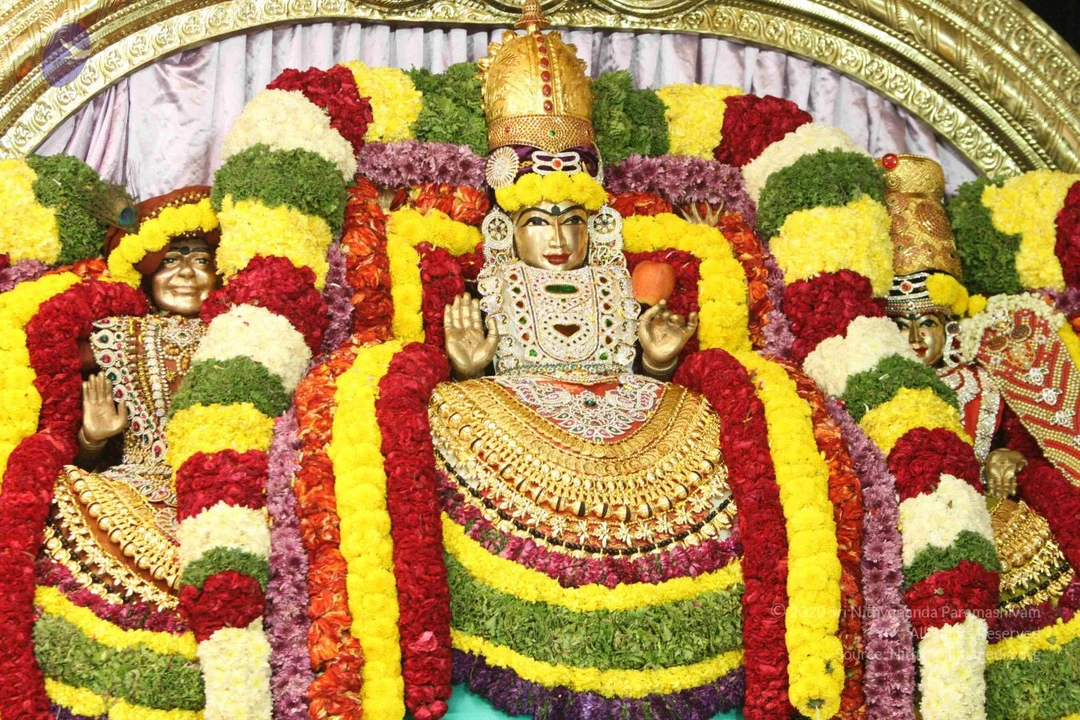
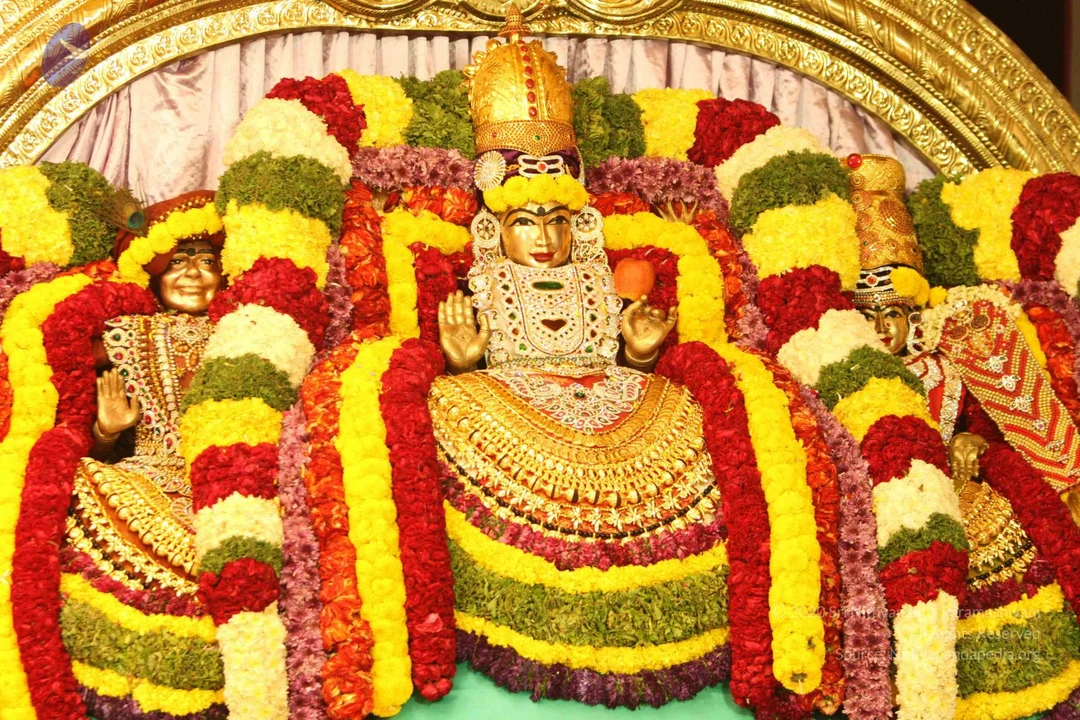
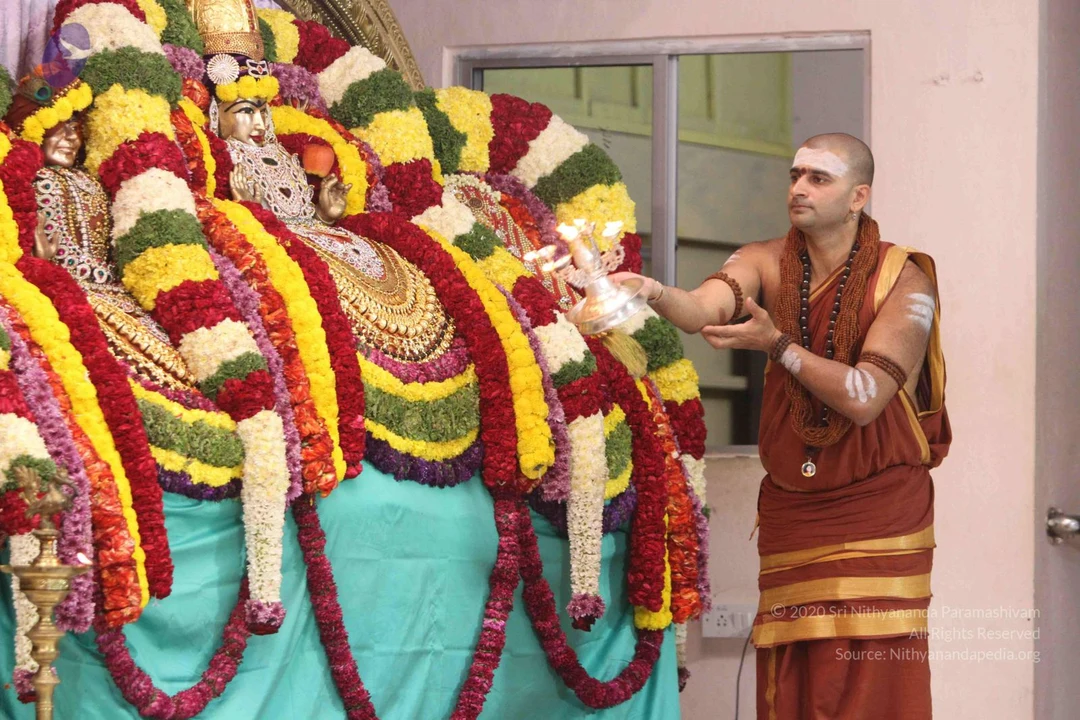
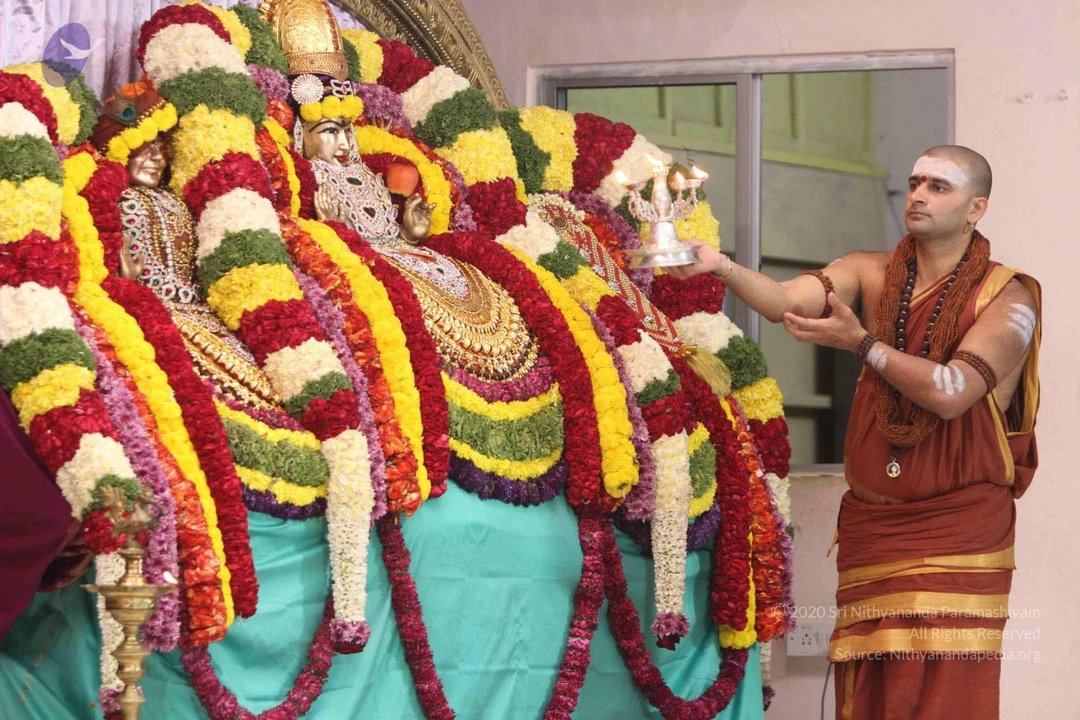
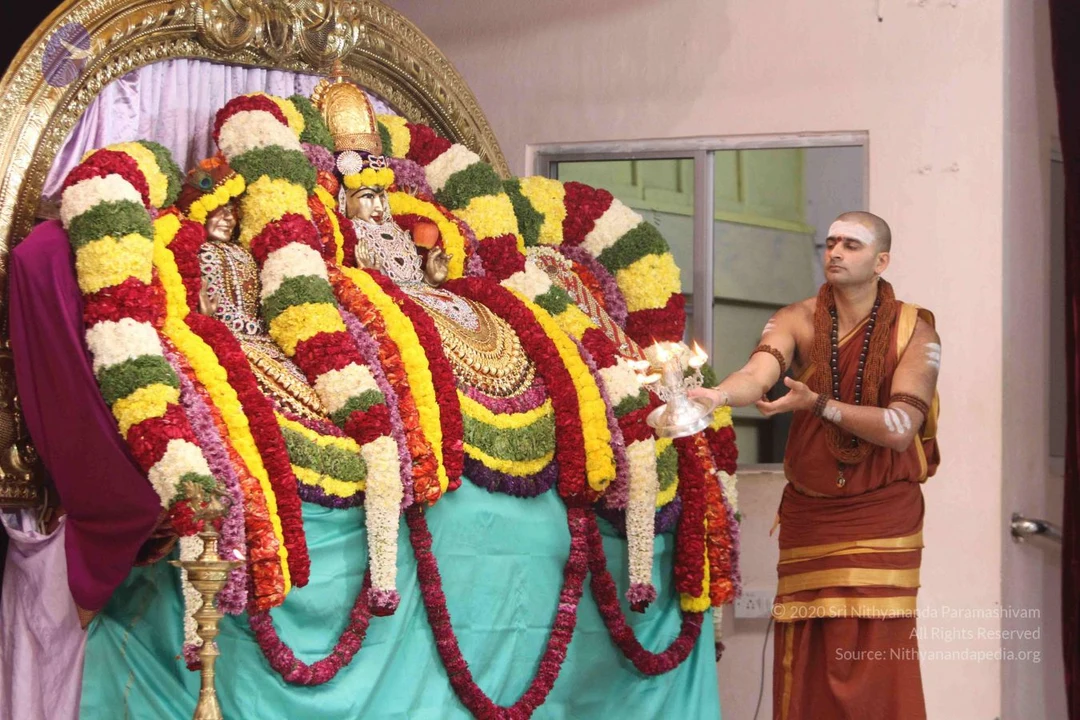
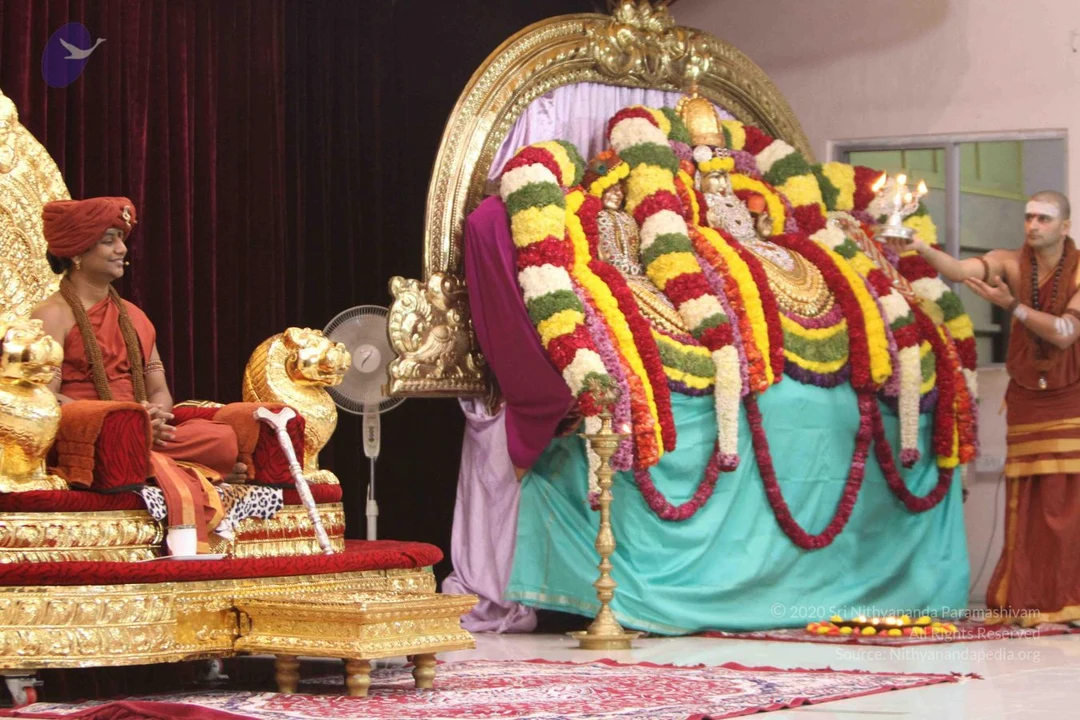
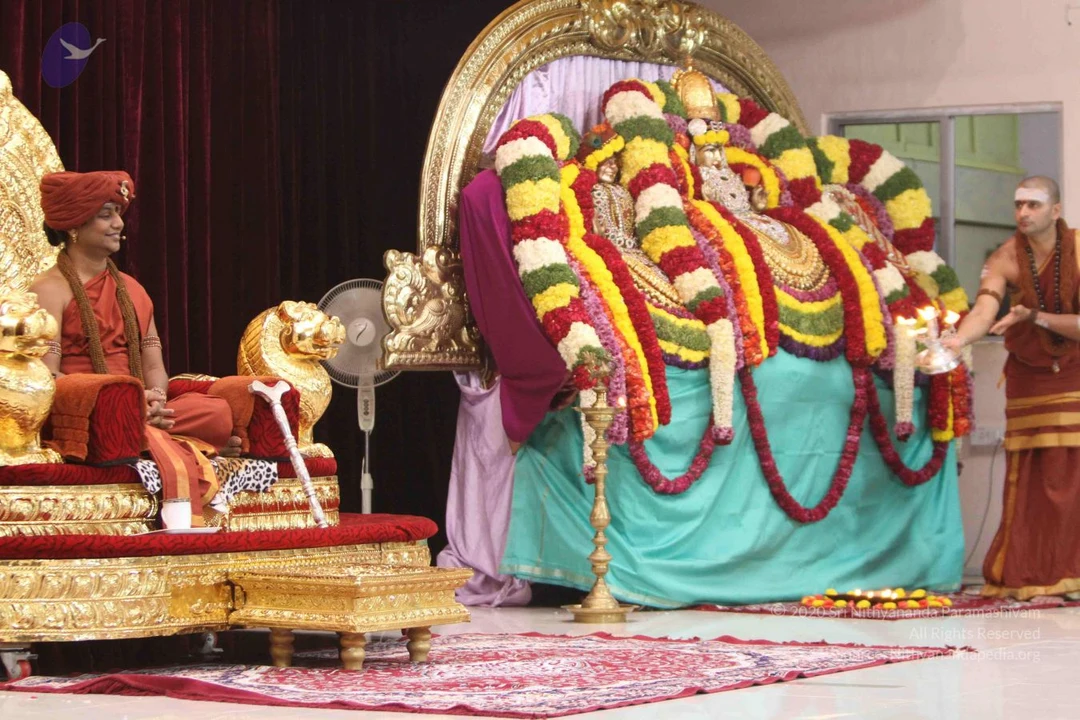
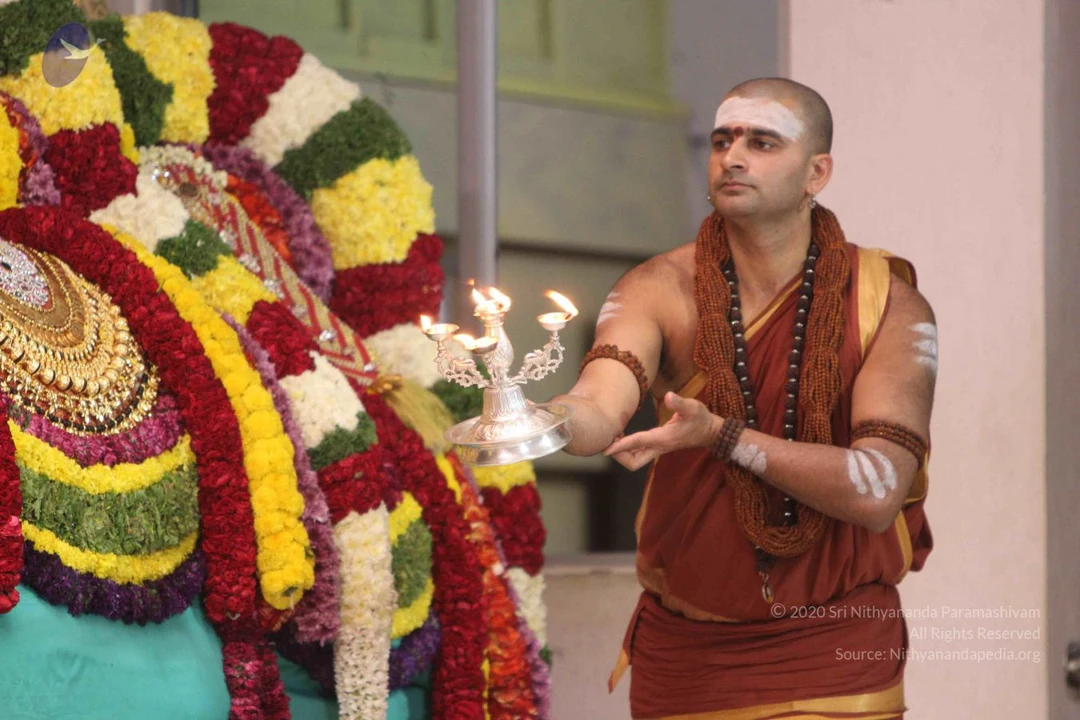
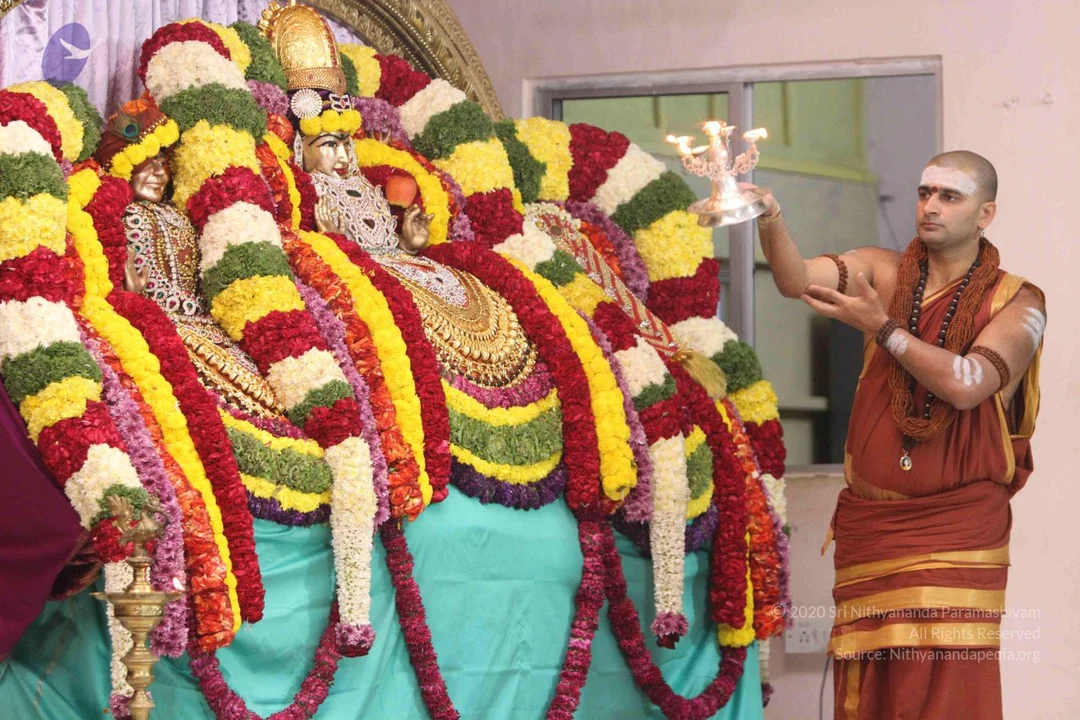
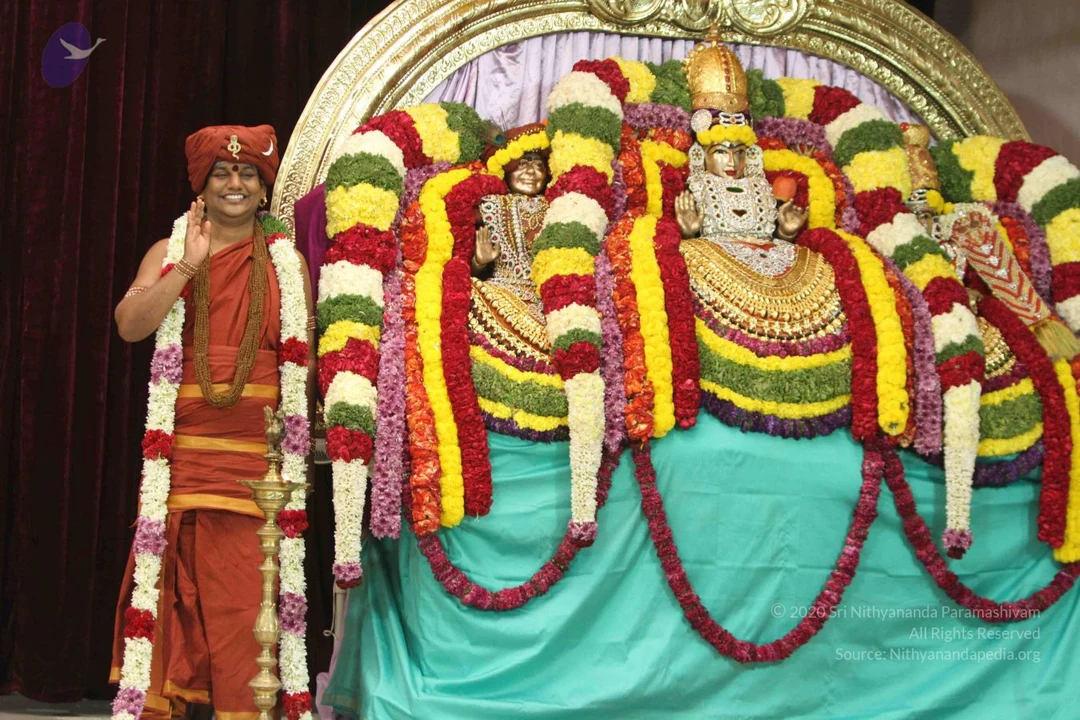
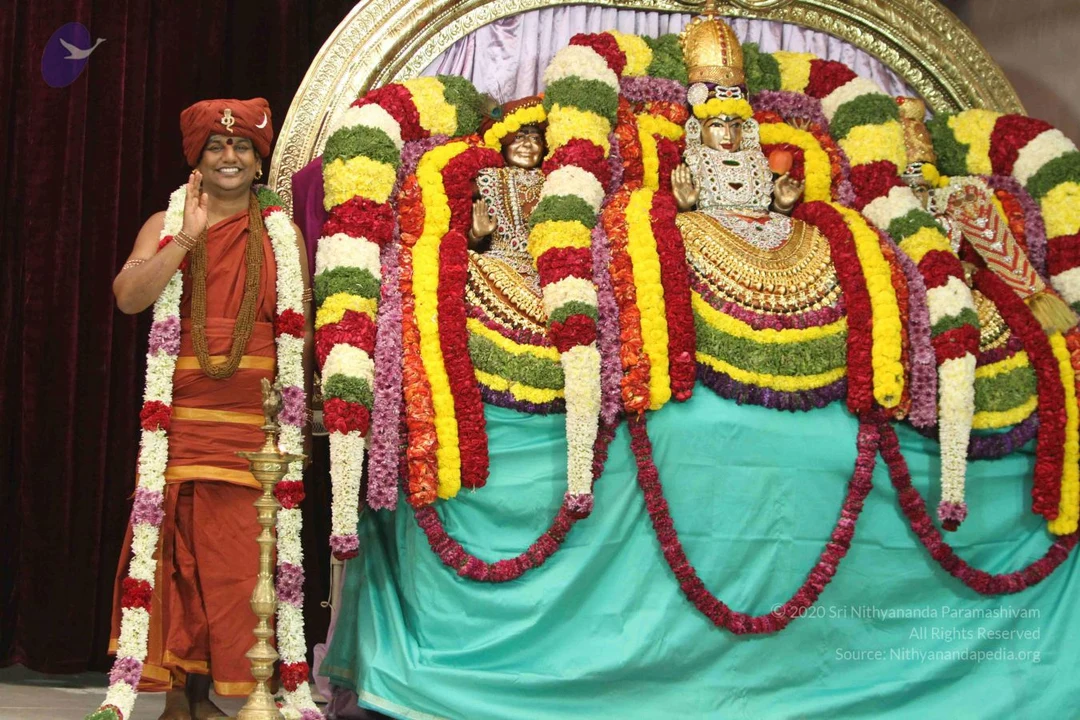
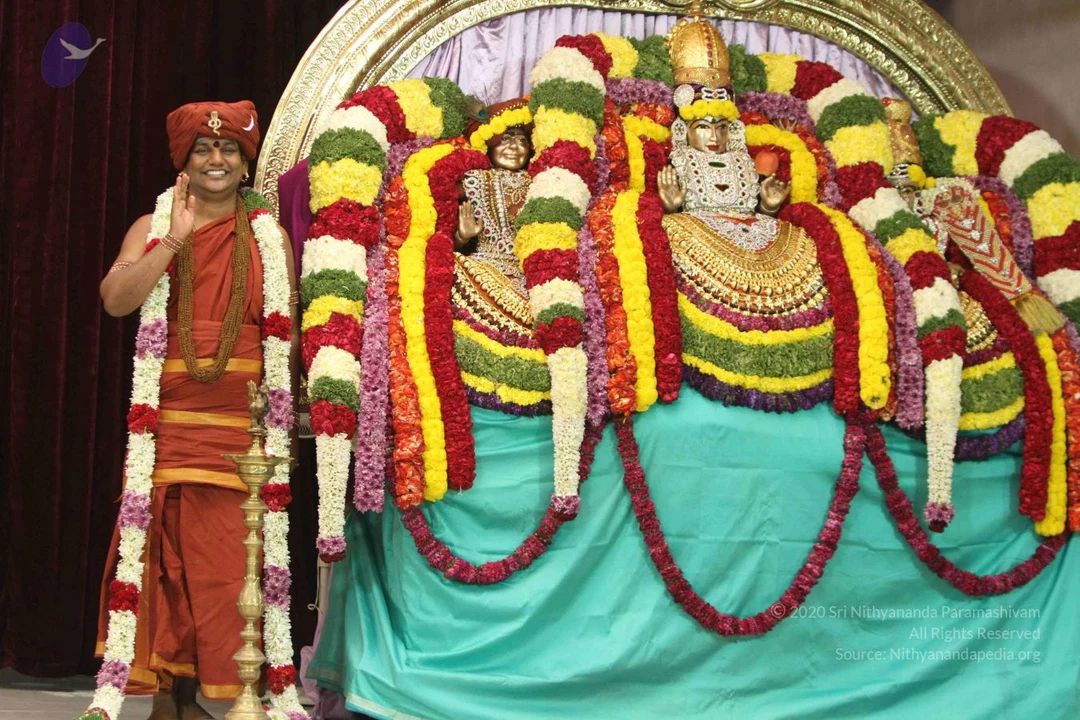
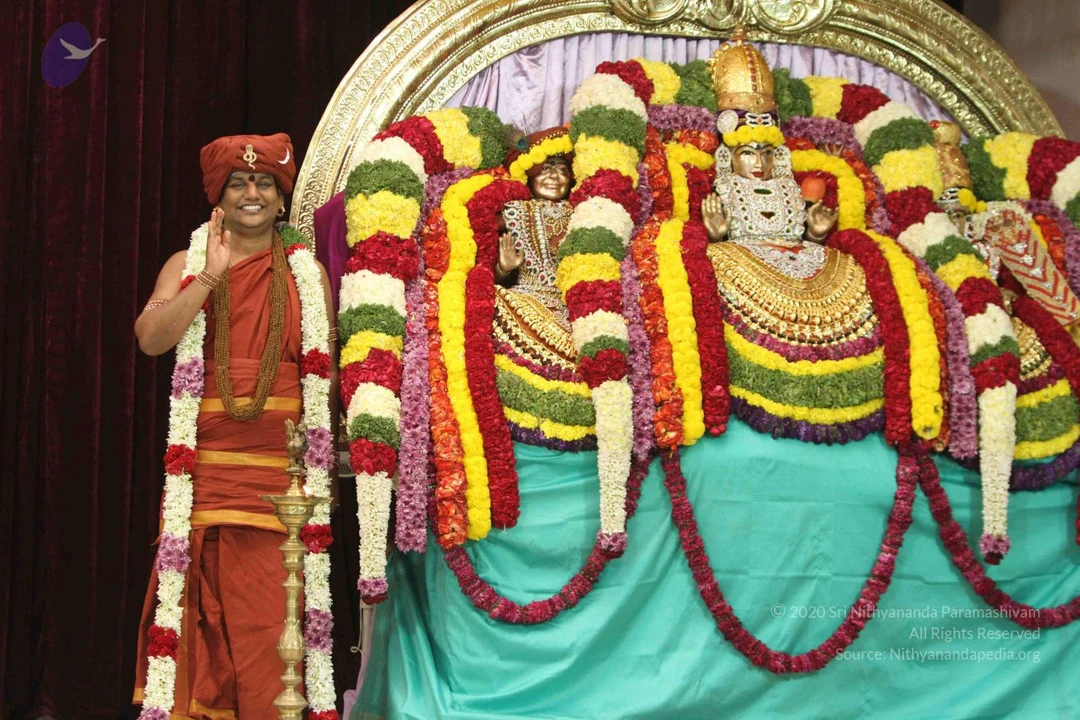
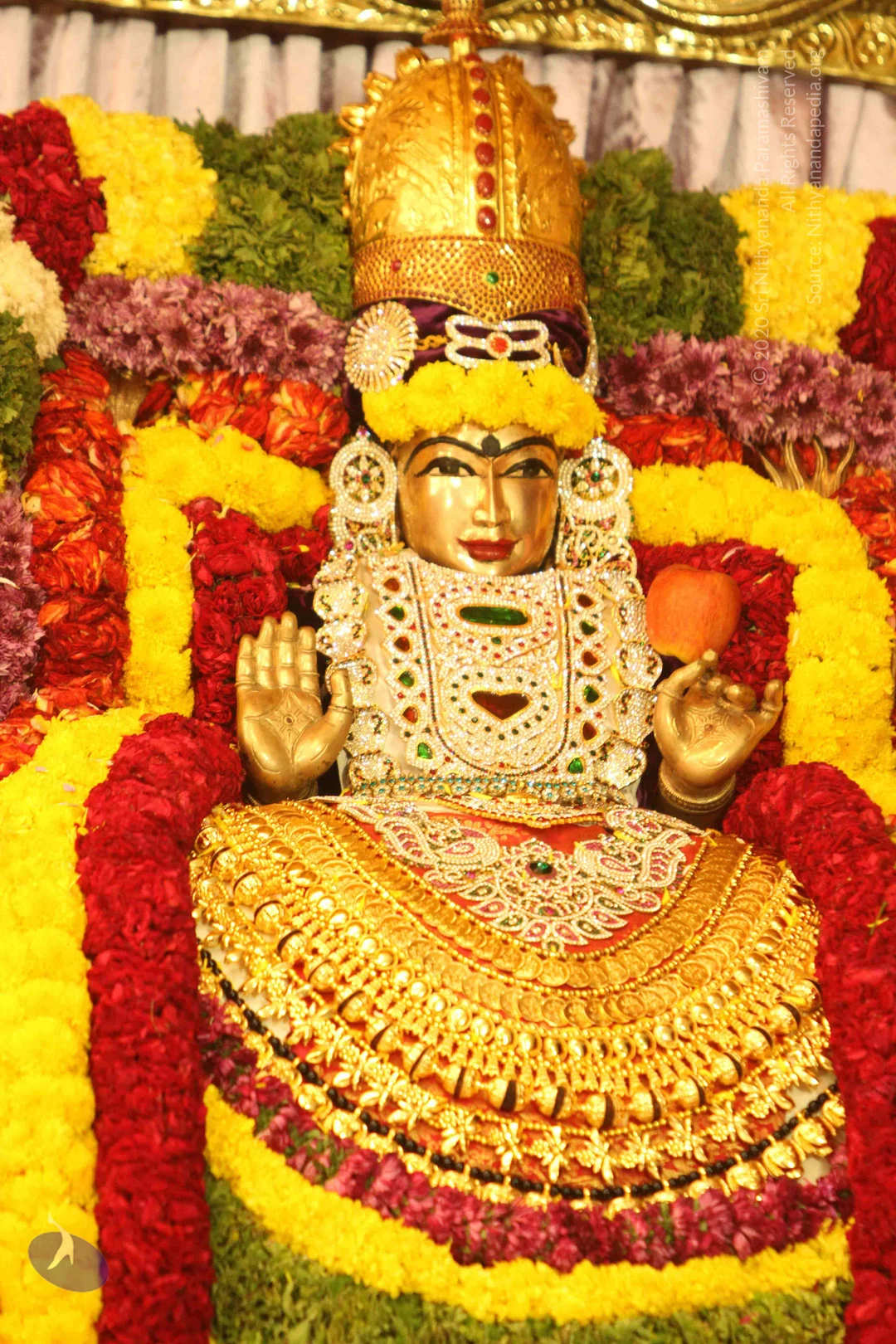
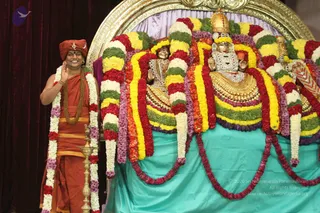
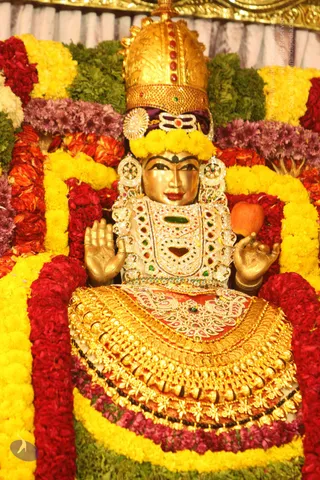
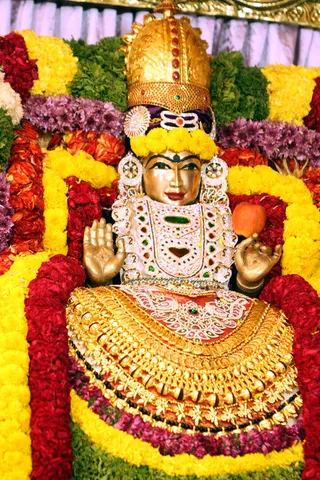
Today, the second day of Nithyanandeshwara’s Brahmotsava. Mahadeva and Devi are gracing all of us in the Roman Crown and “Maambazha Kondai”. What Devi is wearing is called “Mango Crown” (“Maambazha Kondai”).

I will move to the satsang.

Today I wanted to expand on an important truth – “Subjective Truth”. Please understand, when I declare Shivoham – “I am Mahadeva” – when I declare “You are Mahadeva”, “You are Shiva”, it is not false, it is not myth; it is subjective truth! Whoever wants to live it, for them it is truth. Understand, when I declare “You are Mahadeva”, when I declare “I am Mahadeva”, it is not myth; it is called “subjective truth”. When I declare “You are God”, when I declare “I am God”, it is not false, it is not myth; it is “subjective truth”. Whoever catches it, want to live it, for them it is truth.

Understand, this whole world is suffering with the arrogance of trying to harass, abuse, somebody else’s subjective truth, and trying to prove that as a false.

Listen! Trying to prove somebody else’s subjective truth as false is violence, intellectual violence. It is terrorism, intellectual terrorism. Please understand trying to prove aggressively somebody else’s subjective truth as false myth is arrogance. If you believe you are God you have all the right to believe, you have all the right to live like one. It is subjective truth. No one has a right to interfere into it. No one has a right to interfere into it. Subjective truth.

Hindus have suffered too much of intellectual terrorism. I don’t know whether I am capable of stopping the physical violence and terrorism against the Sanatana Hindu Dharma. I think I am not cut for that. But I’ll surely stop the intellectual terrorism against Sanatana Hindu Dharma. Mahadeva has endowed me with all the qualities required. Mahadeva has given me all the qualities required. The Saraswathya, Saraswathi! Ability to choose the right words is “Saraswathi”. Ability to handle the vast memory is “Lakshmi”. Courage to tell what you want to tell is “Durga”, “Kali”. Mahadeva blessed me with all the three. Surely I’ll protect Sanatana Hindu Dharma from intellectual terrorism. I don’t know whether I am capable of, whether I am cut for protecting Sanatana Dharma from the religious terrorism, physical terrorism; but surely Mahadeva has endowed me with the ability to defend, protect Sanatana Hindu Dharma from intellectual terrorism.

Please listen! Most of our subjective truths have been named as a myth, degraded, blasted, abused as false and even we Hindus, Sanatana Dharmis, even we started falling into the deep self-doubt. See a man who has political power, intellectually if you blast him, he will fall into self-doubt that what he is doing may be not right. Same way the spiritual people, the intellectual people, the religious people who are completely convinced about what they are and what they are teaching, if you attack them legally, they will shiver and collapse and fall down, fall into the self-doubt – ‘May be, what I am doing is not accepted by God.’

It’s an age-old method of collapsing people. I tell you India has suffered so much of, Hindus have suffered so much of legal, illegal atrocities. I am talking about pre-Independence era. Even after Independence, we have suffered so much of intellectual atrocities, political atrocities for the last thousands of years, legal atrocities, illegal atrocities, intellectual atrocities. Even we ourselves have fallen into the self-doubt and guilt – ‘Are we living rightly? Are our ideas practical for life? Are we living the truth? Is our lifestyle and ideology us right, practical, worthy of living successfully?’ That SDHD started developing even in our own system because of the weakness and powerlessness.

Understand, a political leader, because already he has the power and law under his control, he cannot be collapsed if you try to attack him legally. But if you attack him intellectually, he may have self-doubt about himself and collapse. That is the way the kings were collapsed traditionally. If you want to collapse a king, attack him intellectually.

Jnanasambandhar is my Guru Parampara! Thirunaavukkarasar is my Kula Parampara! Jnanasambandhar is my Guru Parampara! Thirunaavukkarasar is my Kula Parampara!

கற்றுணை பூட்டியூர் கடலிற் பாய்ச்சினும்
நற்றுணை ஆவது நமசிவாயமே
“Katrunai pootiyoor kadalir paaichchinum
Natrunai aavadhu Namashivayamey”

Thirunaavukkarasar sings: “Even if we are tied with a stone and thrown into the ocean, the Namah Shivaya mantra will protect us, make the stone into boat and save us!”

Understand, the subjective truths are not myths! Strength of the subjective truths changes your life and protects you. They are not myth. They are not false.

Understand, attacks on you should not create a doubt in you, Shivoham is truth or false. It should strengthen your subjective truth. Understand; know the truth that Shivoham is subjective truth. It is not myth or false. And let the subjective truth become more and more stronger. Age-old method of shaking people’s subjective truth is harassment. But whoever falls back into the same subjective truth to solve any problem comes in their life or to be free from any harassment, attack happens their life, their subjective truth gets more and more strengthened, they are enlightened! Understand, when the atrocities are done towards you, when the attack happens towards you, when you are attacked, do not question the power of subjective truth. Use power of subjective truth to face it! Use the power of subjective truth to face it! That is enlightenment! That is enlightenment!

If you are filled with SDHD – Self-Doubt, Hatred, Denial – you will lose the power of subjective truth. Then the opponents win the game. Use the power of the subjective truth to stand, defend yourself, protect yourself. Go through all the atrocities, harassments; win and come out. You will become enlightened! You are enlightened! So use the subjective truth – Shivoham – to strengthen you whenever atrocities are done to you.

Essence of today’s satsang:

All the atrocities done to you, let it not weaken your subjective truth; let it strengthen your subjective truth. Let it not weaken your subjective truth; let it strengthen your subjective truth! Let the power of the subjective truth be used by you to strengthen yourself and face, strengthen yourself and face life. Face all the harassments done to you, all the atrocities done to you, all the attacks done on you.

I bless you all! Let’s all radiate with Integrity, Authenticity, Responsibility, Enriching, and Causing eternal bliss, Nithyananda.

Photos From The Day:
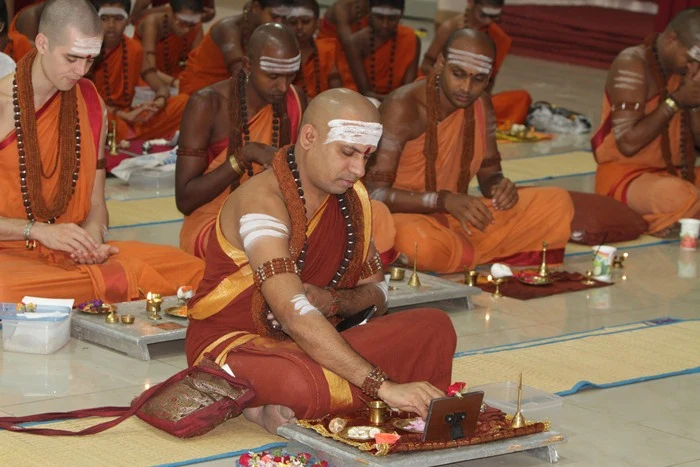
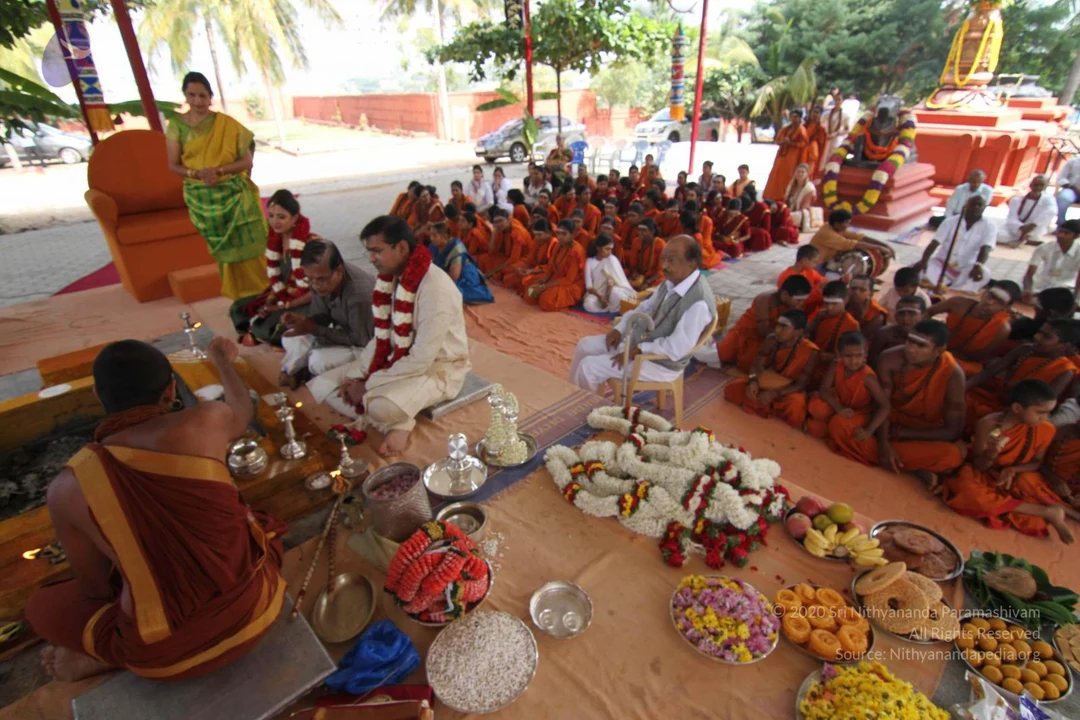
https://nithyananda.org/sites/default/files/photo-gallery/2014-11nov-27th-nithyananda-diary_IMG_8665_bidadi-padukapuja.JPG?1417117802
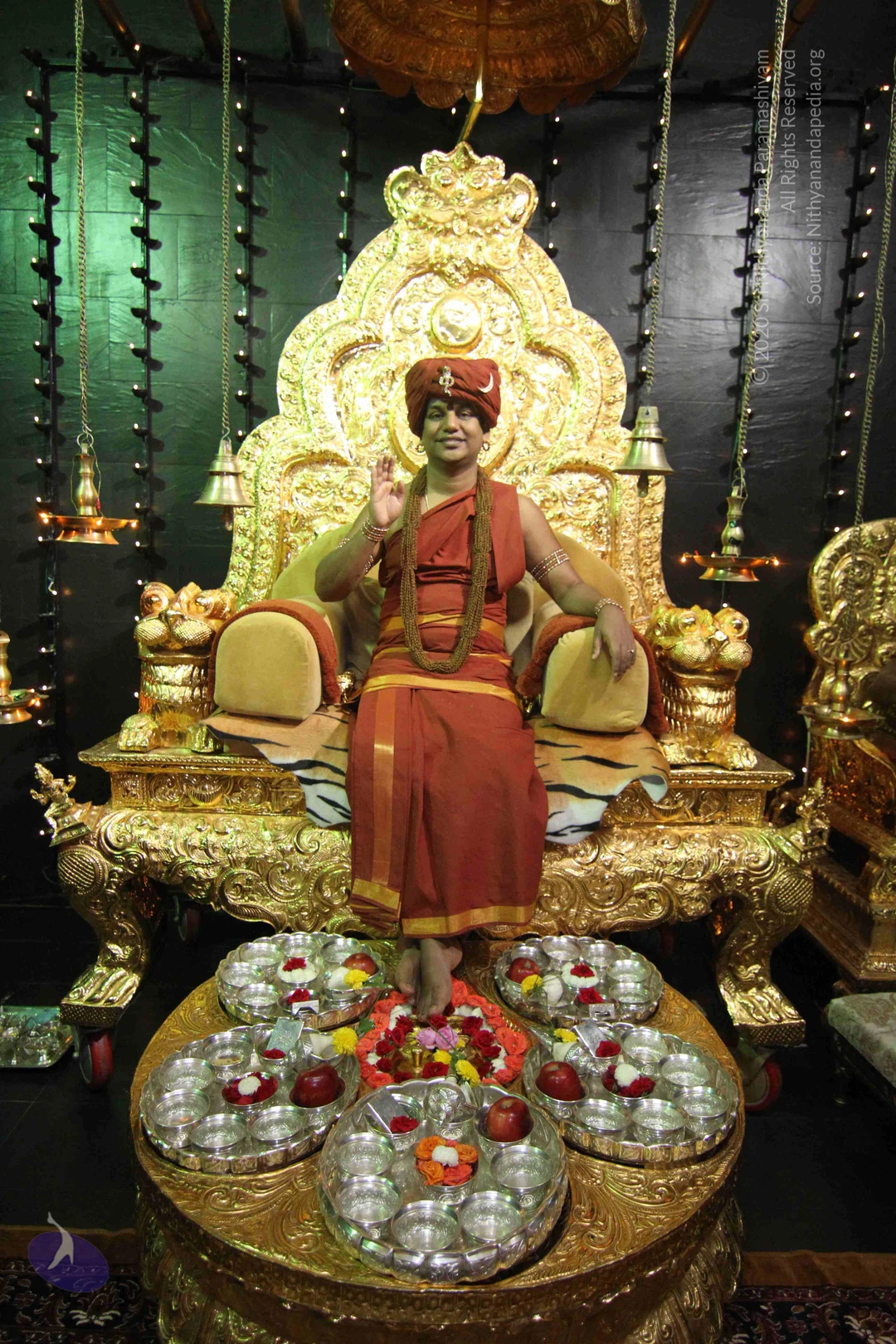
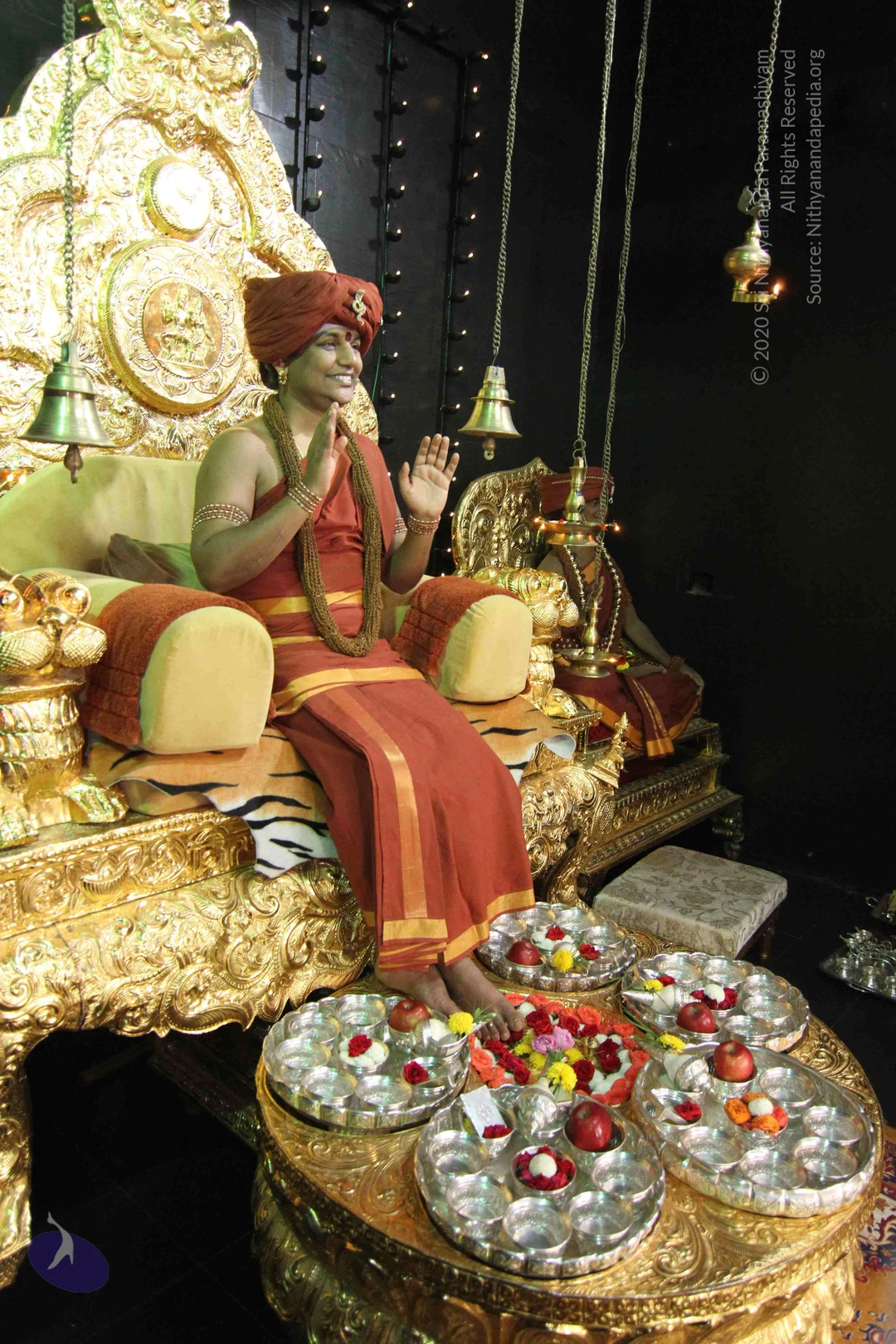
https://nithyananda.org/sites/default/files/photo-gallery/2014-11nov-27th-nithyananda-diary_IMG_8969_bidadi-deity.JPG?1417117802
https://nithyananda.org/sites/default/files/photo-gallery/2014-11nov-27th-nithyananda-diary_IMG_8972_bidadi-deity.JPG?1417117802
https://nithyananda.org/sites/default/files/photo-gallery/2014-11nov-27th-nithyananda-diary_IMG_8984_bidadi-kirthan.JPG?1417117802
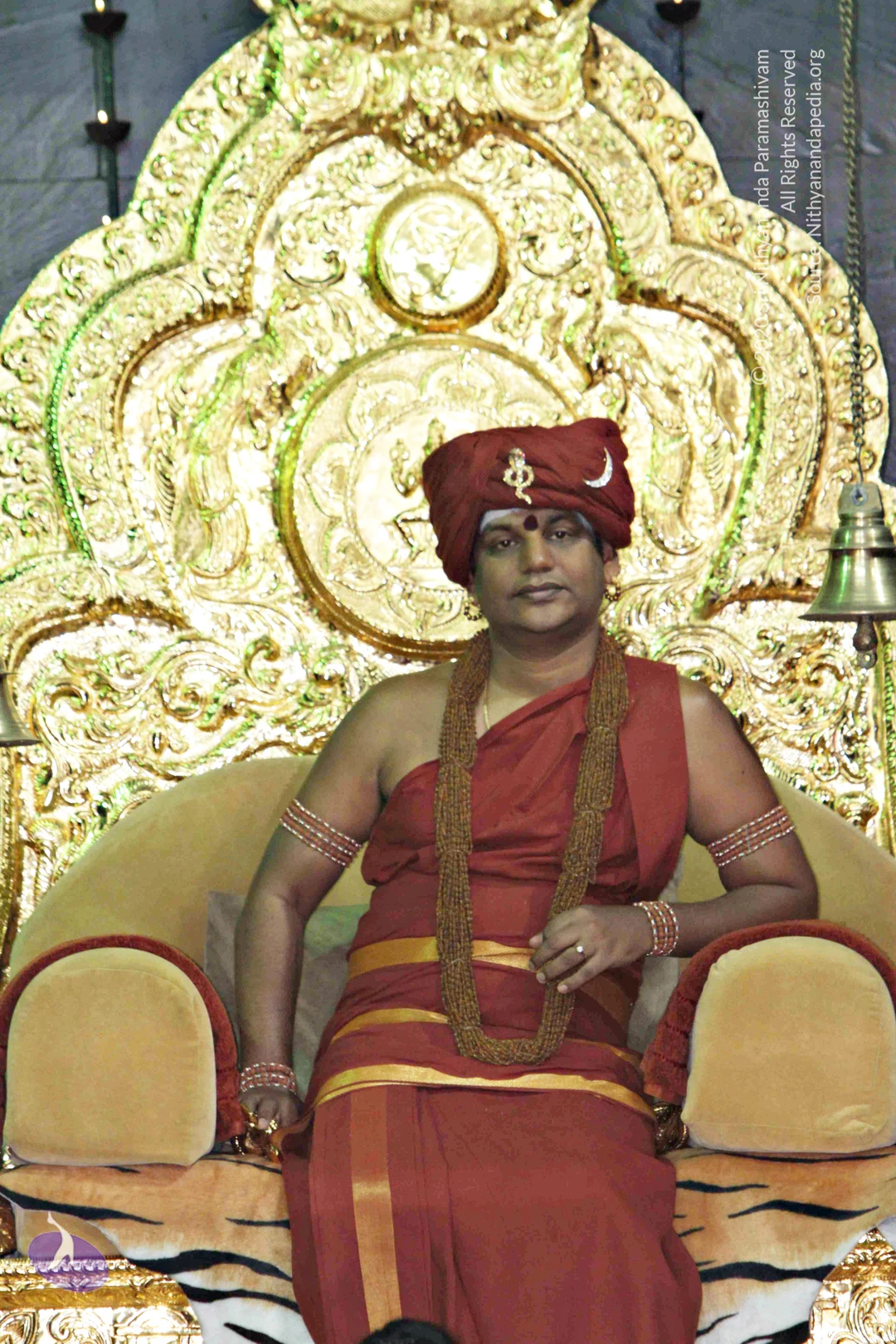
https://nithyananda.org/sites/default/files/photo-gallery/2014-11nov-27th-nithyananda-diary_IMG_9008_bidadi-swamiji.JPG?1417117802
https://nithyananda.org/sites/default/files/photo-gallery/2014-11nov-27th-nithyananda-diary_IMG_9010_bidadi-swamiji.JPG?1417117802
https://nithyananda.org/sites/default/files/photo-gallery/2014-11nov-27th-nithyananda-diary_IMG_9035_bidadi-kalpataru-darshan.JPG?1417117802
https://nithyananda.org/sites/default/files/photo-gallery/2014-11nov-27th-nithyananda-diary_IMG_9036_bidadi-kalpataru-darshan.JPG?1417117802
https://nithyananda.org/sites/default/files/photo-gallery/2014-11nov-27th-nithyananda-diary_IMG_9052_bidadi-swamiji-blessing.JPG?1417117802

Tags:

Paramahamsa Nithyananda, subjective truth, Shivoham, Mahadeva.

Photos Of The Day:

FB-photo-of-the-day
Photos Of The Day:

PADAPUJA
PUJA

NITHYA-SATSANG

NITHYA-KIRTAN

DARSHAN

MARRIAGE-CEREMONY-CONDUCTED-IN-ADHEENAM

01-PADA-PUJA

02-SATSANG

03-RAJESH-CHANDRAMOHAN-MARRIAGE

Photos from this day

View all 77 photos

FB-photo-of-the-day

1 photoSource gallery
A seated figure in an orange-red turban and bare-shouldered orange-red garment, wearing gold bangles and a gold necklace, extends a hand in blessing onto the head of a young man kneeling in front of him. The kneeling man wears an orange kurta over grey undershirt and holds a banana. Behind them a woman in white sari and rudraksha-style necklace stands with a hand raised, and a gold ornamental throne-side with garlands of yellow and red flowers frames the scene. A tray of bananas sits in the foreground beside a gold kalasha-like object on a red cushioned seat, with a carpet and a standing fan in the background.

PADAPUJA
6 photosSource gallery
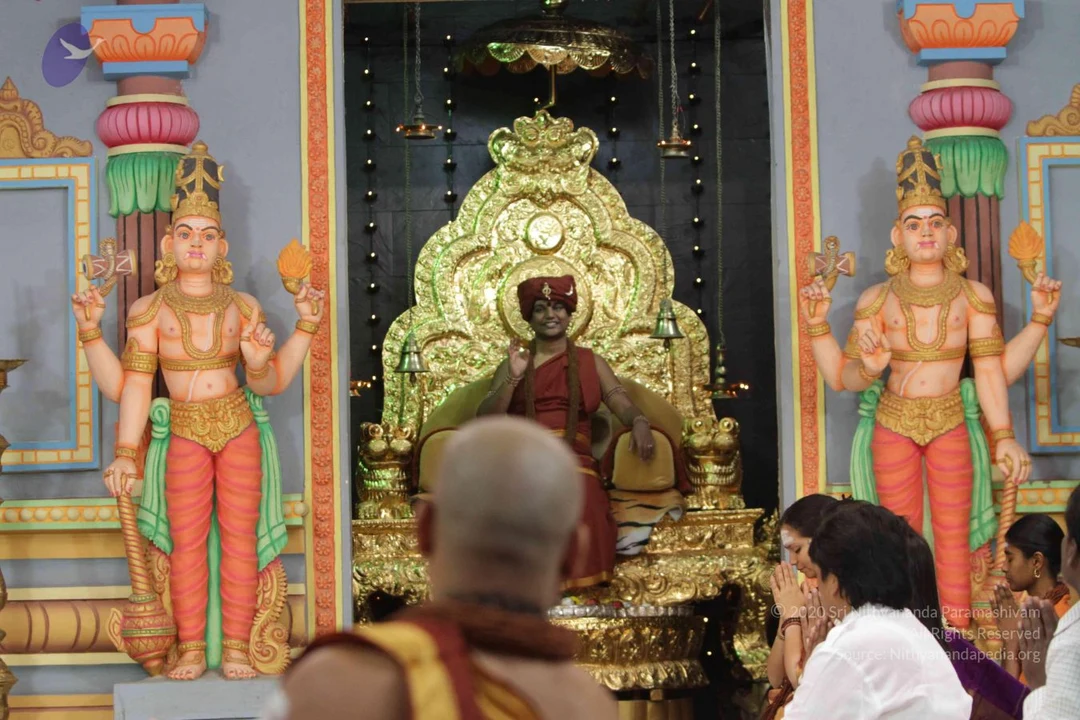
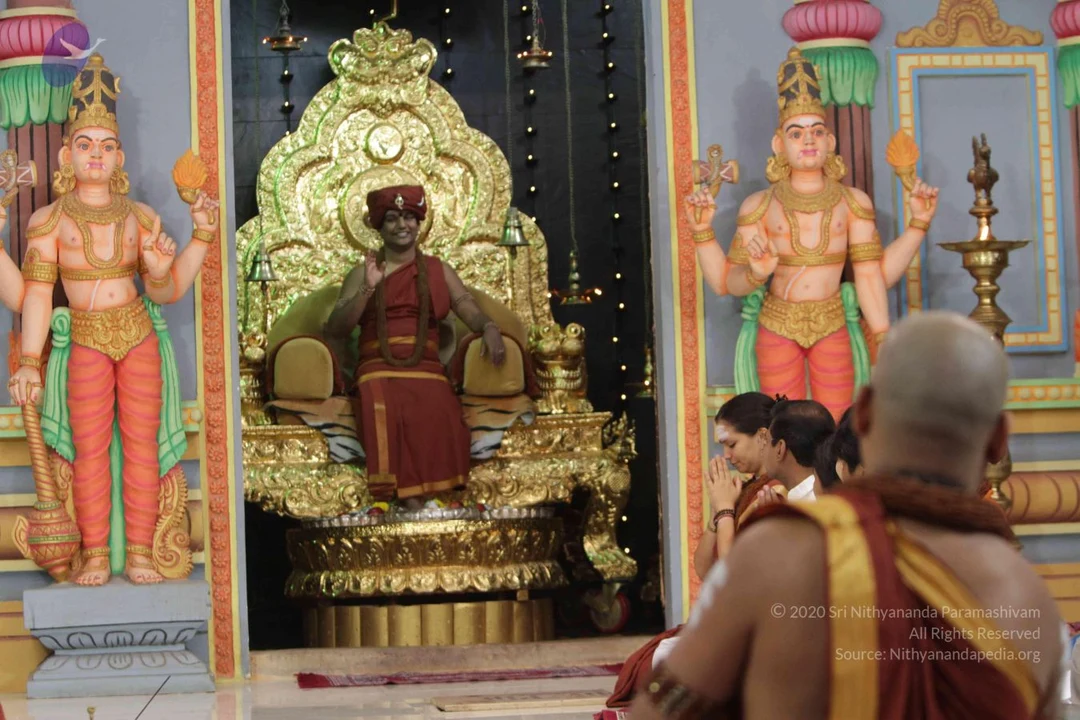
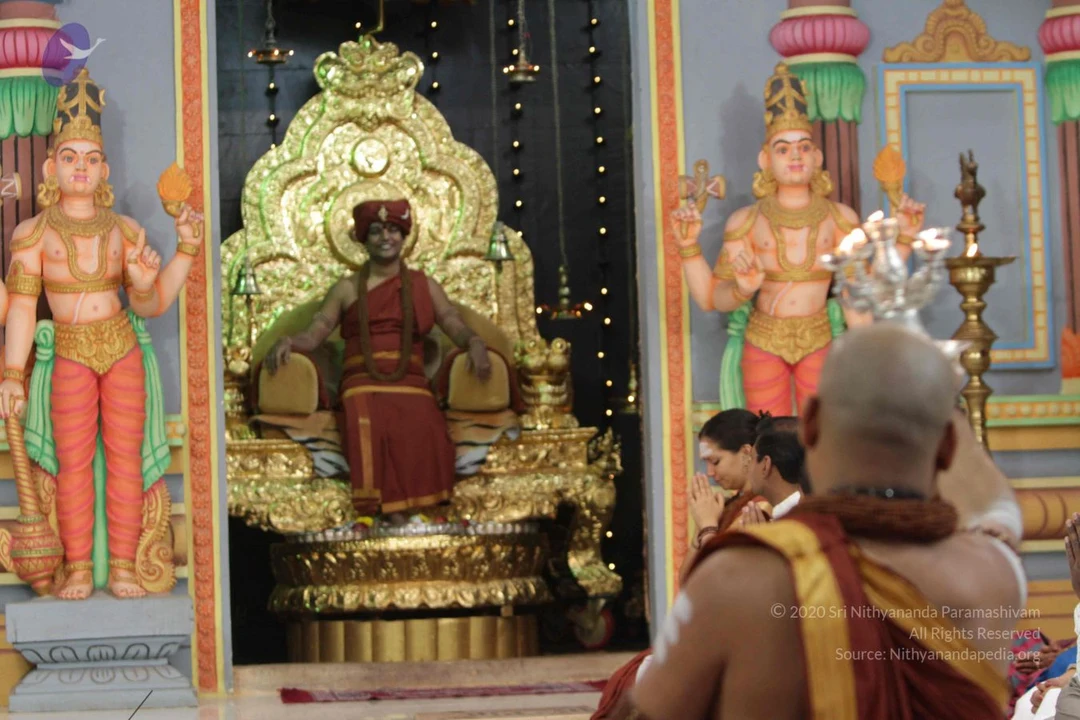
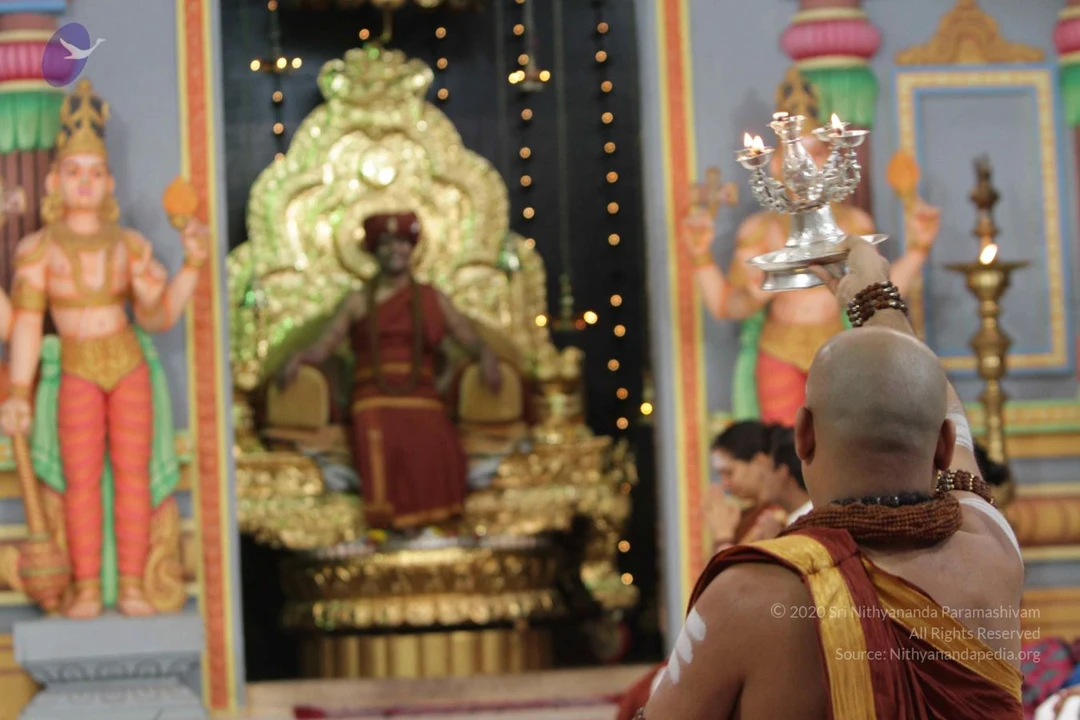
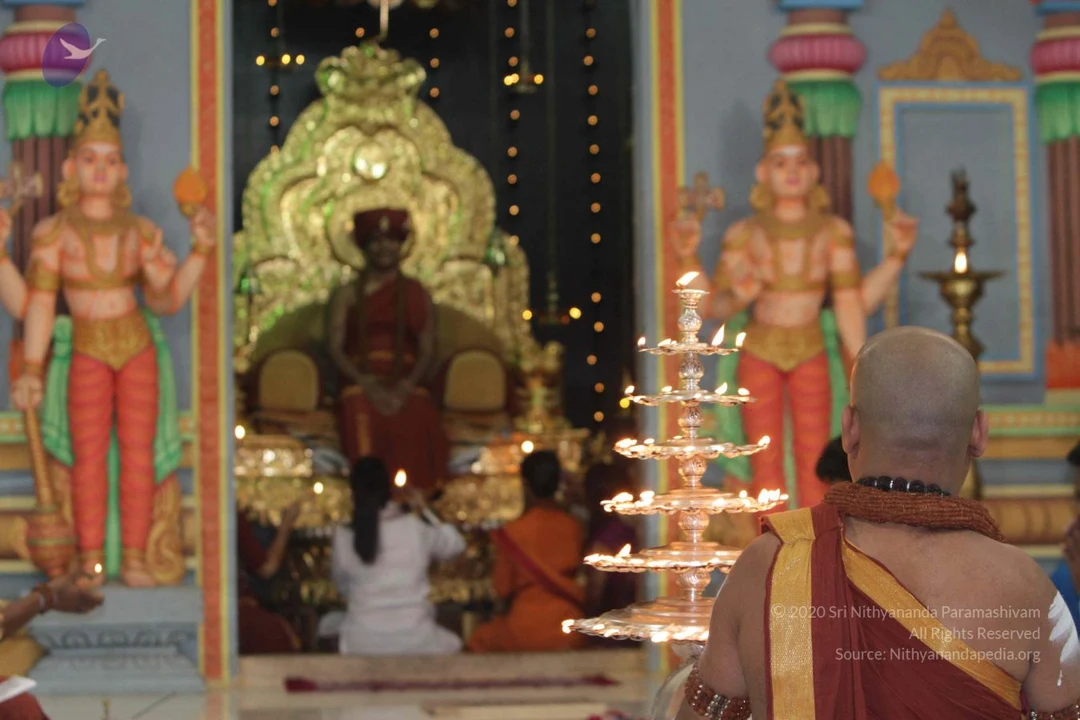
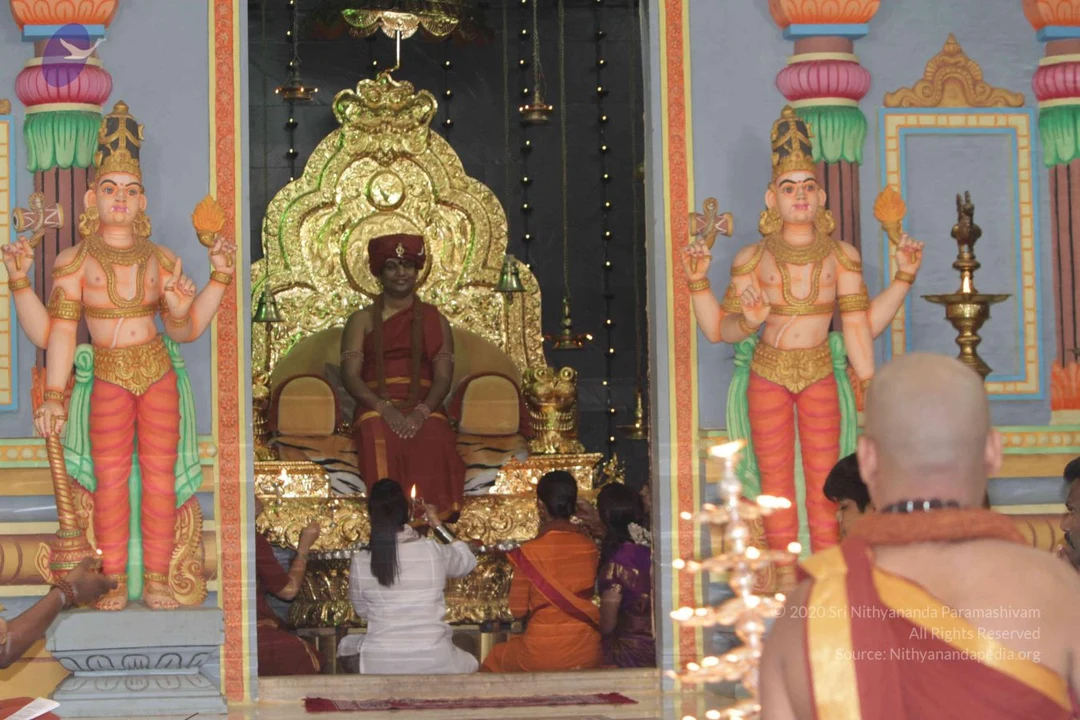
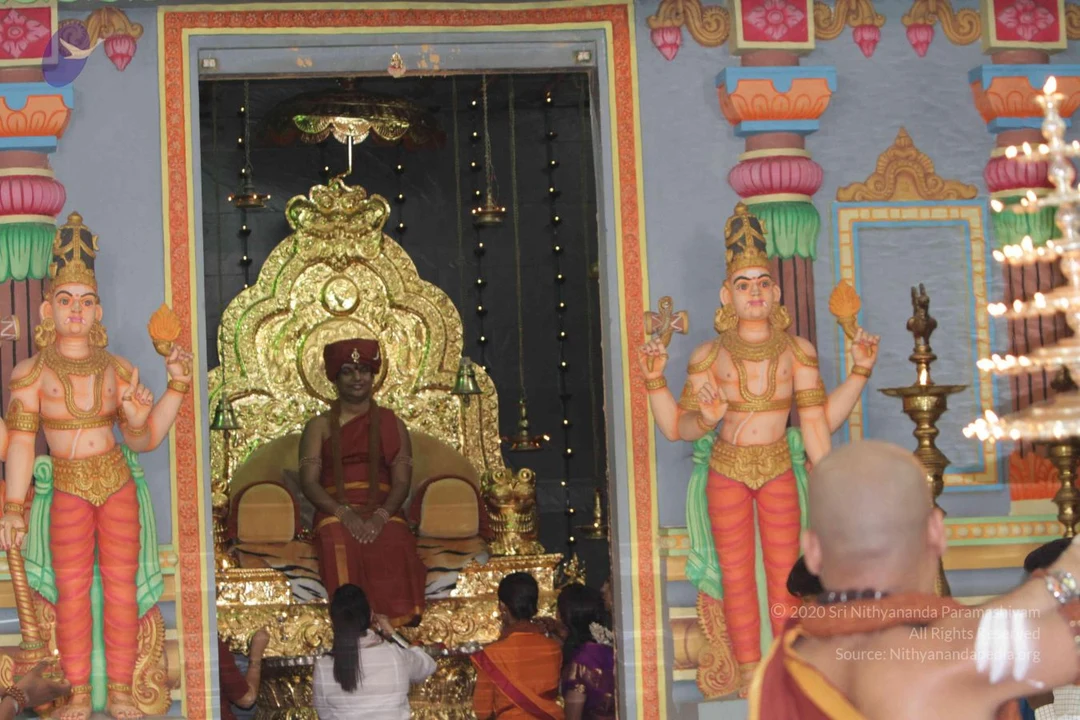
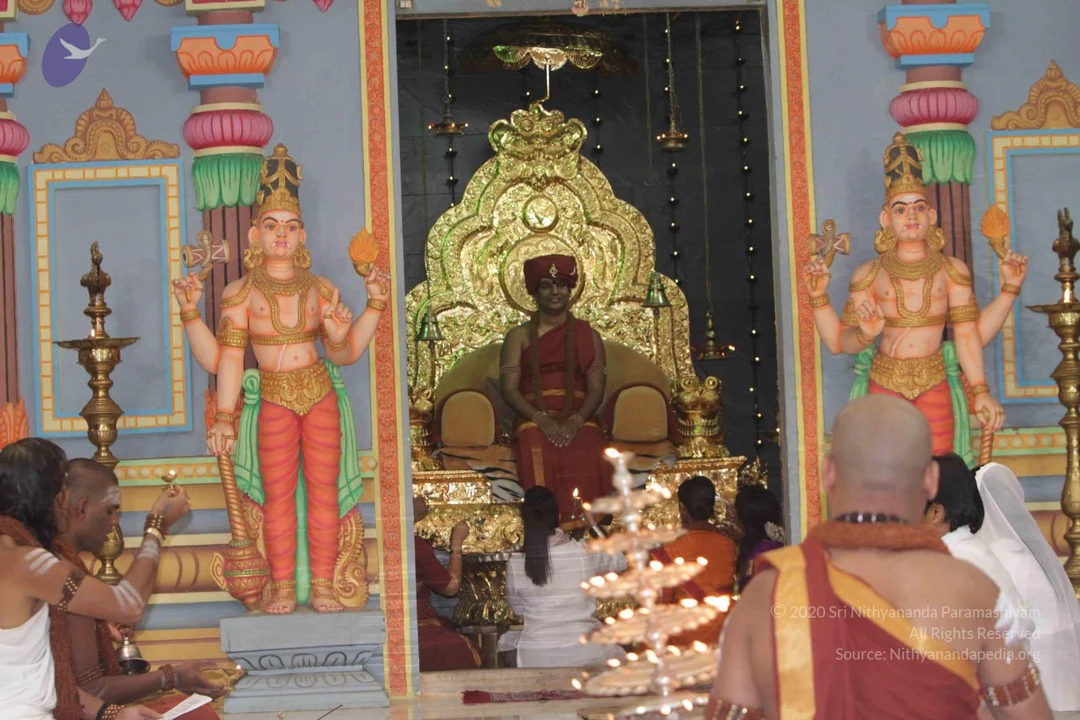
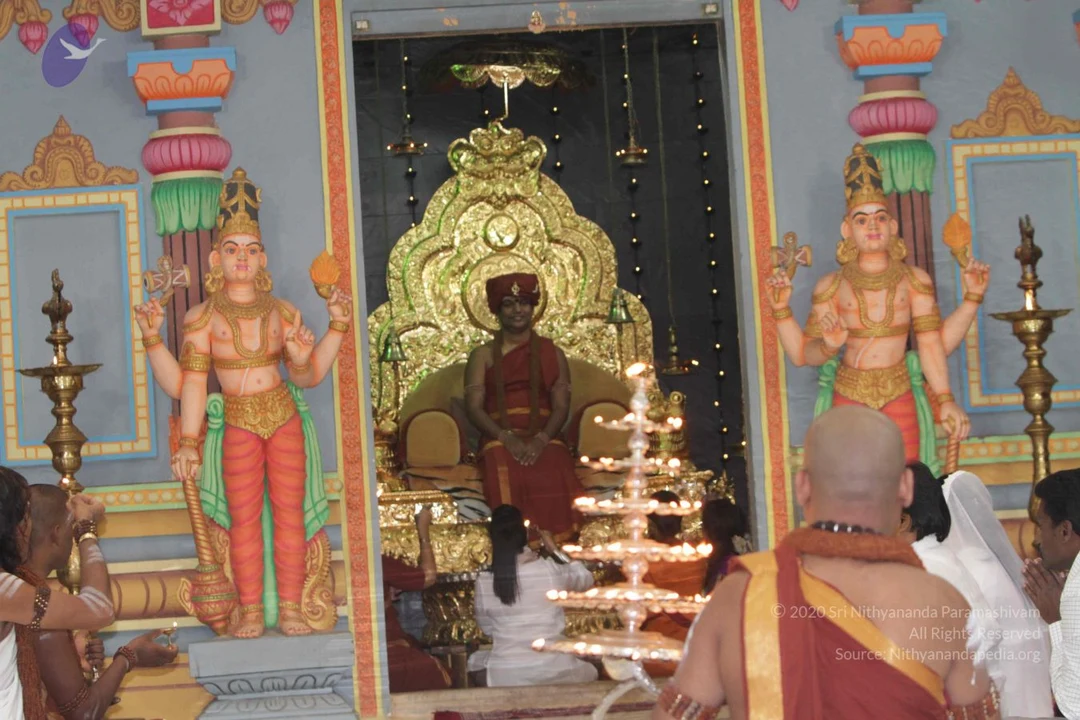
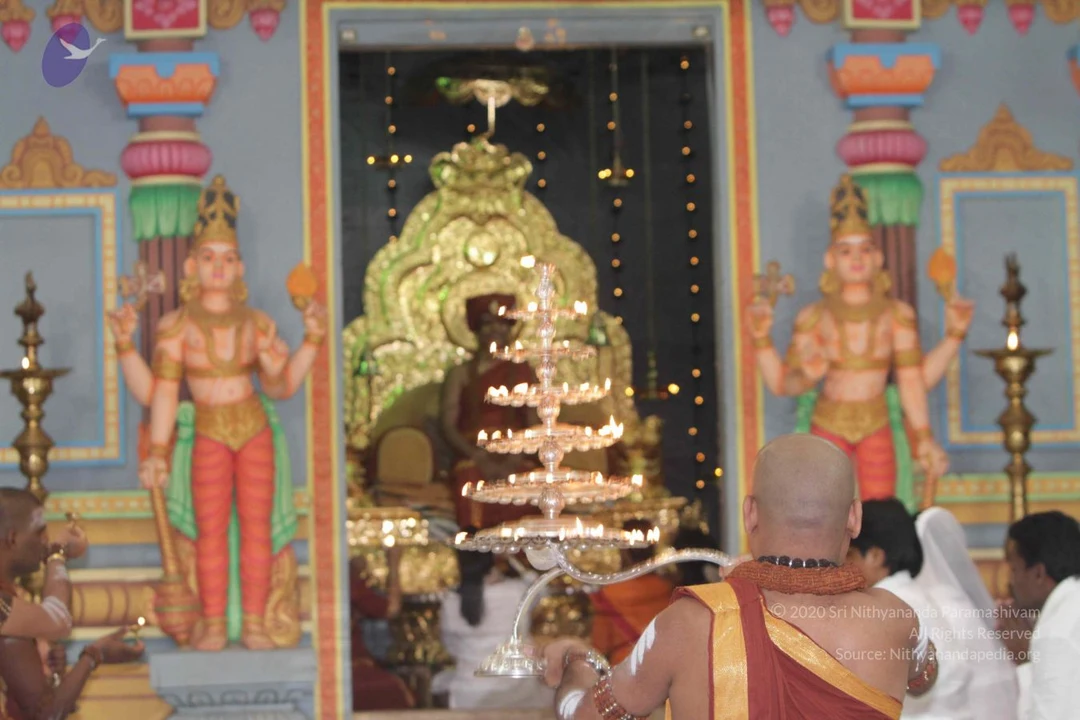
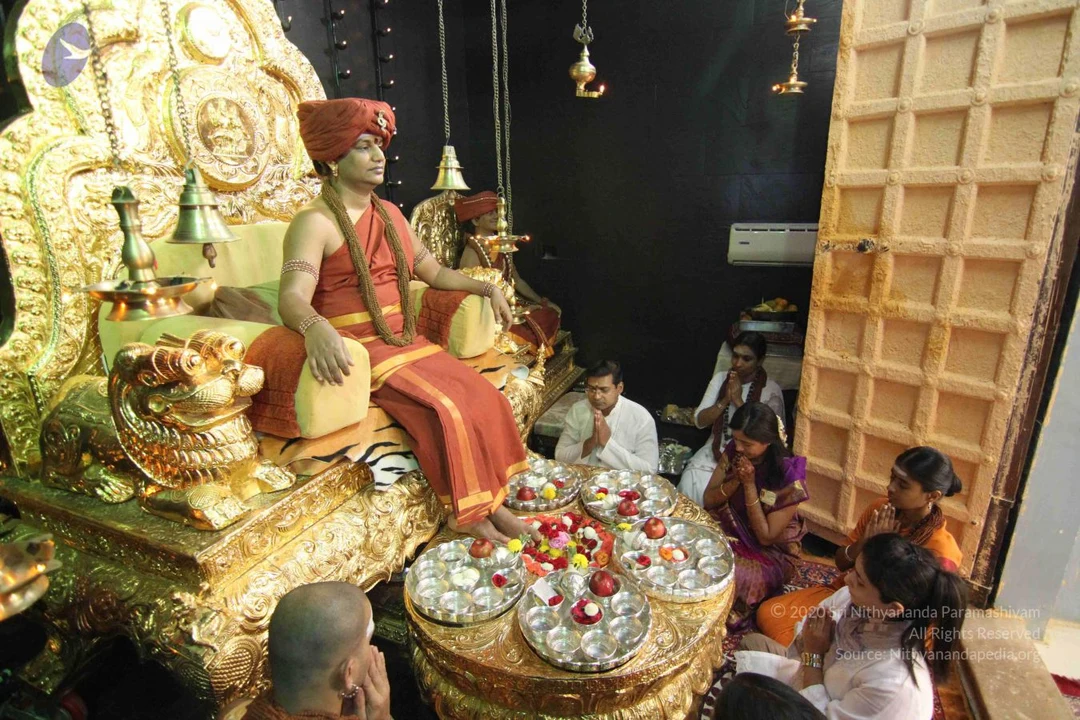
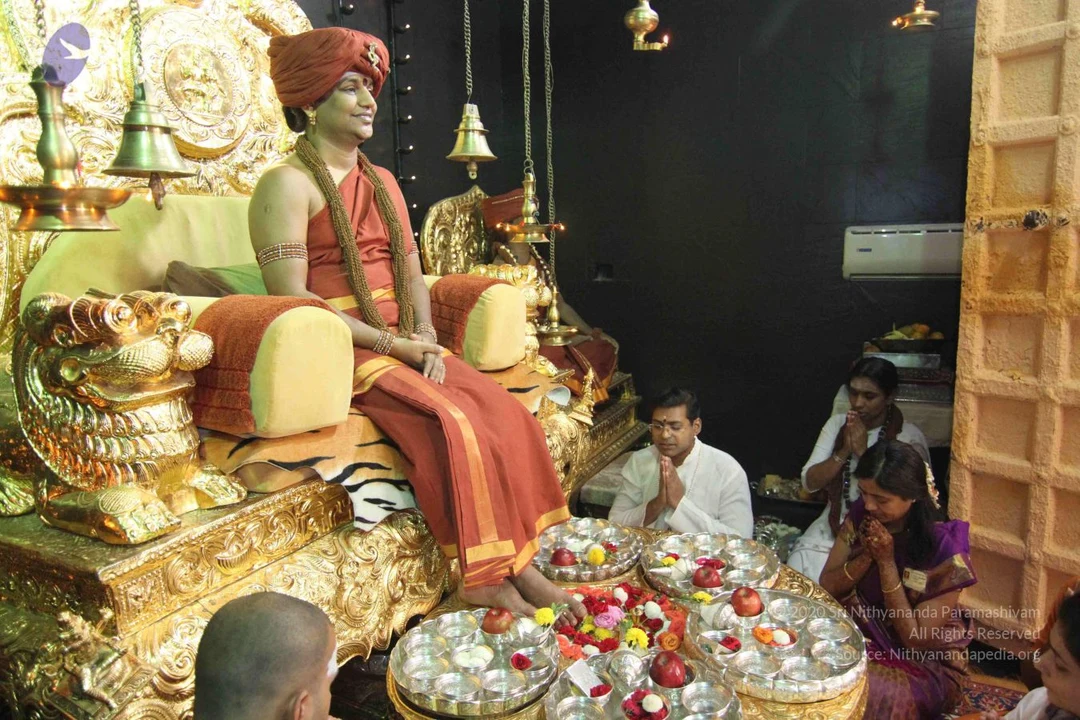
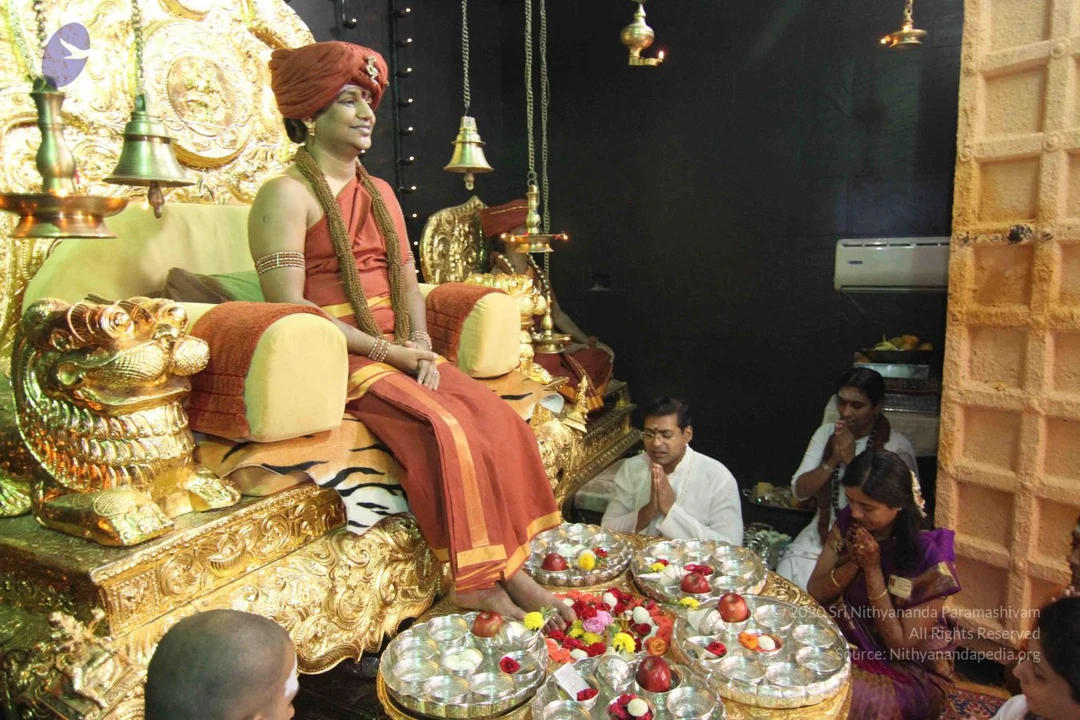
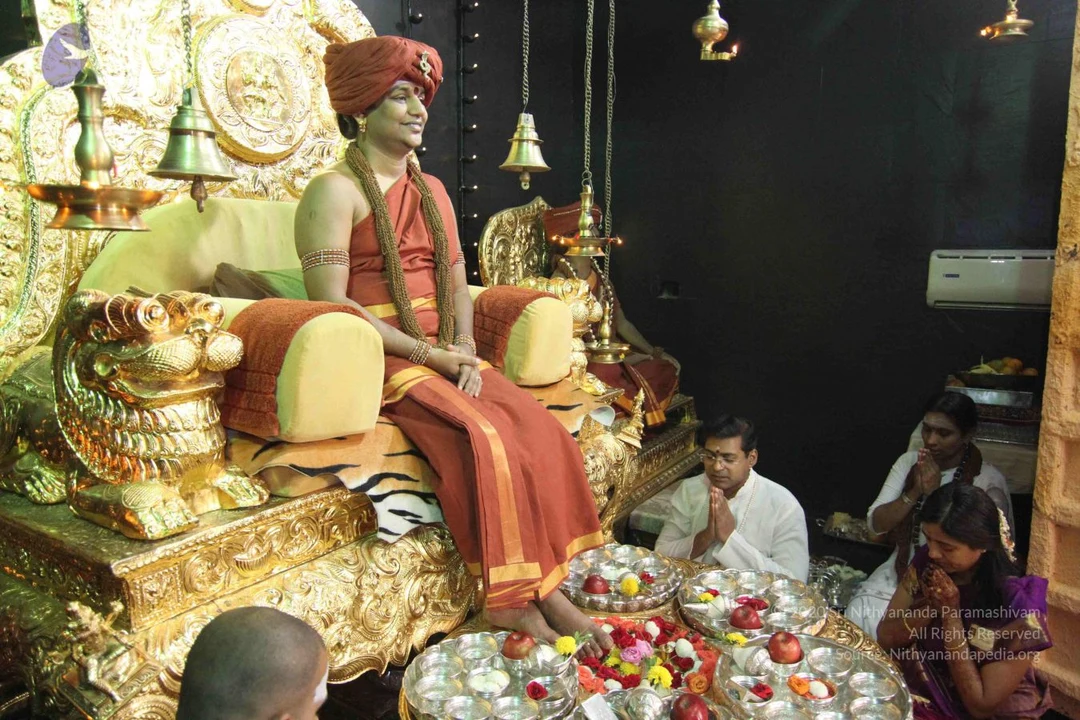
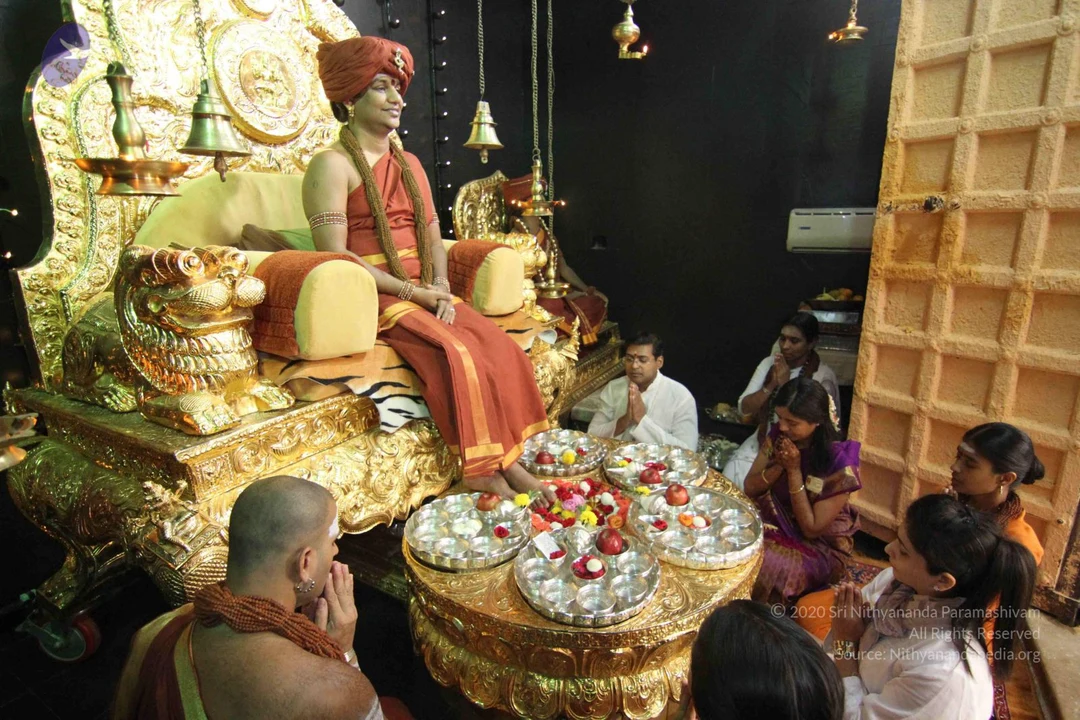
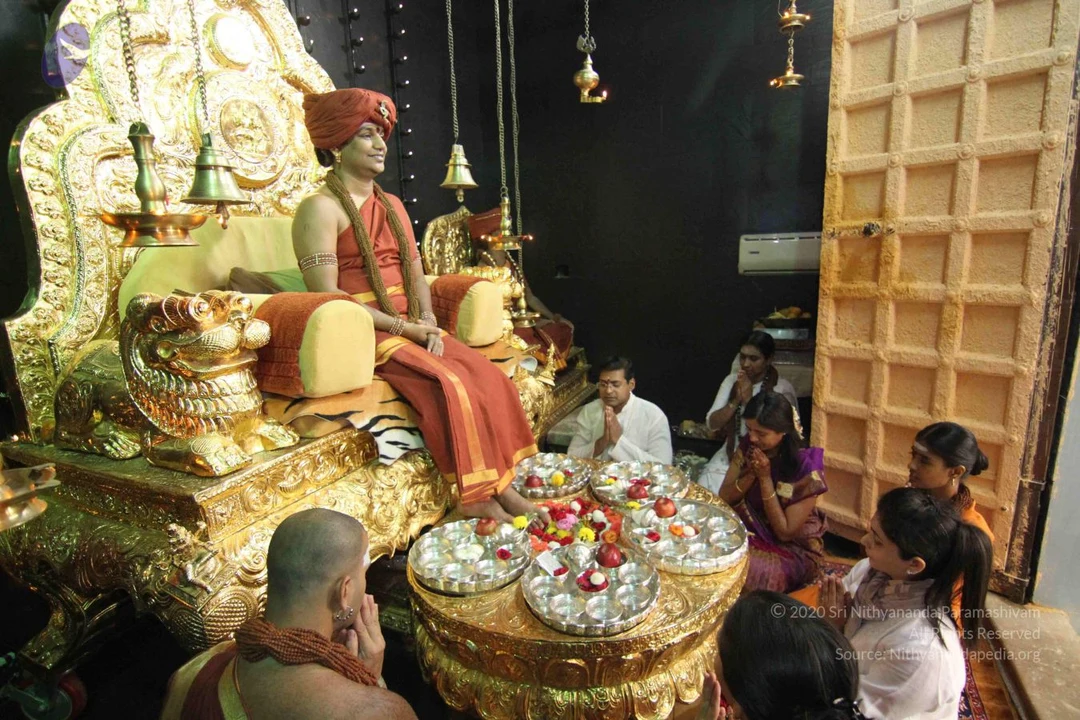
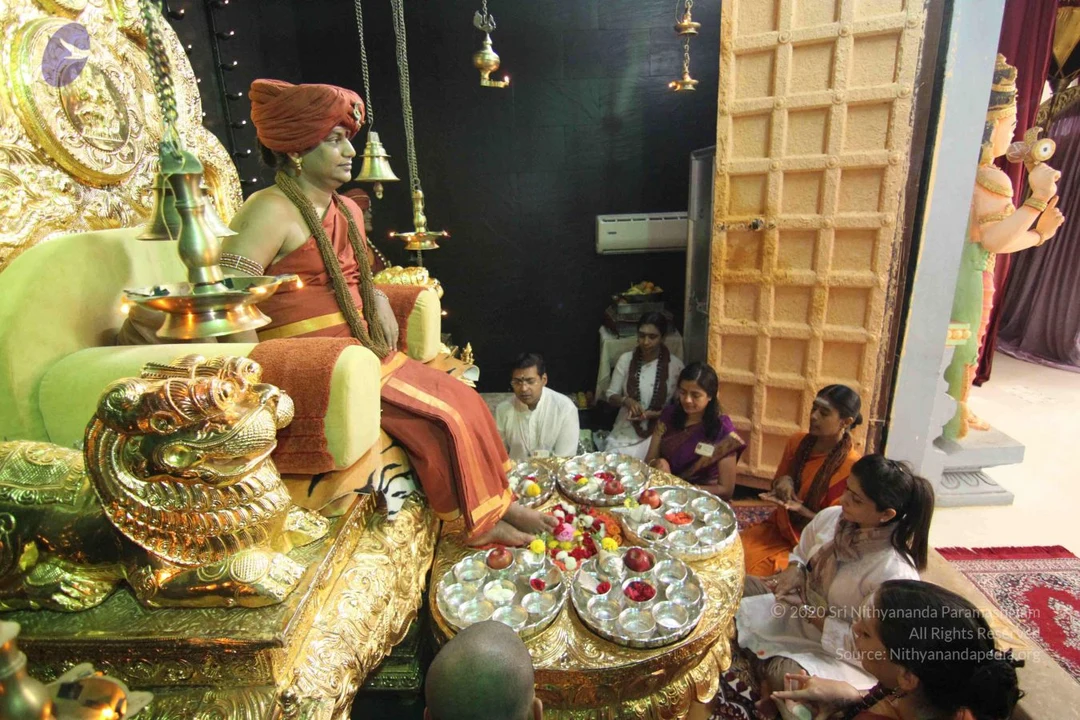
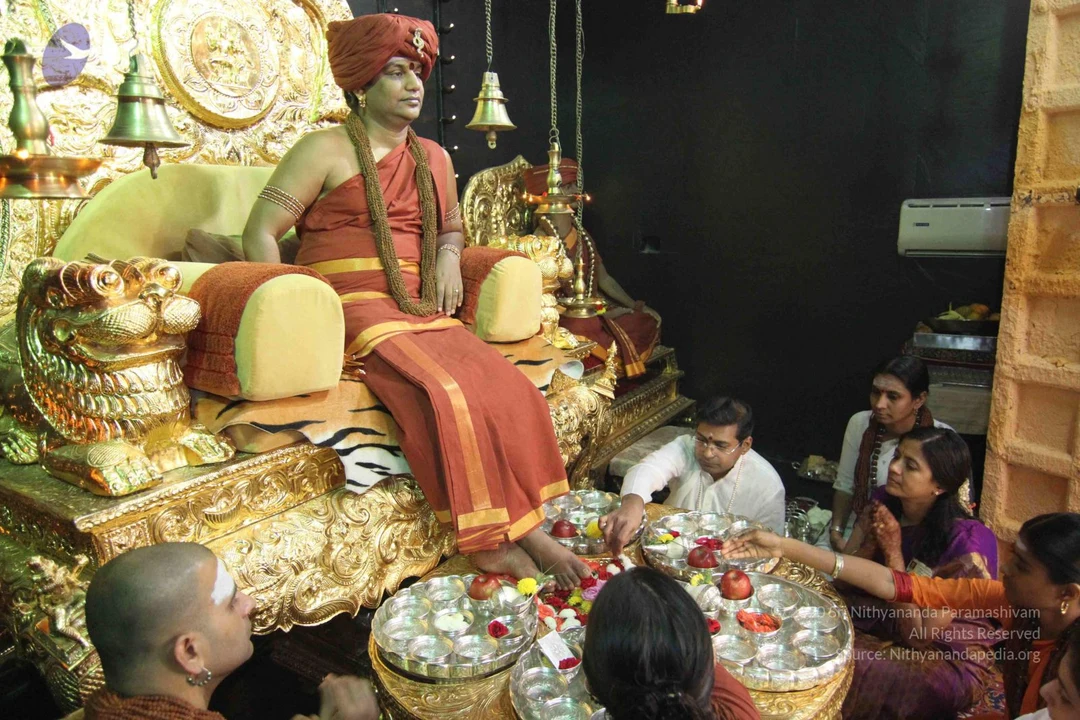
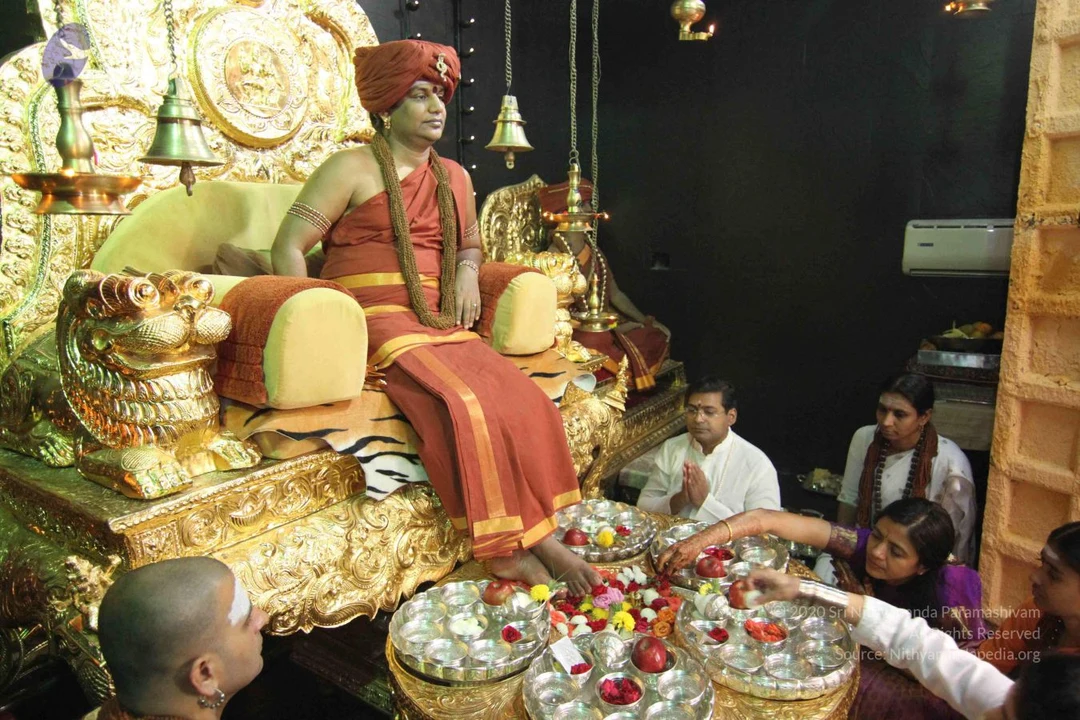
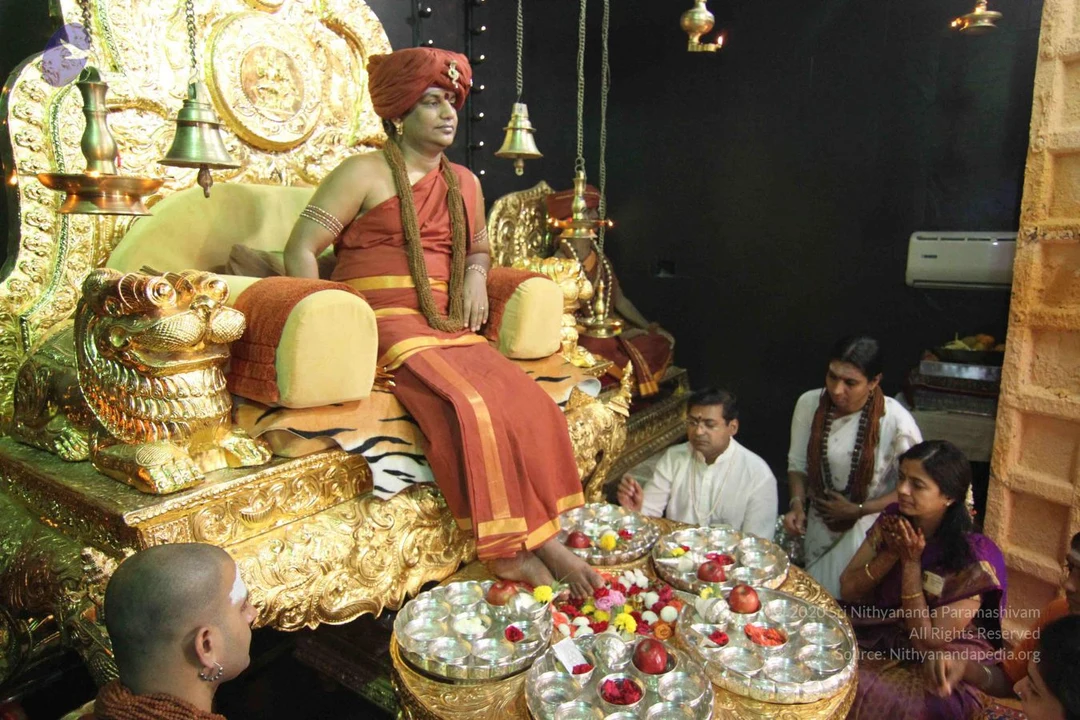
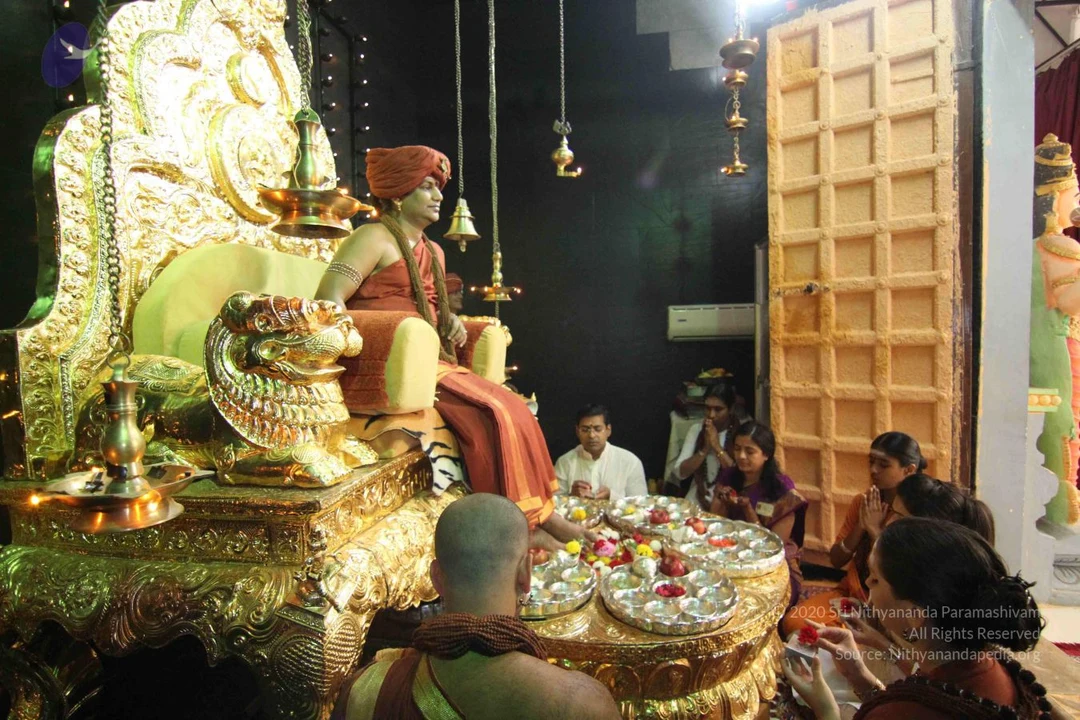
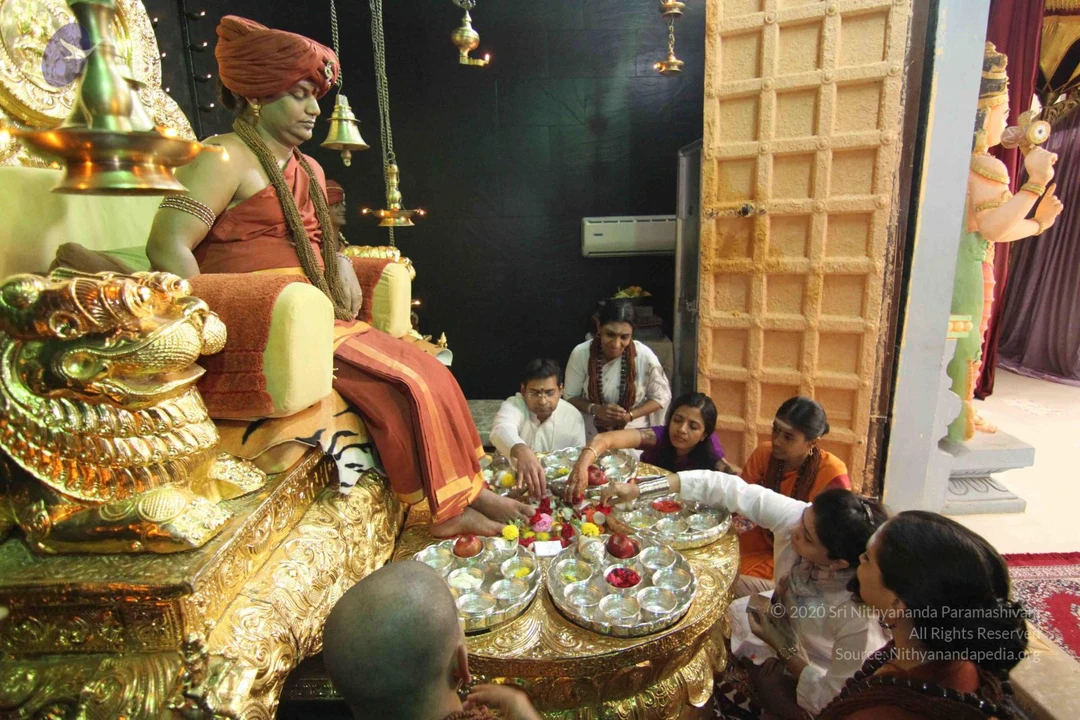
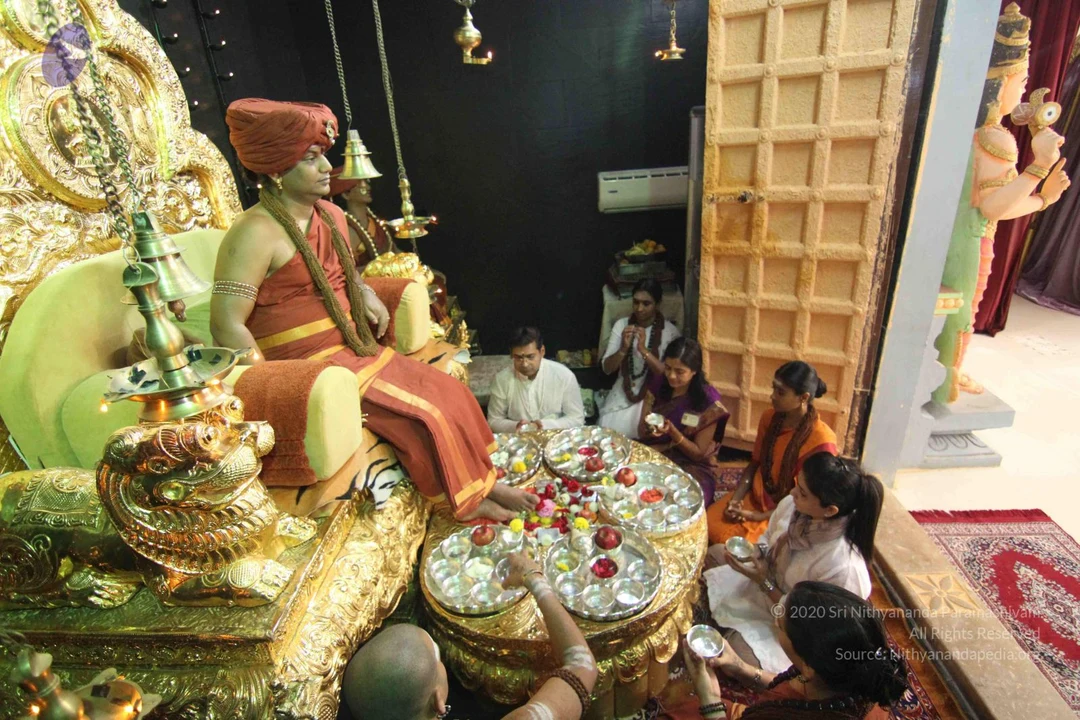
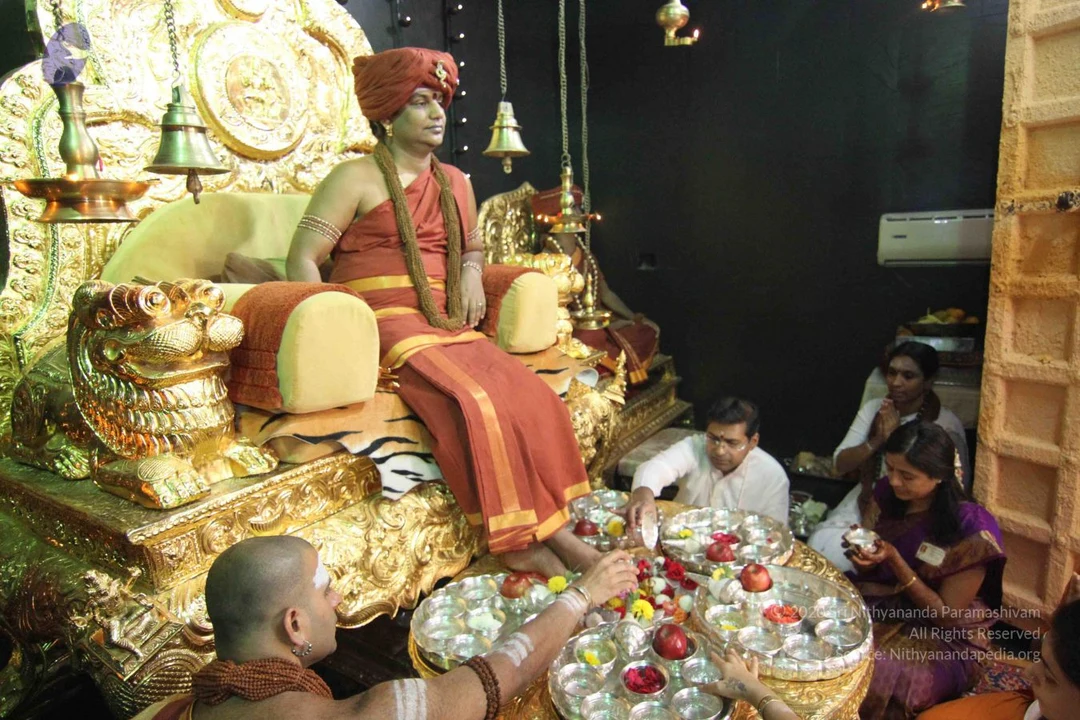
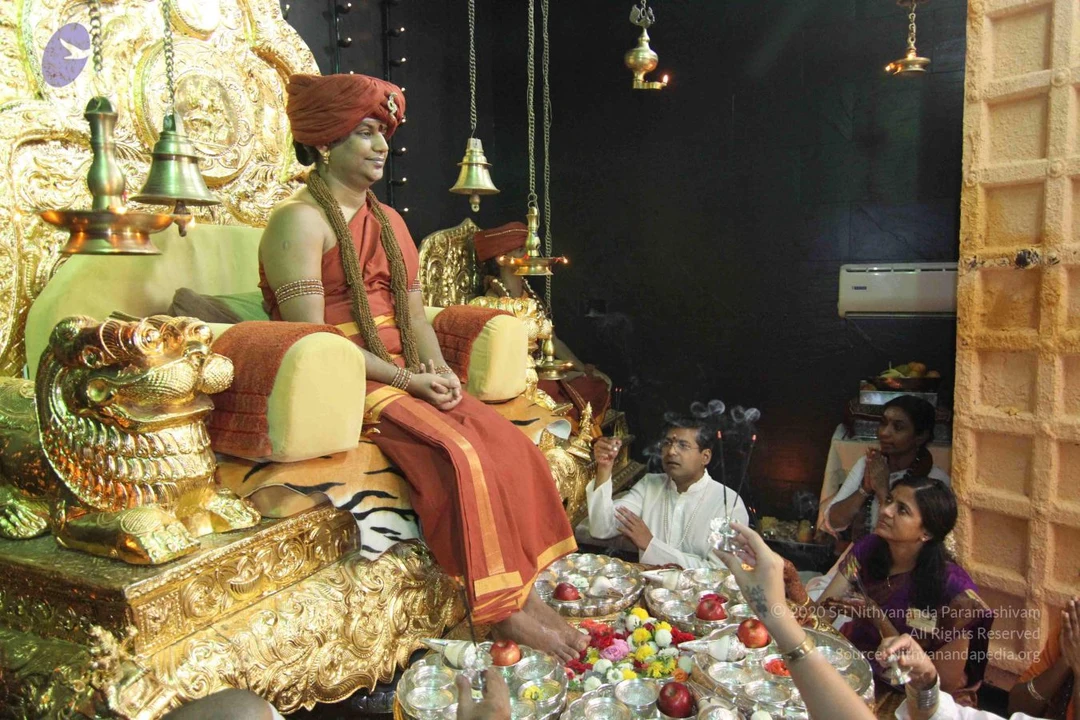
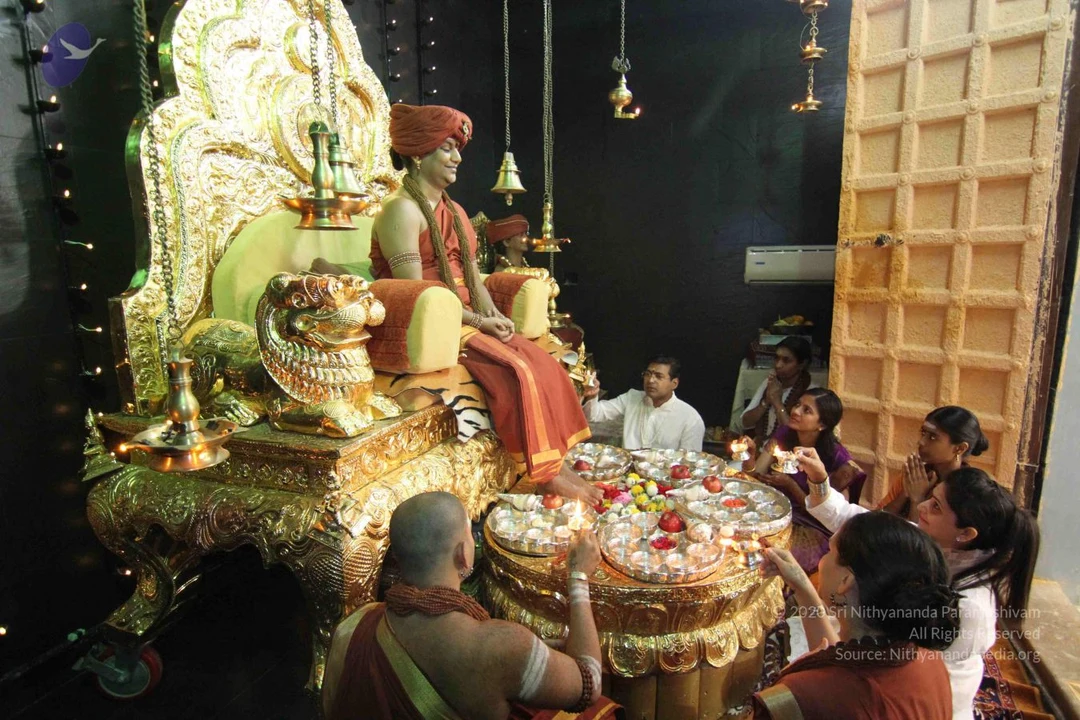
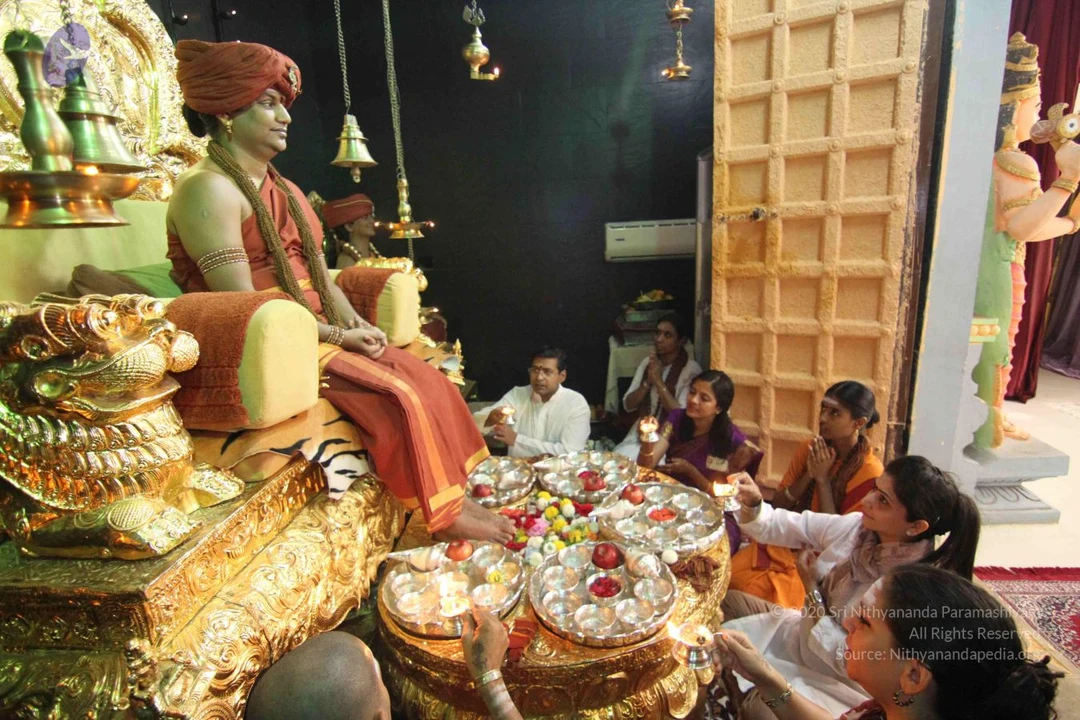
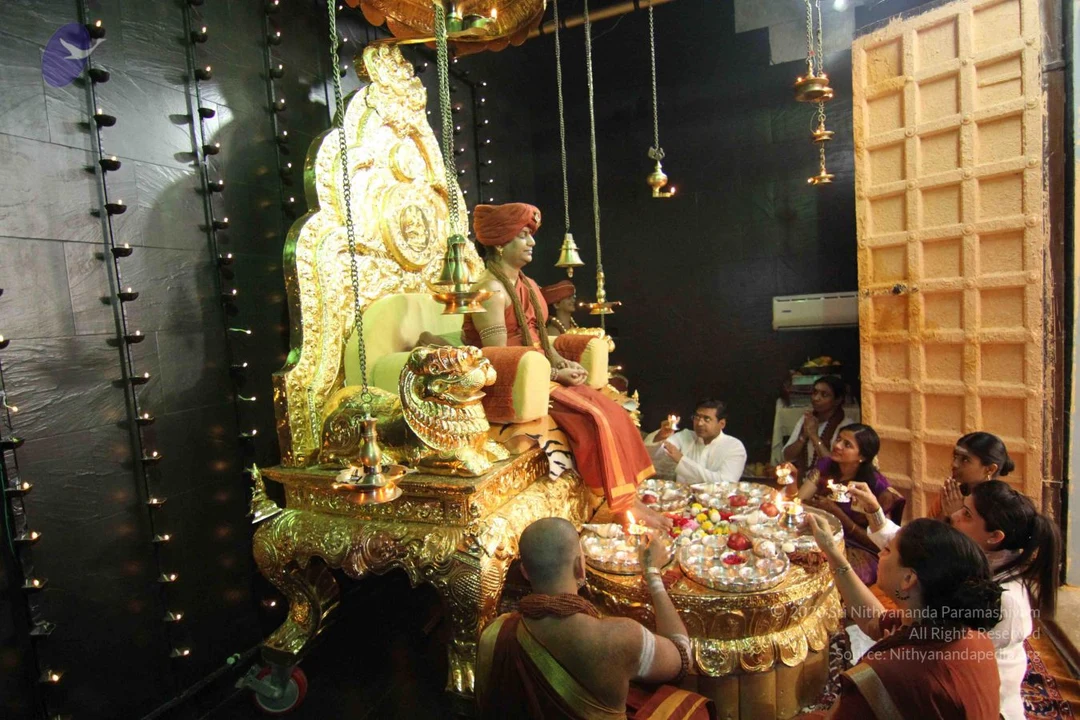
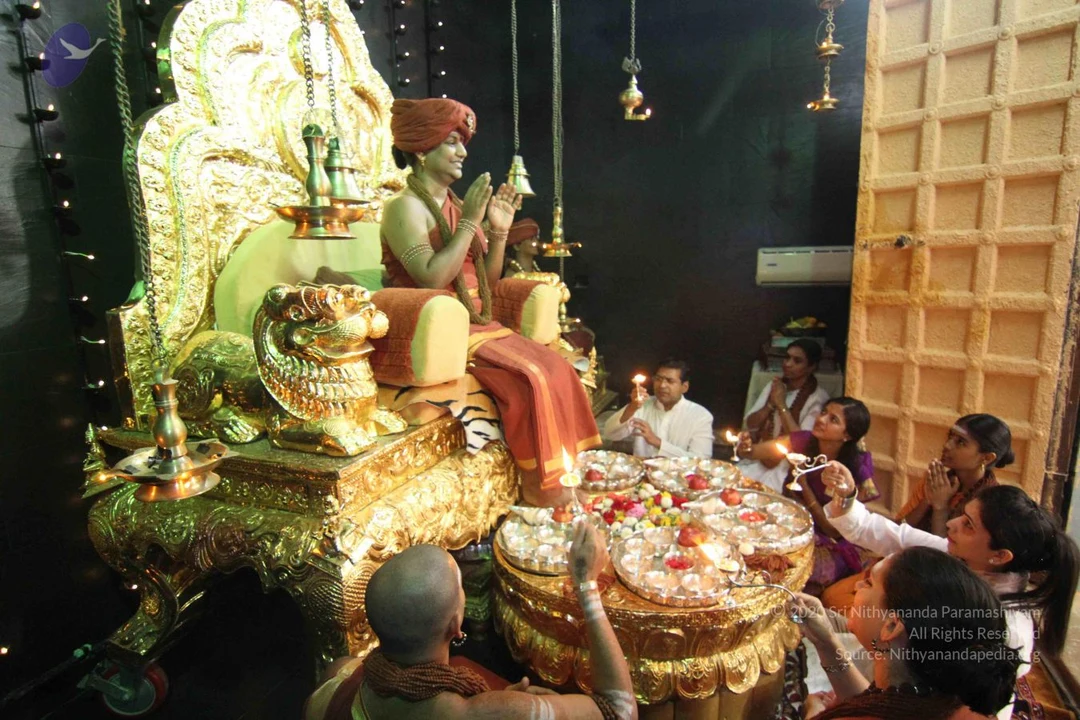
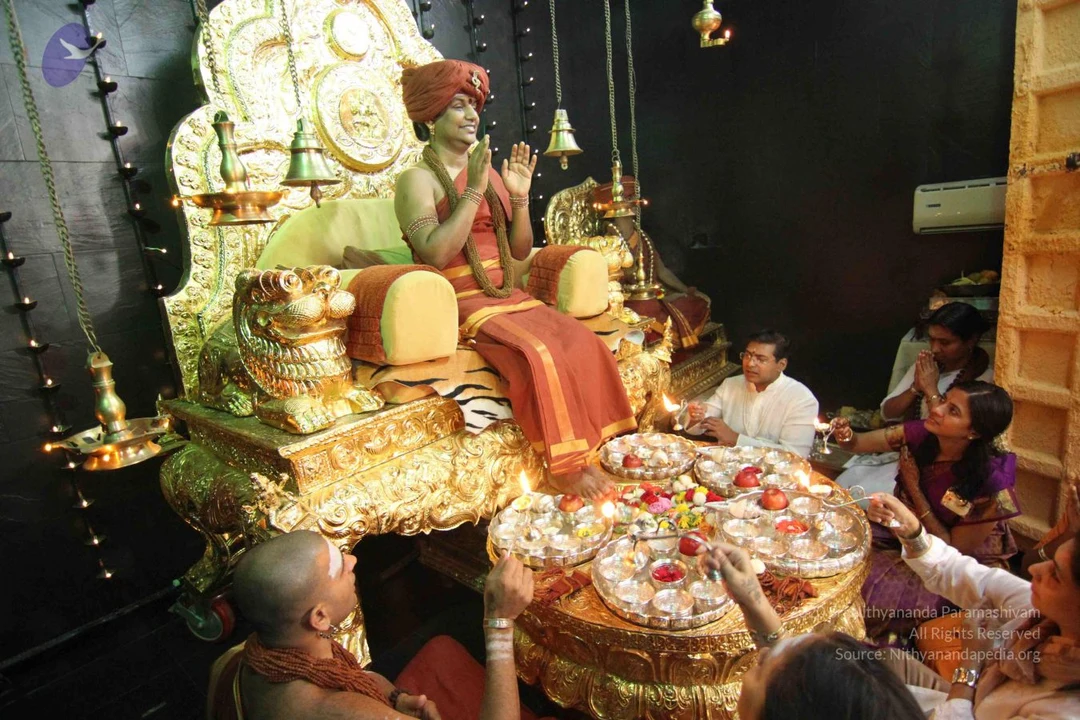
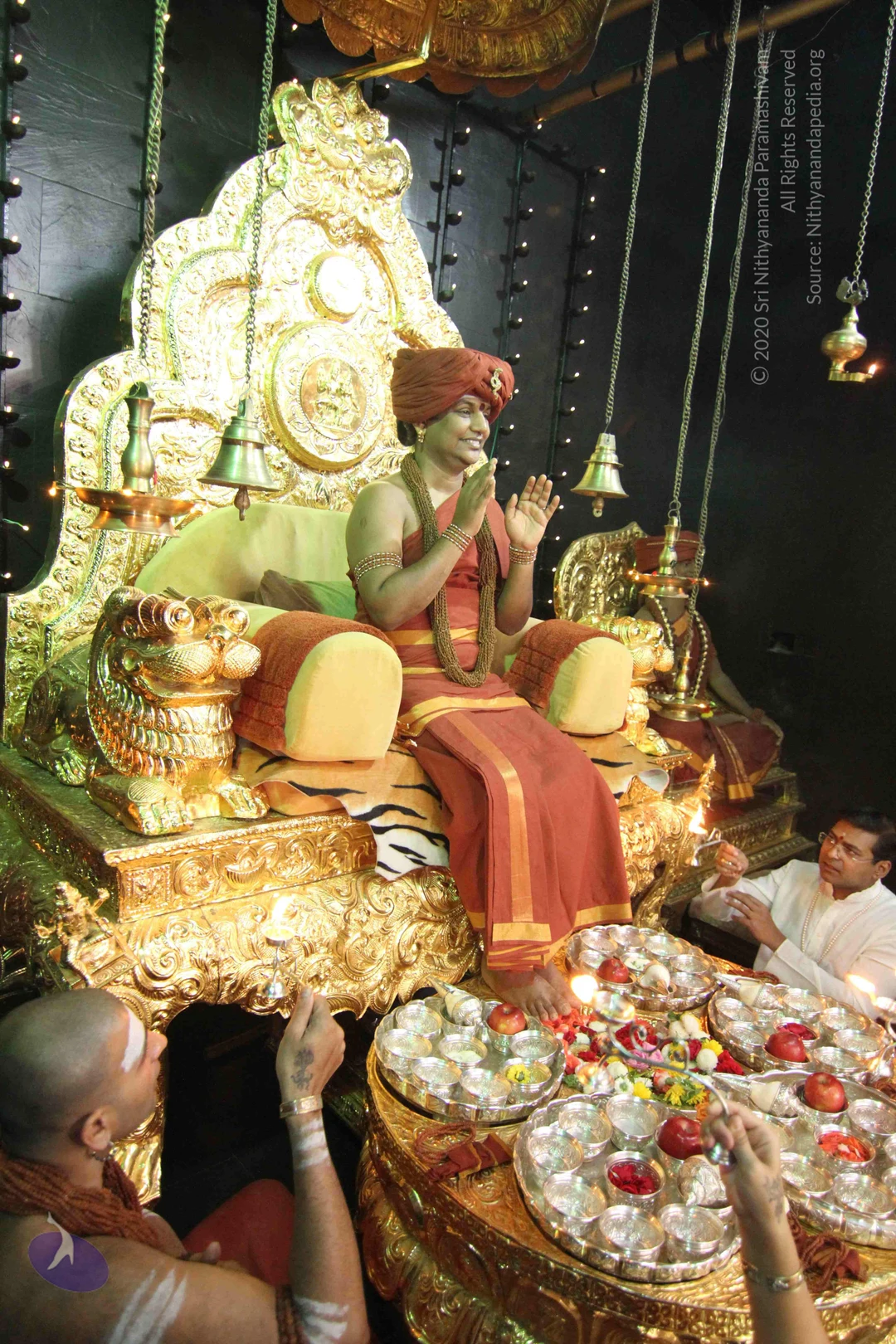
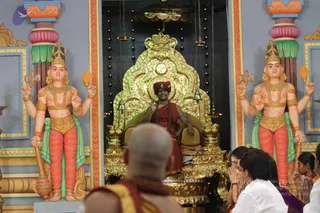
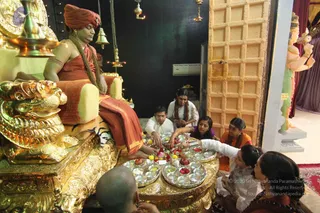
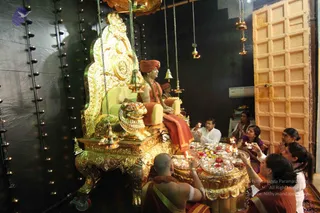
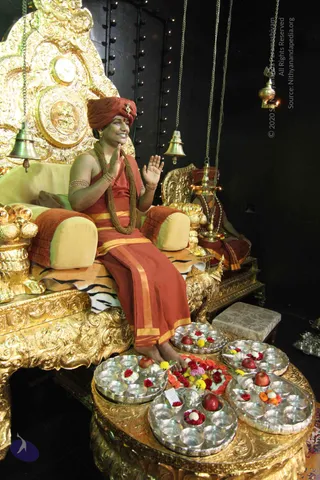
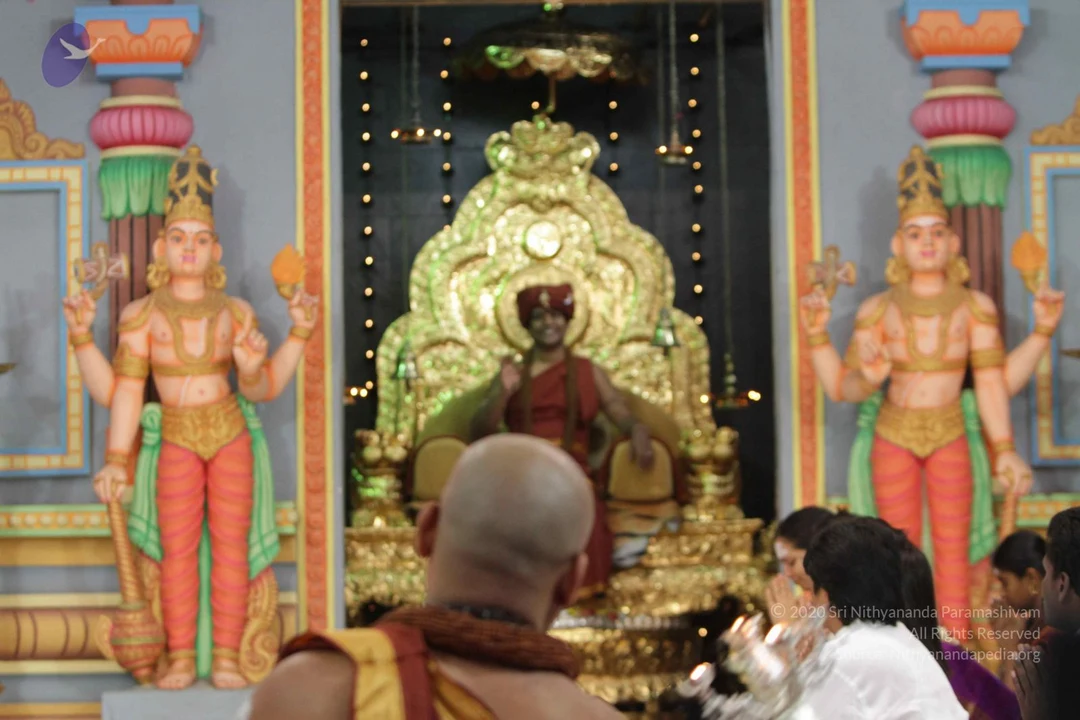
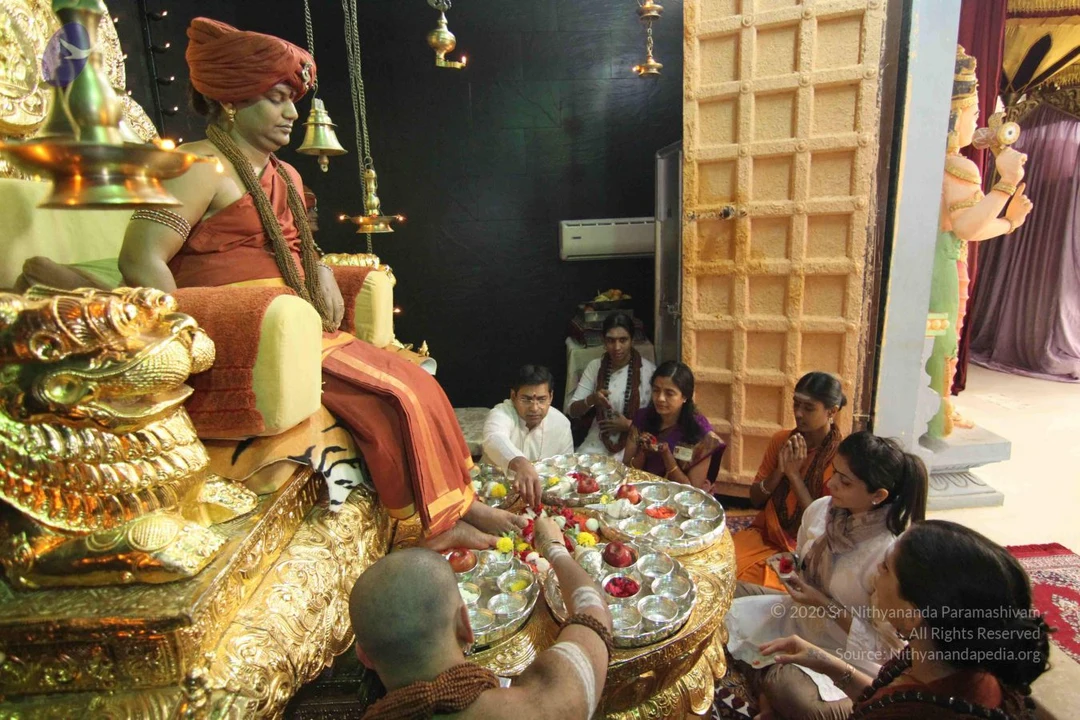
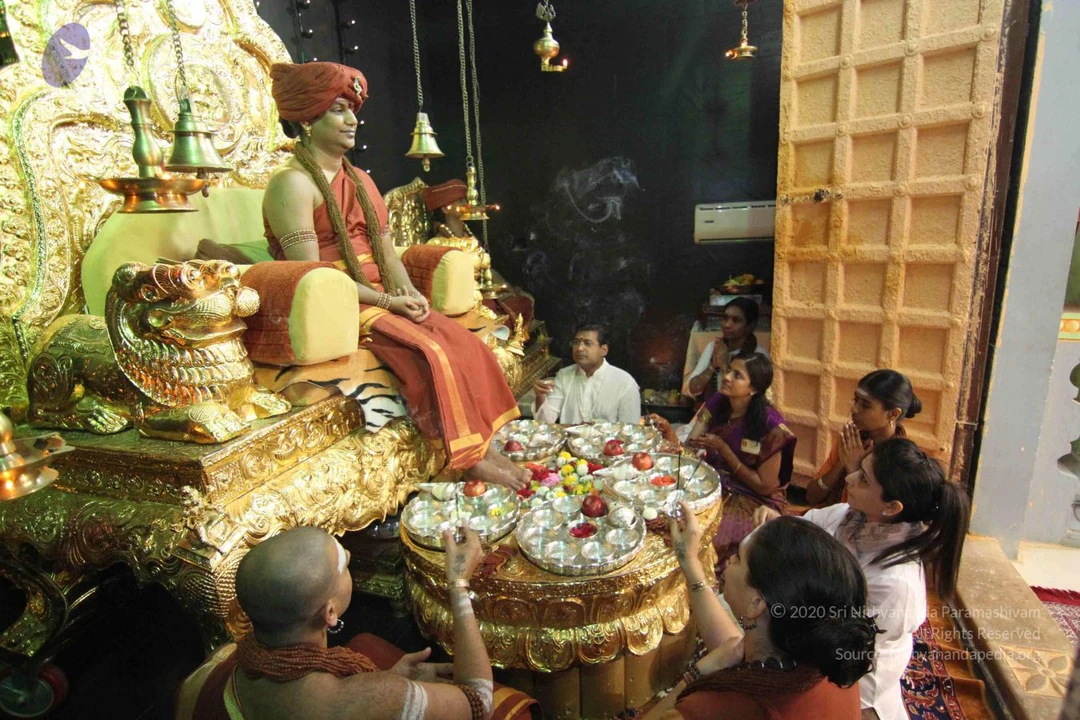
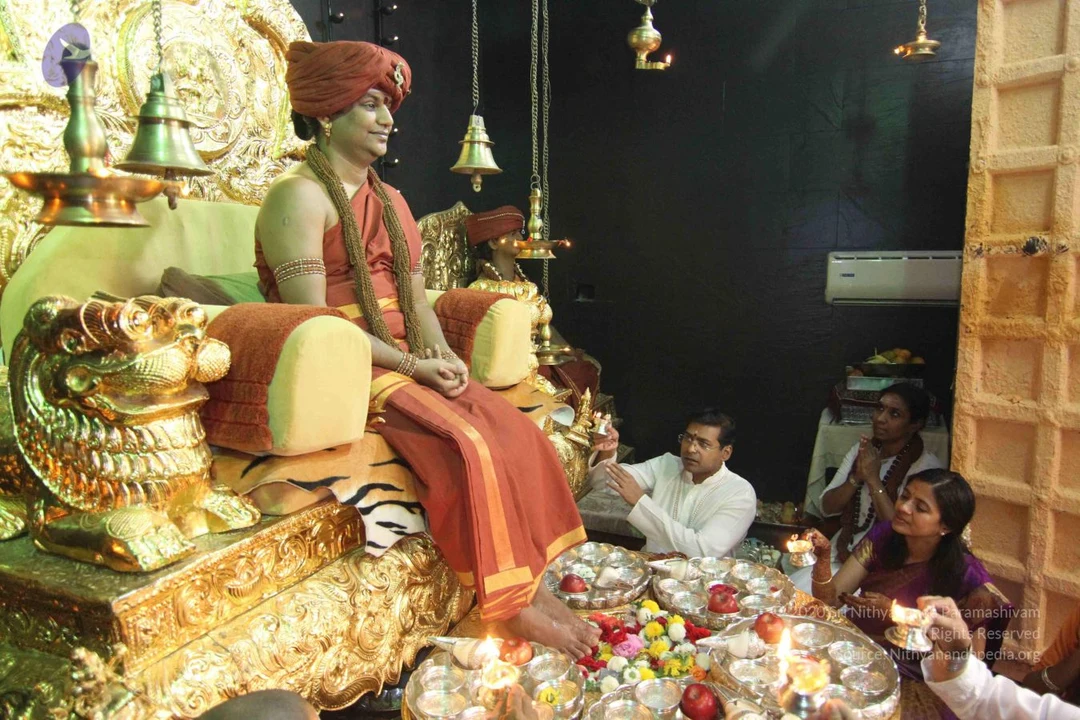
Photograph inside a temple hall with a large ornate golden throne (peetha) at centre, on which a seated figure in a red-maroon garment and red head covering sits with arms raised, a gold halo behind. Two tall painted deity murti statues flank the throne, each with multiple arms, gold crowns, gold ornaments and green-and-pink lower garments. In the foreground a shaven-headed man in saffron-orange robes with a rudraksha mala sits with his back to the camera, and several devotees in white and purple clothing sit with hands folded in namaskar. Hanging lamps and bells decorate the upper area.A photograph inside a temple hall with bright painted dvarapala guardian statues flanking a golden ornate throne. A figure seated on the gilded throne wears a red turban and red-and-saffron robes, with a long rudraksha-style strand visible at the neck, and raises a hand in blessing. A shaved-headed man in saffron and orange cloth stands with his back to the camera in the foreground. On the right, women in white clothes sit with palms pressed together in namaskar. Hanging bells, a canopy and a string of beads decorate the shrine area behind the throne. Probable Swamiji is the seated figure, given the red turban, saffron robes and rudraksha cues.A photograph inside a temple-like room with black walls, a wooden latticed door and a gold-decorated seat. A seated figure in an orange-red turban, rust-orange robe and long rudraksha-style mala is shown in a green-tinted statue-like form, and a gold-framed shrine lamp sits at left. Several devotees kneel around a golden tray laid with small brass lamps, red-tipped offerings, flower petals and coconut-like fruit, with a shaven-headed priest in white and orange at lower left. A woman in purple and a man in white sit nearby, and a standing figure in white and a red-shawled attendant are near the door. A pink-and-gold deity figure stands at right. The scene reads as a puja or aarti being offered before the seated figure.A seated figure on a gold-and-cream throne with a gilded lion-head armrest, wearing a rust-orange turban, rust-orange shawl and dhoti, and a long rudraksha-style mala, appears to be a depiction of a statue or wax-like figure rather than a live person; the figure's green-tinted skin and stillness suggest a statue. Around a gold-edged table, several devotees in white kurtas, orange and purple saris sit before brass thalis holding flowers, red fruit and lamps, with one man in white and a woman in purple placing offerings. Bells and a hanging brass lamp hang above, with a gold oil lamp at left and a carved wooden door behind. A bald figure in the foreground watches. This appears to be a puja and padapuja-style offering scene in an ashram room.A golden ornate throne holds a seated figure in an orange-red turban, rudraksha-style beaded necklace, and orange-red draped cloth, with a golden lion-head armrest and tiger-skin-like cushion. The figure is a statue or depiction rather than a living person, appearing lifelike and gold-trimmed. In front, a bare-chested priest in white and orange-red cloth with a shaved head lights and offers from a golden table laden with brass thalis of fruit, flowers, and oil lamps. Several women in saris and salwar kameez sit on the floor with hands folded in prayer, and a man in white kurta stands nearby. Brass bells and lamps hang from chains; a carved wooden door is at right.A photograph of a golden ornate throne set against a dark wall with rows of small lamps. A figure with a saffron-orange turban and orange-red robes sits on the throne, which has a gilded lion-head armrest. Seated on the floor before a round golden tray of fruit, flowers and lit oil lamps, a shaved-headed priest in white and orange robes holds a ritual item while several devotees in white, purple and maroon saris and kurtas sit with hands folded in prayer. Hanging brass bells and a lamp hang overhead and a wooden-panelled door is at right.

PUJA
1 photoSource gallery
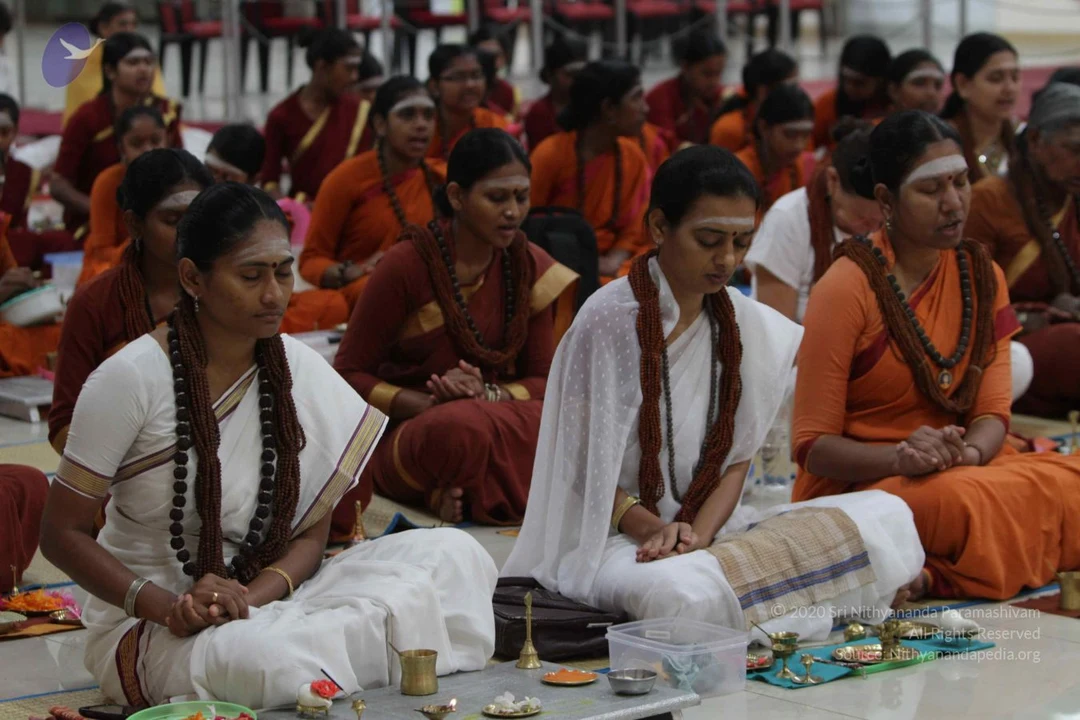
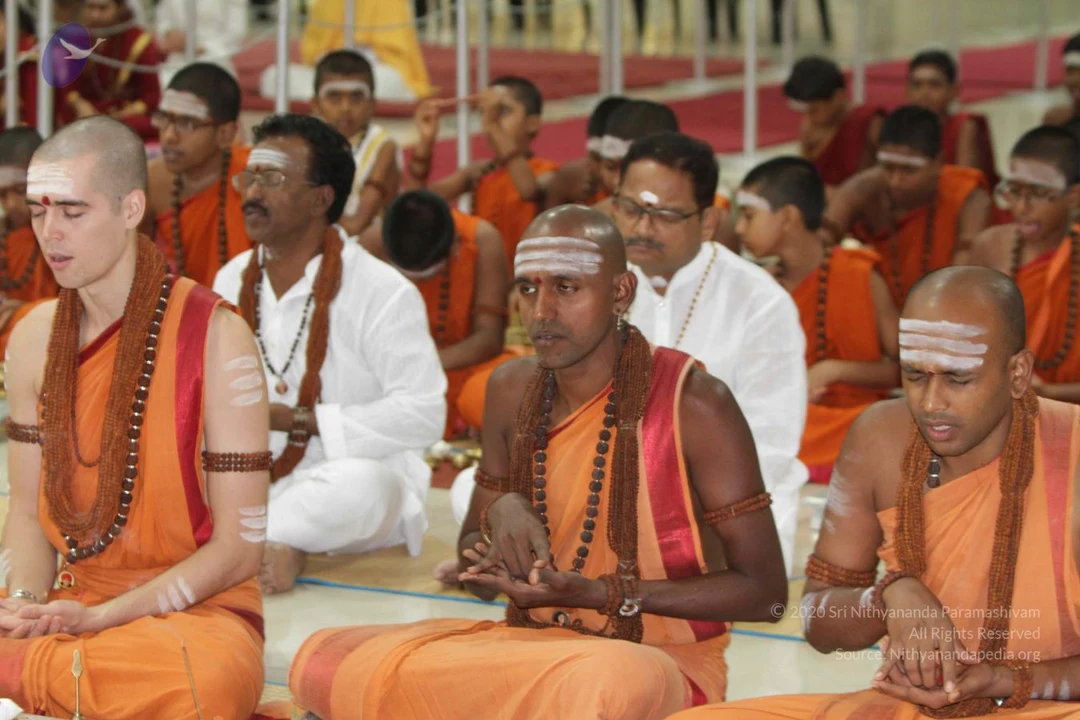
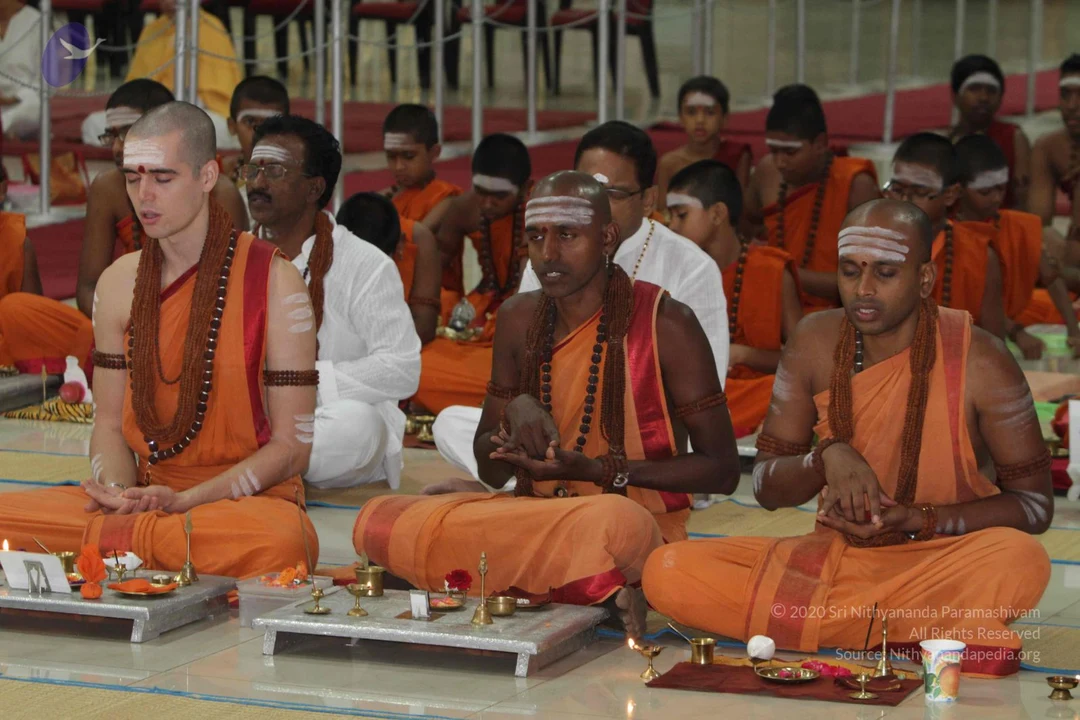
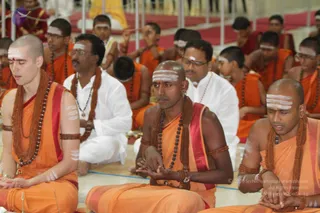
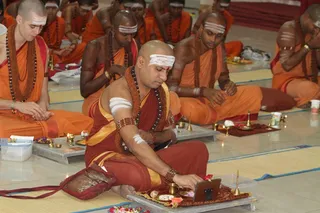
A photograph of seated devotees during a satsang or ritual gathering. Front left, a young man with a shaved head and white tripundra marks sits with eyes closed, wearing an orange robe with a red border and a long rudraksha mala. In the centre, a shaved-headed man in orange with a red-bordered shawl and rudraksha malas presses his palms together. Front right, another shaved-headed man in orange meditates with hands folded. Behind them, men in white dhotis and shirts sit with rudraksha malas, and many young boys in orange robes with white forehead markings sit in rows on a white floor with a blue-and-white mat. Pillars and red carpeting are visible in the background. No individual is identifiable as a person from appearance cues.

DARSHAN

5 photosSource gallery
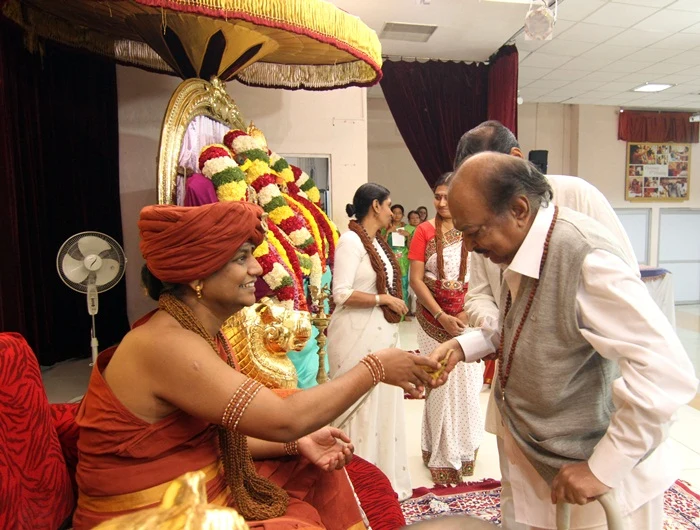
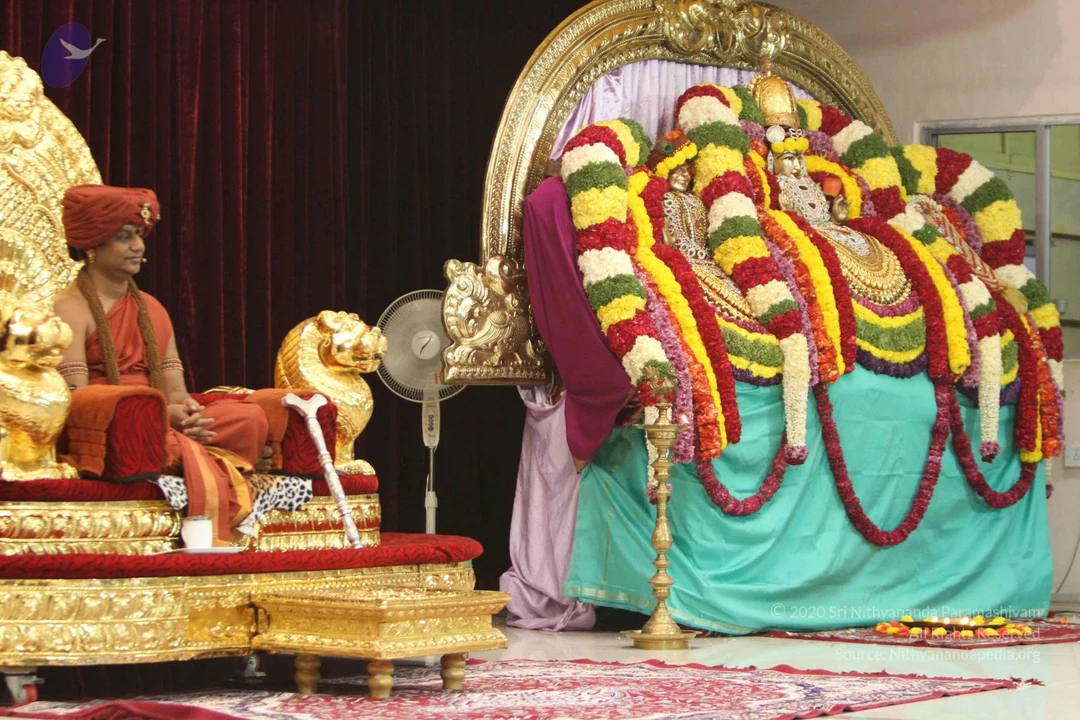
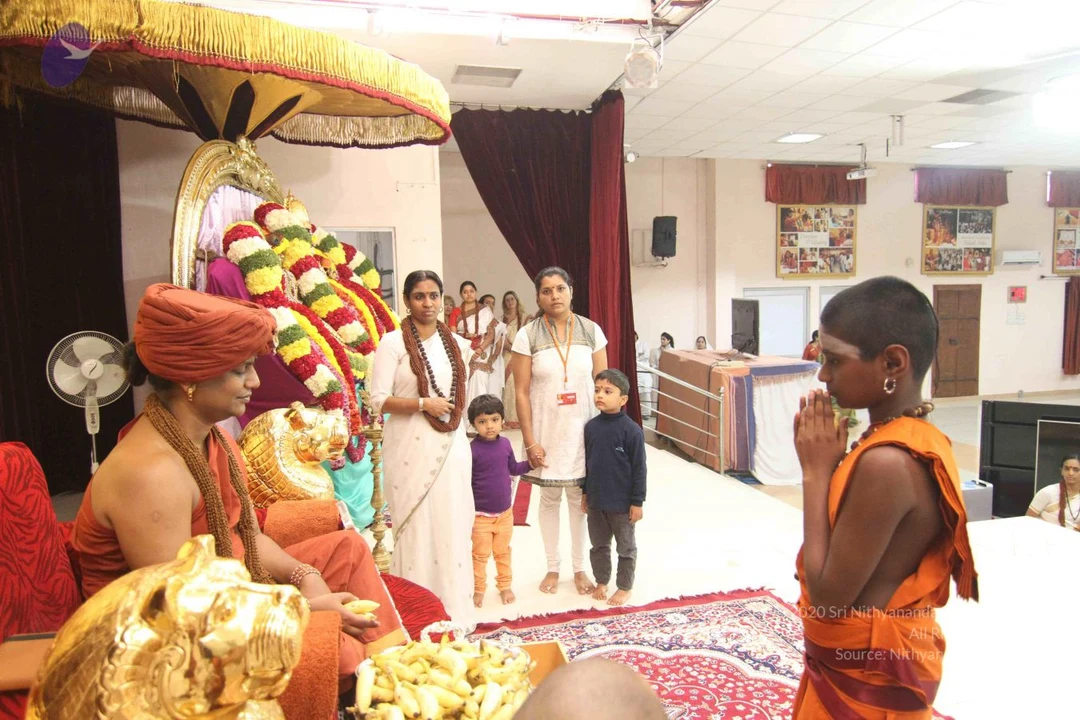
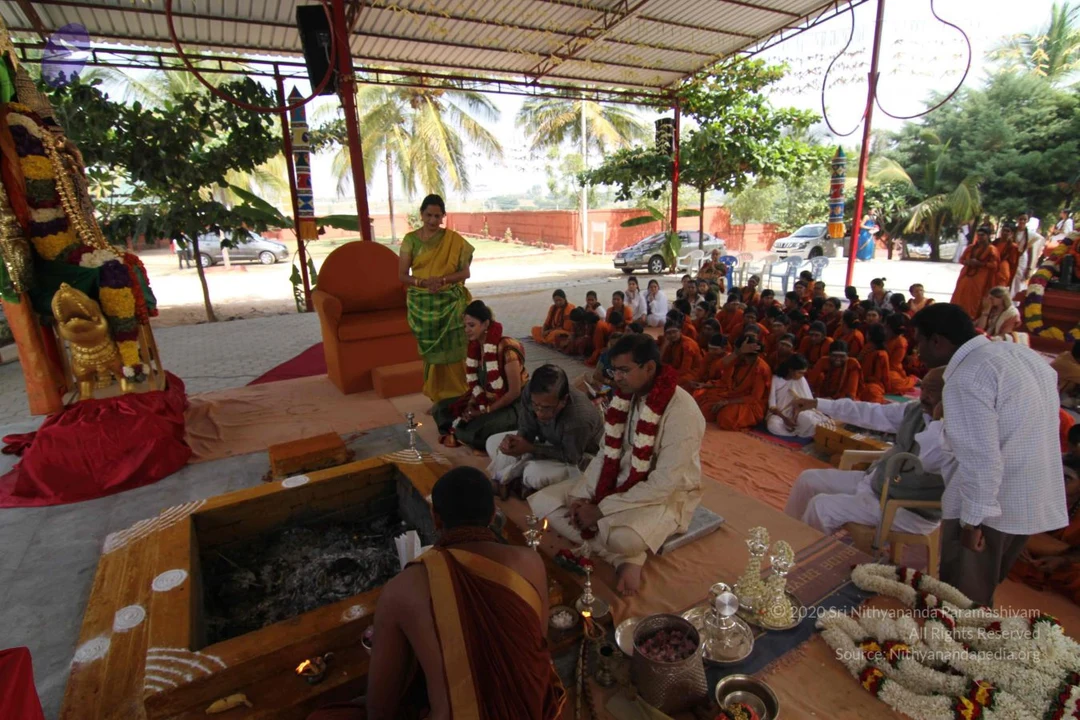
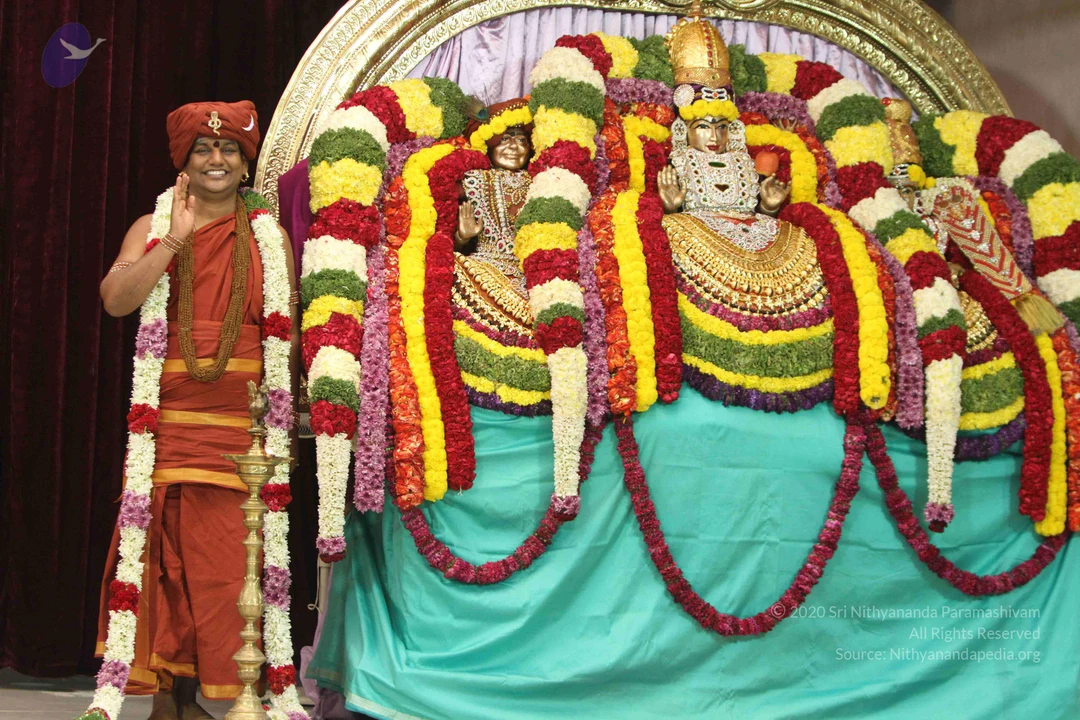
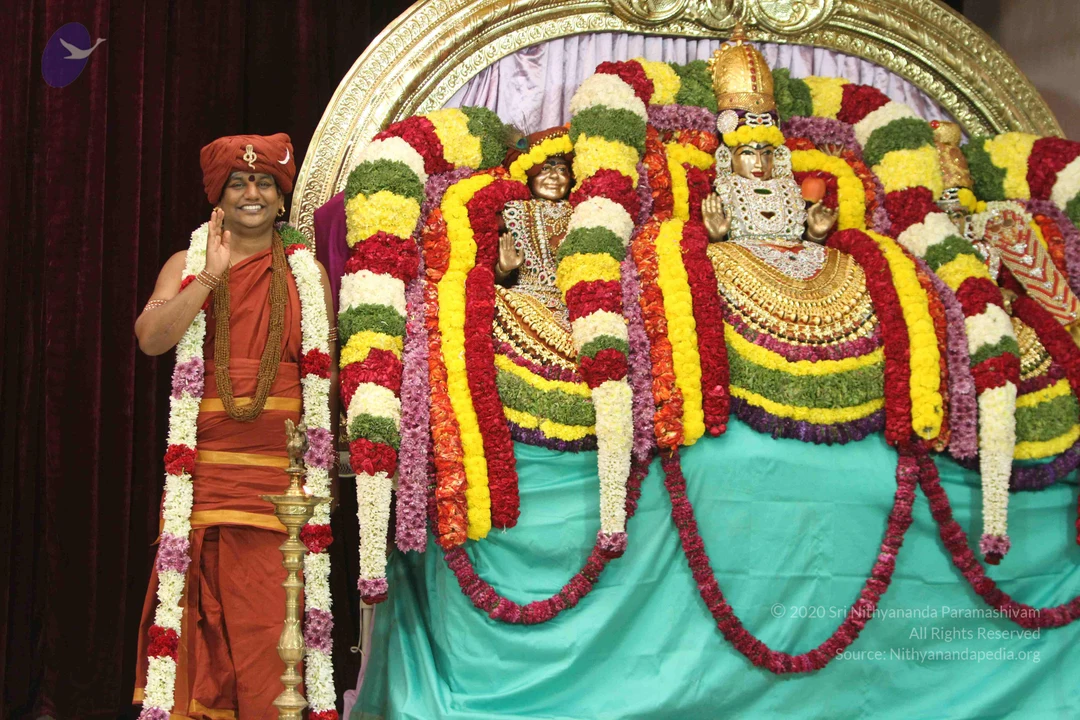
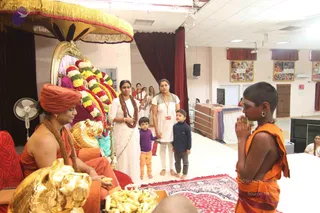
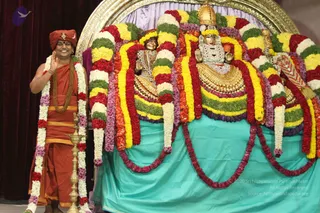
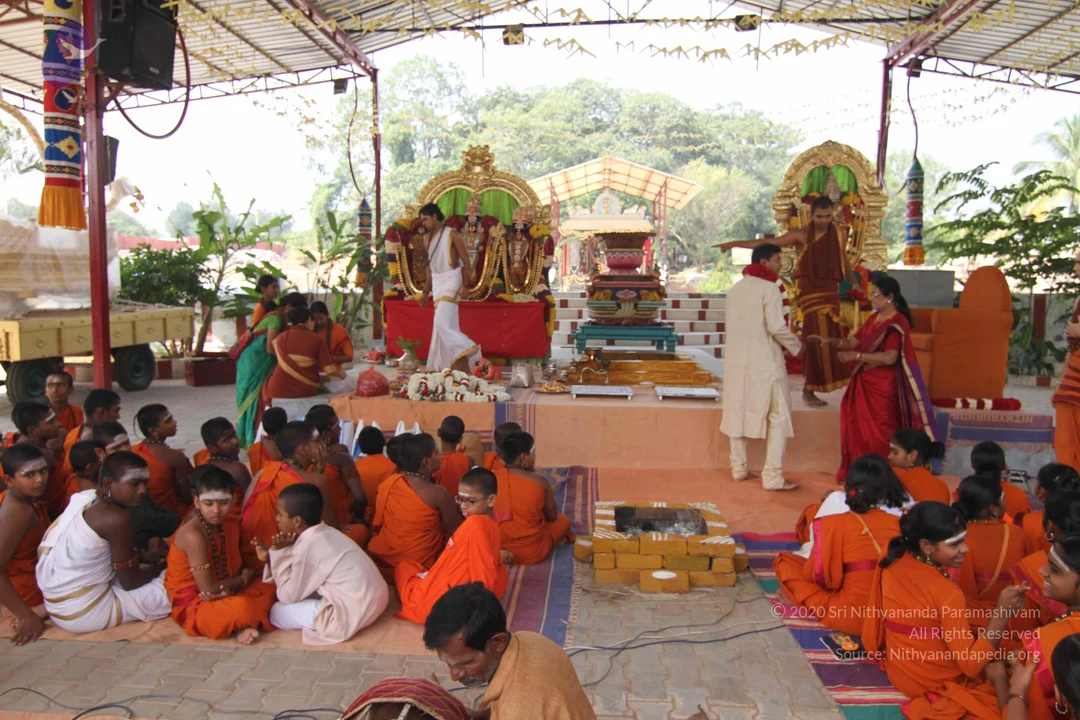
A photograph inside a hall with a golden canopy and garlanded palanquin-style seat. On the left, a person seated in orange clothing with an orange turban, a rudraksha mala, and gold jewelry sits before a golden kalasha-like bowl of bananas. Standing beside the seat is a woman in white sari with a rudraksha mala, a woman in white with an orange lanyard, and two young children in purple and navy. On the right, a shaved-headed child in orange robes stands with hands in anjali. Red and blue patterned carpet lies on the floor, and framed photographs hang on the walls.A seated woman in an orange-red sari and matching turban, adorned with gold bangles and a long gold-beaded necklace, holds a yellow fruit in her hand while looking down. A man in a white kurta with spectacles and a wristwatch raises a long garland of white jasmine, pink and red flowers over her. Behind them stands a gilded throne-like seat draped with red and multicoloured flower garlands. Other people in white and orange clothing stand in the hall, and framed photo panels hang on the wall. The scene suggests a garland-offering ceremony during a satsang-style gathering.A seated person in an orange-red turban and orange-red robe sits on a red zebra-patterned cushioned seat beside a gold lion-carved throne frame. A garland of white jasmine and multicoloured flowers hangs across their shoulders, with a rudraksha mala and gold bangles visible. A man in a white kurta with glasses and a wristwatch stands before them, placing a garland and holding a yellow offering, while a woman in white stands behind. Trays of bananas and other offerings sit on a red cloth in front. Garlanded flower rows and draped fabric decorate the hall behind, with framed photo boards on the far wall.A photograph of a man in a saffron-orange turban and matching orange robe standing at left, hands raised in a greeting, with a long rudraksha-style bead necklace and a brass oil lamp at his side. Behind him stands a large floral-decorated shrine of two gilded, jewelled deity murtis seated on a turquoise cloth, wrapped in layers of marigold, red and green garlands, the central figure wearing a golden crown. A dark red curtain frames the scene. The man has long hair under the turban and distinctive saffron ceremonial clothing, the cues associated with Swamiji (probable), appearing as a figure greeting the deities at the shrine.A photograph of a smiling man in saffron-orange robes and a saffron head wrap with a small emblem, standing at left with a long rudraksha-style bead mala and a garland of white, pink and purple flowers. He raises one hand in greeting. Beside him, a brass oil lamp stands on the floor. On the right, two large deity murtis are seated on a turquoise cloth and heavily garlanded with red, yellow, green and white flowers; the central figure wears a golden crown and white-and-gold ornaments. The background is a dark red curtain and a gold arched frame.

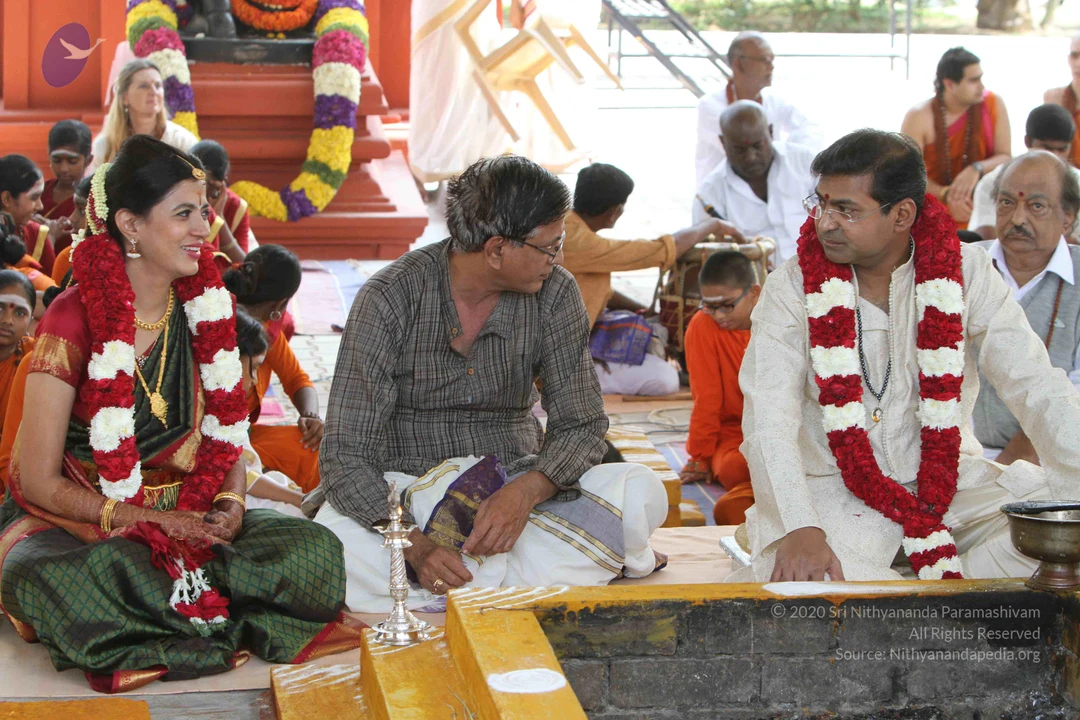
MARRIAGE-CEREMONY-CONDUCTED-IN-ADHEENAM

15 photosSource gallery
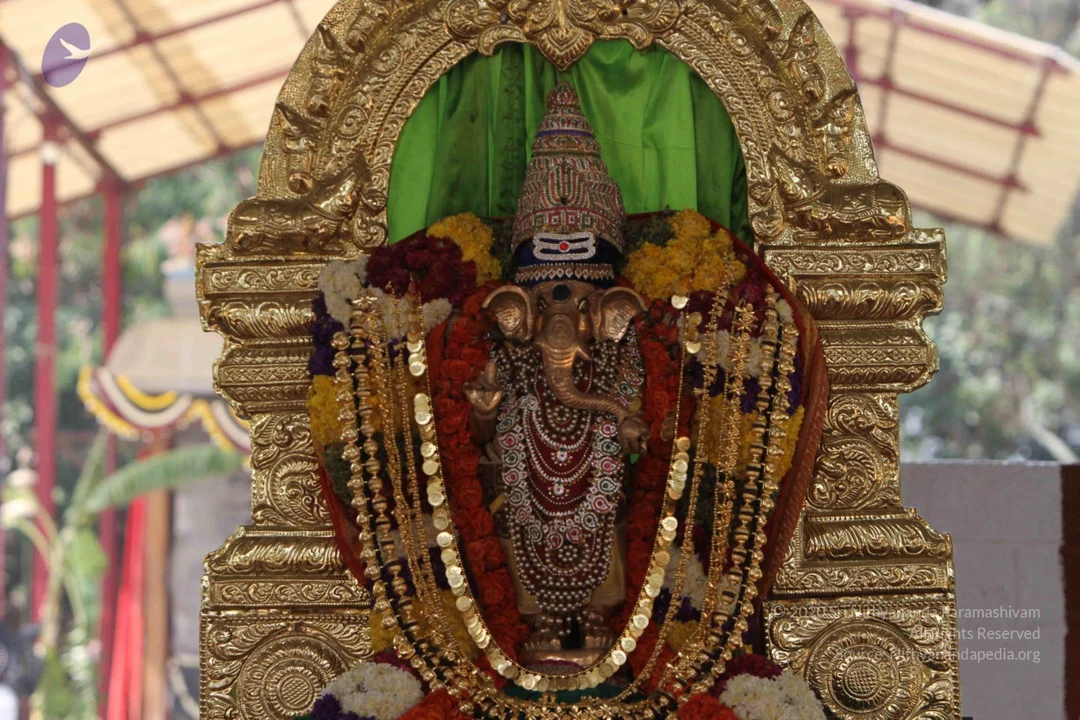
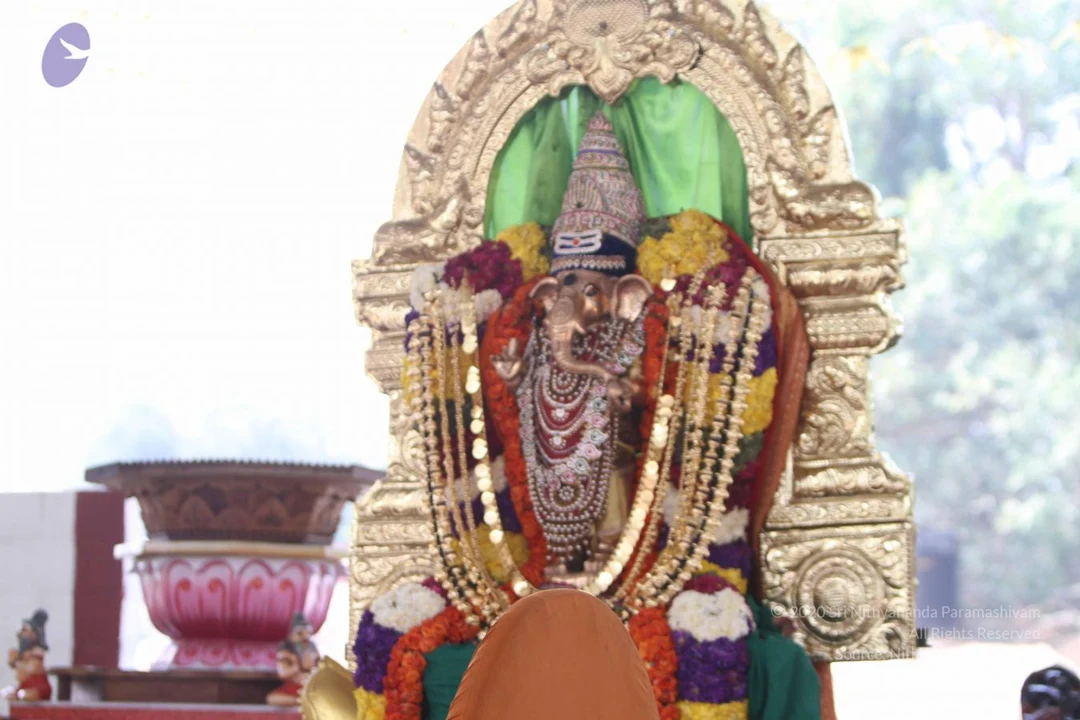
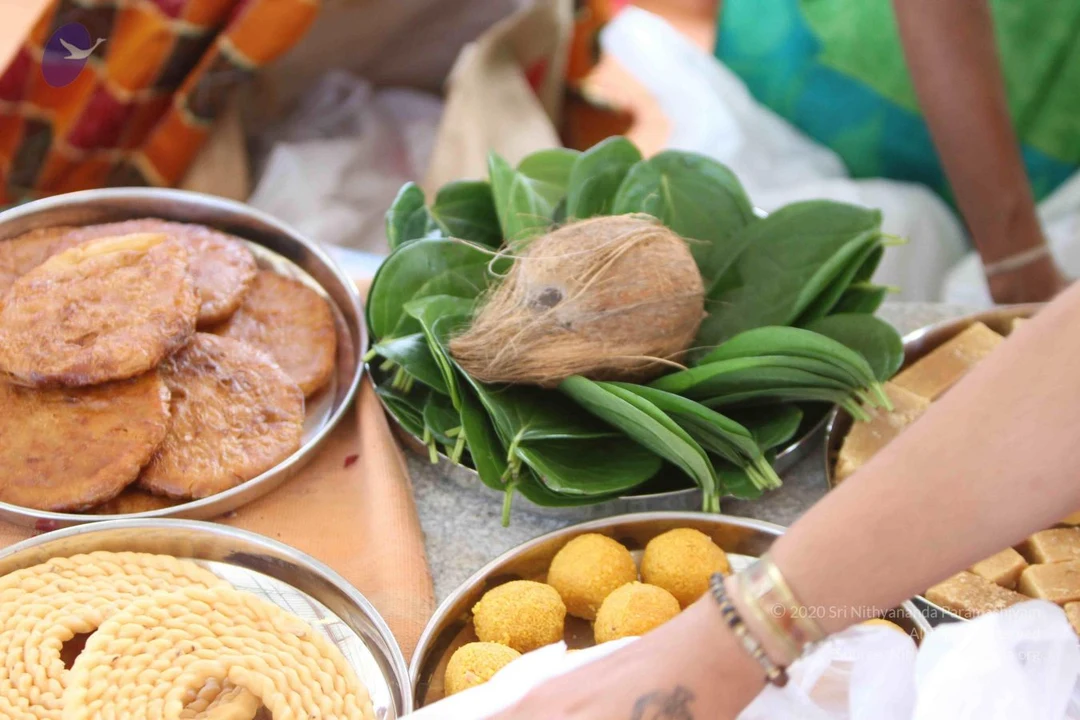
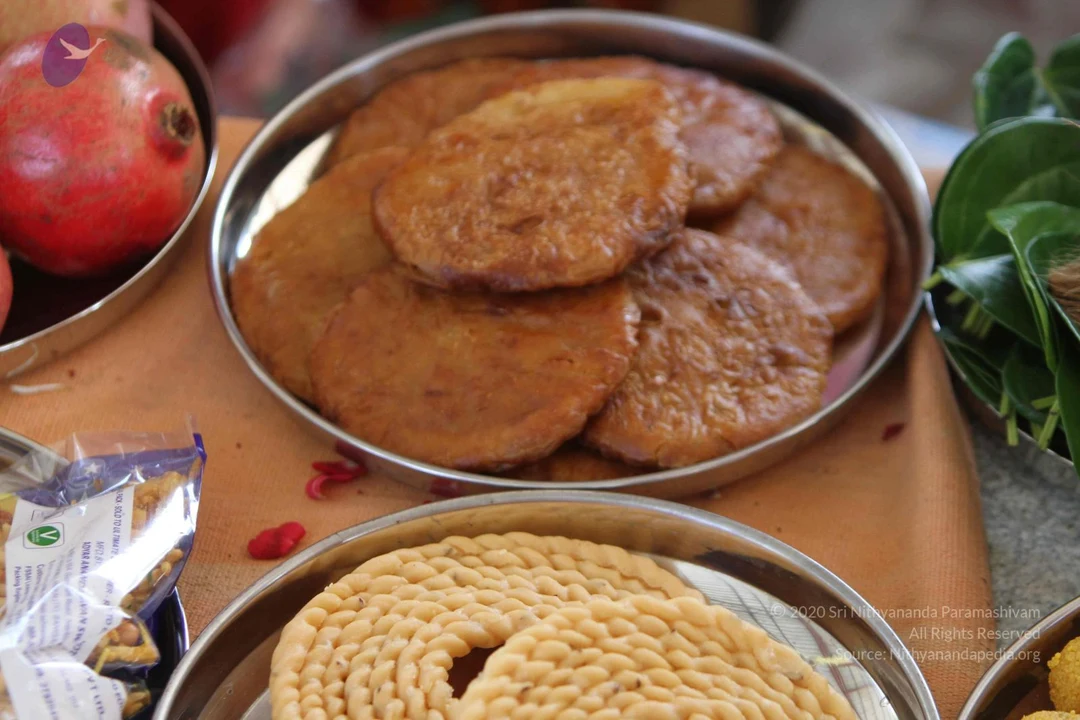
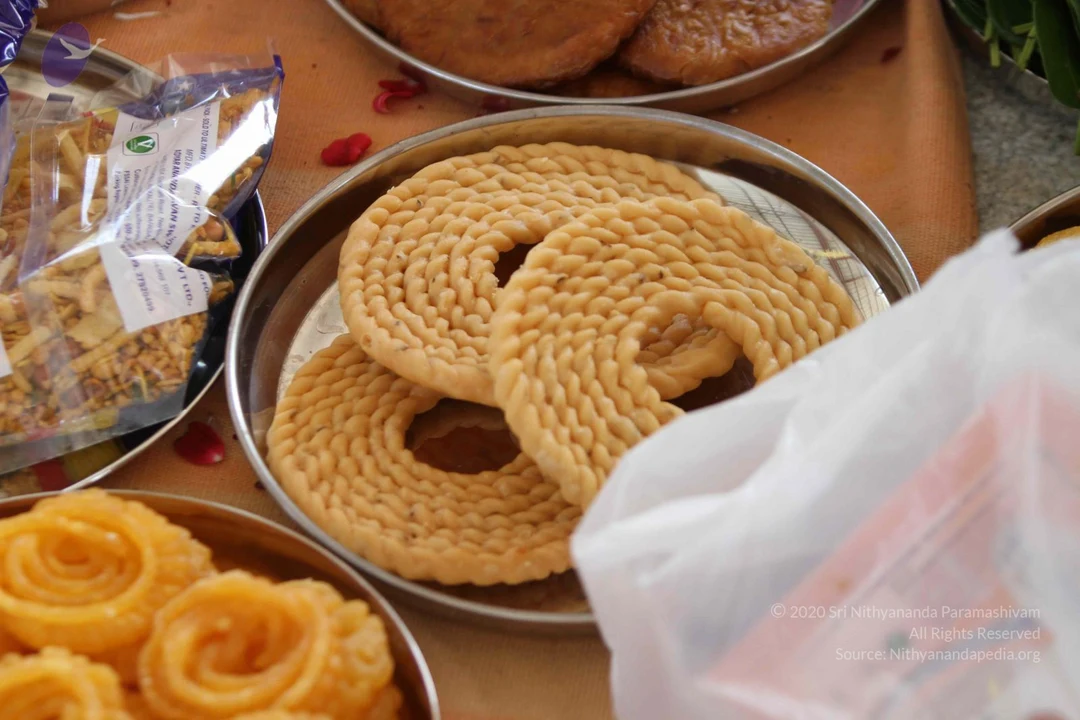
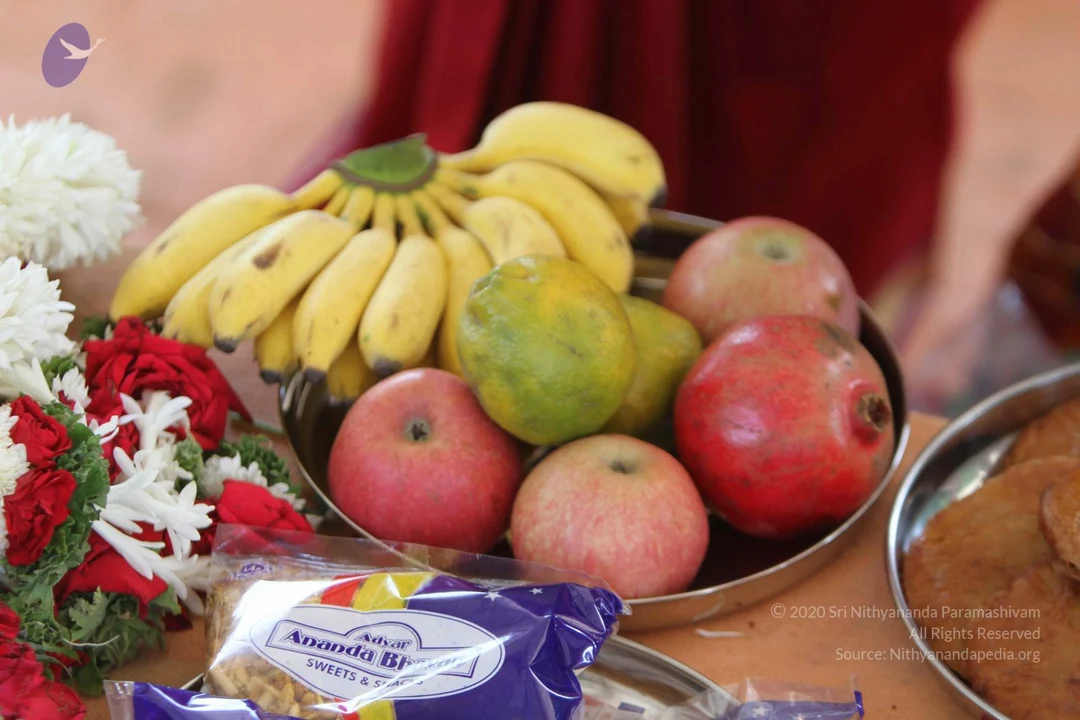
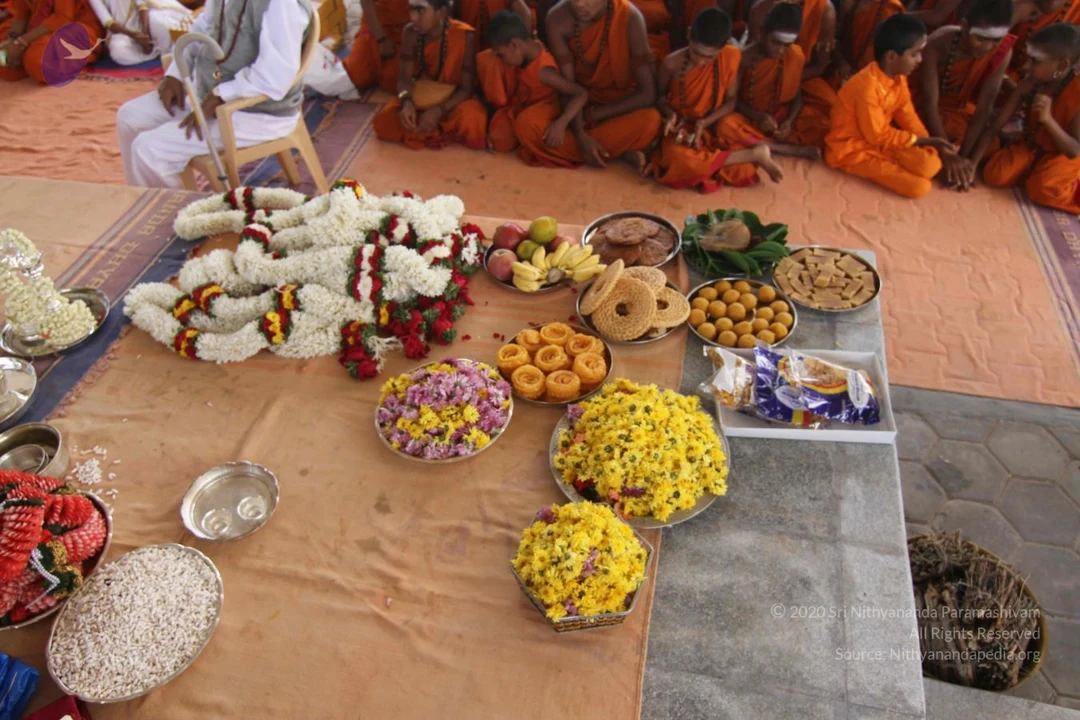
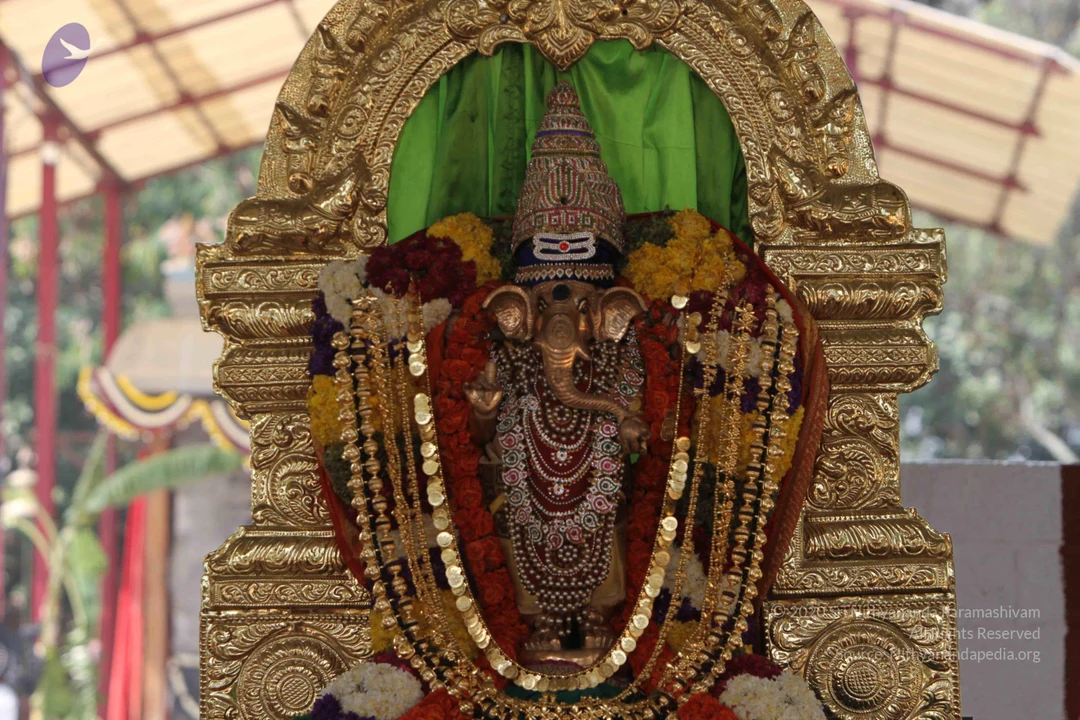
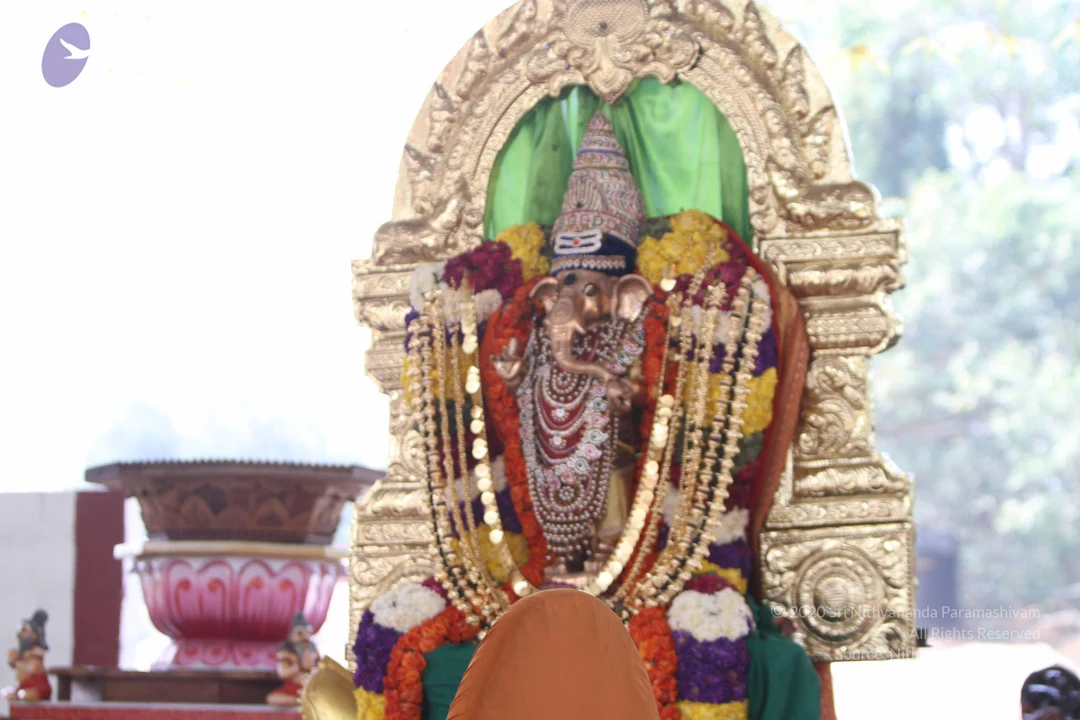
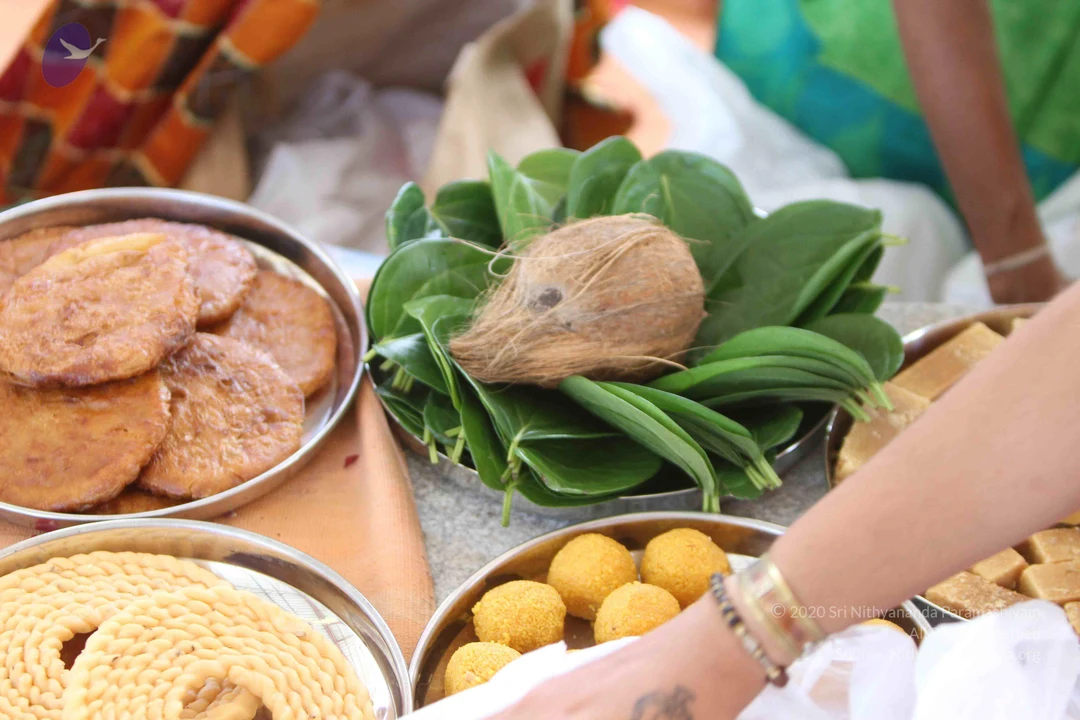
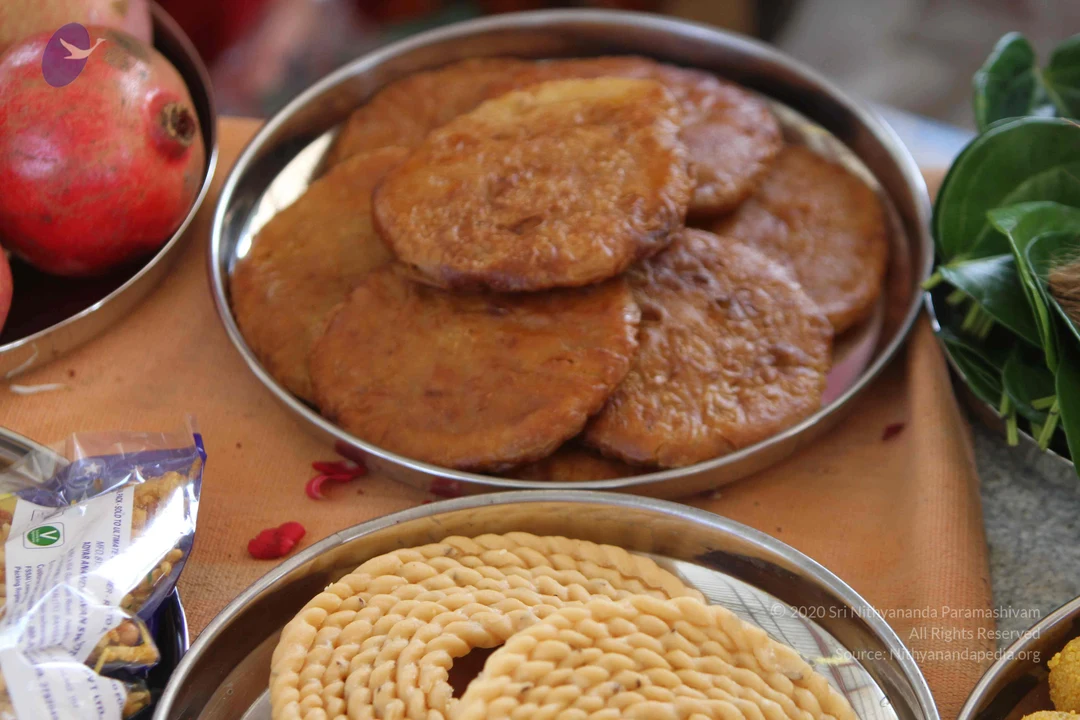
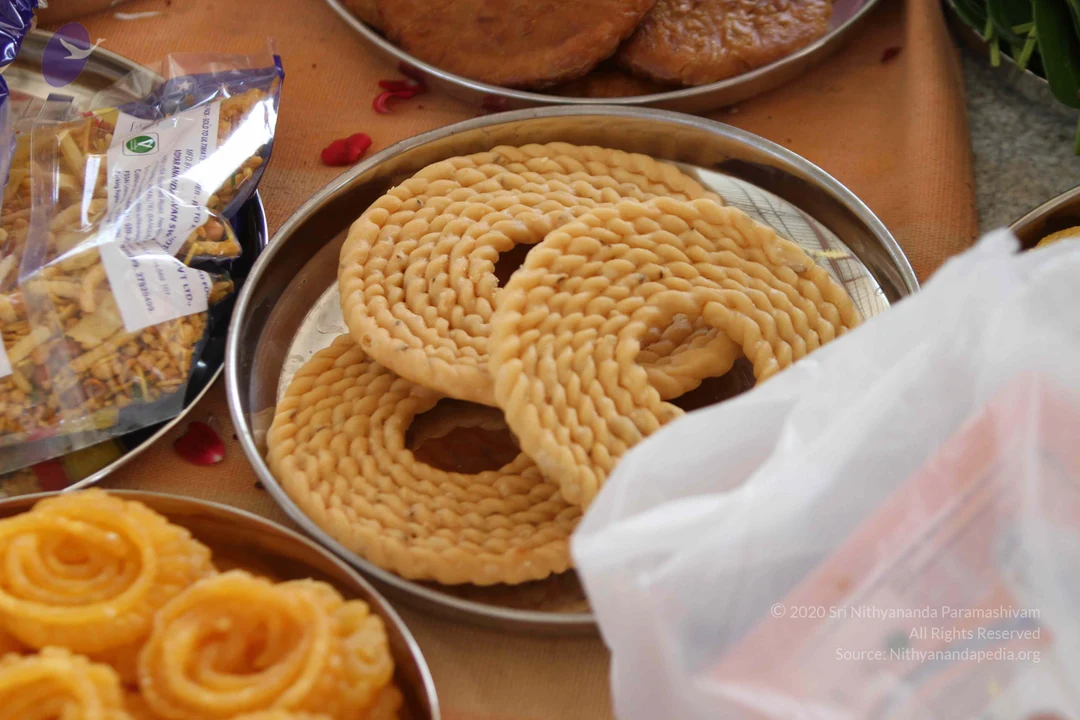
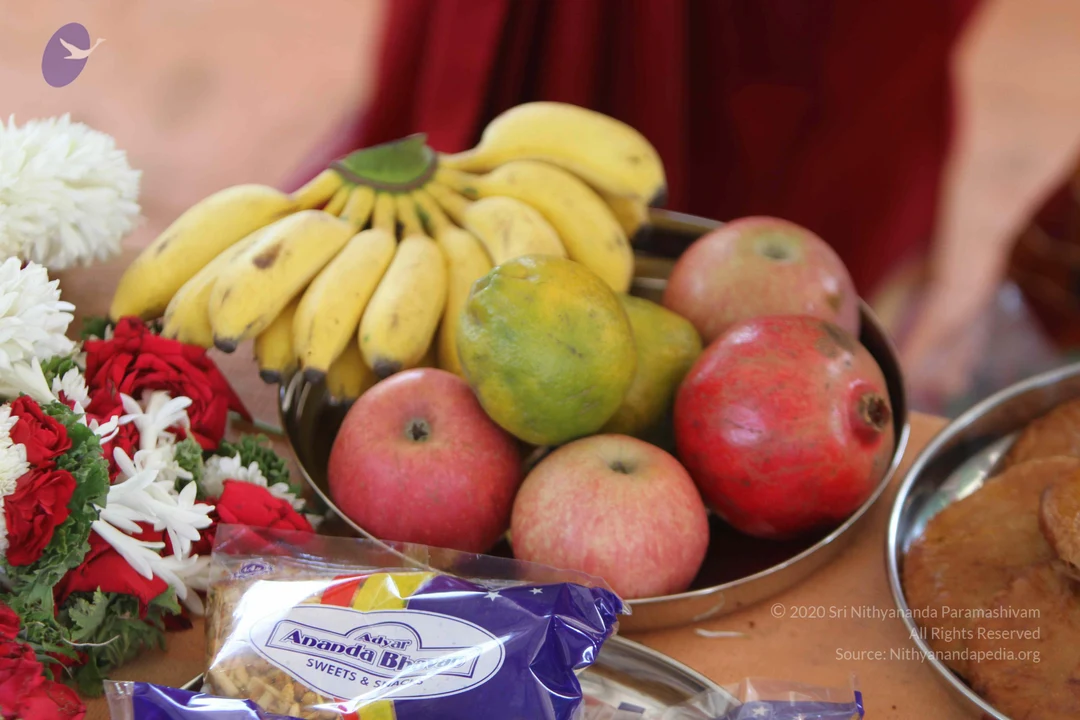
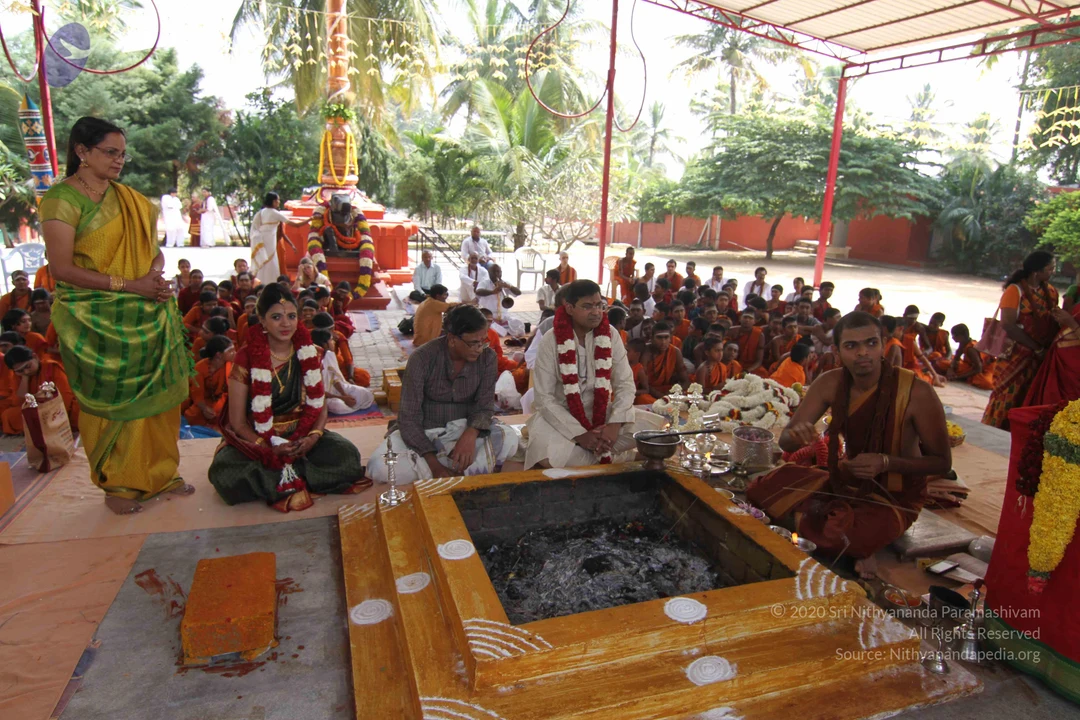
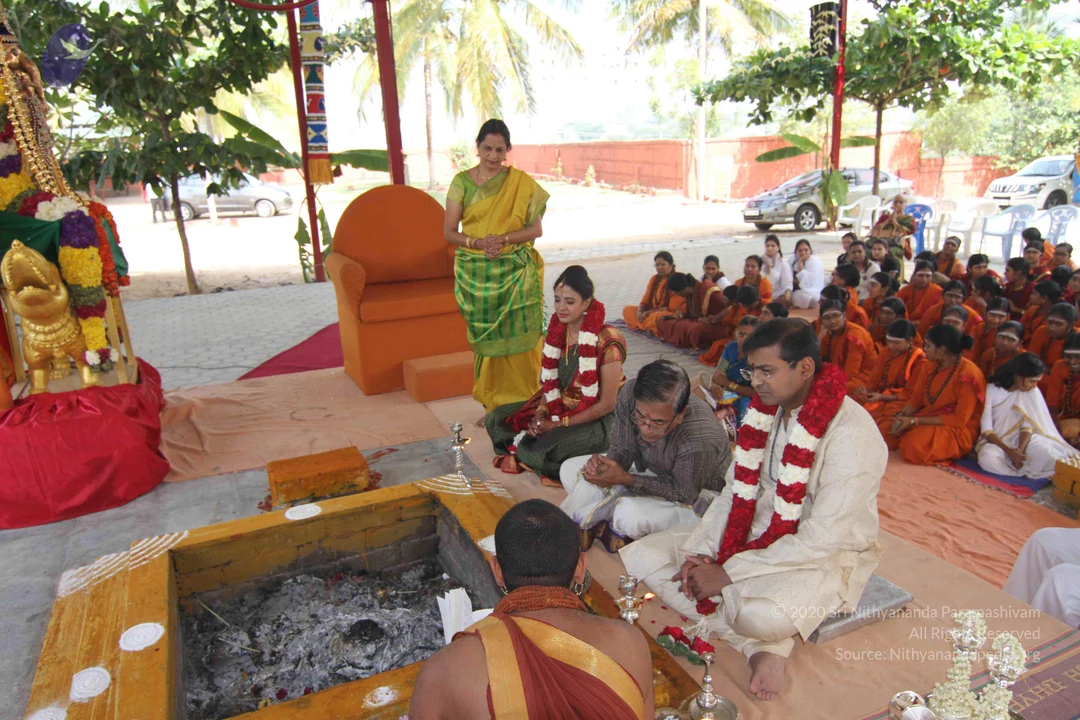
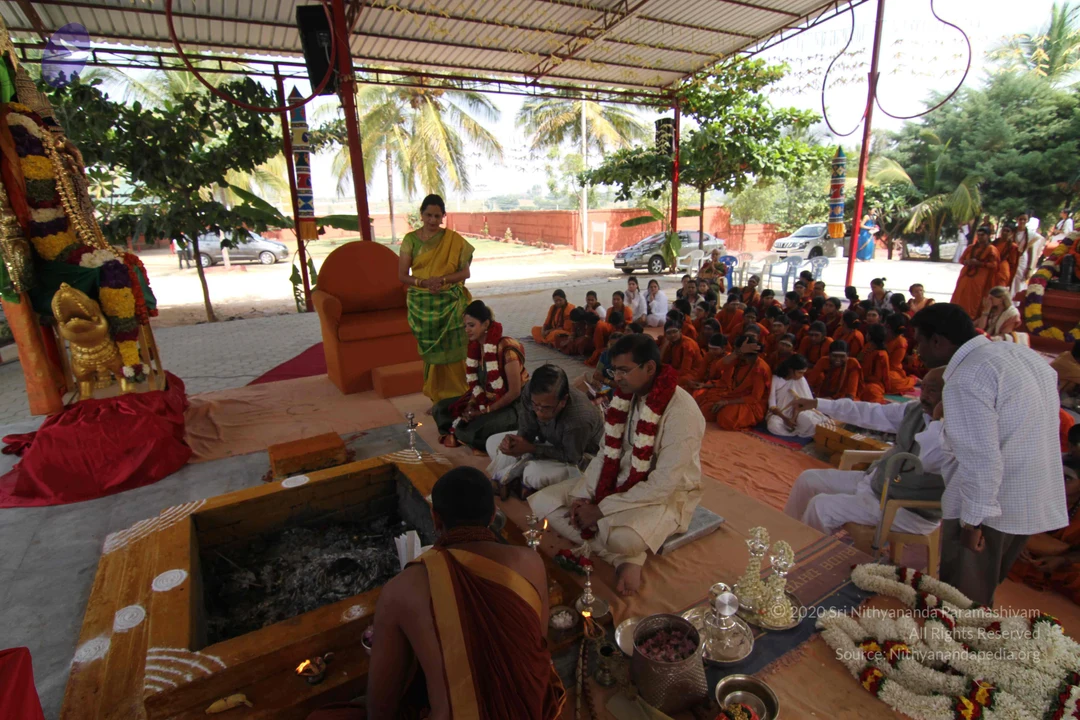
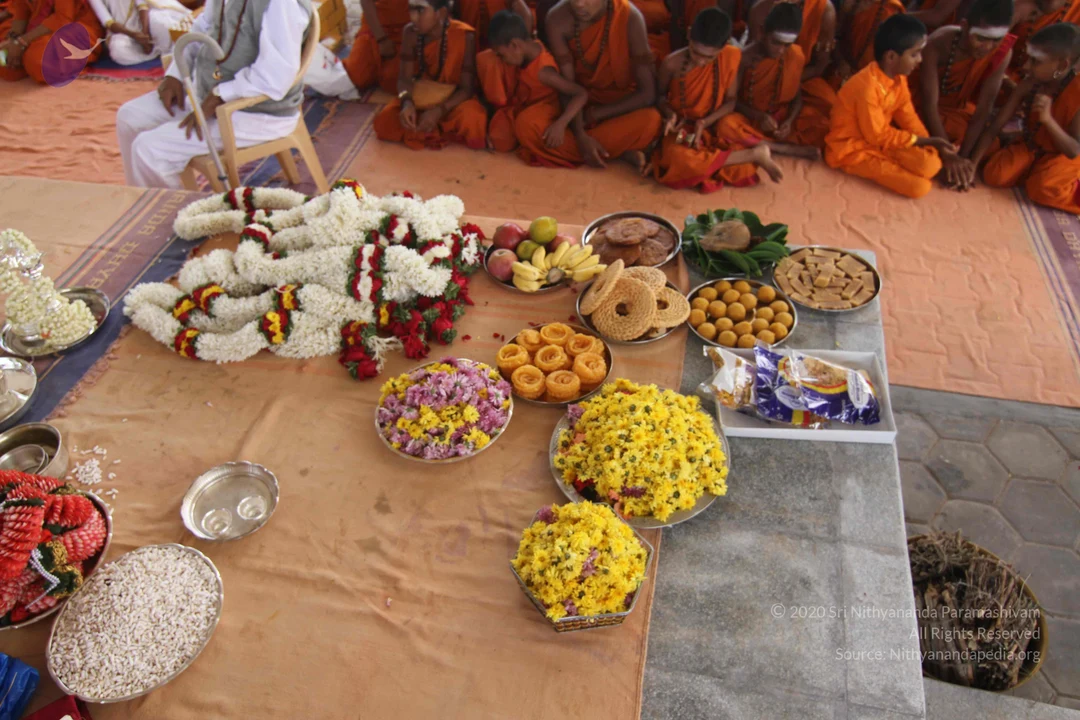
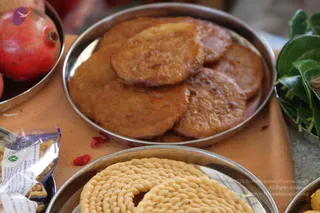
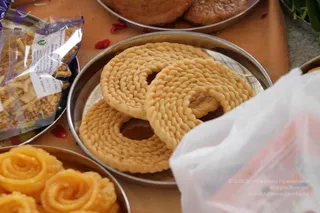
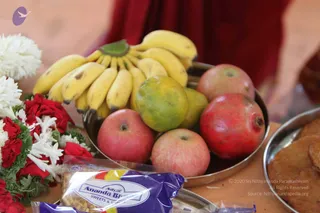
A metal Ganesha murti, elephant-headed deity, is decorated for worship within a gold ornate arched frame. The murti wears a tall conical crown with a horizontal tripundra mark, a red bindu on the forehead, and layered necklaces, strings of gold coins, and garlands of red, orange, and white flowers. A green cloth backdrop fills the arch, and a shaded open-sided pavilion with a red pillar surrounds it. No people are visible.A decorated Ganesha murti is seated within a gold-coloured arched shrine niche framed with ornate carved scrollwork. The deity has an elephant trunk and a tall conical crown with a tilak mark, draped in layered garlands of orange marigolds, purple flowers and white jasmine strands, with a pearl and gem necklace on its chest. A green cloth backs the niche. In the foreground, the orange-robed shoulder of a person is visible, and a pink ornamental urn stands at left beside a small painted figurine. Trees fill the background.Close photo of a prasad offering spread on a stone-topped table. Steel plates hold golden fried snacks, a heap of fresh green betel leaves with a husked coconut set among them, yellow round sweet balls, a stack of cut brown fudge-like sweets, and coiled orange jalebi-style spirals. A person's arm with beaded bracelets and a wristwatch reaches in from the right, and a sari-like cloth in green and orange appears at the top edge. No people's faces are visible, and no a person candidate appears in the frame.A close-up food offering on an orange cloth: a steel plate of golden fried round cakes. Red pomegranate halves sit at the left edge, fresh green betel-type leaves at the right, and scattered red petals lie on the cloth. Packaged snacks appear at the far left. No people are visible; the arrangement suggests a ritual food offering.Close view of sweets and snacks on steel plates set on an orange cloth. Two large spiral-shaped golden fried sweets. Orange jalebi-like sweets fill a plate in the lower left, and a packet of mixed namkeen snack sits at left. Scattered red flower petals lie on the cloth. A clear plastic bag is at the right edge. No people are visible.A close photograph of a ritual offering on a table: a stainless steel plate heaped with bananas, apples, a pomegranate, and a green-yellow citrus fruit. Beside it are white and red flower garlands, and a packet of Adyar Ananda Bhavan sweets and snacks in purple wrapping. Round savoury snacks sit on a metal plate at right. A blurred figure in a red garment stands behind the table. This appears to be a fruit and sweets offering for a puja.

01-PADA-PUJA
5 photosSource gallery
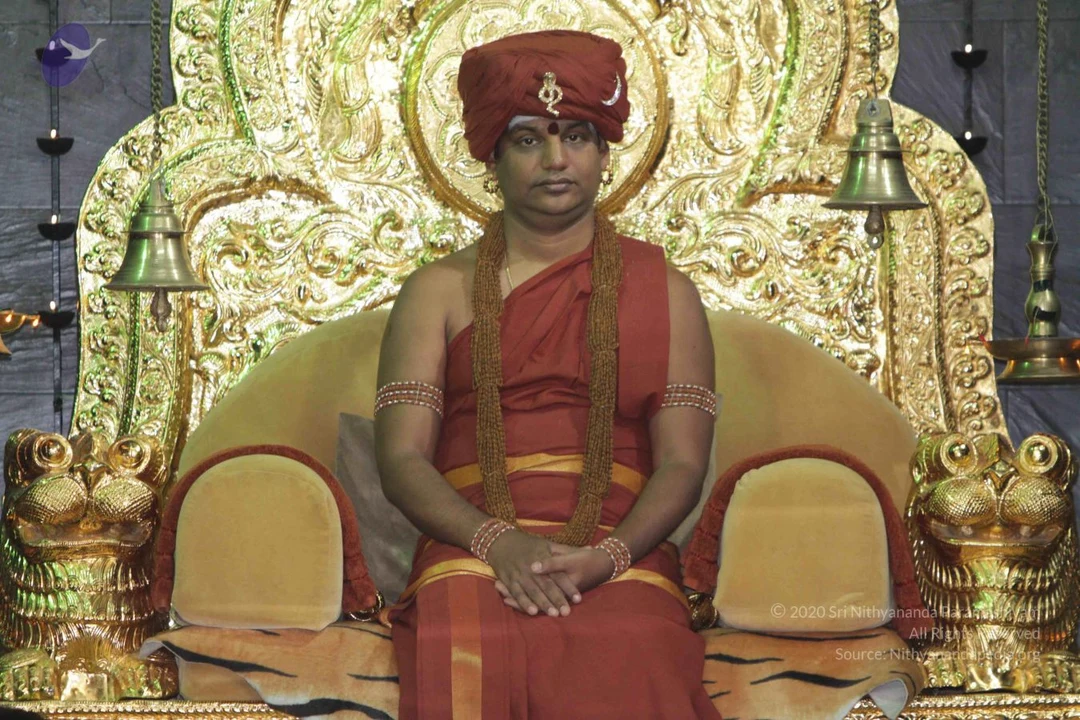
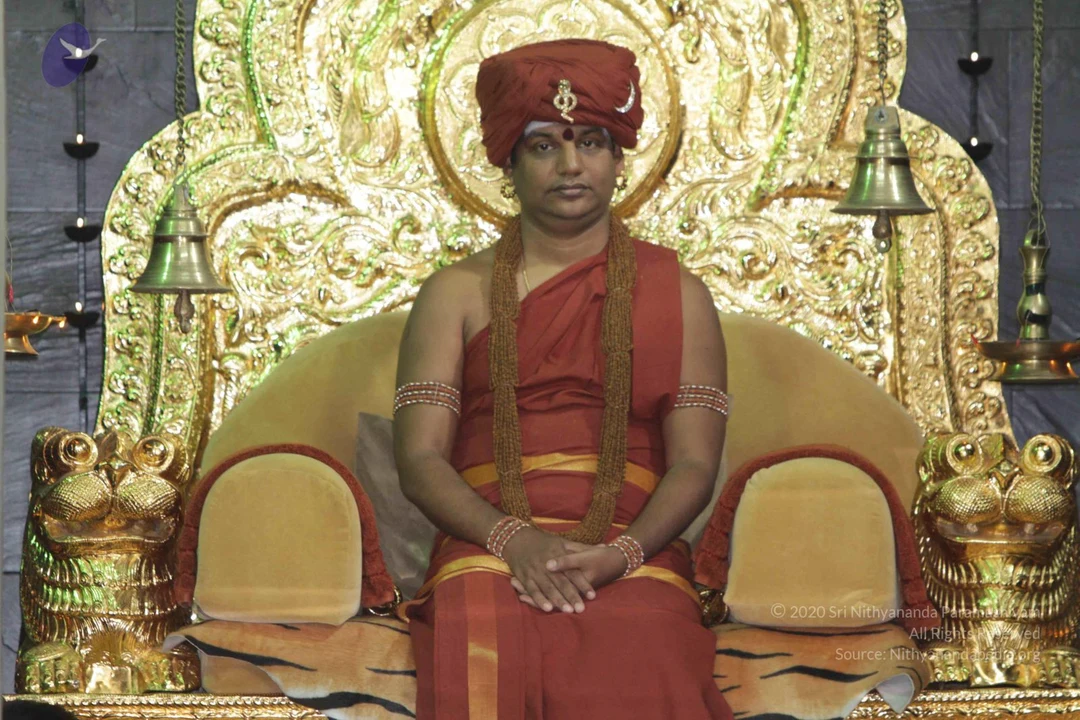
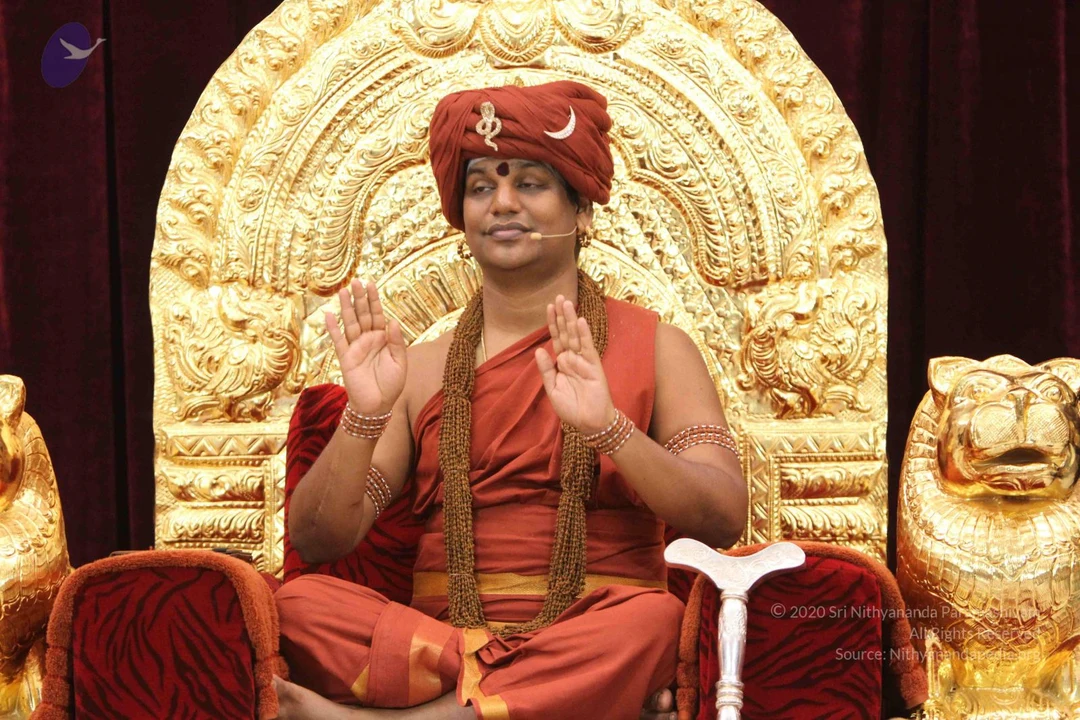
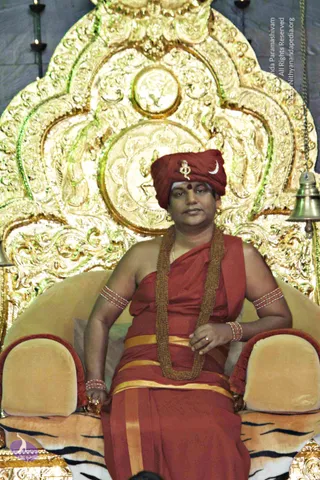
A seated man in a red turban with a gold emblem and crescent ornament, red and gold robes, a dense rudraksha mala and beaded armbands sits on a gold-embossed throne with a tiger-striped cloth draped over the seat. A brass bell hangs at right and oil lamps stand behind. Swamiji (probable): the seated figure wears a red turban with a crescent, a rudraksha mala and ceremonial red-and-gold robes, cues that match the page's claim.A seated figure in a red-orange turban with a crescent-moon emblem and a rudraksha mala necklace, wearing orange-red robes with gold borders, sits on an ornate gold throne with a tiger-striped cloth draped over the seat. The right hand is raised in a blessing gesture. Before the throne on a gold table are several silver plates holding fruit, flowers and small cups, and a floral padapuja arrangement with red, pink and yellow petals sits on the floor. Gold oil lamps and bells hang from chains in the background.A seated figure on an ornate gold throne with carved floral and figural details, wearing a rust-orange turban with a small brooch, rust-orange and gold-bordered robes, a multi-strand rudraksha-style mala and beaded bracelets, raising hands in a blessing gesture while smiling. Bare feet rest on a golden platform before silver plates of apples, flowers, red blossoms, marigolds and small silver bowls, set as pada puja offerings. Hanging brass oil lamps and bells, a tiger-striped cloth, and a second seated figure in red-orange robes on a gold chair appear in the background against a black wall with string lights. A printed copyright caption appears on the right edge. Appearance cues (turban, rudraksha mala, orange robes, throne) suggest Swamiji (probable) as the seated central figure, leading the pada puja.A seated figure on an ornate gilded throne with a lion-carved armrest and a tiger-striped cloth draped over the seat, in a dark room lit by small bulbs and hanging brass bells. The central figure wears a red-orange turban, saffron-orange draped robe with gold borders, a heavy beaded necklace and gold armbands, and joins palms in greeting with a smile. Two men in white ritual clothes attend below: one bald man with white tilak marks holds a lamp, and another in white with a bead necklace tends a flame. Before the throne stand silver offering trays holding red apples, flowers, rose petals and small silver bowls, with lit oil lamps beside them. A hanging brass lamp and a deity figure appear in the background. The throne and clothing cues do not establish identity, so the seated figure is described by role only.A golden deity murti of a goddess, richly adorned and seated amid dense garlands of yellow marigolds, red roses and purple flowers with green leaves. She wears an ornate gold crown with red stones, a jewelled necklace and heavy layered gold jewellery over a red-and-gold garment. Her right hand is raised in abhaya mudra while her left hand holds a red mango, referring to the mango crown decoration. No people are visible; the statue is the sole subject, framed by floral decoration.
02-SATSANG

8 photosSource gallery
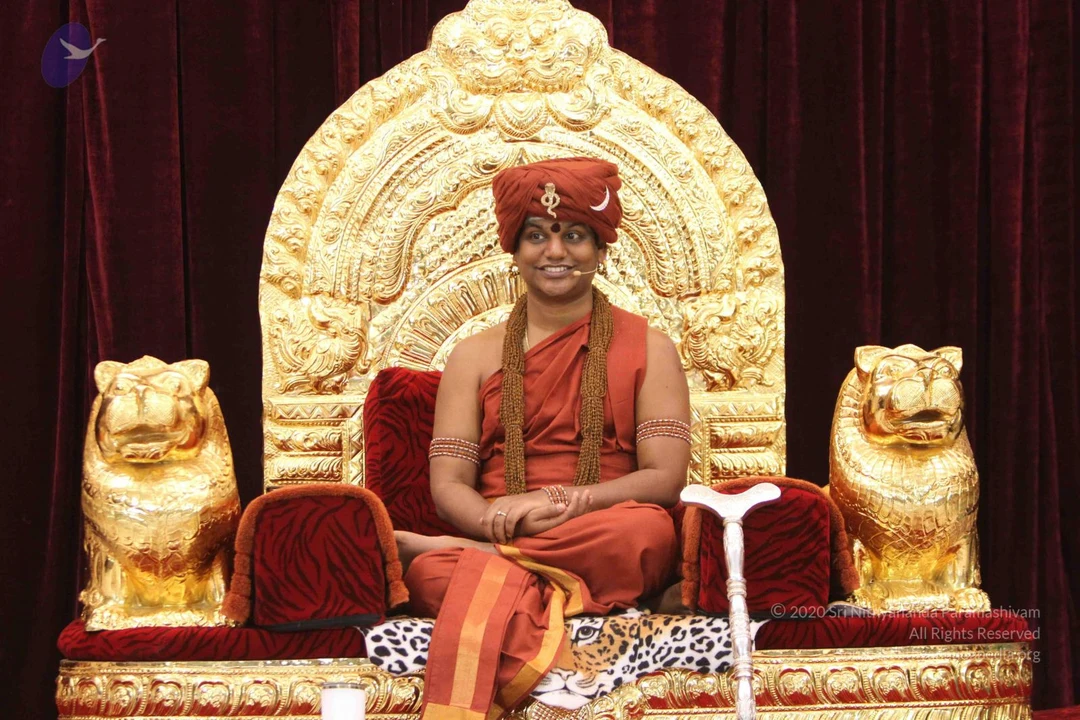
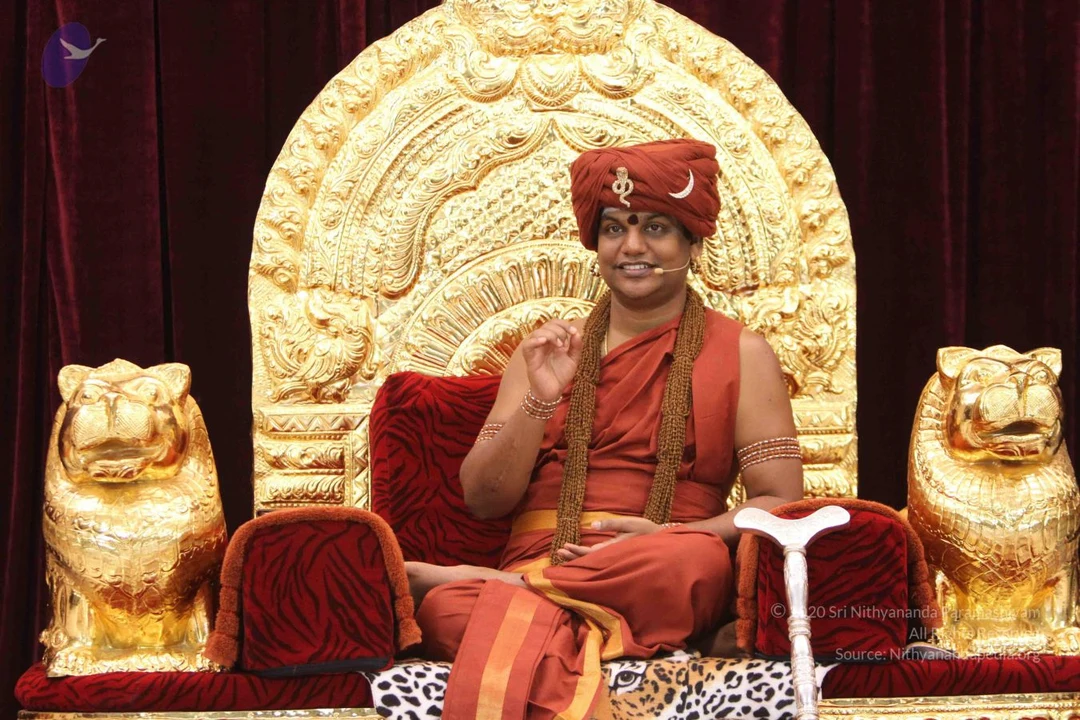
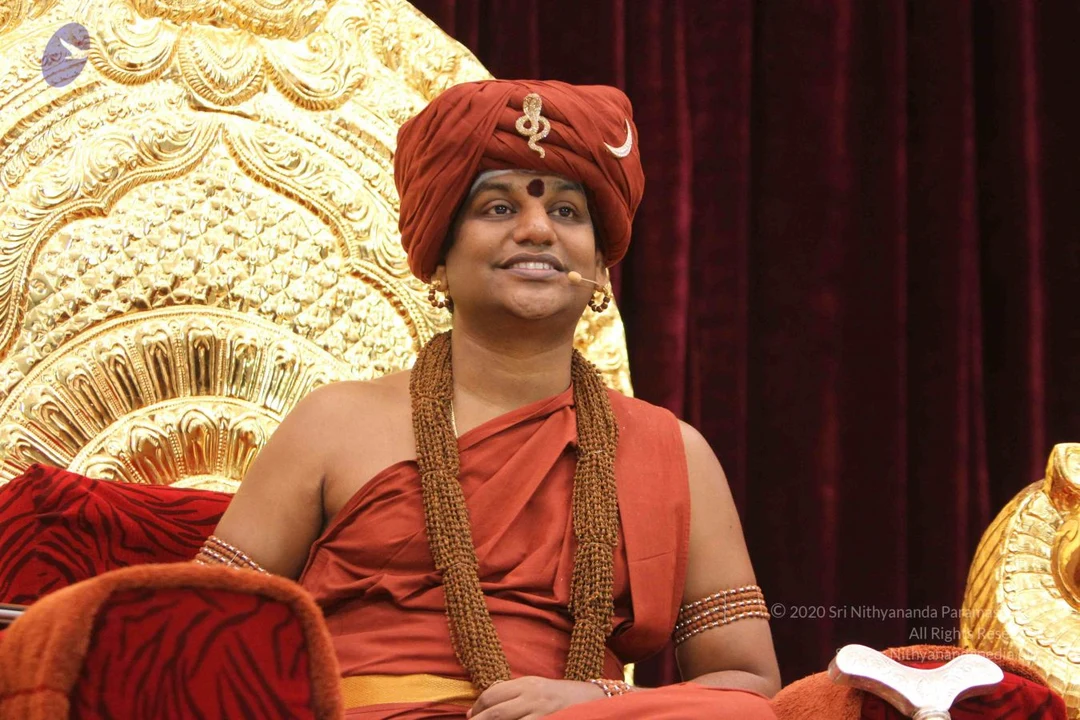
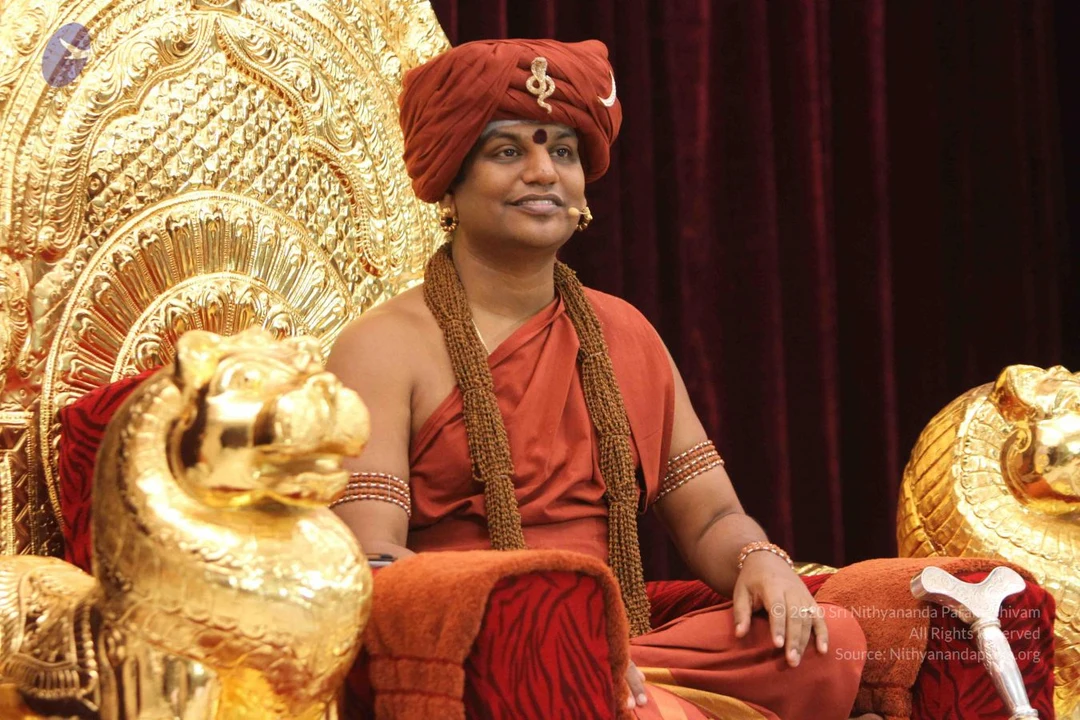
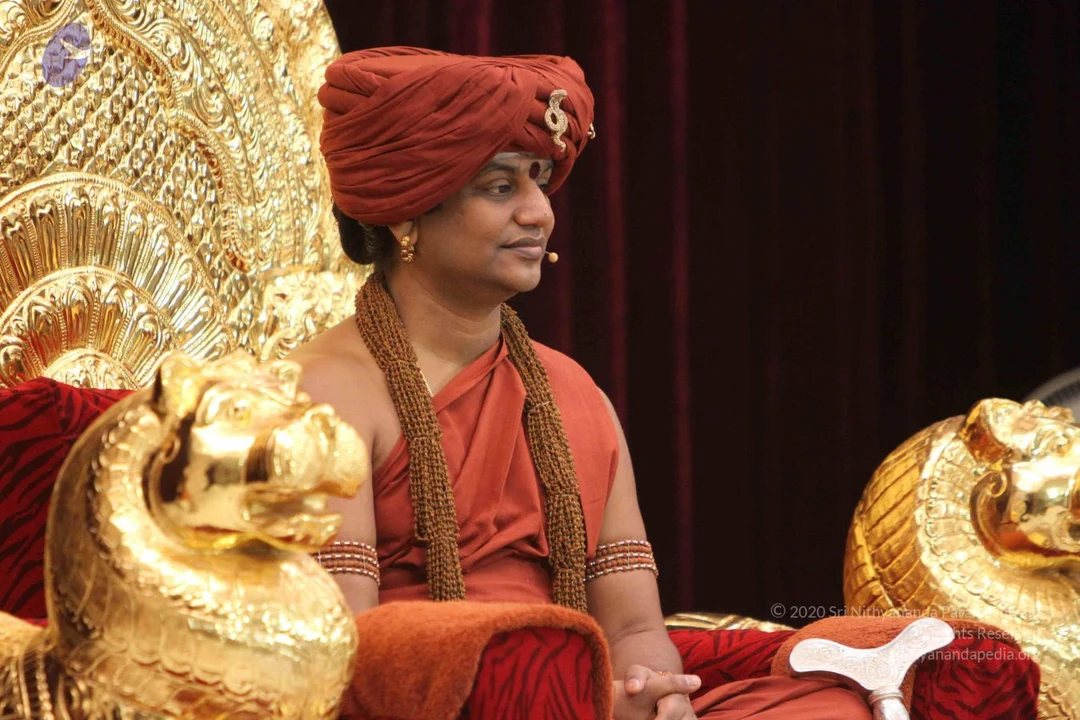
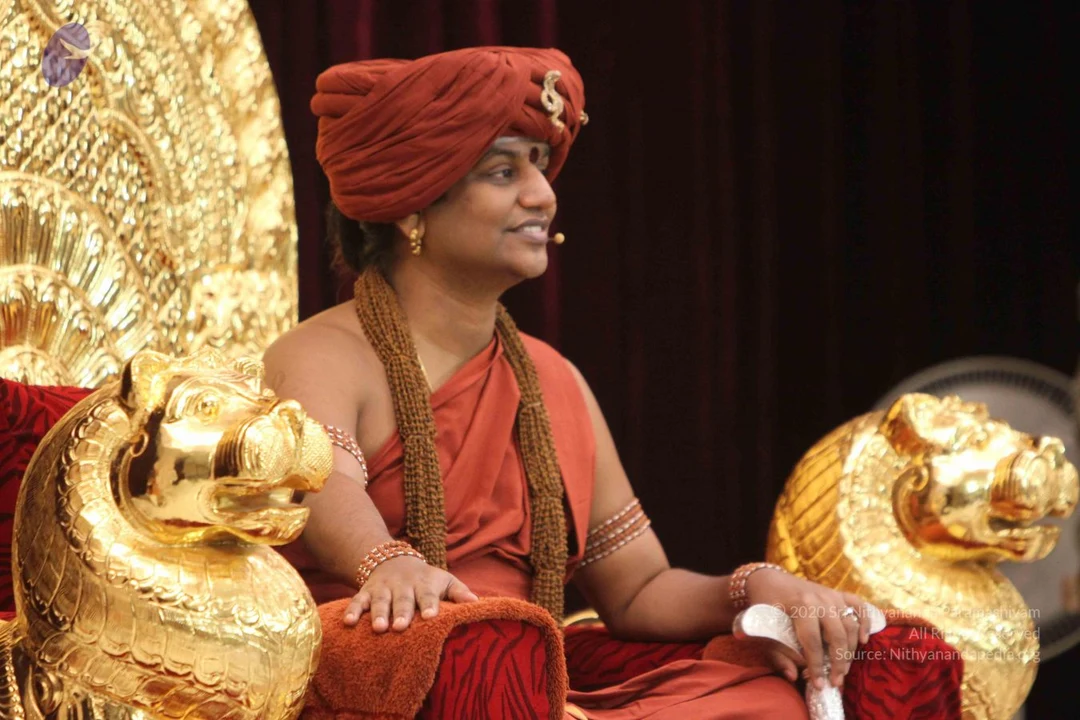
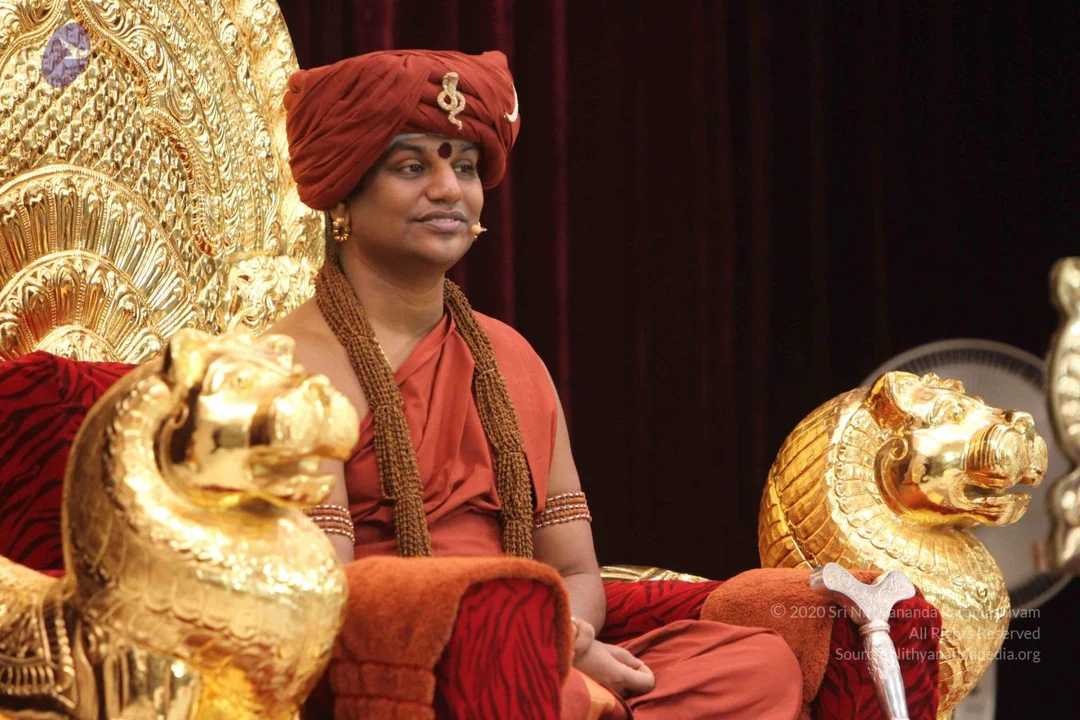
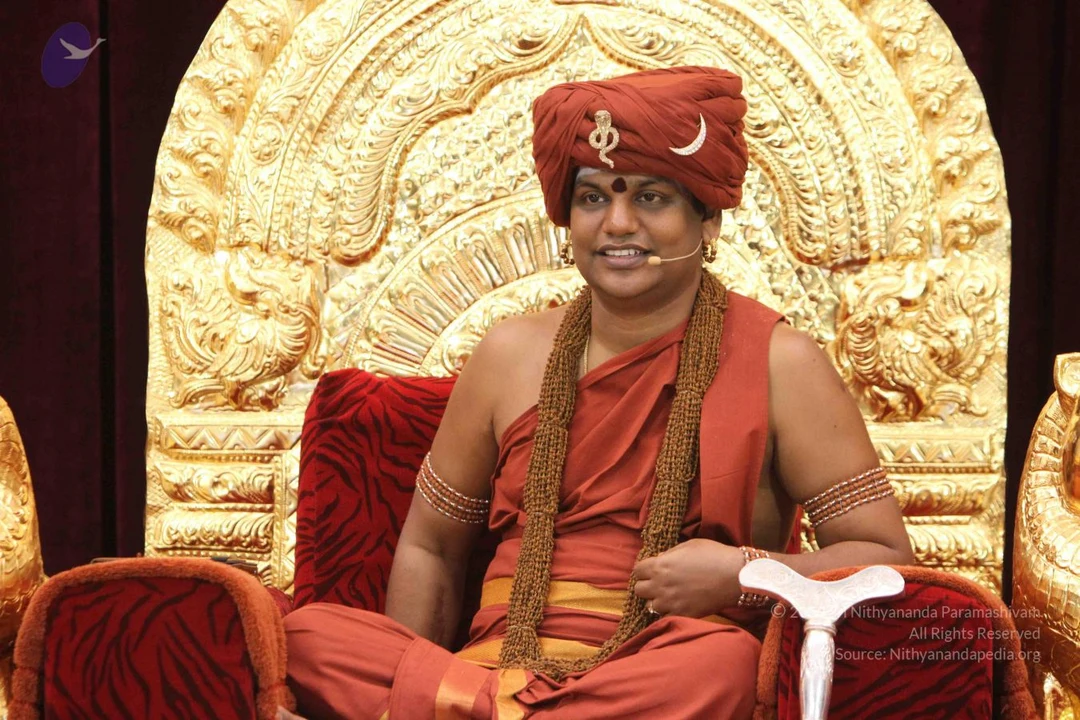
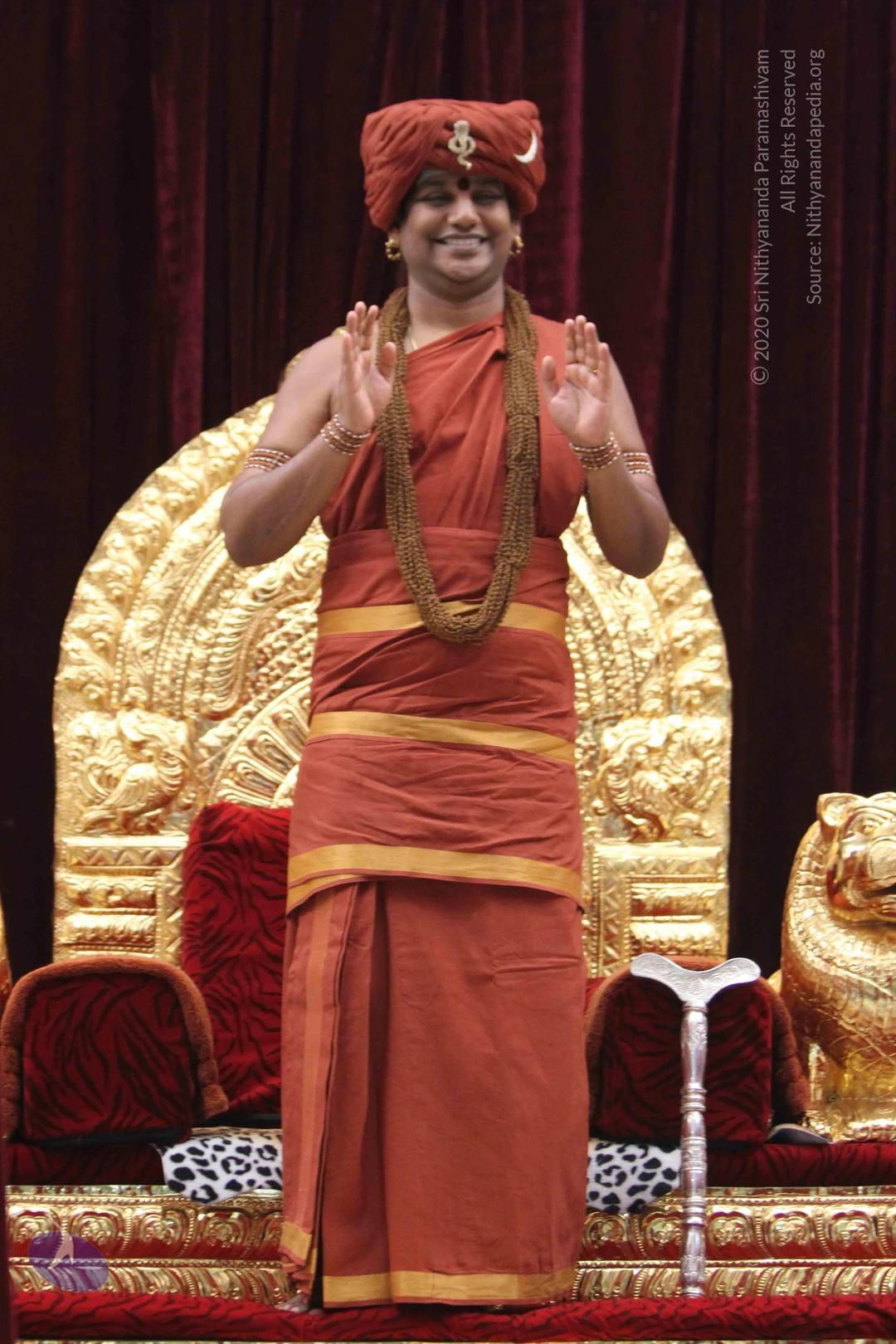
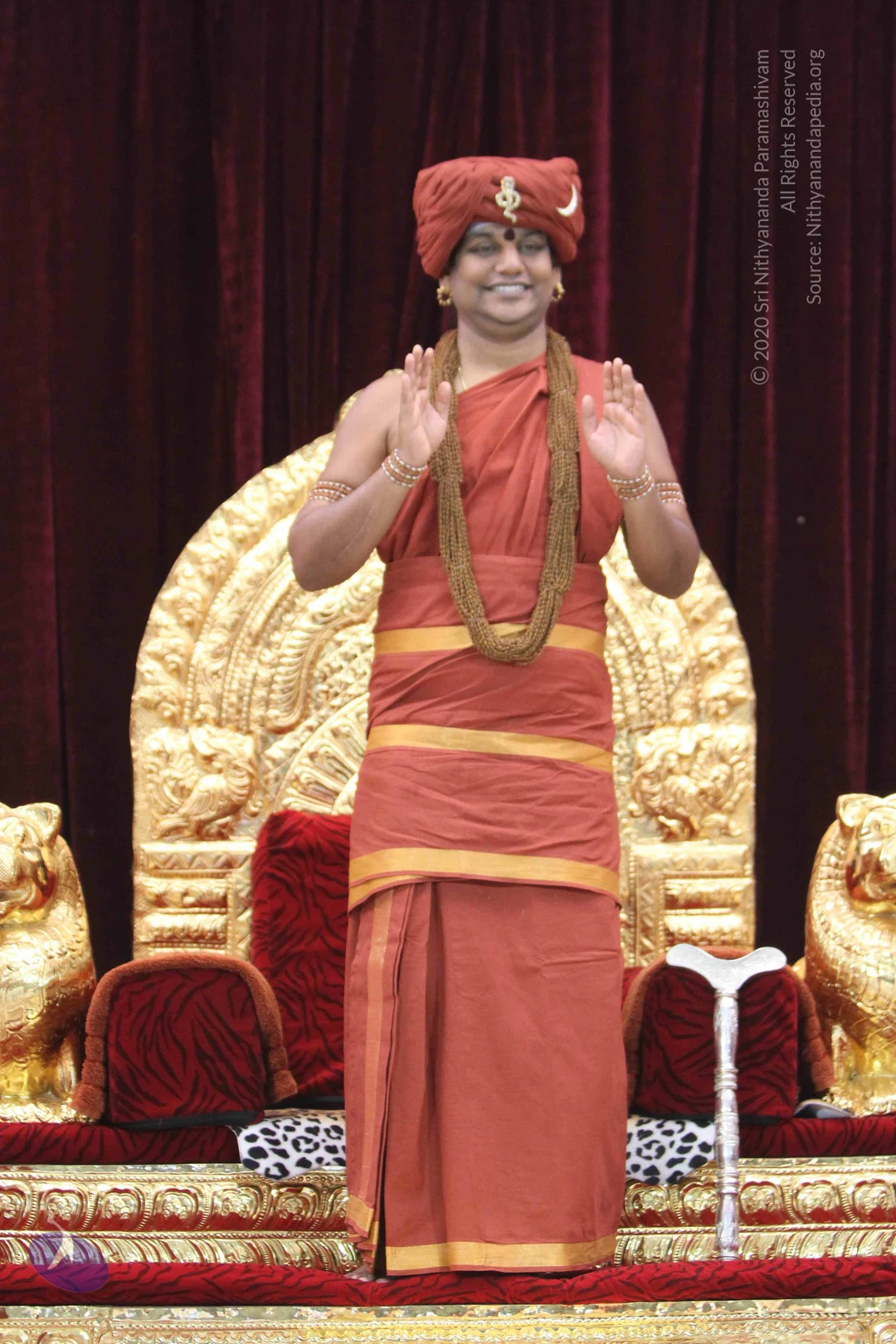
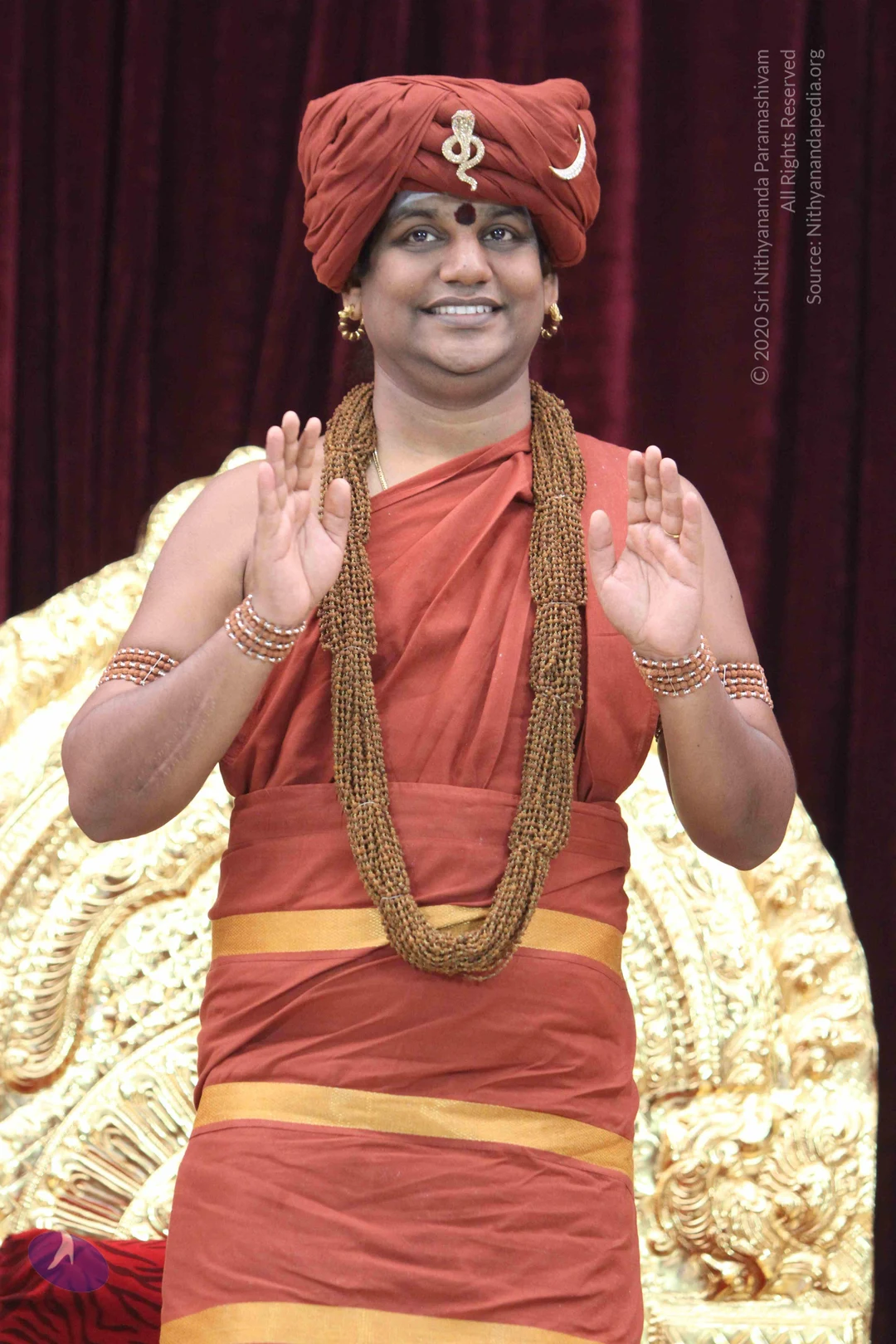
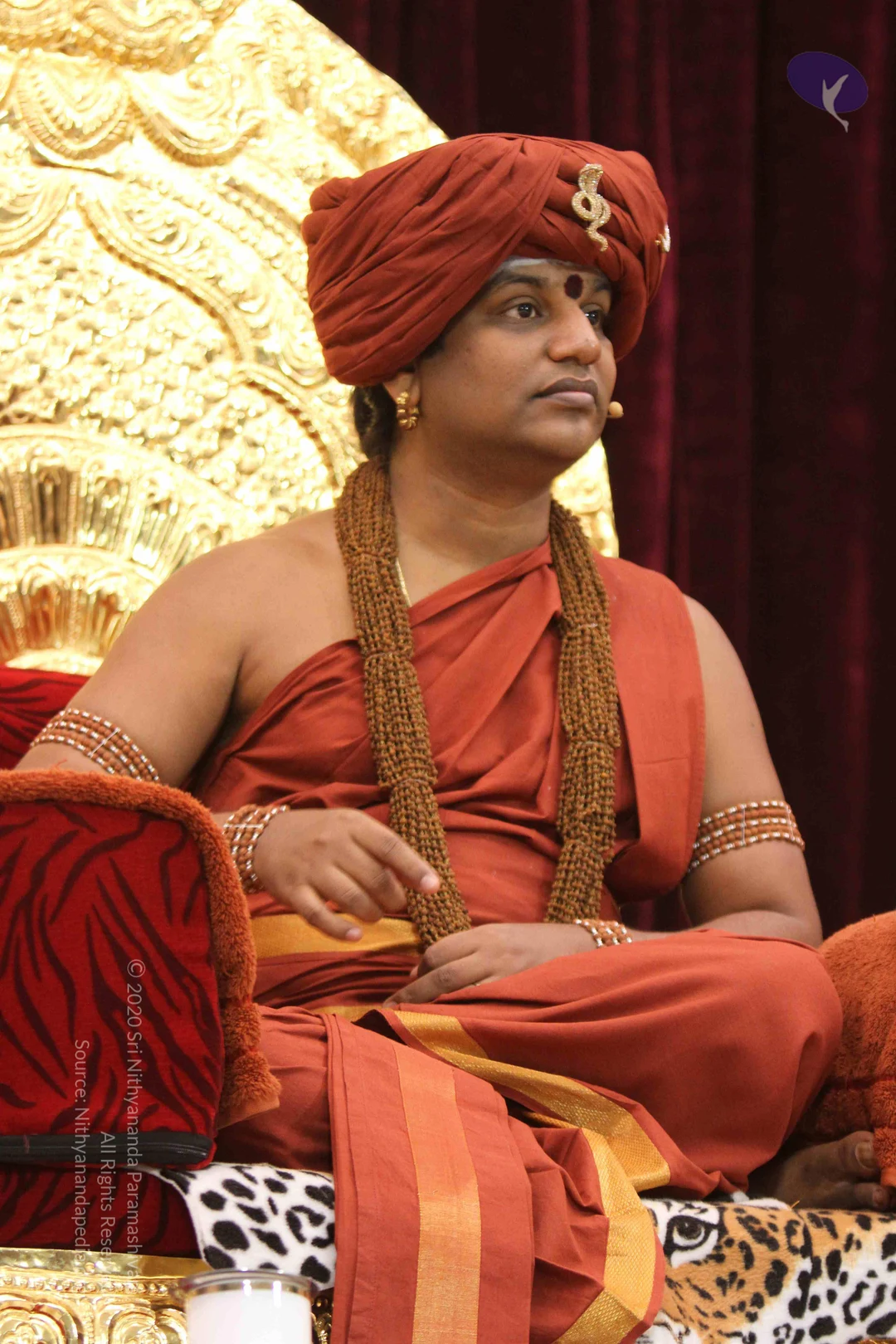
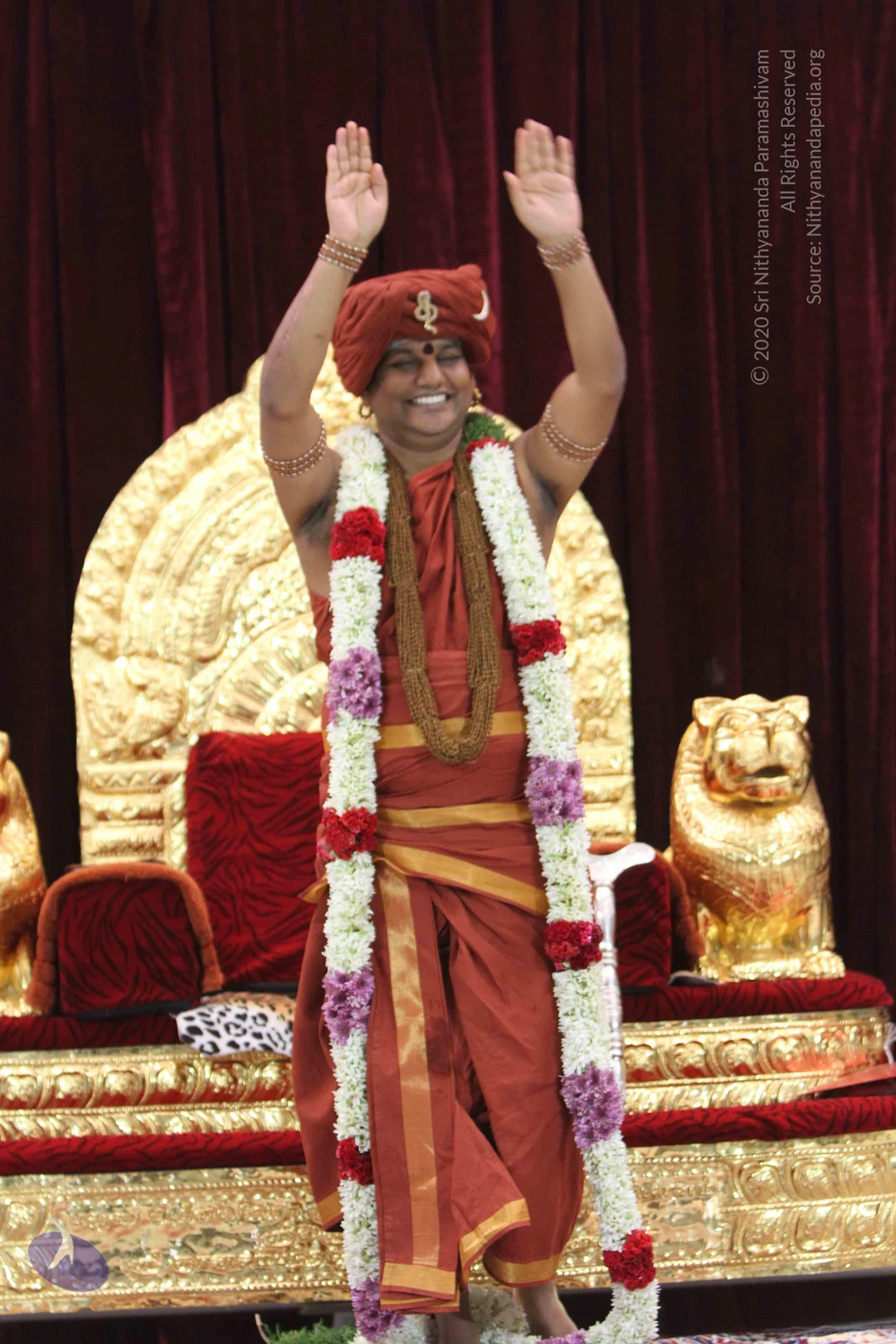
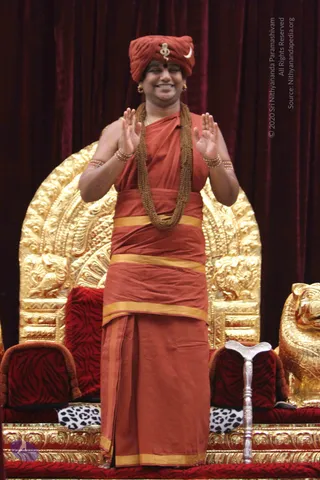
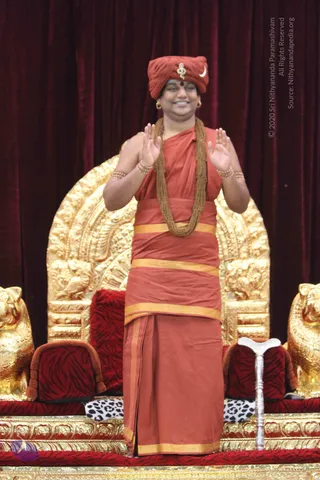
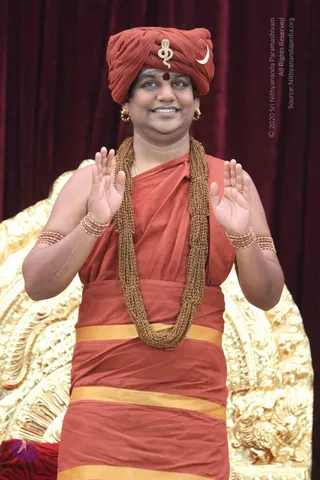
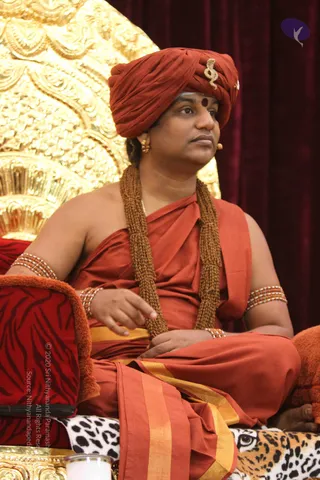
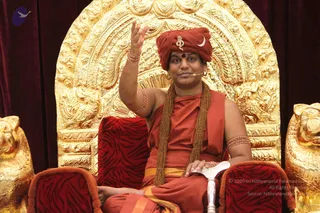
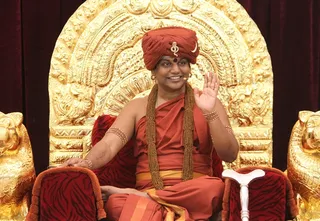
A standing man in an orange-red turban with a gold emblem and crescent, orange-red robes with gold borders, and a thick brown rudraksha mala. He smiles with both palms raised in front of a gilded throne with lion-carved armrests and red velvet cushions, a golden lion beside him and a silver staff at his feet. Swamiji (probable): the saffron-red turban, ornate dress and rudraksha mala match the page's identification, though the face is not used for identity.A standing figure in a rust-red turban with a gold emblem and crescent ornament, wearing rust-red draped robes with gold borders and a long brown rudraksha mala. Both palms are raised in greeting, with gold bangles on the wrists and gold earrings. He stands on a red-carpeted golden dais before an ornate gold throne with carved lion heads and a dark red velvet backdrop. A silver staff rests beside him.A standing man in a rust-red turban decorated with a gold cobra and crescent moon, wearing a rust-red robe with gold borders and a long multi-strand rudraksha-style mala. He has a red kumkum mark on his forehead, gold earrings and beaded bangles, and raises both palms outward in a blessing gesture before a gold carved throne and deep red velvet drapes.A seated man in an ornate gold throne with a red-and-gold ornate carved backrest and red velvet curtain behind. He wears a rust-orange turban with a gold ornament, a red-orange dhoti-style wrap with gold border, a thick brown rudraksha mala draped across the chest, pearl-like bangles on the arms and wrists, and gold earrings. A small red bindi marks his forehead and a lapel microphone is clipped near his face. He sits cross-legged on a red tiger-striped cushion and leopard-print cloth, one hand resting on his knee, looking to the side. A candle-like glass sits at the lower left. Probable Swamiji by appearance cues (turban, saffron-orange clothing, rudraksha mala, throne setting).Photograph of a seated man in an rust-orange turban with a gold snake-and-crescent ornament, orange robes, and a long brown rudraksha mala draped over both shoulders. He wears gold earrings, a red bindi, beaded bracelets on both arms, and a small microphone clip near his ear, with hands folded in his lap. Behind him is a large gold embroidered throne backrest and deep red velvet drapery, with a red tiger-striped cushion at his side. Appearance-based candidate: a person, seated in a satsang setting with a microphone.A seated man in a rust-red turban with a silver trident and crescent emblem, rust-red robes, a rudraksha mala and a wired microphone raises one hand mid-speech on an ornate gold throne with carved lion heads and red tiger-striped cushions, against deep red velvet drapery. A silver staff rests across his lap. Appearance-based cues are consistent with a person, but the face and ritual setting alone do not confirm identity, so the label is set as unsure.

03-RAJESH-CHANDRAMOHAN-MARRIAGE
28 photosSource gallery
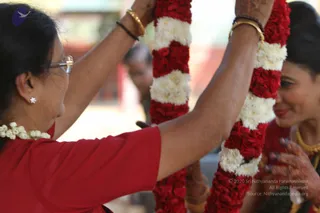
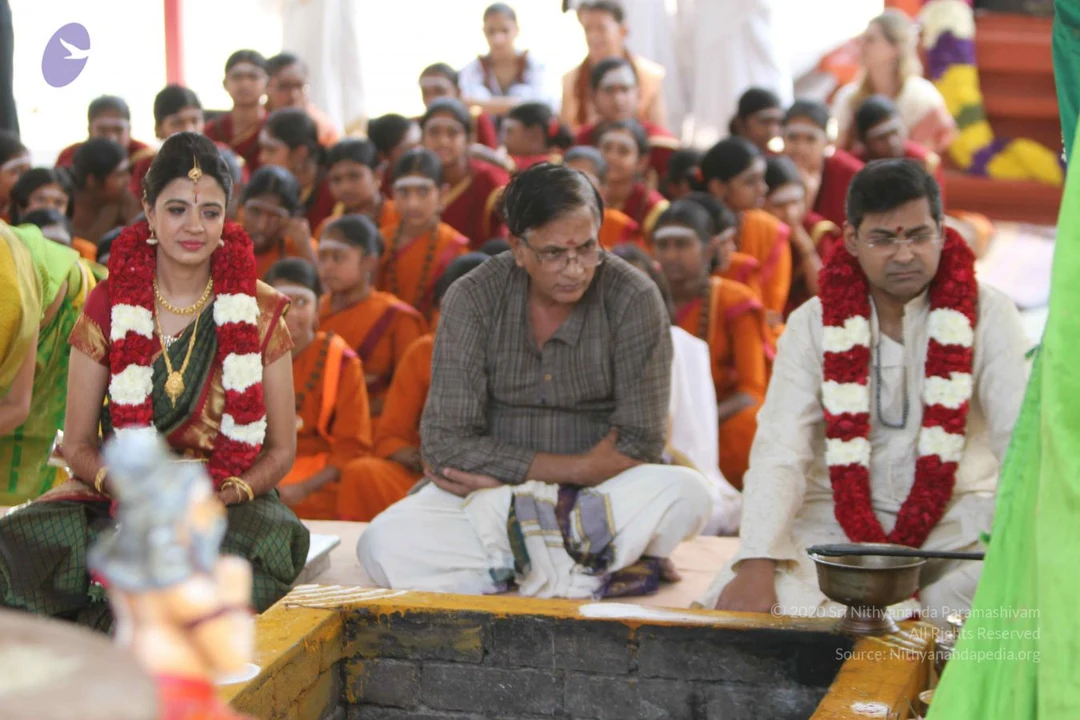
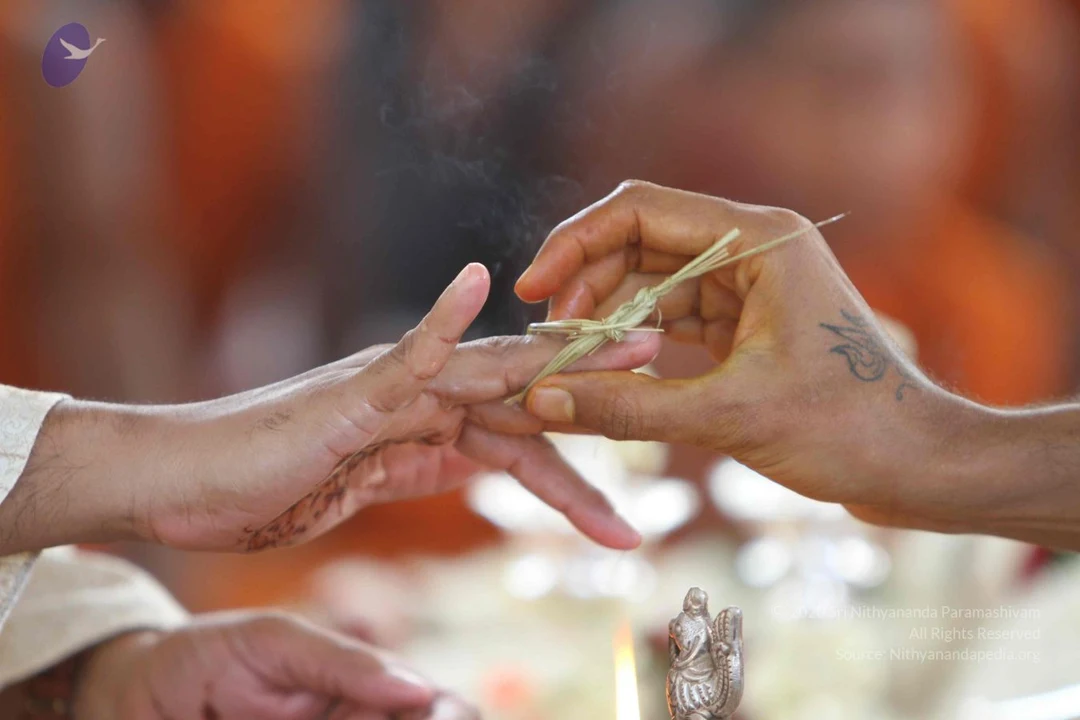
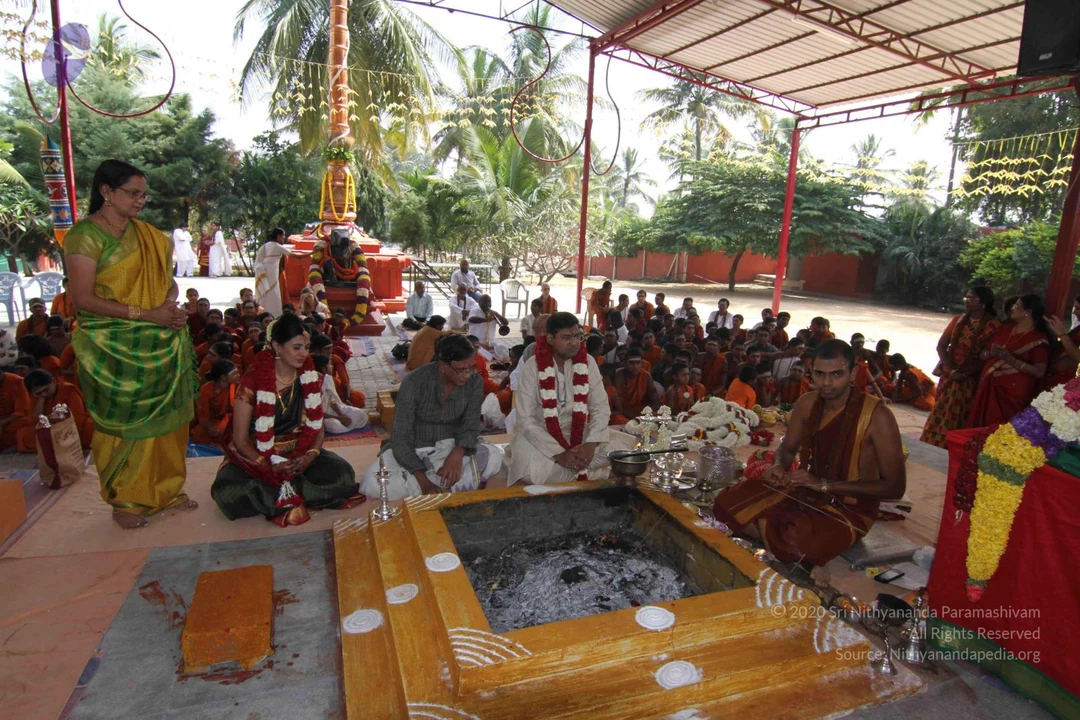
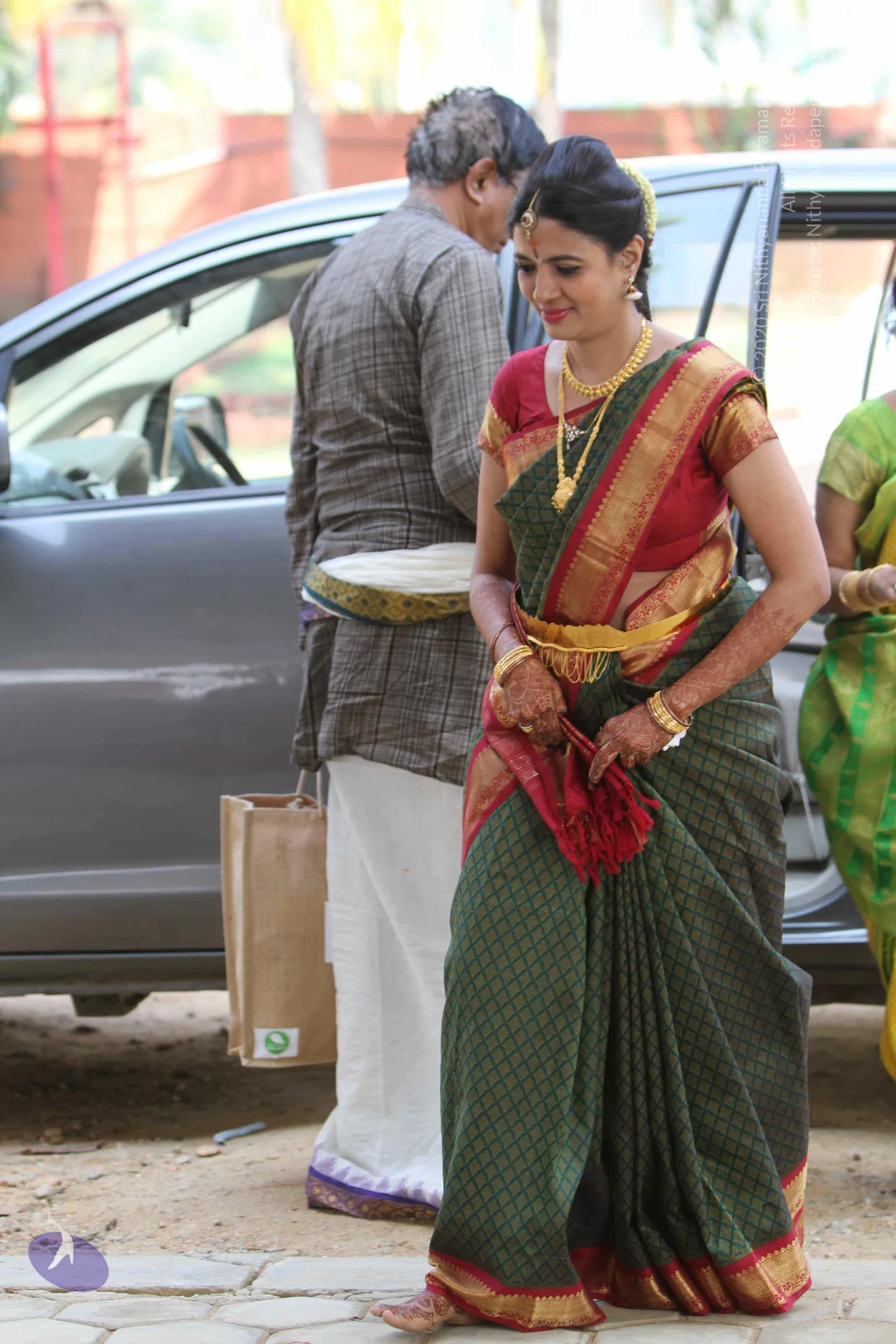
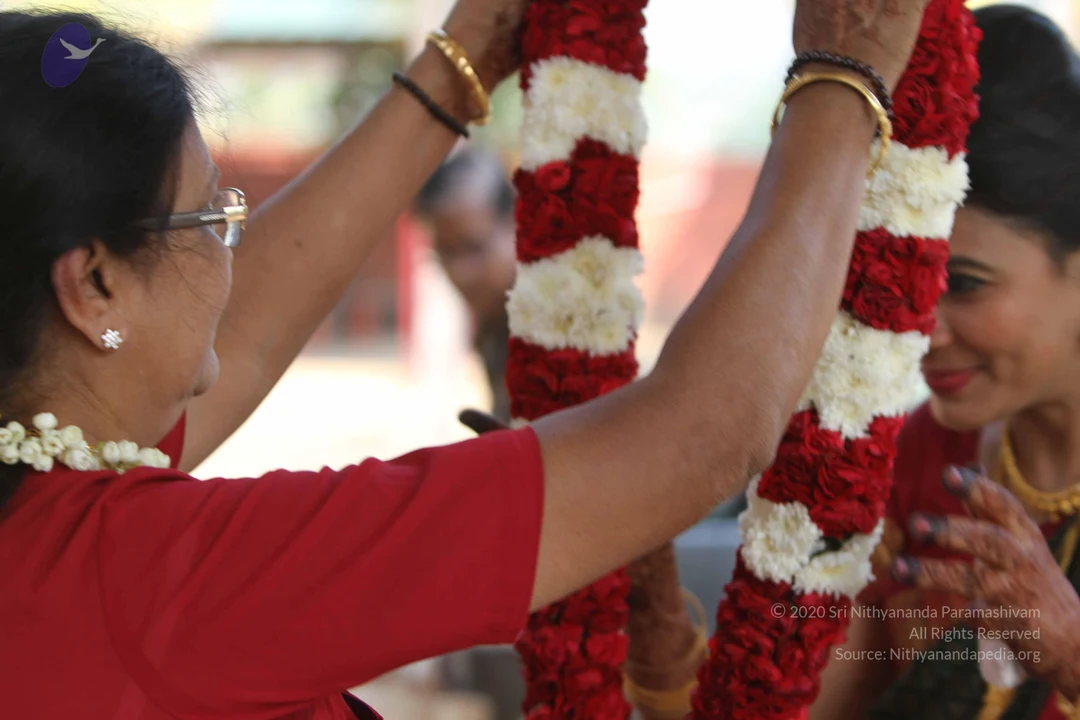
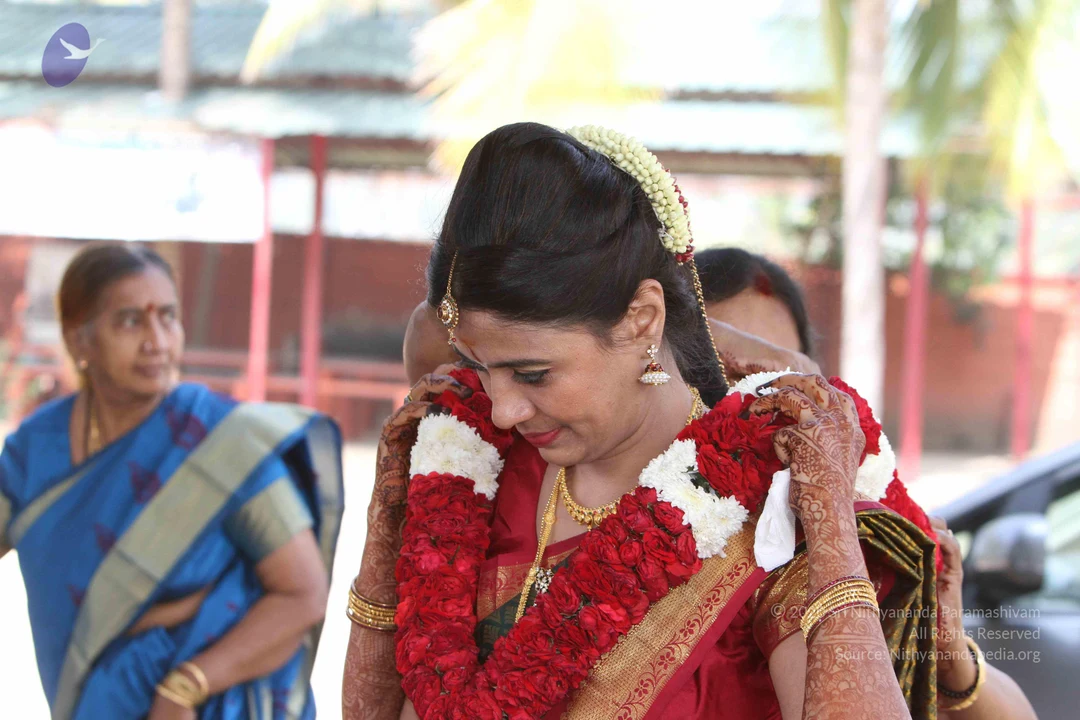
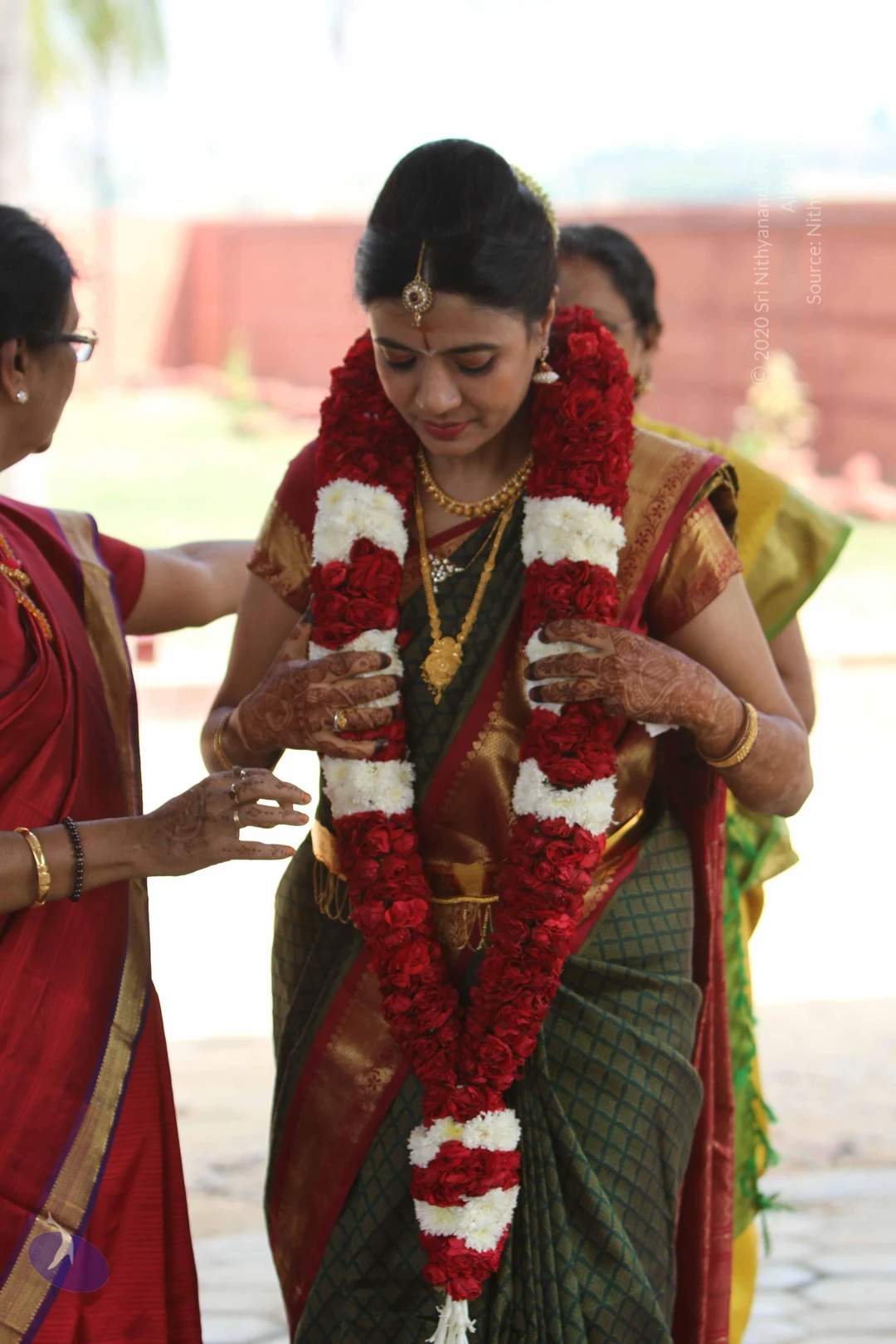
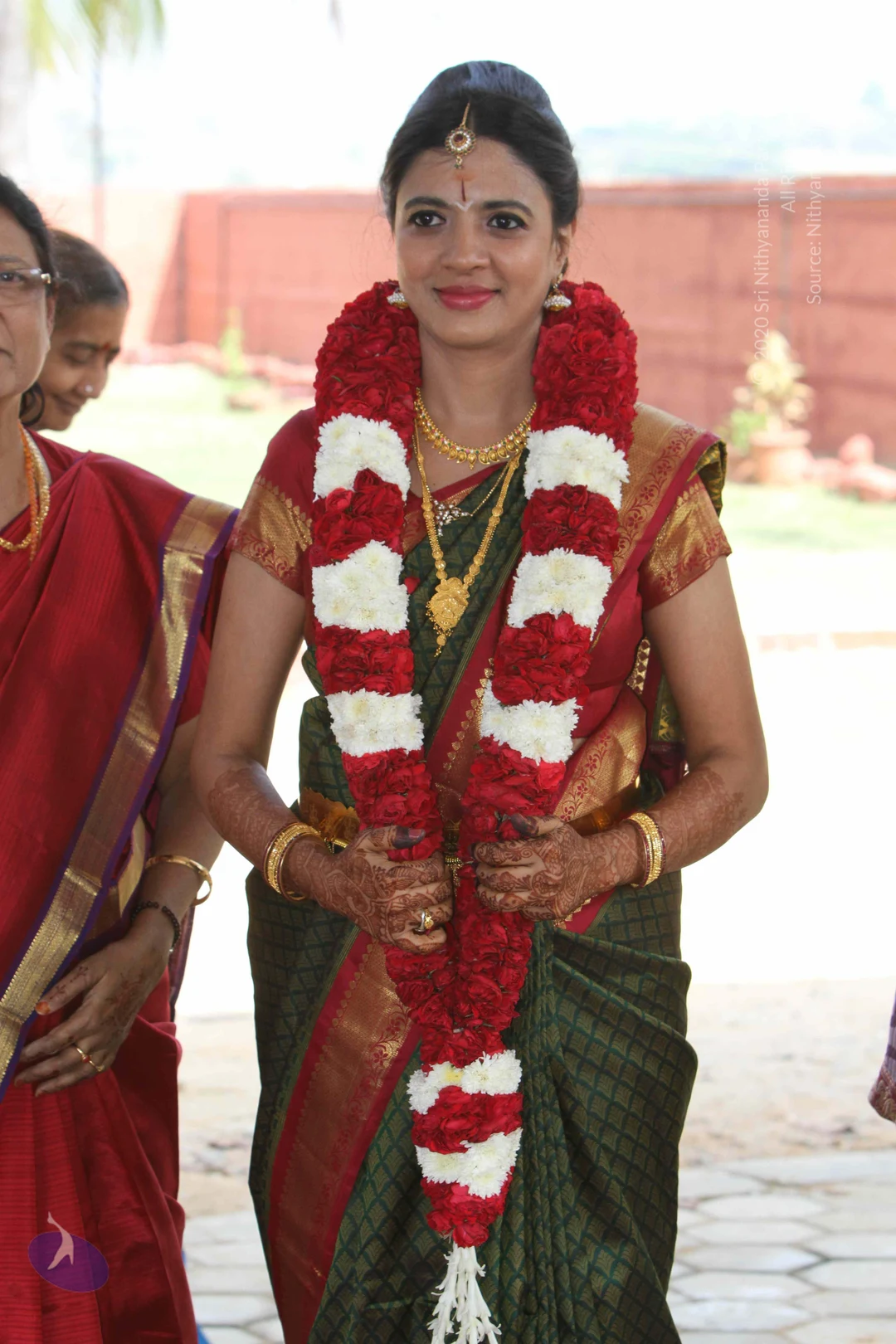
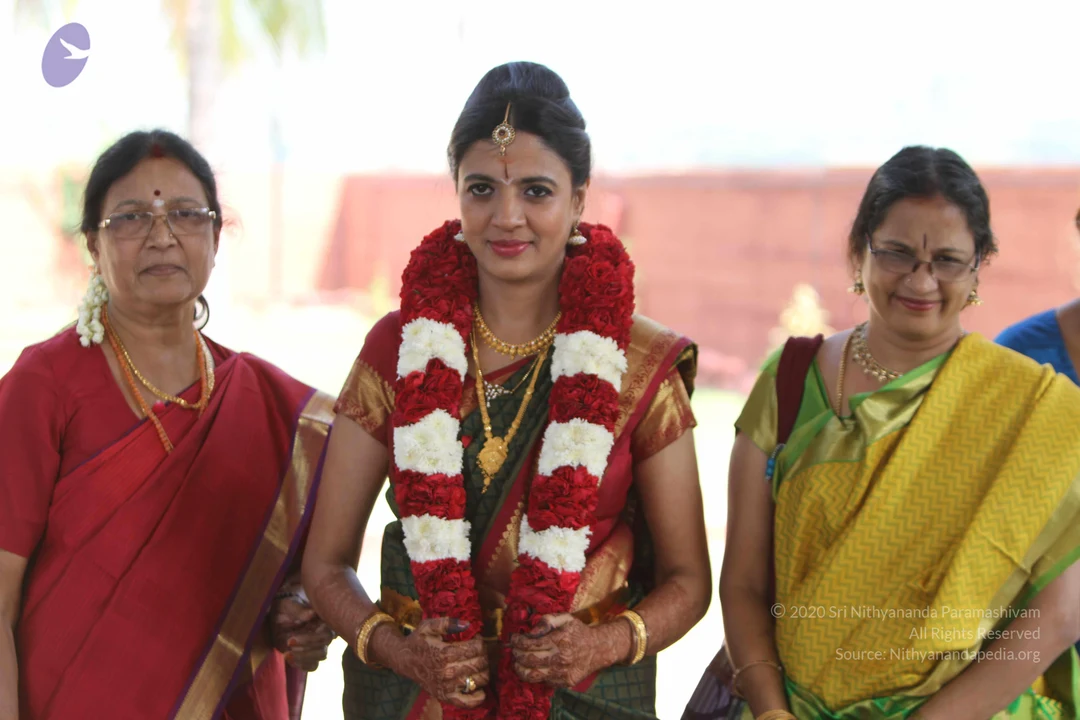
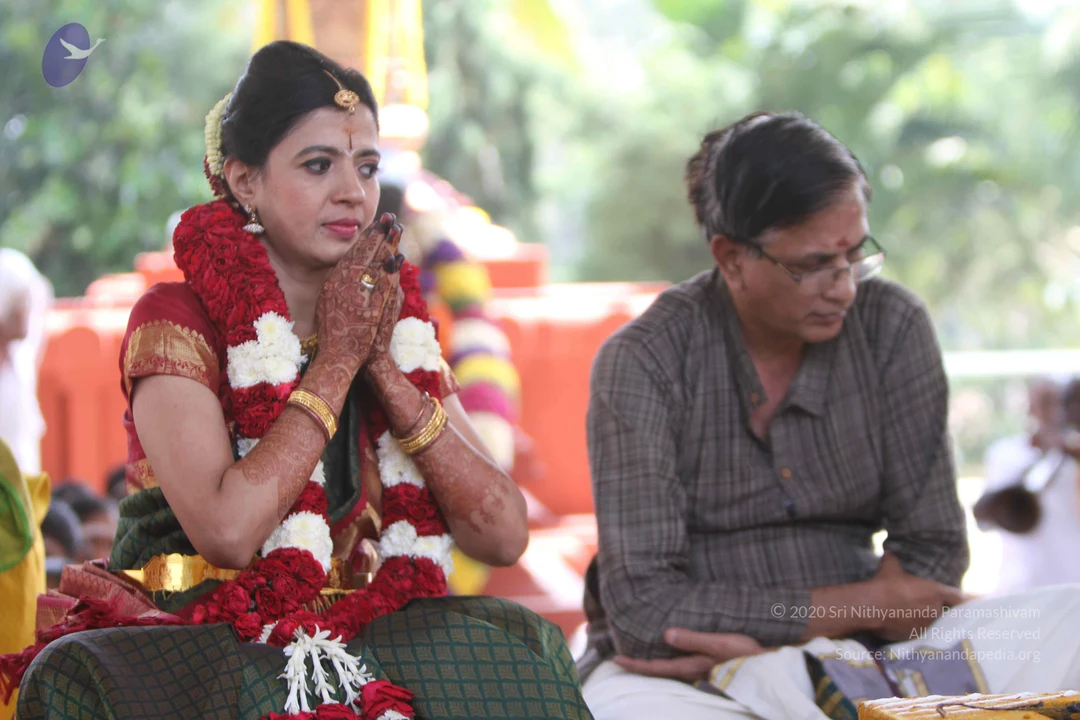
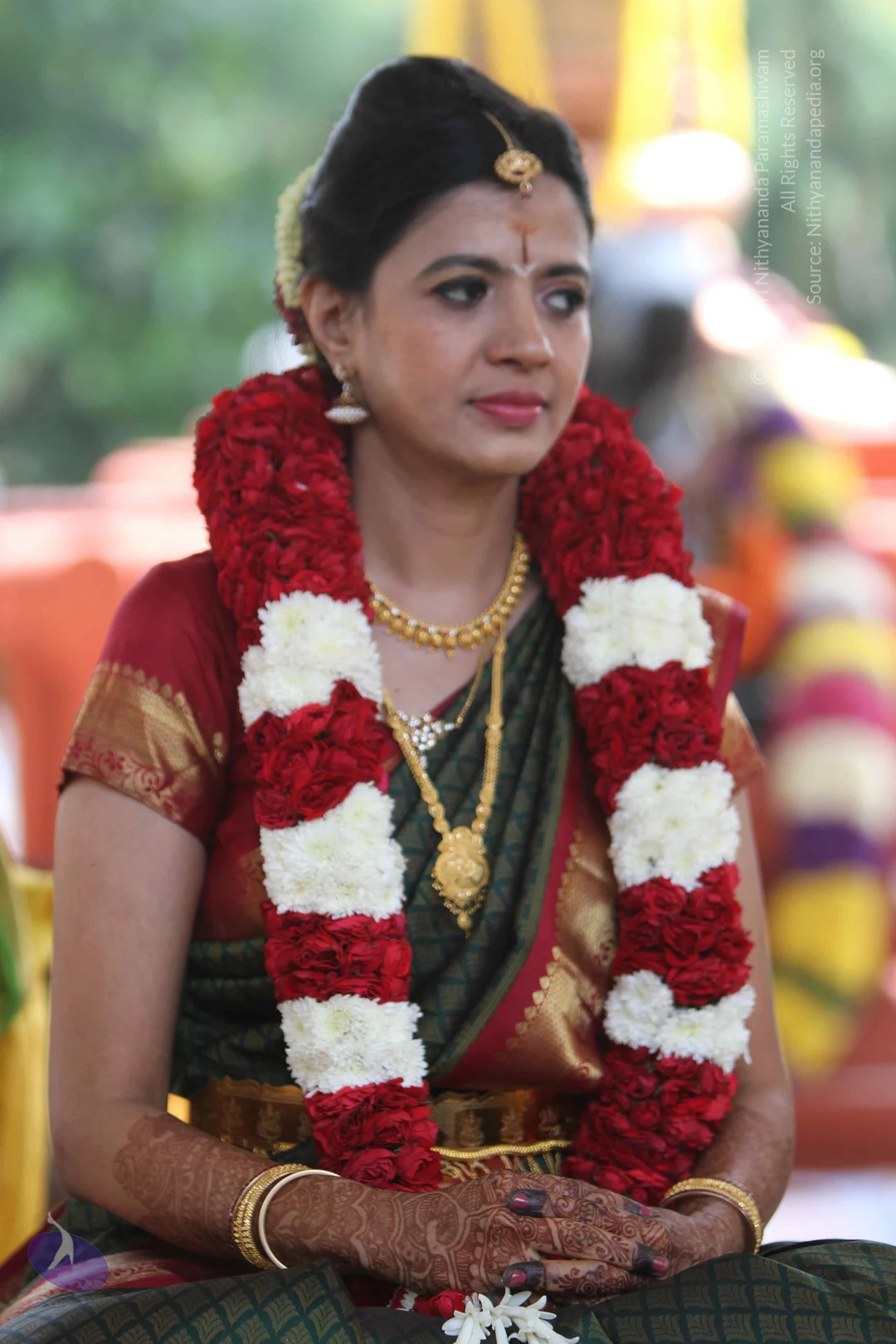
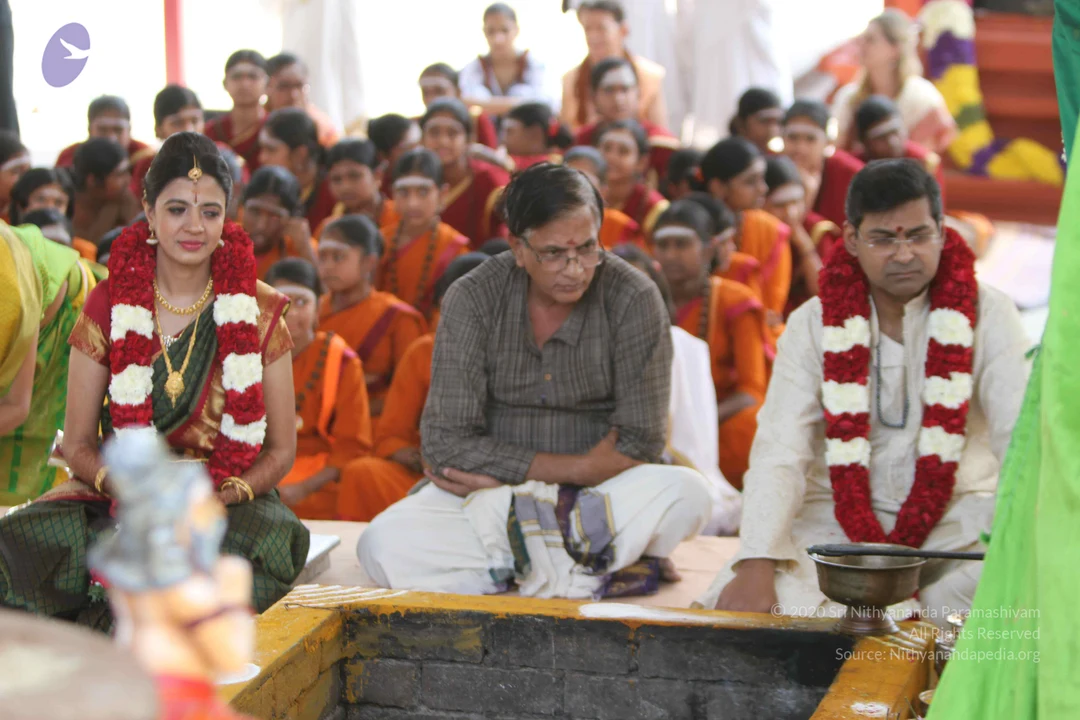
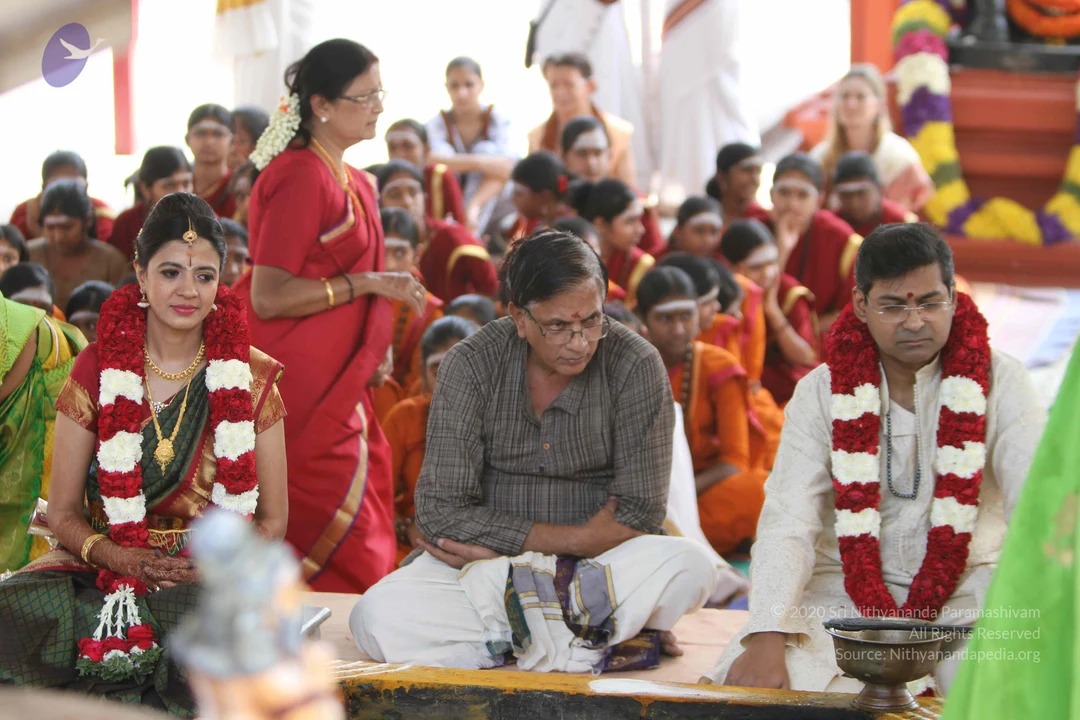
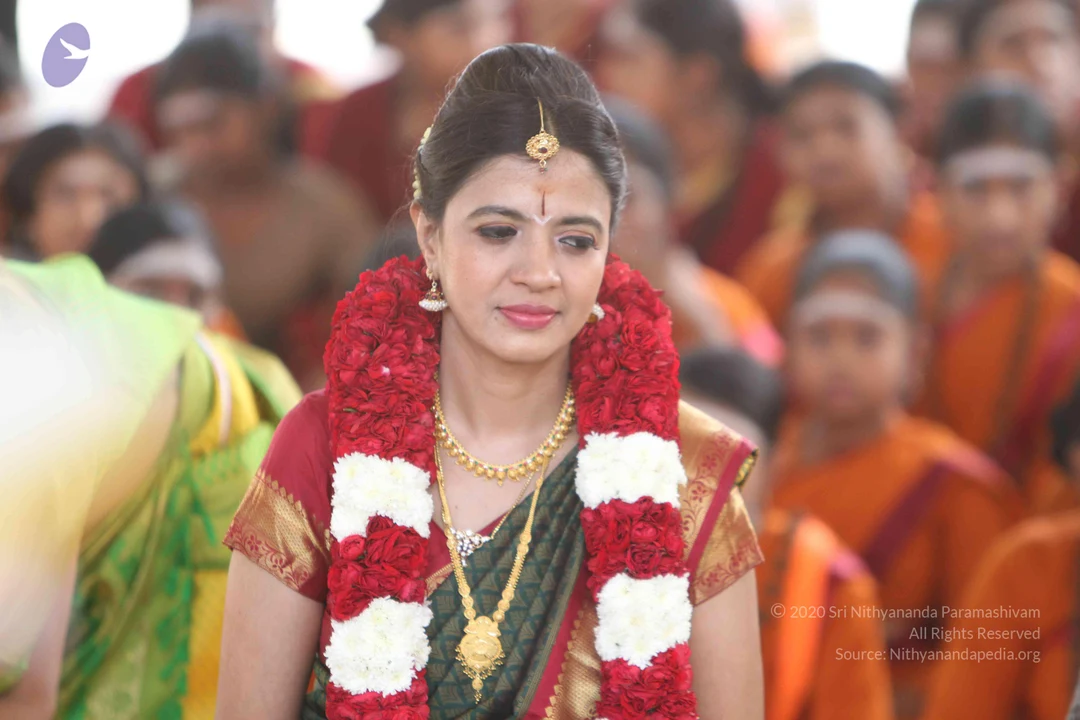
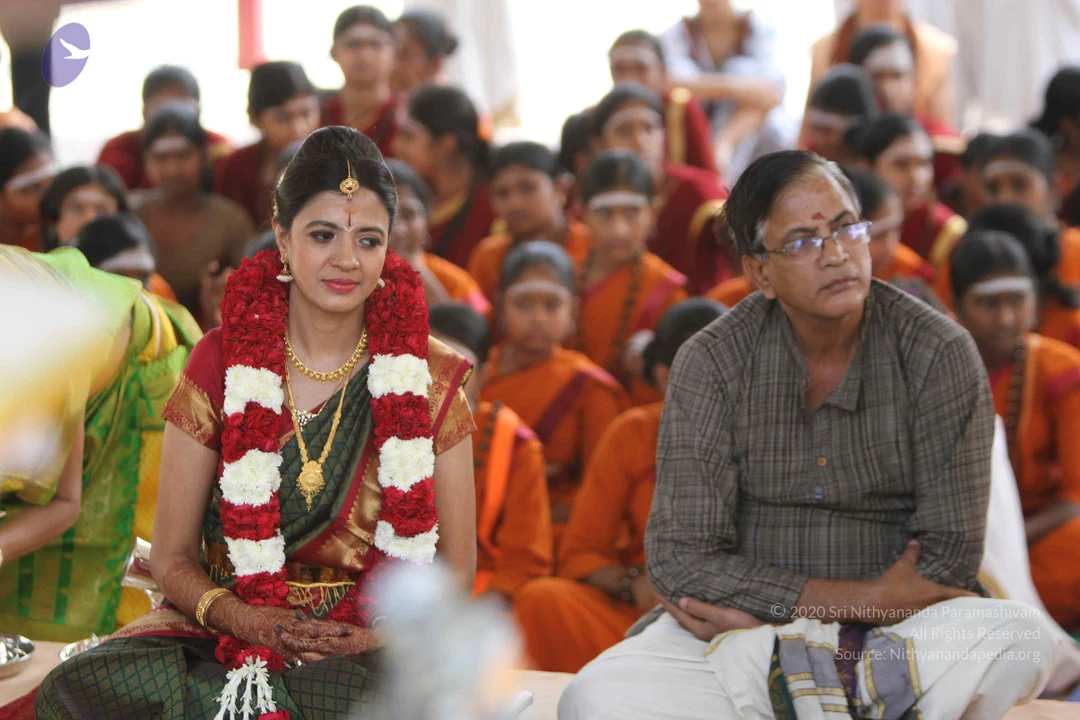
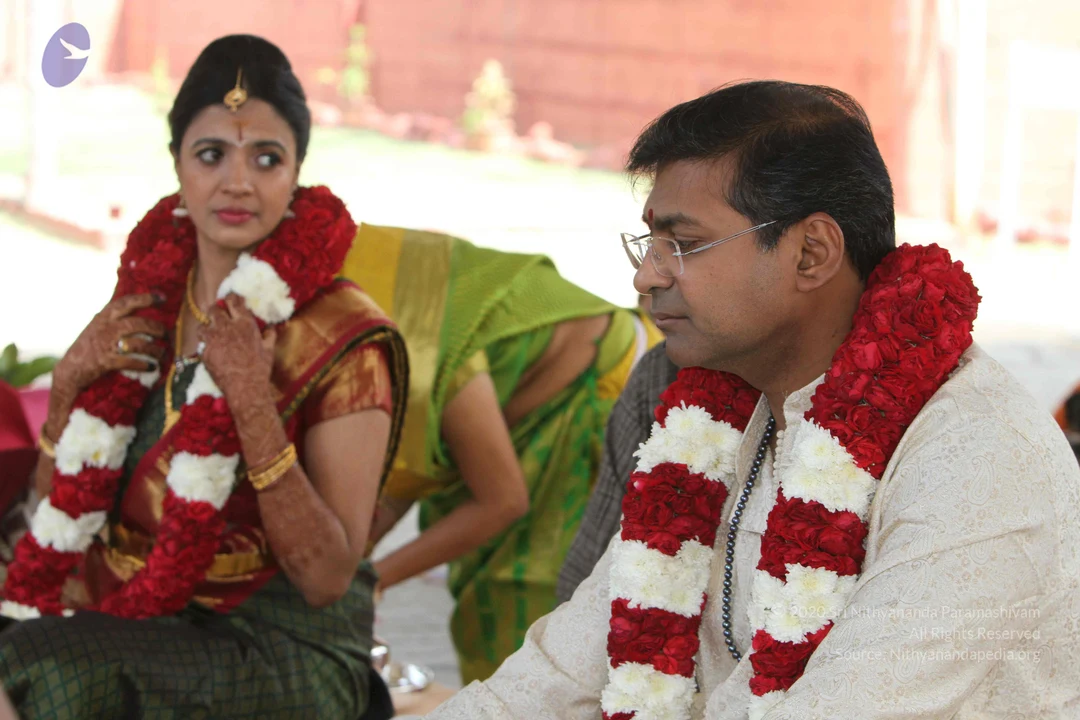
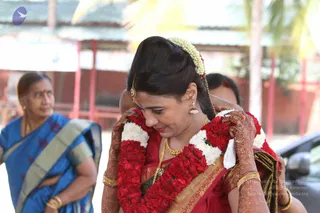
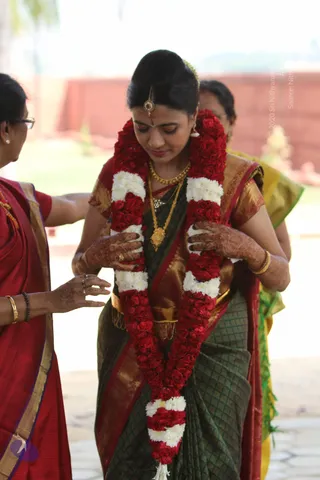
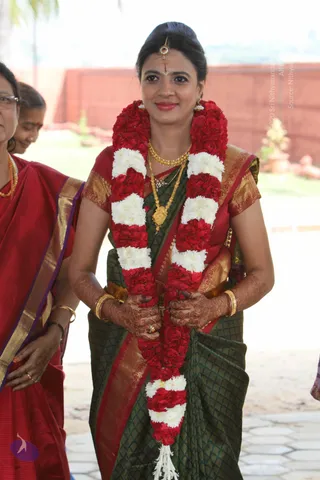
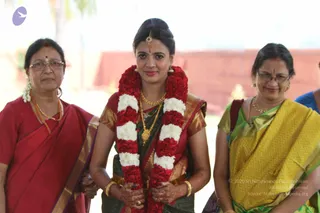
A woman in a dark green handloom silk saree with red and gold zari border walks on a paved path, carrying a red-tasselled end of the saree in her henna-decorated hands. She wears gold necklaces, bangles, a maang tikka and jasmine in her hair. Behind her, a man in a grey checked shirt and white dhoti stands beside a grey car with an open door, holding a round white-and-green bundle at his waist, and a woman in green saree is partly visible at right. Three people are visible in the scene.Close photo of two women in red clothing holding up a long garland of red roses alternating with white flowers. The woman on the left, wearing glasses, a white flower necklace and red blouse, raises the garland with both arms. Beside her, a woman with a smile and gold jewellery holds the other end, her hands decorated with henna. Bangles are visible on both wrists. The background is blurred and a second person stands further back.A bride in a red silk saree with gold zari border stands with her head lowered while a woman behind her places a thick garland of red roses and white jasmine around her neck. She wears gold jewellery including a necklace, earrings, a maang tikka and gold bangles, with mehendi on her hands and a jasmine braid in her hair. A woman in a blue saree with a green border stands at left, and a parked car is visible at right. No a person candidate is visible in this scene.A bride in a dark green silk saree with gold zari border stands with head bowed while two women assist her. She wears a gold necklace, jhumka earrings, a maang tikka and a bun with flowers, and has mehndi-decorated hands. Her hands hold a long red and white garland of roses and jasmine, and a woman in a red saree on the left adjusts it. A third woman is partly visible behind her, and a red wall and pale outdoor paving form the background.A smiling woman in a dark green silk saree with a gold zari border stands outdoors holding a long garland of red roses and white flowers with a tassel at its end. She wears gold jewellery, including a layered necklace and earrings, a gold maang tikka in her hair, a red bindi, and bangles, with mehndi patterns on her hands. An older woman in a red saree stands at the left edge, with a red wall and potted plants behind. No a person candidate is visible in the frame.Photograph of three women standing outdoors under a shaded pavilion with a red brick wall behind them. In the centre, a bride in a dark green and maroon silk saree with gold zari borders wears a red and white flower garland, a gold maang tikka, gold necklaces, bangles and mehndi-decorated hands held together at her waist. To her left, an older woman in a red saree with an orange beaded necklace and red bindi stands beside her. To her right, a woman in a yellow and green saree with gold jewellery and glasses stands smiling. Three people are visible in the scene.

November 27 2014

8 photosView all
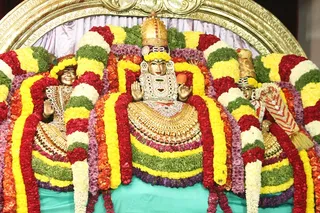
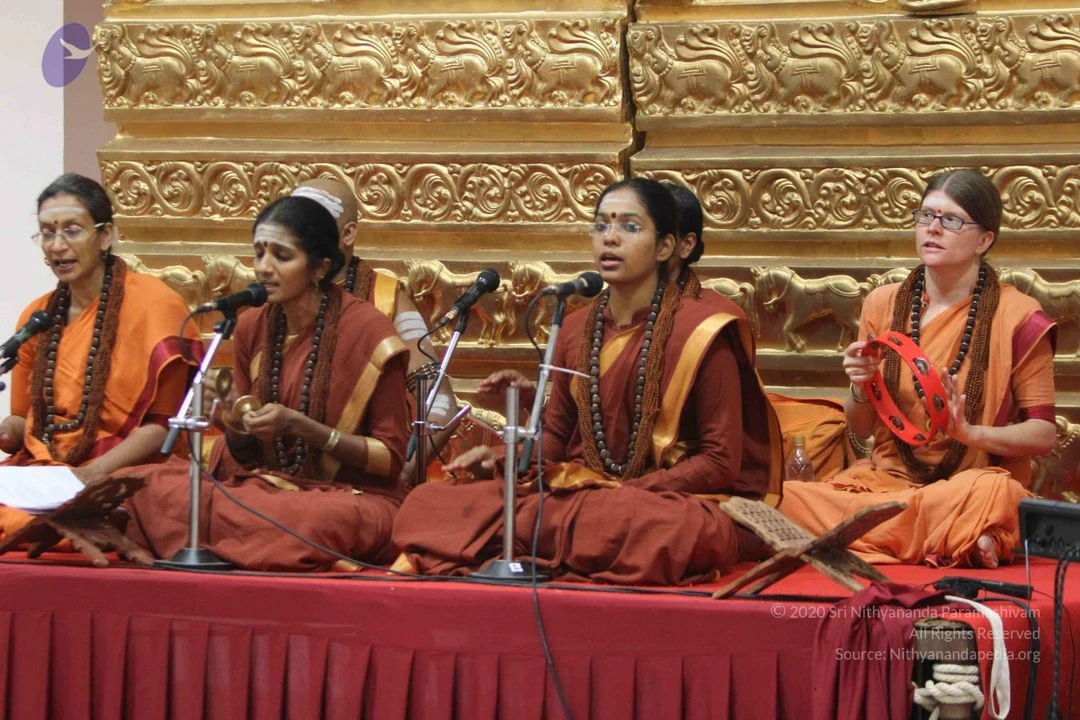
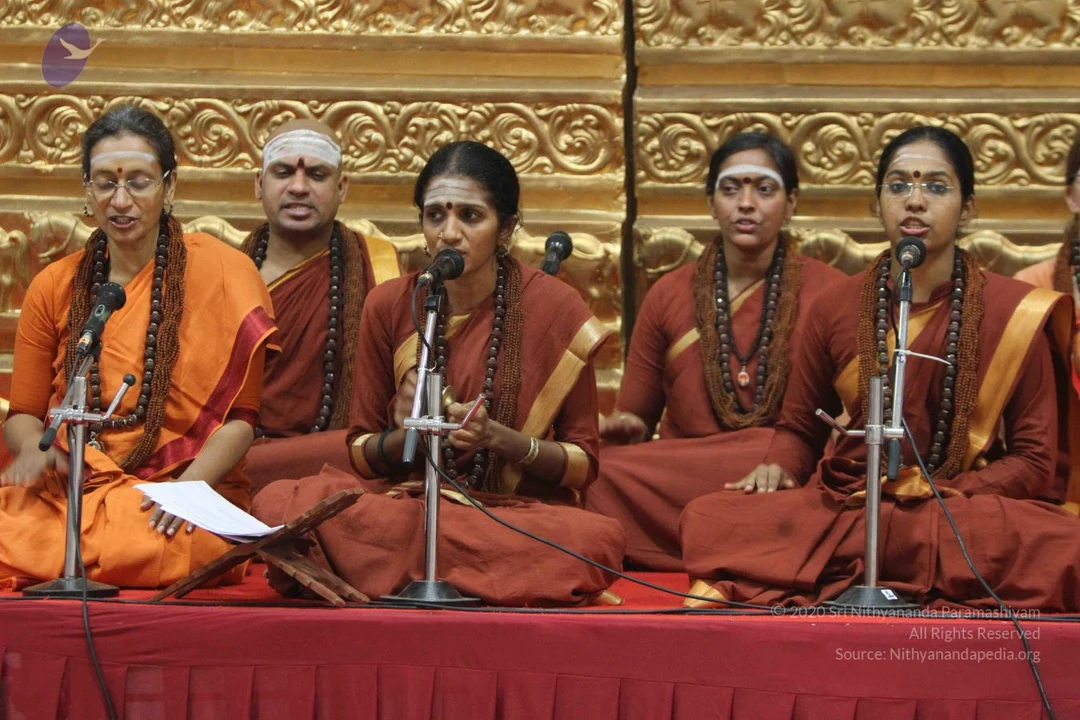
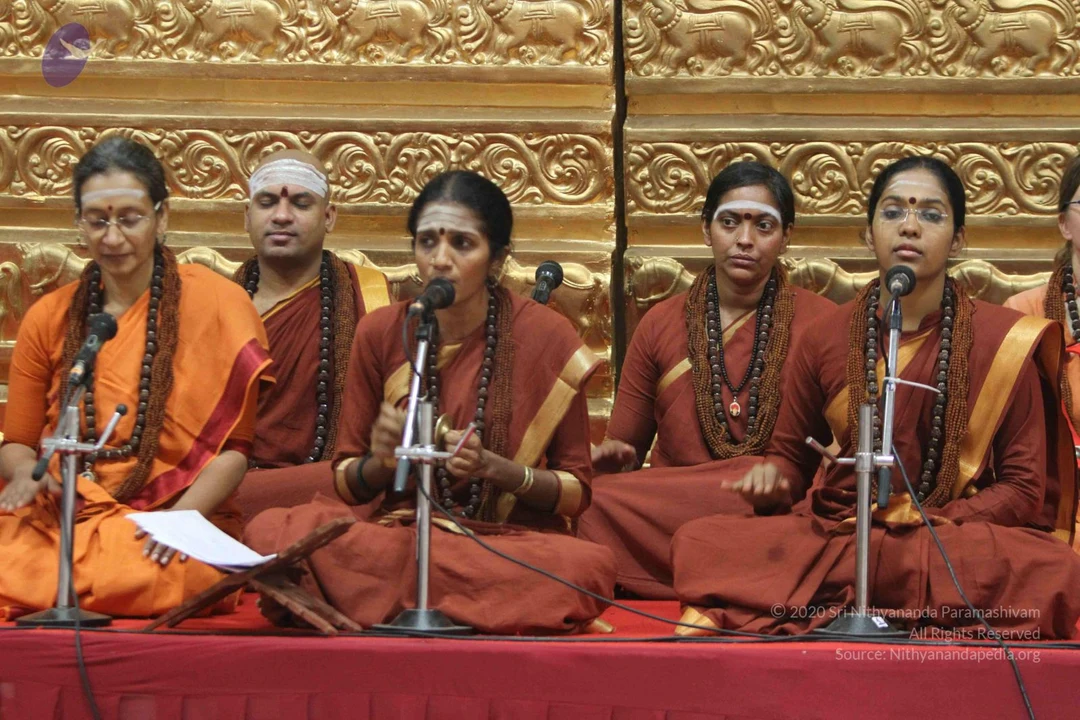
A seated person on an ornate golden throne with carved lion-like armrests and red tiger-striped cushions, wearing a rust-orange turban with a gold emblem and crescent, a rust-orange shawl and dhoti with a yellow border, and long rudraksha-style mala beads over the shoulders. The person raises the right hand in a blessing gesture while smiling, bangles on both wrists, and a white cane with a curved handle rests beside the chair. Swamiji (probable): the rust-orange turban, rudraksha malas and ornate ceremonial setting fit the page's satsang context, and the seated person is in_person.Five people in saffron and rust-orange robes sit cross-legged on a red stage before a gold-patterned backdrop, singing into microphones on stands. Several wear rudraksha malas and vertical or horizontal forehead markings. A woman at center holds a small object and sings while others beside her sit attentively; a sheet of paper rests on a stand at left. The scene suggests a devotional kirtan performance.A golden-faced deity murti. She wears a tall gold crown set with red and green stones, a diamond-studded necklace and ornate gold jewellery, and holds a red mango-like fruit in one hand while the other hand is raised in abhaya gesture. The seat and surroundings are banked with marigolds in yellow and orange, red roses and purple flowers in garlands. No people are visible in the scene.