Skip to content
Friday

28 November 2014

The Thread of Life is Shivoham

Dated photos
195
Source pages
1
Media
3
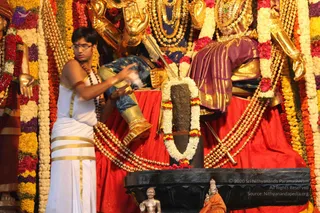
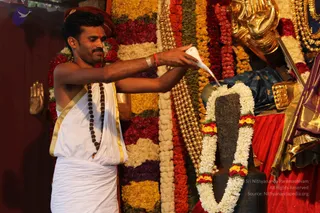
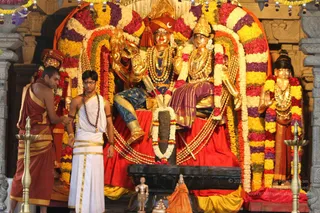
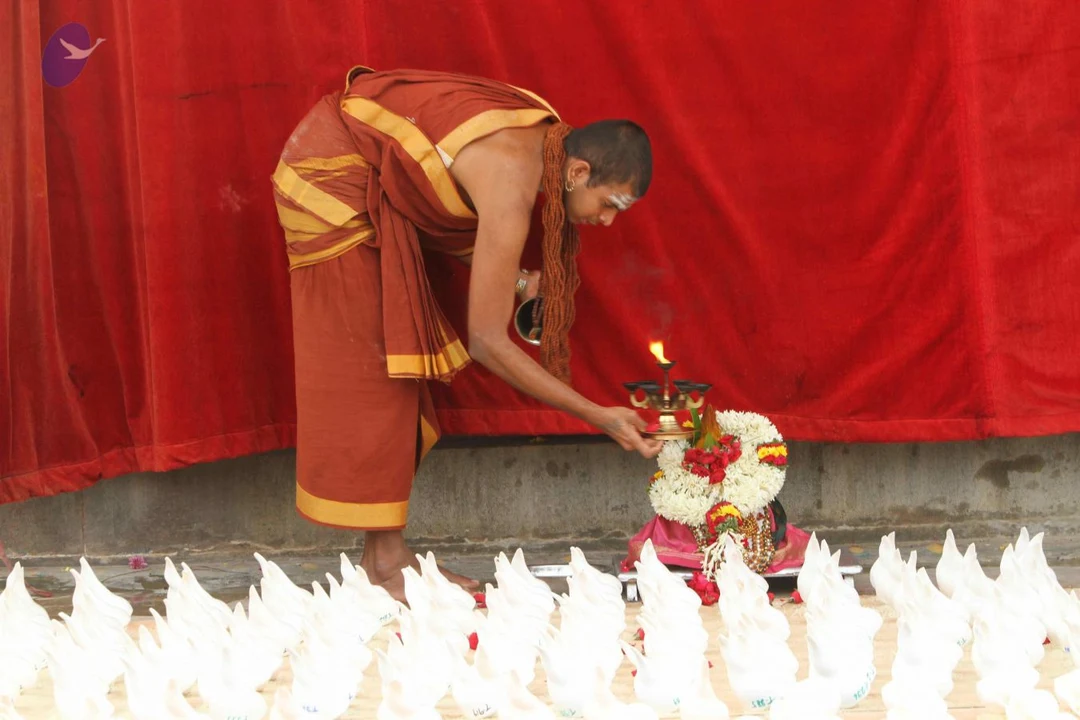
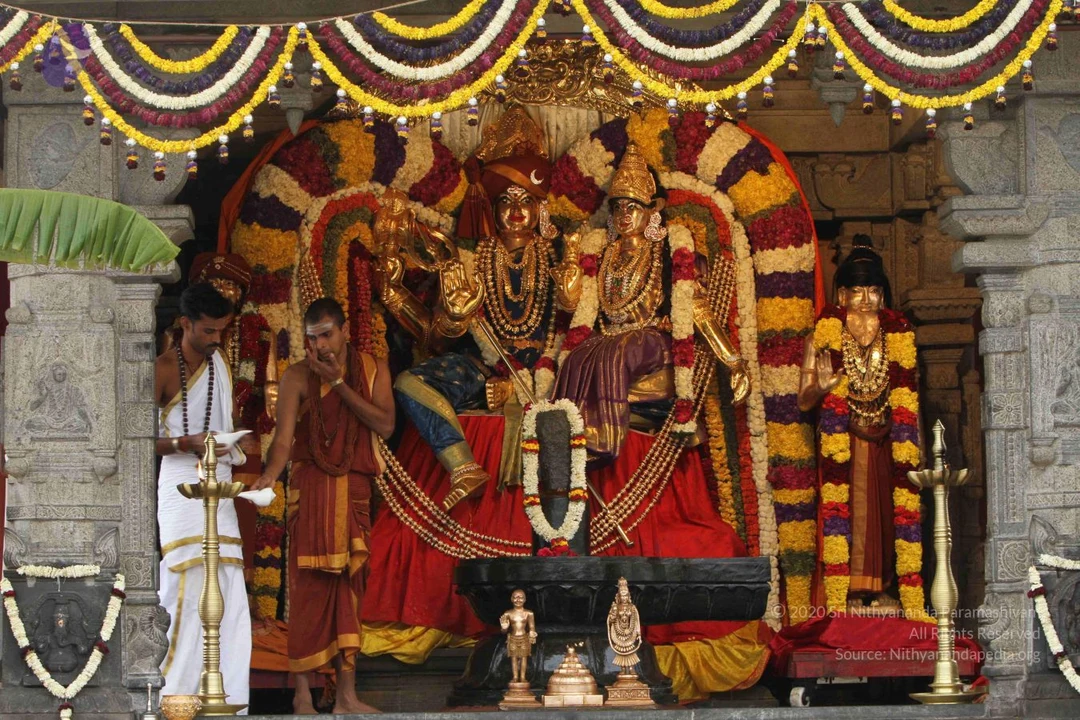
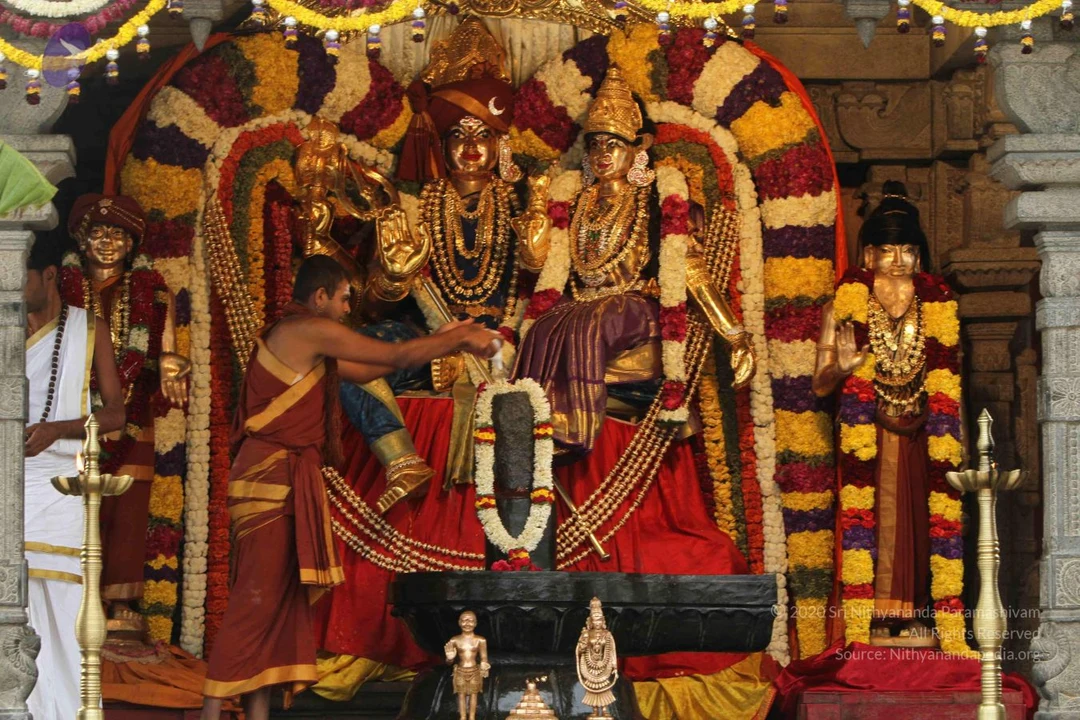
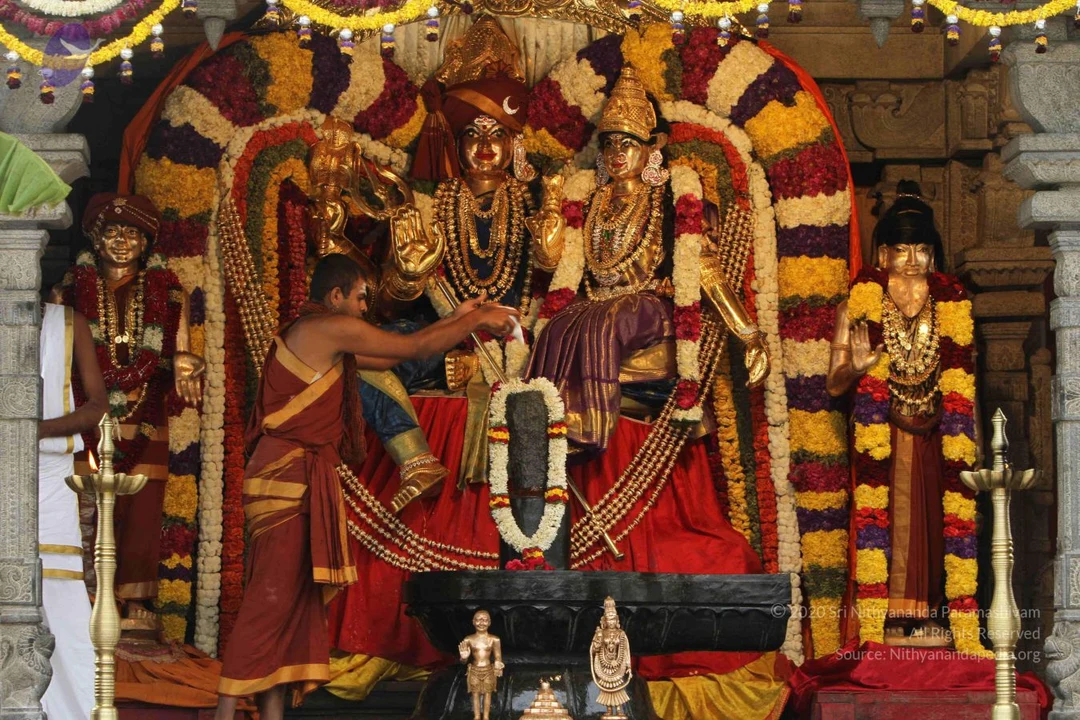
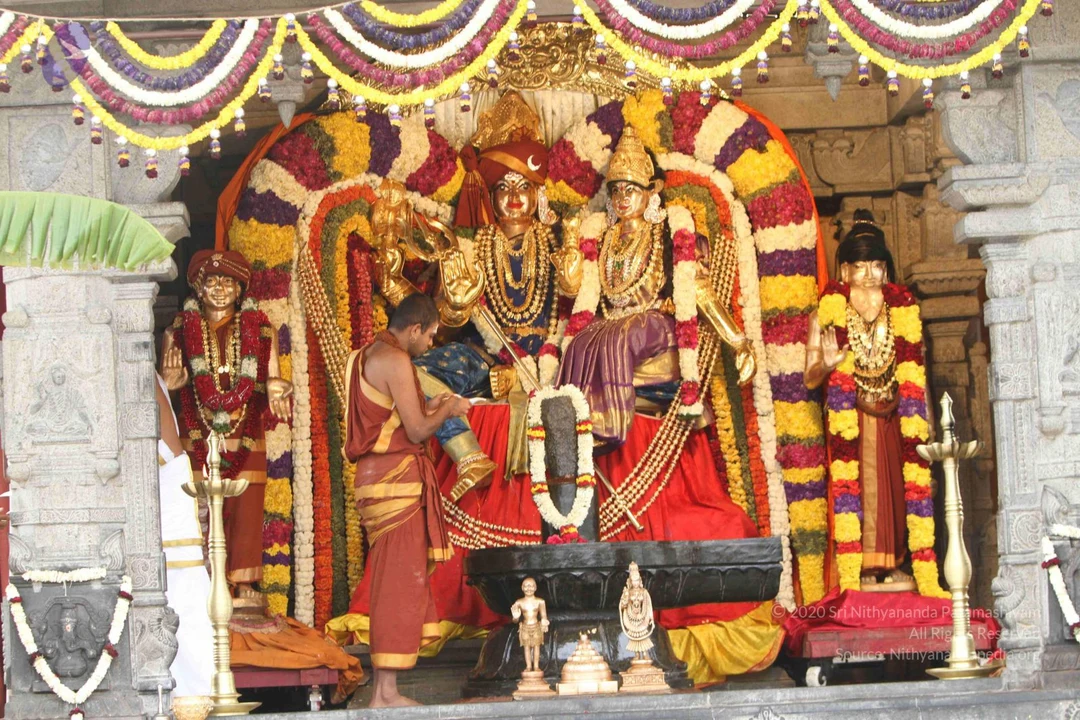
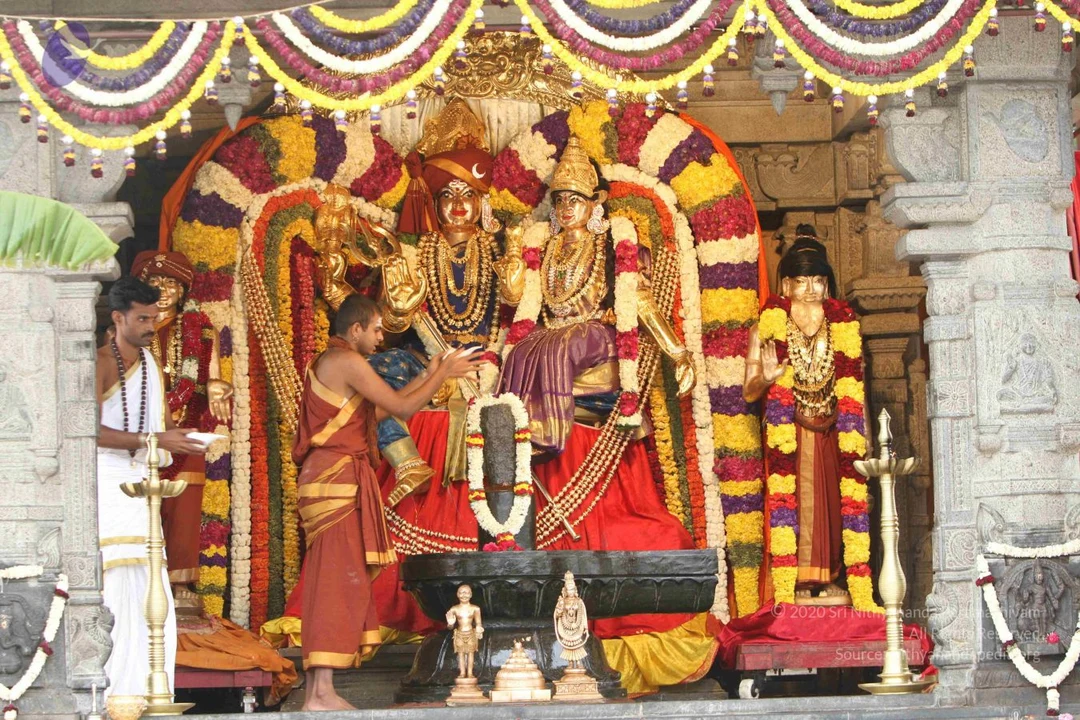
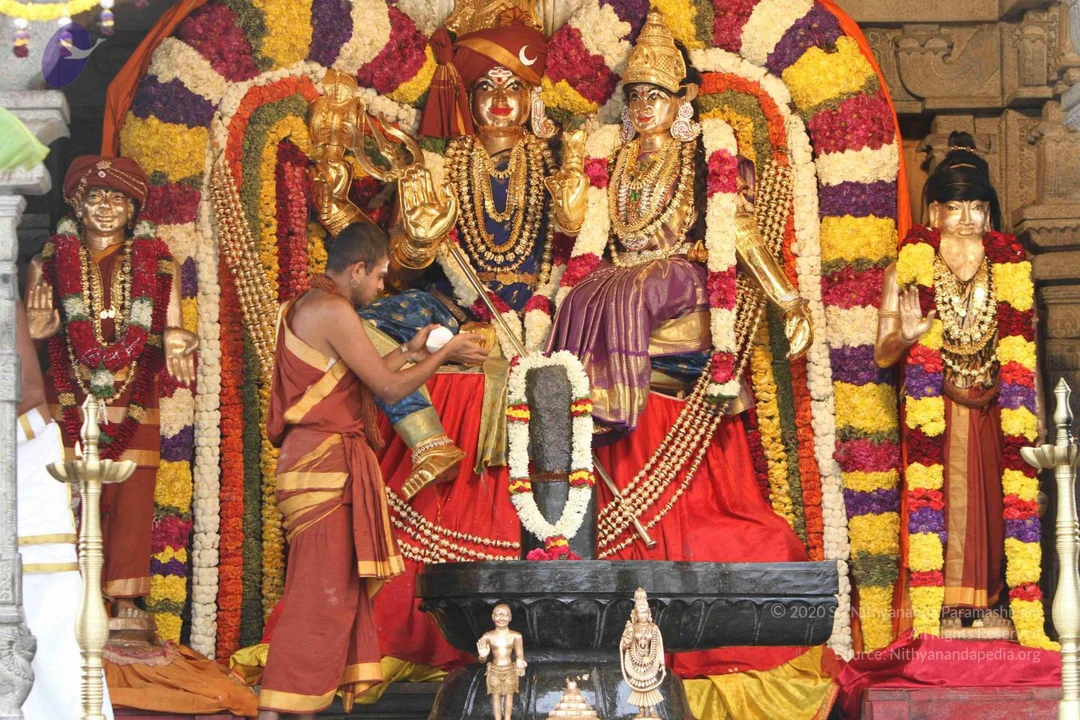
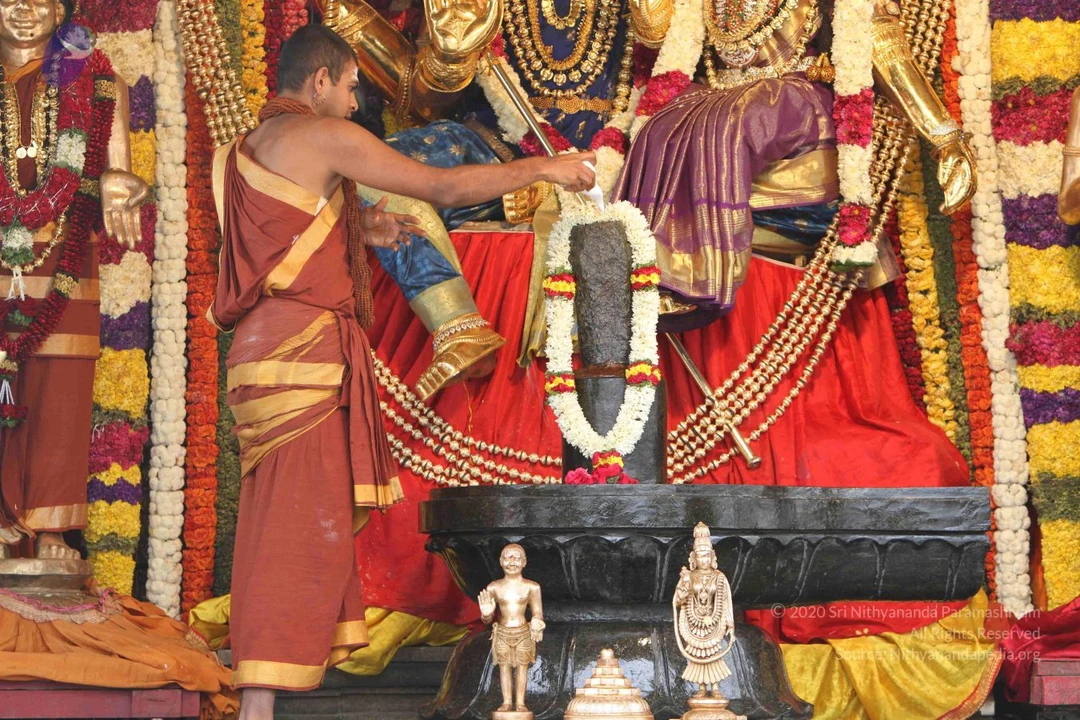
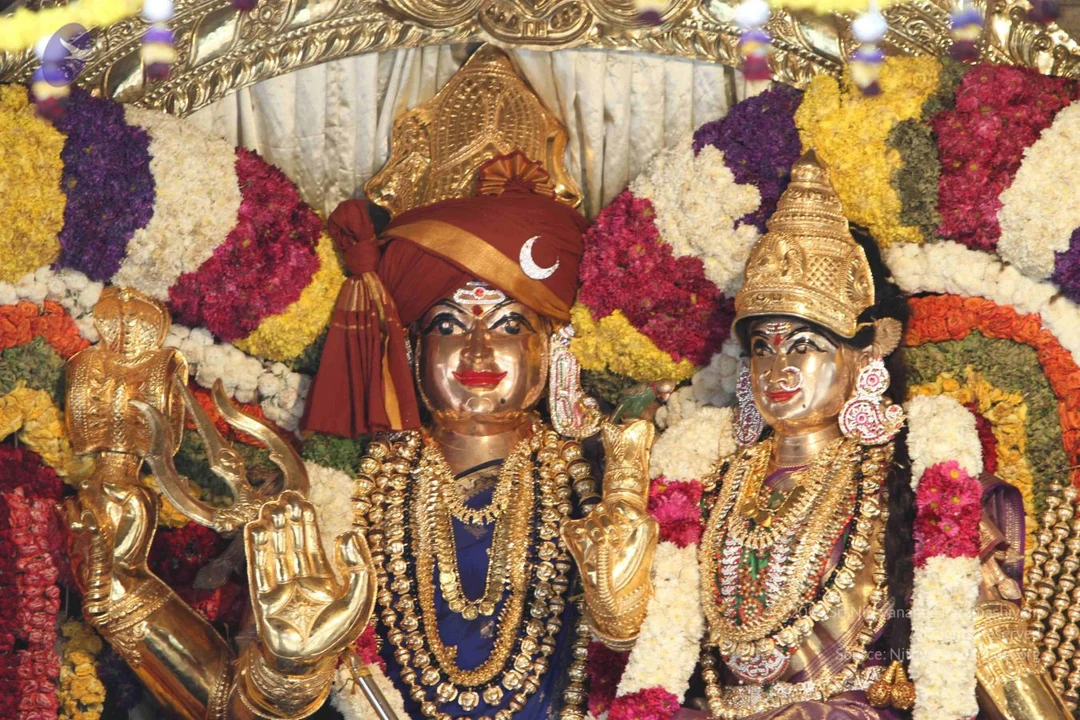
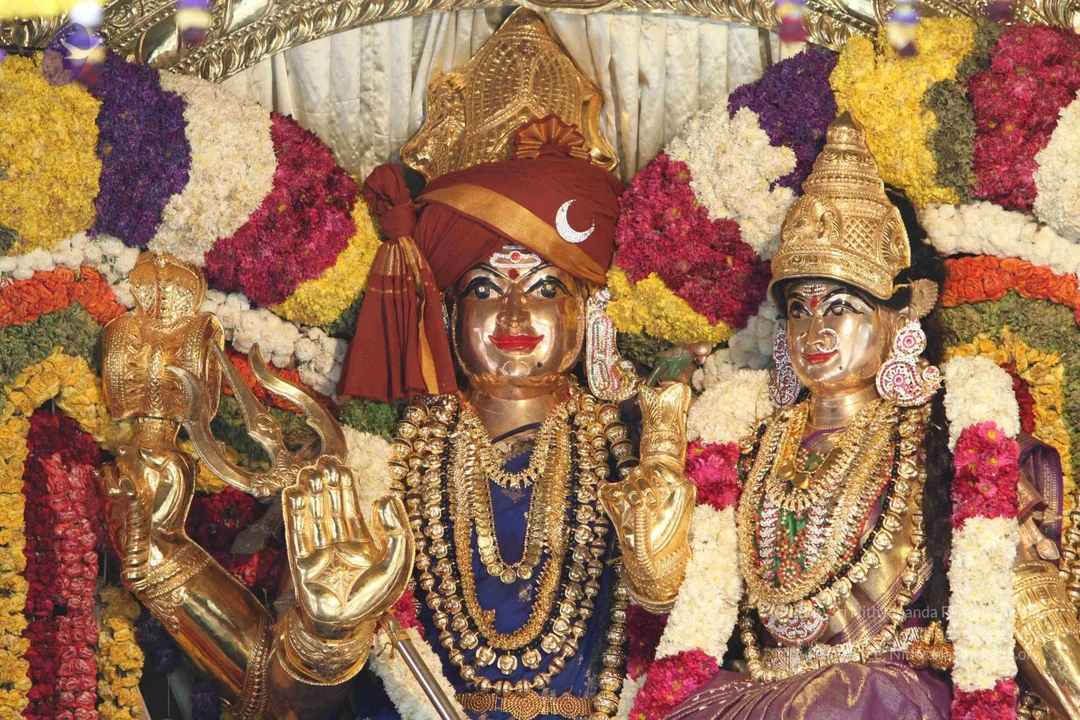
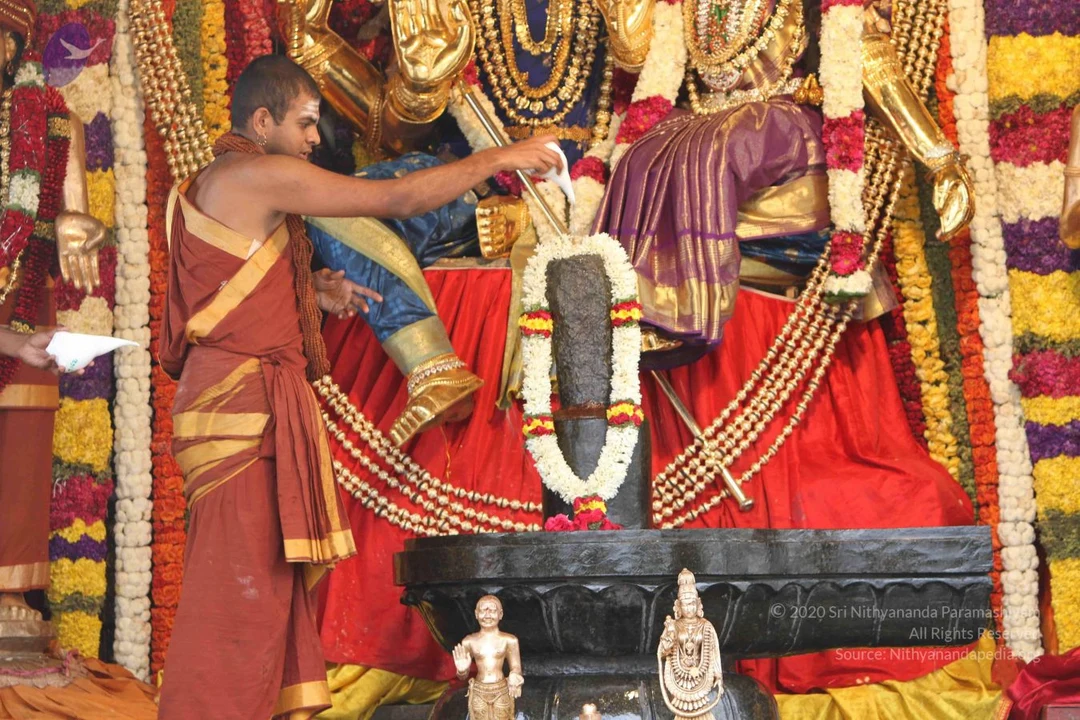
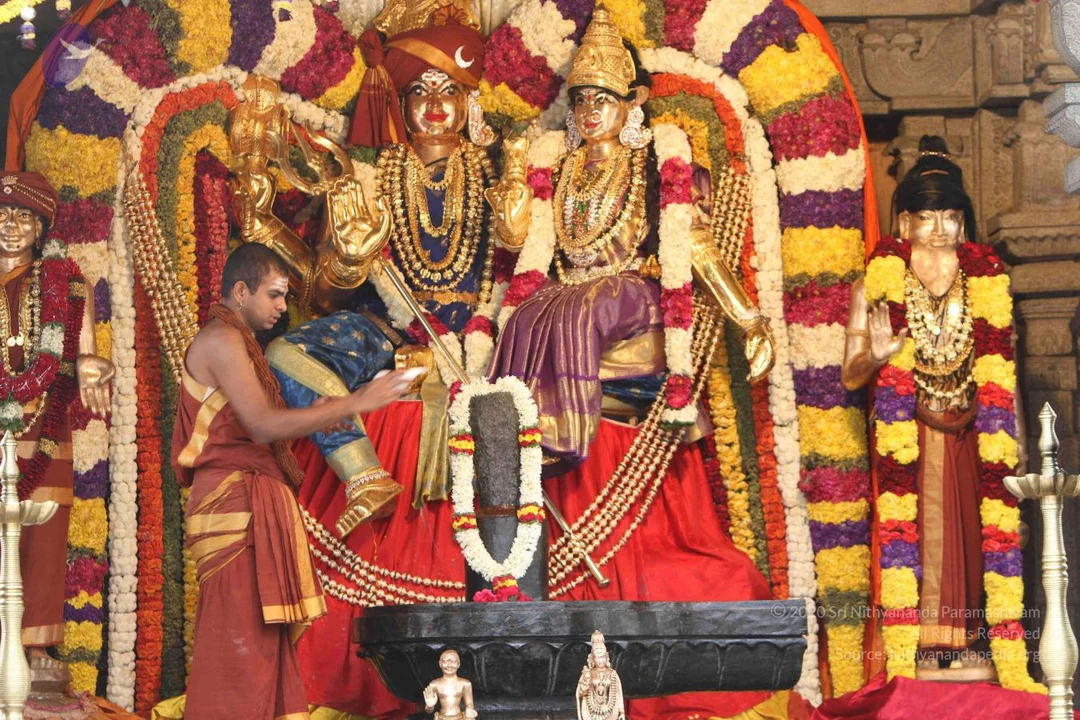
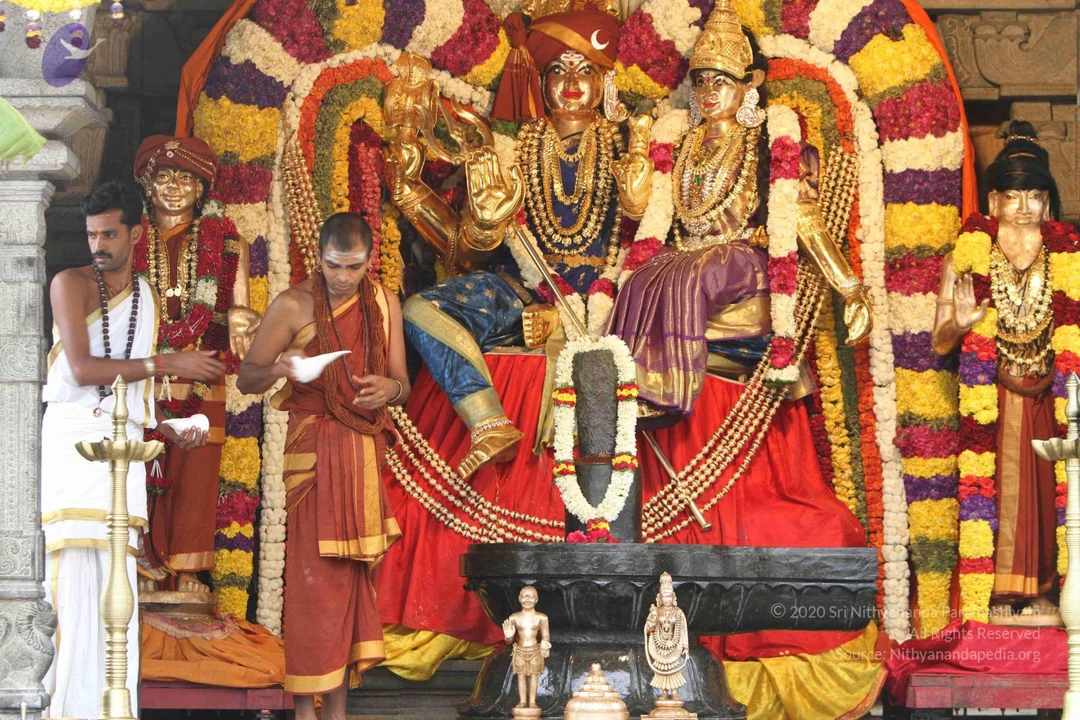
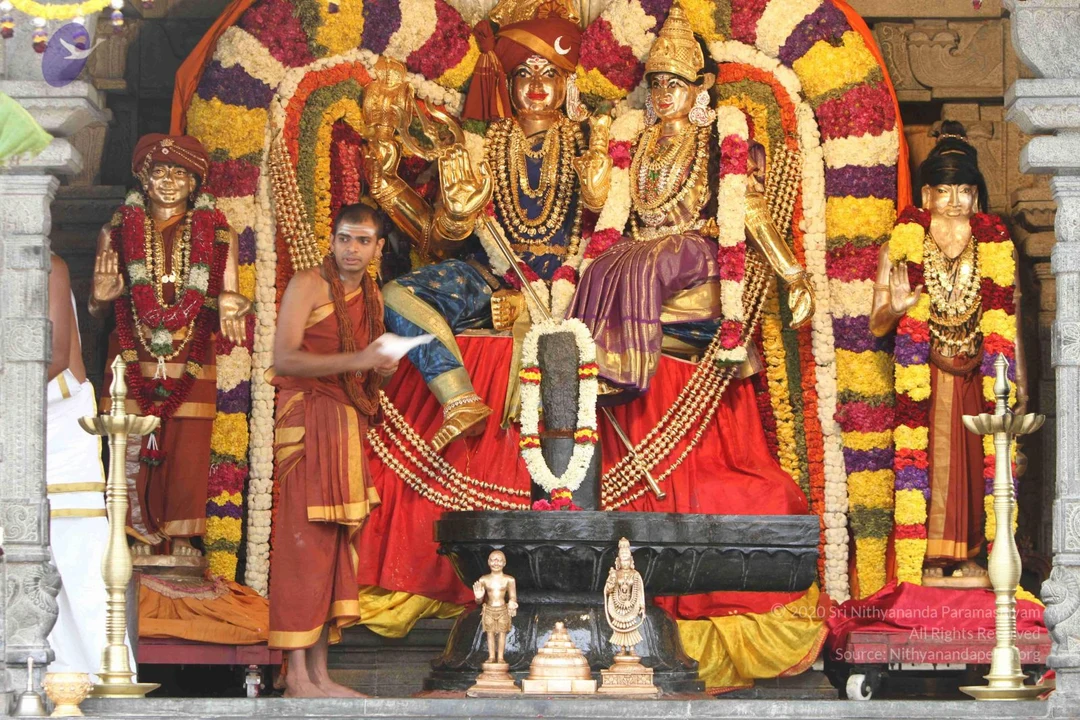
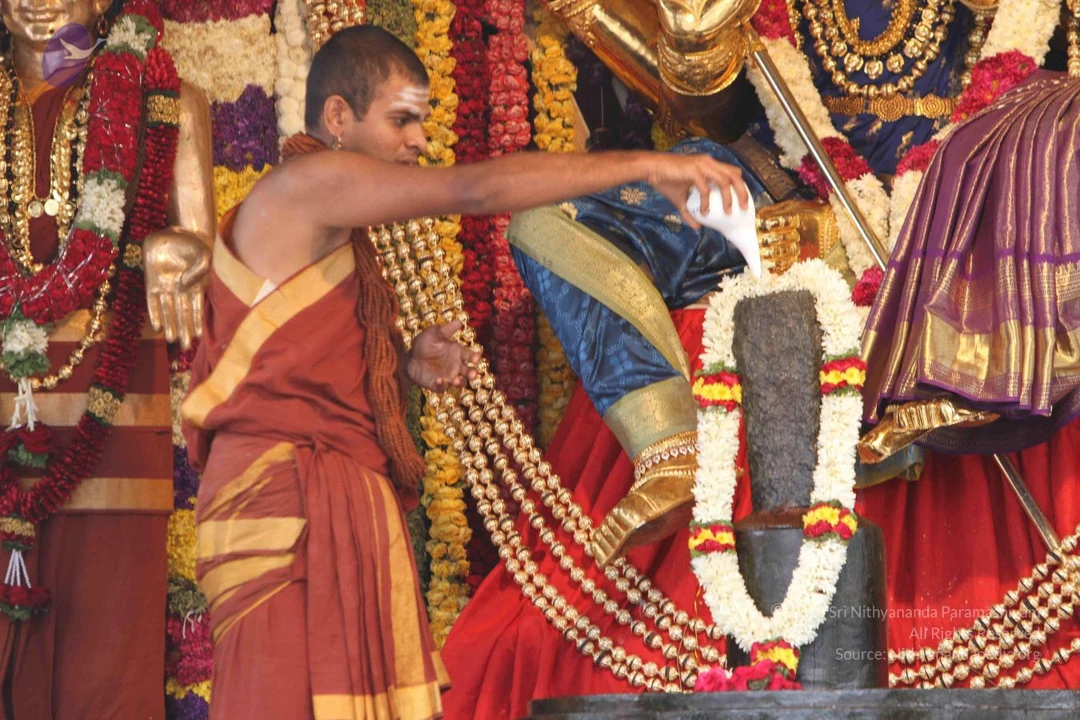
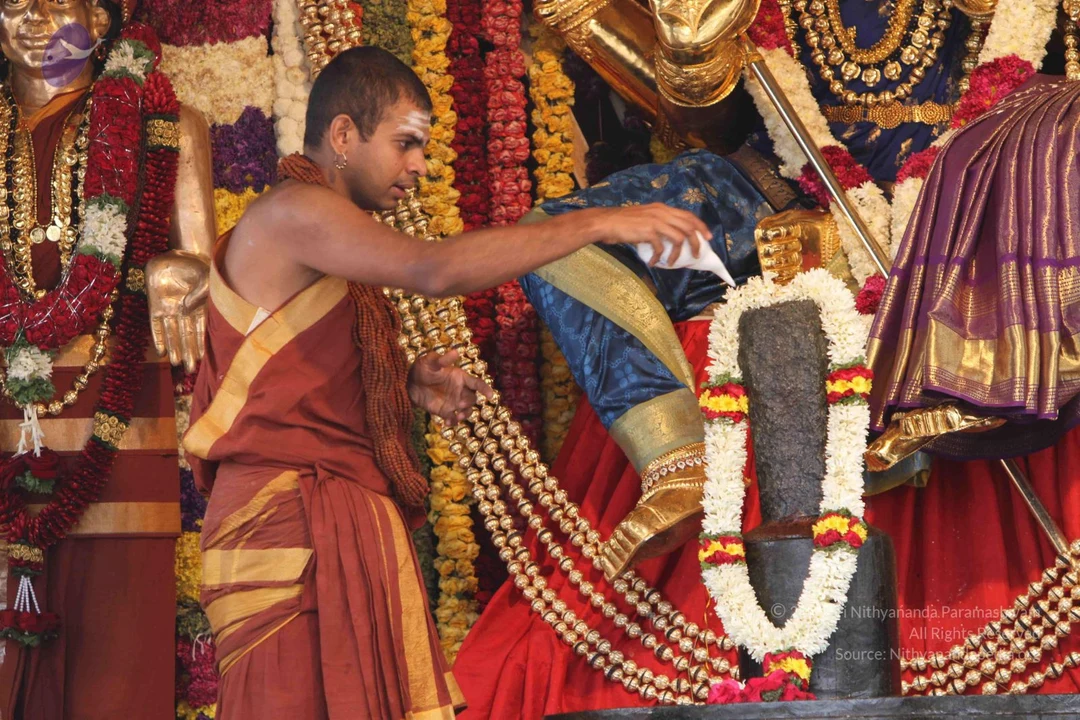
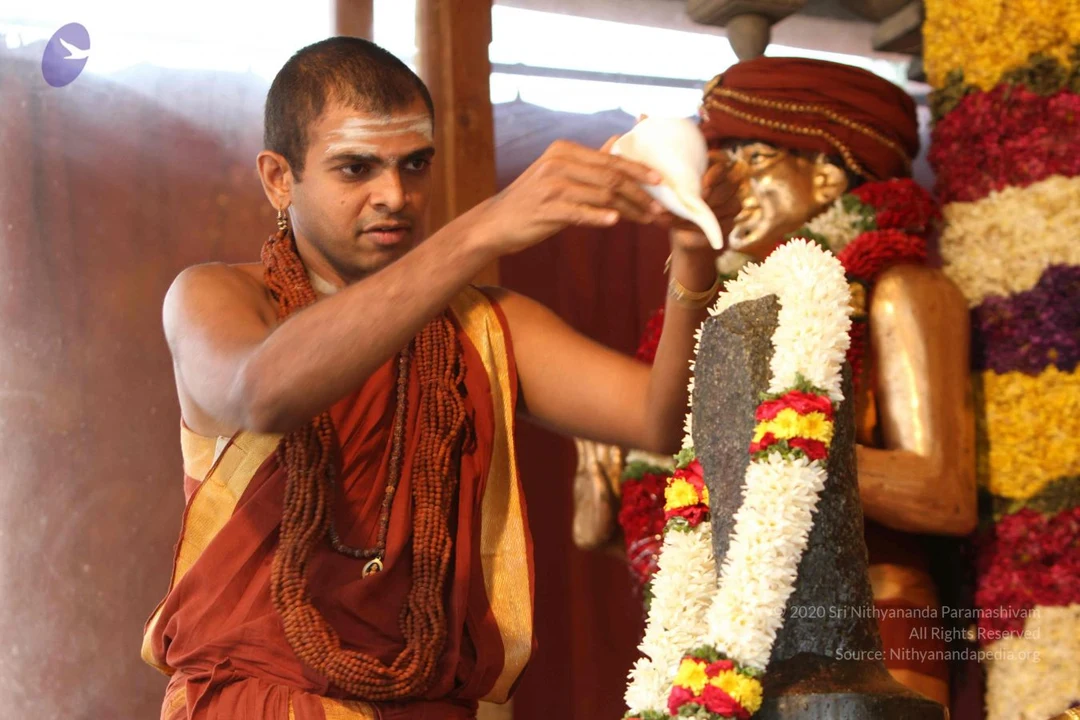
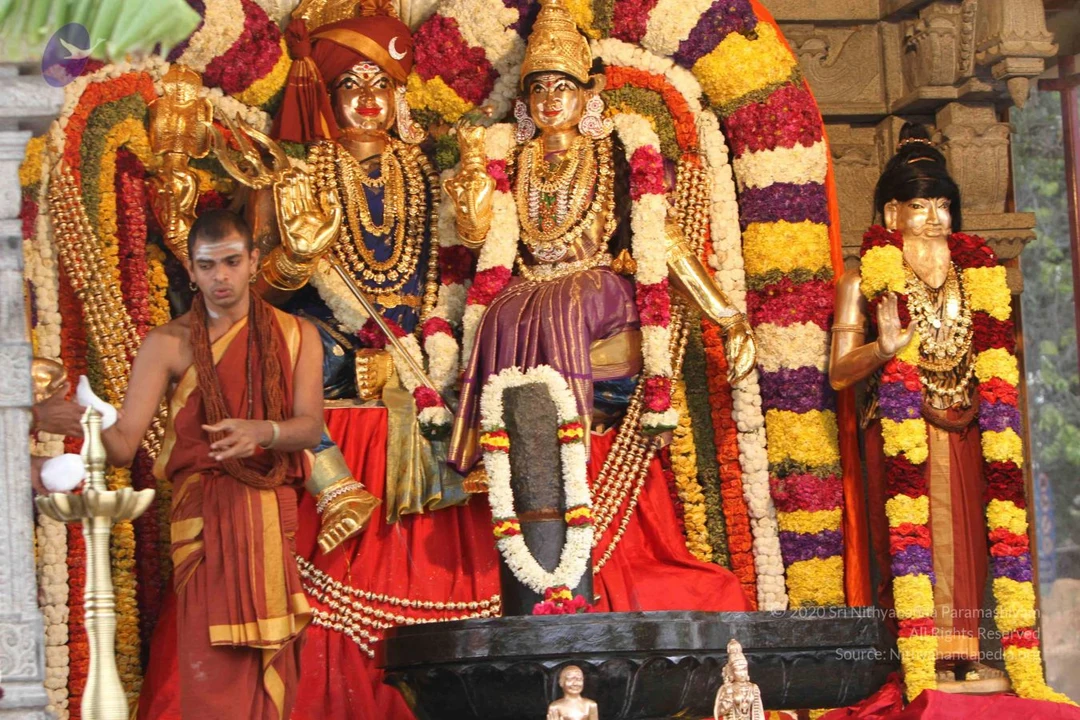
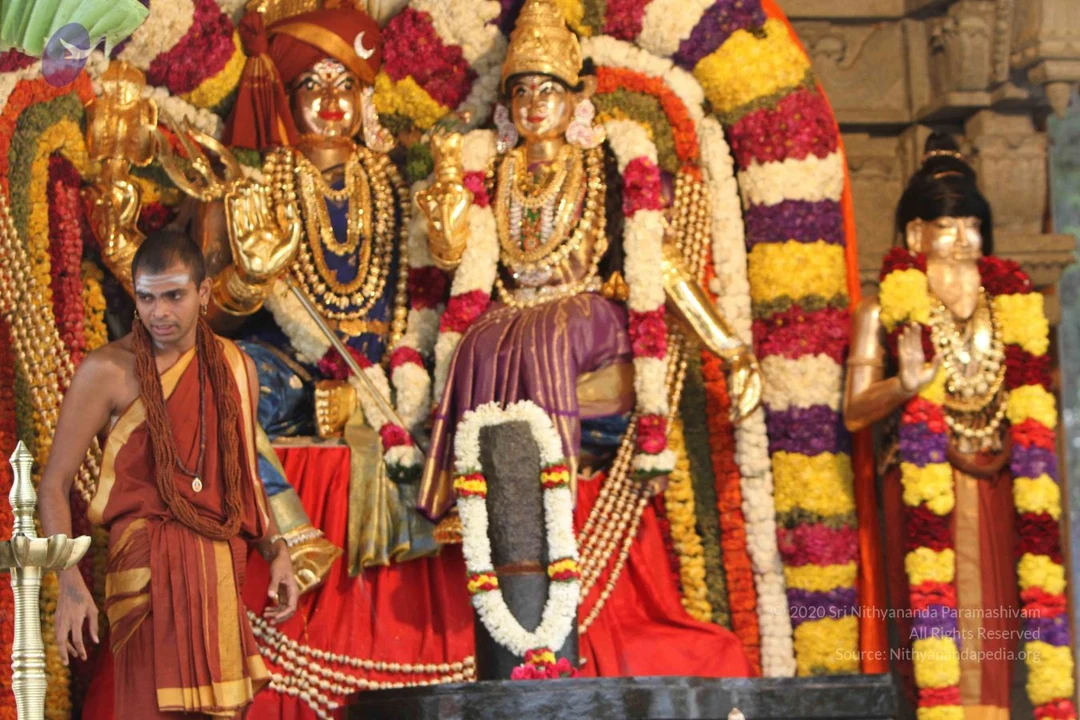
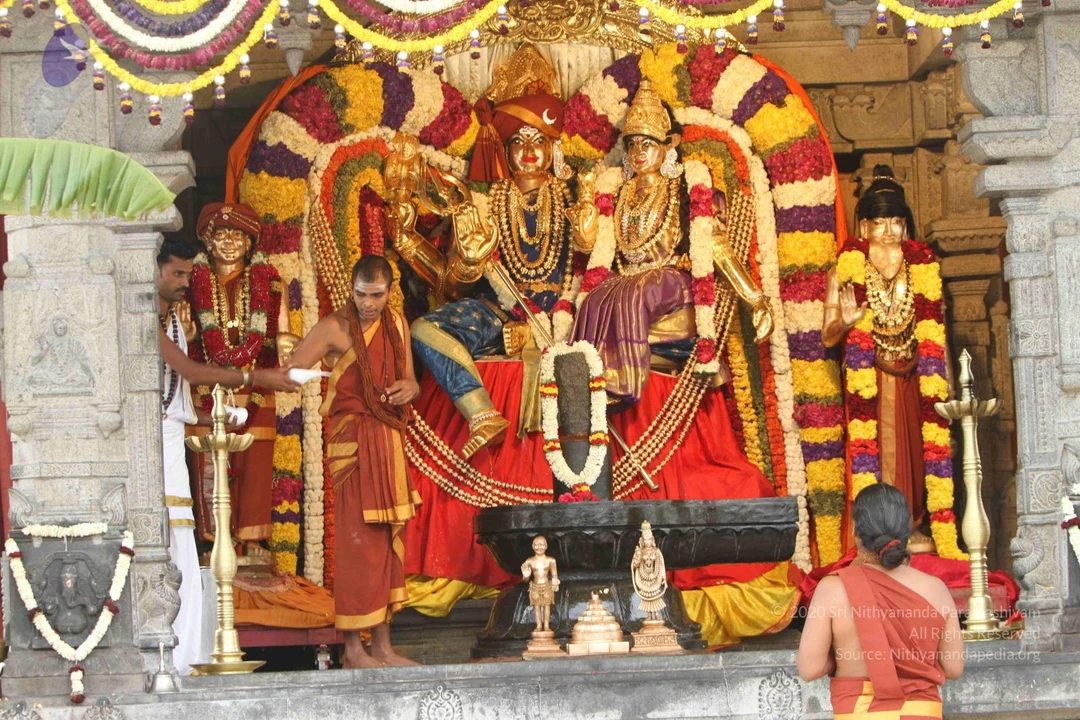
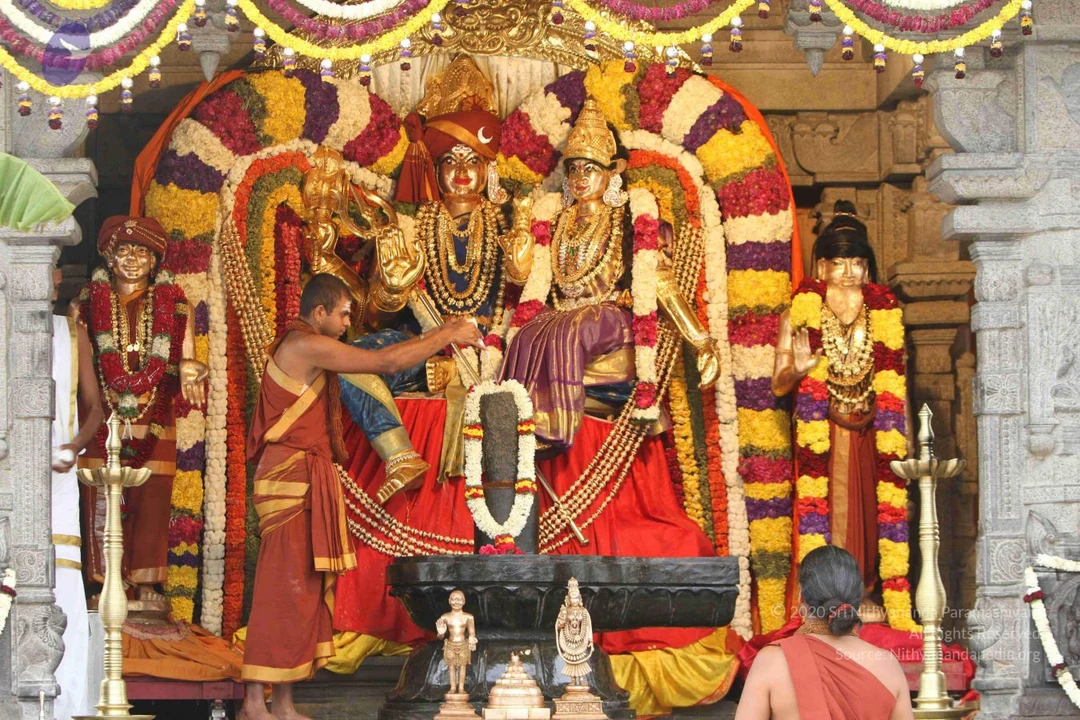
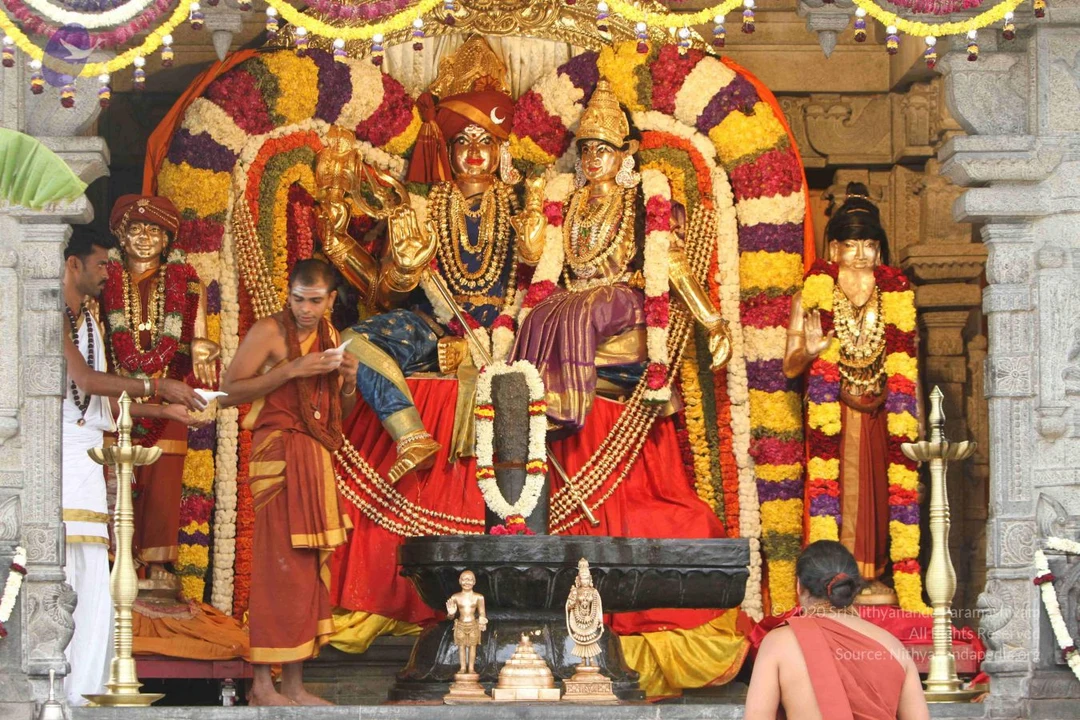
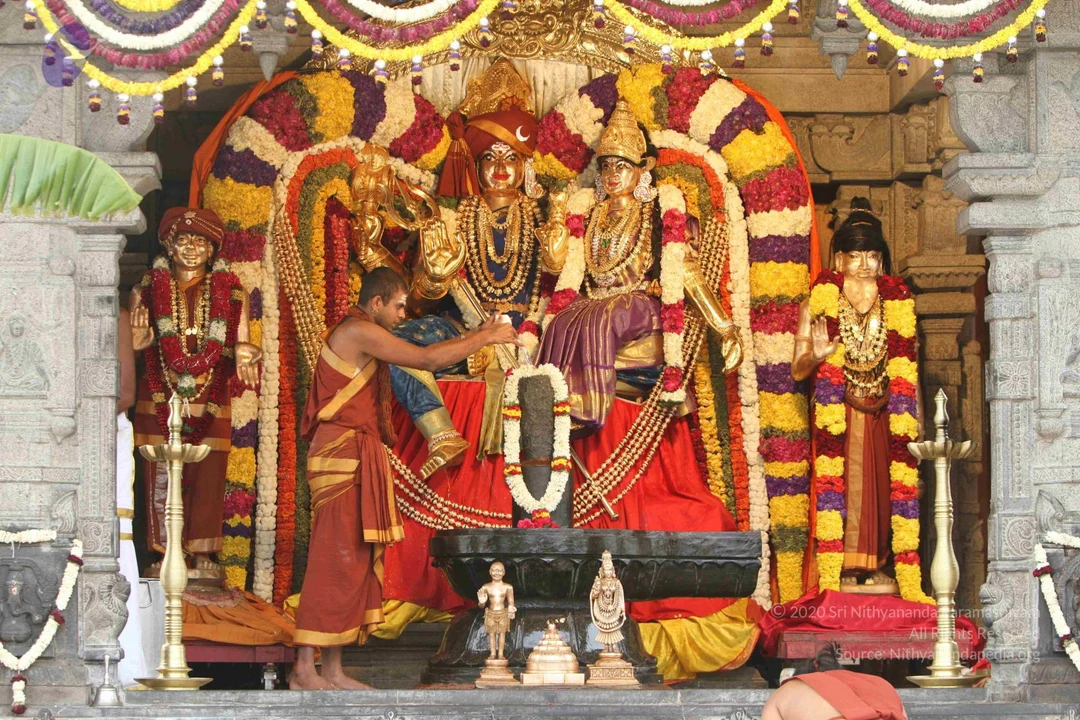
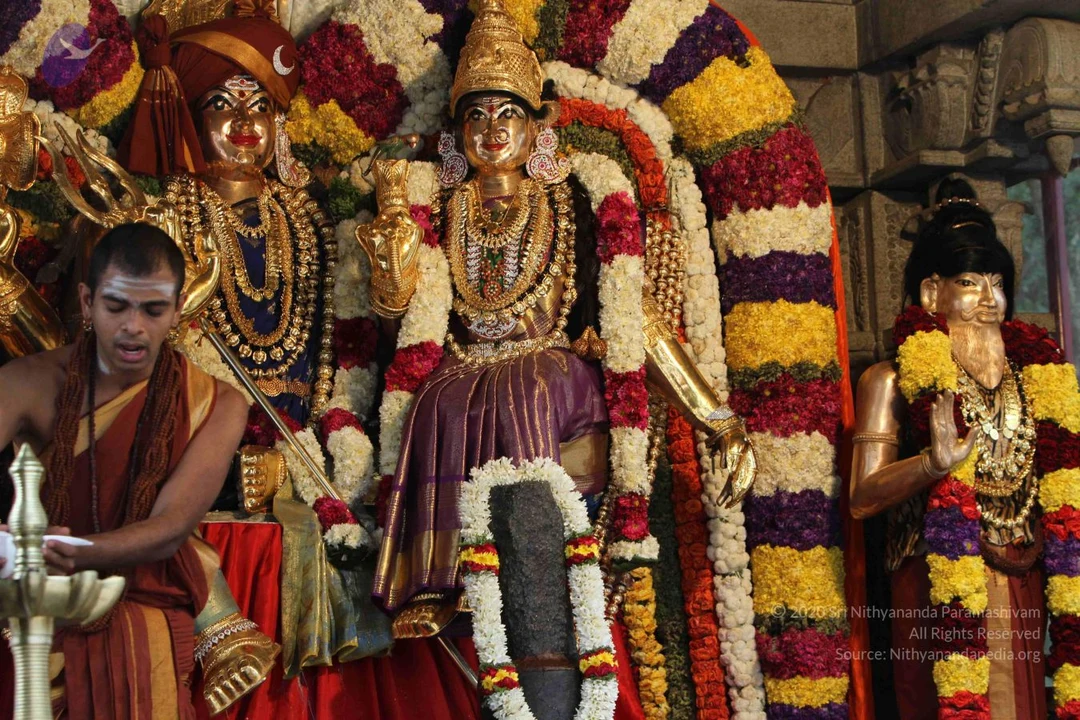
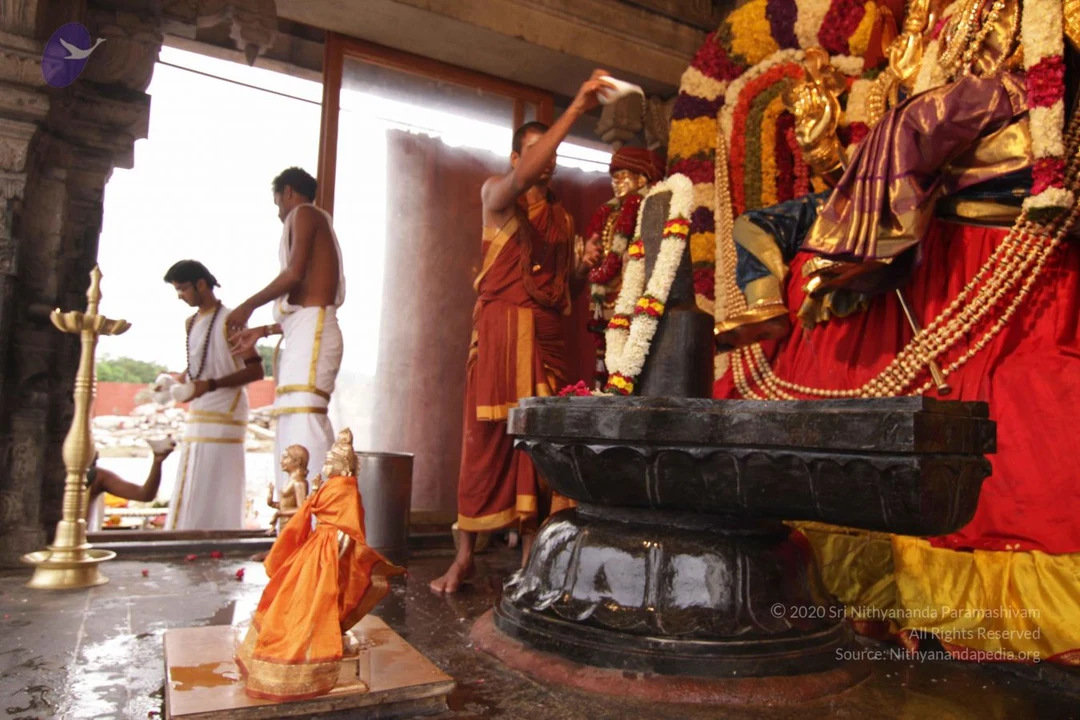
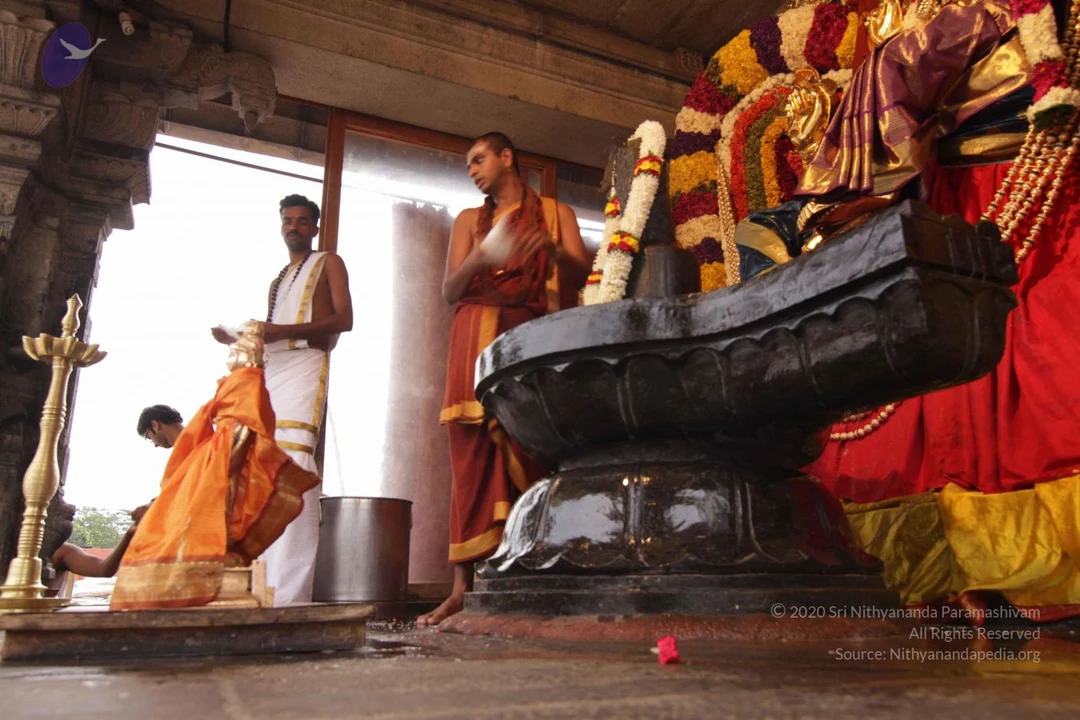
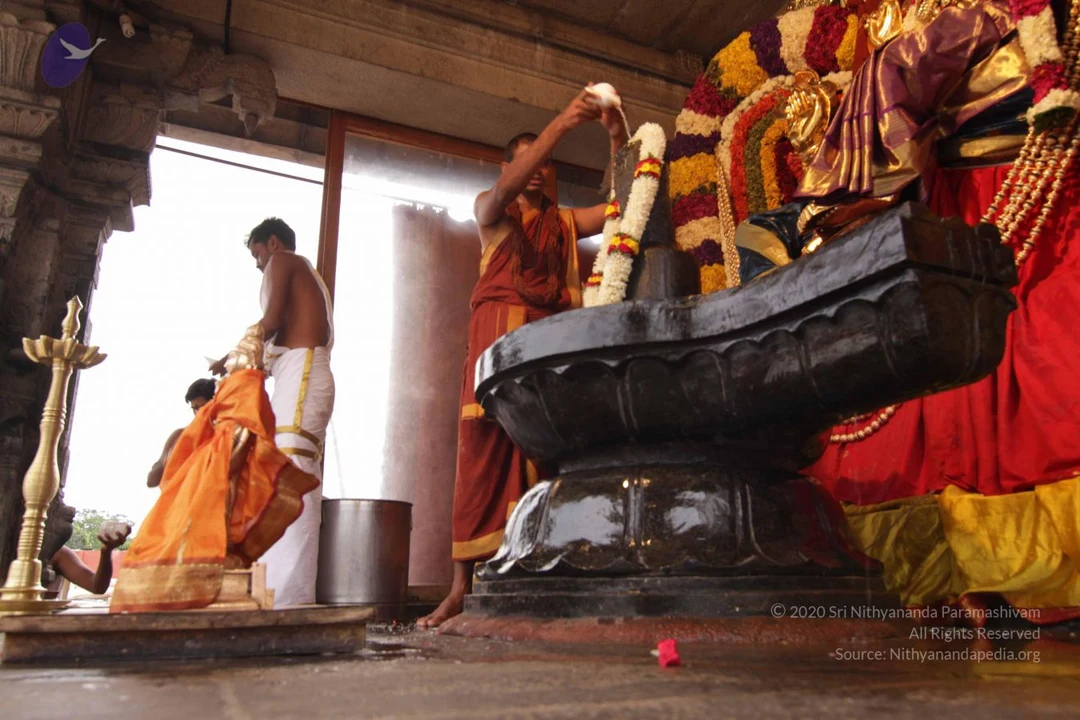
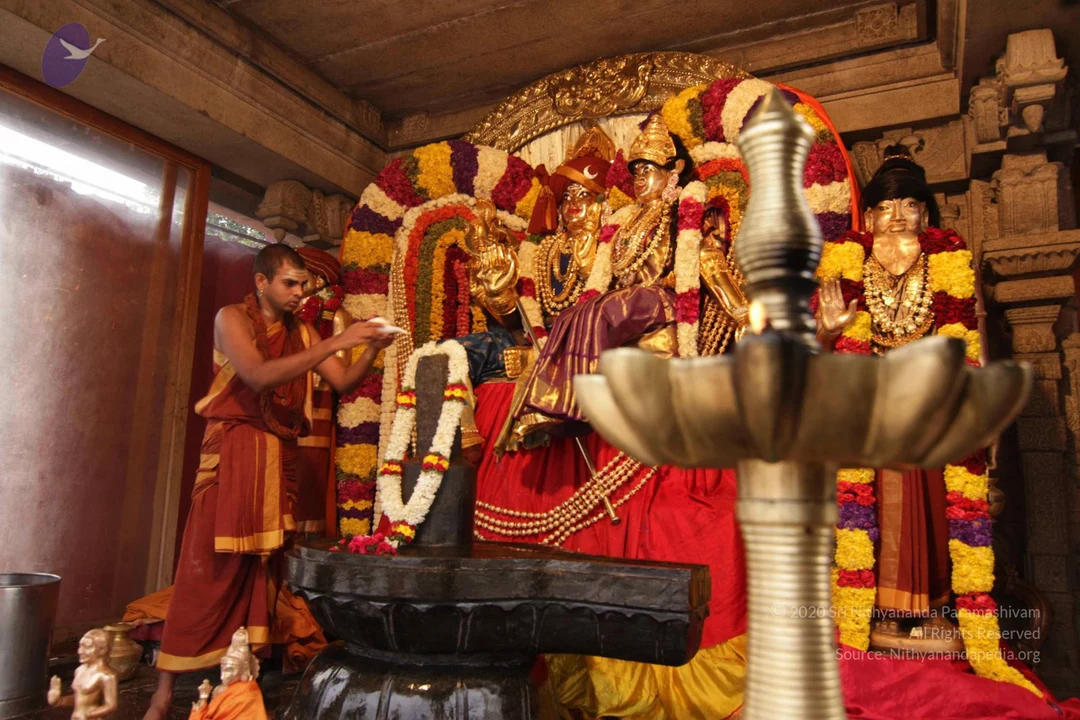
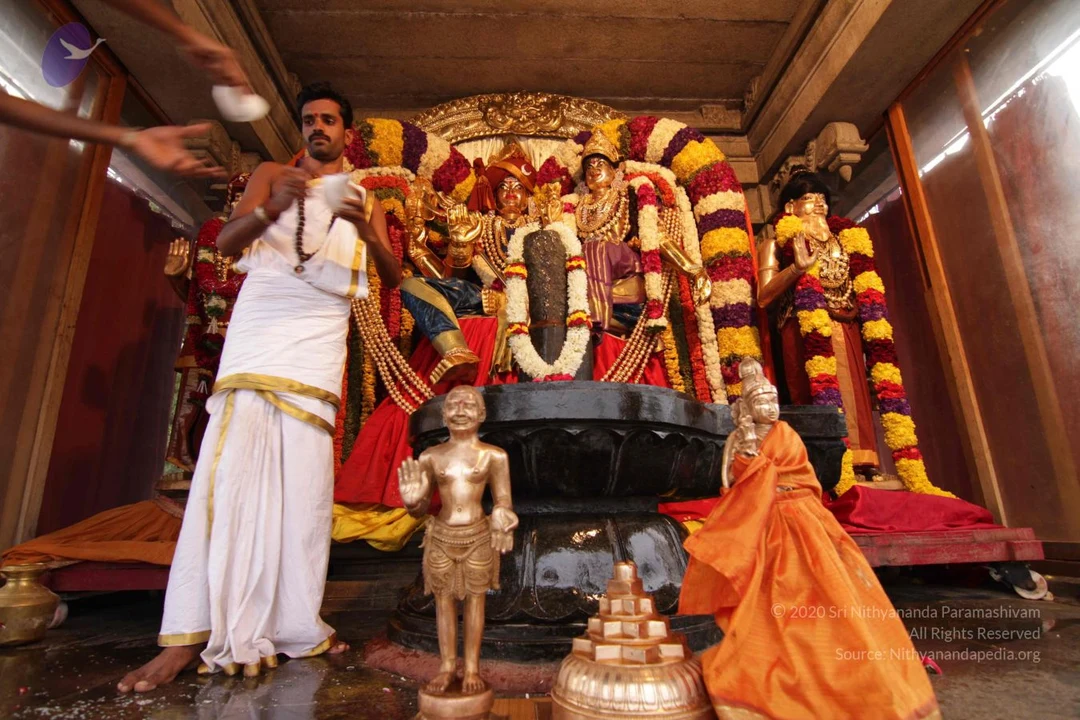
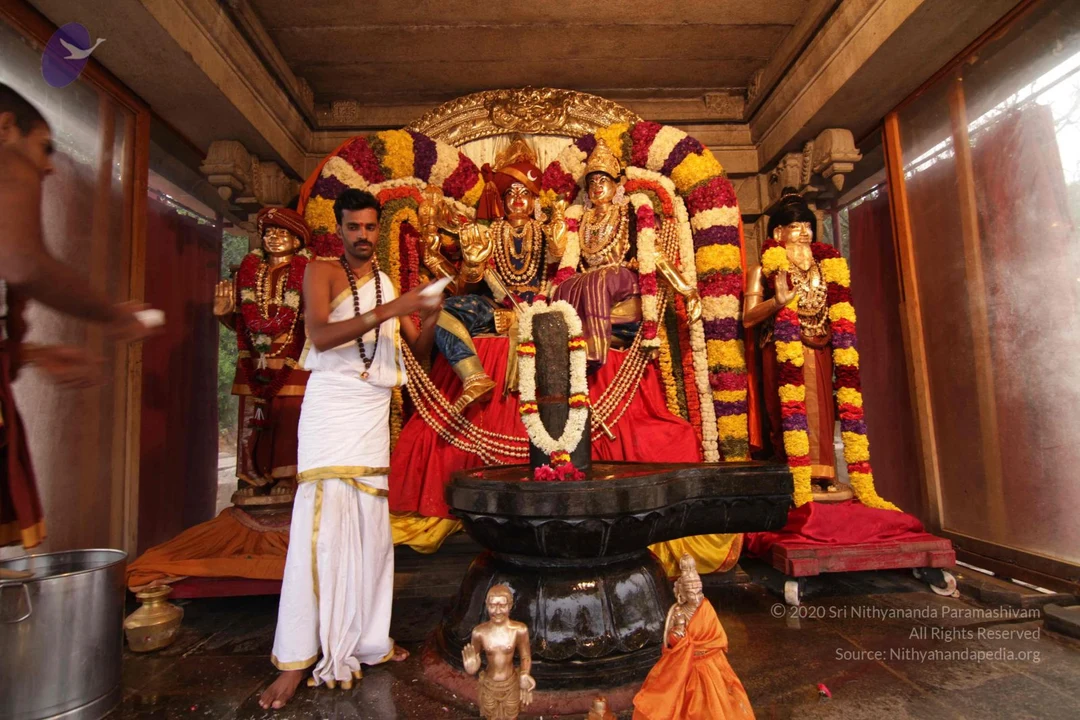
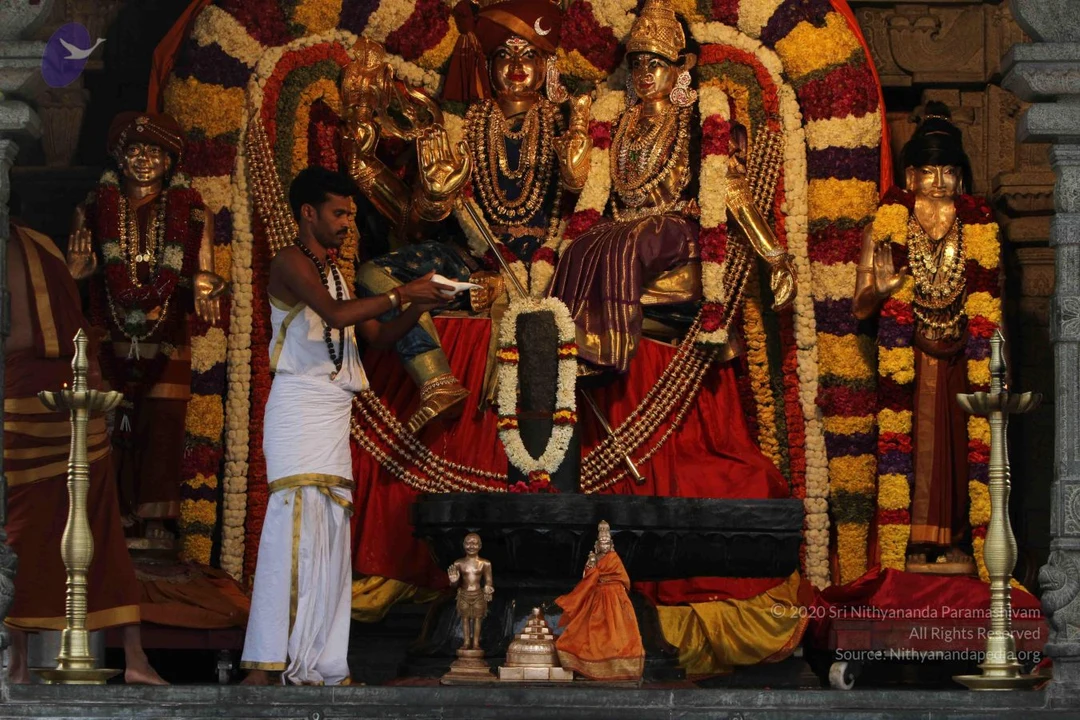
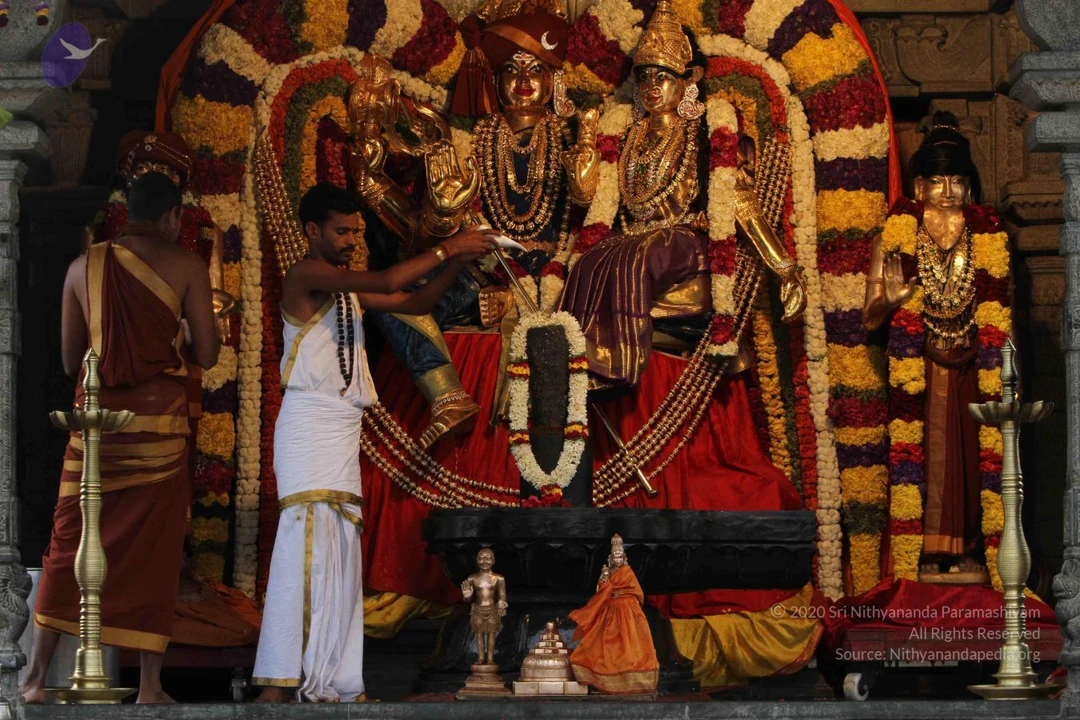
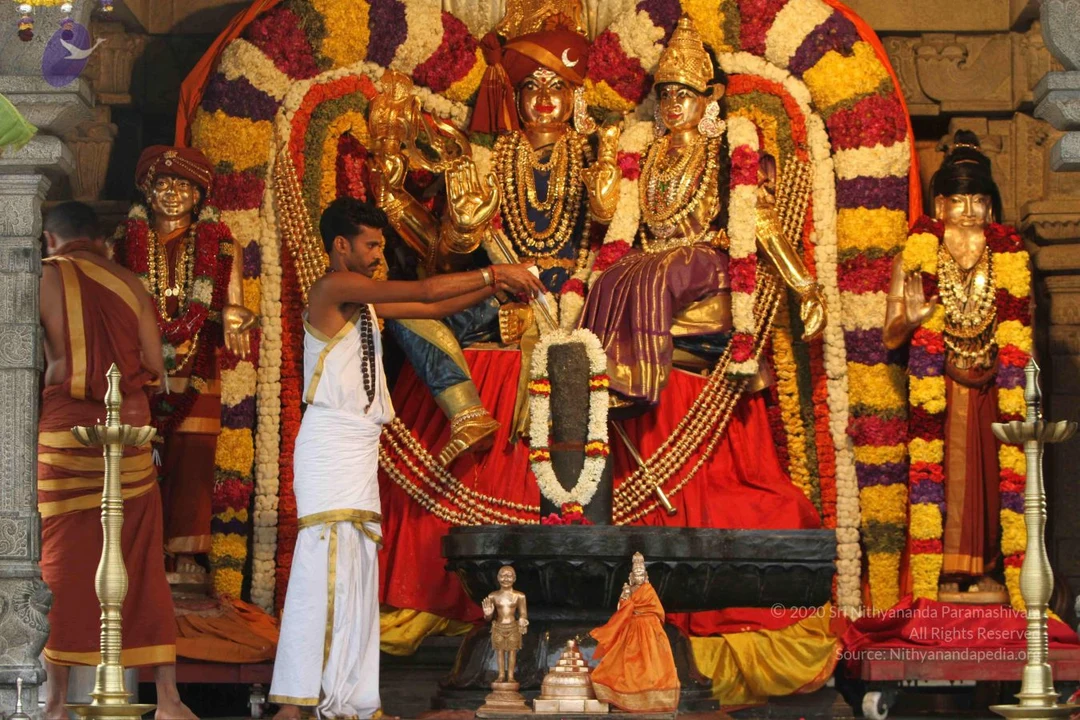
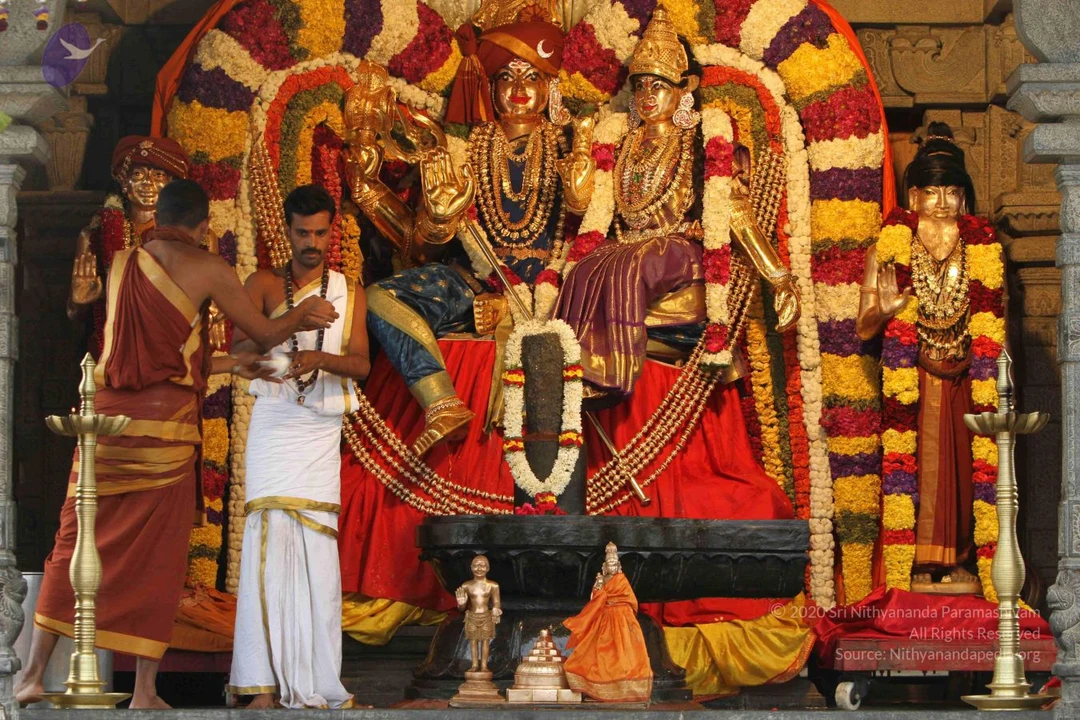
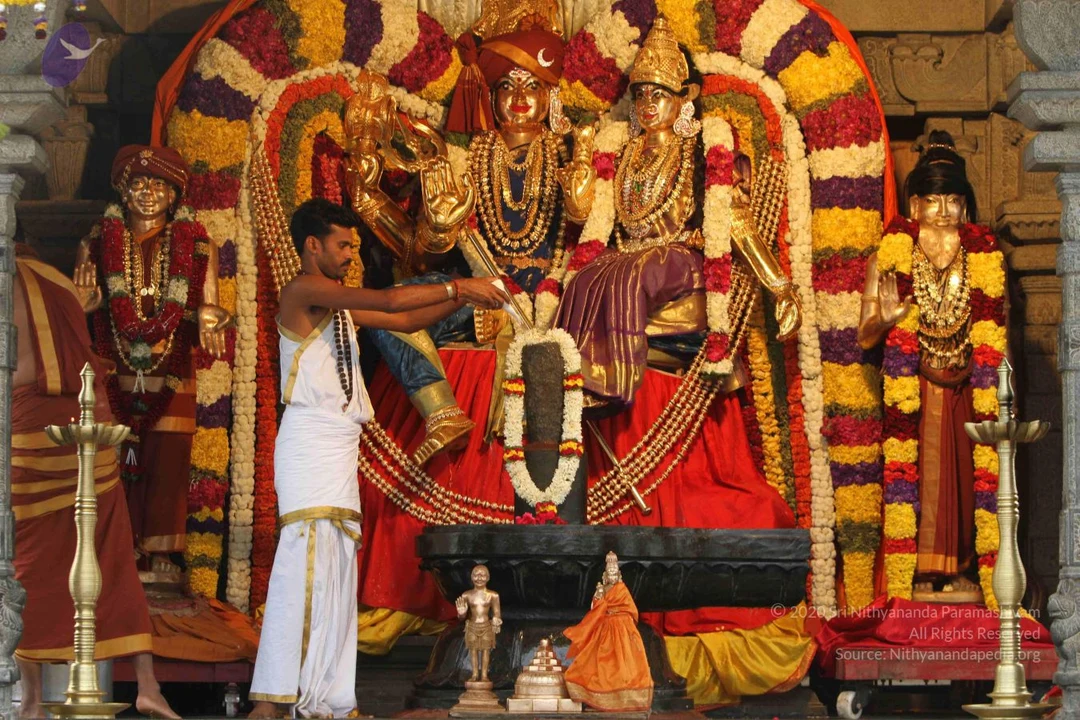
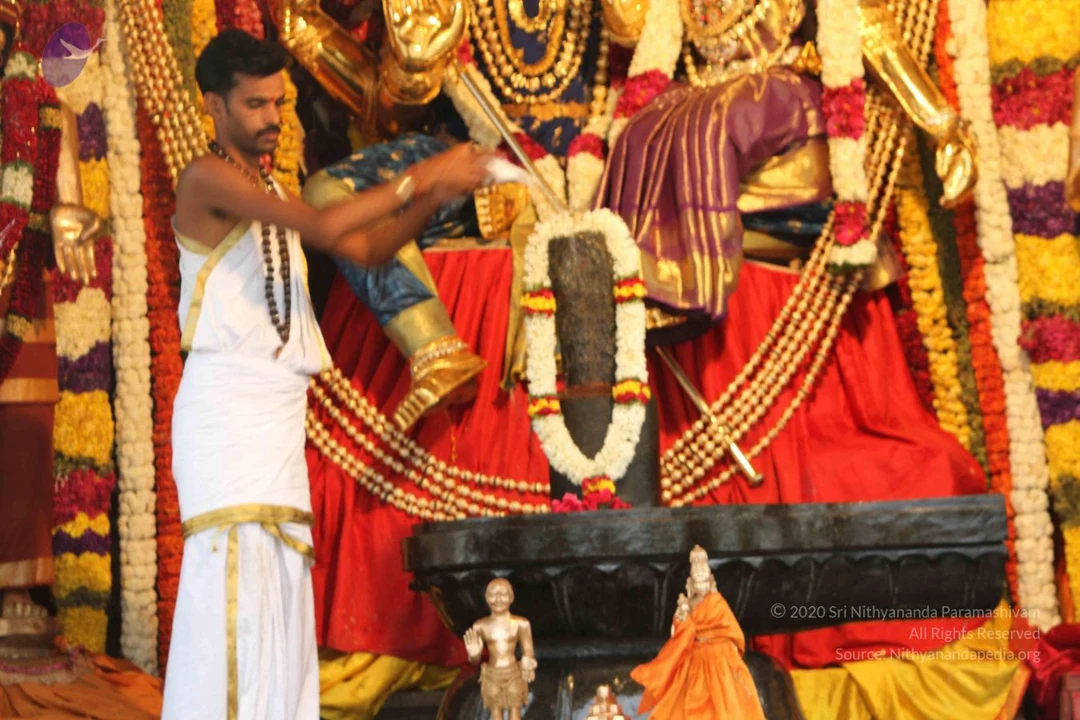
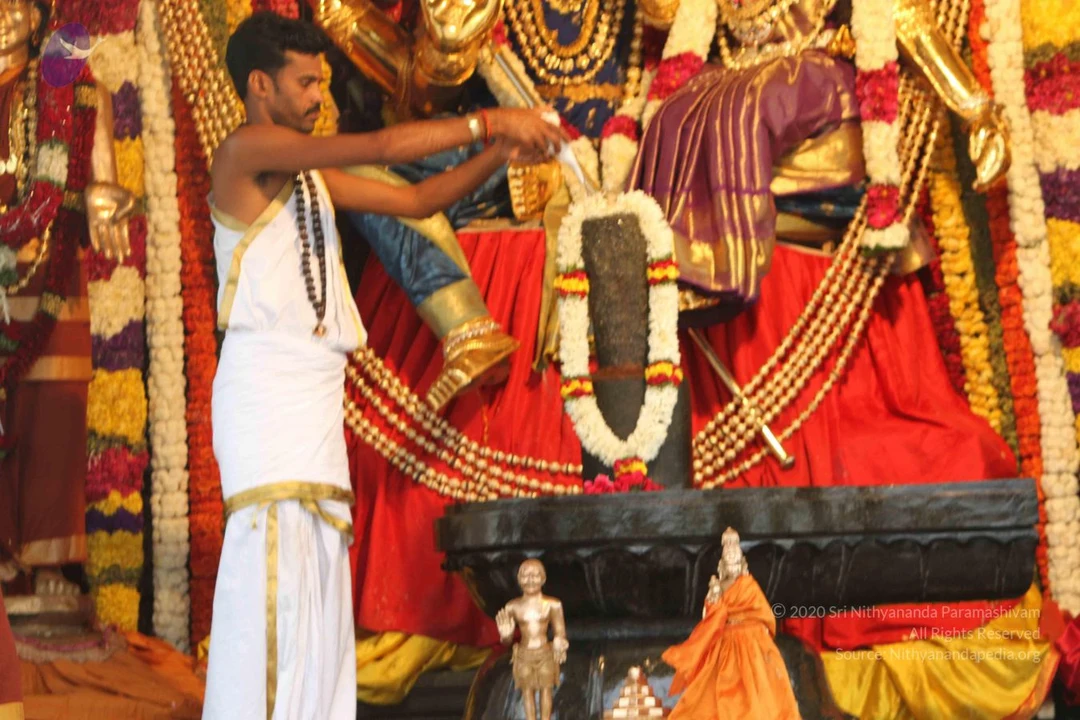
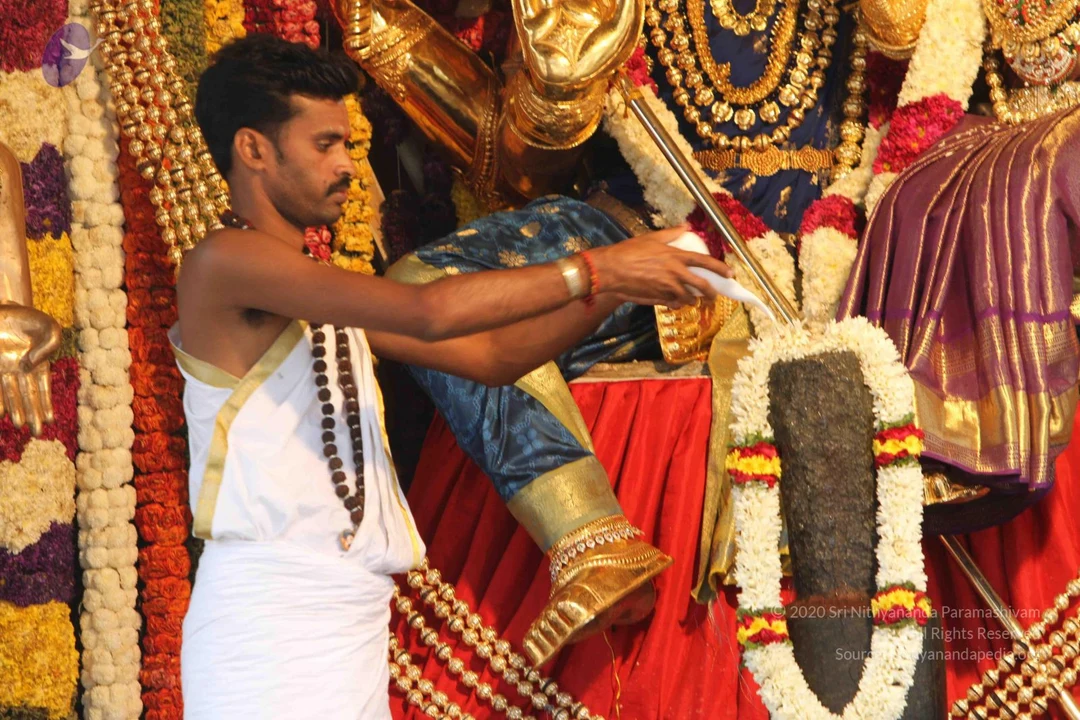
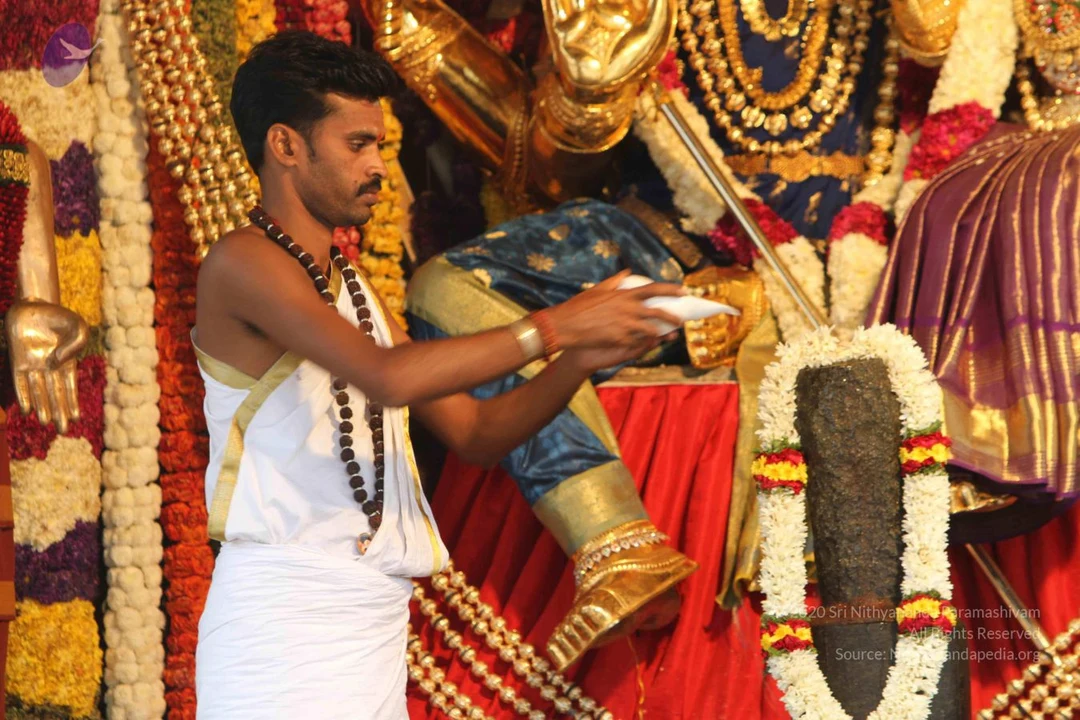
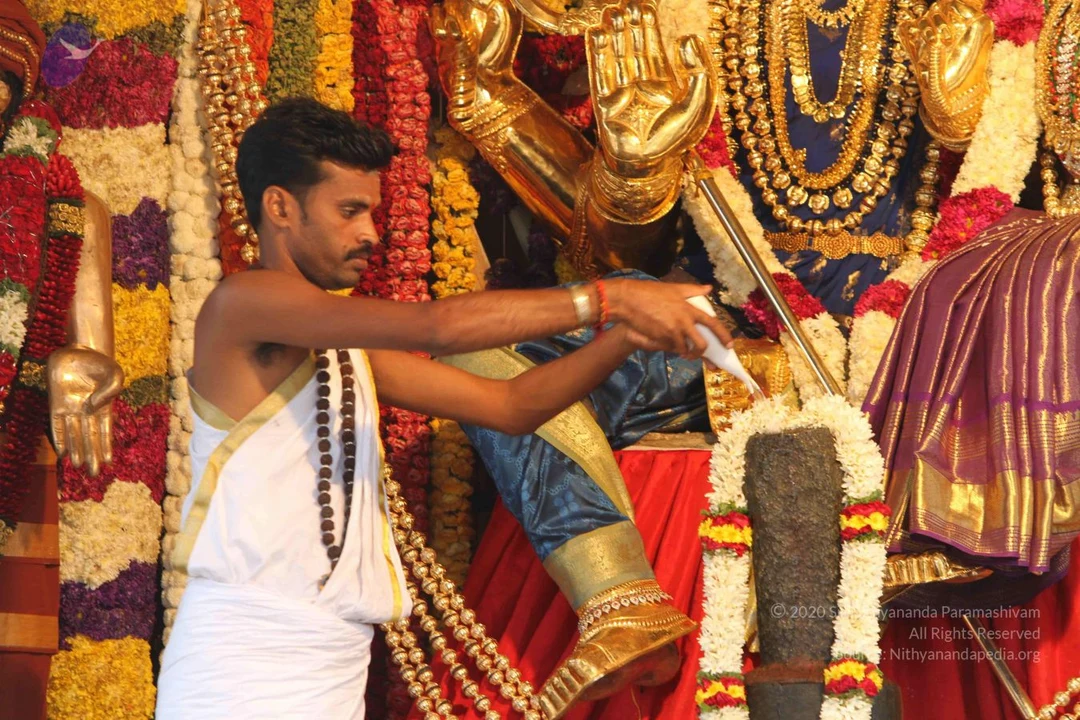
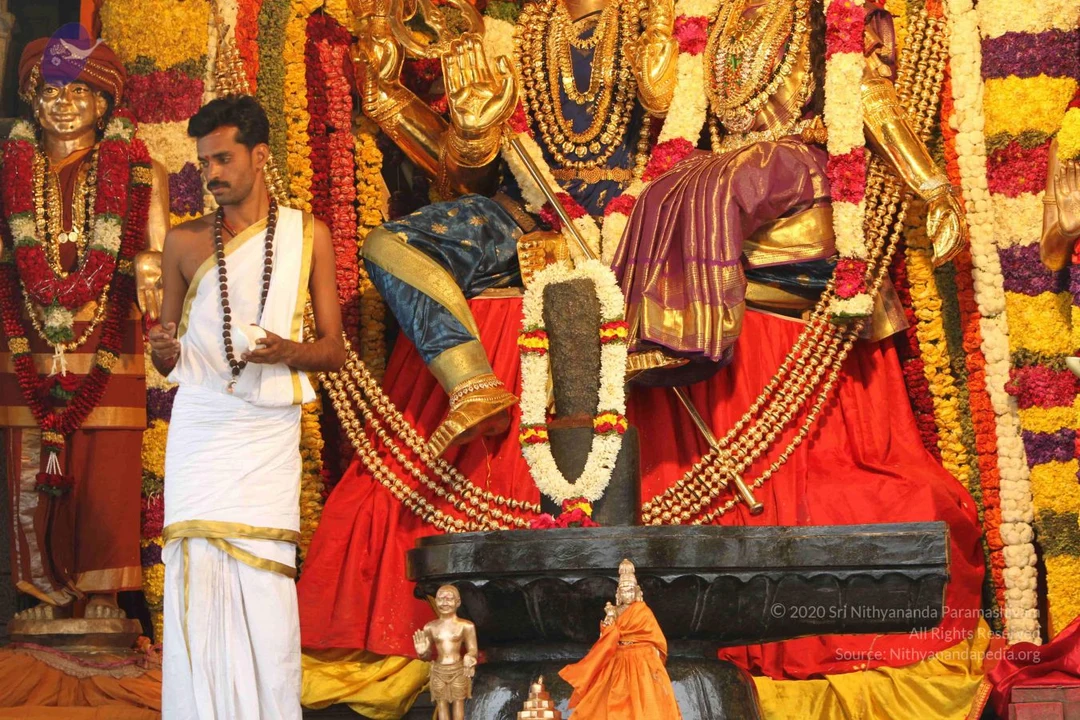
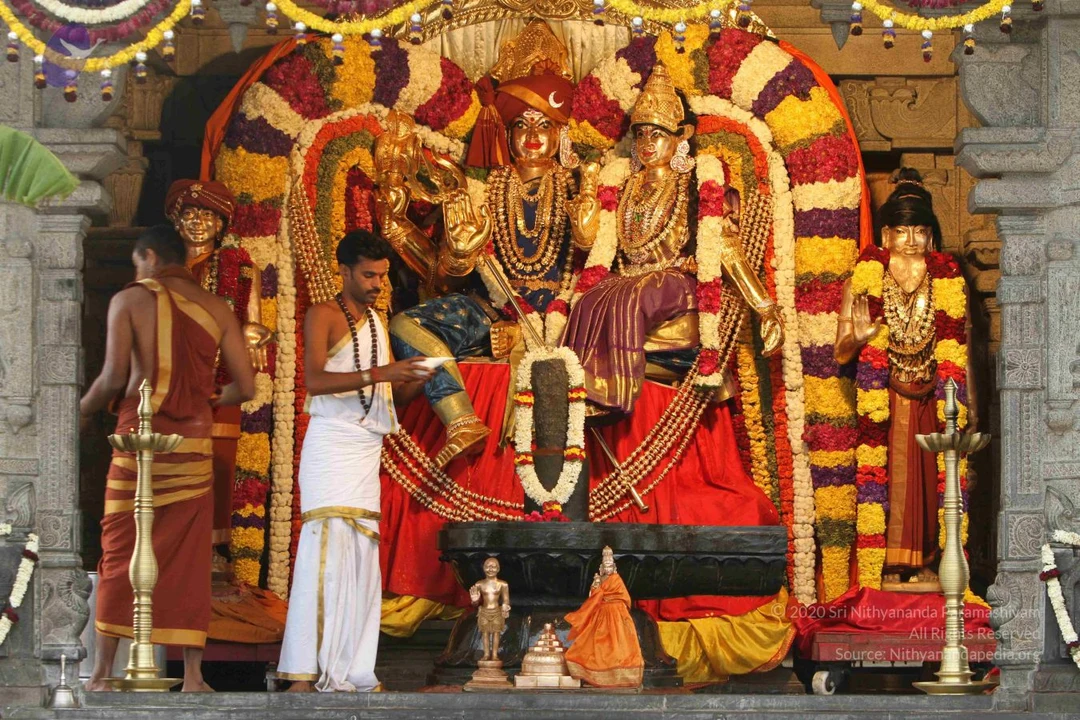
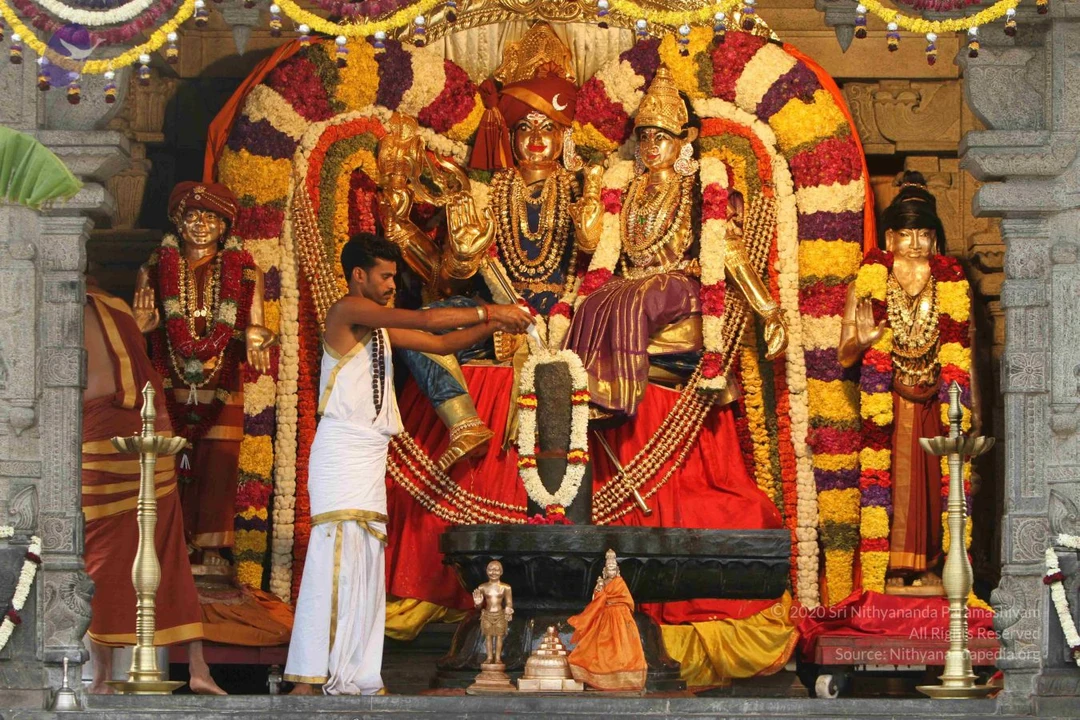
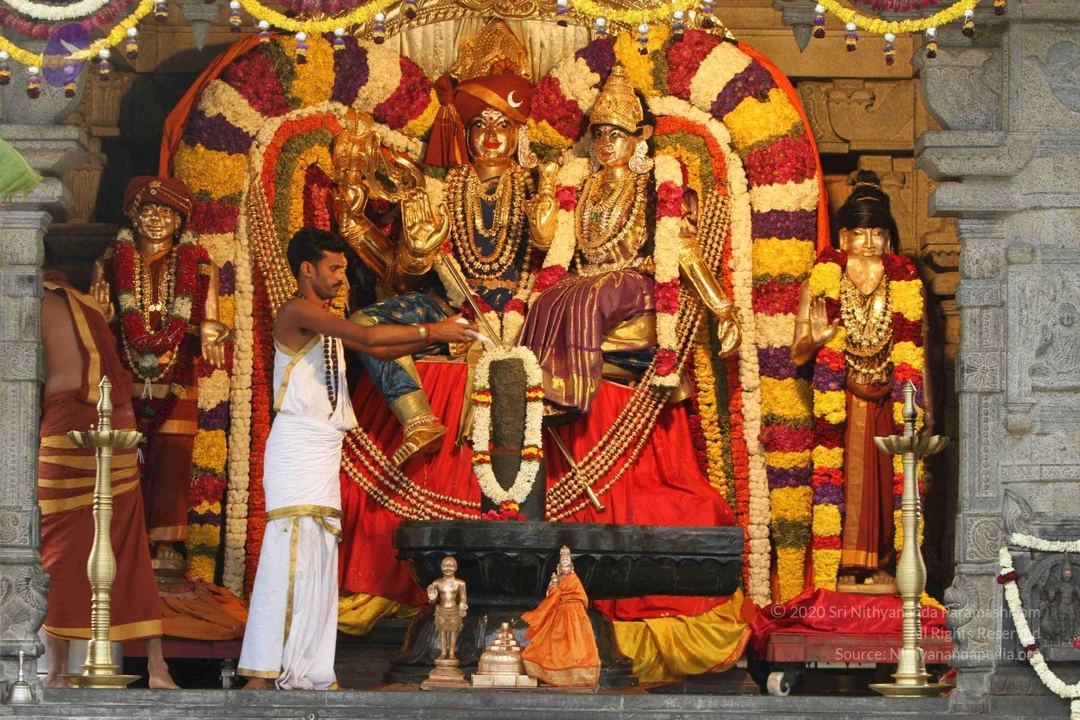
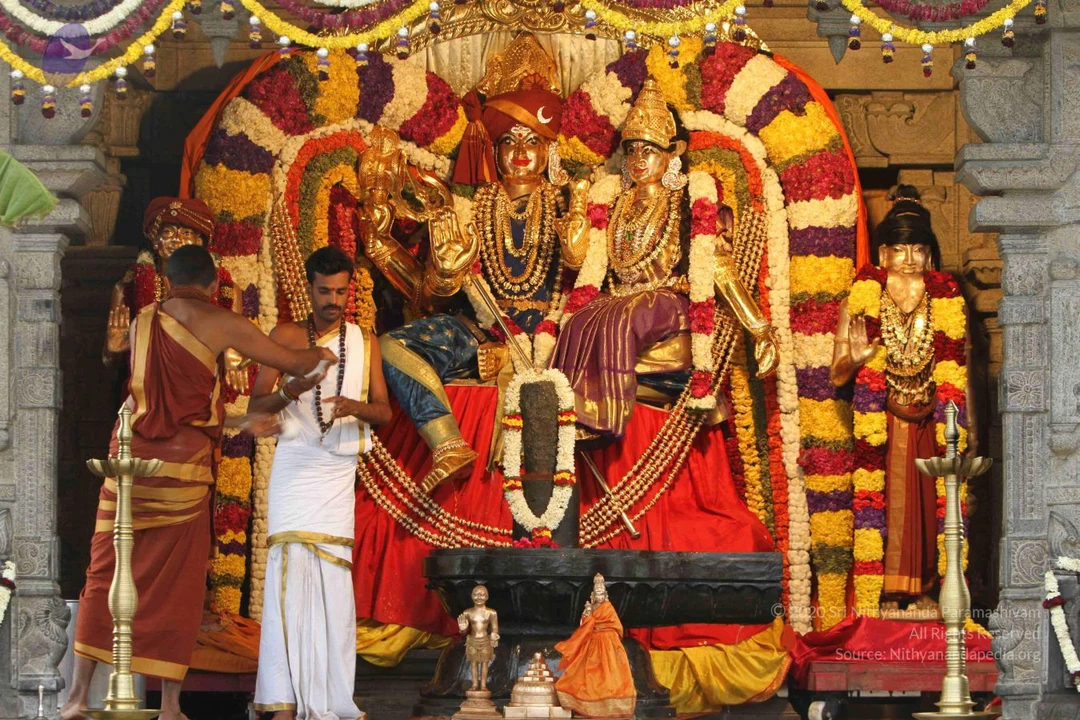
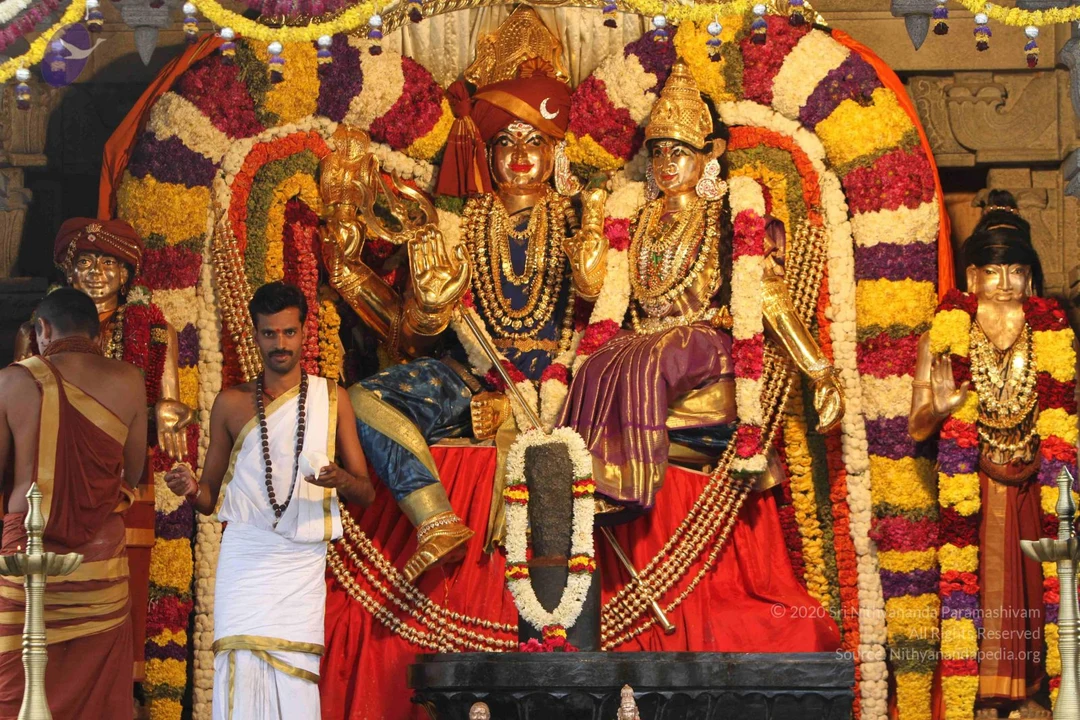
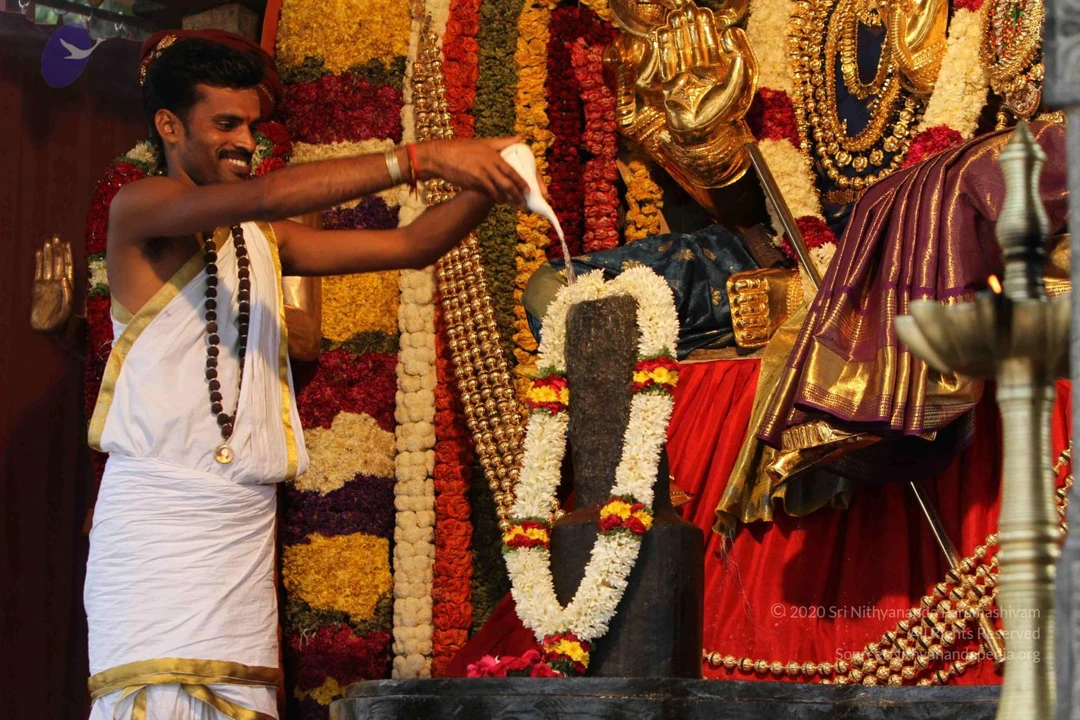
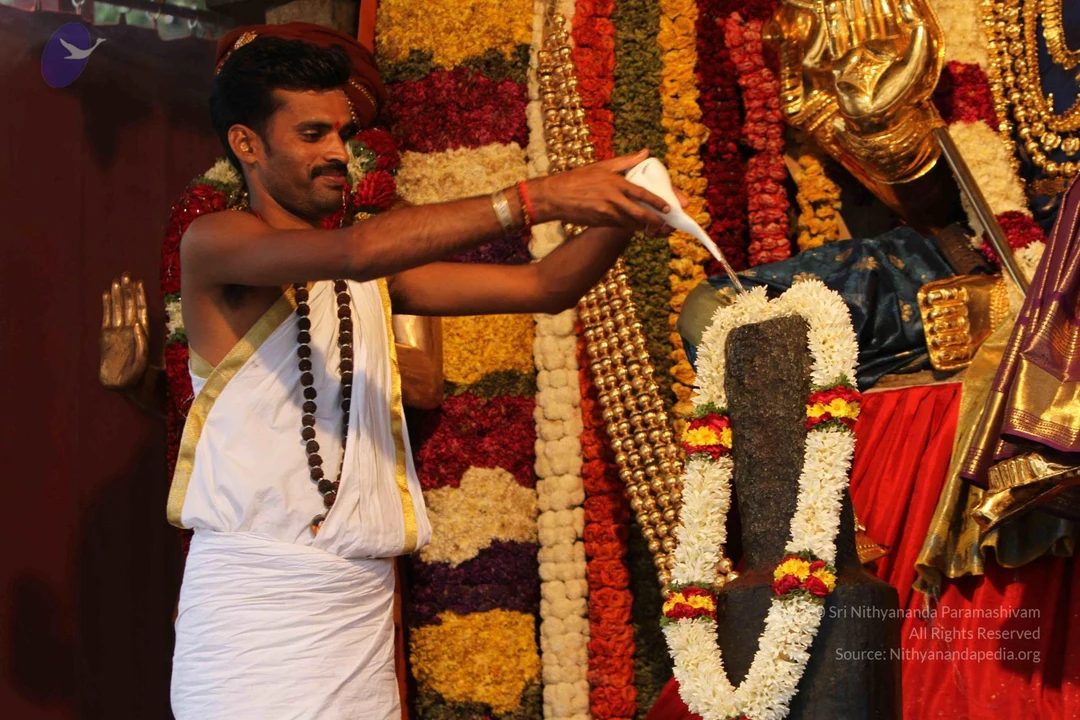
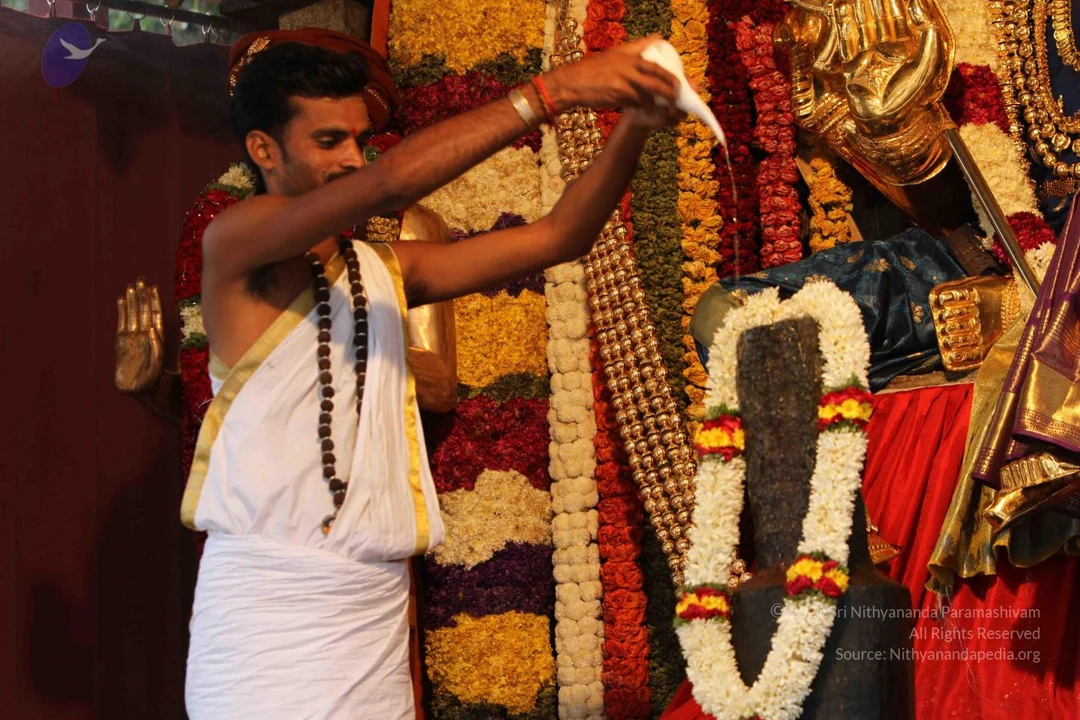
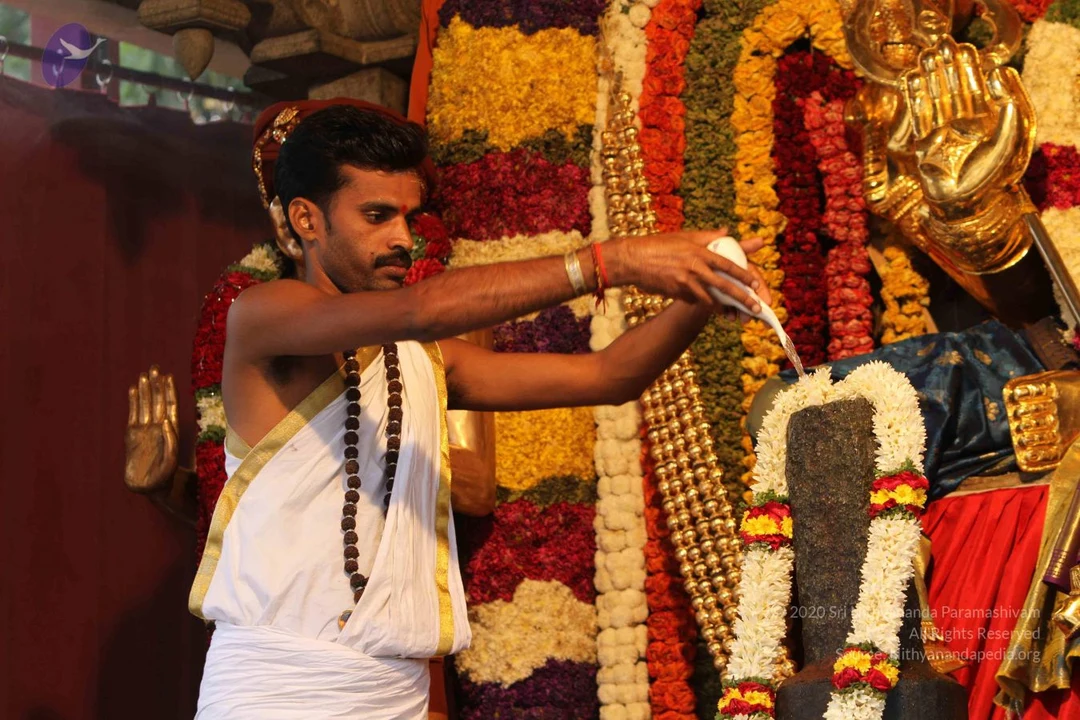
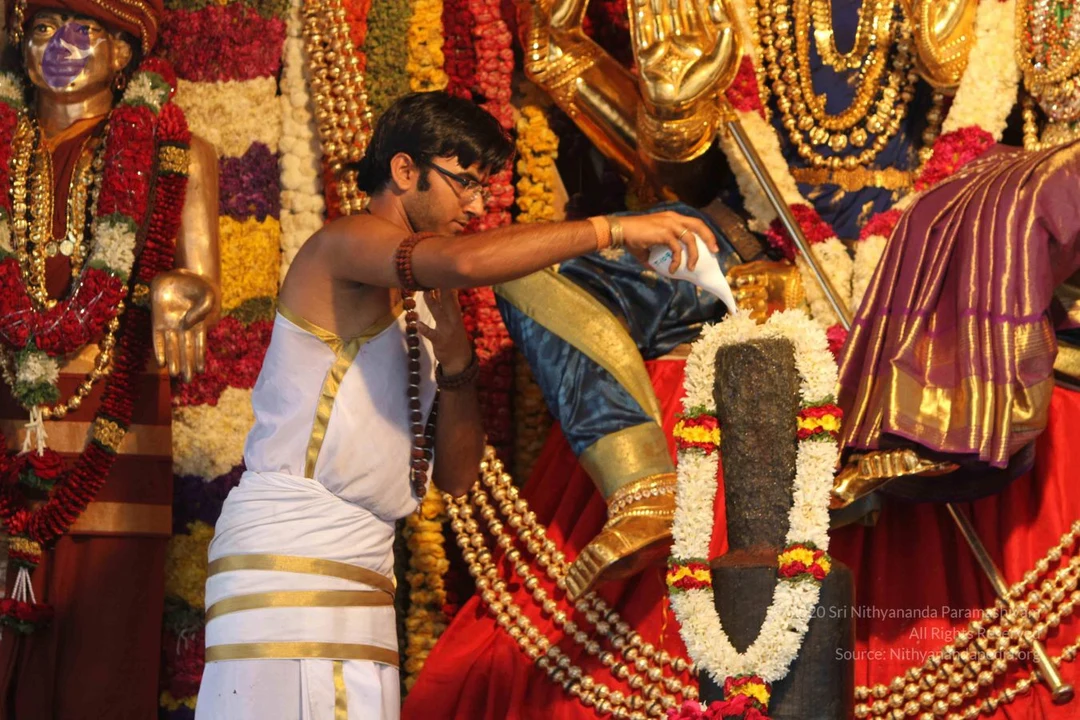
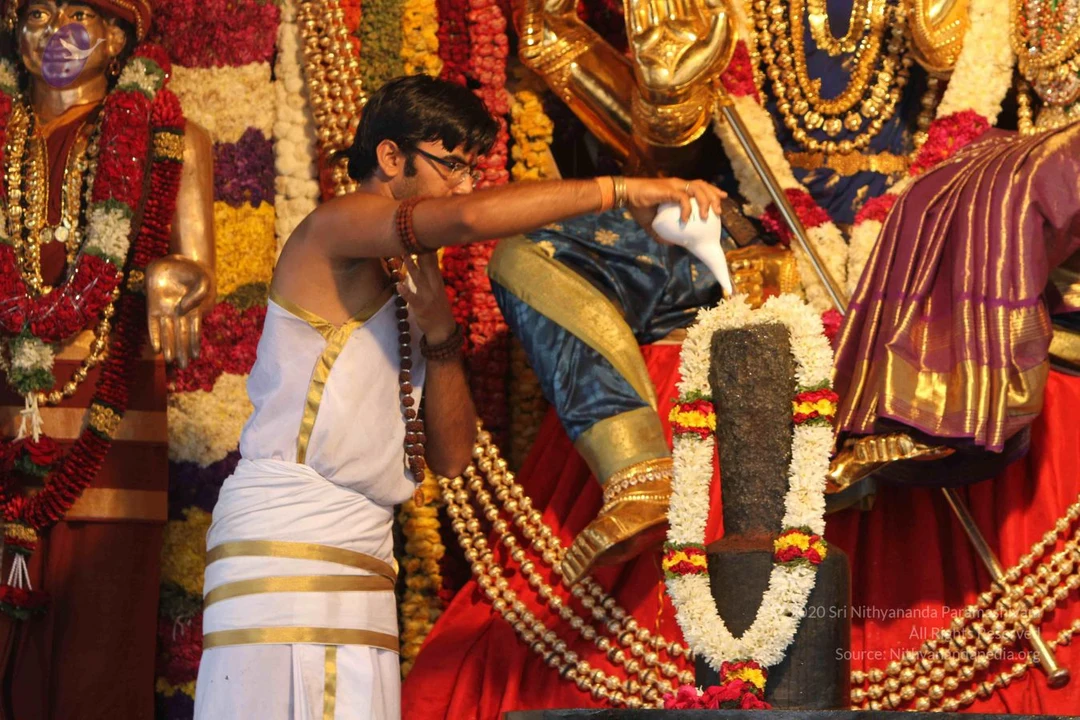
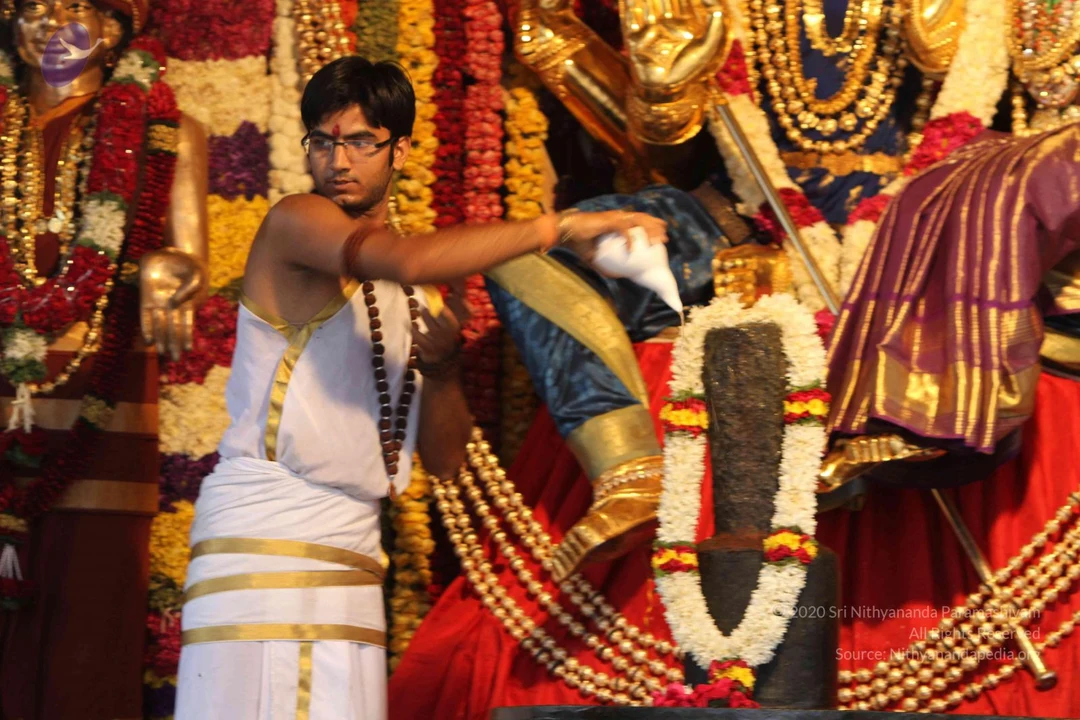
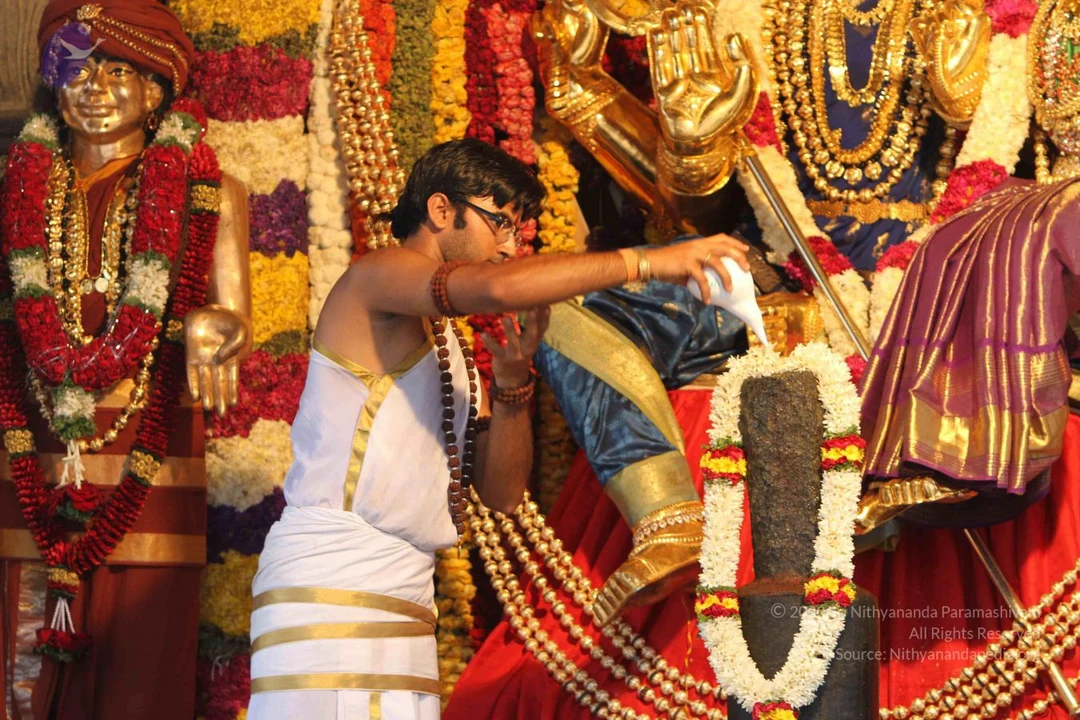
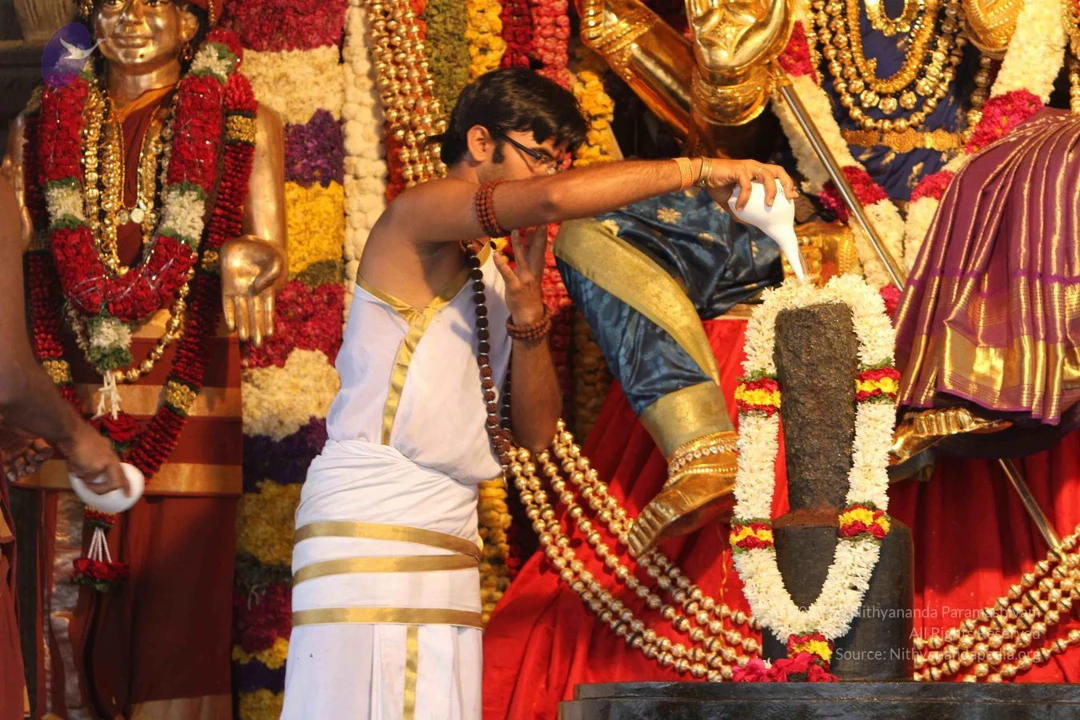
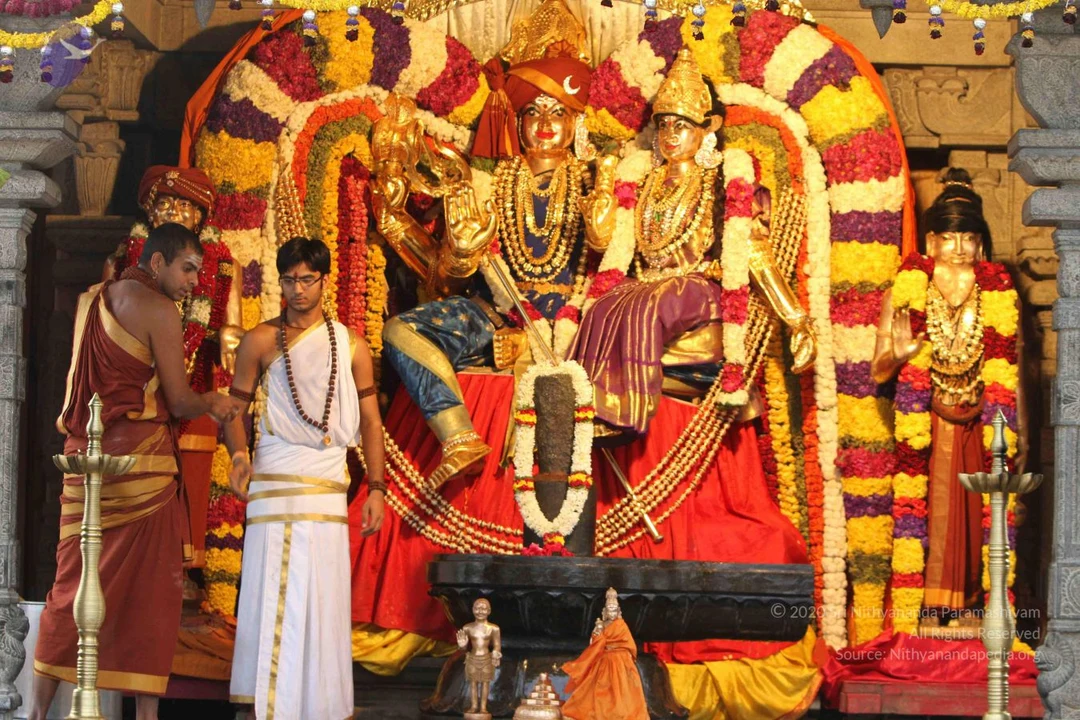
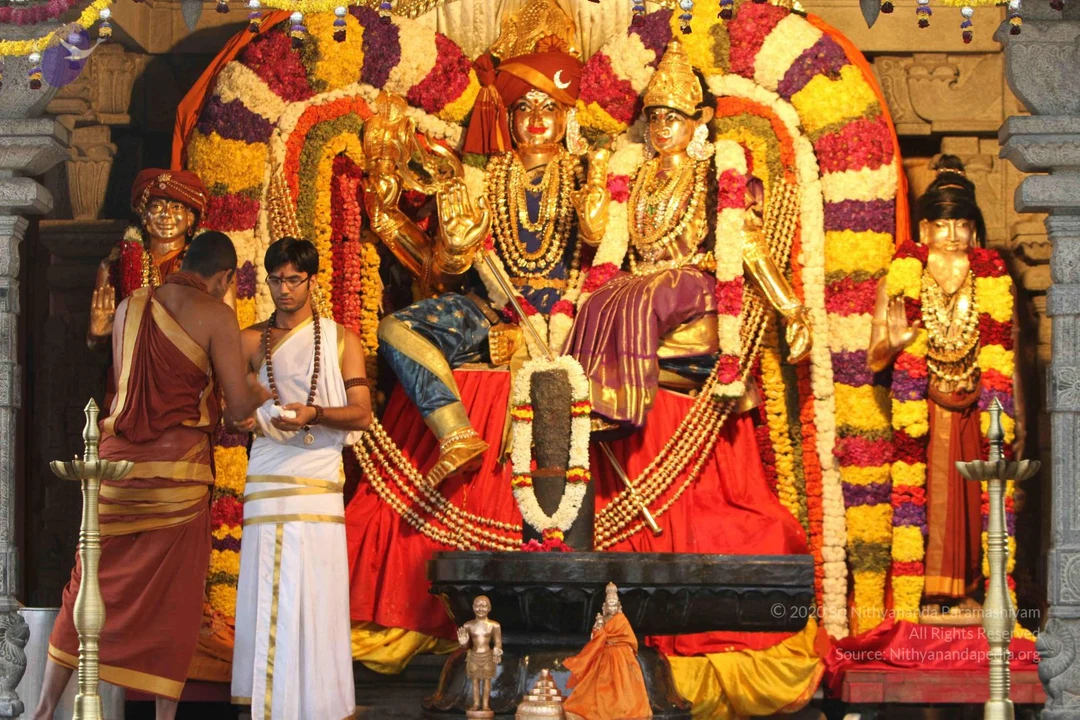
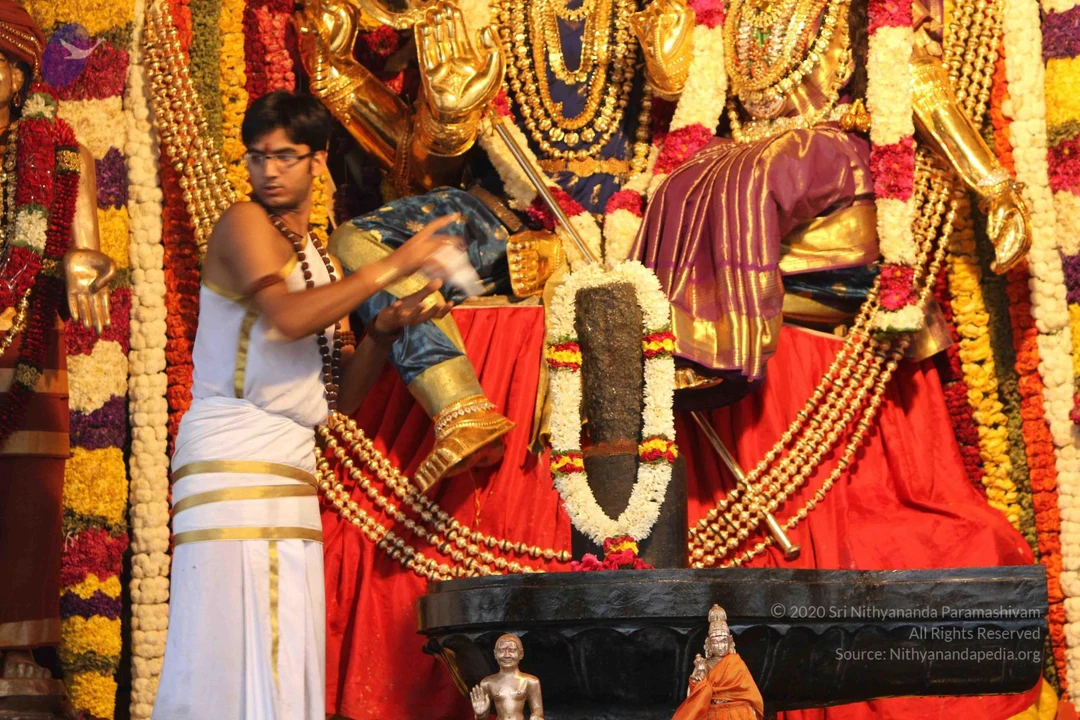
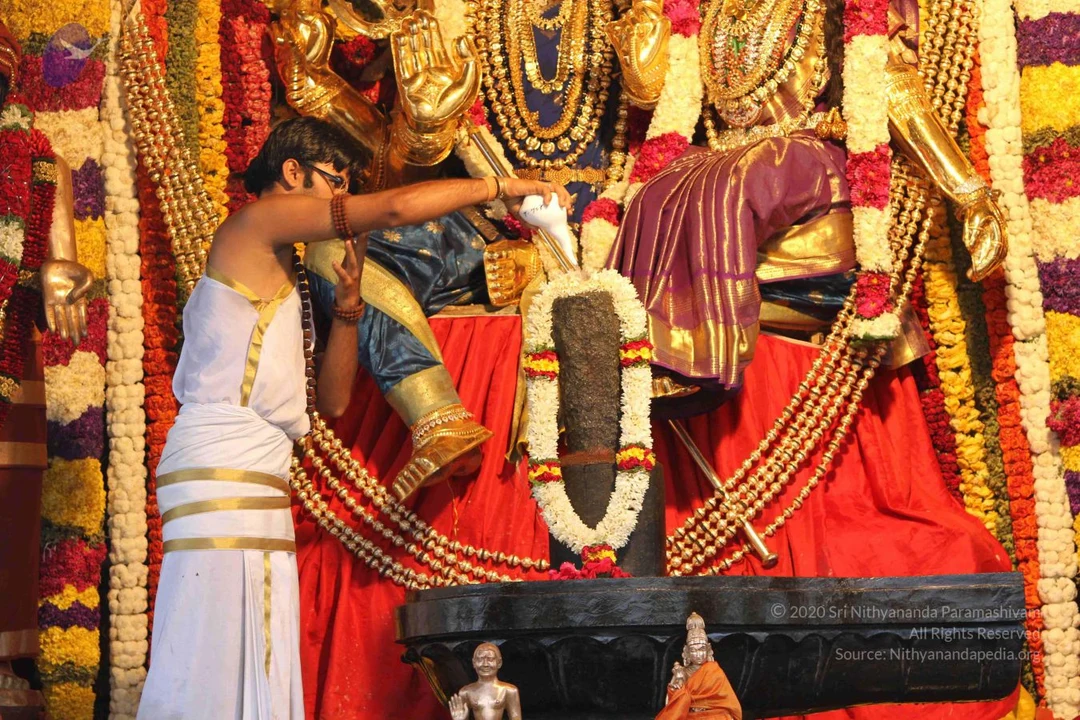
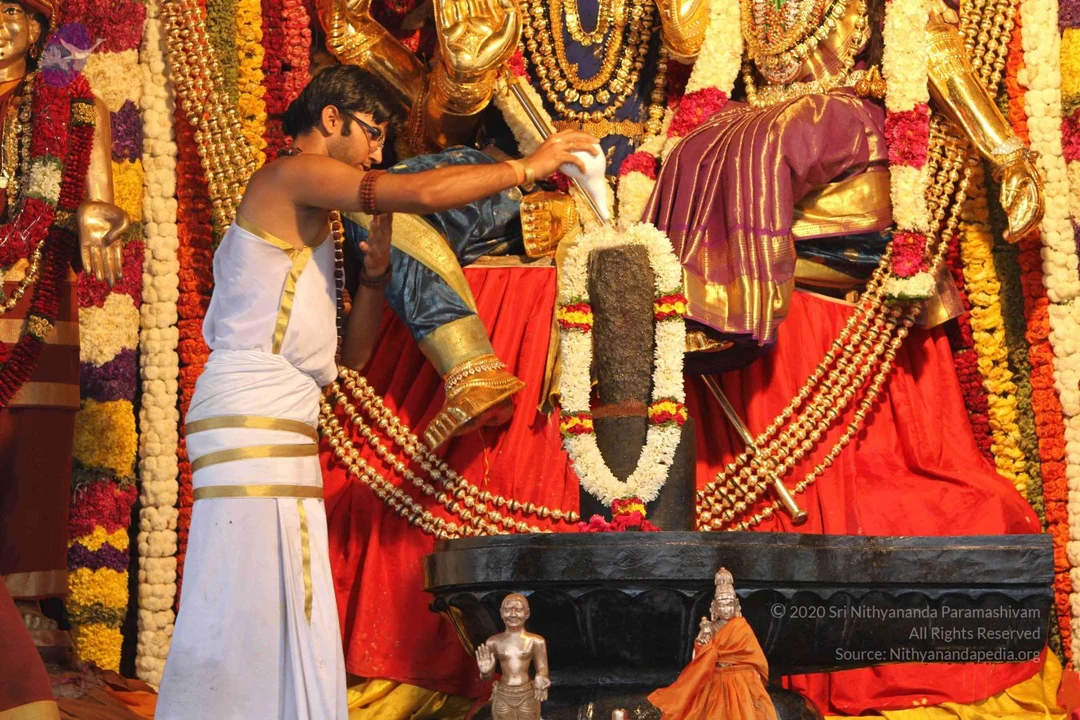
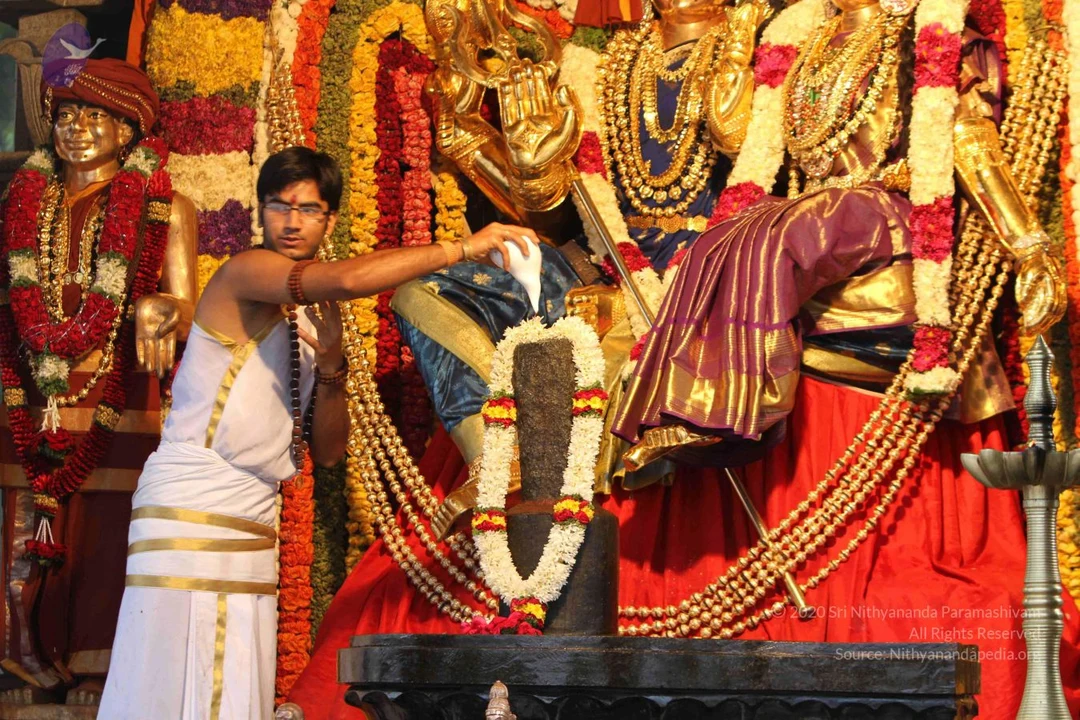
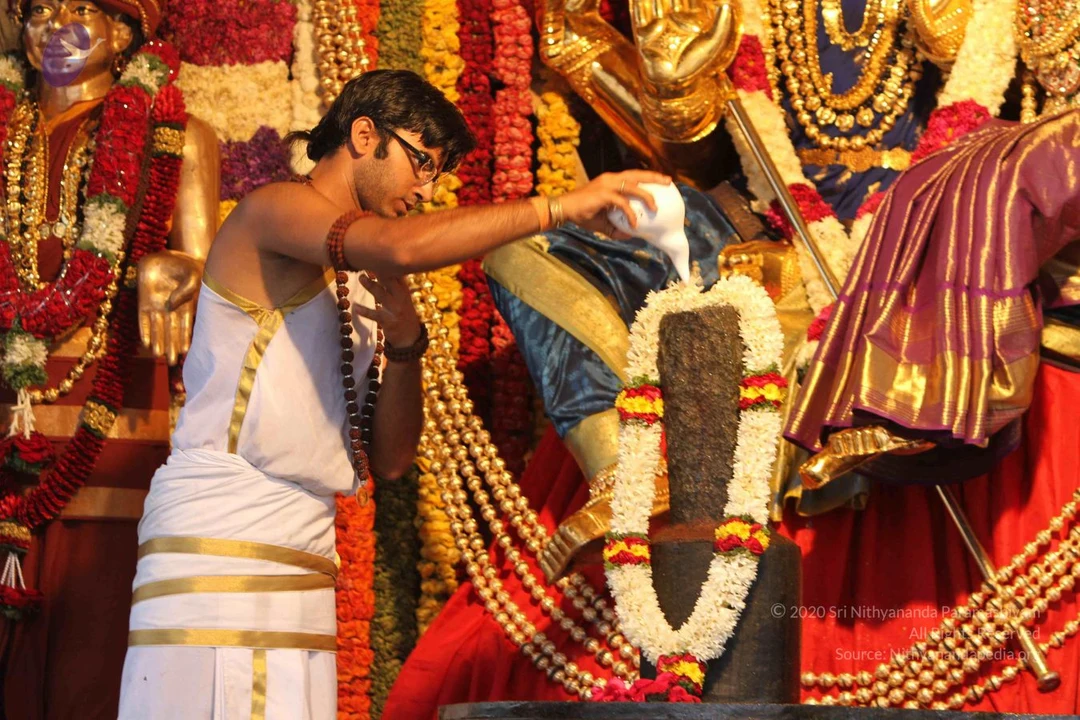
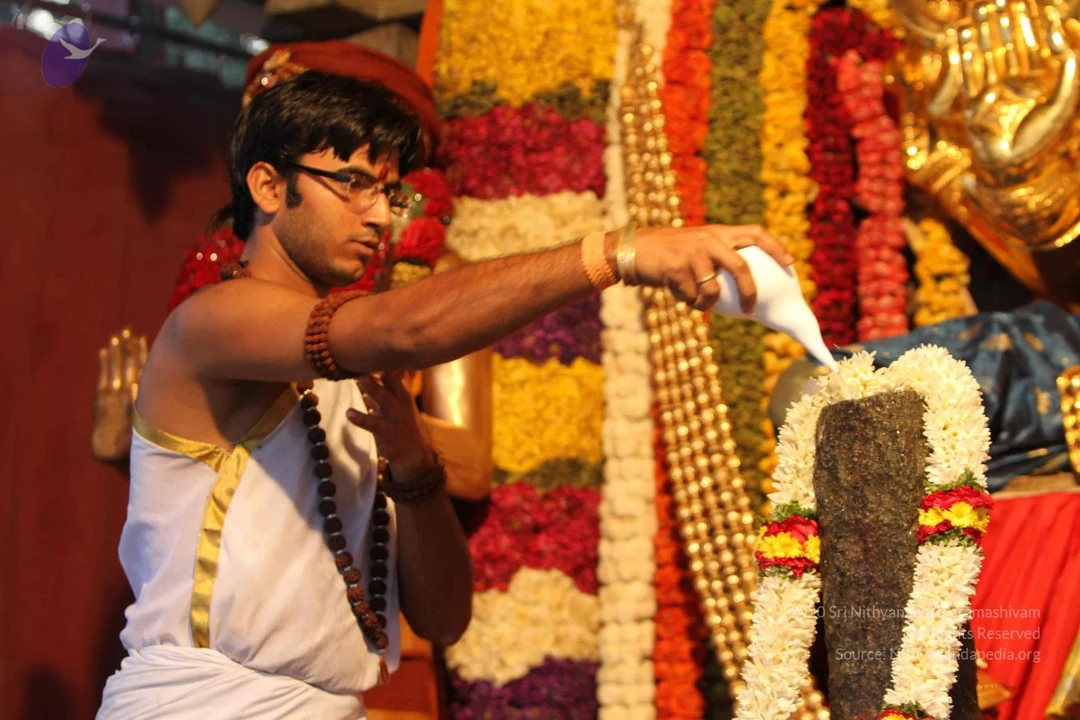
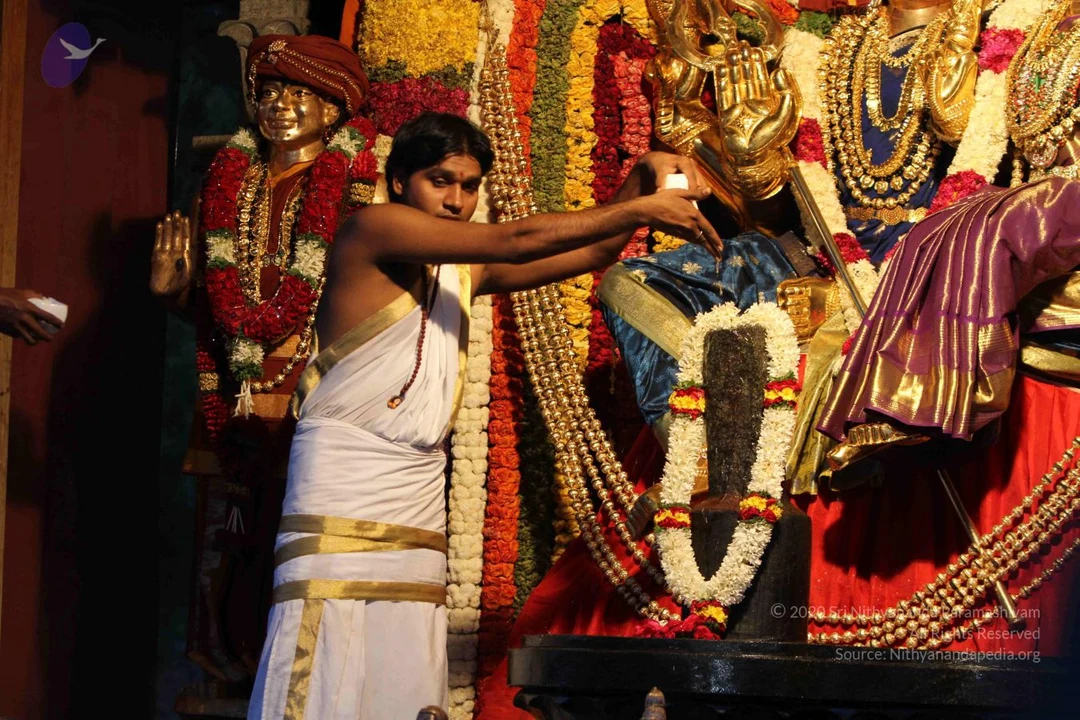
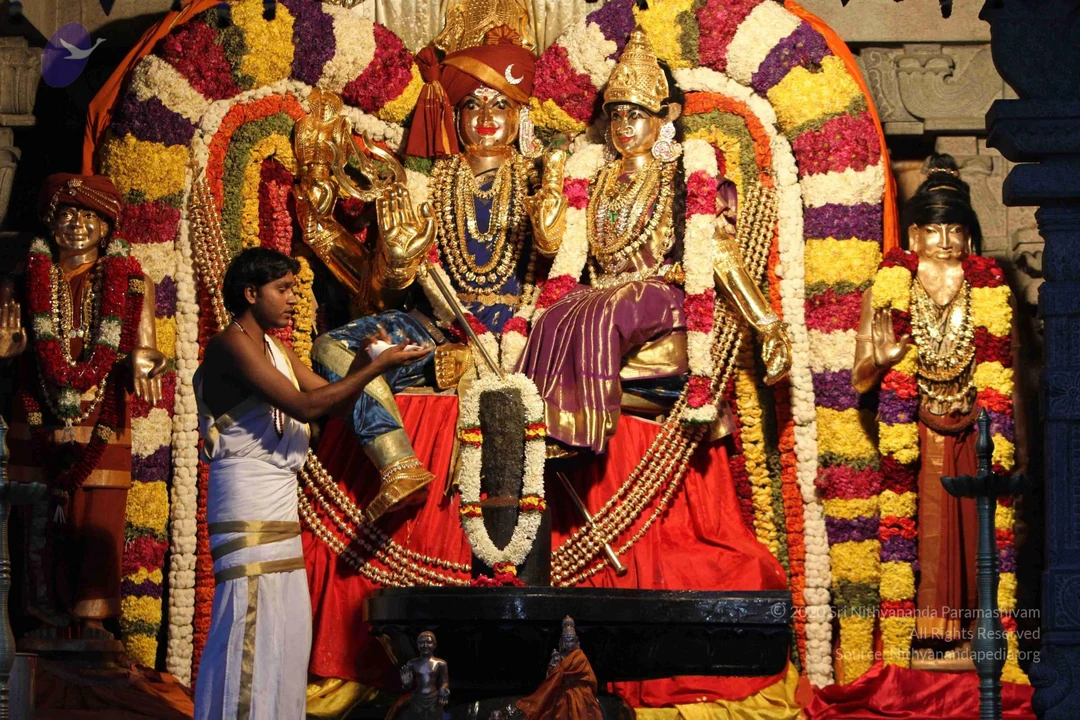
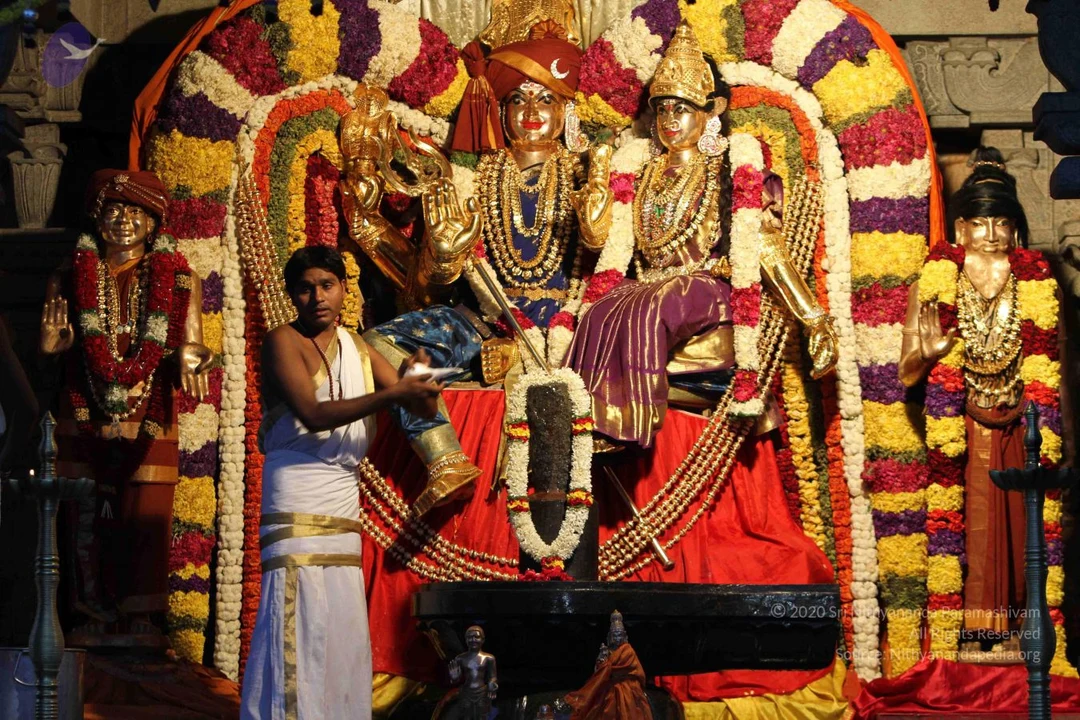
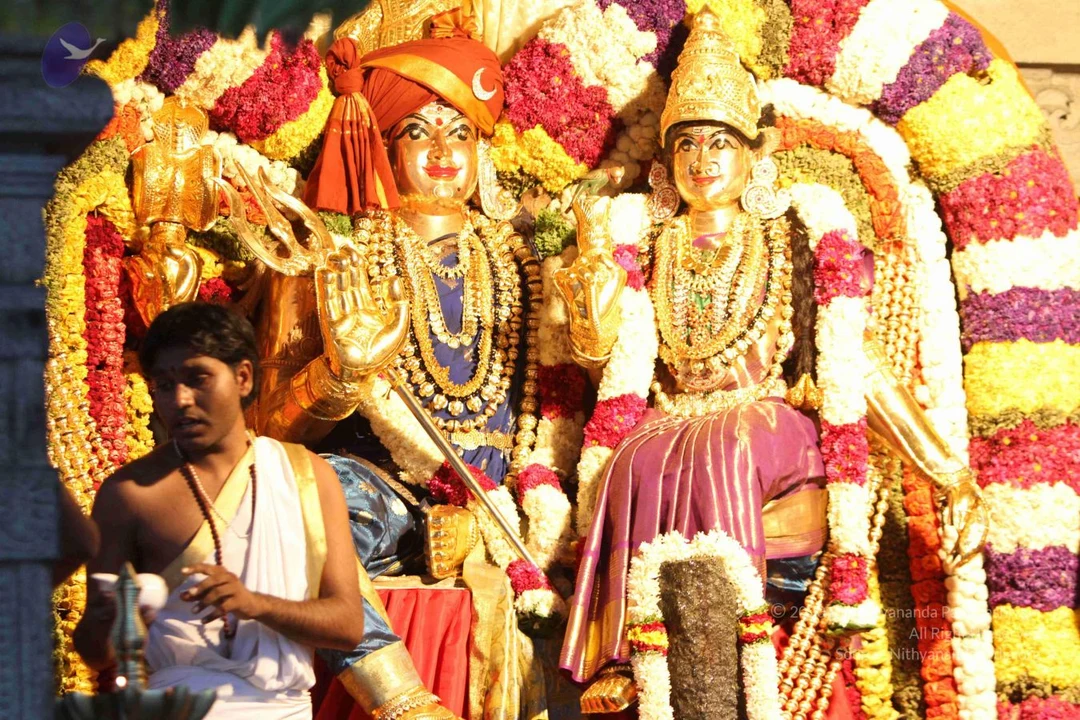
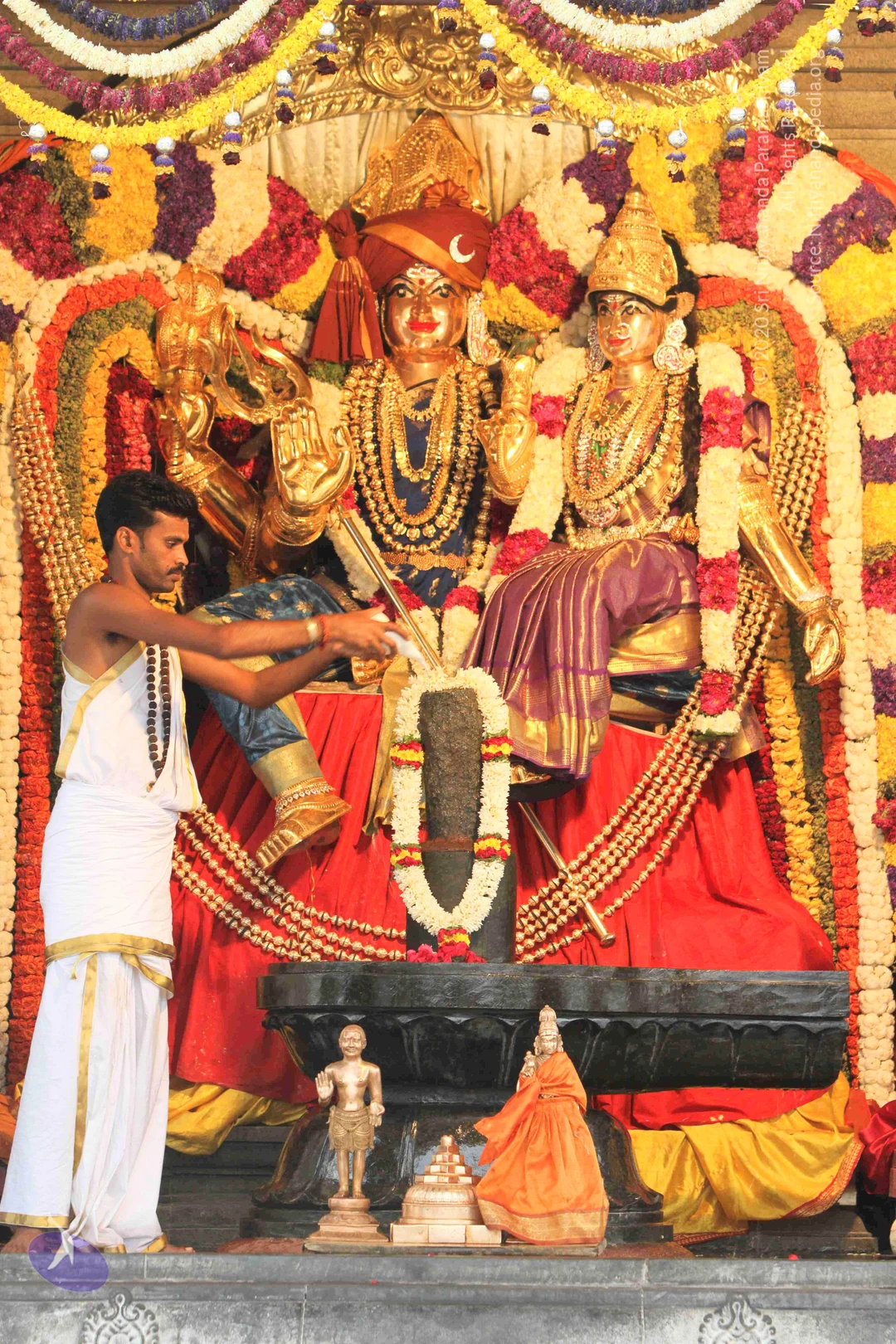
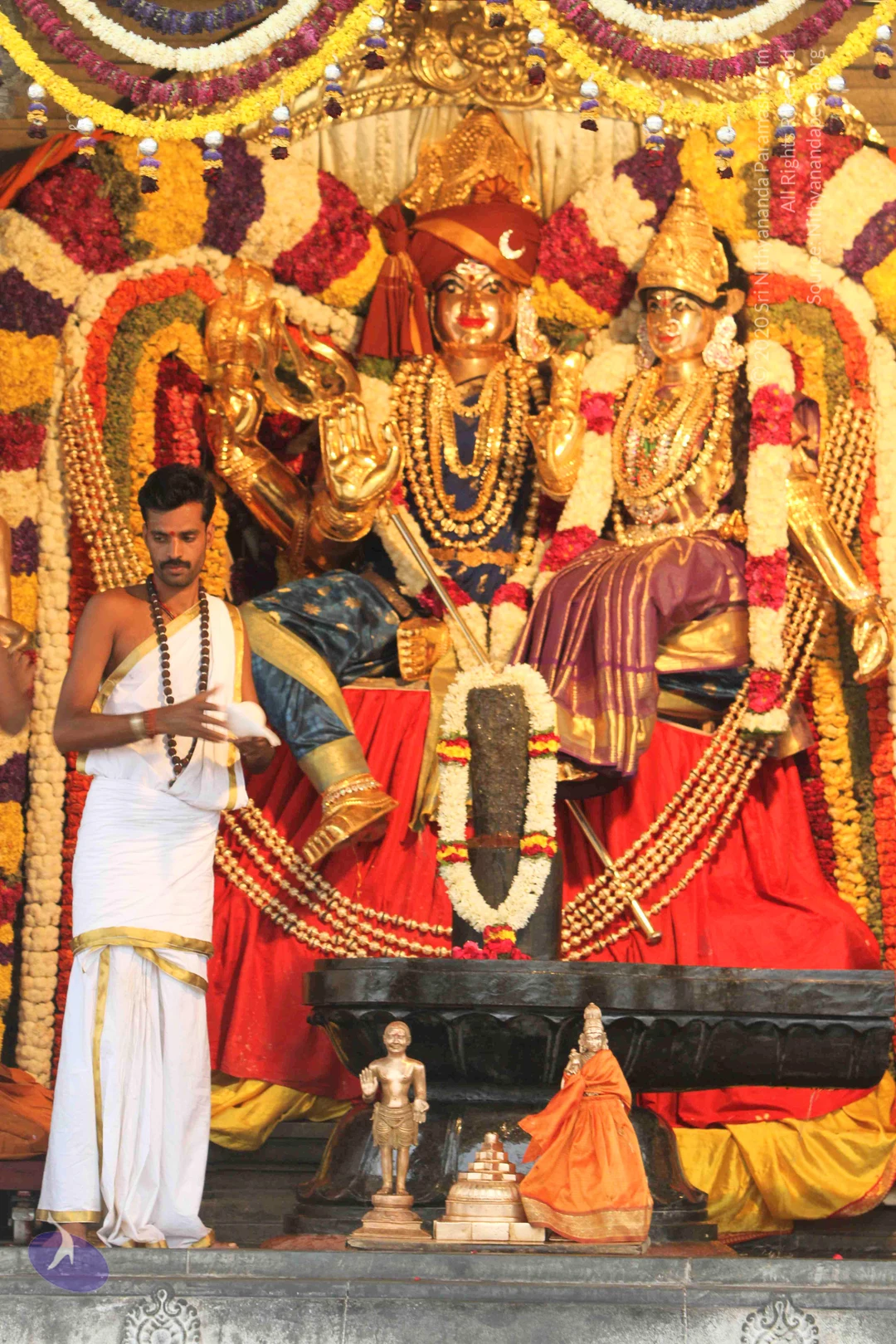
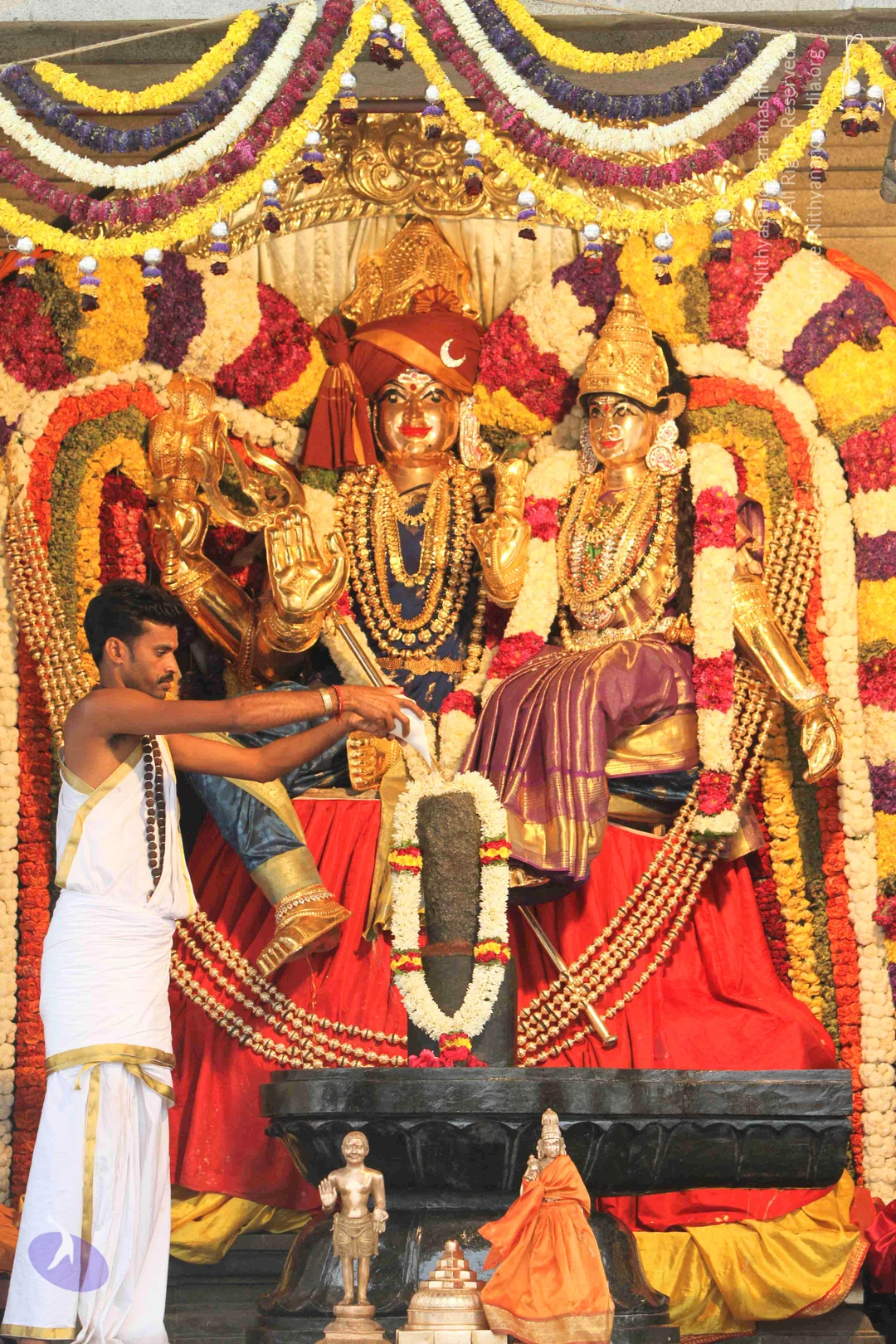
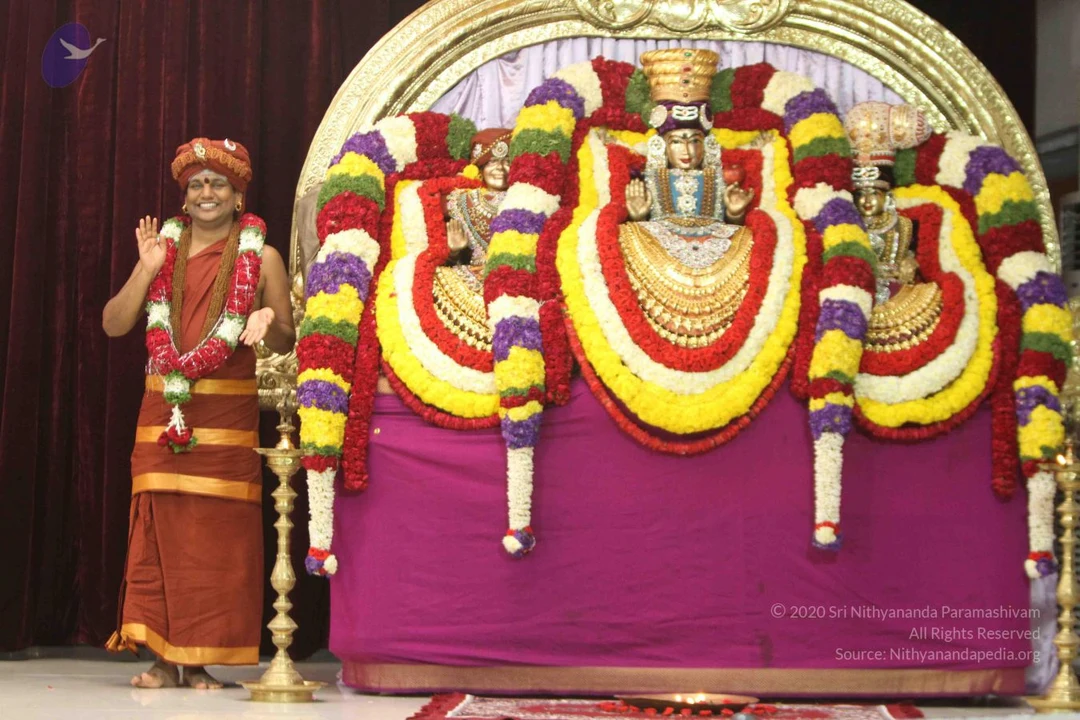
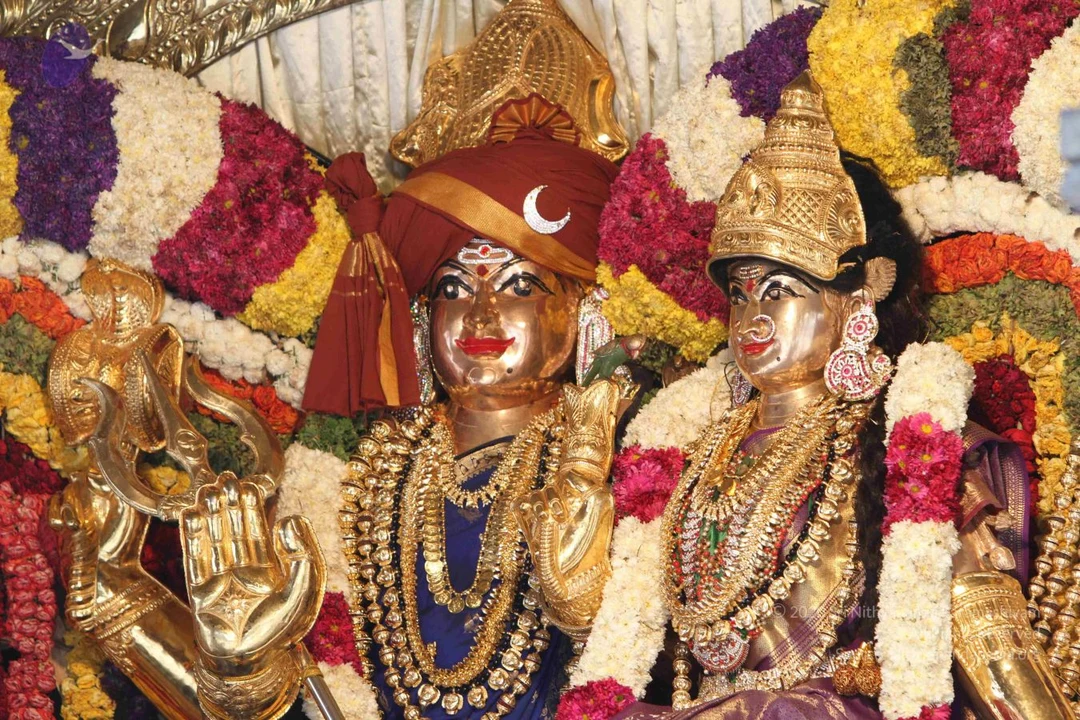
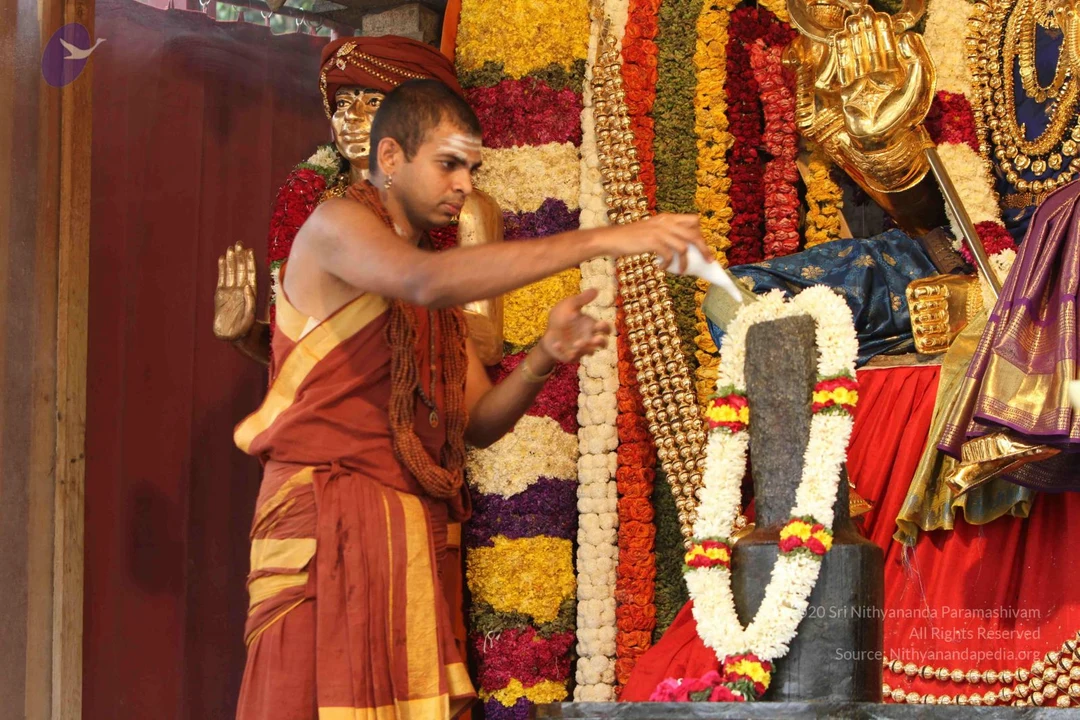
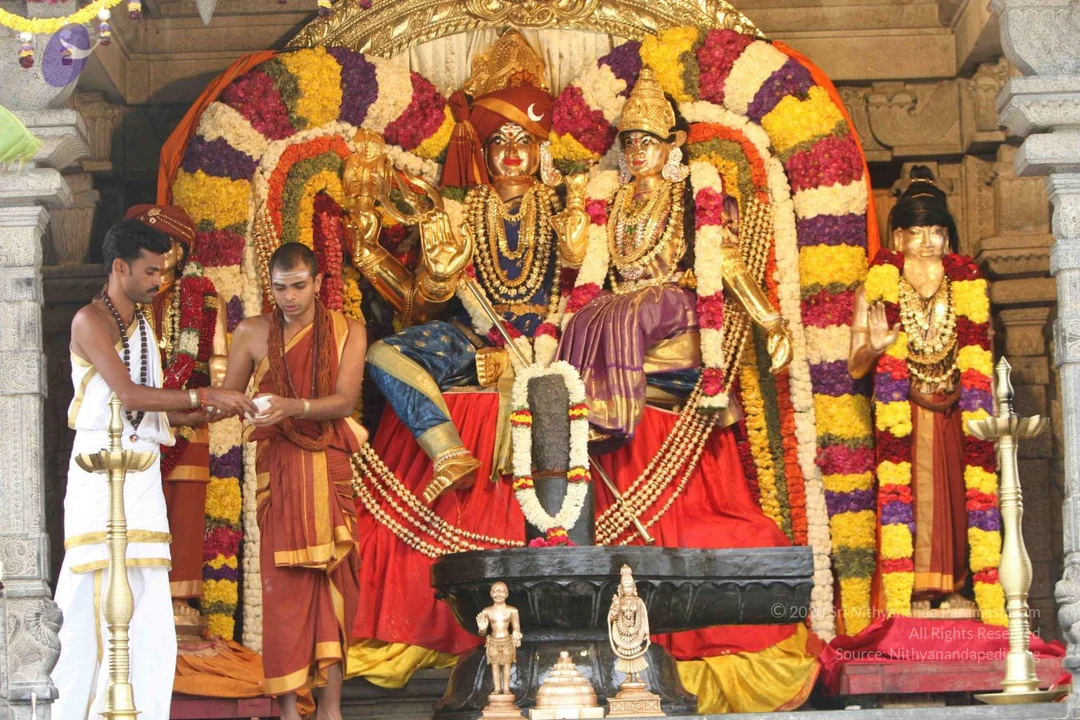
A young male priest in a white dhoti with gold borders and bare upper torso stands at left, wearing rudraksha beads and glasses, gesturing with his right hand toward a large golden deity murti seated on a red-draped platform. The murti wears heavy gold necklaces, a purple and blue silk garment, and holds a trident-like staff. In front of it stands a black Shiva lingam wrapped with a white flower garland with yellow and red accents, set on a black stone yoni pedestal. Dense garlands of marigolds and white flowers frame the scene. At lower right, a small silver figure and a figure in saffron-orange robes sit near the base.A man in white ritual dress with a gold-bordered dhoti and shawl stands before a dark stone lingam wrapped in a white and multicoloured flower garland. He pours liquid from a small white vessel over the lingam, as a wall of marigold, rose and white flower garlands and a golden deity hand fills the background. He wears a rudraksha mala and a silver bracelet and a red thread on his wrist, and a red head cloth is visible. The scene suggests abhishekam.Photograph of a temple shrine with a golden deity murti of Shiva and Parvati seated on a red cushioned peetha, draped in deep blue and purple garments and wrapped in dense garlands of yellow, orange, pink and purple flowers. A dark shiva lingam stands in front, decorated with white and red flower garlands. Two men stand at left: one in a reddish-brown dhoti and shawl, the other in a white dhoti with gold border, a rudraksha mala and spectacles, holding hands with the first in ritual greeting. Brass lamp stands flank the scene, and a small golden figure and a kalasha sit on the black pedestal below. Lamps and a golden figure of a devotee appear at right.

November 28 2014

Original wiki page
Contents

Title

The Thread of Life is Shivoham

Description:

In today’s (28th November, 2014) morning Satsang, Paramahamsa Nithyananda shows us the difference between “subjective truth” and “my world”. “My world” is how we perceive the world based on our incompletions and perceptions. But the subjective truth comes directly through the Master during the time of initiation. It is the most powerful way in which Shivoham, the Advaithic space, is transmitted to us.

Link to Video:

VideoAudio

Transcript:

Nithyanandeshwara Samaarambhaam Nithyanandeshwari Madhyamaam | Asmath Aachaarya Paryanthaam Vandhey Guru Paramparaam ||

I welcome all of you with my love and respects. I welcome all the devotees, disciples, samajis, satsanghis, Shrimahants, Mahants, Thanedars, Kotharis, visitors, viewers, everyone sitting with us through Nithyananda TV, Sadhna TV, and two-way video-conferencing.

Cities sitting with us in two-way video-conferencing: Rajapalayam, Kalahasti, Thiru Kailasam, Seattle, Los Angeles, Hong Kong, Jorpati-Nepal, Dubai, Chennai Aadheenam, Los Angeles, Netherlands, Guadeloupe, China, Singapore, Kuala Lumpur, Tallahassee-Florida, Colombo, Paris, St. Louis, Hyderabad, San Jose, Ohio, Dakota Dunes, Oman, Tiruvannamalai and some more cities.

I welcome all of you with my love and respects.

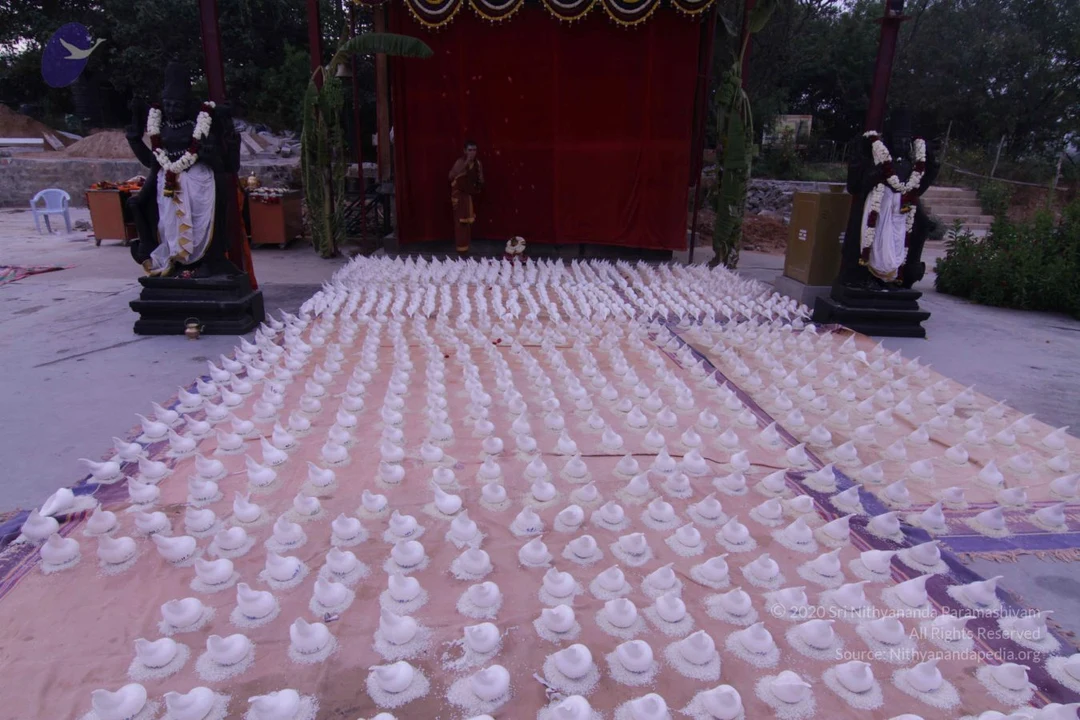
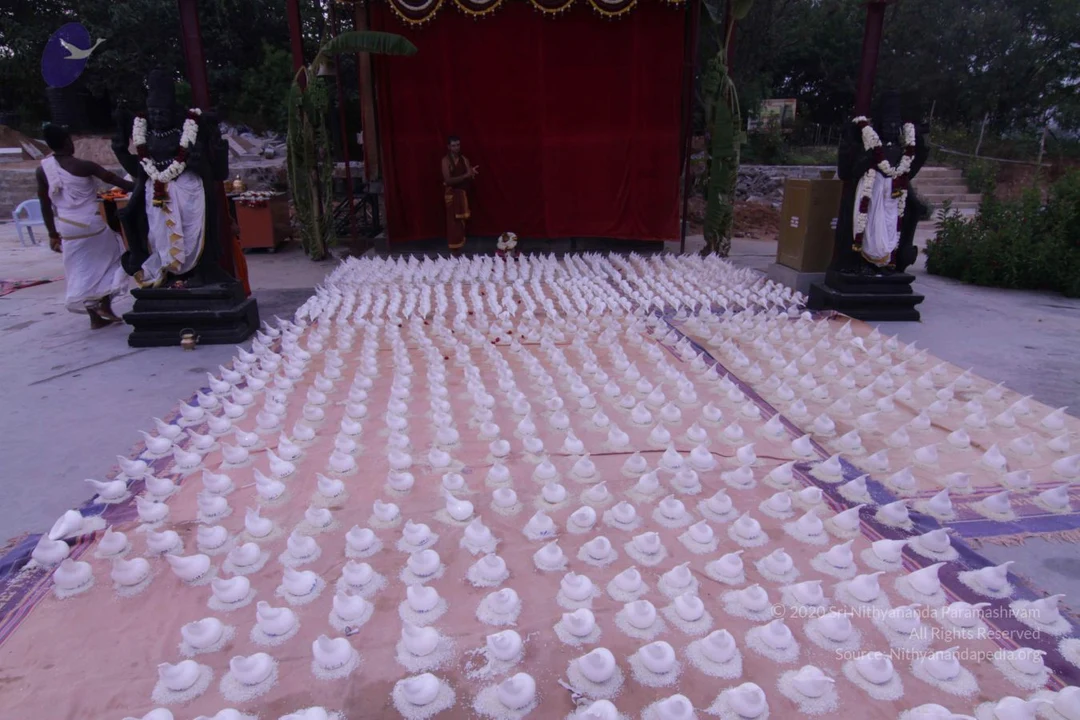
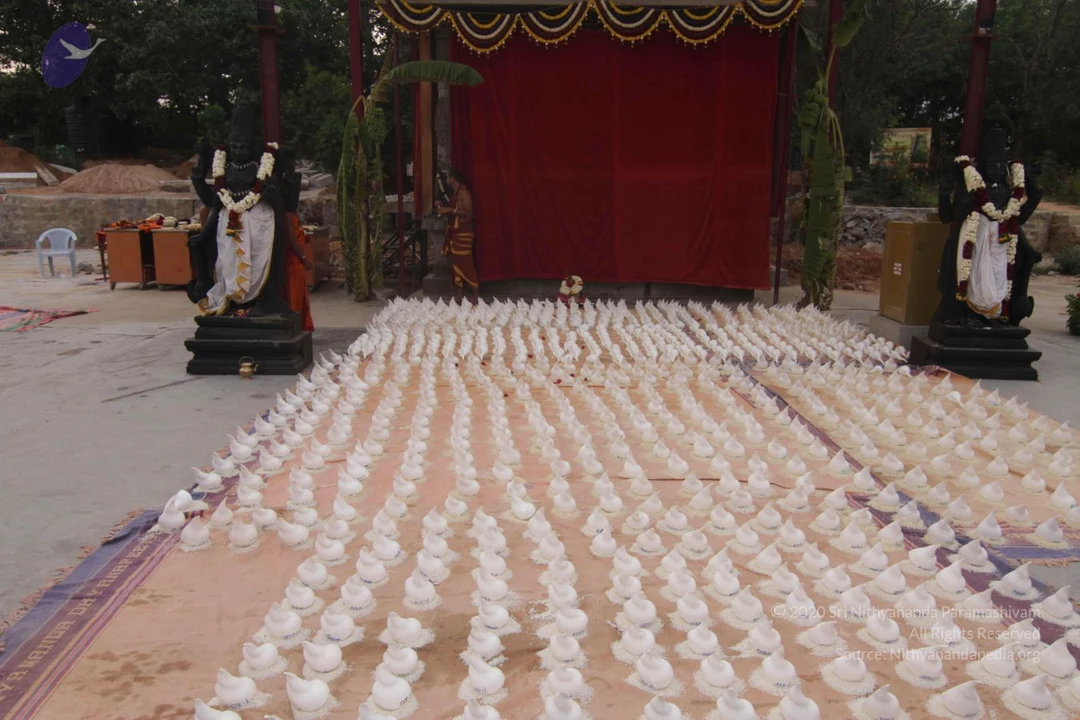
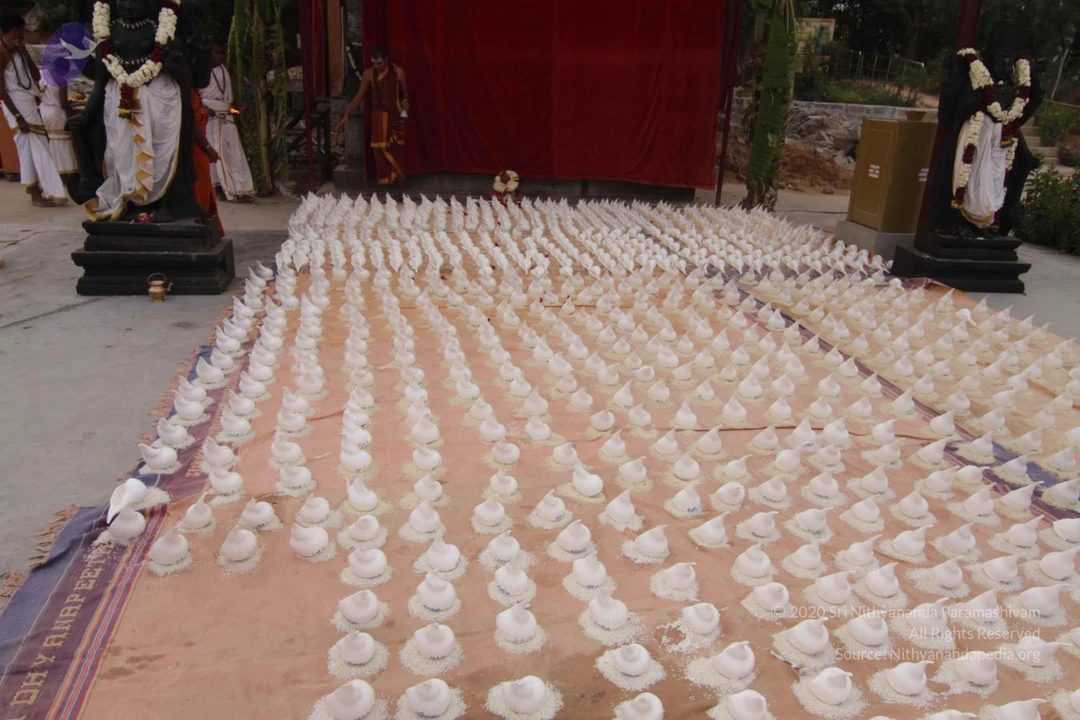
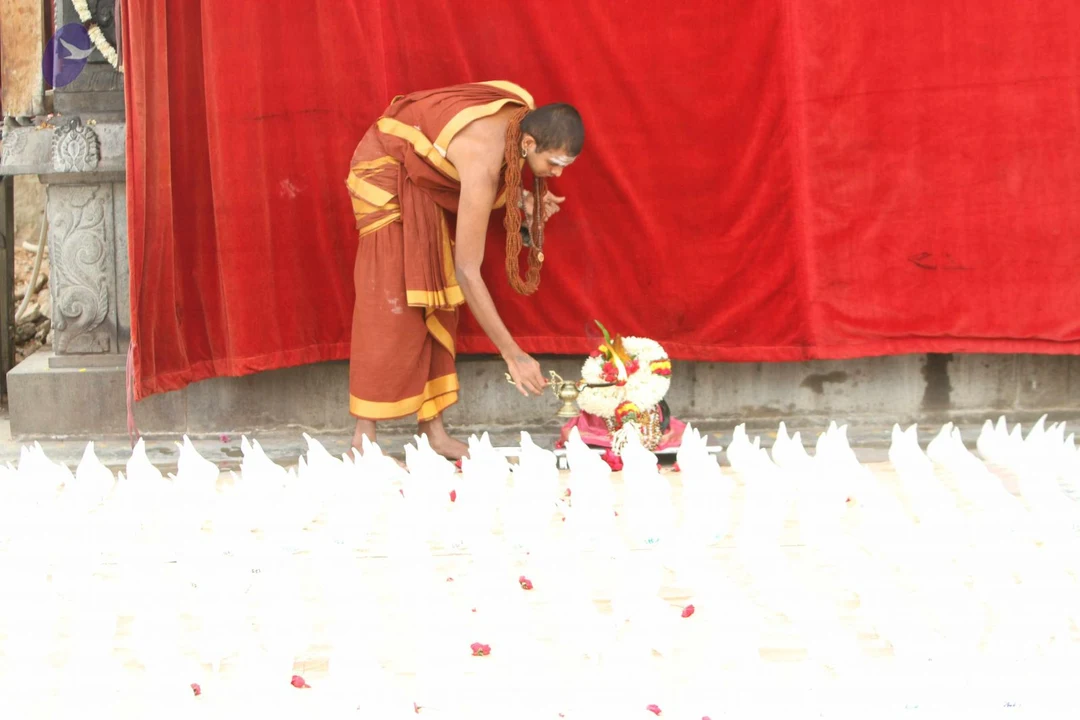
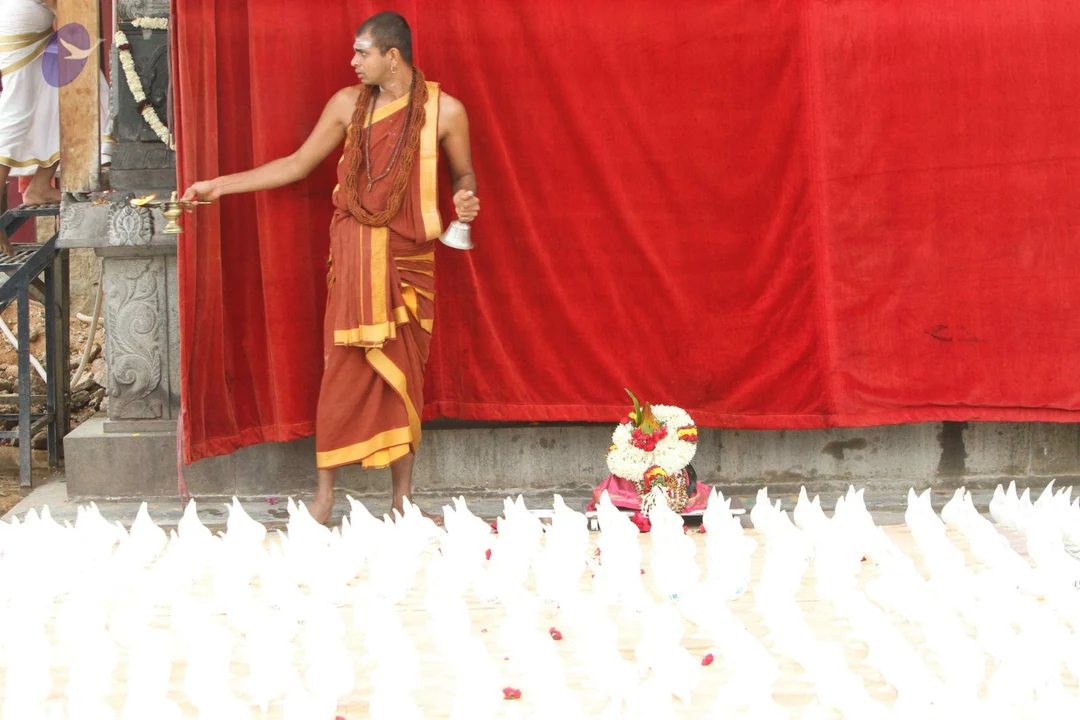
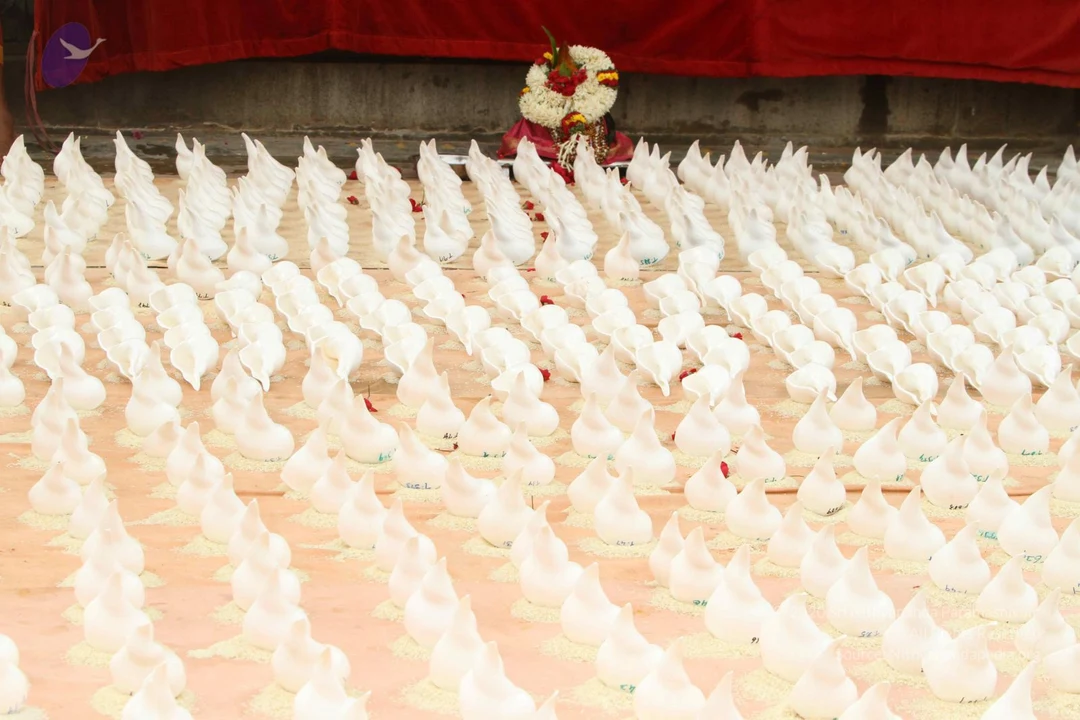
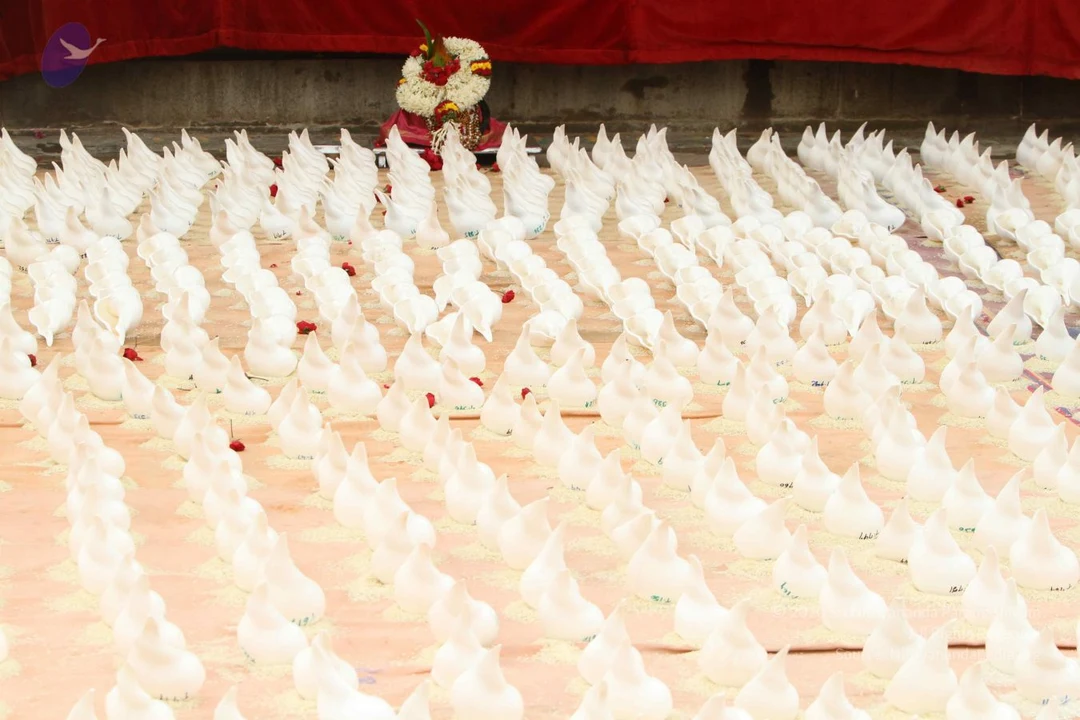
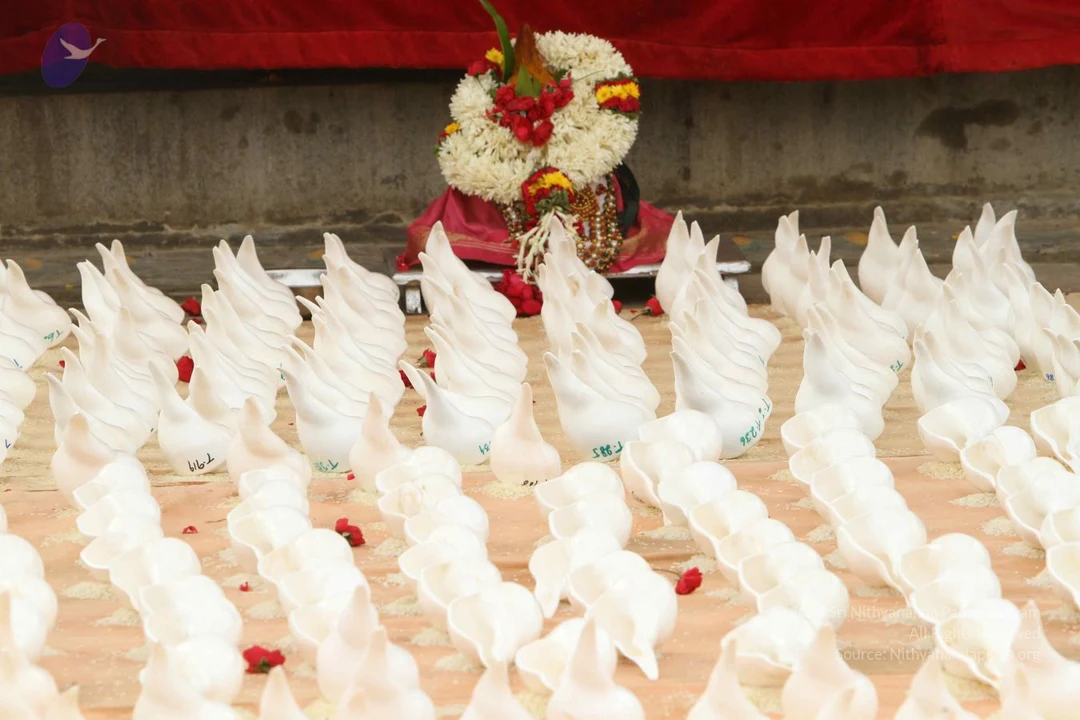
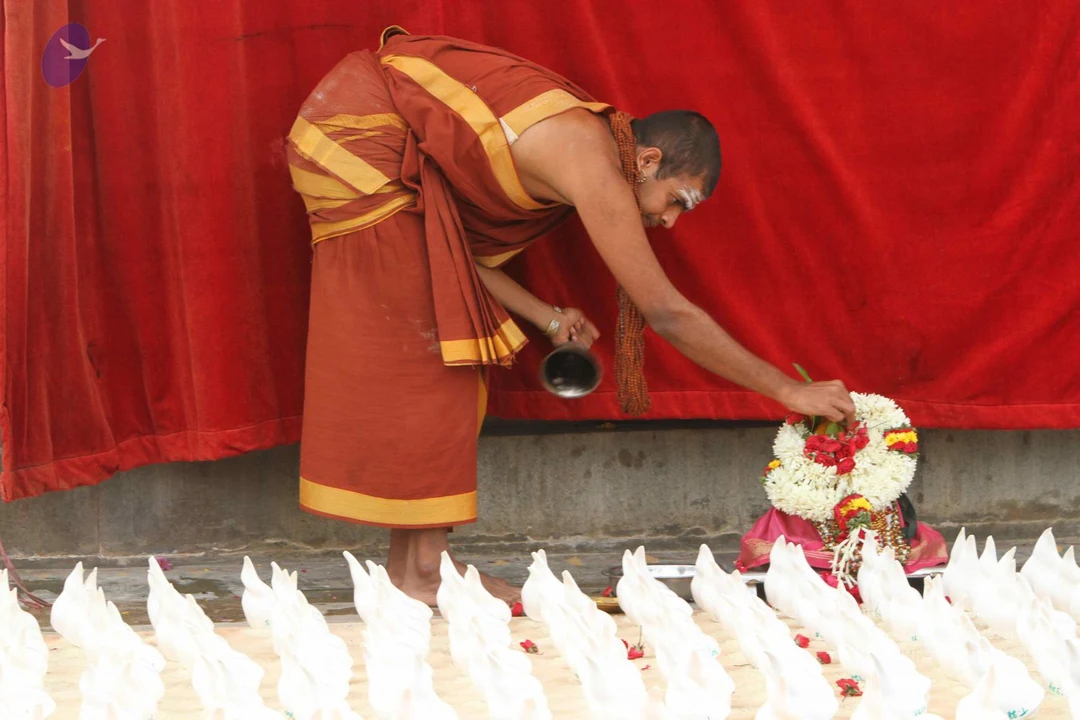
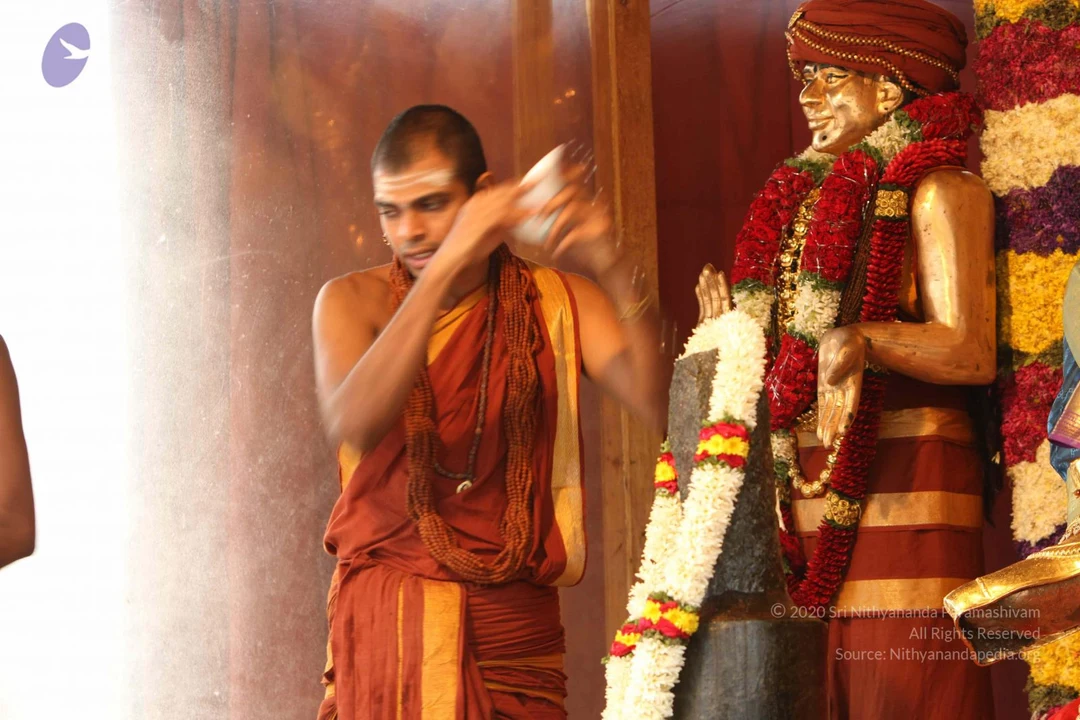
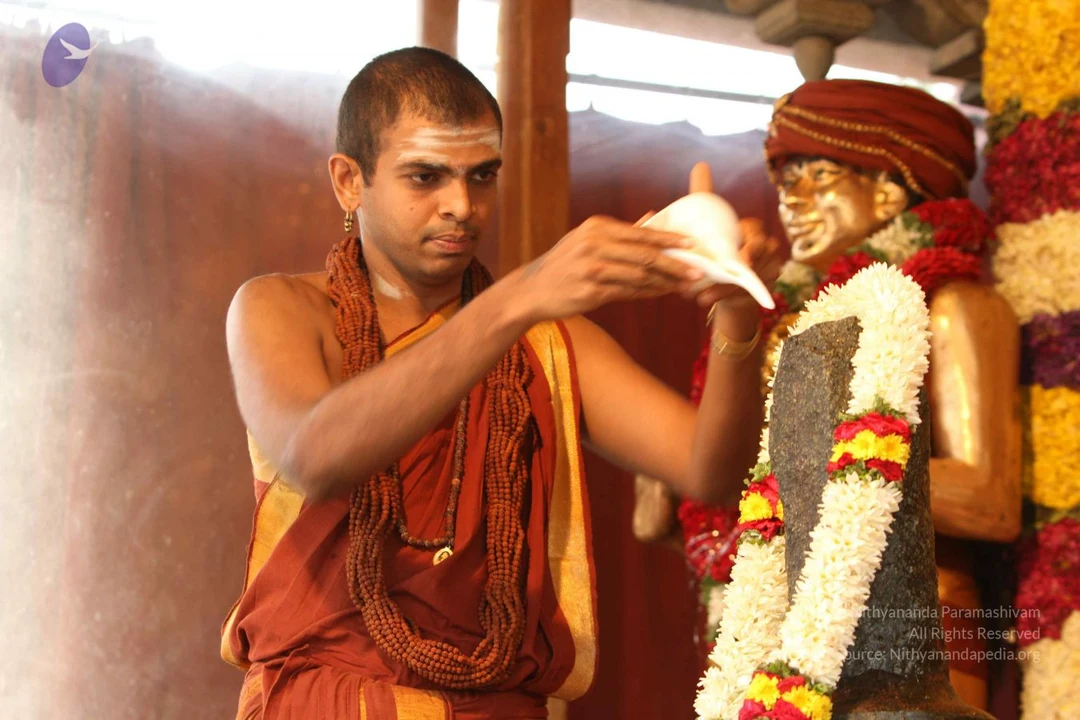
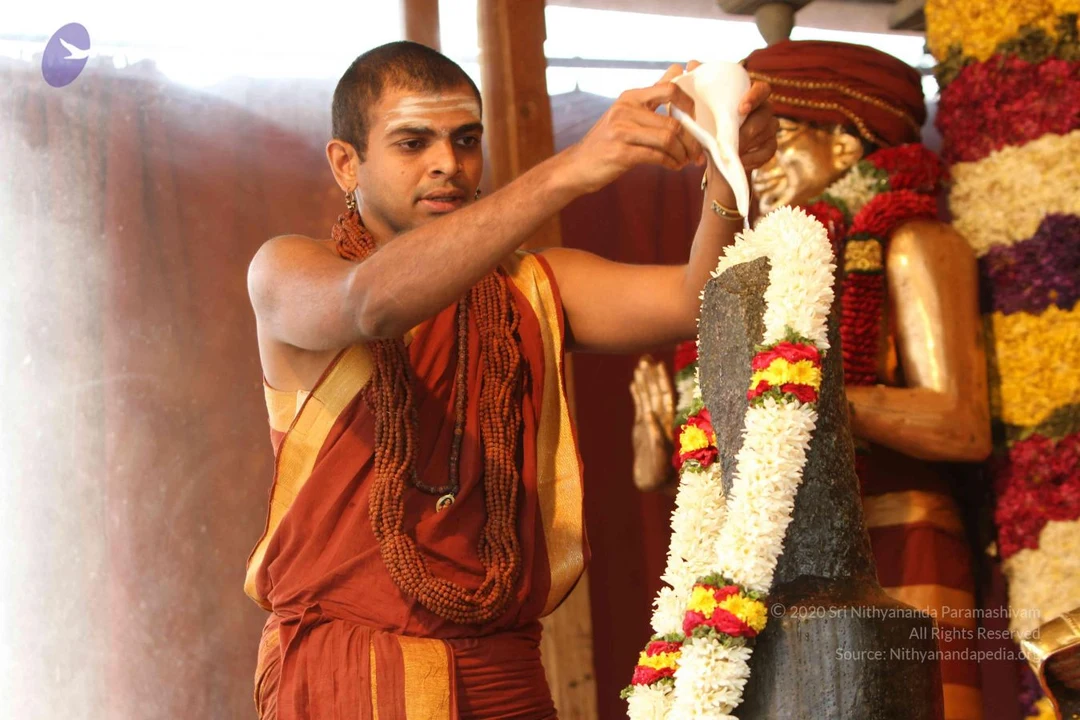
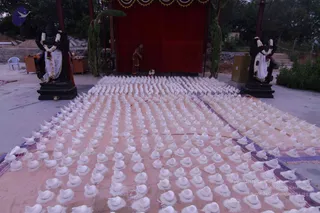
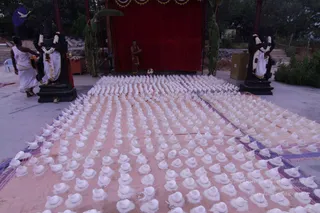
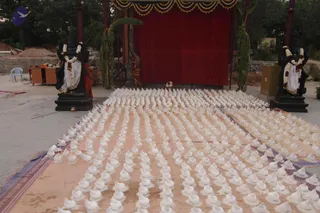
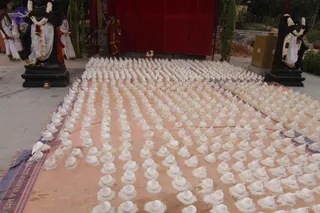
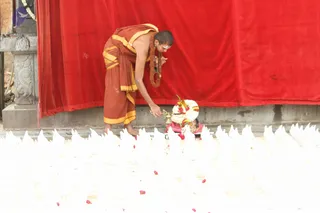
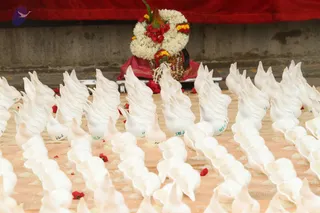
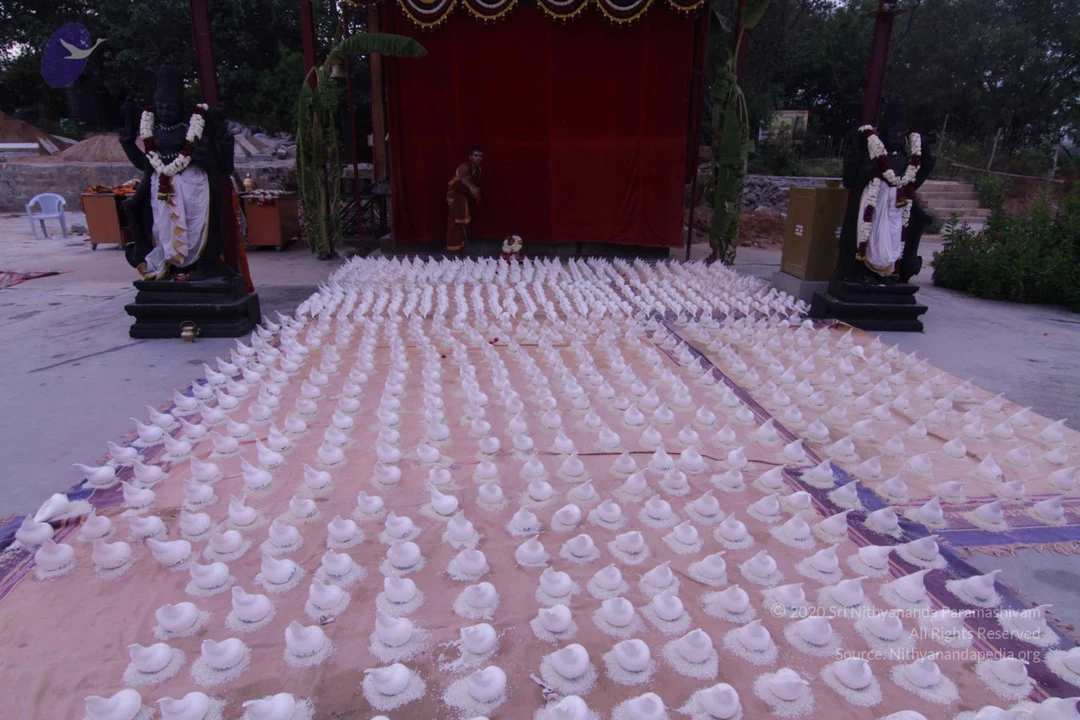
Today is third day of Nithyanandeshwara Brahmotsava. Today we have 1008 Shankhabhishekam to Nithyanandeshwara Swayambhu Linga. Swayambhu Nithyanandeshwara, for him, we will be having 1008 Shankabhishekam in the evening.

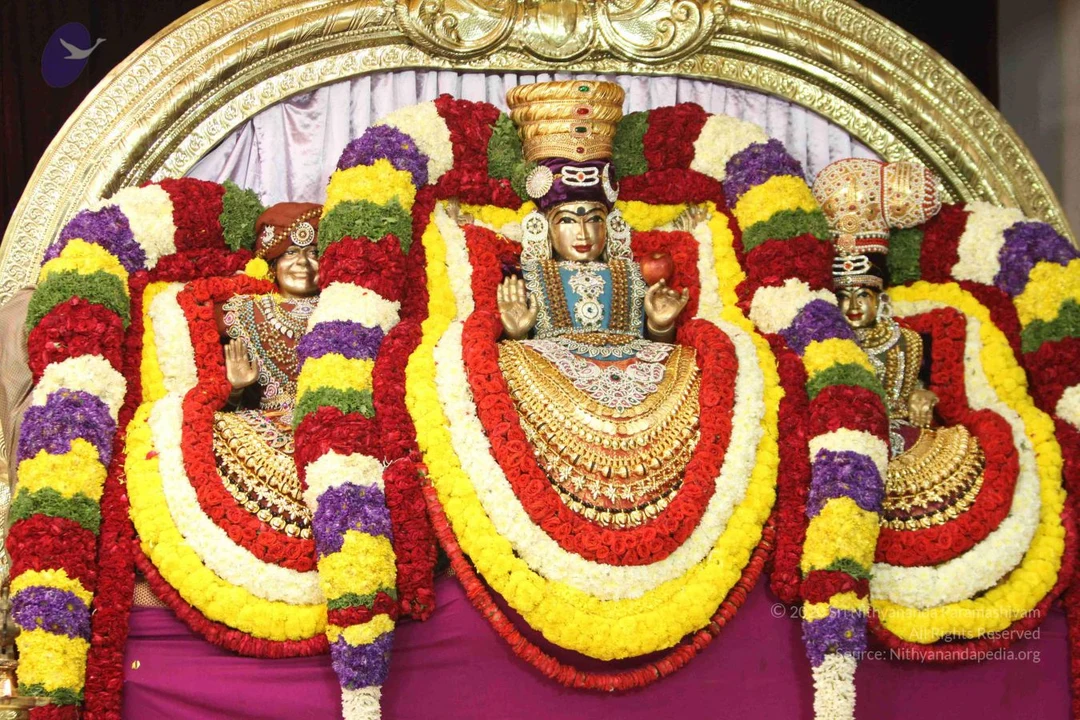
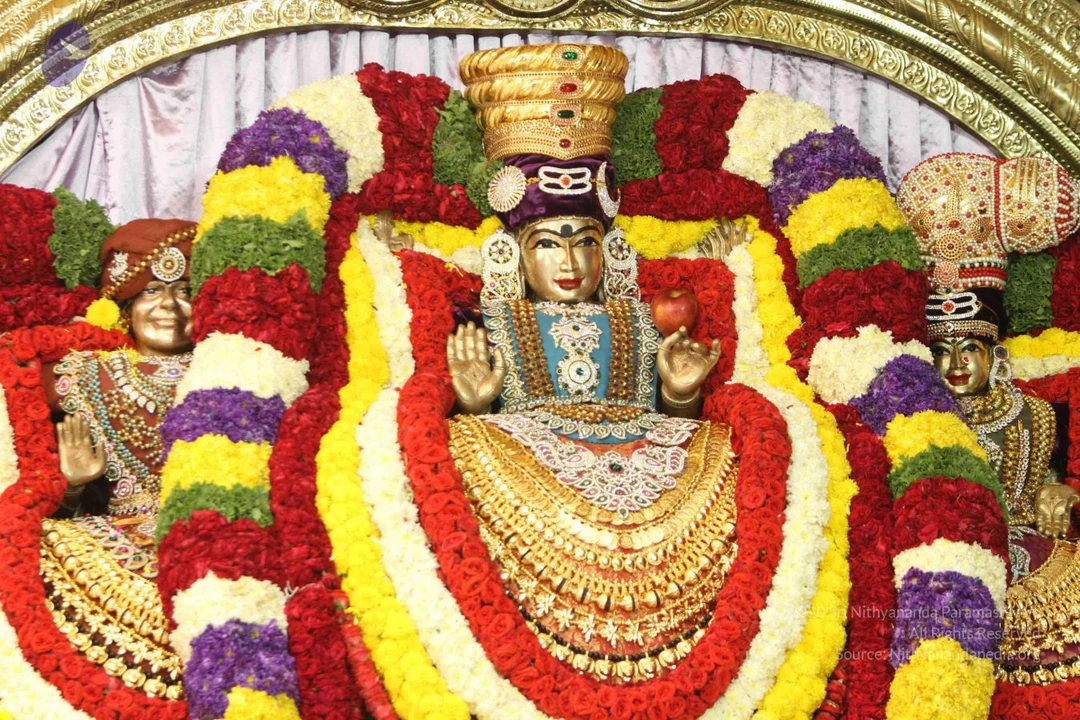
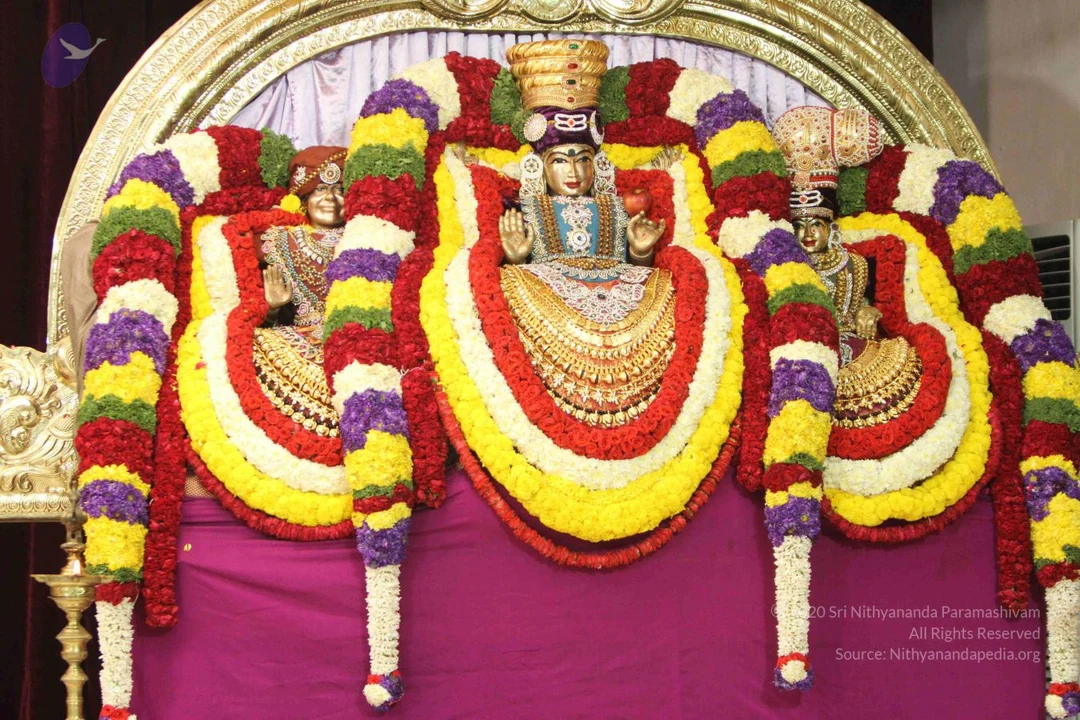
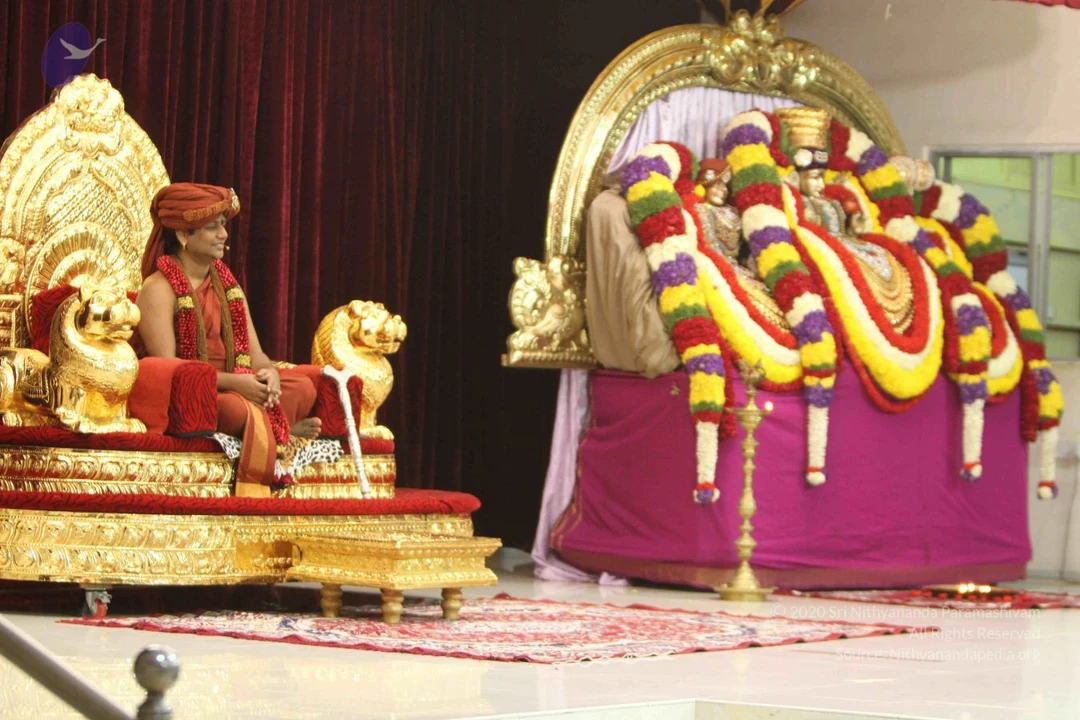
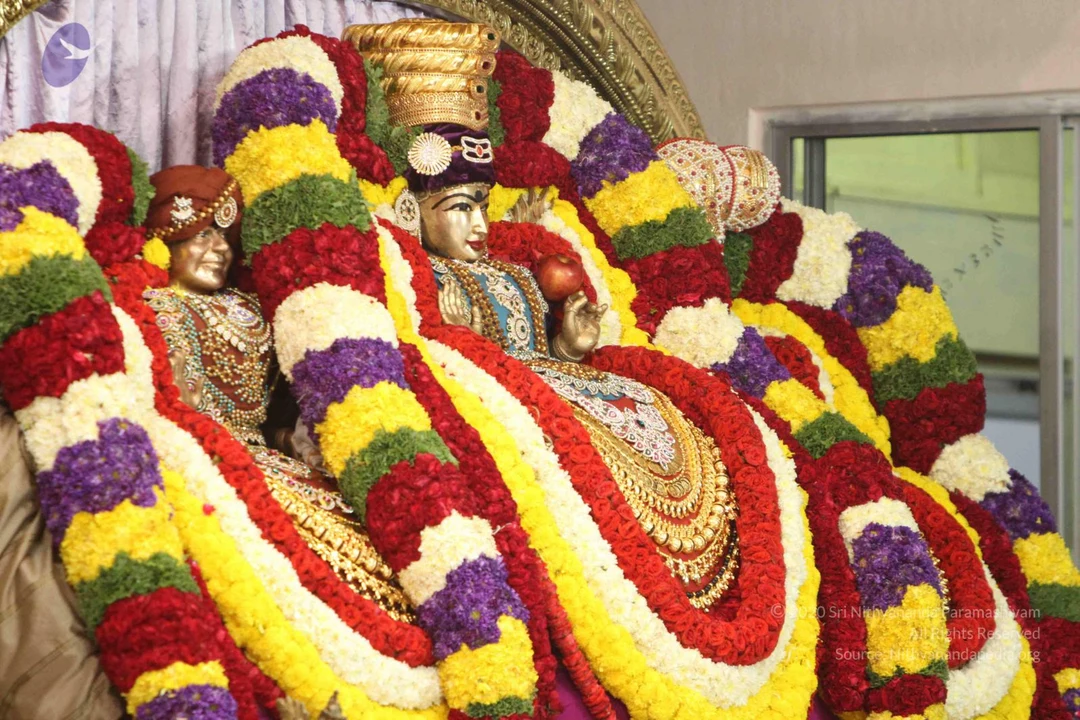
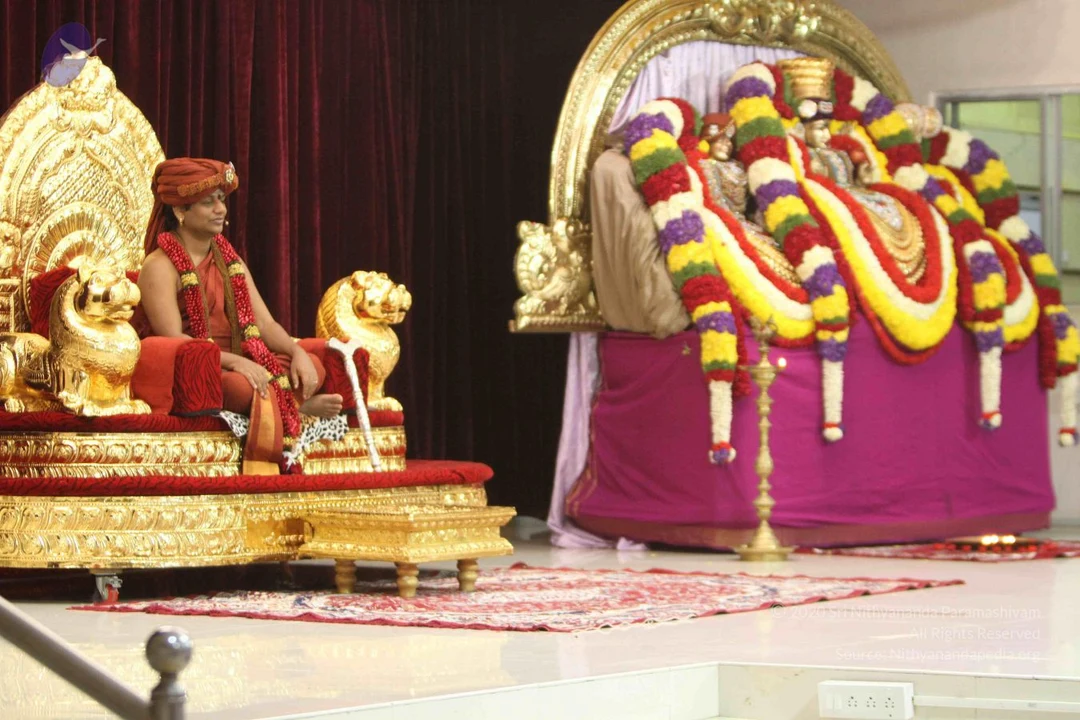
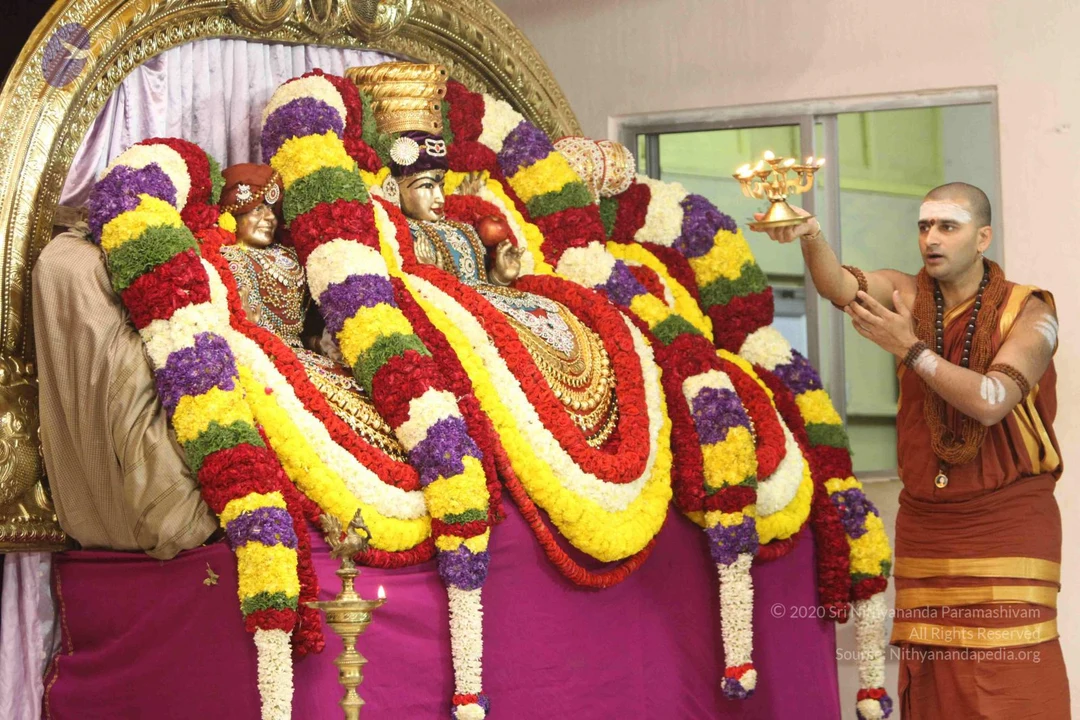
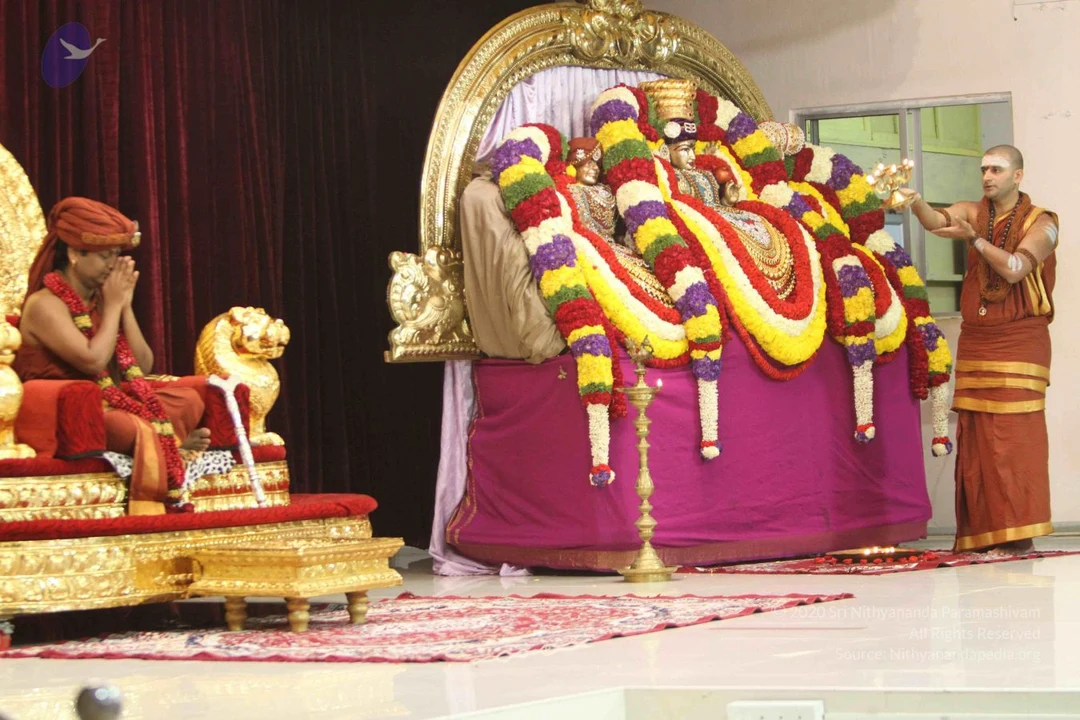
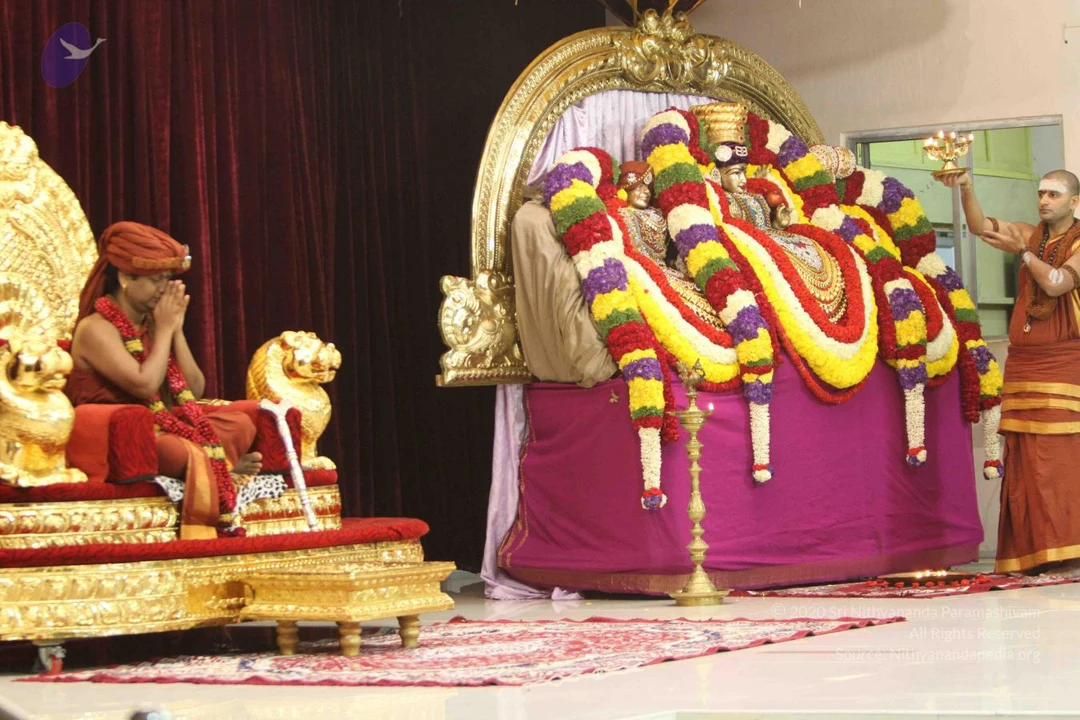
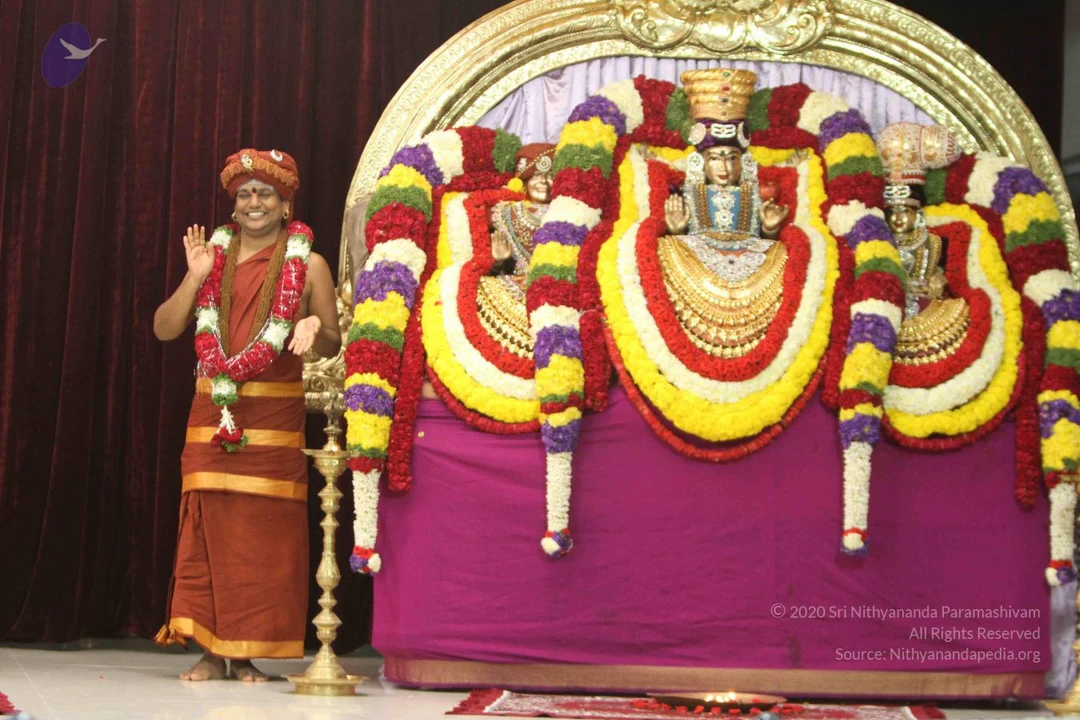
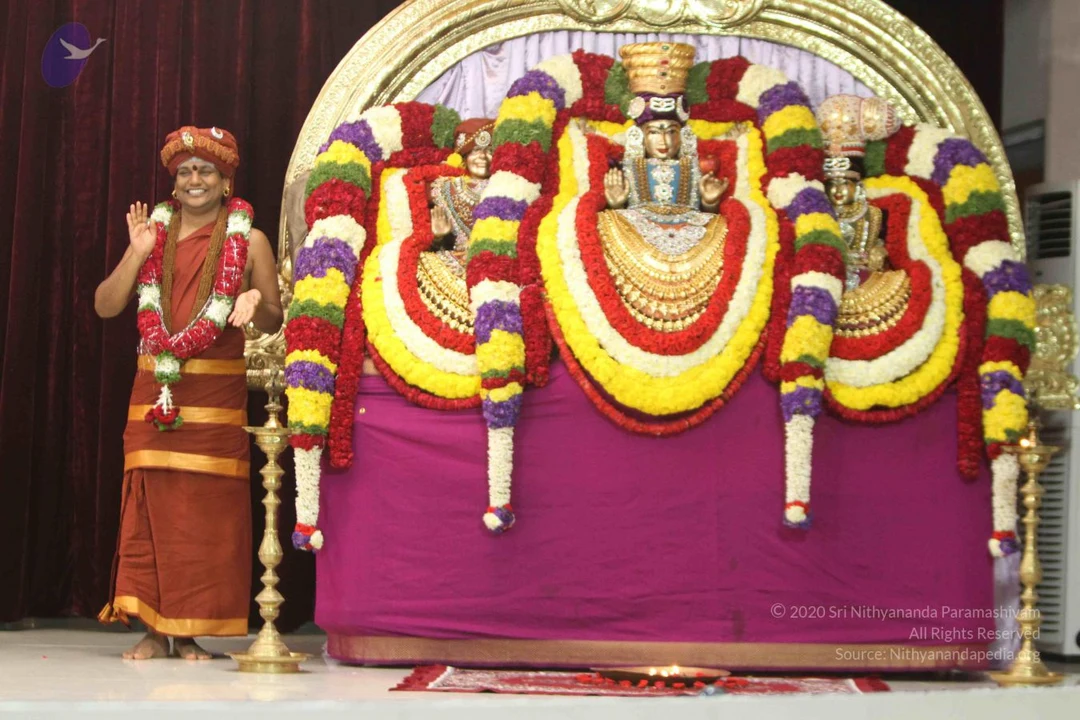
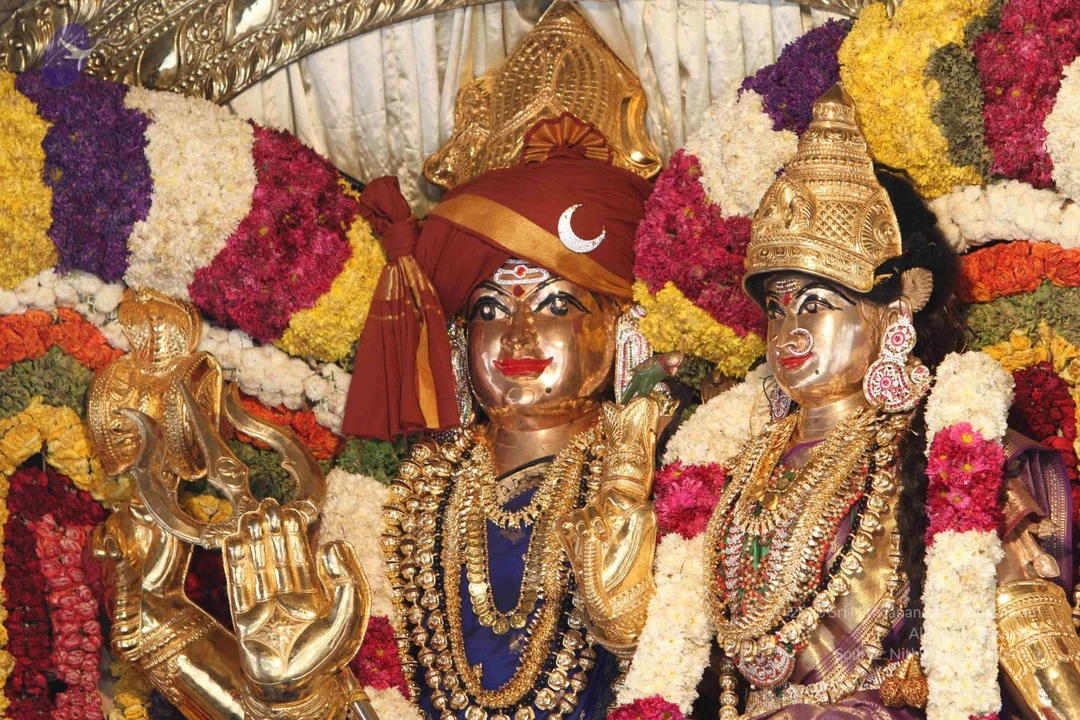
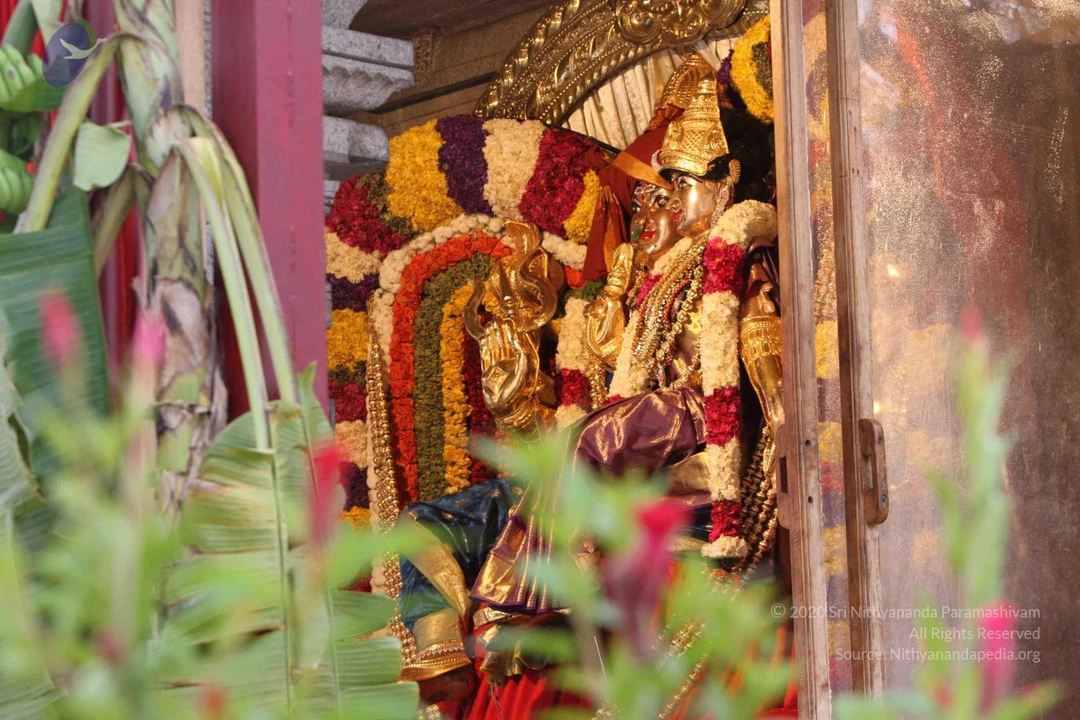
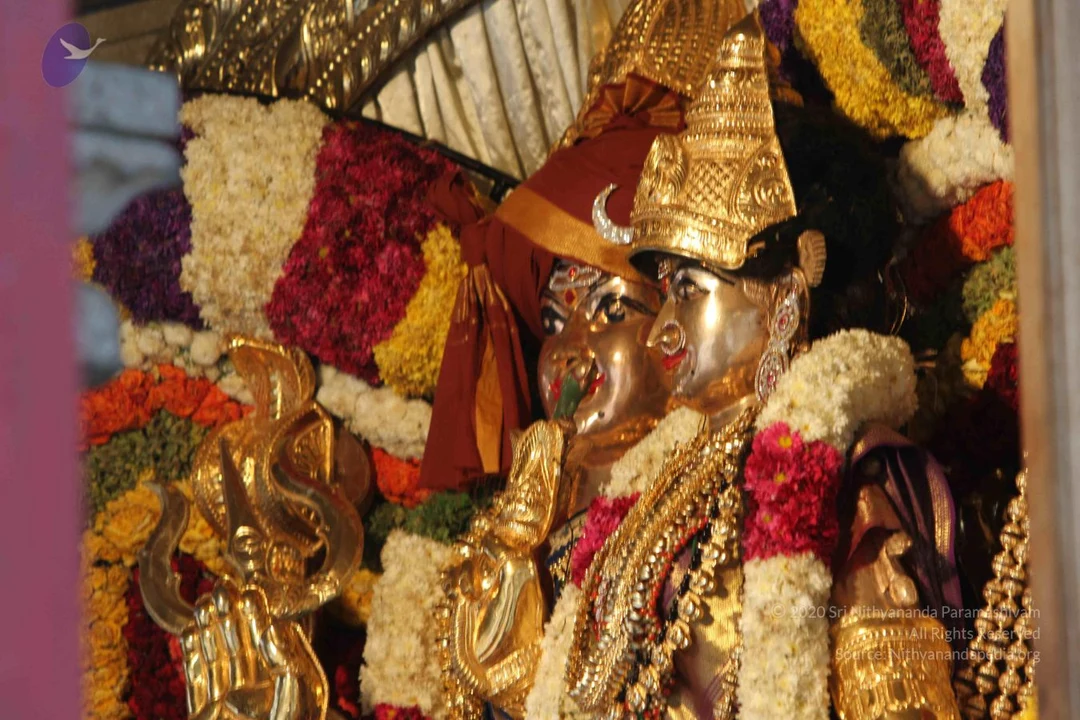
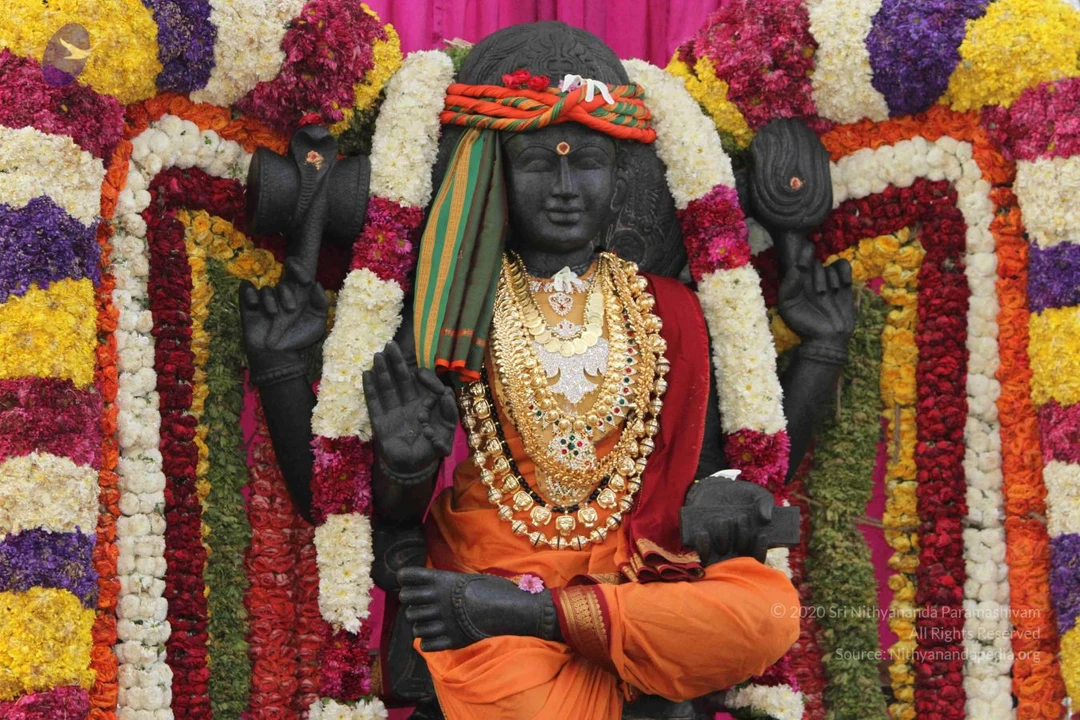
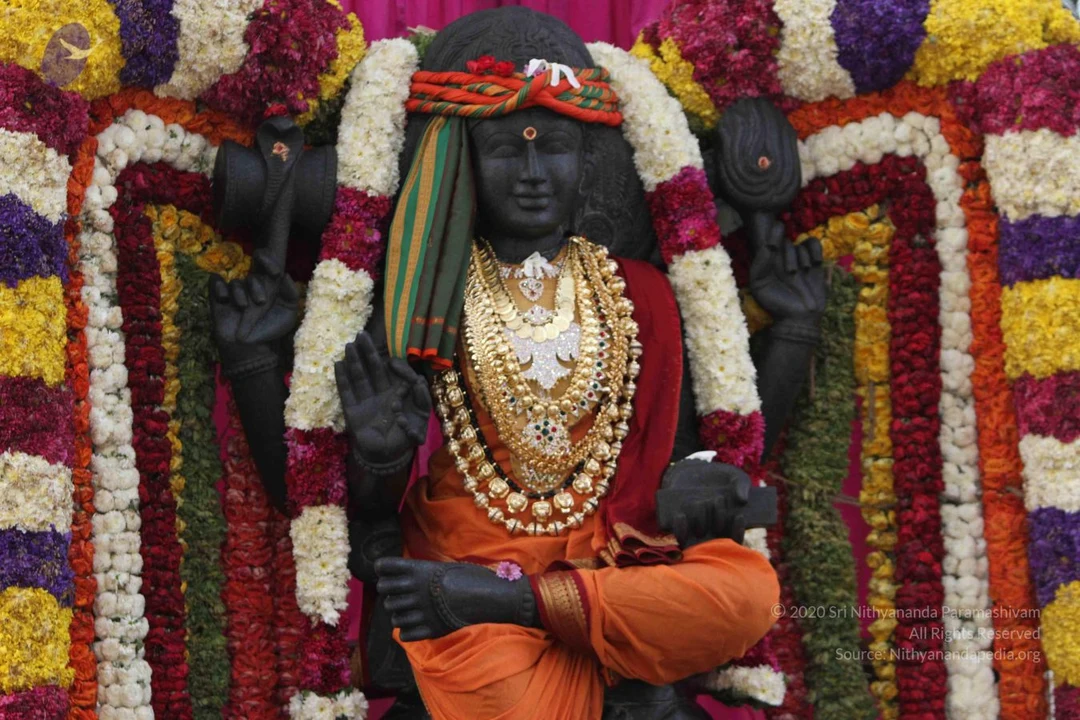
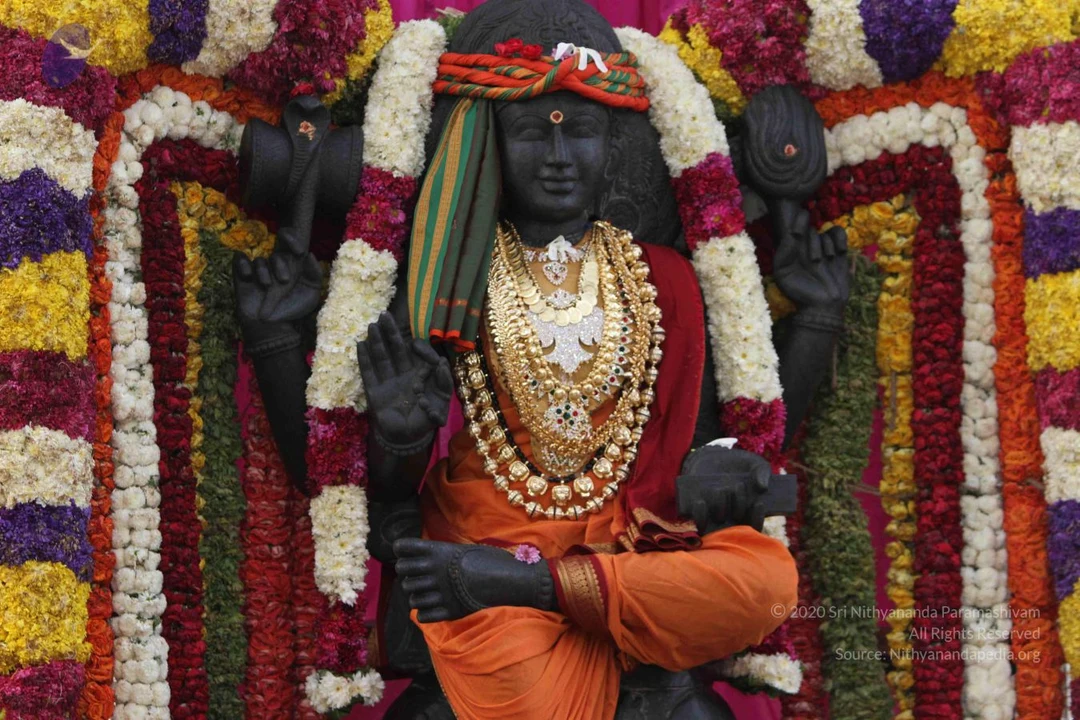
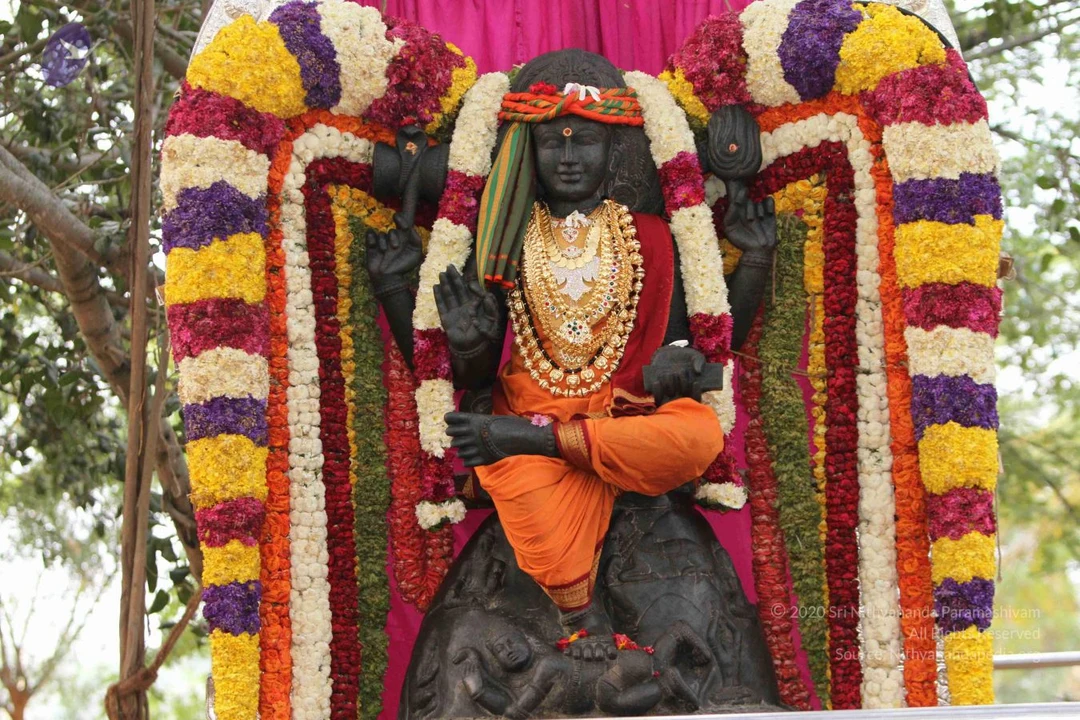
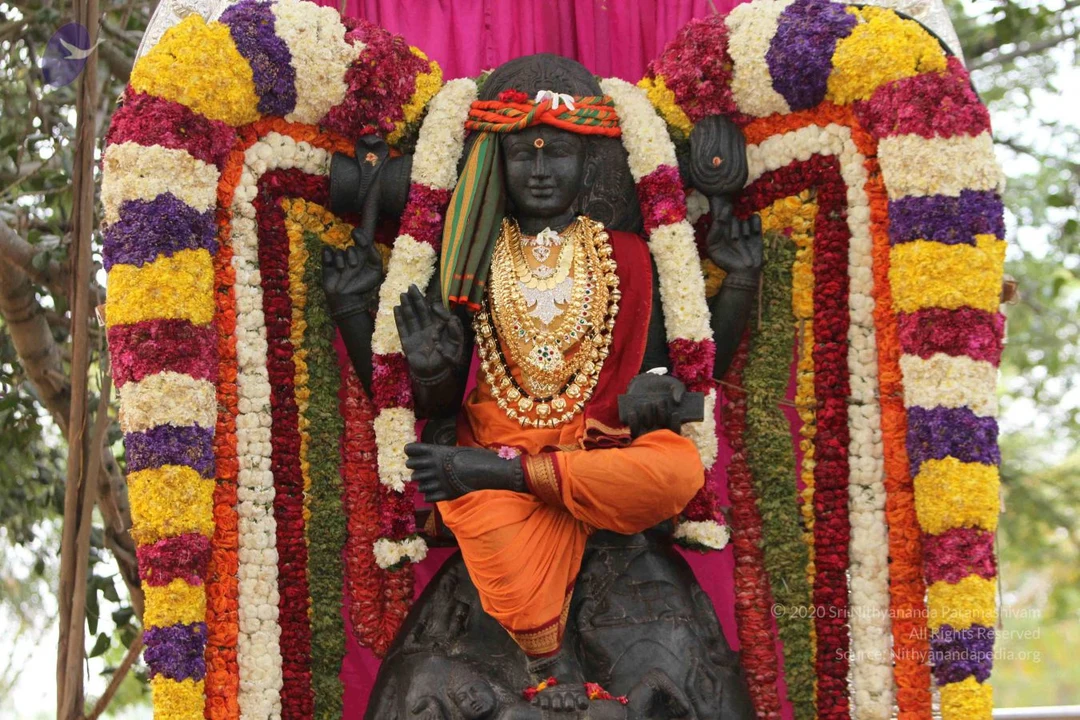
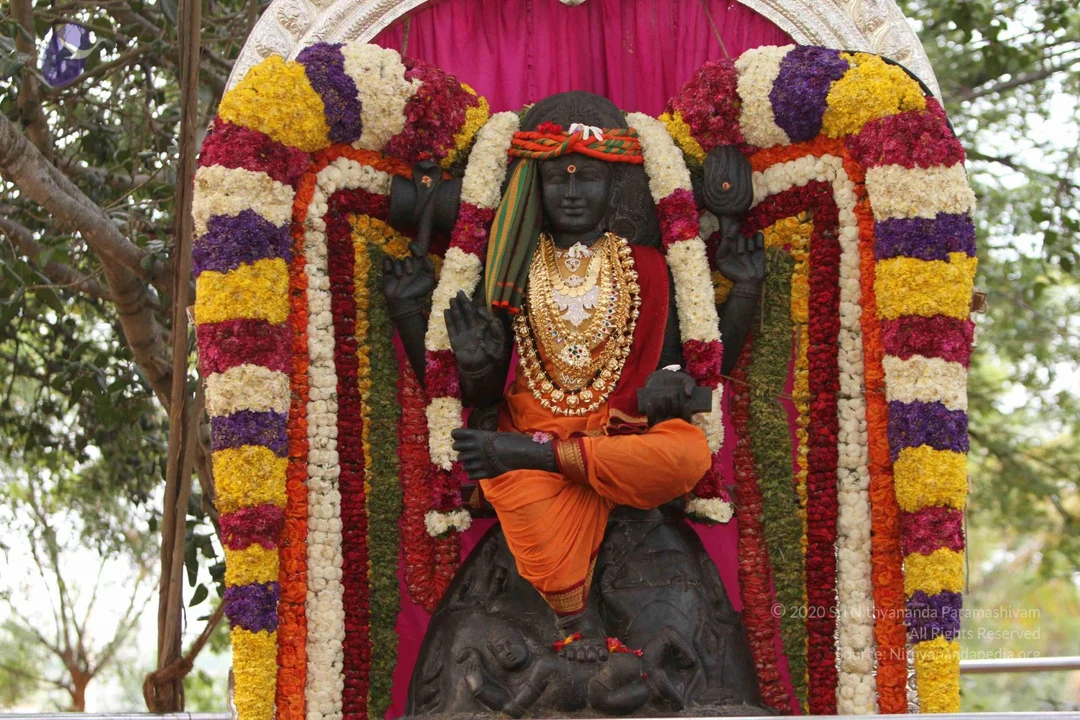
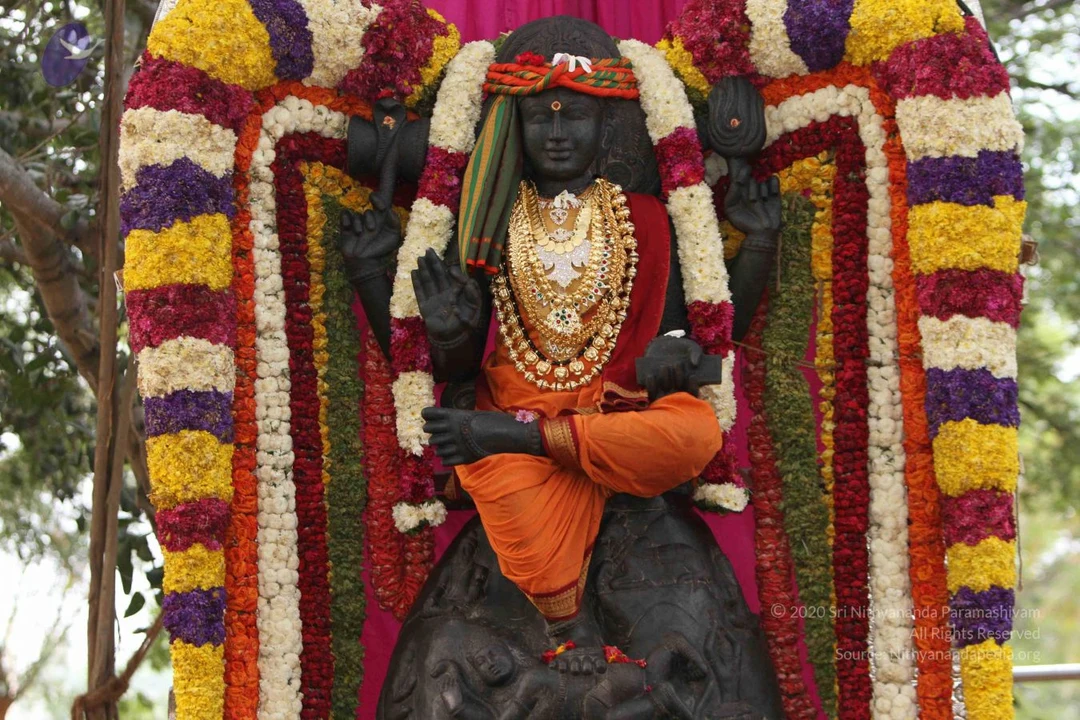
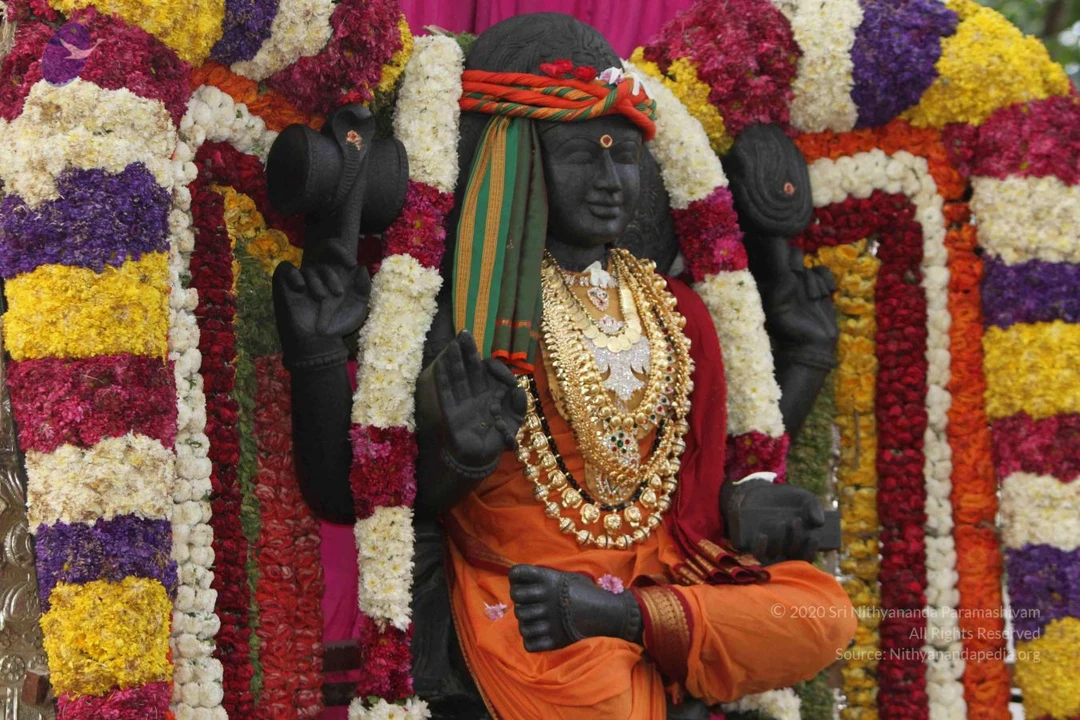
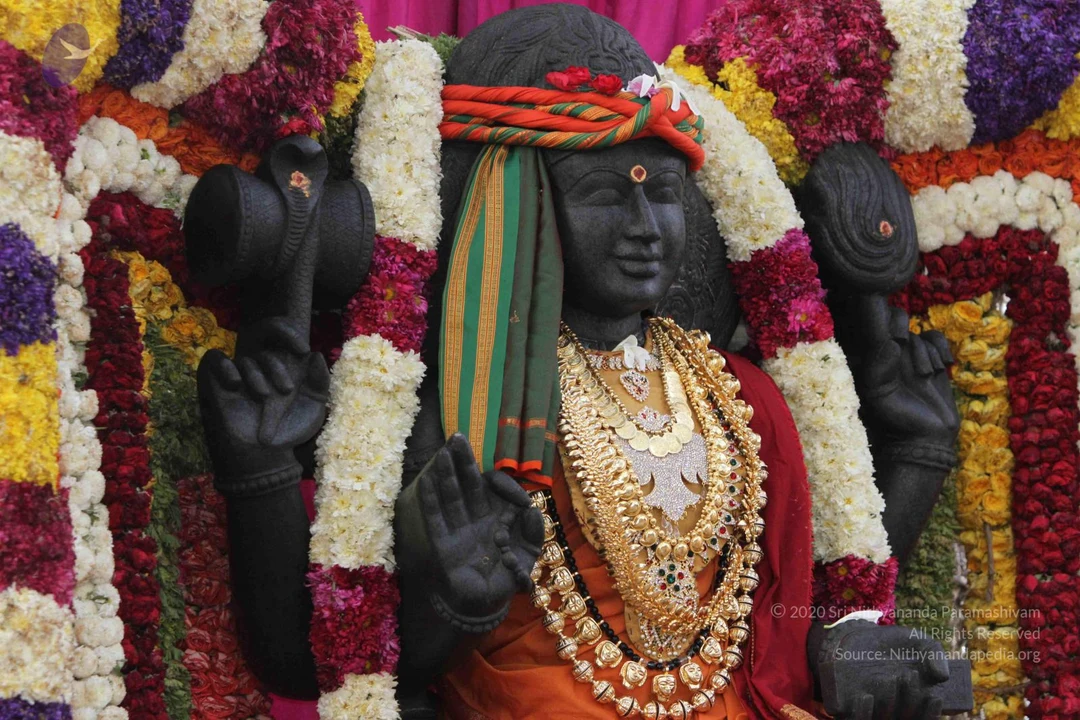
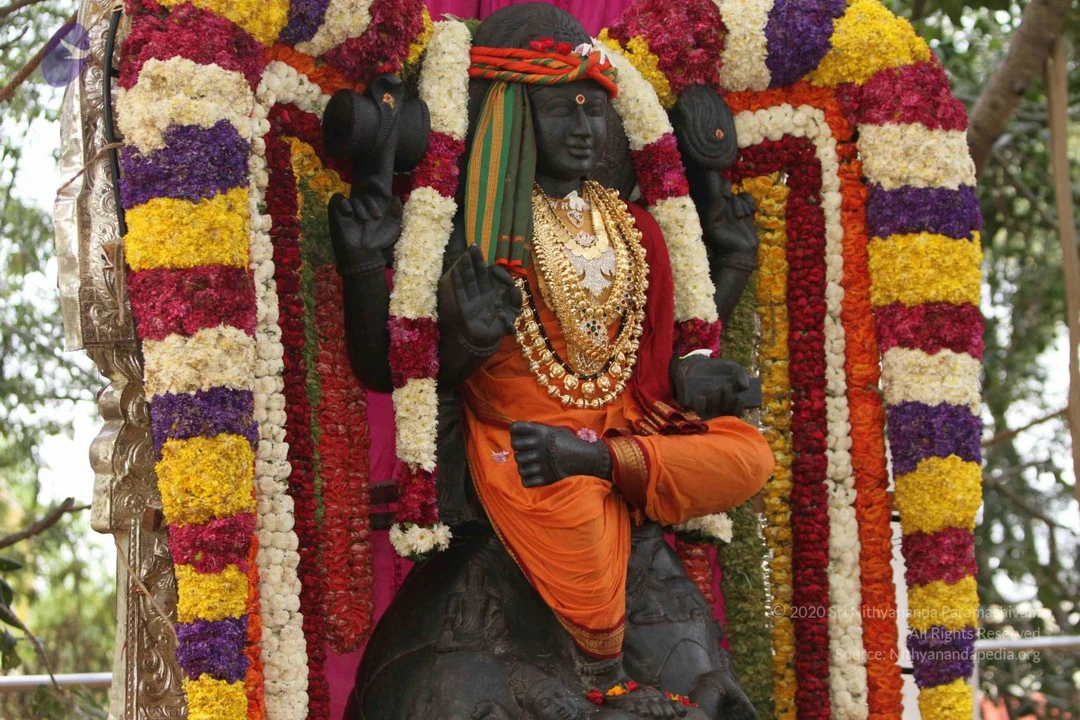
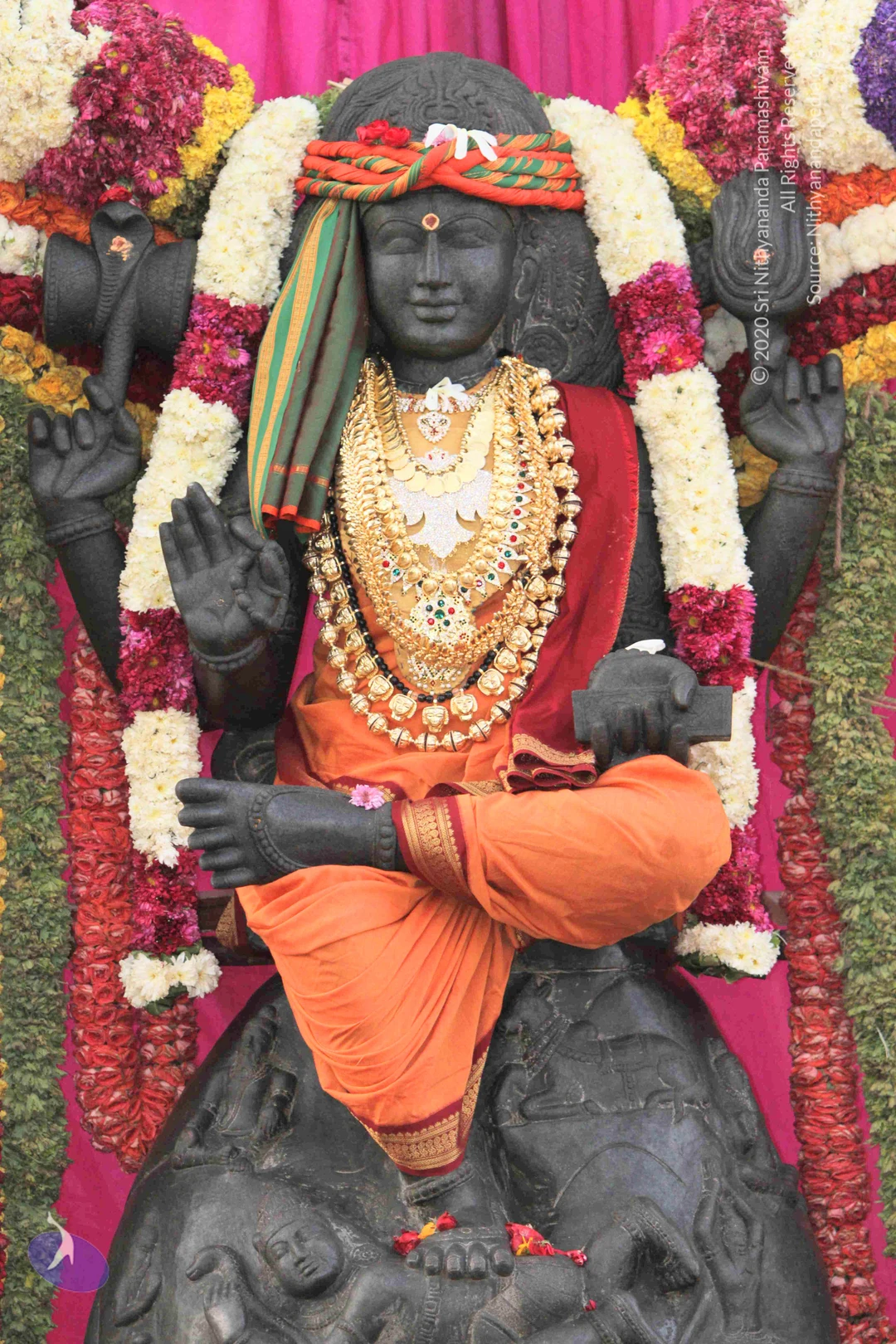
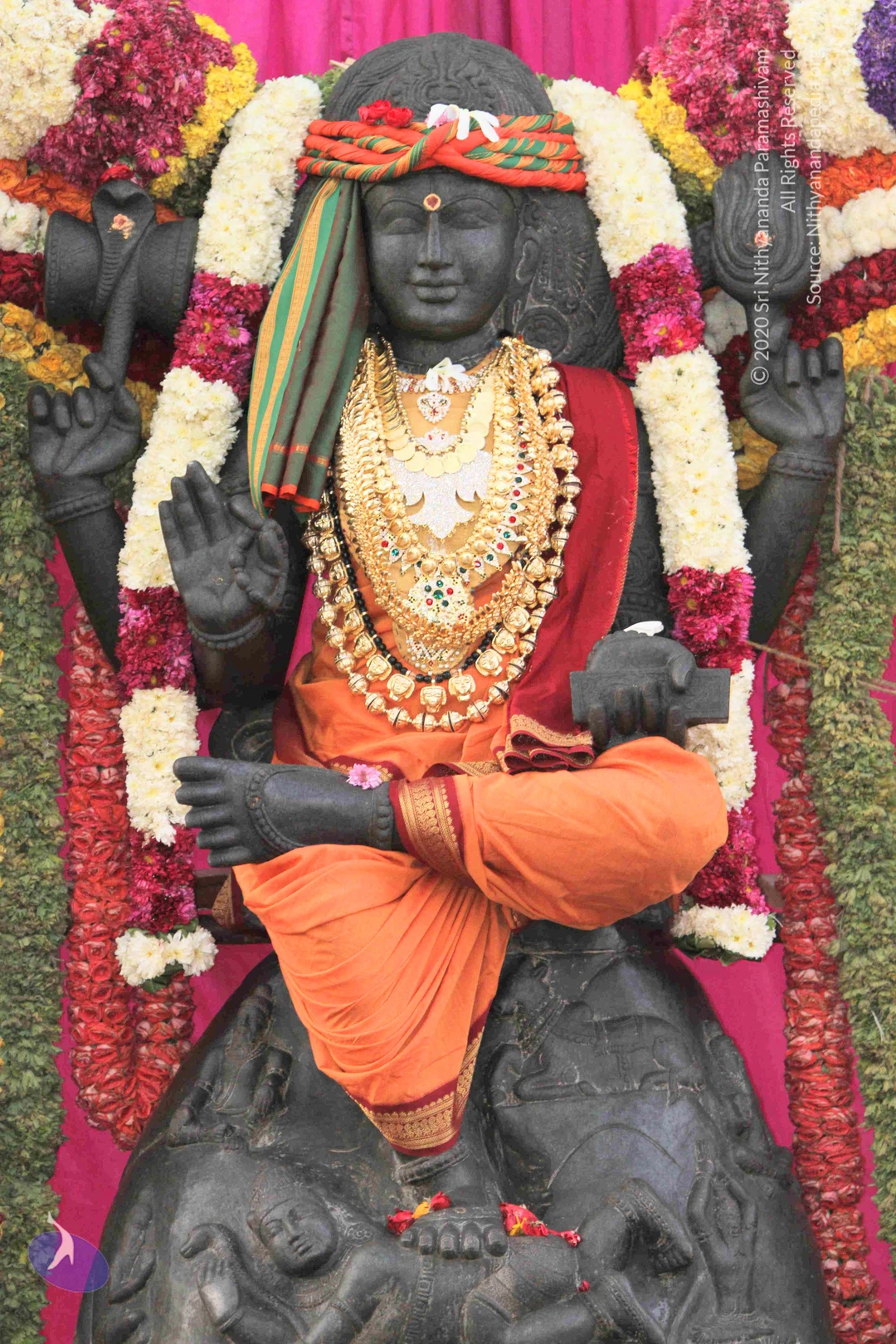
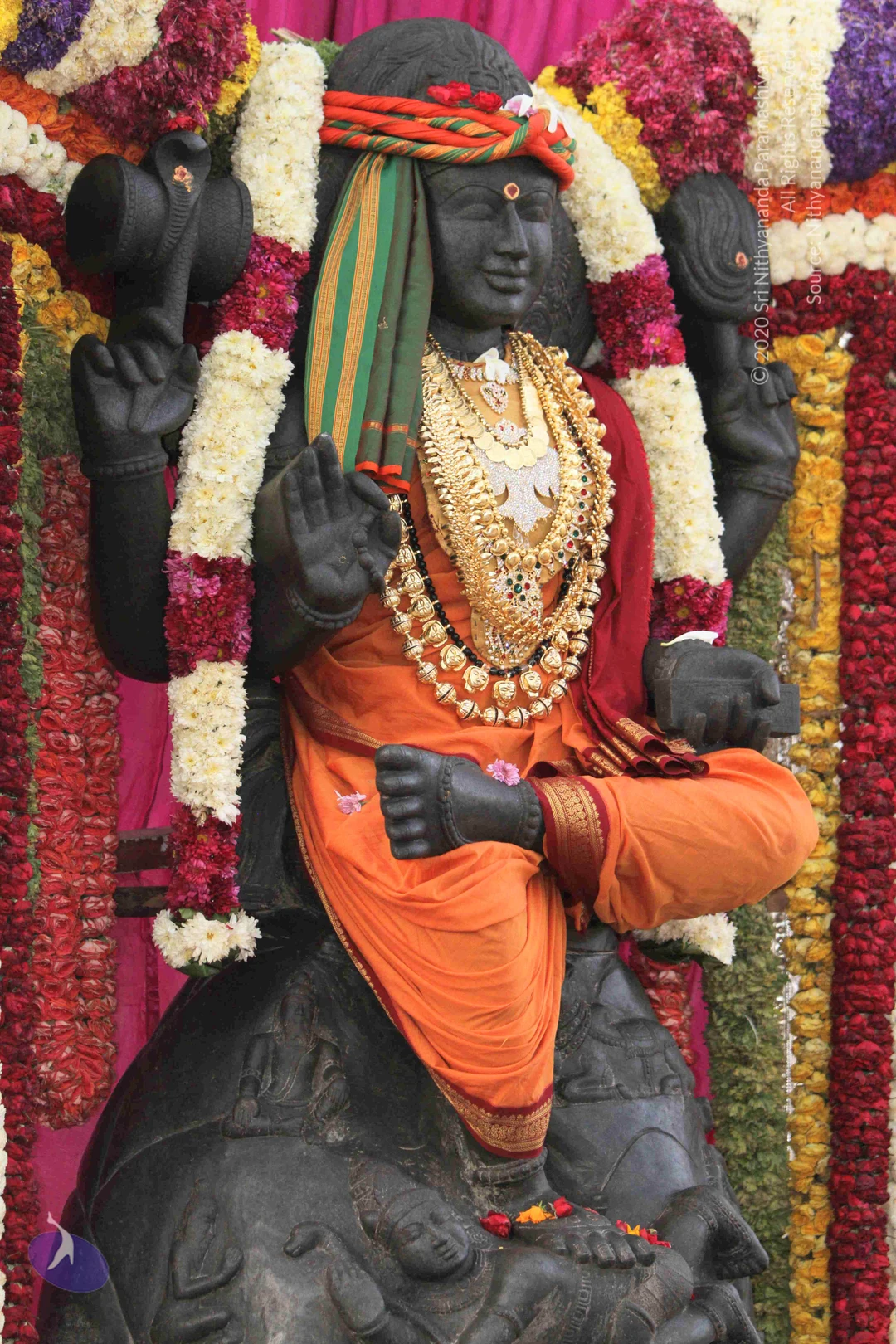
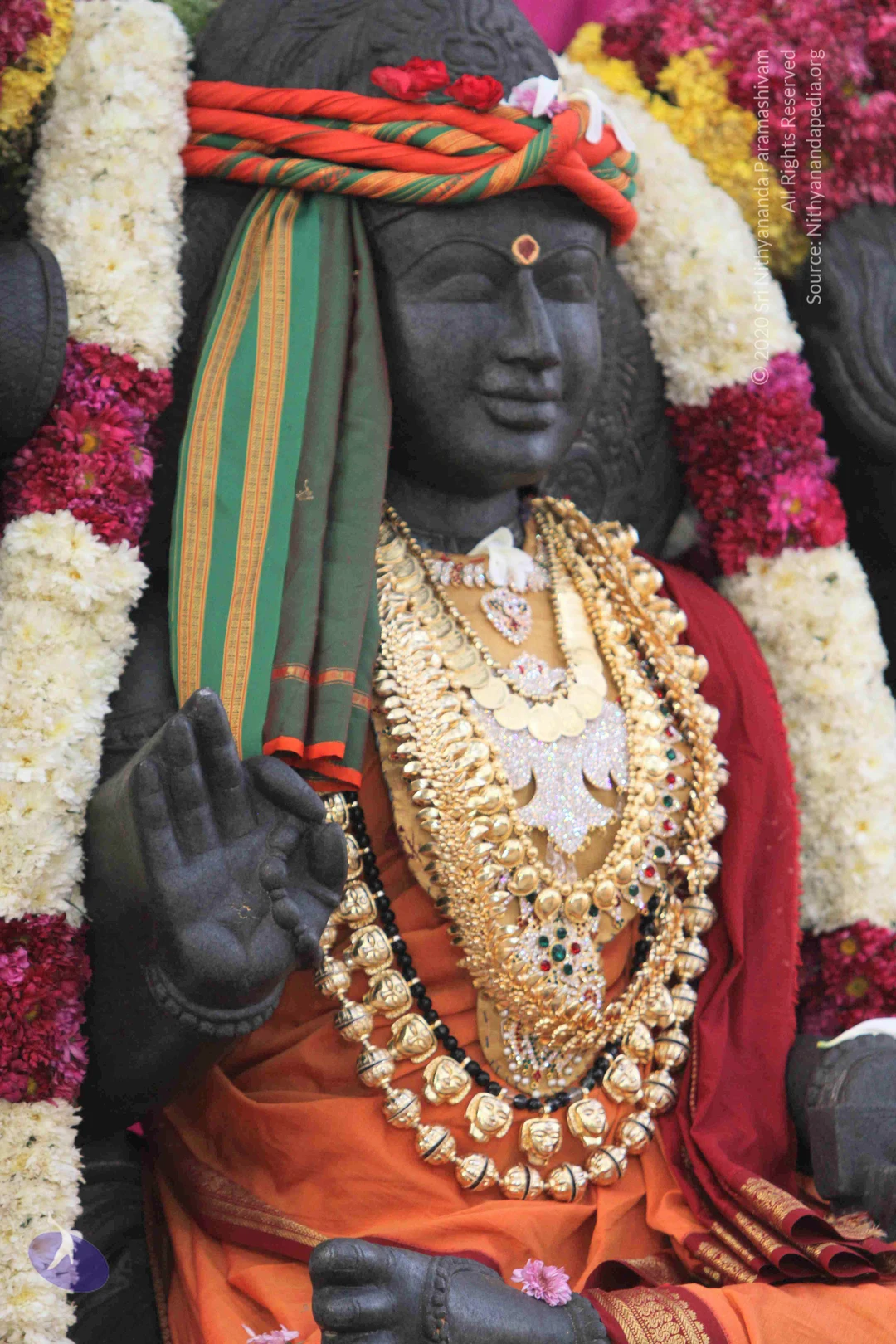
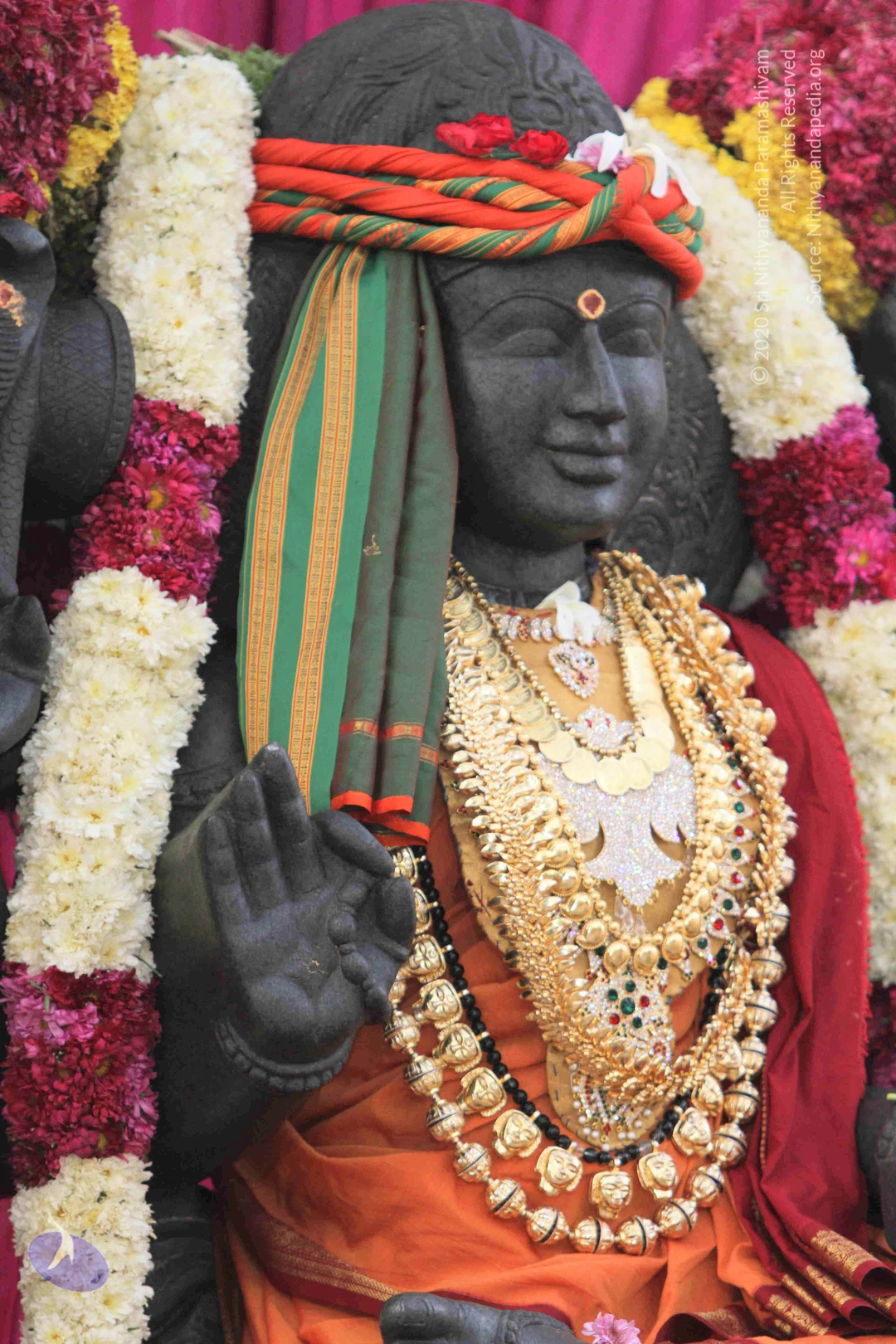
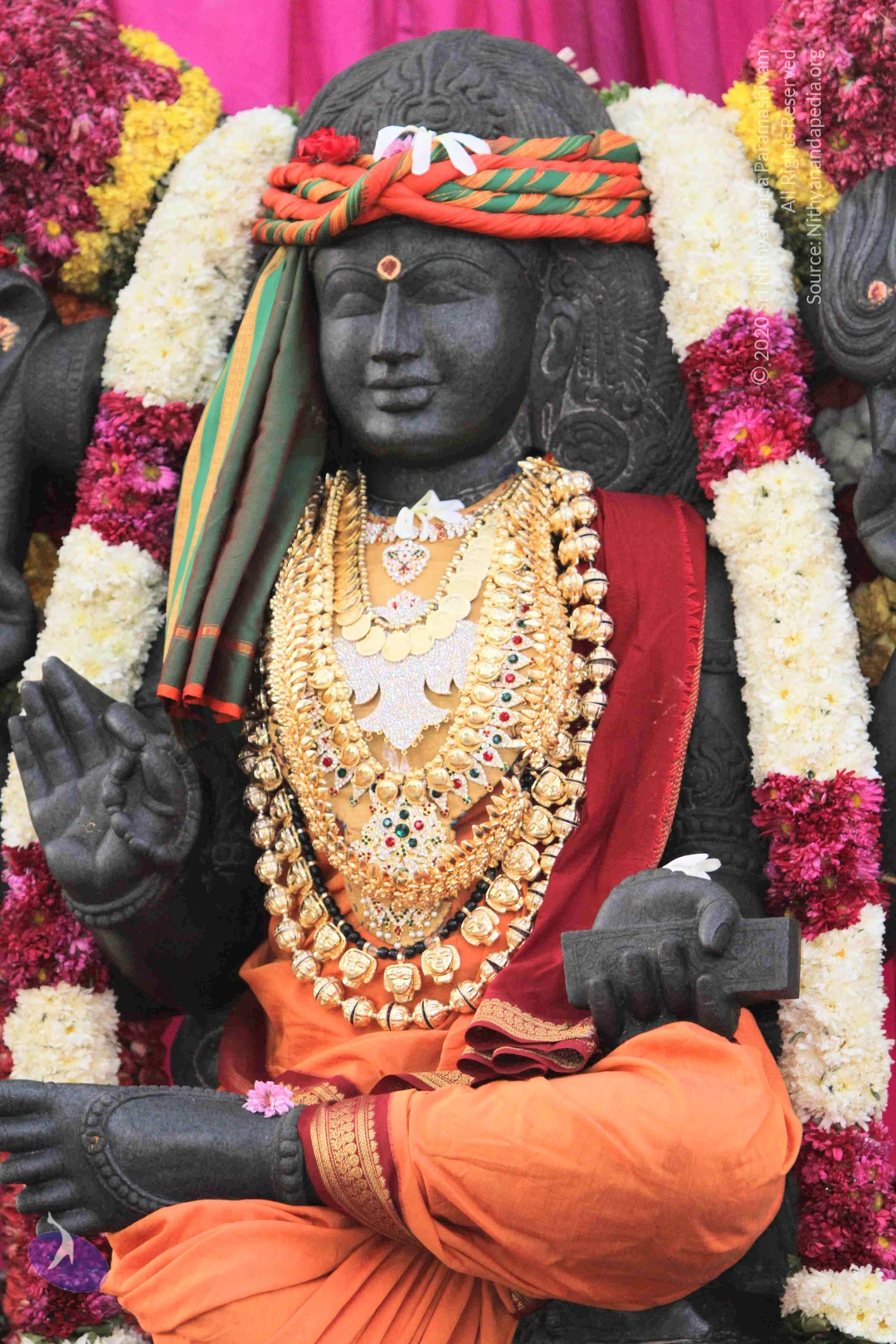
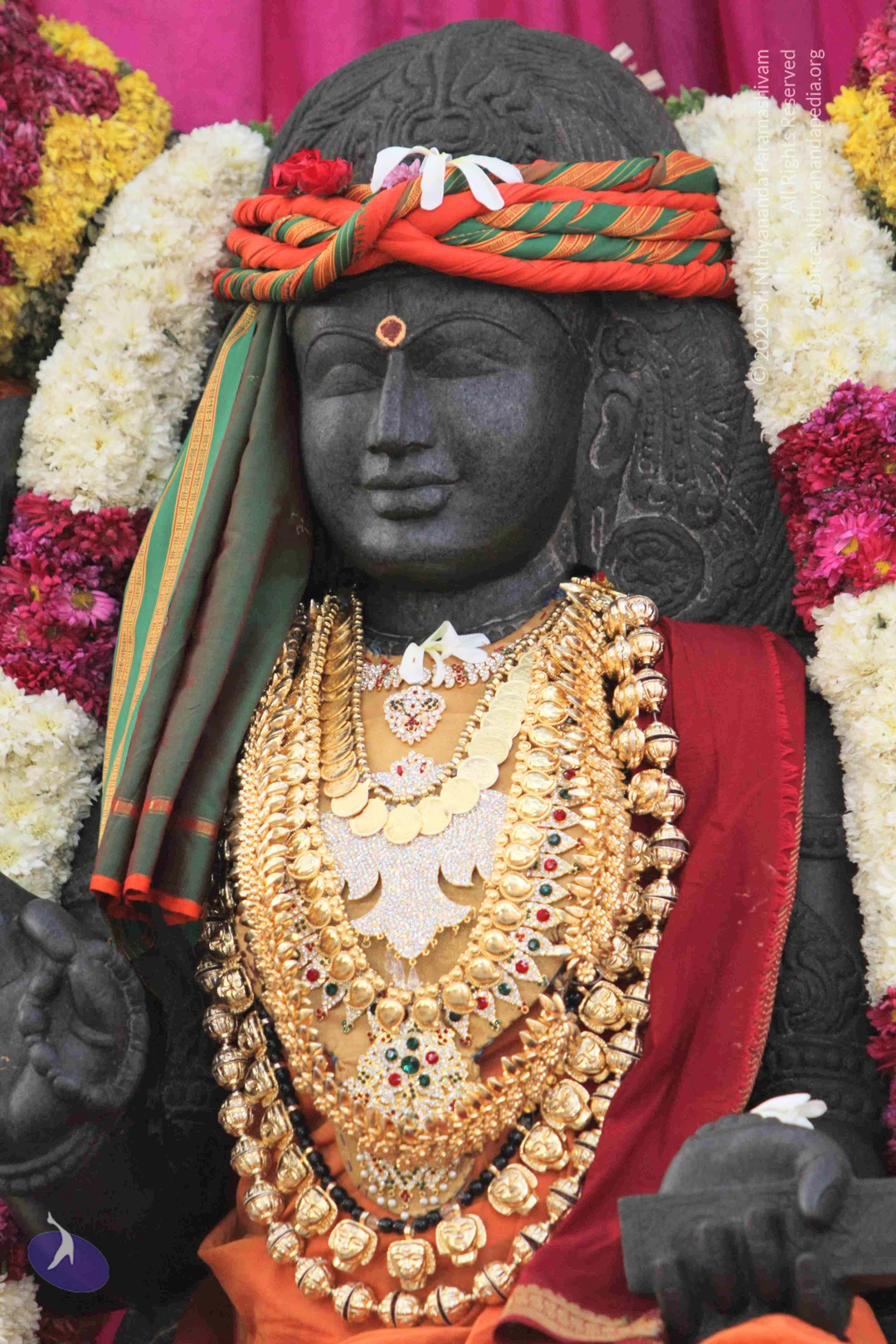
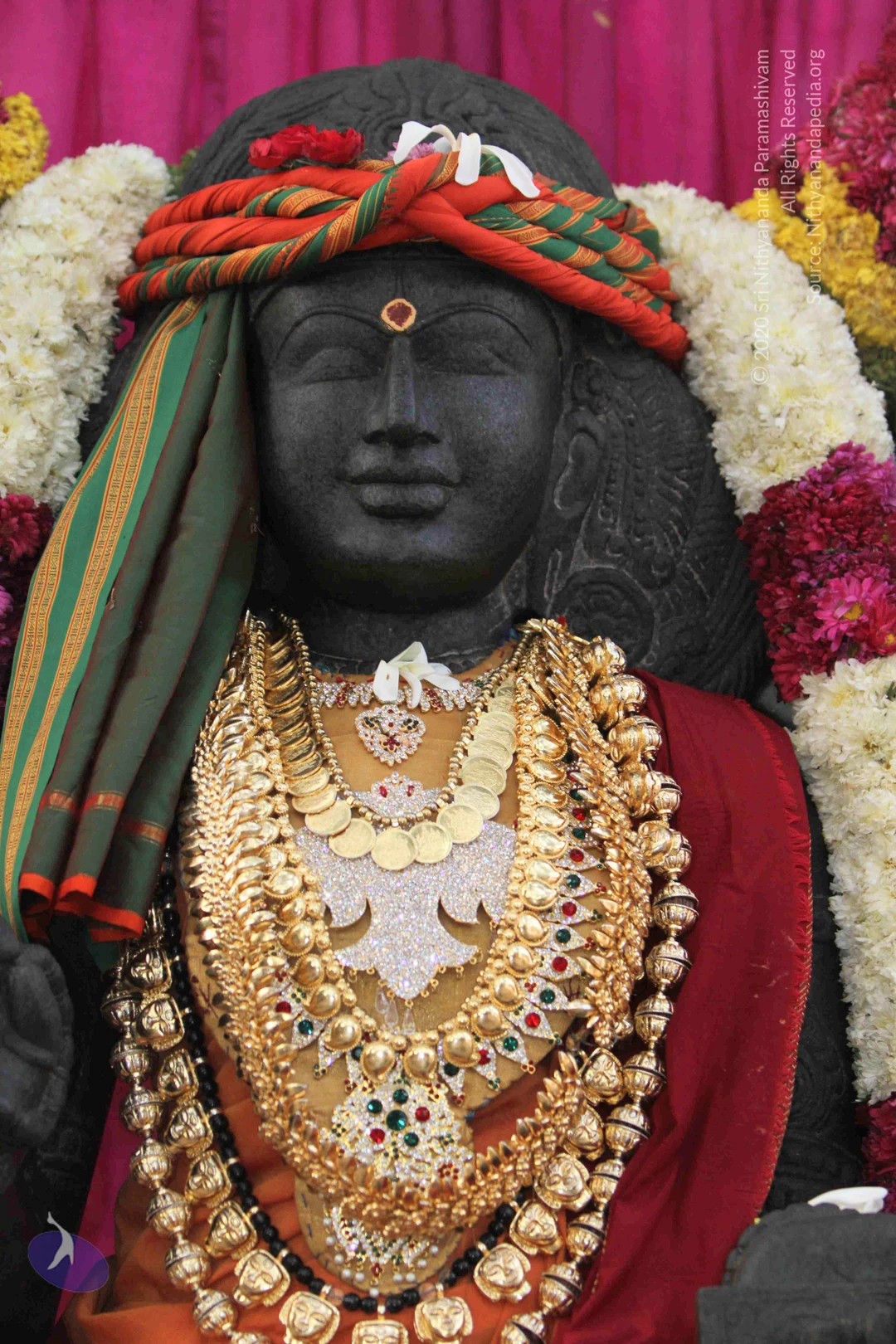
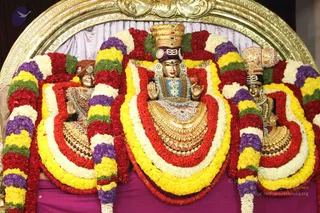
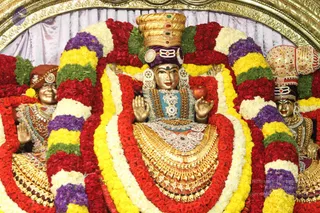
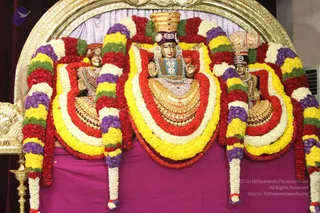
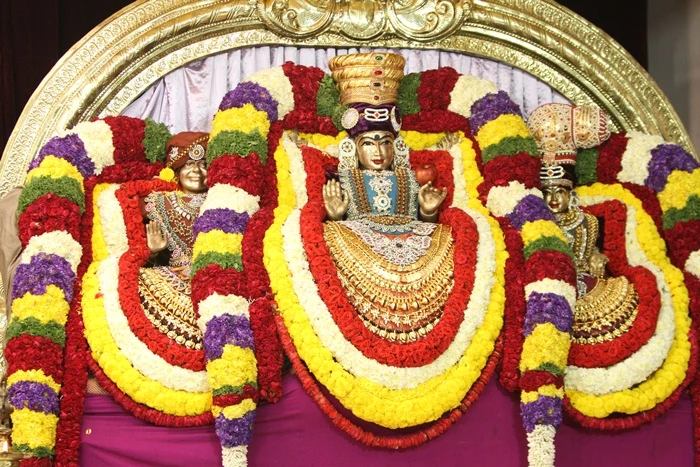
Mahadeva and Devi are gracing with the special crown called “Semmaadu Kireedam”. When he came down to assist Vandhi in building the Vaigai dam, Vaigai embankment not dam, embankment, the way he was wearing the cloth on the head to carry the mud that is “Semmaadu Kireedam”. He is wearing “Semmaadu Kireedam”. And Devi is wearing the Pearl Crown, the crown made out of pearls. Let us receive their blessings first.

I’ll expand today on the difference between “Subjective Truth” and “My World”.

Listen! Whatever happens in “The World”, if you form opinions, analyse with your incompletions, the by-product is “My World”. “My World” also happens inside you; Subjective Truth also happens inside you. You need to know the difference. This difference will solve thousands of questions people have about their behaviour and enlightened master’s behaviour. No they think, ‘Many times how I think, like that Swamiji also thinks. Why what I think is wrong and what he thinks is right?’

Understand, “My World” is from the context of incompletions. Because of your incompletions, reality, perception, all this changes. But, Subjective Truth is from the context of initiation from the Master. See, what you think as you, Inner Image, Mamakaara, and how you project yourself to others, Ahankaara, these are all “My World”. It is based on your incompletions. But the Shivoham is given to you as a truth, as a initiation from your Master. That is not dependent on your incompletions; it is from the initiation. The ultimate truth, ultimate reality, transmitted to you based on the initiation, is Shivoham. Ultimate truth transmitted to you based on the initiation, Shivoham, is Subjective Truth.

I’ll repeat now. Listen! Catch it carefully! The ideas you develop, the concepts you develop, the cognition you develop based on your incompletions is, concepts you develop, the ideas you develop based on your incompletions is “My World”. But the cognition you develop by the initiation from the Master – Shivoham – which is based on Complete Completion, is “Subjective Truth”. What starts happening in you due to incompletion and changes, destroys you and your life outside, is “My World”. What starts in you because of initiation, and elevates your life internally and externally, is “Subjective Truth”.

I’ll define “Subjective Truth”. Subjective Truth is Ultimate Truth which is truth even when you are not able to grasp, even when you are not able to perceive, even when you are not able to receive, but you start working on it like a seed; how the sand works on the seed, the land works on the seed, and the seed becomes tree, the initiation given to you is like a seed. You work with that constantly and the seed becomes tree, the seed becomes tree, understand.

Subjective Truth, the more and more you nurture, cherish, strengthens you. “My World”, the more and more you nurture it, weakens you. Subjective Truths create your reality. Incompletions moves you out of even the reality that exists. Moving you out of even the shared reality is “incompletions”. Creating your, manifesting your ultimate reality is “Subjective Truth”. Subjective Truth is manifesting your ultimate reality. Incompletions is the myth; but Subjective Truth is mythology, understand? When I use the word “mythology”, actually it is too poor a word. Because there is no other word in English, I am using it. I should use the word “Purana”. “Purana” is Subjective Truth. All the Hindu scriptures are Subjective Truth. They are not born out of incompletions. They are Subjective Truths. They are Subjective Truths.

”Subjective Truths” and “incompletions”, the difference between these two needs to be thoroughly internalized by you. More and more you contemplate on incompletions, you will become weaker and weaker. The more and more you remember the Subjective Truth, you will become stronger and stronger. With incompletions you will become weaker and weaker. With Subjective Truths, you will become stronger and stronger. Whatever weakens you by more remembrance is “incompletion”. Whatever strengthens you by more remembrance is “Subjective Truth”. “Aham” is incompletion. “Shivoham” is Subjective Truth. The more and more you remember the “Aham”, it leads to incompletions. The more and more you remember “Shivoham”, it leads to experience strength.

Cambodia is nothing but all about making you experience that Shivoham. That Shivoham! That Shivoham!

Experience the Subjective Truth, the ultimate reality will be created for you inside you, outside you. Shivoham! Let this become your life-thread. Aham is the “life threat”. Shivoham is the “life-thread”! The Inner Image out of incompletions is “life threat”. Shivoham should become the life-thread.

So, I welcome, invite all of you to come to Cambodia to experience that Shivoham. That Shivoham!

I bless you all. Let you all radiate with Integrity, Authenticity, Responsibility, Enriching and Causing eternal bliss, Nithyananda. Thank you.

Title

Nithya Kirthan - Shiva Shiva Mahadeva

Description

Nithya Kirthan - Shiva Shiva Mahadeva

Link to Video:

Photos From The Day:
Tags:

Paramahamsa Nithyananda, subjective truth, world, Master, initiation, Shivohma, Advaithic

Photos Of The Day:

Nithya-Satsang
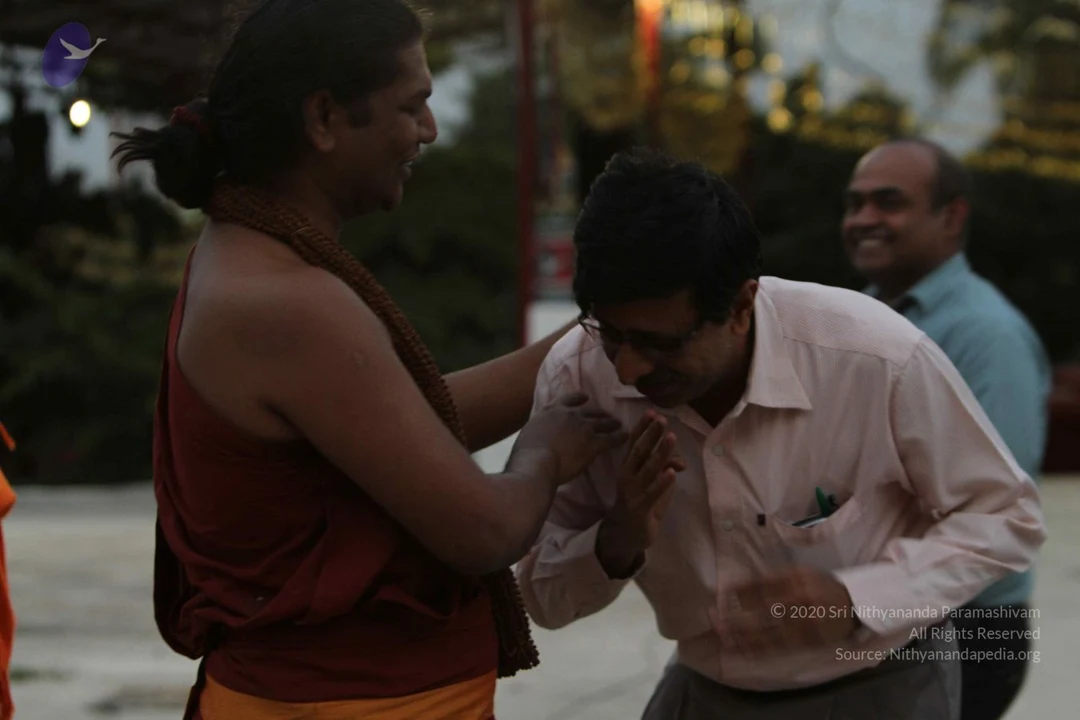
1008-Sangha-abhishekam

Photos Of The Day:

Bhajans-Satsang-Kalpataru-Darshan

1008-Sangha-Abhishekam

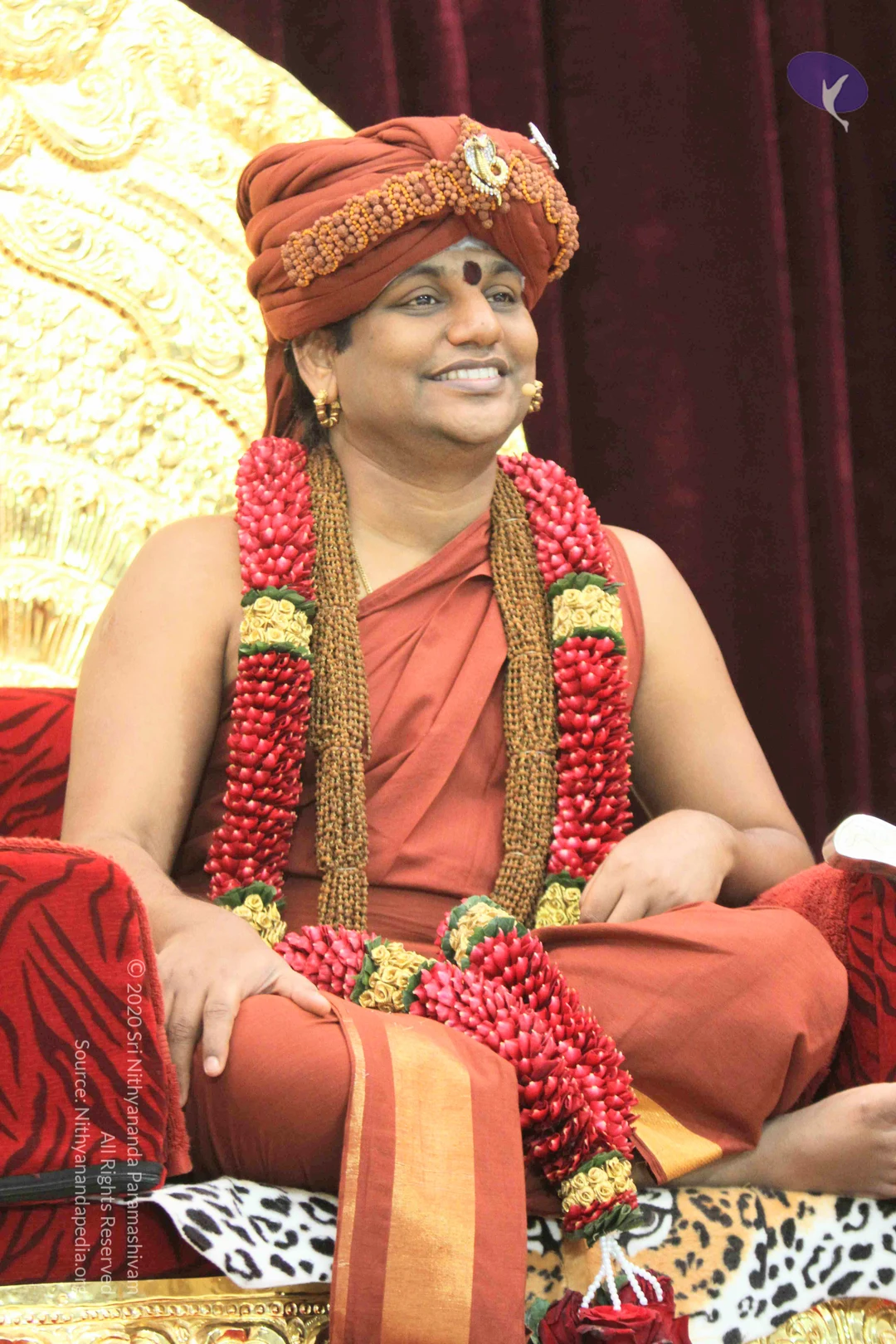
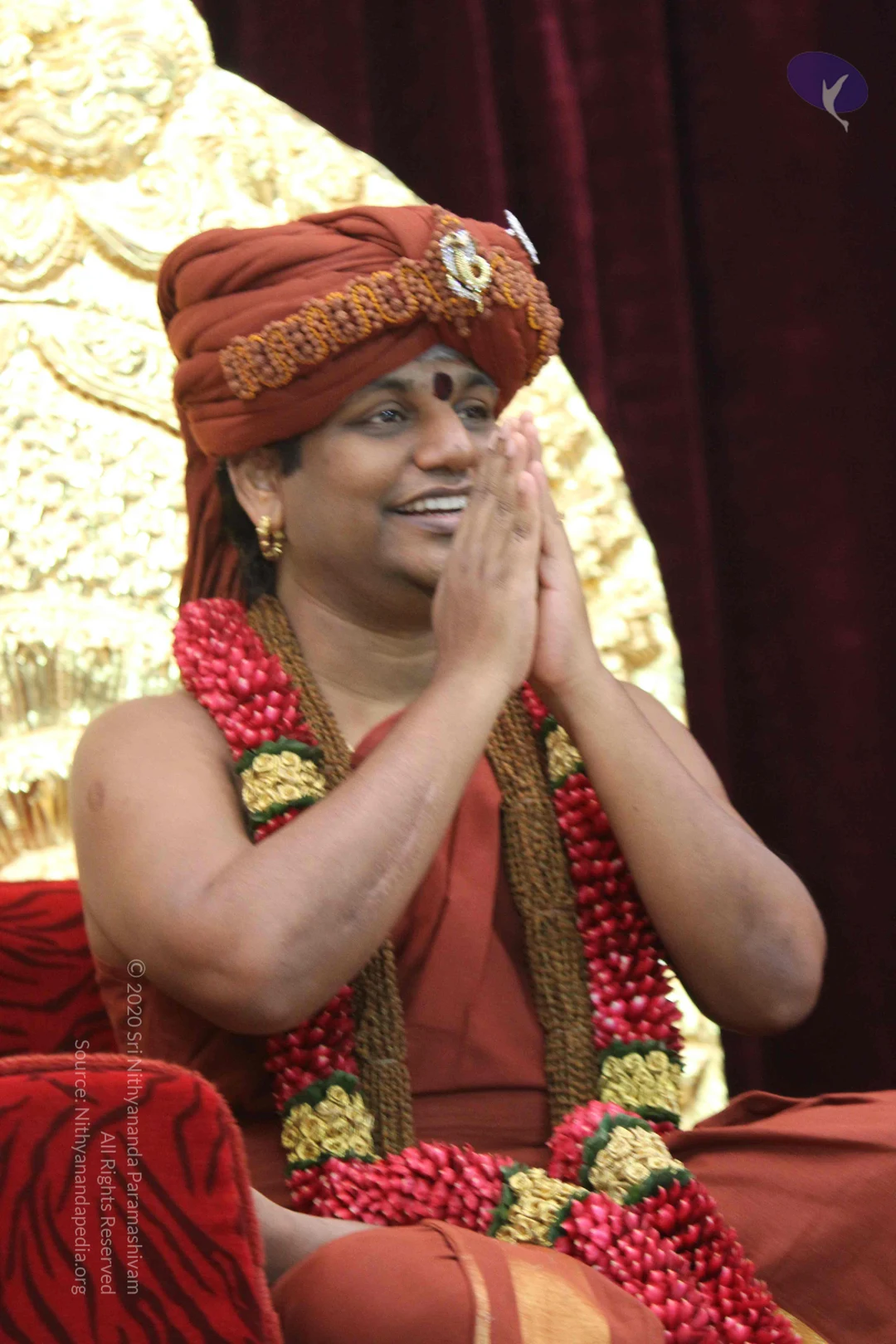
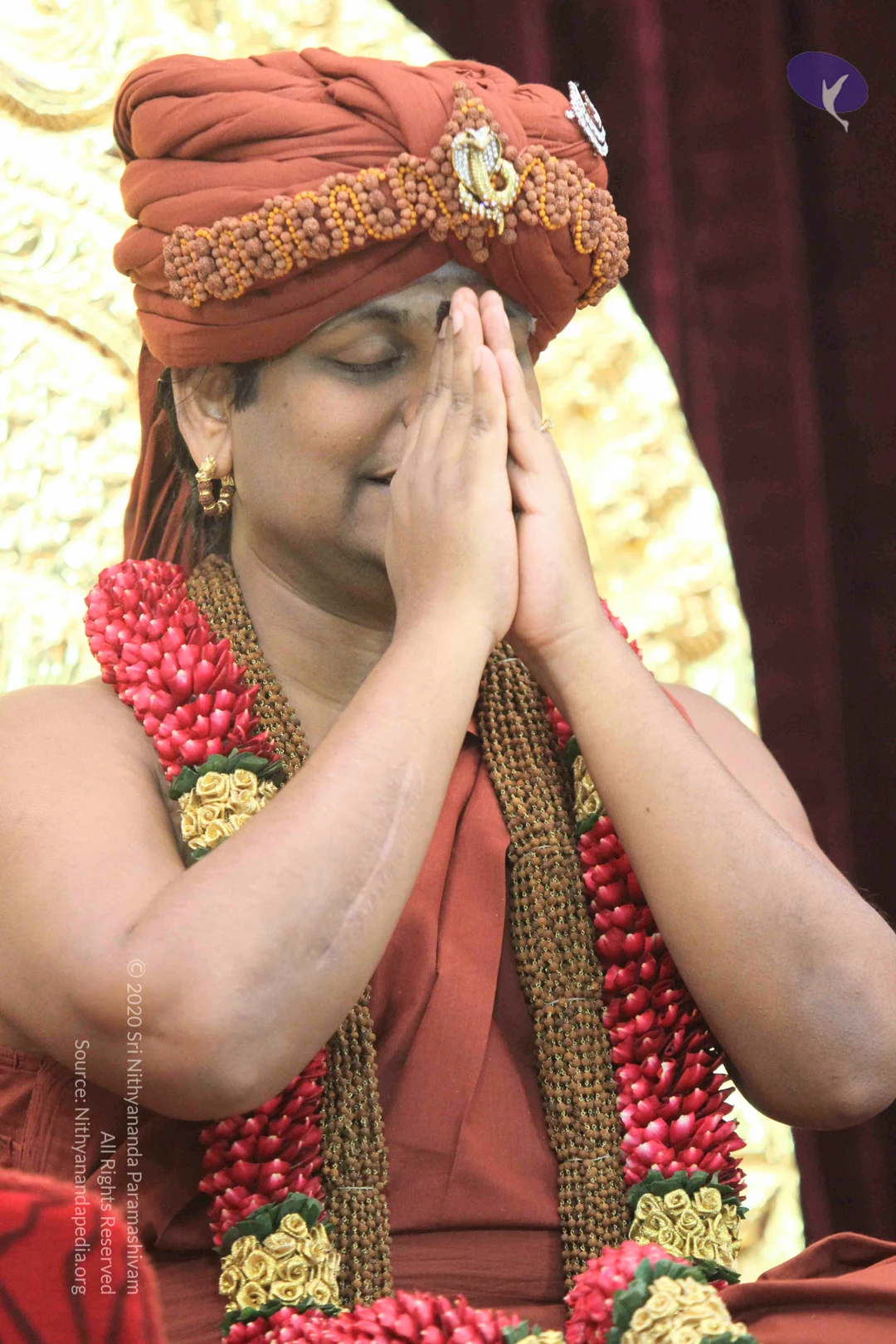
01-NITHYA-SATSANG

02-1008-SANGHA-ABHISHEGAM

Photos from this day

View all 195 photos

Photos From The Day:

9 photosSource gallery
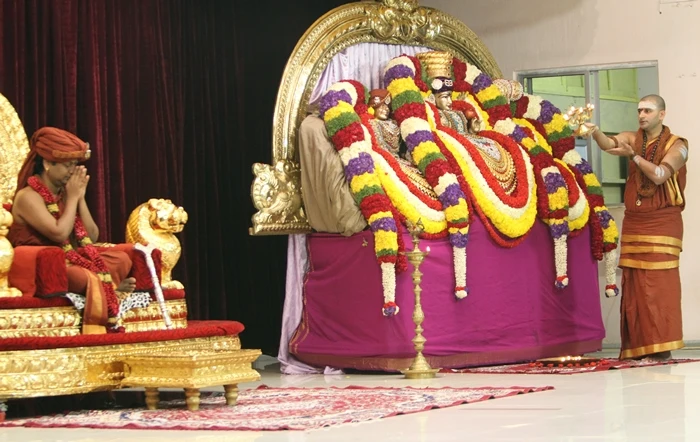
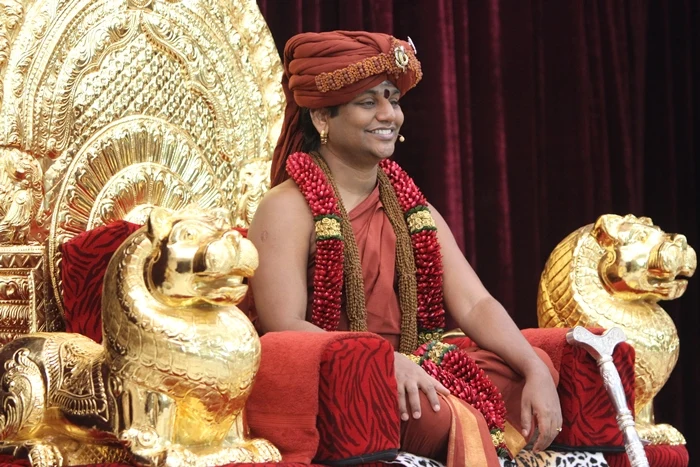
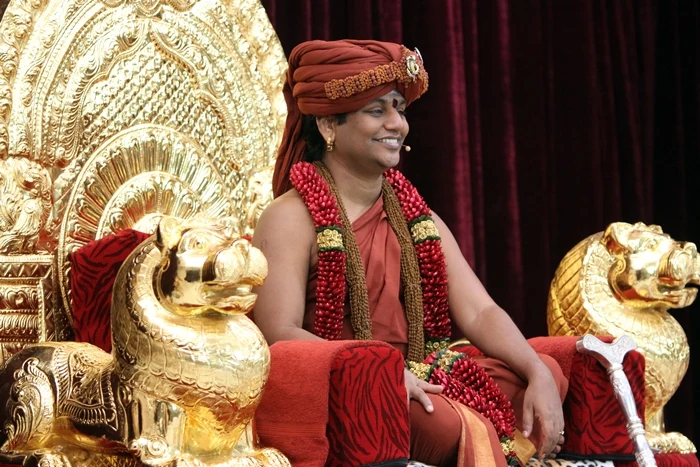
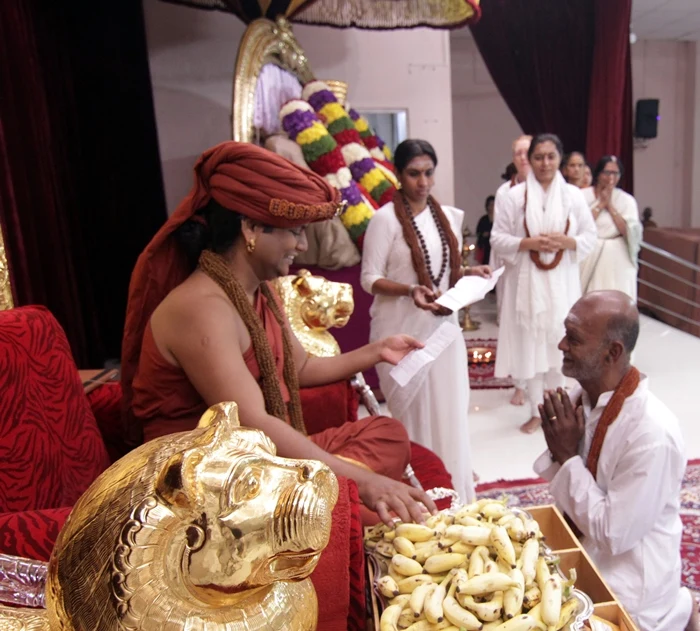
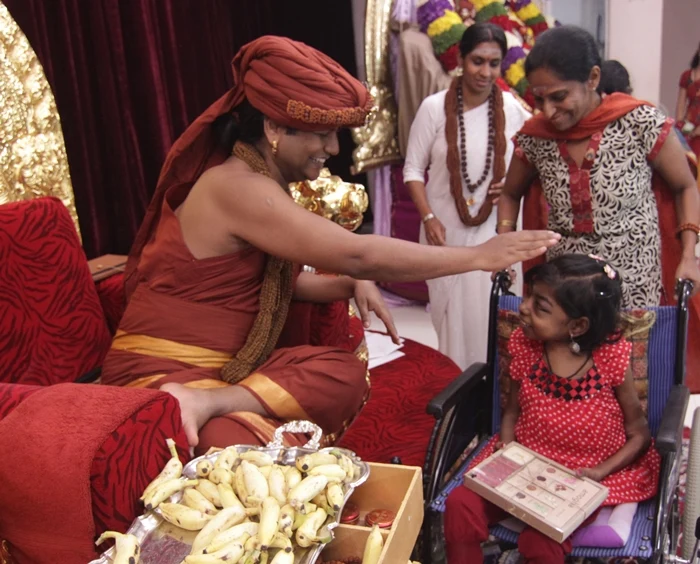
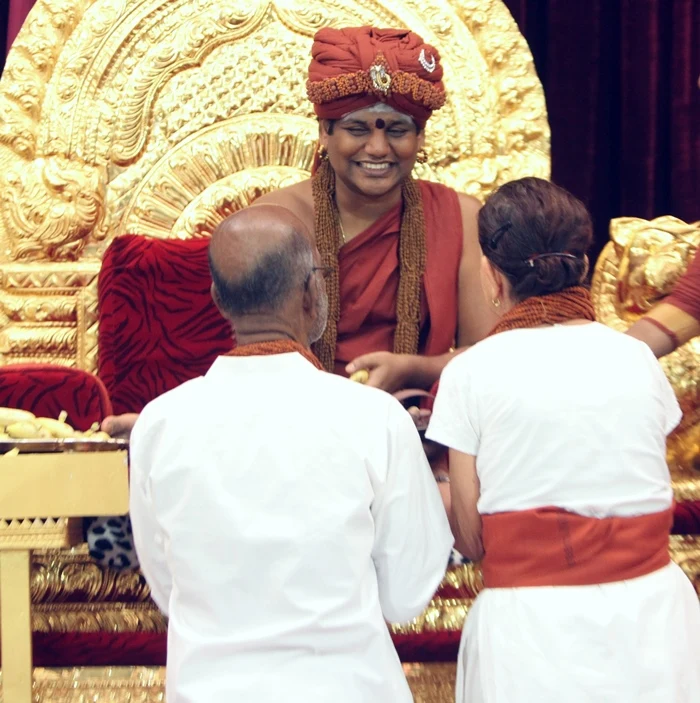
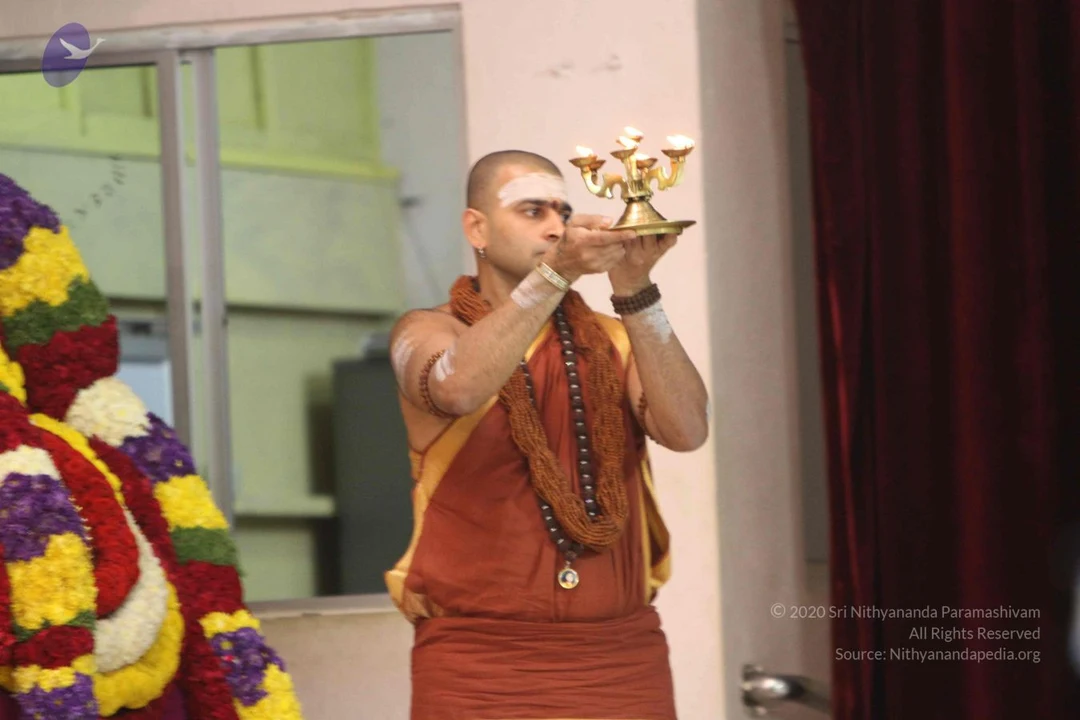
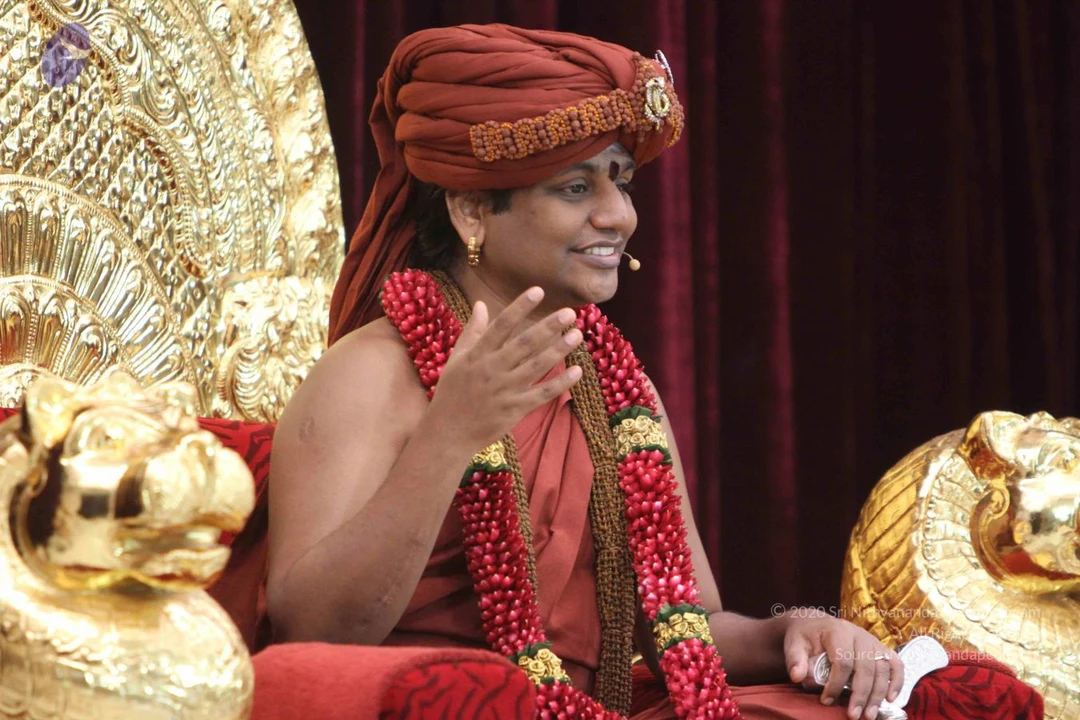
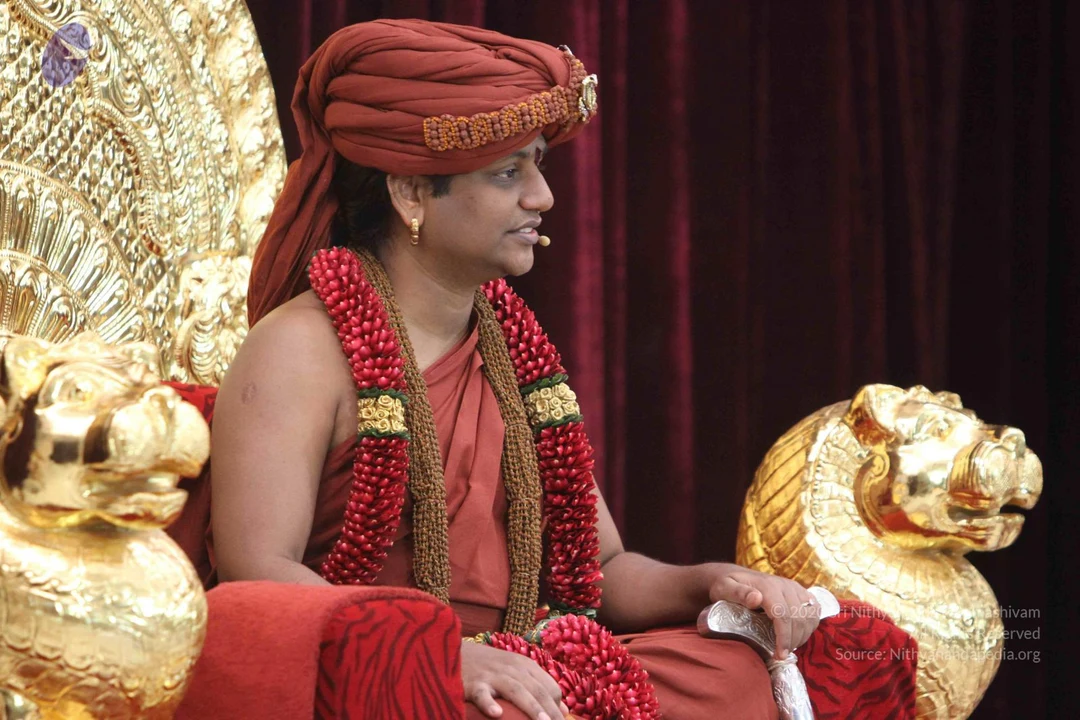
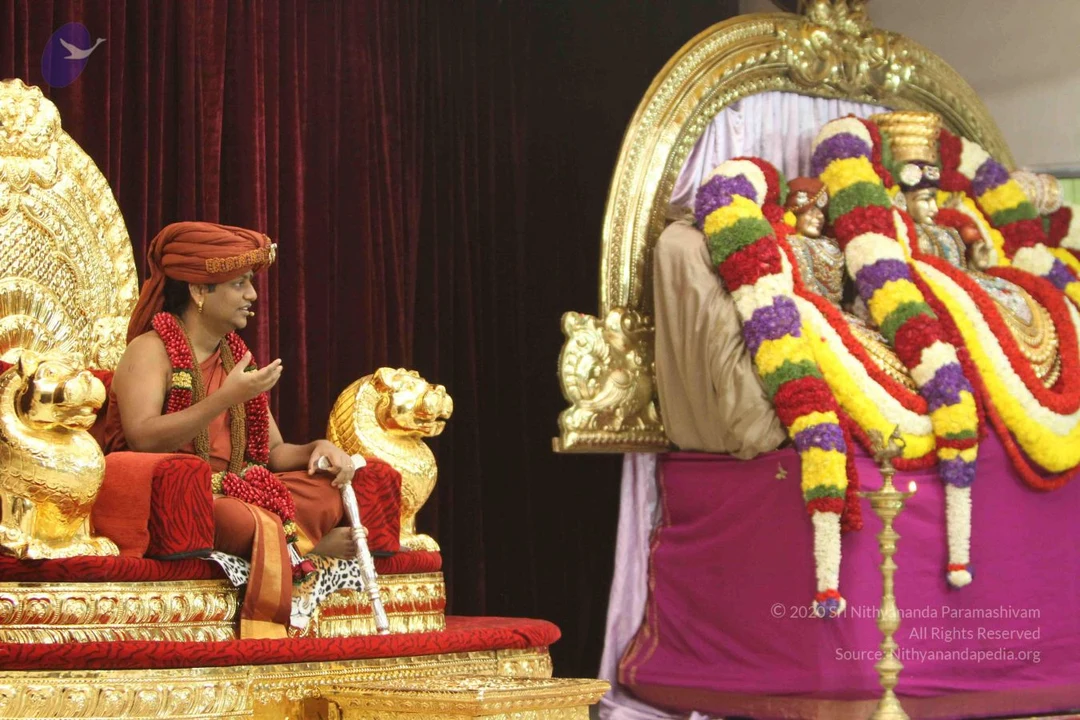
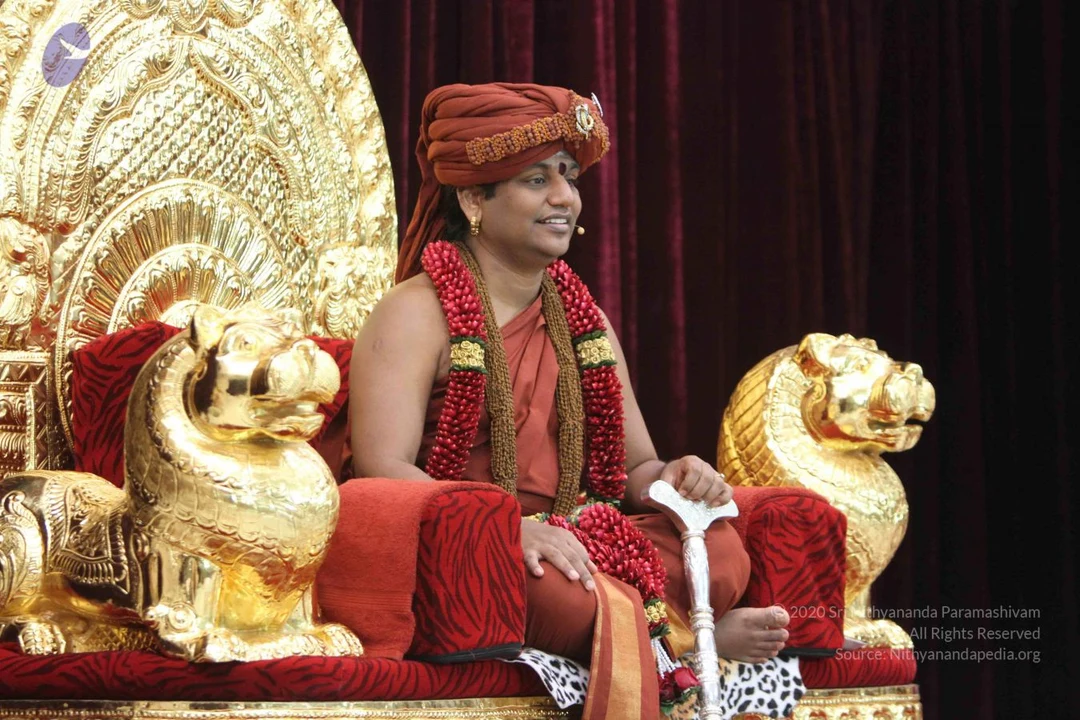
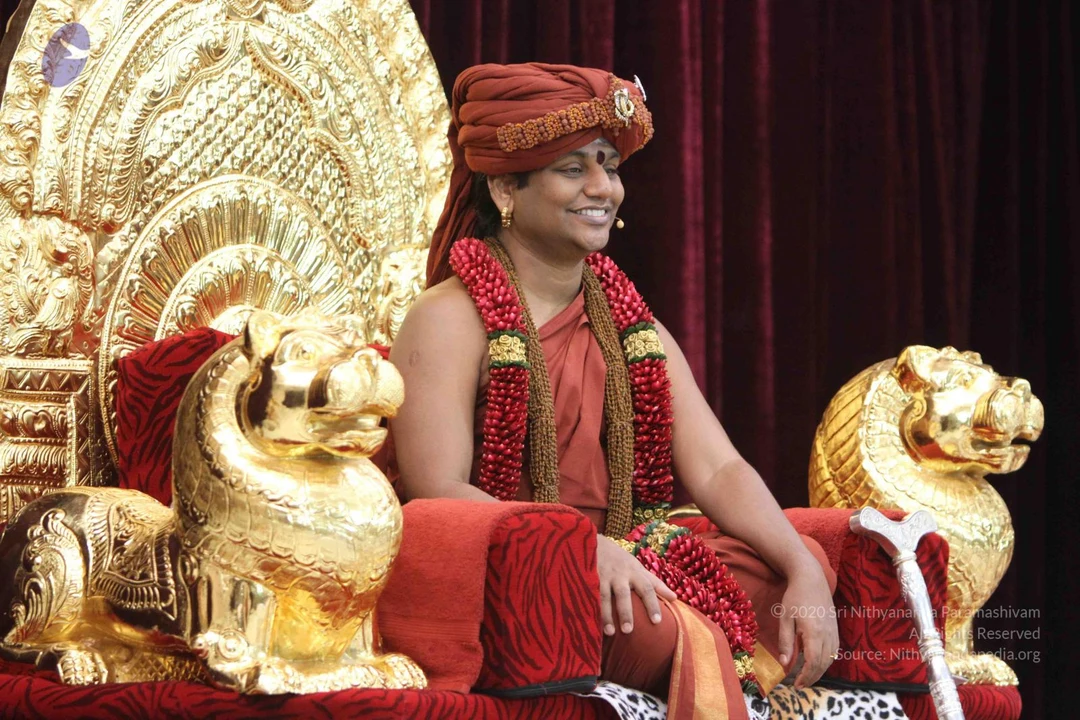
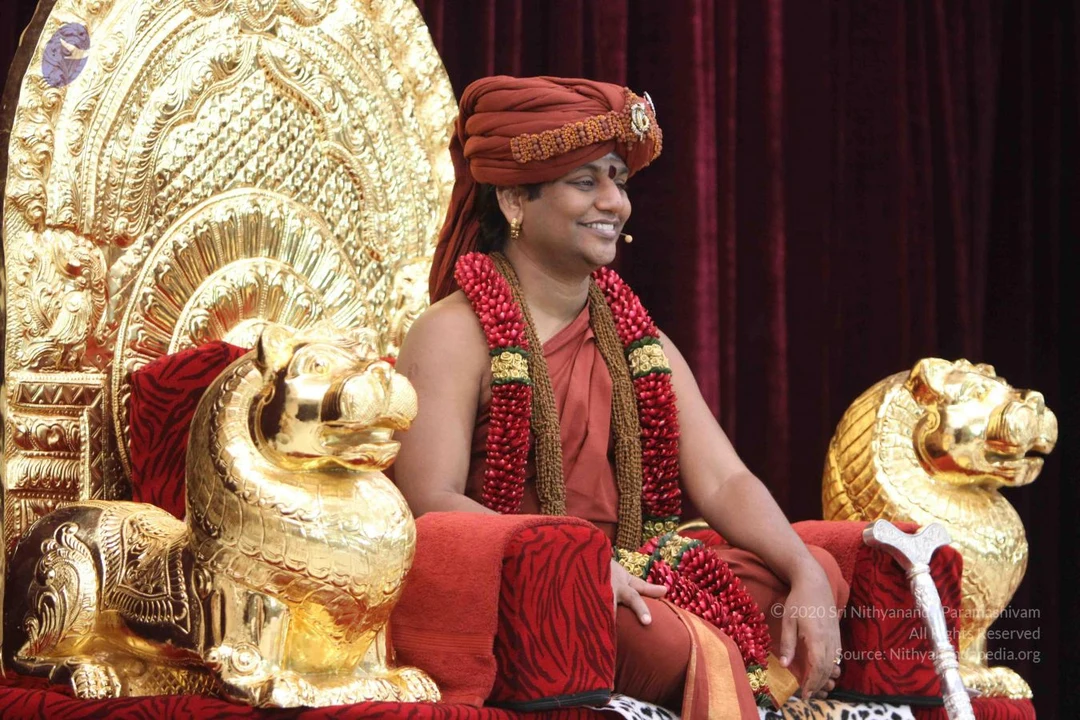
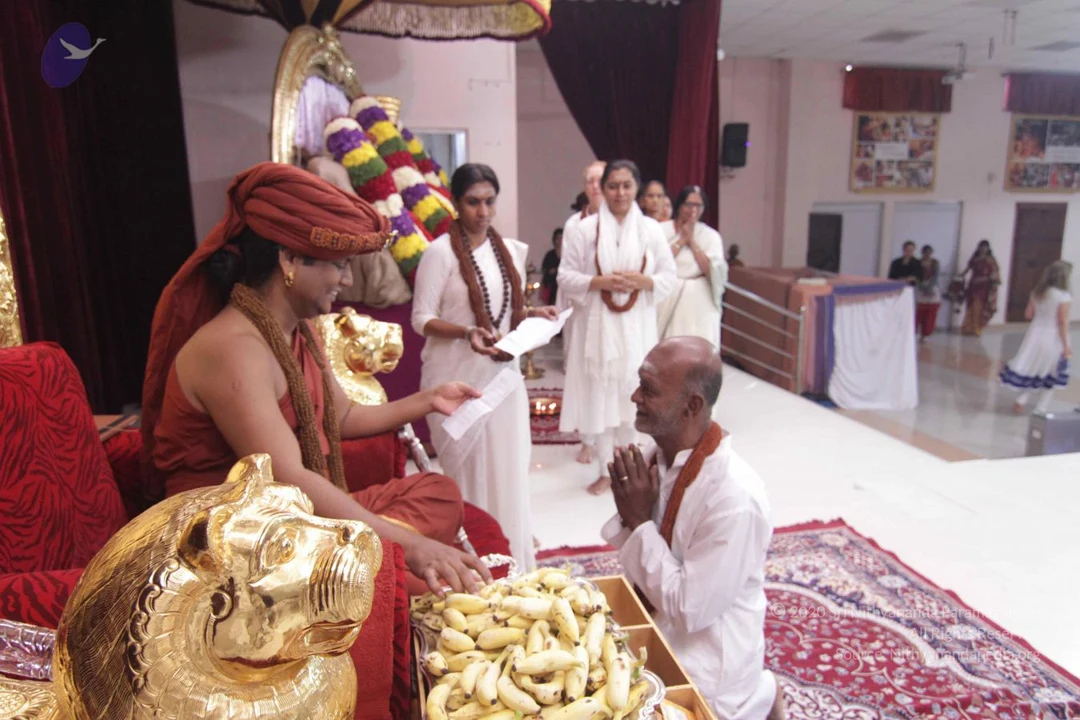
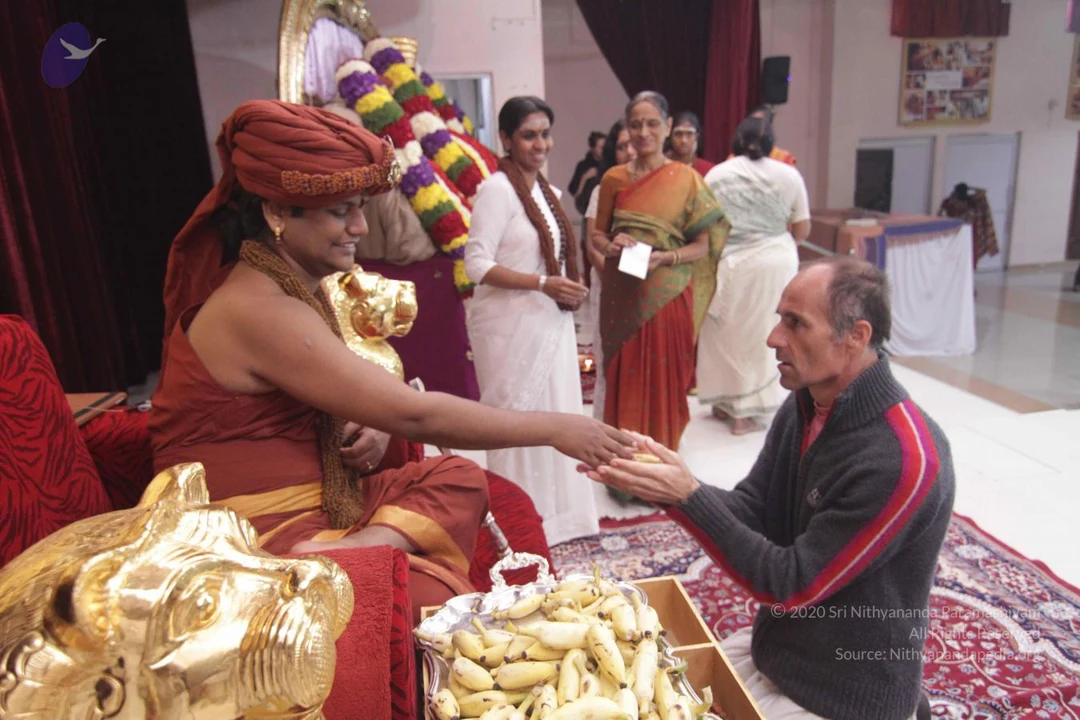
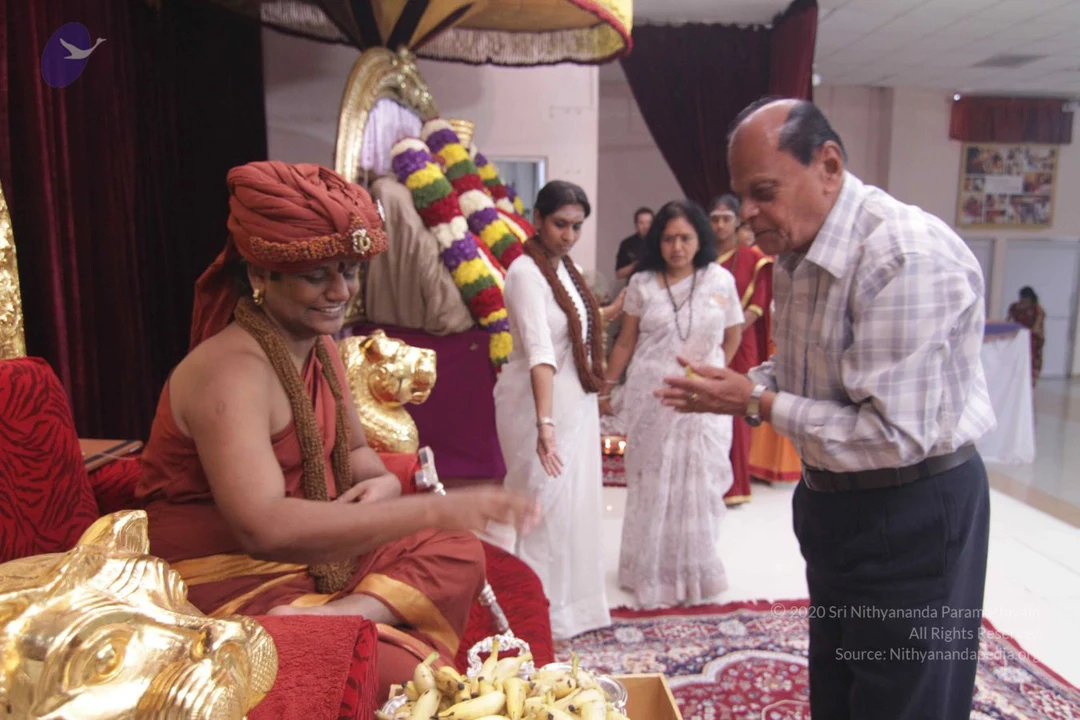
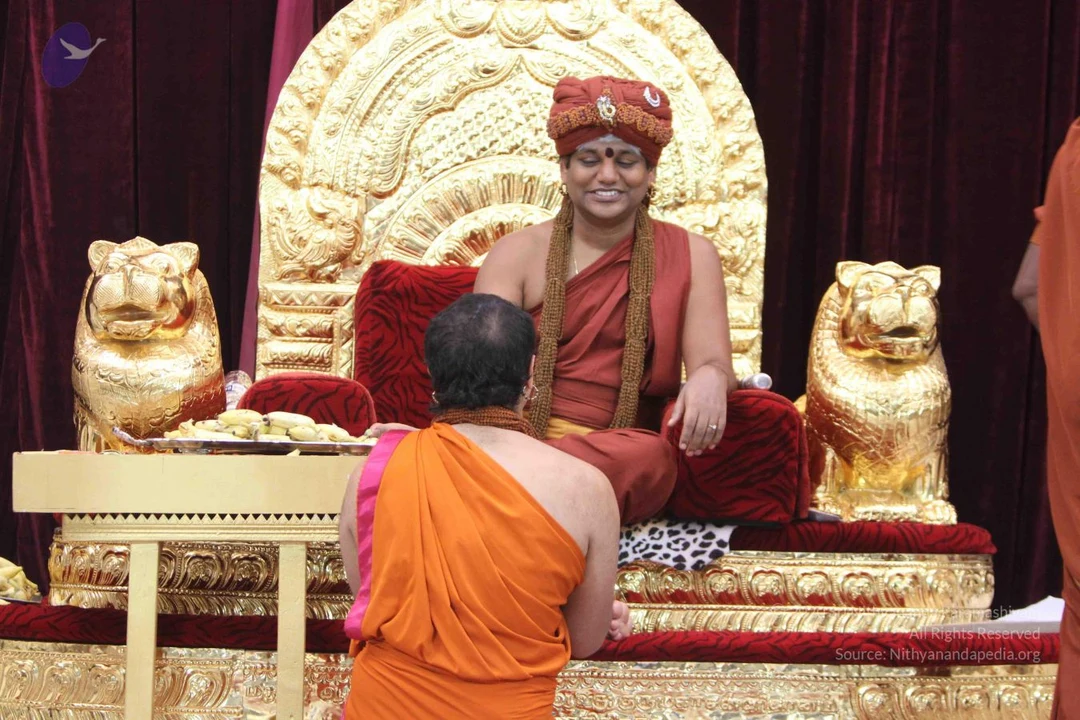
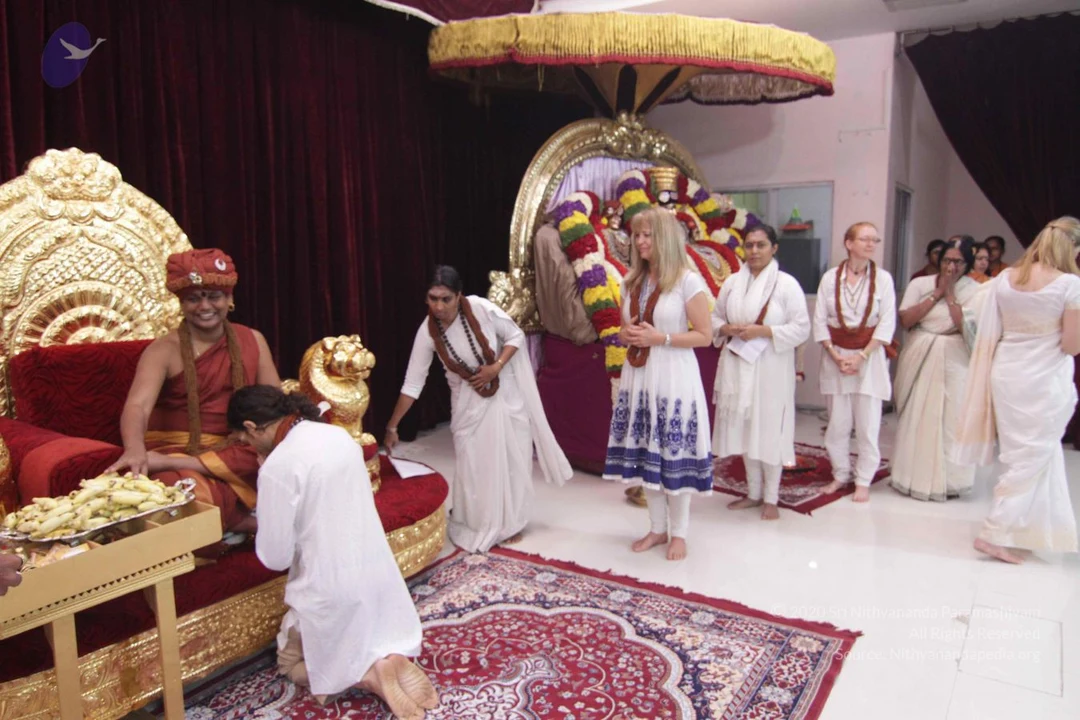
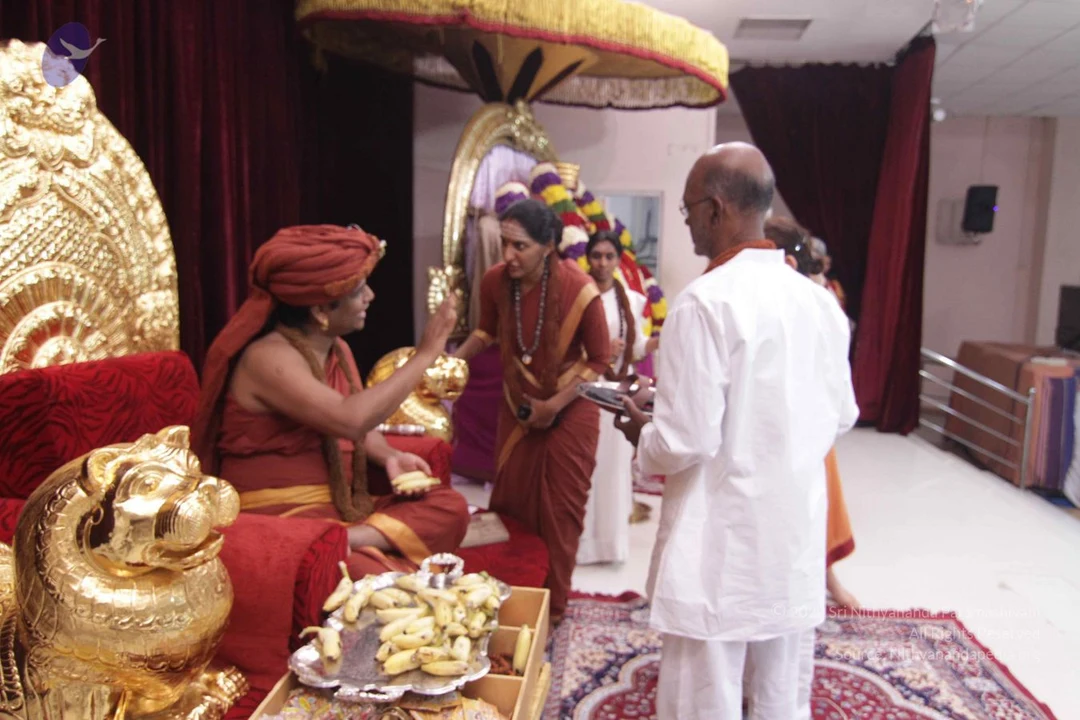
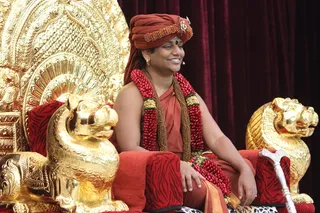
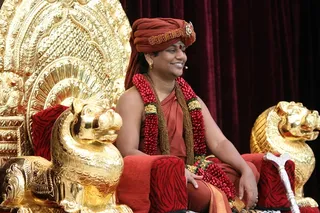
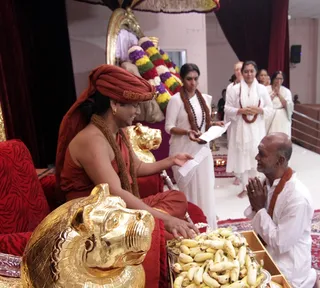
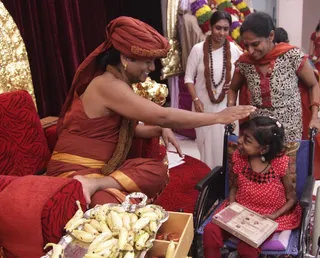
A photograph of a temple-style hall with a deity murti seated on a gold-framed throne draped in a magenta cloth and heavily garlanded with multicoloured flower garlands, its crown visible above. On the right a shaved-headed priest in a reddish-orange dhoti and shawl holds a lit lamp toward the murti in a puja. A brass oil lamp stands on the floor in front. On the left a seated person in orange and red robes, with a red turban and rudraksha-style garland, presses palms together in namaskar beside a gold lion-armed seat and a staff. Red and patterned rugs cover the floor, and maroon curtains hang behind.A seated figure in saffron and red clothing sits on an ornate gold throne carved with lion heads and a golden arched backrest, with red velvet upholstery and a red velvet curtain behind. He wears a red-orange turban with a gold ornament, a bare-chested saffron wrap, and a long red and green beaded garland with a gold-threaded cord. He smiles and rests his hands on his lap beside a silver staff. a person: the appearance cues of a swept turban, ornate saffron clothing, and a ceremonial garland on a throne match the page's claim, though the face is not used for identification. One person is visible in a photograph.A seated figure on an ornate gold throne with carved lion-like armrest sculptures, red upholstered arms and a deep maroon velvet backdrop. The person wears a rust-red turban with a brooch, a rust-red robe, a brown rudraksha-style beaded mala and layered red floral garlands, and a small gold earring. They sit smiling with hands resting on the throne arm, and a small white ceremonial staff rests against the right armrest. Swamiji (probable) is shown in this seated pose with turban, saffron-toned robe, red garlands and gold throne cues, though the appearance is only partly certain. One physical person is visible.A seated figure in an orange-red turban and saffron-red robe, wearing a long beaded necklace, sits on a red-upholstered throne flanked by gold lion-head armrests. He extends a hand toward a folded white paper held by a woman in white with a rudraksha-style mala, while a bald older man in white with an orange shawl kneels with palms joined in front of a tray of bananas. Behind them, women in white and a garlanded purple, yellow and green floral arrangement are visible, with a red carpet and gold-framed mirror in the background. The figure is a probable Swamiji by his turban, saffron clothing and beaded mala, and the scene reads as an offering or darshan moment.A photograph of a seated figure on a red cushioned throne before a gold ornate backdrop with a dark red curtain. The central figure wears an orange-red turban with a gold emblem, an orange-red garment, and a long beaded gold necklace, and smiles while holding bananas on a gold tray. Before him, an elderly woman in a blue sari with red border bends forward offering fruit, a young girl in a red polka-dot dress with a flower hair clip stands beside a seated woman in a wheelchair, and another woman in a dark sari sits nearby. The scene is a darshan-style offering of fruit to visitors, with a gold tray of bananas in the foreground.Photo of a seated man in a rust-orange turban and matching orange robe, with a gold-coloured beaded necklace, on a red upholstered seat in front of a deep red curtain and gold decorative panel. He extends his hand toward a young girl in a red polka-dot dress seated in a wheelchair and holding a small box. A smiling woman in a black-and-white patterned top with an orange shawl stands beside her, and a young man in white with a rudraksha mala stands behind. A silver tray of bananas and fruit sits in the foreground, with flower garlands in the upper background.

Nithya-Satsang
33 photosSource gallery
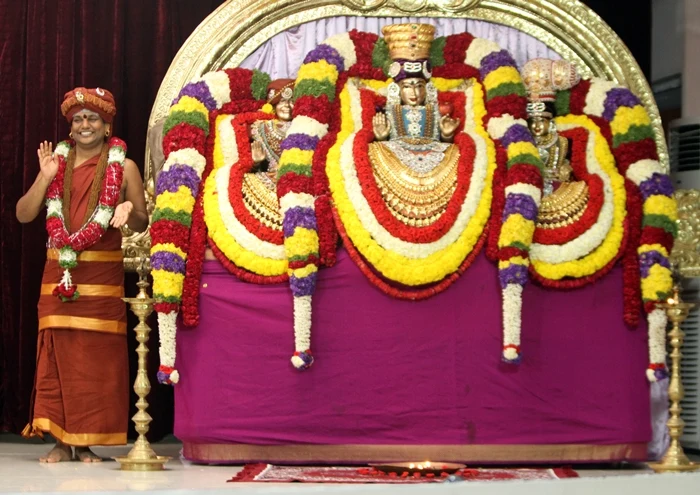
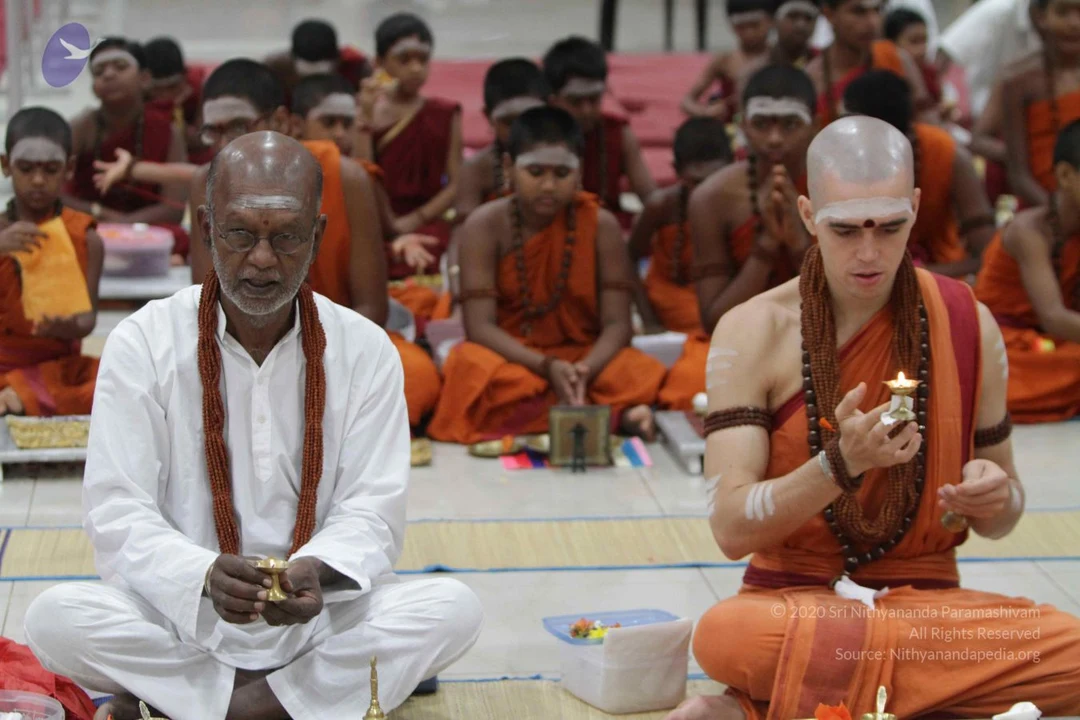
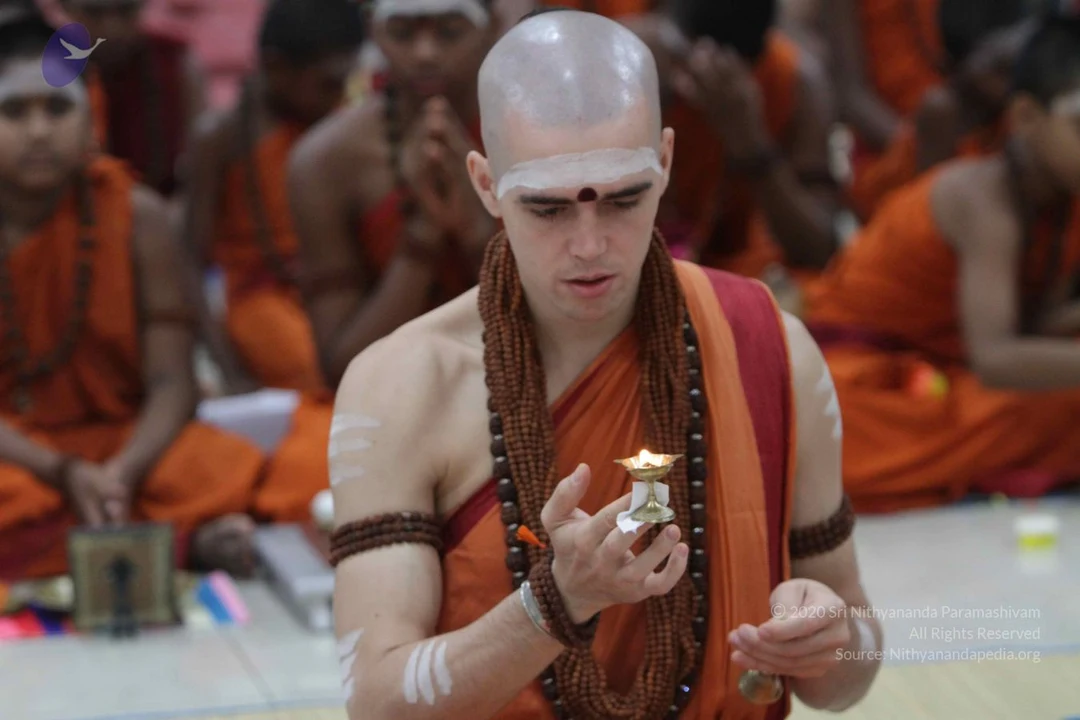
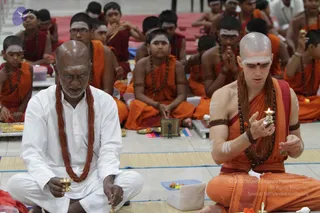
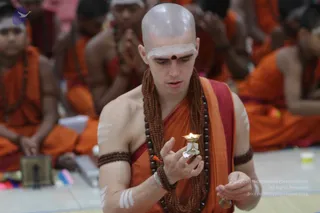
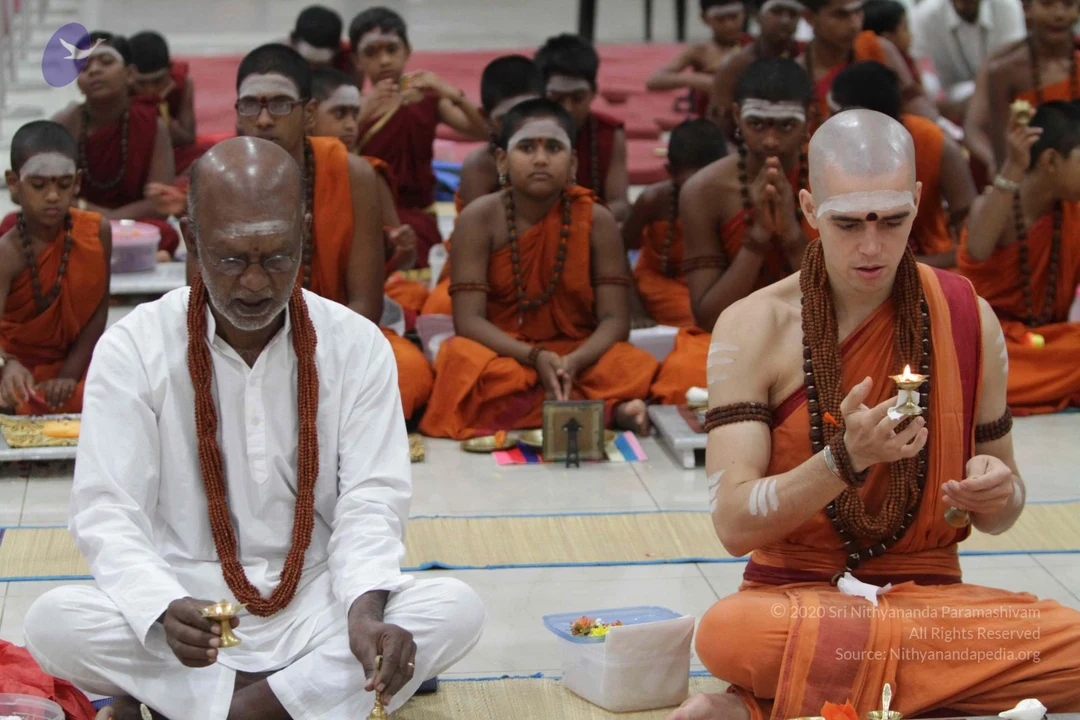
Photograph of a seated ritual gathering in a hall with a red-carpeted floor and bamboo mats. In the foreground, an elderly man in a white dhoti and shirt with a long rudraksha mala and tilak sits with eyes closed, holding a small brass vessel. Beside him, a shaven-headed young sannyasi in orange robes, a red-brown sash, rudraksha malas and white ash markings on his forehead and arms holds a lit oil lamp in his hands during puja. Behind them, rows of young boys and youths in orange and maroon robes, with white forehead markings and rudraksha beads, sit with hands folded and offerings on plates. A small wooden box and a plate of offerings lie on the mat in front.Photograph of a seated puja or satsang gathering in a hall with a light tiled floor and matting. In the foreground, a bald, bearded man in white ritual clothes and a rudraksha mala holds a small brass lamp in his hands. Beside him, a young man with a shaved head, white ash markings and orange robes with a rudraksha mala holds a small lit oil lamp, with his palms cupped near it. Behind them, rows of boys and young men sit in orange and maroon robes with white forehead markings and rudraksha malas, some with hands folded in prayer. Brass lamps, a small wooden box and offering trays are placed on the floor. A purple logo appears in the upper left corner.A shaved-headed man in orange and maroon robes stands holding a small brass oil lamp with a lit flame in one hand, with a white cloth beneath it, while a metal vessel rests in his other hand. He wears a long rudraksha mala, rudraksha bracelets on his arms, and white ash markings on his forehead, arms and shoulders, with a red bindi. Behind him, rows of seated devotees in orange robes and white forehead markings sit with hands folded, some with rudraksha malas, indoors on a wooden floor. A small framed image and colourful items sit at the lower left. The scene suggests an aarti or puja performed before a seated assembly.Three gilded deity murti are arranged on a raised altar beneath a golden arched canopy. The central figure wears a tall golden crown set with red and green stones, a blue and white embroidered blouse, heavy layered gold necklaces, and holds a red fruit in one hand. Flanking figures wear red and gold headpieces and layered gold jewellery. Thick garlands of red, yellow, white, green and purple flowers frame all three figures, and a purple cloth covers the altar base. No living people are visible.A decorated deity murti of a goddess seated centrally in a shrine, draped in dense garlands of red roses, yellow and white flowers and purple blooms with green leaves. She wears a tall gold crown set with coloured gems, a blue and gold embellished blouse, layered gold necklaces and earrings, and holds a red fruit in one hand while the other hand is raised in blessing. Two smaller attendant figures flank her, one in a maroon and gold headdress and one in a red and gold crown, both also garlanded. Gold arched frame and draped lavender curtain form the backdrop.Three painted deity murtis sit on a magenta cloth-draped platform framed by a gold arch, each heavily garlanded with bands of red, yellow, white and purple flowers. The central figure wears a tall gold crown with a purple and gold headpiece, a blue-and-gold bodice and a gold-embroidered skirt, with hands raised in blessing. Flanking figures wear red-and-gold crowns and gold jewellery. A brass lamp stands at the left edge. No physical people are visible; the figures are statues.
1008-Sangha-abhishekam
115 photosSource gallery
Outdoor ritual preparation at dusk in front of a red draped shrine canopy with gold fringe. Rows of unlit white clay lamps or small white cone-shaped vessels cover a pink-and-purple cloth spread across the paved ground. Two large black stone deity murti stand on either side, each wearing a white dhoti-style garment and a white-flowered garland. A single figure in an orange-brown robe stands near the centre of the canopy, partly visible. Potted plants, a banana leaf and a small blue-and-white sign at the upper left frame the scene.Outdoor ritual setup on a paved courtyard with rows of white conical sculptures or offerings arranged on a pink cloth, leading toward a red draped backdrop. Two large black stone deity statues flank the arrangement, each adorned with white and red flower garlands and white cloth. A single standing person in an orange-brown garment stands near the red curtain, with a small floral offering in front. Trees, a stone wall, and a plastic chair appear in the background.A large outdoor ritual setup with hundreds of small white conical mounds. Two tall black deity murti figures stand on pedestals at left and right, each draped with white cloth and garlanded with white and orange flowers. A red curtained shrine backdrop with gold trim sits behind, and a single white-clad man walks at far left near a table with offerings. A standing man in an orange-brown dhoti and shawl stands near the center of the red backdrop. Trees and a stone wall frame the scene.Outdoor photo of rows of small white clay oil lamps (diyas) arranged in long lines across a peach-coloured cloth on a paved courtyard. Two large black stone deity murti stand flanking the scene, draped in white cloth with red-and-white flower garlands. In the background a red draped canopy with bunting, banana plants and a seated or standing figure in an orange-and-yellow garment near the centre. A small table with offerings and a white plastic chair appear at left.A photograph of a large outdoor ritual arrangement: hundreds of small white cone-shaped Shivalinga-like mounds of rice or grain set in rows on a peach-coloured cloth spread over a paved courtyard. Two tall black stone dvarapala-style guardian statues stand on either side, each draped in white cloth and garlanded with white and red flower garlands. Behind the rows, a red curtain hangs before a shrine entrance, with a figure in orange-red dhoti moving near it and white-clad attendants at the left edge. Banana plants and greenery surround the courtyard, and a small brass pot sits near a statue base. Visible ritual setting suggests an abhishekam or puja preparation.A photograph of a shaved-headed man in a rust-orange and saffron-bordered dhoti and shawl bends forward at a red velvet backdrop, pouring from a brass vessel beside a small floral arrangement of white and orange flowers and garlands. Rows of white paper cups or plates and scattered red petals cover the ground in front of him. A rudraksha mala hangs at his neck and a white tilak marks his forehead.
Bhajans-Satsang-Kalpataru-Darshan

38 photosSource gallery
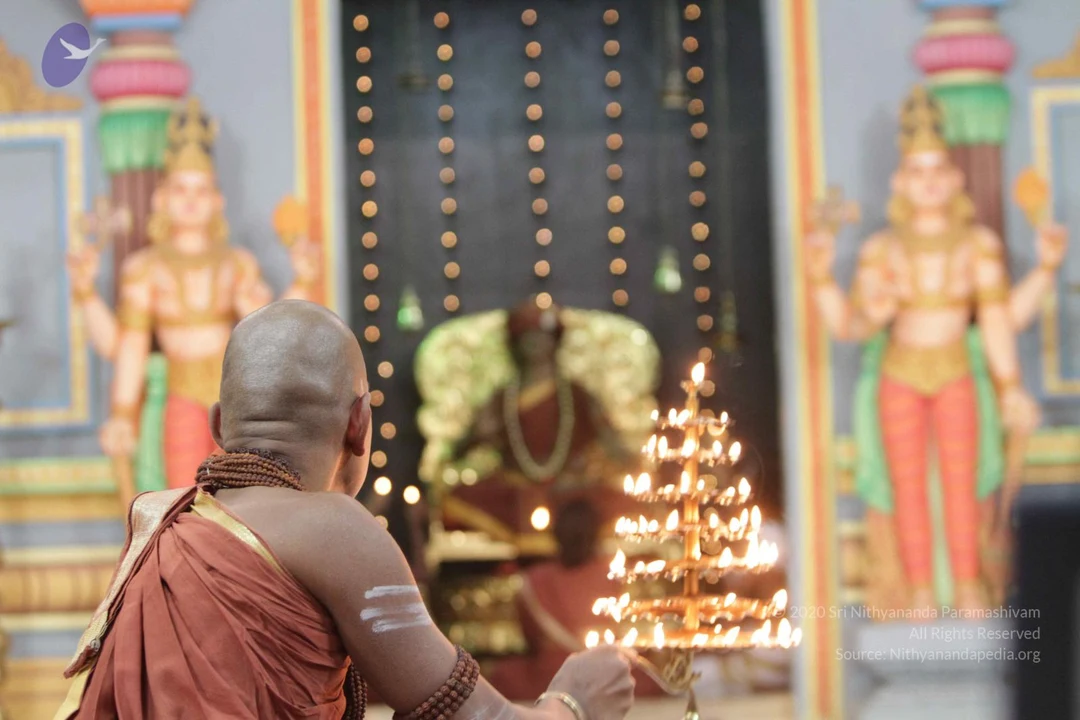
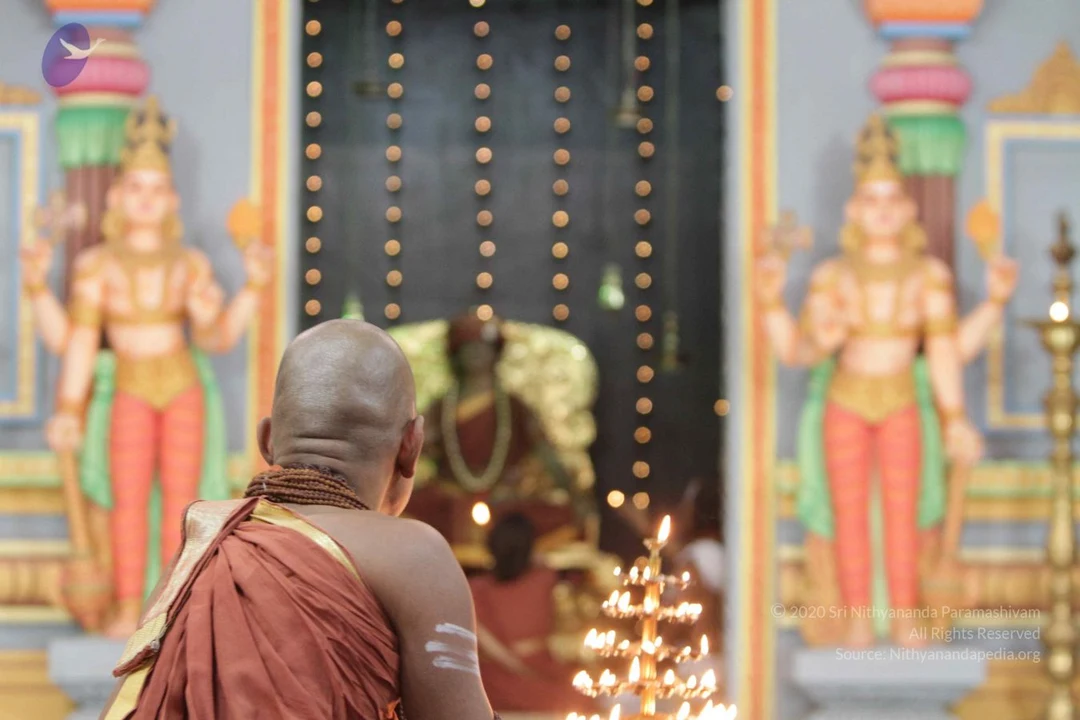
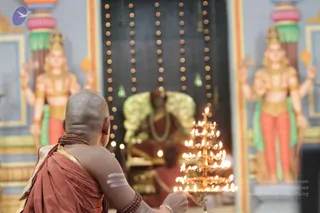
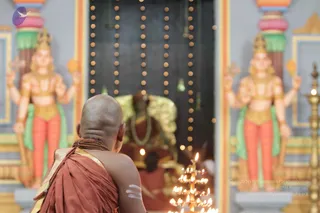
A shaved-headed priest in saffron-orange cloth with a gold-bordered shawl and rudraksha mala stands with his back to the camera, holding a tiered brass aarti lamp with many lit oil lamp wicks toward a shrine. Behind him, two painted guardian figures with multiple arms and gold crowns flank the doorway, and a dark shrine door hung with rows of rudraksha beads frames a deity murti draped in green and white flower garlands. Another person in orange sits near the shrine, and white horizontal vibhuti stripes mark the priest's upper arm. The scene is a temple aarti.A shaved-headed man in a rust-red and gold-bordered robe, wearing a rudraksha mala and white horizontal marks on his upper arm, sits with his back to the camera facing a temple shrine. Two tall painted dvarapala guardian figures with multiple arms and golden crowns stand on either side of a doorway hung with strings of beads. A brass lamp stand with a row of lit oil lamps burns in the foreground, and a seated figure in red and golden garments with a green-beaded necklace is visible in the shrine beyond. The scene suggests puja or darshan at a temple sanctum.Photograph of a seated ritual gathering in a hall with a red-carpeted floor and bamboo mats. In the foreground, an elderly man in a white dhoti and shirt with a long rudraksha mala and tilak sits with eyes closed, holding a small brass vessel. Beside him, a shaven-headed young sannyasi in orange robes, a red-brown sash, rudraksha malas and white ash markings on his forehead and arms holds a lit oil lamp in his hands during puja. Behind them, rows of young boys and youths in orange and maroon robes, with white forehead markings and rudraksha beads, sit with hands folded and offerings on plates. A small wooden box and a plate of offerings lie on the mat in front.Photograph of a seated puja or satsang gathering in a hall with a light tiled floor and matting. In the foreground, a bald, bearded man in white ritual clothes and a rudraksha mala holds a small brass lamp in his hands. Beside him, a young man with a shaved head, white ash markings and orange robes with a rudraksha mala holds a small lit oil lamp, with his palms cupped near it. Behind them, rows of boys and young men sit in orange and maroon robes with white forehead markings and rudraksha malas, some with hands folded in prayer. Brass lamps, a small wooden box and offering trays are placed on the floor. A purple logo appears in the upper left corner.Three gilded deity murti are arranged on a raised altar beneath a golden arched canopy. The central figure wears a tall golden crown set with red and green stones, a blue and white embroidered blouse, heavy layered gold necklaces, and holds a red fruit in one hand. Flanking figures wear red and gold headpieces and layered gold jewellery. Thick garlands of red, yellow, white, green and purple flowers frame all three figures, and a purple cloth covers the altar base. No living people are visible.A decorated deity murti of a goddess seated centrally in a shrine, draped in dense garlands of red roses, yellow and white flowers and purple blooms with green leaves. She wears a tall gold crown set with coloured gems, a blue and gold embellished blouse, layered gold necklaces and earrings, and holds a red fruit in one hand while the other hand is raised in blessing. Two smaller attendant figures flank her, one in a maroon and gold headdress and one in a red and gold crown, both also garlanded. Gold arched frame and draped lavender curtain form the backdrop.

1008-Sangha-Abhishekam
106 photosSource gallery
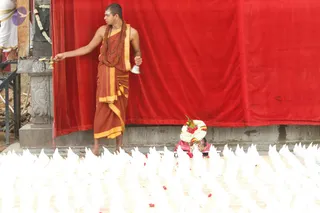
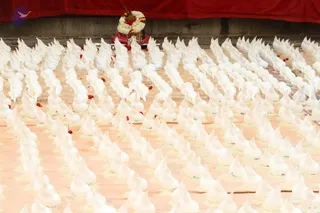
Outdoor photo of rows of small white clay oil lamps (diyas) arranged in long lines across a peach-coloured cloth on a paved courtyard. Two large black stone deity murti stand flanking the scene, draped in white cloth with red-and-white flower garlands. In the background a red draped canopy with bunting, banana plants and a seated or standing figure in an orange-and-yellow garment near the centre. A small table with offerings and a white plastic chair appear at left.A photograph of a large outdoor ritual arrangement: hundreds of small white cone-shaped Shivalinga-like mounds of rice or grain set in rows on a peach-coloured cloth spread over a paved courtyard. Two tall black stone dvarapala-style guardian statues stand on either side, each draped in white cloth and garlanded with white and red flower garlands. Behind the rows, a red curtain hangs before a shrine entrance, with a figure in orange-red dhoti moving near it and white-clad attendants at the left edge. Banana plants and greenery surround the courtyard, and a small brass pot sits near a statue base. Visible ritual setting suggests an abhishekam or puja preparation.A photograph of a shaved-headed man in a rust-orange and saffron-bordered dhoti and shawl bends forward at a red velvet backdrop, pouring from a brass vessel beside a small floral arrangement of white and orange flowers and garlands. Rows of white paper cups or plates and scattered red petals cover the ground in front of him. A rudraksha mala hangs at his neck and a white tilak marks his forehead.A photo of a shaven-headed priest in a rust-orange and saffron-bordered dhoti and upper cloth, with a long rudraksha-style mala around his neck, standing barefoot before a deep red velvet drape. He holds a small brass oil lamp in one hand, extended toward a flower-decorated object at his feet, and a silver bell in the other. Rows of white cloth-wrapped offerings or small white items fill the foreground, scattered with red petals. A garland of white and red flowers rests on a red cloth beside a stone pillar with carved floral relief. A partially visible person in white stands at the top left. Ritual puja setting.A photograph of rows of white conical rice-flour or sugar-cone offerings arranged in neat lines across a pale sandy-pink floor. Scattered red flower petals lie between the rows. At the top of the frame, beneath a red cloth canopy, a seated figure in red garments is largely hidden behind a large white and red flower garland. The figure is partly visible and cannot be identified, so no a person candidate is claimed. Two or more ritual offerings in front of a seated central figure suggest a puja or homa setting, with the garland and cloth emphasising a temple-like ceremonial arrangement.Rows of white conch shells, many labelled with small handwritten numbers, are arranged across a wooden floor sprinkled with rice grains and scattered red flower petals. Behind them stands a large deity murti or decorated figure draped in red cloth and heavy garlands of white jasmine and red and yellow marigolds, with a green leaf rising above. A red fabric canopy hangs at the top of the frame over a grey wall. No people are visible in the scene.
01-NITHYA-SATSANG

7 photosSource gallery
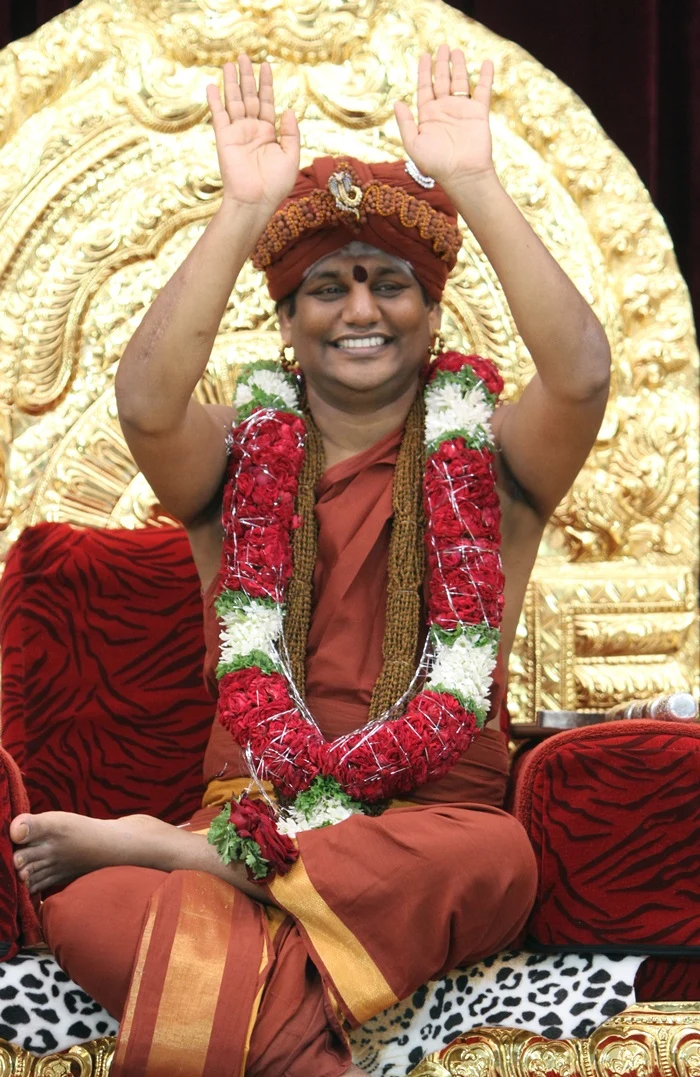
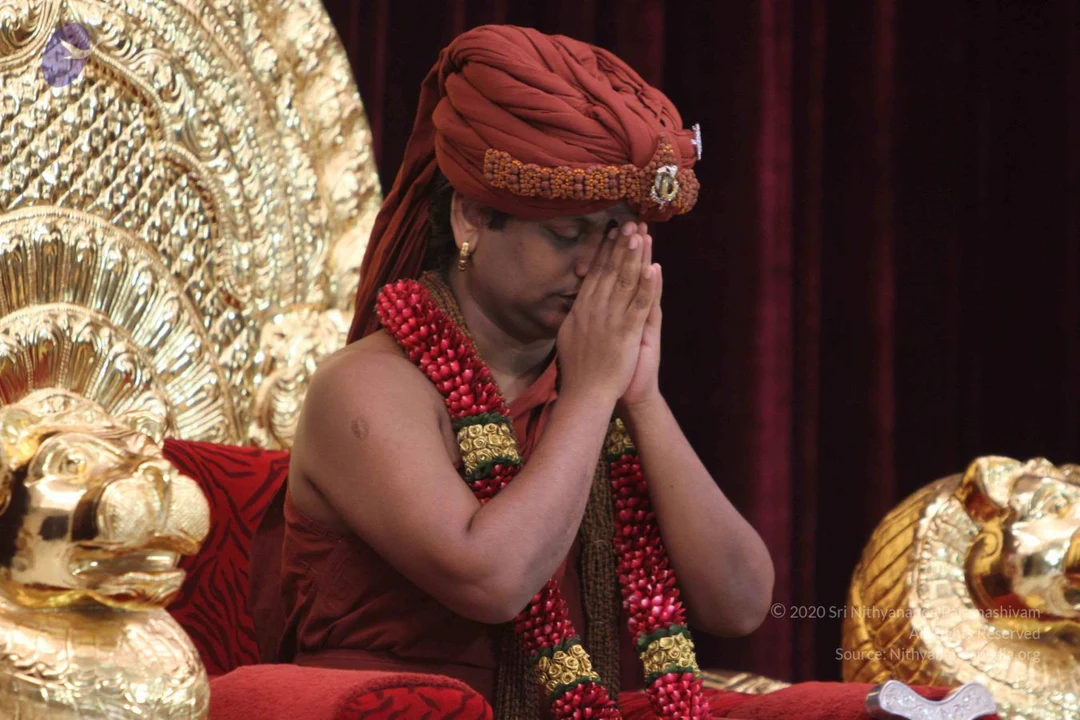
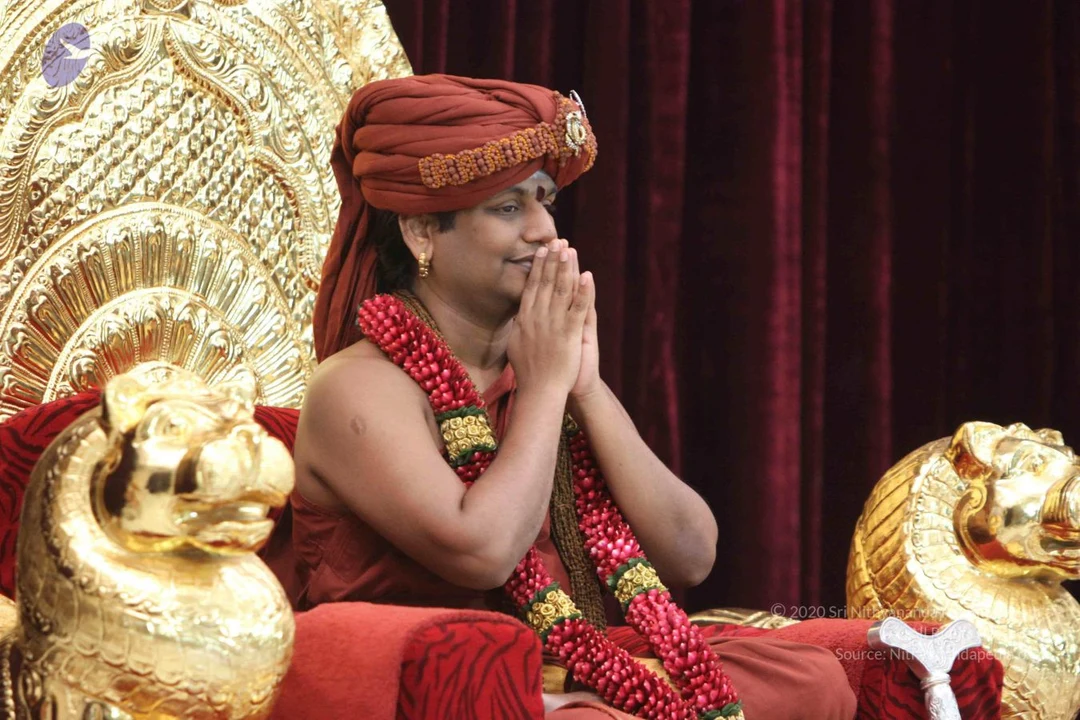
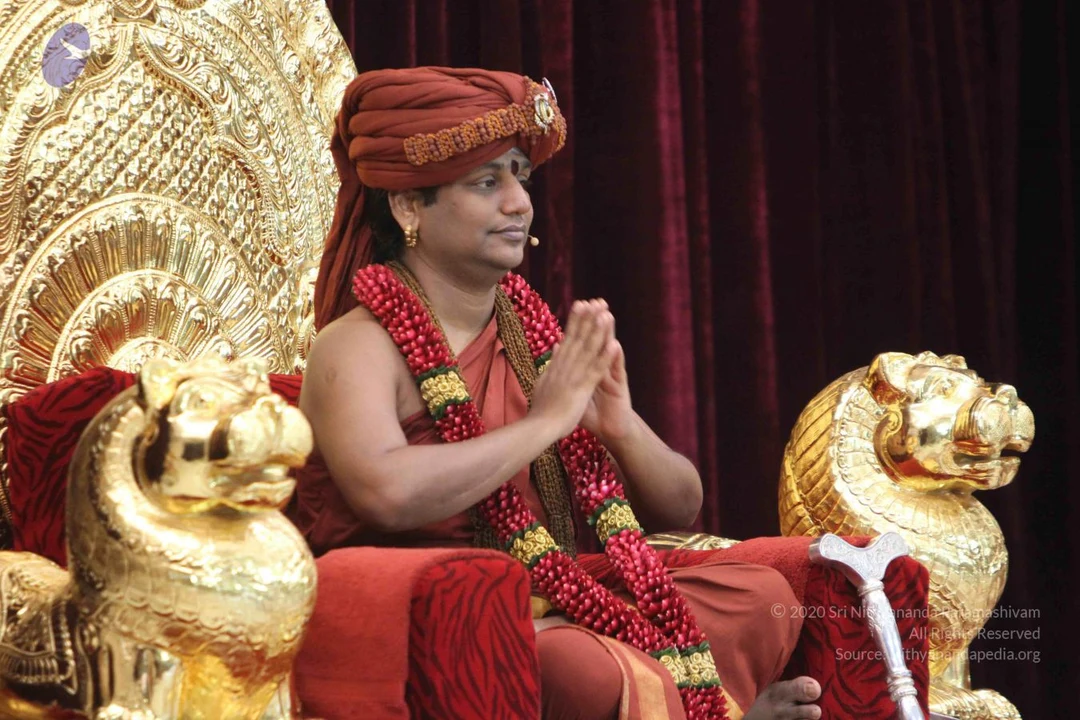
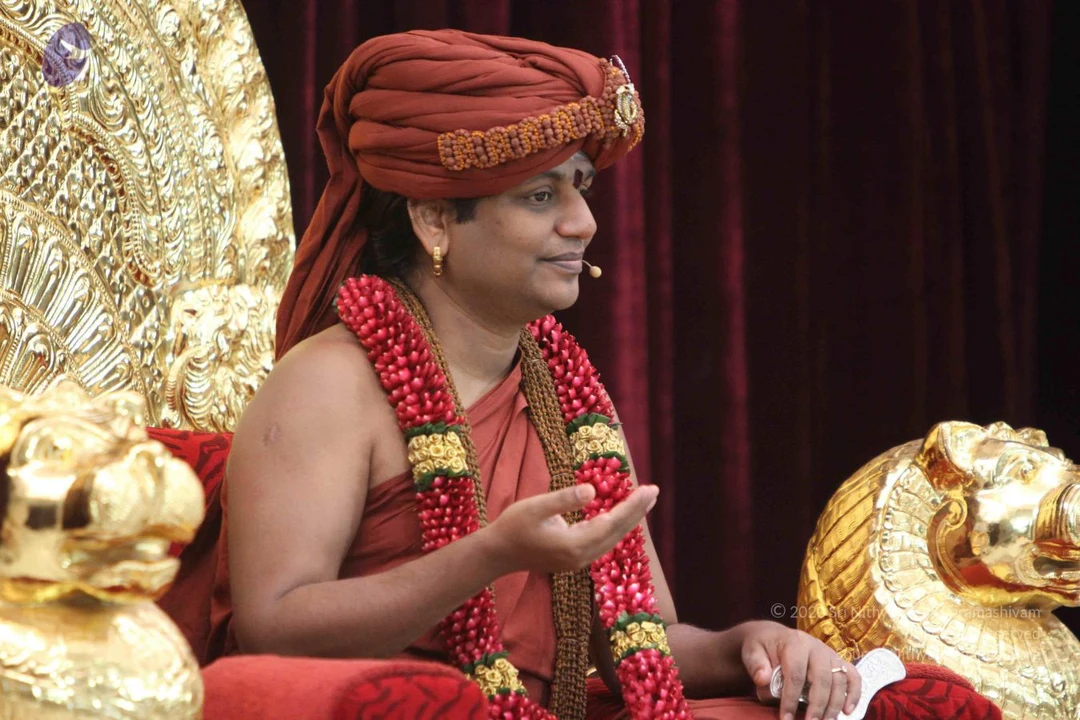
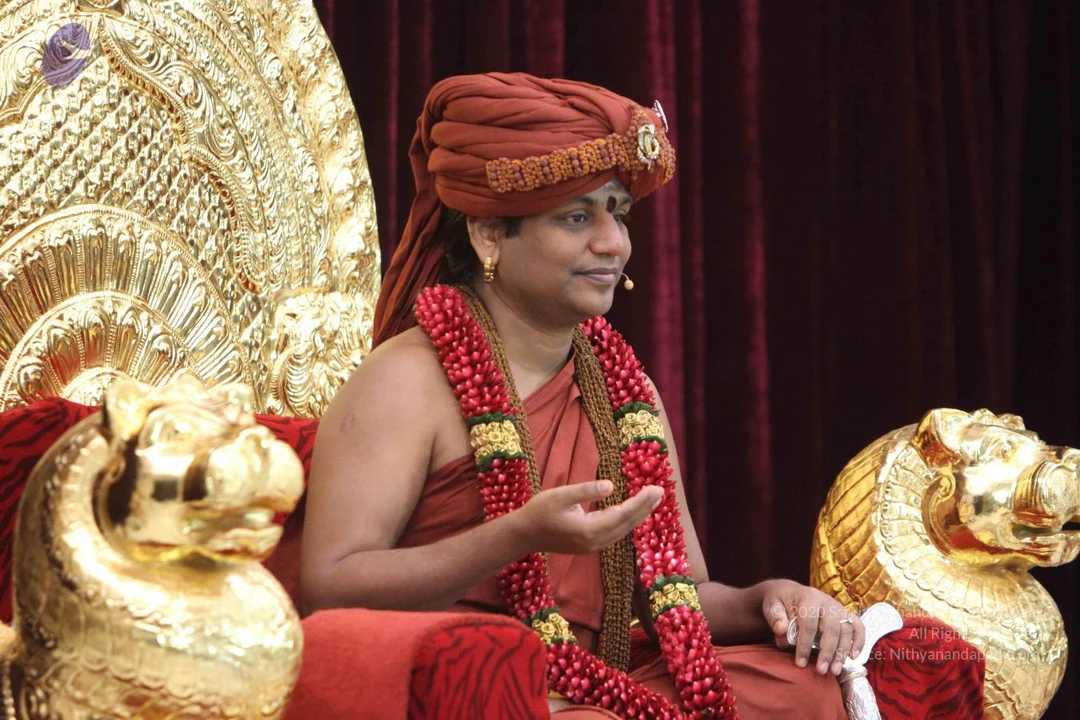
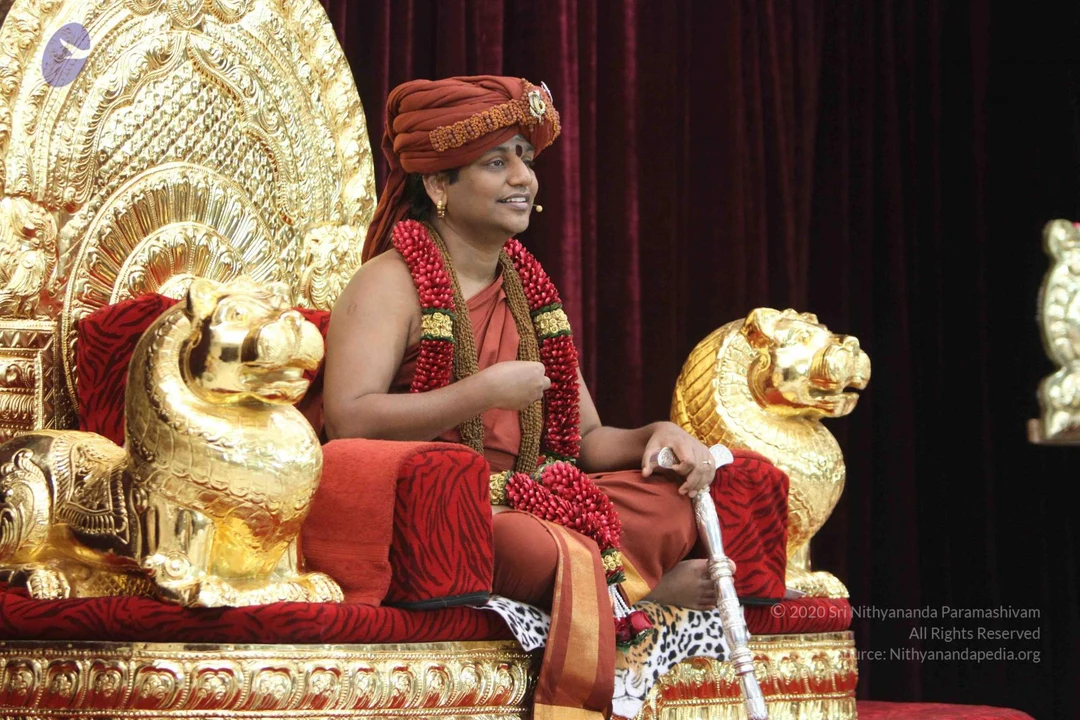
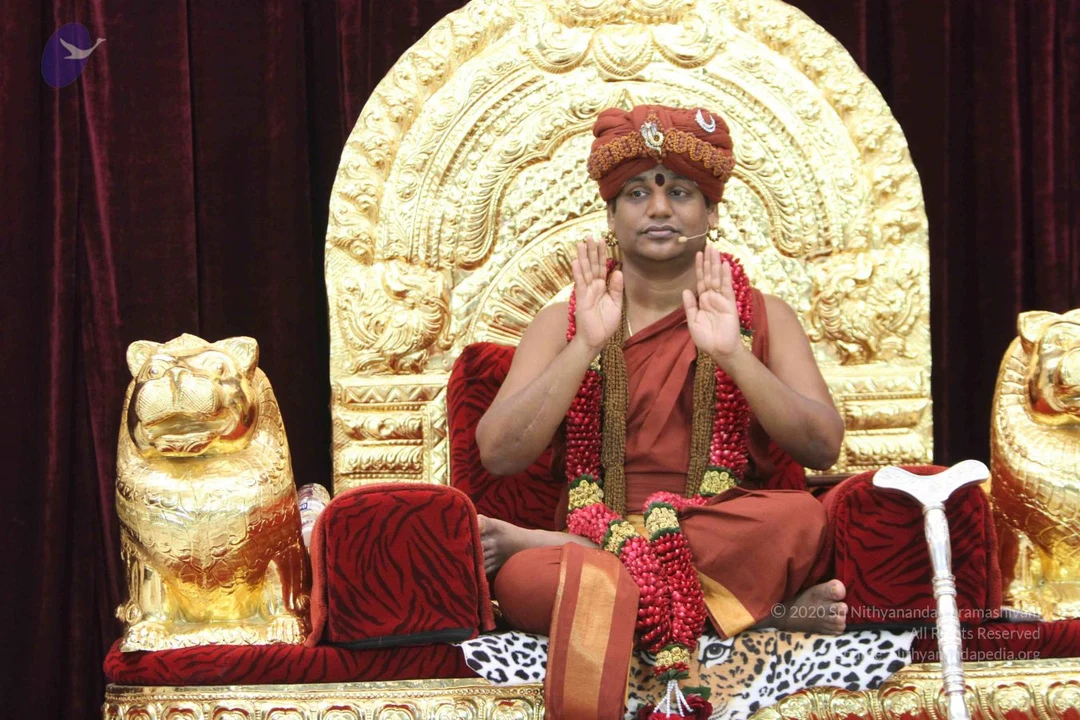
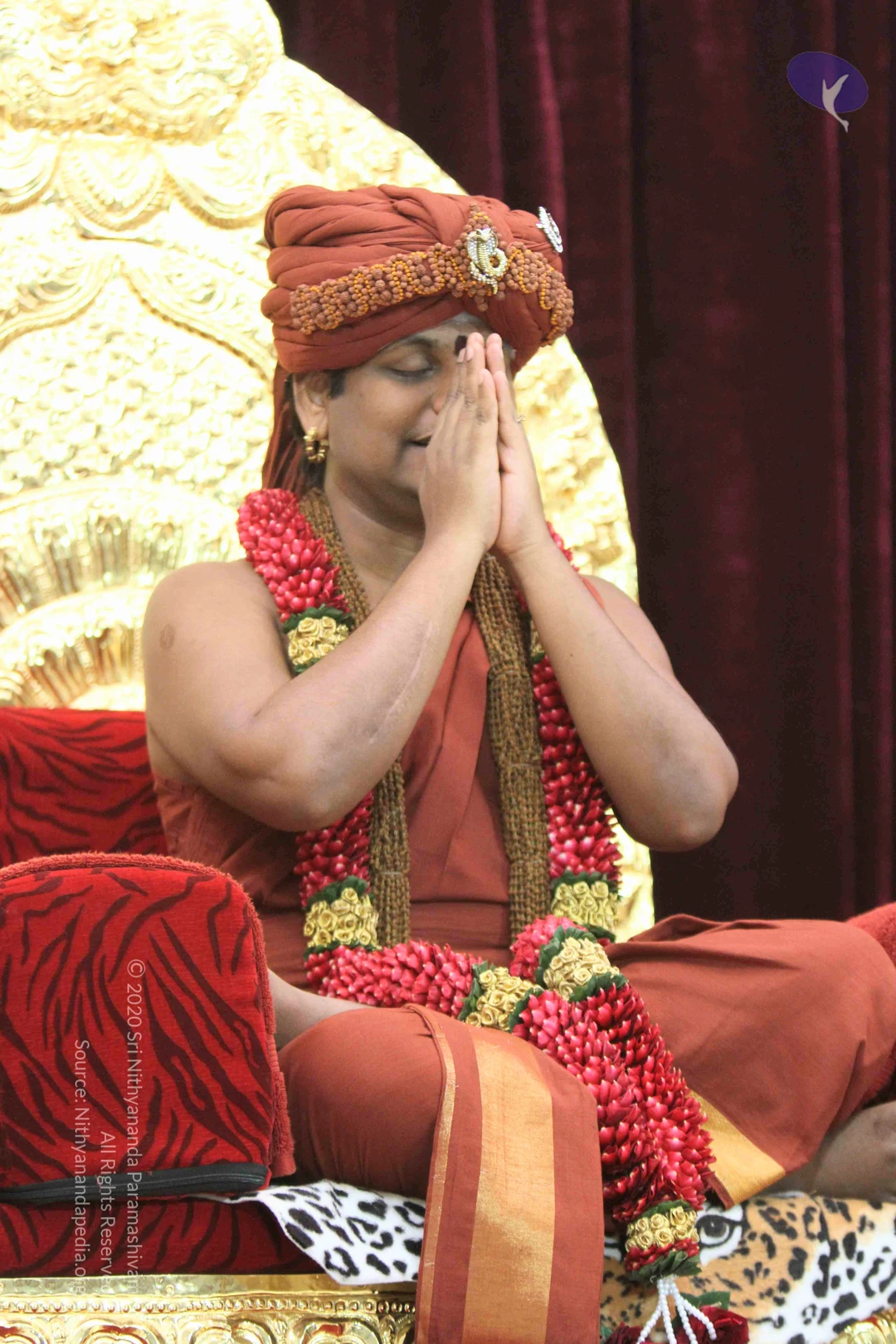
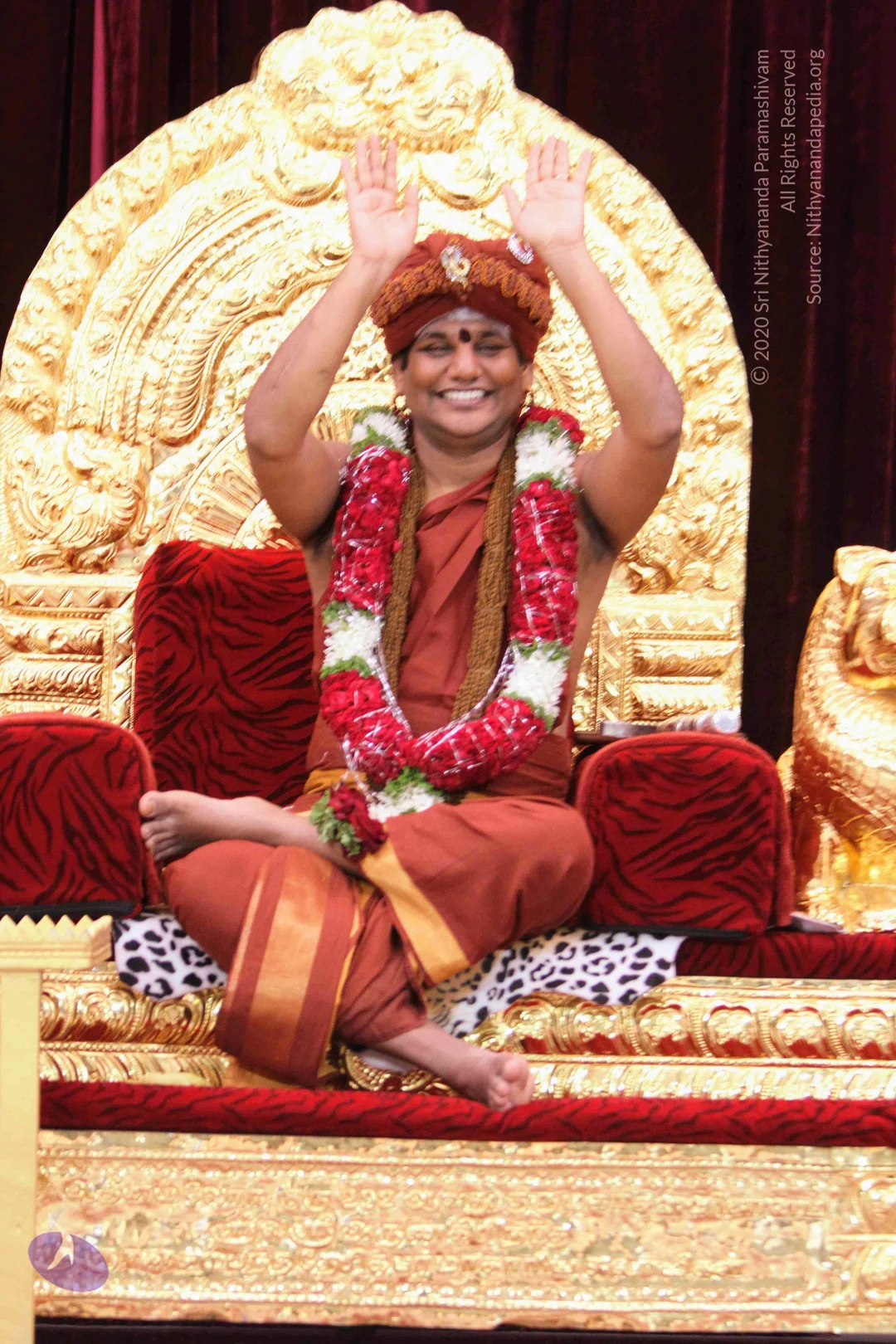
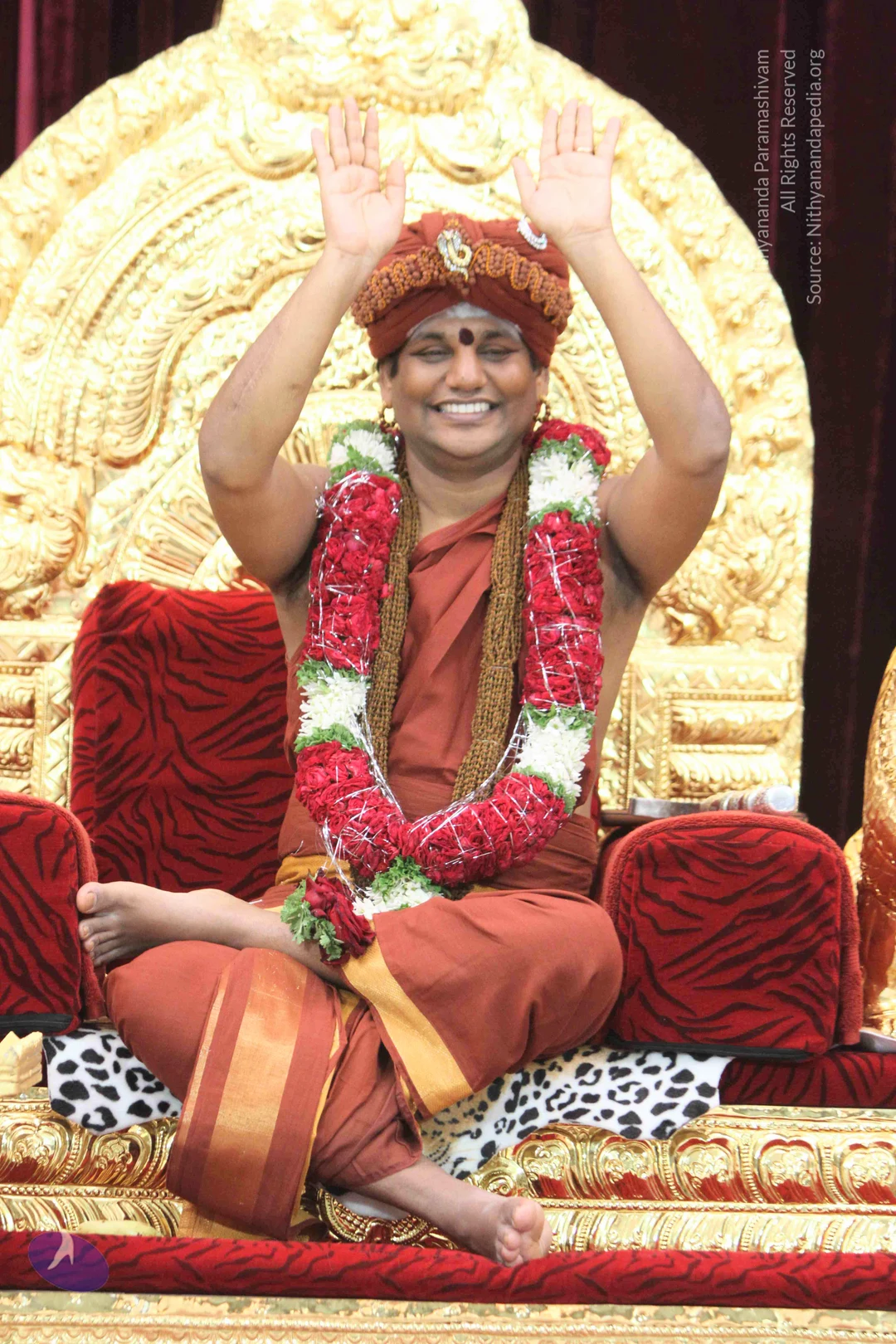
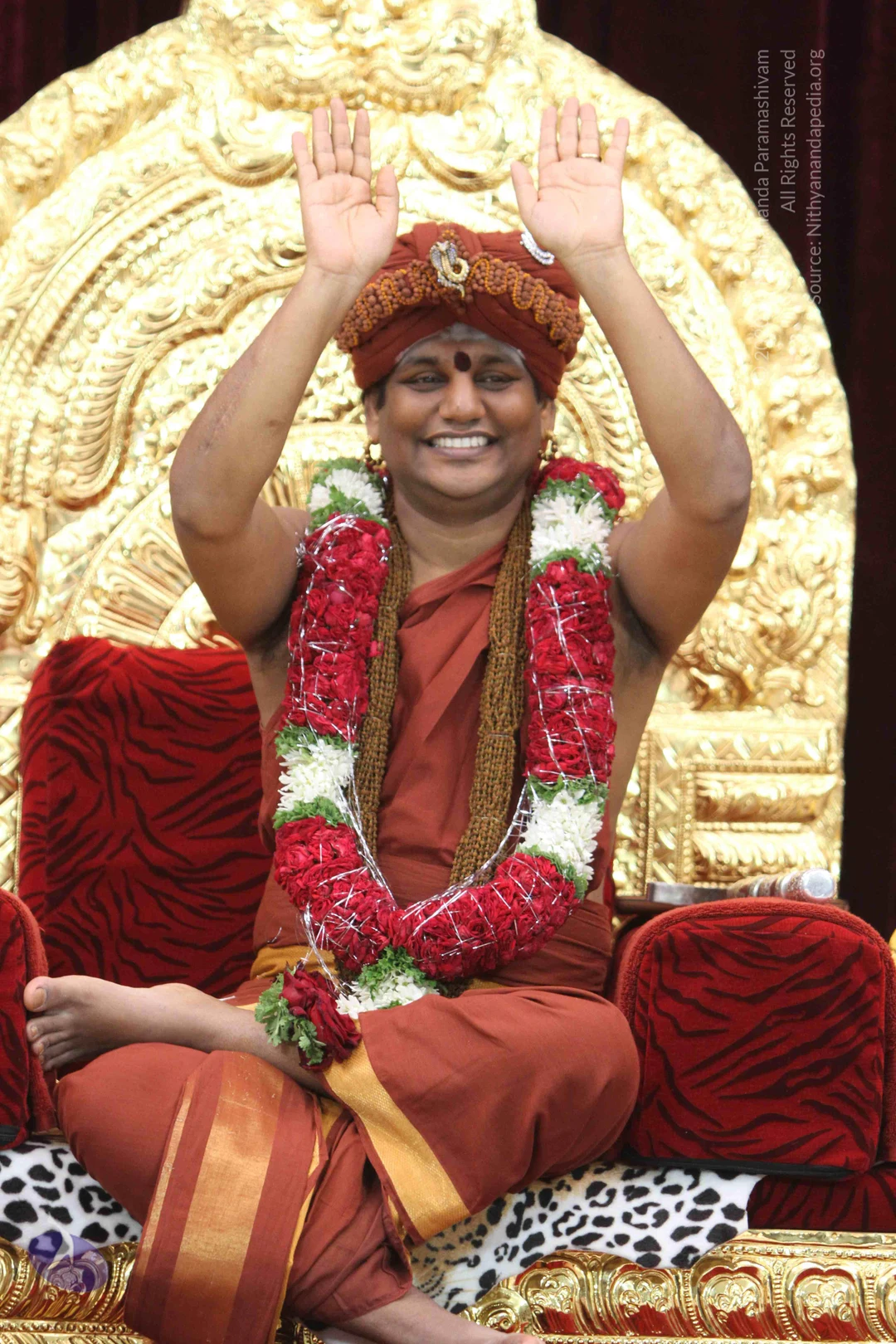
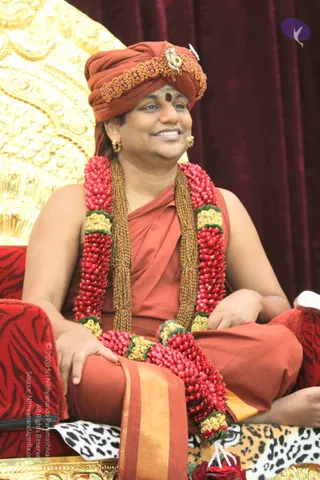
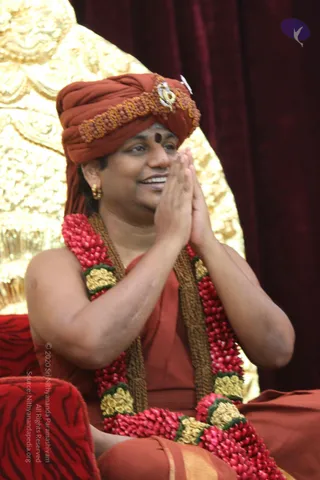
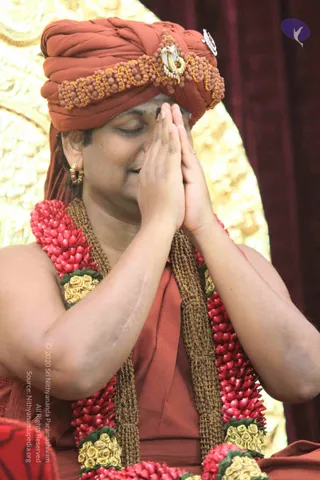
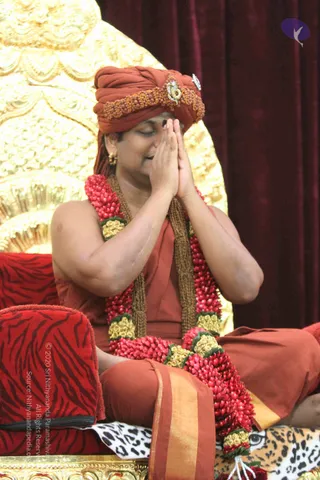
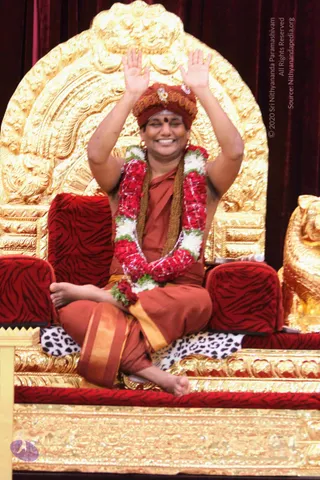
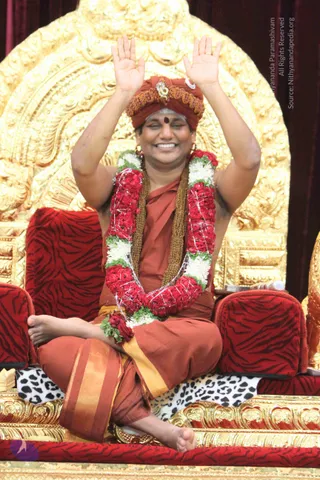
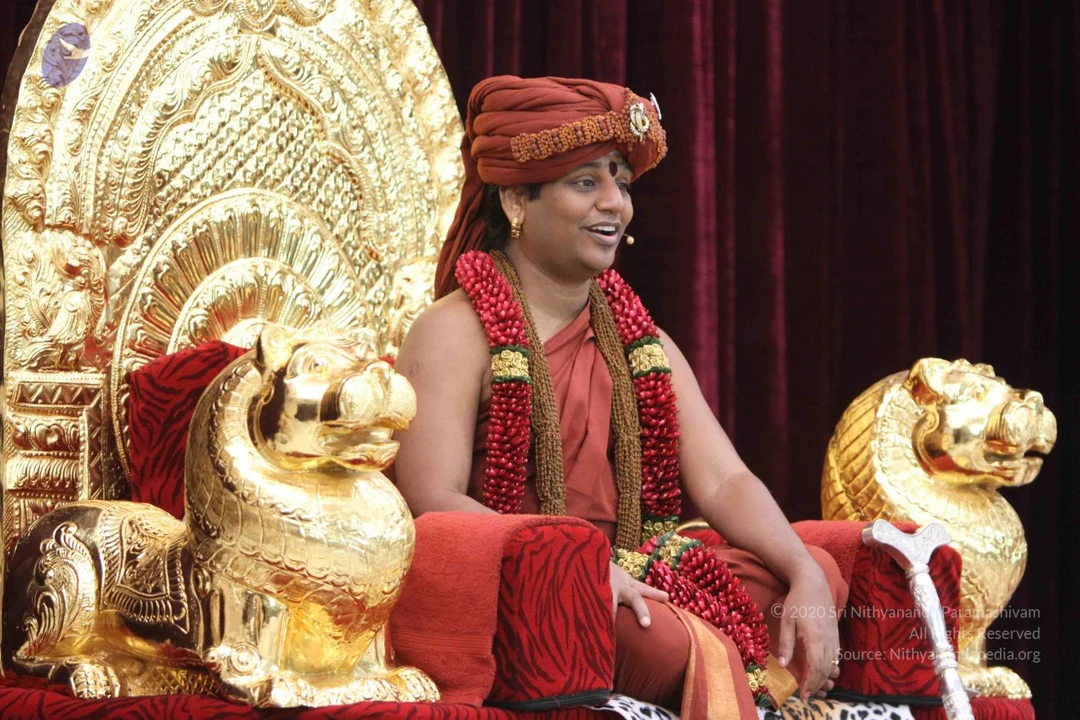
Swamiji (probable) seated on an ornate gold throne with red velvet upholstery and a leopard-print cloth, wearing a rust-orange turban decorated with rudraksha beads and a gold ornament, rust-orange robes and a long red-and-gold garland of flowers and rudraksha strands around the neck, smiling and gazing to the side with a red bindi and a small microphone clipped near the face. A red velvet curtain forms the background.A seated man in a rust-orange turban with a gold-and-beaded emblem and a small red bindi presses his palms together in anjali namaskar, smiling. He wears a thick red-pink flower garland with gold-toned bead accents and a rudraksha-style mala over bare shoulders and an orange-brown garment. Behind him a gold ornate backdrop and deep maroon velvet drapes frame the seat, with a red tiger-striped cushion at lower left.A person in rust-orange clothing sits with palms pressed together at the chest in anjali mudra, eyes closed in prayer. The orange turban is wrapped with rudraksha beads and a jewelled ornament, and a long rudraksha mala with red and gold flower garlands rests on the shoulders. Gold earrings are visible. Behind is a gold-embossed backdrop and a deep red curtain. a person cues: orange turban with rudraksha, ornate garlands and clothing; a single person seen in an appearance-based sense only.A photograph of a seated person in a rust-orange turban decorated with rudraksha beads and a gold emblem, wearing a matching orange shawl and a red-and-gold bordered cloth, with a long red and gold flower garland and a brown rudraksha mala. The person sits cross-legged on a red tiger-striped cushion before an ornate gold throne backdrop and a deep maroon curtain, hands pressed together in namaste with eyes closed. Swamiji (probable): the orange turban, rudraksha adornments and ceremonial garland are consistent with the page's description, though the appearance is not certain.A smiling man seated cross-legged on an ornate gold-carved throne with red tiger-striped velvet cushions and a leopard-print cloth beneath him. He raises both palms overhead in a gesture of blessing. He wears a rust-orange turban with a red bindi, rust-orange robes with a gold-bordered dhoti, a thick red and white flower garland, and a rudraksha mala. A gold lion sculpture is visible at right and red curtains behind. He is the only person visible.A photograph of a smiling man seated cross-legged on an ornate gilded throne with red tiger-striped cushions and a leopard-print cloth beneath. He raises both palms overhead in a blessing gesture. He wears a red-orange turban with a gold ornament, a red-orange dhoti-style garment with a gold border, and a bare upper torso. A large red and white flower garland and a brown rudraksha mala hang around his neck, with a red bindi on his forehead. Behind him stands an elaborately carved gold arch. Swamiji (probable): the seated man wears a red-orange turban, a rudraksha mala and a ceremonial flower garland, and is seated on an elaborate throne with his hands raised in blessing.

02-1008-SANGHA-ABHISHEGAM

23 photosSource gallery
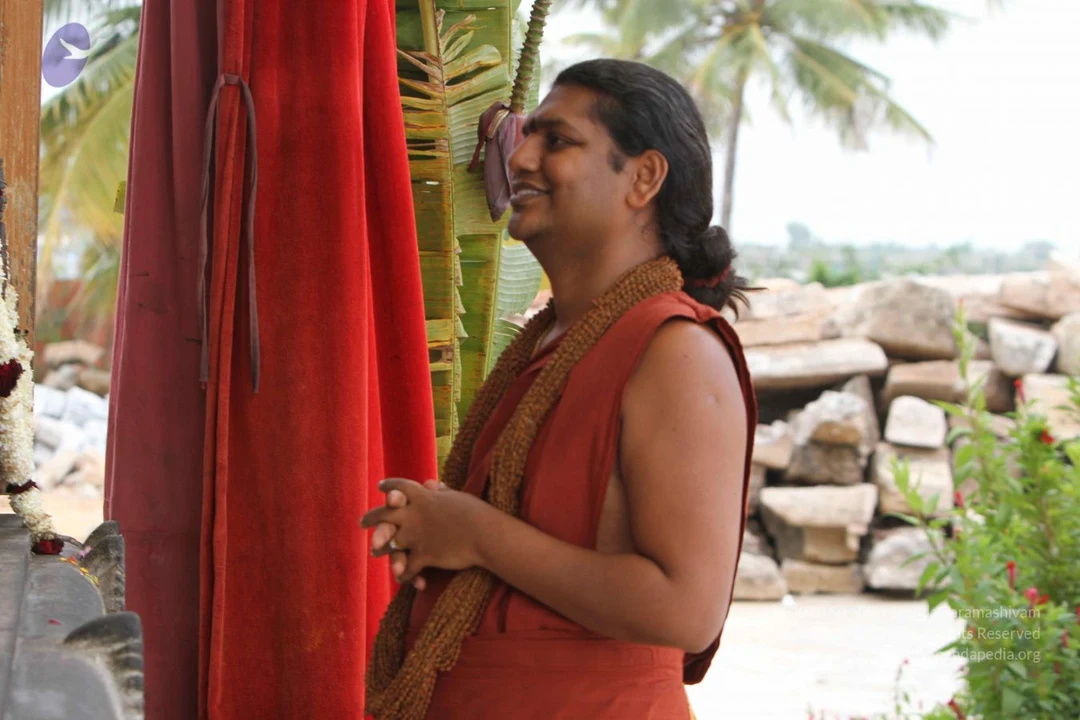
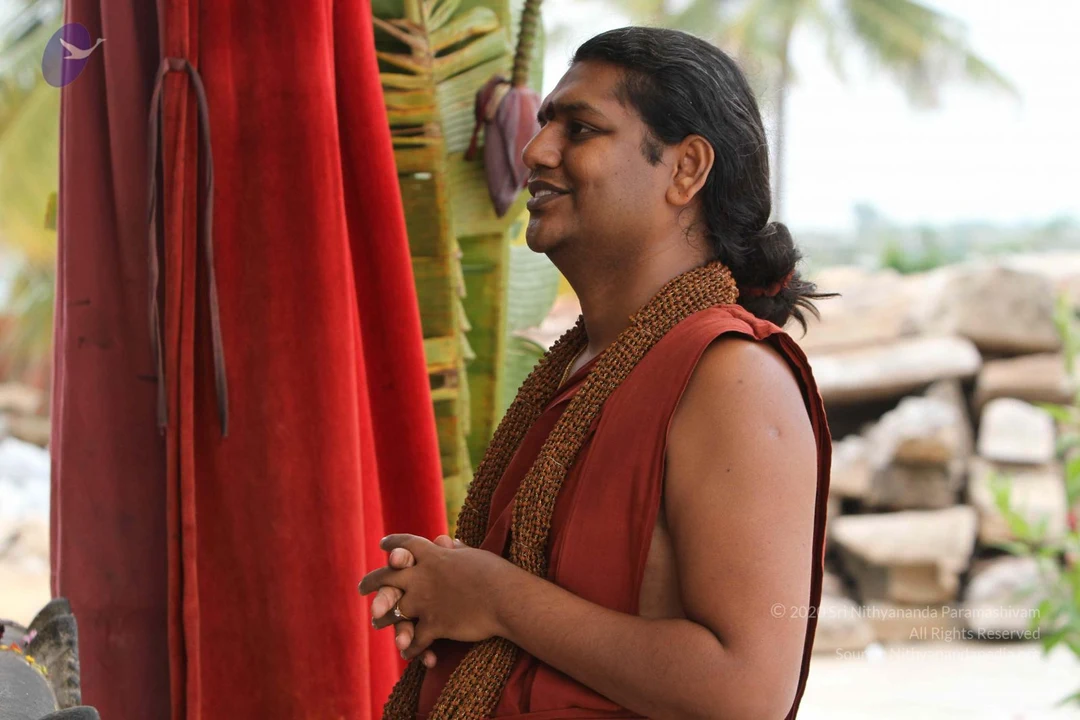
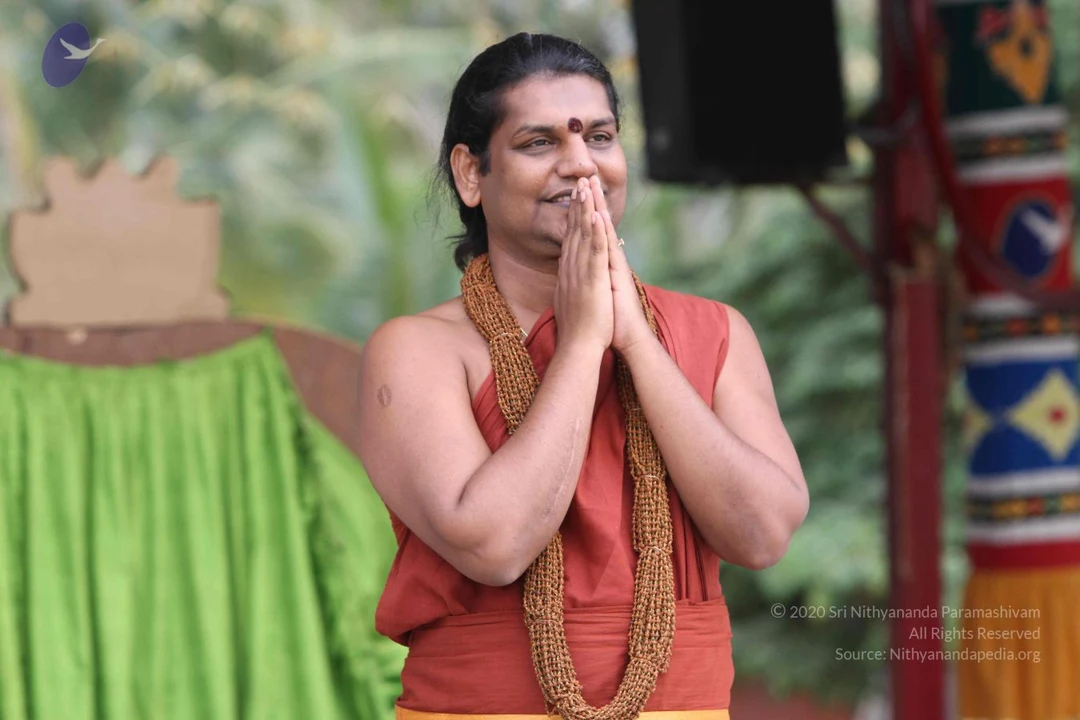
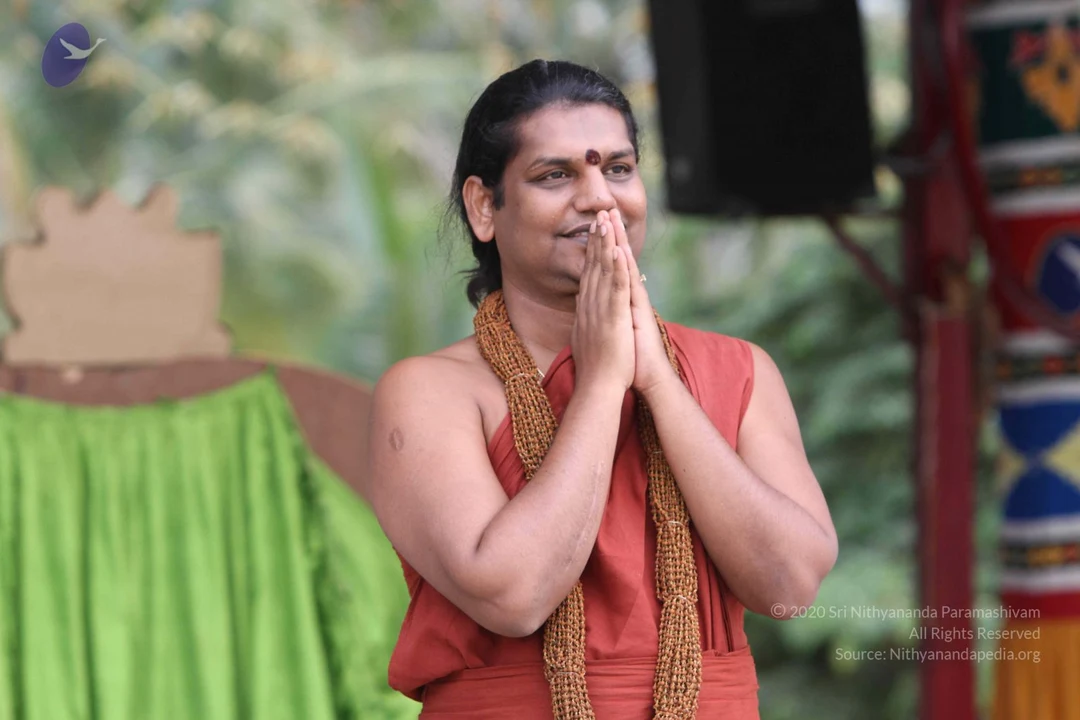
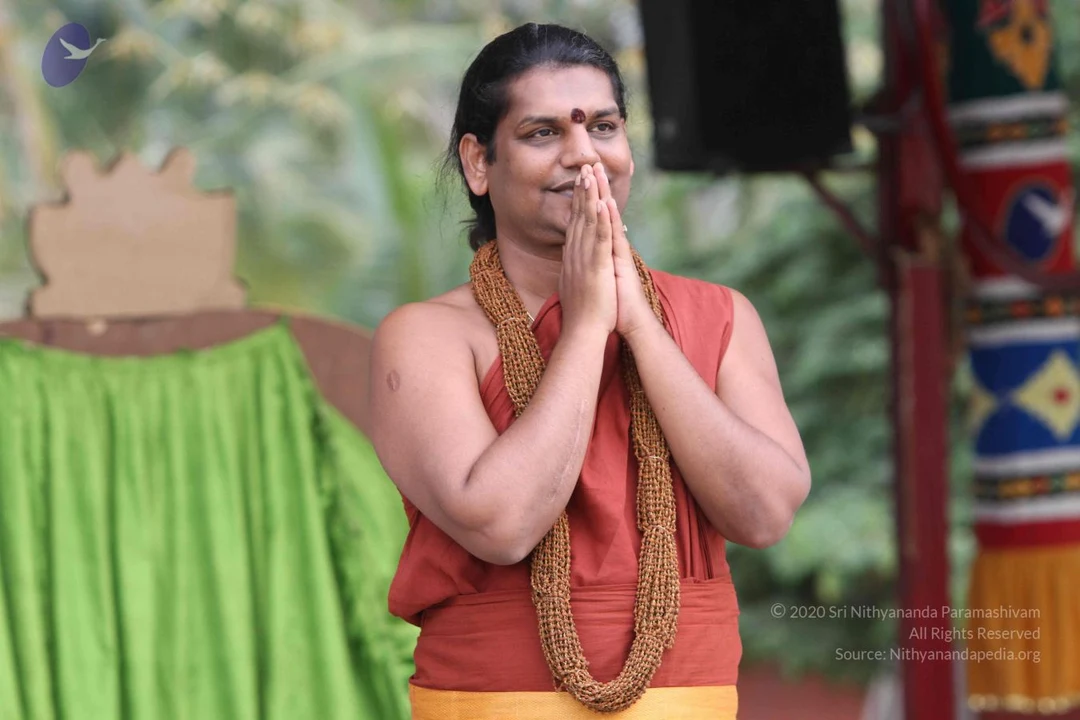
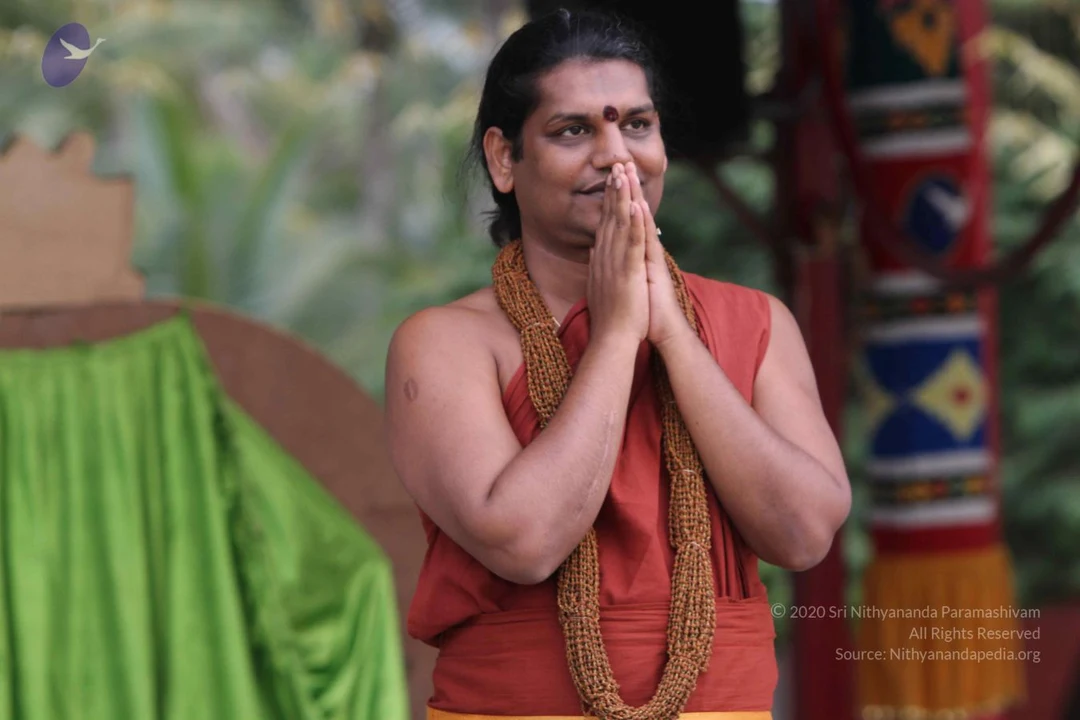
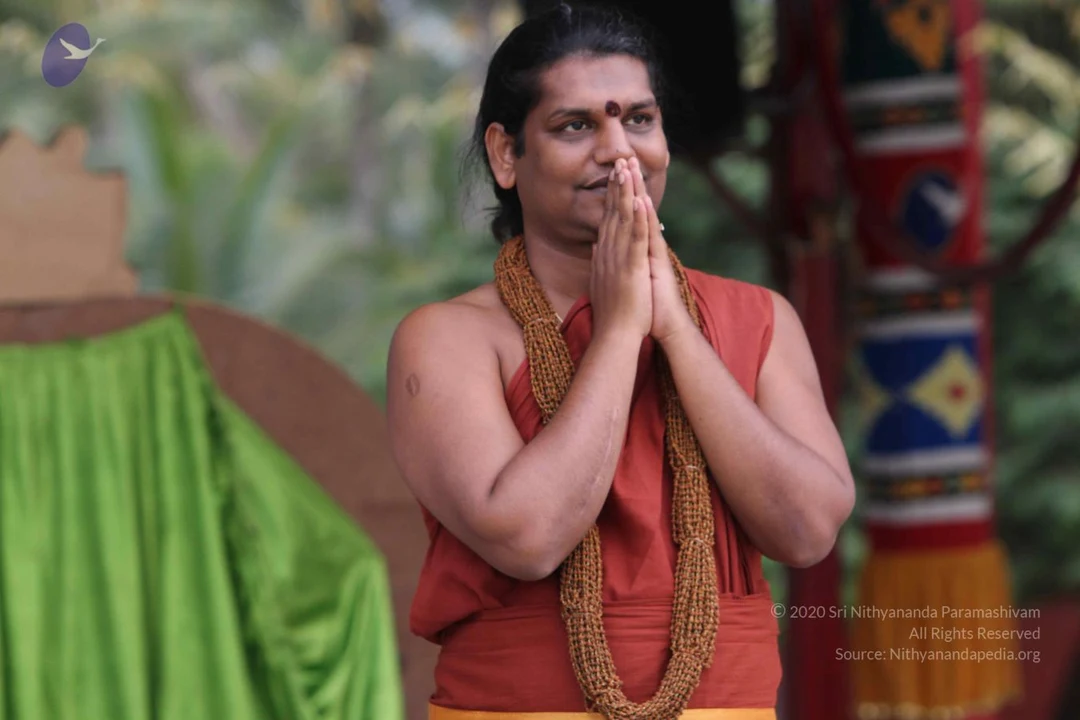
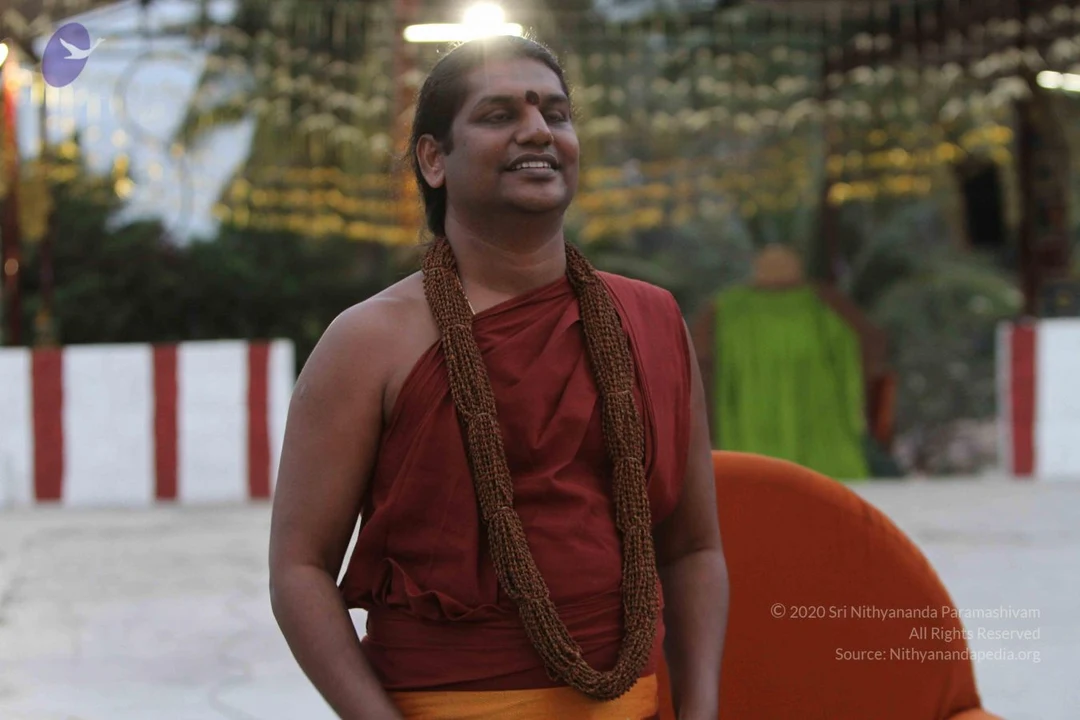
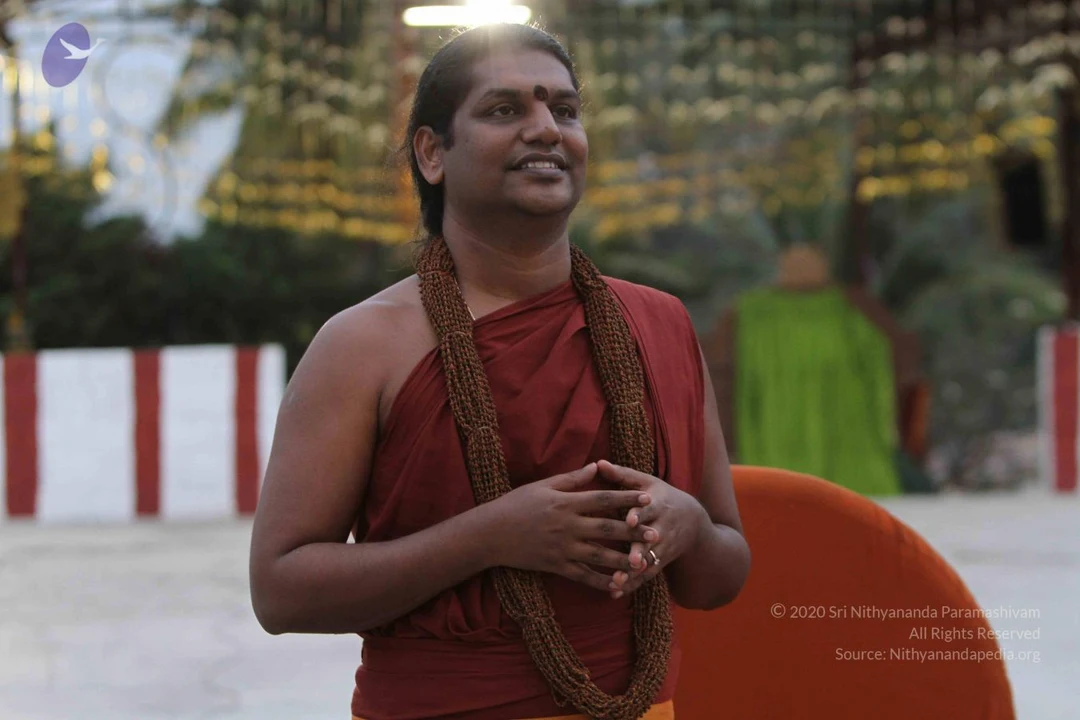
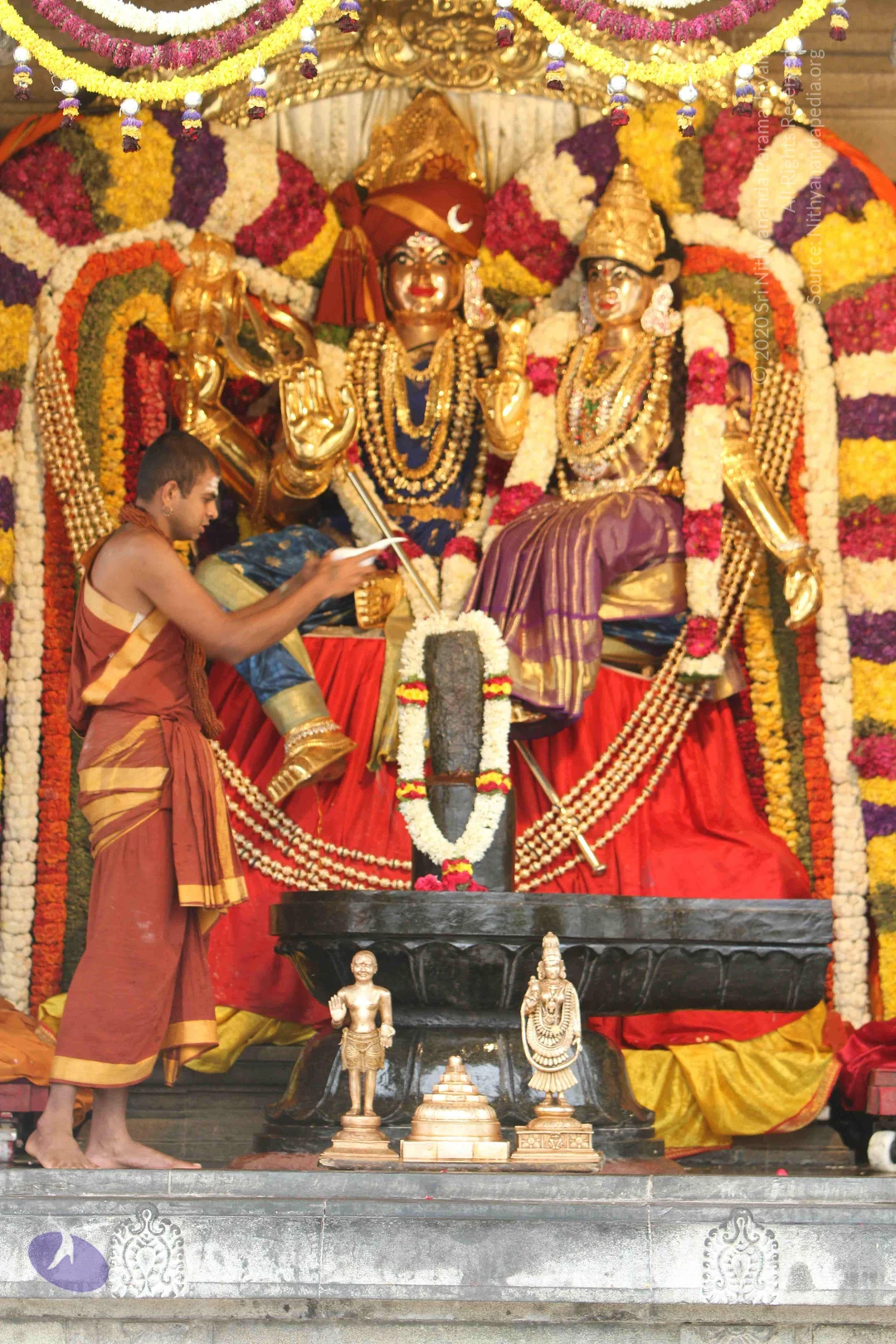
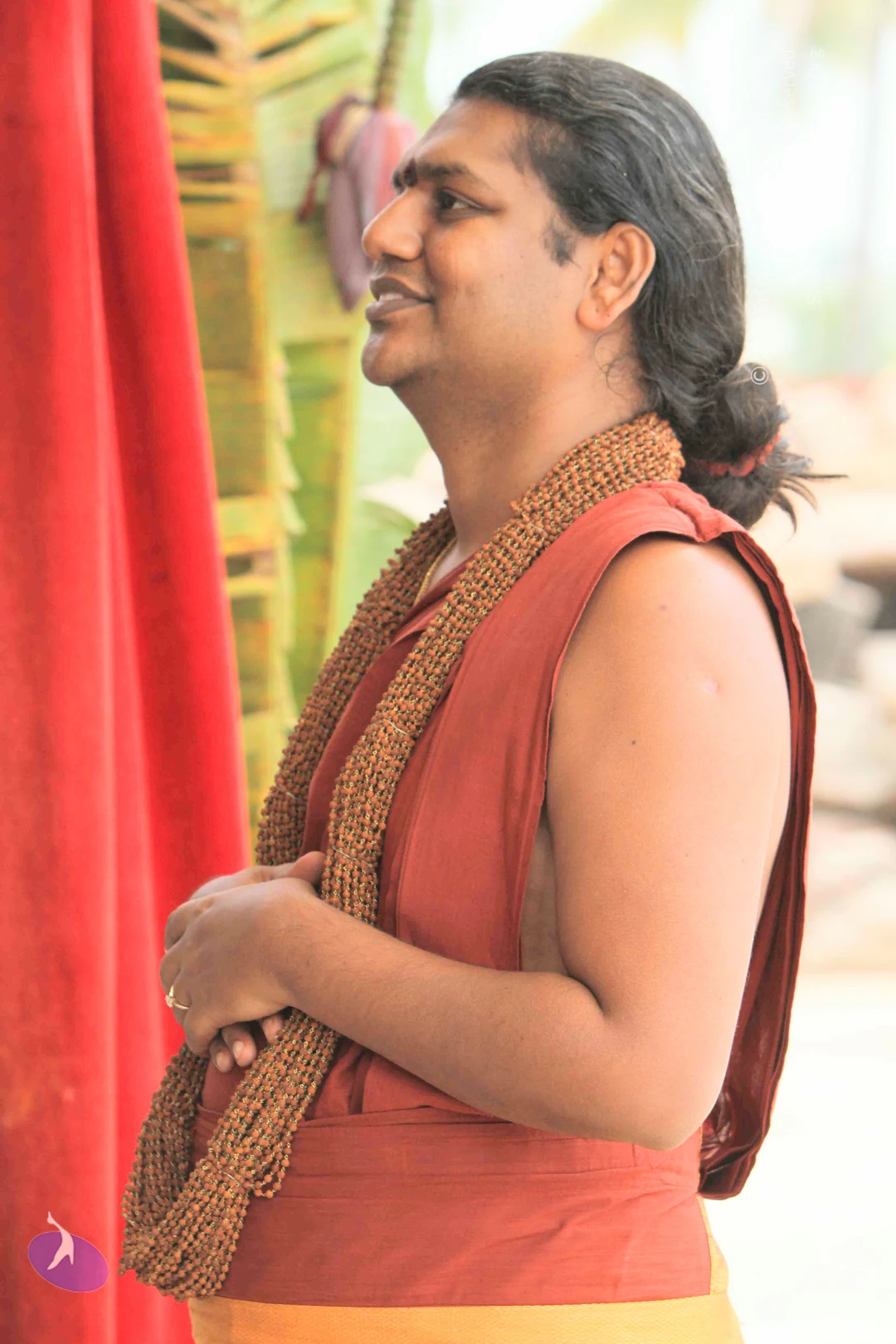
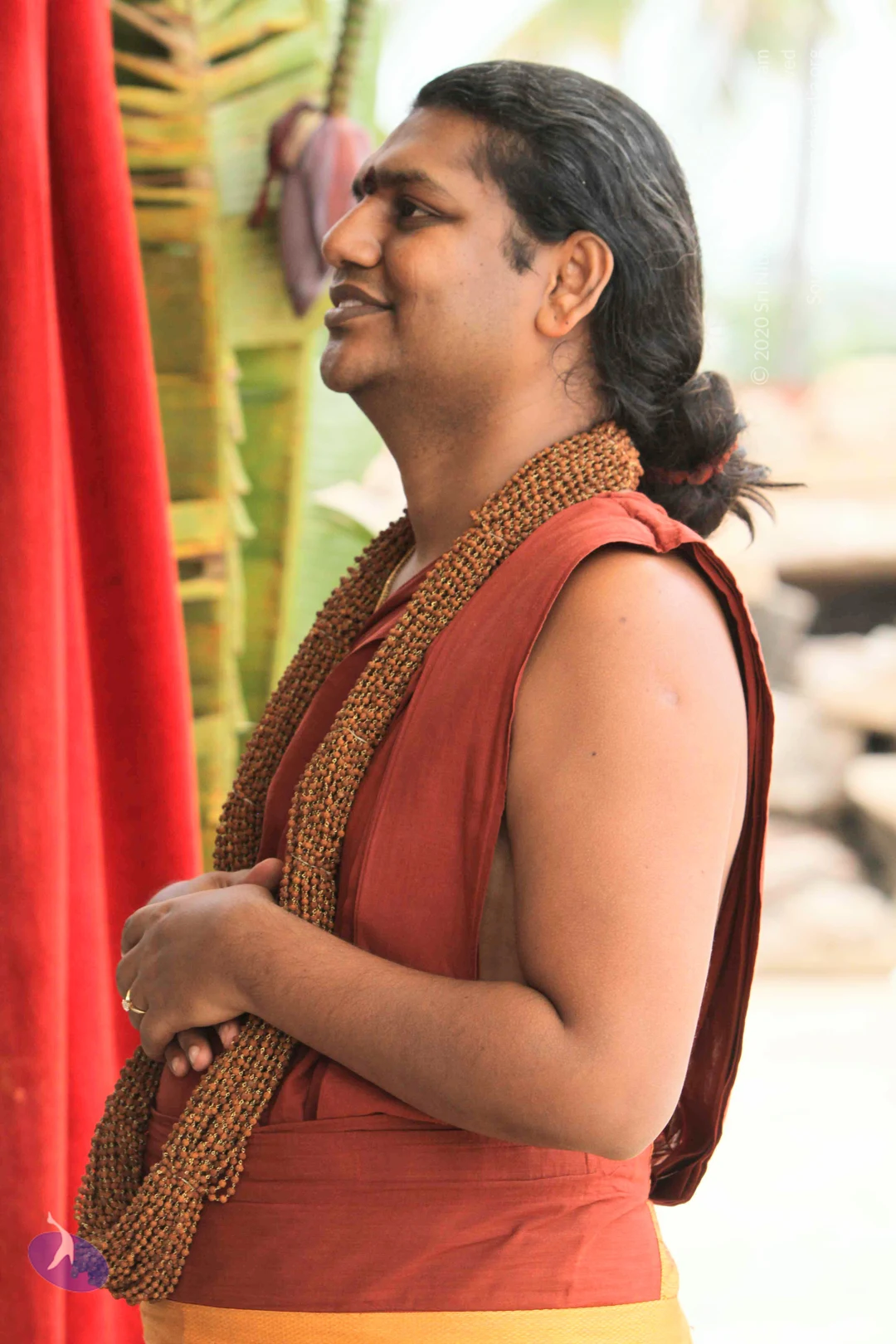
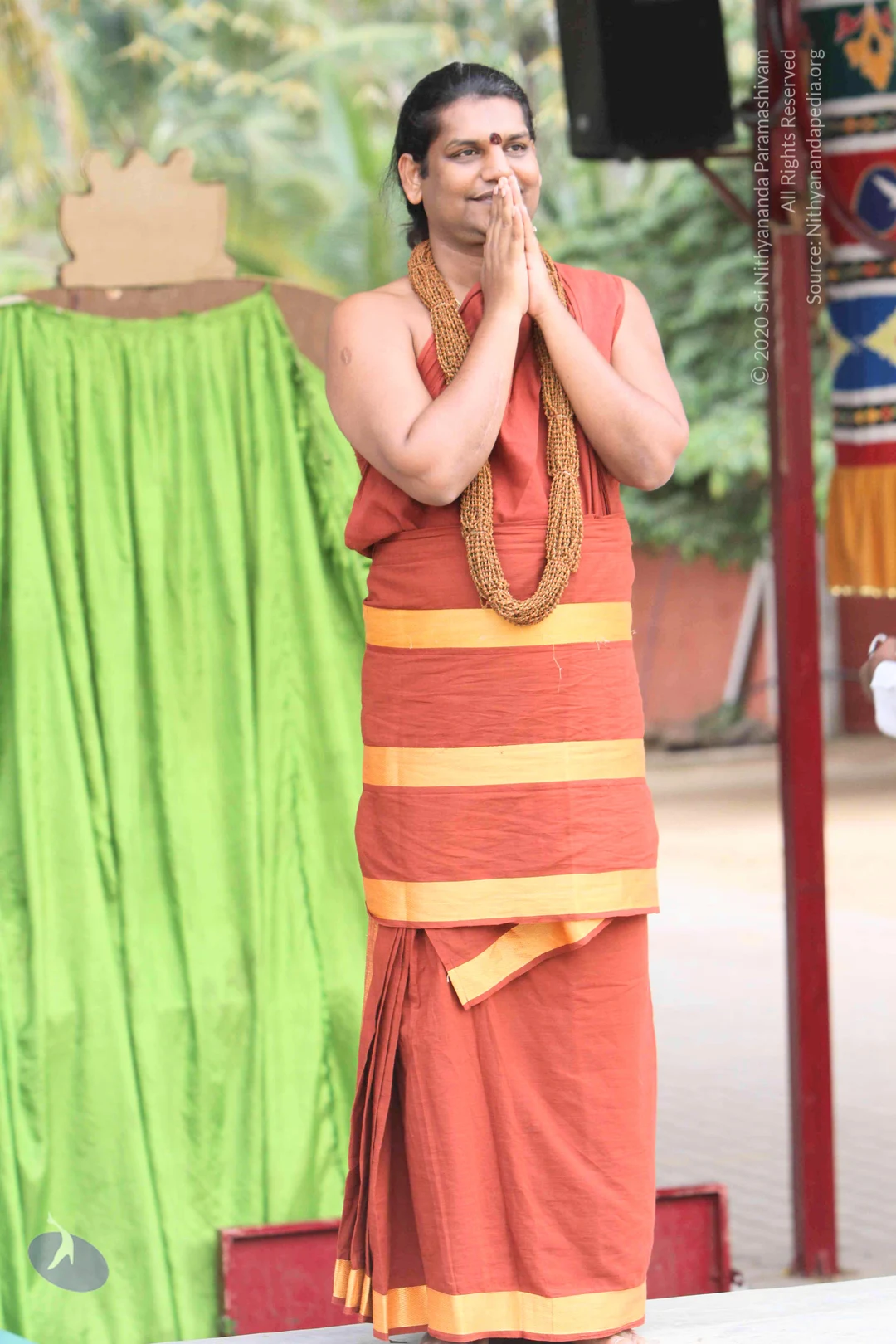
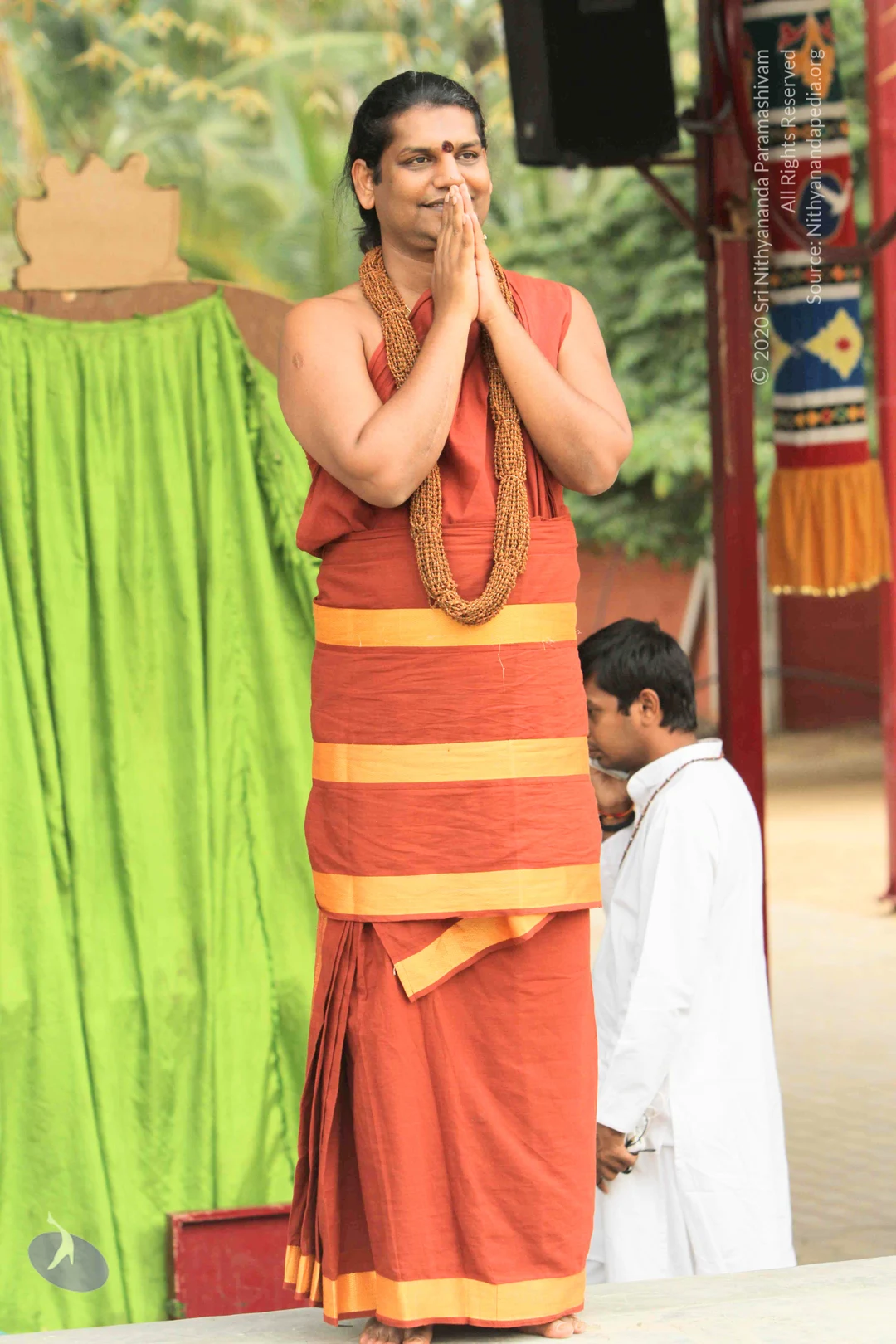
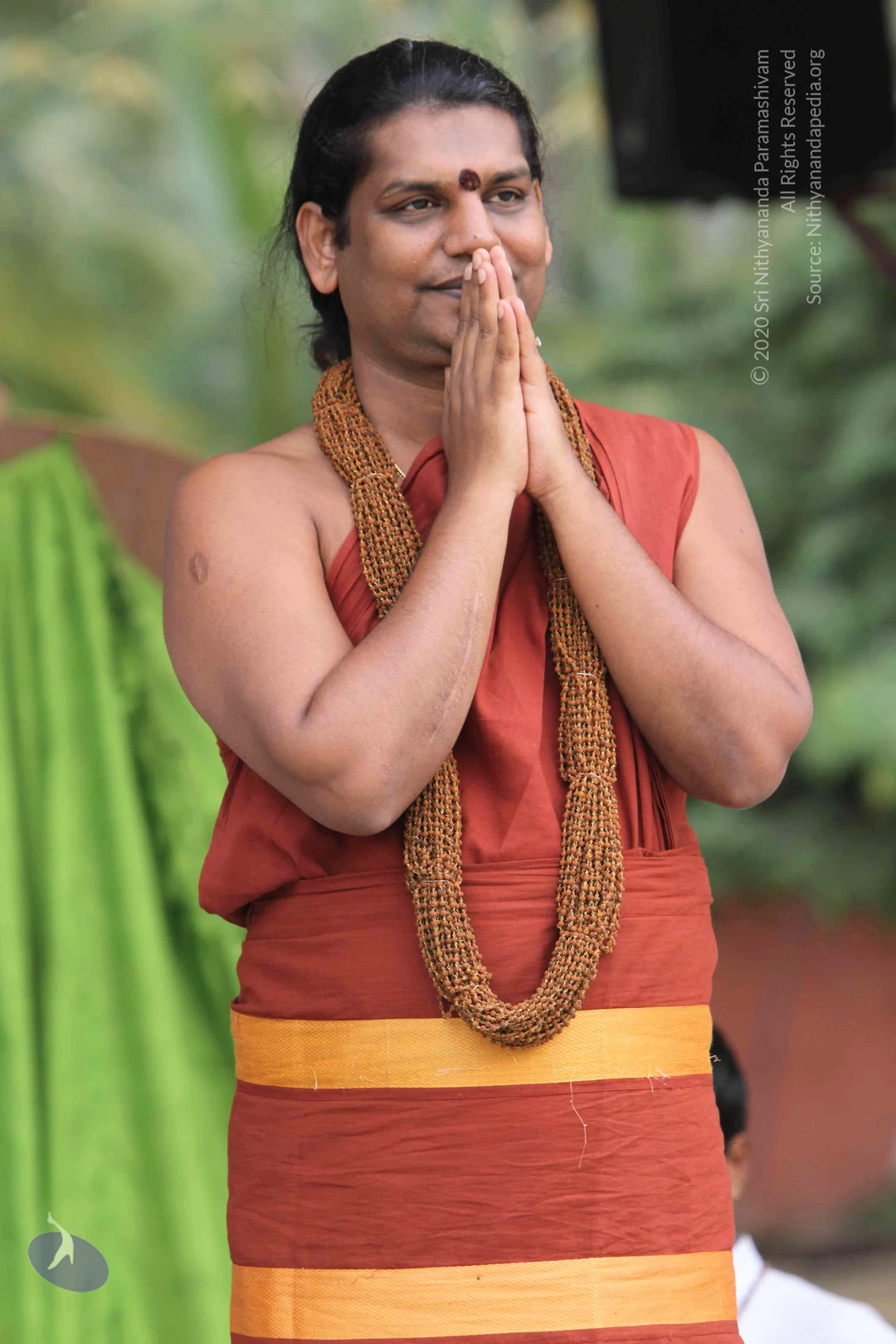
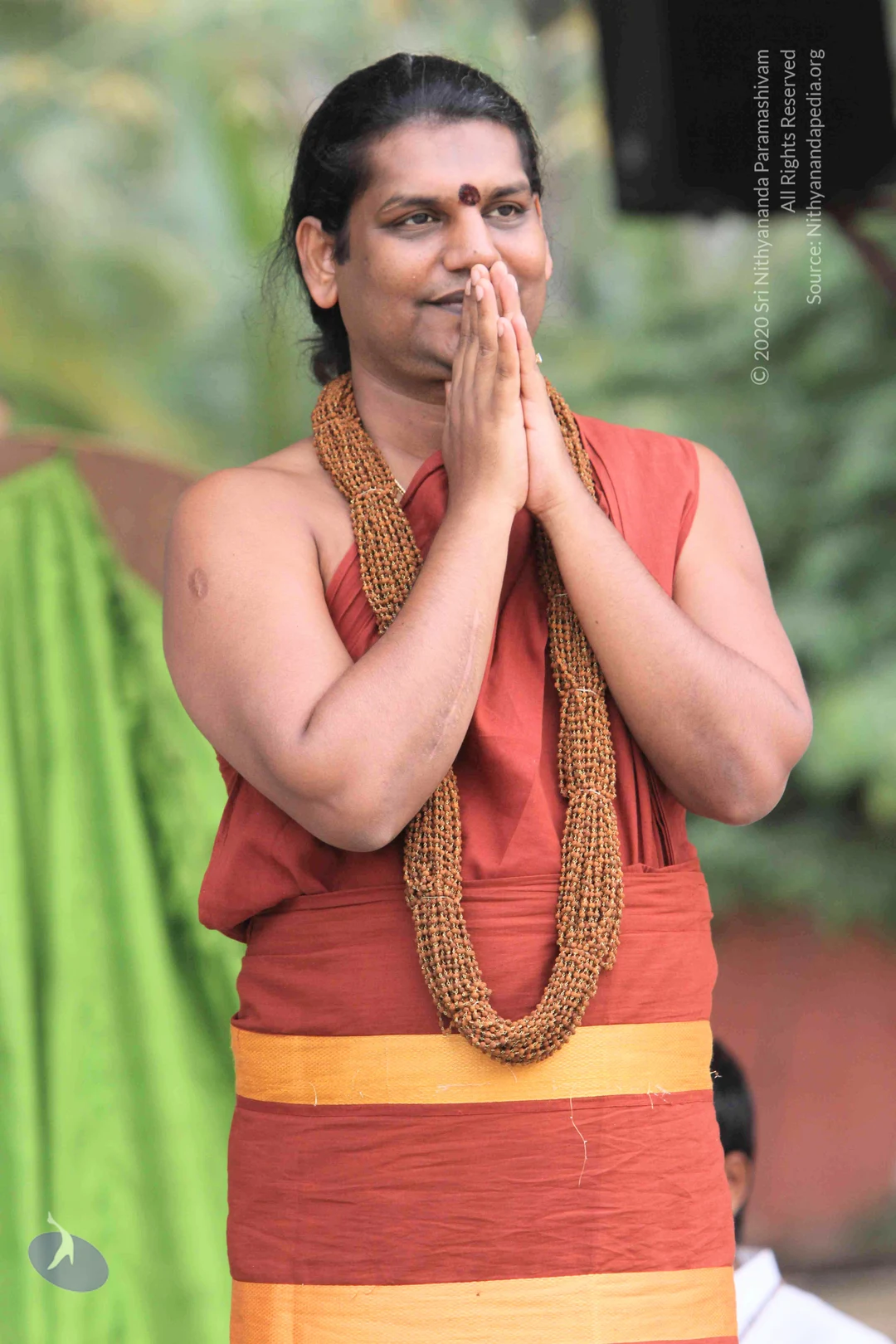
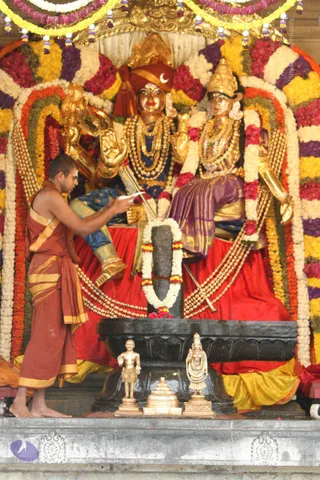
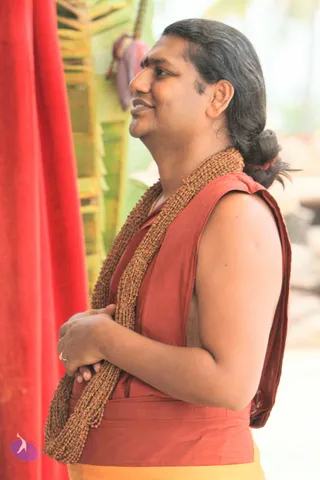
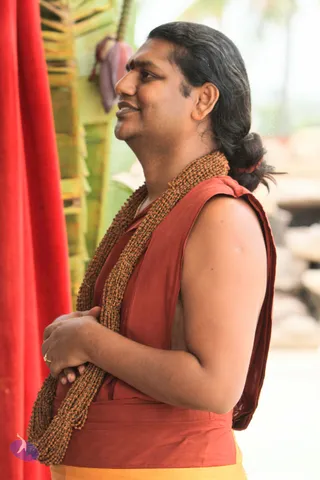
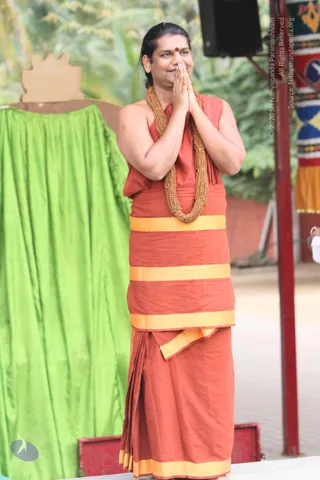
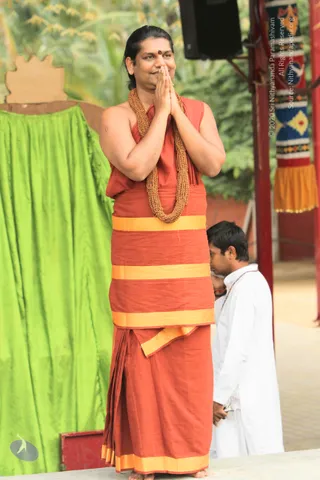
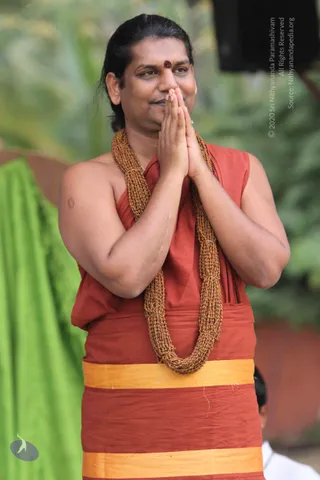
A priest in a rust-red dhoti and upper cloth with gold border stands barefoot at the left, holding a white cloth or offering toward a shrine. Behind him is a golden deity murti of Shiva and Parvati seated on a red cloth, the male figure wearing a red turban with crescent moon and a rudraksha-style bead necklace, the female figure in a purple sari with a tall gold crown. Between them is a black shiva lingam garlanded with white and multicoloured flowers, set on a black stone peetha. Smaller golden figures, a small golden shrine structure and a bronze figure stand at the front. Marigold, rose and white flower garlands decorate the arch and deities, with hanging flower strands above.Side profile of a man standing beside a red velvet curtain with his hands clasped at his waist. He has long dark hair gathered in a low bun, a small red tilak on his forehead, and wears a rust-red sleeveless garment with a matching wrap and a gold-edged waistcloth. A thick rudraksha mala hangs around his neck. Behind him are green banana leaves and a blurred outdoor background.Side profile of a man with long dark hair tied back in a low knot, standing beside a red velvet curtain and a green banana plant. He wears a rust-red sleeveless garment with a saffron-yellow waistband and a thick rudraksha mala draped across his chest. His hands are folded together at his waist. The background is blurred with pale light and foliage.A photograph of a man standing on a stage with palms pressed together in namaste, smiling. He wears a rust-red sleeveless garment with wide gold-bordered bands, a matching red-and-gold dhoti, and a long multi-strand brown rudraksha-style mala around his neck. He has a red bindi on his forehead and slicked-back dark hair. Behind him stands a bright green draped backdrop and a painted wooden panel with a tree in the background. A small dark speaker hangs at the top right beside a red pillar.A man with long dark hair pulled back stands barefoot on a raised platform, palms pressed together in namaste, smiling. He wears a rust-red sleeveless garment with wide gold-bordered wrap and a long braided rudraksha mala around his neck, with a small red bindi on his forehead. Behind him a green draped cloth backdrop, a red pillar and a red-and-gold patterned hanging appear. A man in white kurta with a mala stands partly behind him, head bowed.A man stands in front of a blurred green and leafy background, palms pressed together in anjali namaskar at chest height and a small red tilak on his forehead. He wears a rust-red sleeveless garment with a wide yellow-and-rust striped cloth wrapped at the waist, and a long brown rudraksha mala hangs around his neck. His hair is swept back and tied low. A partly visible person in white stands at the right edge. Swamiji (probable): the man has long swept-back hair and rudraksha mala cues, and the page attributes the event to him, but his appearance alone is not conclusive.