Skip to content
Tuesday

25 November 2014

Simple Lines, Simple Sounds Have Power

Dated photos
354
Source pages
1
Media
6
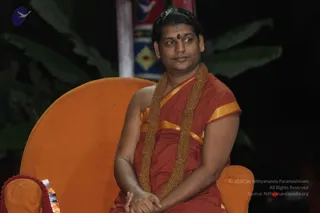
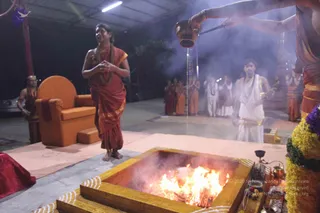
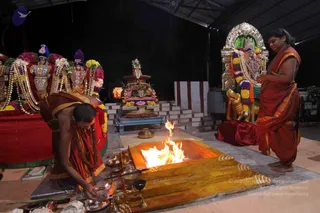
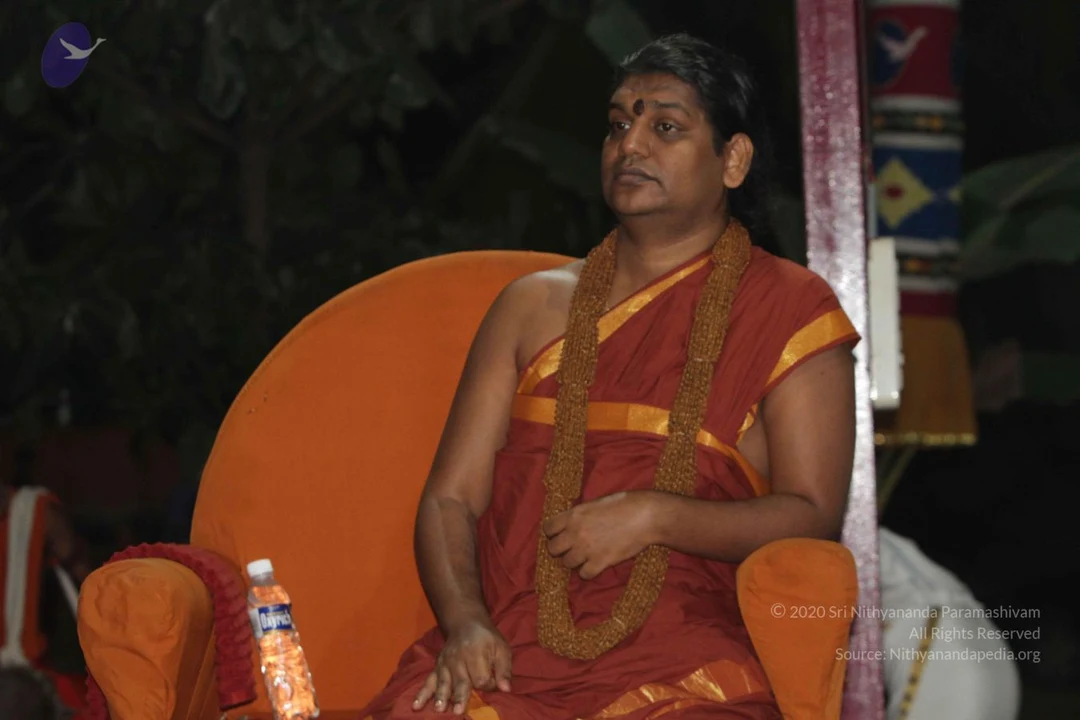
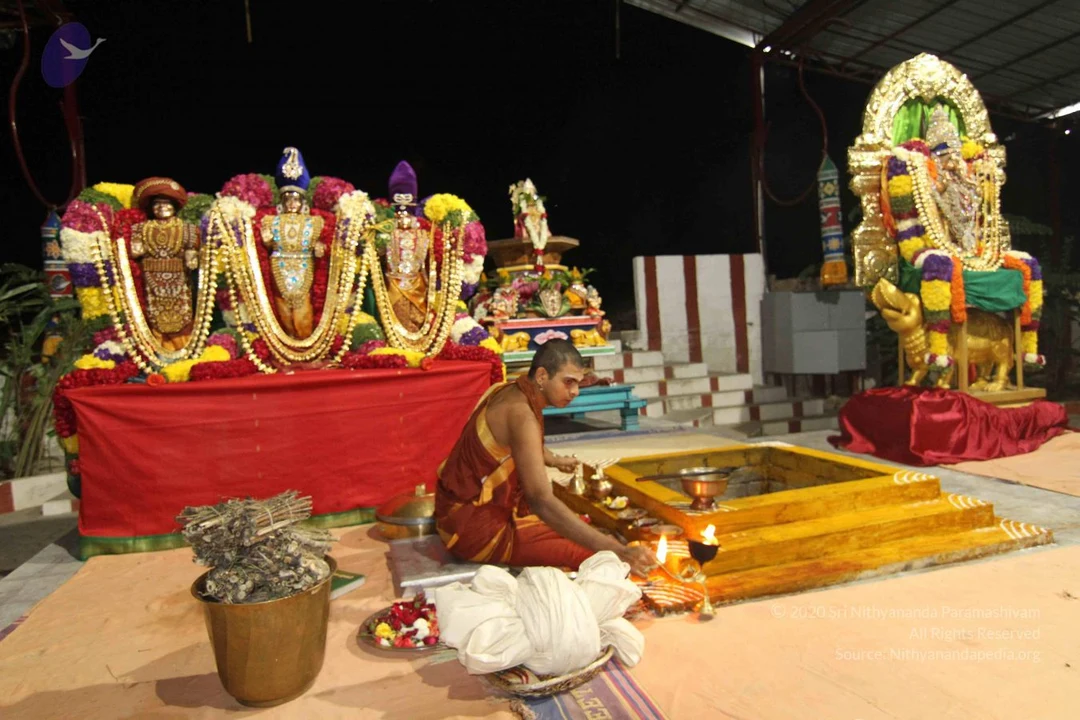
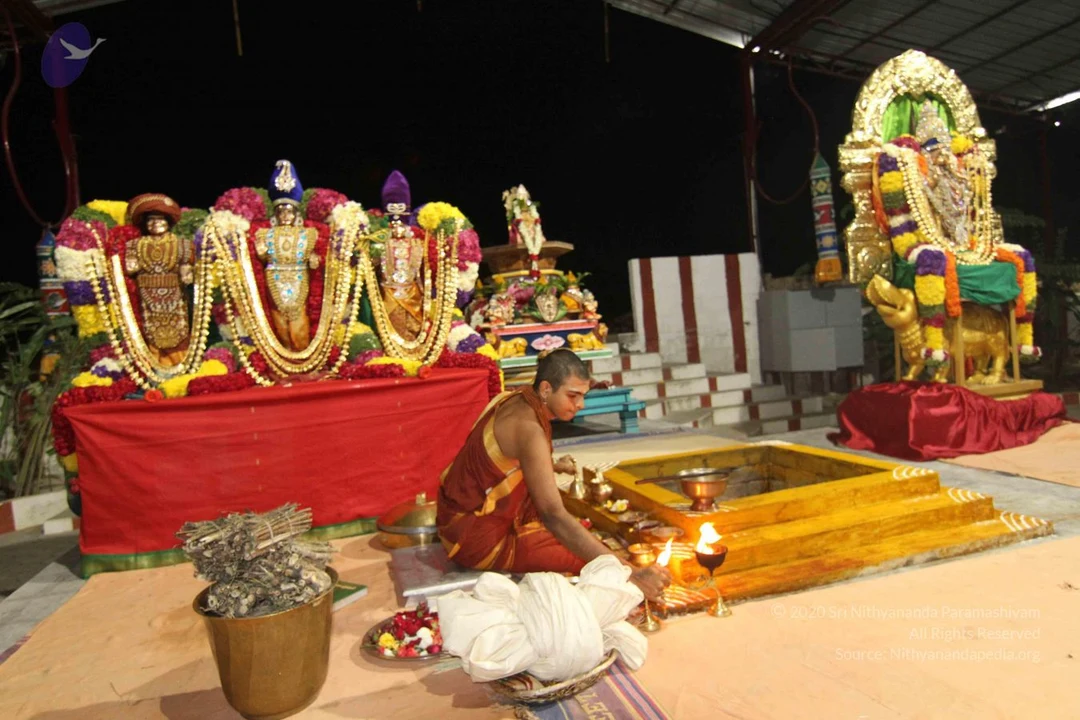
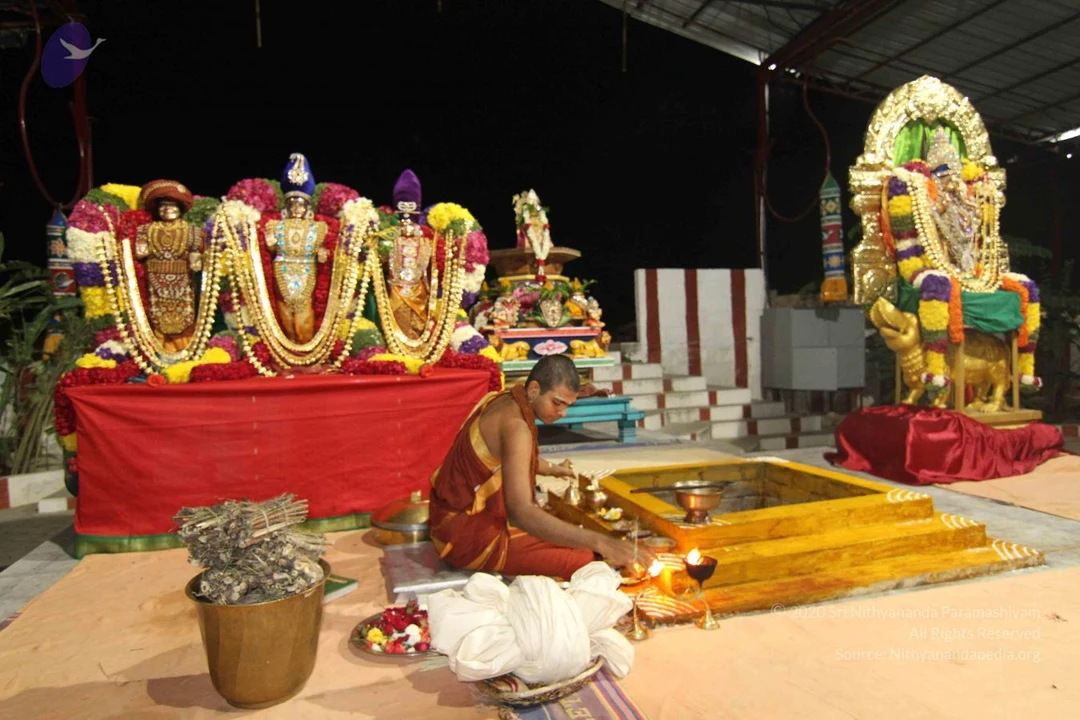
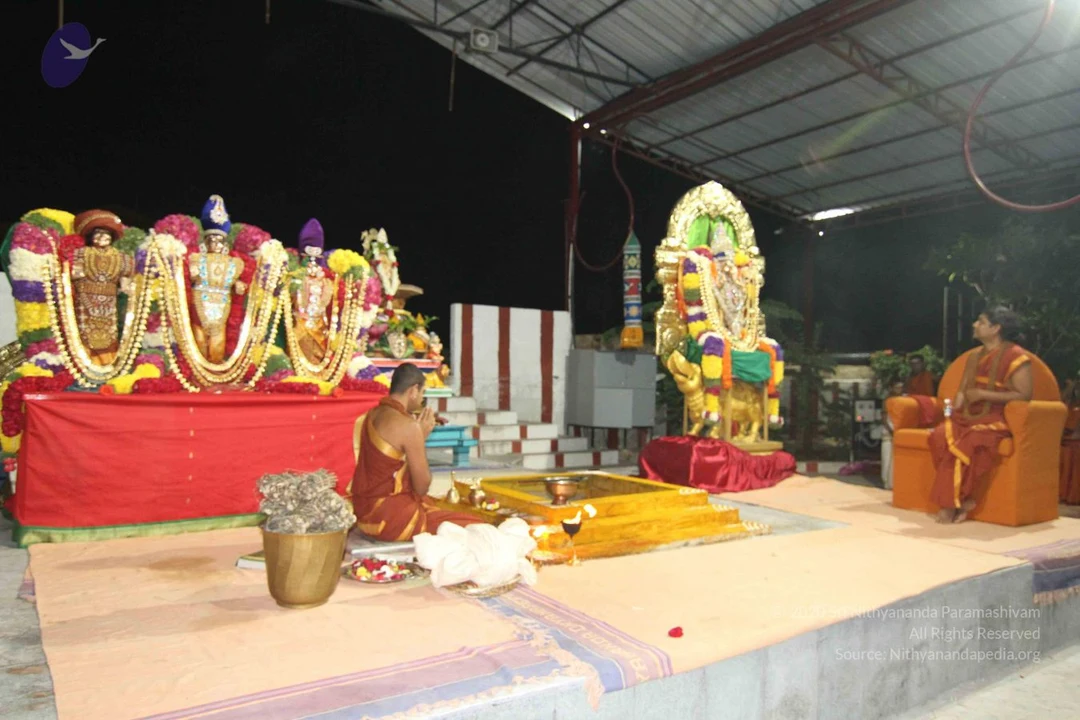
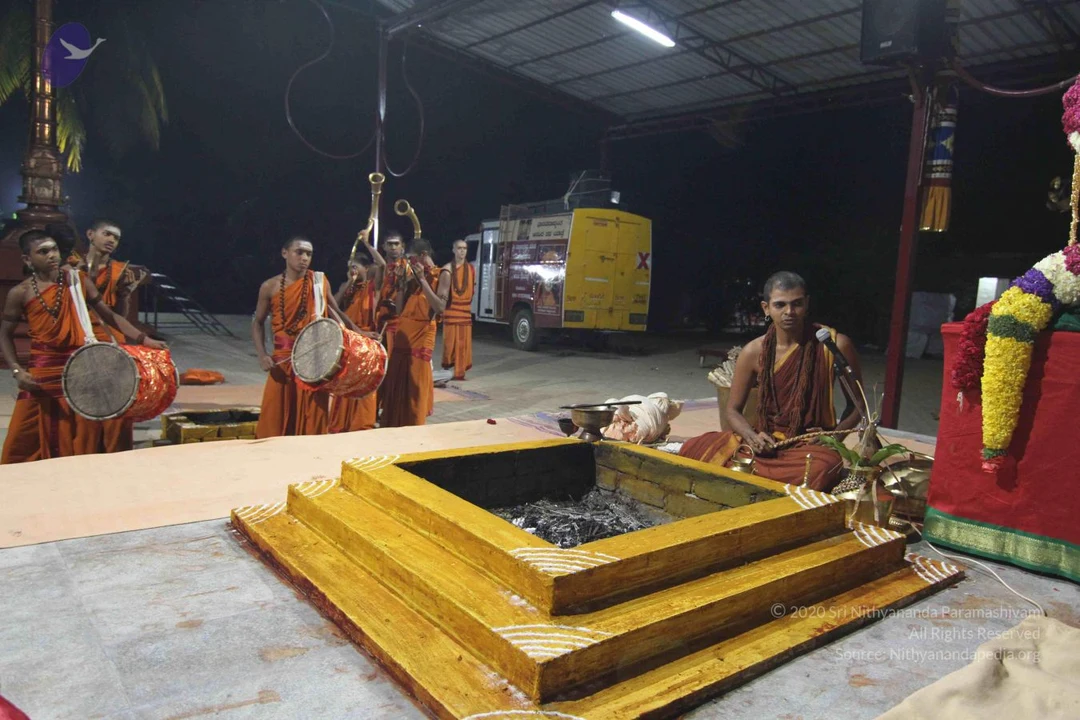
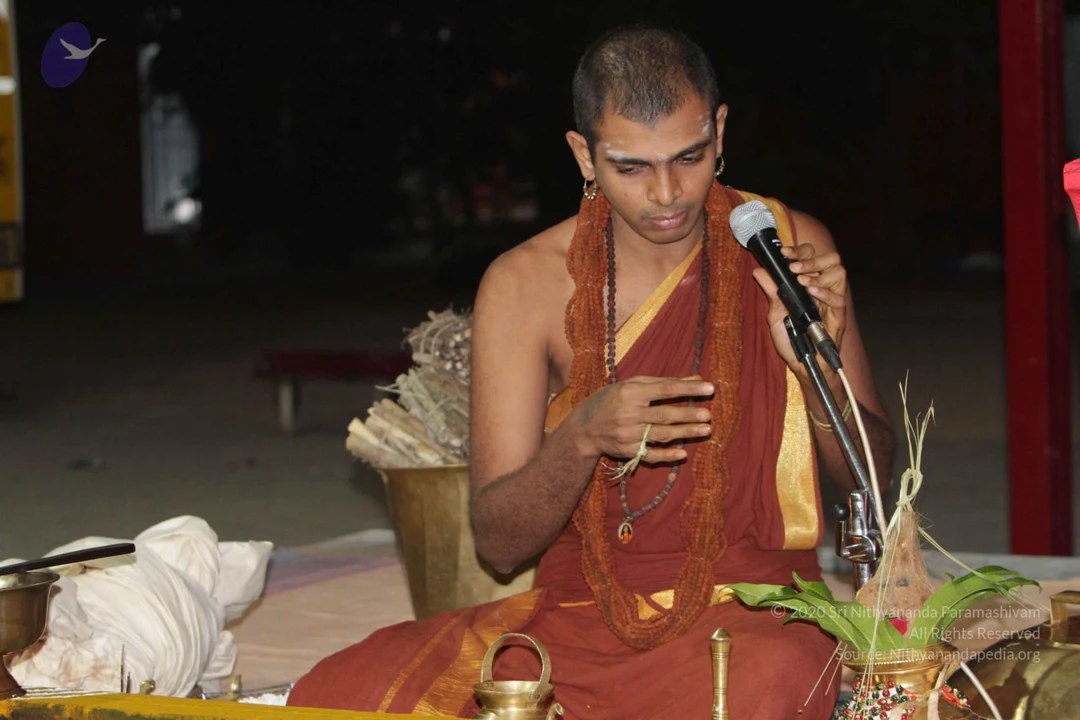
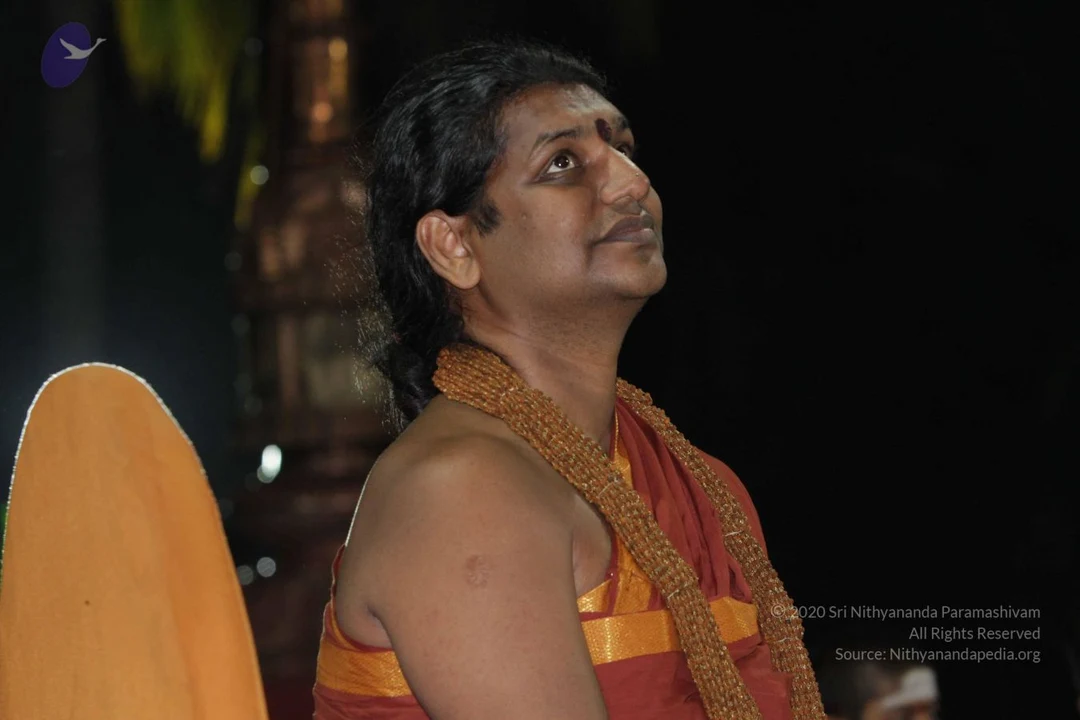
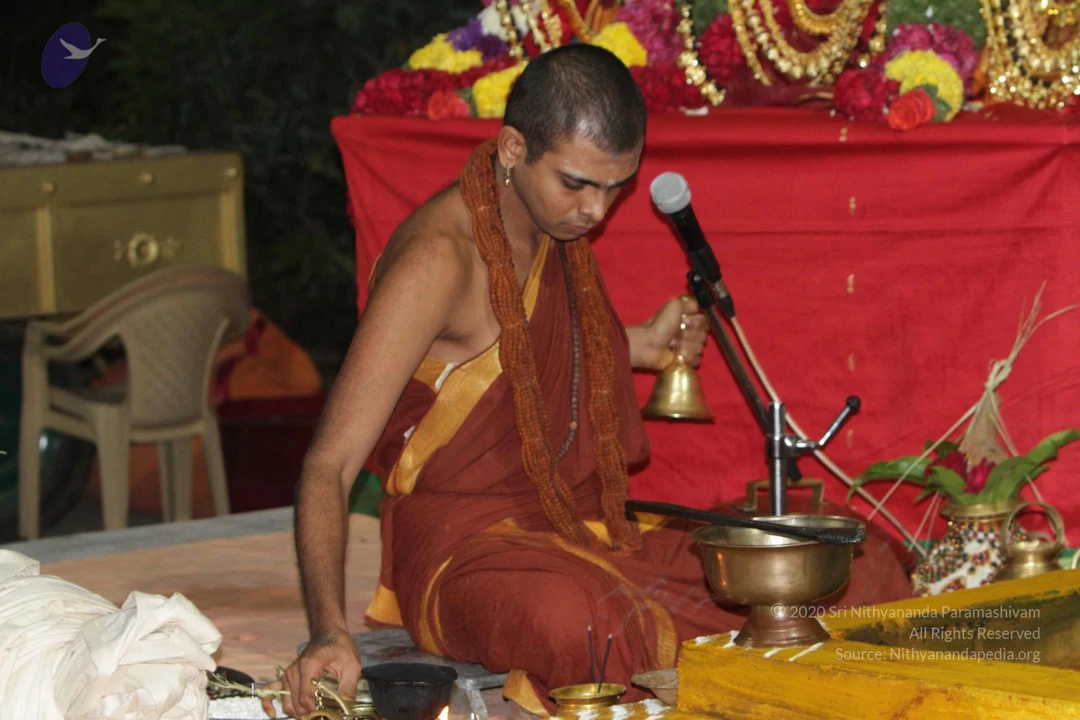
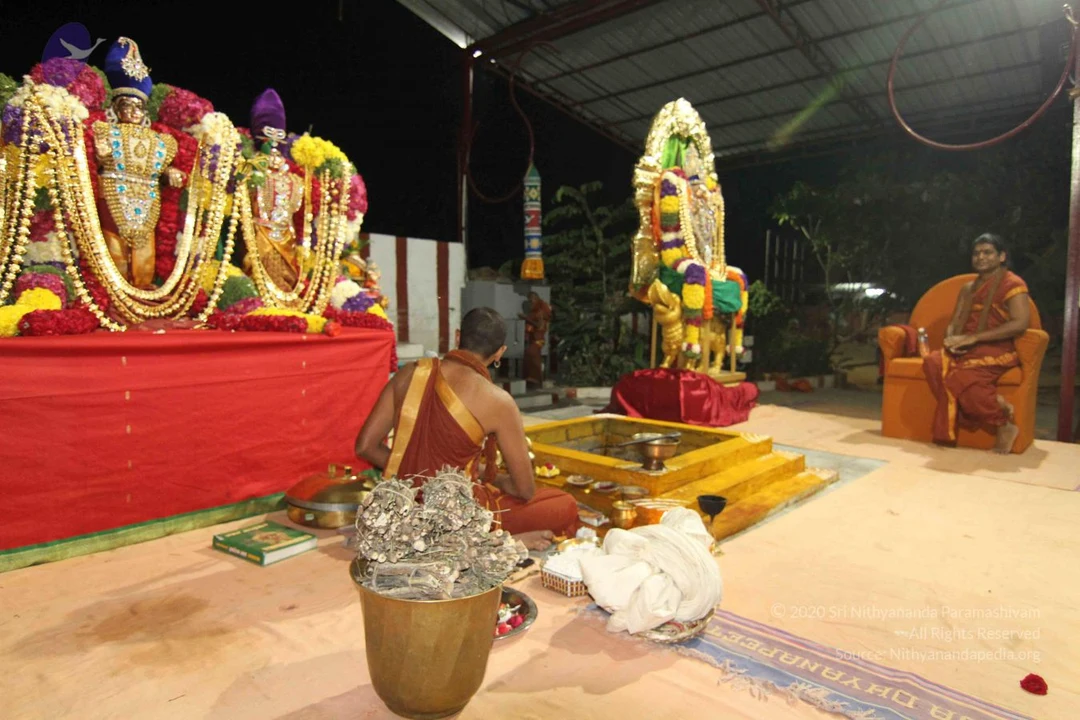
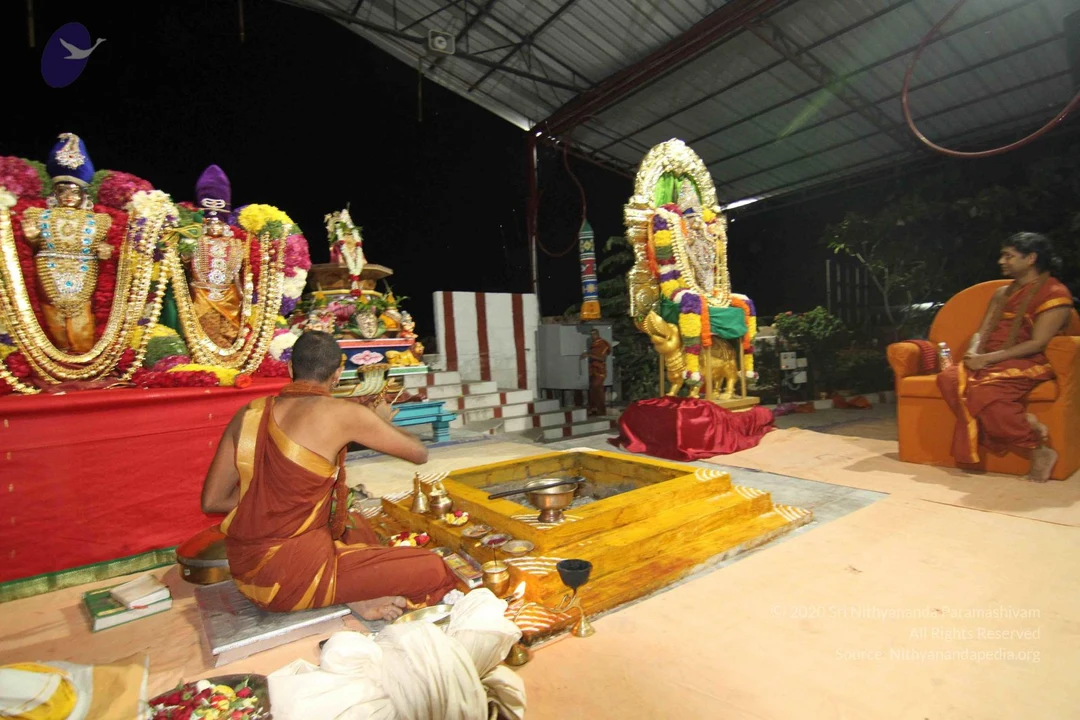
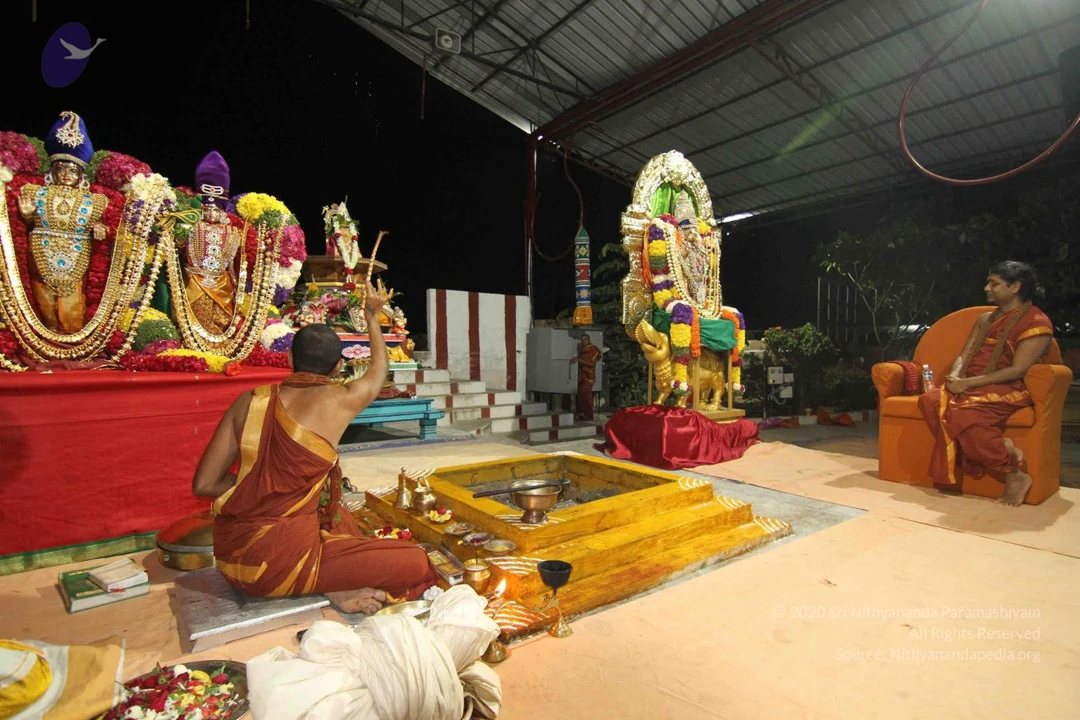
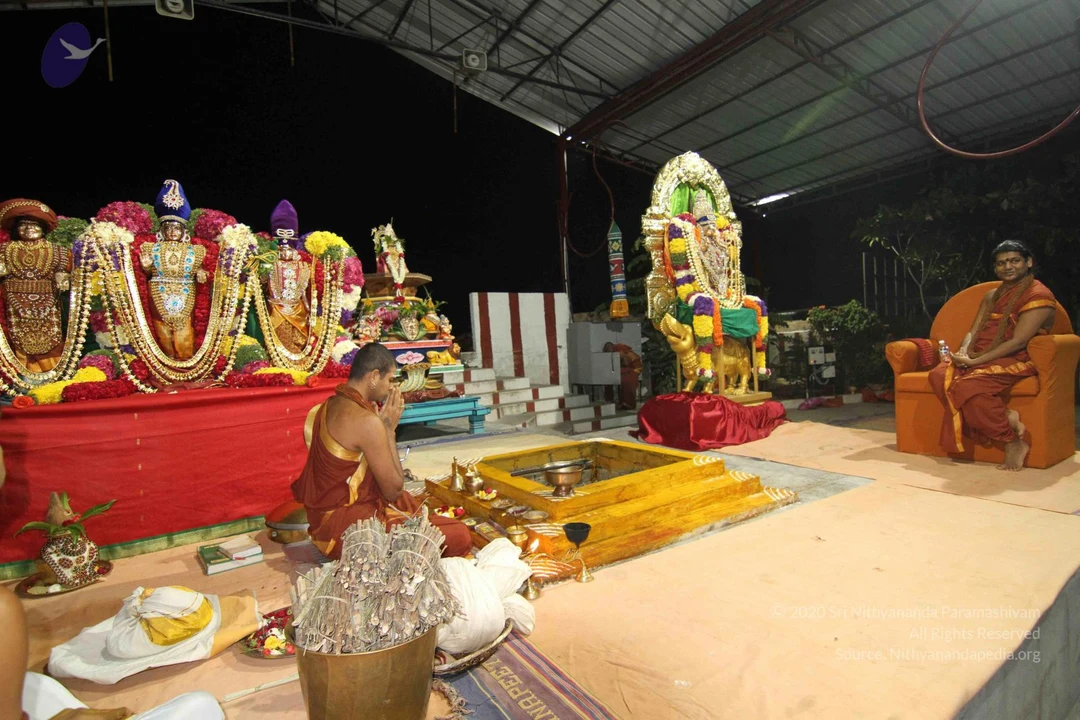
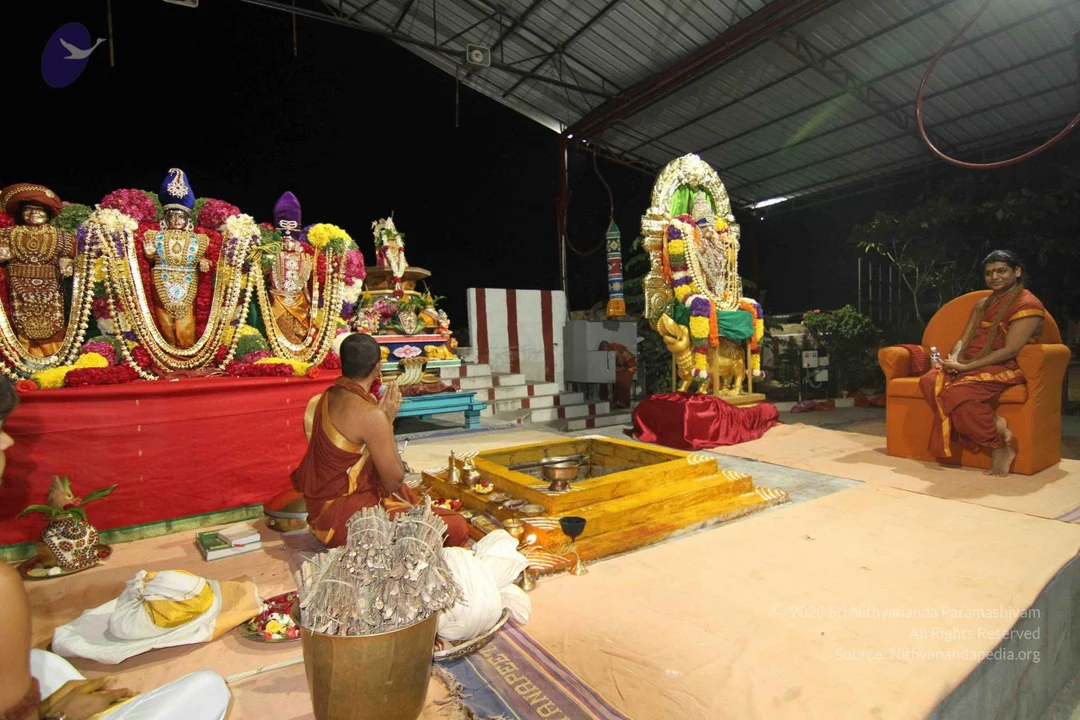
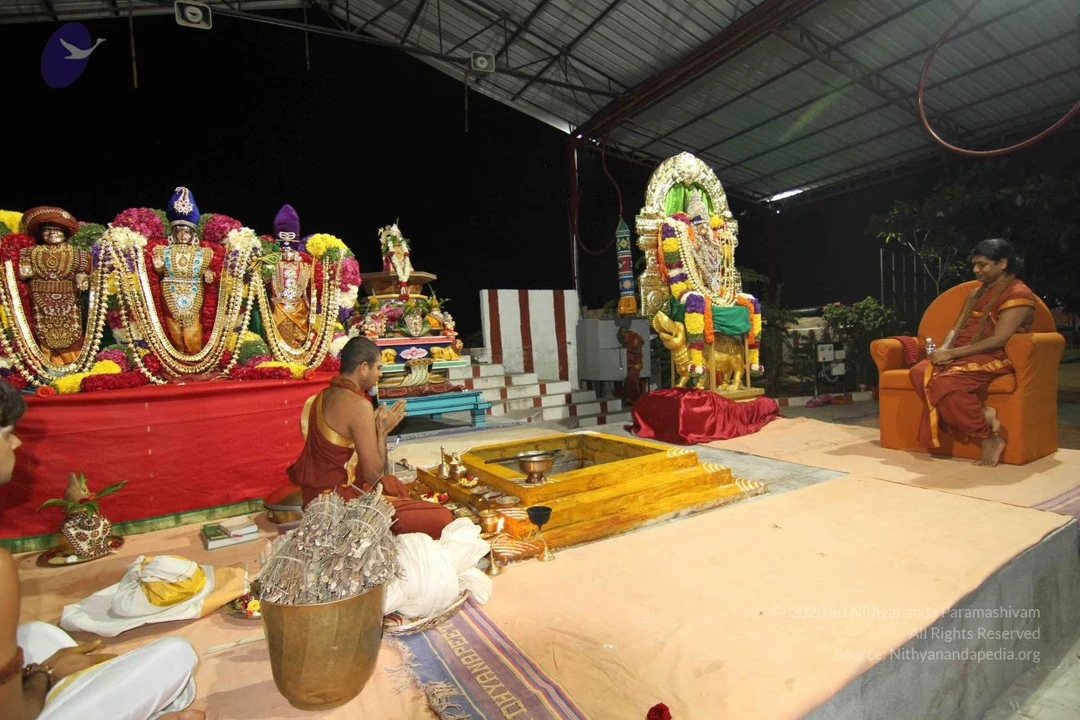
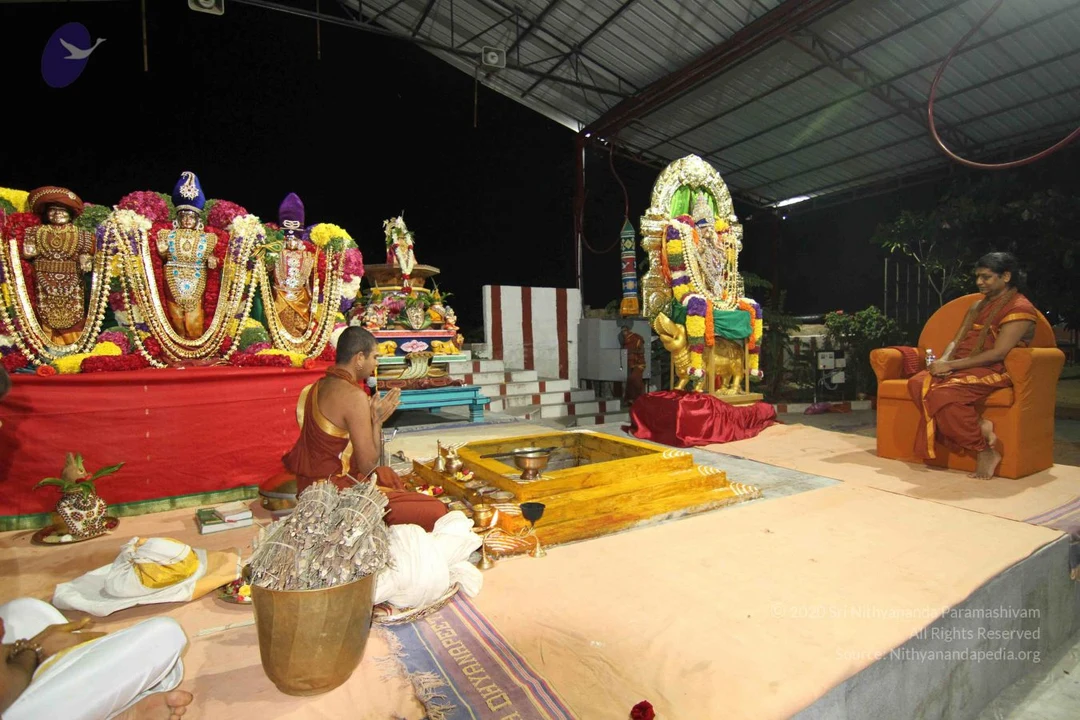
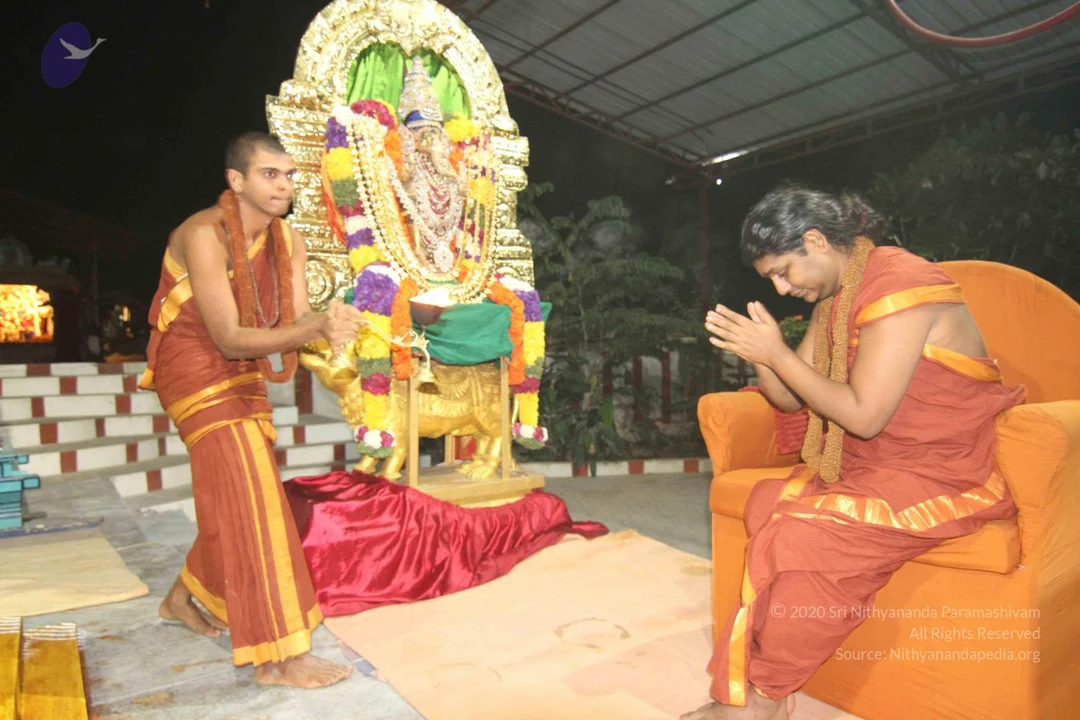
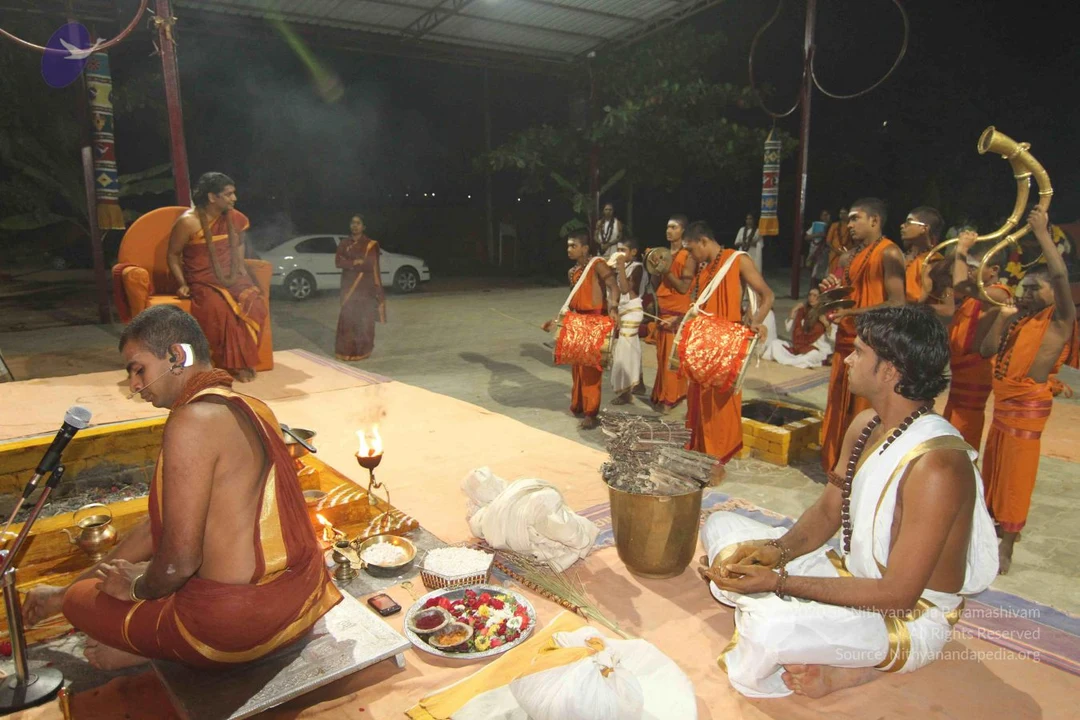
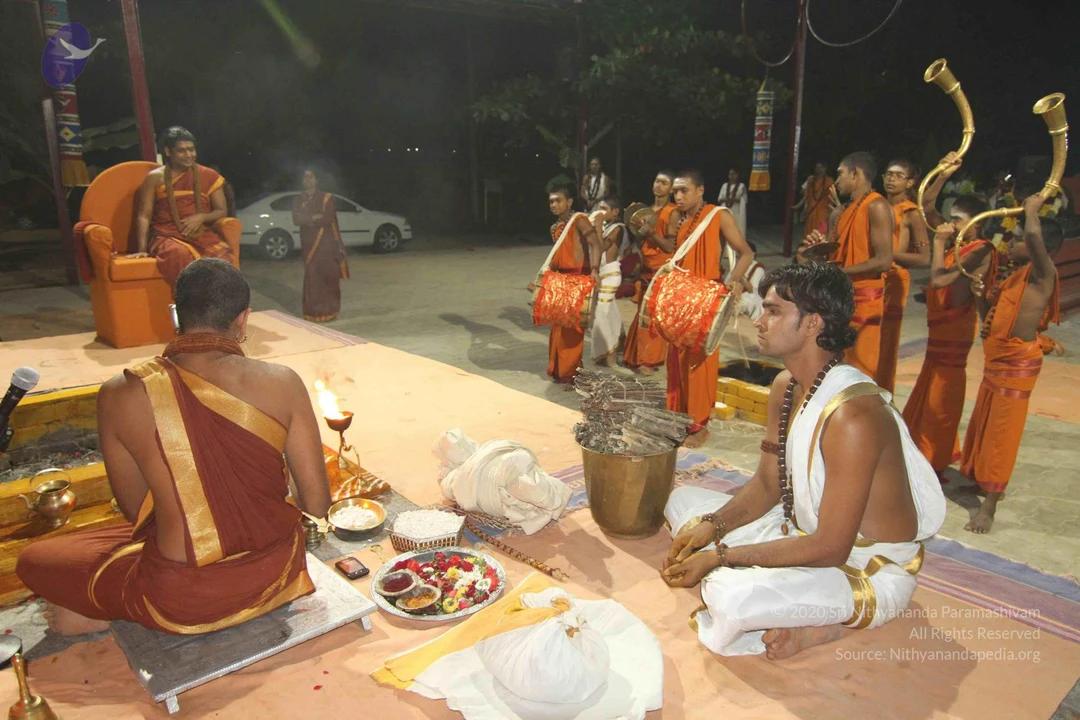
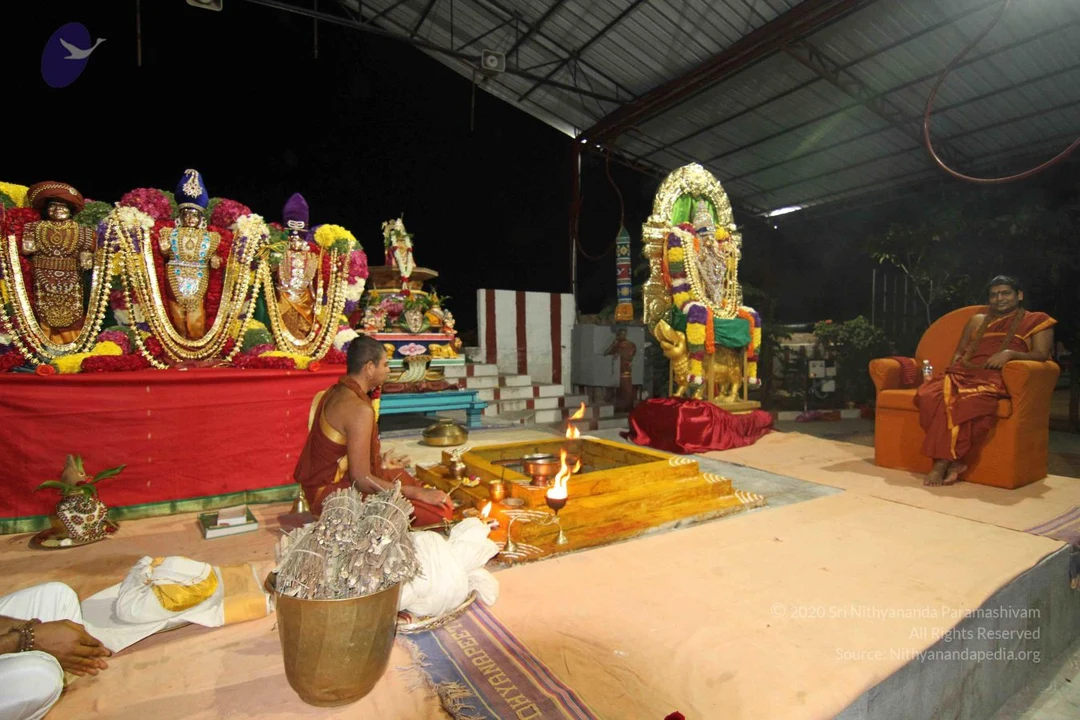
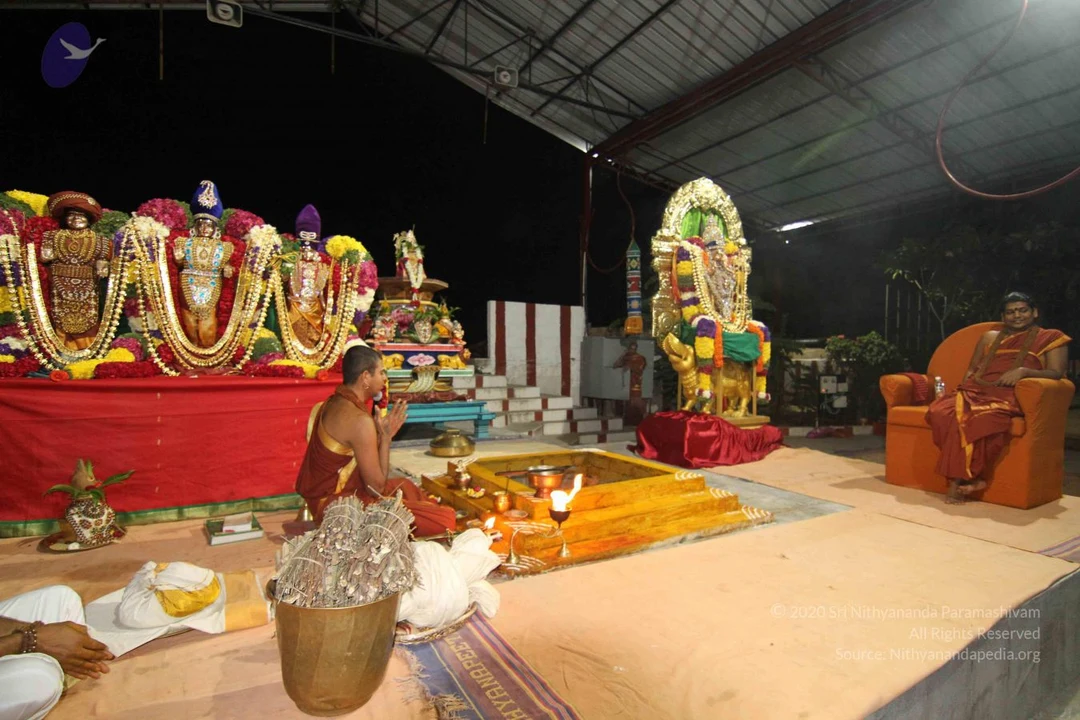
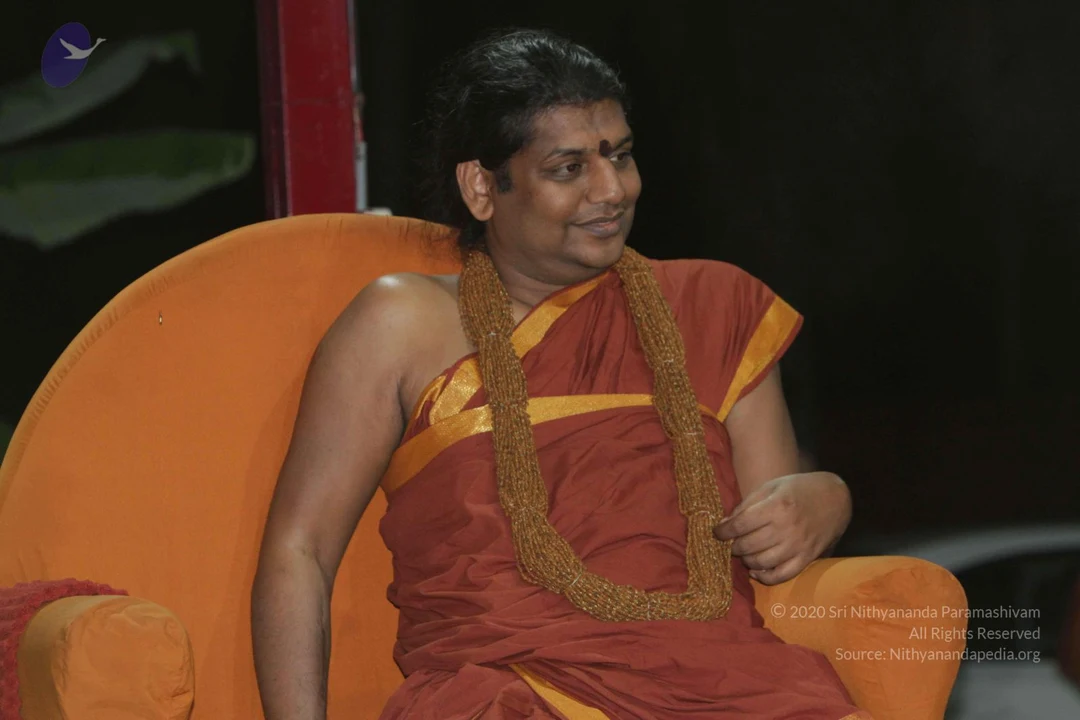
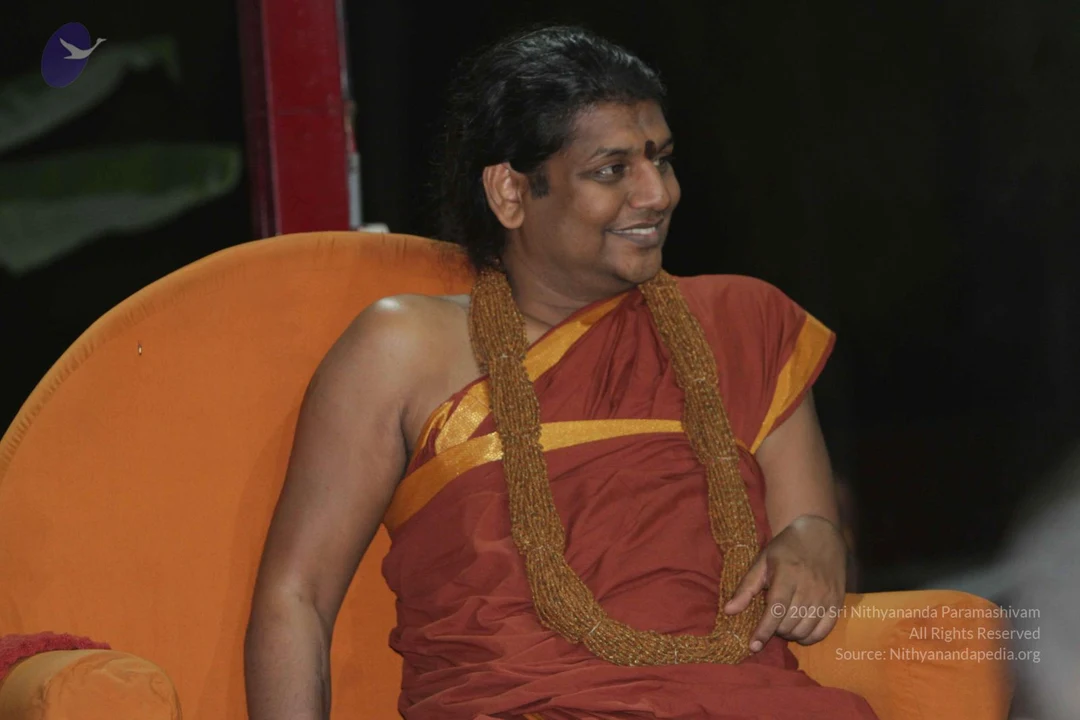
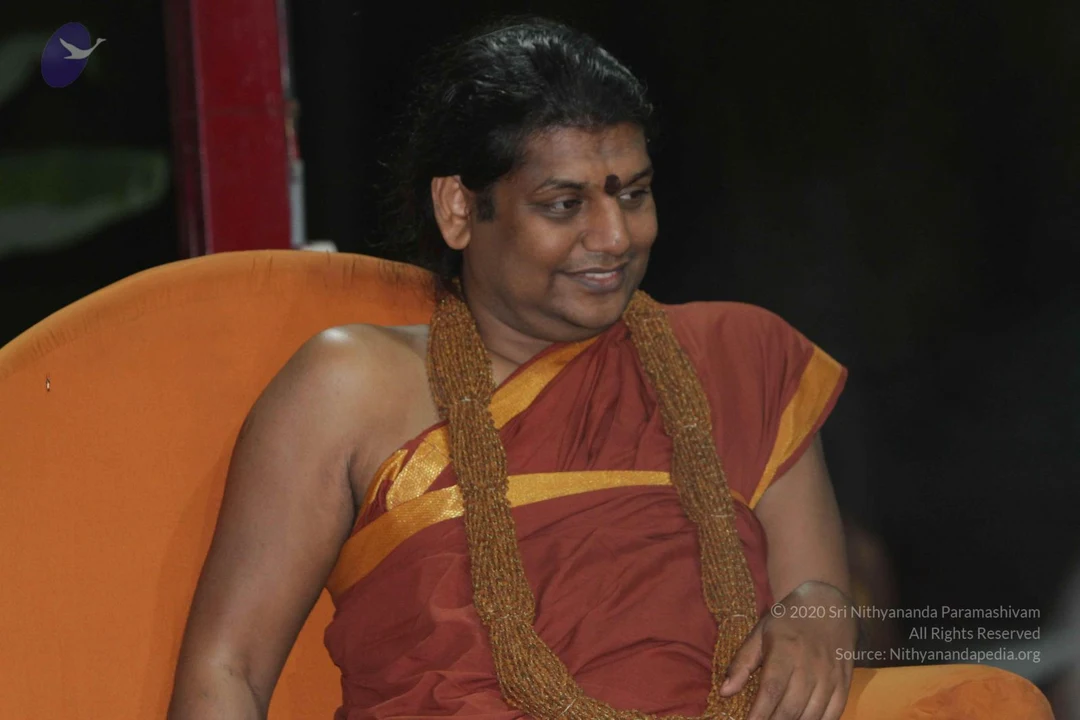
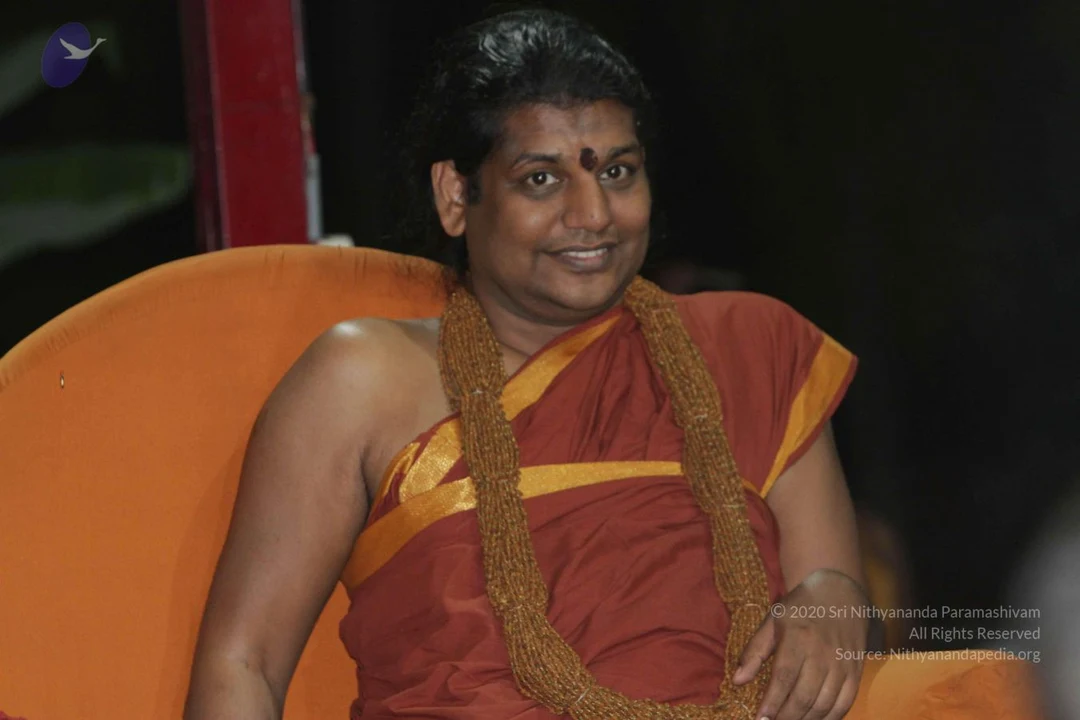
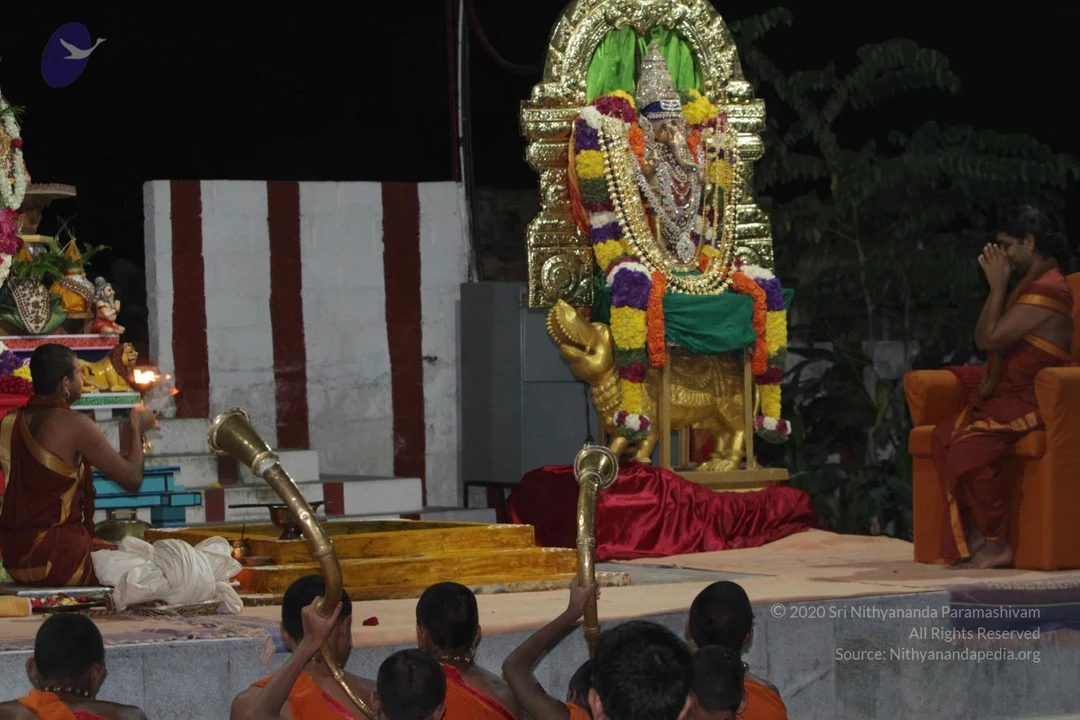
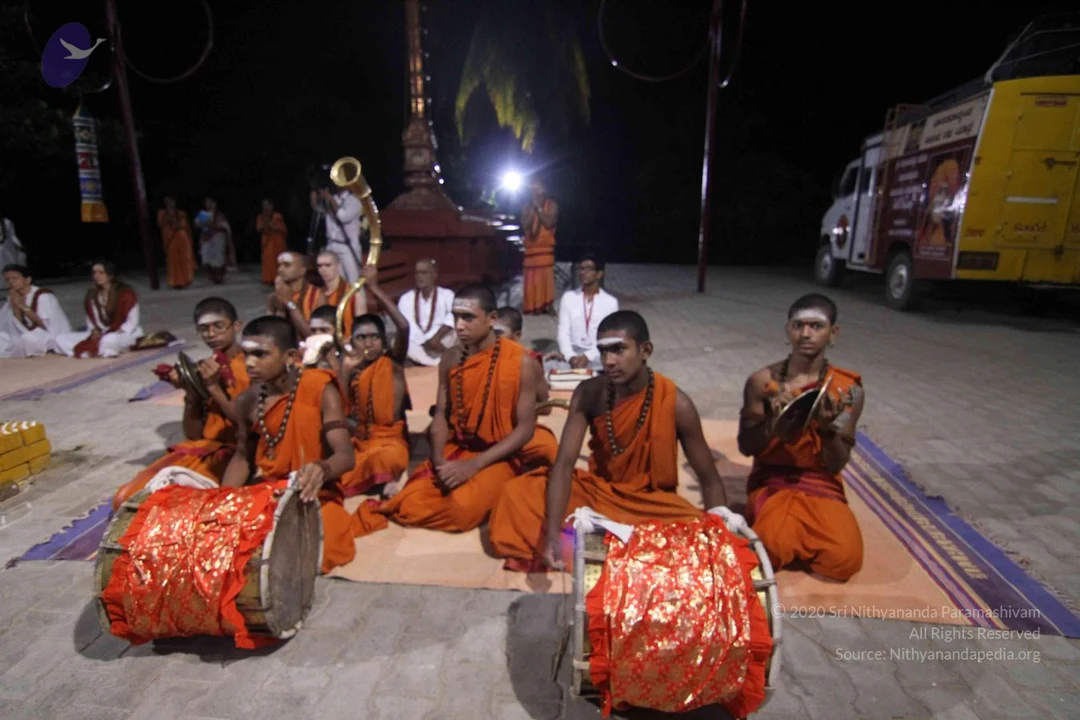
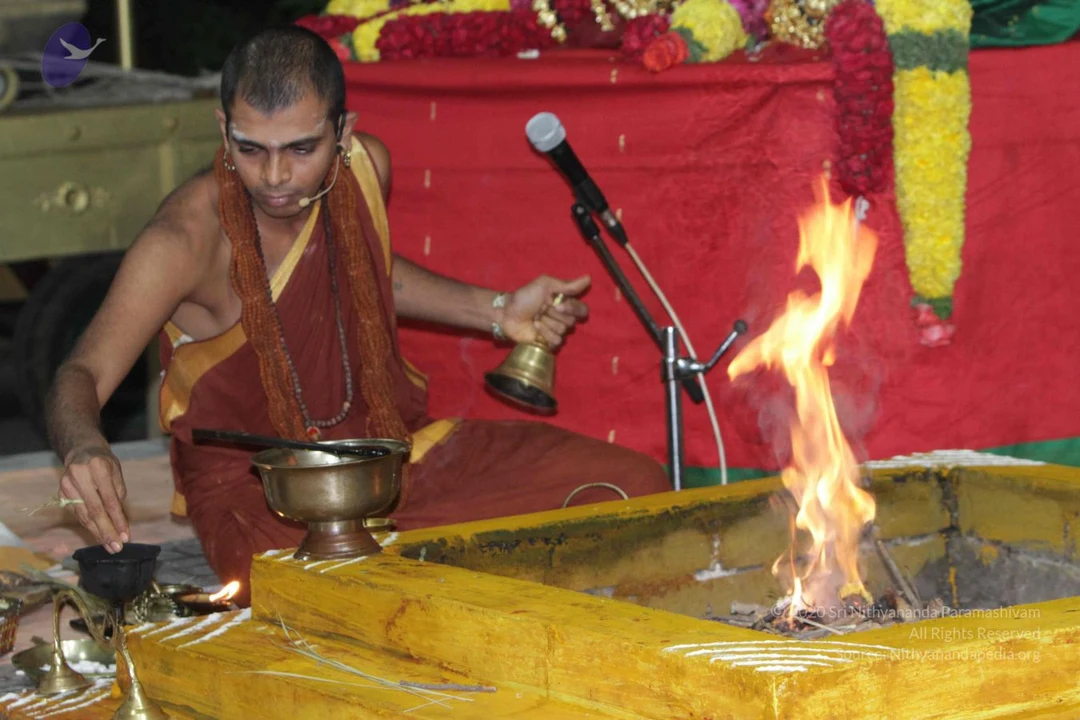
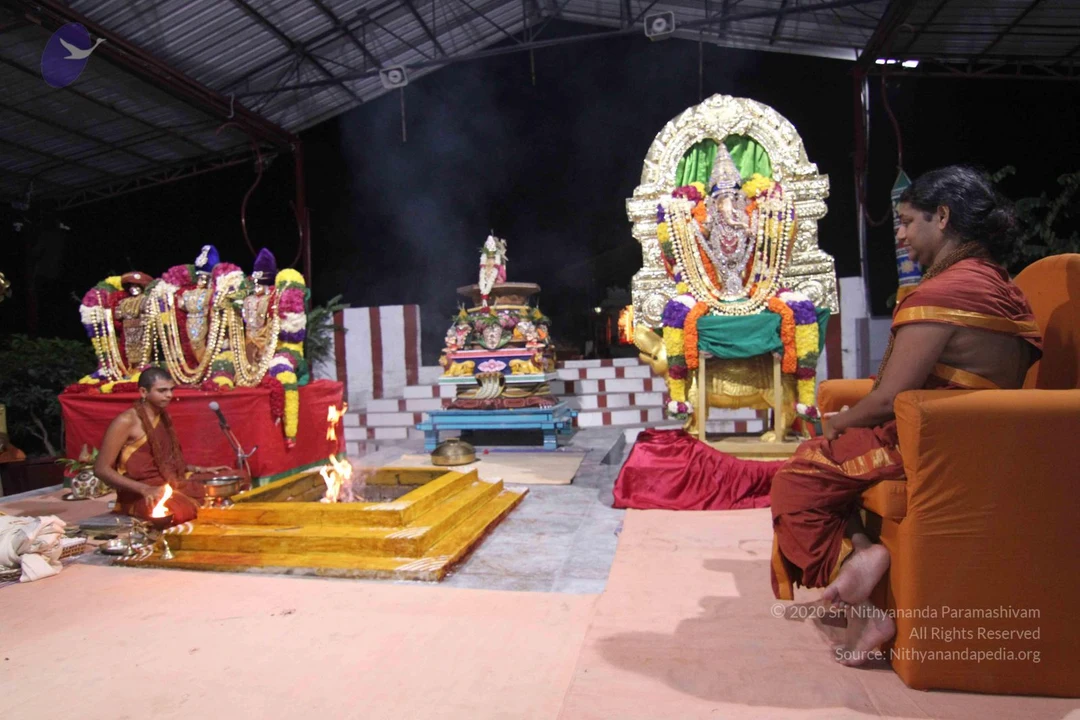
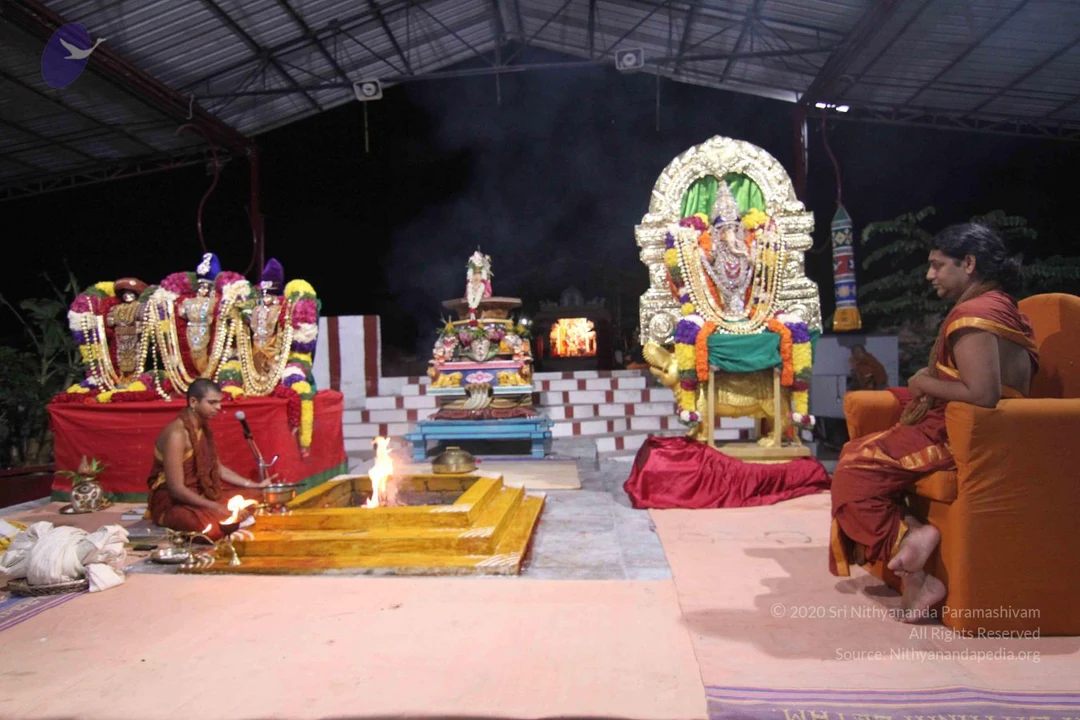
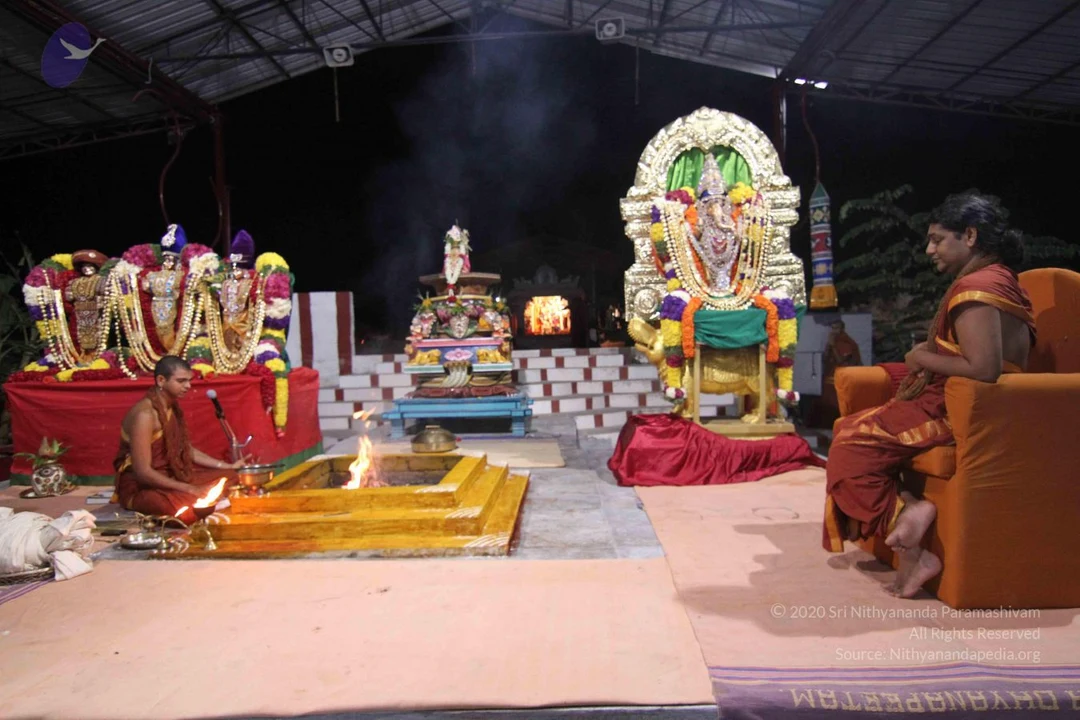
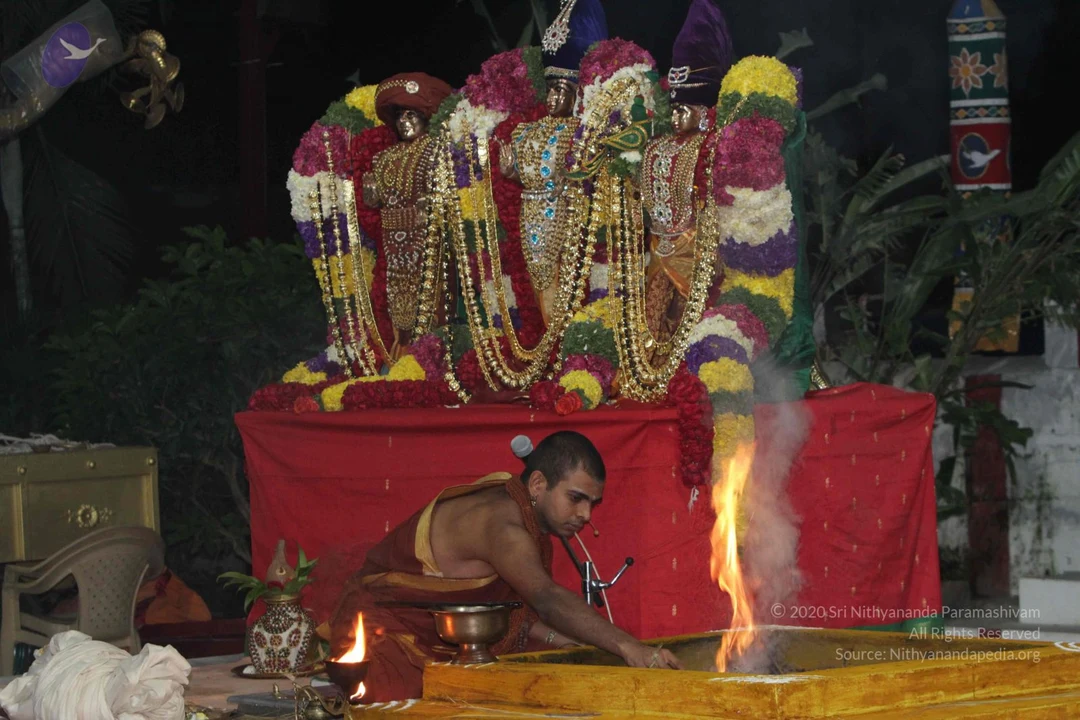
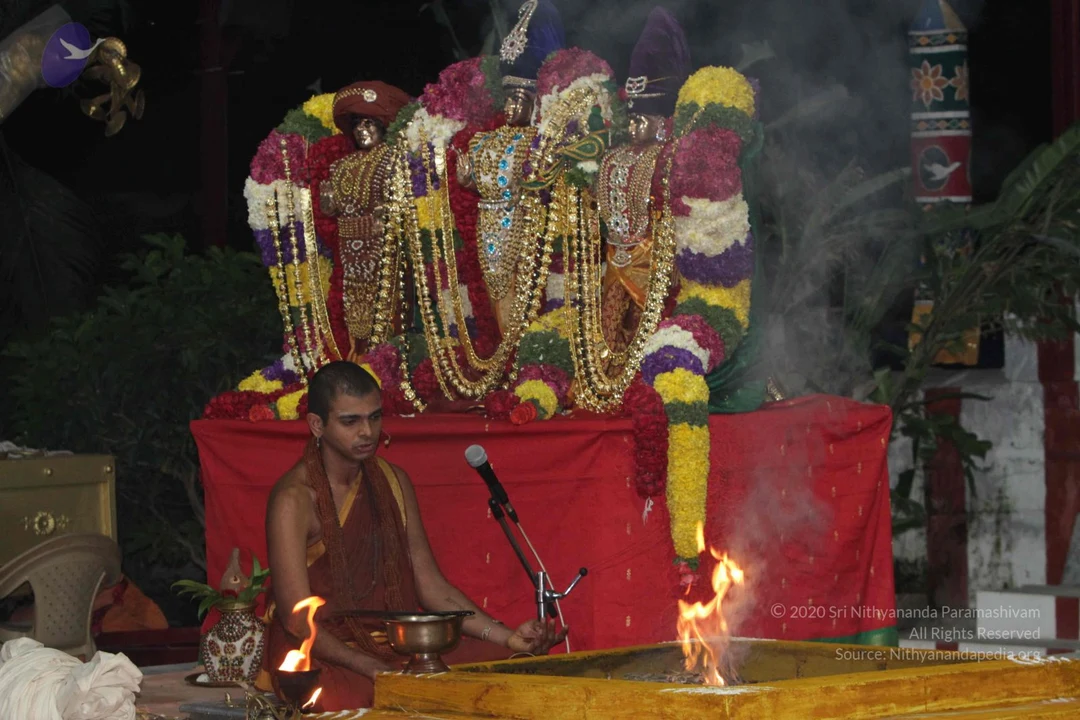
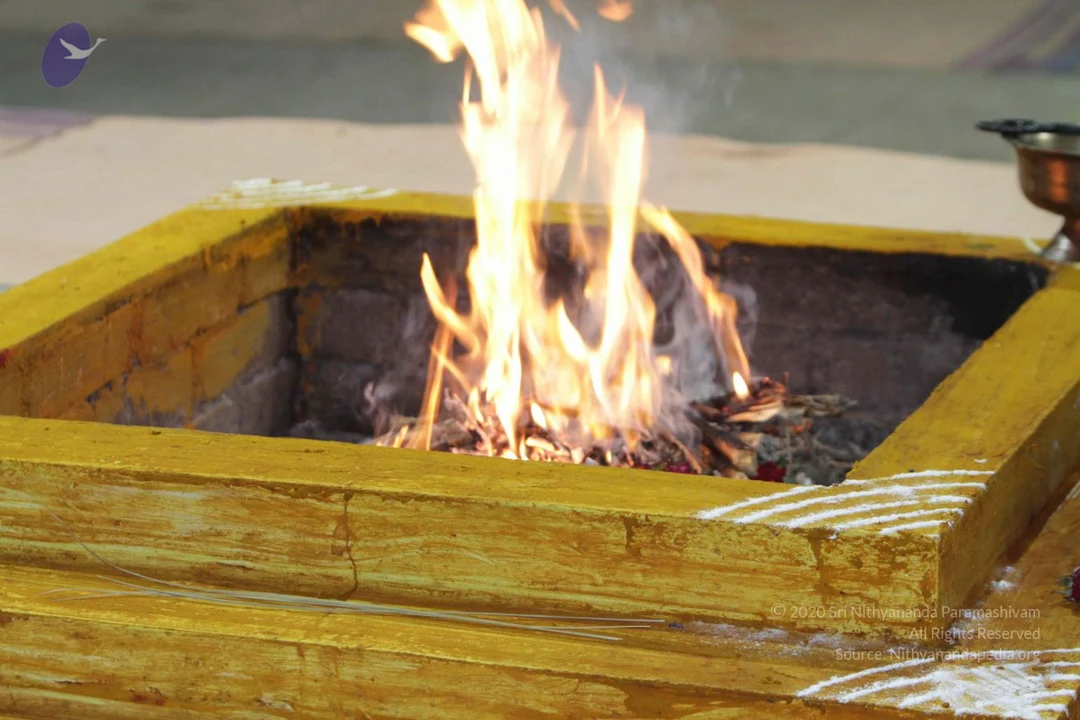
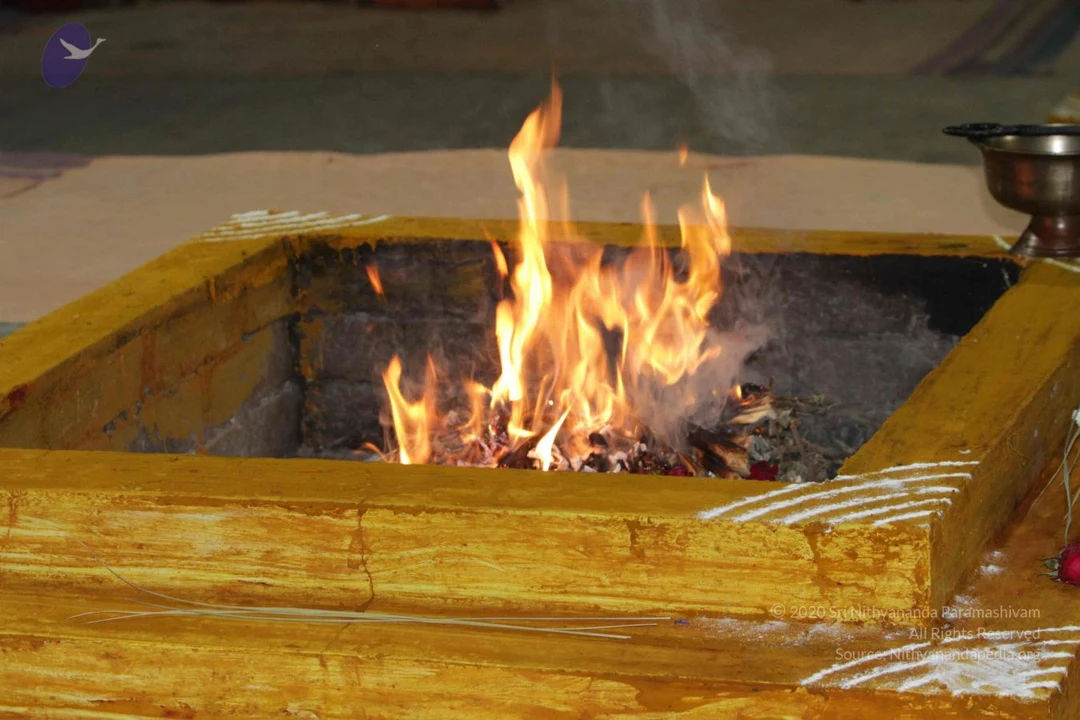
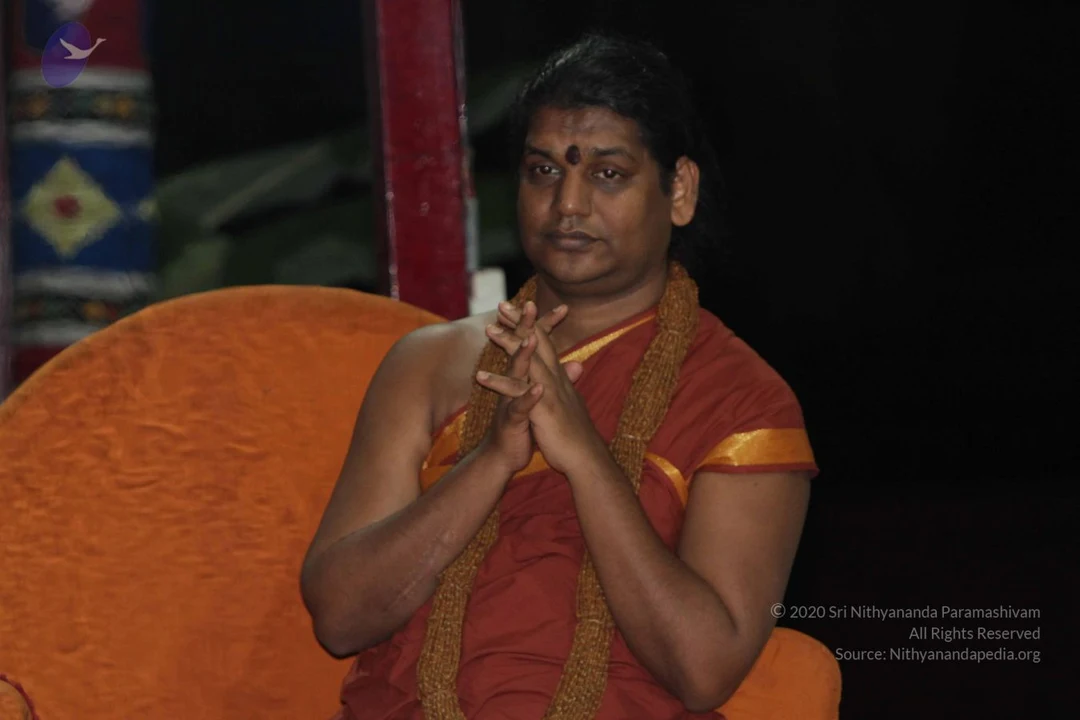
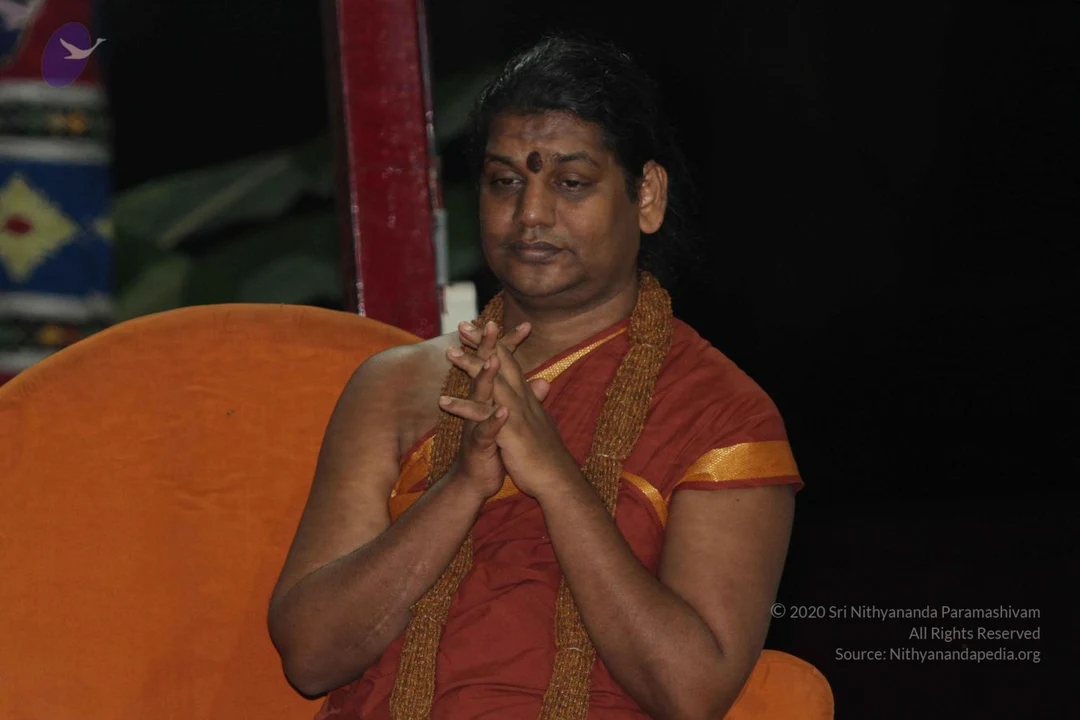
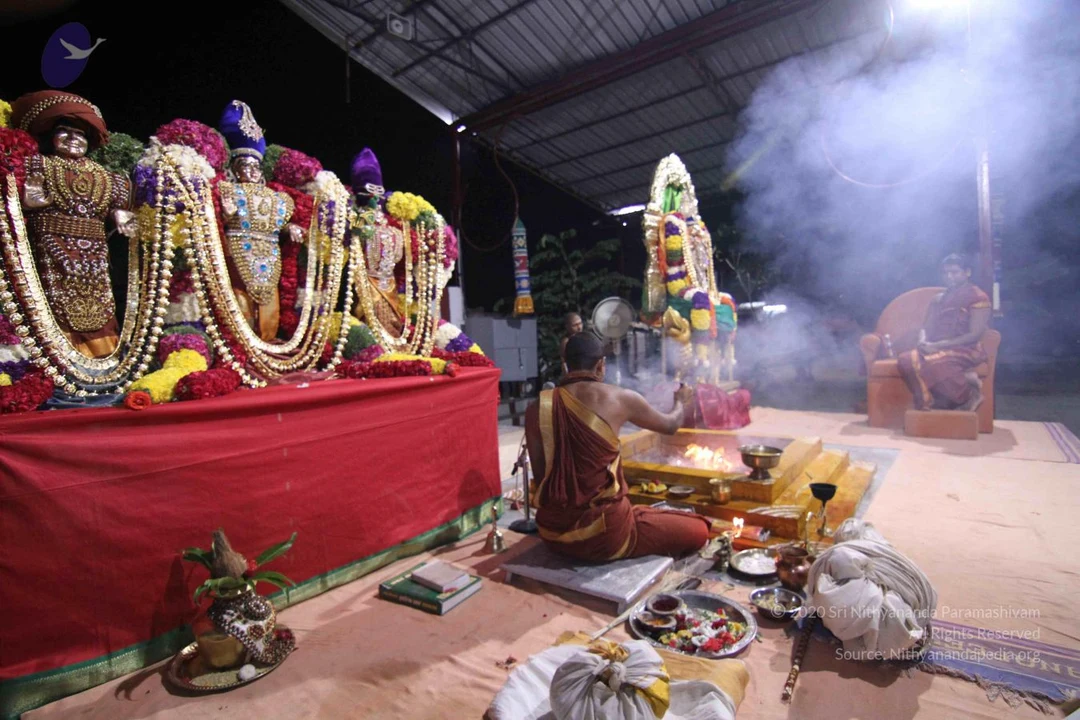
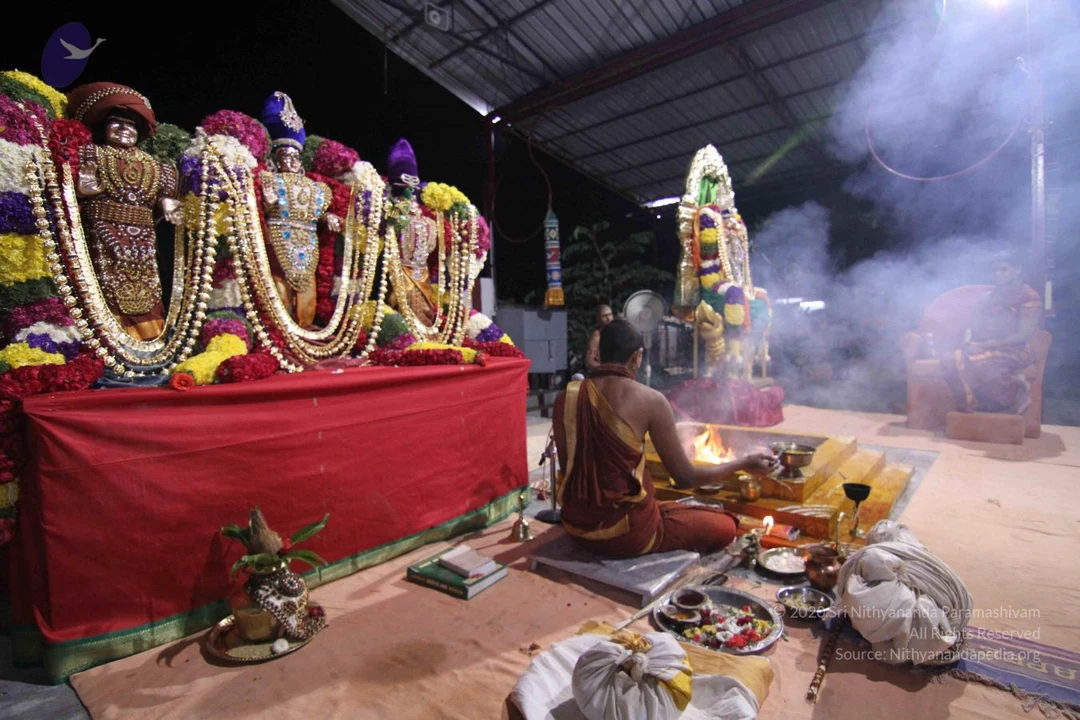
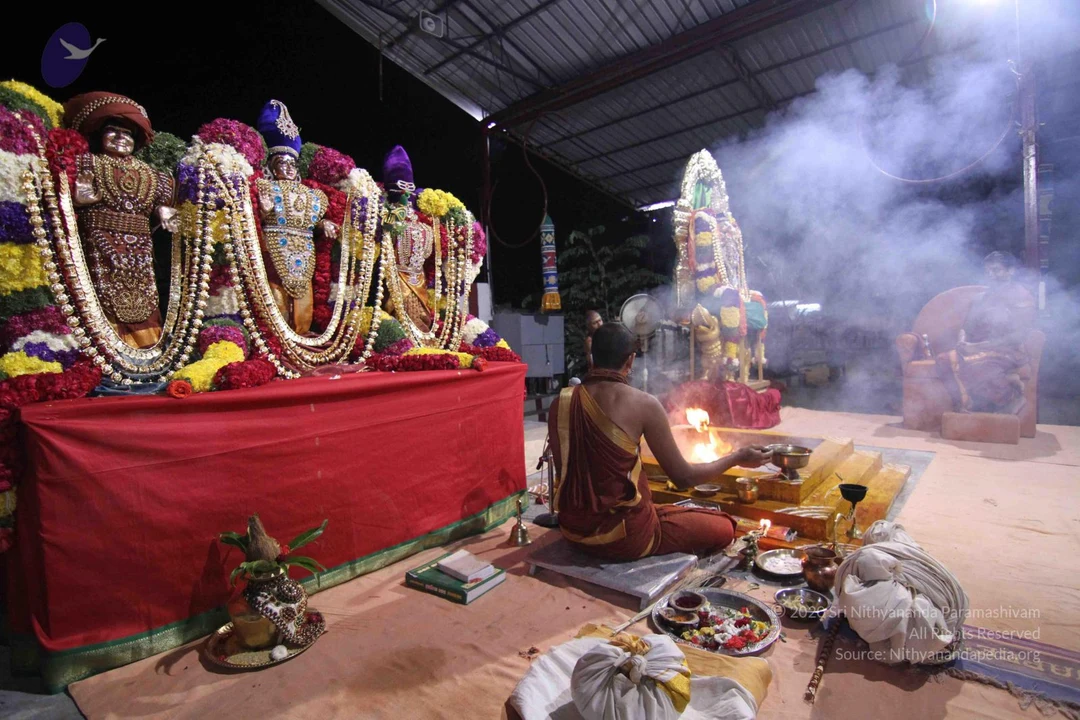
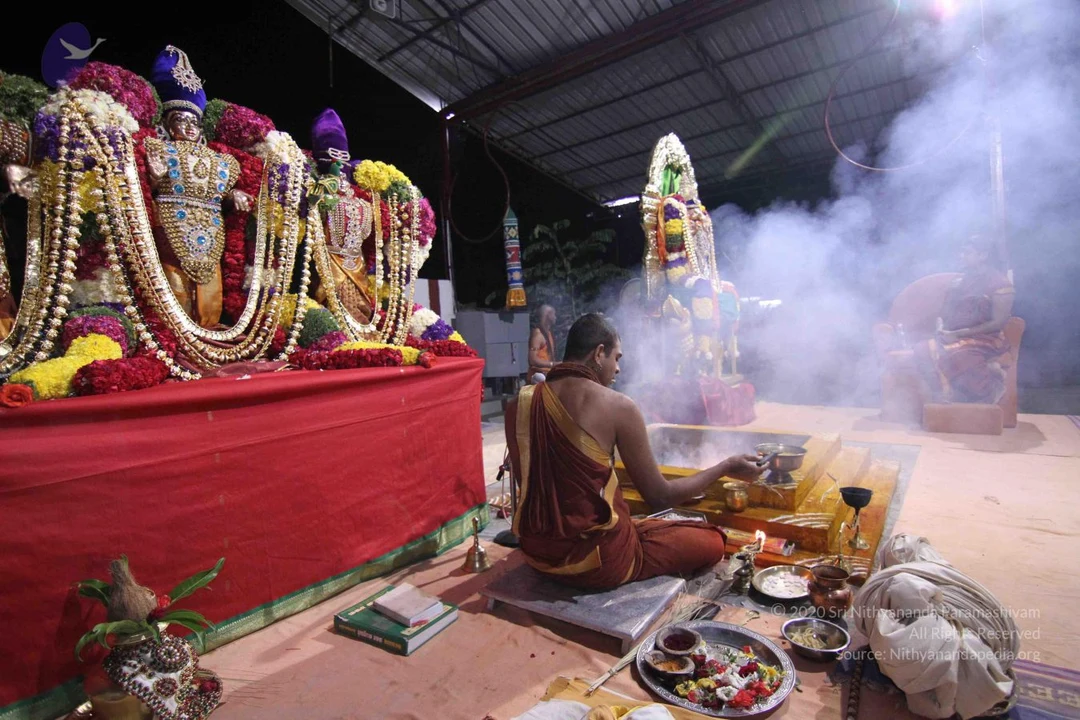
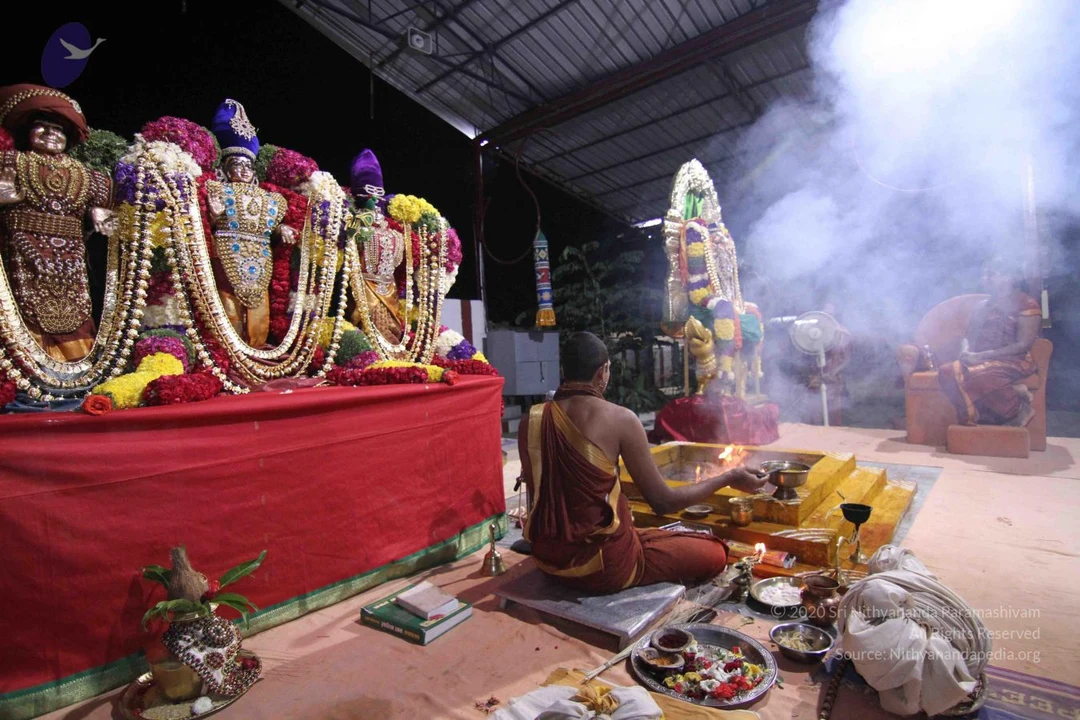
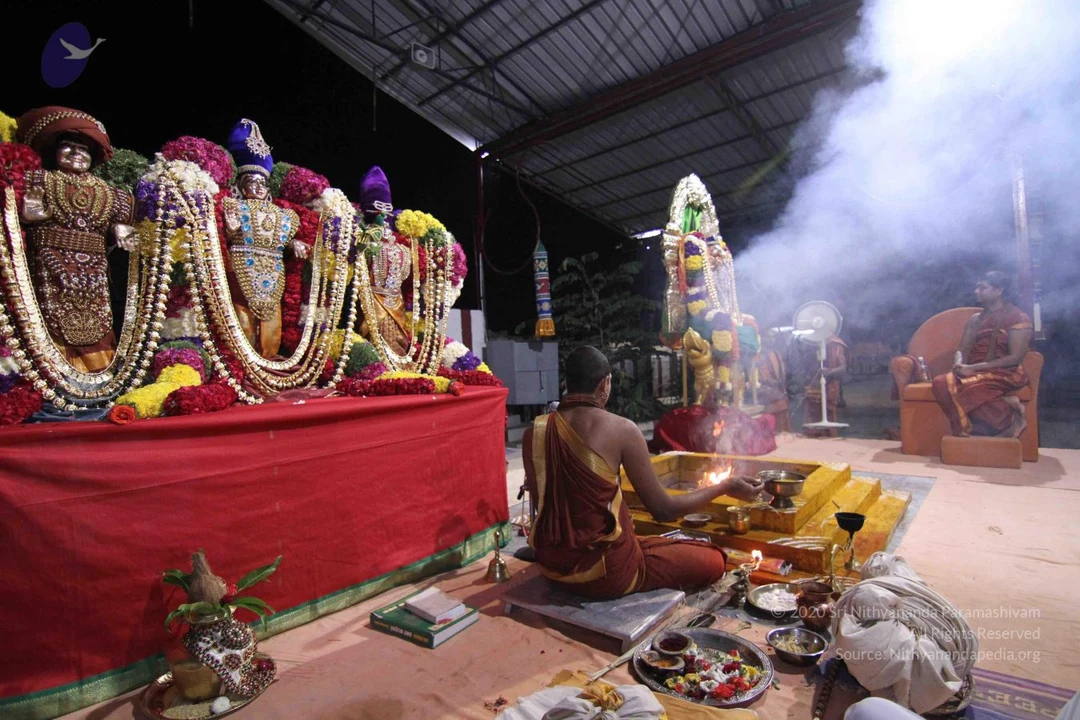
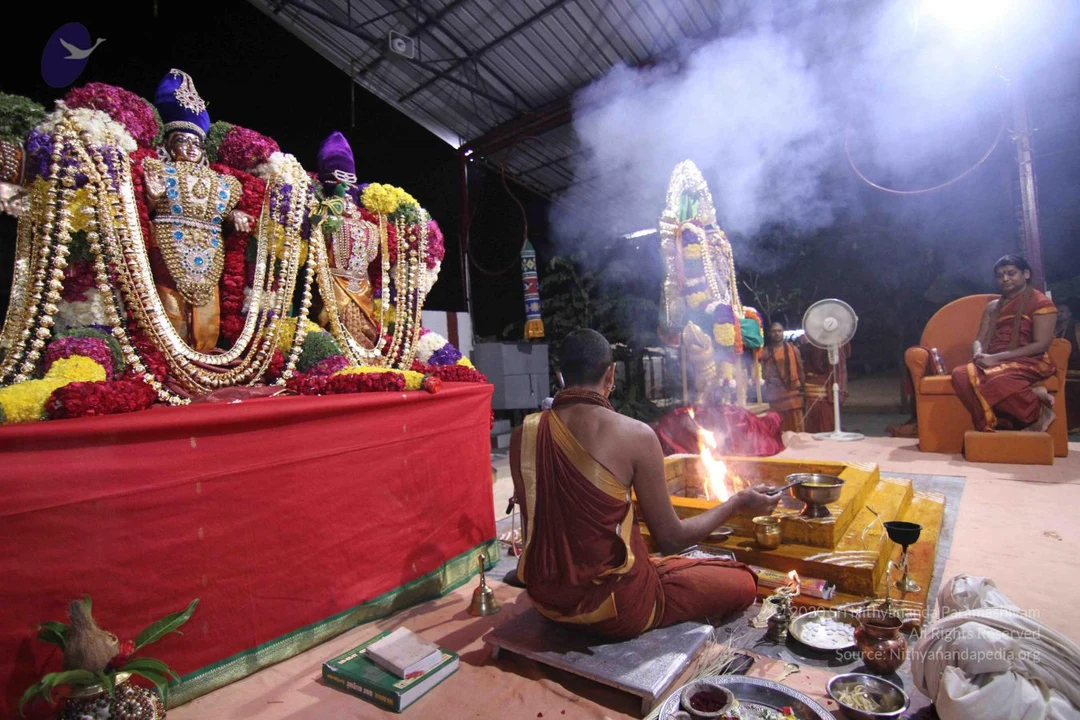
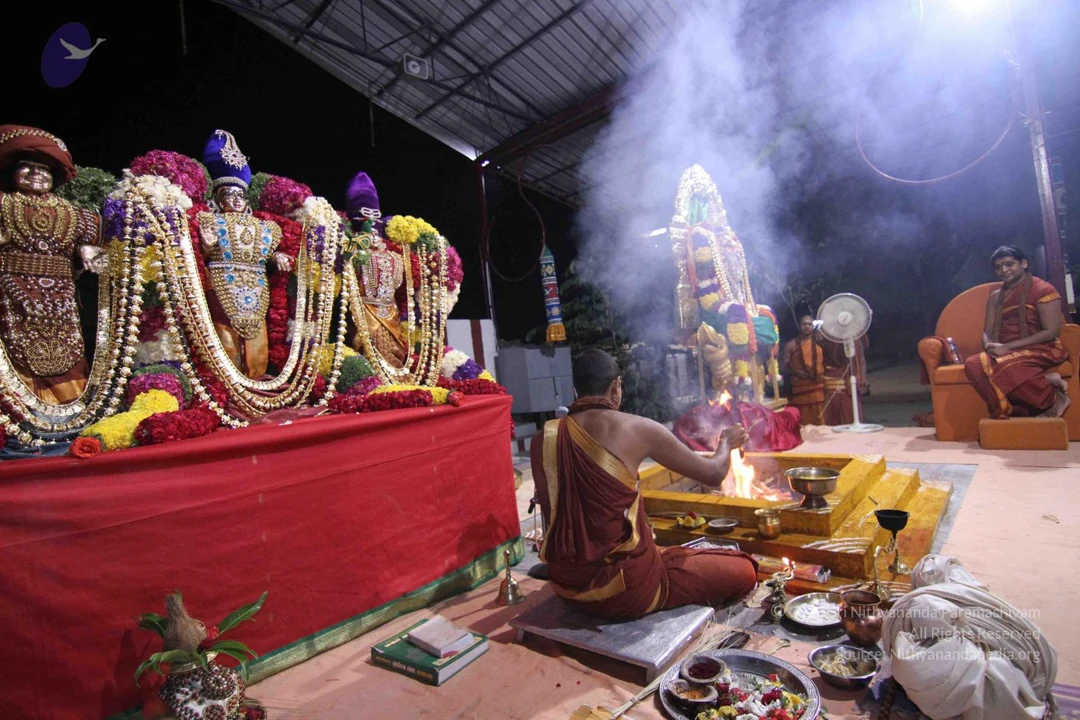
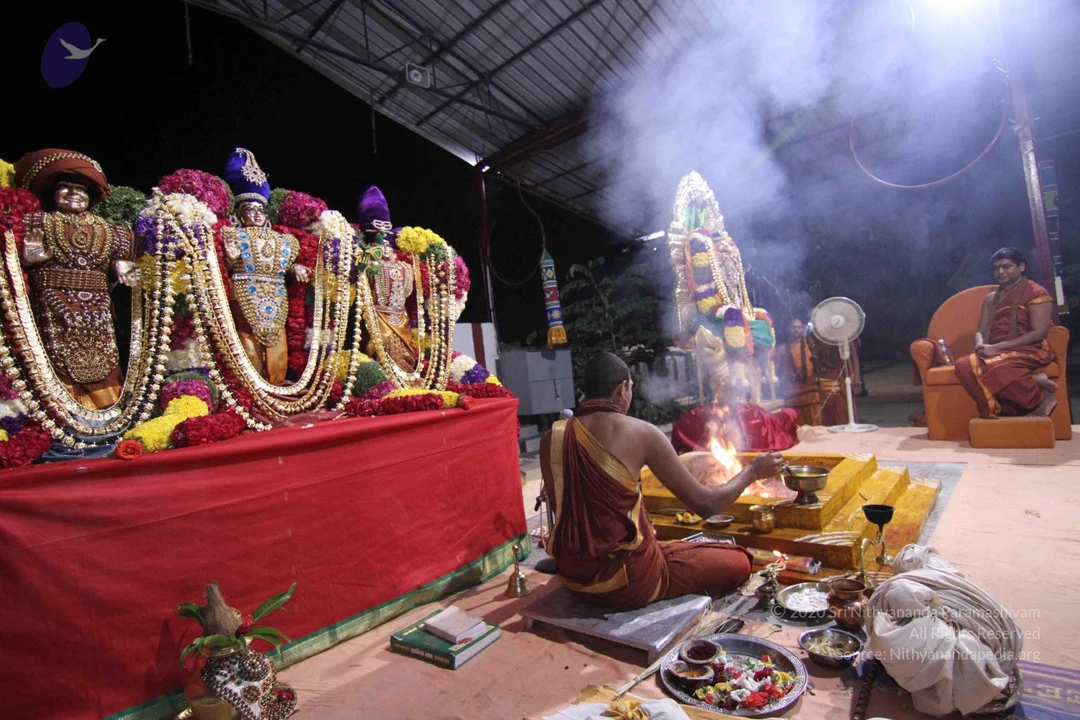
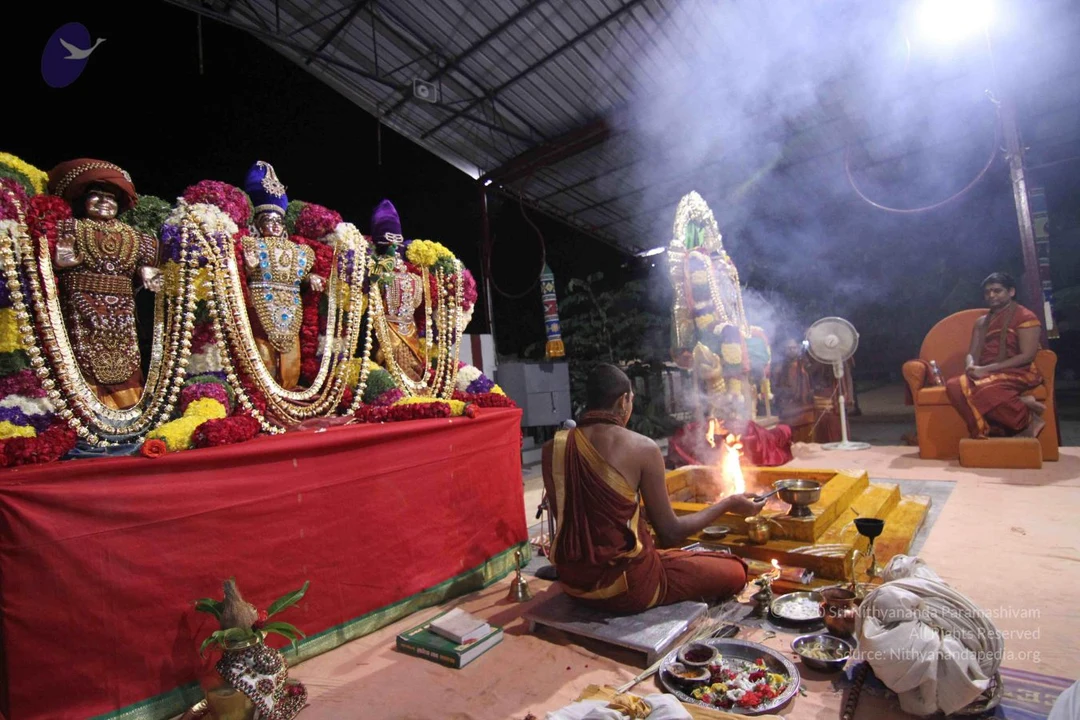
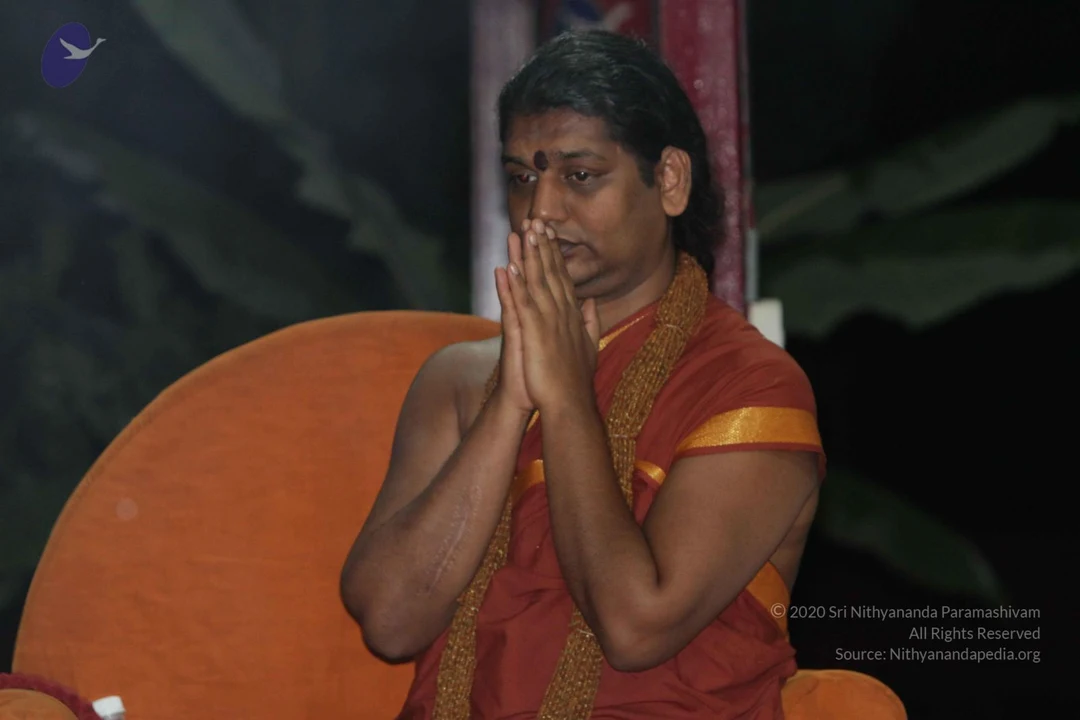
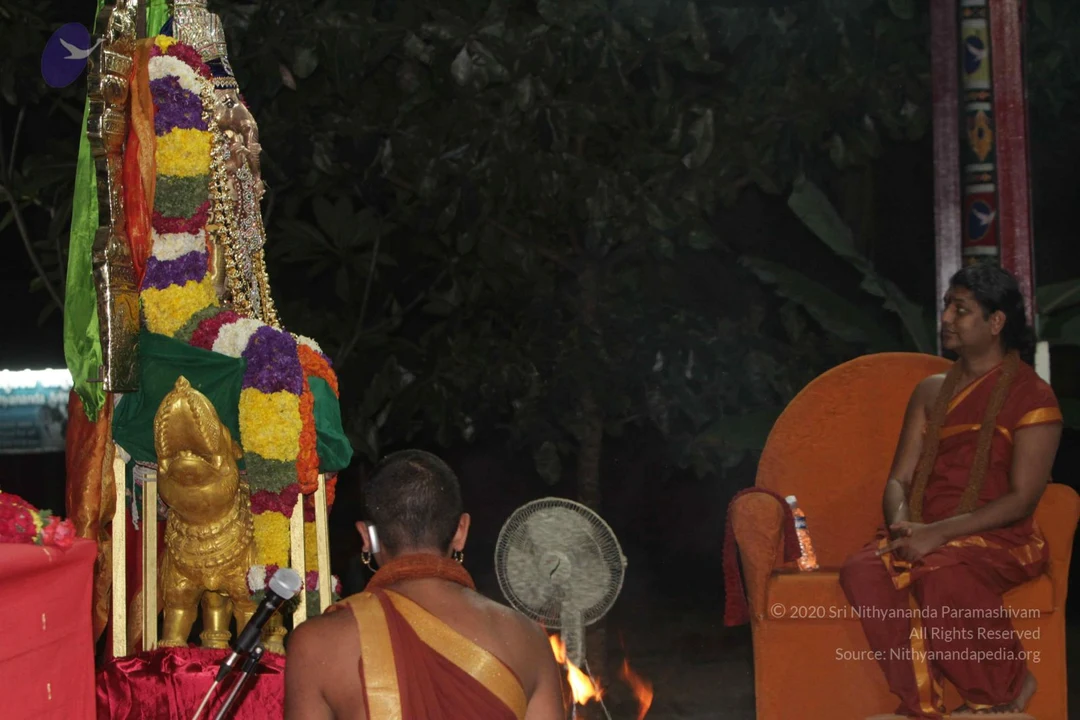
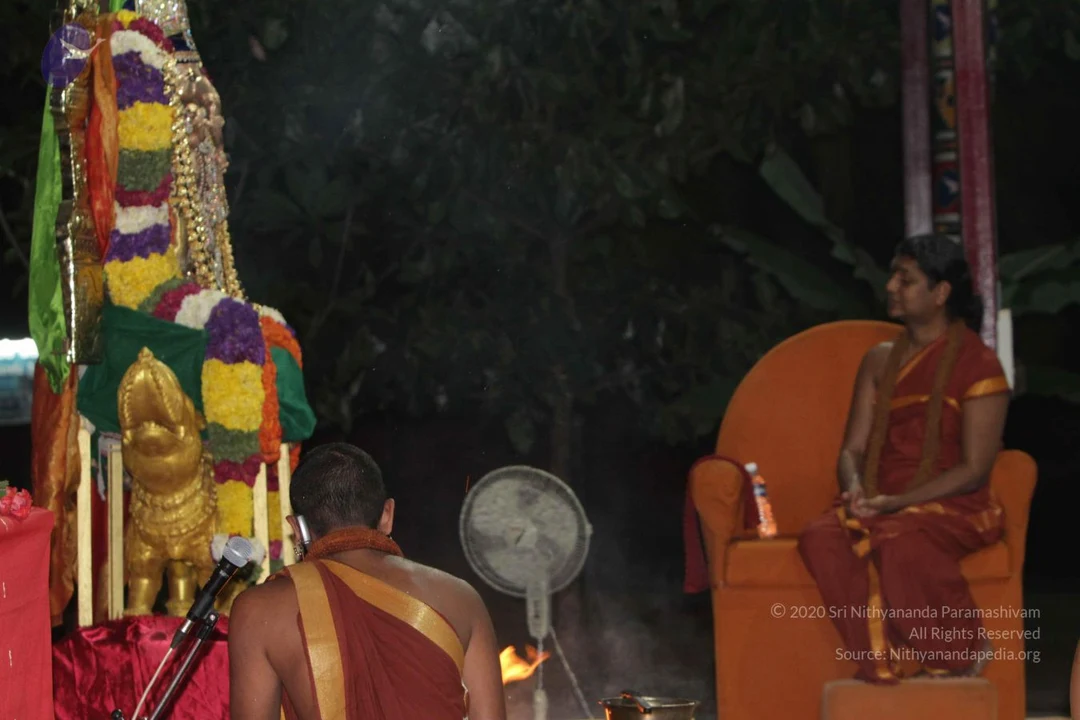
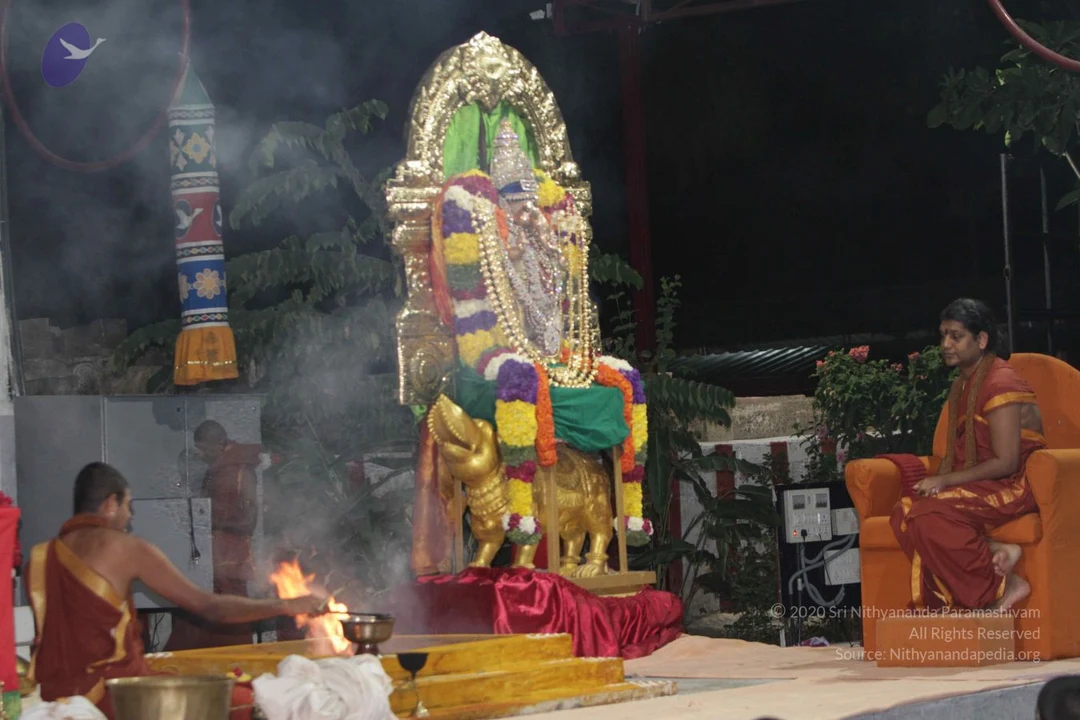
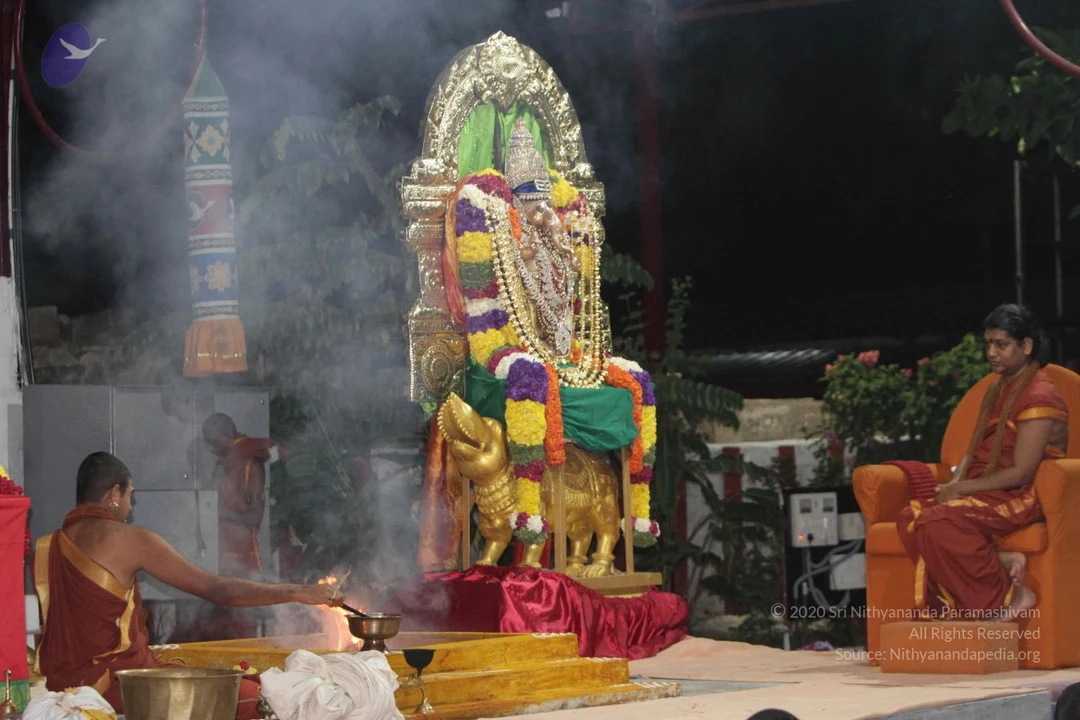
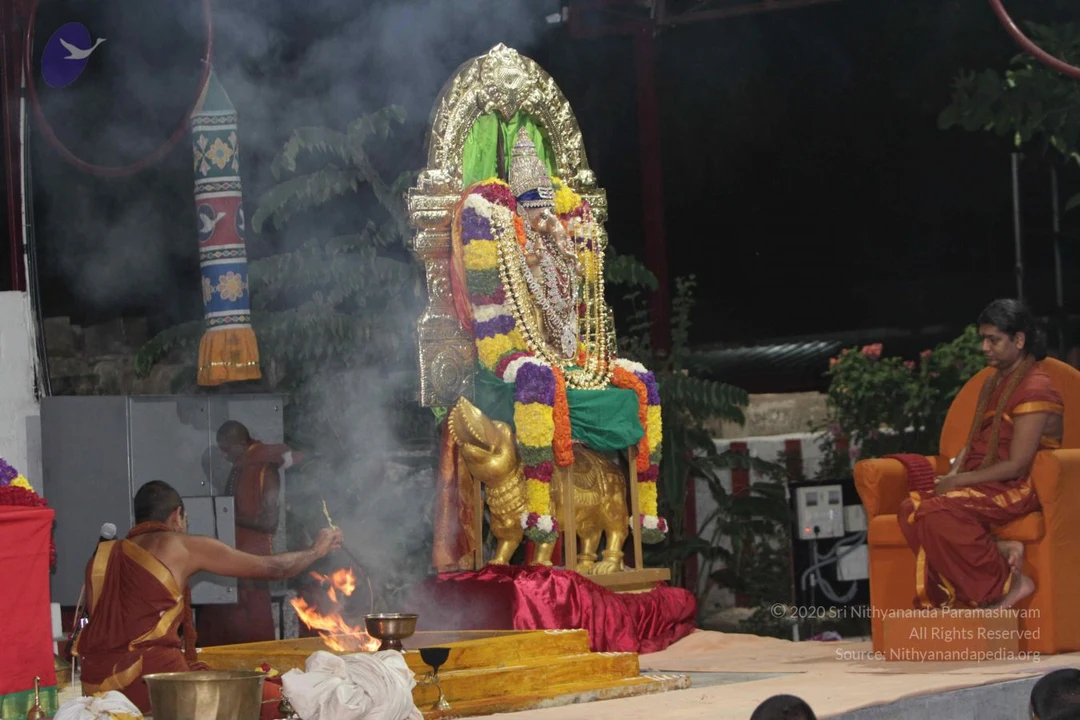
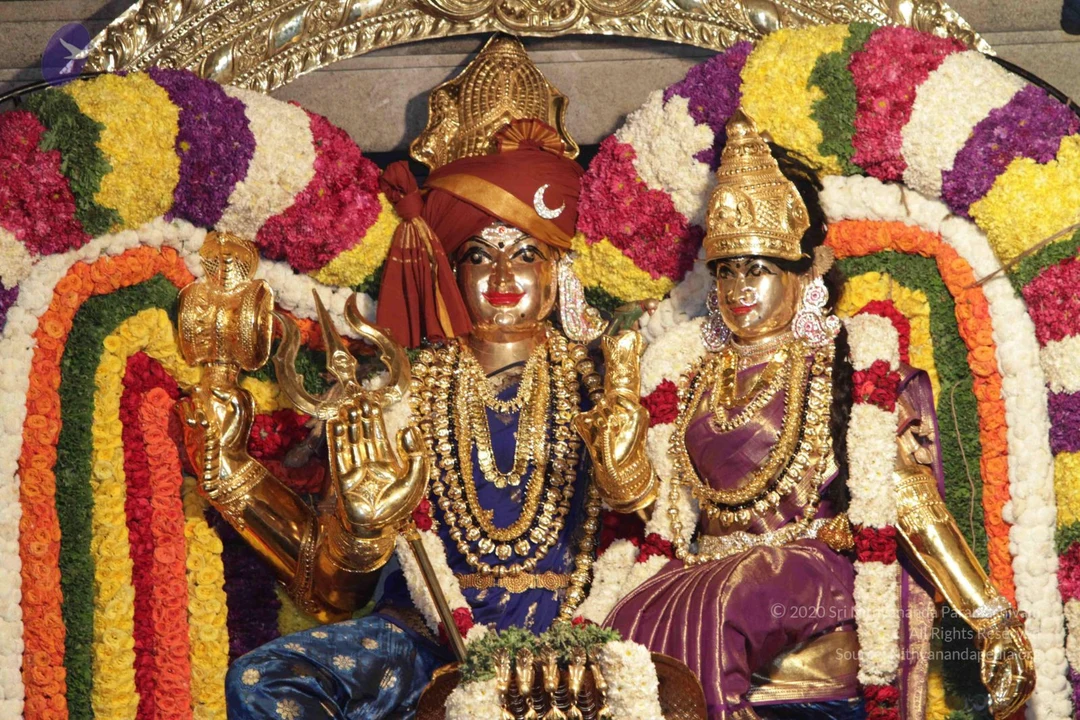
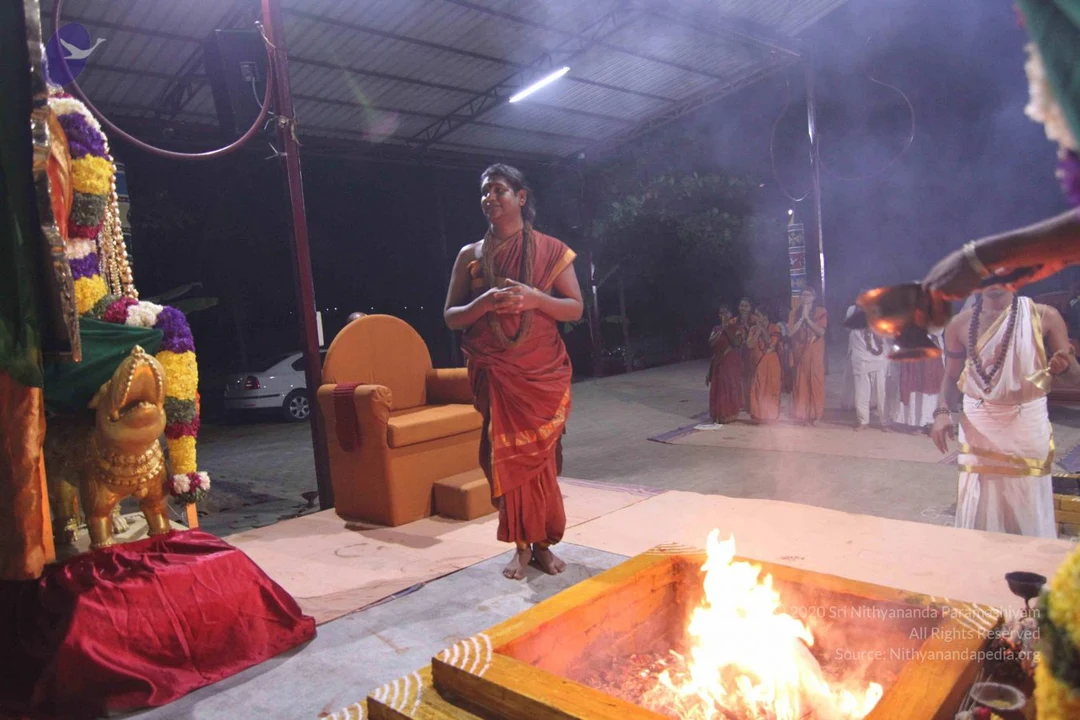
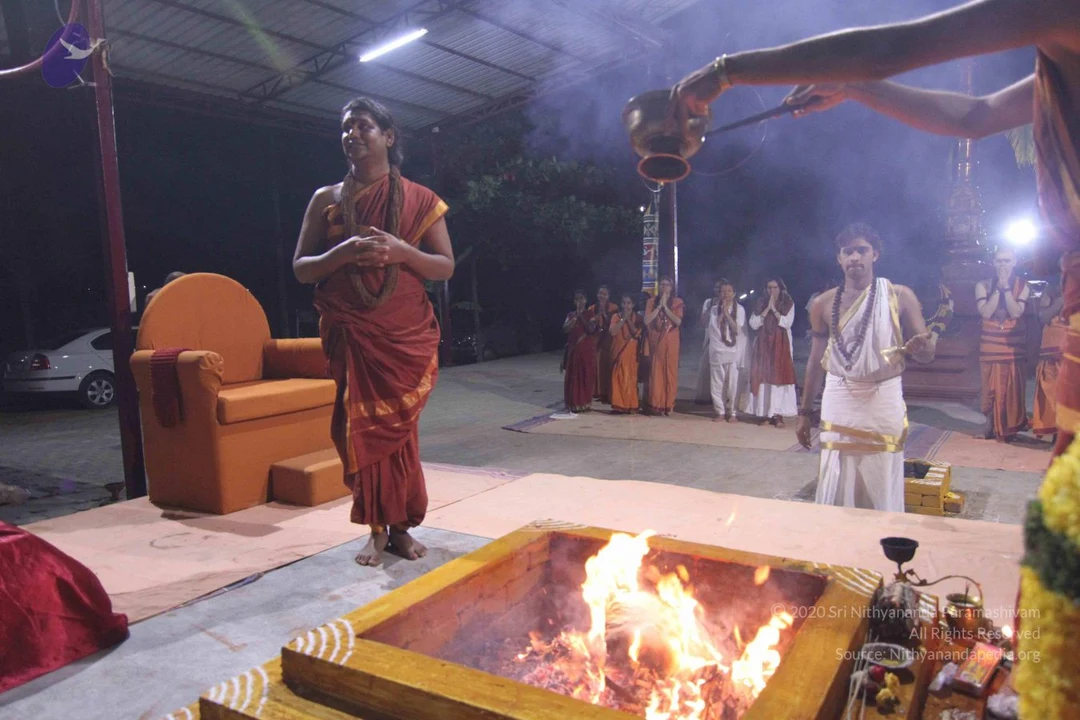
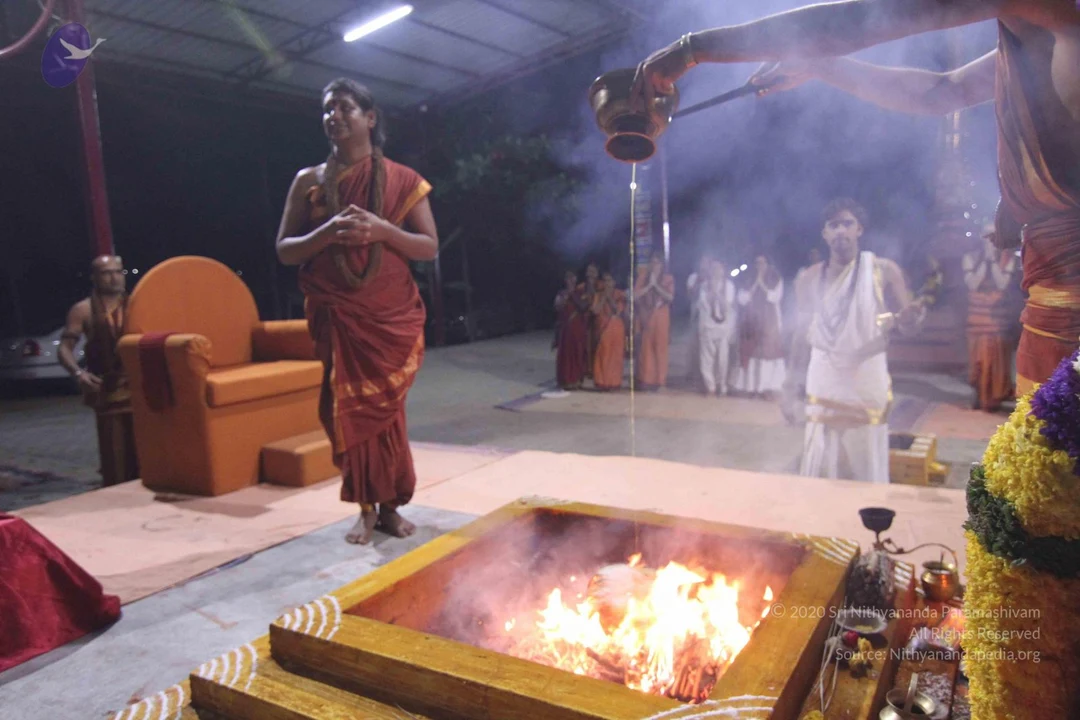
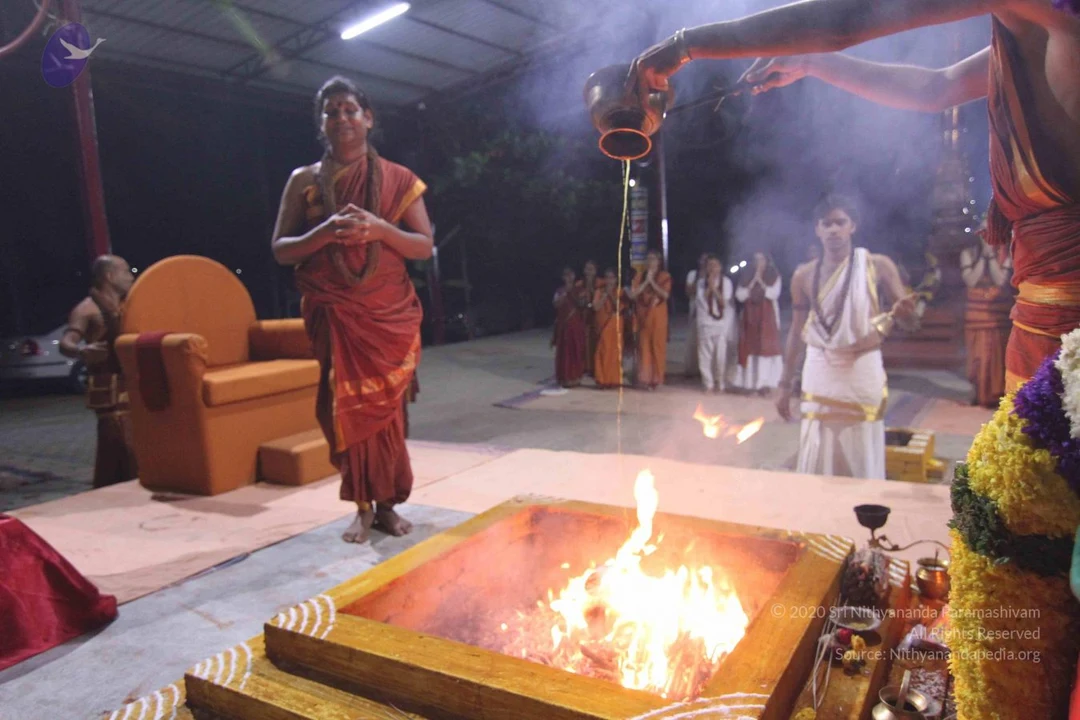
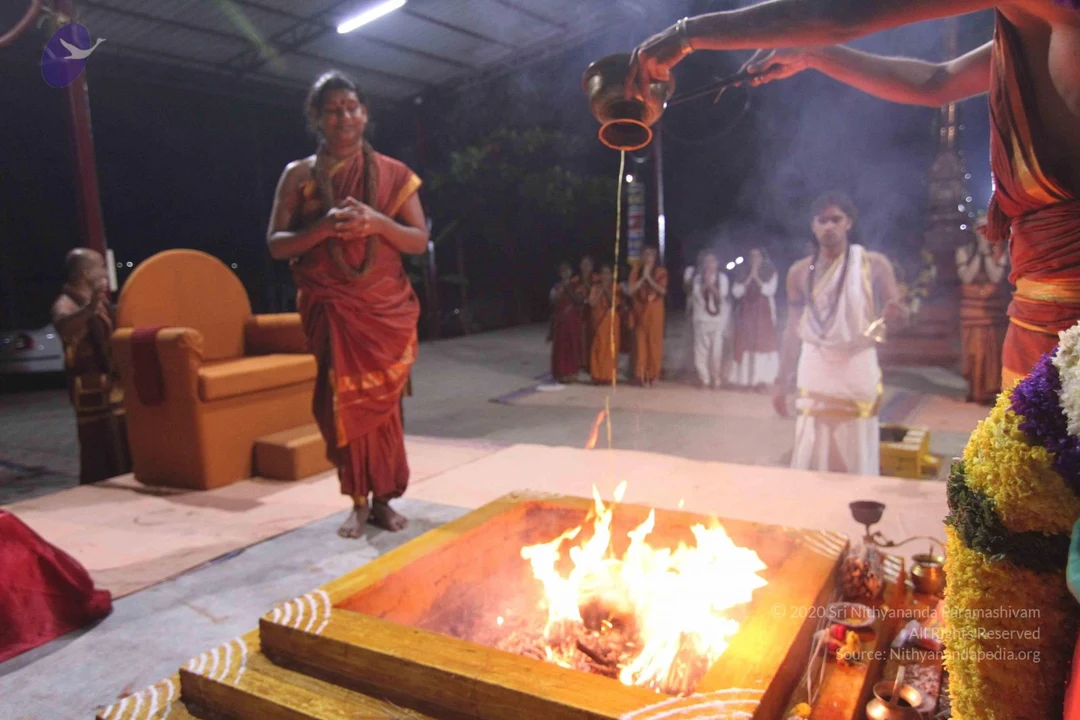
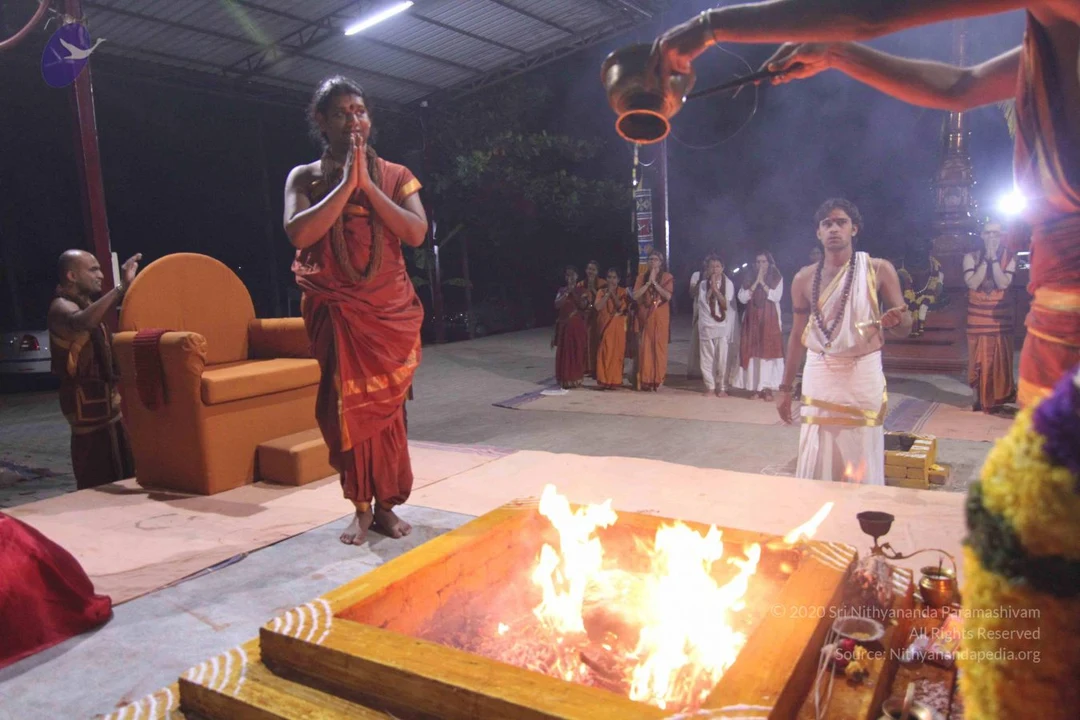
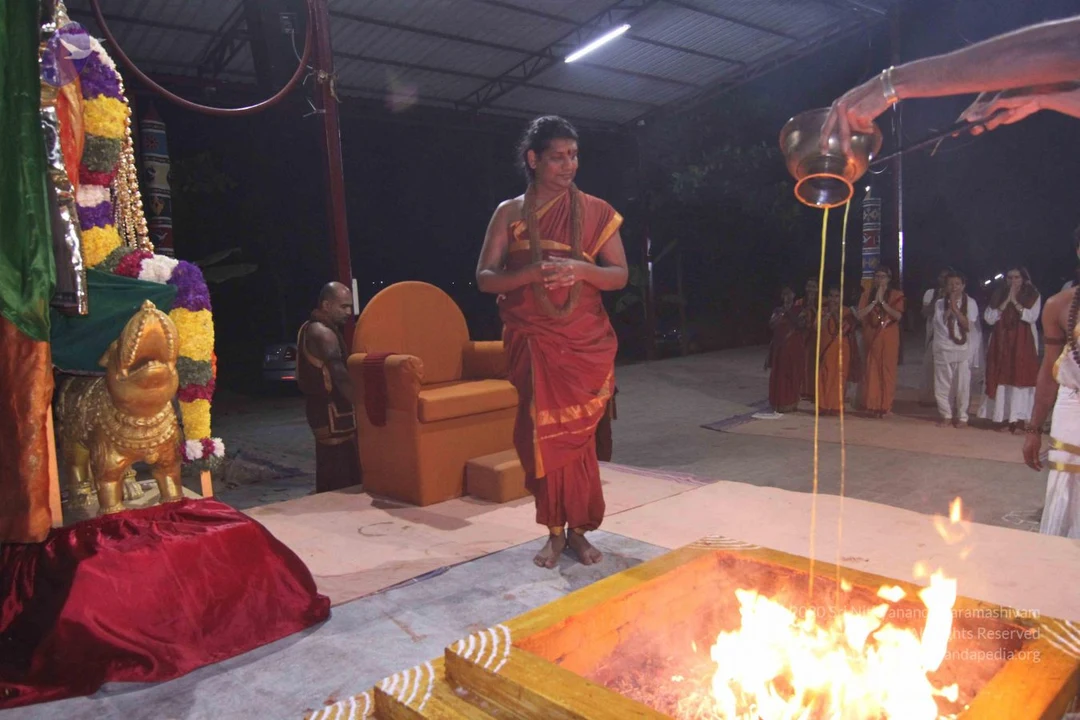
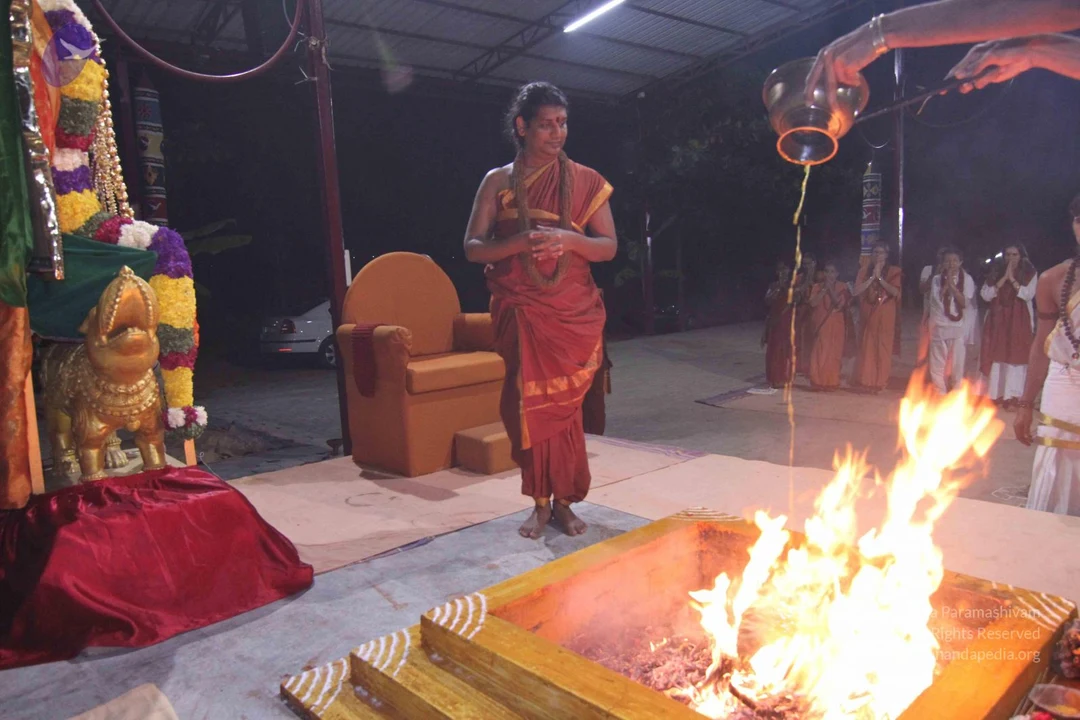
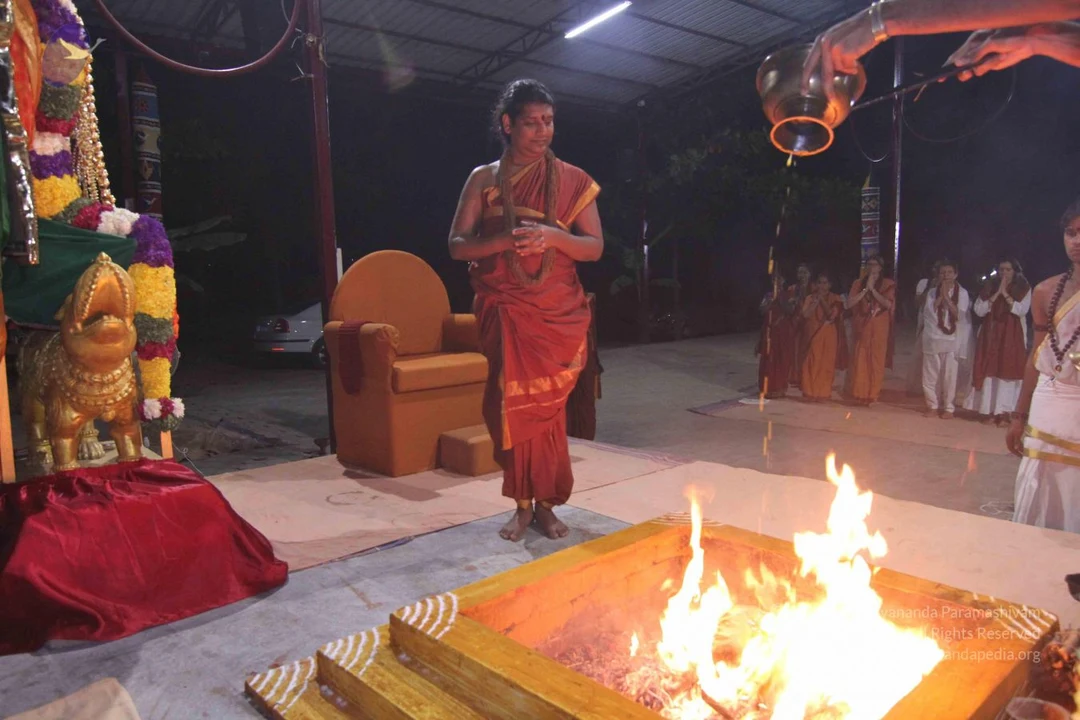
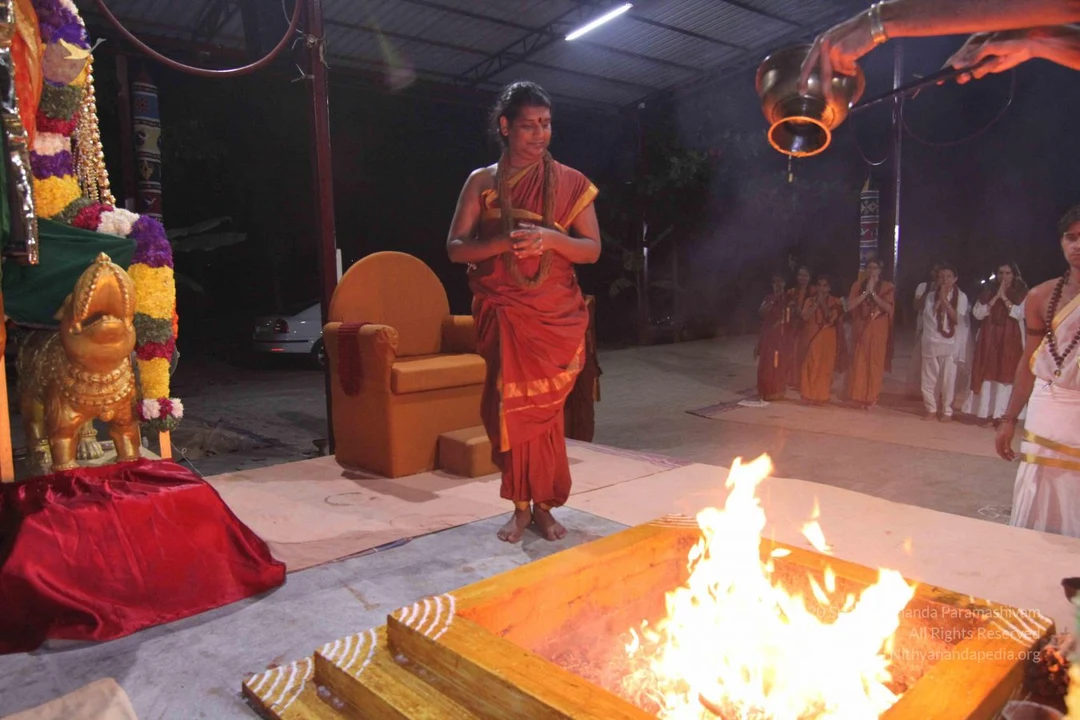
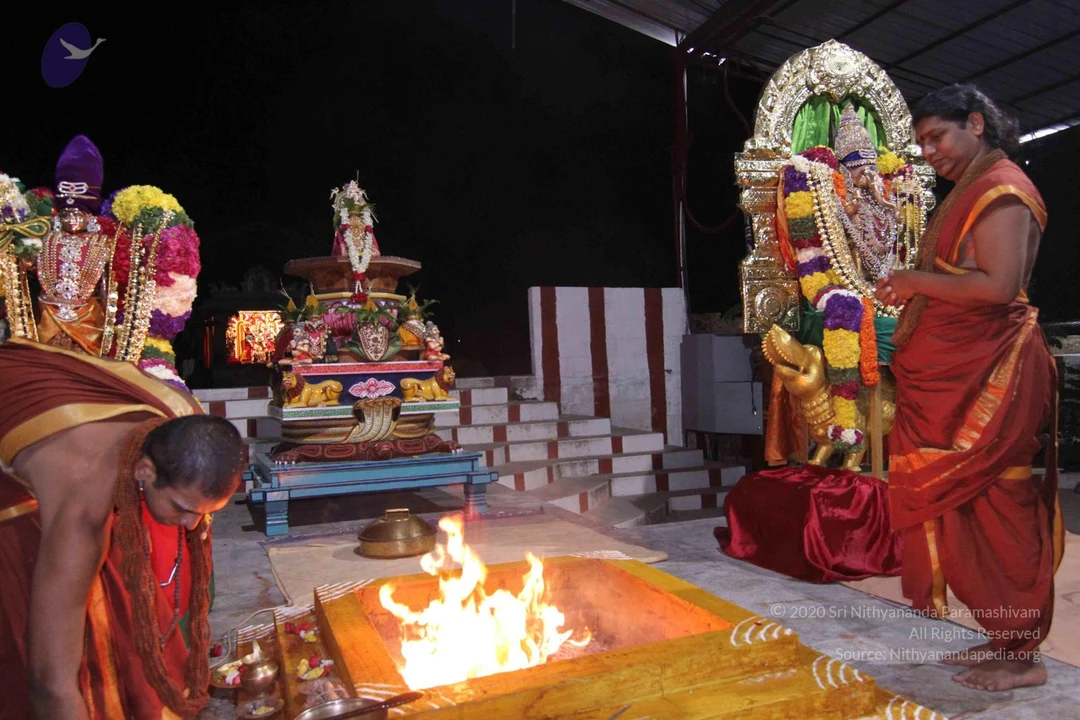
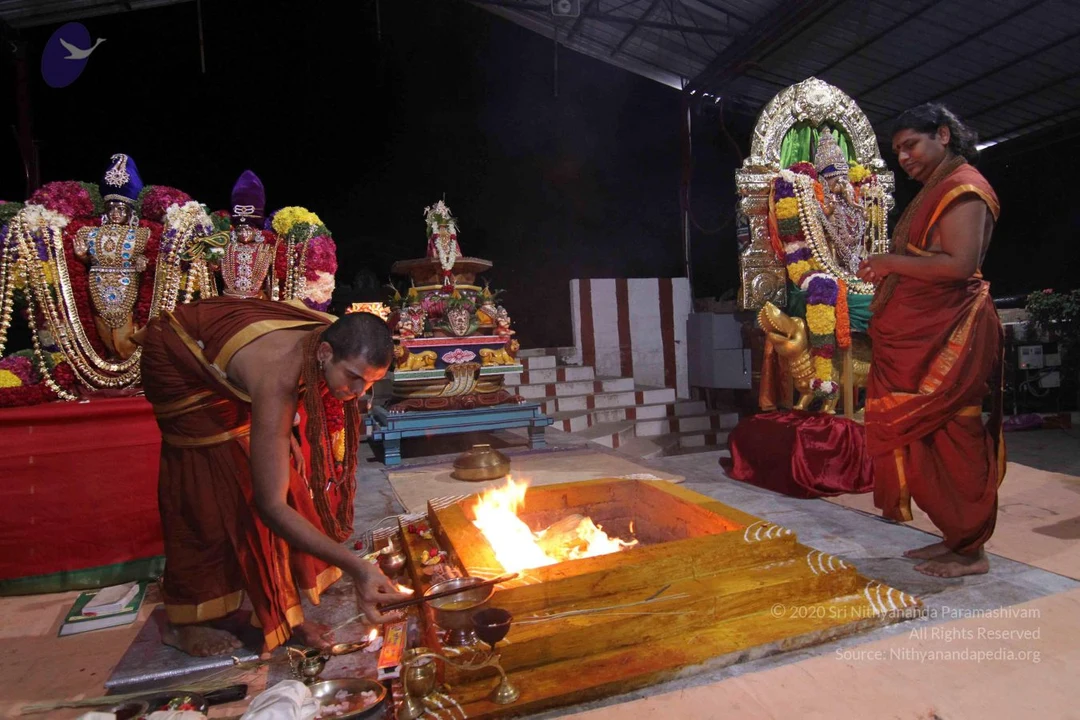
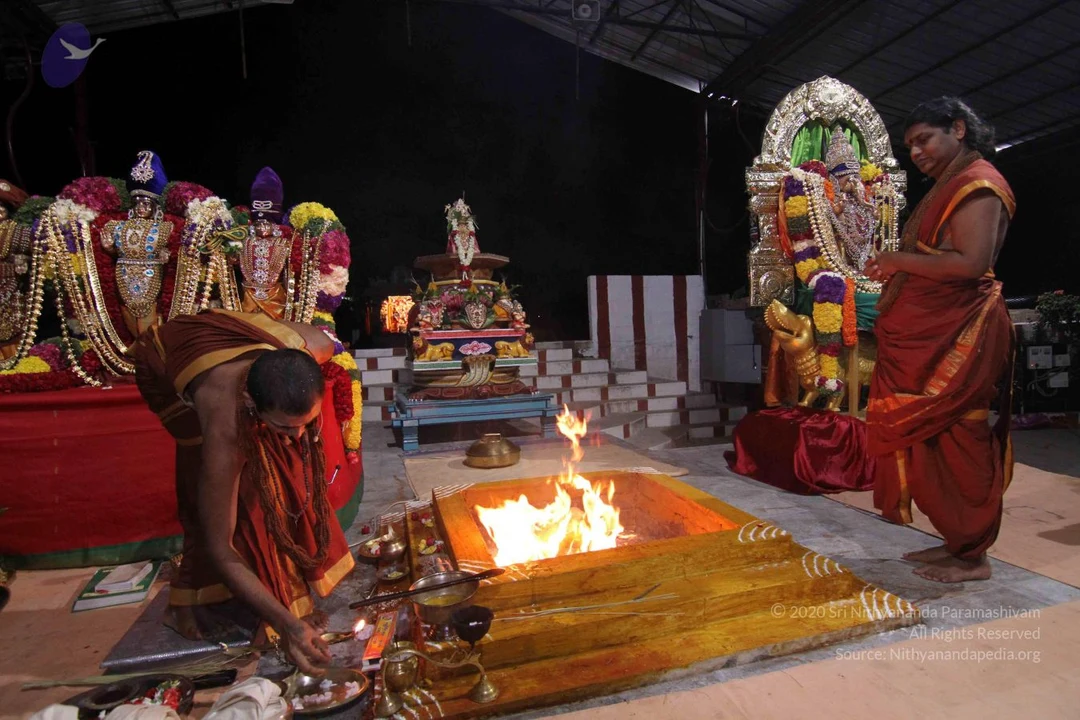
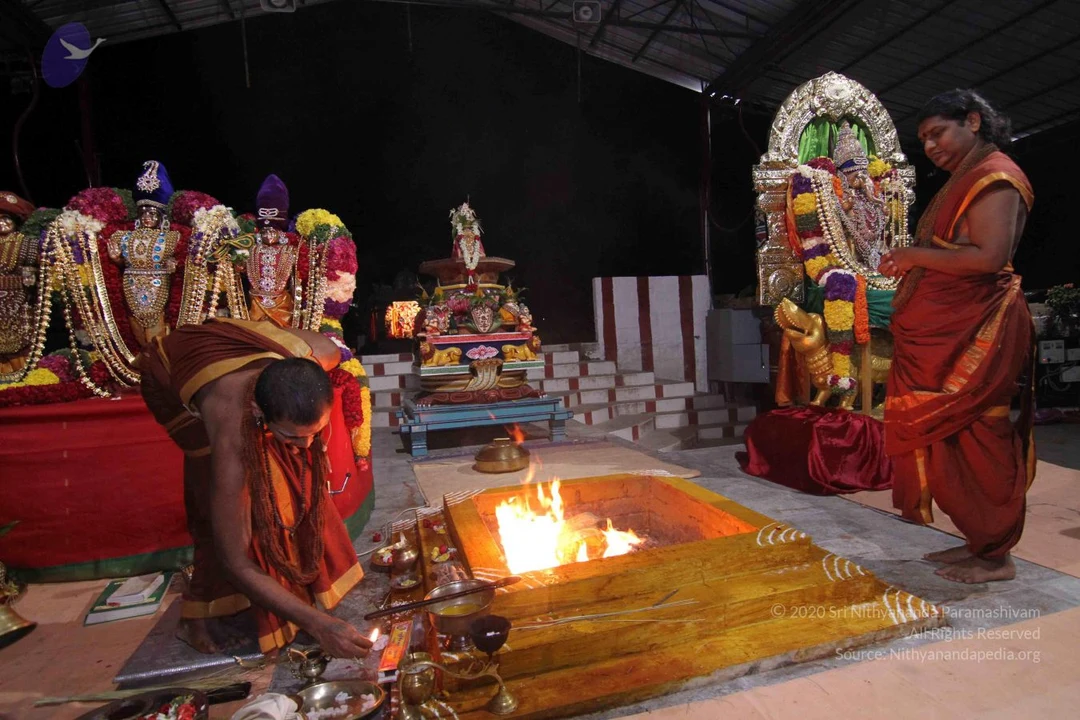
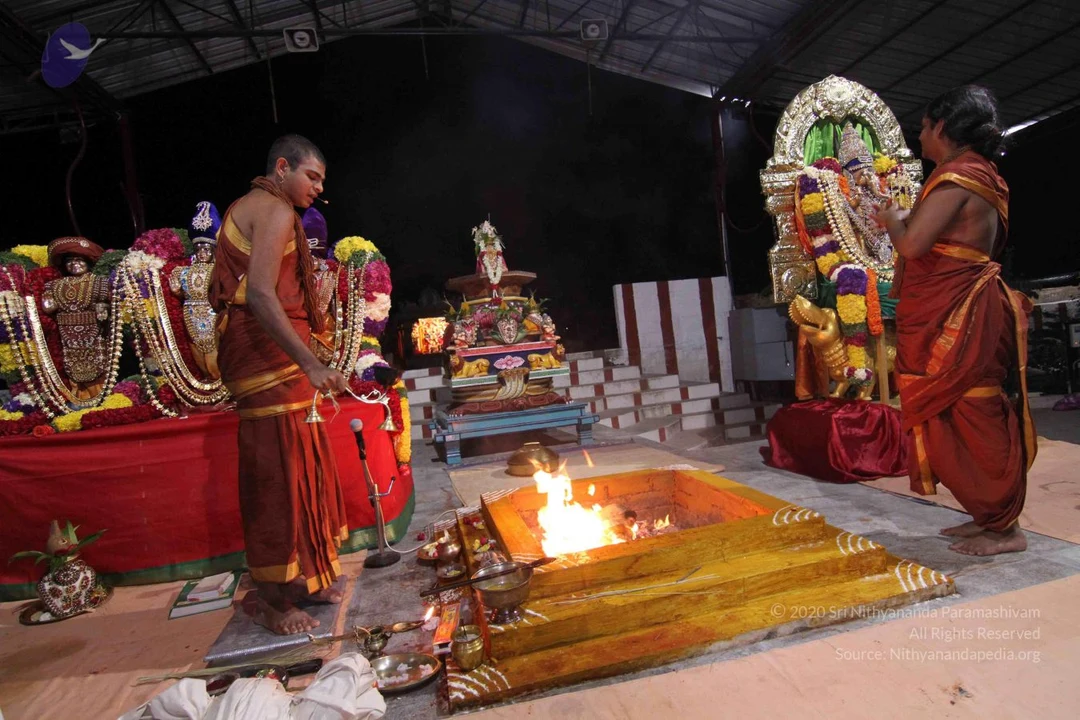
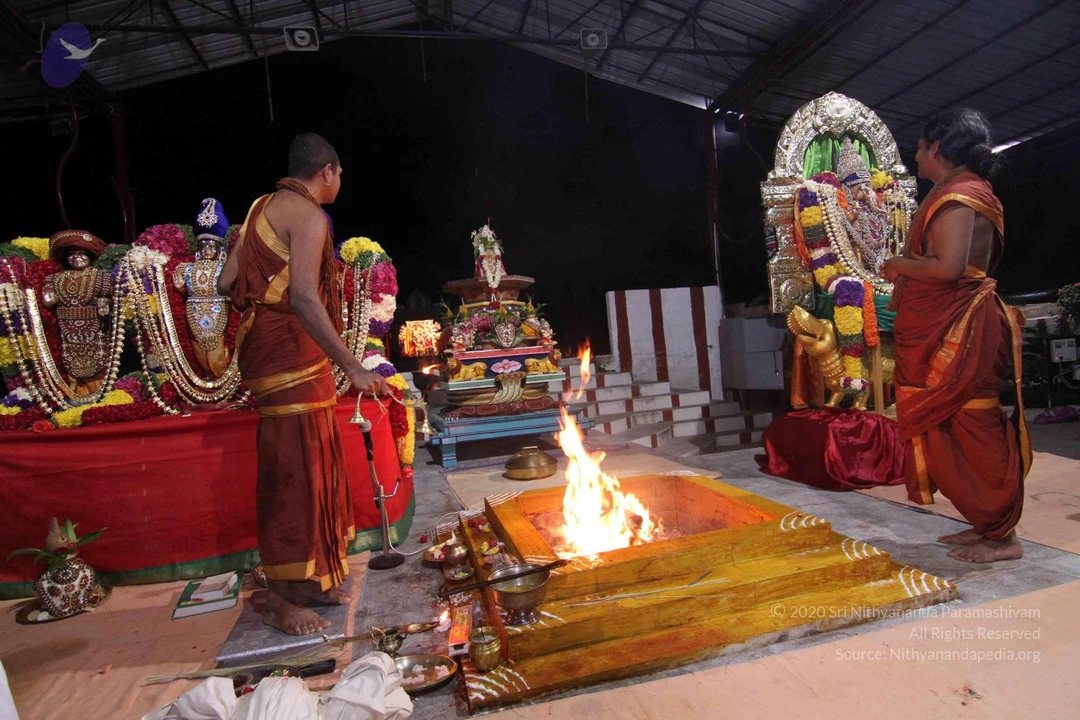
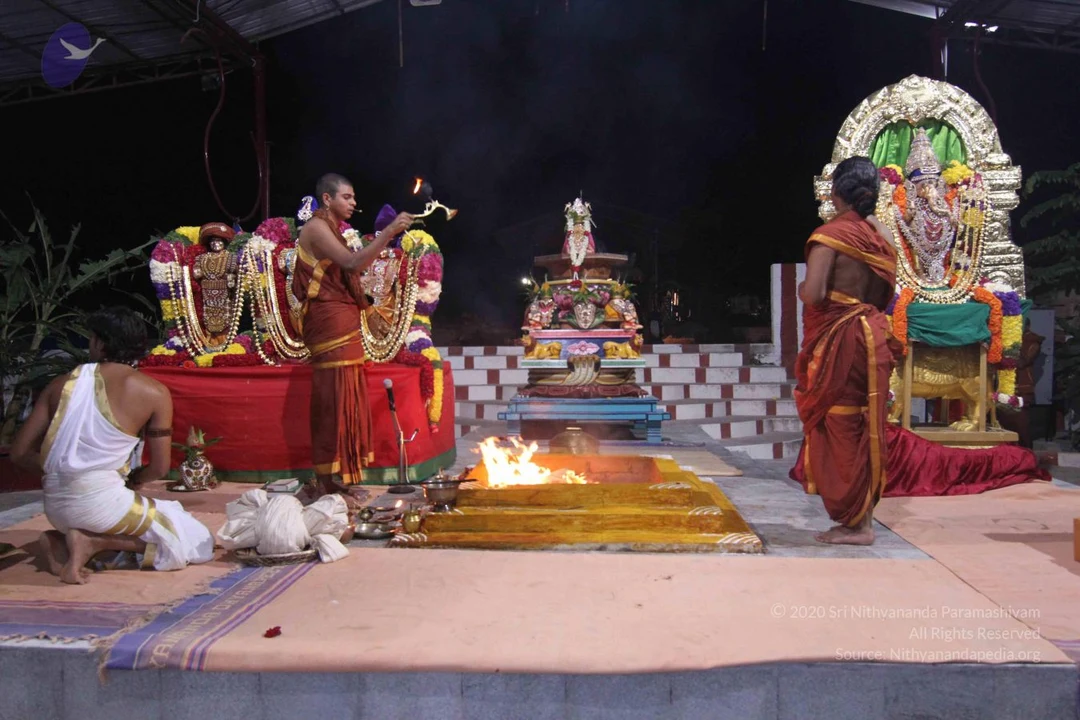
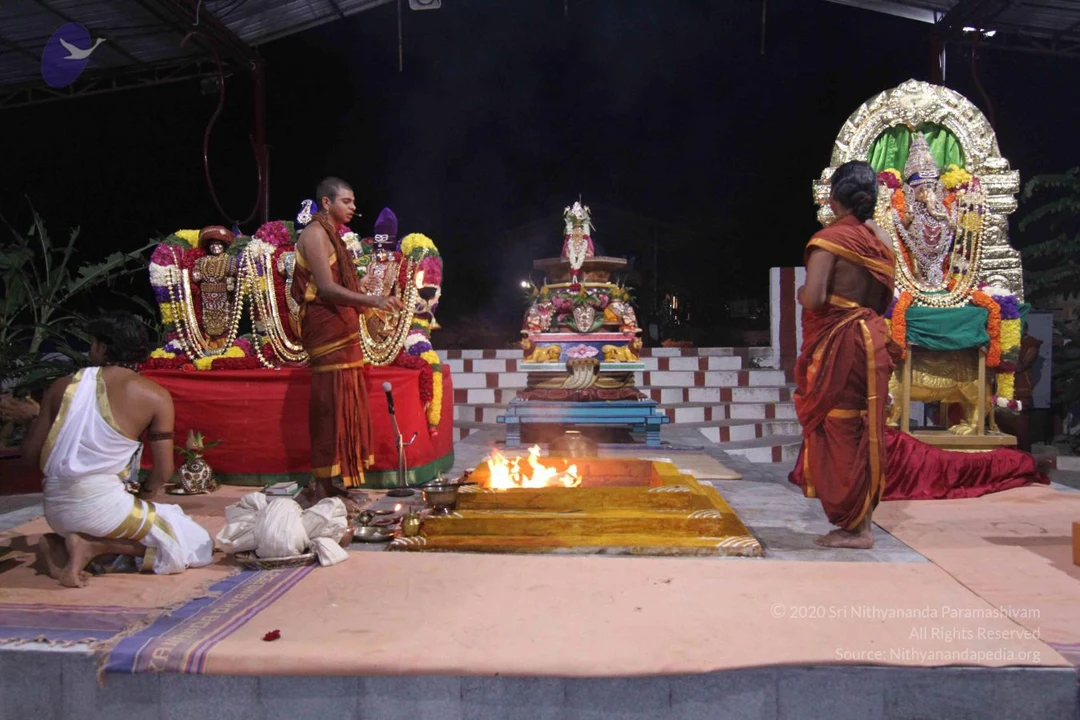
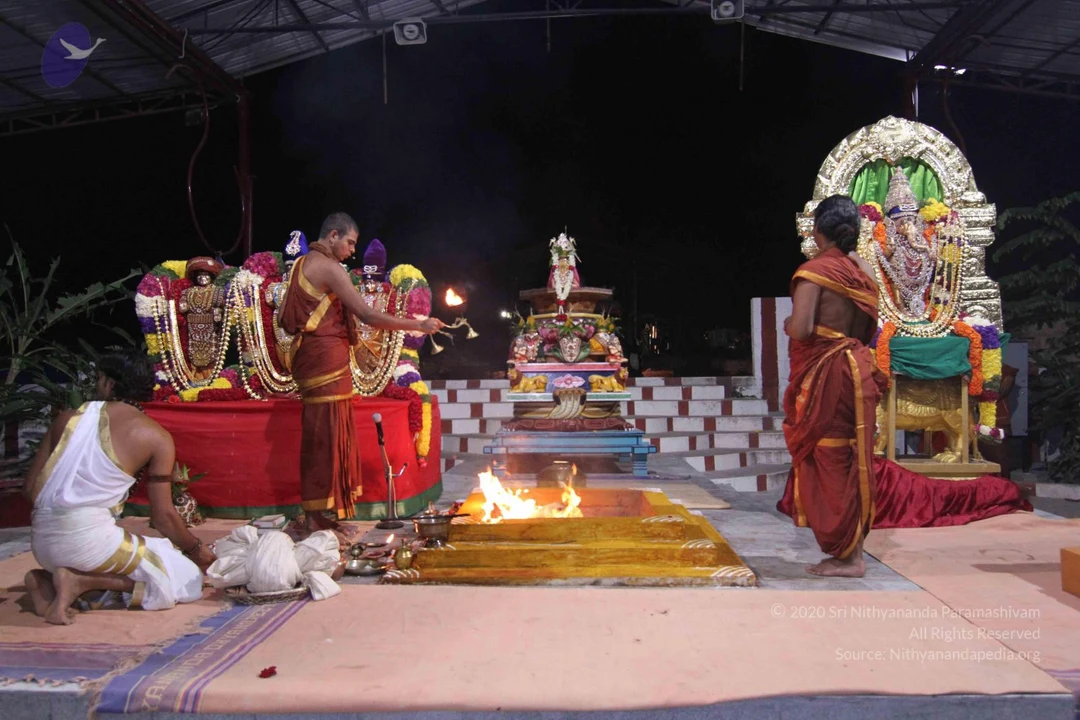
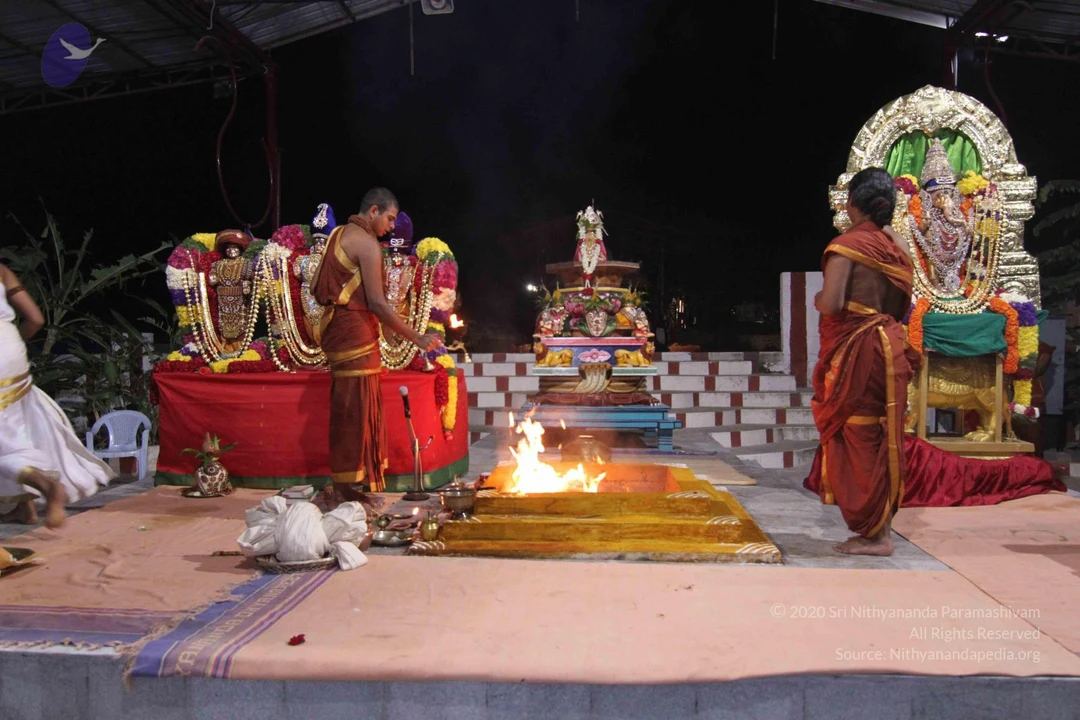
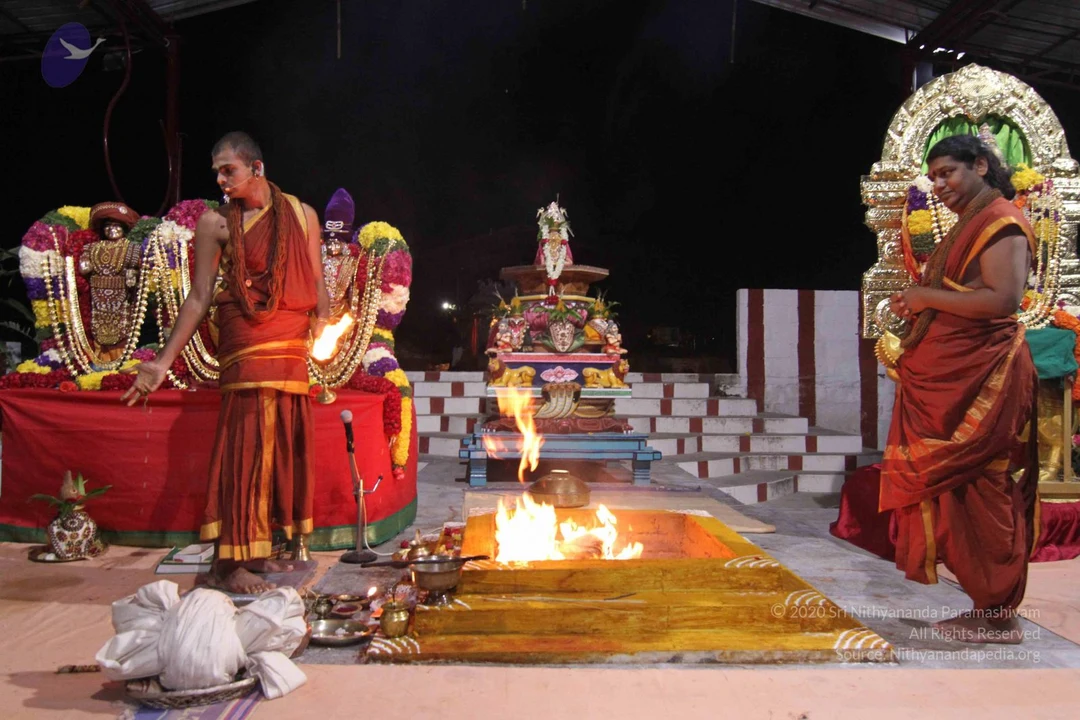
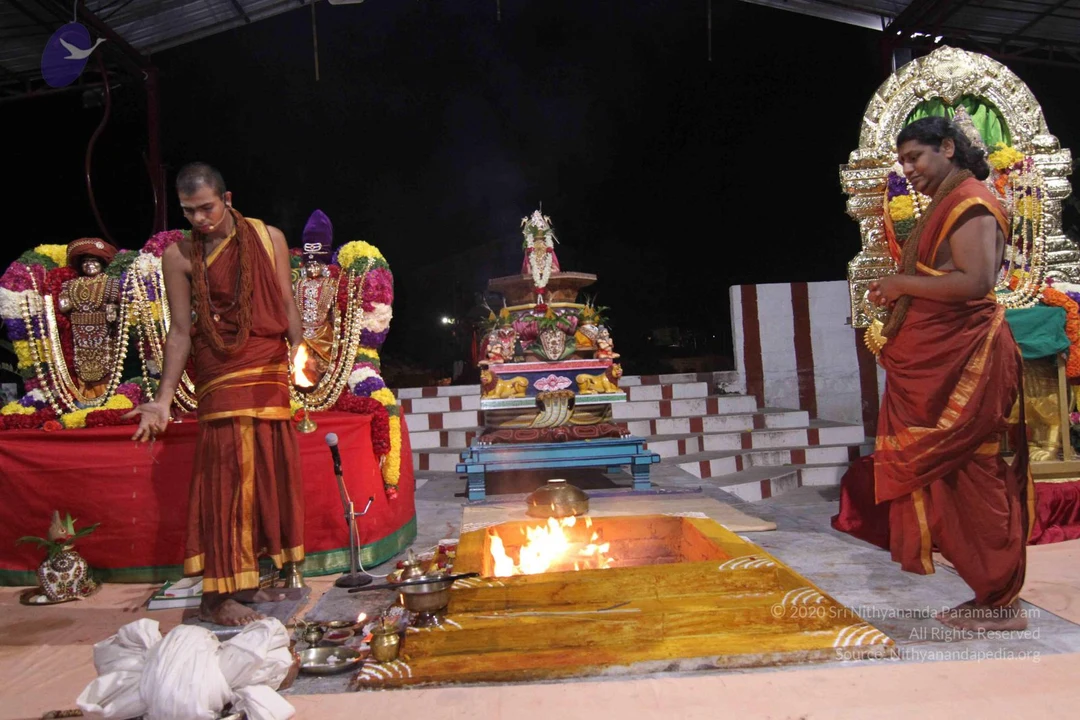
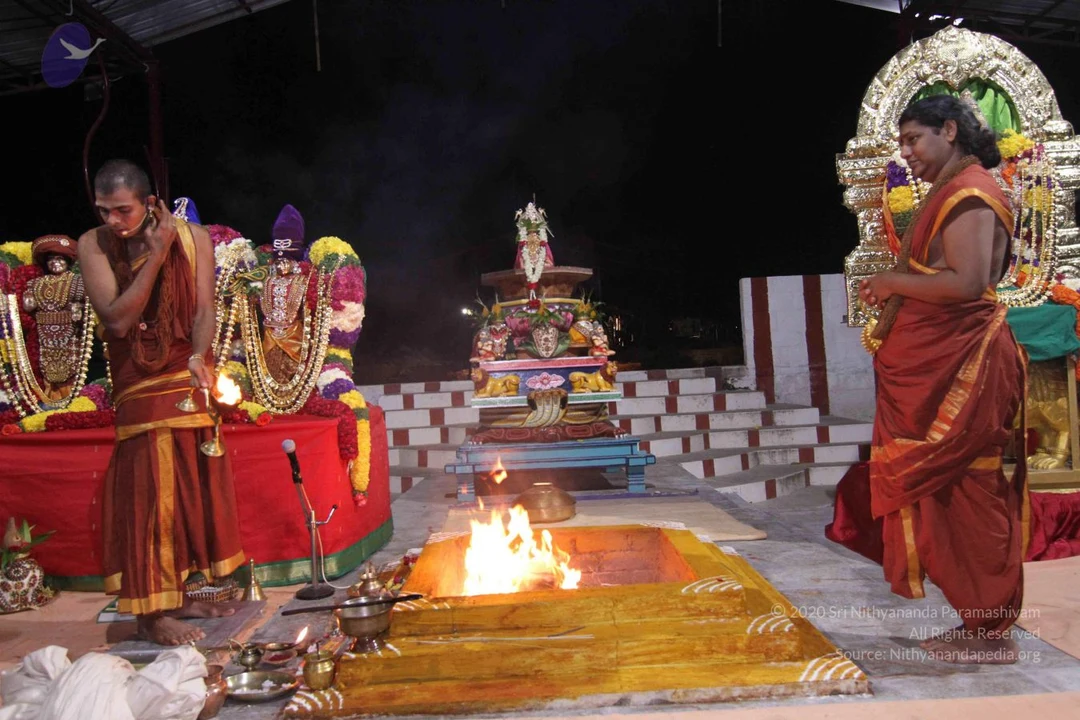
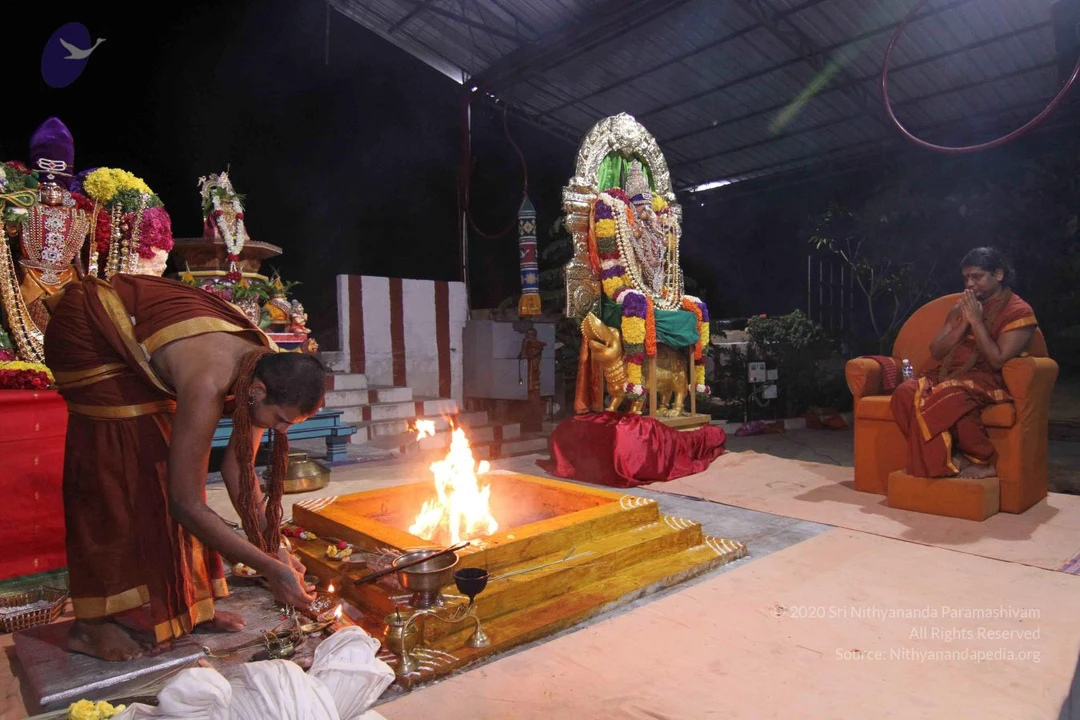
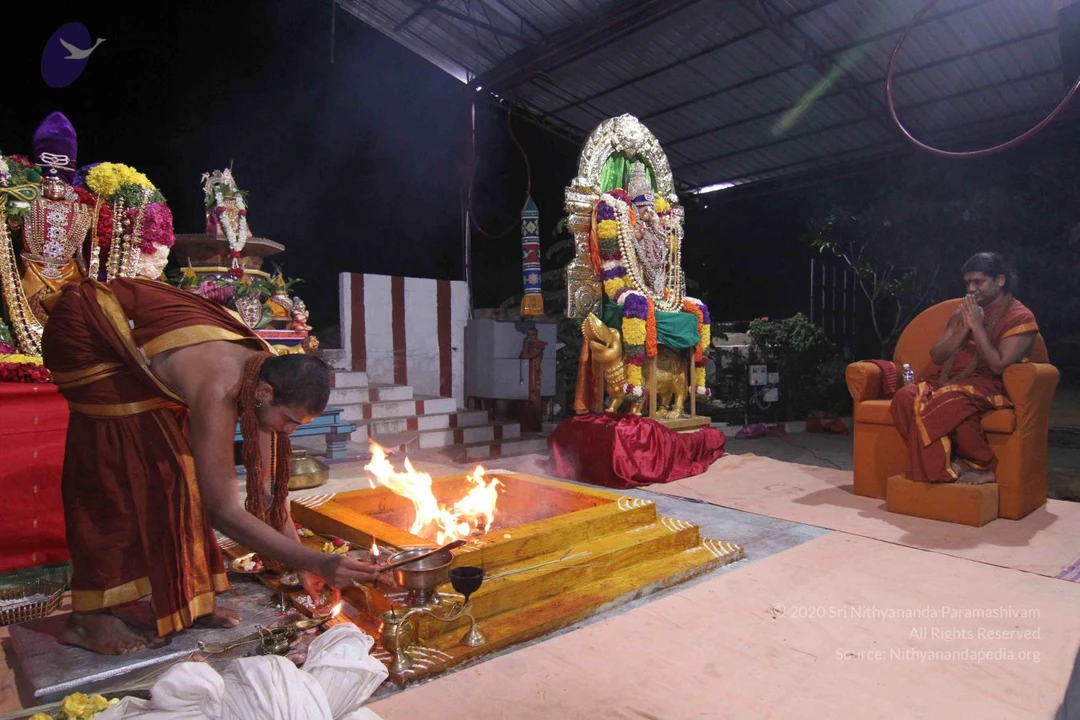
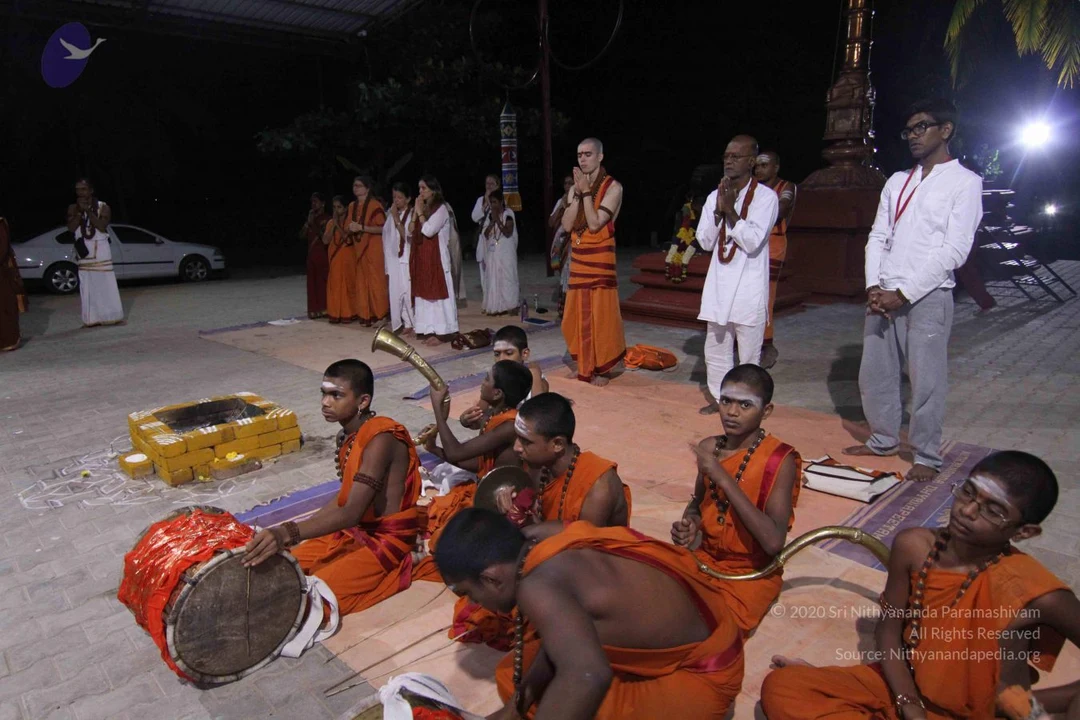
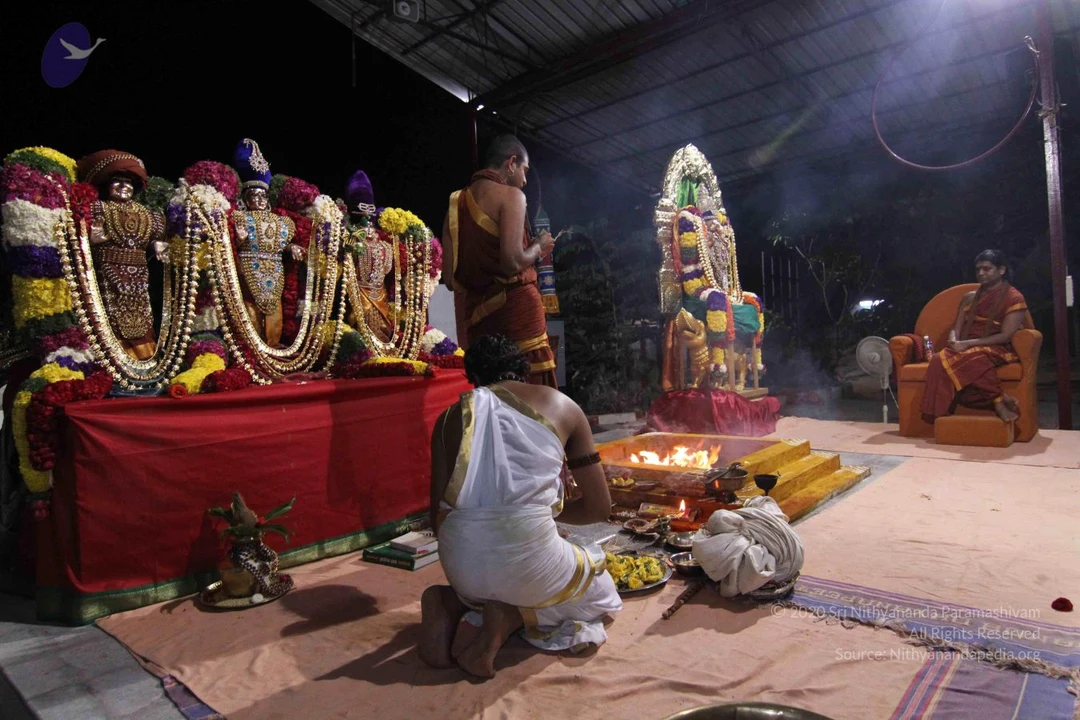
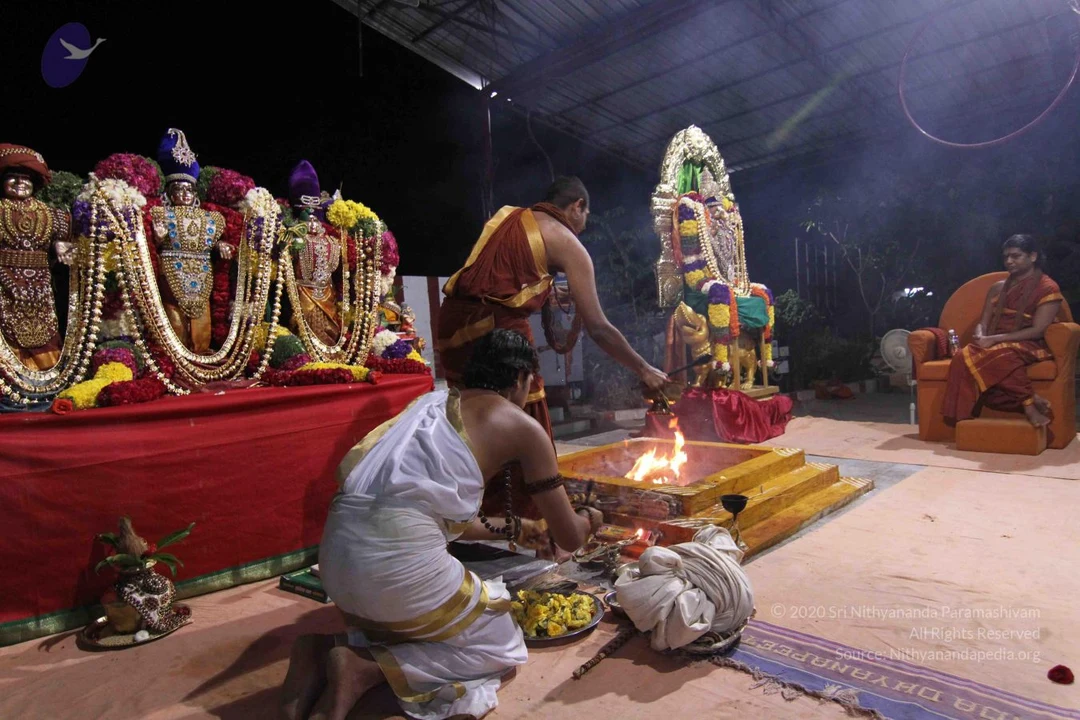
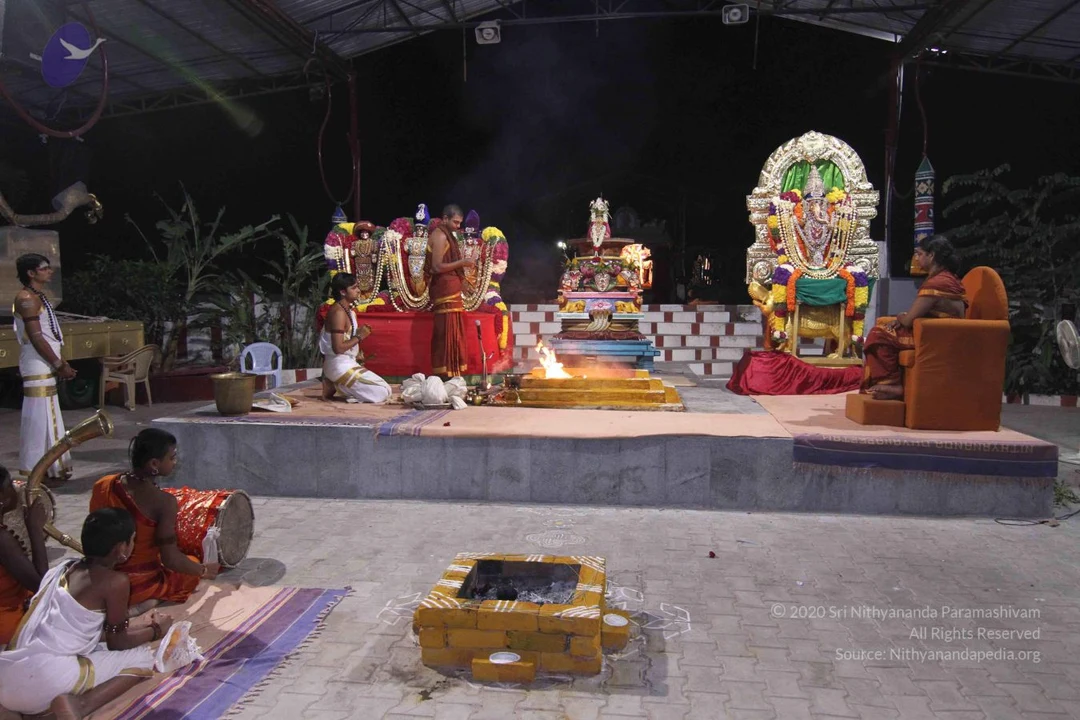
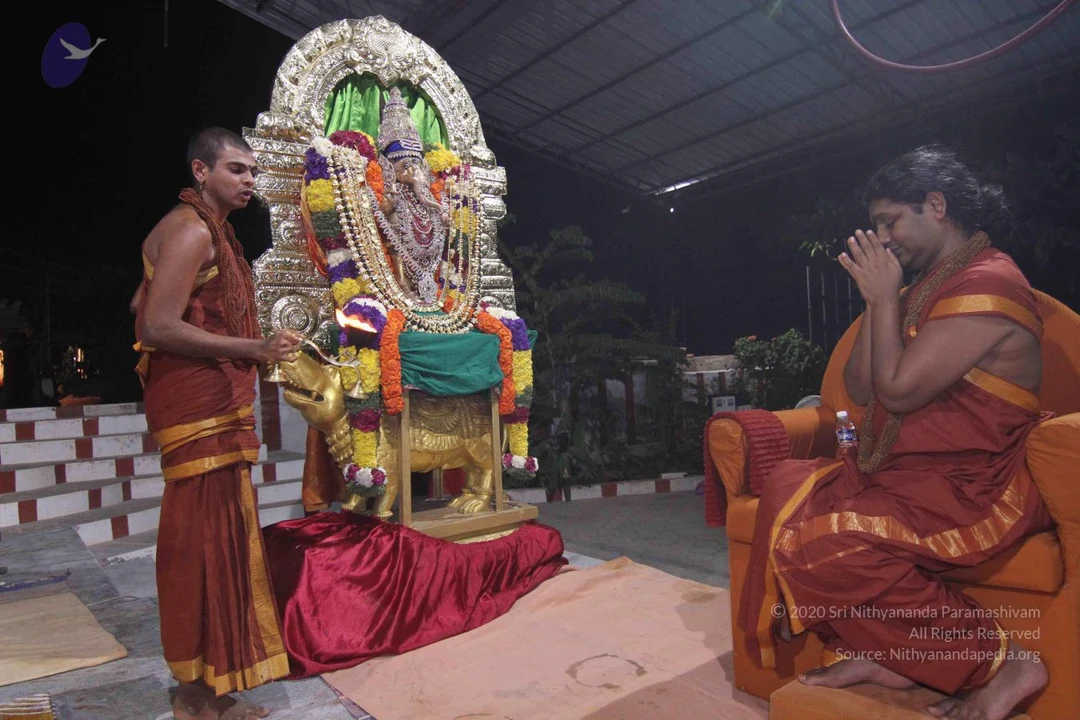
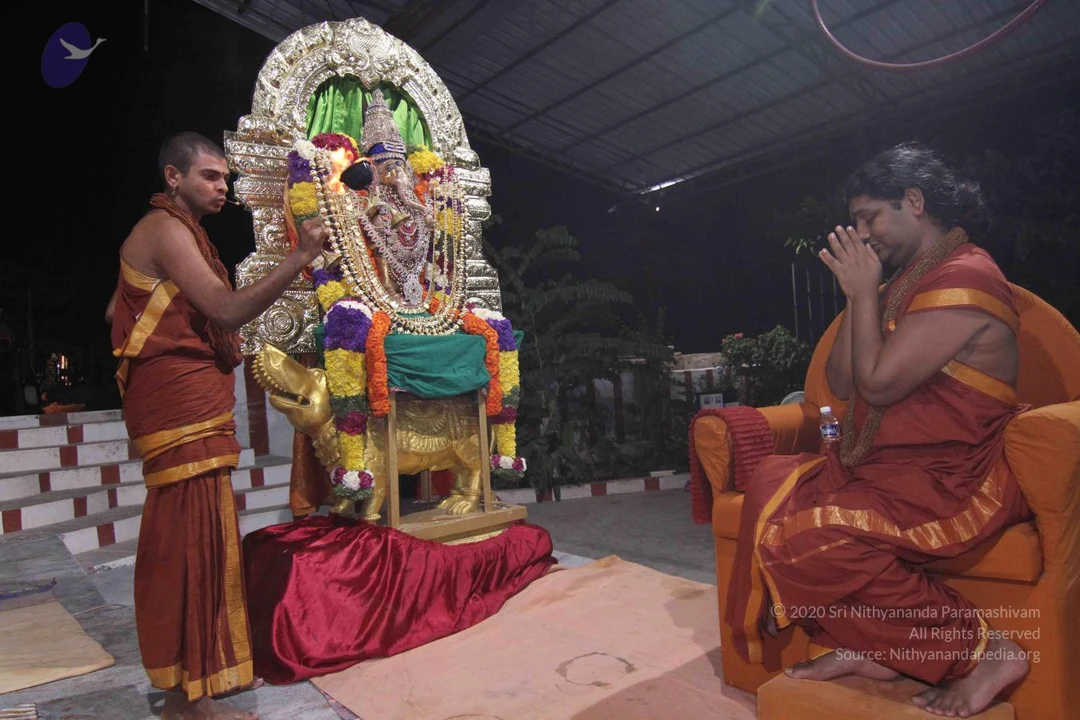
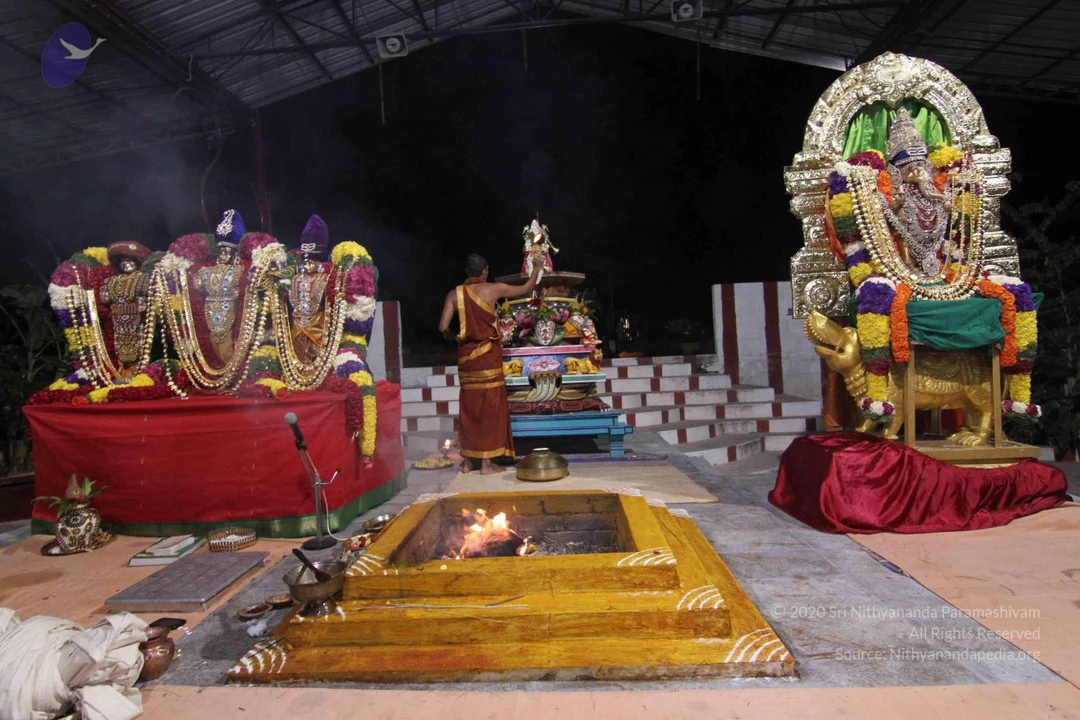
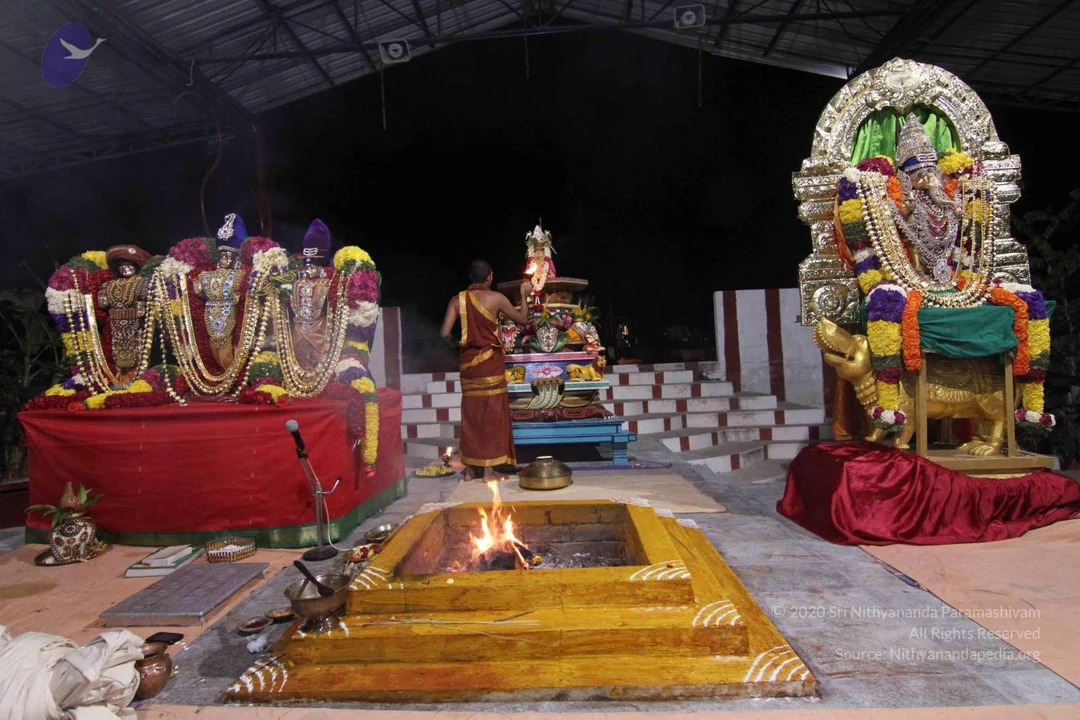
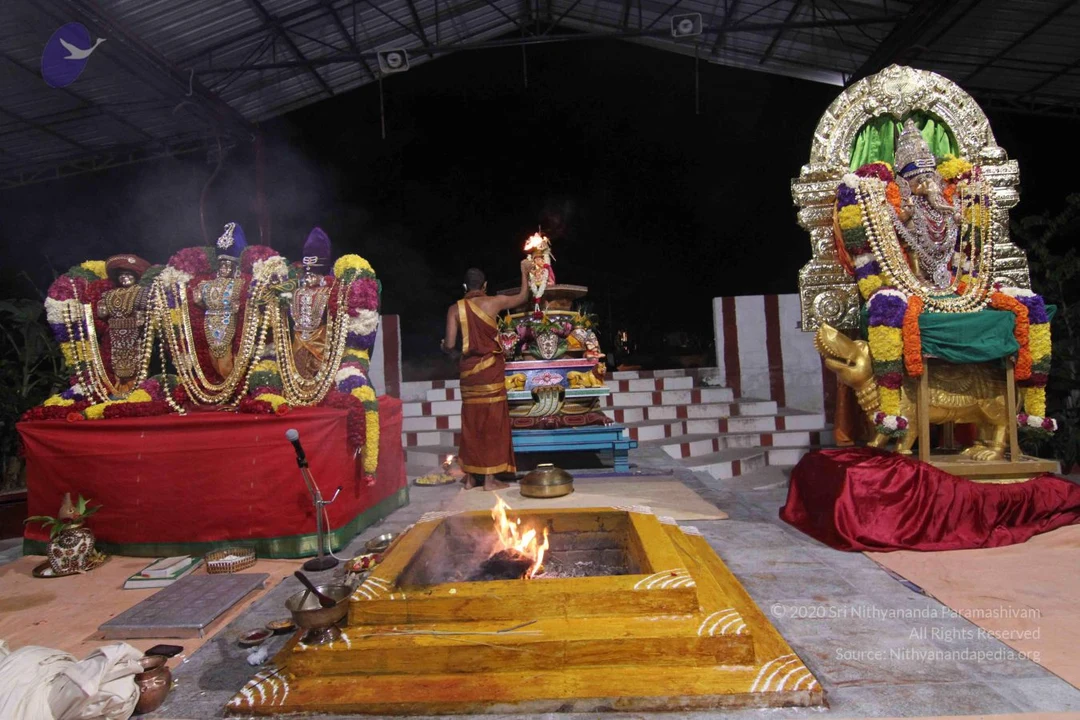
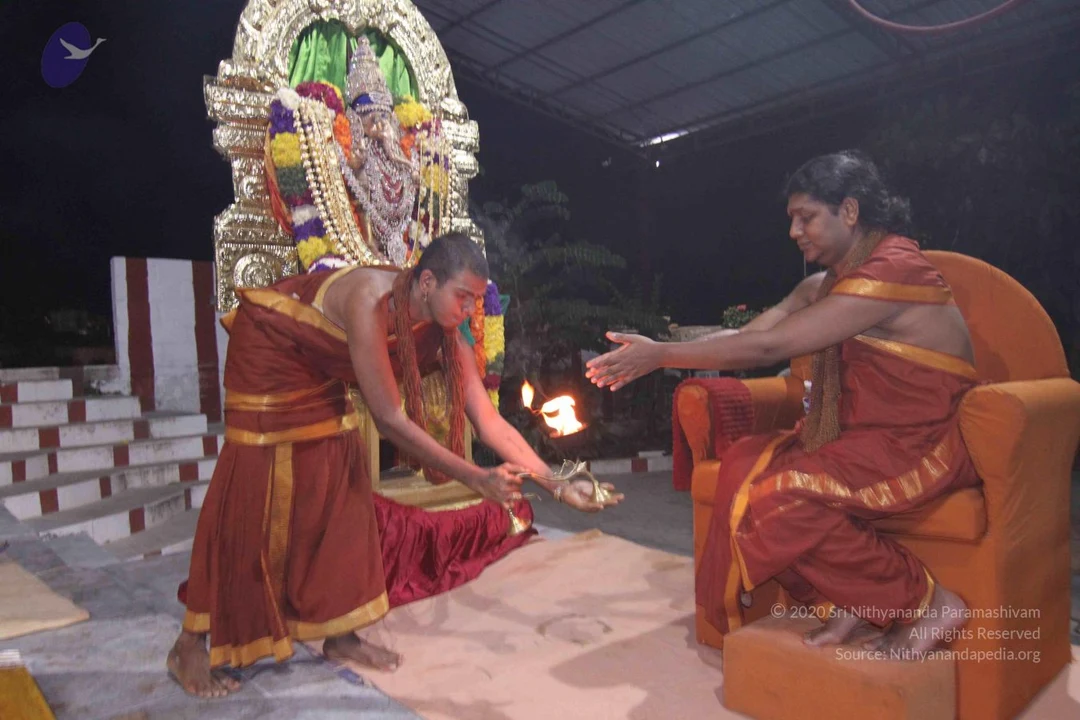
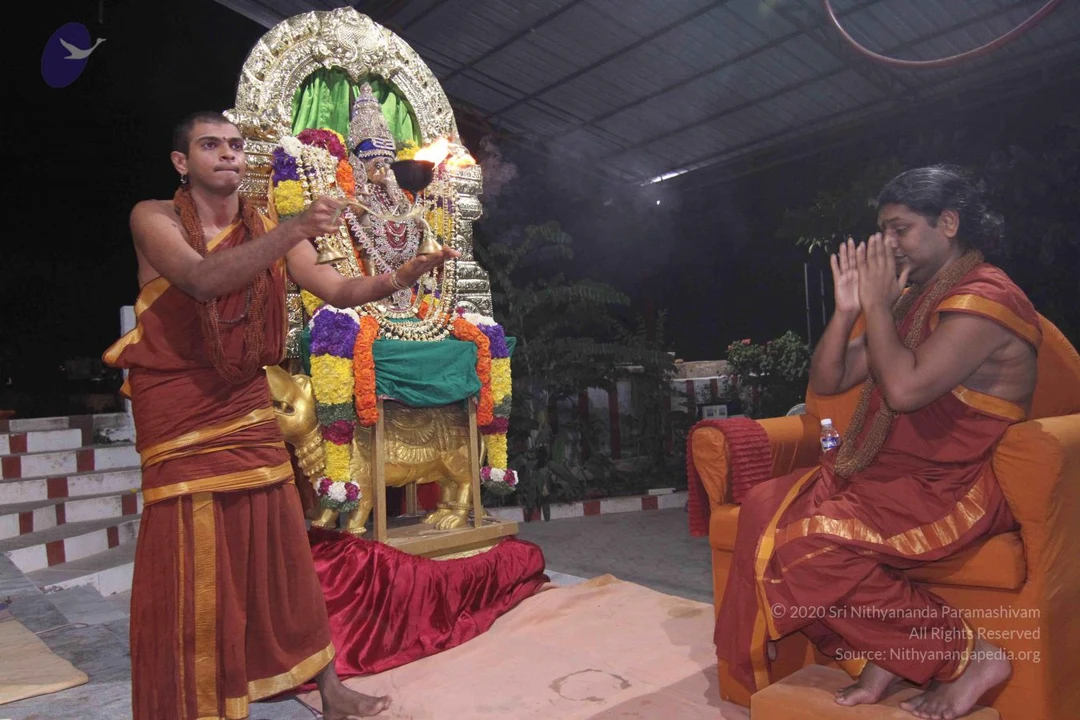
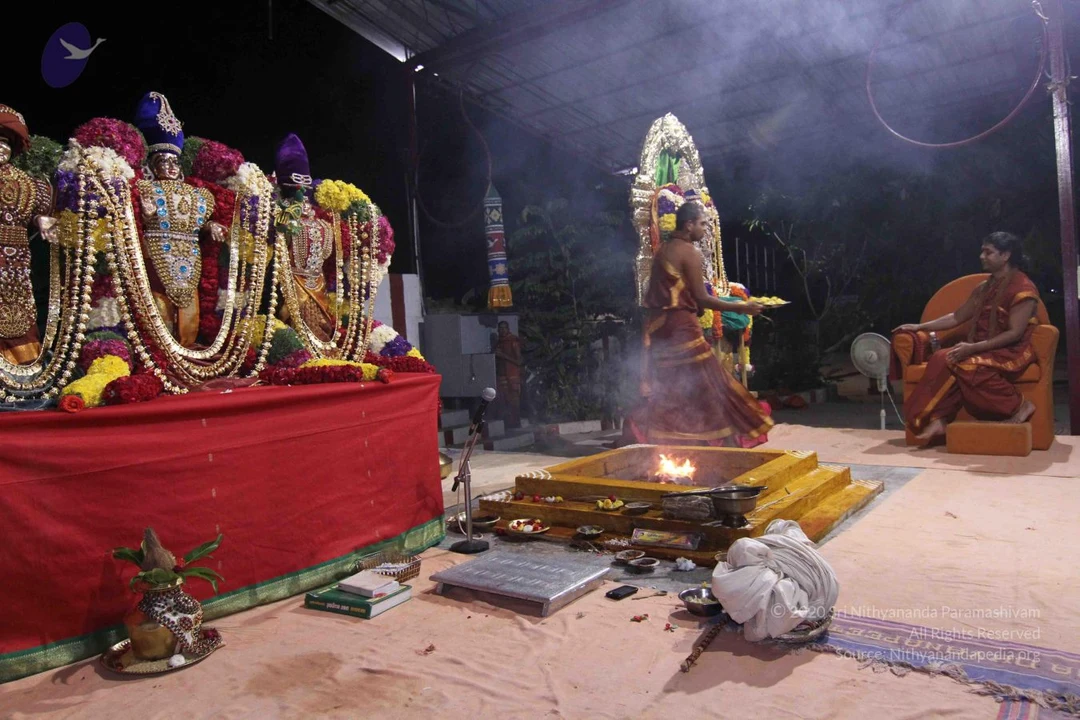
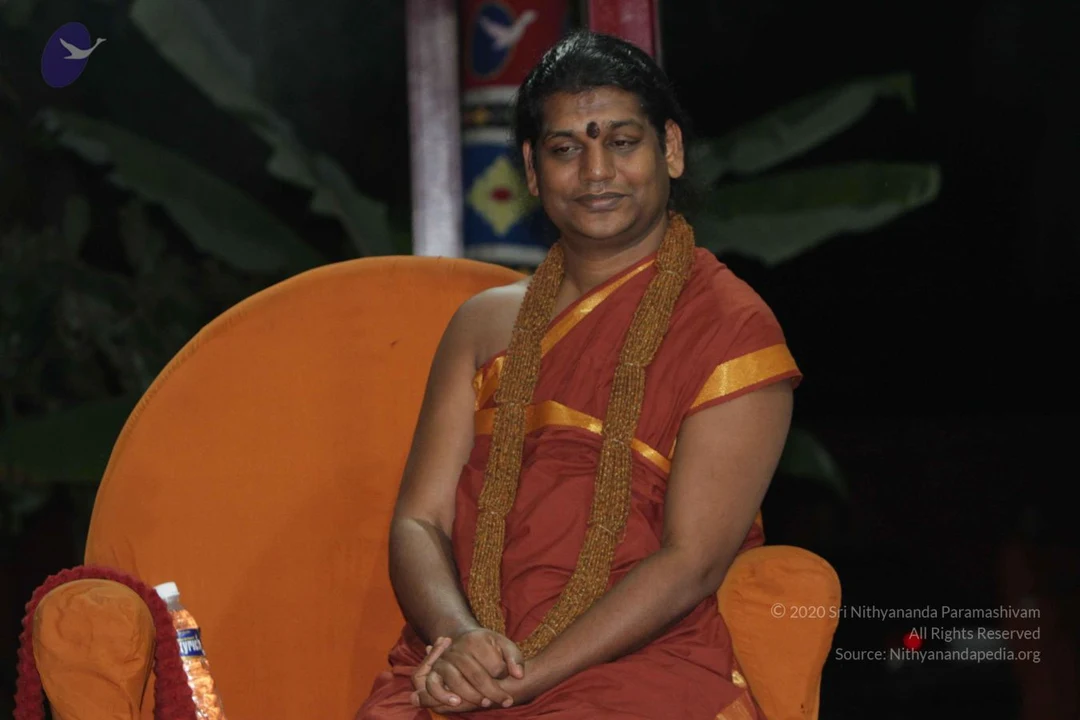
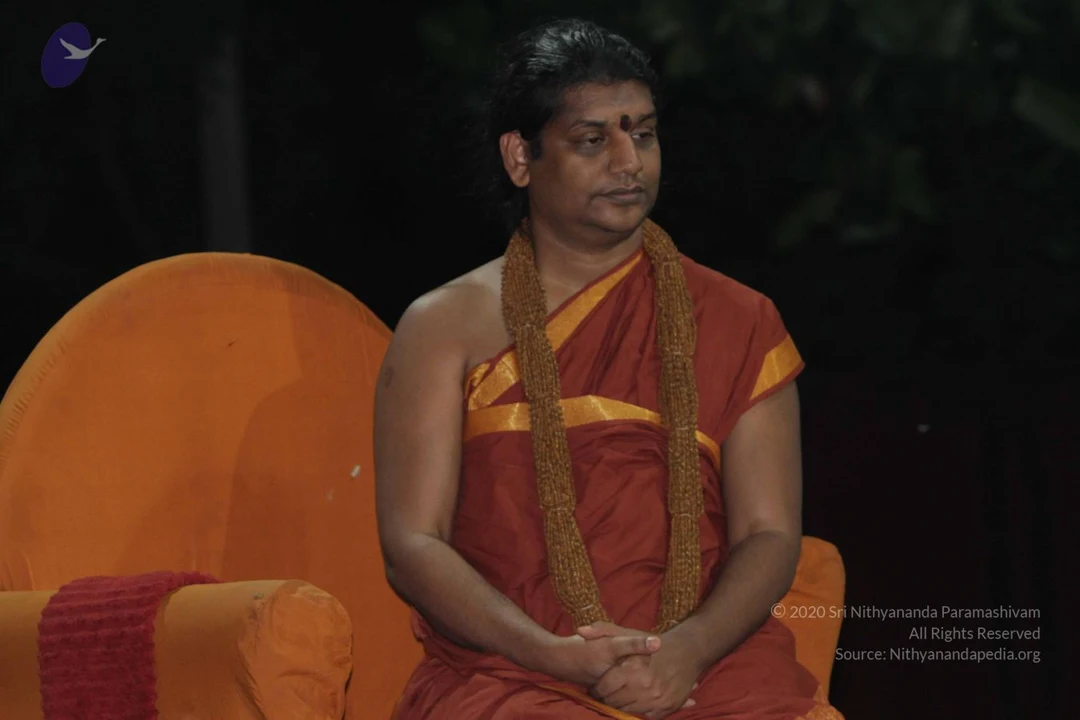
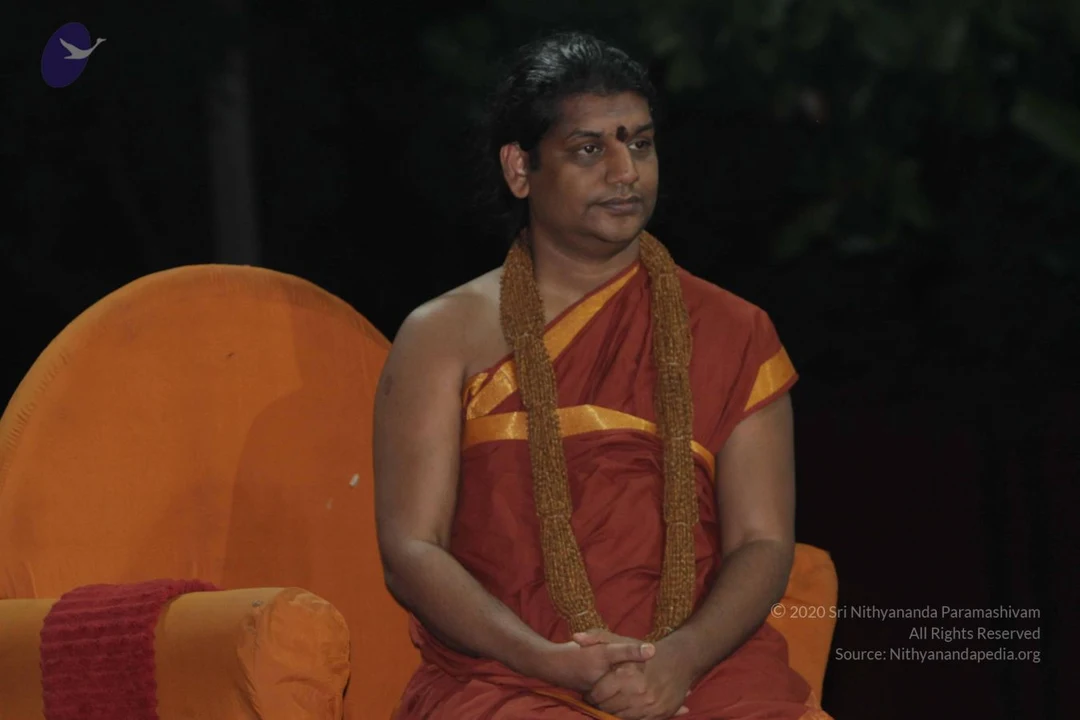
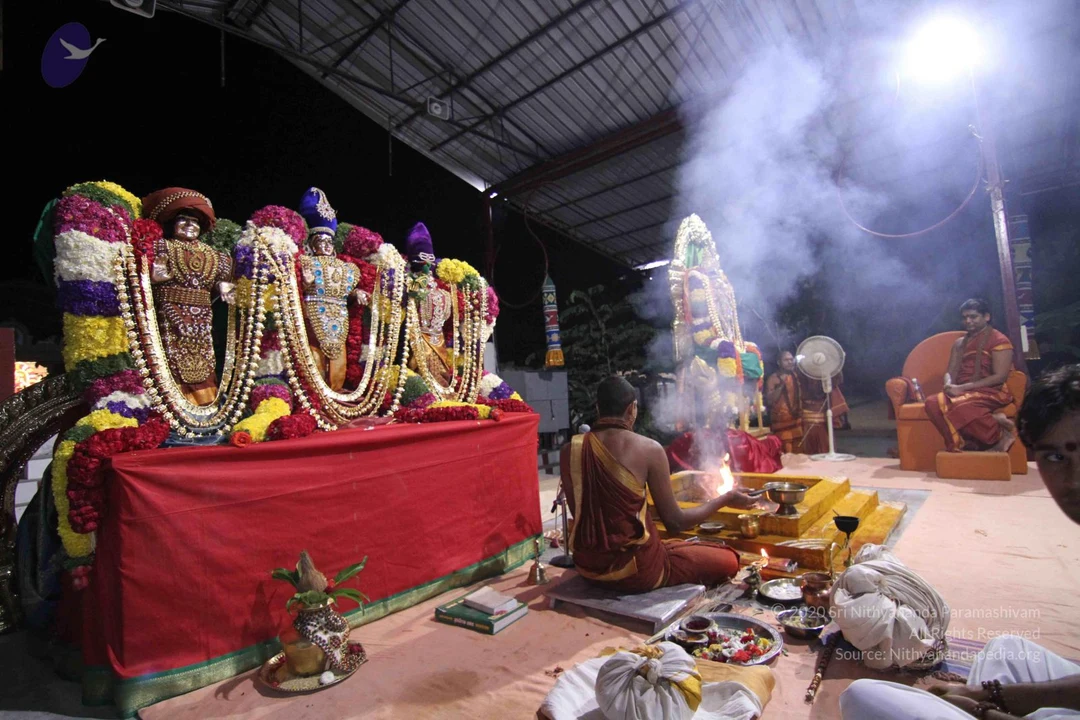
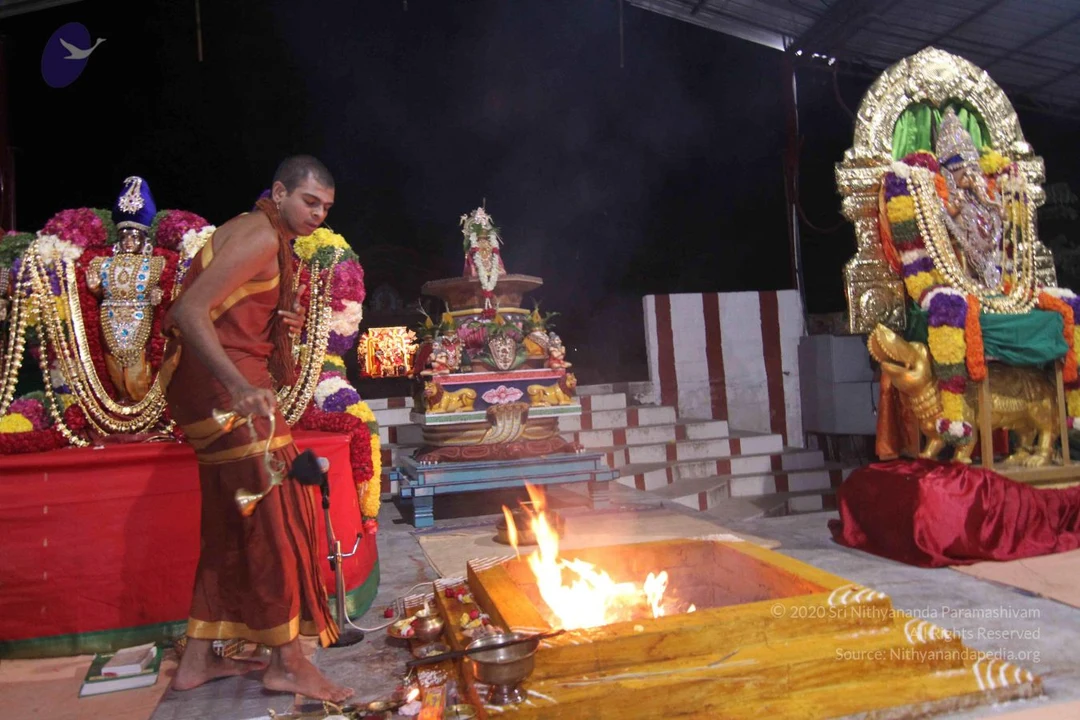
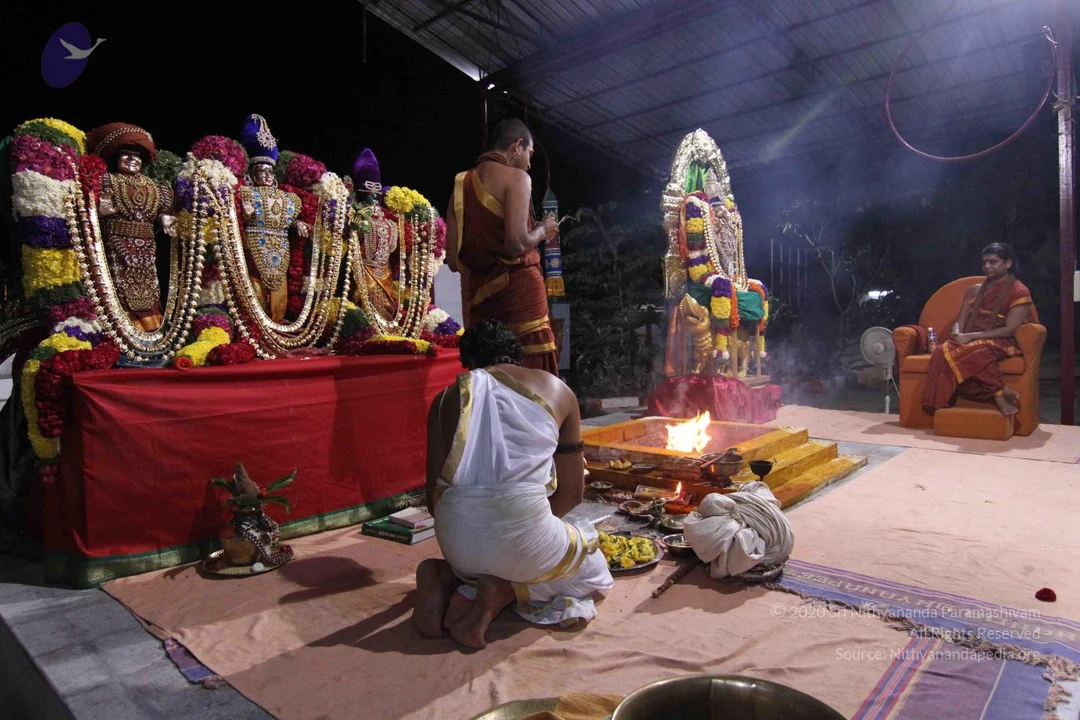
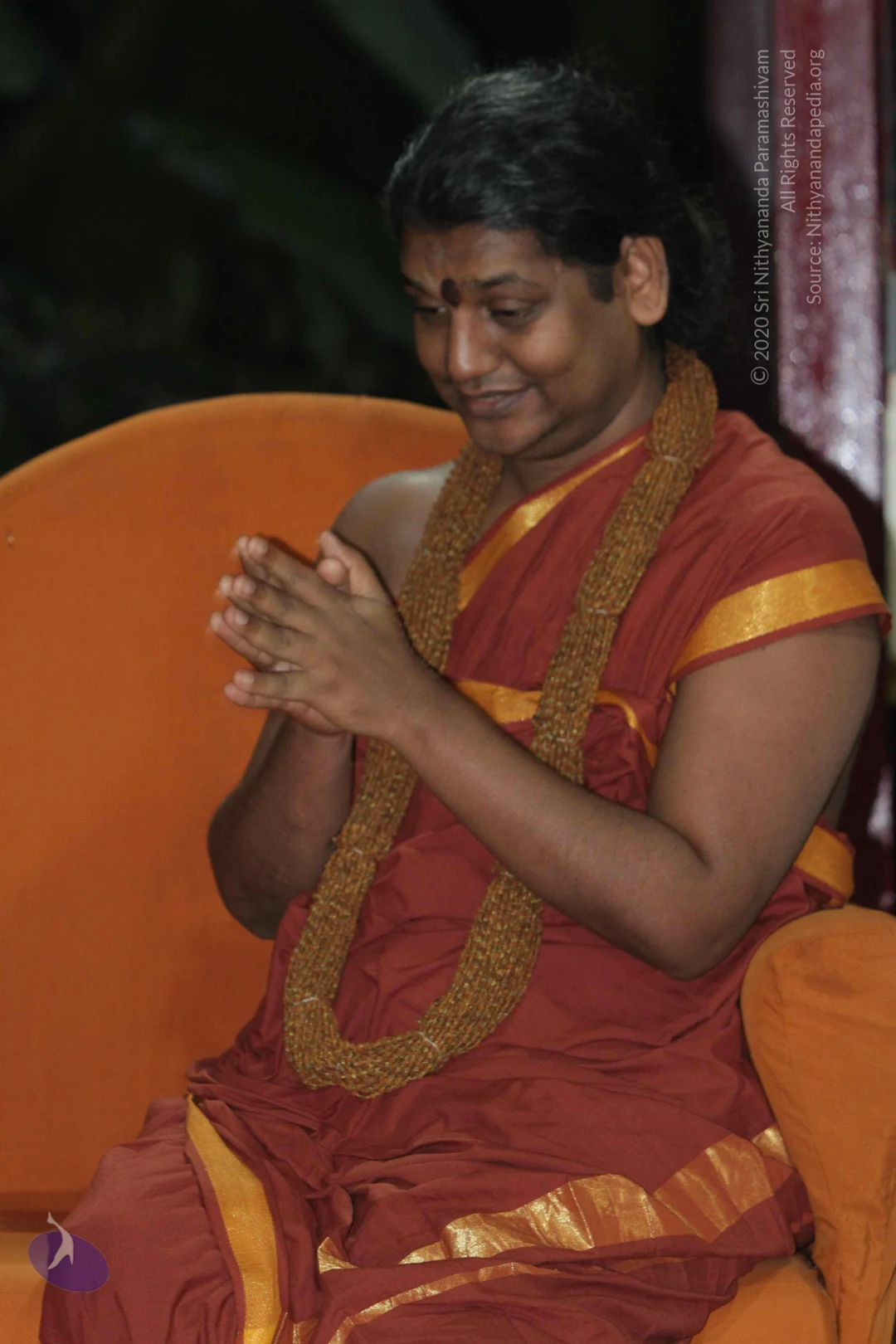
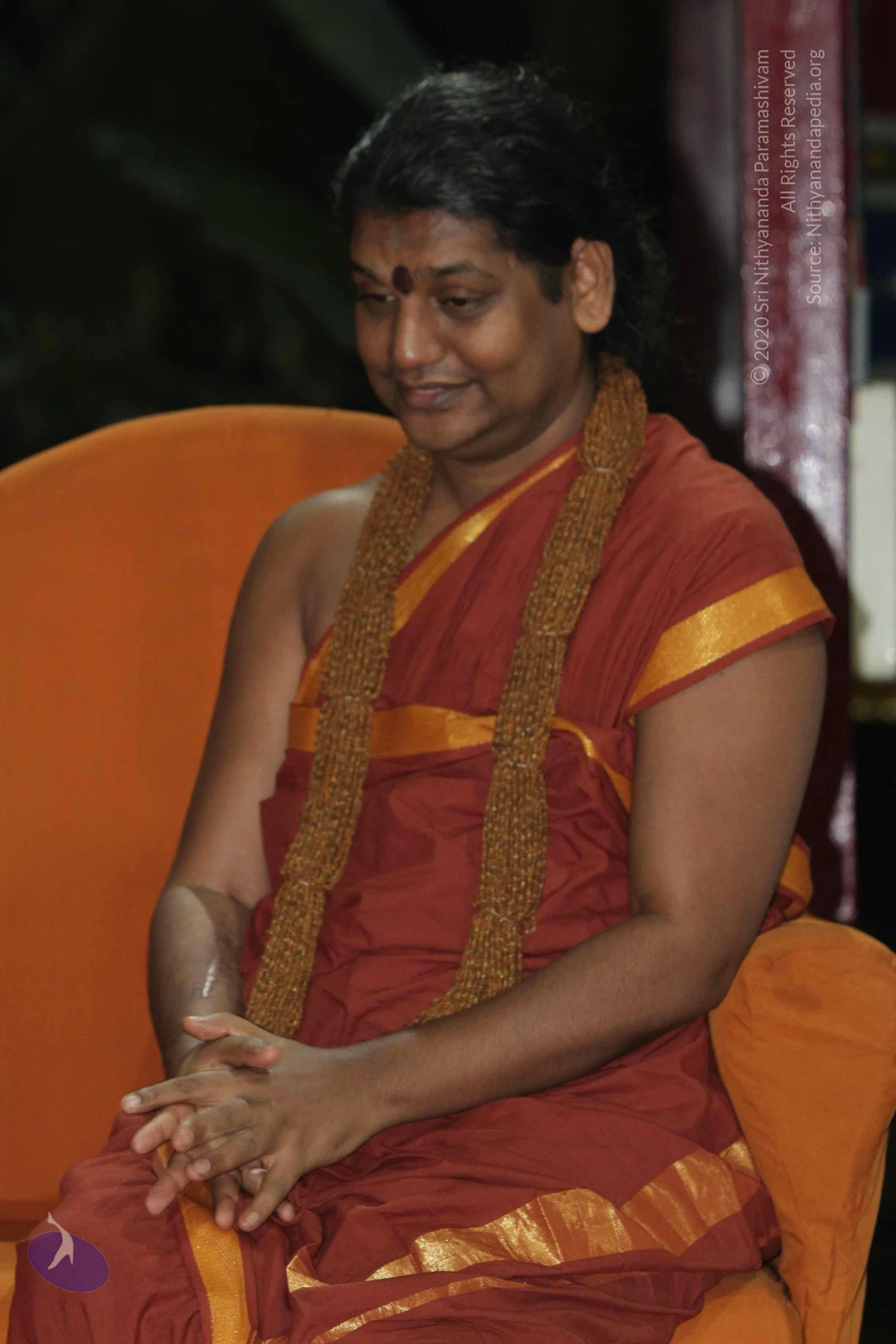
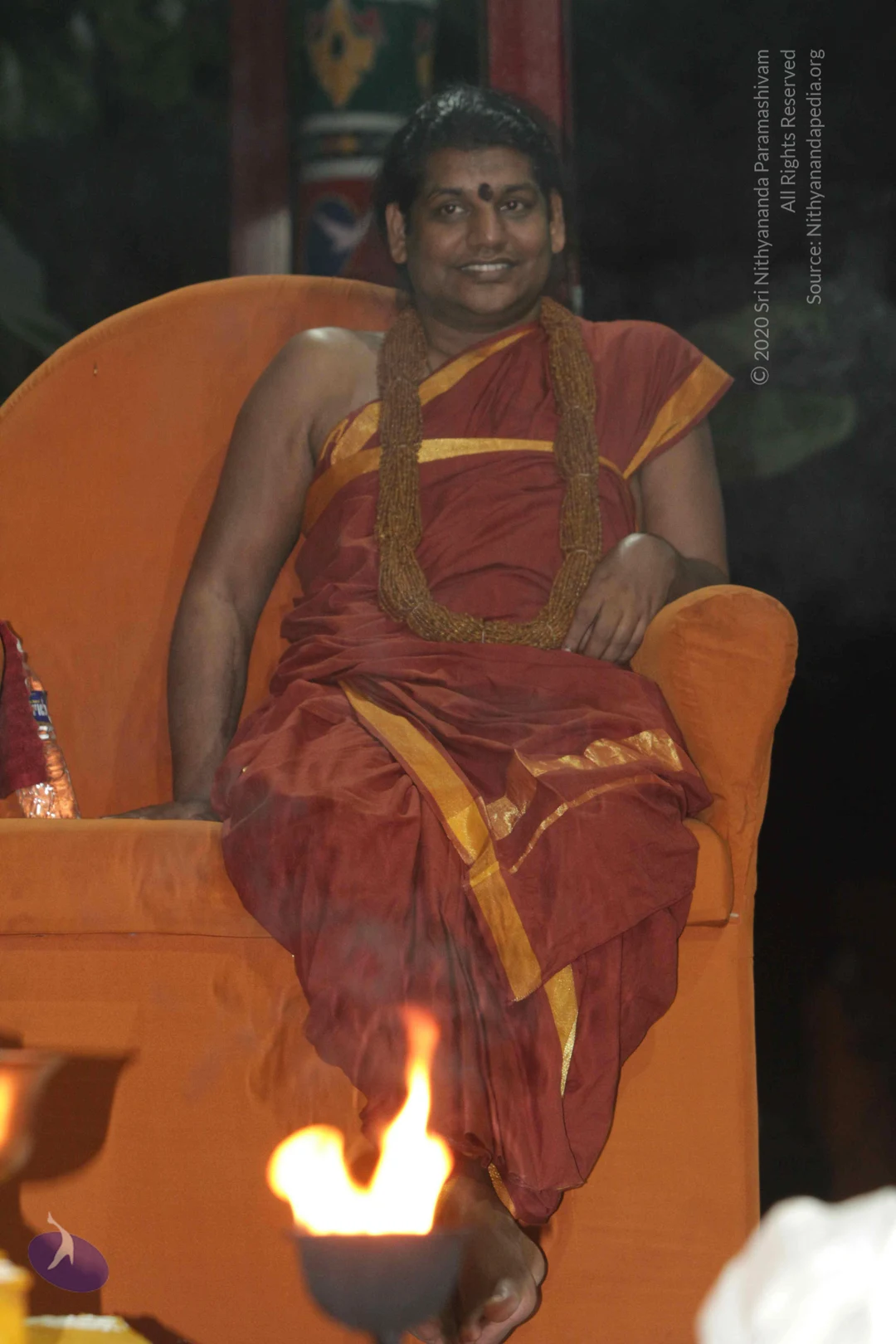
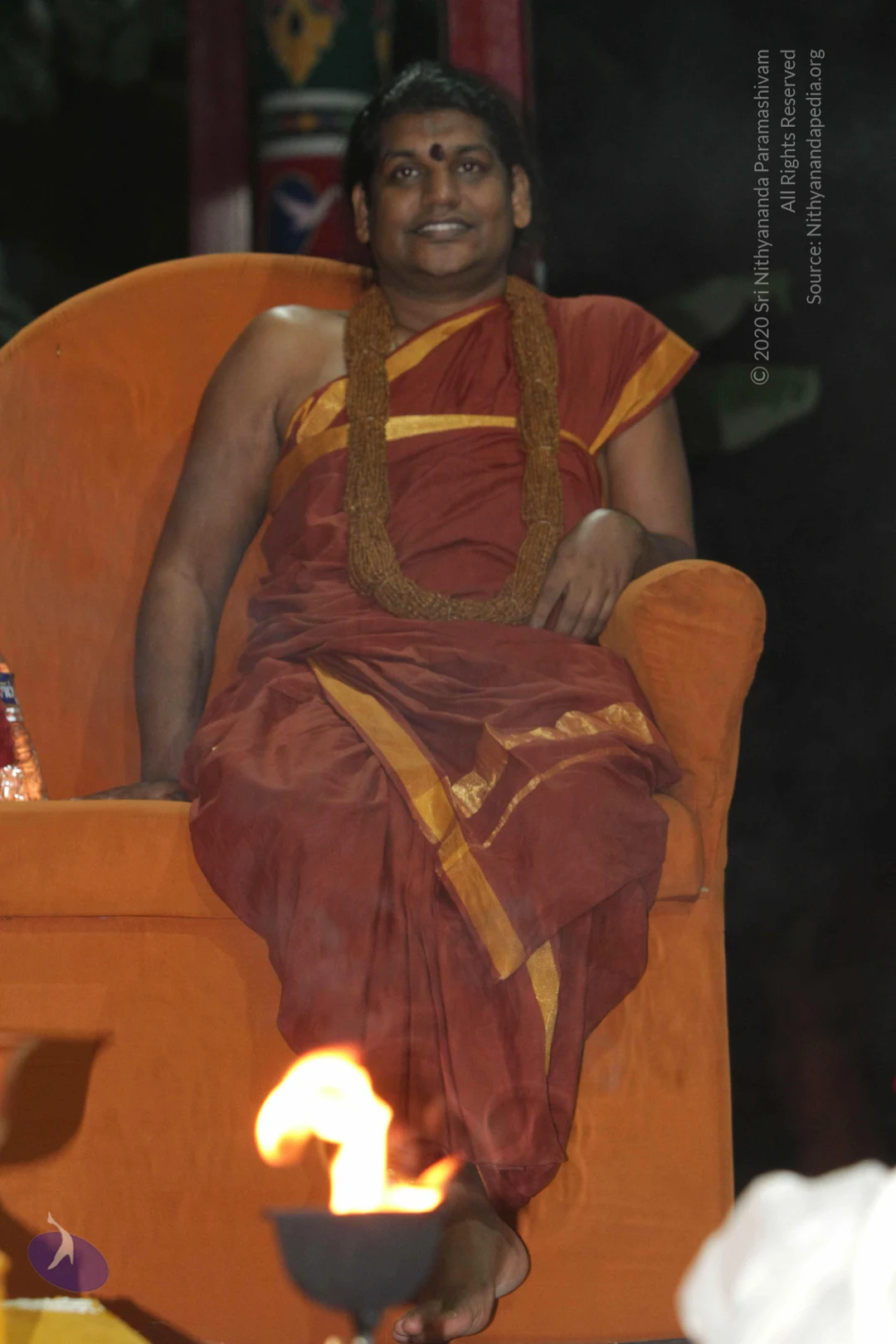
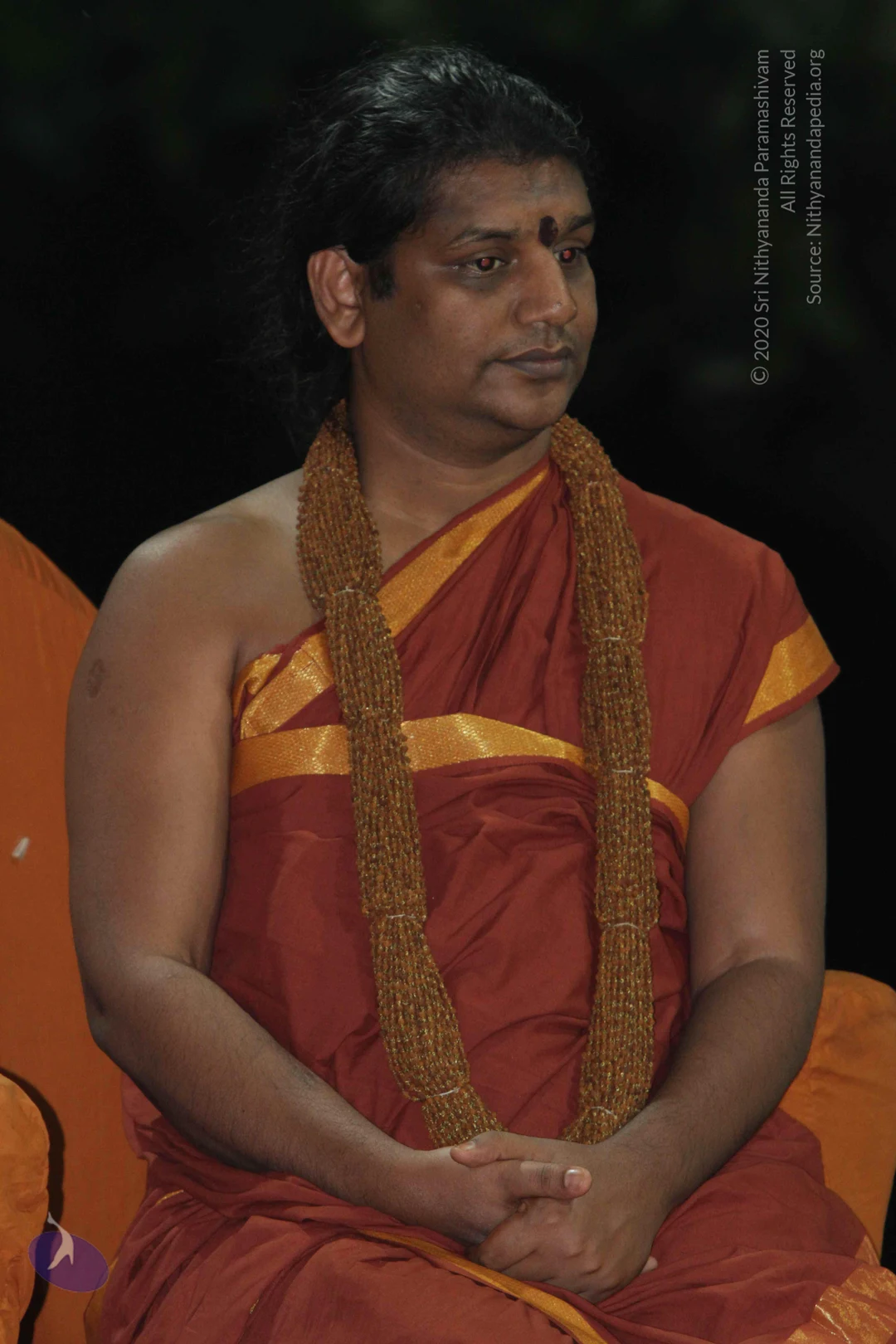
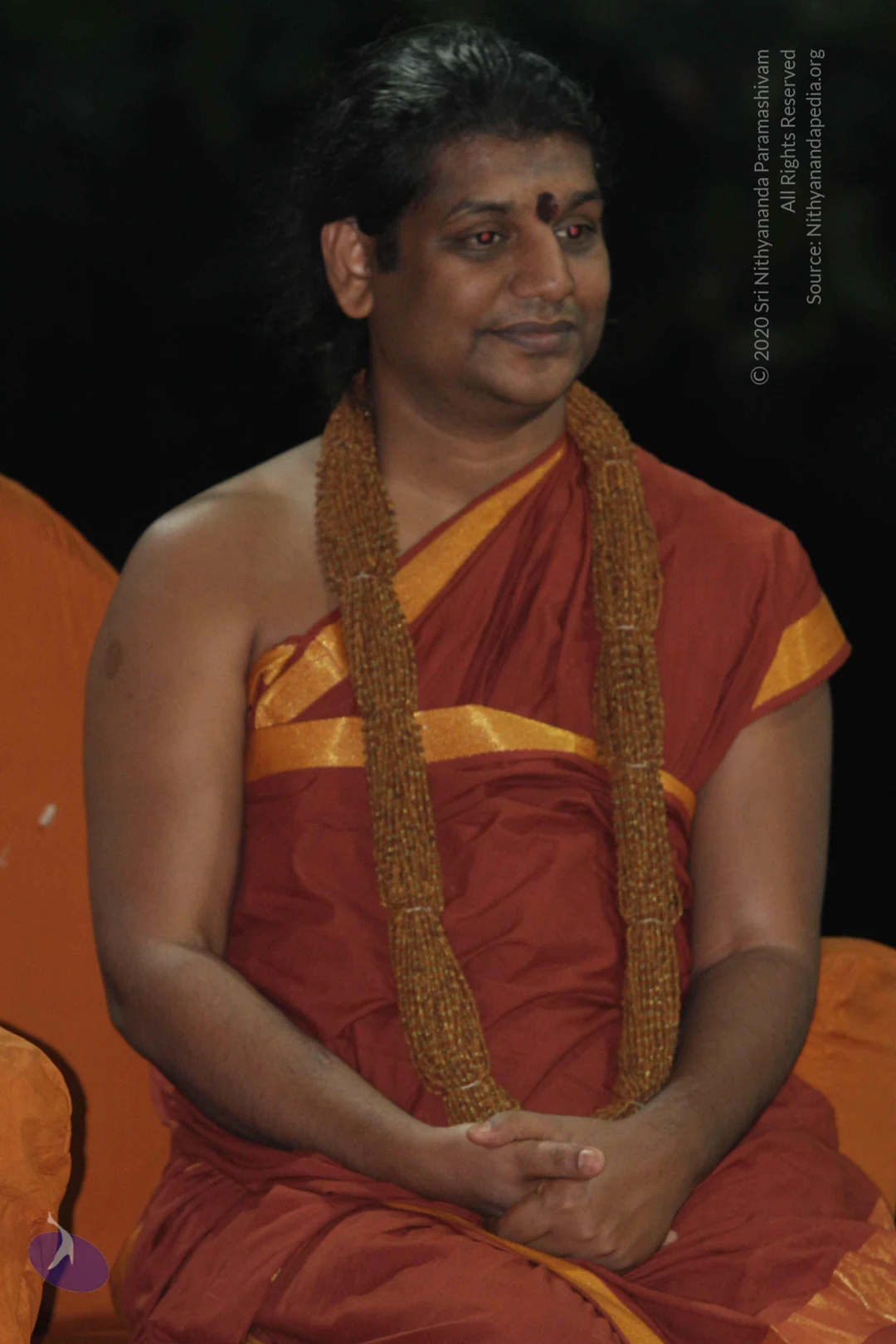
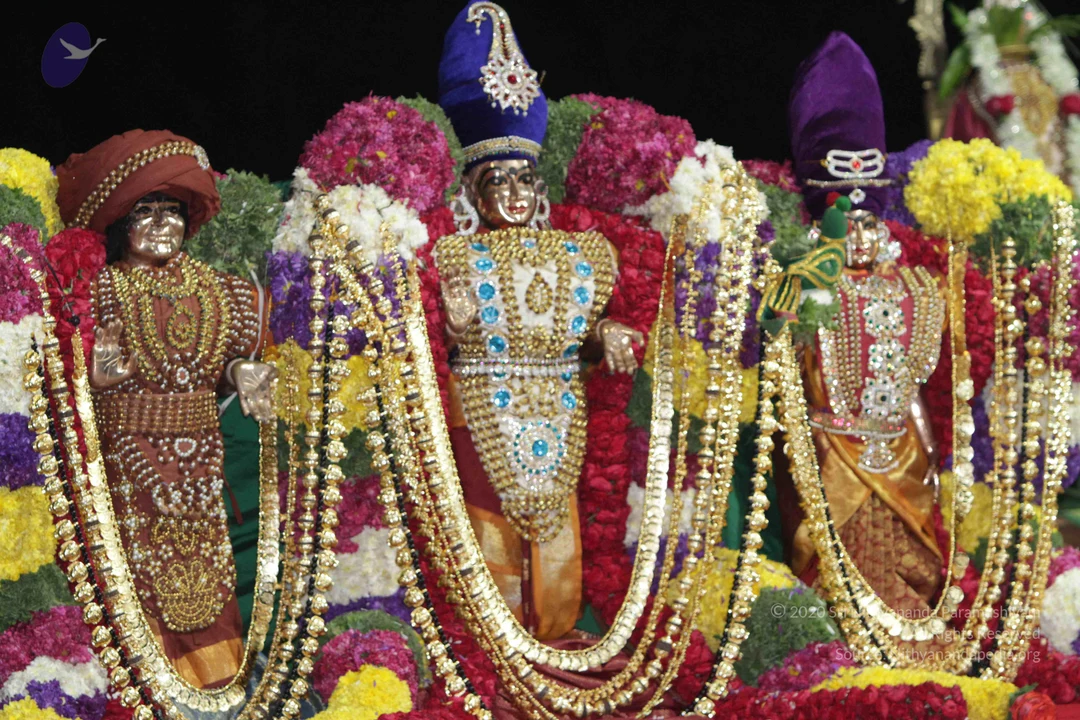
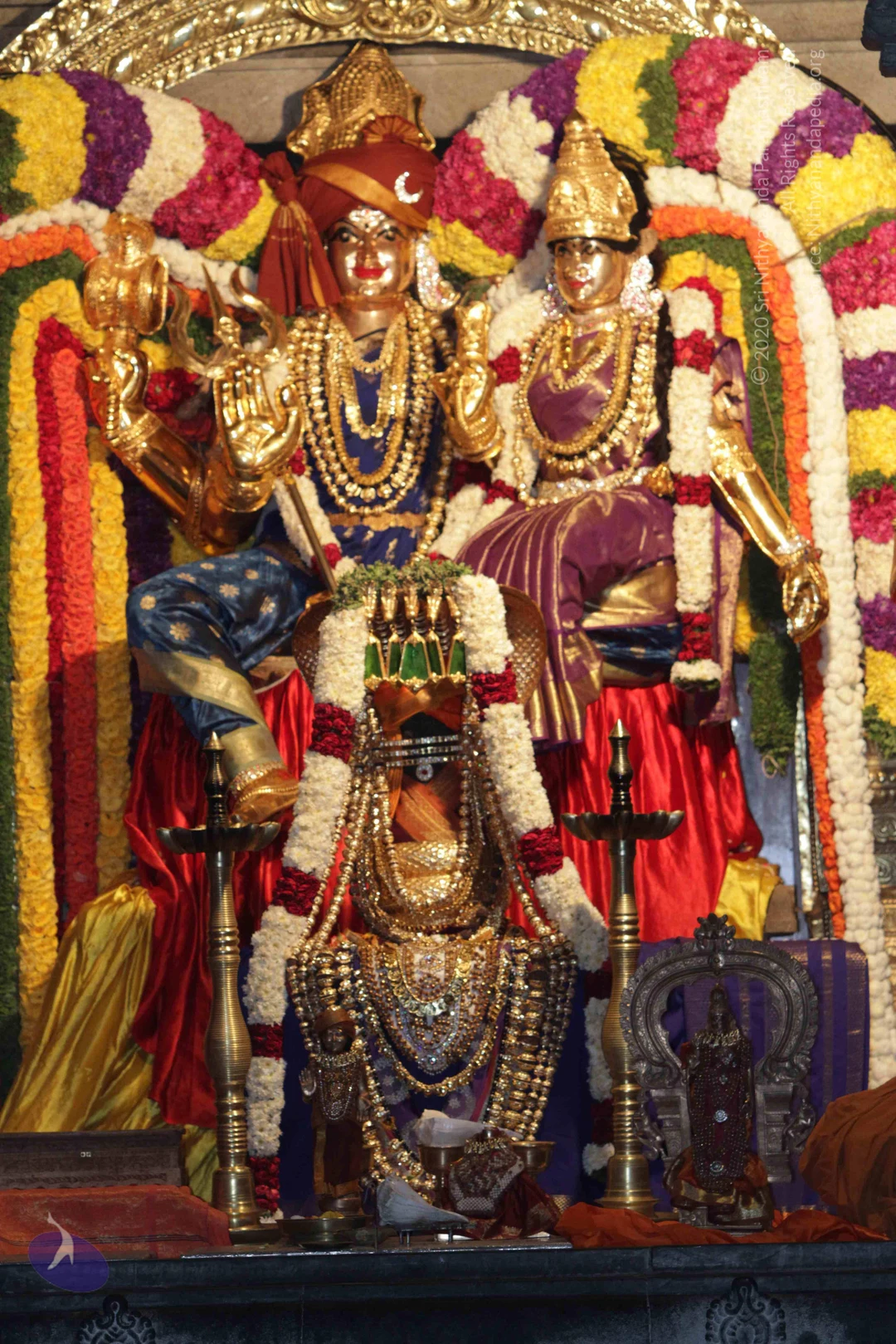
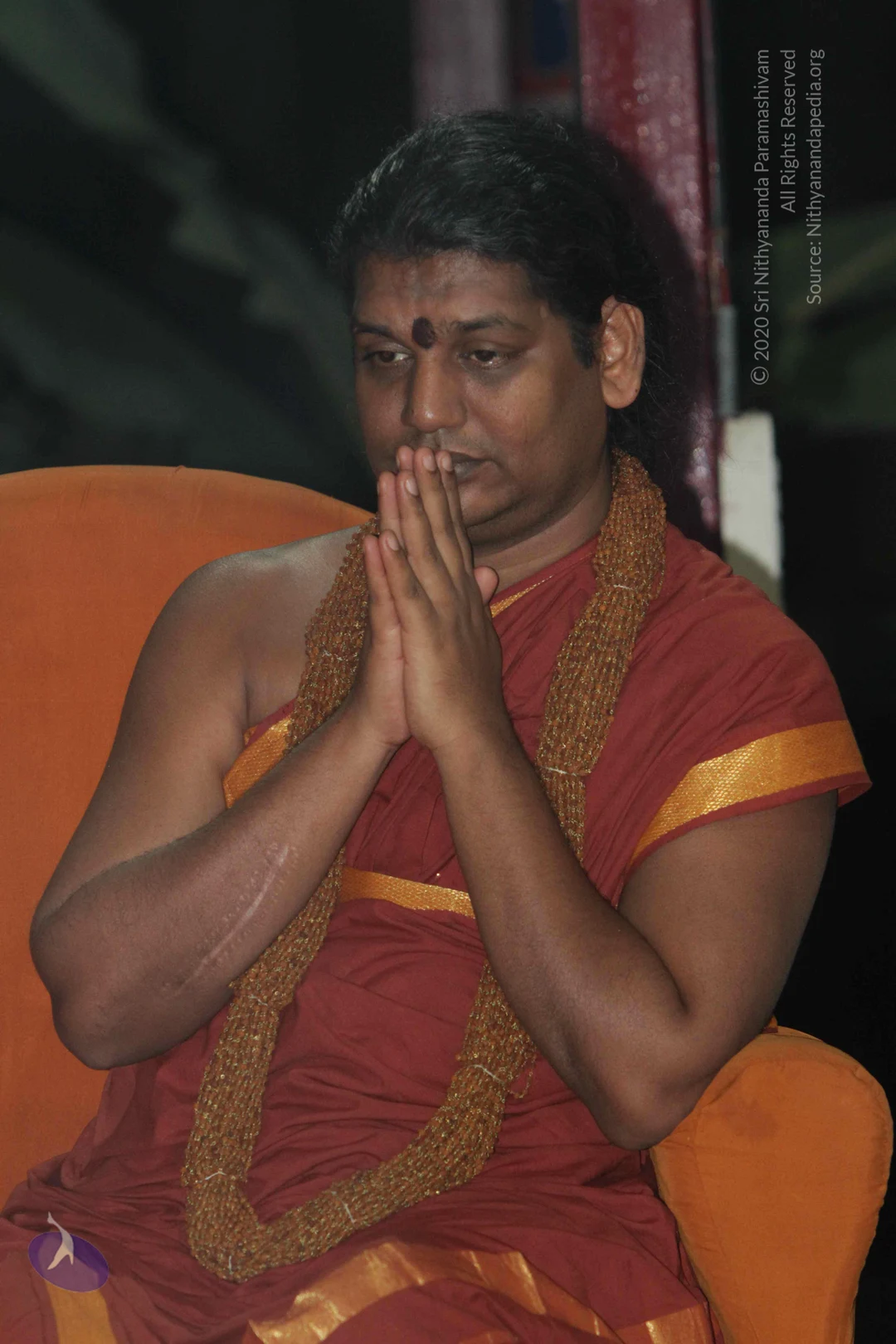
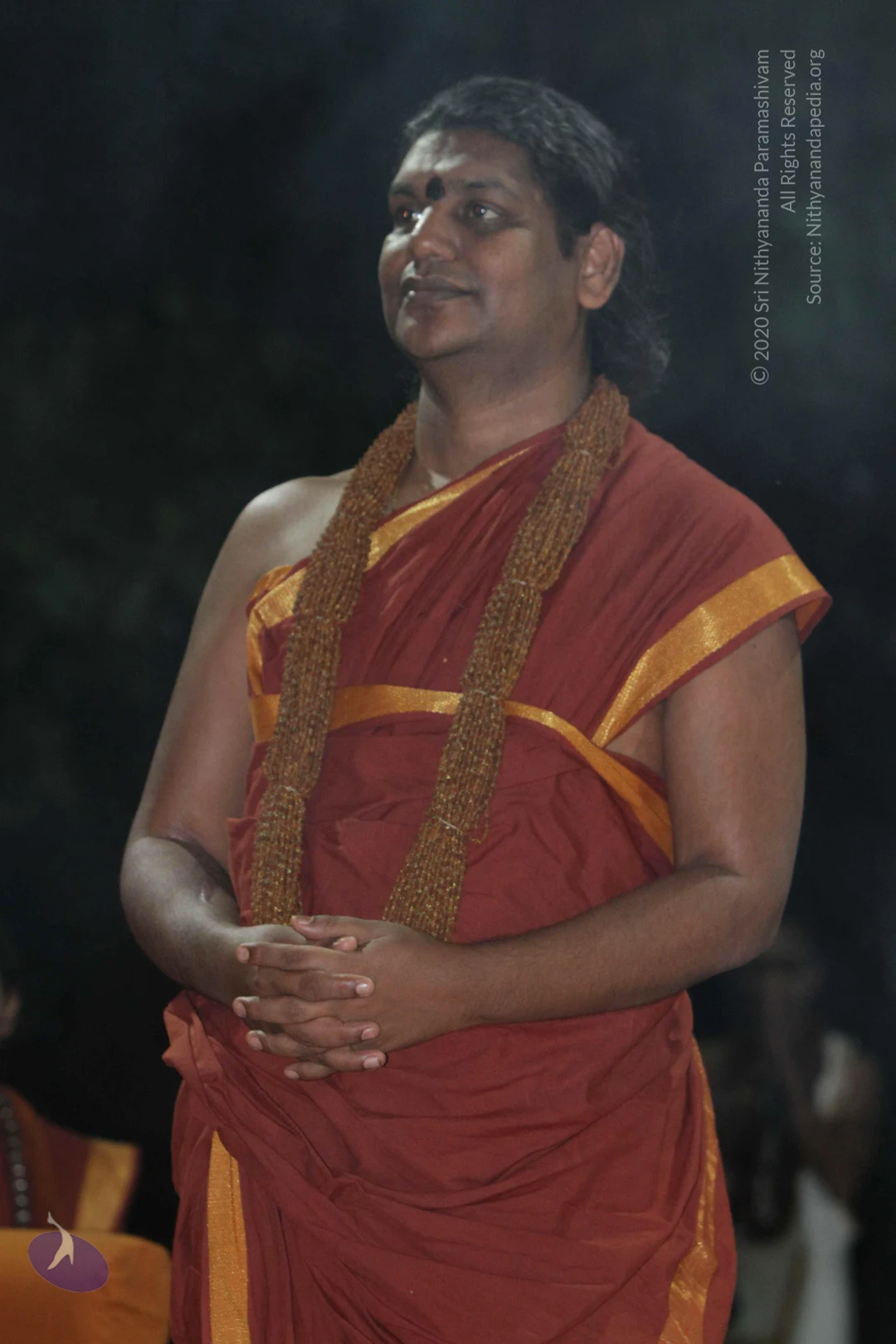
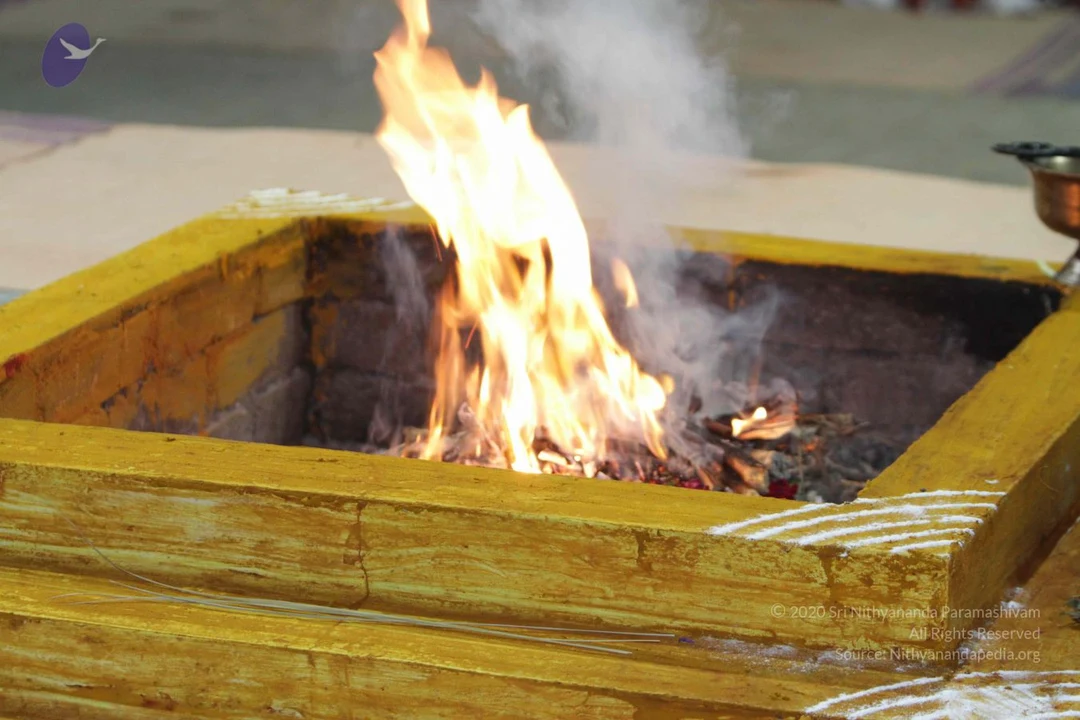
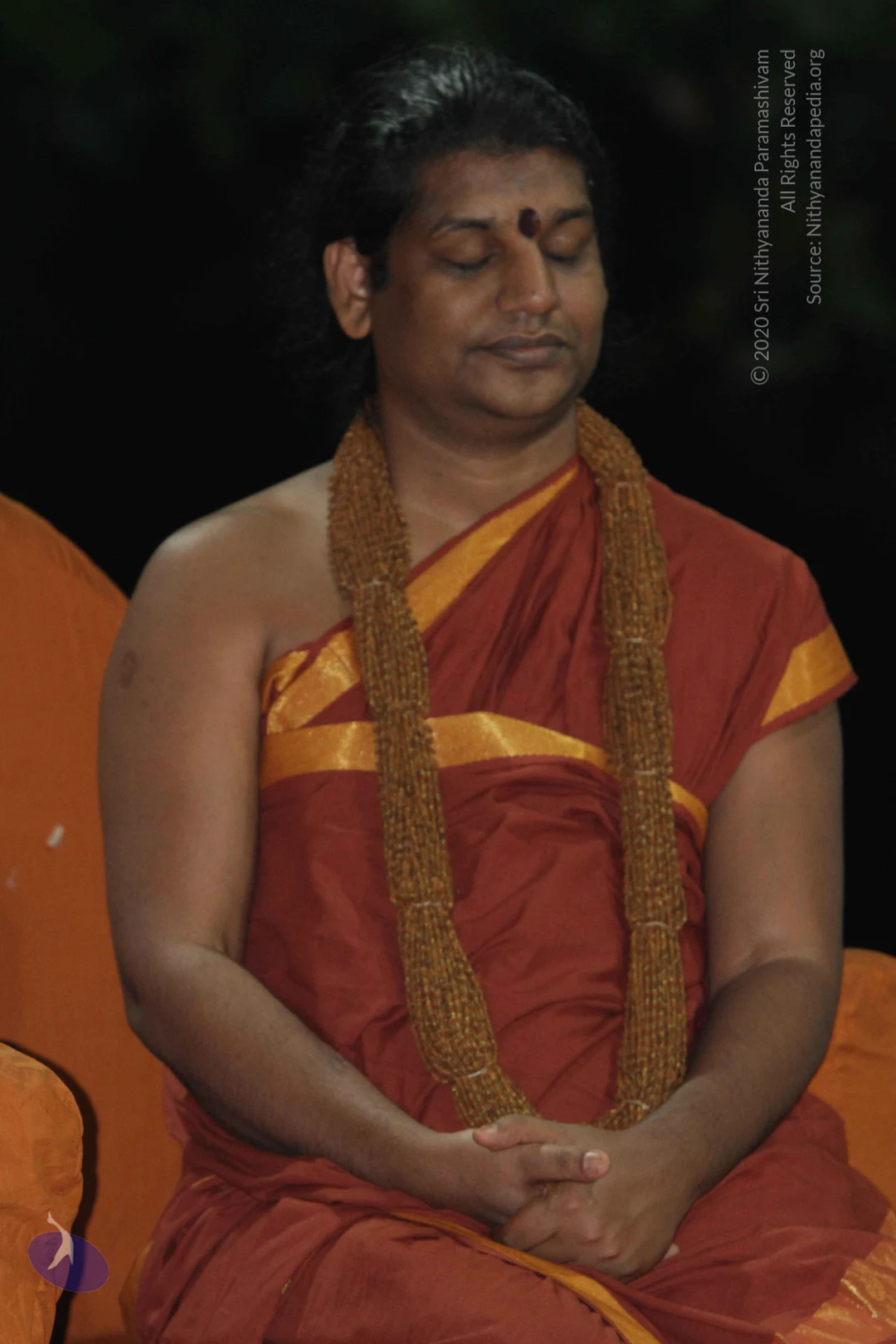
A seated man in a rust-red and gold-bordered sannyasi-style garment sits in a large orange upholstered chair against a dark background with green foliage. He wears a long beaded rudraksha-style mala around his neck and a small red bindi on his forehead. His hands rest folded in his lap as he looks off to the side. A small water bottle and a red garland sit on the armrest at left. a person: the seated figure wears saffron-red robes with gold borders, a mala and a bindi, matching the page's satsang context.A photograph of an evening homa at an open-air outdoor ritual space under a corrugated roof. In the foreground a square wooden fire pit with yellow-edged borders holds a bright fire, with smoke rising and small brass vessels and offering items beside it. A man in a red-orange dhoti and shawl with a rudraksha-style mala stands at the left with hands pressed together, near an orange armchair. On the right a bare-armed person pours liquid from a brass vessel into the fire, and a man in white dhoti and shawl stands nearby. Several people in orange and white garments stand in the background, and yellow and purple flower garlands hang at the right edge.A photograph of an indoor ritual space under a dark roof at night. In the foreground a priest in an orange-brown dhoti with a rudraksha mala bends forward over a sunken fire pit, its flames rising from a yellow-brown framed altar, while placing offerings from a brass plate. Behind the pit, a second figure in a red-orange sari with gold border stands with folded hands before a silver-framed shrine containing a deity murti adorned with flower garlands and gold ornaments. To the left, deity murtis draped in marigold and rose garlands sit on a red-draped platform, and a small decorated shrine stands in the background with kalasha-style offerings. The scene is a homa or yagna fire ceremony.

November 25 2014

Original wiki page
Contents

Title

Simple Lines, Simple Sounds Have Power

Description

In today’s (25th November, 2014) morning Satsang, Paramahamsa Nithyananda describes the two components that make up the universe. The whole universe is made of sound and light in the form of verbalization and visualization. Mahadeva represents light and Devi represents sounds. The Science of Sri Vidya is the knowledge of using sound and light, achieving the space of Shivoham – the super conscious space. During the Cambodia Inner Awakening, Paramahamsa Nithyananda will use this powerful science of yantras and mantras to transmit the experience of Shivoham to all the participants.

Link to Video:

VideoAudio

Title

Nithya Kirthan - Om Guru Nadha Nithyananda Saranam Saranam Guru Deva

Description

Nithya Kirtan Sung in the presence of Paramahamsa Nithyananda on the 25th of November, 2014

Link to Video:

Title

Nithya Kirthan - Vismaranena

Title

Nithya Kirthan - Vismaranena

Description

Nithya Kirtan Sung in the presence of Paramahamsa Nithyananda on the 25th of November, 2014

Link to Video:

Title

Nithya Kirthan - Hai Prabhu Tum Sab

Description

Nithya Kirtan Sung in the presence of Paramahamsa Nithyananda on the 25th of November, 2014

Link to Video:

Transcript:

Nithyanandeshwara Samaarambhaam Nithyanandeshwari Madhyamaam | Asmath Aachaarya Paryanthaam Vandhey Guru Paramparaam ||

I welcome all the devotees, disciples, samajis, satsanghis, Shrimahants, Mahants, Thanedars, Kotharis, everyone who is sitting with us in two-way video-conferencing and through Nithyananda TV, Sadhna TV.

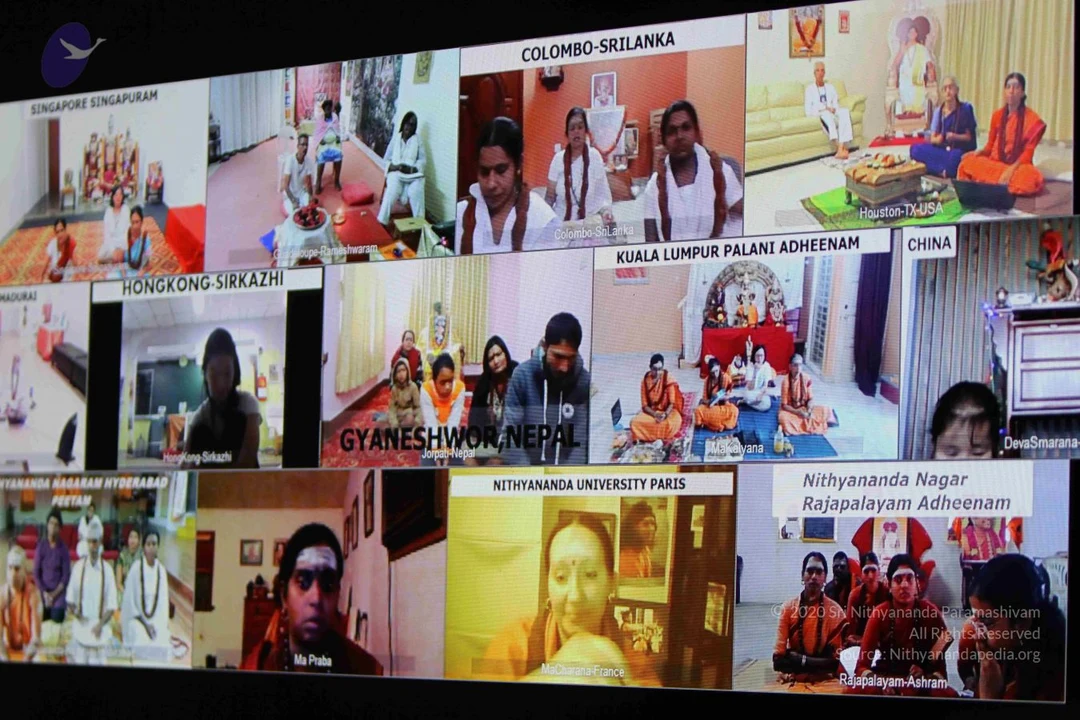
Cities sitting with us in two-way video-conferencing having Nayana Deeksha: Seattle-Chidambaram, Toronto, Los Angeles, St. Louis, Sadhanananda, Dakota Dunes, Netherlands, Ohio, Charlotte, Oman, Pudukottai, Devasmarana-Singapore, China, Singapore, Guadeloupe, Hong Kong, Houston, Colombo, San Jose, Hong Kong, Hyderabad, Bangalore, Kuala Lumpur, Nepal, Rajapalayam, Paris.

I welcome all of you with my love and respects.

Yes.

We’ll enter into today’s satsang.

First thing, tomorrow the Nithyanandeshwara Brahmotsava starts with Dwajarohanam – flag hoisting. The Nithyanandeshwara Brahmotsavam is starting. So all the temples should be ready to celebrate. Tomorrow morning, between 6:05 to 7:25, the Dwajarohanam. Pada Puja timing has to change. Pada Puja has to be done by 5:00 to 6:00, and then 6:00 to 7:00 Dhwajarohanam. And after that, satsangh will happen.

Today I wanted to expand on a few important truths. Actually when I utter I understand that every word I utter is important. People say I speak so much. Later on you will understand I have not uttered a single extra word. The man, who never uttered a single word which is not required, means he is a “mouni”. Later on you guys will understand I lived in eternal mouna and I am living in eternal mouna, because I have not uttered a single word which is not required, which is not important.

See the whole universe is made out of these two: Sound and Light. Means verbalization, visualization. Sound and Light. You need to know if there is some problem in you related to sound, you can’t use verbalisation to correct it; visualization only can correct it. If there is some problem related to light in you, you can’t use the visualization to correct it; only verbalization – sounds – can correct it.

Please listen! Listen! The whole universe, including you, is made out of Sound and Light. When the sound and light meets, the universe happens. Mahadeva represents Light. Devi represents Sound; that is why, the syllables, we call it as “maathrika”, “maatha”. Sound is mother, Light is father. When these two – “naadha”, “bindhu” – when these two unites, universe happens. Science of Sri Vidya, the ultimate knowledge, is knowledge of using Sound and Light and achieving the space of Shivoham. That is why all the powerful sounds are used and in a very powerful way the lines are used.

See all forms are nothing but lines. Everything you see is nothing but lines; lines in different geometry, that’s all. If you draw the lines straight, two line, it looks like a ladder. If you put the same line like this, it looks like a snake. It is just different lines. And, listen, listen to this, I was reading a paper in the Internet some research paper published. Long before I read this, and I mentioned about this in many of my satsanghs, early satsanghs. One guy was trying to develop a therapy called “art therapy”, means letting the mad people to draw, scratch, paint whatever they want. By painting, drawing, so much of catharsis happens, they get healed, they become alright! The “loose screw” gets tightened! And I have to speak about it separately in one Satsang. No I am really seeing these same boys if they’re in the Adheenam from thousand if they will not walk up to Rajya Sabha and they will lie down there but when they’re outside, I think only when they’re outside they will miss me. No really I am seeing even Indians if they’re in Bangalore they will not come to Satsang but if they’re in Sugarland they will drive all the way to Satsang centre, which is far more than Bangalore to Adheenam, and attend the Satsang from the centre. If they’re in Bangalore they will not come here to Bidadi but if they are in Los Angeles, two hours they will drive and go to the Satsang centre and sit in the two way video conferencing. Good anyway.

Listen. This art therapy I was speaking about it. Come back to it!

By painting, painting, painting, painting, painting, in a month they vomit all their madness and they become alright. The funny information is, the doctor who was doing research in all these paintings, he found a very strong similarity between their madness and painting: If somebody has become mad due to women, they all paint in the same way. If somebody has become made due to money, they all paint in the same way. Listen. The last bit of information is the most important: The doctor who was doing research in all these, he became mad. No, listen. It means, your painting shows the inner-space you carry. Understand the truth. First, your drawing shows the inner-space you carry. Through drawing you show your inner-space out. Whoever consumes the drawing receives that same inner-space. Understand the triangle. You show your inner-space through a drawing, whoever consumes that drawing receives the same inner-space. Mahadeva has thrown open to you whatever is in his inner-space in the form of drawing. That is Sri Yantra! Understand, Mahadeva has thrown what is in his inner-space. That is Sri Yantra! That is Sri Yantra! If you consume whatever Mahadeva has revealed. Sadashiva is the rishi for the Sri Vidya. If you consume whatever is revealed by Mahadeva, you achieve the same space.

Shivoham,Shivoham, Shivoham Satchitanandoham! Shivoham! Nithyanandoham! Shivoham! Understand Shivoham!

Shivoham is the sound, verbalisation of Mahadeva’s inner-space. Sri Yantra is the geometrical representation, visualization of Mahadeva’s inner-space. With this Yantra and the sound, when Mahadeva opens up his inner-space to you guys, simply you will see that, first thing, your Kula Kundalini will be awakened to have the darshan of Mahadeva! I tell you whoever experiences your eyes are becoming big when you look at me – means, wanting to see me more – be very clear, your Kula Kundalini is awakened! It is actually the sign that your Kula Kundalini is awakened. Only when the Kula Kundalini is awakened, it wants to see more, it wants to look more. If you see gold jewellery, and you want to see more, it means your Kula Kundalini is working towards gold jewellery. If you see a man or woman, and you want to see more, it means your Kula Kundalini is working towards that direction. If you see food, and you want to see more, it means your Kula Kundalini is working in that direction. If you see the Master’s form, and you want to see more, it means the Kula Kundalini is moving towards the Sahasrara. Which direction your Kula Kundalini is moving, to which Chakra your Kula Kundalini is moving, you can simply find out based on what you like to see, love to see, what is there in your being, what is there in your love.

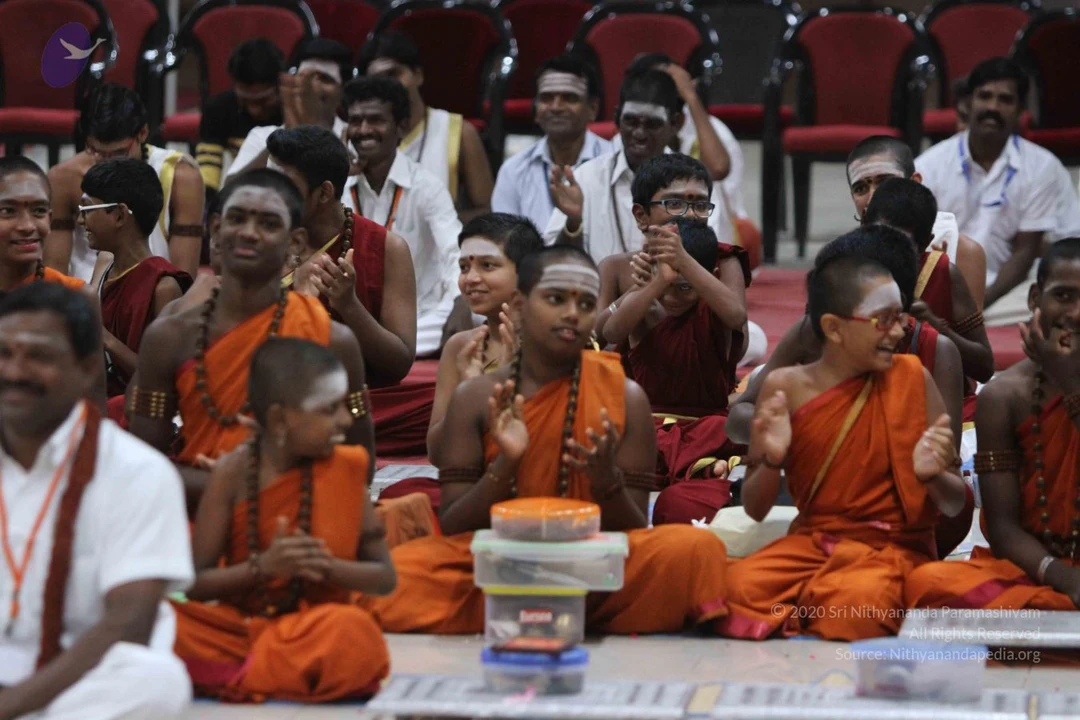
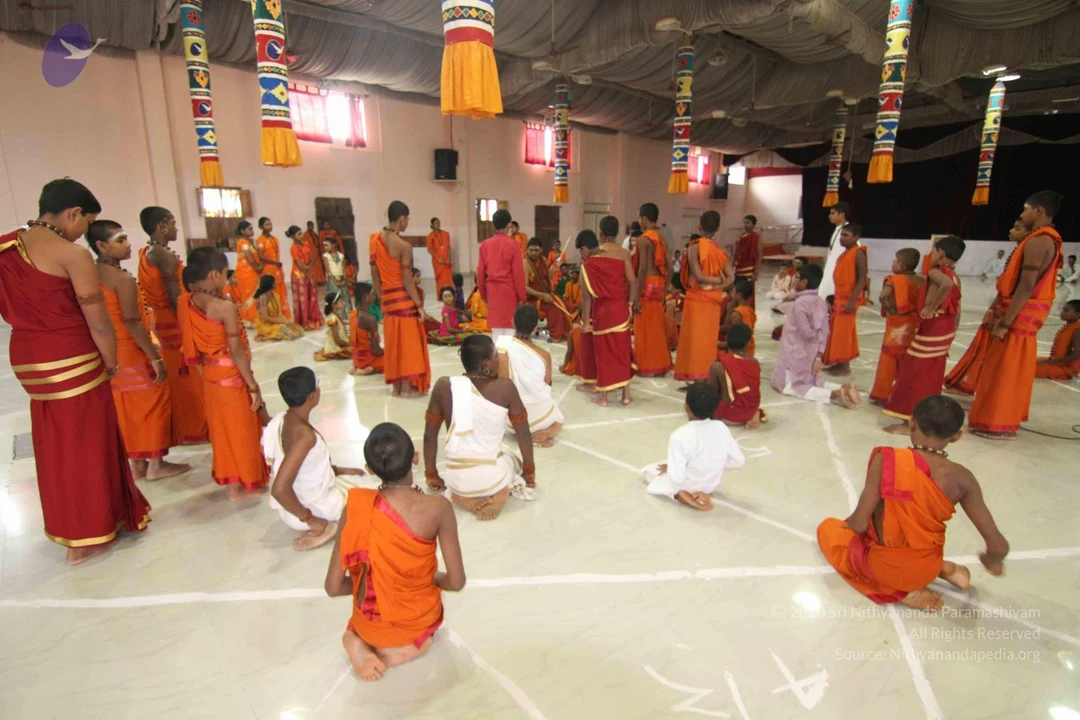
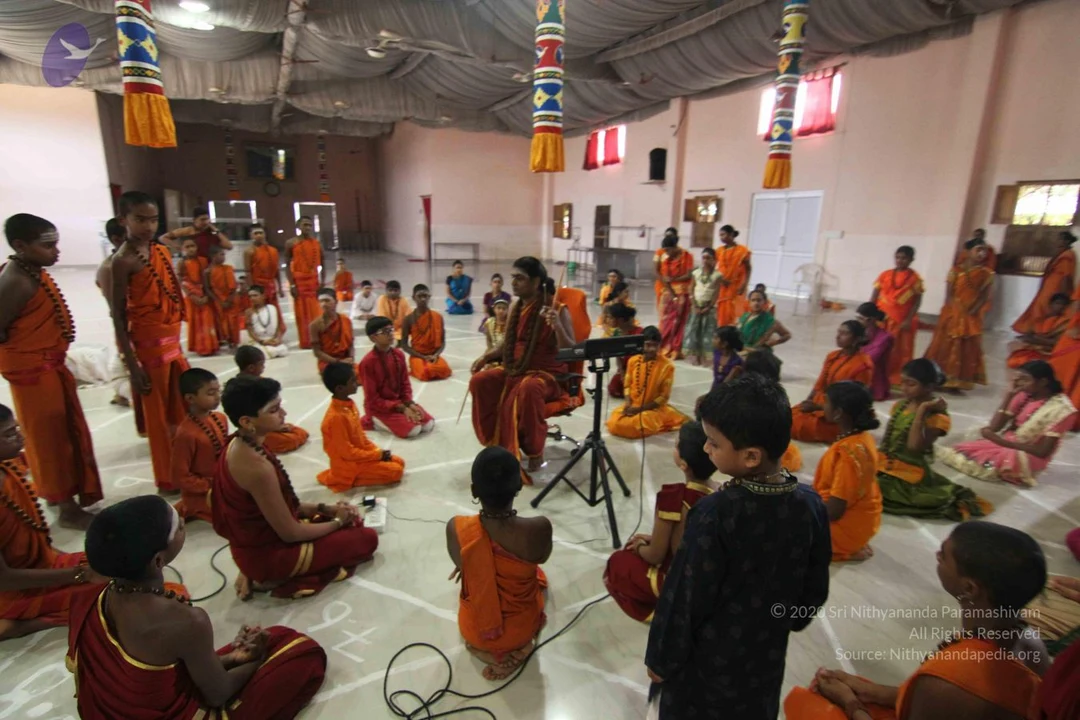
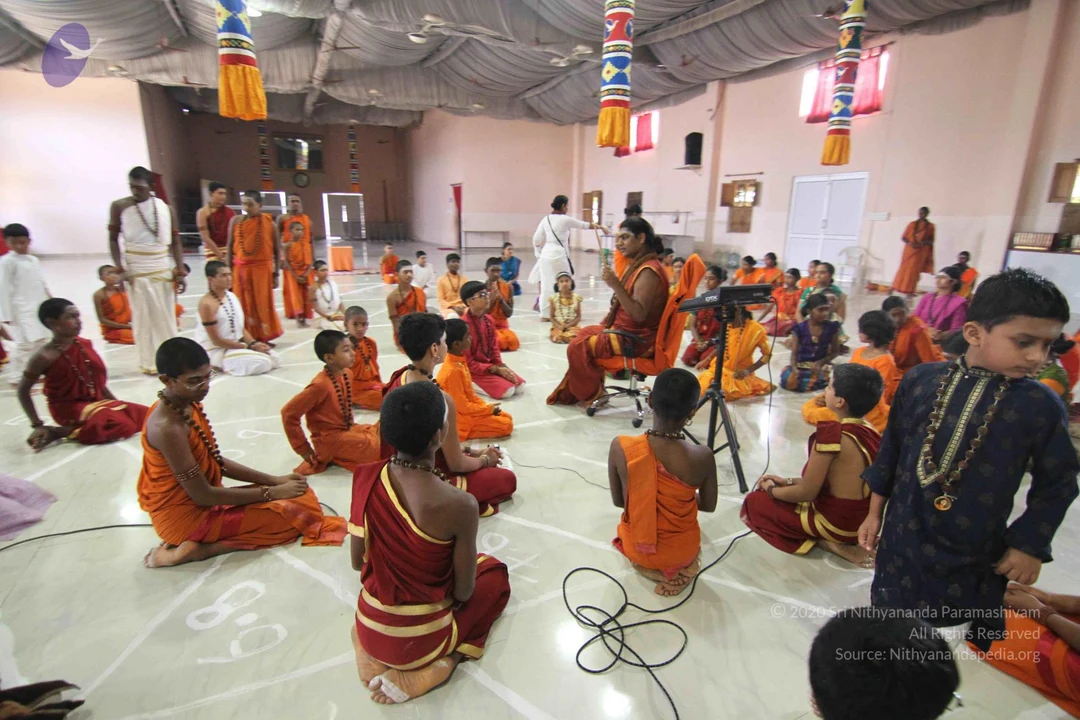
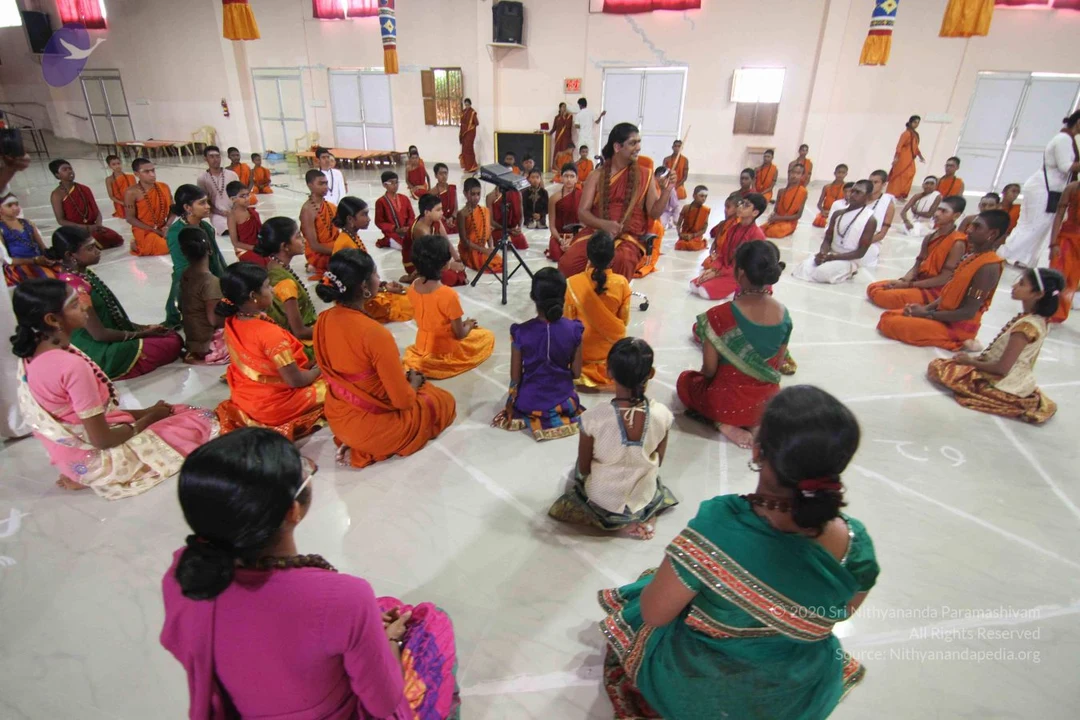
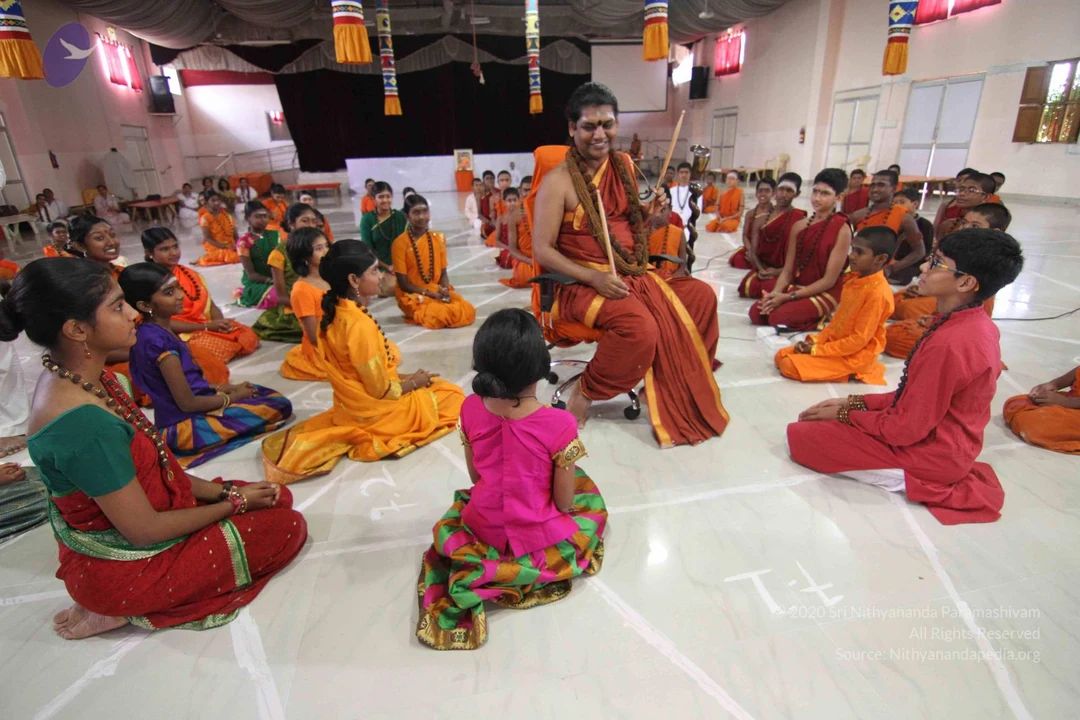
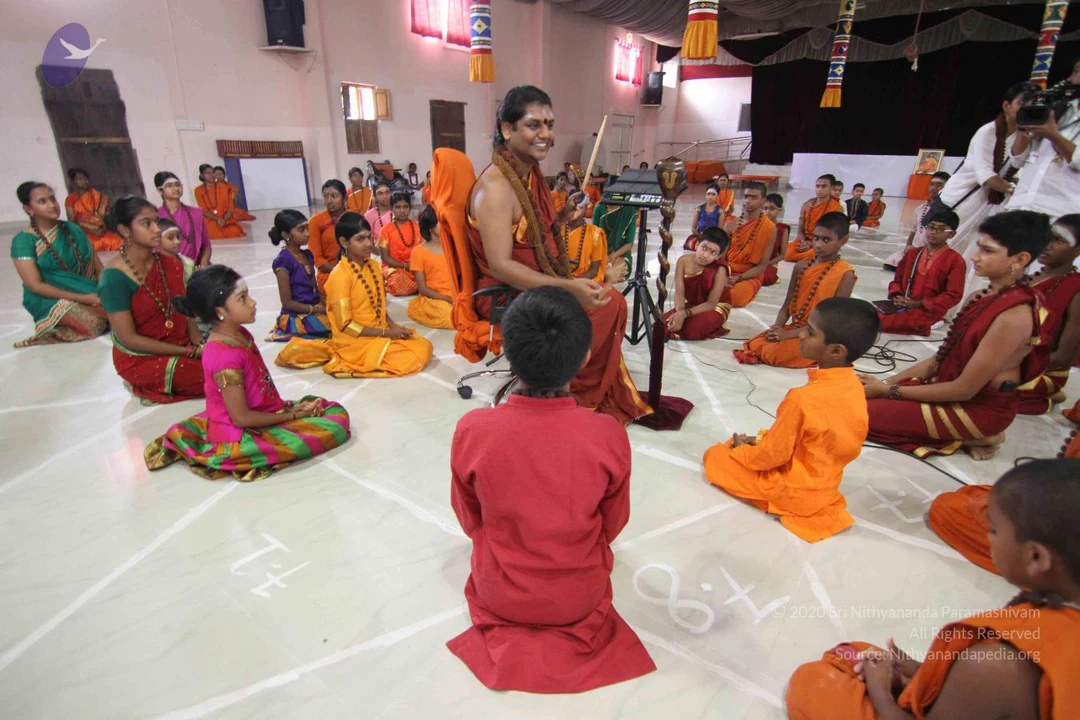
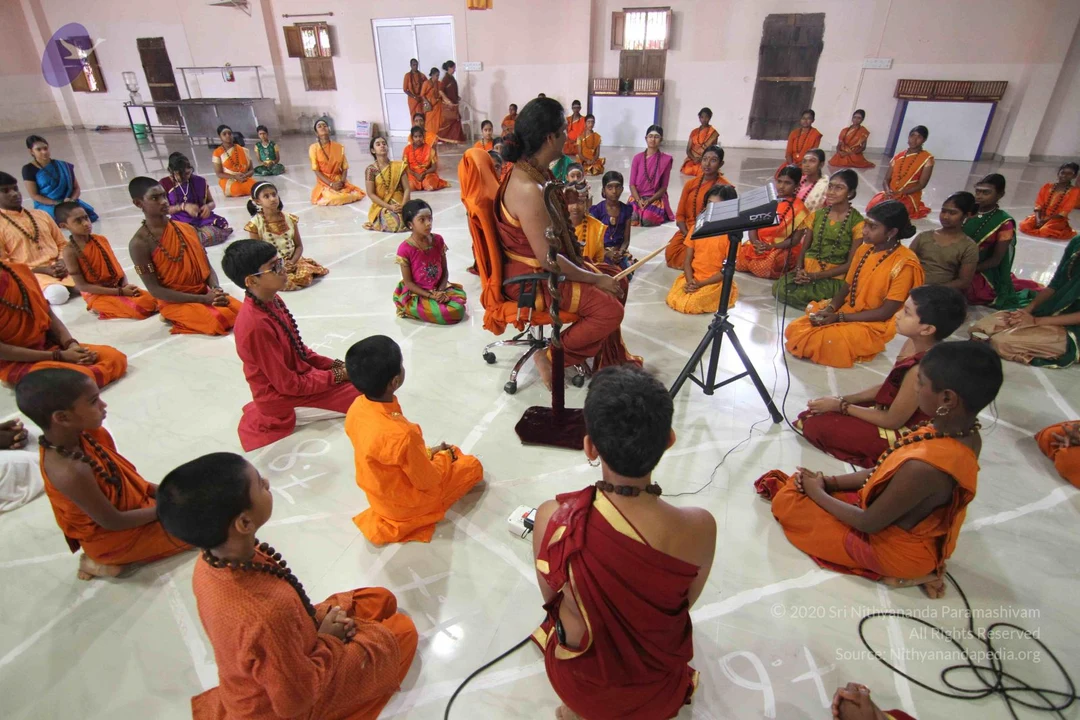
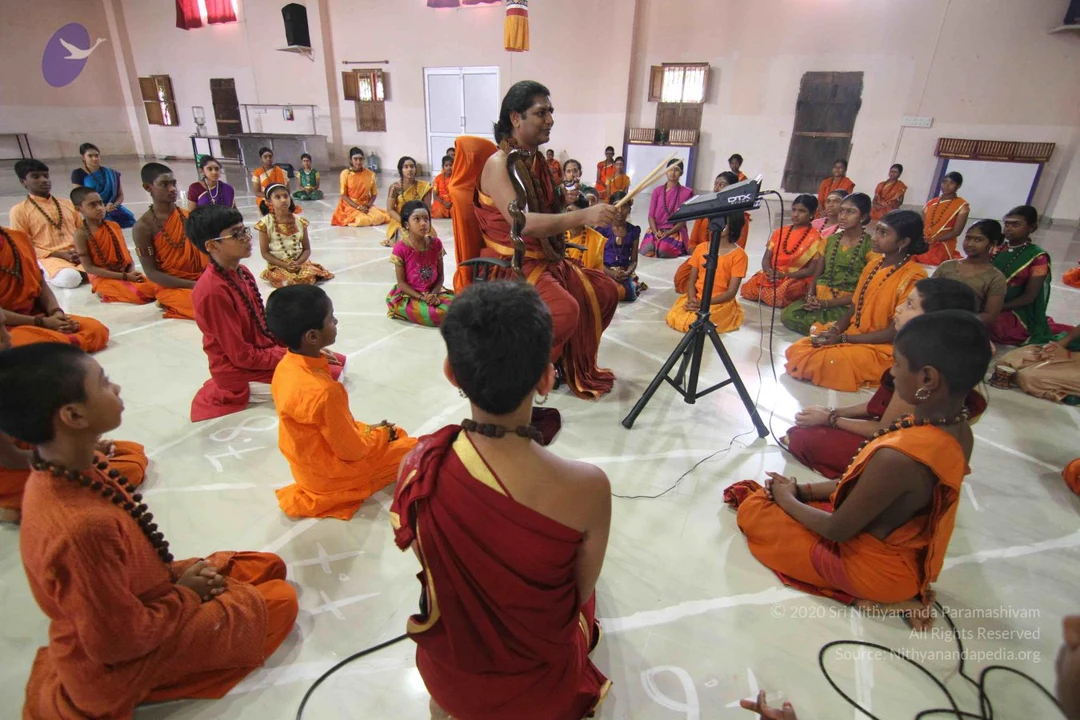
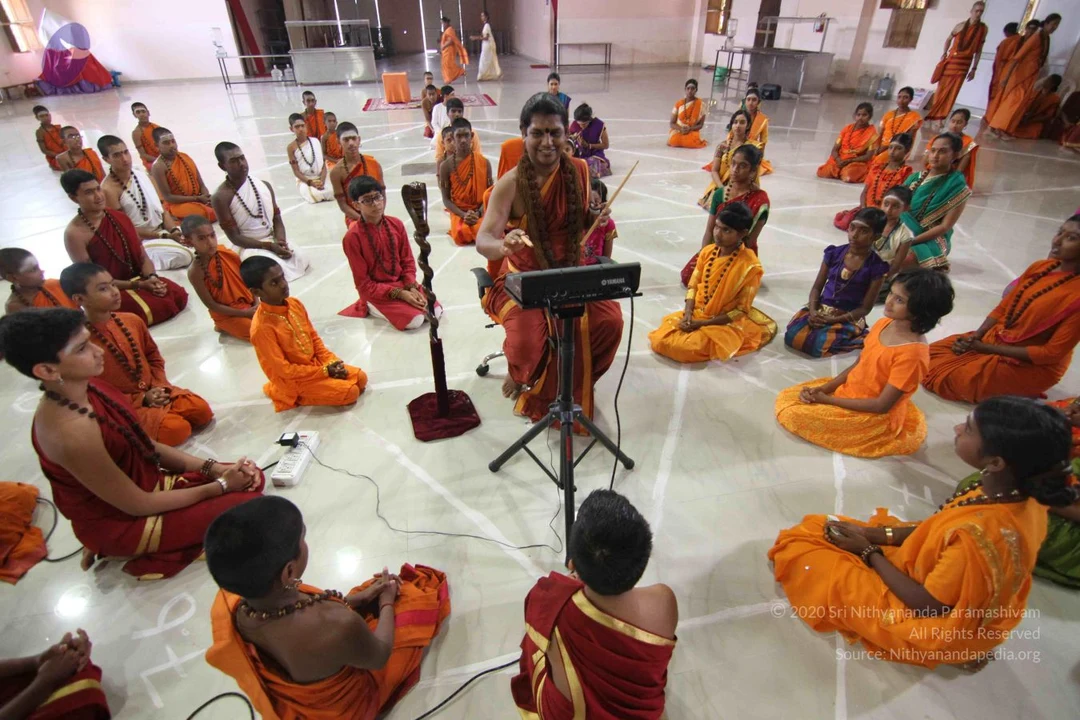
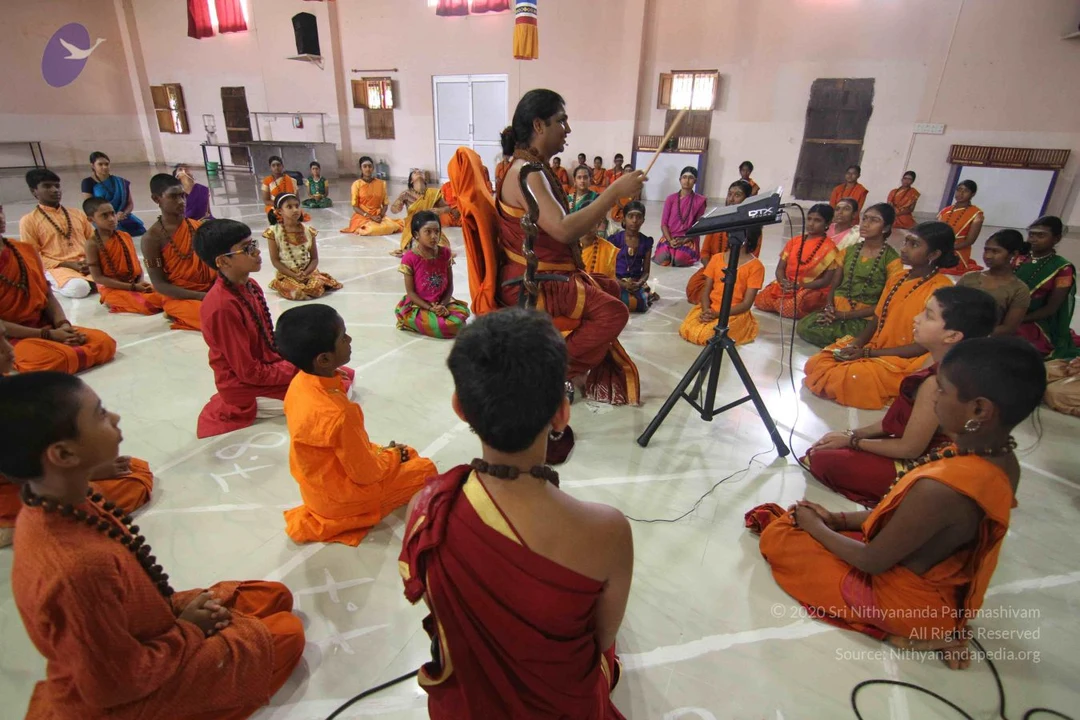
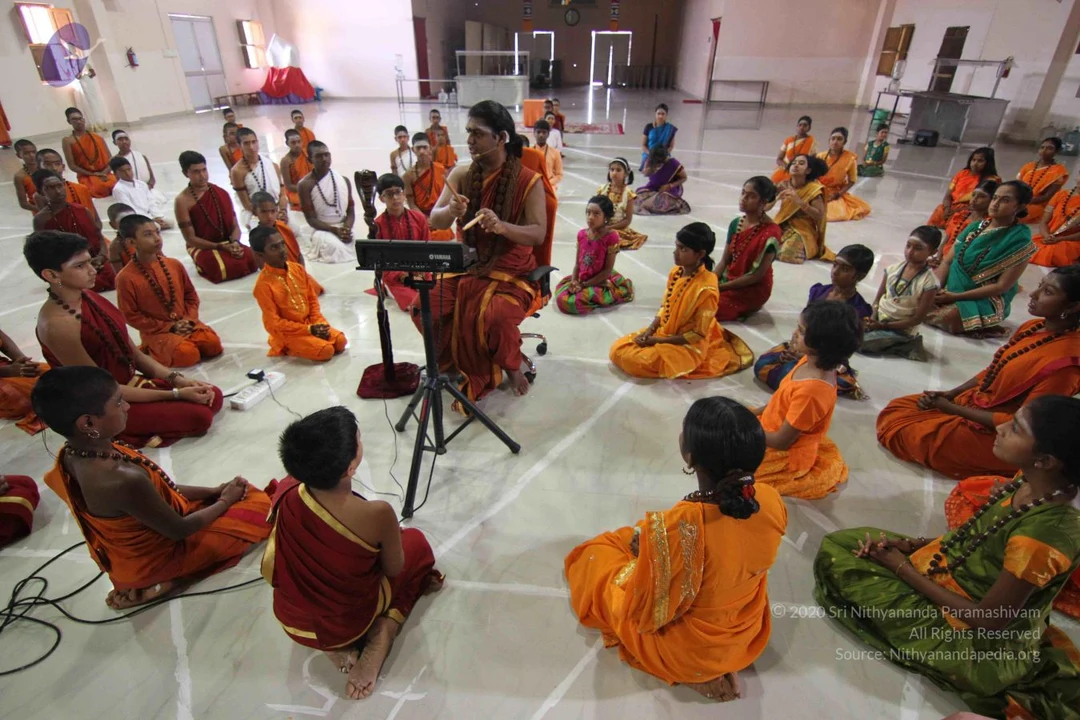
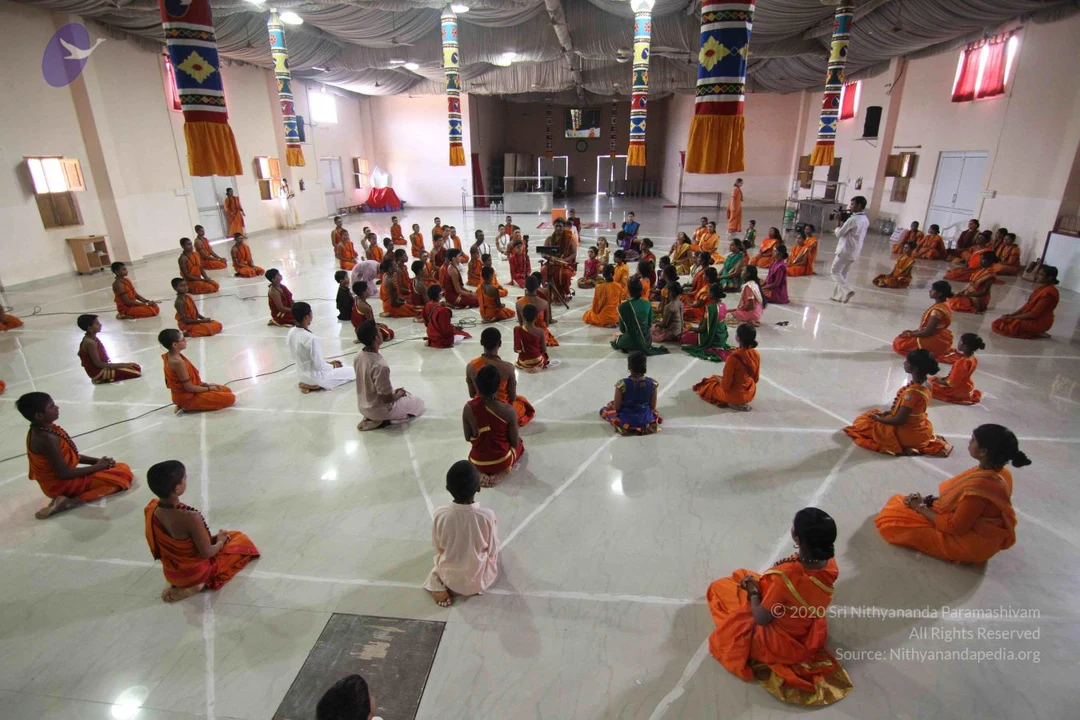
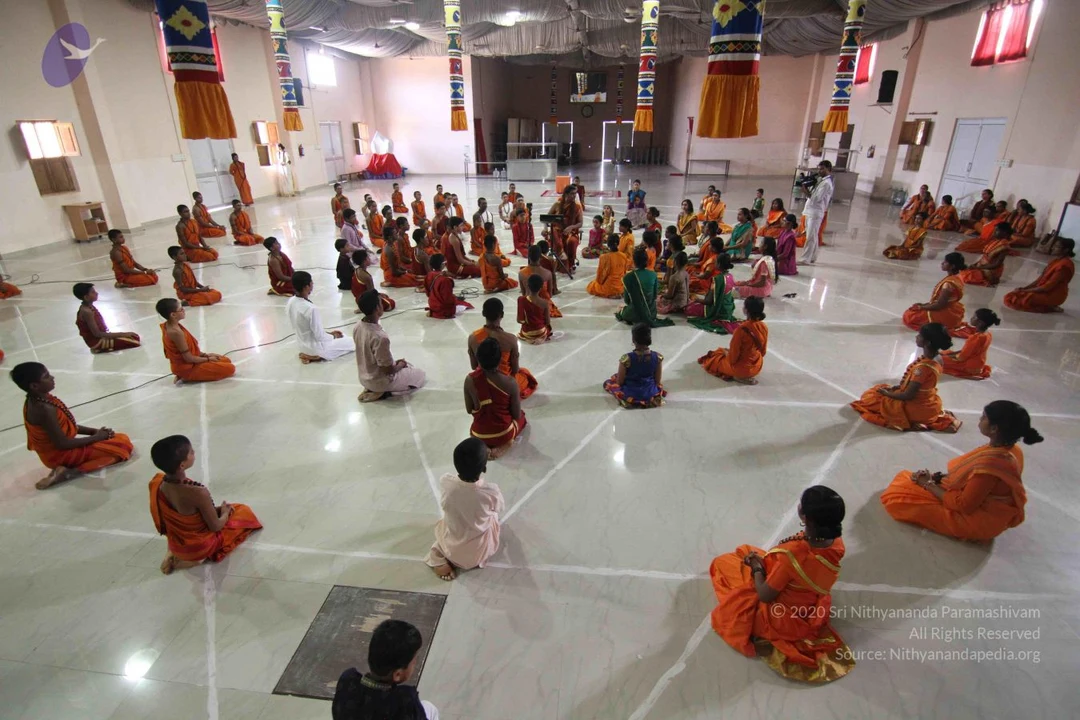
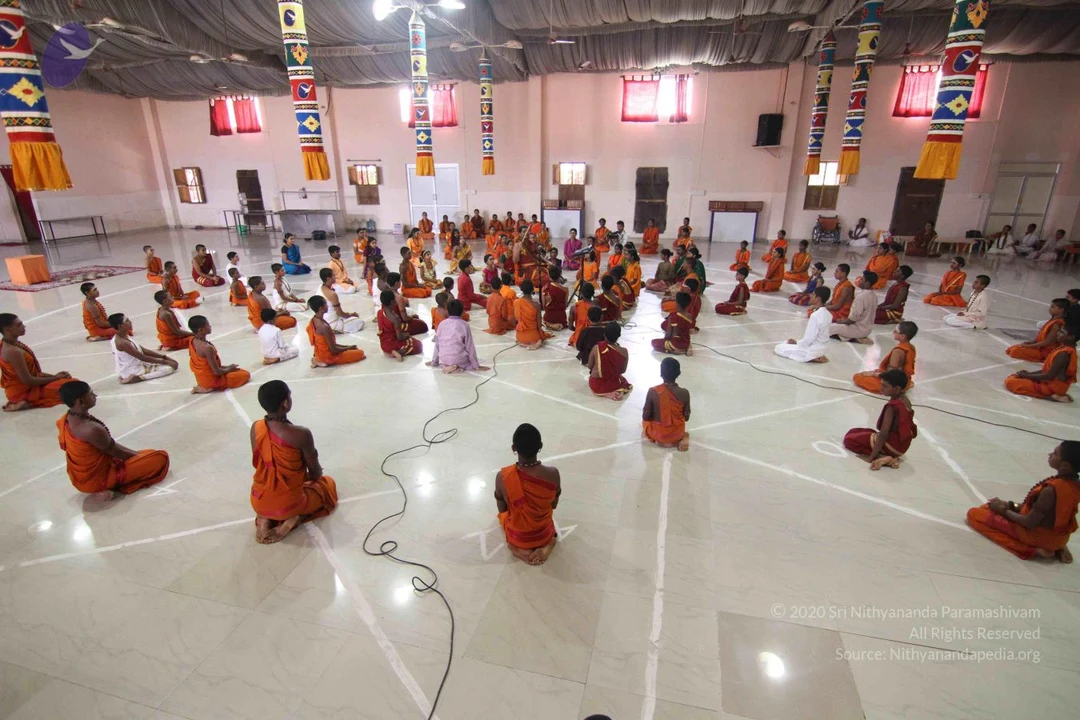
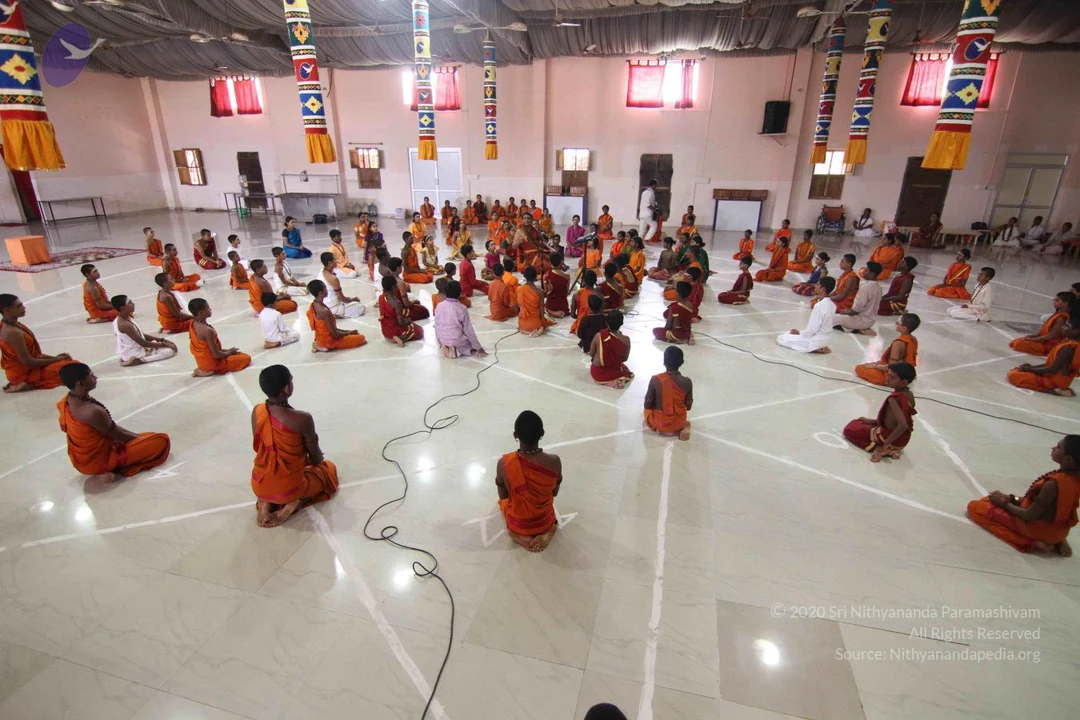
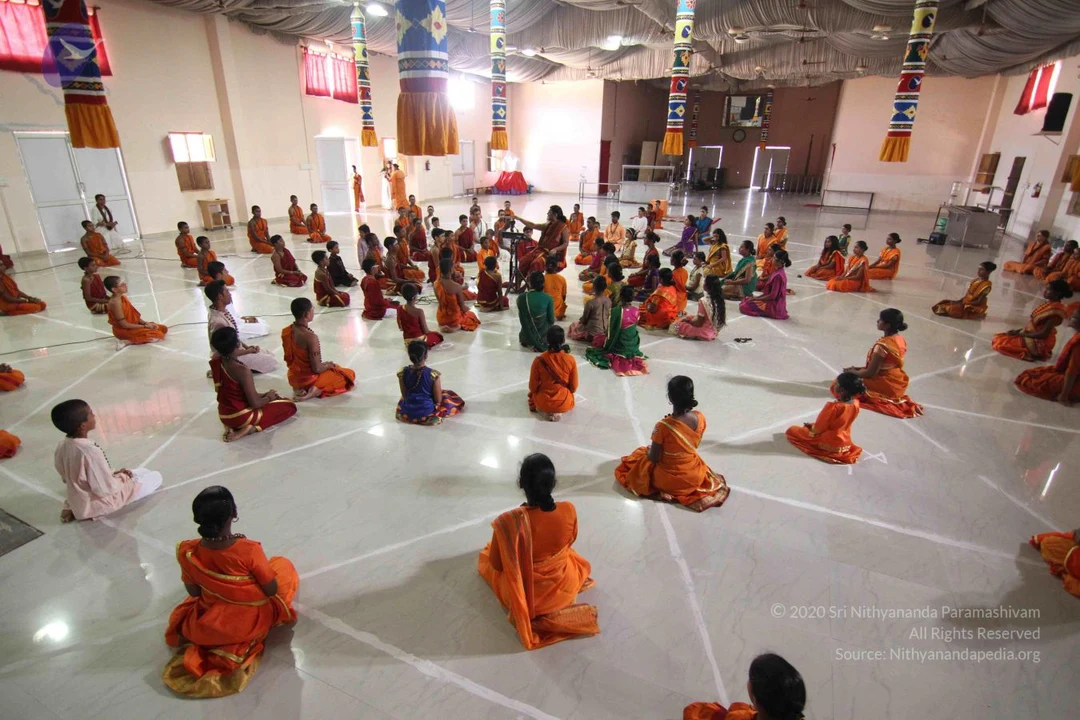
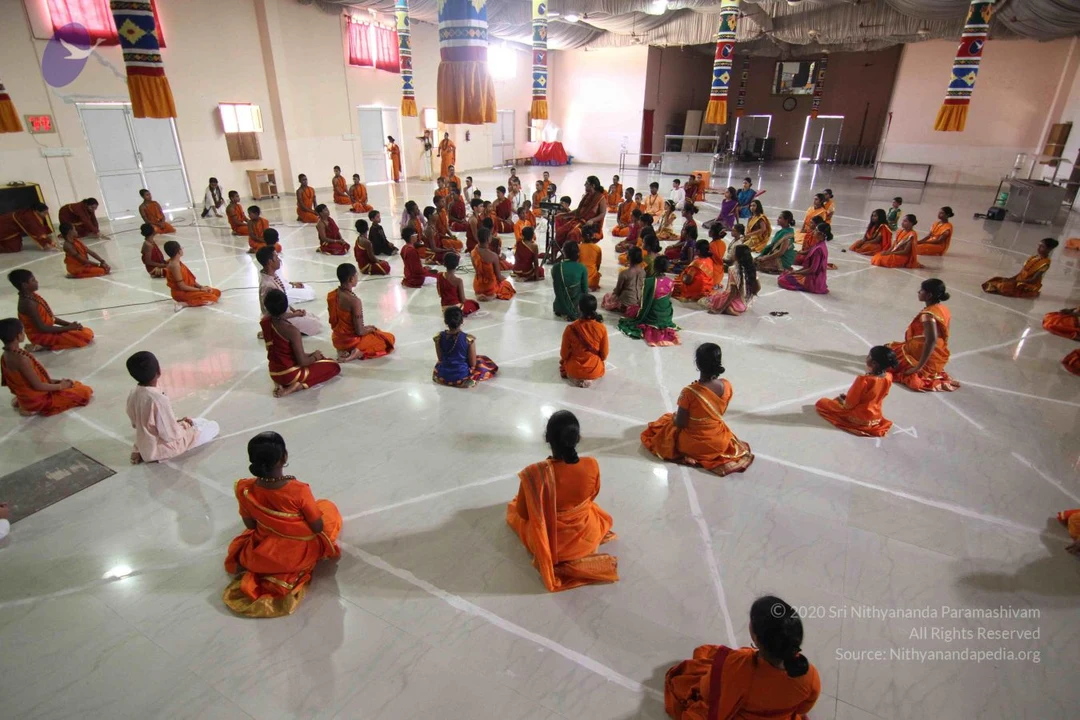
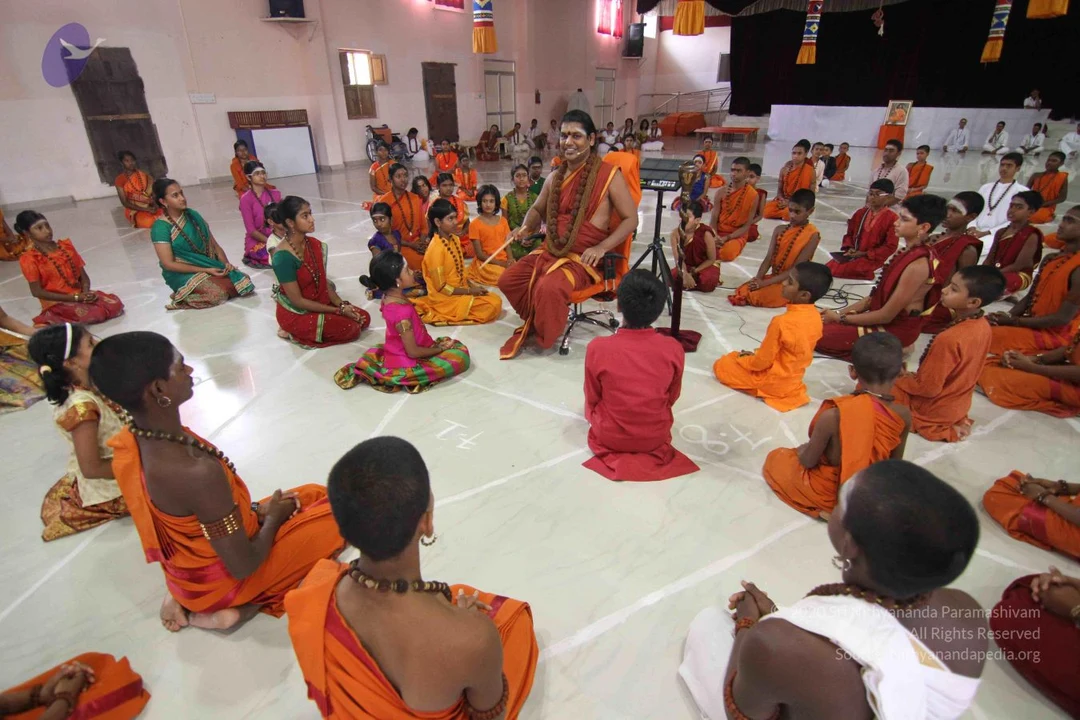
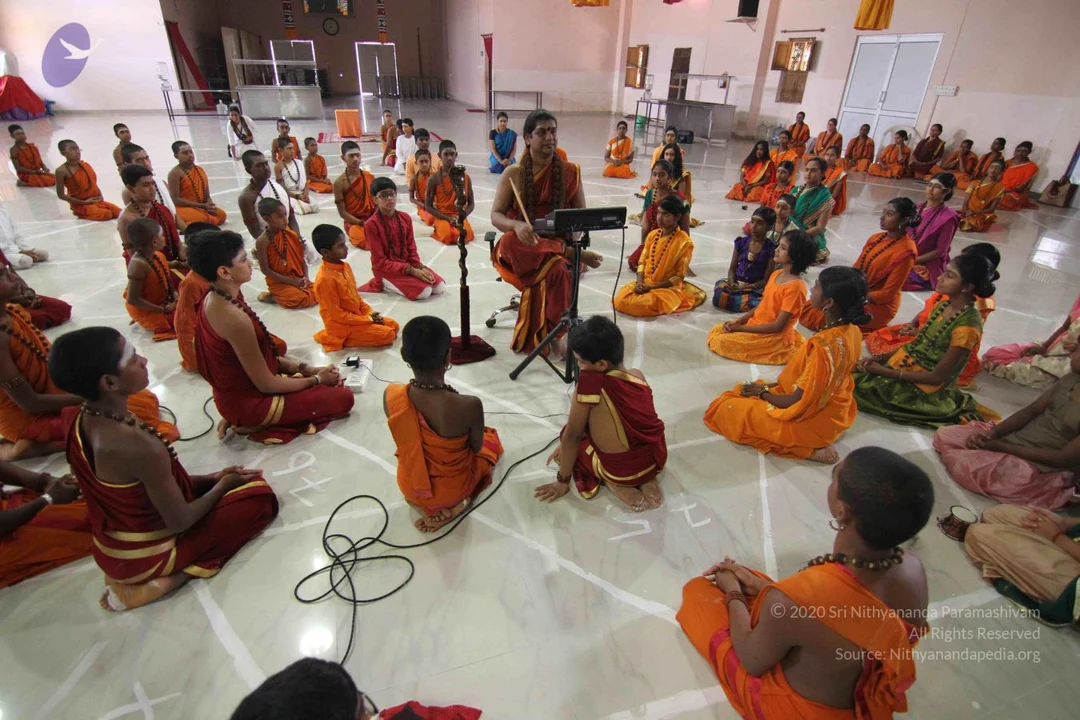
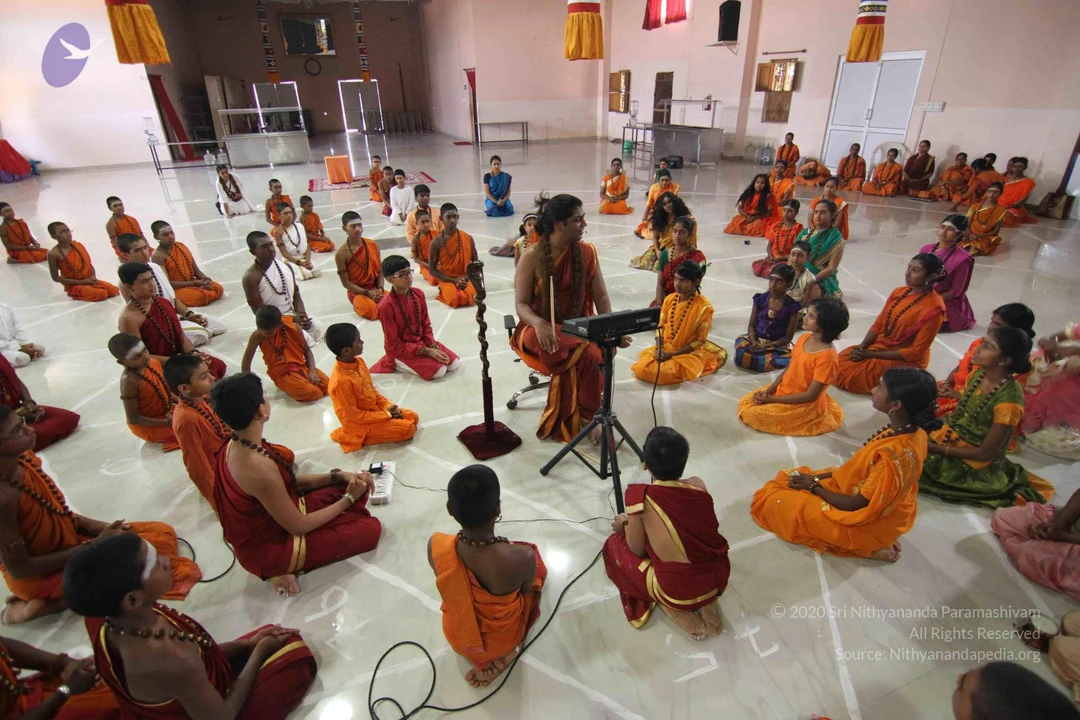
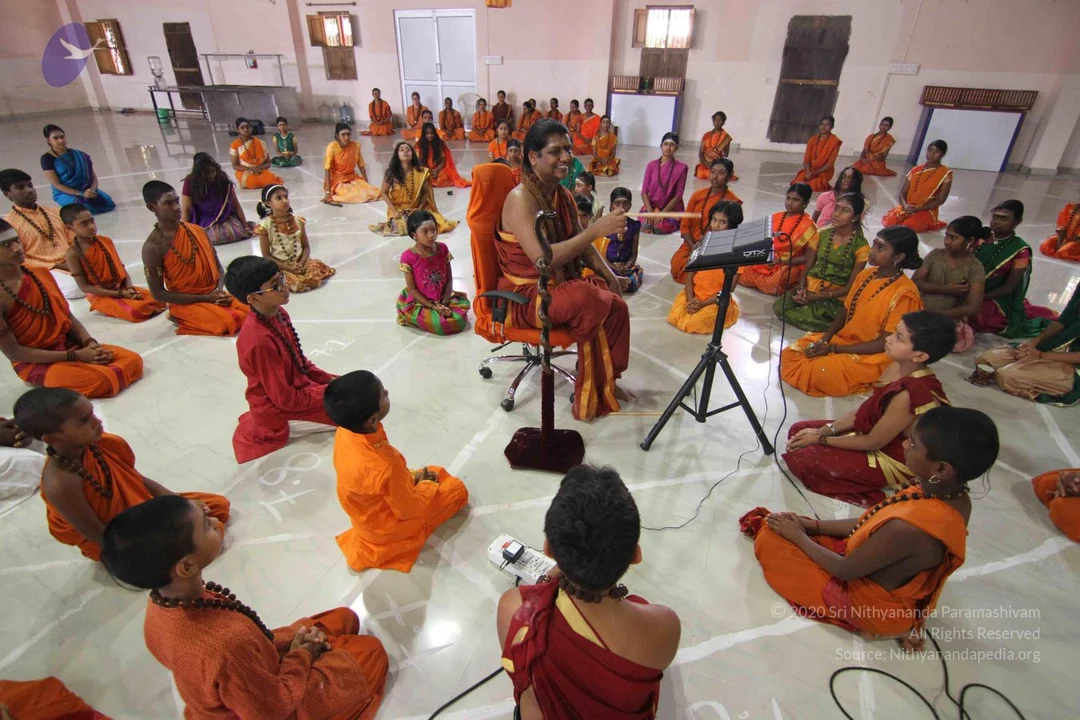
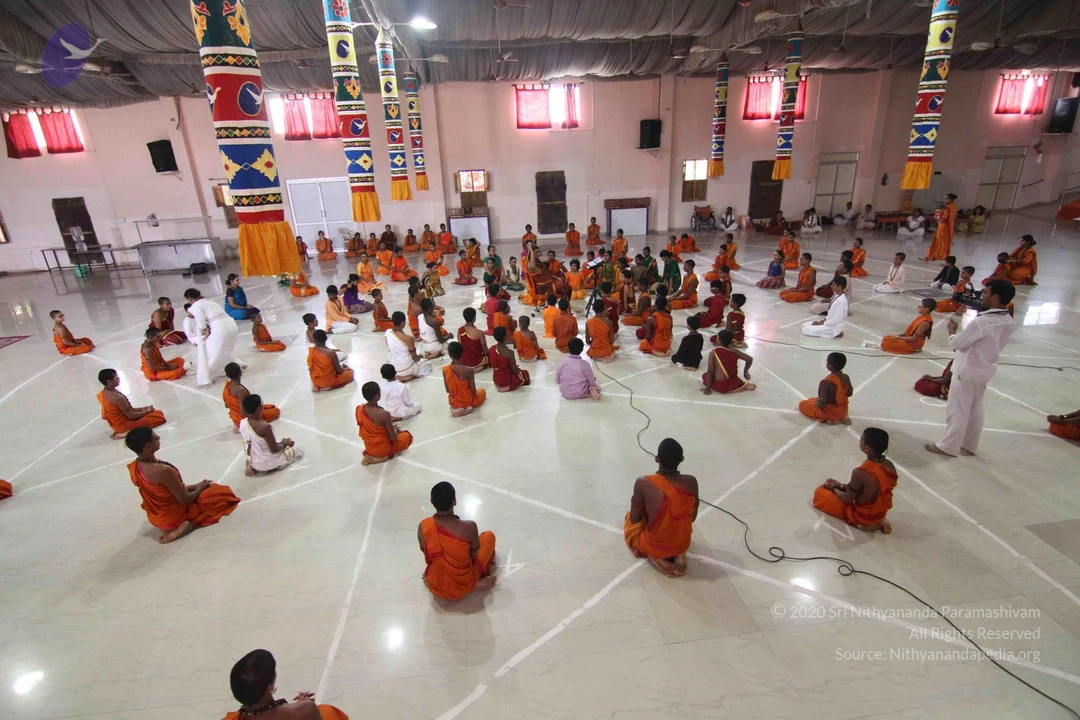
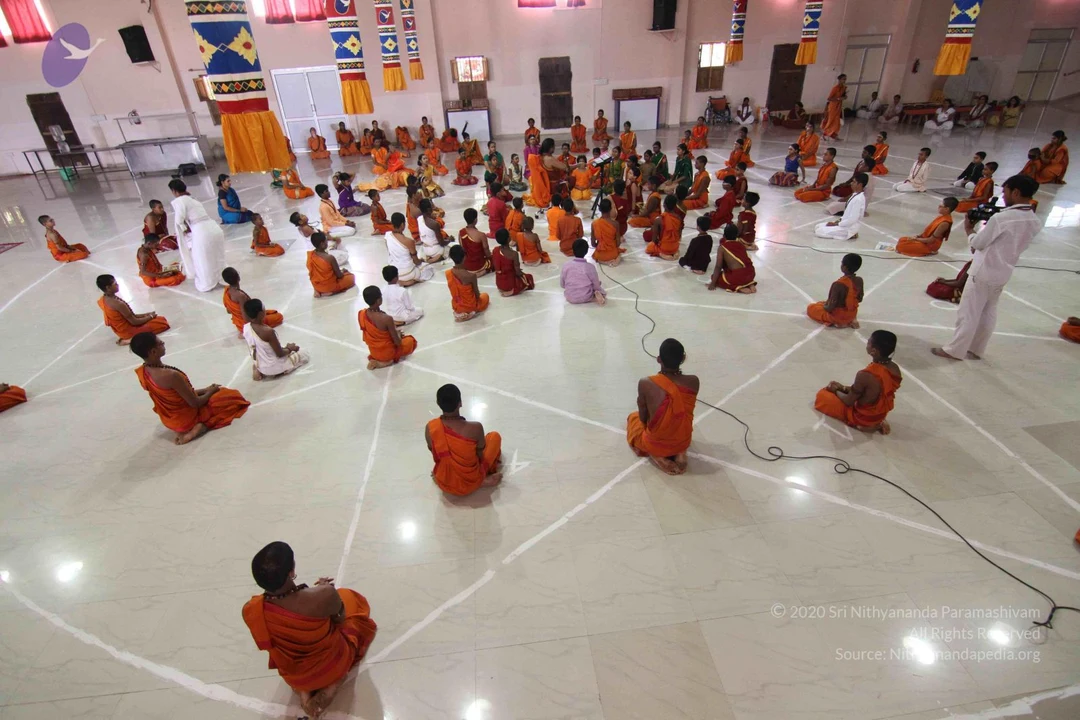
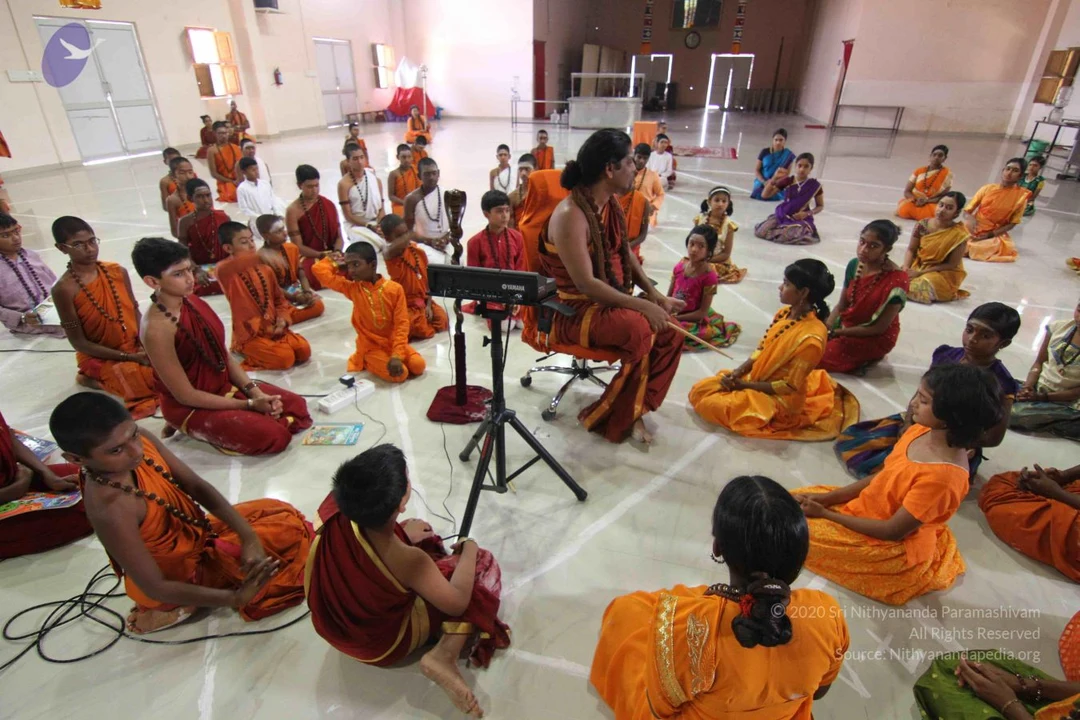
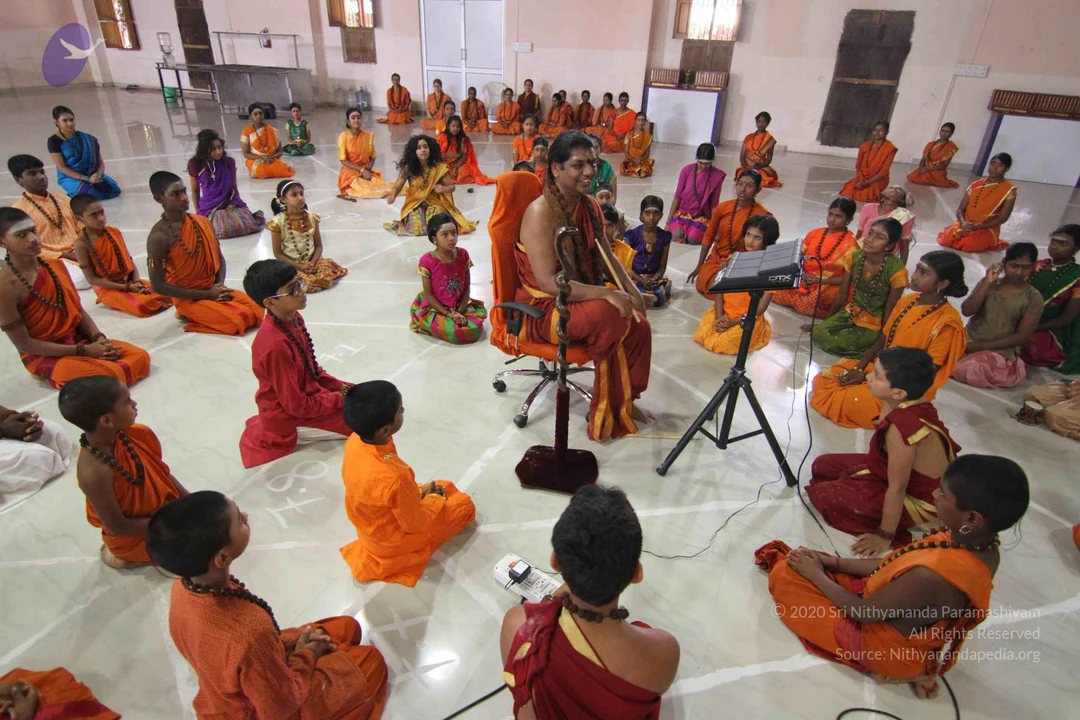
Already, the ashram Sannyasis have started drawing the Sri Chakra. Today, the Gurukul is going to have initiation. Whatever I bring it to Planet Earth, the first batch goes to Gurukul. Whether it is the sweets, or chocolates, or Sri Vidya initiation, first batch goes to Gurukul. Today we are going to have initiation. Wonderful!

And I am also planning to draw a large-size Sri Chakra on, through stone in the ashram. So from now onwards, in Bidadi, every Inner Awakening, people will have initiation through Yantra, the mass Kundalini awakening and mass initiation. Actually this is the most important information. I was planning what size Yantra I have to make and all that. Suddenly, I saw I have to draw the Yantra for at least one-thousand people to sit. It seems, in next year, every Inner Awakening is going to be attended by more than thousand people! I was looking in. Suddenly Kaalabhairava said, ‘Draw the Yantra for at least thousand people!’ Thousands are going to be attending Inner Awakening and thousands of Adheenamites are going to be residing with you in this Bidadi ashram! I said, ‘Oh God!’ So before I draw the Yantra, I have to build the place for everyone to stay!

This sacred geometry, sacred syllables, both I am using to make you all experience the space of Shivoham, Shivoham, Shivoham!

Shivoham! Shivoham! Shivoham!

It is actually courageously relaxing into Mahadeva, trusting and resting your being into him. After all even if you try to hold your whole life under your control, you are constantly powerless; you are reminded of your uselessness, non-utility of your individuality. Why don’t you be a little brilliant and surrender and rest in his inner-space? And he is intelligent, compassionate, enriching, enlightening! Intelligent, compassionate, enriching, enlightening!

Actually you are going to be really surprised and shocked to see the power of simple lines, the power of simple lines, yantras. The power of simple sound, mantras. The power of simple techniques. So powerfully, they just shake your whole being with Kundalini Shakthi! Actually instead of being under the control of your unconscious, you will relax into the control of your super-conscious. You will really relax into the control of your super-conscious!

So understand Shivoham, the most important, most powerful, ultimate experience of existence, I bless all of you to experience that. And I also welcome all of you to come to Cambodia and experience the power of yantras, mantras, and experience Shivoham. Nothing can be worthy of missing Cambodia. Nothing can be worthy of experiencing Cambodia. Nothing can be worthy of Cambodia. And nothing can be equivalent to Cambodia experience of Shivoham!

With this, I bless you all. Let’s all radiate with Integrity, Authenticity, Responsibility, Enriching, and Causing eternal bliss, Nithyananda.

Photos From The Day:
Sakshi Pramana:

Sharing from about yoga class

Tags:

Paramahamsa Nithyananda, universe, sound, light, verbalization, visualization, Mahadeva, Devi, Sri Vidya, knowledge, Shivoham, super conscious, Cambodia, Inner Awakening, mantras, yantras.

Photos Of The Day:

Padapuja
PadukaPooja
Kalpataru-Darshan

Yatra-Initiation

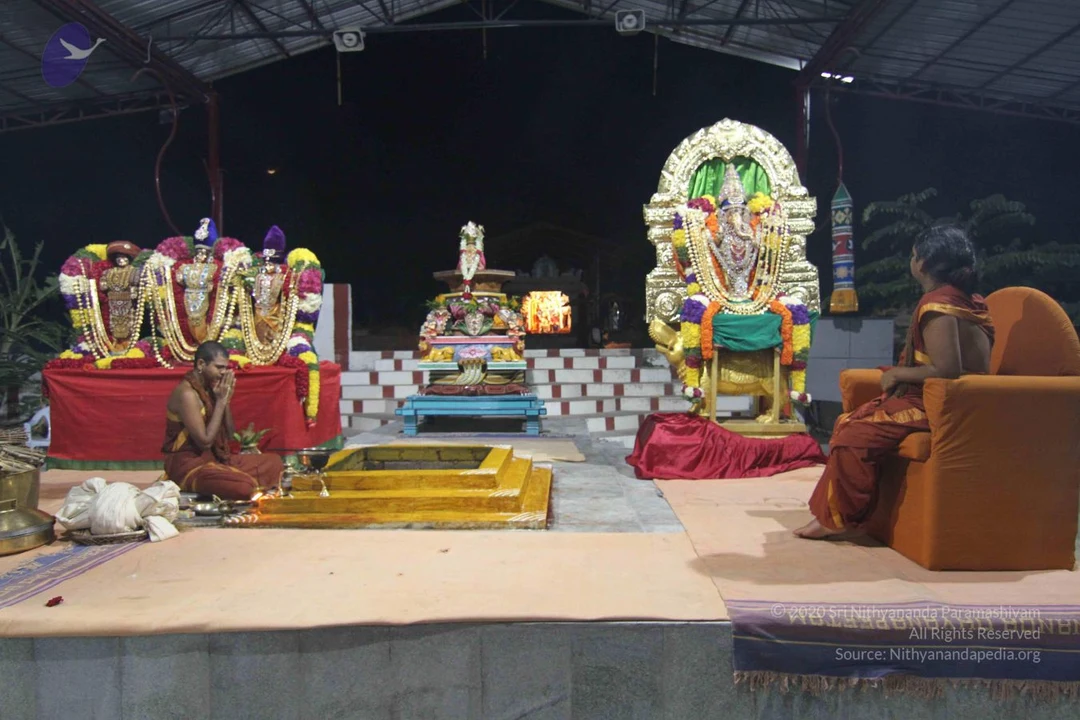
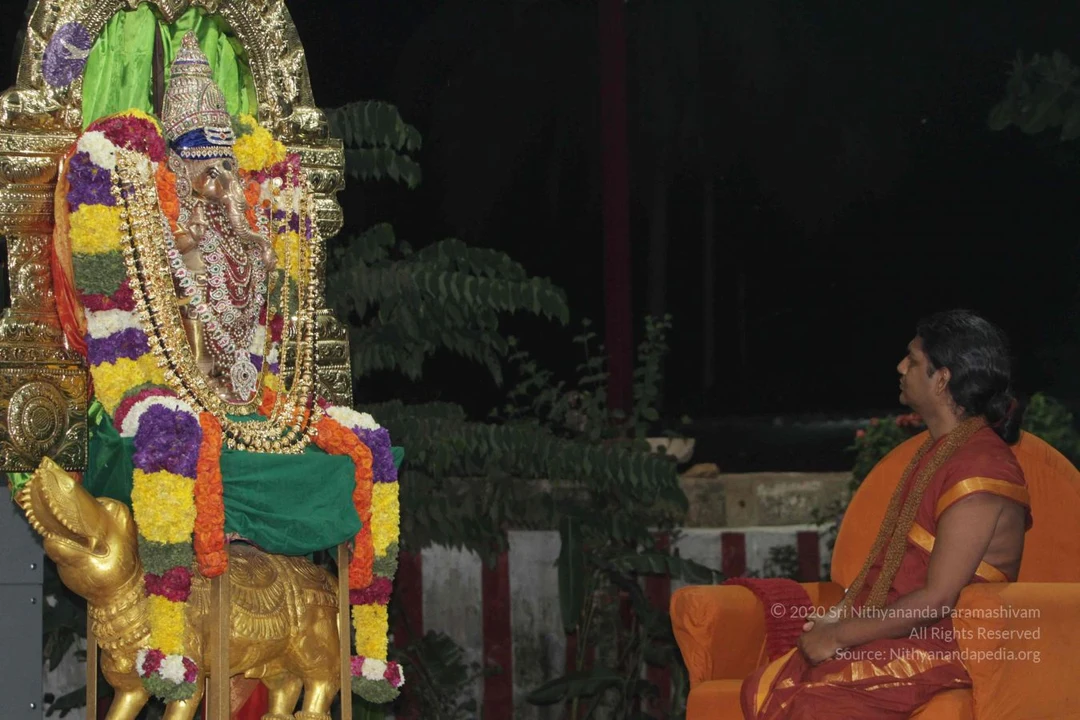
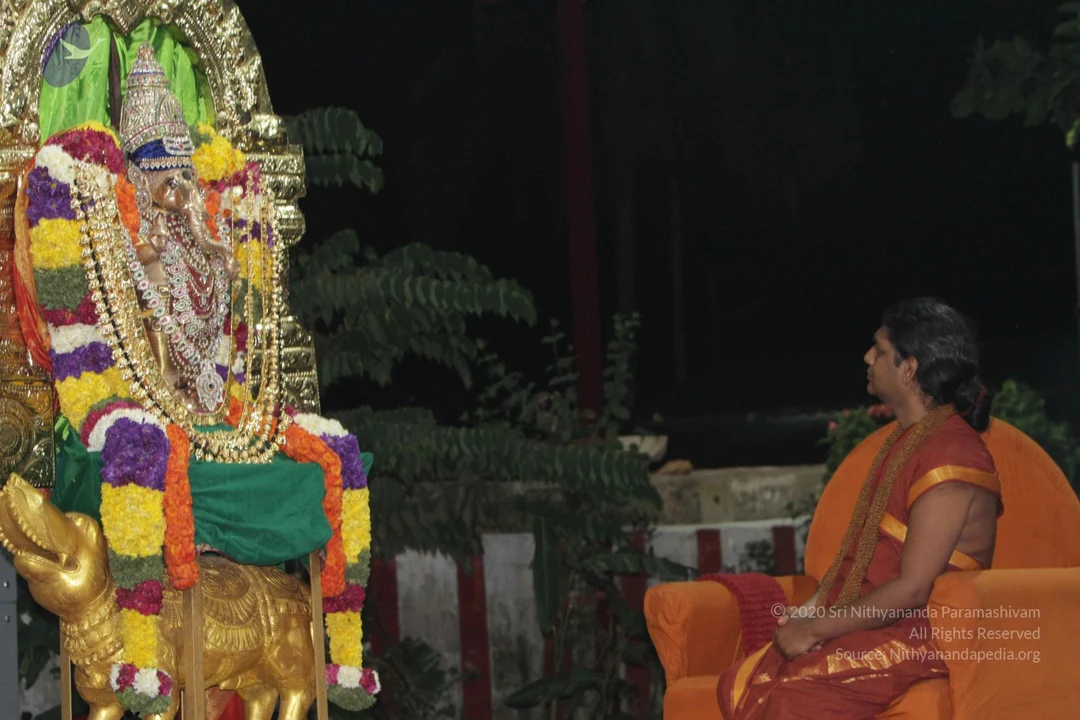
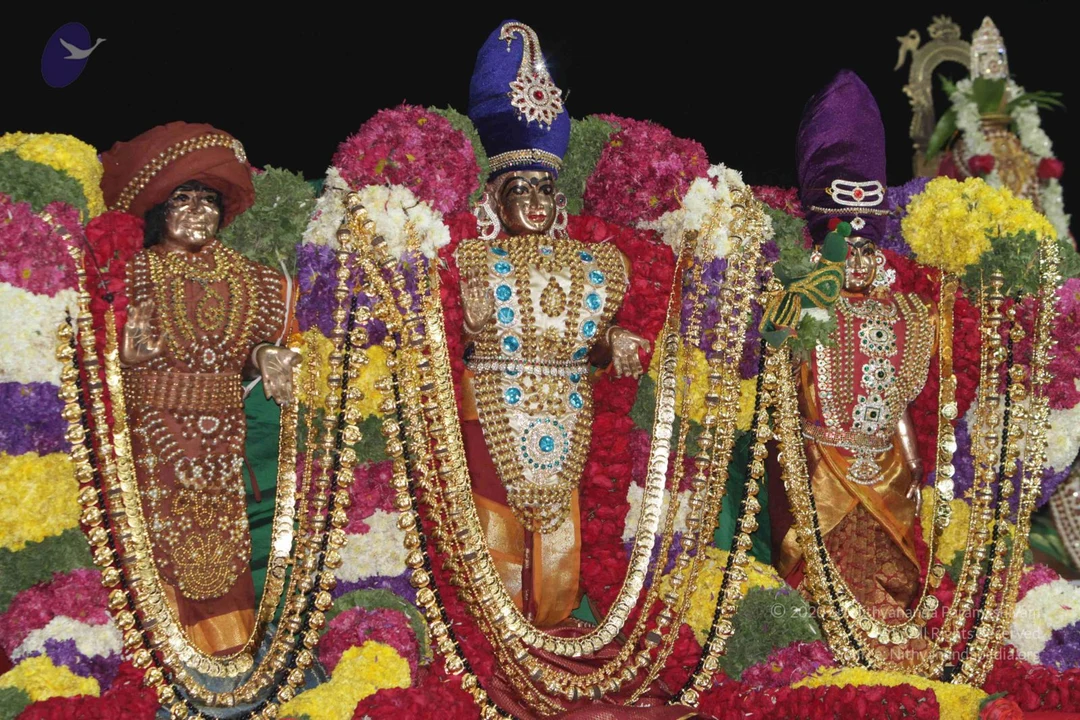
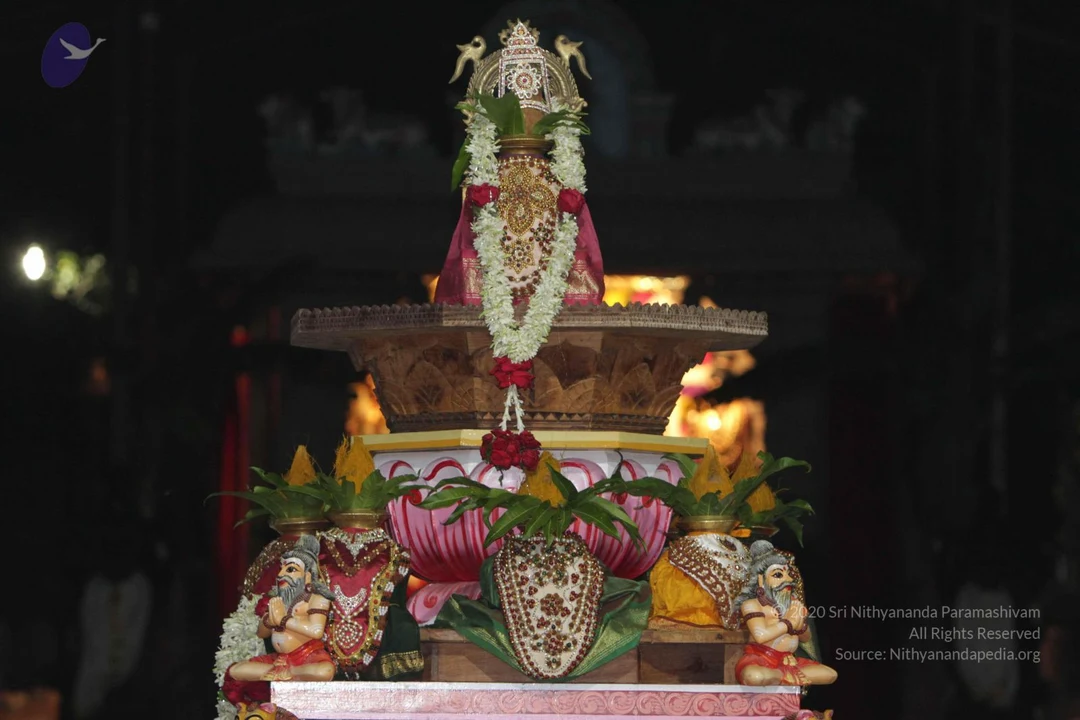
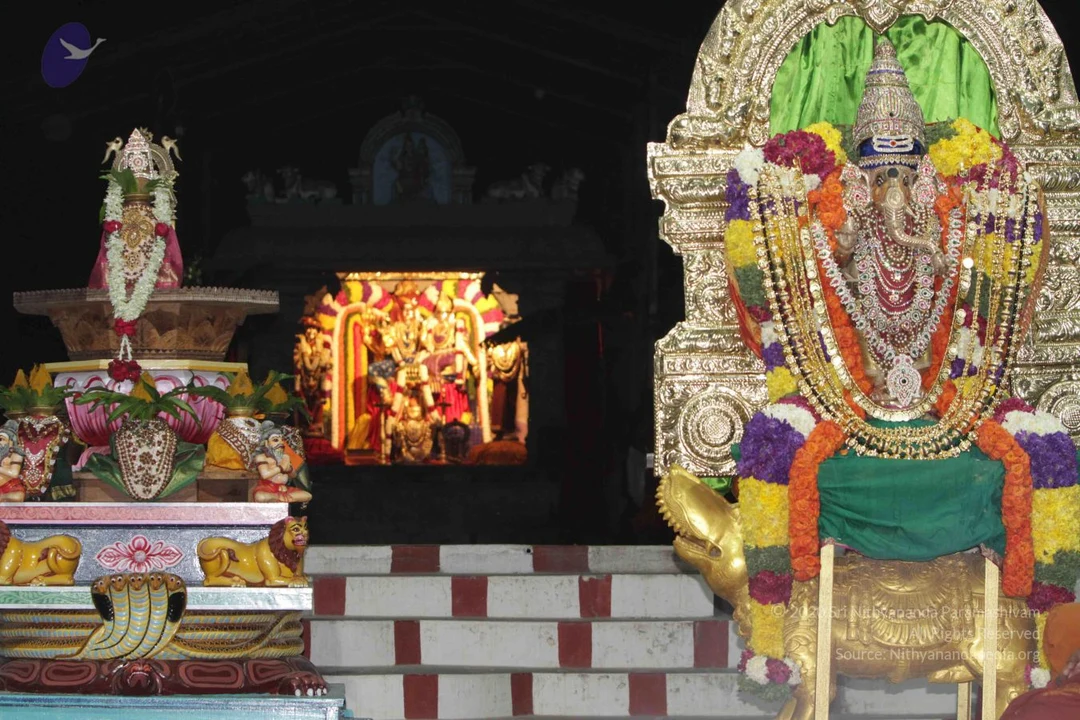
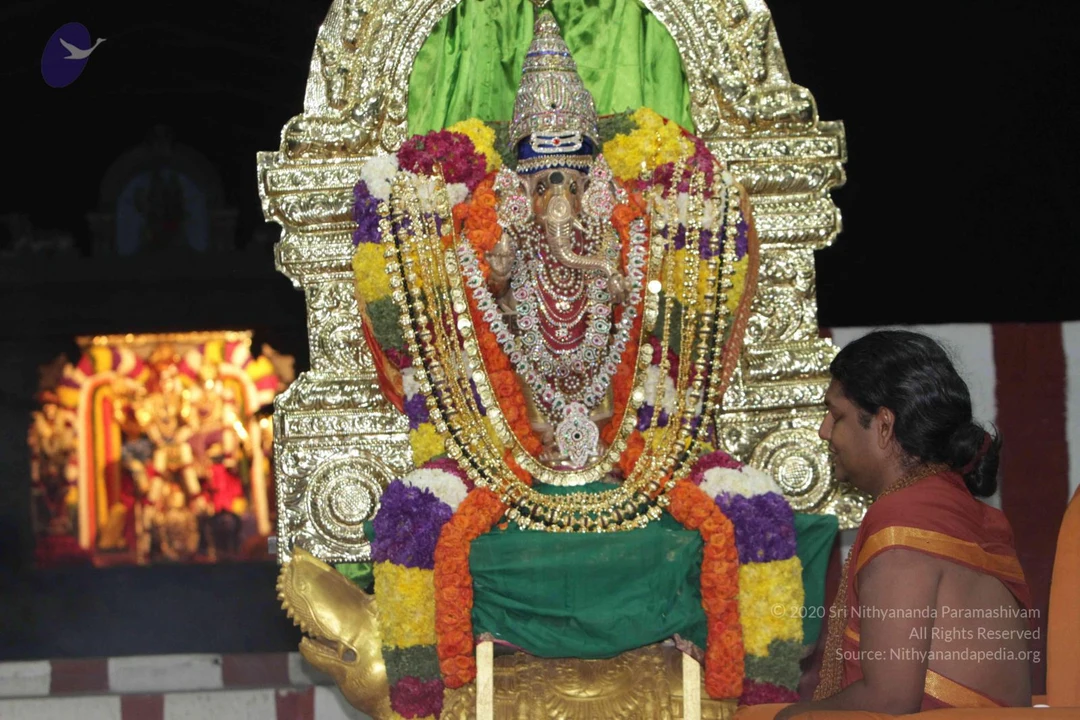
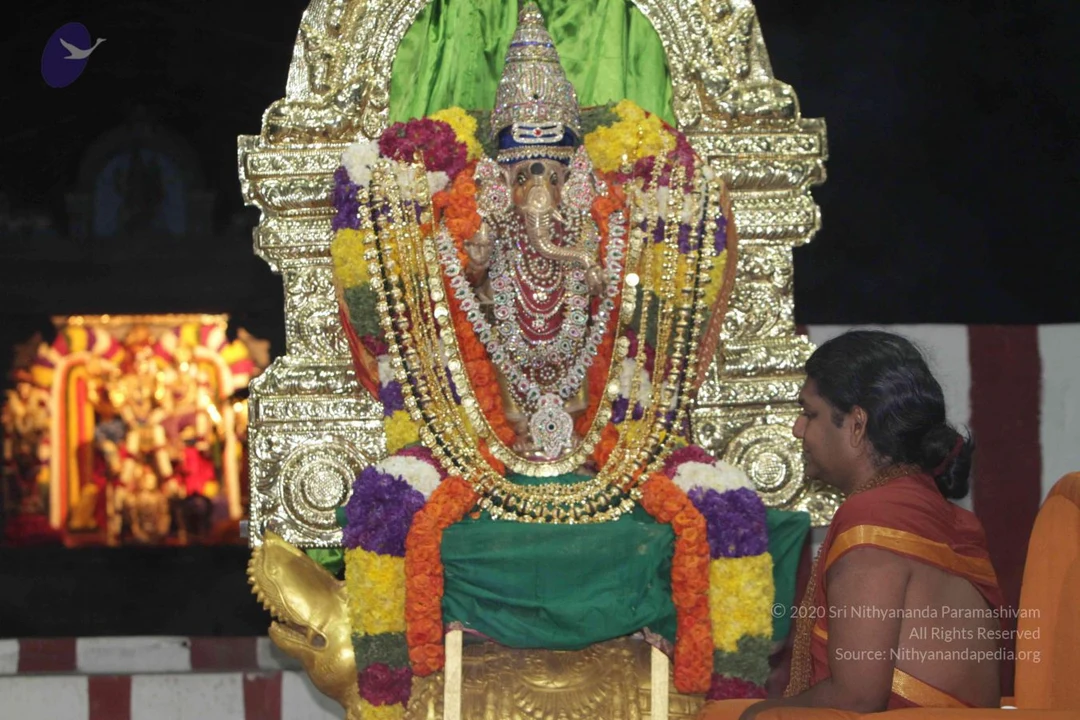
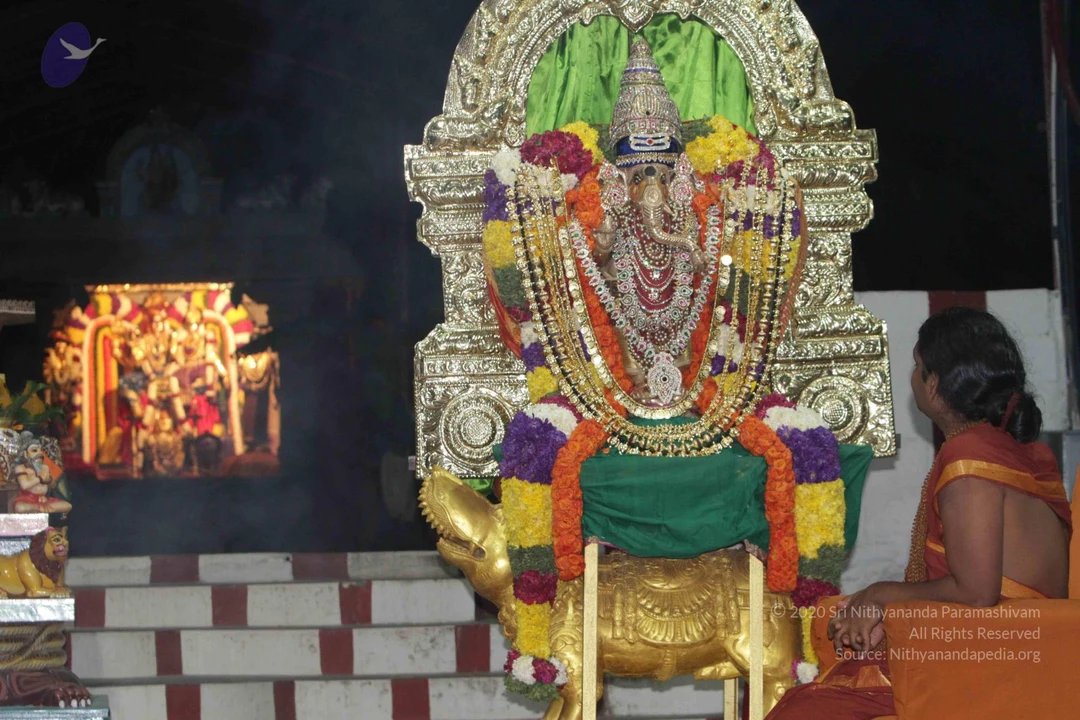
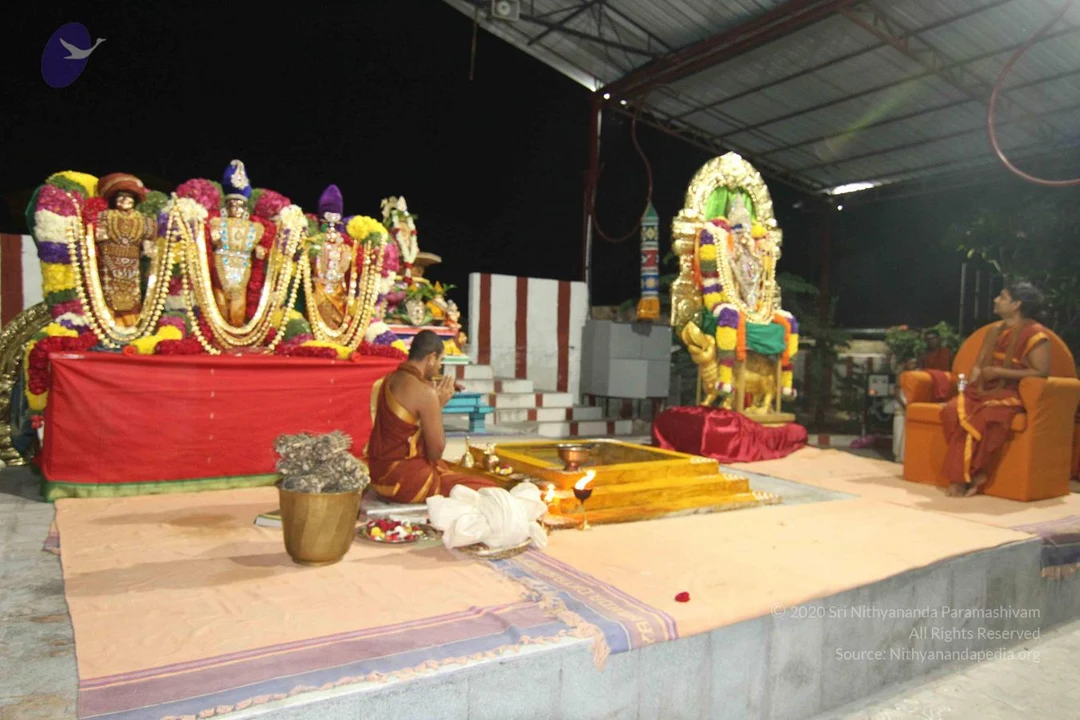
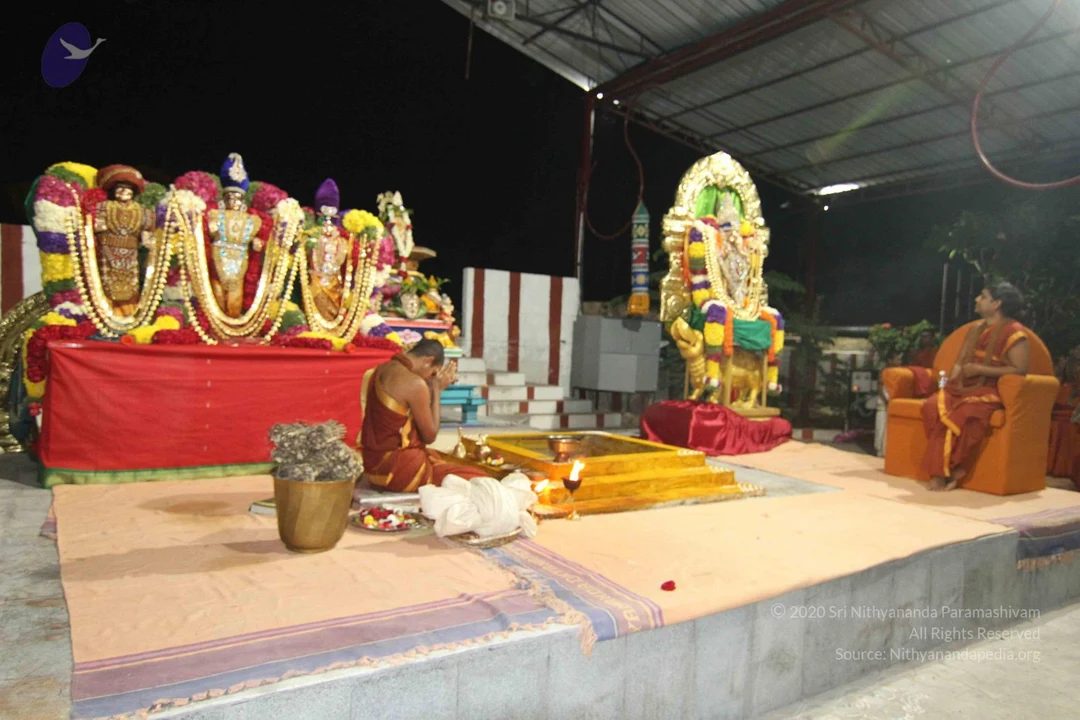
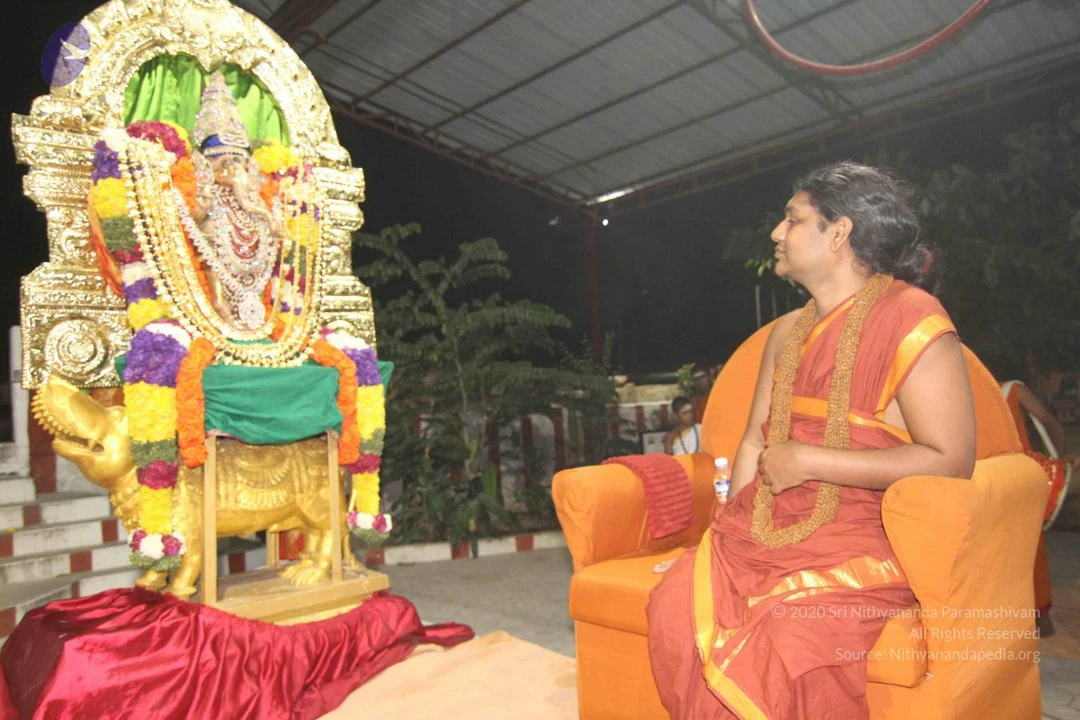
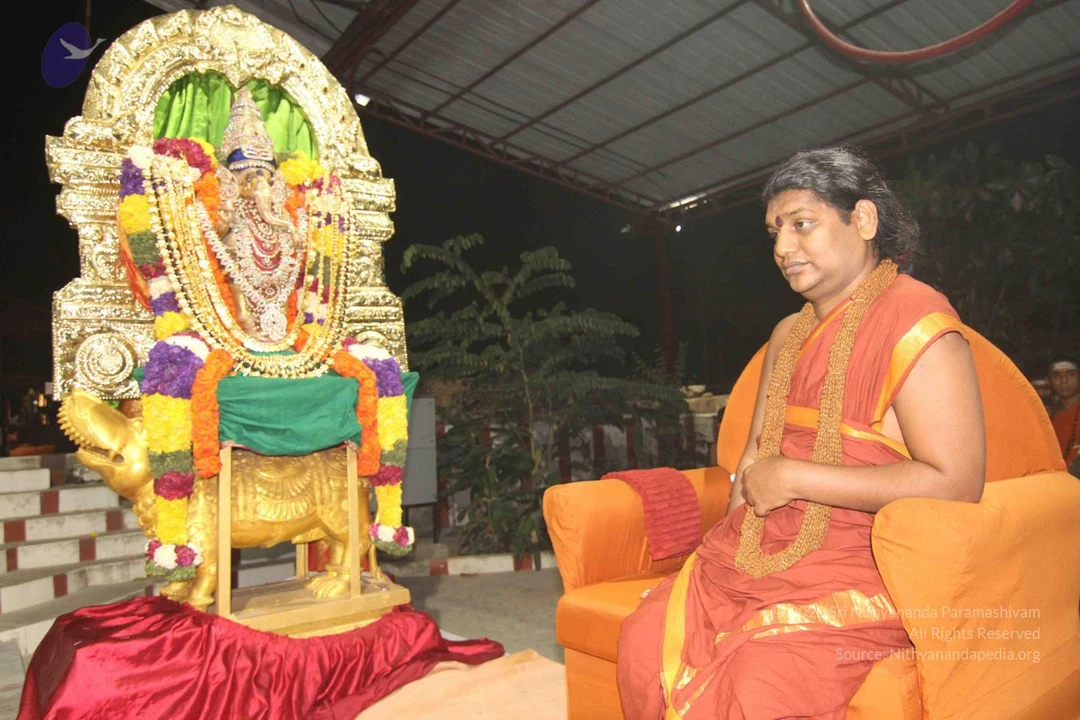
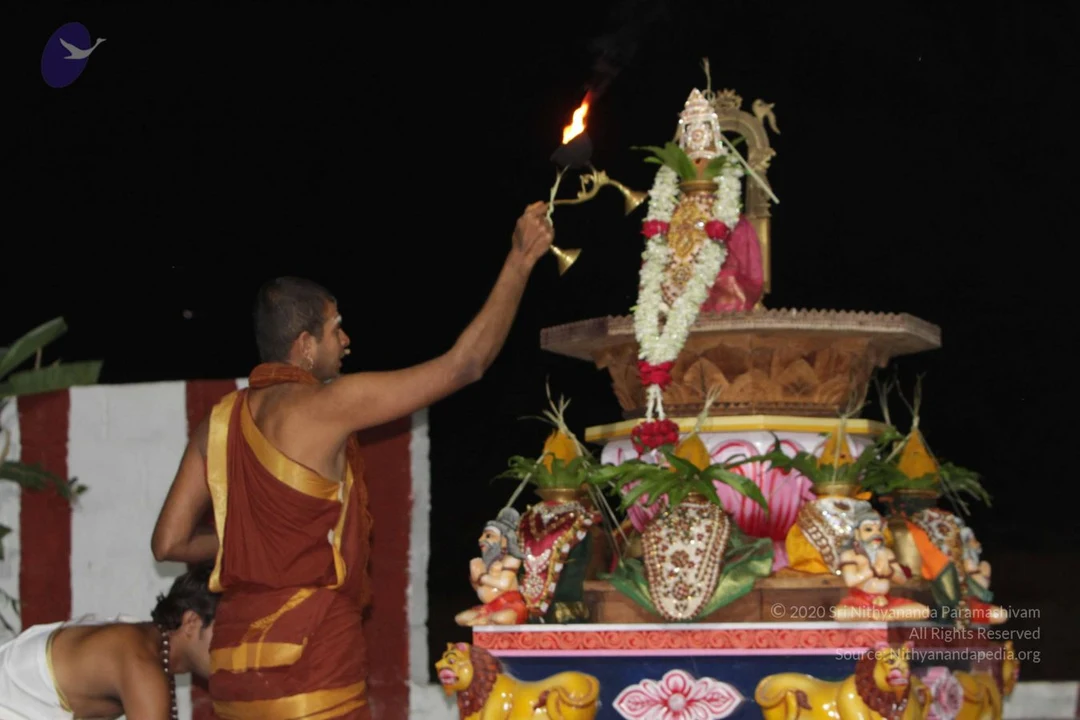
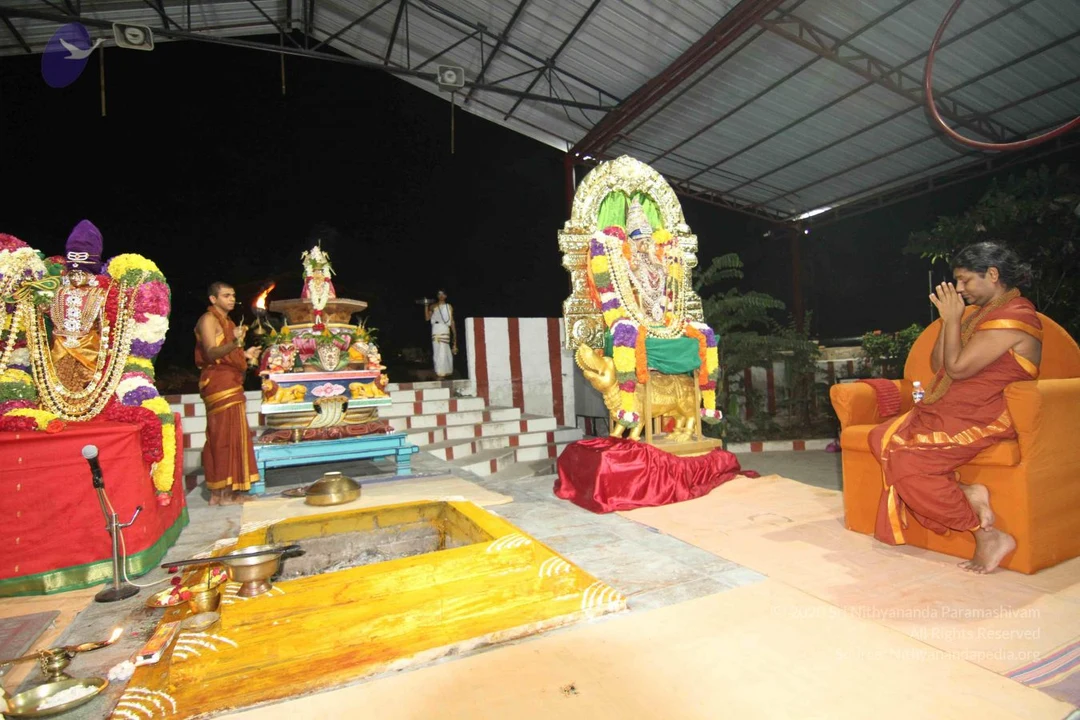
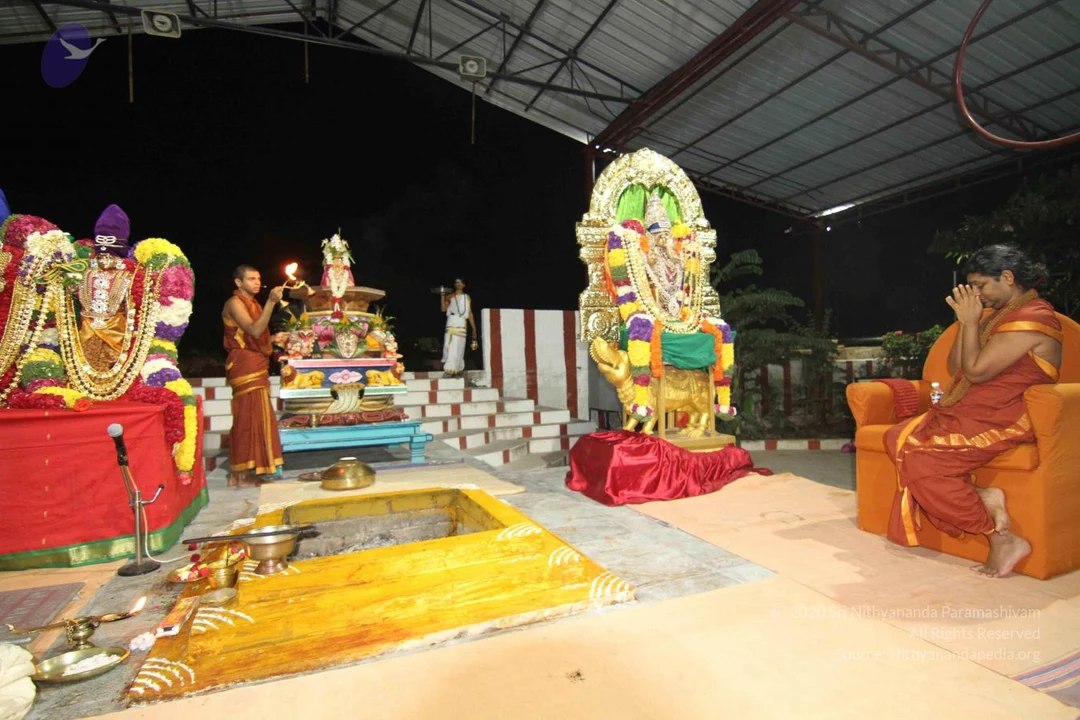
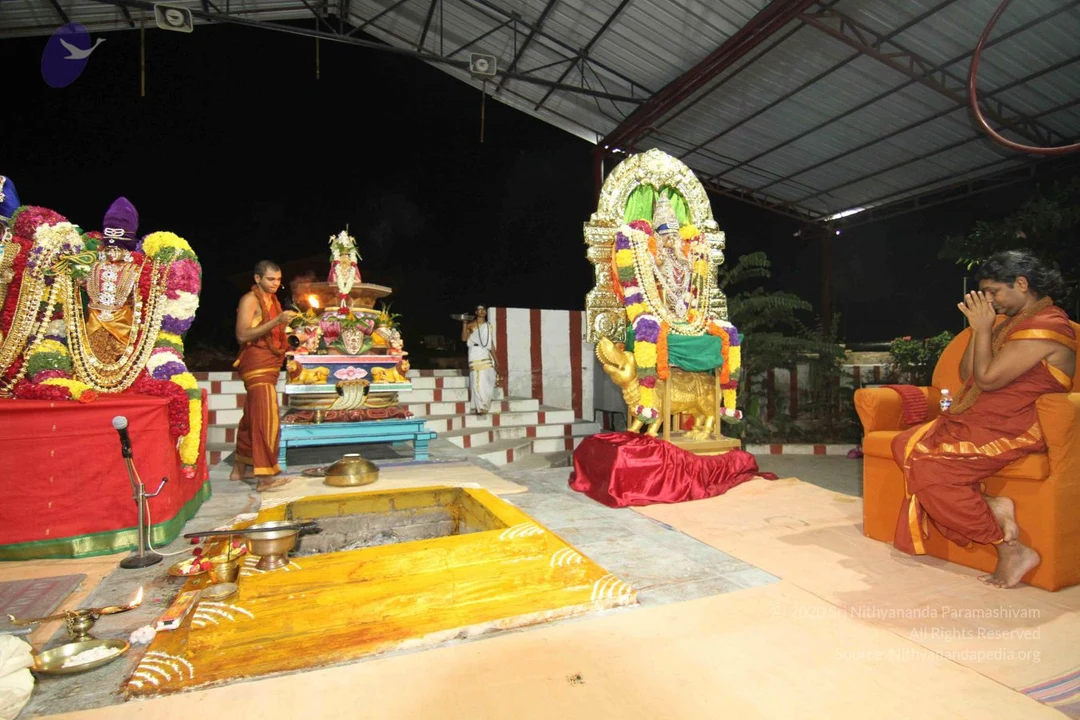
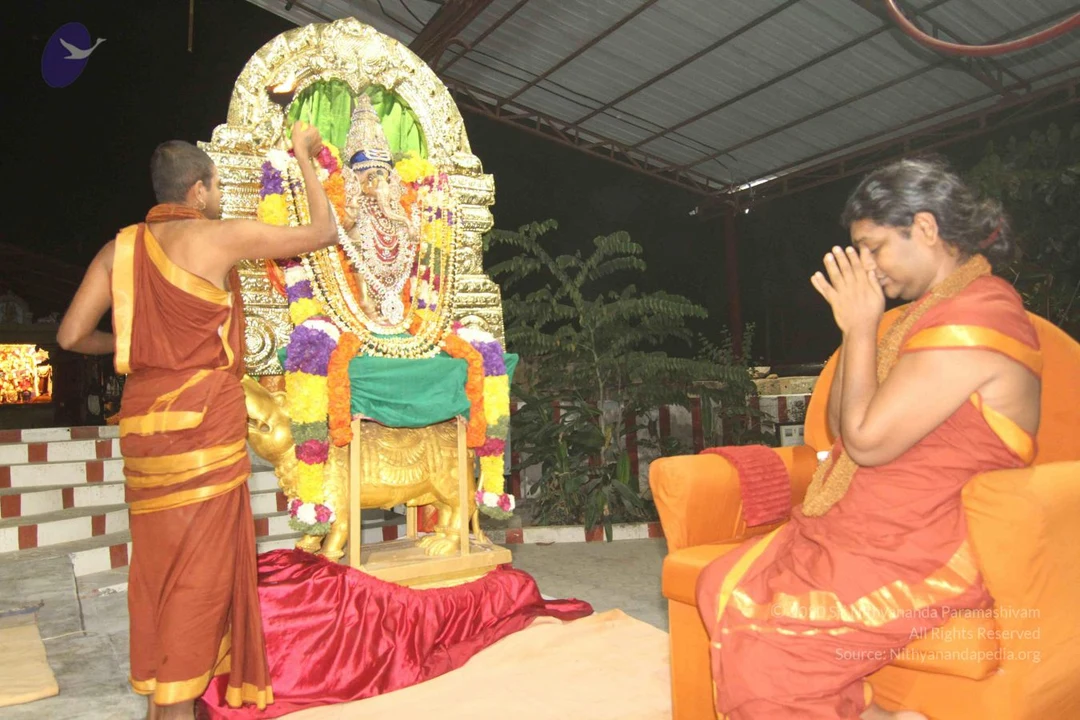
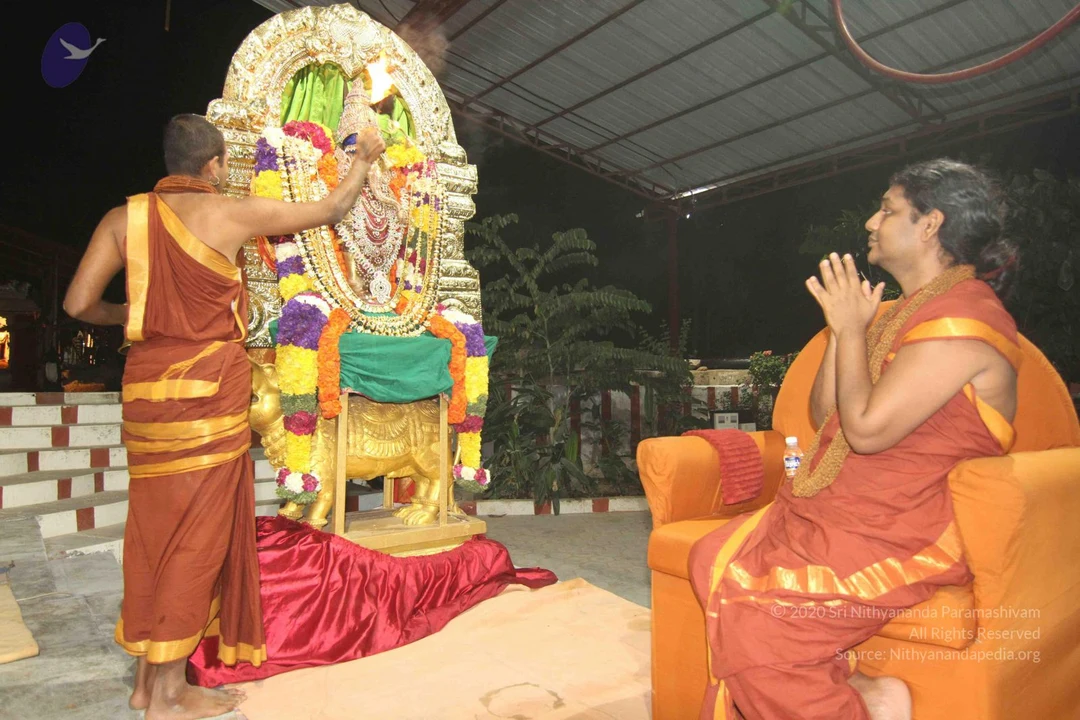
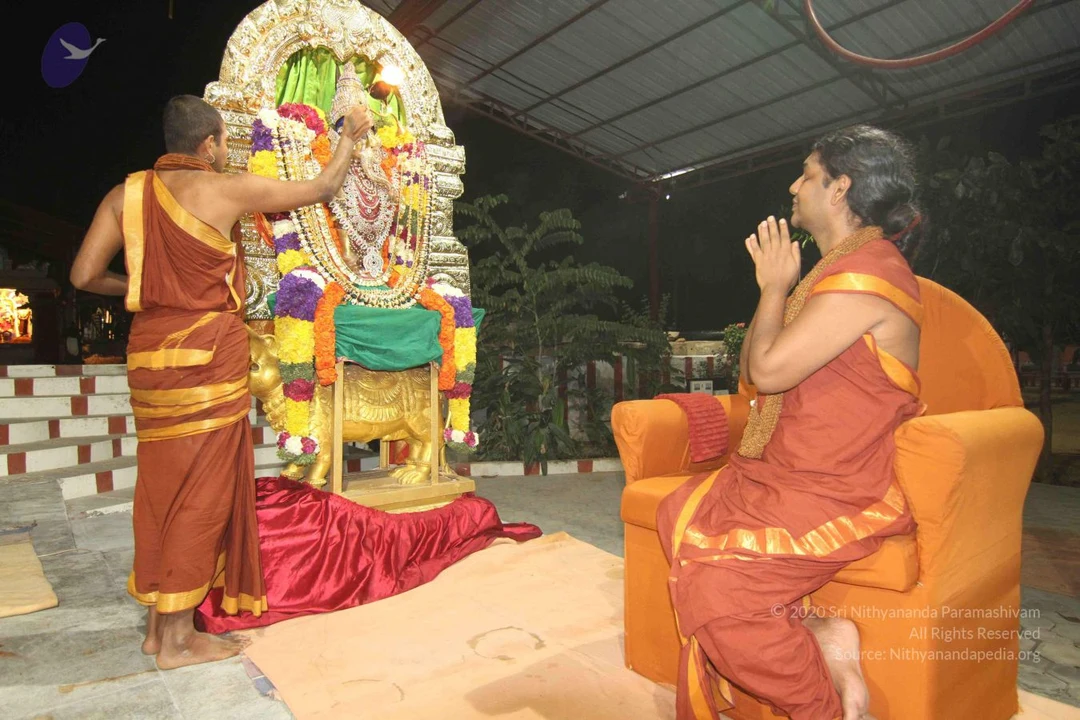
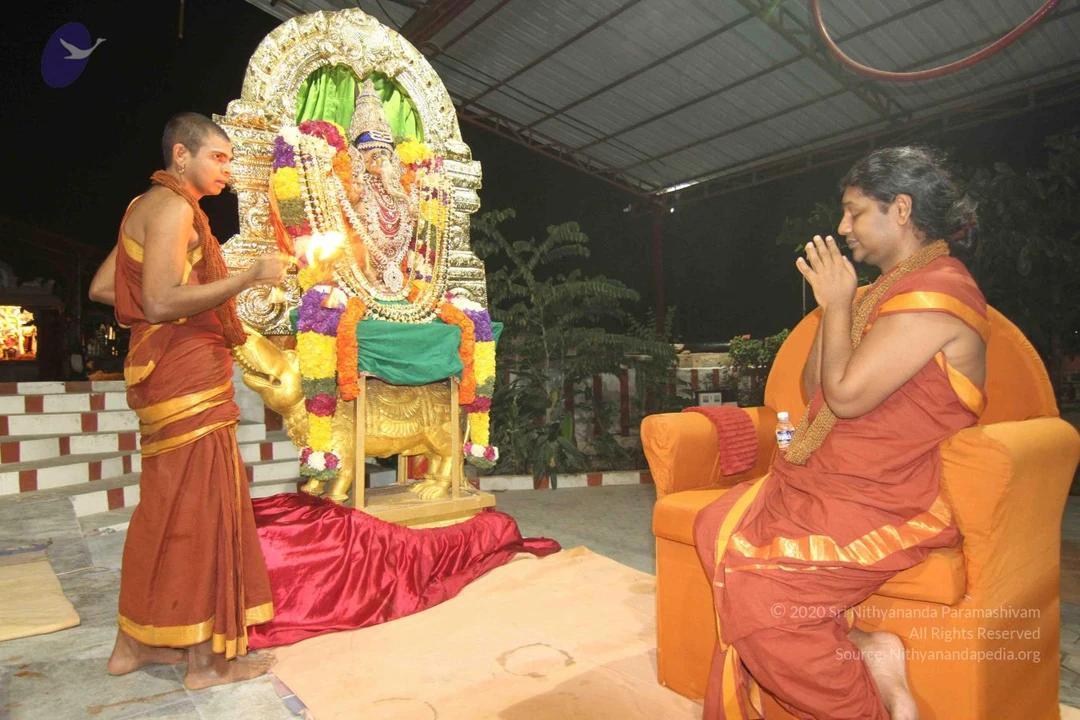
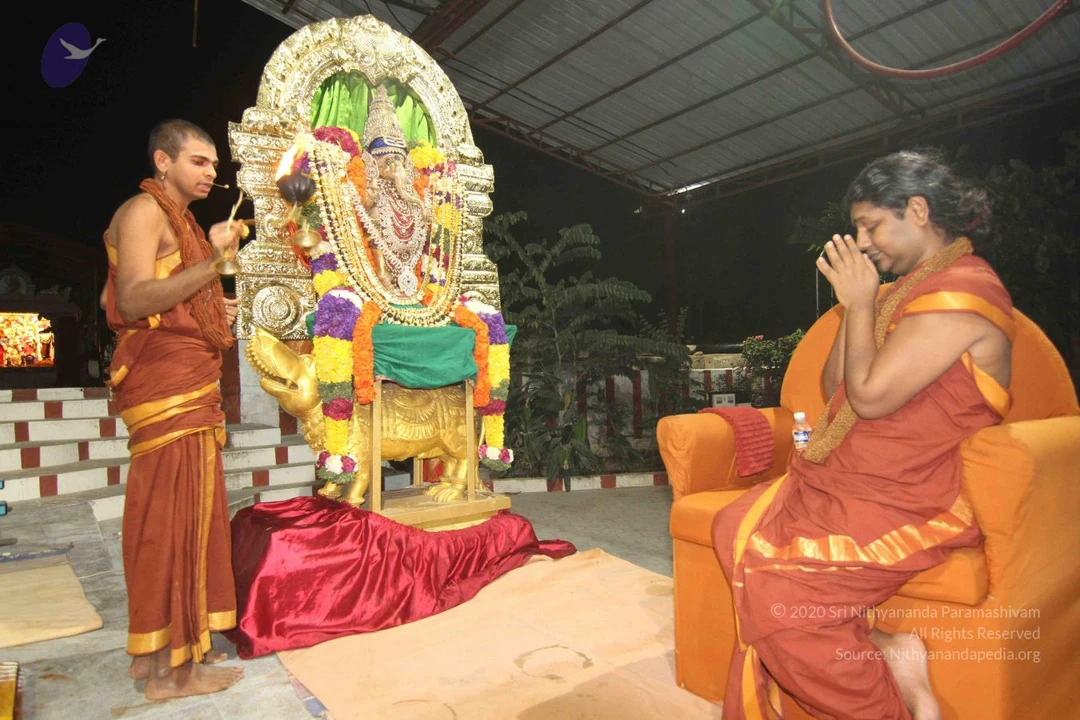
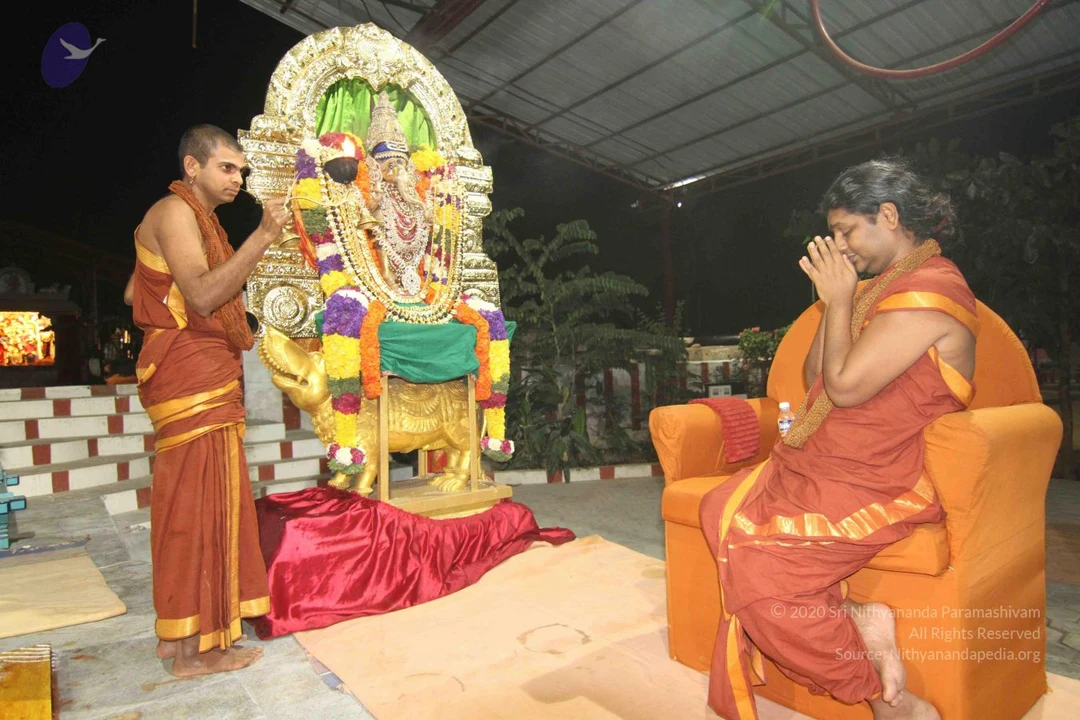
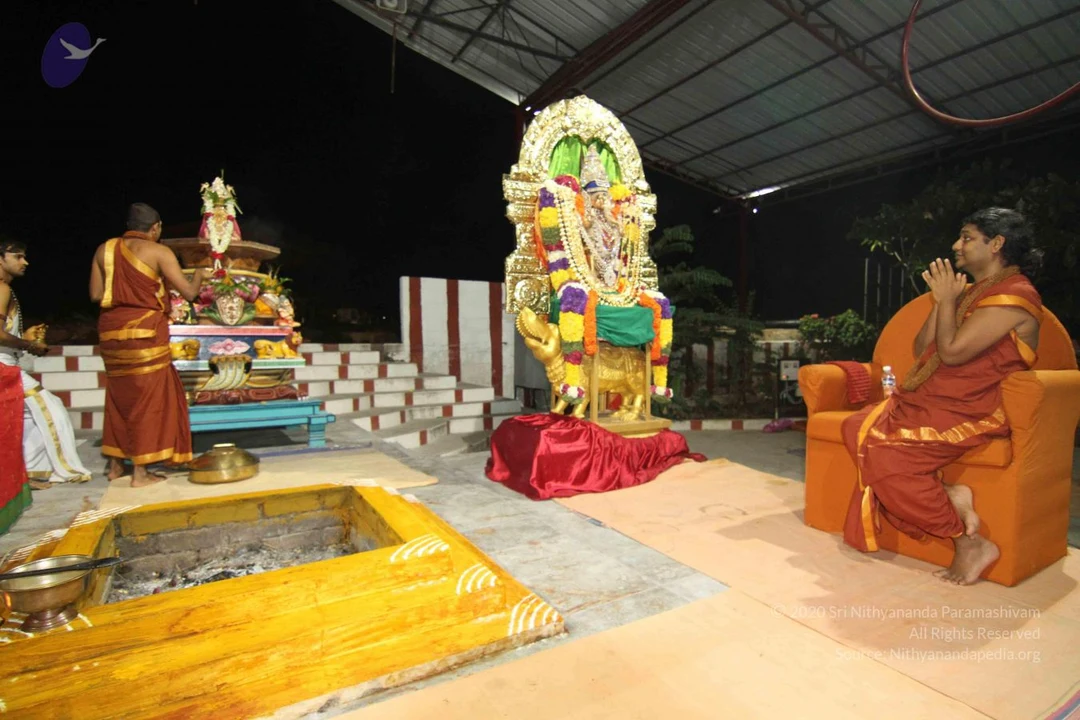
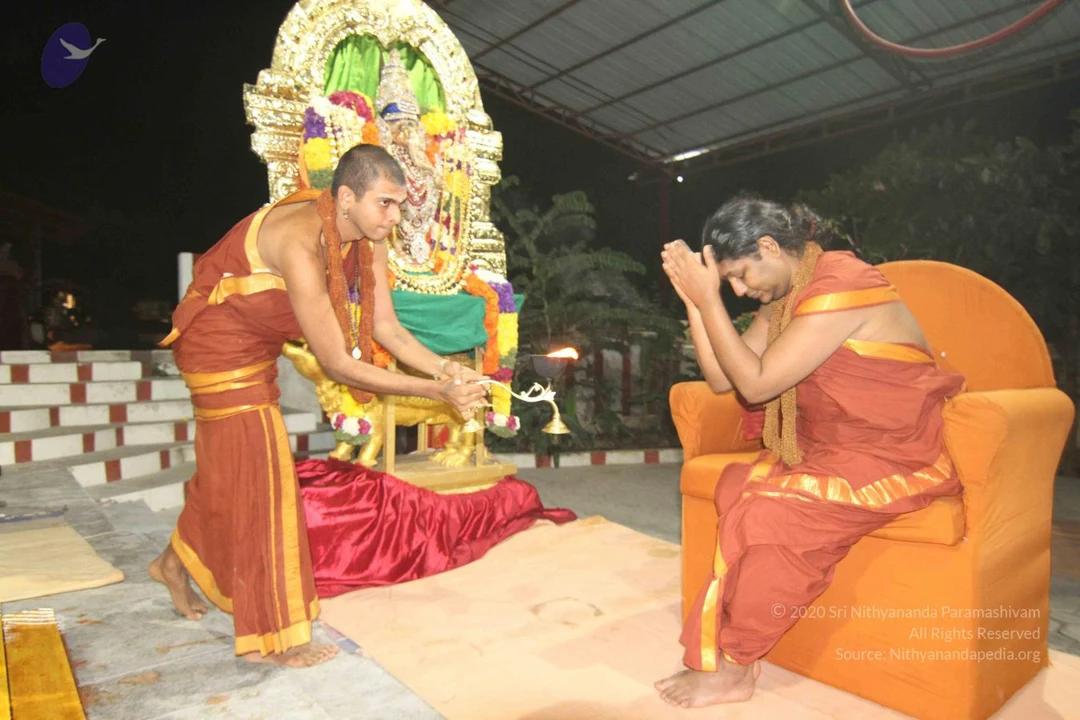
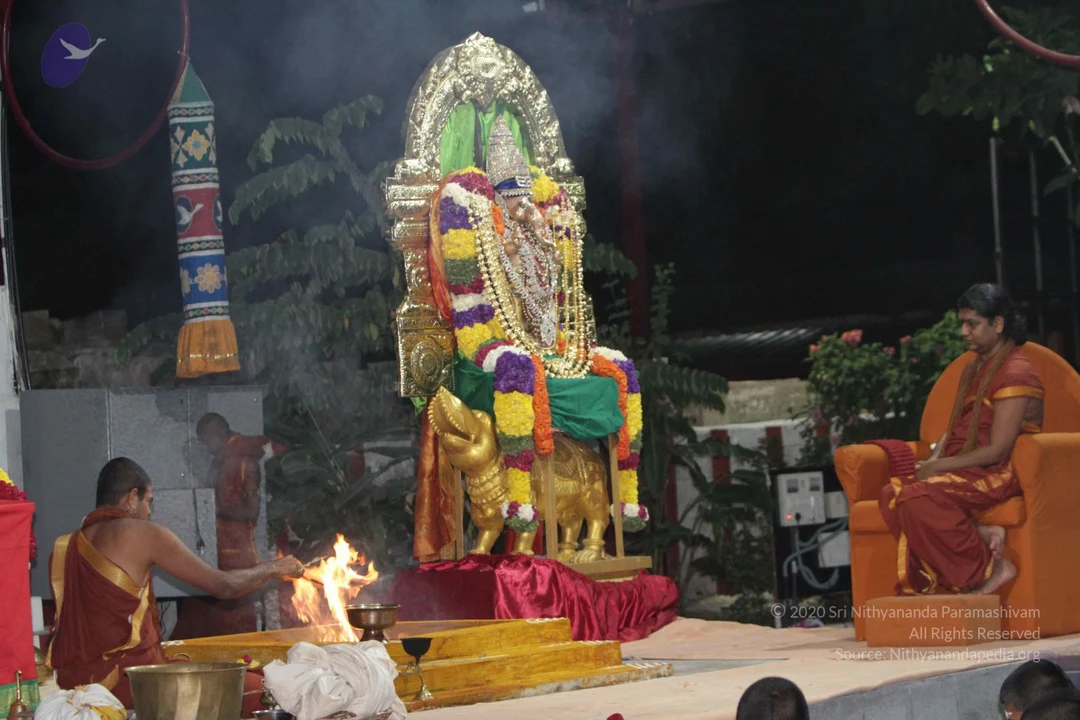
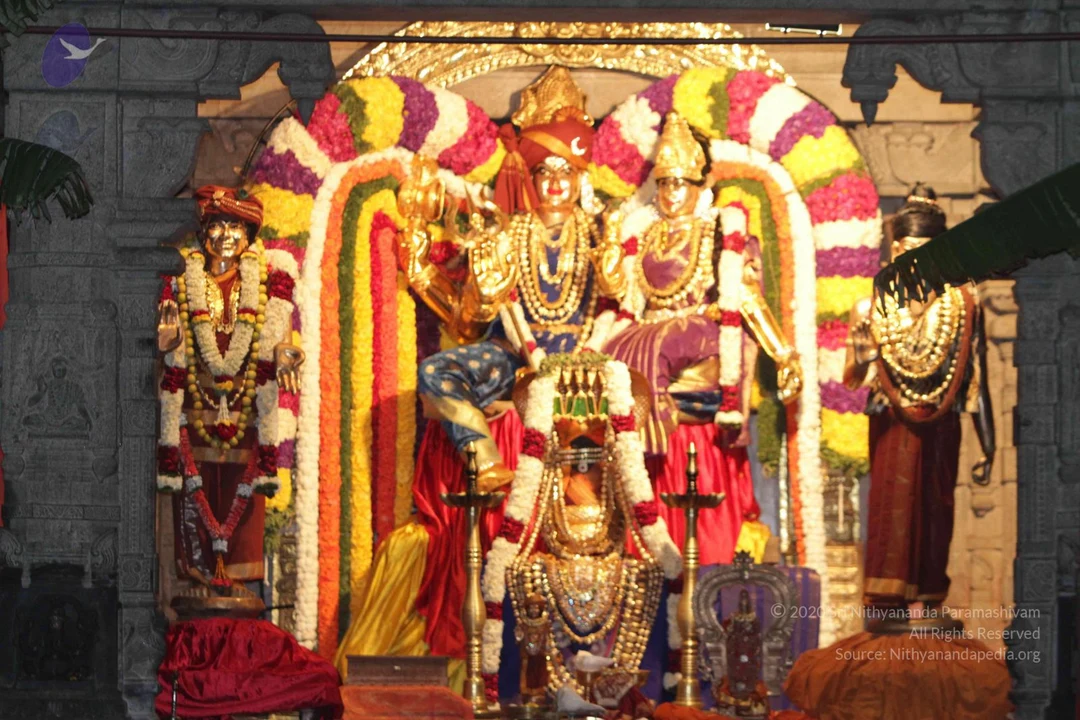
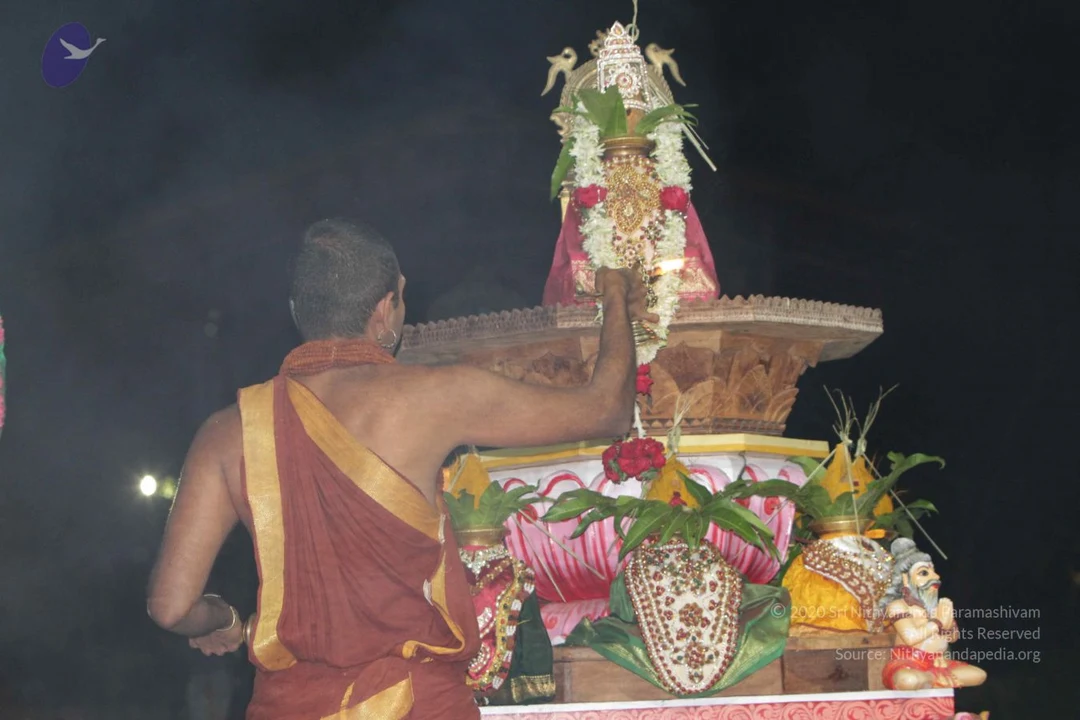
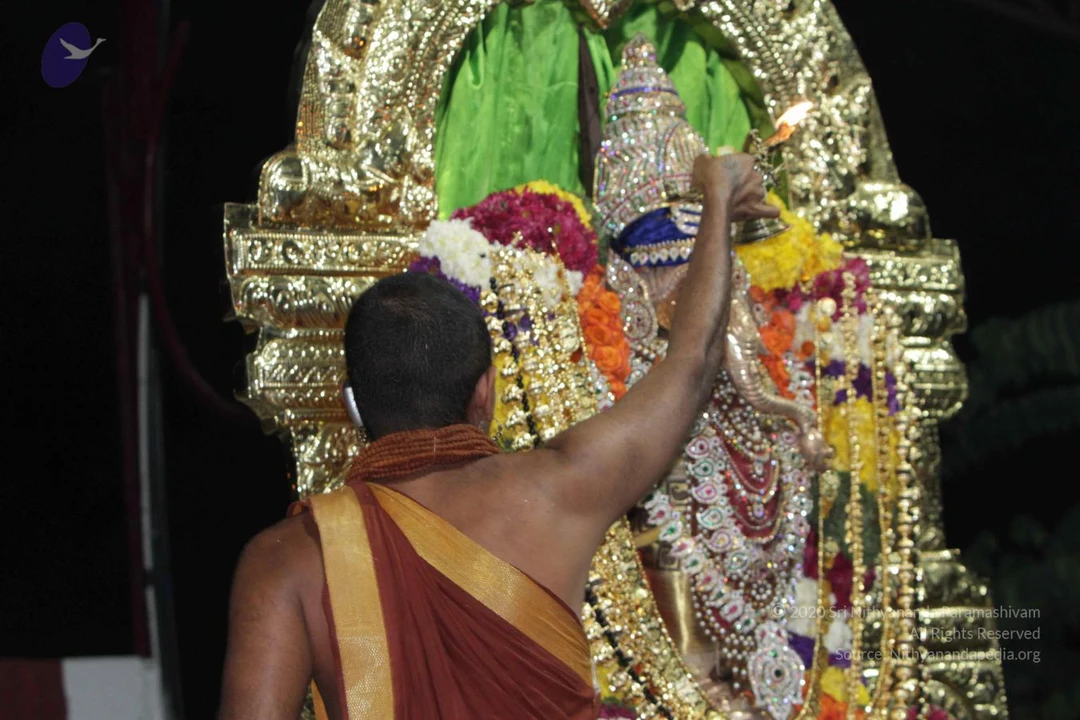
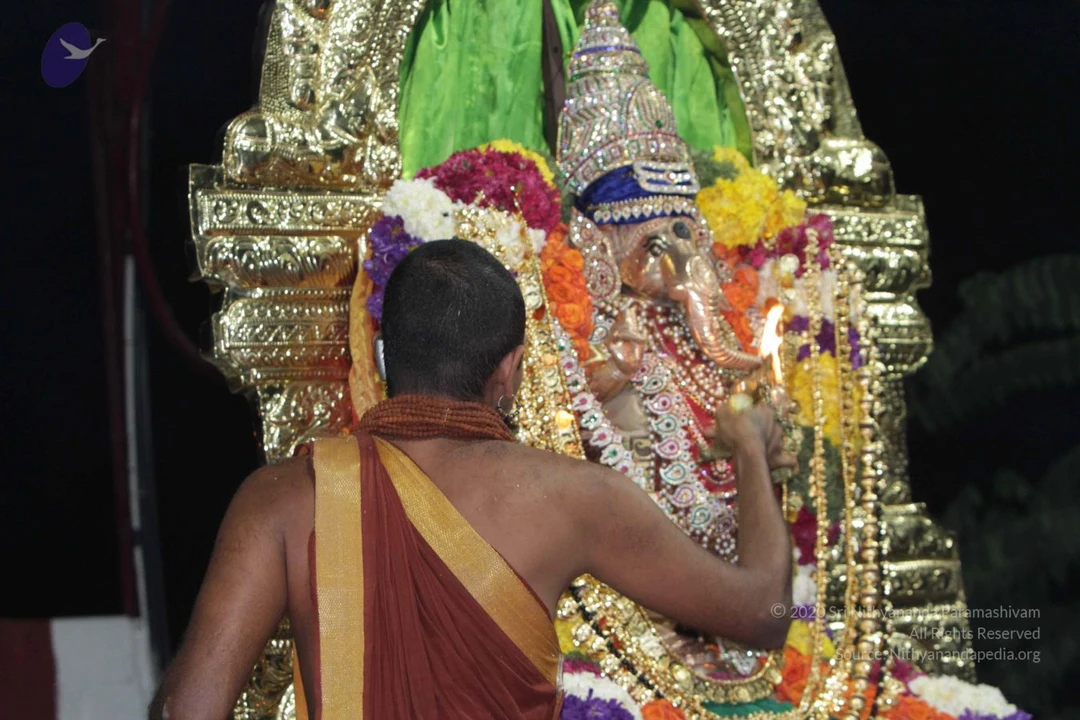
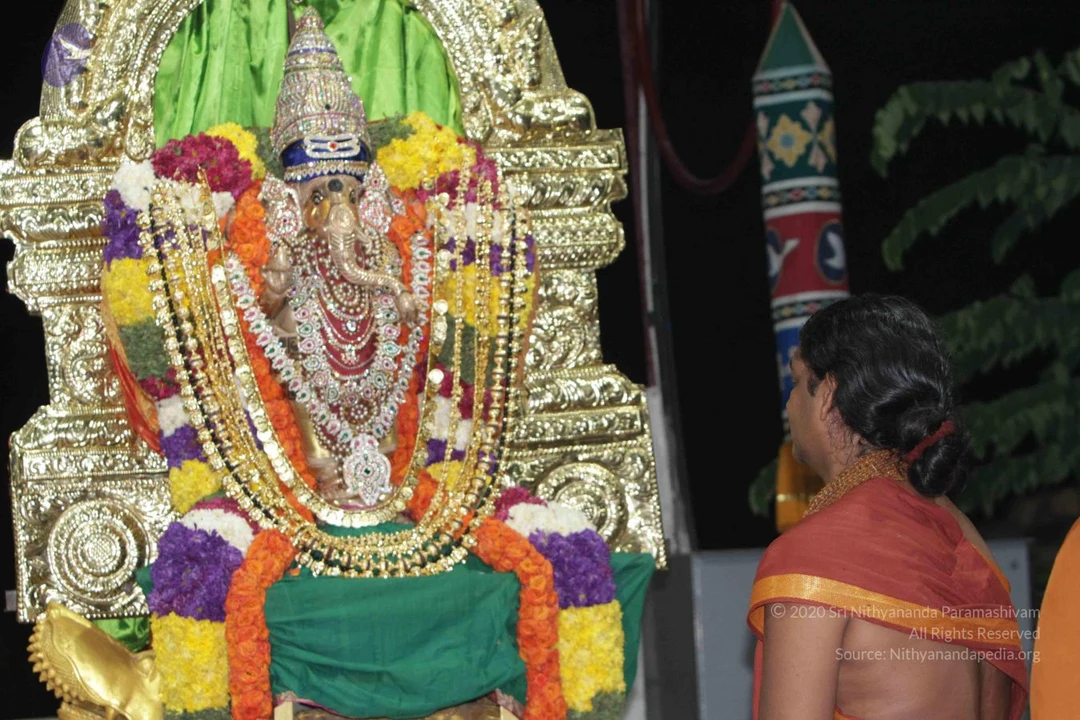
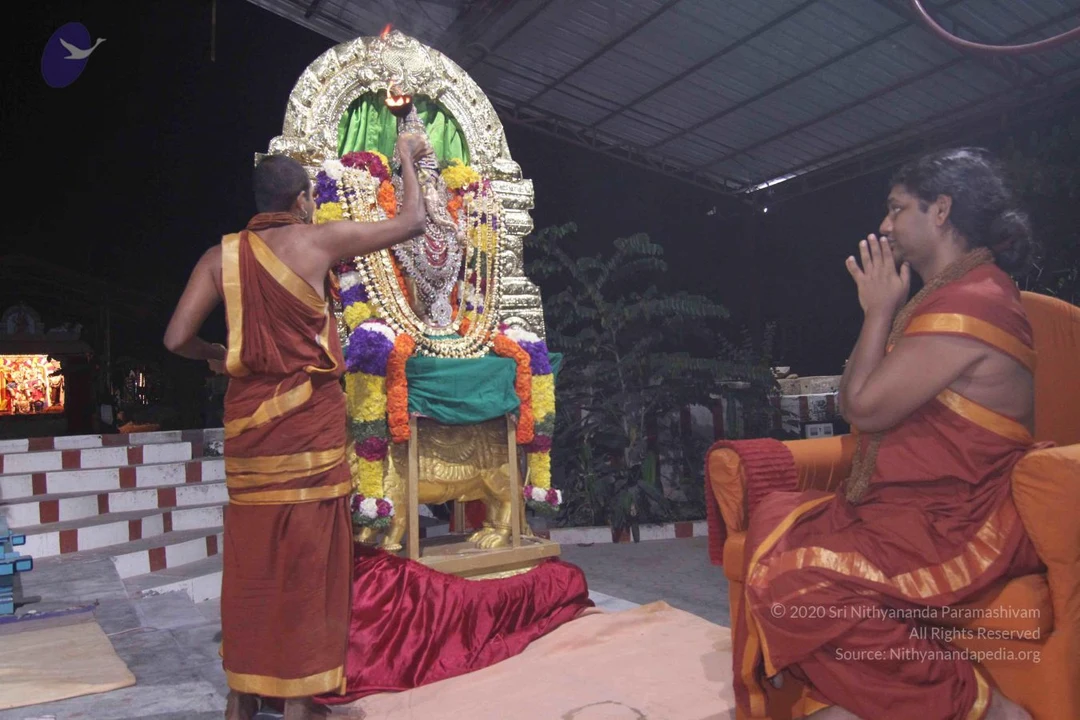
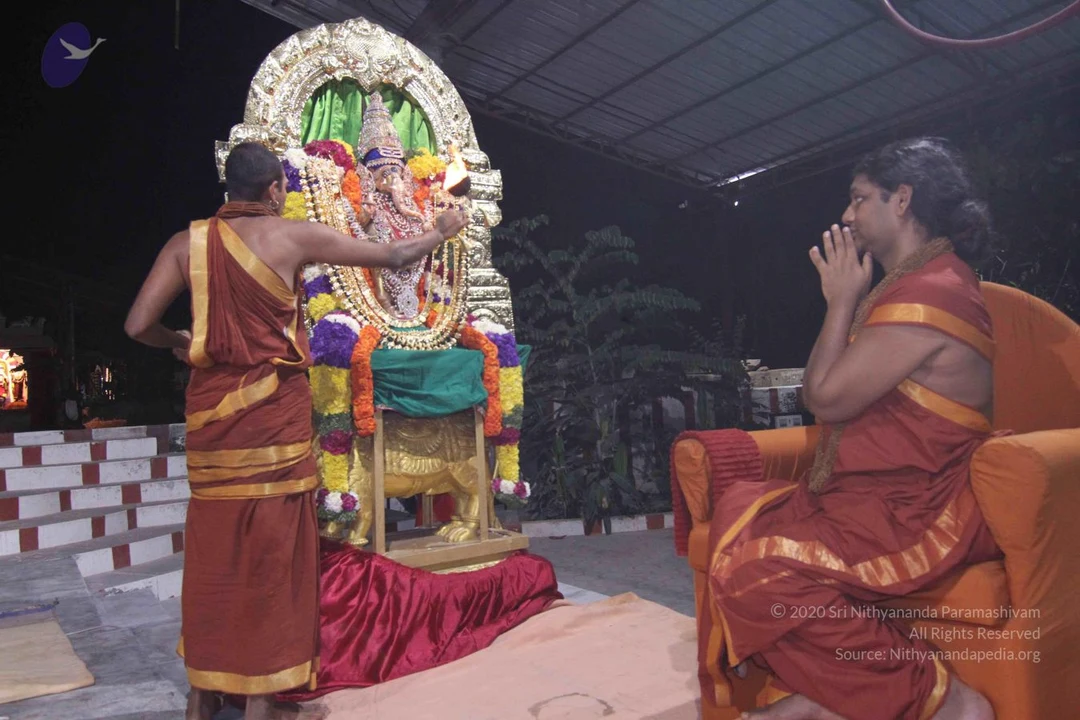
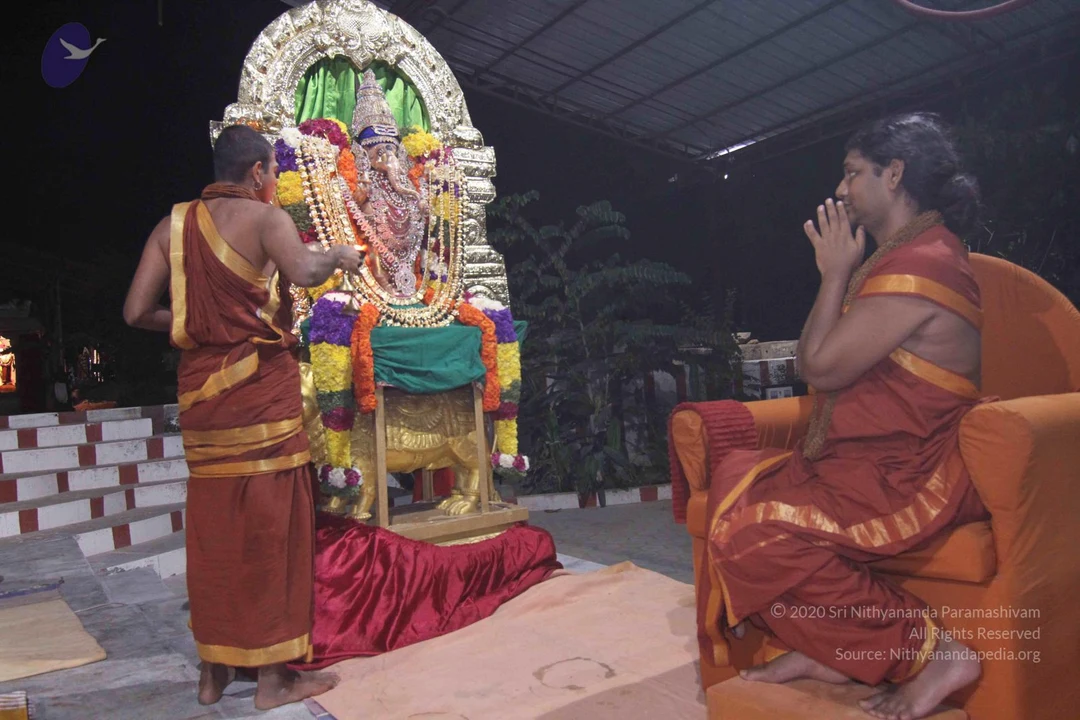
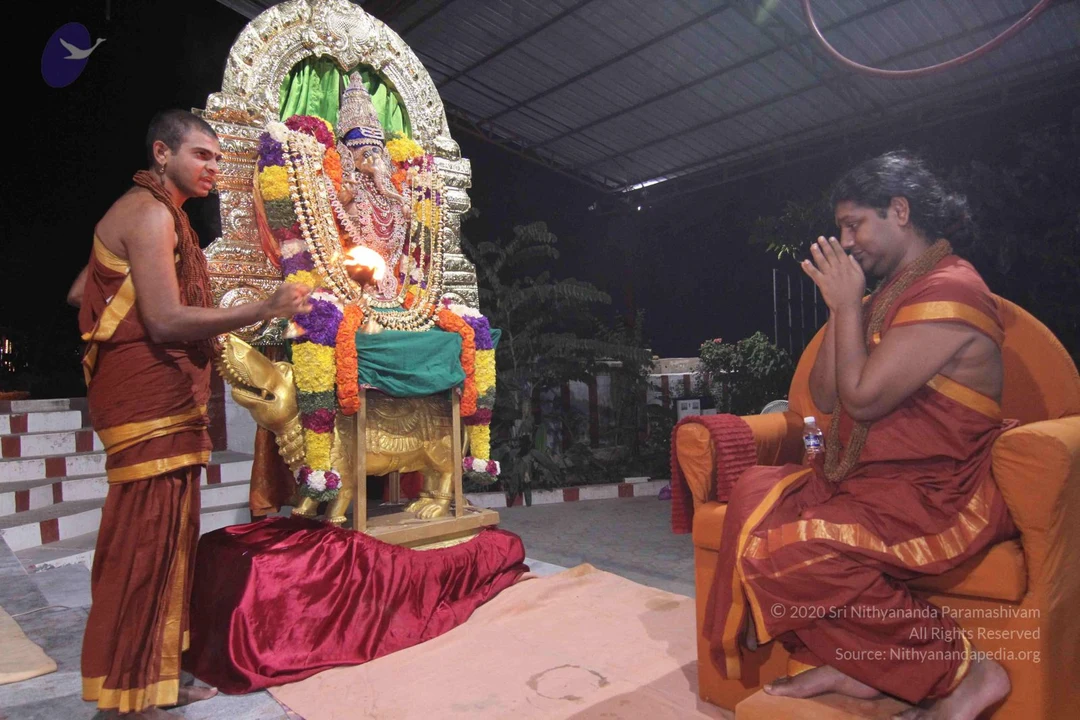
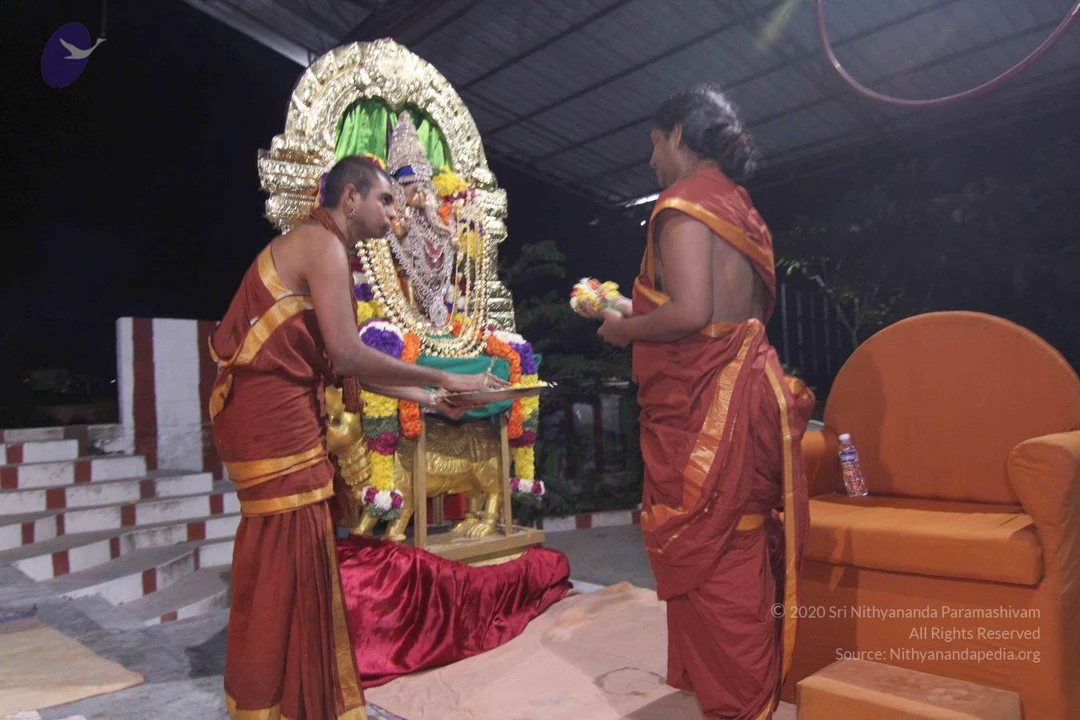
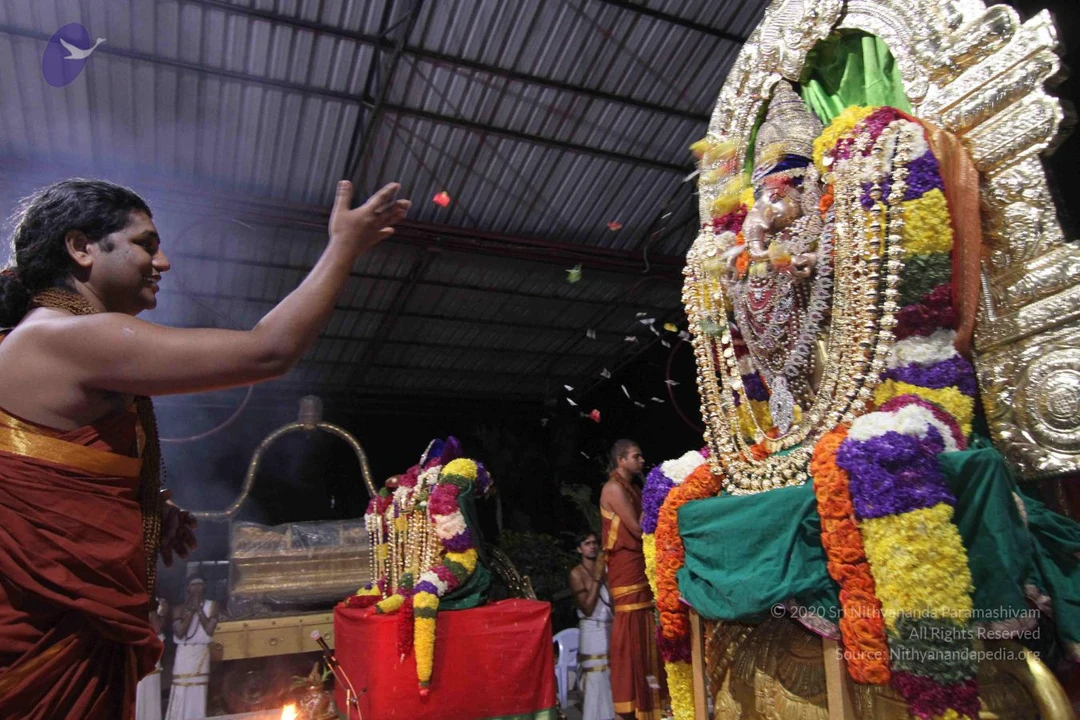
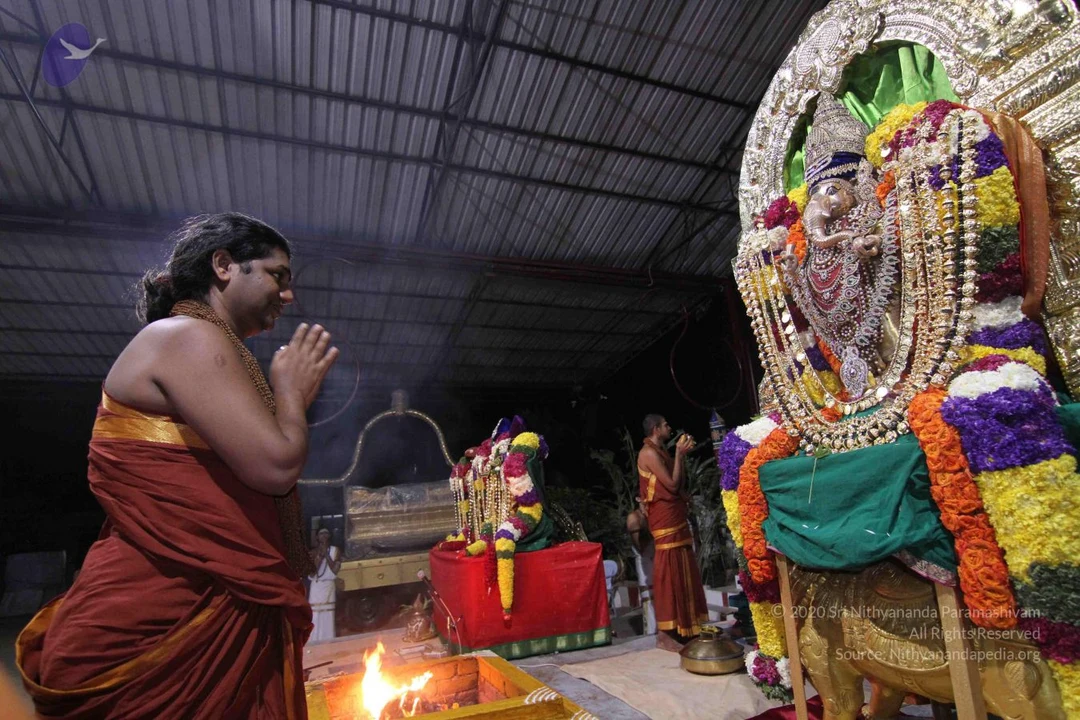
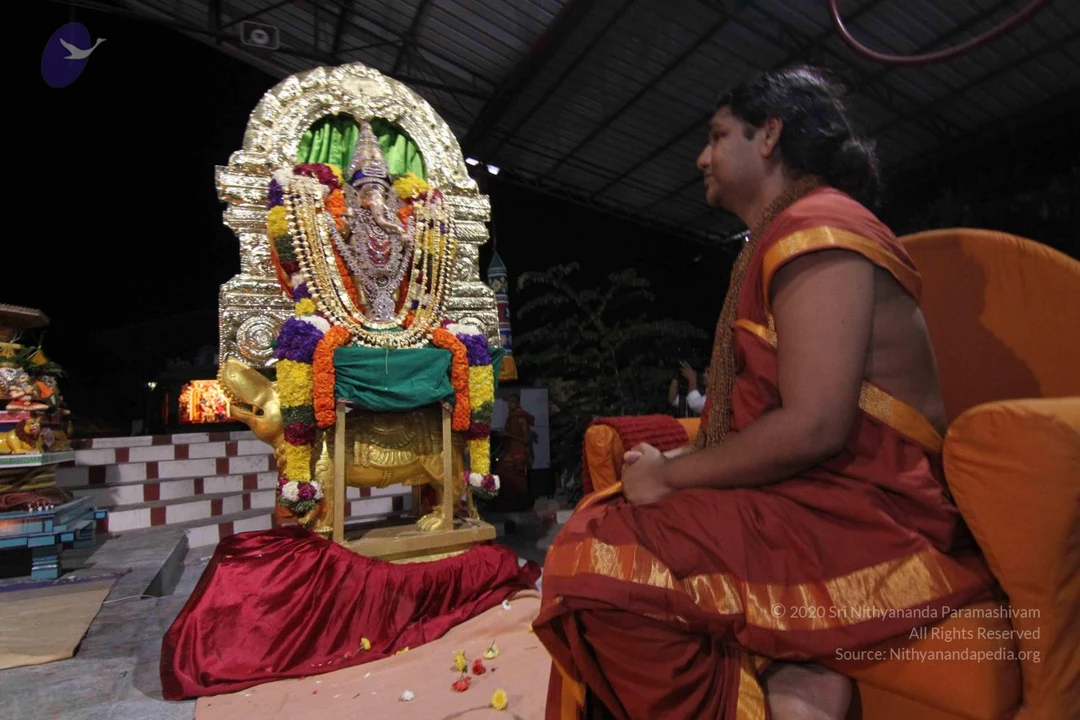
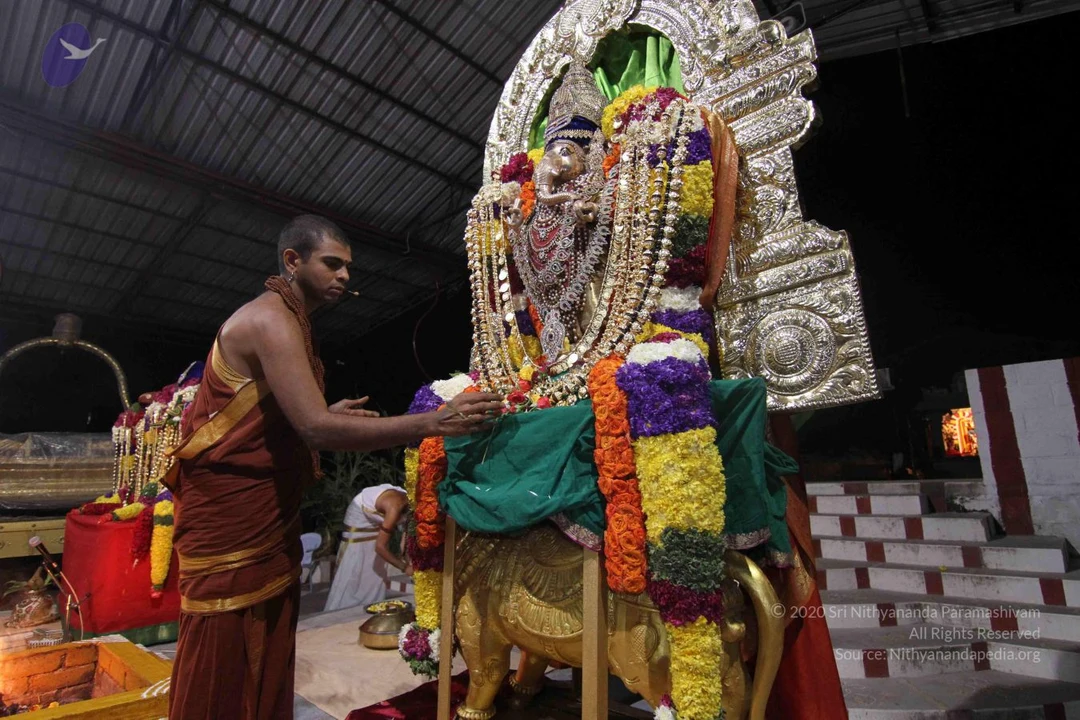
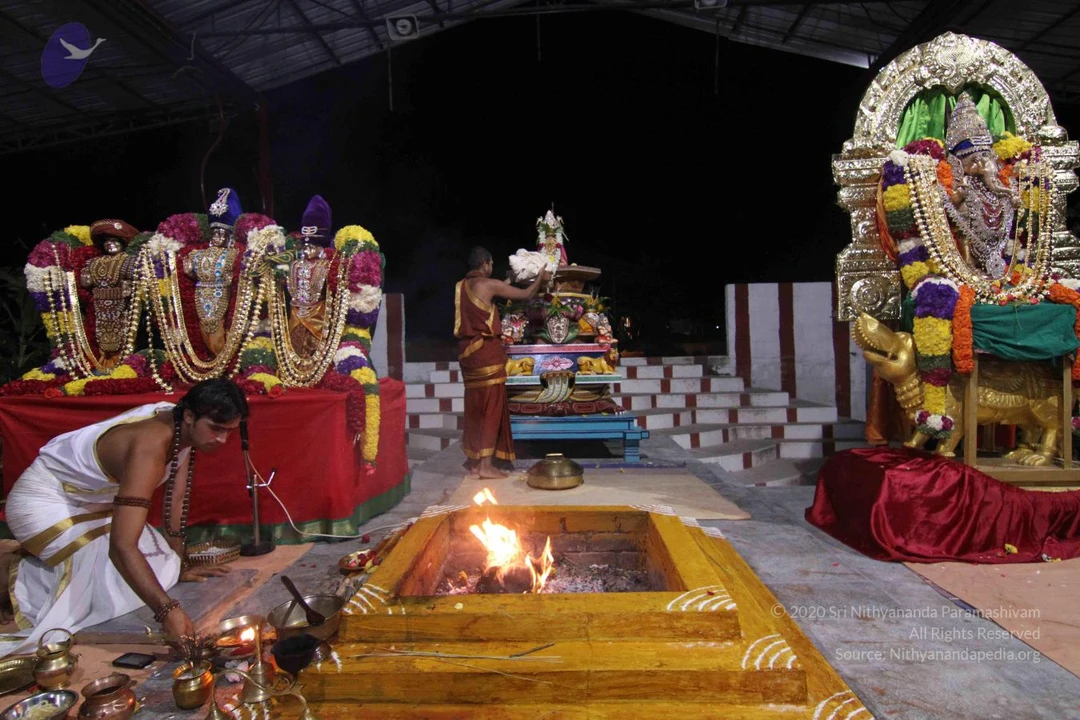
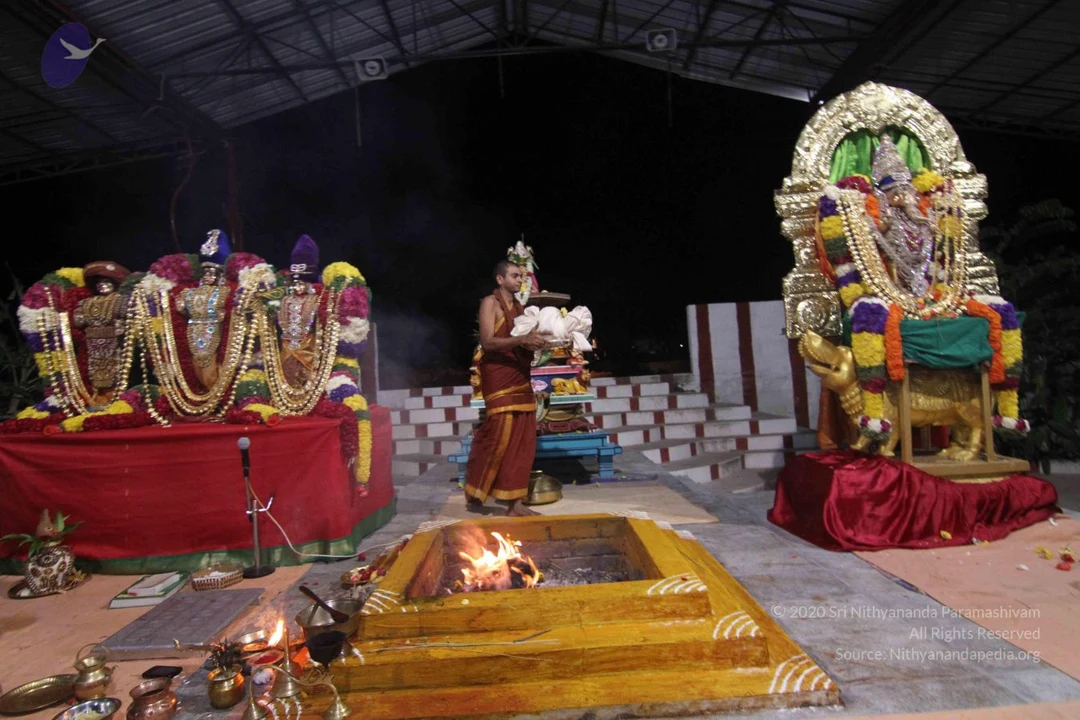
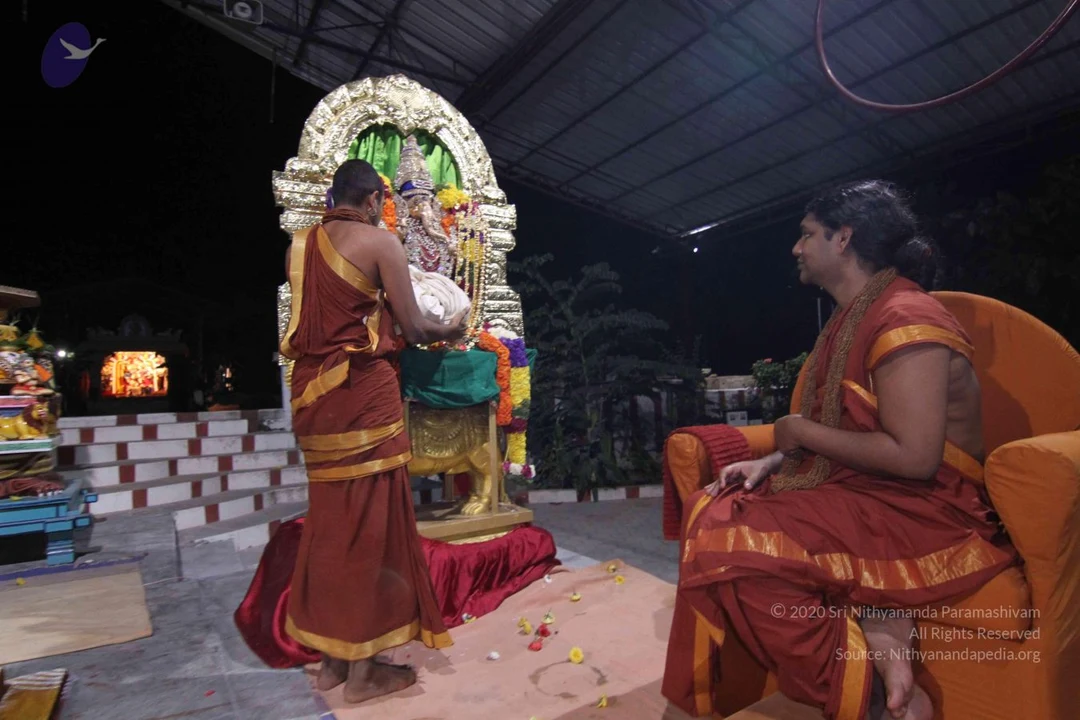
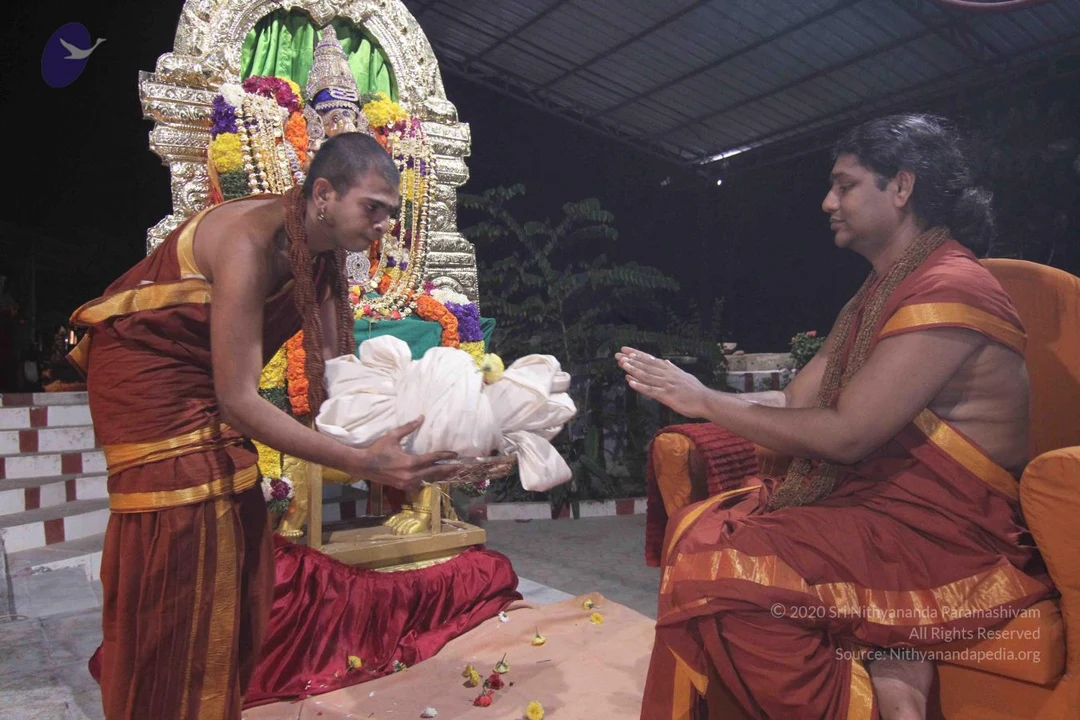
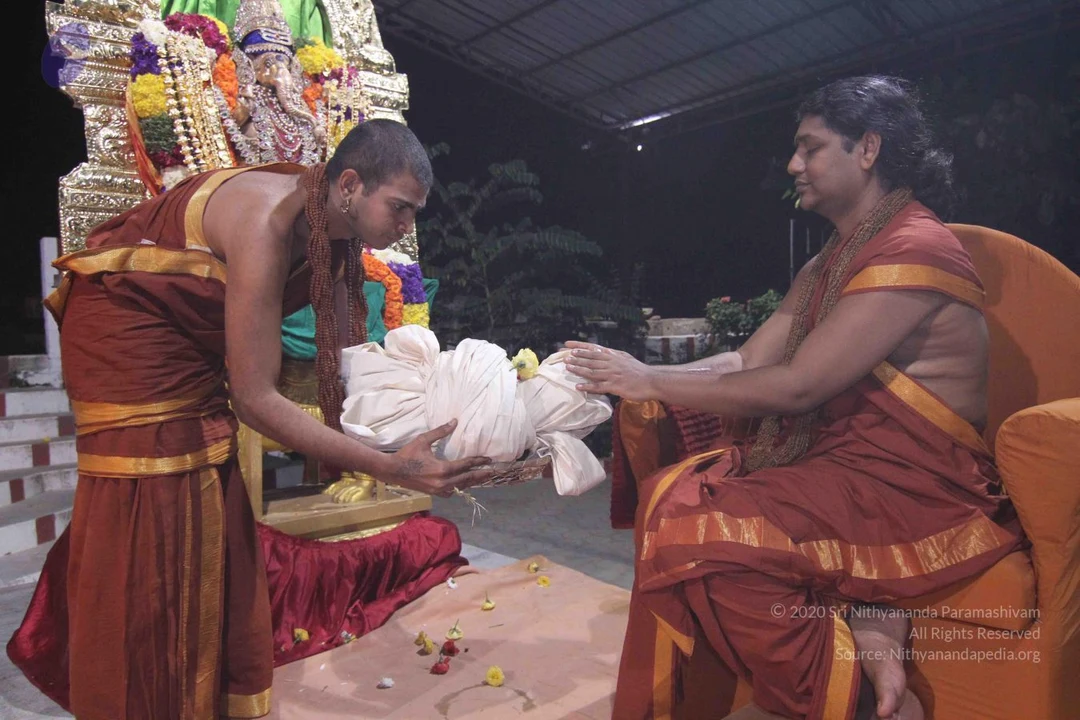
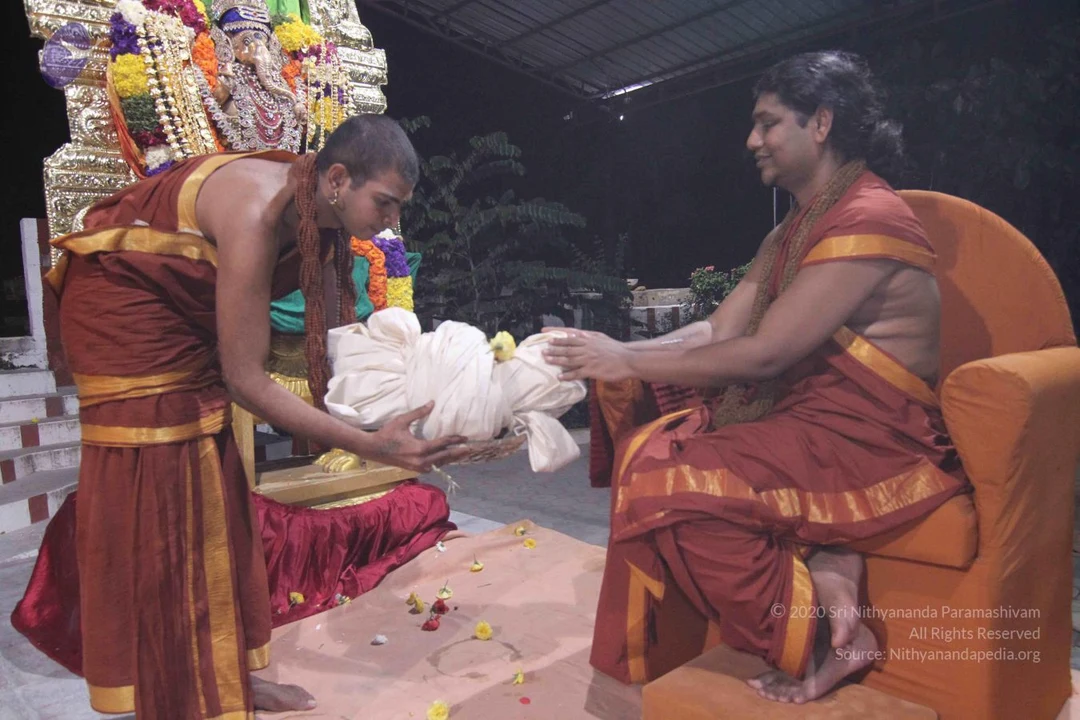
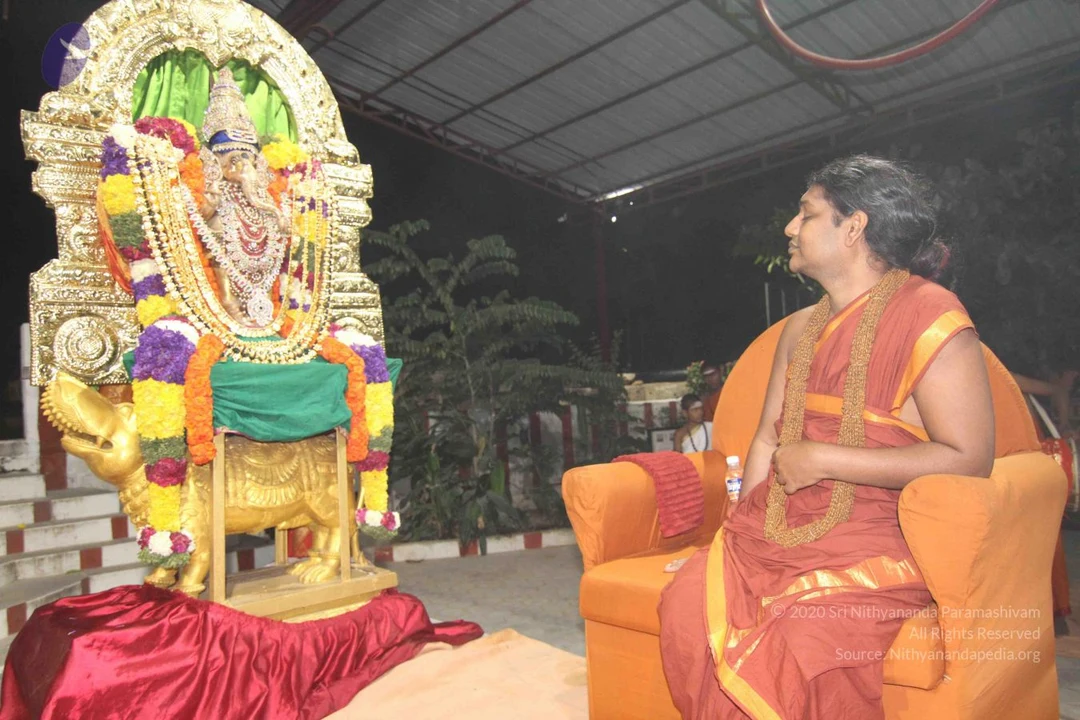
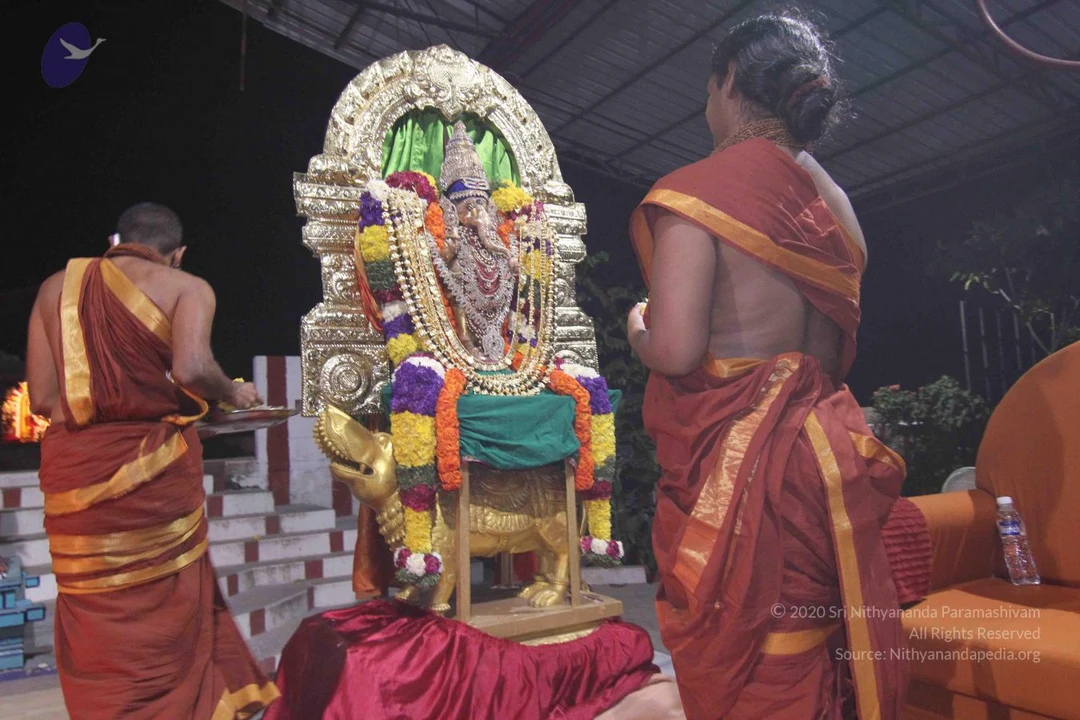
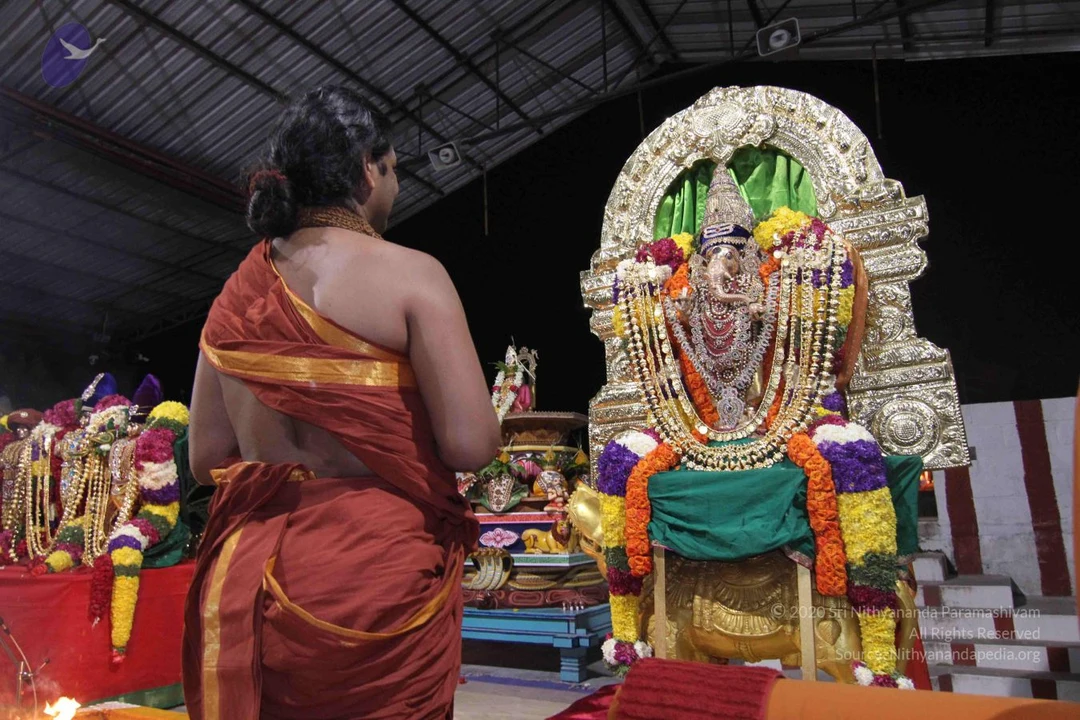
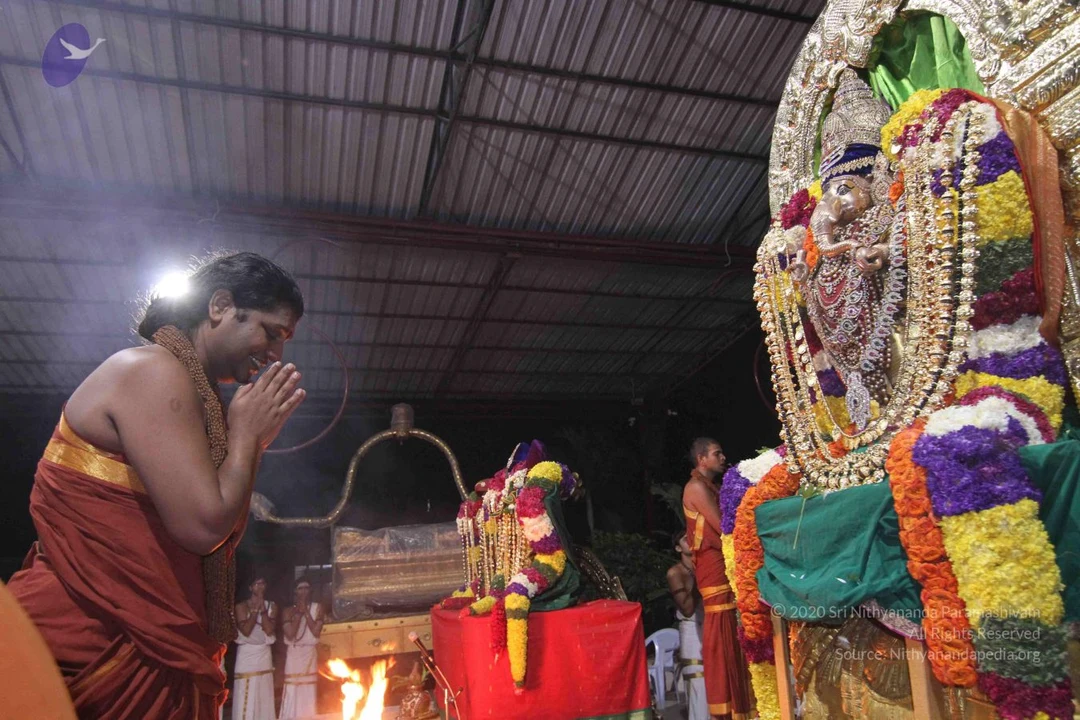
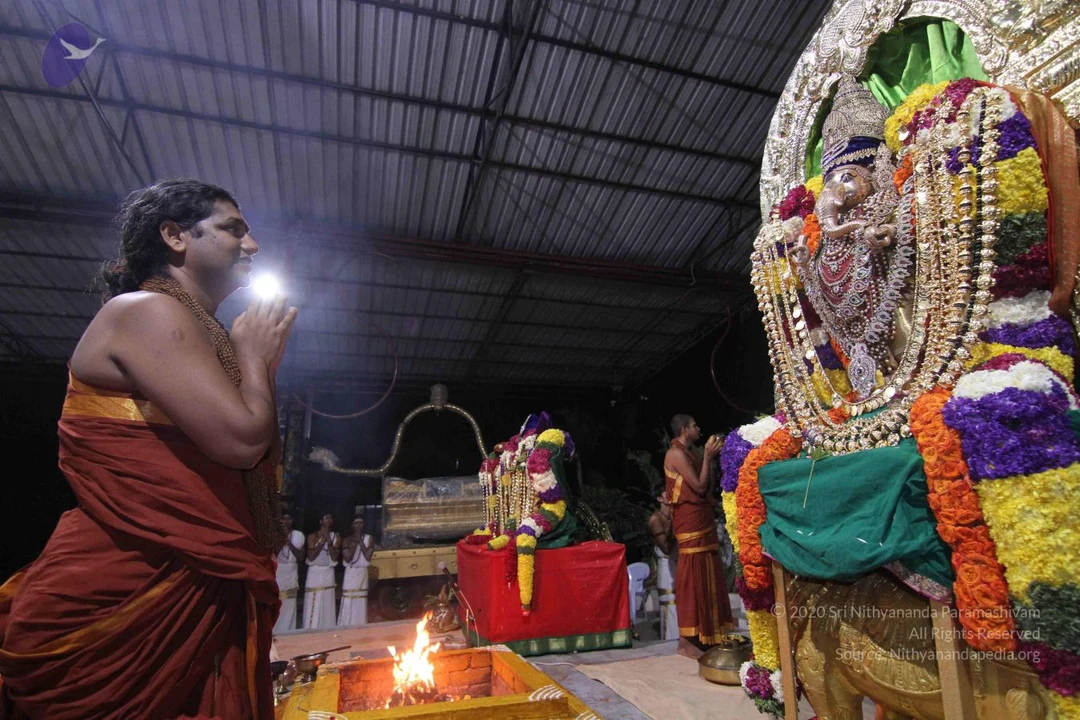
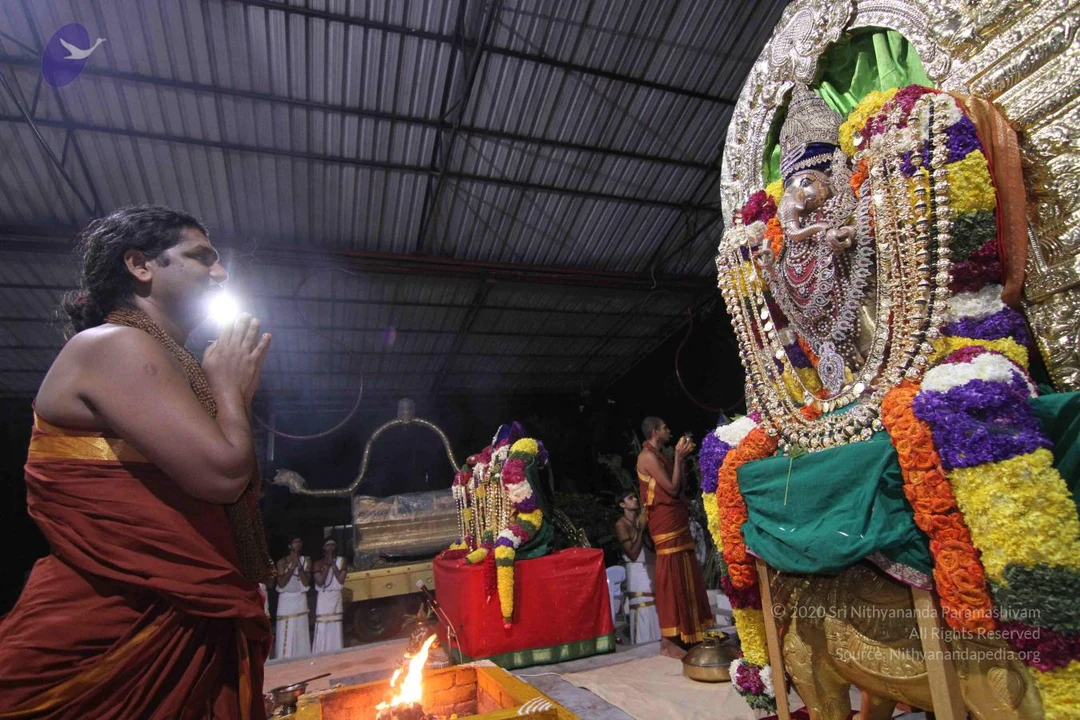
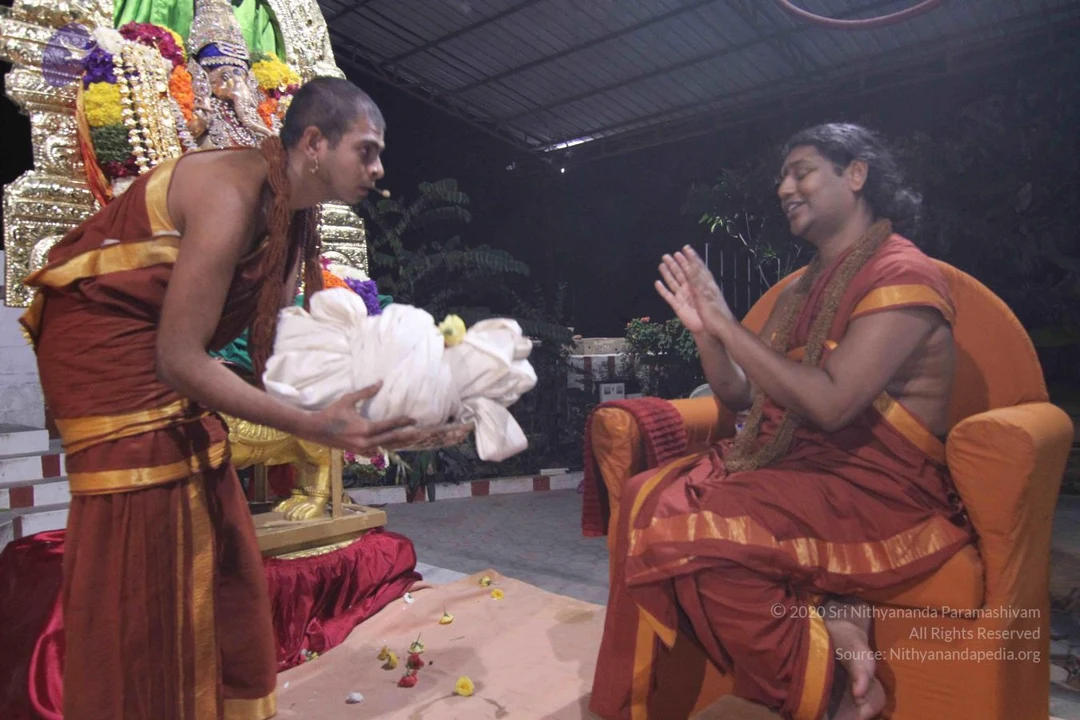
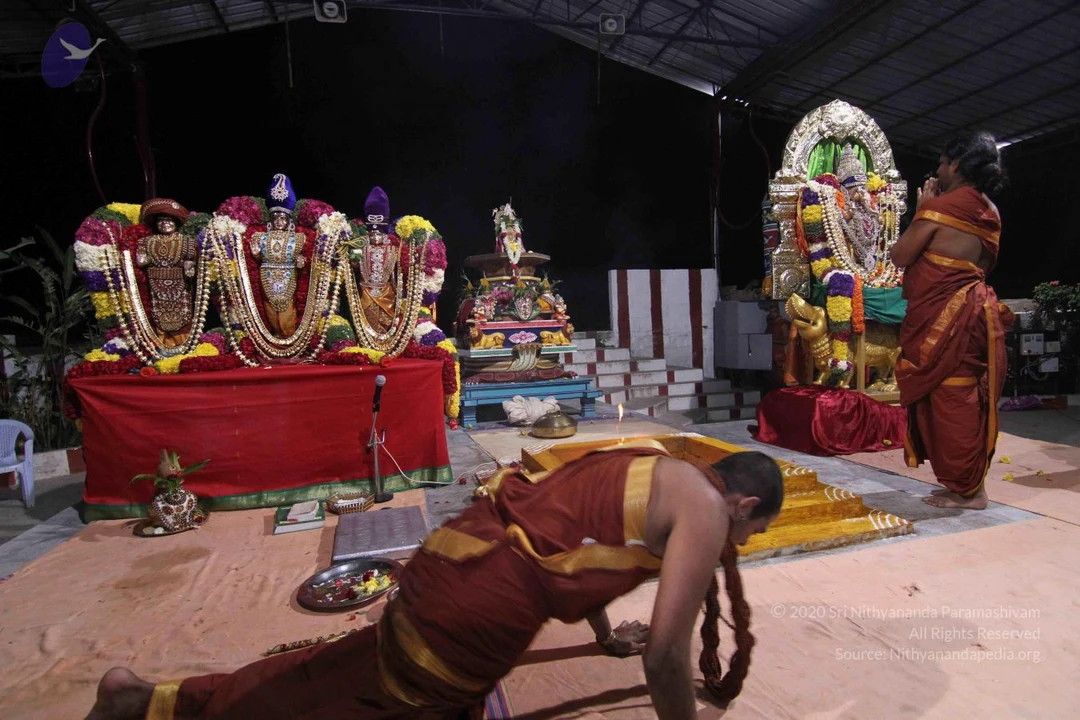
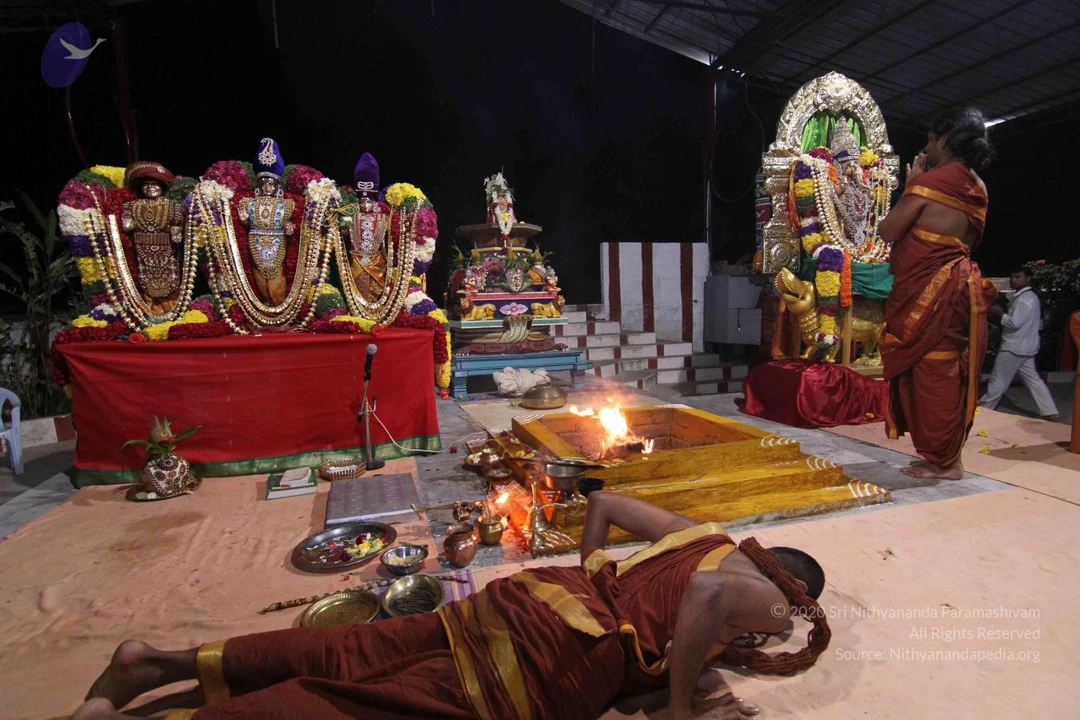
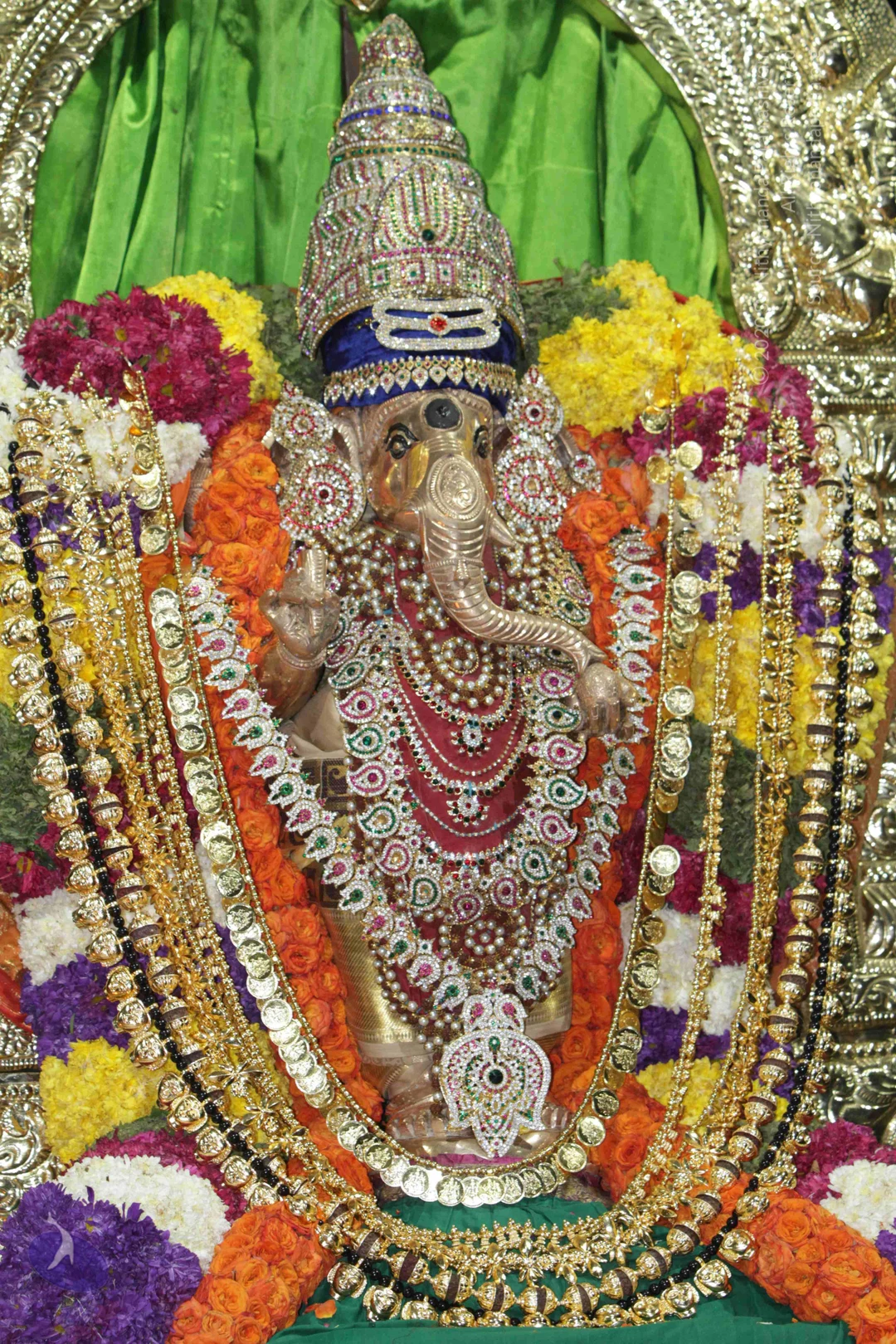
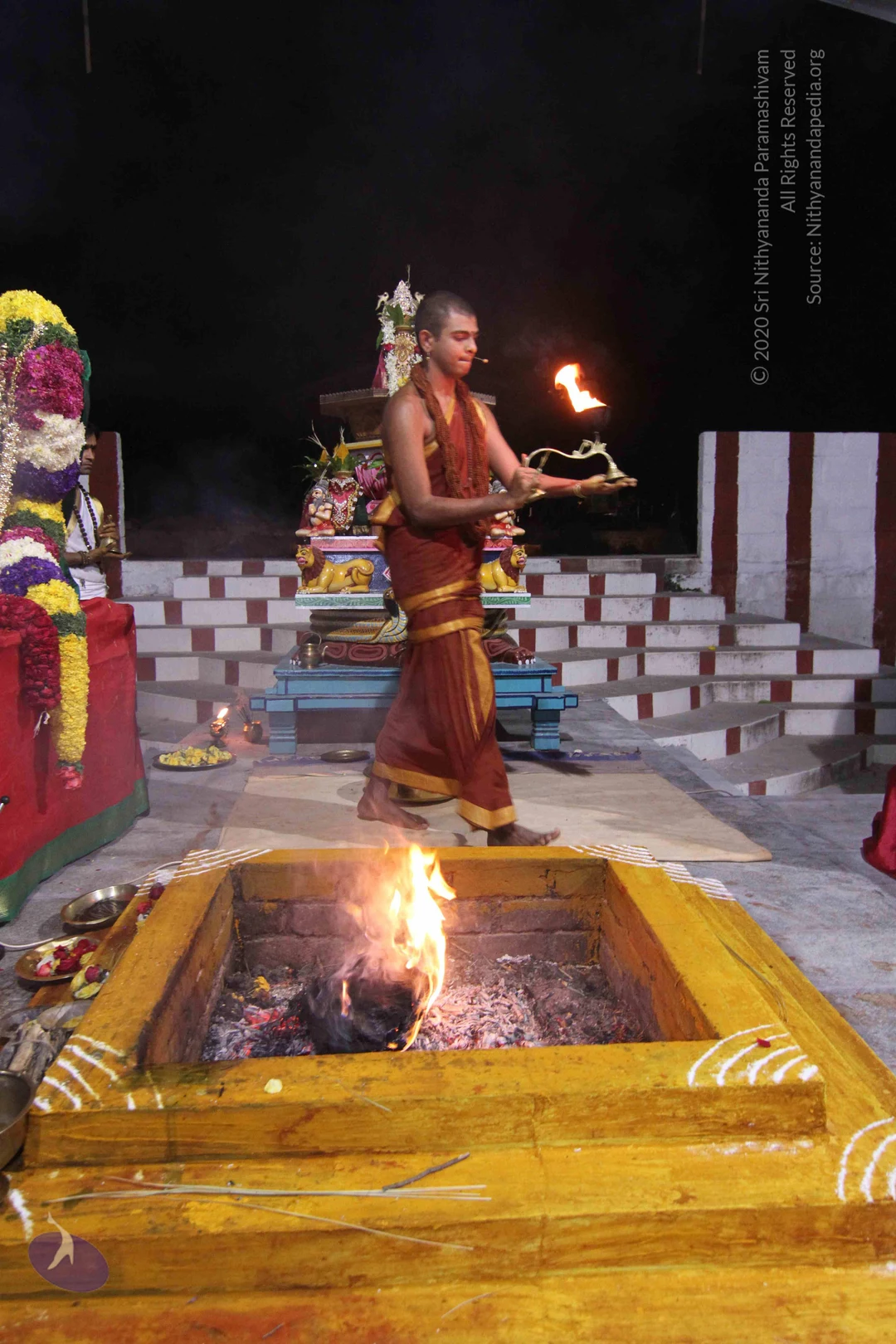
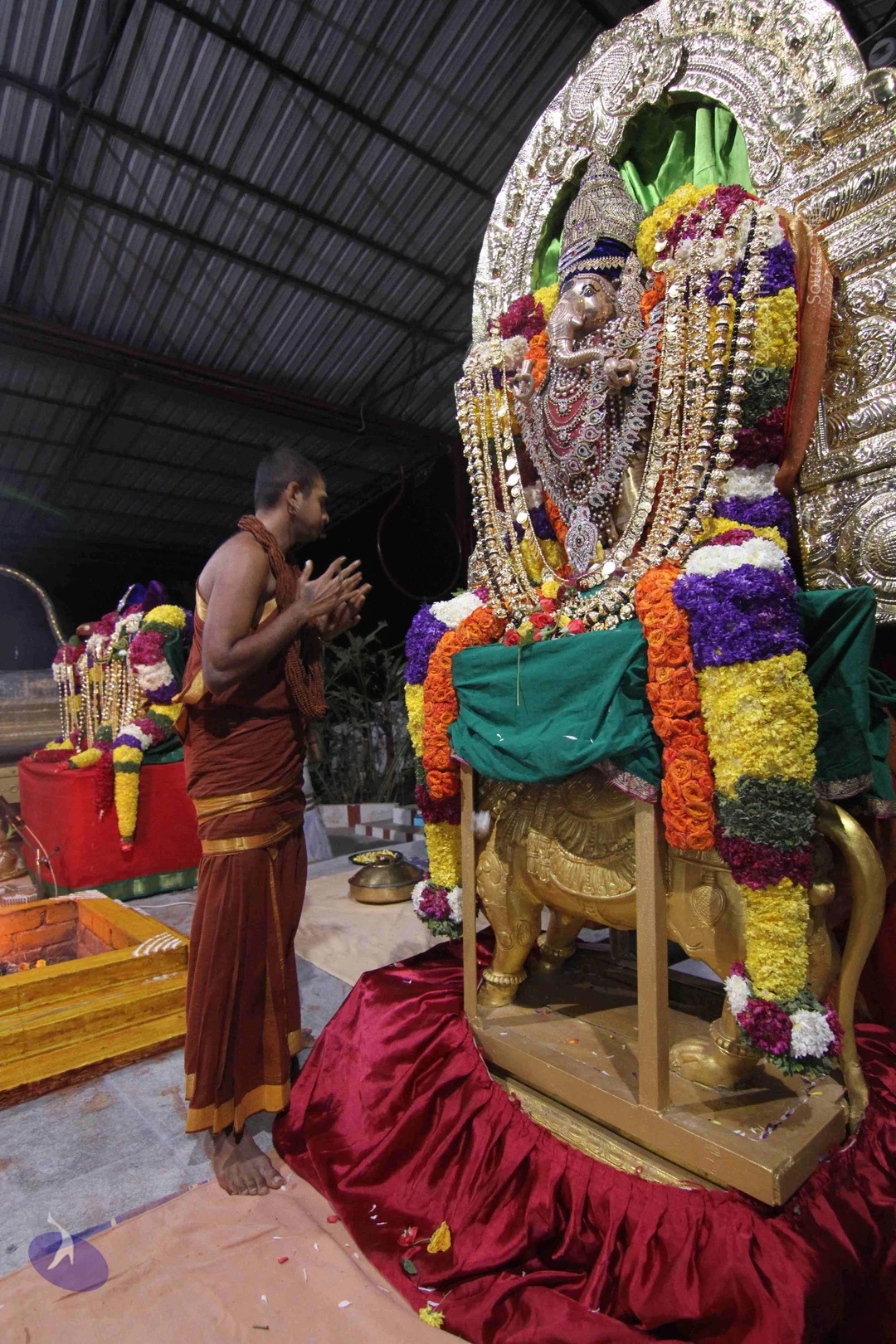
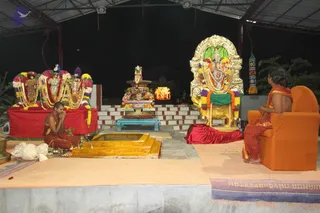
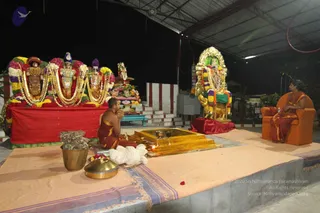
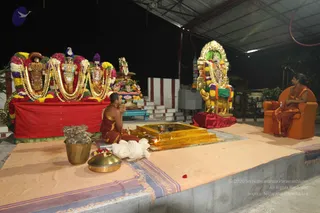
Ganesh-Homa

Photos Of The Day:

FB-photo-of-the-day

Photos Of The Day:

Paduka-puja

Satsang

Kalpataru-Darshan

Yantra-Initiation-Gurukul

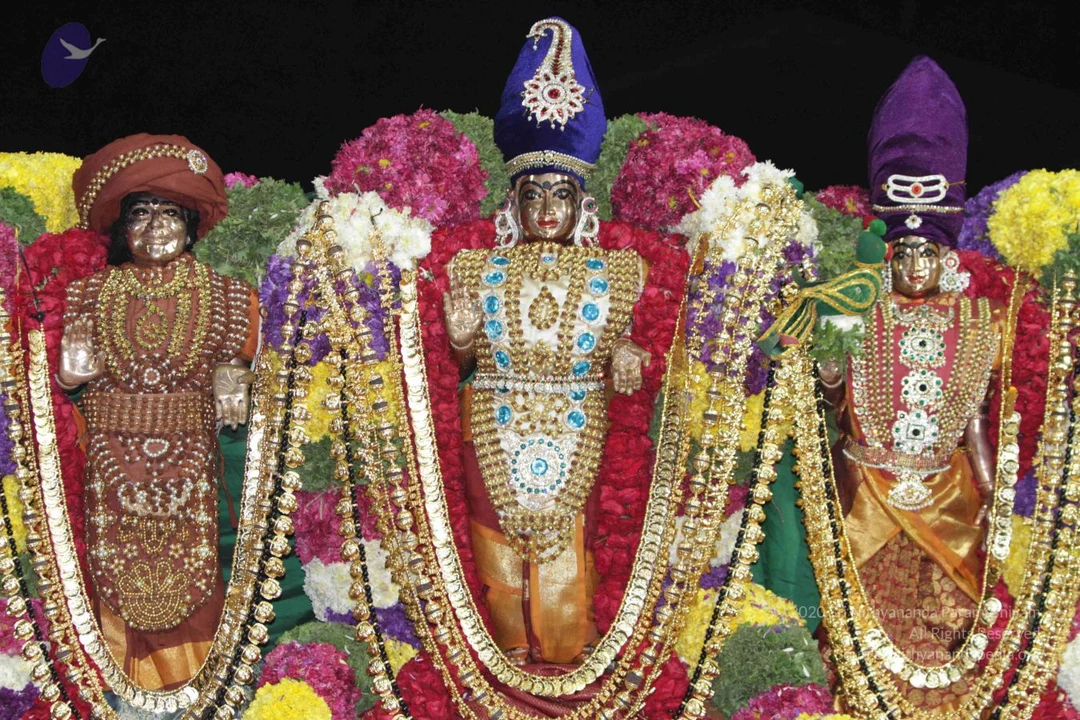
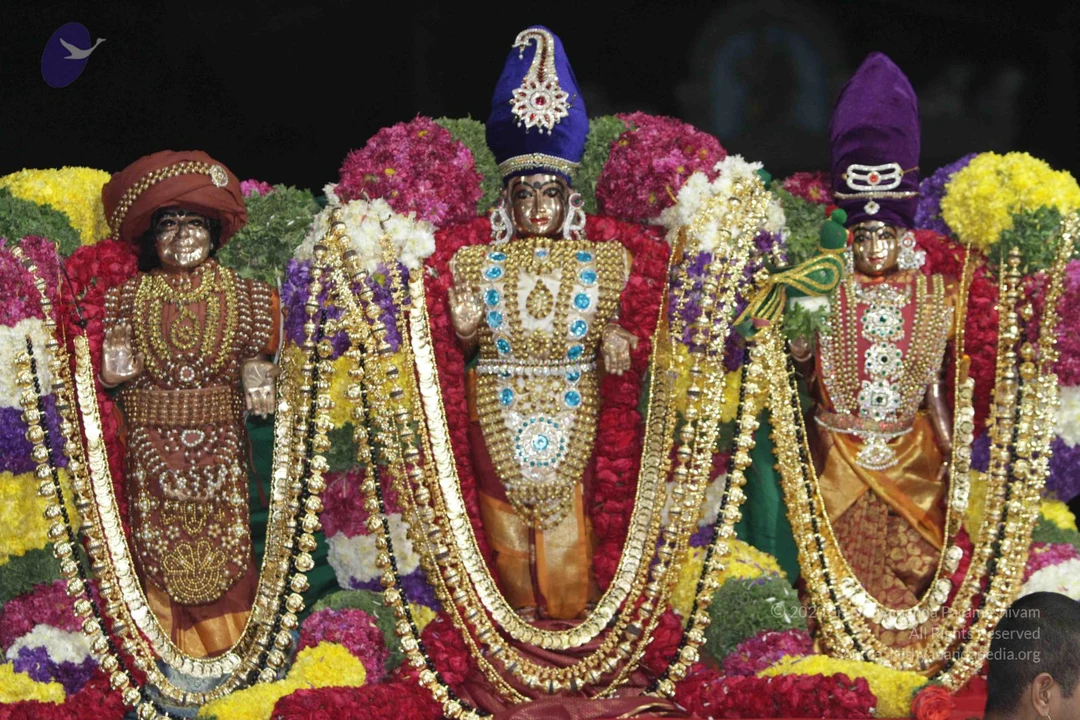
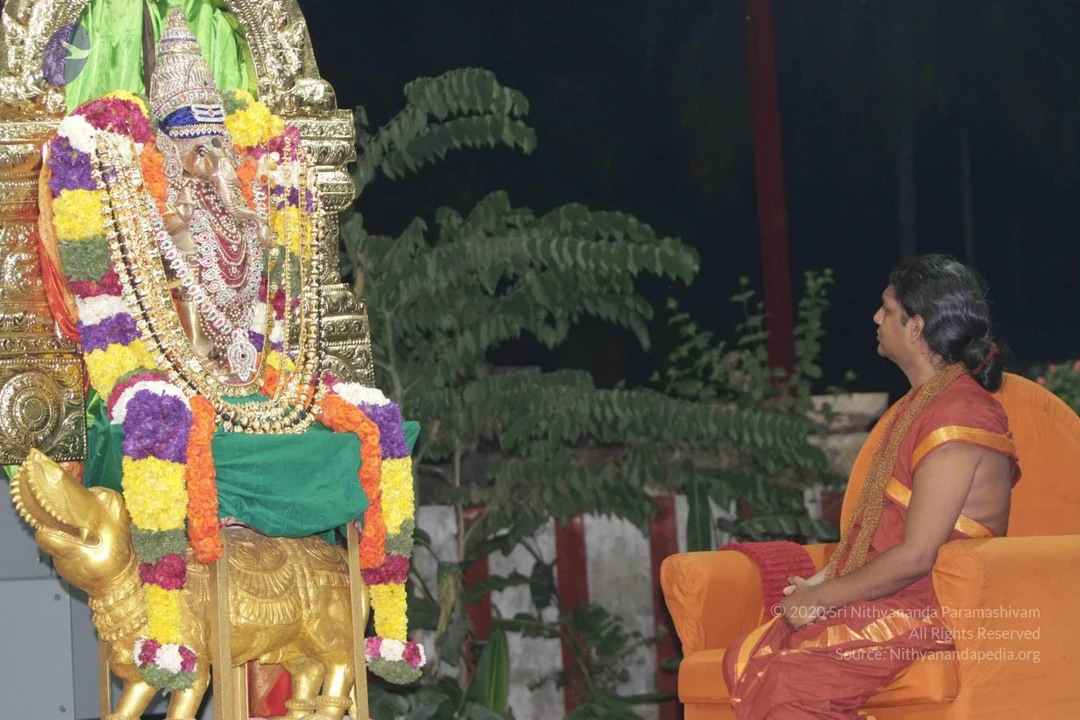
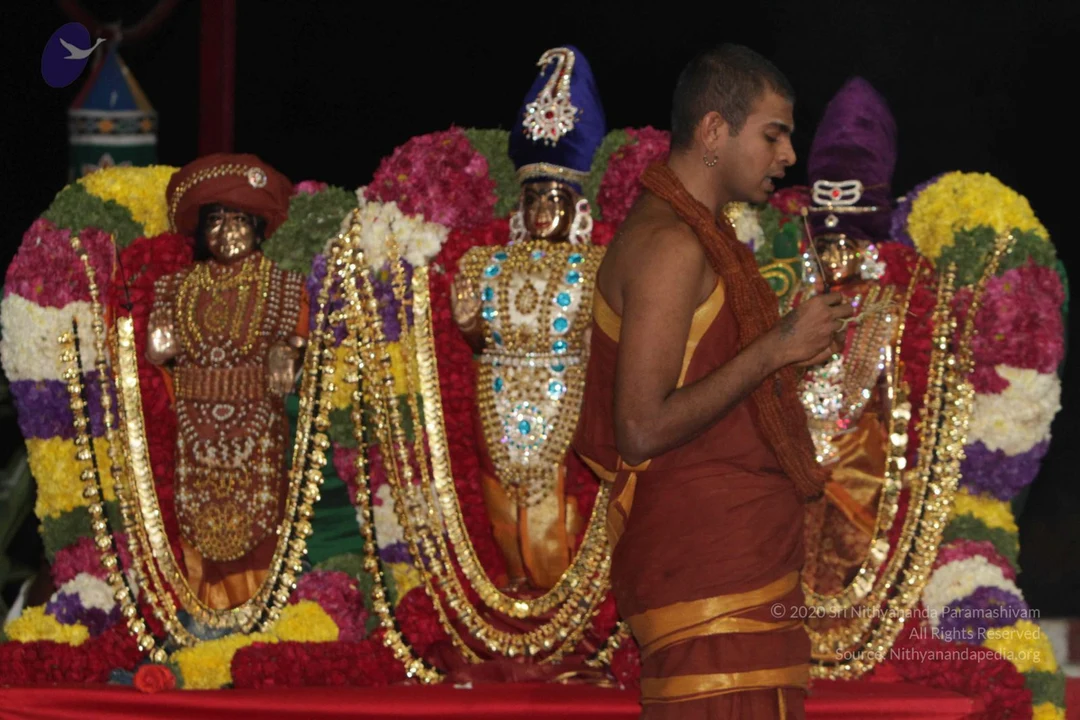
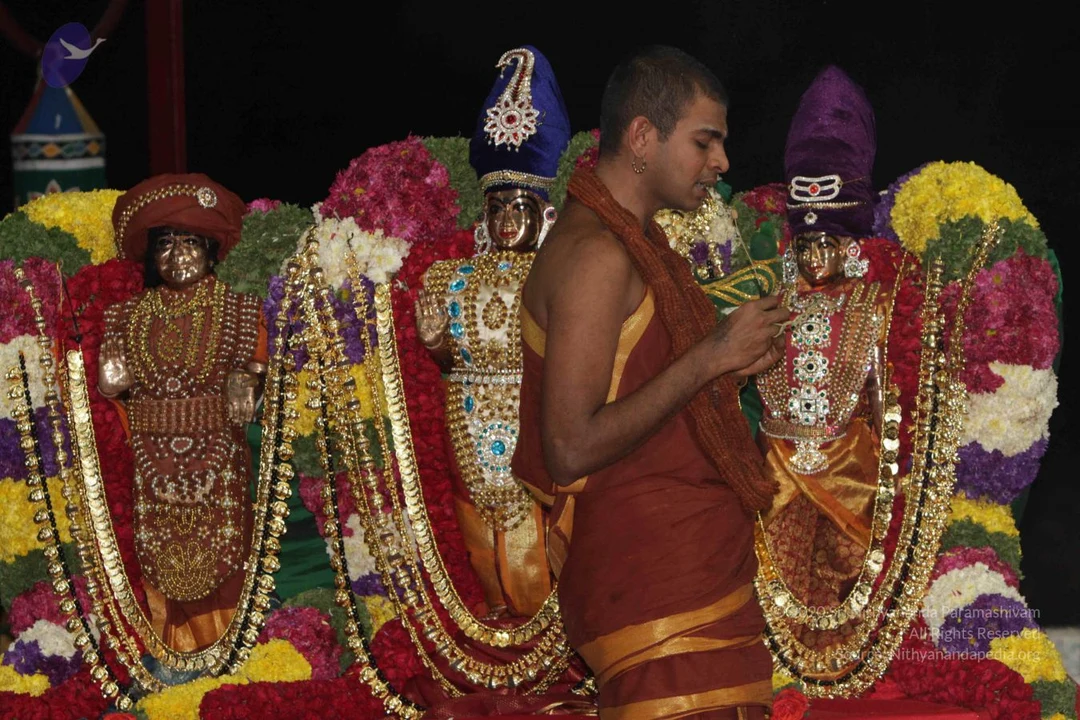
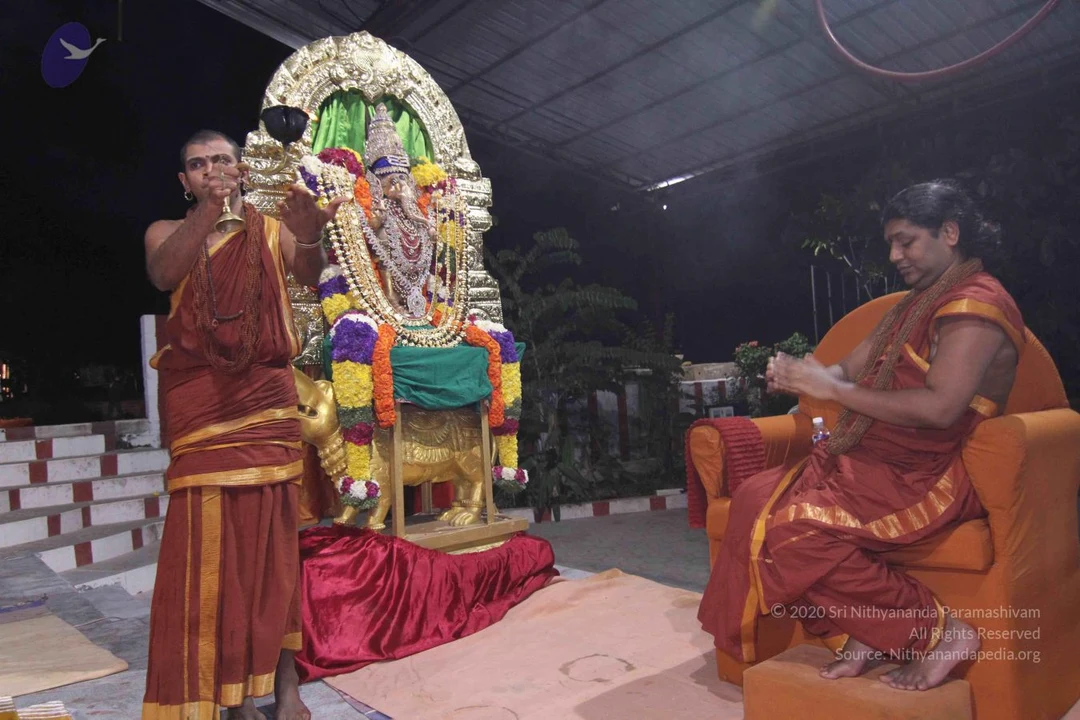
Ganesh-Homa

01-NITHYA-SATSANG

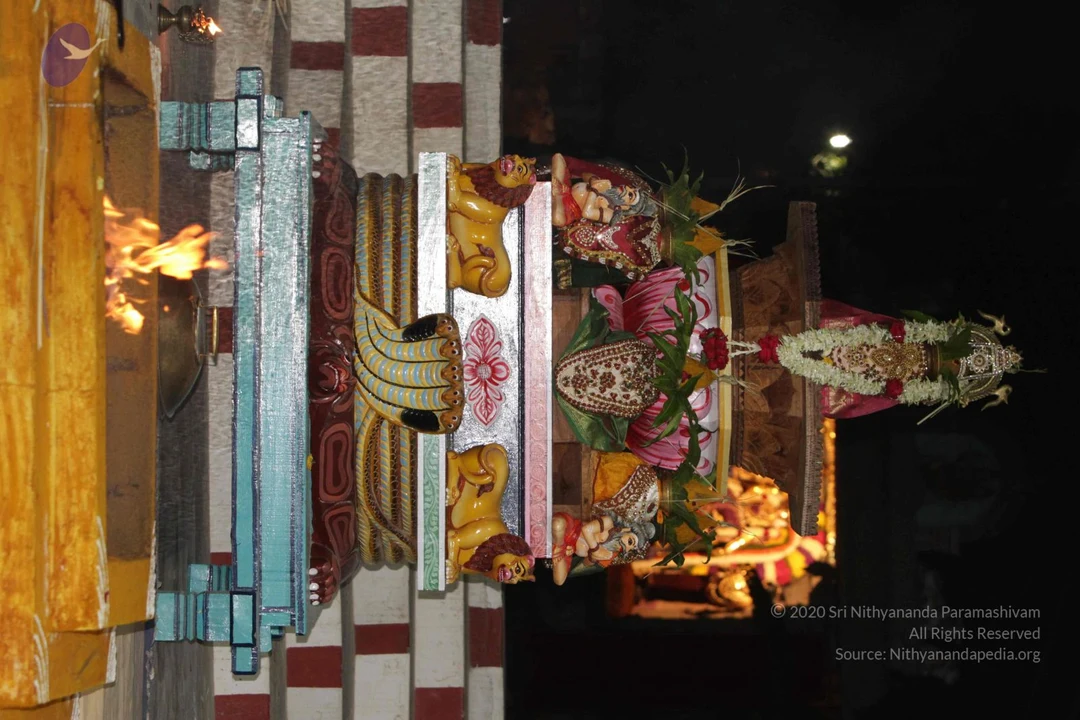
02-GANESHA-HOMA

Photos from this day

View all 354 photos

Photos From The Day:

11 photosSource gallery
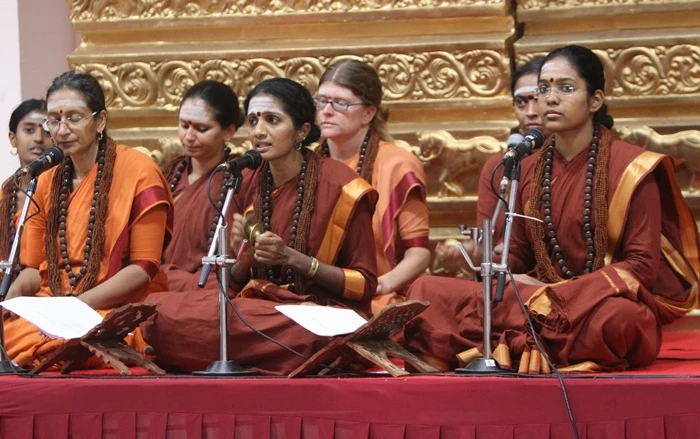
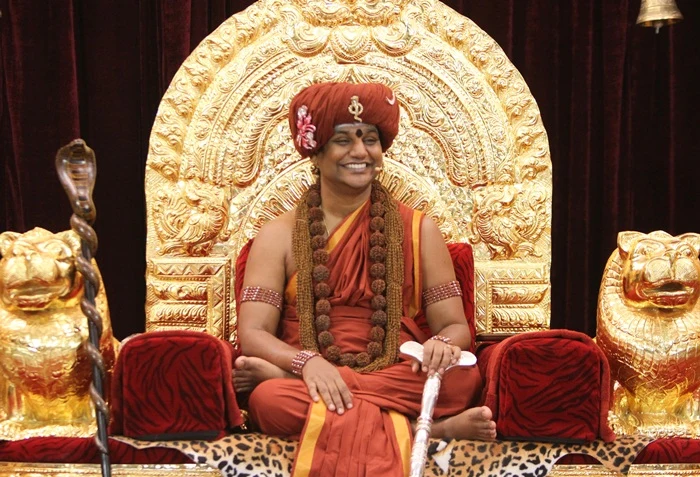
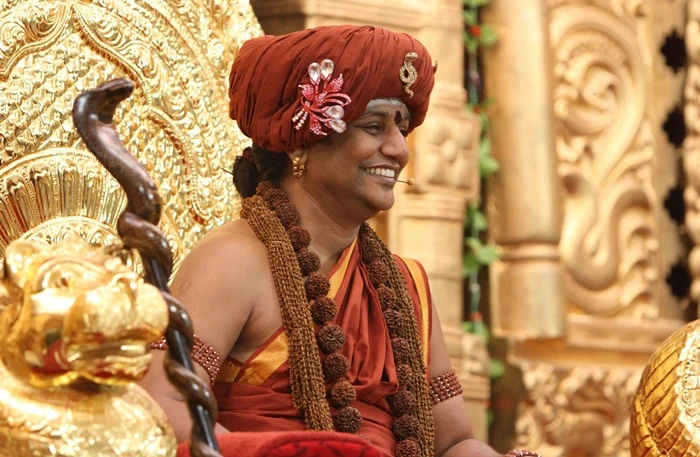
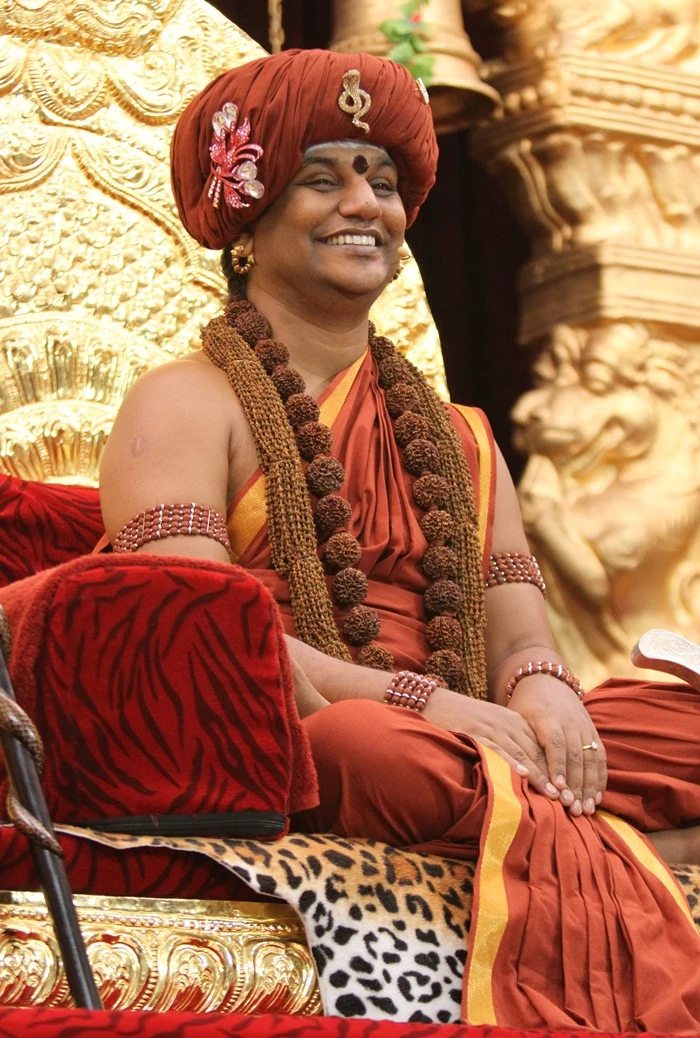
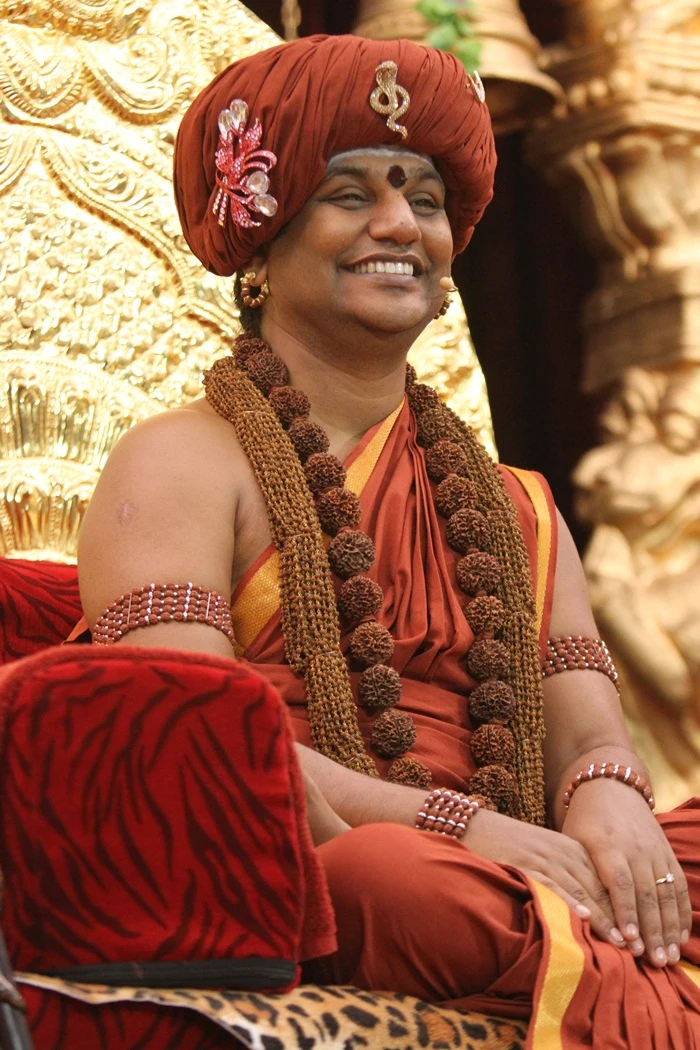
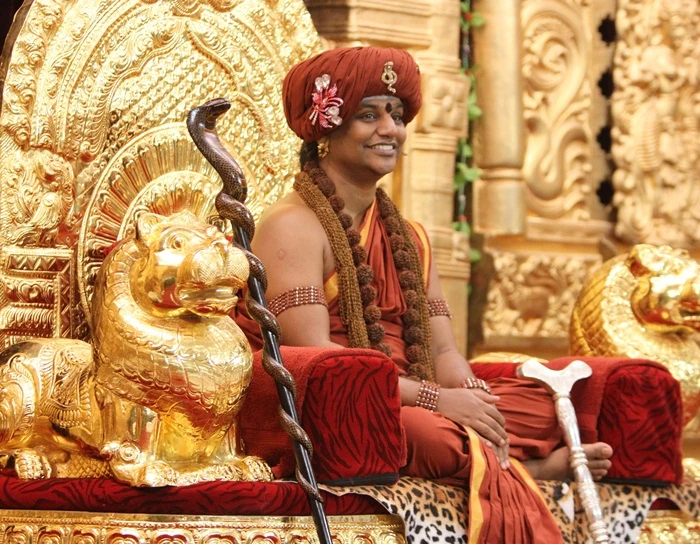
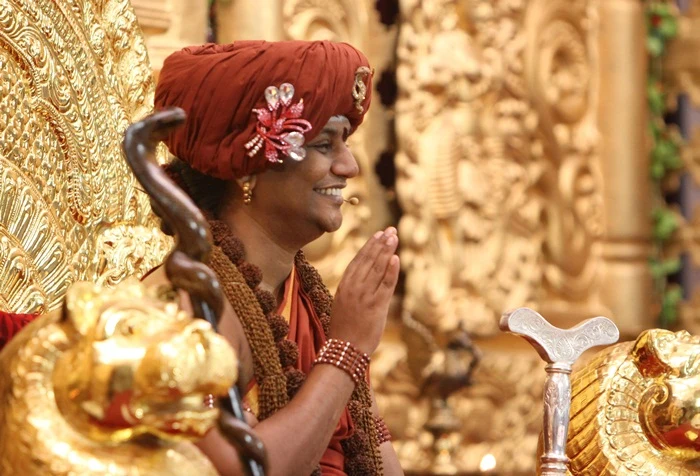
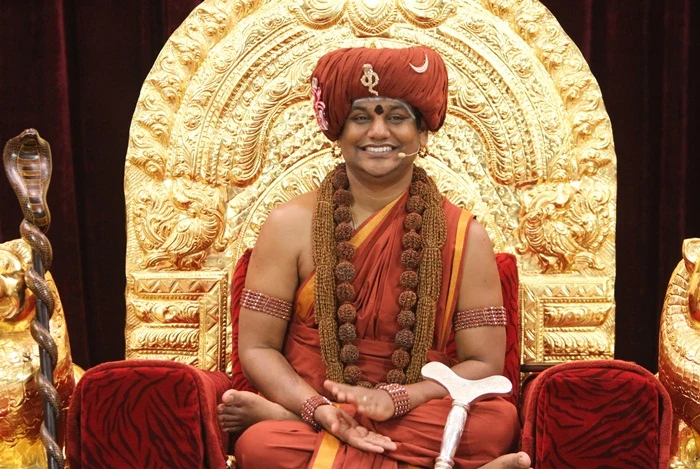
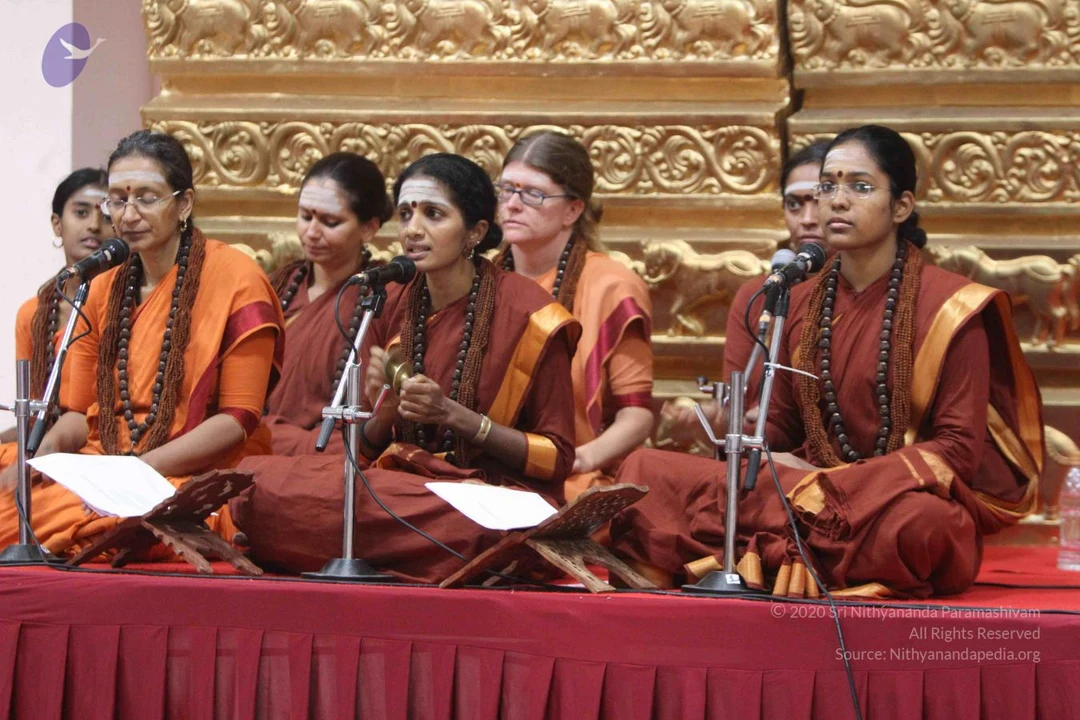
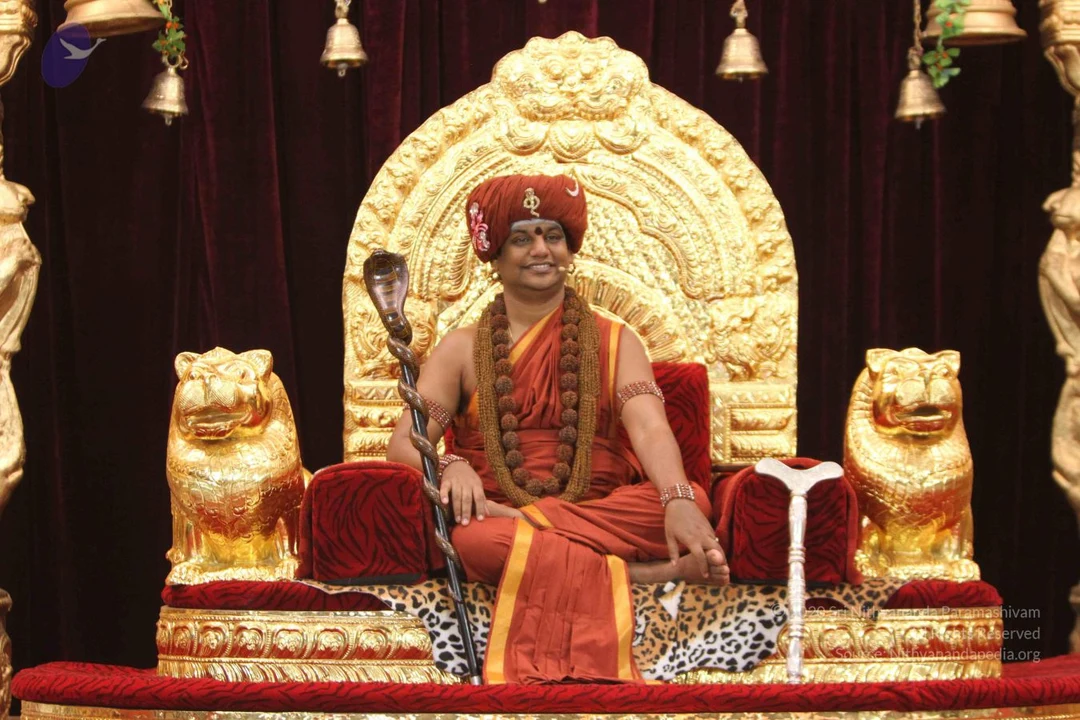
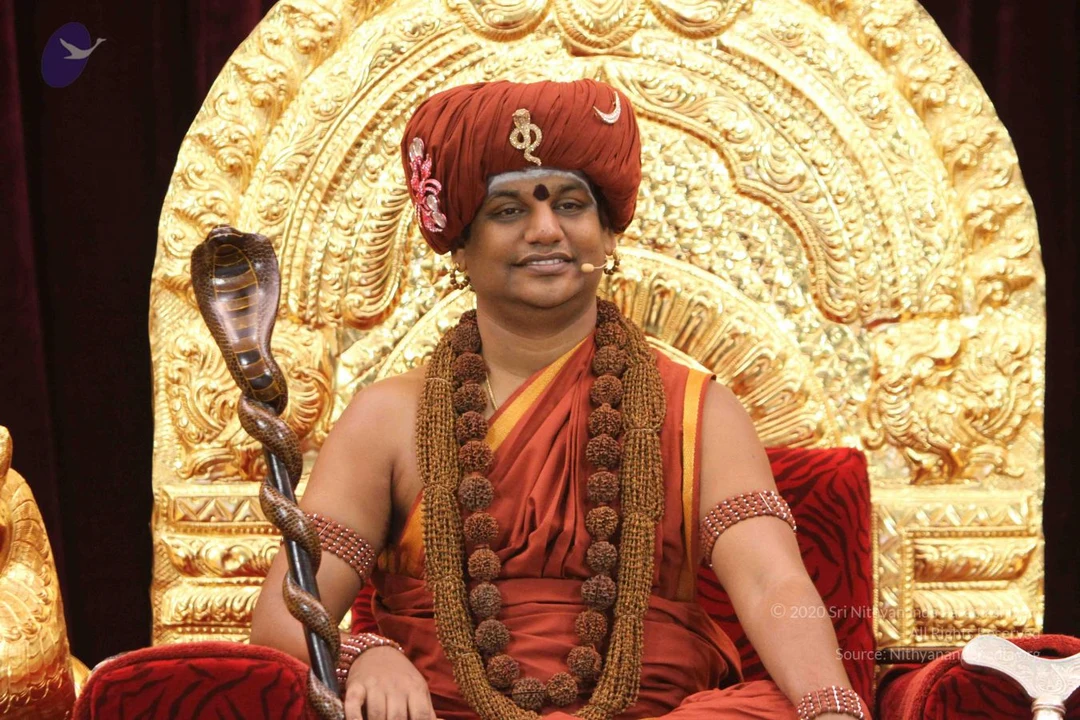
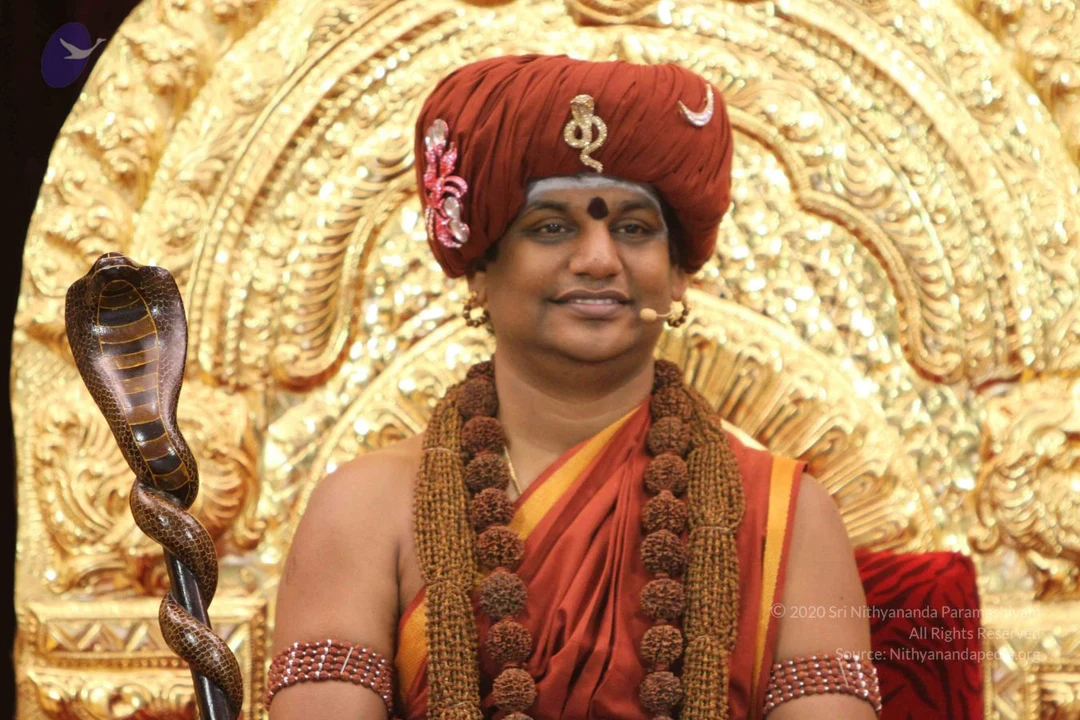
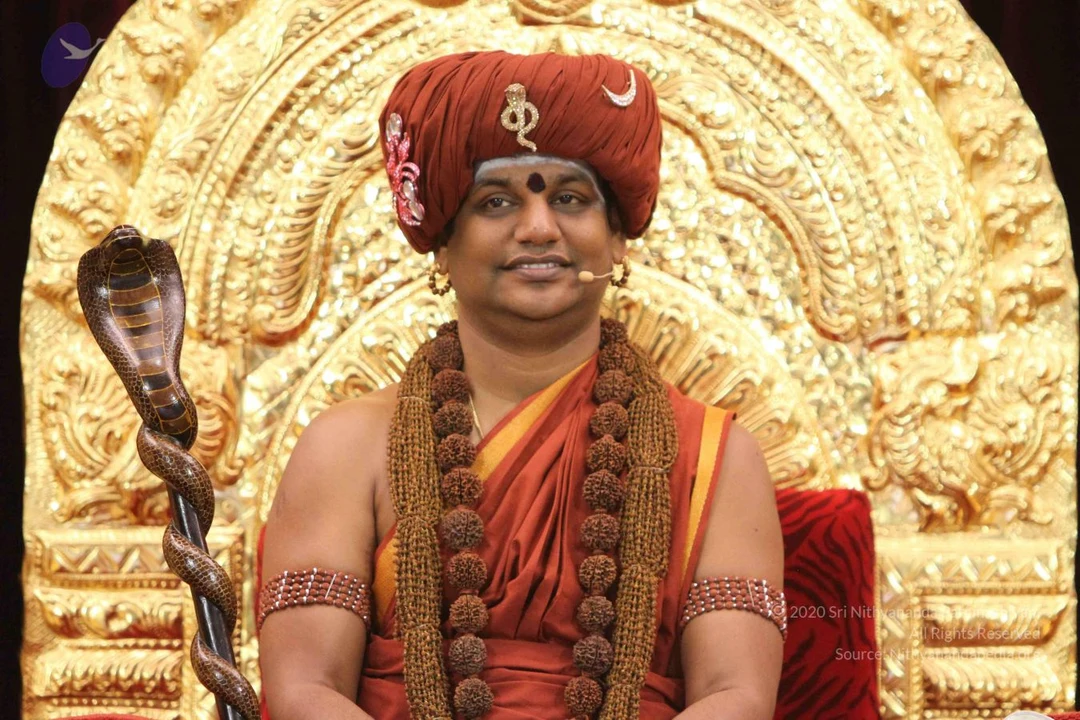
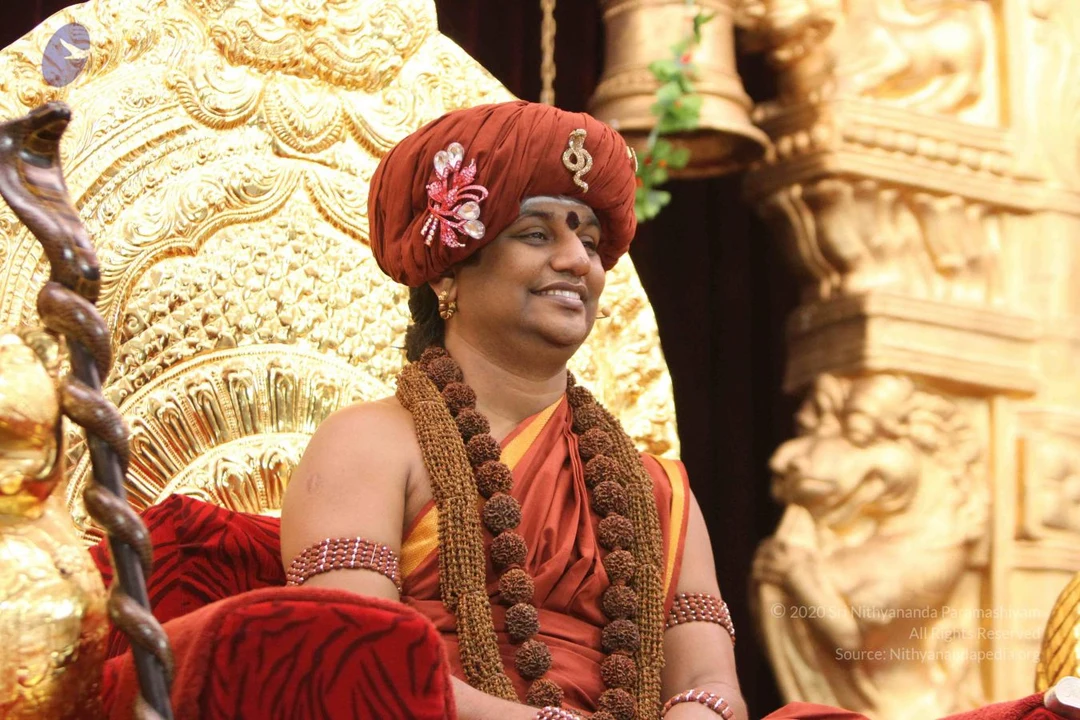
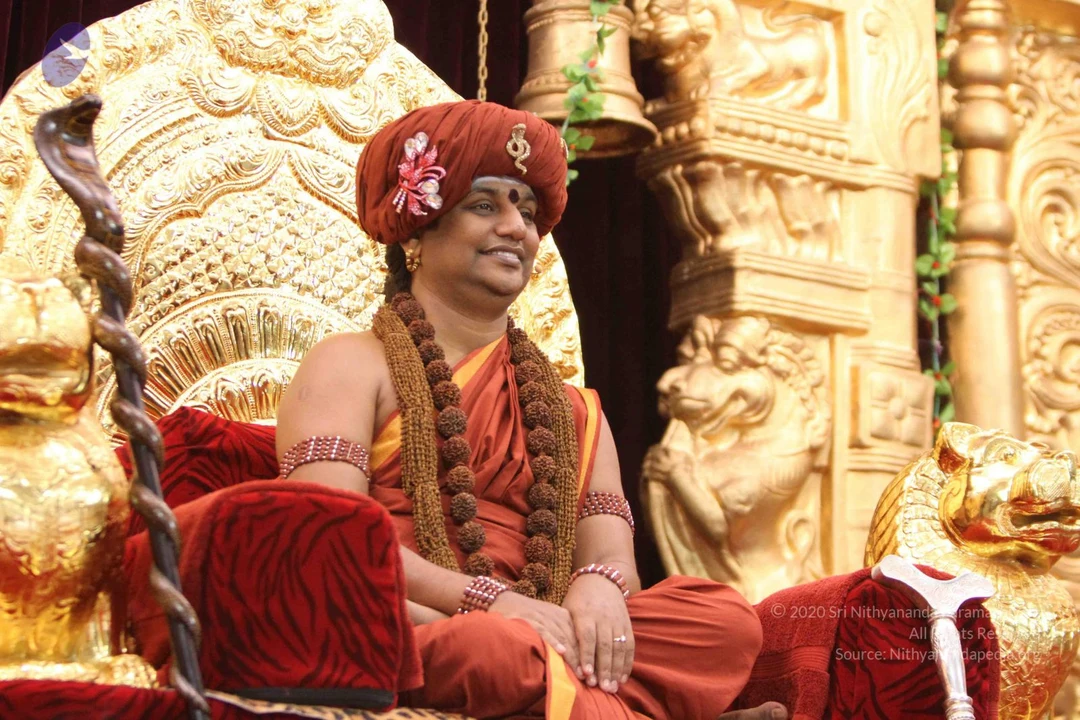
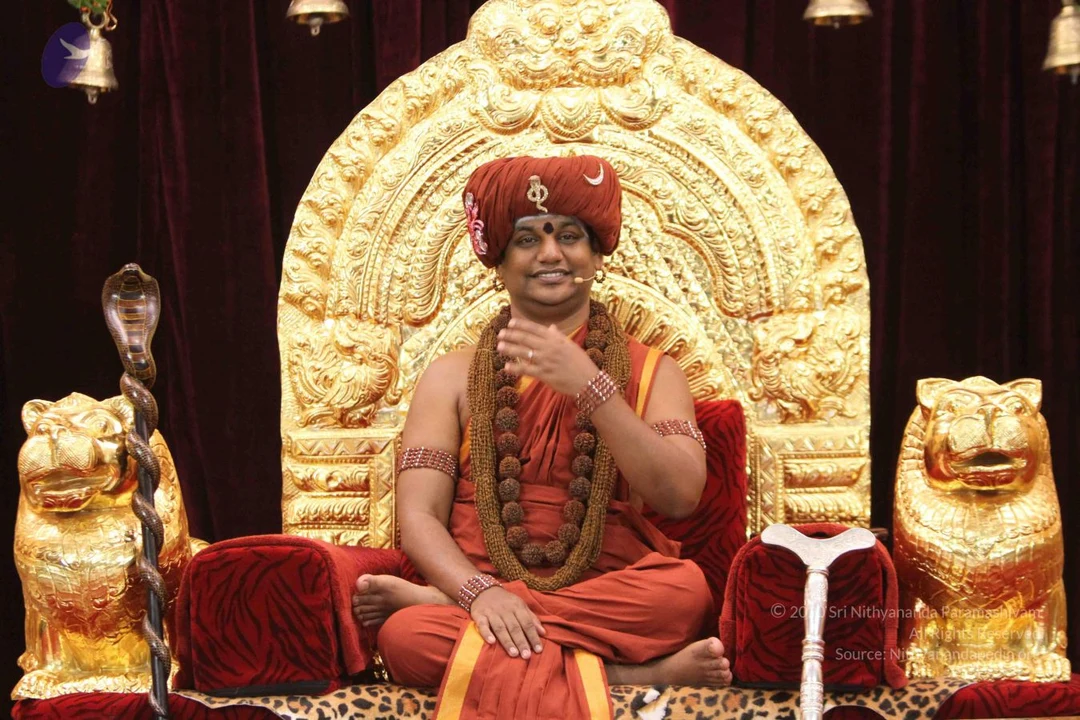
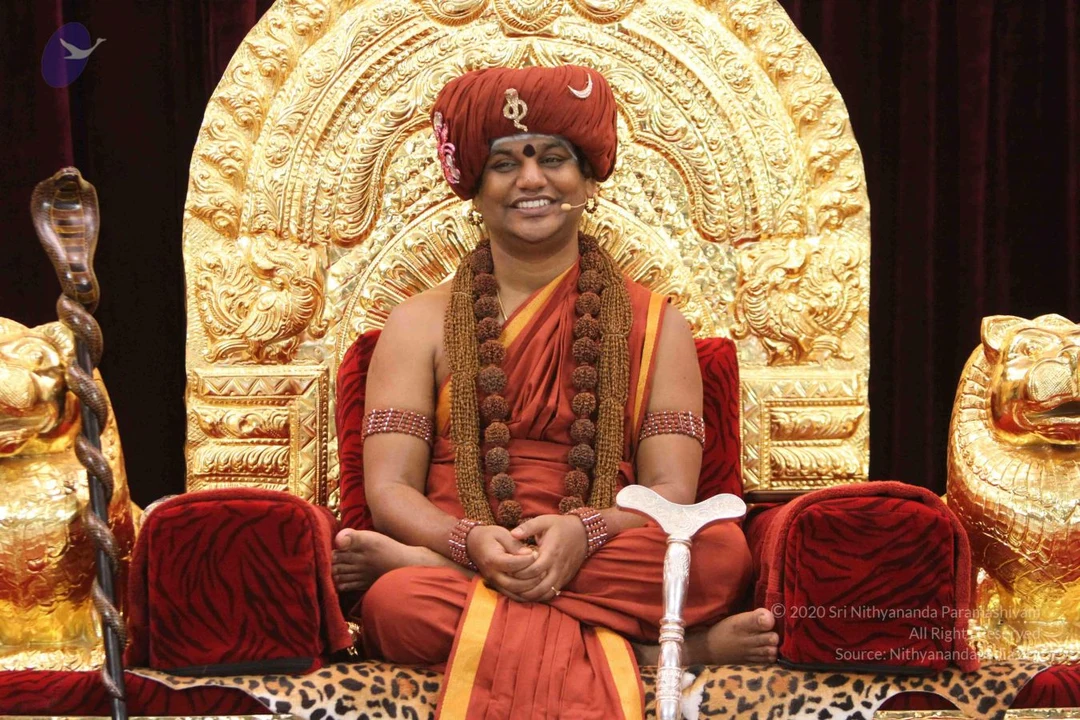
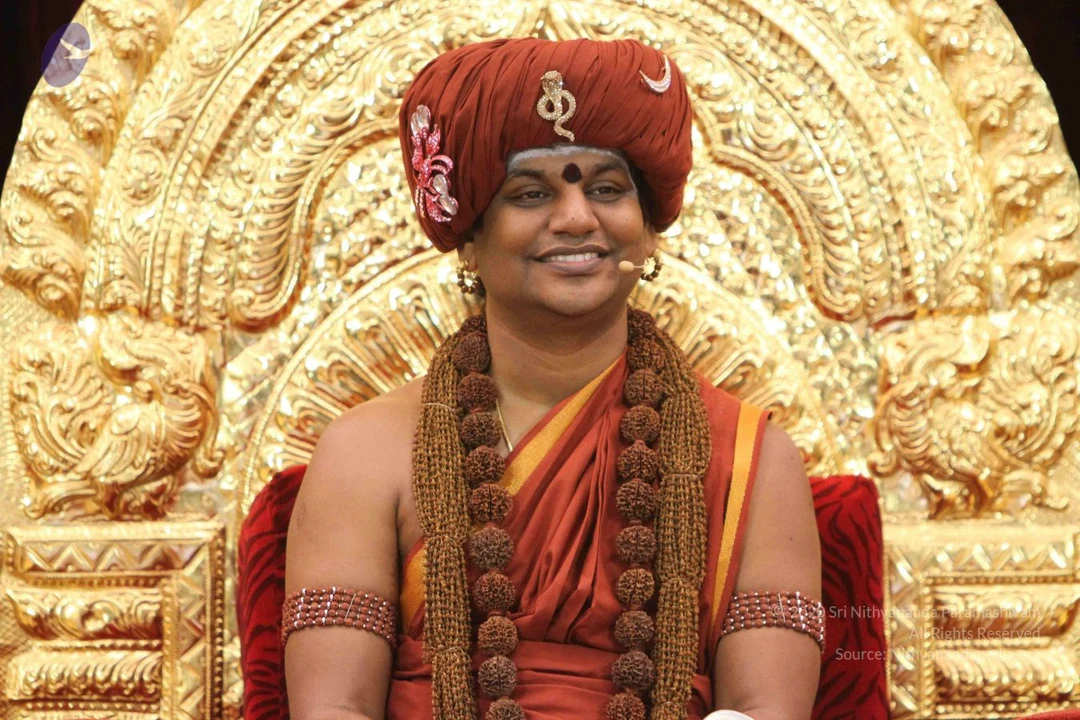
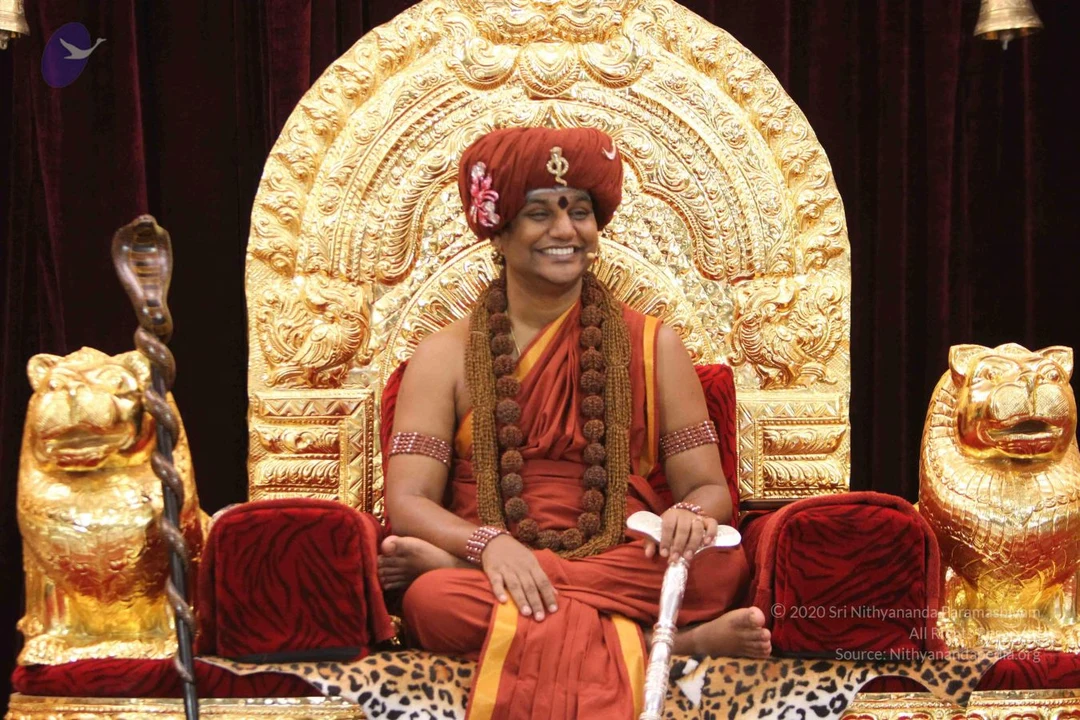
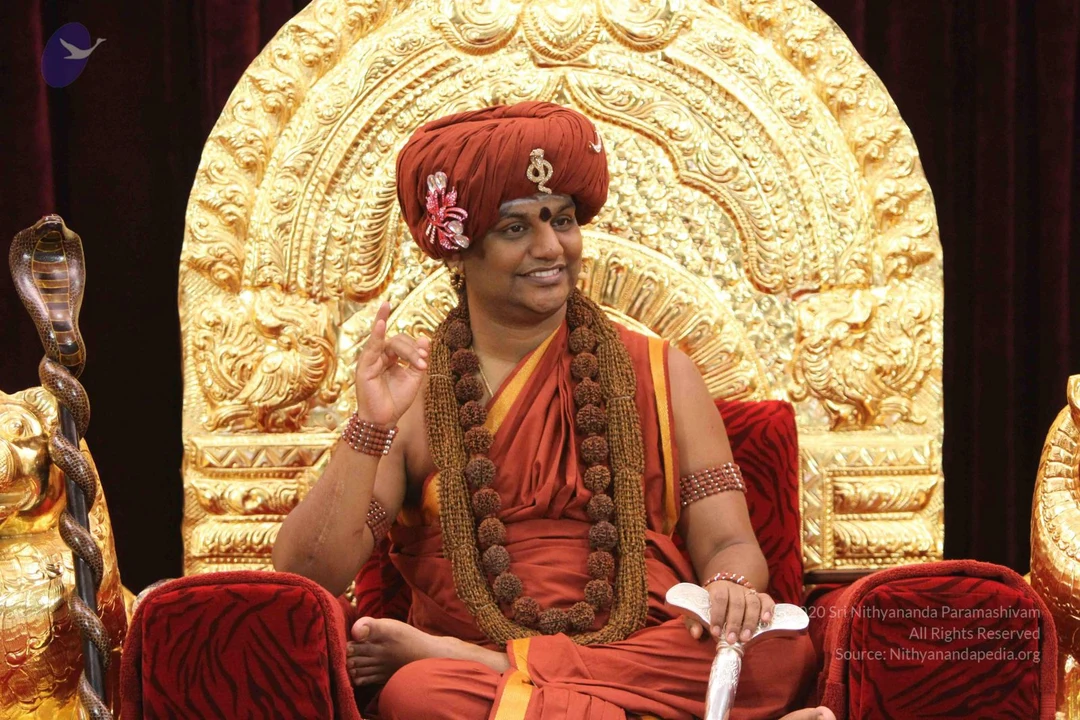
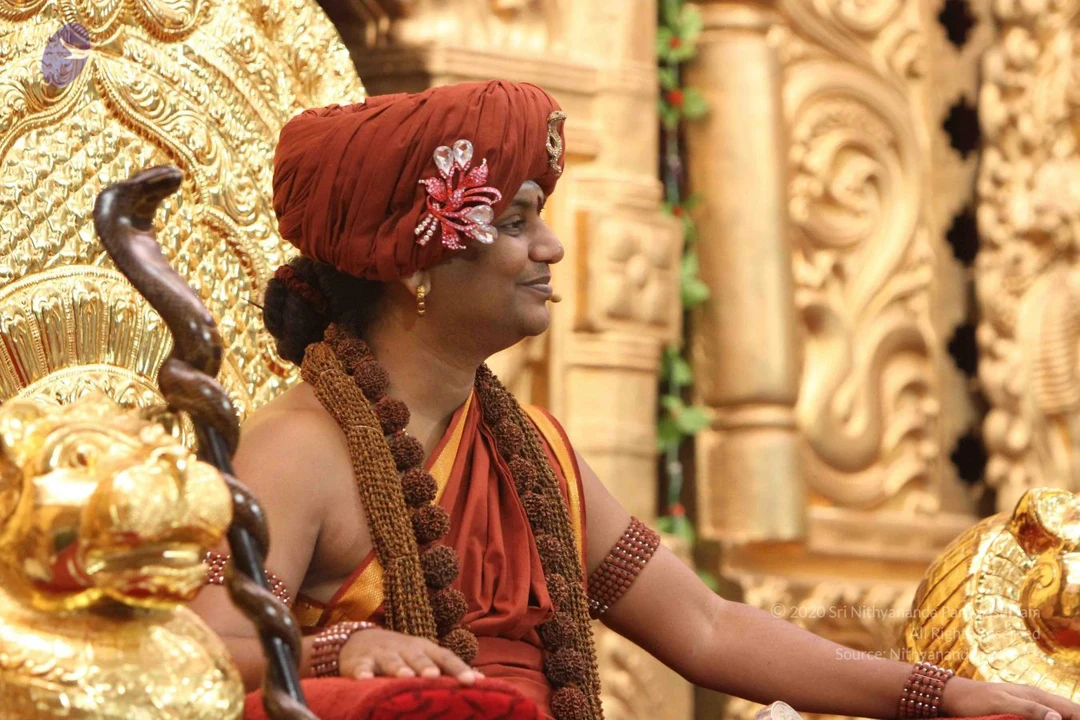
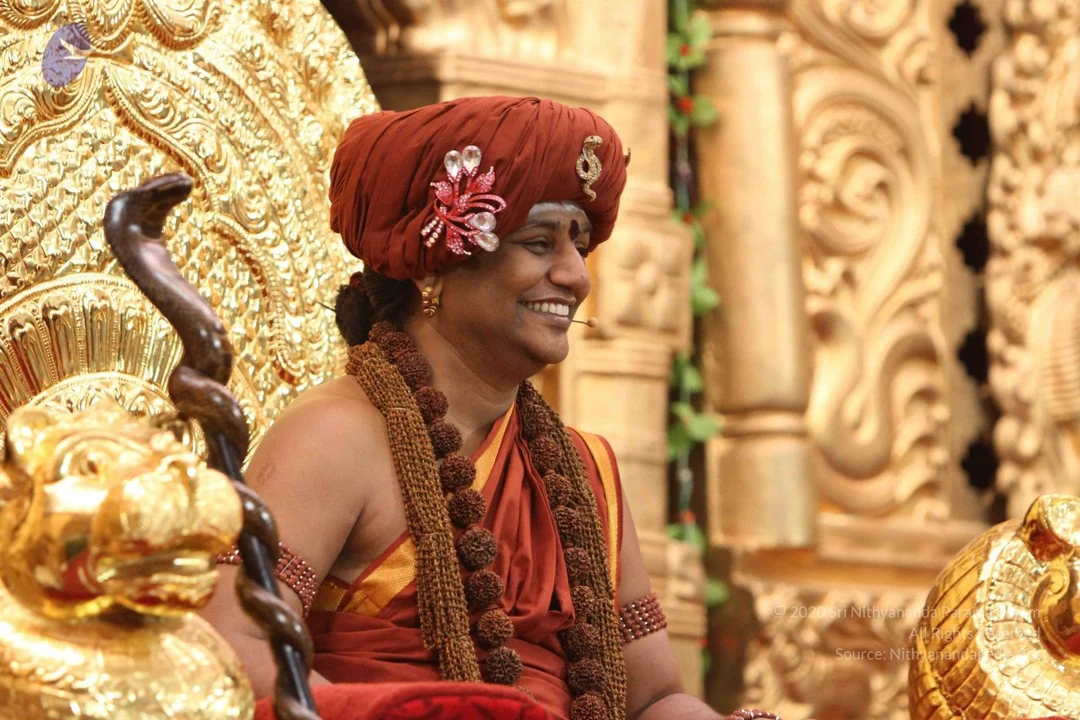
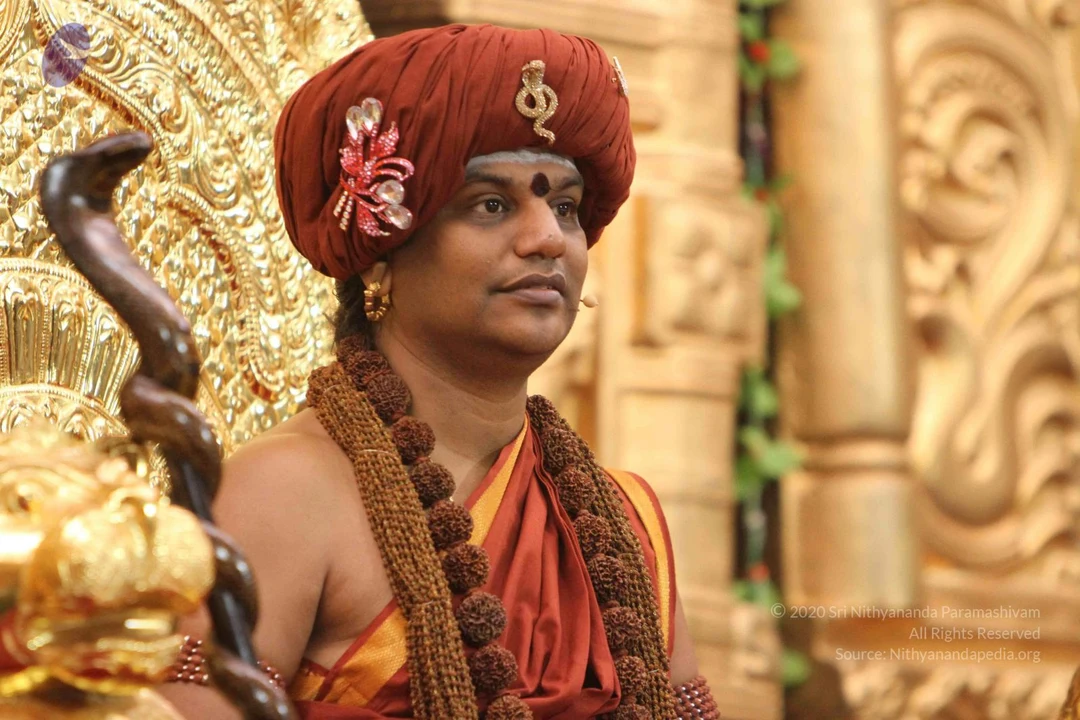
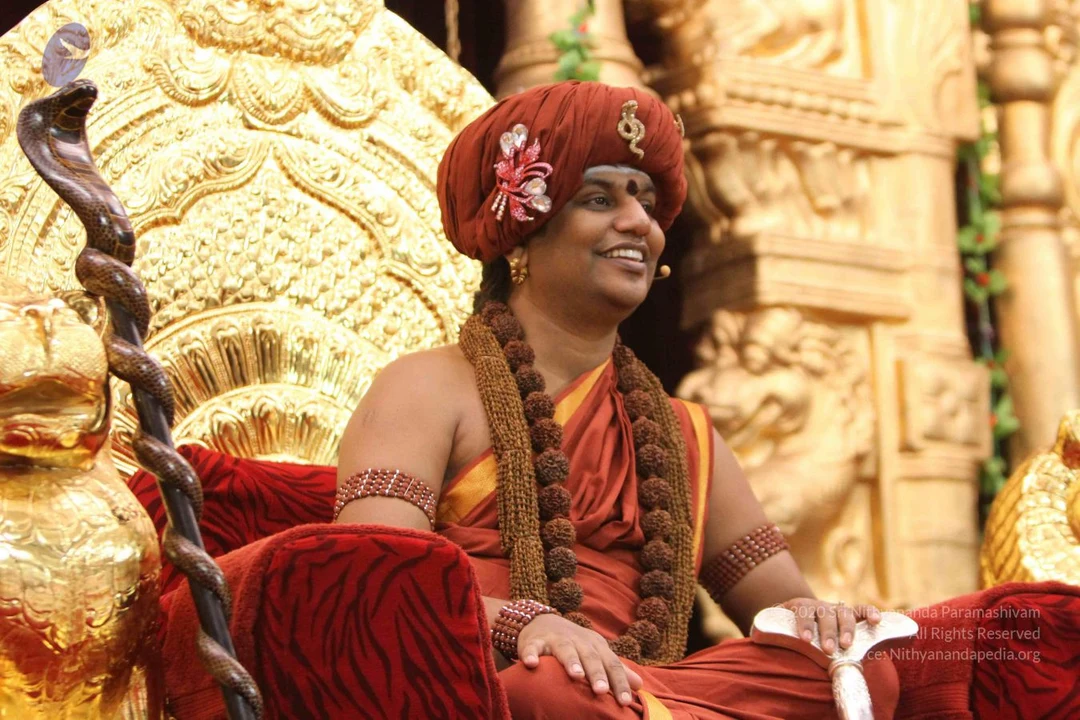
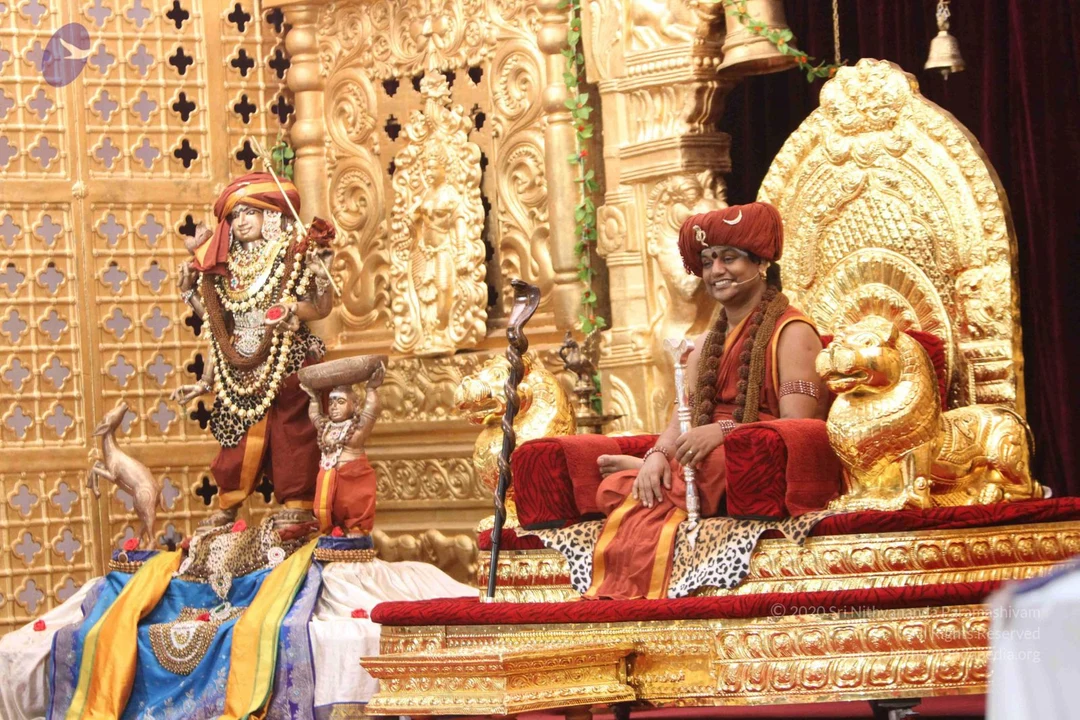
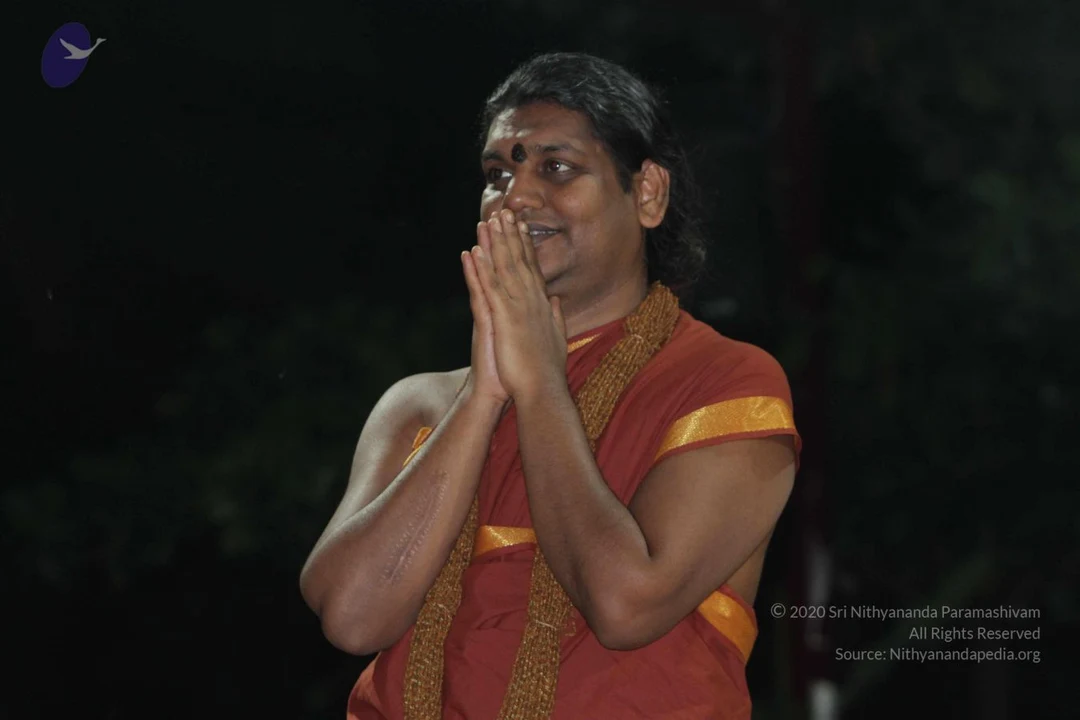
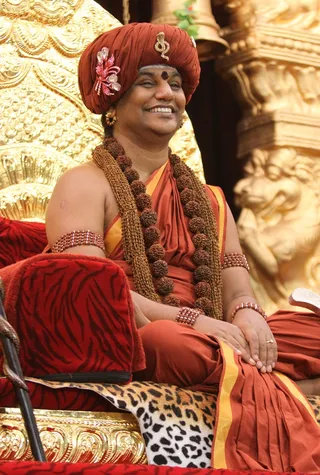
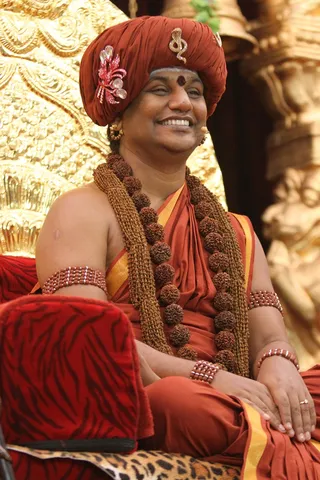
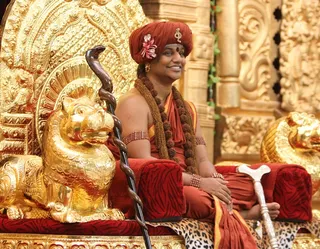
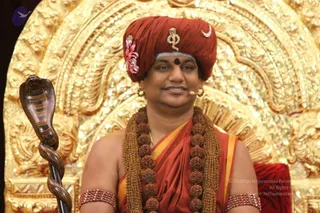
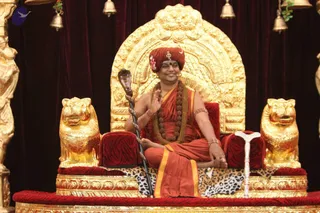
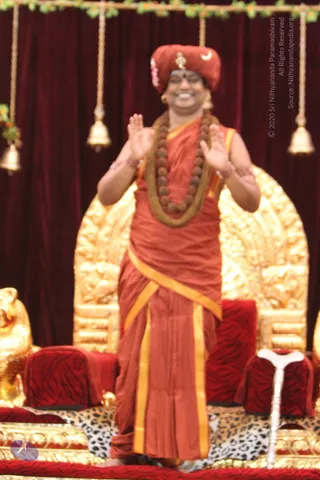
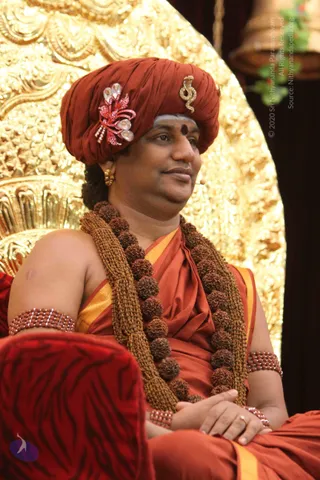
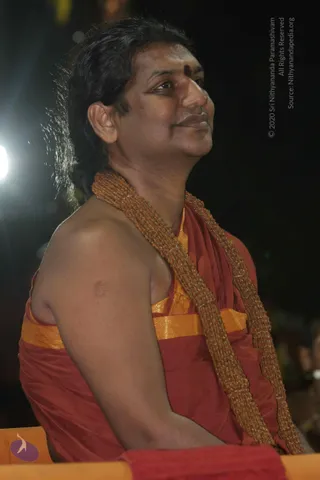
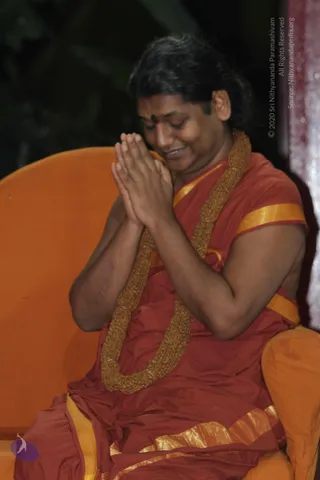
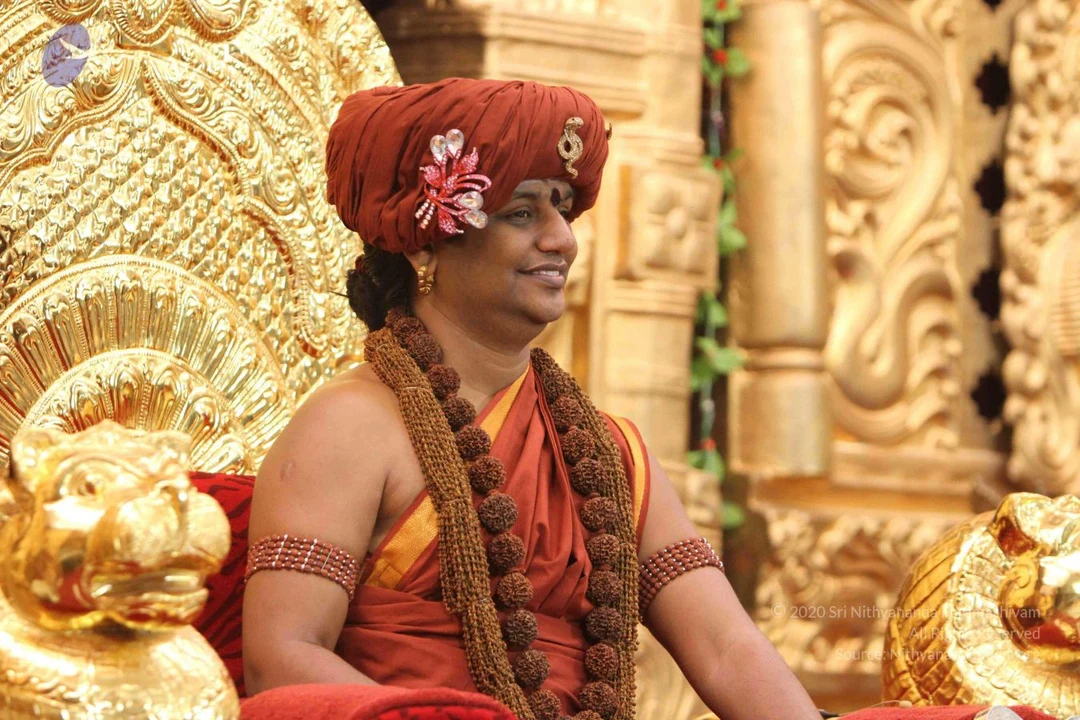
A photograph of a devotional kirtan performance on a red-draped stage before an ornate gold-toned backdrop. Several women sit cross-legged on the red cloth, singing into stand microphones and reading from loose sheets on wooden book stands. Most wear rust-orange and maroon saris with long rudraksha mala necklaces and vibhuti or tilak markings on their foreheads. One woman in the centre holds small hand cymbals while singing. A woman with glasses at the back wears an orange top. No a person candidate is visible in this frame.A smiling man sits cross-legged on a golden throne carved with lions and ornate scrollwork, set against deep red drapery. He wears a saffron-orange turban with a small gold emblem and a red flower, a saffron-orange robe with gold trim, a long rudraksha mala with gold tassels, and gold-coloured bangles on his wrists. He holds a white and silver ceremonial staff across his lap. Two gilded lion figures flank the throne, and a leopard-print cloth covers the dais. The man's saffron and orange clothing, rudraksha mala and ornate throne fit the a person cues on this page, so the appearance-based label applies.A smiling man seated on an ornate gilded golden throne with lion-head carvings, wearing a deep red-orange turban with a jeweled brooch and a gold emblem, a rudraksha mala with a long tassel necklace, and an orange-red shawl over a bare upper body with beaded armbands. A dark ceremonial staff with a carved serpent head rests beside the throne. Behind him are gold-carved pillars and decorative panels. Appearance-based candidate: Swamiji (probable), seated in a throne at a satsang setting with a ceremonial staff, rudraksha mala and orange turban.A smiling man sits on an ornate gold throne with carved lion-head details, draped in a red-orange robe with yellow borders and a matching red-orange turban decorated with a gold and red floral ornament. He wears a rudraksha mala with large brown beads and a long brown woven necklace, beaded red-gold armbands, bangles and a ring, with a red tilak on his forehead. A leopard-print cloth and a red tiger-striped cushion lie across the throne.A seated man smiles broadly on an ornate gold throne with red tiger-striped upholstery. He wears a red-orange turban with a gold serpent emblem and a pink jewelled brooch, a red-orange robe with gold borders, a multi-strand rudraksha mala with a brown woven cord, beaded armbands and wrist bands, and gold earrings. A red bindi marks his forehead and a small microphone is clipped near his face. Probable Swamiji by appearance, given the turban, rudraksha mala, saffron-orange ornate clothing and armbands, seated as a central figure in a gathering; no printed name is visible.A seated figure in a saffron-orange turban with a red flower and gold ornament, a long rudraksha mala with a gold bead necklace, saffron robes and gold bangles, sits smiling on an ornate golden throne carved with a lion-headed armrest and a cobra-headed staff leaning beside him. The red and gold upholstery is patterned with tiger stripes, and a leopard-print cloth covers the seat. Golden temple-style carvings fill the background. The figure is a person candidate by appearance cues, shown in person on a throne in a ceremonial setting.

Padapuja

5 photosSource gallery
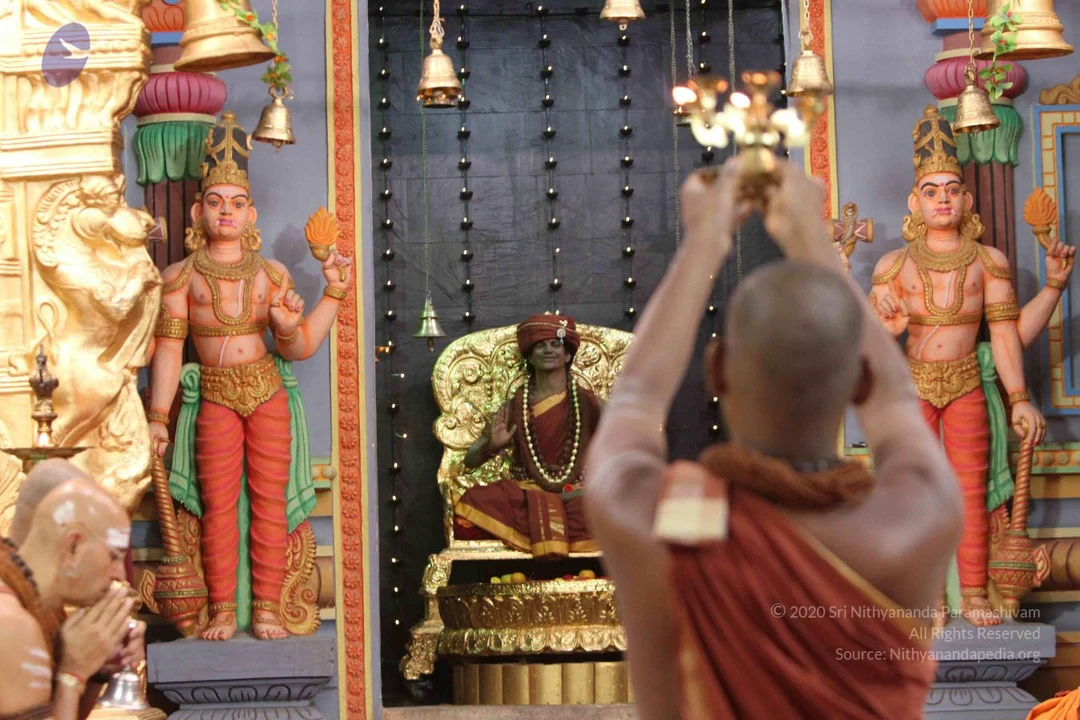
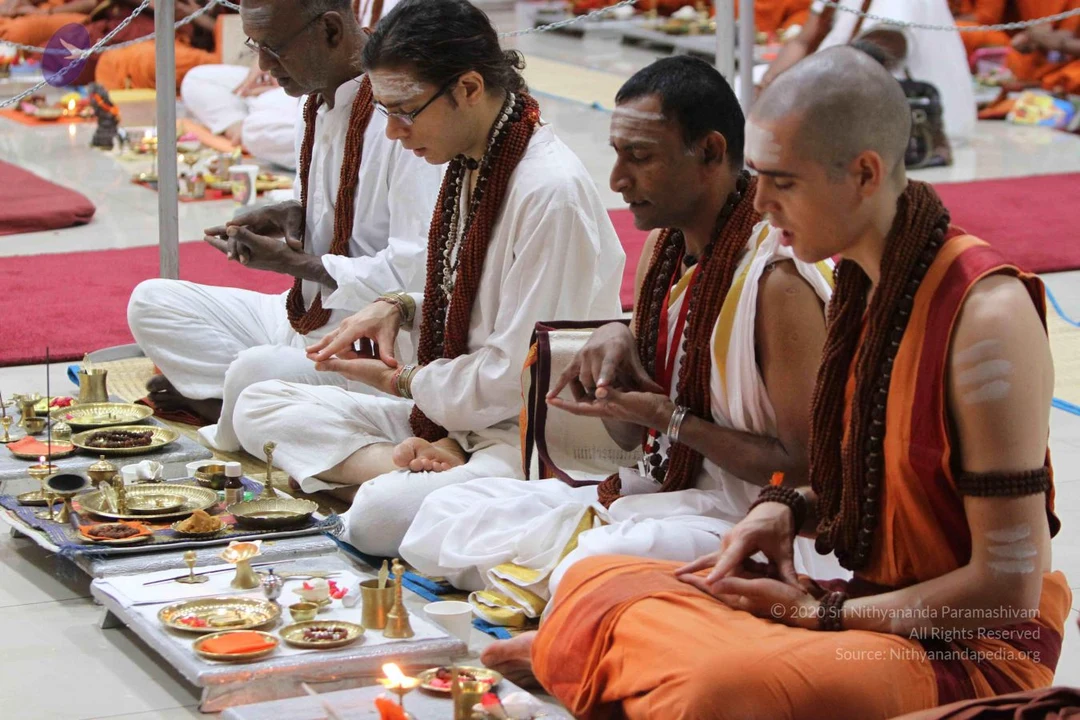
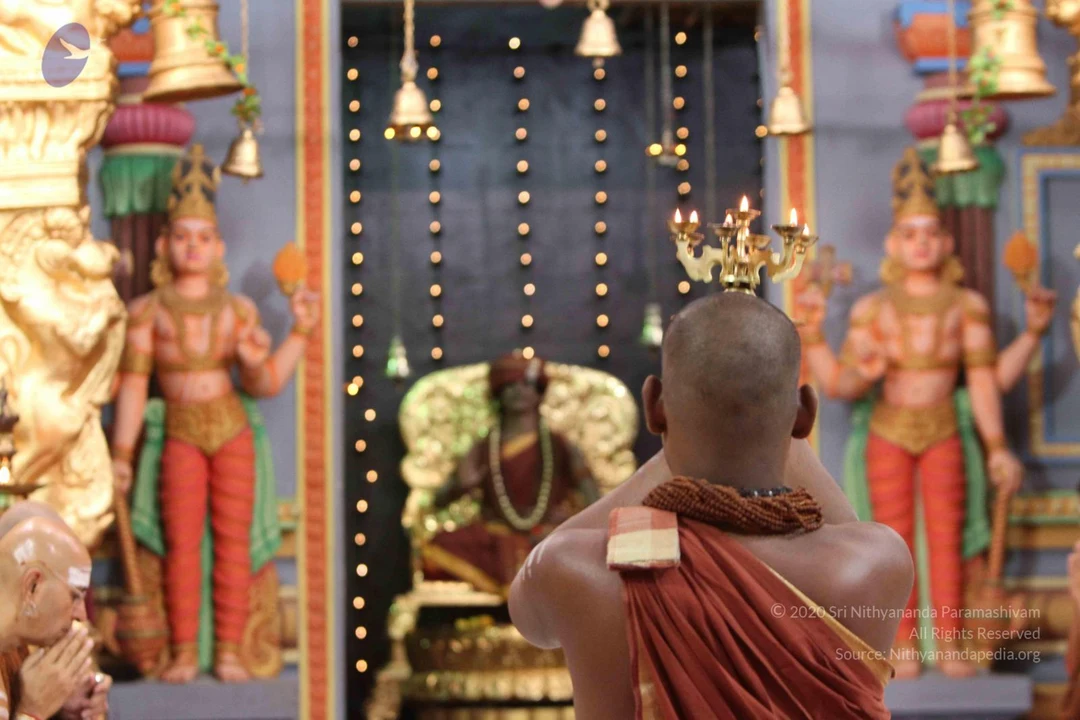
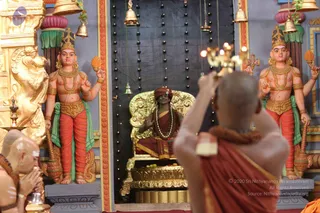
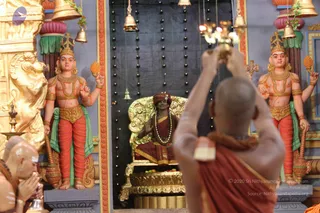
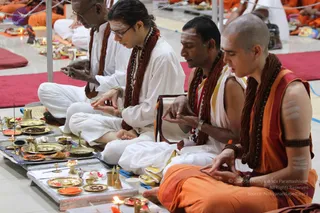
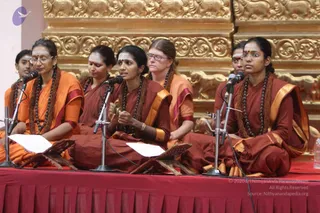
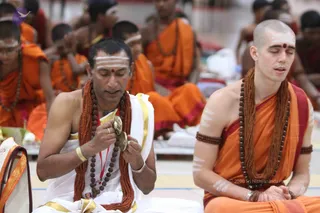
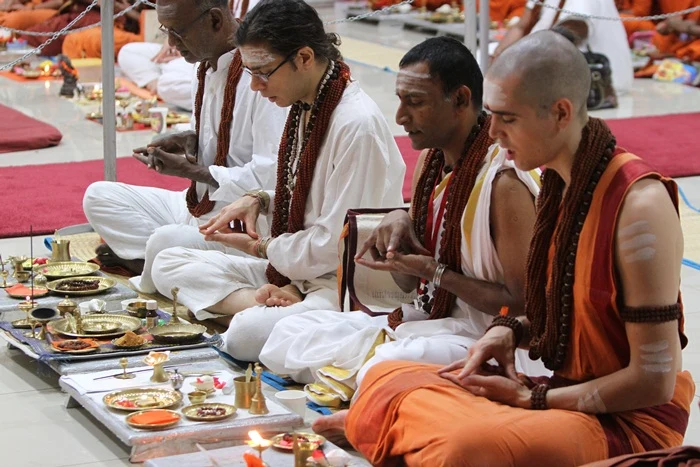
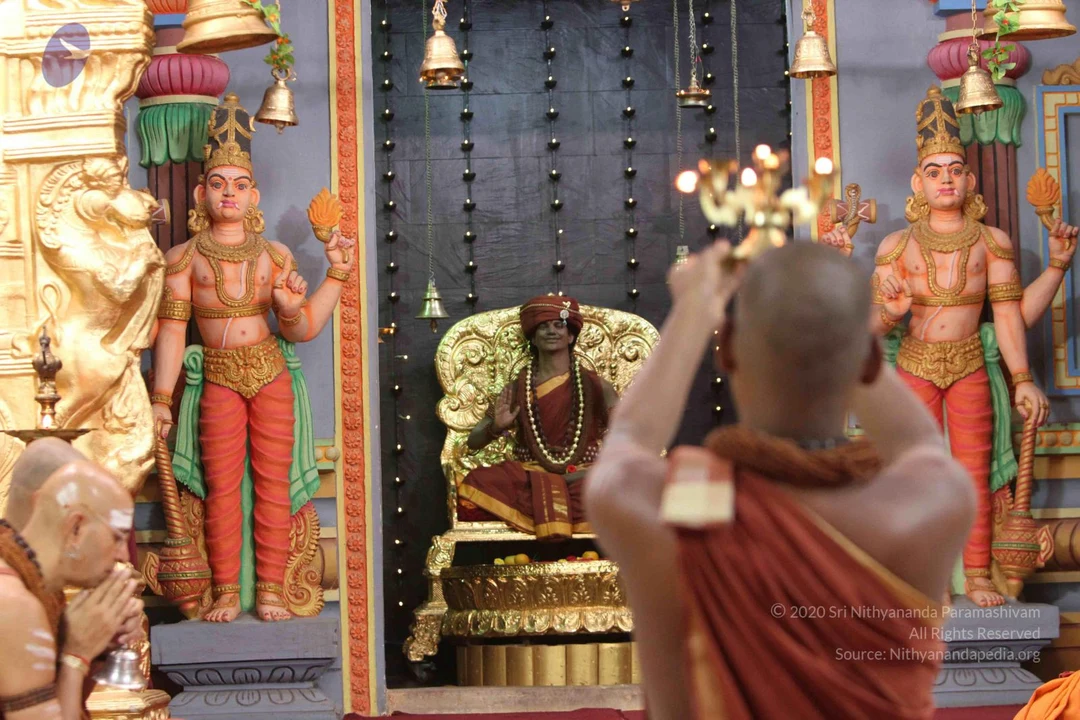
Inside a temple shrine, a seated figure in a gold ornate throne wears a maroon-and-gold turban, a rudraksha mala and maroon wrap, with hands raised in a blessing gesture. Flanking him are two large painted deity statues with gold crowns, golden necklaces and red dhoti-style lower garments. In the foreground, a bald priest in saffron robes raises a lit multi-flame oil lamp toward the throne, while a second priest with white tilak marks on the forehead holds hands together in prayer beside hanging bells and black beaded strings. Several lamps and offerings sit at the throne base. Aarti is being performed.A photograph of a temple sanctum with two large painted guardian statues flanking a doorway hung with brass bells. A seated figure on a gilded throne-chair in saffron-red robes and a red turban, with a rudraksha mala, raises a hand in blessing. In the foreground a shaven-headed priest in an orange-saffron cloth lifts a brass aarti lamp with both arms, while another priest with a white tilak on the left folds his hands in prayer. Lit oil lamps and fruit offerings sit on the throne base.Four men sit cross-legged on red mats during a seated puja or homa-style ritual. Two in white clothes wear rudraksha malas and bead necklaces; one in white with a shawl-like cloth and malas and wrist beads holds a ritual book. The foreground man in saffron orange robes with a rudraksha mala and sacred ash marks on his arms and forehead gestures with his hands. Brass plates hold offerings, sweets, flowers and small cups, with brass oil lamps and a lit flame in front. Other people in orange sit in the background.A group of women sit cross-legged on a red-draped stage performing devotional singing (kirtan) before microphones and music stands with printed sheets. They wear rust-red and orange saris with gold borders, rudraksha malas and white forehead markings; the woman centre-front holds small brass cymbals. Behind them, a gold-carved wall with relief figures of animals forms the backdrop. Among those visible, a woman at right wears glasses and a red sari. The scene suggests a satsang musical session.A photograph of a ritual gathering inside a large hall with a wooden floor. In the foreground, a man with a shaved-looking dark hairline wears white dhoti-style cloth with gold border, multiple rudraksha mala necklaces, a gold bangle and a red thread, and horizontal white vibhuti with a red kumkum dot on his forehead. He sits cross-legged and holds two small brass or gold bells or cymbals. Beside him, a shaved-headed man in orange robes with a red undergarment, rudraksha malas and white ash marks on his arms sits with eyes closed in meditation. Behind them, many people in orange and saffron robes with white forehead markings sit on mats in rows, including a couple of children in the background.

PadukaPooja
35 photosSource gallery
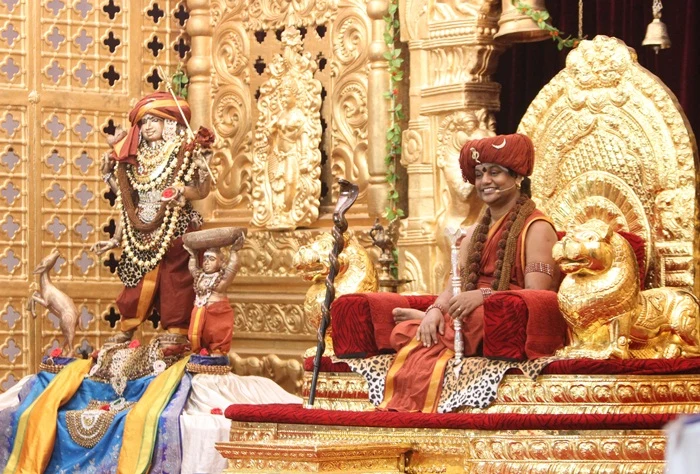
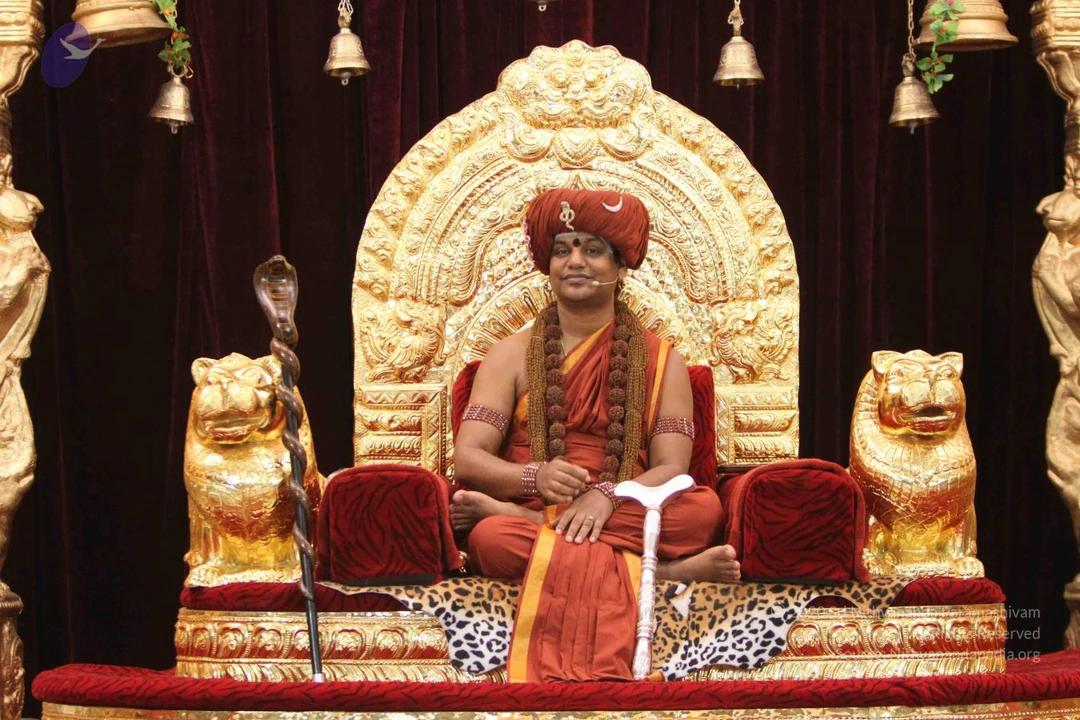
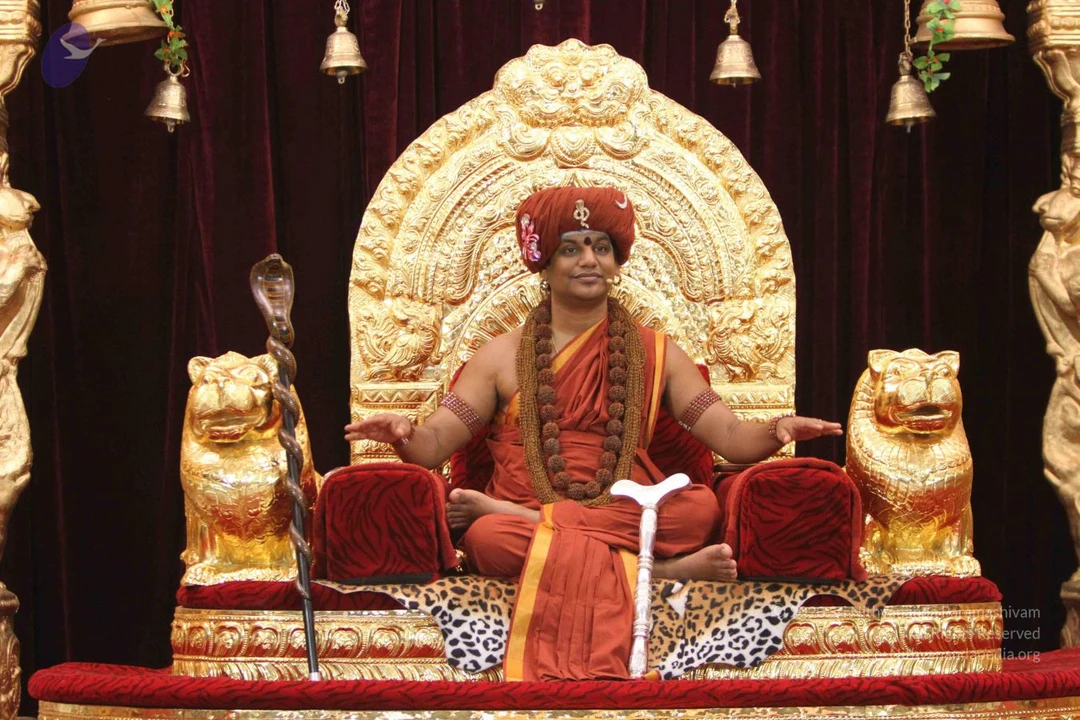
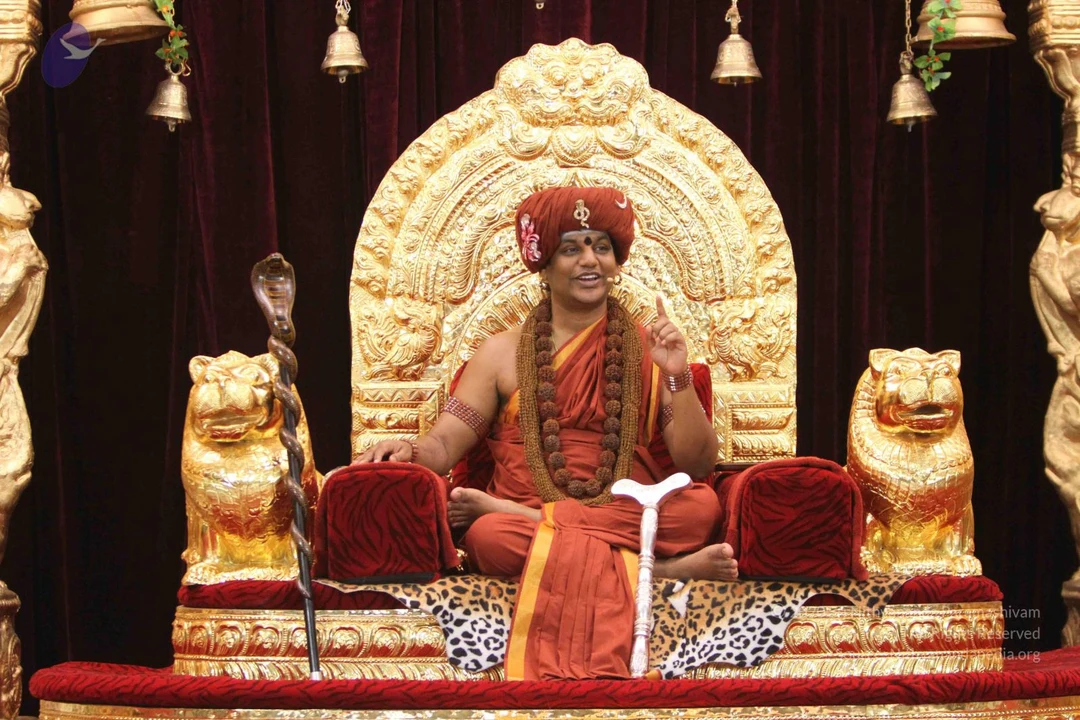
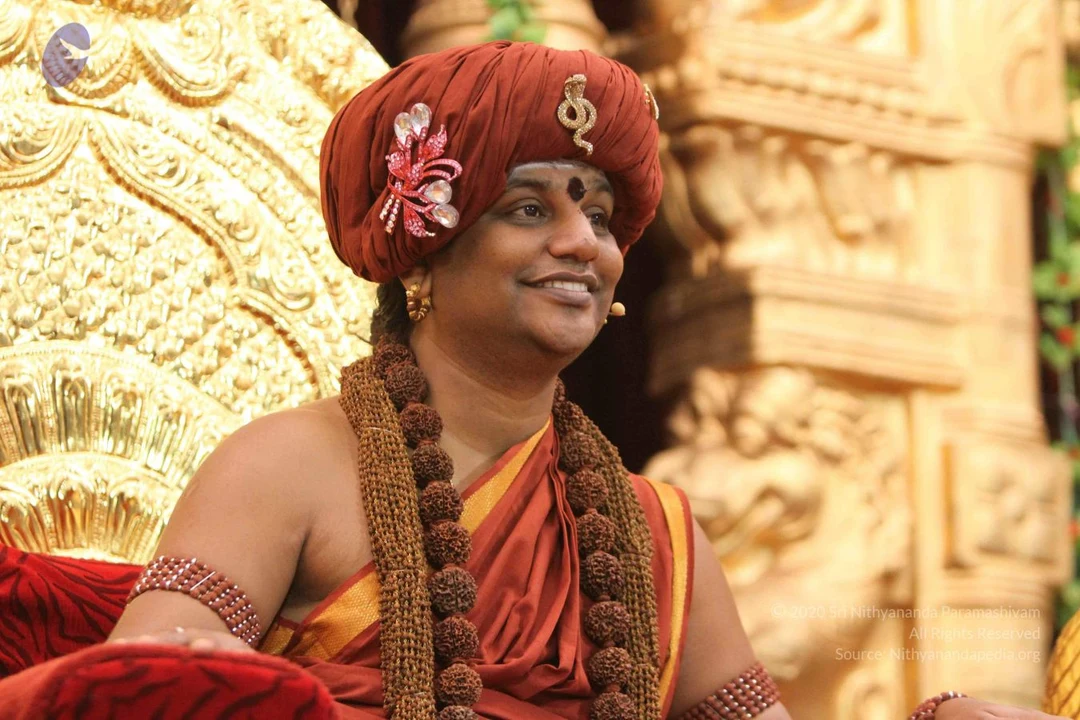
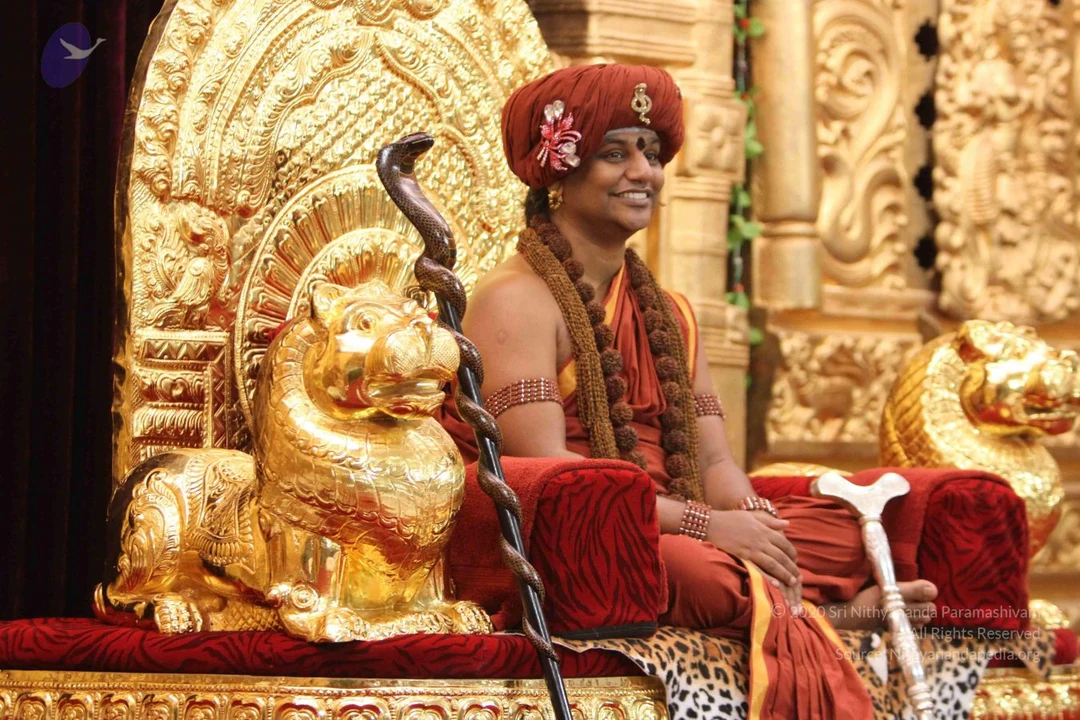
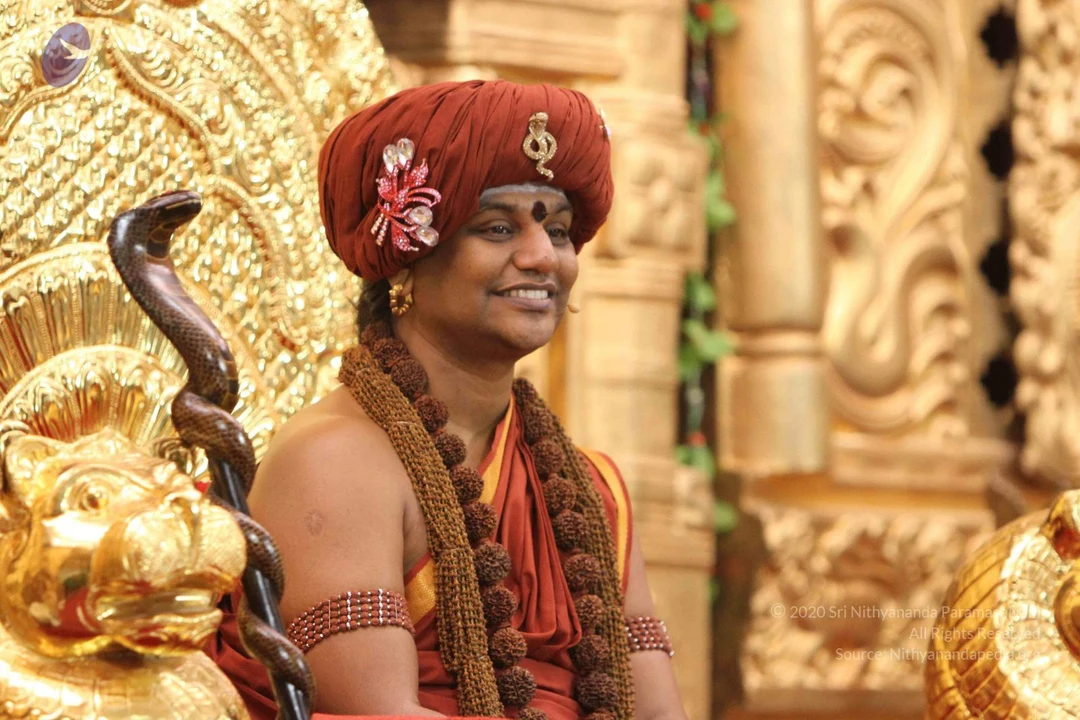
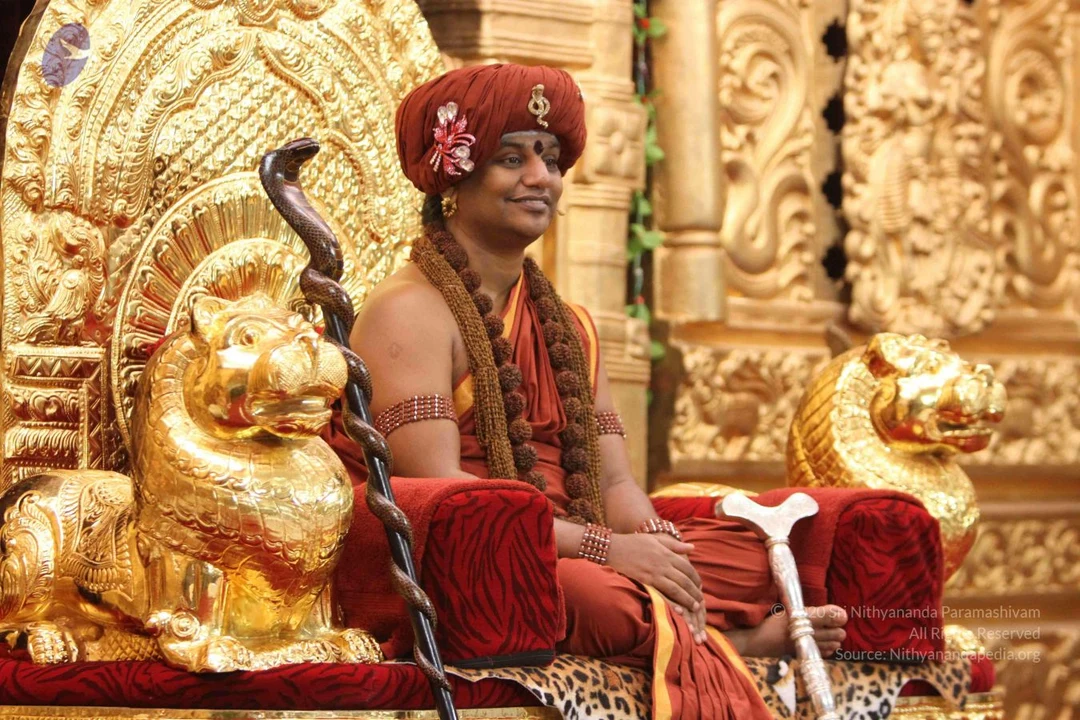
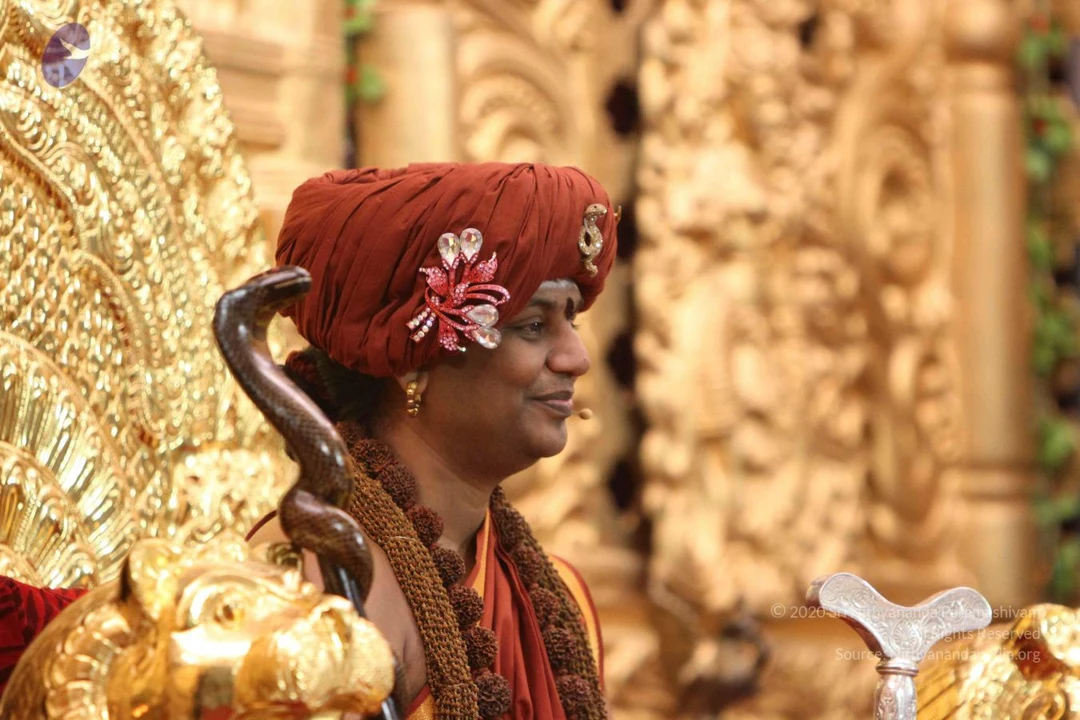
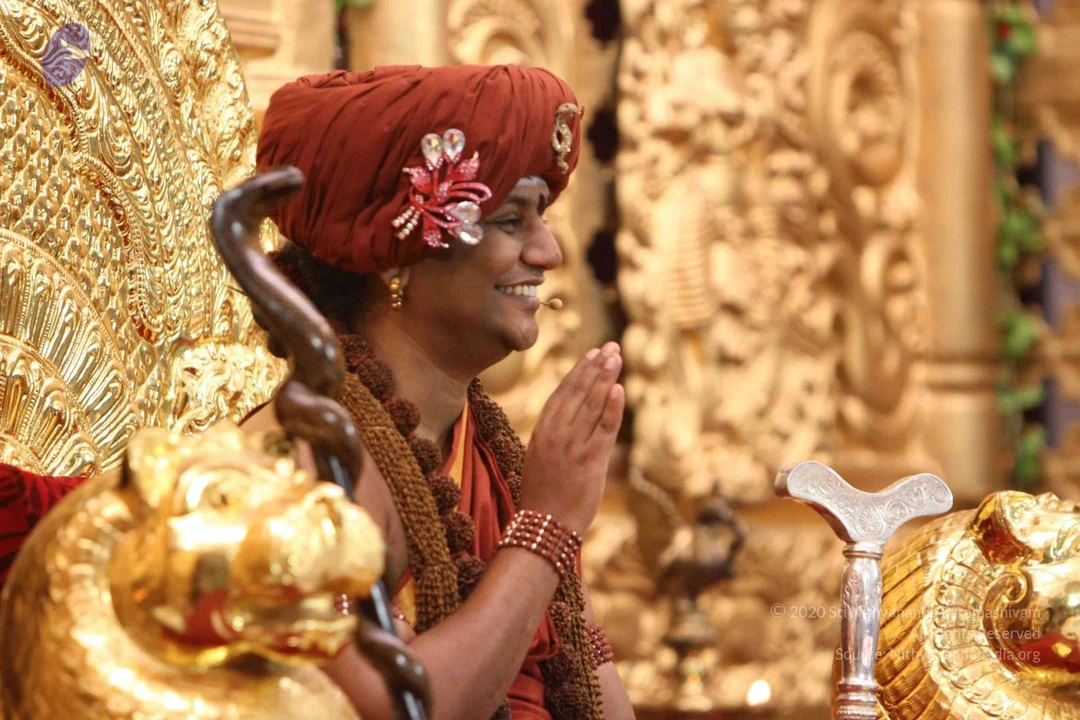
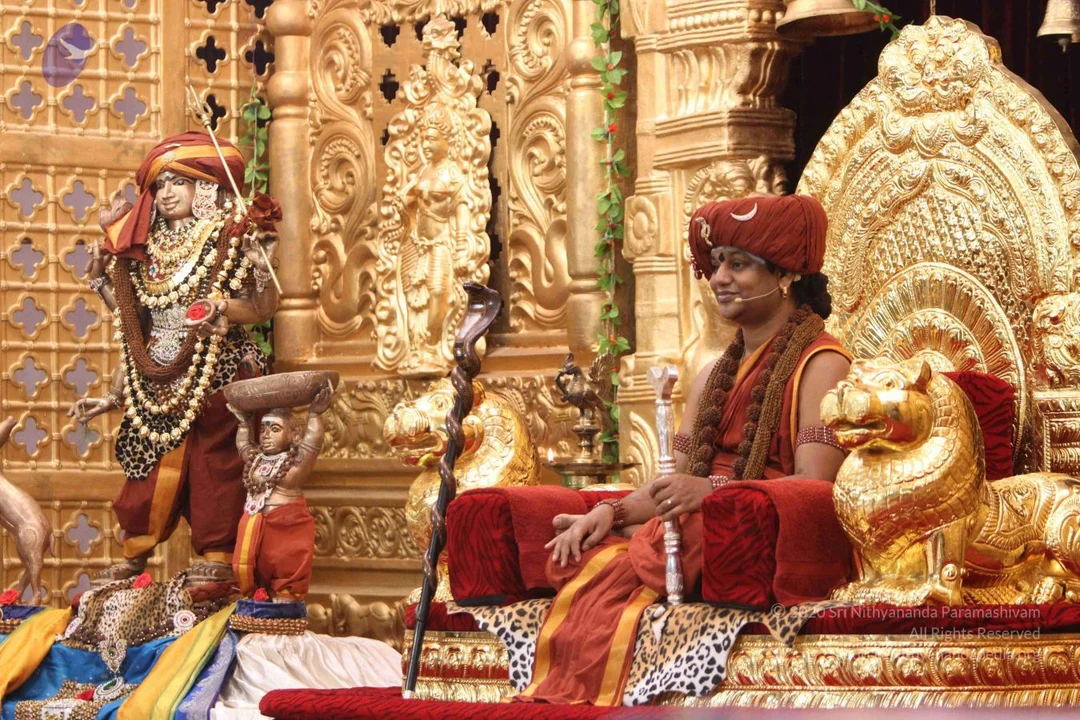
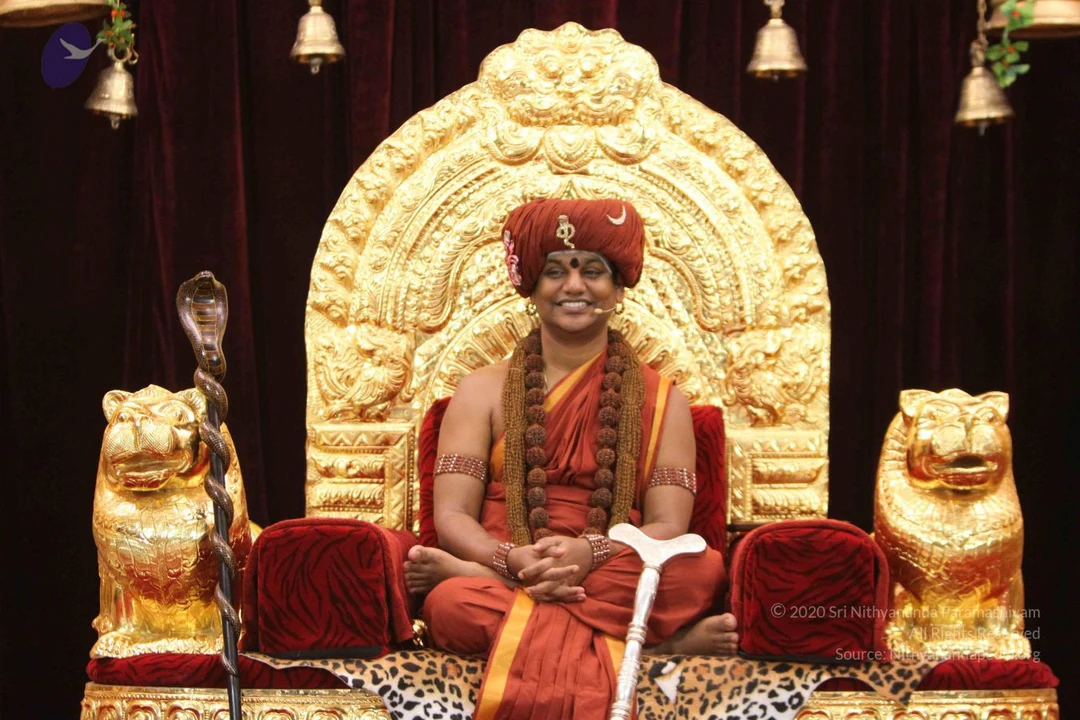
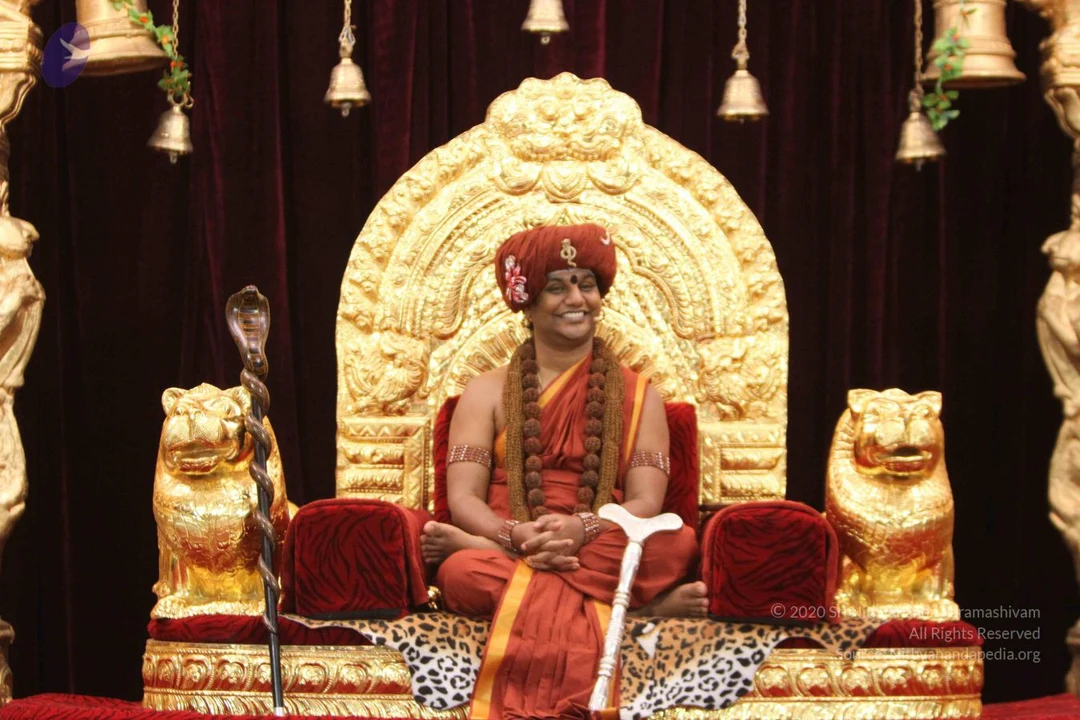
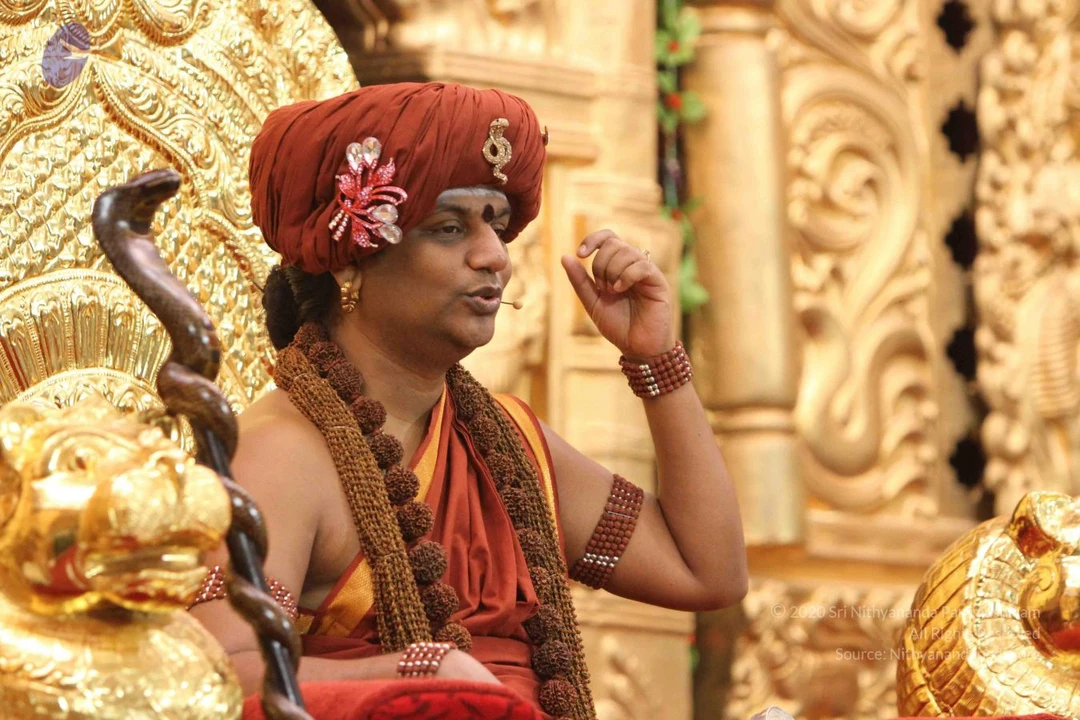
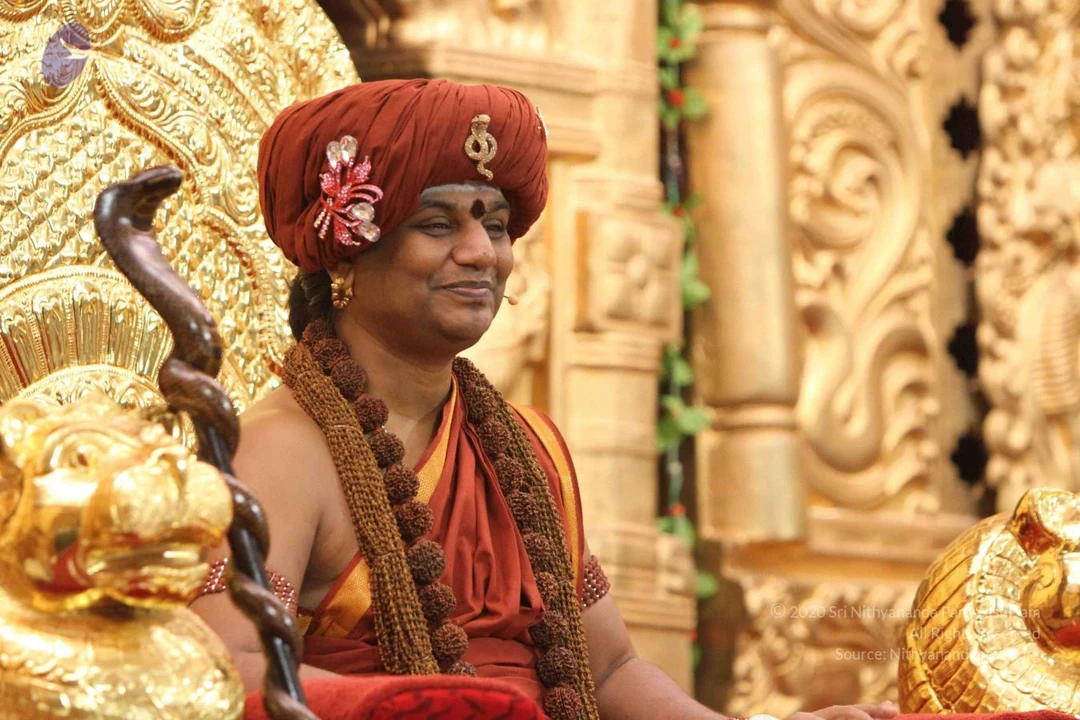
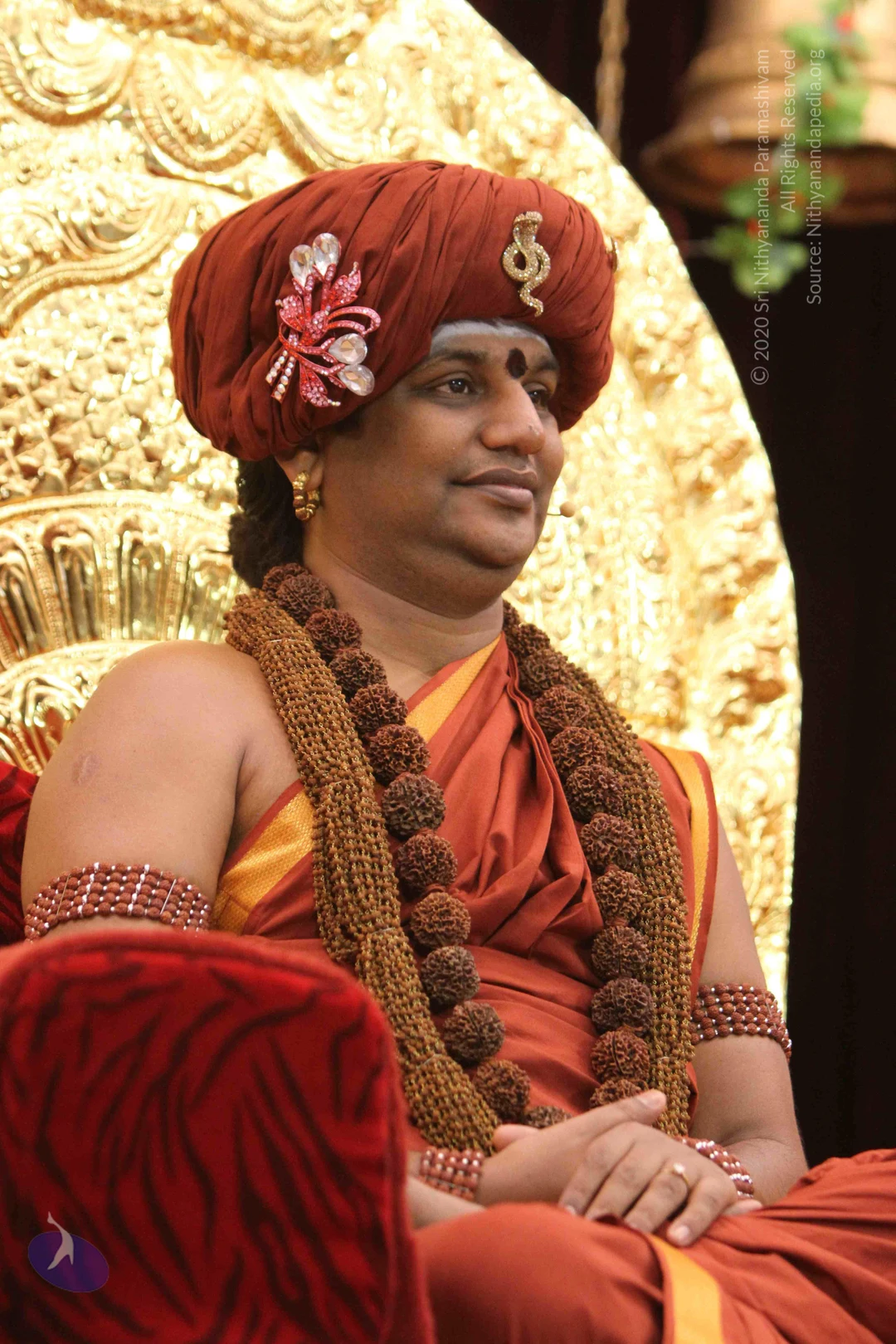
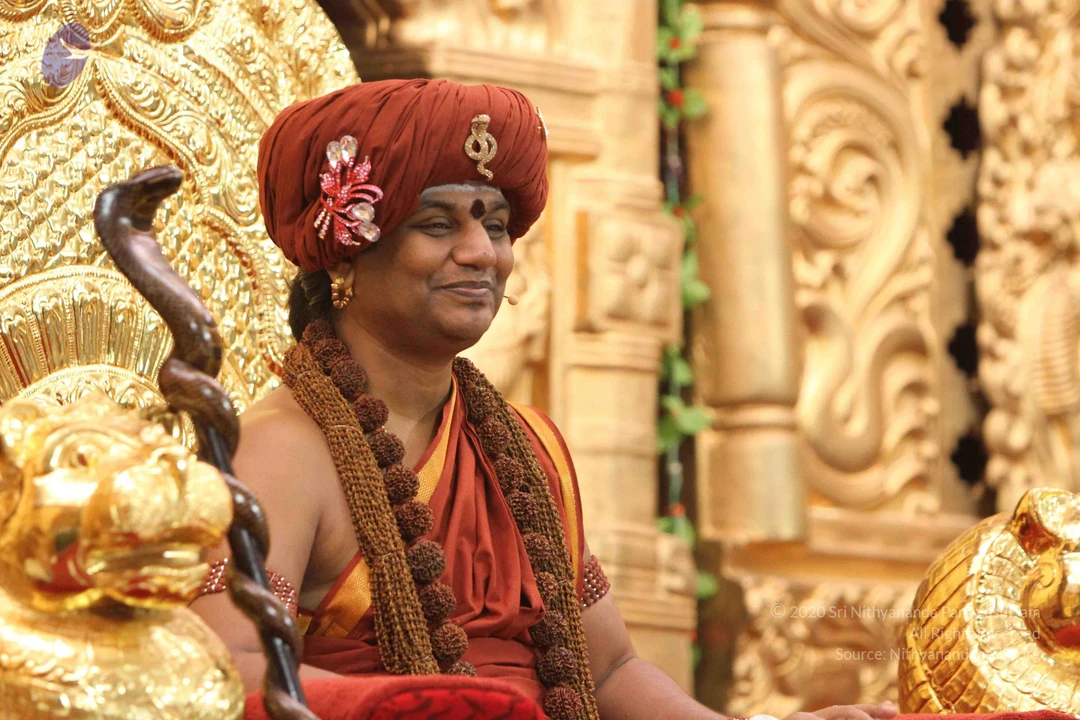
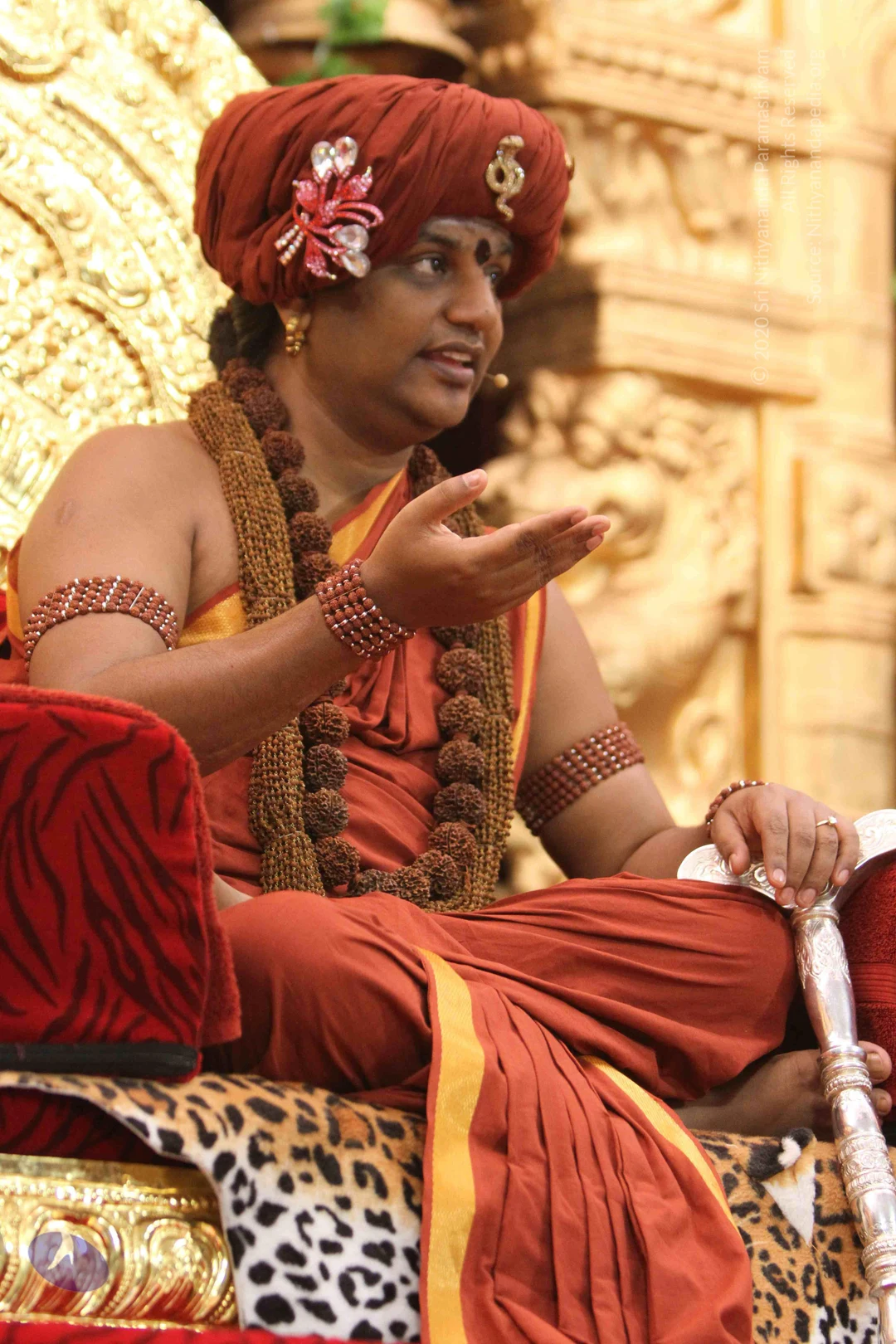
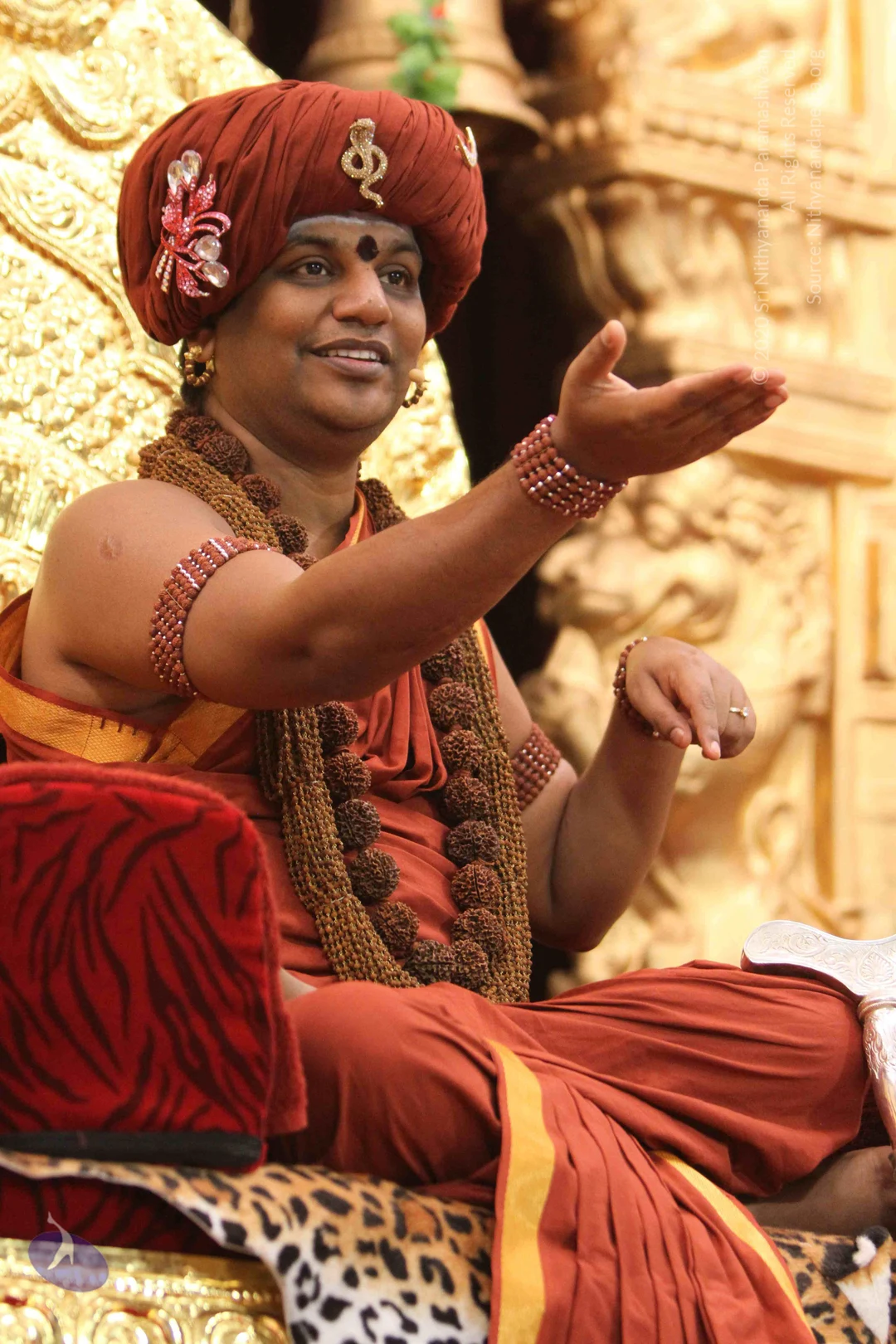
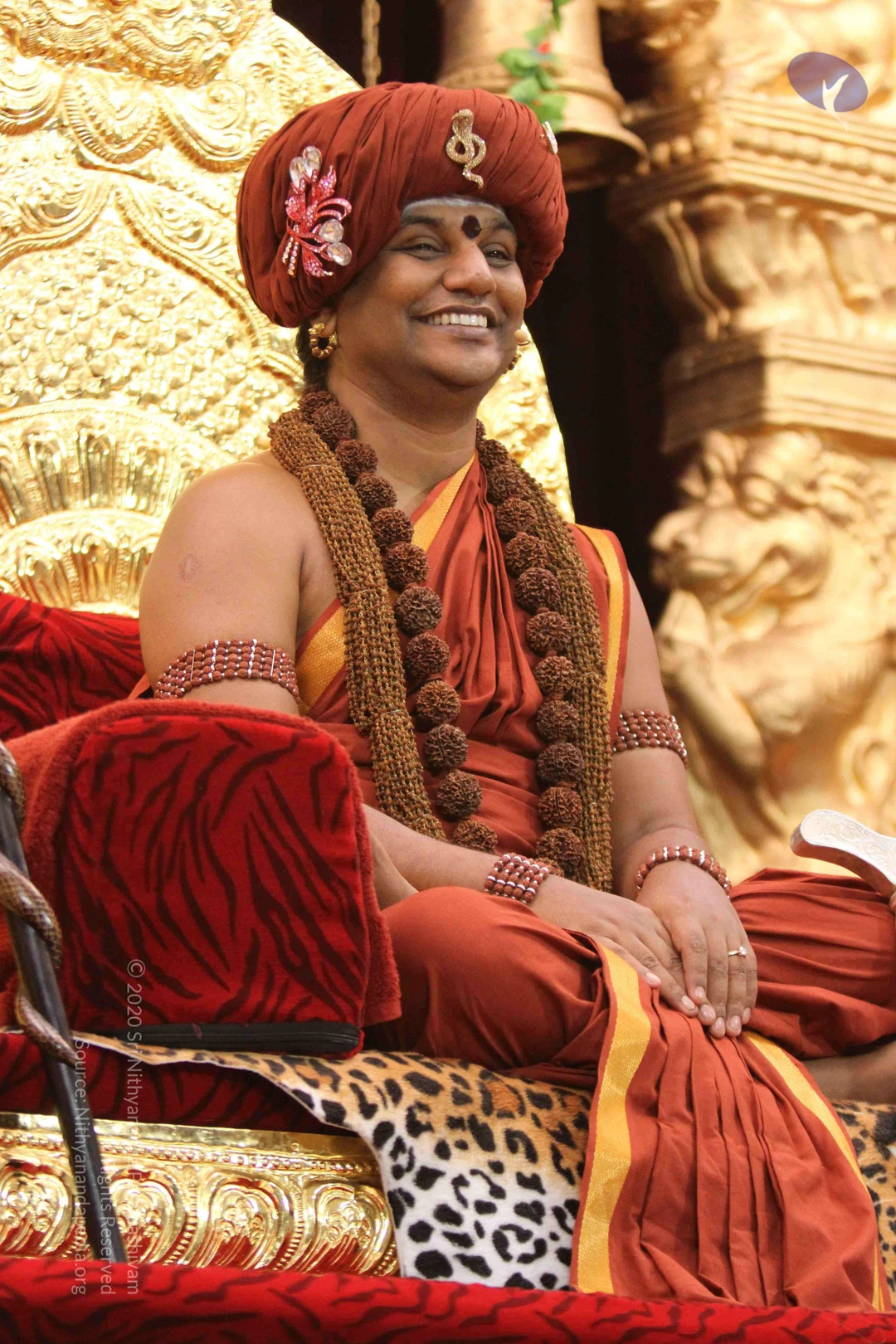
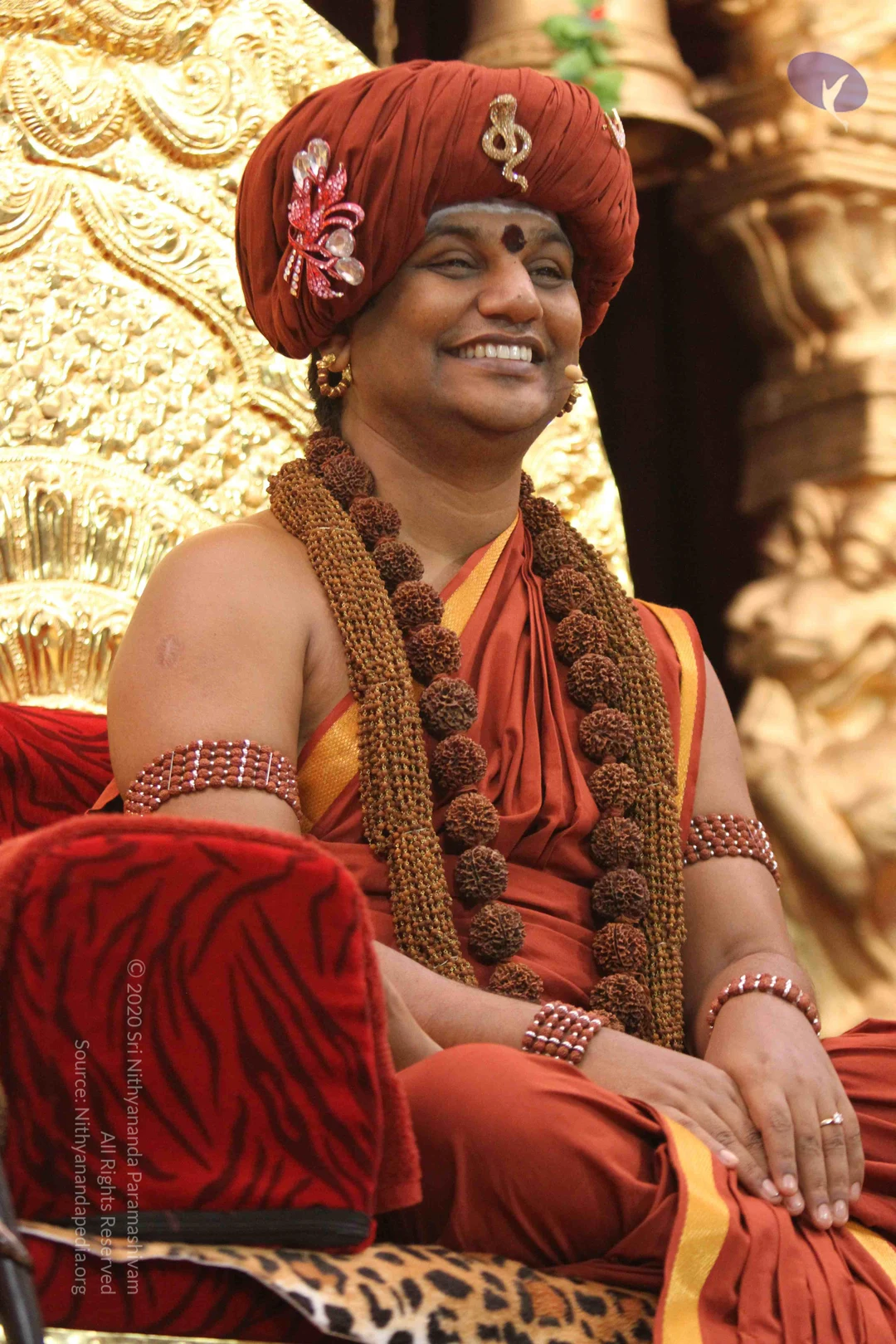
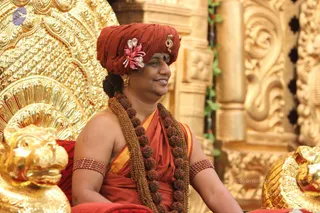
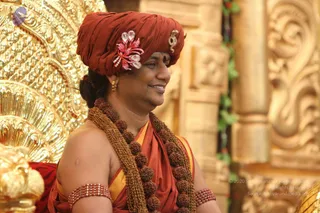
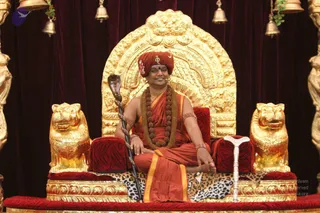
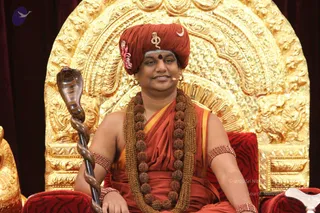
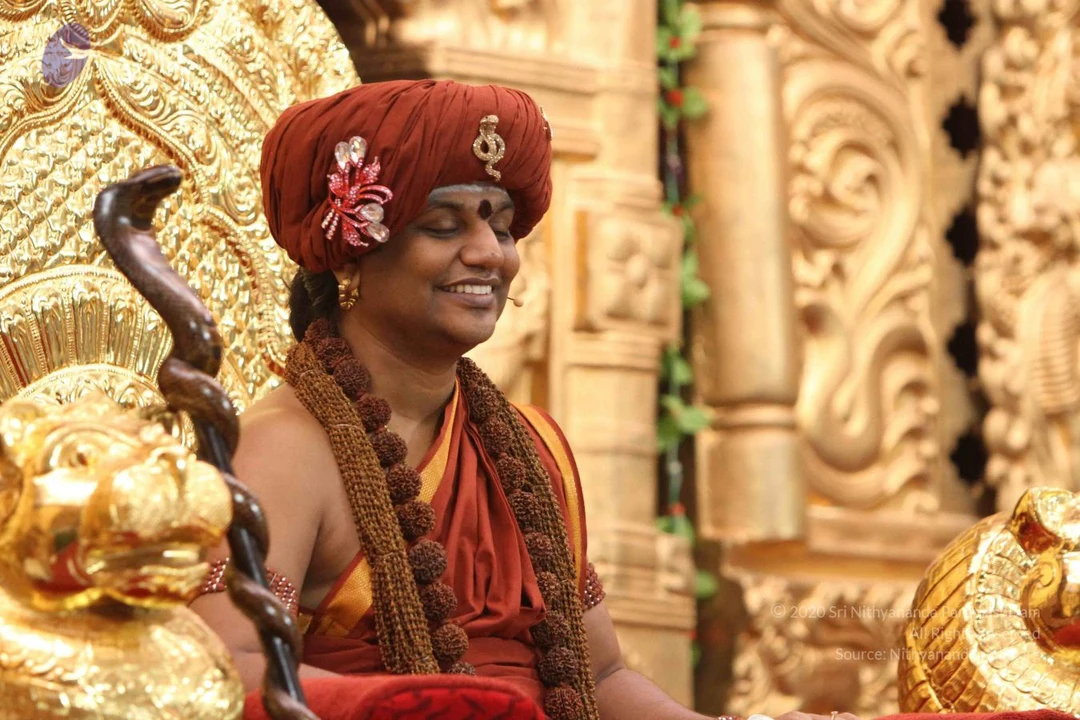
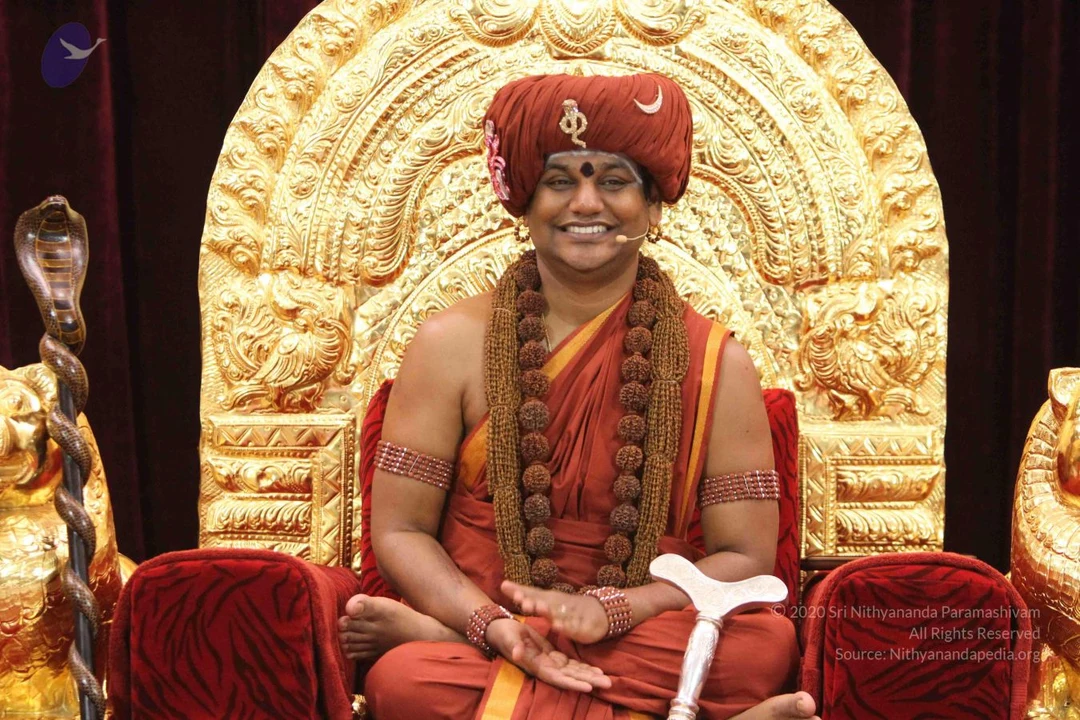
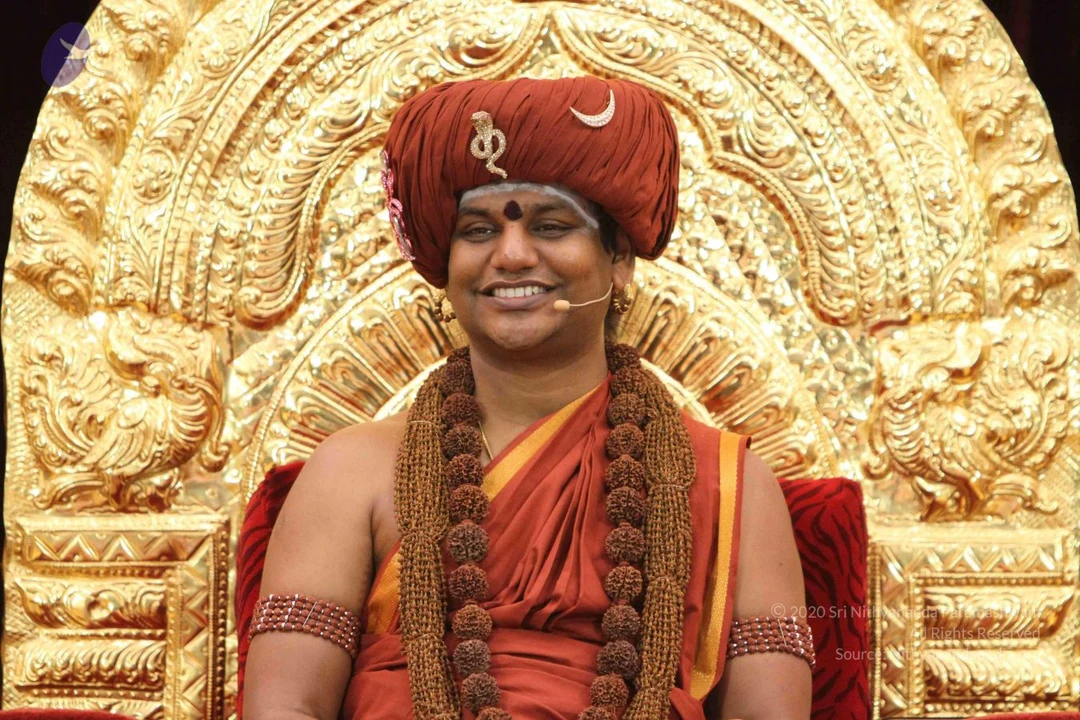
A seated man in a rust-red turban decorated with a red jewelled flower and a gold emblem sits on an ornate gold throne with a large gold backrest carved with scrolling patterns and lion-head armrests. He wears a rust-red and saffron-bordered garment over bare shoulders, a long rudraksha mala with a gold-threaded cord, and beaded red armlets. He smiles while looking to the side. Carved gold pillars and foliage form the background.A seated man in a rust-red turban decorated with a pink jeweled floral brooch and a gold serpent ornament smiles toward the right. He wears a saffron-orange robe with a gold border, a long rudraksha bead mala with a braided brown cord draped over his shoulders, and beaded red armlets. Behind him a gilded throne with a carved fan-like back and ornate gold relief pillars forms the setting.A photograph of a seated figure on an ornate gold throne with carved lion-shaped armrest supports, draped in dark red velvet and a leopard-print cloth. The figure wears a red-orange turban with a small crest, saffron-orange ceremonial robes with yellow borders, a long rudraksha mala necklace, beaded bangles and a bare chest, holding a serpent-headed staff in one hand. A white-handled ceremonial staff lies beside the throne. Brass bells hang from the top of the frame and gold lion statues flank the seat. a person: the saffron robes, red turban, long rudraksha mala and ornate throne fit the presentation, though the face is not clearly determinable from this image. Watermarked archive photo copy was omitted from the description.A seated man on an ornate golden throne with a carved gold arched backrest and red-and-black patterned cushions. He wears an orange-red turban with a gold cobra emblem and a gold crescent moon, a pink flower tucked at the side, and a red bindi on his forehead. He is draped in saffron-orange robes with a gold-edged cloth, a heavy rudraksha mala necklace, and jeweled armbands. He holds a carved wooden staff entwined with a cobra and smiles toward the audience, a small microphone at his ear. Swamiji (probable): he presents as the Nithyananda Paramashivam, with his distinctive turban, rudraksha mala and saffron robes as qualifying cues.A seated man in a red-orange turban with a gold cobra and crescent ornament and a red flower clip, wearing a red-orange and saffron-yellow shawl over bare shoulders, a long rudraksha mala with a golden-brown wrap, silver-studded armbands and gold earrings, with a small microphone at his cheek. He holds a black-and-gold carved cobra-headed staff on the left. Behind him is an ornate gold repoussé throne backdrop with a red cushion on the right.A seated man on an ornate gold throne with carved backrest and two gold lion figures flanking the seat. He wears a red-orange turban with a gold emblem, an orange-saffron robe with yellow edging, a multi-strand rudraksha mala and bangles, and holds a twisted metal staff topped with a cobra head in his left hand while raising his right hand in blessing. The seat is covered in red velvet and leopard-print cloth, with a white cane resting at the side. Hanging brass bells and a dark red velvet backdrop frame the stage. Swamiji (probable) appears as the seated figure with turban, saffron robe and rudraksha mala, giving a blessing as the presiding teacher.

Kalpataru-Darshan

10 photosSource gallery
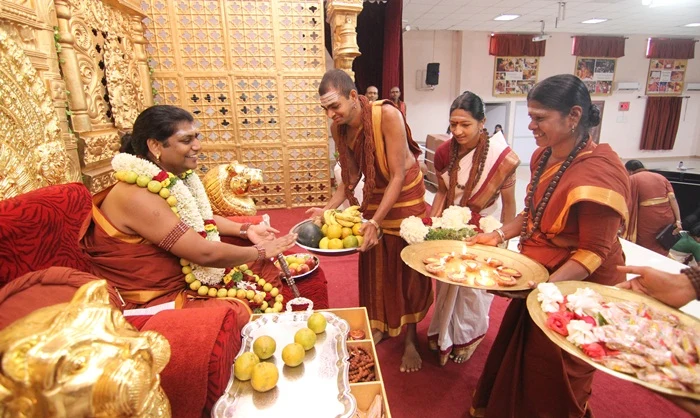
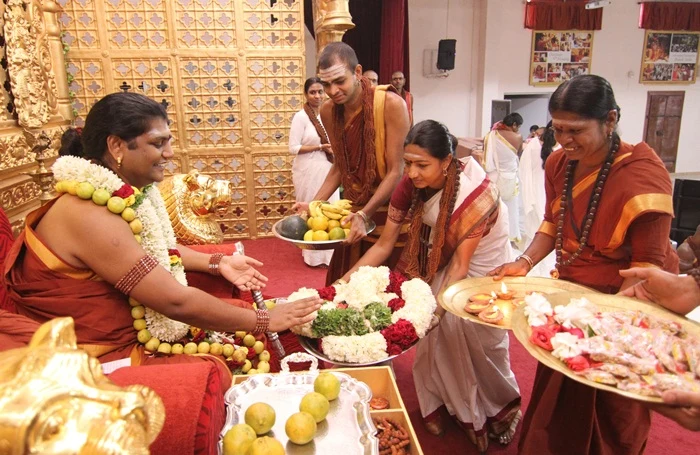
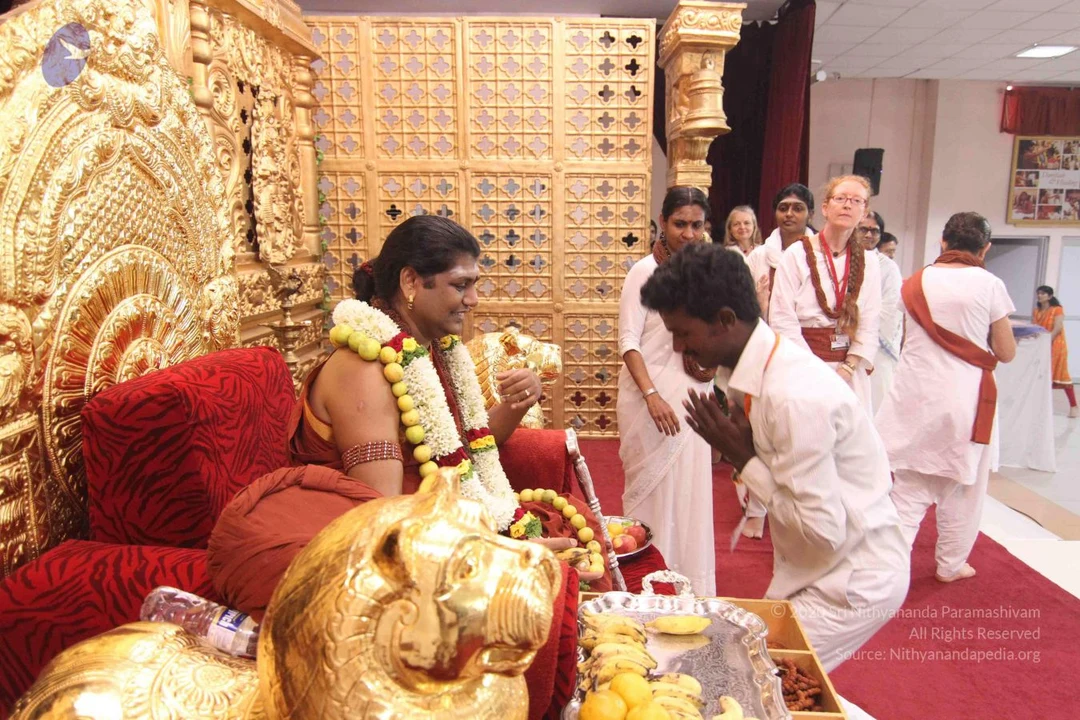
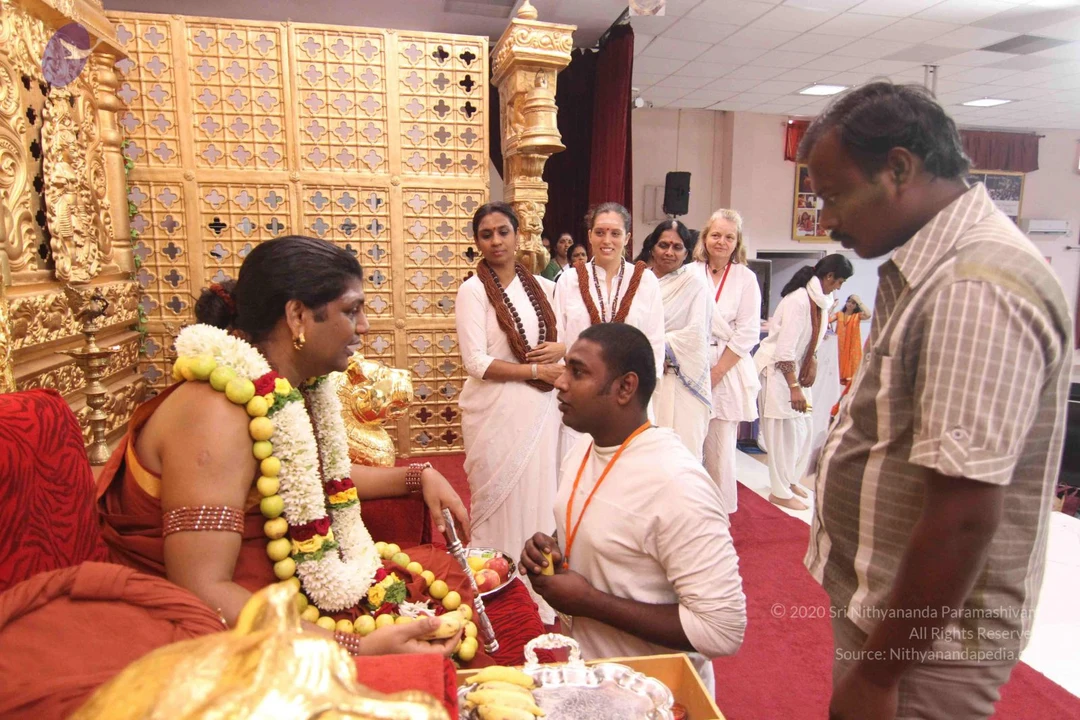
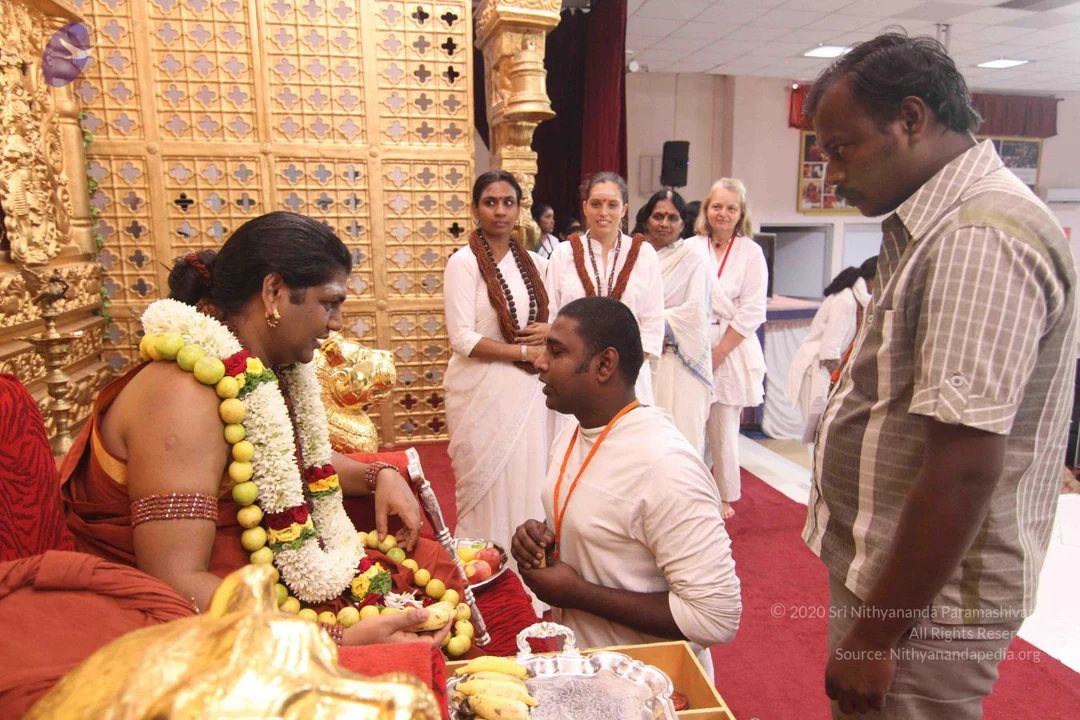
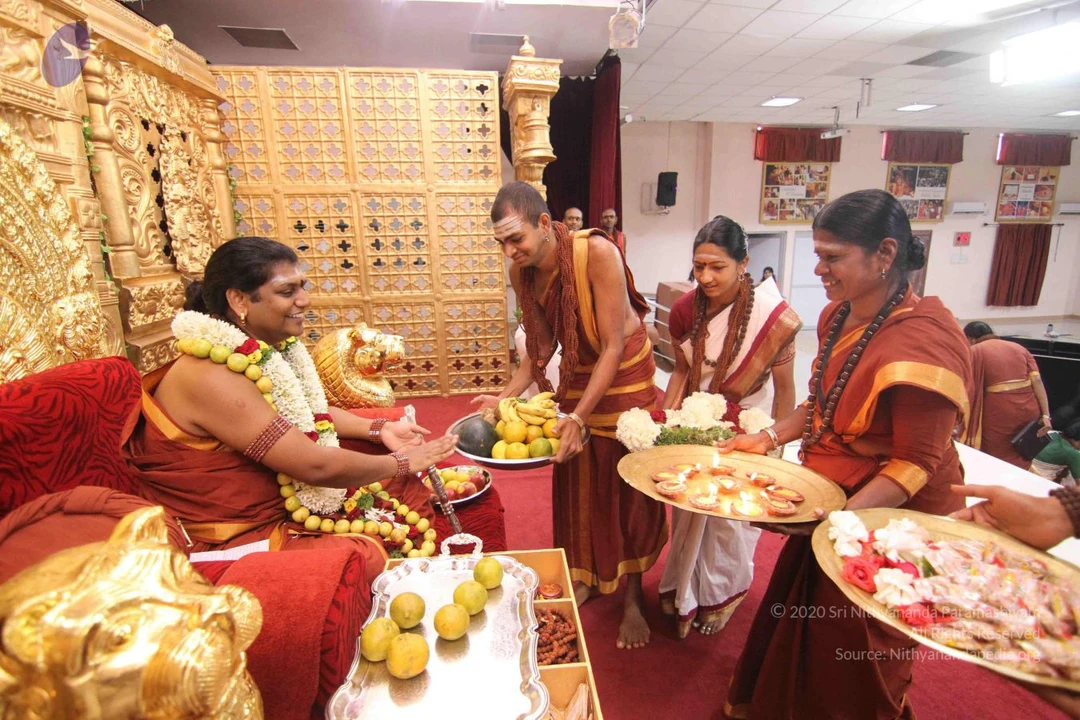
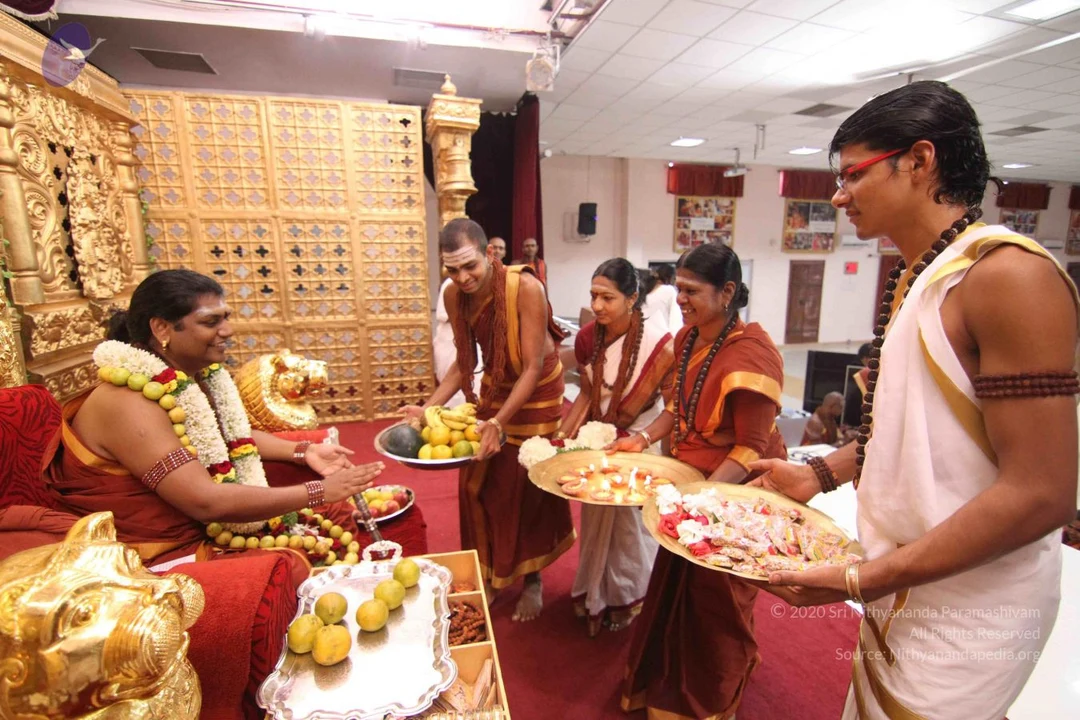
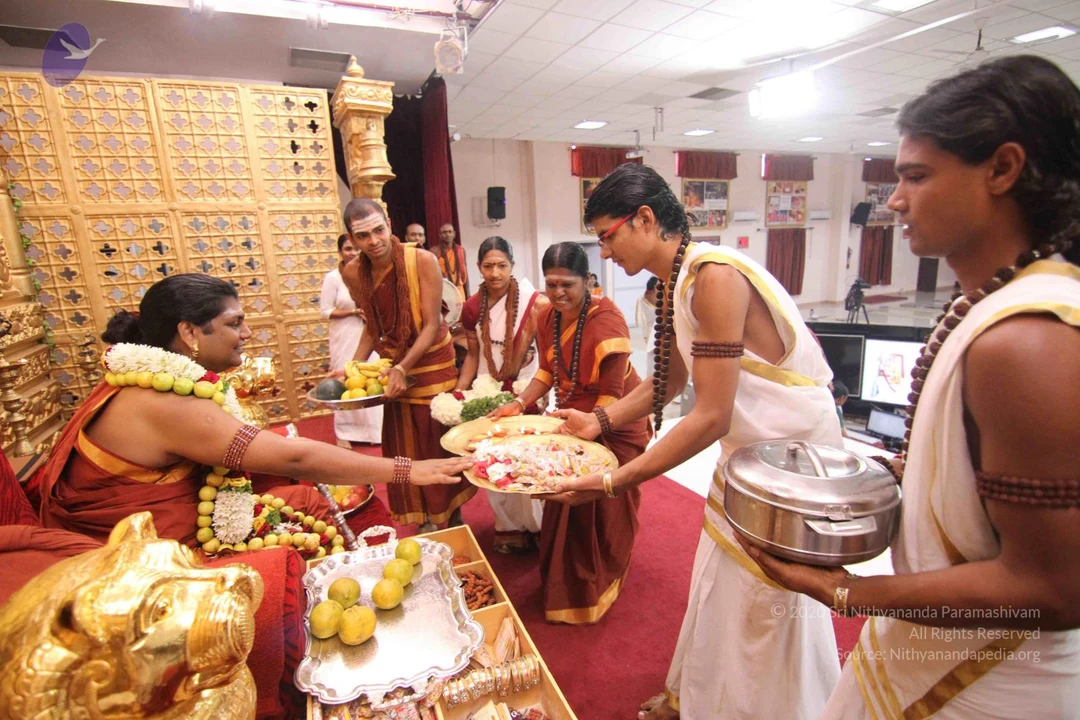
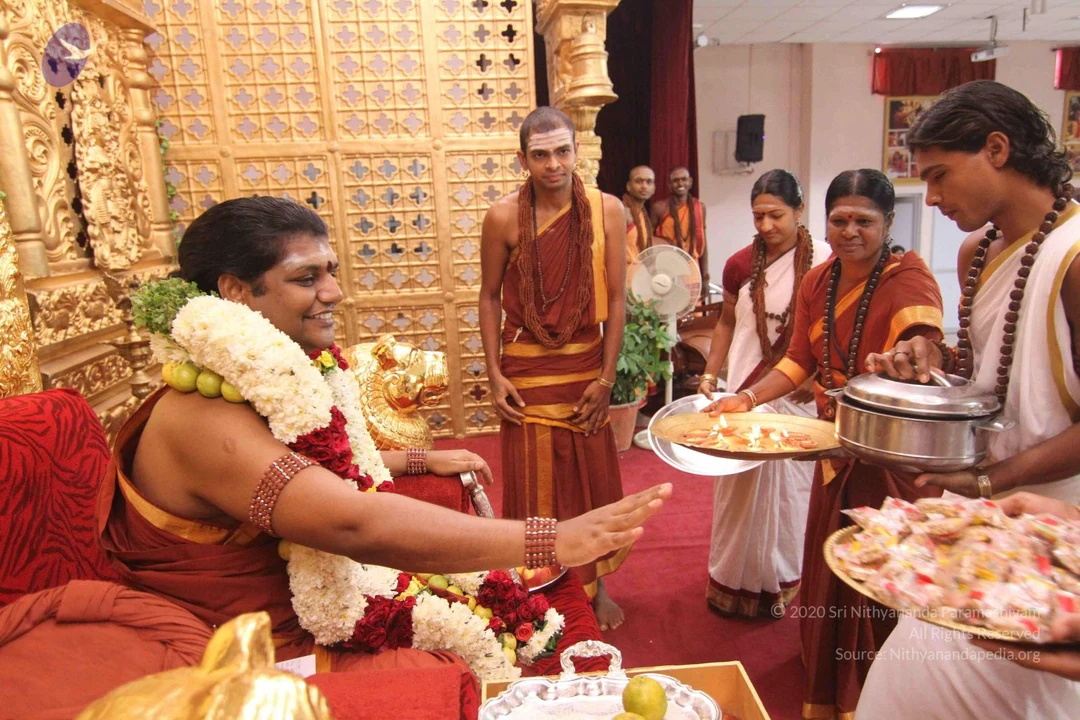
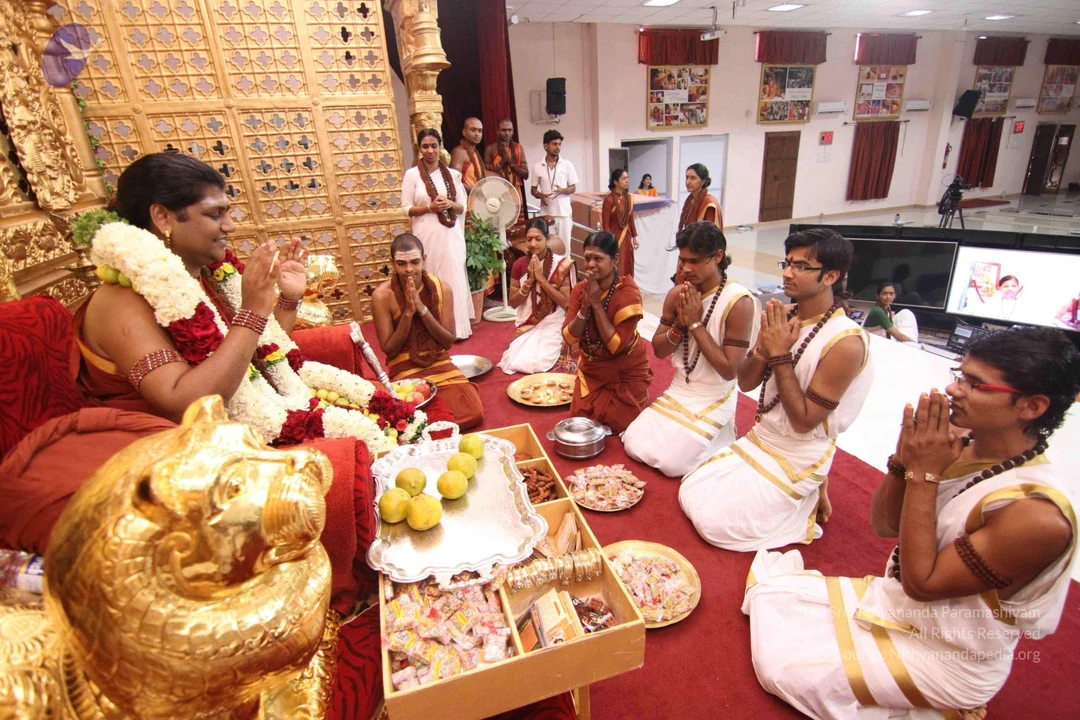
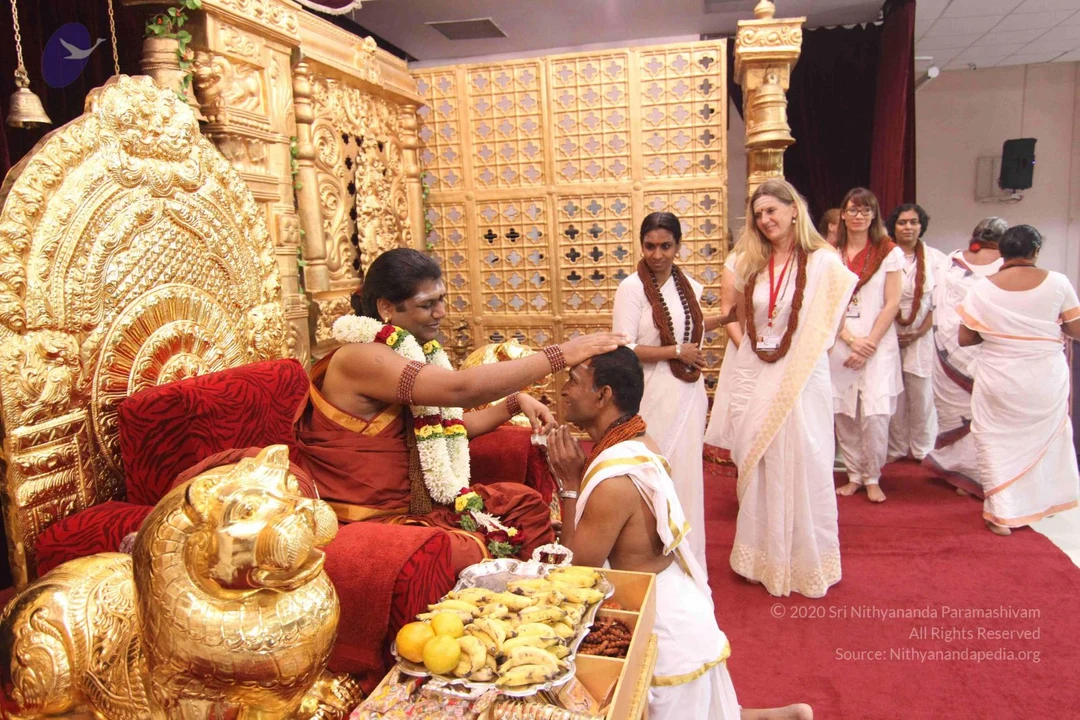
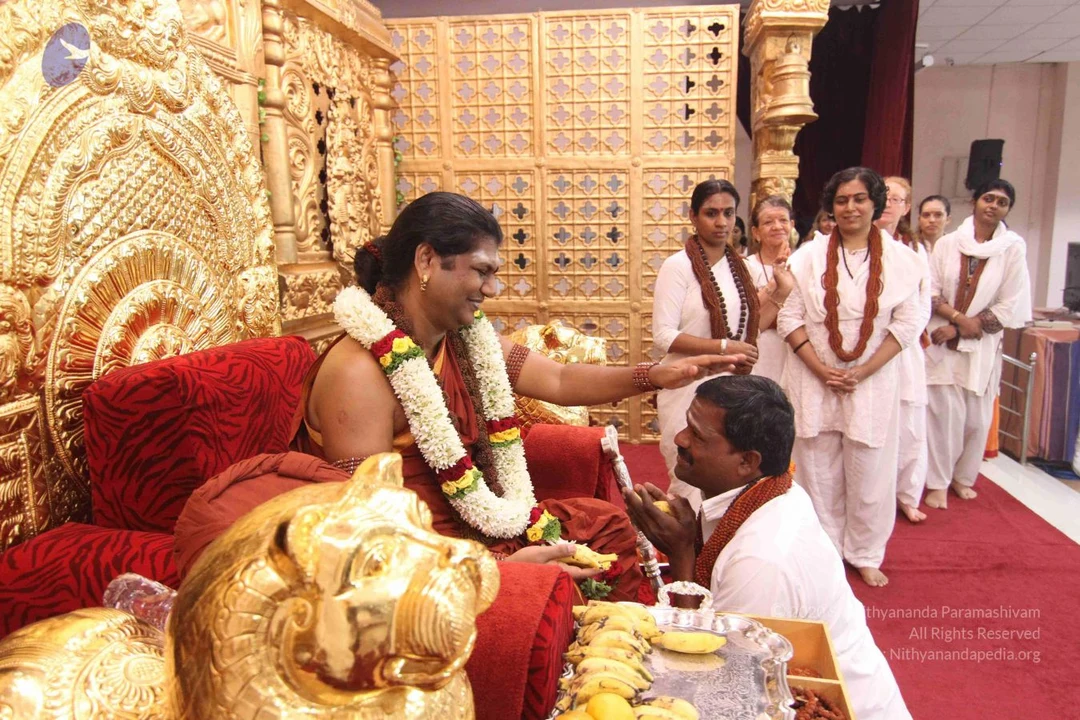
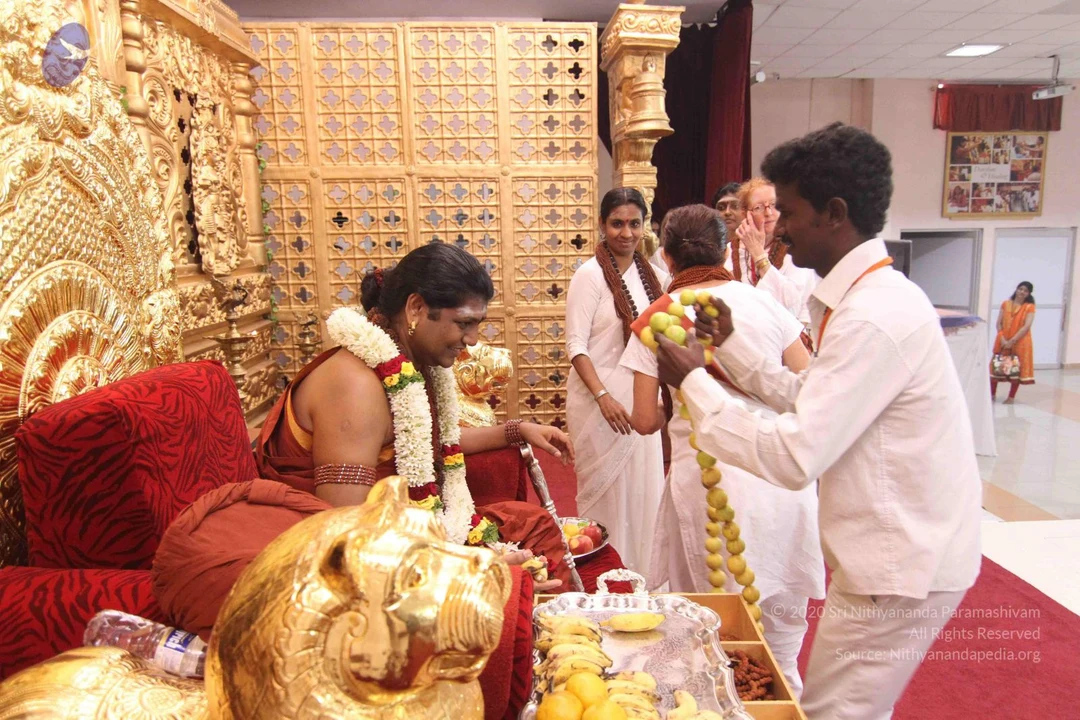
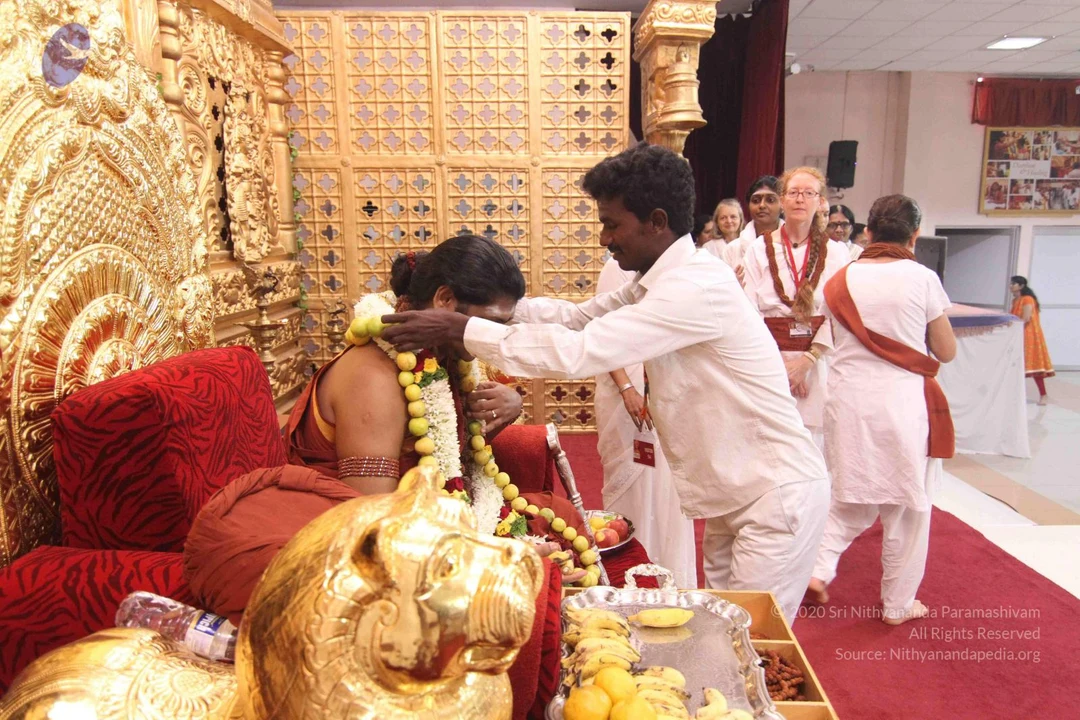
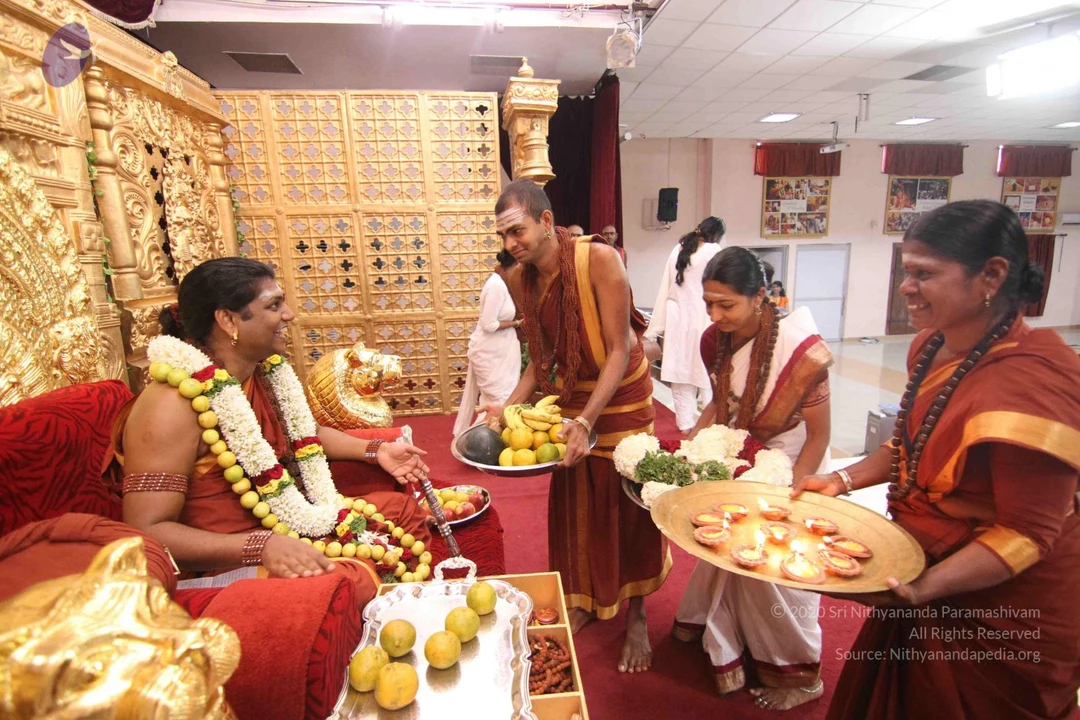
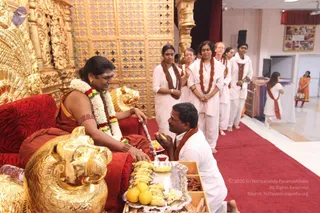
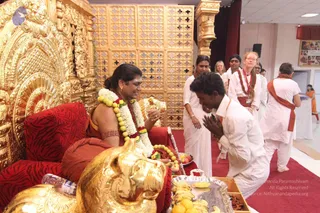
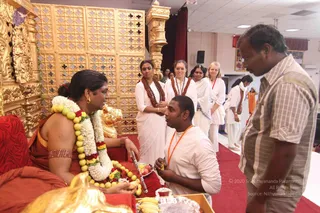
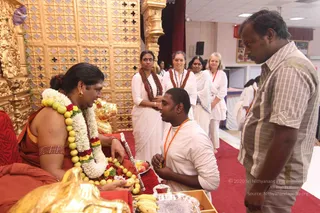
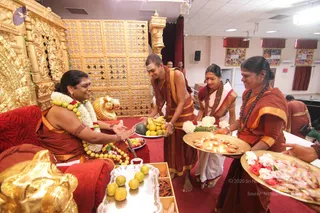
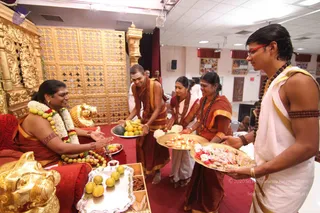
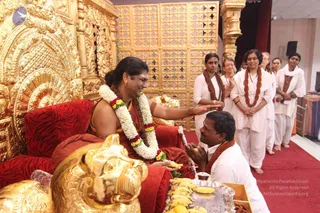
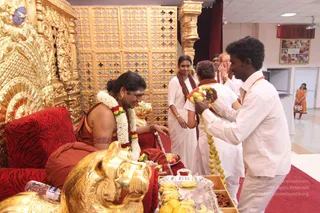
A photograph of a seated figure on an ornate golden throne with red cushions and a golden lion-headed armrest, wearing an orange-saffron robe, a white and red flower garland, and beaded bangles. A kneeling man in white clothes and a red-and-white scarf offers a silver tray of bananas, oranges and sweets, while a silver ladle is held over a bowl. Behind, a line of women in white garments with orange and red shawls stands on a red carpet beside gold-carved panels. The scene reads as a devotional offering or darshan.A photograph of a satsang-style gathering in a hall with an ornate gold carved throne and gold-patterned screen behind. A seated figure with long dark hair in a swept-back knot, wearing an orange-saffron robe, a white and yellow flower garland with red beads, and a gold bangle, sits on a red tiger-striped cushioned seat, smiling. Before him a man in white kneels with palms pressed together in namaskar. Nearby stand devotees in white clothes and a woman in a white sari, one with an orange shawl and red ID lanyard. Trays of bananas, lemons, fruit and sweets sit on the floor, along with a gold lion-headed figure and a water bottle. A red carpet runs across the floor.A seated figure in orange robes sits on a red-draped throne before a golden lattice screen with carved gold pillars. Their bare arm wears a jeweled band and a long garland of white flowers and yellow fruit, and they are handed a banana by a man in a white kurta with an orange lanyard. Women in white saris with brown rudraksha malas stand behind, and a man in a striped shirt stands at right. Fruit, a silver tray and a golden kalasha-like vessel sit in the foreground on the red carpet. The figure's distinctive presentation, robes and throne suggest a person, seated as a recipient of offerings, but the face is not visible enough to confirm identity.A seated figure in saffron-orange robes and a long garland of white flowers, yellow blossoms and green lime-like fruits offers a fruit to a kneeling devotee in white clothes with an orange lanyard. Behind them stand women in white saris and a white-clad woman, watching. A standing man in a striped shirt looks on at right. A golden carved screen and a golden ornamental vessel decorate the room. A silver tray holds bananas and fruit in the foreground. The seated figure's identity cannot be confirmed from appearance.A seated man in red-and-gold robes sits on a red cushioned throne beside an ornate gold carved frame and a gold lion-shaped armrest, wearing white and orange flower garlands, red bangles and an orange shawl, and gesturing with his hand. Before him on a silver tray are yellow lemons and fruit, and on a low table sit a silver plate, sindoor and other offerings. Three attendants in saffron-and-orange clothes stand in the centre and right. A man in an orange shawl with a rudraksha mala holds a tray of lit oil lamps (deepa), a woman in a white sari with a red-bordered shawl and garland holds a tray of white and red flowers, and a woman in an orange sari with a rudraksha mala holds a tray of petals. The walls display framed photographs and a golden lattice panel.A seated man in rust-orange robes with a flower garland and fruit garlands sits on a red-draped golden throne with carved gold panels behind him, gesturing with open hands. Four attendants approach: a man in rust-orange cloth carries a tray of bananas and yellow fruit, a woman in orange sari with rudraksha mala holds a brass plate with lit oil lamps and white flowers, another woman in orange sari smiles while carrying a plate of colourful sweets and flowers, and a young man in white dhoti and shawl with a rudraksha mala and red-framed glasses holds a plate of sweets. Fruit is arranged on a silver tray in front. A golden lion figure sits beside the throne. The setting is a hall with framed pictures on the wall.

Yatra-Initiation

25 photosSource gallery
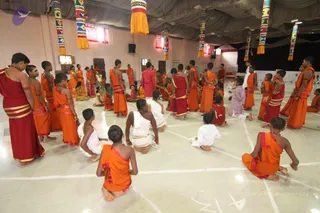
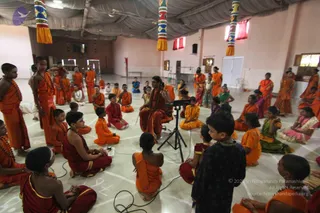
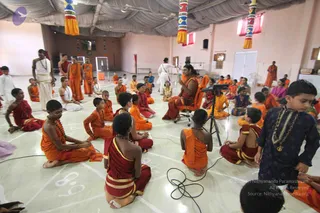
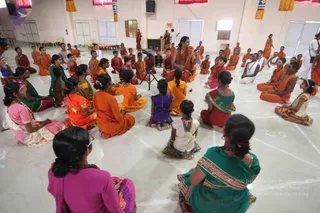
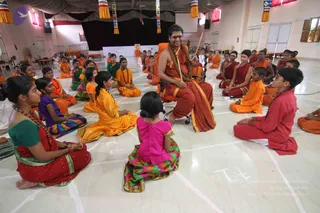
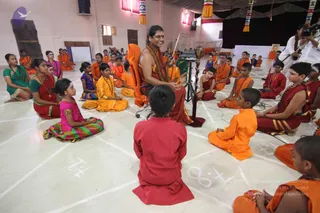
A photograph of a large hall with a white marble floor and draped white ceiling fabric decorated with hanging multicoloured pillars tipped with yellow tassels. A large group of young boys with shaved heads, wearing orange and red sacred cloths and bare chests, stand and sit in an open ring marked by white floor lines. Several boys in white dhotis sit cross-legged on the floor, and an older figure in a red robe stands near the middle. Most participants wear rudraksha-style beads and ash markings. No individual can be confidently identified as a person from appearance.A photograph of a large hall with a light pink wall and a white draped ceiling, decorated with hanging striped pillars with yellow tassels. A large group of children and young people in orange and saffron robes sits cross-legged on a white floor, arranged in a circle around a central figure. The central seated figure wears a red garment with a gold-edged border and a long beaded necklace, and sits near a tripod-mounted camera. Some seated participants wear red or orange robes, rudraksha malas and forehead markings, while others wear pink or green traditional dress. A boy in a dark kurta stands at the front right, and a few adults stand near the back. The scene appears to be a satsang gathering with a seated teacher-like figure at its center.A photograph inside a large hall with a pale pink wall, a white draped ceiling and hanging yellow, orange and blue tassel banners. A woman in an orange saffron sari sits on a black office chair in the centre, speaking and gesturing with one hand while a camera on a tripod records her. Around her on the white marble floor sit a group of children and young boys wearing orange and red saffron-coloured robes, many with rudraksha malas. A standing man in a white dhoti and shawl stands at left, and a woman in white stands near the back. A boy in a navy kurta with a gold necklace stands at right. Several adults in orange also stand in the background.A photograph of a large hall with a polished white floor where many people sit in a loose circle. A central figure stands in saffron-orange robes with a rudraksha mala and a long, swept-back hairstyle, gesturing toward the seated group; a microphone stand stands in front of him. Surrounding them, seated devotees in orange, red, purple, pink and green saris and dhotis, many with garlands, sit cross-legged or kneeling. Some people in white dhotis and white shirts stand near the back, and sunlit side doors and hanging pennants frame the room. a person: the central standing figure wears orange robes and a rudraksha mala with long swept-back hair, and is positioned as the teacher of the circle.A photograph in a large hall with white marble floor and draped ceiling fabric with colourful tassels. A man seated on a wheeled chair wears a rust-orange robe with a gold-edged border and a long rudraksha mala, holding a wooden stick. Around him, dozens of children and young people sit cross-legged in a wide circle in orange, saffron, red, green and purple clothing. A small girl in a pink blouse and multicoloured skirt sits with her back to the camera facing the seated man. Some older girls wear red and green silk saris with gold jewellery. Chairs and a stage are visible in the background, and an elderly figure in white stands at the back. The seated man appears to be a person by his rudraksha mala, flowing hair and saffron robe, and is presented as in person.A photograph of a satsang-style gathering on a white floor marked with chalk diagrams. A man with long swept-back dark hair, bare-chested, wearing an orange-saffron shawl over a red-brown dhoti, and multiple rudraksha malas, sits centrally smiling and holding a wooden stick. Around him sit thirty or so children and young people: girls in red, green, pink and purple saris and salwar, boys in saffron-orange and red kurta or dhoti with rudraksha malas. A brass kalasha-style pot stands on a stand near him. A cameraman and a man in white stand at the right edge, and a small framed portrait sits near the back wall.

Ganesh-Homa

195 photosSource gallery
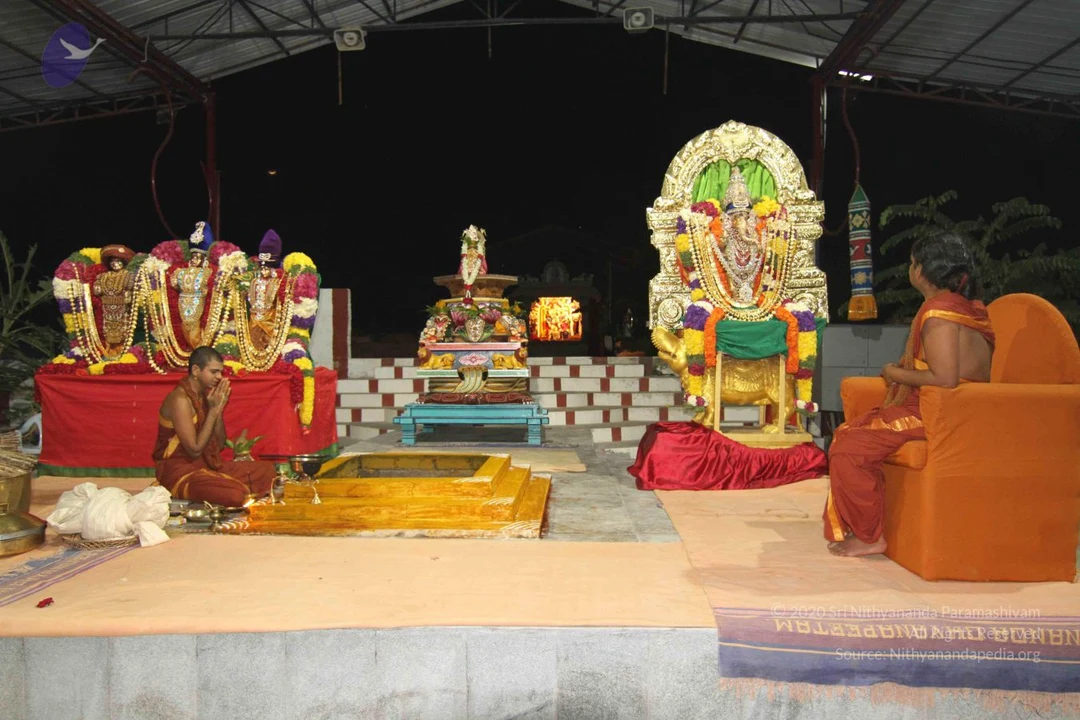
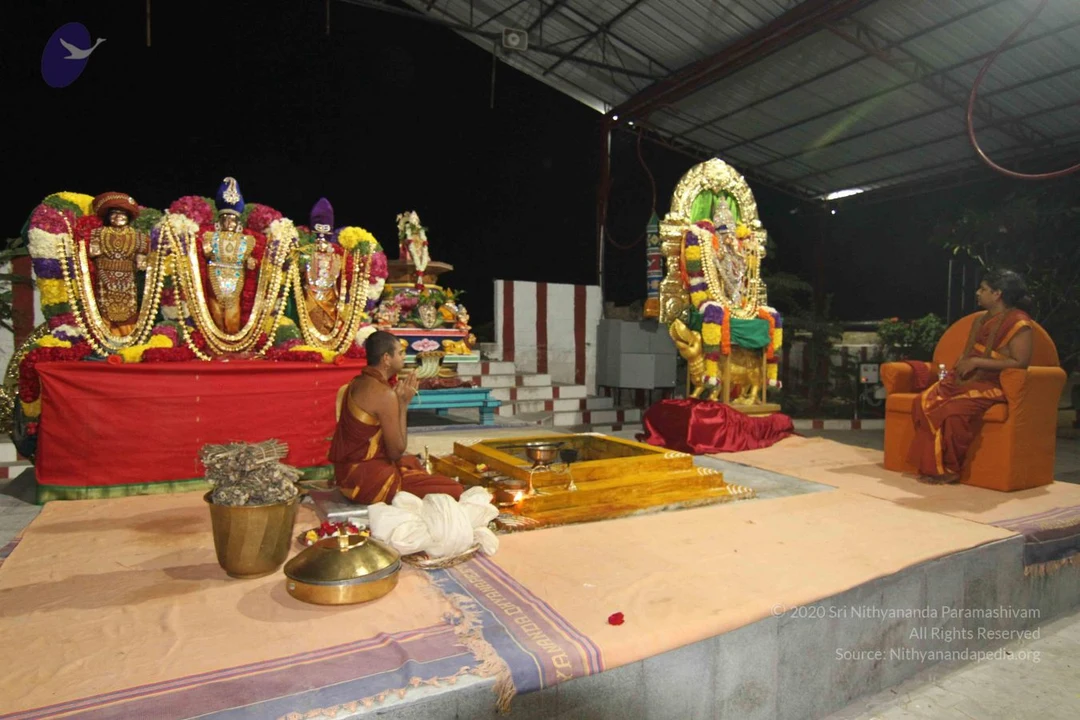
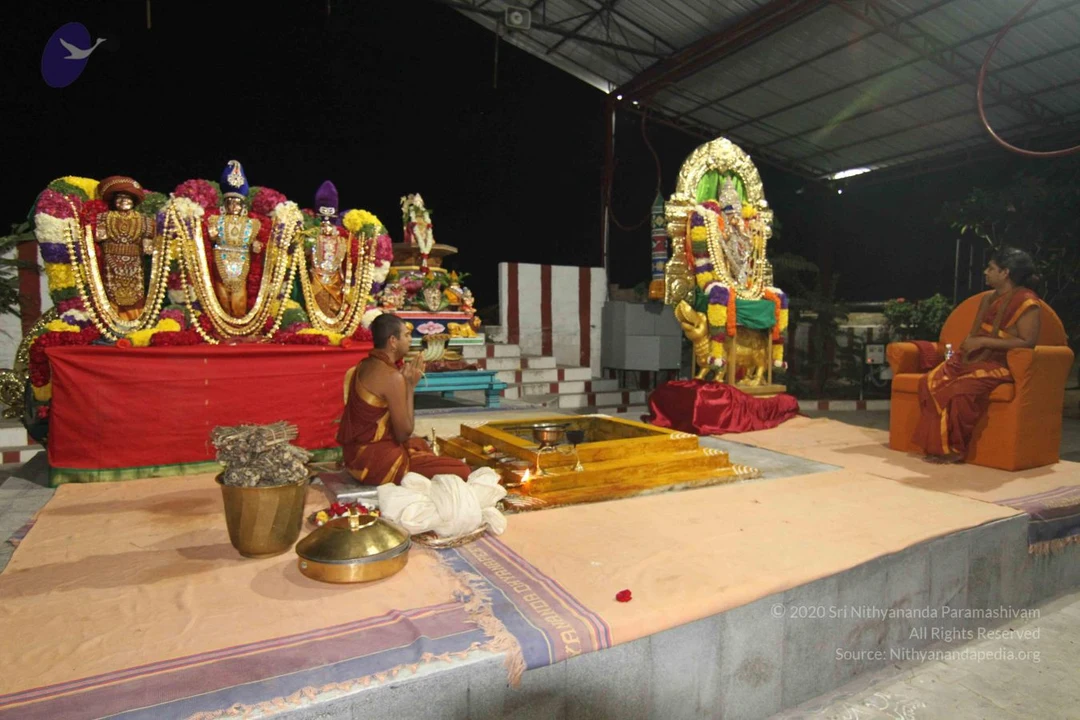
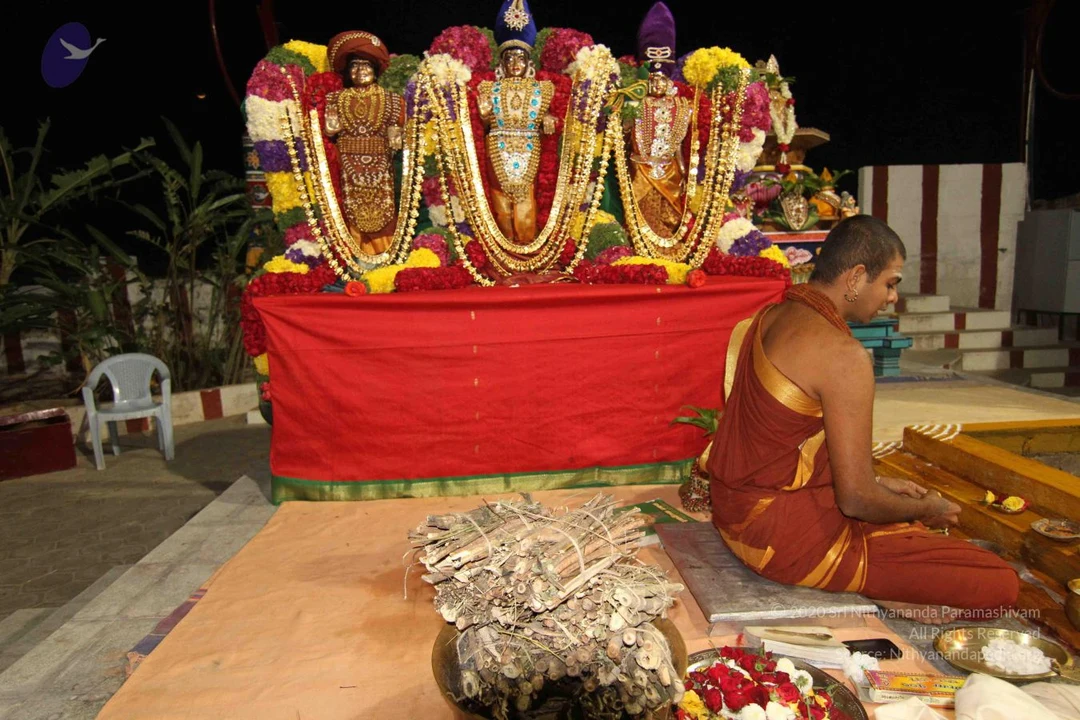
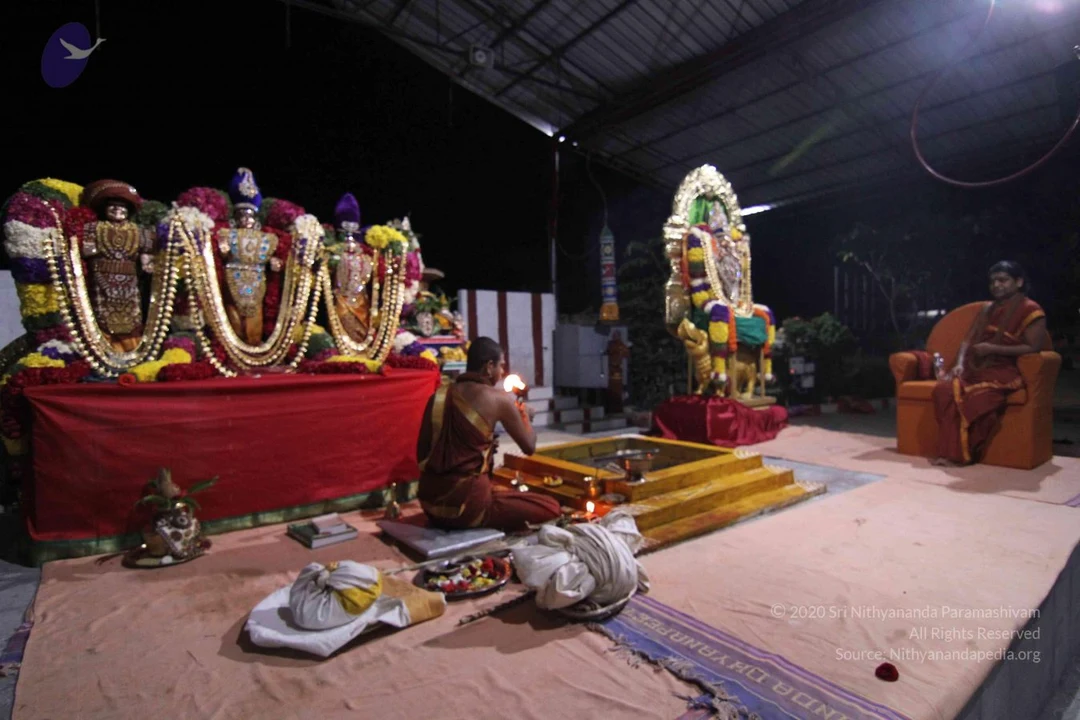
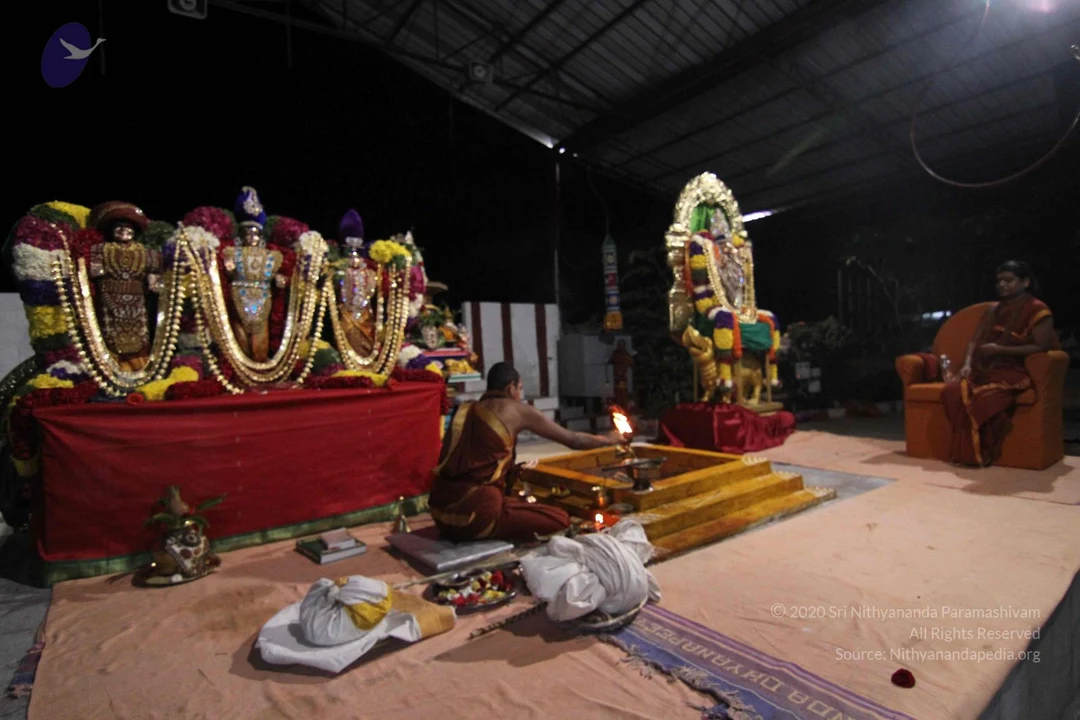
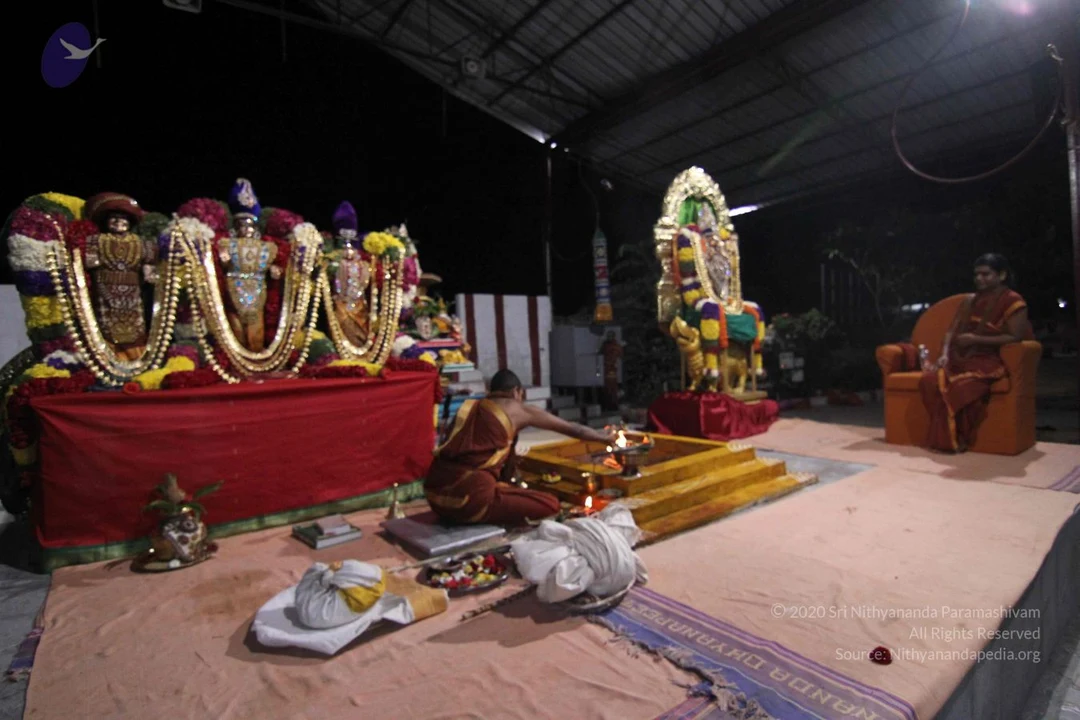
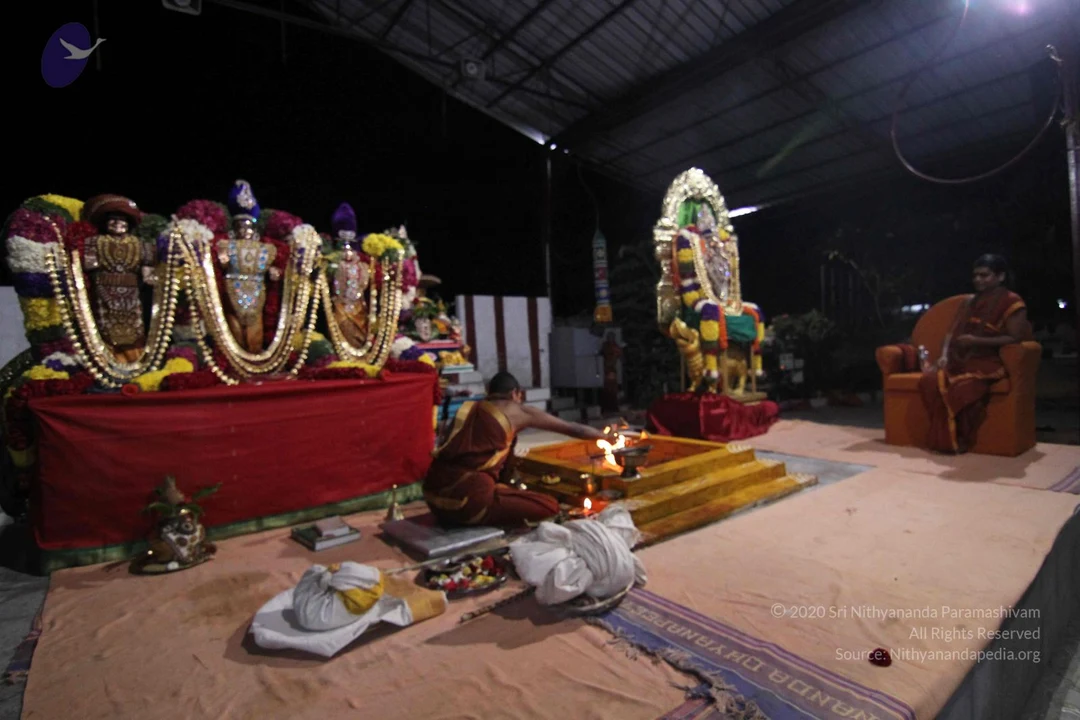
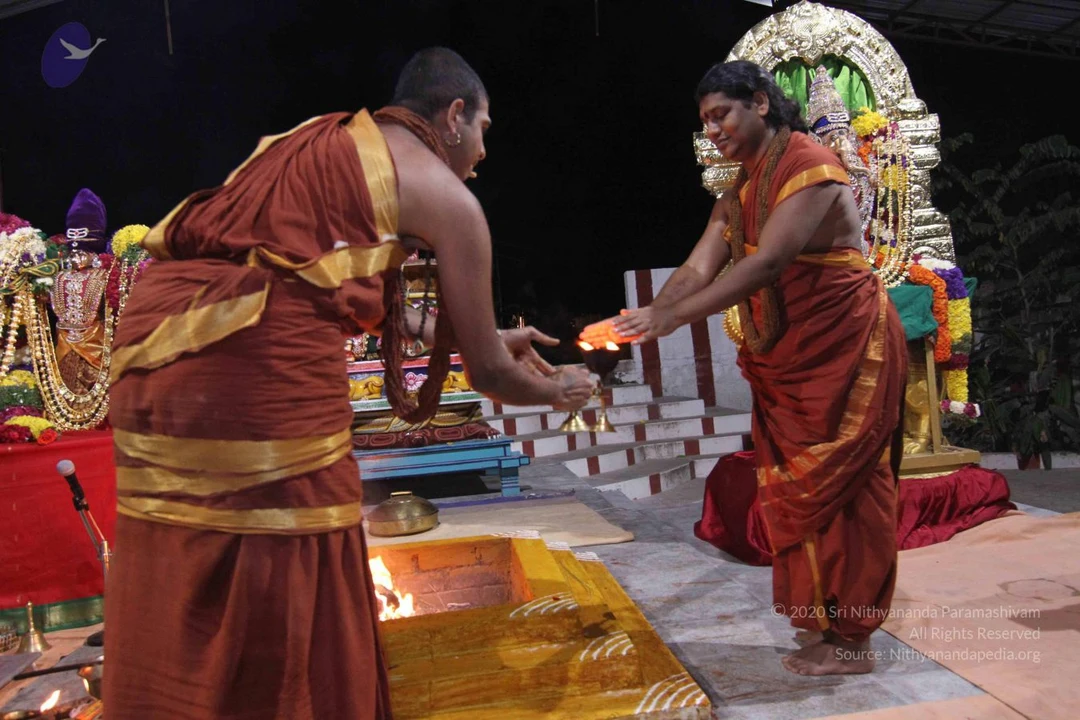
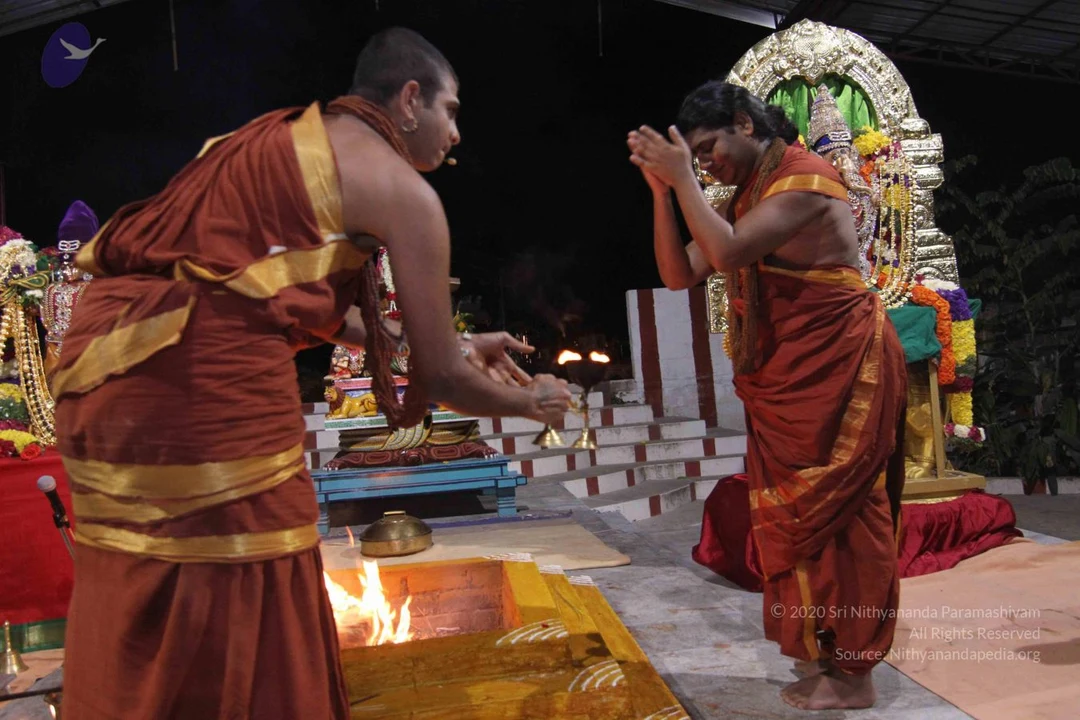
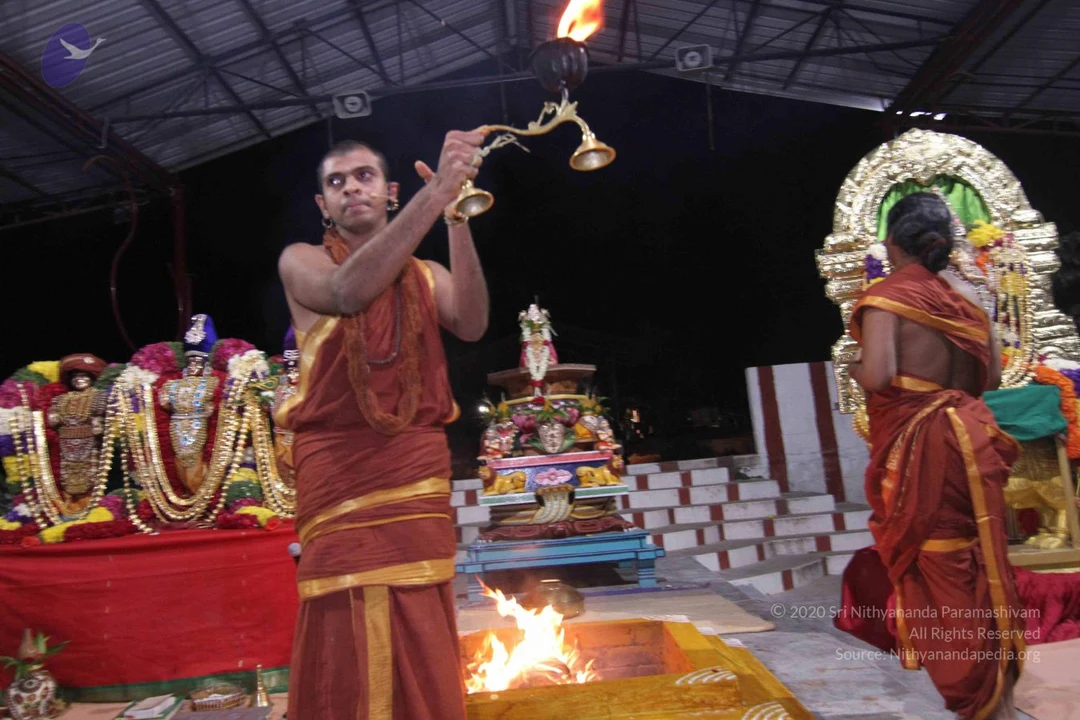
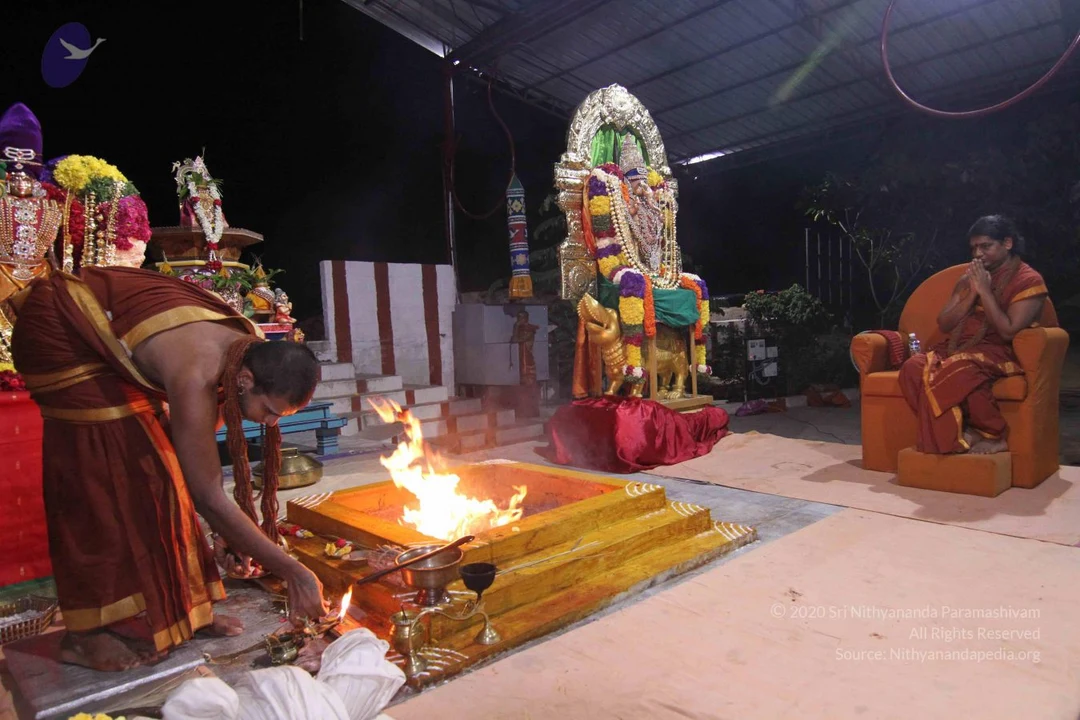
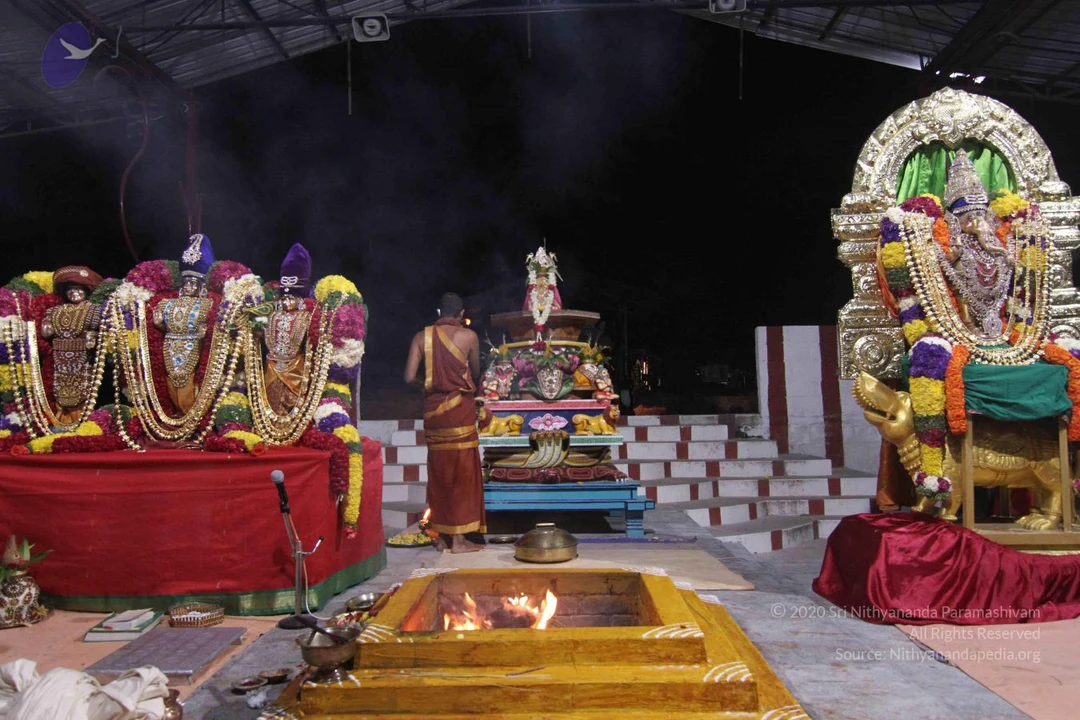
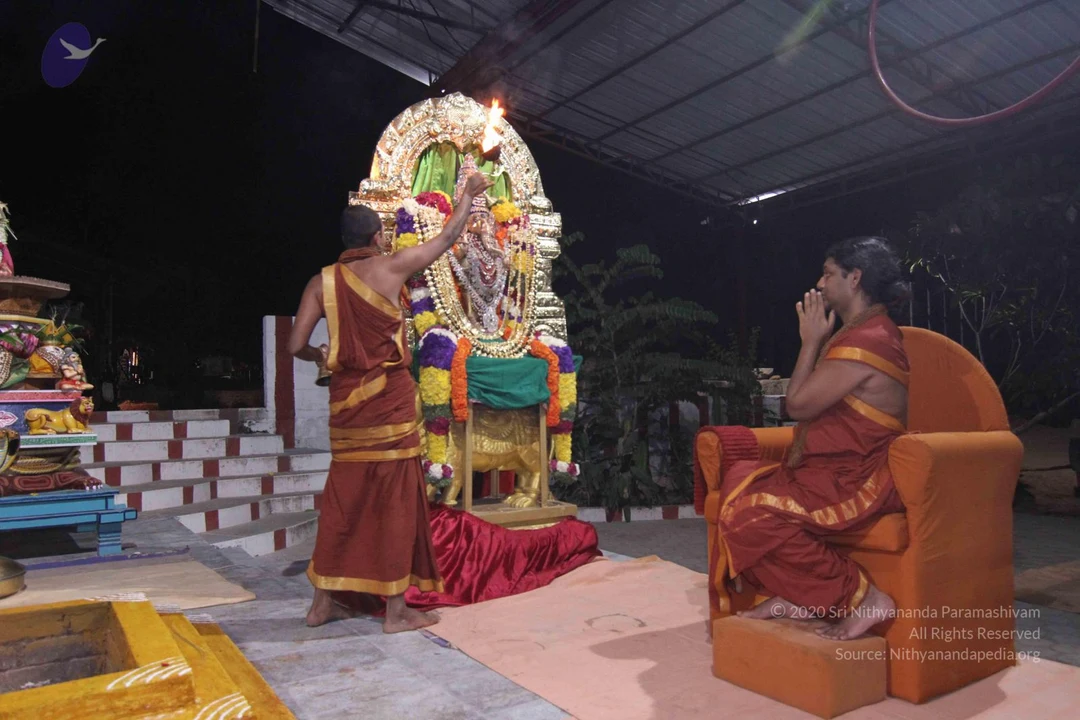
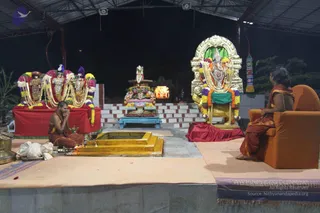
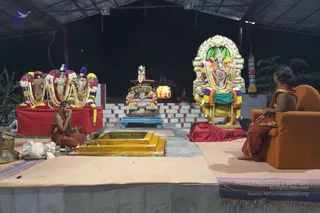
A photograph of an open-sided pavilion at night with a deity murti and altars arranged for worship. On the left, a red-draped table holds three garlanded deity murtis decorated with marigold and orange flower garlands. Centre stage, a small shrine with a lit flame and offerings stands above a blue bench, and a golden yagna kund sits on the floor. On the right, a golden arched shrine holds a garlanded Ganesha murti. A seated priest in orange-brown cloth with folded hands sits cross-legged at the lower left. A woman in orange-red clothing sits in an orange armchair at the right, facing the shrine. Brass vessels lie at the left edge.Photograph of an outdoor pavilion stage at night set for a puja. On the left, a red-draped platform holds a deity murti decorated with white and orange flower garlands and gold necklaces. At centre, a tiered altar with floral decorations stands beside a lit lamp, and a gold-coloured yagna-style pit sits in front. A shaved-headed priest in orange-saffron robes kneels with palms pressed together beside the pit. On the right, a gilded arch frames a deity murti draped in garlands, seated on a gold throne-like seat. A person in orange-red robes sits in an orange armchair facing the deity. Brass vessels and white cloth lie at the lower left.Night photograph of an open-sided pavilion with a yellow-orange and white-trimmed altar platform. On the left, a man in orange robes sits cross-legged with palms pressed together in prayer beside a gold brass vessel and a tray. In the centre, a small ornate altar with a fire-lit dais and a decorated murti stands before a lit fire. On the right, a gold-framed throne with a green backdrop holds a deity murti adorned with orange and yellow marigold garlands and a green cloth. A second figure in red-orange robes and an orange cushioned seat sits facing the altar. Garlands drape the figures on the left shrine. Text on the lower right cloth reads a temple name.Night outdoor ritual on a raised platform under a corrugated metal roof. At left, a kneeling shaven-headed priest in orange robes sits with palms pressed together before a golden yajna pit and brass vessels. Behind him, three decorated deity murtis stand on a red-draped stage garlanded with yellow and pink flowers. At centre, a small decorated kalasha stands on a stepped blue base, with a lit fire glowing behind. At right, a deity murti sits on a golden throne with an arched backdrop and green cloth, garlanded with orange and yellow flowers. A seated person in orange robes faces the throne on an orange chair with a bare back to the camera. A purple-and-cream banner runs along the platform edge.Night-time outdoor ritual on a raised platform under a corrugated roof. Left, a shaved-headed priest in saffron-orange robes kneels with palms joined before a golden square fire pit holding a small lamp and offering vessels. Behind him, three decorated deity murtis wear garlands of red, yellow, and purple flowers and gold necklaces, with a red cloth draped over their stand. Right, a seated figure in orange robes sits in an orange armchair beside a gilded lion-shaped throne with a decorated deity murti, garlanded in flowers. Brass vessels and a flower-strewn cloth sit in the foreground.Night-time outdoor ritual on a raised peach-coloured platform under a tin roof. On the left, several decorated deity murtis stand before a red cloth, heavily garlanded with marigolds and purple flowers. A devotee in orange-red robes kneels with palms joined before a golden homa or puja fire tray with a small lit lamp, while a brass kalasha and a bowl of ash sit nearby. On the right, a golden shrine with a deity murti and garlands sits on a red cloth, and a seated person in orange-red robes sits in an orange armchair facing the fire. Two people are visible.
FB-photo-of-the-day

4 photosSource gallery
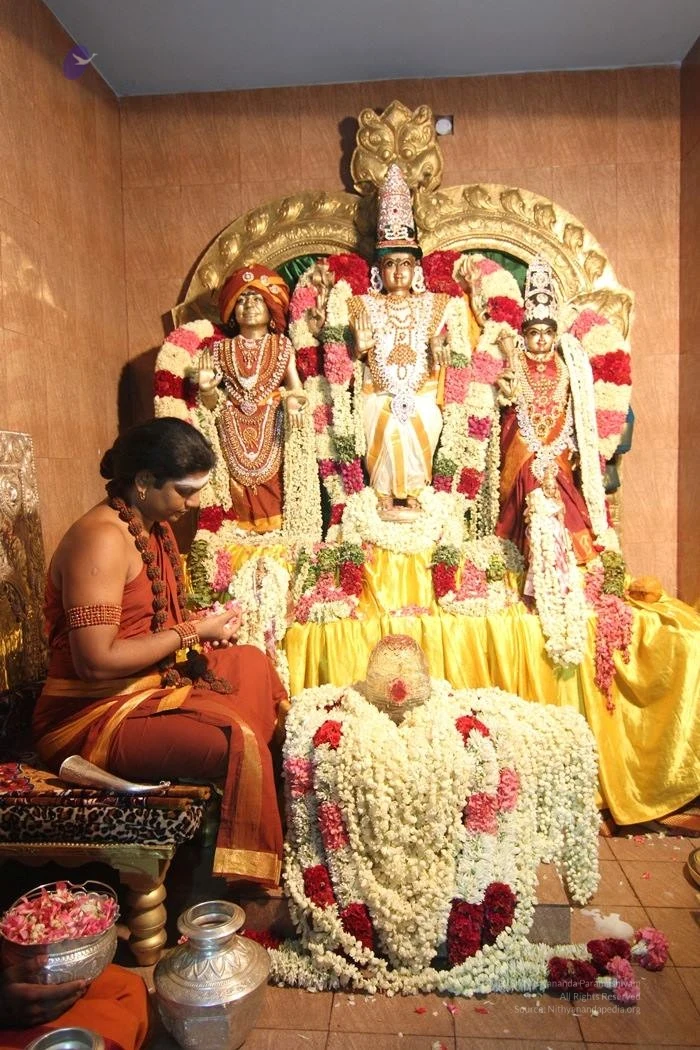
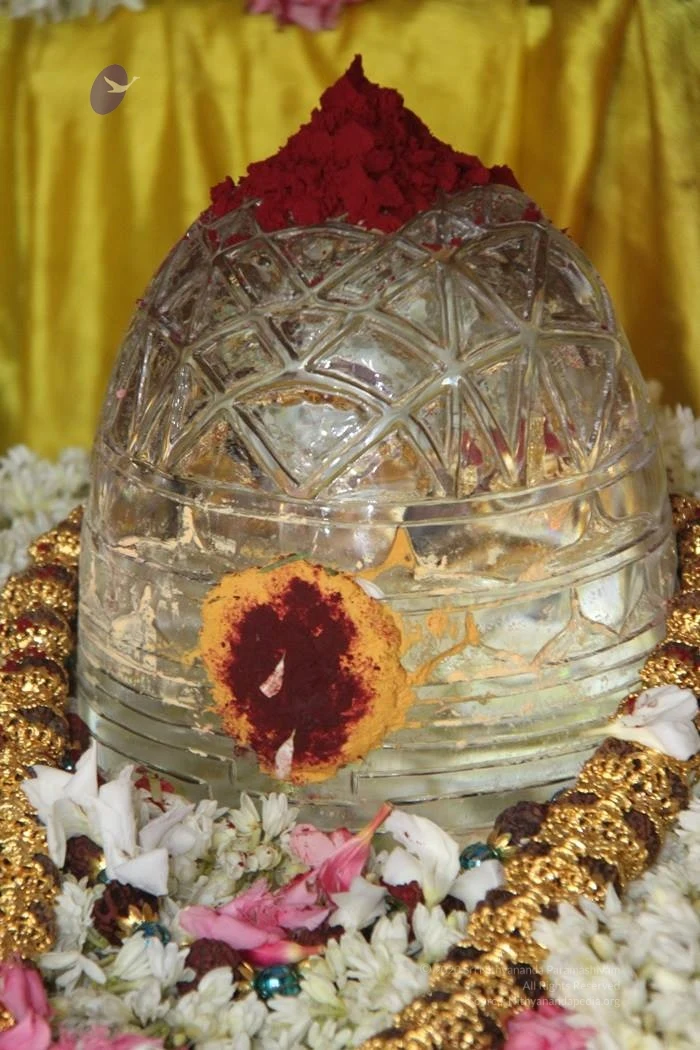
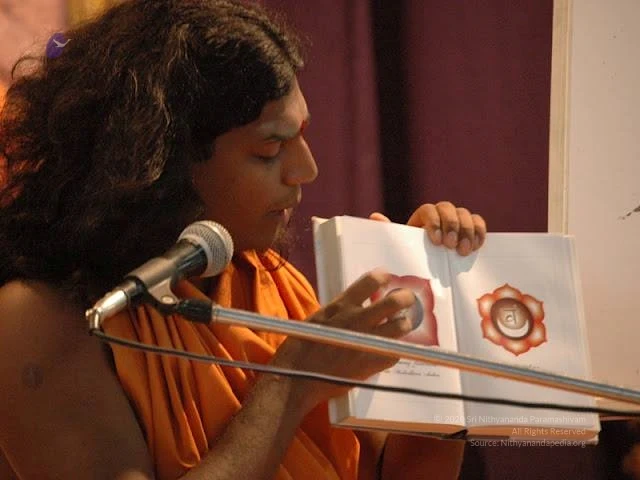
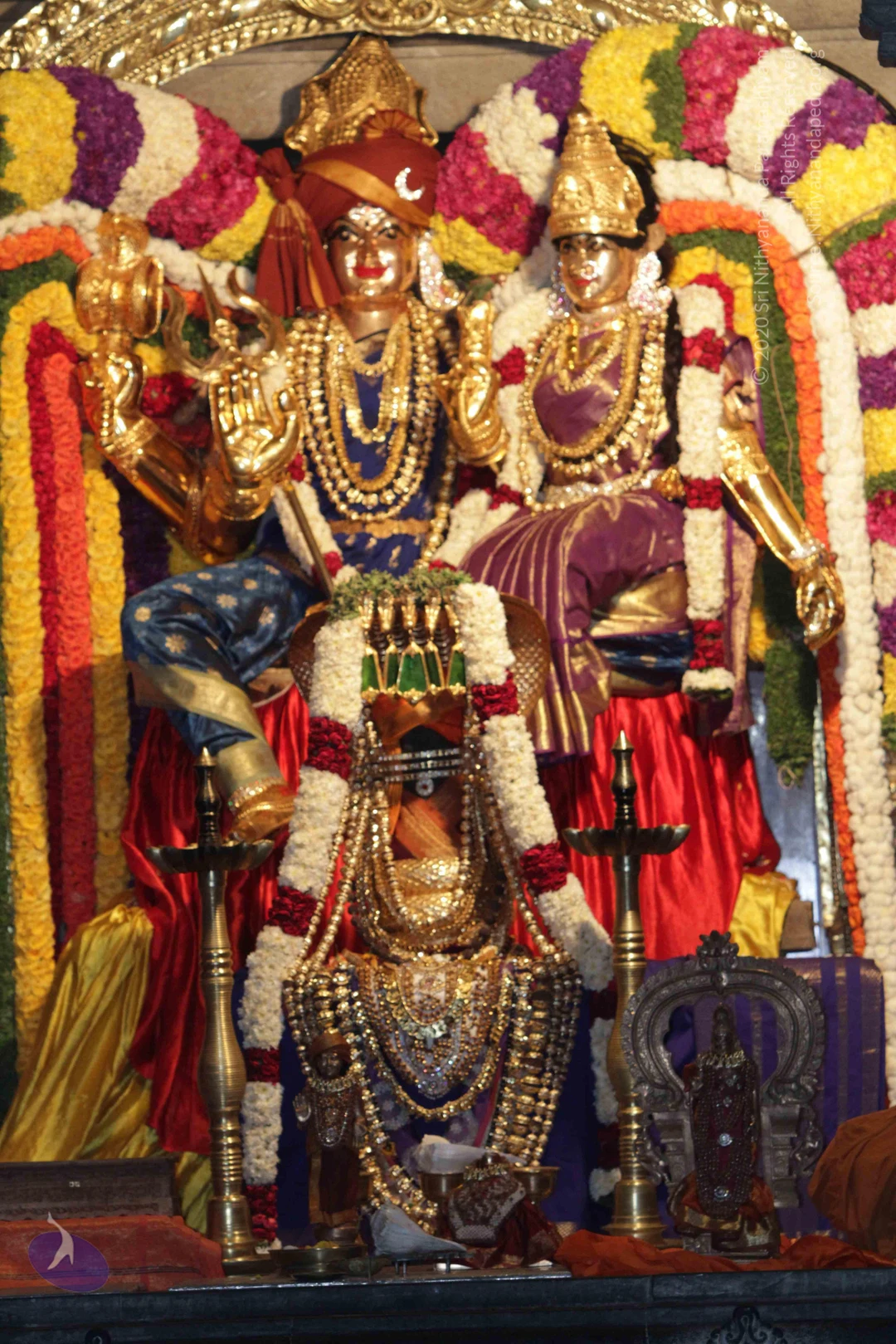
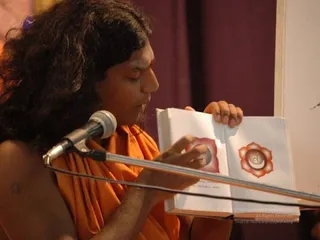
A photograph of a temple shrine with three statues of deities on a gold-draped yellow platform, backed by a gold arch and garlanded with white jasmine and red-pink flower strands. The central figure wears a tall crown, white dhoti and layered beaded necklaces; flanking figures wear orange and red garments and necklaces. In the foreground a bare-chested priest in an orange-red dhoti with a rudraksha mala sits on a leopard-print seat, holding flowers, beside a silver bowl of petals and a silver kalasha. A large floral garland drapes a seated stone or metal form in front of the shrine, and petals are scattered on the floor.A photograph of a small ornate golden stepped structure with tiered pyramidal form, resembling a miniature temple or shrine, placed outdoors on a pale floor near a white wall. Red and gold ornamental details surround the base. No people are visible in the frame.A photograph of a long-haired man in a saffron-orange shawl and a red tilak on his forehead, seated at a microphone on a stand. He holds open a book with his hands, looking down at pages showing red lotus-petal chakra diagrams, one containing a seed-syllable symbol. A plum-coloured curtain hangs behind him. Appearance cues are consistent with a person seated as a speaker during a satsang-style teaching, reading from a book of chakra diagrams.

Paduka-puja

6 photosSource gallery
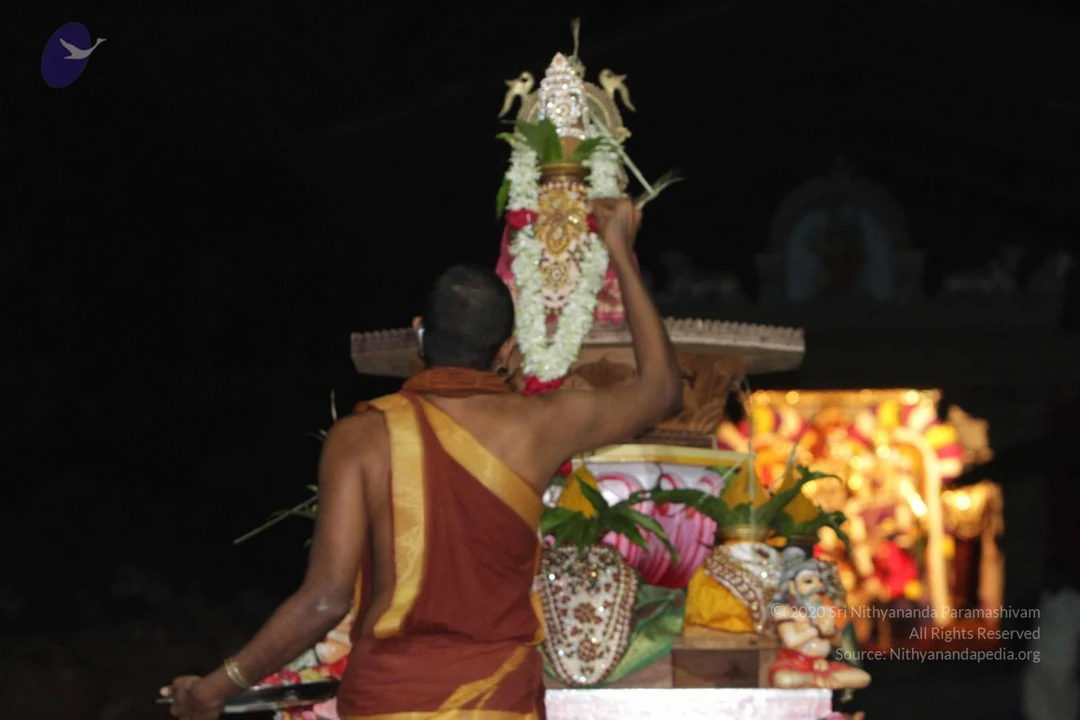
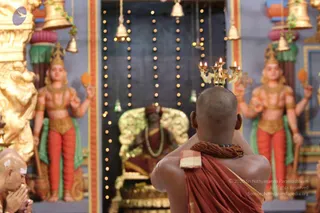
Inside a temple shrine, a seated figure in a gold ornate throne wears a maroon-and-gold turban, a rudraksha mala and maroon wrap, with hands raised in a blessing gesture. Flanking him are two large painted deity statues with gold crowns, golden necklaces and red dhoti-style lower garments. In the foreground, a bald priest in saffron robes raises a lit multi-flame oil lamp toward the throne, while a second priest with white tilak marks on the forehead holds hands together in prayer beside hanging bells and black beaded strings. Several lamps and offerings sit at the throne base. Aarti is being performed.A photograph of a temple sanctum with two large painted guardian statues flanking a doorway hung with brass bells. A seated figure on a gilded throne-chair in saffron-red robes and a red turban, with a rudraksha mala, raises a hand in blessing. In the foreground a shaven-headed priest in an orange-saffron cloth lifts a brass aarti lamp with both arms, while another priest with a white tilak on the left folds his hands in prayer. Lit oil lamps and fruit offerings sit on the throne base.A photograph of a temple shrine during an aarti-style ritual. In the foreground, a shaved-headed man in a saffron-orange wrap with a rudraksha mala seen from behind lifts a multi-branched brass lamp with several lit flames above his head. Two golden-skinned attendant figures with crowns, multiple arms and green-and-red dhoti garments flank the shrine. Between them sits a seated figure in deep red robes and a beaded necklace on a golden throne, with a backdrop of hanging bells and strings of lights. At the lower left edge, a partly visible man with a shaved head and white tilak holds his hands in anjali.Four men sit cross-legged on red mats during a seated puja or homa-style ritual. Two in white clothes wear rudraksha malas and bead necklaces; one in white with a shawl-like cloth and malas and wrist beads holds a ritual book. The foreground man in saffron orange robes with a rudraksha mala and sacred ash marks on his arms and forehead gestures with his hands. Brass plates hold offerings, sweets, flowers and small cups, with brass oil lamps and a lit flame in front. Other people in orange sit in the background.A group of women sit cross-legged on a red-draped stage performing devotional singing (kirtan) before microphones and music stands with printed sheets. They wear rust-red and orange saris with gold borders, rudraksha malas and white forehead markings; the woman centre-front holds small brass cymbals. Behind them, a gold-carved wall with relief figures of animals forms the backdrop. Among those visible, a woman at right wears glasses and a red sari. The scene suggests a satsang musical session.A photograph of a ritual gathering inside a large hall with a wooden floor. In the foreground, a man with a shaved-looking dark hairline wears white dhoti-style cloth with gold border, multiple rudraksha mala necklaces, a gold bangle and a red thread, and horizontal white vibhuti with a red kumkum dot on his forehead. He sits cross-legged and holds two small brass or gold bells or cymbals. Beside him, a shaved-headed man in orange robes with a red undergarment, rudraksha malas and white ash marks on his arms sits with eyes closed in meditation. Behind them, many people in orange and saffron robes with white forehead markings sit on mats in rows, including a couple of children in the background.

Satsang

36 photosSource gallery
A seated man in a rust-red turban decorated with a red jewelled flower and a gold emblem sits on an ornate gold throne with a large gold backrest carved with scrolling patterns and lion-head armrests. He wears a rust-red and saffron-bordered garment over bare shoulders, a long rudraksha mala with a gold-threaded cord, and beaded red armlets. He smiles while looking to the side. Carved gold pillars and foliage form the background.A seated man in a rust-red turban decorated with a pink jeweled floral brooch and a gold serpent ornament smiles toward the right. He wears a saffron-orange robe with a gold border, a long rudraksha bead mala with a braided brown cord draped over his shoulders, and beaded red armlets. Behind him a gilded throne with a carved fan-like back and ornate gold relief pillars forms the setting.A photograph of a seated figure on an ornate gold throne with carved lion-shaped armrest supports, draped in dark red velvet and a leopard-print cloth. The figure wears a red-orange turban with a small crest, saffron-orange ceremonial robes with yellow borders, a long rudraksha mala necklace, beaded bangles and a bare chest, holding a serpent-headed staff in one hand. A white-handled ceremonial staff lies beside the throne. Brass bells hang from the top of the frame and gold lion statues flank the seat. a person: the saffron robes, red turban, long rudraksha mala and ornate throne fit the presentation, though the face is not clearly determinable from this image. Watermarked archive photo copy was omitted from the description.A seated man on an ornate golden throne with a carved gold arched backrest and red-and-black patterned cushions. He wears an orange-red turban with a gold cobra emblem and a gold crescent moon, a pink flower tucked at the side, and a red bindi on his forehead. He is draped in saffron-orange robes with a gold-edged cloth, a heavy rudraksha mala necklace, and jeweled armbands. He holds a carved wooden staff entwined with a cobra and smiles toward the audience, a small microphone at his ear. Swamiji (probable): he presents as the Nithyananda Paramashivam, with his distinctive turban, rudraksha mala and saffron robes as qualifying cues.A seated man in a red-orange turban with a gold cobra and crescent ornament and a red flower clip, wearing a red-orange and saffron-yellow shawl over bare shoulders, a long rudraksha mala with a golden-brown wrap, silver-studded armbands and gold earrings, with a small microphone at his cheek. He holds a black-and-gold carved cobra-headed staff on the left. Behind him is an ornate gold repoussé throne backdrop with a red cushion on the right.A seated man on an ornate gold throne with carved backrest and two gold lion figures flanking the seat. He wears a red-orange turban with a gold emblem, an orange-saffron robe with yellow edging, a multi-strand rudraksha mala and bangles, and holds a twisted metal staff topped with a cobra head in his left hand while raising his right hand in blessing. The seat is covered in red velvet and leopard-print cloth, with a white cane resting at the side. Hanging brass bells and a dark red velvet backdrop frame the stage. Swamiji (probable) appears as the seated figure with turban, saffron robe and rudraksha mala, giving a blessing as the presiding teacher.

Kalpataru-Darshan
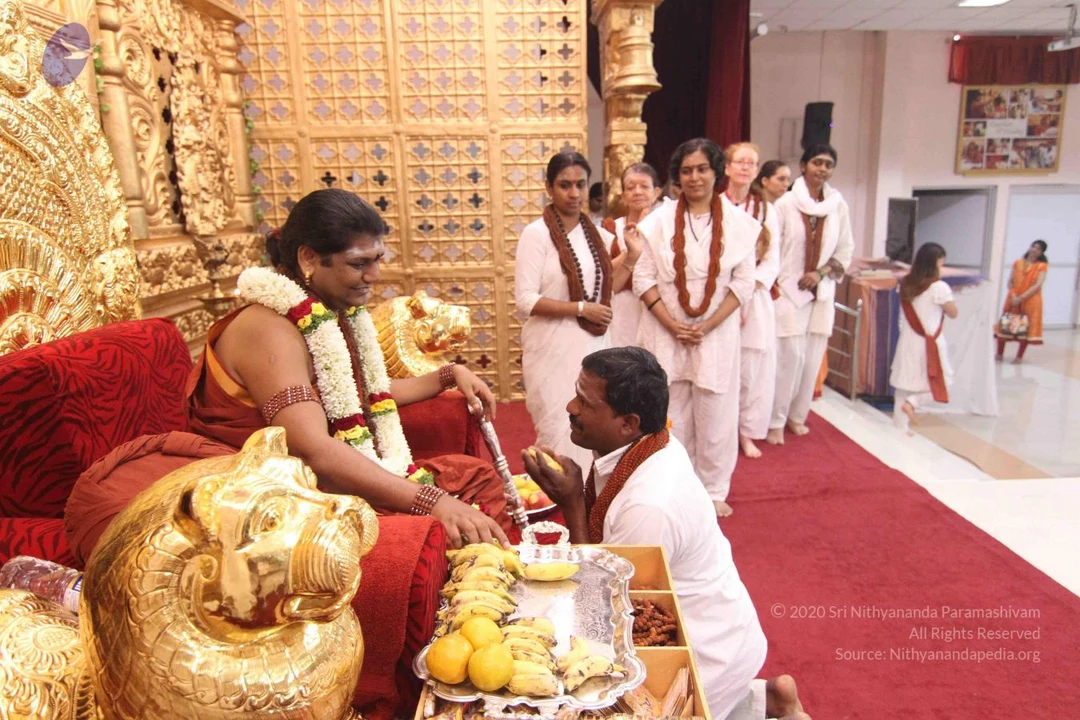
14 photosSource gallery
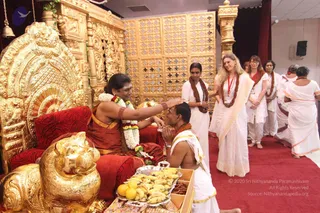
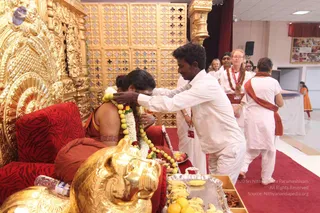
A seated figure in a red-and-orange robe with a white and multicoloured flower garland sits on an ornate gold throne with a carved lion-headed armrest, placing a hand on the forehead of a kneeling man in a white dhoti and shawl with an orange-and-white border and a brown rudraksha mala. In front, a silver tray holds sliced bananas, yellow lemons and a small wooden box. Behind them, women in white saris and white outfits with brown beaded malas stand on a red carpet beside a gold lattice screen, one wearing a white lanyard. The seated figure has a dark, swept-back hairstyle and wears a crown-like headpiece? No crown is visible. a person (appearance cues: ornate throne, orange robe, garland and a distinctive bracelet set) is seated and giving blessing to the kneeling devotee.A photograph of a seated figure on an ornate golden throne with red cushions and a golden lion-headed armrest, wearing an orange-saffron robe, a white and red flower garland, and beaded bangles. A kneeling man in white clothes and a red-and-white scarf offers a silver tray of bananas, oranges and sweets, while a silver ladle is held over a bowl. Behind, a line of women in white garments with orange and red shawls stands on a red carpet beside gold-carved panels. The scene reads as a devotional offering or darshan.A seated figure on a red tiger-striped throne with ornate gold carvings, wearing a white and garlanded neck with red, yellow and white flowers, a rudraksha mala and a saffron-red cloth draped over the body, smiles while extending an arm toward a kneeling white-clad devotee who wears a red-and-white garland and holds a silver tray. The tray holds bananas, a small bowl and a brass implement. Behind them, several women in white kurtas and red-brown malas stand in line on a red carpet beside gold lattice screens. A golden lion figure sits in the lower foreground. The scene suggests a devotional greeting or offering at an ashram event.A photograph in a golden-decorated hall shows a long-haired figure in saffron-orange robes and a white flower garland with red-and-yellow accents seated on a red velvet throne with carved gold backing. Their wrist bands and bangles are visible, and a gold lion-head ornament sits in the foreground. A man in a white shirt and orange lanyard holds up a long garland of yellow flowers, while a woman in white with a brown shawl stands nearby and a second woman in white, wearing a shawl, watches. Fruit, bananas, flowers and a silver tray of offerings sit before the throne. Gold lattice panels and a framed photo wall are behind them. a person: the seated figure has long swept-back hair, saffron robes, a flower garland and gold-toned adornments, consistent with the page's reference to a person being present.A seated figure on a red zebra-striped throne in front of an ornate gold carved backdrop is receiving honour from a man in white kurta and white dhoti who bows and presses his hand to the figure's head. The seated figure wears a saffron-orange shawl over bare upper body, with a long garland of white flowers and yellow-green beads draped around the neck. A silver tray holds yellow fruit, and a gold lion-head ornament sits in the foreground. Behind them, people in white and saffron stand on a red carpet, including a woman in white with a red lanyard and a woman in a white outfit with an orange shawl. A small framed photo panel hangs on the right wall. The seated figure's appearance is not clear enough to confirm identity, so the role is given as a seated person receiving honour.A photograph of a satsang-style gathering in a hall with an ornate gold carved throne and gold-patterned screen behind. A seated figure with long dark hair in a swept-back knot, wearing an orange-saffron robe, a white and yellow flower garland with red beads, and a gold bangle, sits on a red tiger-striped cushioned seat, smiling. Before him a man in white kneels with palms pressed together in namaskar. Nearby stand devotees in white clothes and a woman in a white sari, one with an orange shawl and red ID lanyard. Trays of bananas, lemons, fruit and sweets sit on the floor, along with a gold lion-headed figure and a water bottle. A red carpet runs across the floor.

Yantra-Initiation-Gurukul

27 photosSource gallery
A photograph of a large hall with a white marble floor and draped white ceiling fabric decorated with hanging multicoloured pillars tipped with yellow tassels. A large group of young boys with shaved heads, wearing orange and red sacred cloths and bare chests, stand and sit in an open ring marked by white floor lines. Several boys in white dhotis sit cross-legged on the floor, and an older figure in a red robe stands near the middle. Most participants wear rudraksha-style beads and ash markings. No individual can be confidently identified as a person from appearance.A photograph of a large hall with a light pink wall and a white draped ceiling, decorated with hanging striped pillars with yellow tassels. A large group of children and young people in orange and saffron robes sits cross-legged on a white floor, arranged in a circle around a central figure. The central seated figure wears a red garment with a gold-edged border and a long beaded necklace, and sits near a tripod-mounted camera. Some seated participants wear red or orange robes, rudraksha malas and forehead markings, while others wear pink or green traditional dress. A boy in a dark kurta stands at the front right, and a few adults stand near the back. The scene appears to be a satsang gathering with a seated teacher-like figure at its center.A photograph inside a large hall with a pale pink wall, a white draped ceiling and hanging yellow, orange and blue tassel banners. A woman in an orange saffron sari sits on a black office chair in the centre, speaking and gesturing with one hand while a camera on a tripod records her. Around her on the white marble floor sit a group of children and young boys wearing orange and red saffron-coloured robes, many with rudraksha malas. A standing man in a white dhoti and shawl stands at left, and a woman in white stands near the back. A boy in a navy kurta with a gold necklace stands at right. Several adults in orange also stand in the background.A photograph of a large hall with a polished white floor where many people sit in a loose circle. A central figure stands in saffron-orange robes with a rudraksha mala and a long, swept-back hairstyle, gesturing toward the seated group; a microphone stand stands in front of him. Surrounding them, seated devotees in orange, red, purple, pink and green saris and dhotis, many with garlands, sit cross-legged or kneeling. Some people in white dhotis and white shirts stand near the back, and sunlit side doors and hanging pennants frame the room. a person: the central standing figure wears orange robes and a rudraksha mala with long swept-back hair, and is positioned as the teacher of the circle.A photograph in a large hall with white marble floor and draped ceiling fabric with colourful tassels. A man seated on a wheeled chair wears a rust-orange robe with a gold-edged border and a long rudraksha mala, holding a wooden stick. Around him, dozens of children and young people sit cross-legged in a wide circle in orange, saffron, red, green and purple clothing. A small girl in a pink blouse and multicoloured skirt sits with her back to the camera facing the seated man. Some older girls wear red and green silk saris with gold jewellery. Chairs and a stage are visible in the background, and an elderly figure in white stands at the back. The seated man appears to be a person by his rudraksha mala, flowing hair and saffron robe, and is presented as in person.A photograph of a satsang-style gathering on a white floor marked with chalk diagrams. A man with long swept-back dark hair, bare-chested, wearing an orange-saffron shawl over a red-brown dhoti, and multiple rudraksha malas, sits centrally smiling and holding a wooden stick. Around him sit thirty or so children and young people: girls in red, green, pink and purple saris and salwar, boys in saffron-orange and red kurta or dhoti with rudraksha malas. A brass kalasha-style pot stands on a stand near him. A cameraman and a man in white stand at the right edge, and a small framed portrait sits near the back wall.

Ganesh-Homa
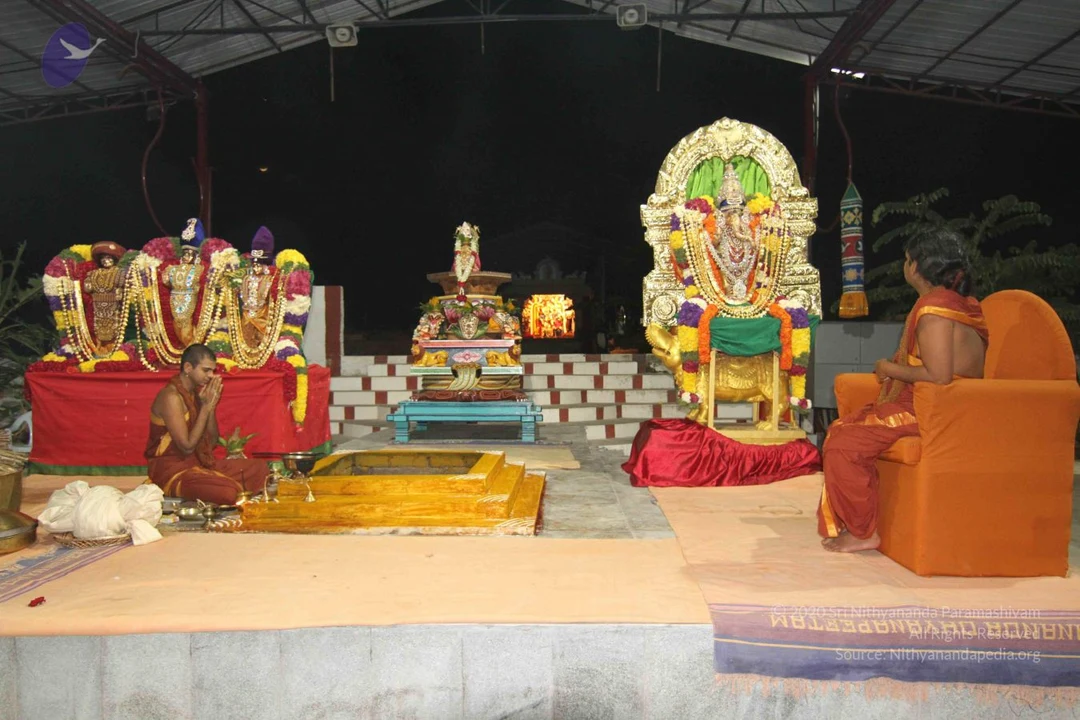
218 photosSource gallery
A photograph of an open-sided pavilion at night with a deity murti and altars arranged for worship. On the left, a red-draped table holds three garlanded deity murtis decorated with marigold and orange flower garlands. Centre stage, a small shrine with a lit flame and offerings stands above a blue bench, and a golden yagna kund sits on the floor. On the right, a golden arched shrine holds a garlanded Ganesha murti. A seated priest in orange-brown cloth with folded hands sits cross-legged at the lower left. A woman in orange-red clothing sits in an orange armchair at the right, facing the shrine. Brass vessels lie at the left edge.Photograph of an outdoor pavilion stage at night set for a puja. On the left, a red-draped platform holds a deity murti decorated with white and orange flower garlands and gold necklaces. At centre, a tiered altar with floral decorations stands beside a lit lamp, and a gold-coloured yagna-style pit sits in front. A shaved-headed priest in orange-saffron robes kneels with palms pressed together beside the pit. On the right, a gilded arch frames a deity murti draped in garlands, seated on a gold throne-like seat. A person in orange-red robes sits in an orange armchair facing the deity. Brass vessels and white cloth lie at the lower left.Night photograph of an open-sided pavilion with a yellow-orange and white-trimmed altar platform. On the left, a man in orange robes sits cross-legged with palms pressed together in prayer beside a gold brass vessel and a tray. In the centre, a small ornate altar with a fire-lit dais and a decorated murti stands before a lit fire. On the right, a gold-framed throne with a green backdrop holds a deity murti adorned with orange and yellow marigold garlands and a green cloth. A second figure in red-orange robes and an orange cushioned seat sits facing the altar. Garlands drape the figures on the left shrine. Text on the lower right cloth reads a temple name.Night outdoor ritual on a raised platform under a corrugated metal roof. At left, a kneeling shaven-headed priest in orange robes sits with palms pressed together before a golden yajna pit and brass vessels. Behind him, three decorated deity murtis stand on a red-draped stage garlanded with yellow and pink flowers. At centre, a small decorated kalasha stands on a stepped blue base, with a lit fire glowing behind. At right, a deity murti sits on a golden throne with an arched backdrop and green cloth, garlanded with orange and yellow flowers. A seated person in orange robes faces the throne on an orange chair with a bare back to the camera. A purple-and-cream banner runs along the platform edge.Night-time outdoor ritual on a raised platform under a corrugated roof. Left, a shaved-headed priest in saffron-orange robes kneels with palms joined before a golden square fire pit holding a small lamp and offering vessels. Behind him, three decorated deity murtis wear garlands of red, yellow, and purple flowers and gold necklaces, with a red cloth draped over their stand. Right, a seated figure in orange robes sits in an orange armchair beside a gilded lion-shaped throne with a decorated deity murti, garlanded in flowers. Brass vessels and a flower-strewn cloth sit in the foreground.Night-time outdoor ritual on a raised peach-coloured platform under a tin roof. On the left, several decorated deity murtis stand before a red cloth, heavily garlanded with marigolds and purple flowers. A devotee in orange-red robes kneels with palms joined before a golden homa or puja fire tray with a small lit lamp, while a brass kalasha and a bowl of ash sit nearby. On the right, a golden shrine with a deity murti and garlands sits on a red cloth, and a seated person in orange-red robes sits in an orange armchair facing the fire. Two people are visible.
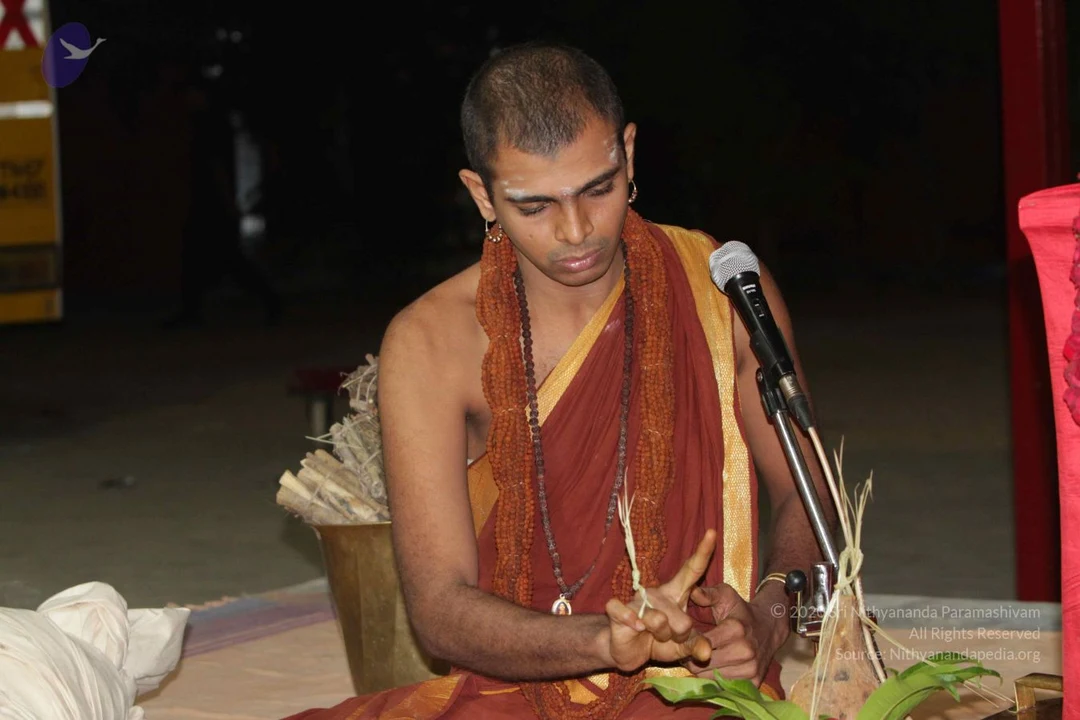
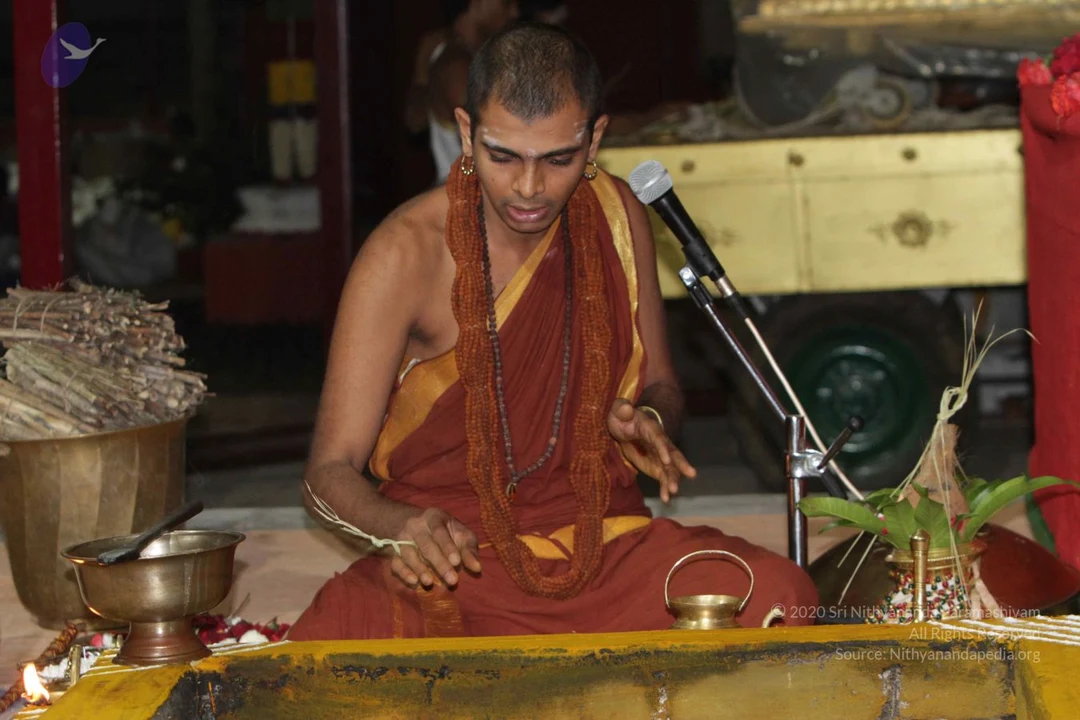
01-NITHYA-SATSANG
10 photosSource gallery
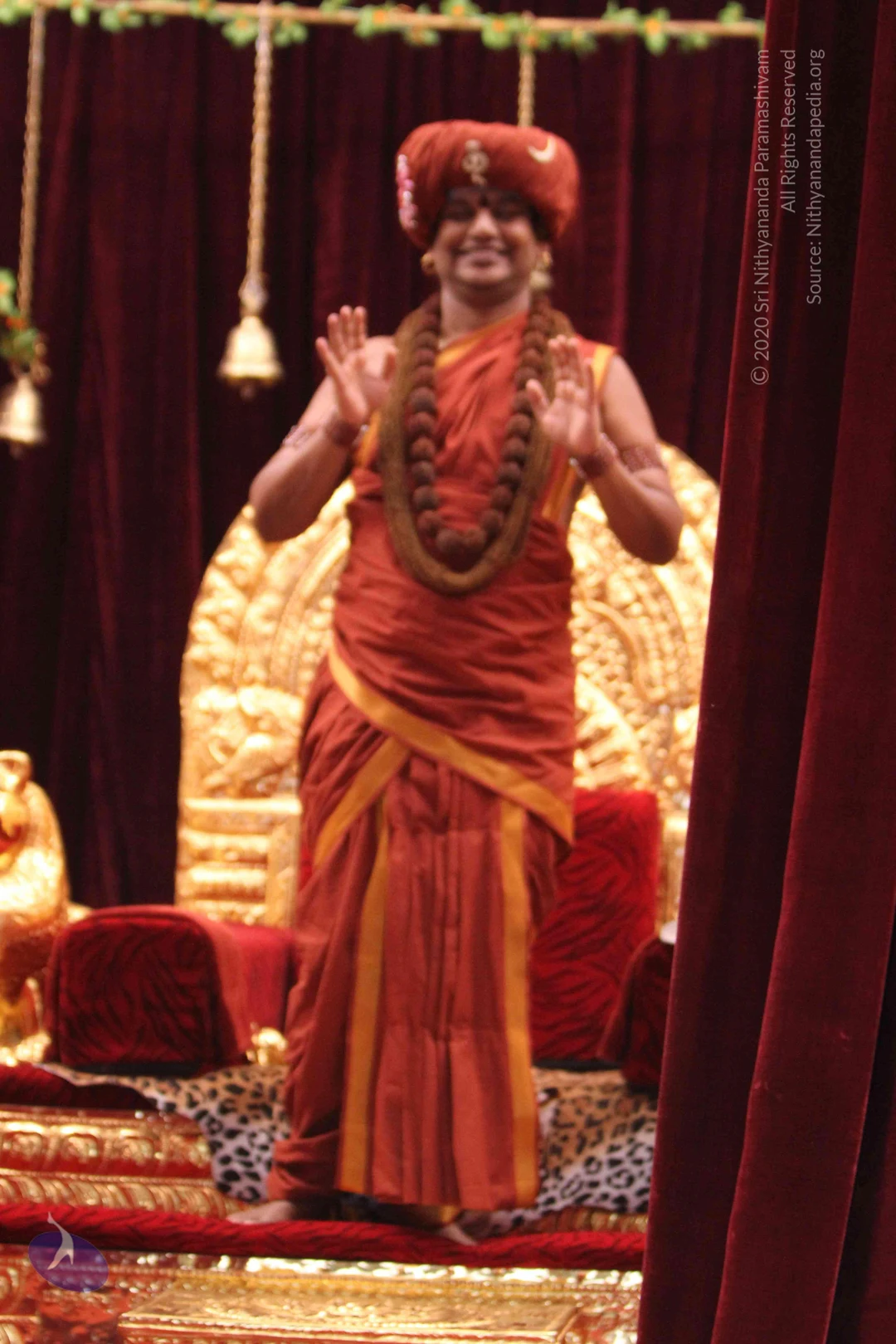
A person stands before a gilded throne with red velvet cushions and a leopard-print cloth, beneath hanging brass bells and a garland-draped beam. The standing figure wears a red-orange turban with a small crescent emblem, a dark rudraksha mala necklace, and an orange-red draped robe with gold borders, raising both palms open in greeting. Gold ornate carvings frame the throne behind, and red velvet drapes sit on the right.A standing figure in a saffron-orange turban with a small emblem and a crescent-moon ornament, wearing an orange-red robe with gold border and a long brown rudraksha mala around the neck, raises both palms in a welcoming gesture on a velvet-draped stage. Behind stands an ornate gold throne with a red cushion and a leopard-print cloth, flanked by golden lion figures and a silver staff, with gold bells hanging from garlands above. Swamiji (probable): the figure wears a turban, rudraksha mala and saffron robe, with the title Paramahamsa Nithyananda linked to the throne setting per the page.A person stands barefoot on a raised golden stage in front of an ornate golden throne with red cushions and a leopard-print cloth. They wear a red-orange turban with a gold emblem and a crescent ornament, an orange-red robe with yellow-gold borders, and a long rudraksha mala with gold bead-like rudraksha seeds. Both palms are raised toward the audience in a blessing gesture while smiling. Dark red velvet drapes hang behind with gold bells and green leaf garland. A silver staff leans beside the throne. The appearance matches the a person cues: saffron-red ceremonial robes, turban and rudraksha mala, seated-style staging. Blessing gesture before a golden peetha throne with bells, indicating a satsang setting.A smiling person in an orange-red turban with a small gold emblem and a rudraksha mala stands on a golden ornate throne before maroon velvet drapes, raising both palms outward in blessing. They wear an orange-red robe with gold borders and gold earrings. Behind them hang gold tassel bells, and to the right is a silver staff resting by a red tiger-striped cushion over a leopard-print rug. a person by appearance: rudraksha mala, ornate gold throne setting and orange-red robes with gold border, visible in a single person standing in front of the throne.A standing figure in a red-orange turban with a small gold emblem and crescent ornament, wearing a matching red-orange draped garment with gold borders and a long rudraksha mala. He smiles with both palms raised forward in a blessing gesture, in front of an ornate gold throne with red velvet cushions and a leopard-print cloth, backed by maroon drapes and hanging gold bells with garland decoration. A silver staff rests beside the throne. Swamiji (probable): the figure has a rudraksha mala, saffron-orange clothing and a turban, consistent with the page's Swamiji reference.A seated man in a deep red-orange turban decorated with a red jewelled brooch and a gold serpent ornament, wearing matching orange-red robes edged with gold, multiple long rudraksha mala necklaces, rudraksha bracelets on the upper arms and wrists, and a red bindi on the forehead. He rests his hands in his lap on a red velvet cushion, in front of an ornate gold throne-back.

02-GANESHA-HOMA
27 photosSource gallery
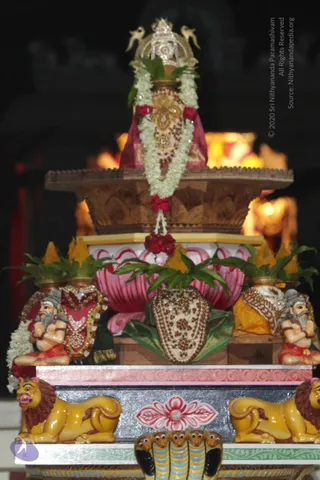
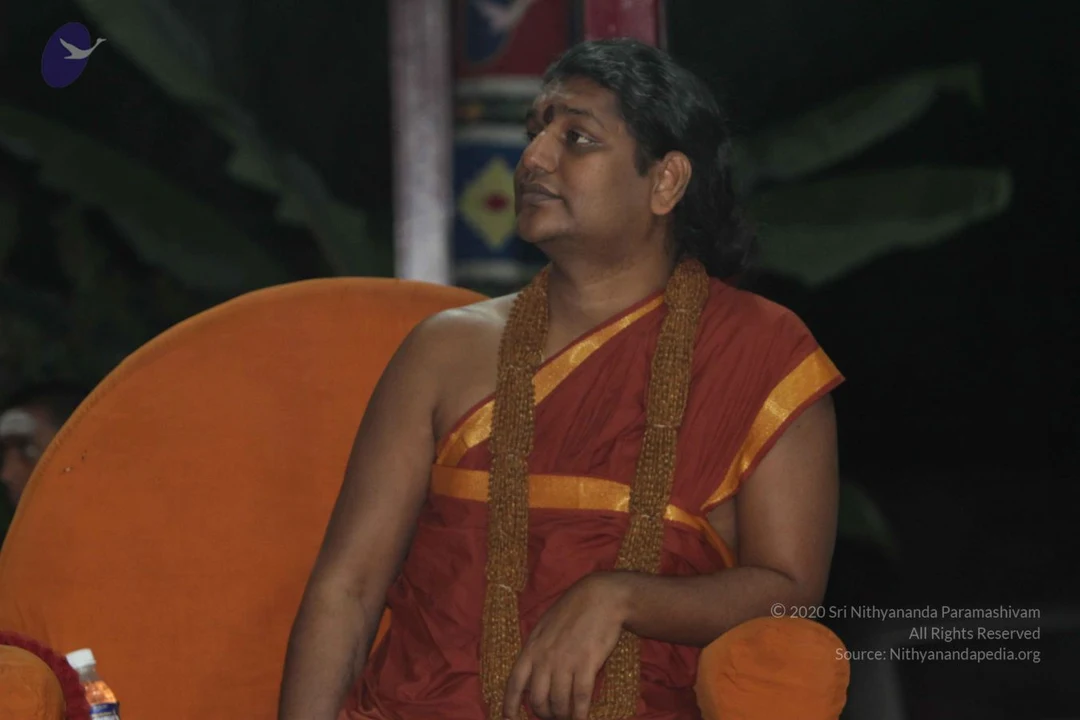
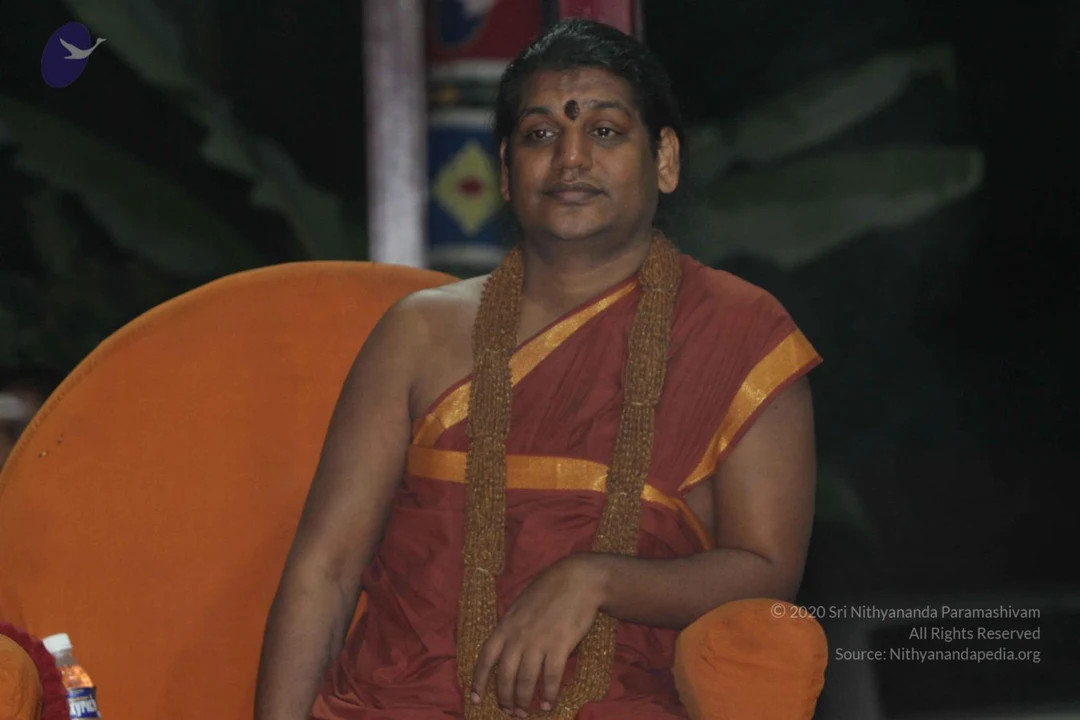
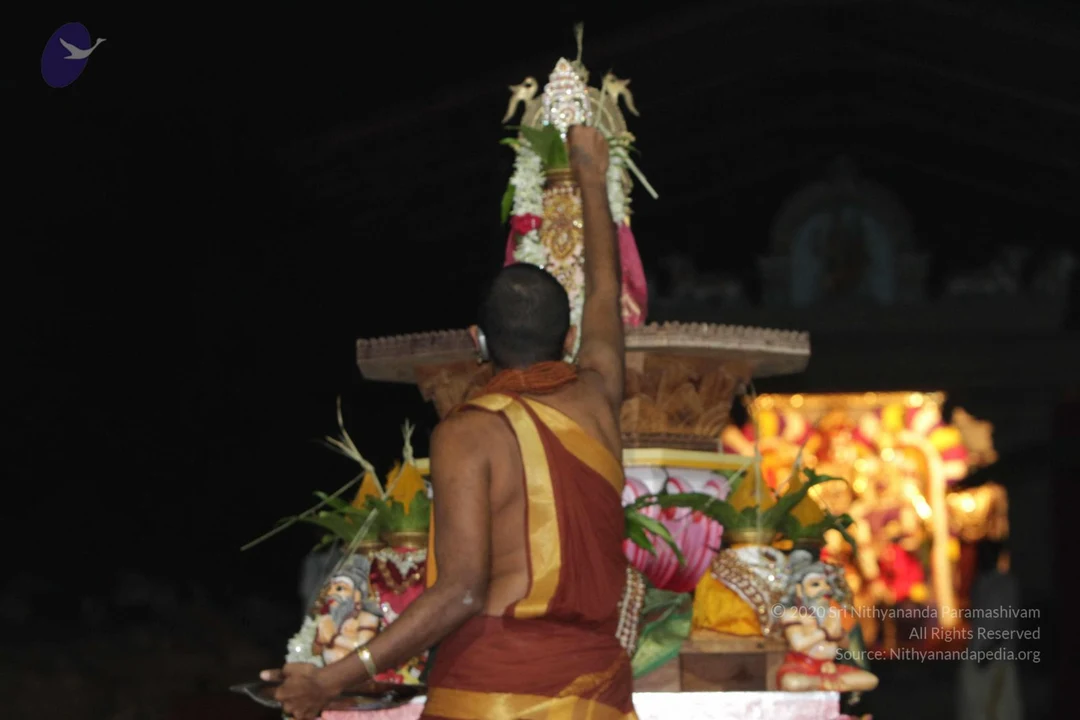
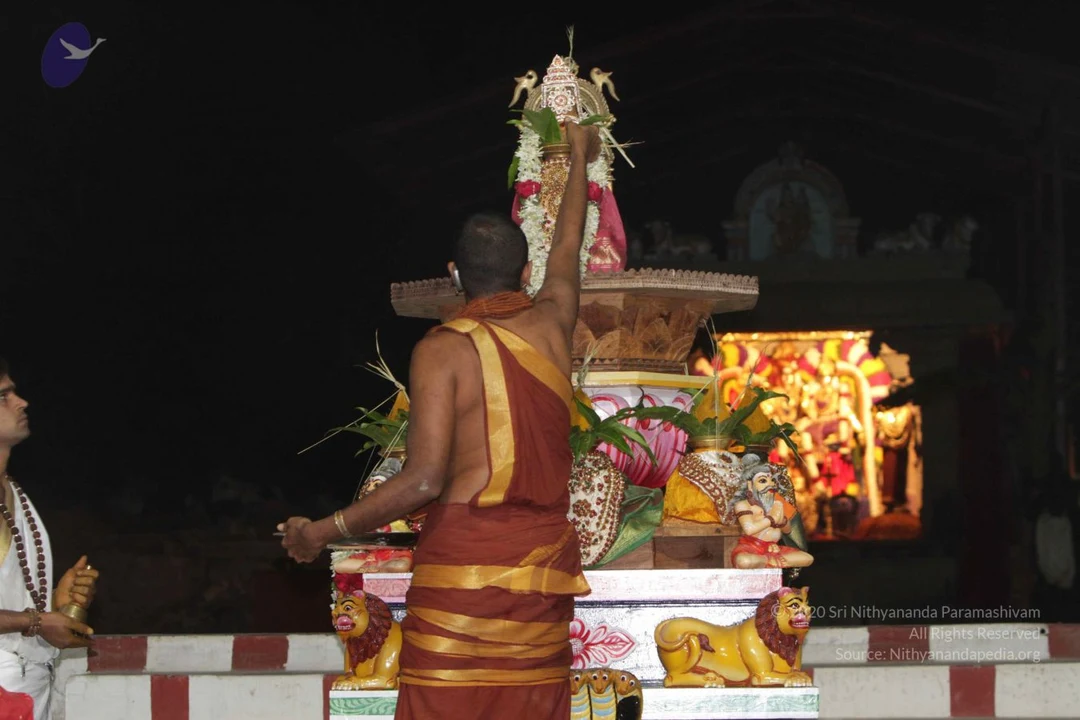
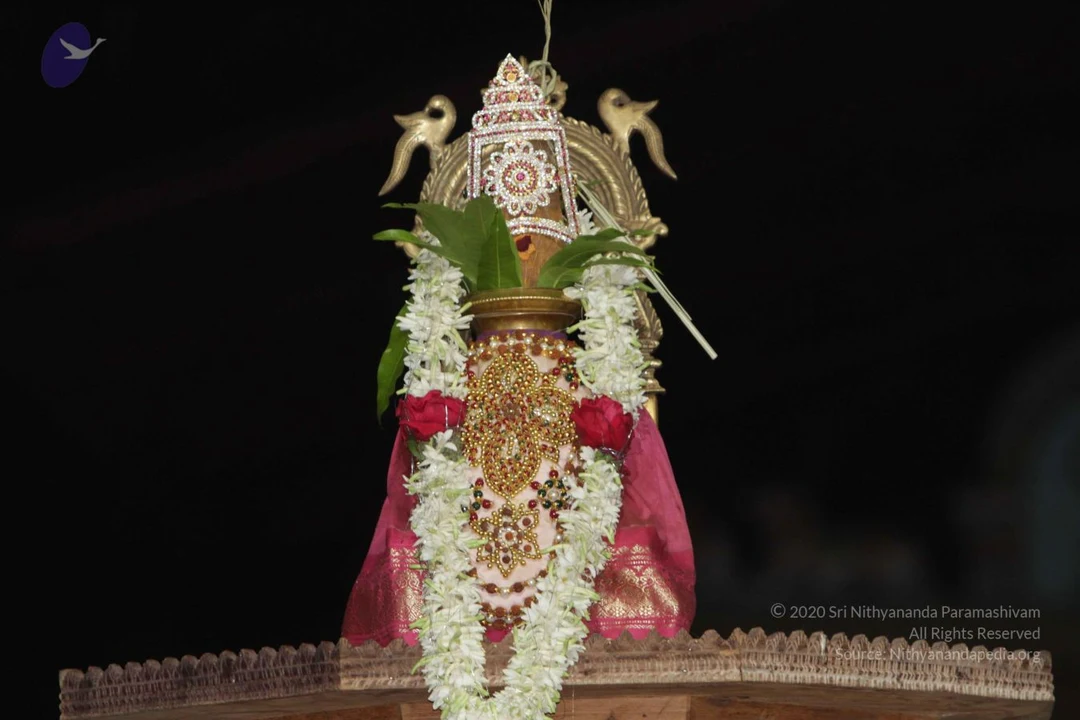
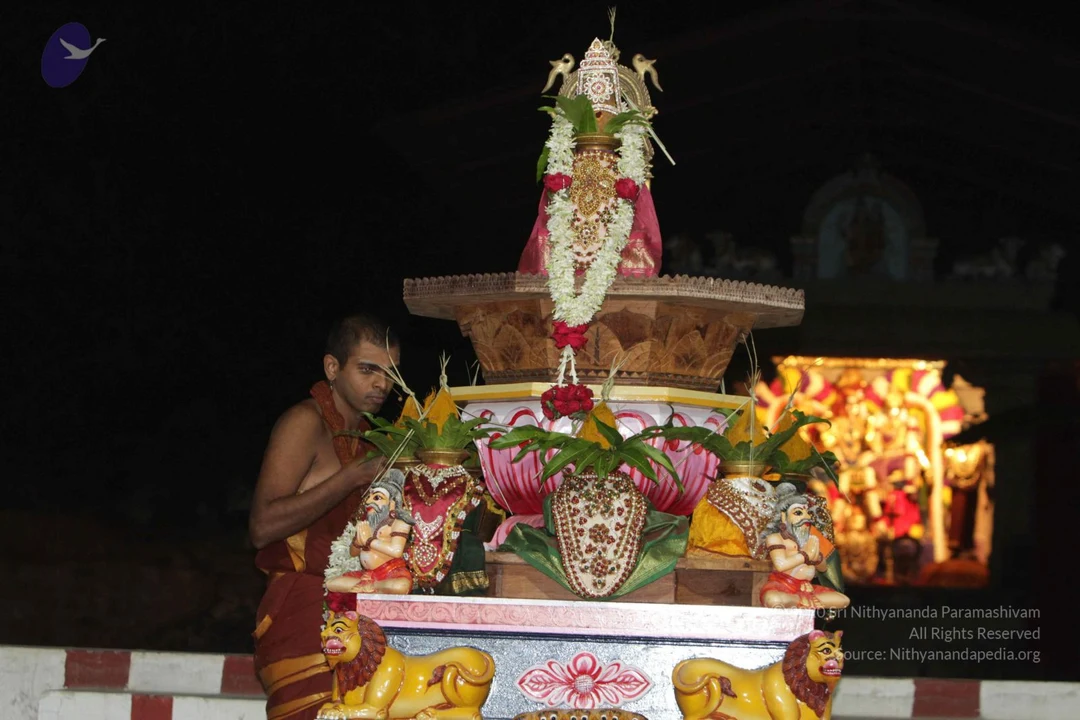
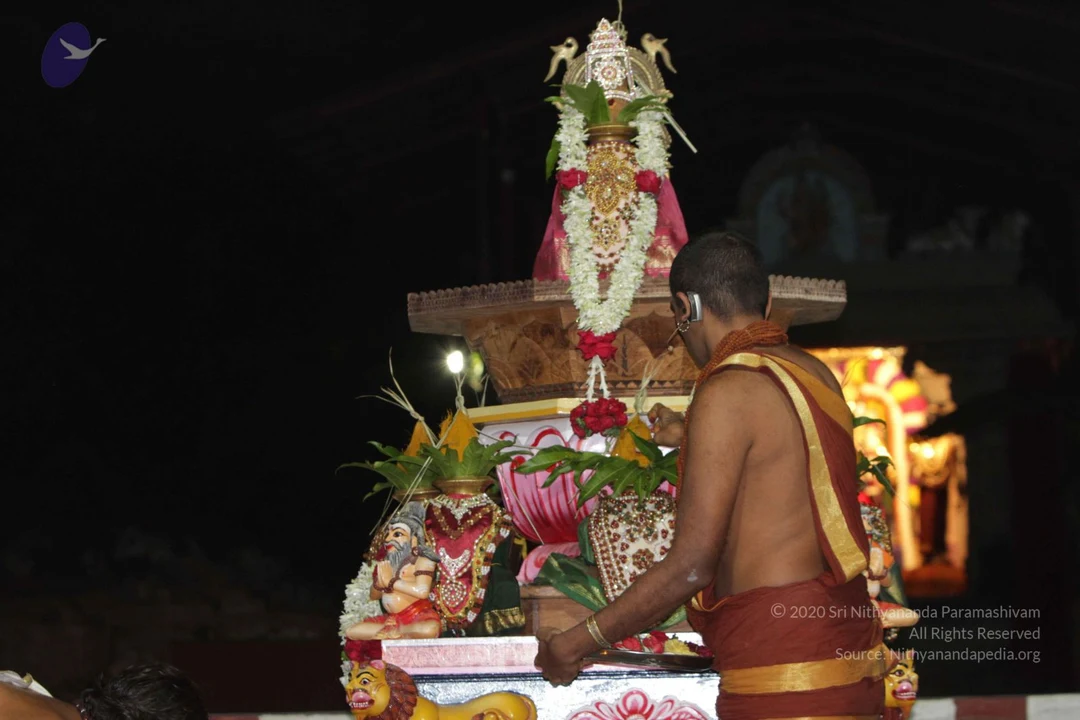
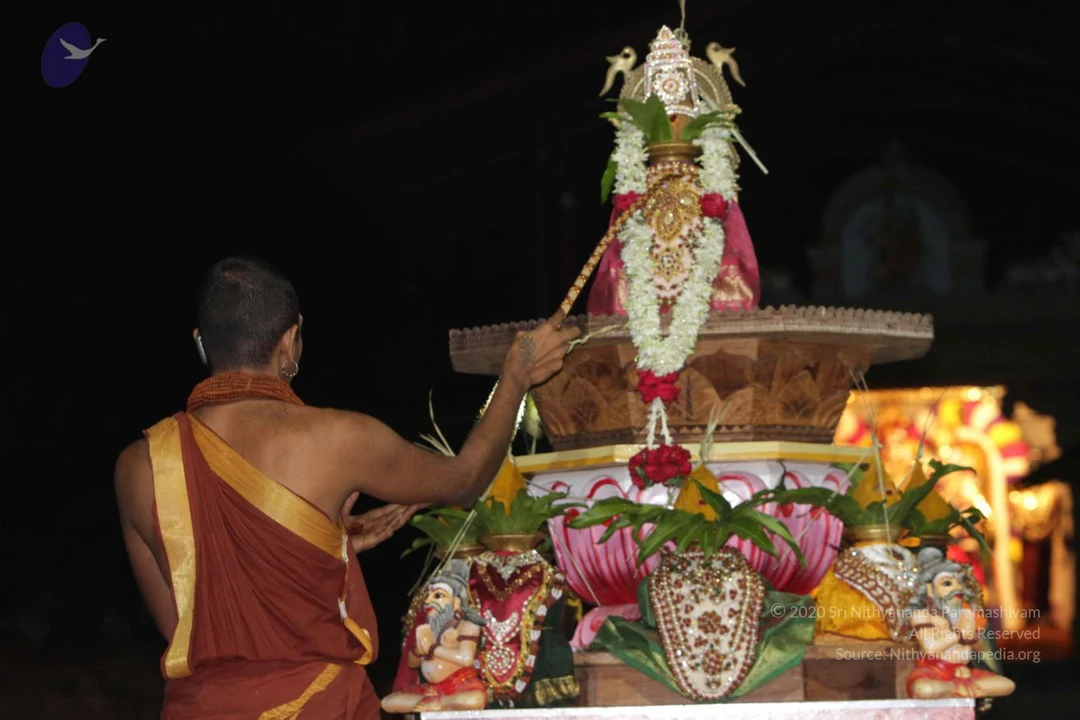
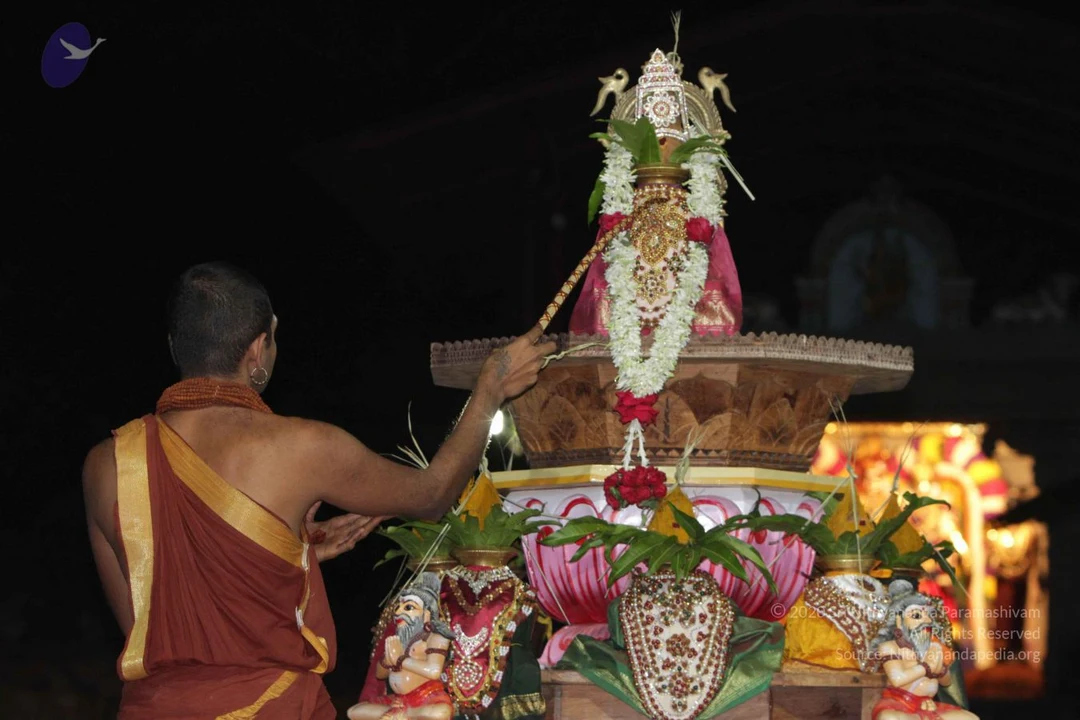
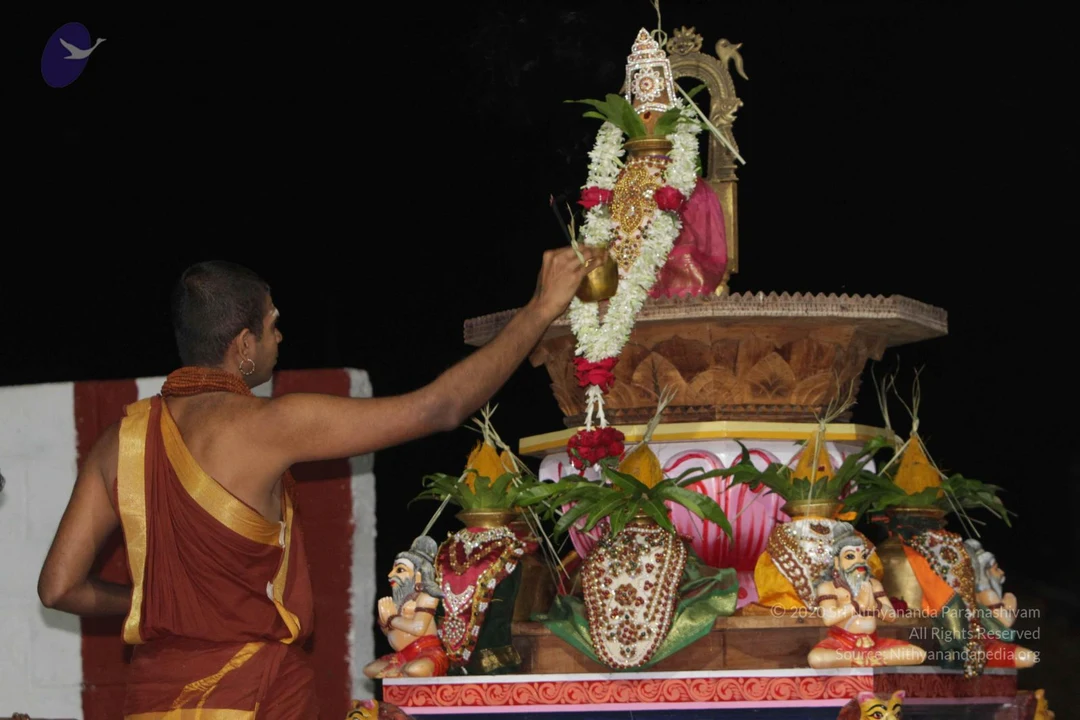
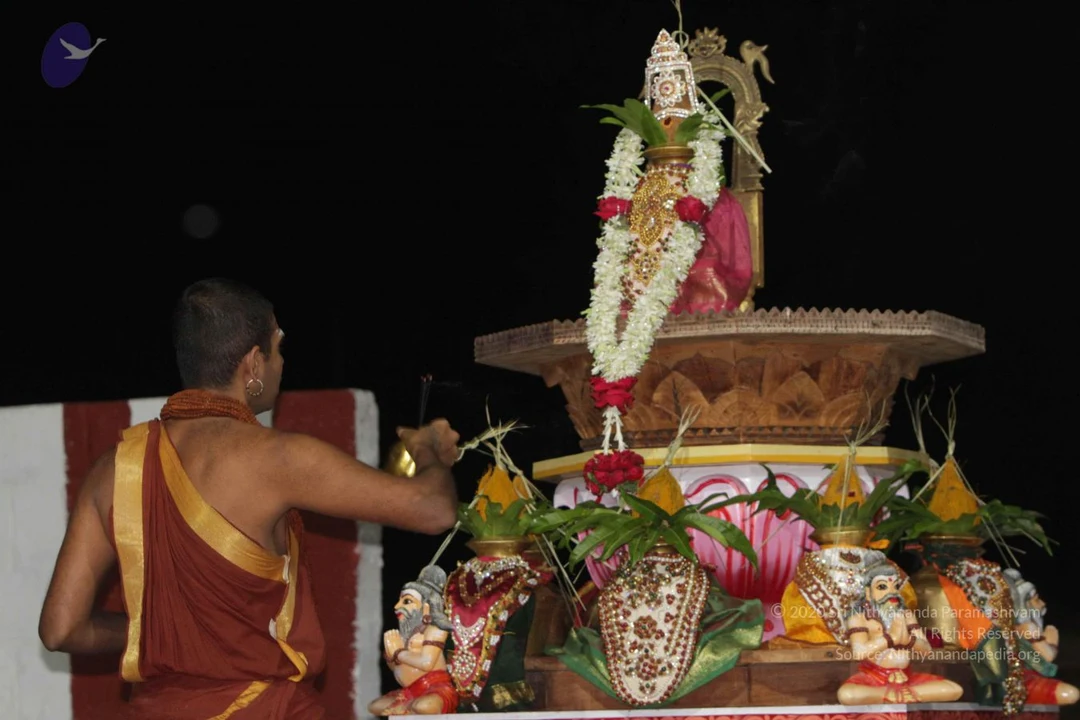
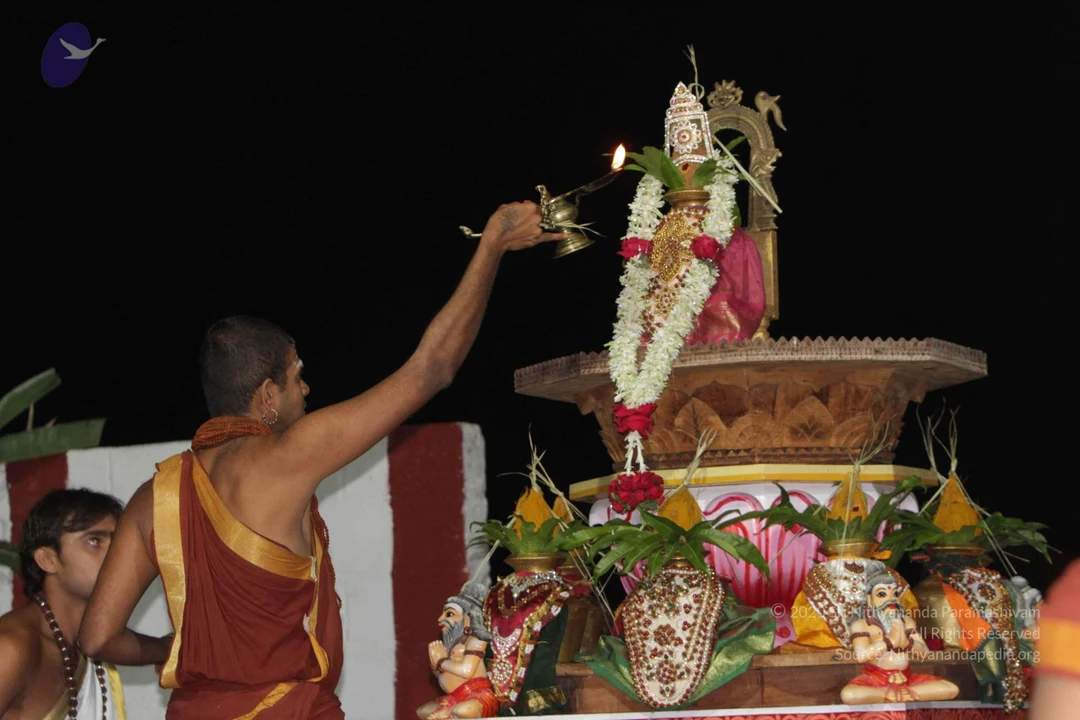
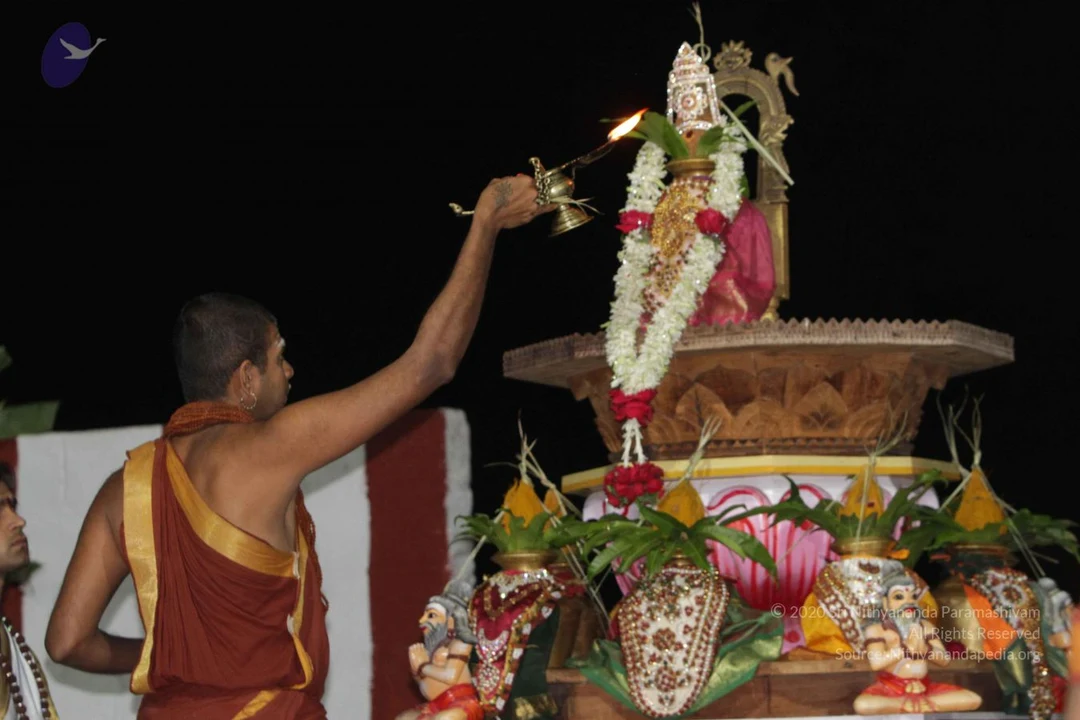
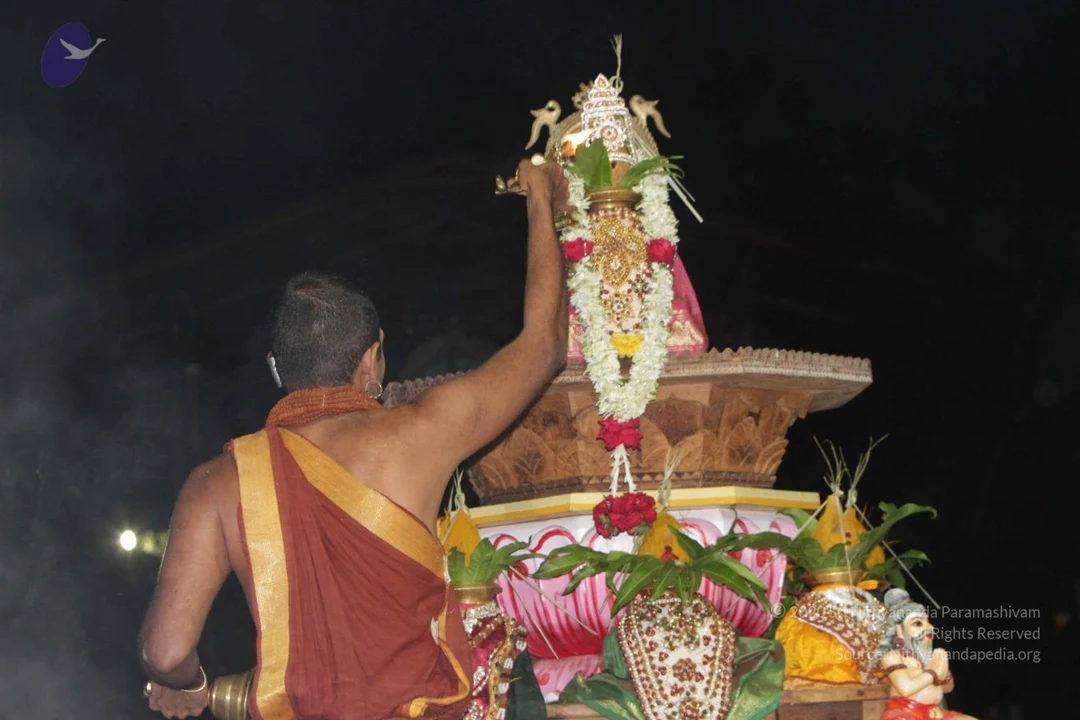
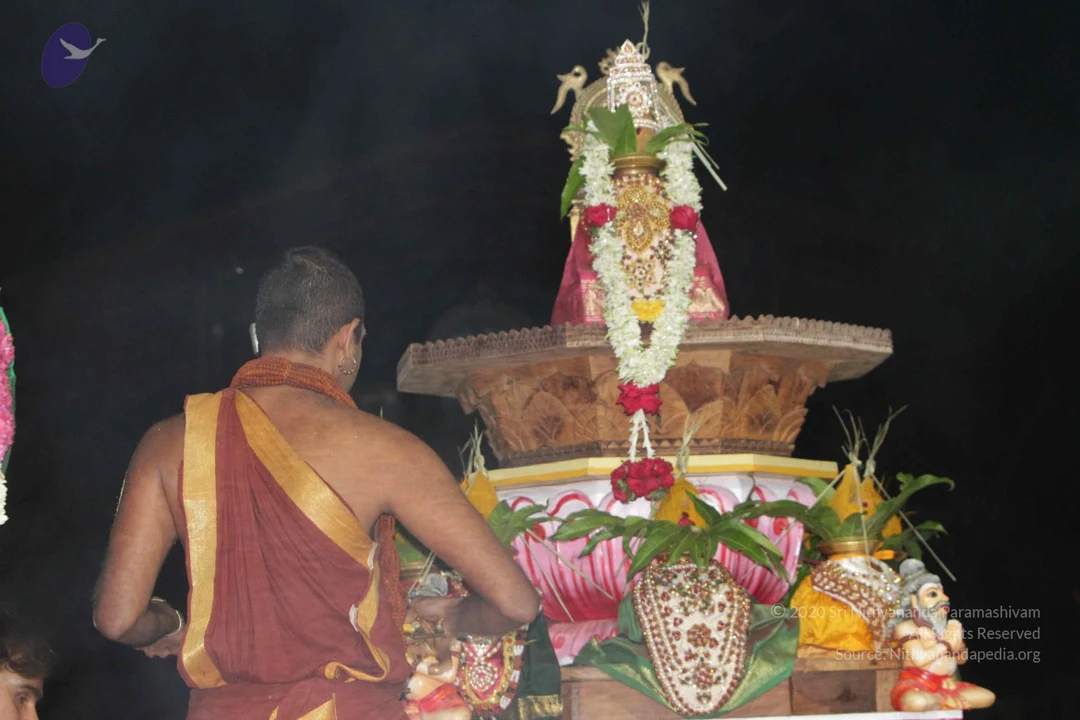
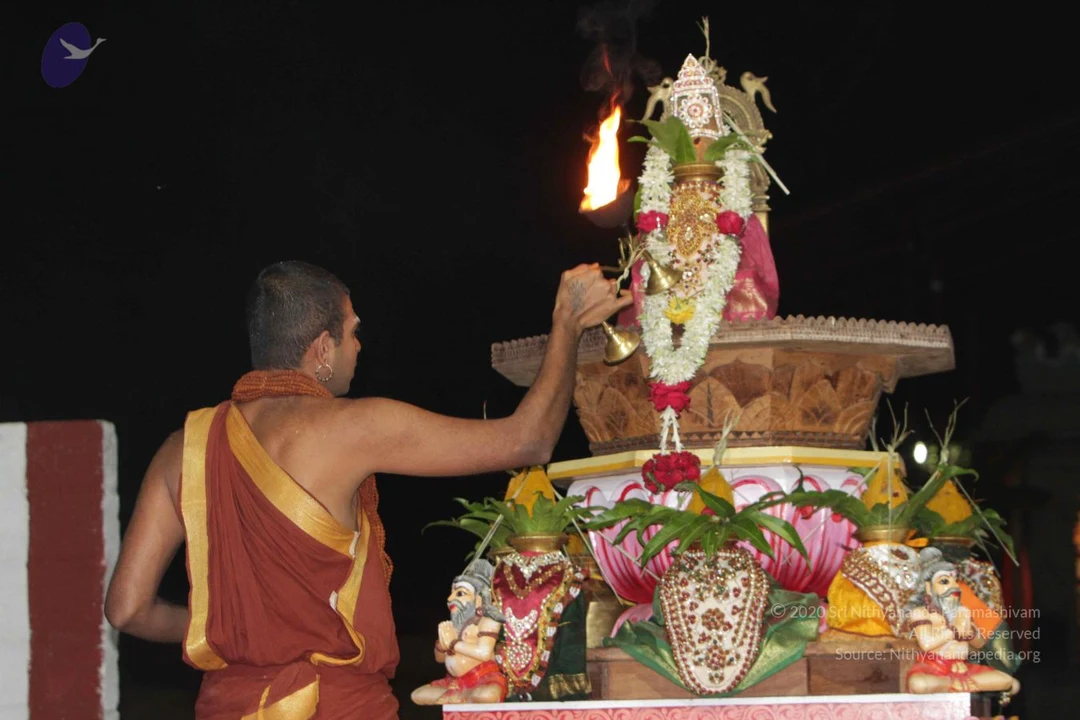
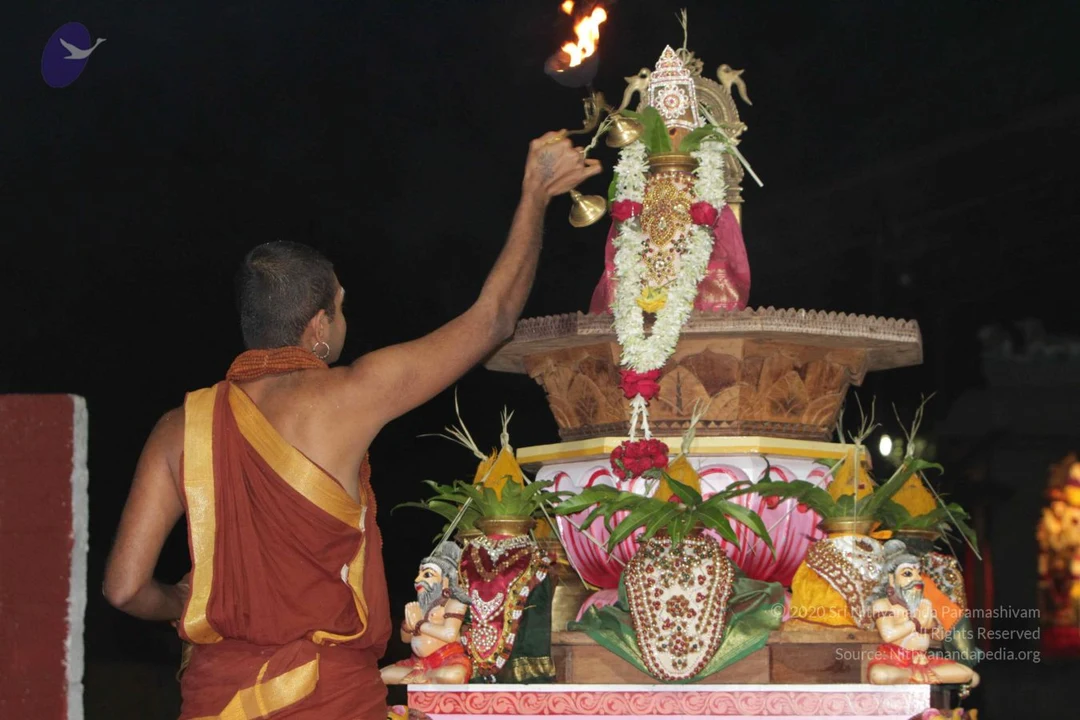
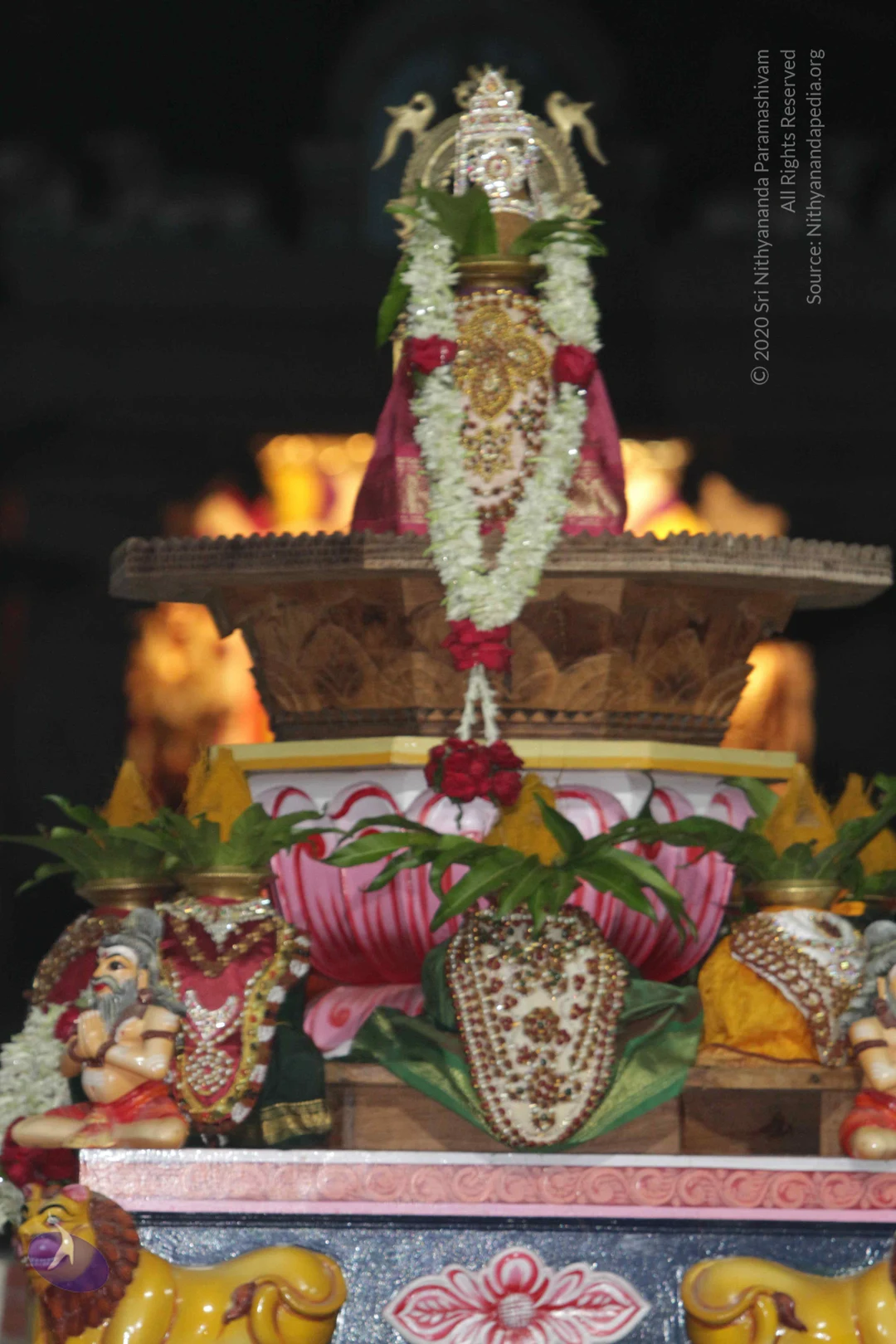
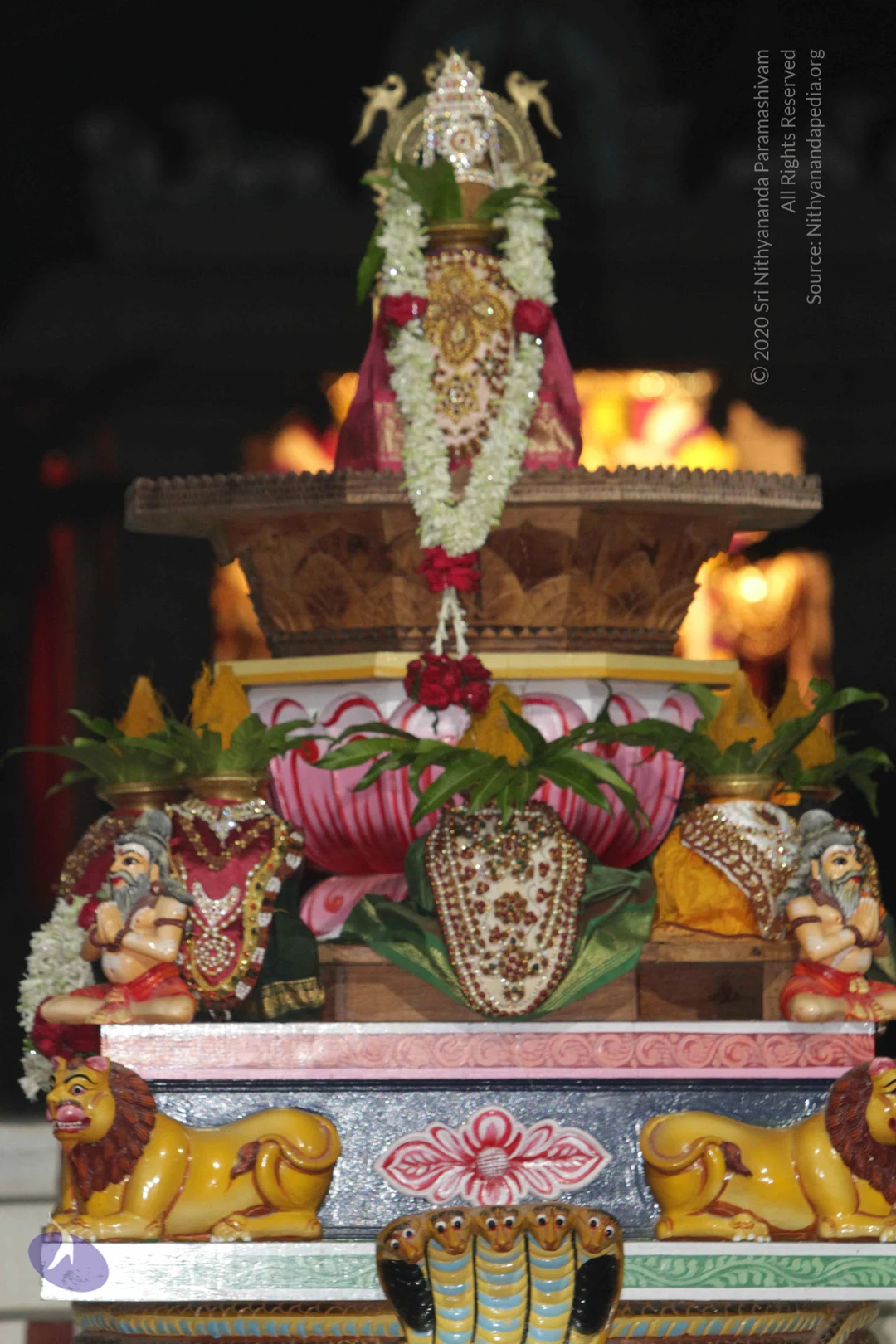
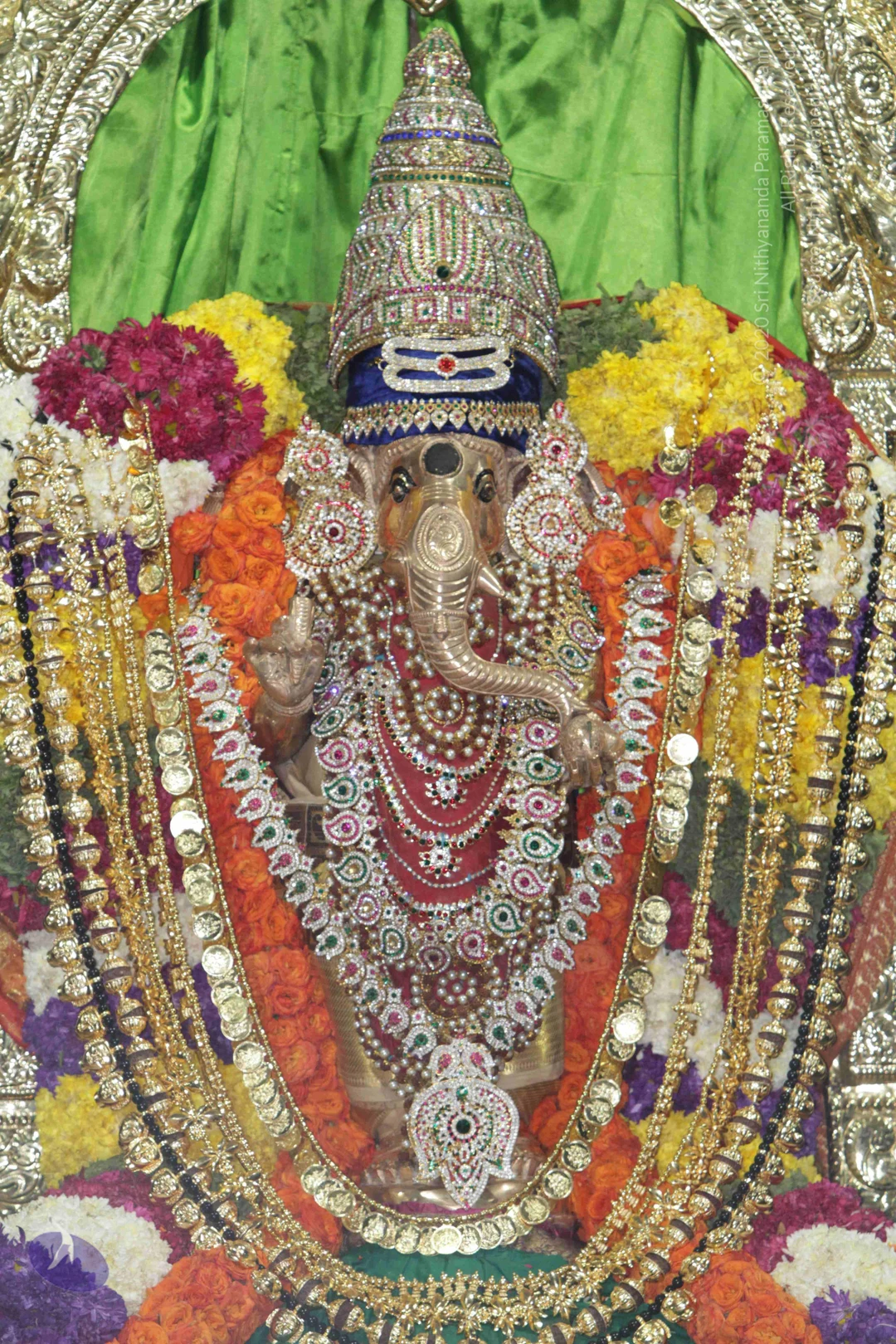
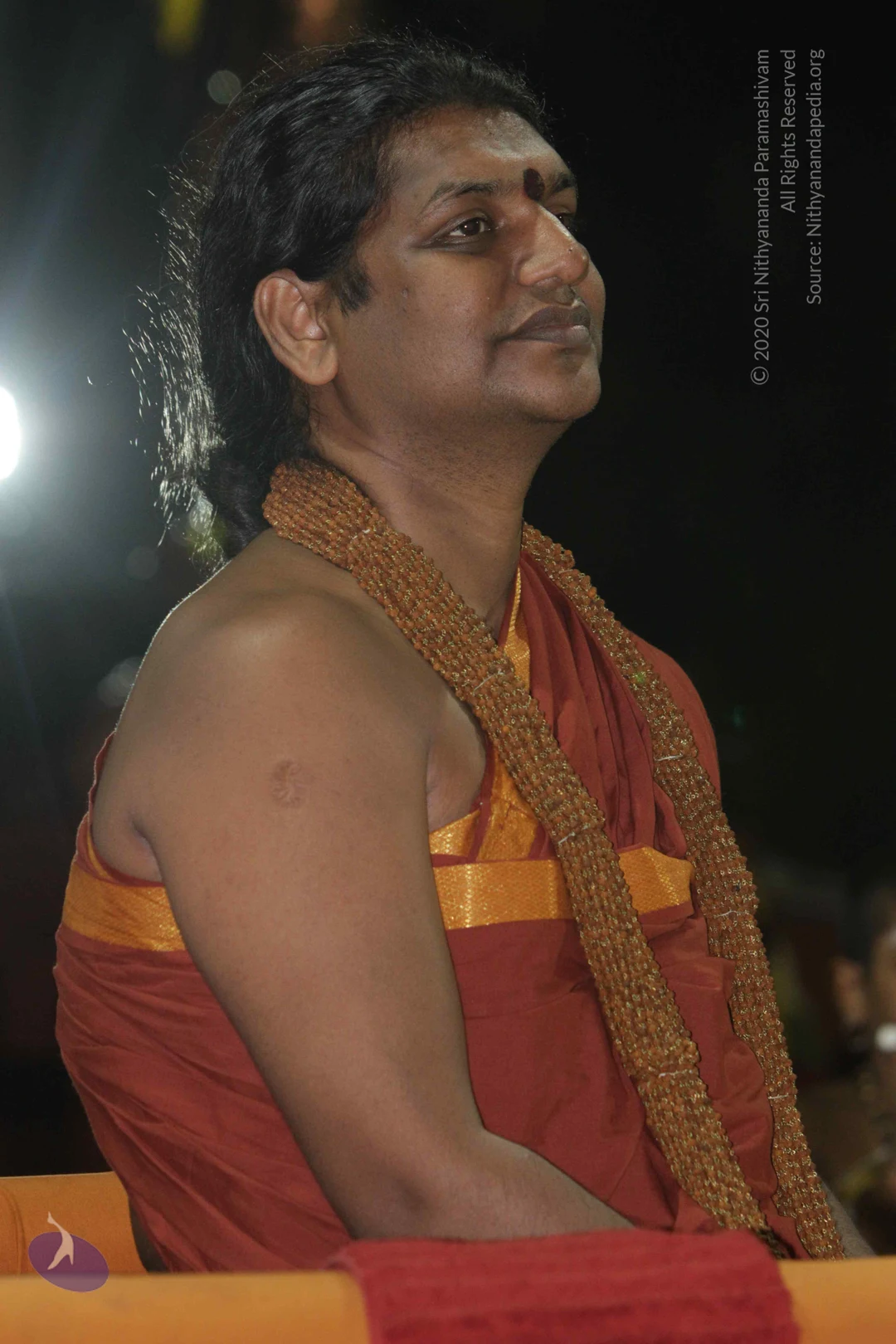
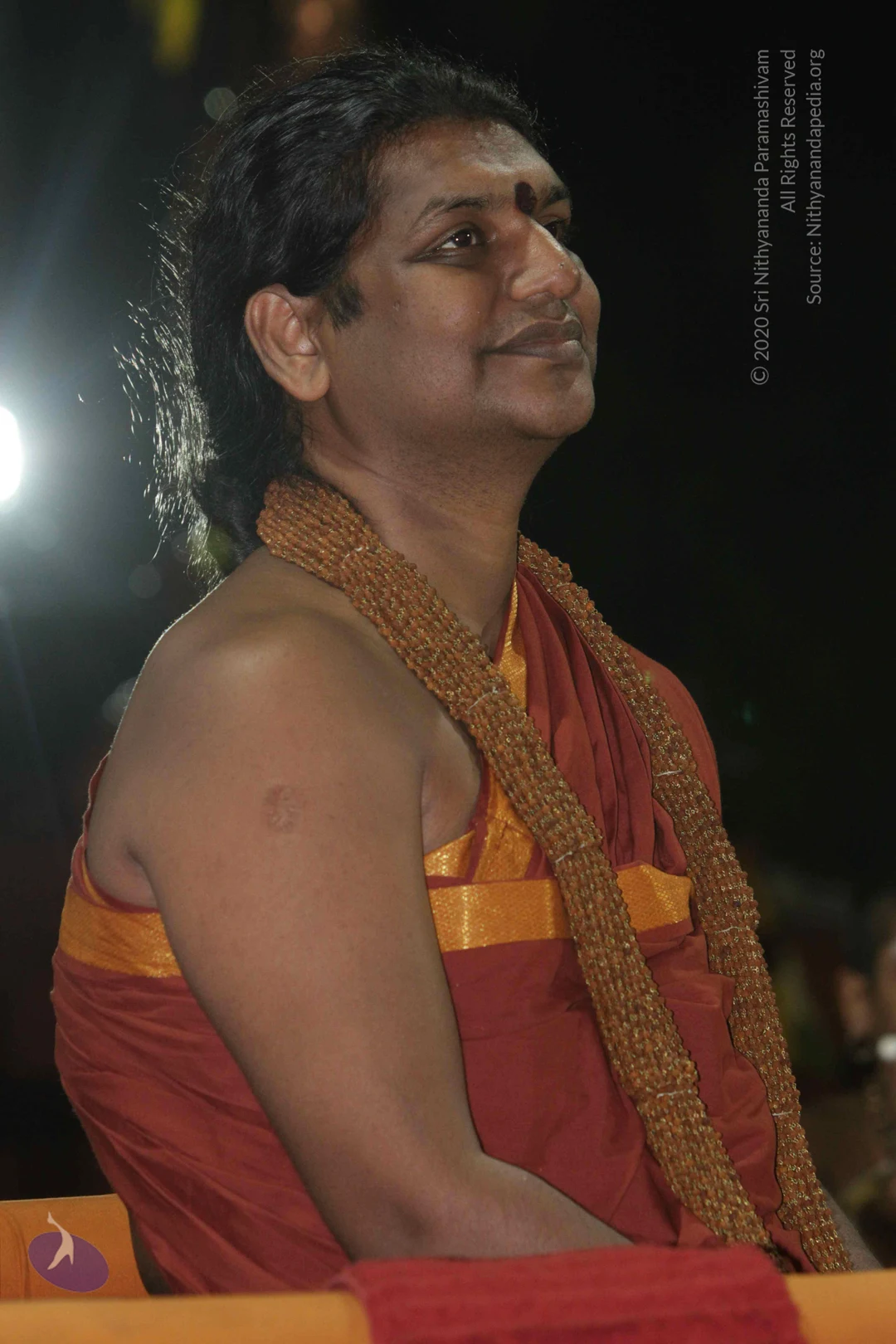
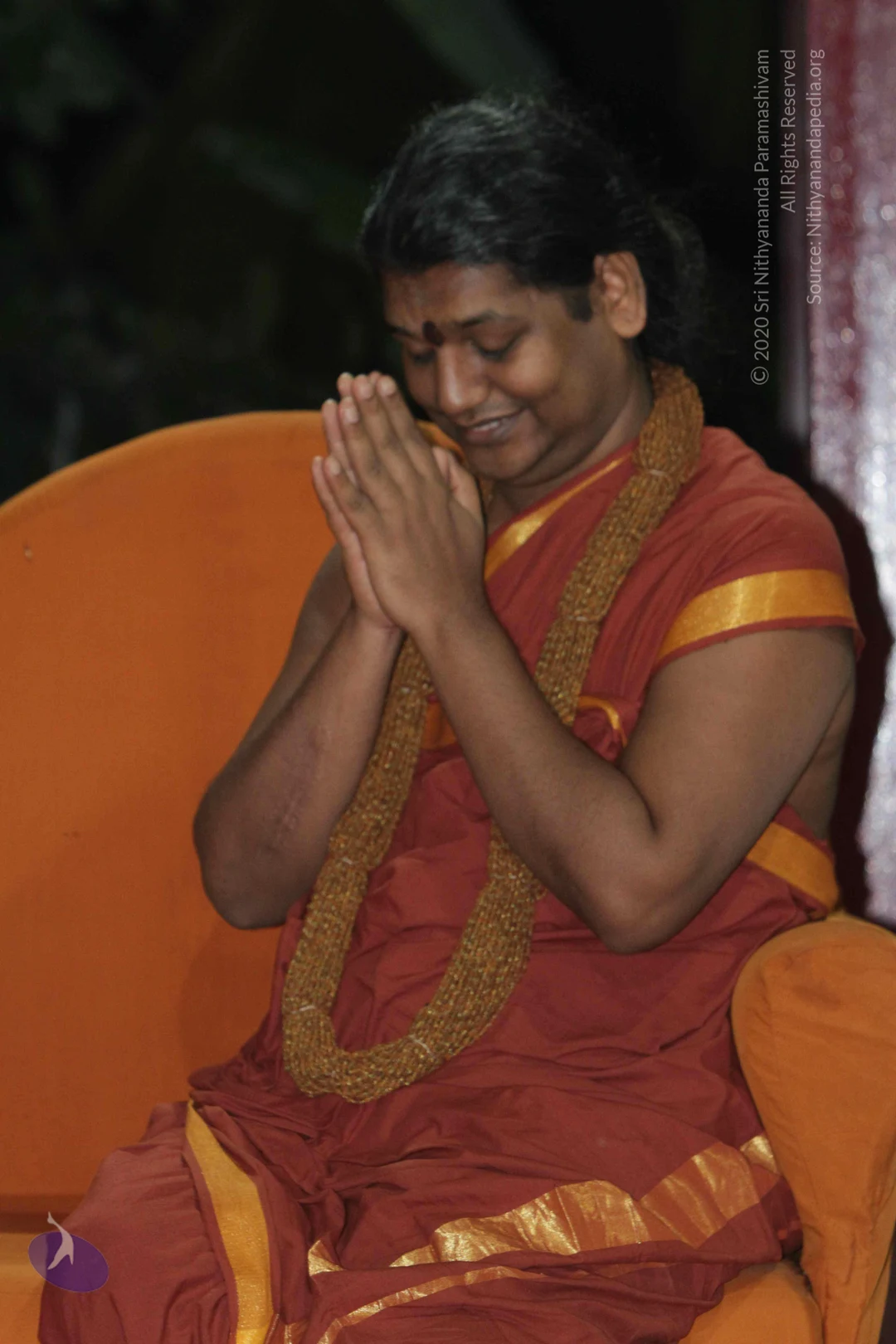
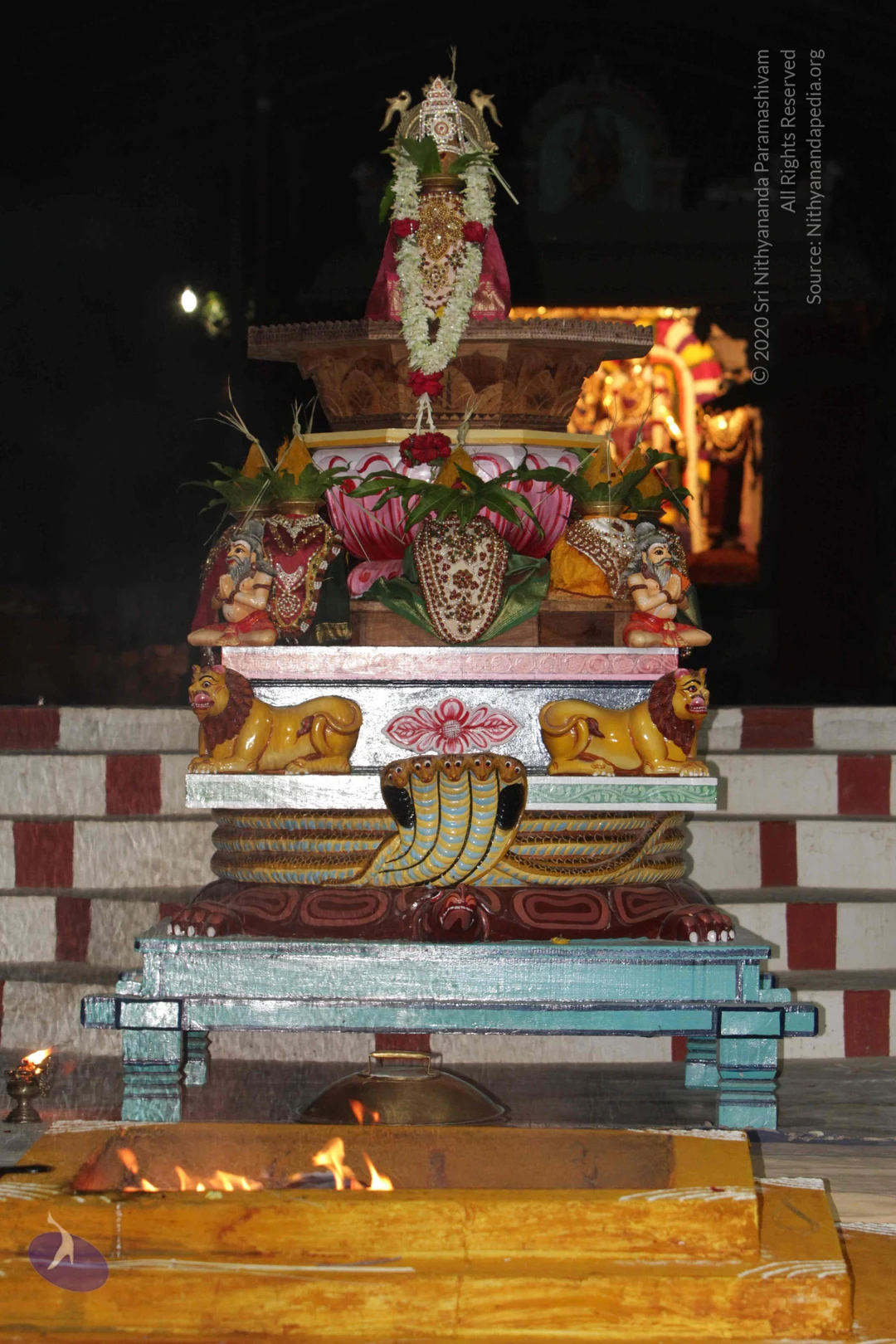
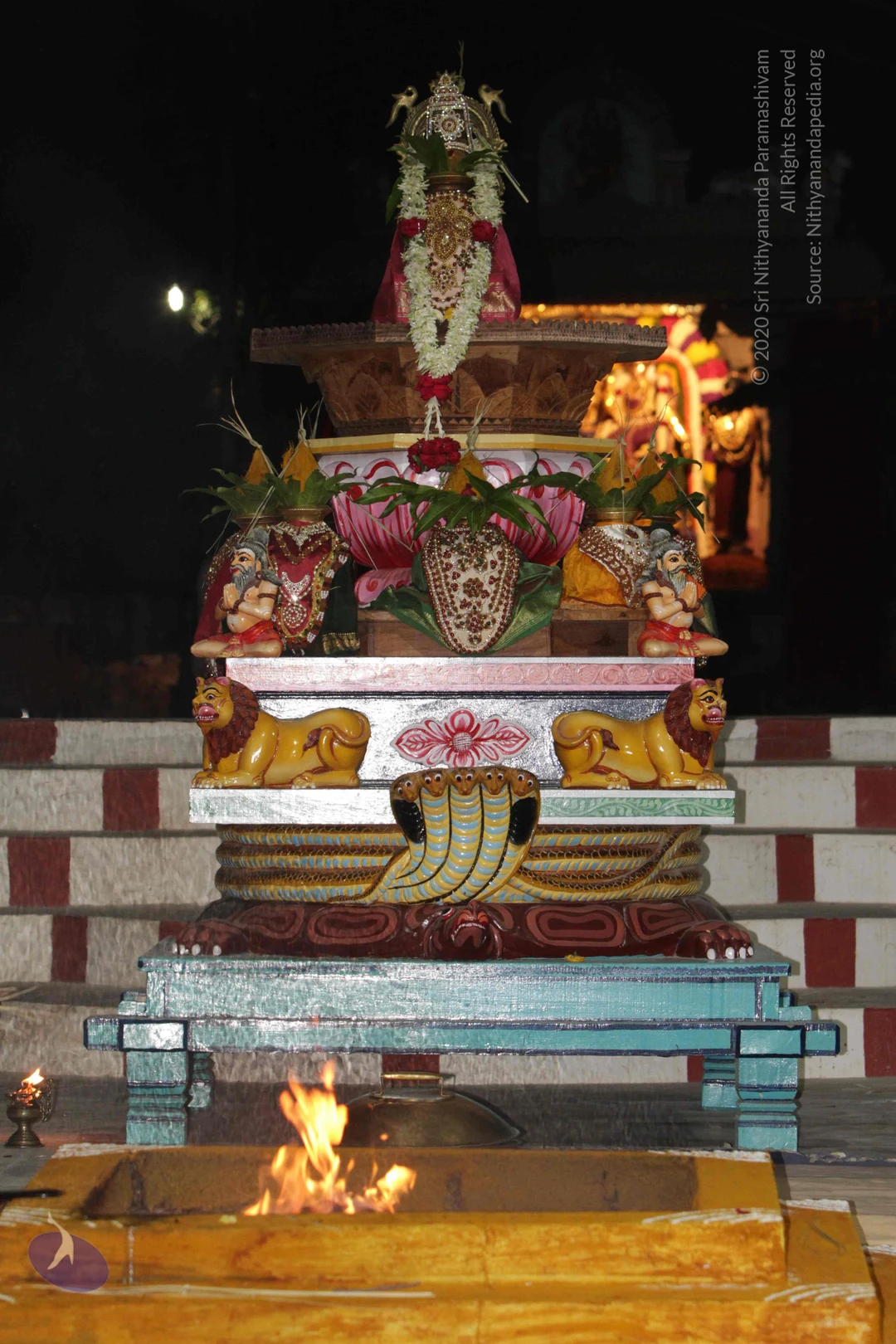
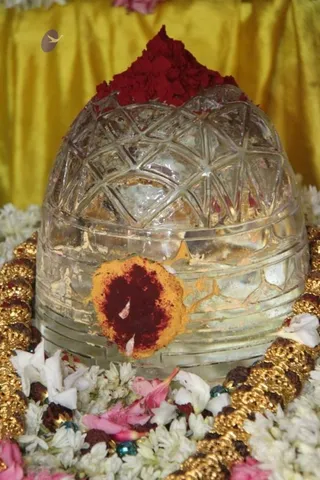
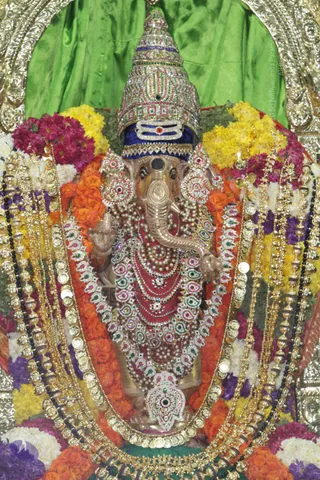
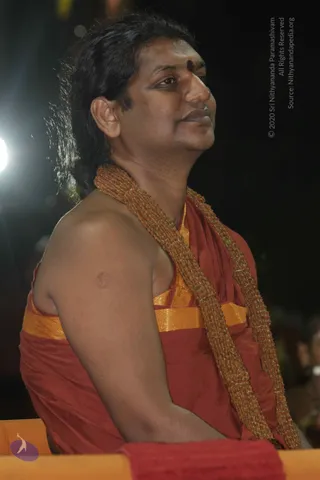
A decorated kalasha-topped ritual structure on a tiered wooden base, wrapped with white jasmine garlands and red rose garlands. A pink and red lotus-shaped form sits beneath, with green leaves and a jewel-studded conical vessel. Flanking figures are a seated bearded sage-like statue in red and a small seated figure on the right, with a yellow lion on the lower left. Warm lamps glow in the background. No living people are visible.A decorated ritual pedestal or kalasha-topped altar stand photographed close up in a dim hall, with glowing oil lamps blurred behind it. A tall brass kalasha wrapped in a pink cloth and white jasmine garlands with red roses sits atop a carved wooden peetha. Below, a pink and white lotus-shaped base holds a jewelled ornament with mango leaves. Two kneeling painted figures with folded hands, grey beards and red garments flank the lower tier, and yellow lions and a coiled cobra with red-eyed hoods decorate the stone-like base. No people are visible.A photograph of an ornately decorated Ganesha murti, the elephant-headed deity, shown frontally against a green silk backdrop with a gold-embossed arch. The murti wears a tall jewelled crown with blue velvet and a silver band, and is adorned with layered pearl and multicoloured stone necklaces, gold coin garlands, and dense garlands of orange, yellow, magenta and white flowers. One hand is raised in a blessing gesture. No physical people are visible; this is a statue.A photograph of a man seated in profile against a dark night background, lit from the left. He has long dark hair swept back, a small dark bindi-style mark on his forehead, and wears a rust-red and gold-bordered wrap over bare shoulder with a thick orange-gold rudraksha-style mala draped across his chest. He gazes upward and to the right. In the lower foreground an orange cushion or seat edge and a red cloth are visible. Appearance-based label: Swamiji (probable), a seated figure in ceremonial satsang attire with long hair, ornate mala and saffron-red wrap.Photograph of a man seated at night in front of a dark background, turned three-quarters to the right with a slight smile and gaze lifted upward. He has long dark hair swept back and a small dark bindi-style mark on his forehead. He wears a rust-red shawl over the shoulders and a bare-shouldered orange-and-gold border garment, with a long orange-brown rudraksha mala draped across his chest. A bright light source is visible at the left edge. A red cloth edge and an orange seat or platform appear in the lower foreground. Appearance is consistent with a satsang setting; the page identifies the event as a person satsang, but the identity cannot be confirmed from appearance alone.A seated person in a rust-red garment with gold-bordered edges sits in an orange upholstered chair, hands pressed together in namaste with eyes lowered and a gentle smile. A golden-brown beaded mala hangs around the neck and a small red mark is on the forehead. The background is dark with a glittering red curtain at the right edge. The person's appearance is consistent with a presentation of the a person candidate, with the mala, red-gold robe and tilak as cues, though identity remains uncertain from appearance alone.