Skip to content
Saturday

25 November 2017

ஜீவன் சிவனாகும் நுட்பம்

Dated photos
923
Source pages
1
Media
2
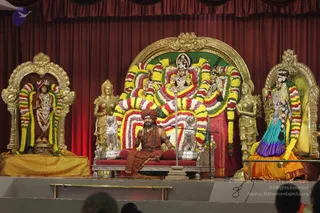
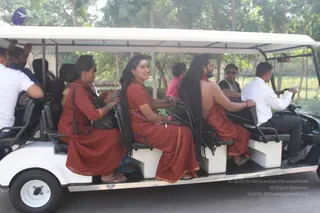
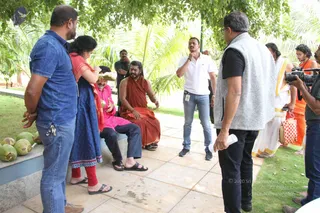
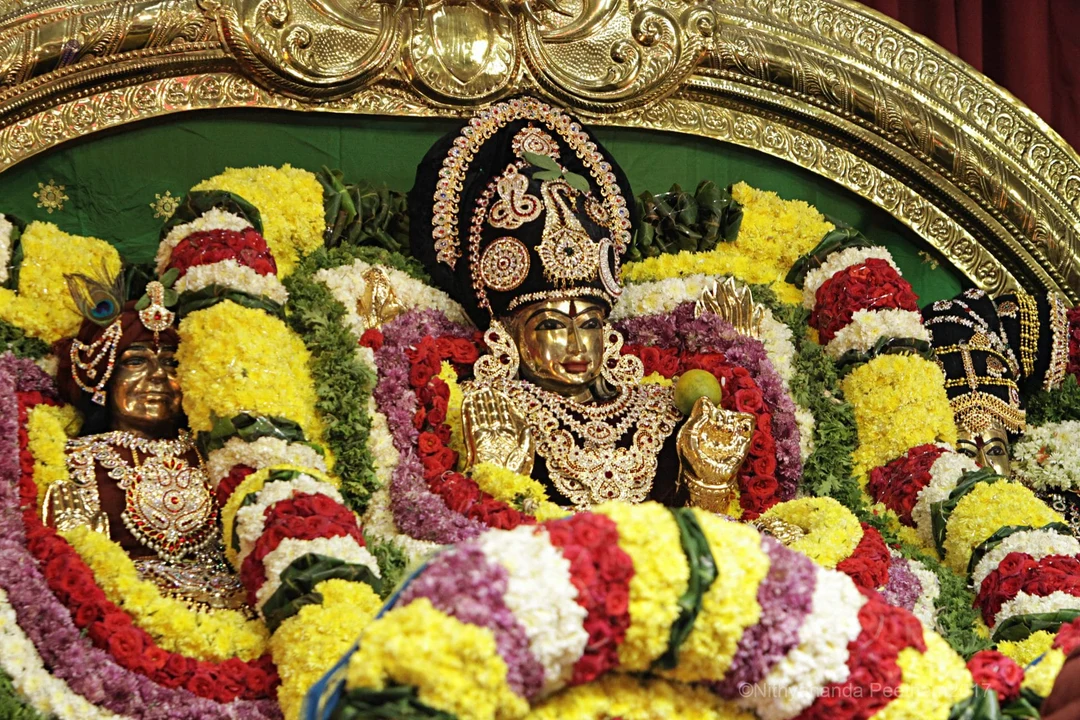
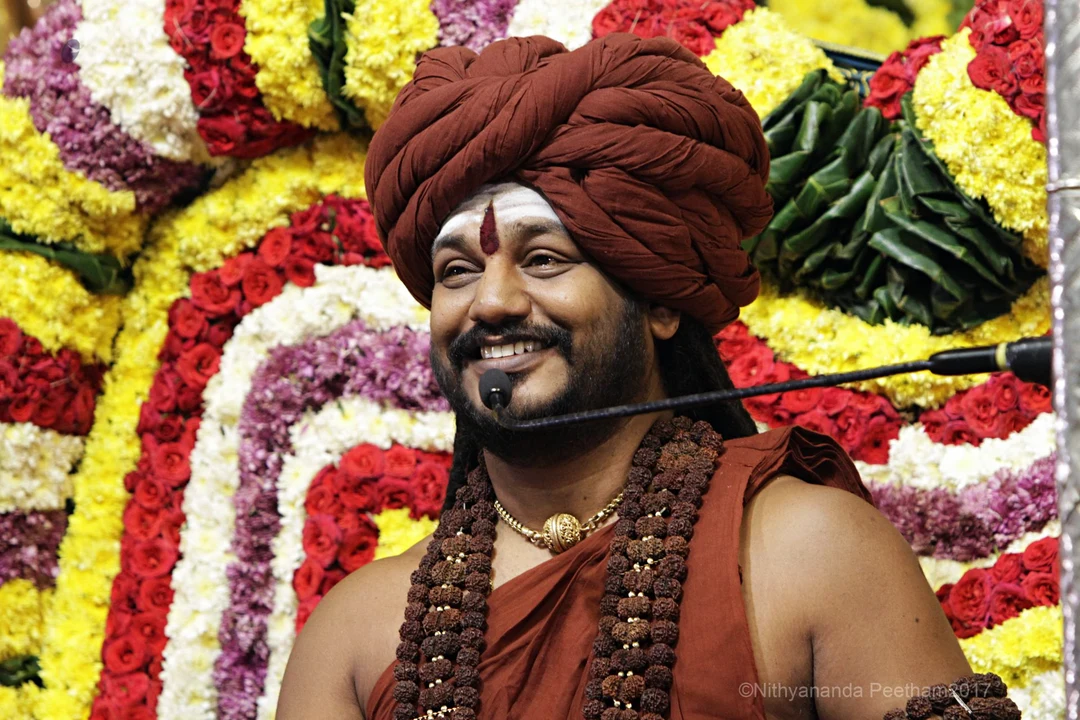
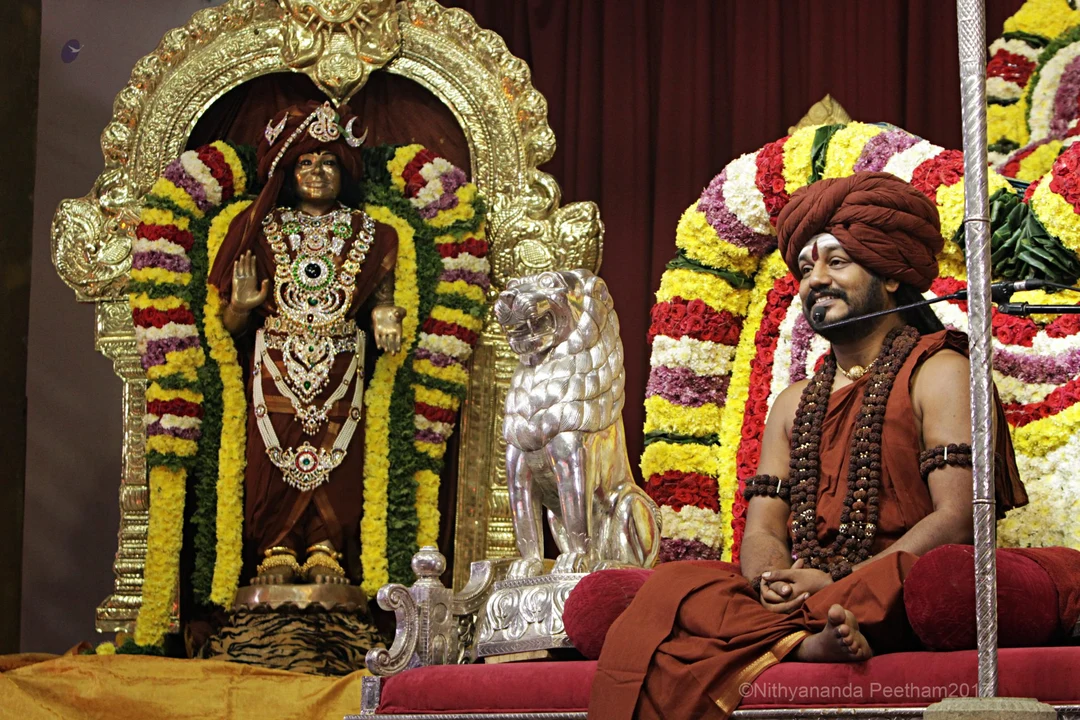
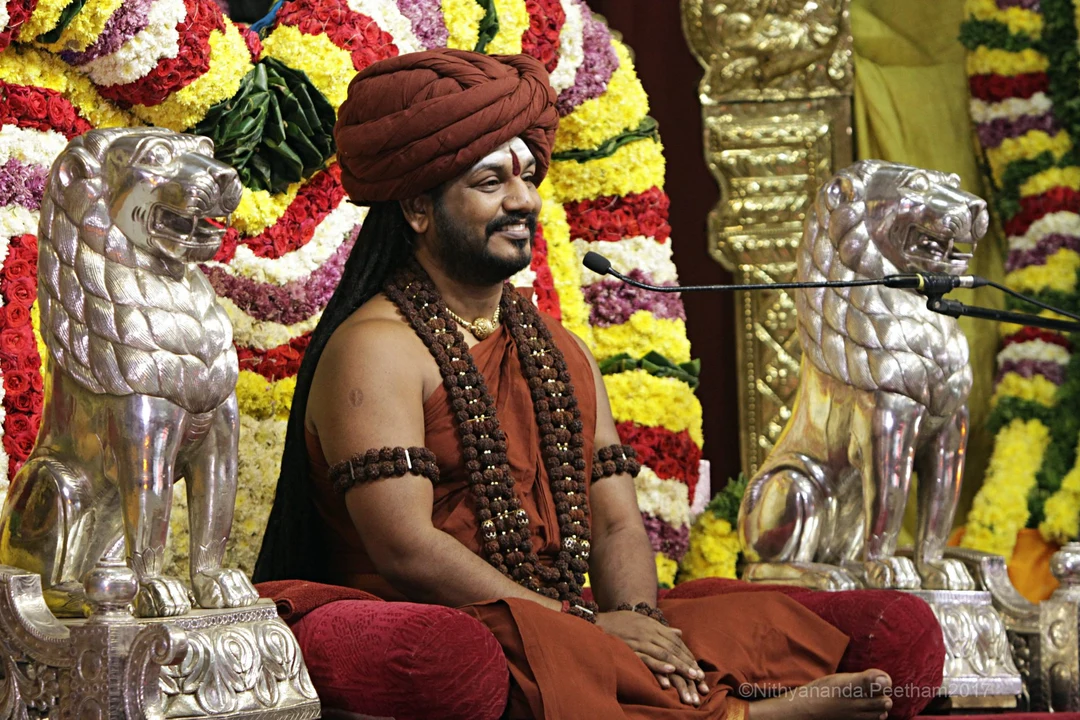
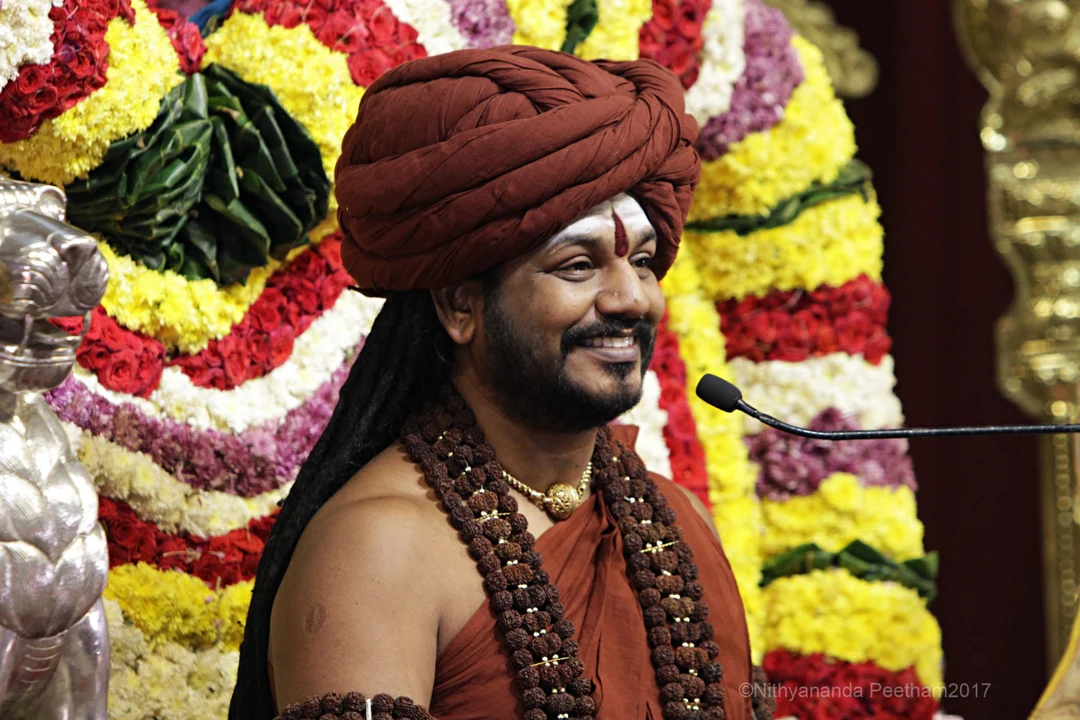
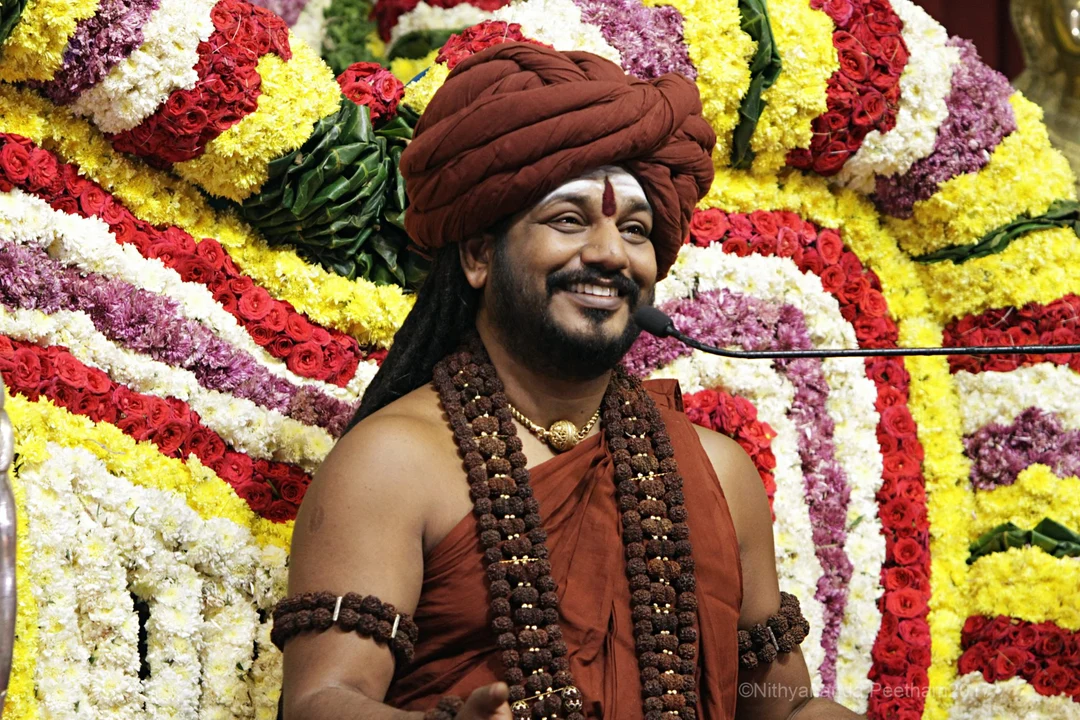
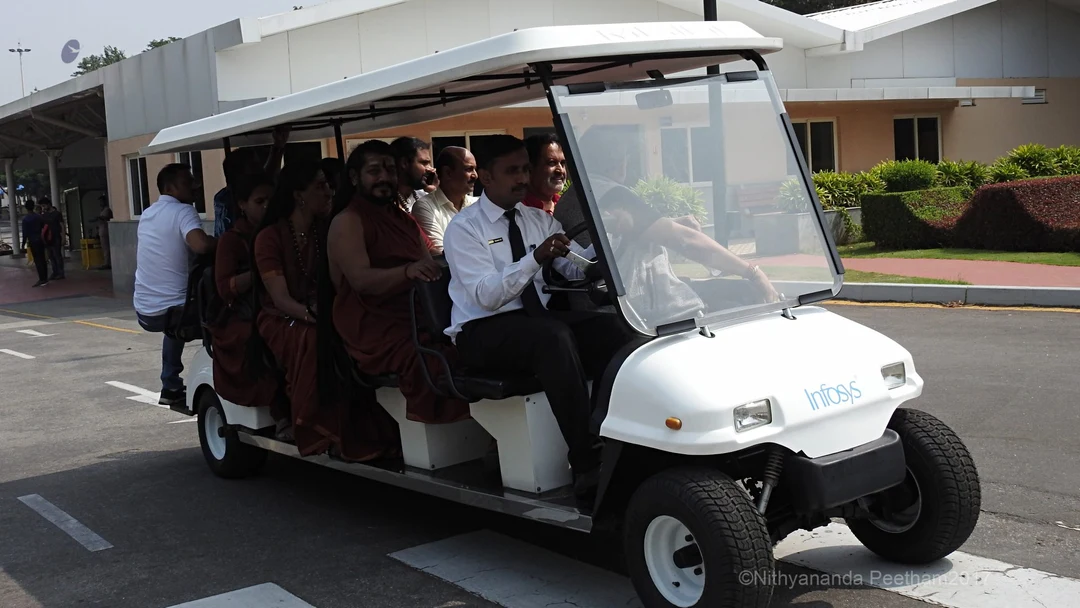
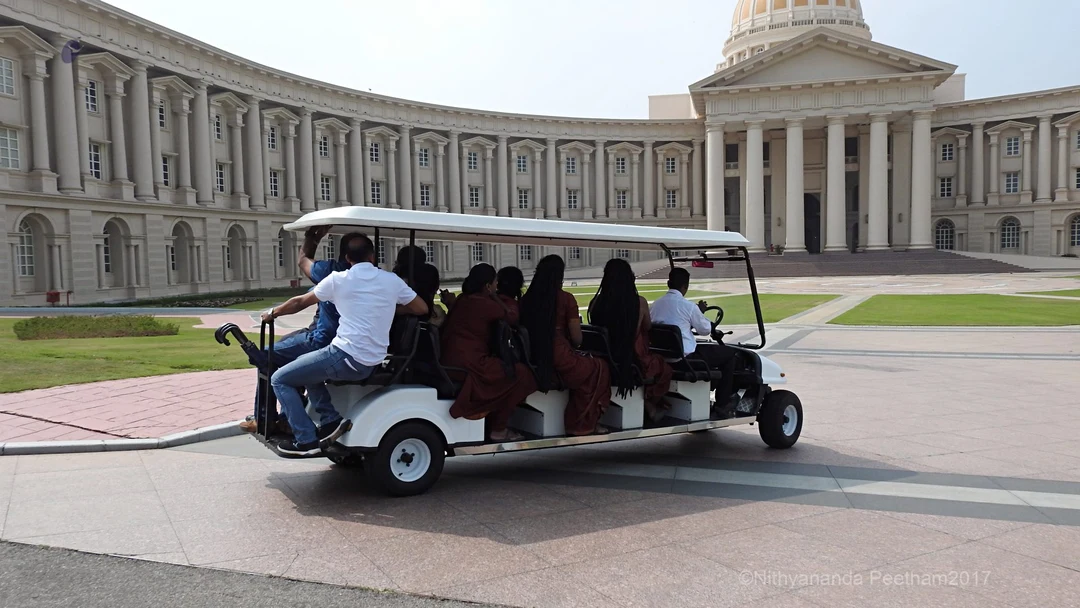
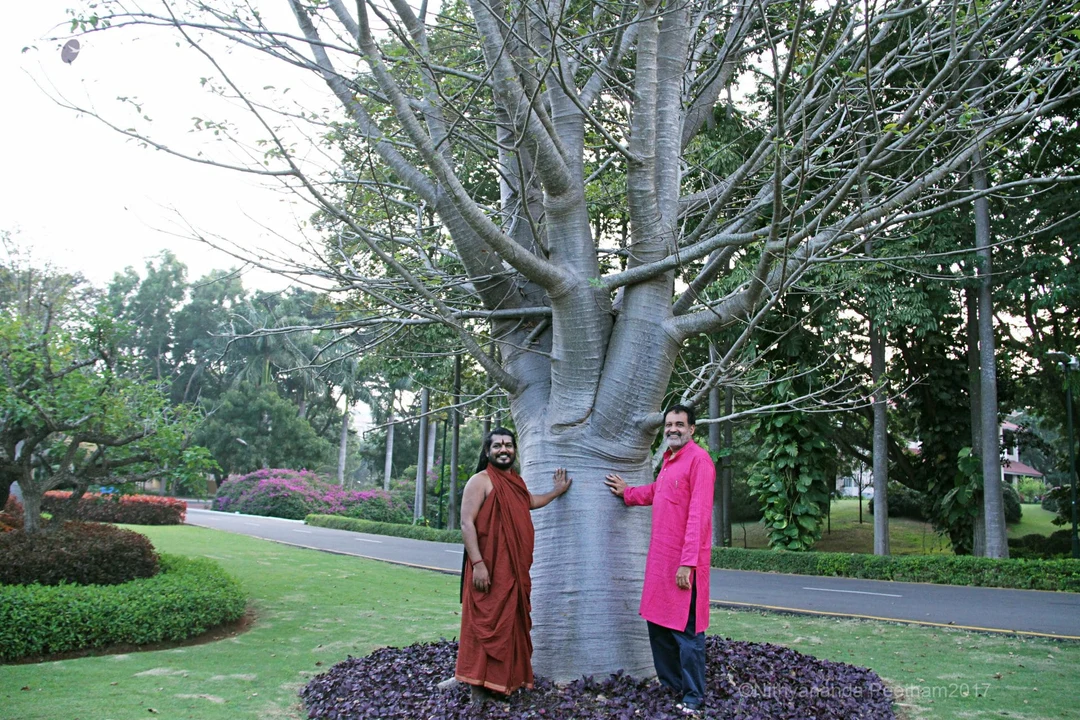
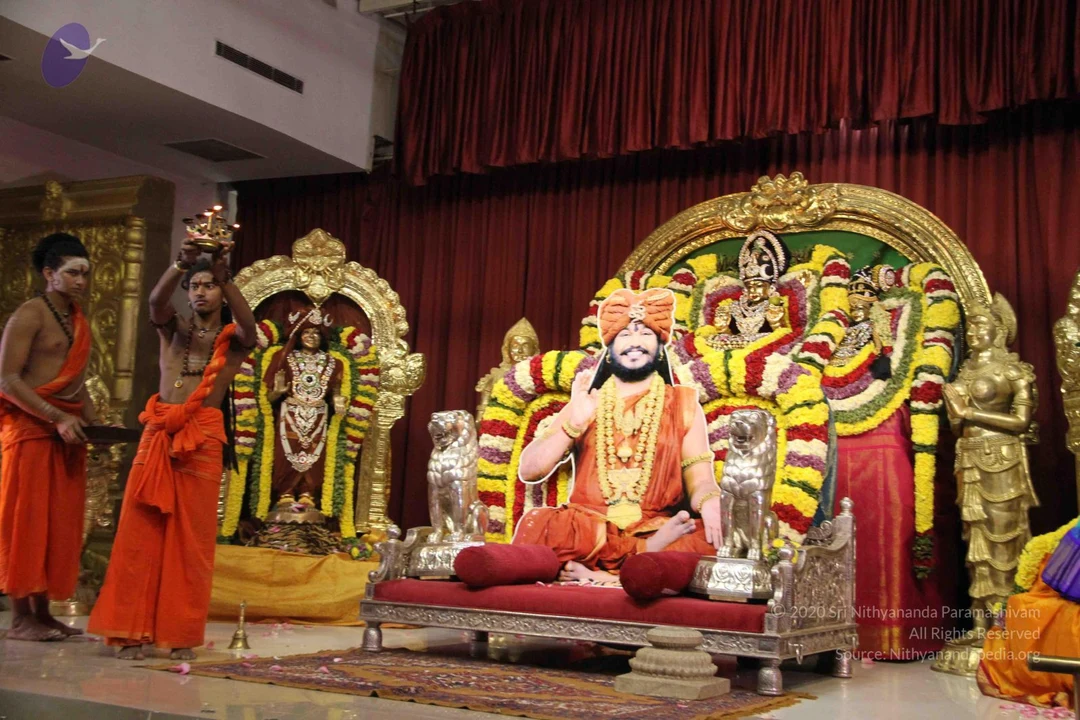
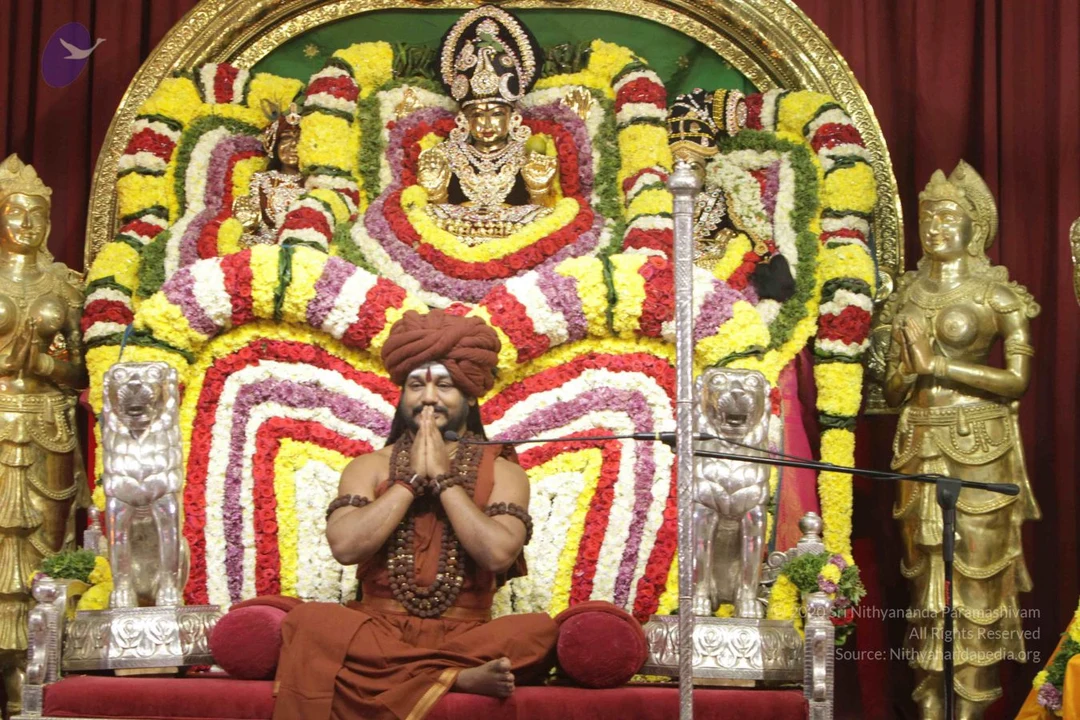
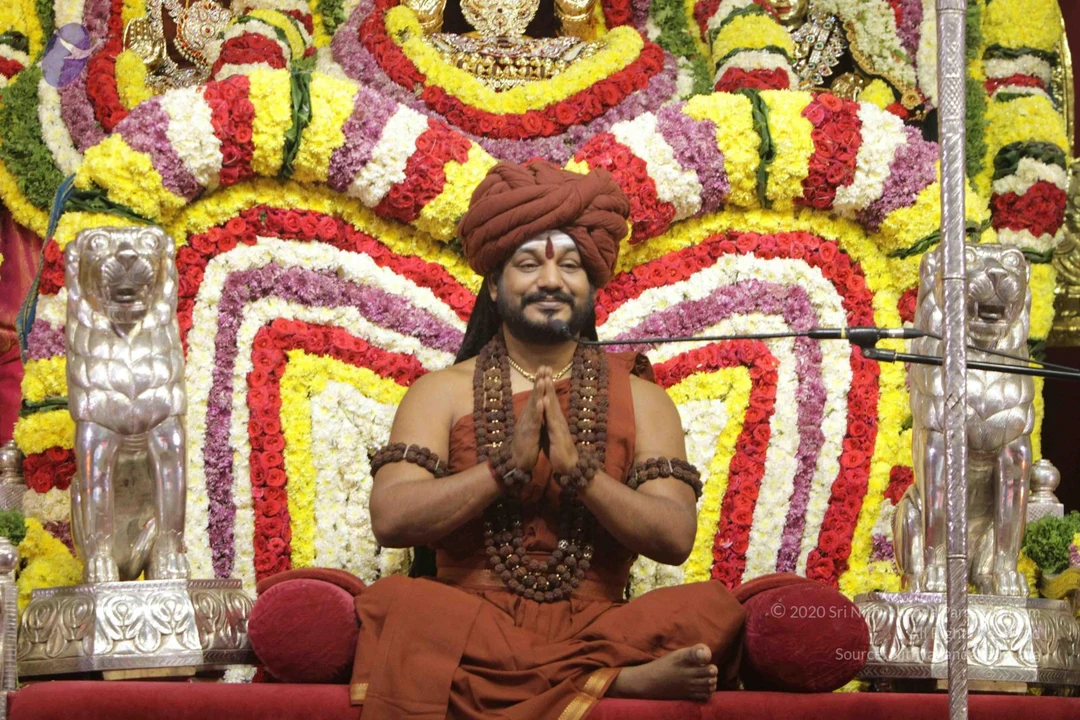
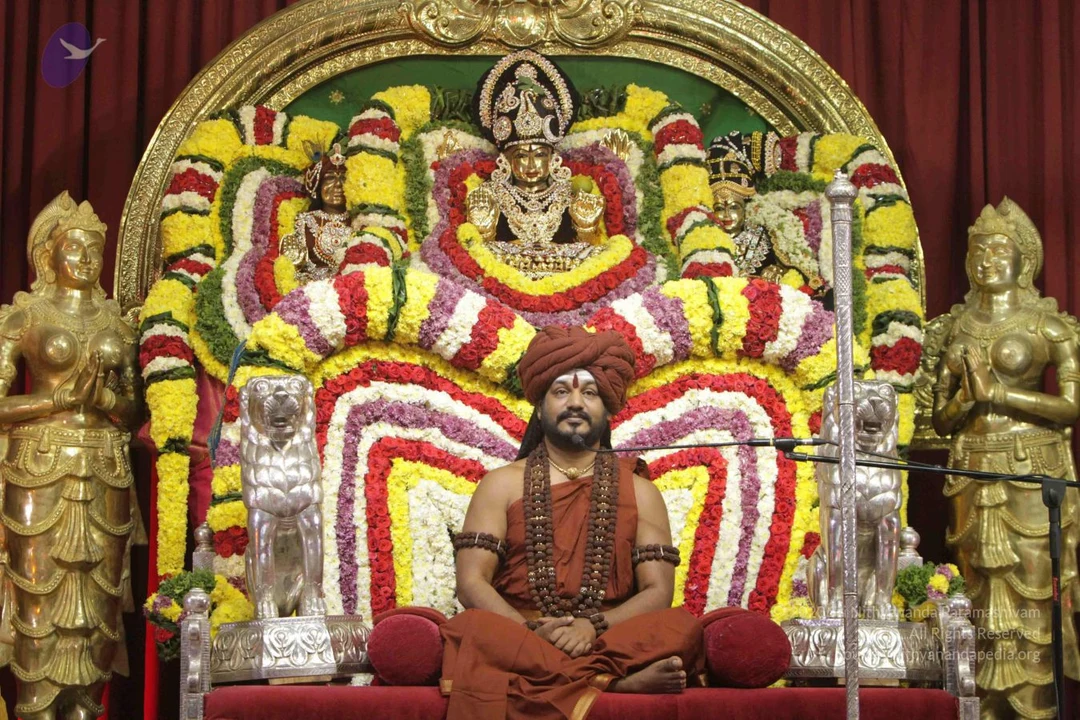
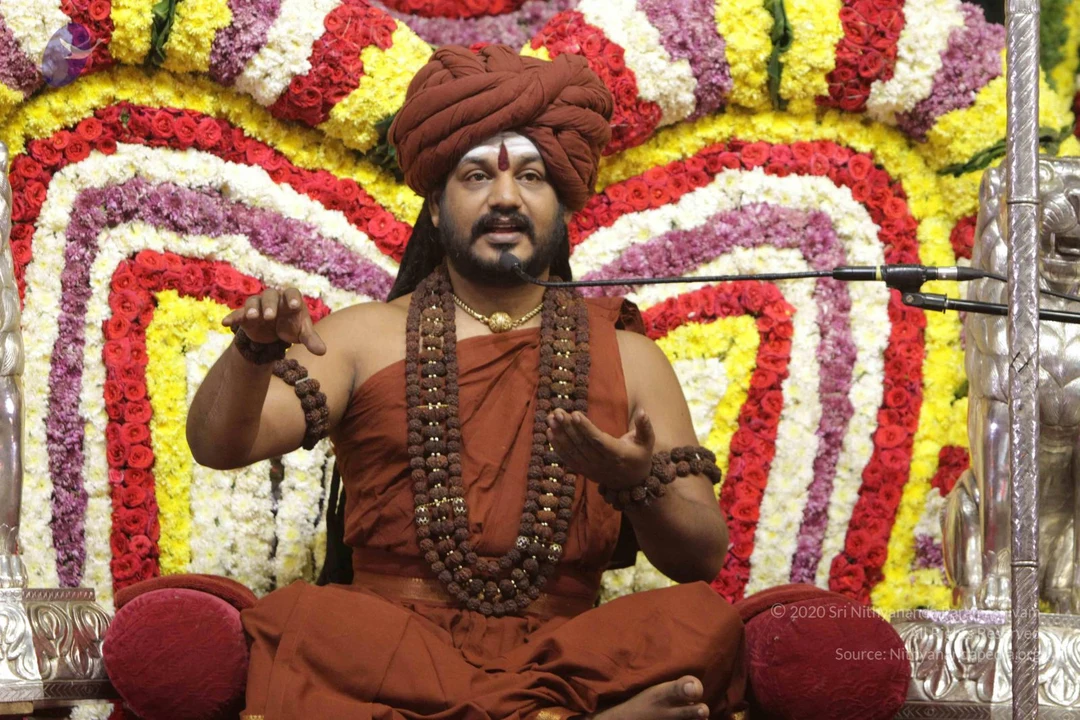
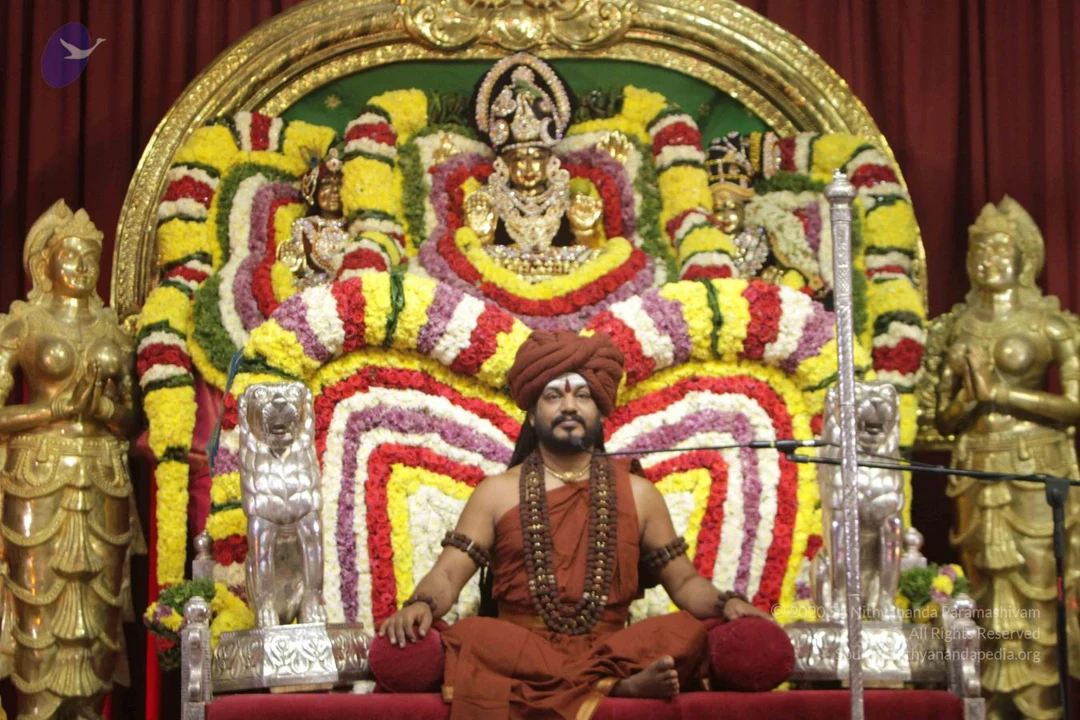
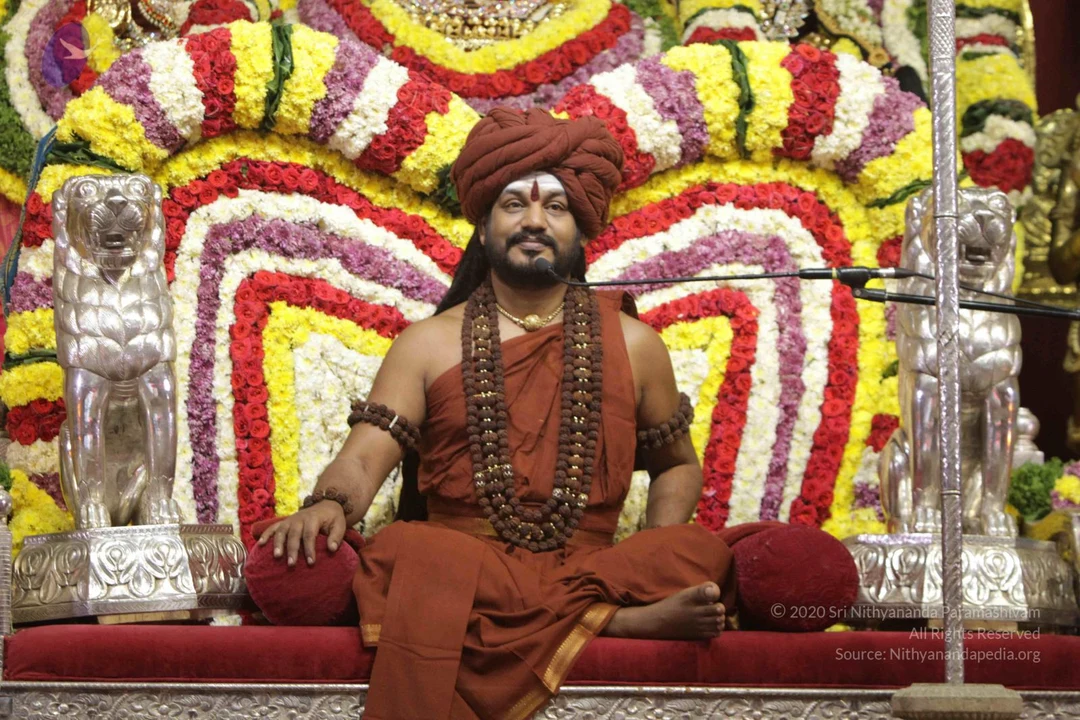
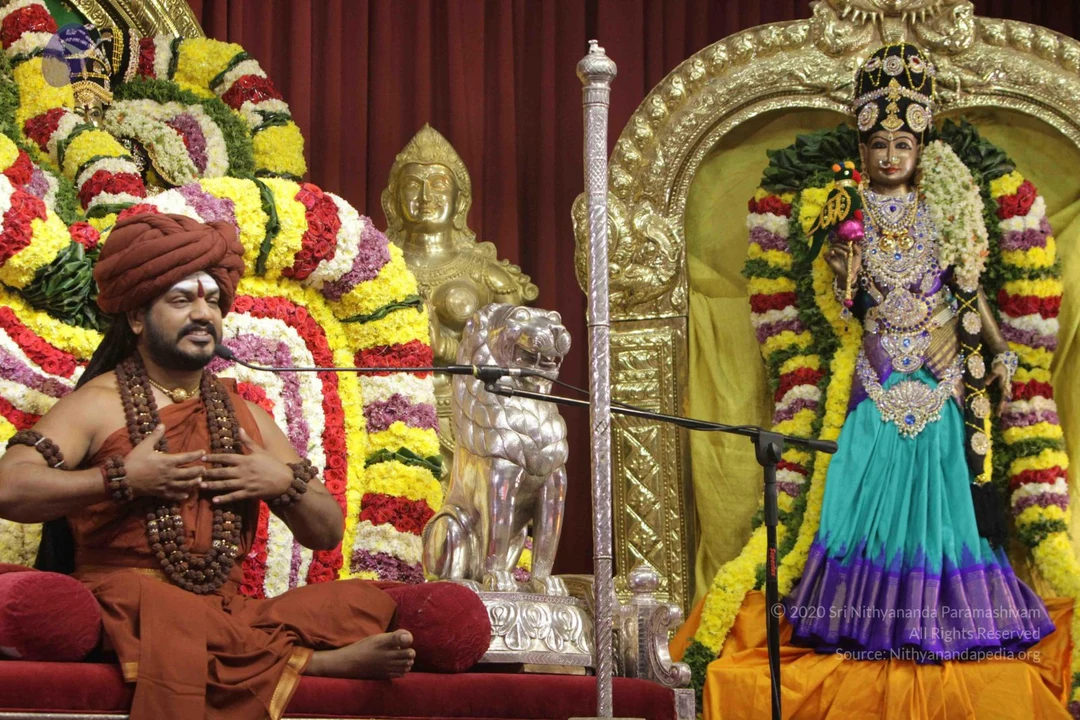
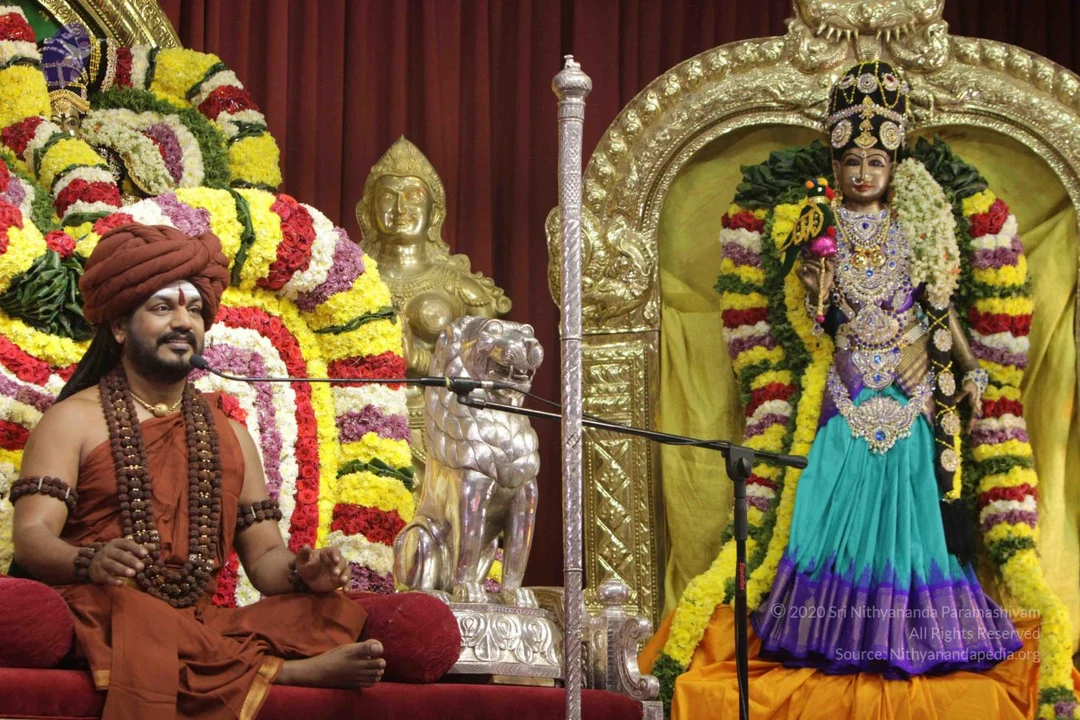
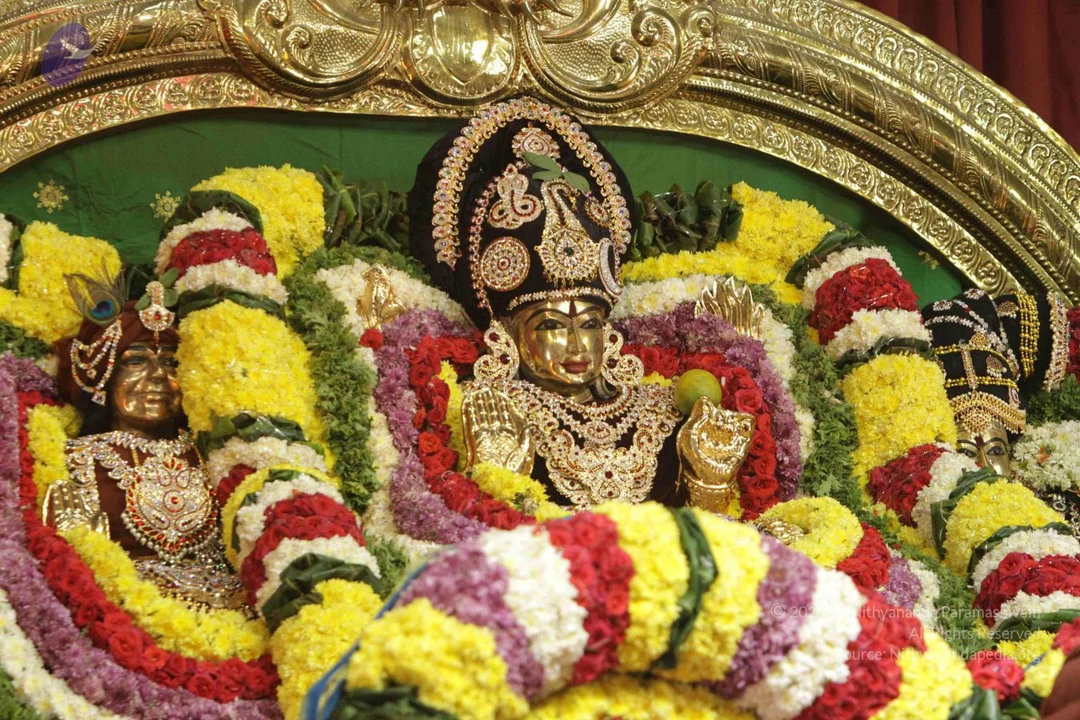
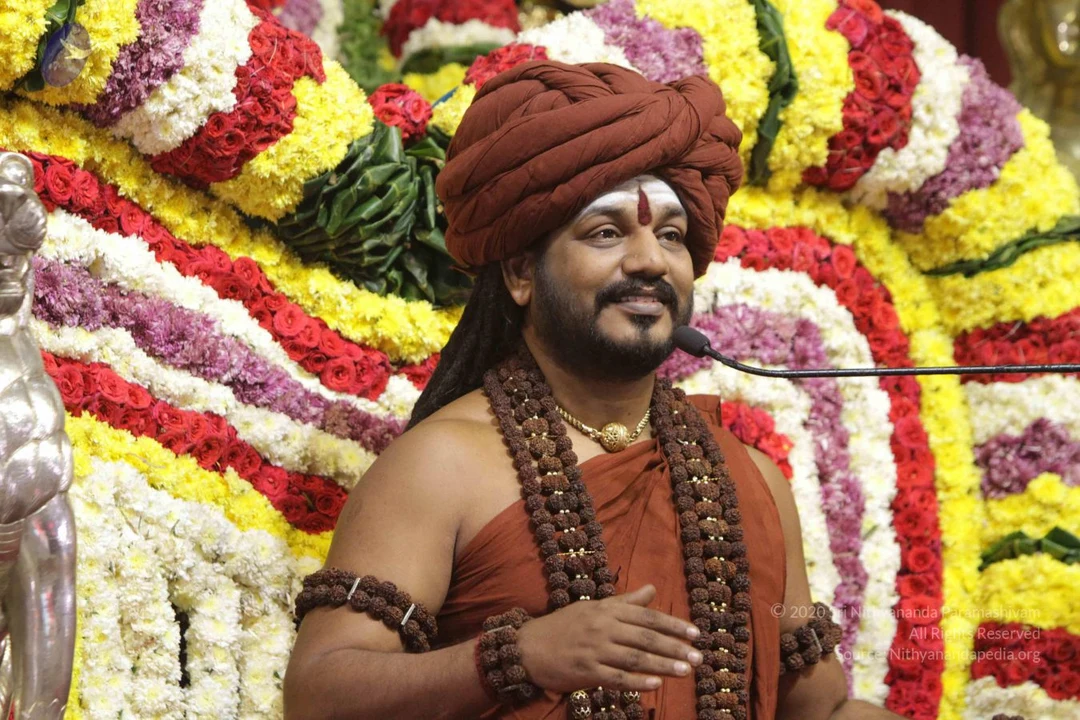
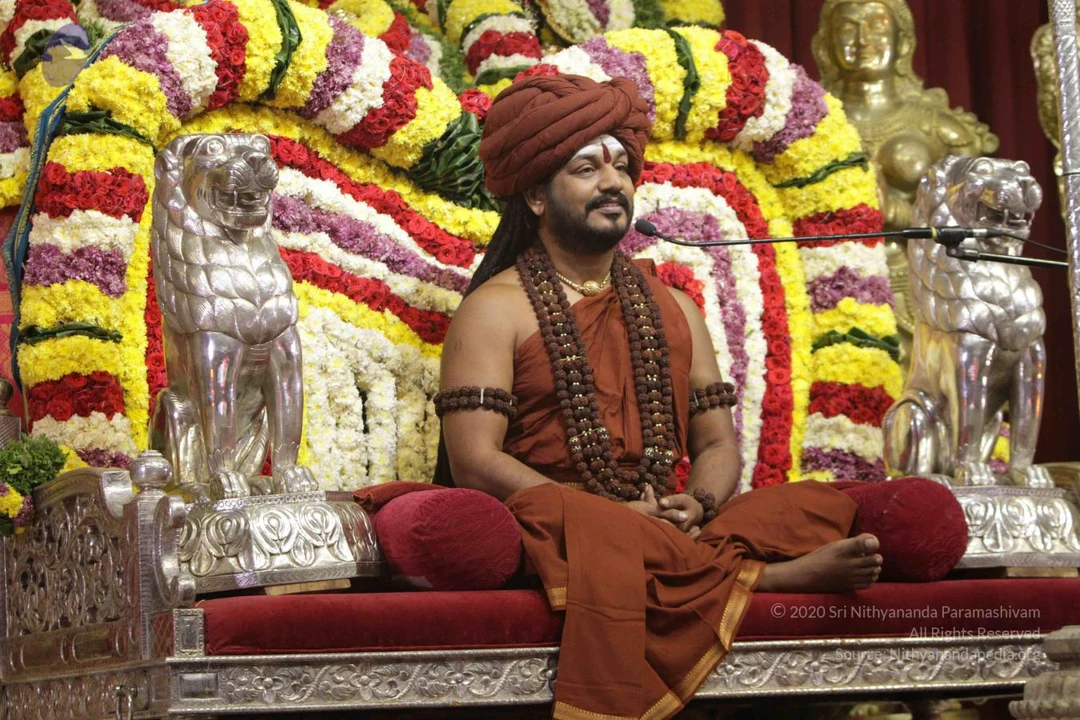
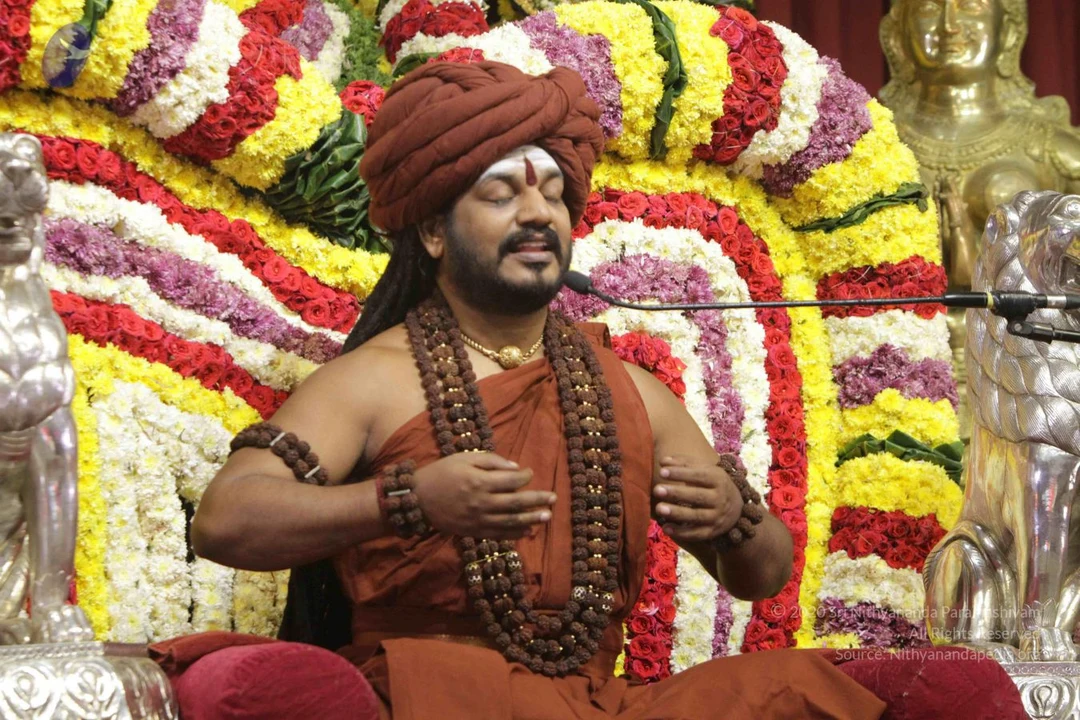
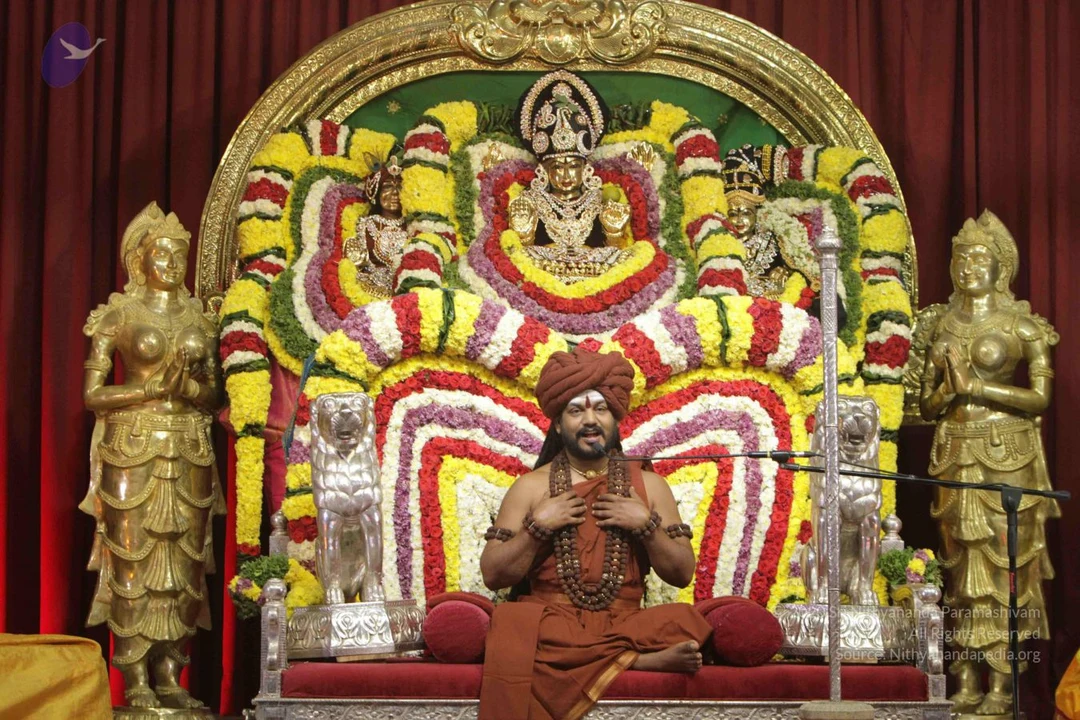
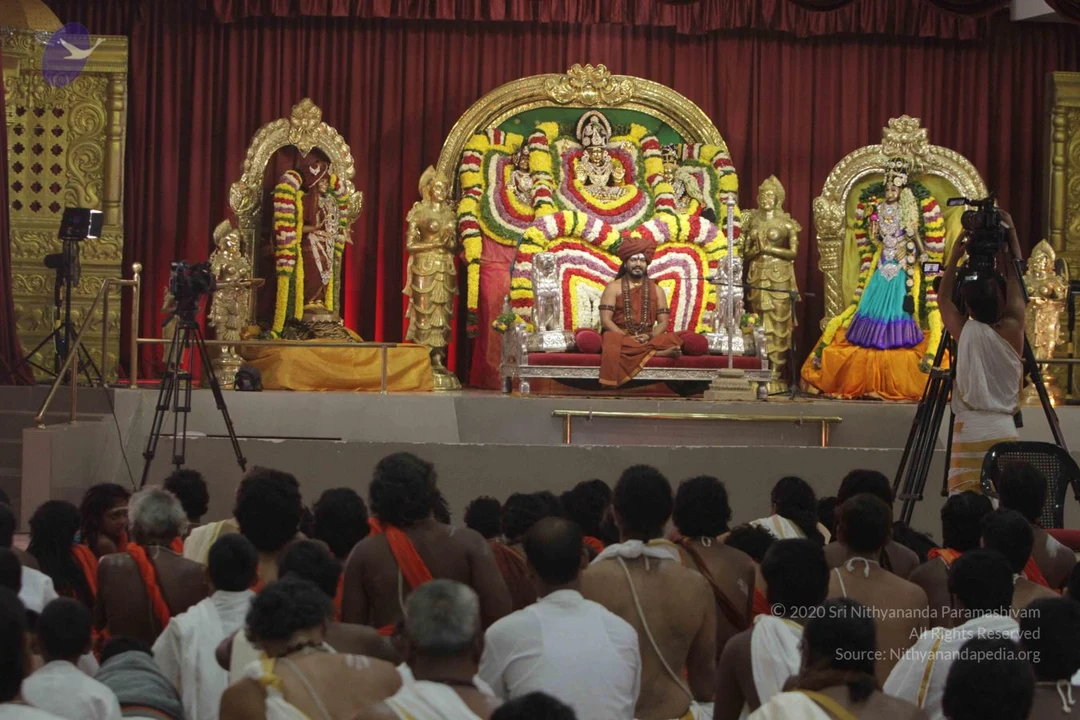
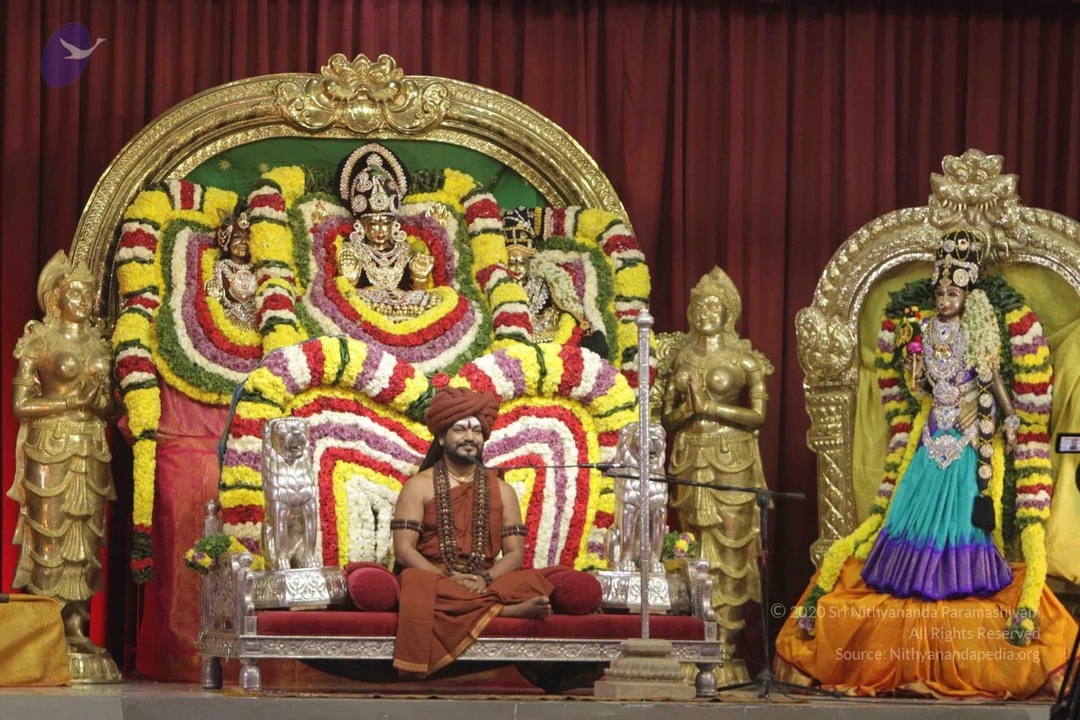
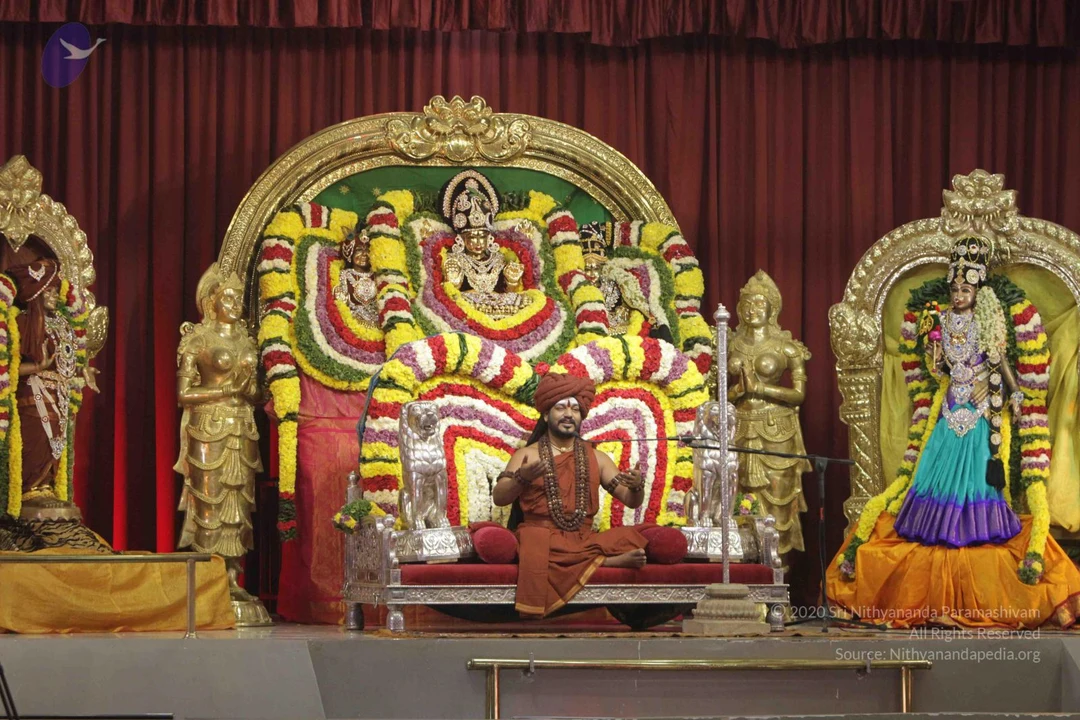
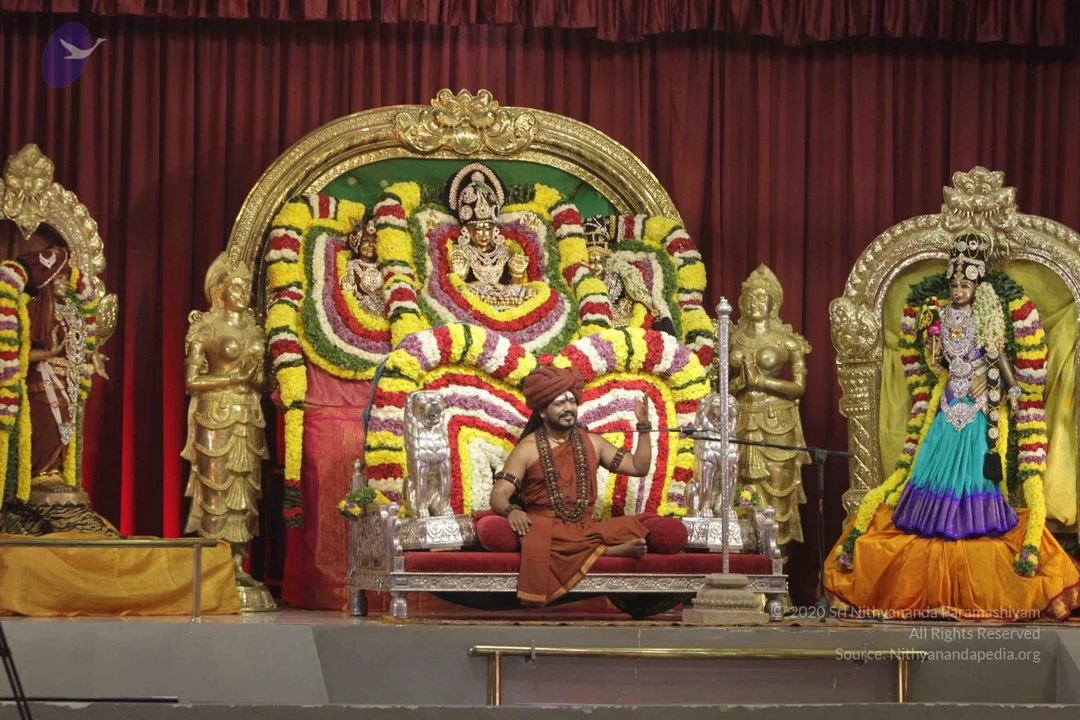
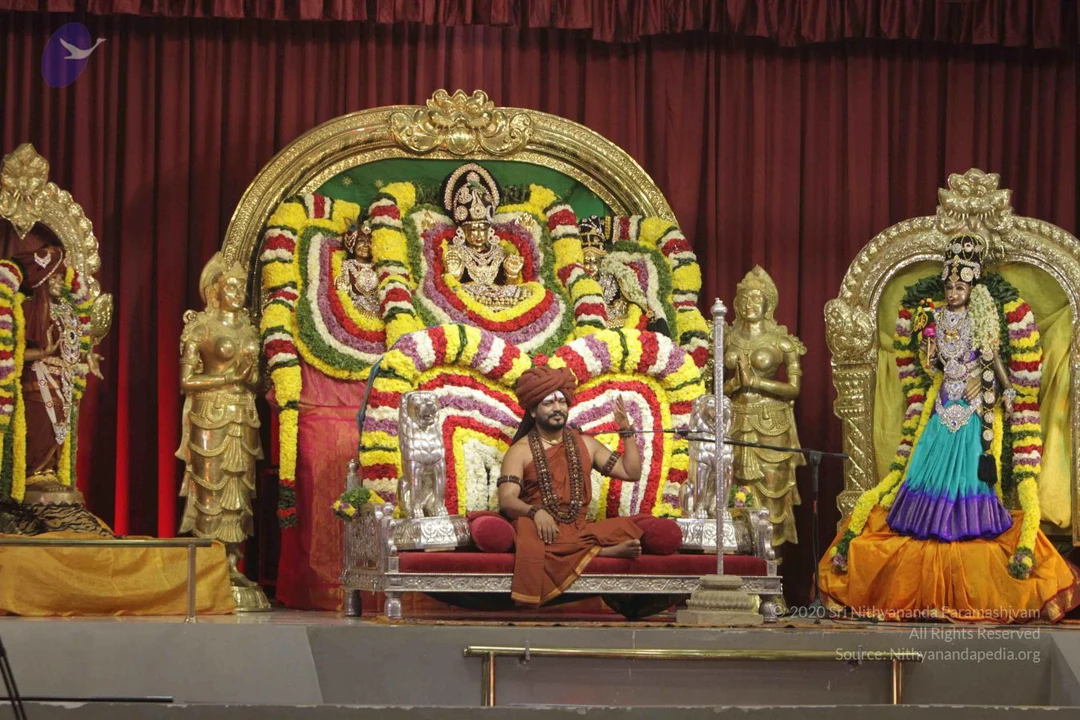
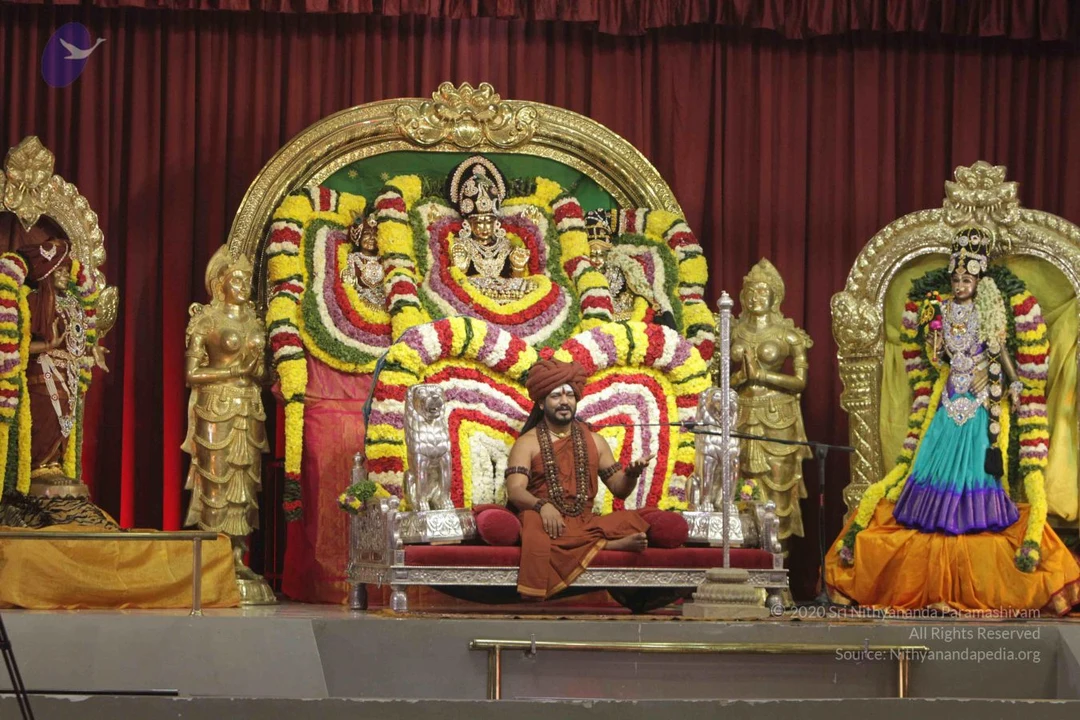
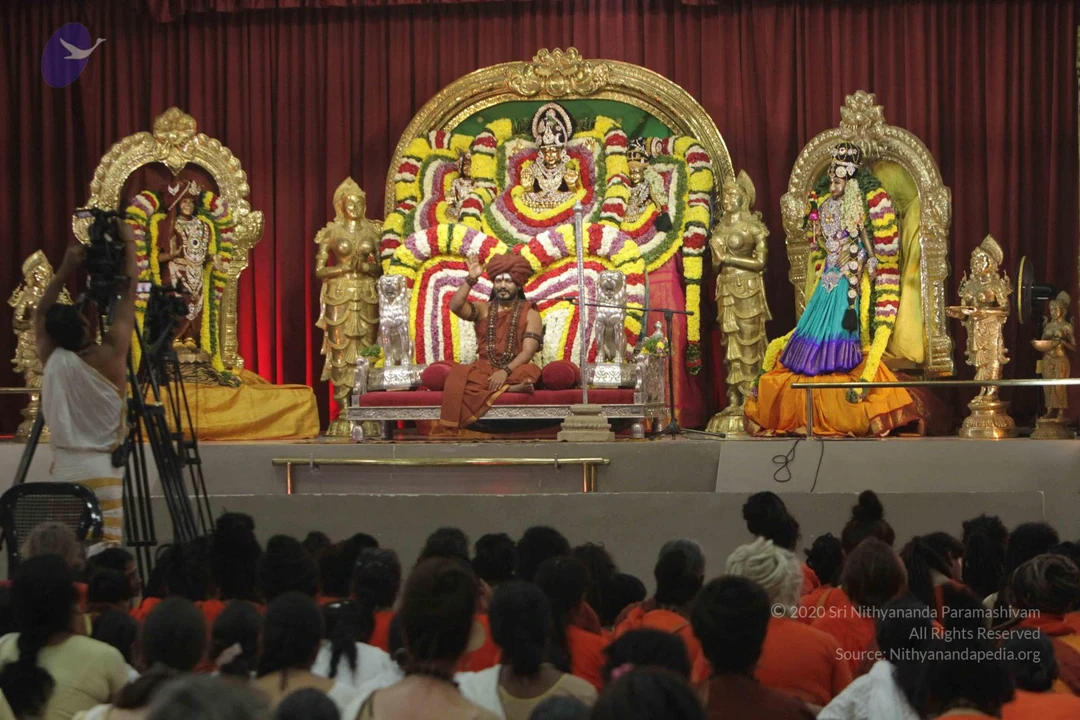
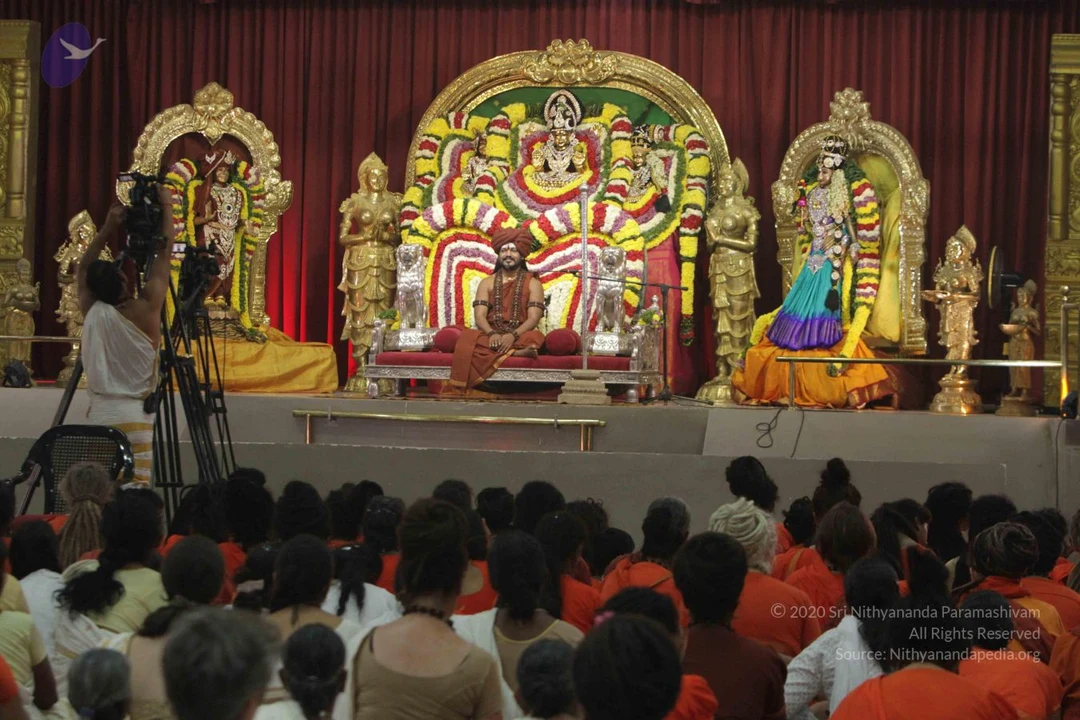
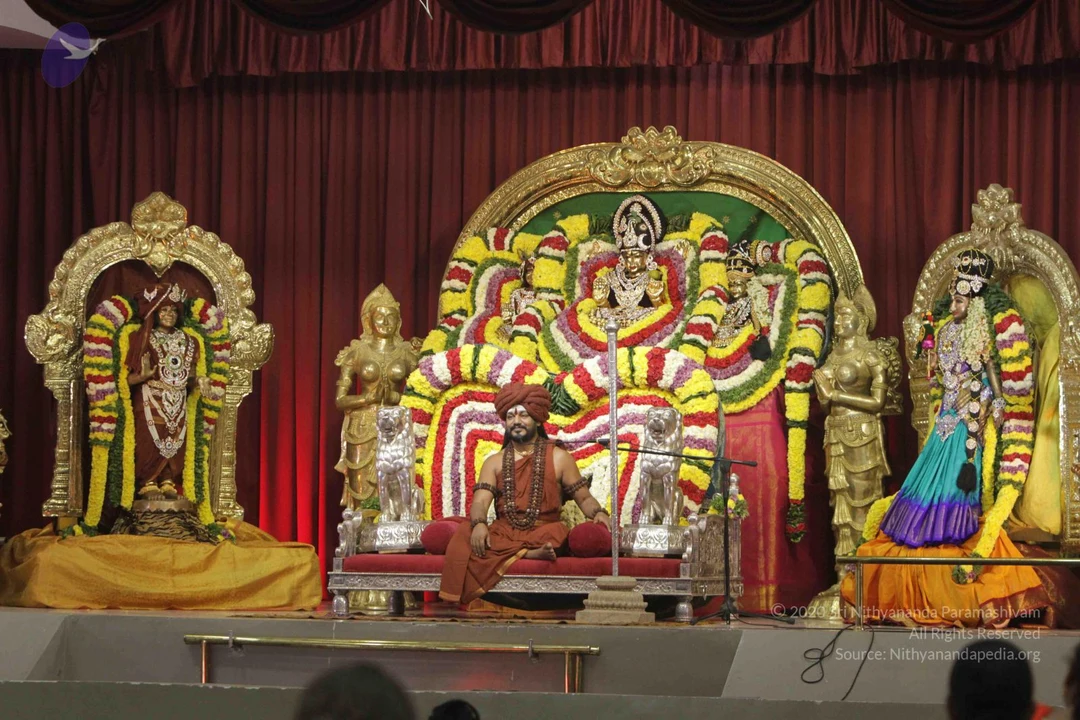
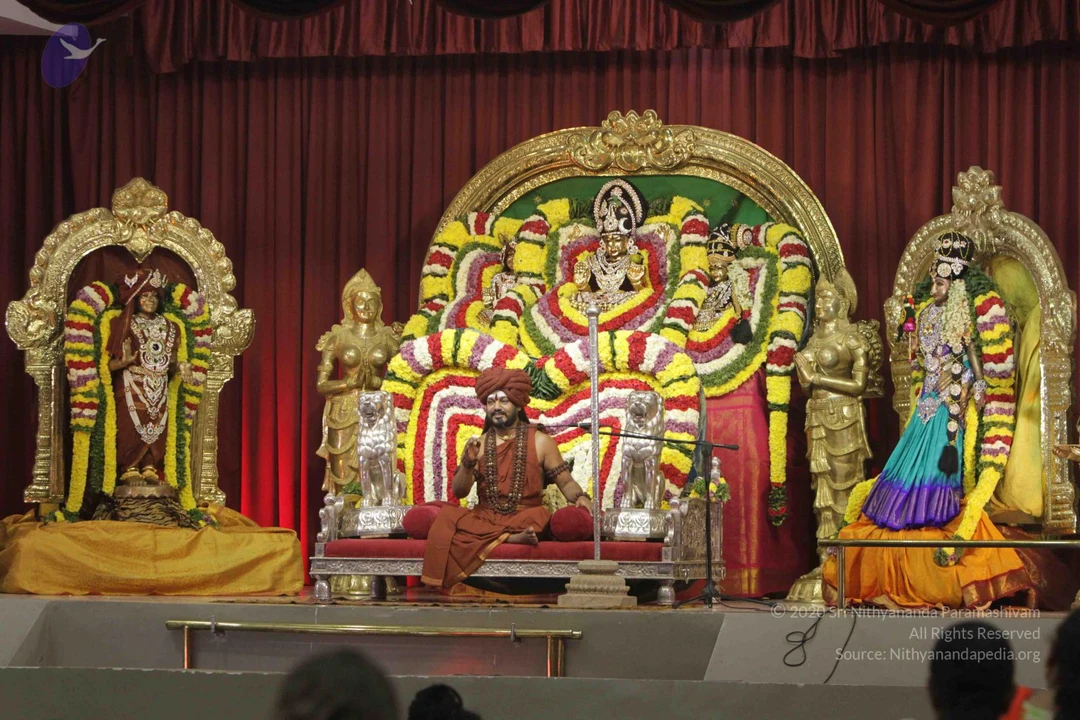
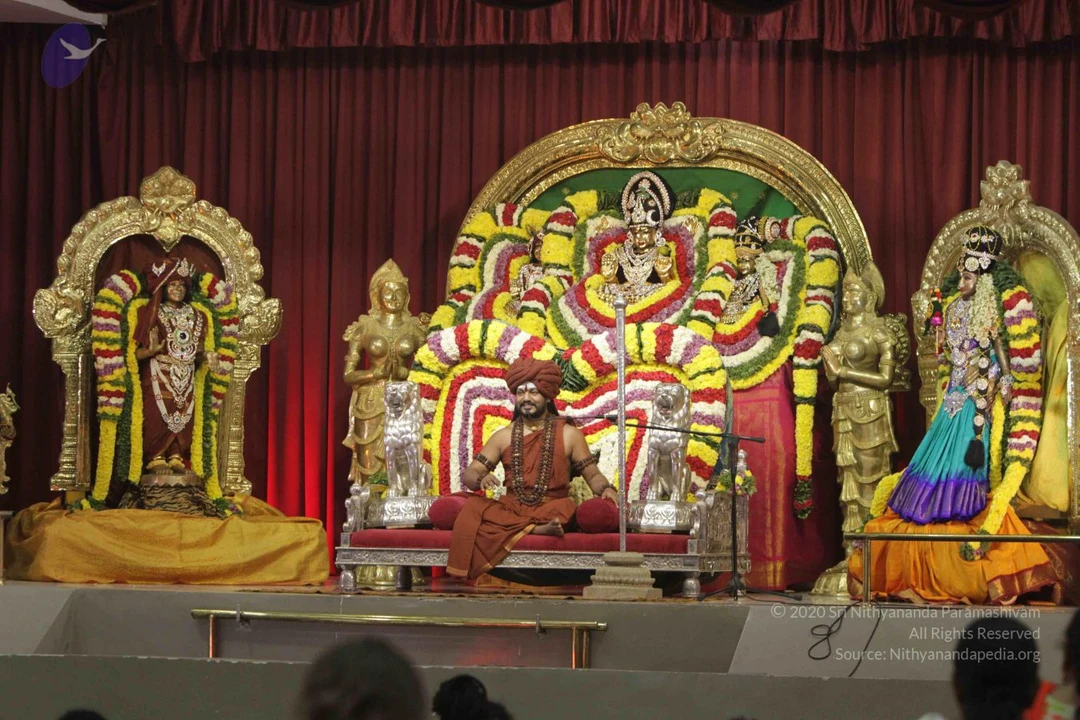
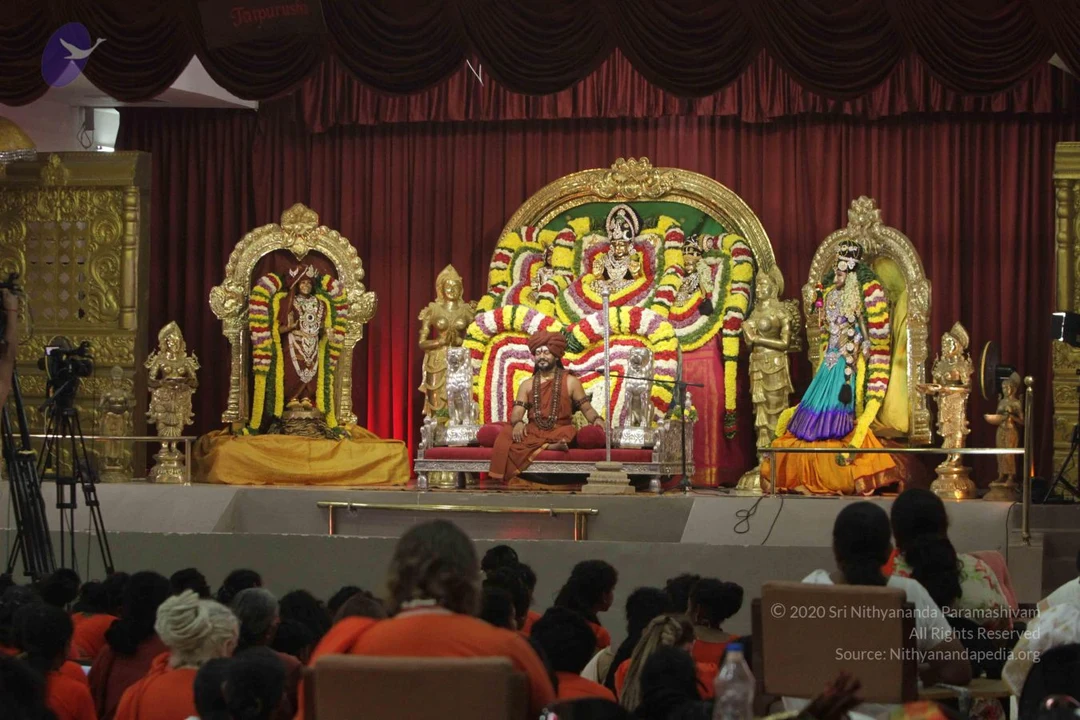
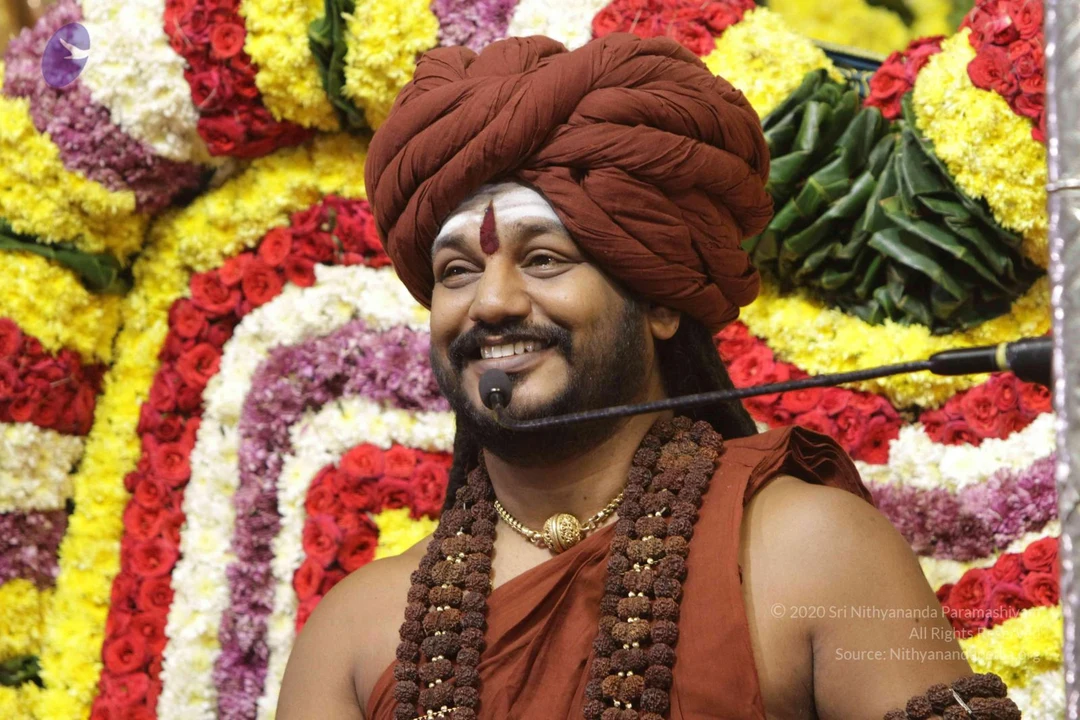
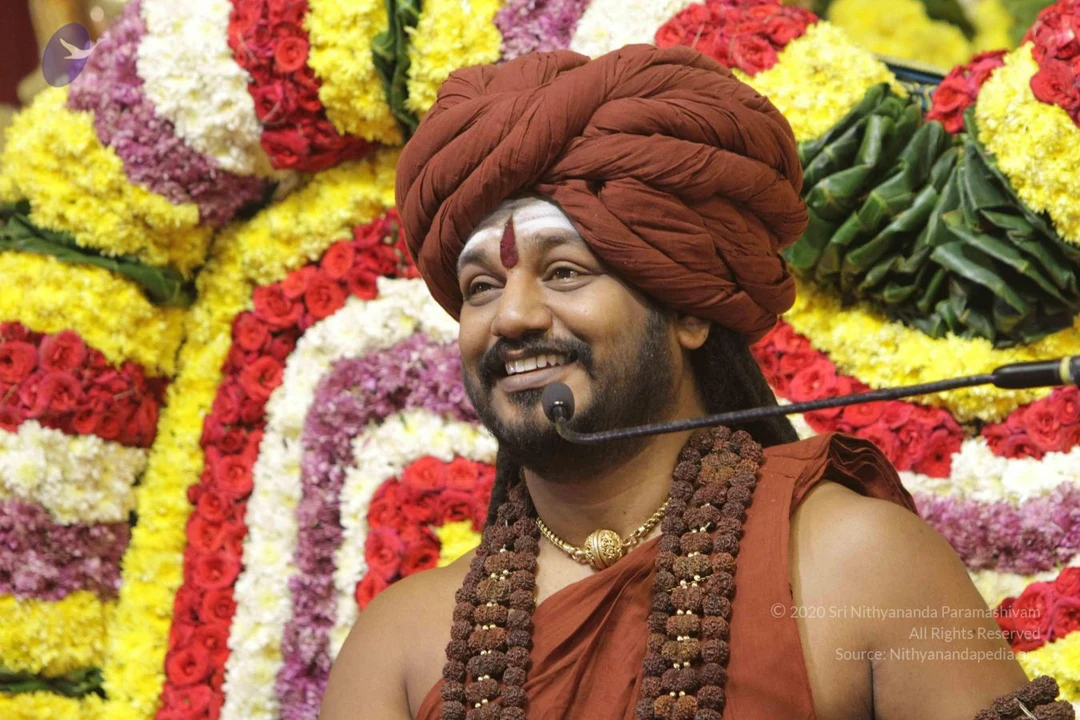
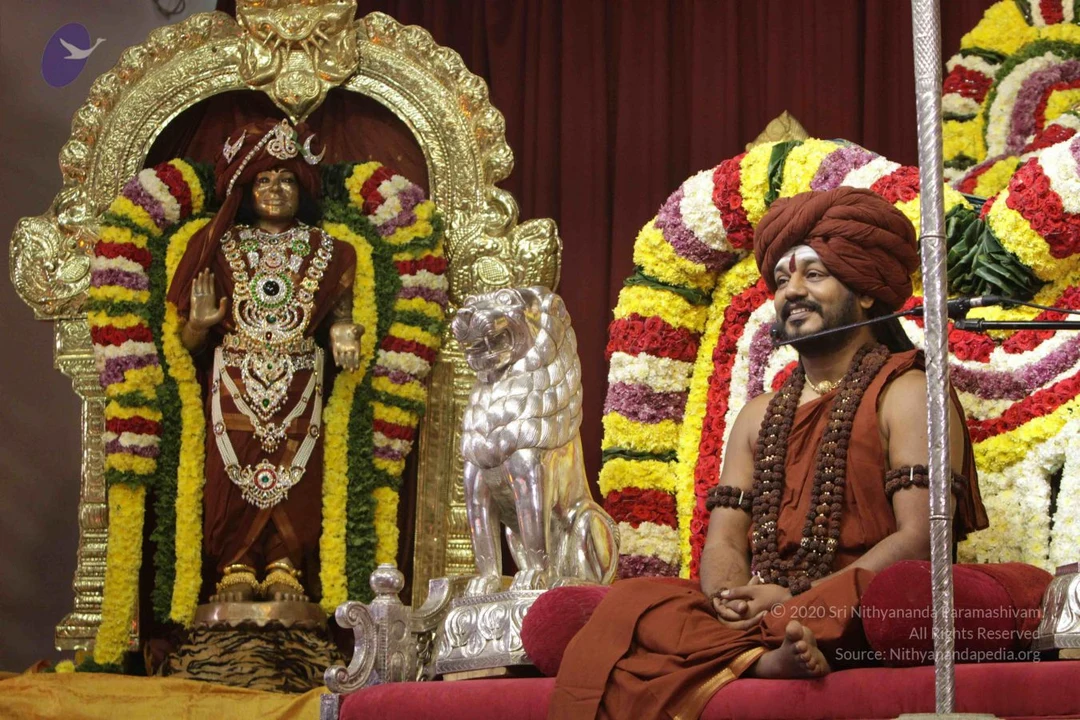
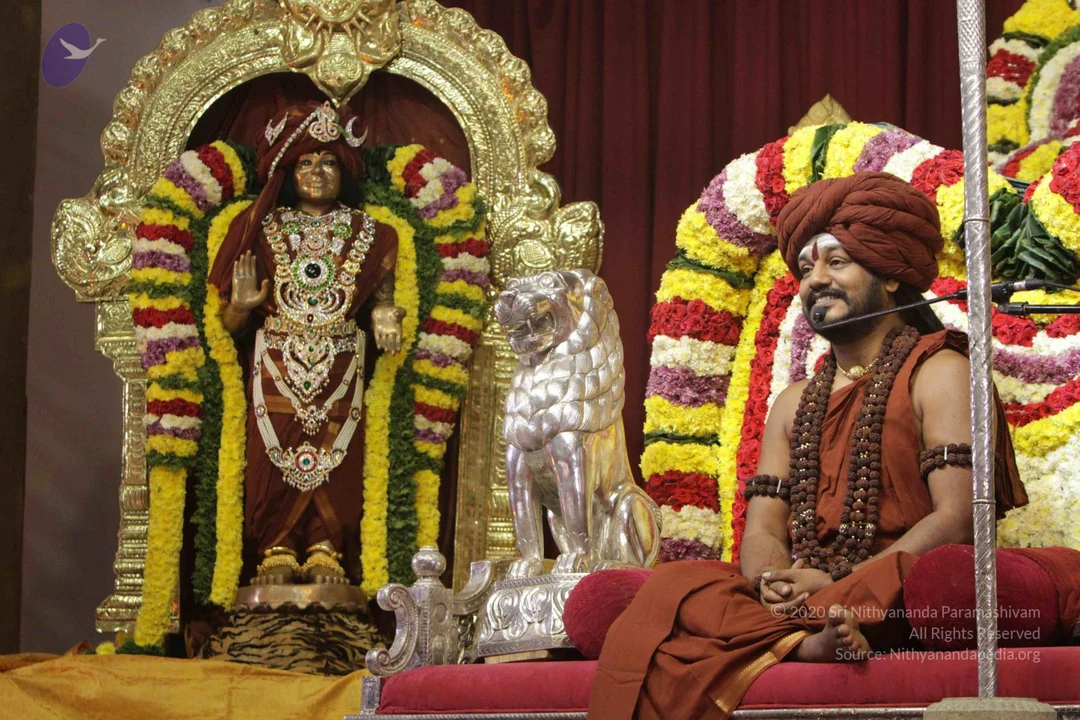
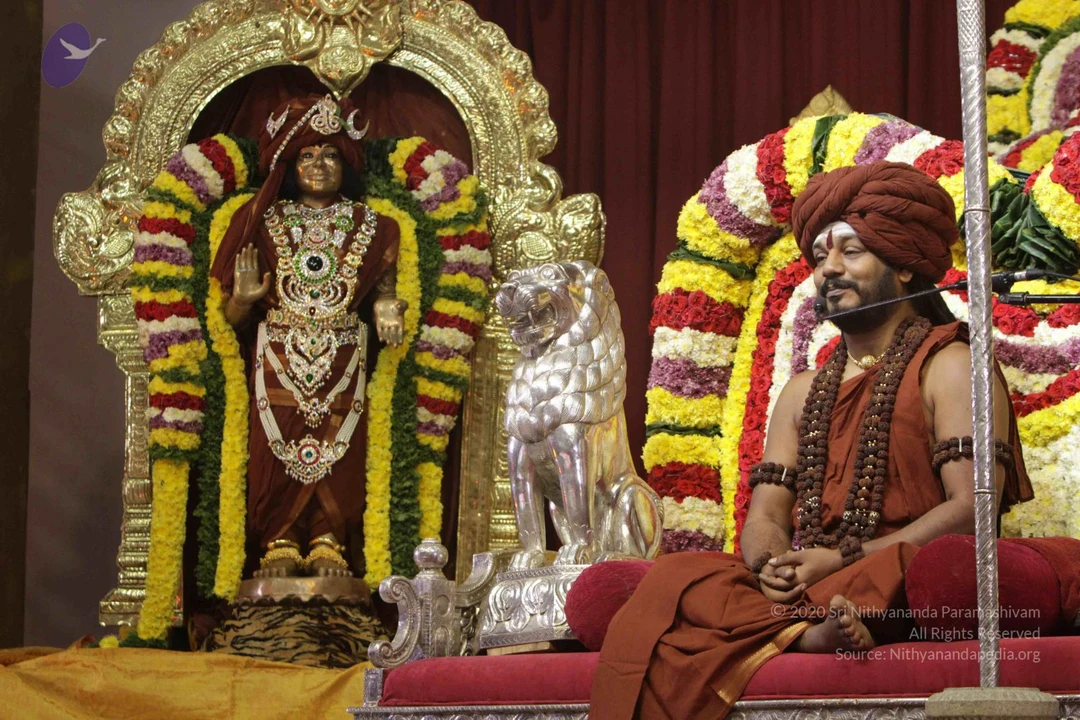
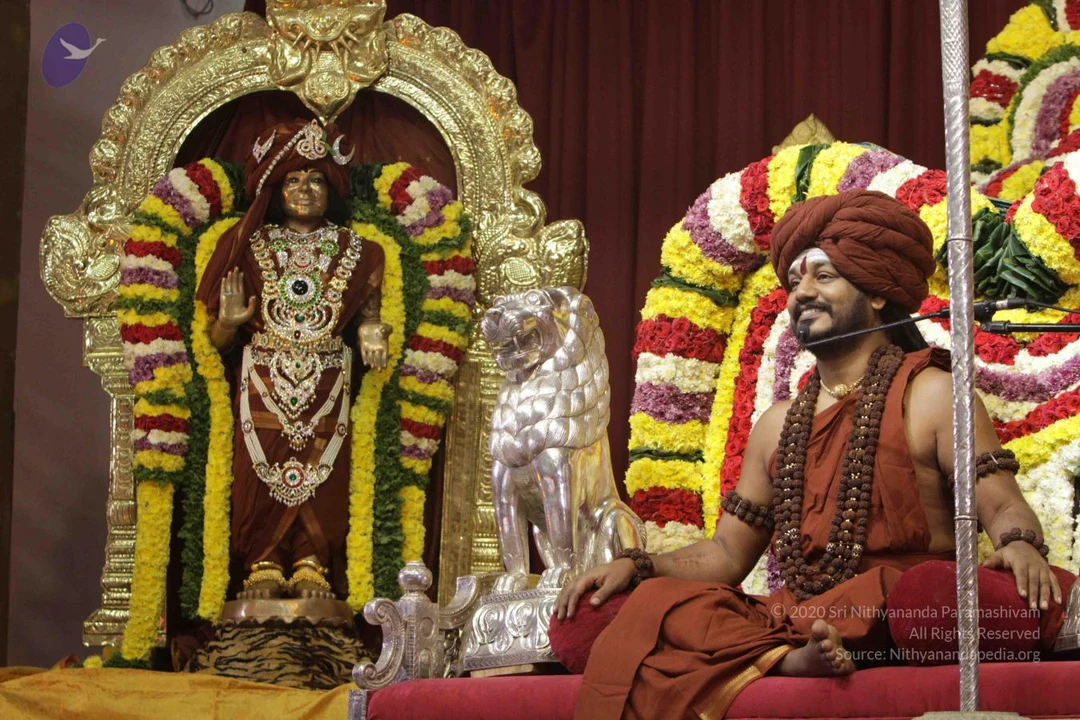
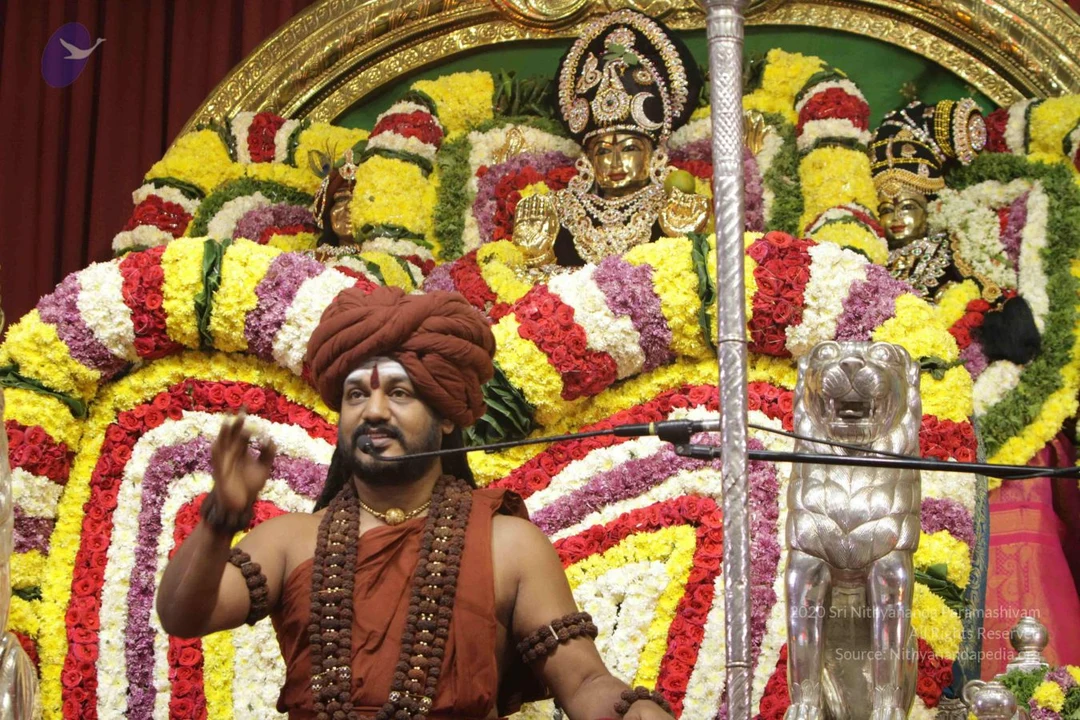
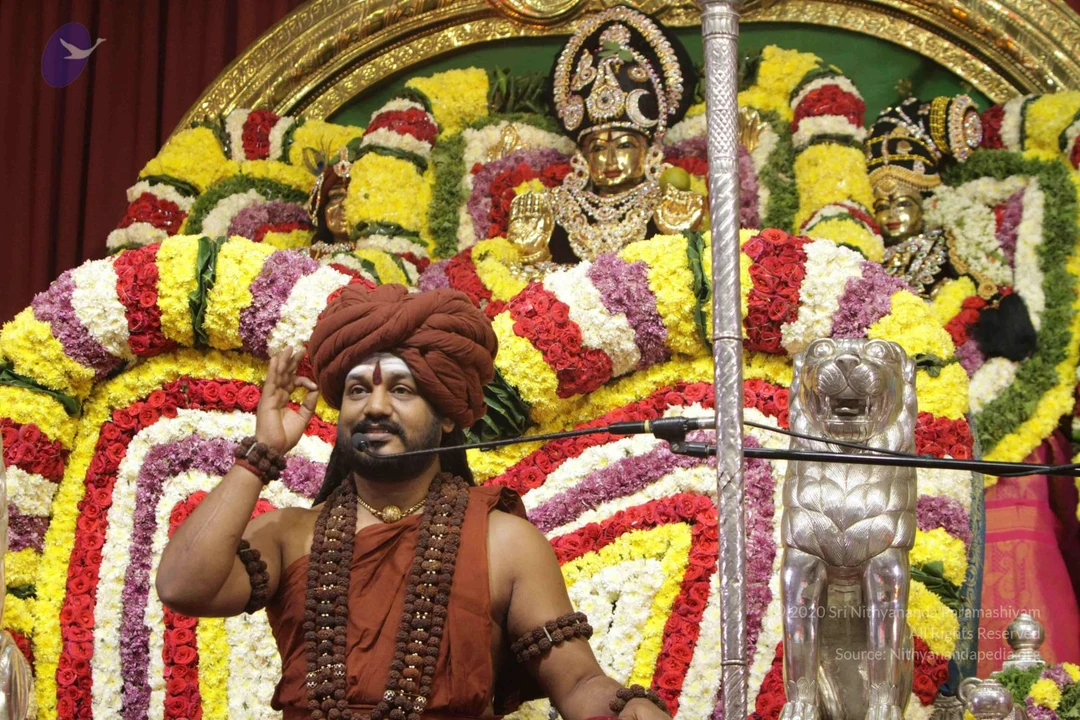
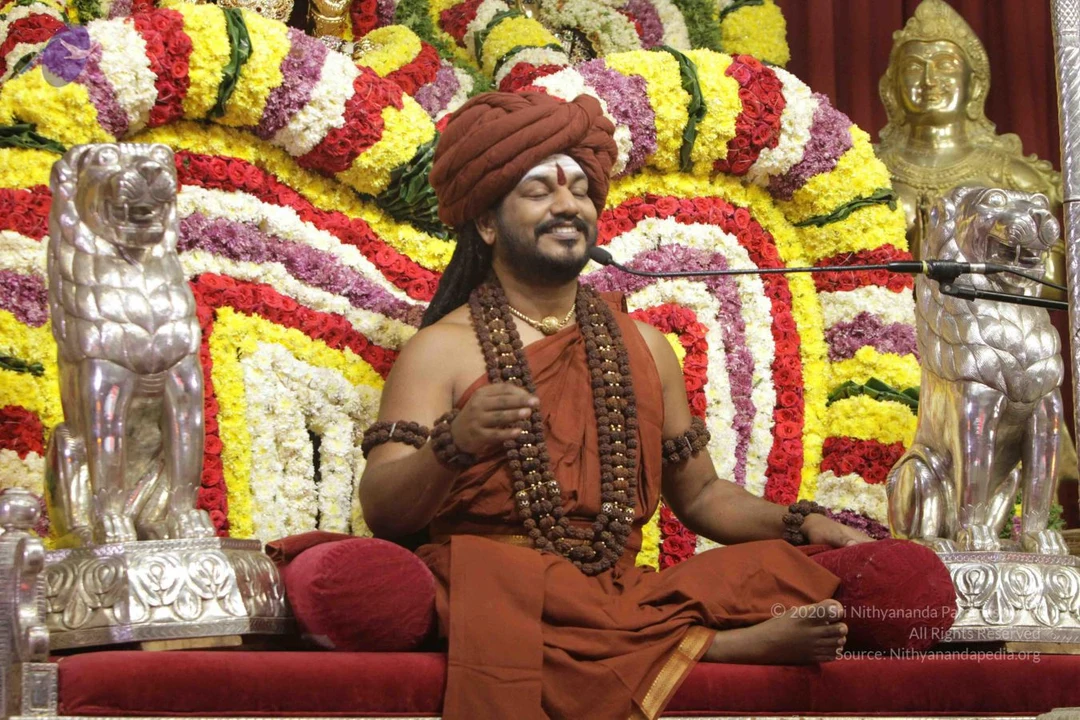
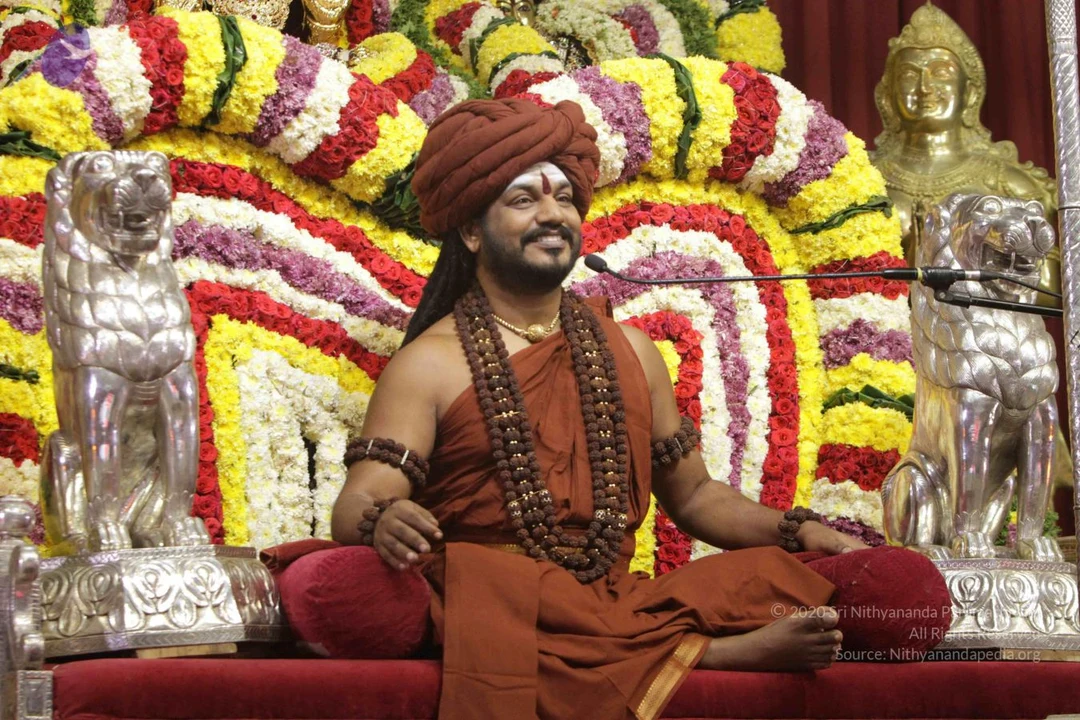
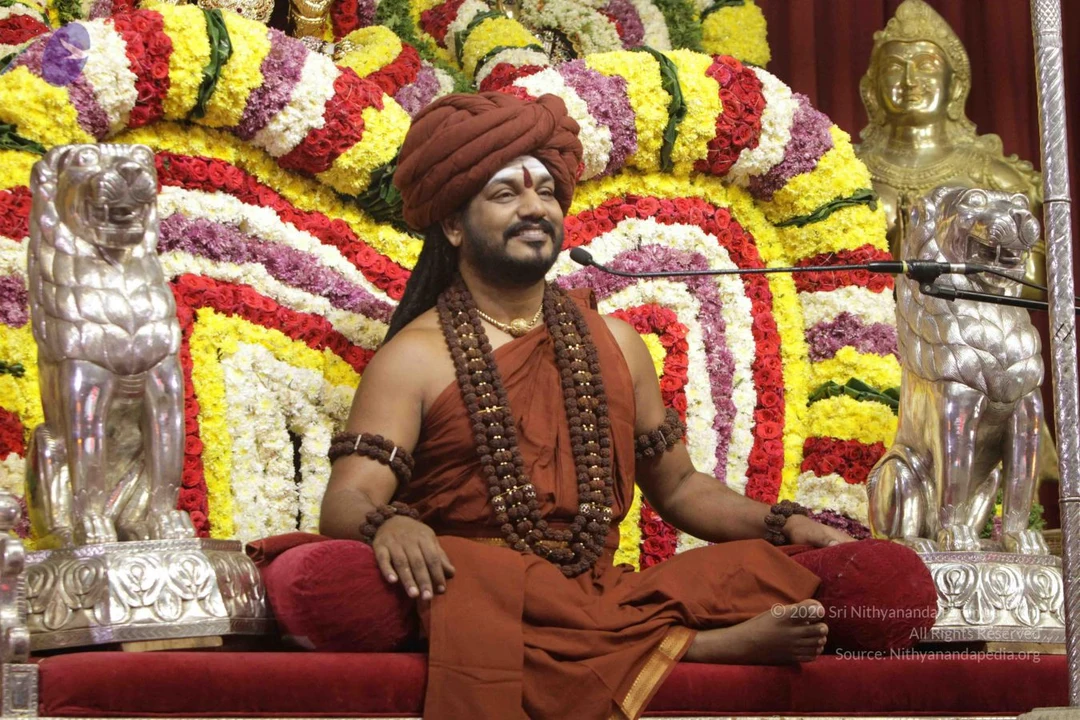
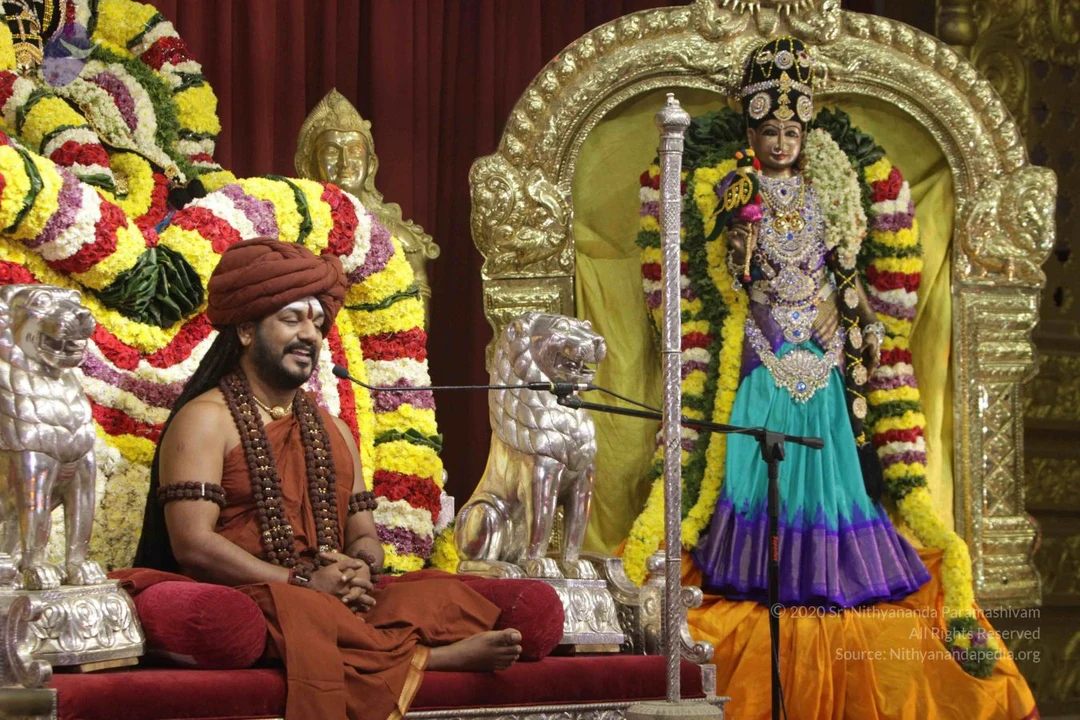
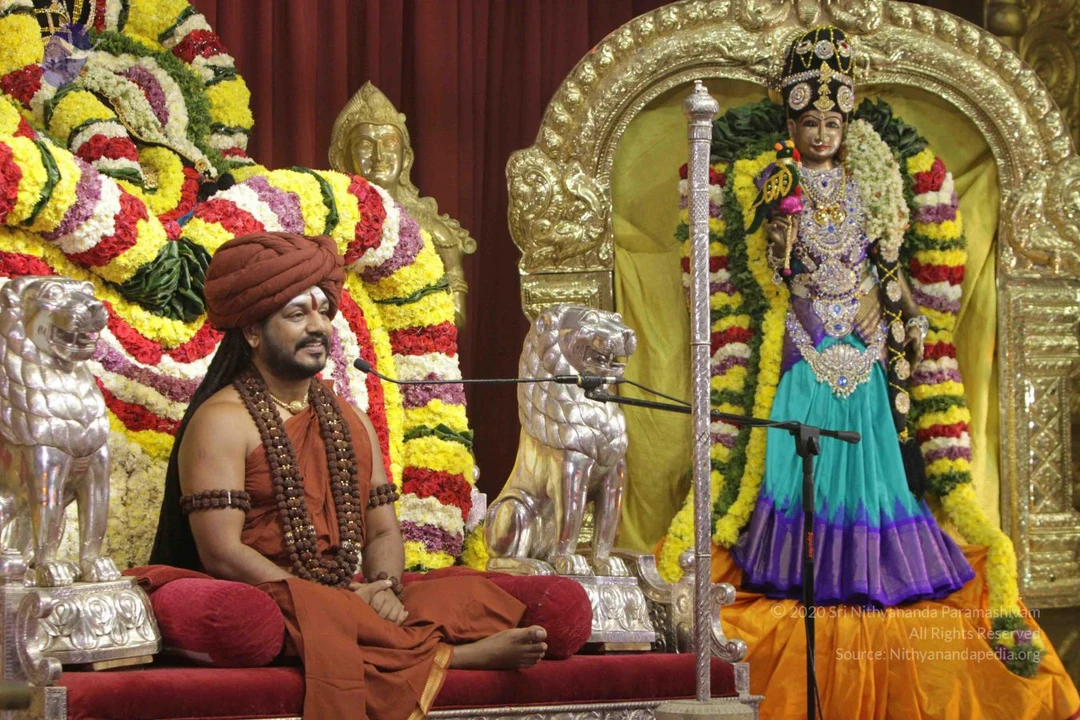
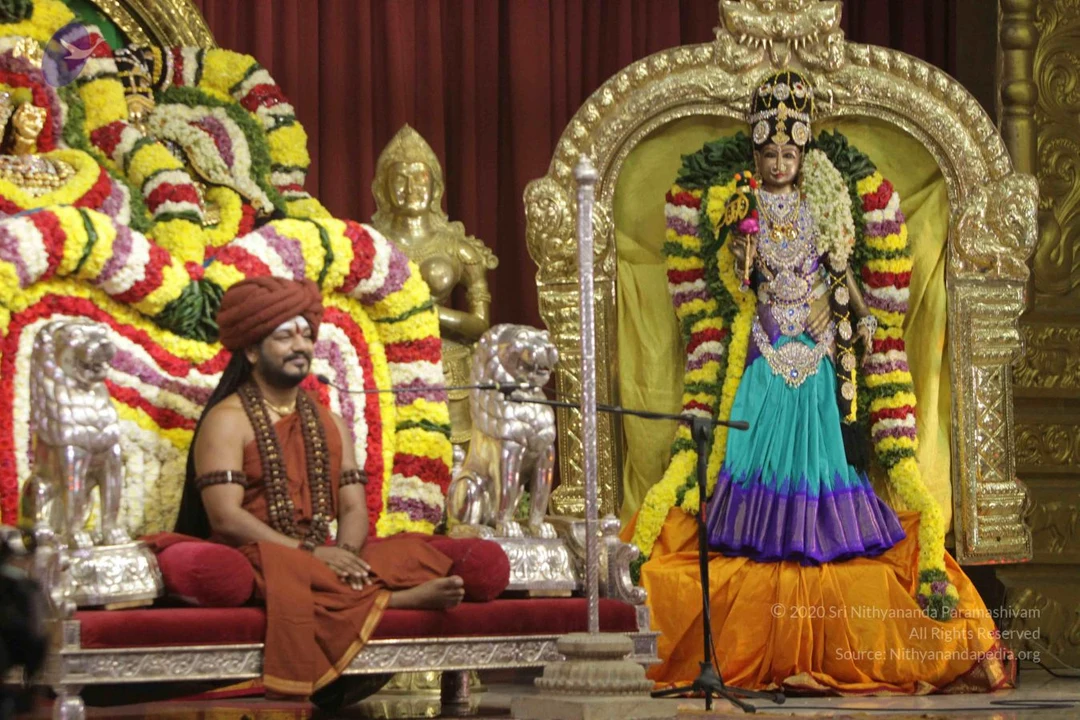
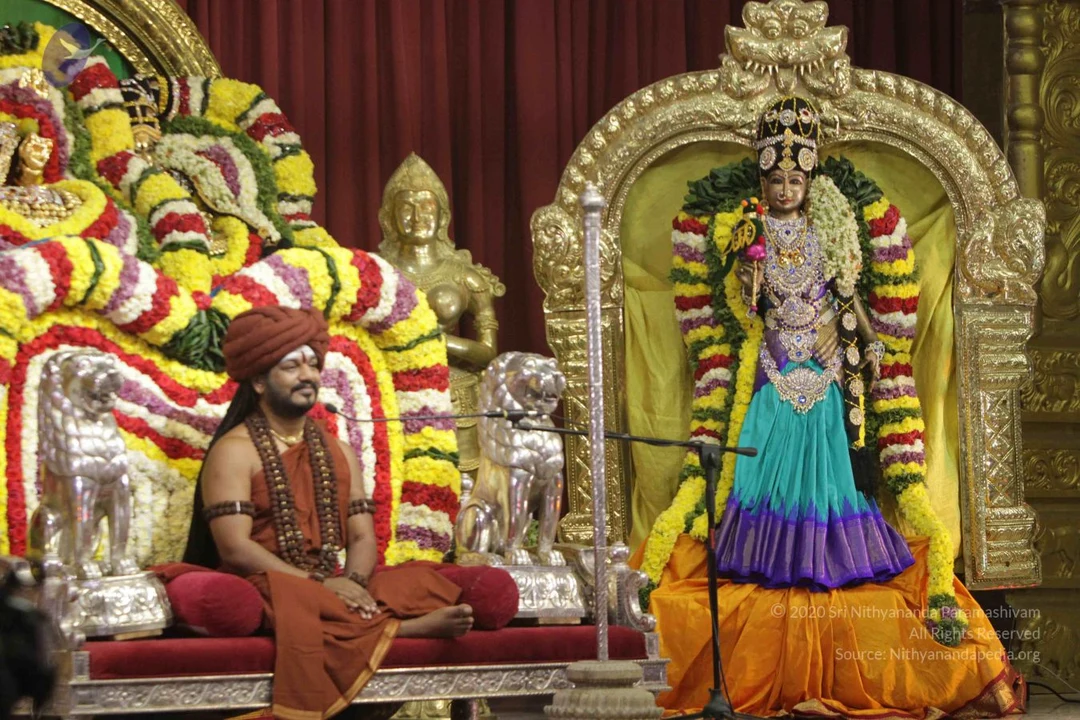
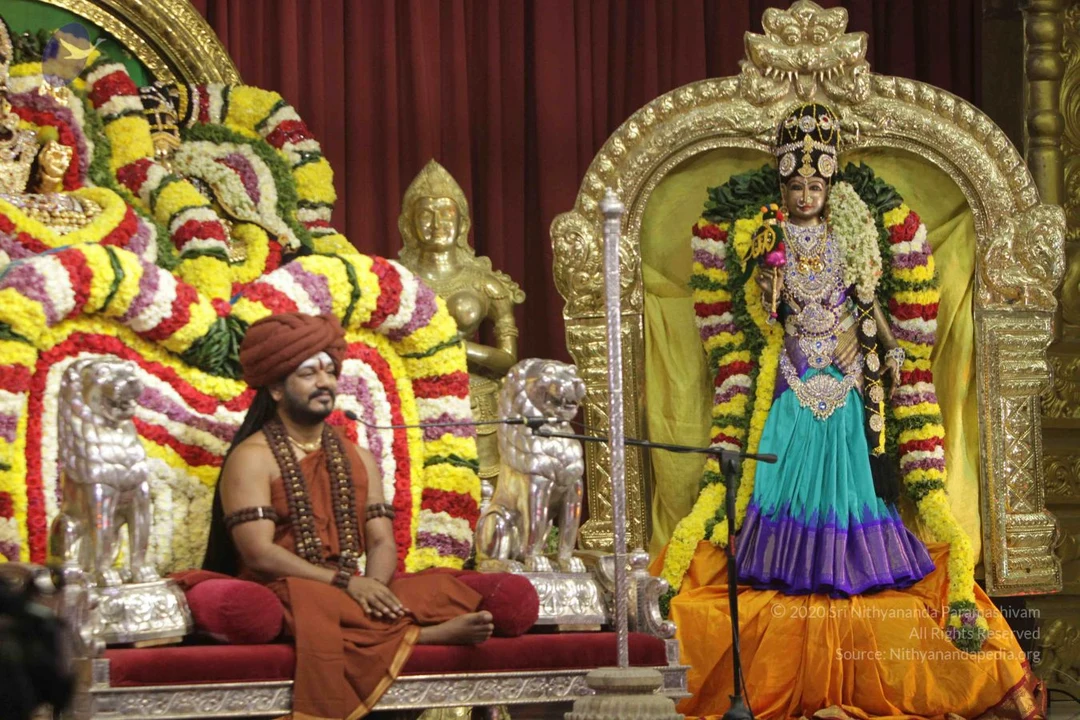
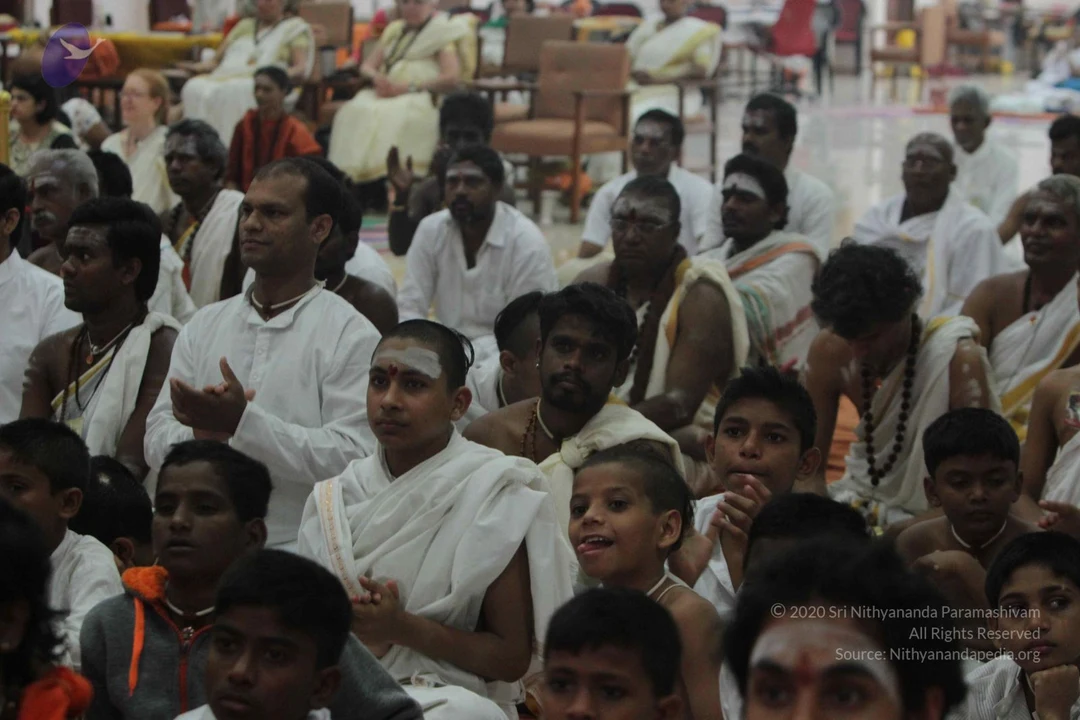
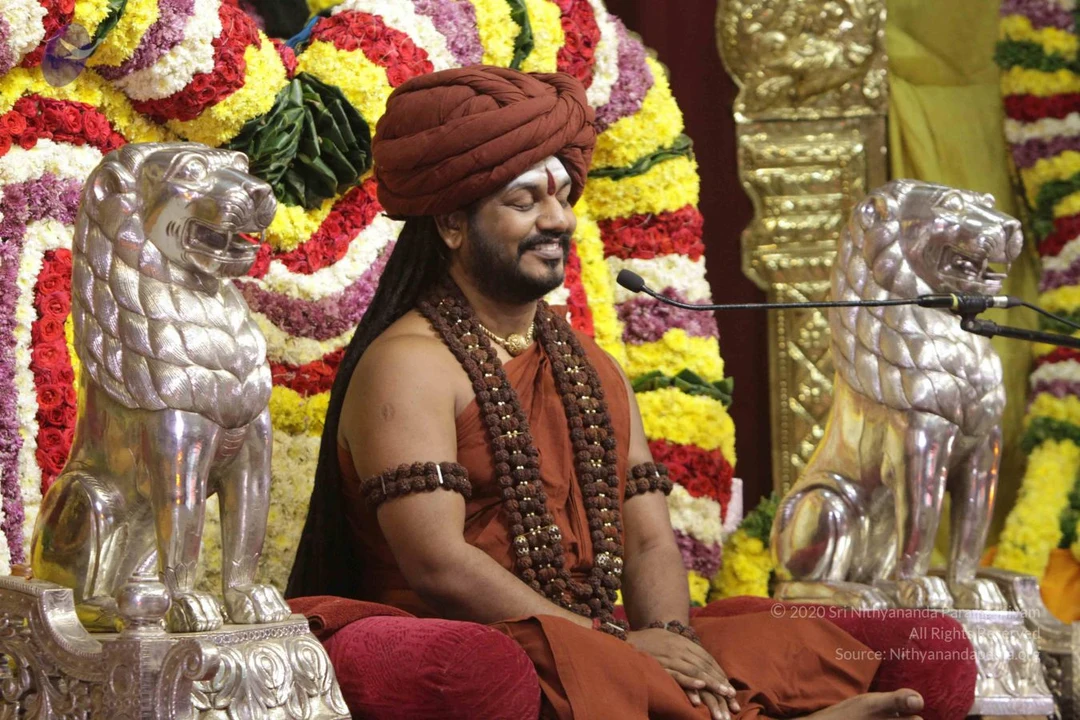
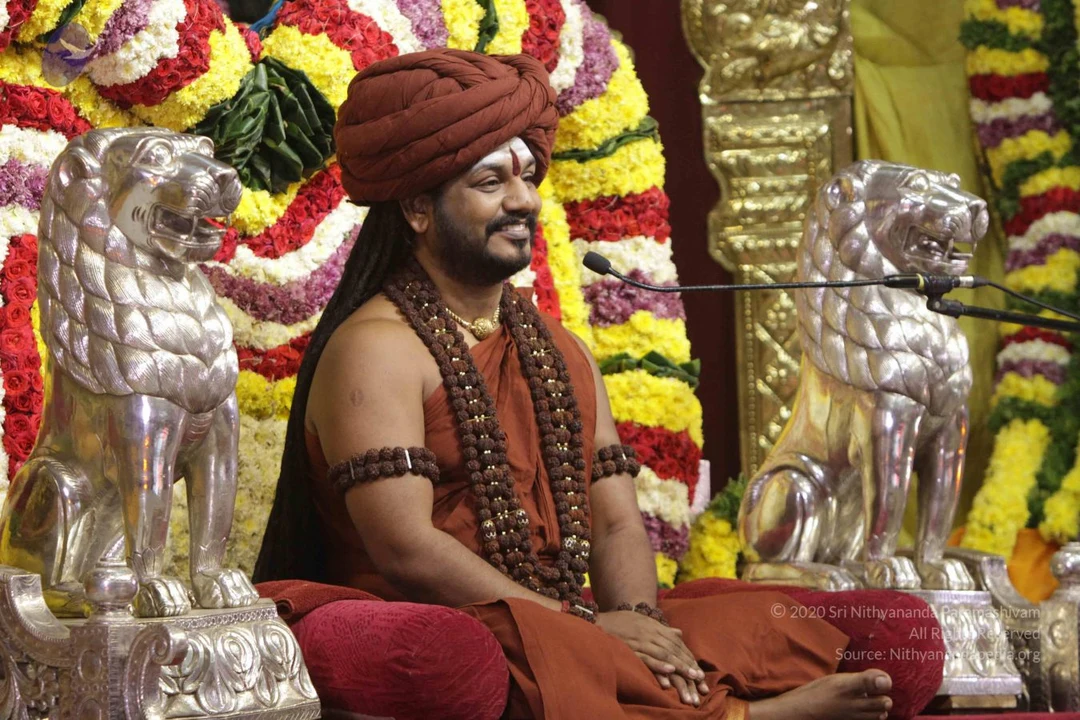
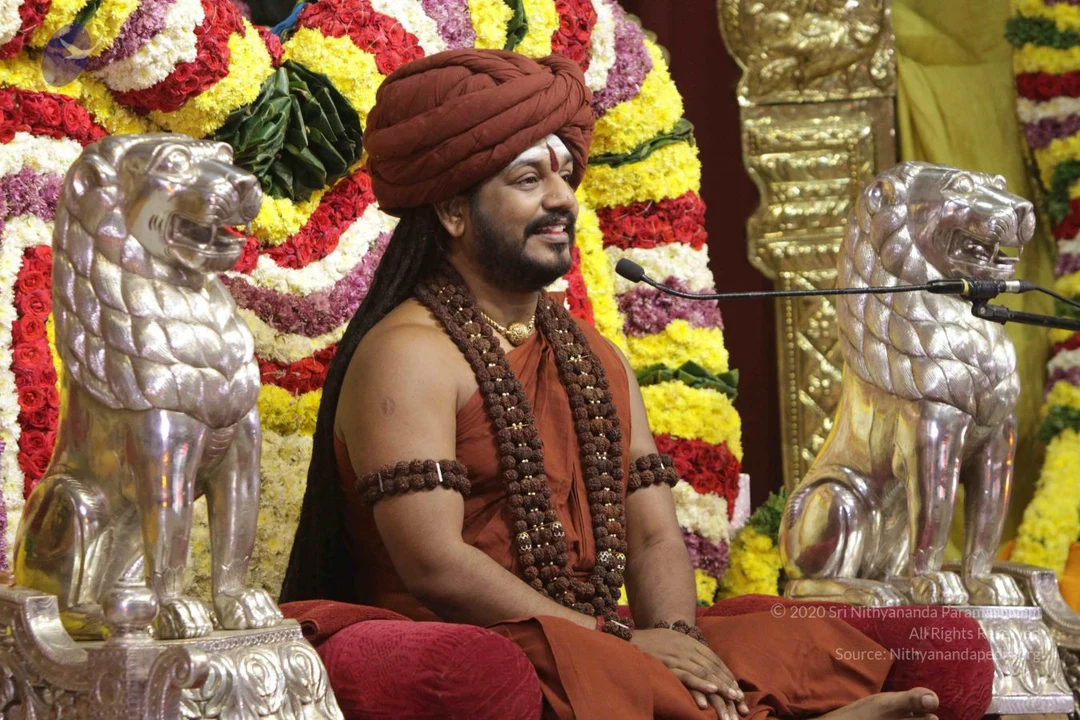
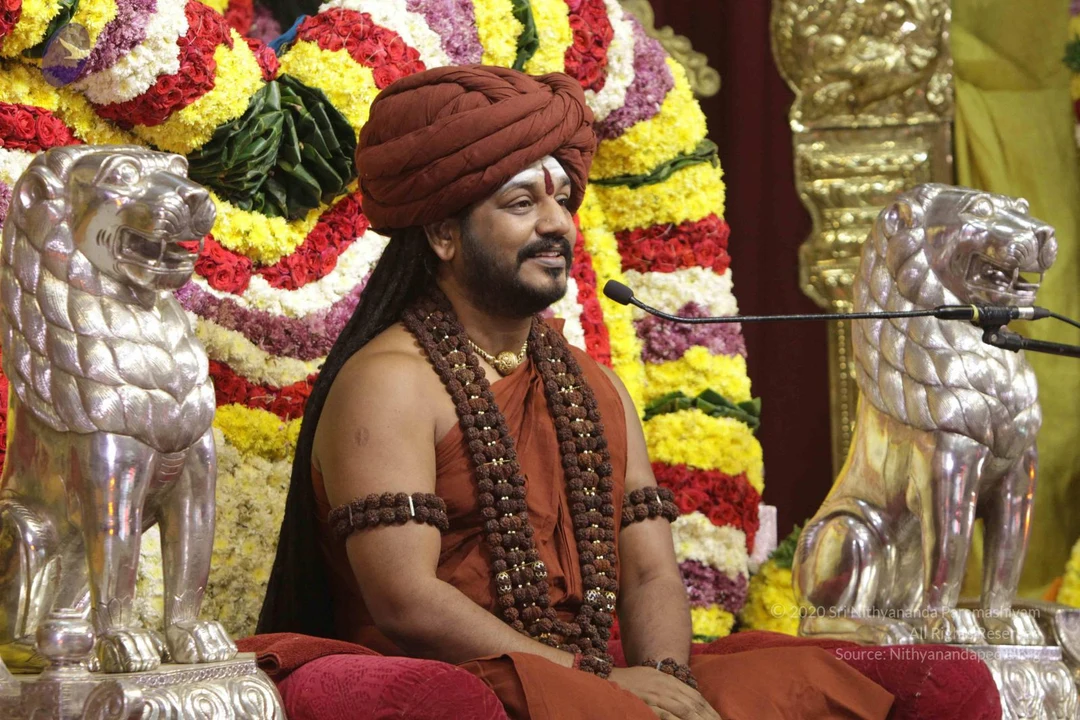
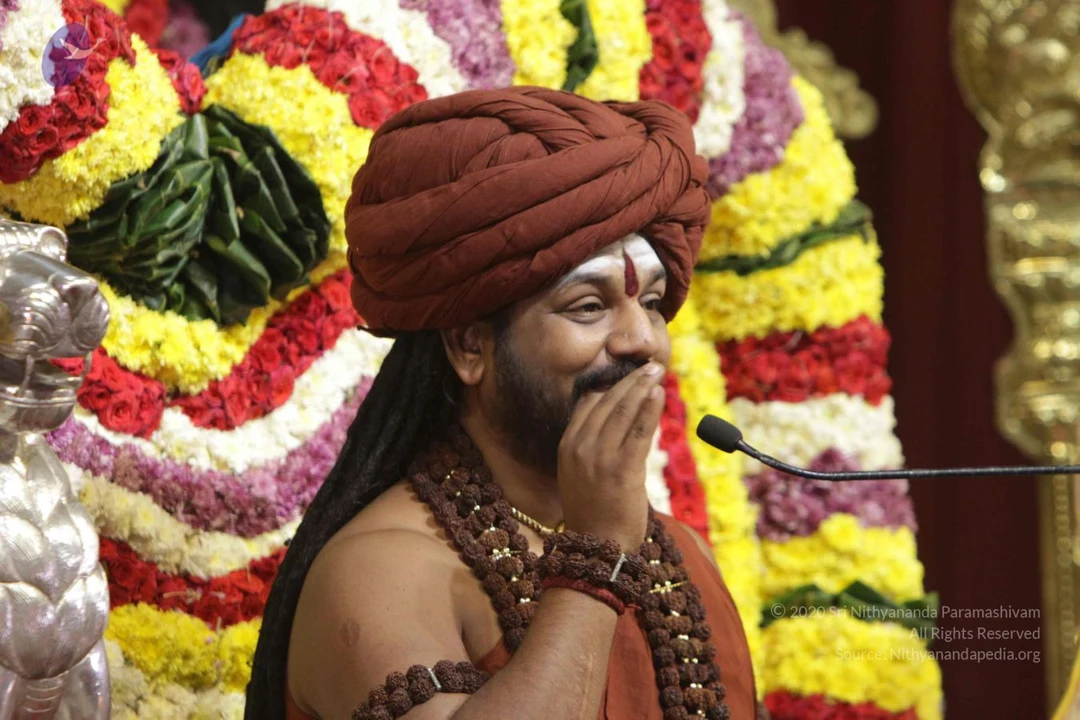
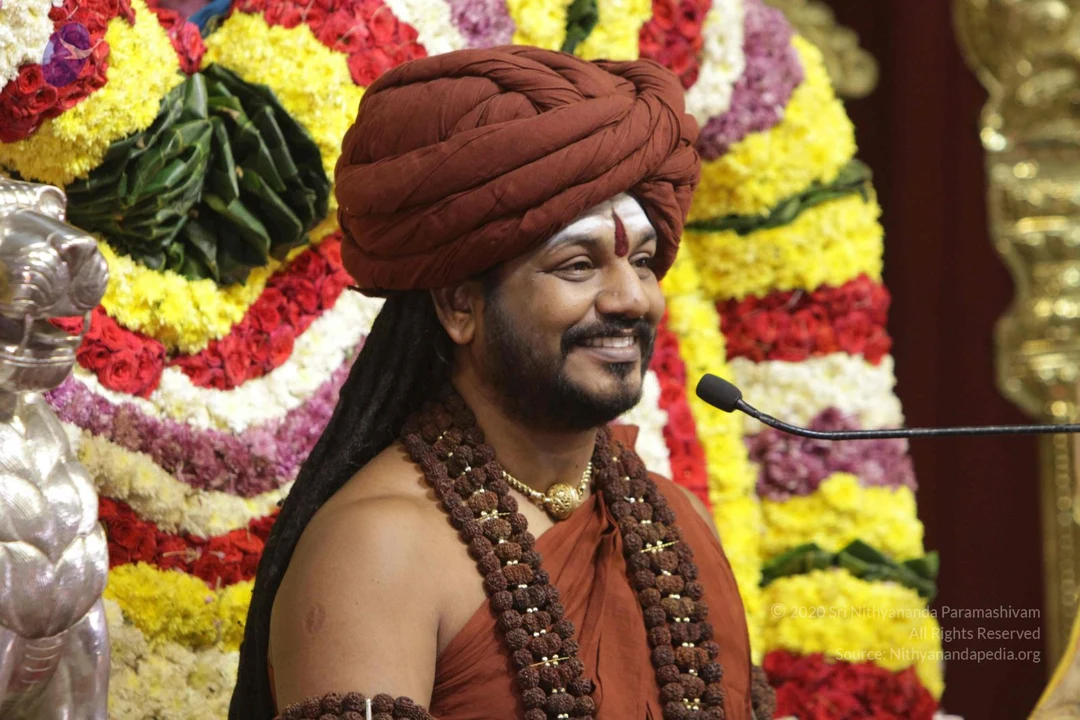
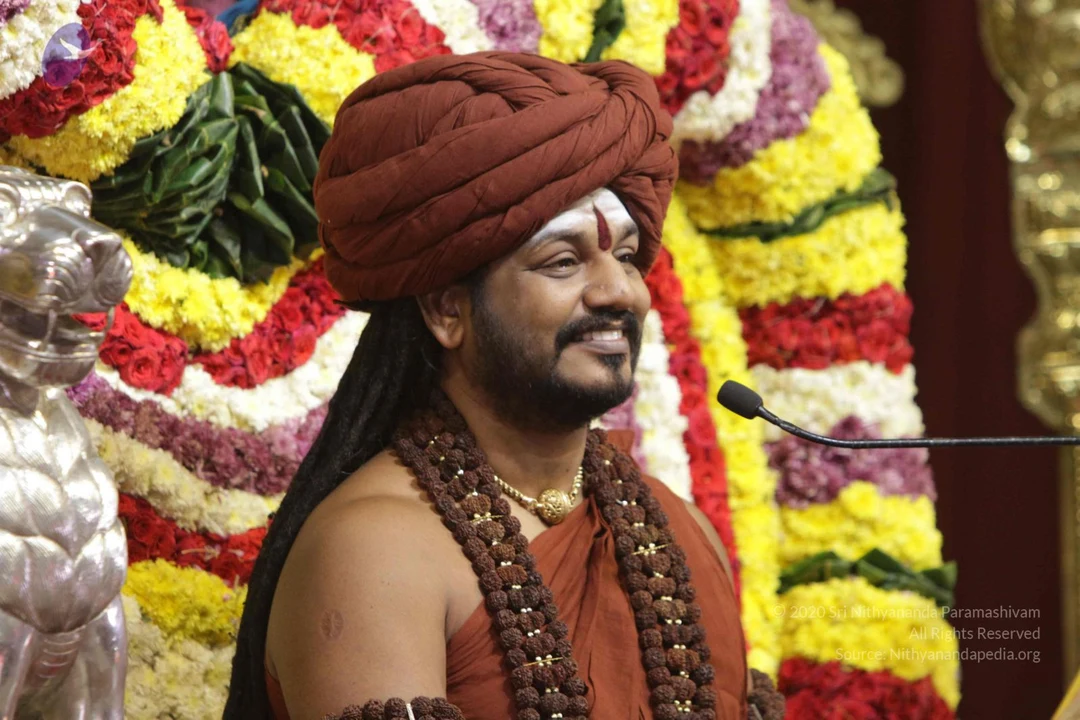
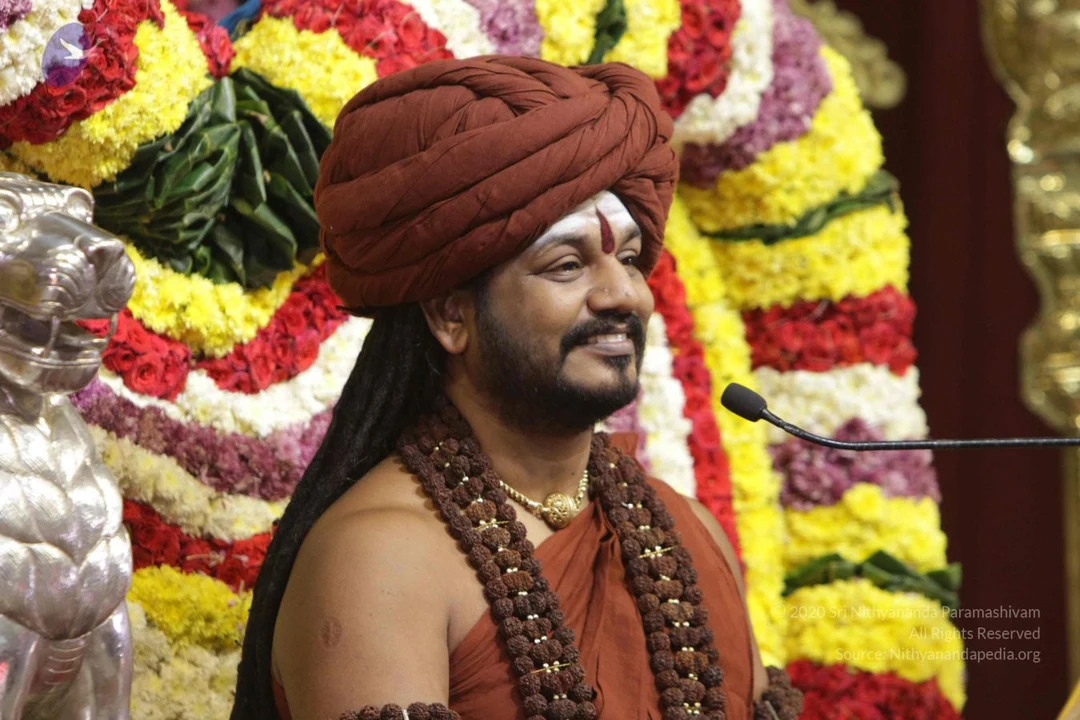
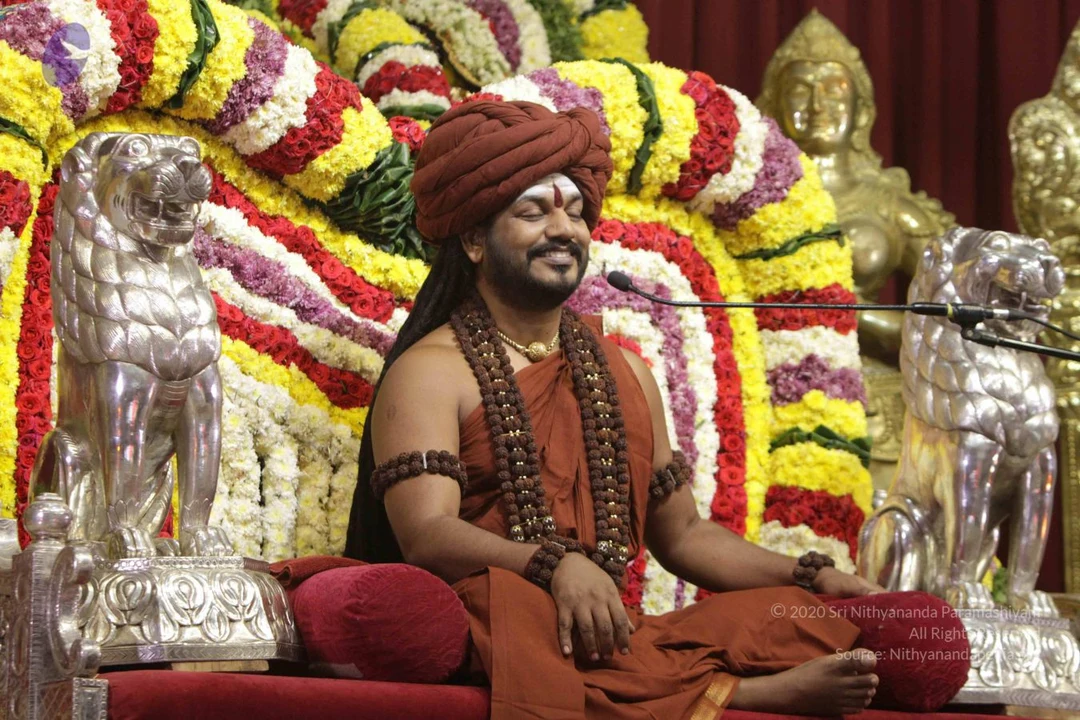
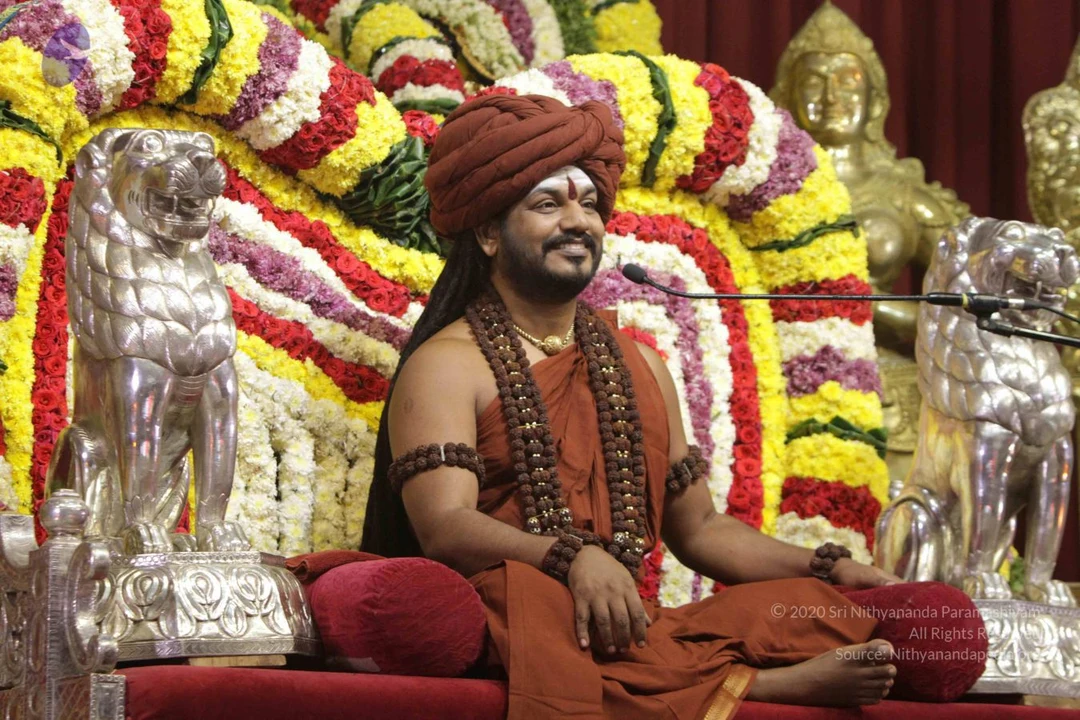
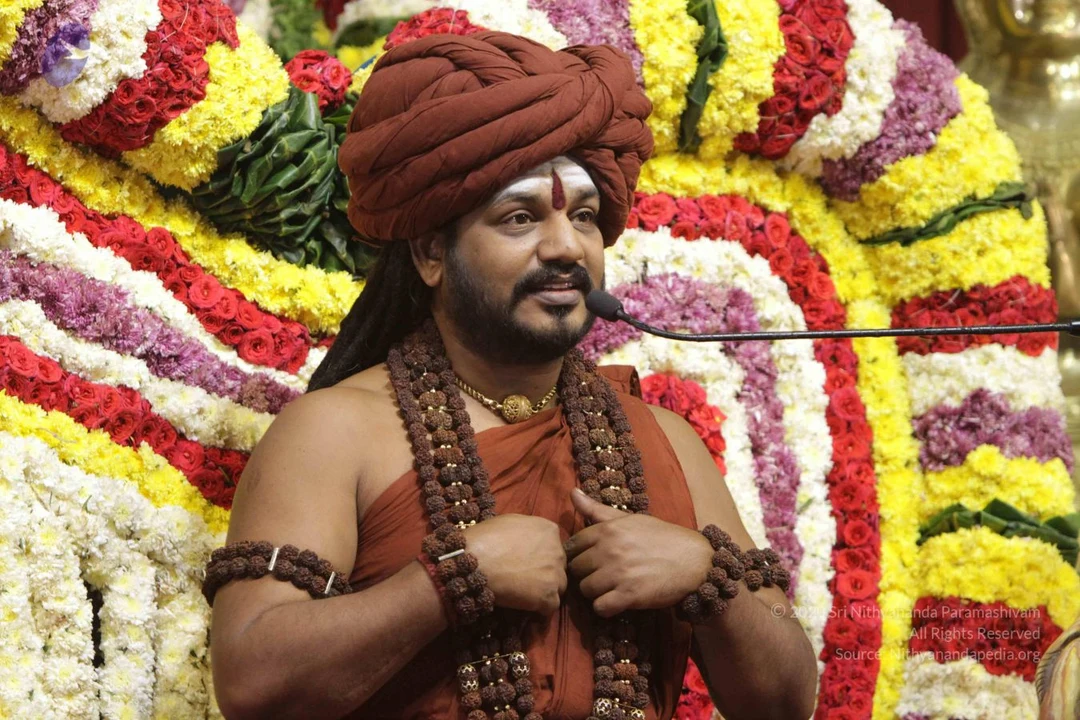
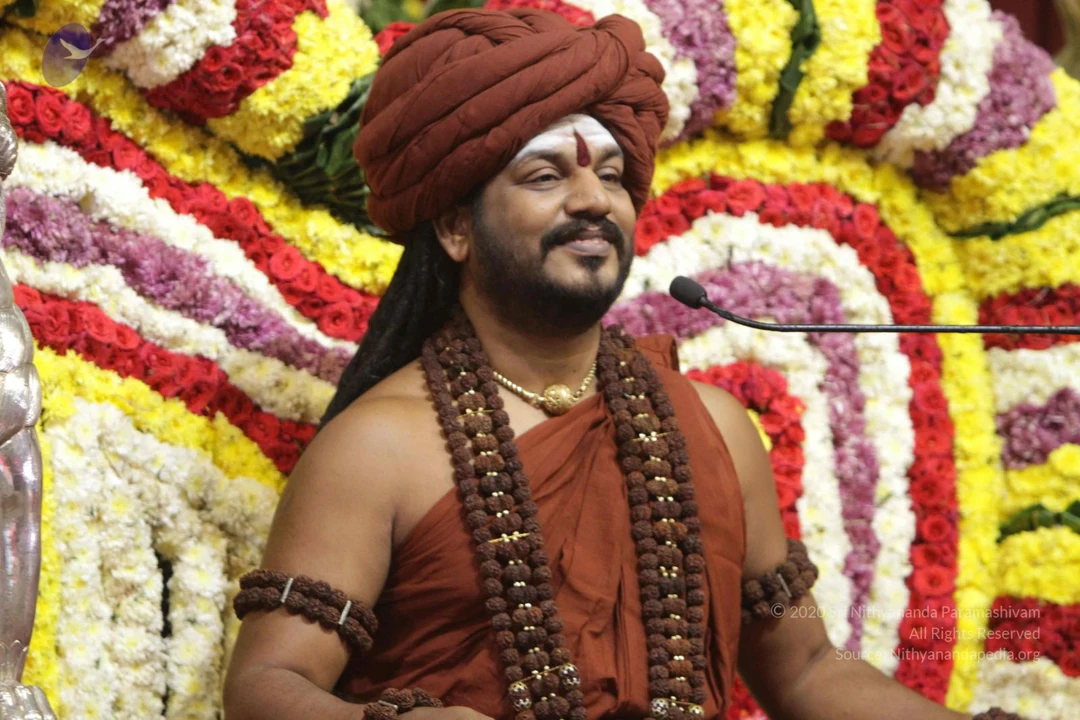
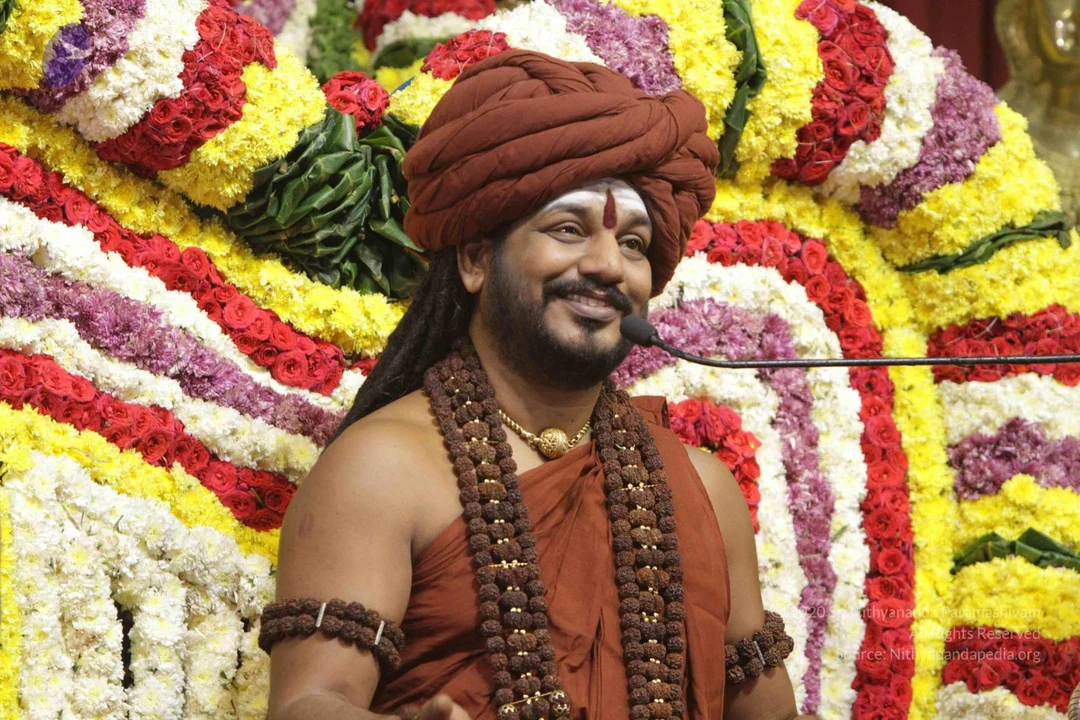
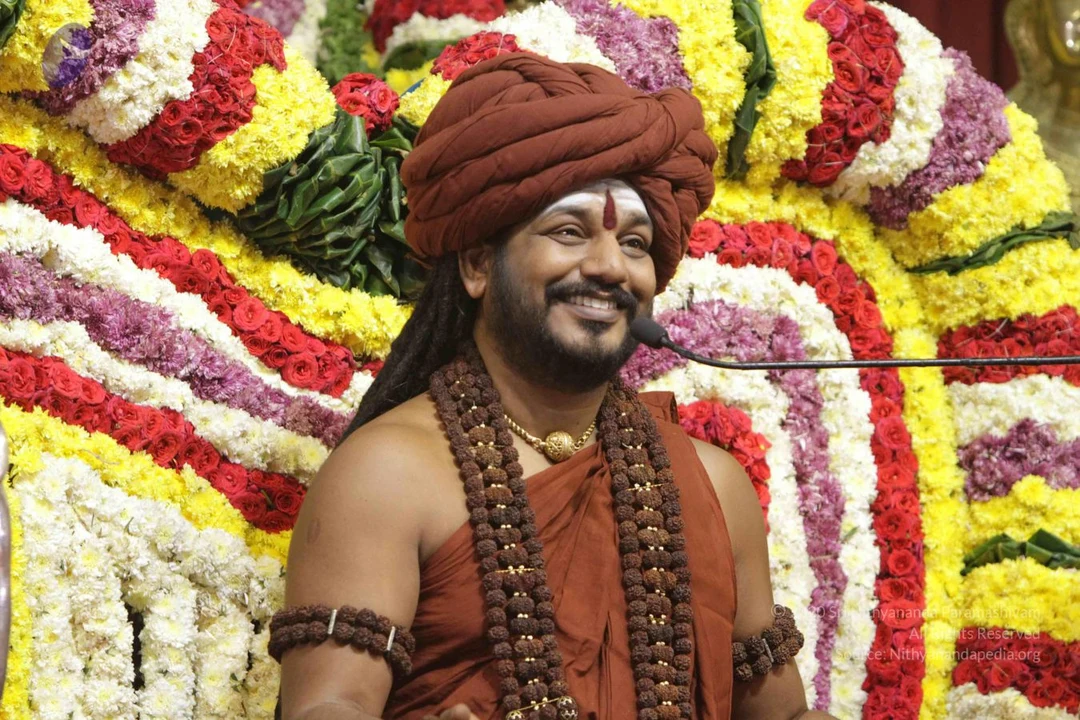
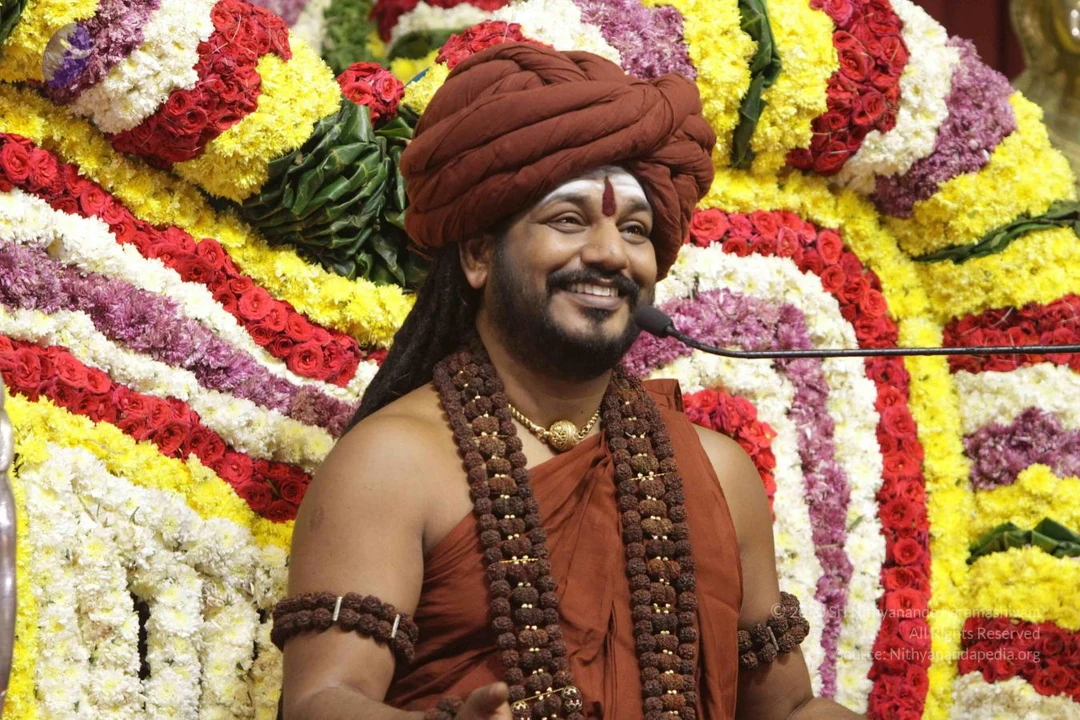
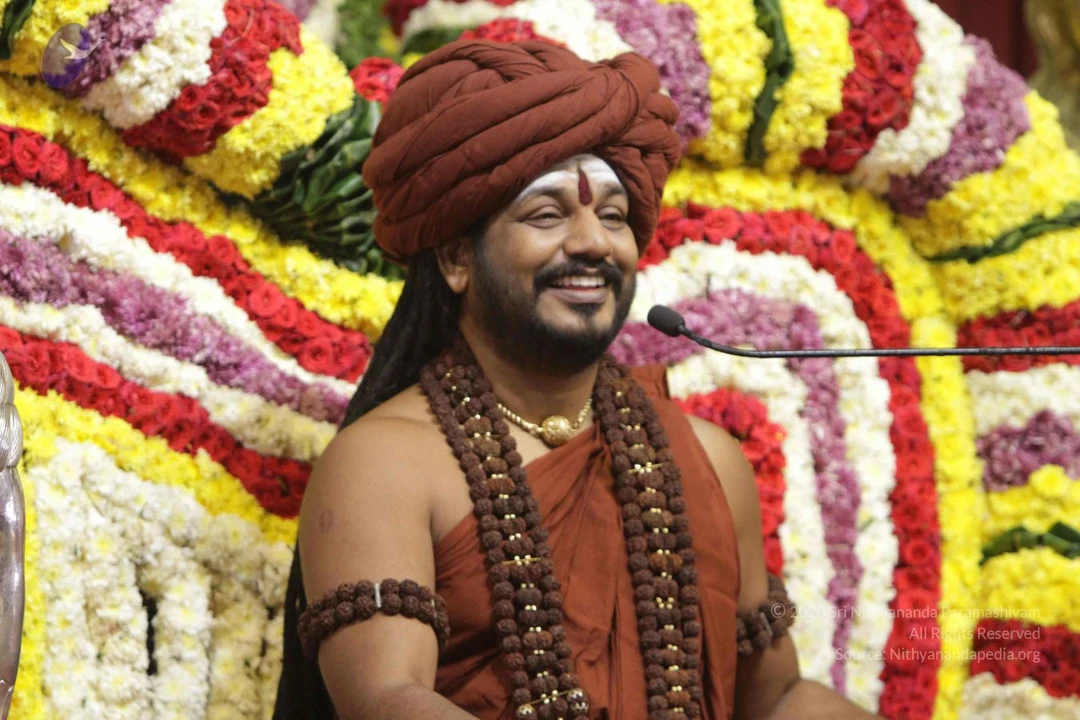
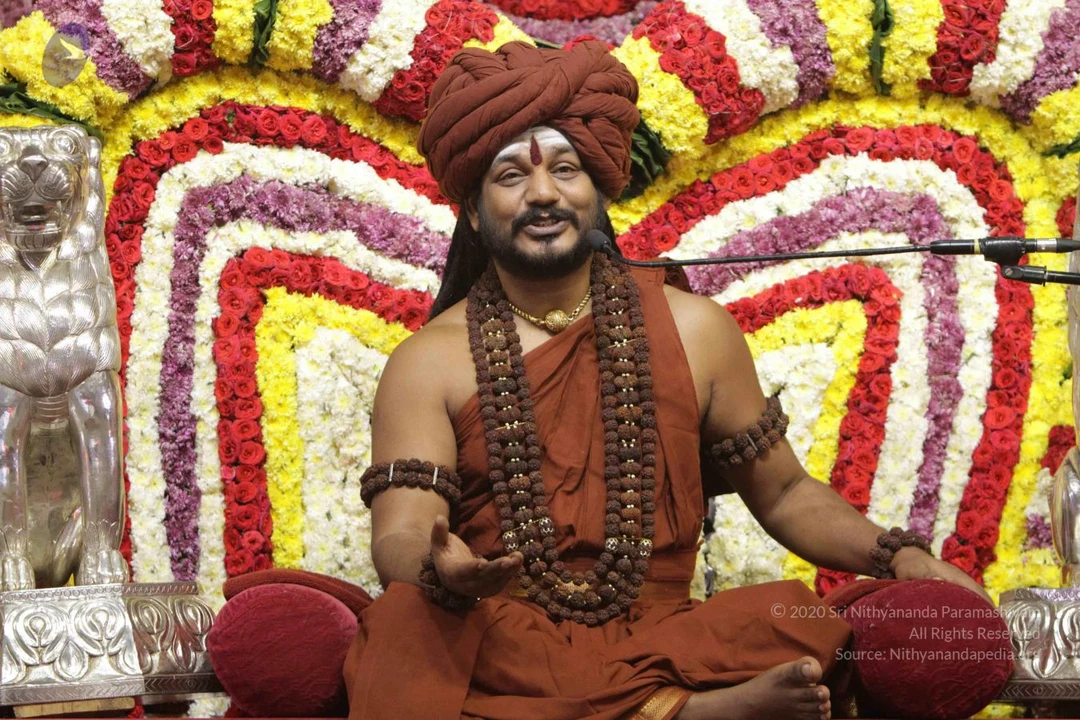
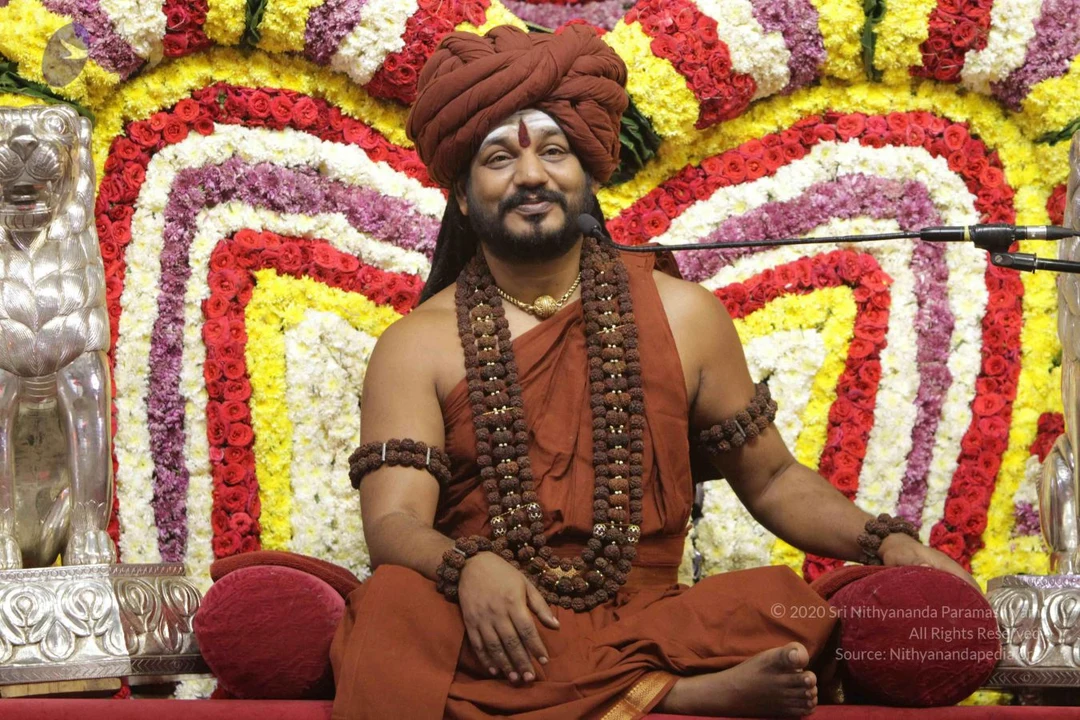
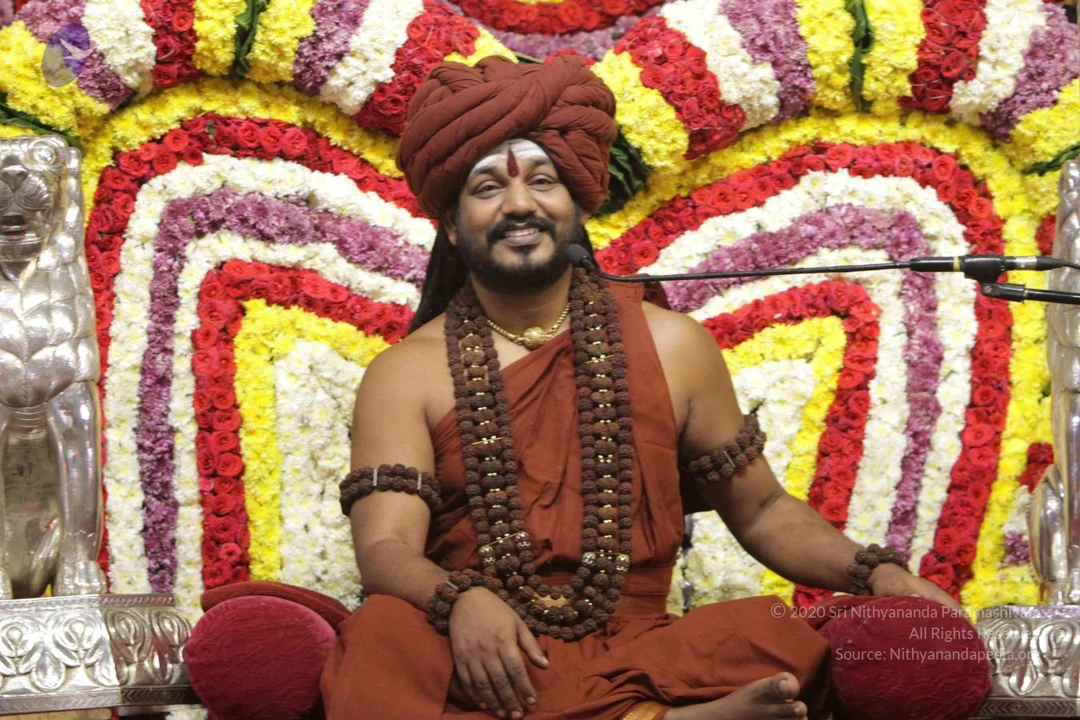
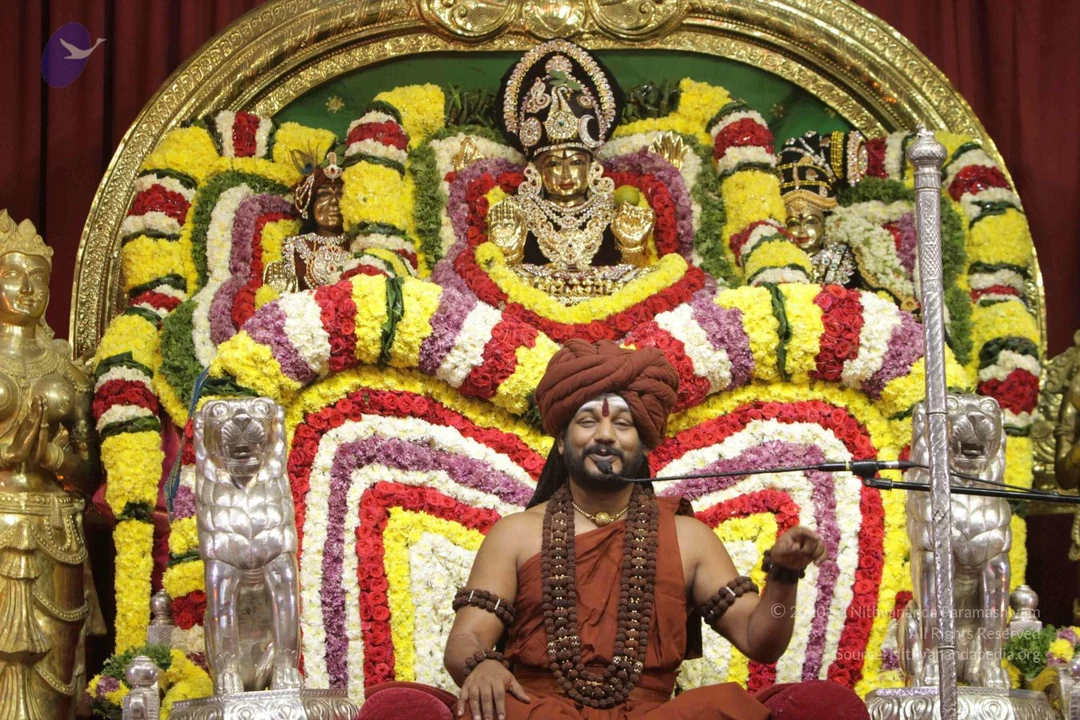
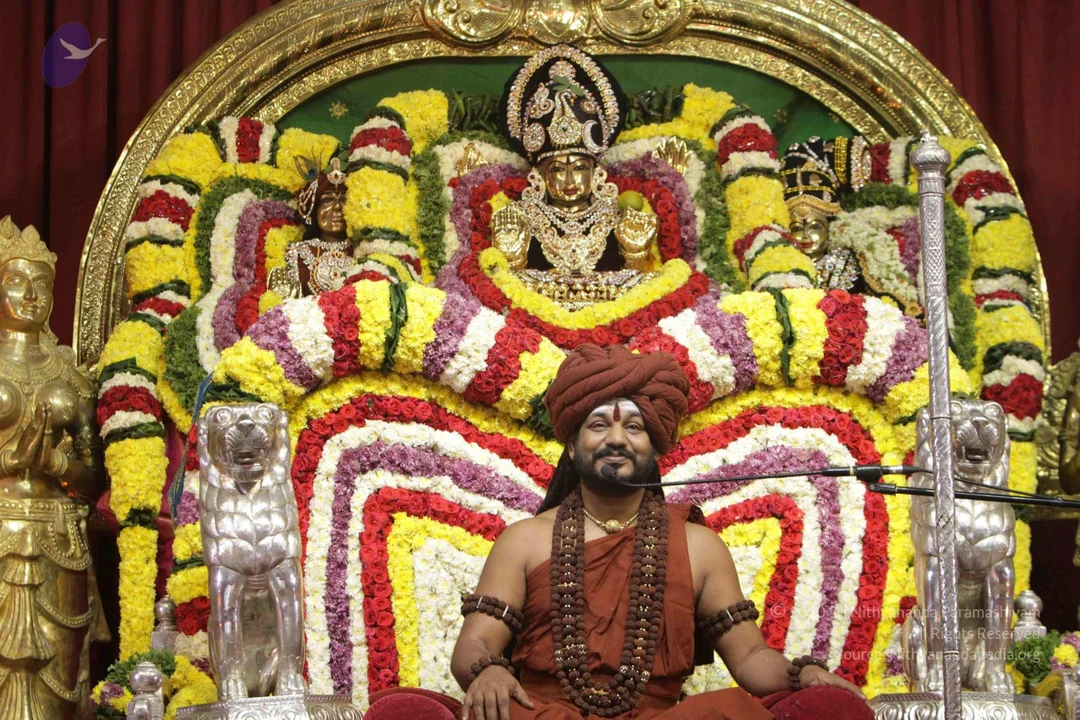
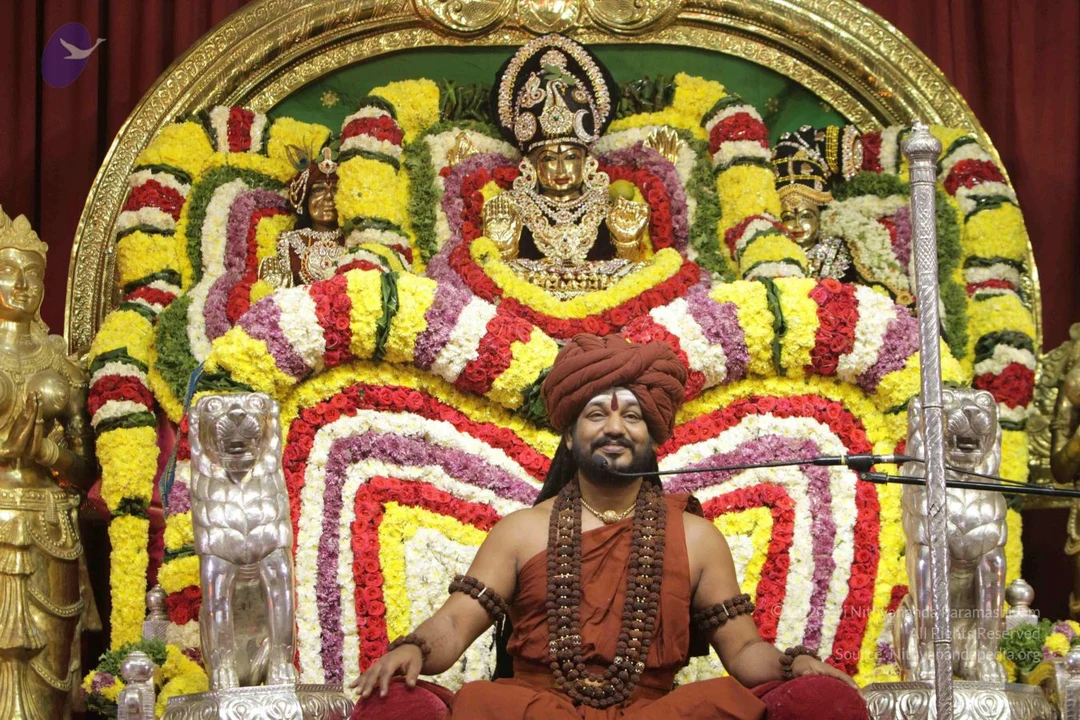
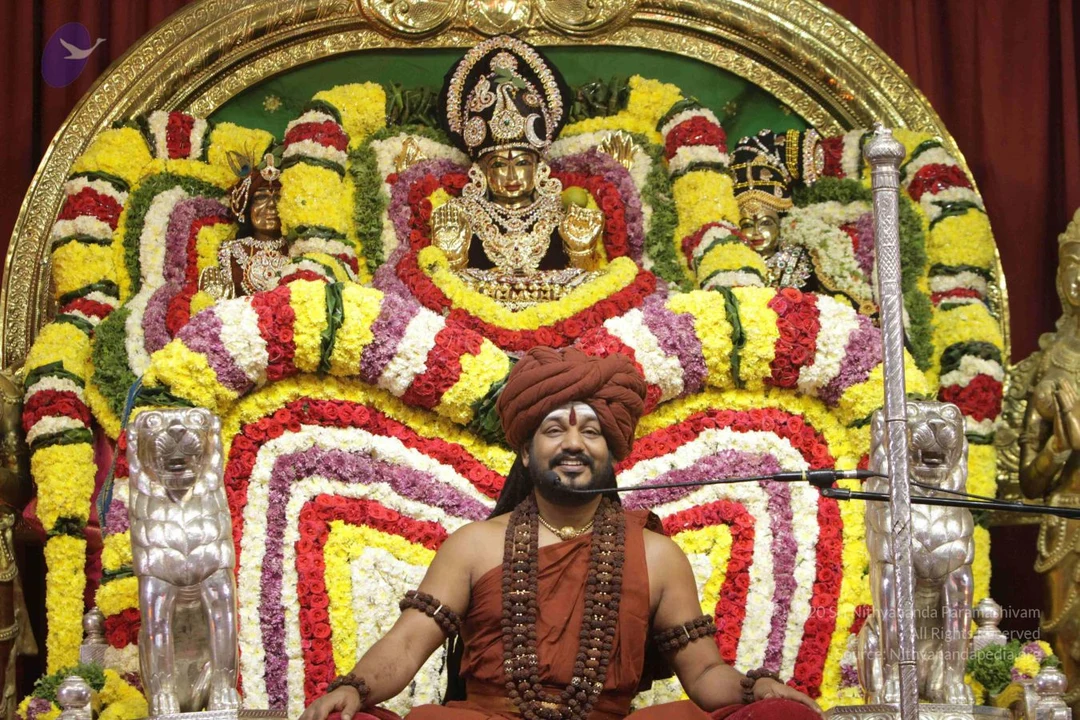
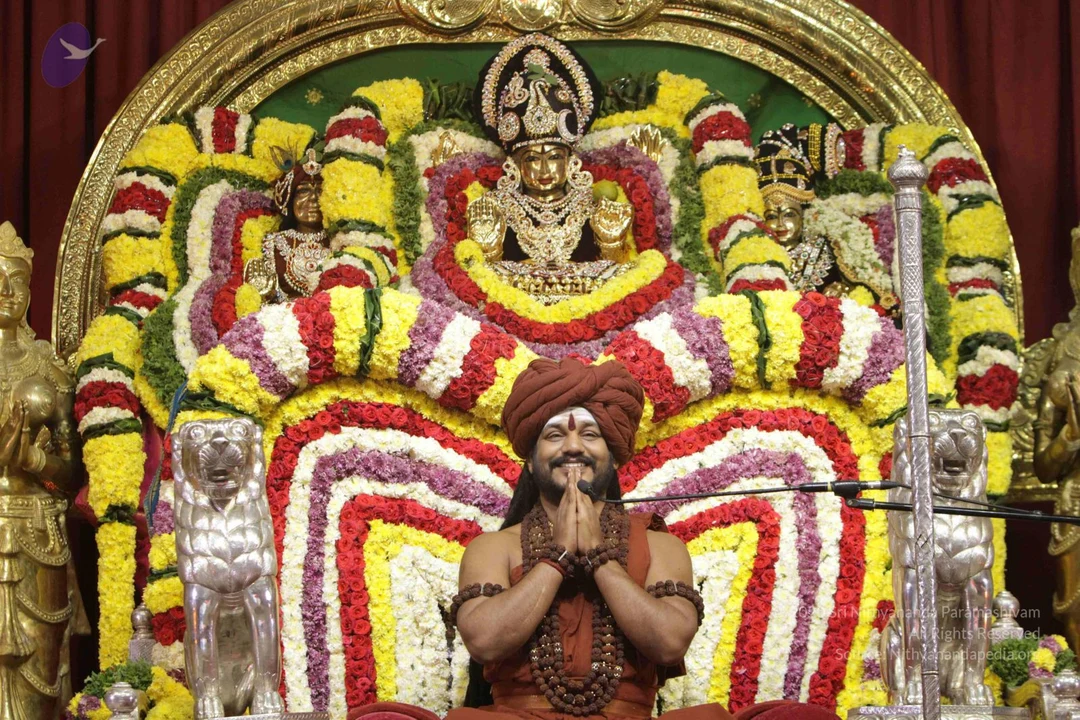
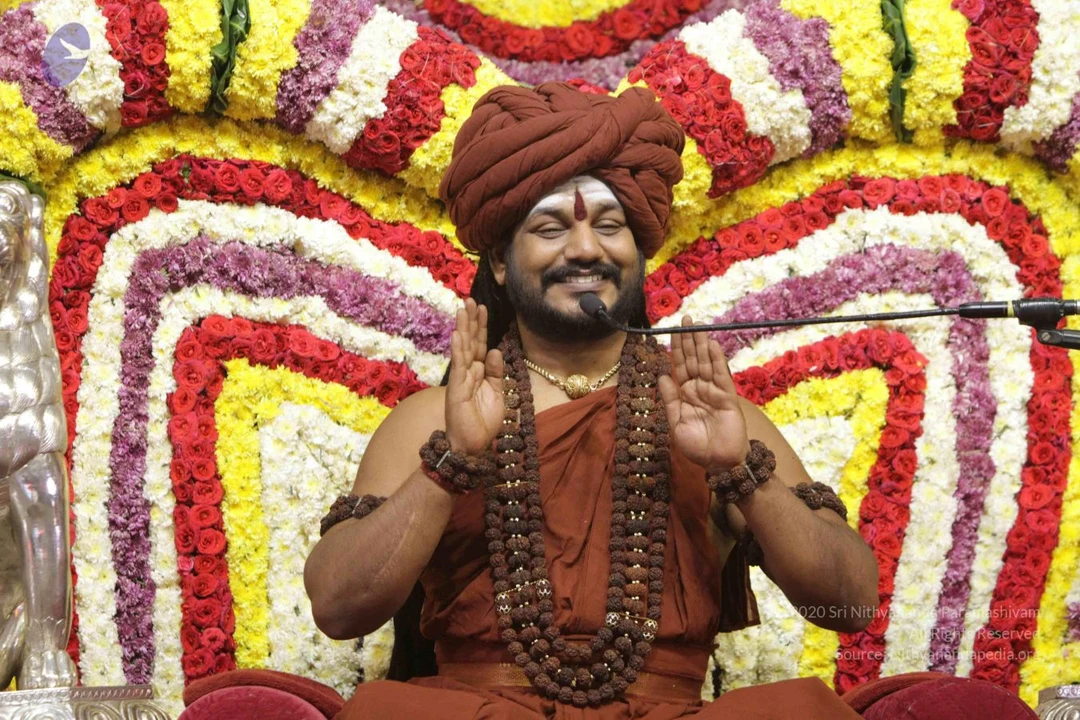
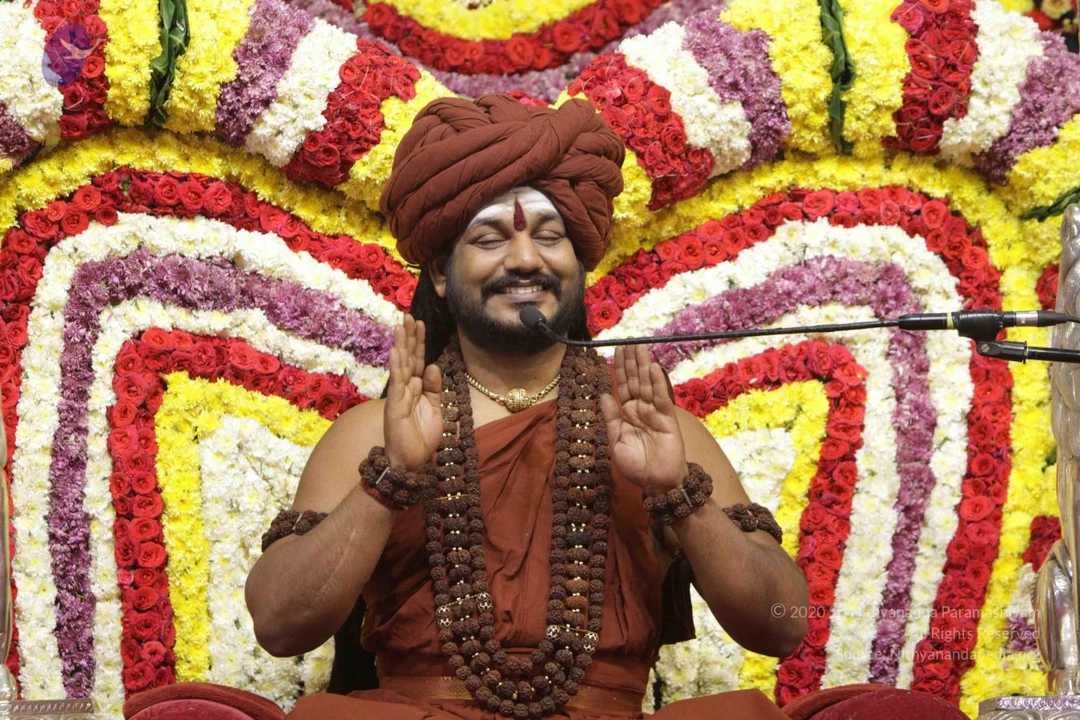
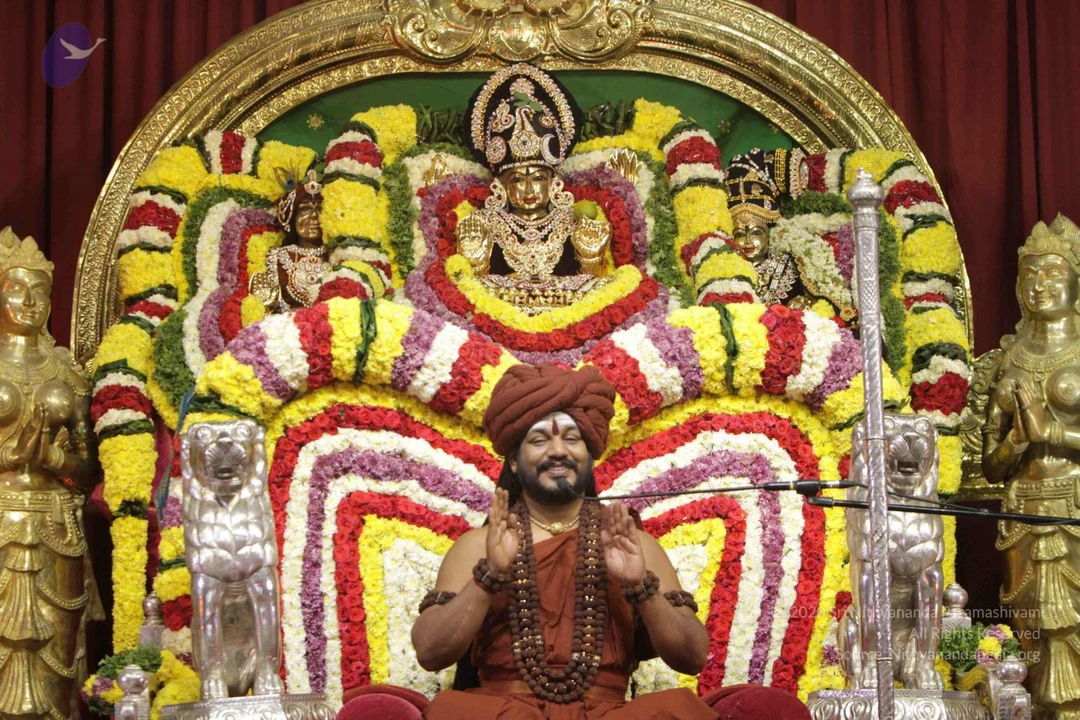
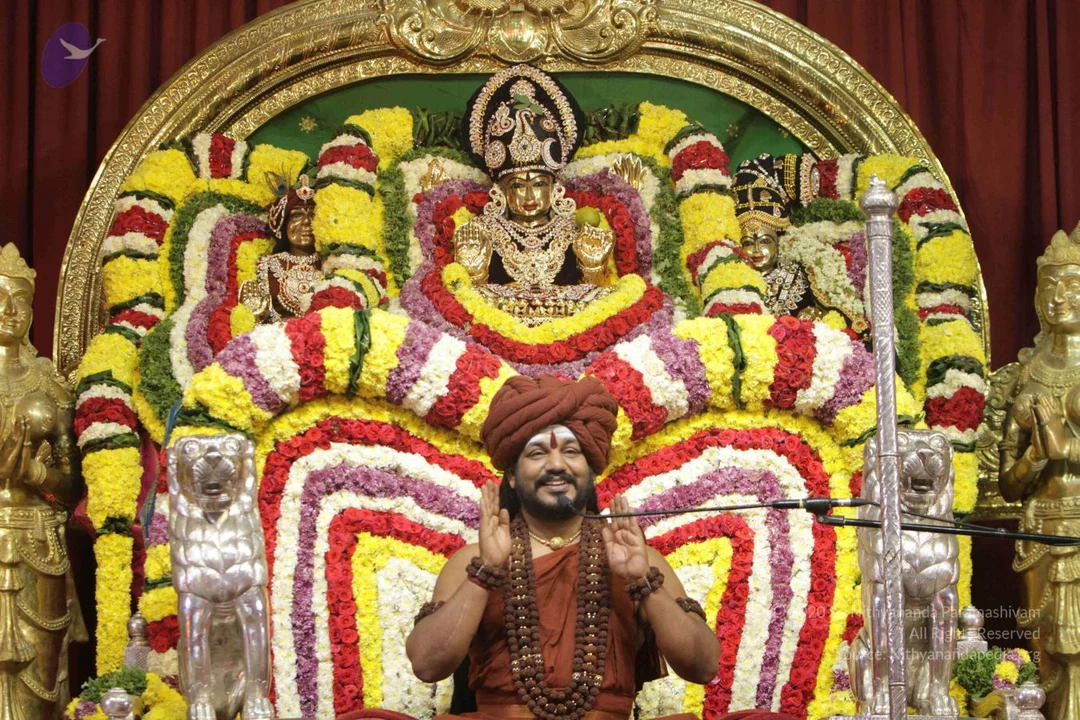
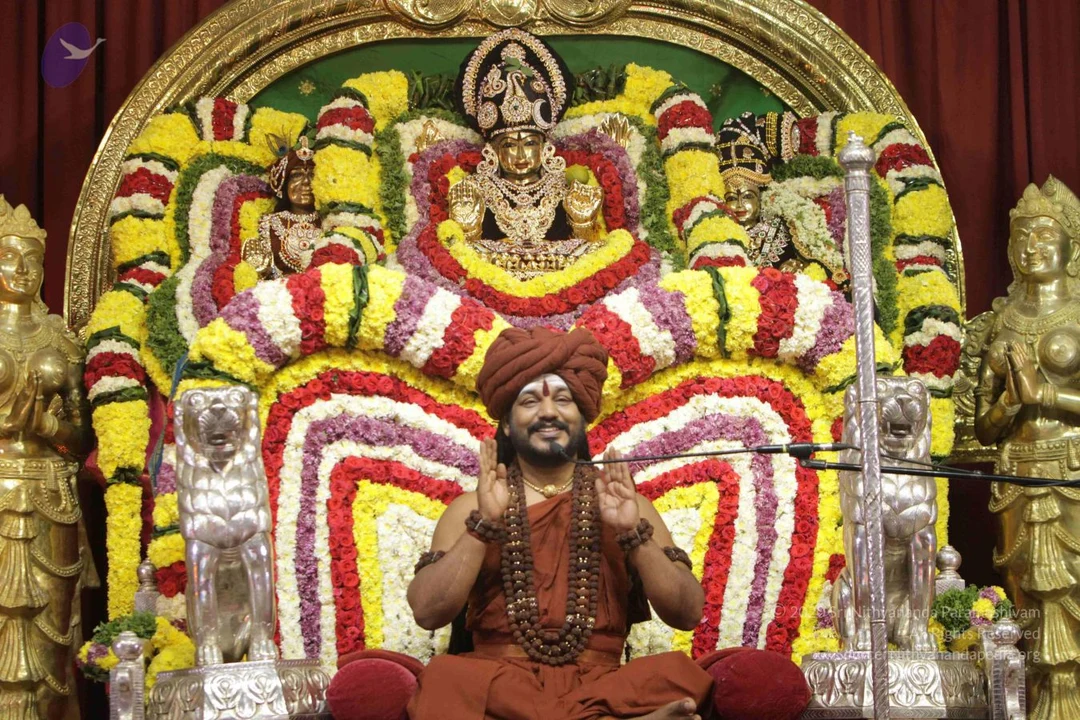
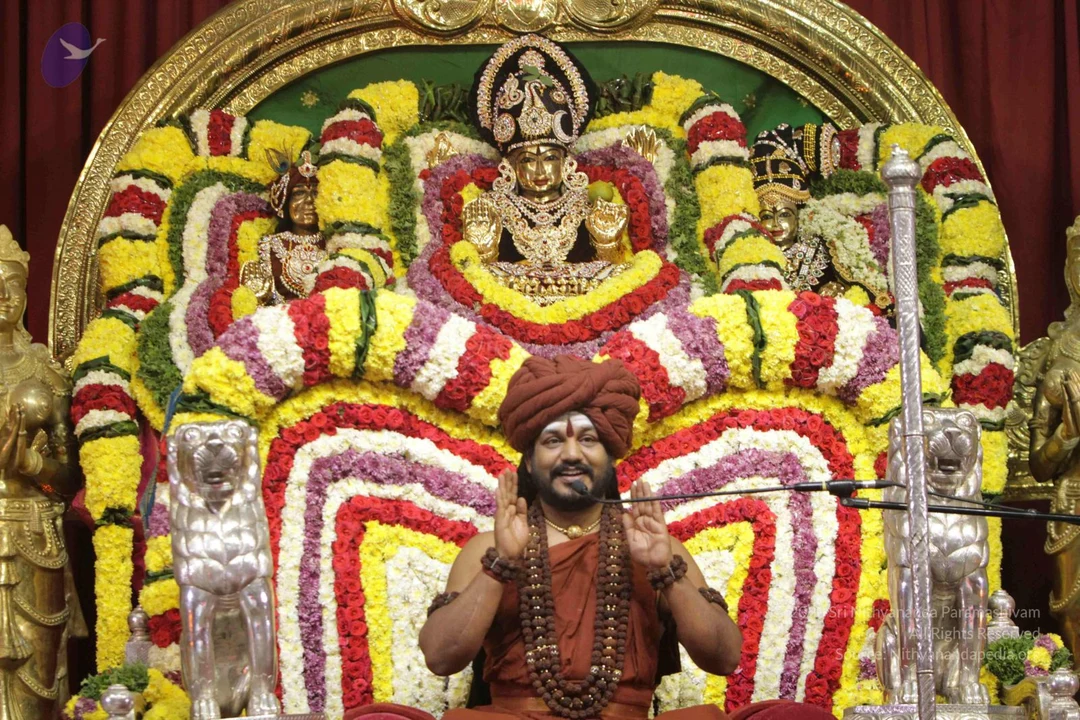
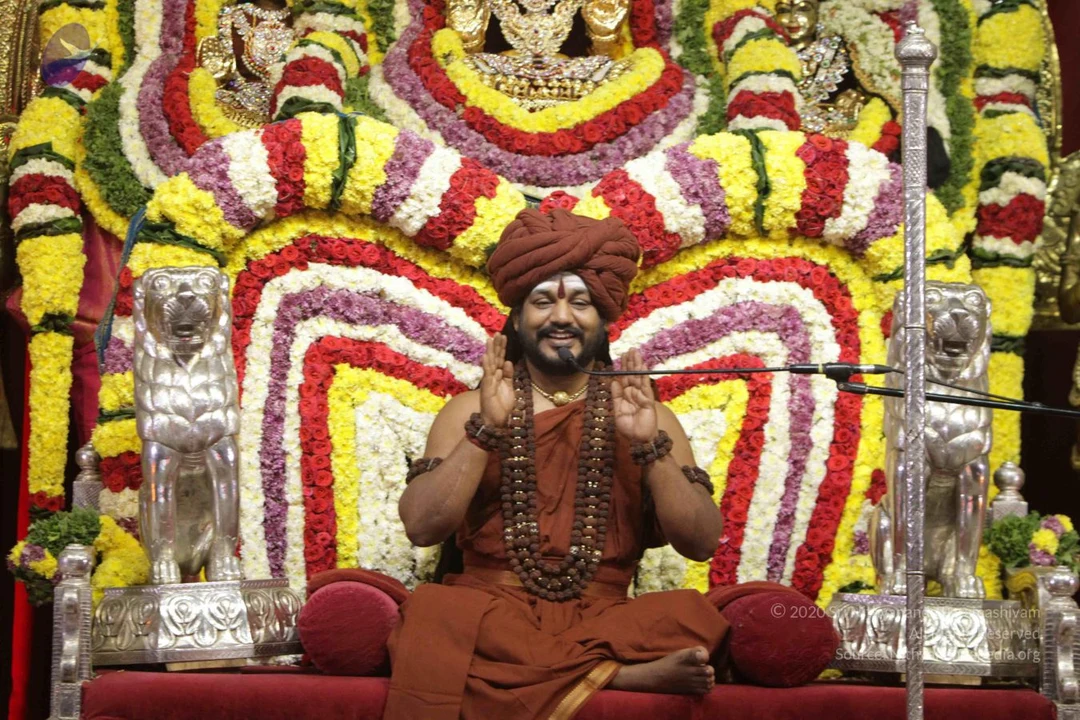
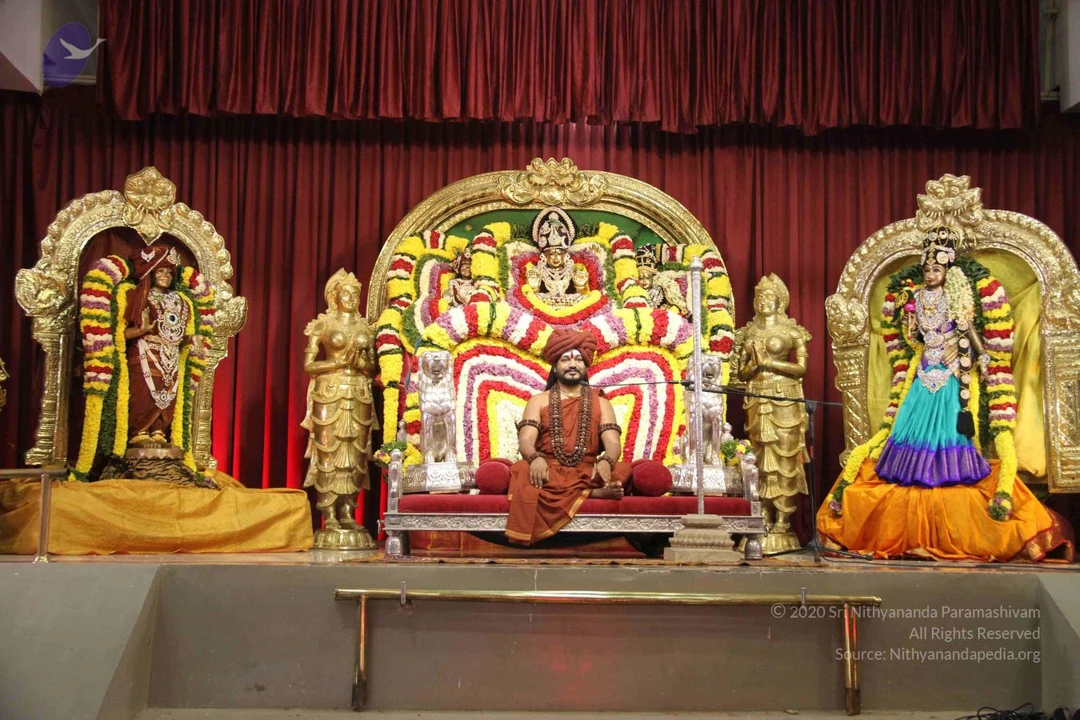
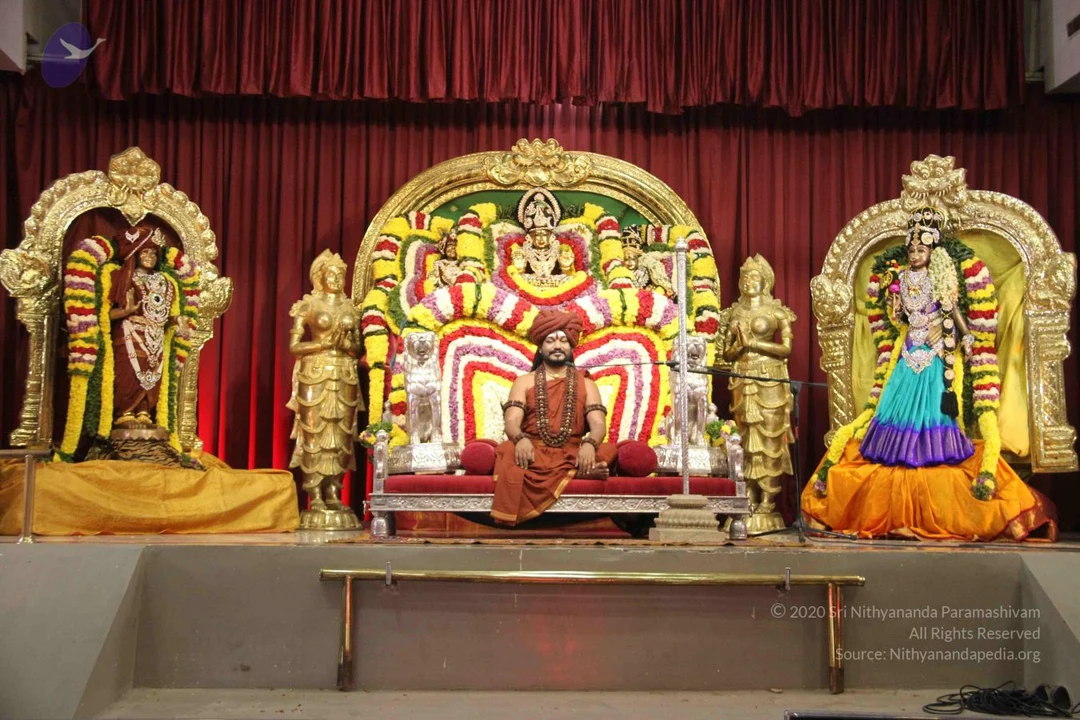
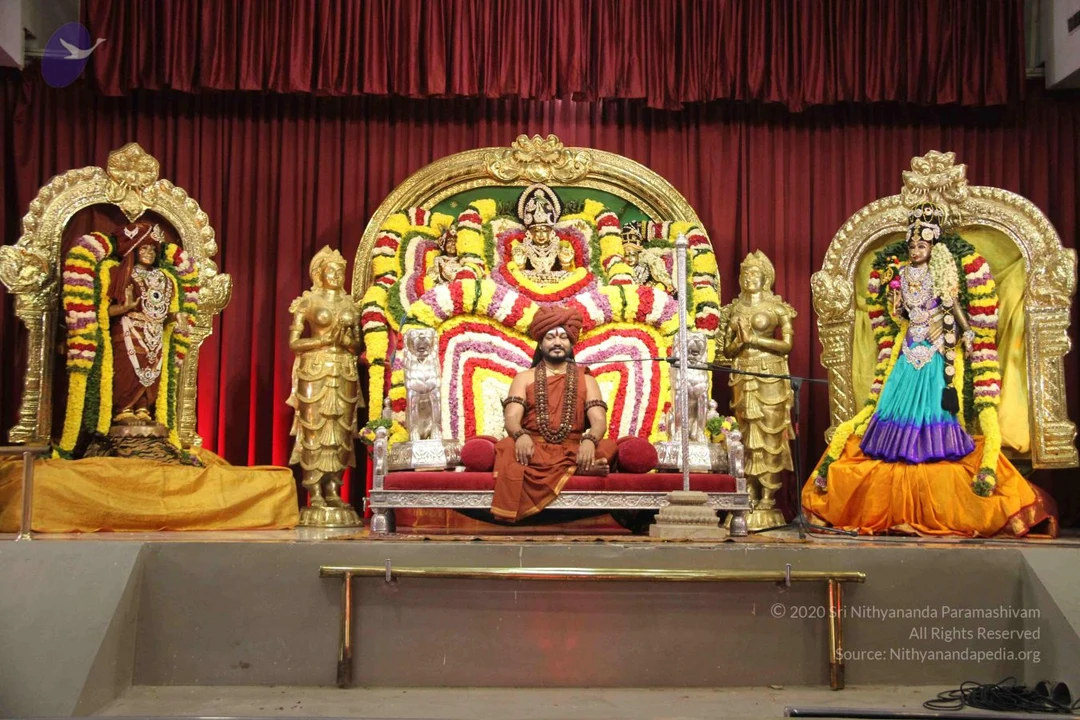
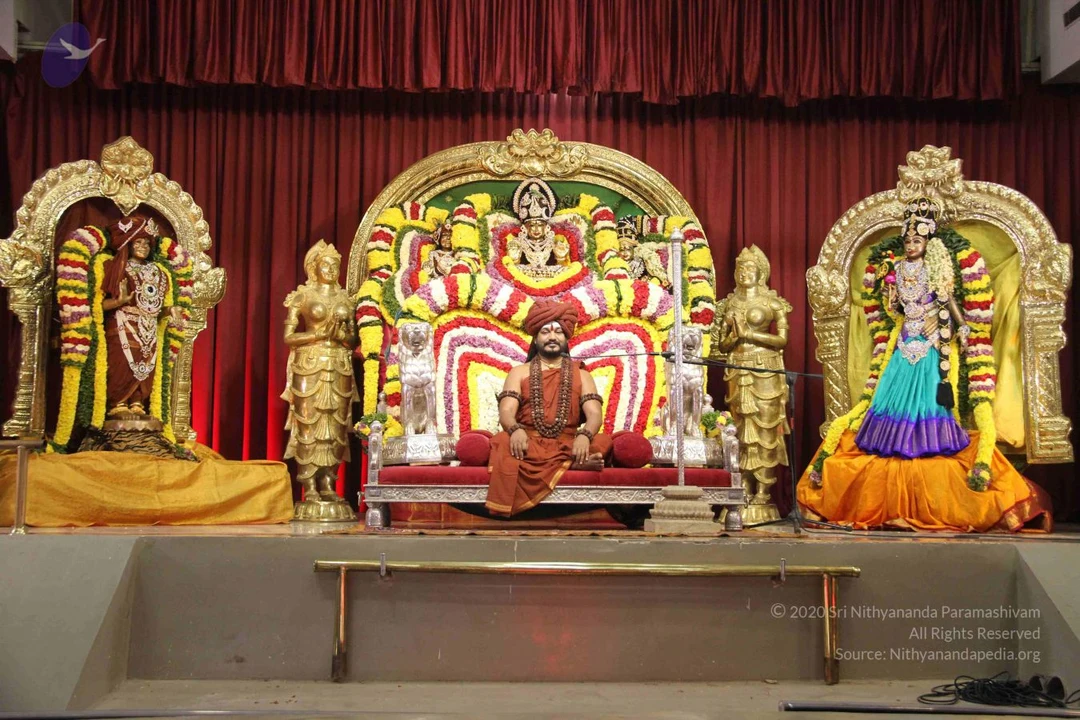
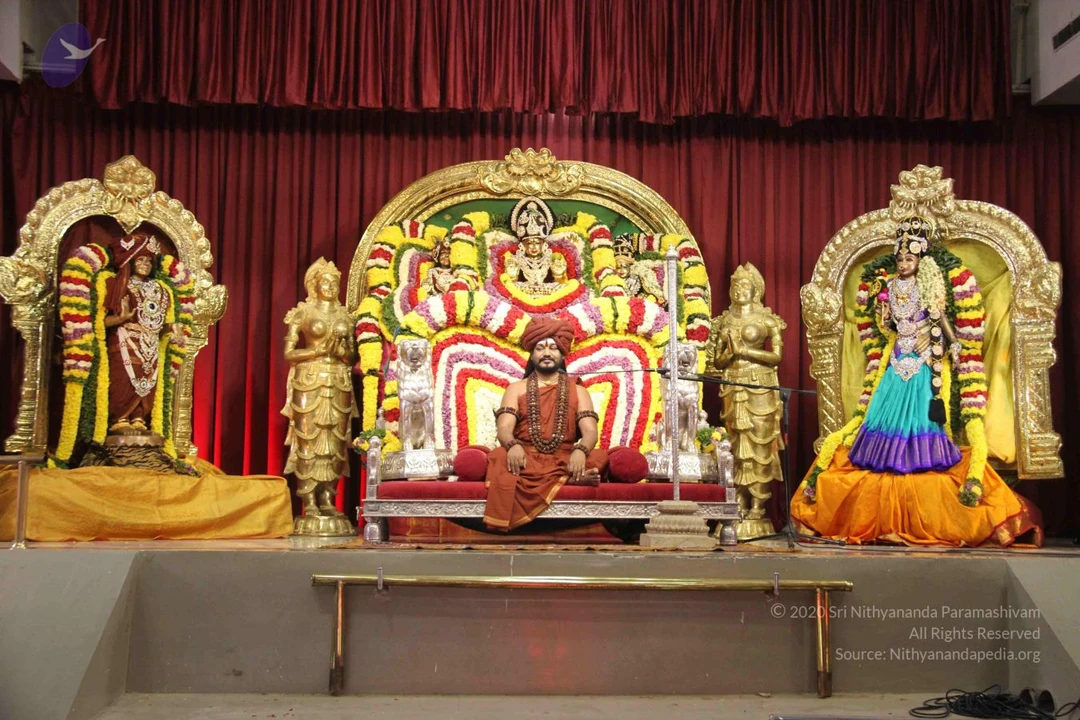
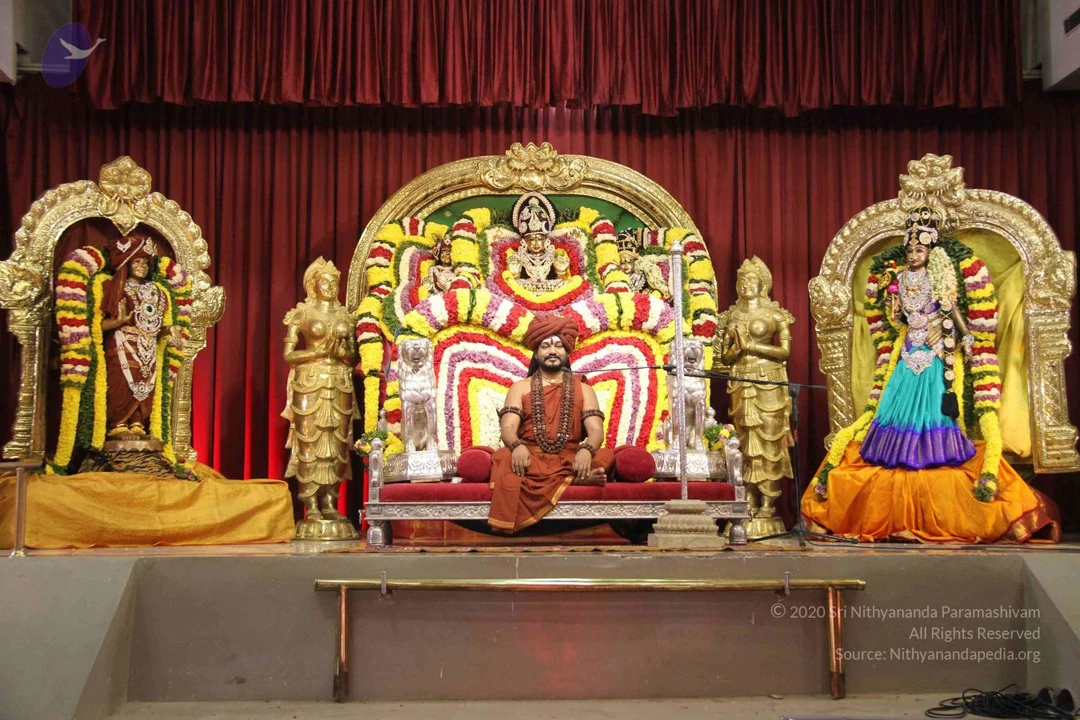
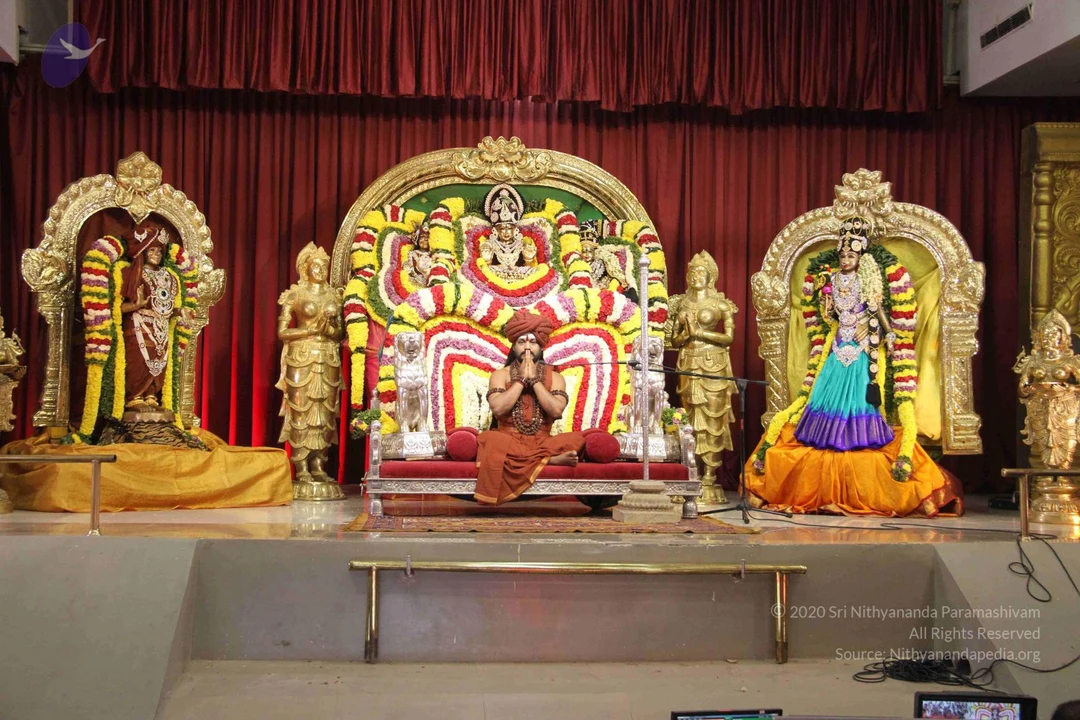
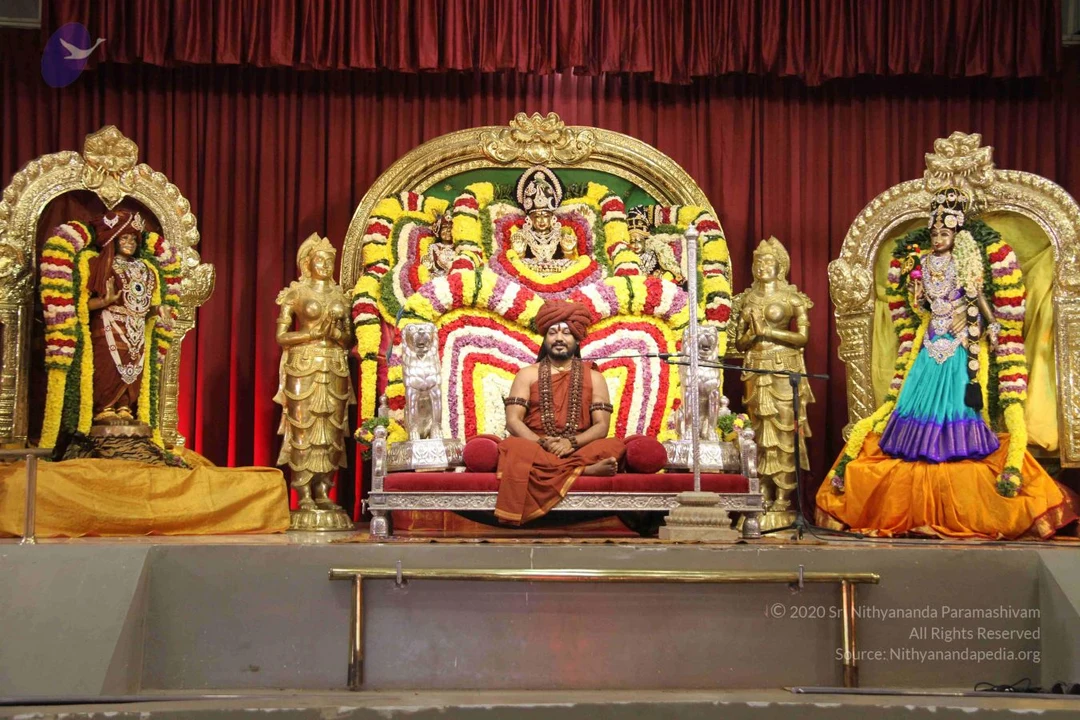
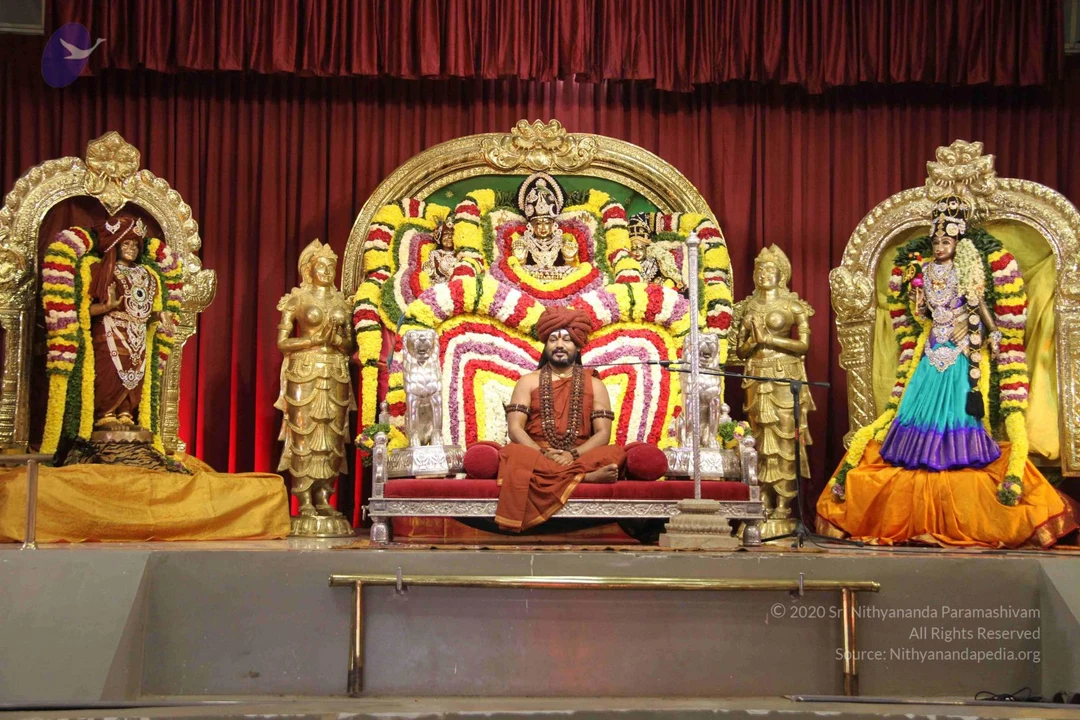
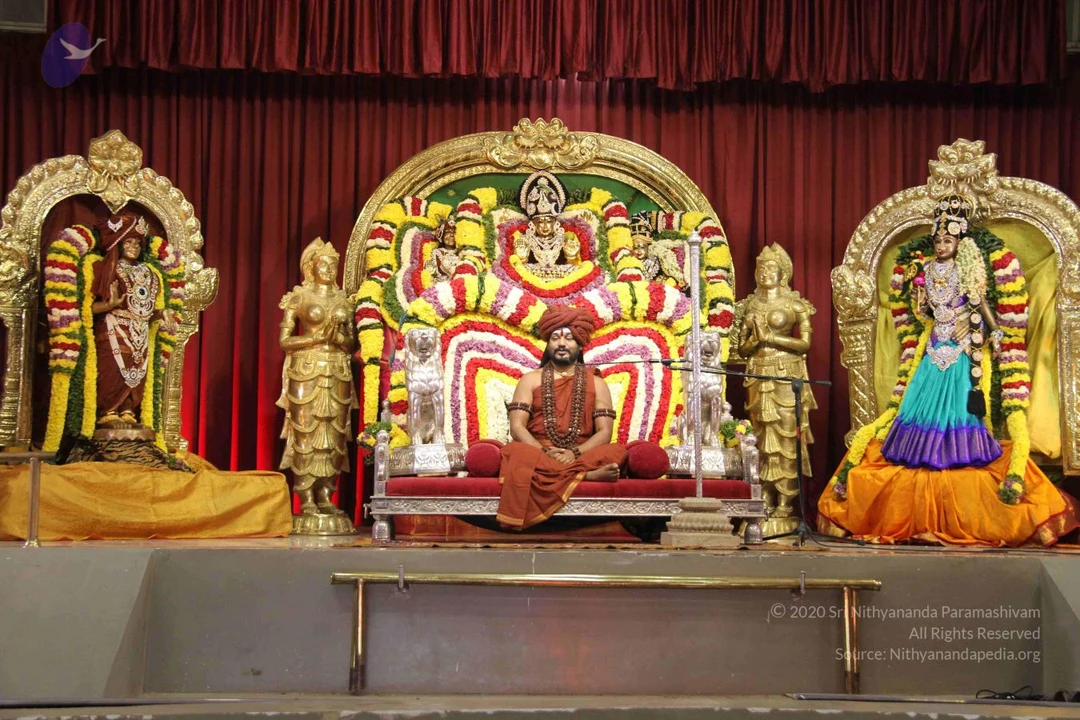
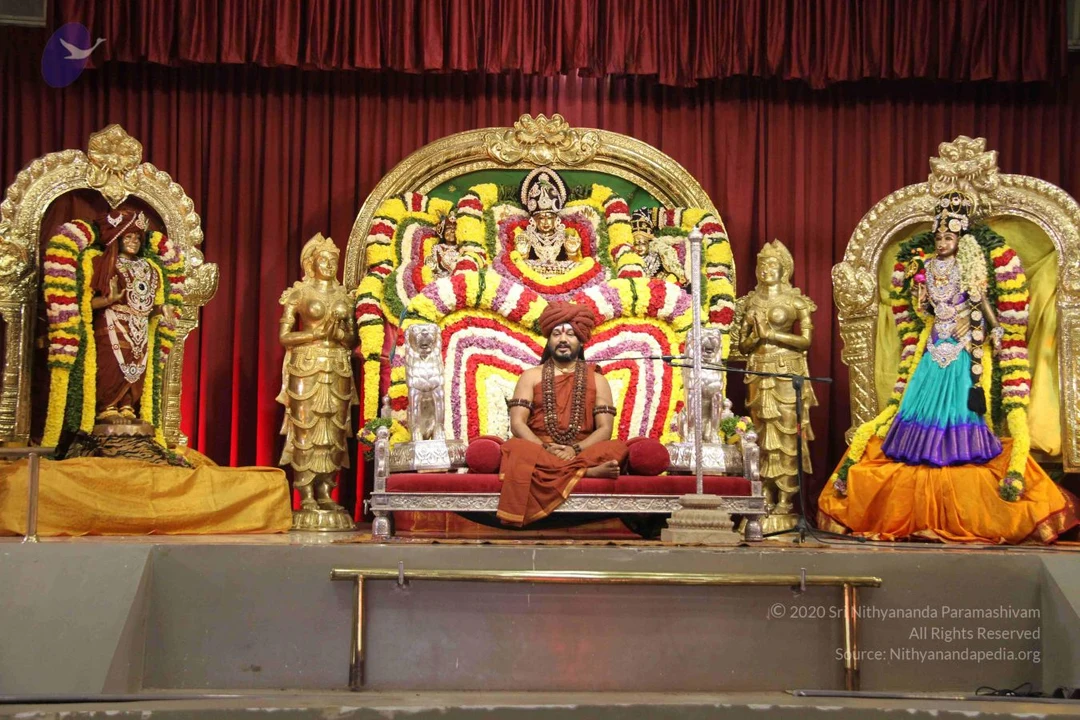
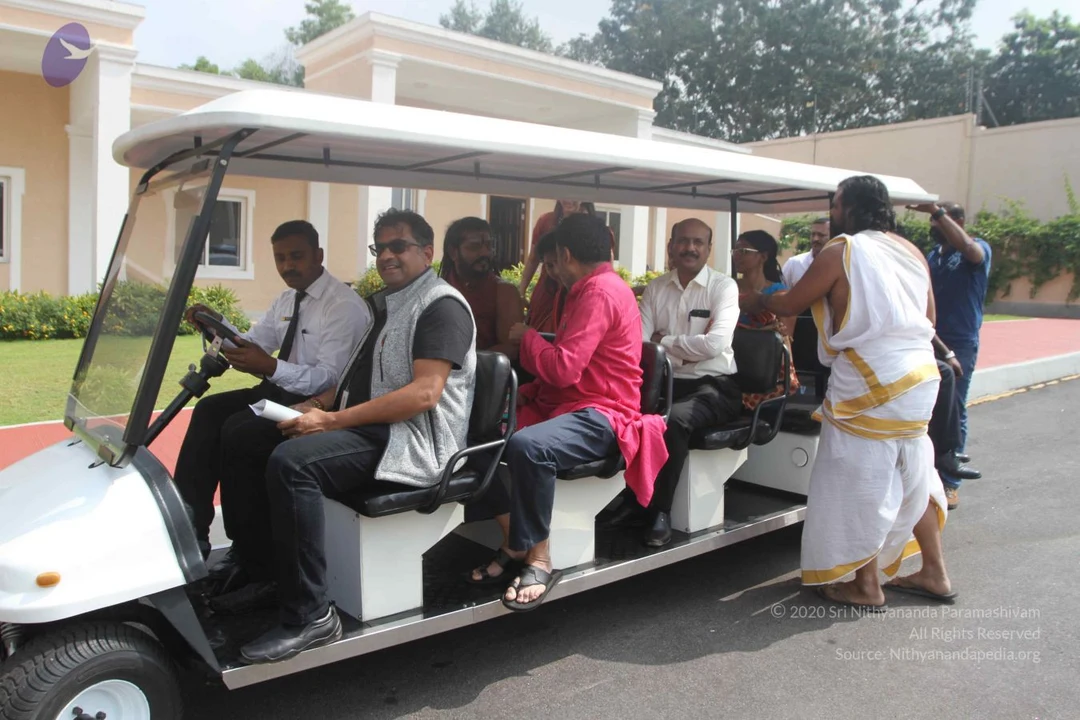
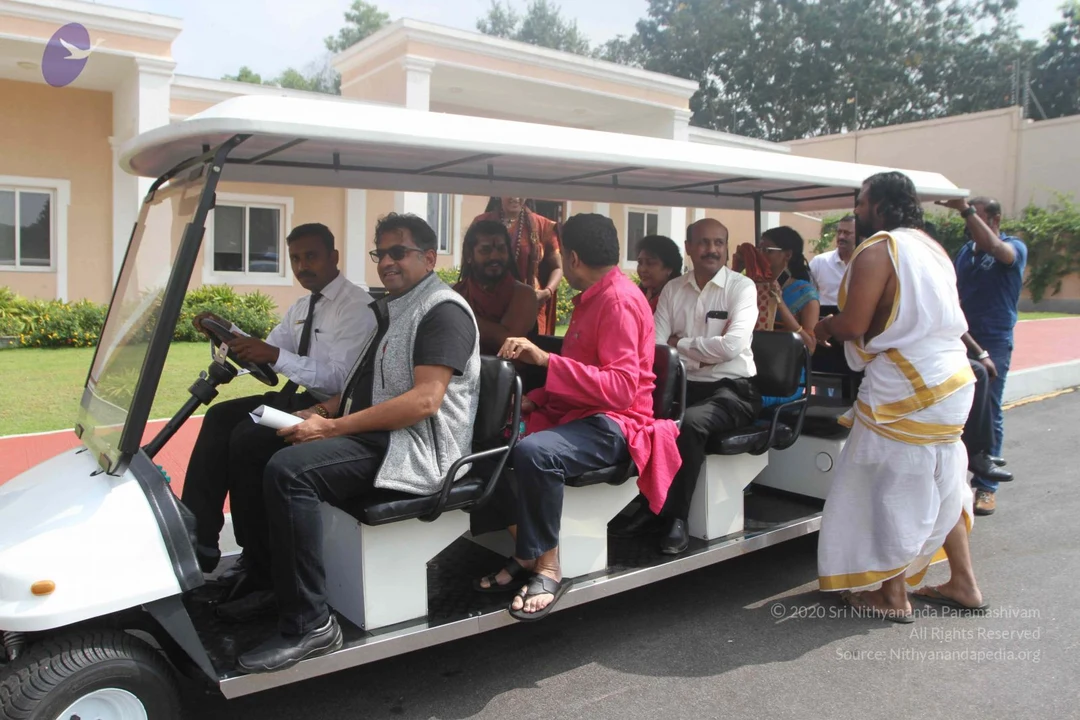
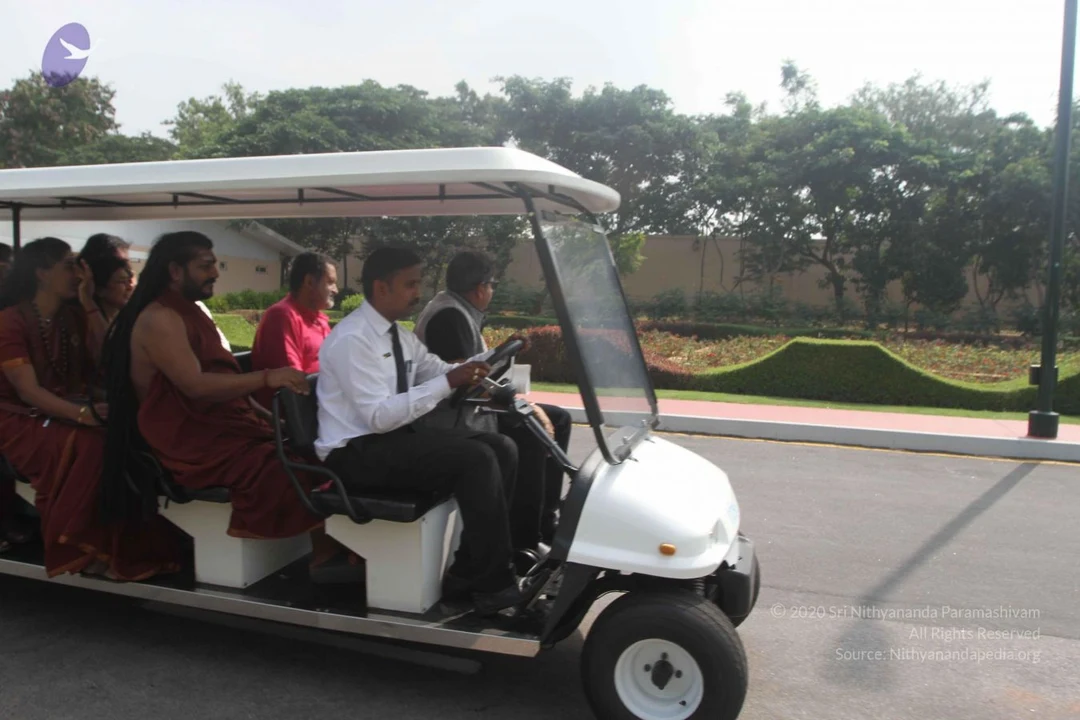
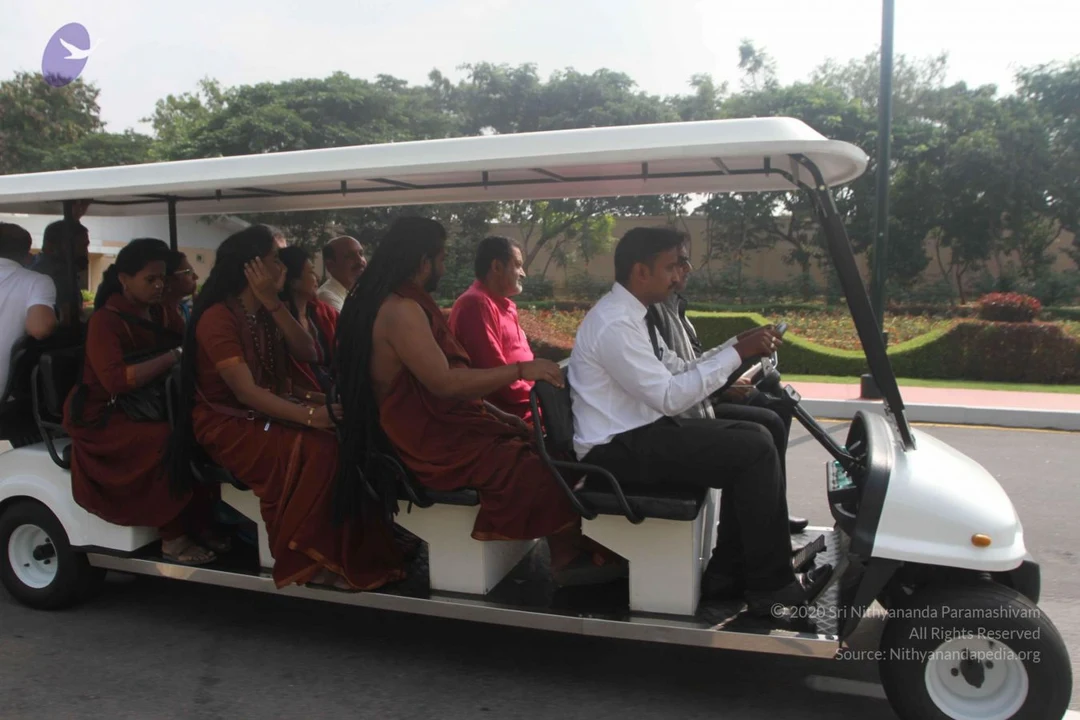
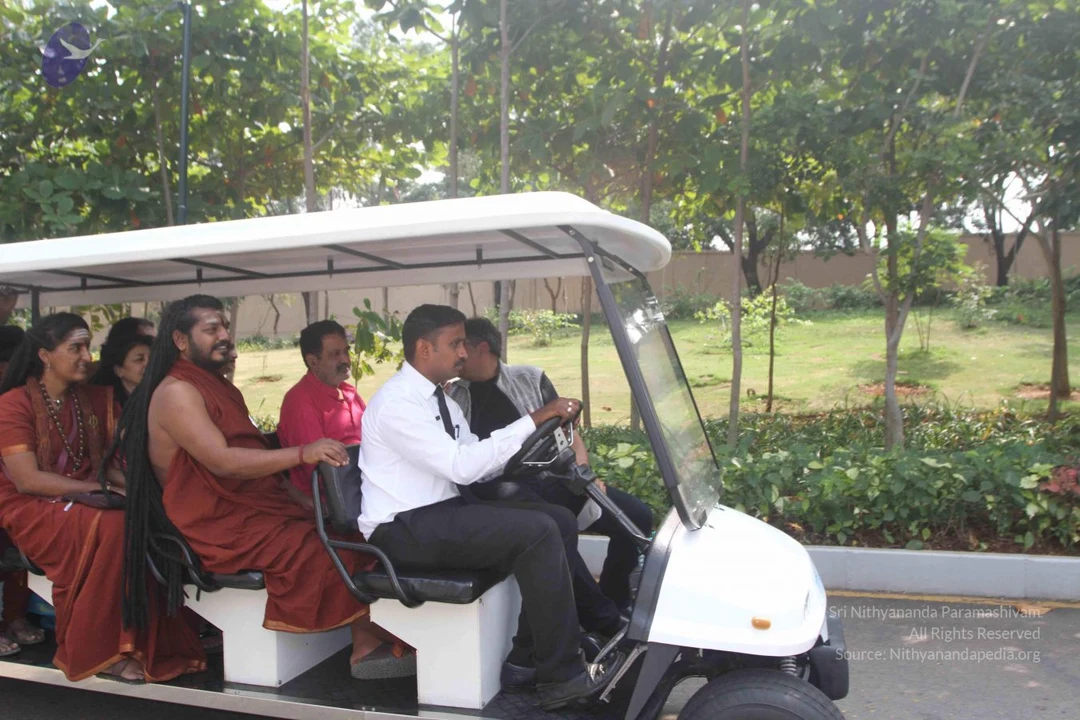
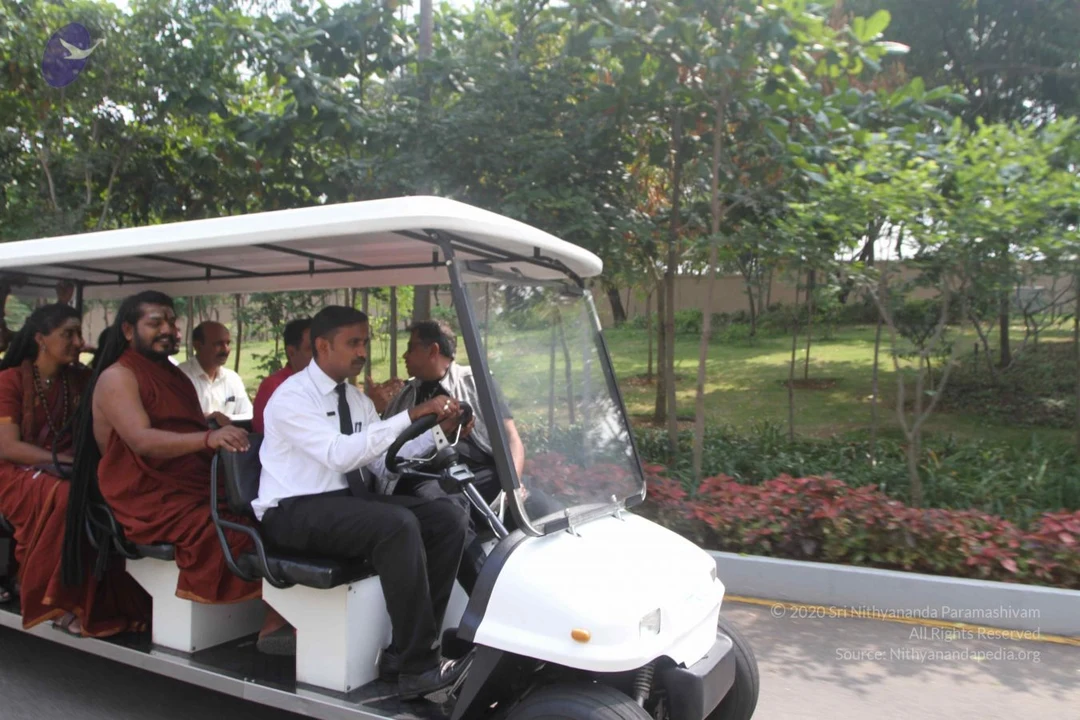
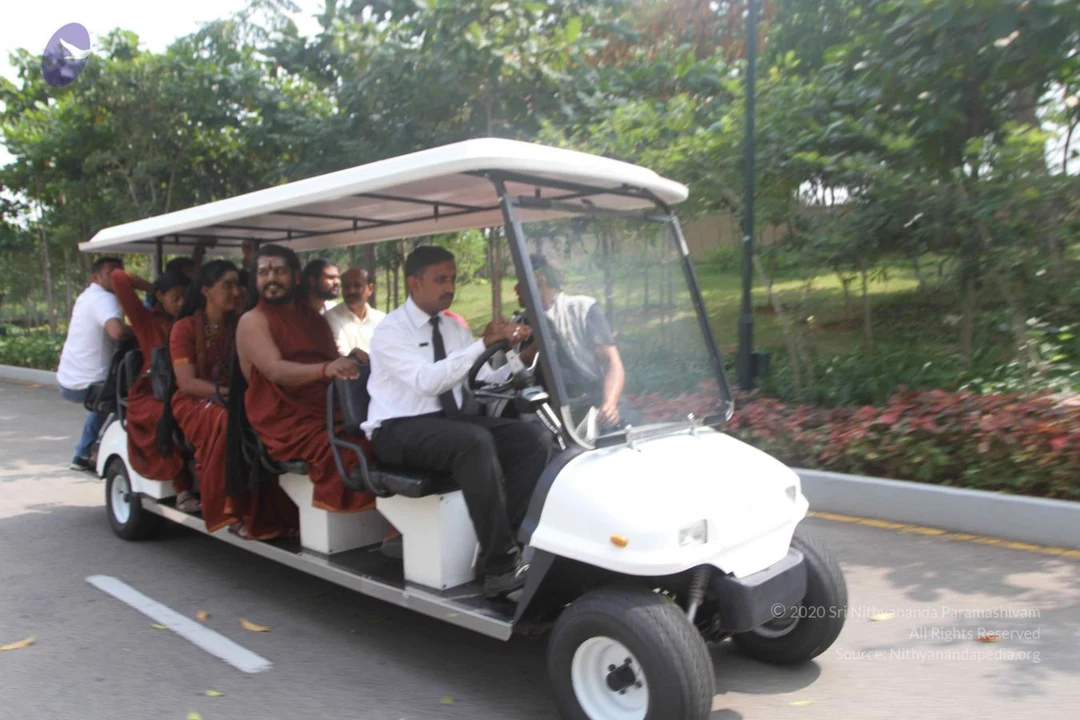
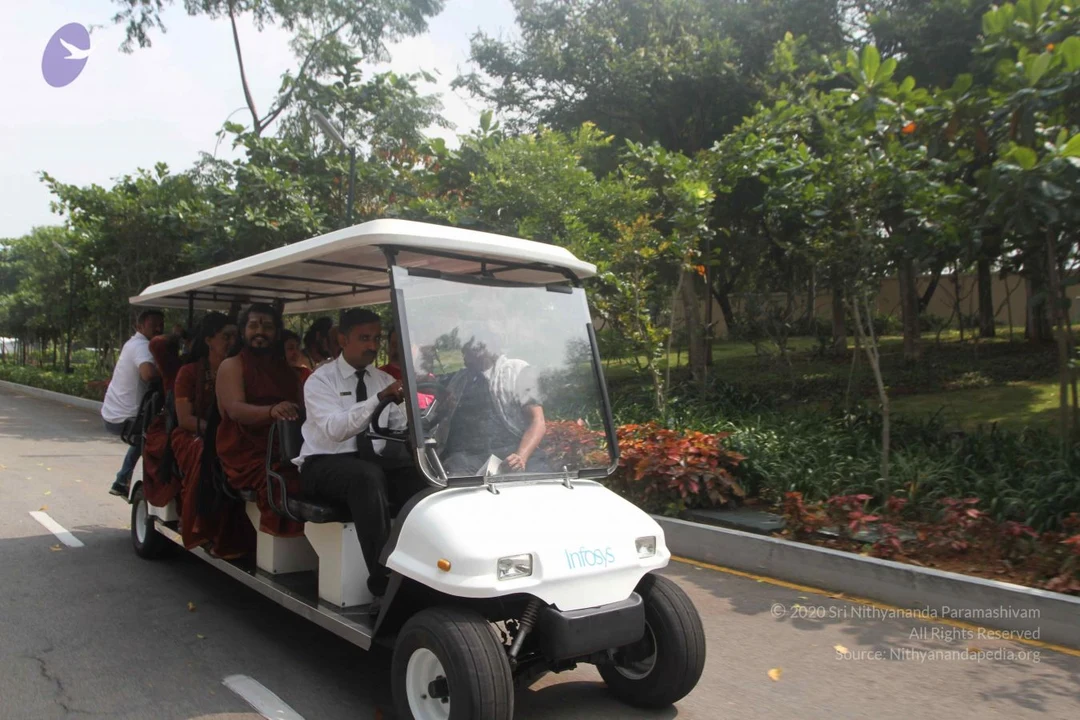
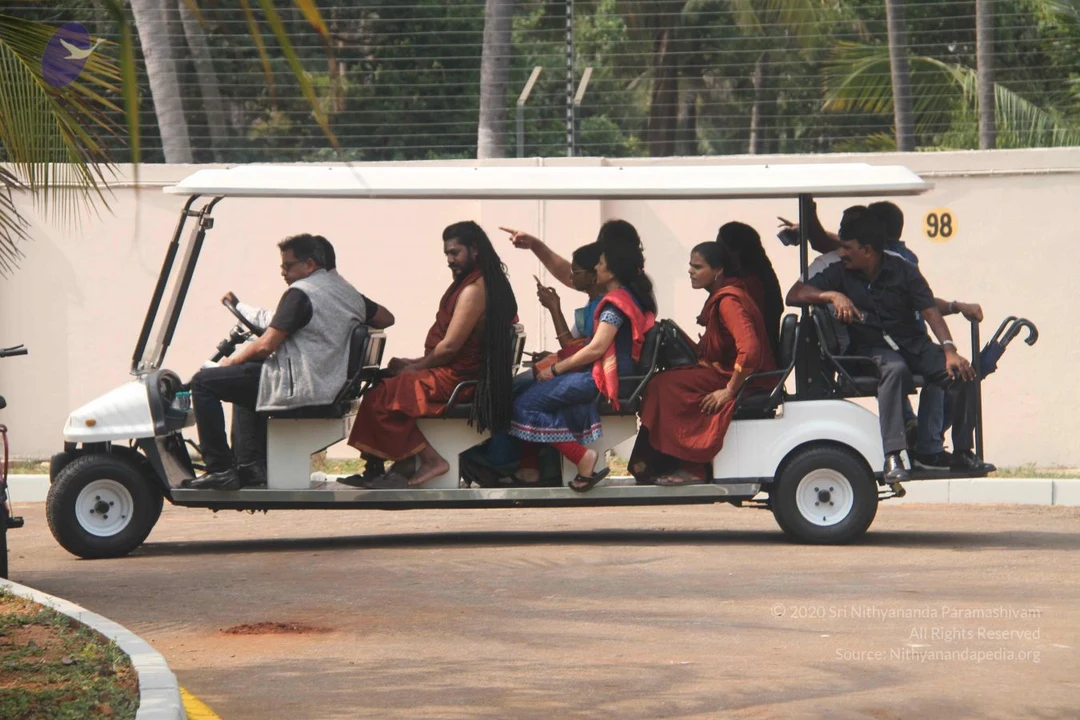
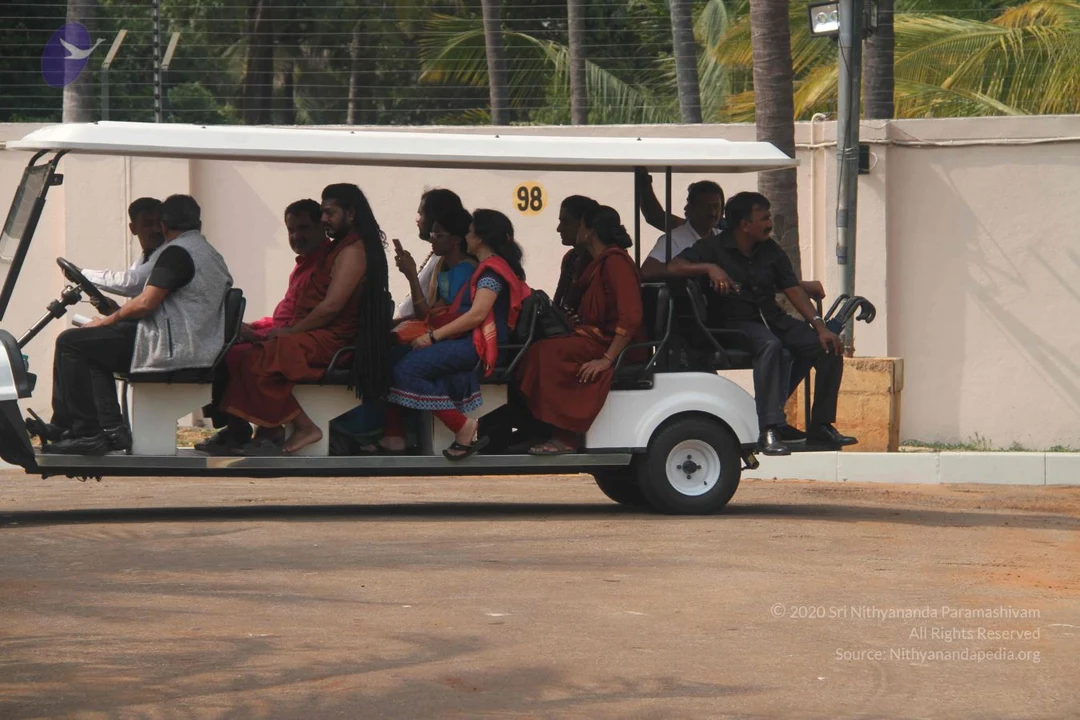
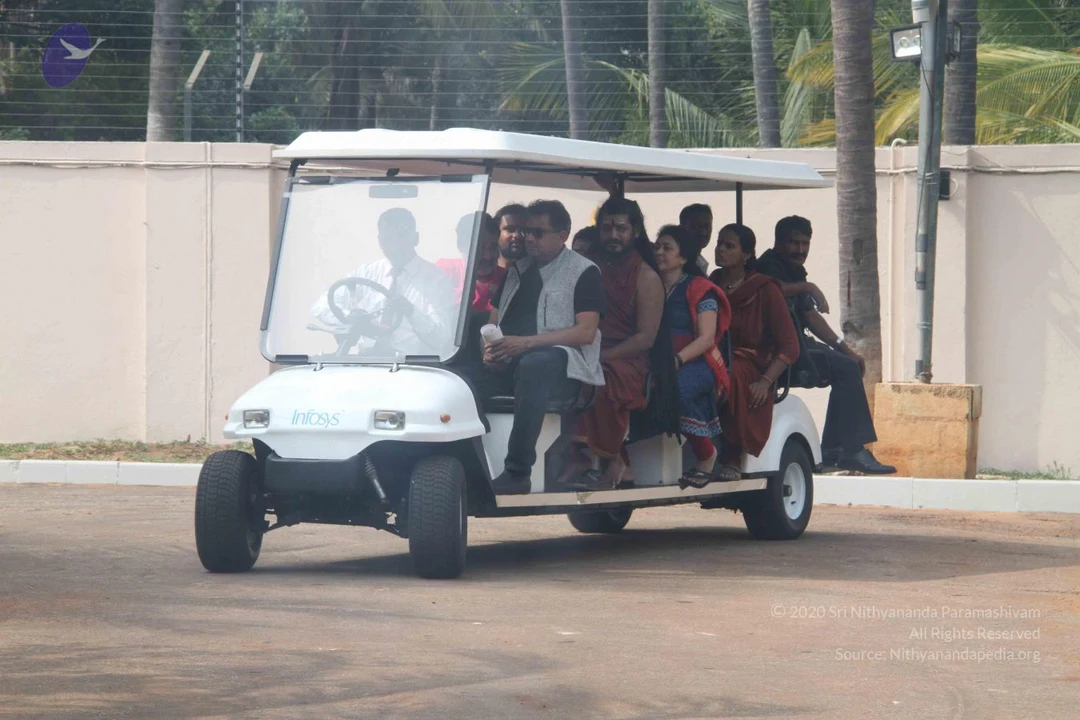
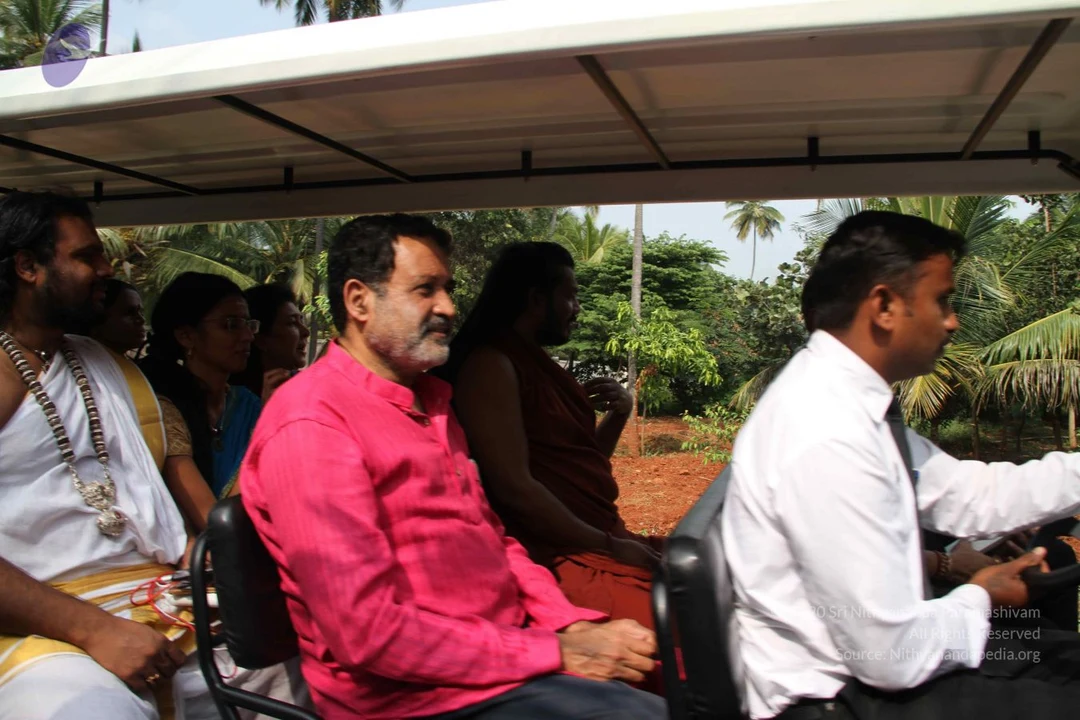
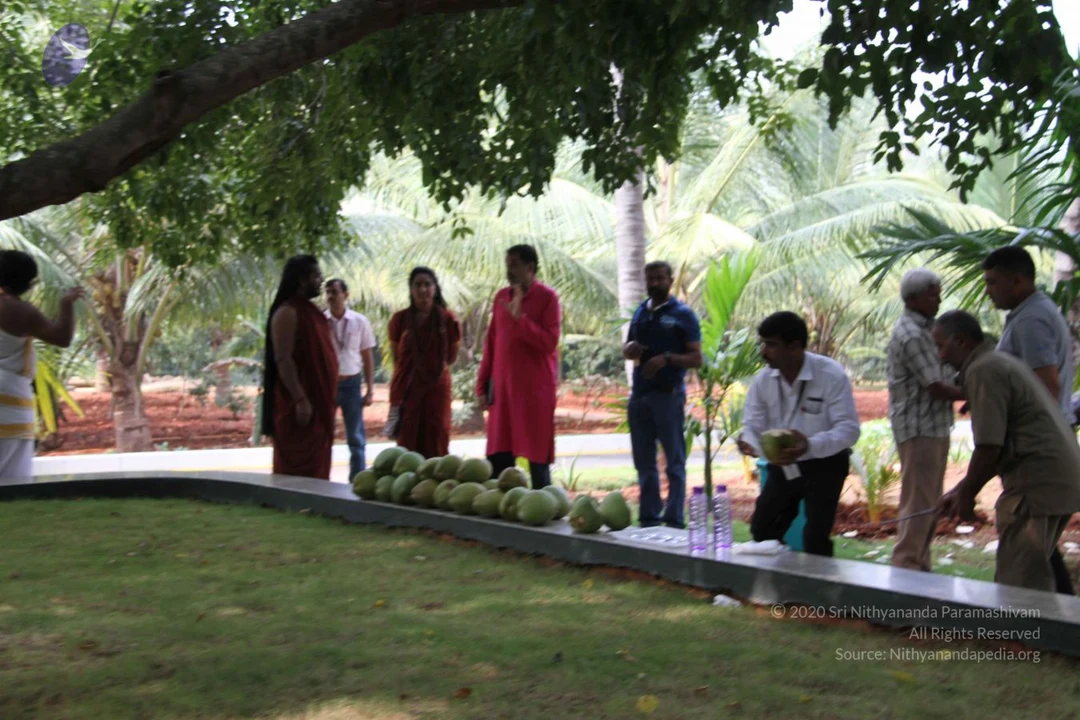
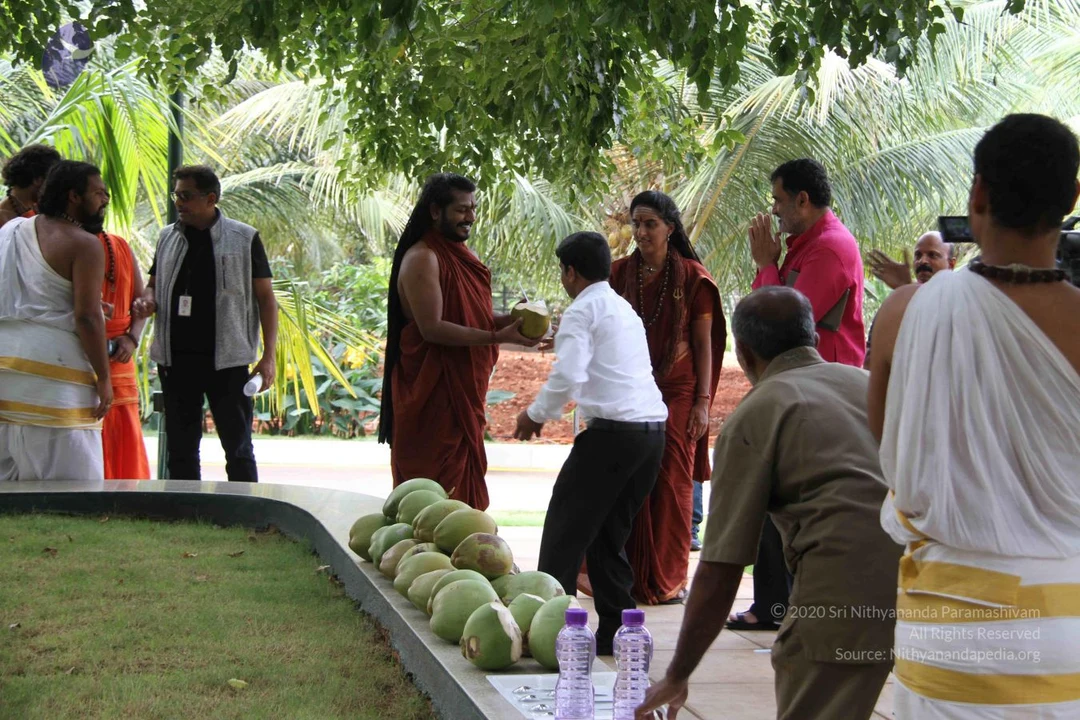
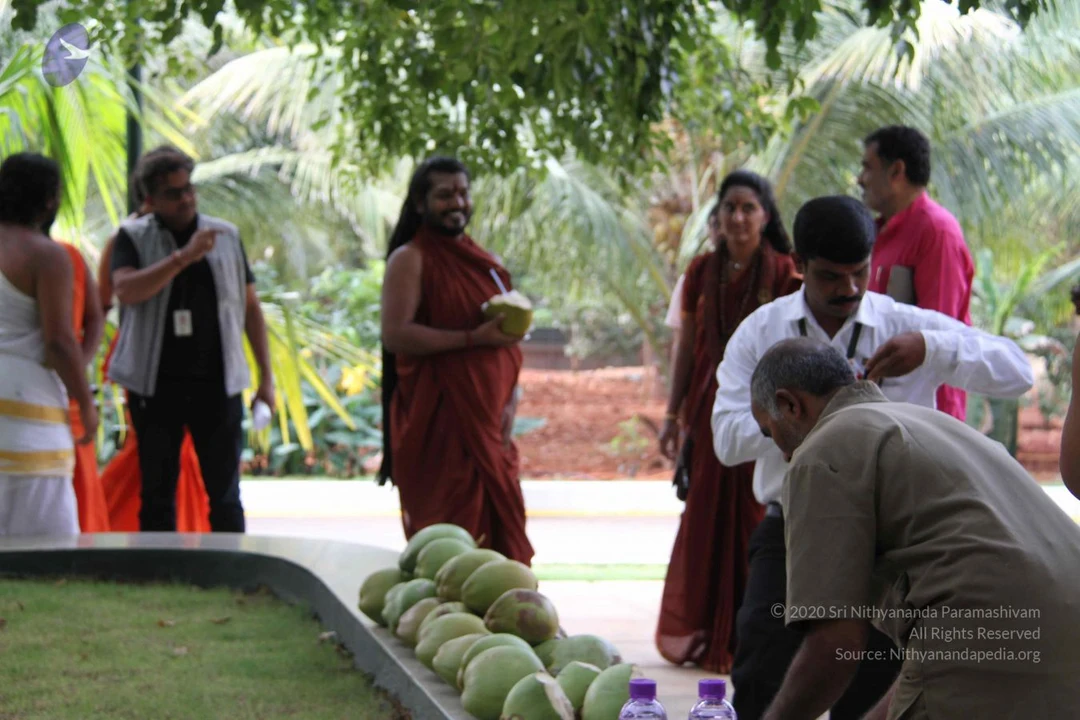
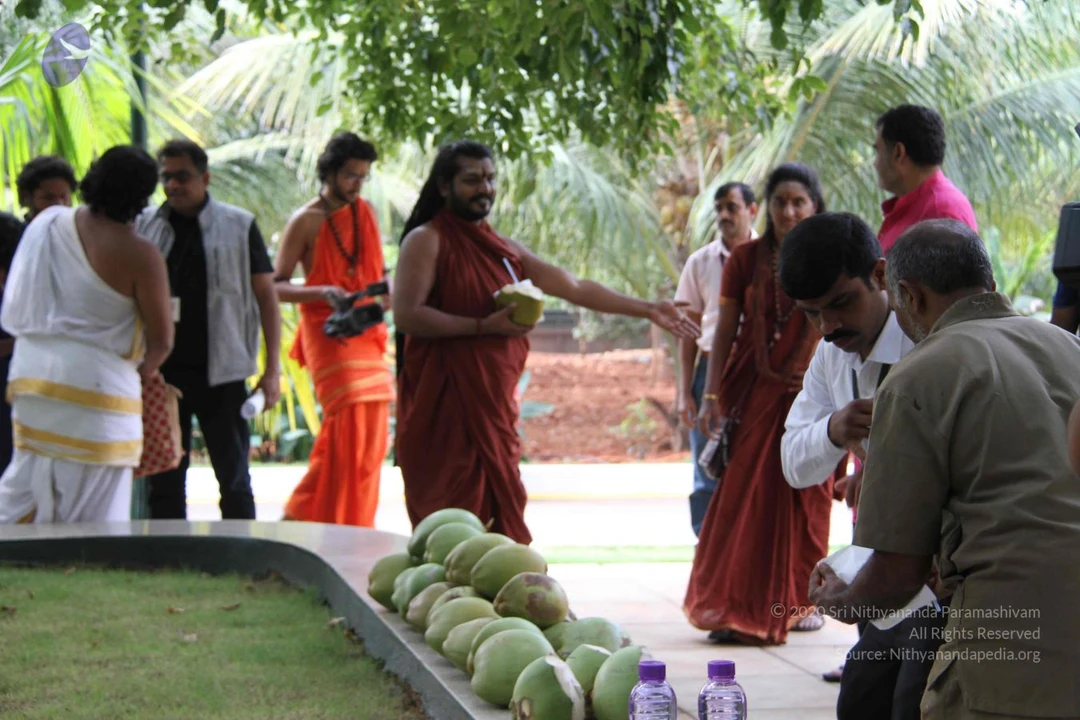
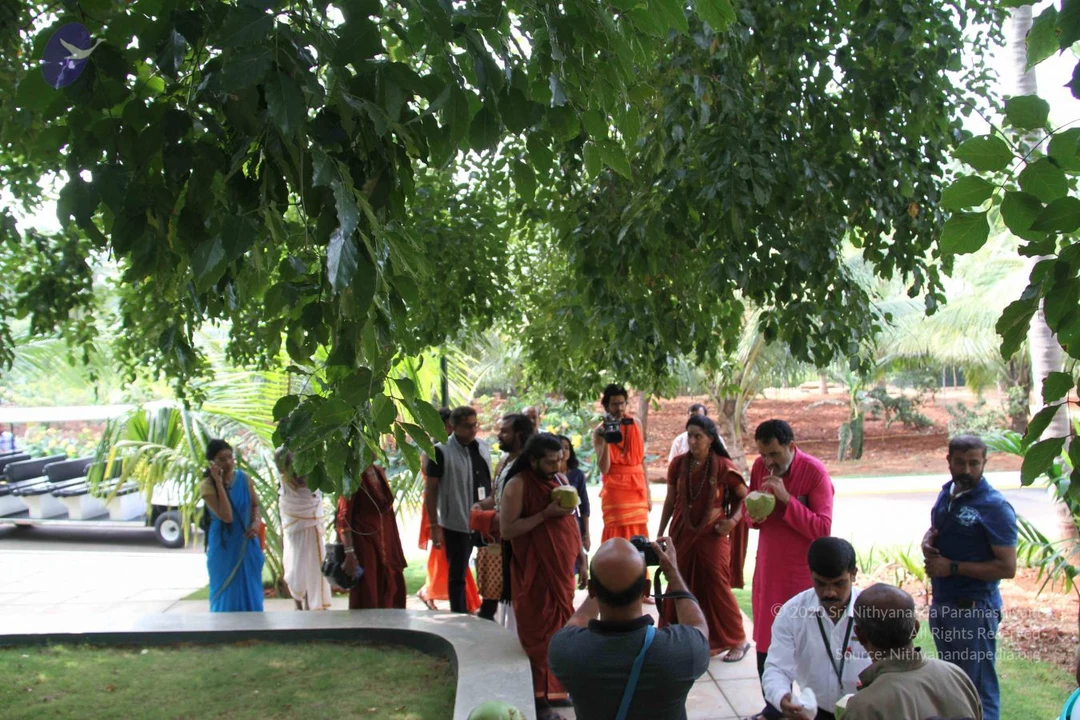
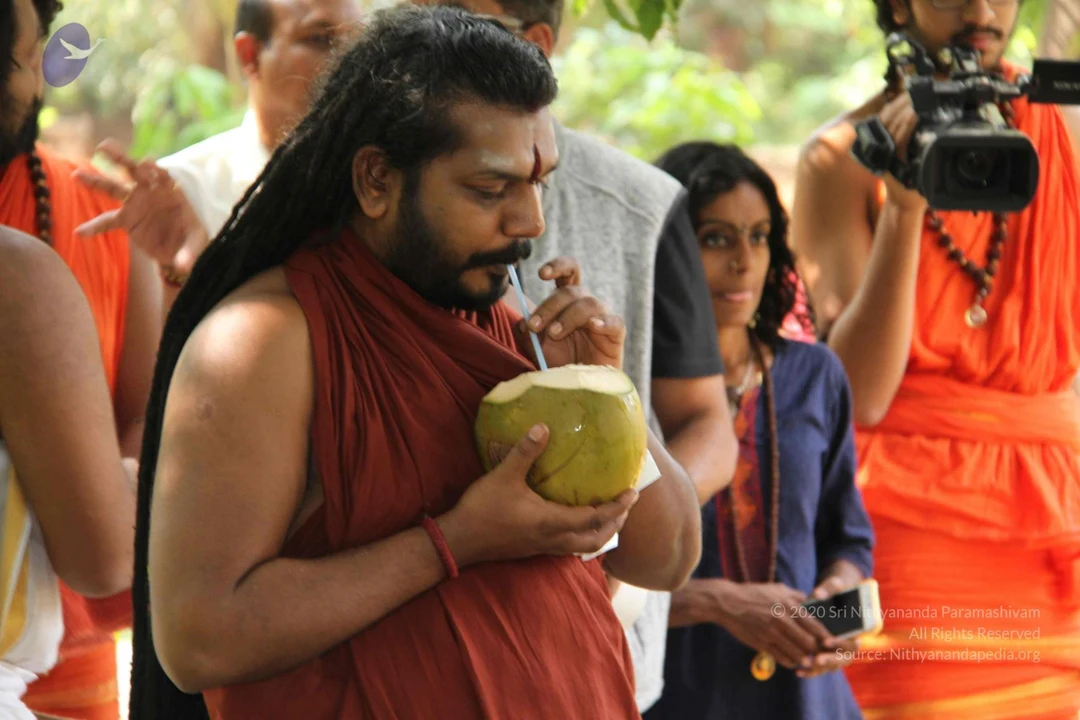
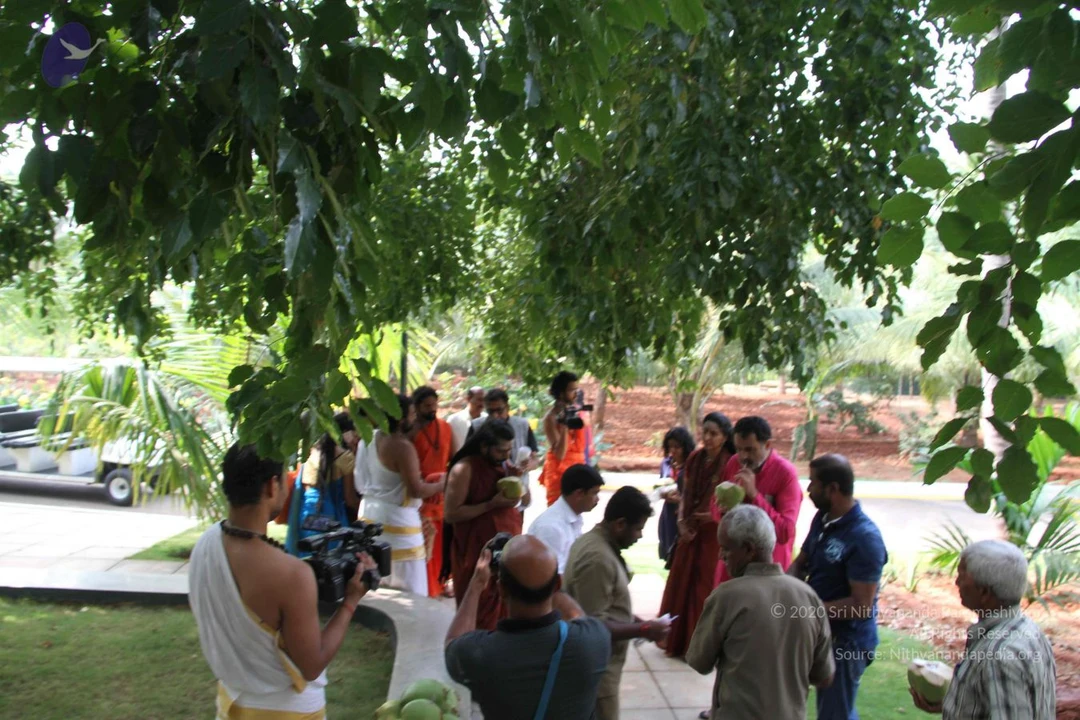
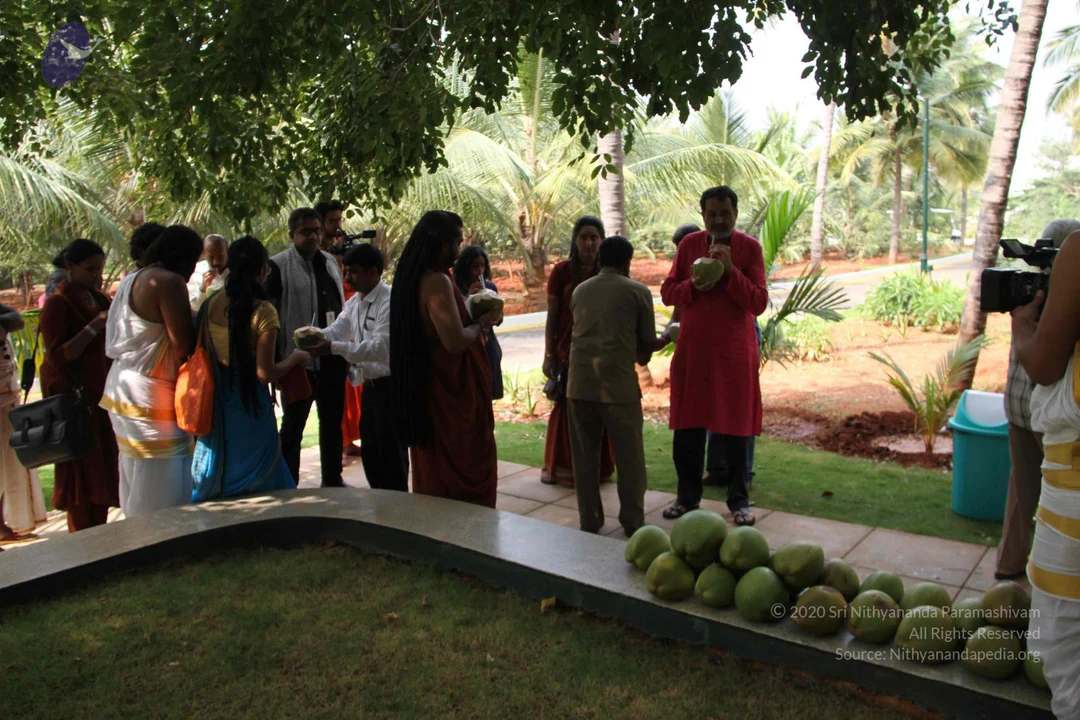
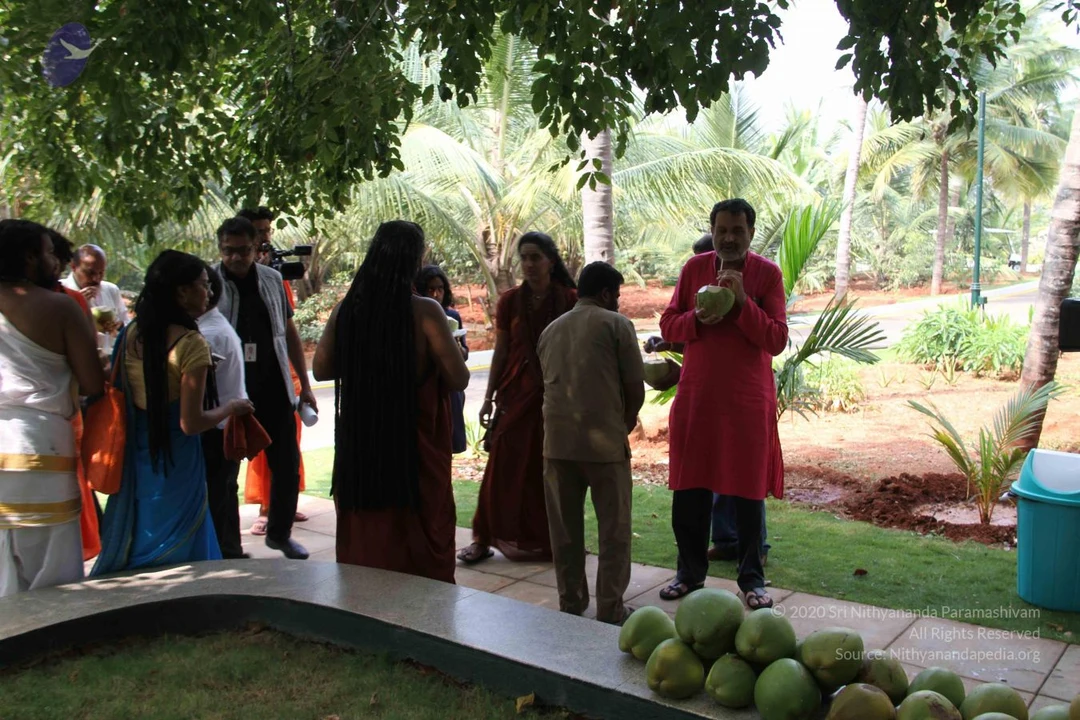
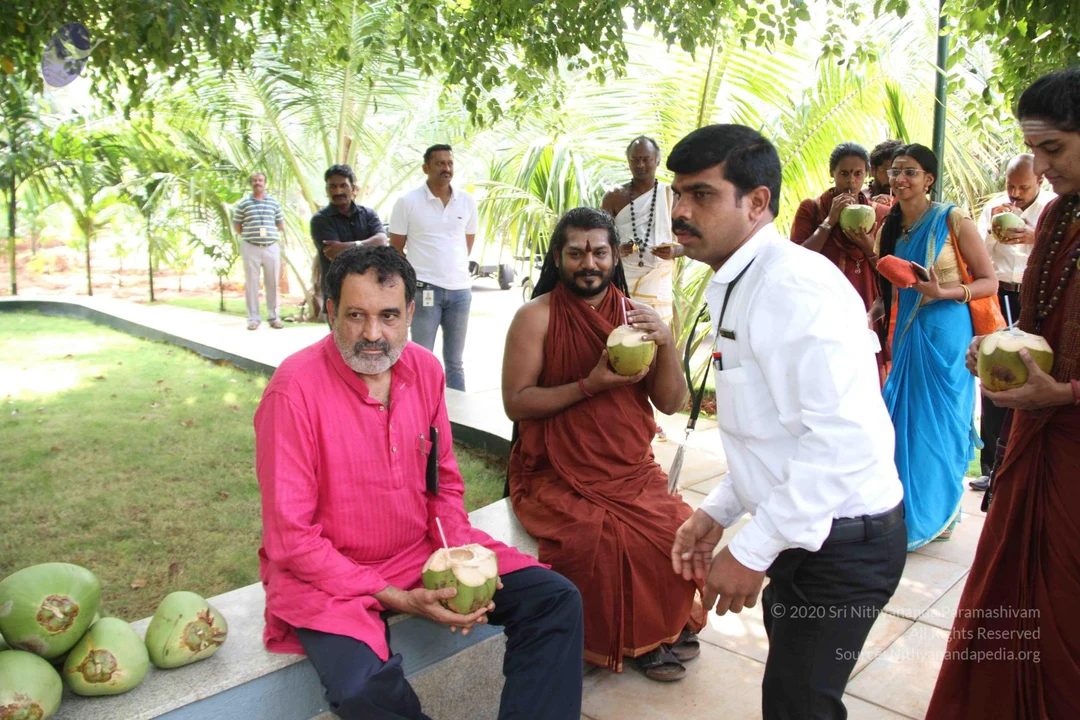
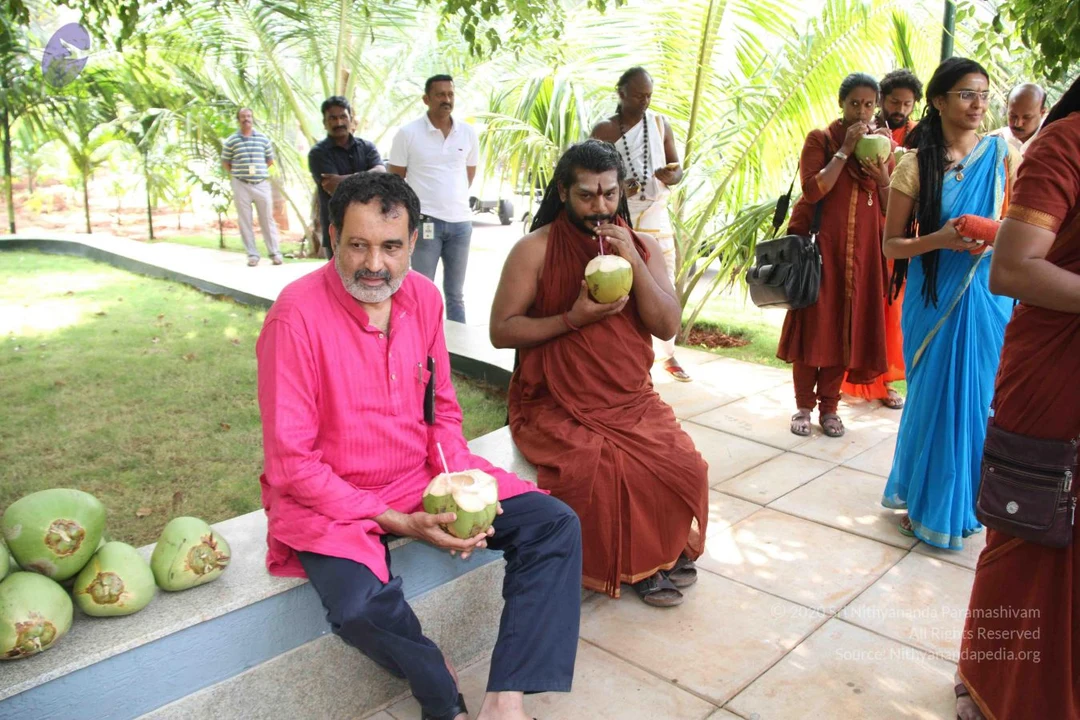
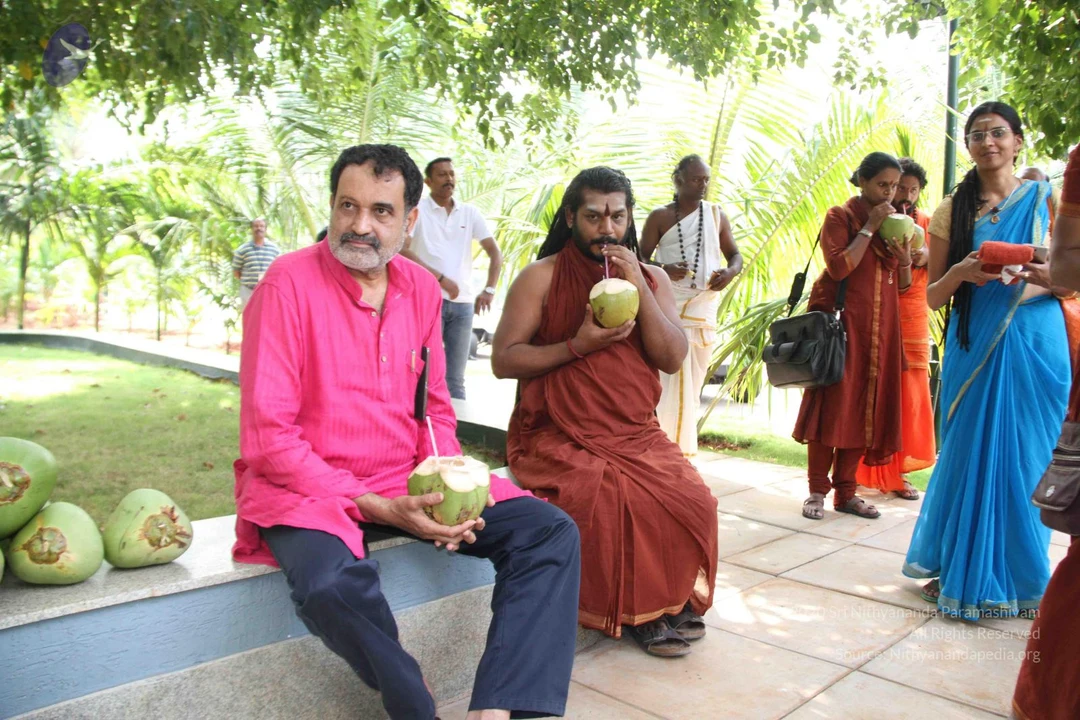
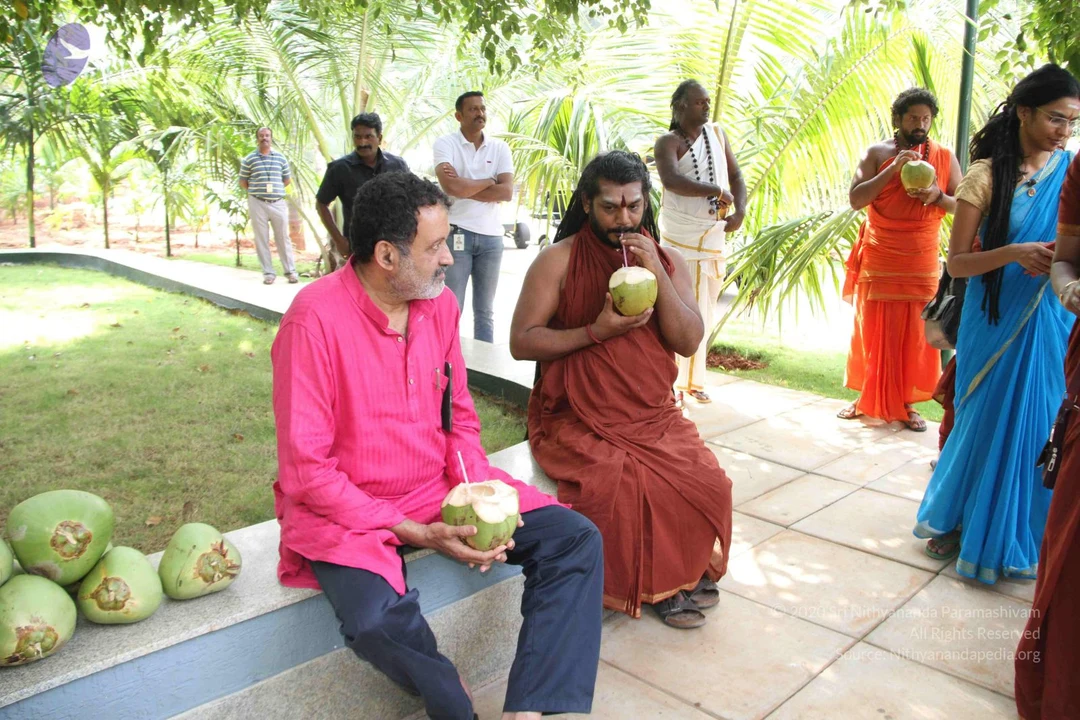
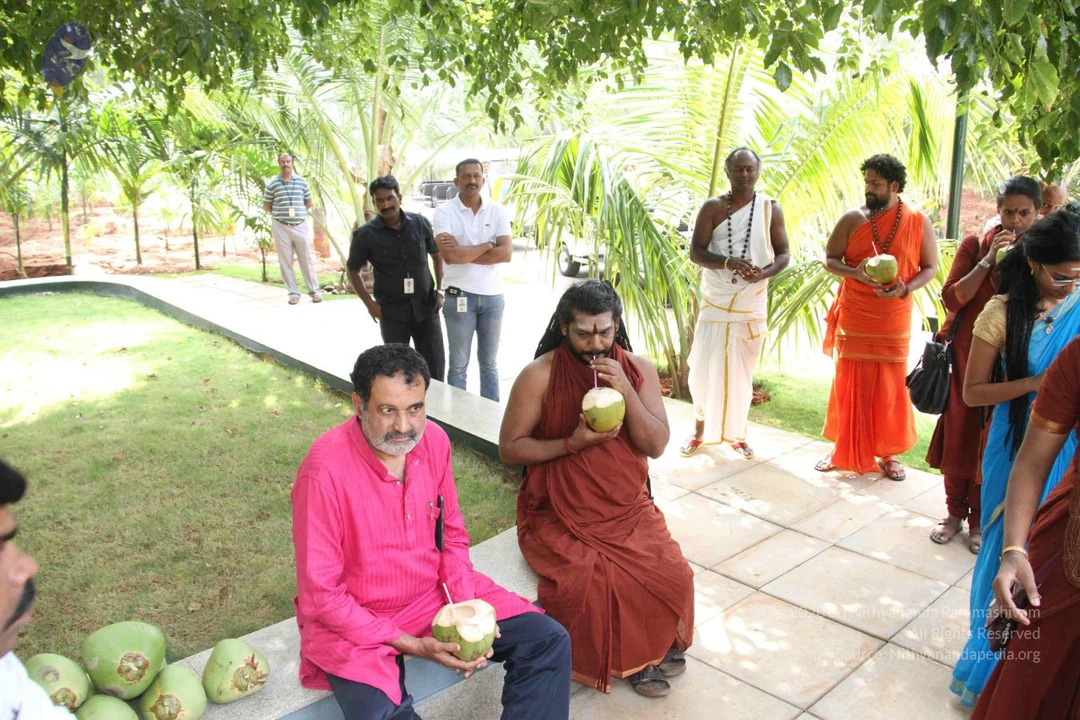
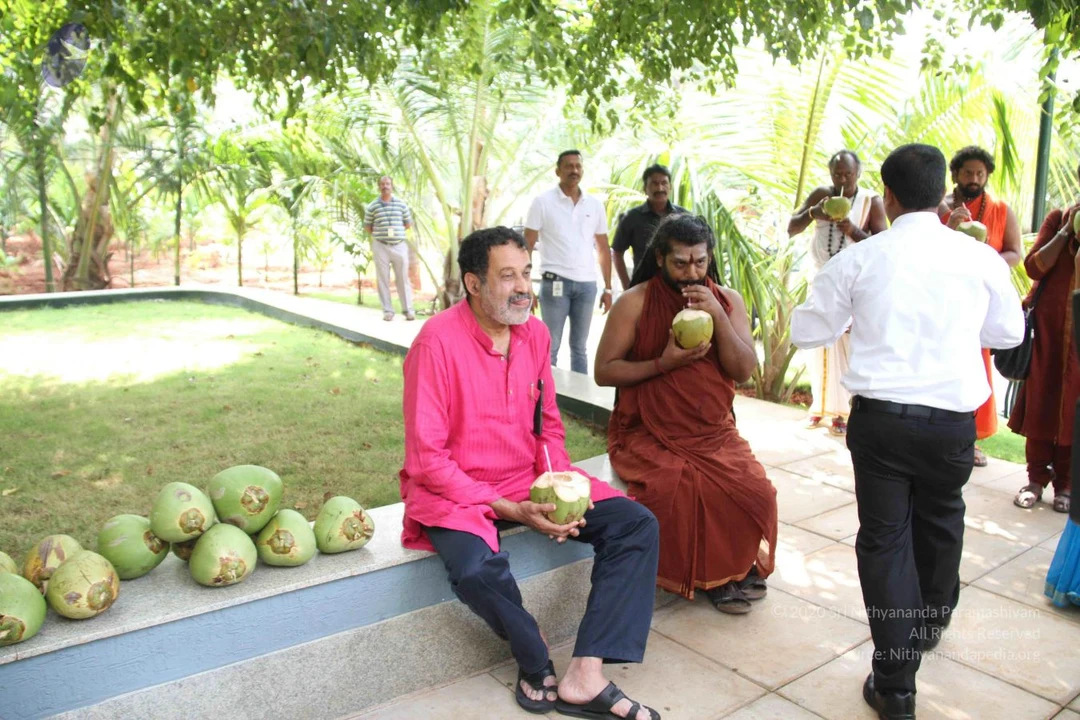
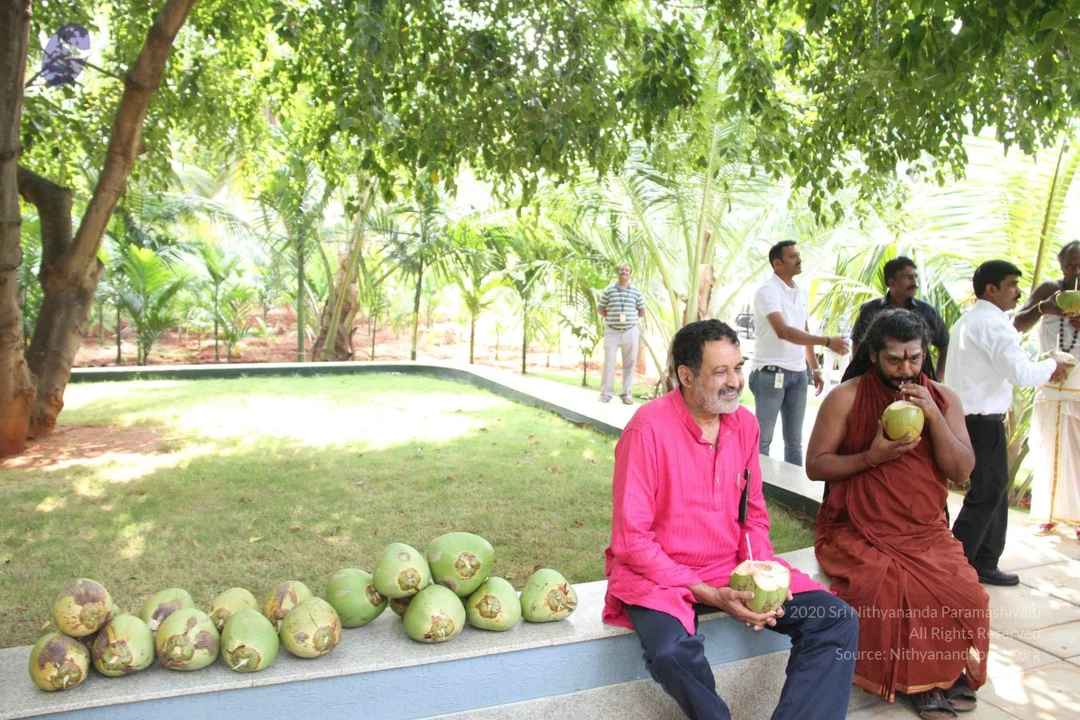
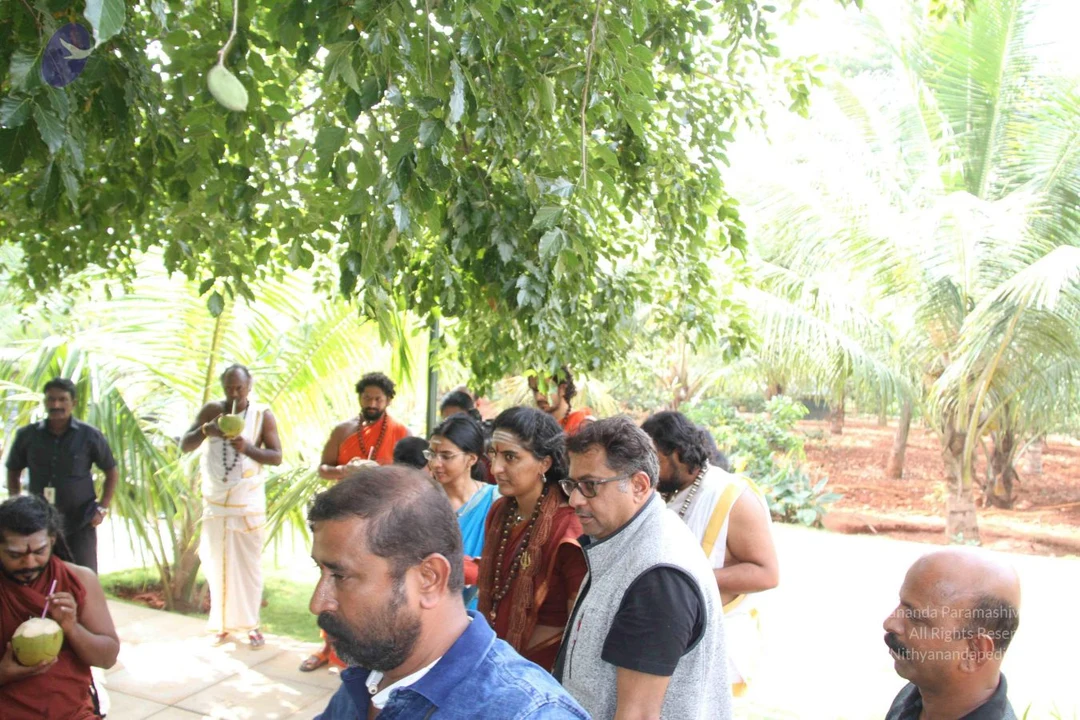
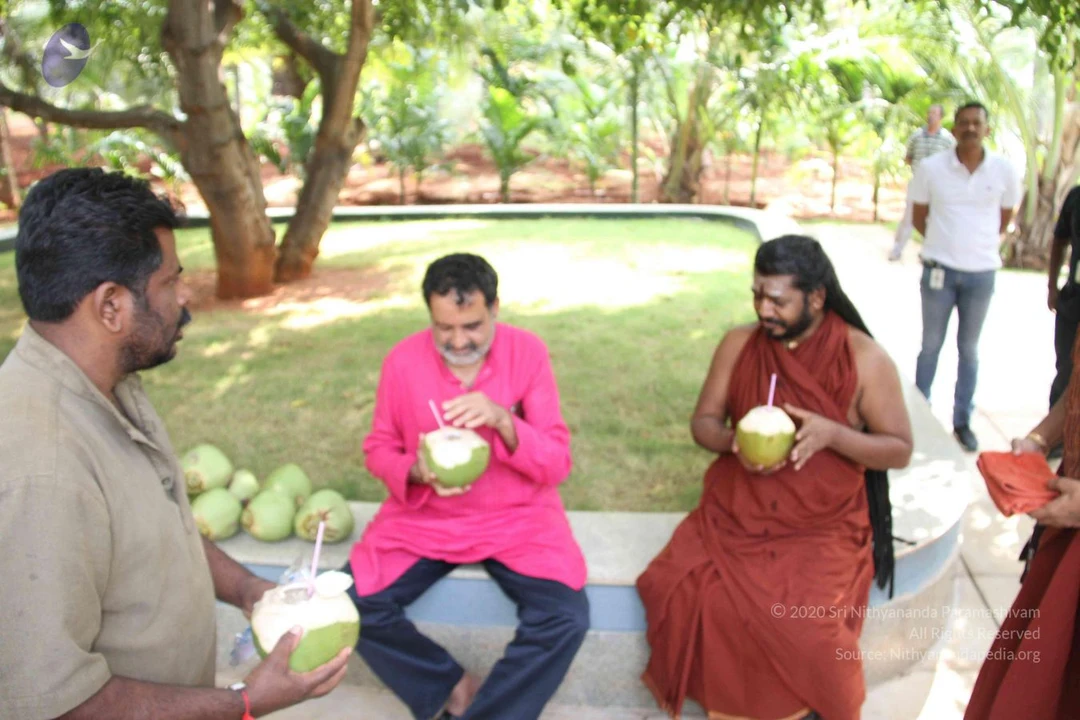
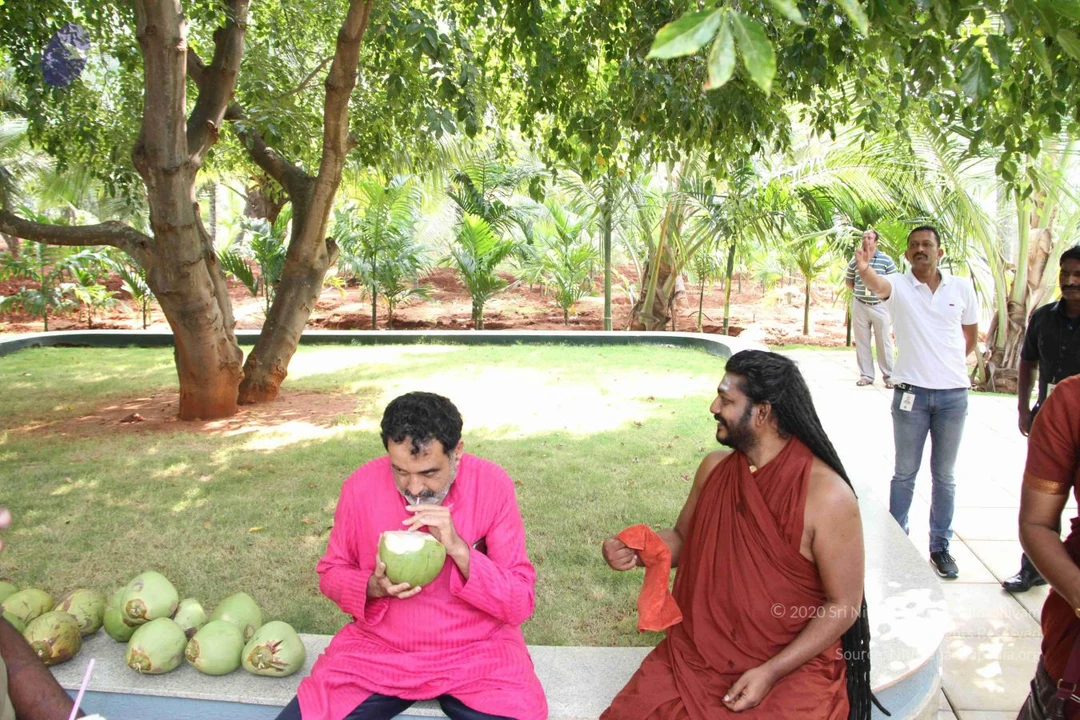
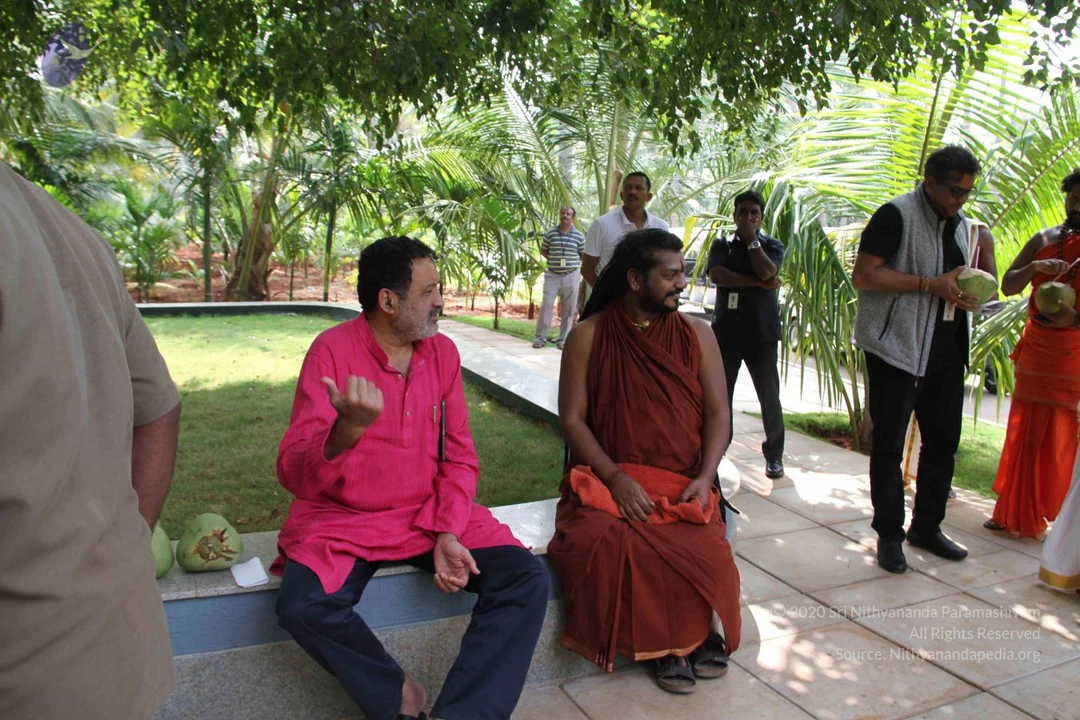
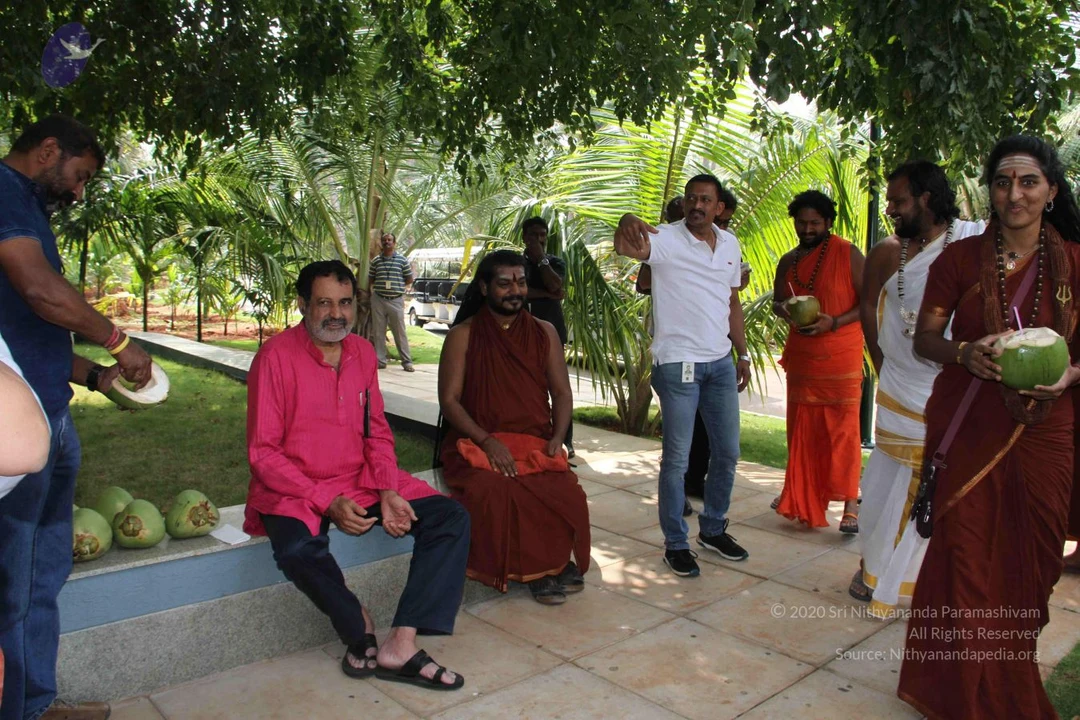
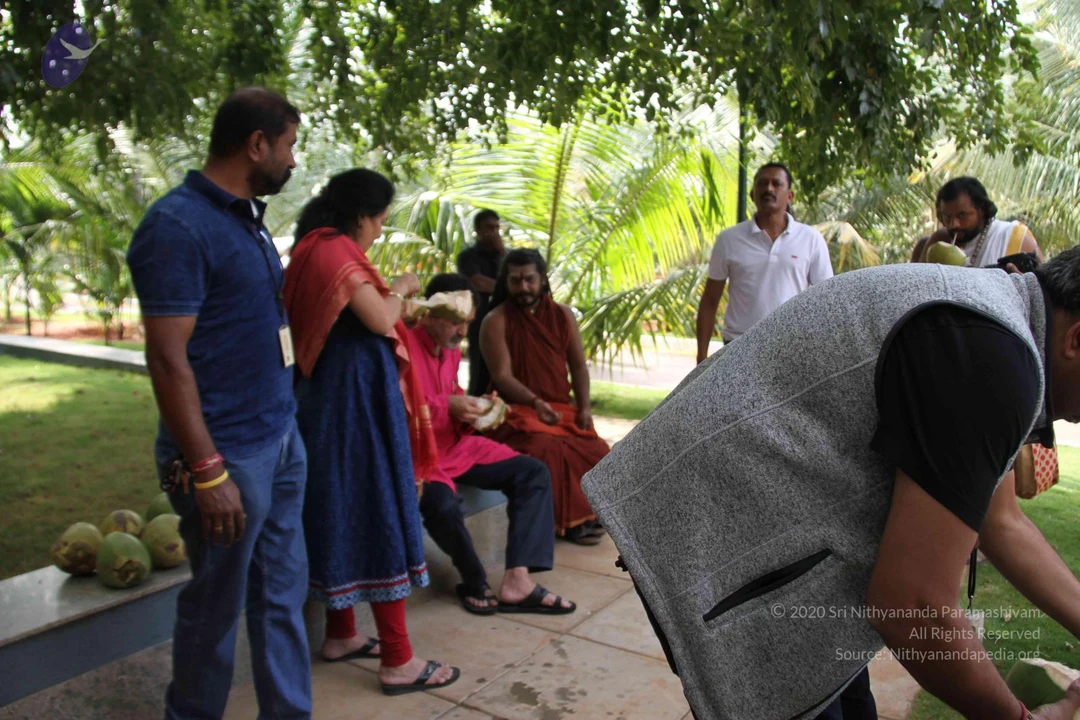
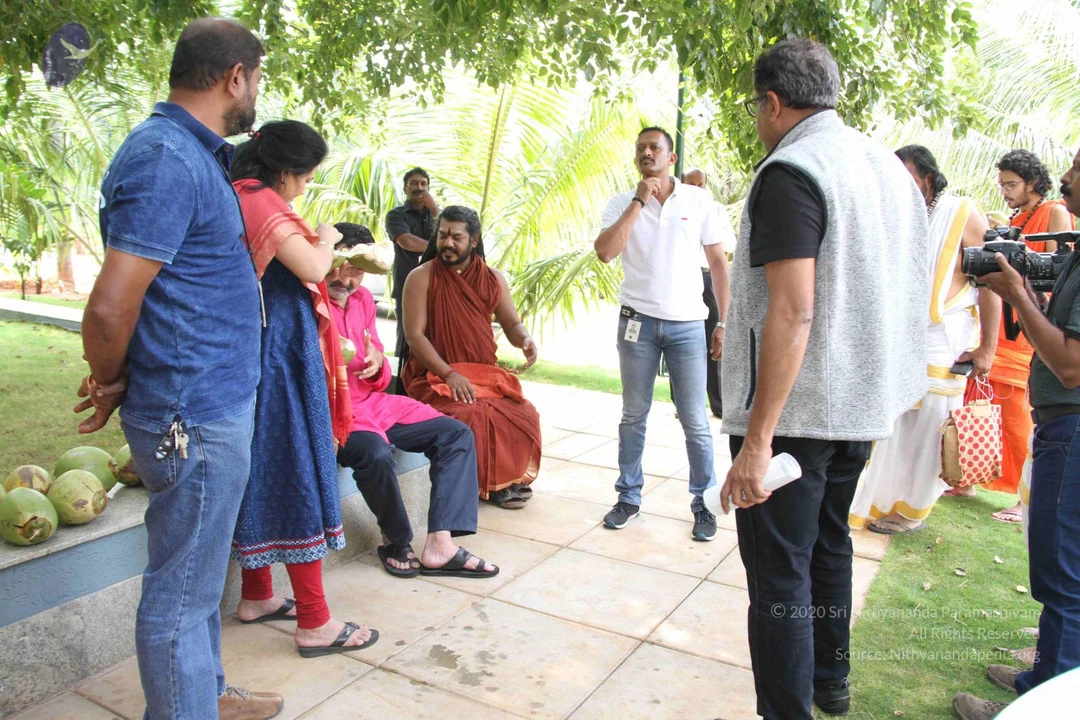
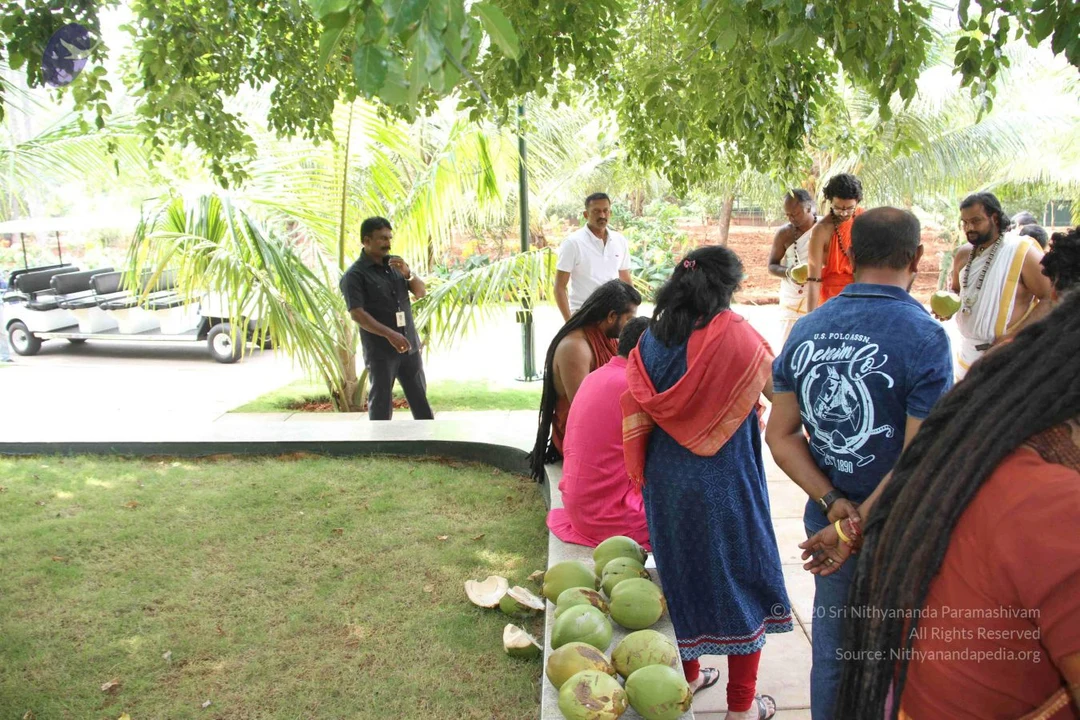
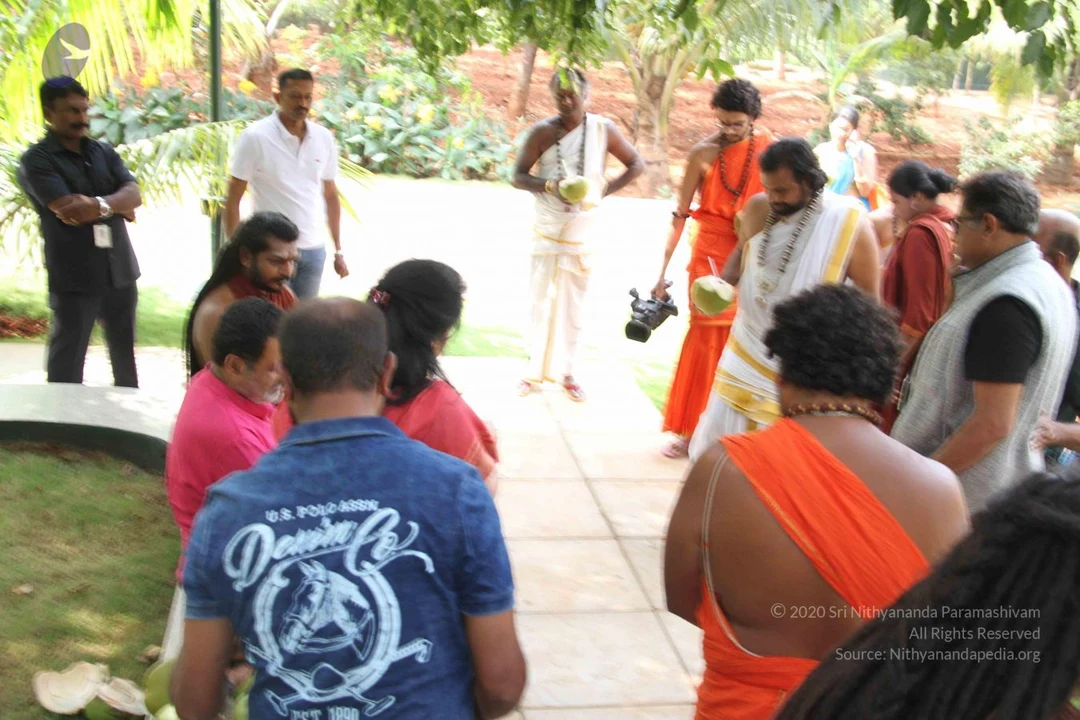
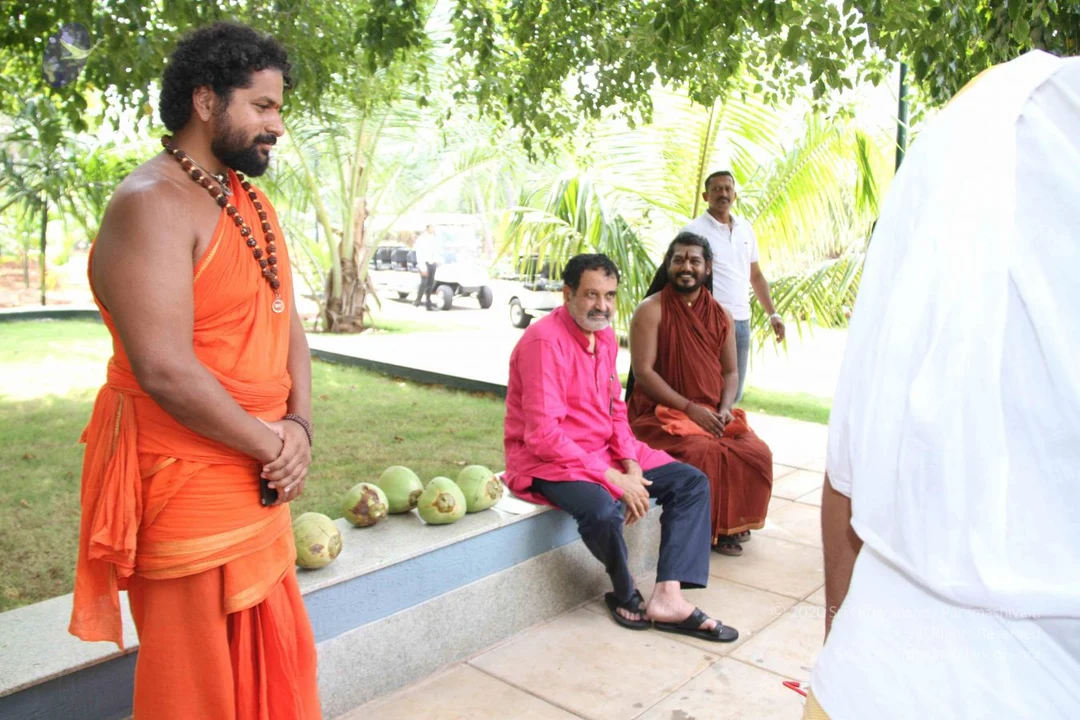
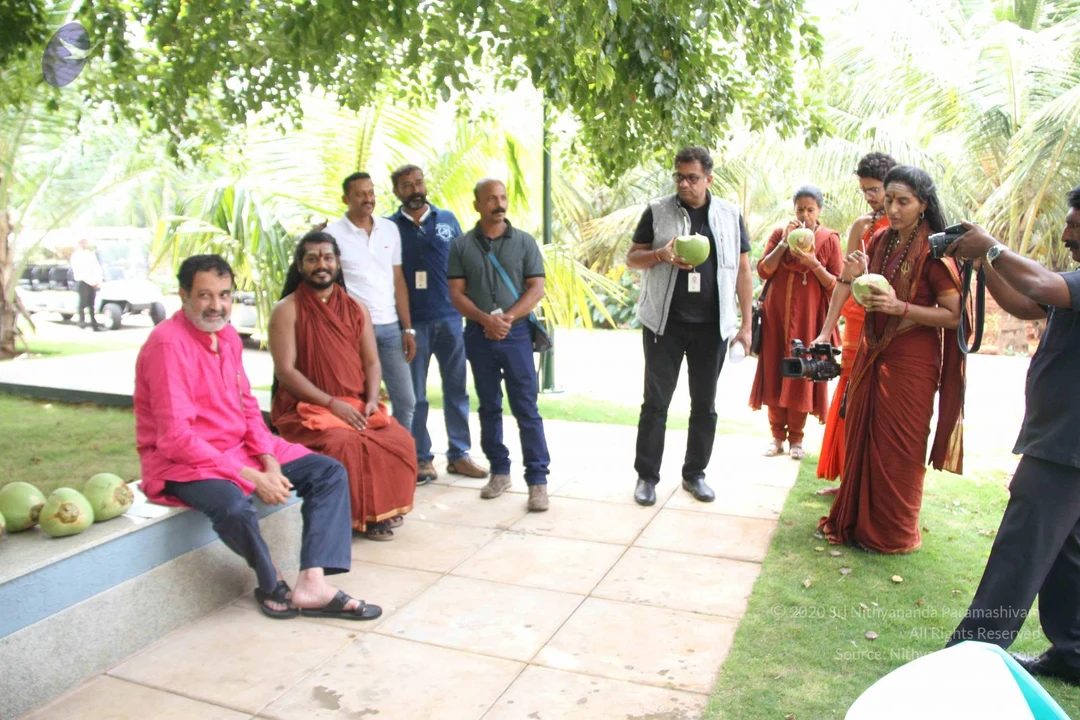
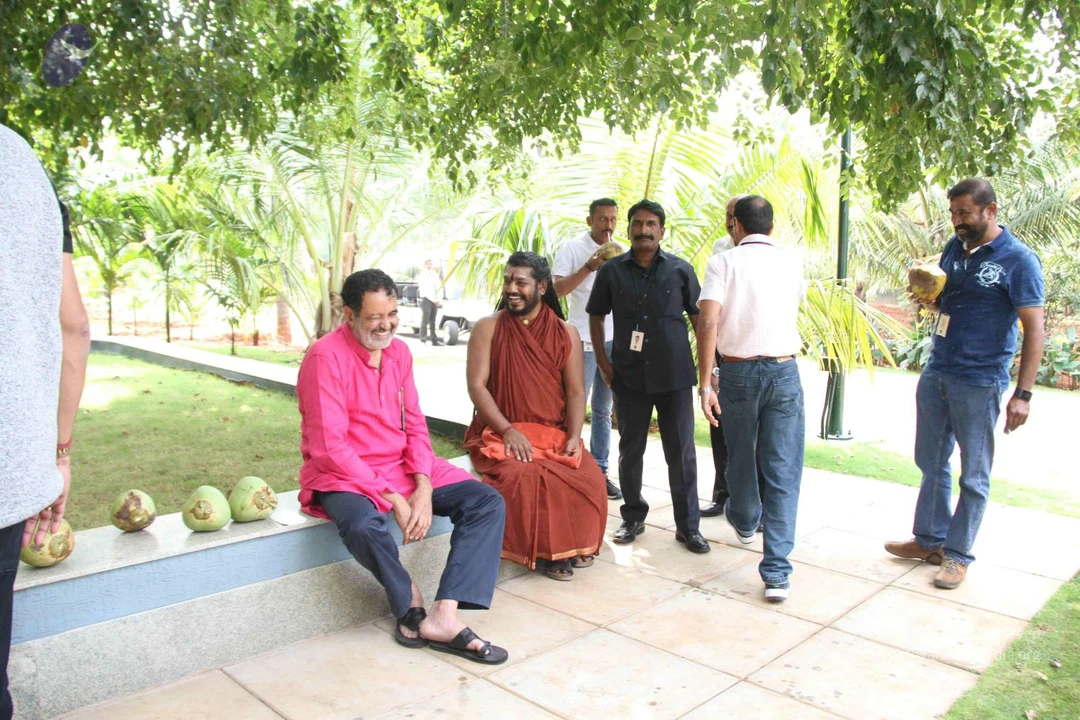
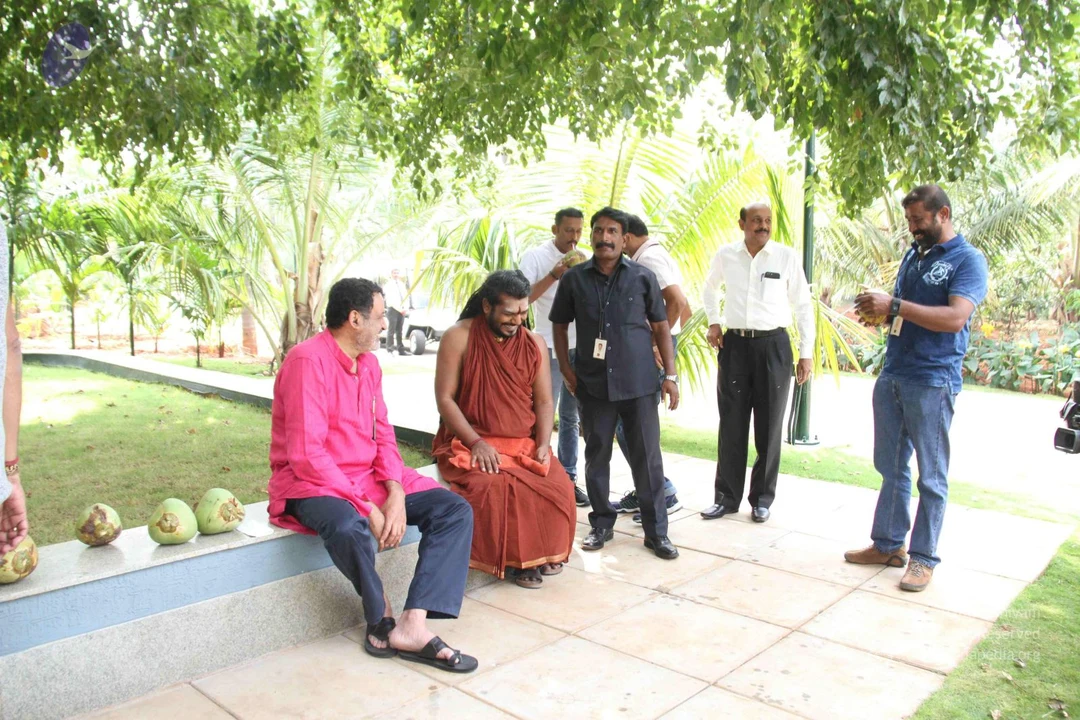
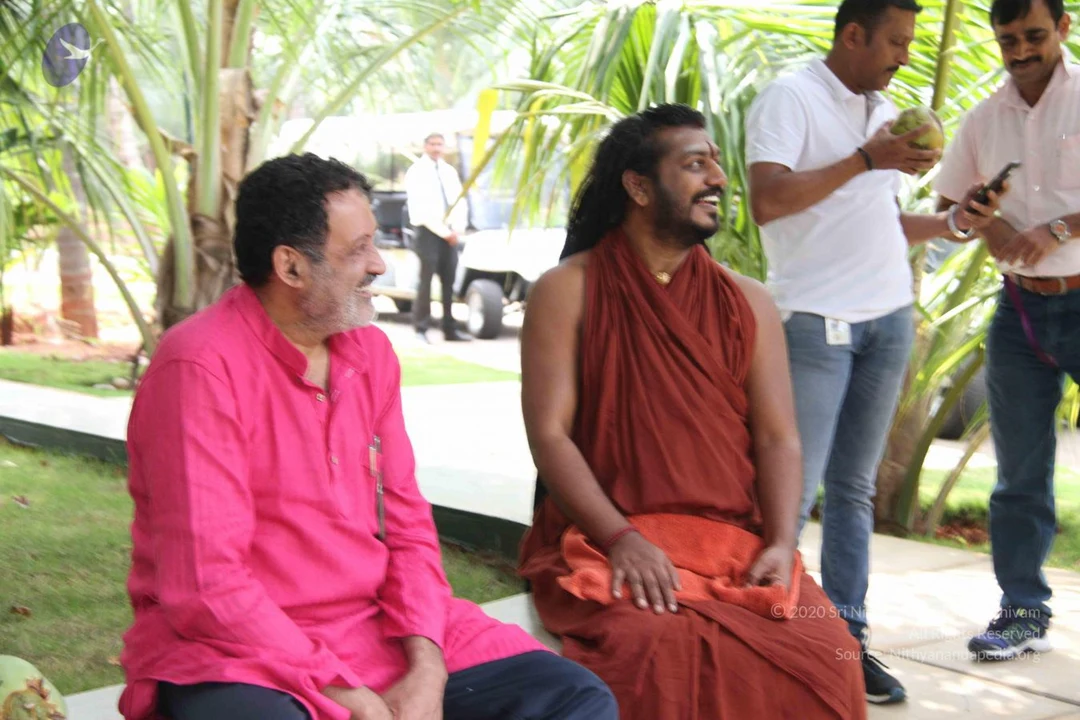
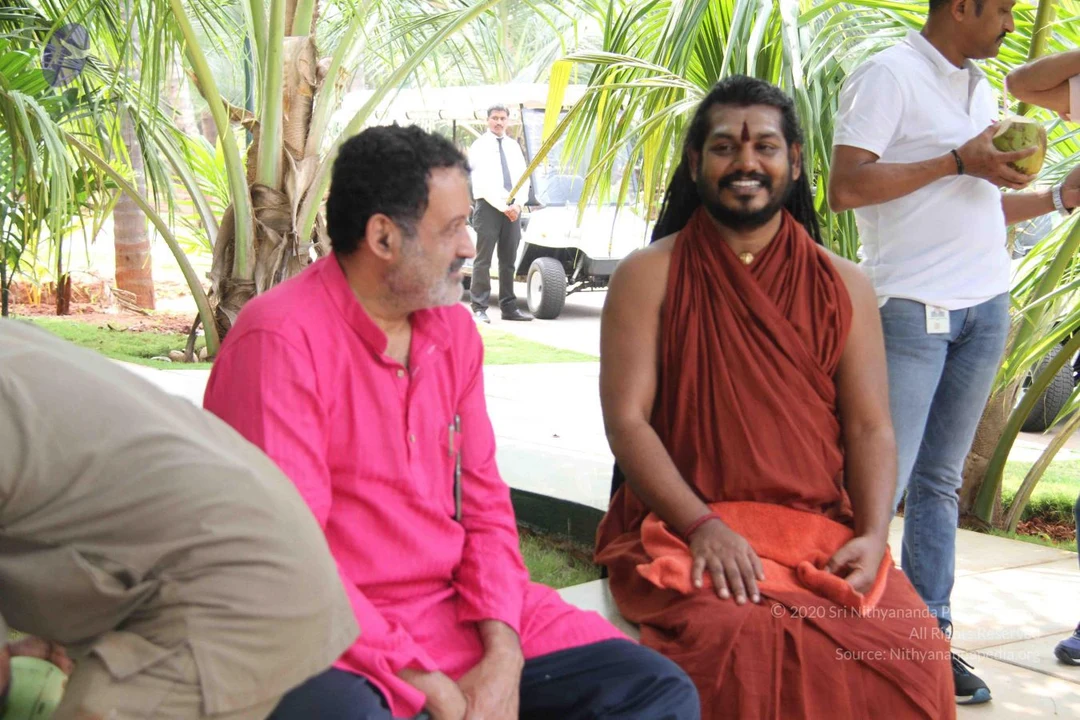
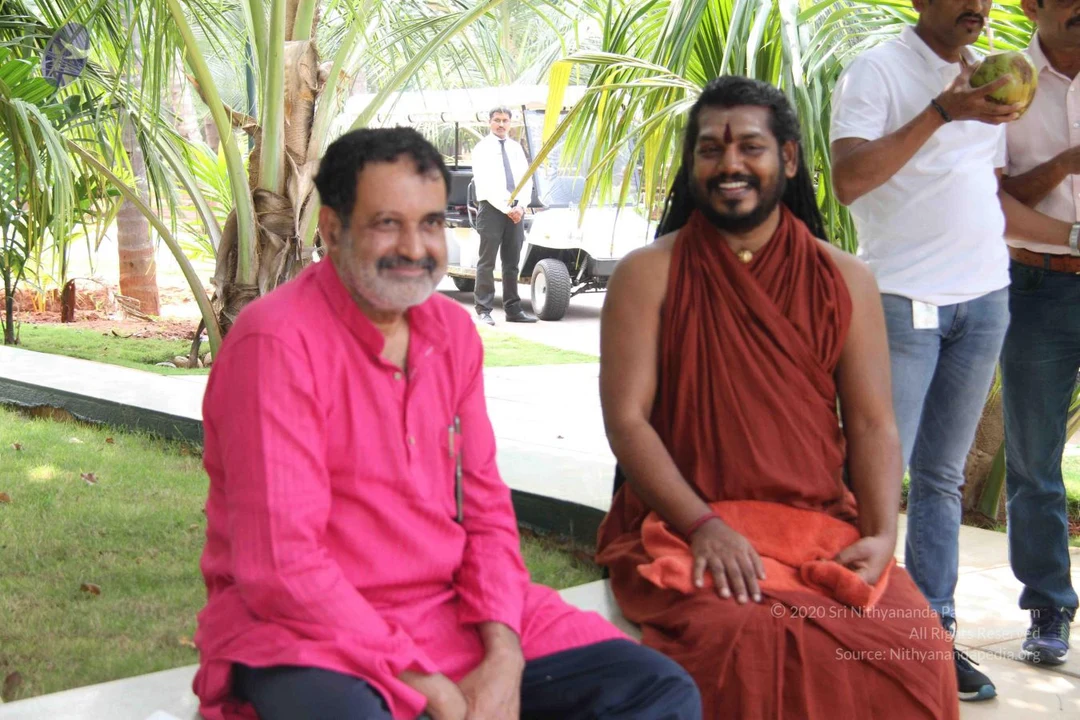
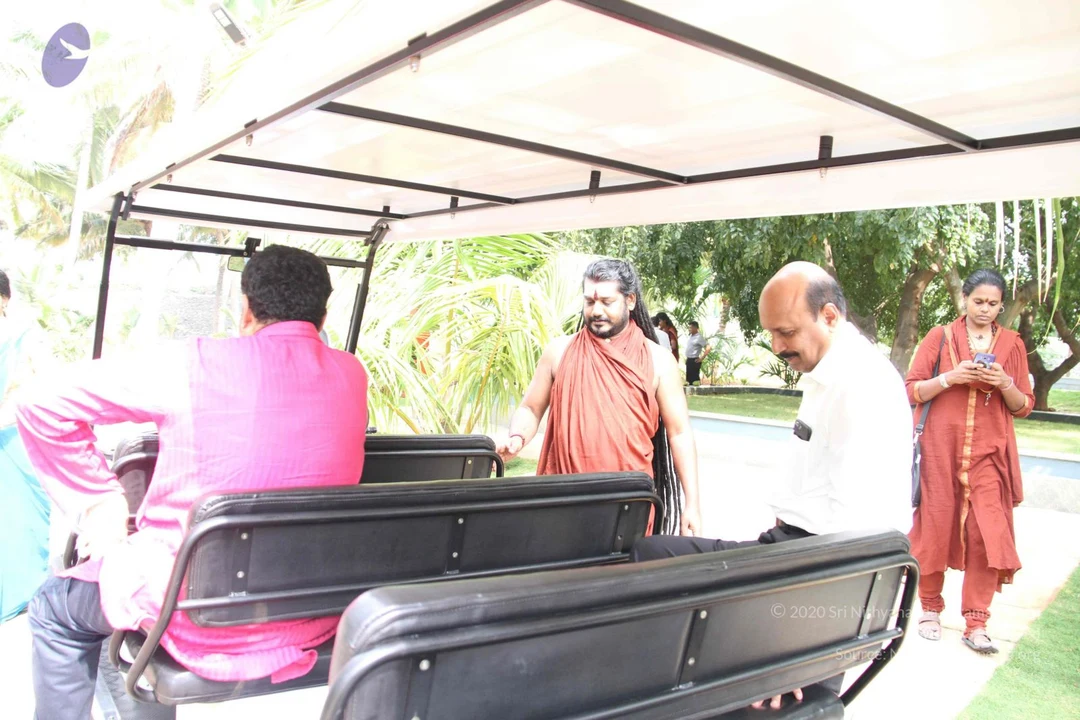
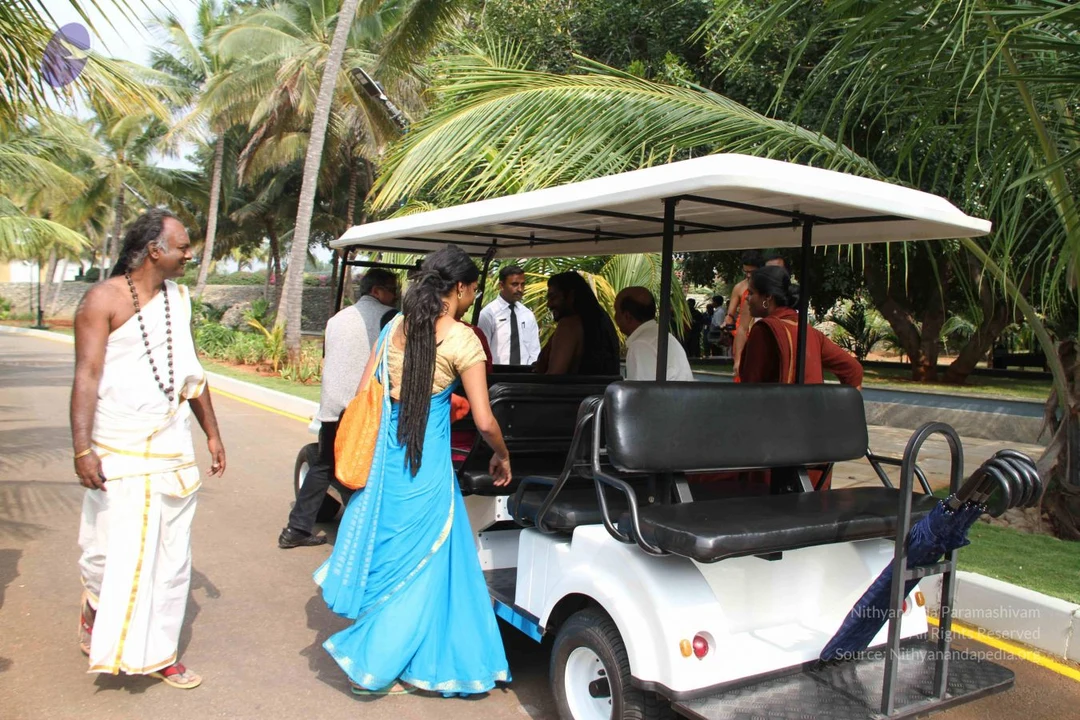
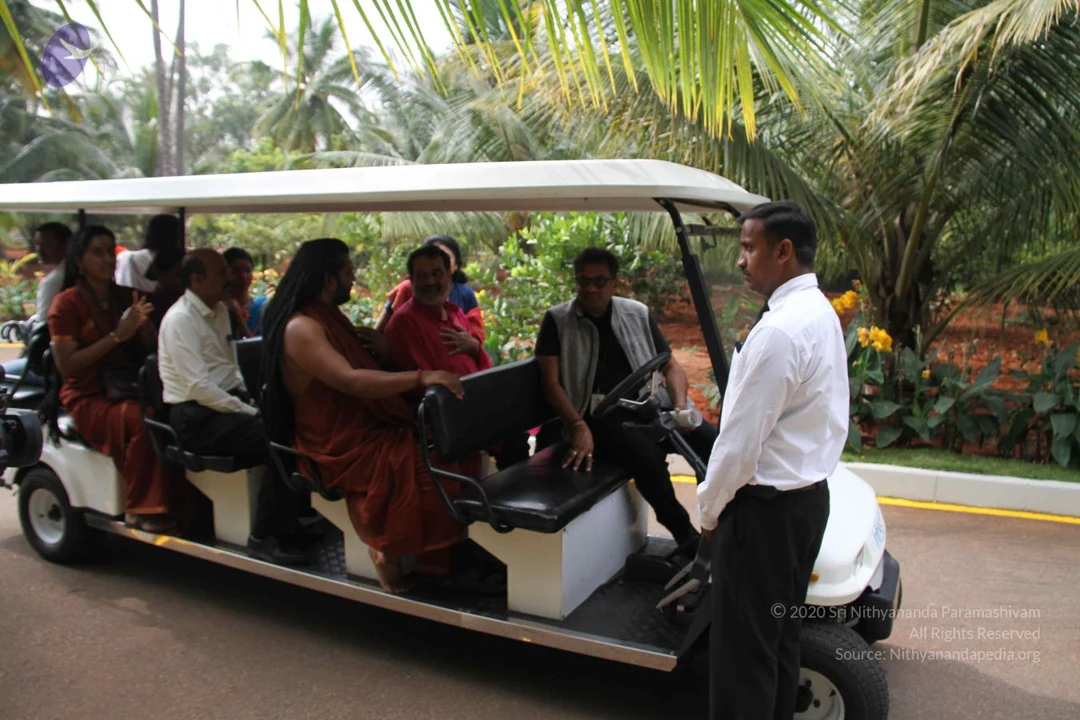
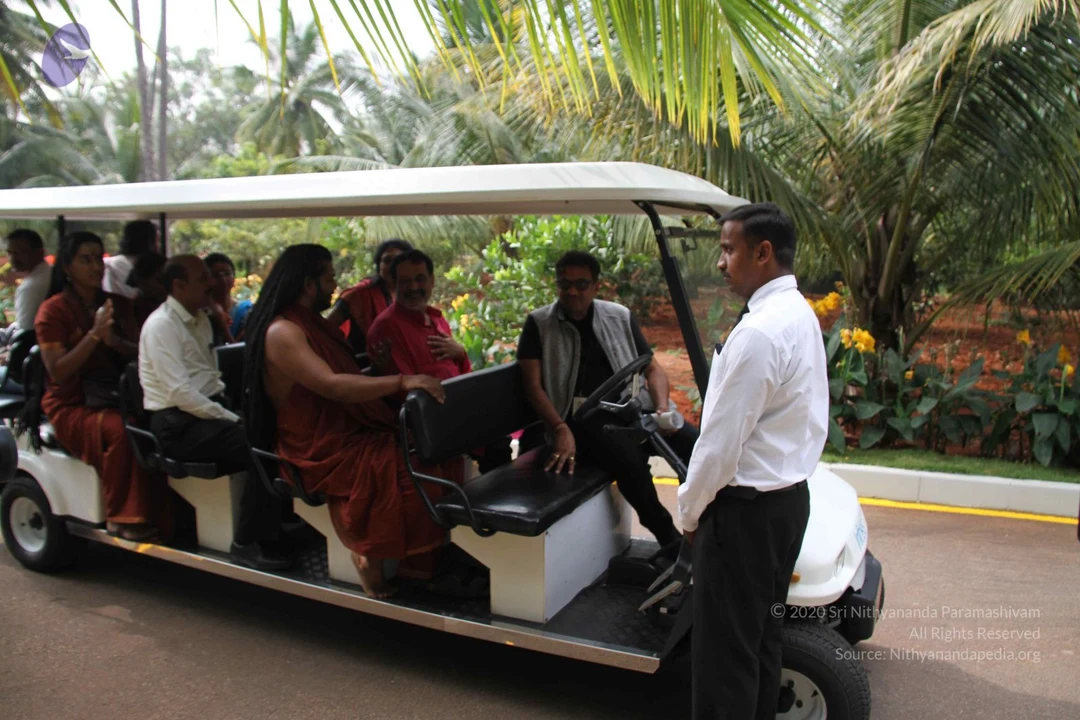
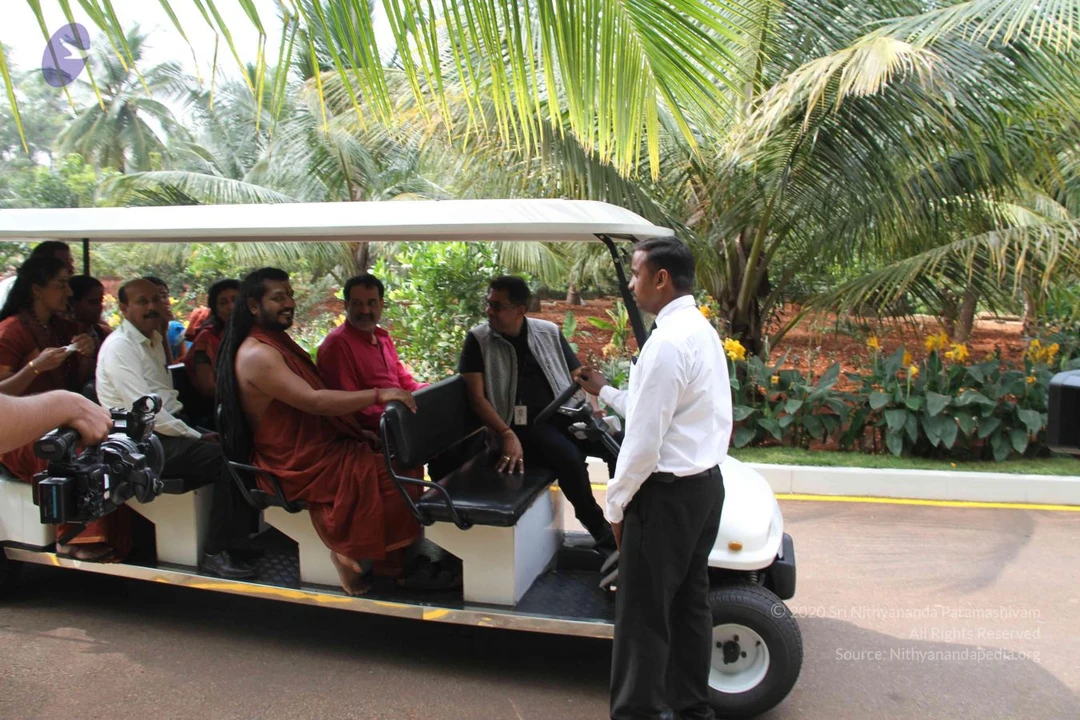
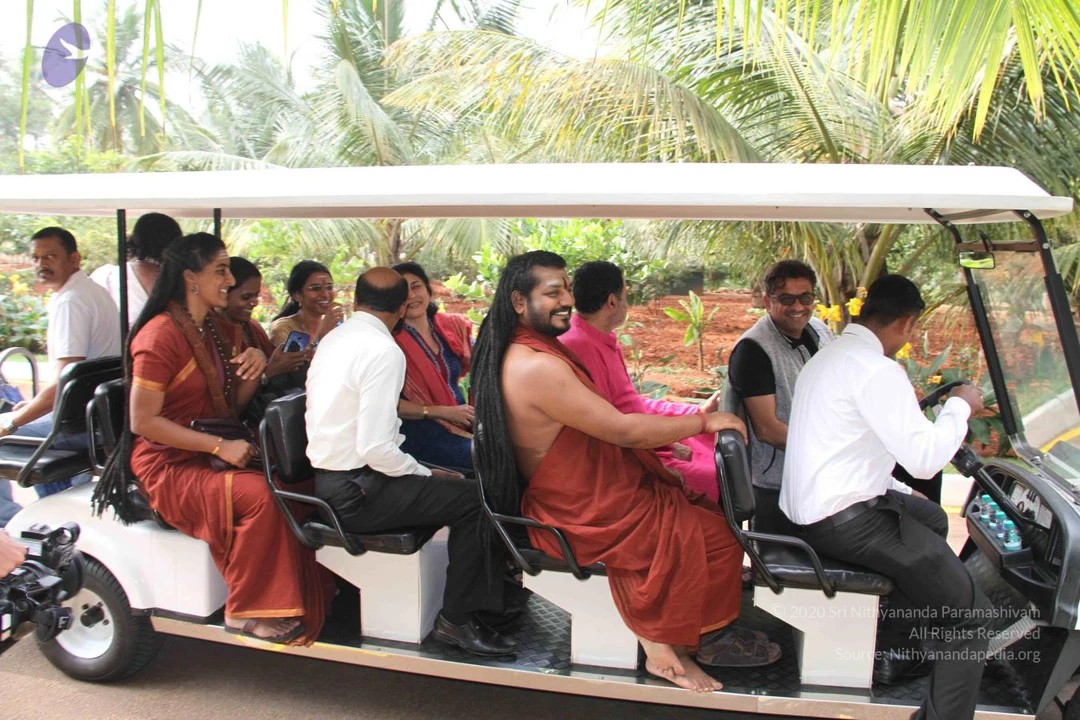
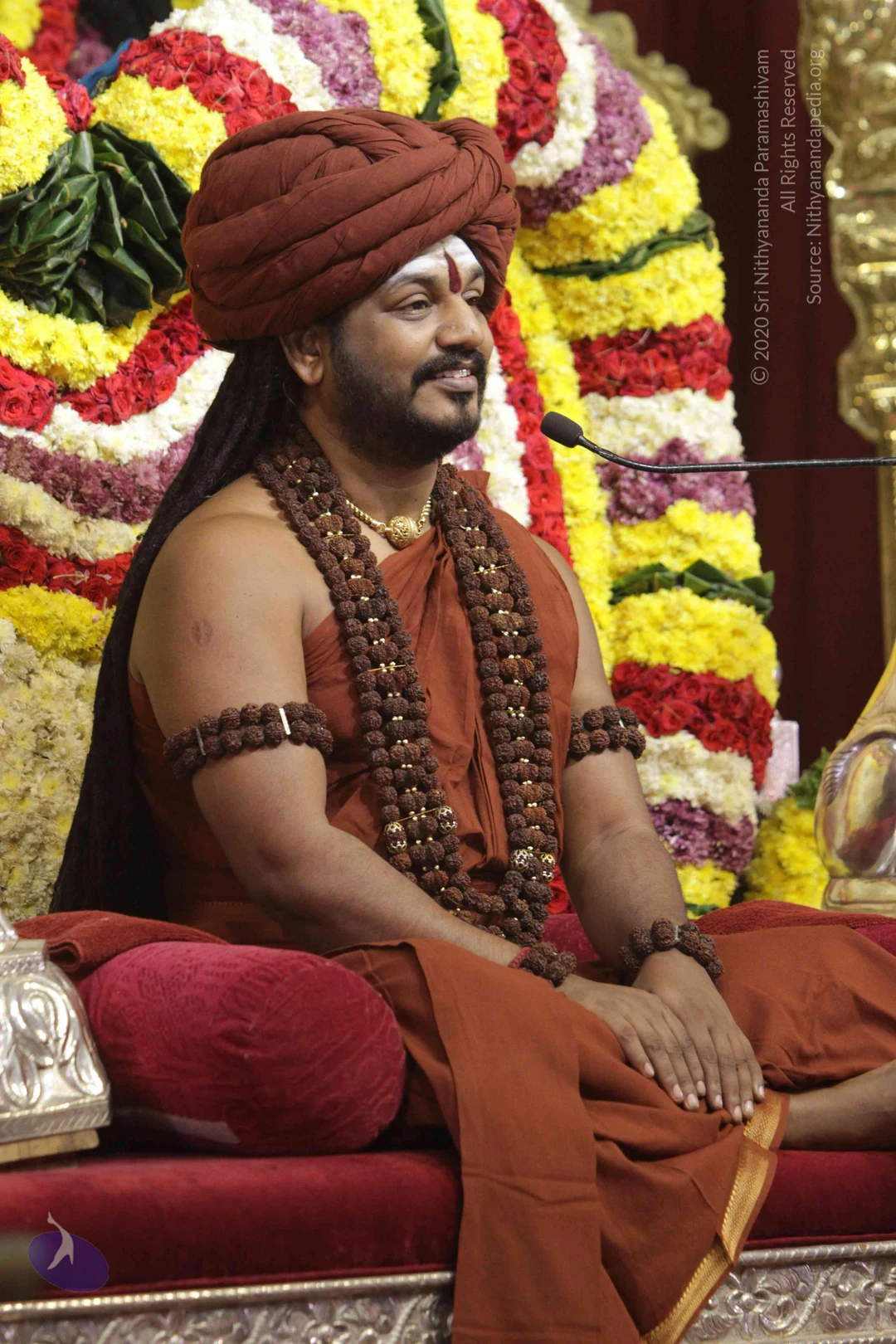
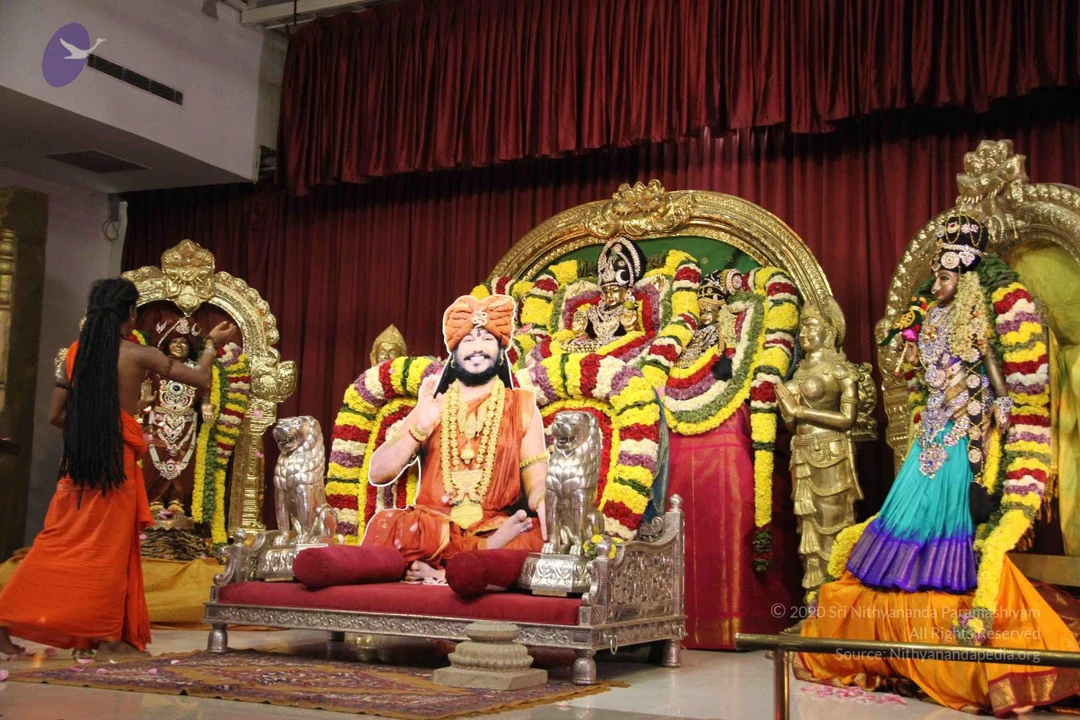
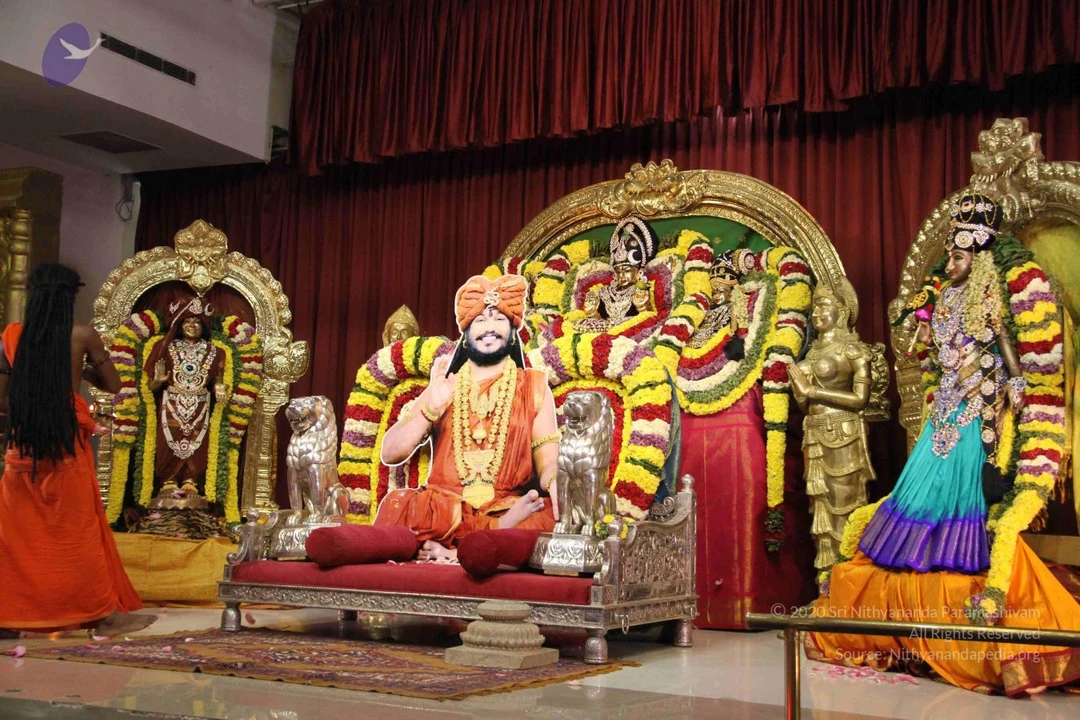
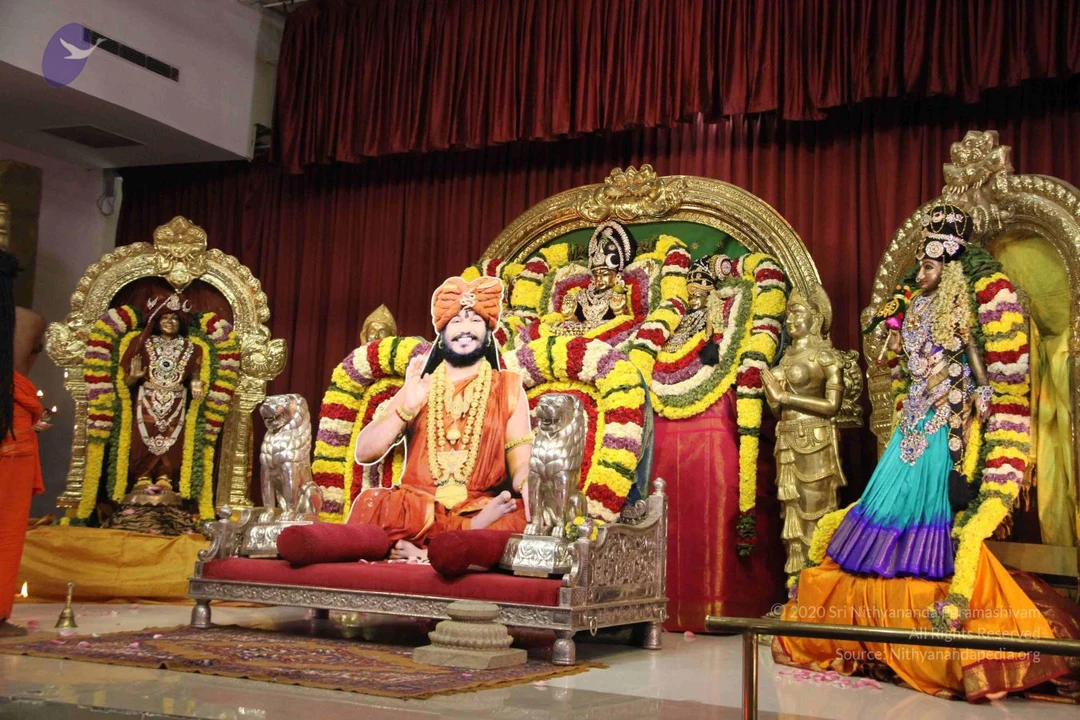
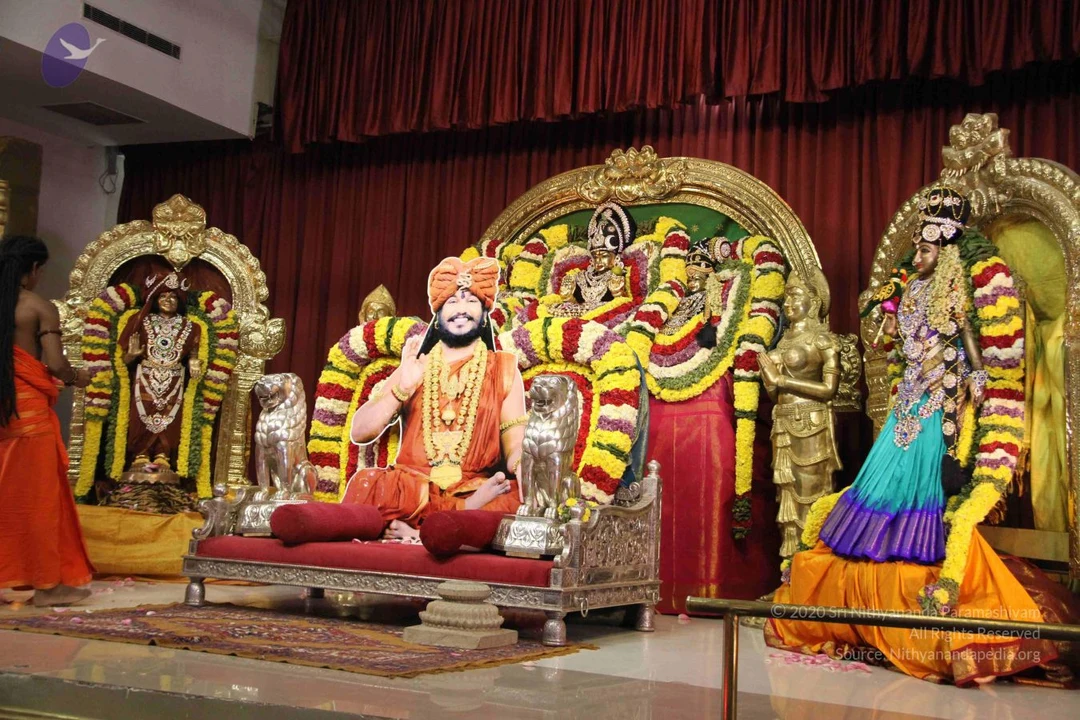
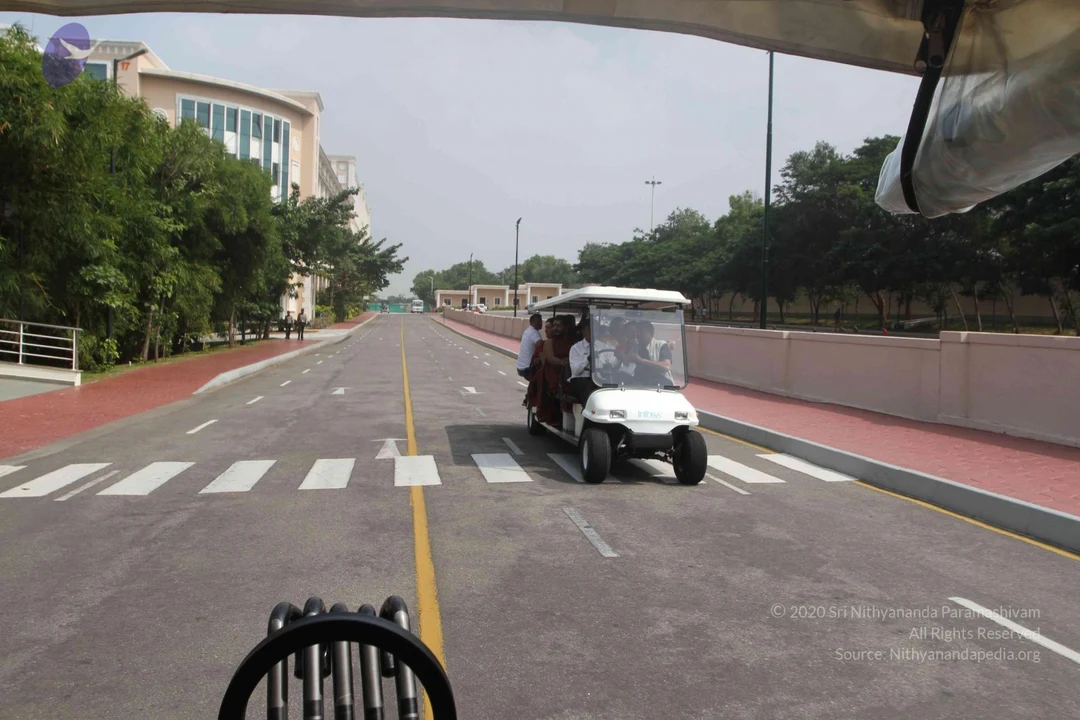
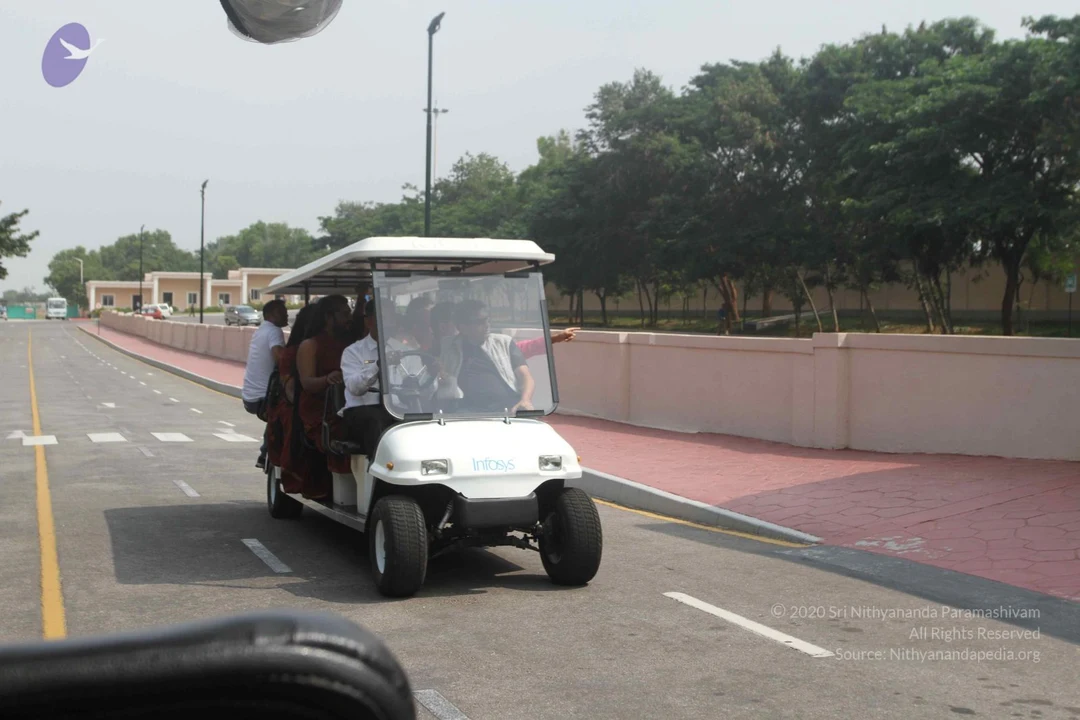
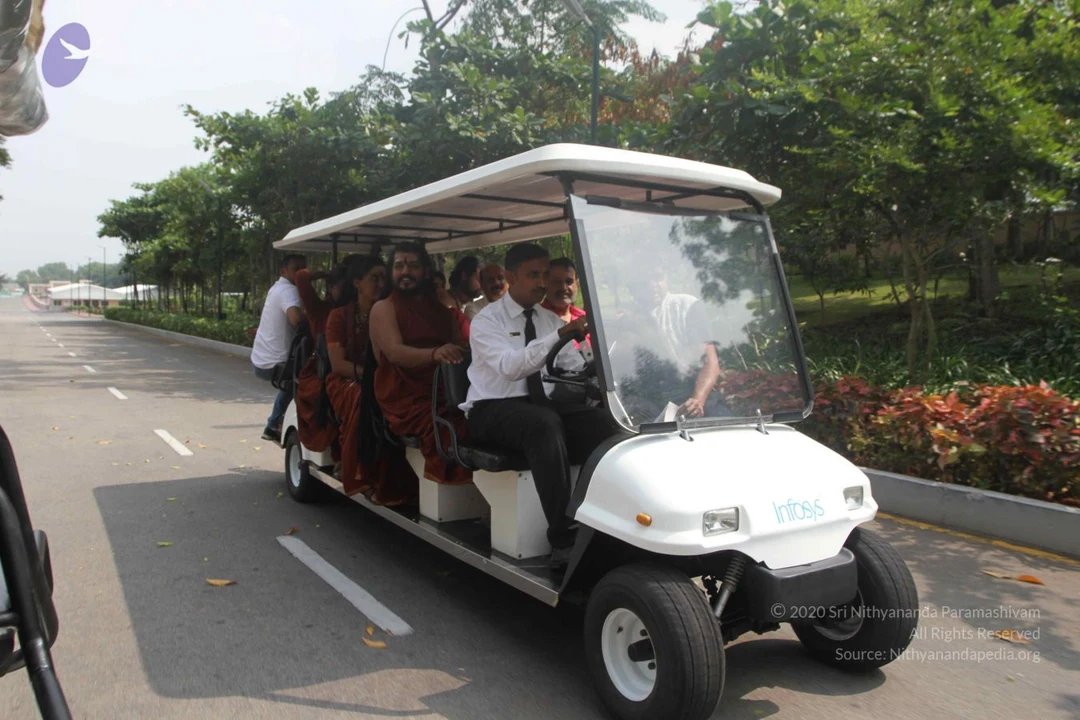
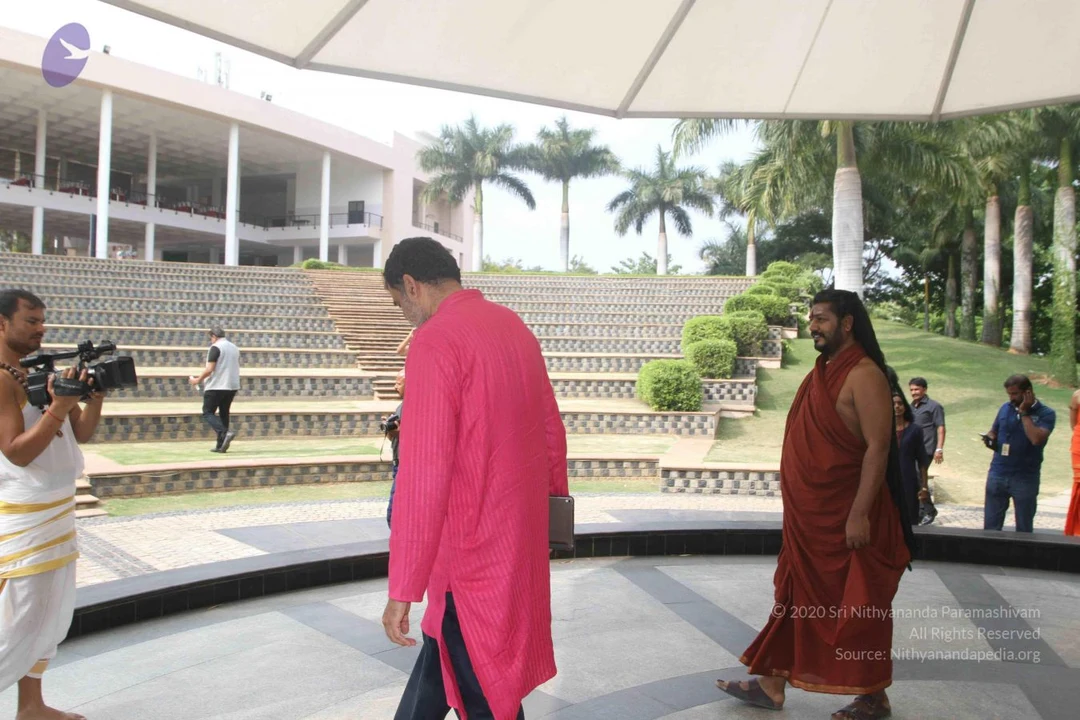
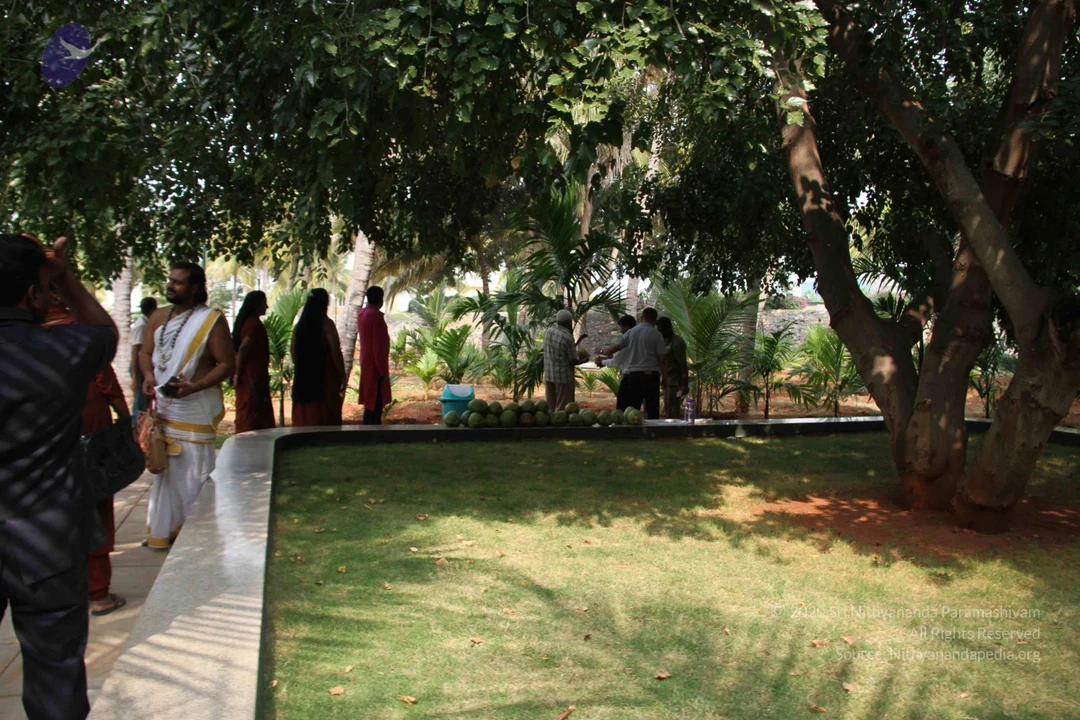
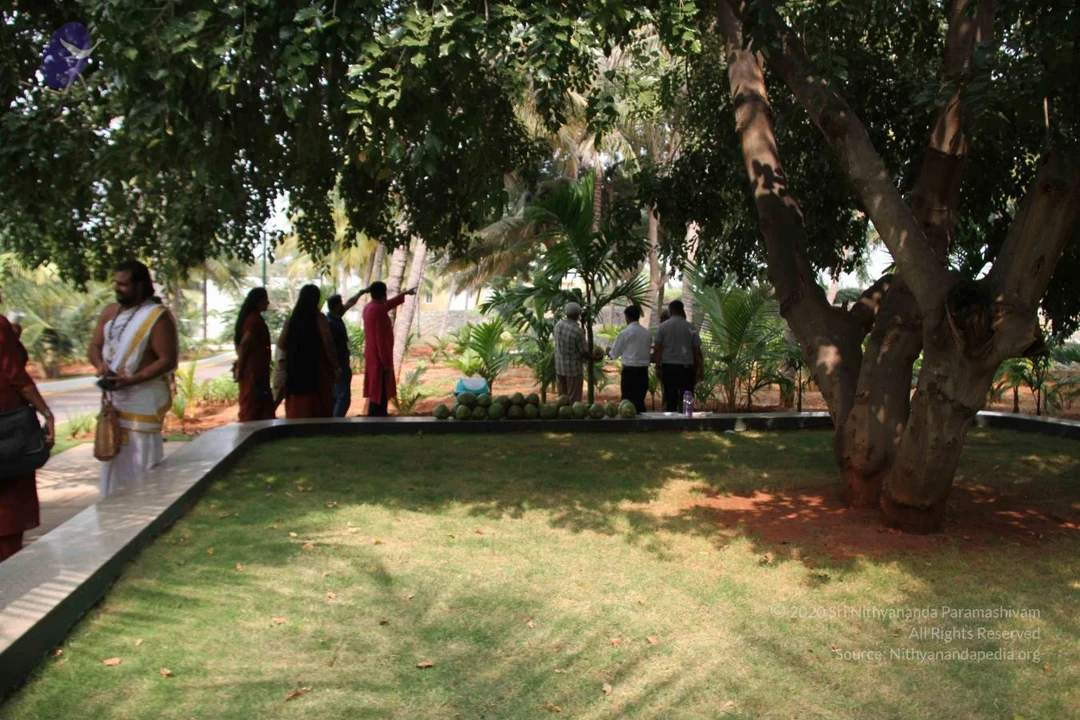
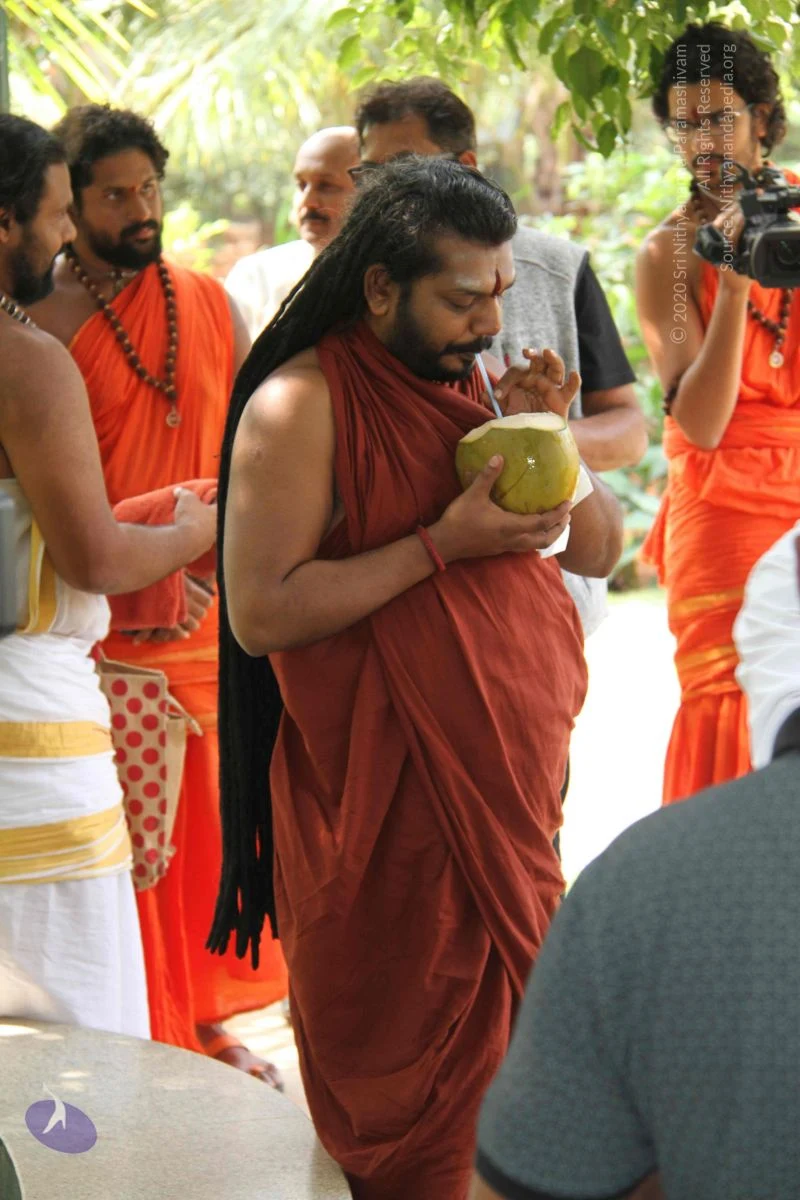
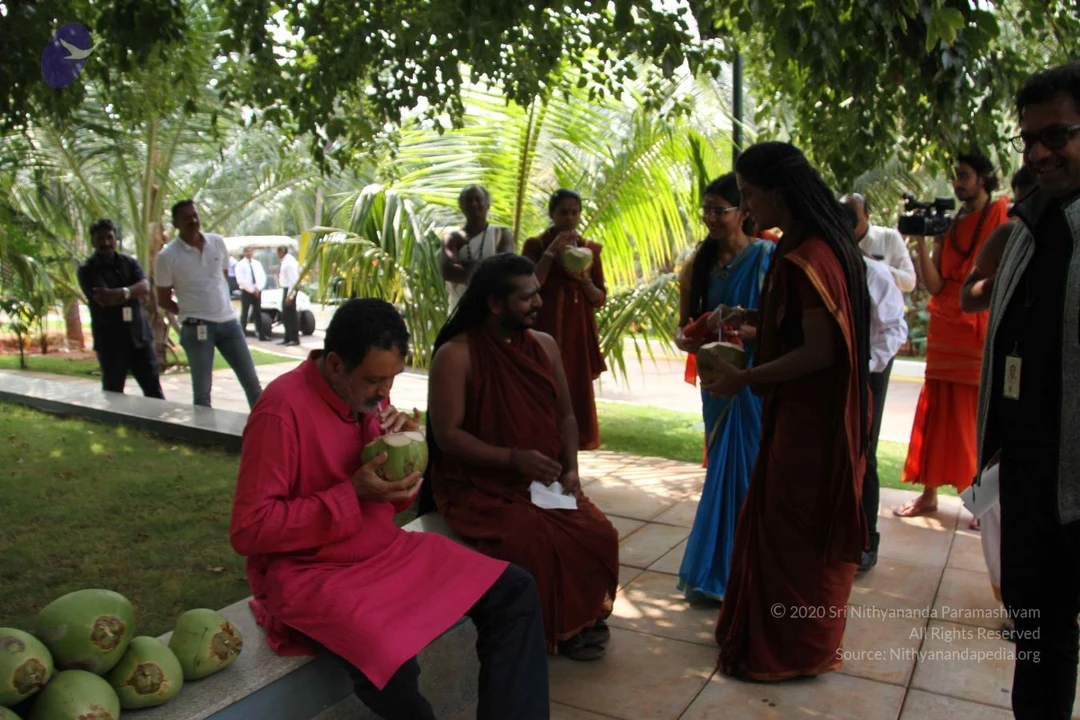
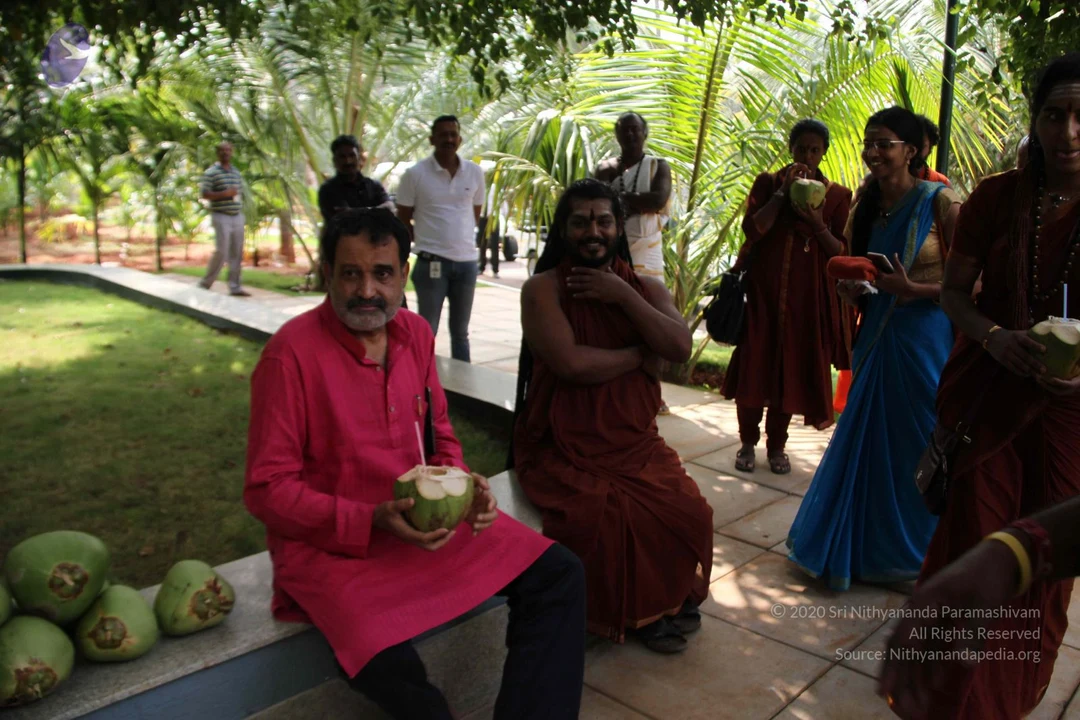
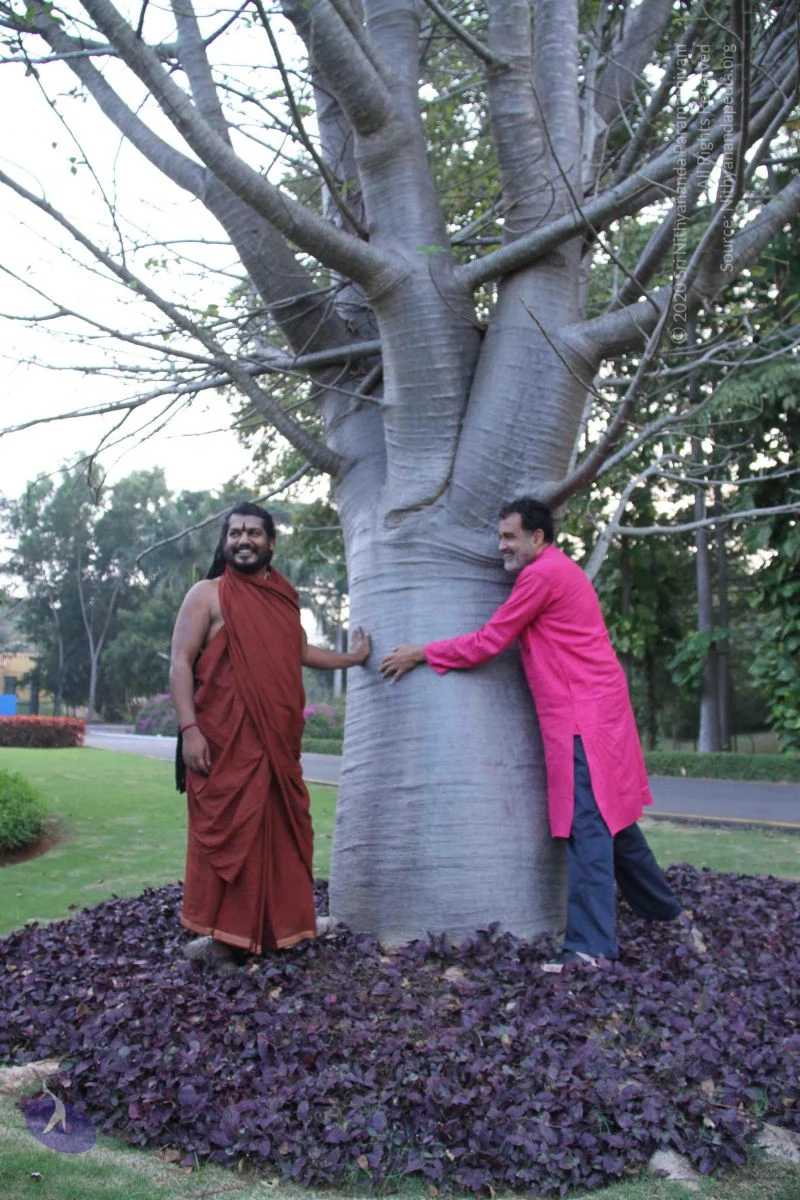
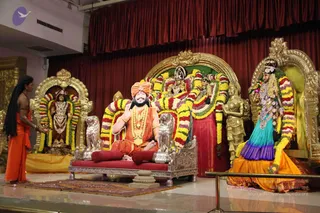
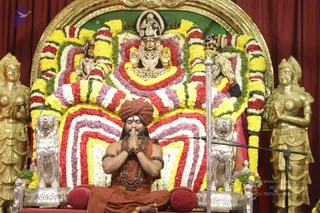
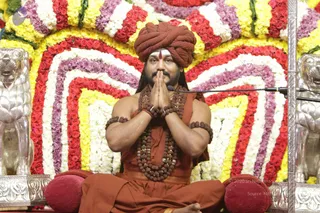
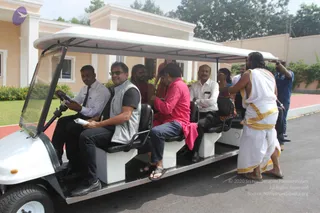
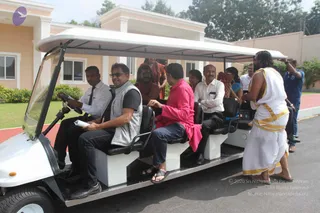
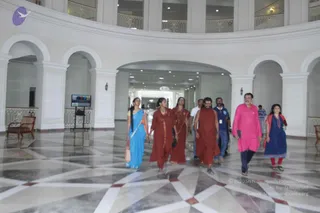
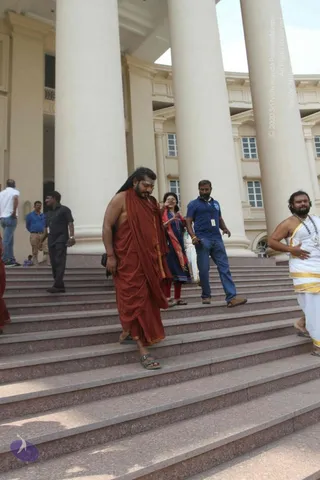
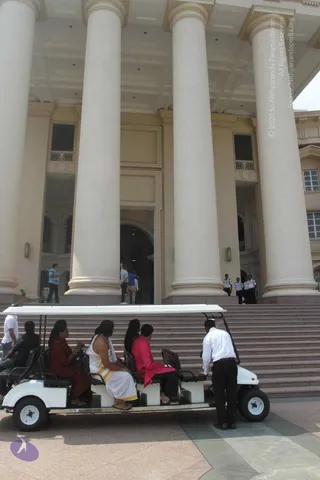
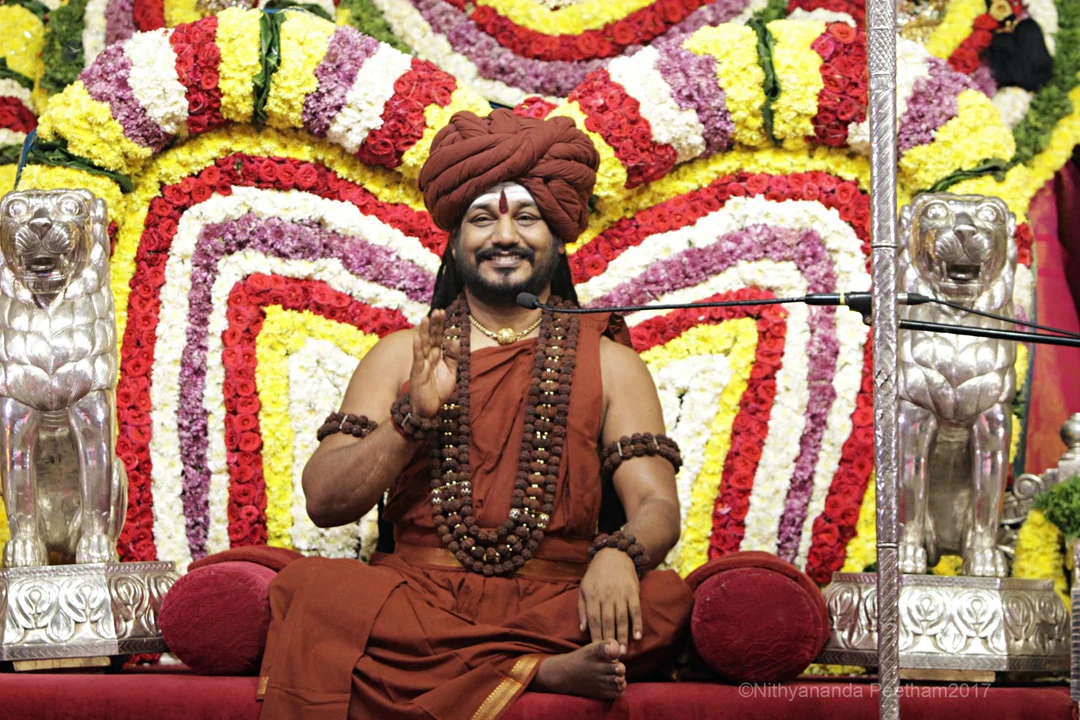
A seated man in an orange-saffron dhoti and shawl, wearing an orange turban and rudraksha mala, sits on a silver-framed red-cushioned dais on a stage, gesturing with raised hands while speaking into a microphone stand. Behind him a large gold-arched shrine holds a deity murti draped in colourful garlands of yellow, red and white flowers, flanked by golden attendant figures and white lion sculptures. To the left, a golden-framed statue wears a flowered garland; to the right, a seated female murti in a teal and orange-purple dress wears a garland. Red curtains frame the stage, and audience heads are visible at the bottom edge.A white open-sided electric shuttle cart drives along a tree-lined road. Several people ride on bench seats under a white canopy. A woman in a rust-red sari with a black handbag sits at left, and a woman in a rust-red sari with a long black braid and a white forehead tilak sits center. Beside her a long-haired bare-chested man in a red-orange wrap sits, and at right a man in a white shirt drives. Other passengers in dark and white clothing sit behind them. Greenery fills the background.Outdoor photo under a shady tree beside palms on a paved courtyard. A seated man in a rust-orange wrap and bare chest, with a long dark beard and hair, sits on a low ledge with his hands gesturing; he is a person candidate based on his distinctive orange wrap and long hair, but appearance is uncertain. Around him, standing devotees and visitors include a man in a blue denim shirt, a woman in a blue kurta with red leggings holding a green coconut, a man in a pink shirt seated beside the ledge, a man in a white shirt and jeans, a man in a grey vest and black clothing holding a rolled paper, a man in white dhoti with orange shawl, and a cameraman filming with a video camera. A pile of green coconuts sits on the left ledge.

November 25 2017

Original wiki page
Contents

Title:

ஜீவன் சிவனாகும் நுட்பம்

Link to Video

VideoAudio

Transcription in Tamil

ஜீவன் சிவனாகும் நுட்பம் உங்கள் அனைவரையும் வணங்கி வரவேற்கின்றேன். உலகம் முழுவதிலும் இரு முனைக் காணொலிக் காட்சியின் வழியாகவும், தீபம் ரிவி, ஆகமம் ரிவி, நித்தியானந்த தொலைக்காட்சி மூலமாகவும் அமர்ந்திருக்கும் அன்பர்களையும், சீடர்களையும் வணங்கி வரவேற்கின்றேன். வேதங்கள் வாழ்வின் அடிப்படை அறிவியல். ஆகமங்கள் அதை தினசரி அனுபுதியாக மாற்றுகின்ற நுட்பம். ஆழ்ந்து கேளுங்கள். வேதங்கள் வாழ்க்கையின் அடிப்படை அறிவியல். ஜீவன், ஜெகத், ஈஸ்வரன், பசு, பதி, பாசம். பசு என்பது தனிப்பட்ட ஜீவன். பதி என்பது பரம்பொருள். பாசம் என்பது இவைகளுக்கு இடையிலே திரையாகவிருக்கும் மாயை. ஜீவன் தனிப்பட்ட உயிர். ஜெகத் பிரபஞ்சம். ஈஸ்வரன் இறைவன். இவைகளைப் பற்றியெல்லாம் அடிப்படை உண்மைகளை நமக்கு அறிவிக்கக்கூடிய அறிவியல் வேதம். இந்த அறிவியலினாலே நம்முடைய வாழ்க்கையை சாதாரண நிலையிலிருந்து மிக உயர்ந்த நிலைக்குக் கொண்டு சென்று, உயர்ந்த நிலையிலே நம் வாழ்க்கையையே மலர வைக்கின்ற நுட்பம் ஆகமங்கள். ஆகமங்கள் உயிரை உயிர்ப்பிக்க வைக்கும் ஓர் உயர் தன்மையின் உயர்விற்கு நம்மை உயிர்ப்பிக்க வைக்கும் சக்தி வாய்ந்தவைகள். ஆகமங்களில் அடிப்படையான ஒரு சத்தியக் கட்டமைப்பு அருமையான ஆழ்ந்த சத்தியங்களை நம்முடைய அனுபுதியாக மாற்றிக் கொள்ளவதற்காக ஏற்படுத்தப்பட்டிருக்கும் கட்டமைப்பு. சத்தியத்தை சாத்தியமாக்கும் கட்டமைப்பு. ஐகெசயளவசரஉவரசந றரைஉா ளை டிரடைவ ரள வழ சநயடணைந வாந ரடவைஅயவந. இந்த உதாரணத்தைப் புரிந்துகொள்ளுங்கள். பெரும் வௌ்ளம் ஒரு அணையாலே தடுக்கப்பட்டிருக்கின்றது. அந்த வௌ்ளம் பழையபடி சர்வ சுதந்திரமாகப் பொங்கிச் செல்ல வேண்டுமானால், அணை உடைக்கப்பட்டாக வேண்டும். இந்த அணையை உடைக்கின்ற வேலையை நீங்கள் ஒவ்வொரு செங்கல்லா, ஒவ்வொரு கருங்கல்லா, ஒவ்வொரு கல்லா உடைத்து எடுக்க வேண்டிய அவசியமில்லை. ஒவ்வொரு கல்லாகத் தான் எடுக்க வேண்டும் என நினைத்தீர்களானால் அது முட்டாள்தனம். ஐயோ! இவ்வளவு கல்லையும் எப்போது எடுப்பேன் என்று மலைத்துப் போனால் அது முட்டாள்தனம். பொங்கிப் பெருகி வந்து இந்த அணையாலே அடைக்கப்பட்டிருக்கின்ற வௌ்ளத்தின் பலத்தை நீங்கள் புரிந்து கொண்டீர்களானால், வேறு எதுவும் தேவையில்லை. சரியான இடங்கில் ஒன்றிரண்டு ஓட்டைகள் போதுமானவை. அதில் பீறி பொங்கியெழும் வௌ்ள நீர் தானாகவே அணையைச் சுக்கு நூறாக உடைத்து விட்டுத்தான் வௌியேறும். அதேபோல, நமக்குள்ளே ஆத்ம அனுபுதி, சதாசிவப் பரம்பொருள் அணையால் தடுக்கப்பட்டிருக்கும் வௌ்ள நீரைப் போல பொங்கிக்கொண்டிருக்கின்றார். அந்த அணைதான் சுயசந்தேகம், சுய மறுப்பு, சுய வெறுப்பு. சுயசந்தேகம் -ளநடக னழரடிவஇ சுய மறுப்பு, ளநடக னநெயைடஇ சுய வெறுப்பு. ளநடக ாயவசநன ஆகும். சுய சந்தேகமும், சுய மறுப்பும், சுய வெறுப்பும் சேர்ந்ததைத்தான் அகங்காரம் என்று சொல்கின்றோம். பாசம் என்றும் சொல்லலாம். நம்மைப் பற்றி நமக்கே தௌிவில்லாமல் இருப்பதனால் ஏற்படும் மாயை. பொங்கி வருகின்ற சதாசிவப் பெரும்பொருளின் சக்தி, பரசிவப் பரம்பொருளின் சக்தி அகங்காரமாகிய சுய சந்தேகமும், சுய மறுப்பும், சுய வெறுப்பு அனைத்தும் அதனைத் தடுத்துக்கொண்டிருக்கின்றது. நீங்கள் நினைக்கலாம் இது எல்லாத்தையும் எப்ப எடுத்து பரம்பொருளின் சக்தி, பேரறிவு ஆற்றலாக பரவுவதற்கு அனுமதிக்கப்போகின்றோம். எப்போது அது பரந்து விரியப்போகிறது. ஆழ்ந்து புரிந்துகொள்ளுங்கள். உங்களுக்குள் இருக்கின்ற ஒவ்வொரு தடையையும் விலக்கவேண்டிய அவசியம் இல்லை. சரியான ஒரு சில தடைகளை மட்டும் விலக்கினீர்களானால் எப்படி அந்த அணையிலேயே ஒரு சில துளைகளை மட்டும் இட்டாலே போதும் வௌ்ளத்தின் சக்தியால் அணை உடைந்து பெருகும். அதுமாதிரி நாம் நம்மைப்பற்றி வைத்திருக்கும் கருத்தான அகங்காரத்திலே ஒரு சில துளைகளை இடவேண்டும். அந்தத் துளையிடுவதென்றால் என்னவென்றால் சக்தி வௌிப்பாடு. நம்மைப்பற்றி நாம் வைத்திருக்கும் கருத்தை மாற்றுதல். நஞ்சாக இருக்கும் கருத்தைப் பஞ்சாக மாற்றுதல். கல்லாக இருக்கும் நெஞ்சு கலையாய் மாறுவது. நம்முடைய உணர்விற்குள் நாம் வைத்திருக்கும் கருத்துக்கள் சக்தி வௌிப்பாட்டின் மூலமாக மாறத் துவங்கினால், அணையை உடைத்து வௌ்ளம் பொங்குவதுபோல் நம் பாசத் திரையை அறுத்து பதி பசுவிற்குள் பொங்கிப் பெருகுவான். பரமசிவன், பரசிவன் ஜீவனிற்குள் பொங்கிப் பெருகித் தன் சாமித்தியத்தை நிலைநிறுத்திக் கொள்வதுதான் ஜீவன் சிவனாகும் சிவவாழ்க்கை. ஆழ்ந்து புரிந்துகொள்ளுங்கள். தன்னைப் பற்றித் தான் வைத்திருக்கும் கருத்து மாறுவதற்கான ஒரே வழி ஆகமங்களில் இறைவன் அருளிய அறிவியலை ருசித்தல். வெறும் ரசித்தலால் வாழ்க்கை மாறுவதில்லை. எல்லா ஆலையங்களிலும் நடக்கின்ற திருவிழாக்கள் கோலாகலங்கள் இவைகள் எல்லாம் ஆகமங்களின் அளவுகடந்த தன்மையை ரசிப்பதற்கான வாய்ப்பு. ஆகமங்களுடைய கிரியாபாதம் பரம்பொருளின் மகிமையை ரசிப்பதற்கான வாய்ப்பு. ஞானபாதமோ பரம்பொருளின் தன்மையை ருசிப்பதற்கான வாய்ப்பு. கிரியாபாதம் பரம்பொருளின் தன்மையை ரசிப்பதற்கான வாய்ப்பு. ஞானபாதம் பரம்பொருளின் தன்மையை ருசிப்பதற்கான வாய்ப்பு. கிரியா பாதத்திற்கு முன்பு நம்மை நாமே தயார்படுத்திக்கொள்ளுதல்தான் சரியாபாதம். ஞான பாதத்திற்கு முன்பு நம்மை நாமே தயார்படுத்திக்கொள்ளுதல்தான் யோகபாதம். ஆகமங்களின் இந்த நான்கு பாதங்களுமே நம்மை நாம் சதாசிவத் தன்மைக்குள் செலுத்தி நாம் சதாசித்தன்மையில் வாழ்வதற்கான வழிதான். நாம் பரம்பொருளை, இறைவனை, சதாசிவப் பொருளை அனுபுதியாக அடைந்து நம் வாழ்க்கையின் ஒவ்வொரு நிலையிலும் வௌிப்படுத்துவதுதான் ஆகமங்கள் வேதங்களின் சாரம். அது நமக்கு அளிக்கும் சத்தியம். பிரச்சினை என்னவென்றால், சத்தியத்தை யாரும் மறுப்பதில்லை. அது சாத்தியமா இல்லையான என்ற நிலையில்தான் சி்க்குகிறார்கள். சாத்தியம், சாத்தியமில்லை என்ற பிரதி வாதங்கள் எப்போதும் நிகழும். அந்தக்காலத்தில் சாத்தியம் இப்போதெல்லாம் முடியுமா? என்பது பாமர மக்களின் வாதம். இல்லப்பா இருந்திருக்கிறார்கள் கொஞ்சக்காலத்திற்கு முன்பு ரமணமகரிஷி, ராமகிருஸ்ணர் அவர்கள் எல்லோரும் இருந்திருக்கிறார்கள். அவங்கல்லாம் காட்லயே இருப்பாங்கப்பா, வௌியில் எல்லாம் வரமாட்டார்கள் என்பது நடுத்தர வர்க்கத்தின் நாட்டாமை. ஆழ்ந்து புரிந்து கொள்ளுங்கள். கிருஷ்ண ஸ்ரீீகிருஷ்ண சைத்தன்ய என்று ஒரிசாவிலே வாழ்ந்த ஒரு மிகப்பெரிய பக்தன். கிருஷ்ணருடைய அவதாரமாகவே கருதப்படுமளவிற்கு கிருஷ்ண பக்தியை உலகிற்கு அளித்தவர். அவரிருந்த காலத்தில எல்லாரும் அவரிடம் சென்று புலம்புவார்களாம் கிருஷ்ணர் இருந்த காலத்தில் தாம் இல்லையே என்று. கொஞ்கக் காலம் கழிந்த பின்பு ராமகிஷ்ணர், பெரிய அவதார புருஷர் வந்தார், அவரிடம் சென்று எல்லோரும் புலம்புவார்களாம். சைதன்யர் இருந்த காலத்தலும், கிருஷ்ணர் இருந்த காலத்திலும் நாம் இல்லையே என்று புலம்புவார்களாம். கொஞ்சக் காலம் கழித்து ரமண மகரிஷியிடம் சென்று ராமகிருஷ்ணர் இருந்த காலத்தில் நாம் பிறக்கவில்லையே என புலம்புவார்களாம். மனித மனமே இப்படித்தான். இருக்கும்வரை கல்லால் அடித்து, சென்ற பின்பு கல்சிலையில் வடித்து, வாழ்க்கையை வீணடித்துக்கொள்வது. இருக்கும்பொழுது கல்லால் அடித்தல், சென்றபின்பு கல்லால் வடித்தல். இருக்கும்போது கல்லால் அடித்து, சென்றபின்பு கல்லால் வடித்து, கடைசிவரையும் தம் நெஞ்சக்கல்லை கல்லாகவே வைத்திருந்து வாழ்க்கையை சீரழிக்கிறார்கள். பெருமான் ஆகமங்களில் அளிக்கின்ற இந்த சத்தியங்கள் சாத்தியம். வெறுமனே திருவிழாக்கள், உற்சவங்கள், நிகழ்ச்சிகள் இவைகள் மூலம் பெருமானின் பேரருளை ரசிப்பதோடு நின்றுவிடாமல், ஞான பாதங்களின் சத்தியங்களை உள்வாங்கி கடைப்பிடித்து, அவருடைய பேராண்மையை, பெரும் சக்தியை ருசிக்கவும் செய்யுங்கள். நீங்களும் சிவத்துவத்தை வௌிப்படுத்தி வாழ முடியும். இது சாத்தியம். இது சத்தியம். பெரிய பெரிய திருவிழாக்களை மட்டும் பார்த்து இறைவனின் திருமேனியின் முன்பு மட்டும் வணங்கிவிட்டுச் செல்வது பெரிய ஸ்ரார் ஹோட்டலுக்குச் சென்று மெனுக்கர்டை மட்டும் படித்துவிட்டு வௌியில் செல்வது போன்றது. நாமே சக்தி வௌிப்பாட்டை அனுபுதியாக அறிந்து, நாமே அந்த சிவத்தன்மையை வாழ்ந்து, சதாசிவத்தை வௌிப்படுத்தவதுதான் உண்பதற்குச் சமம். வெறுமனே ரசிப்பது வேறு. ருசிப்பது வெறு. வெறுமனே ரசிப்பது வேறு. ருசிப்பது வெறு. சதாசிவன் உலகத்திற்கு அளித்திருக்கின்ற இந்த அறிவியலை ருசிக்க வேண்டுமென்று நினைத்தீர்களானால். வாருங்ள். சிவதீட்சை எடுத்துக்கொள்ளுங்கள். நீங்களும் தியானத்தில் மூழ்குங்கள். இறைவனின் சதாசிவப் பரம்பொருளிந் சாந்நித்யம் உங்களுக்குள் நிகழ அனுமதியுங்கள். உங்களின் மூன்றாவது கண்ணும் ஔிர அனுமதியுங்கள். அவருடைய சக்திகள் உங்களுள் வௌிப்பட அனுமதியுங்கள். நம் எல்லோருடைய மூன்றாவது கண் மலர்வதுதான் திருவண்ணாமலை உச்சியில் காட்டப்படும் தீபம். மலைத் தீபம், பெருமான் பேரருளை ரசிப்பது. அகத்தீபம் பெருமான் பேரருளை ருசிப்பது. வெறுமனே ரசிப்பதோடு நிற்காது ருசிக்கவும் செய்யுங்கள். மலையேறி மலைத்தீபத்தை மட்டும் பார்ப்பது, ரசிப்பது. அண்ணாமலையேறி ஆறு சக்கரங்களைத் தாண்டி அகத்தீபத்தைக் காண்பது பெருமானின் பேரருளை ருசிப்பது. ரசிப்பதை மட்டும் செய்யாமல் பெருமான் பேரருளை ருசிப்பதையும் செய்தீர்களானால் வாழ்வு பெருவளம் பெற்றுச் சதாசிவத் தன்மையில் மலர்ந்துவிடும். ஐயா, ஆழ்ந்து புரிந்துகொள்ளுங்கள். கருத்து அனுபவமாகாது. வெறும் கருத்து உற்சாகம் வேண்டுமானால் அளிக்கலாம். ஒரு சாதாரண நல்ல கருத்தைக் கேட்டால் உற்சாகம் வேண்டுமானால் வரலாம். உற்சாகம் அனுபுதி கிடையாது. வரும், போய்விடும். சில நேரங்களில் அறிவு வேண்டுமானால் வரலாம் கருத்திலிருந்து. அறிவும் அனுபவம் கிடையாது. சில நேரங்களில் அனுபவம்கூட வரலாம். அனுபவம்கூட அனுபுதி கிடையாது. கருத்து, அறிவு, அனுபவம், அனுபுதி. எப்பொழுது, ஒரு அனுபவம் நம்முடைய வாழ்க்கைக்குள் ஆழ்ந்து நமது வாழ்க்கையின் எல்லாச் சிந்தனைப் பரிமாணங்களையும் இந்த அனுபுதி சார்ந்தே பரிணமிக்க வைக்கின்றதோ அப்பொழுது அப்பொழுது, அனுபவம் அனுபுதியாக மாறுகிறது. ஆழ்ந்து கேளுங்கள். எப்பொழுது ஒரு சத்தியம் நம் உணர்விற்குள் நிறைந்து, நம்முடைய அனுபவமாக மாறி நம்முடைய எல்லாச் சிந்தனை ஓட்டத்திலும் மலருகின்றதோ அப்பொழுது அது அனுபுதியாய் மாறுகிறது. உதாரணத்திற்கு. ஒரு ஞான குரு ஆகமத்தைப் பற்றி அறிமுகம் கொடுத்தால் அது கருத்து. அதைப்பற்றி ஆழமாக நுட்பங்களை விளக்கினால் அது உங்களுக்கு அறிவு. உங்களைச் செய்ய வைத்து தீட்சை கொடுத்து ஒரு சக்தியை உங்கள் மூலமாக வௌிப்படுத்த வைத்தால் அது அனுபவம். அந்த அனுபவத் தன்மையை உள்வாங்கி, ஆஹா!, எனக்குள் இருக்கும் சதாசிவத் தன்மையைத்தானே இந்த மாதிரி சக்தியாக வௌிப்படுத்தியிருக்கிறார், மூன்றாவது கண்ணில் இத்தனை சக்திகள் வருகின்றதே, அப்படியென்றால் நானும் சதாசிவன்தானே என்ற தௌிவிற்கு வந்து, உங்களுடைய ஆசை, அச்சம், சுகம், கோபம், துக்கம், நல்லது, கெட்டது எல்லாவற்றிலும் உங்களுடைய சதாசிவத் தன்மையிலிருந்தே நீங்கள் சிந்திக்கவும், செயல்படவும், இயங்கவும் தொடங்கினால்அது அனுபுதி. மிருக மாமிசத்தை உண்ணுகின்ற மனிதனுக்கு காய், கனியின் இனிமைத்தன்மை மனதில் சிக்குவதுமில்லை உணர்வால் உணரப்படுவதுமில்லை. நல்லாப் புரிங்சிக்கோங்க. மாமிசம் கீழ்நிலையில் இருக்கும் மனிதர்களின் உணவு. விலங்கு நிலை மனிதர்களின் உணவு. இயற்கையான கனிகாய்கள் உயர்நிலைக்குச் செல்லவிரும்பும் மனிதனின் உணவு. உணர்வு தவிர வேறொரு உணவில்லாதிருத்தல் உயர் நிலைக்குச் சென்றவனின் வாழ்க்கை. ஆழ்ந்து புரிந்துகொள்ளுங்கள். மாமிச பட்சியாக வாழுகின்ற ஒருவனுக்கு இந்த உயர் நிலை உணவைப் பற்றி, உணர்வைப்பற்றிப் புரிதல்கூட நடப்பதில்லை. அவன் அதற்காக ஏங்குவதுகூடவில்லை. பிரச்சினையே ஞானத்தை அடையாமல் இருத்தல்கூடவில்லை. அதை அடைய வேண்டுமேயென்ற தேடுதல்கூட இல்லாதிருத்தல். தேடுதல் வந்தால்தான் ஆகமங்கள்கூடத் தௌிவையளிக்க முடியும். தேடுதல் வந்தால்தான் ஆண்டவன்கூட அனுபுதியை அளிக்க முடியும். தேடுதல் வராதவரை ஆண்டவனே முன்னாடி வந்தாலும் ஆதார்காட் கேப்போம். பிரபஞ்சத்திற்கே ஆதாரமானவன் முன் வந்தாலும் ஆதார் காட் கேட்போம். மண்ணைப் படைத்தவன் வந்தாலும் மண்ணைச் சுமக்க வைப்போம். நம்மையெல்லாம் விடுதலை செய்ய வந்தவனைக்கூட சிறையிலிட முயற்சிப்போம். வாழ்க்கை தேடுதல் இல்லாதபோது எதனைப் பற்றிய தௌிவும் வருவதில்லை. தேடுதல் வரும்பொழுதுதான் வாழ்க்கையில் தௌிவு பிறக்கத் தொடங்குகின்றது. சக்திகள் மலரும்பொழுதுதான் சதாசிவத்தன்மை சாத்தியமென்று நம் எல்லோருக்கும் புரியத் தொடங்குகின்றது. சக்திகளை உங்களுக்குச் சாத்தியமாக்கும் தீட்சைகள் ஆகமத்தில் பெருமான் அருளியவாறே சக்திகளை உங்களுக்கு சாத்தியமாக்கம் தீட்சகைள் தொடர்ந்த சத்சங்களில் உங்களுக்கு வந்து சேரும். அடுத்தடுத்த தியான சத்சங்கங்களில் சக்திகளைச் சாத்தியமாக்கும் சக்திகளைச் சாத்தியங்களாக்கும் தீட்சைகள். தொடர்ந்து இணைந்திருங்கள் இறையனுபுதிக்காக. தினந்தோறும் காலை 7 மணிமுதல் நடைபெறும் நித்ய சத்சங்கத்தில் இணைந்திருங்கள். கல்பதரு சக்தியை உங்களுக்குள் மலரச் செய்வதற்கு. நீங்கள் எல்லோரும் நித்தியானந்தத்தில் நிறைந்து. நித்தியானந்தத்தில் கரைந்து, நித்தியானந்தமாகிட ஆசீர்வதித்து முடிக்கின்றேன். ஆனந்தமாகவிருங்கள்.

Photos From The Day:

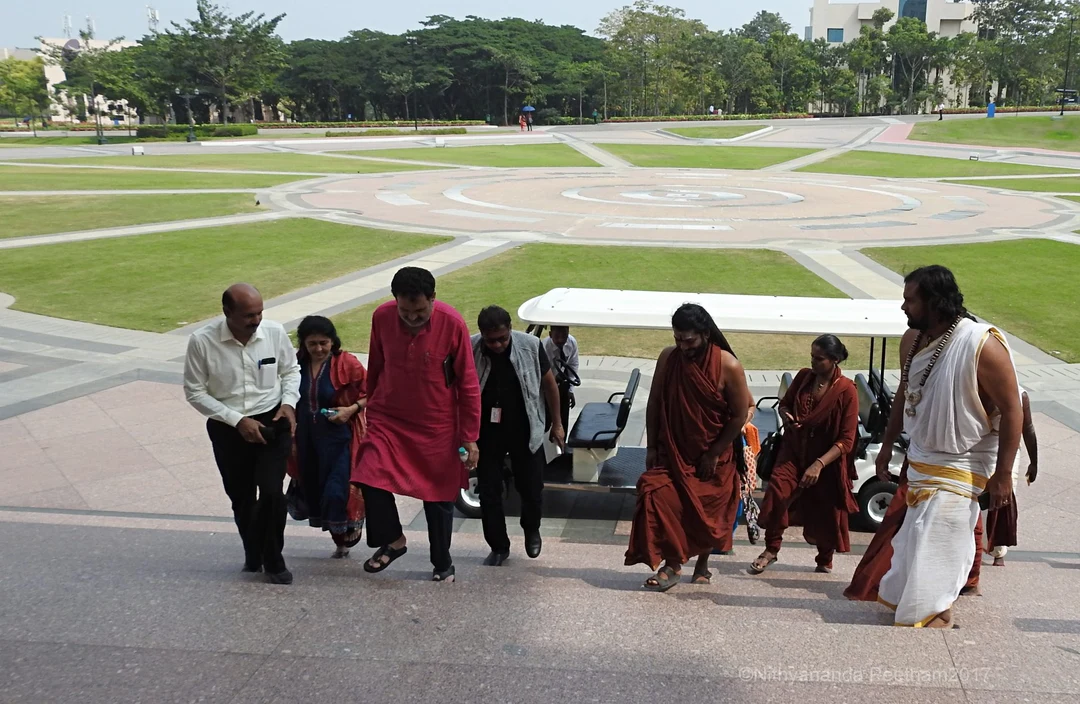
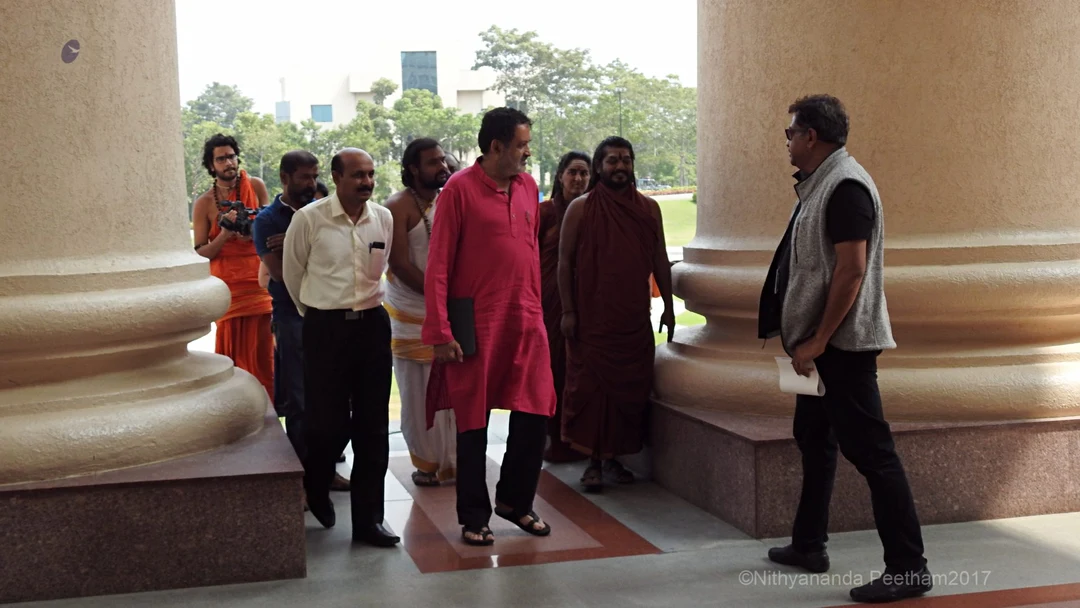
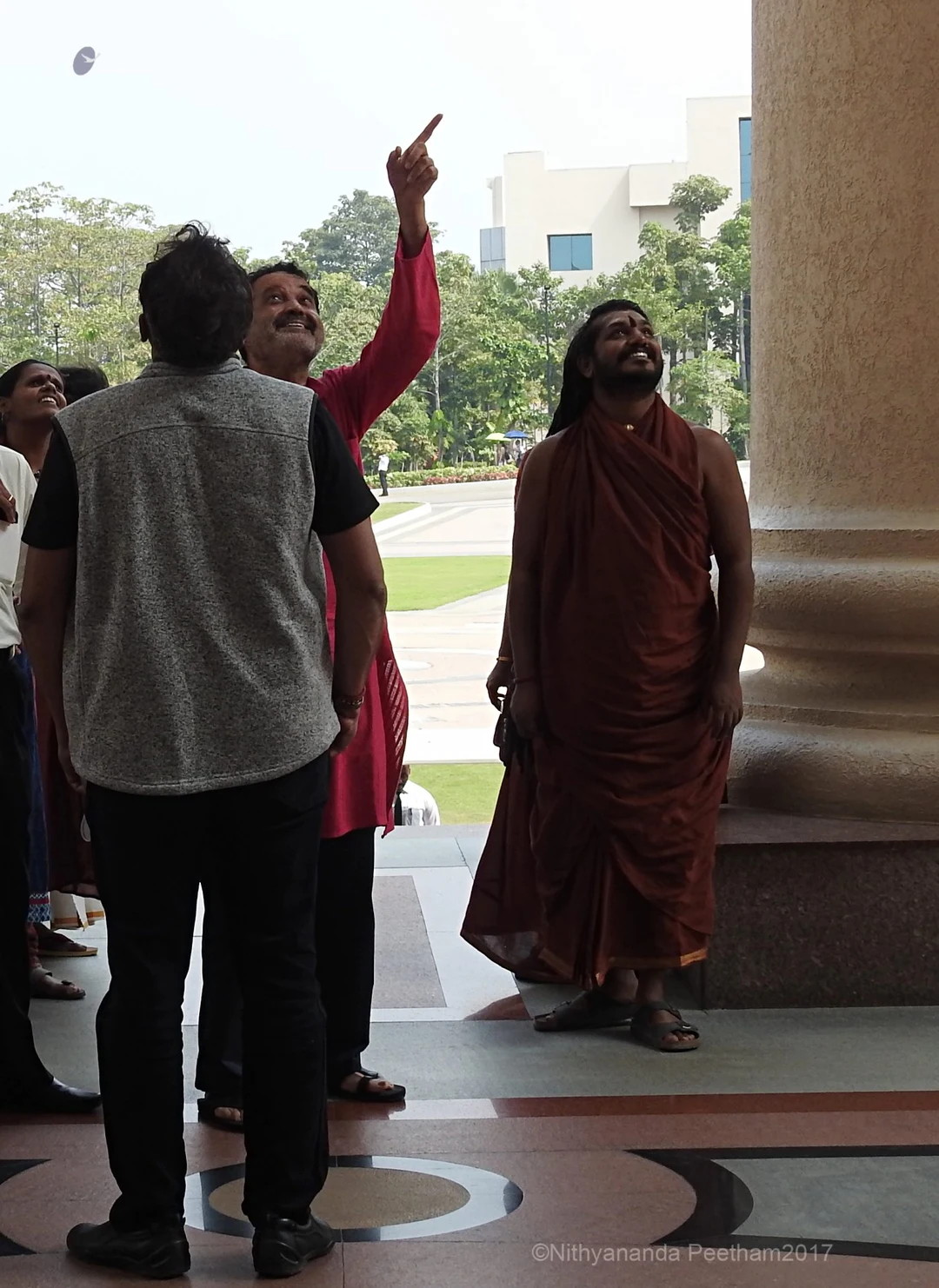
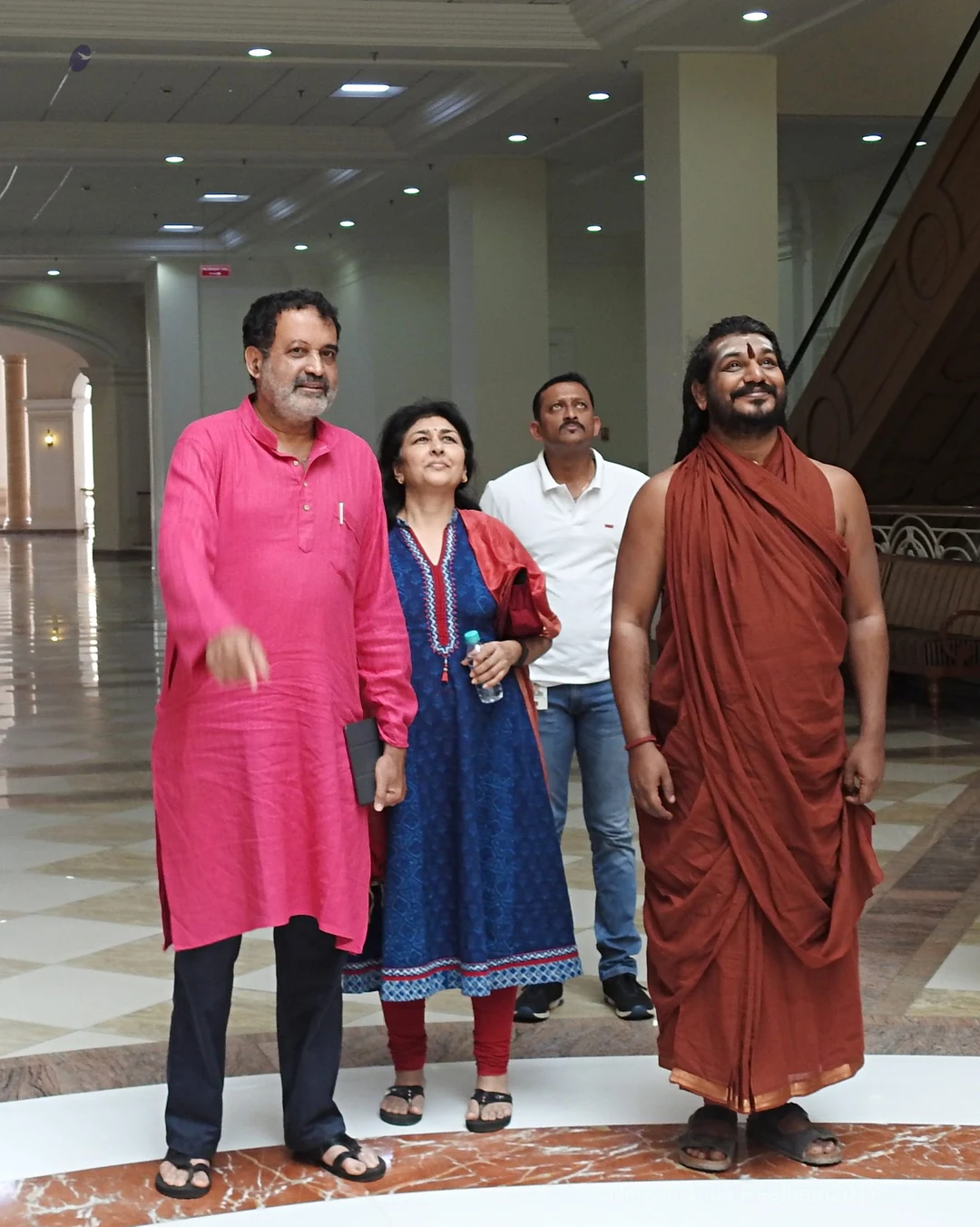
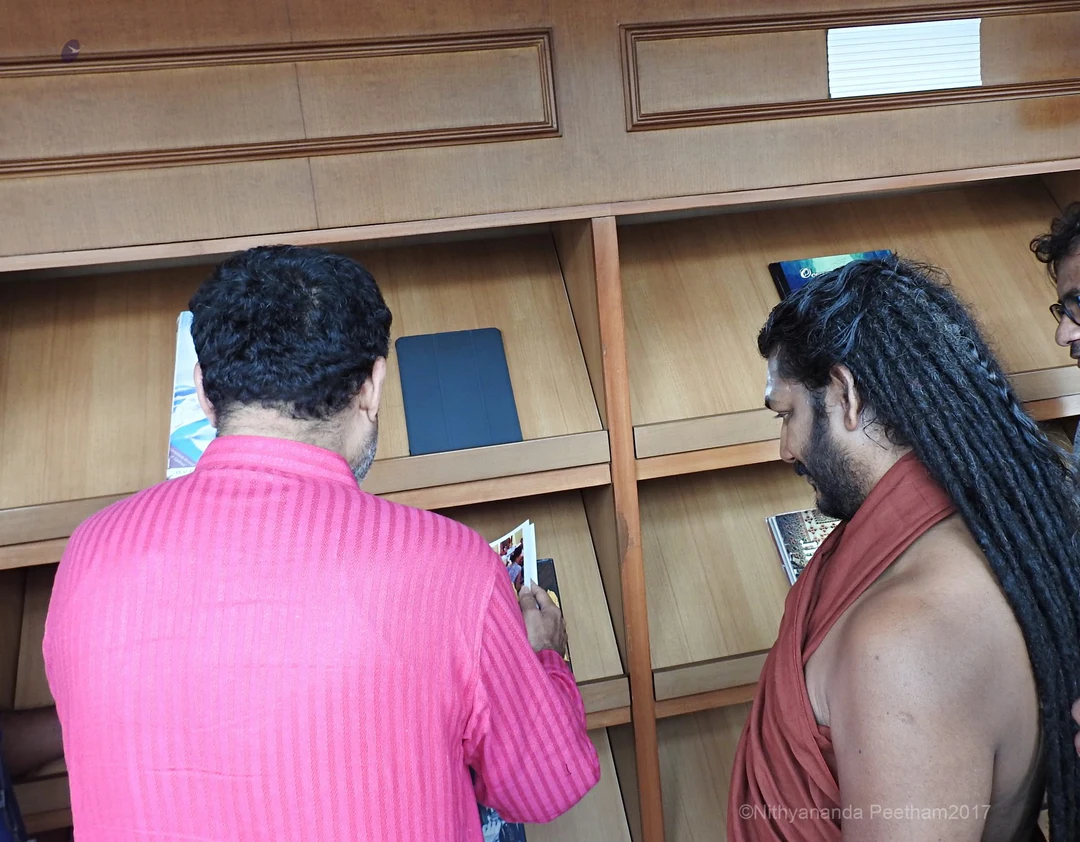
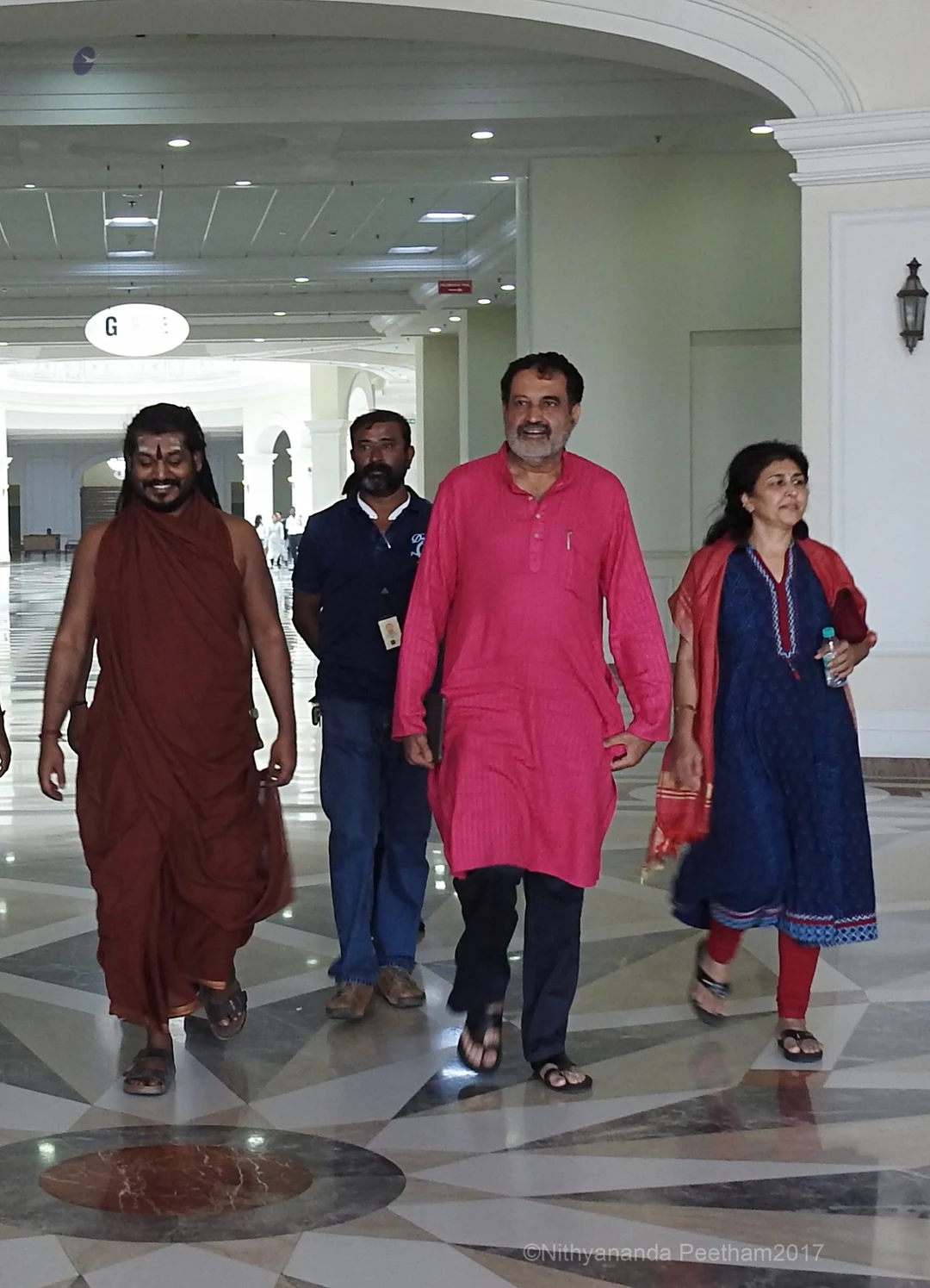
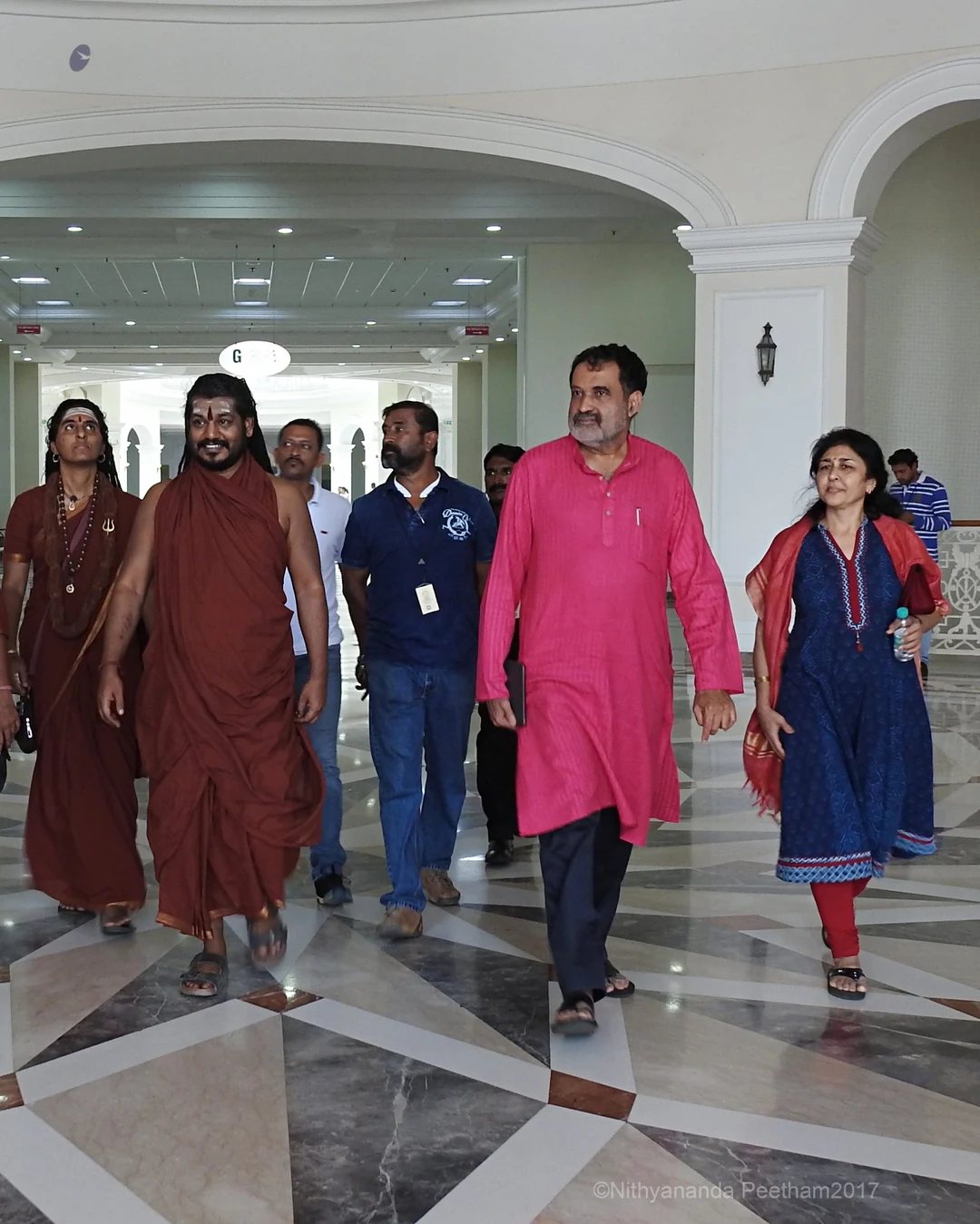
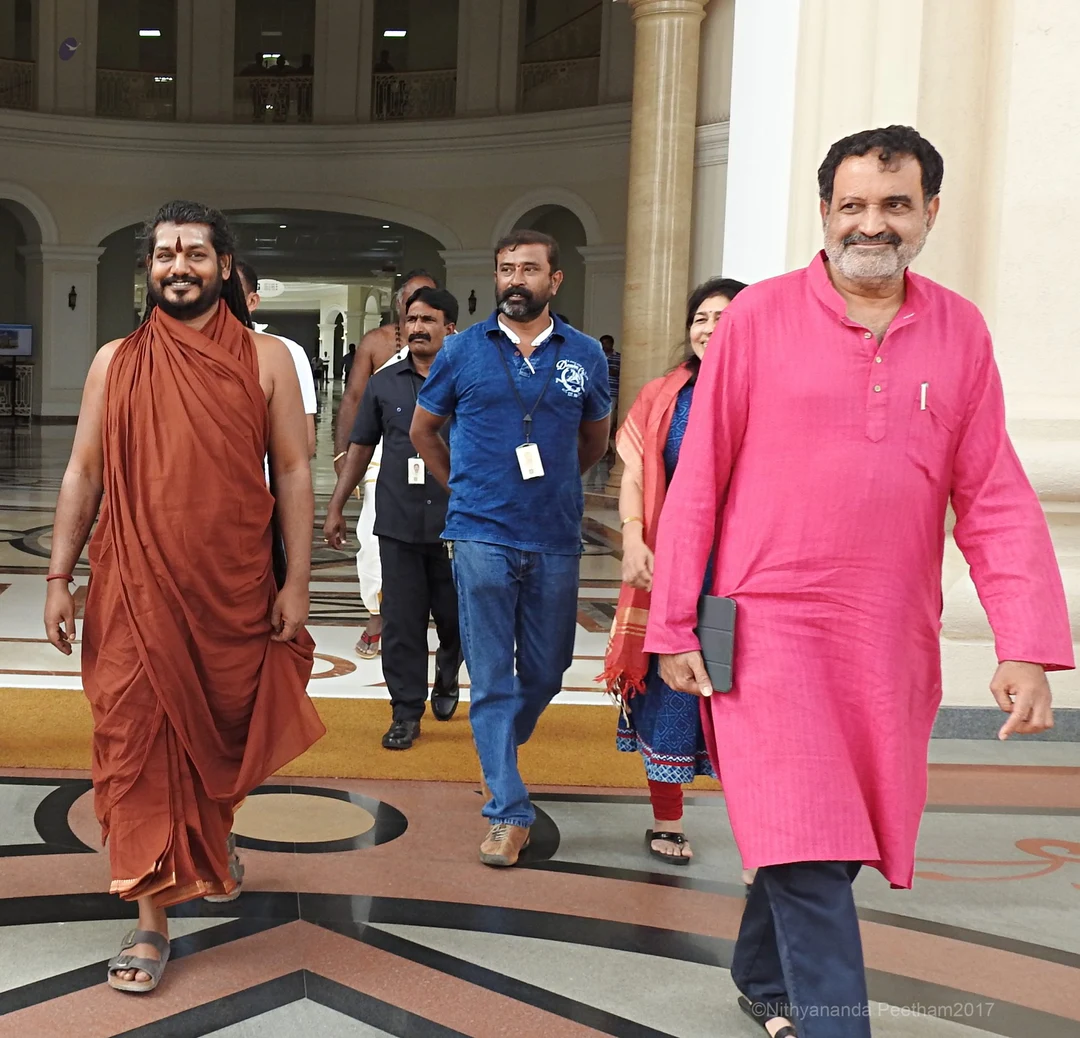
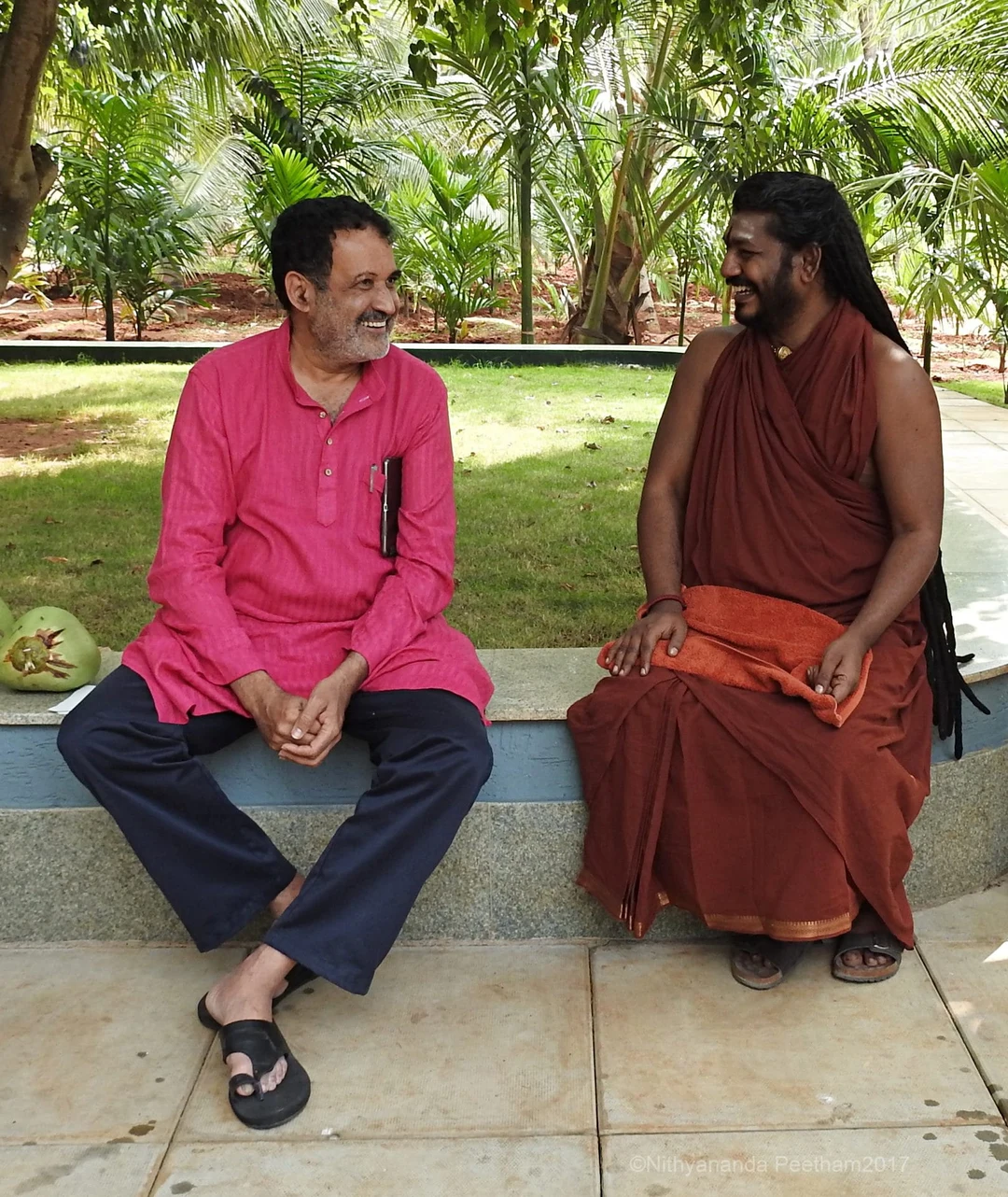
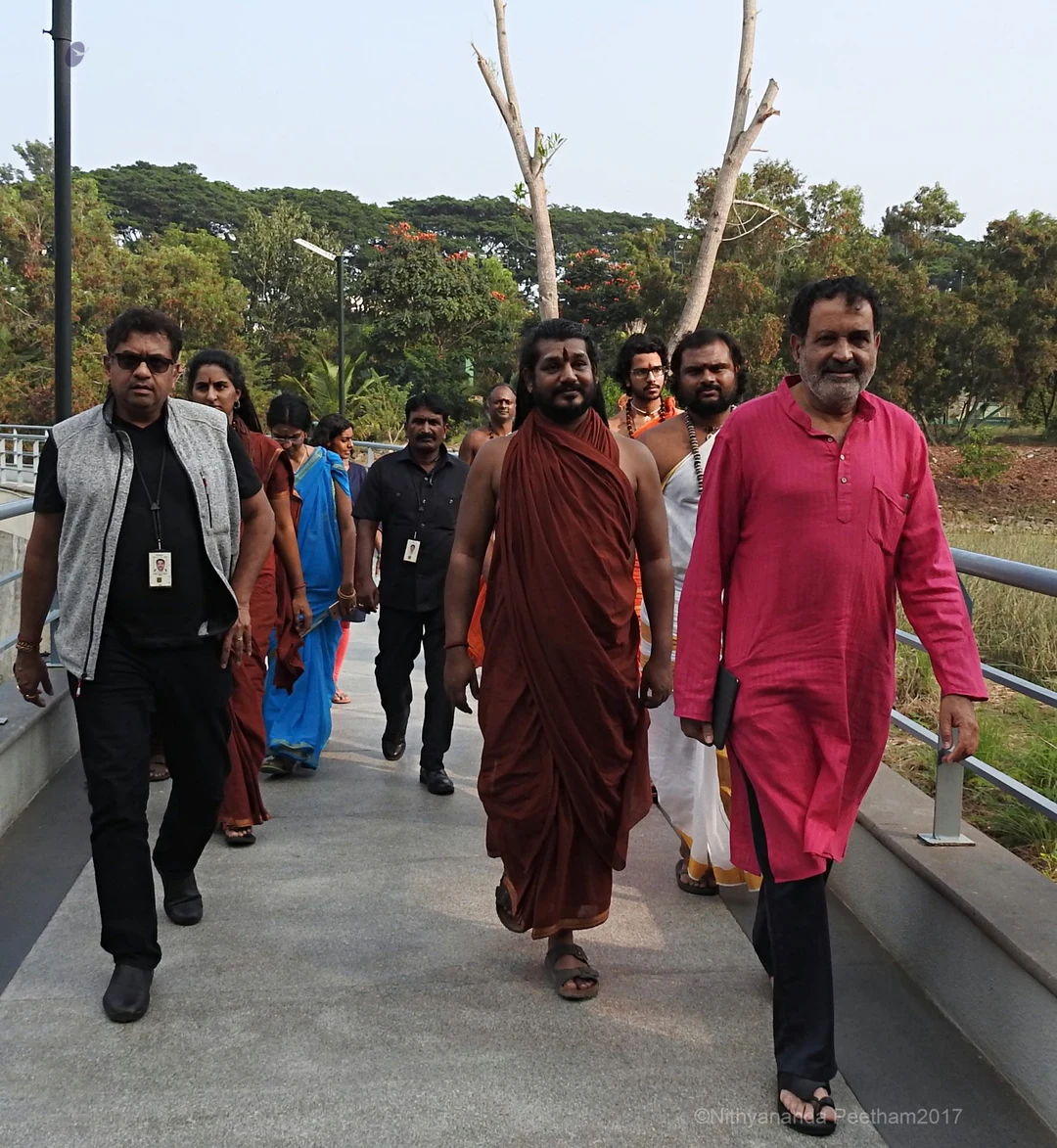
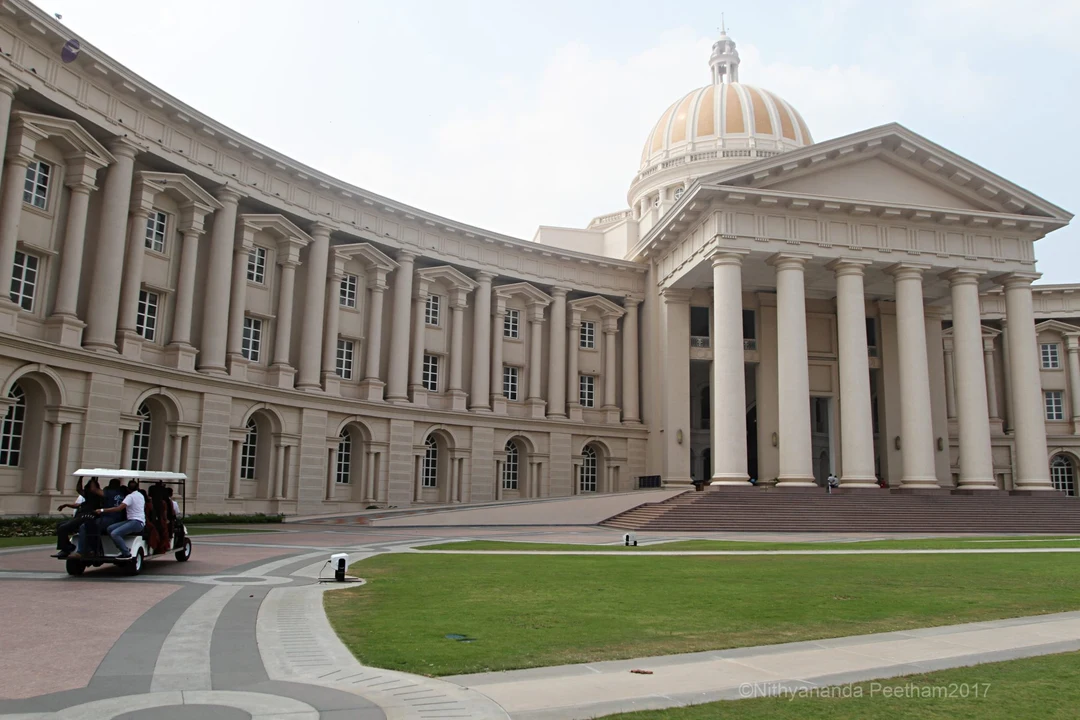
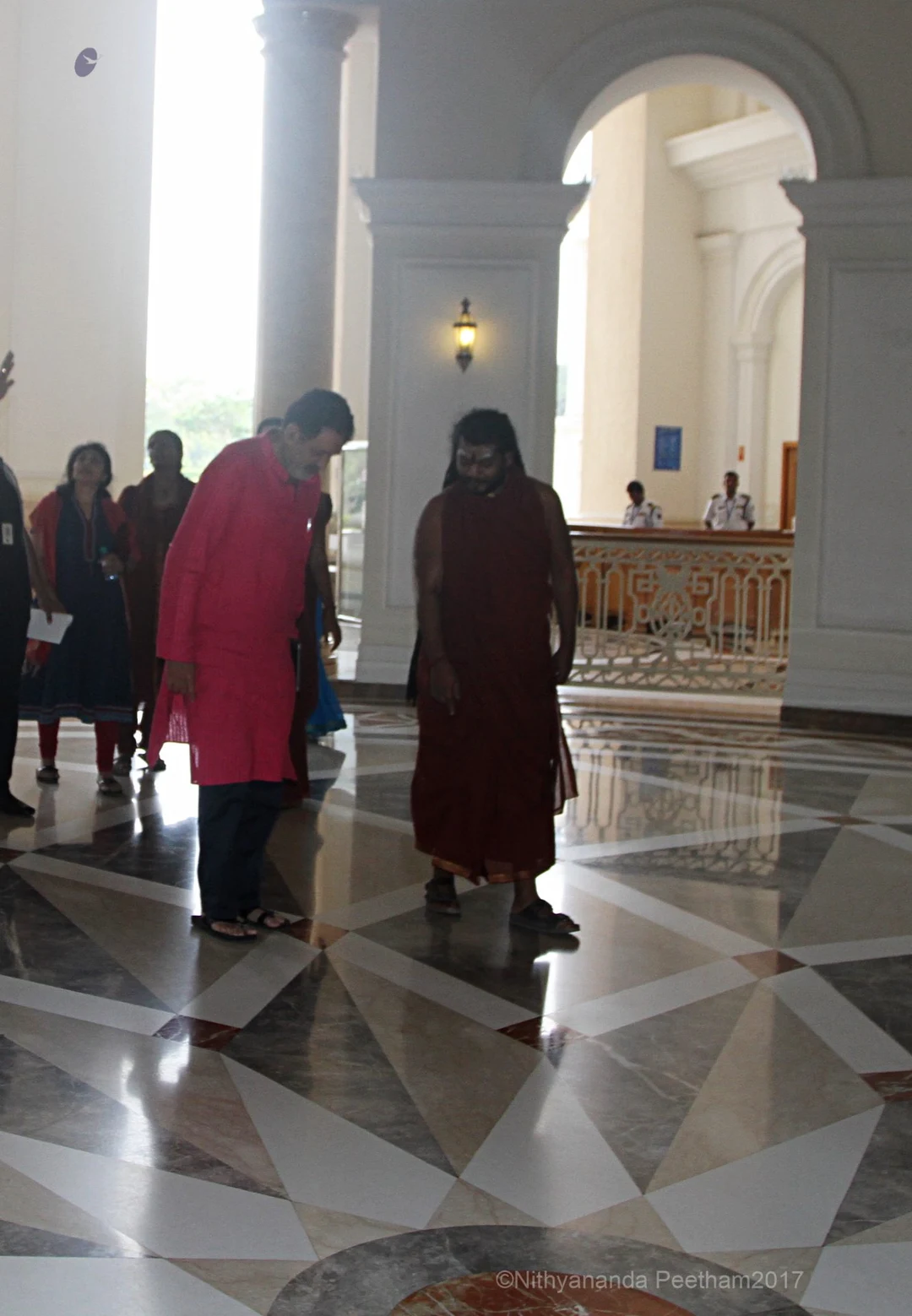
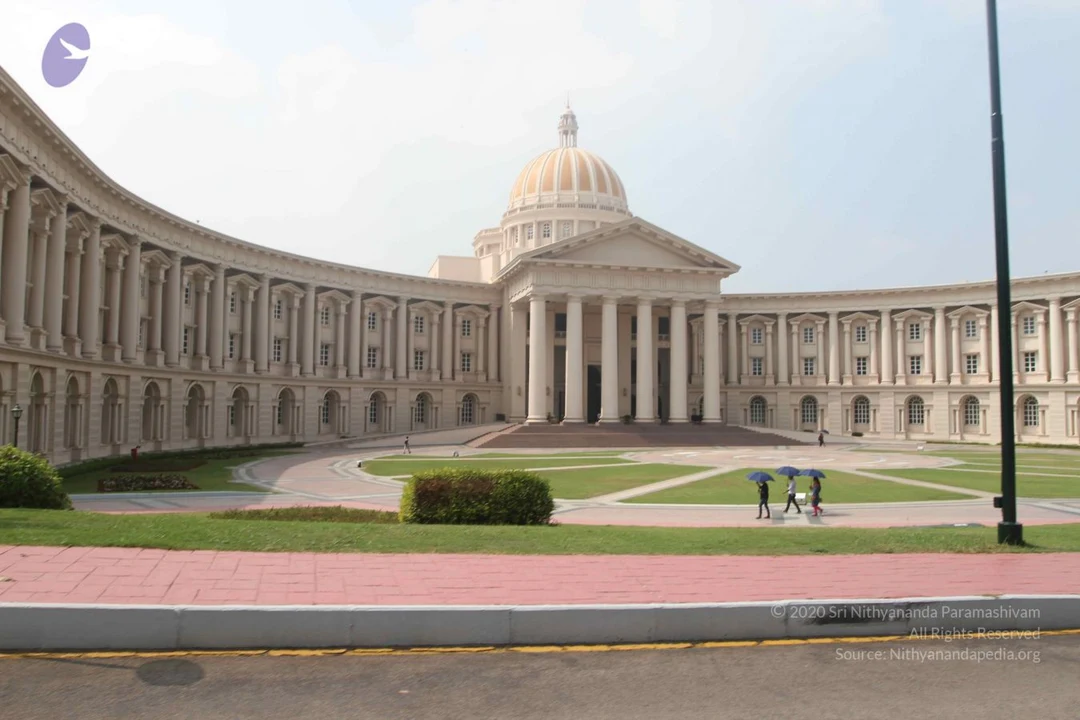
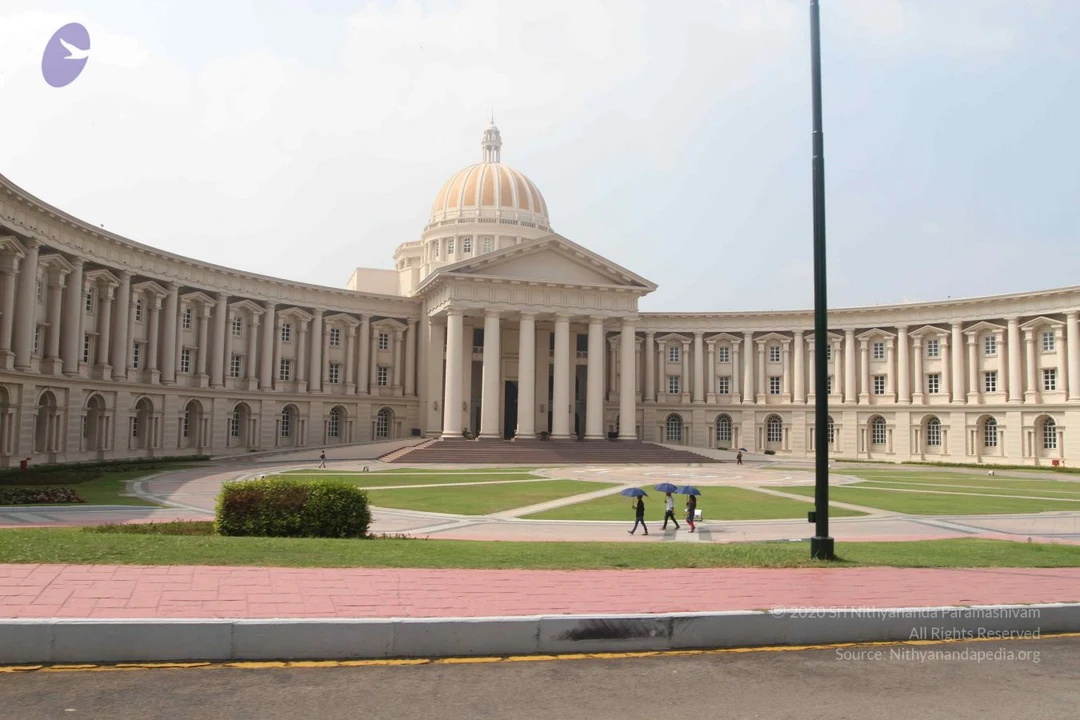
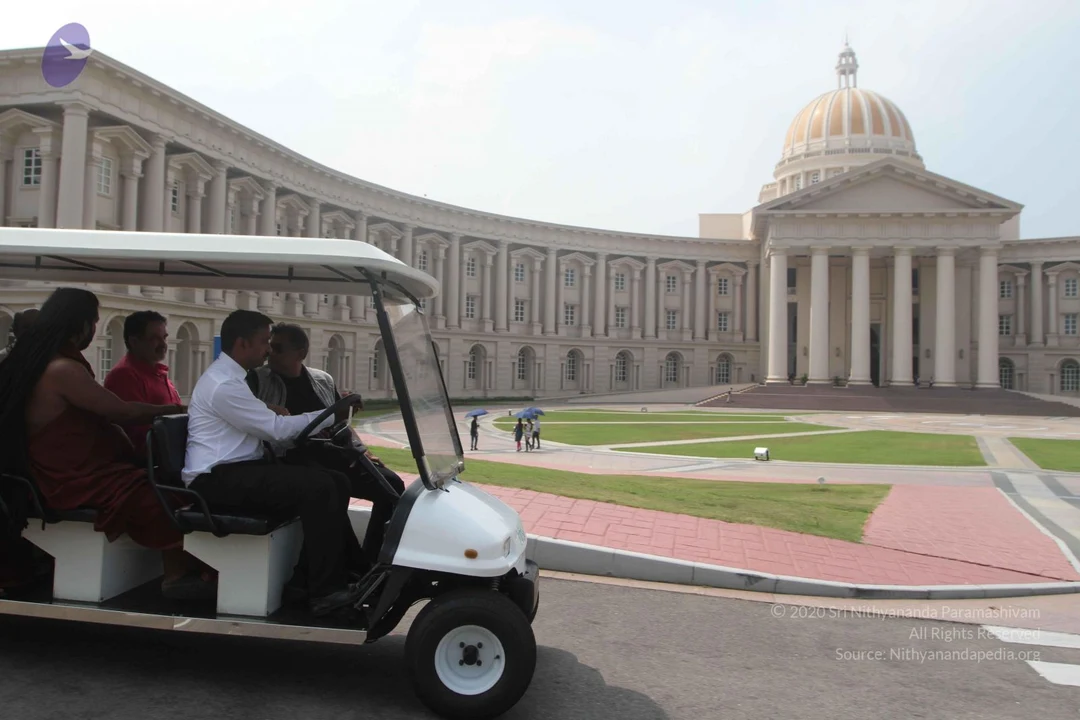
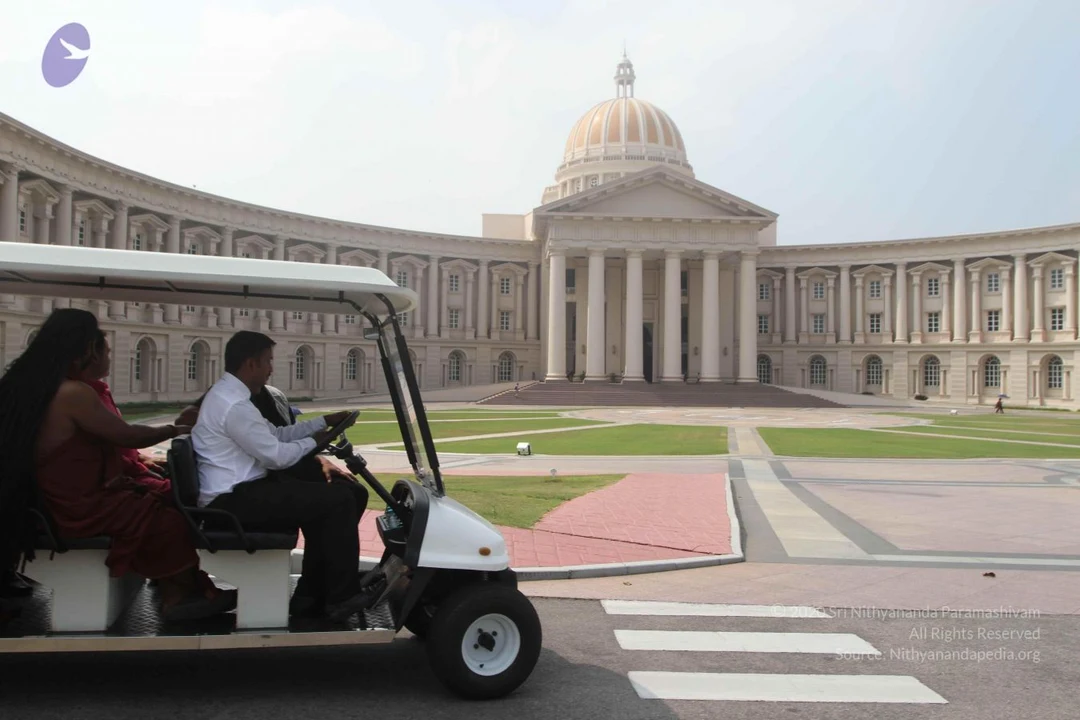
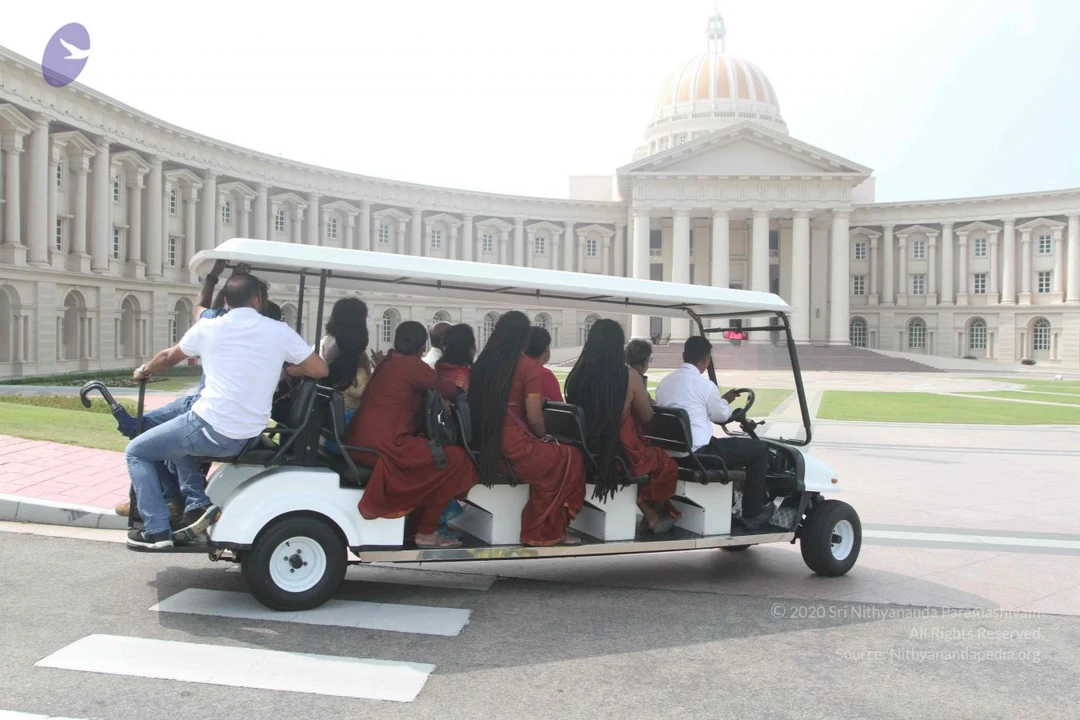
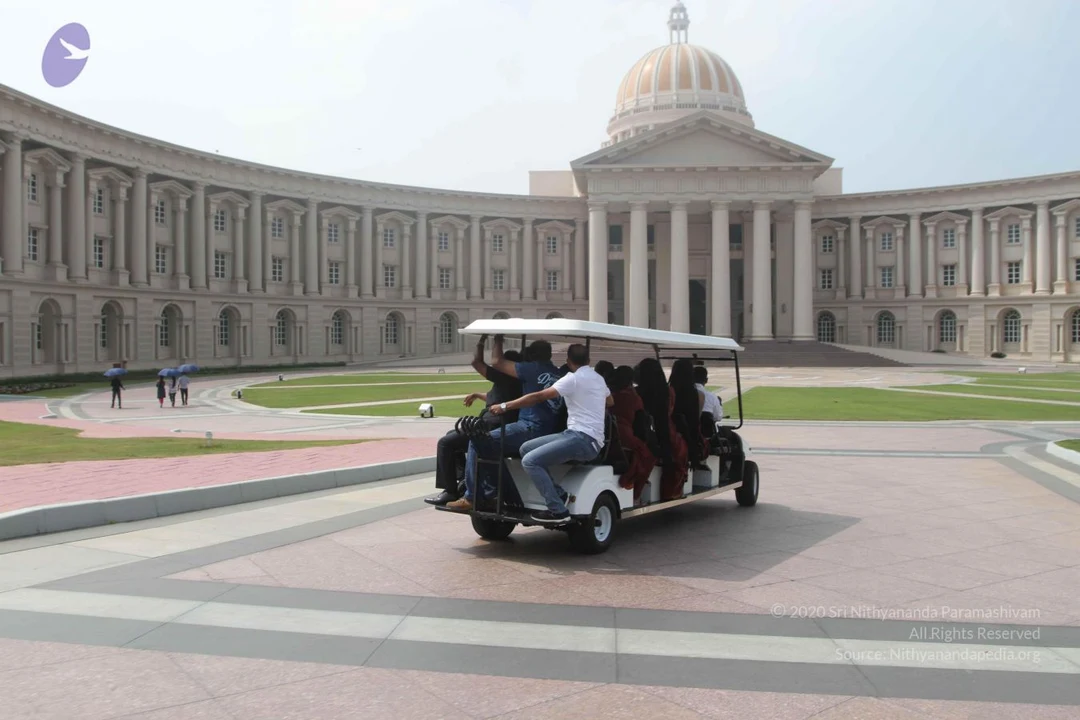
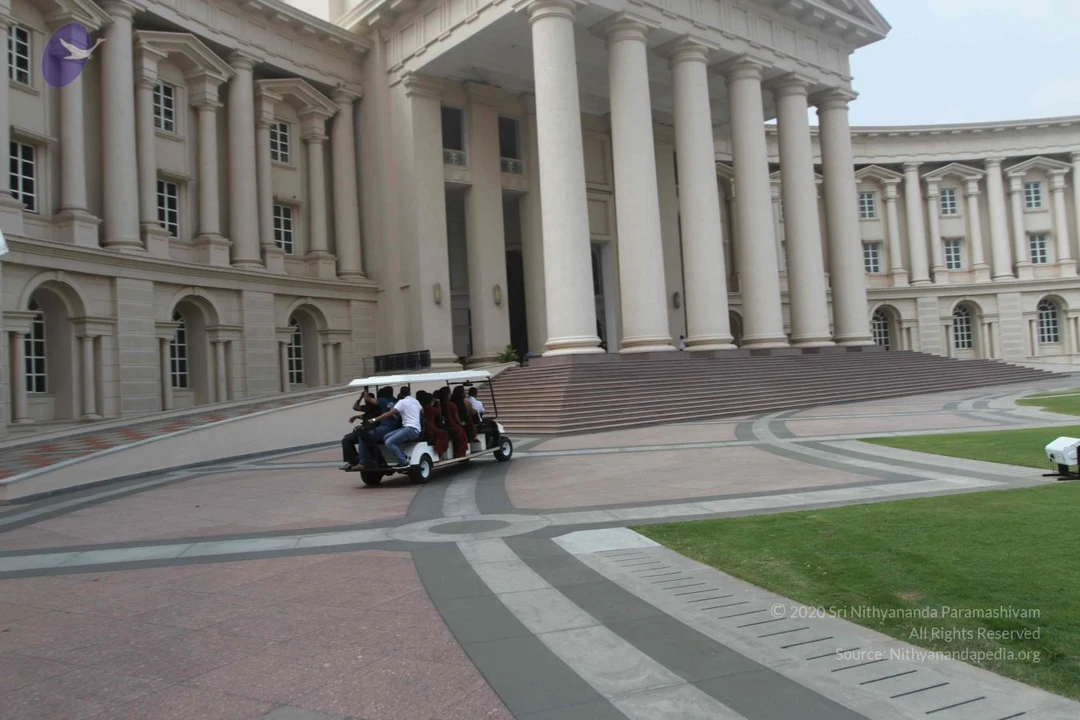
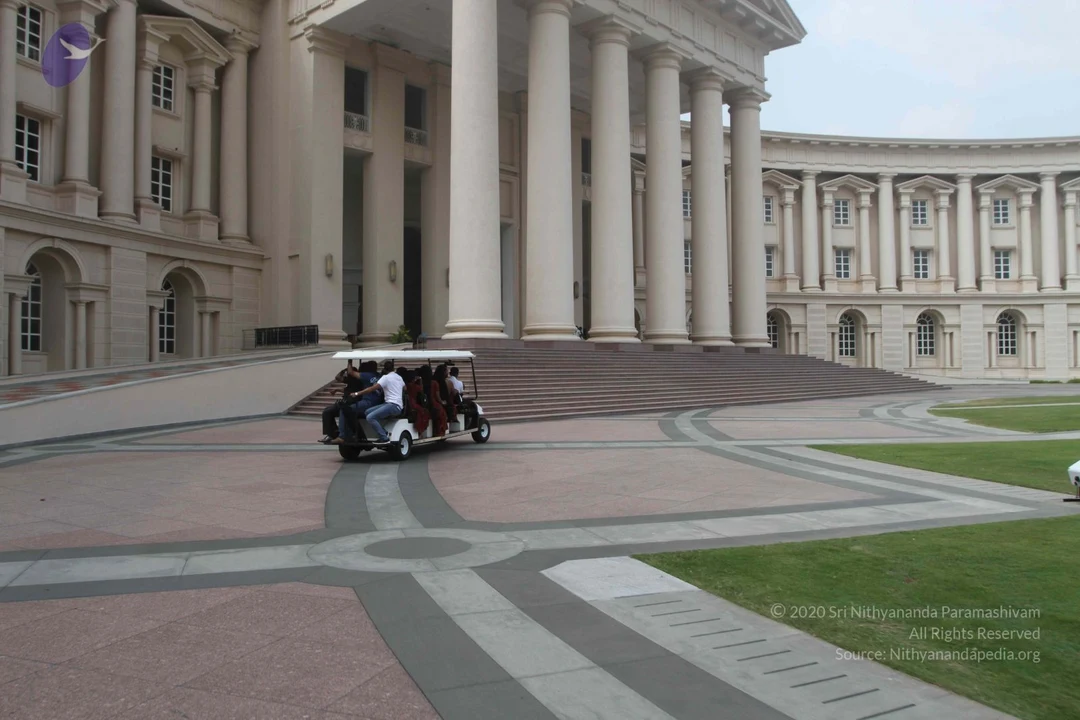
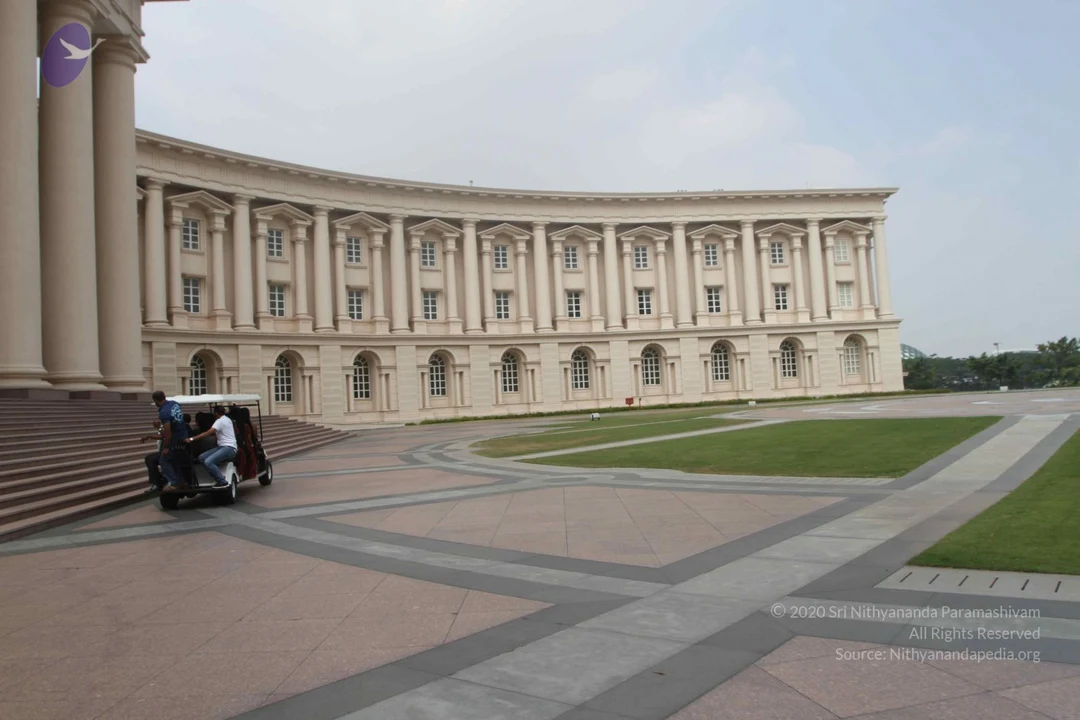
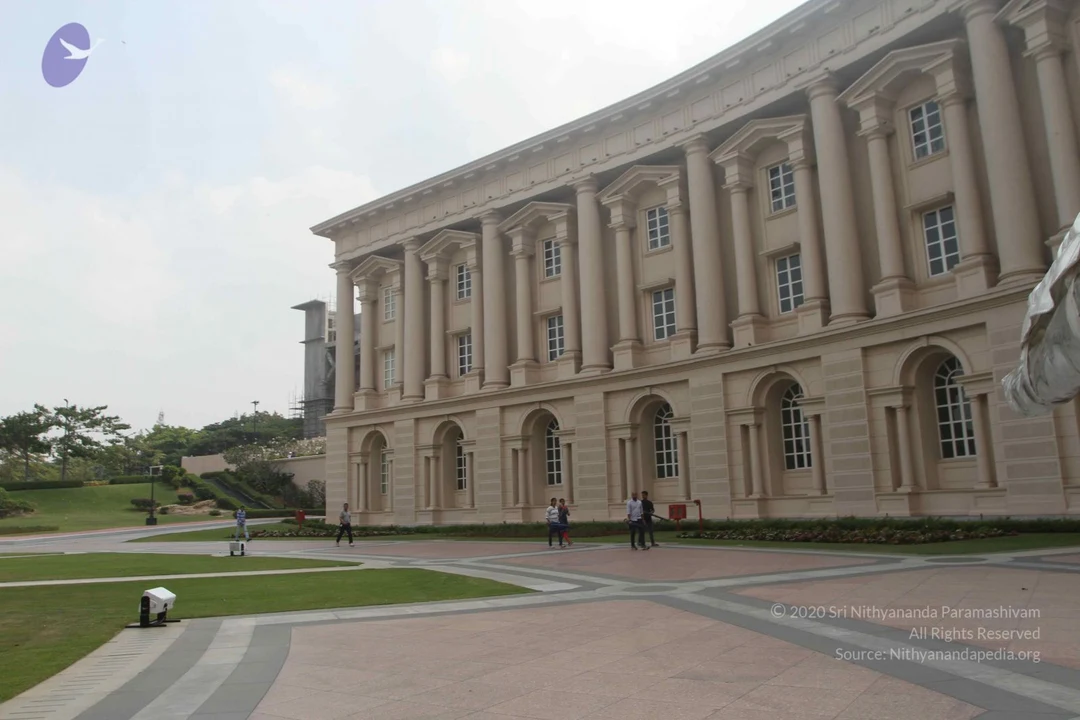
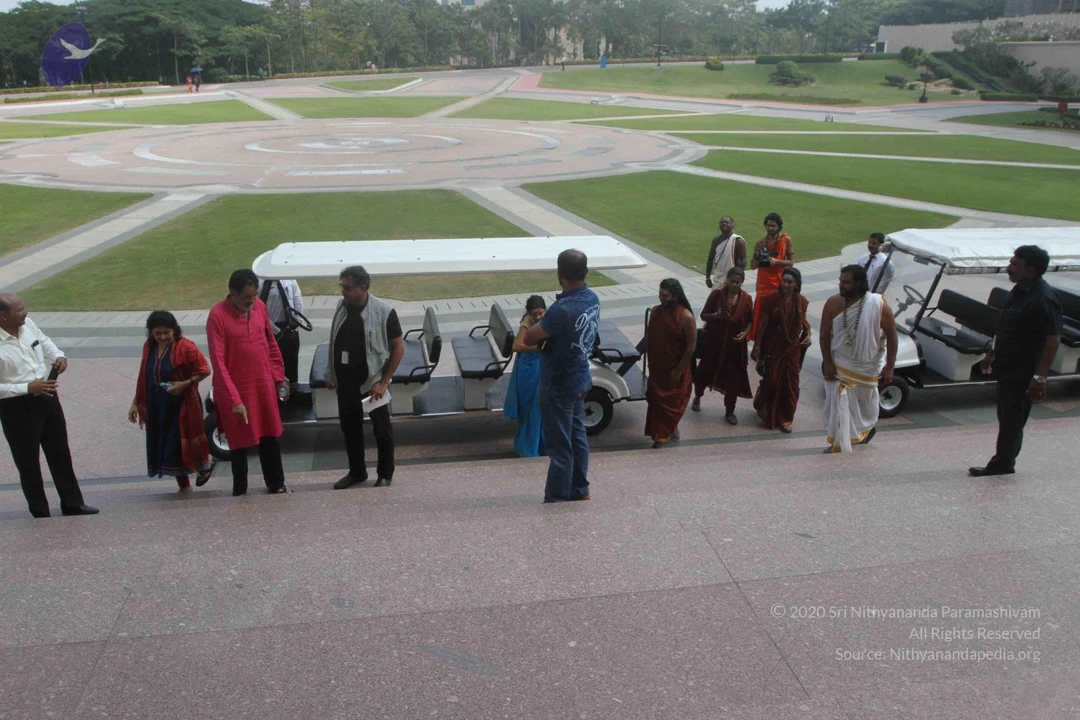
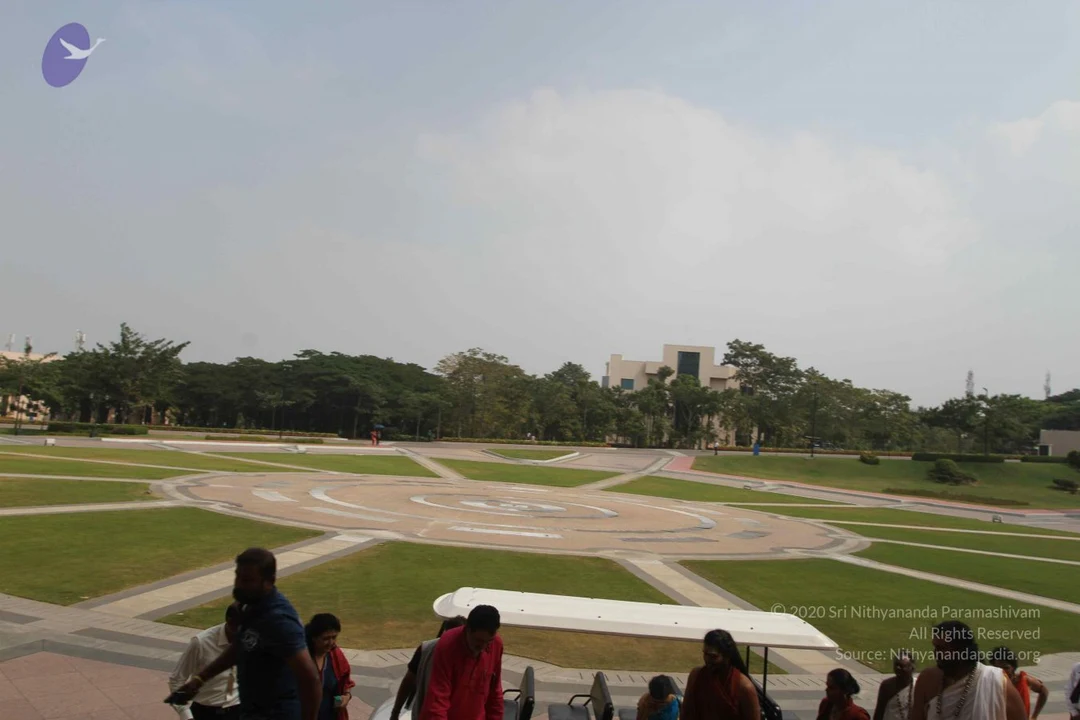
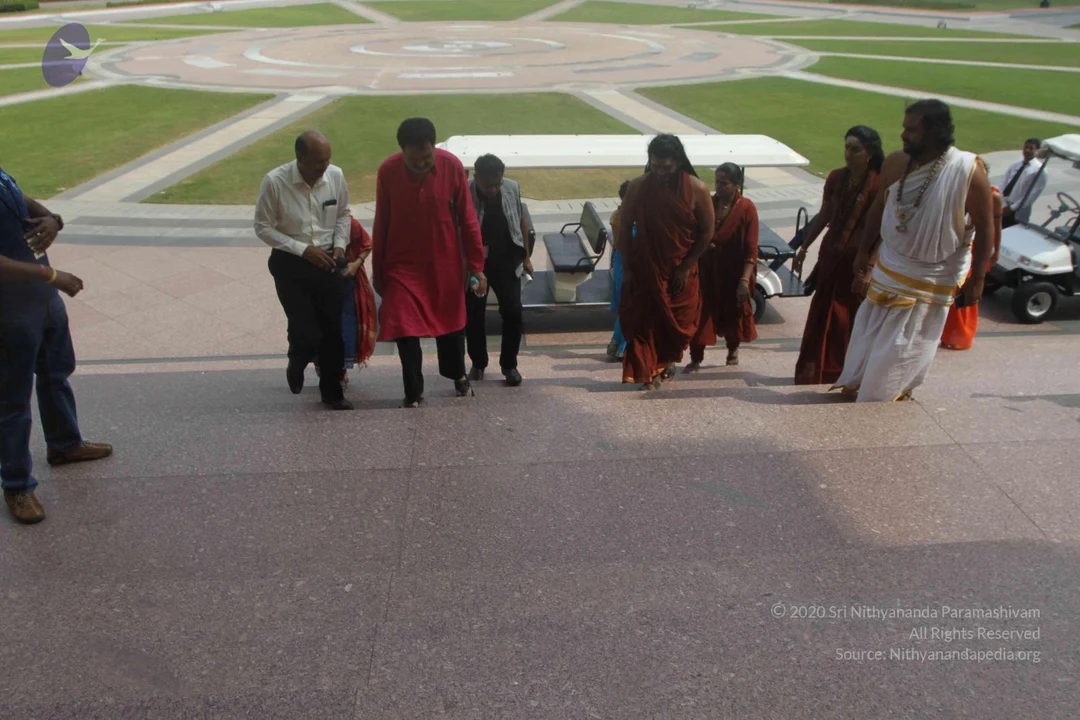
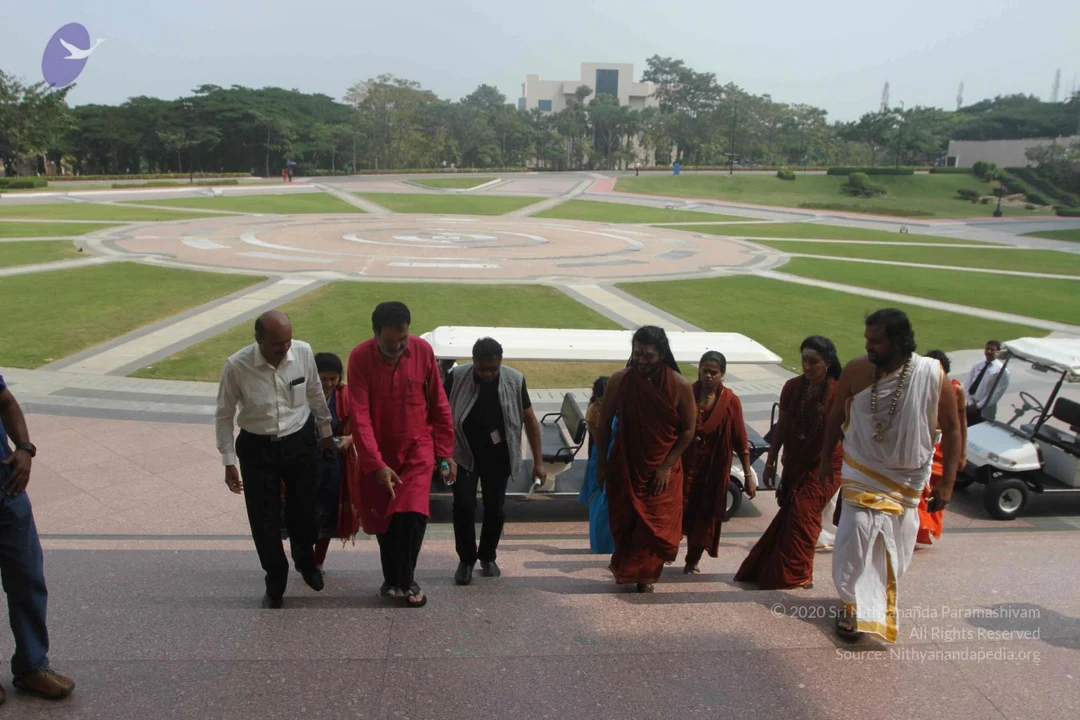
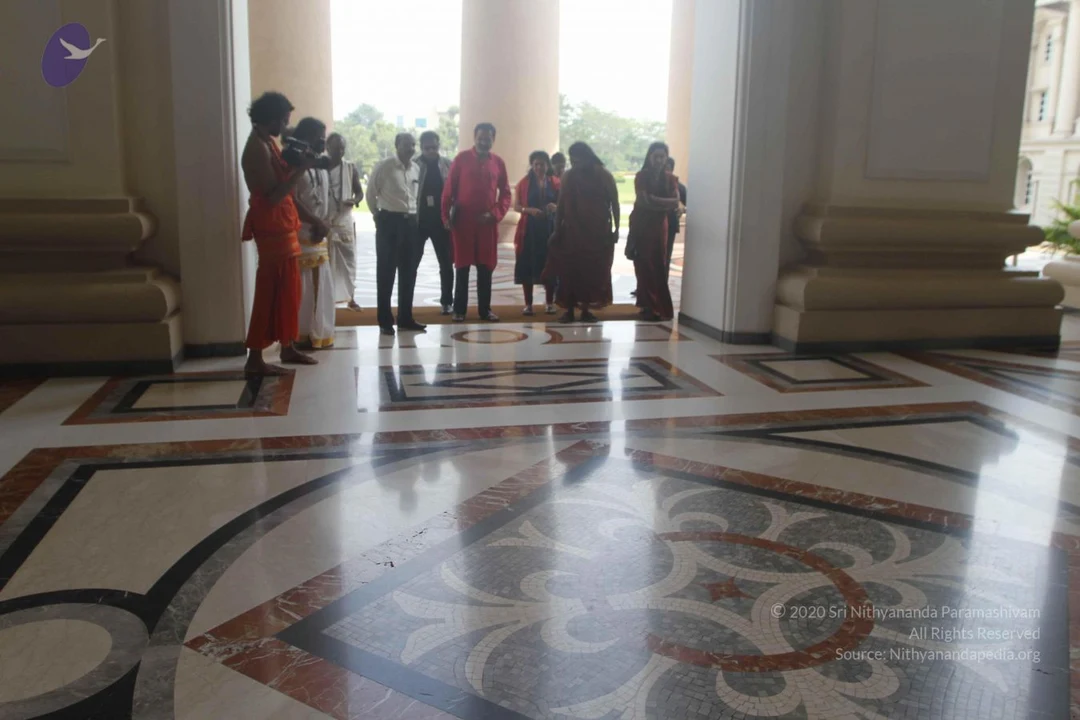
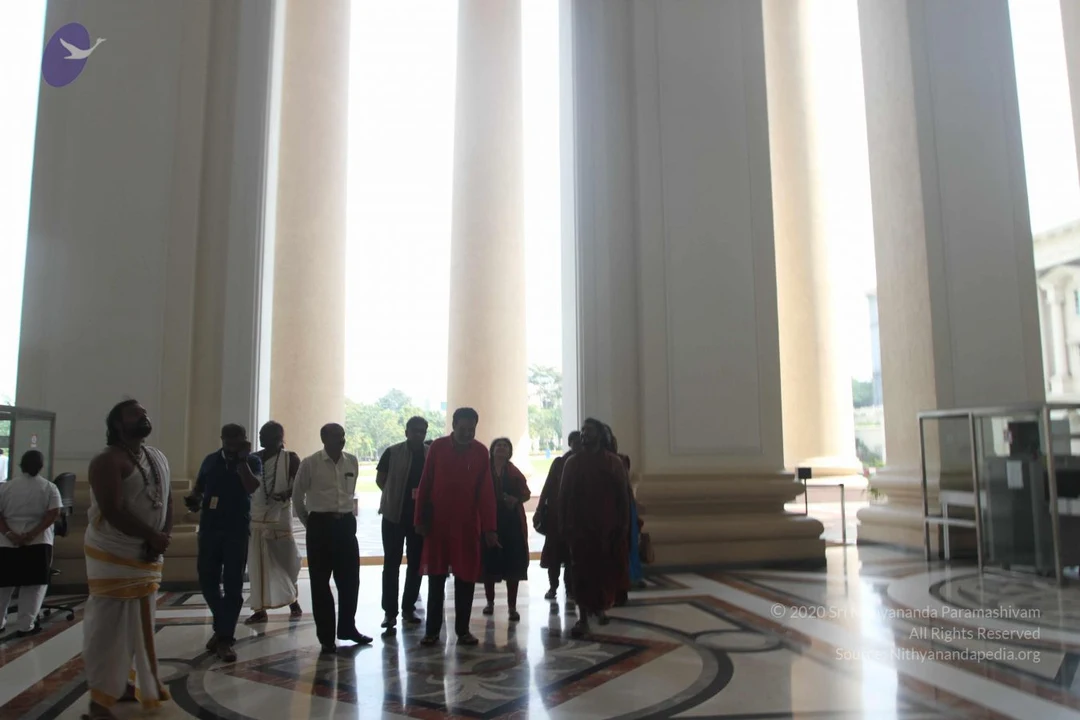
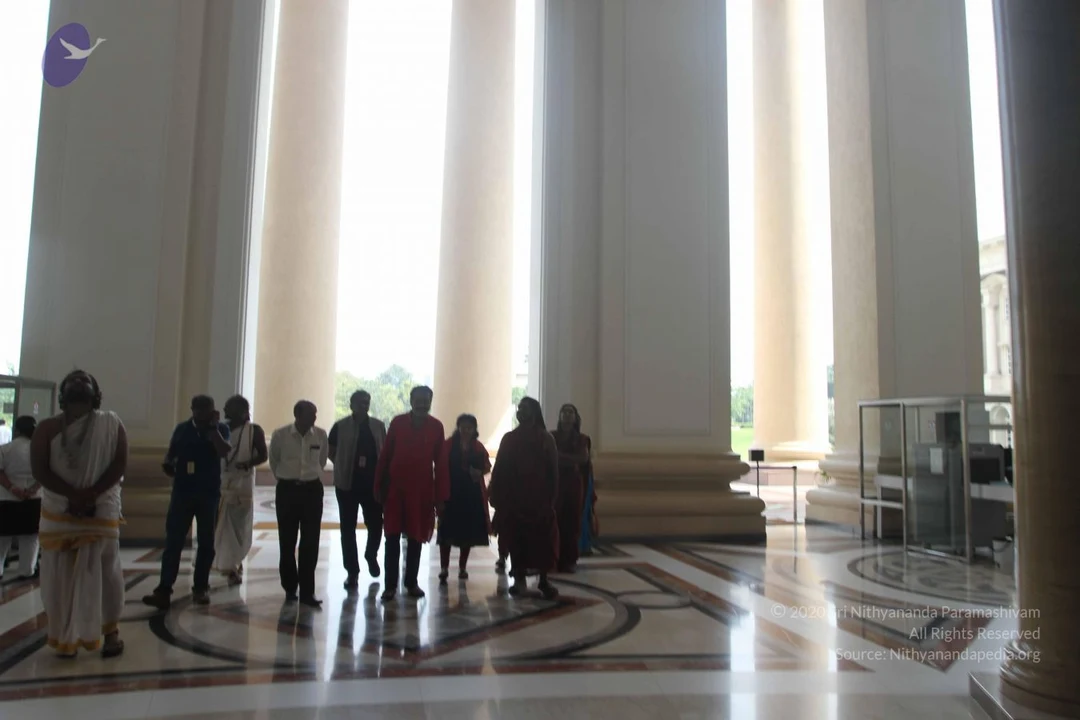
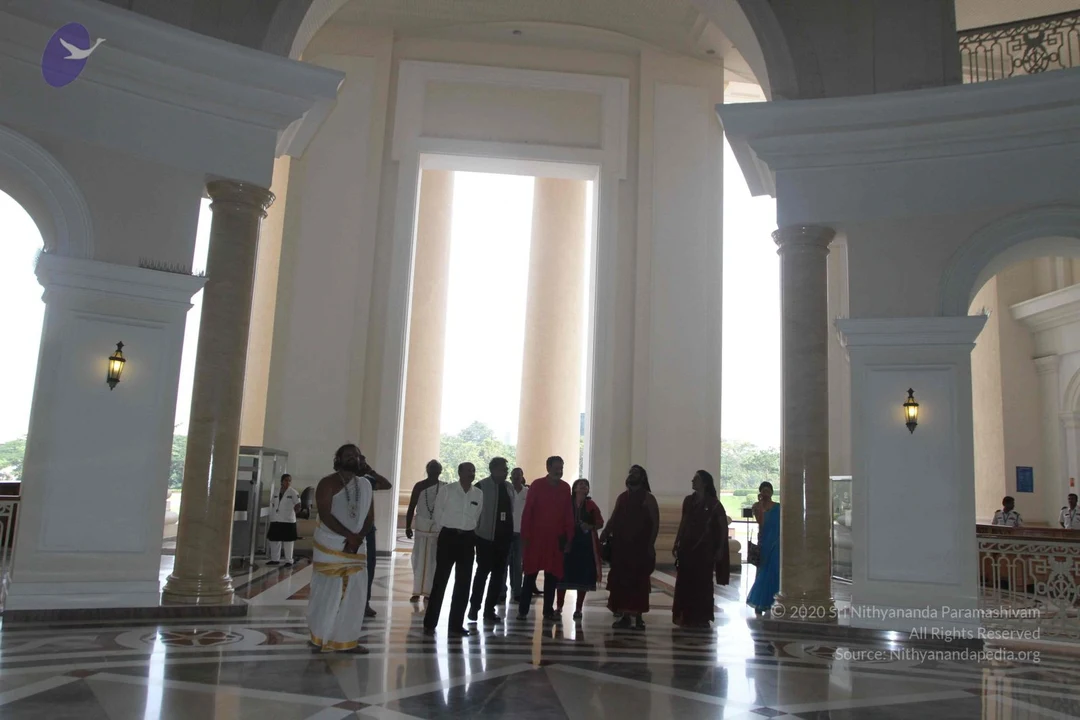
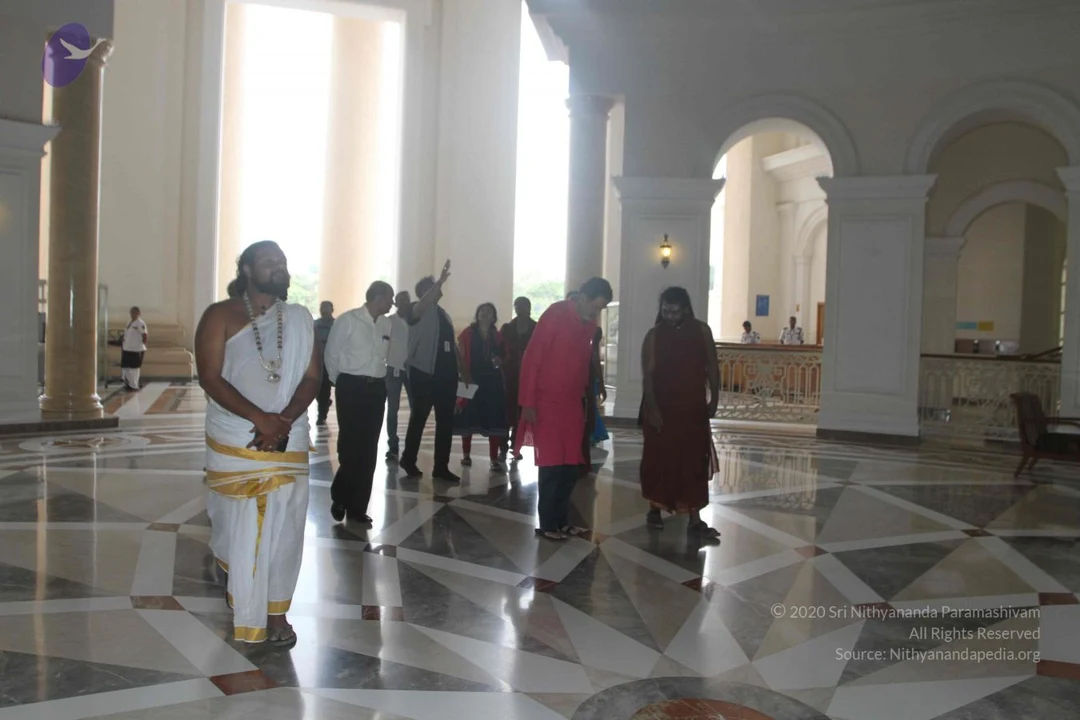
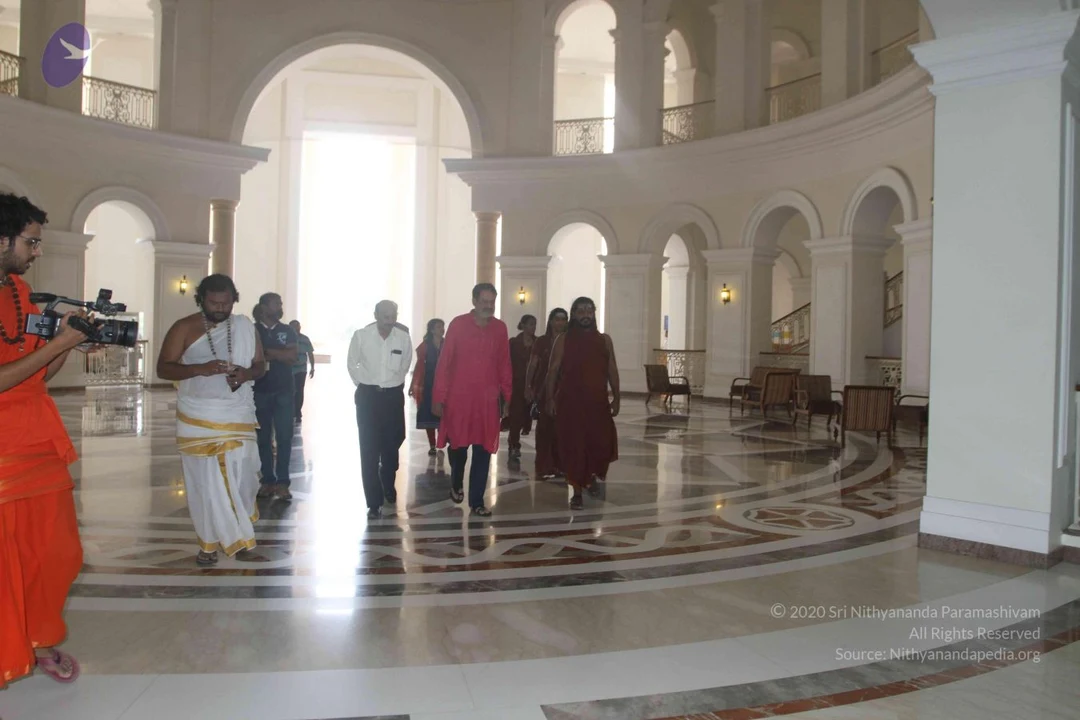
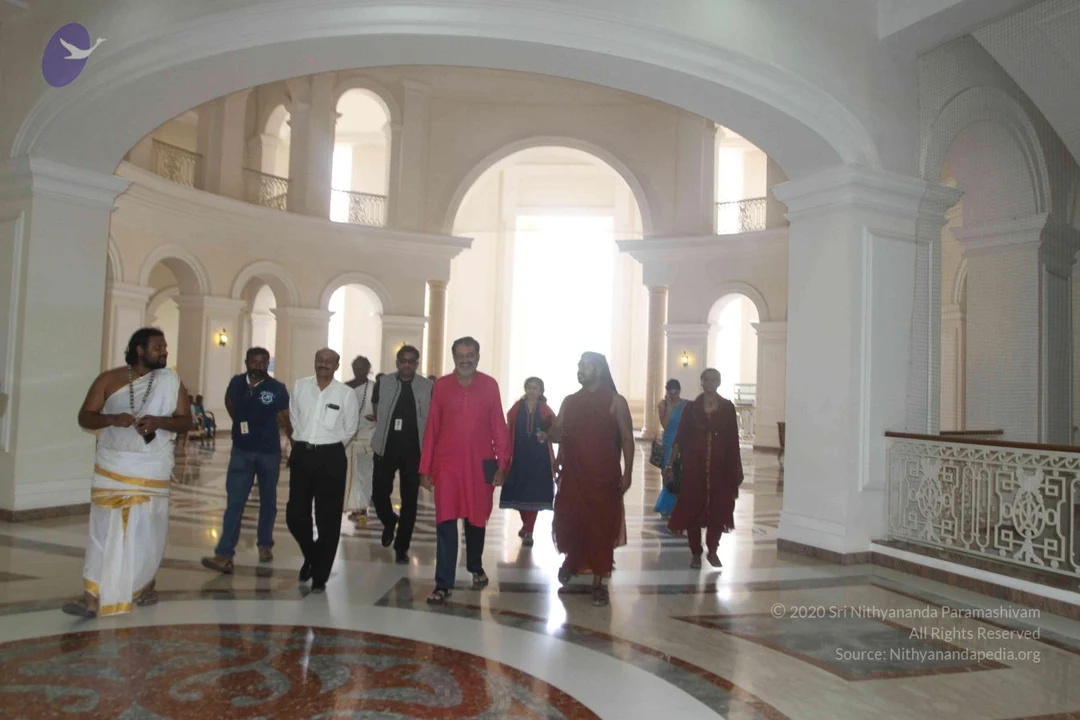
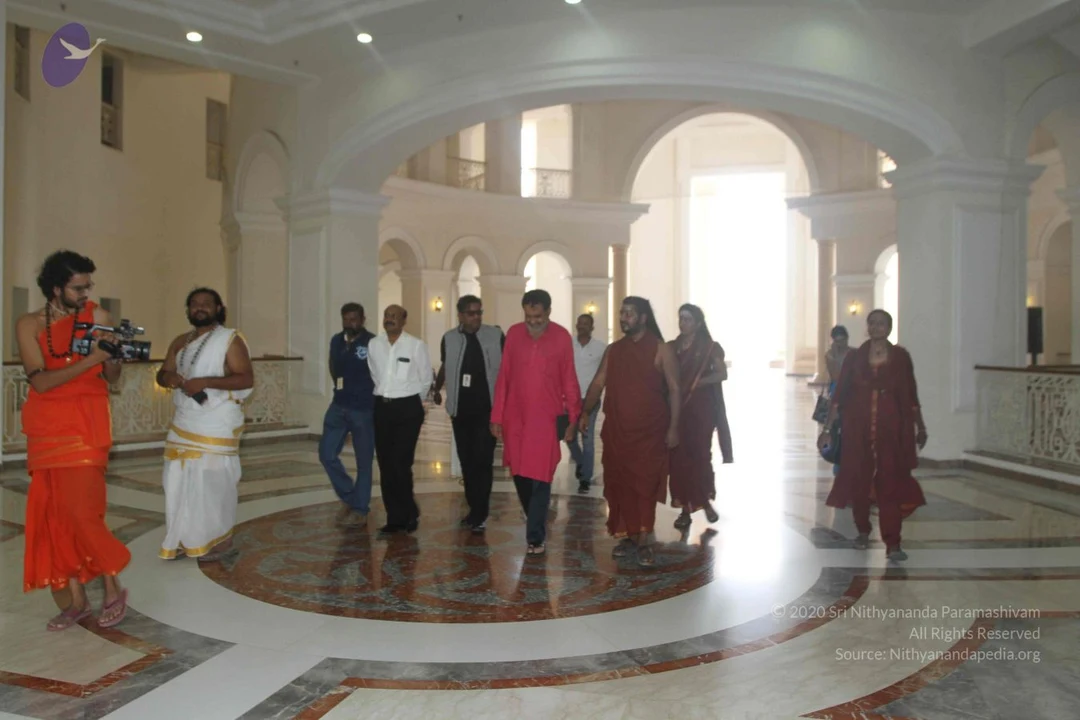
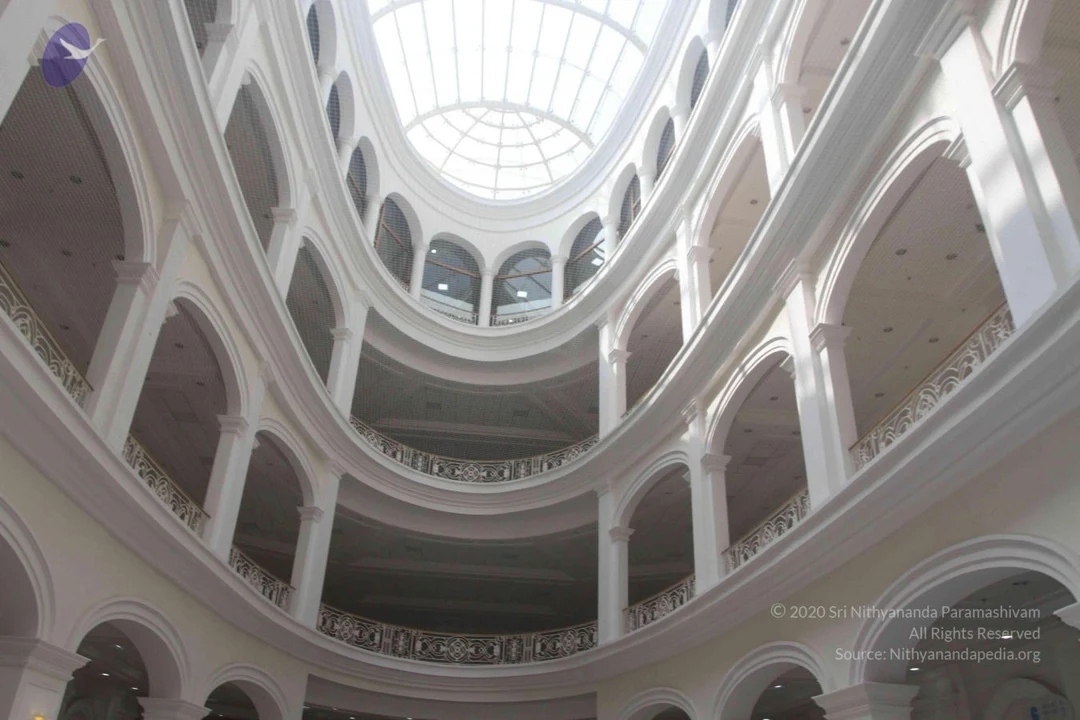
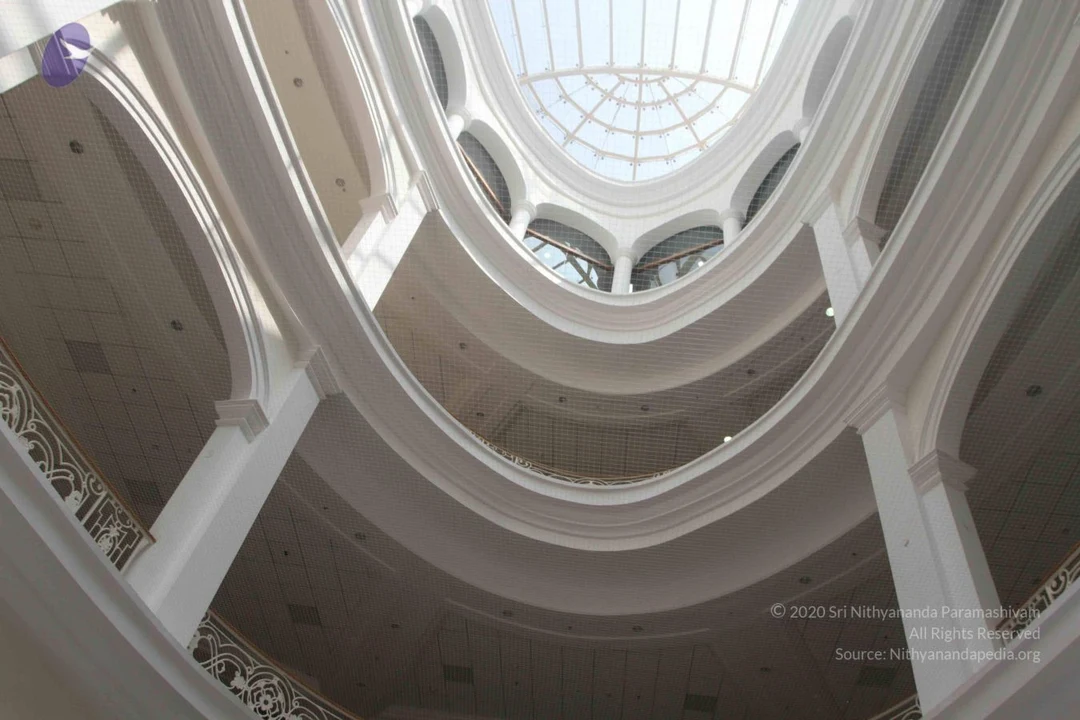
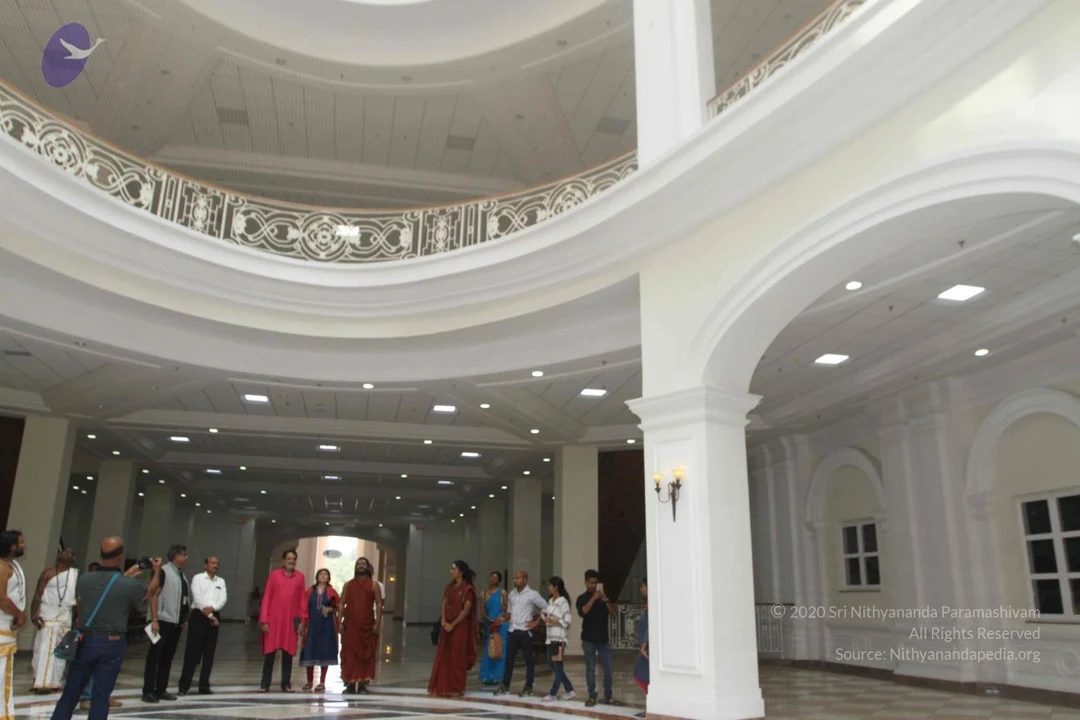
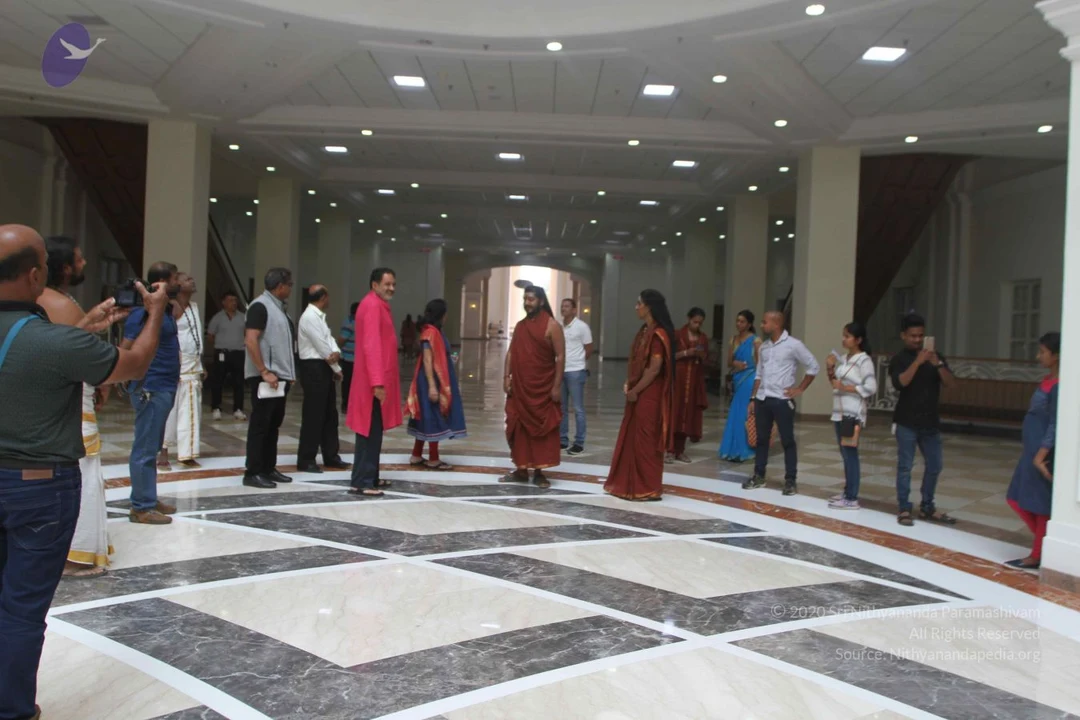
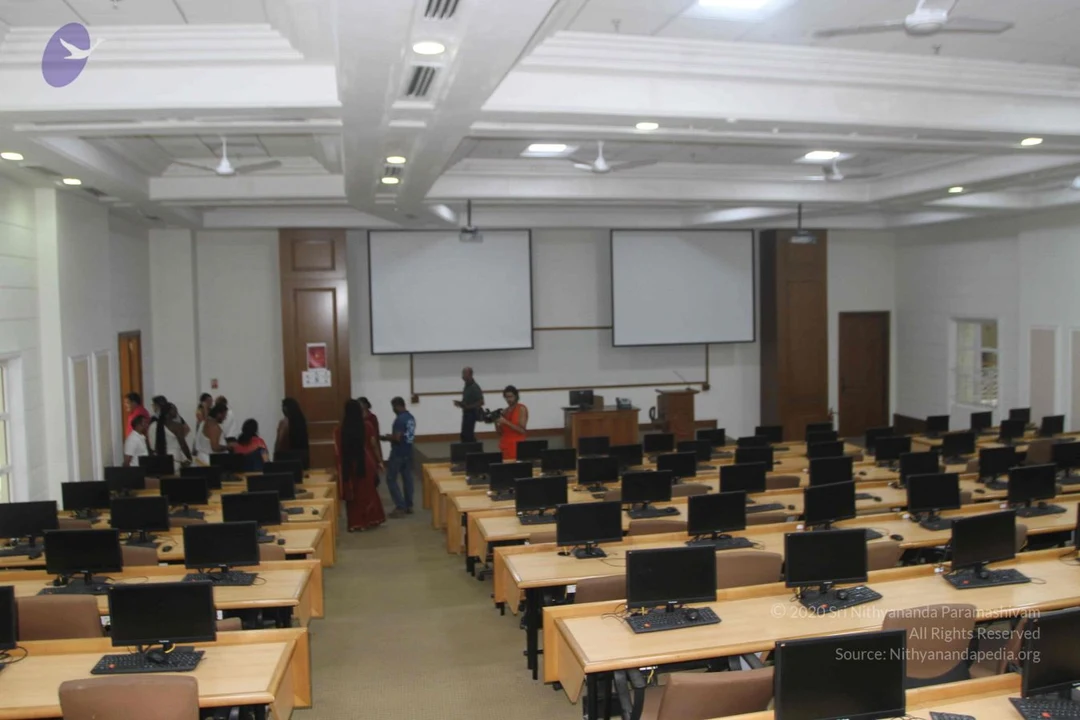
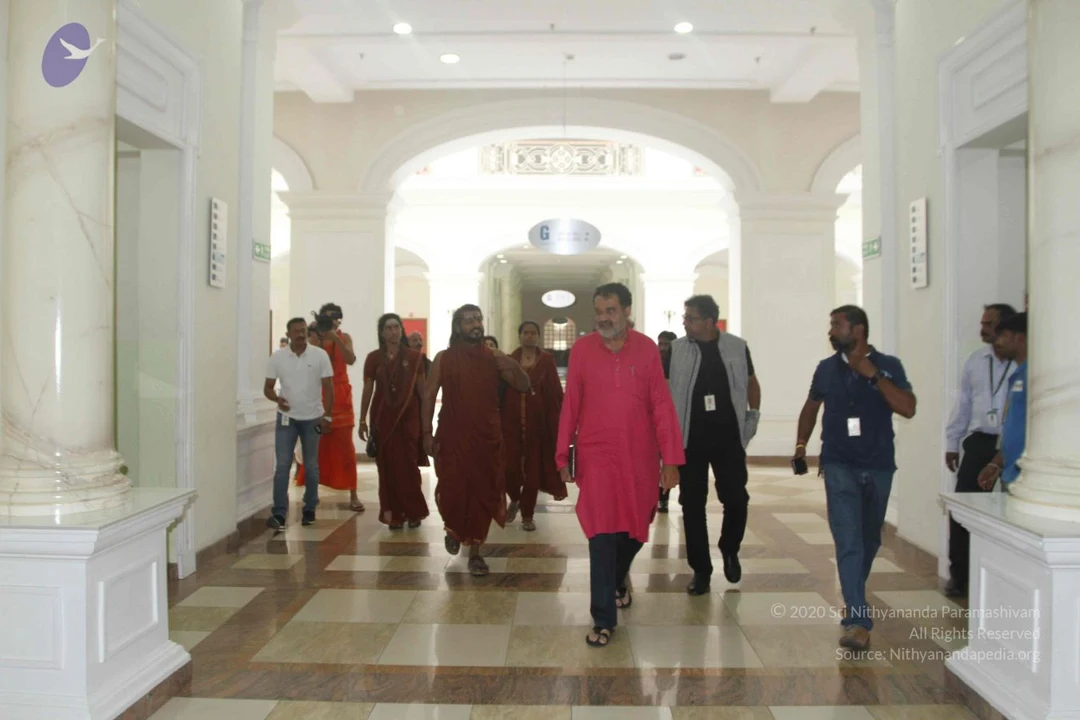
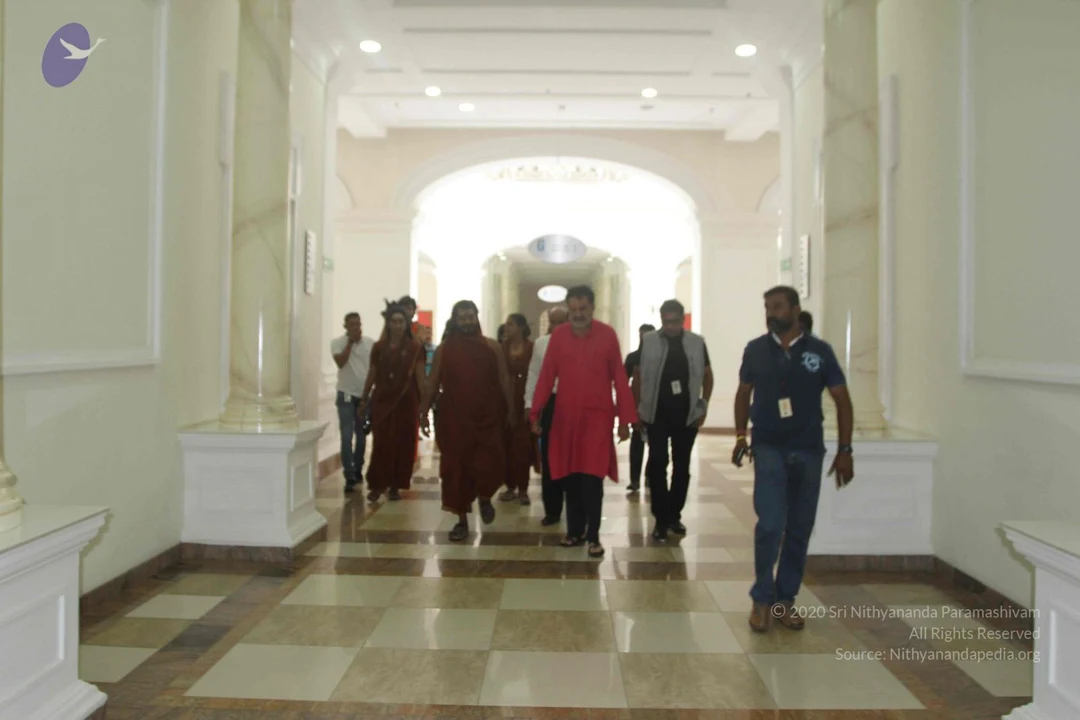
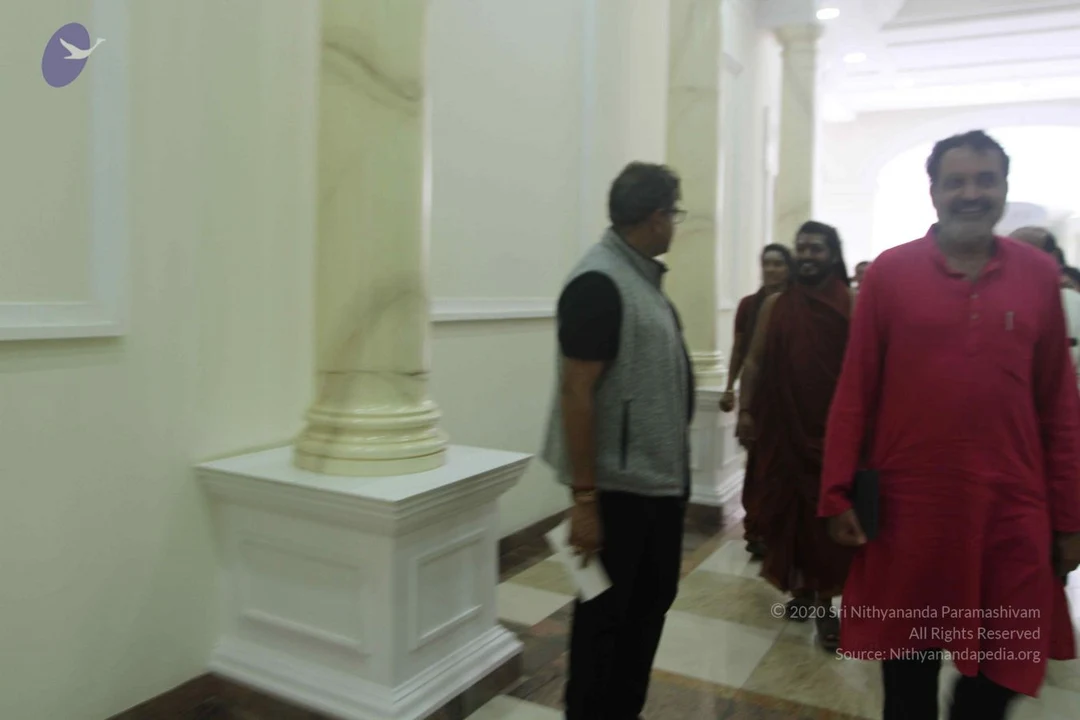
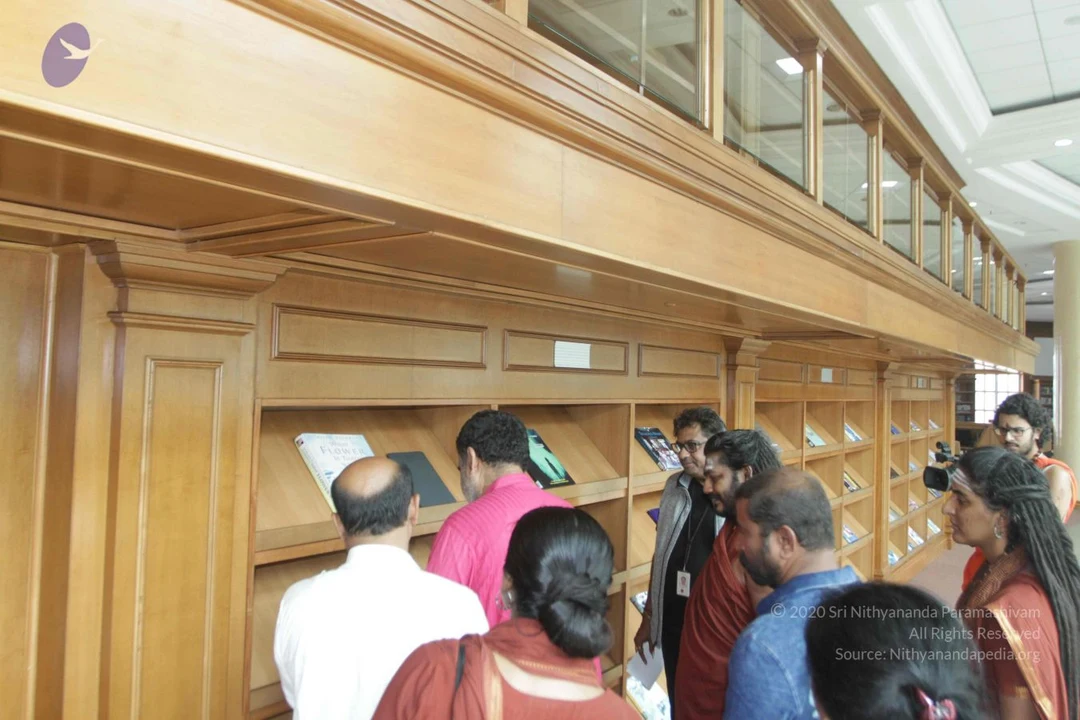
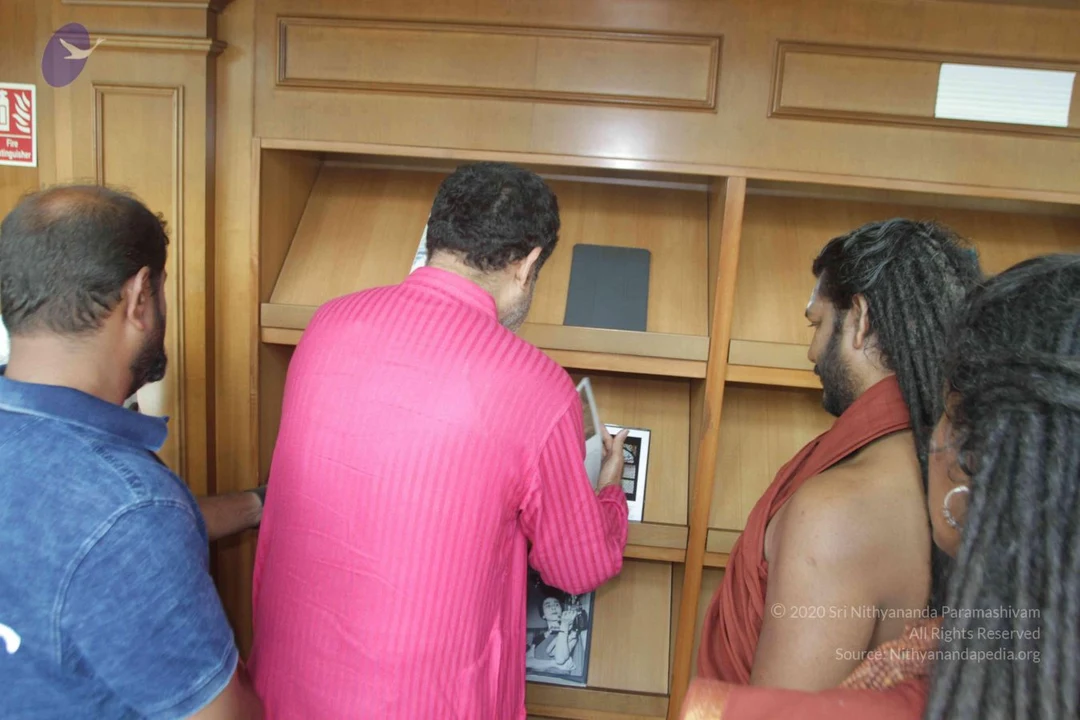
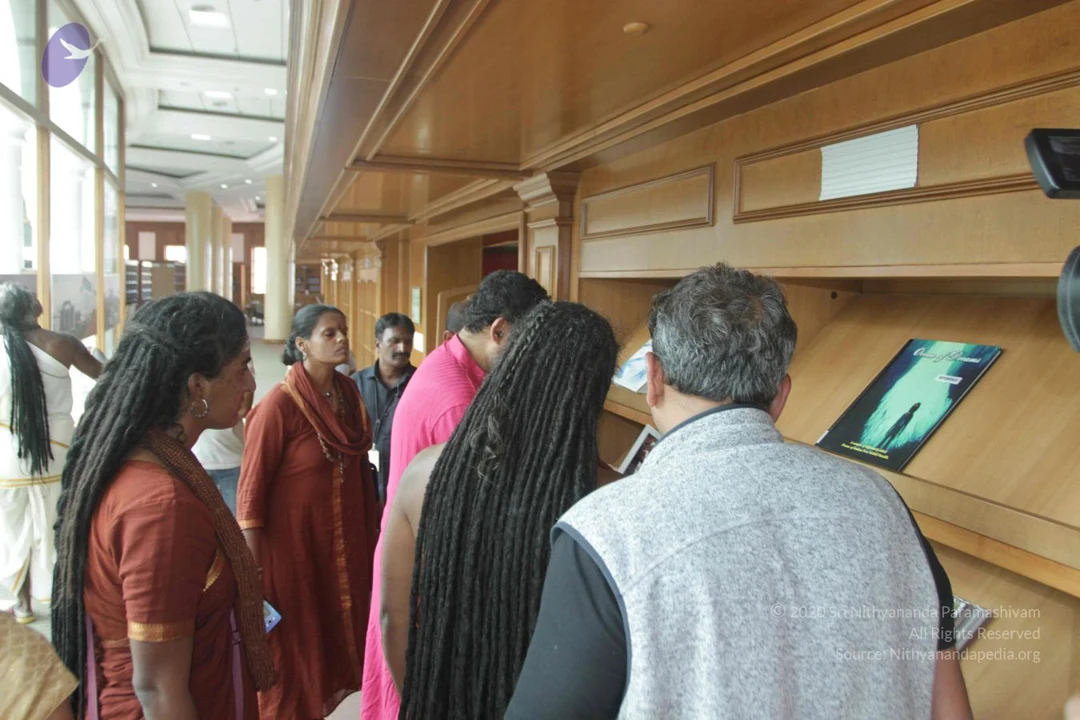
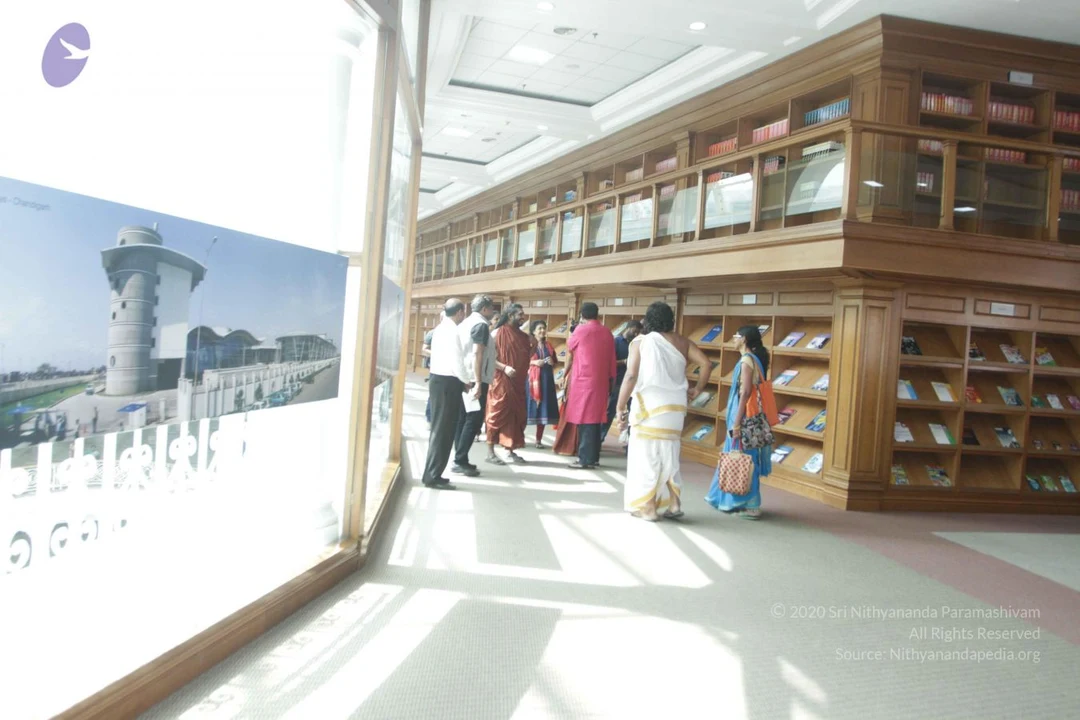
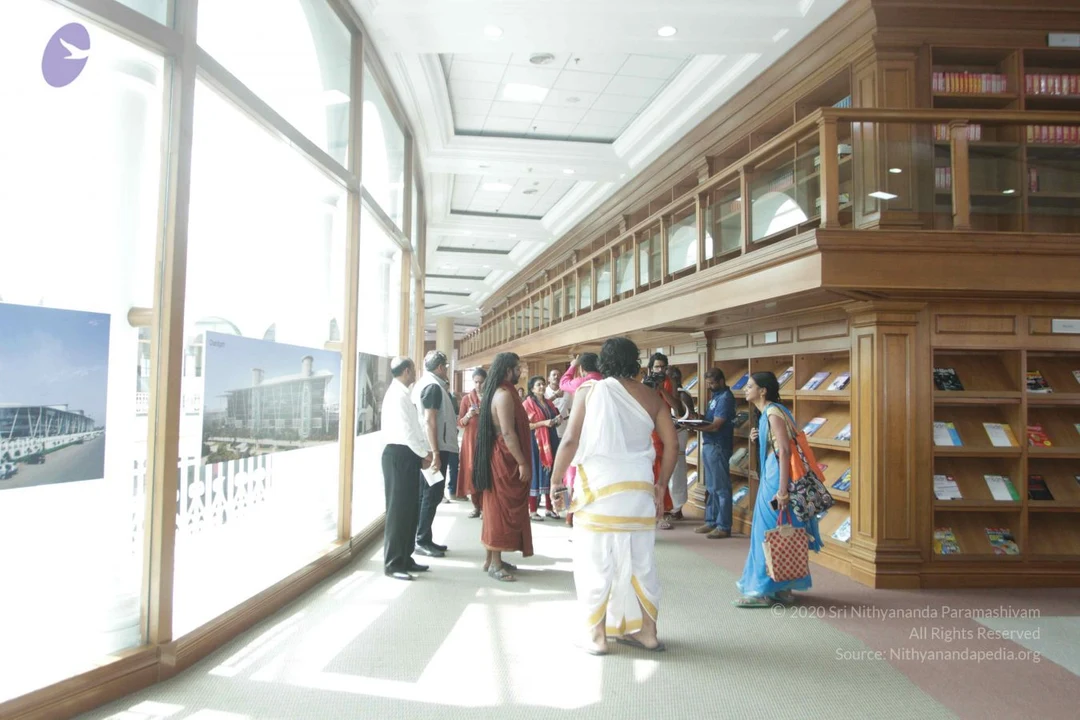
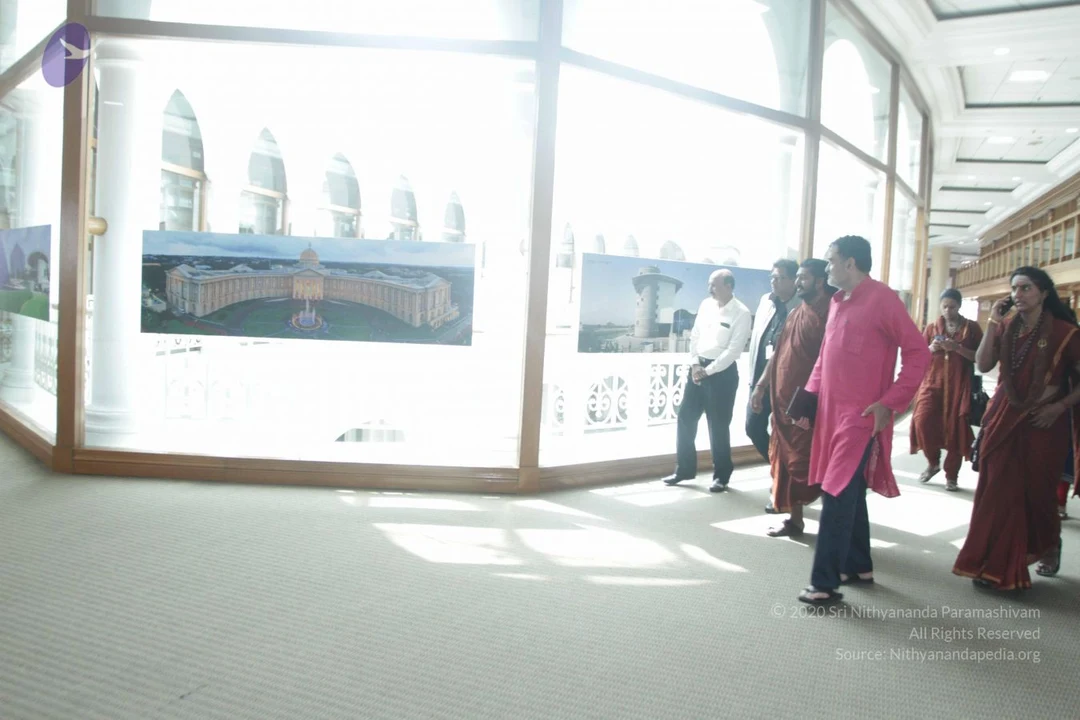
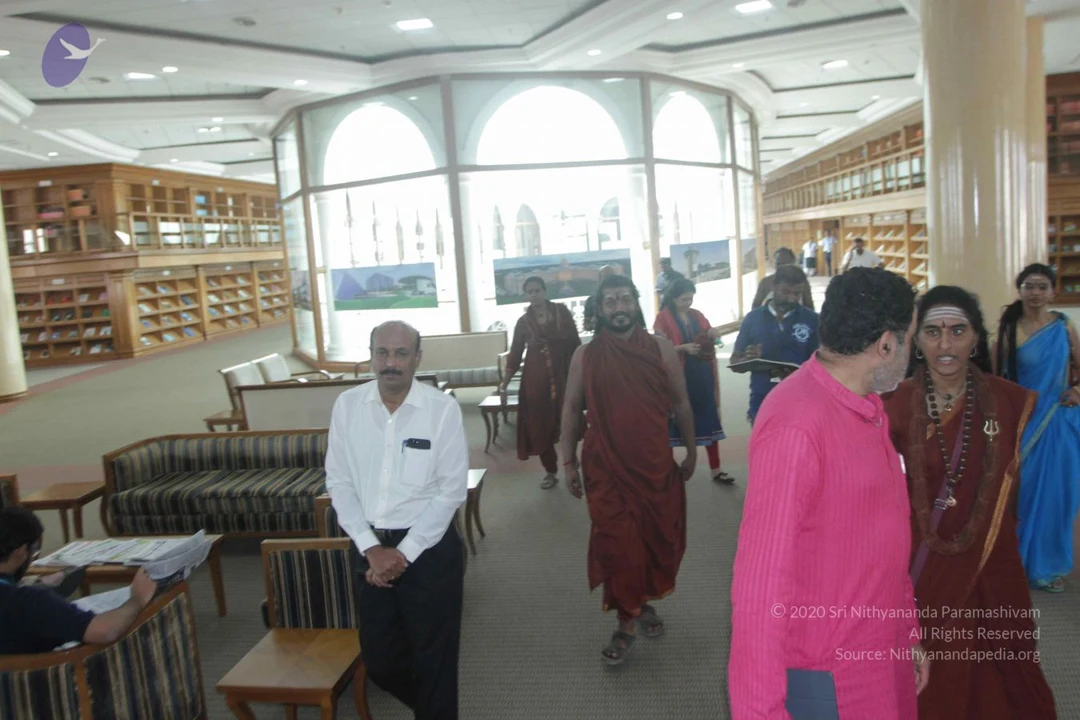
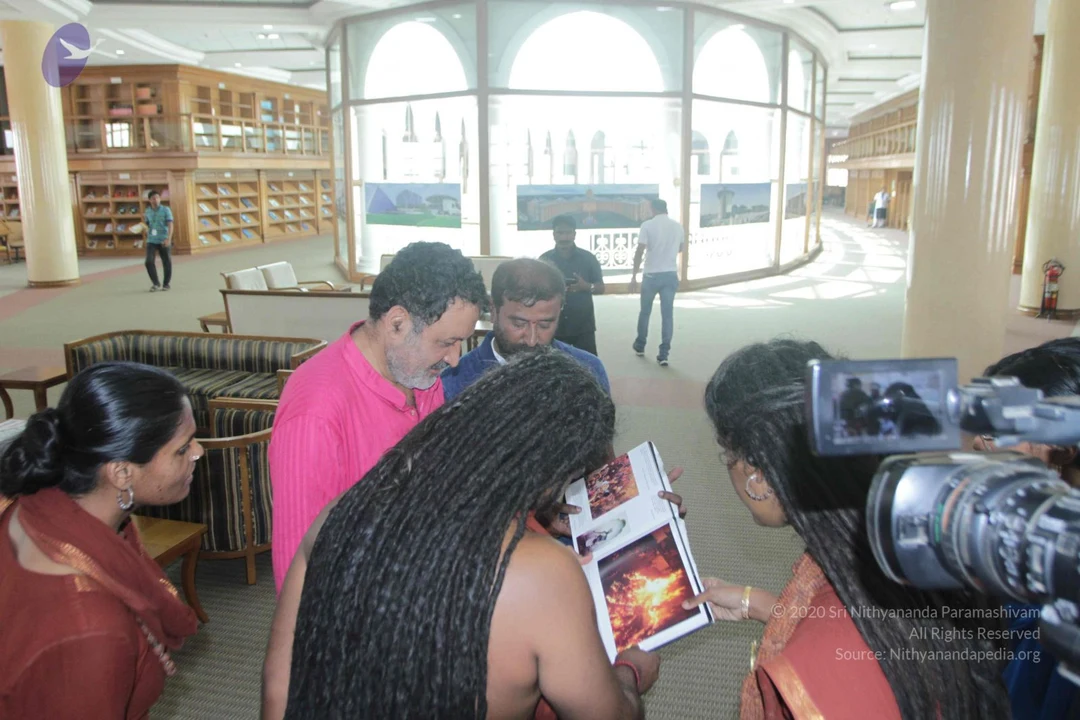
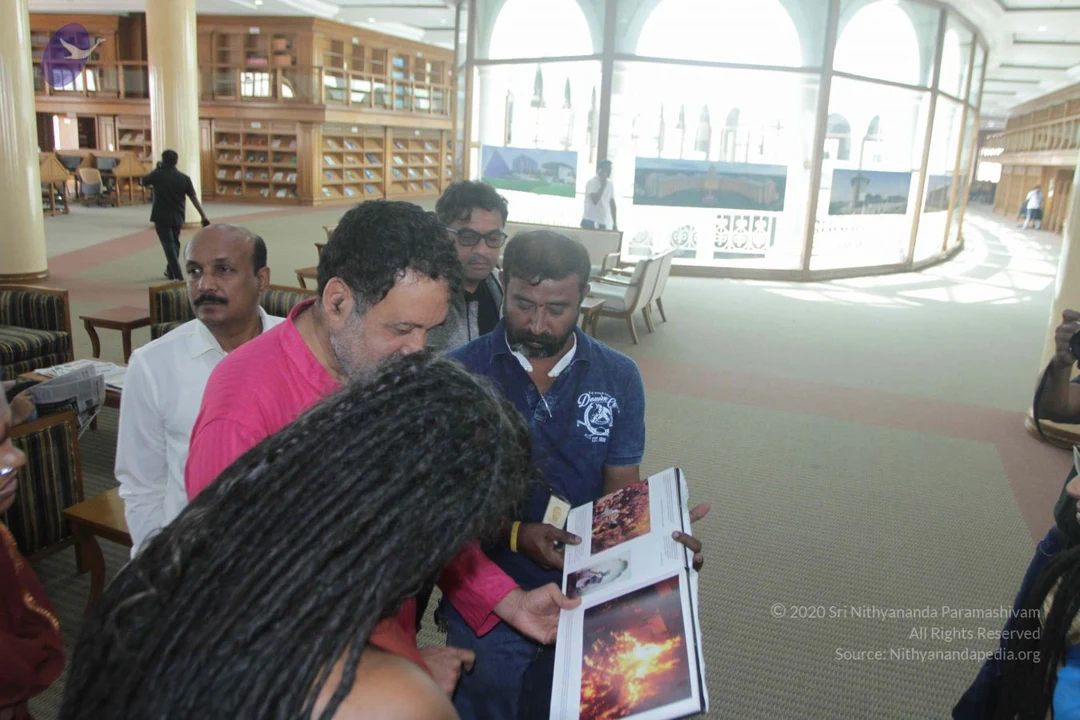
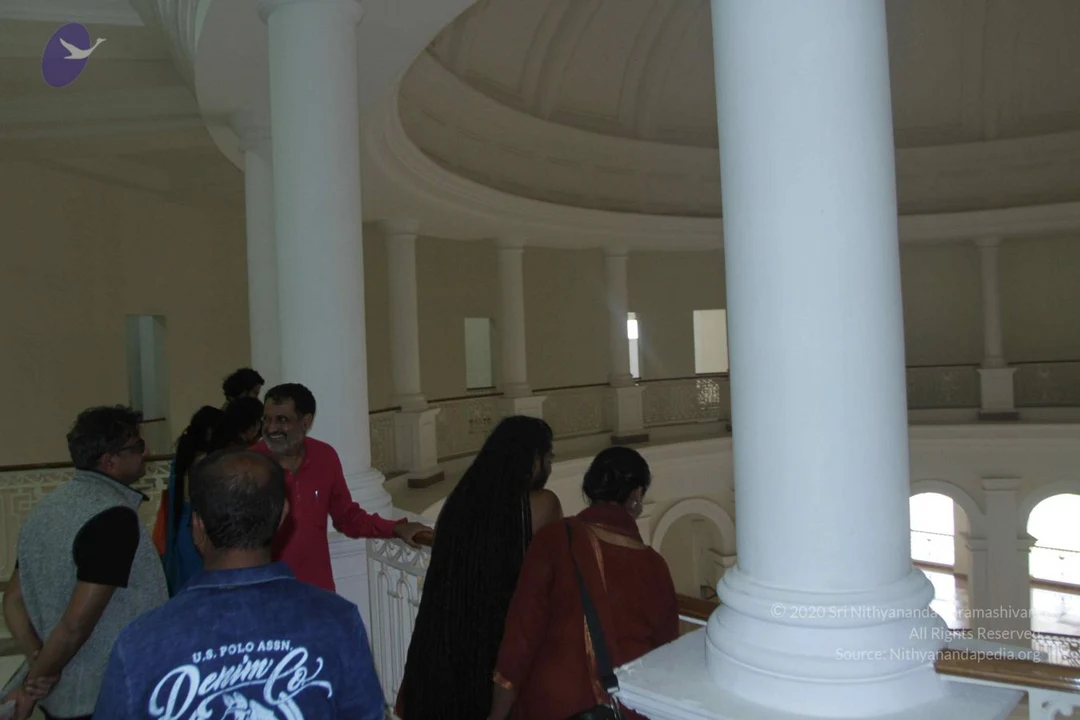
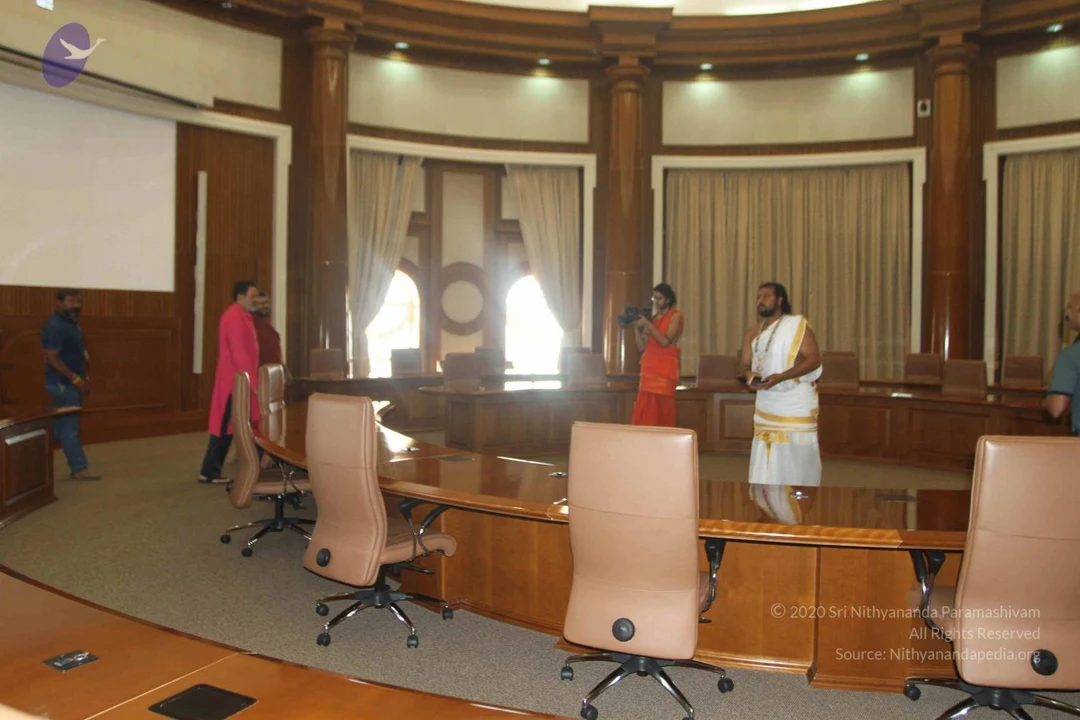
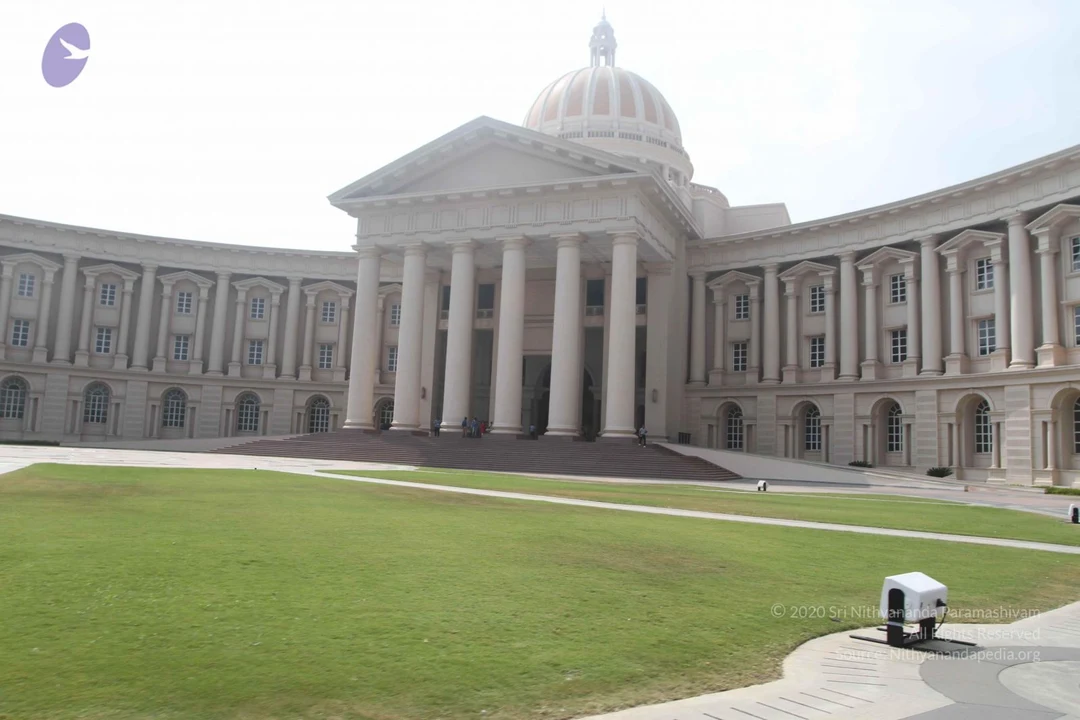
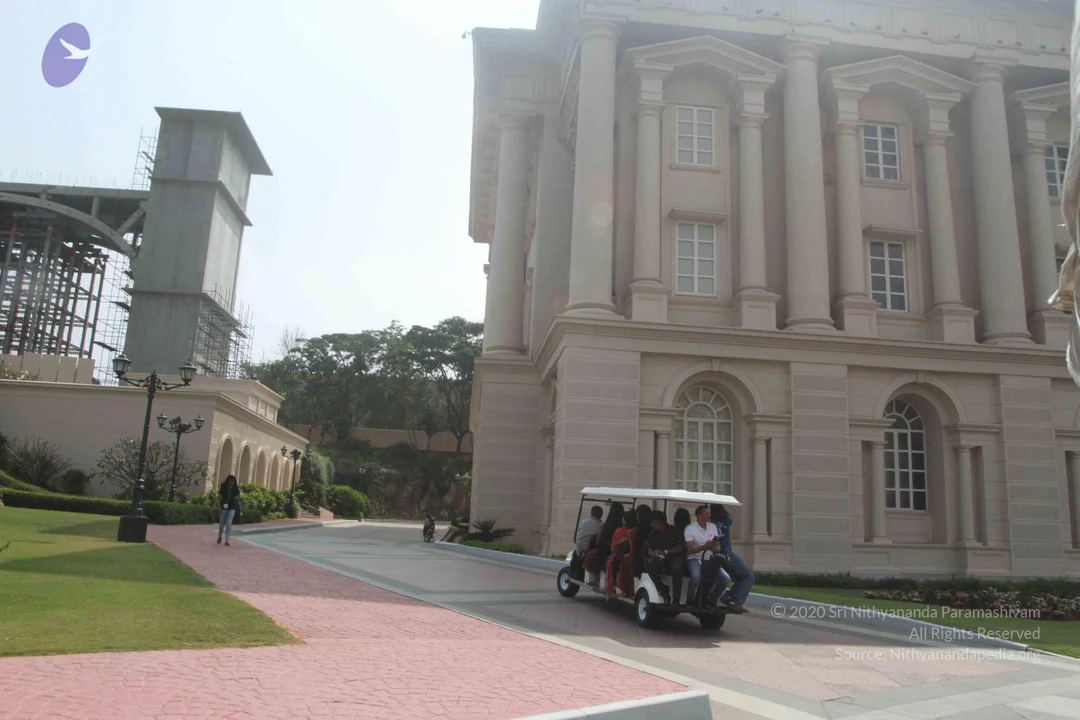
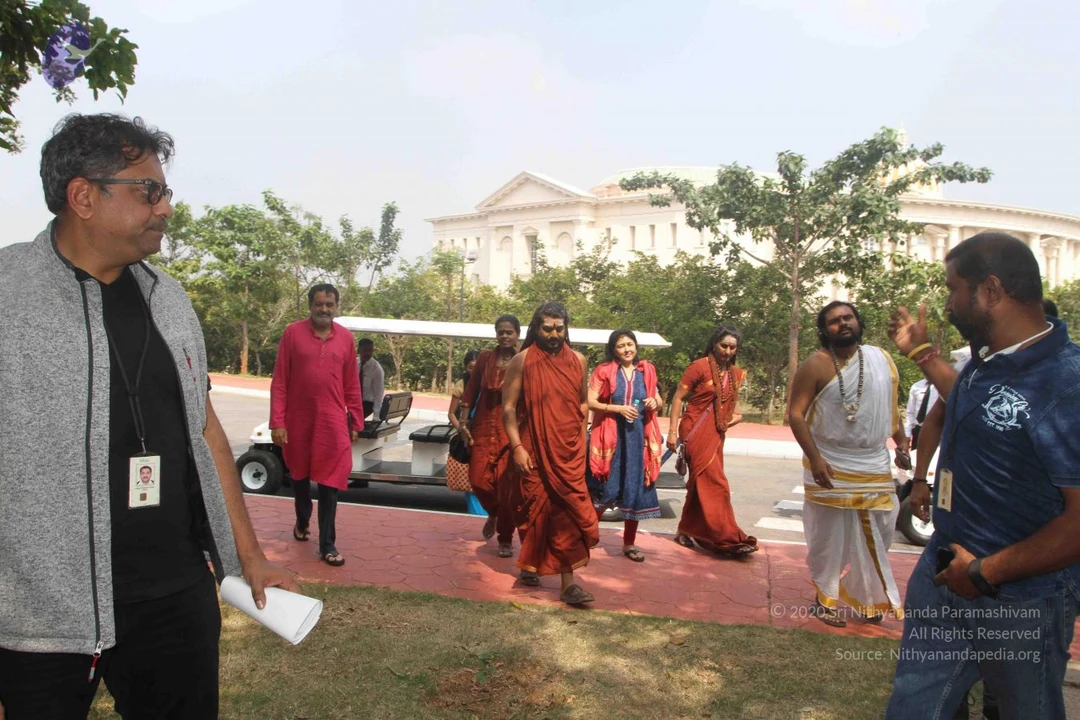
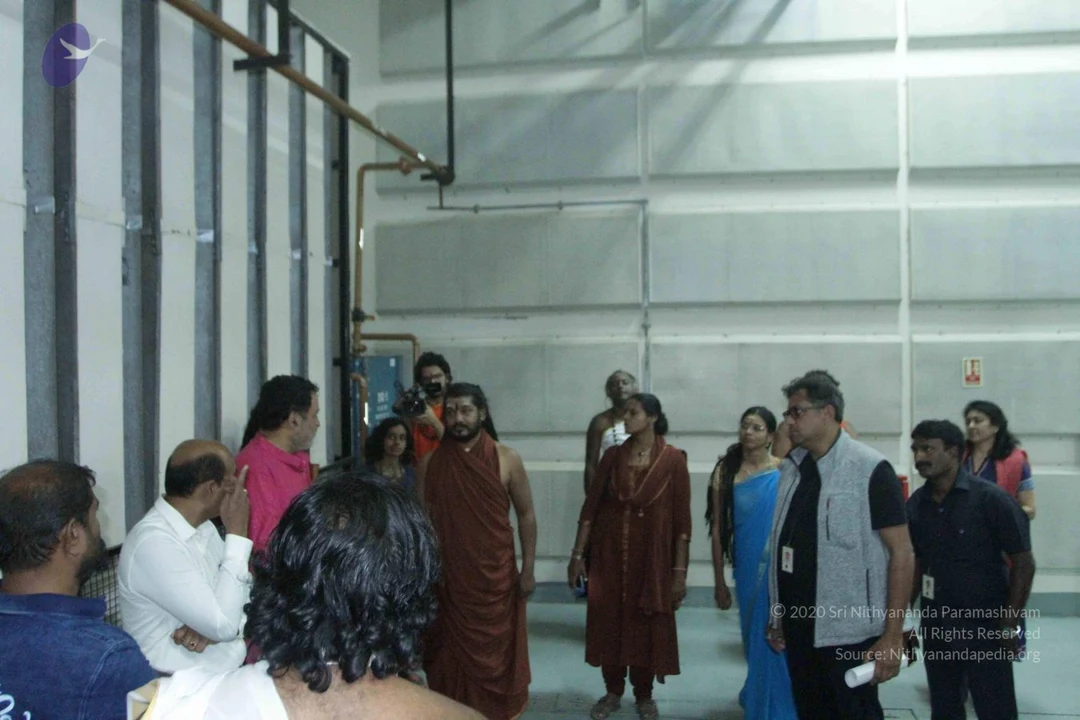
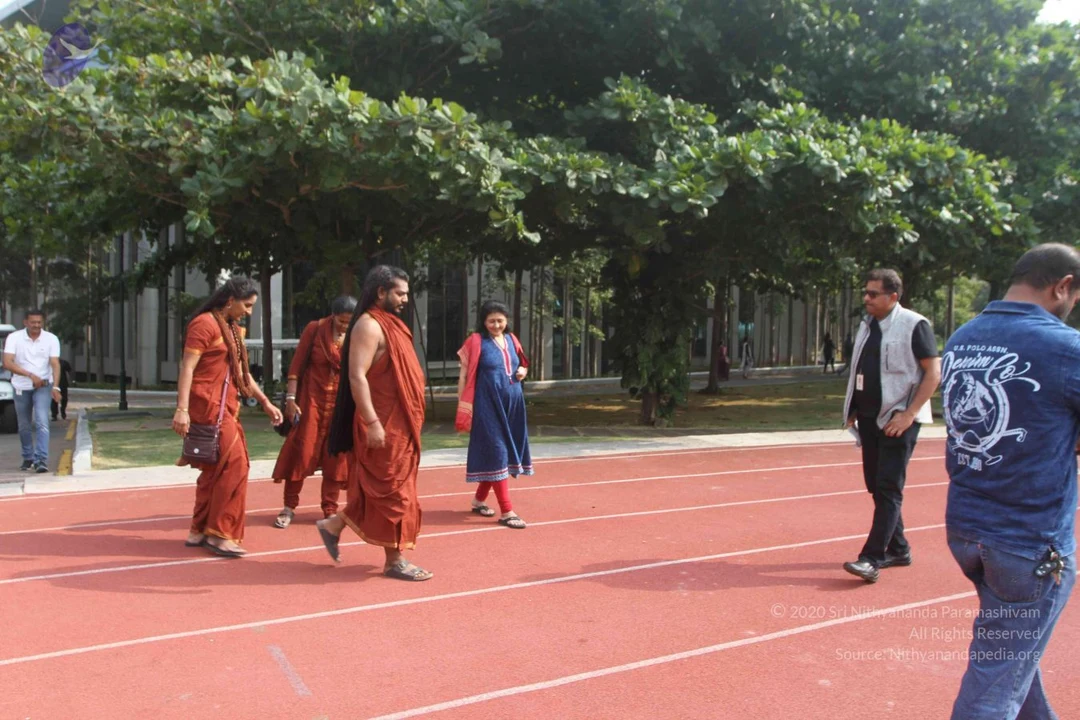
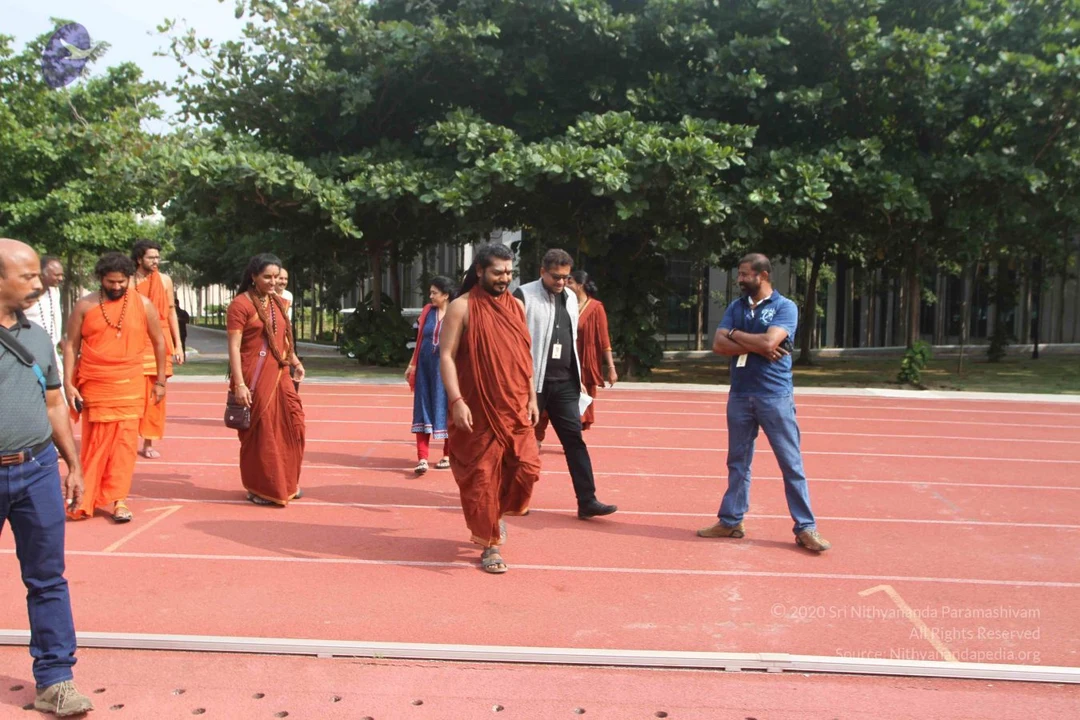
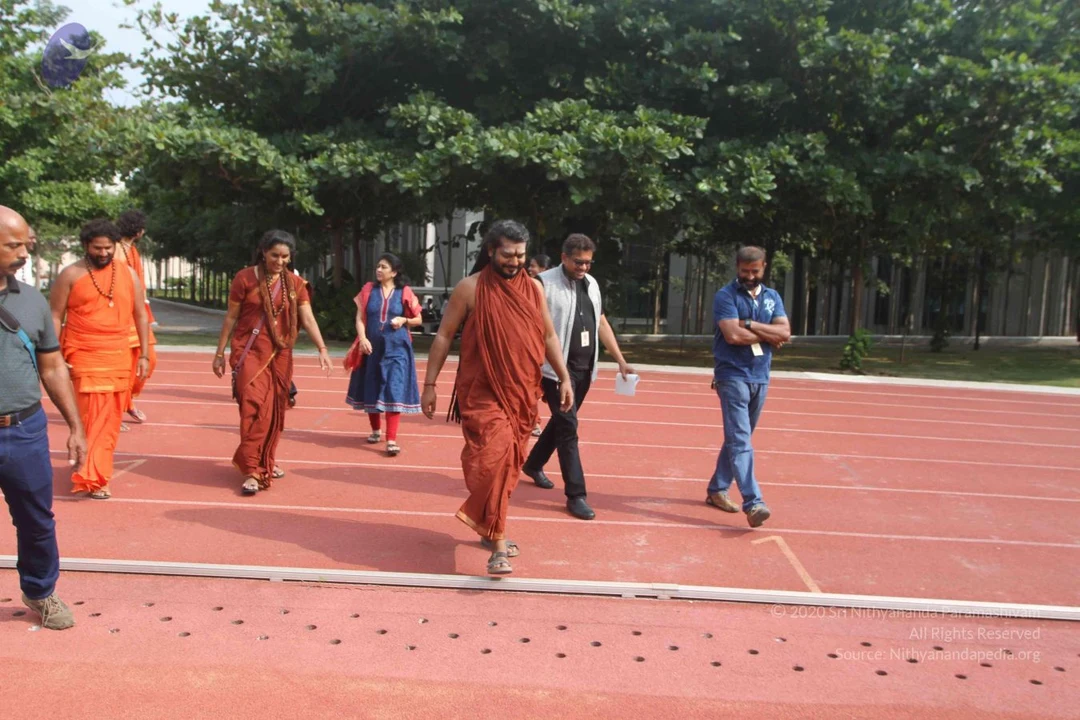
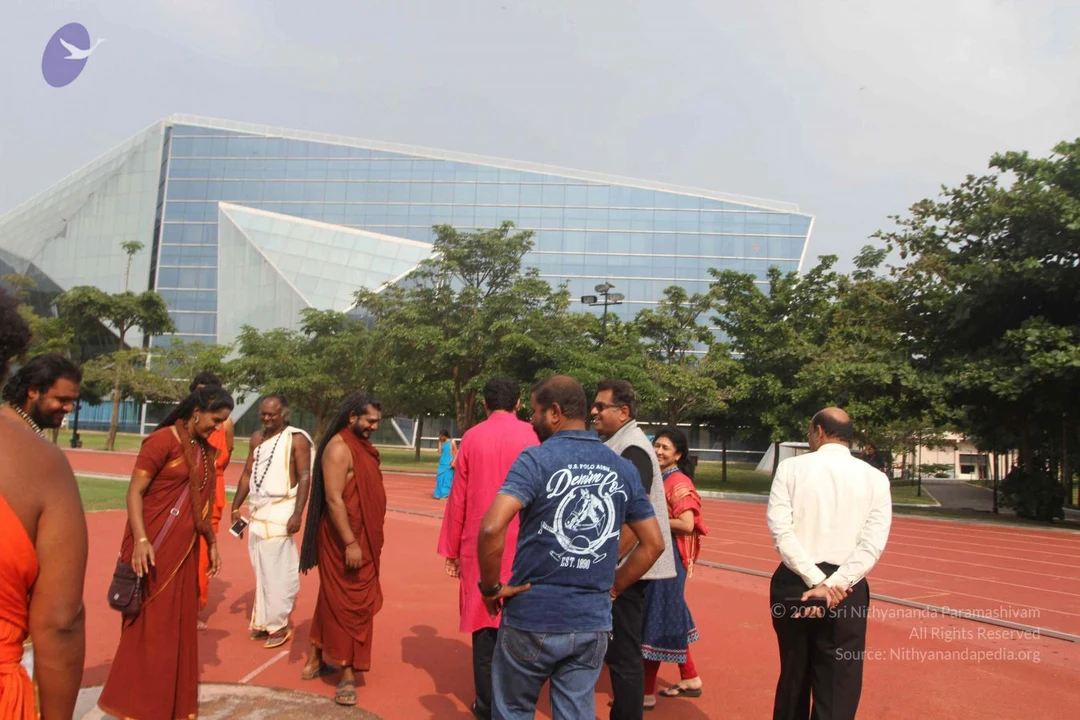
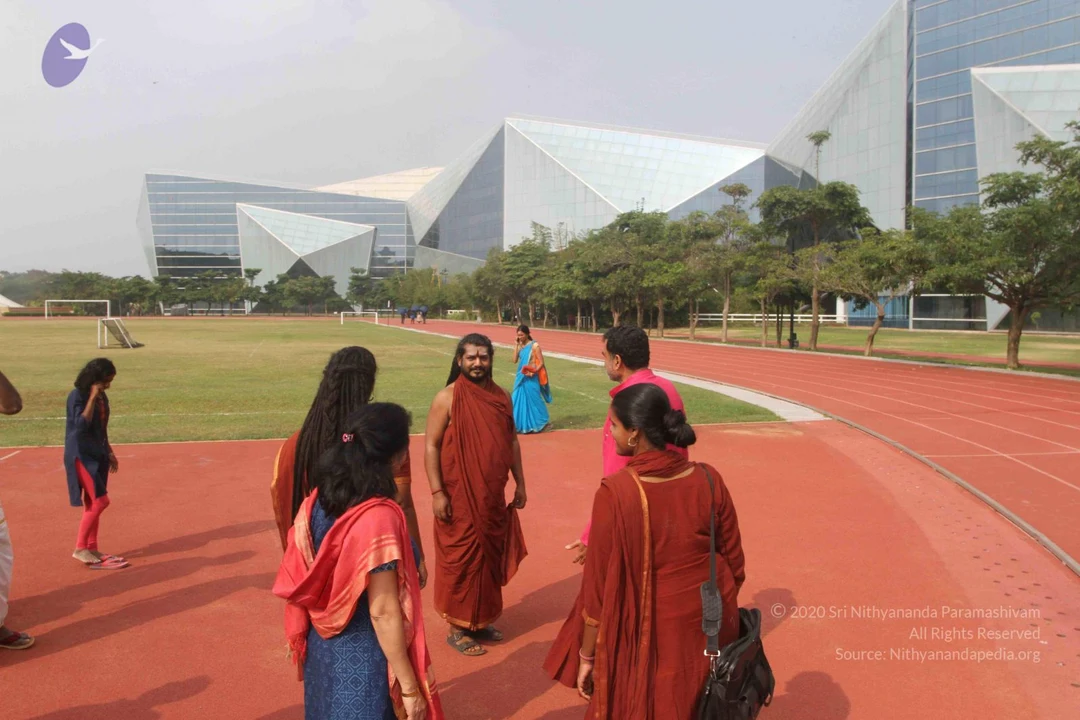
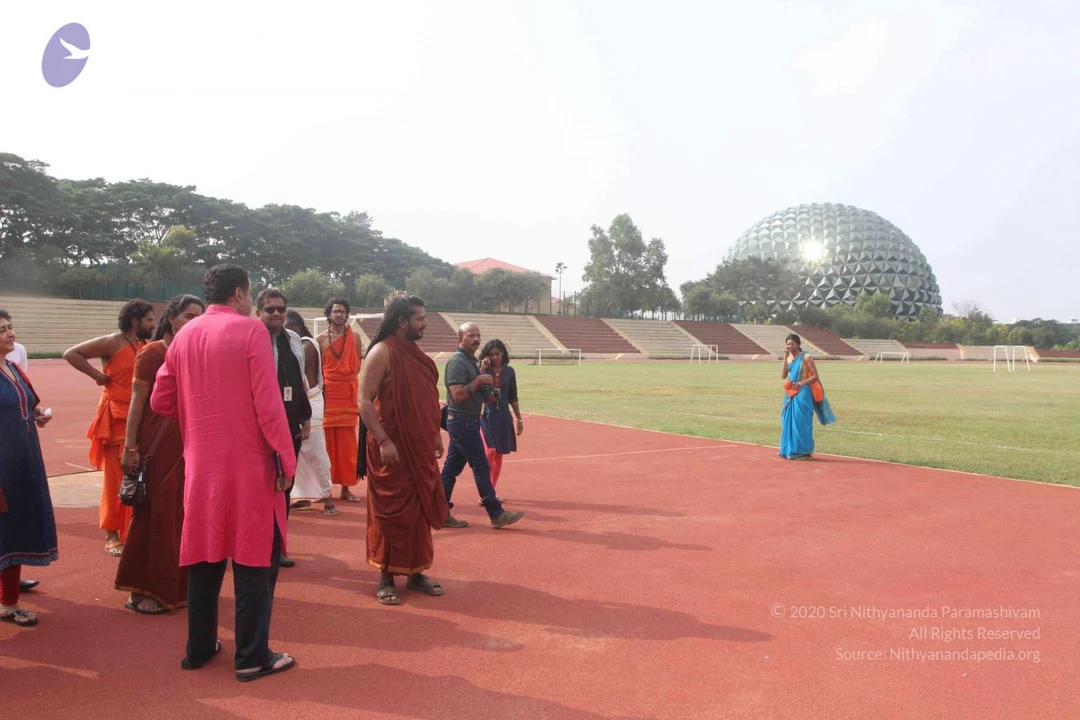
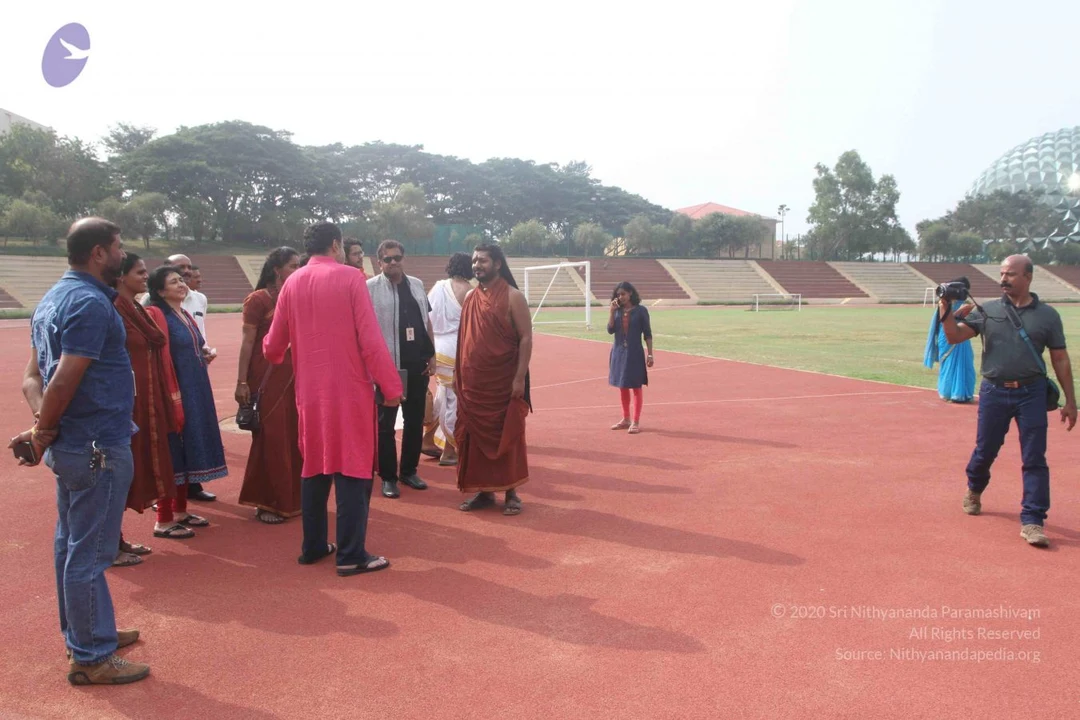
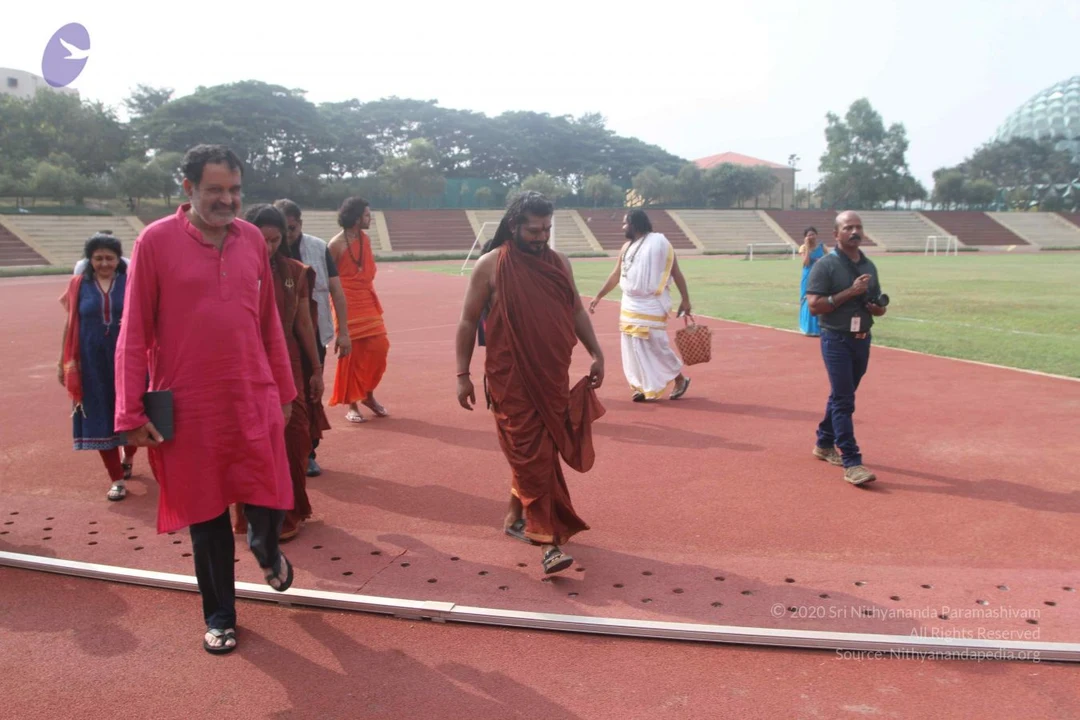
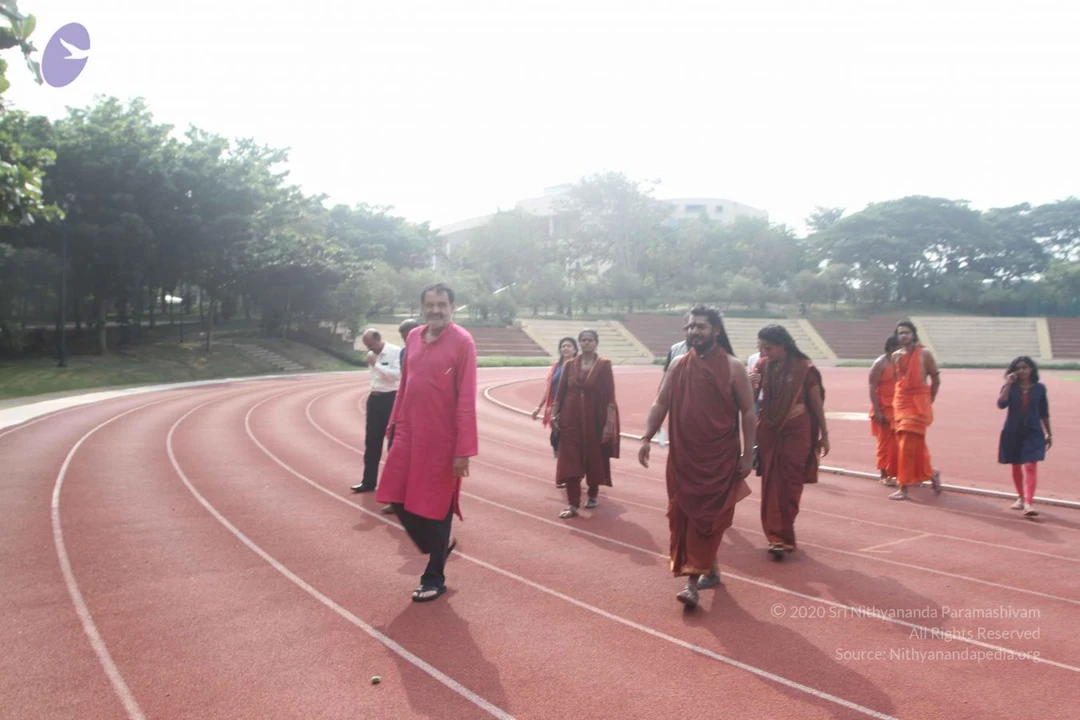
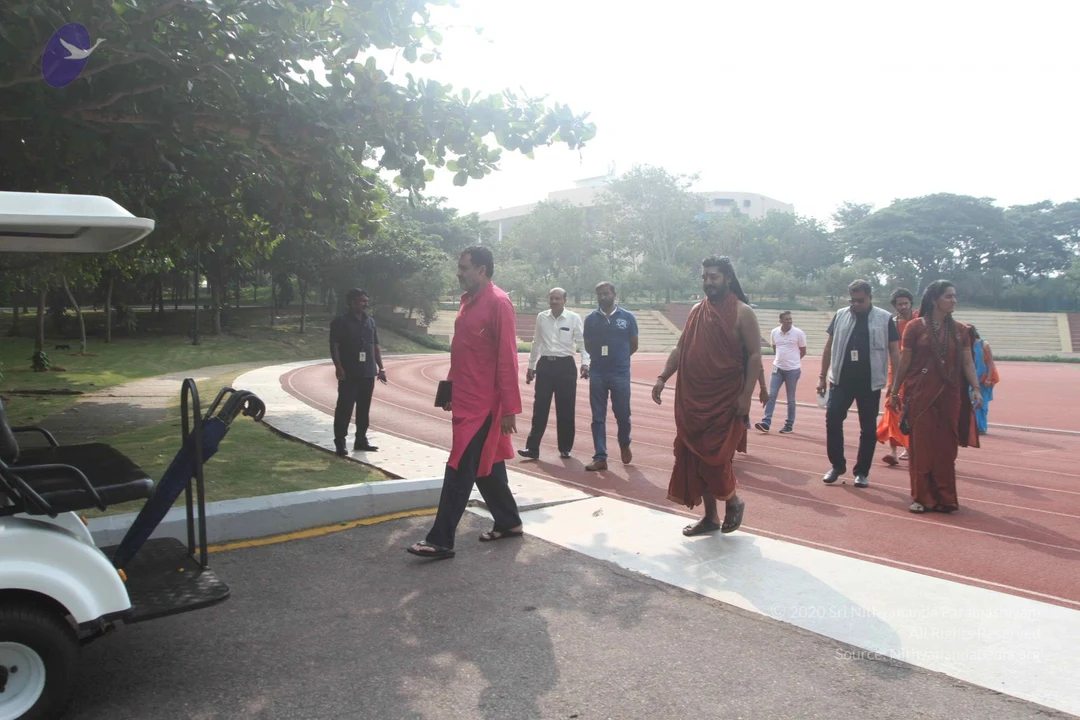
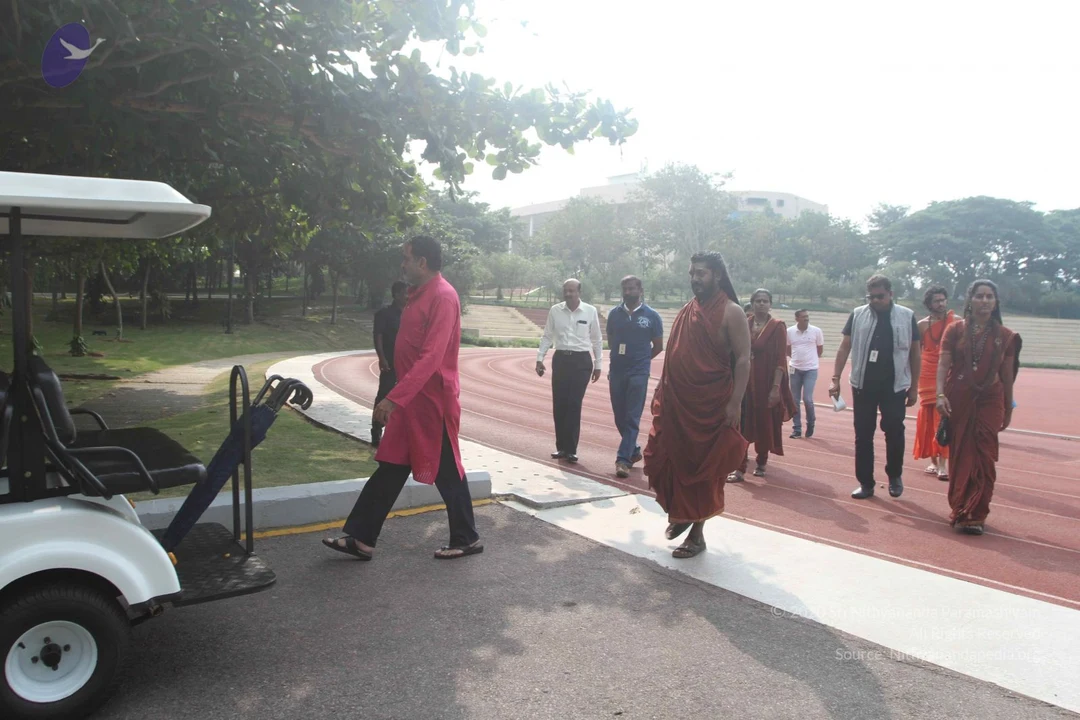
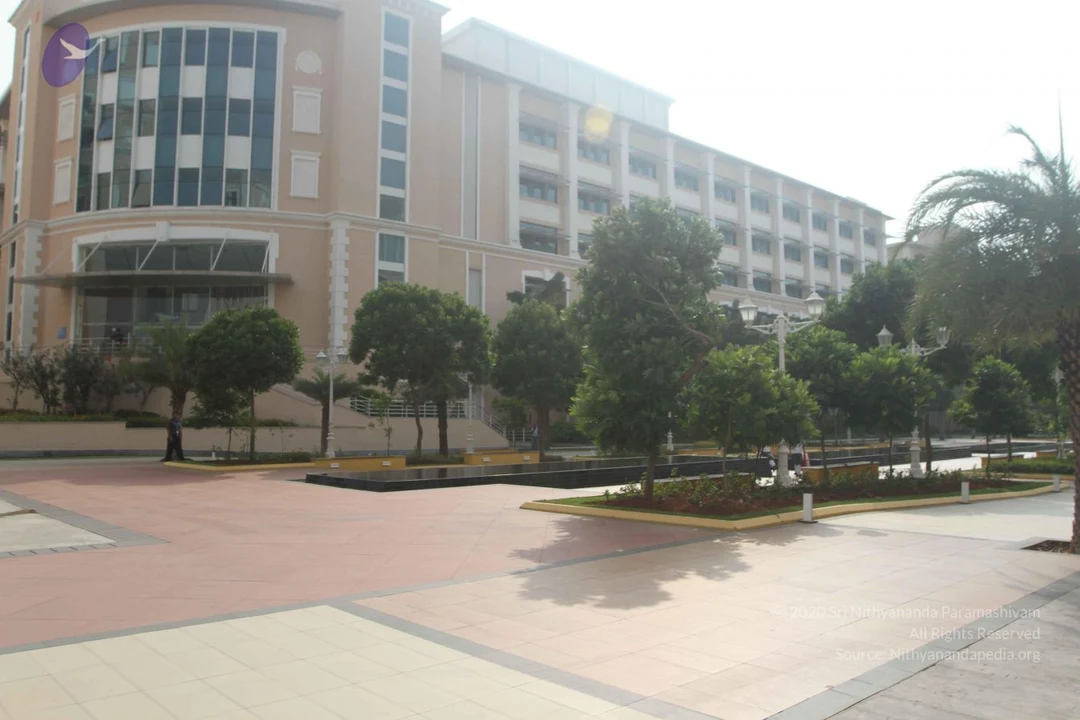
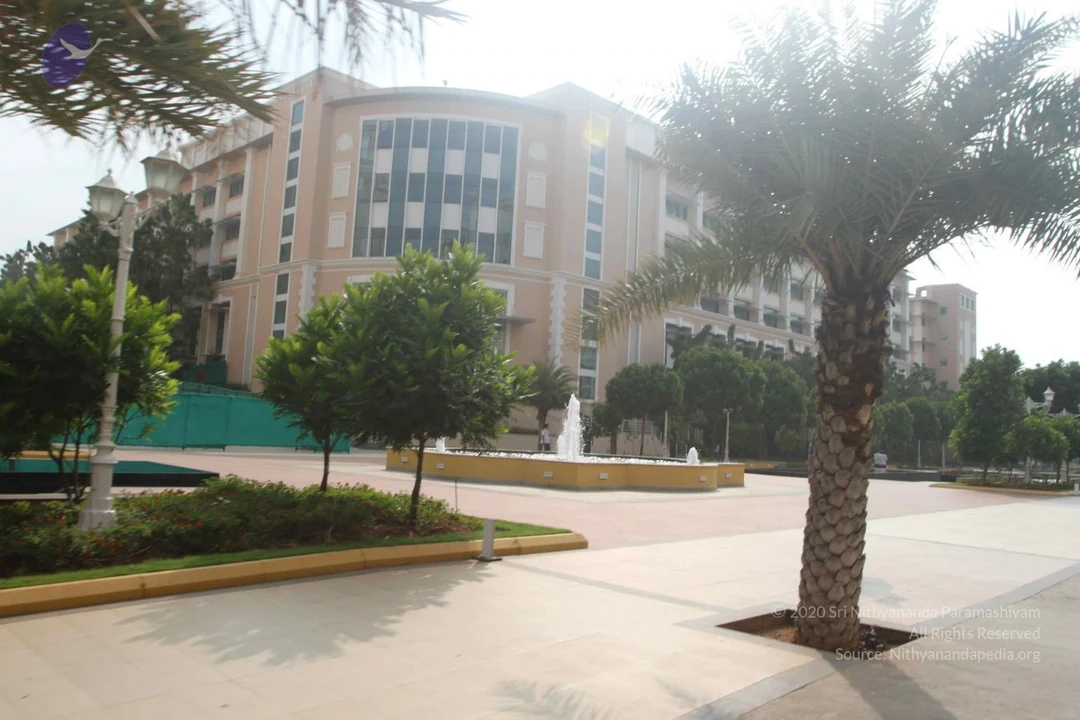
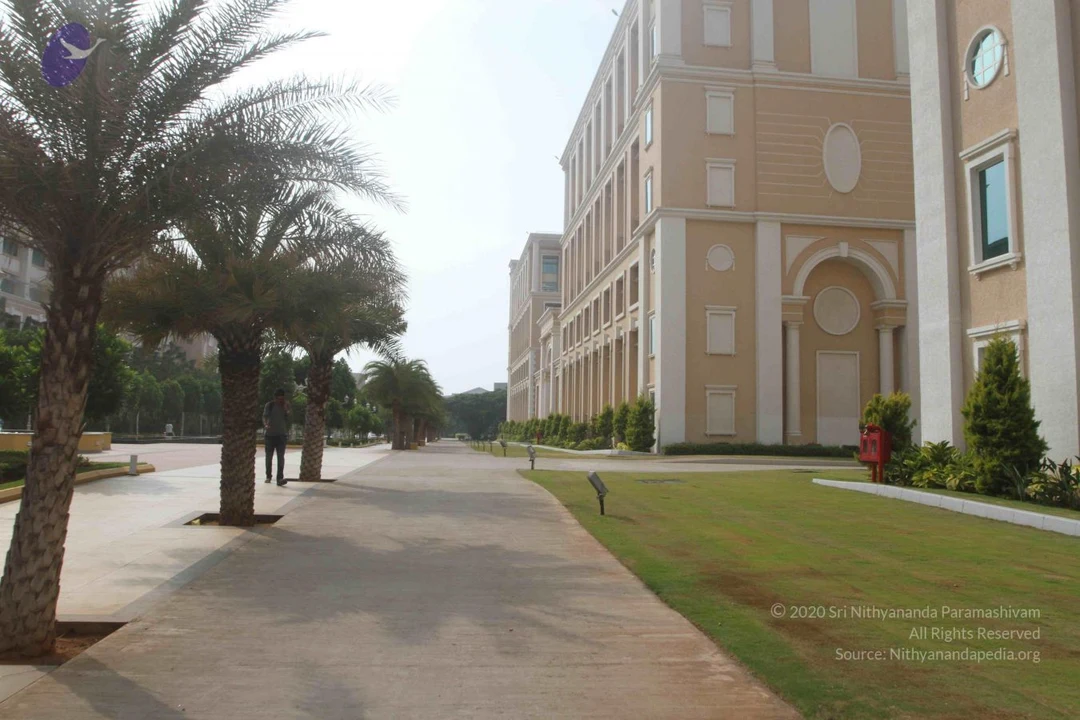
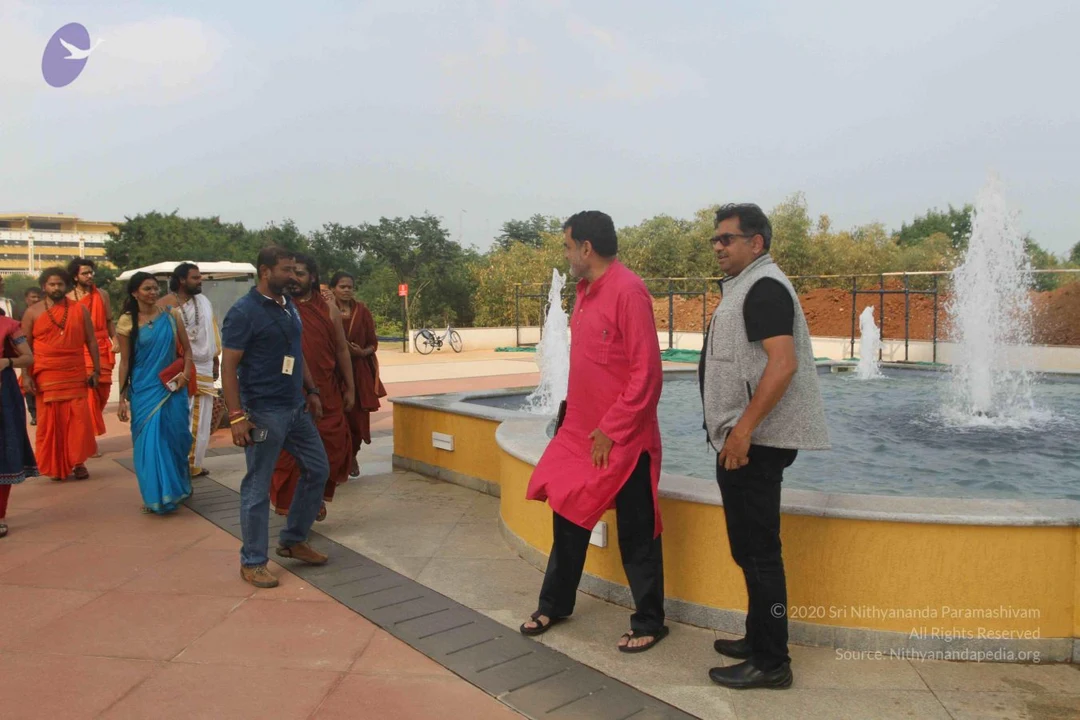
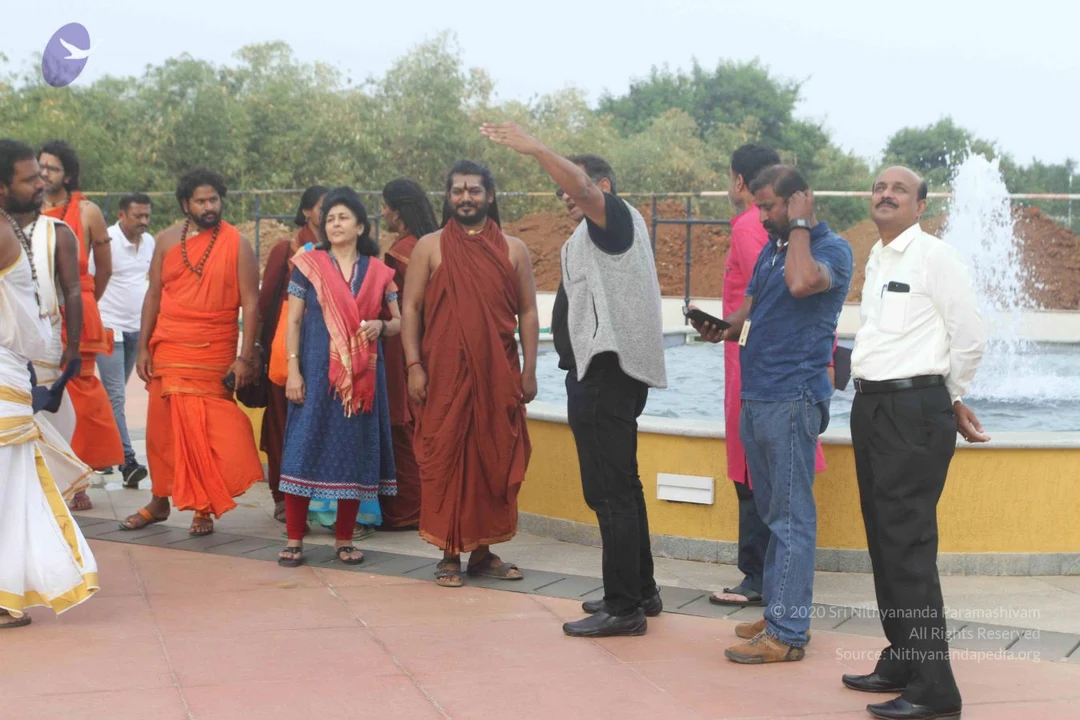
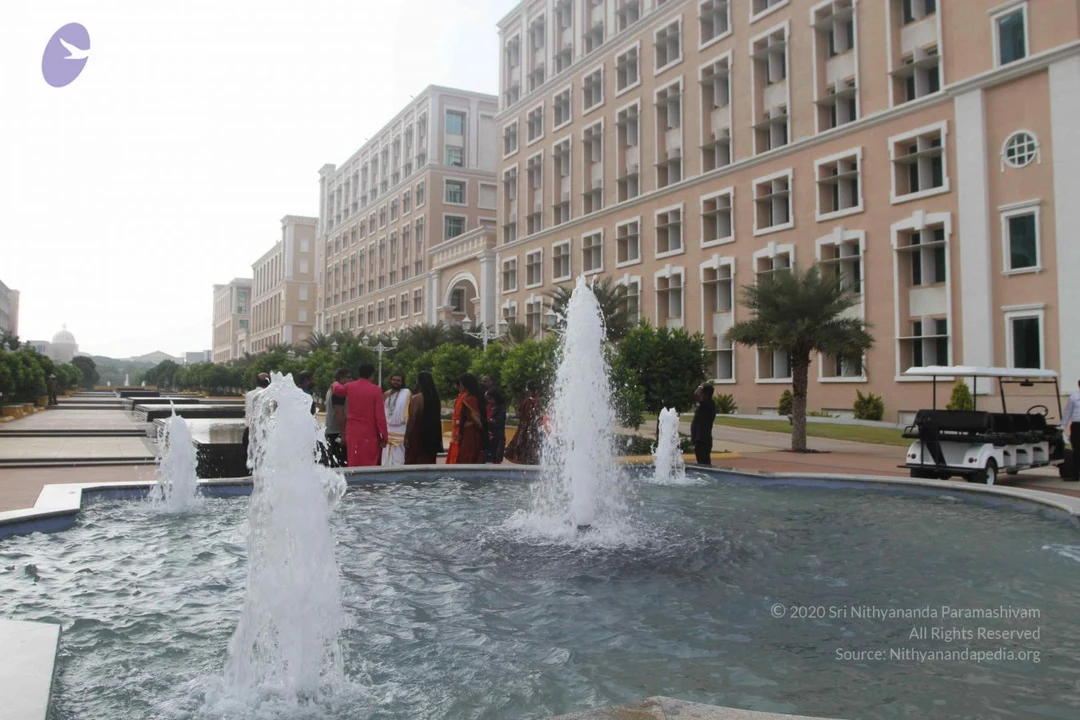
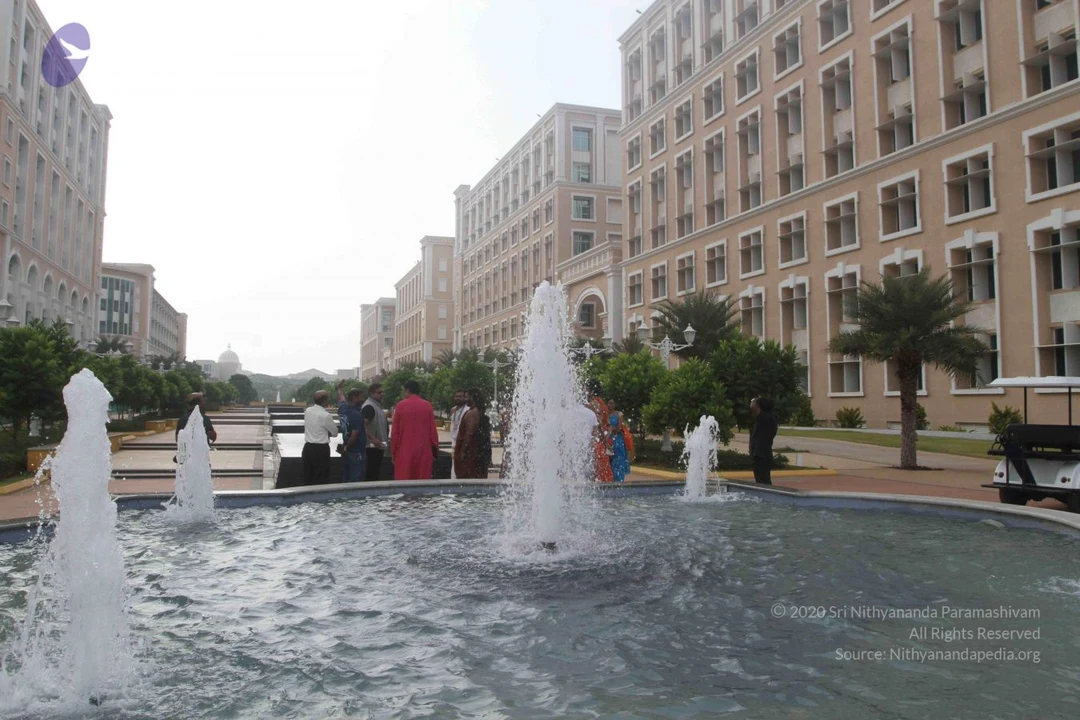
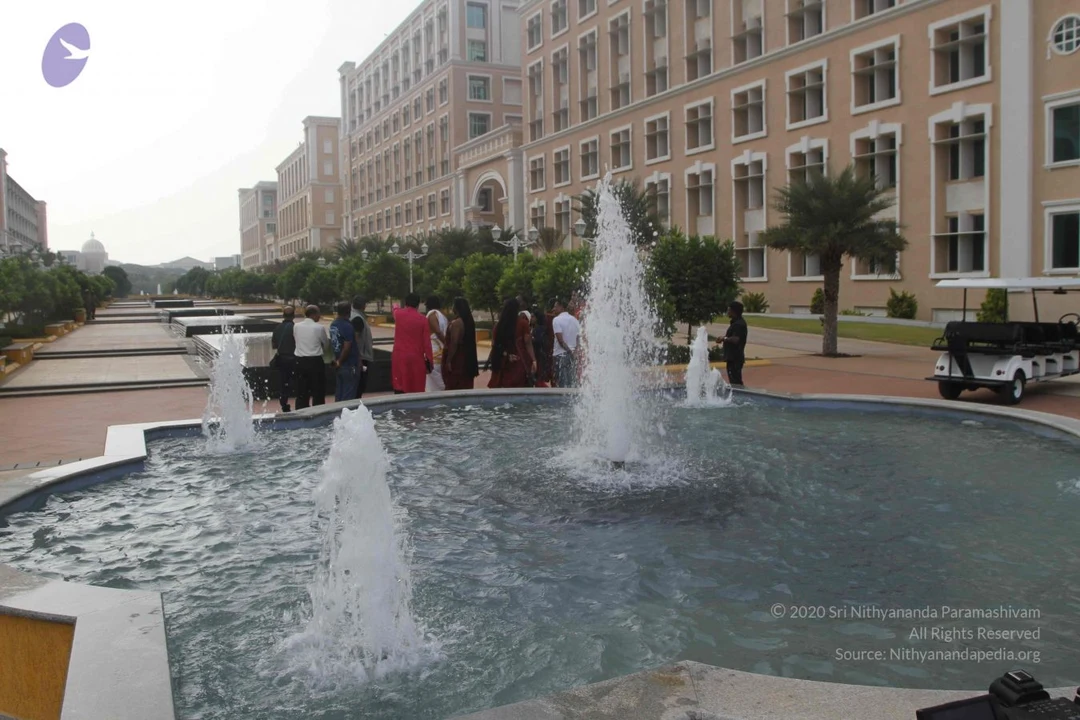
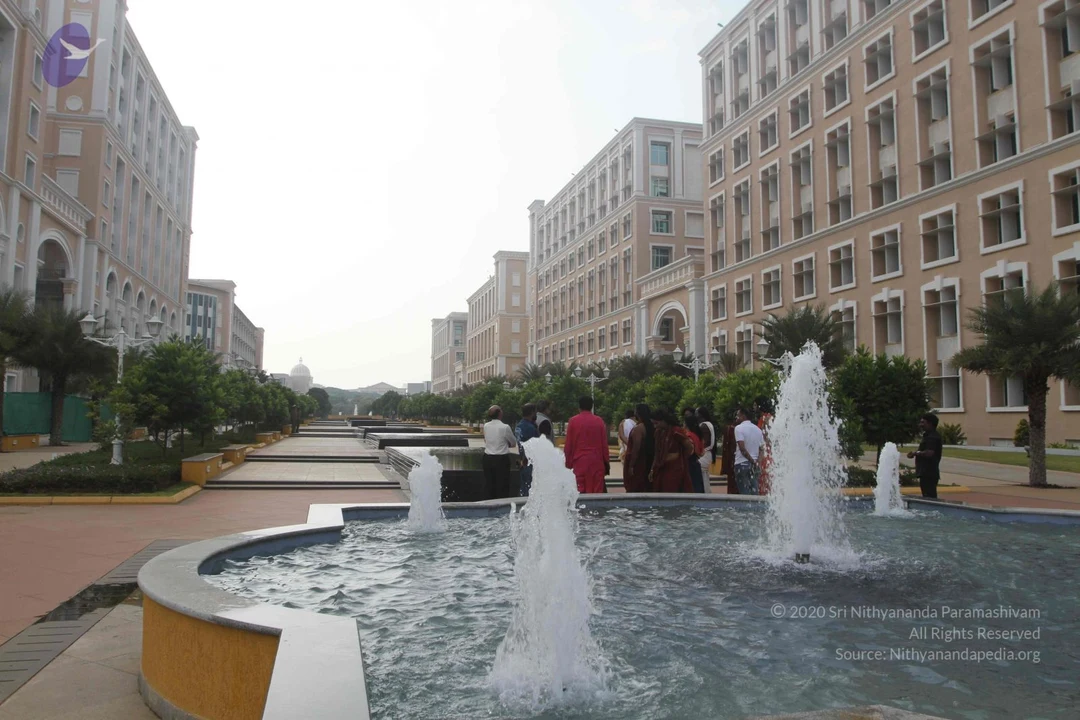
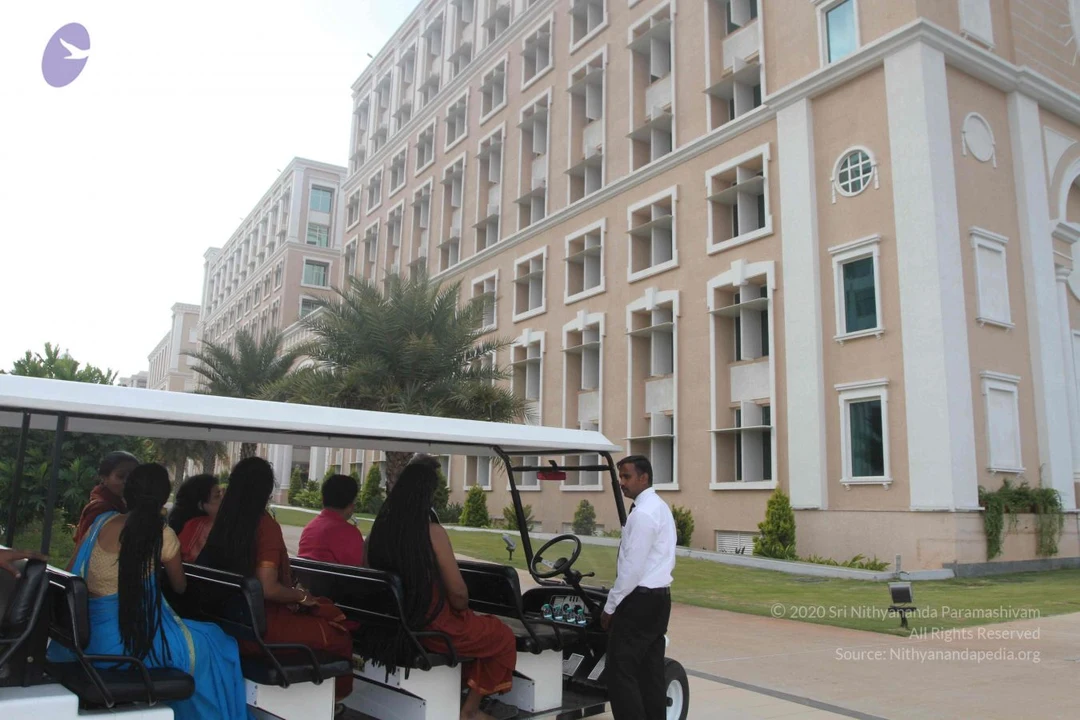
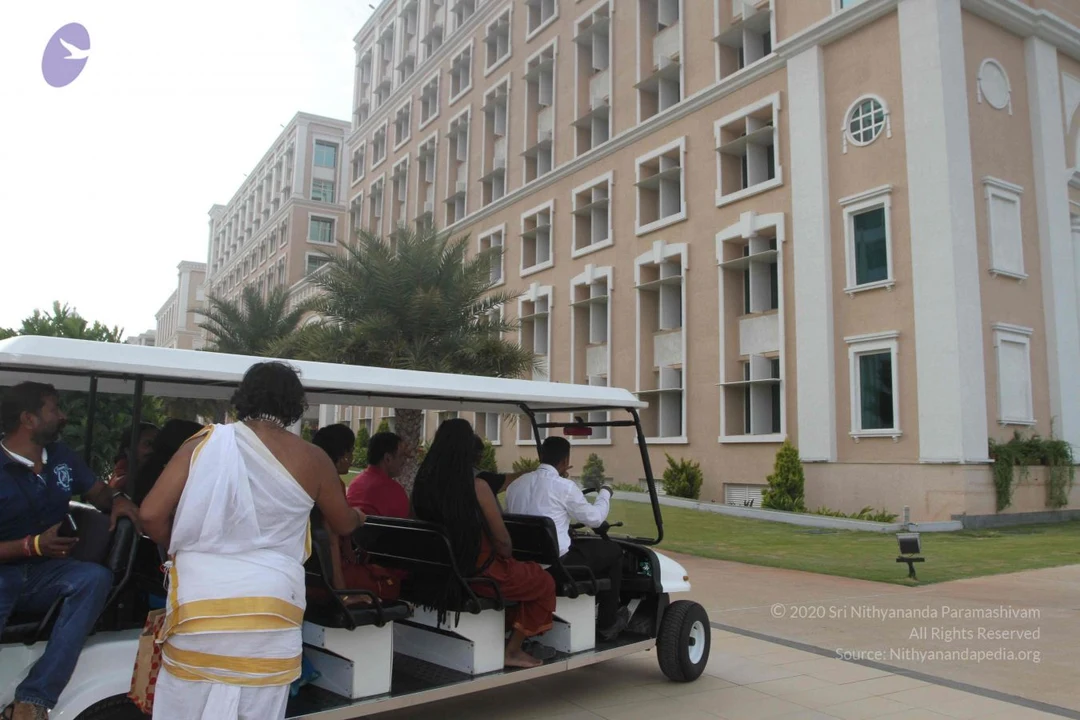
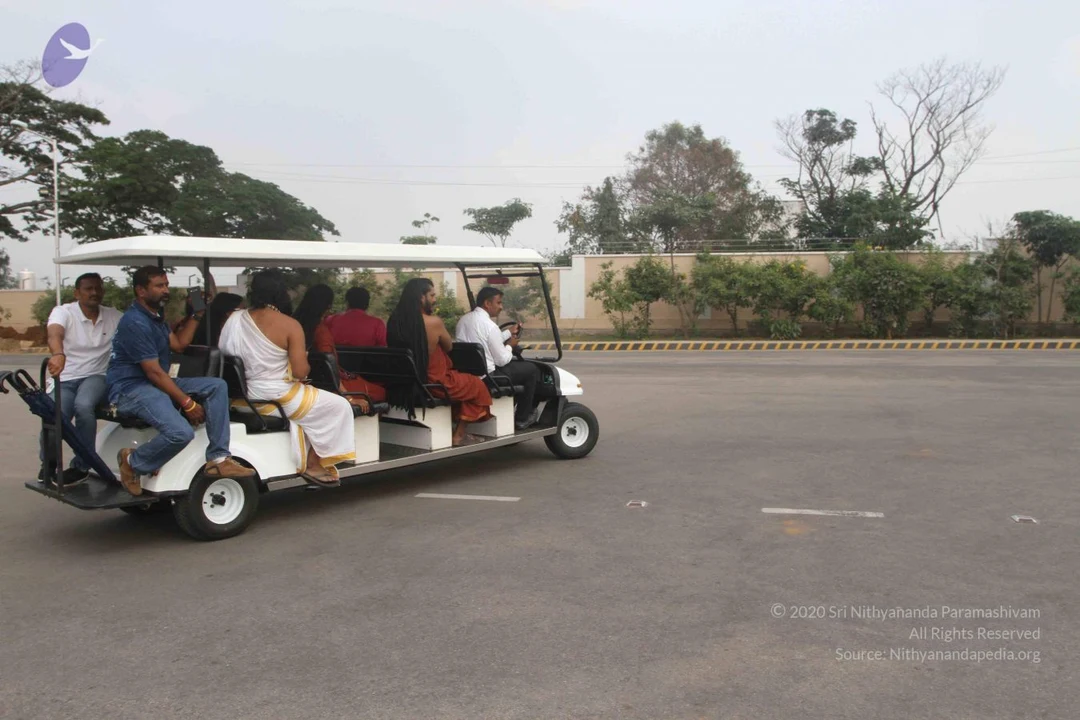
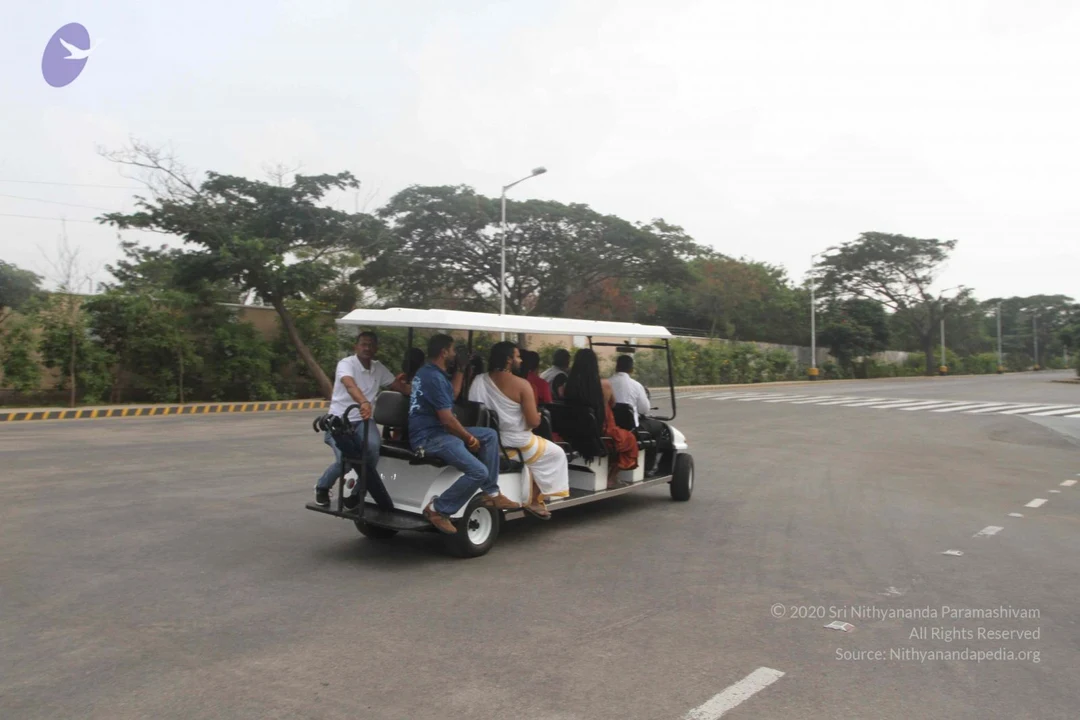
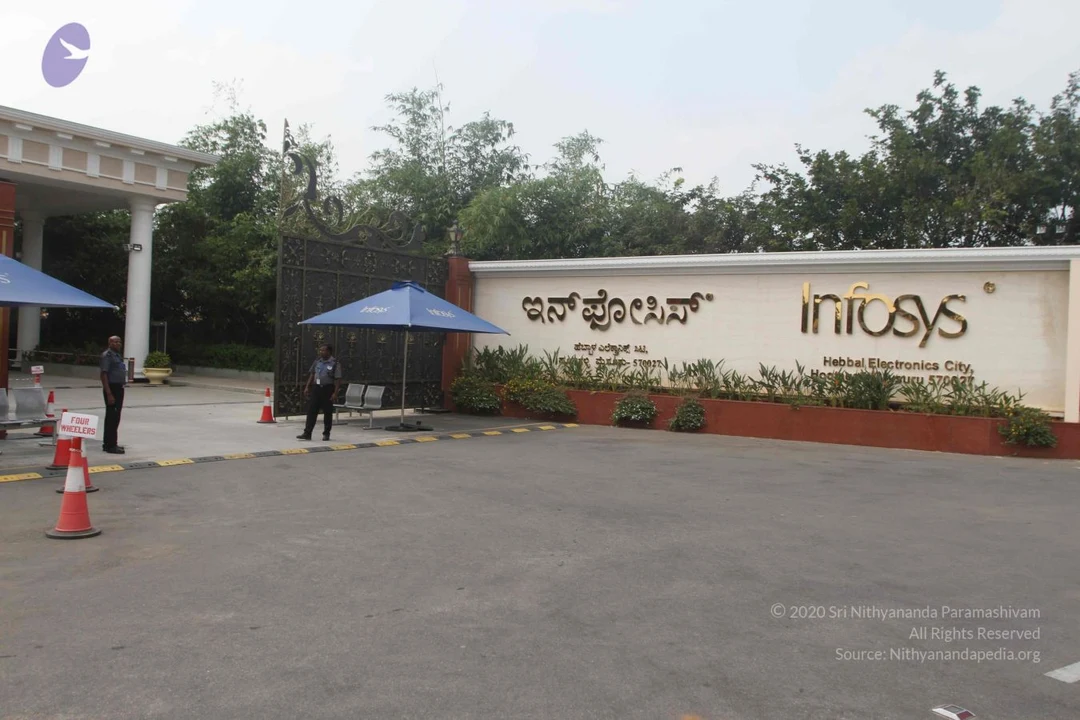
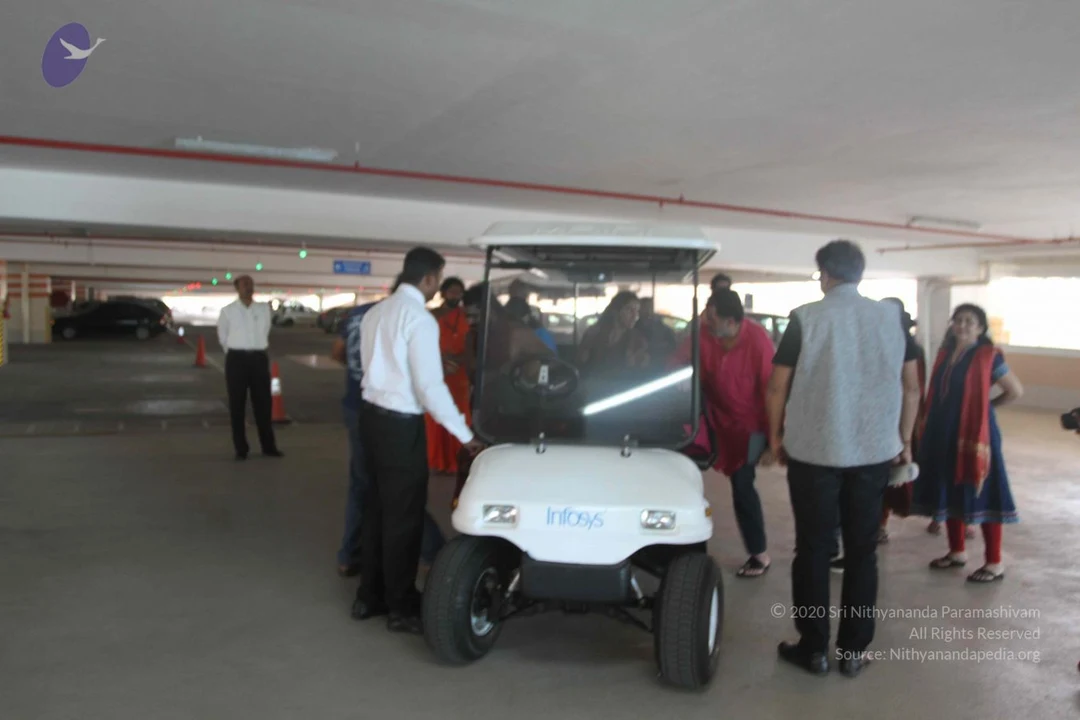
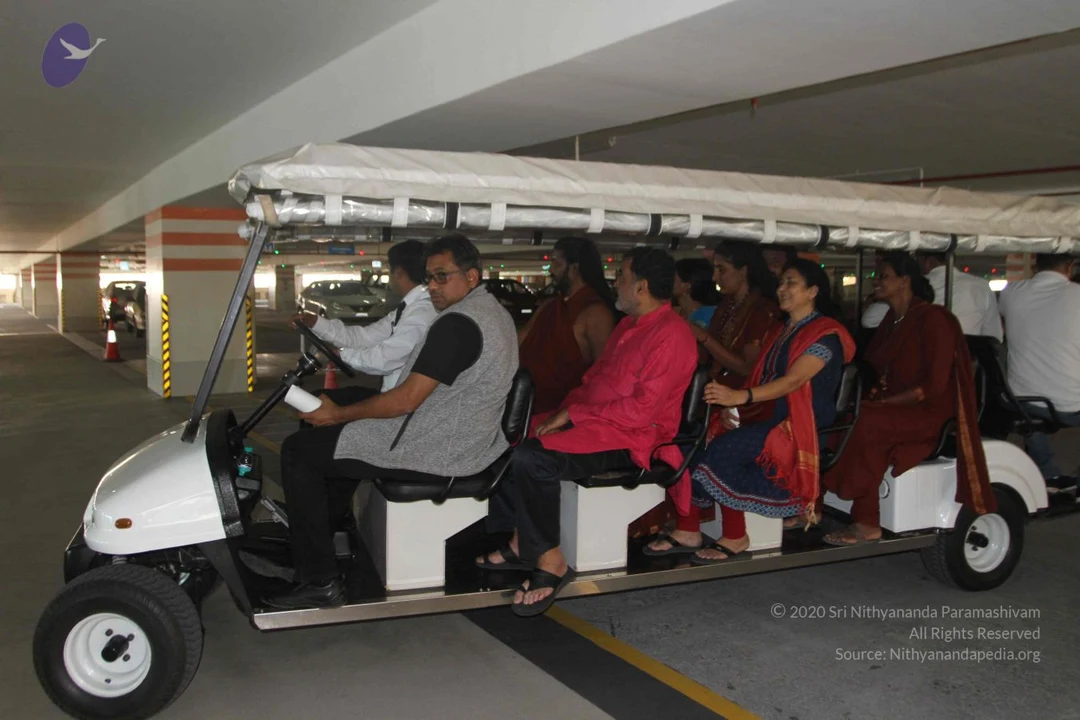
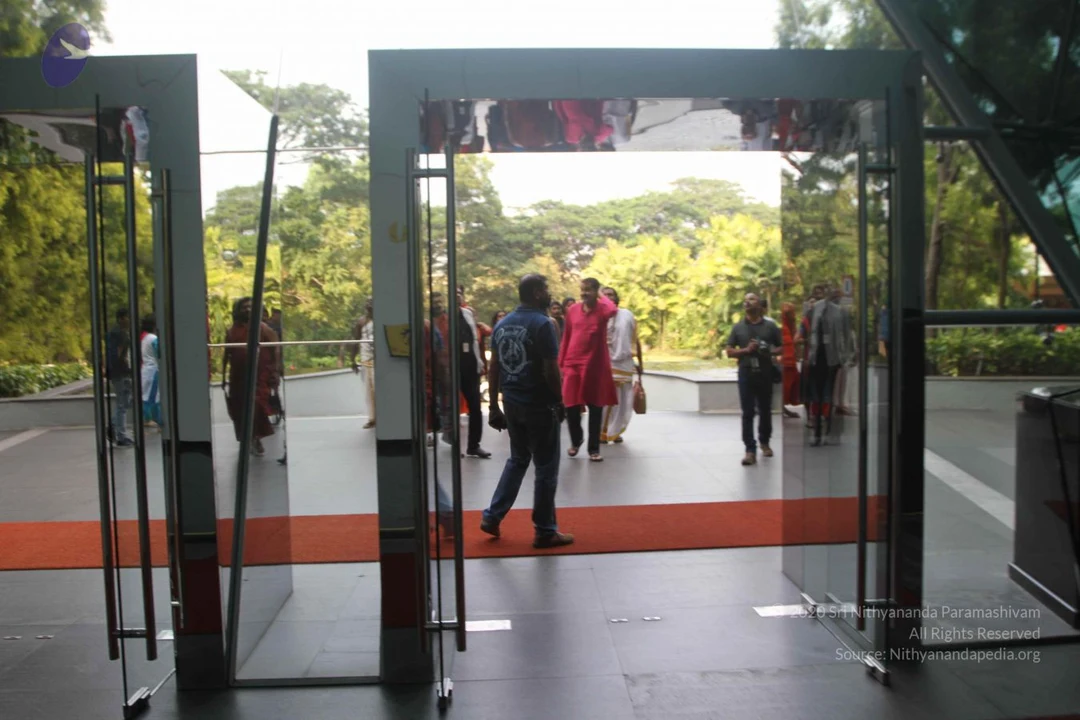
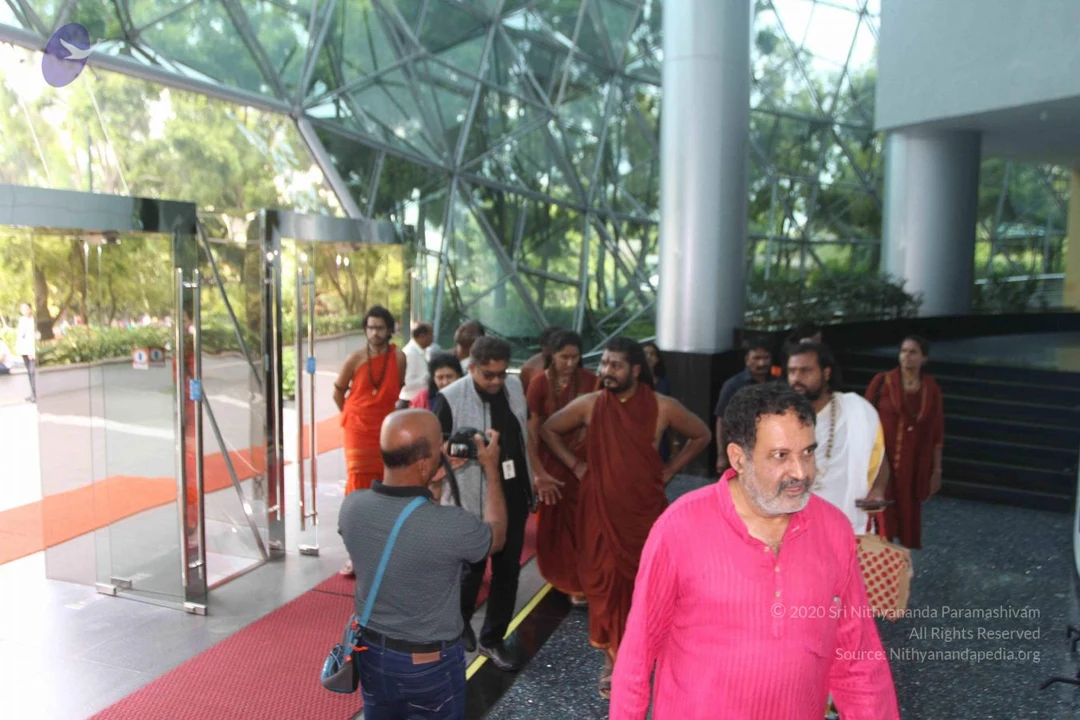
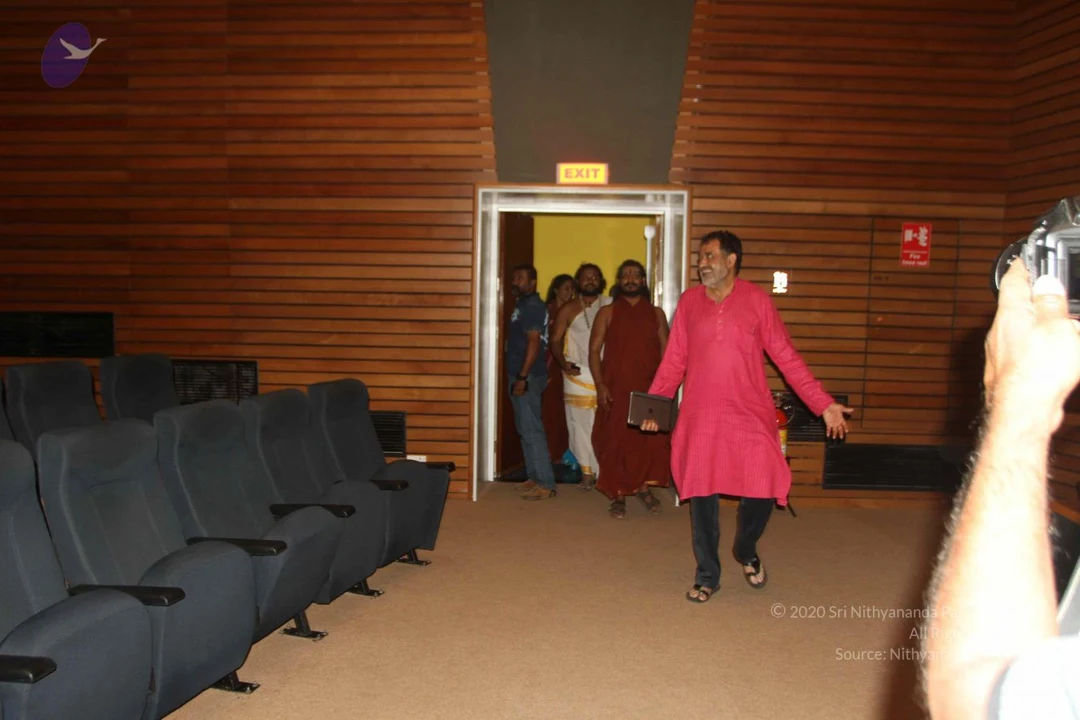
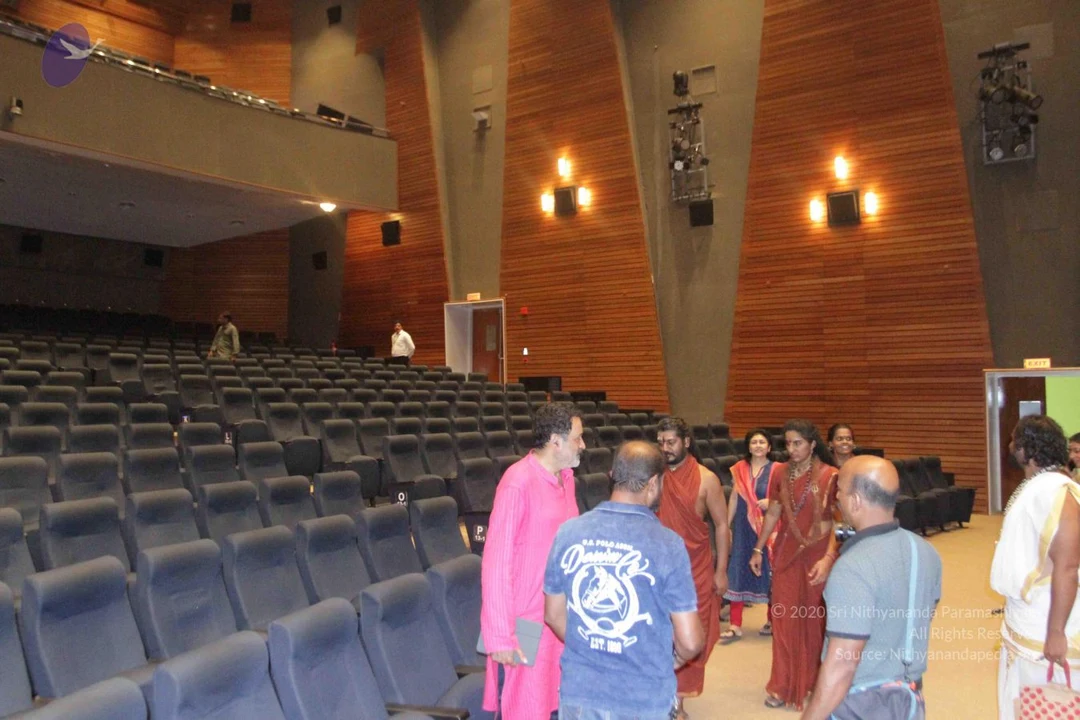
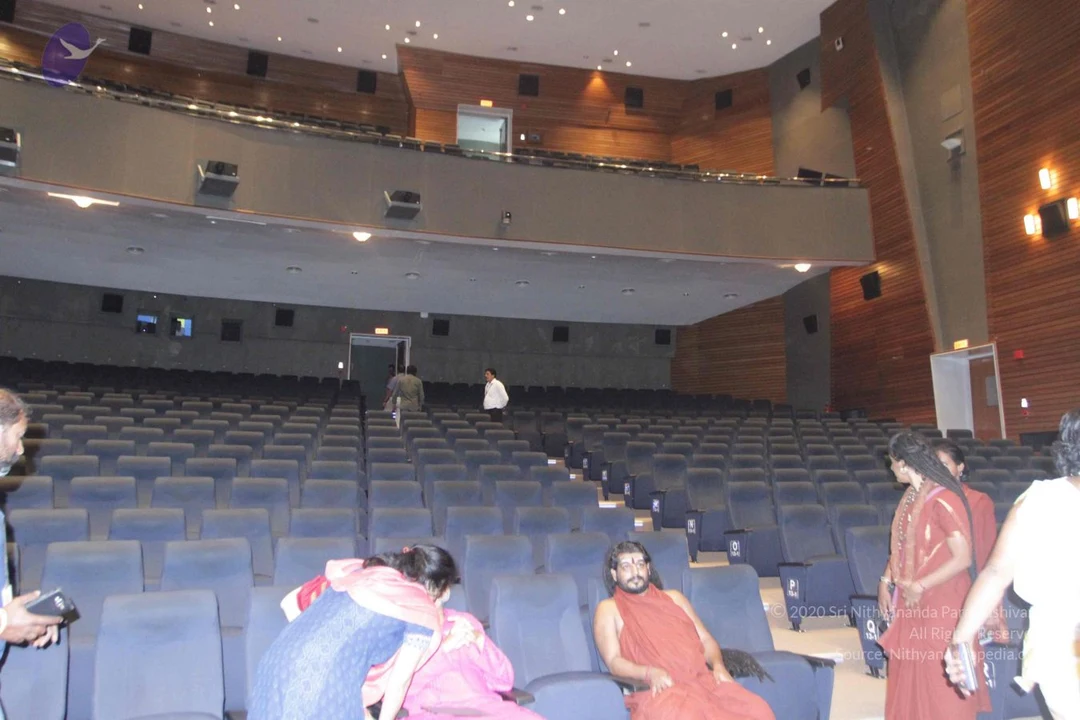
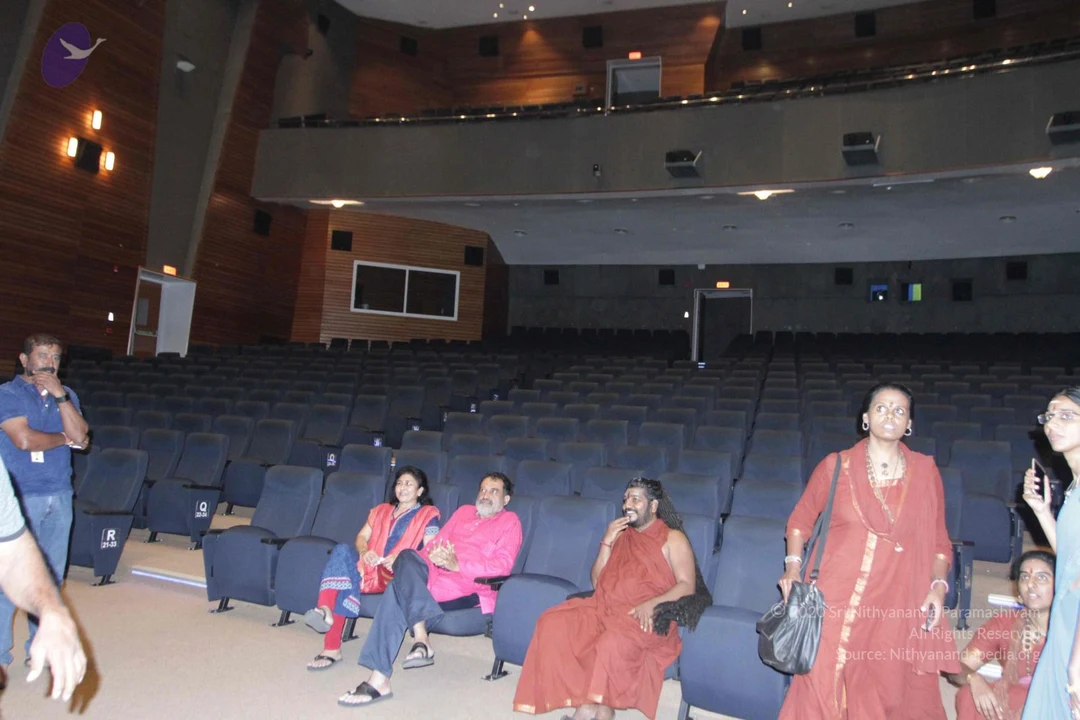
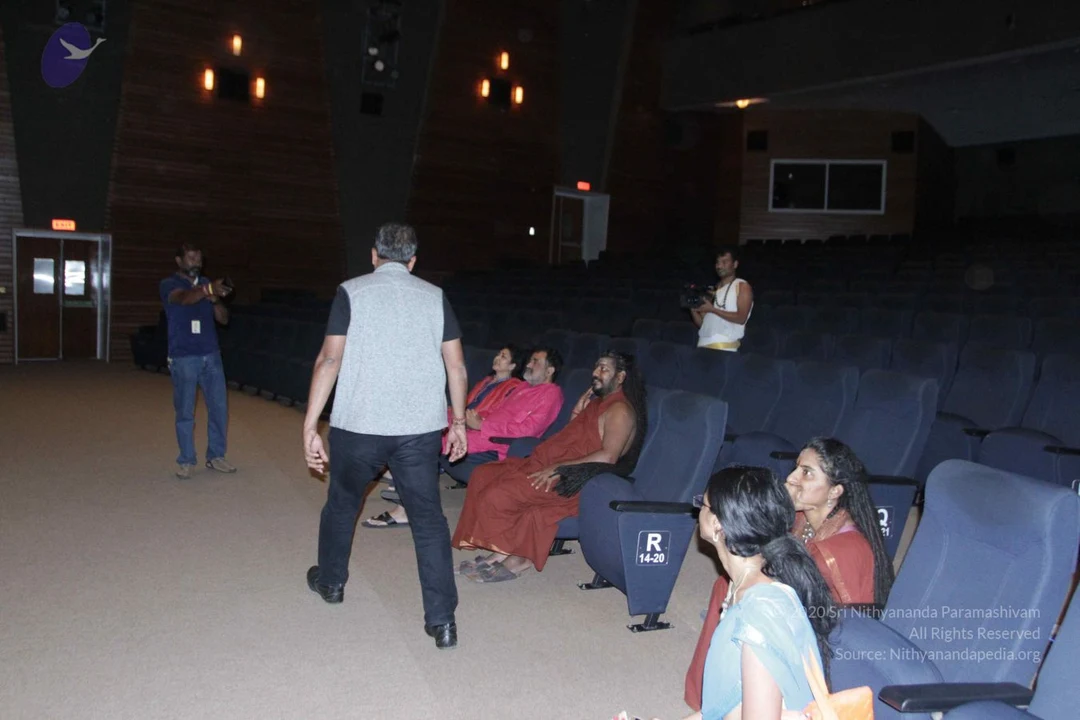
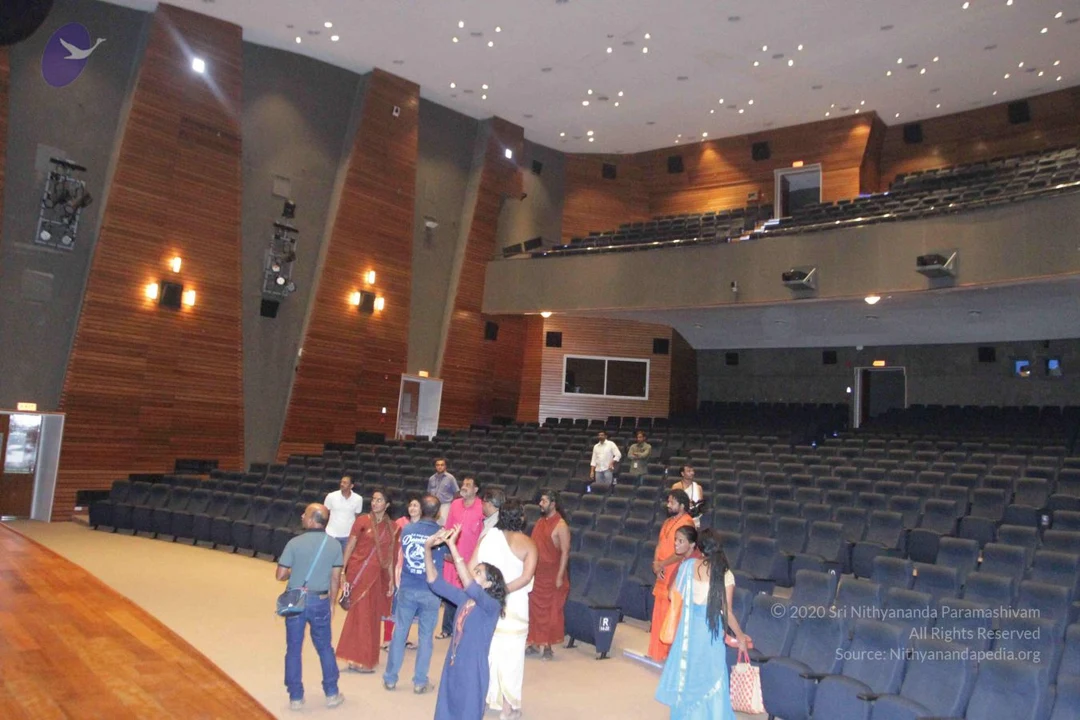
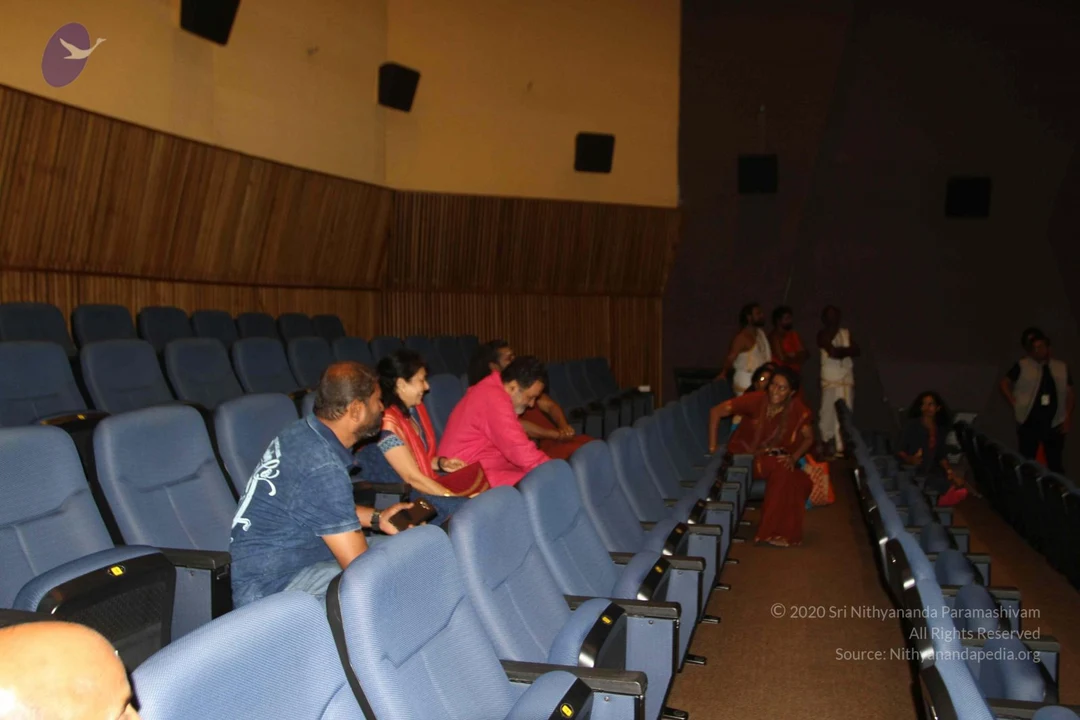
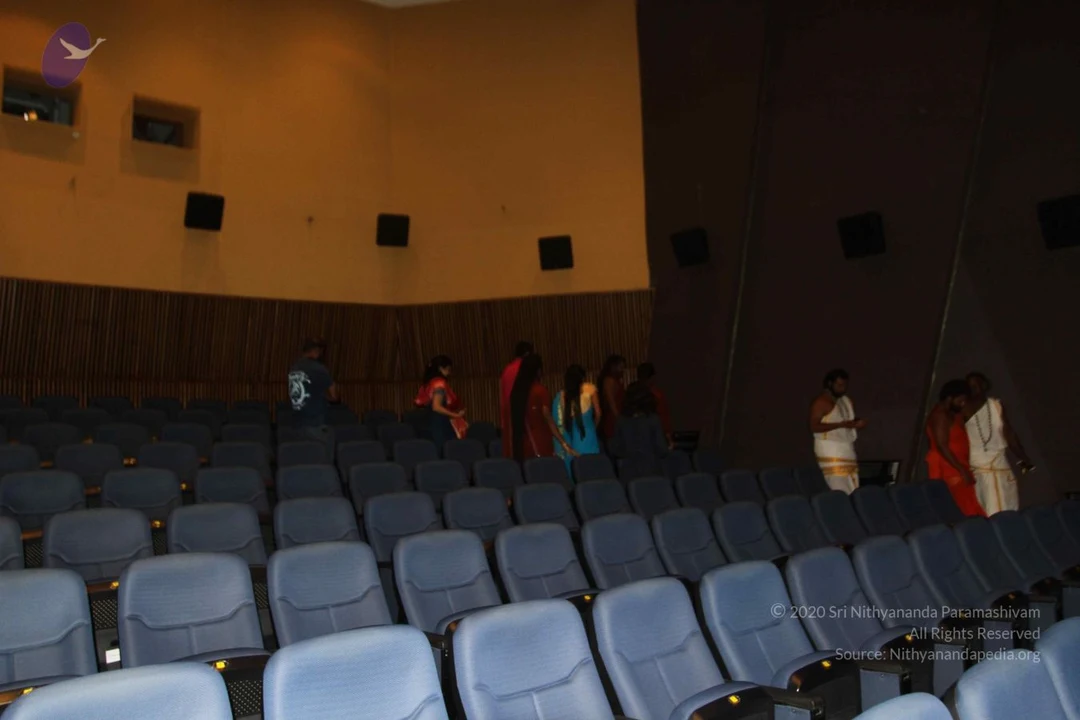
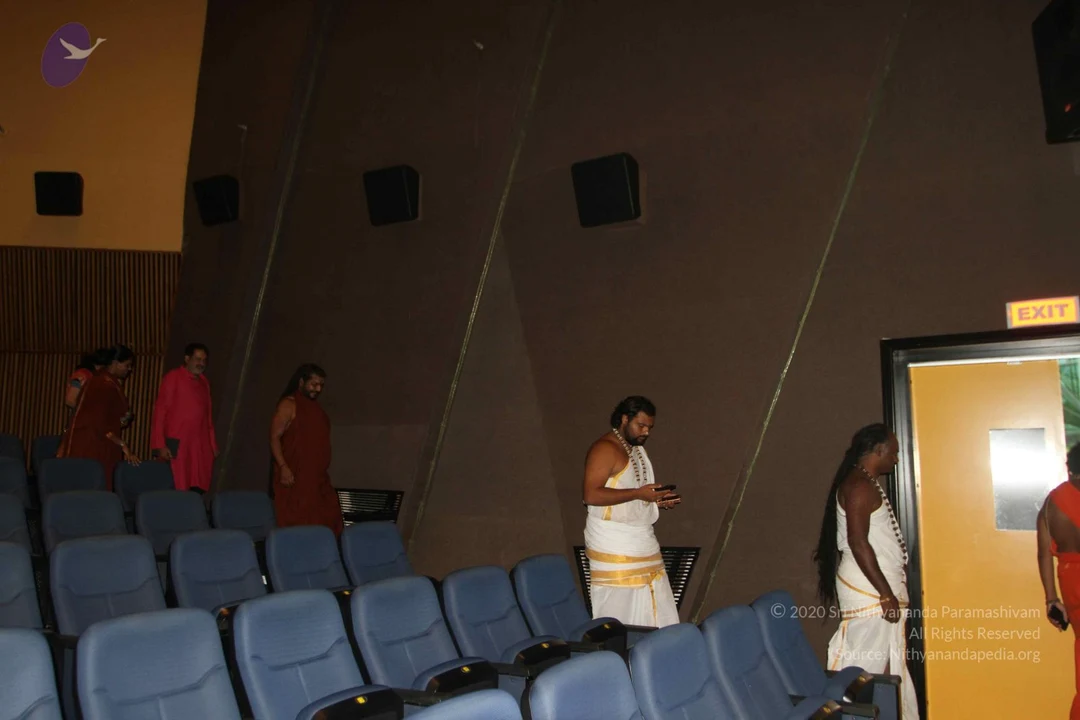
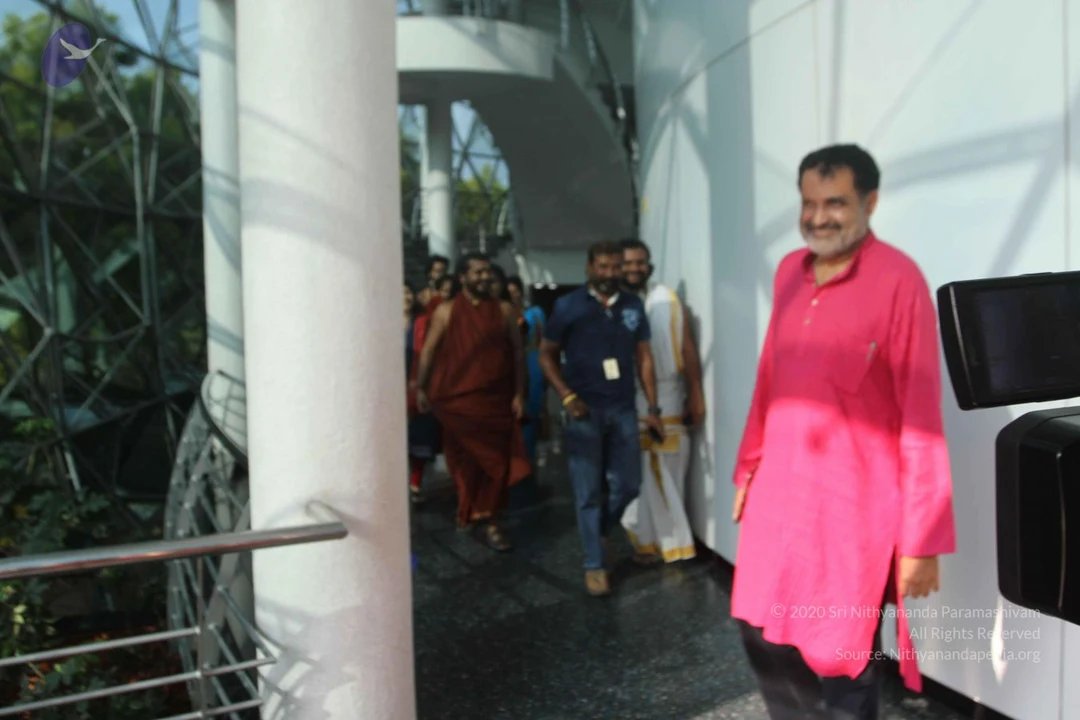
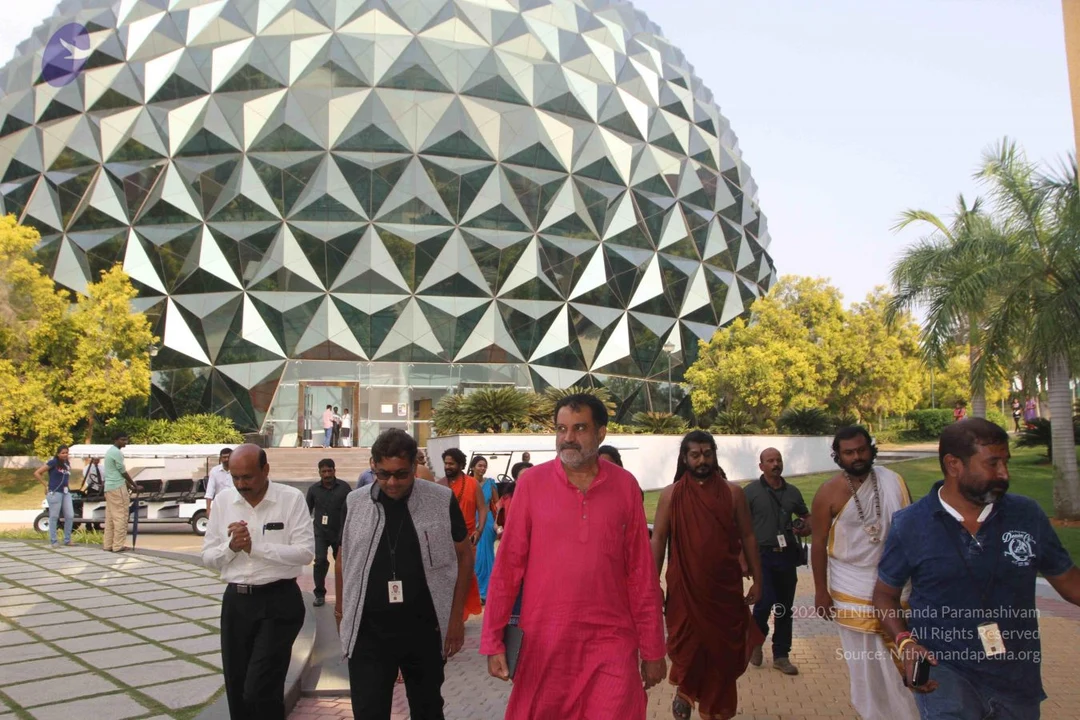
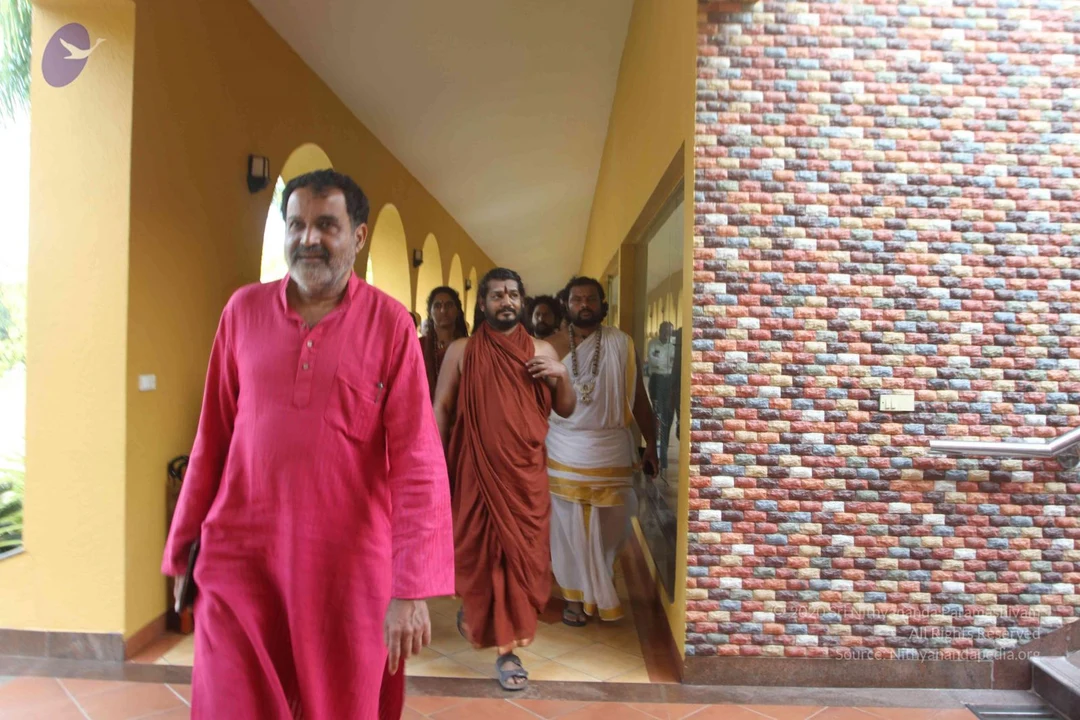
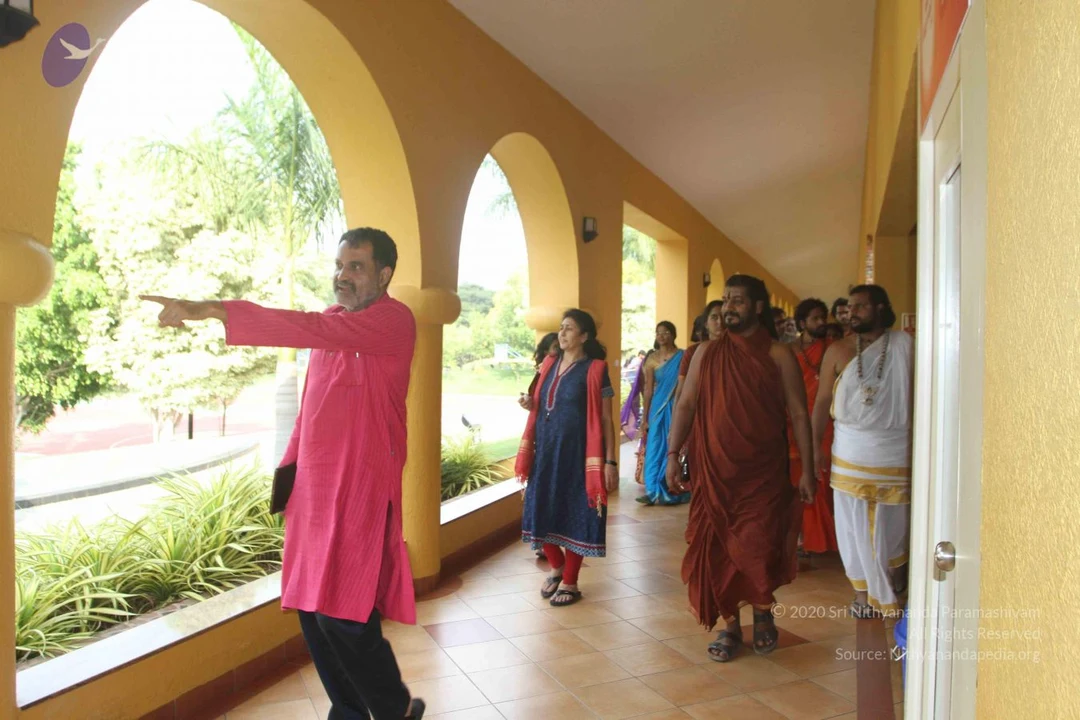
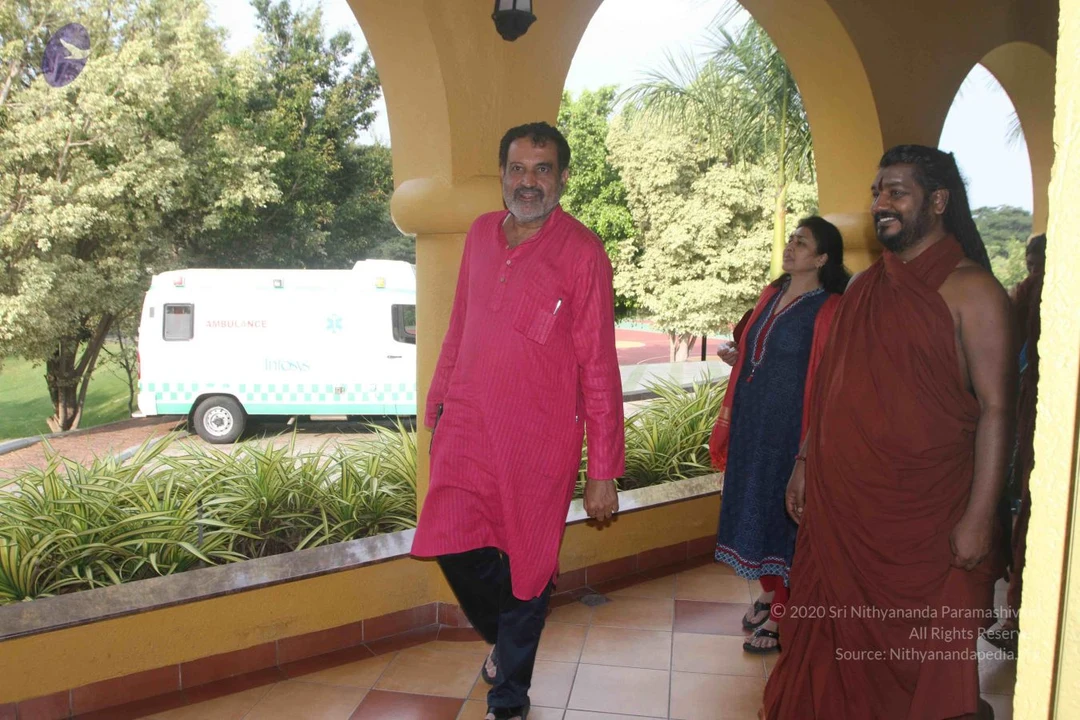
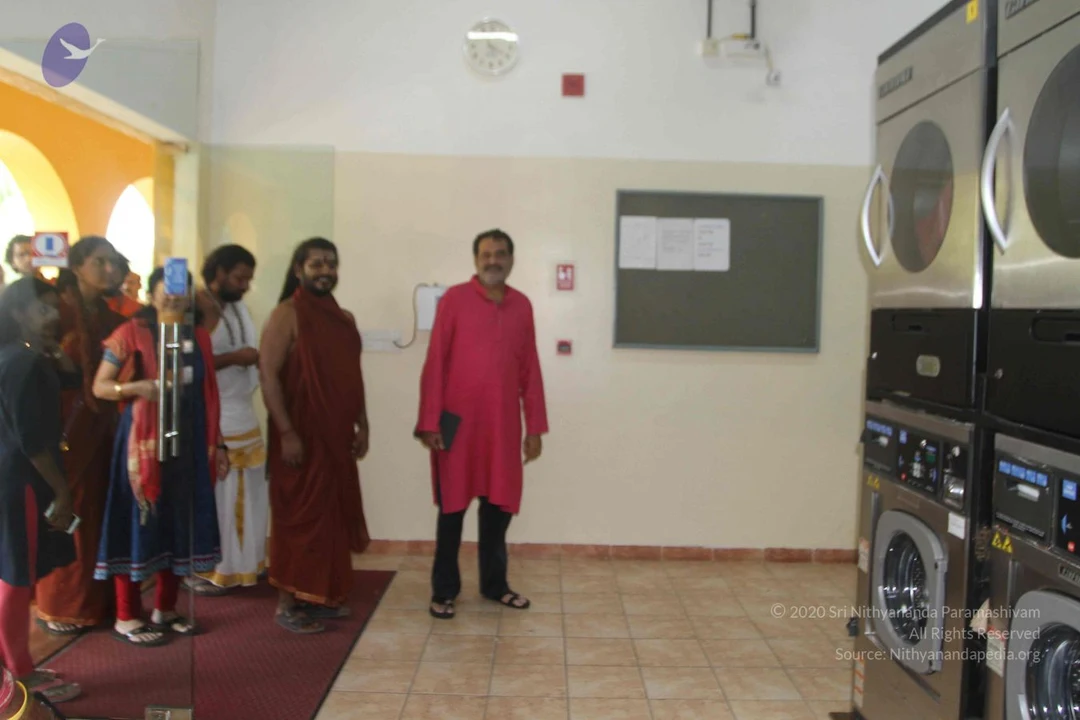
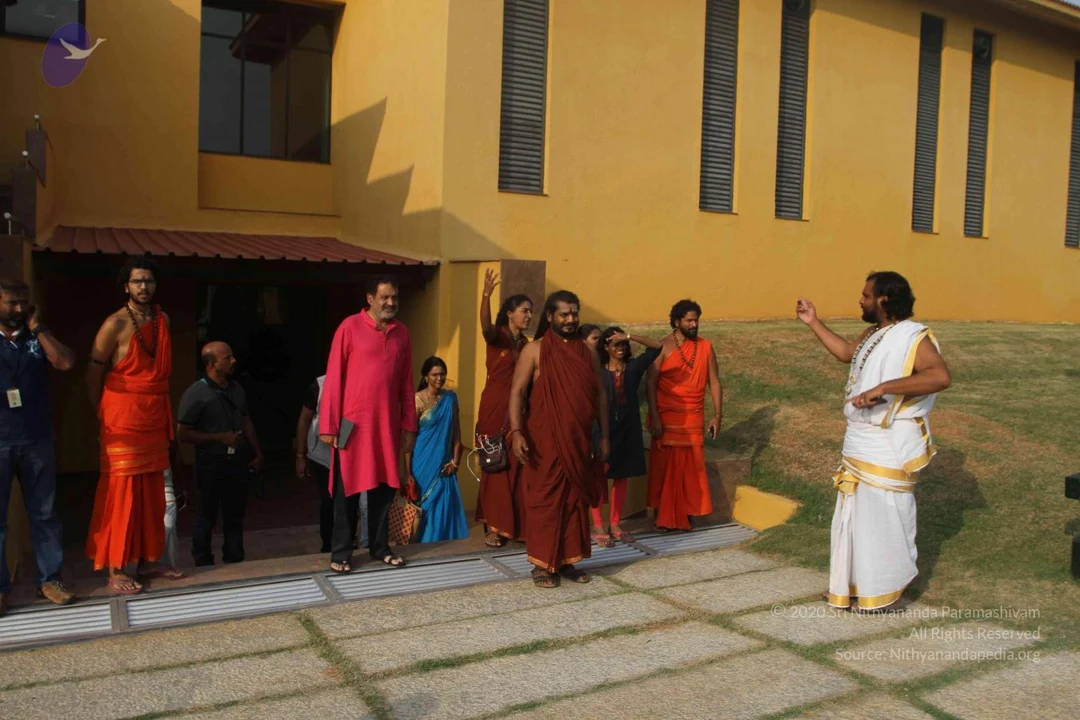
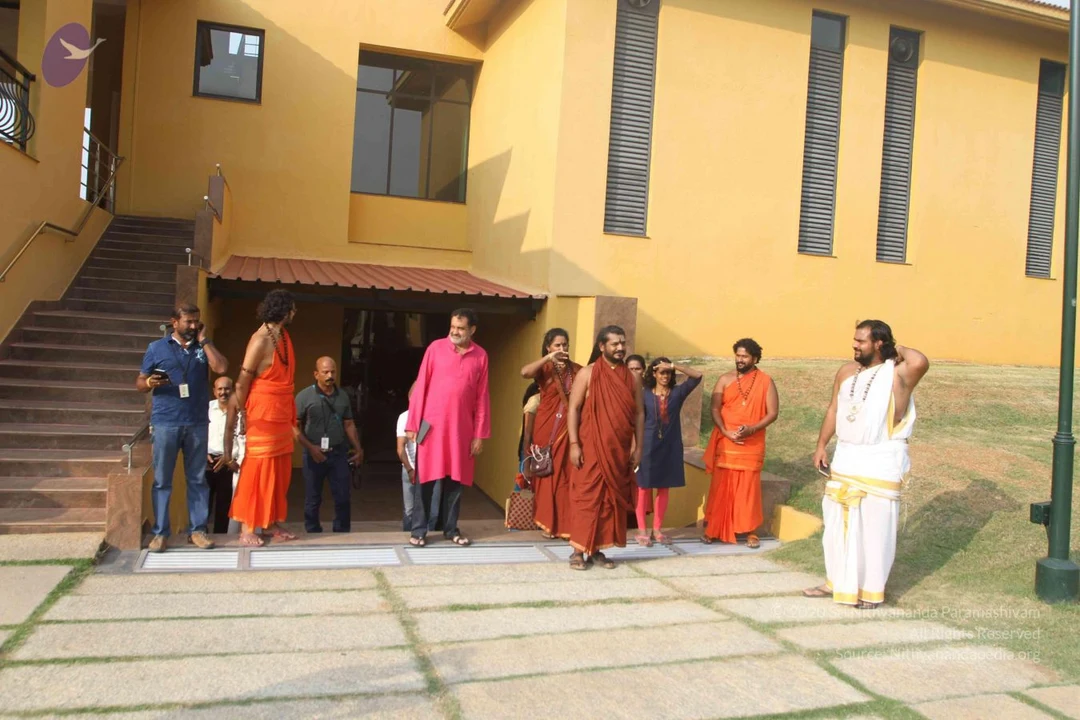
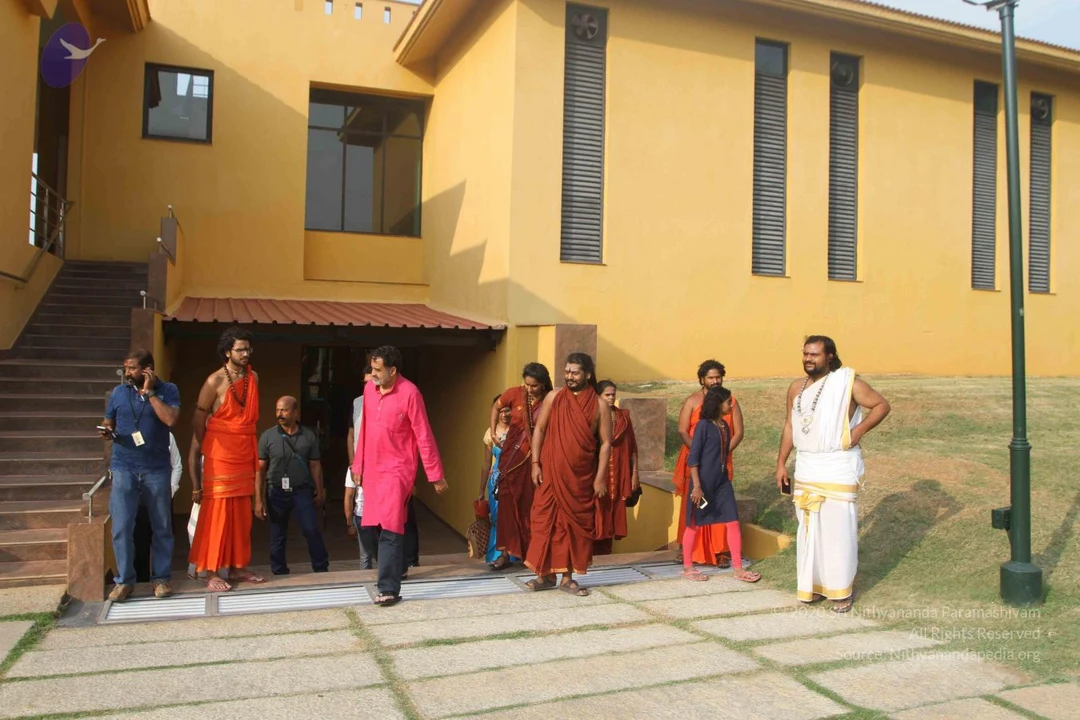
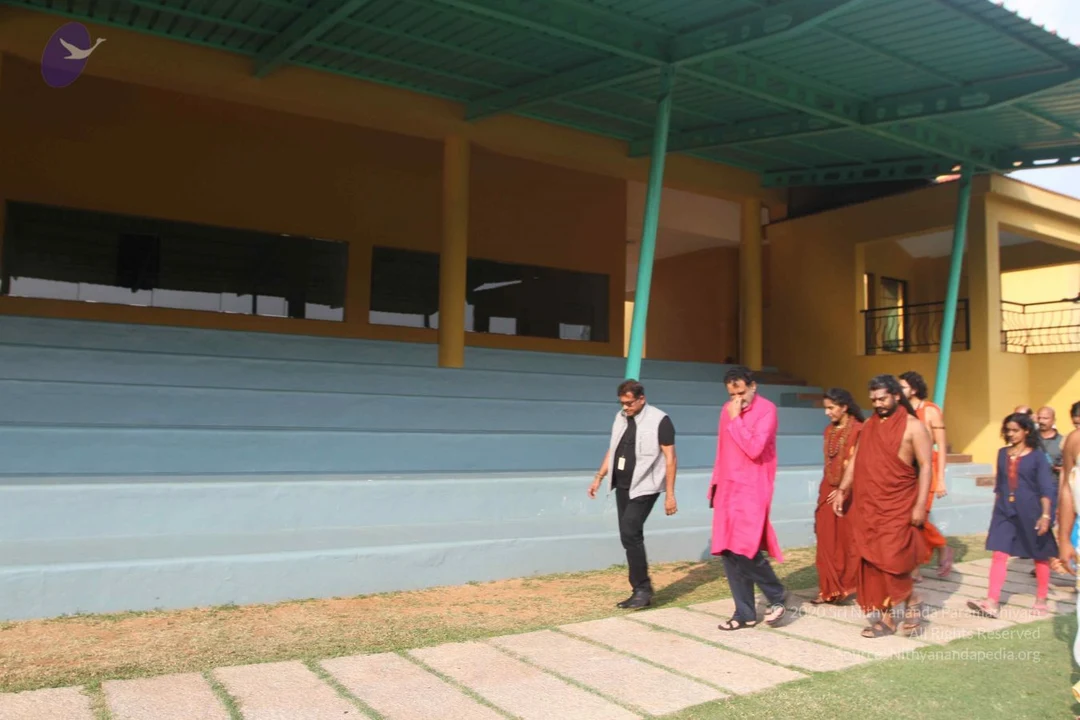
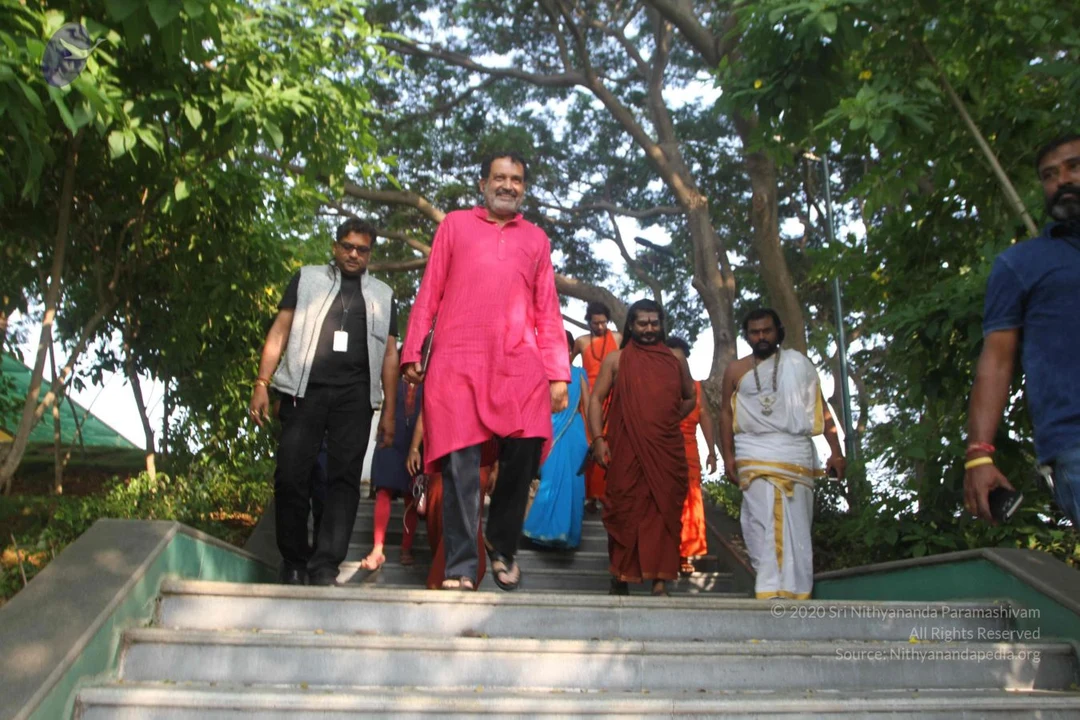
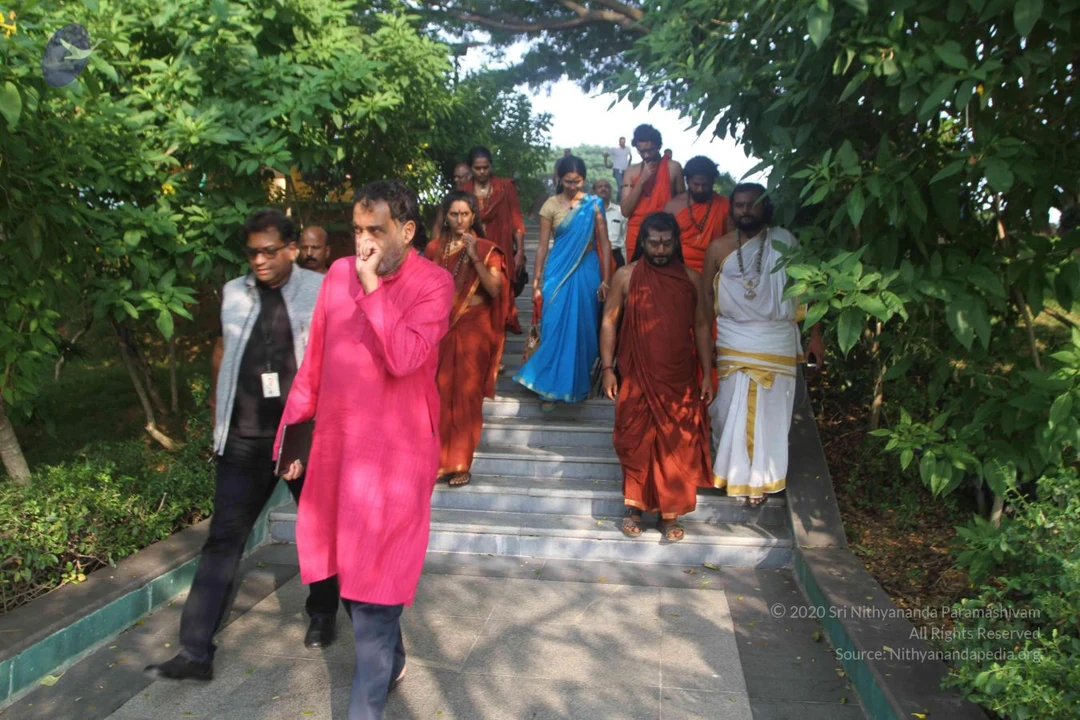
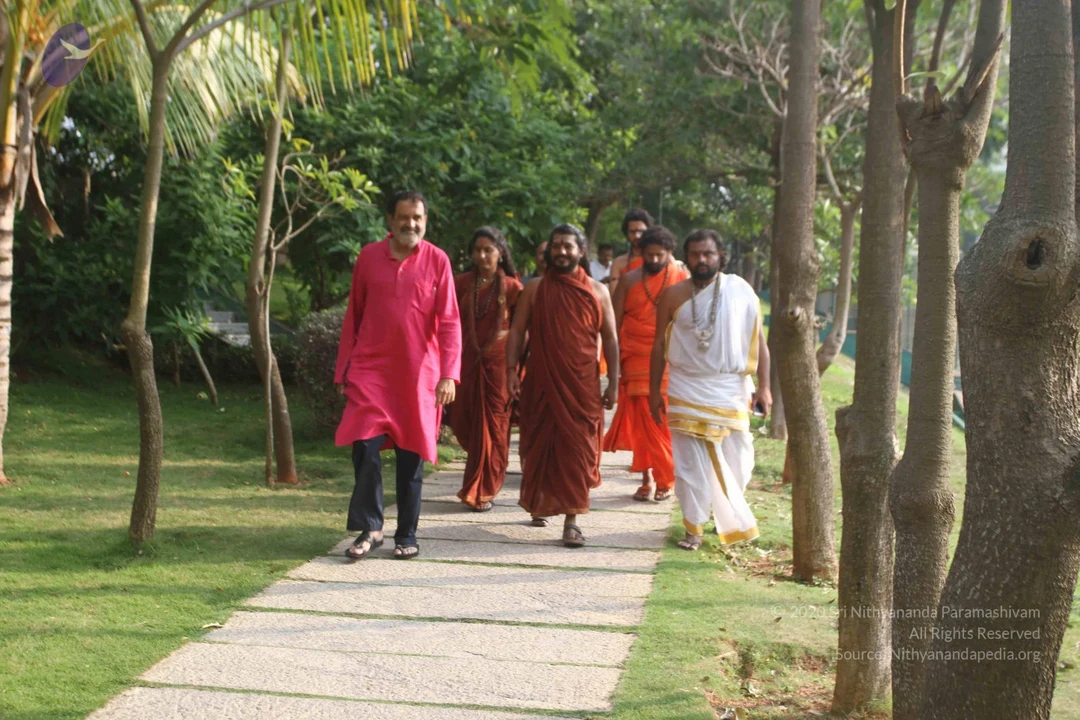
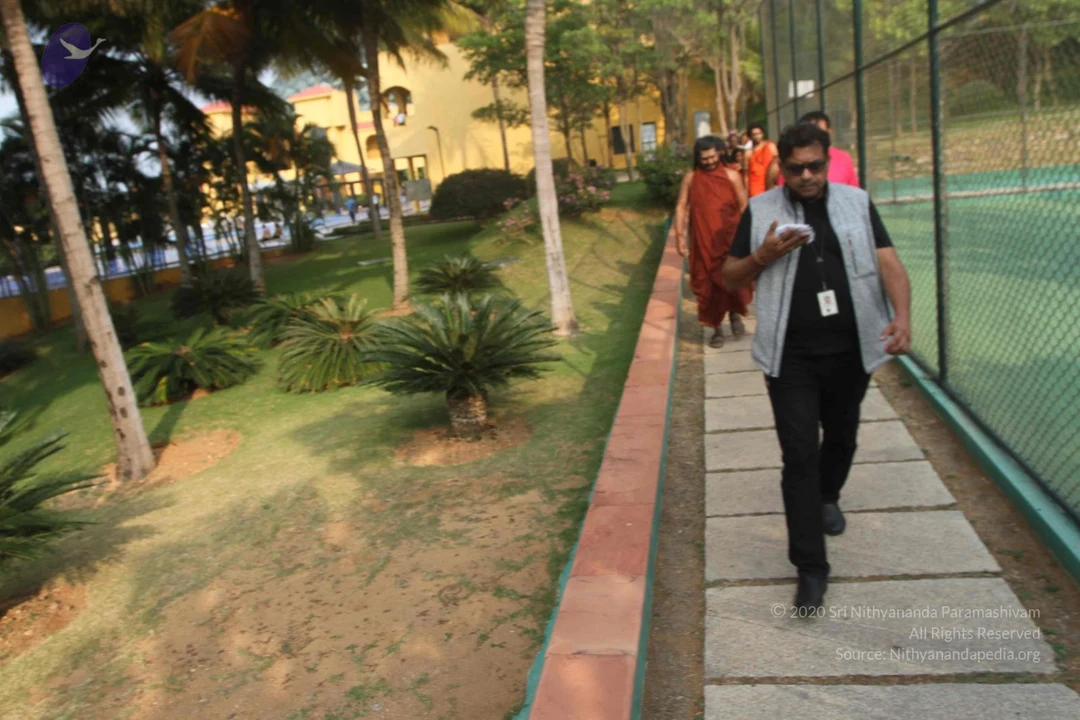
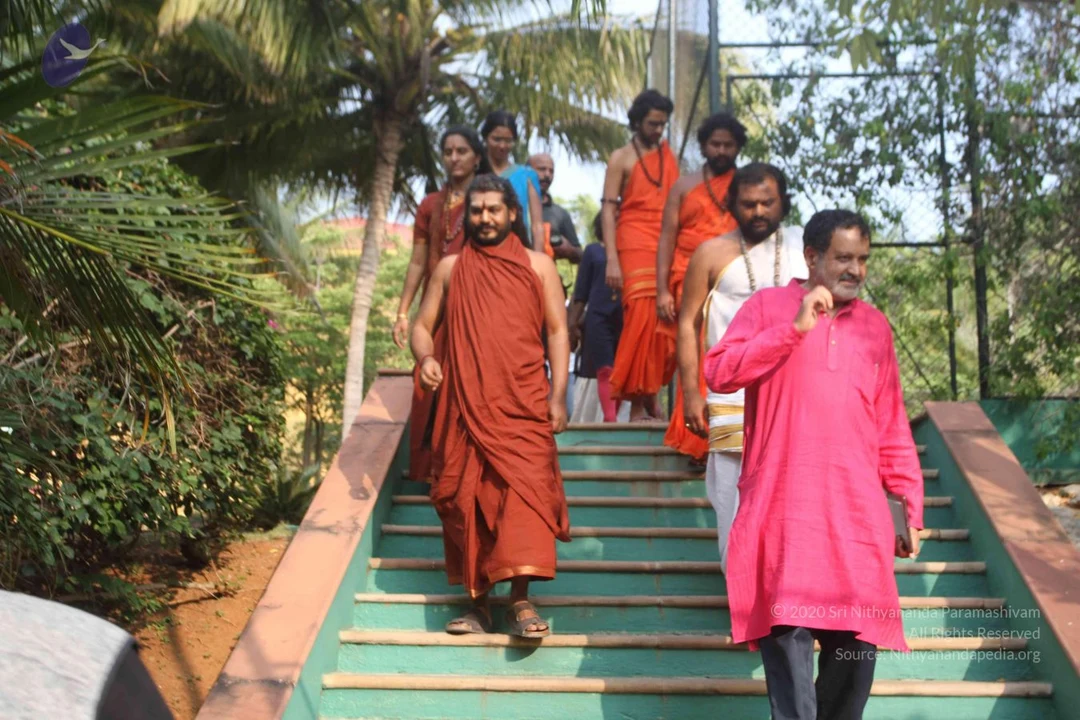
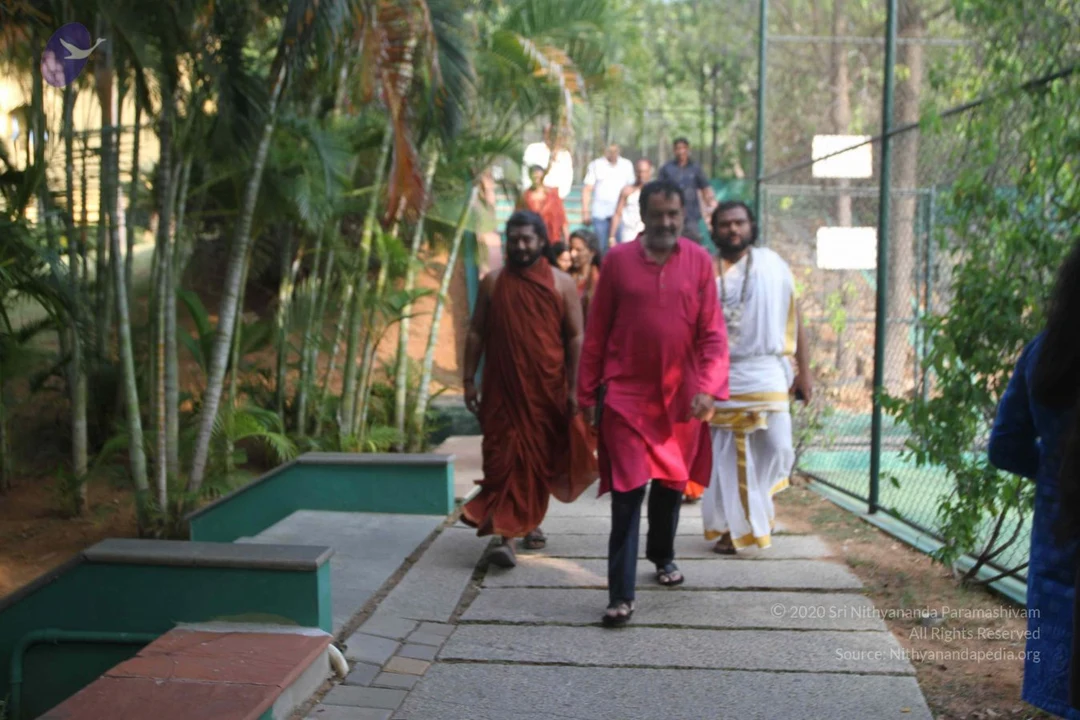
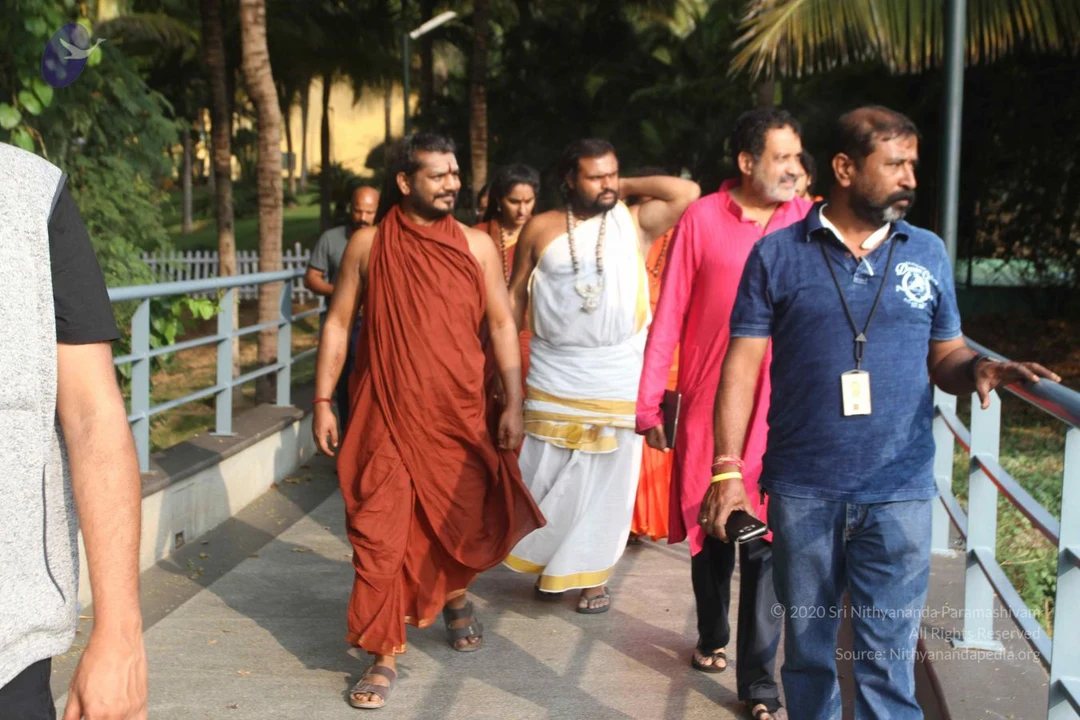
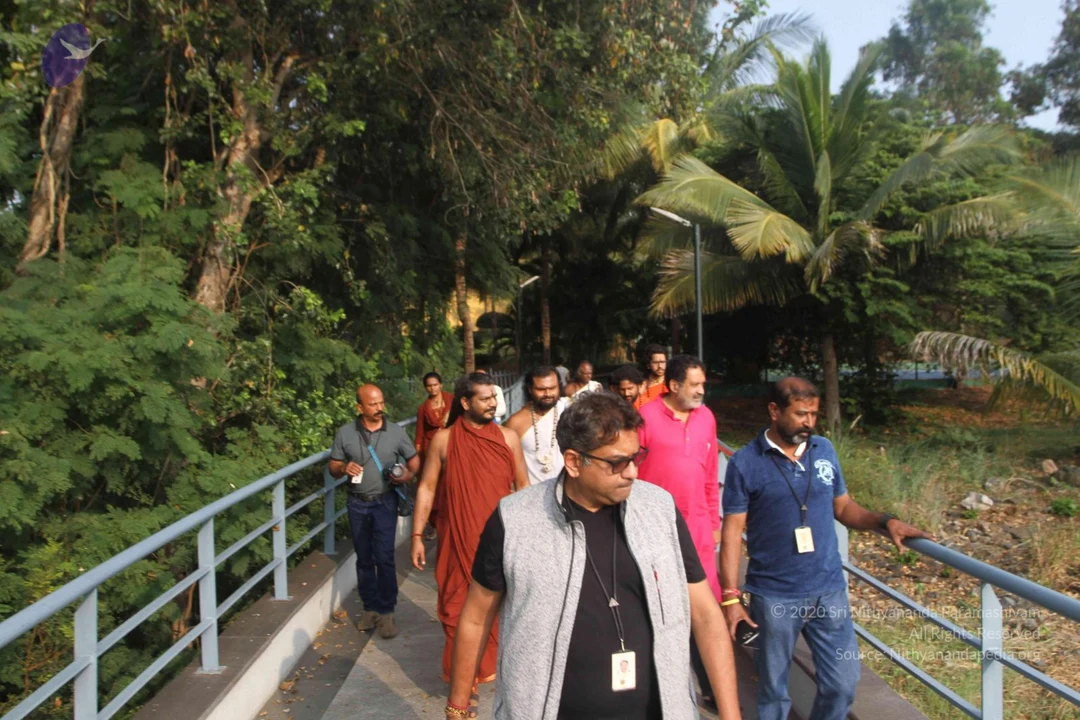
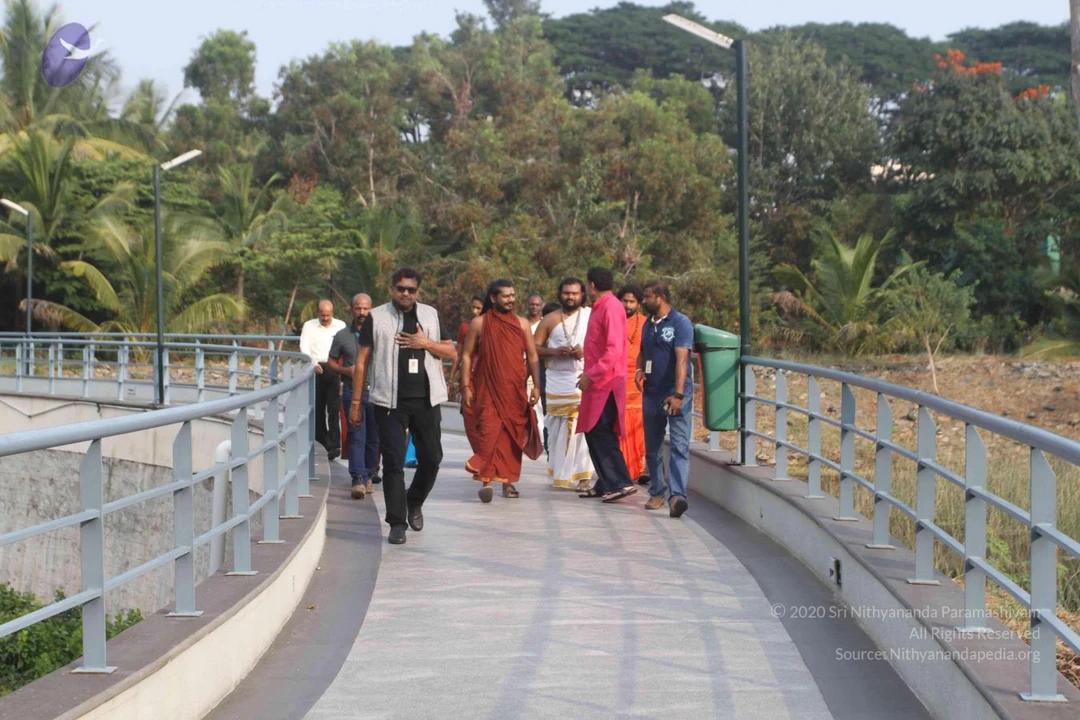
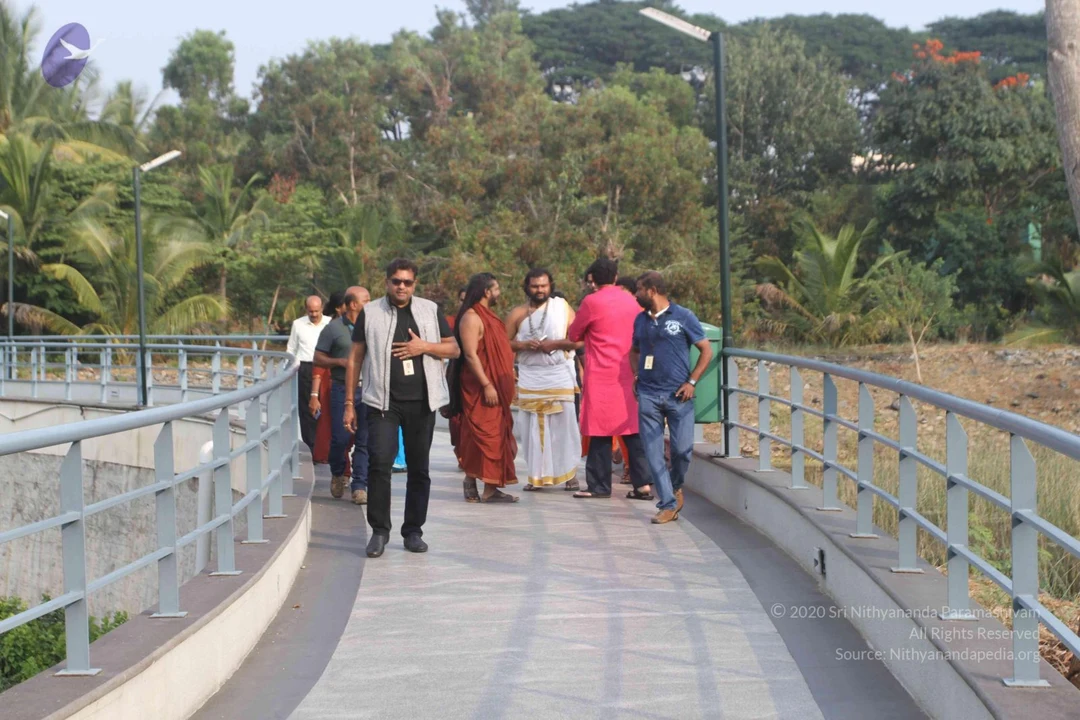
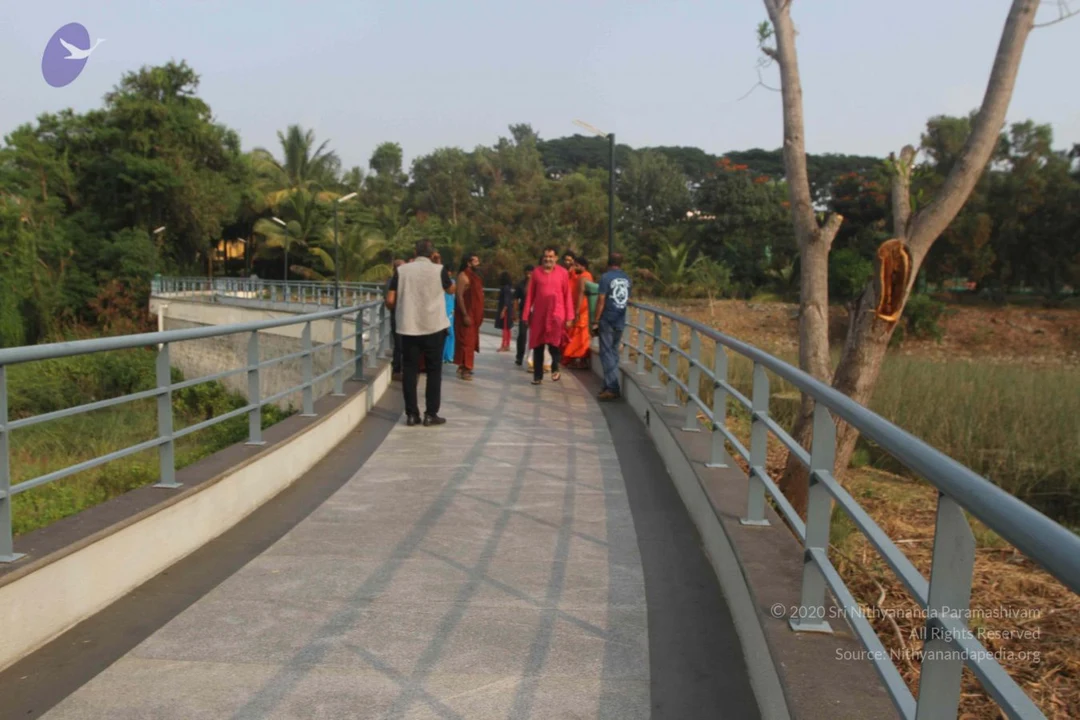
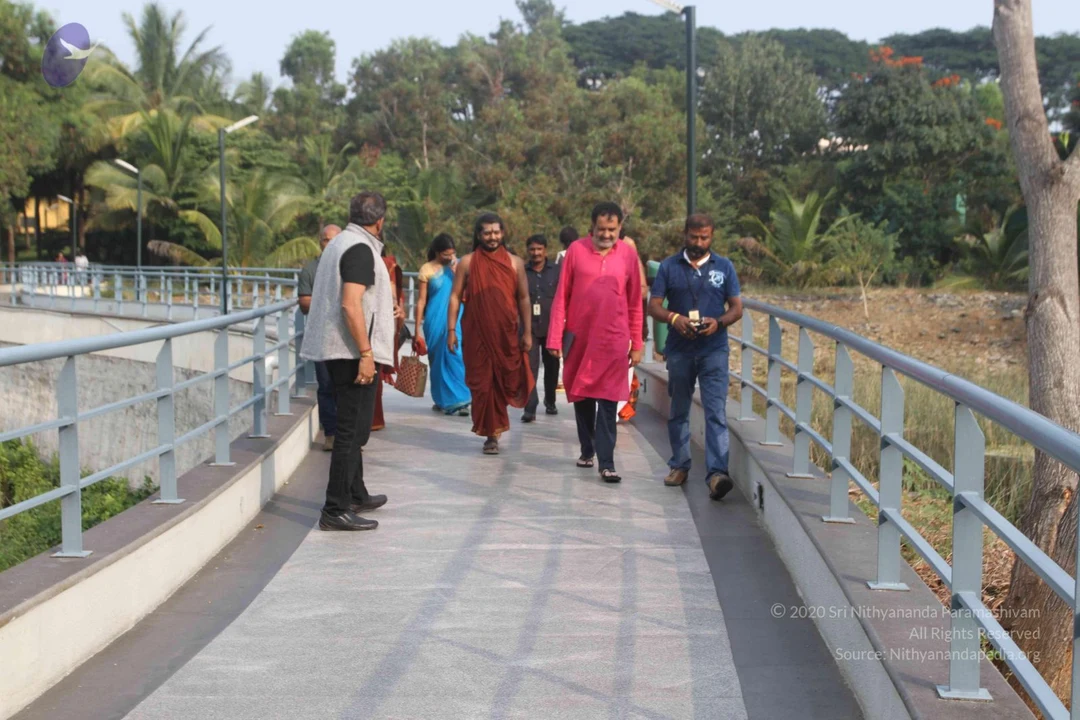
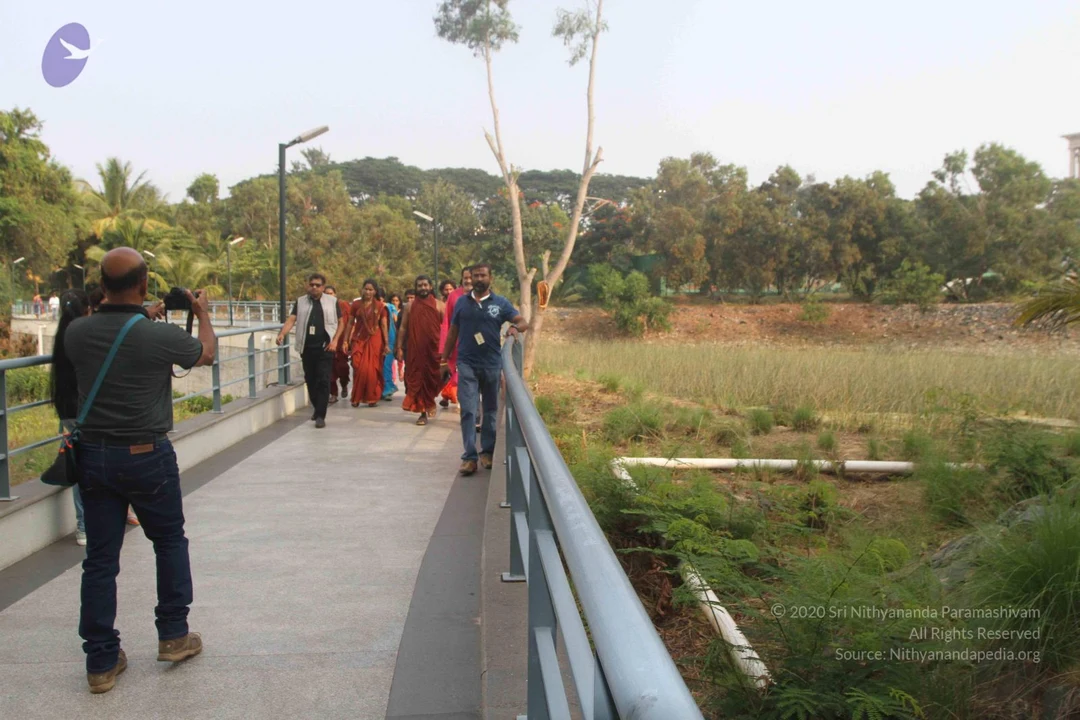
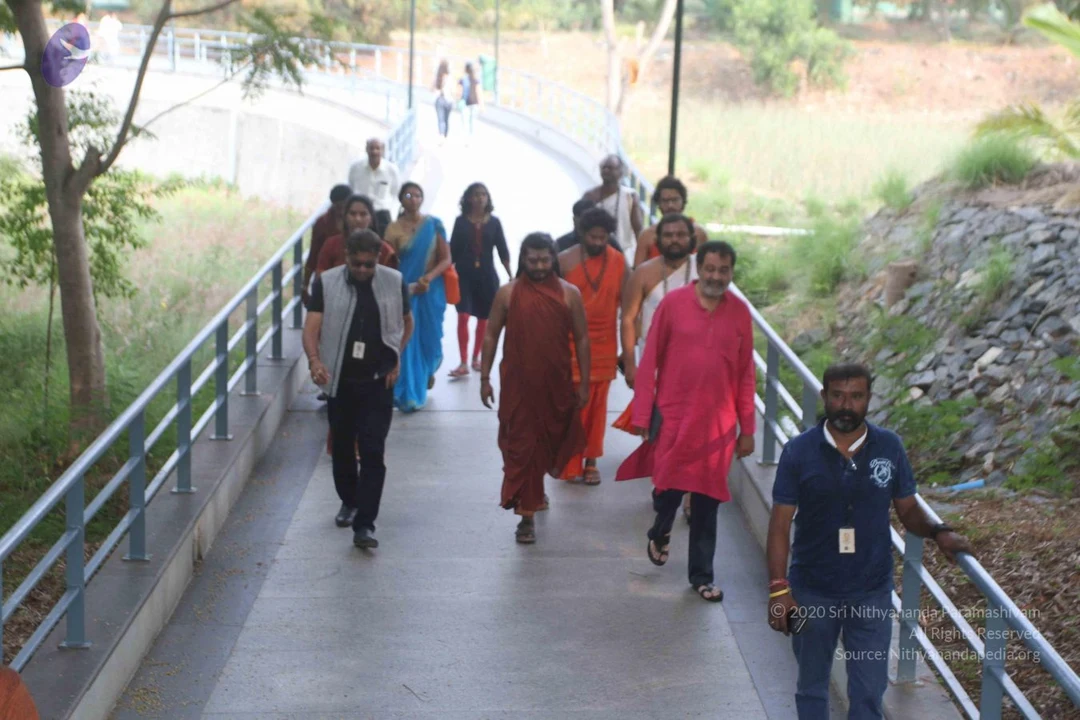
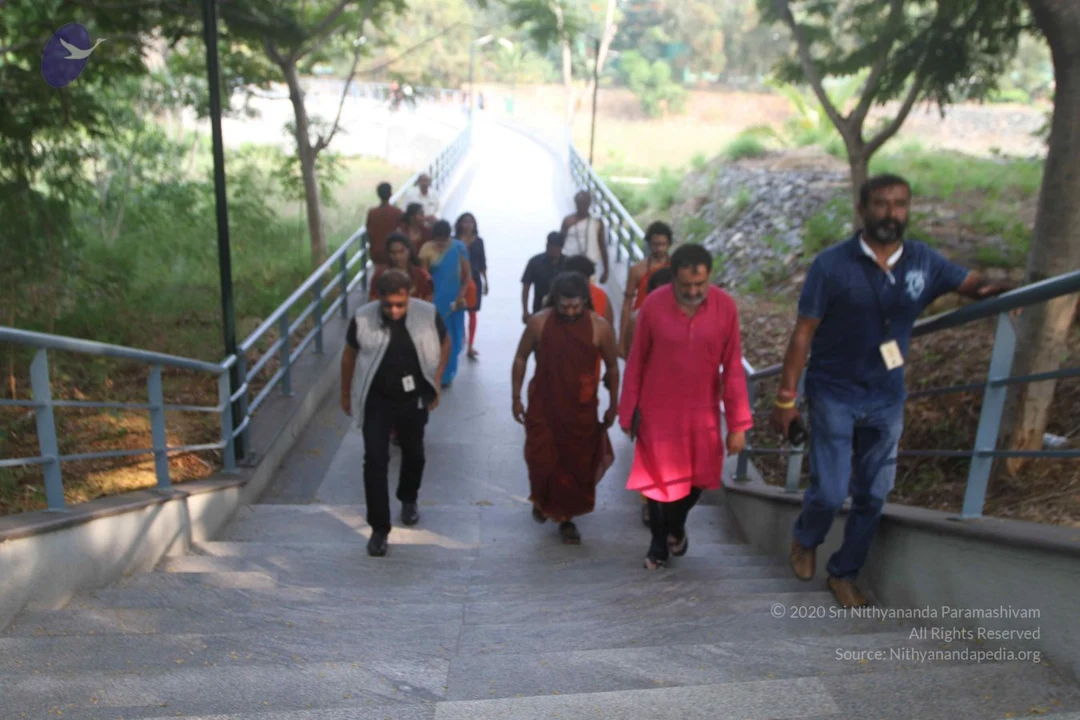
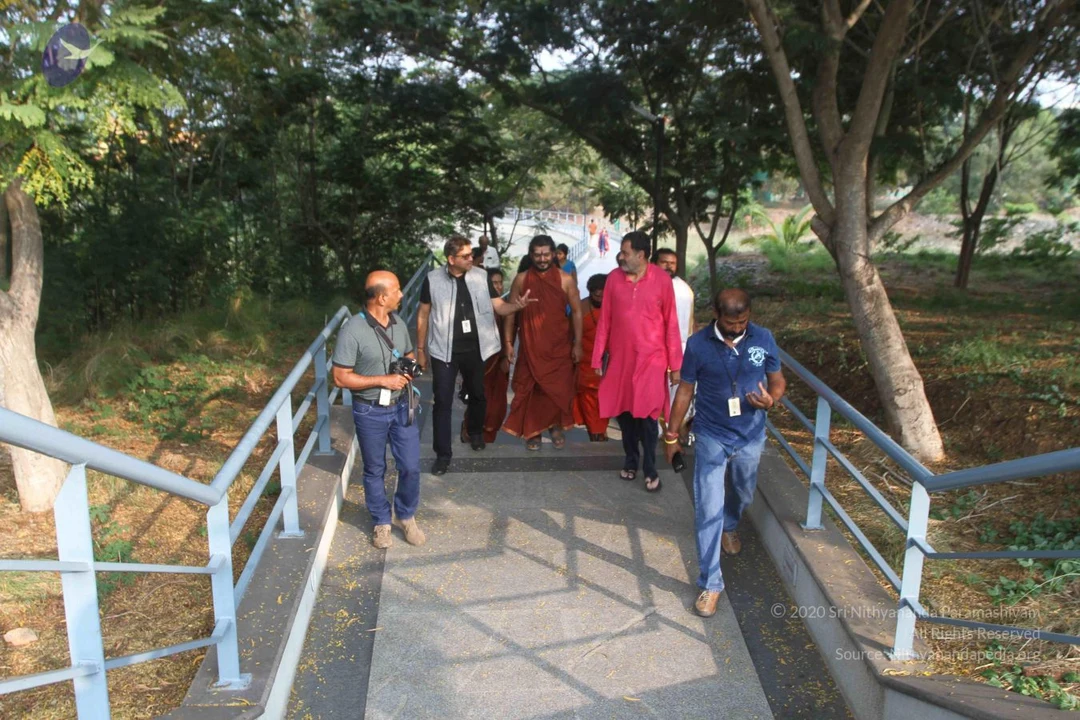
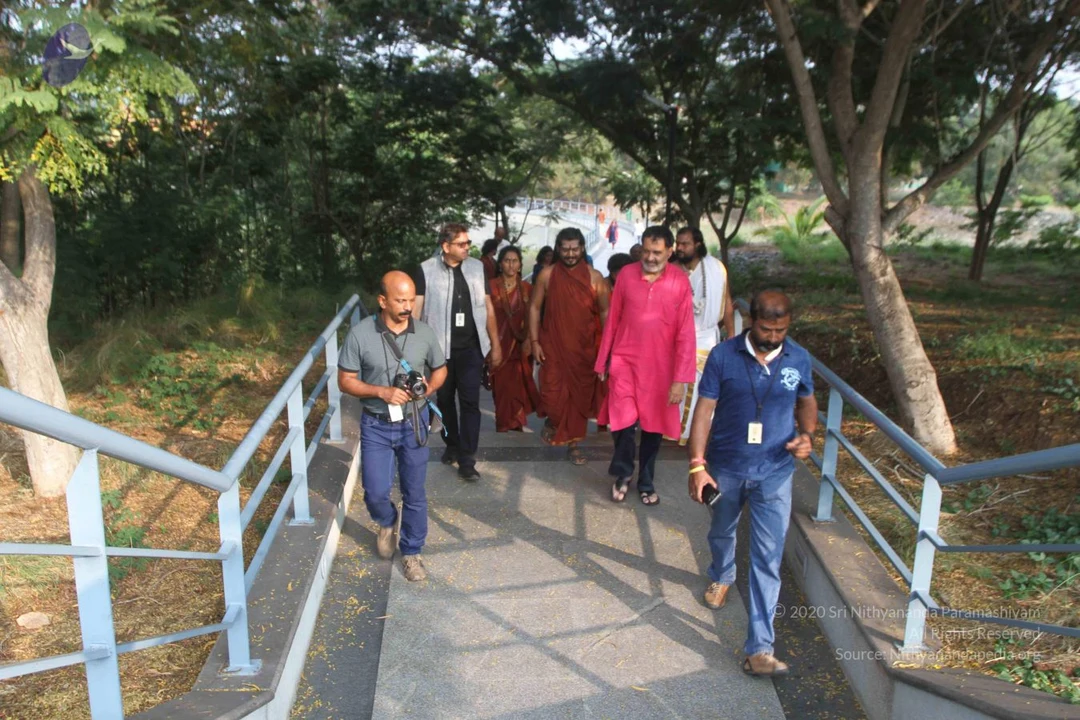
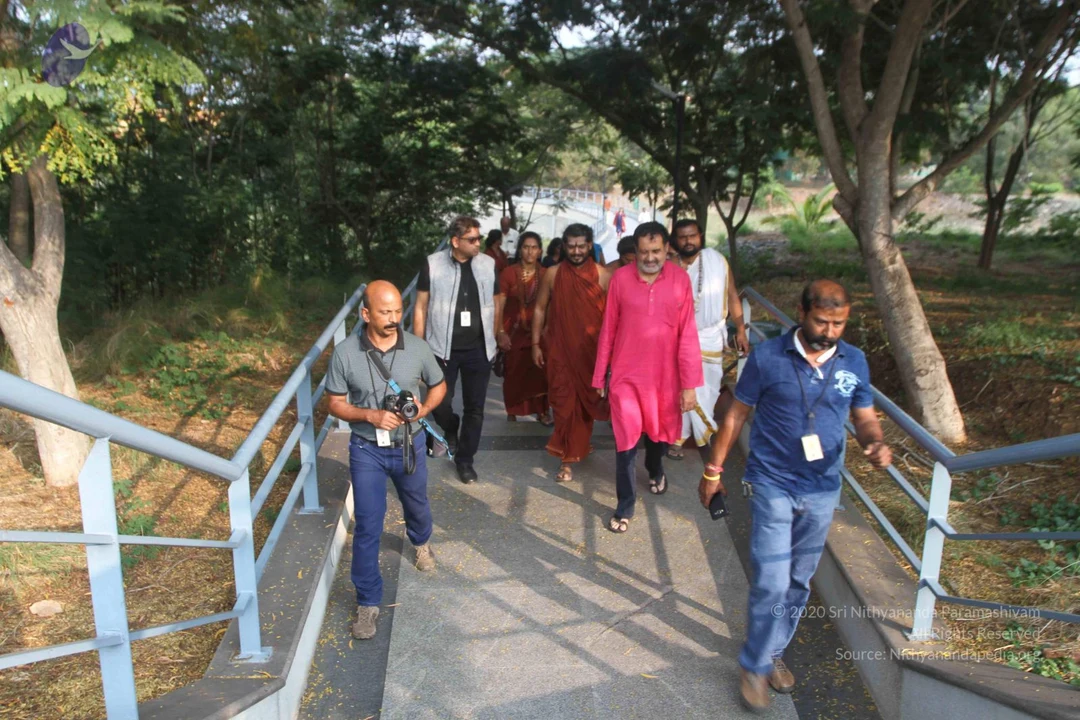
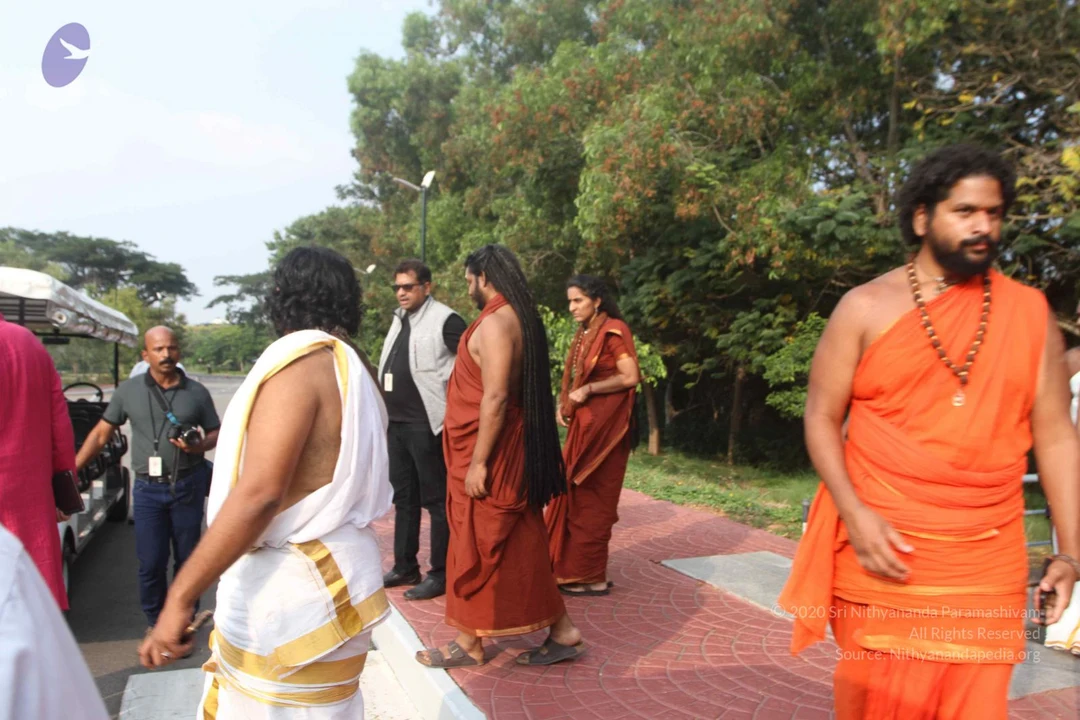
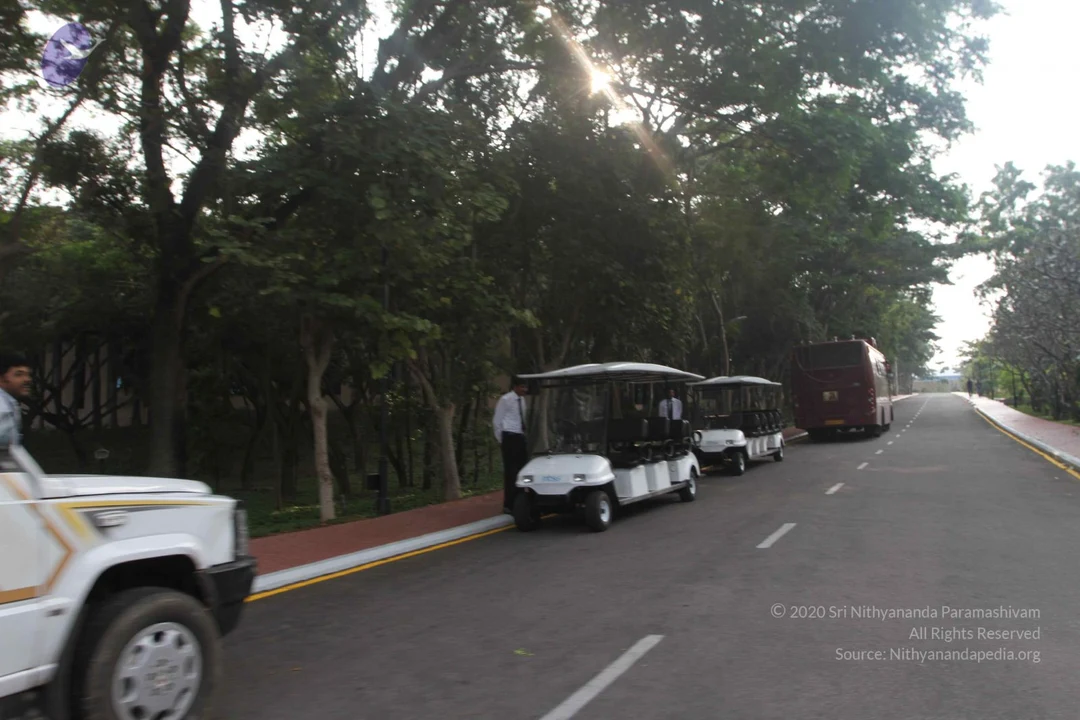
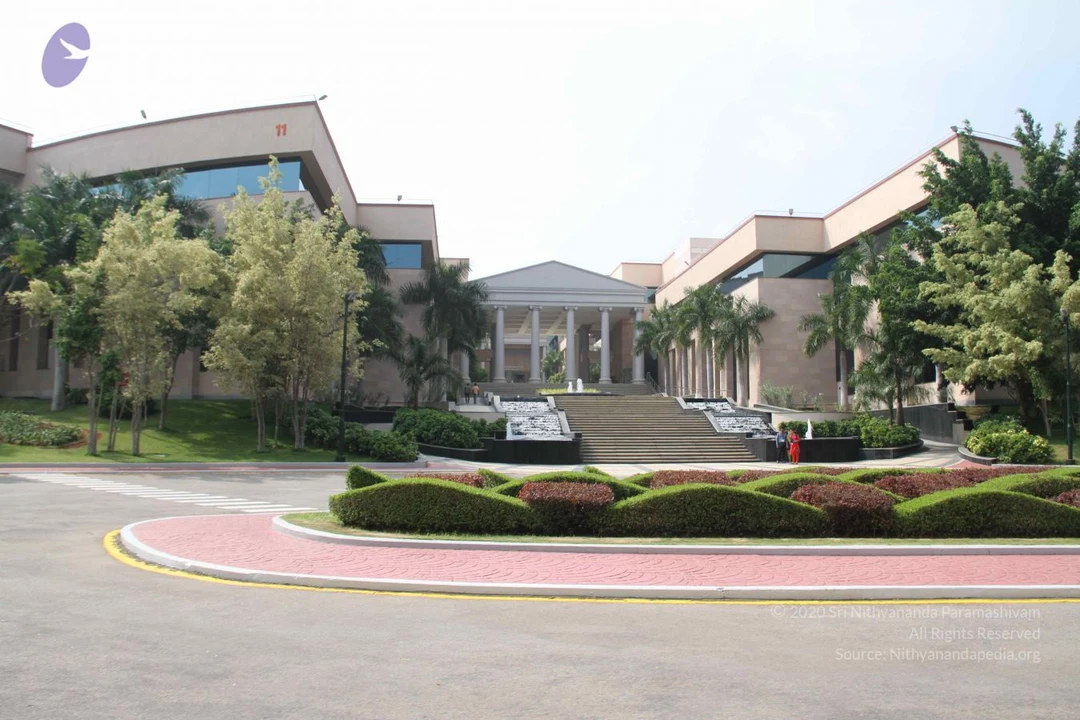
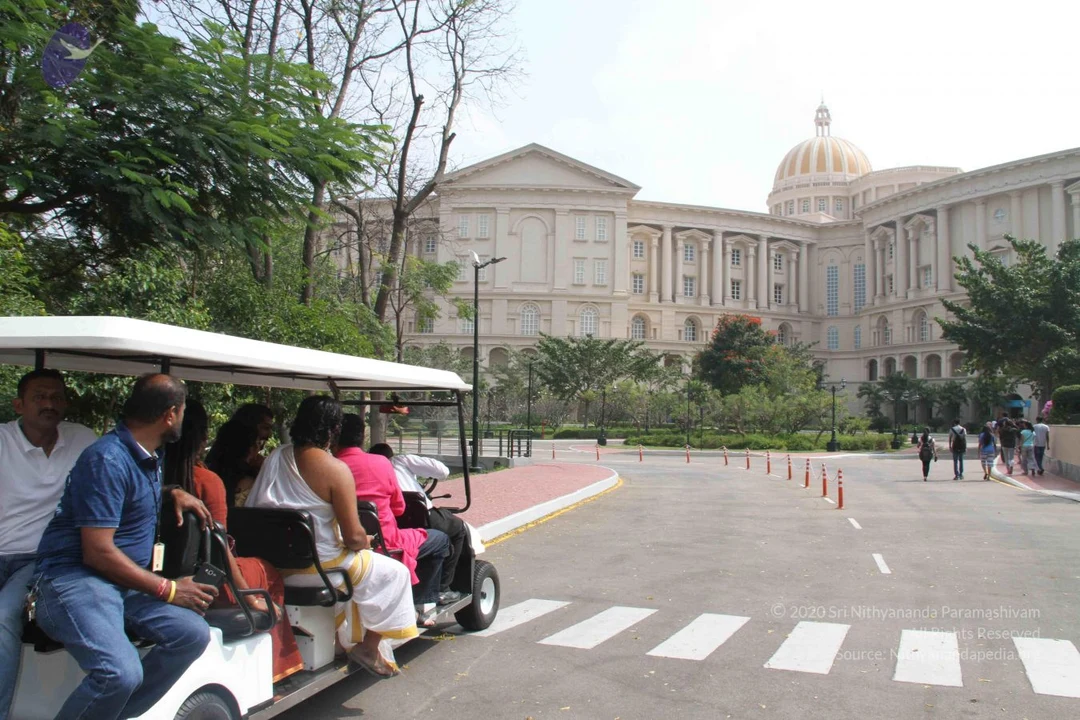
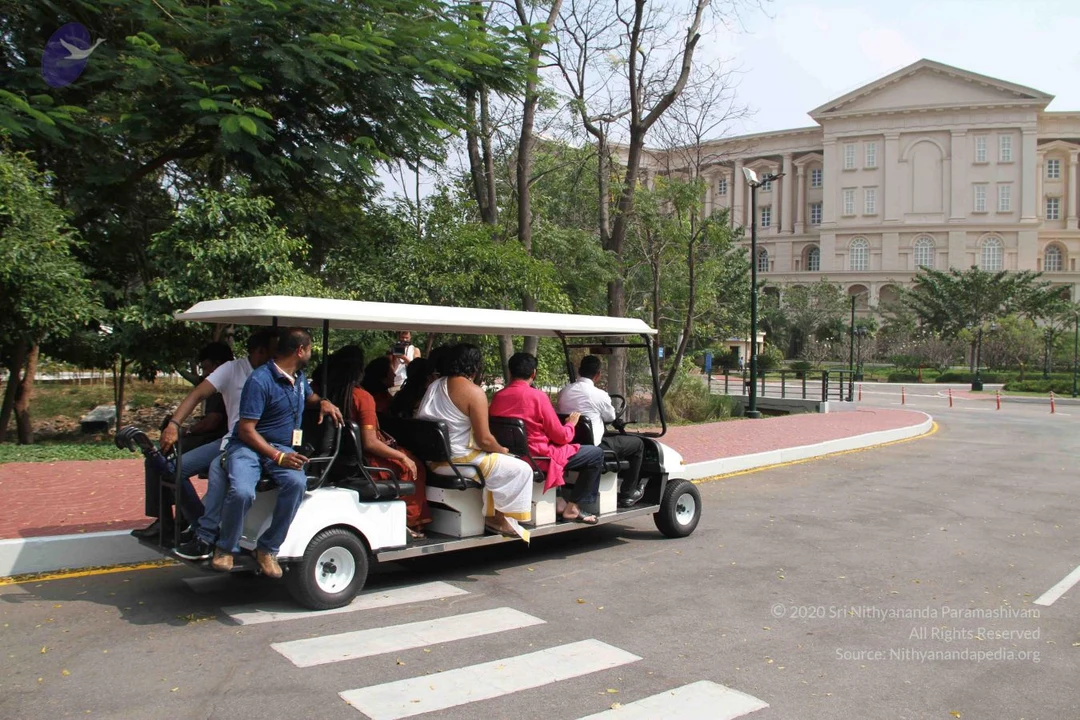
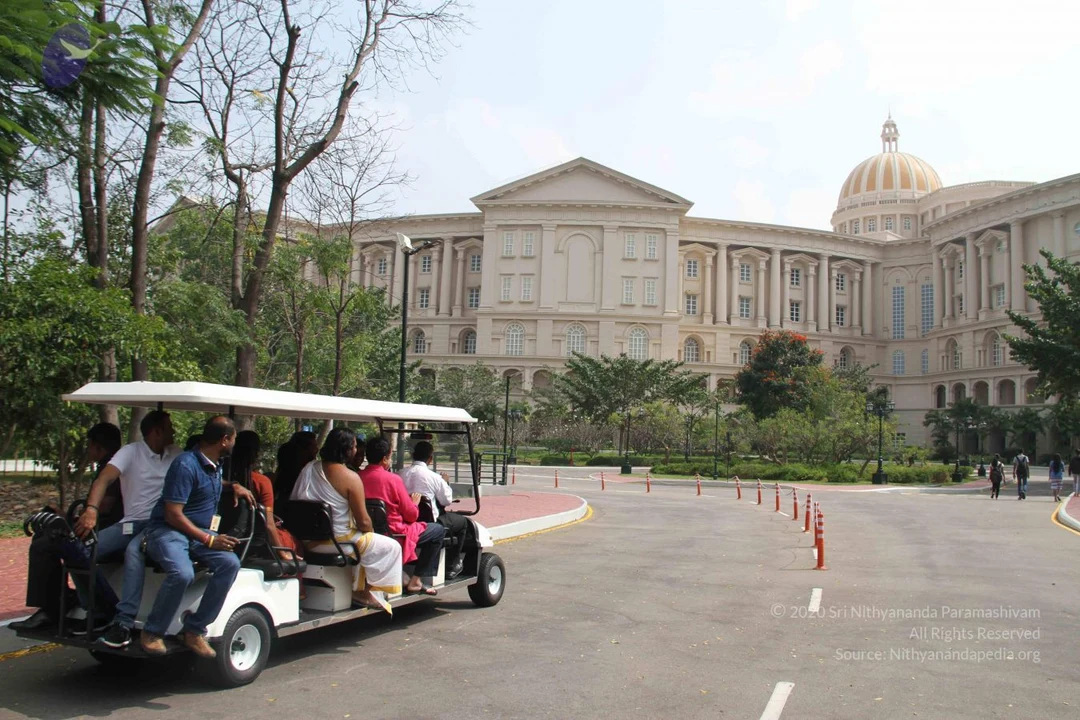
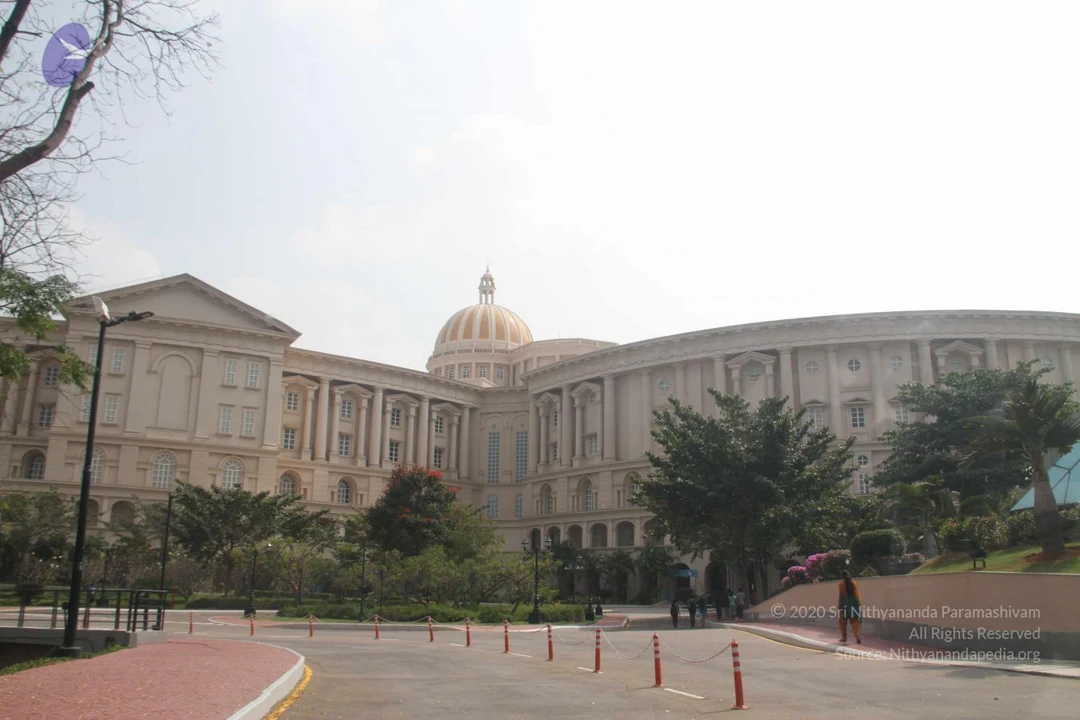
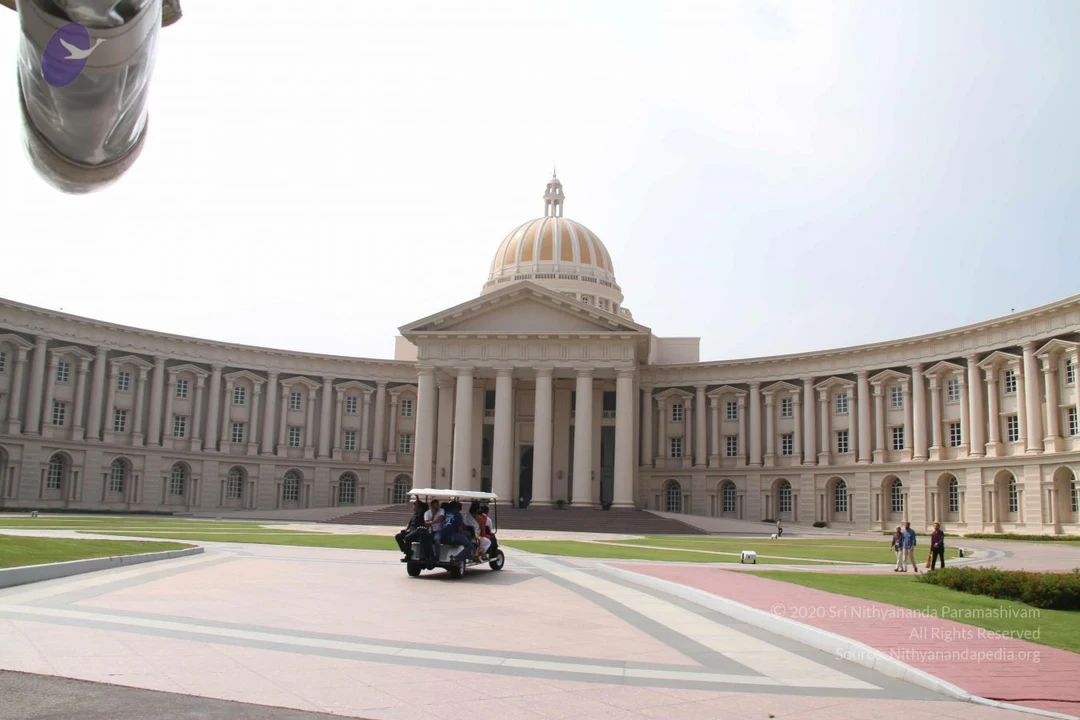
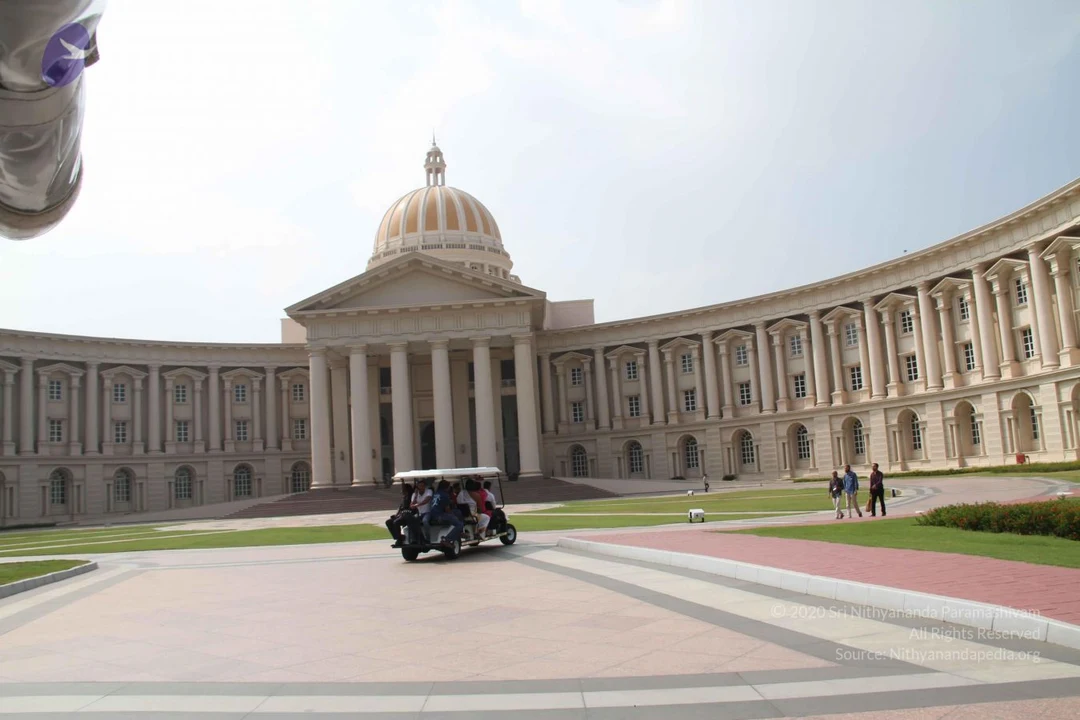
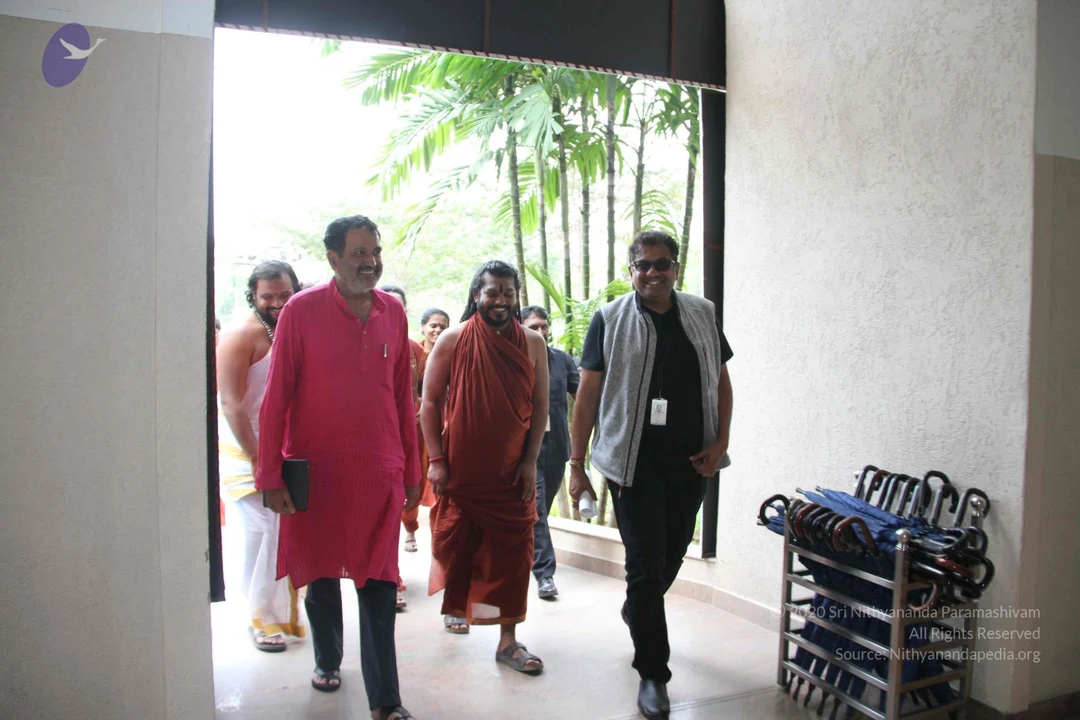
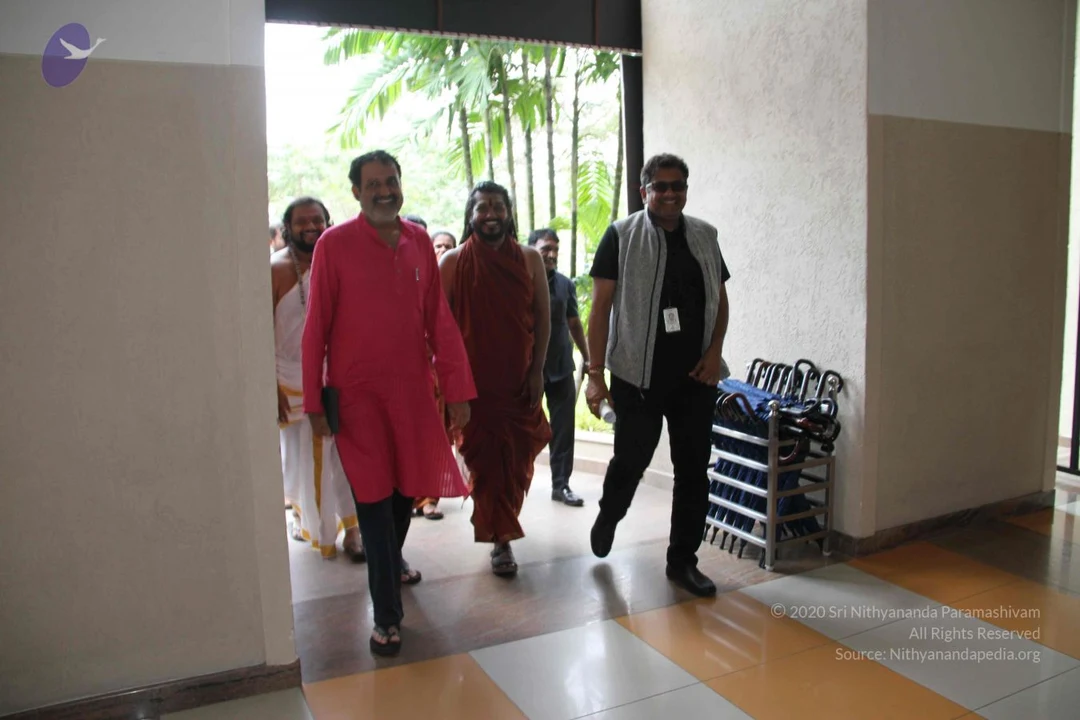
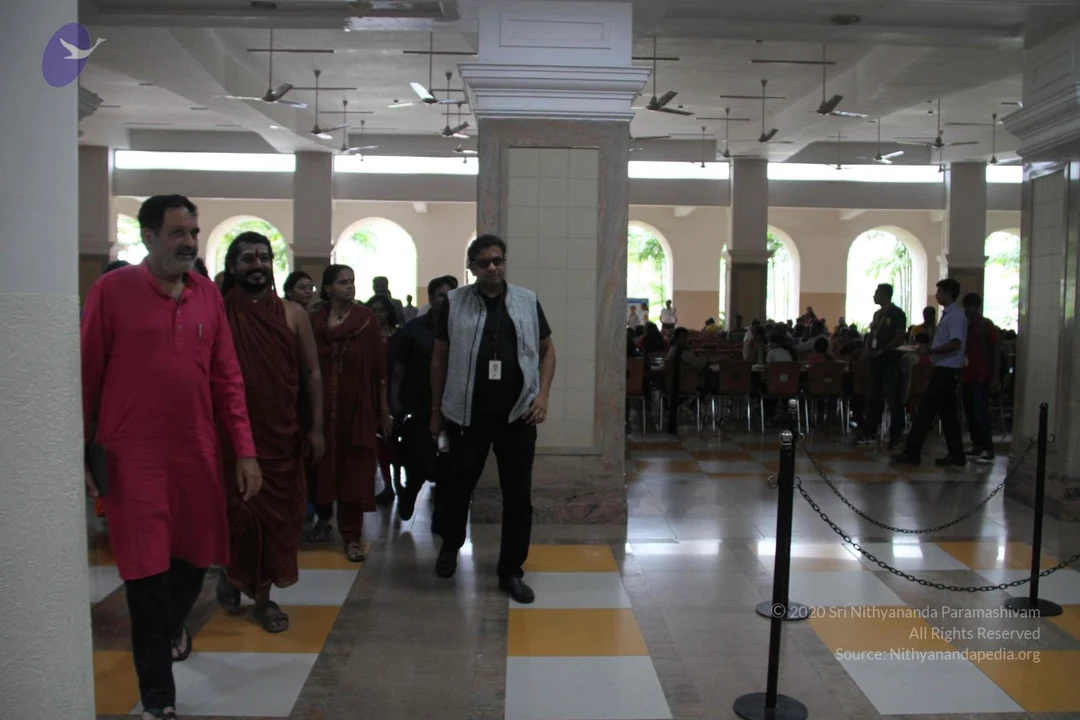
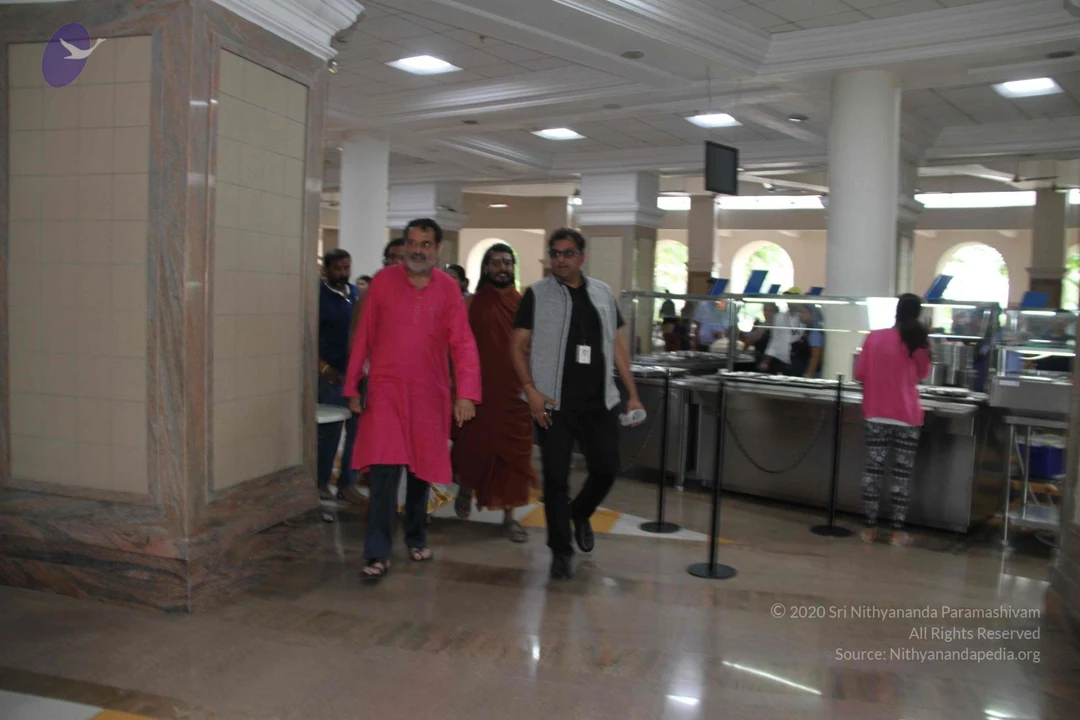
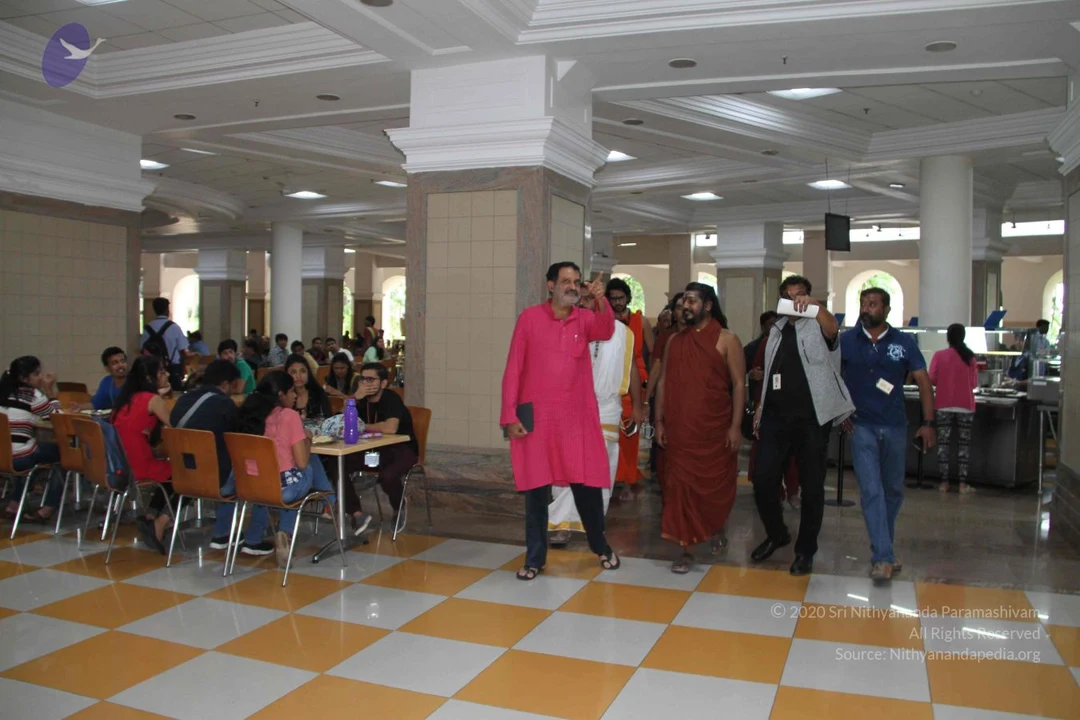
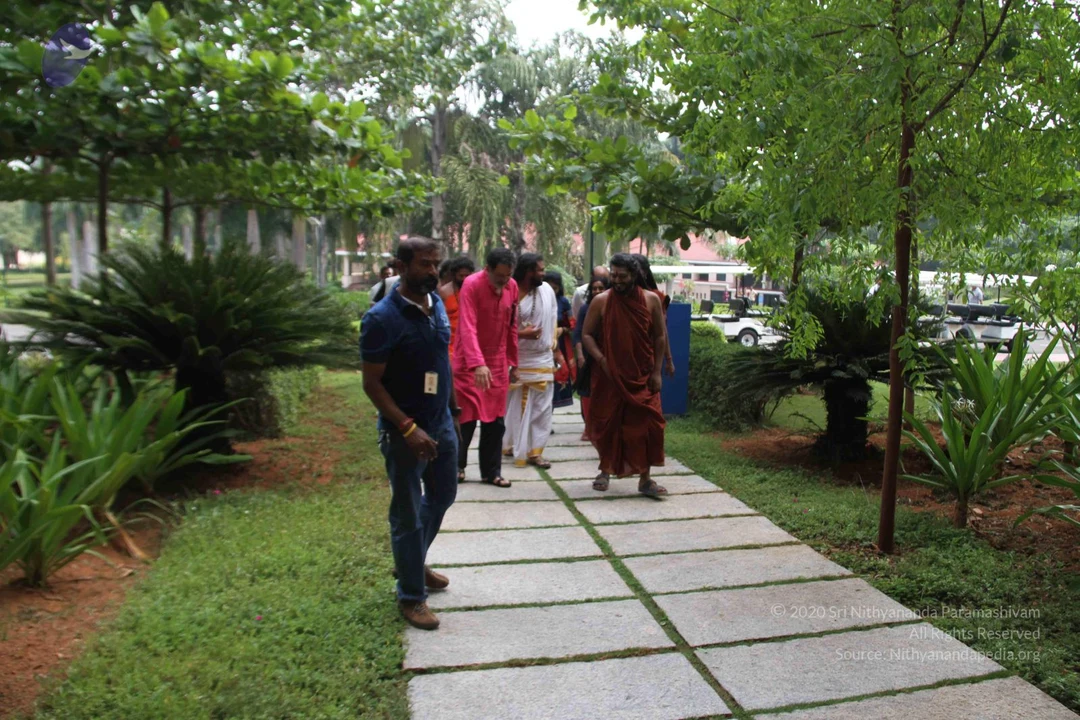
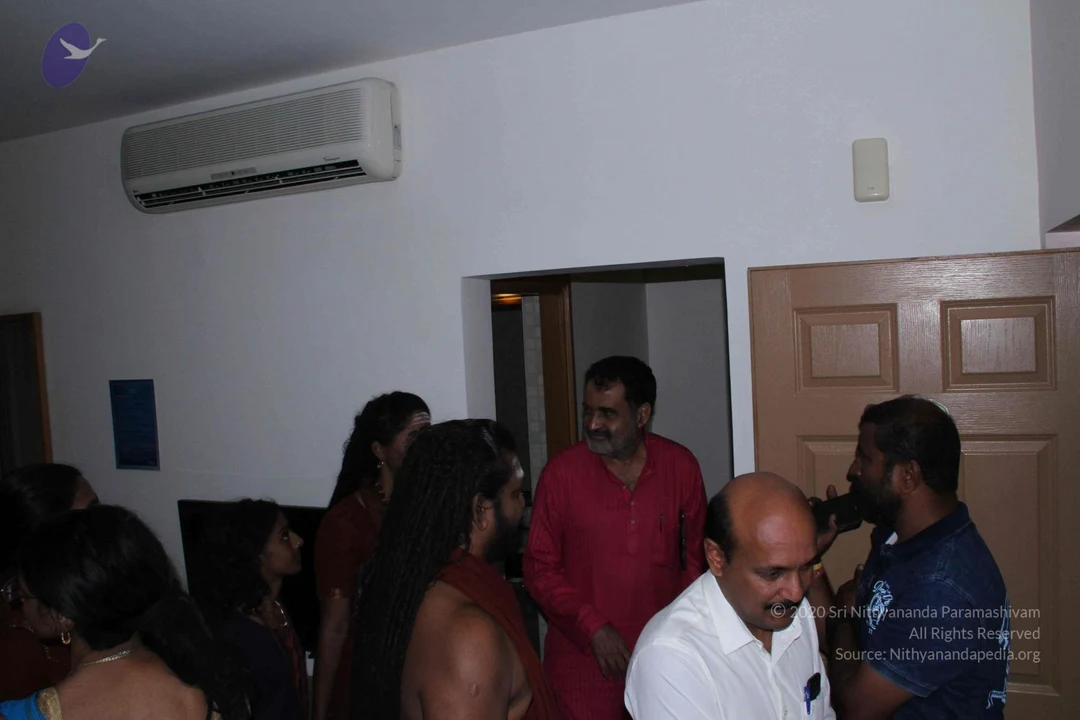
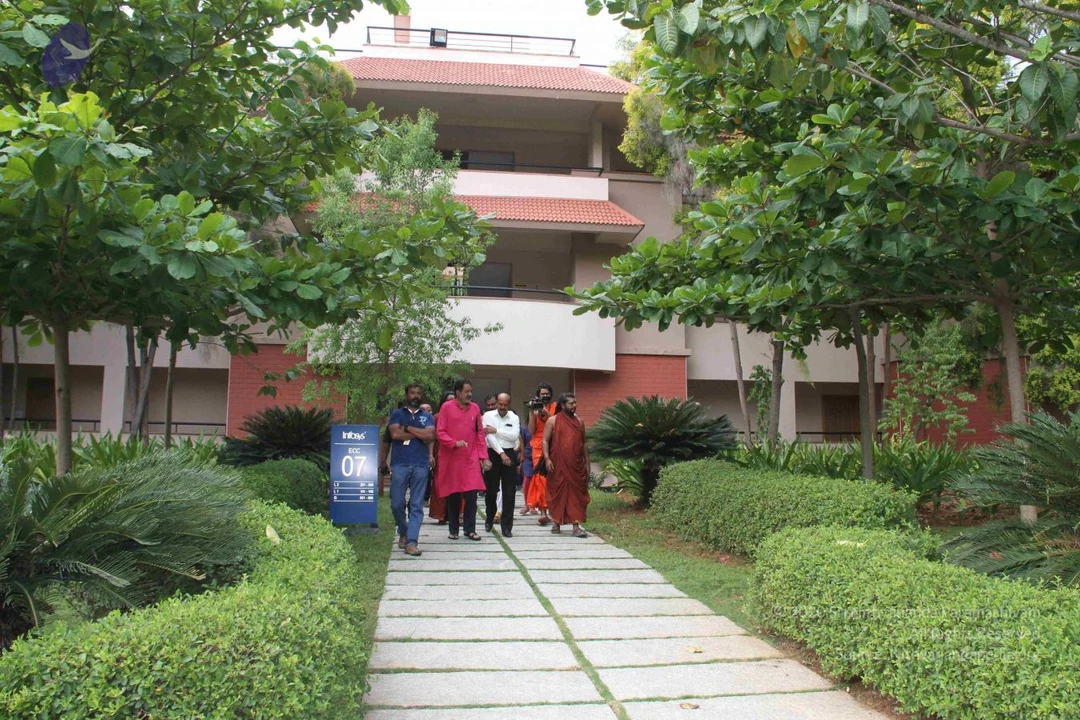
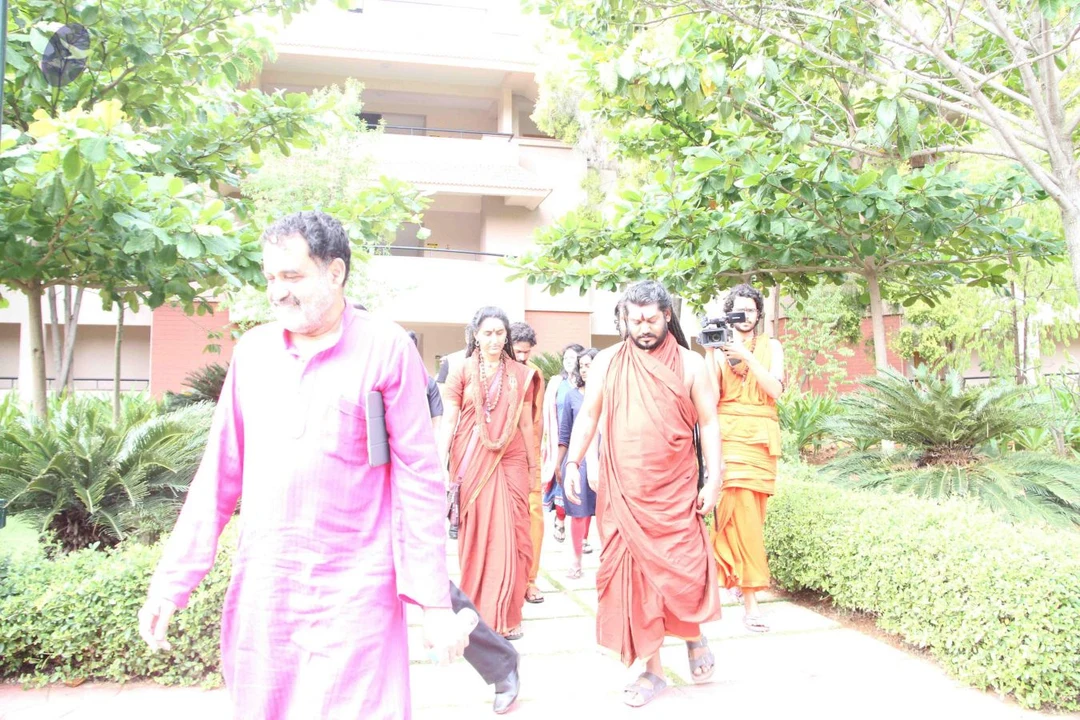
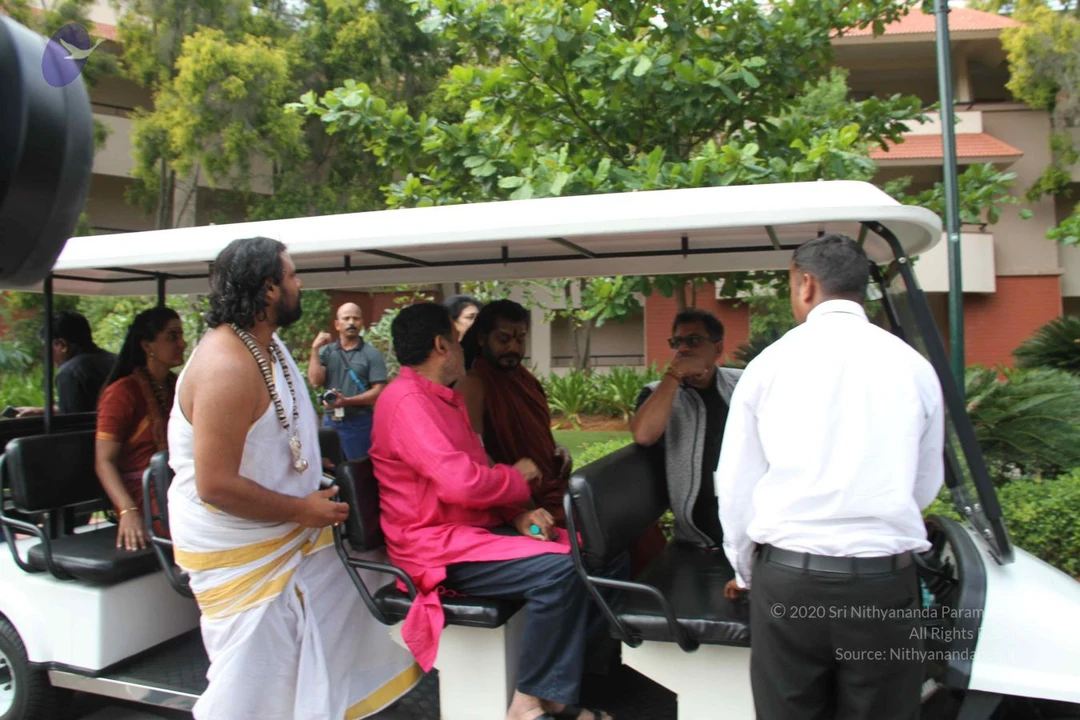
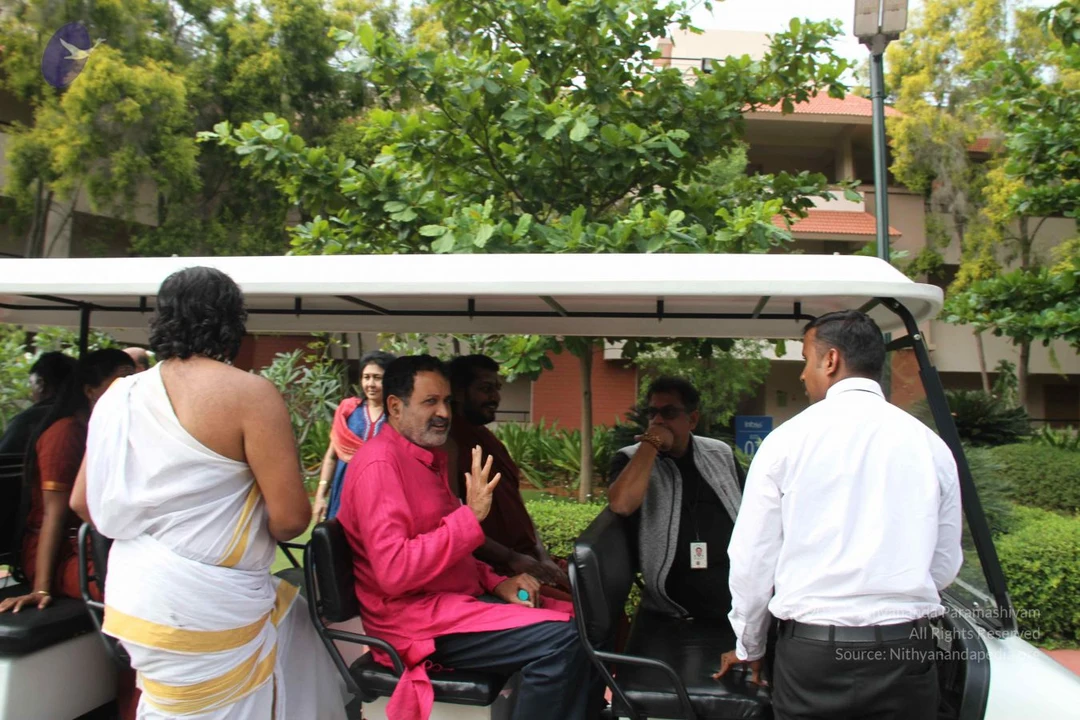
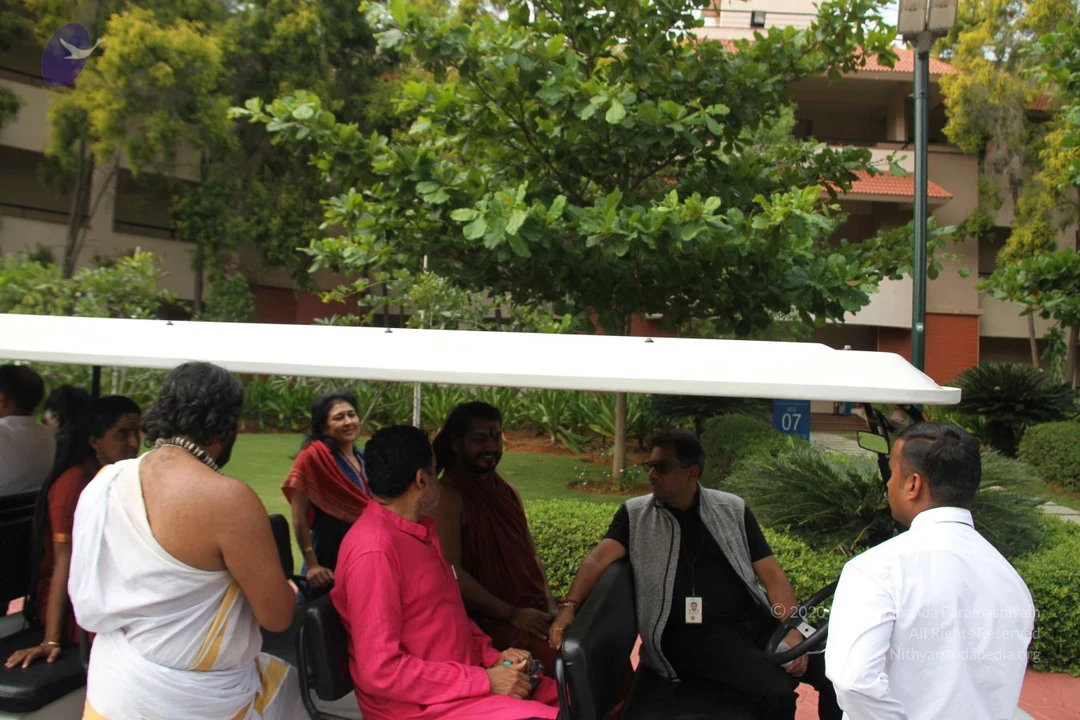
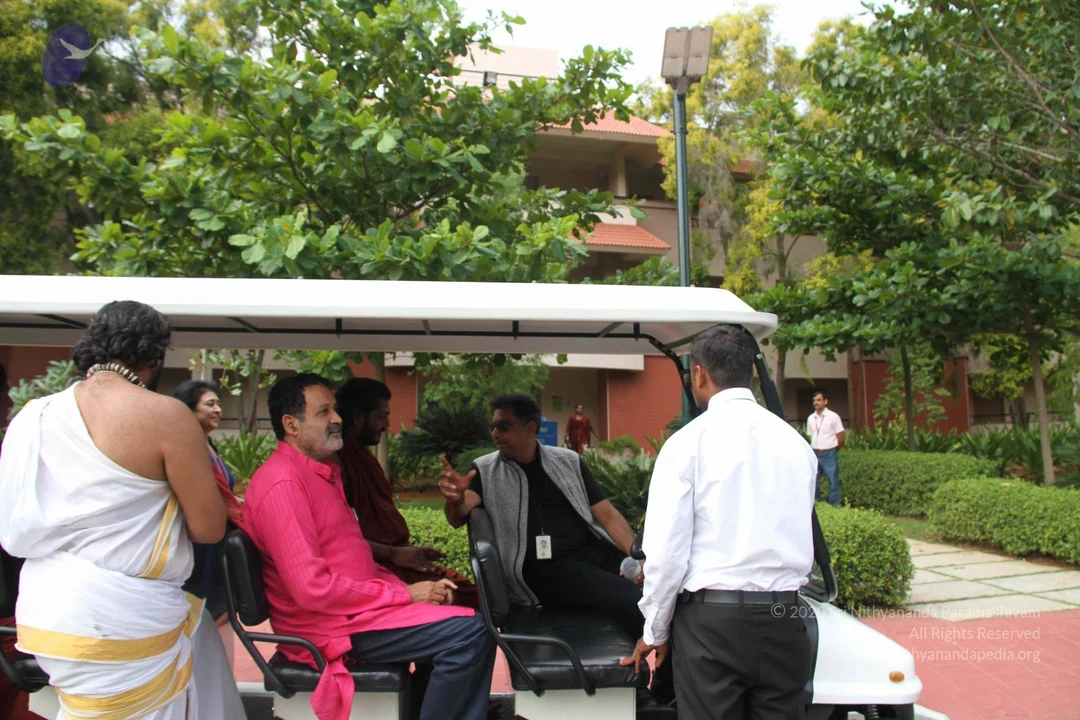
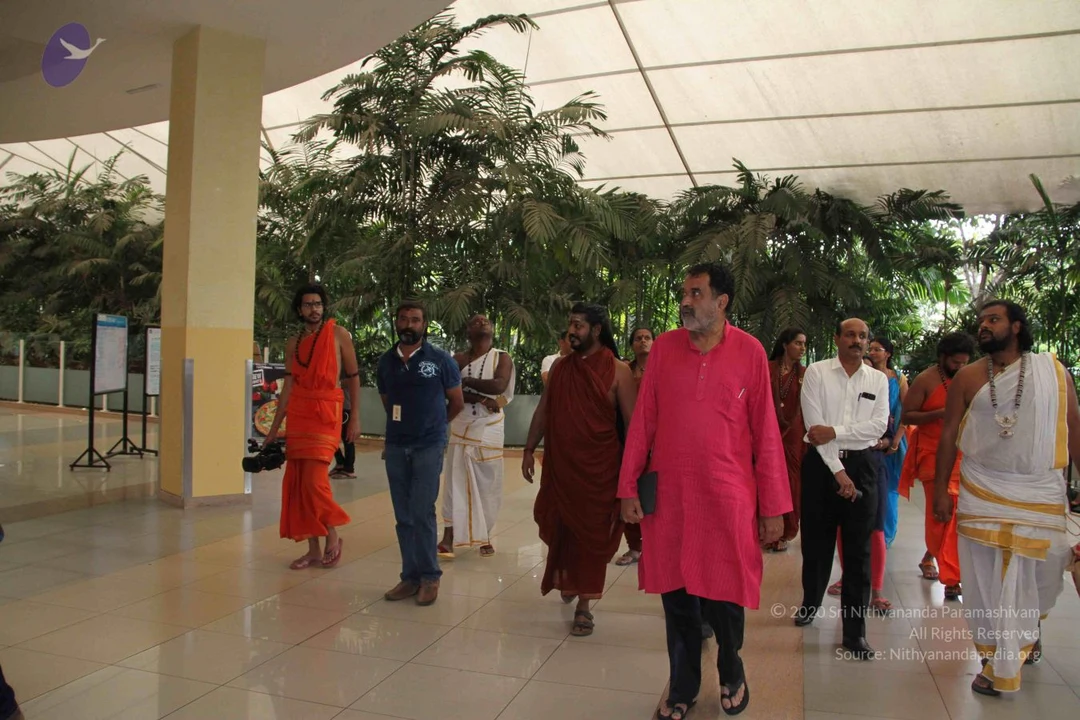
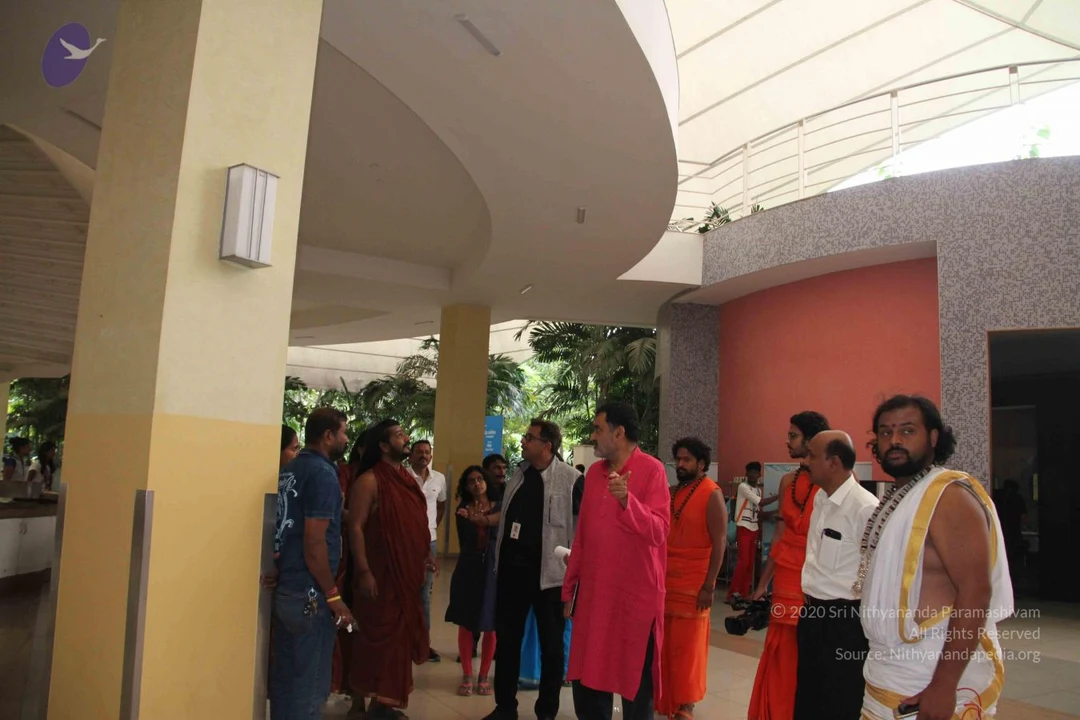
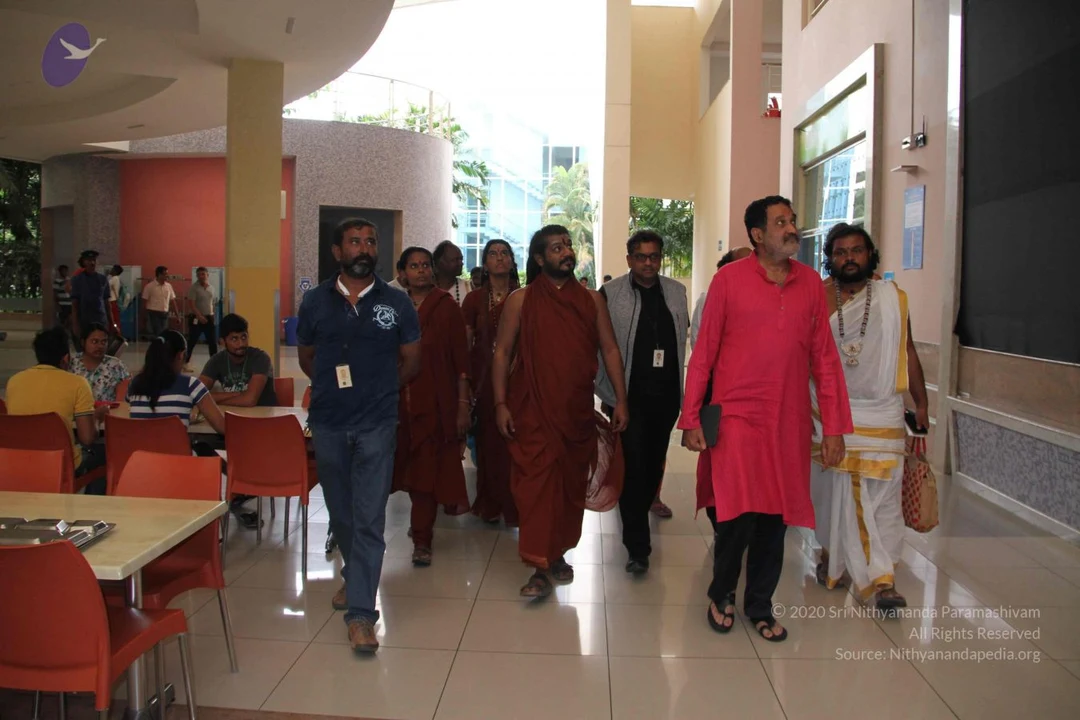
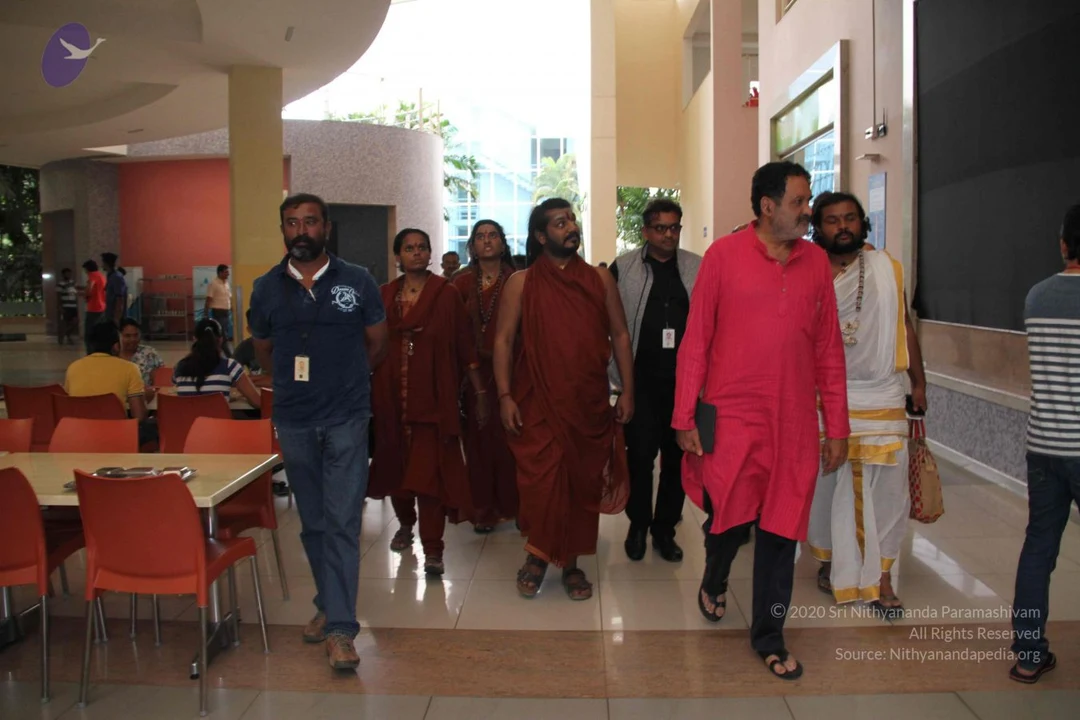
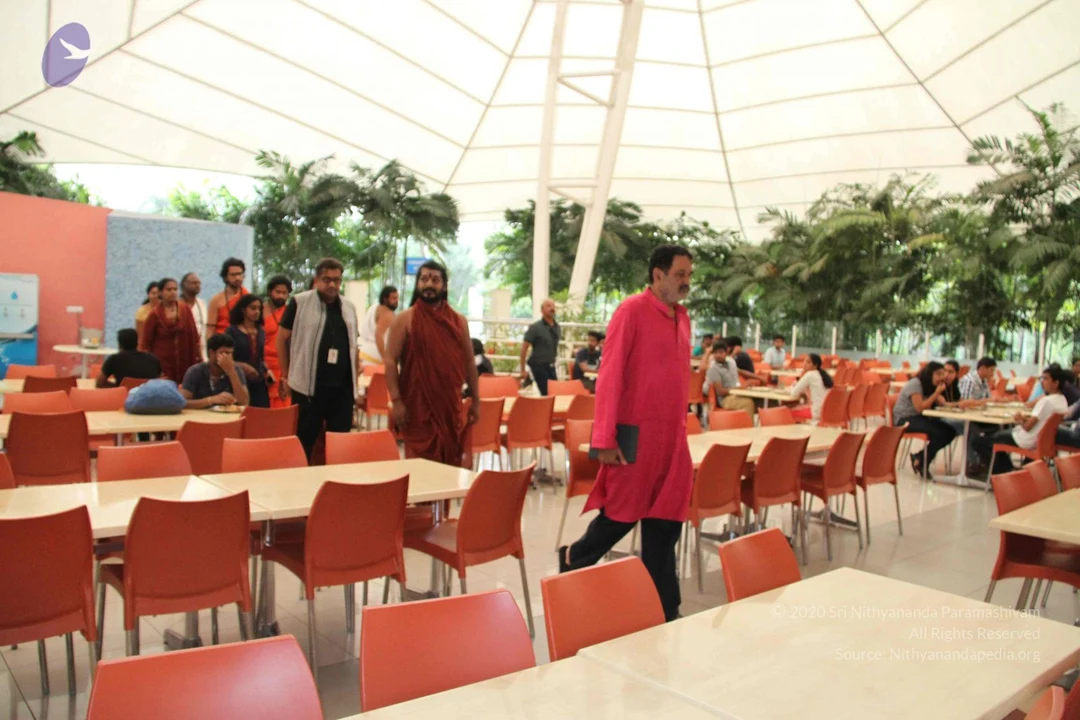
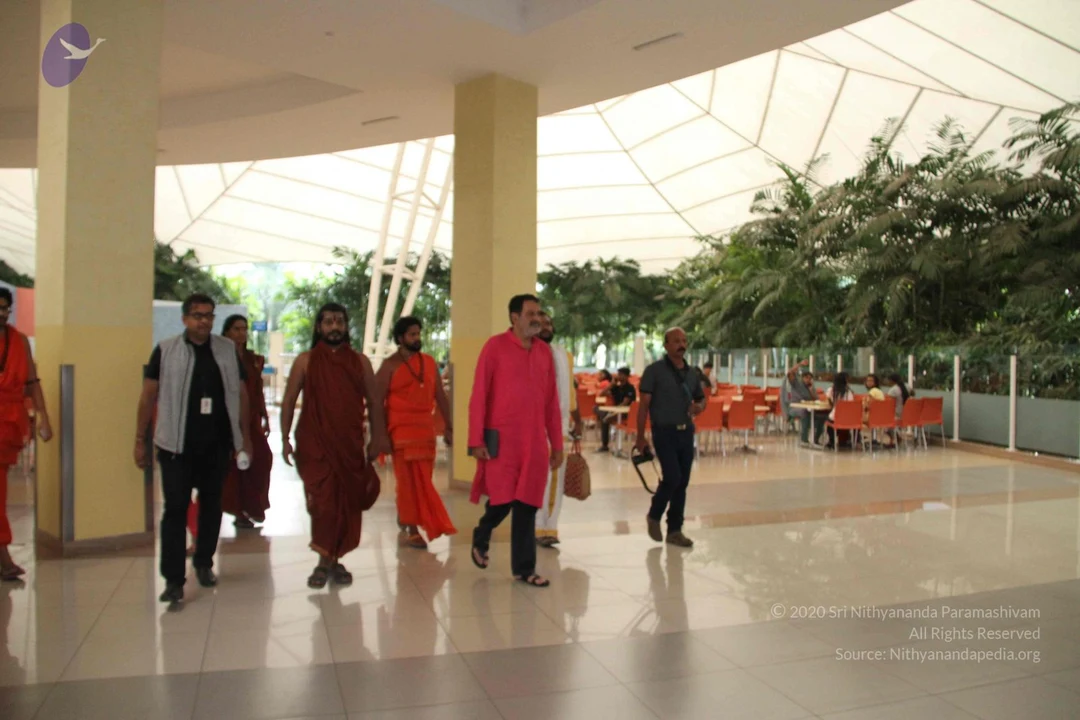
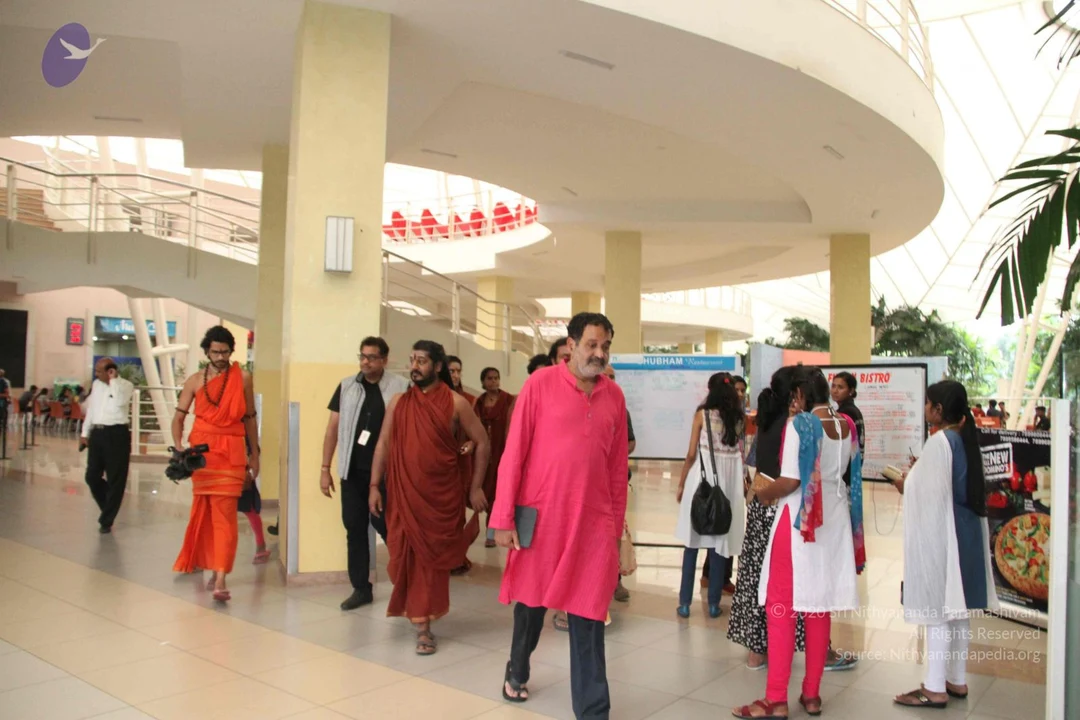
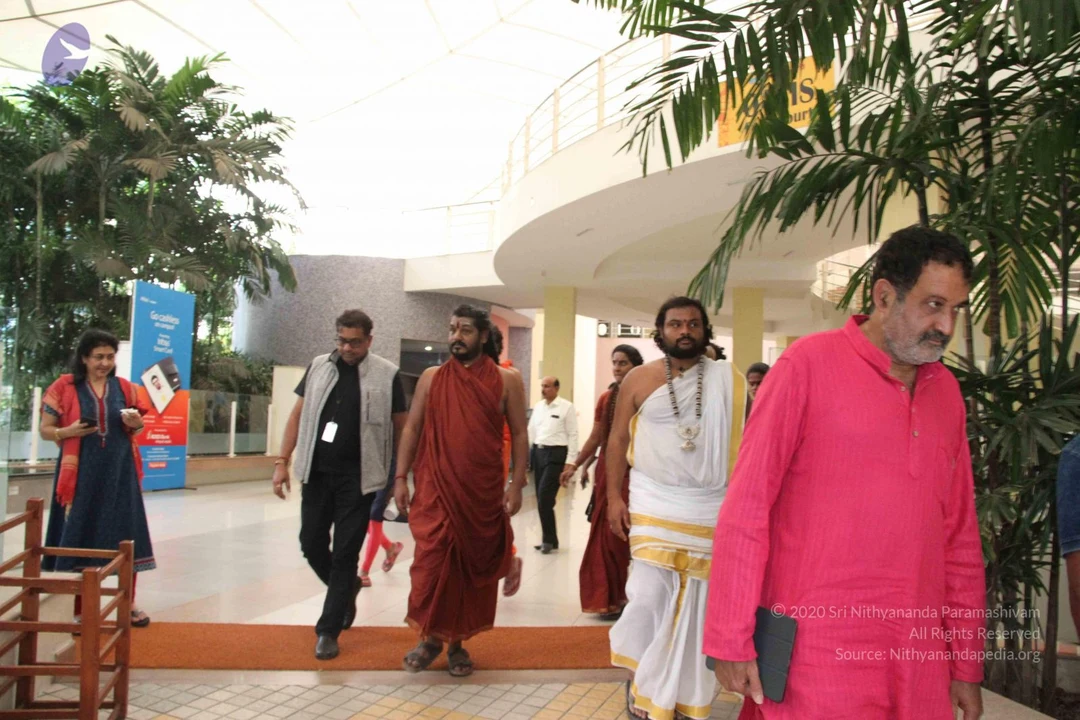
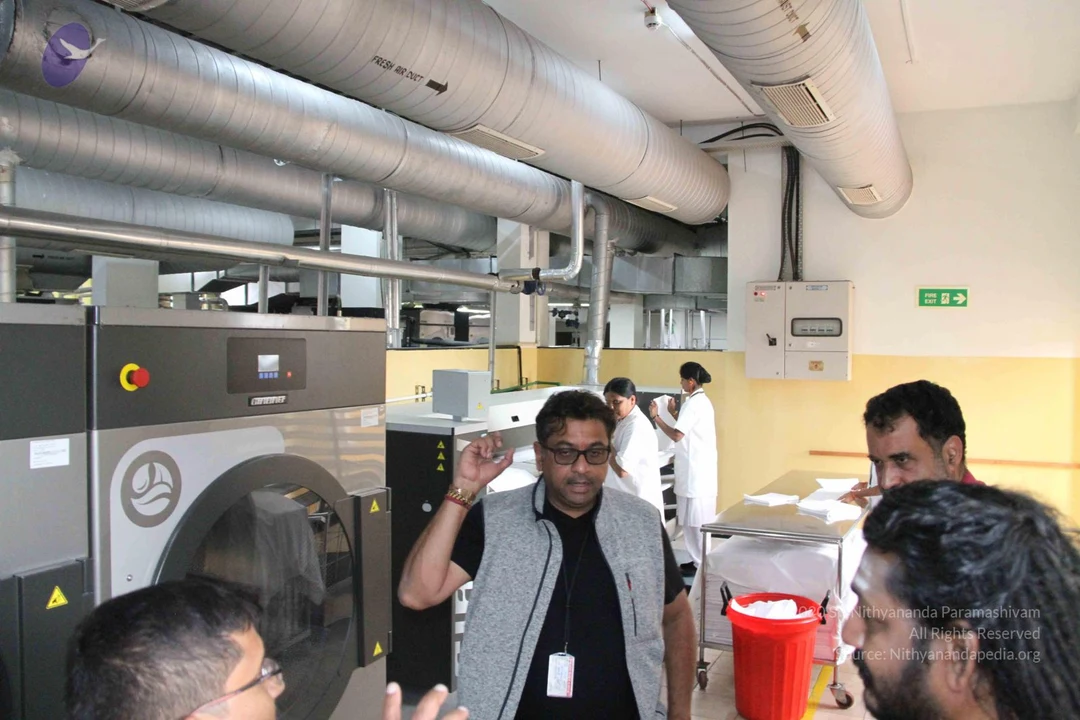
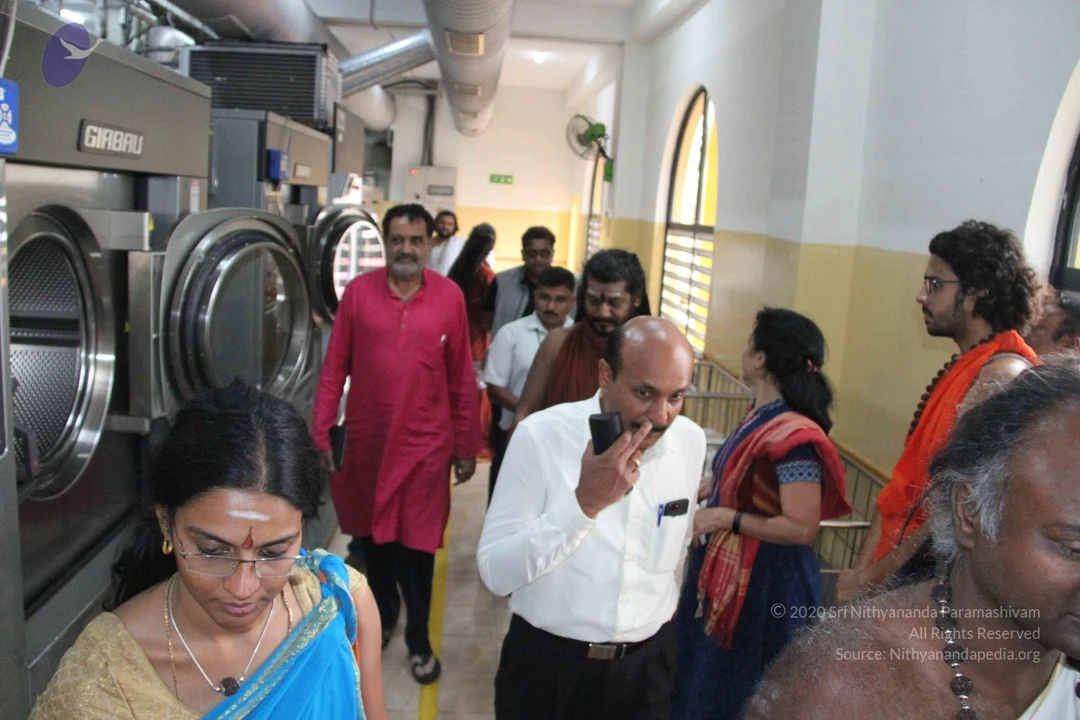
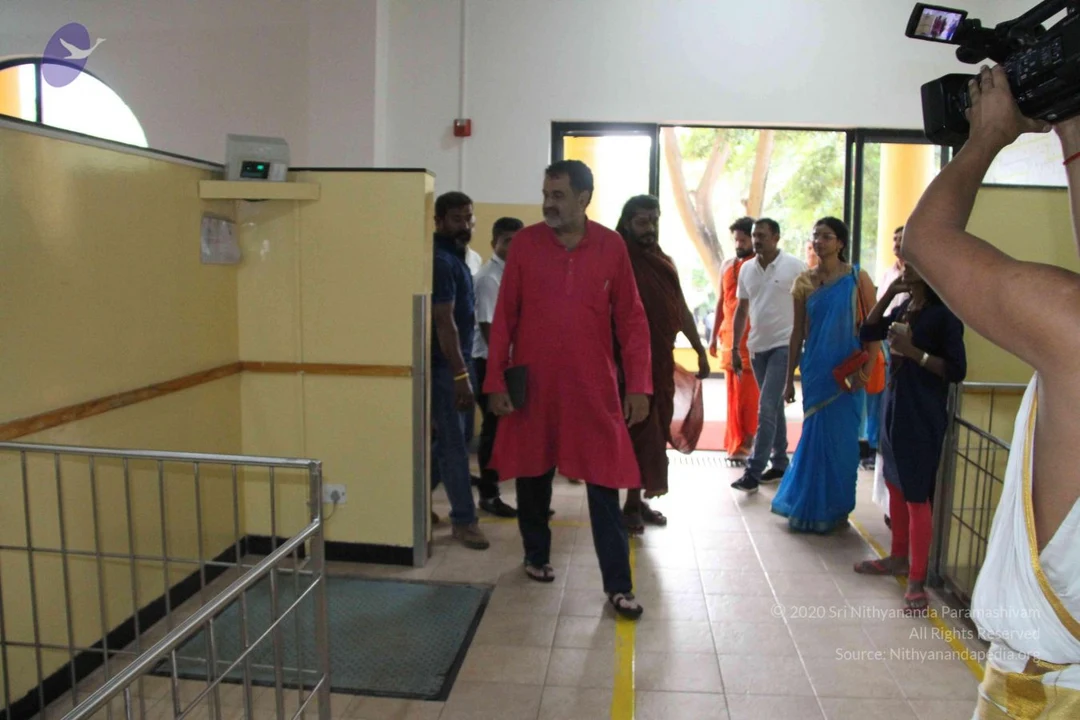
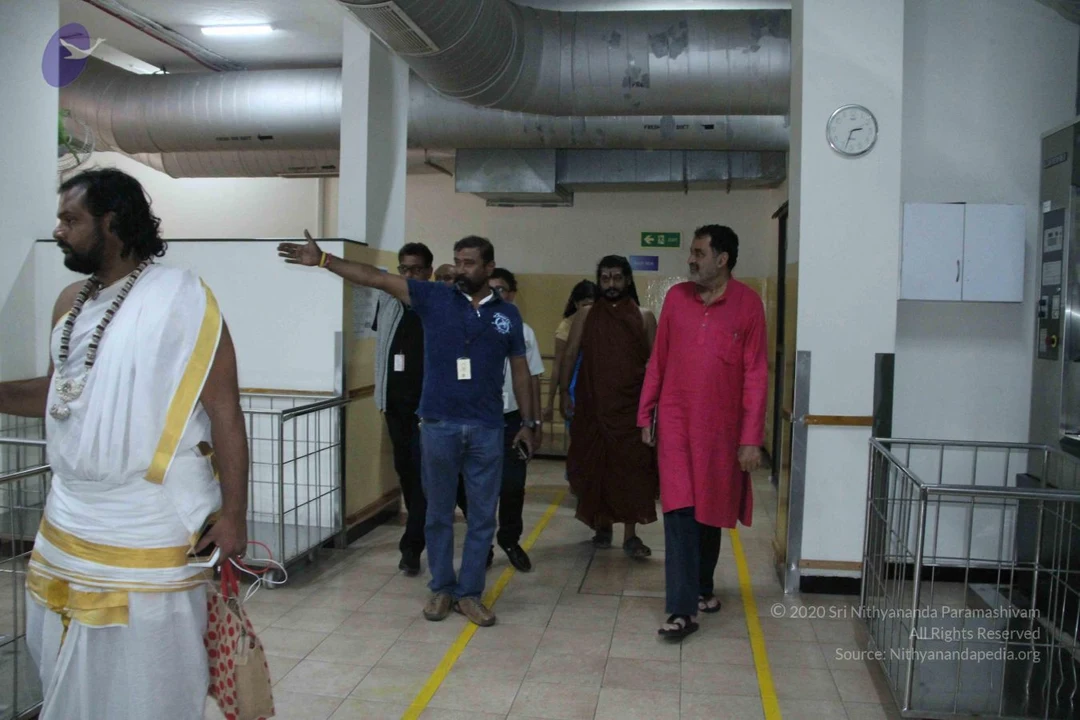
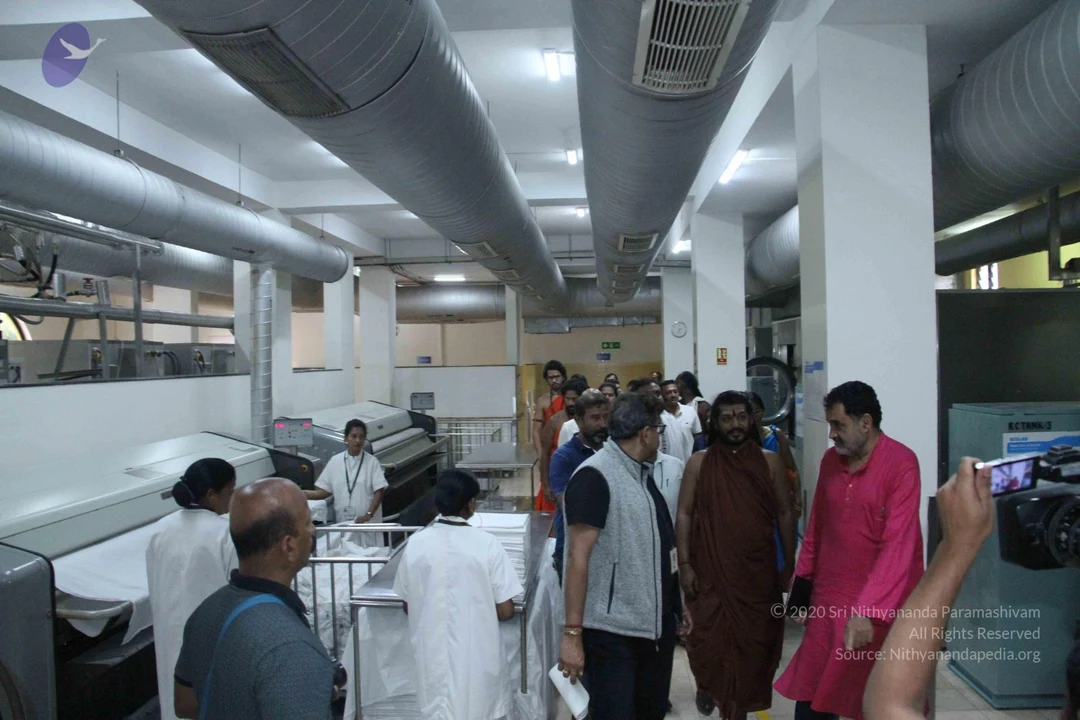
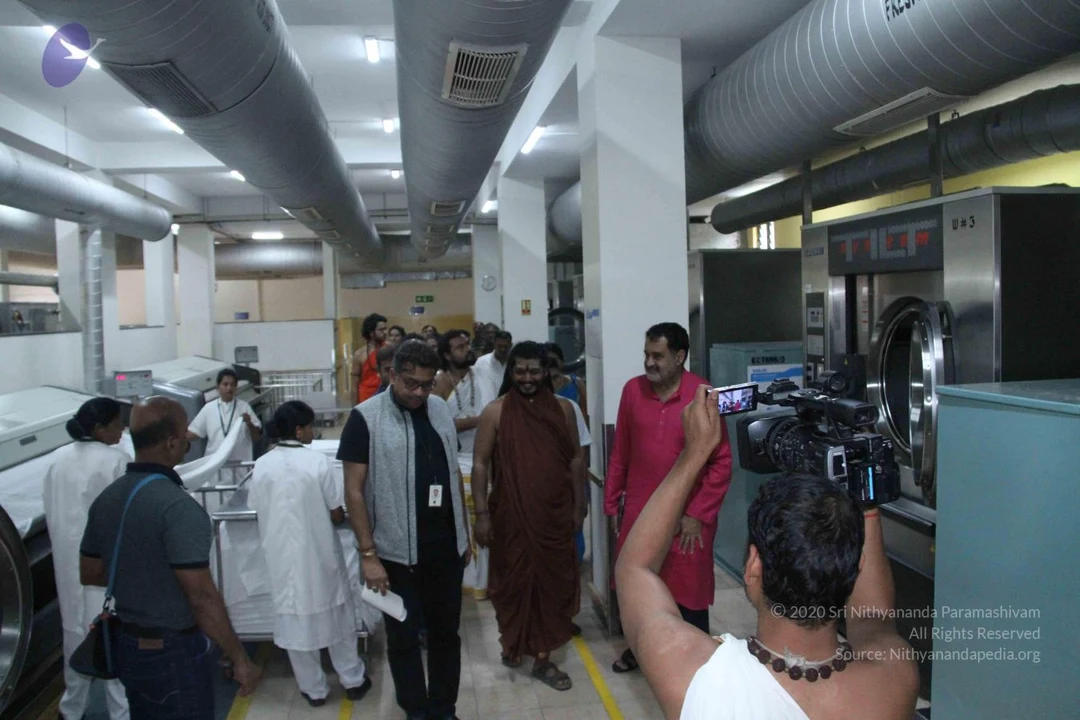
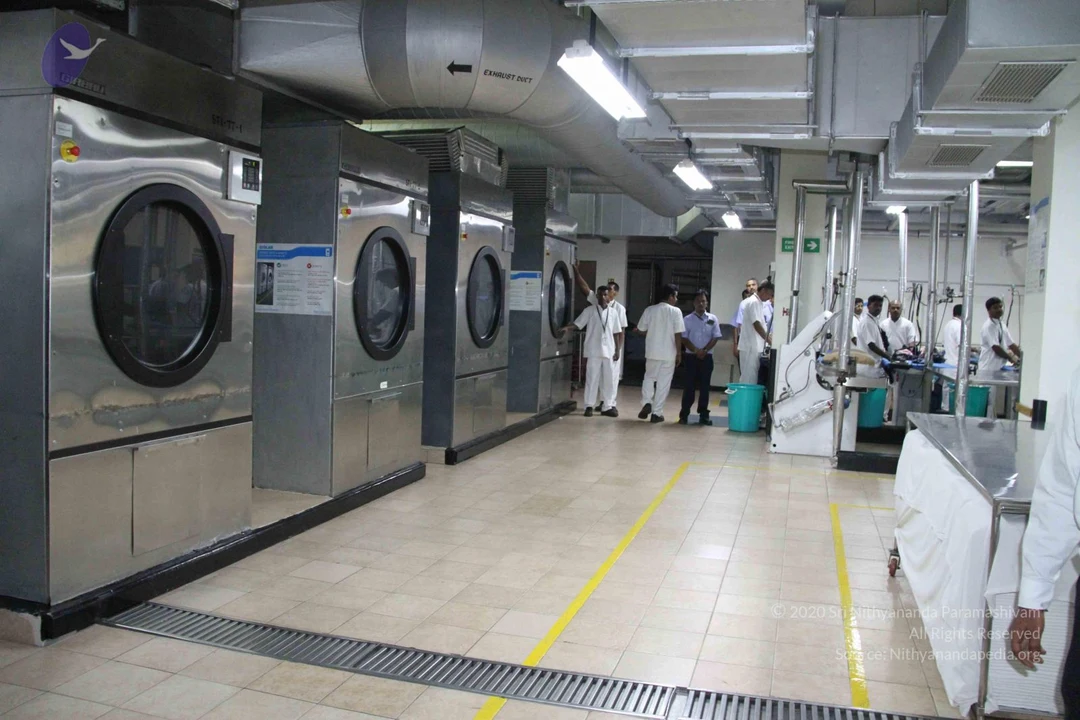
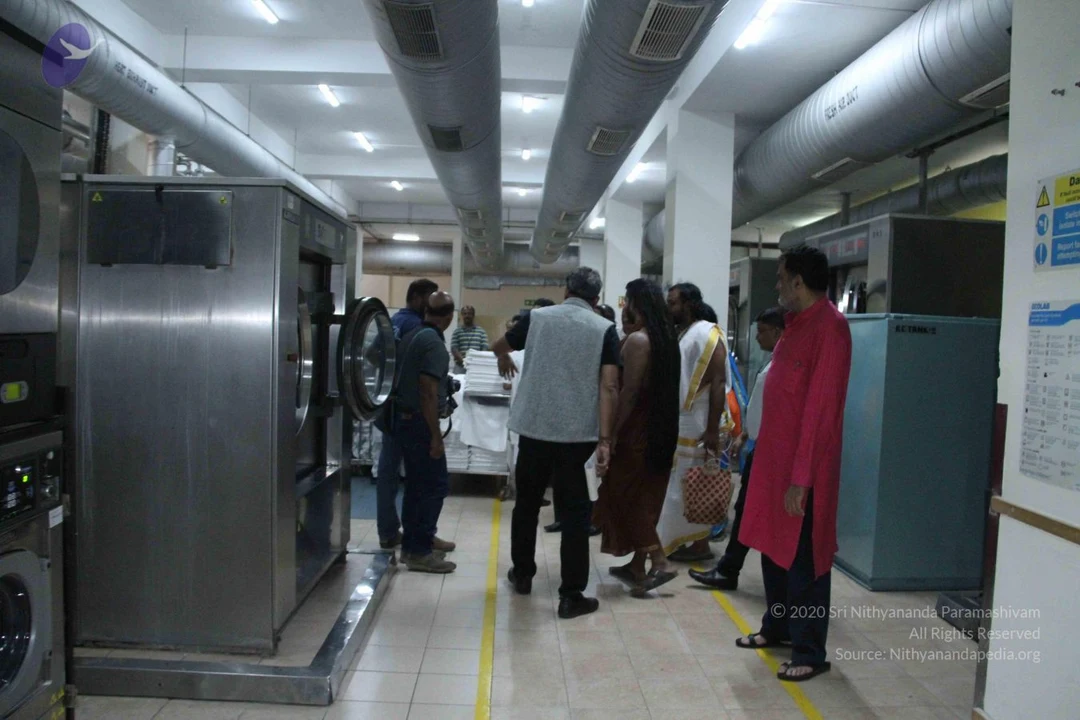
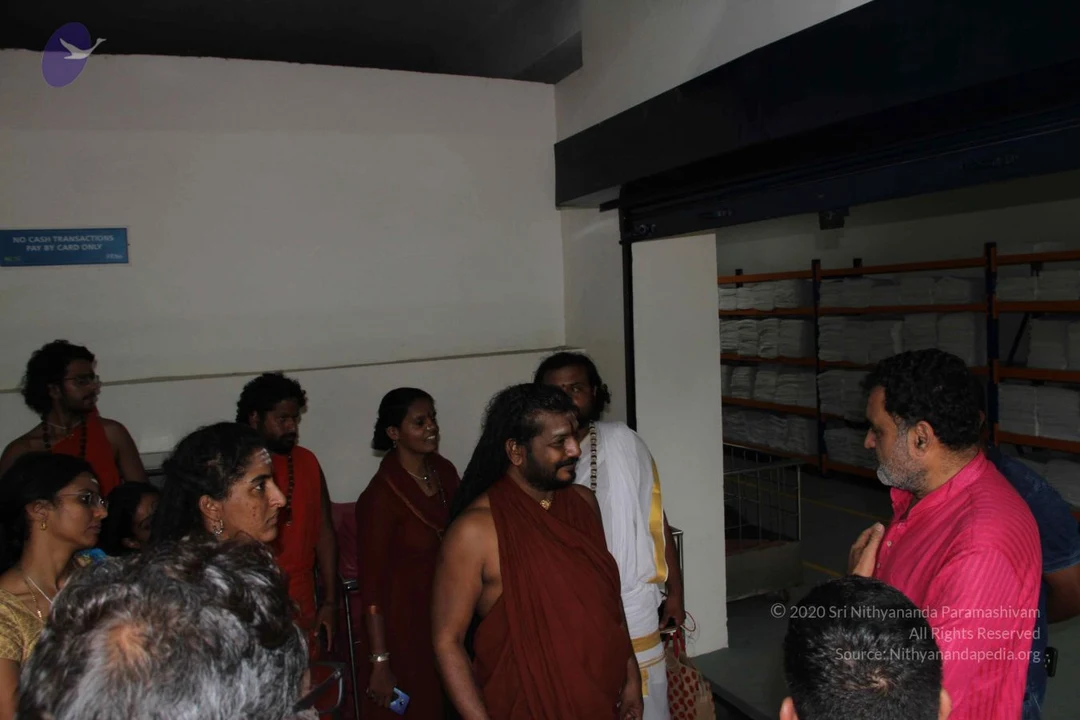
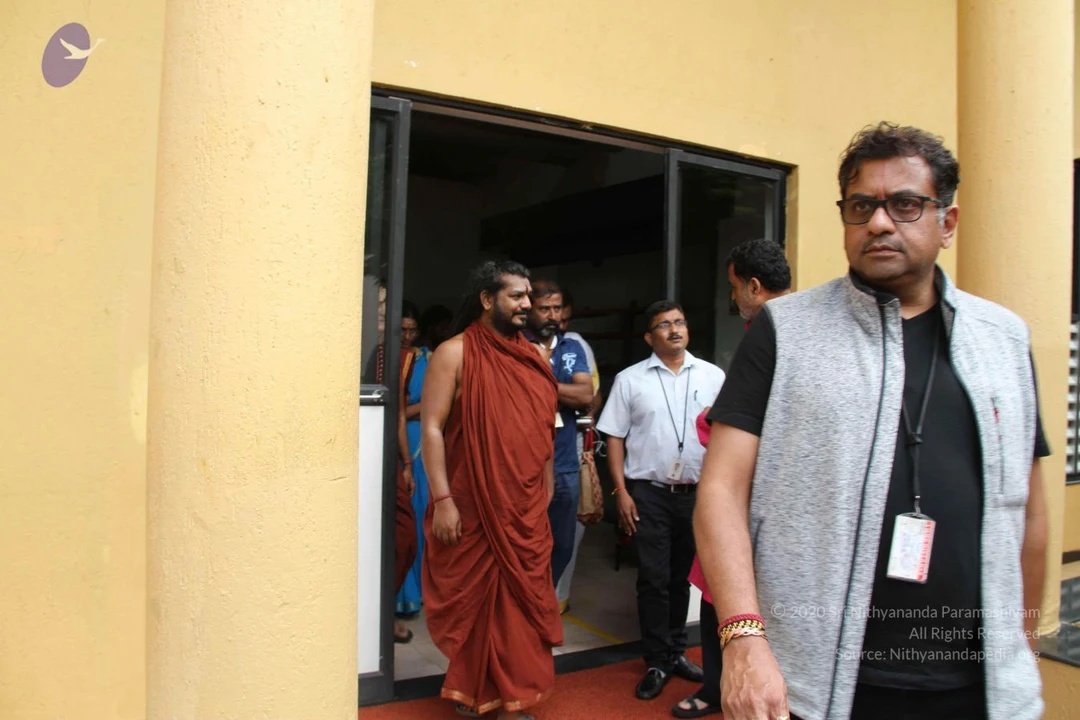
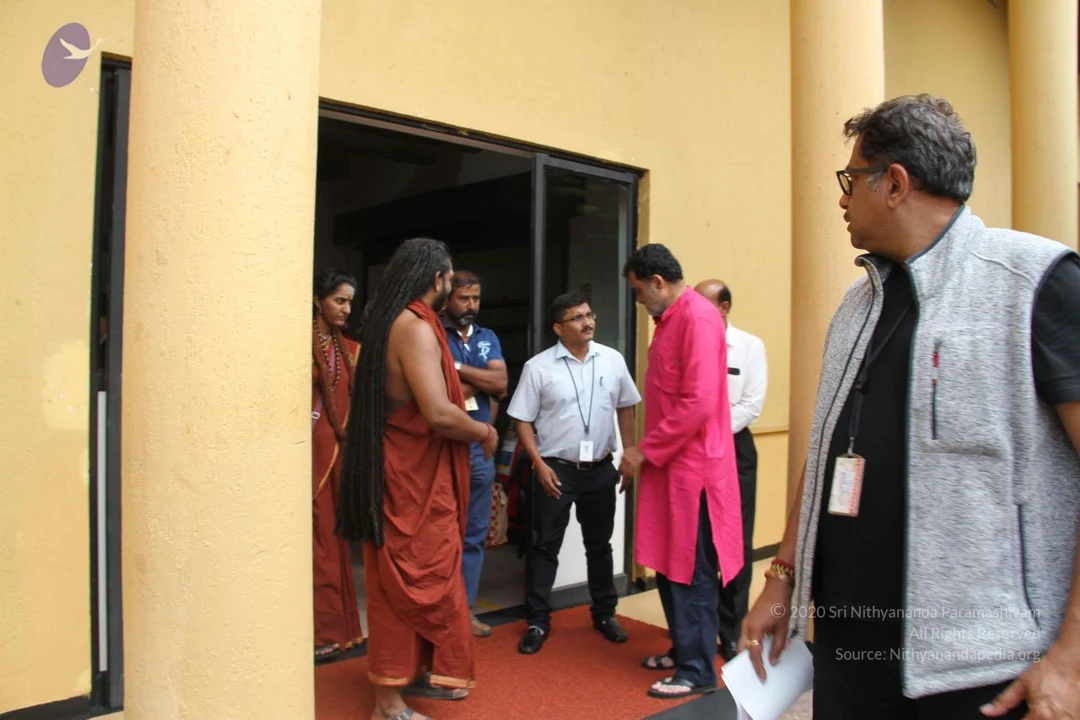
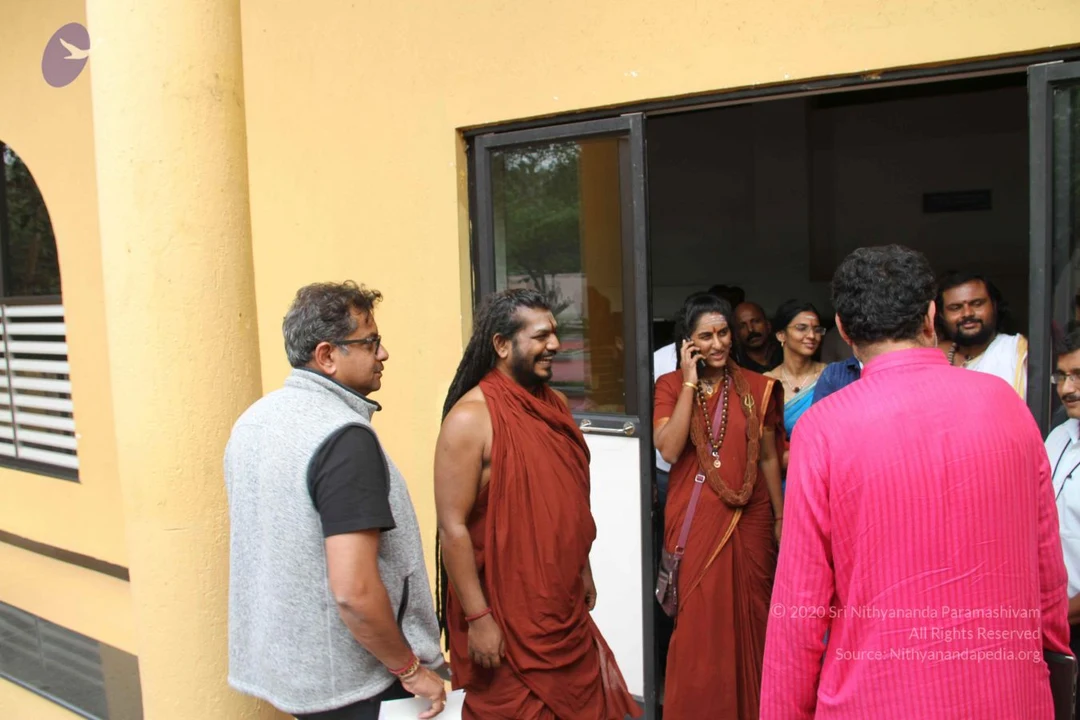
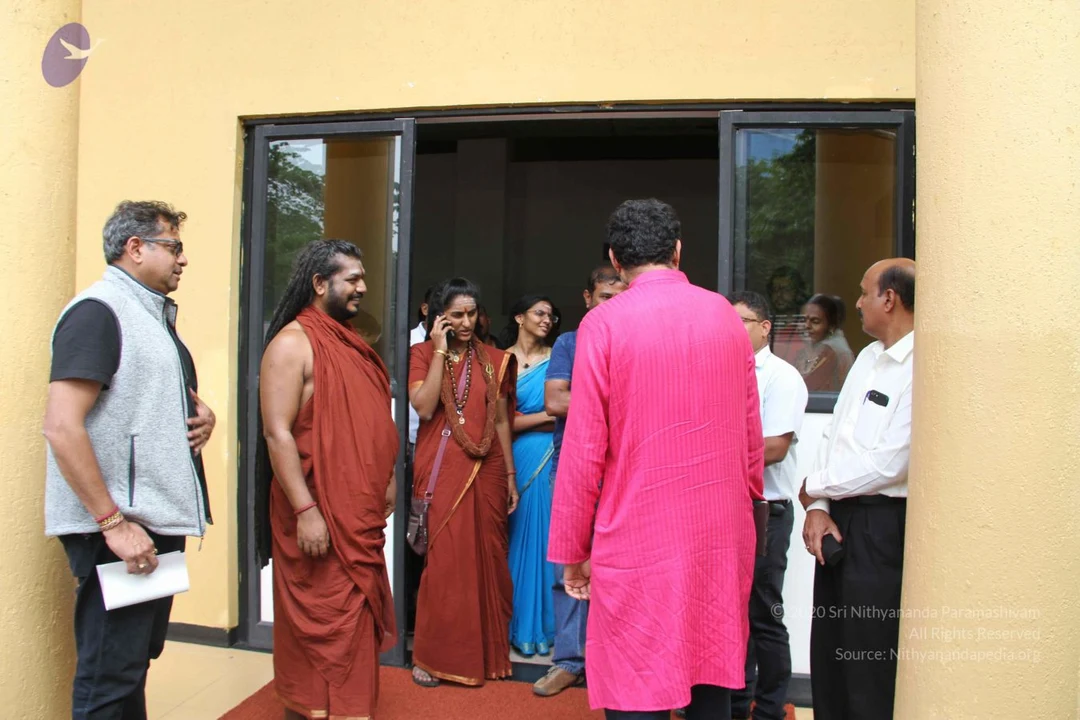
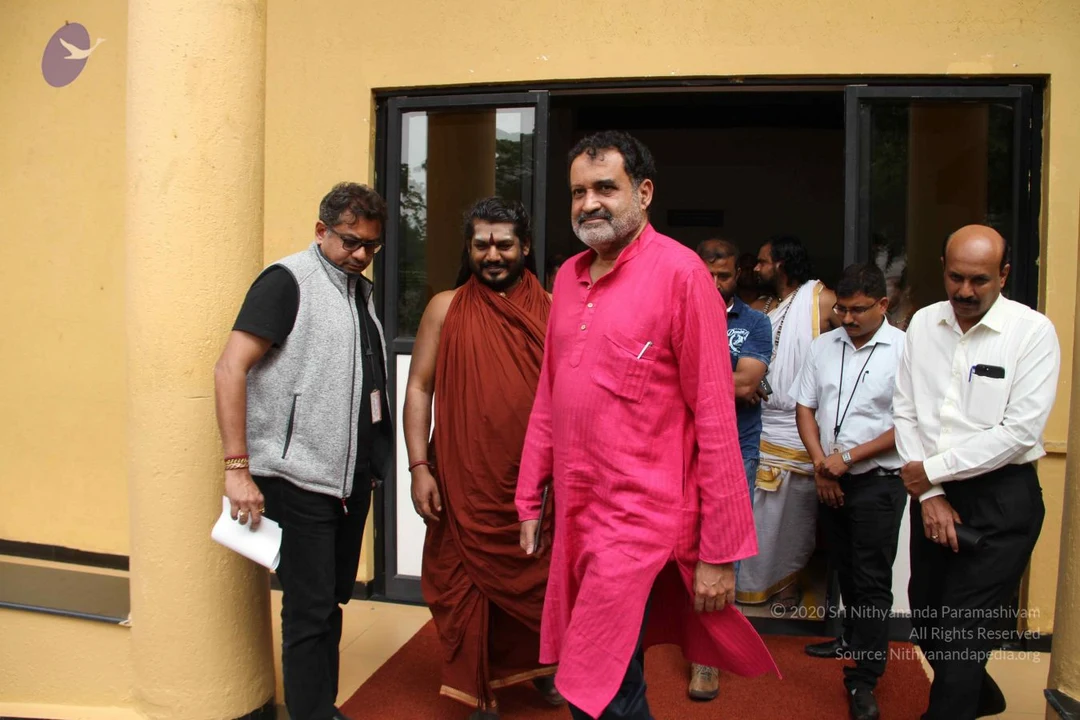
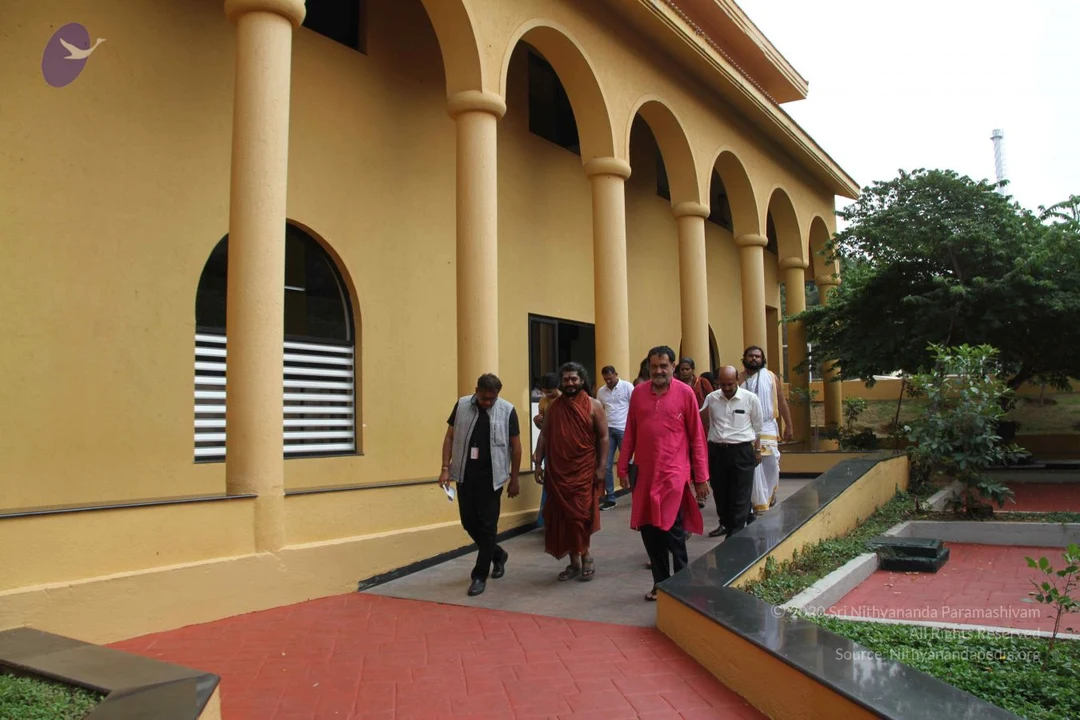
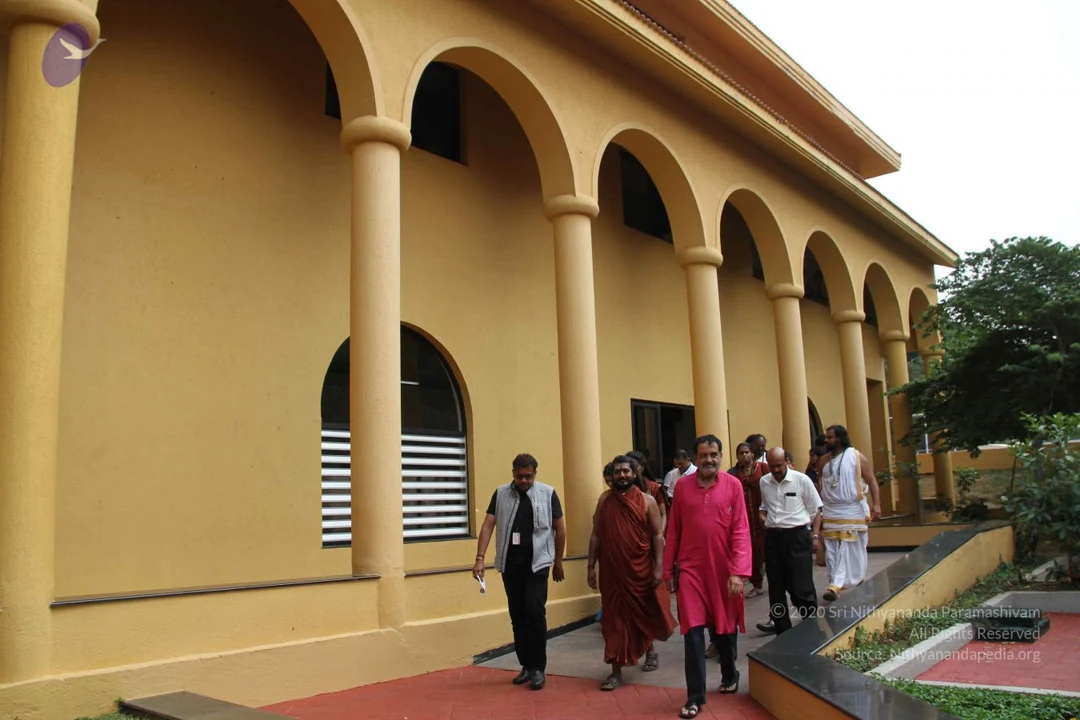
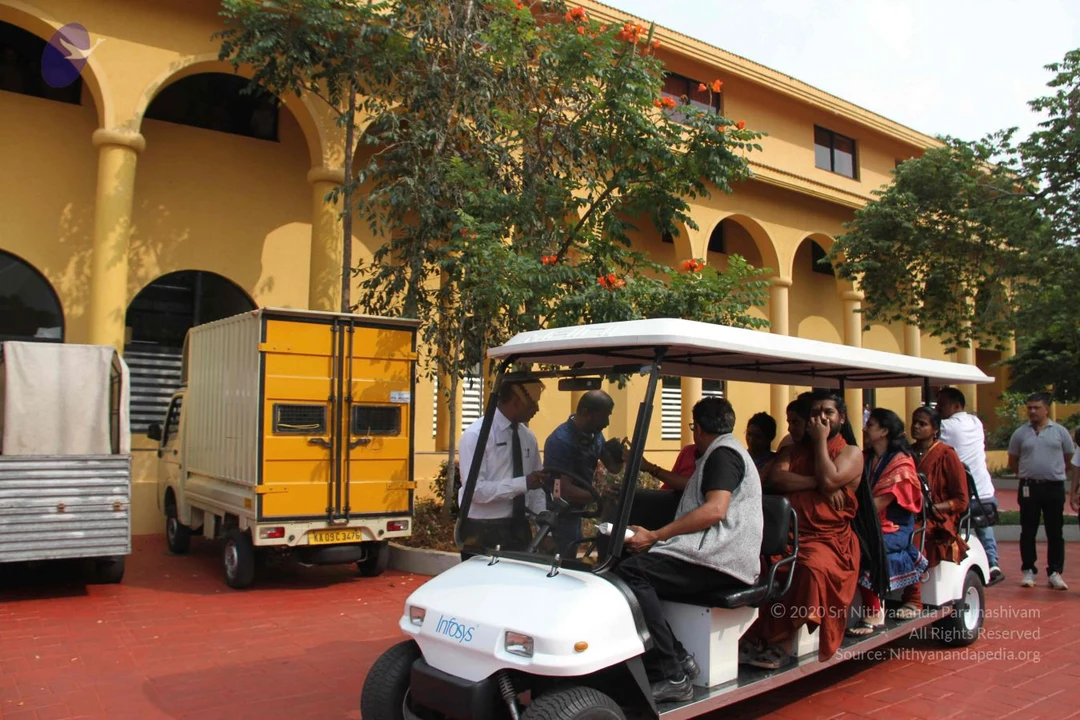
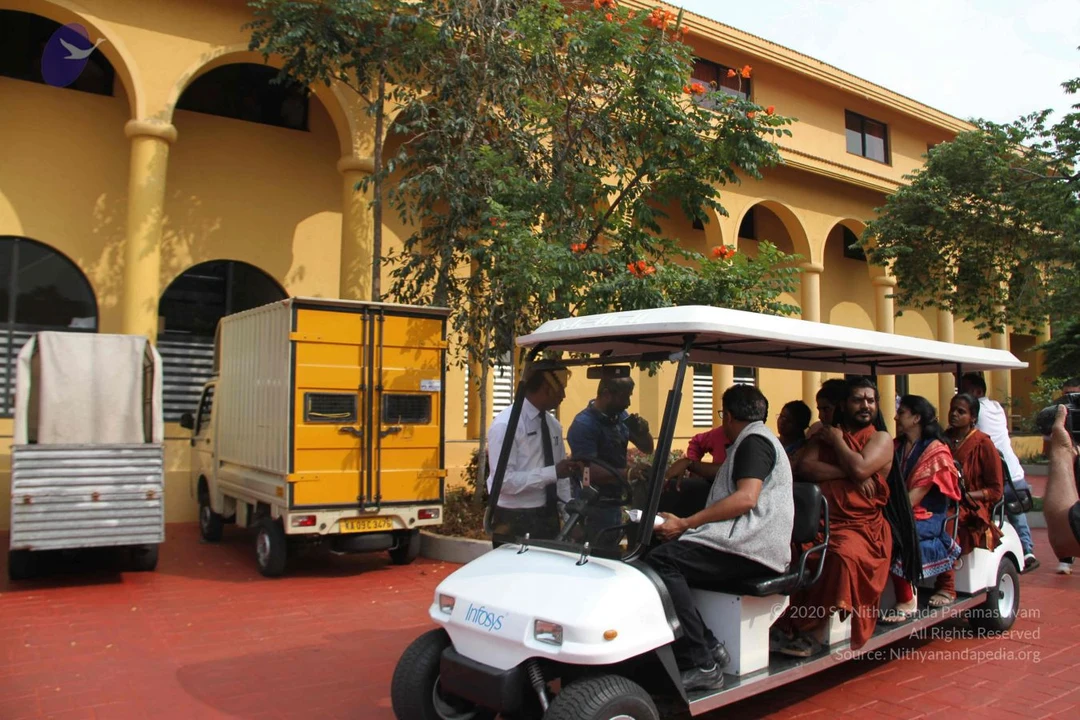
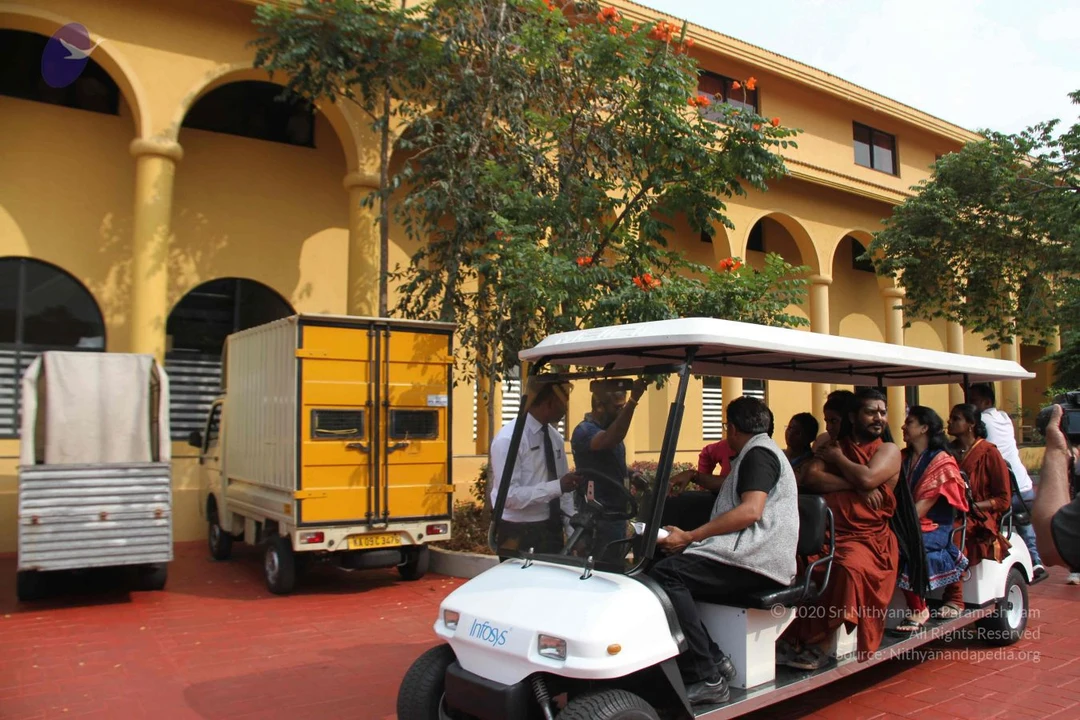
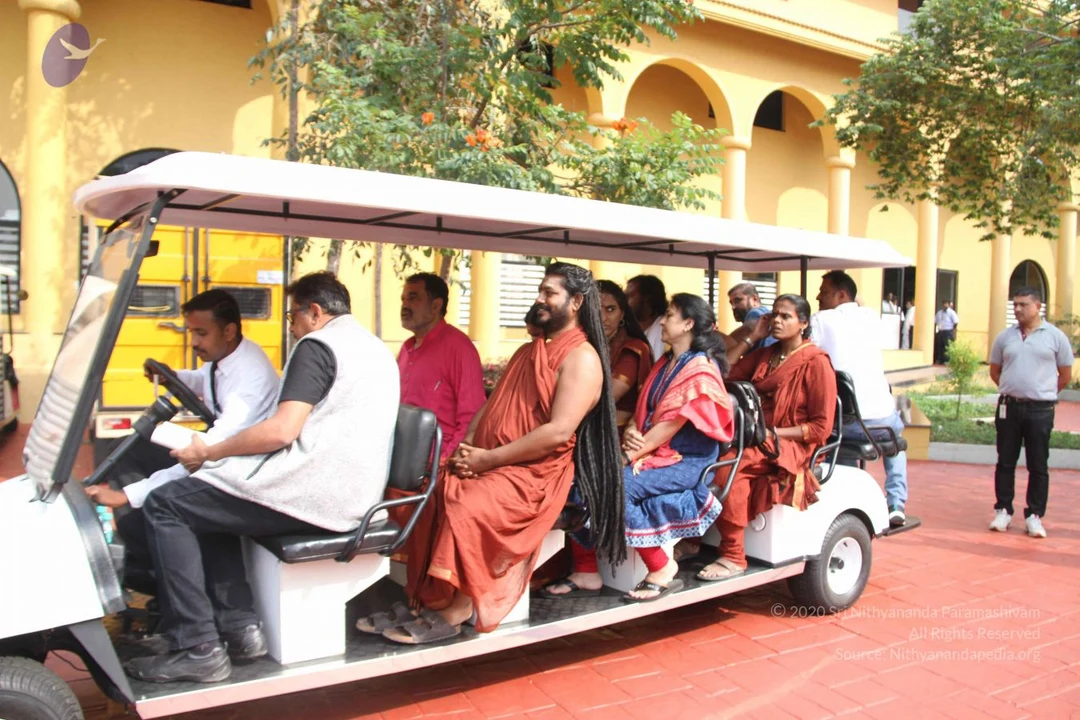
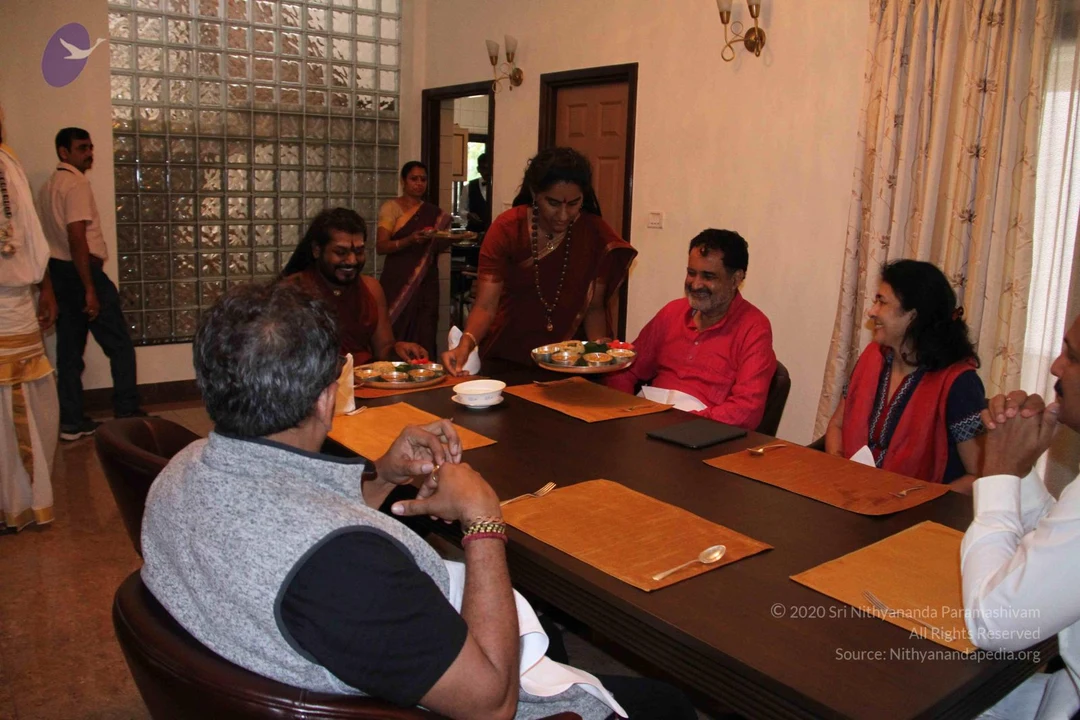
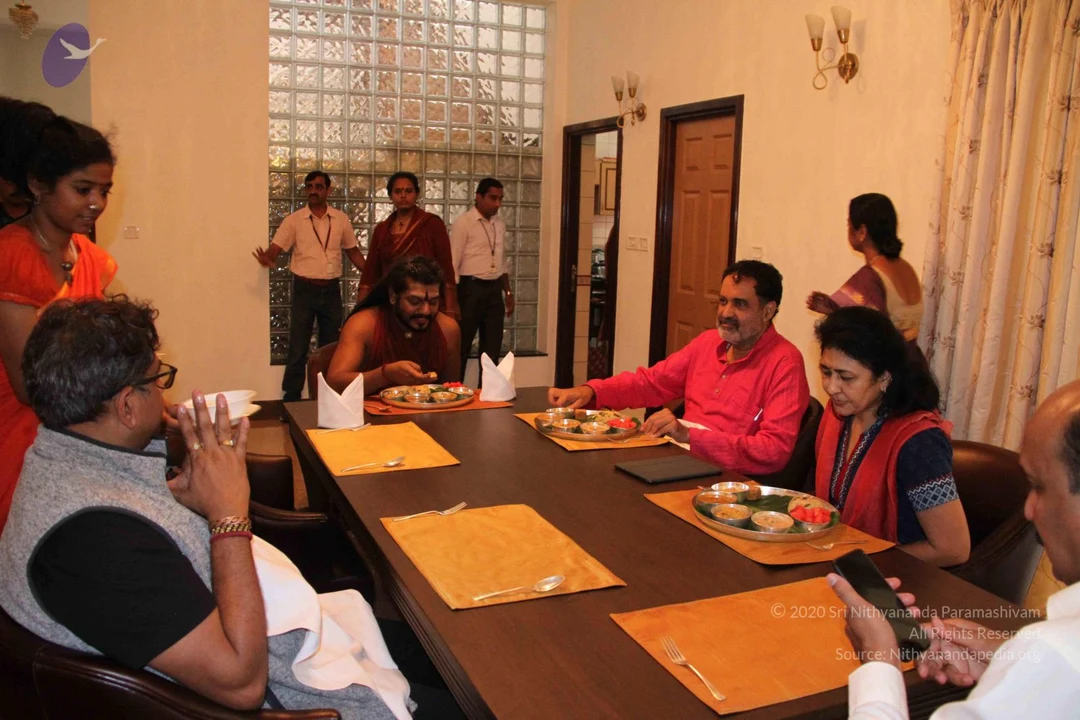
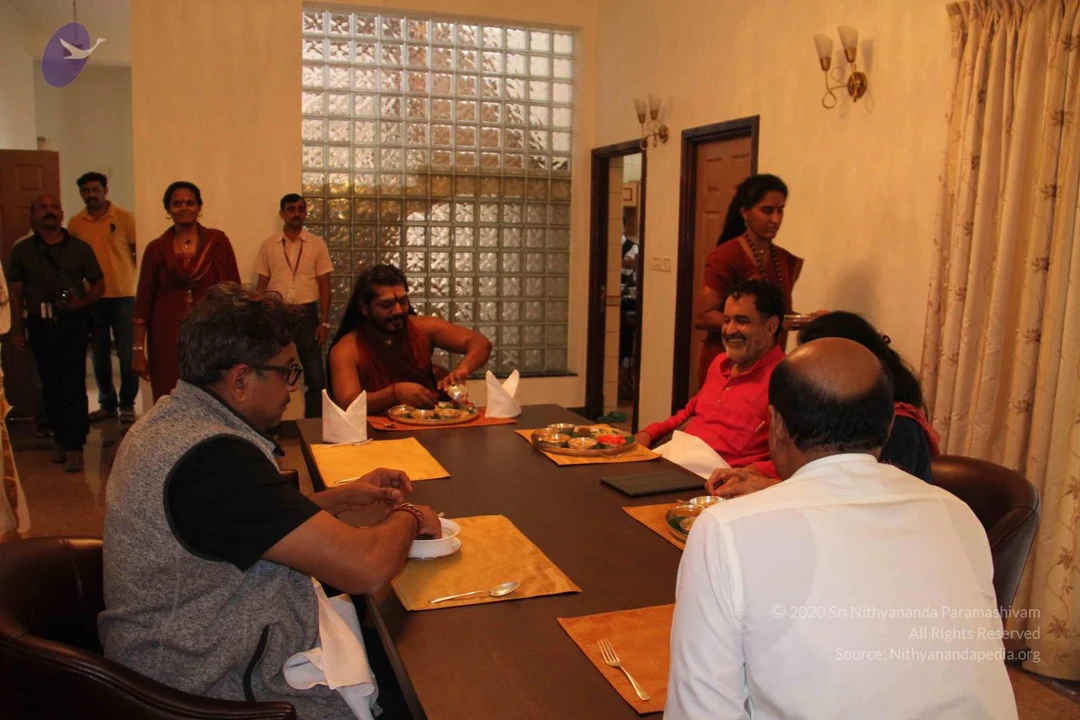
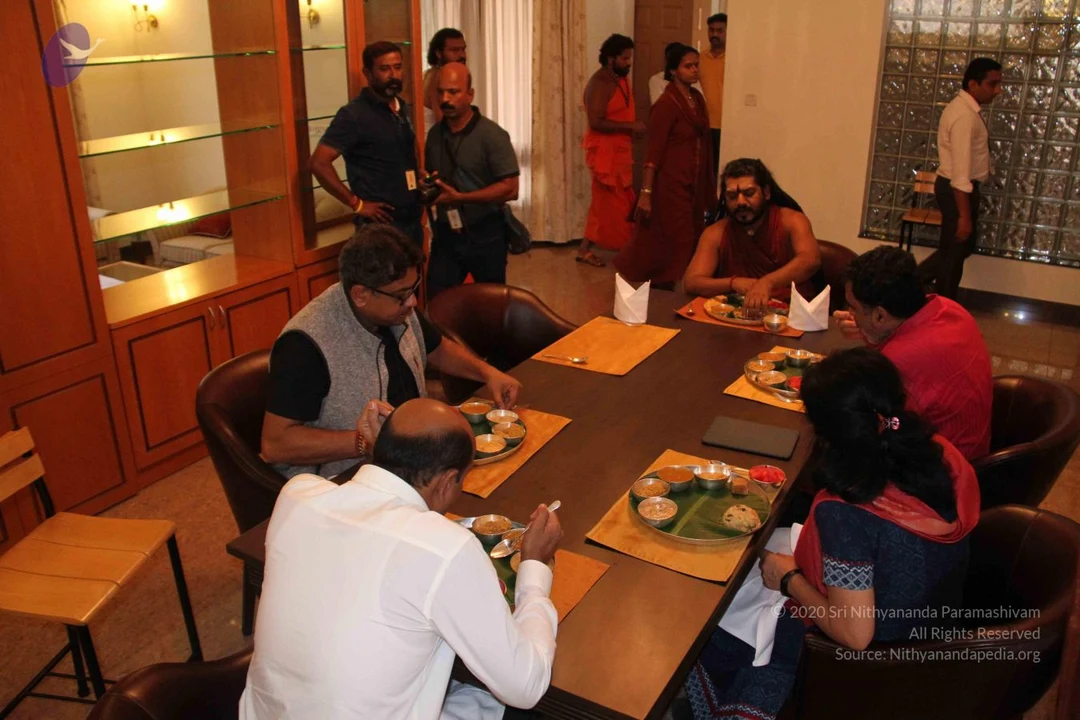
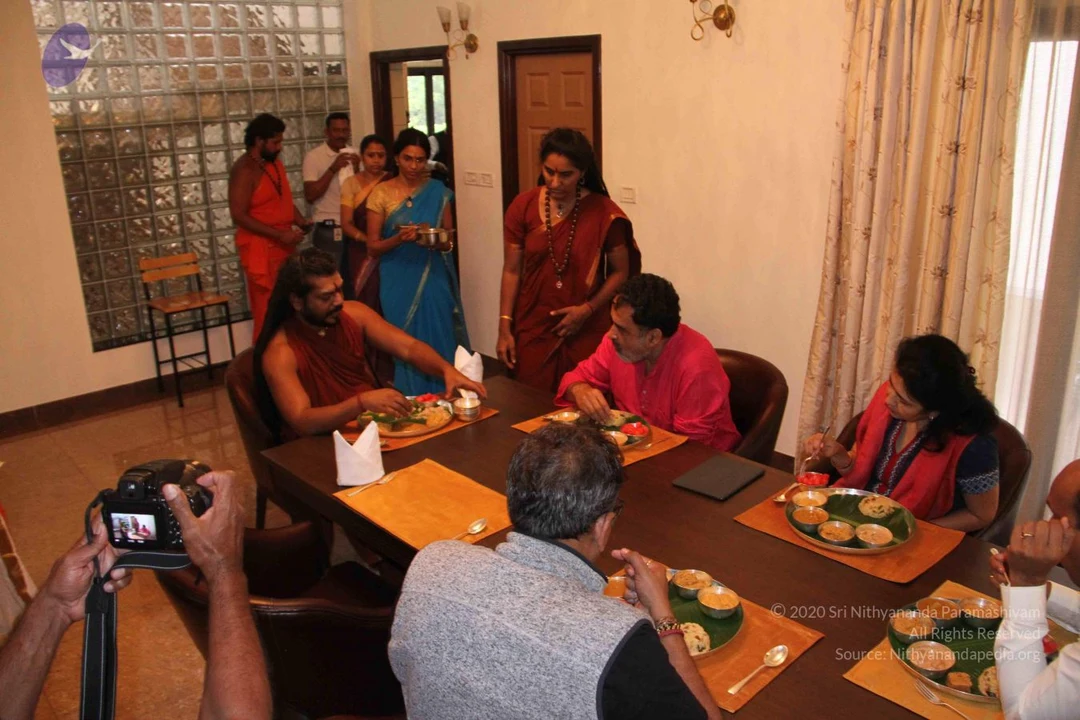
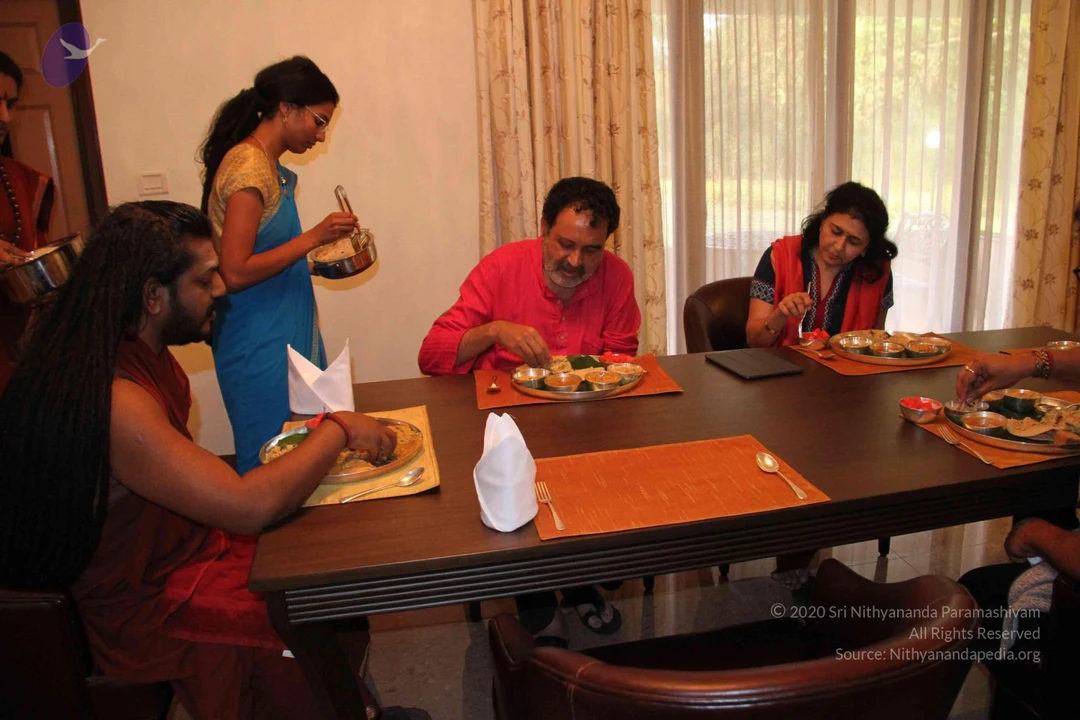
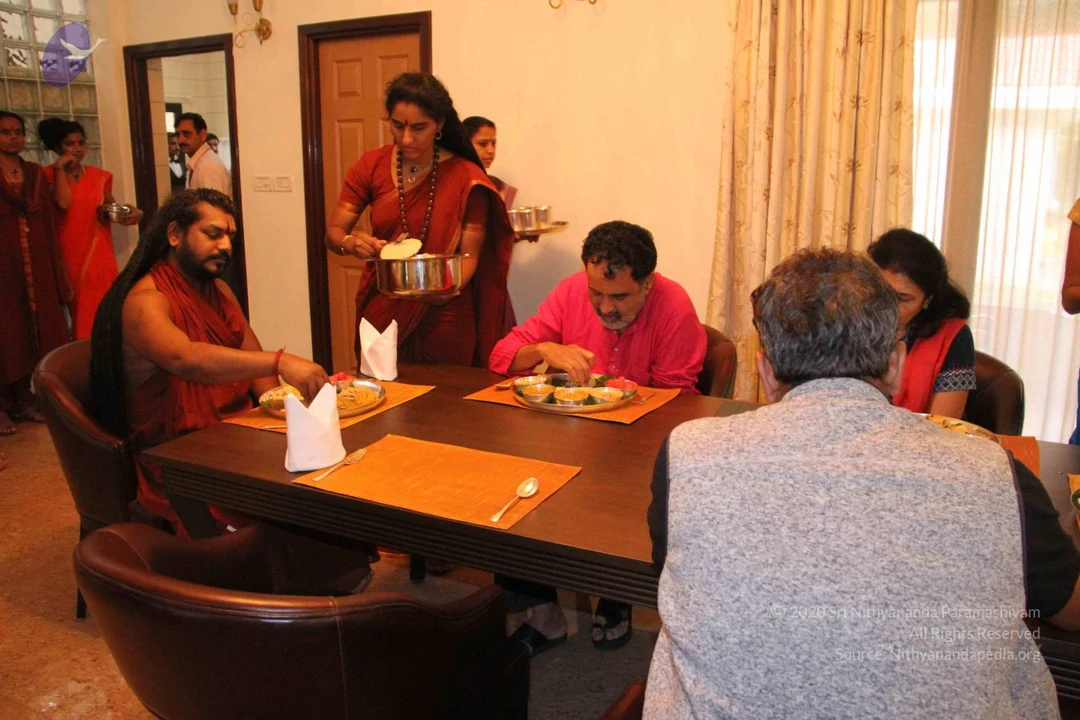
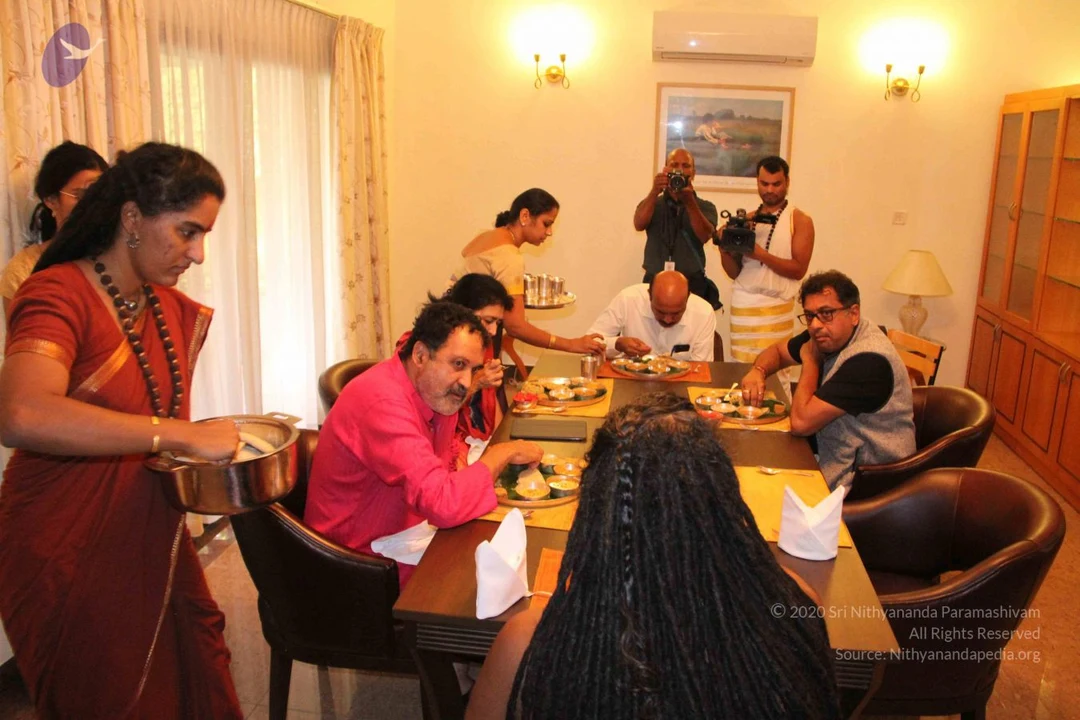
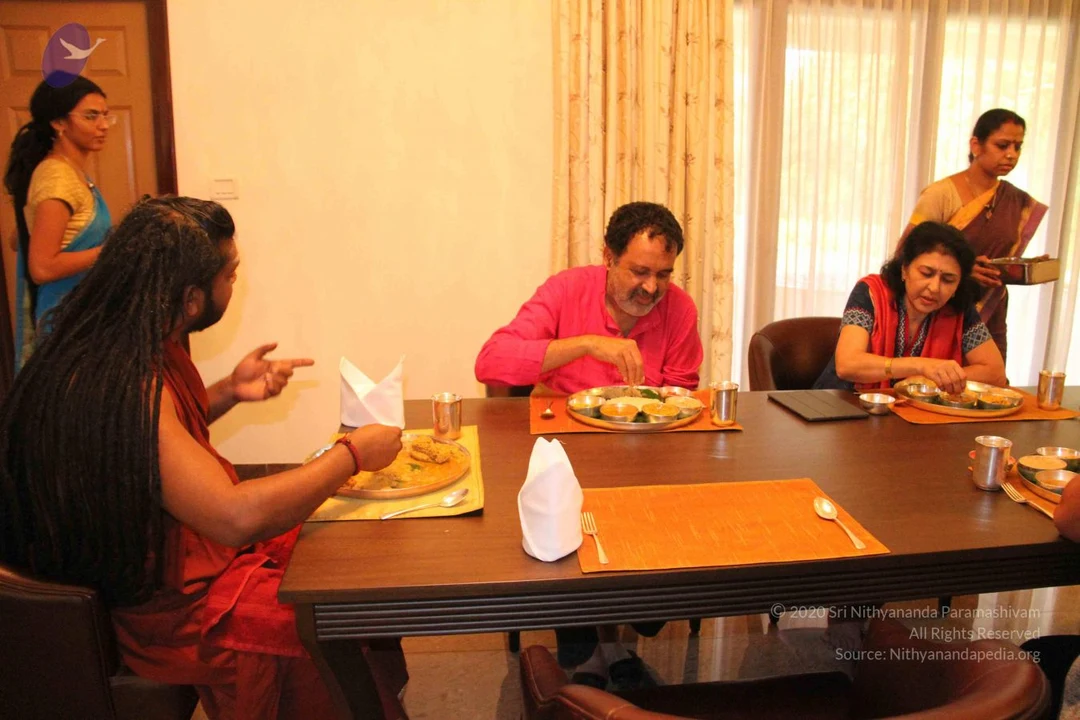
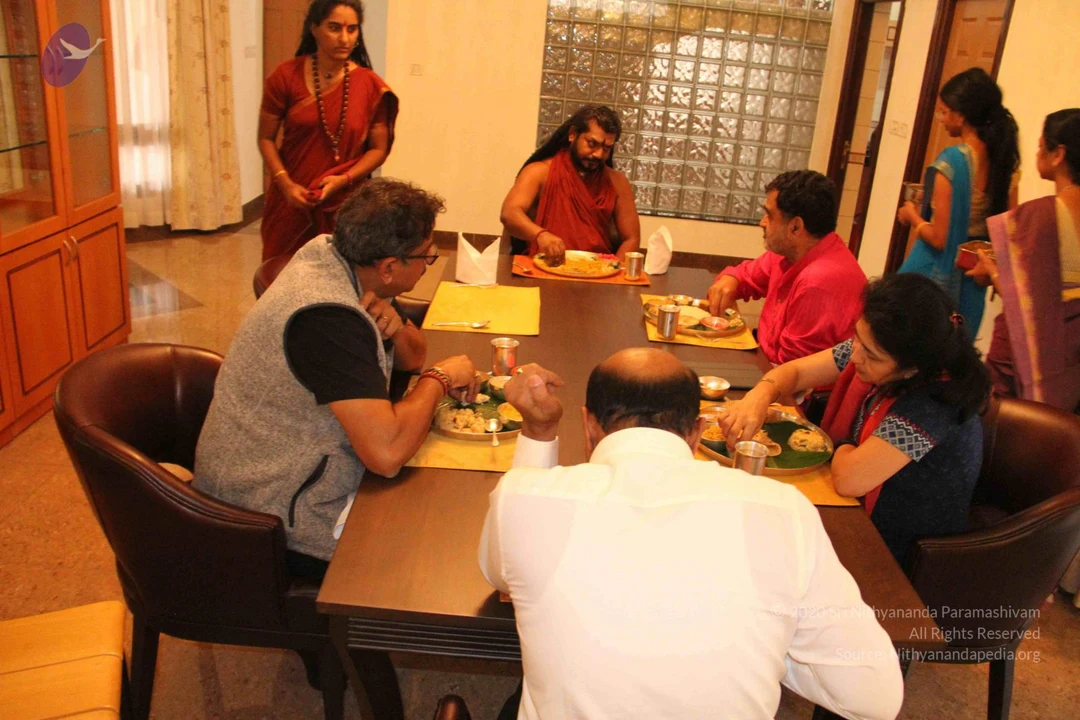
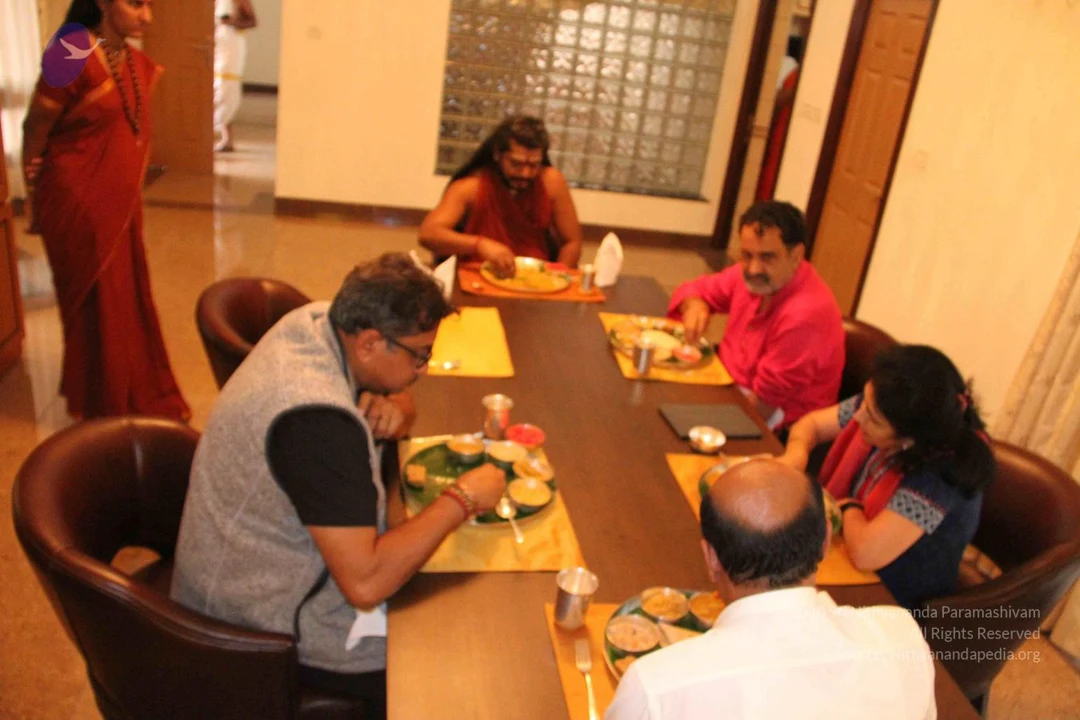
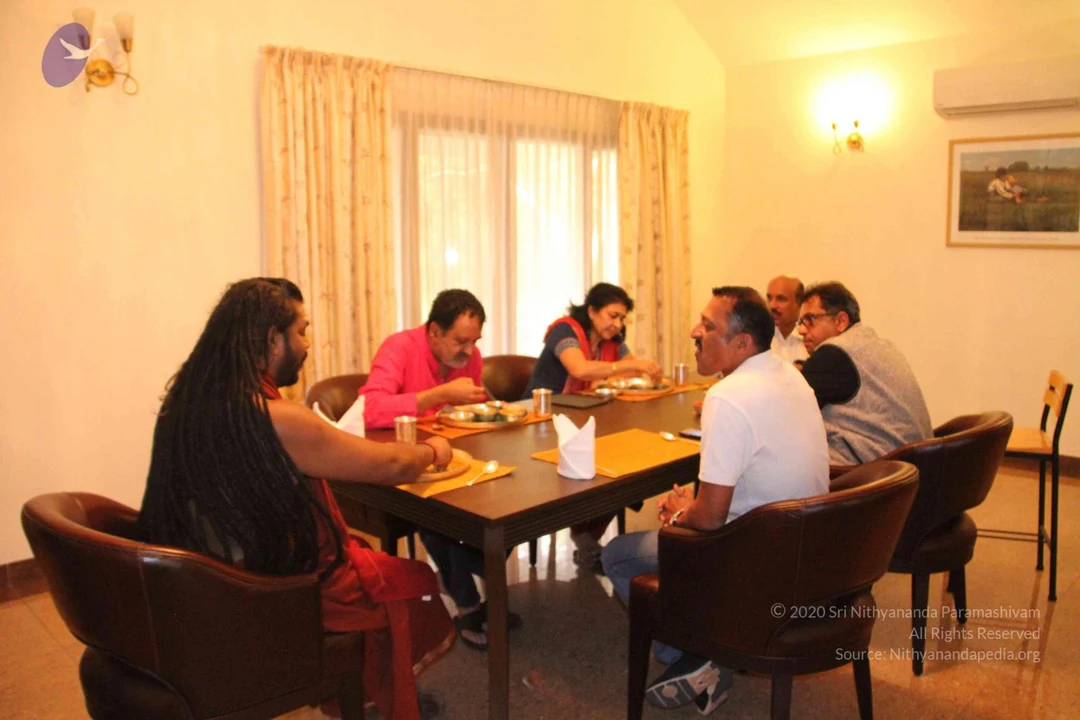
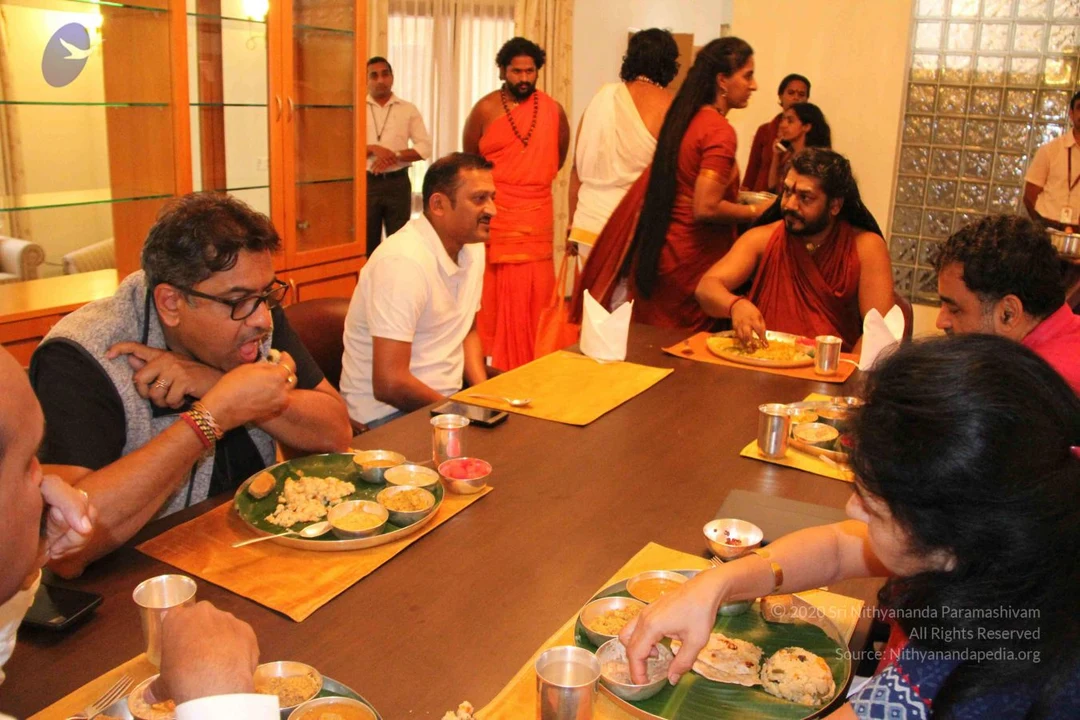
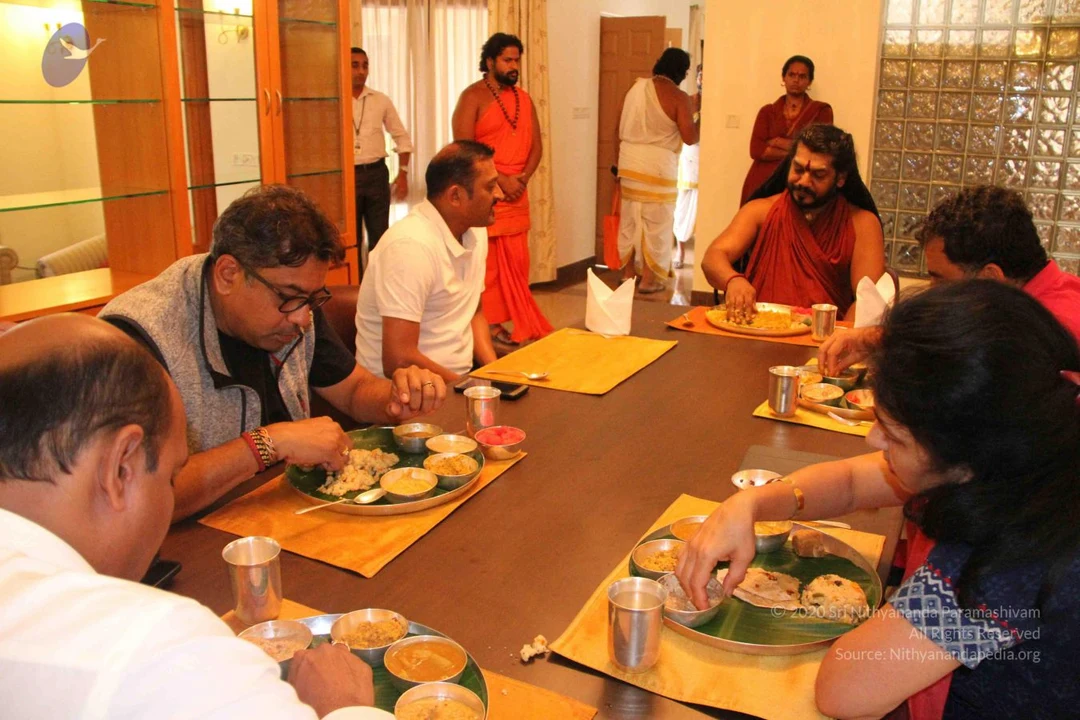
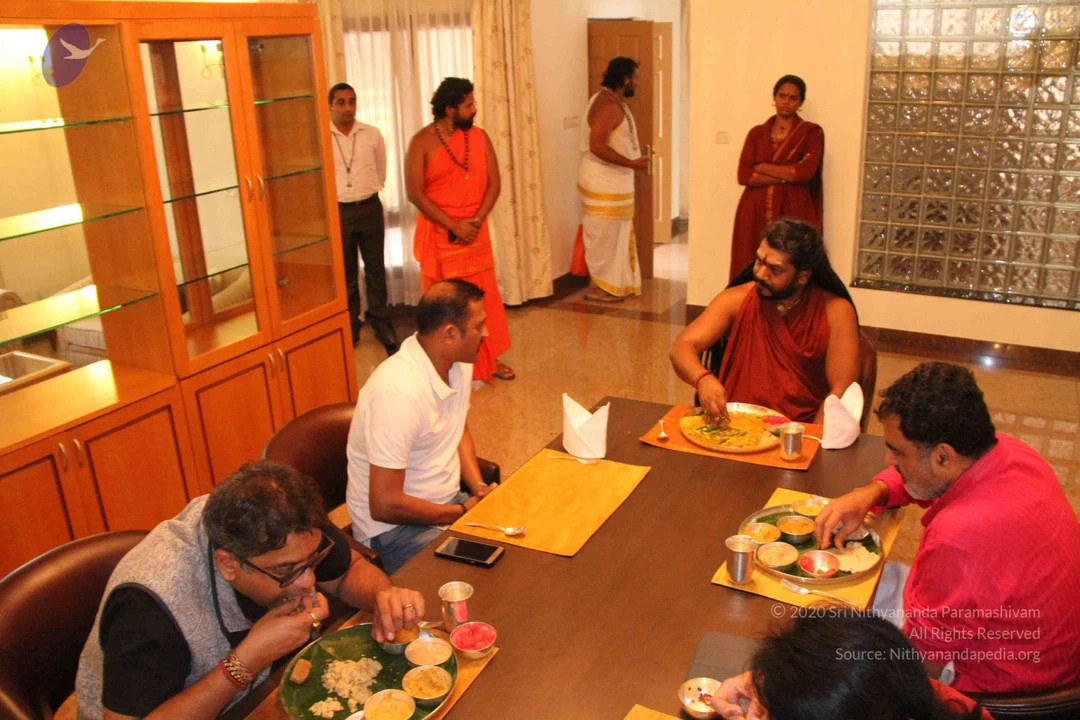
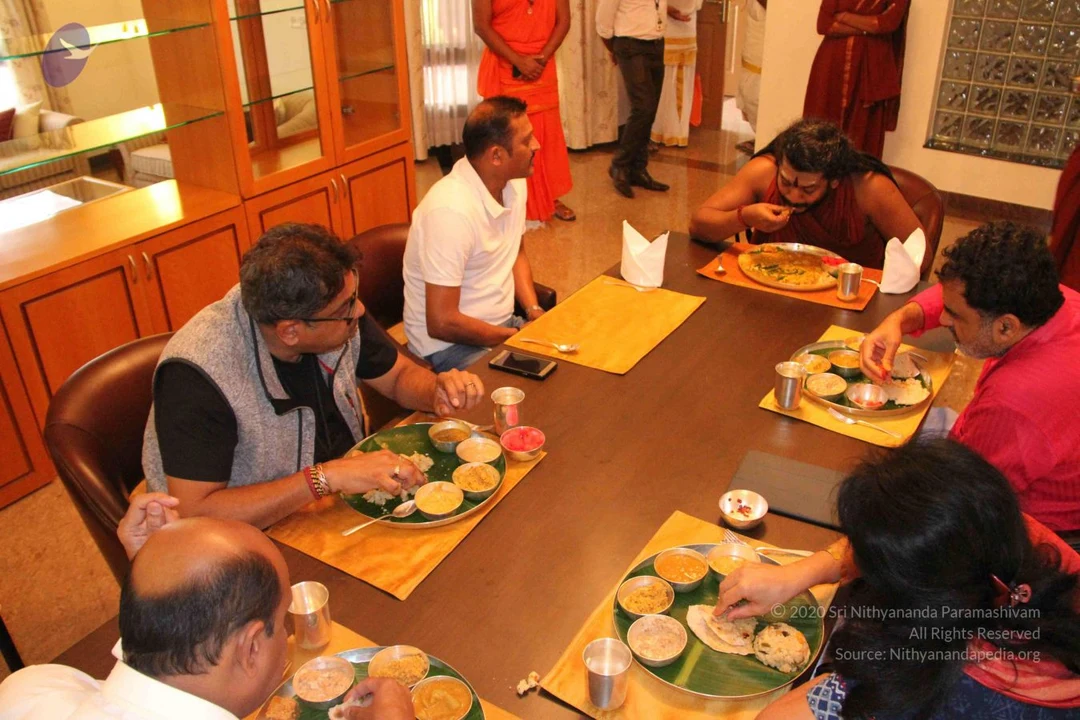
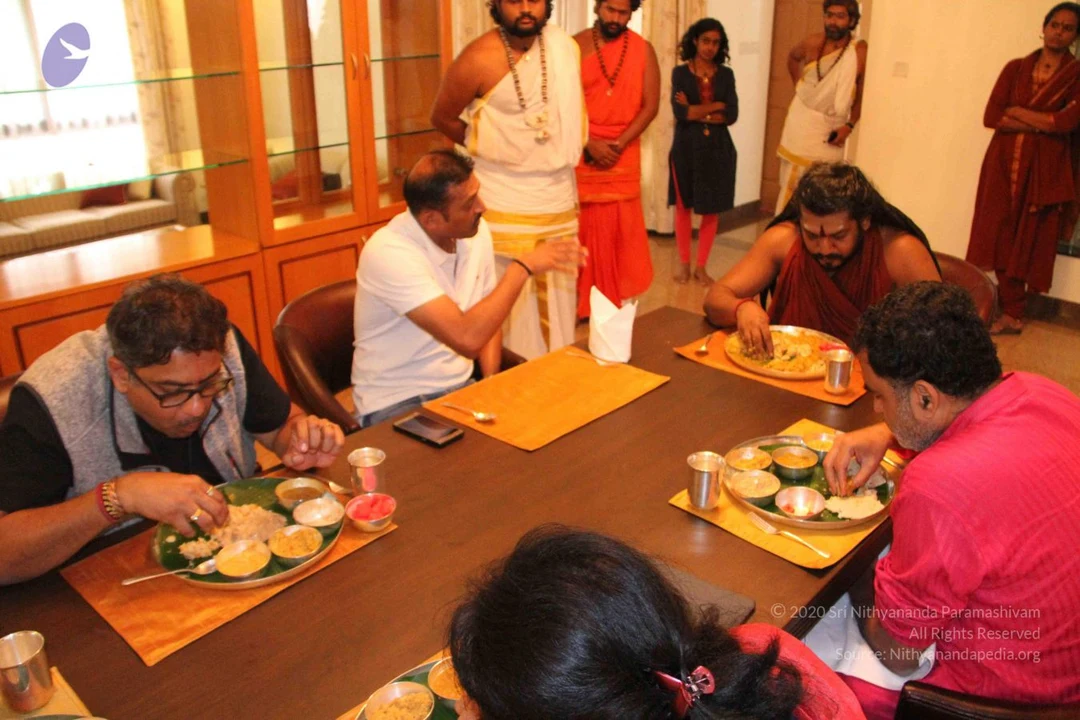
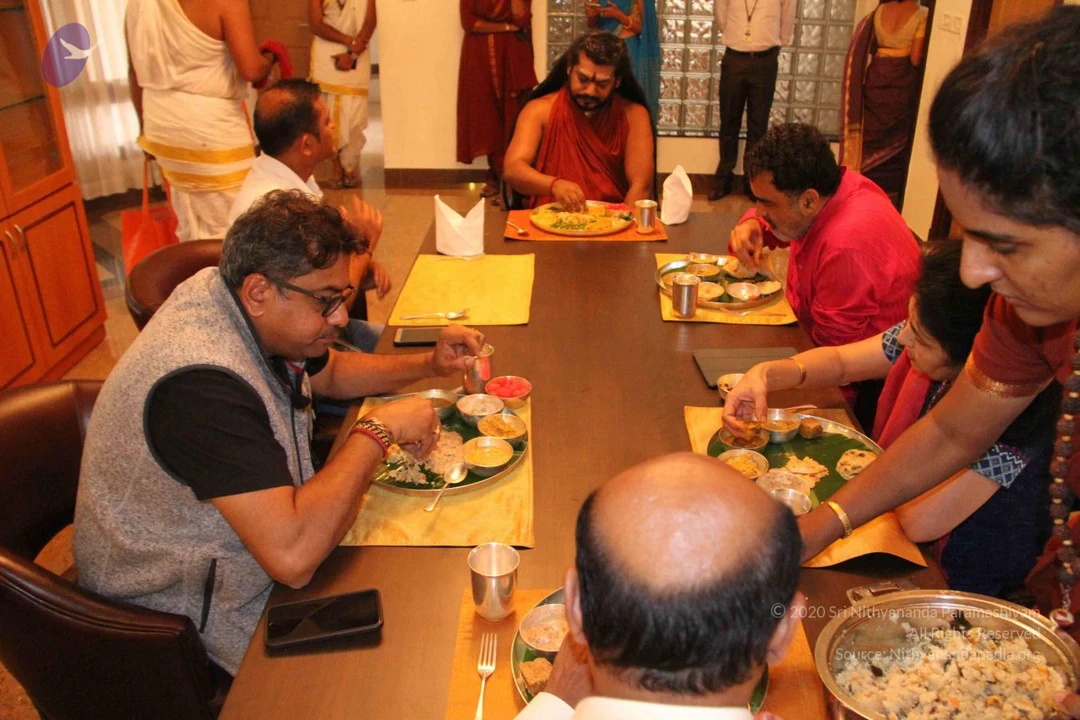
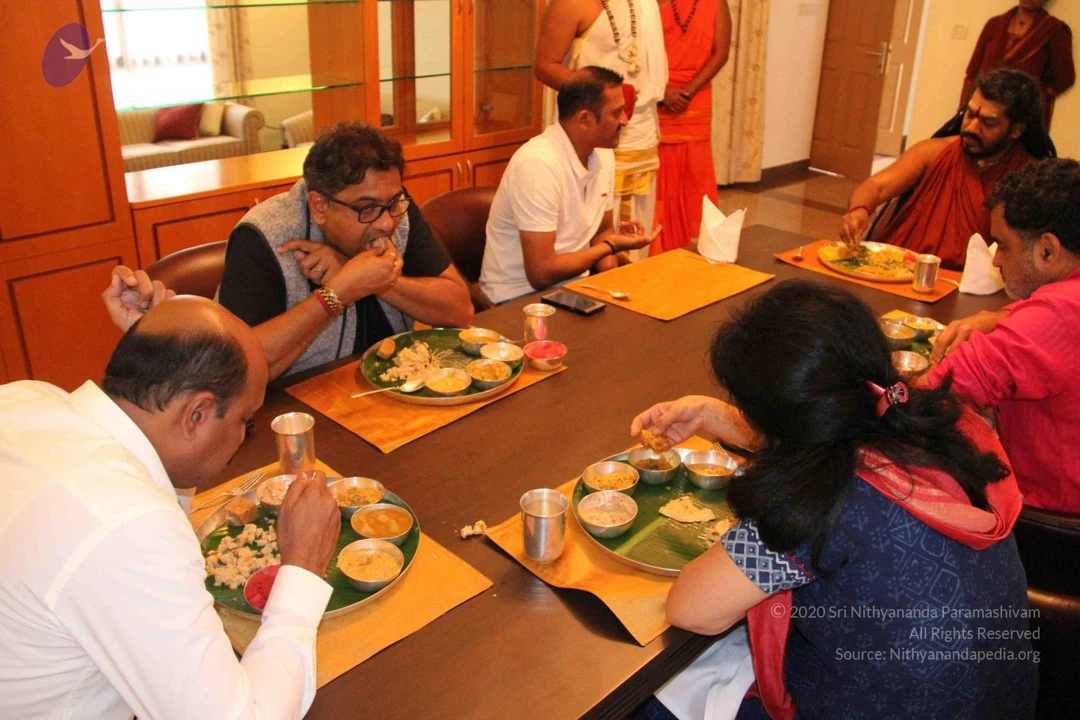
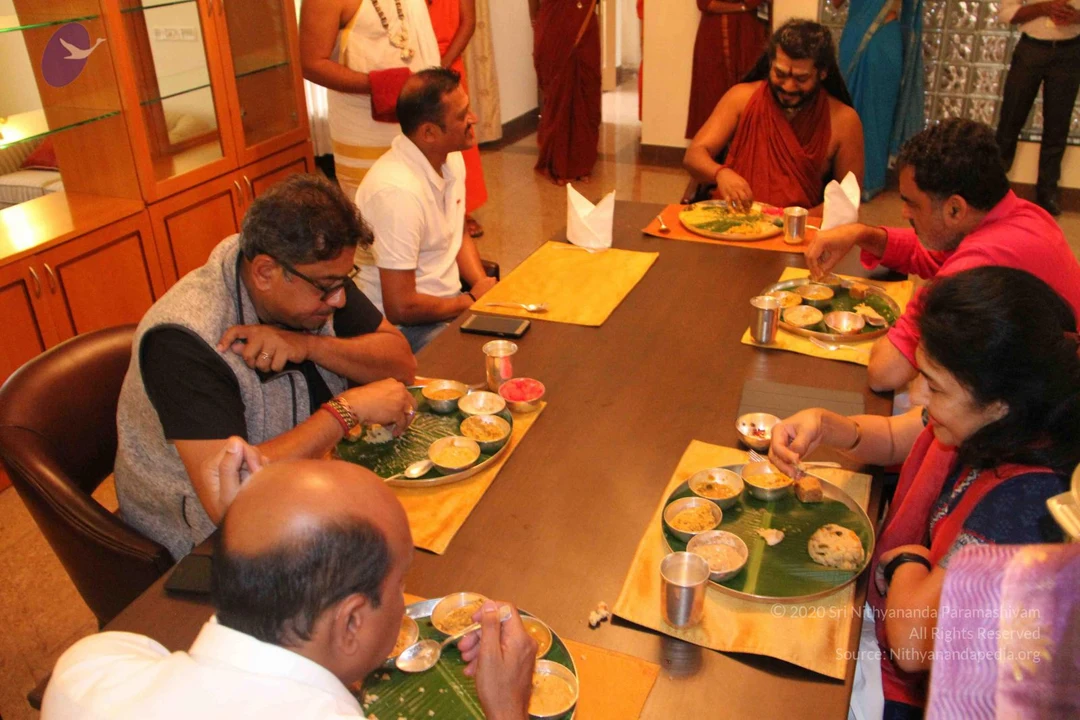
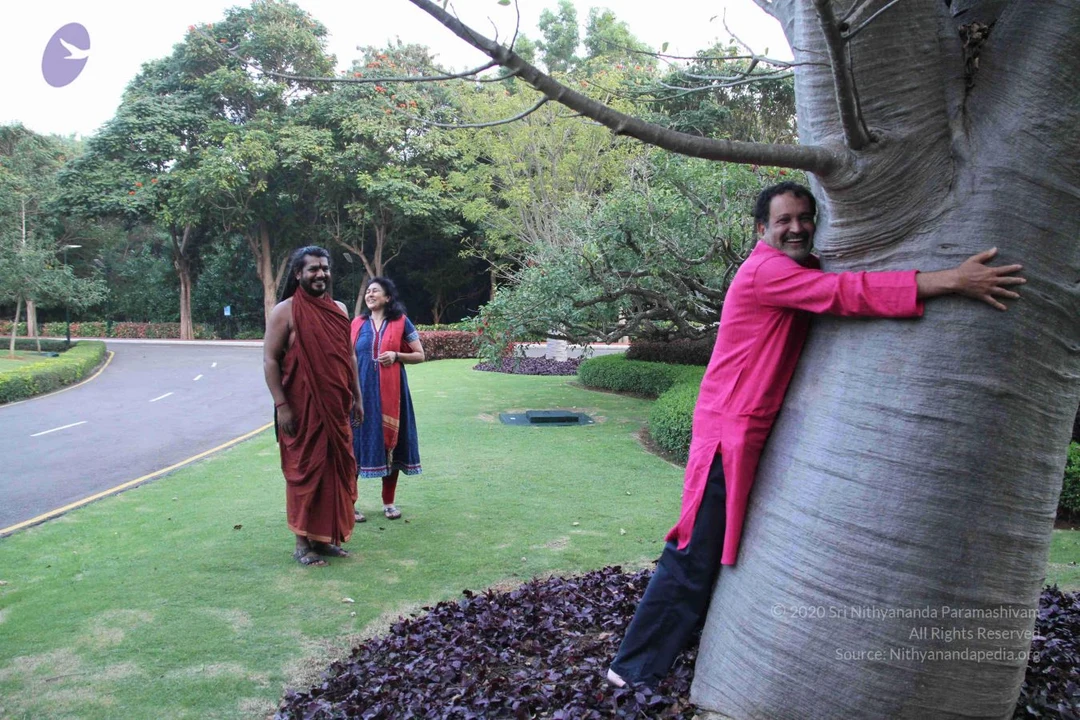
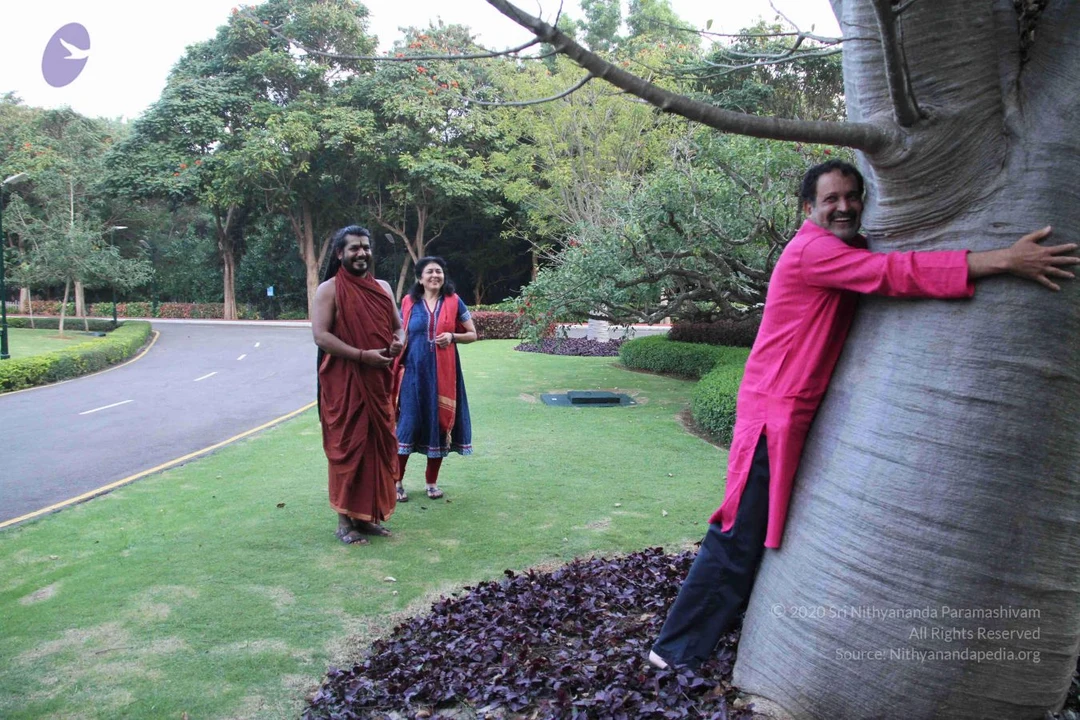
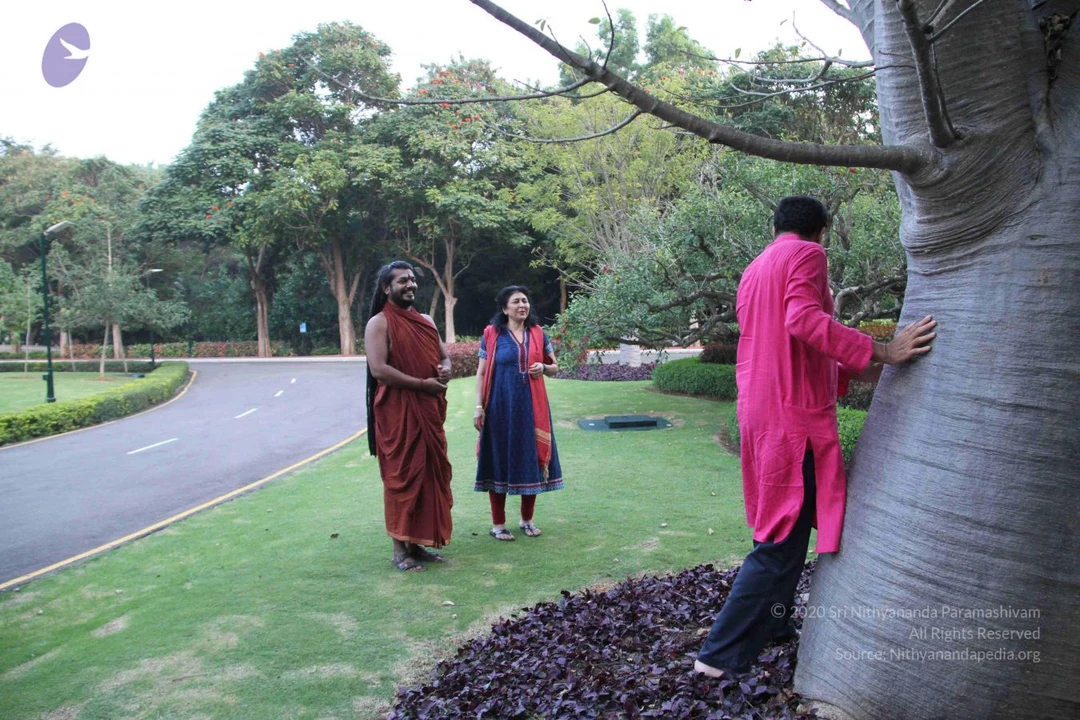
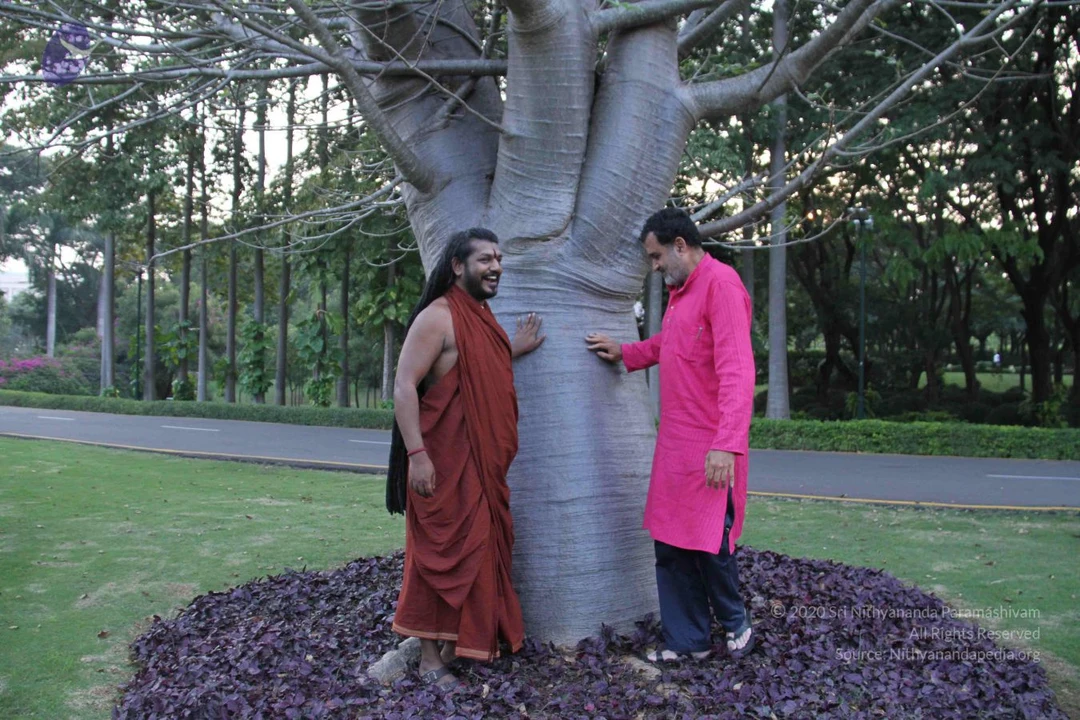
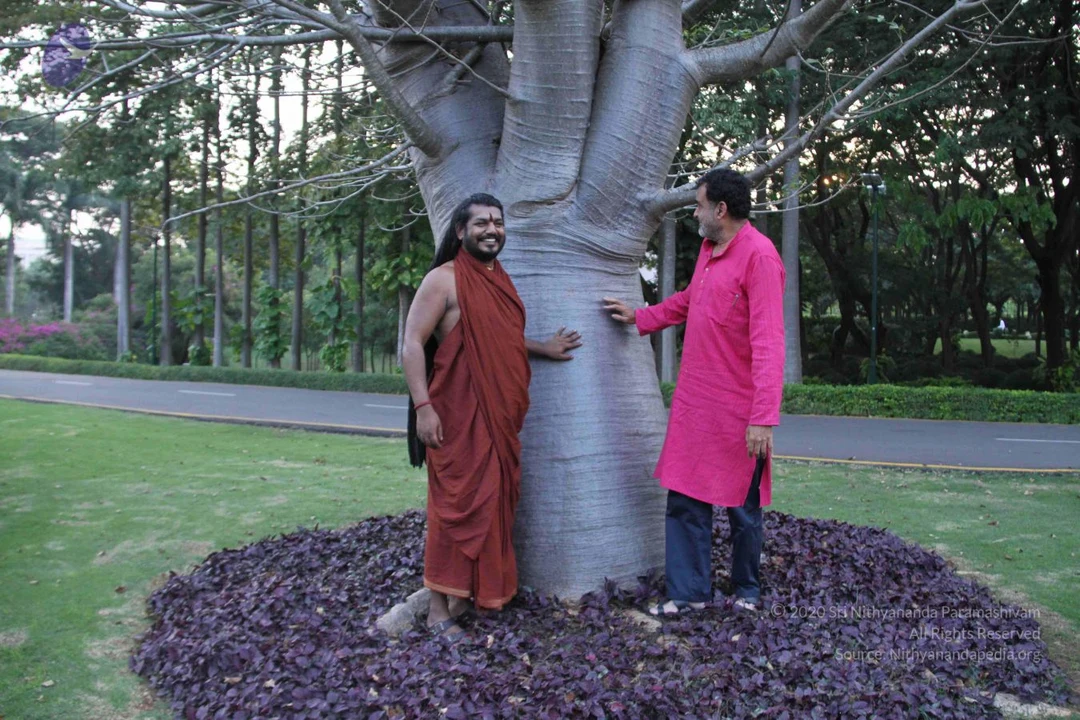
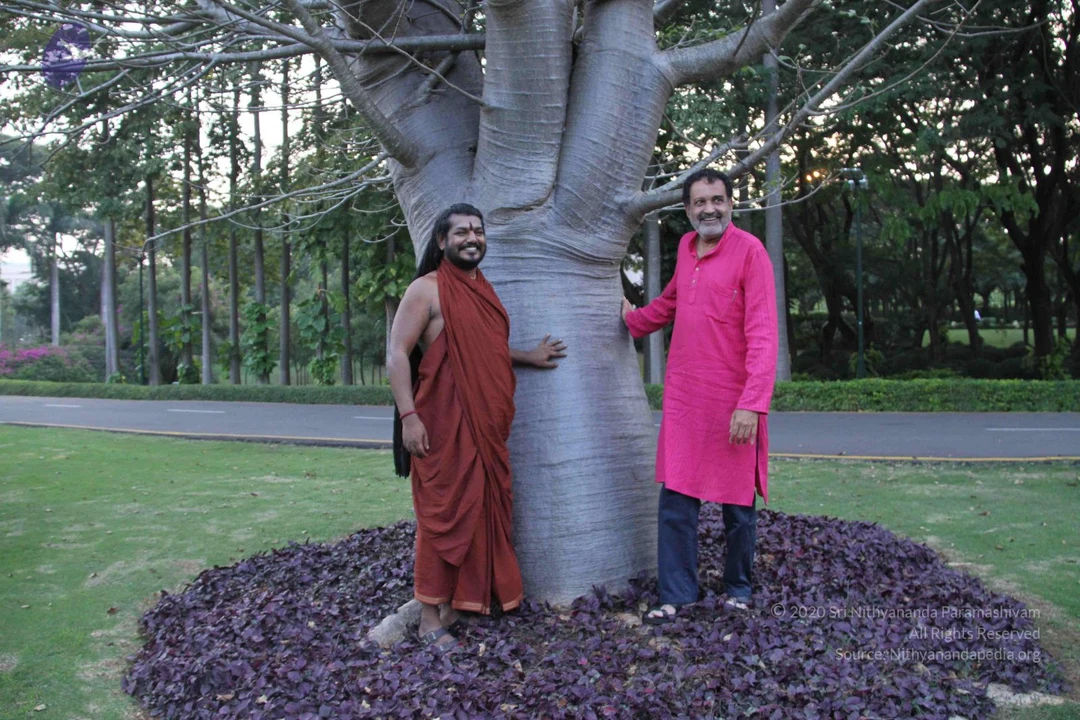
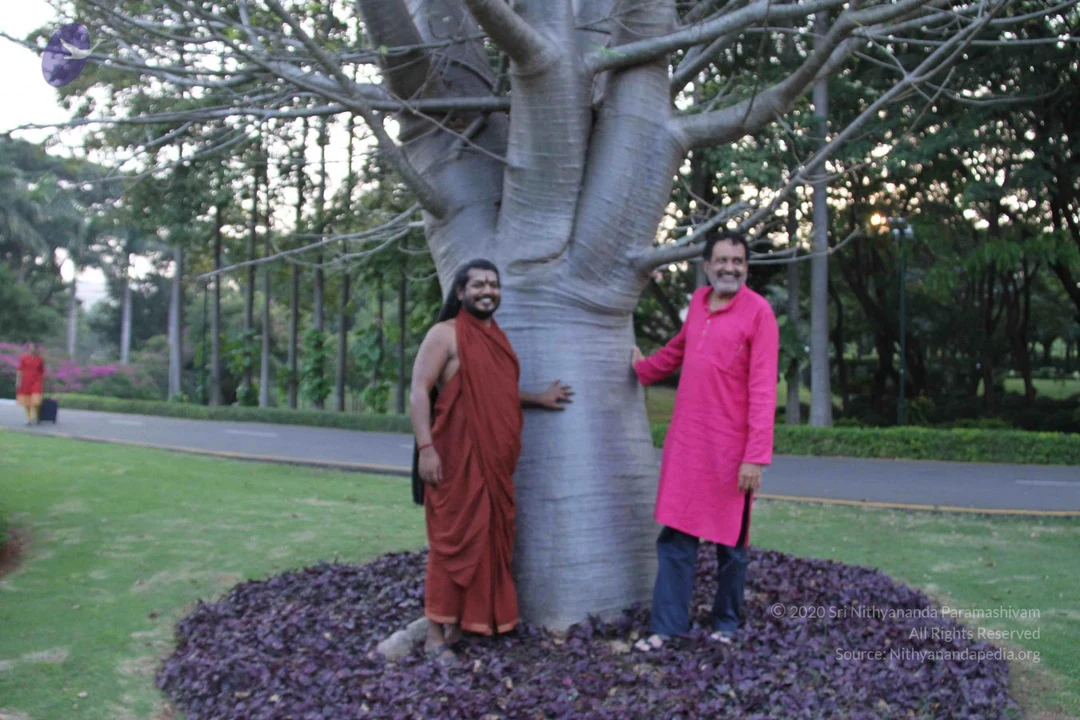
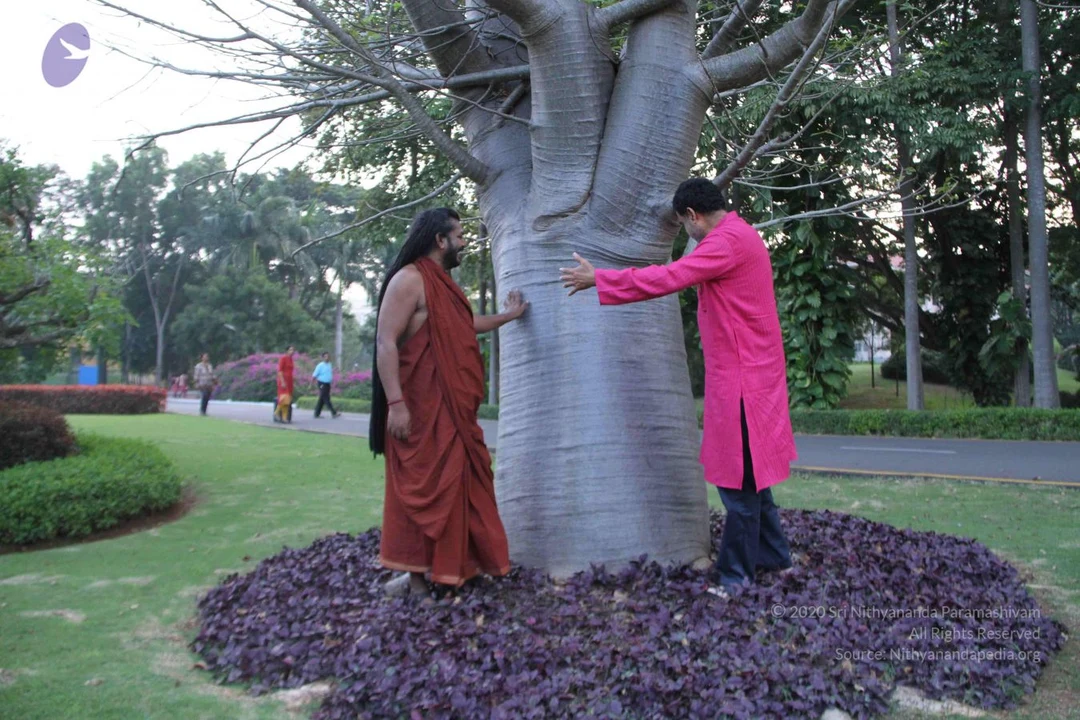
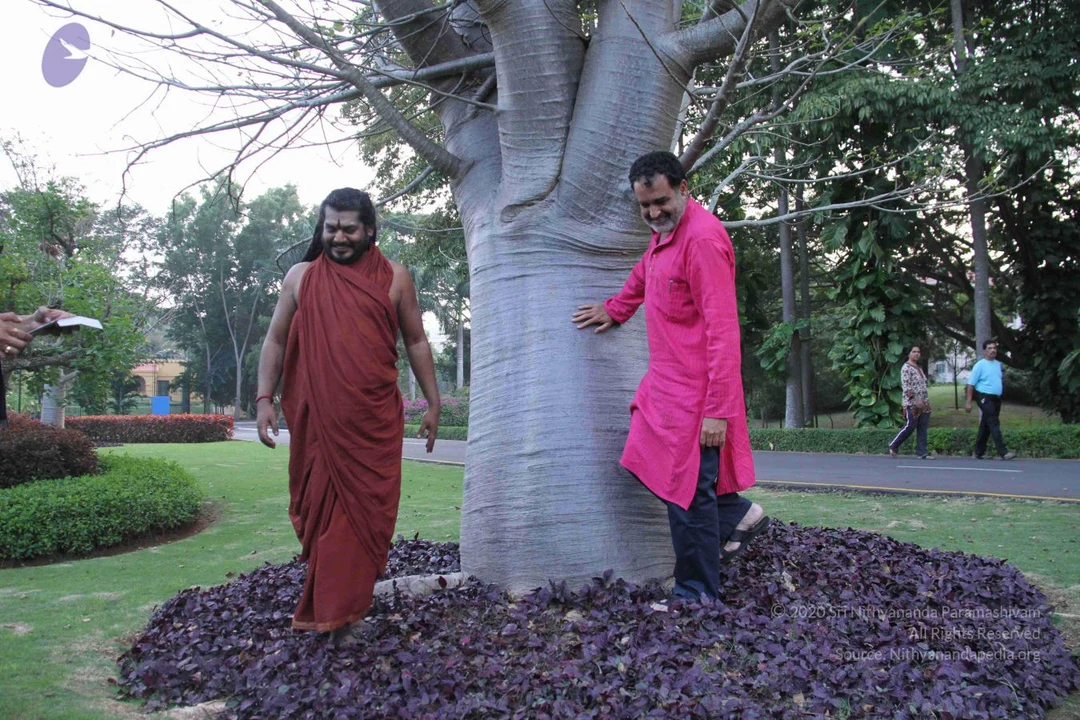
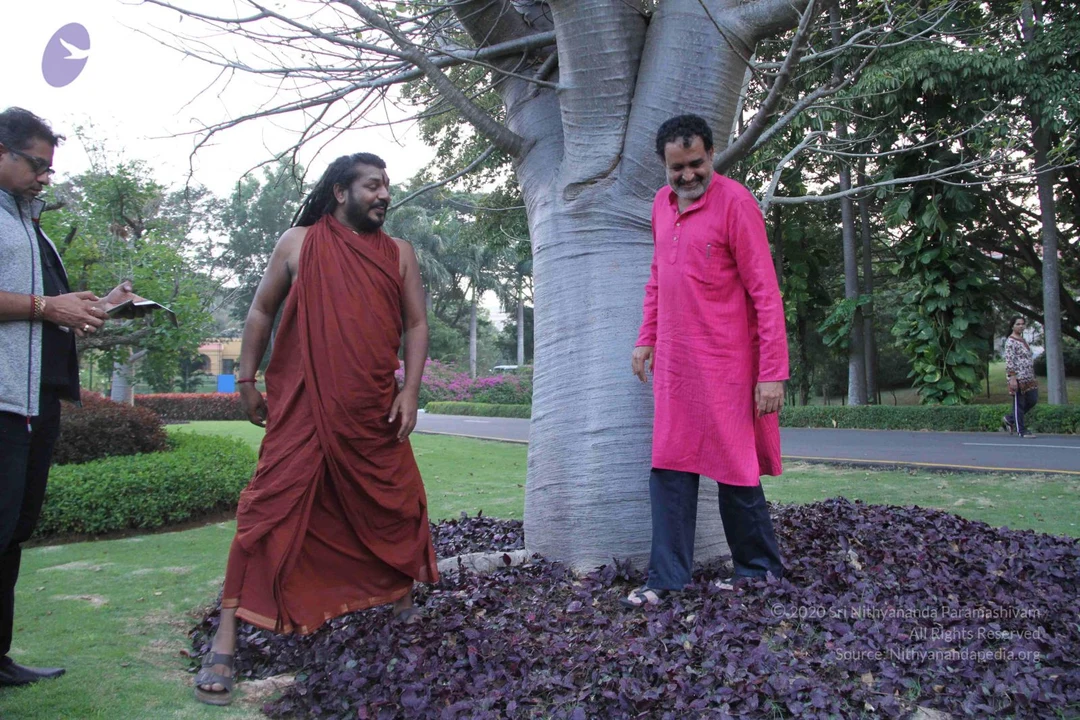
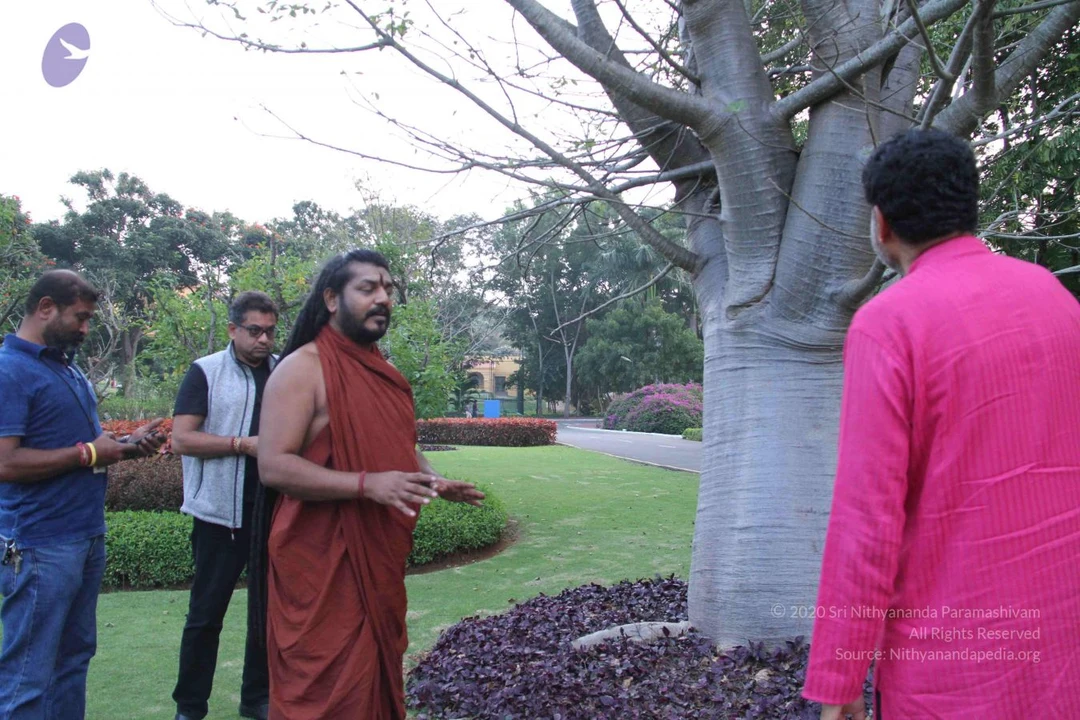
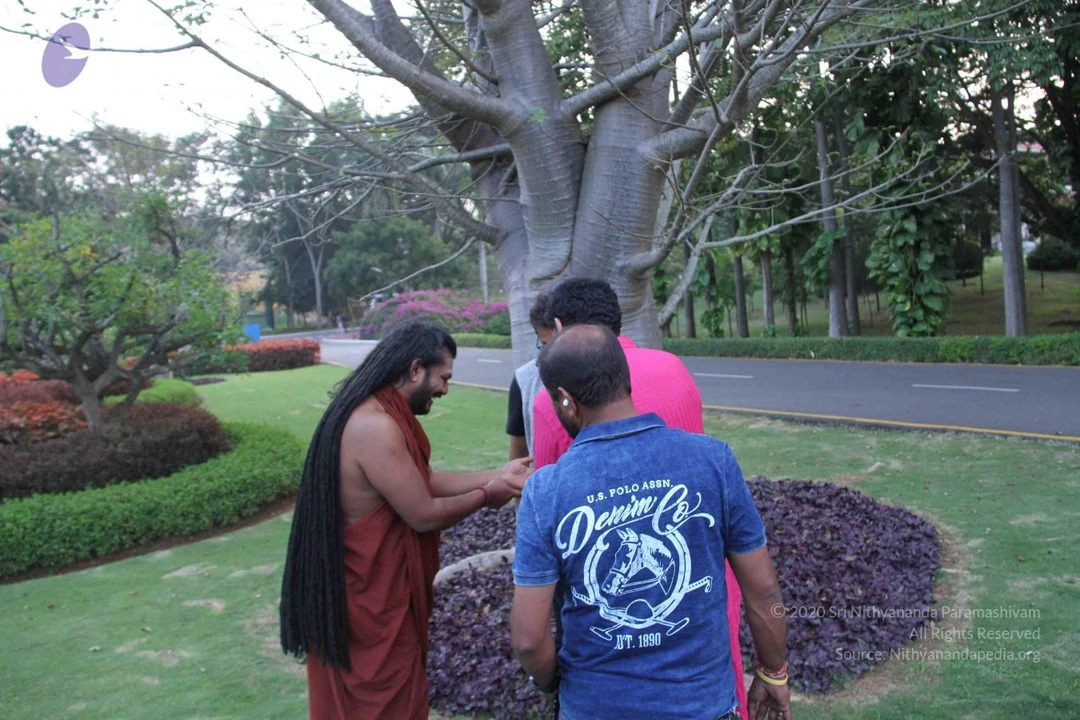
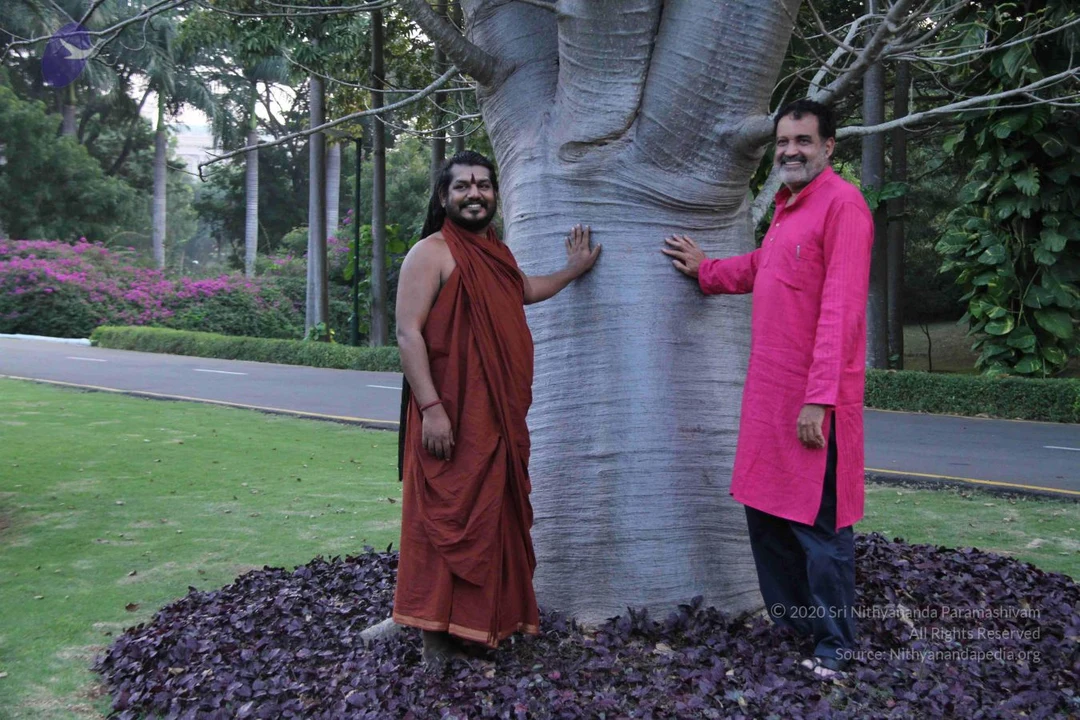
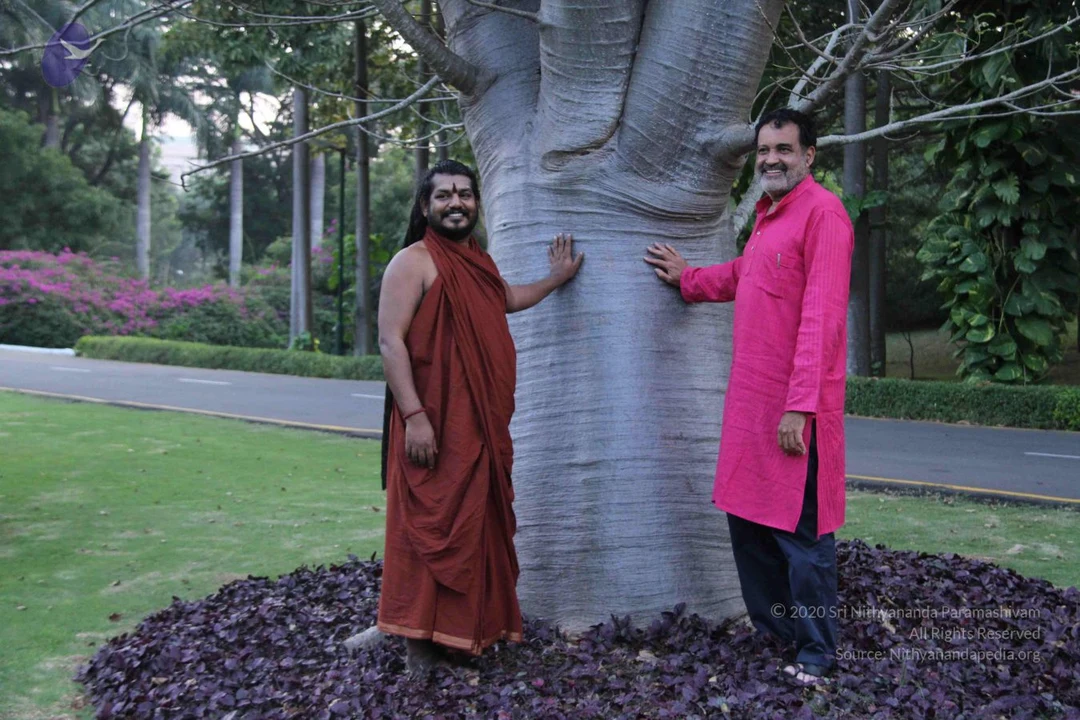
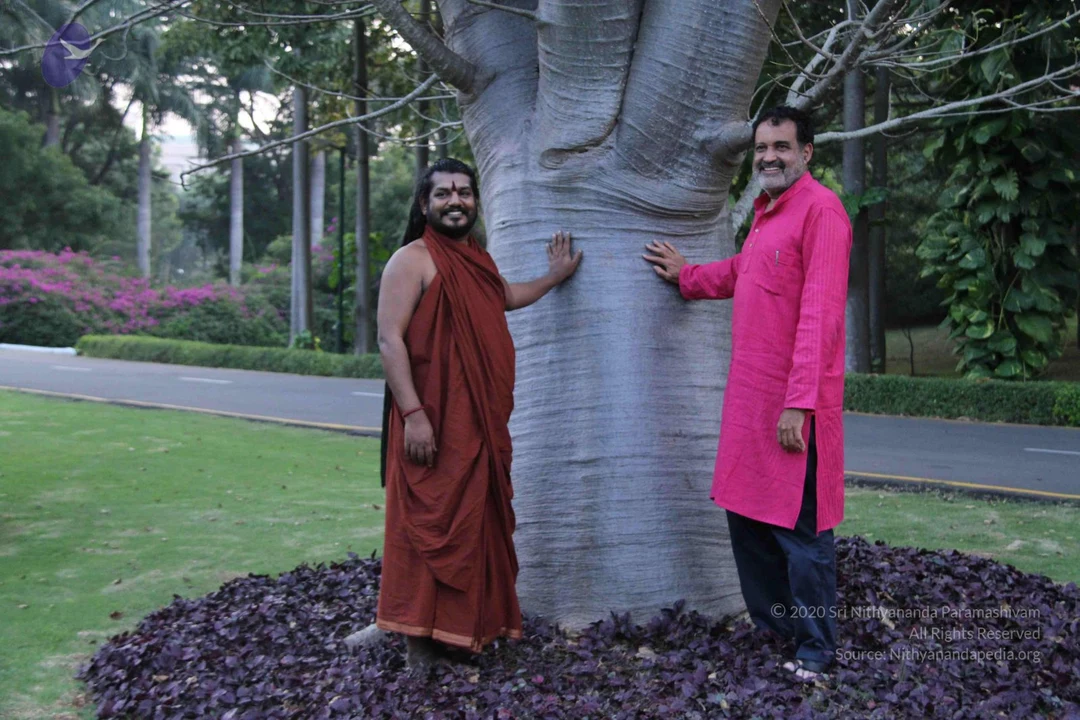
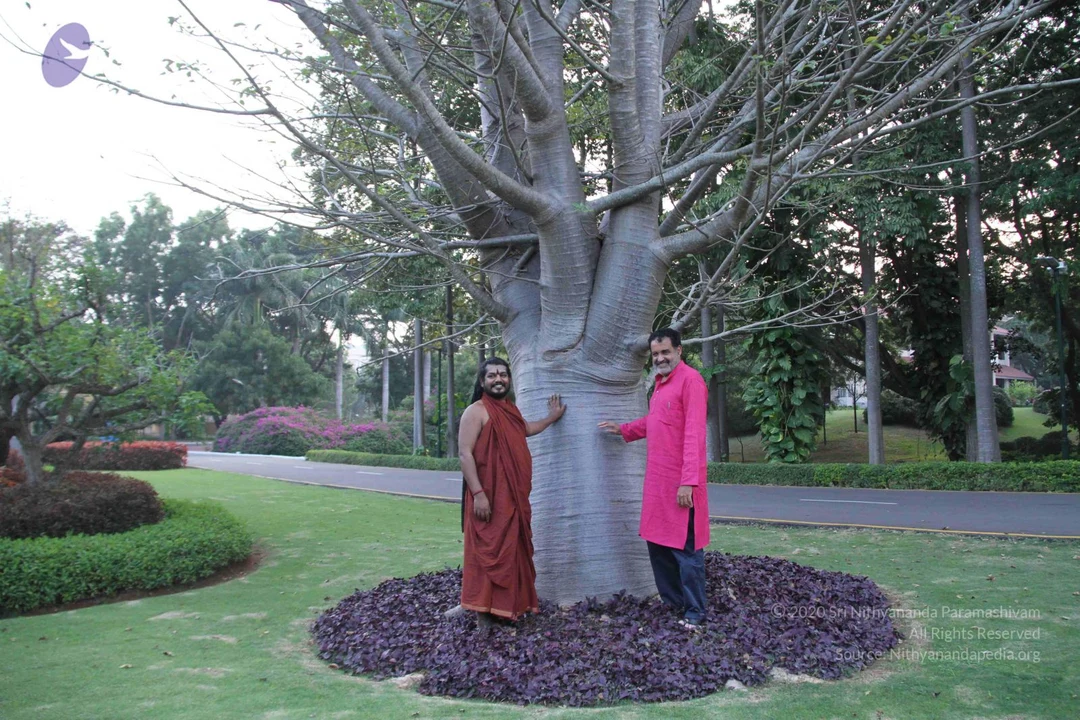
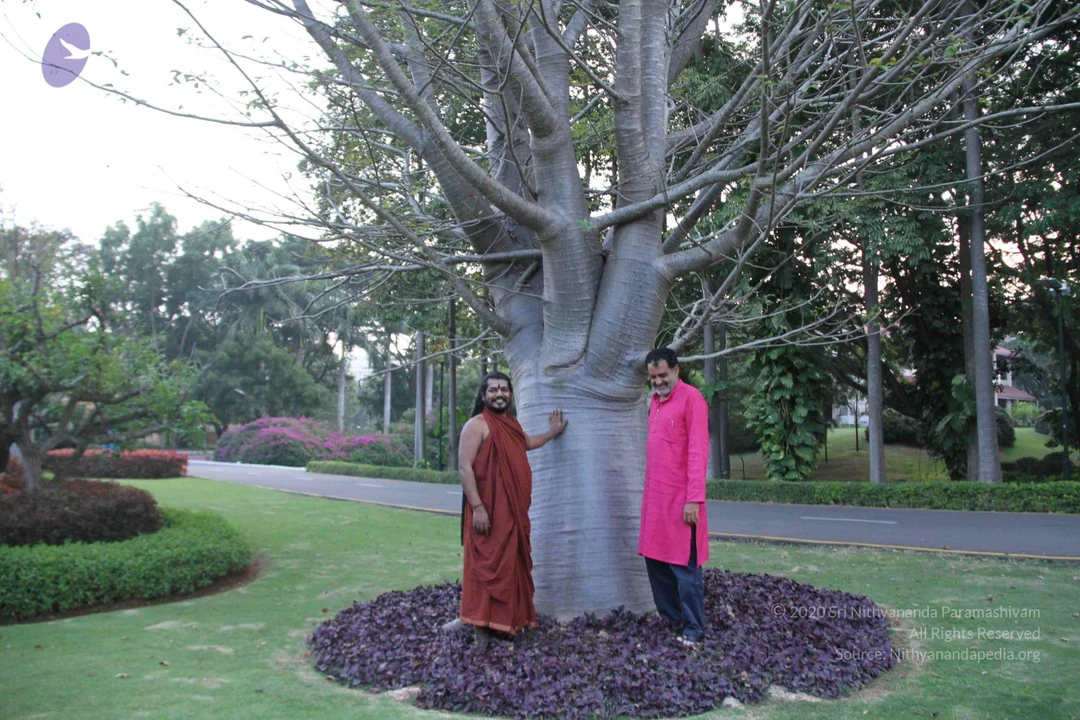
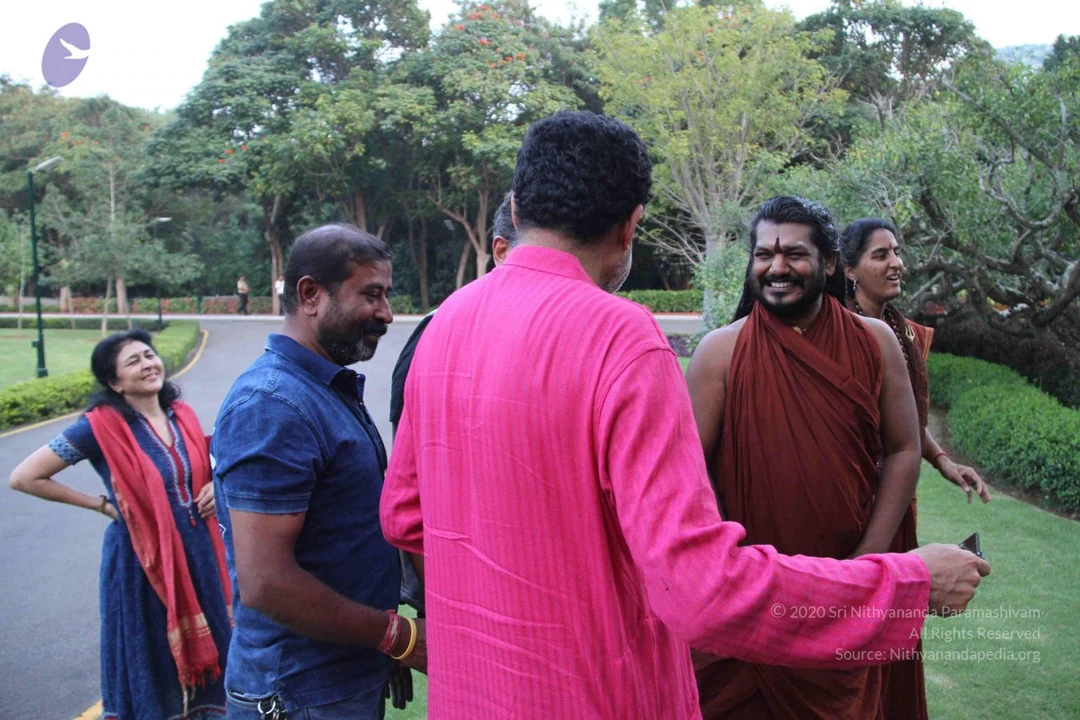
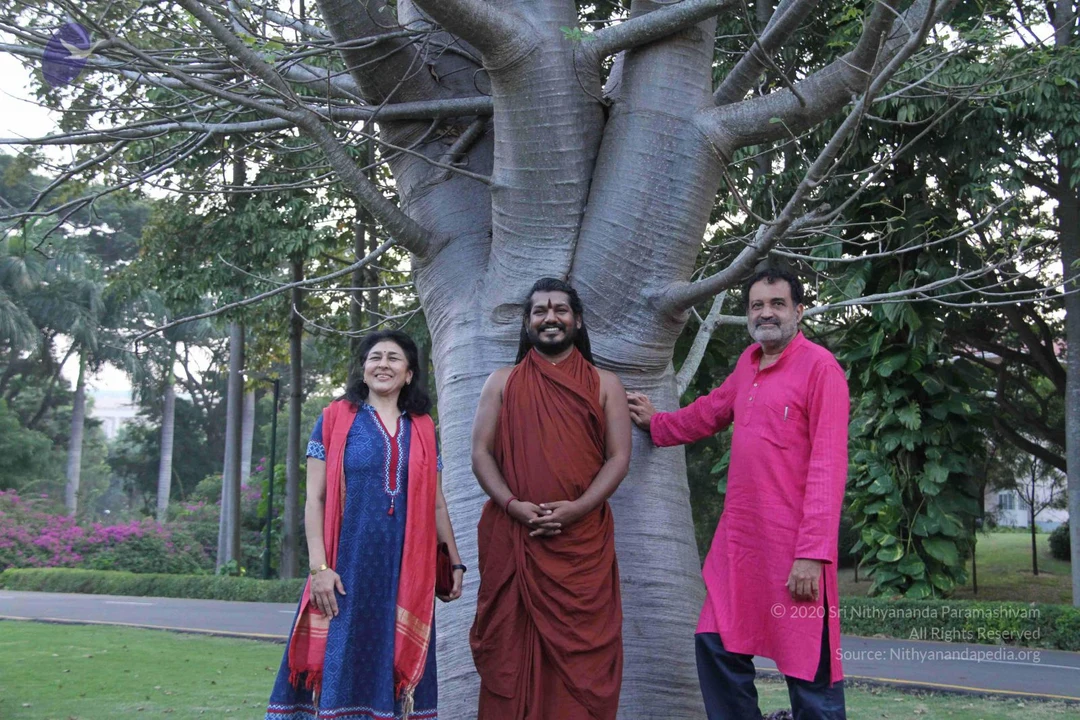
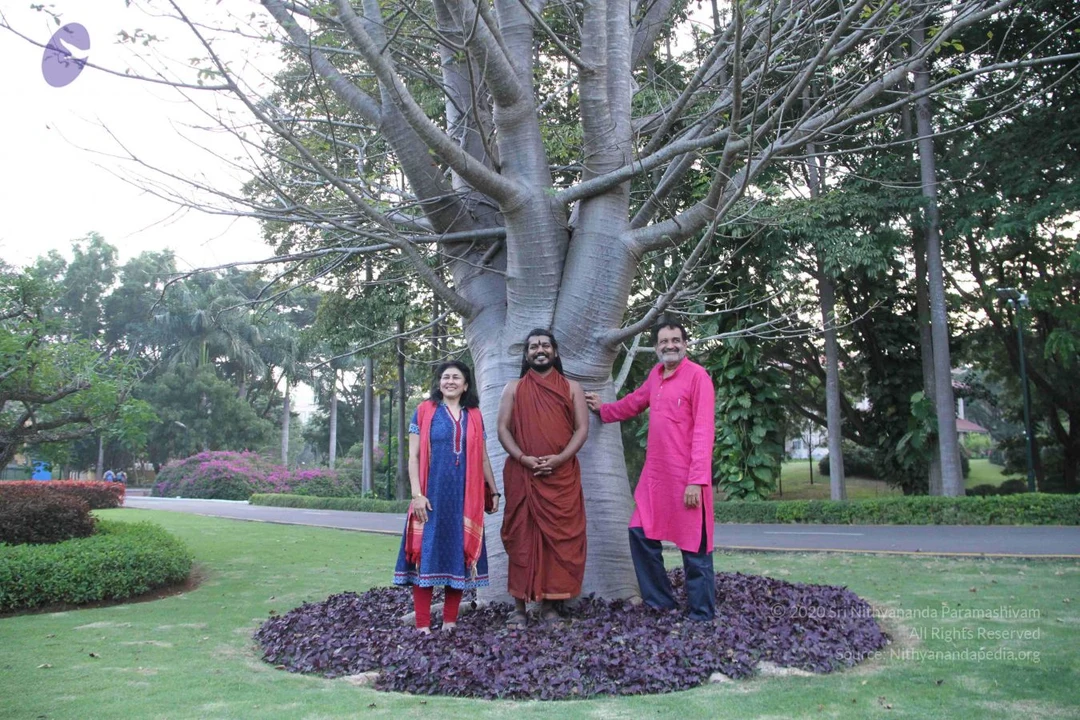
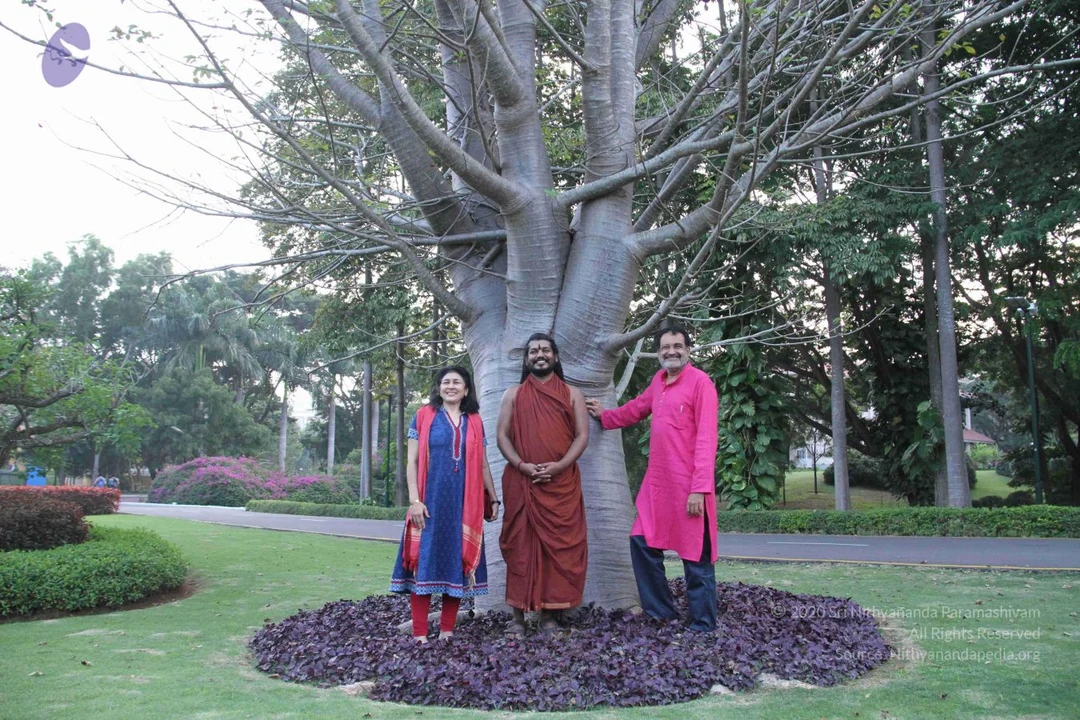
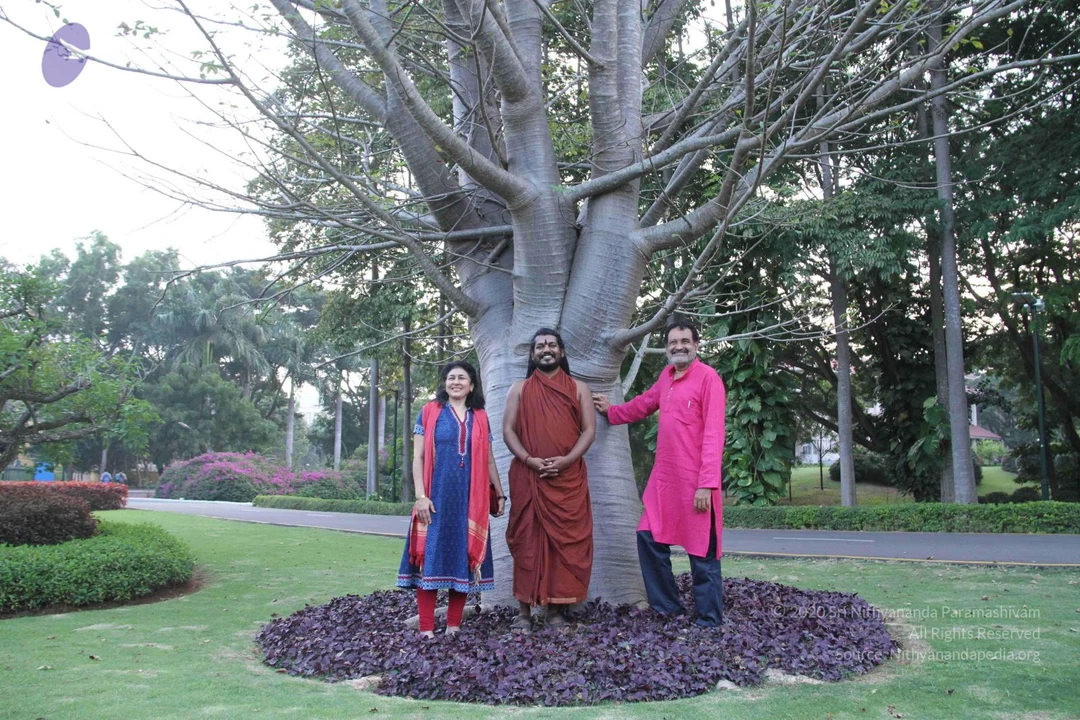
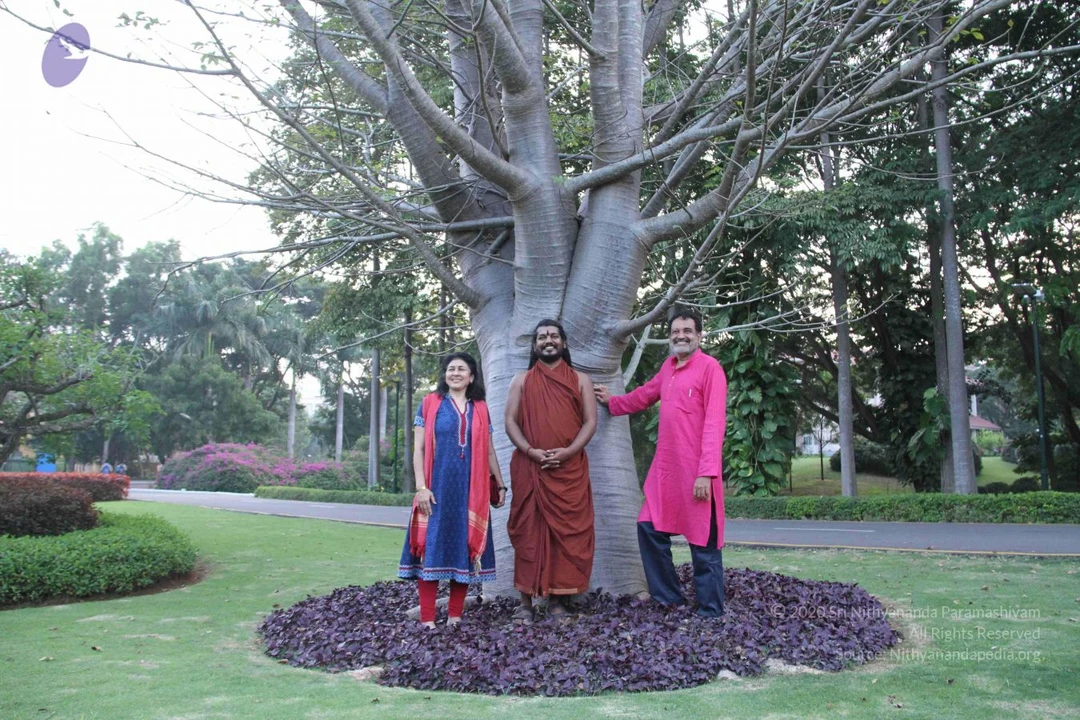
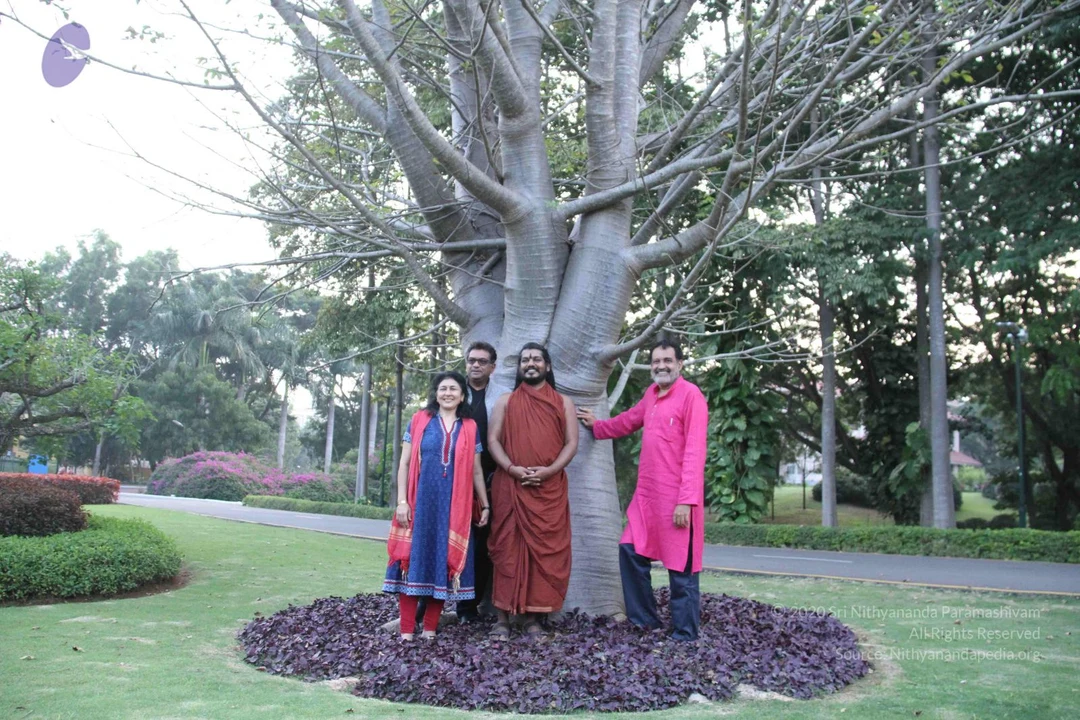
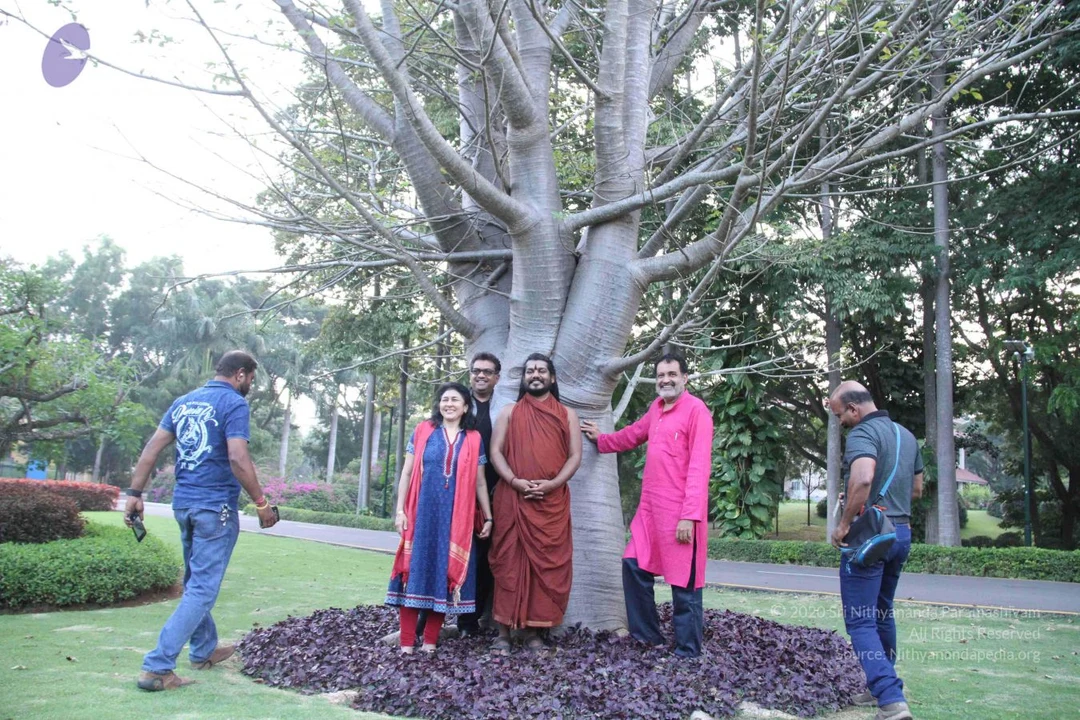
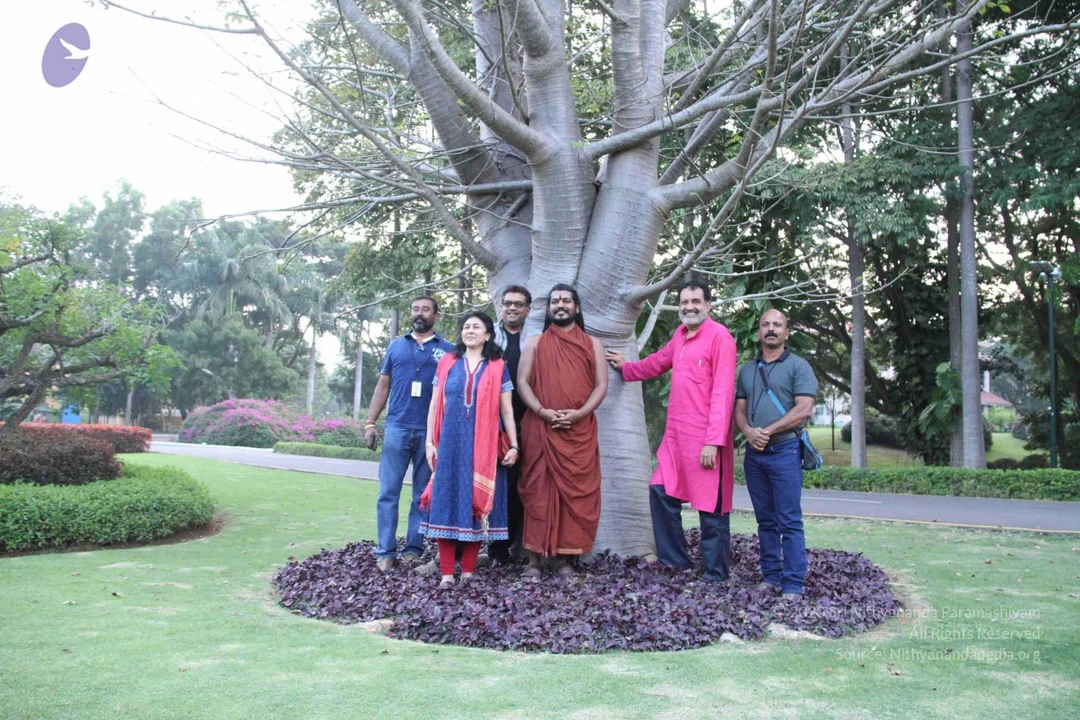
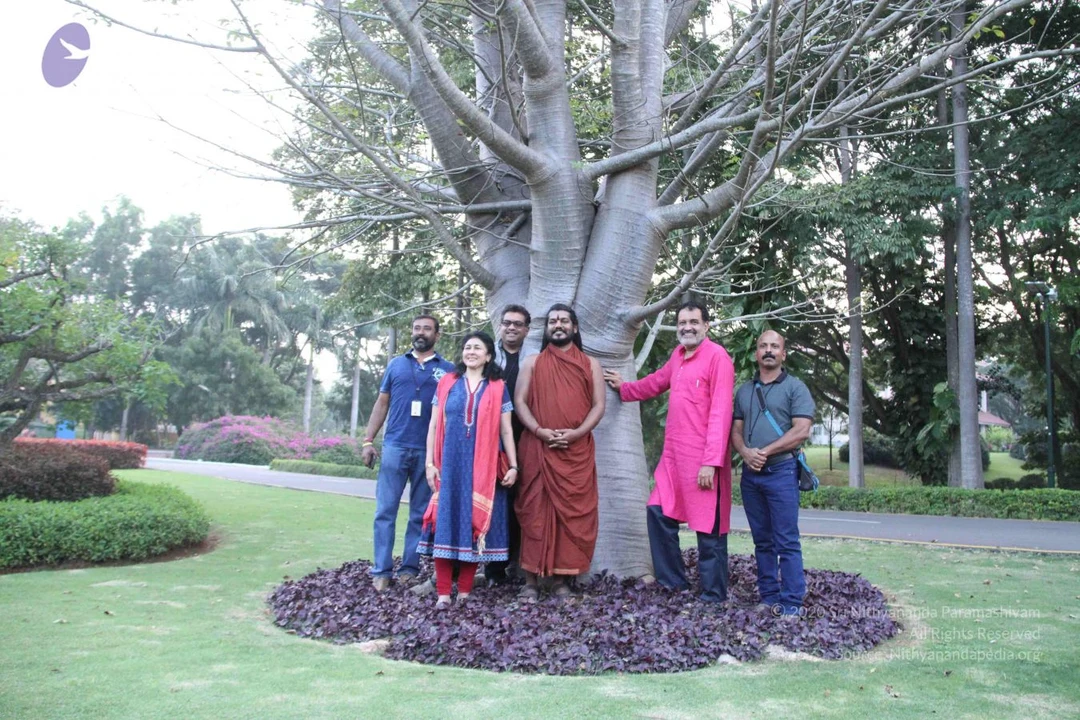
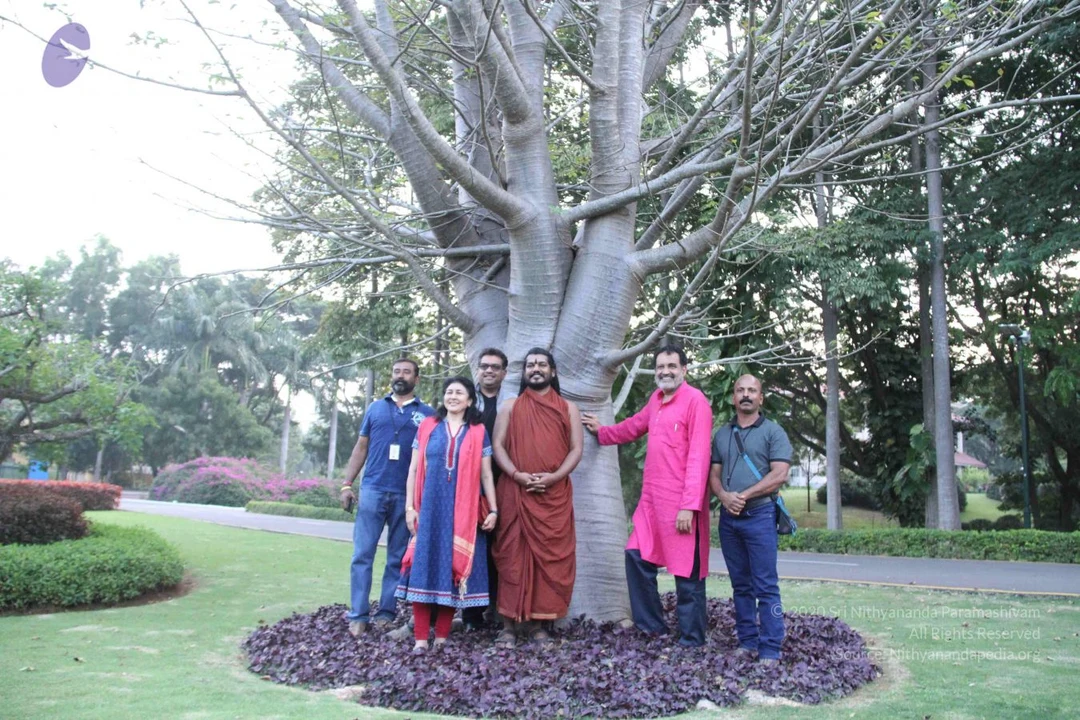
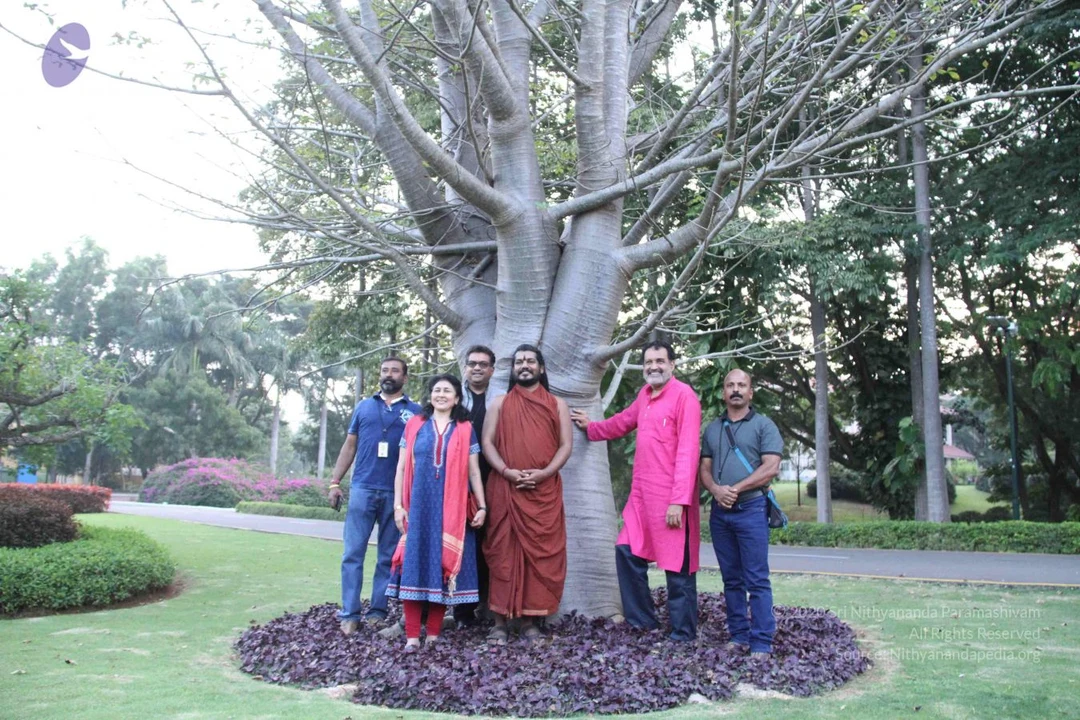
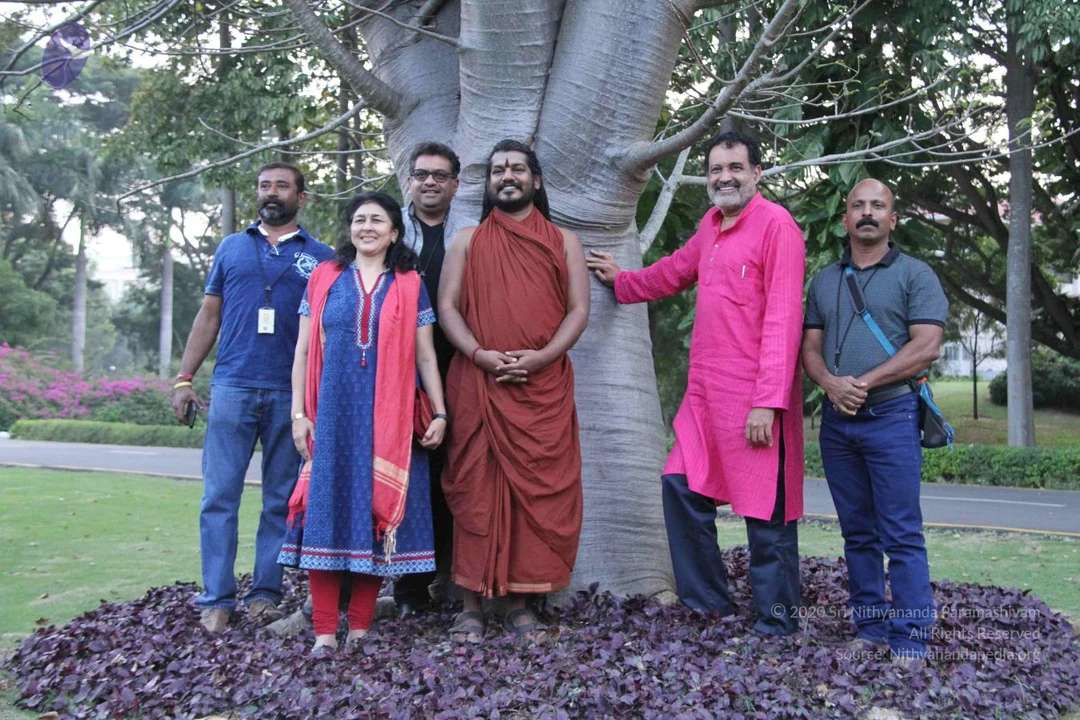
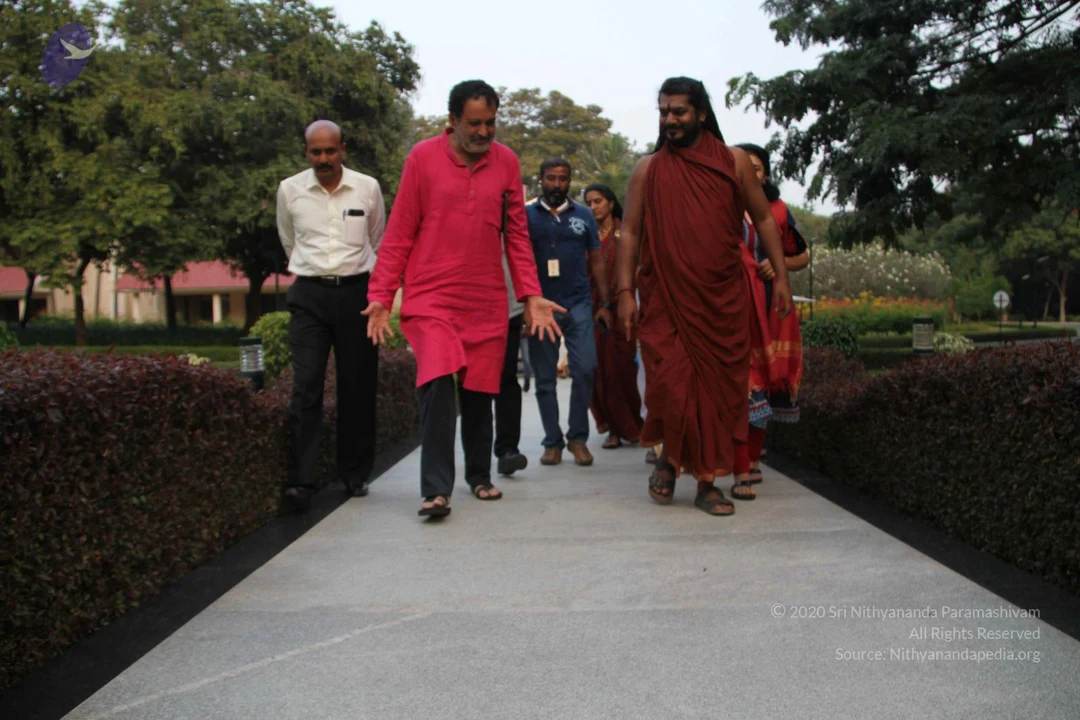
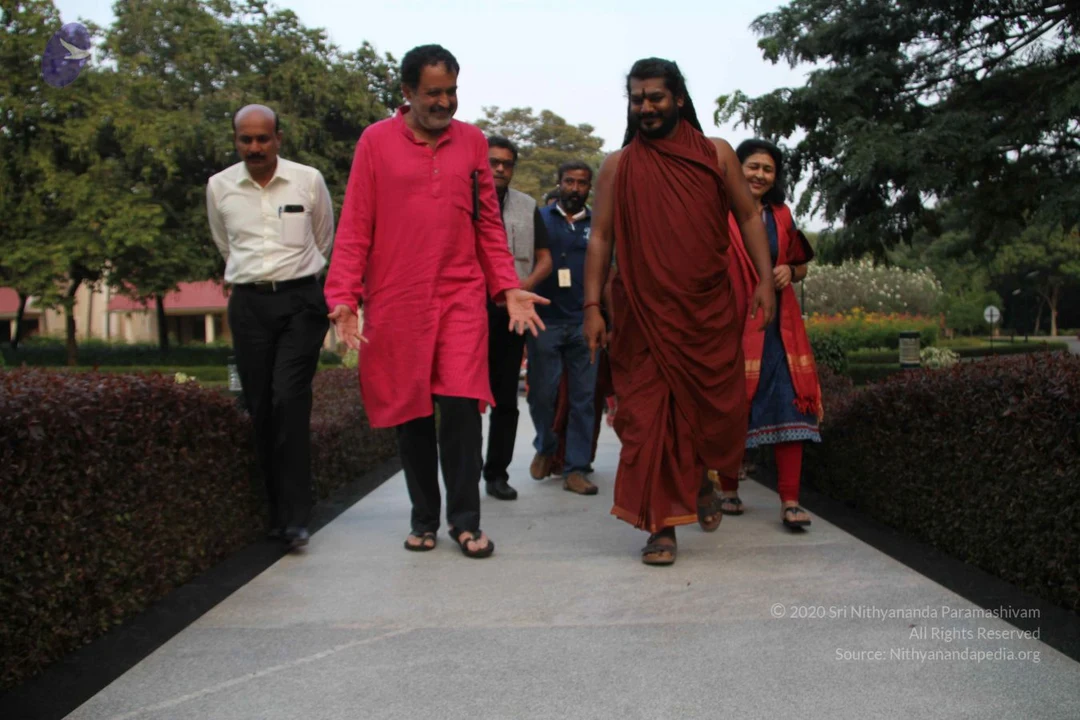
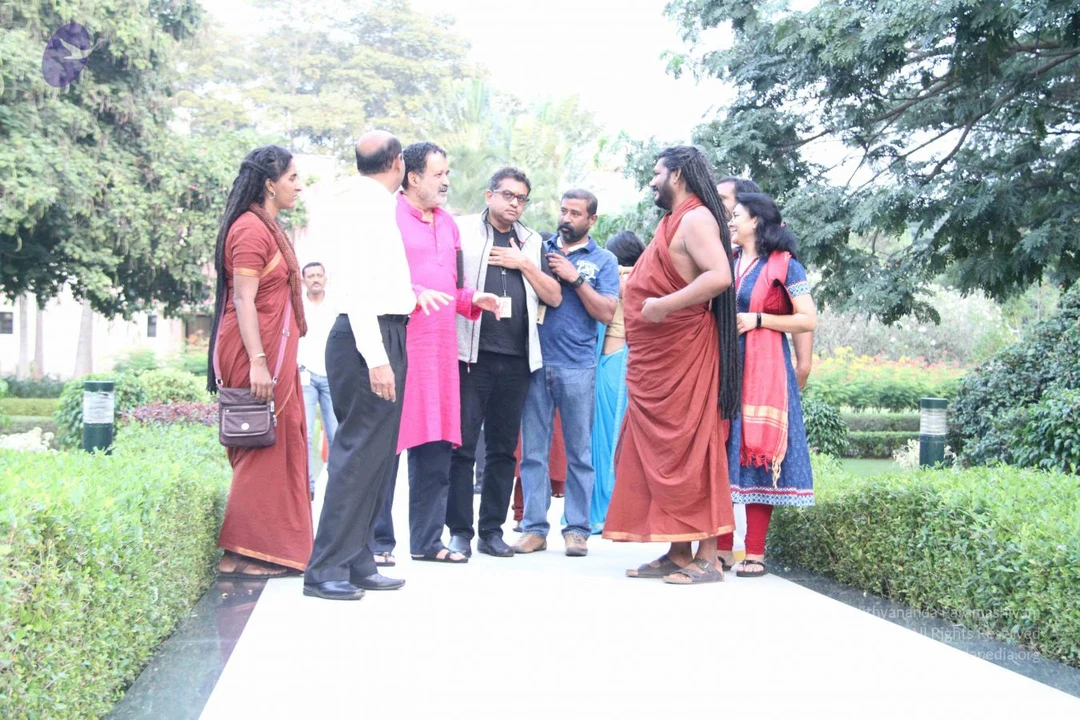
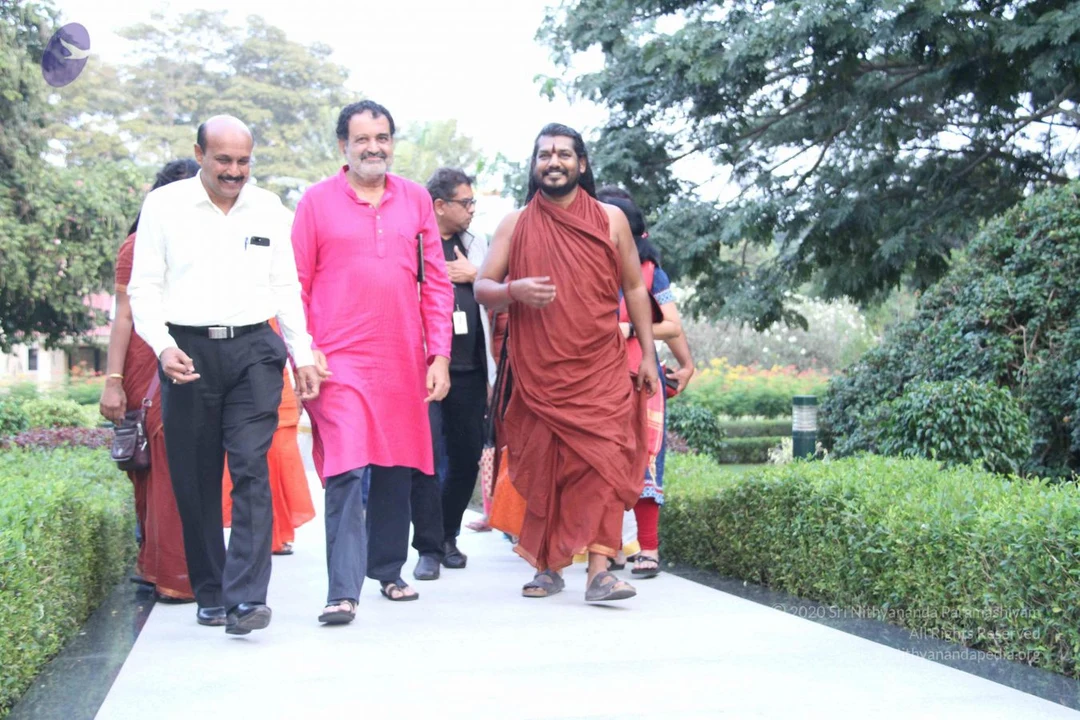
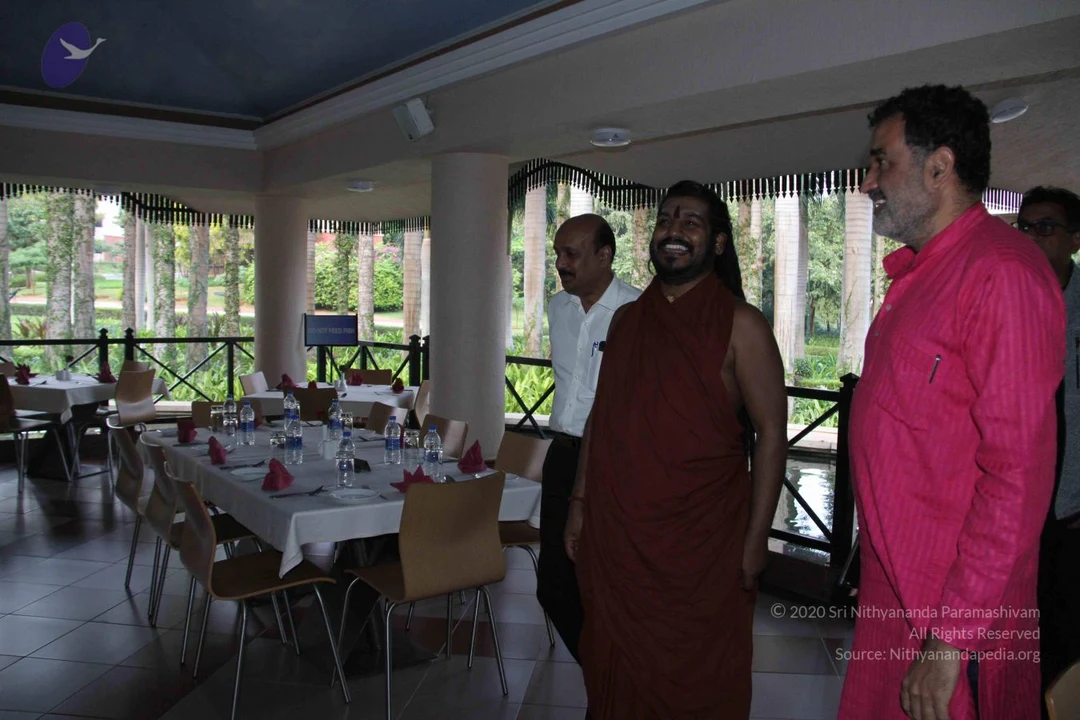
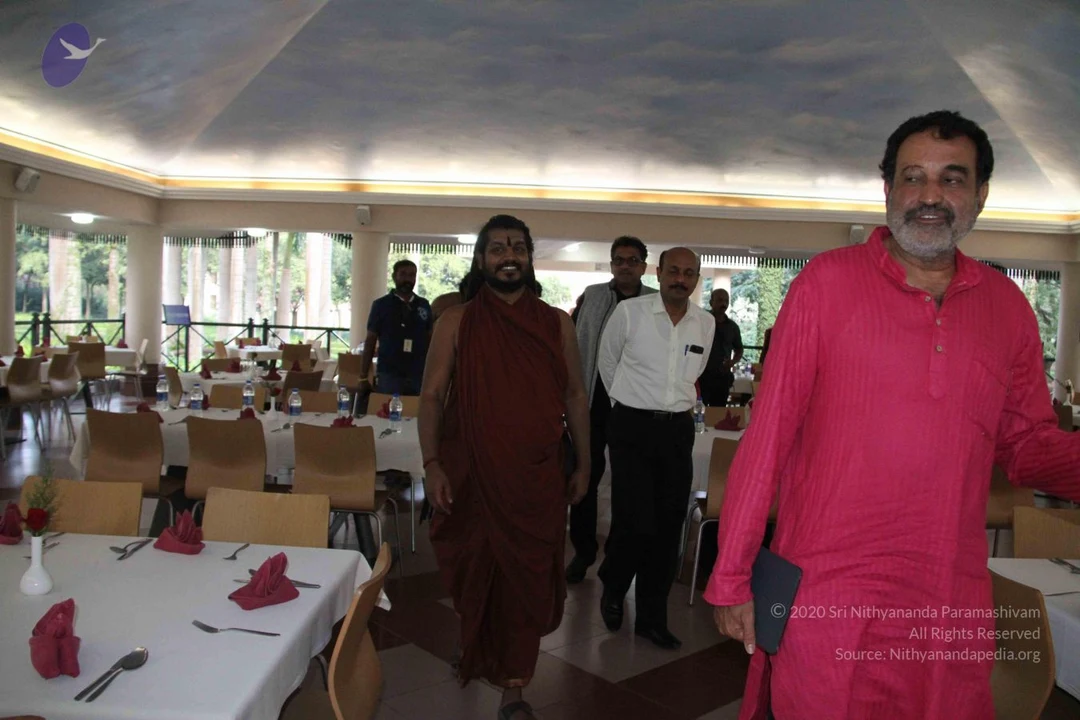
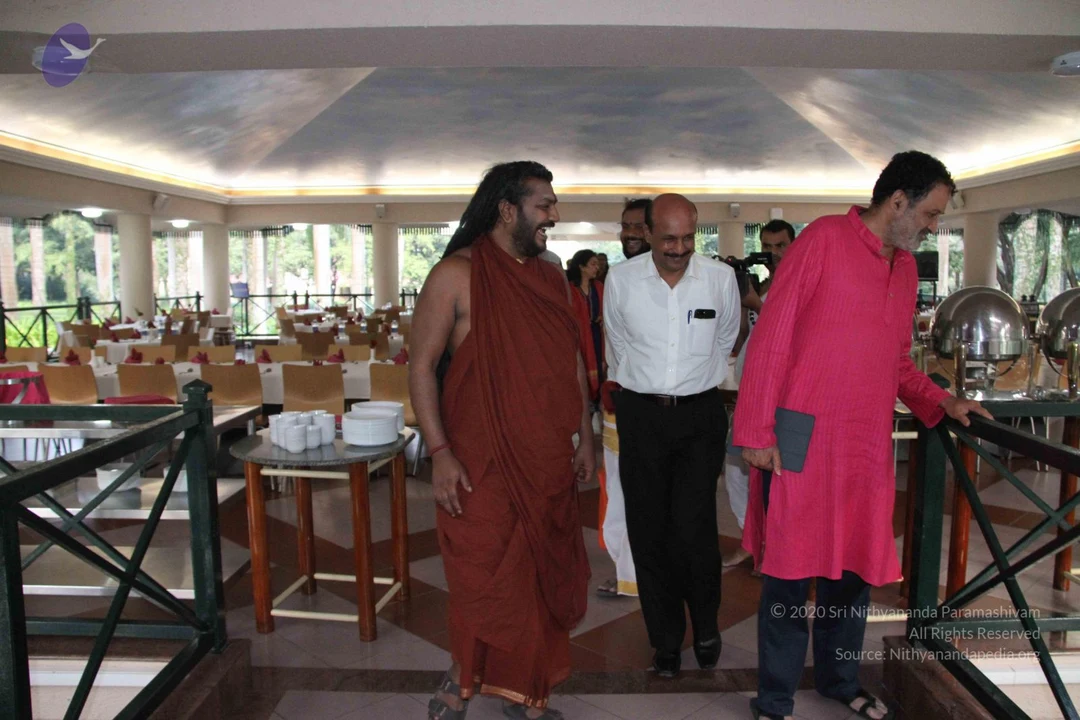
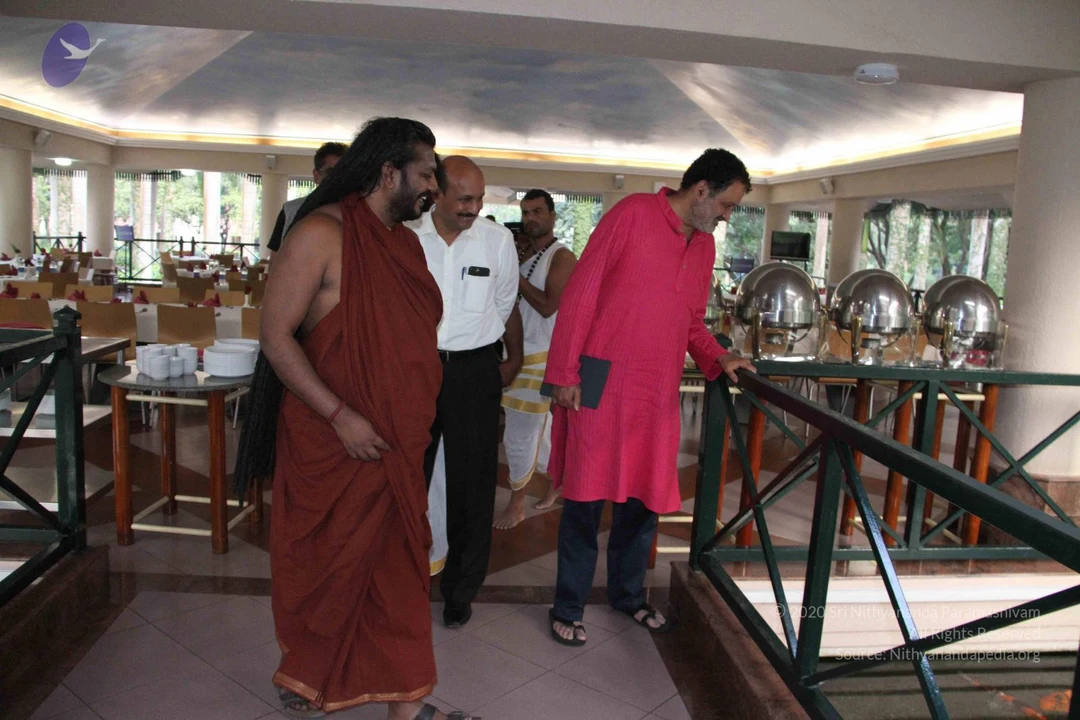
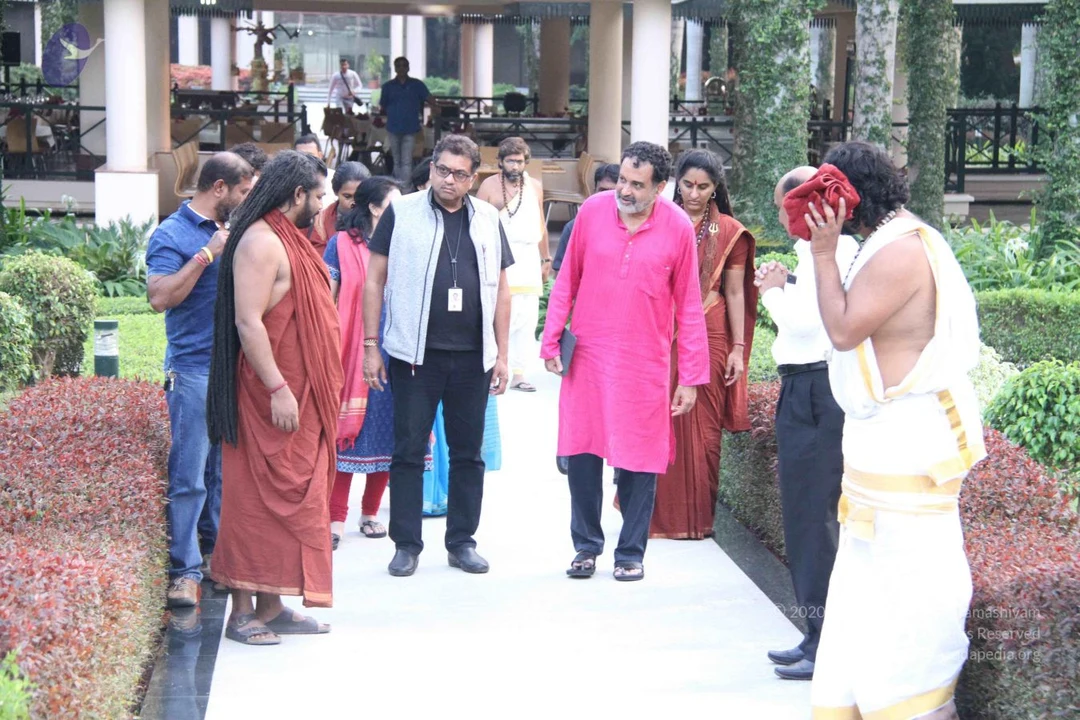
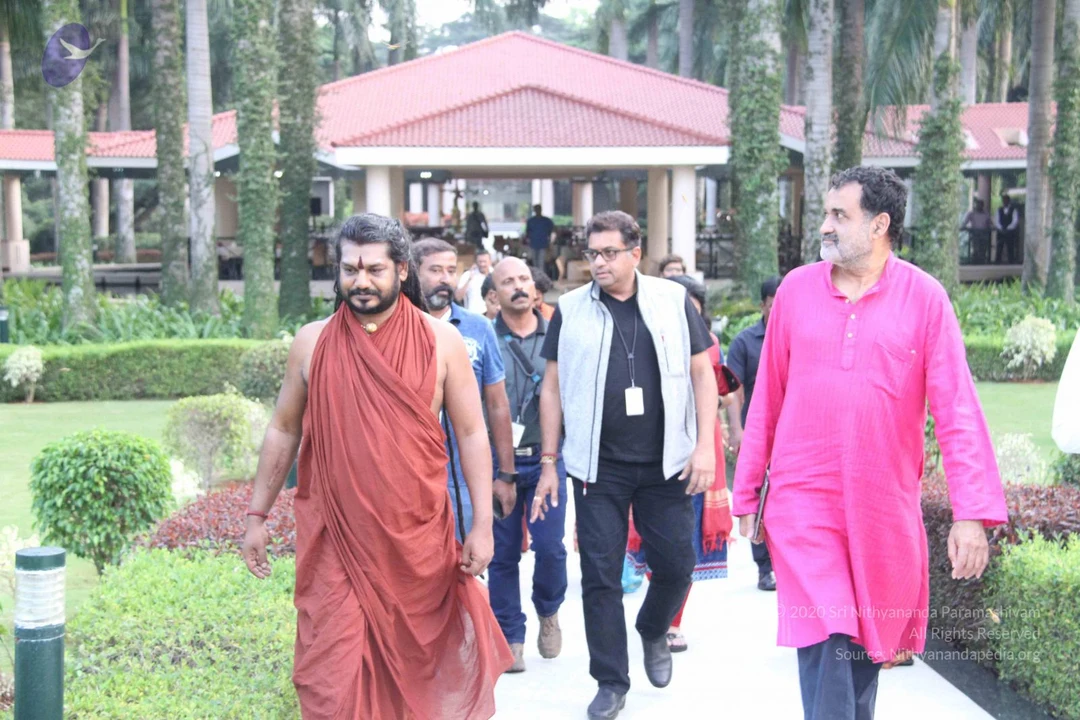
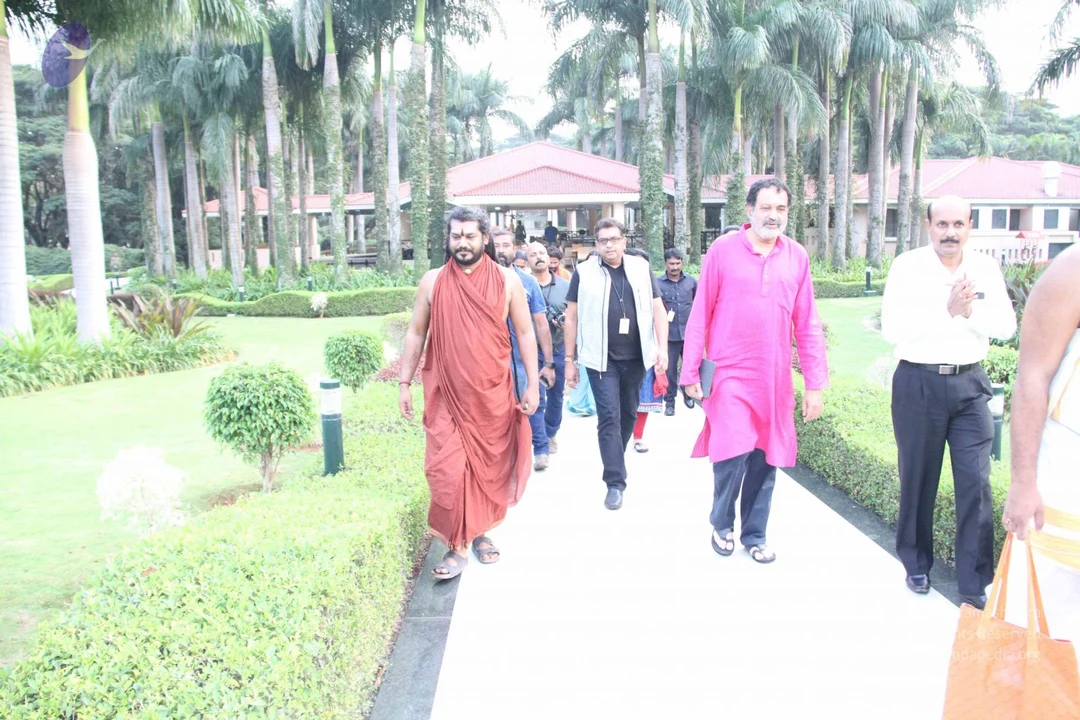
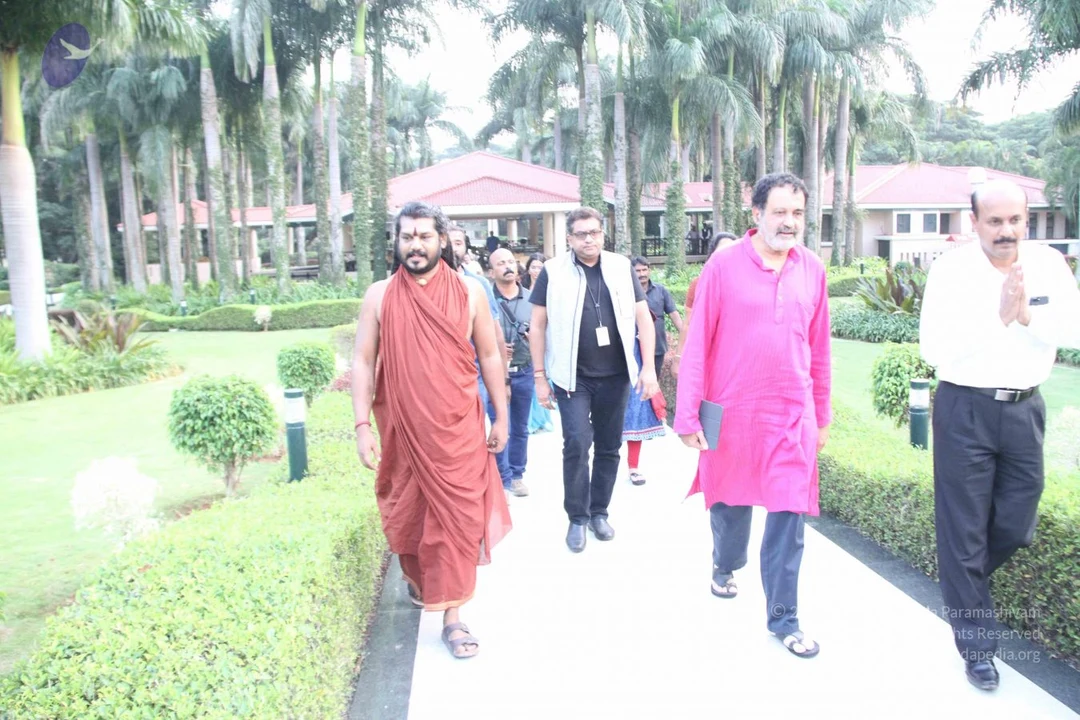
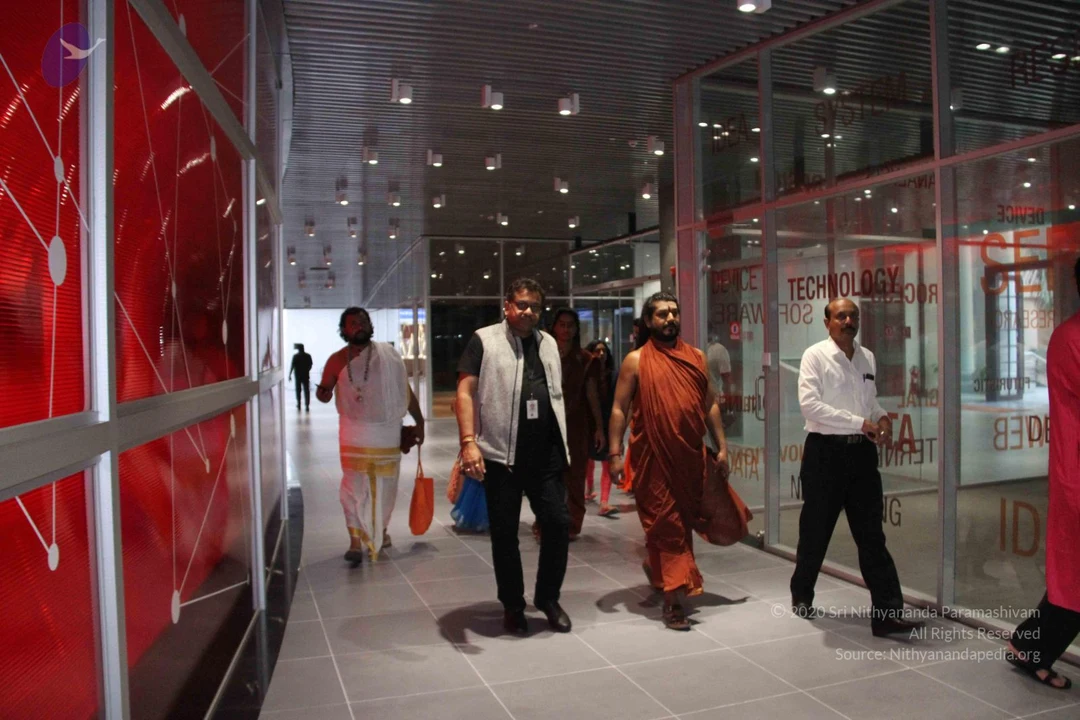
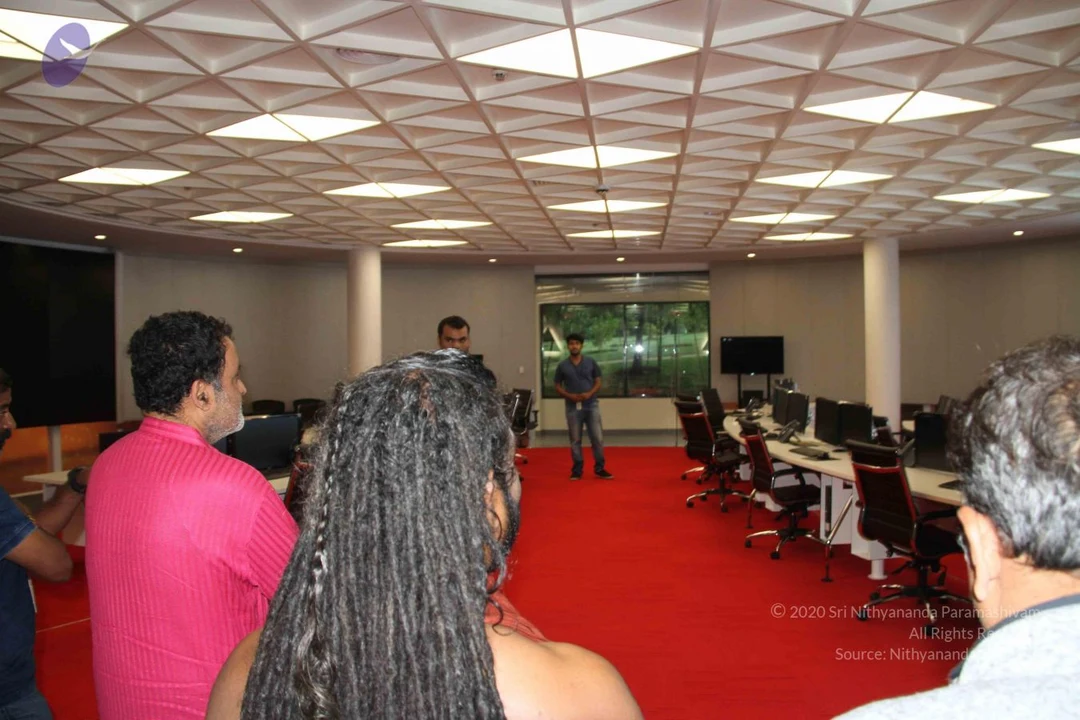
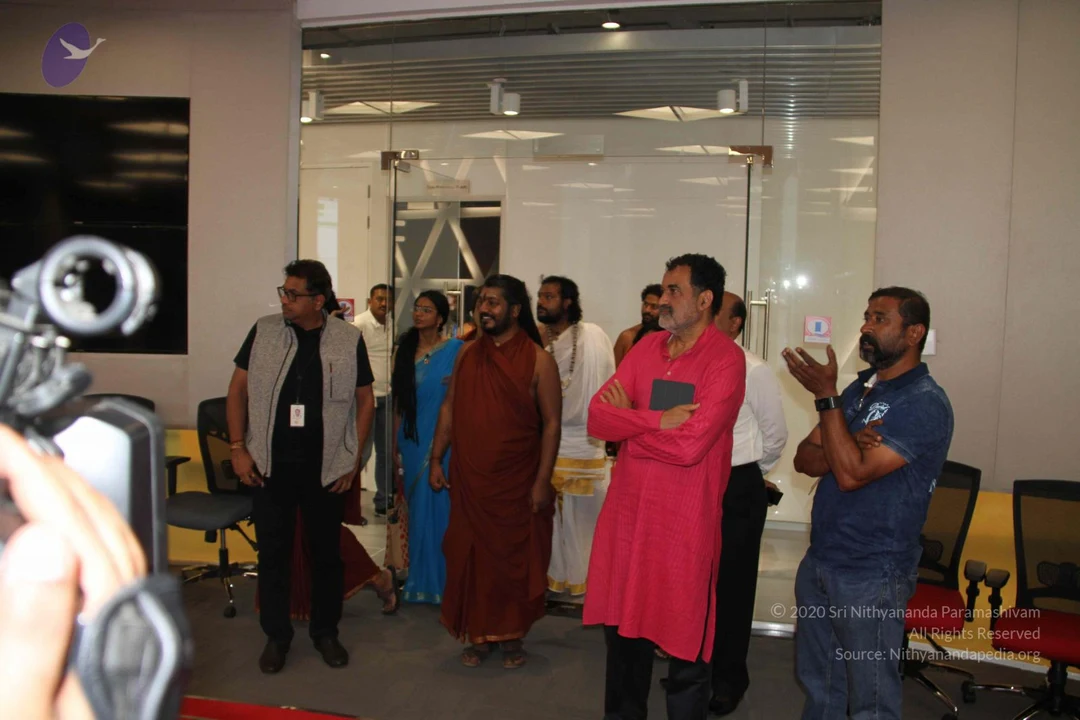
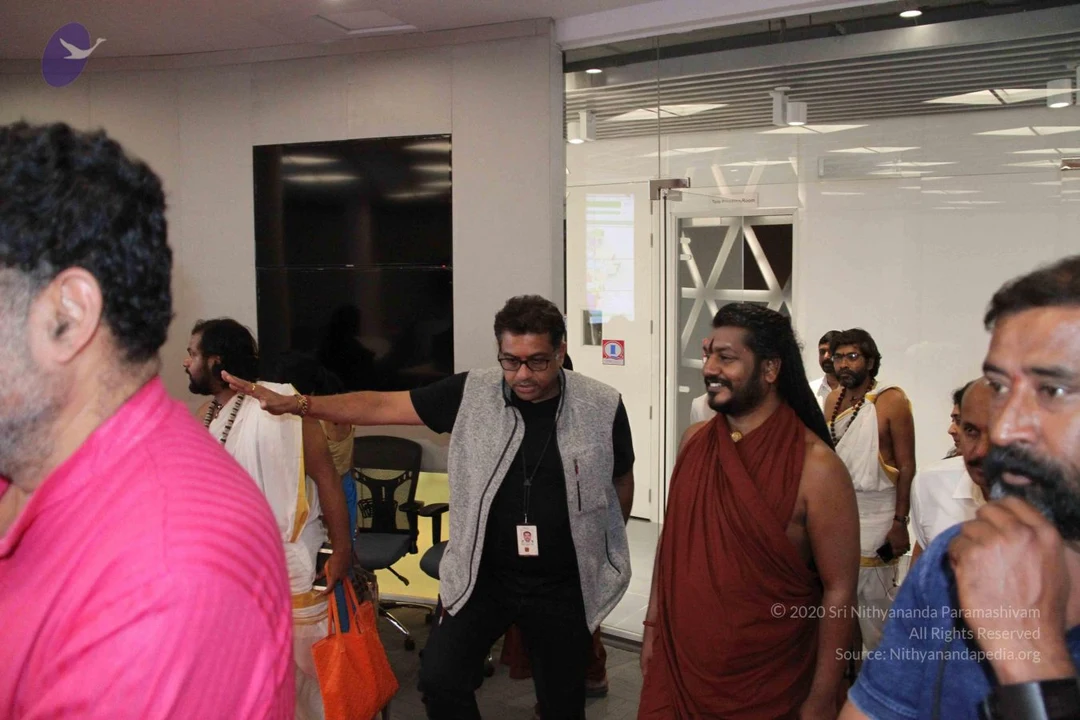
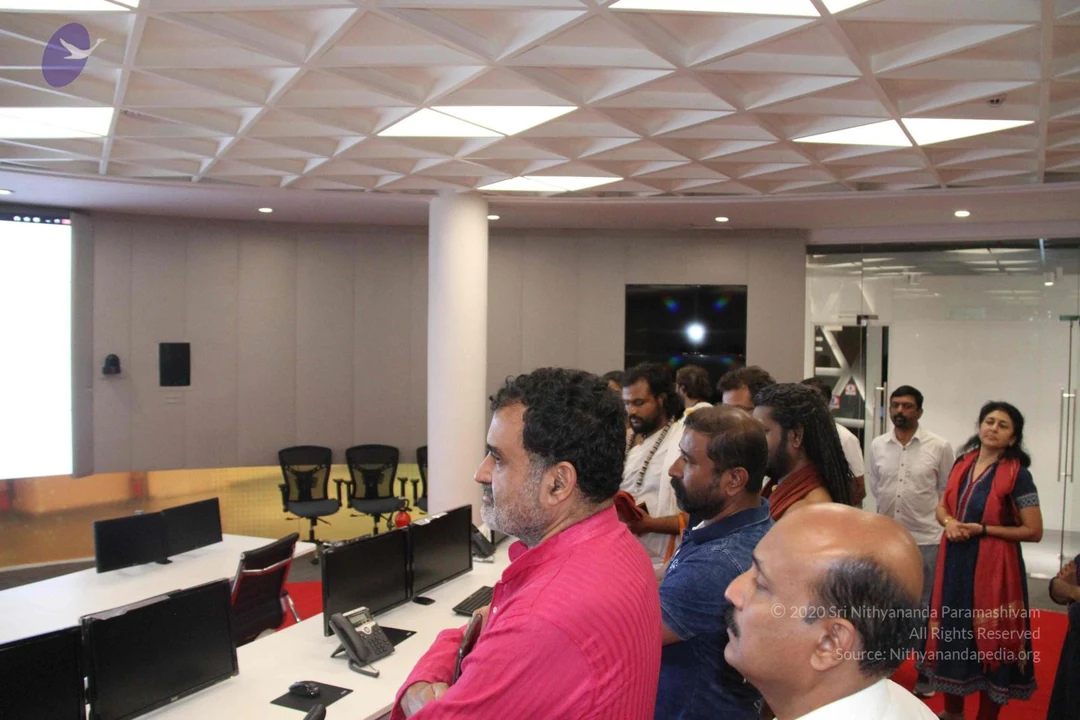
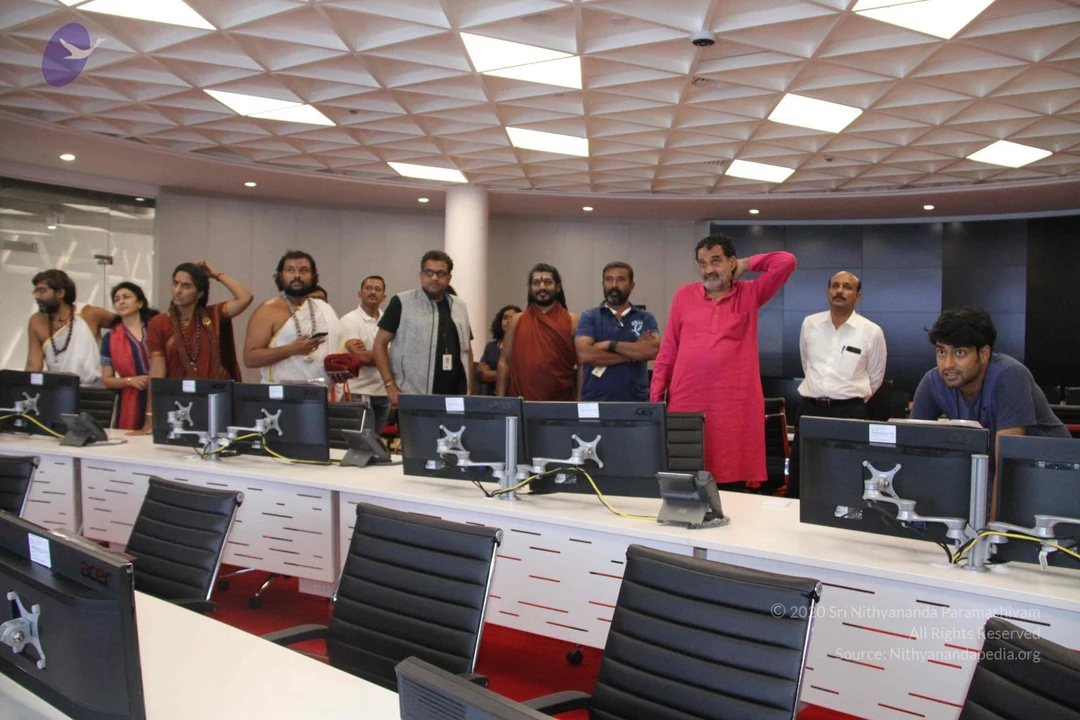
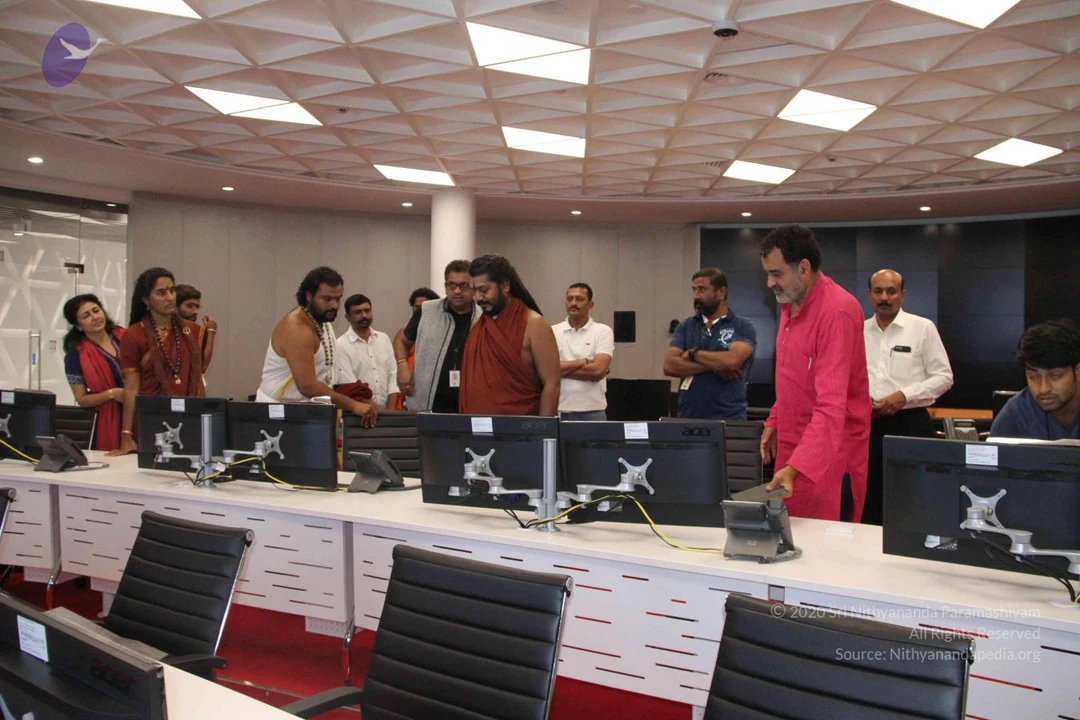
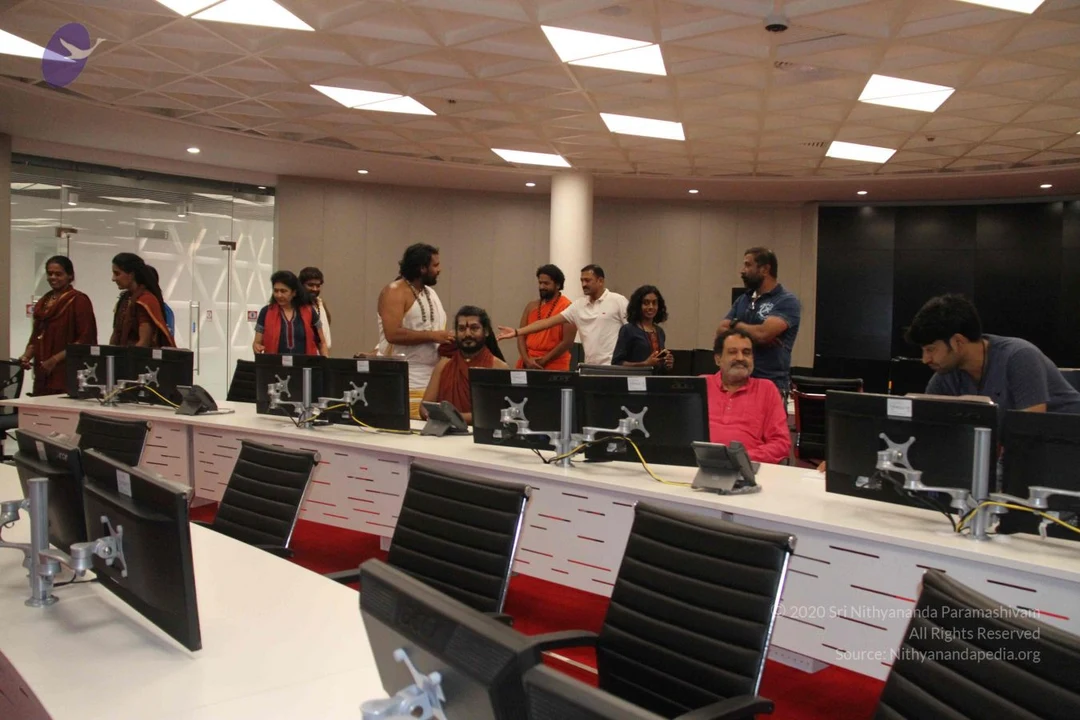
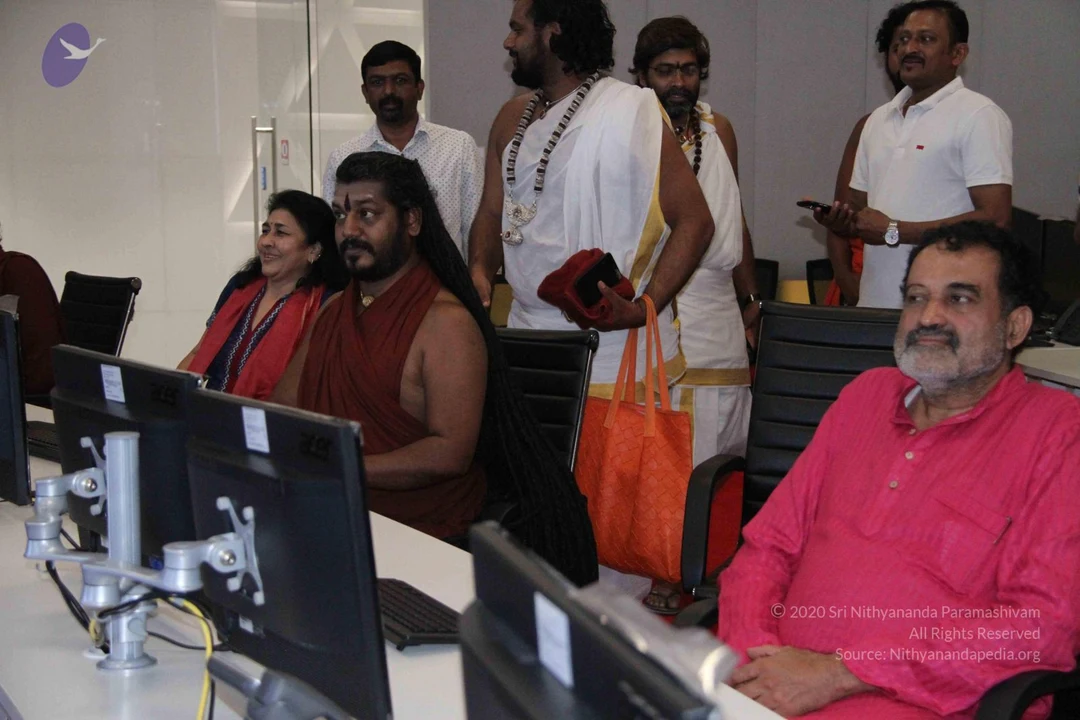
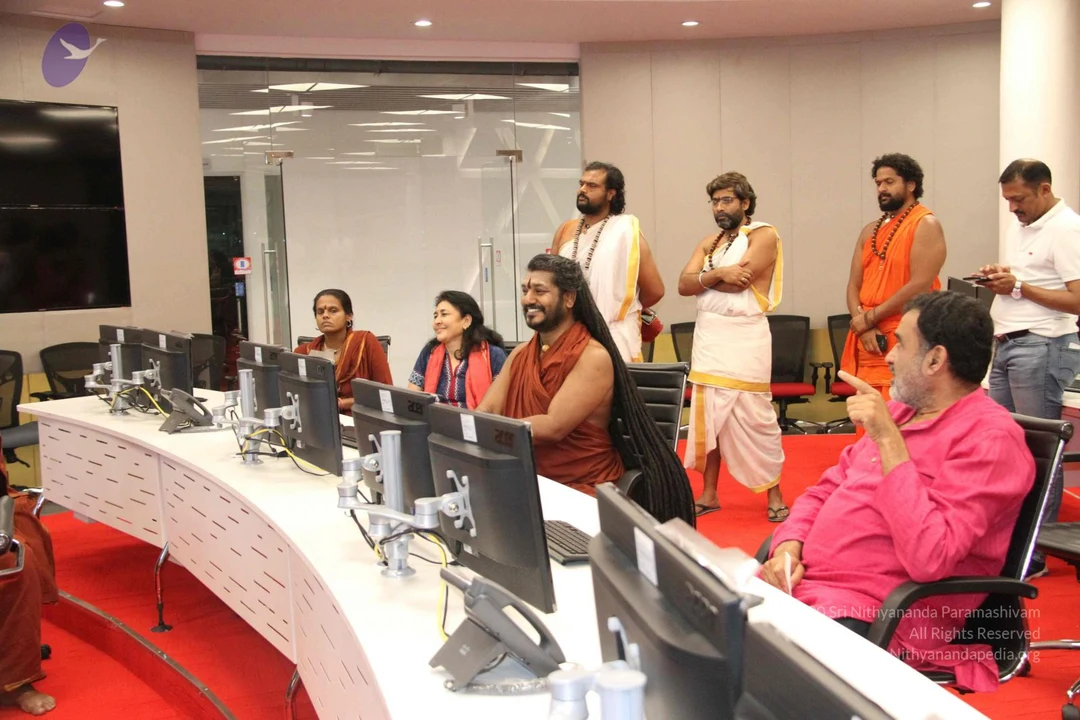
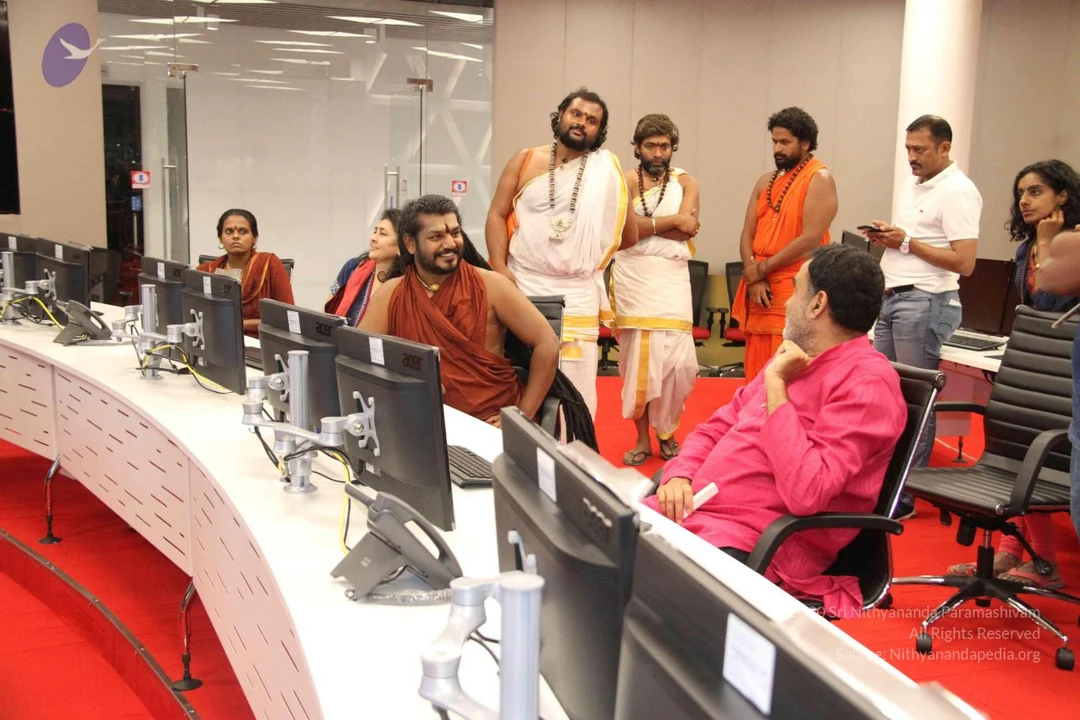
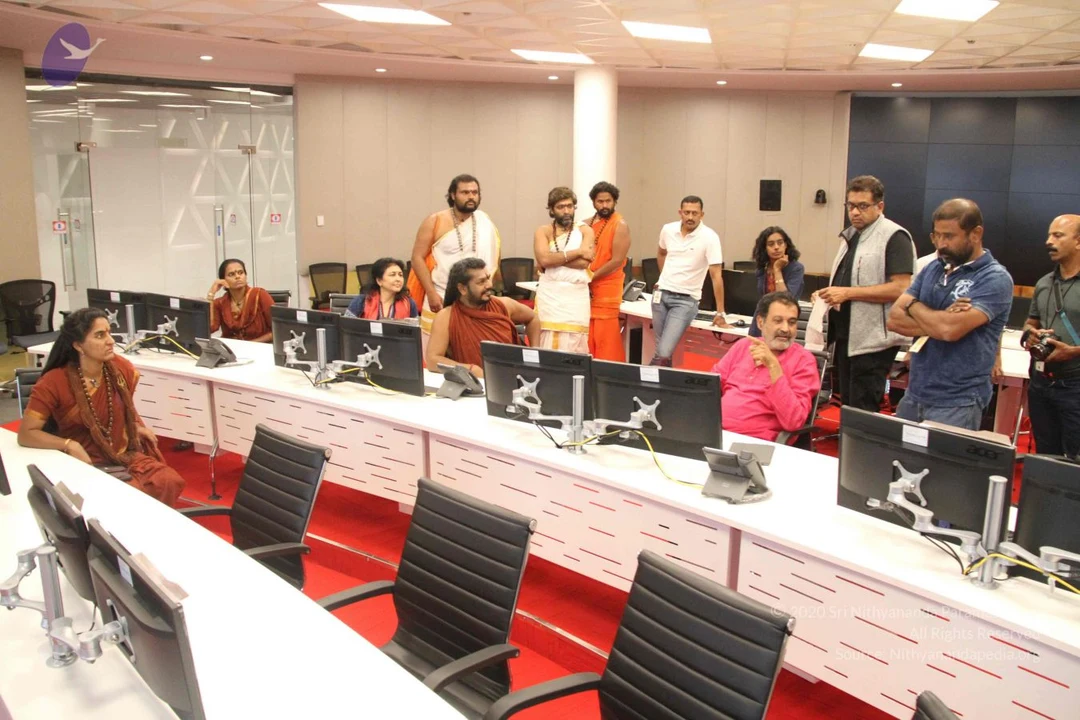
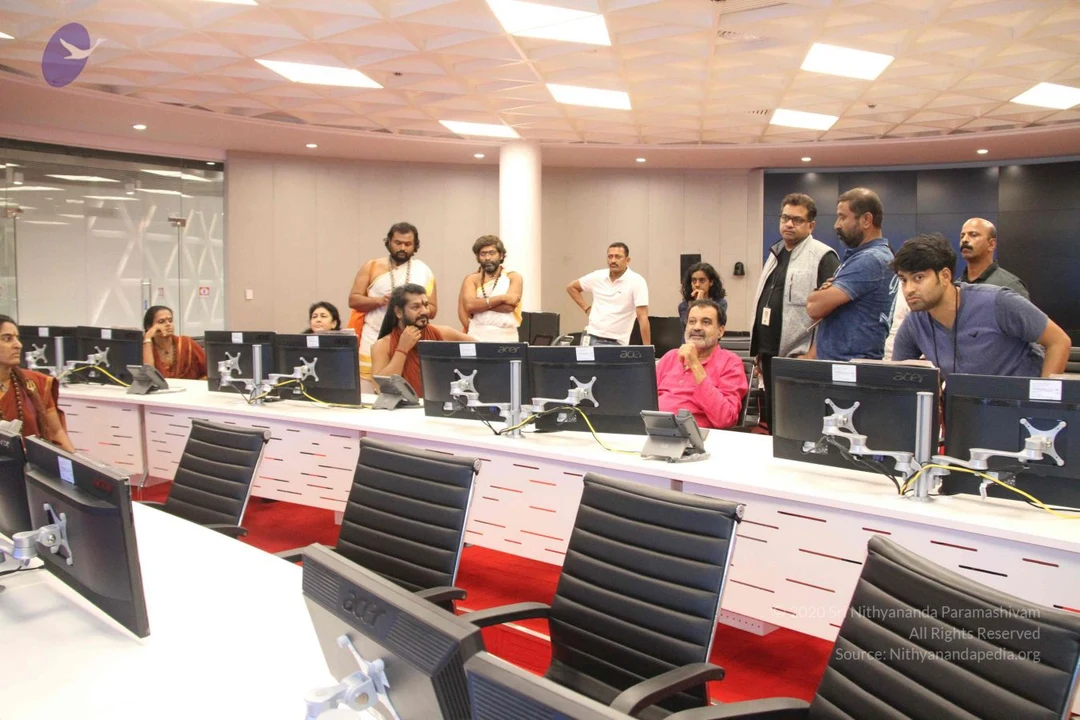
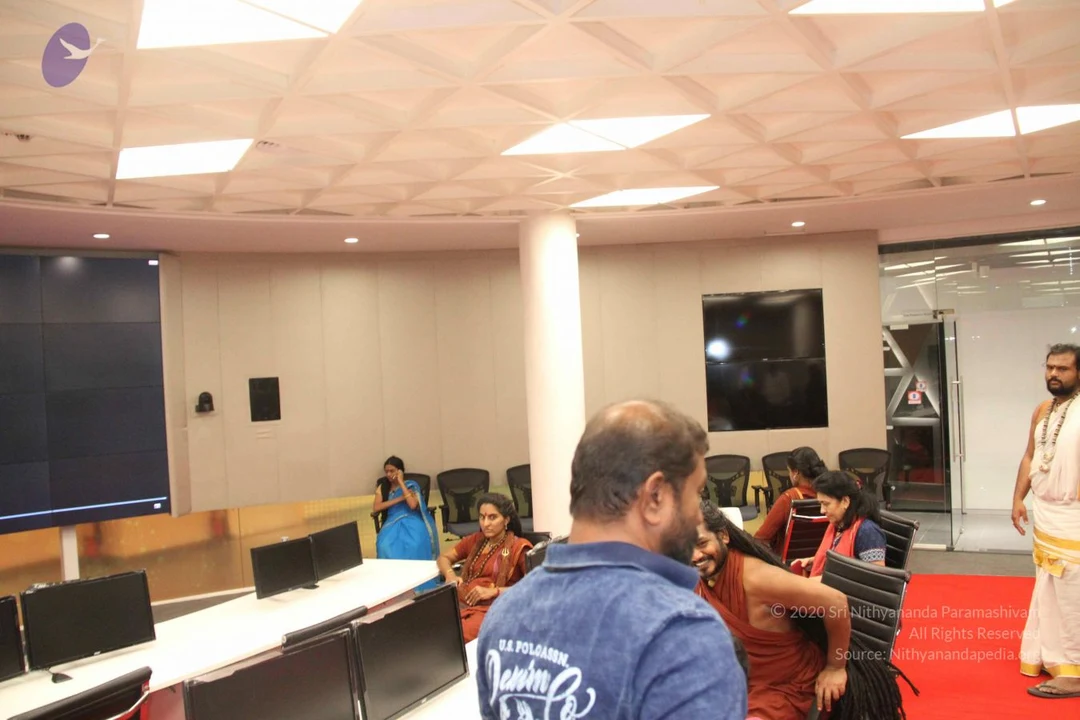
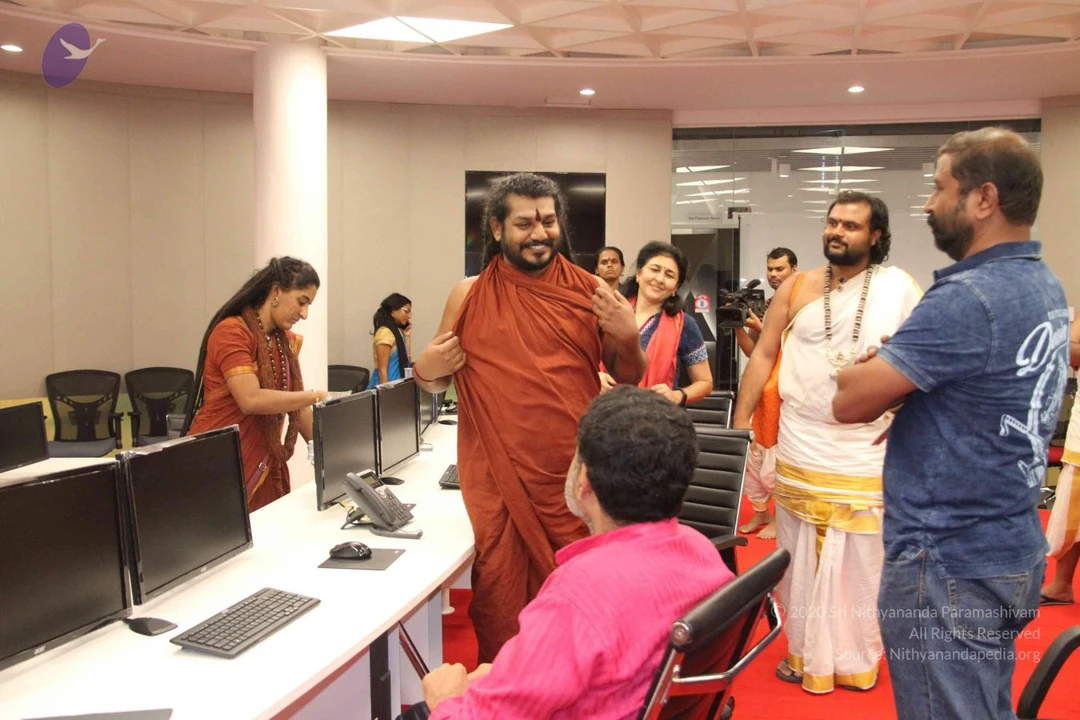
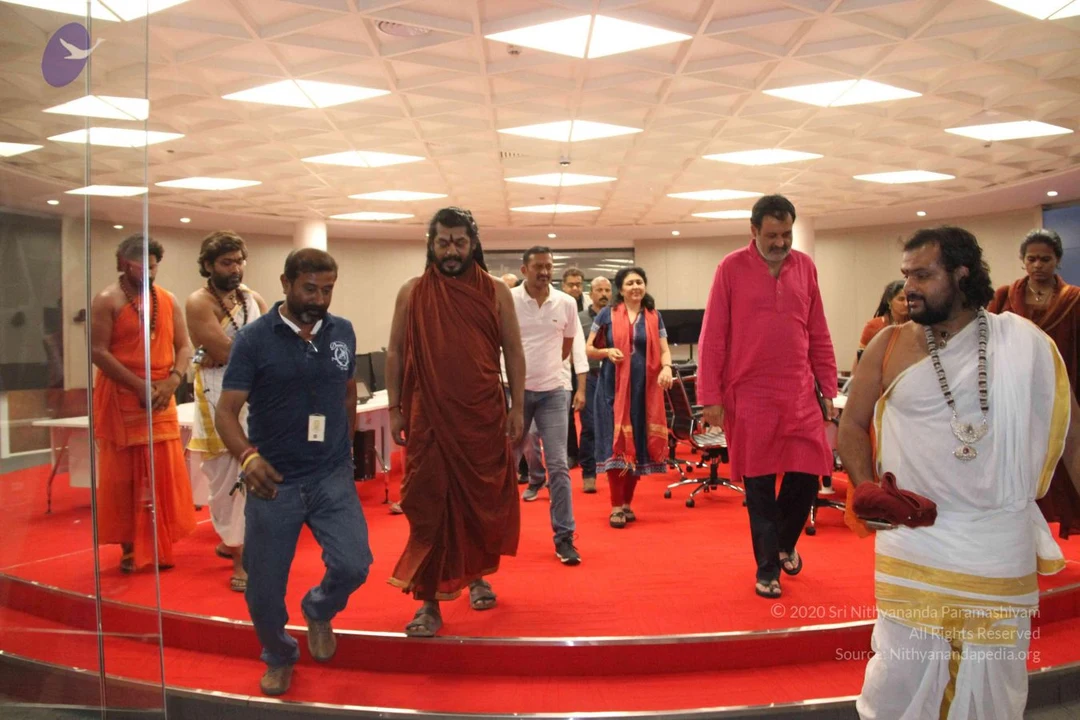
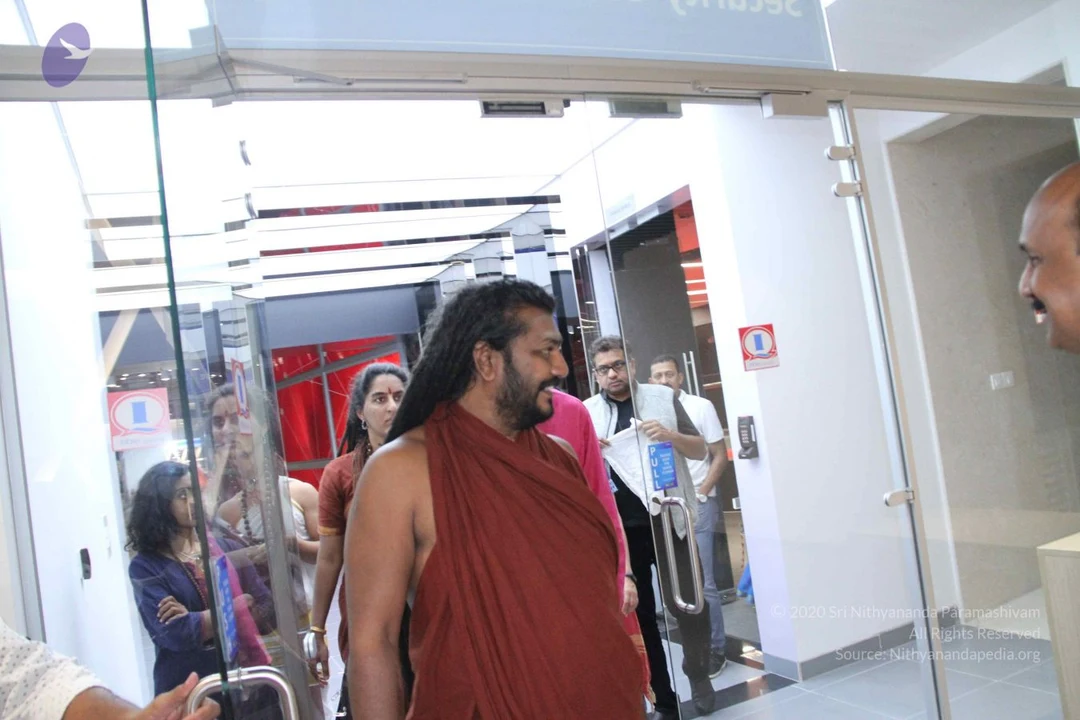
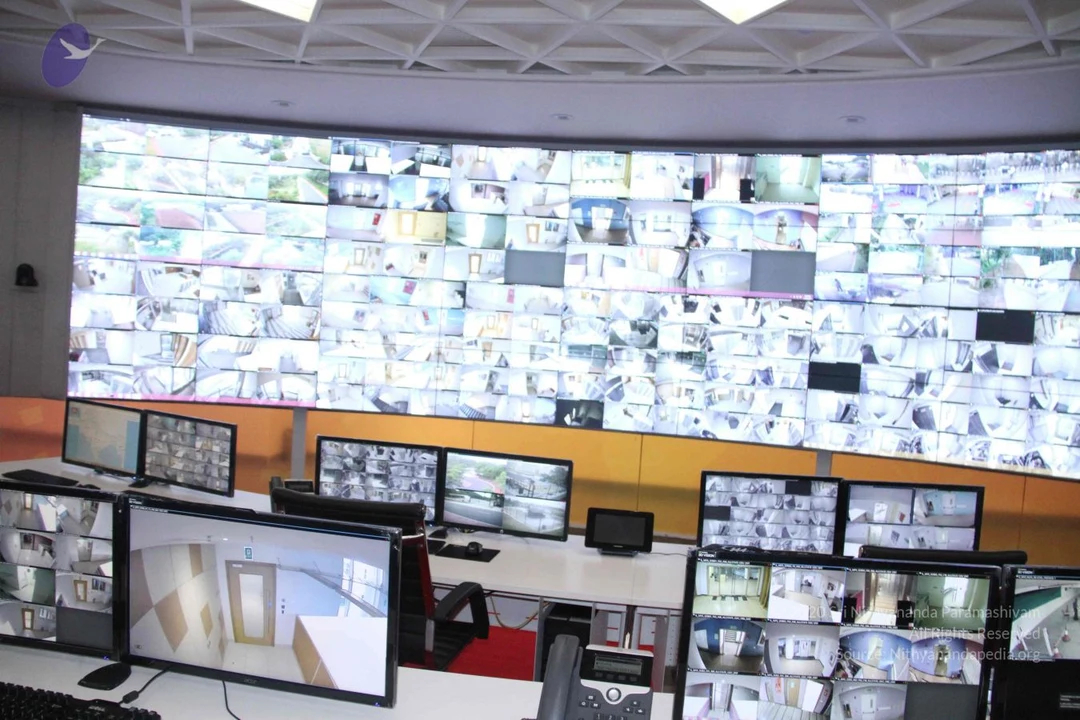
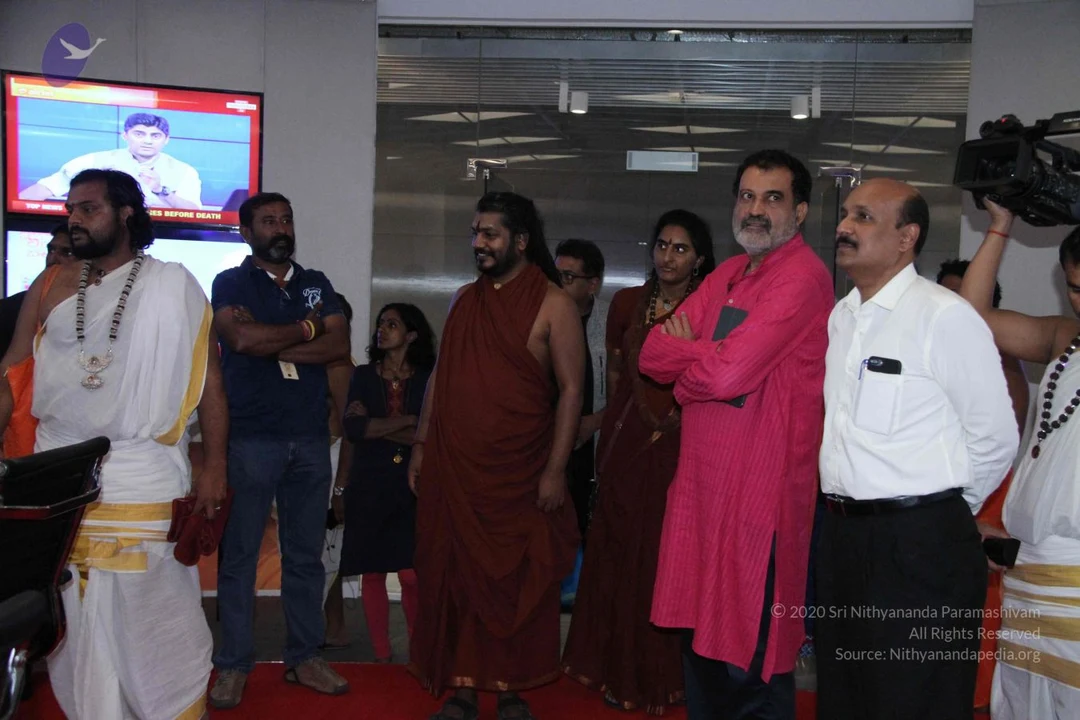
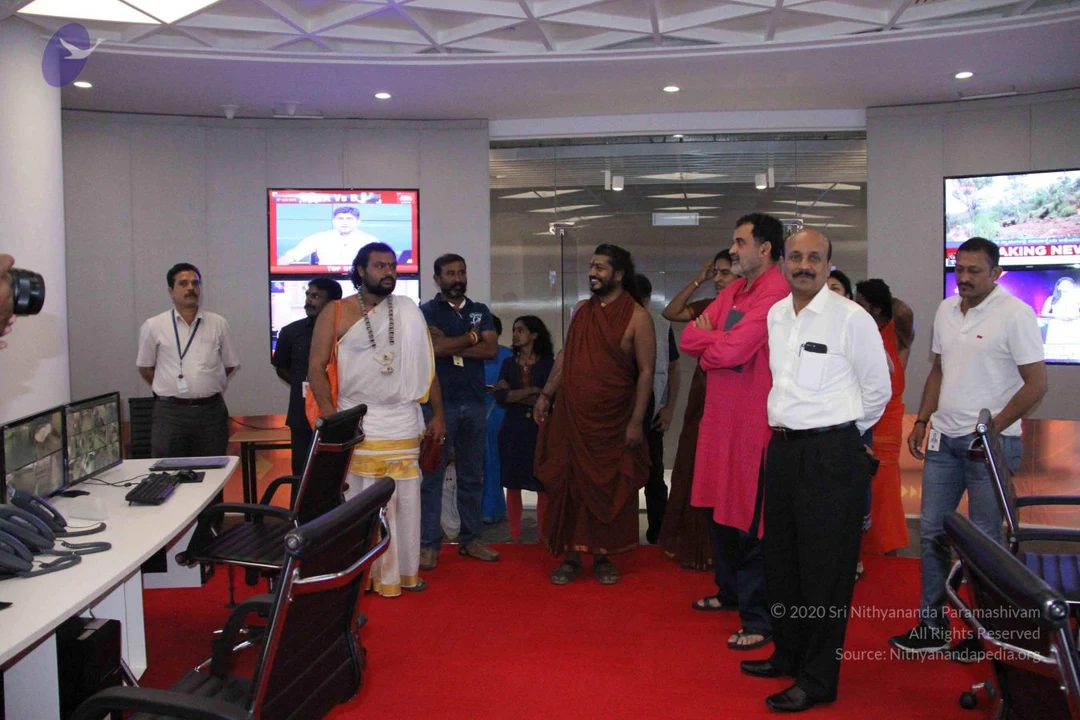
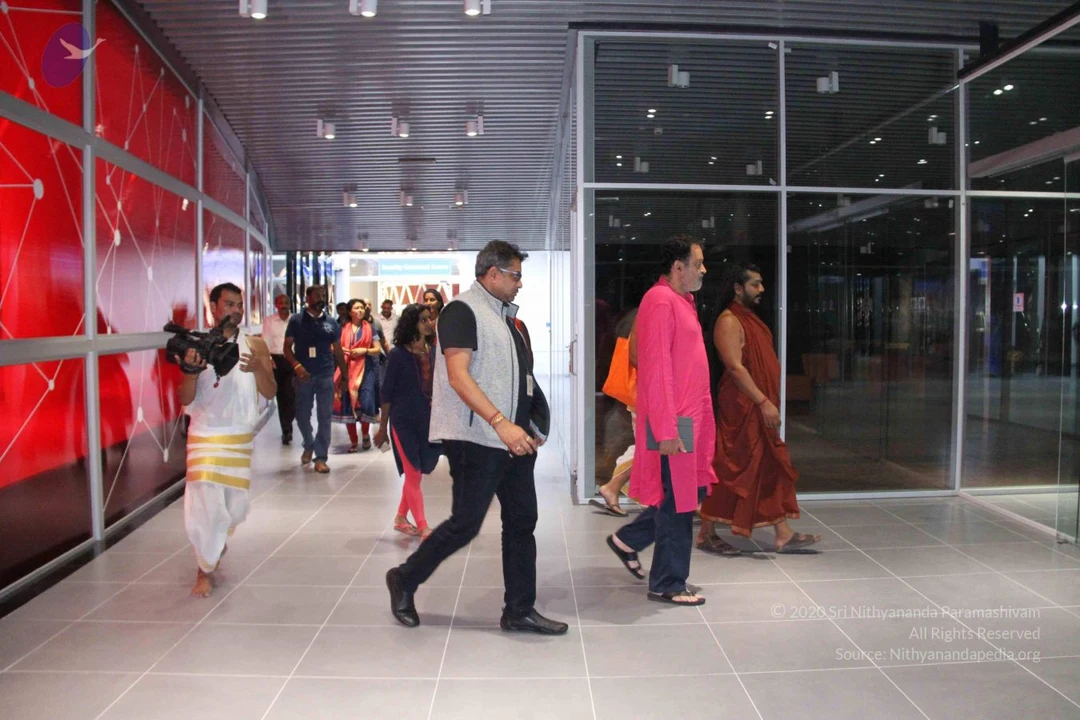
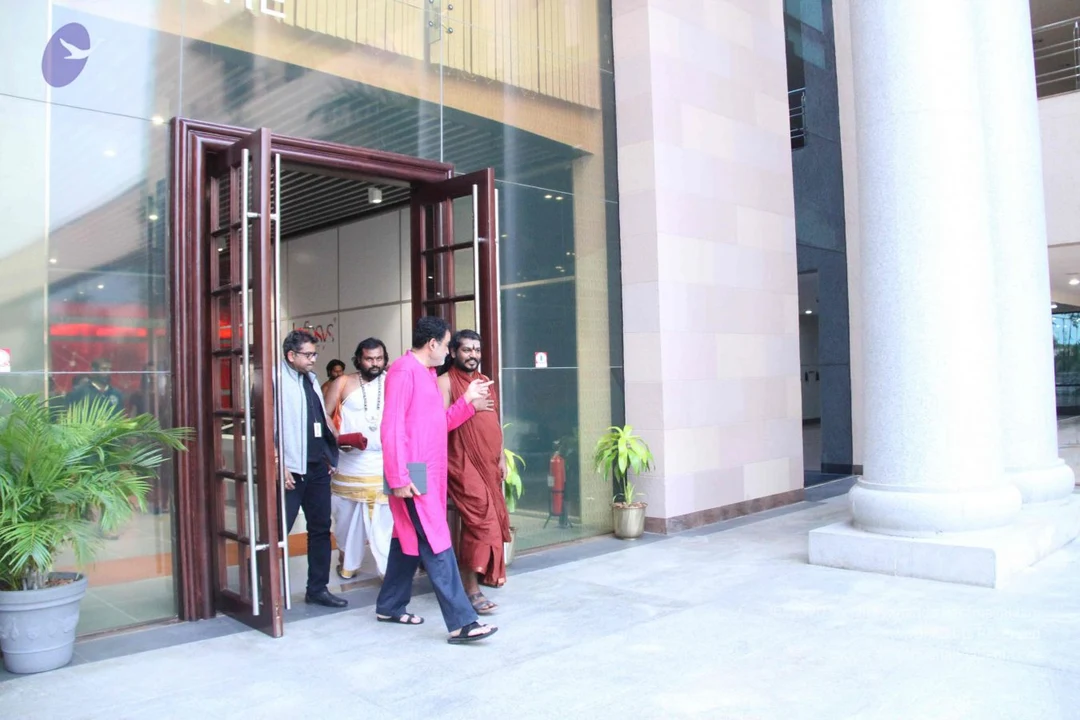
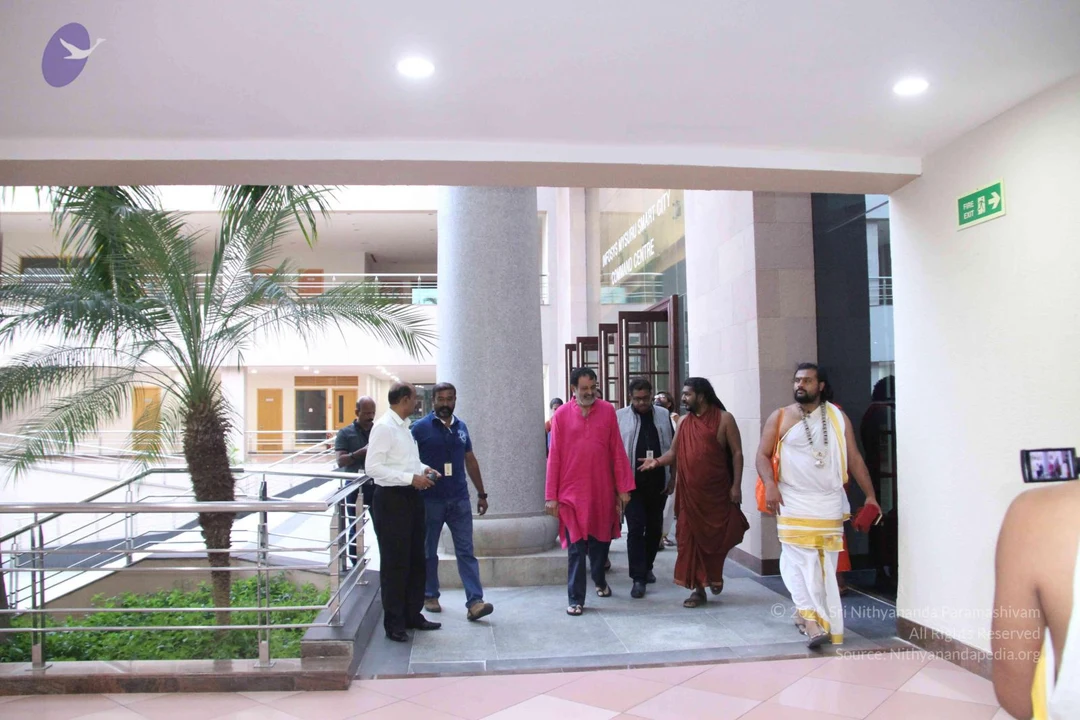
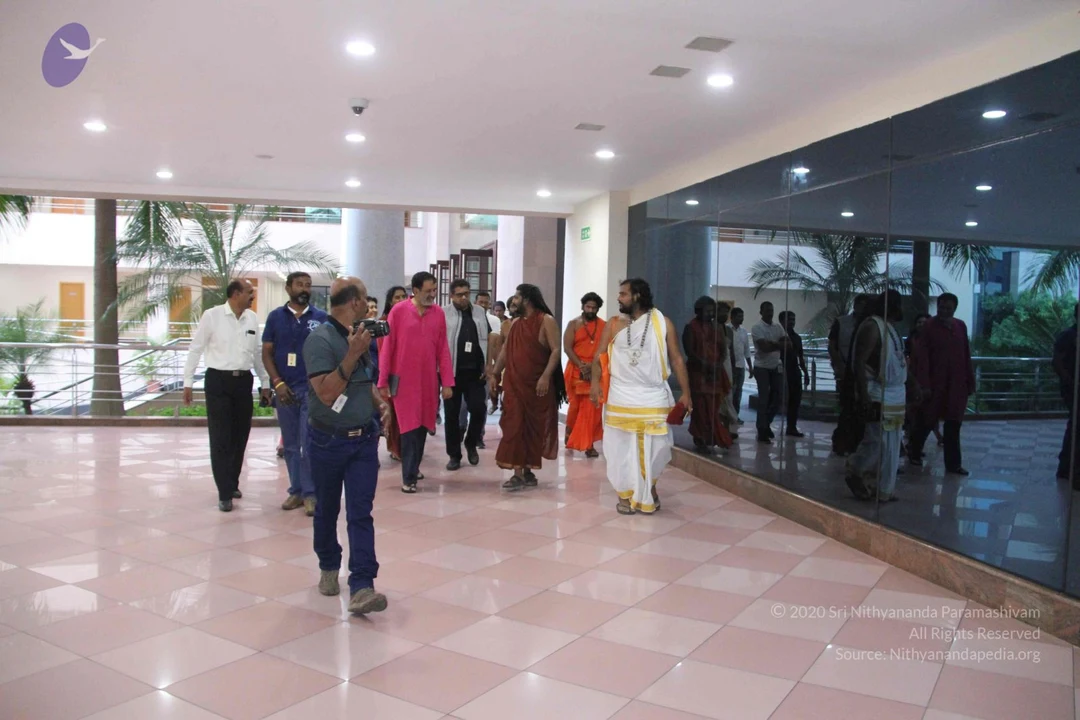
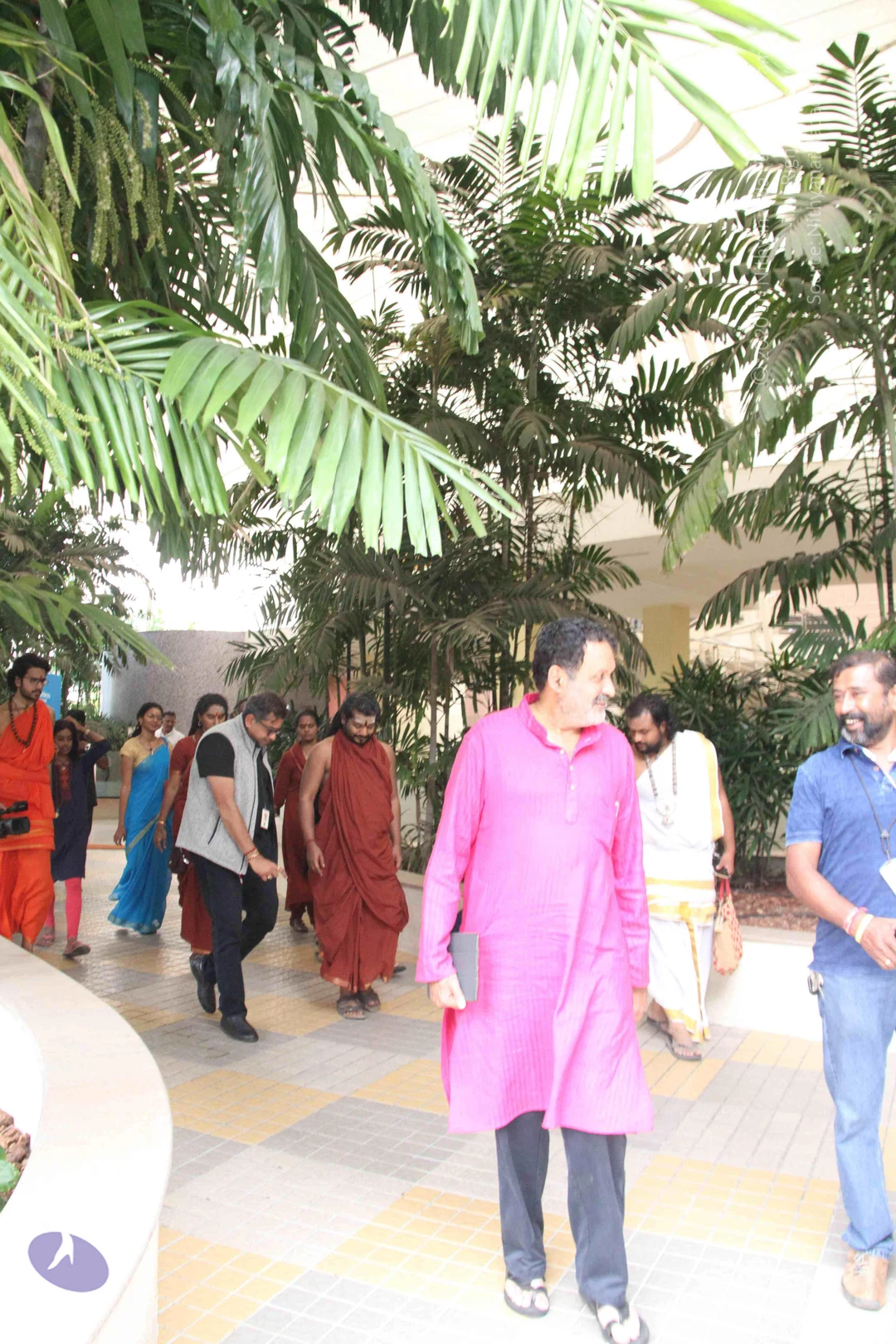
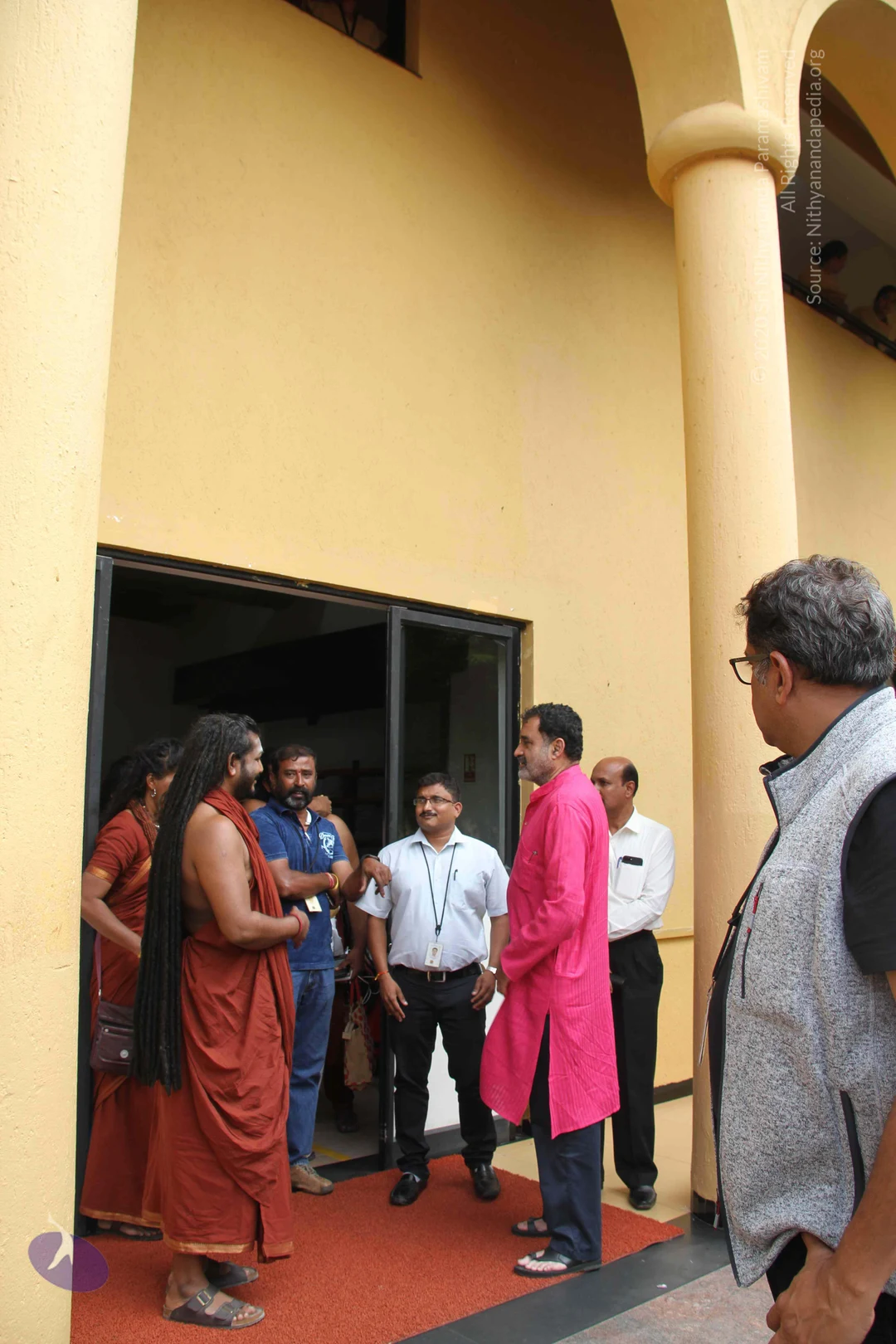
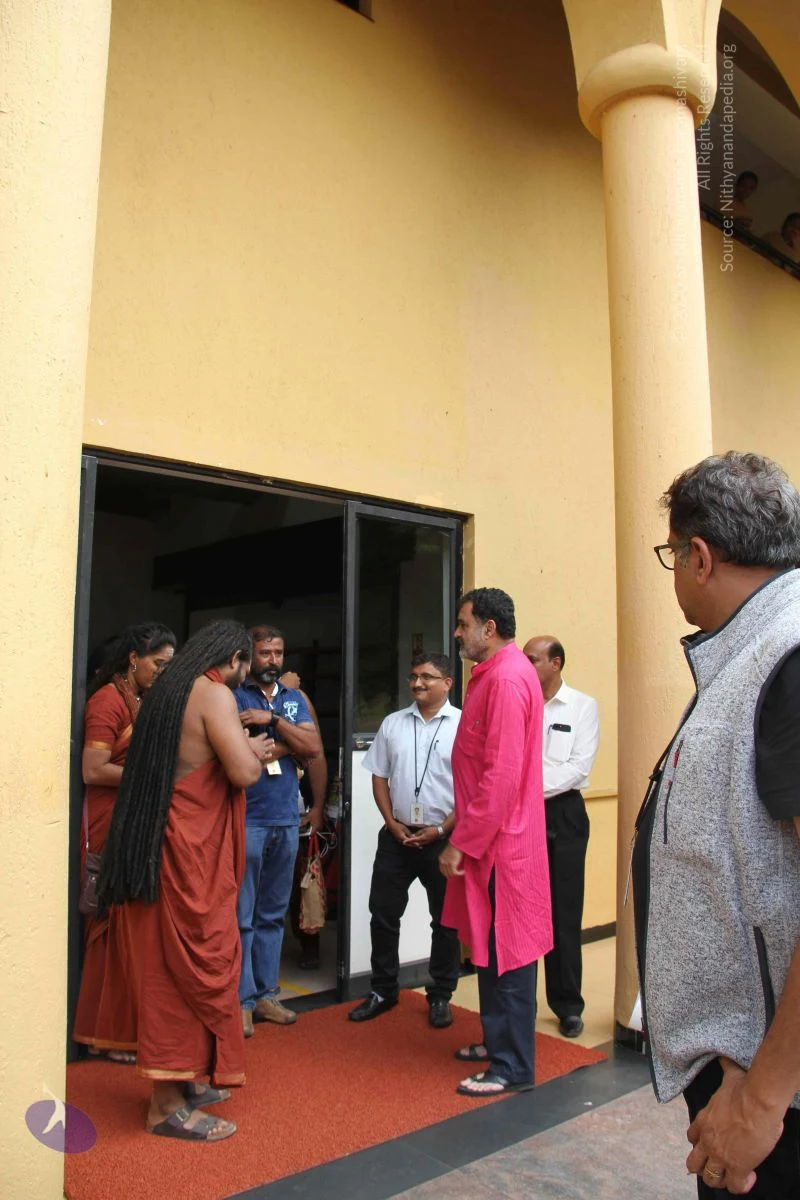
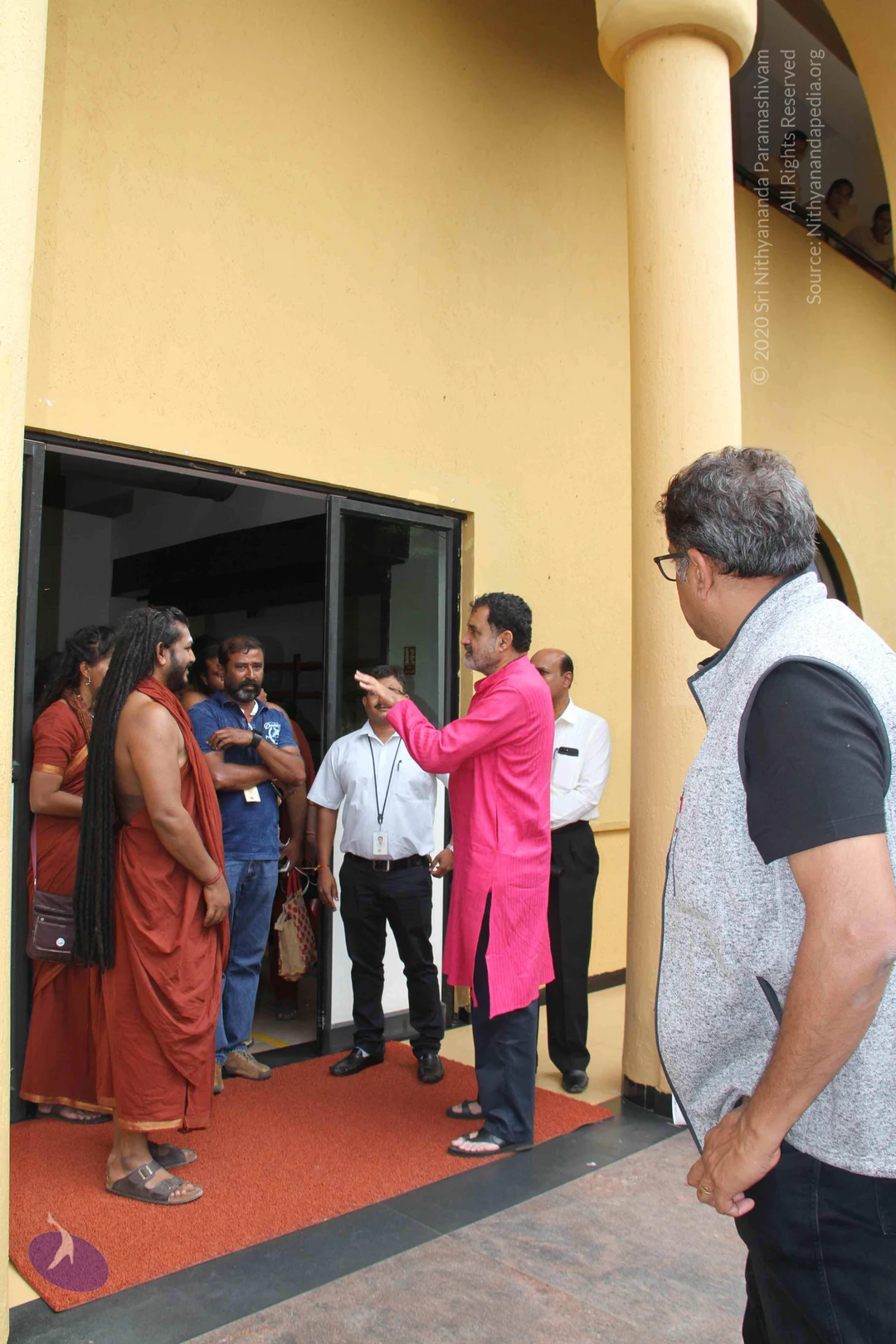
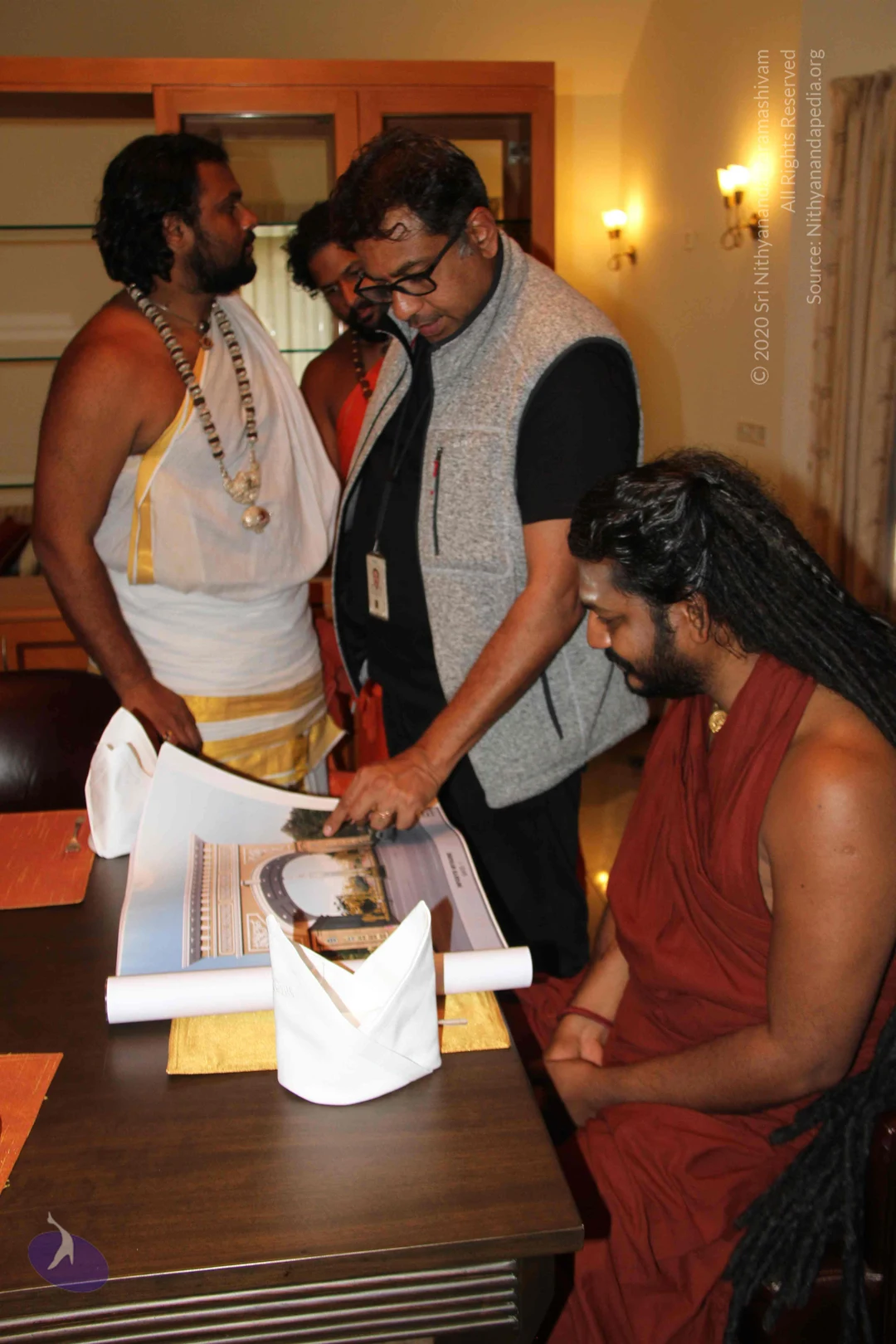
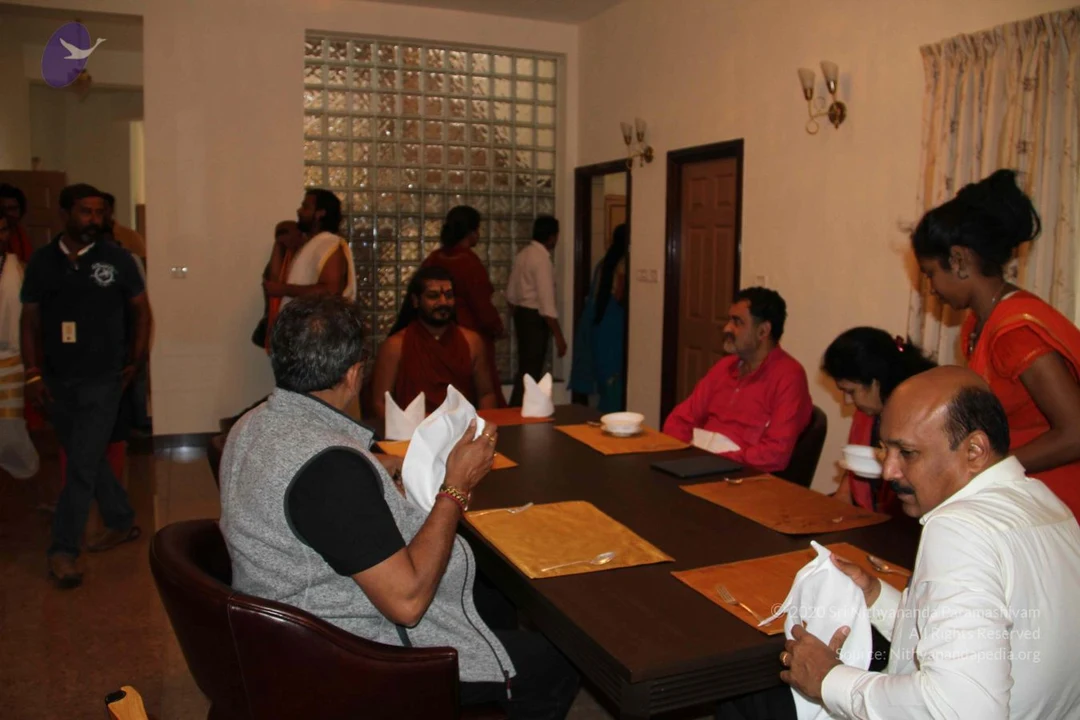
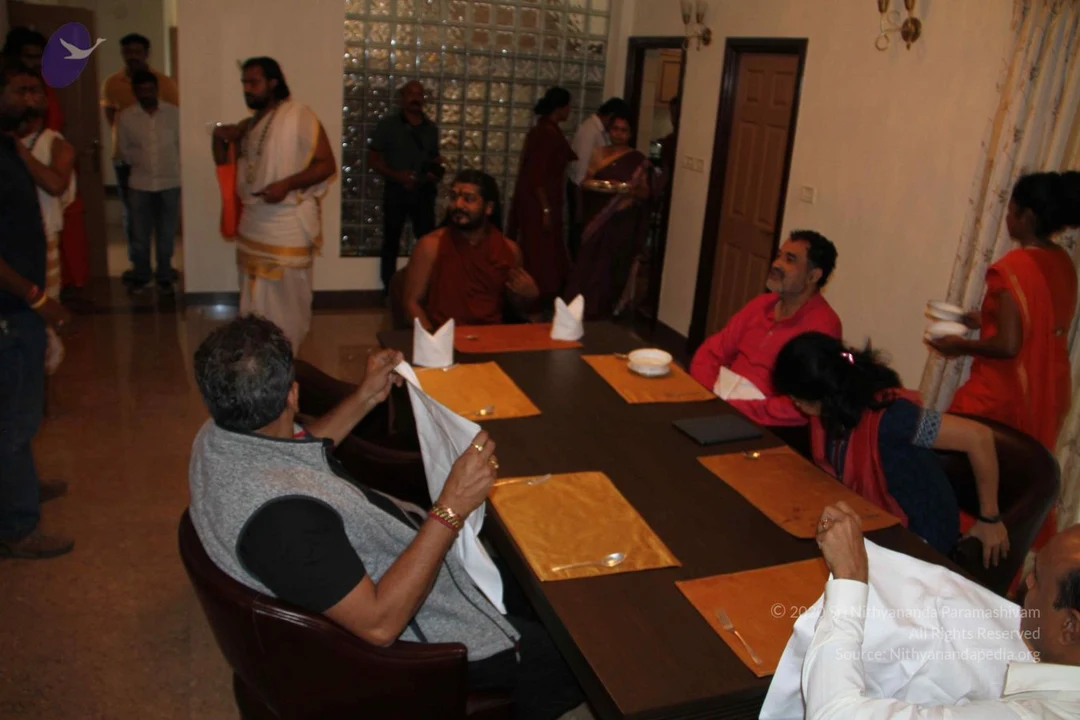
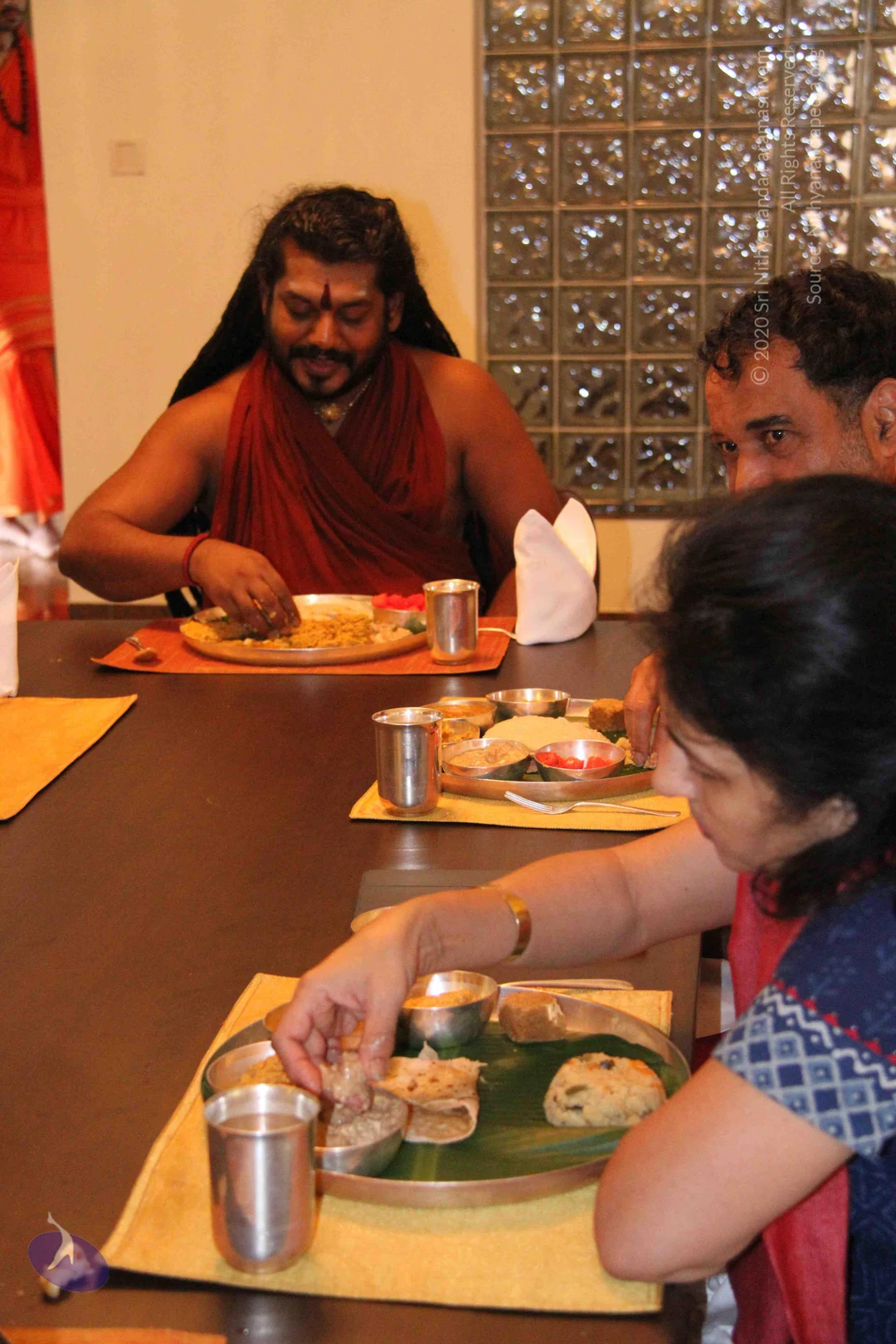
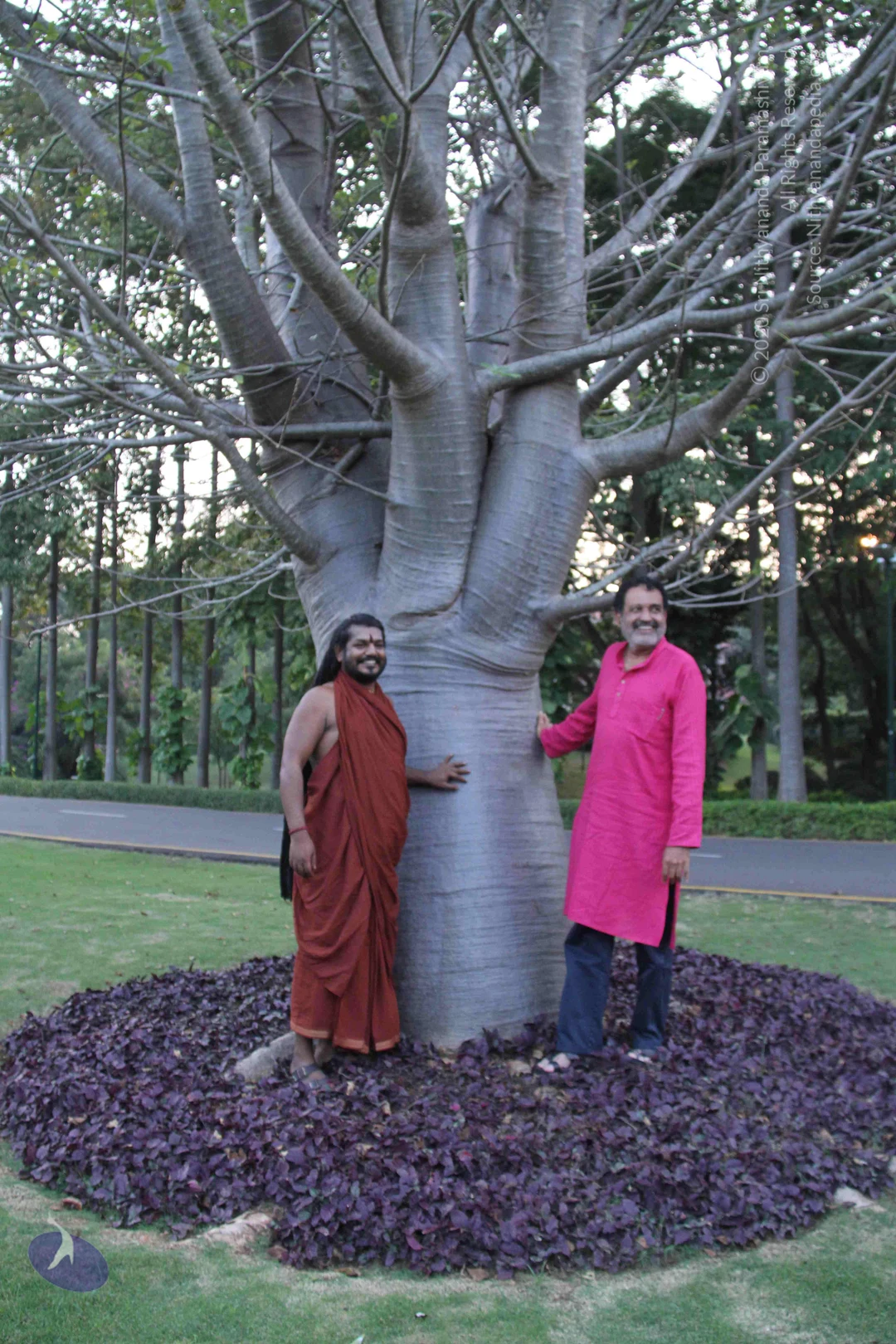
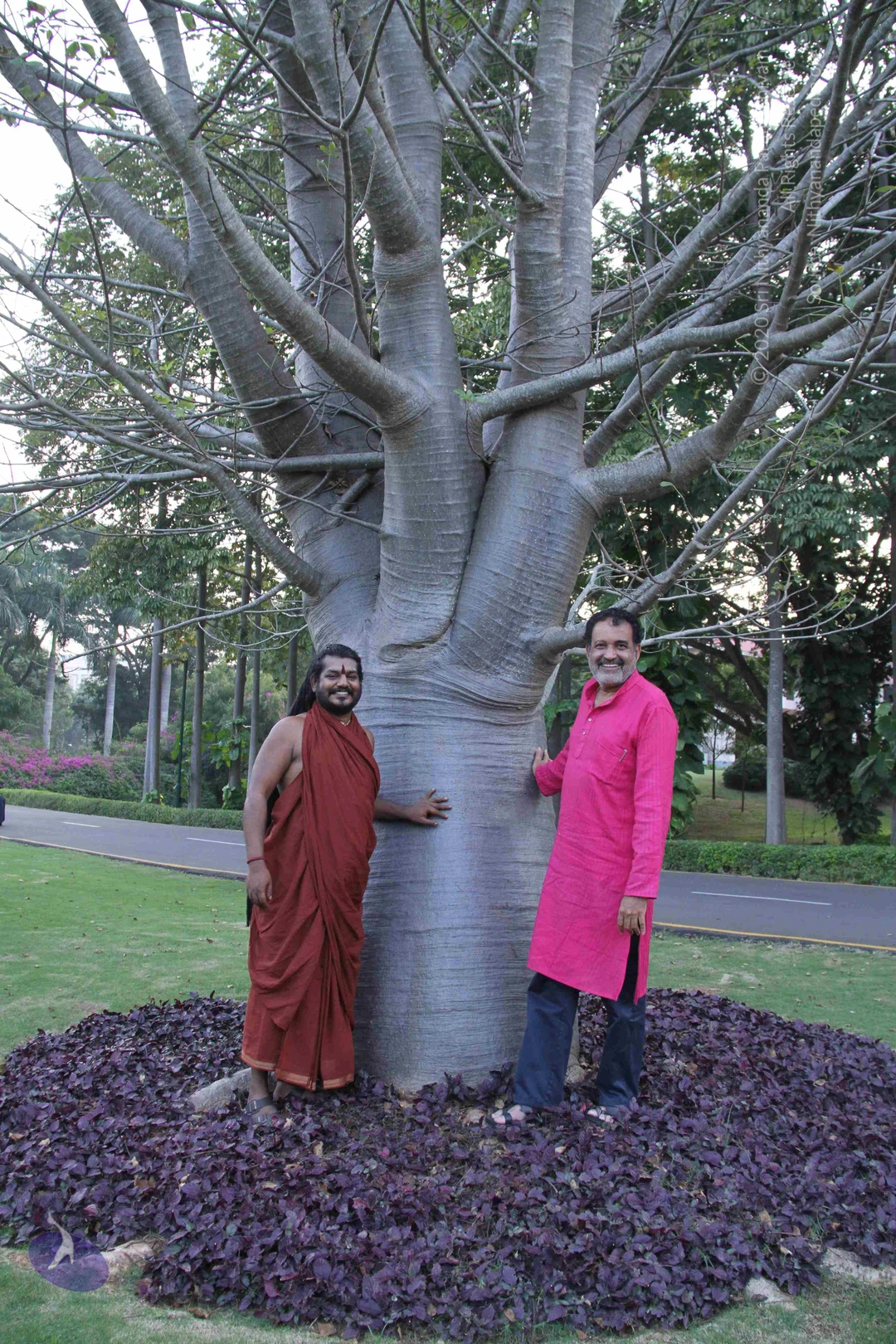
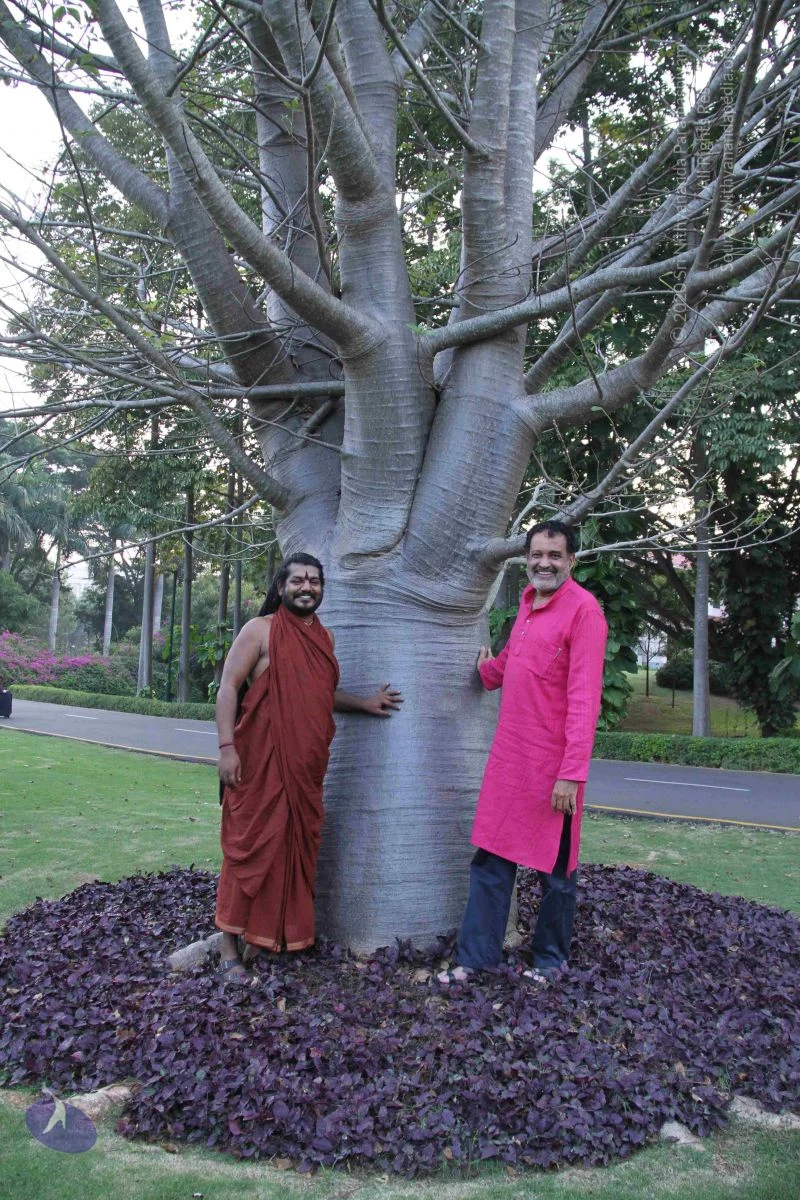
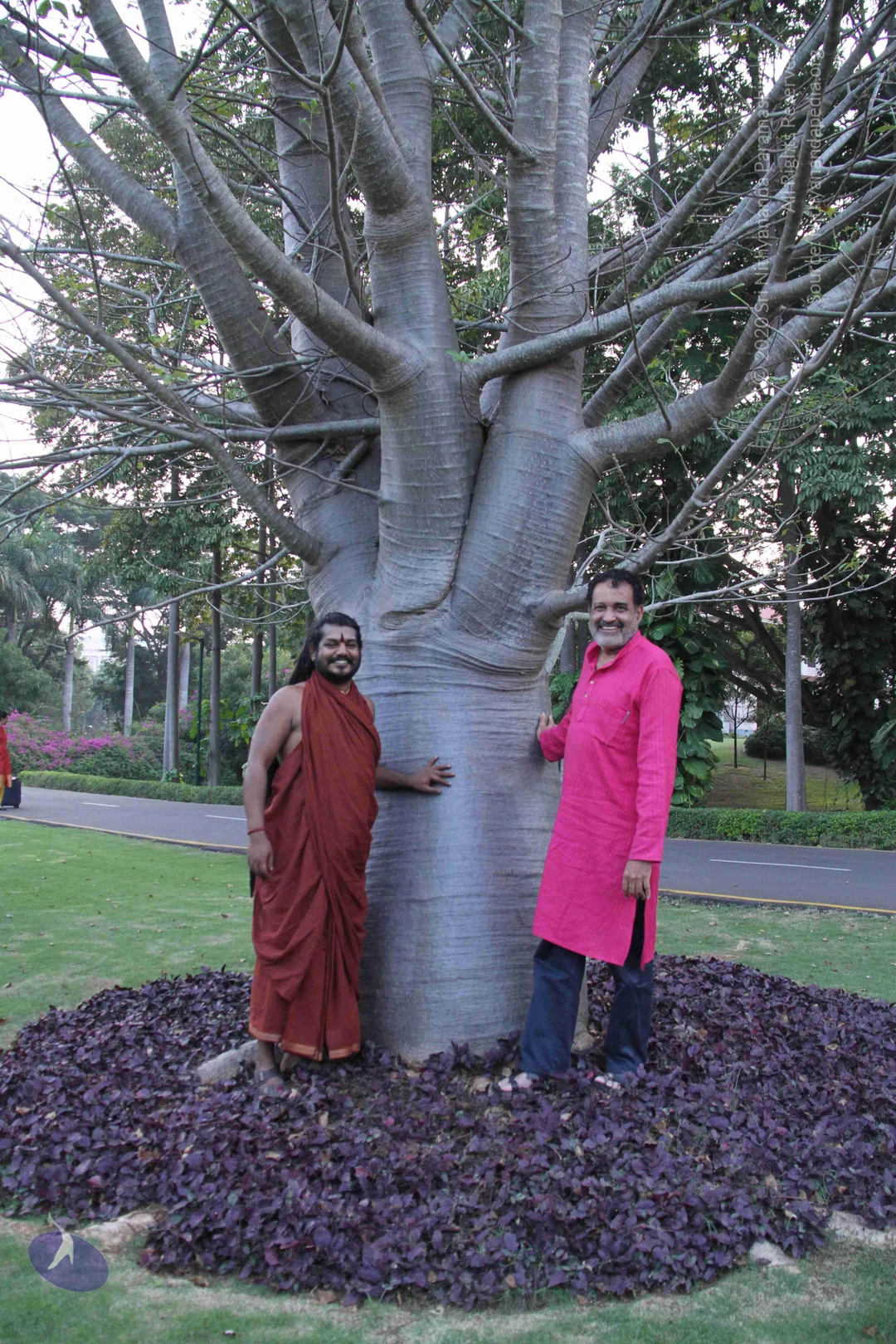
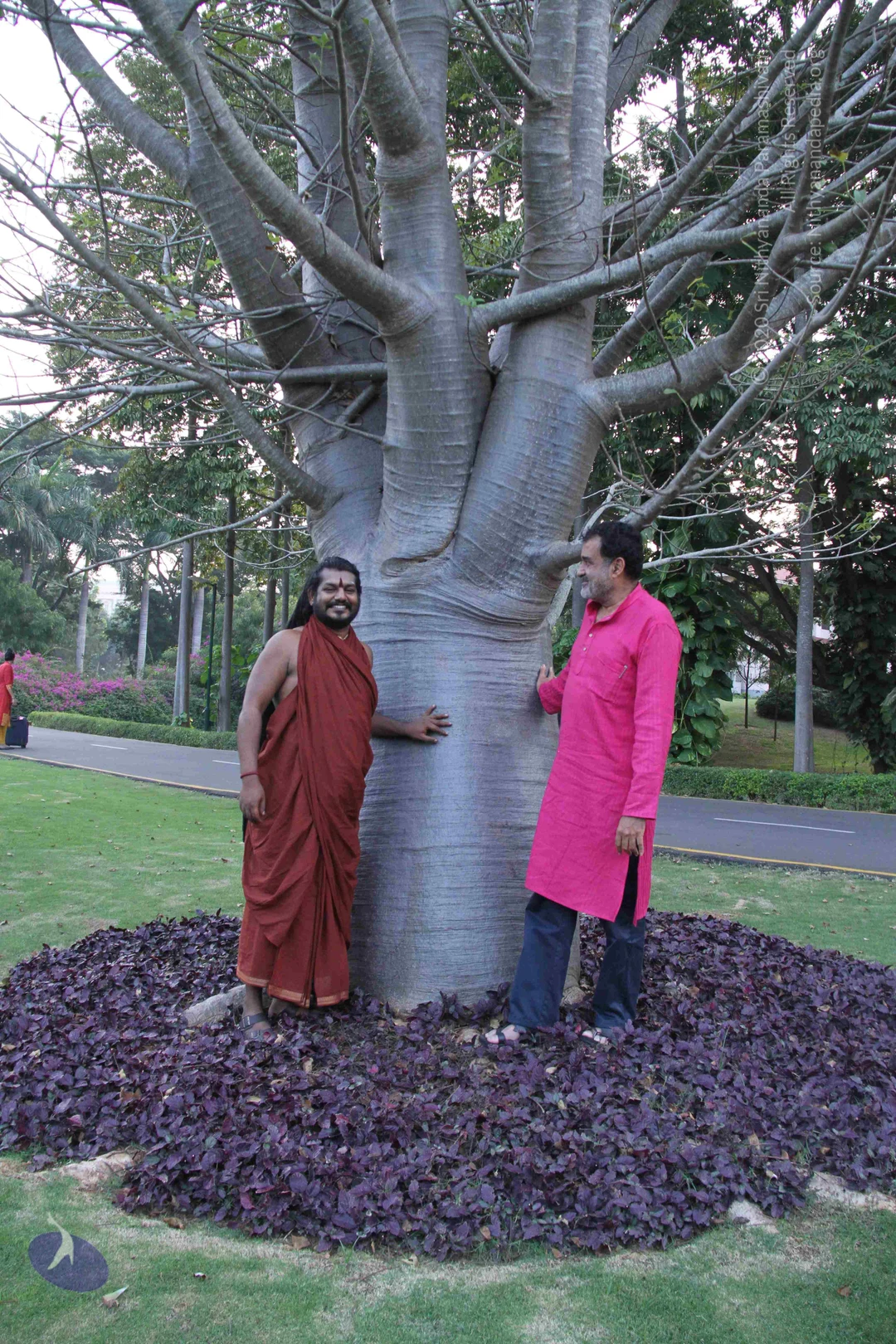
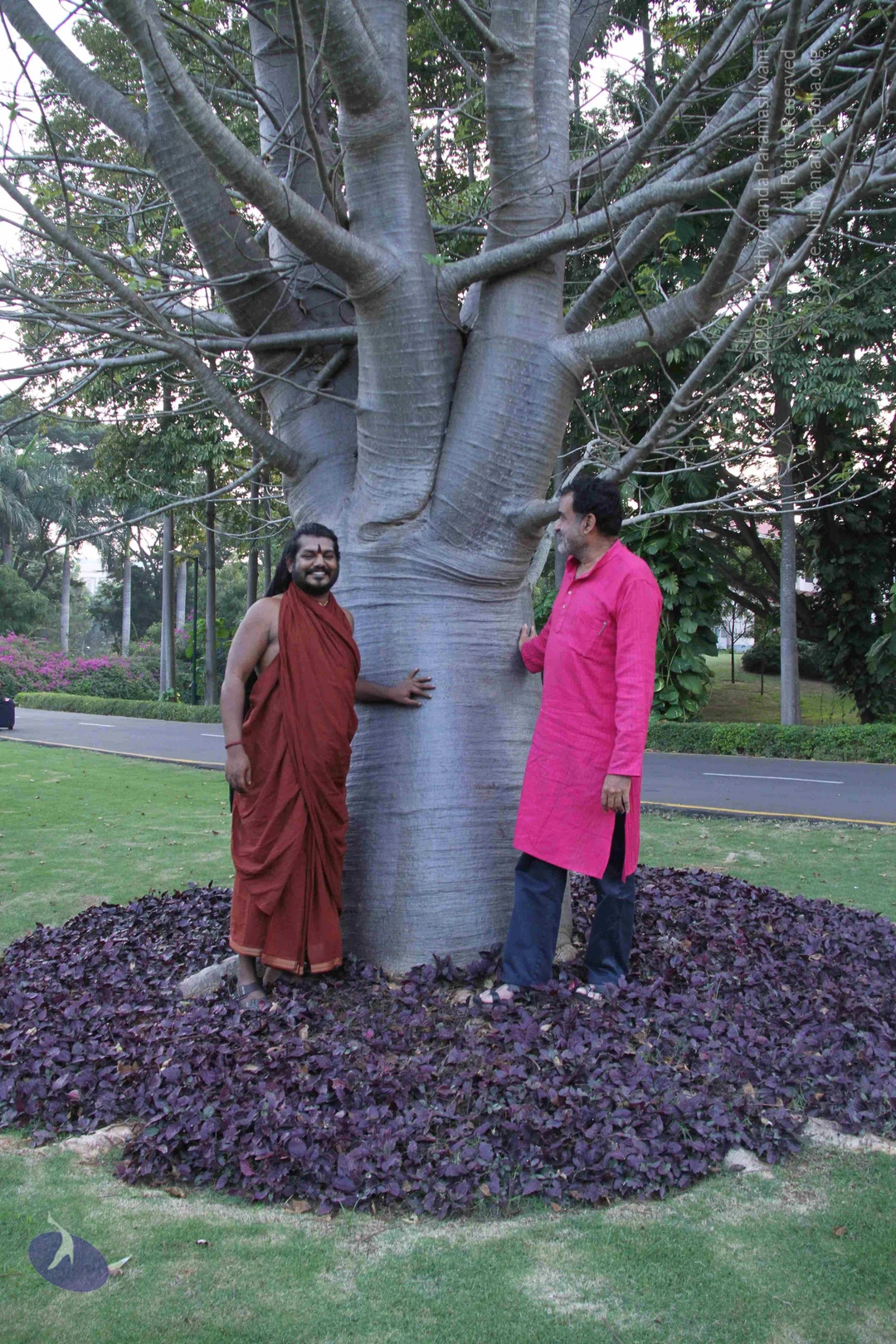
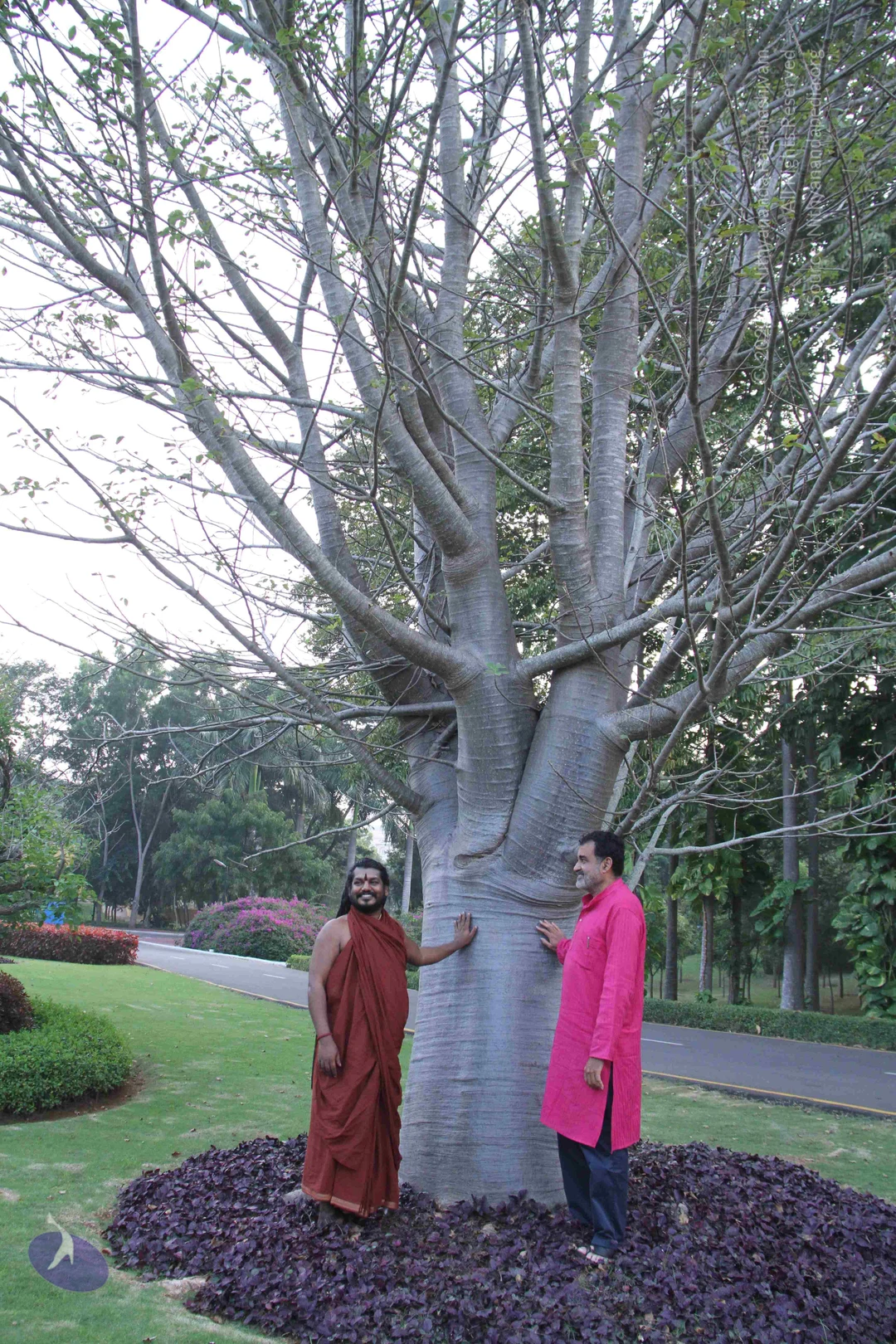
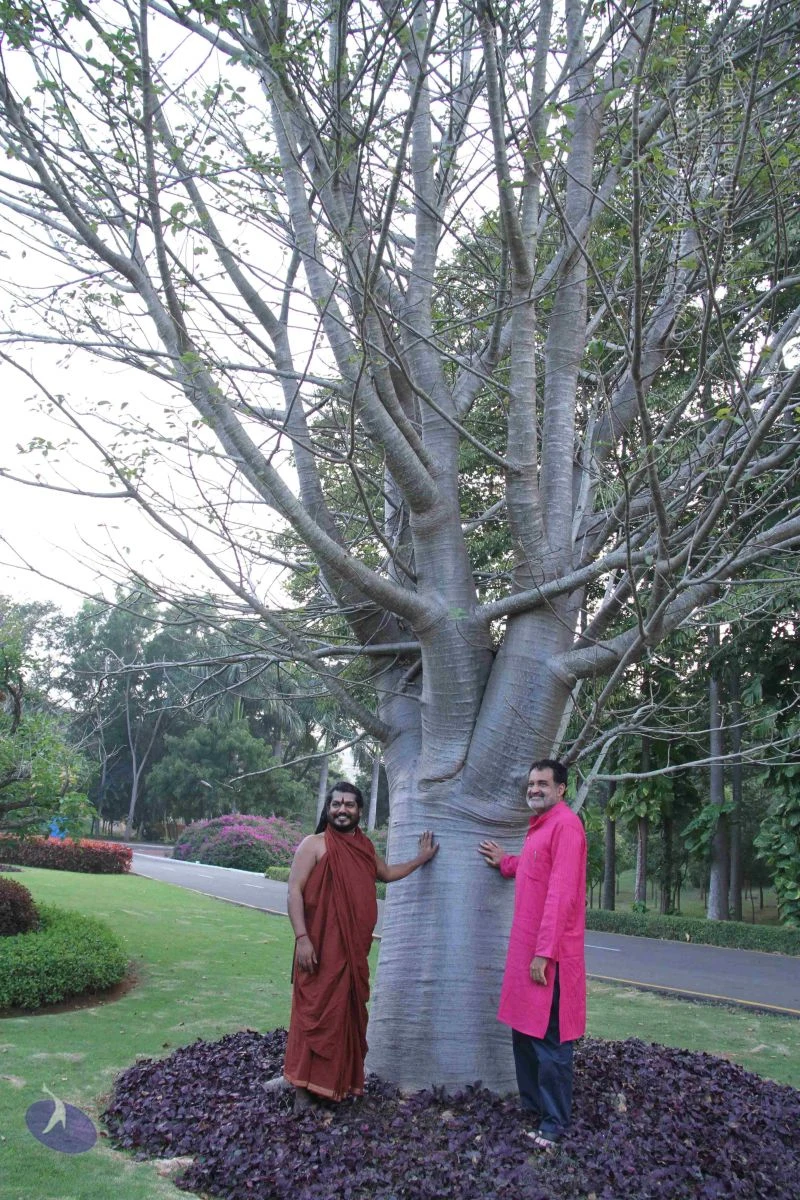
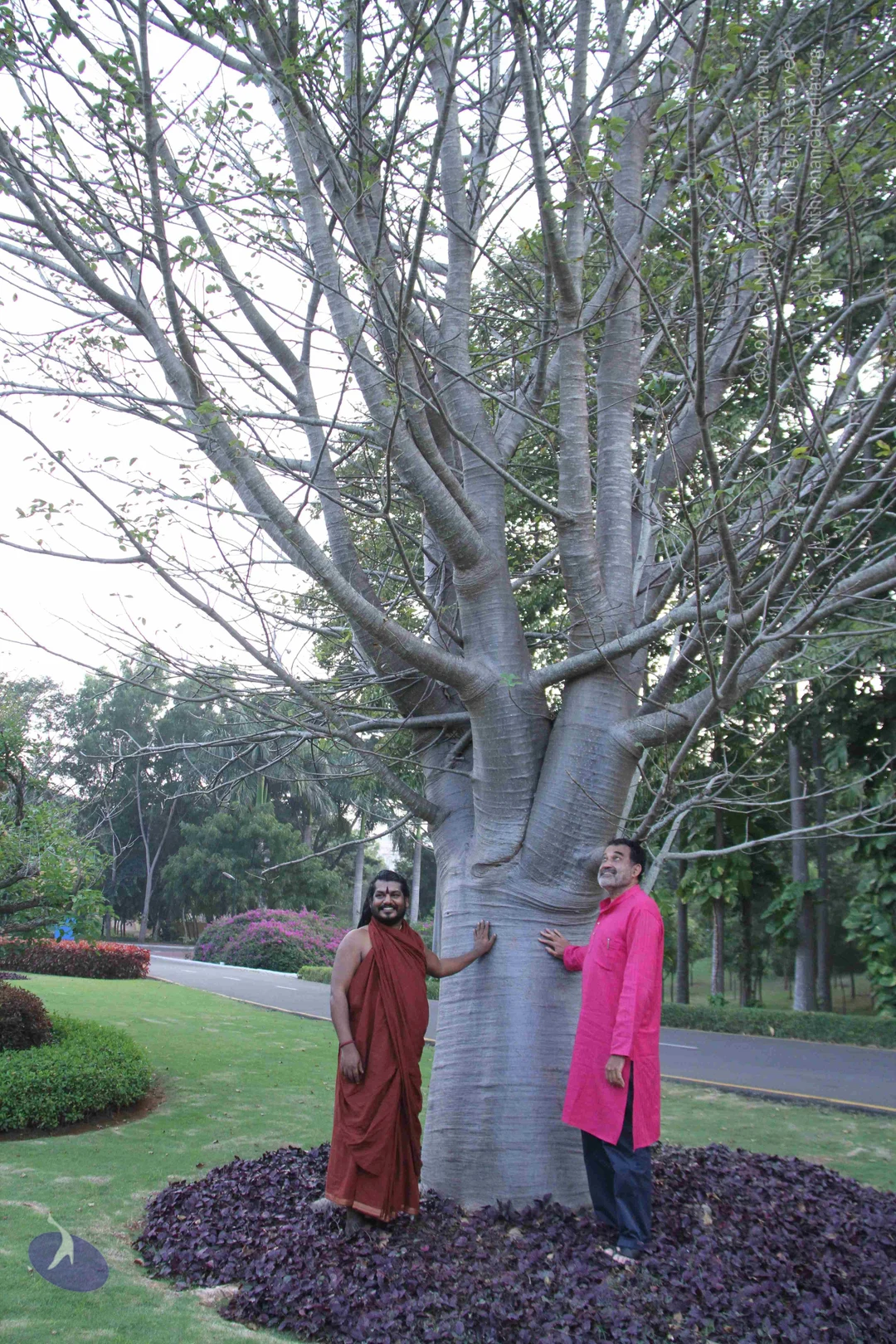
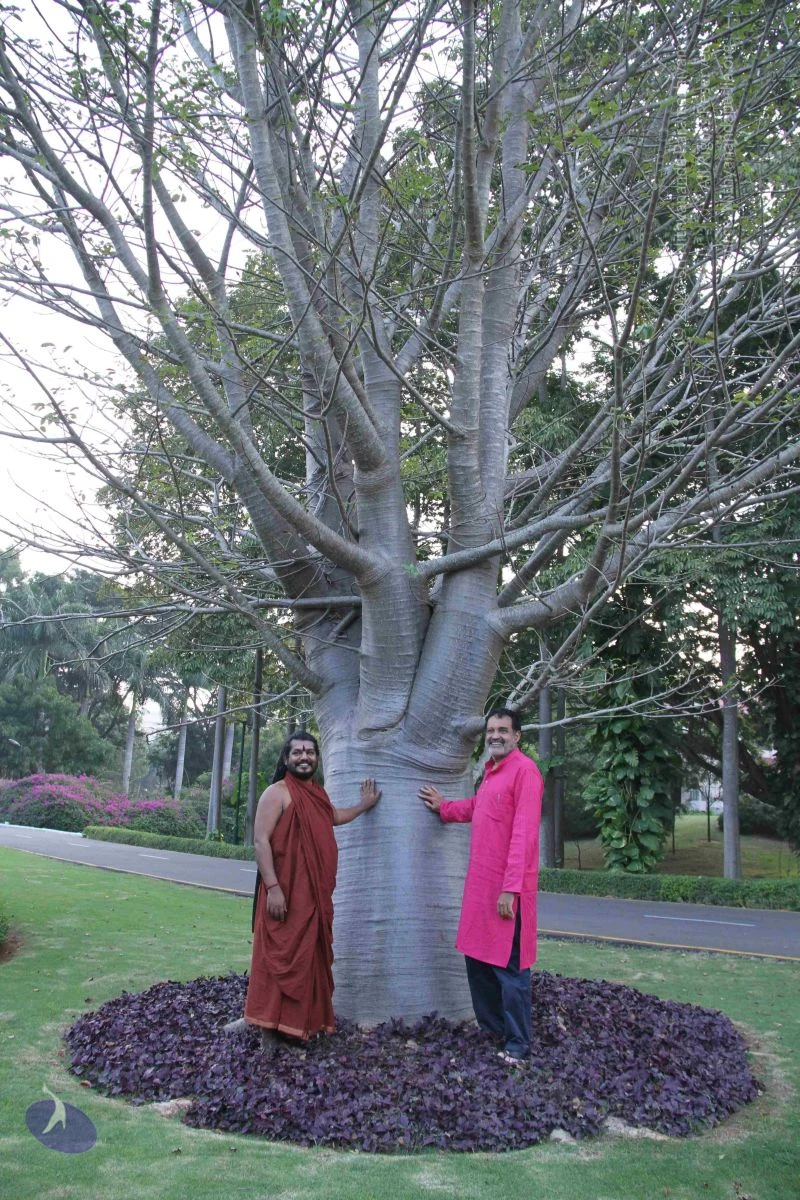
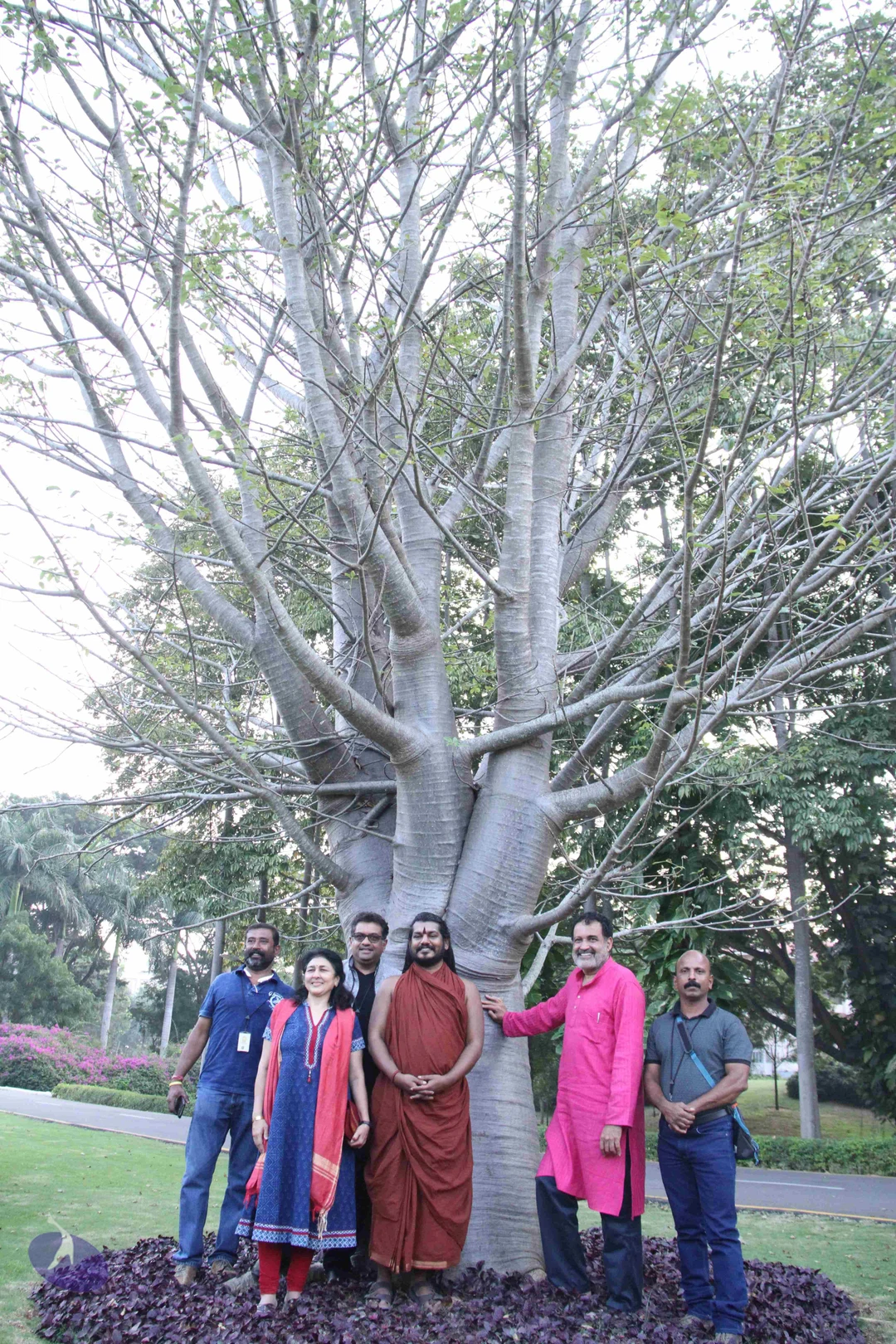
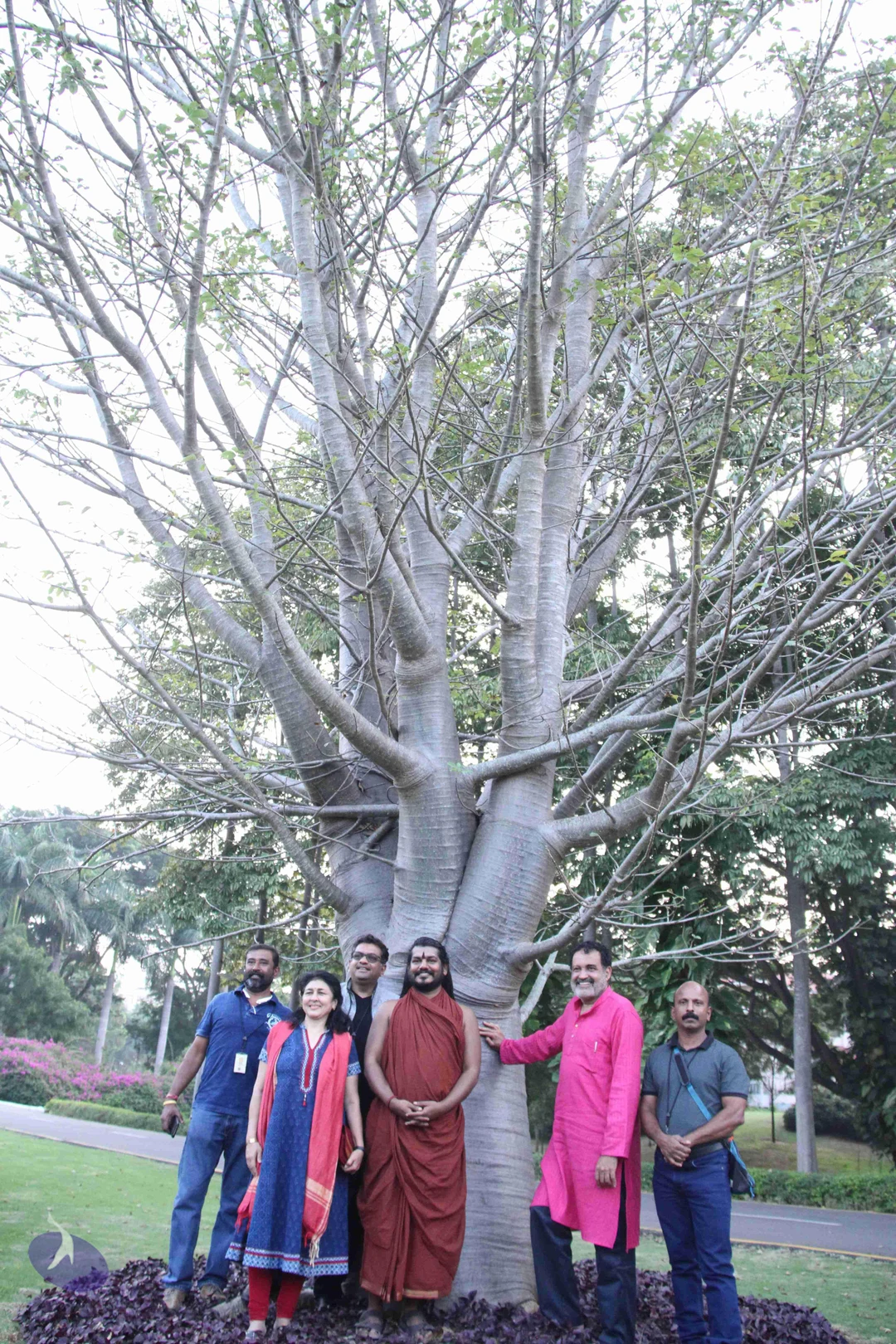
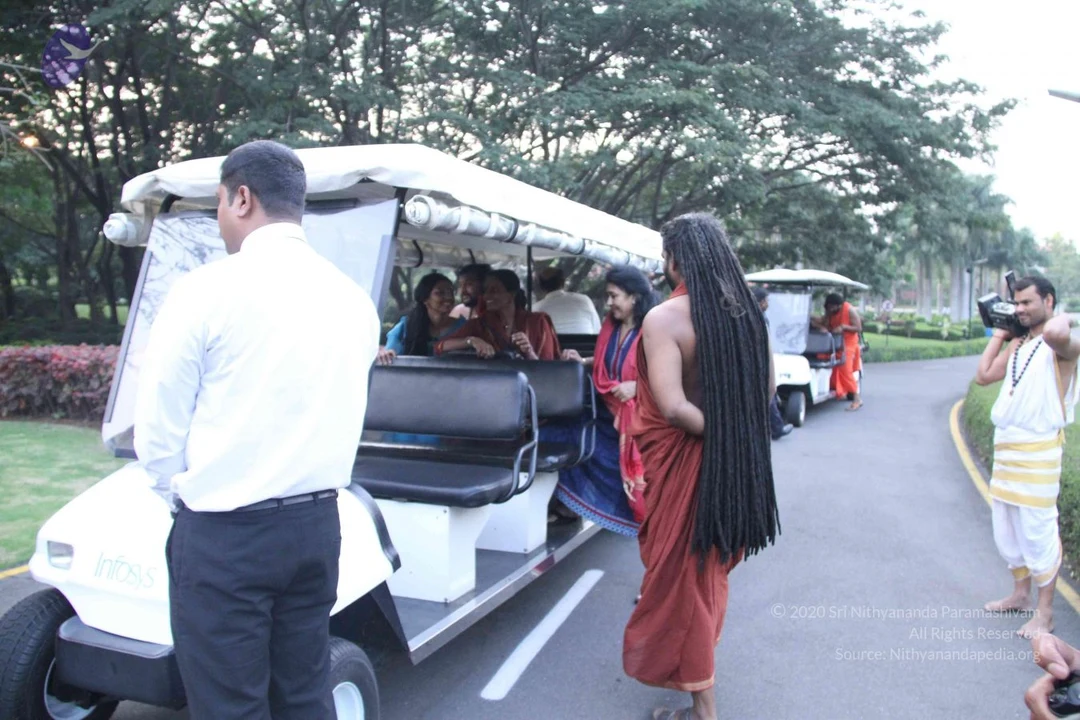
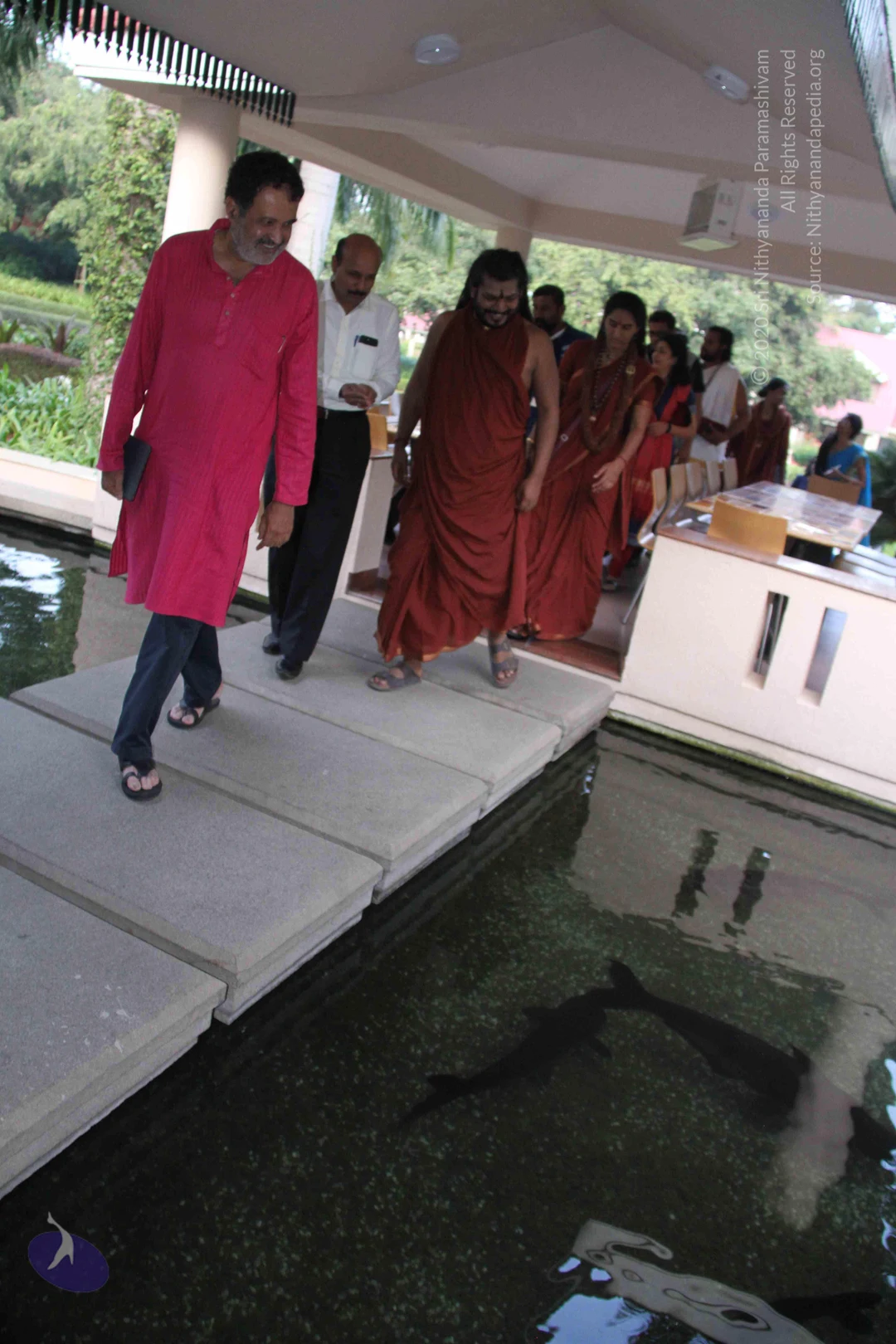
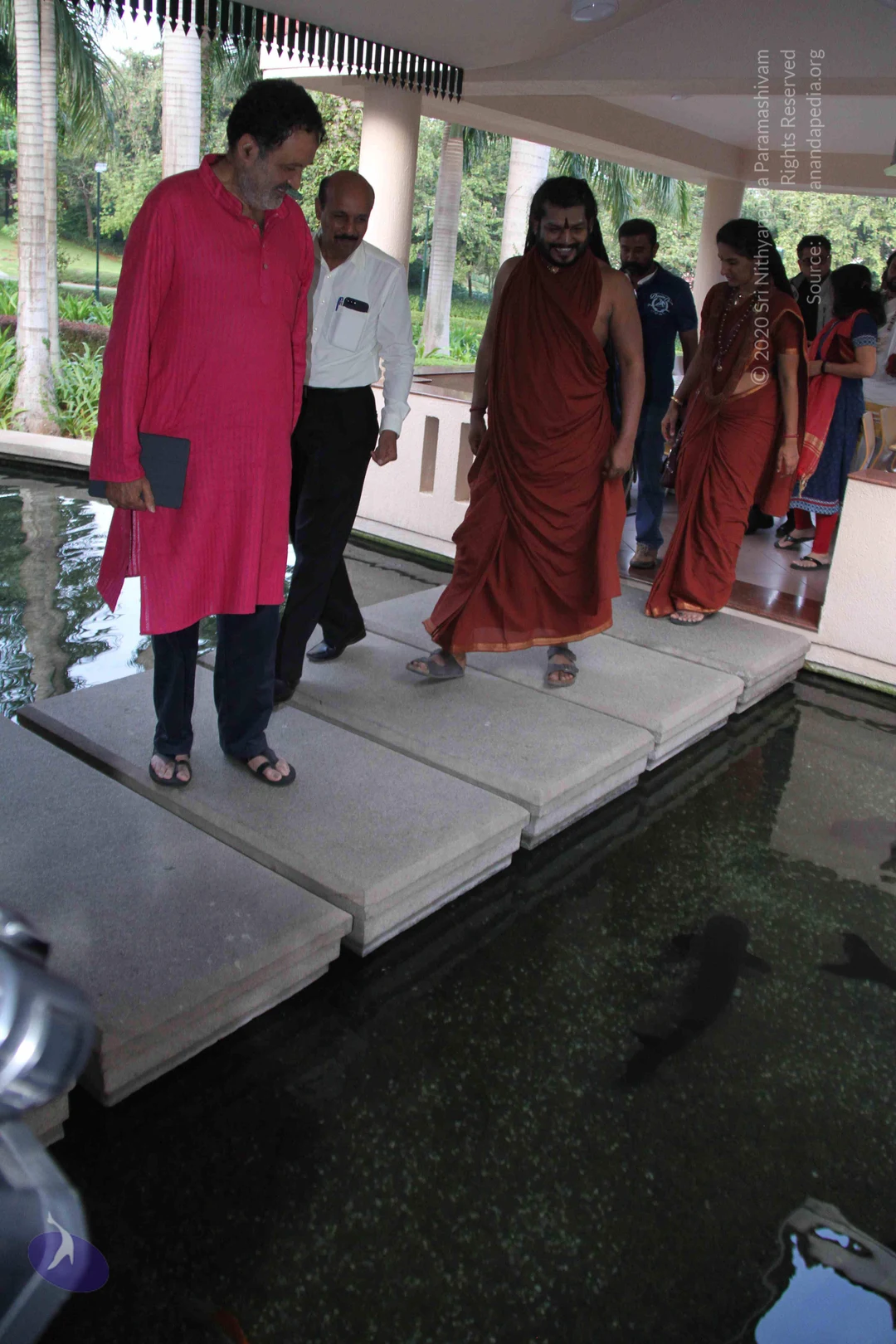
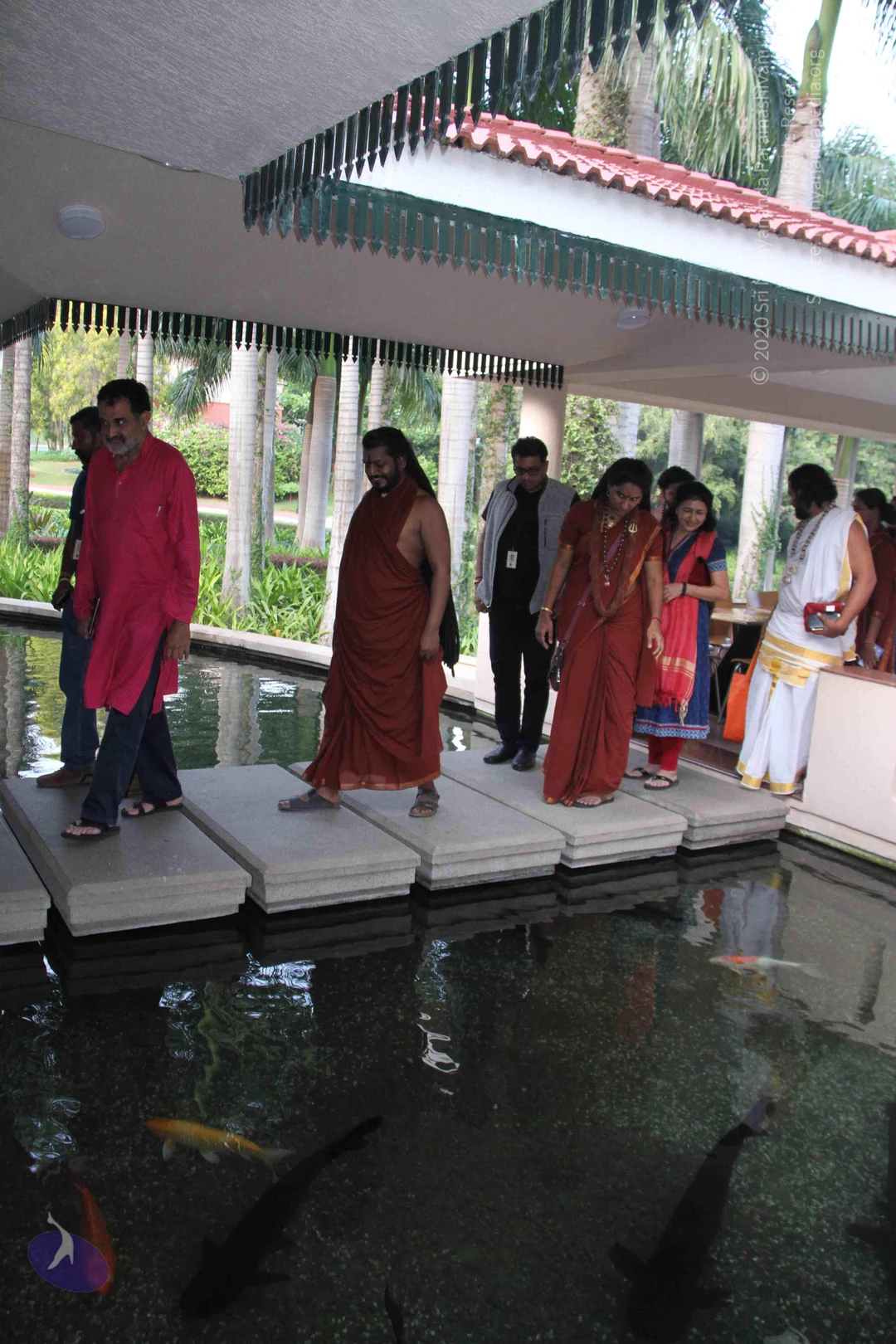
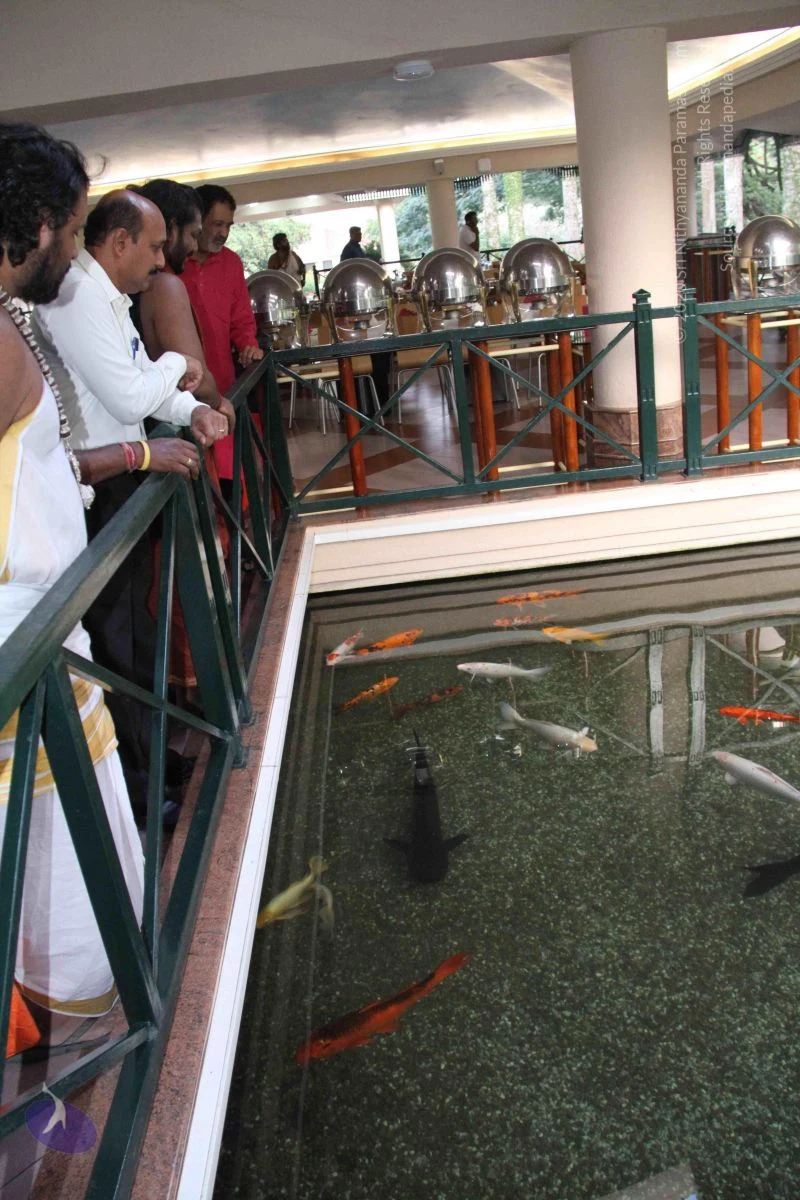
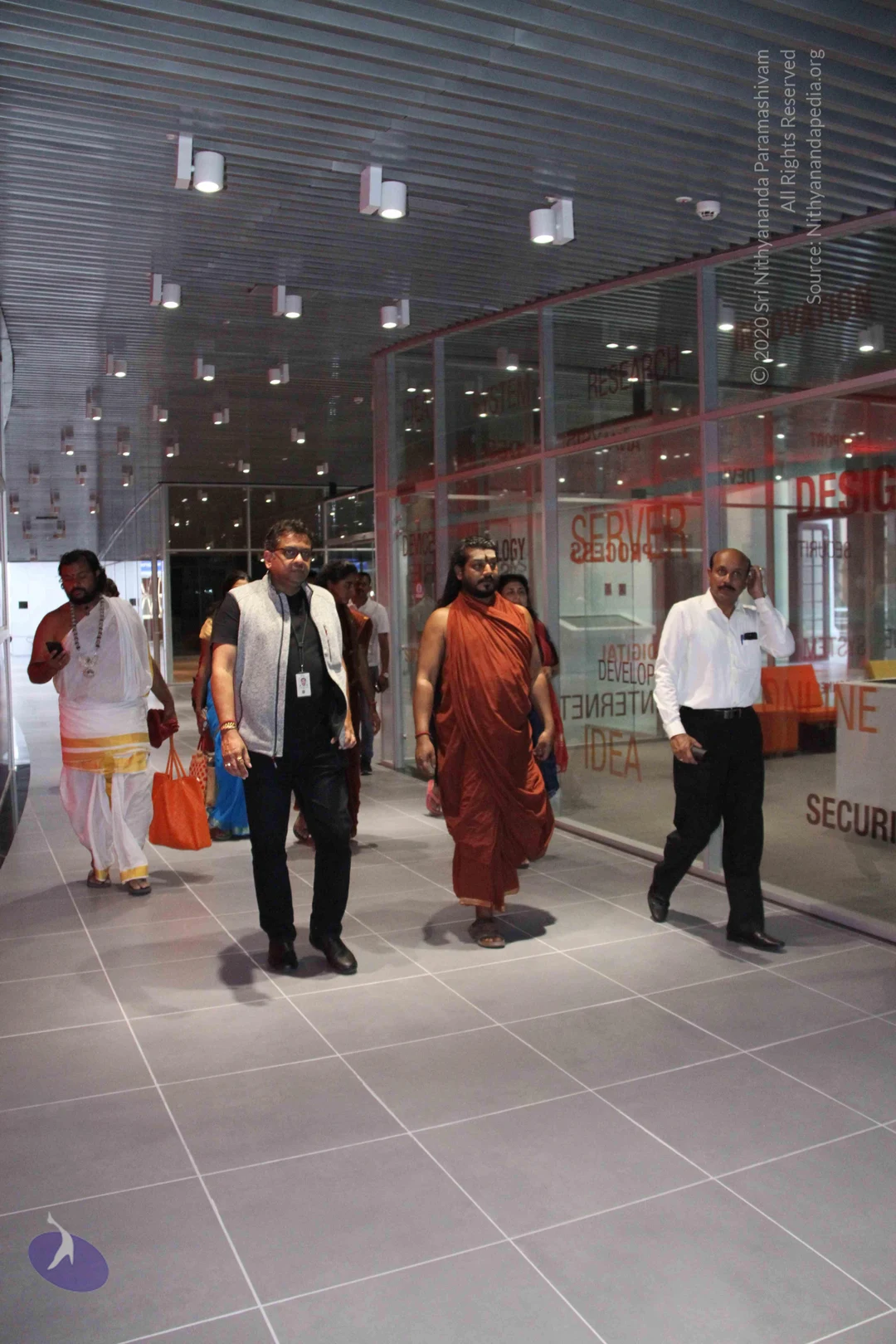
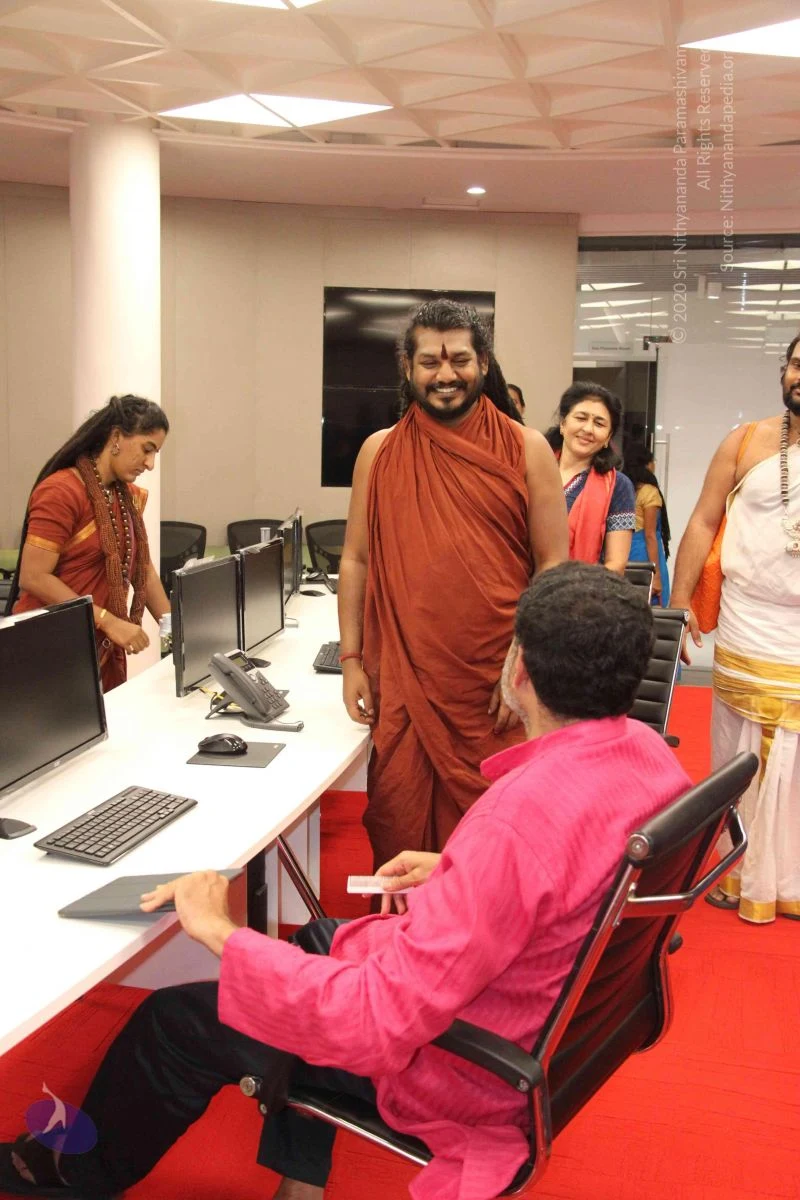
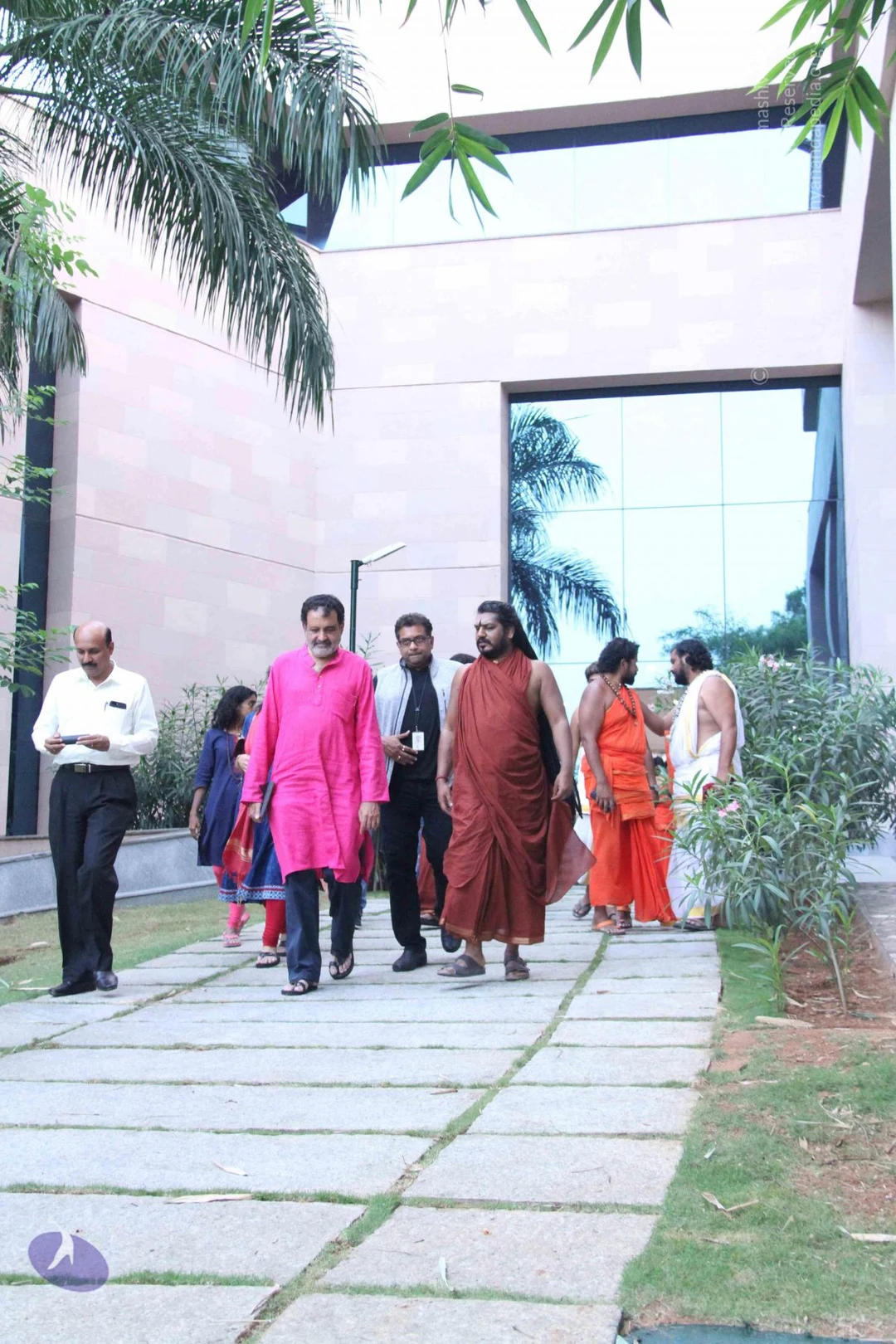
Nithyananda Peetham, Bengaluru Aadheenam | Tamil Nithya Satsang | Infosys Campus Visit with Mohandas Pai - Mysore
Facebook Link

https://www.facebook.com/ParamahamsaNithyananda/

Photos Of The Day:

Puja

Satsang

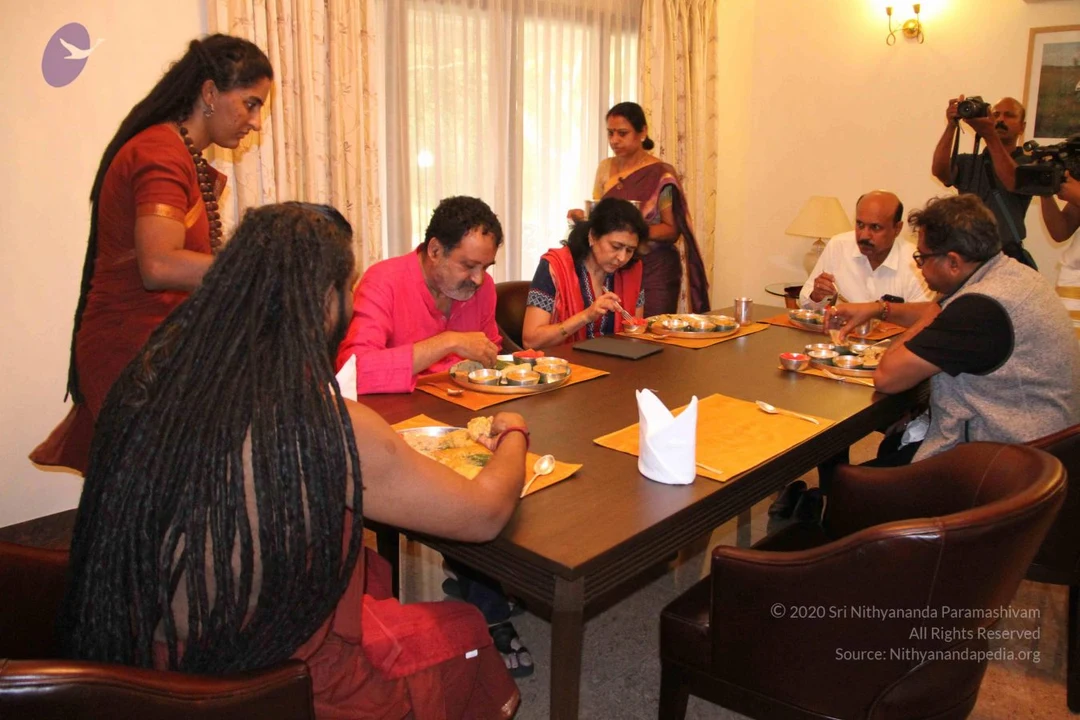
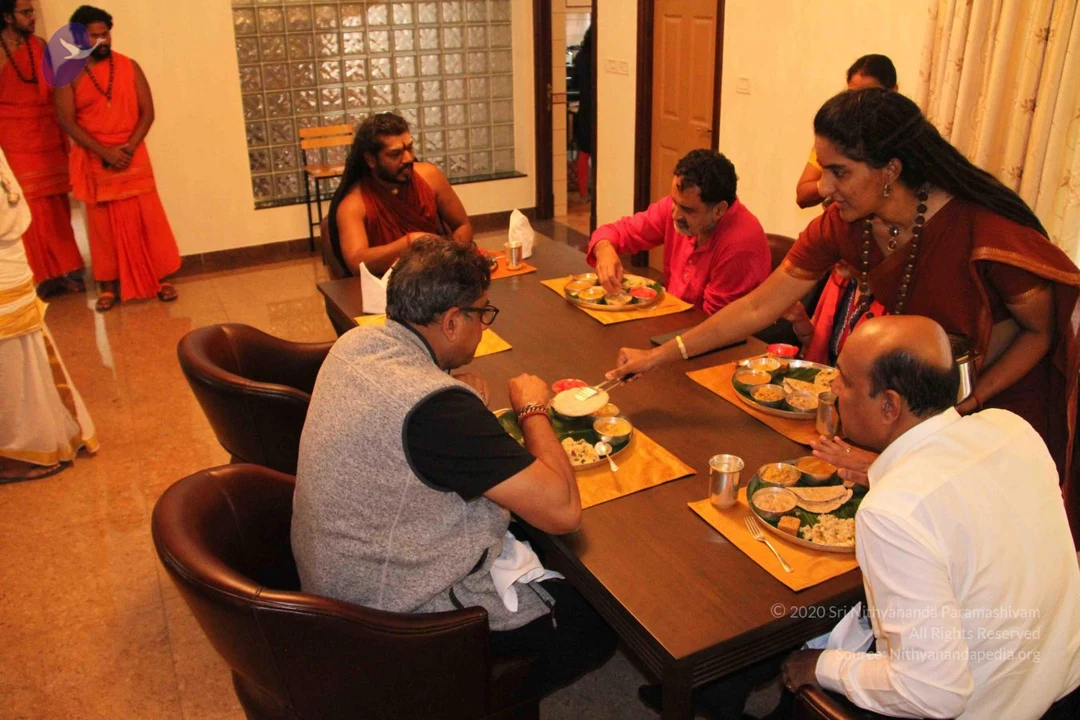
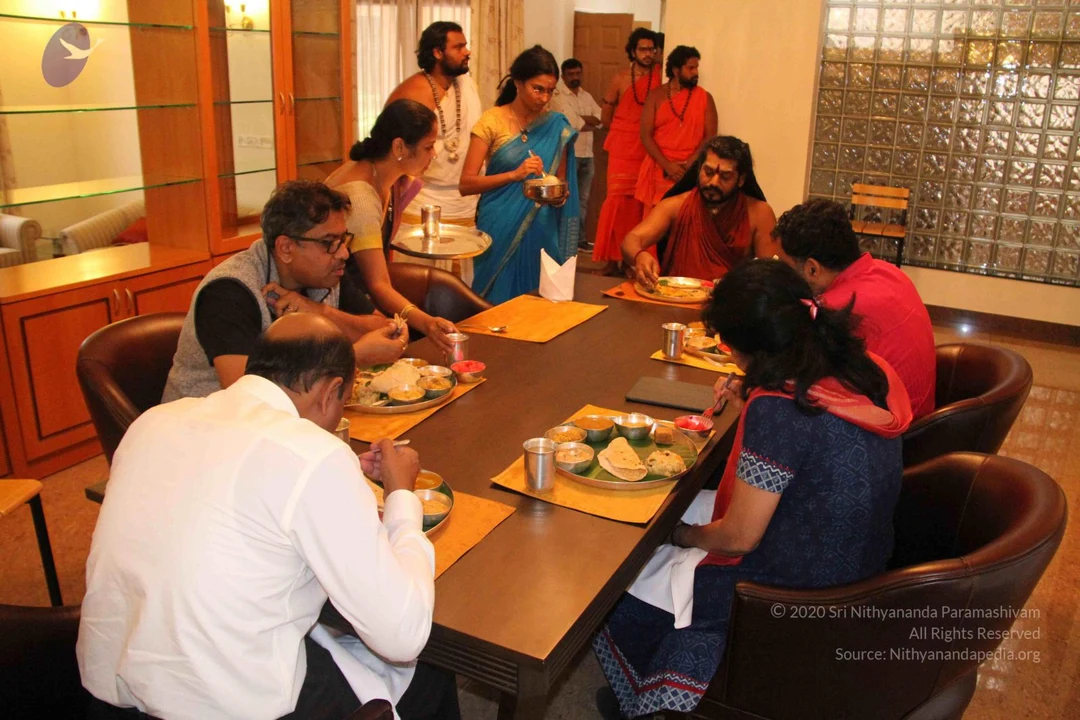
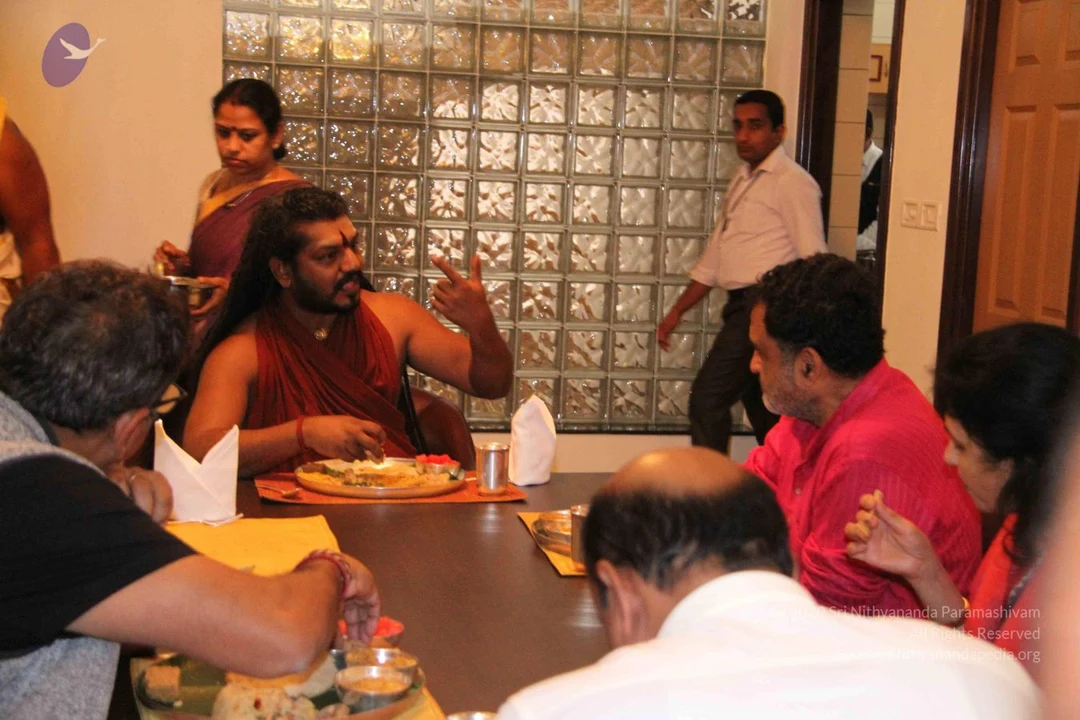
Mysore-InfoSys-Campus-Visit

Photos Of The Day:

Tamil-Satsang

Mysore-Infosys-Campus

Photos from this day

View all 923 photos

Puja

13 photosSource gallery
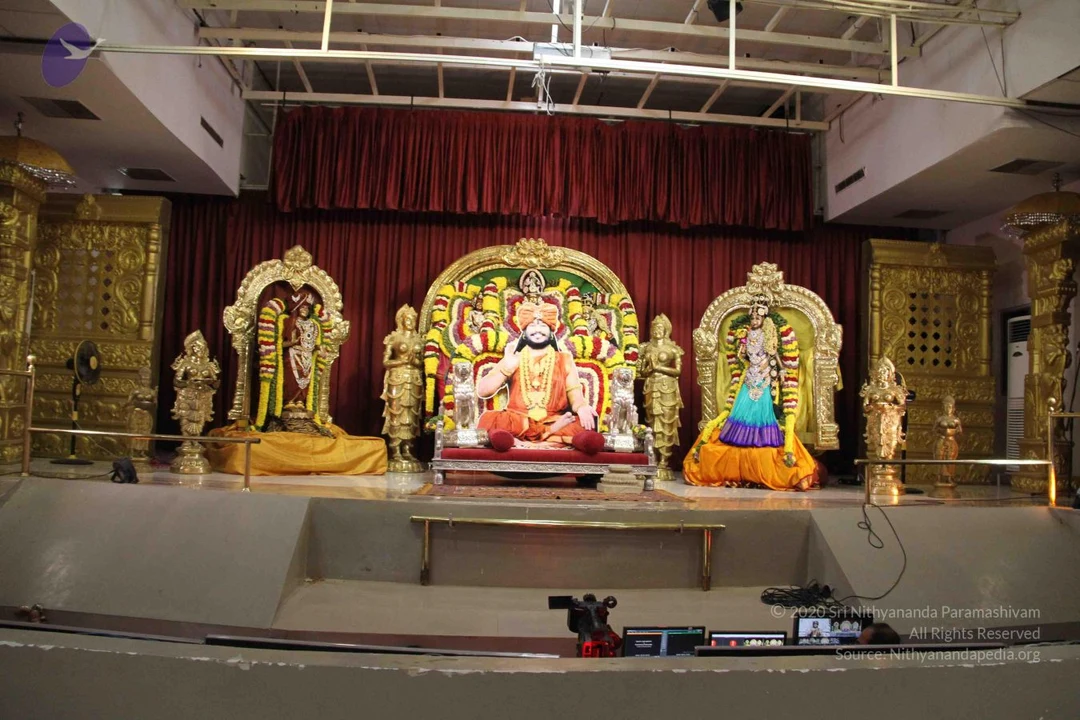
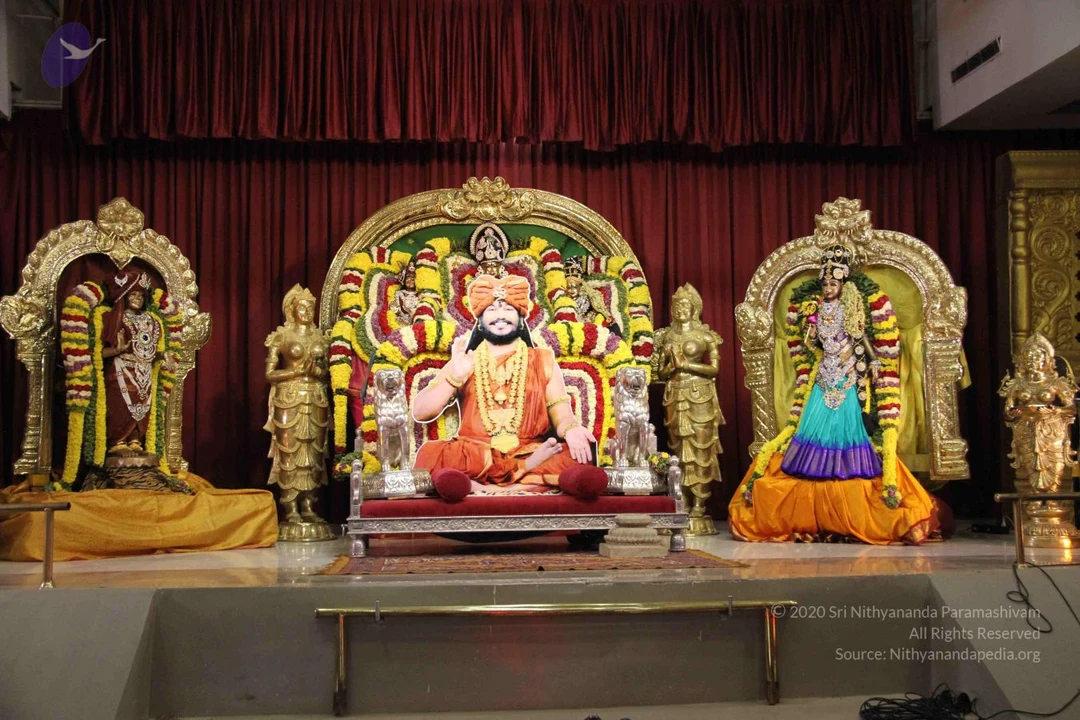
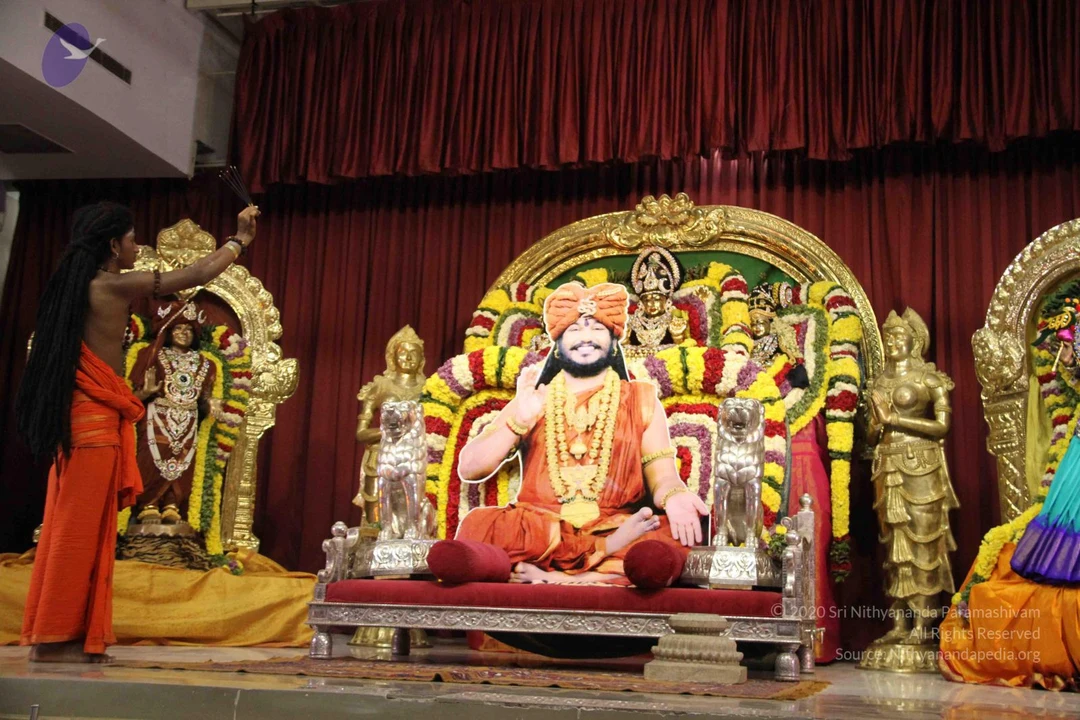
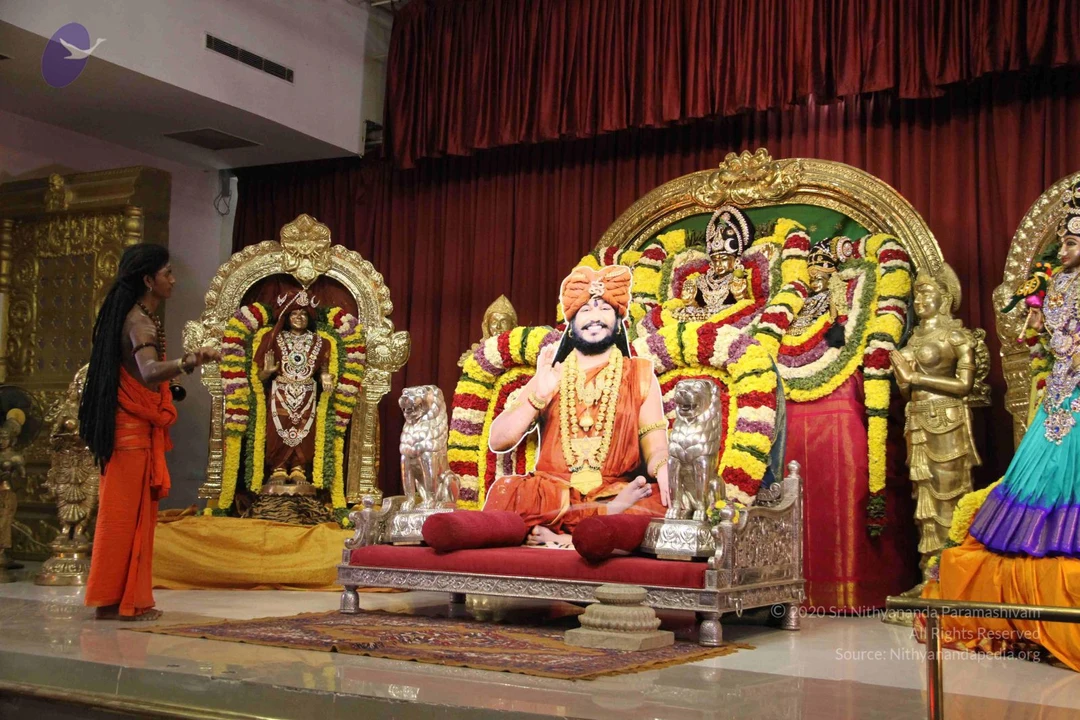
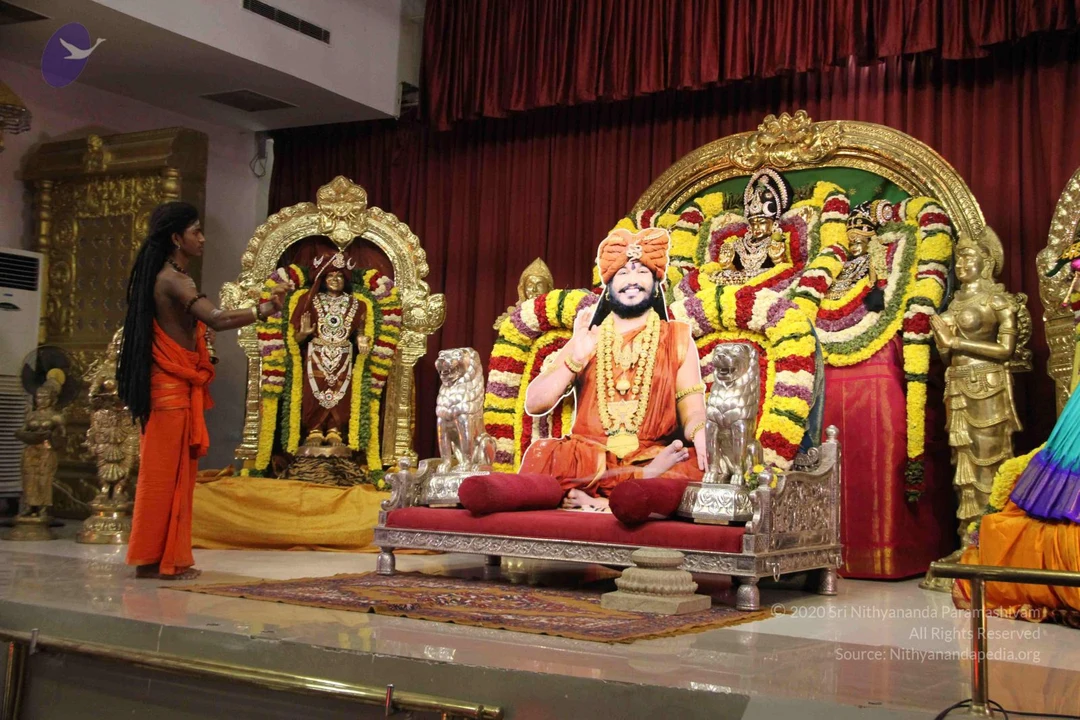
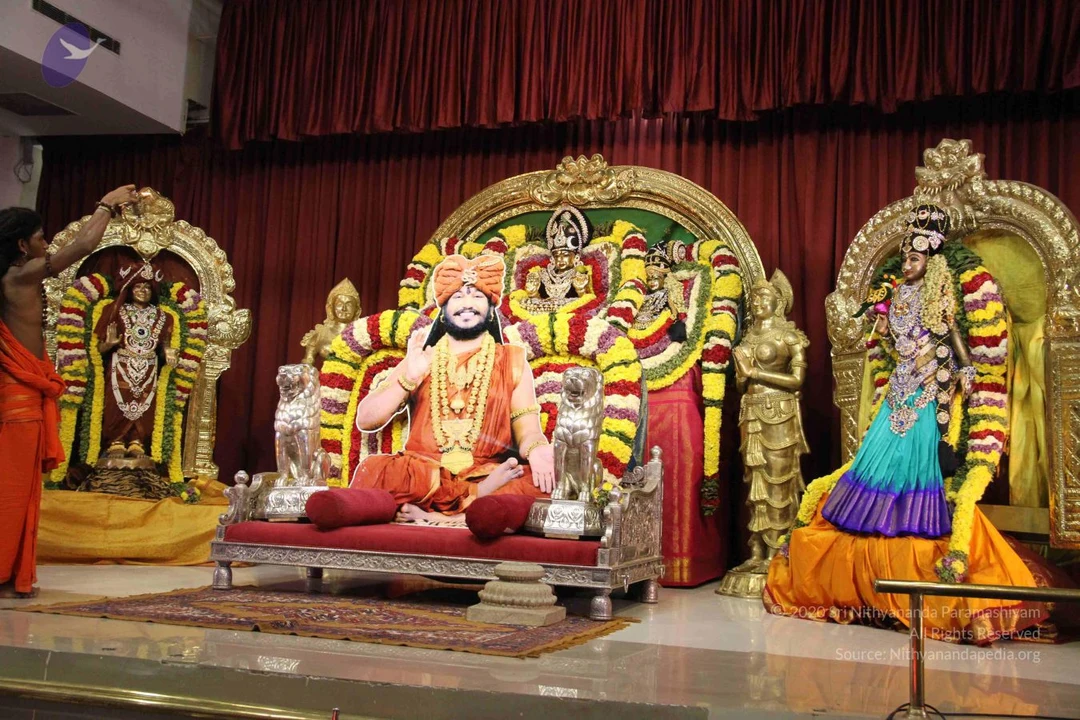
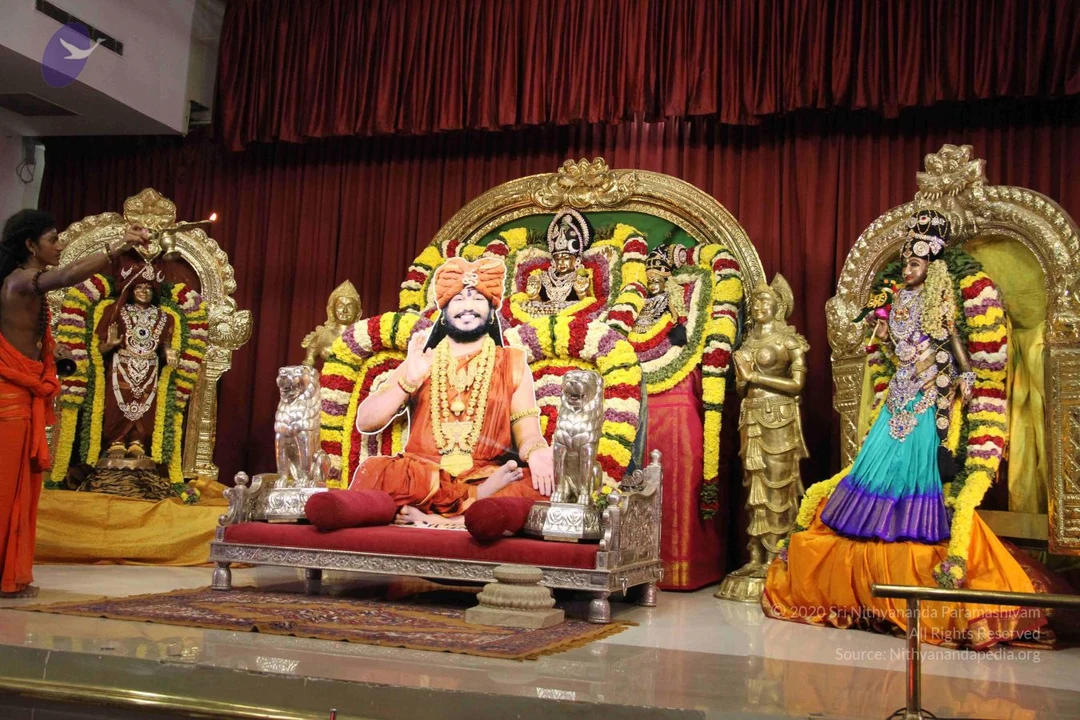
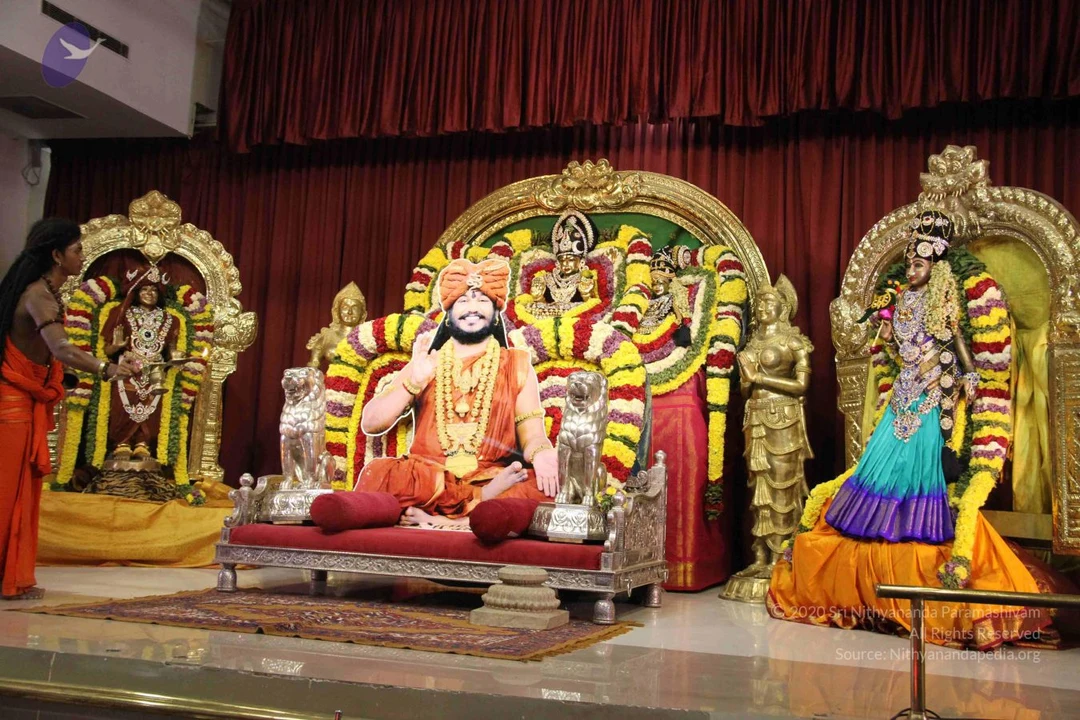
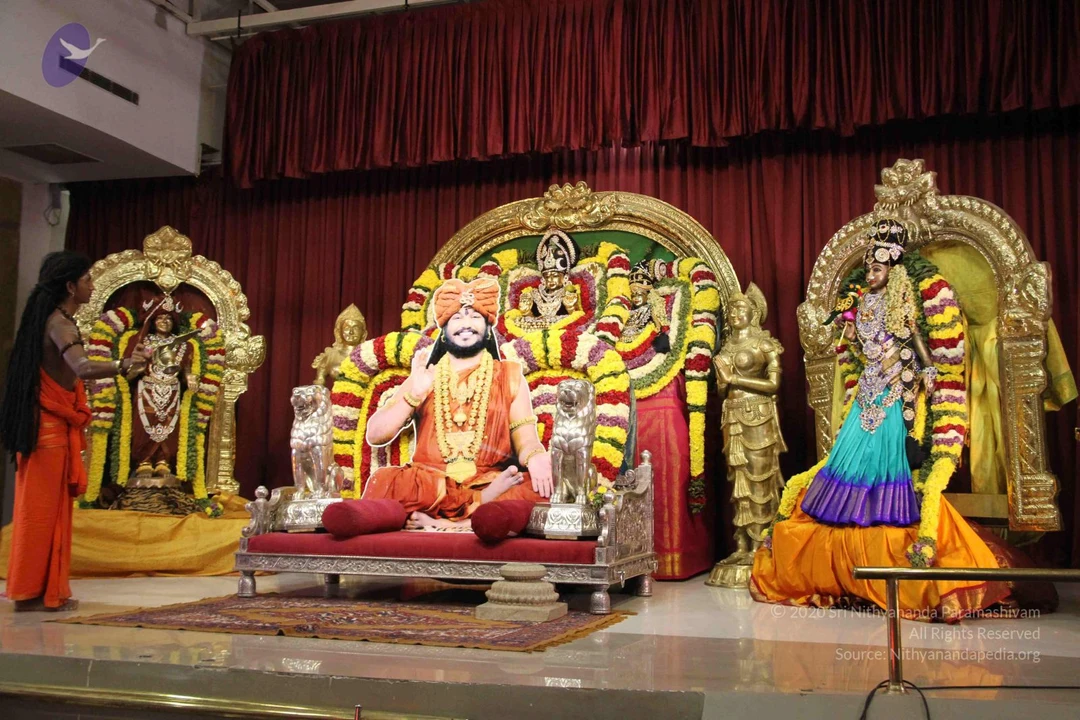
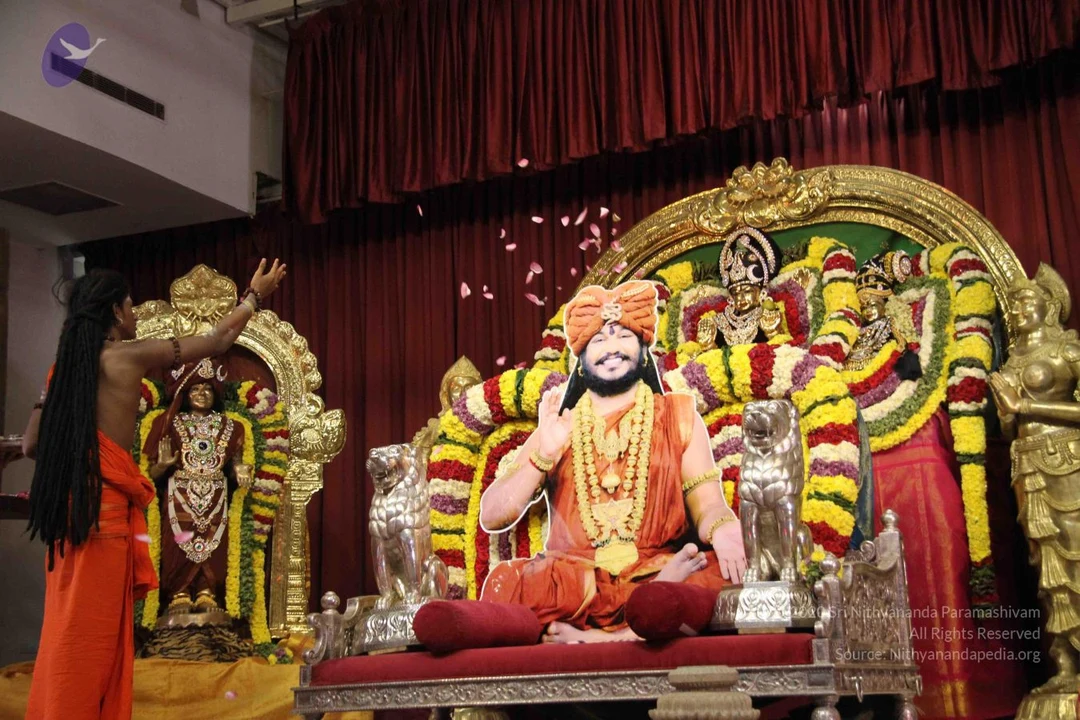
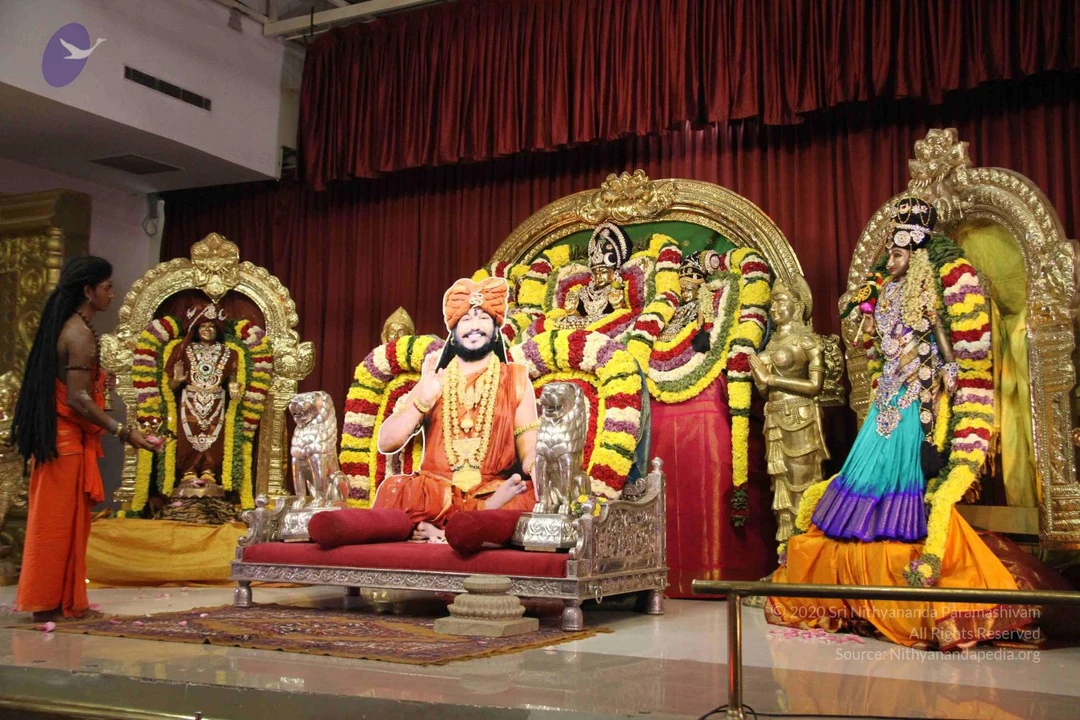
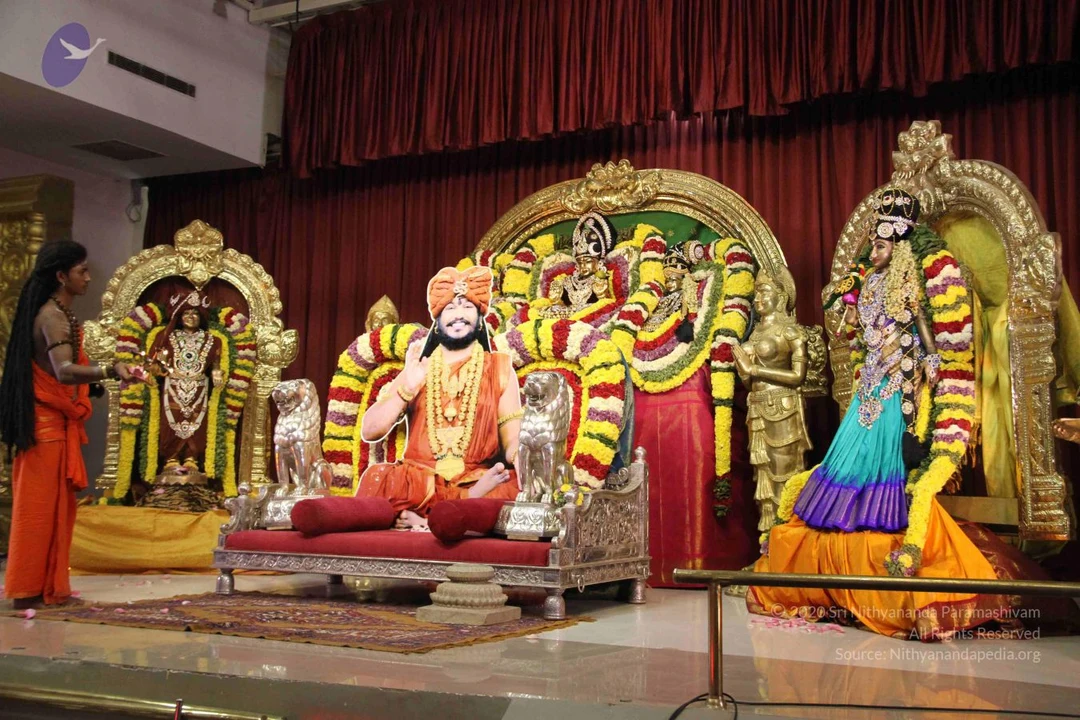
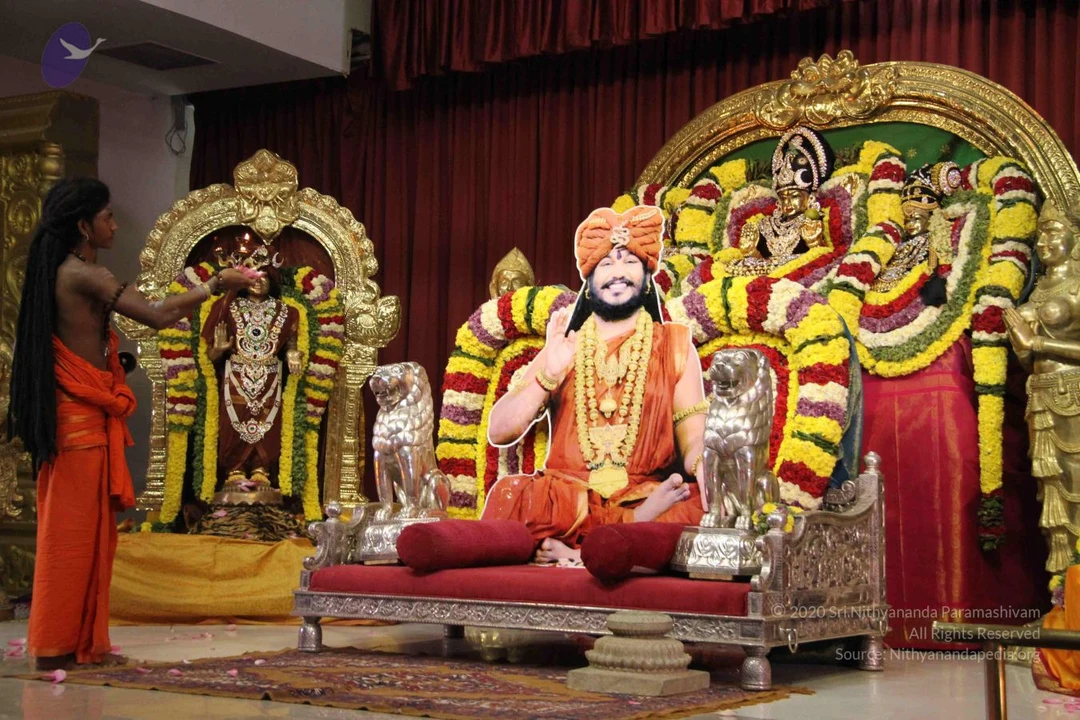
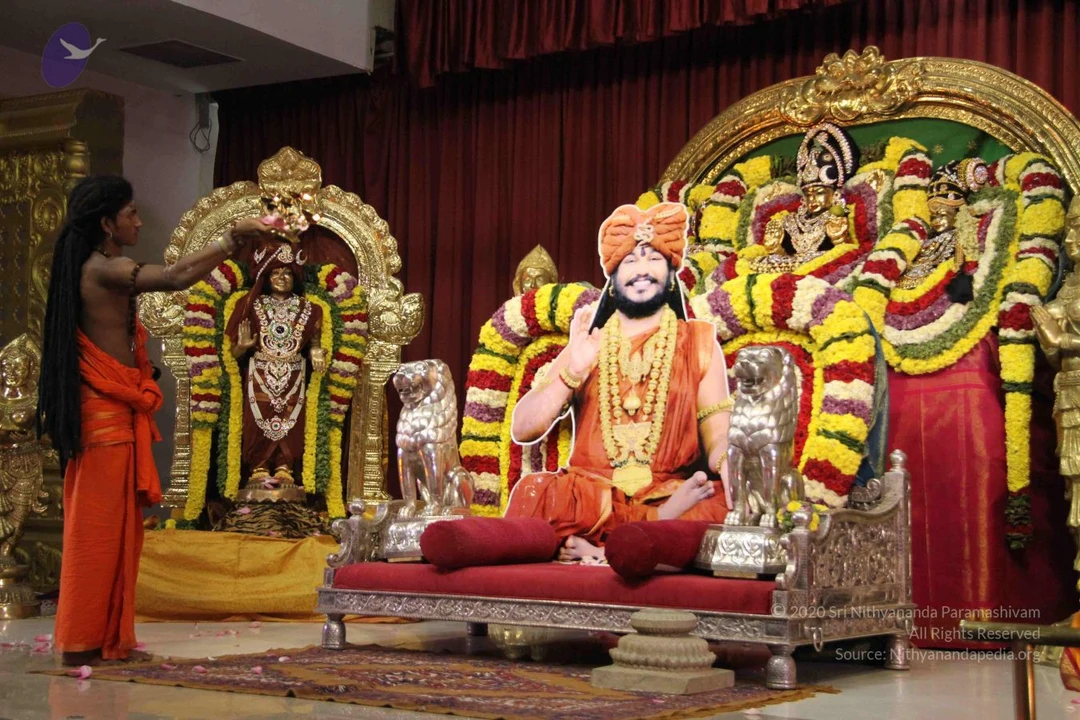
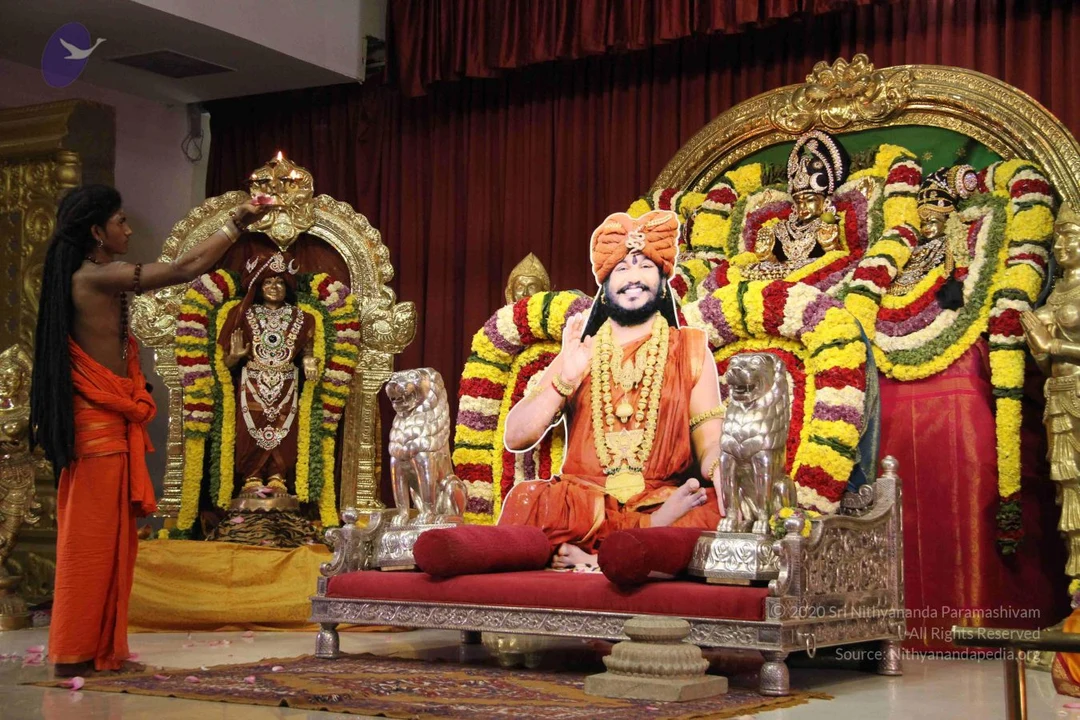
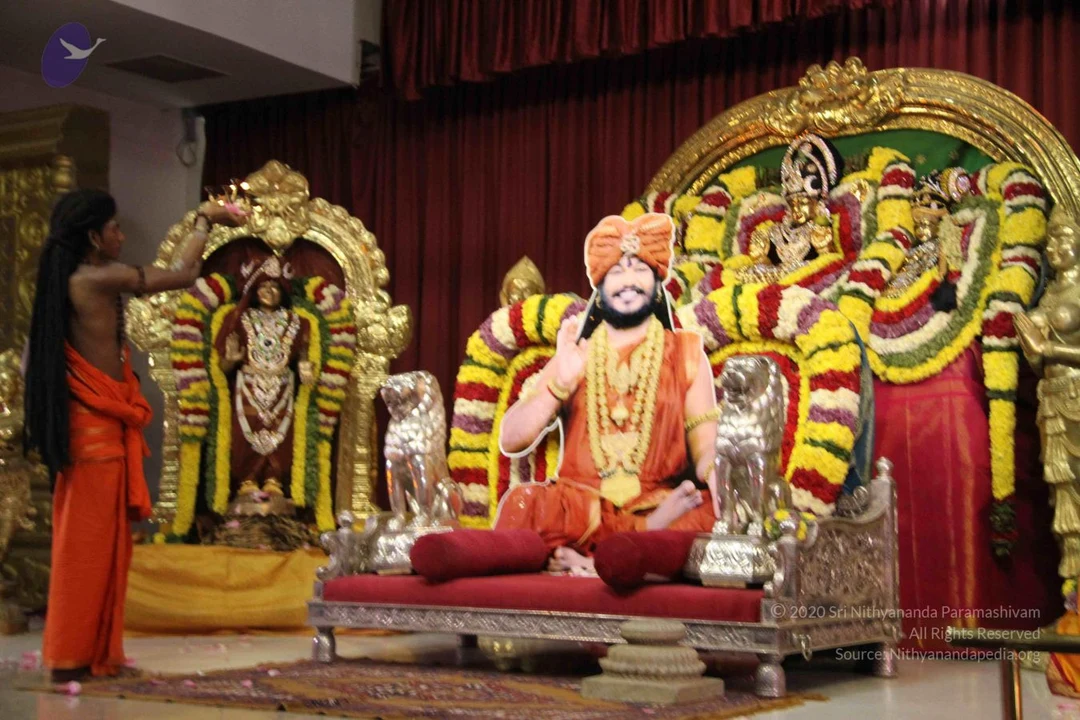
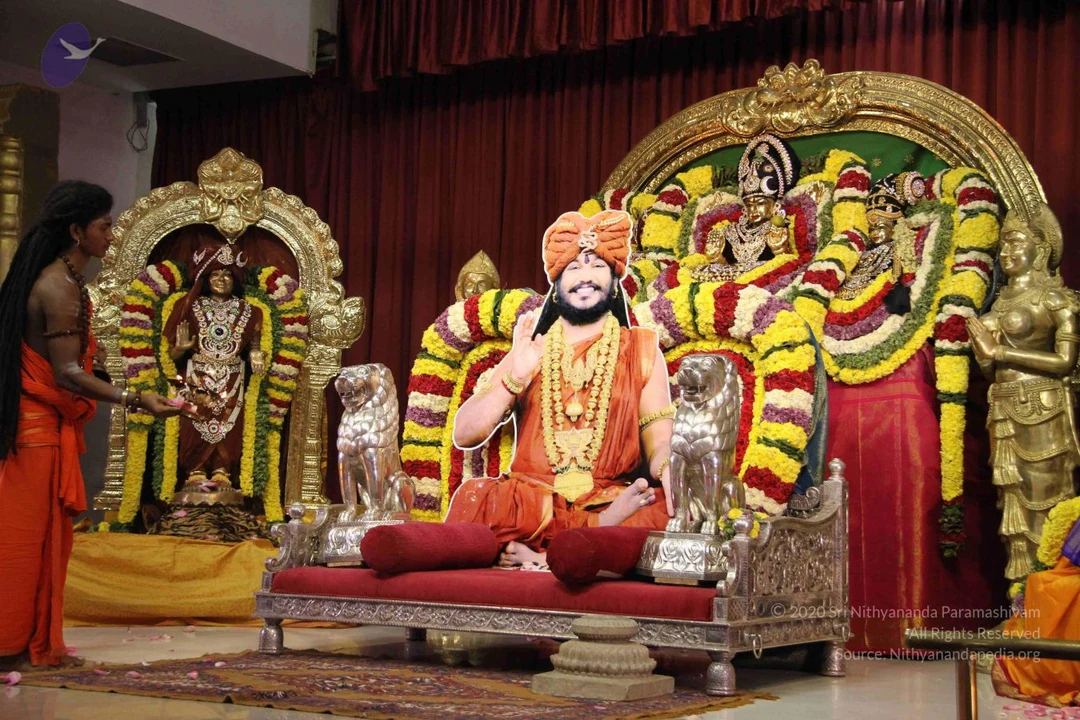
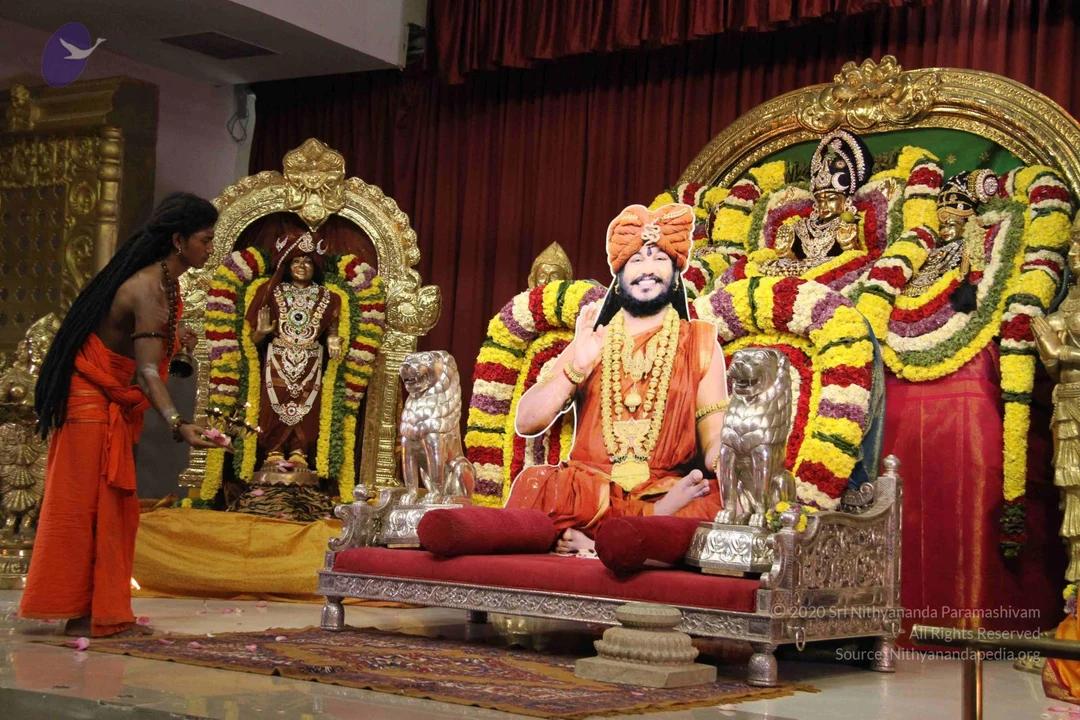
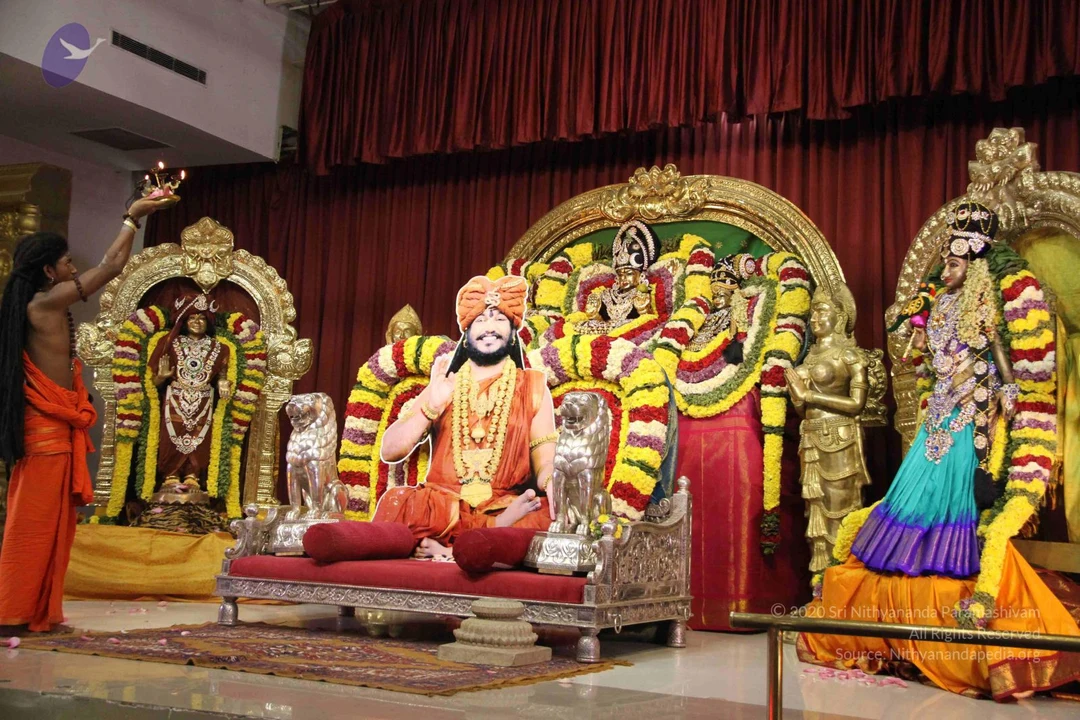
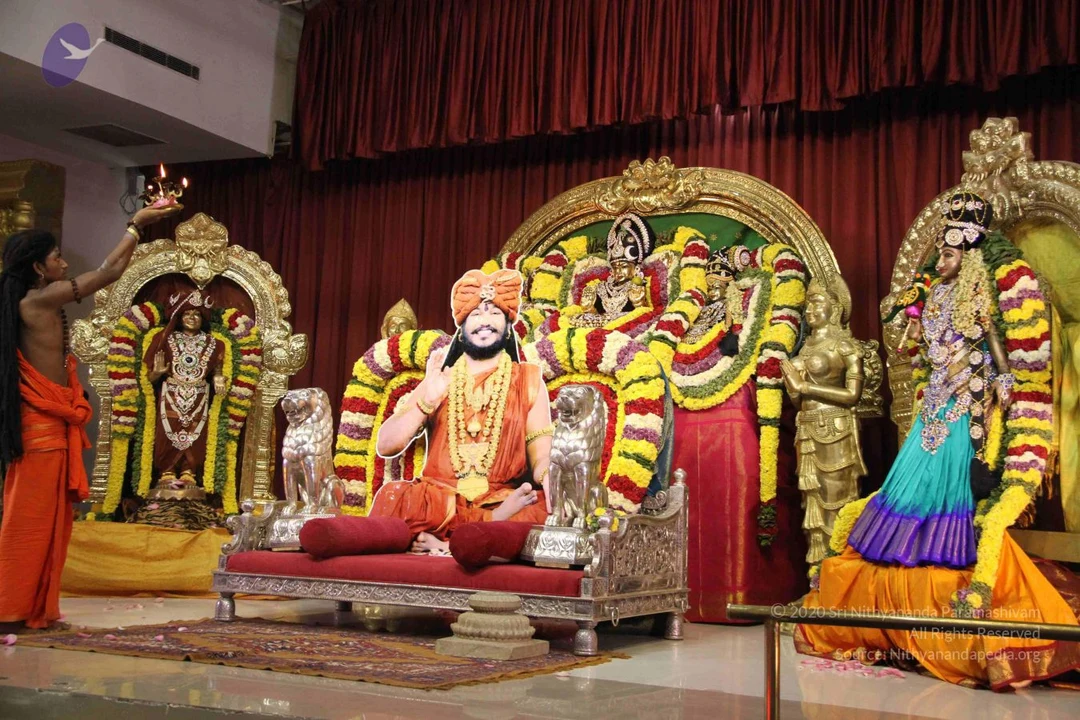
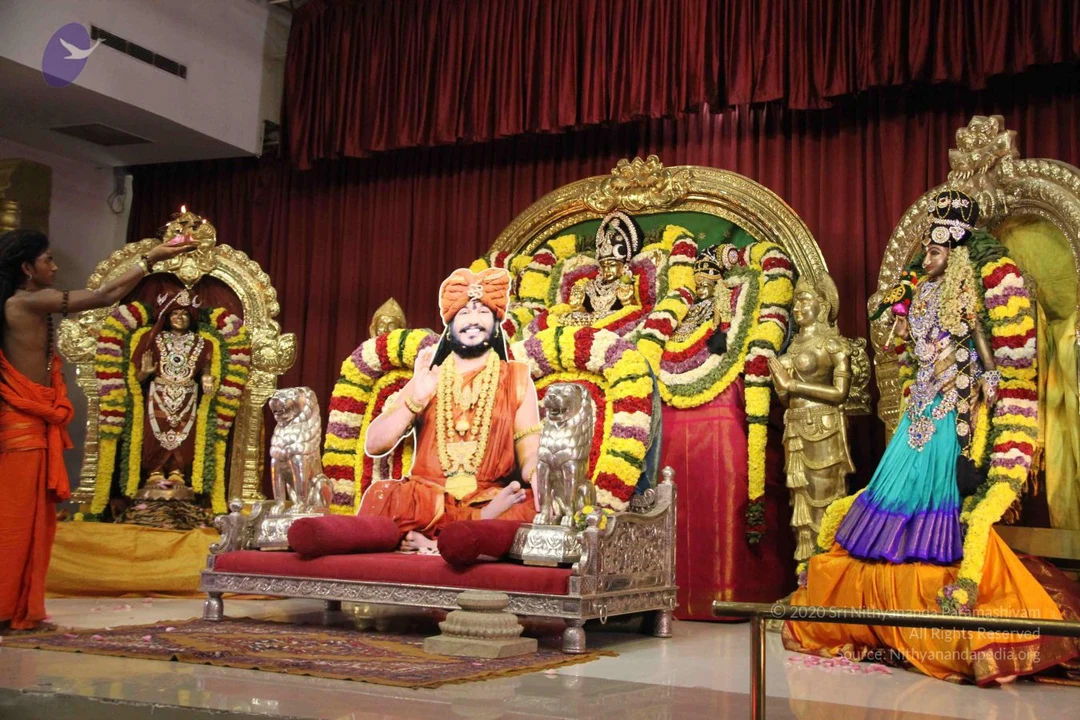
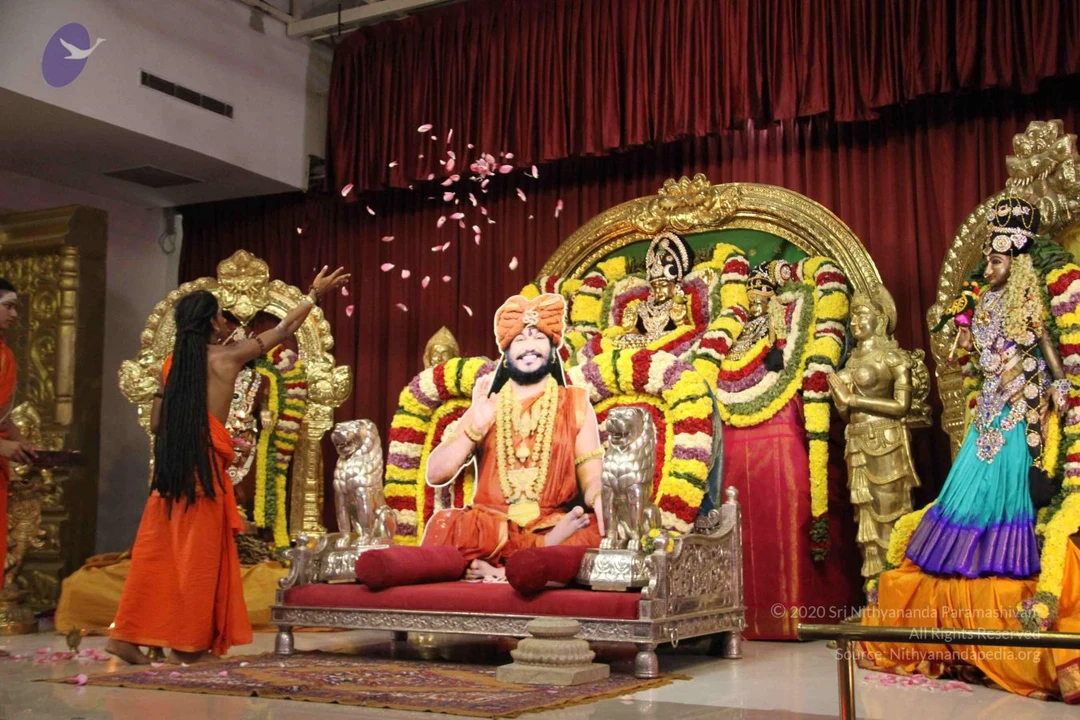
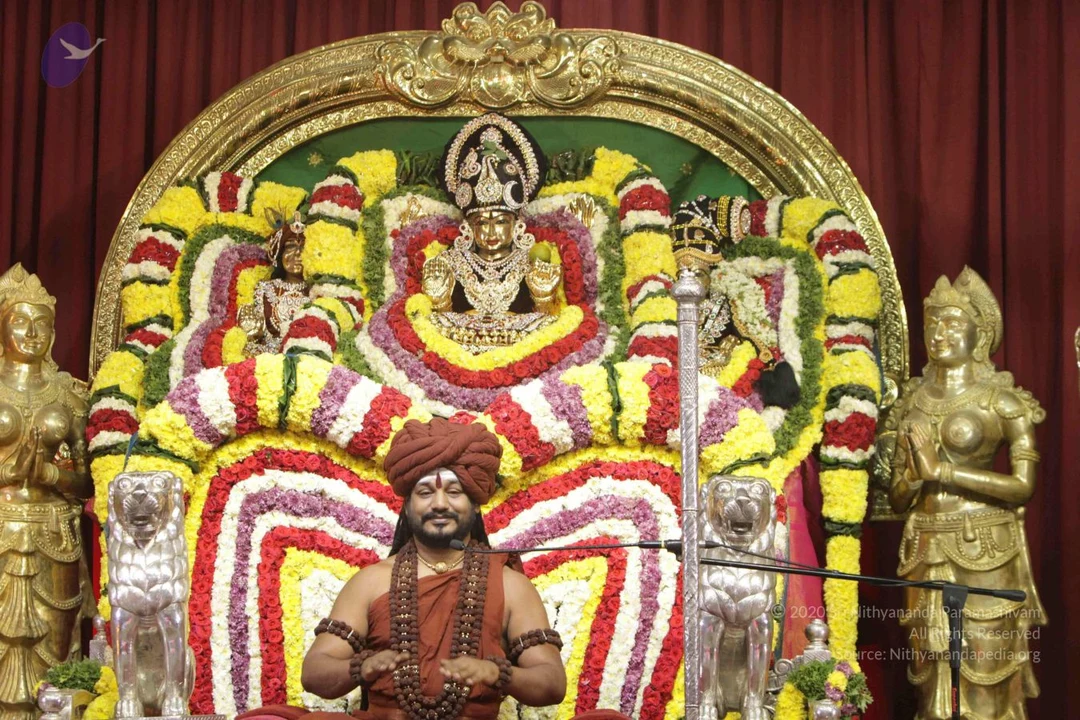
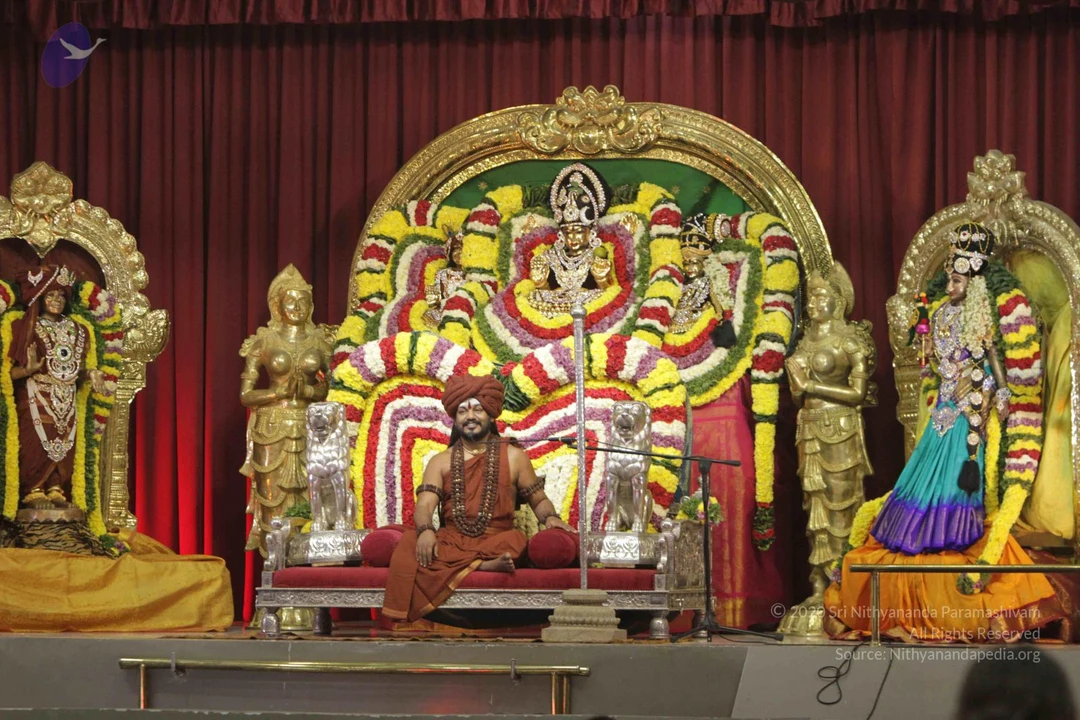
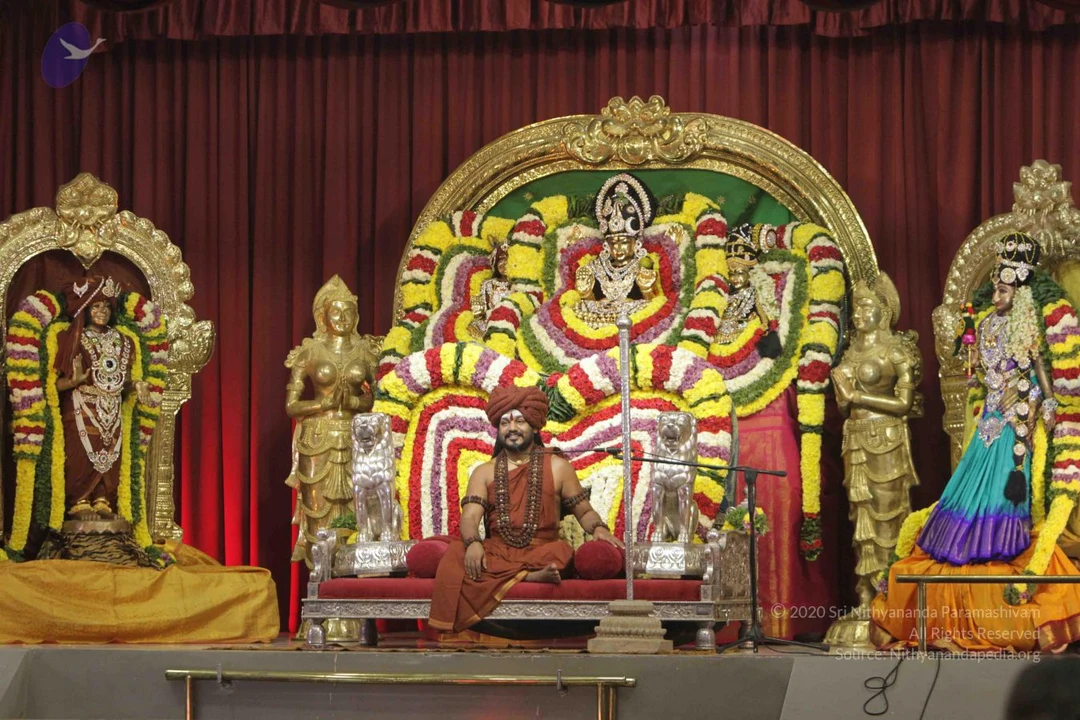
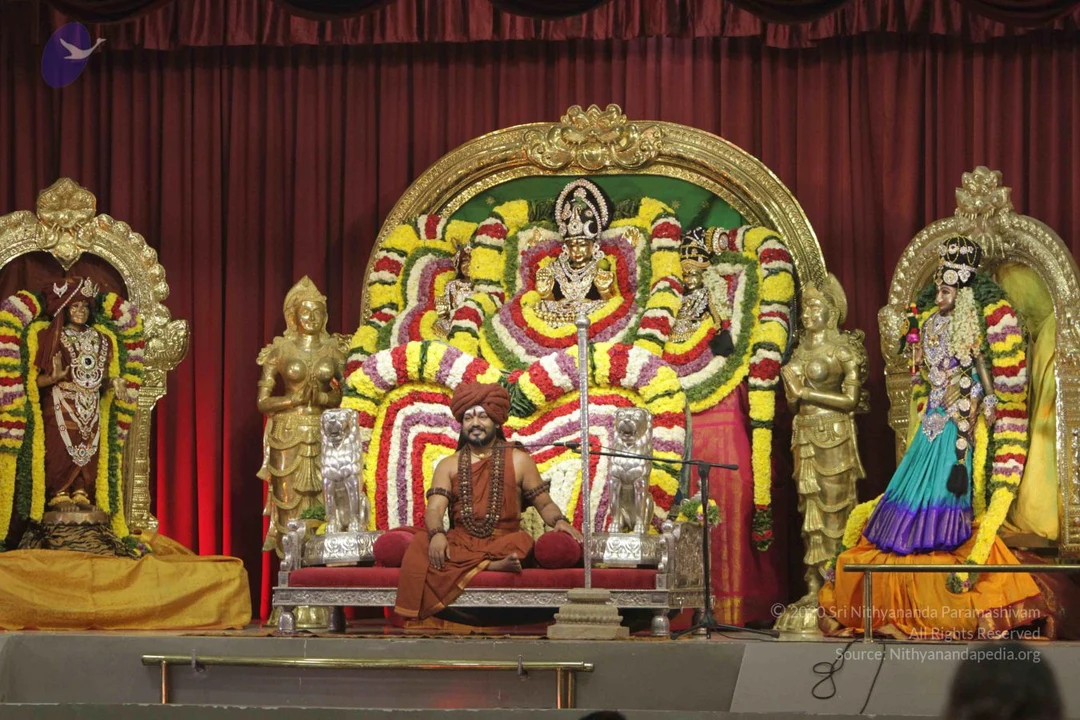
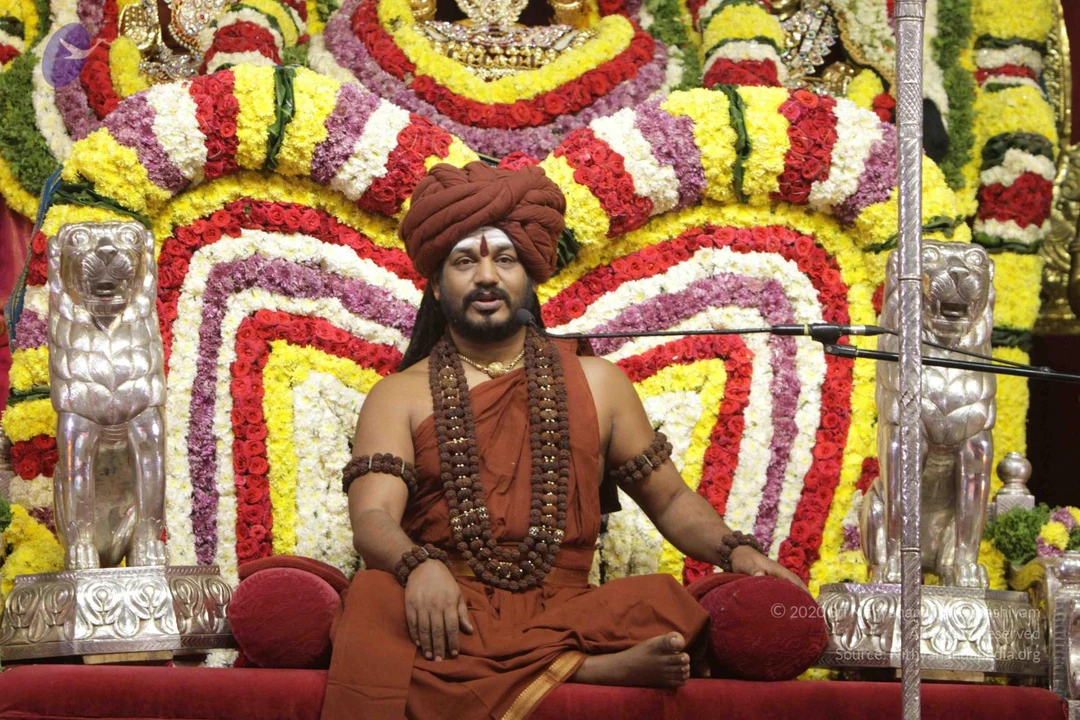
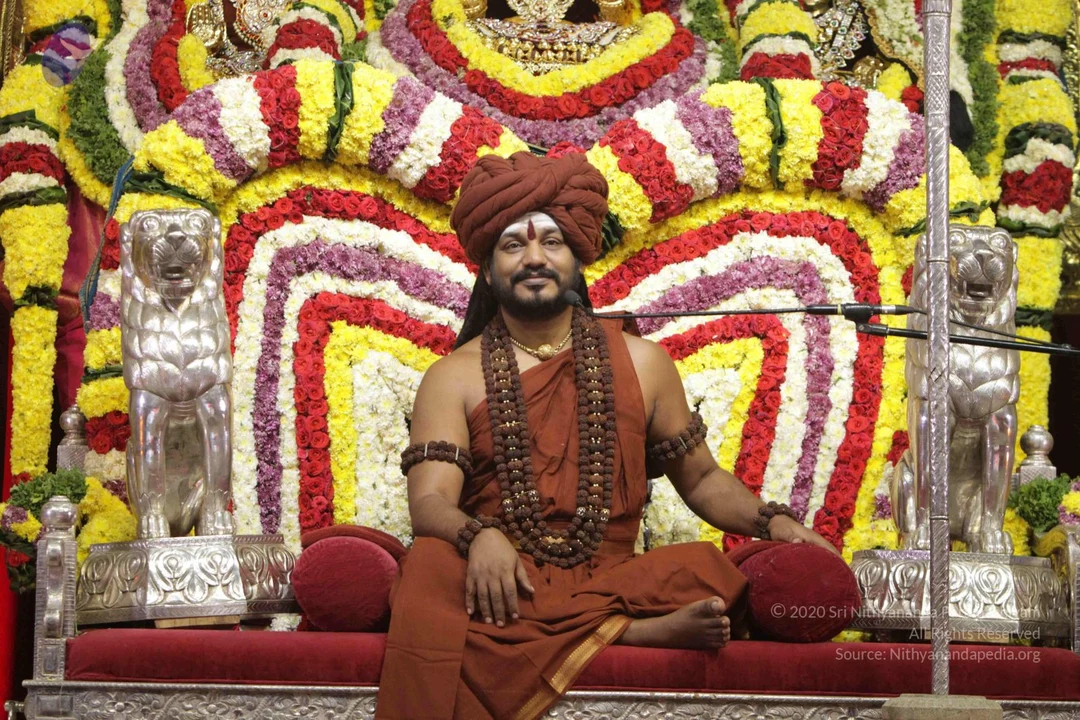
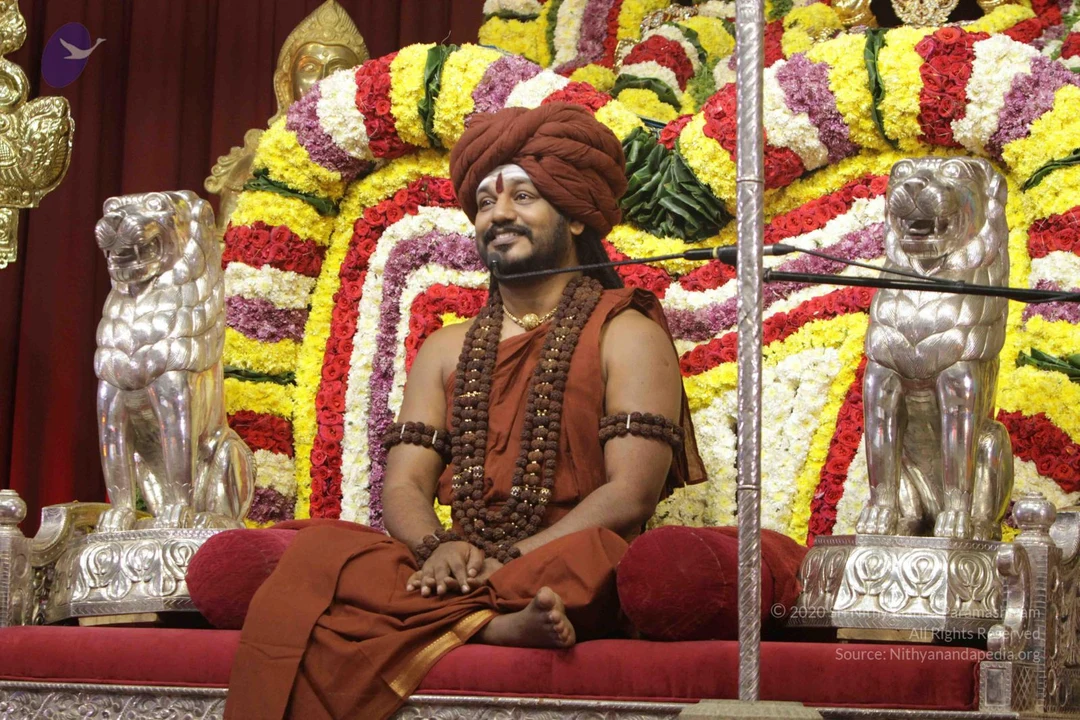
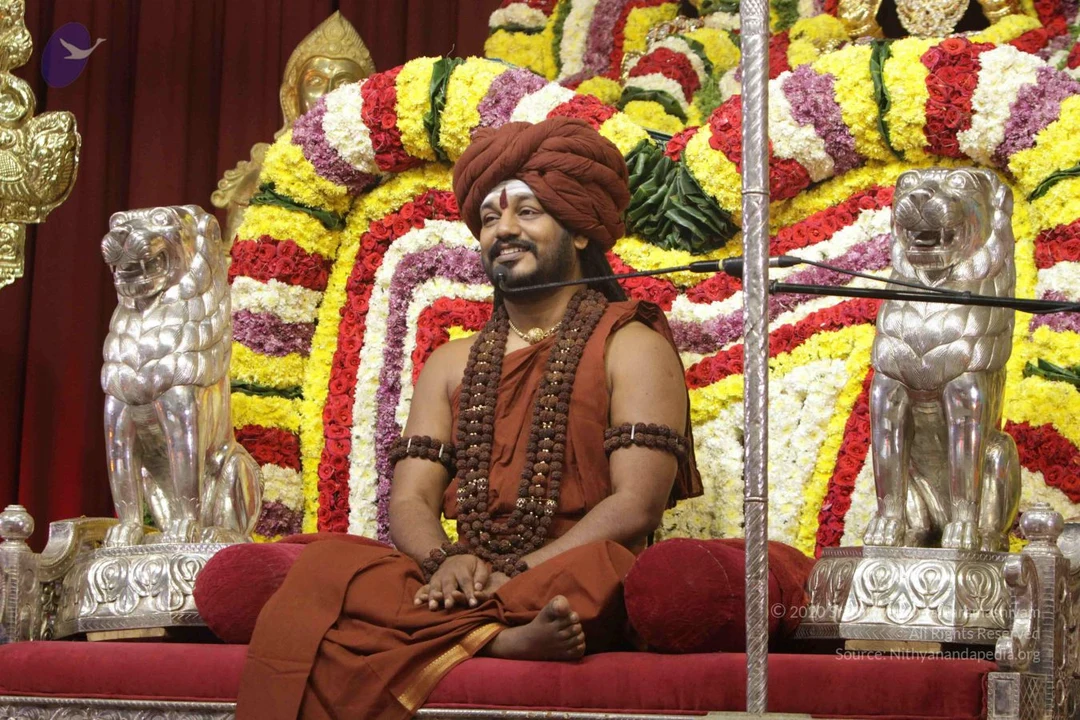
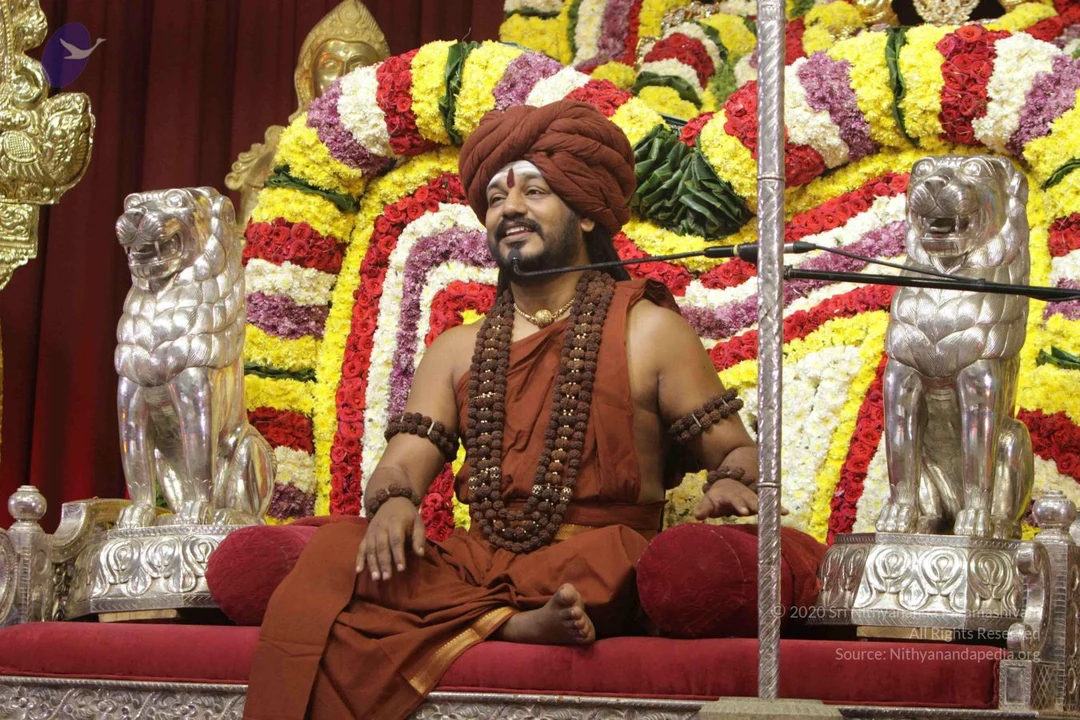
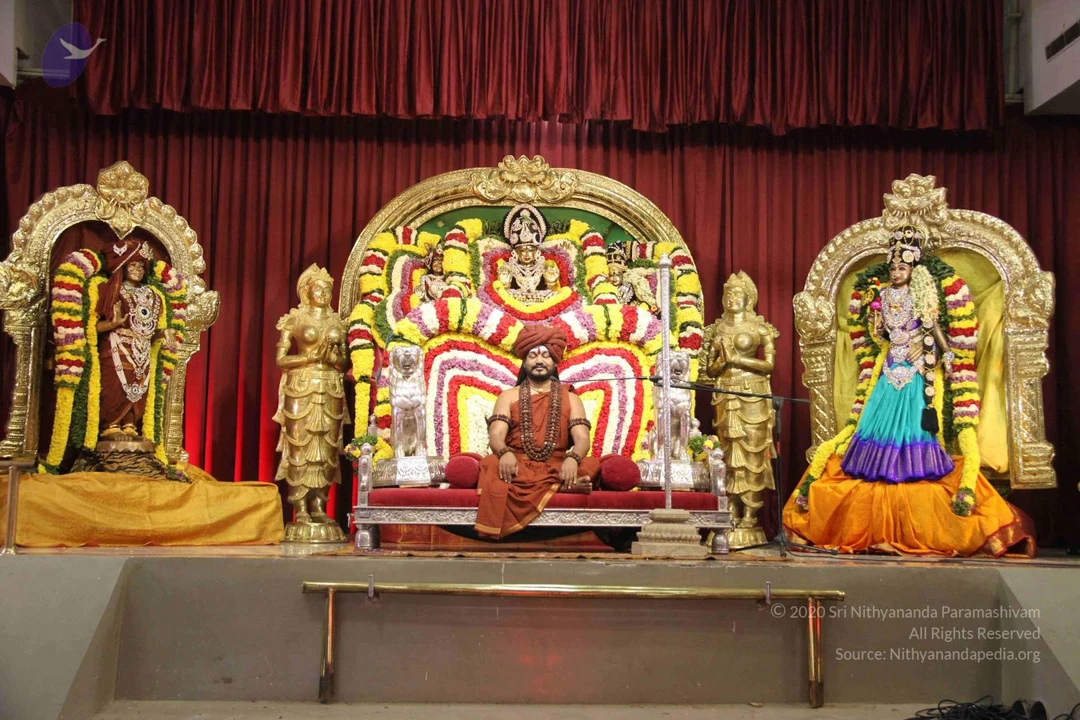
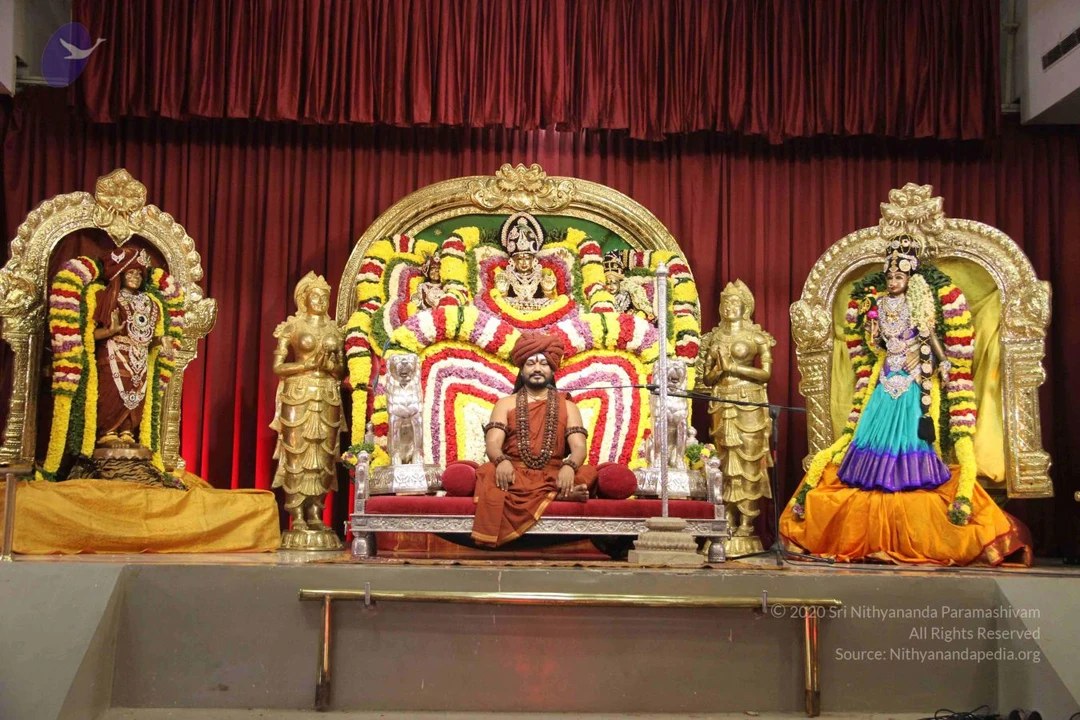
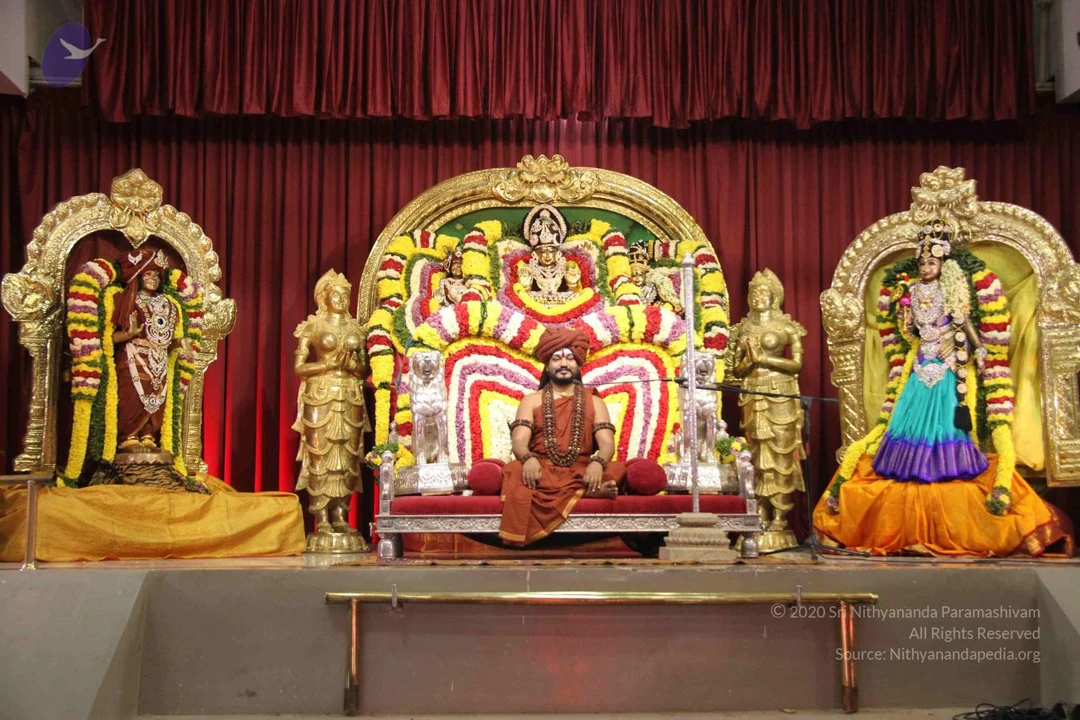
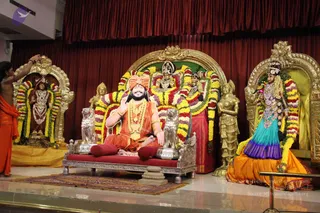
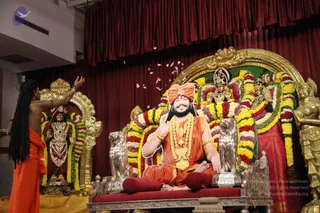
A stage set with a deep red curtain and a golden arched throne framed by garlands of yellow and orange flowers. Centre, a figure in saffron-orange robes, a saffron turban and a long gold-beaded mala sits cross-legged on a red cushioned seat, one hand raised in a gesture. Flanking him are gilded deity statues: a standing figure on the left and a seated goddess in a teal and purple skirt with jewelry on the right, both garlanded. Golden lion-shaped supports sit beside the throne. No living people are visible other than the central figure; the statues and depicted figure are not counted. a person: the seated central figure wears a saffron turban, saffron robes and a gold mala, presented on a throne, which fits the page's ashram context.A stage shrine with a seated figure on a silver throne with red cushions, wearing an orange turban, orange robe, rudraksha-style beaded mala and gold necklaces, hands raised in a blessing gesture. Two silver lion figures flank the throne. Garlands of red, yellow and green flowers drape the golden arched backdrop and side shrines. A standing figure in orange cloth at left, possibly a priest, holds a flower or vessel near a shrine. On the right, a golden deity murti in a turquoise and purple skirt stands in a gilded niche. A red velvet curtain hangs behind. The seated figure appears to be a candidate for a person in appearance but the image is uncertain, and no printed name is visible on the throne.A stage set in a hall with a red curtain backdrop. In the centre, a large printed portrait-style figure of a bearded man in orange robes and an orange turban sits on a silver throne with red cushions, one hand raised in a gesture, with silver lion heads on the armrests. Behind him, a gold-framed throne is garlanded with red, yellow and white flowers and holds a deity murti. On the left, a standing person in orange with long hair stands beside a garlanded deity murti with a trident. On the right, a garlanded female deity murti in teal and purple clothing with a crown stands in a gold-framed niche. A small silver stand and a patterned rug lie on the stage floor.Stage discourse scene with a seated bearded man in an orange turban and orange robes, wearing a large gold necklace and beads, seated on a silver throne cushioned with red pillows and flanked by silver lion figures. Behind him is a gold-framed arch decorated with multicoloured garlands, a metal deity murti and a seated figure. To the left, a standing attendant with long dark hair and an orange wrap holds an object near a garlanded deity statue. On the right, a gold-framed shrine holds a garlanded female deity figure in a turquoise and purple skirt and gold jewellery, with a golden standing figure nearby. Red curtains hang behind the stage.A photograph of a ceremonial stage set before red velvet drapes with gold-framed arches. A standing attendant in orange clothes with long dark hair raises both arms toward a seated figure. Pink petals fall through the air. The seated figure sits on a silver throne with lion-shaped armrests and red cushions, wearing an orange turban with a tilak, a rudraksha-style mala and gold necklaces, and an orange robe. Garlands of yellow, red and green flowers frame the throne, with gold deity murti at the sides. The seated figure appears to be a cutout or large printed image rather than a living person. Copyright text in the corner.A photograph of a temple-style stage with a seated figure on a silver throne flanked by two silver lion sculptures. The seated figure wears an orange turban, orange robes, a gold necklace and a long dark beard, and raises one hand in a gesture of address. Behind him stands a deity murti in a gold arch with flower garlands, and to the right a golden-skinned goddess figure in a teal and purple skirt with a crown and jewelled ornaments is draped in garlands. On the left a long-haired attendant in orange cloth stands barefoot, gesturing toward the seated figure. Red drapes hang in the background and rose petals are scattered on the floor.
Satsang
79 photosSource gallery
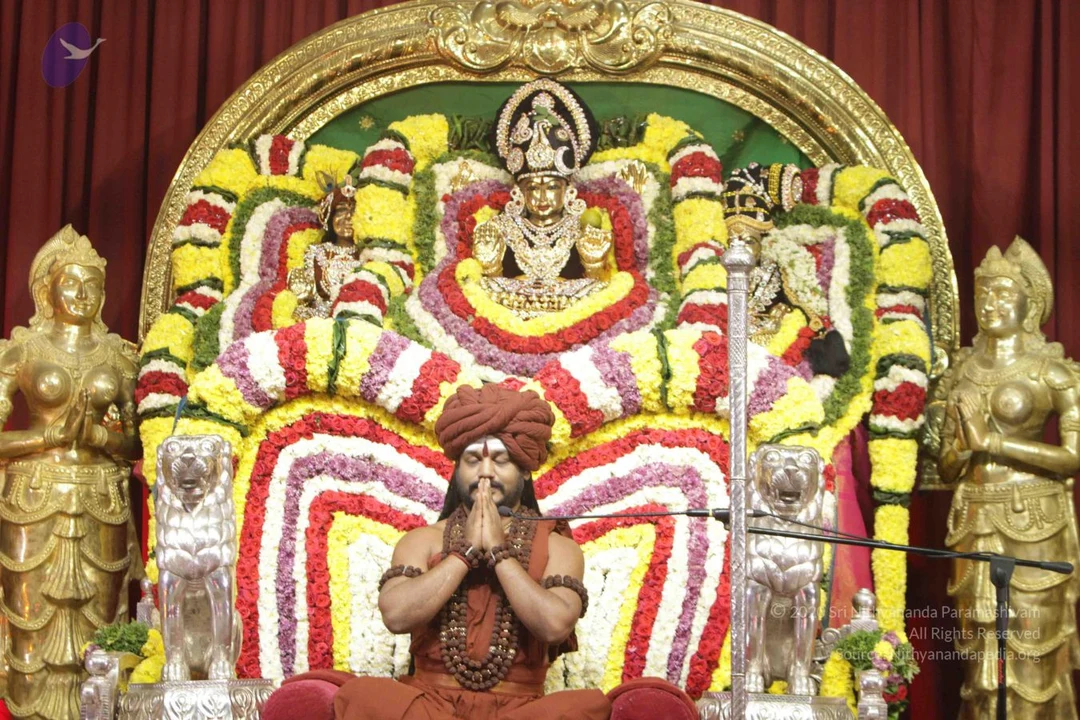
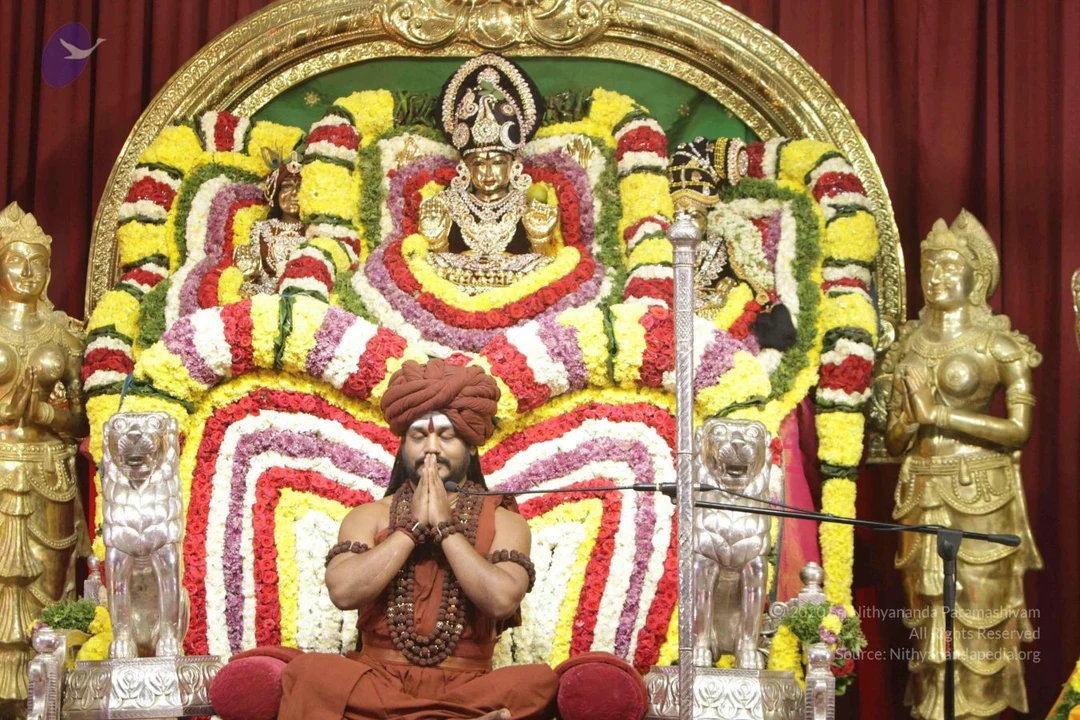
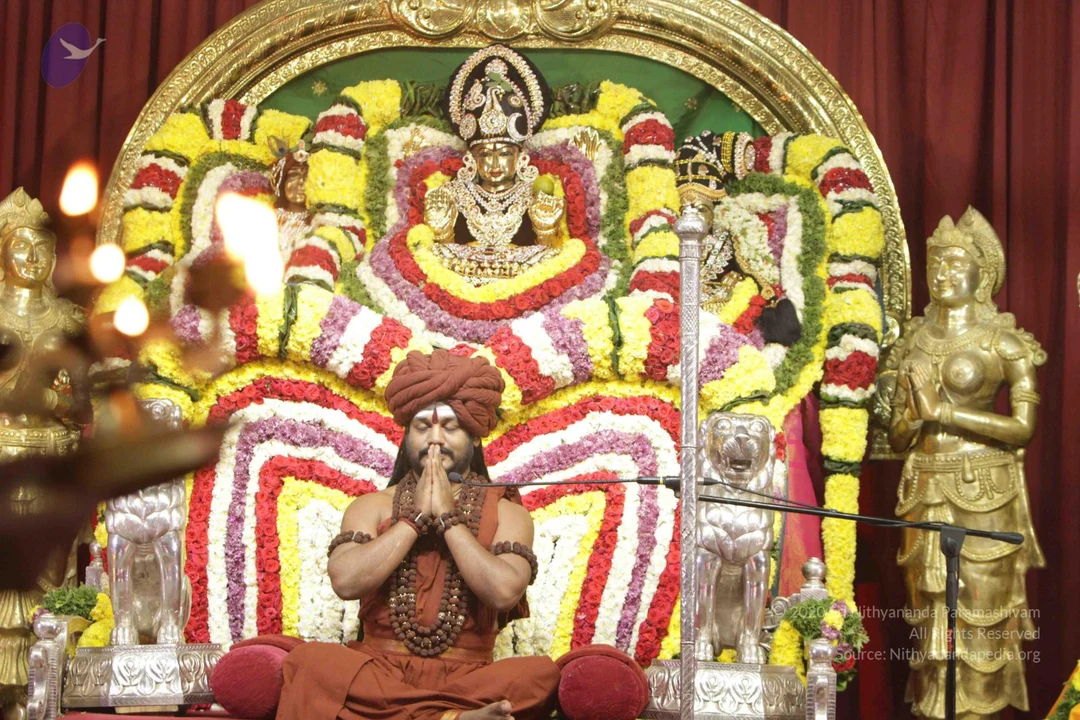
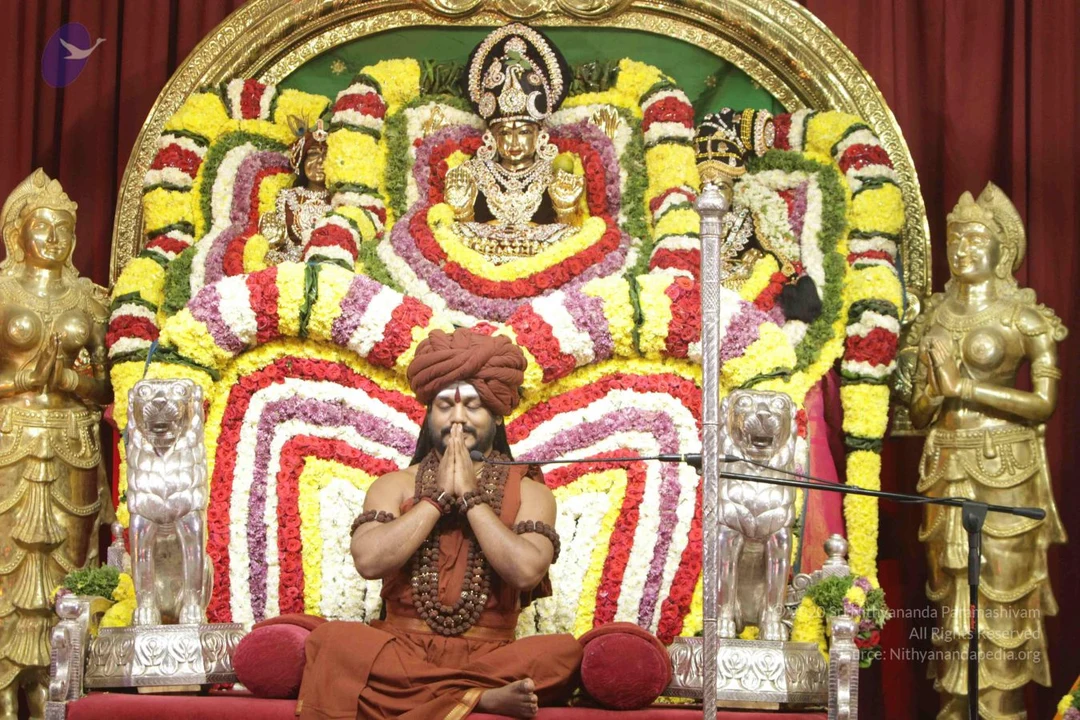
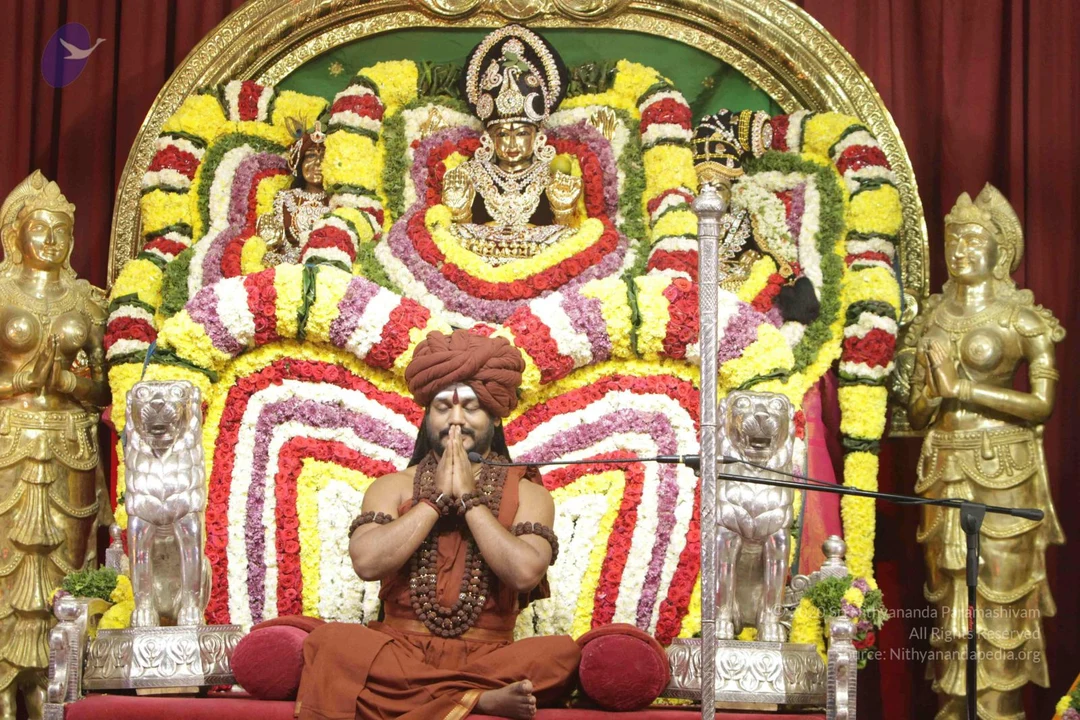
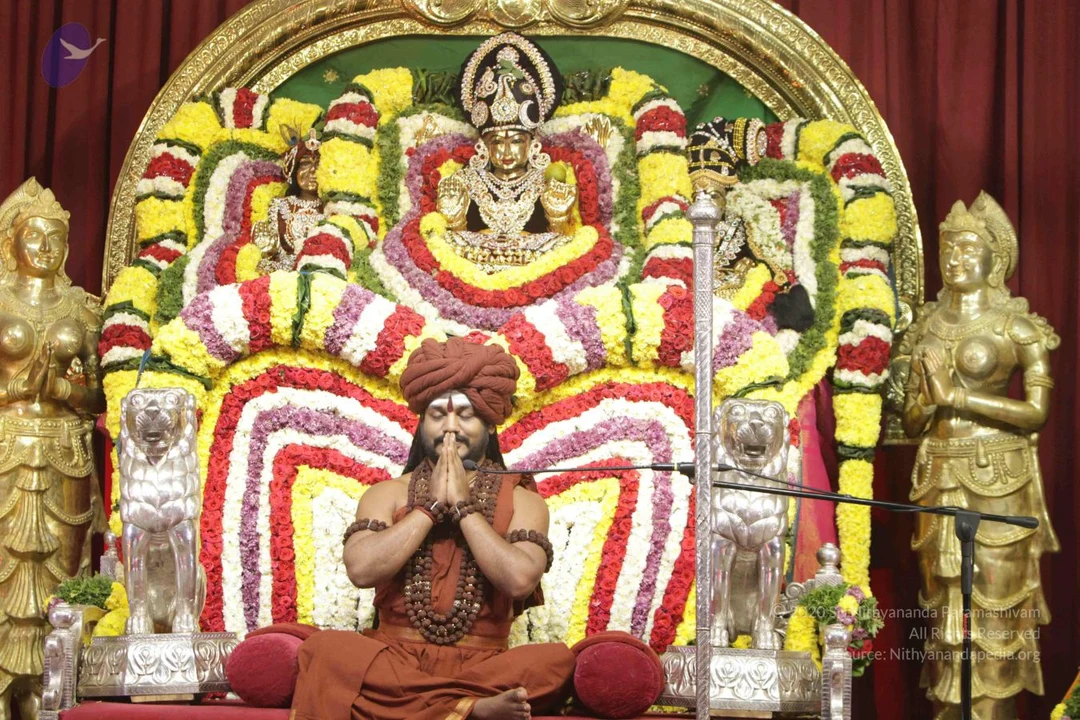
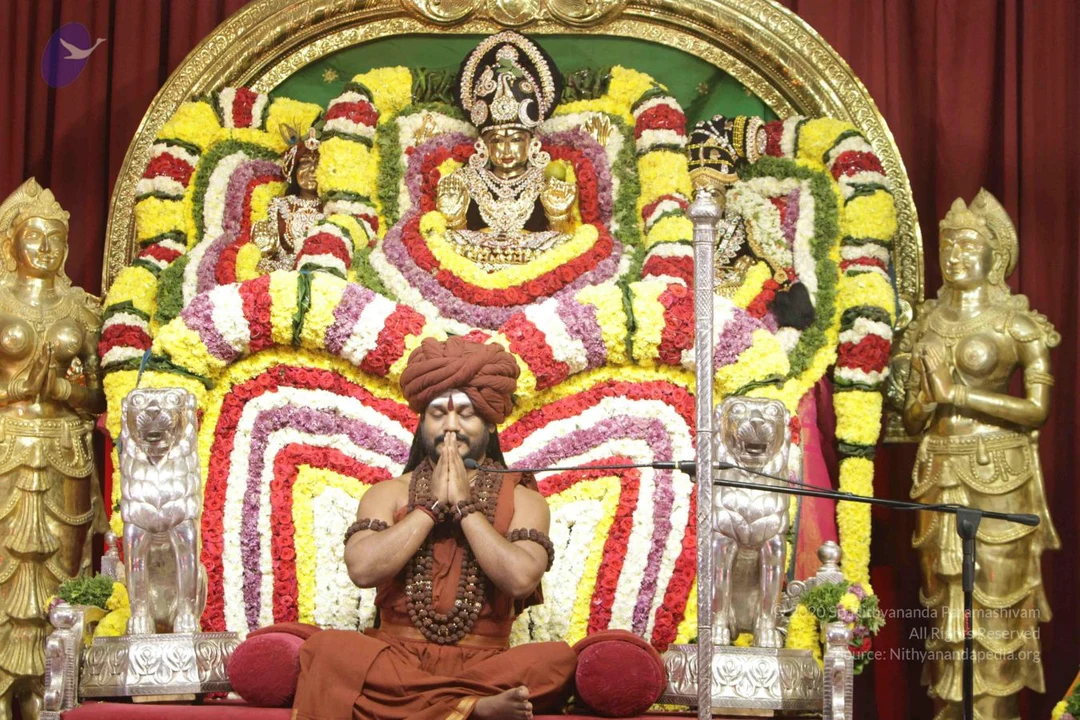
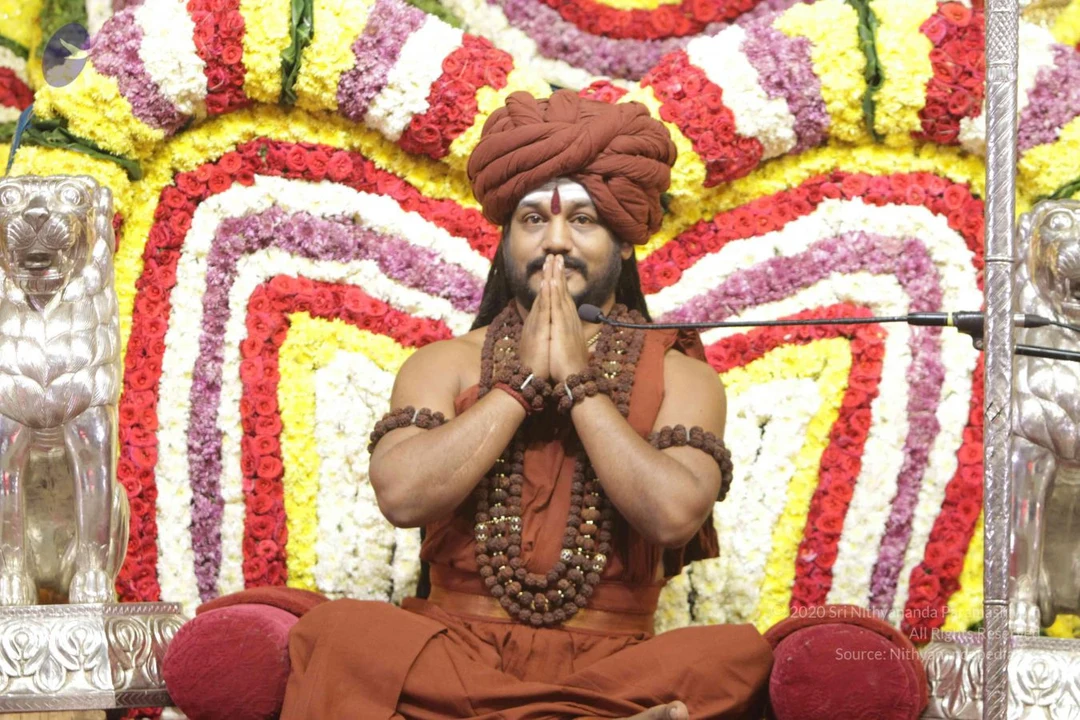
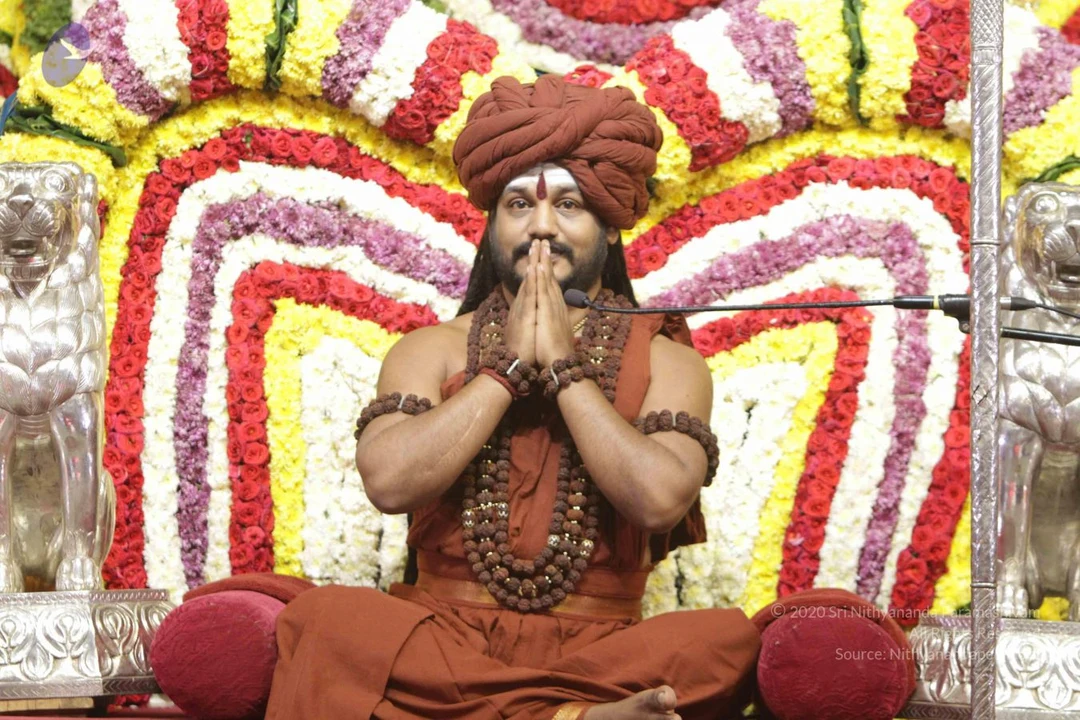
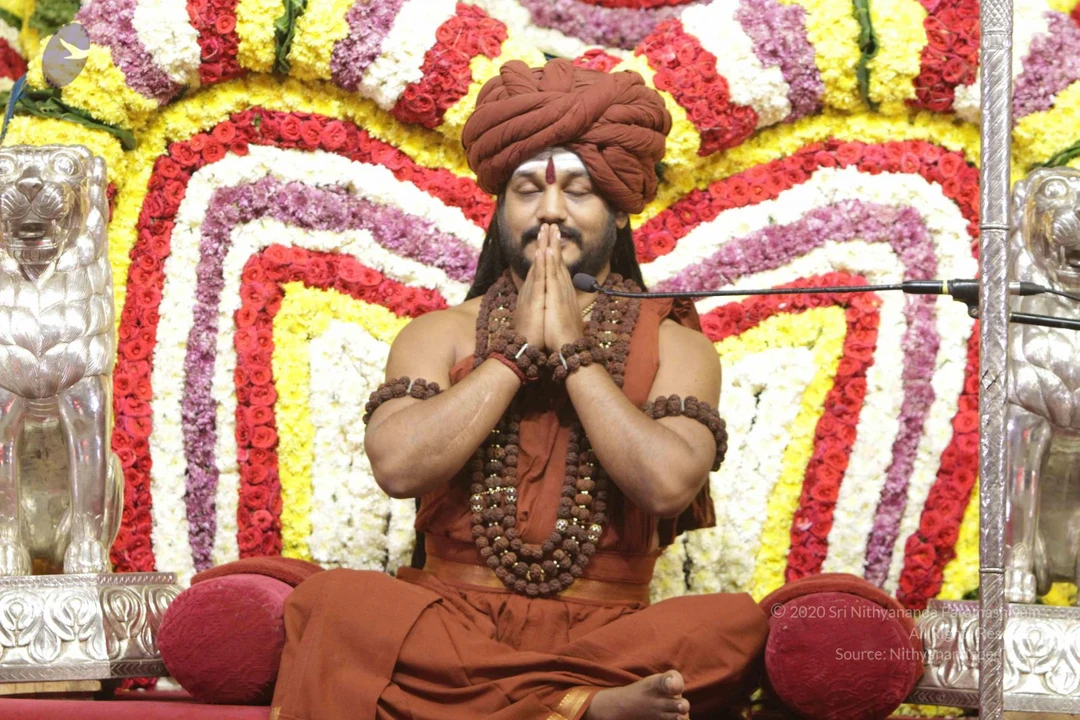
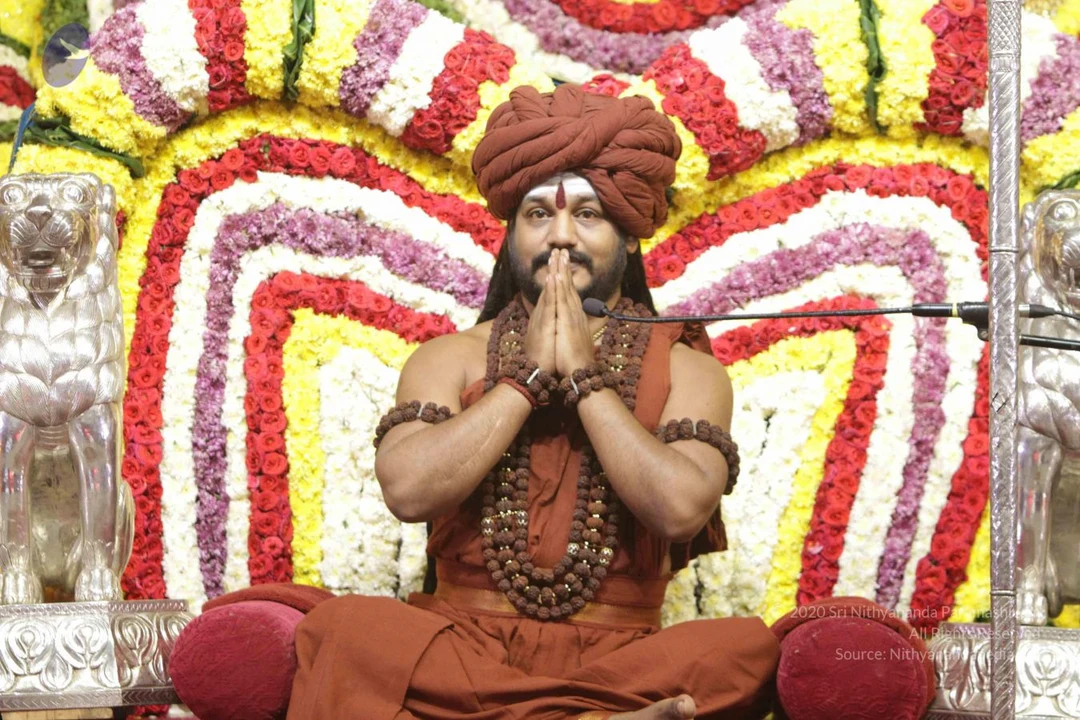
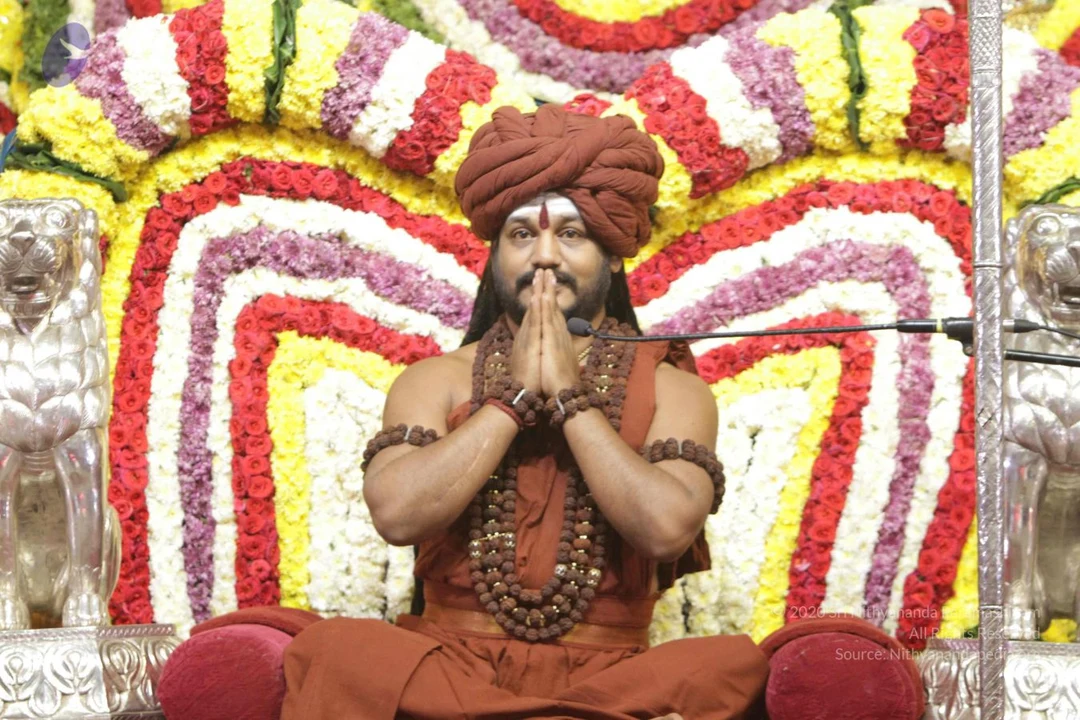
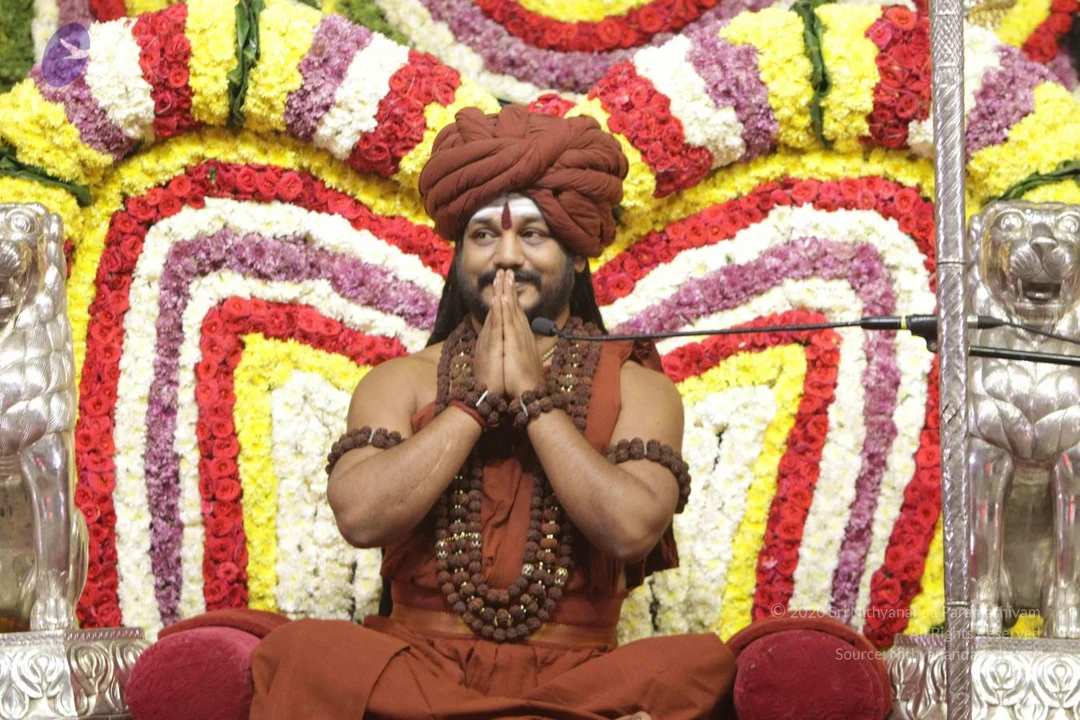
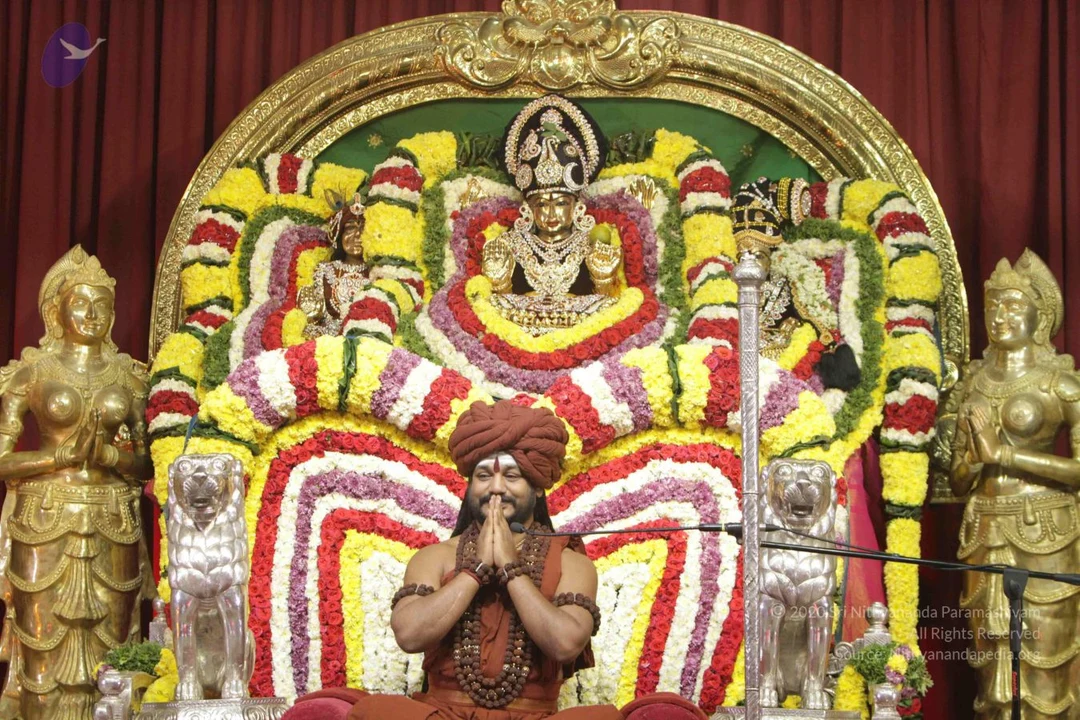
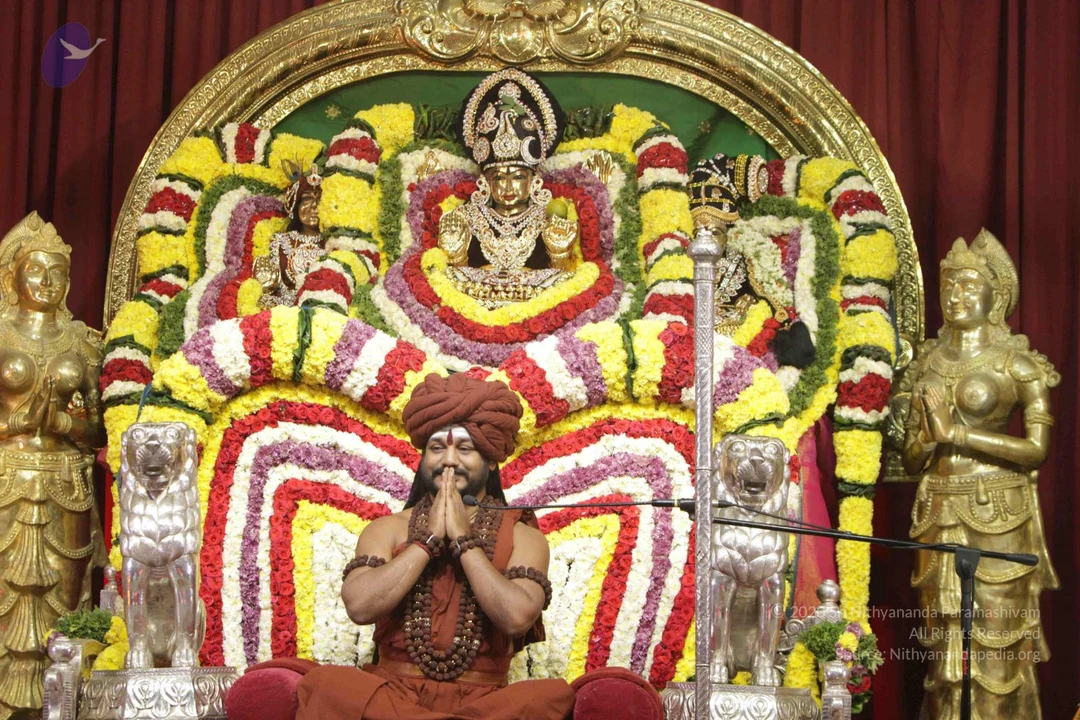
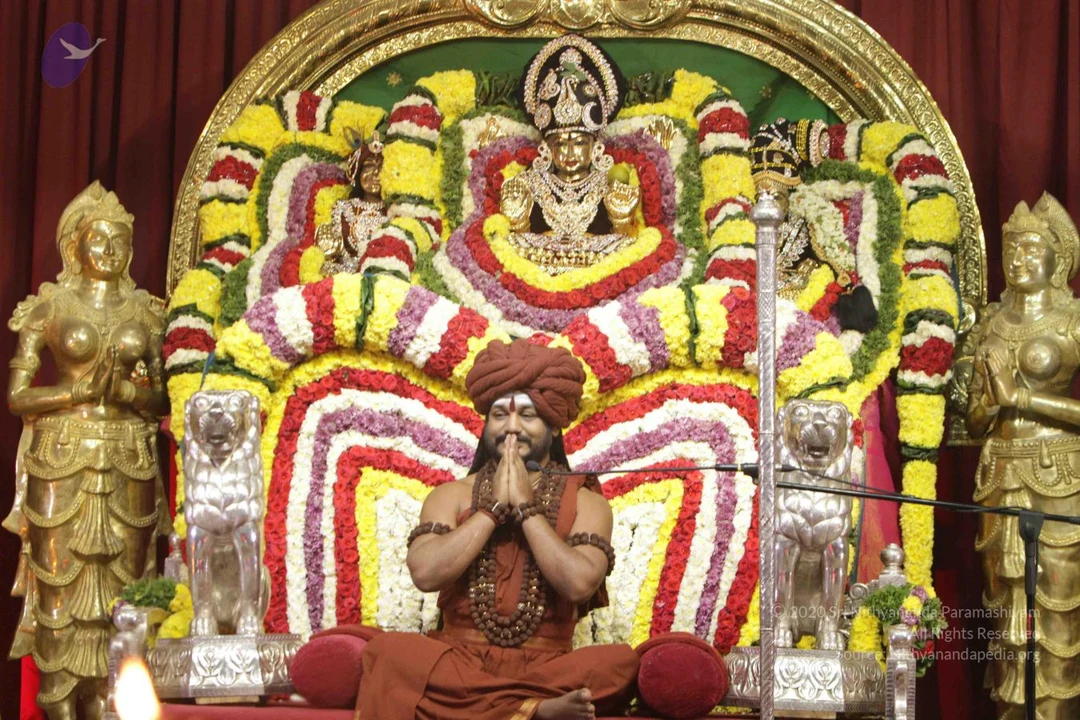
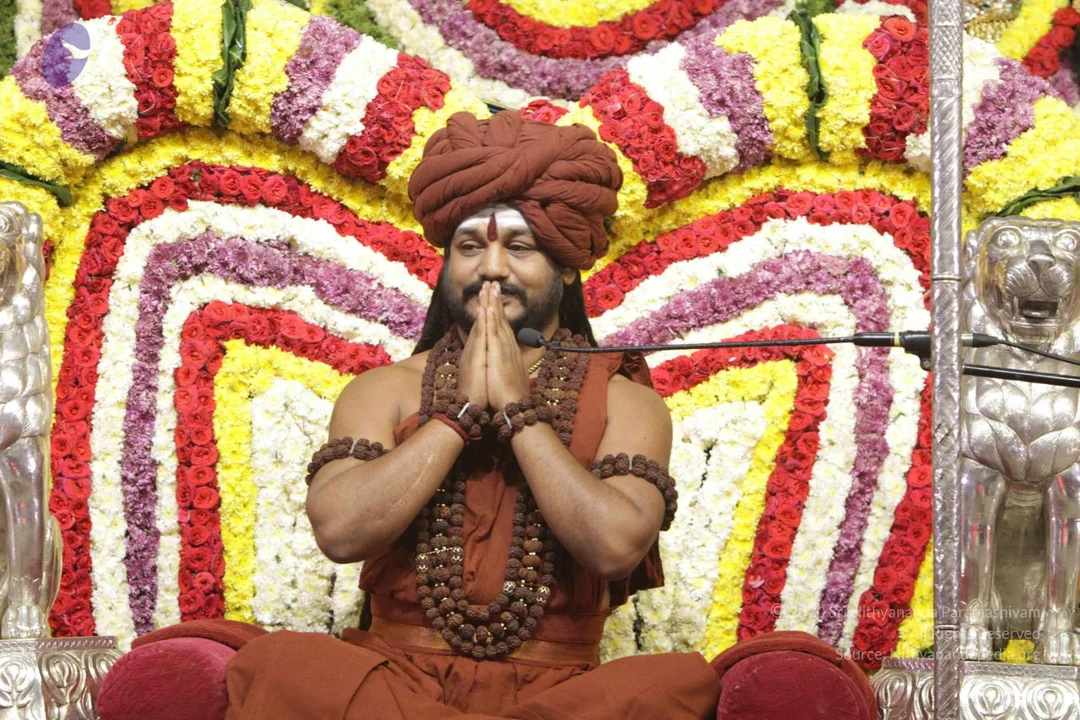
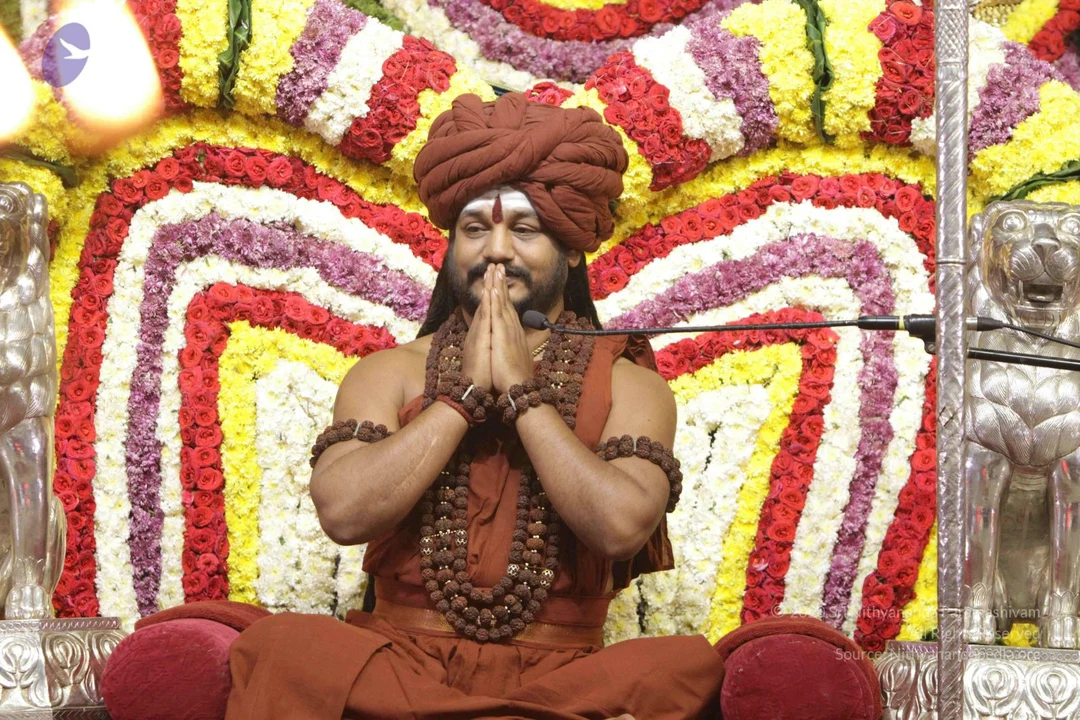
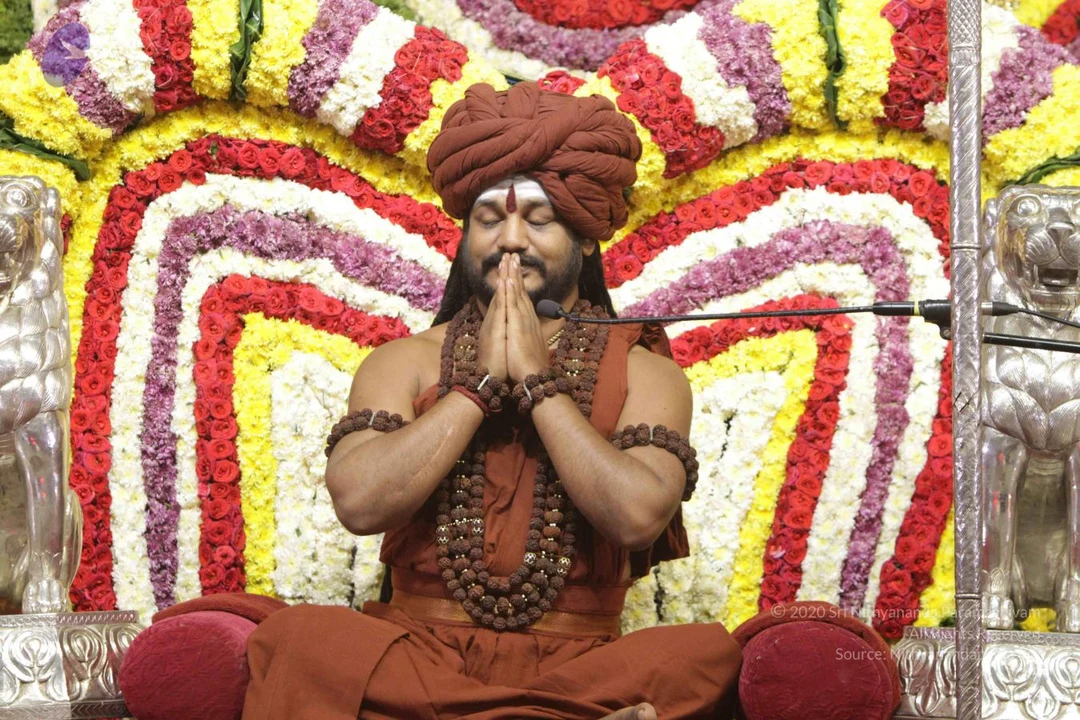
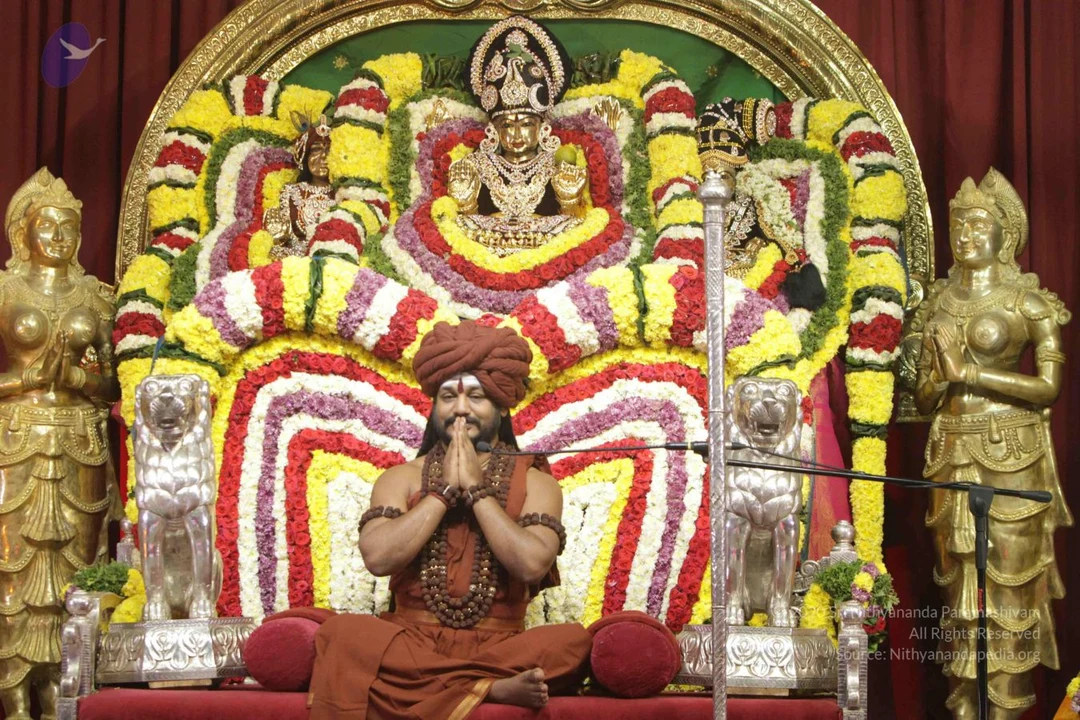
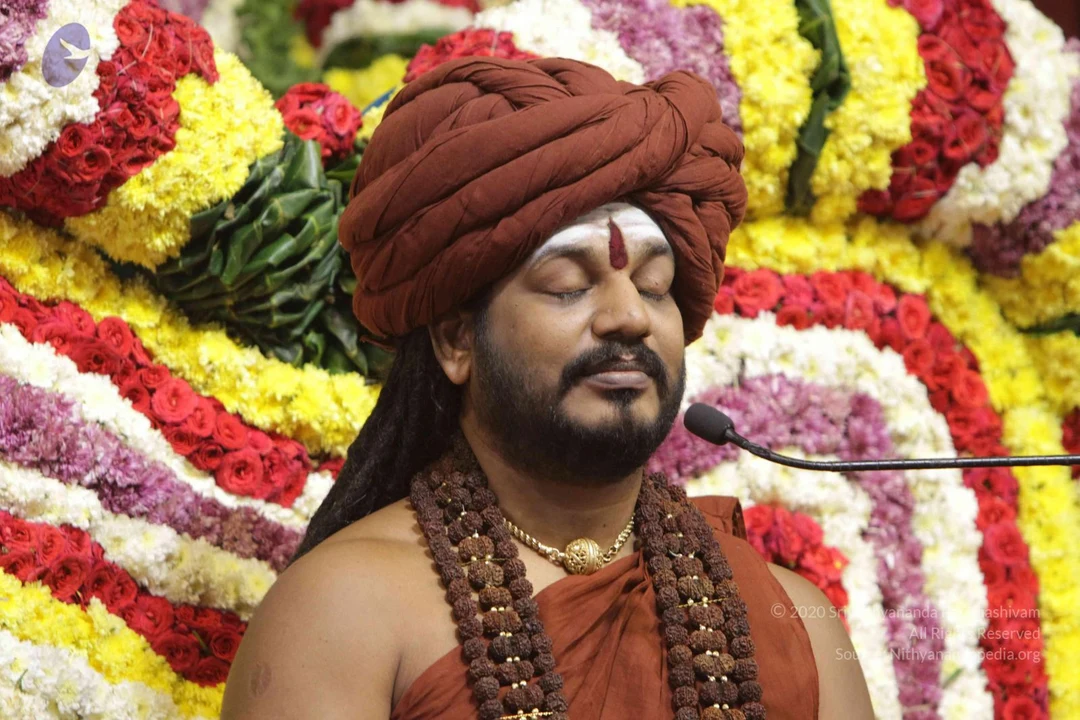
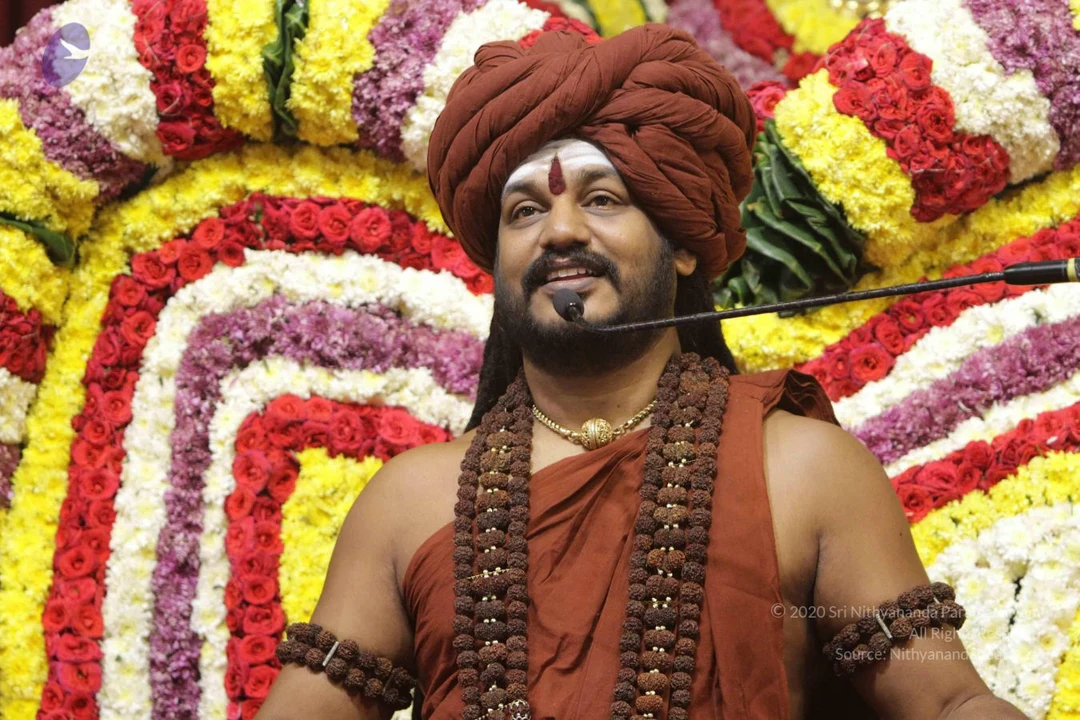
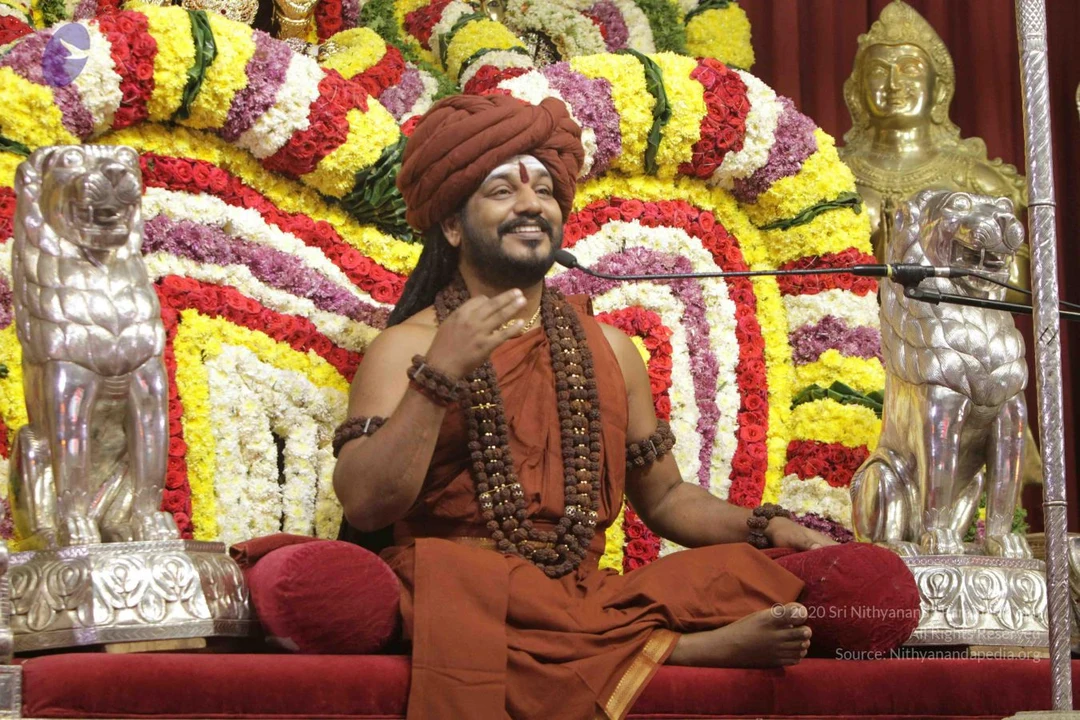
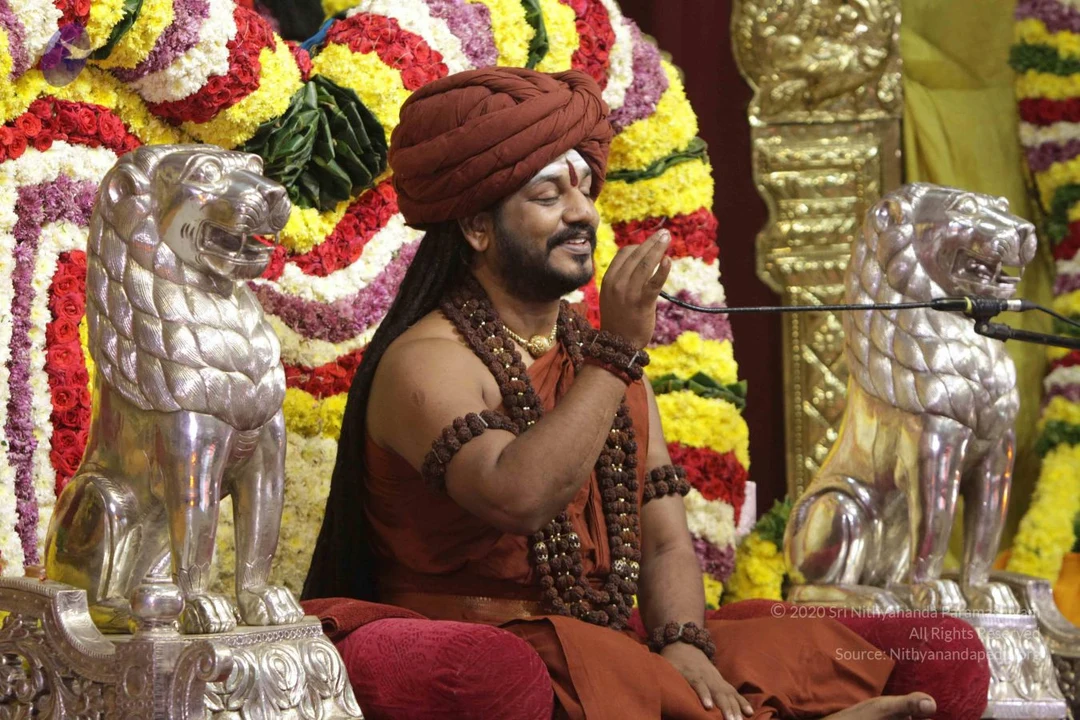
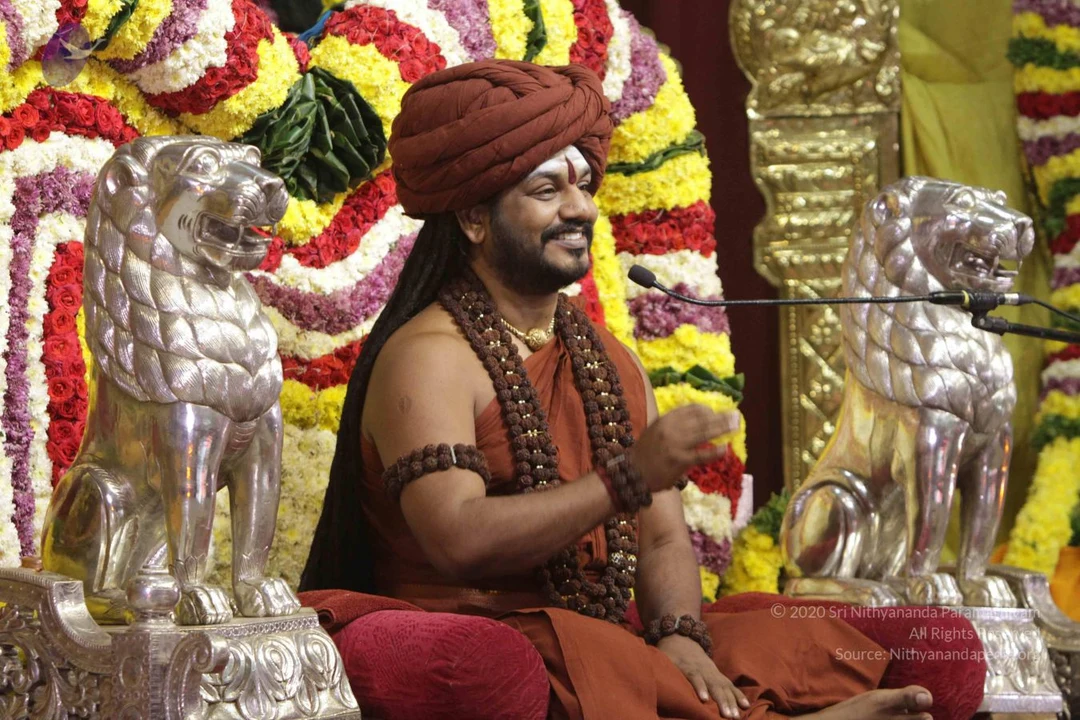
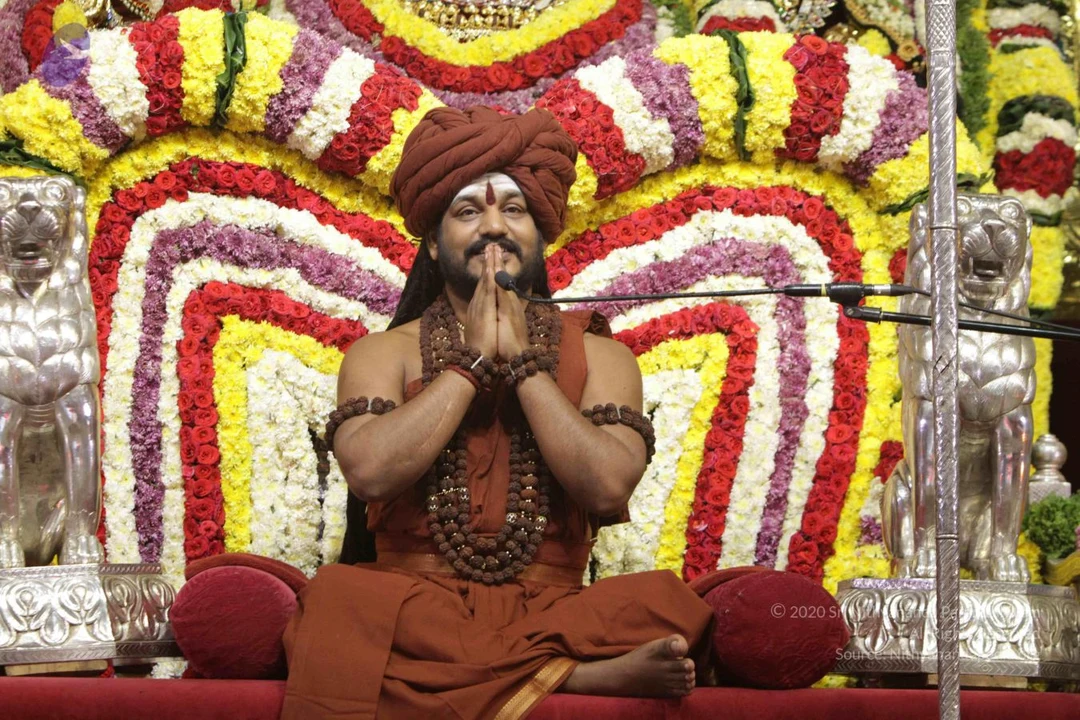
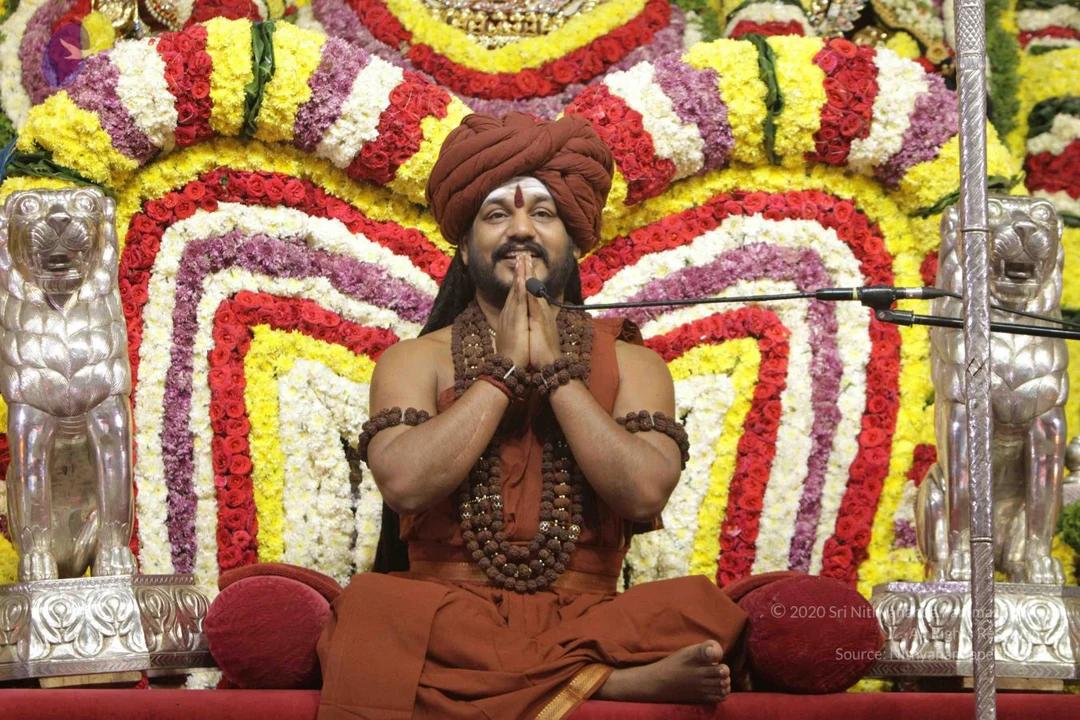
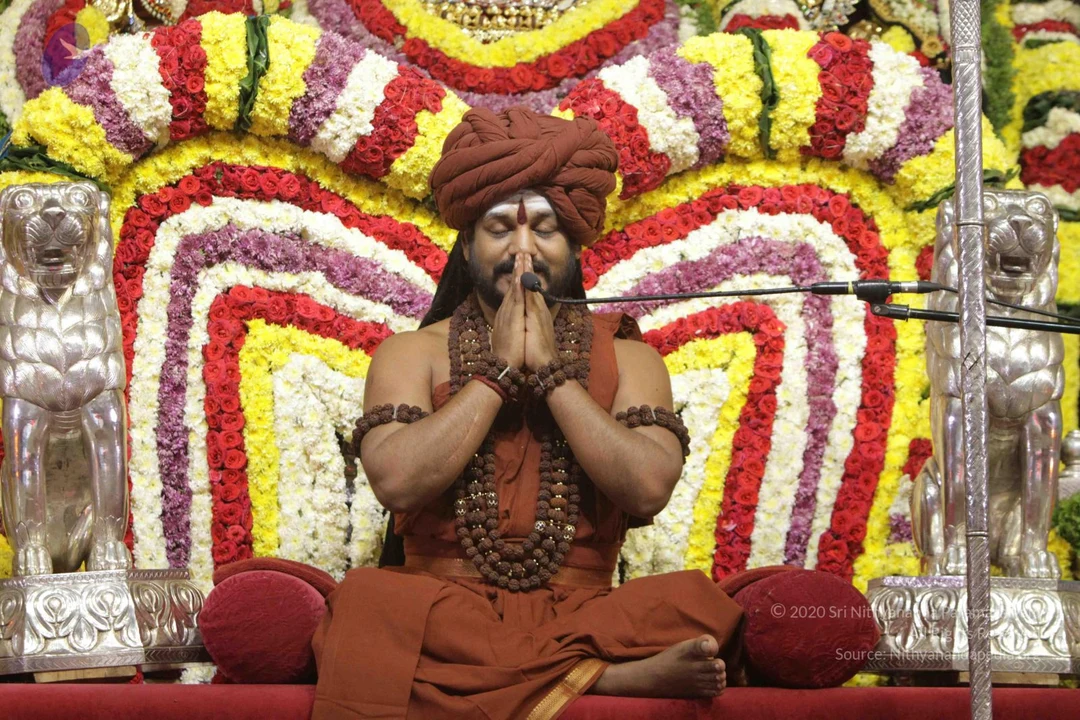
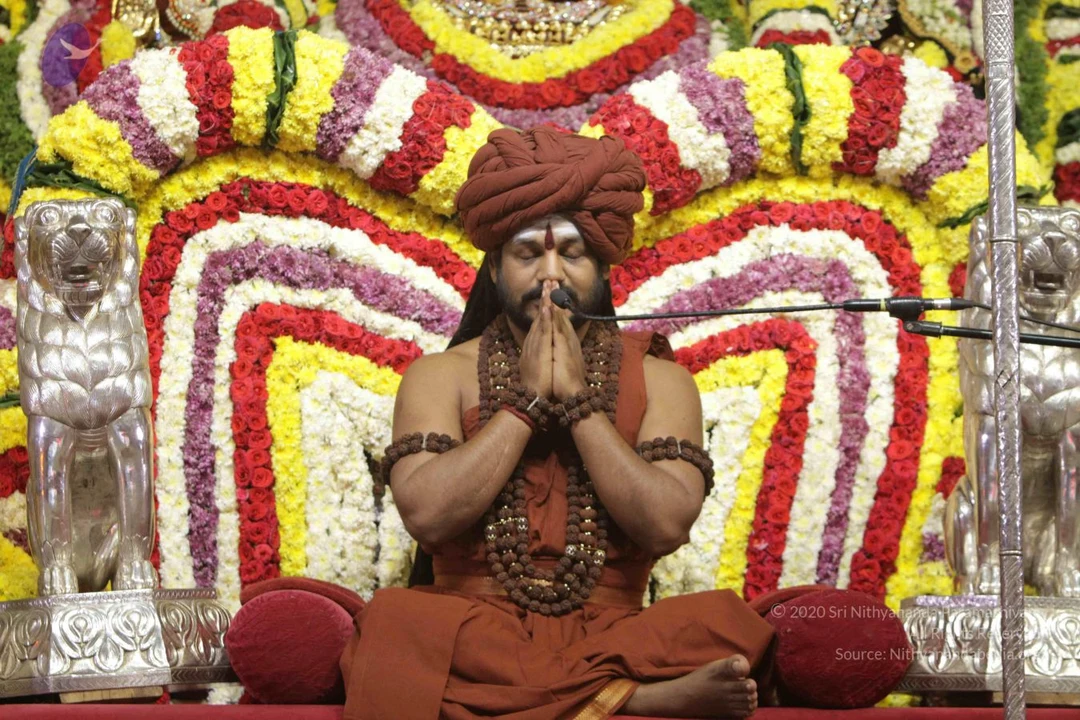
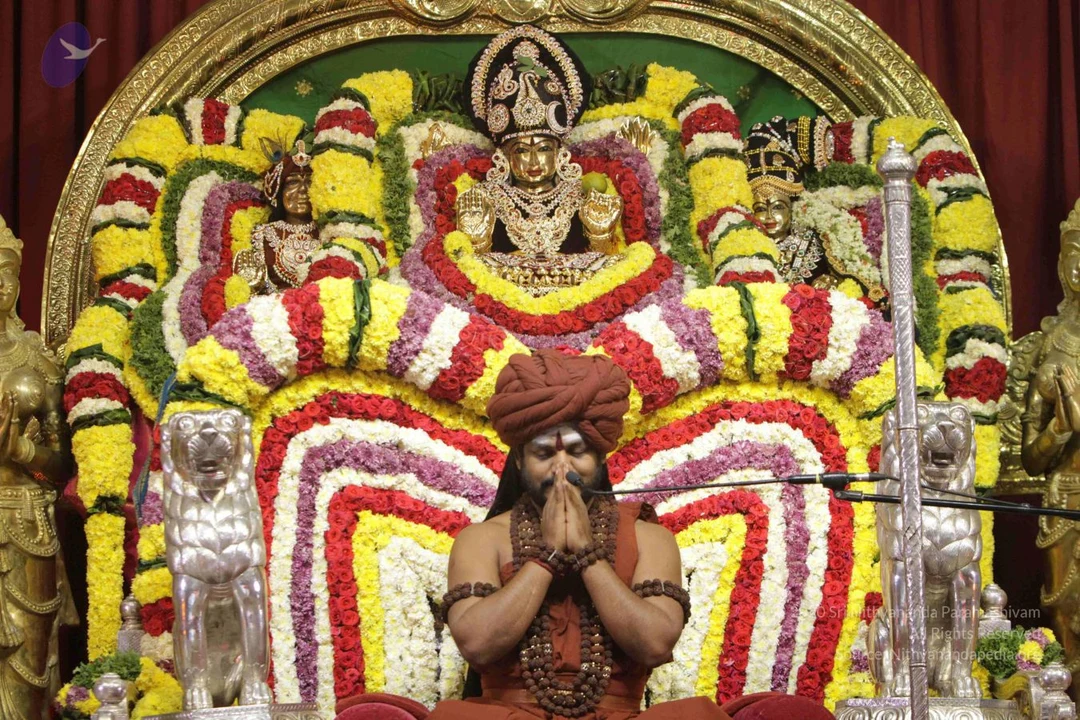
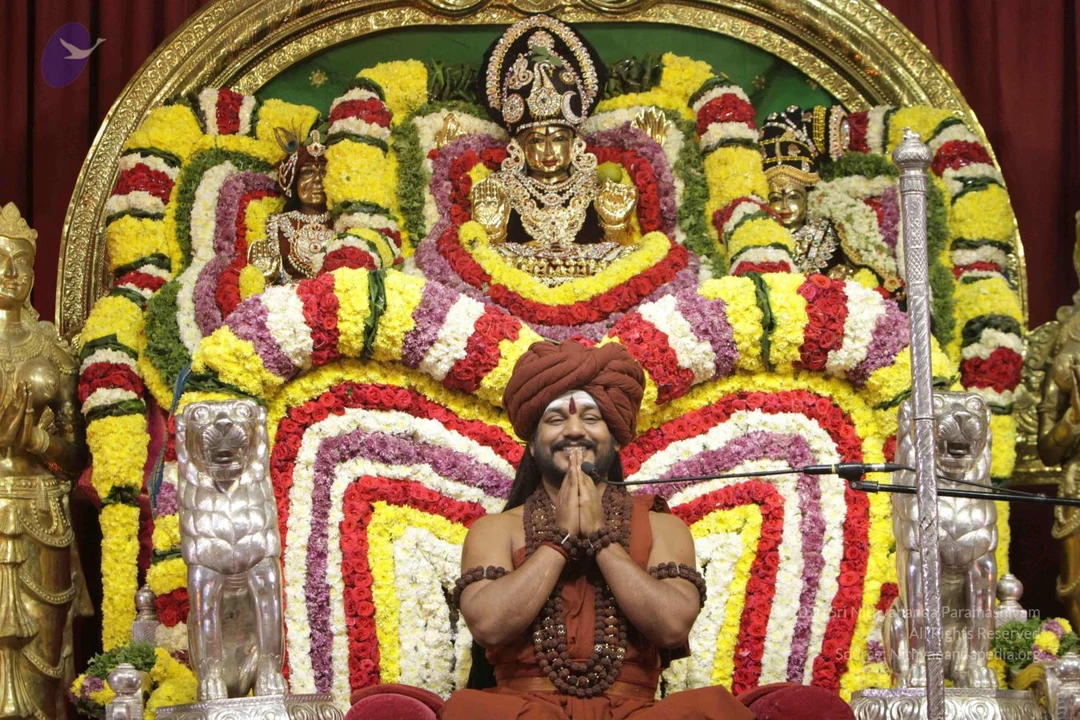
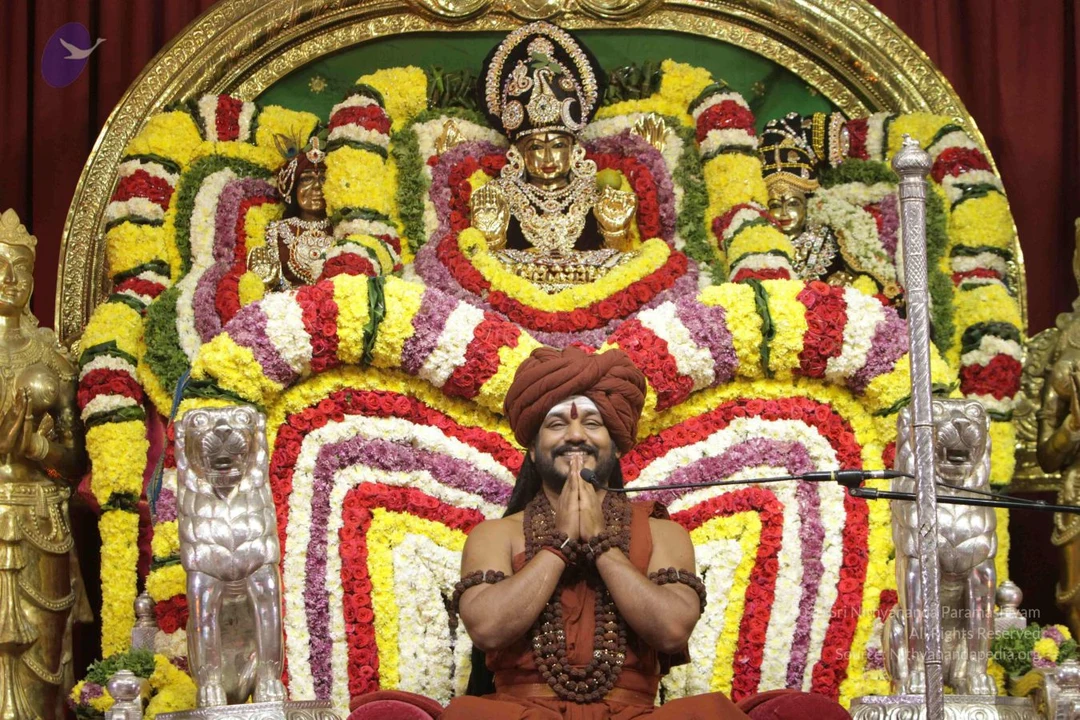
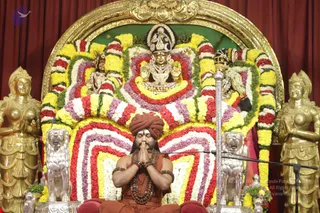
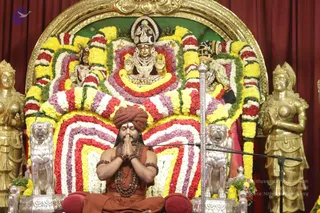
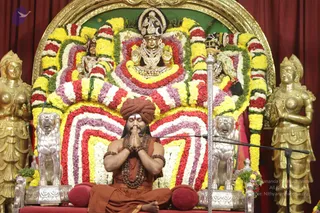
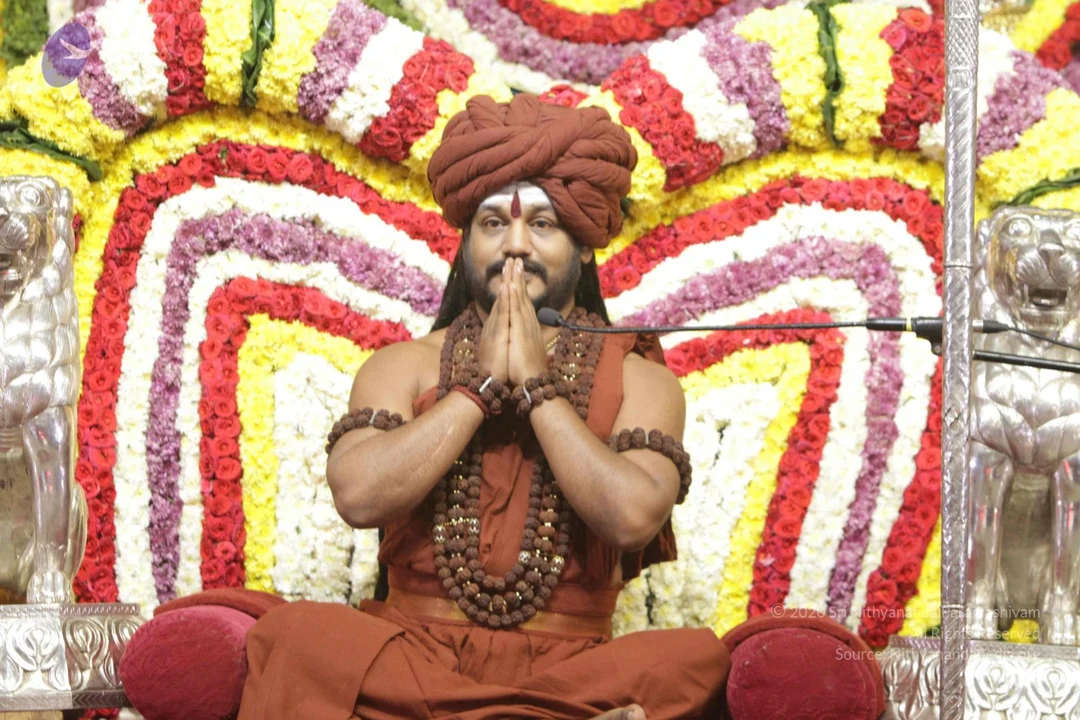
A seated man in saffron-orange robes and an orange turban sits with palms pressed together in anjali mudra before a large floral-decorated altar. Behind him, a deity murti in gold jewellery is framed by thick garlands of red, yellow, white and purple flowers, and gilded lion figures flank the seat. Two gold standing attendant figures with hands folded stand on either side, and a microphone stand is in front of him. A rudraksha mala hangs at his chest. a person: the man wears orange robes, an orange turban and a rudraksha mala, with the page not confirming his presence.A seated man in an ochre-red robe and red turban sits cross-legged with palms pressed together in namaste before a microphone stand. He wears a rudraksha mala with multiple strands and bracelets. Behind him is an elaborate golden arched backdrop densely decorated with yellow, red, pink and white flower garlands, with a golden deity murti and flanking gilded attendant statues, silver lion-shaped seats on either side, and a deep red curtain.A seated man with palms pressed together in anjali mudra sits before a microphone on a silver-lion-supported seat in front of a large floral-decorated shrine. He wears a rust-orange turban, rust-orange robe and multiple rudraksha malas, with his eyes closed. Behind him a flower-garlanded gilded arch frames a deity murti with a crown, and two gold-painted attendant figures with pressed palms stand at either side. Red and maroon curtains hang behind, with red and white cushions below. Garlands of yellow marigolds, red roses and white flowers cover the seat.A seated man in an ochre-orange robe and a rust-red turban sits with eyes closed and palms pressed together in namaskar on a silver-lion-supported dais. He wears layered rudraksha malas and beaded bracelets and is bare-chested with a shawl over one shoulder. Behind him is a large deity murti in gold and jewels framed by a dense arch of yellow, red, purple and white flower garlands, flanked by golden standing attendant figures with joined hands. A microphone stand stands beside him against a deep red curtain.A seated man in rust-orange robes and a matching orange turban sits cross-legged in front of a floral backdrop of red, white, yellow and purple flower garlands arranged in arches. He holds his palms pressed together in namaste, wears multiple rudraksha malas and rudraksha armlets, and has a tilak on his forehead. A microphone stand is at his right. Silver lion sculptures flank the seat. a person by visible cues: long hair, orange turban and robes, multiple rudraksha malas, seated before a floral throne-style backdrop.A man seated cross-legged on a red cushioned throne before a floral backdrop of concentric arcs of red roses, white, yellow and purple flowers, flanked by silver lion figures. He wears a maroon turban with a tilak on his forehead, a rust-coloured shawl and dhoti, multiple rudraksha malas around his neck and arms, and presses his palms together in anjali namaskar. A microphone stands beside him.

Mysore-InfoSys-Campus-Visit

355 photosSource gallery
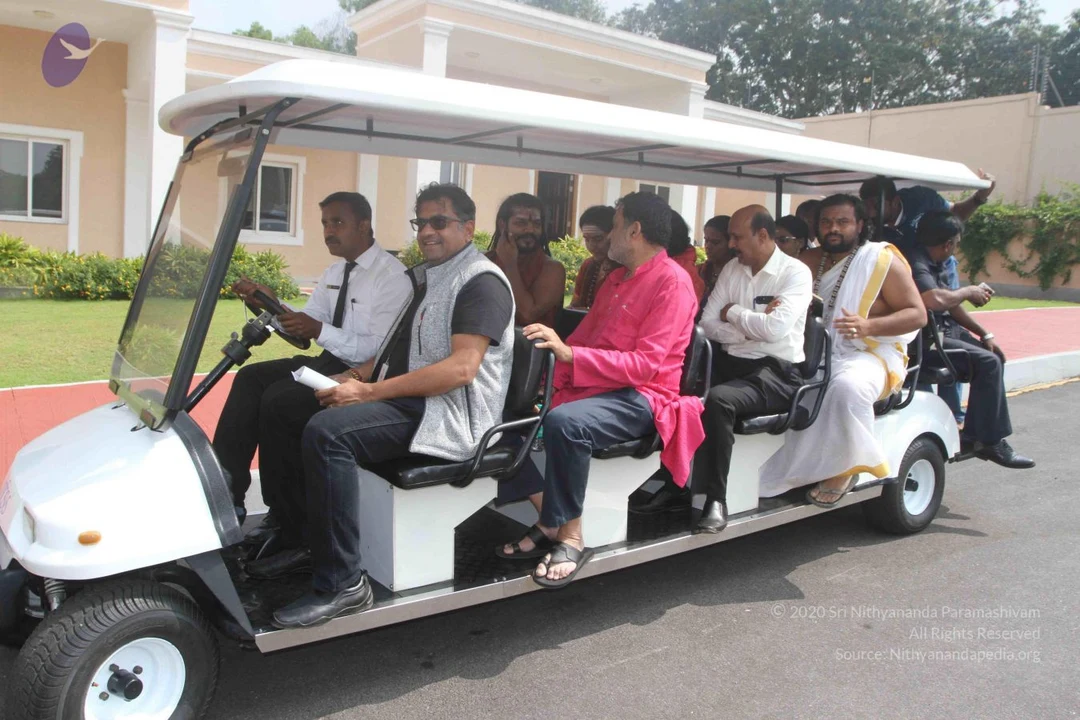
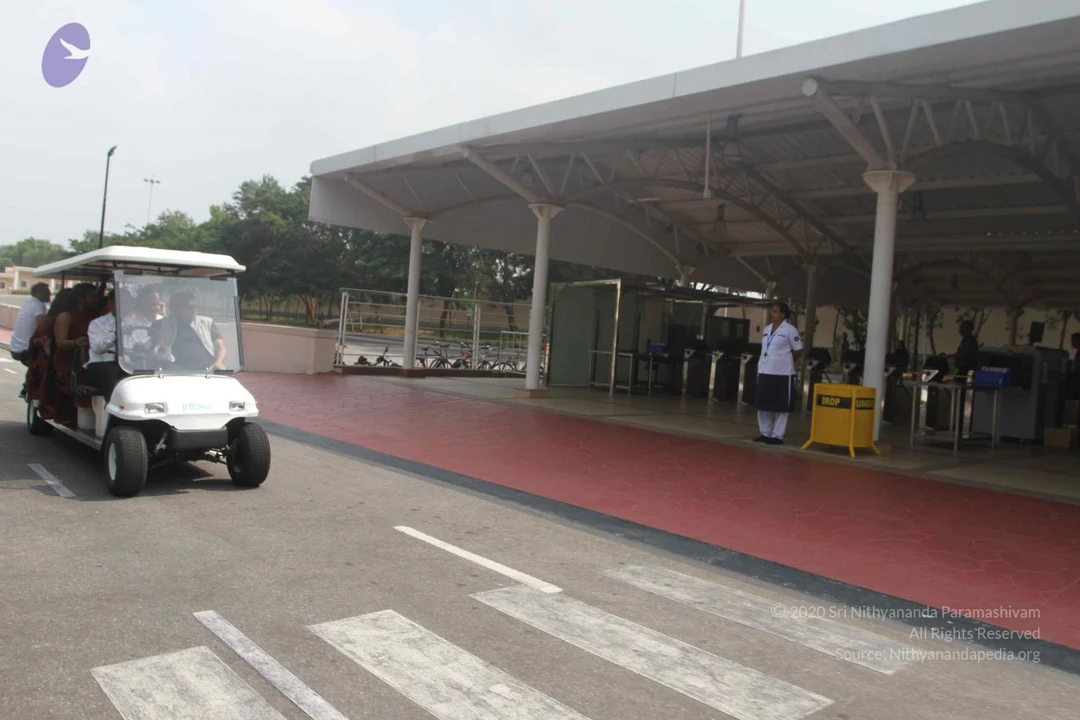
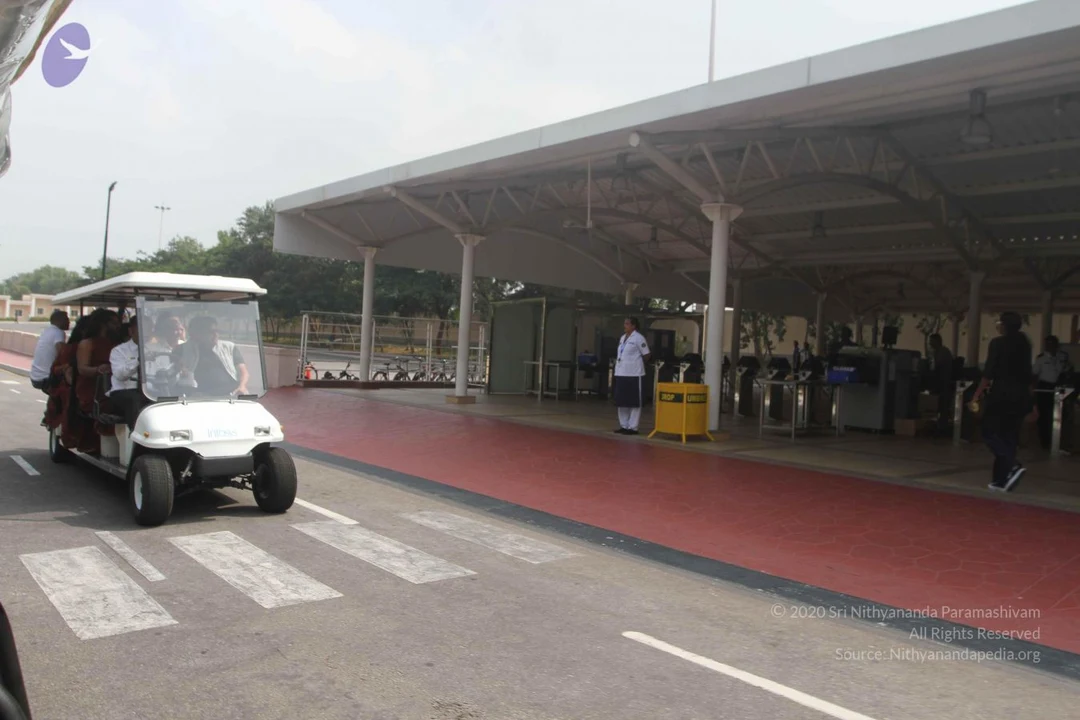
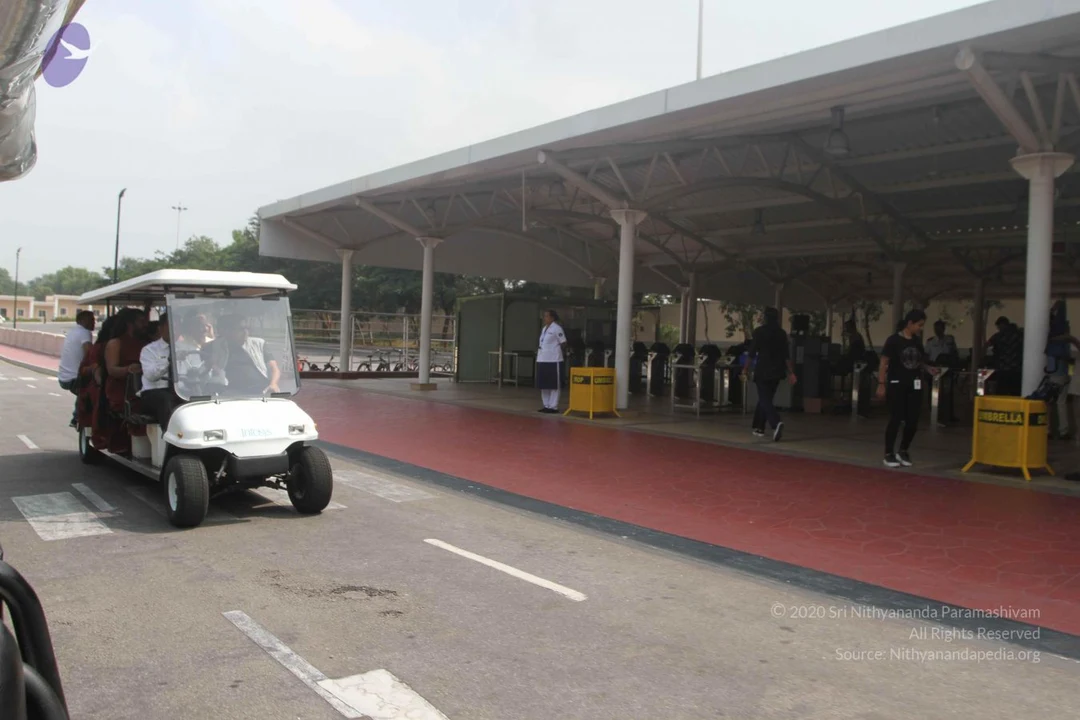
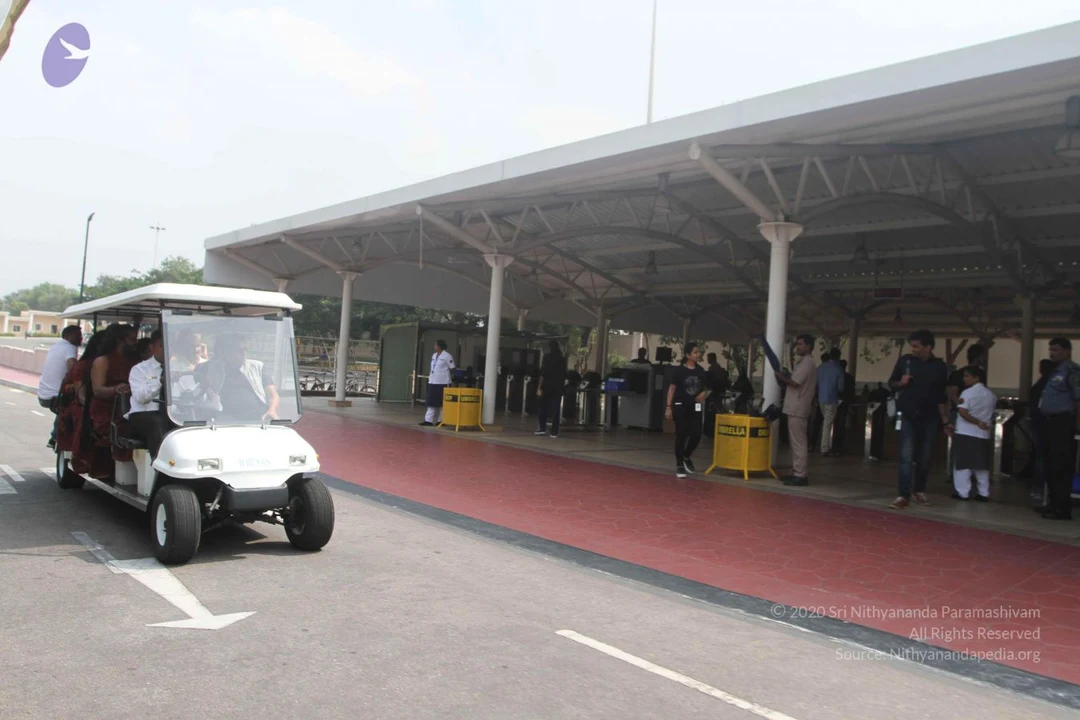
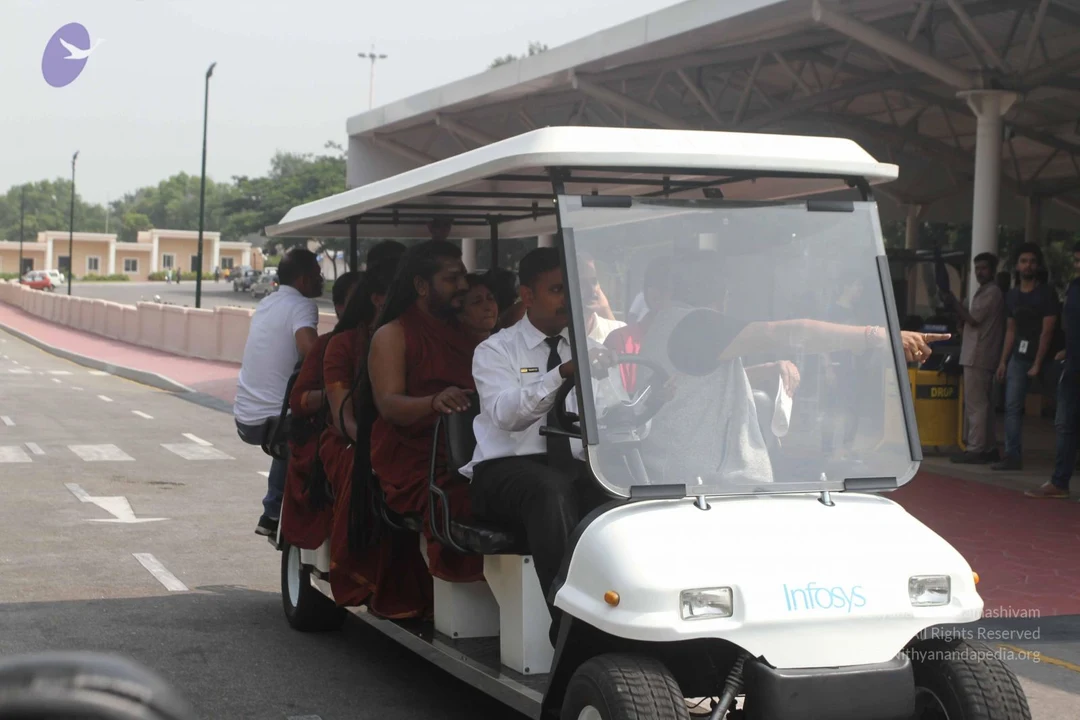
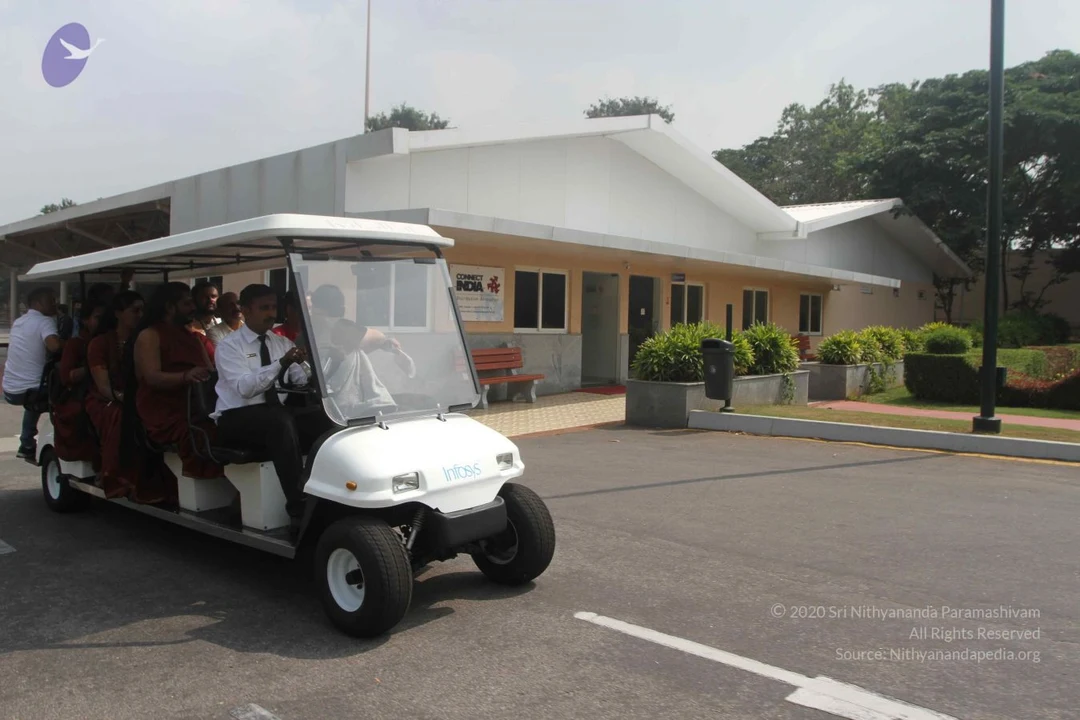
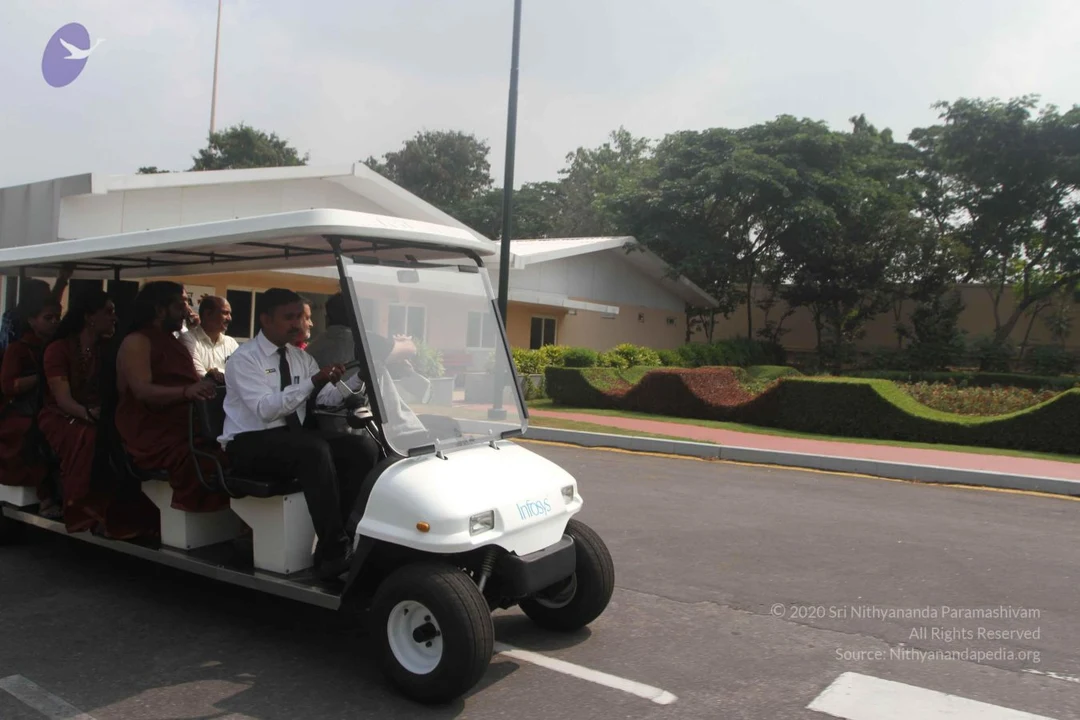
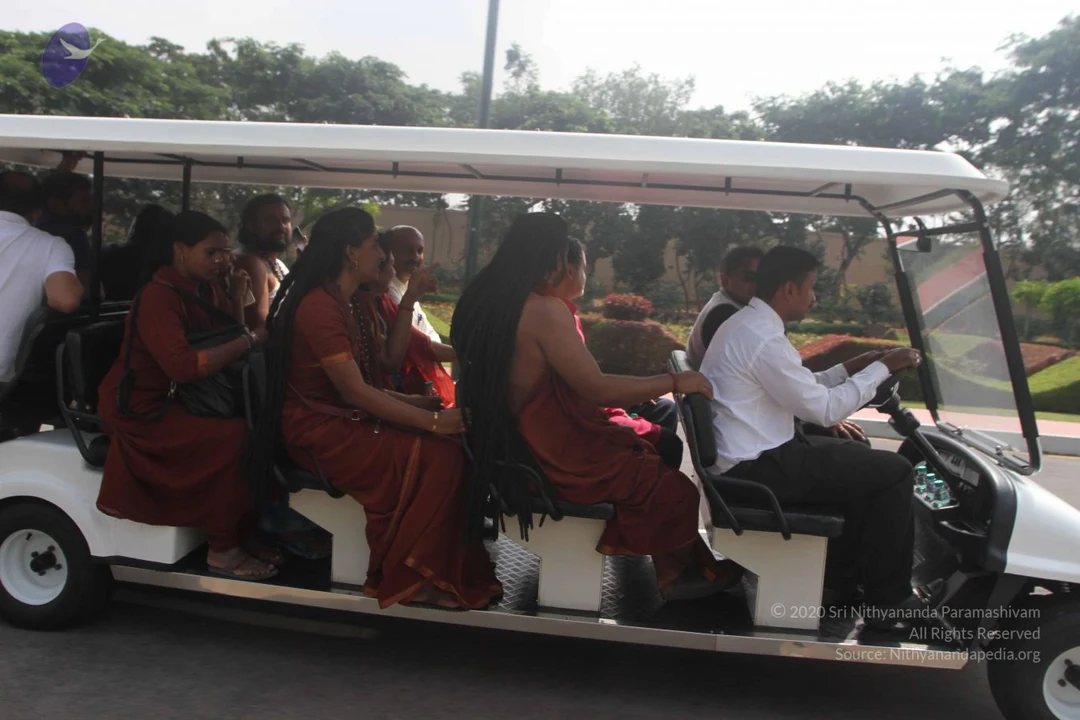
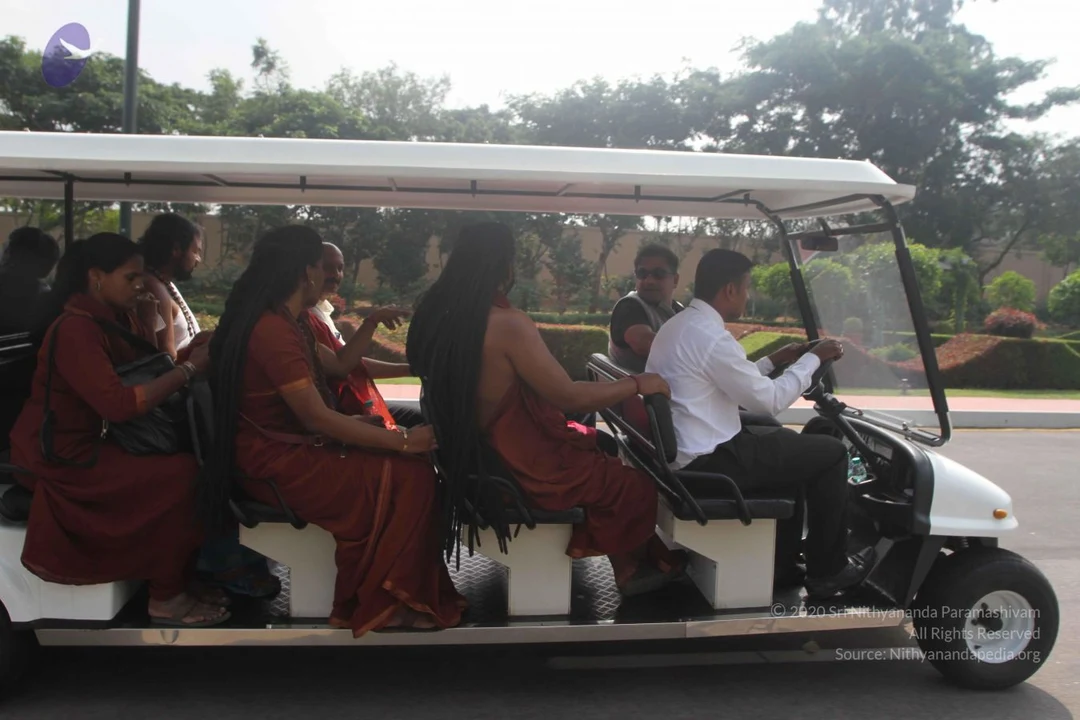
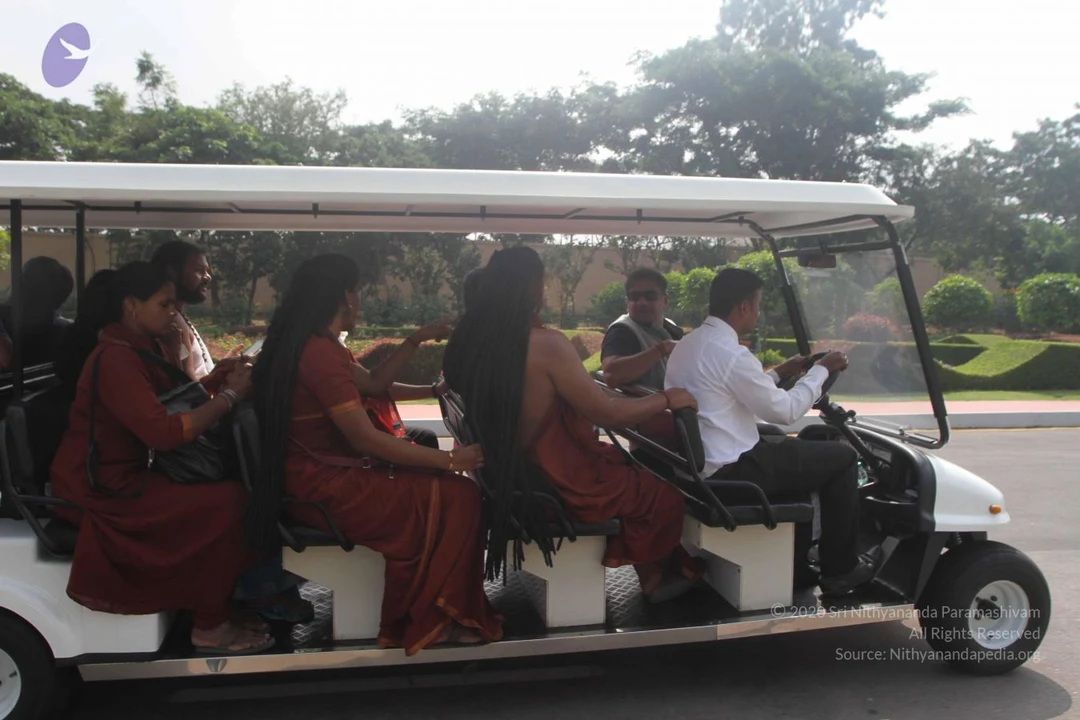
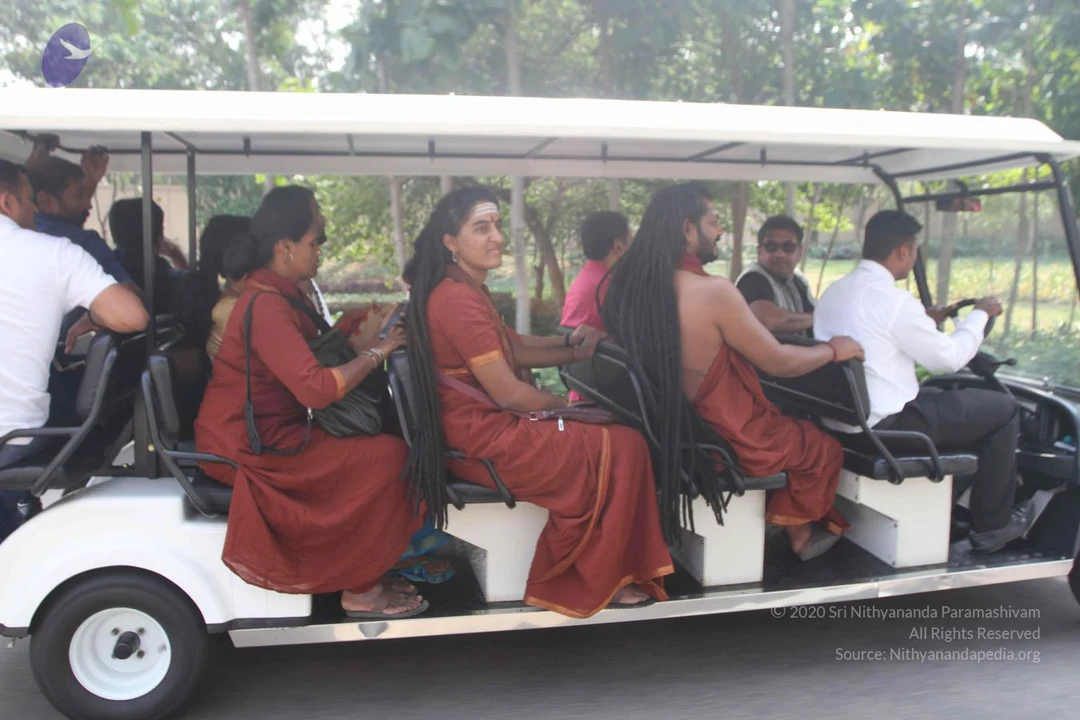
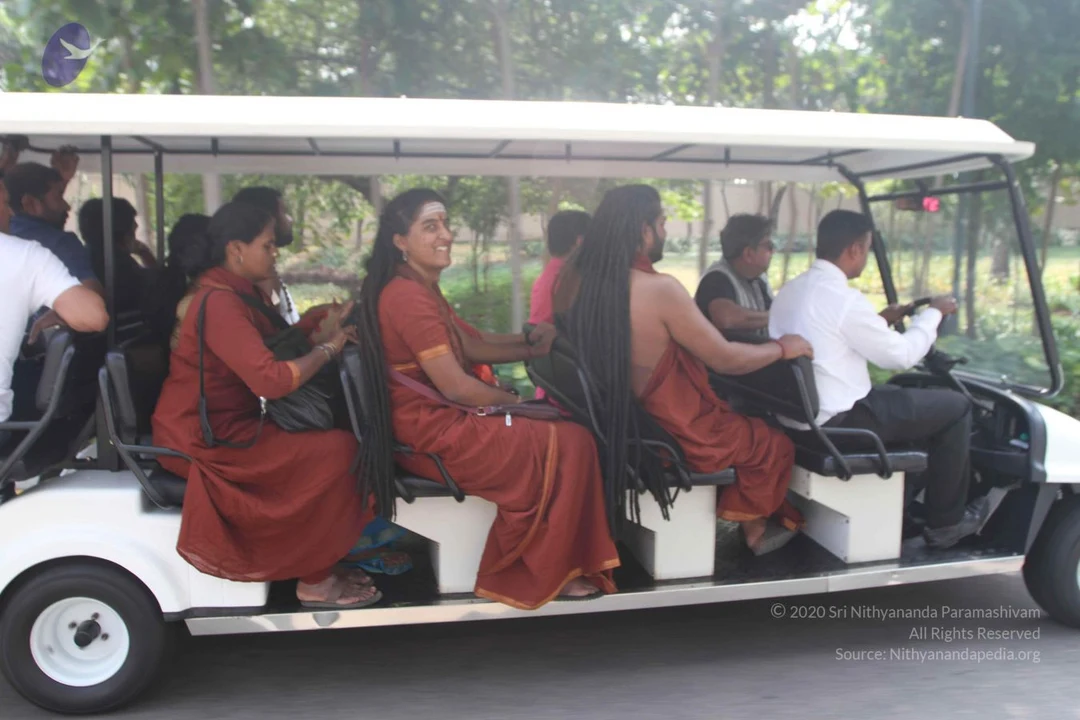
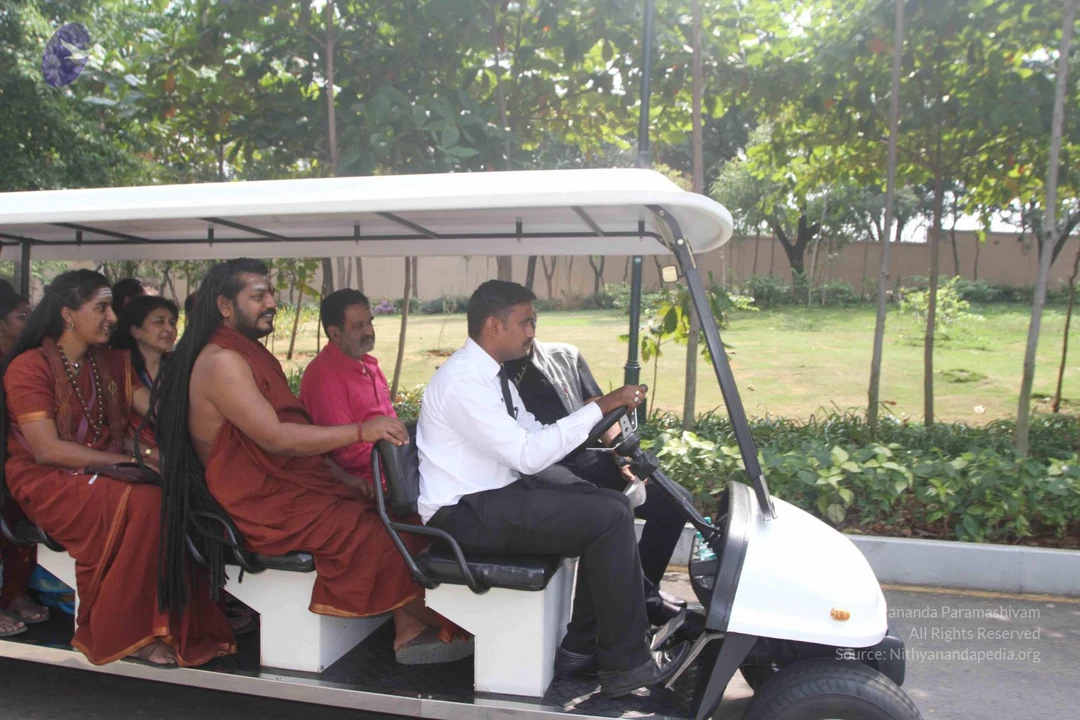
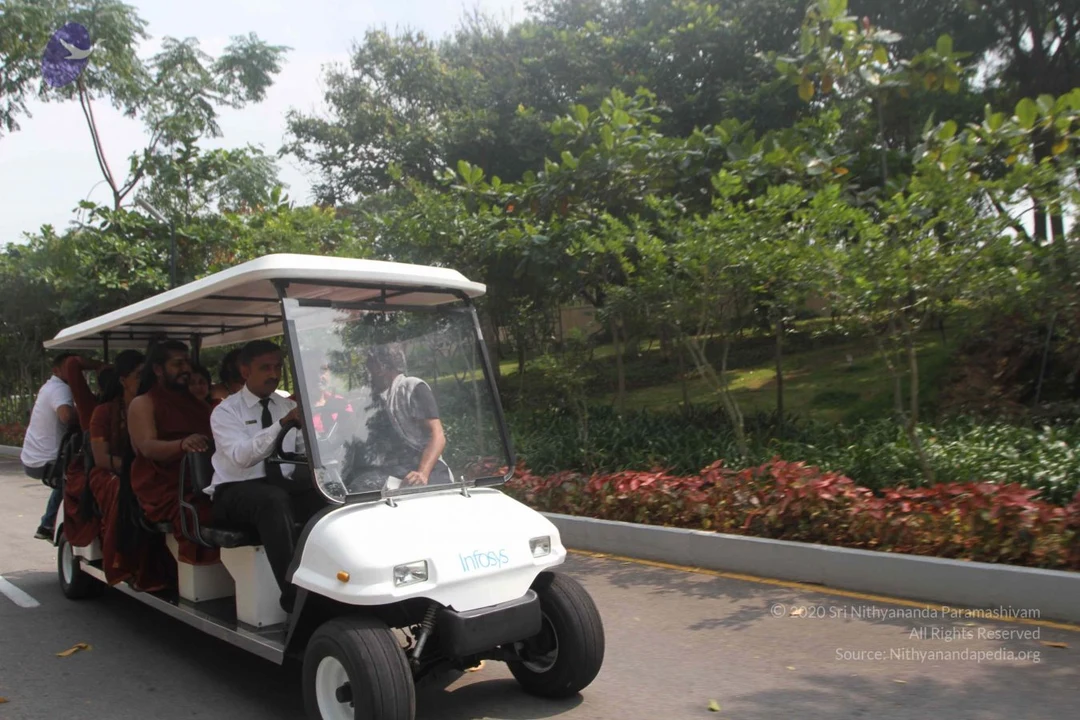
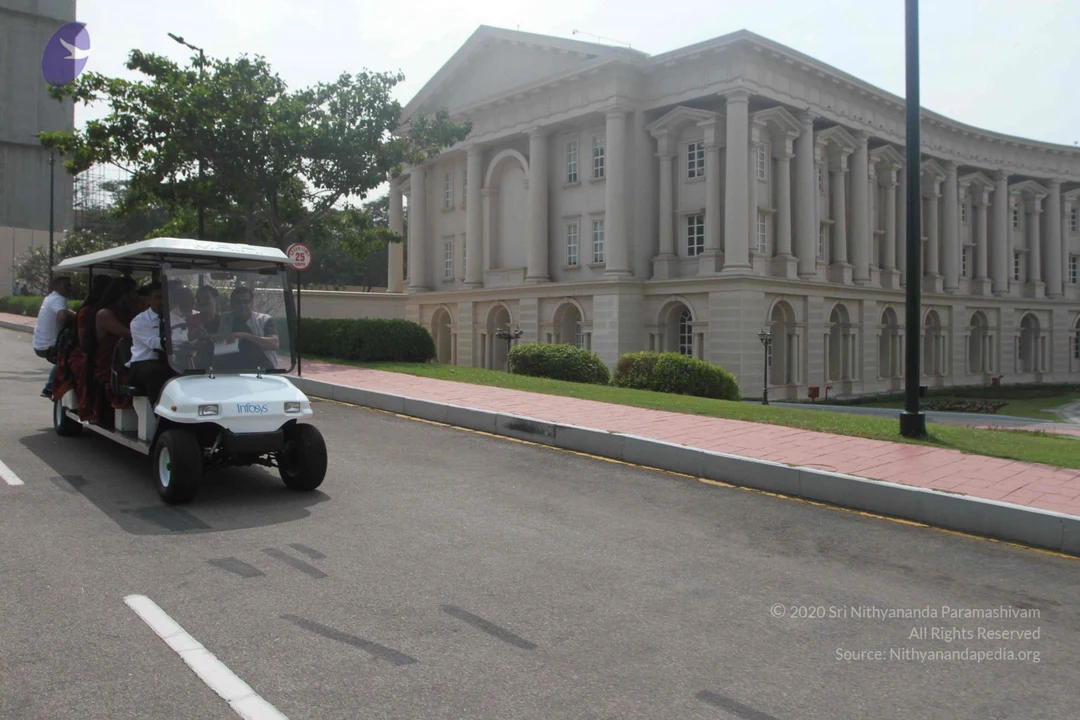
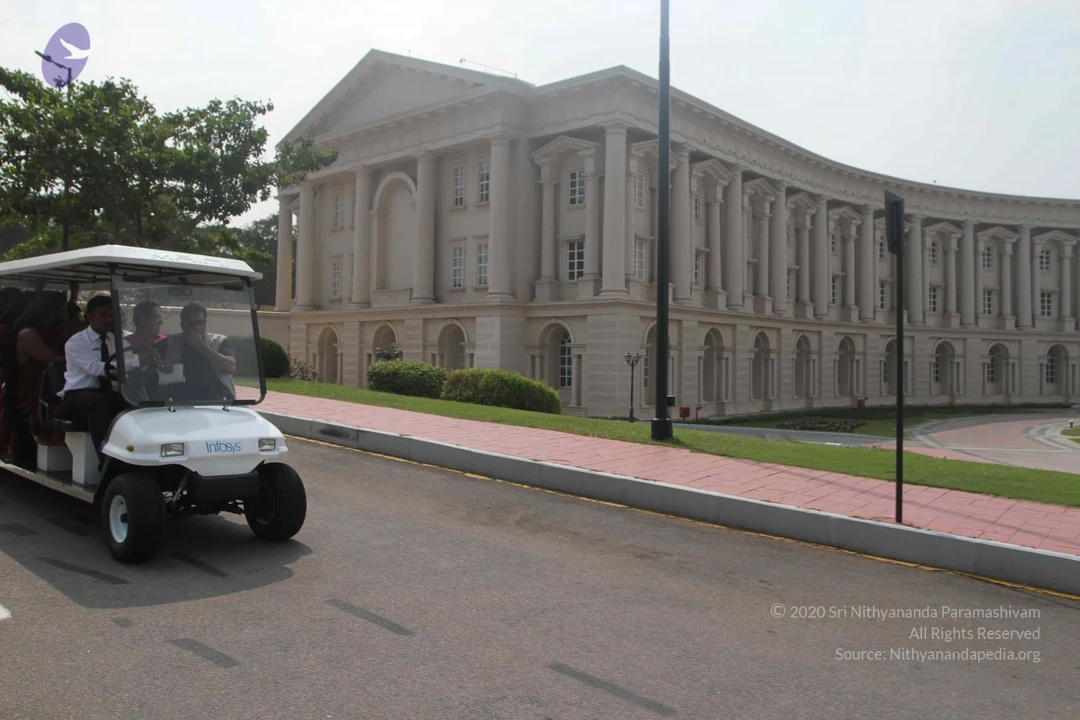
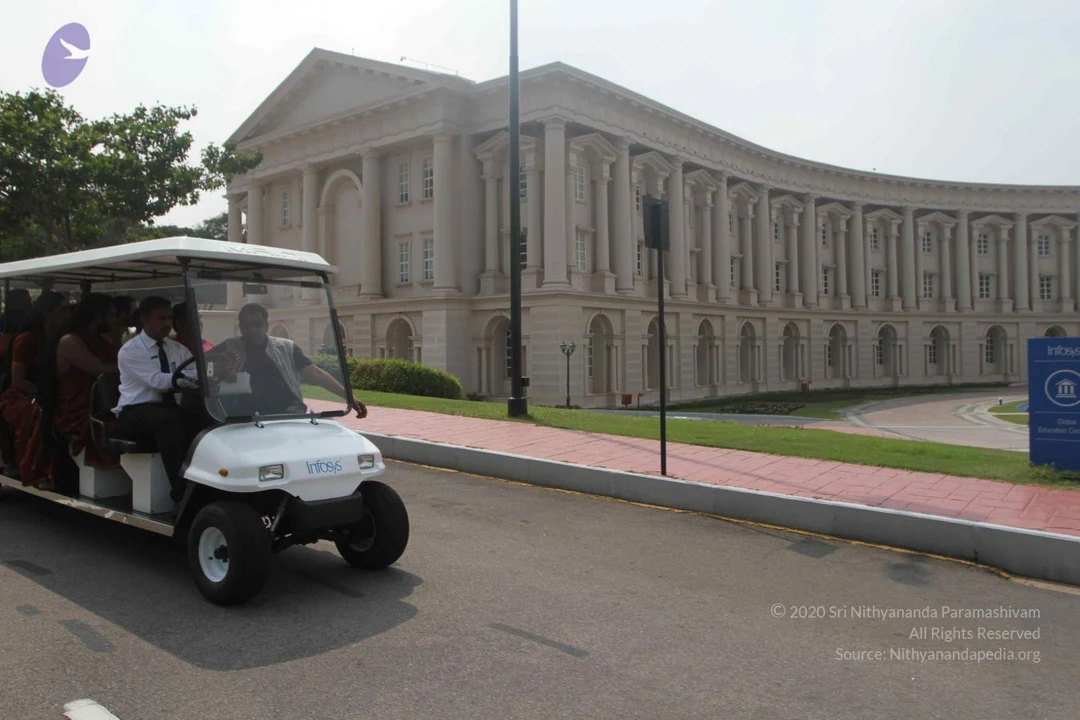
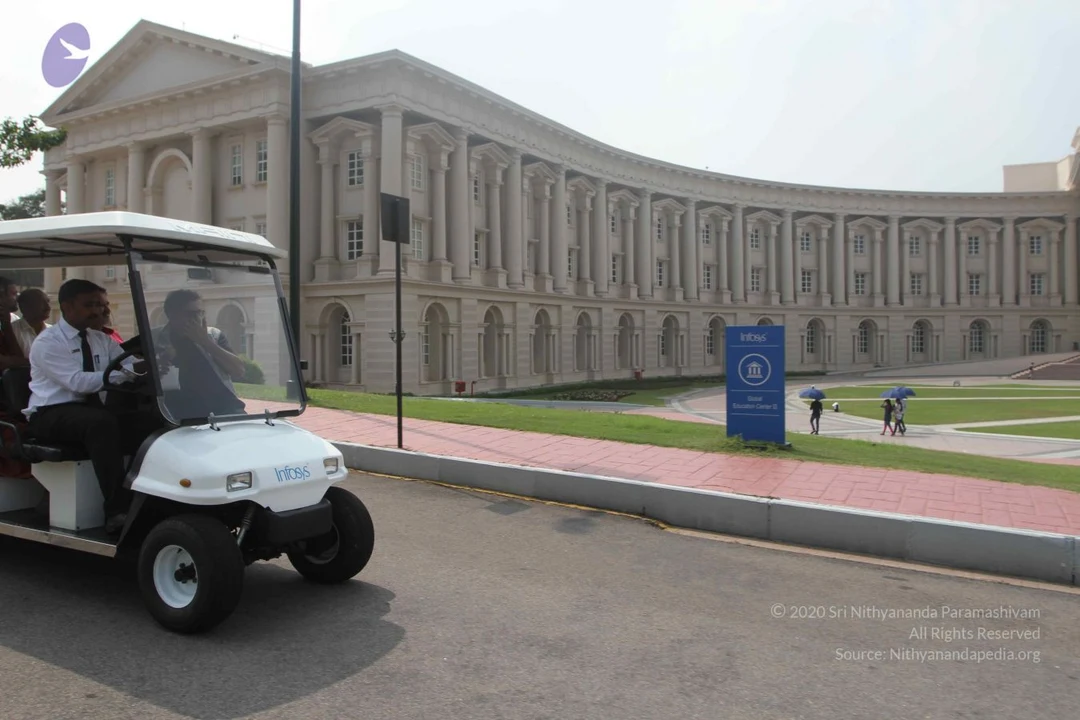
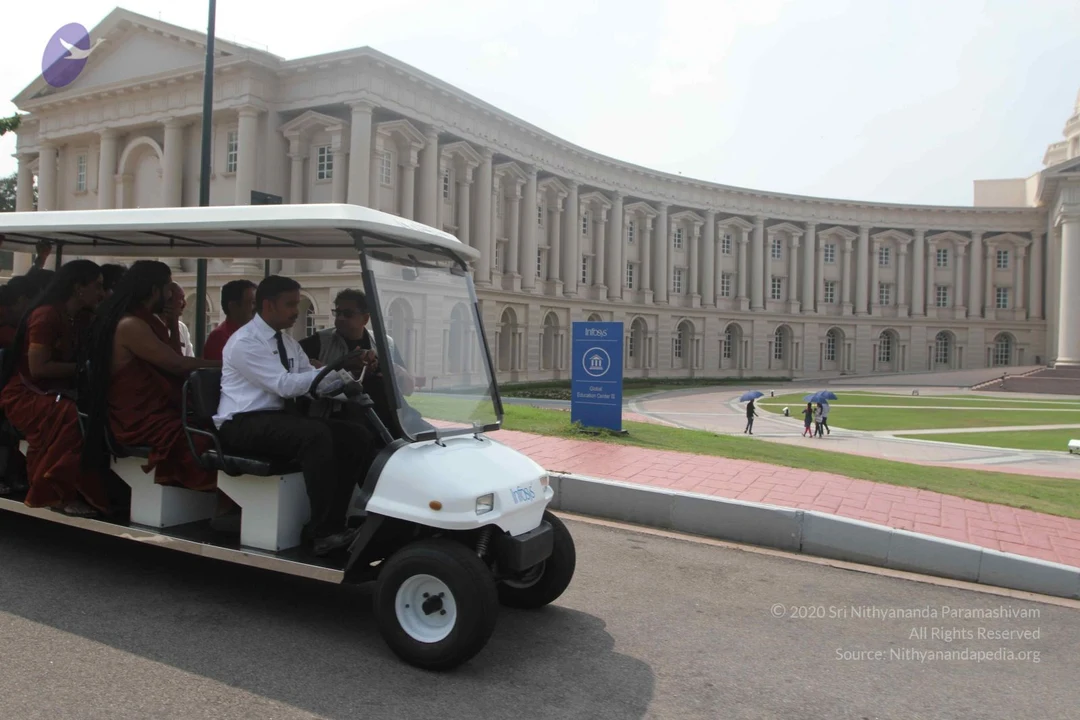
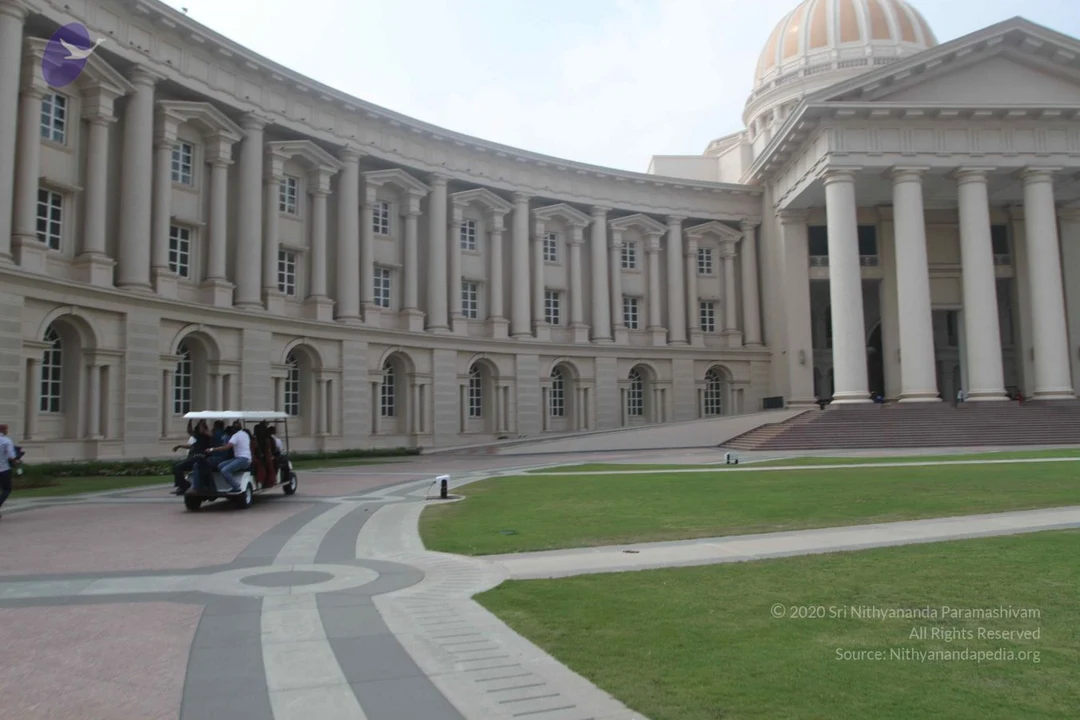
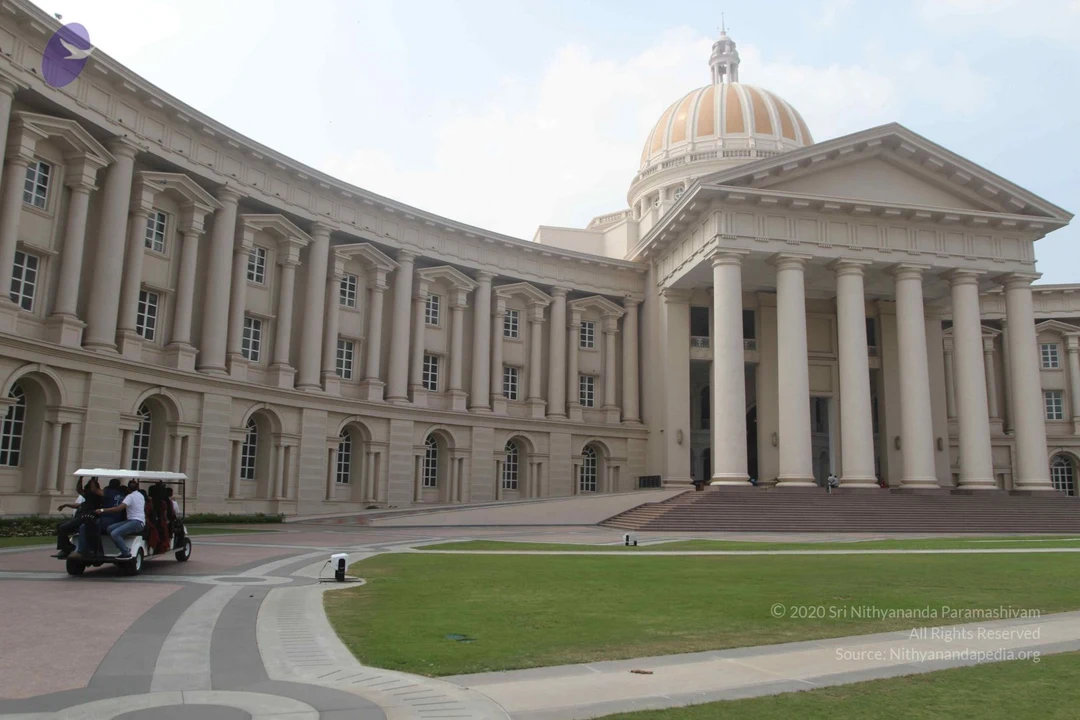
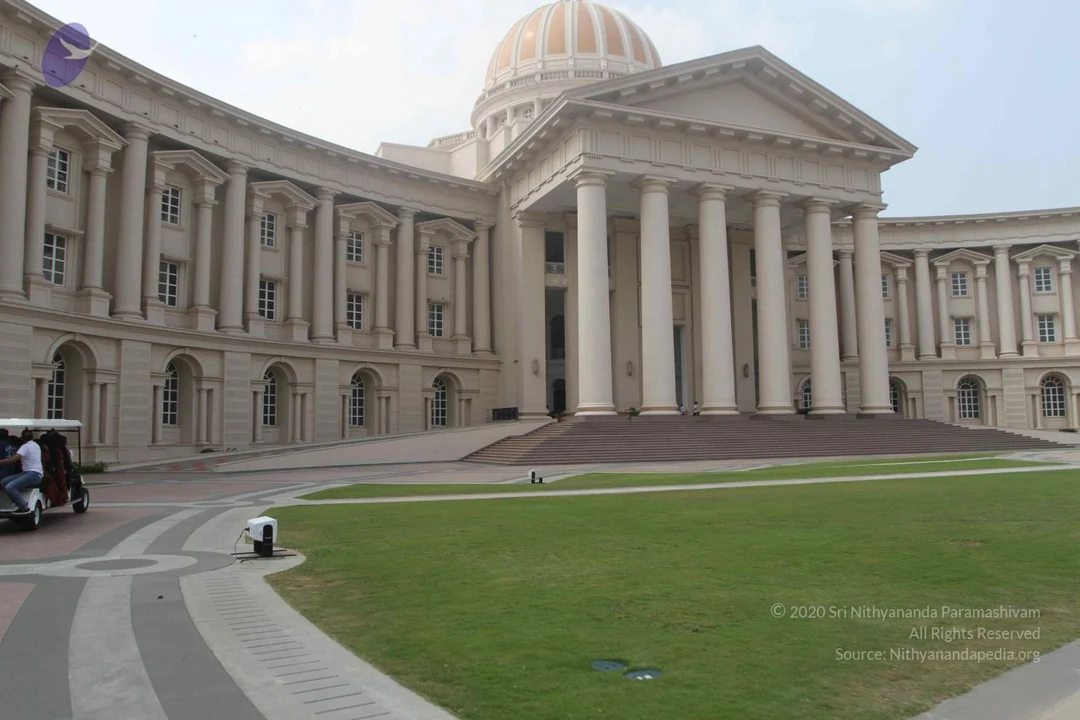
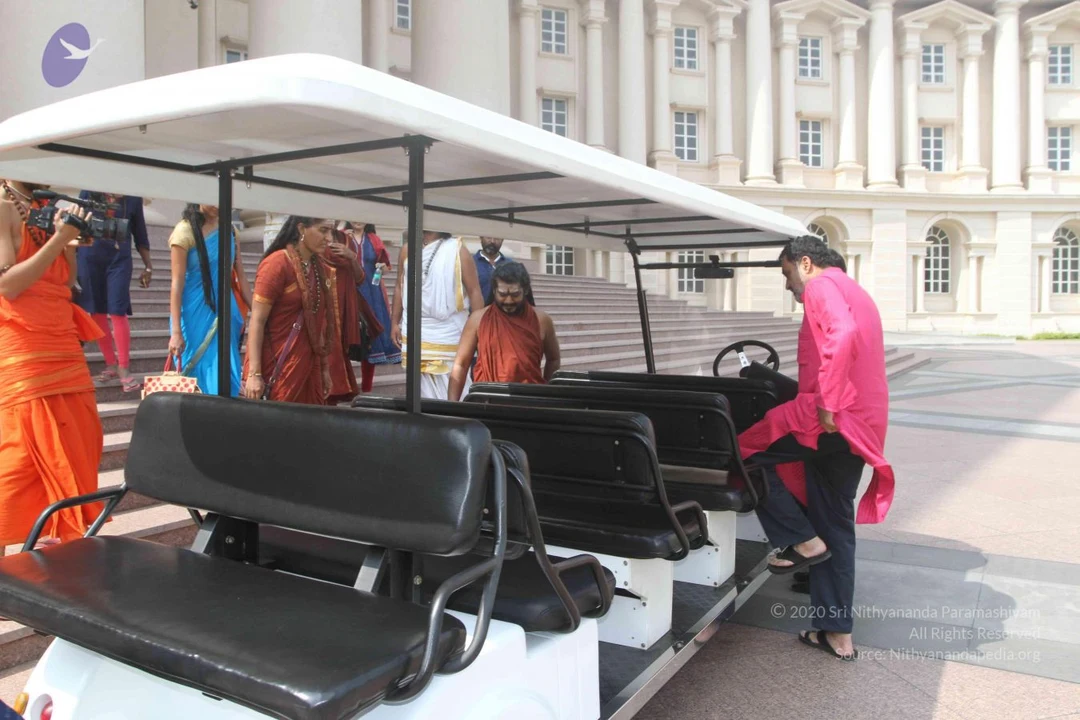
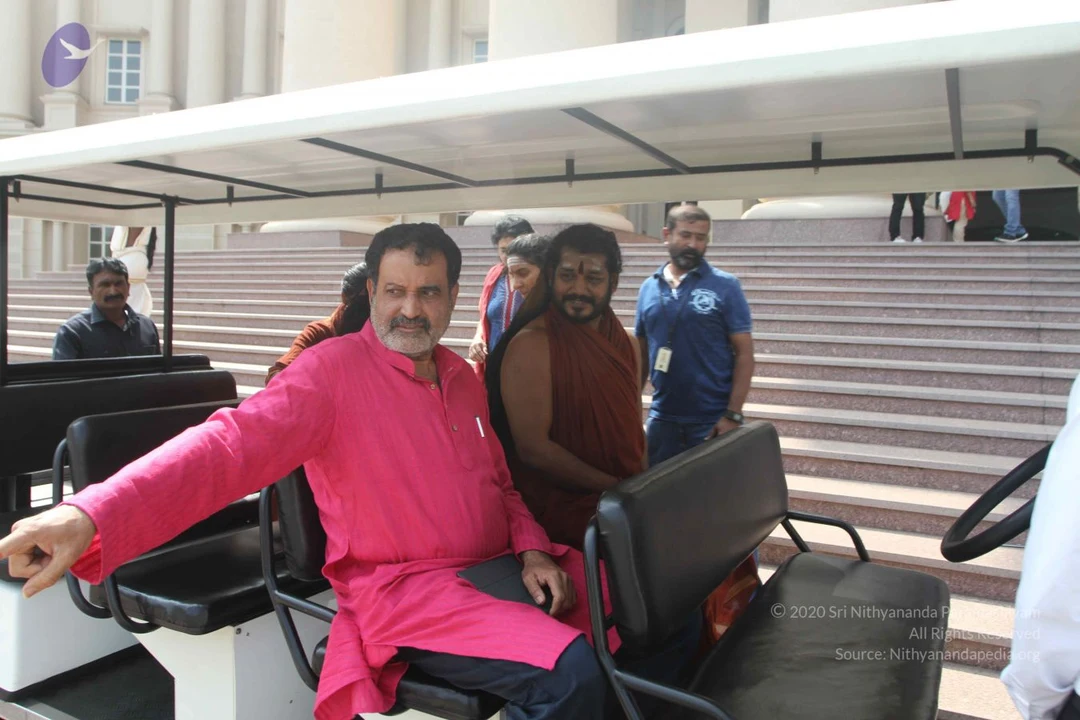
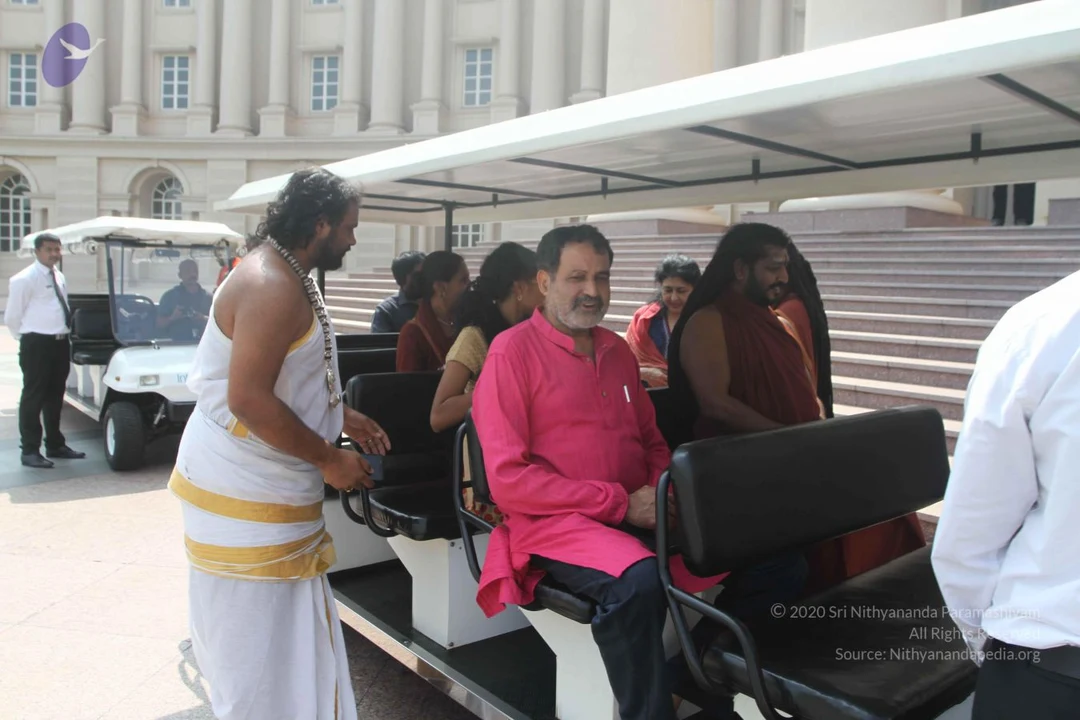
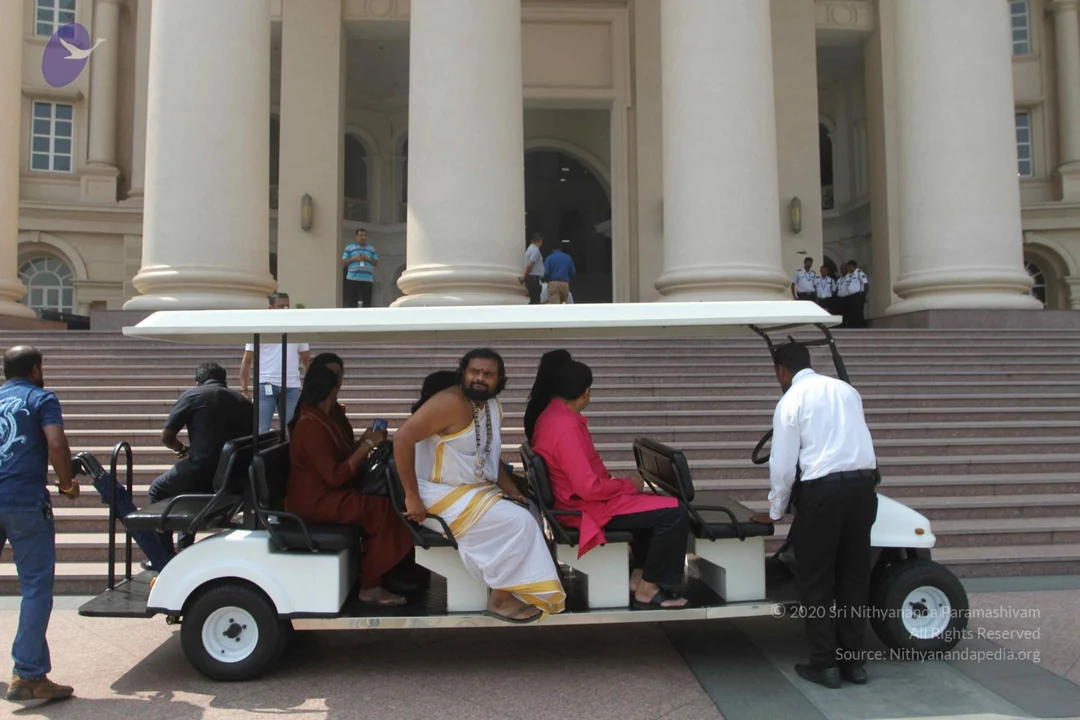
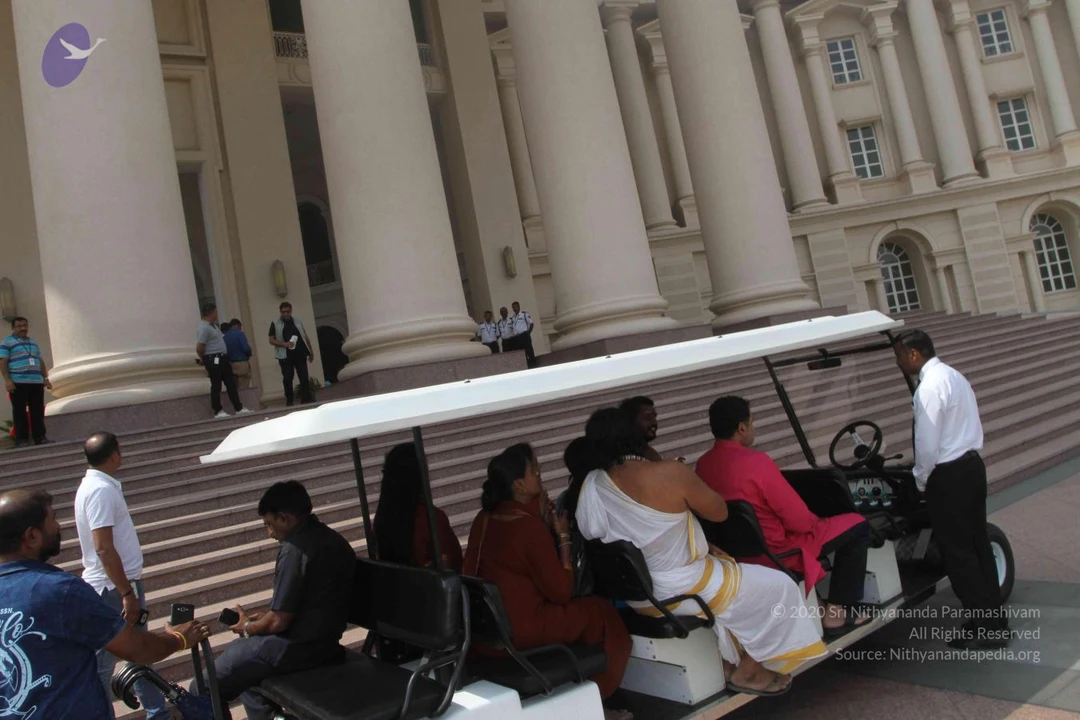
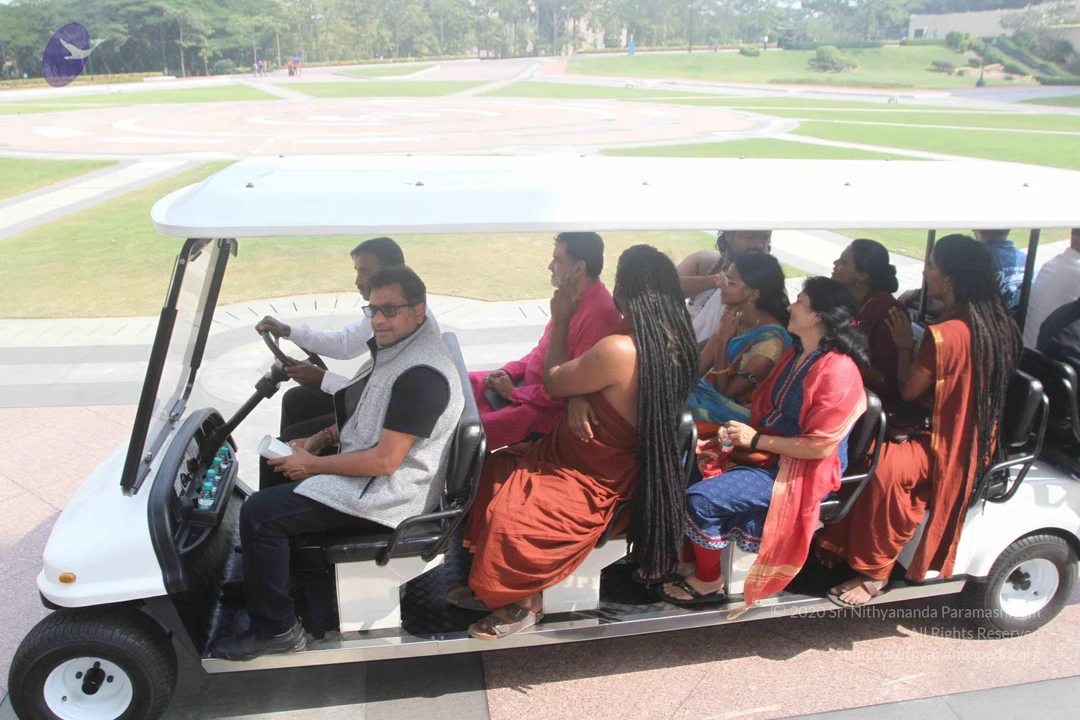
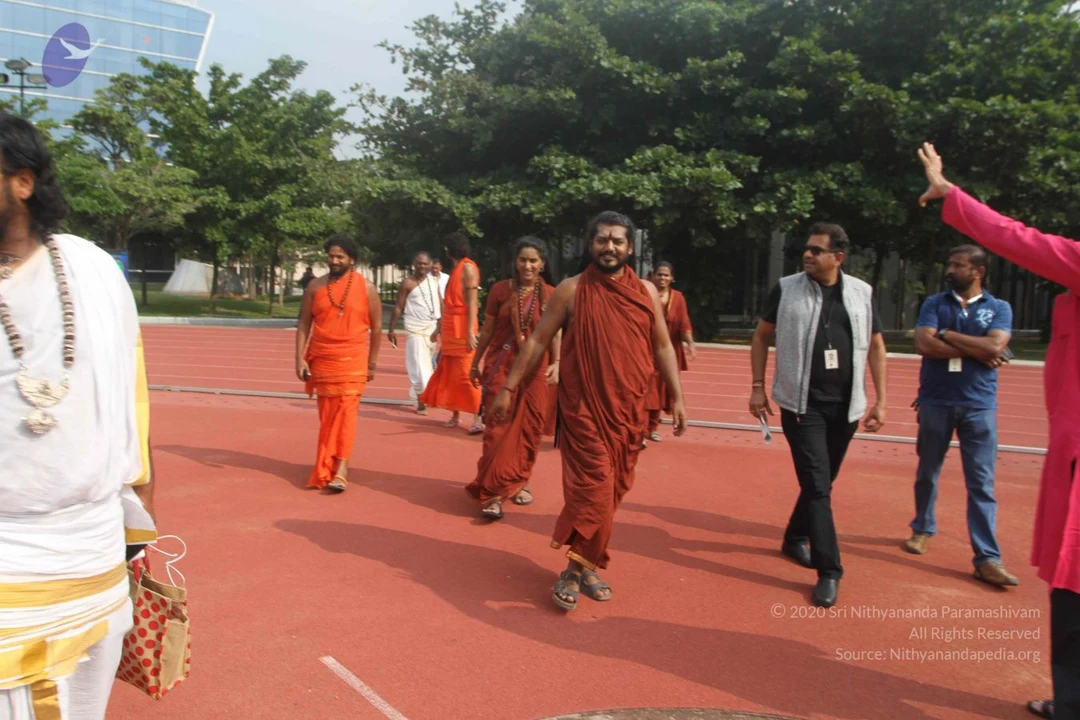
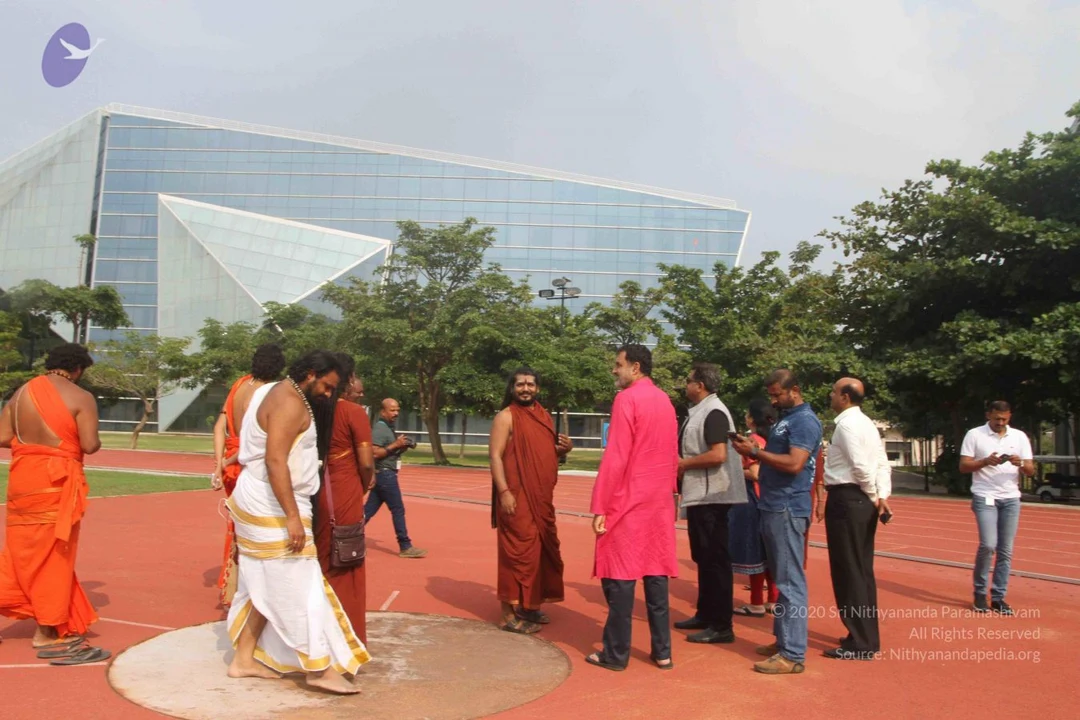
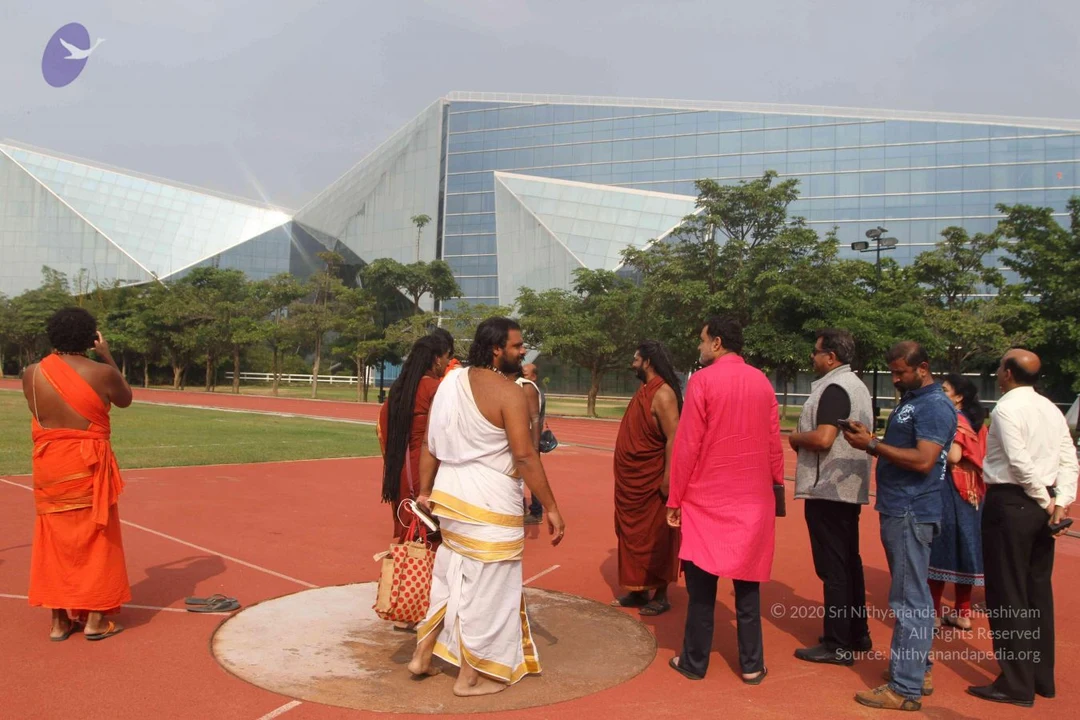
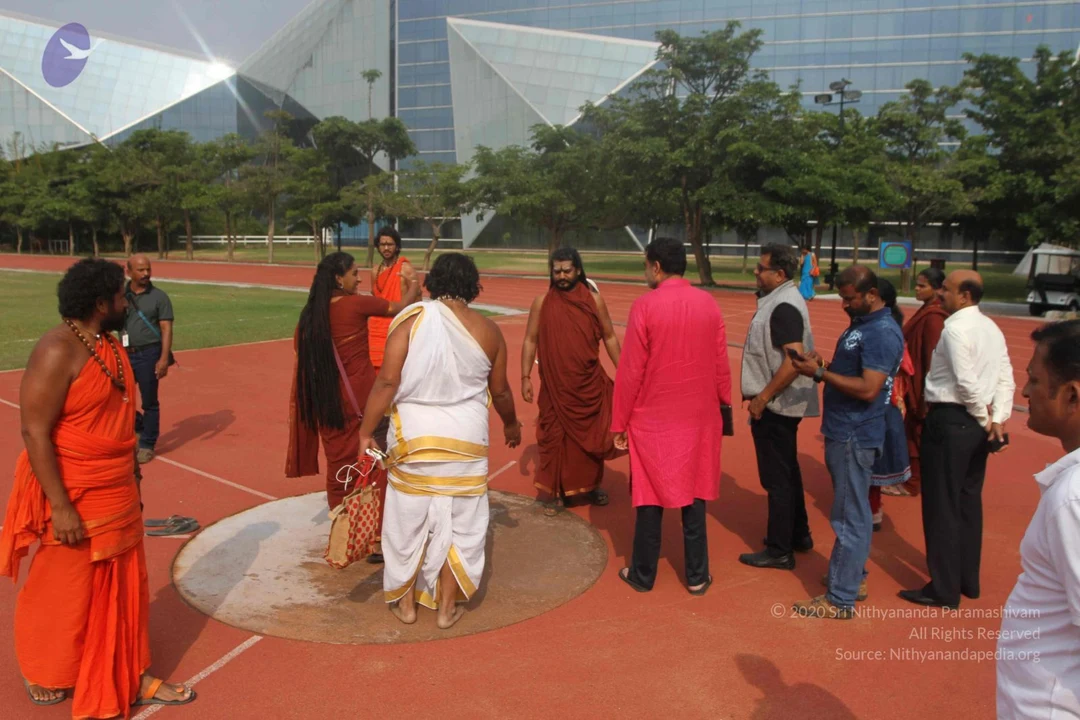
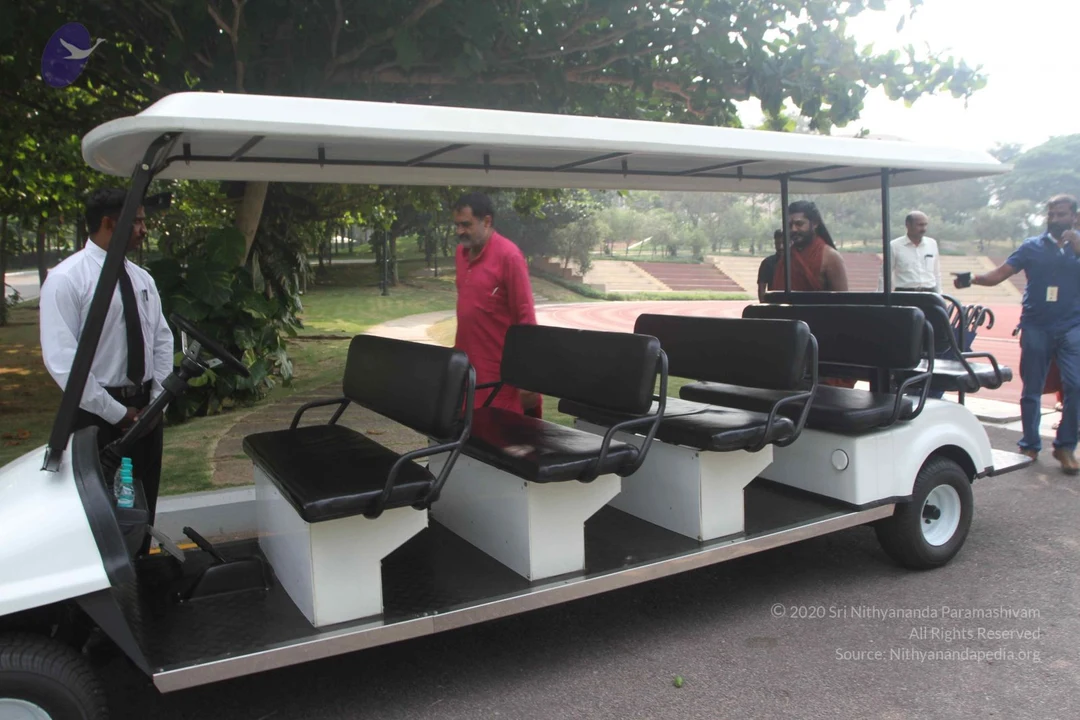
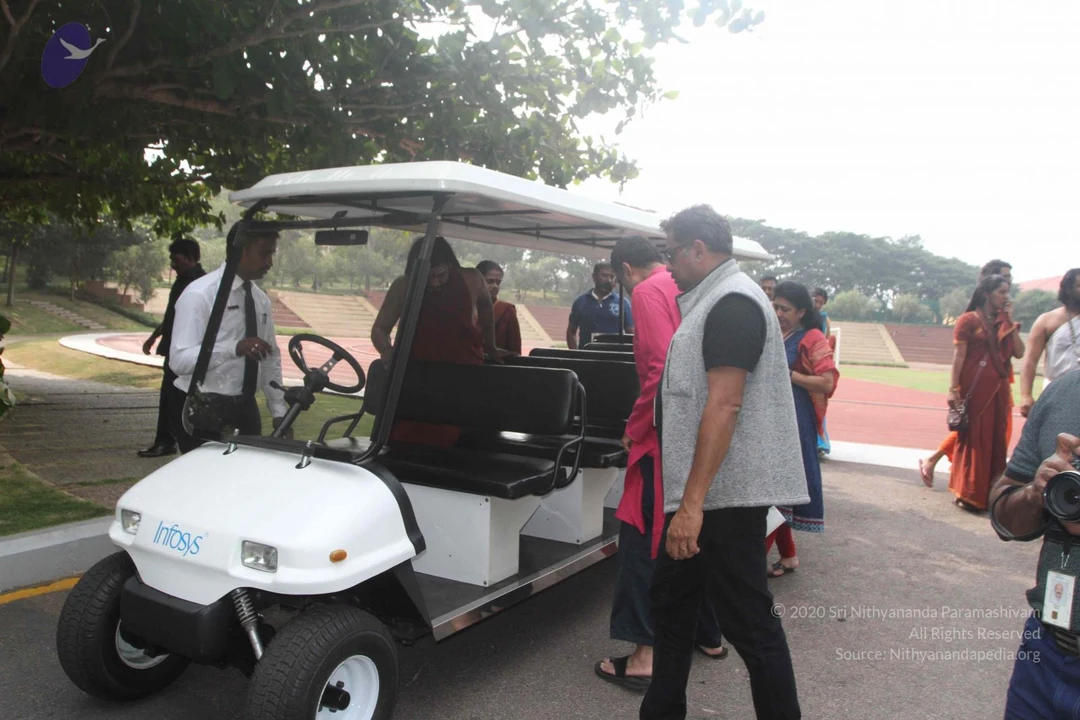
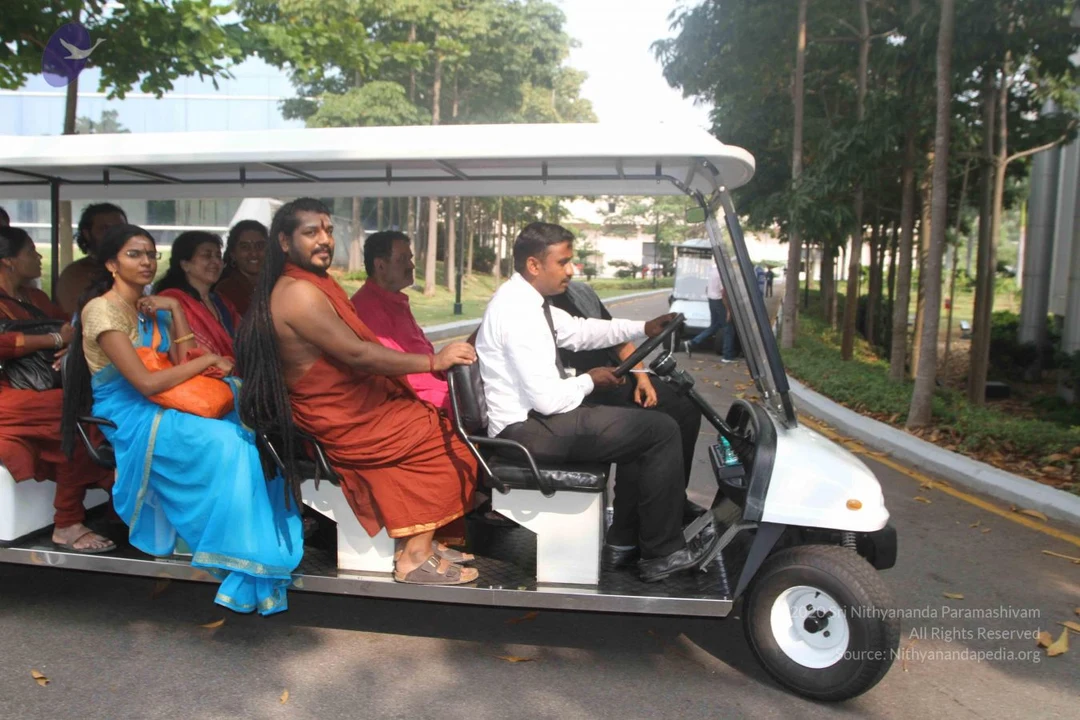
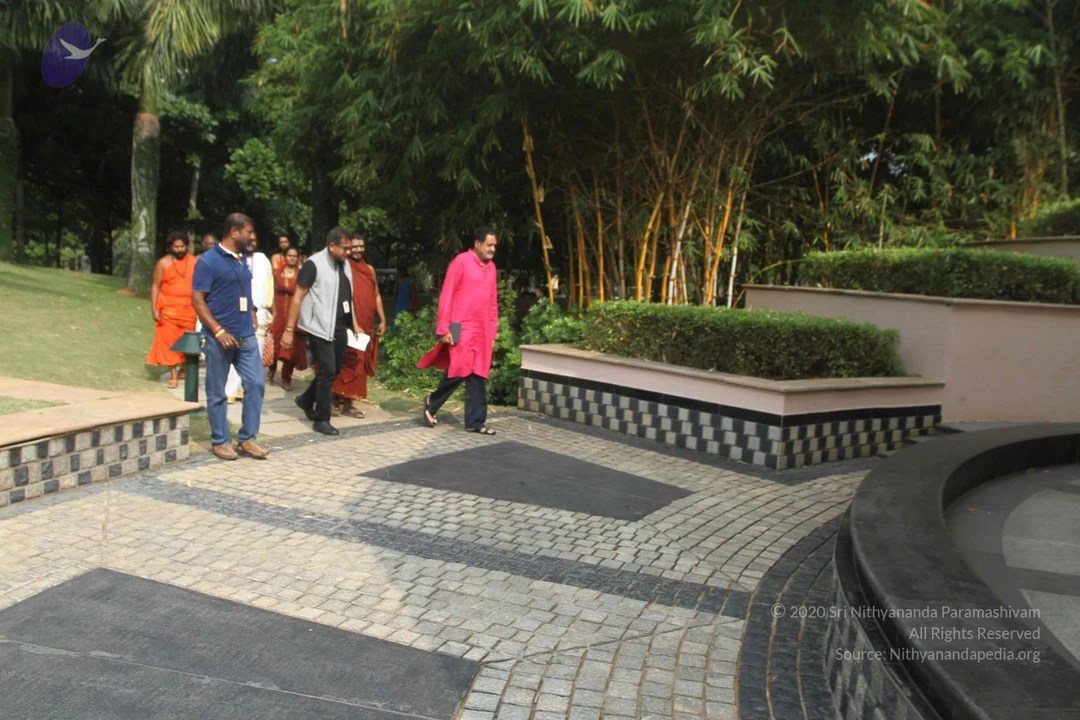
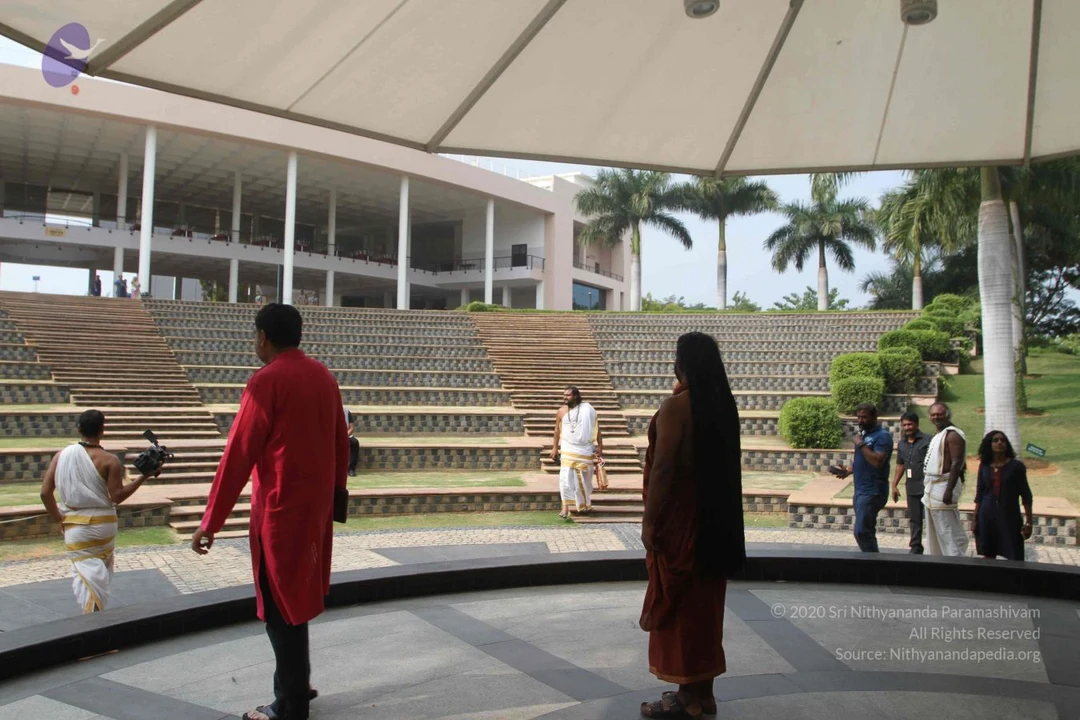
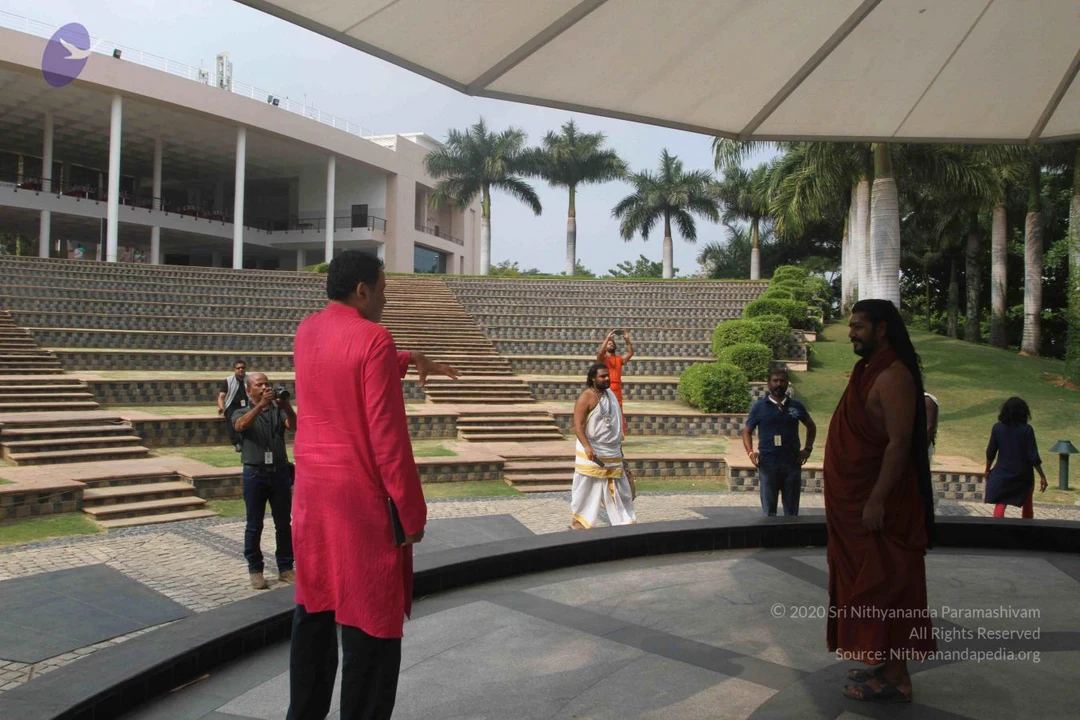
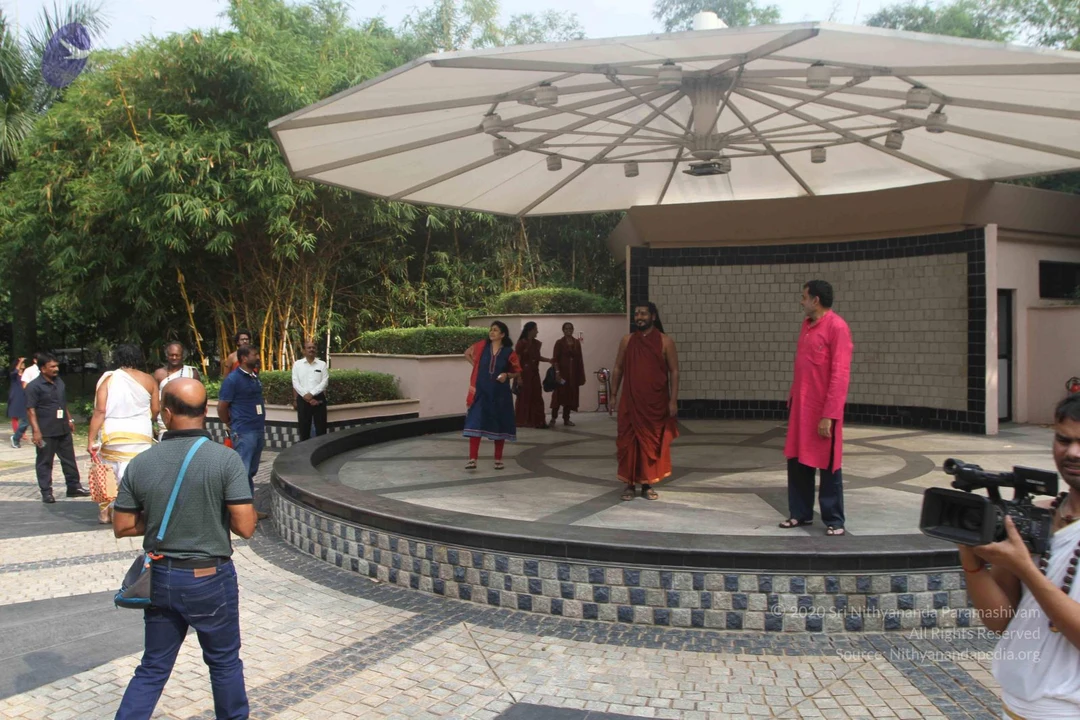
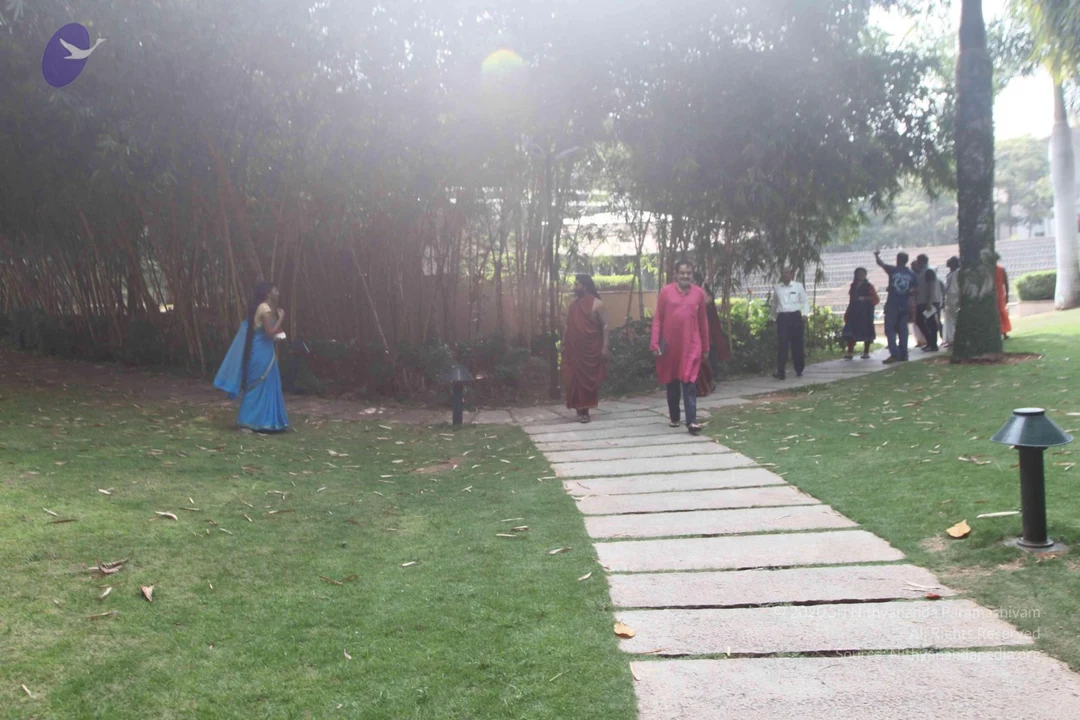
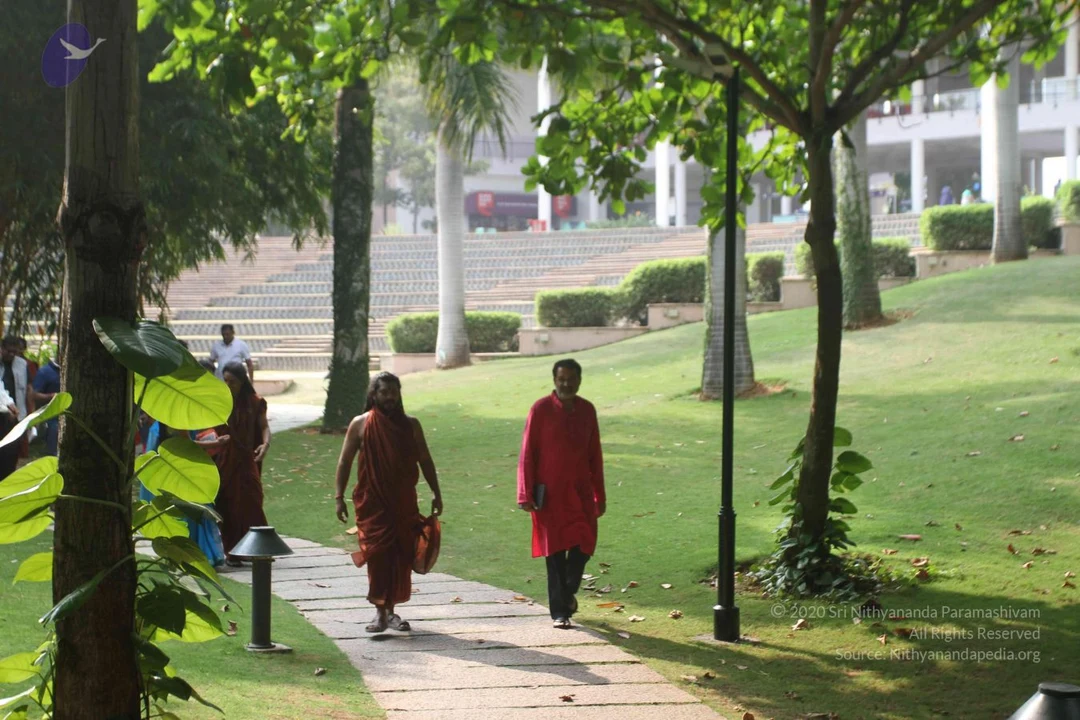
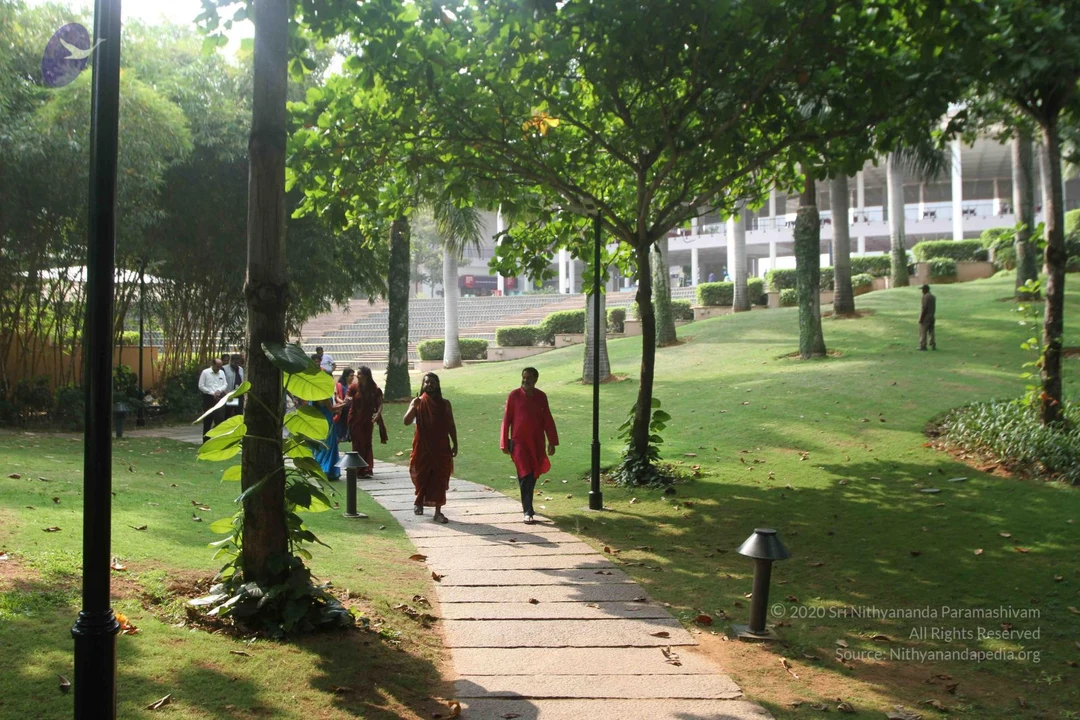
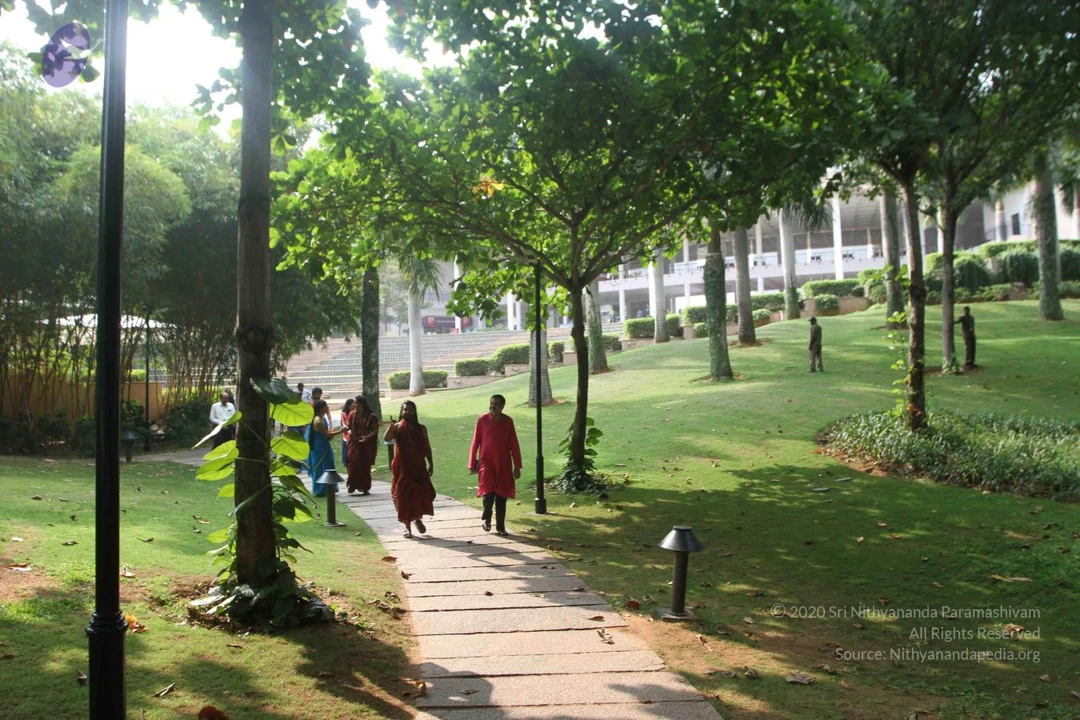
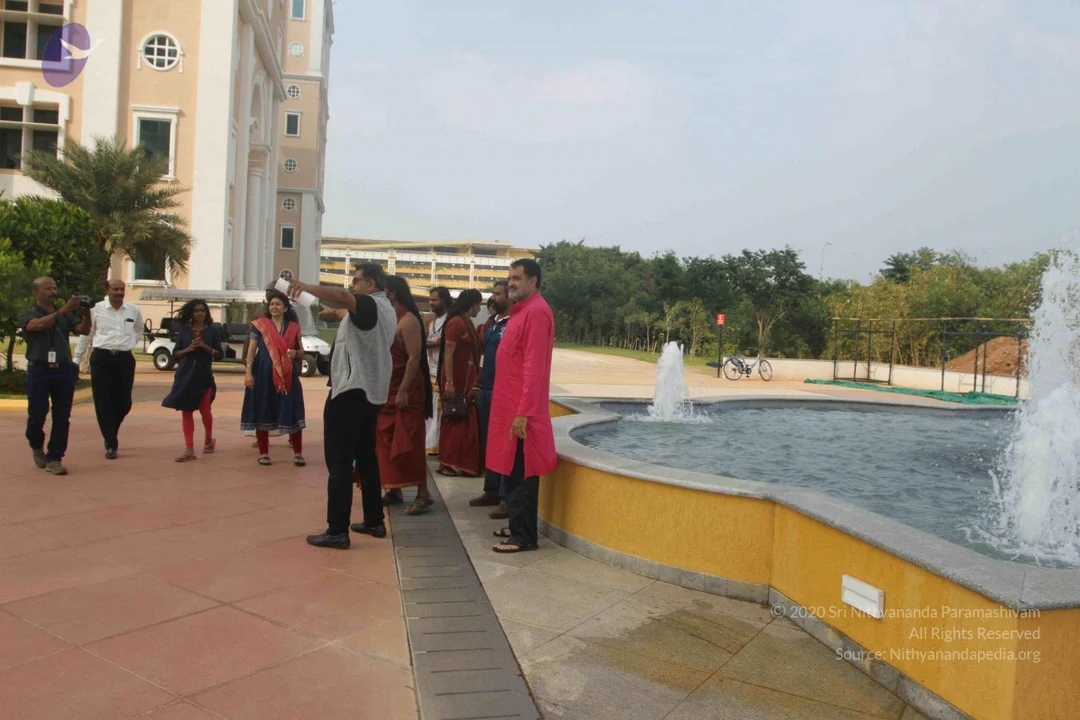
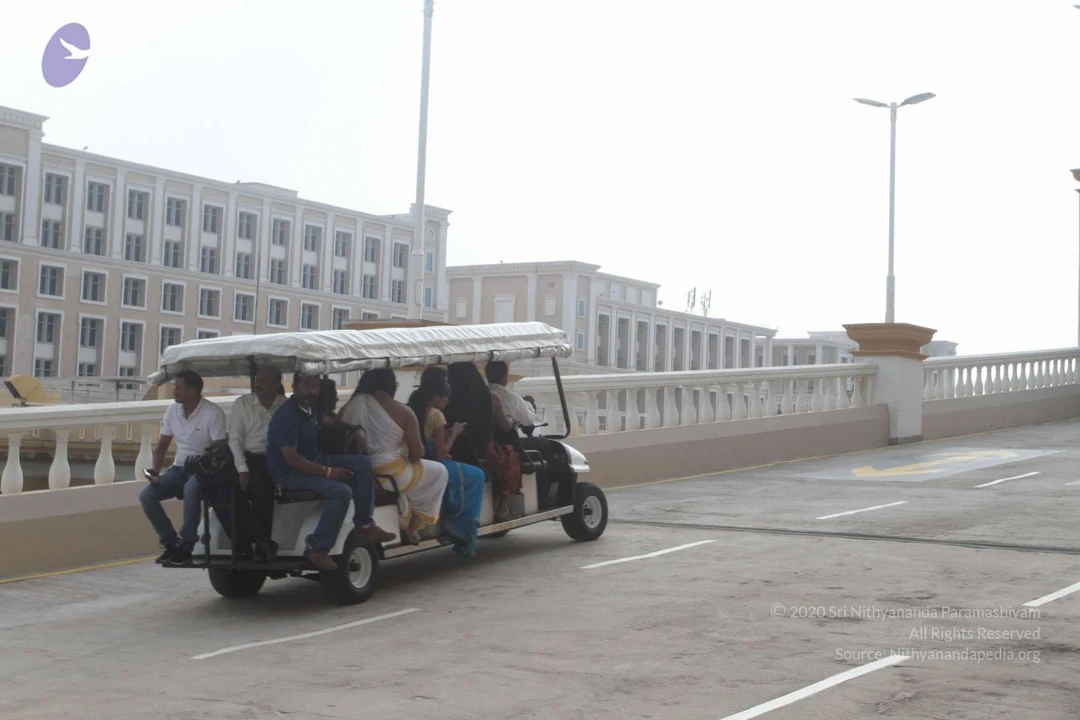
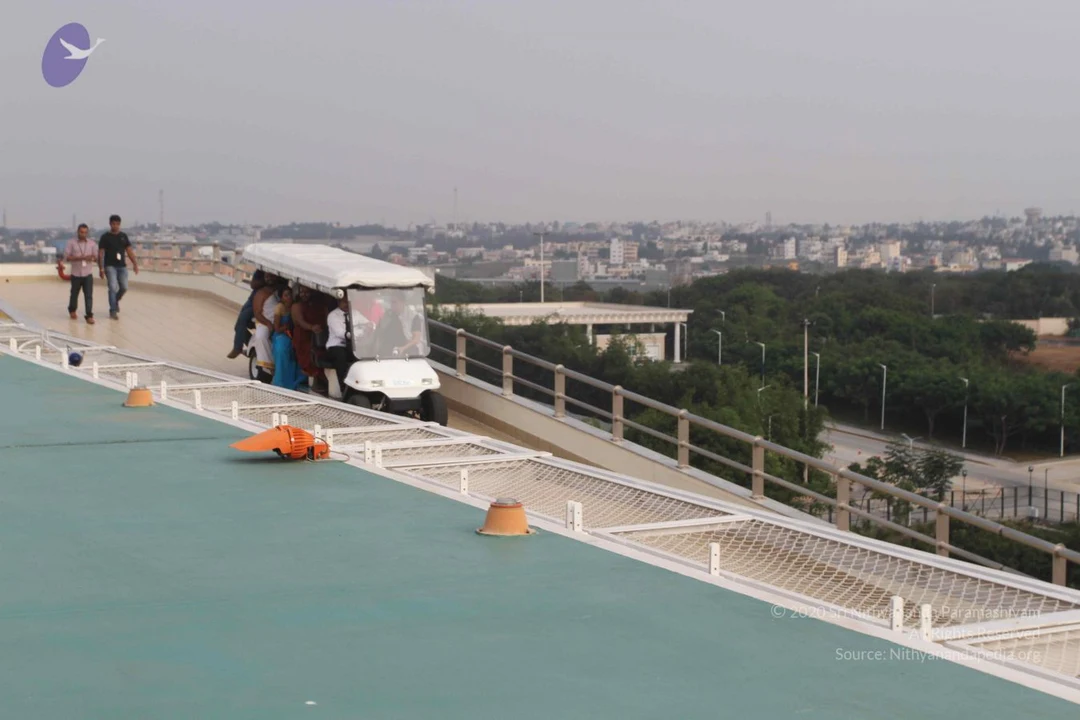
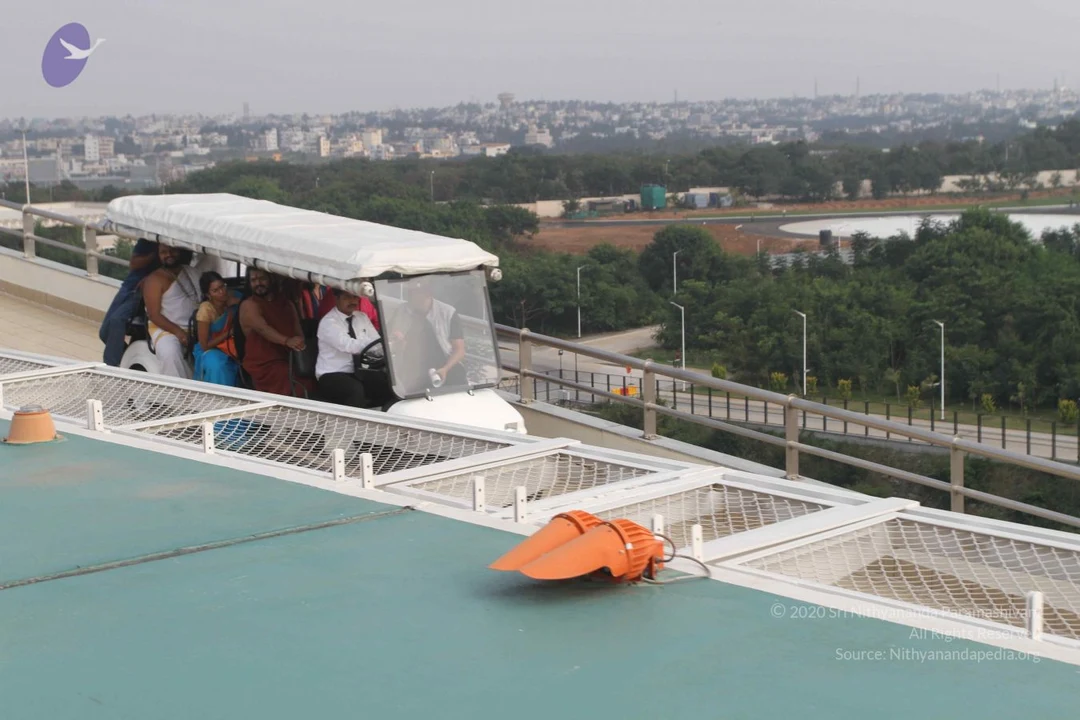
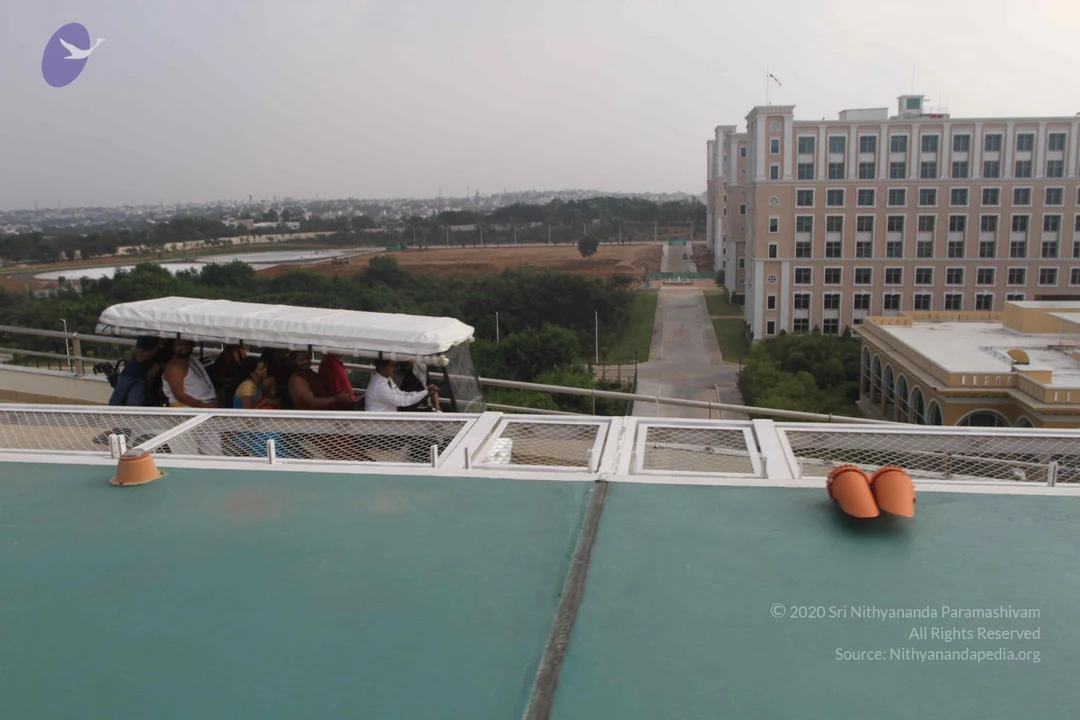
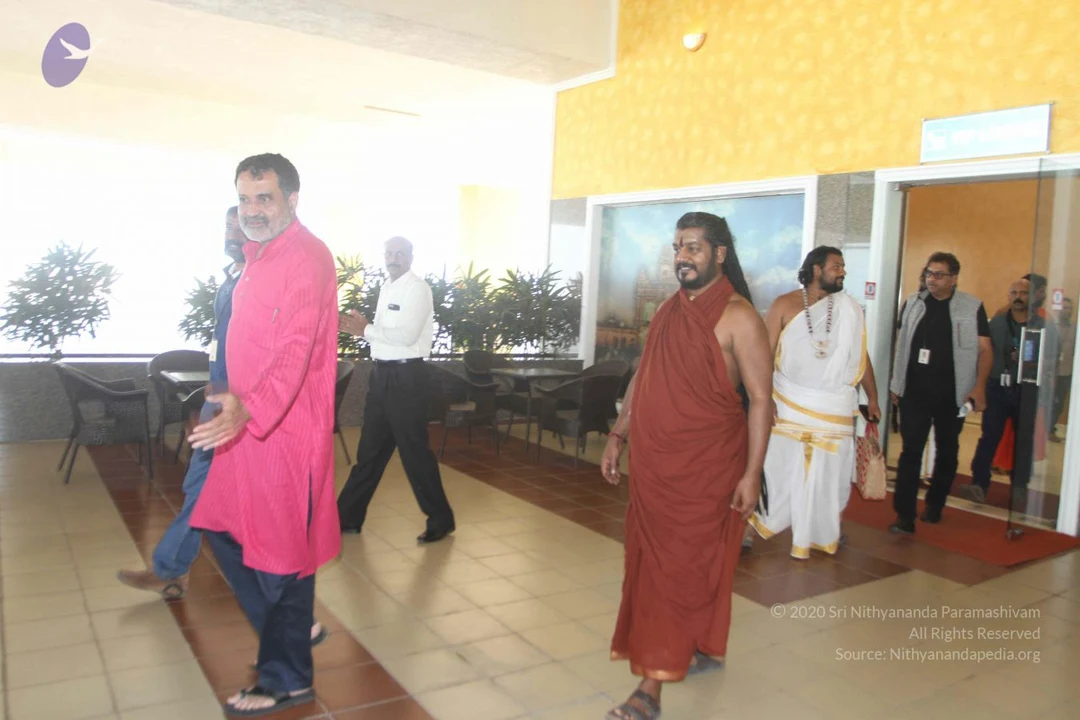
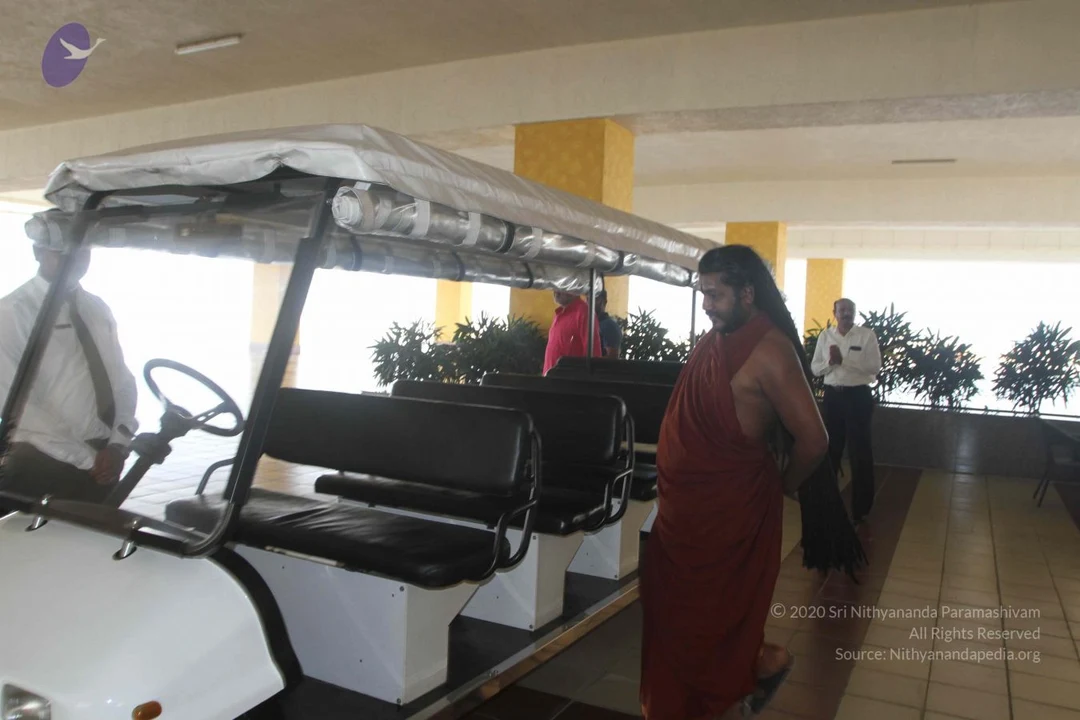
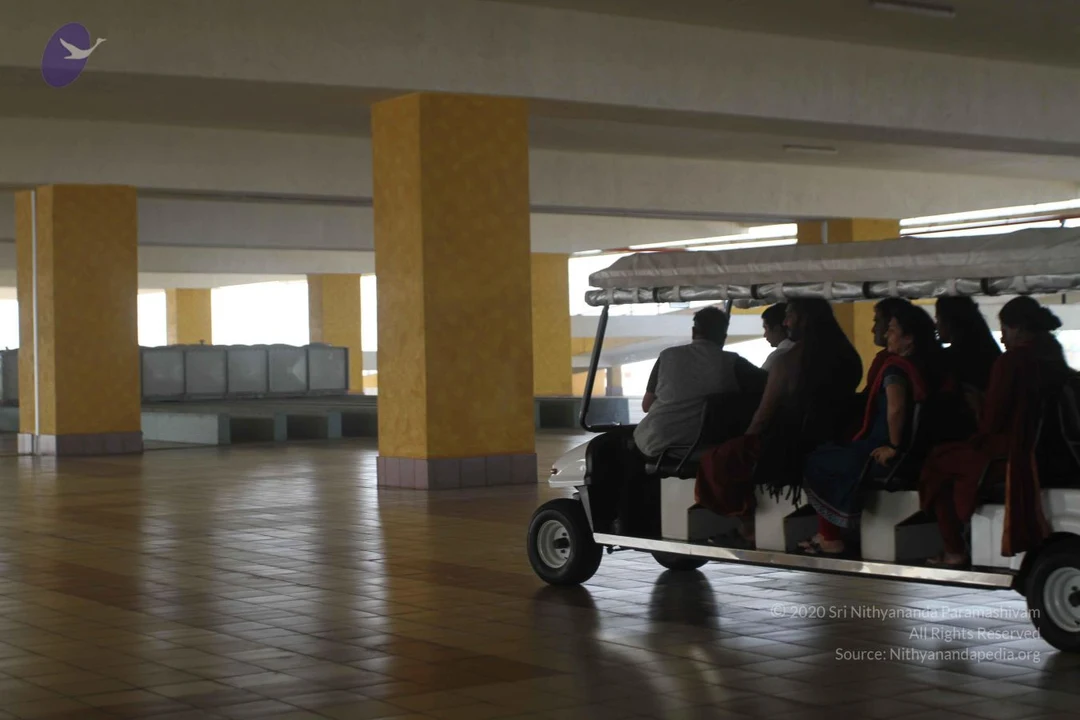
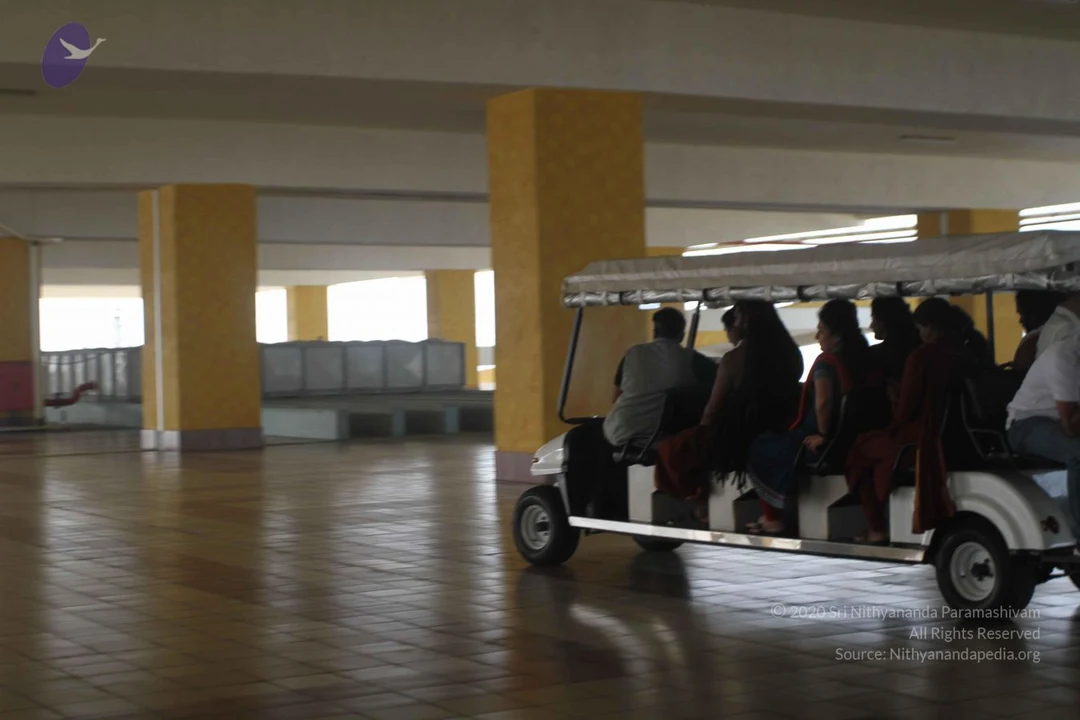
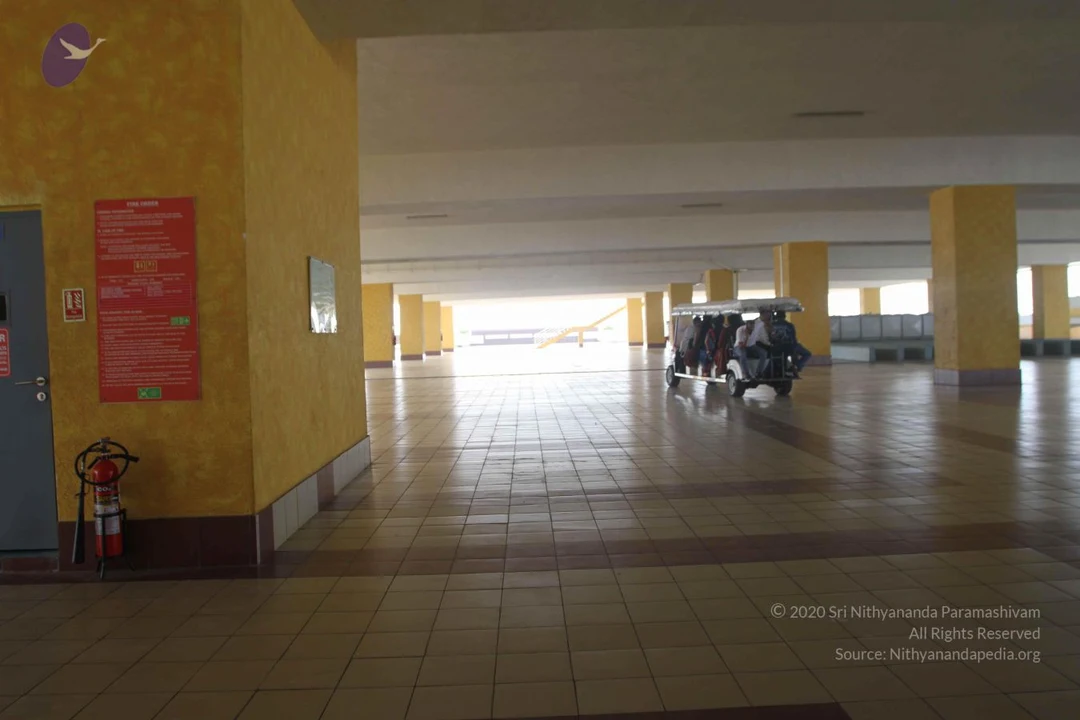
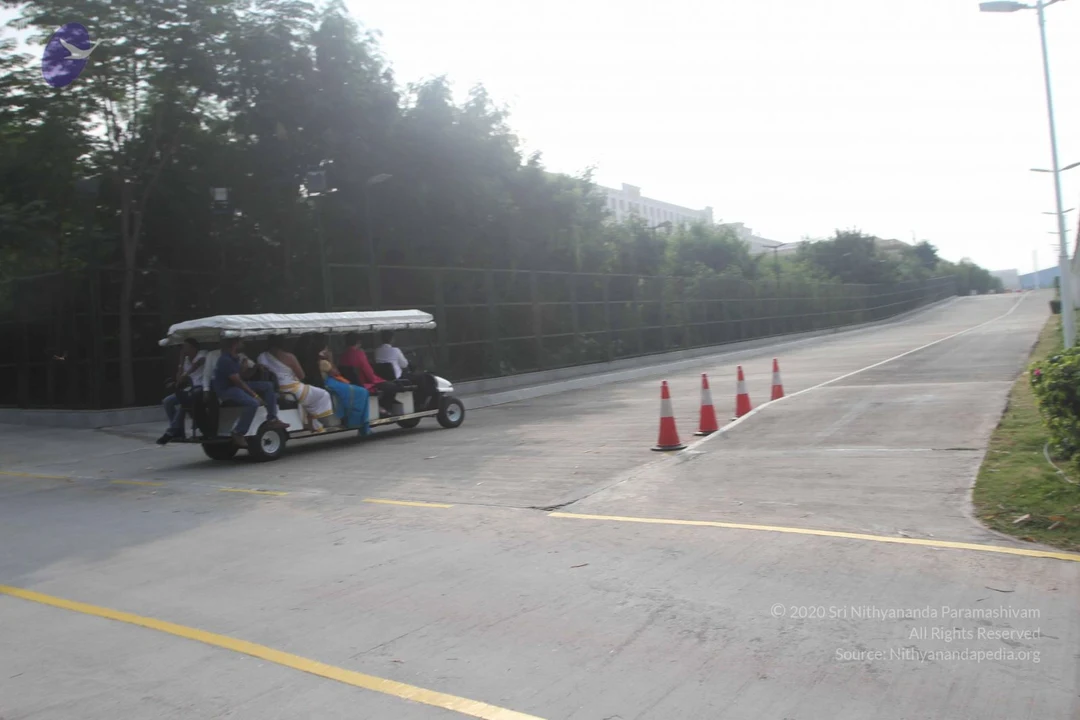
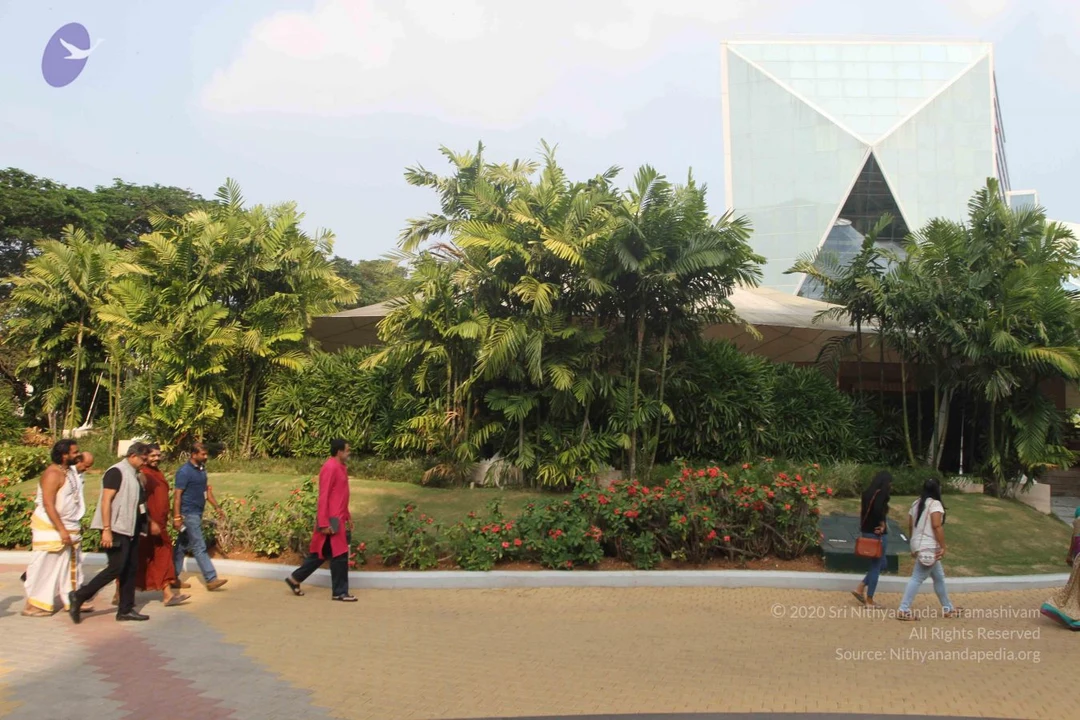
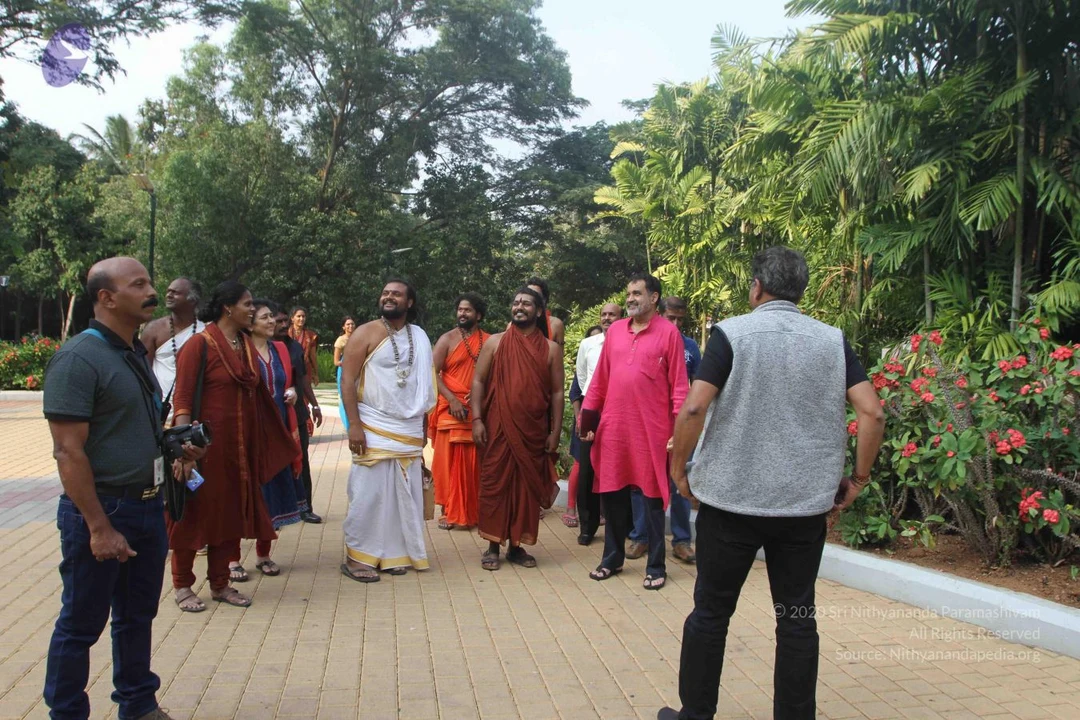
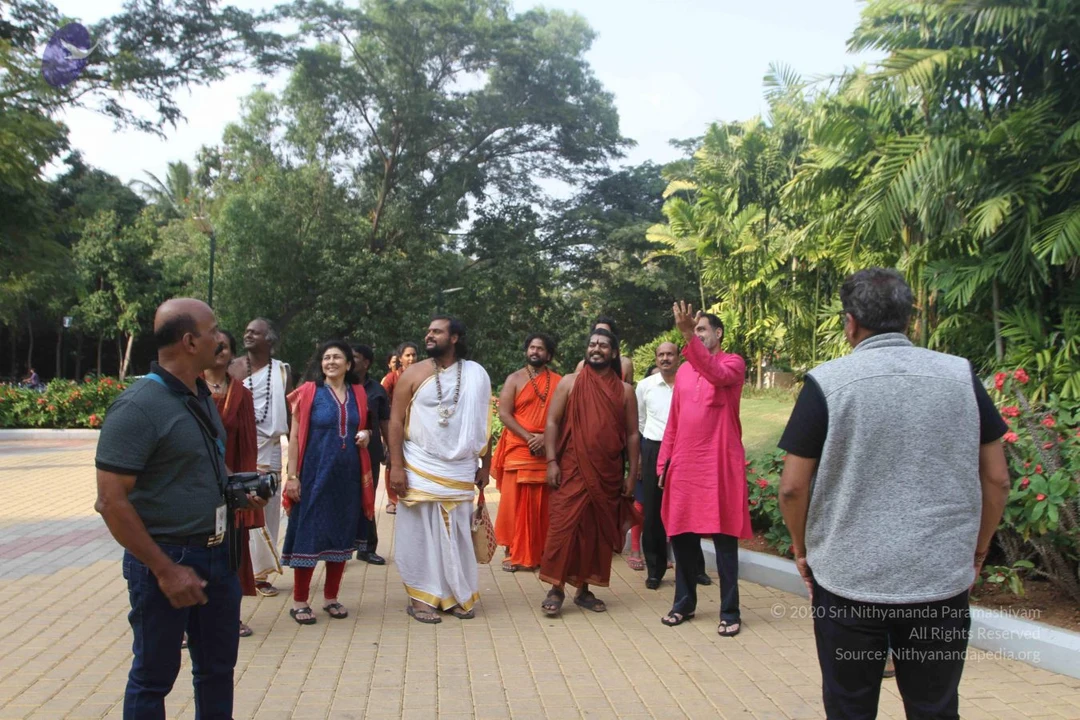
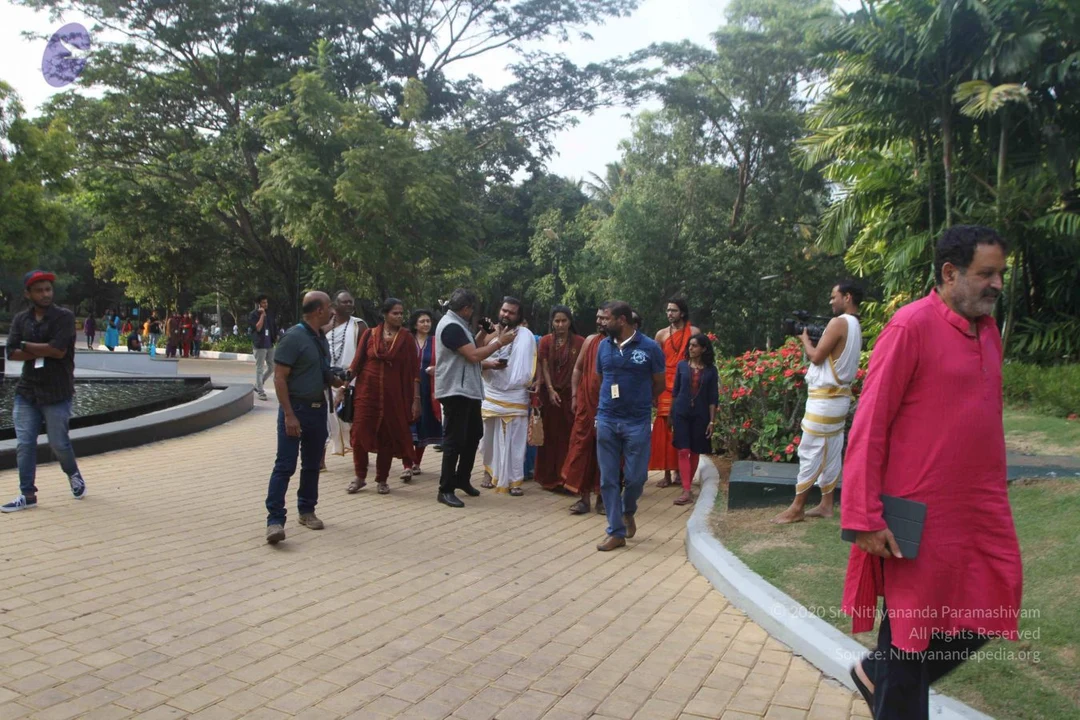
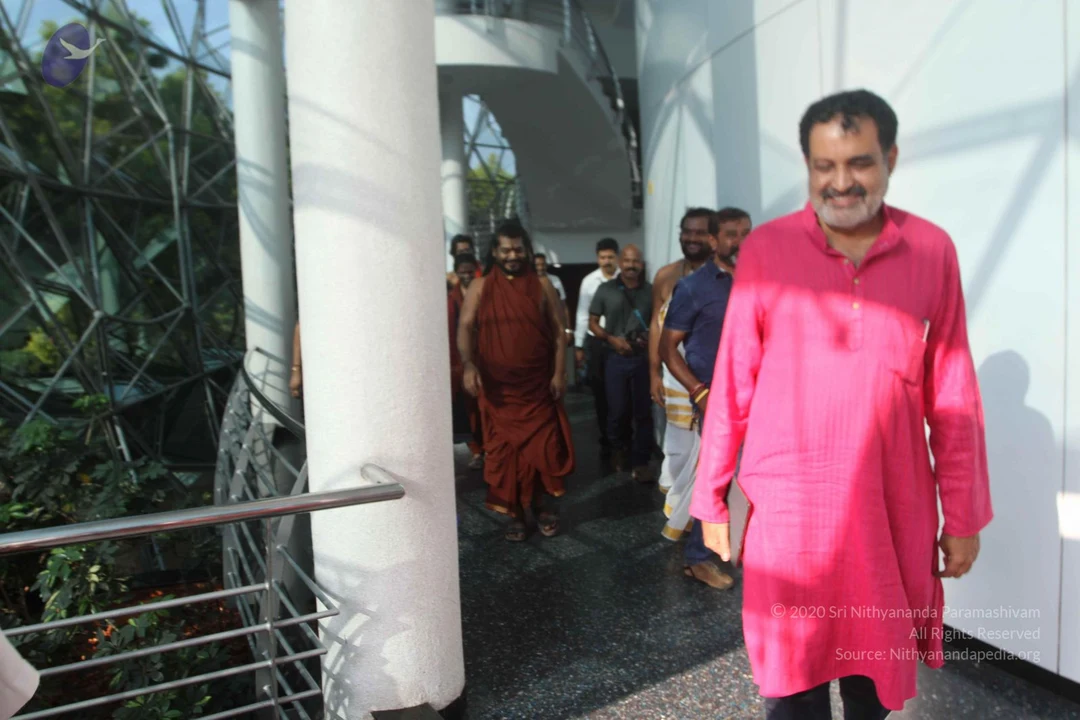
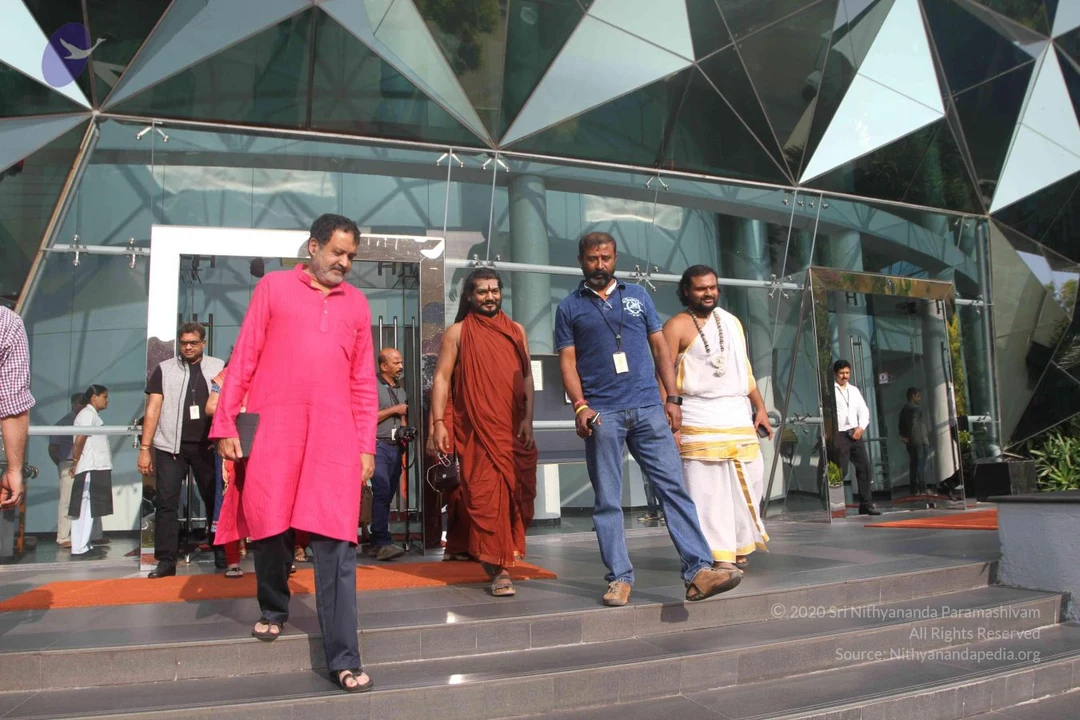
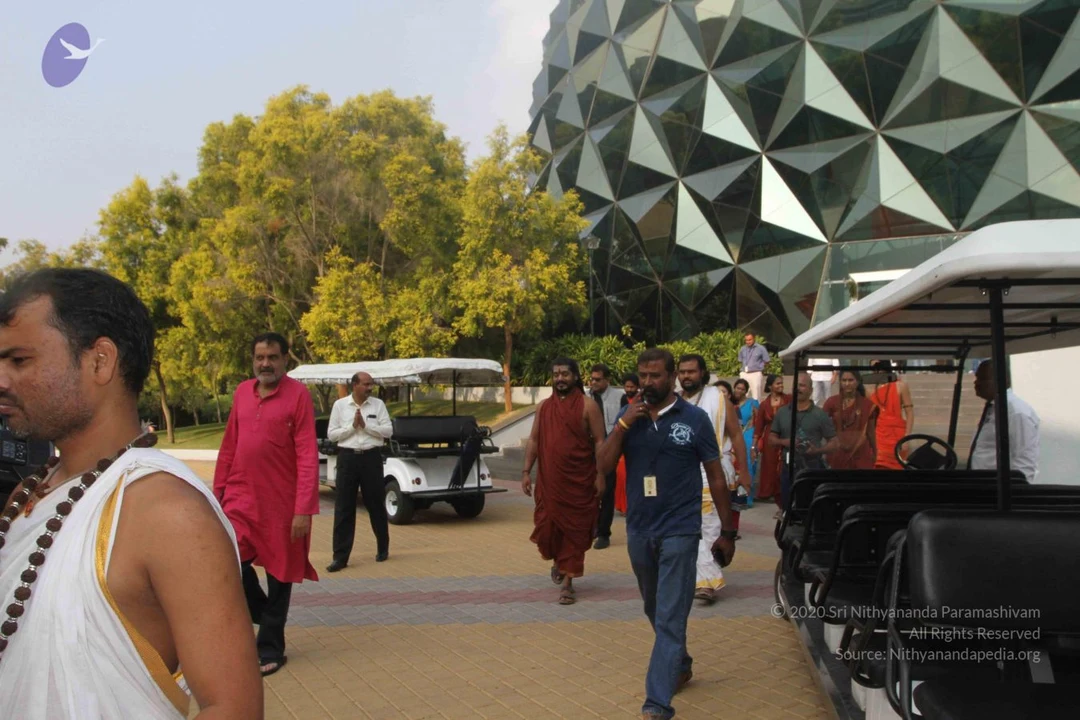
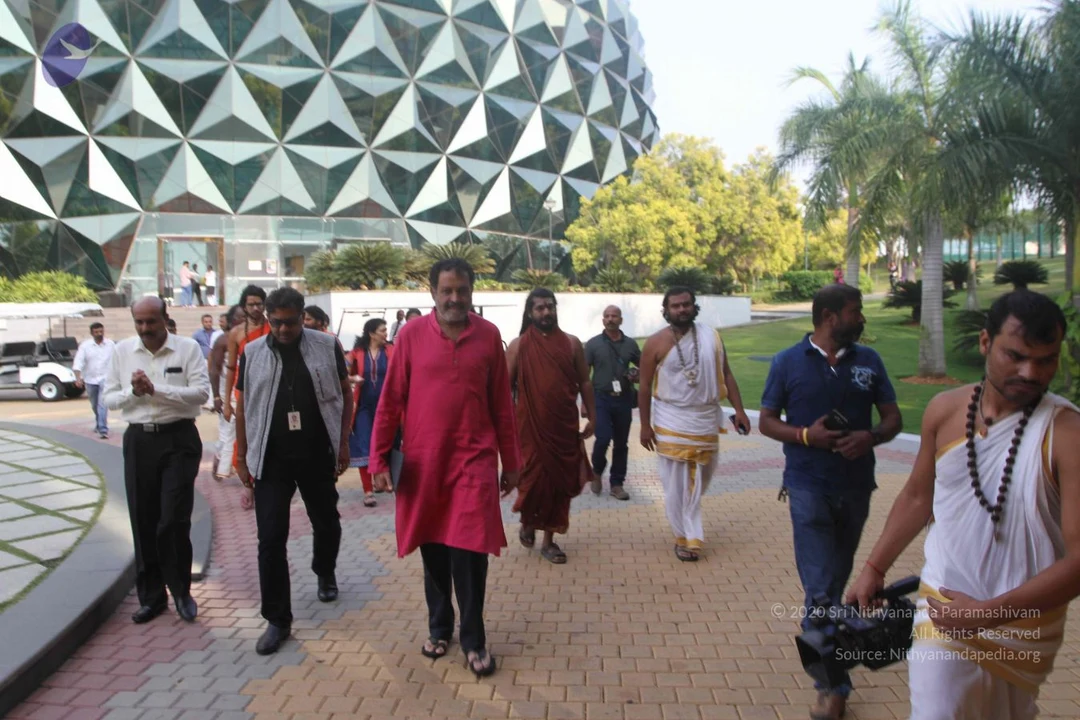
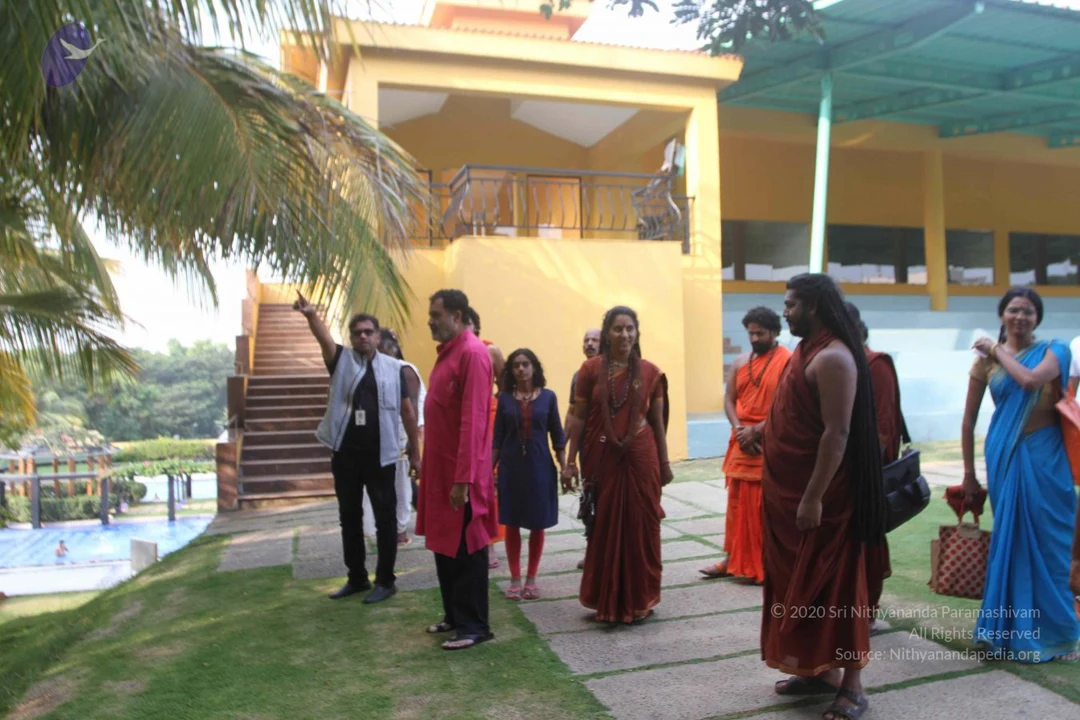
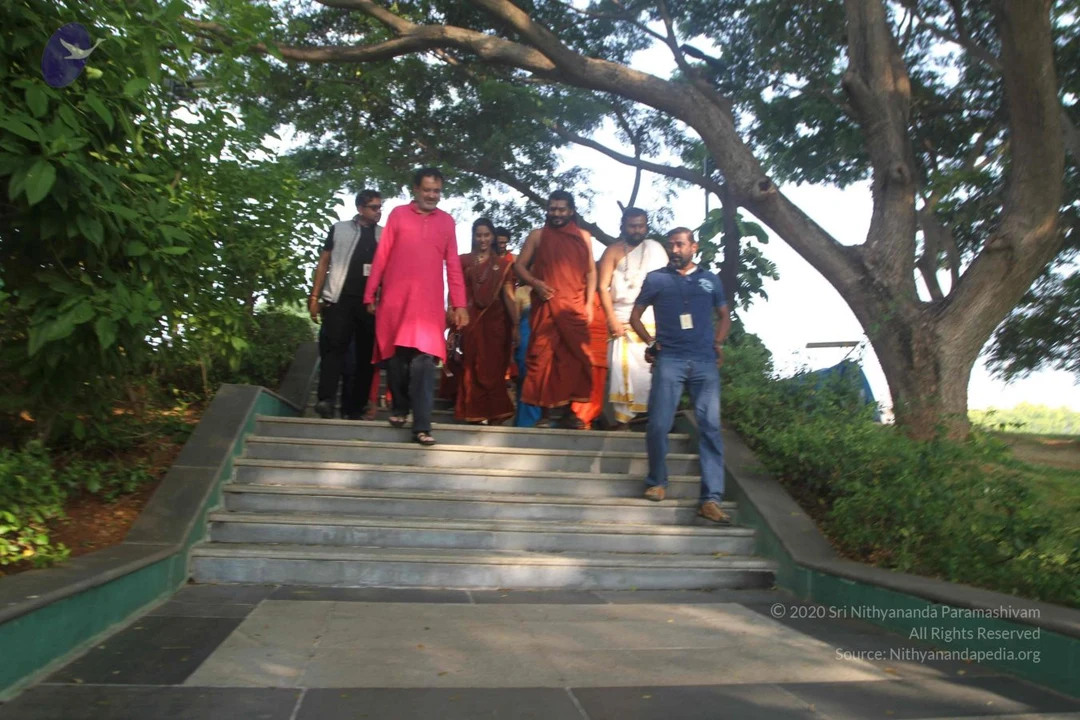
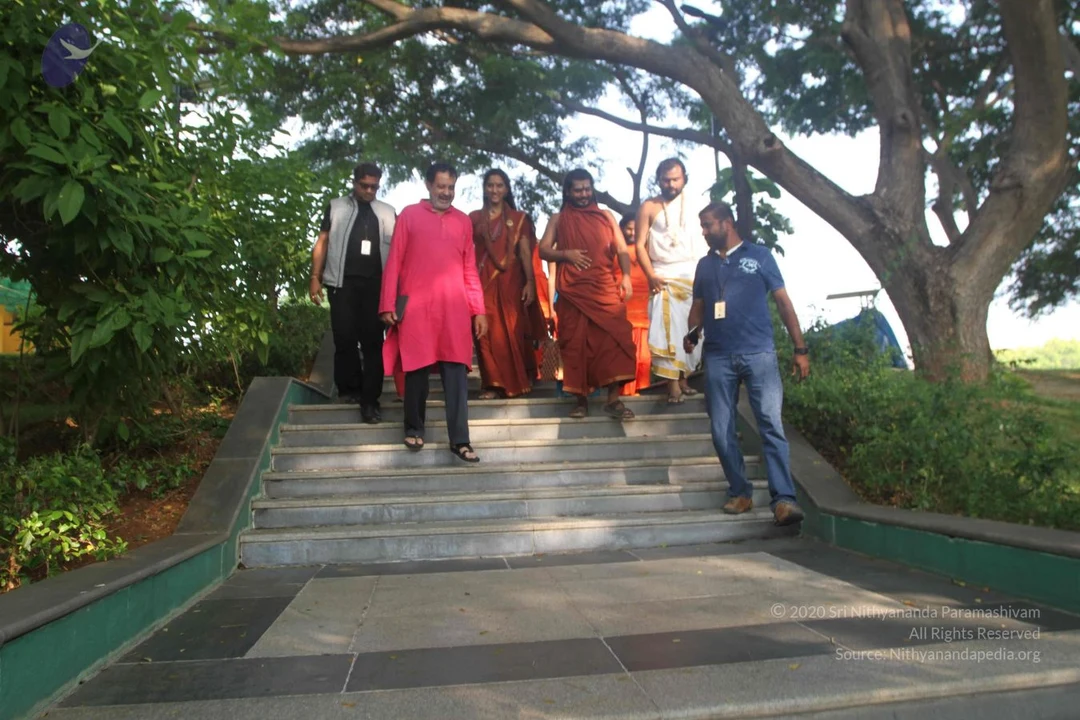
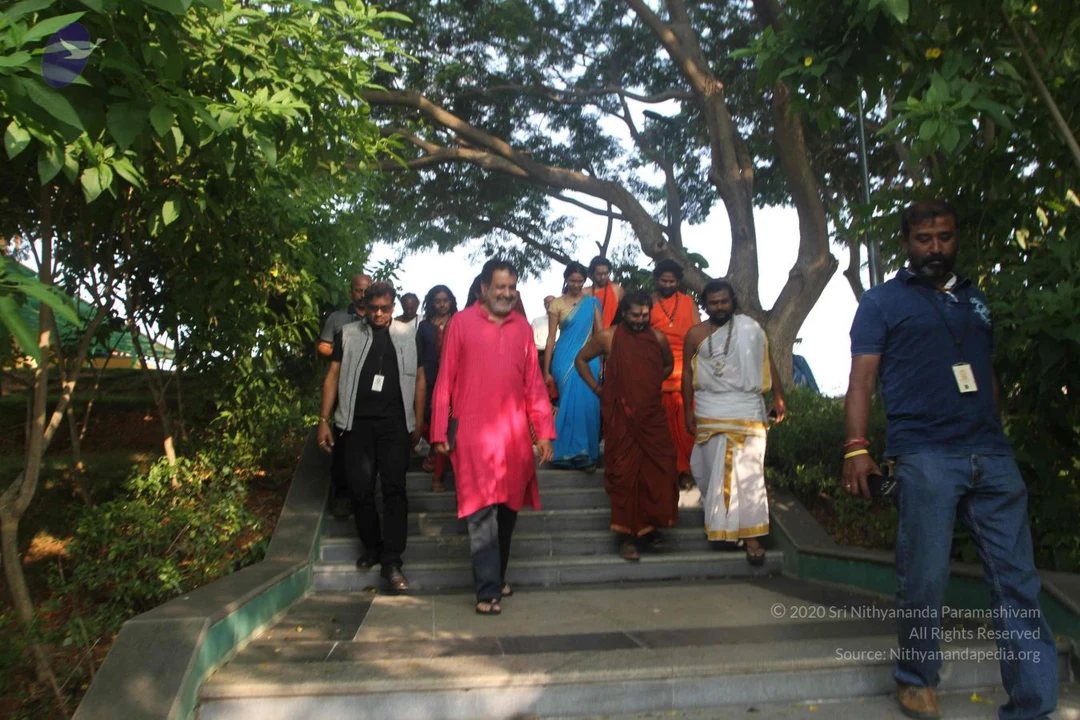
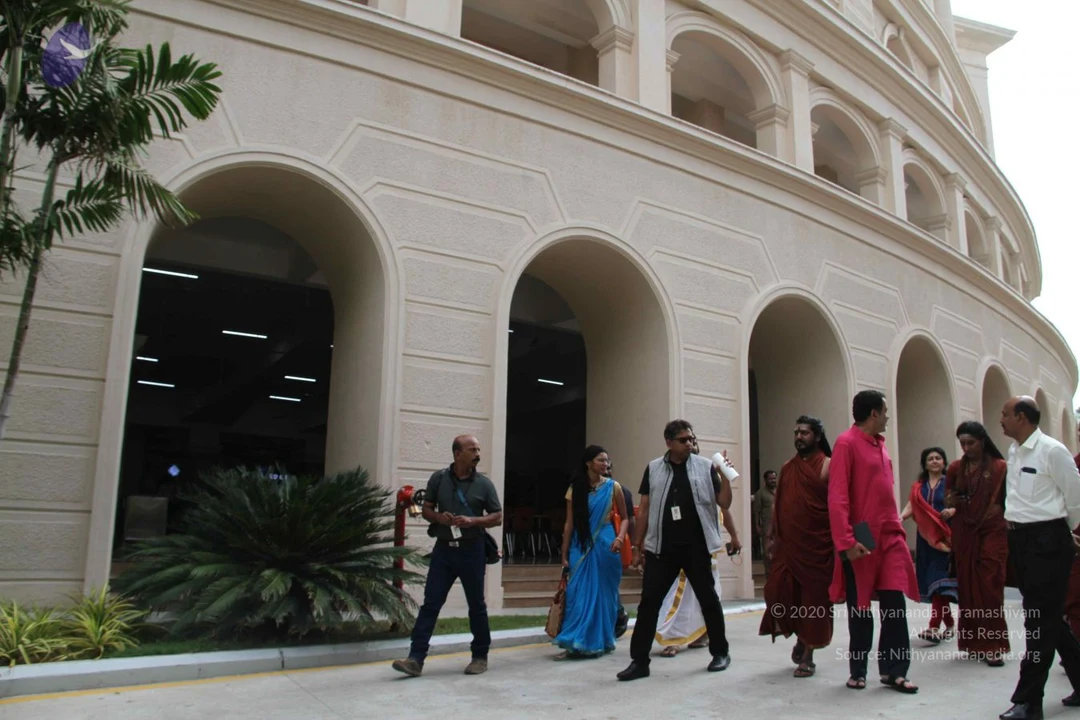
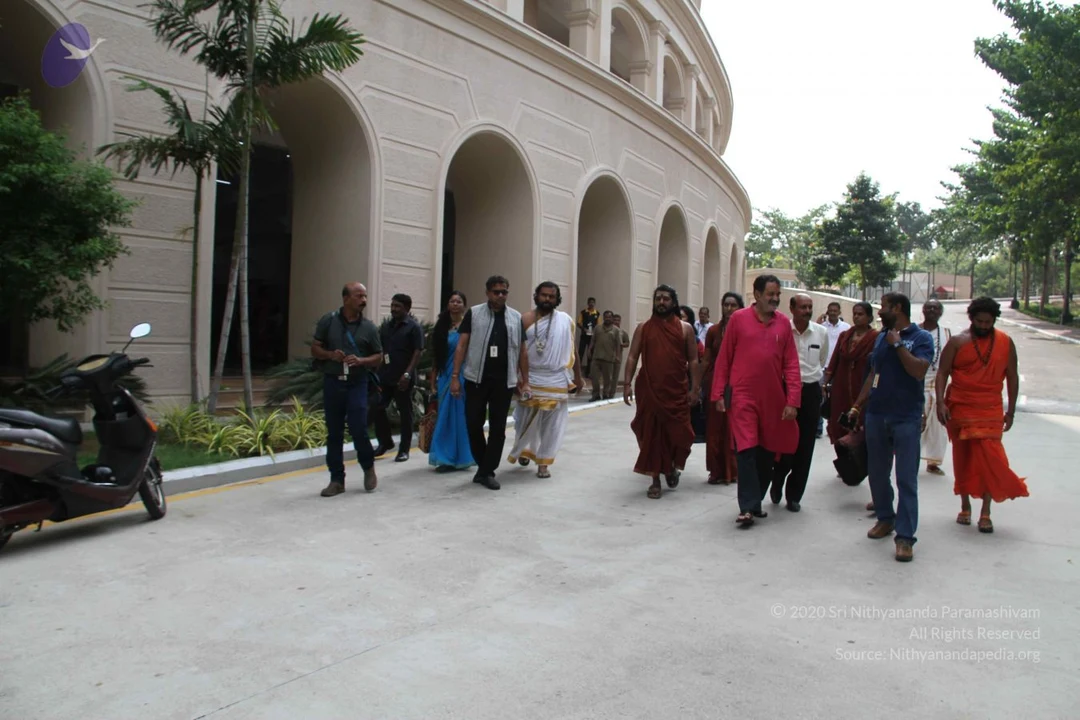
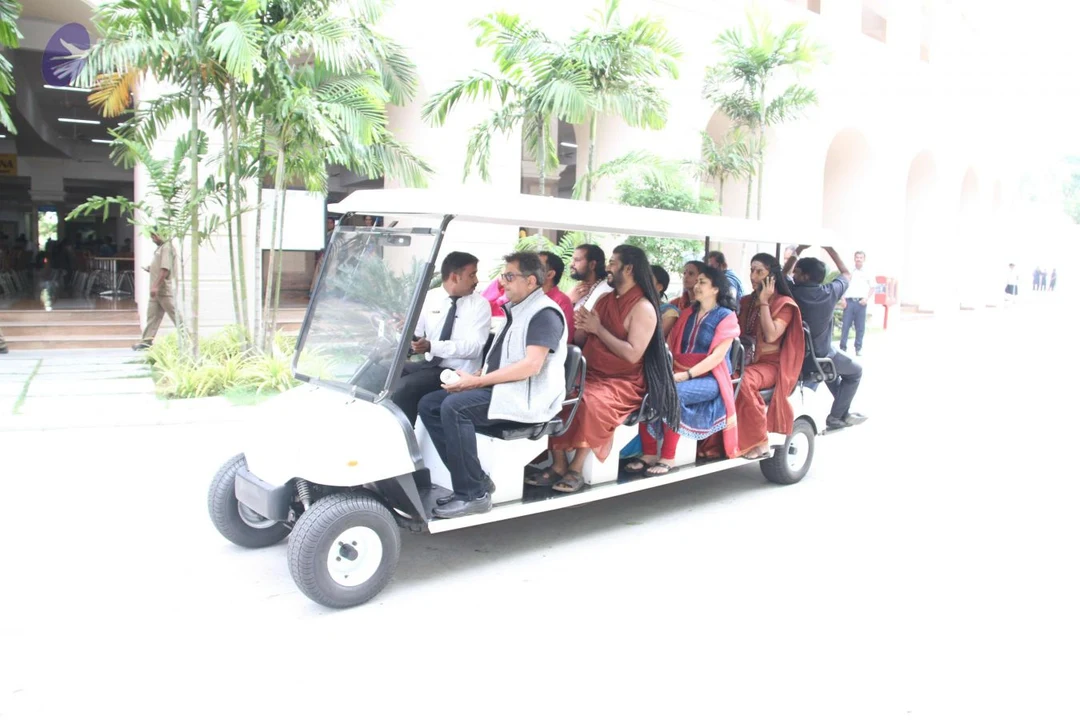
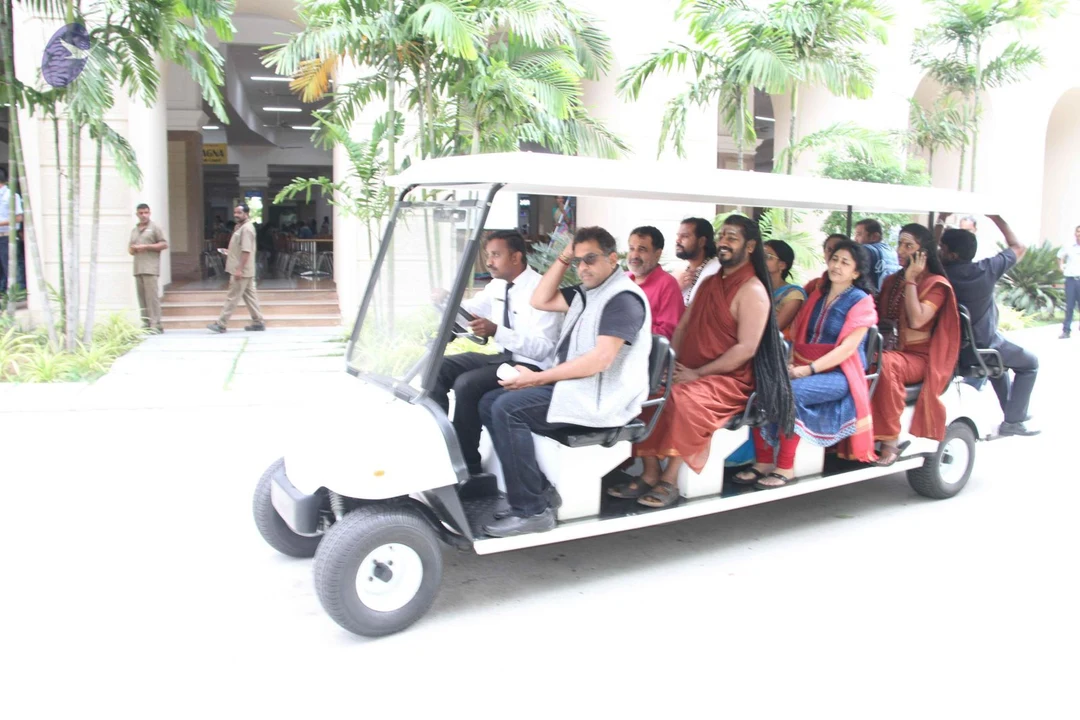
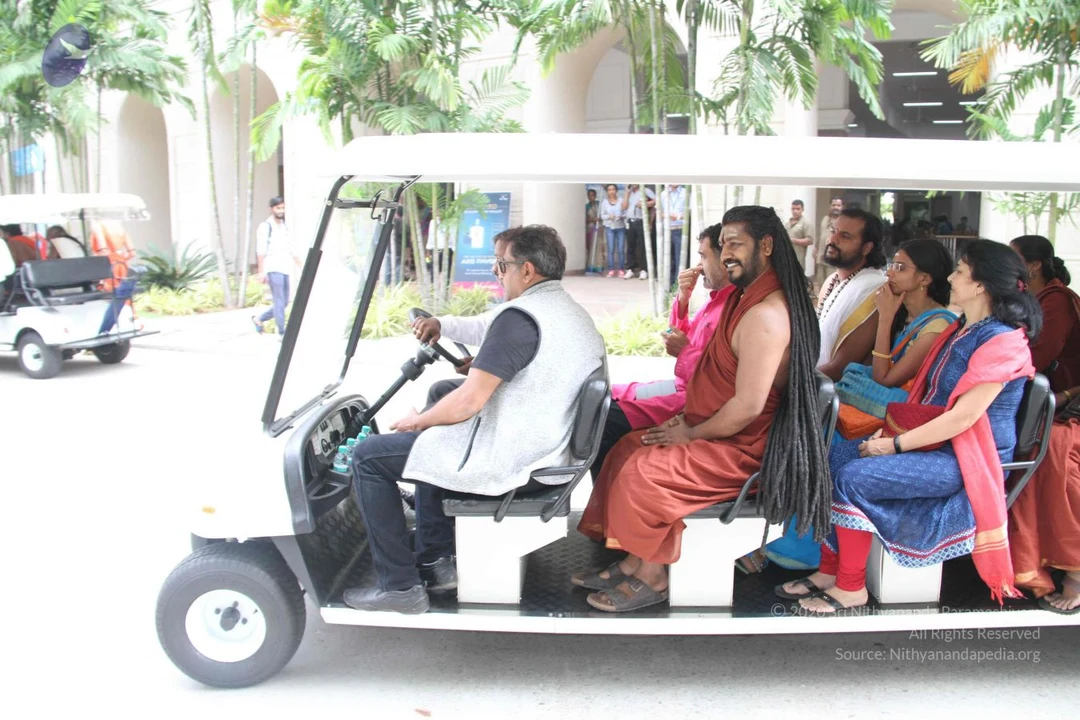
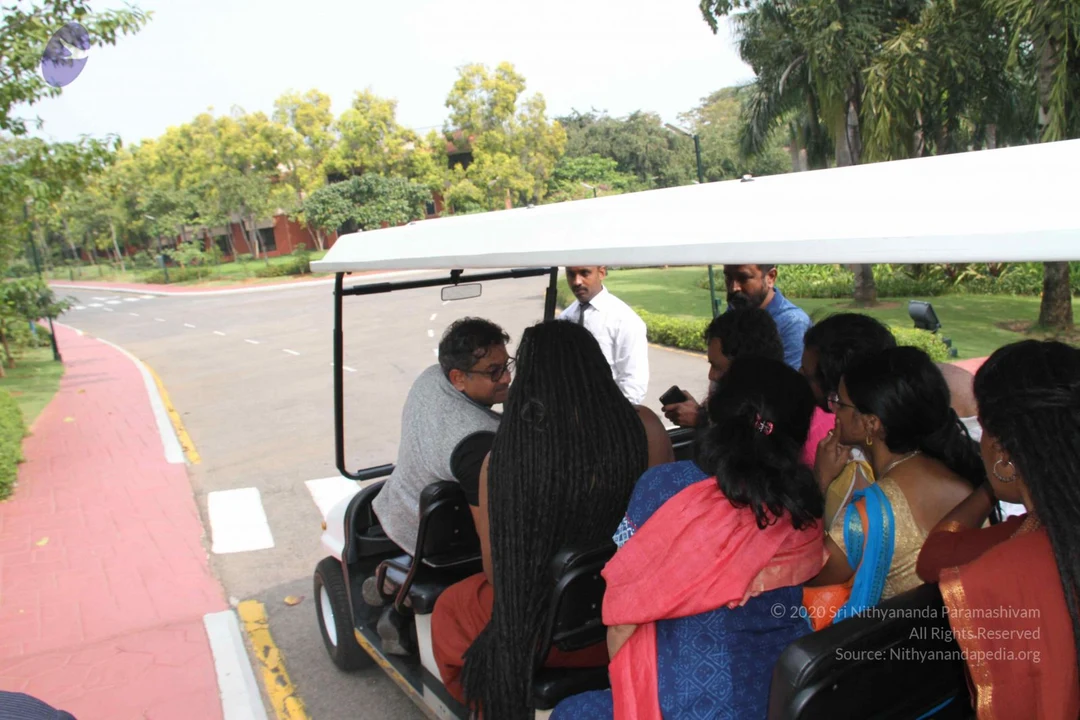
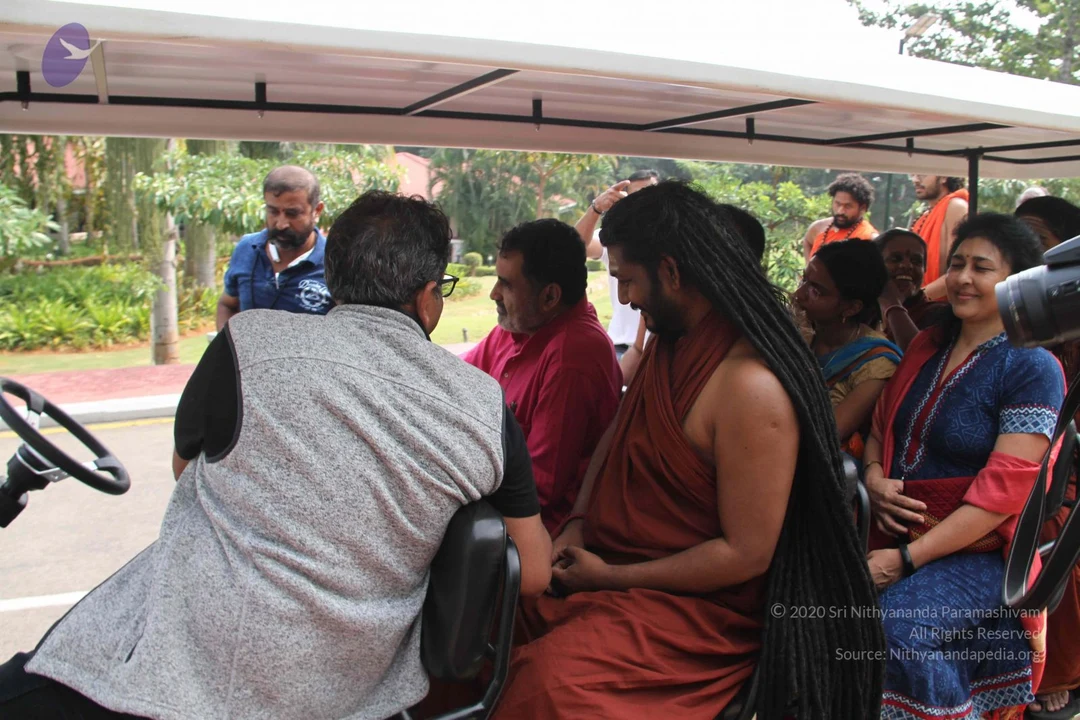
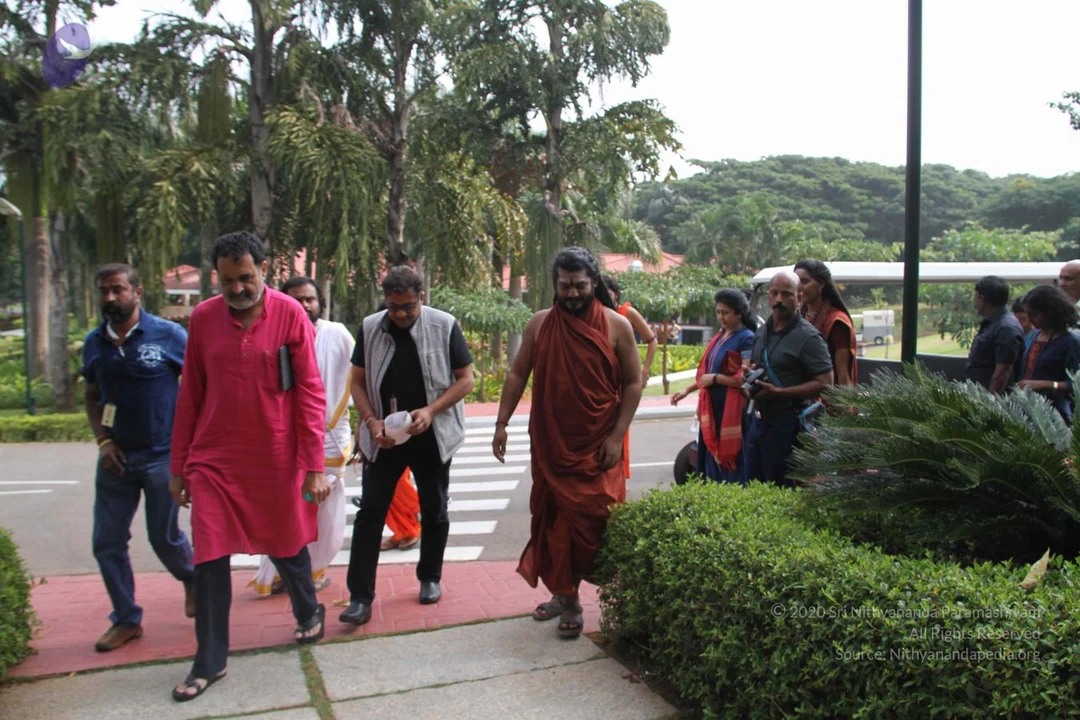
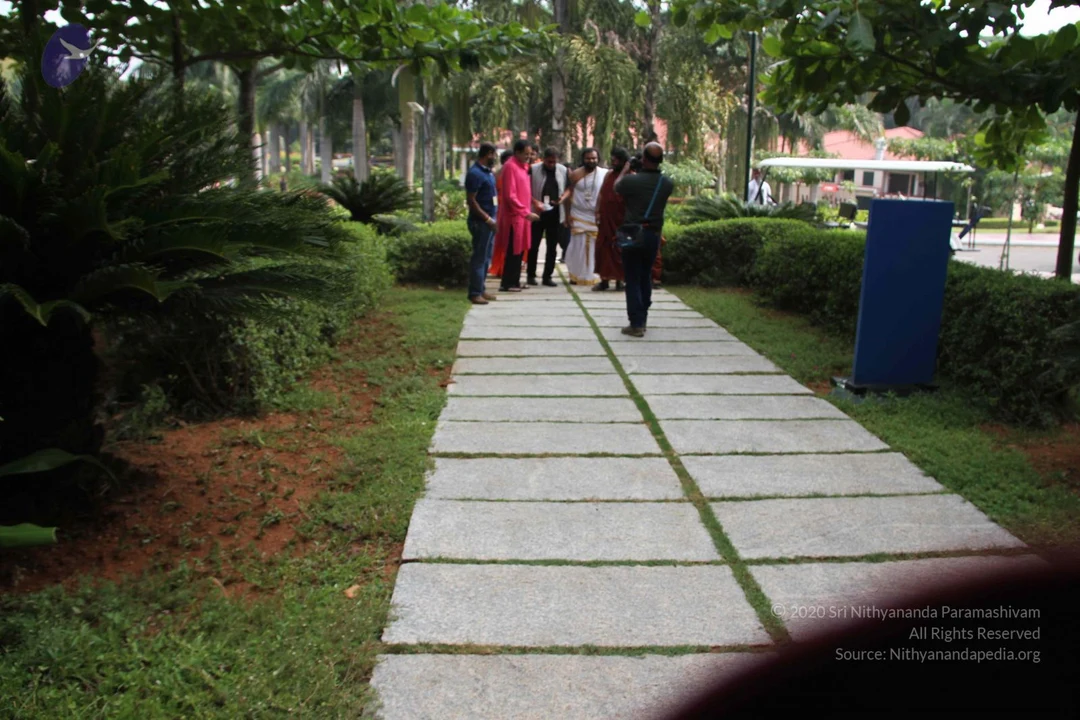
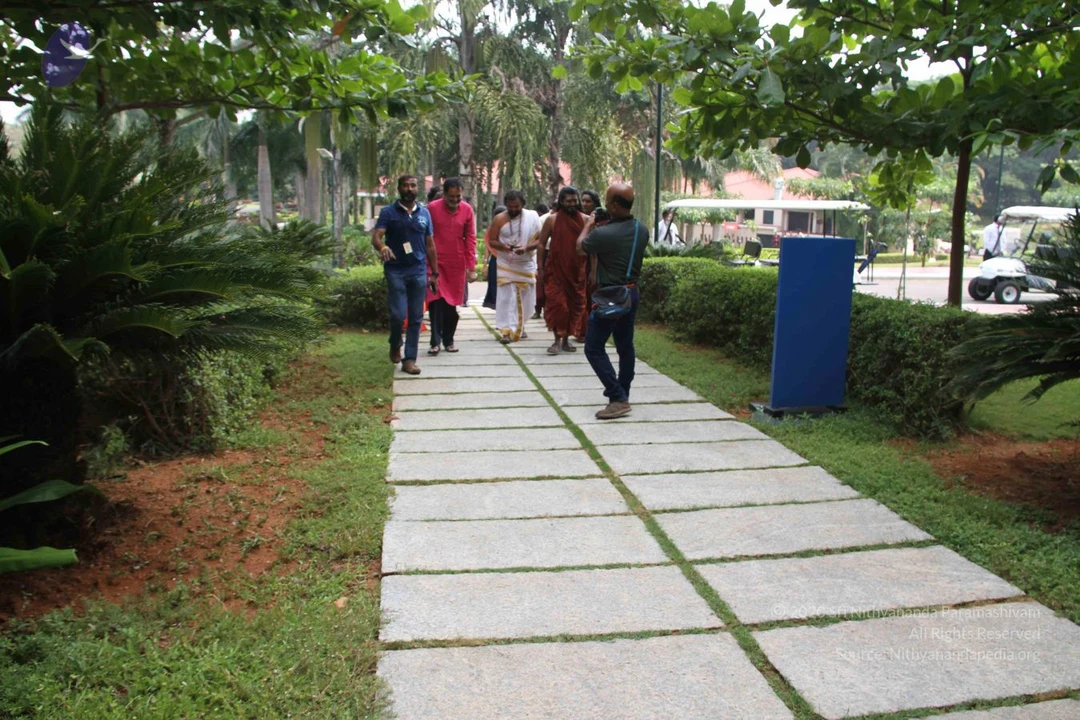
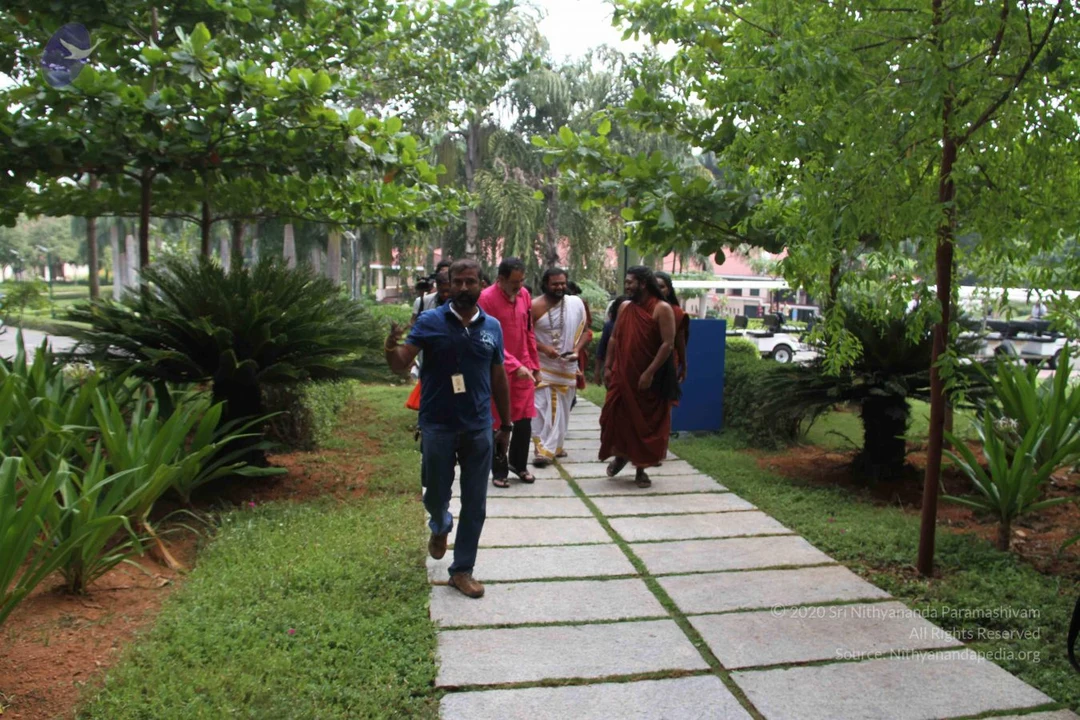
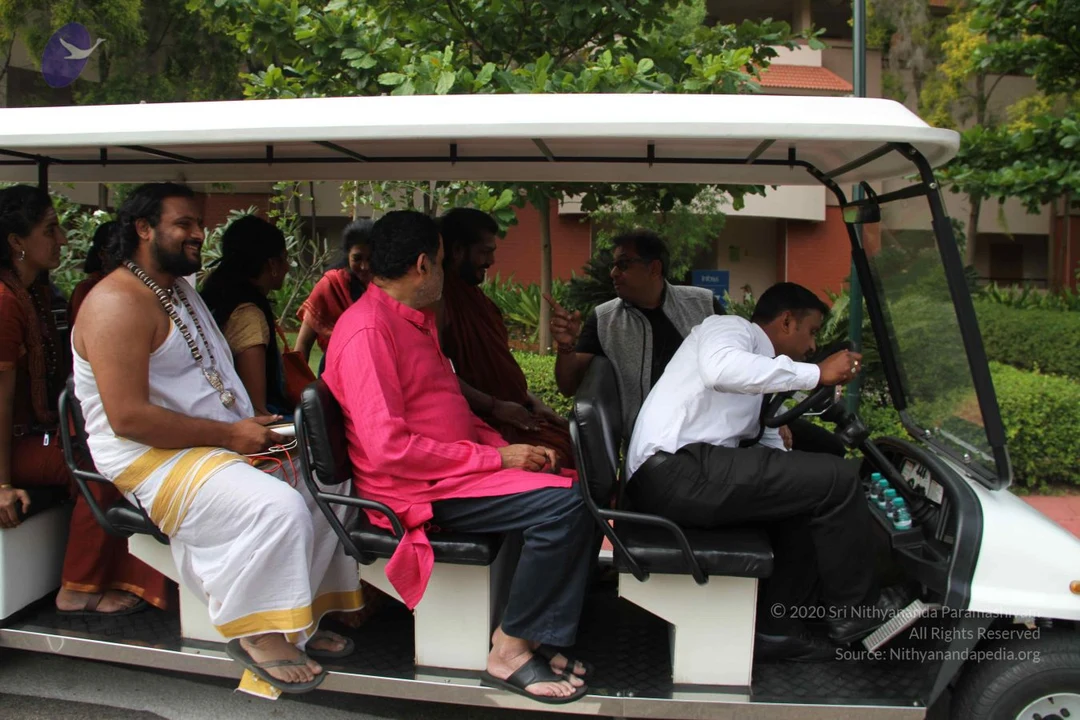
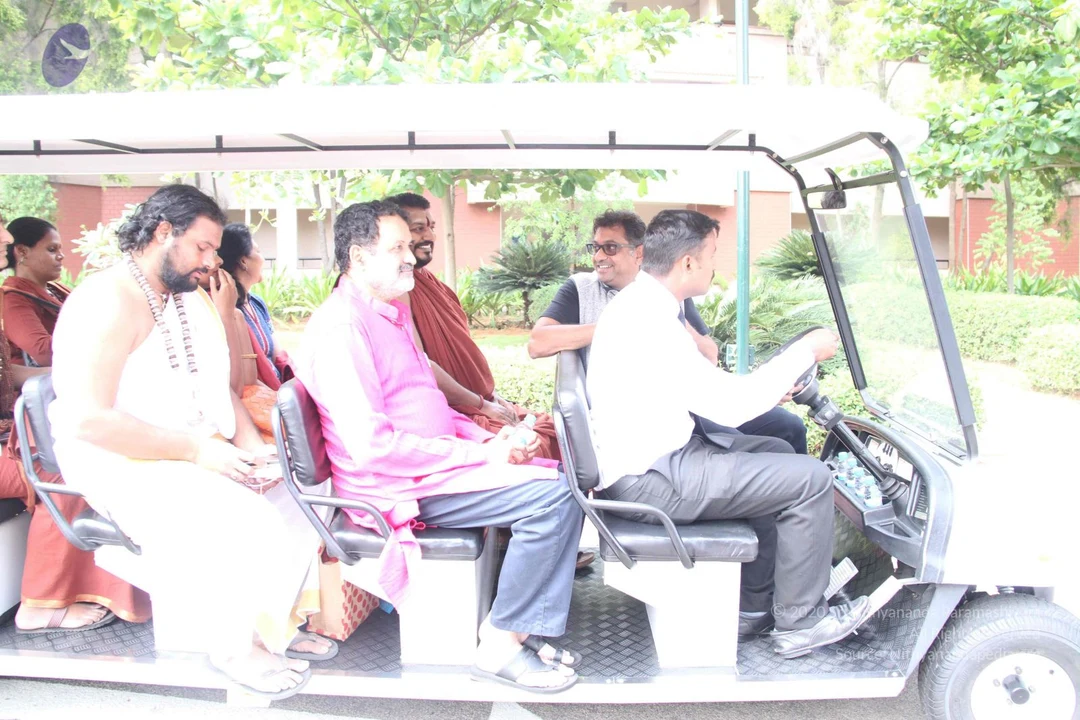
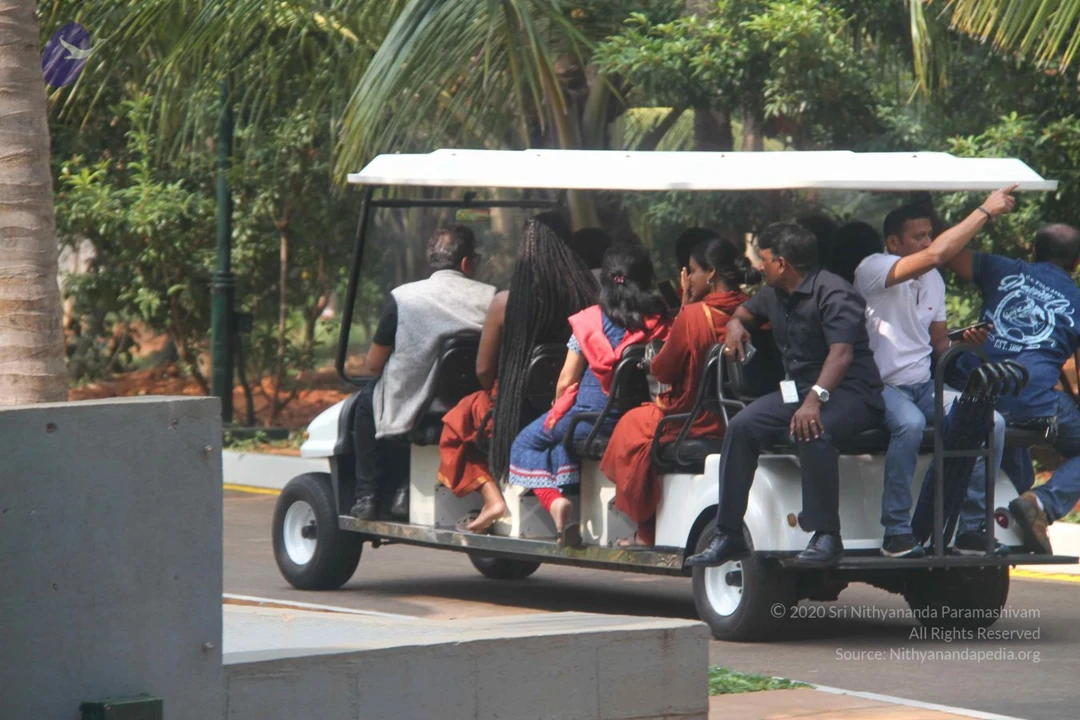
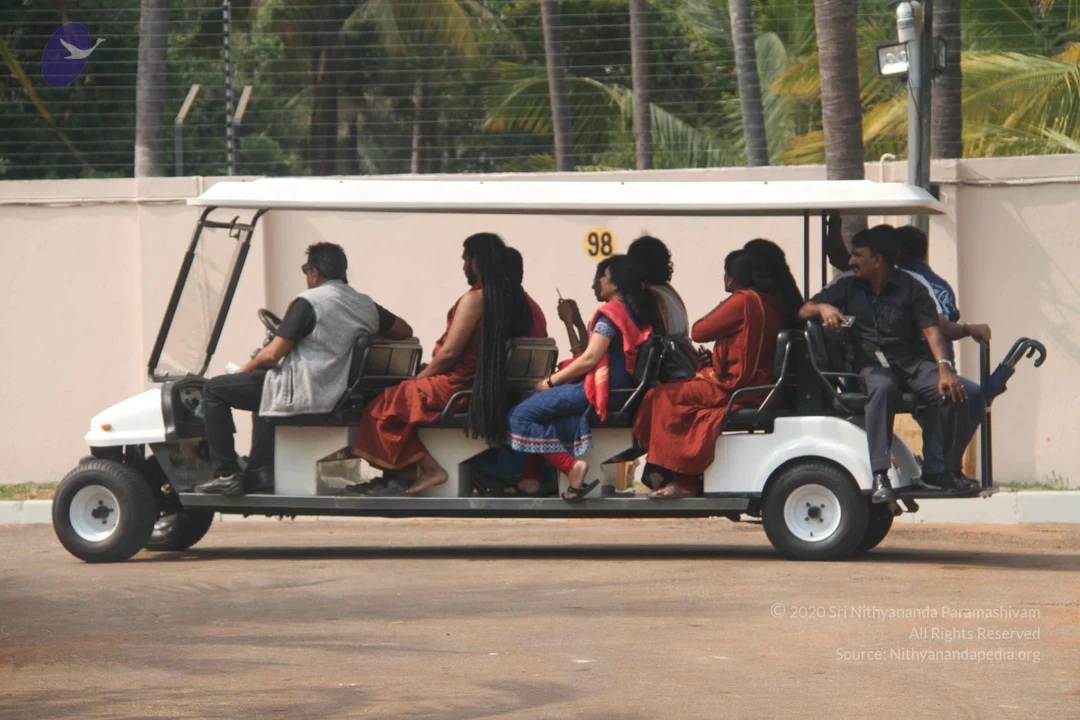
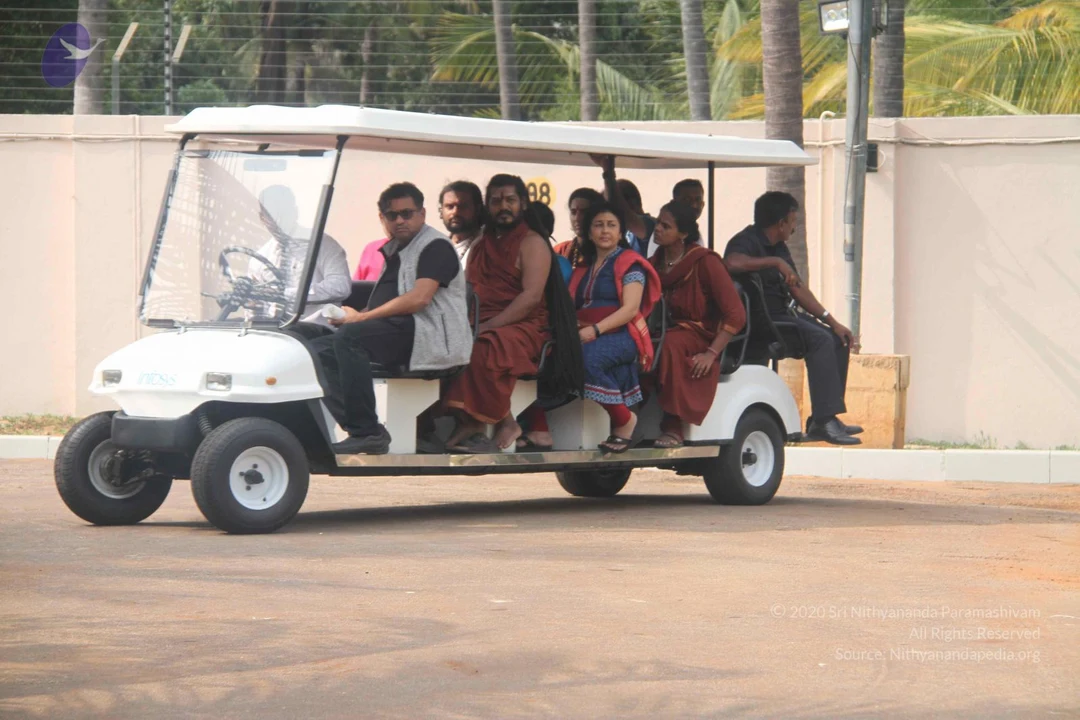
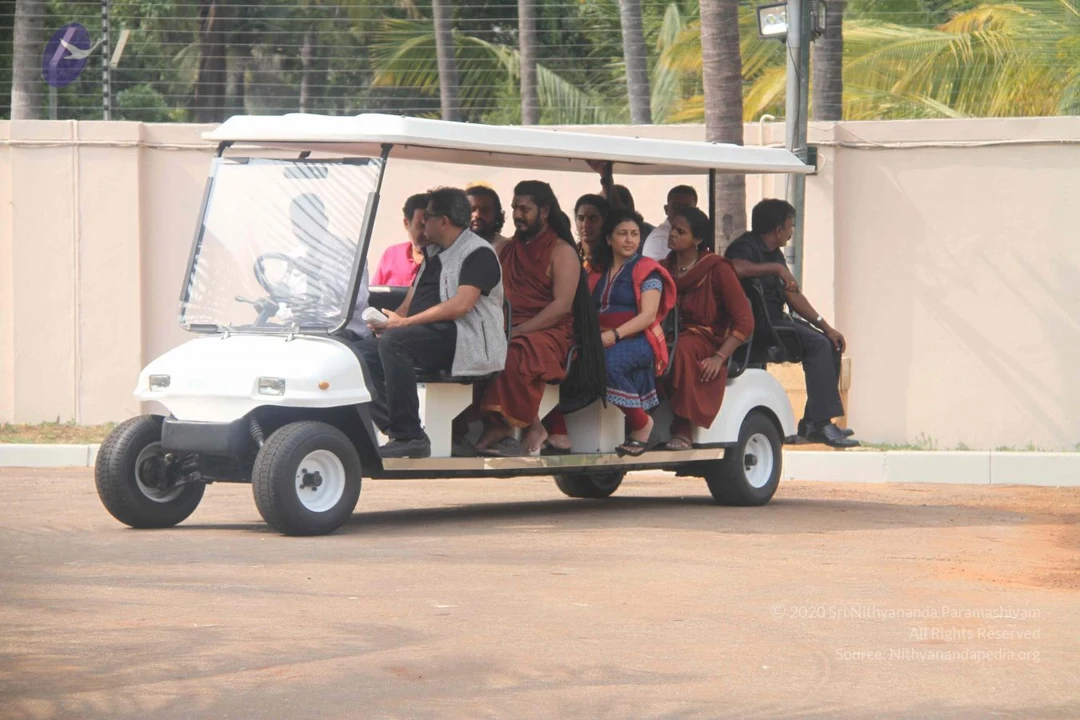
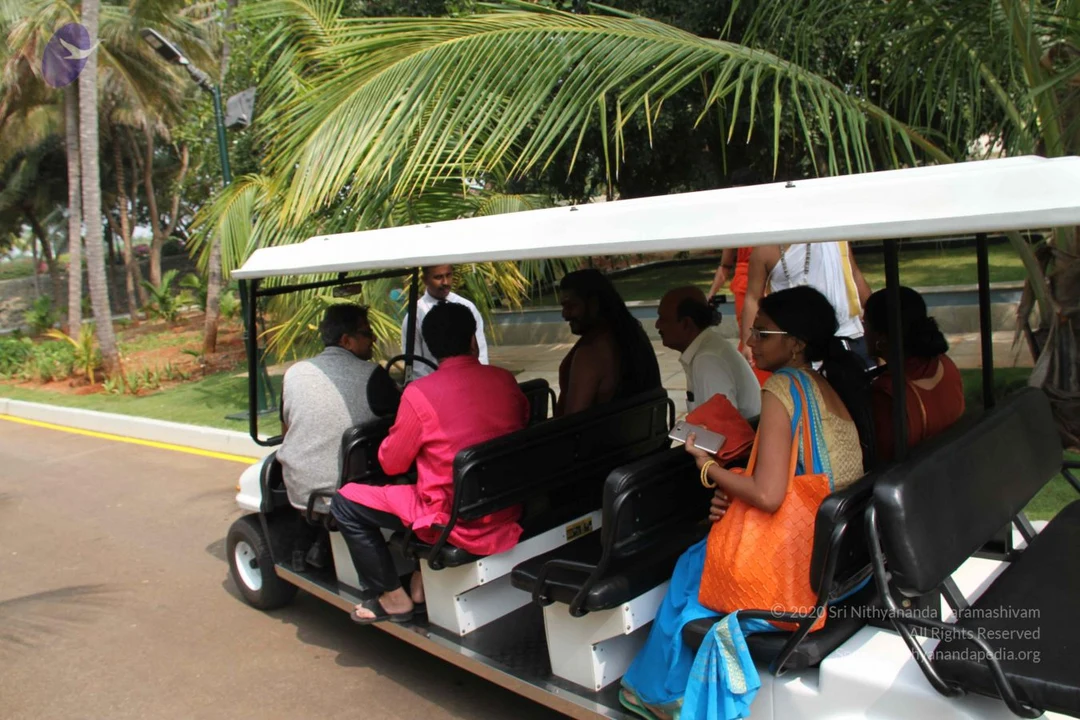
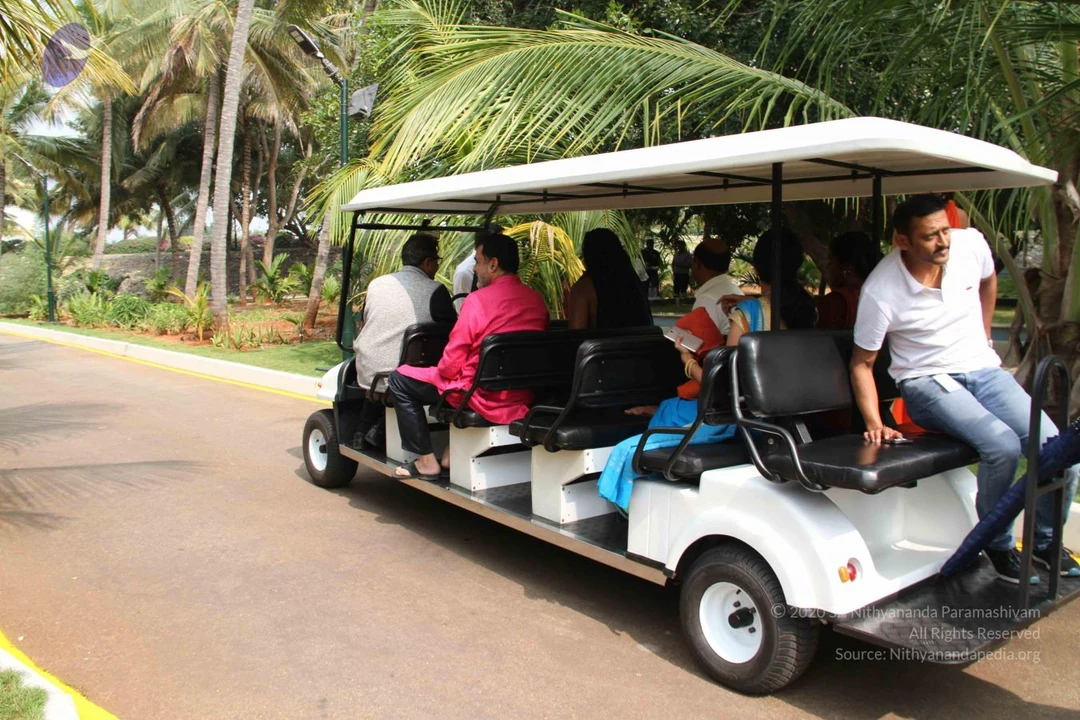
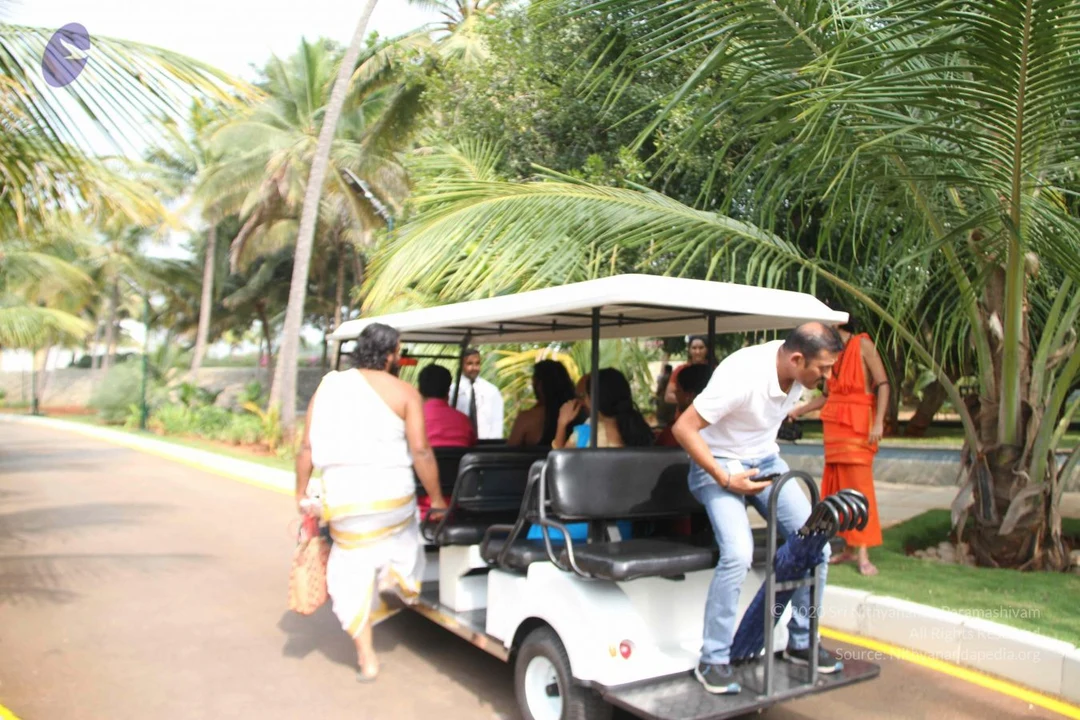
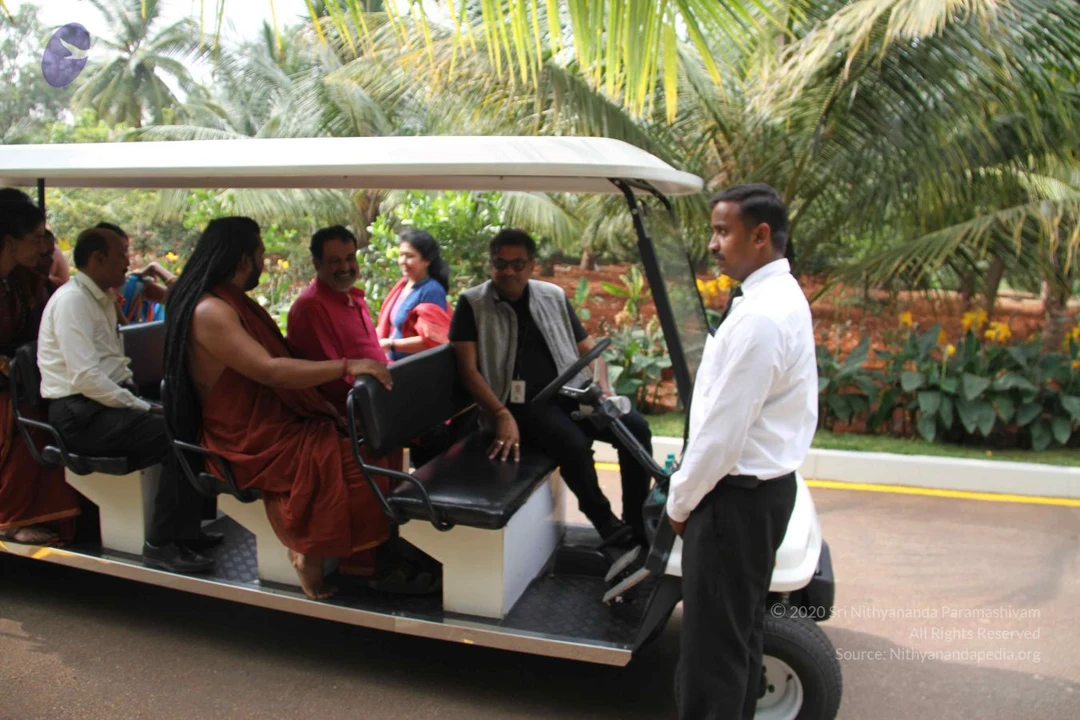
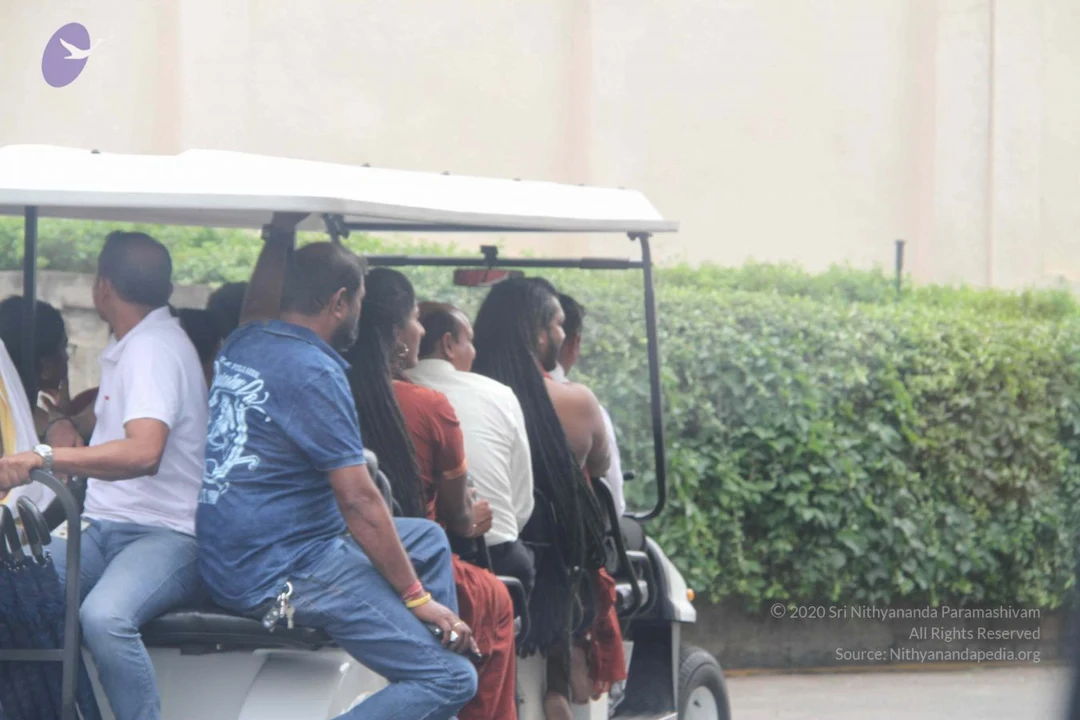
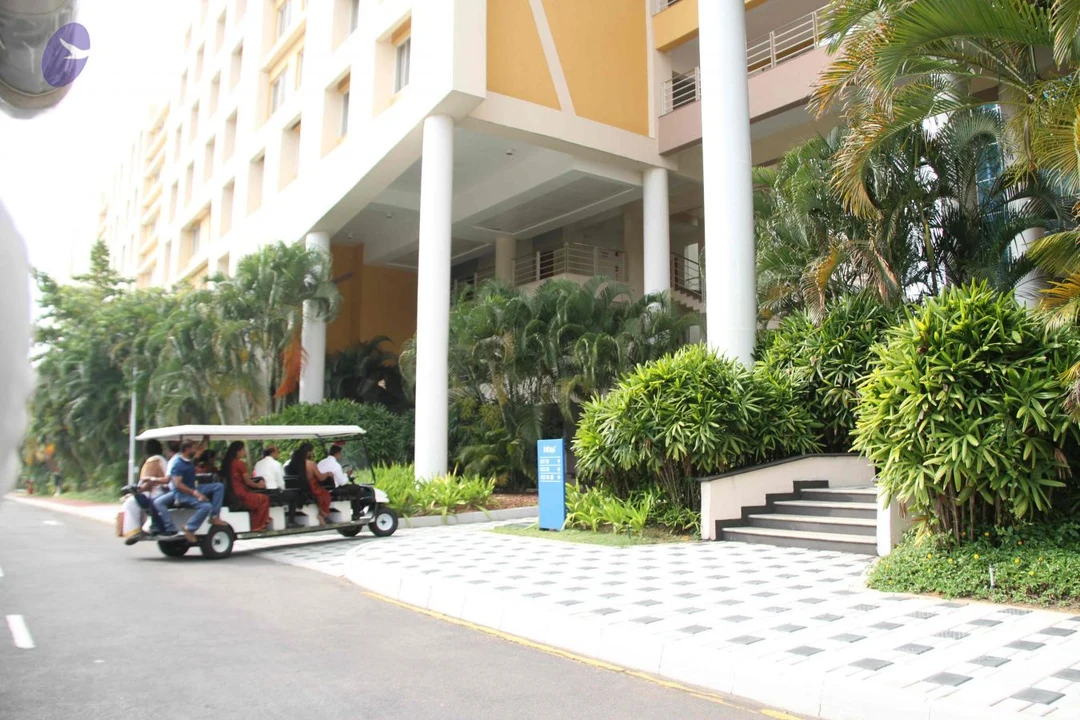
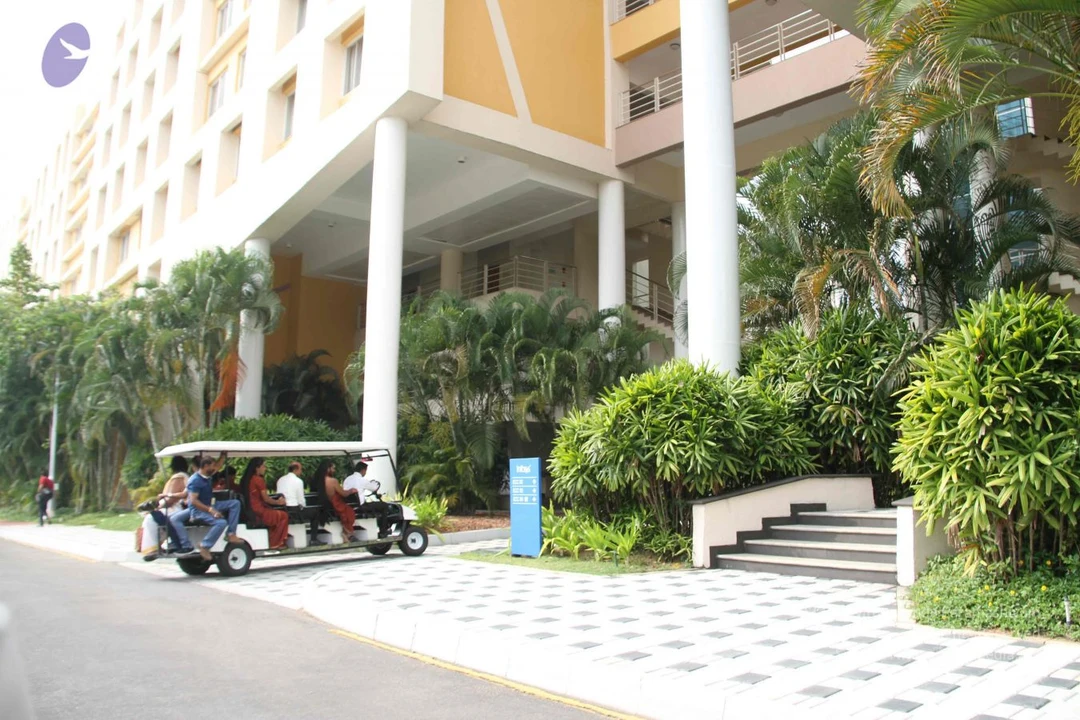
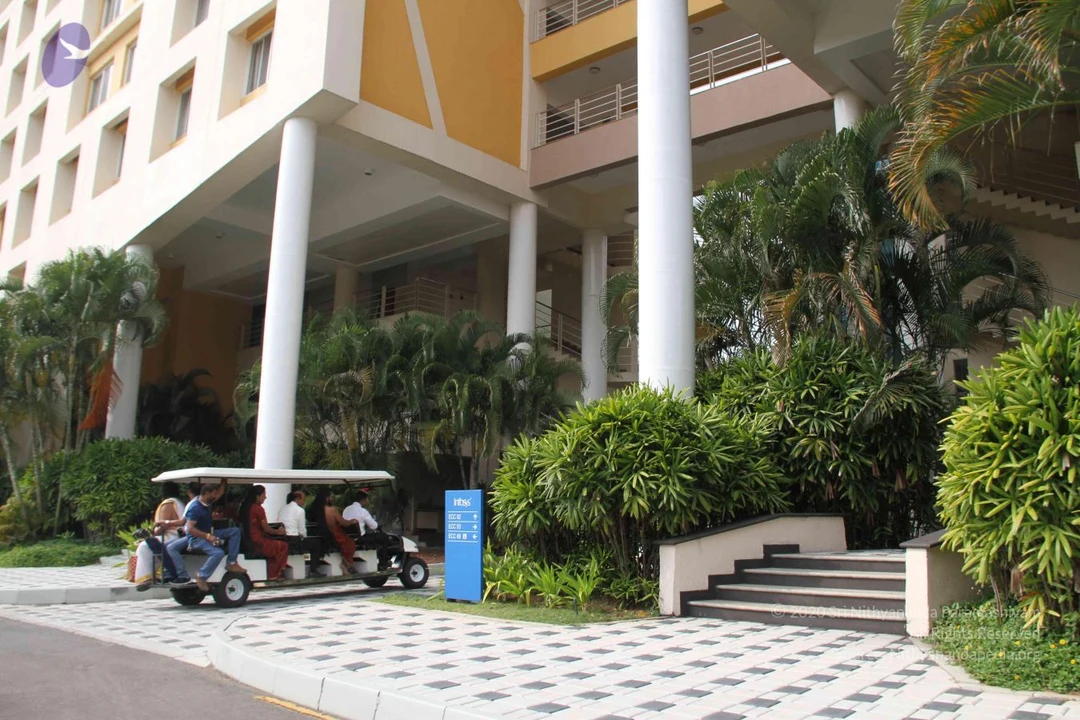
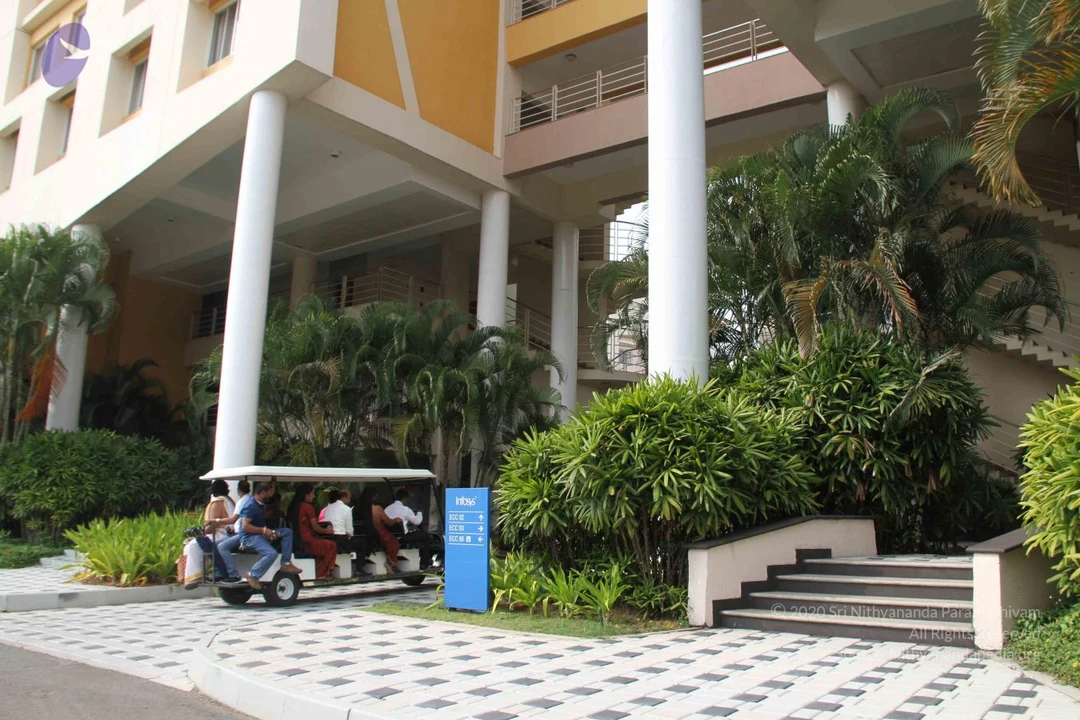
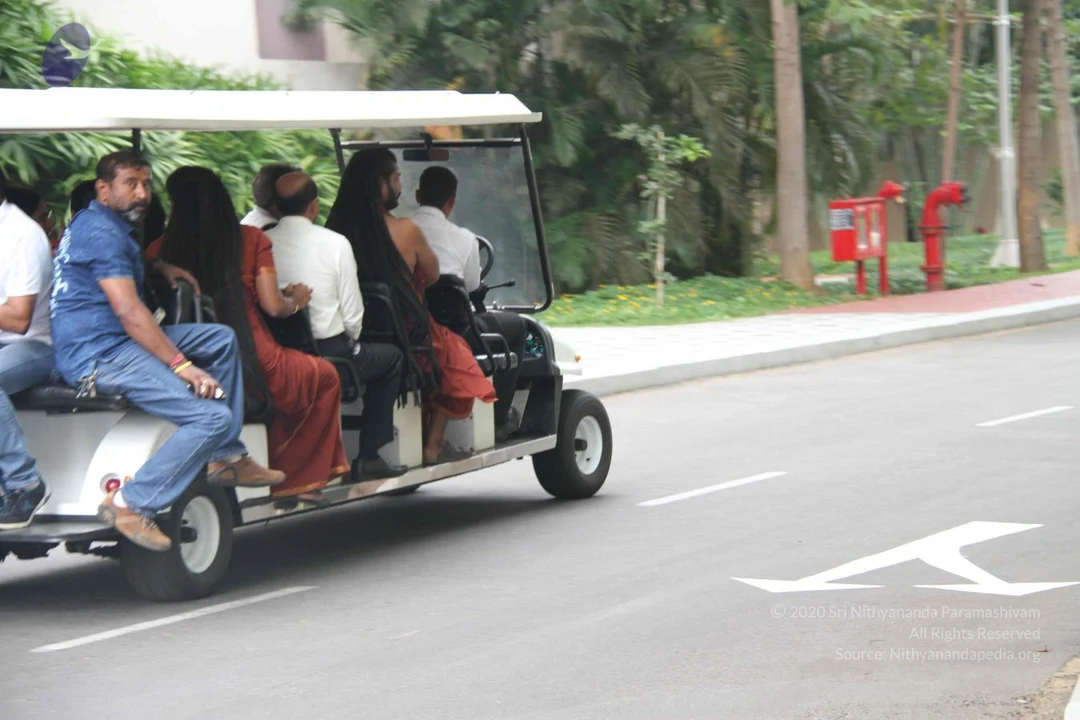
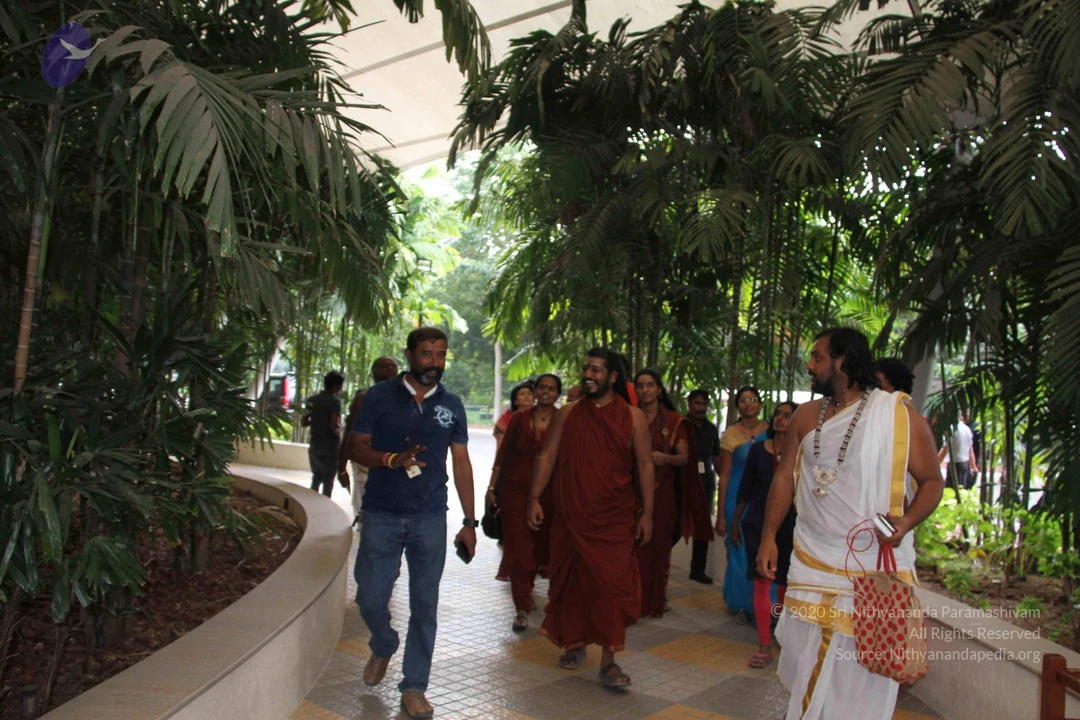
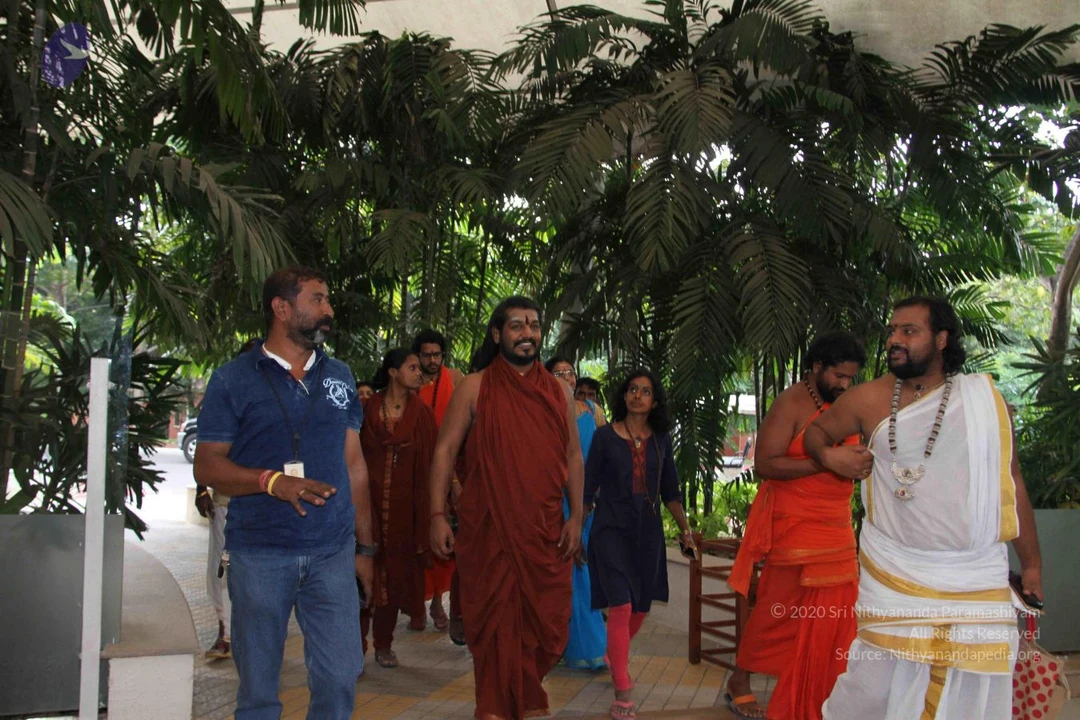
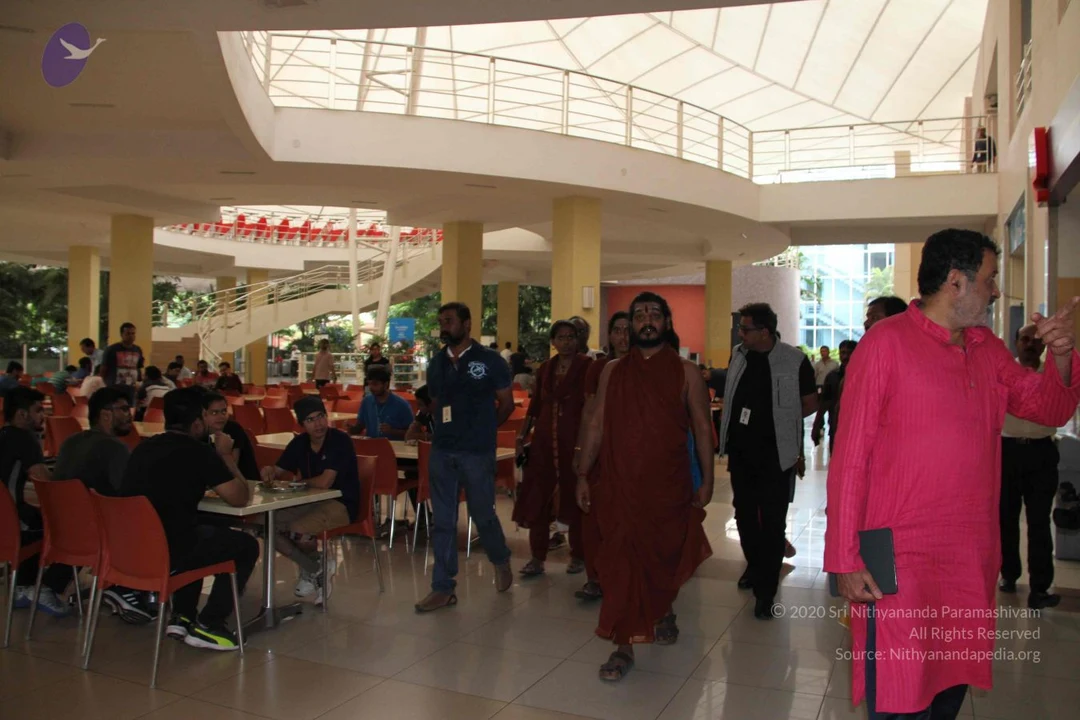
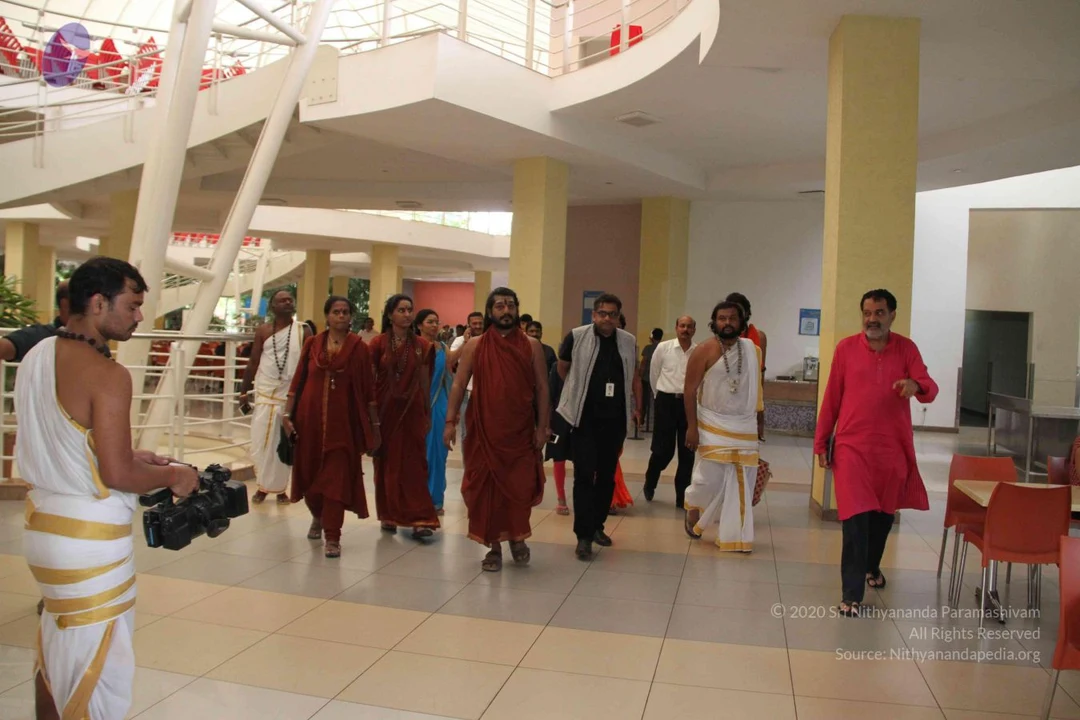
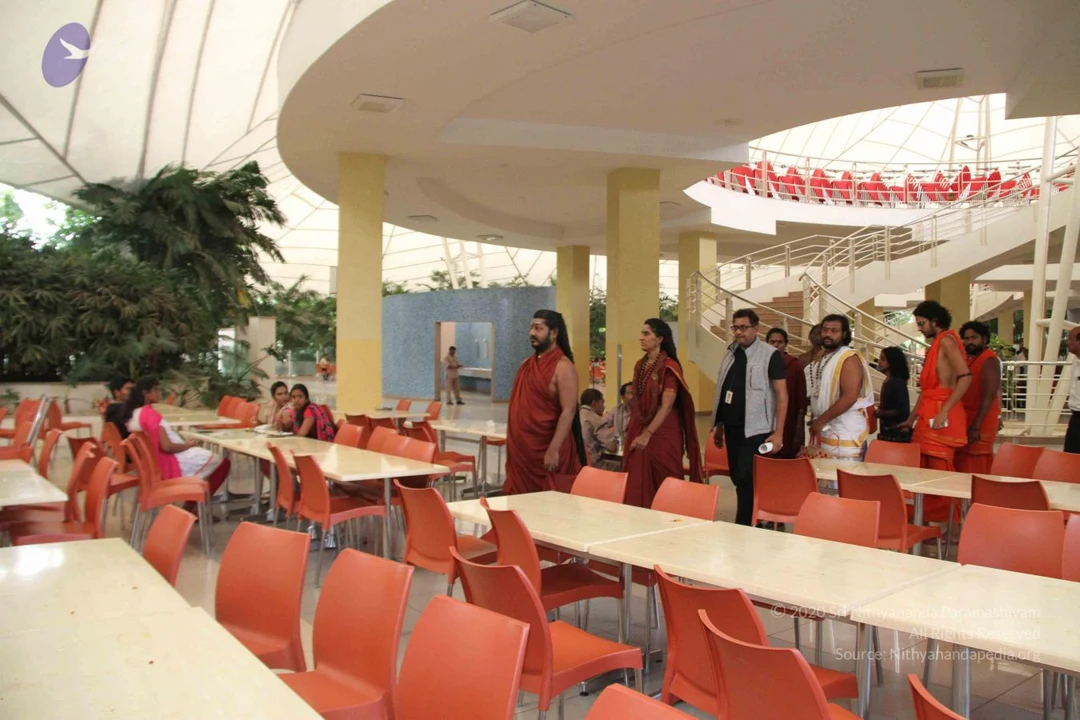
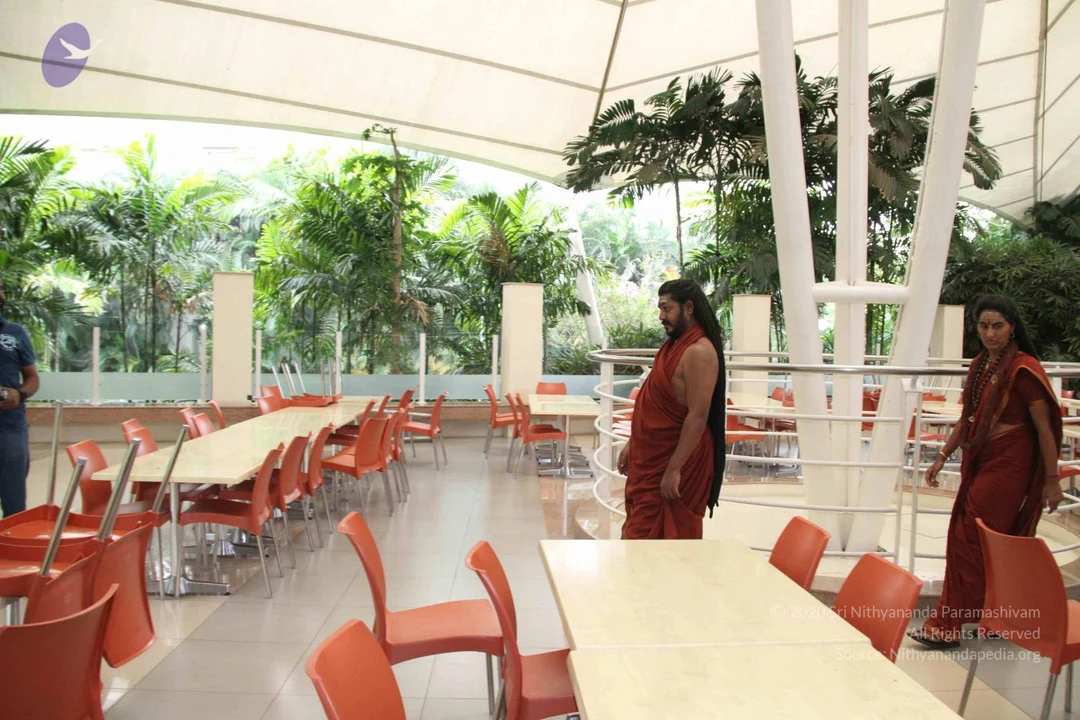
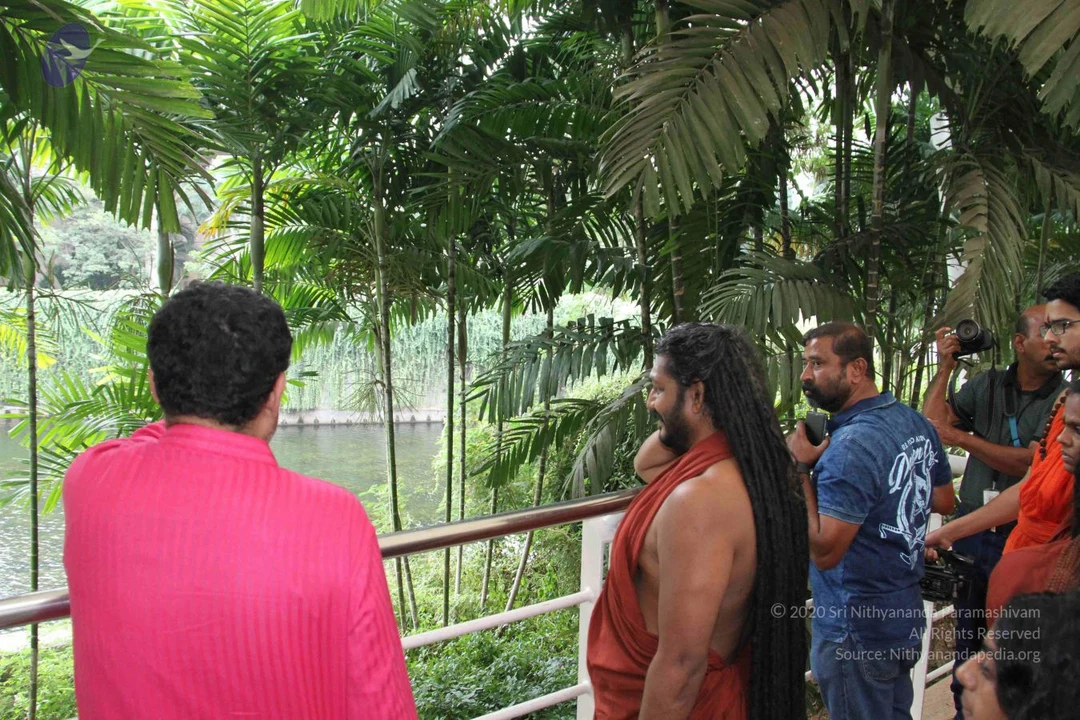
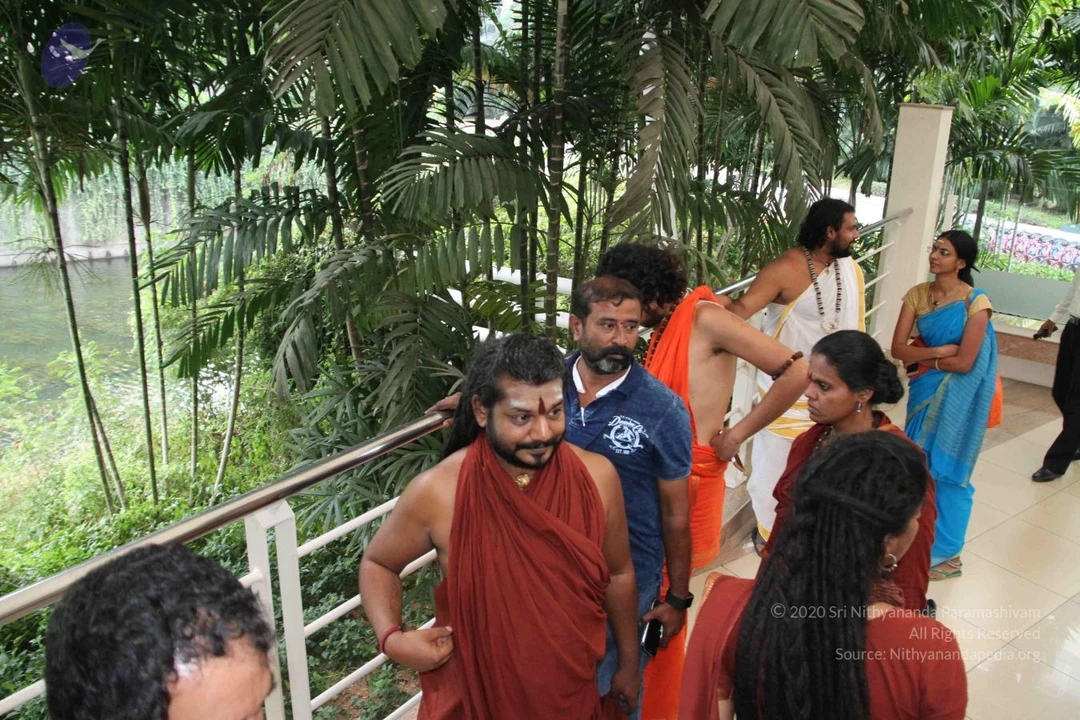
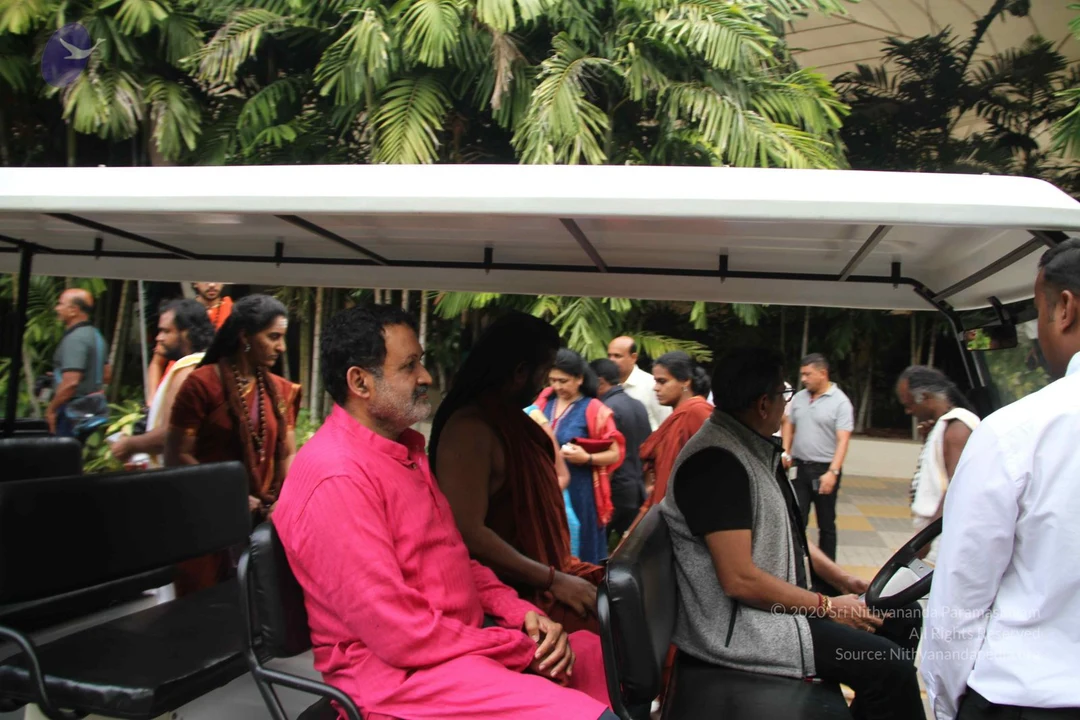
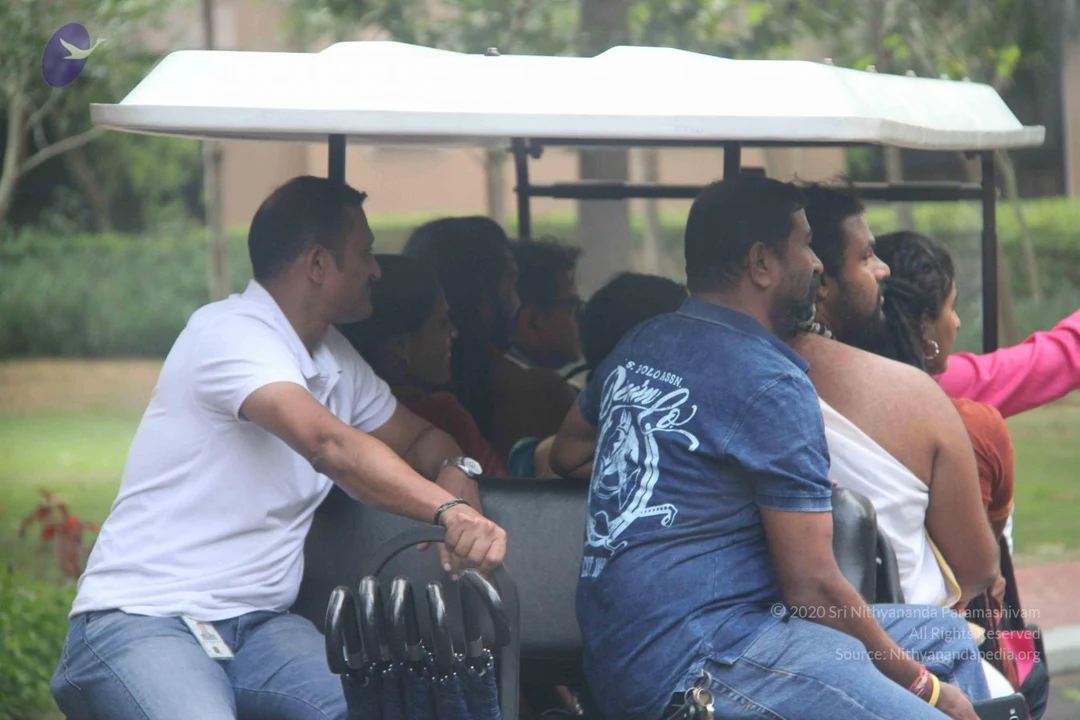
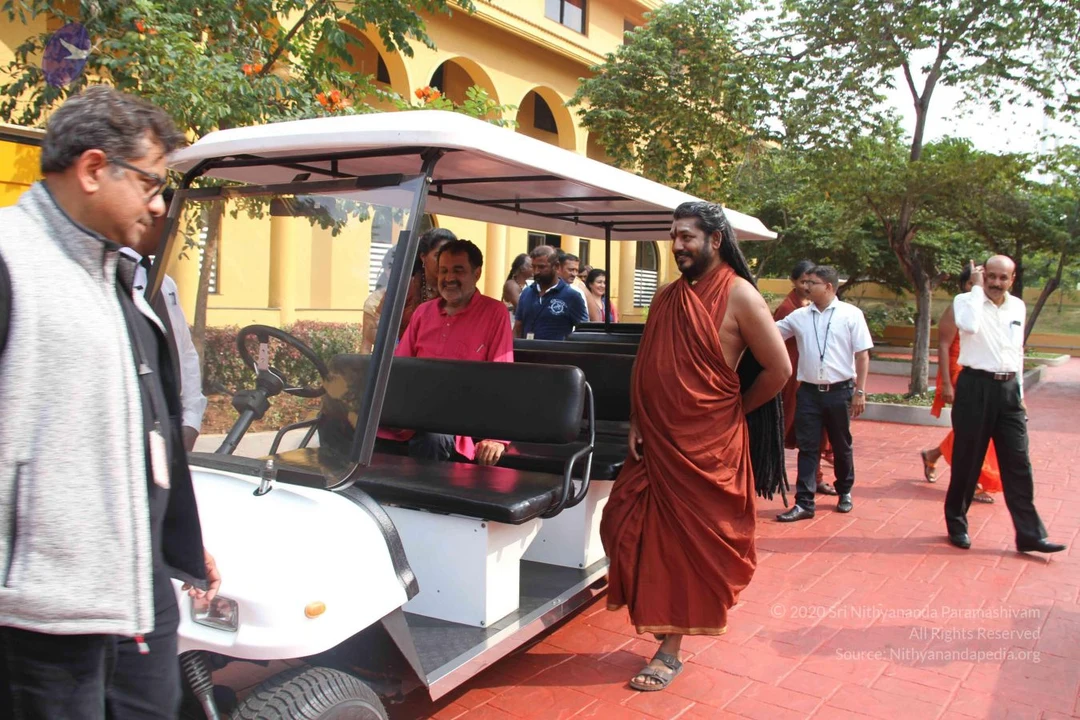
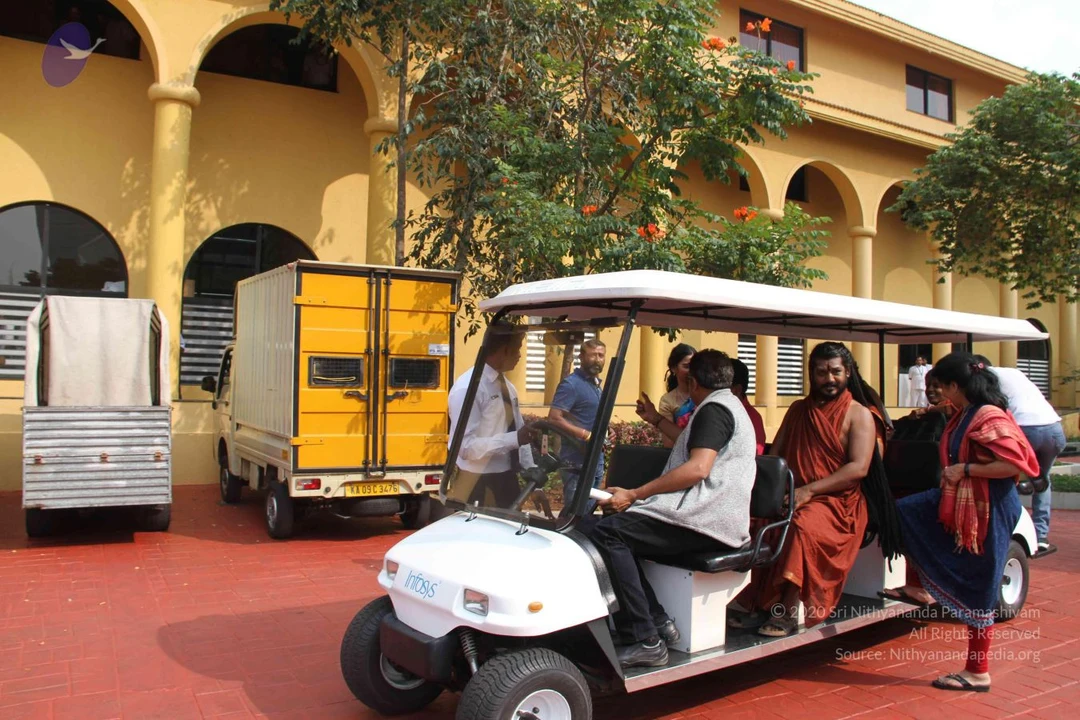
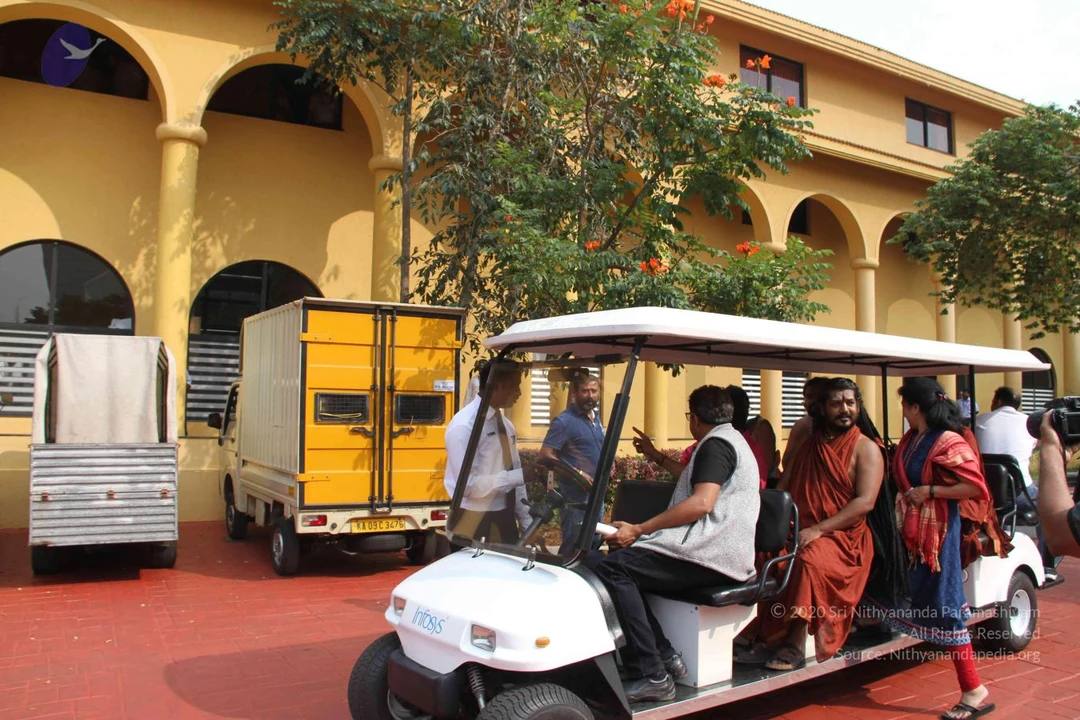
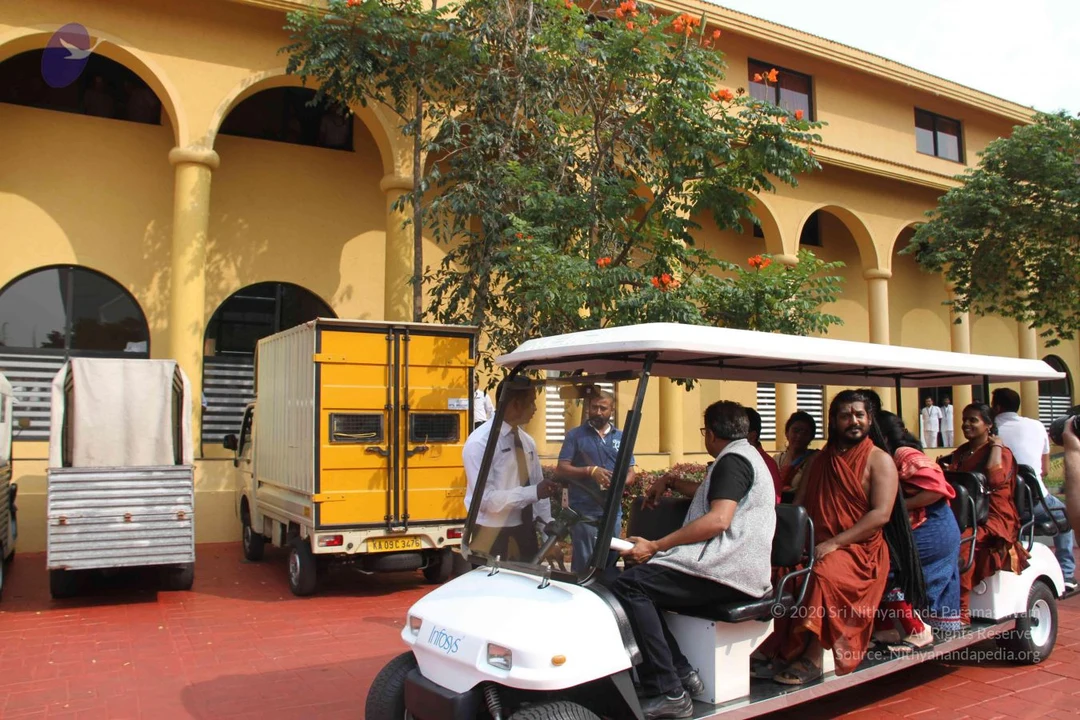
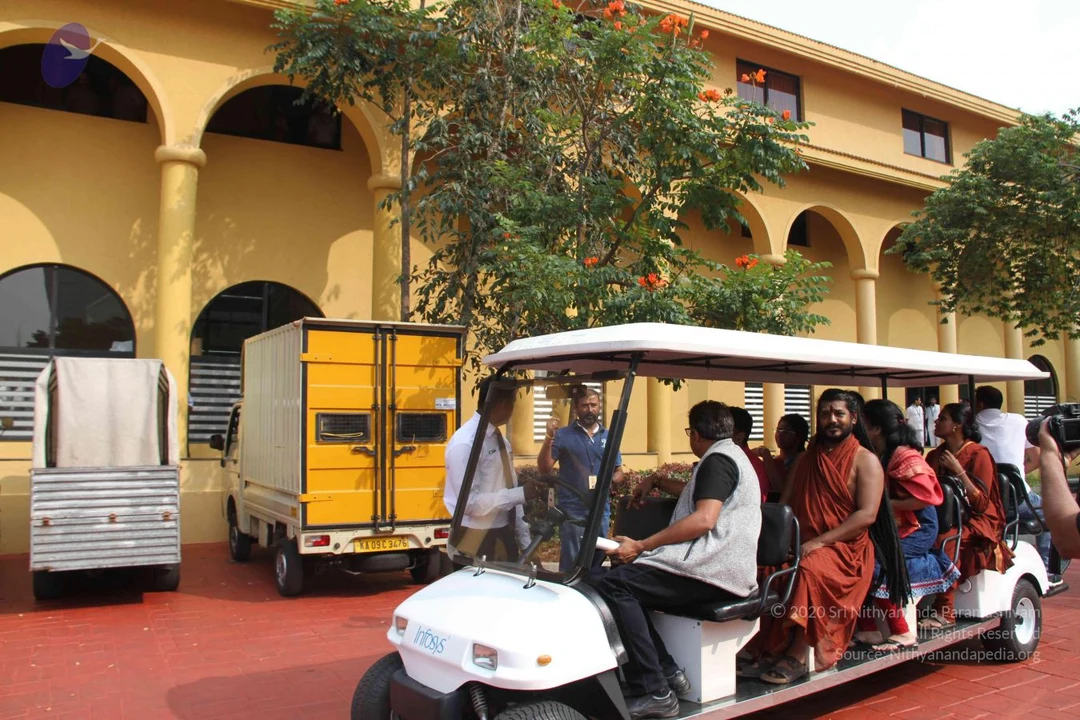
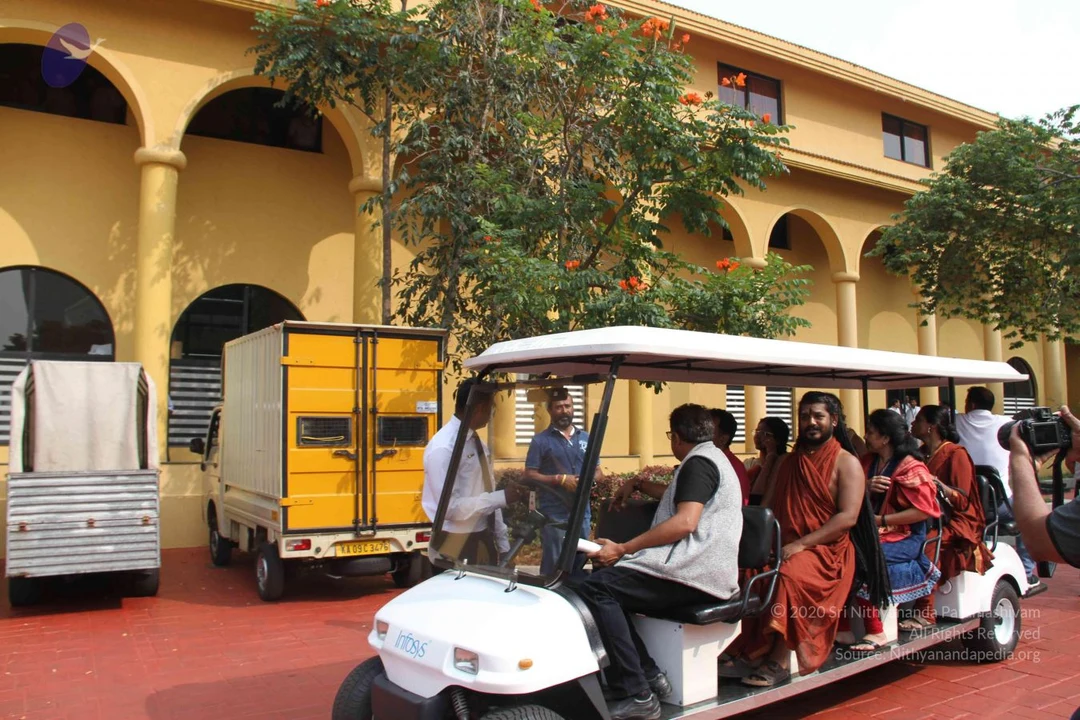
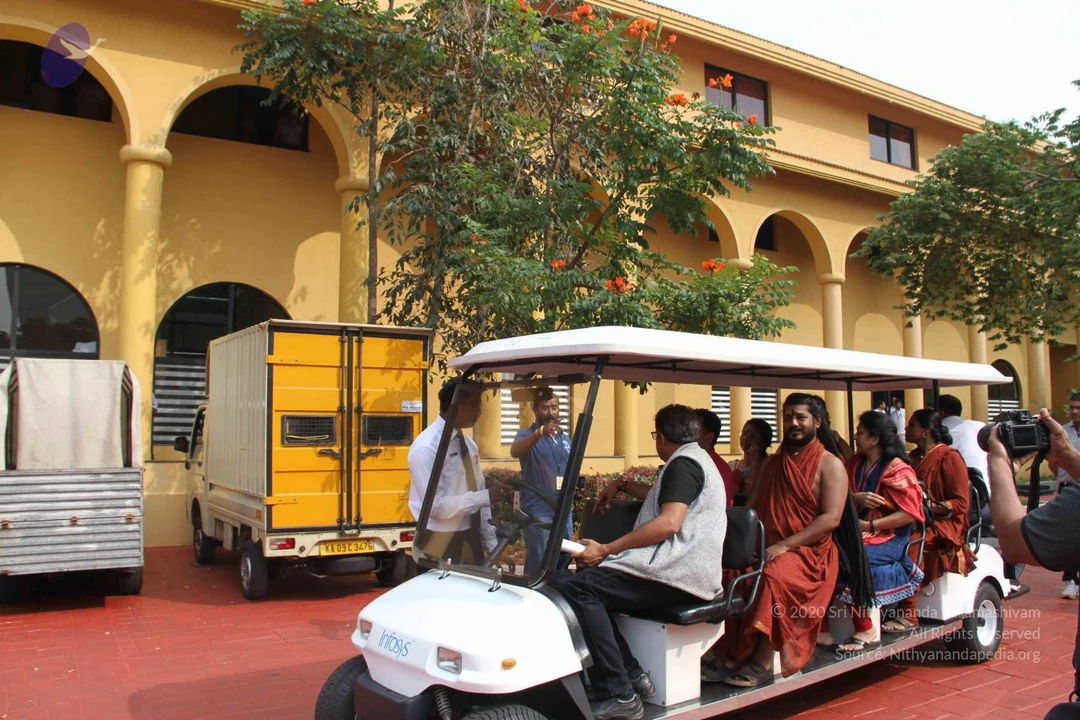
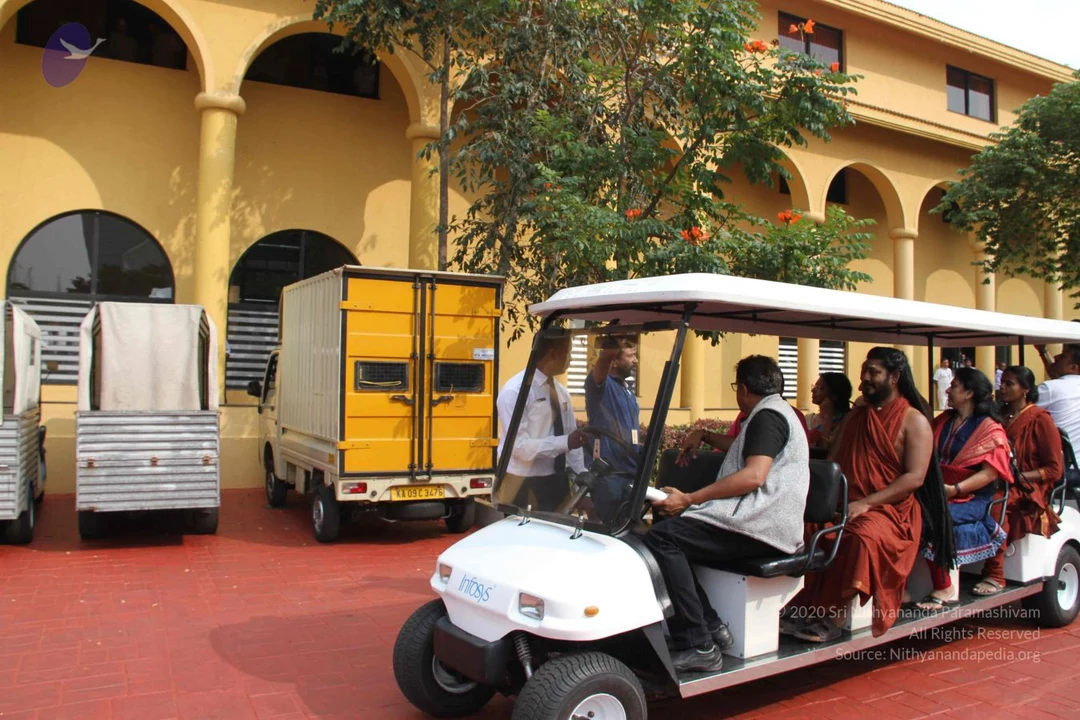
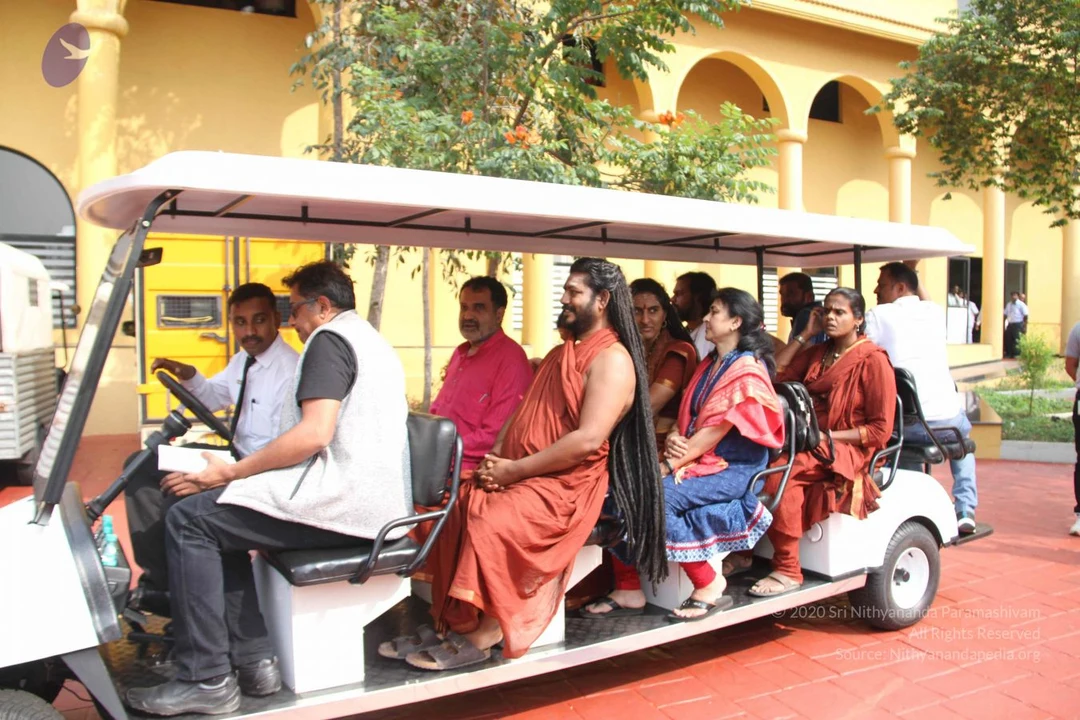
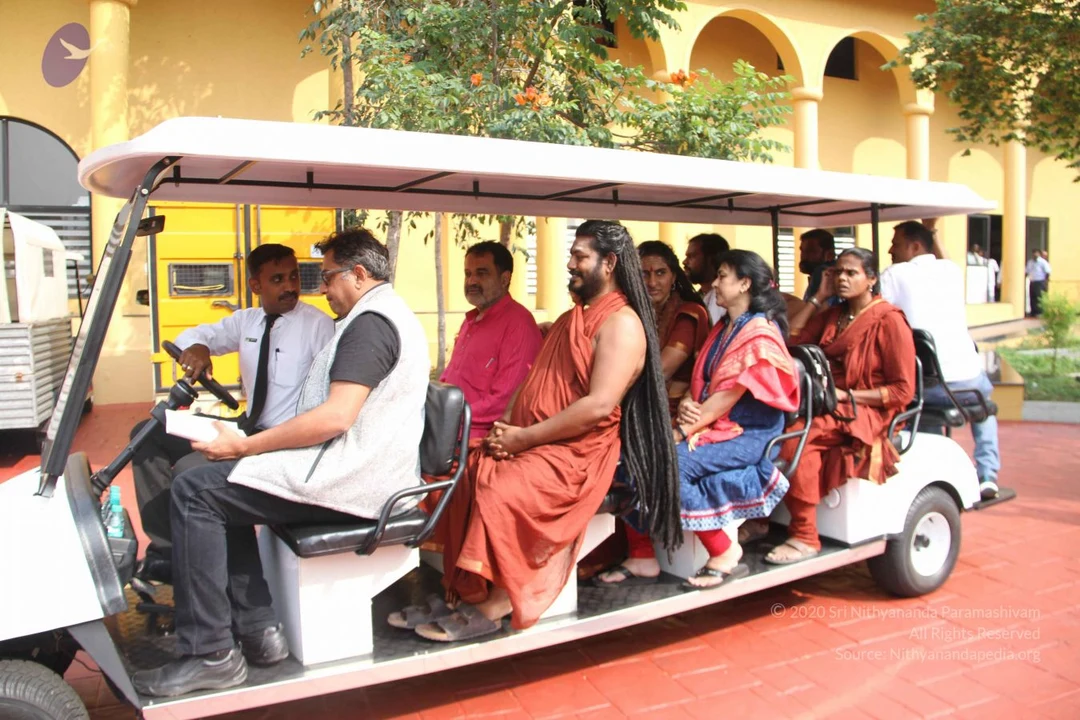
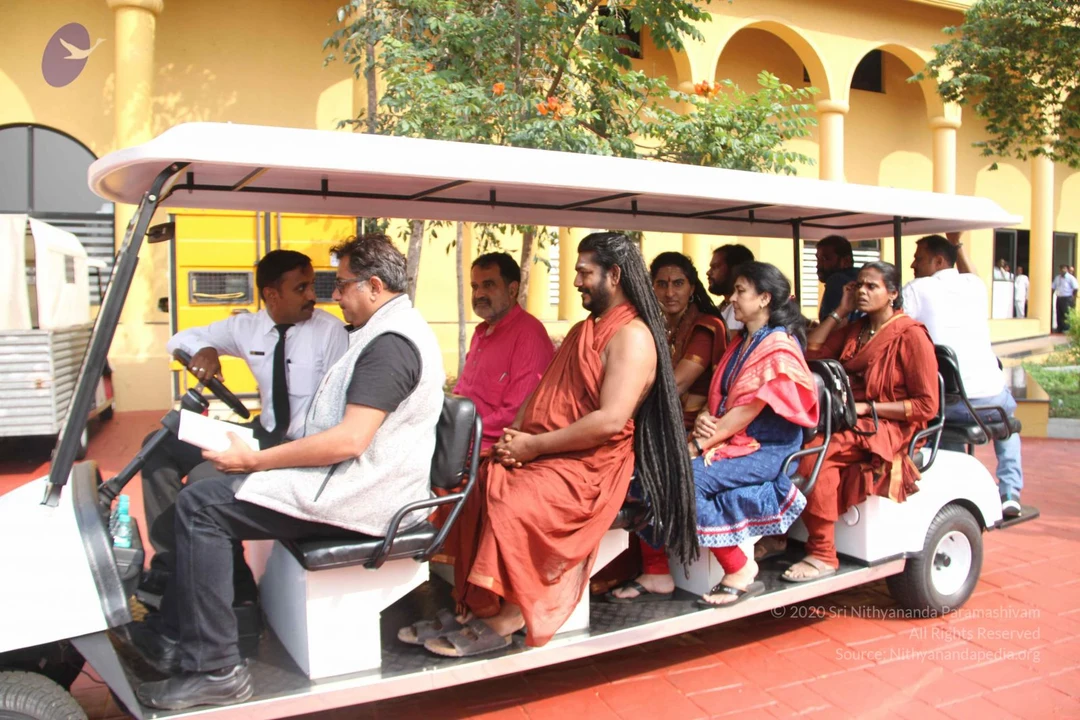
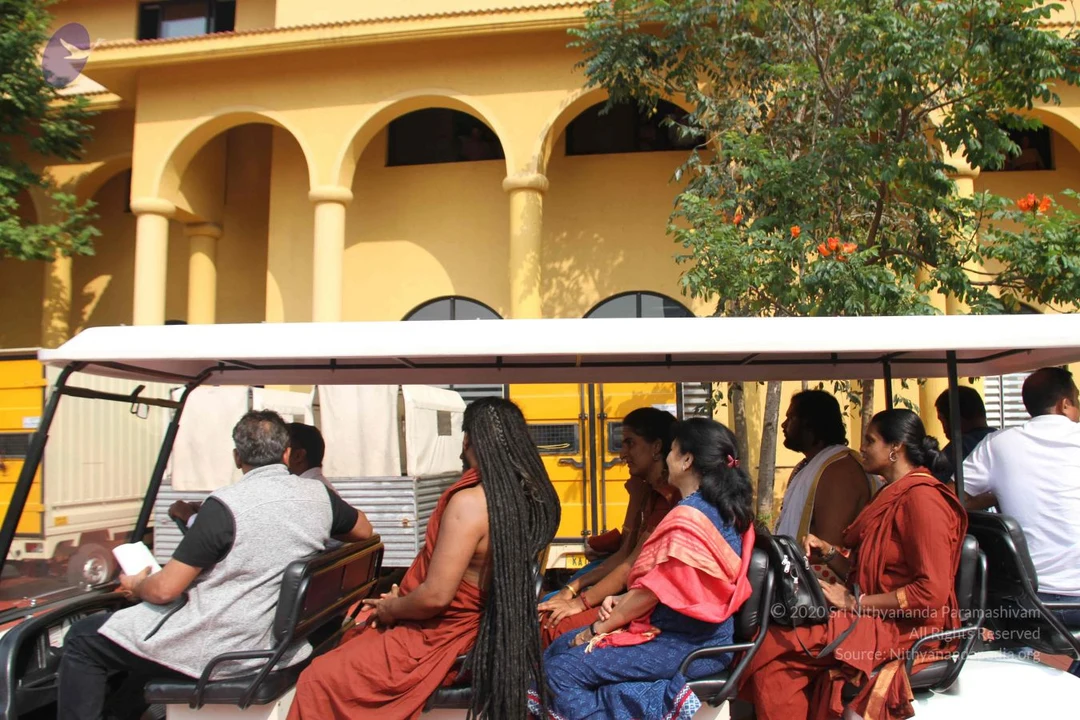
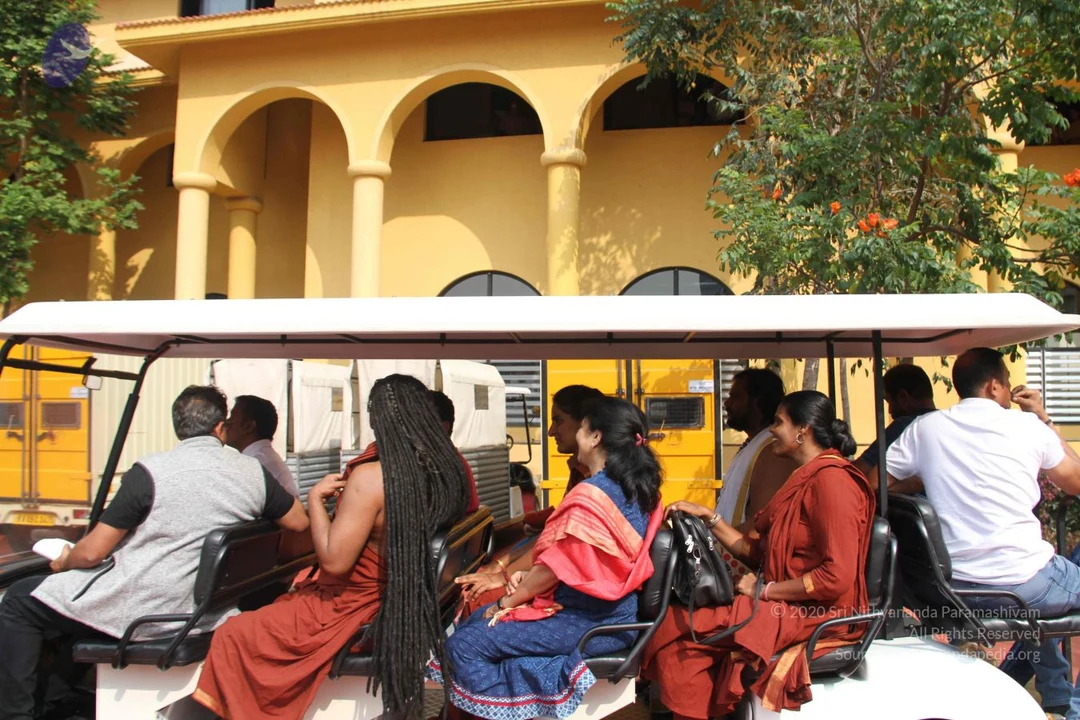
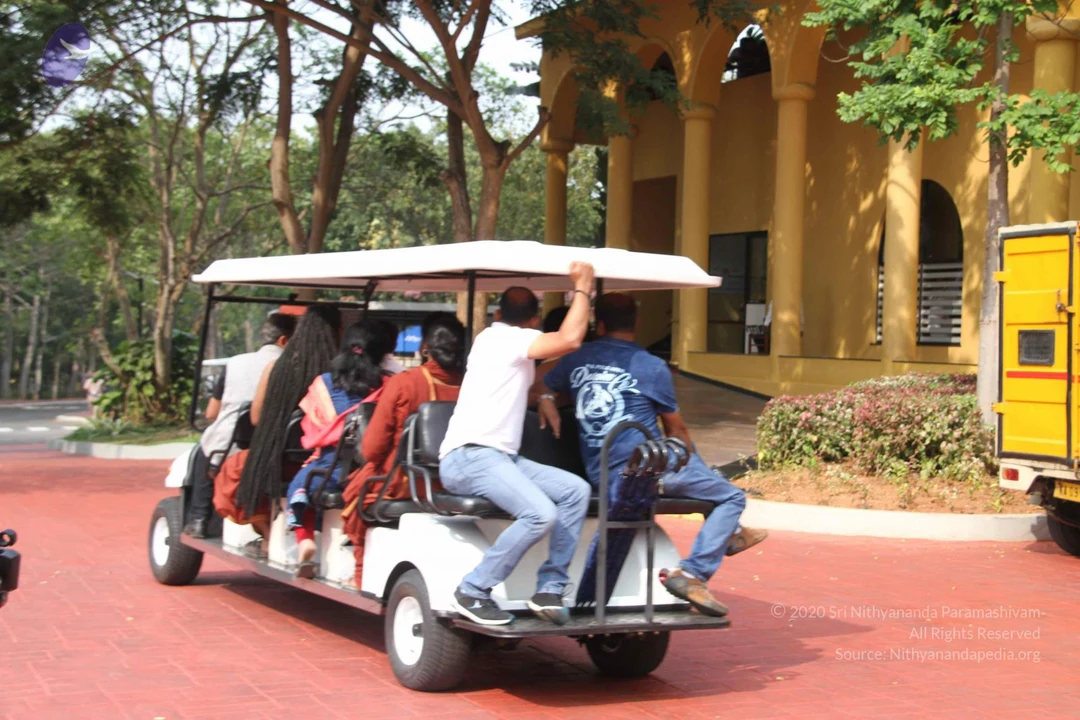
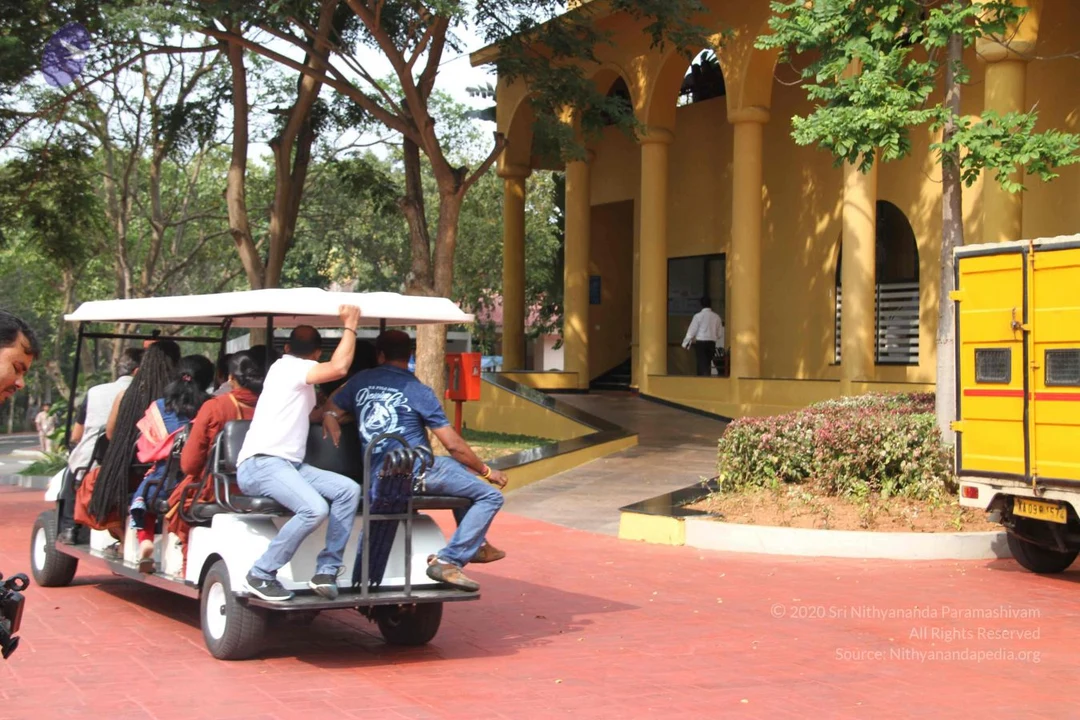
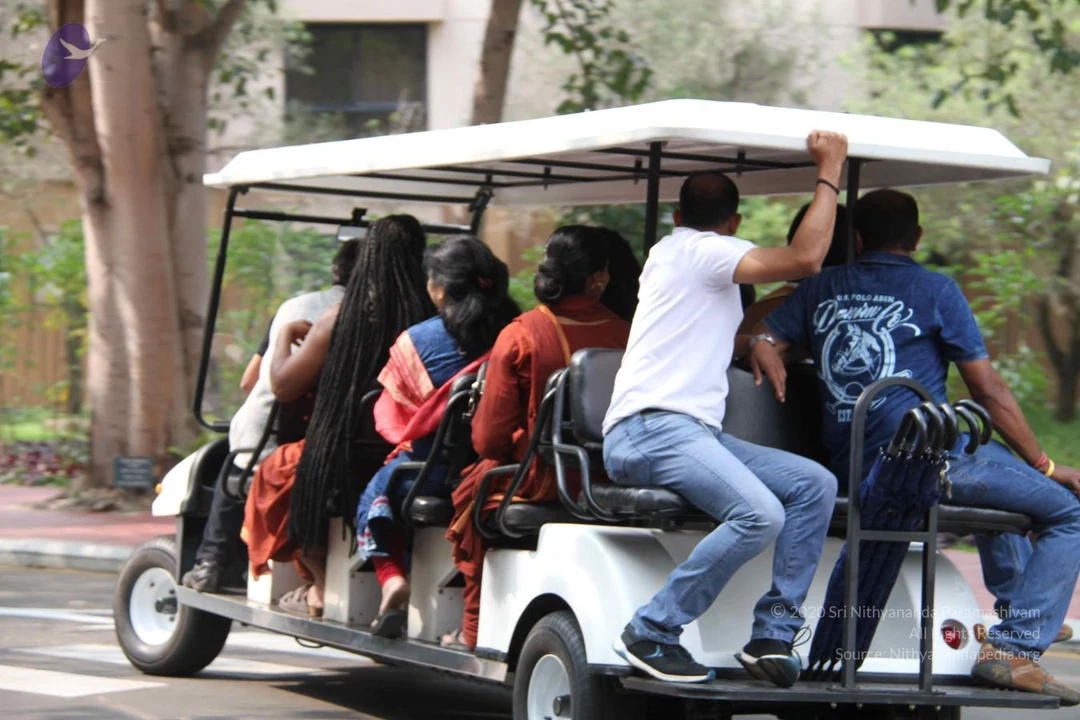
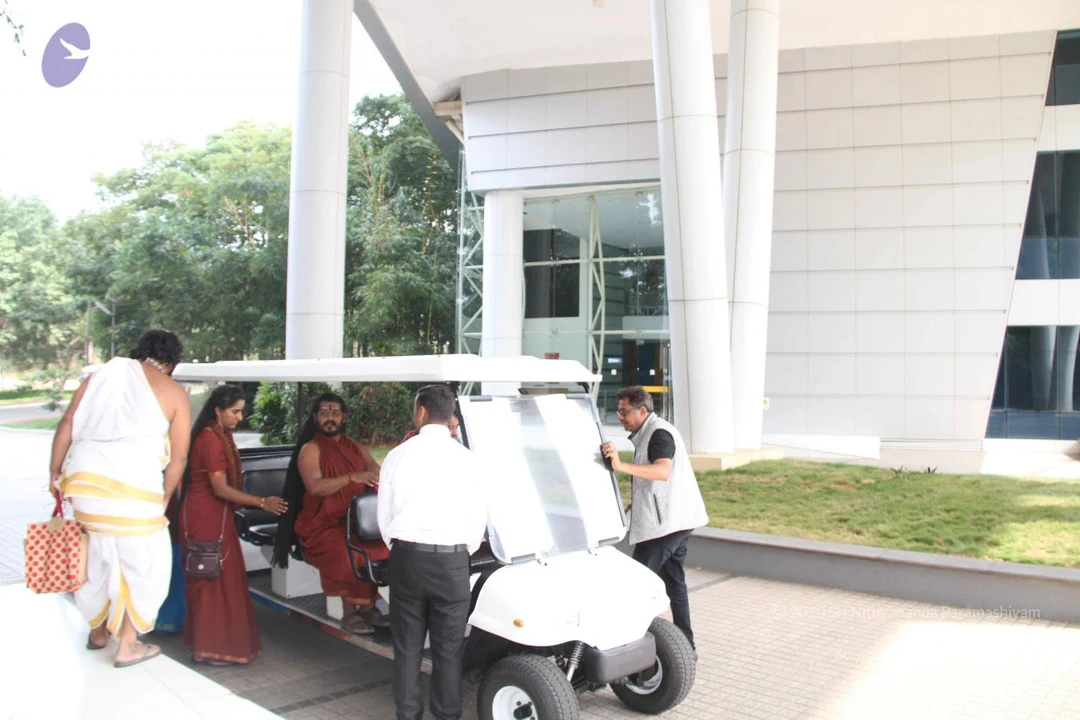
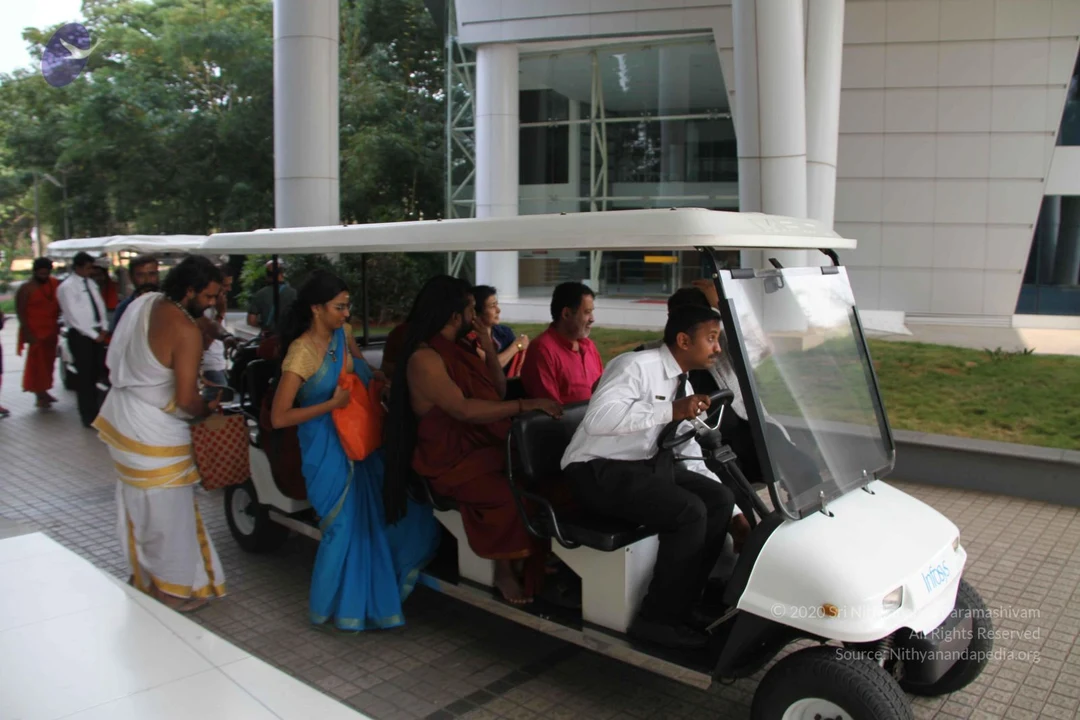
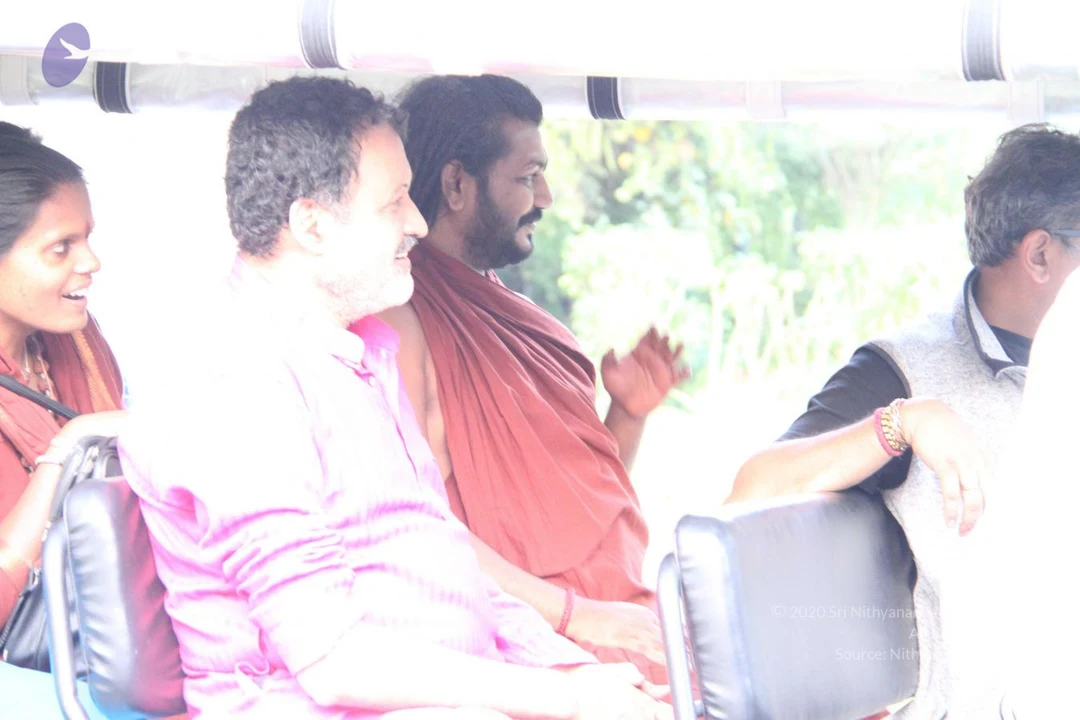
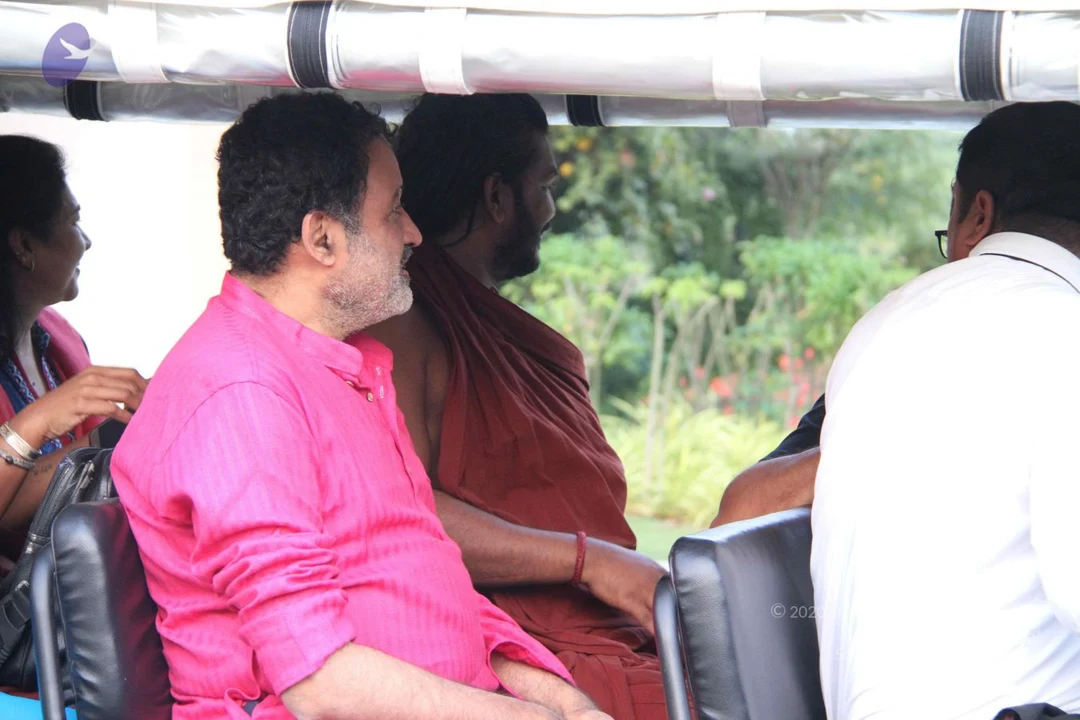
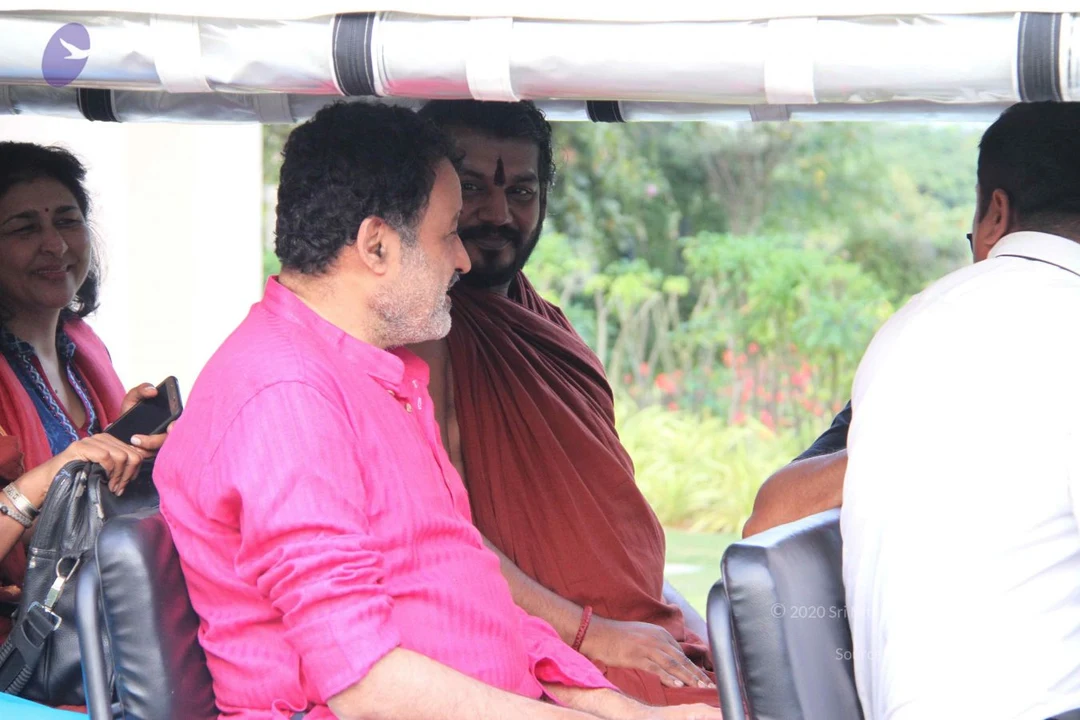
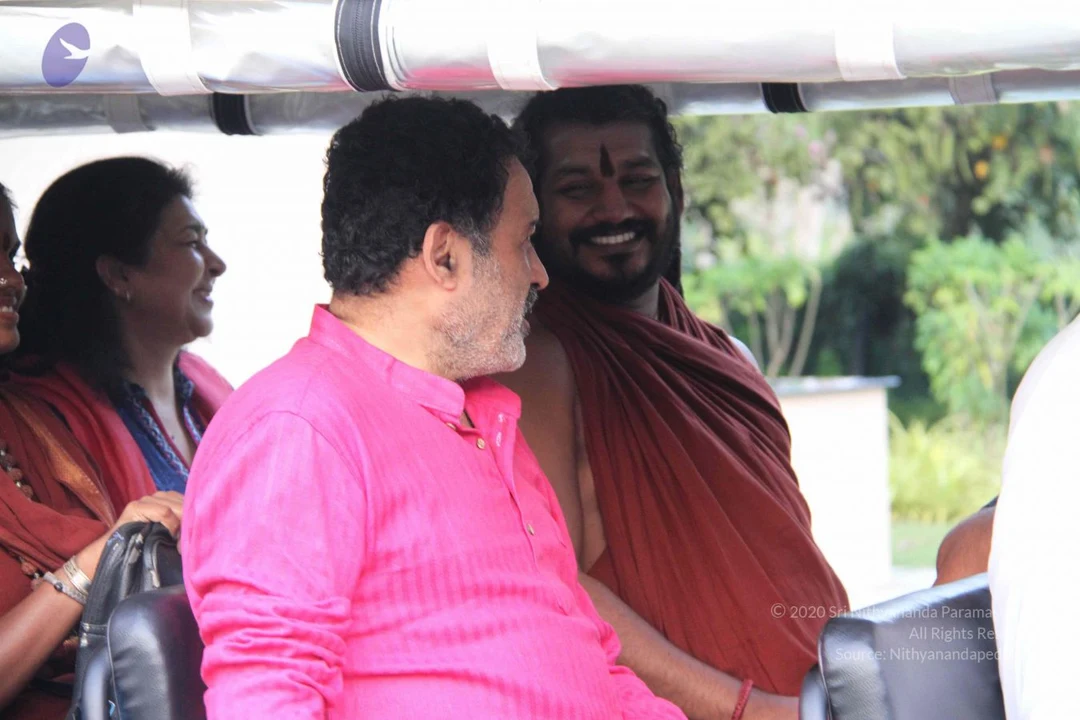
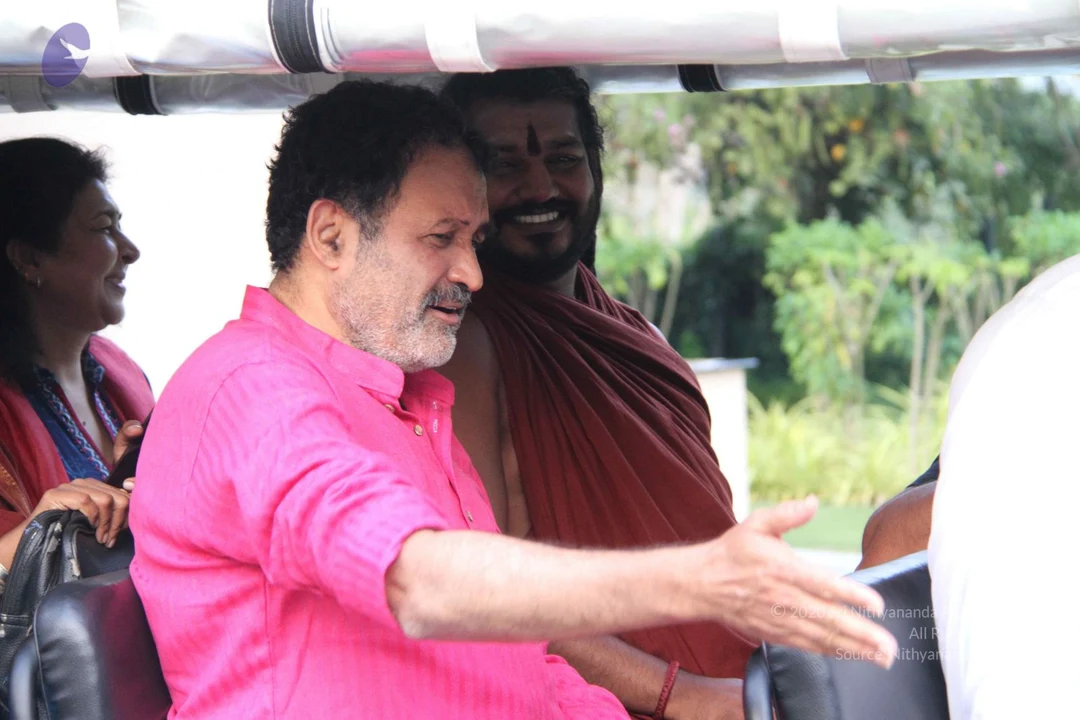
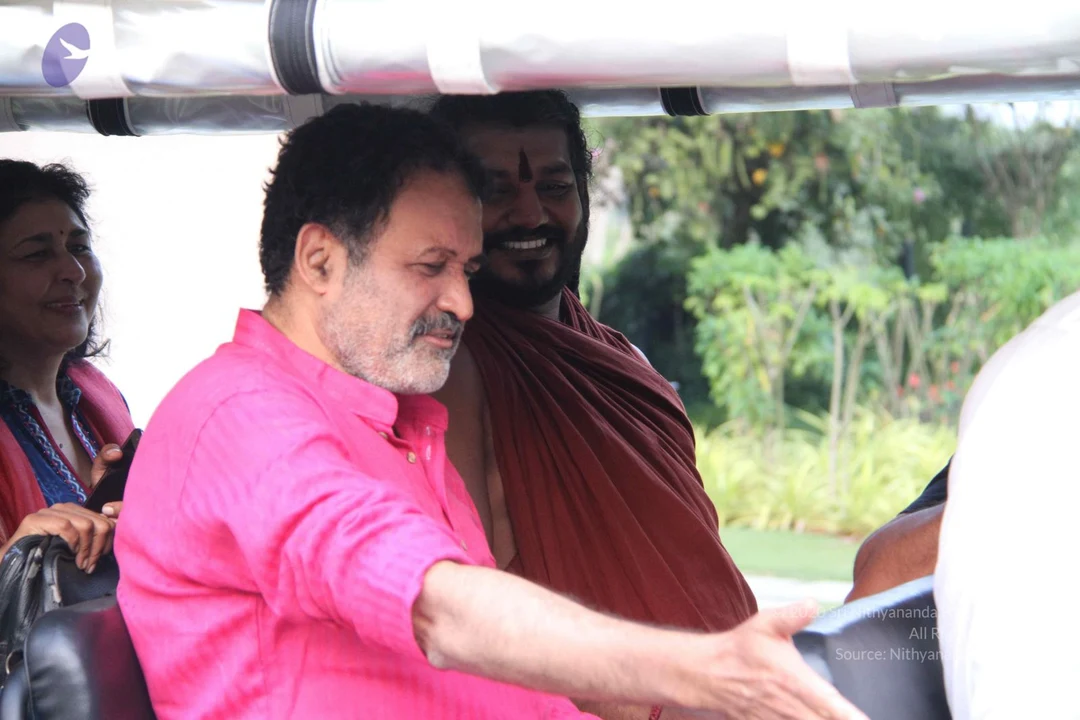
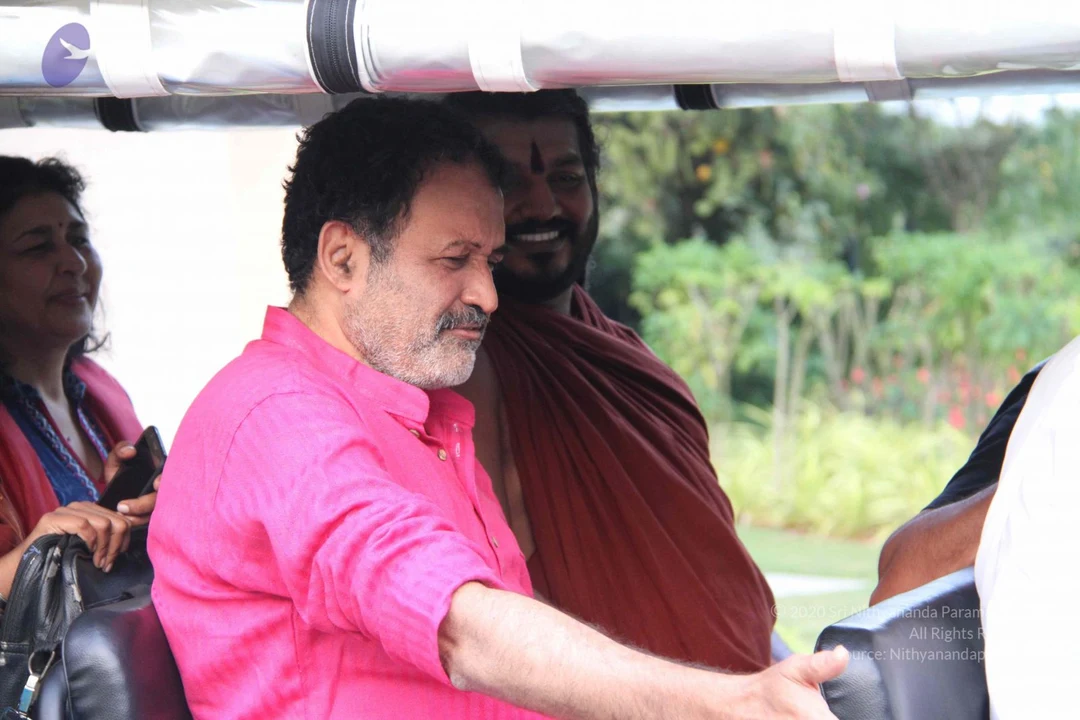
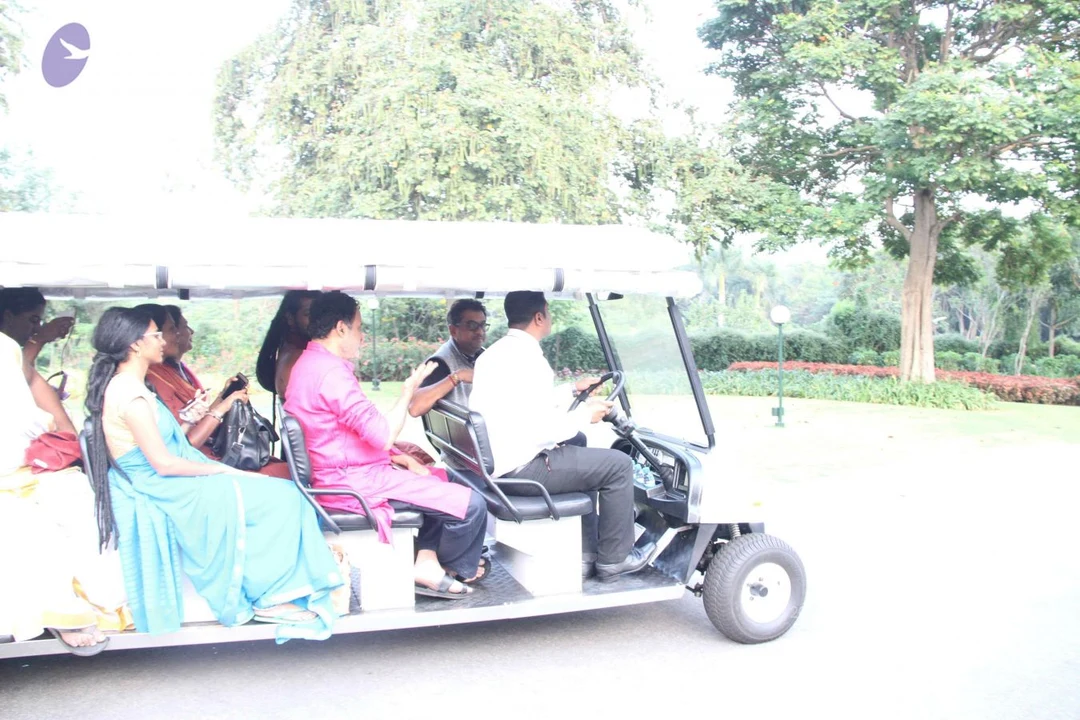
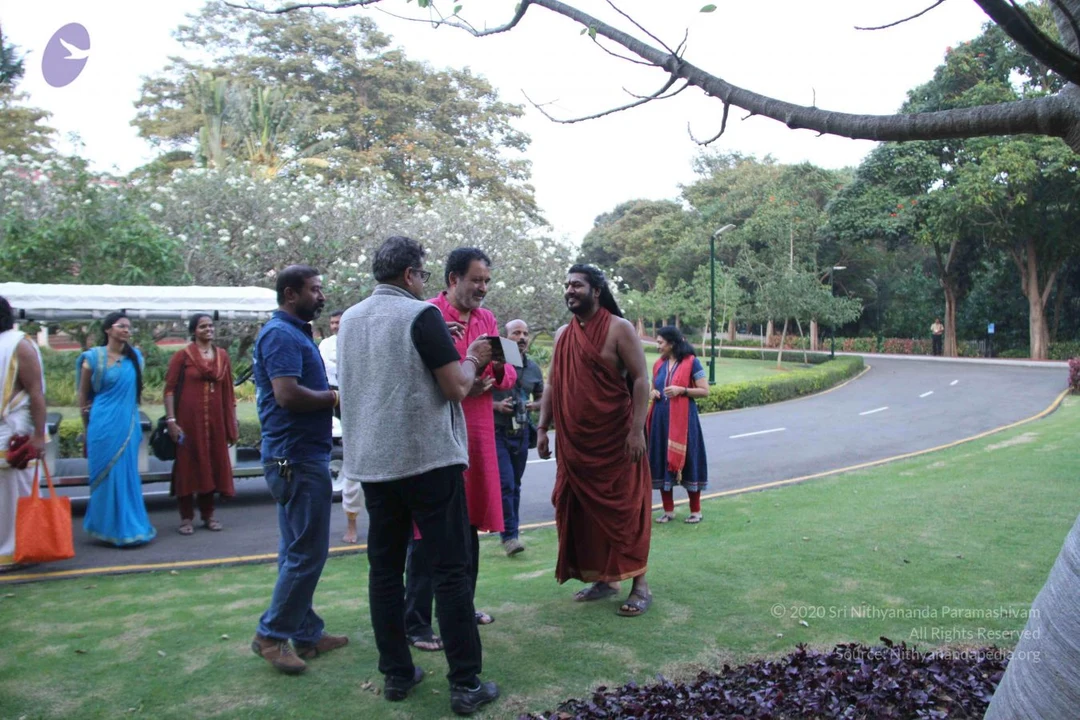
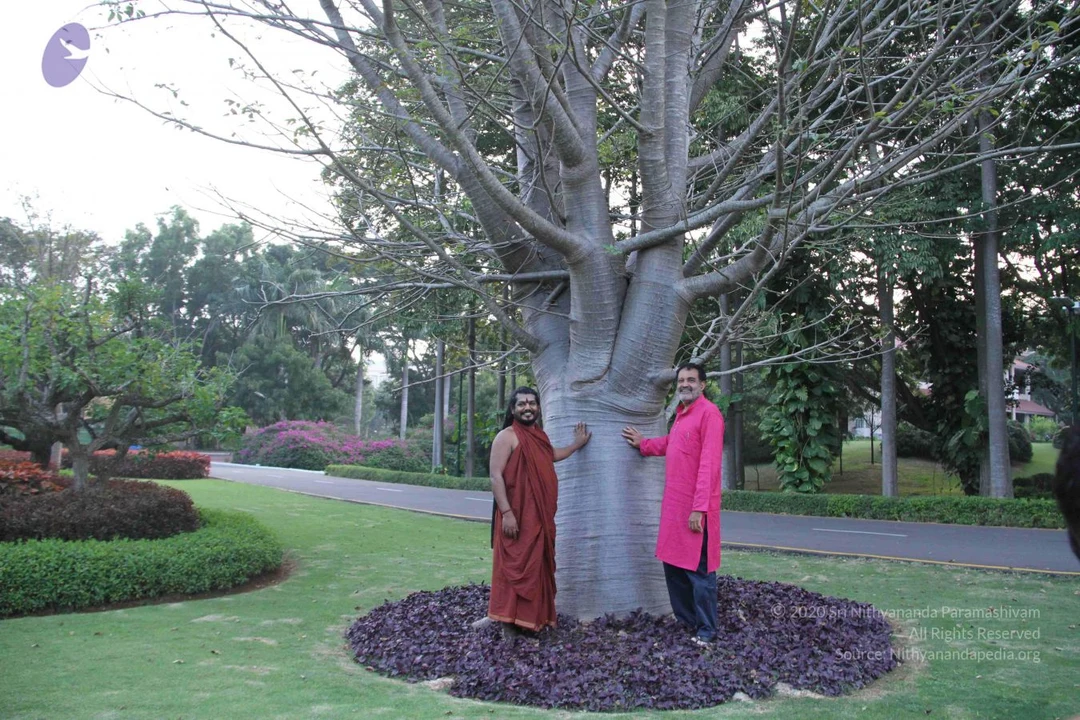
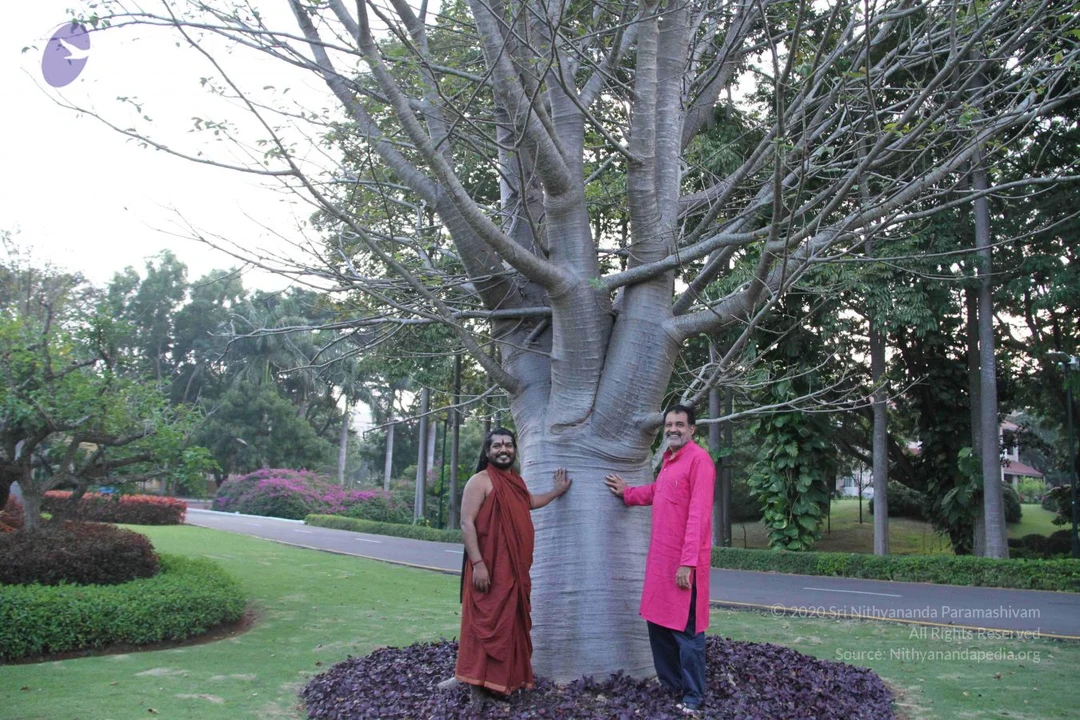
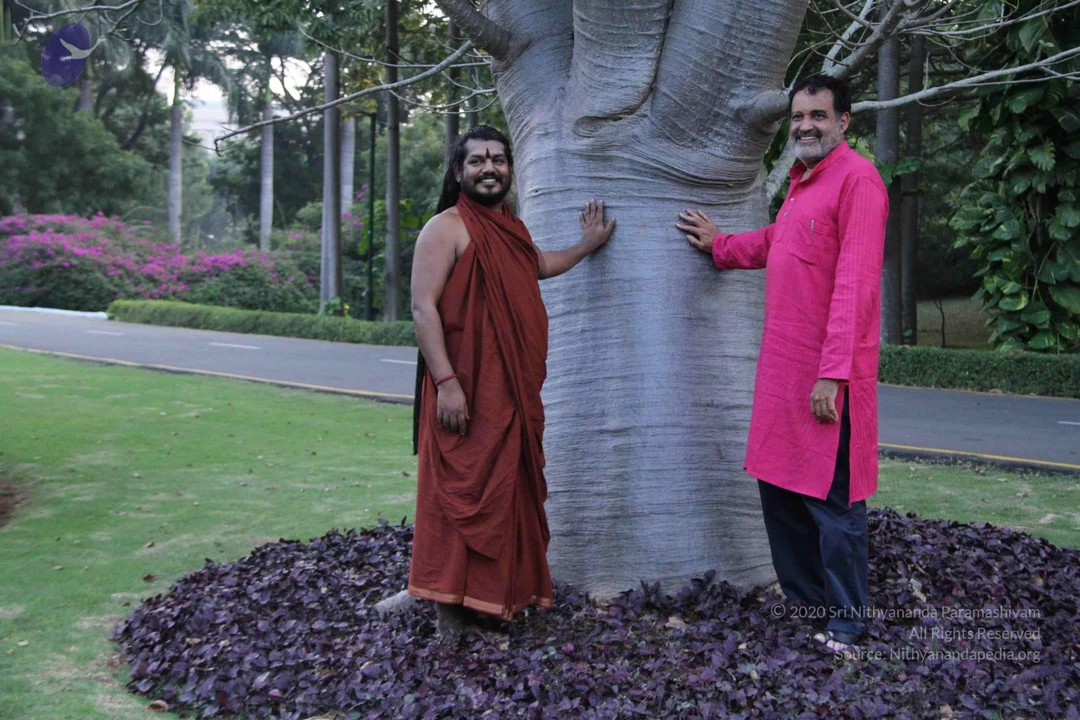
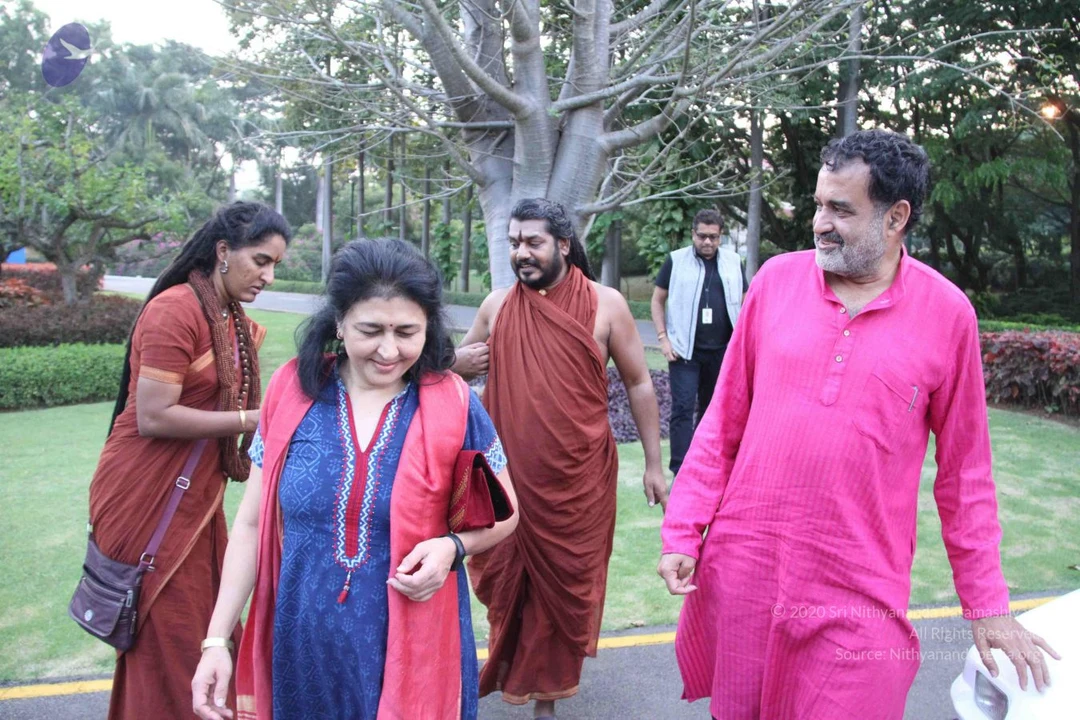
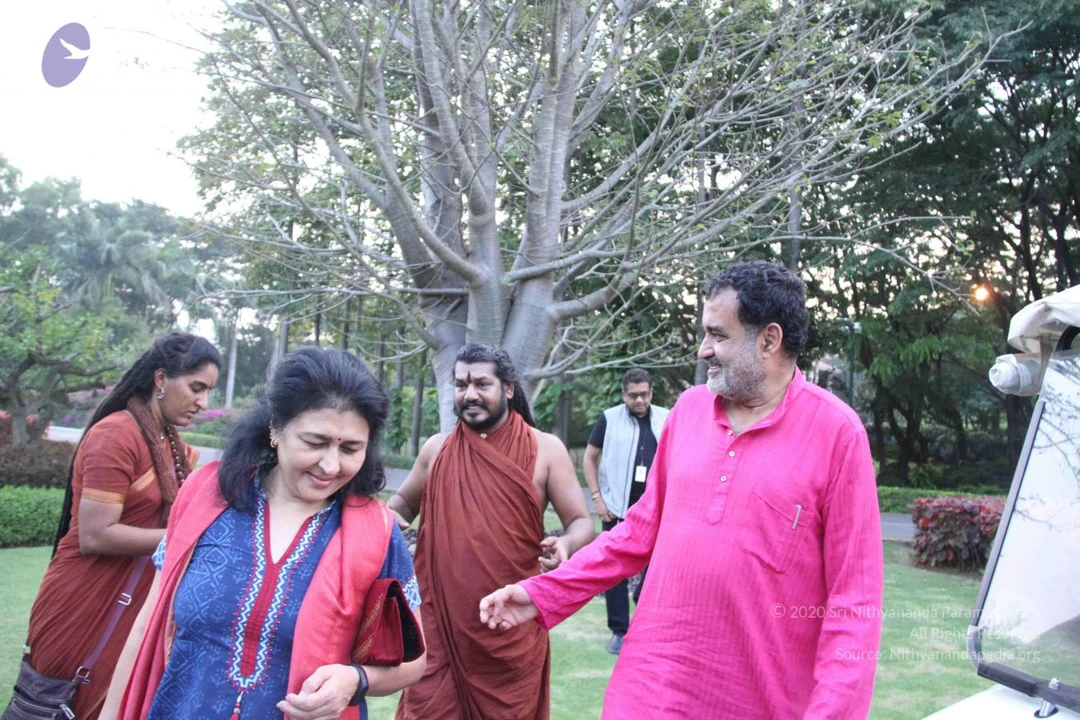
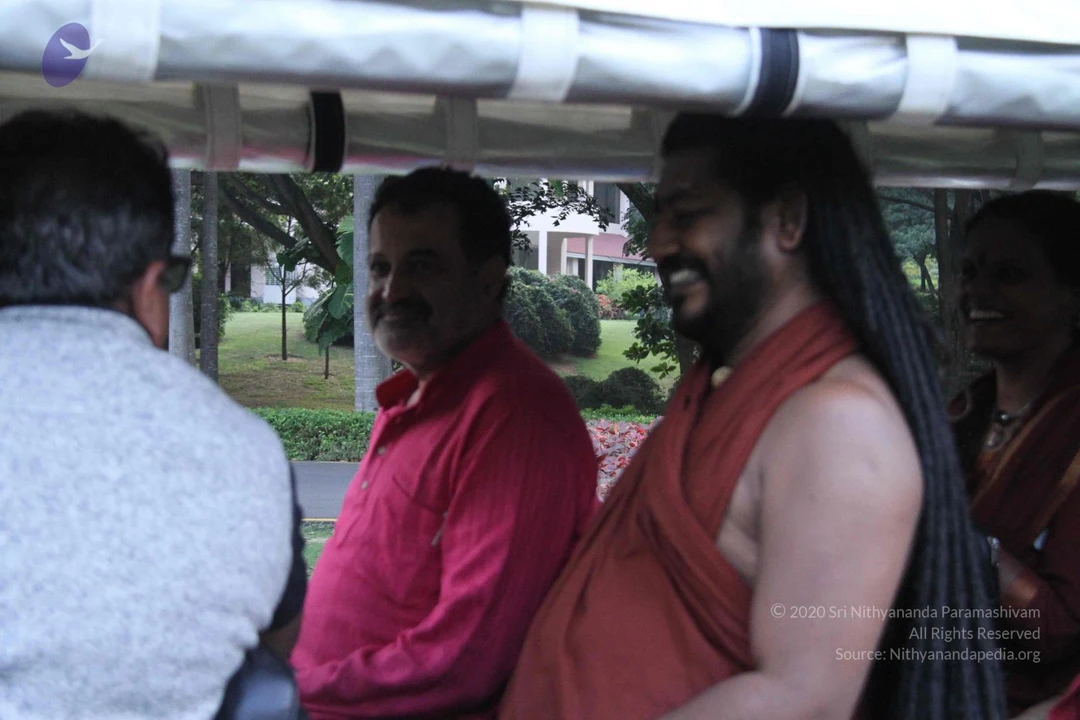
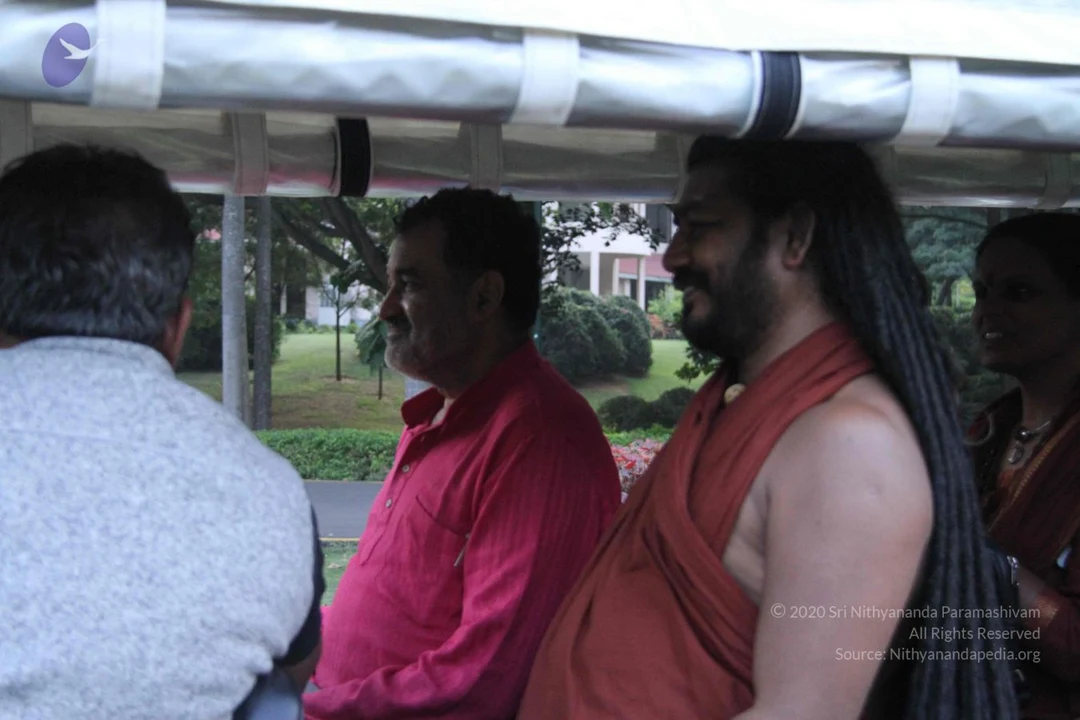
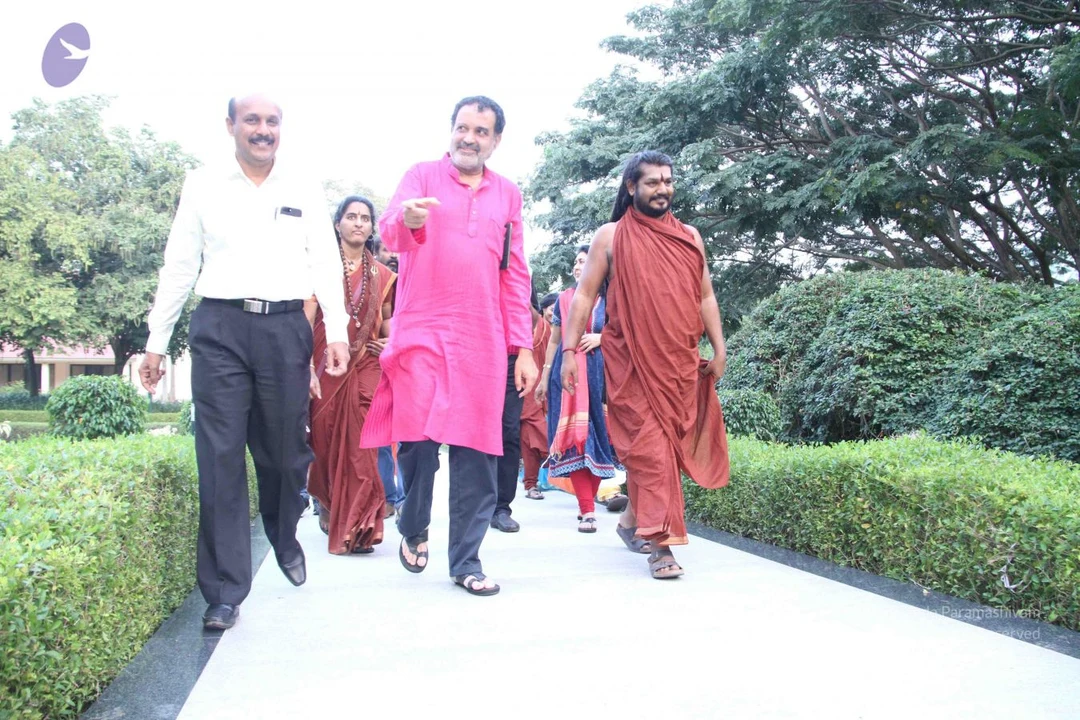
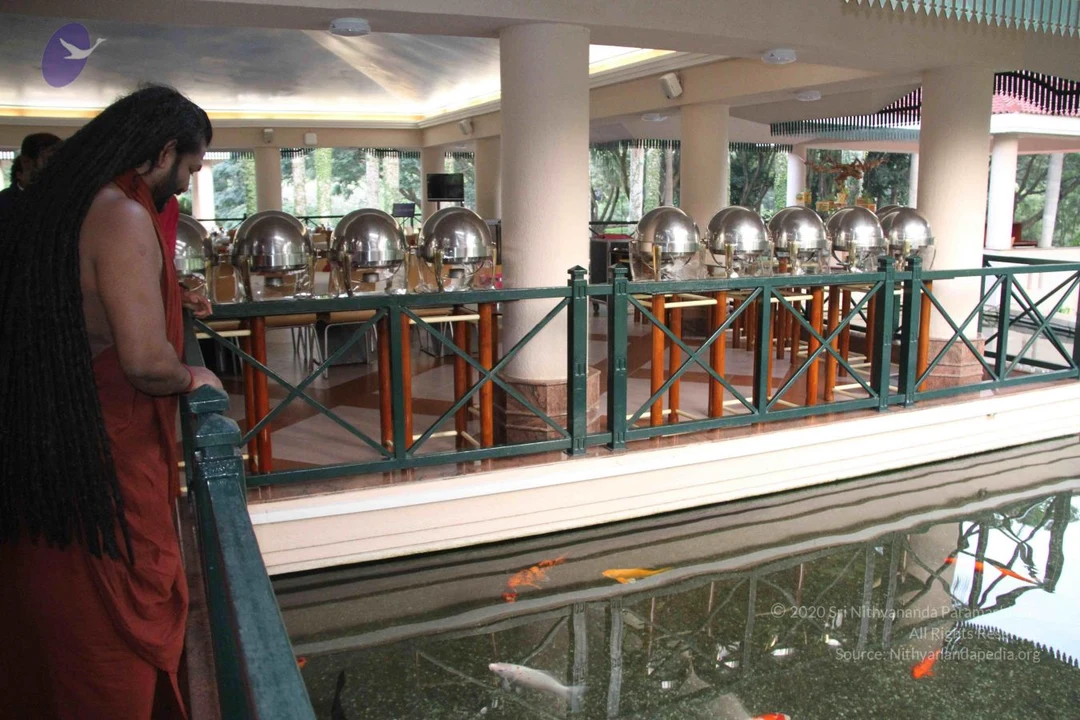
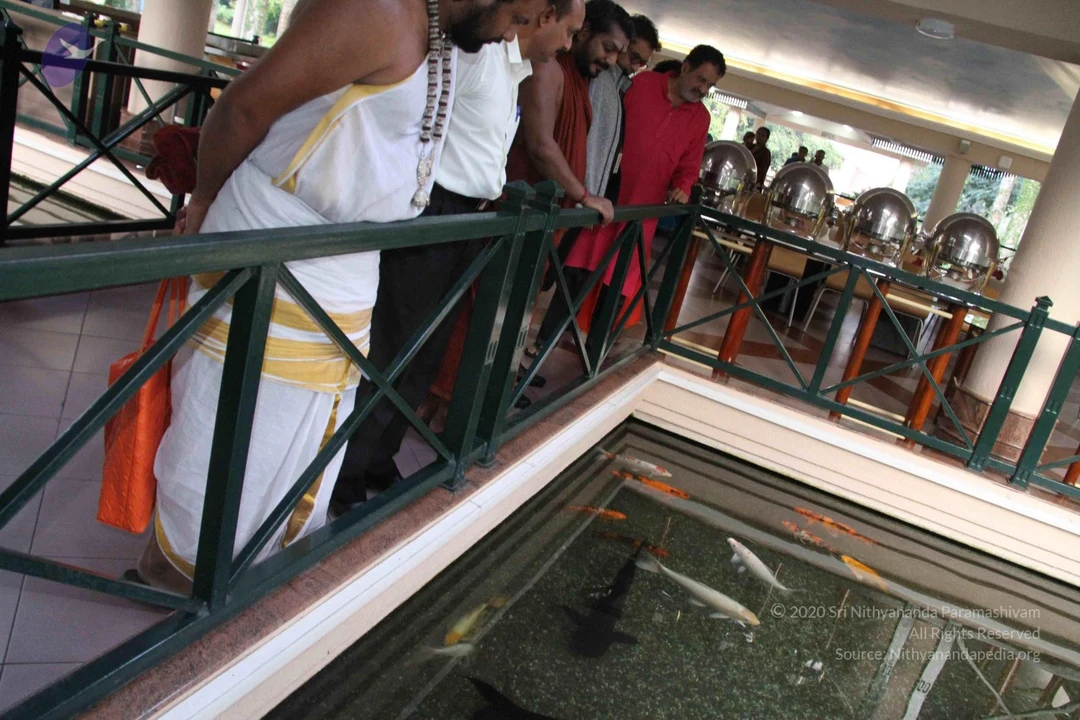
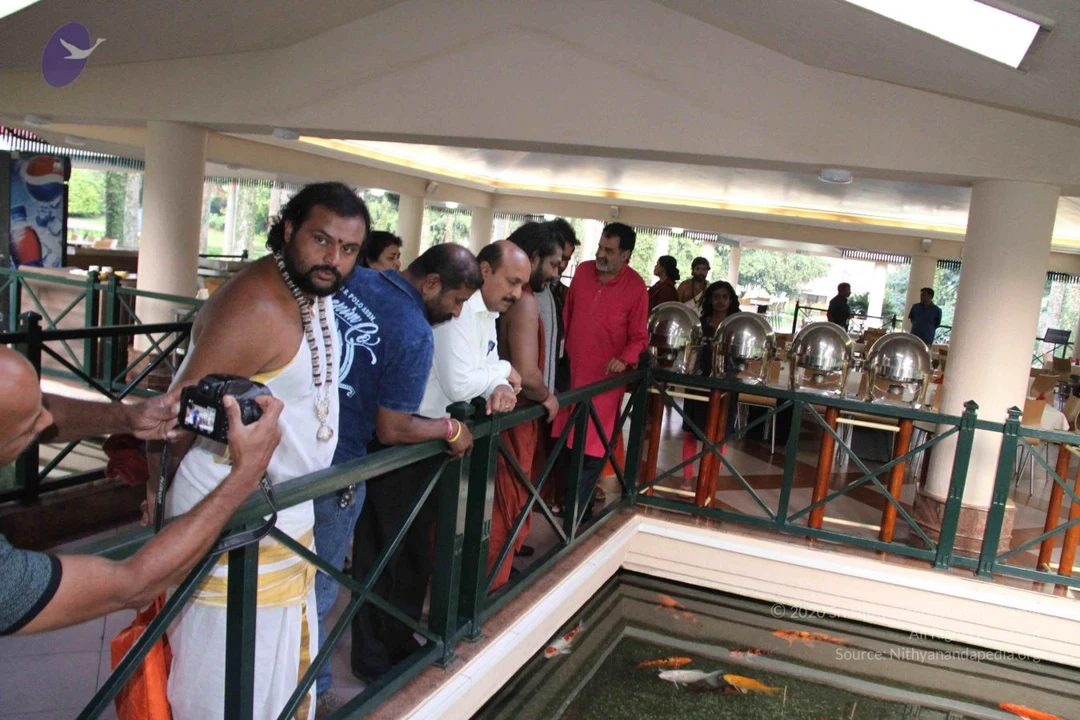
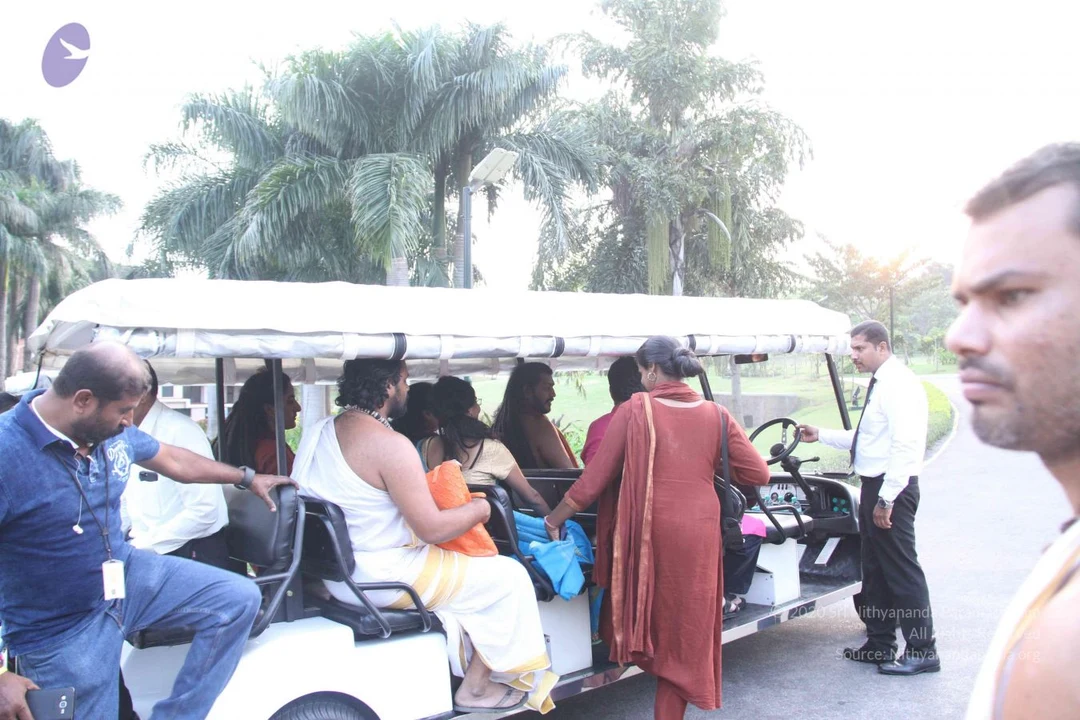
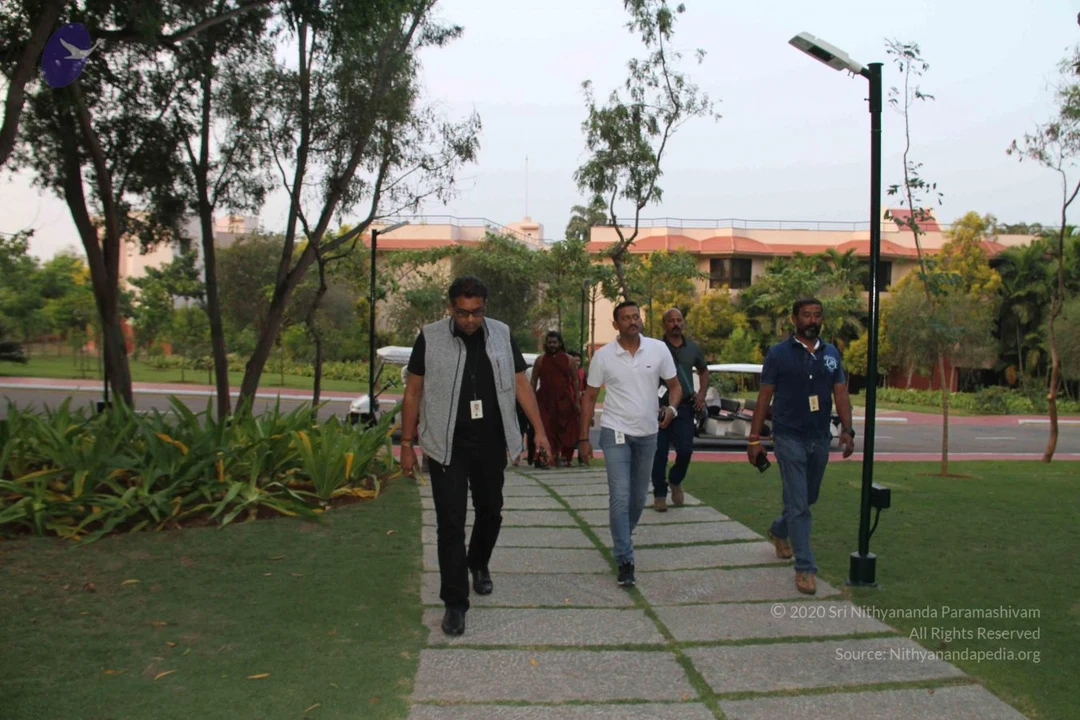
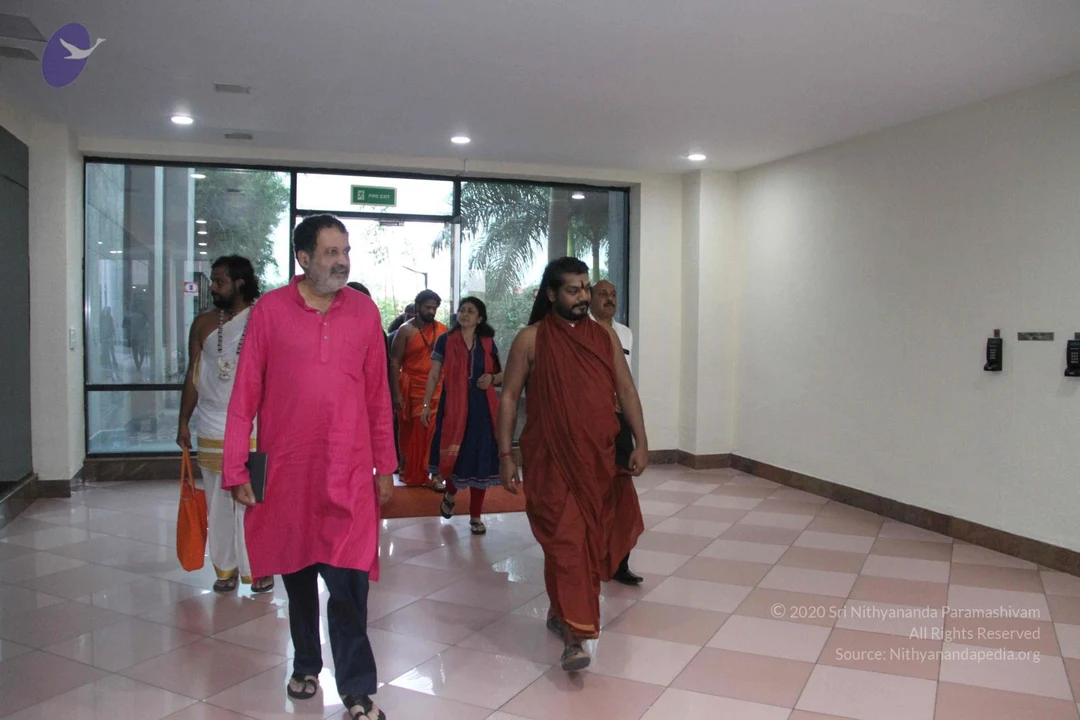
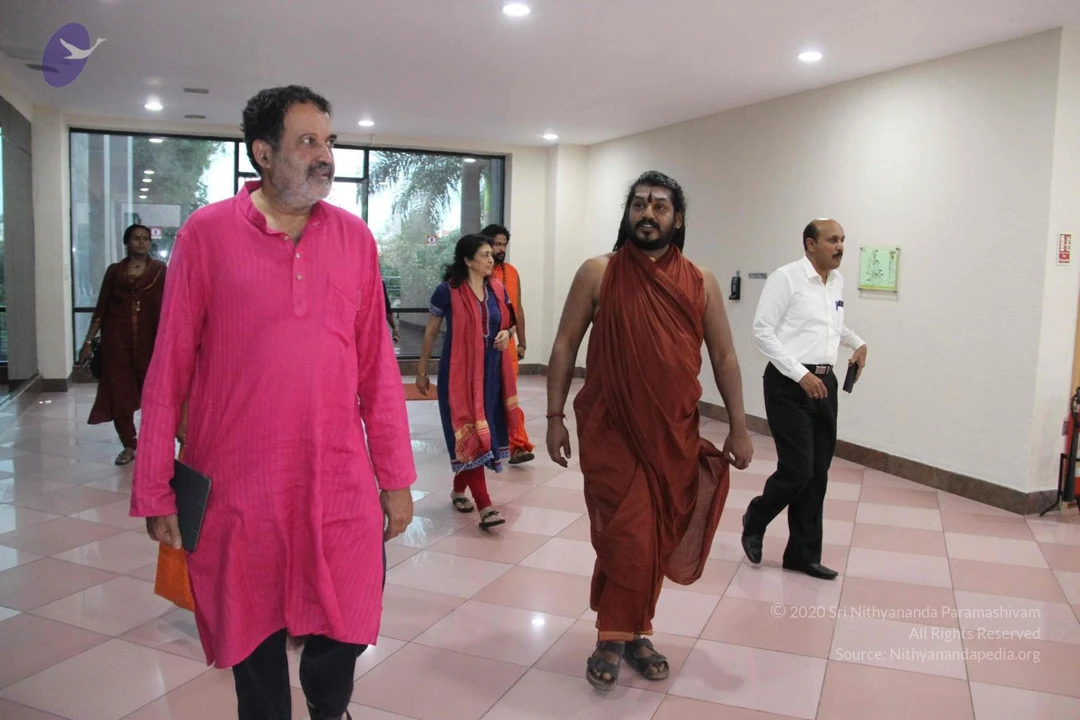
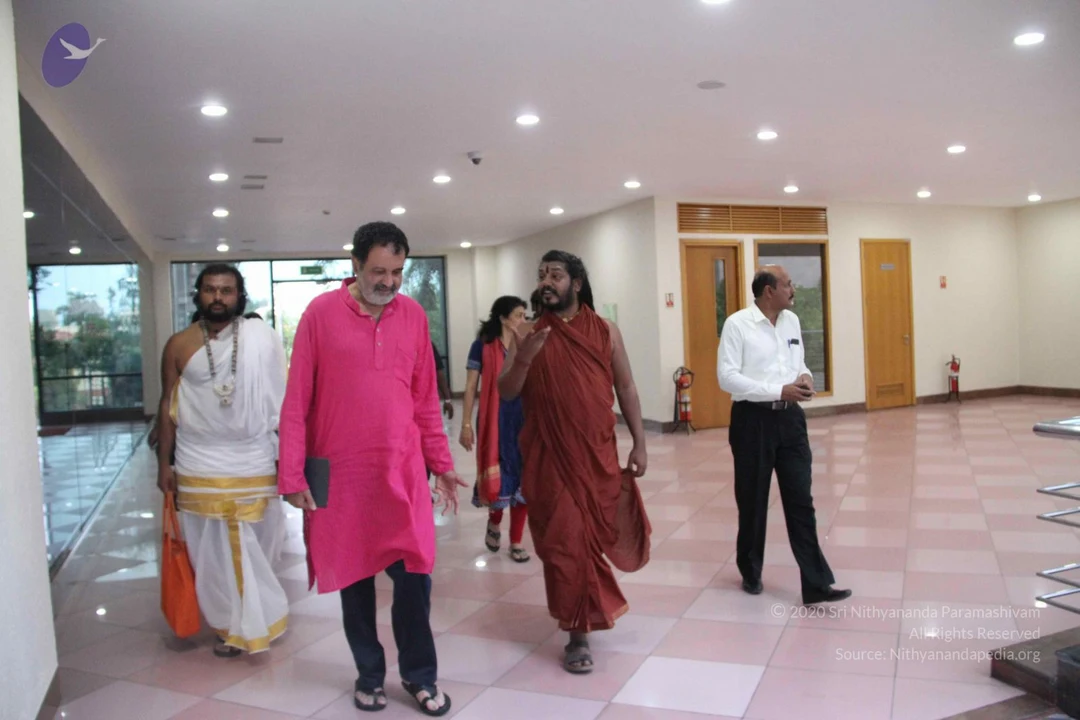
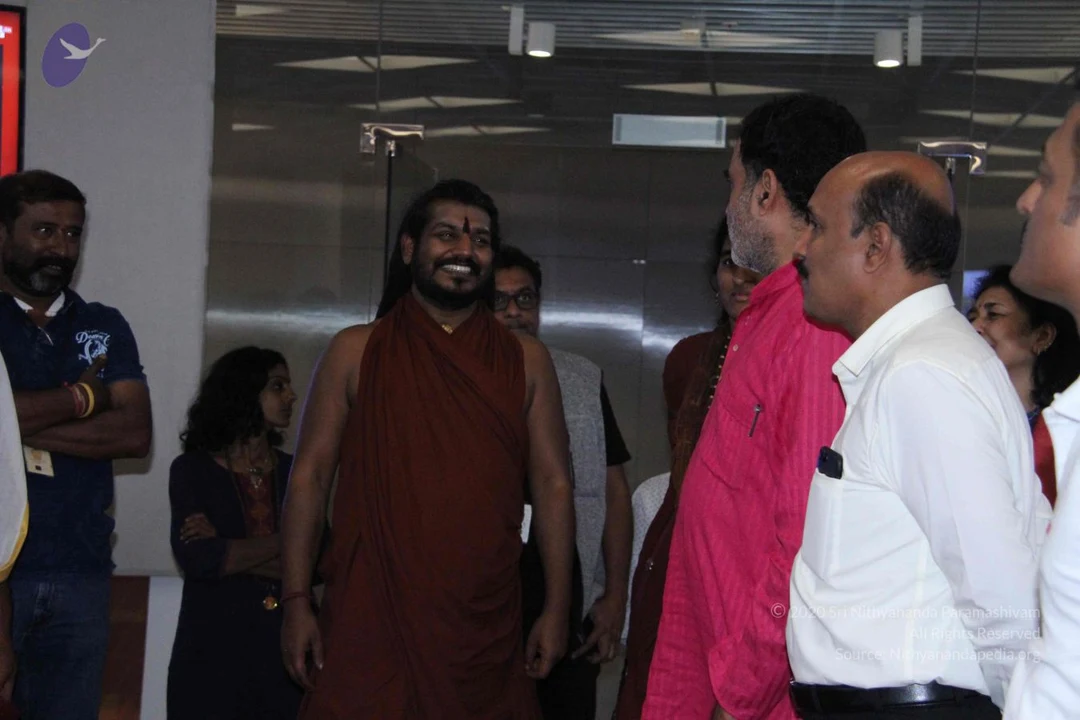
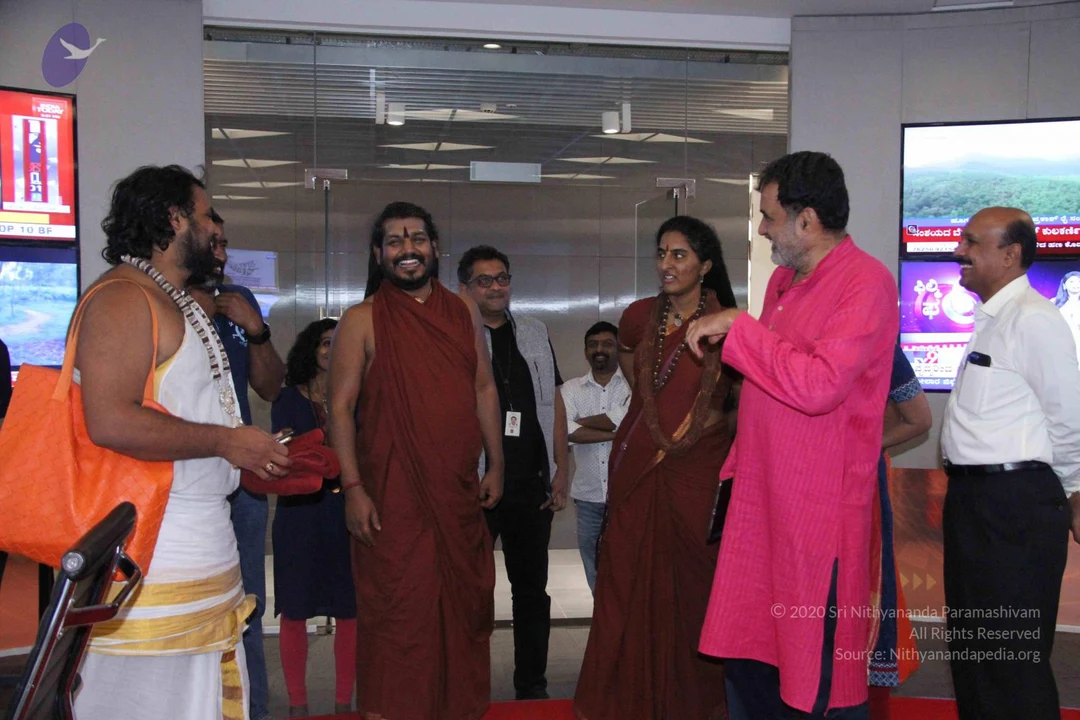
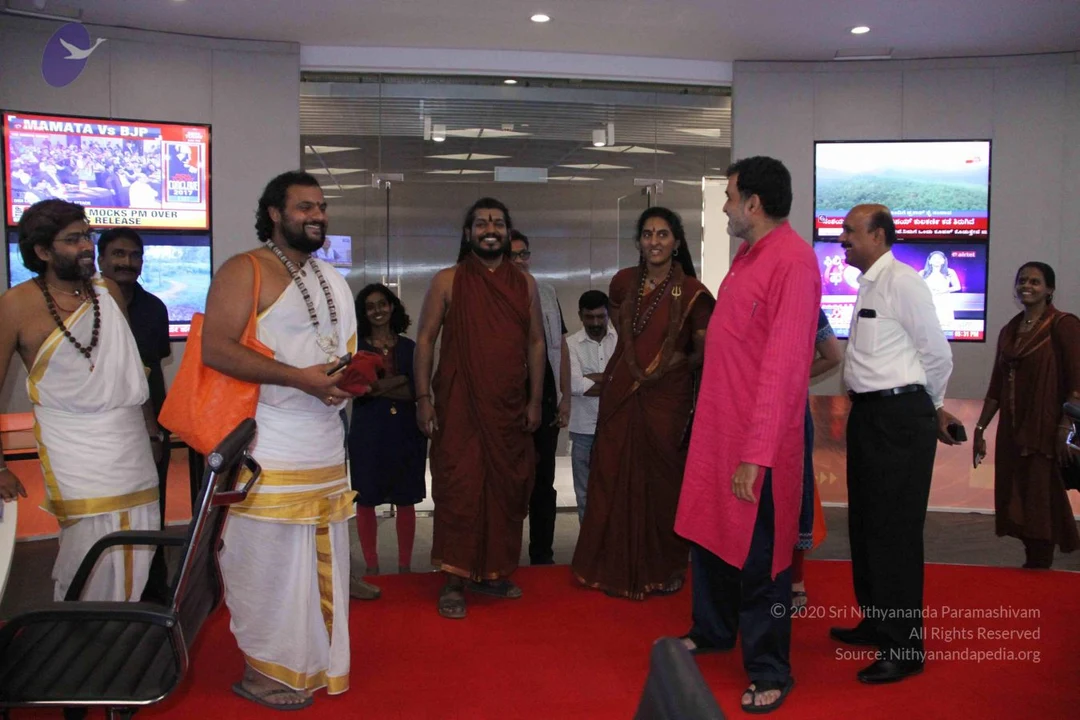
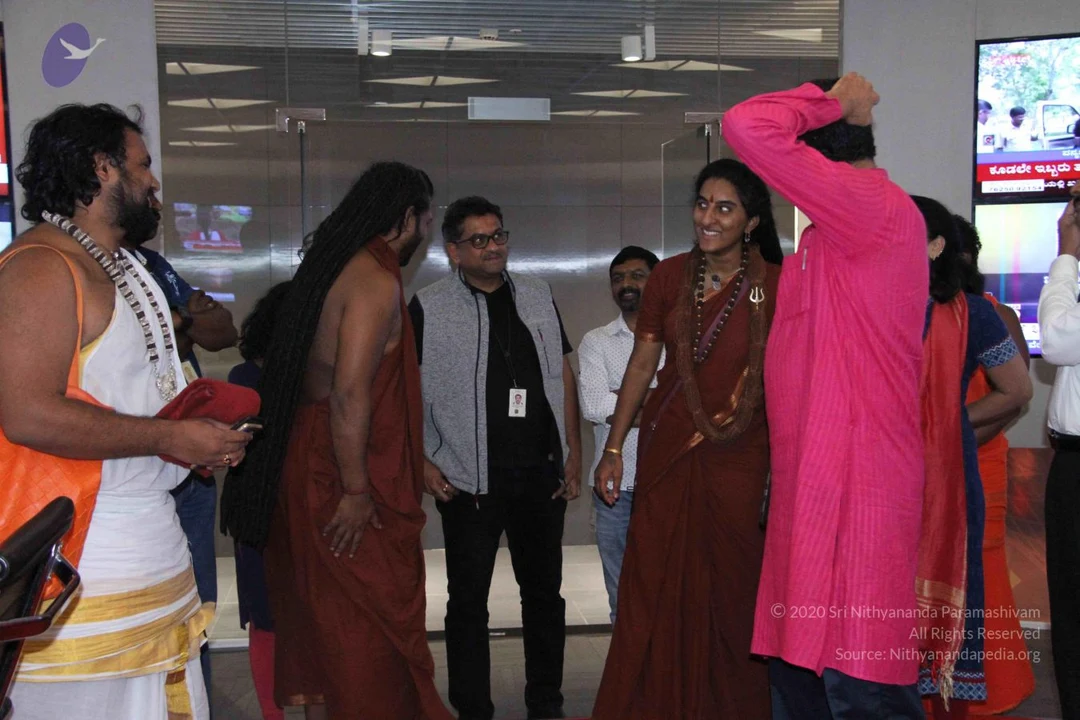
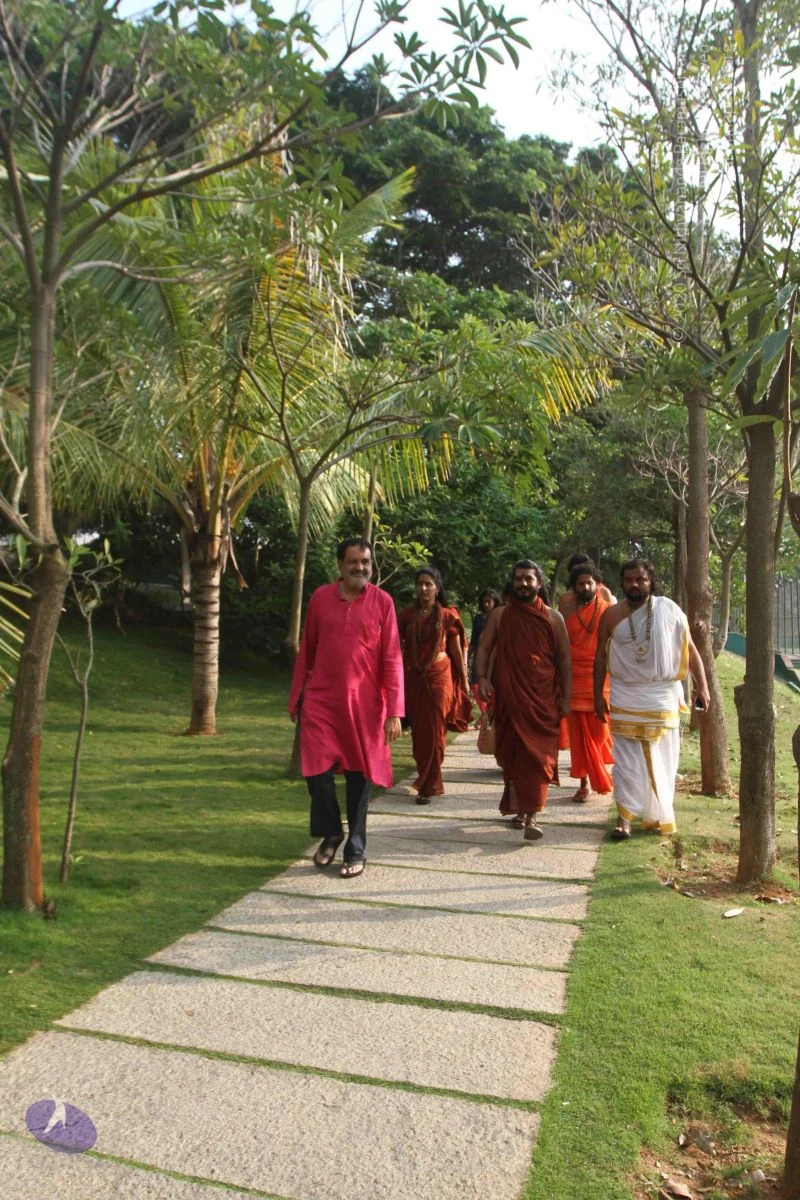
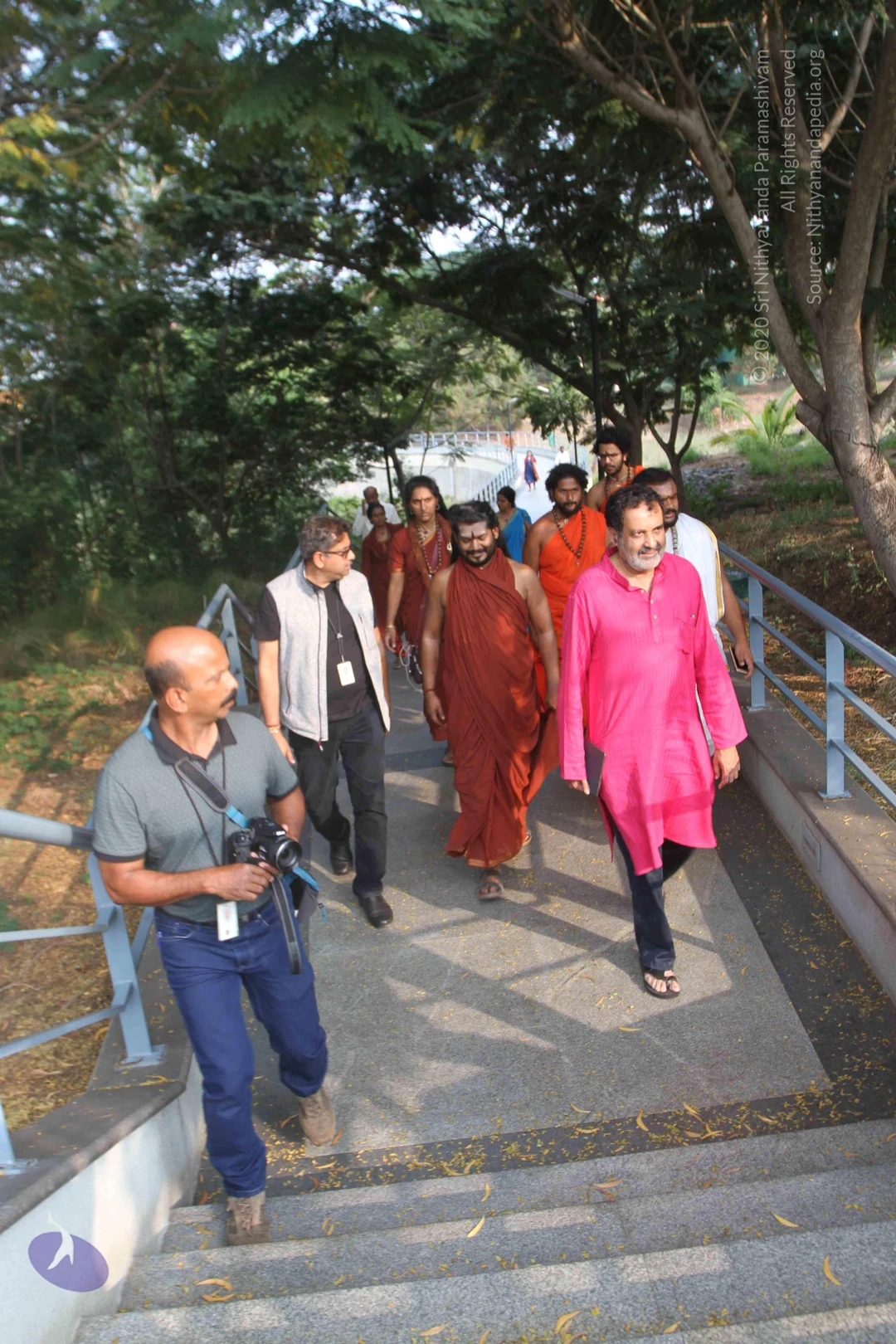
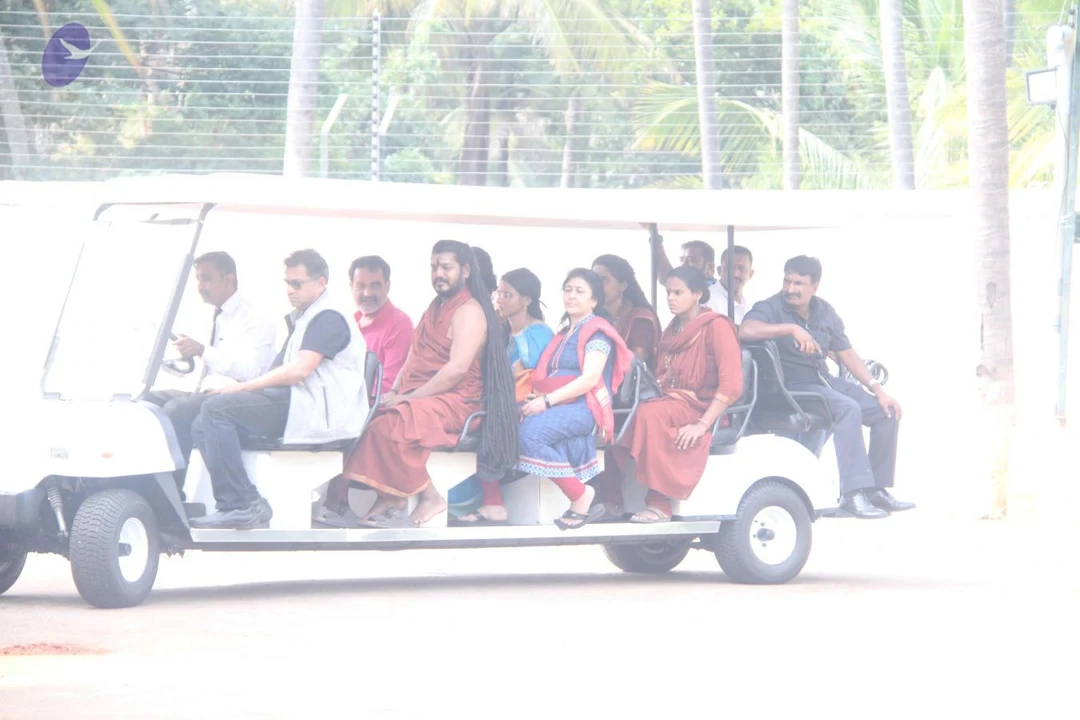
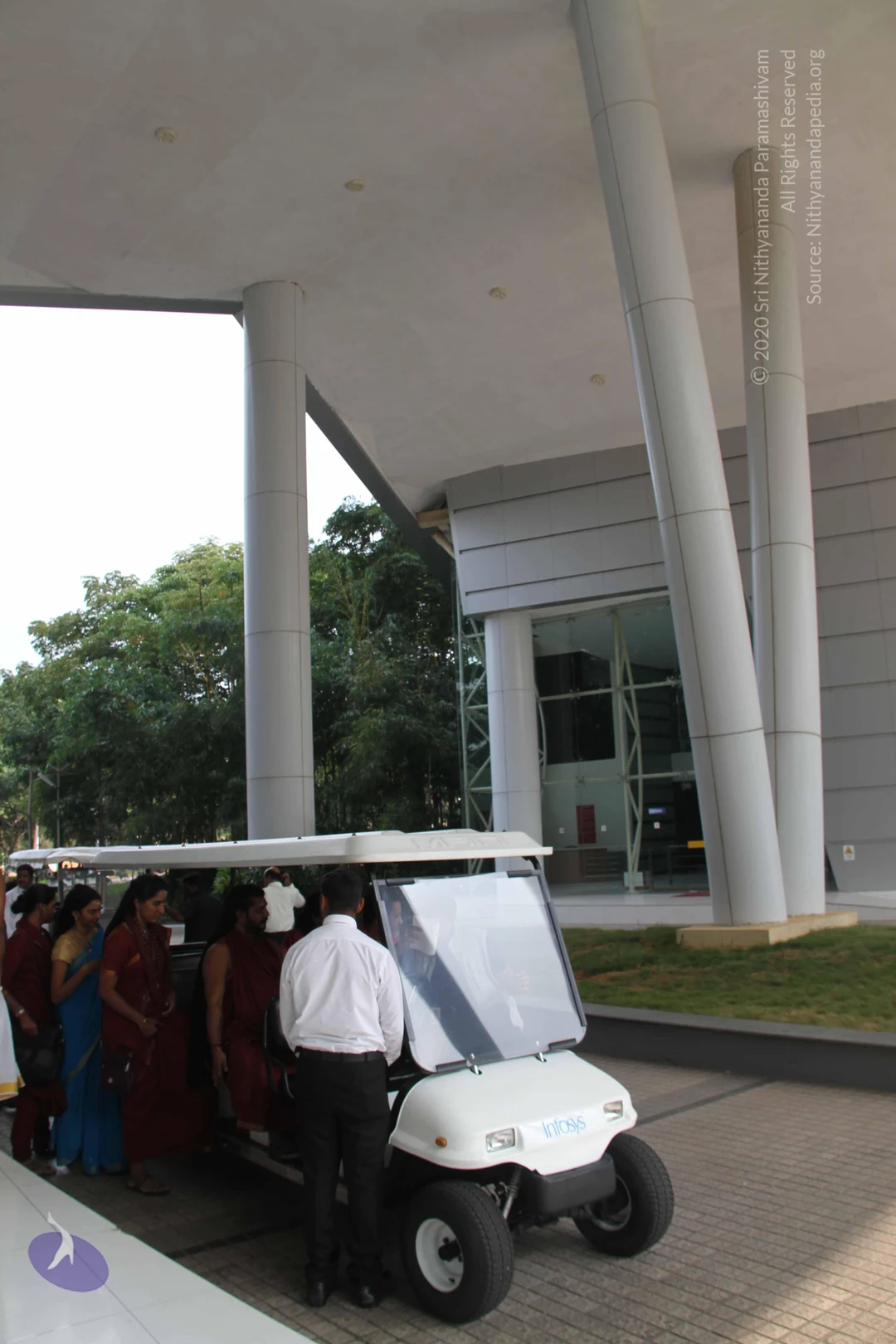
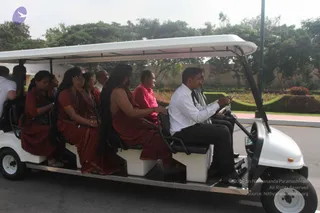
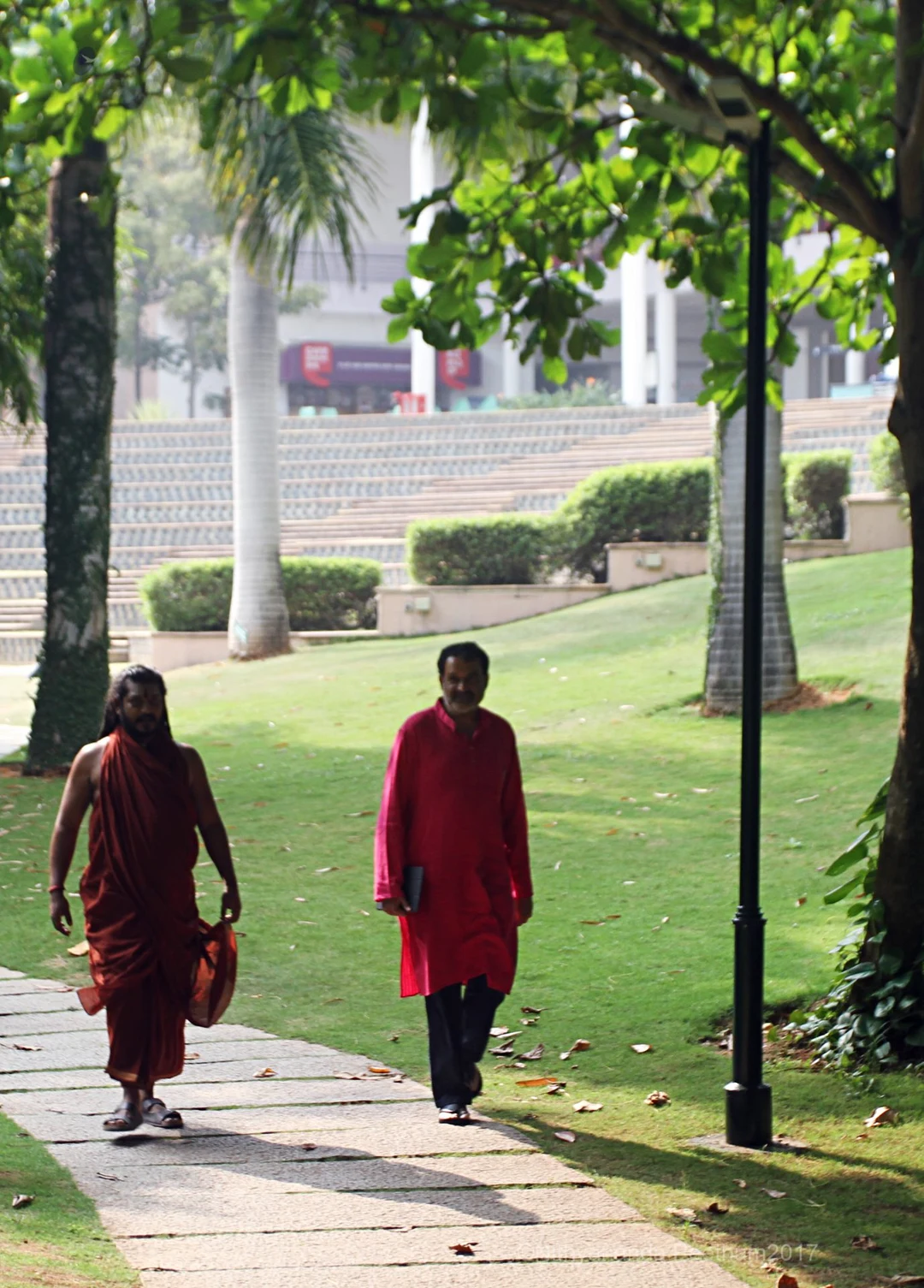
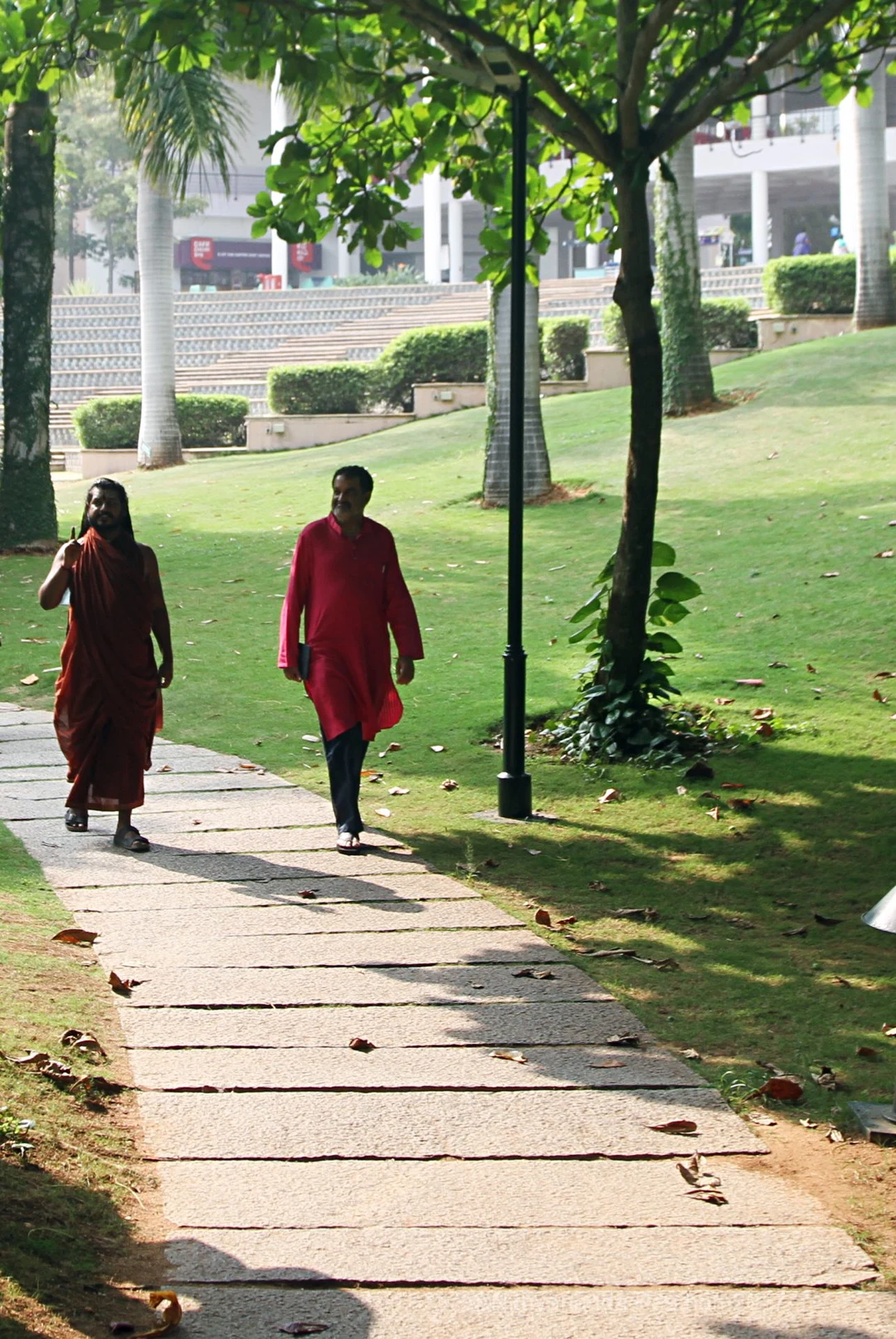
A photograph of an open white electric golf-cart style shuttle with a white canopy, parked on a paved driveway in front of a cream-coloured building with white columns and green shrubs. A uniformed driver in a white shirt and dark tie sits at the wheel. Passengers sit on the bench seats: a man in a grey sleeveless vest over a dark t-shirt wearing dark sunglasses, a man in a magenta kurta, a man in a white shirt with arms folded, a woman in a patterned sari, and others standing nearby. On the right, a man in white dhoti with a gold border and bare upper body helps guide the cart, while a man in a blue shirt stands behind him. A purple logo appears in the upper left corner.A white electric golf-cart style shuttle with a canopy carries several seated people on an outdoor paved road in front of a cream-coloured building with white columns and green shrubs. The driver in a dark suit and tie grips the steering wheel. Beside him a man in a grey vest over a dark t-shirt sits with sunglasses. Behind them a man in a bright pink shirt and a white-shirted man sit on the bench seats, and women in saris and a bearded man in orange-red clothing sit further back. On the right a man in a white dhoti with gold borders and bare upper body stands by the cart, long hair swept back, while another man in blue shirt stands nearby.A covered entrance area with a long white canopy supported by white columns over a red-paved walkway. A white electric golf-style cart with a clear windshield and white roof drives on the road at left, carrying several people in white and maroon-red clothing. A woman in a white top and dark skirt stands near a yellow dustbin marked with text, beside turnstile-style gates and bicycles parked along a railing.A white electric golf cart with a clear windscreen drives along a paved road beside a covered shelter with white pillars and a red-paved walkway. Several people sit in the cart; some wear white and red-and-white clothing. On the right, people stand and walk near turnstile gates, and a uniformed attendant in white stands on the walkway. Yellow bins sit at the edge of the platform, and trees and a low building appear in the background.A white electric golf-cart style shuttle with a white canopy drives along a paved road lined with green hedges, flowering shrubs and trees. Seated in the cart are several people: two women in dark red-maroon saris with long hair, one of them with a bag on her lap, a long-haired man in a maroon-red robe with a long beard, a man in a bright pink shirt, and a driver in a white shirt and dark trousers holding the steering wheel. Another person in white sits beside him.A white electric golf cart carries several passengers along a paved road lined with trees and manicured hedges. In the foreground, women in rust-red and maroon saris with long dark braids sit on the rear bench, one holding a phone. A man in a white shirt and dark trousers drives from the right-hand seat. Other passengers sit behind the windscreen. The windows are clear and the setting appears to be a landscaped campus.

Tamil-Satsang
10 photosSource gallery
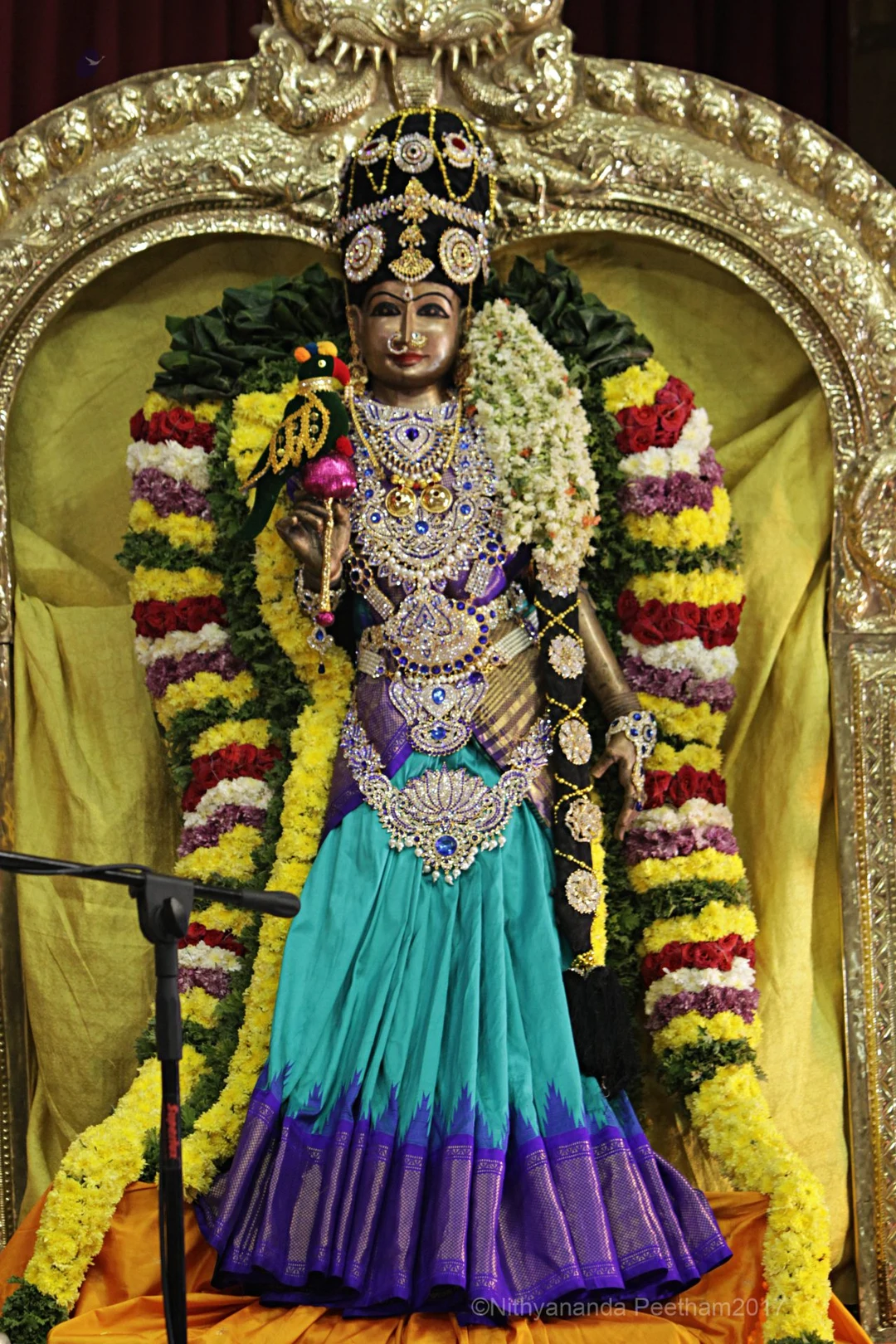
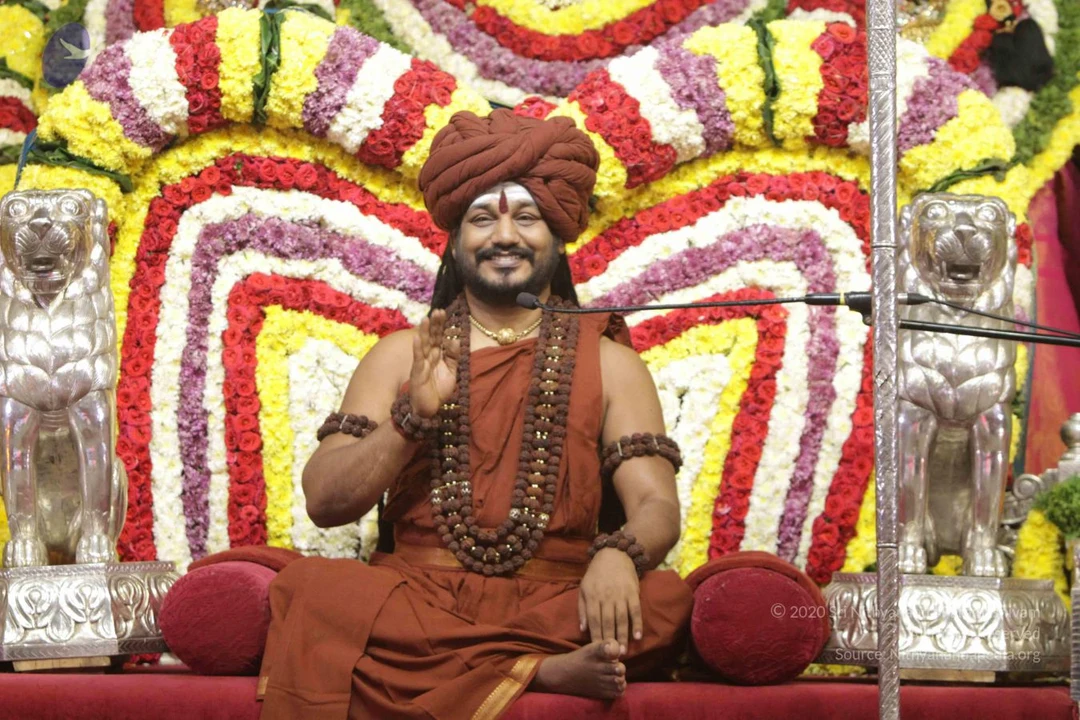
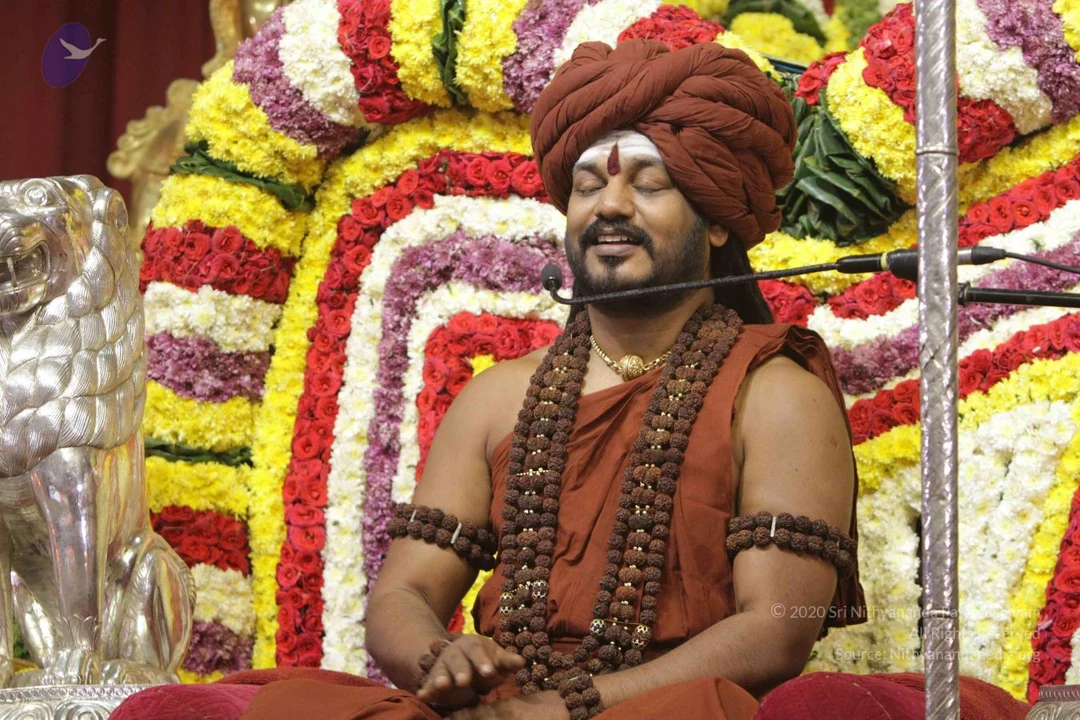
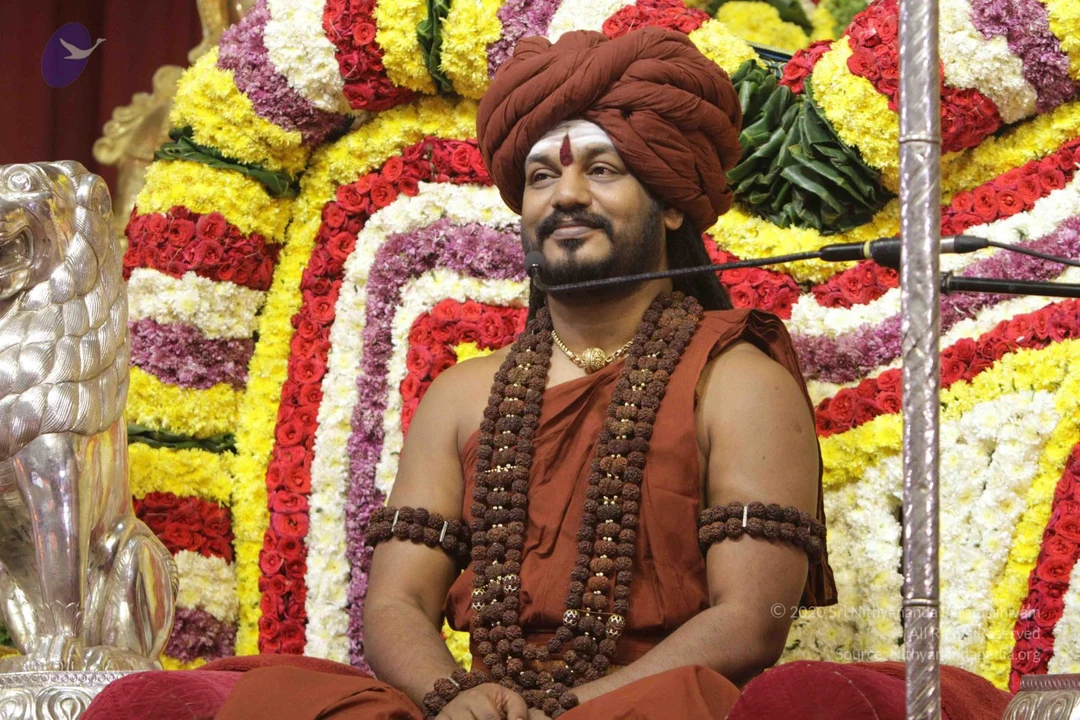
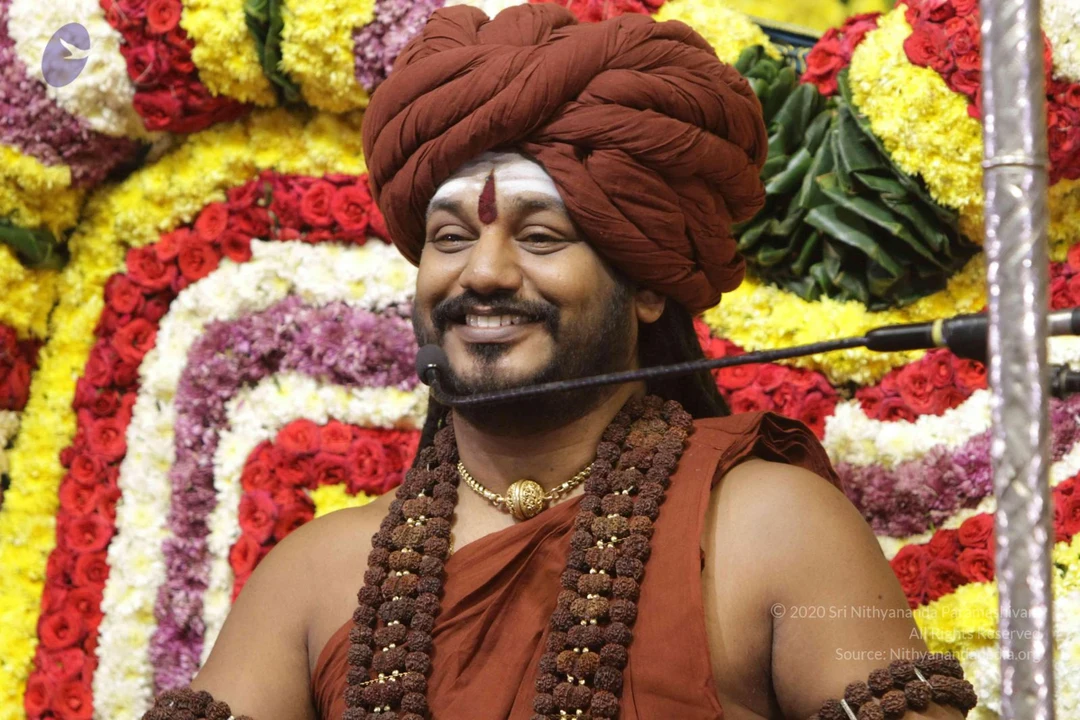
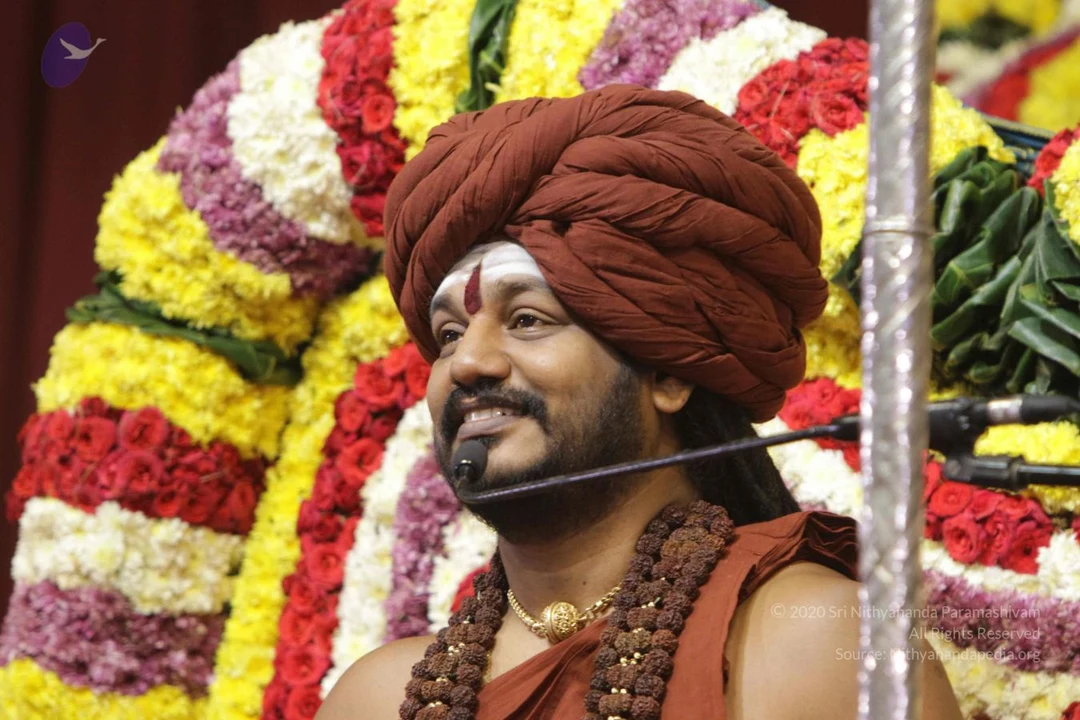
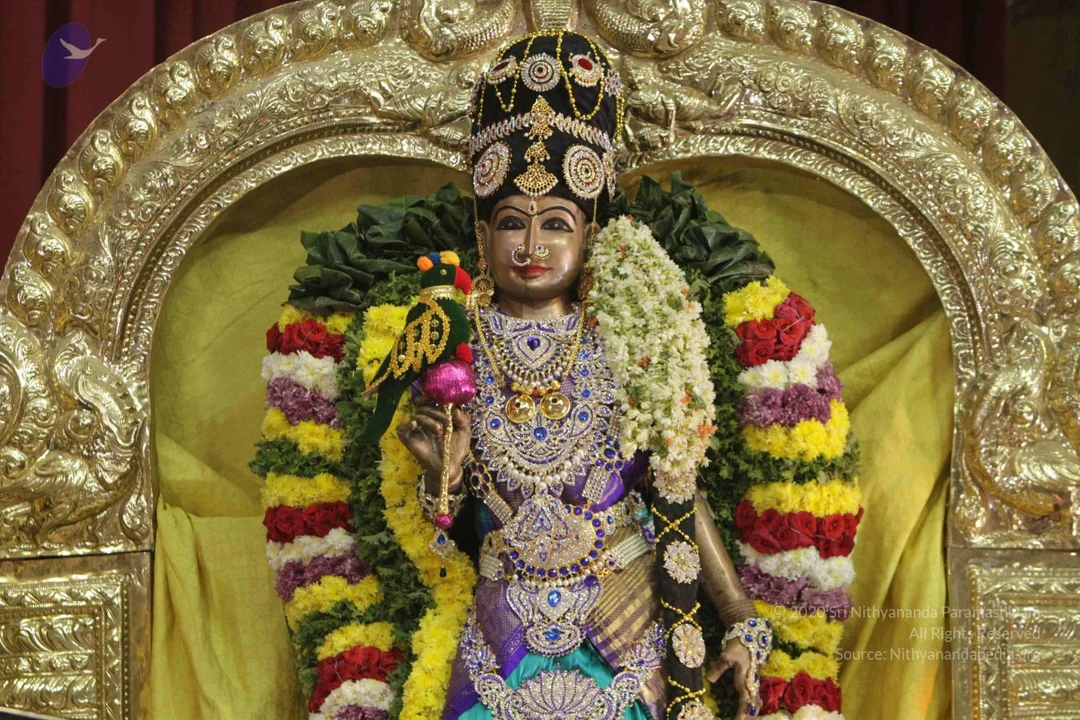
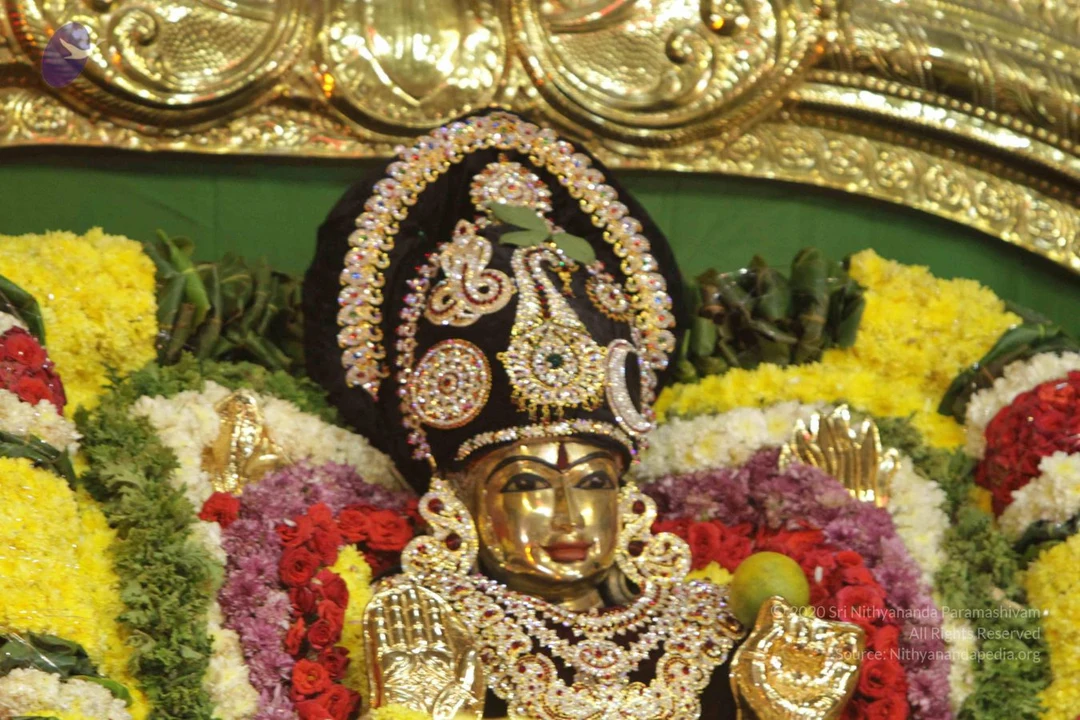
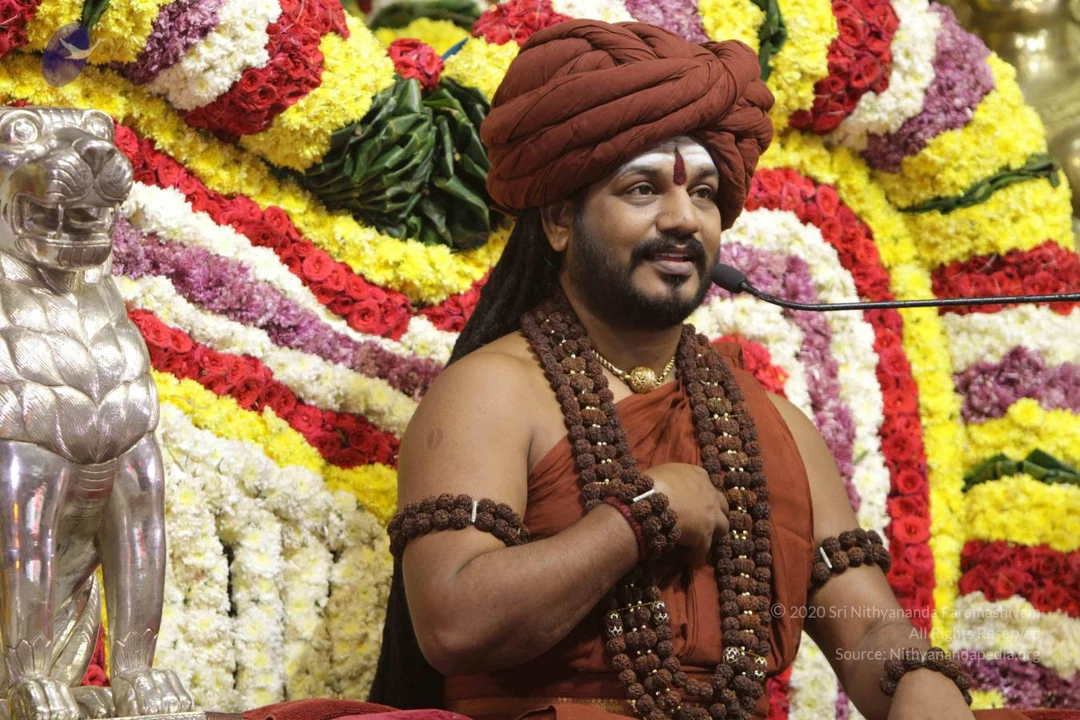
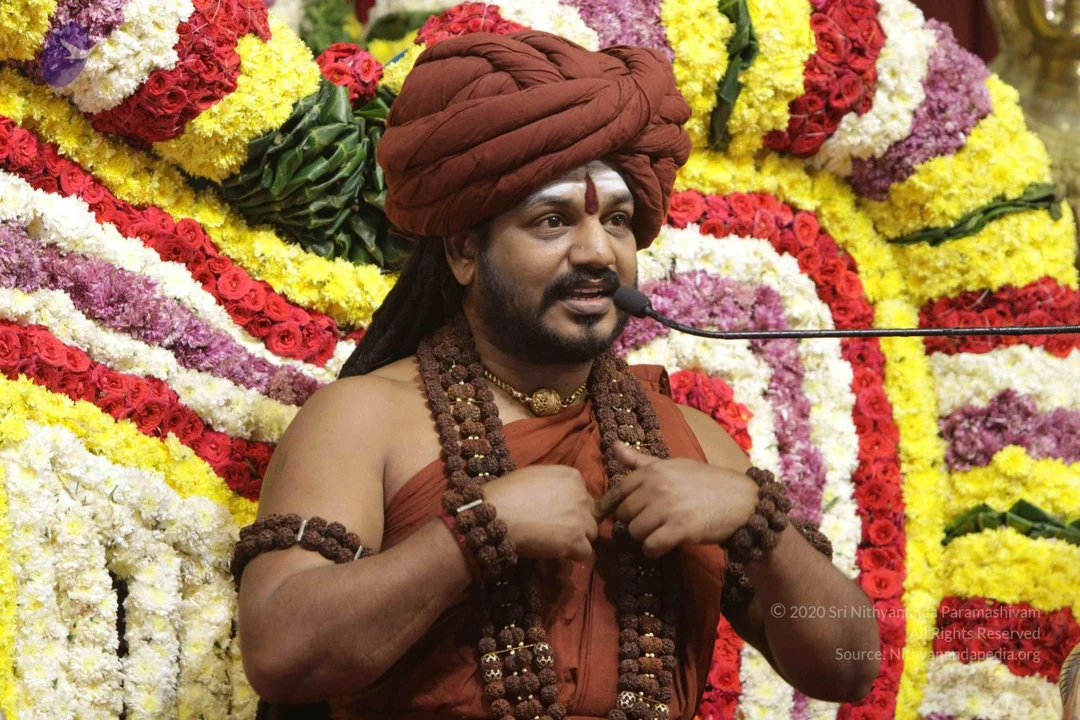
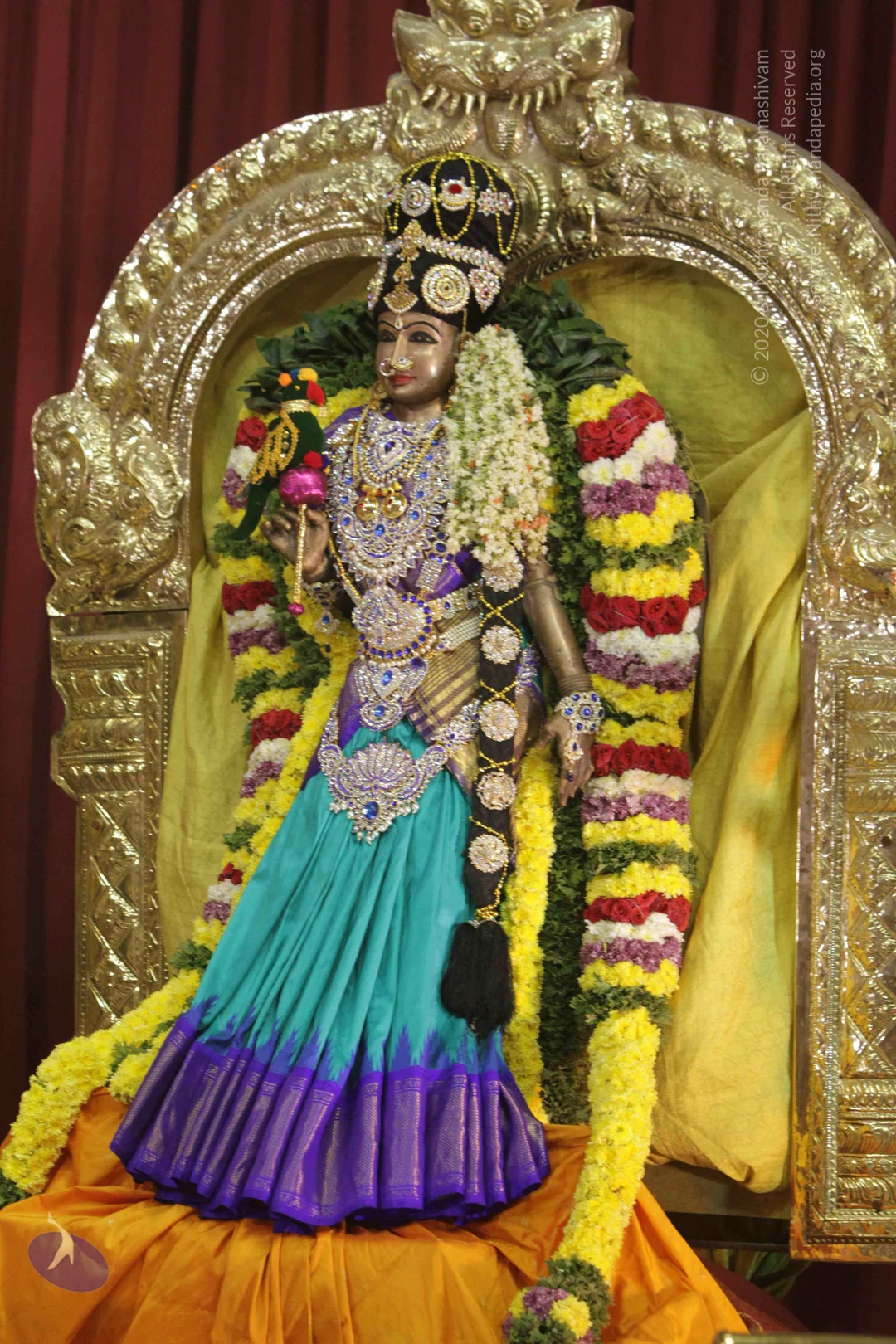
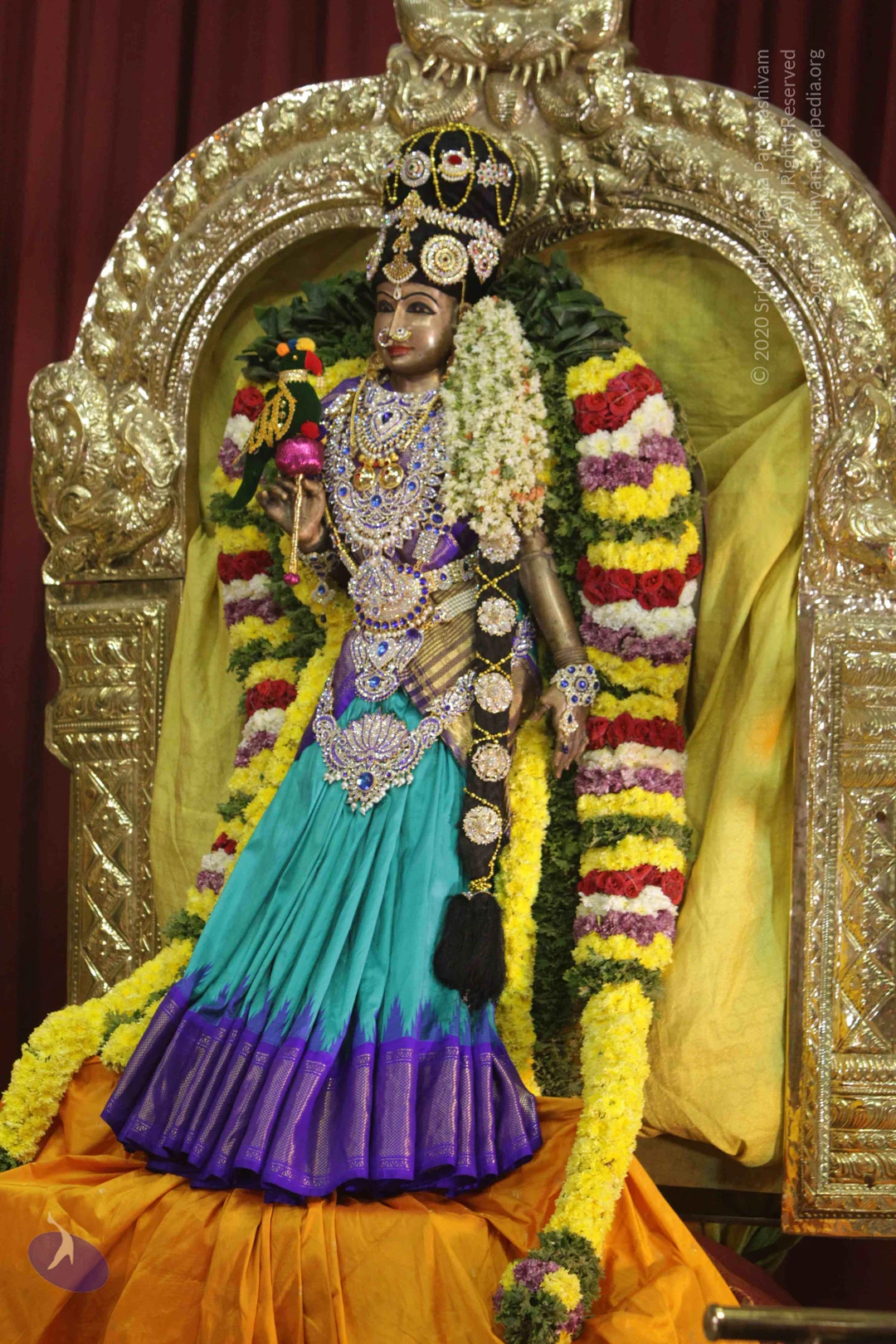
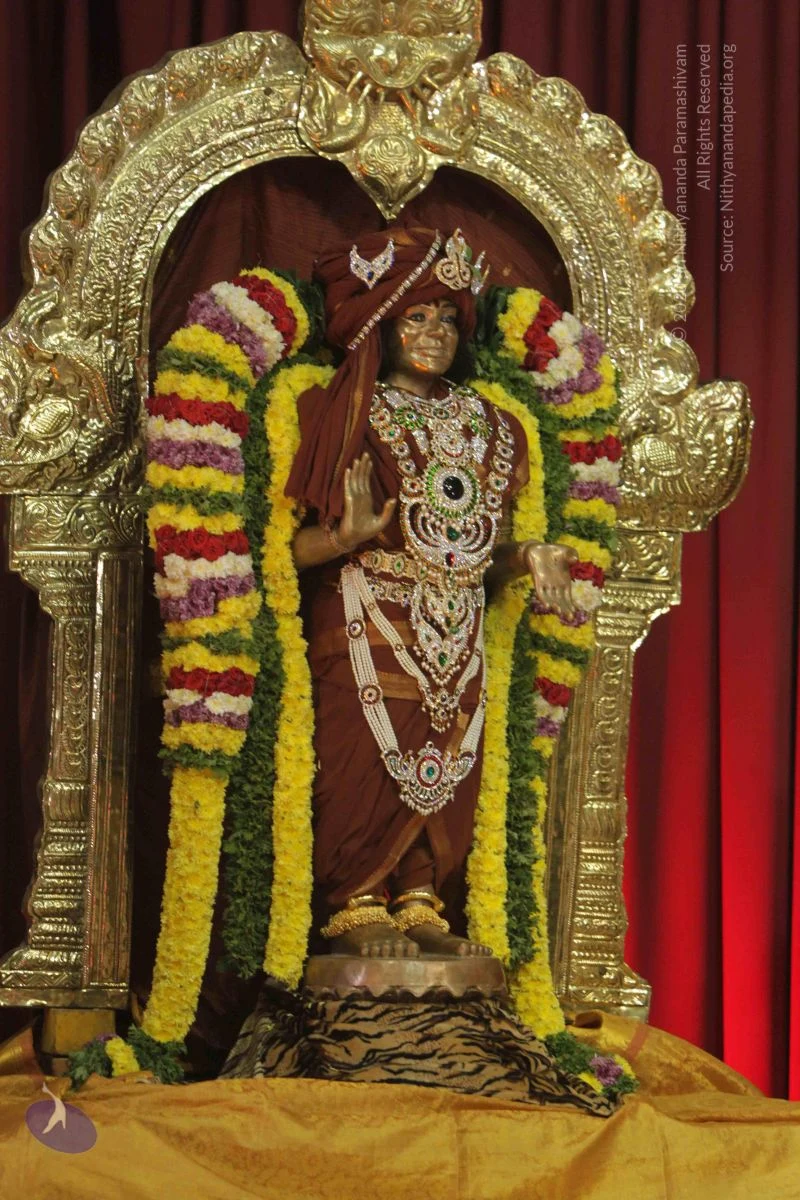
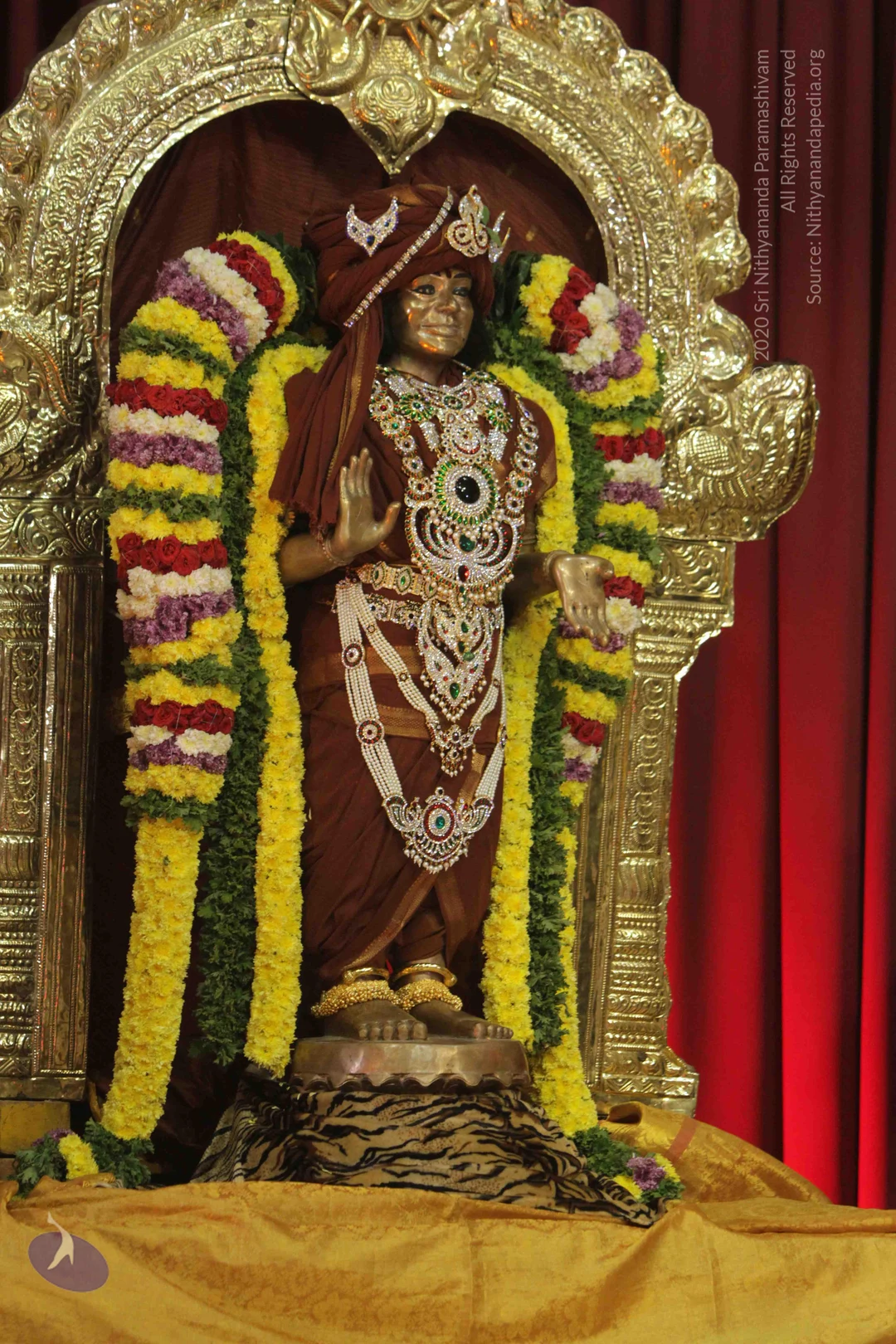
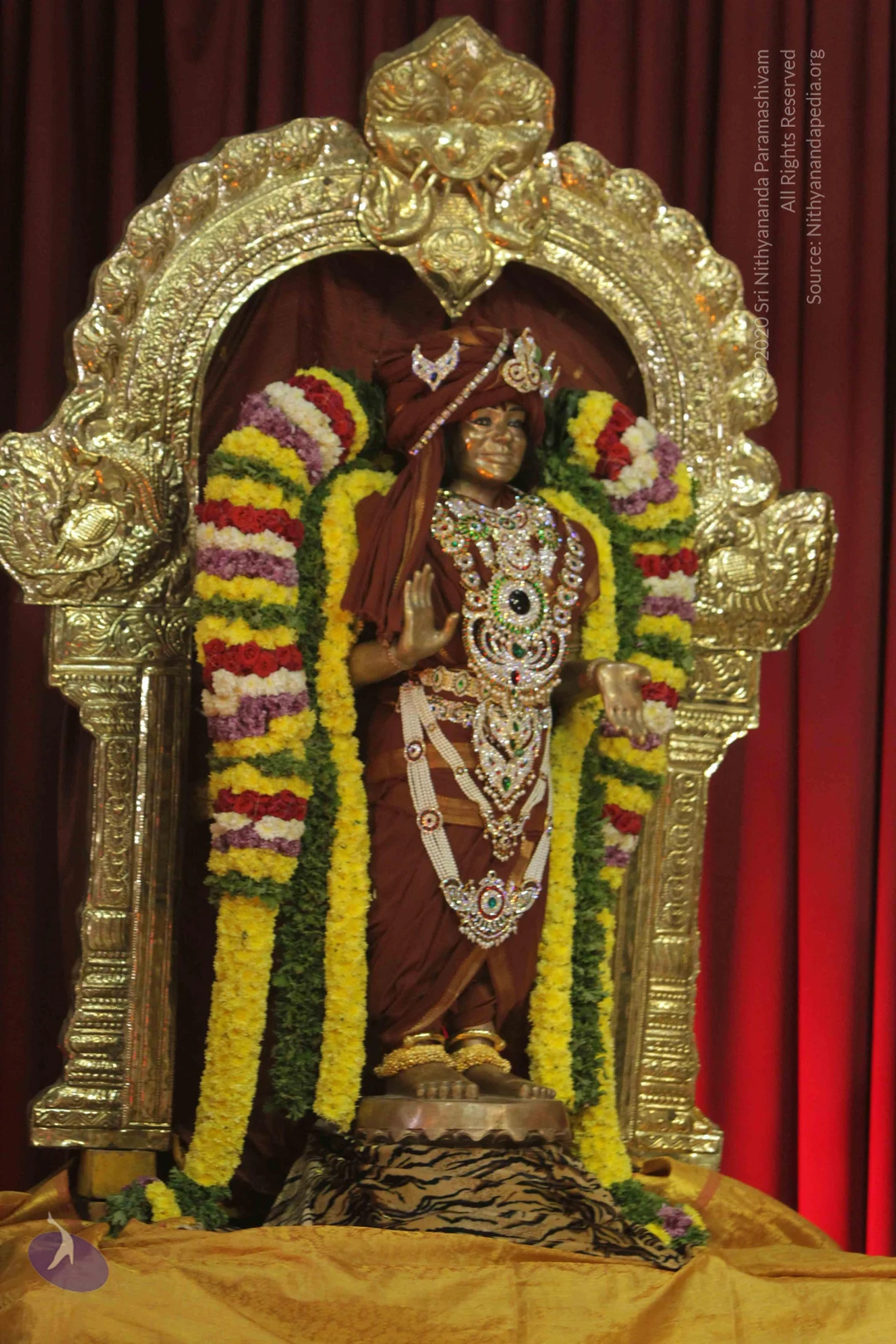
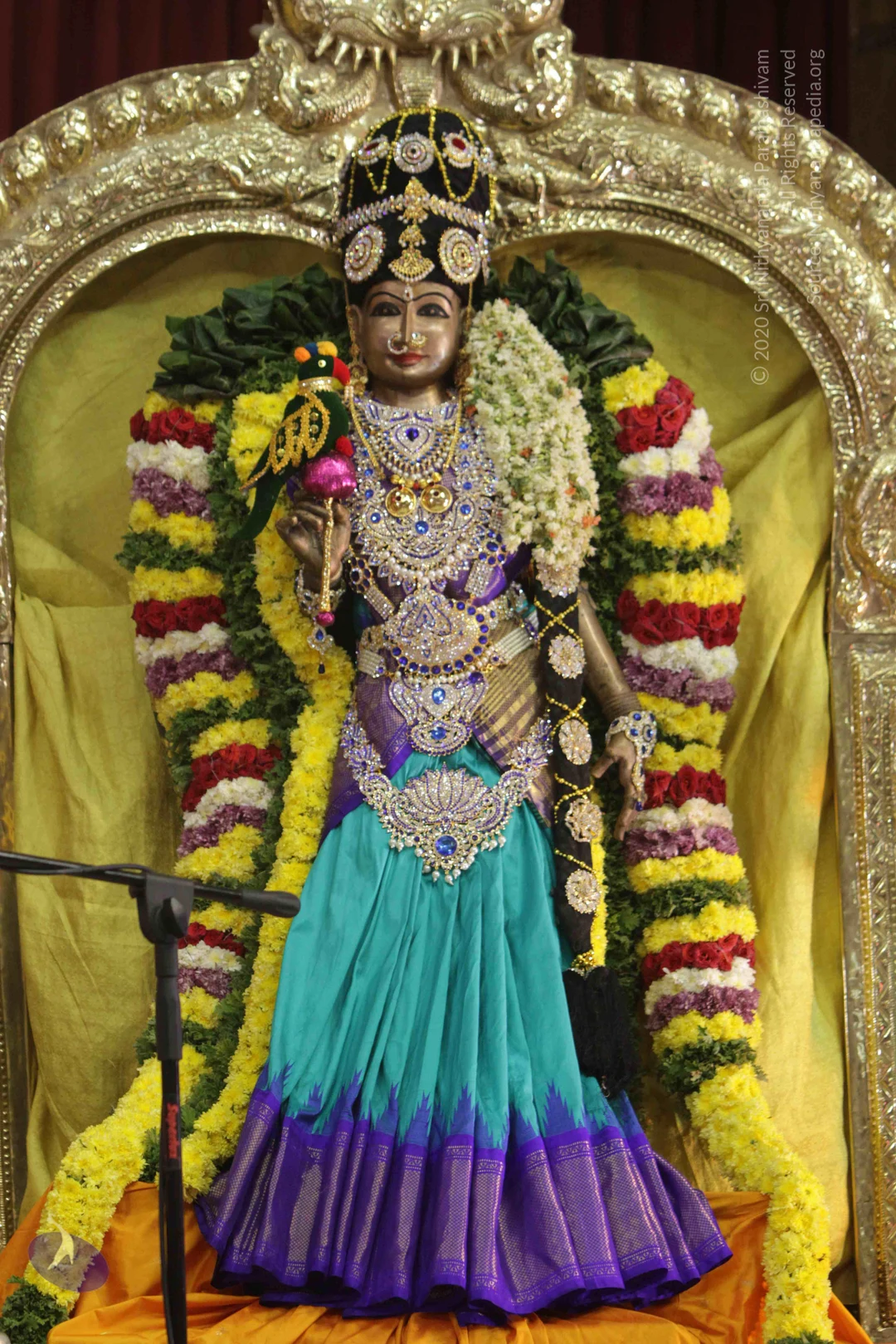
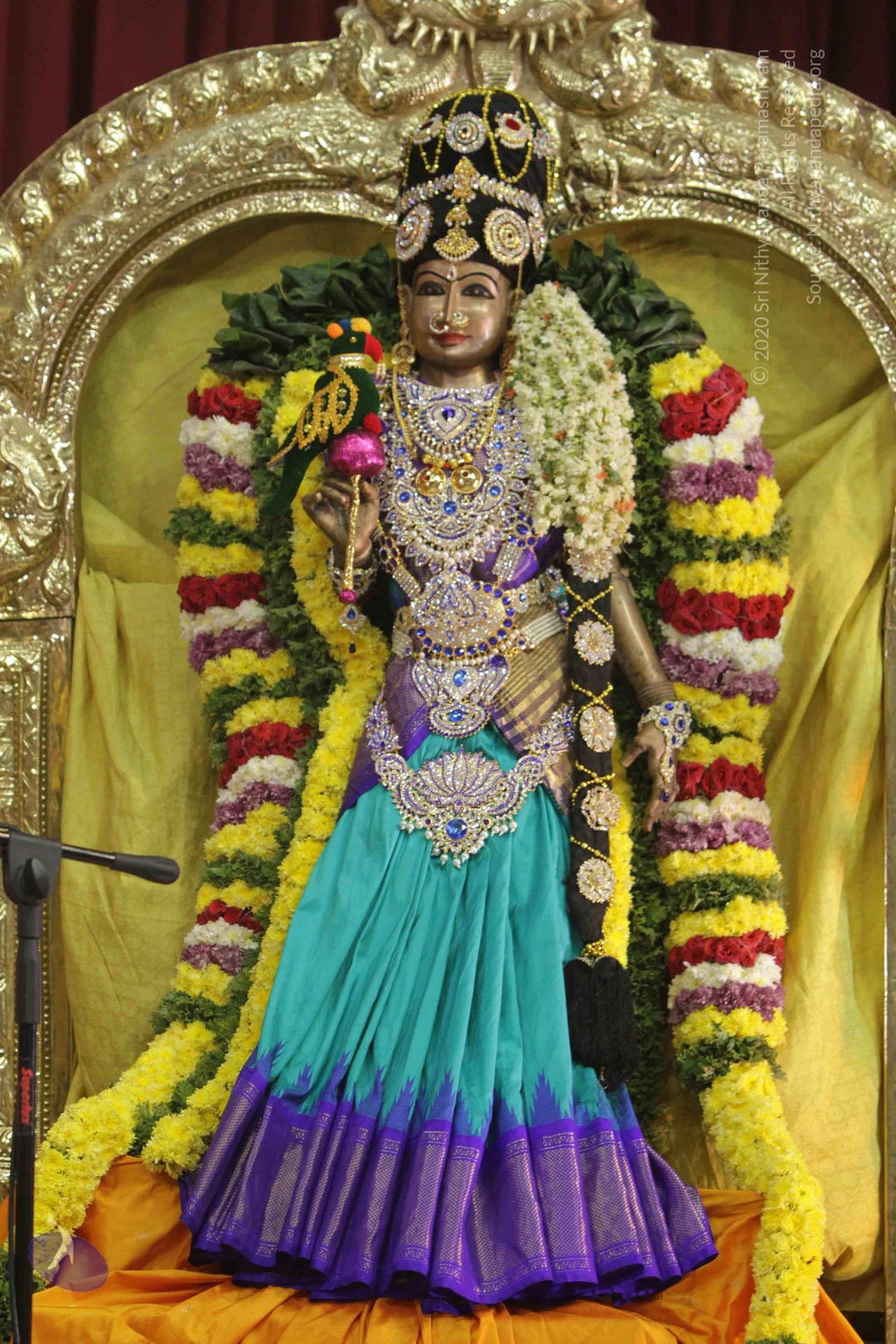
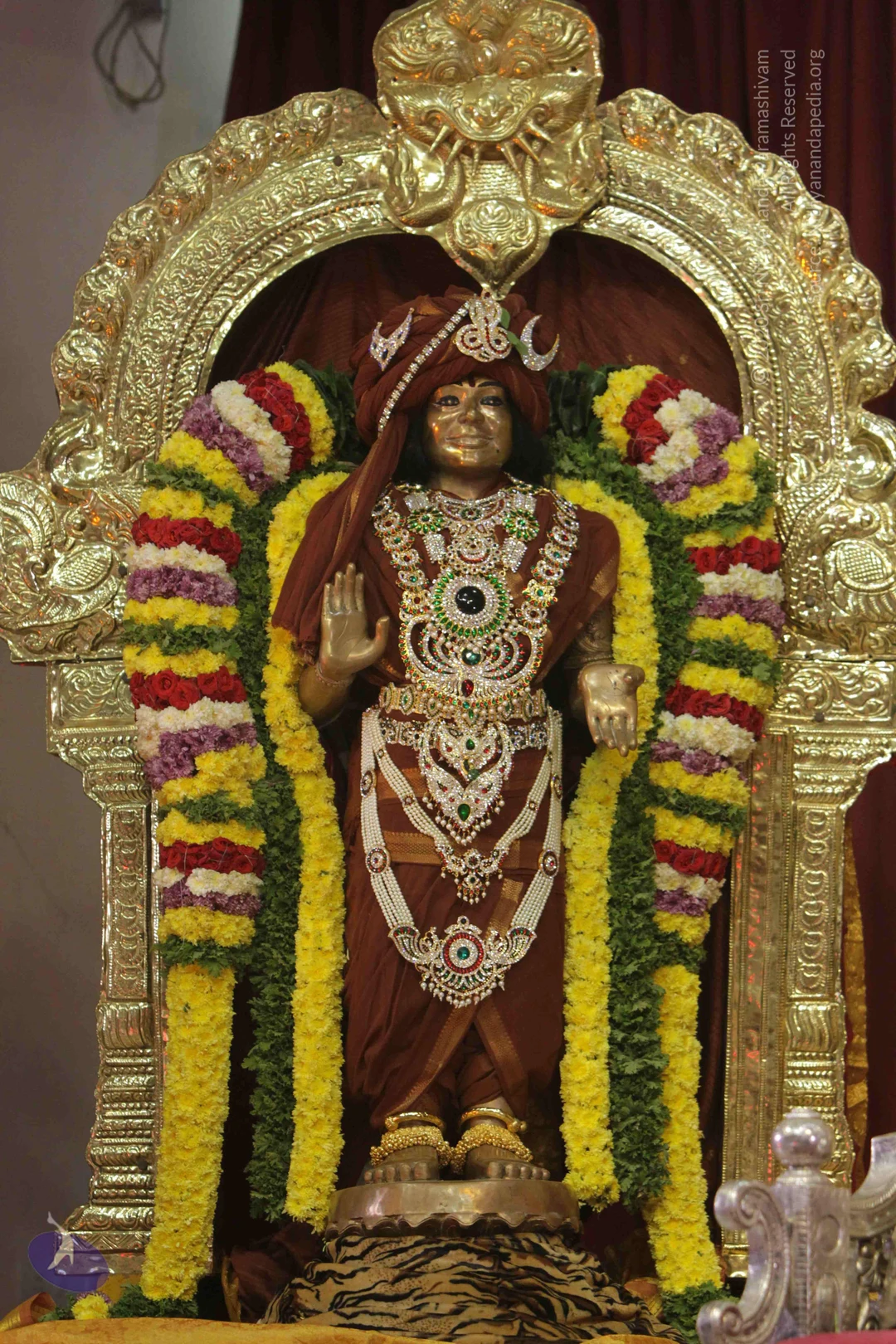
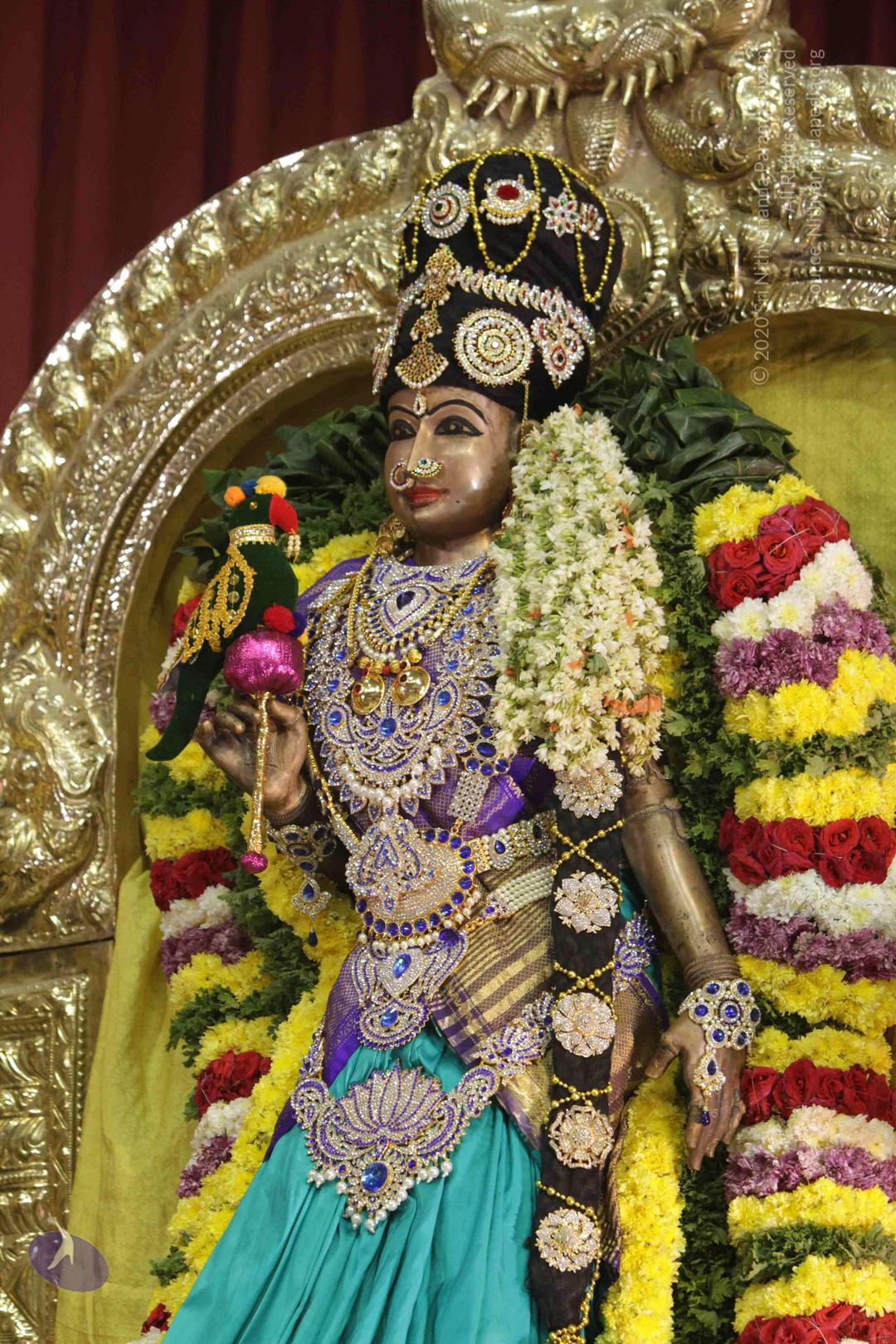
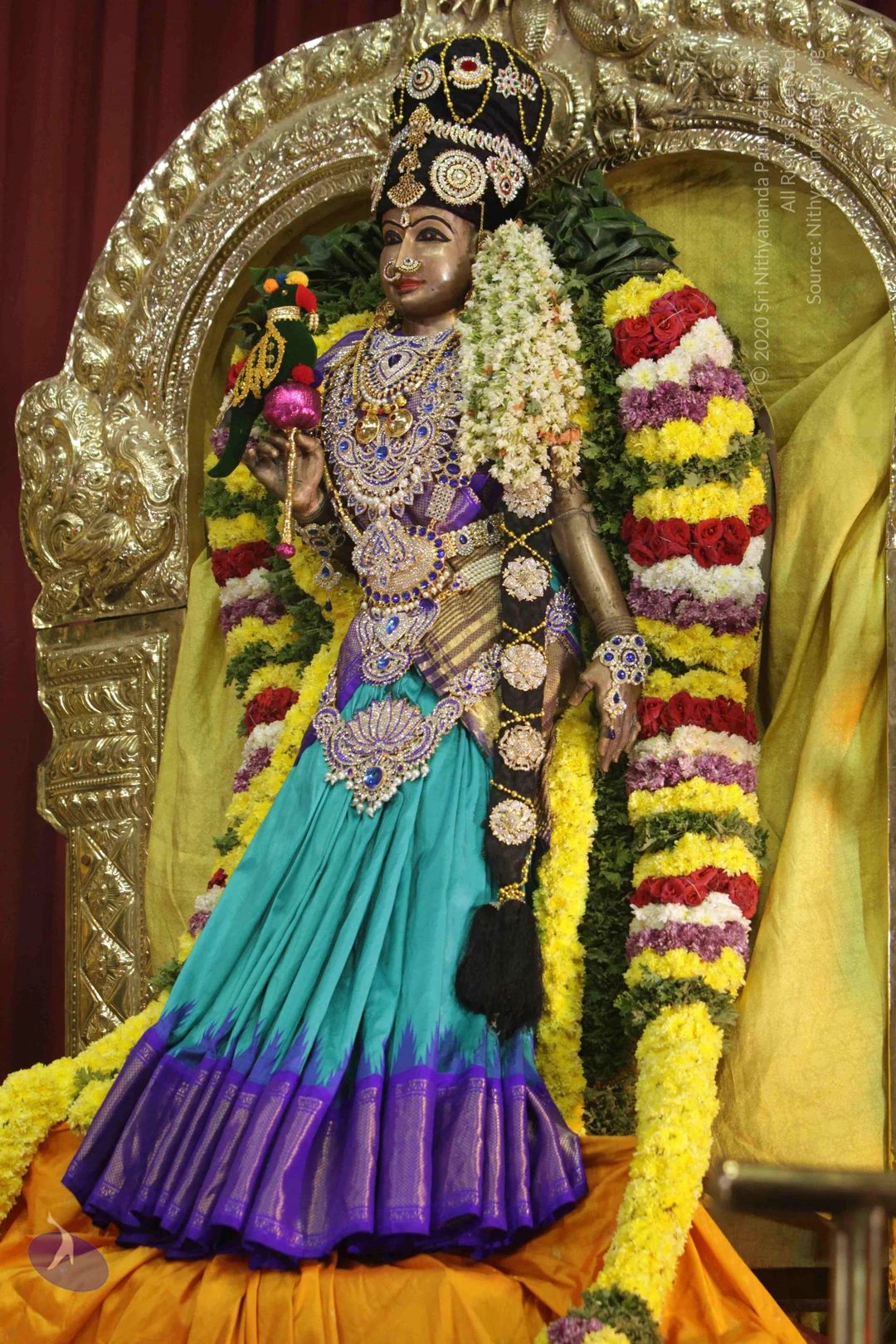
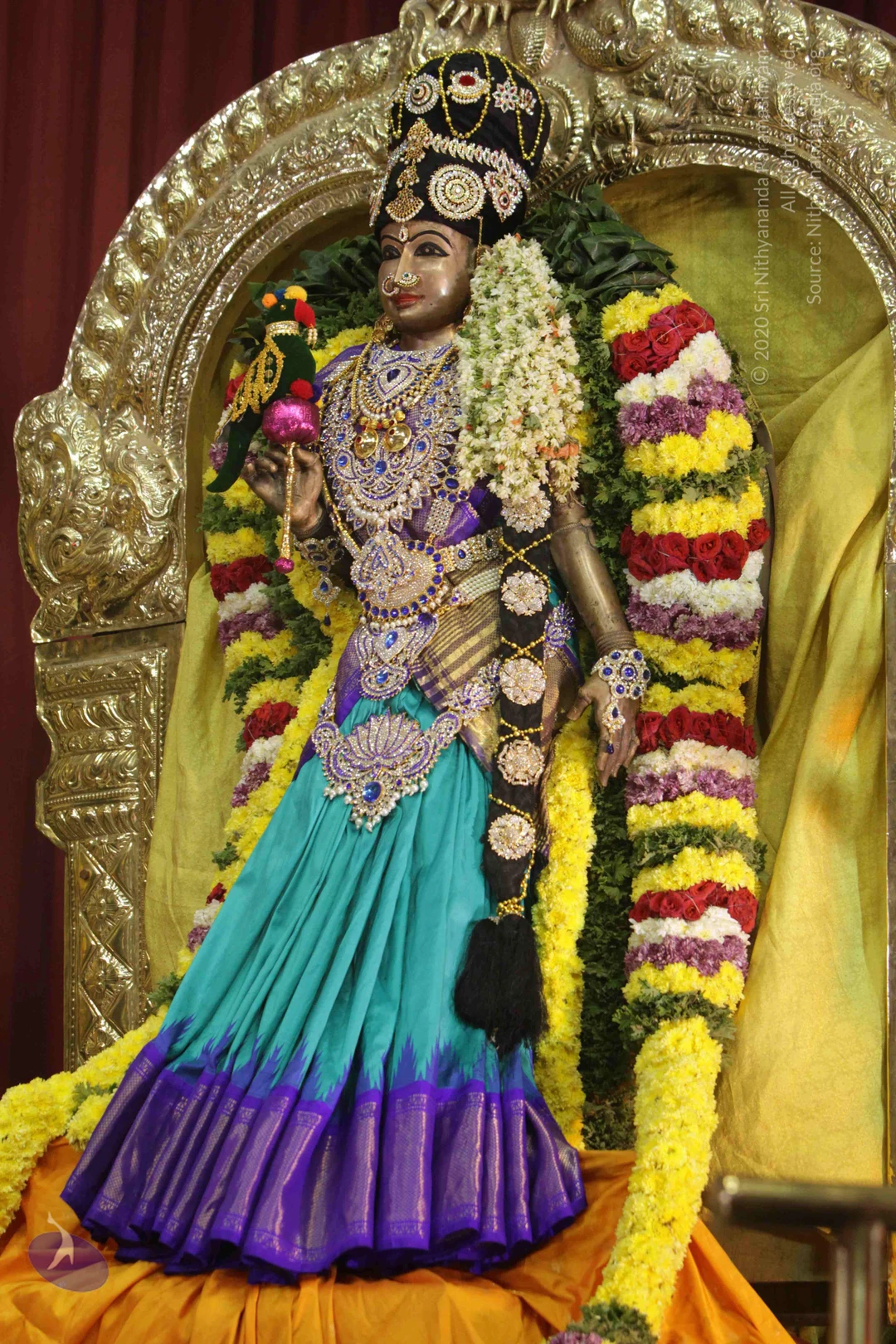
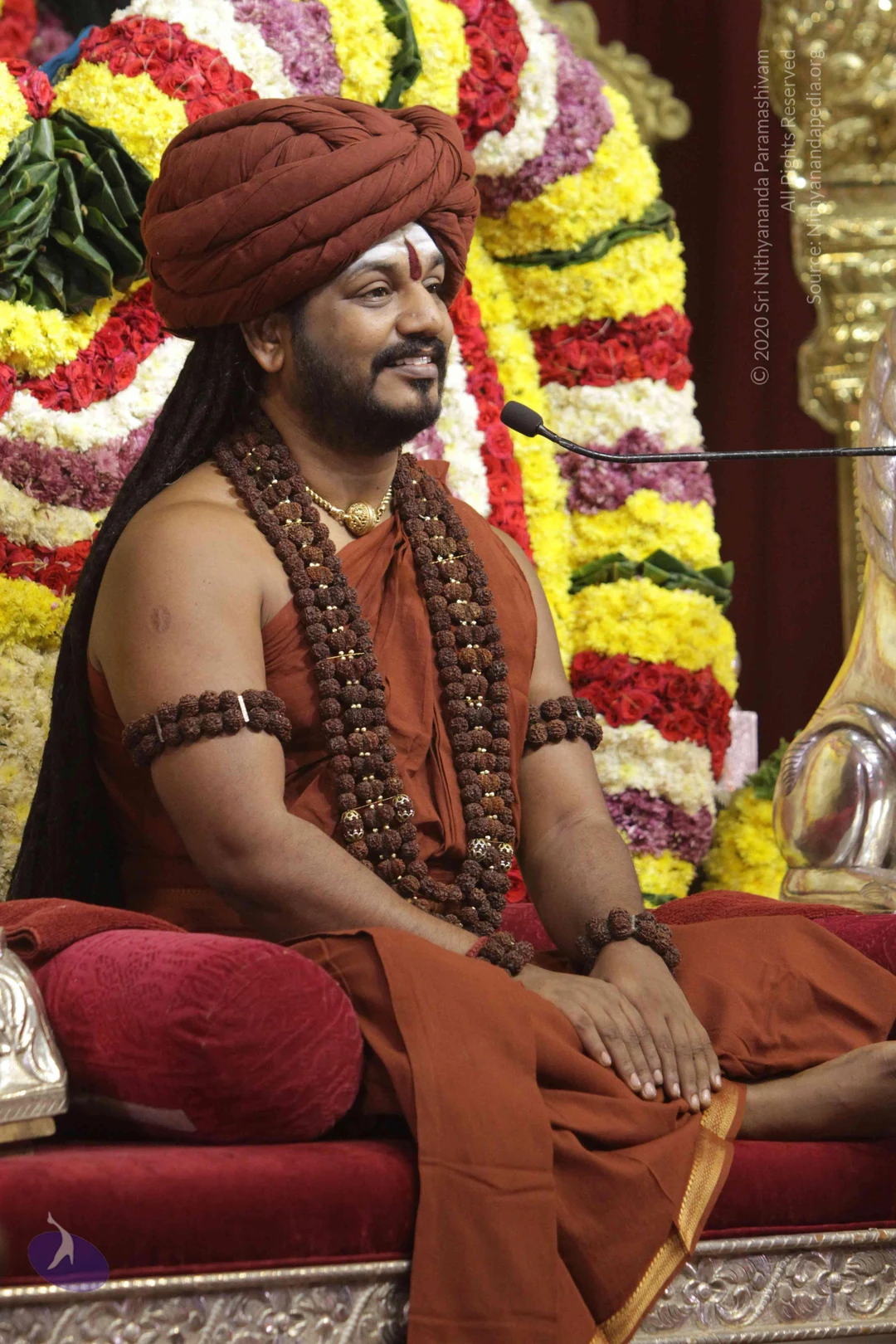
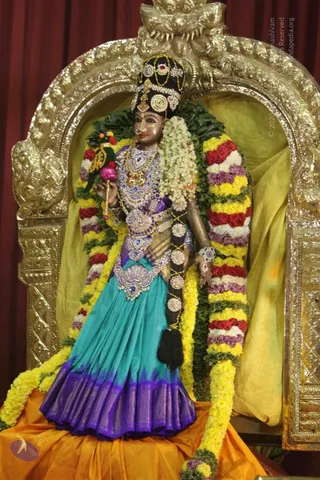
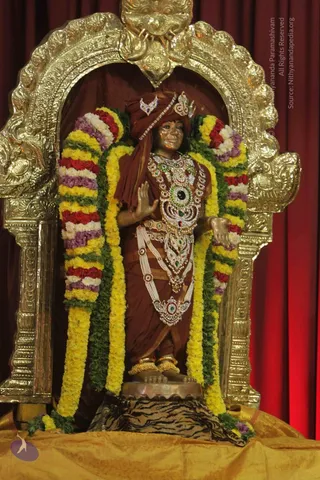
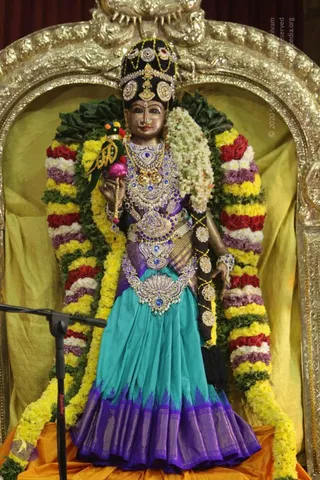
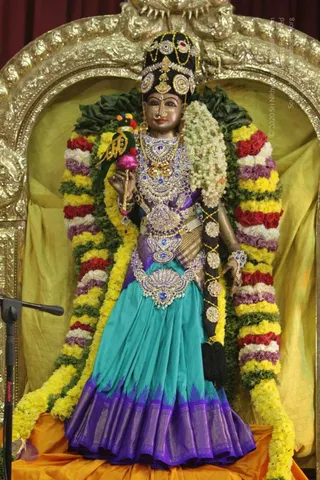
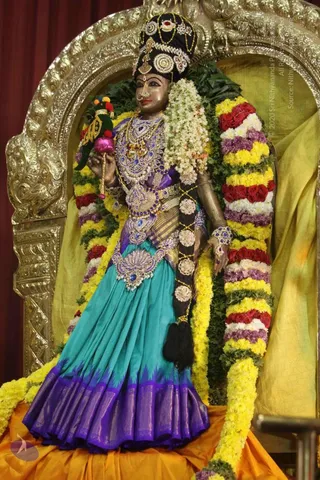
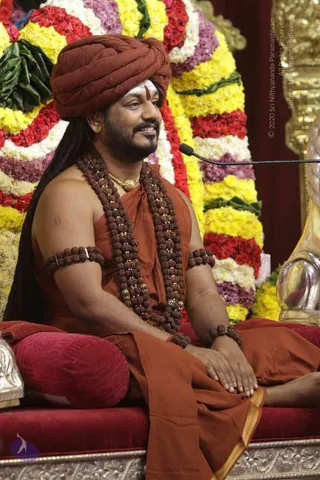
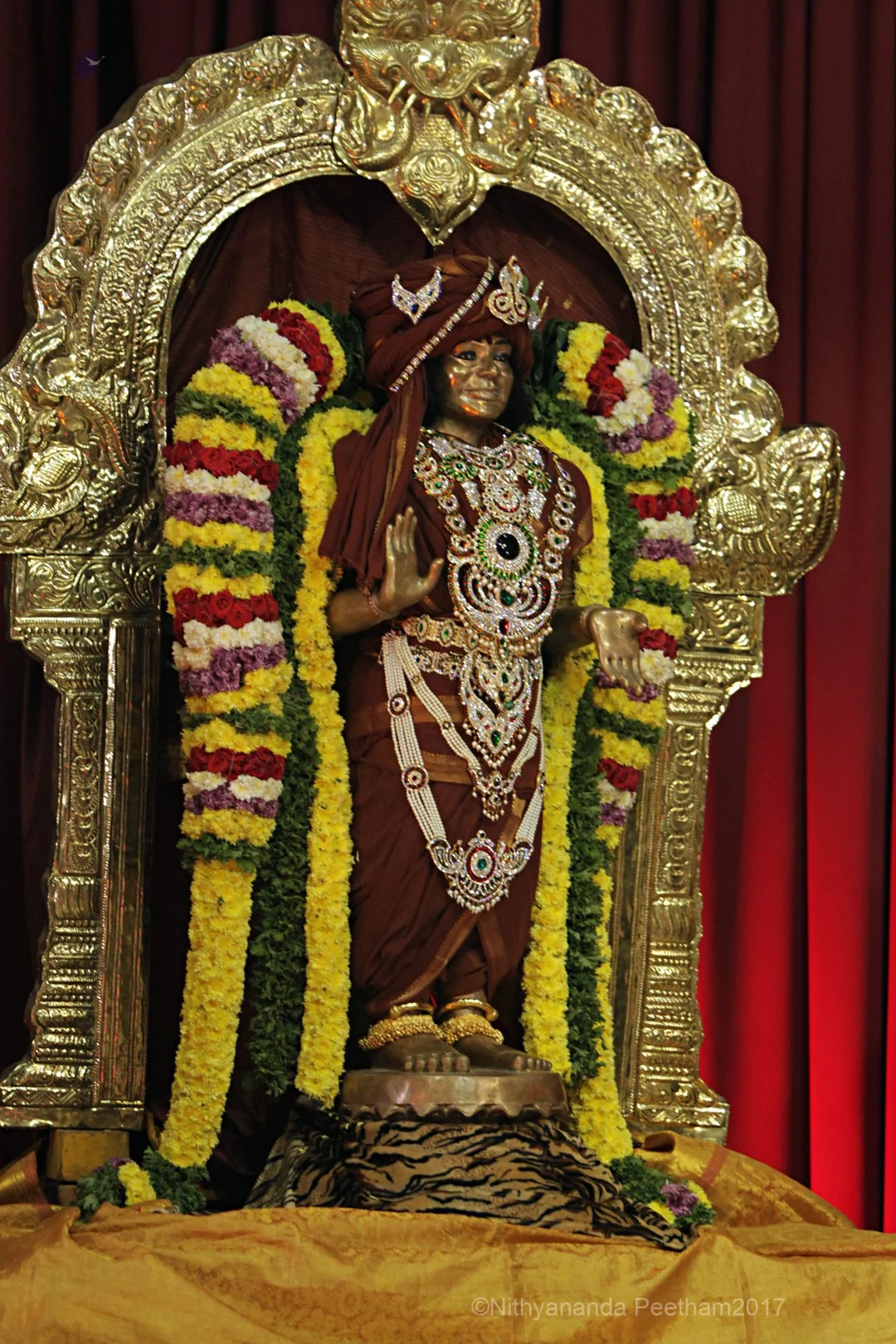
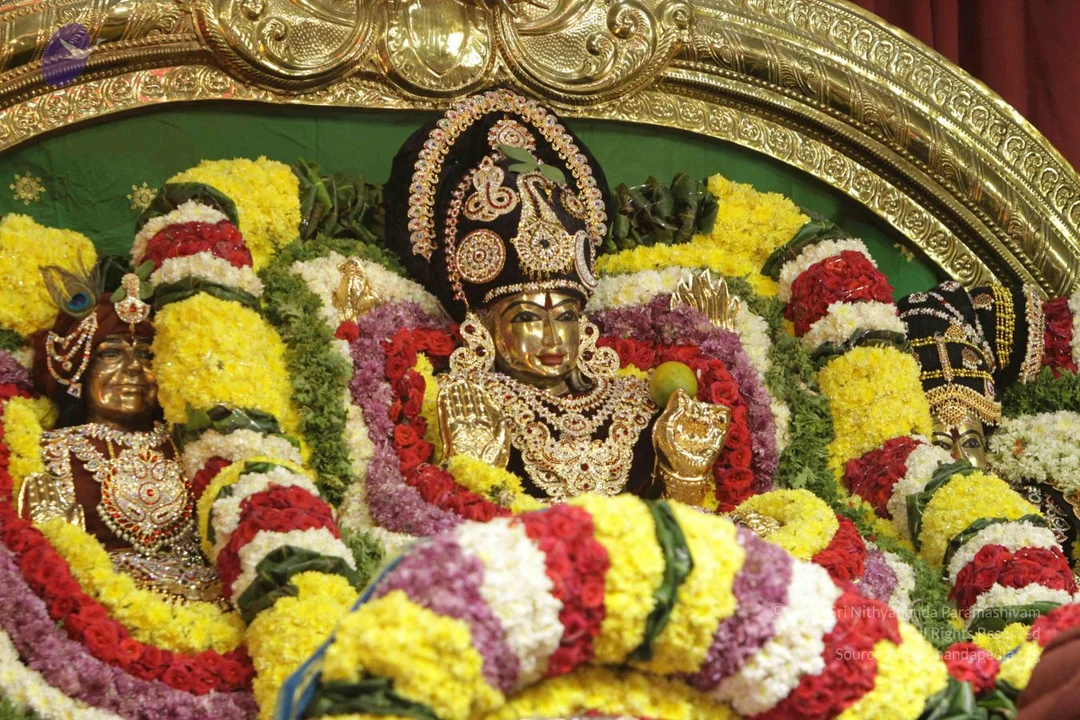
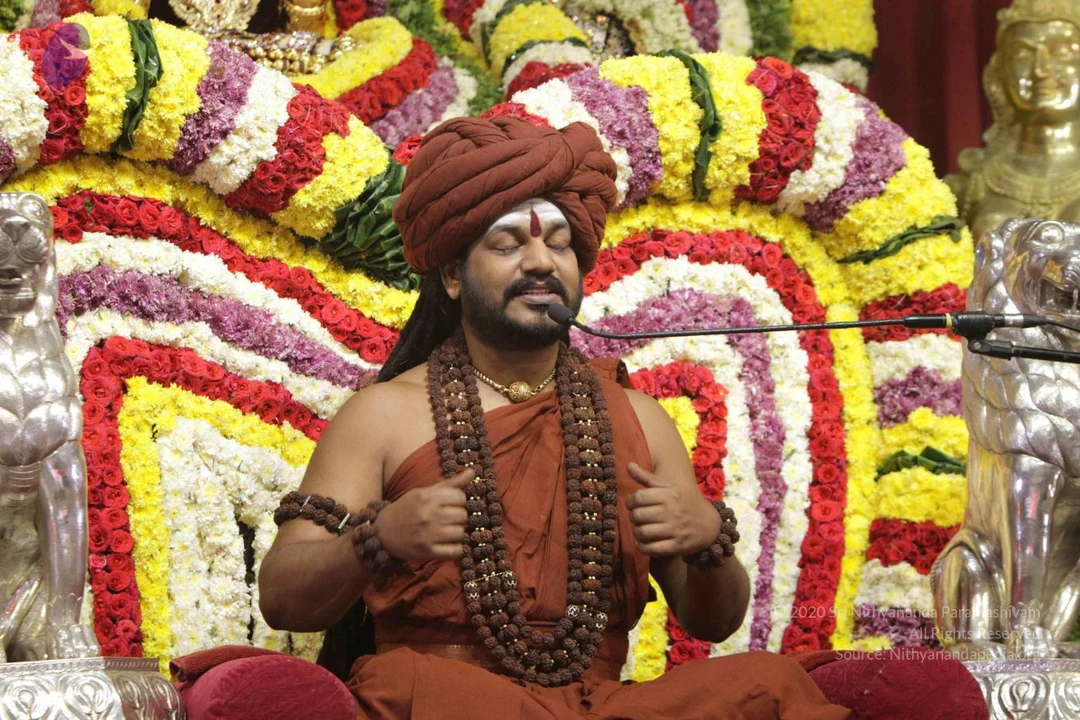
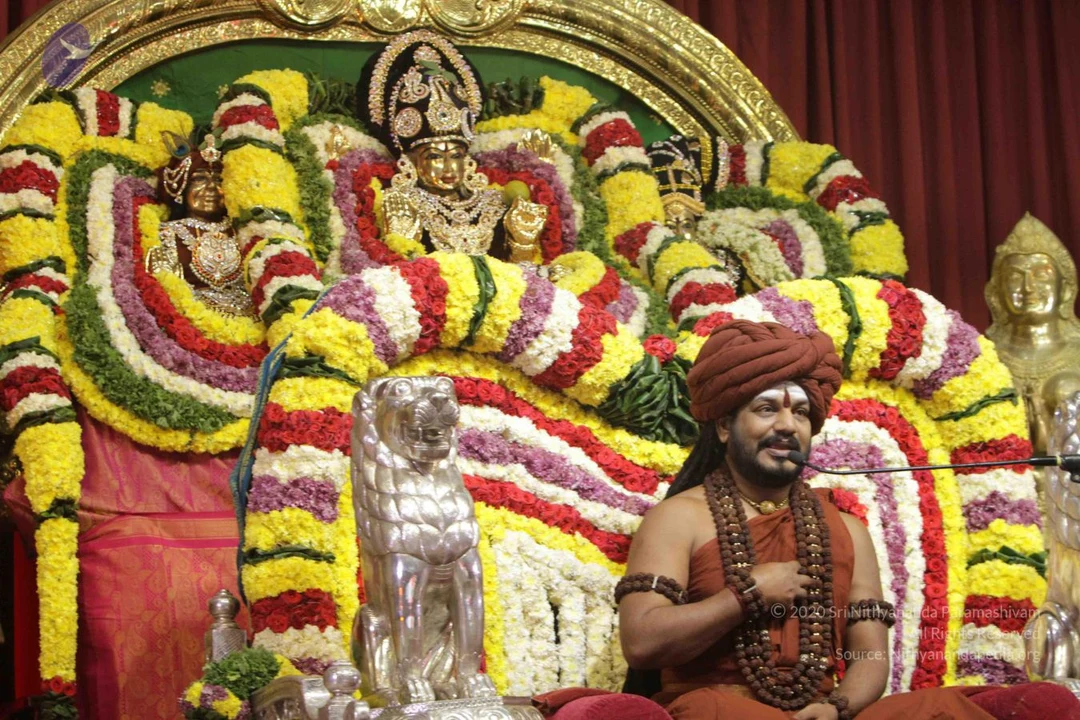
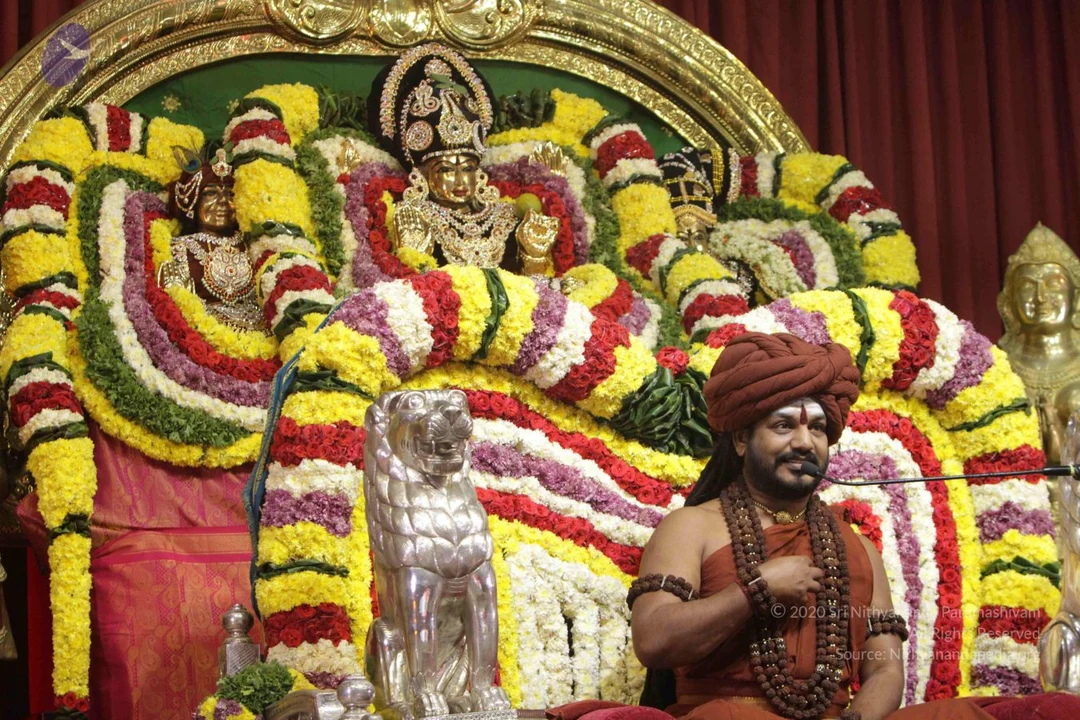
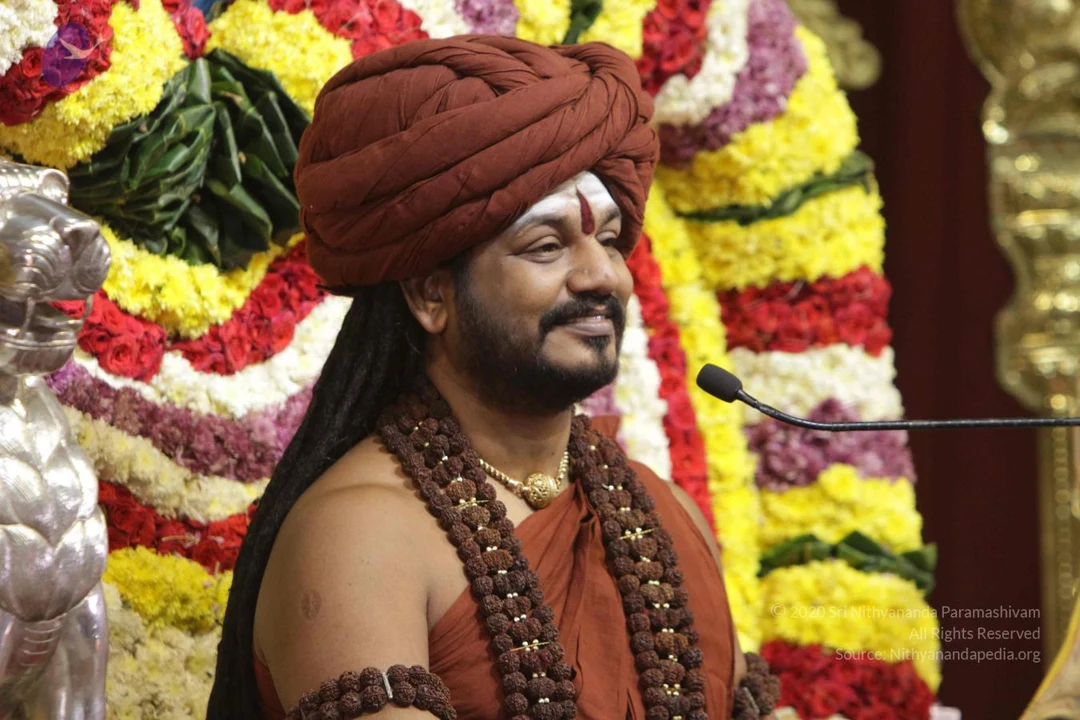
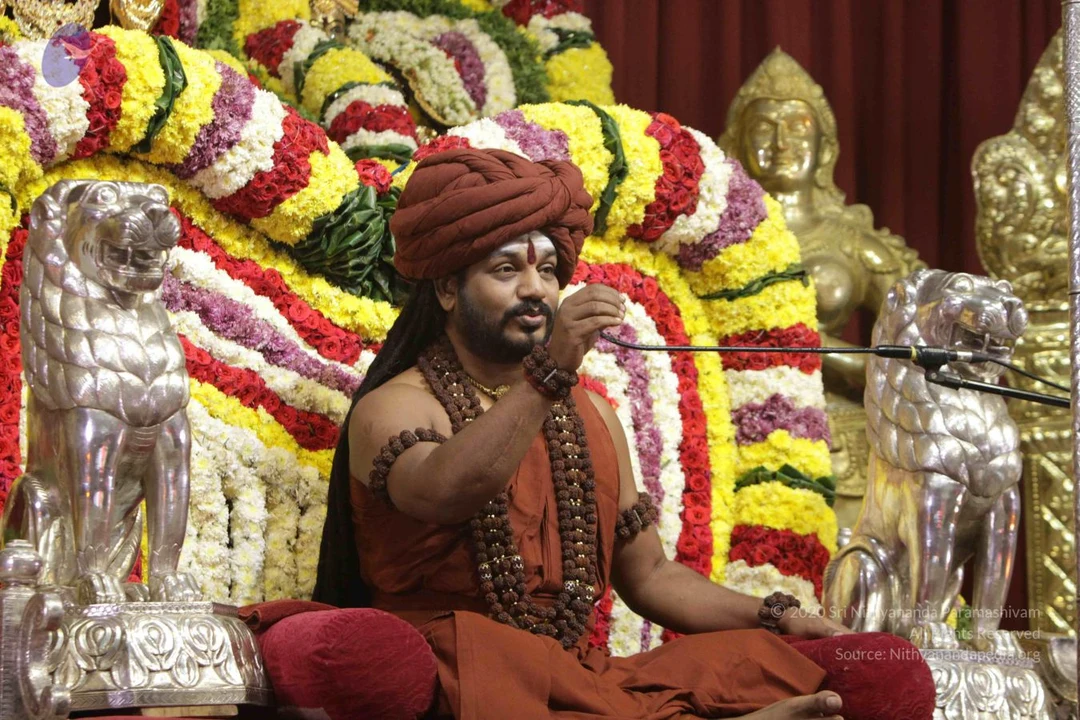
A decorated deity murti of a goddess stands in a gilded arched niche with a yellow cloth backdrop. The figure wears a tall black crown with gold and jewelled ornaments, a heavy silver-and-gold necklace set with blue stones, and a teal sari with purple and gold borders. Long strands of white jasmine hang from the crown, and yellow and red flower garlands drape over the shoulders and sides. The murti holds a green parrot figure on a pink perch in one hand. An orange cloth covers the base.A gilded arched shrine frames a standing statue wearing a brown-red turban with a jewelled crown ornament, a brown-red cloth, a heavy jewelled chest ornament and pearl-and-gem waist chains, and a raised right hand in blessing. Garlands of yellow, red, white and purple flowers with green leaves drape the statue on both sides, and its feet rest on a brass base over a striped tiger-skin mat. Gold brocade covers the platform and red drapery backs the shrine. The statue is a depiction, not a person.A decorated deity murti stands in a gilded arched niche against a yellow cloth backdrop. The figure wears an ornate black and gold crown with jewelled medallions, heavy silver-and-gem jewellery, and a teal and purple silk garment with a zari-bordered hem. It holds a green parrot perched on a pink fruit in one hand and a white jasmine garland drapes over the shoulder. Garlands of yellow marigolds and red and white flowers frame the niche. A microphone stand stands in the lower left, and an orange cloth covers the base. No people are visible in the frame.A decorated deity murti of a goddess stands in a gilded arched niche against yellow drapery. She wears a black crown ornamented with jewels, a jewelled necklace and bangles, and a teal and purple silk sari with gold border. She holds a green parrot on a pink-tipped stick in one hand, and a white jasmine garland hangs from her shoulder. Multicolour marigold and rose garlands frame the niche, and an orange cloth covers the base. A microphone stand is at the left edge. No physical people are visible.A decorated deity murti stands in a gilded arched niche against a yellow silk backdrop. The figure wears a tall black crown adorned with jewelled ornaments, a teal and purple silk skirt with gold-zari borders, and heavy blue-and-gold jewellery. It holds a green parrot perched on a pink ball-tipped staff in one hand, while the other hand hangs open at the side. Long garlands of yellow marigolds, red roses, white jasmine and purple flowers drape from the shoulders and wrap the arch, with leafy greens behind. No people are visible.A seated man in a rust-orange turban and matching orange robe sits on a red cushioned seat speaking into a microphone on a stand. He wears long rudraksha malas across his chest, rudraksha armbands, a gold pendant necklace and a rudraksha bracelet, with a white-and-red tilak on his forehead. Behind him is a backdrop of yellow, red, white and purple flower garlands with green leaves, and a silver ornamental seat edge is visible at right.
Mysore-Infosys-Campus

43 photosSource gallery
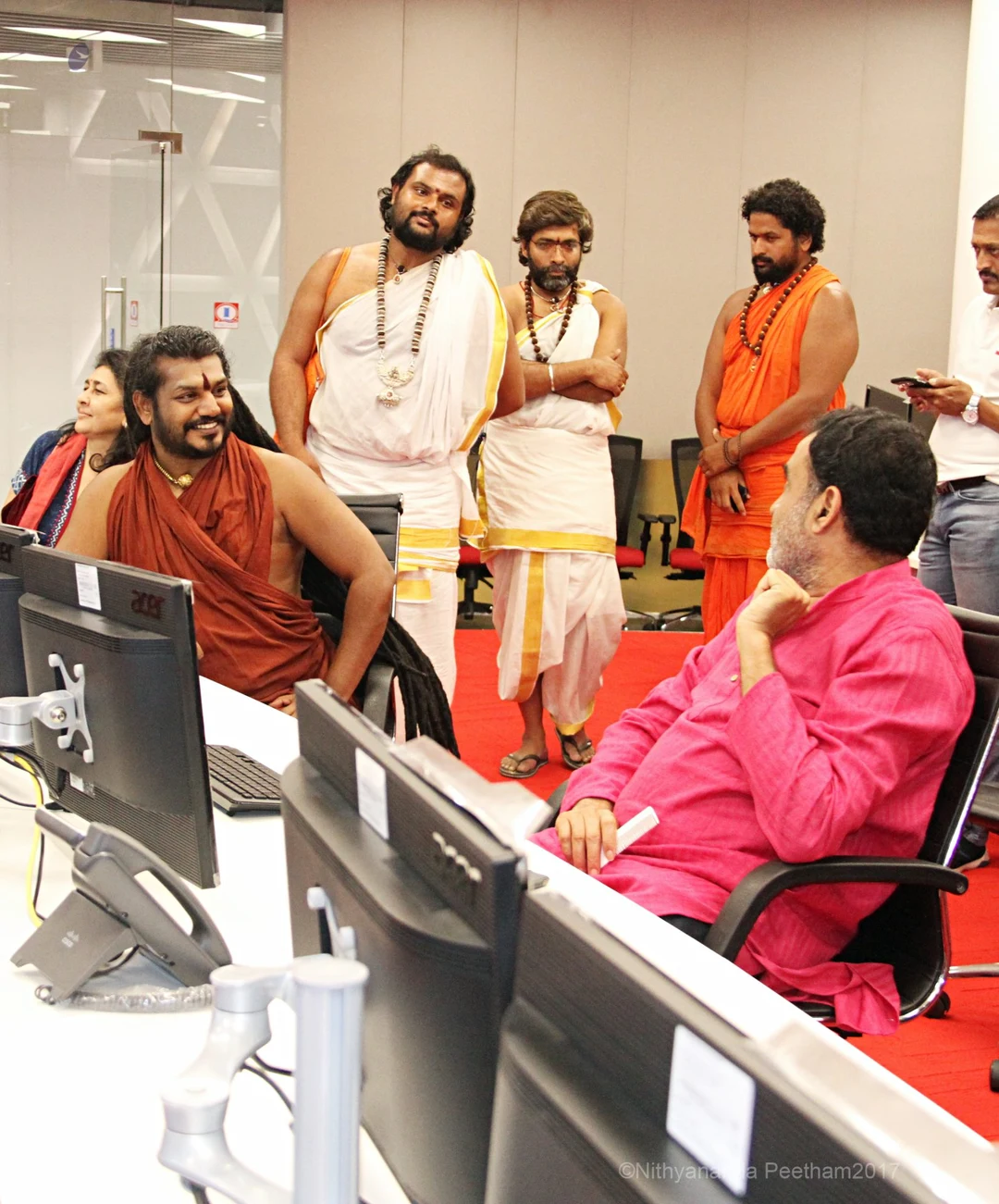
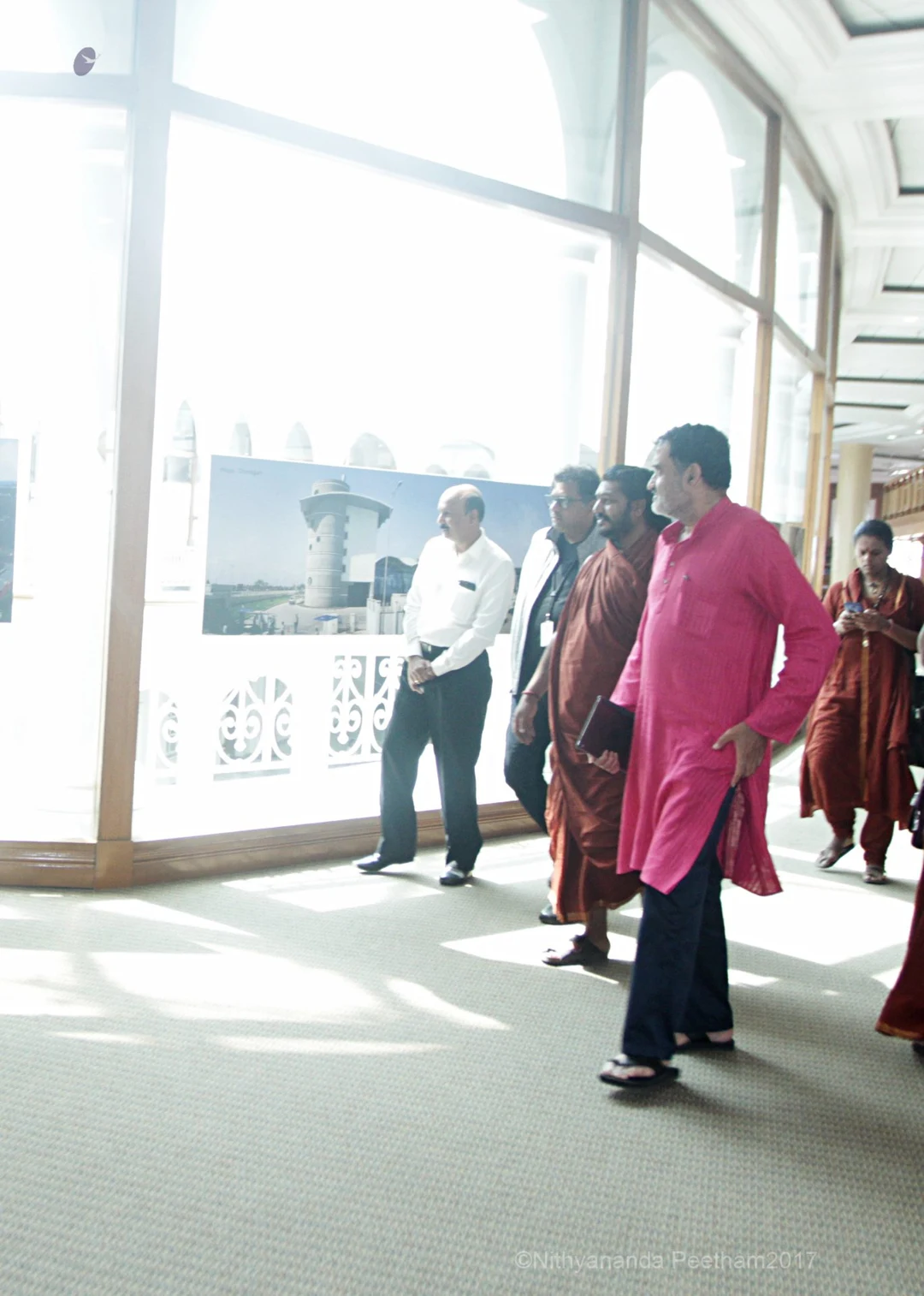
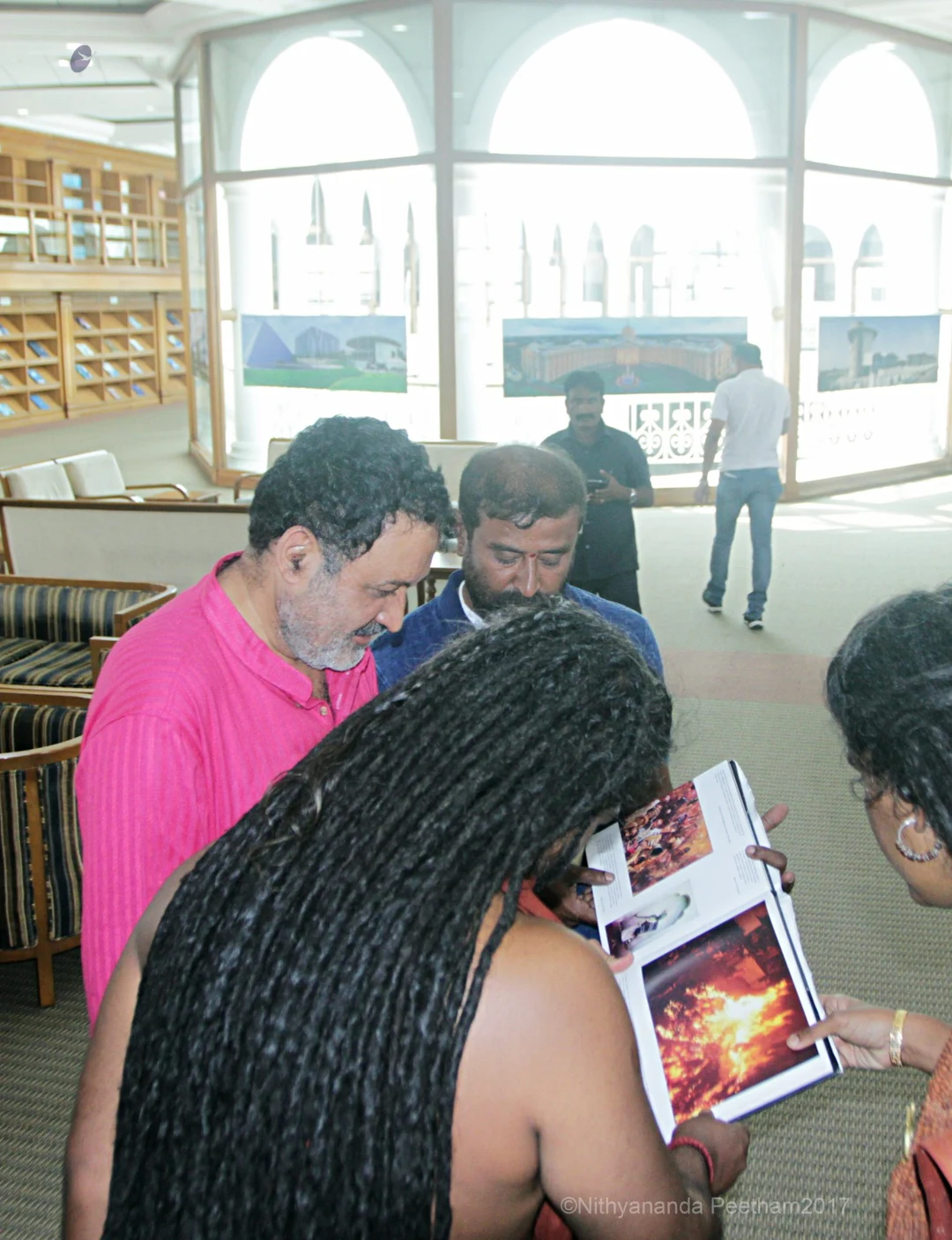
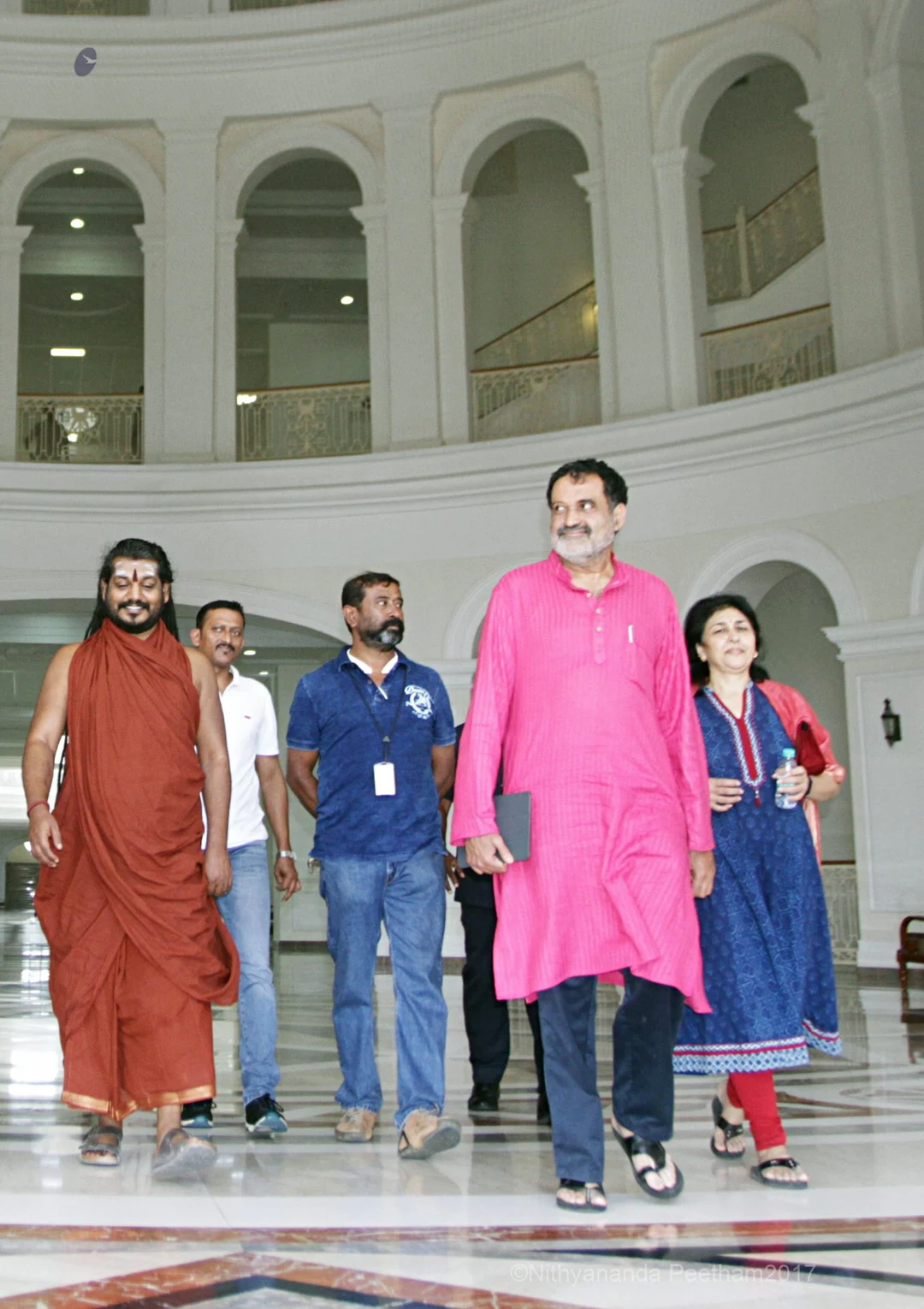
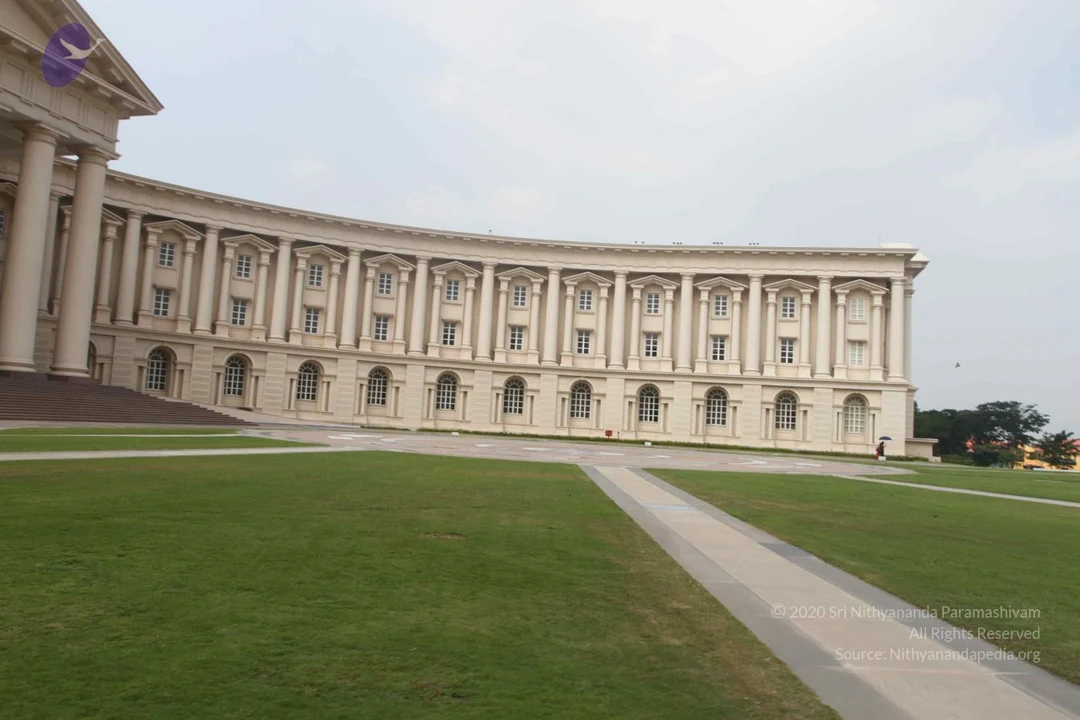
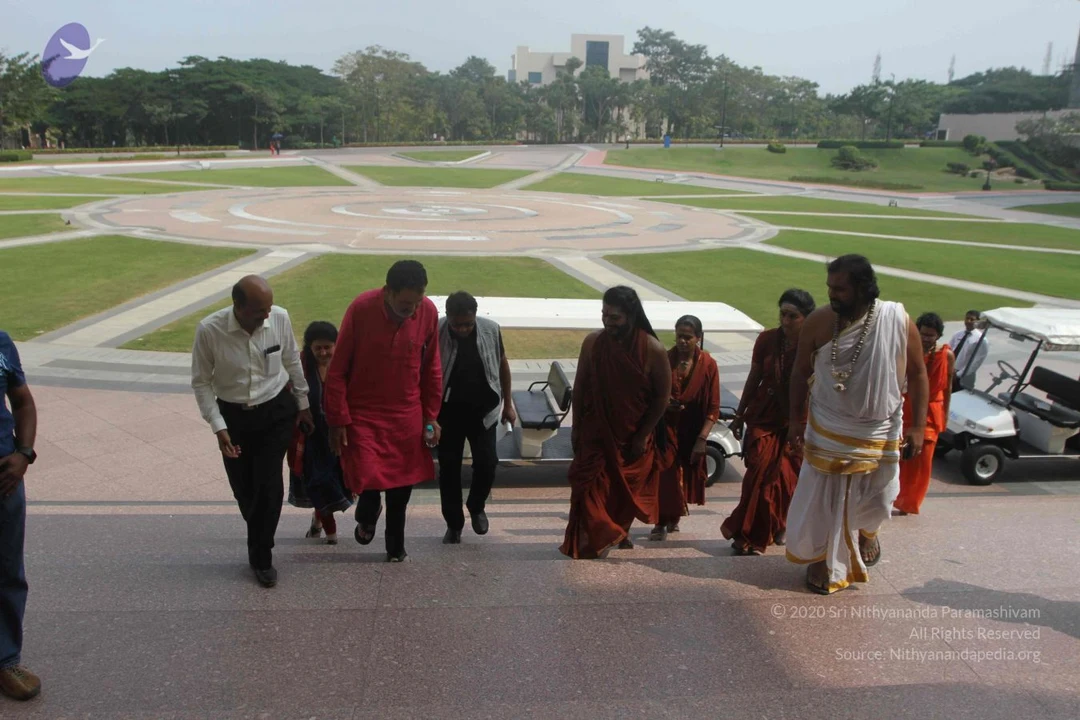
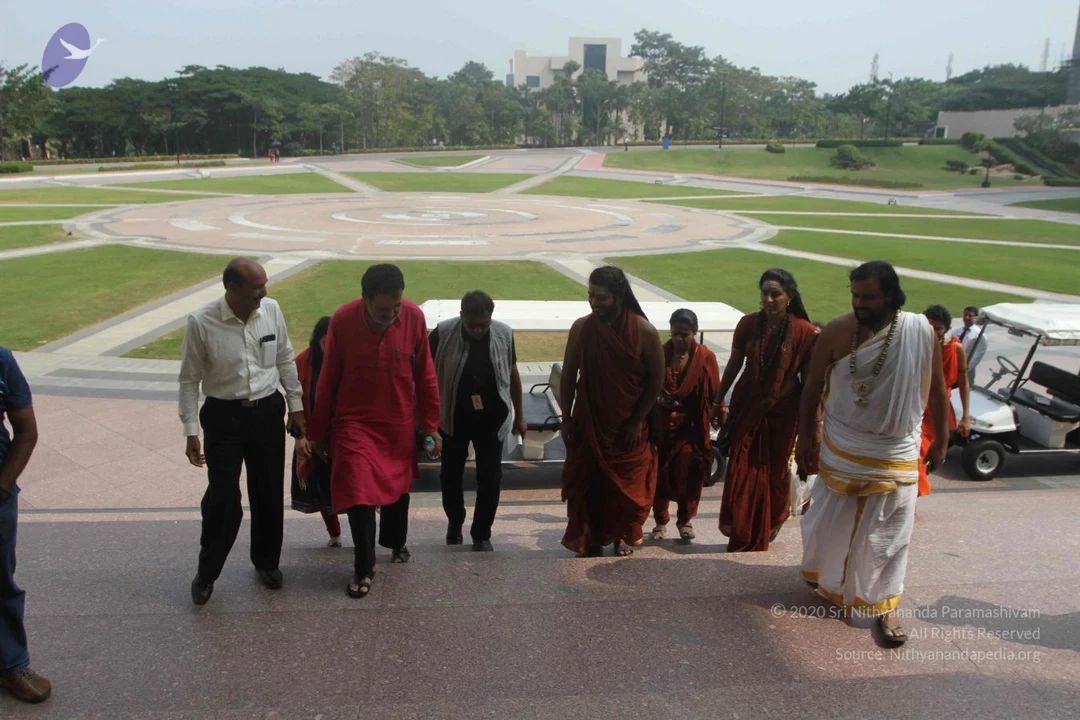
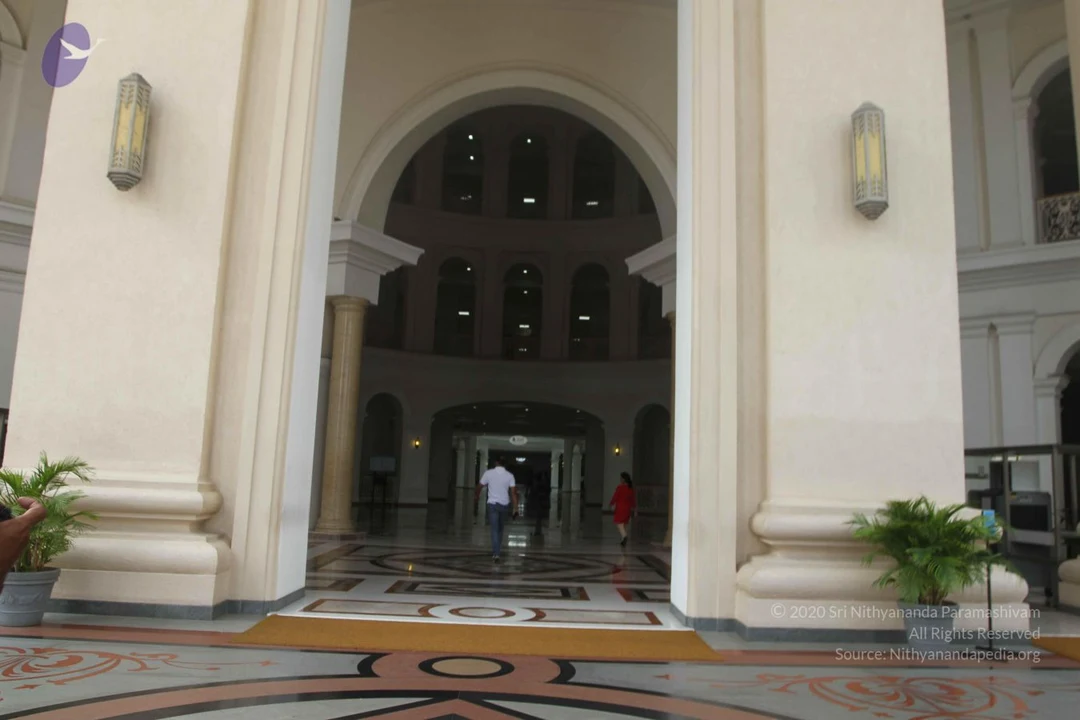
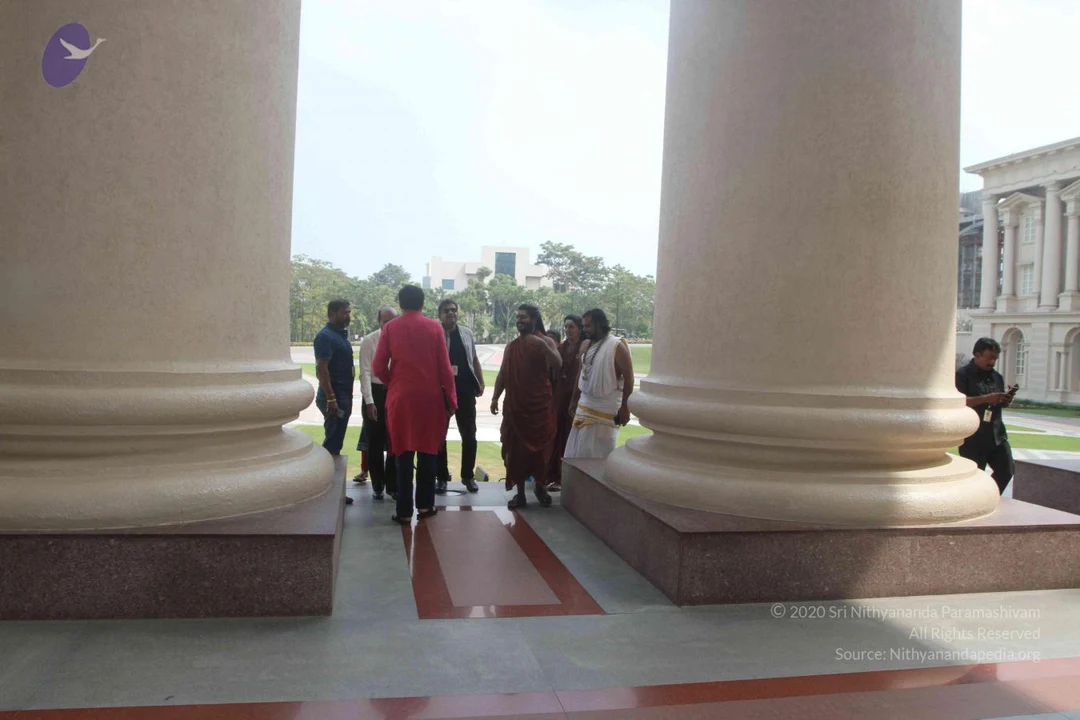
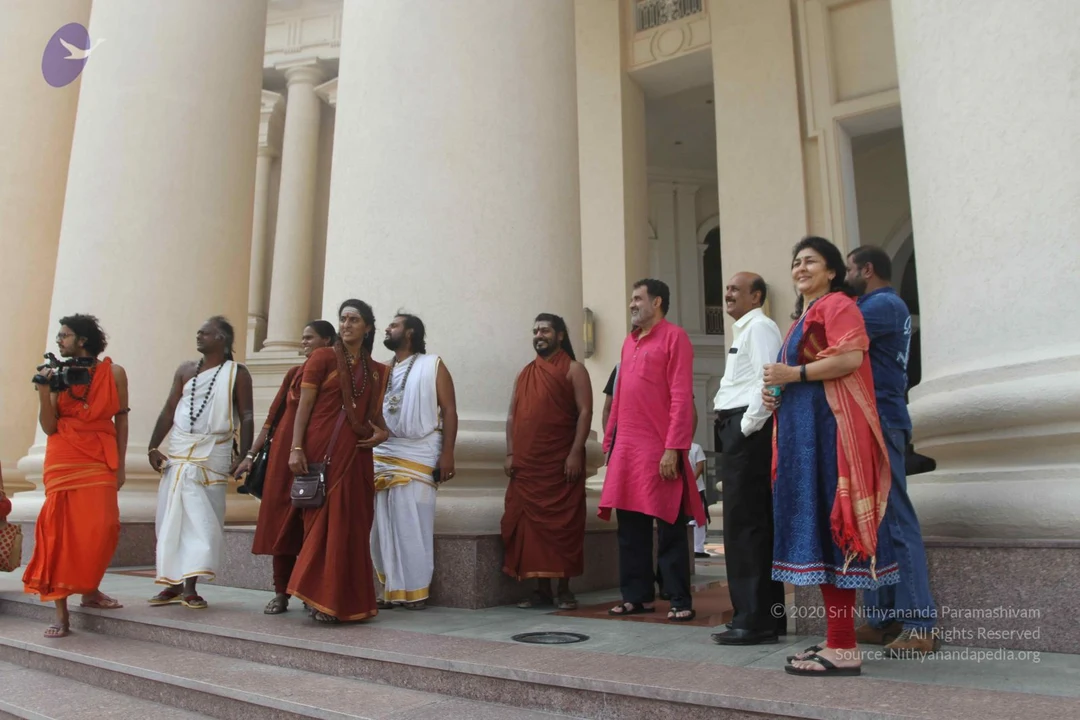
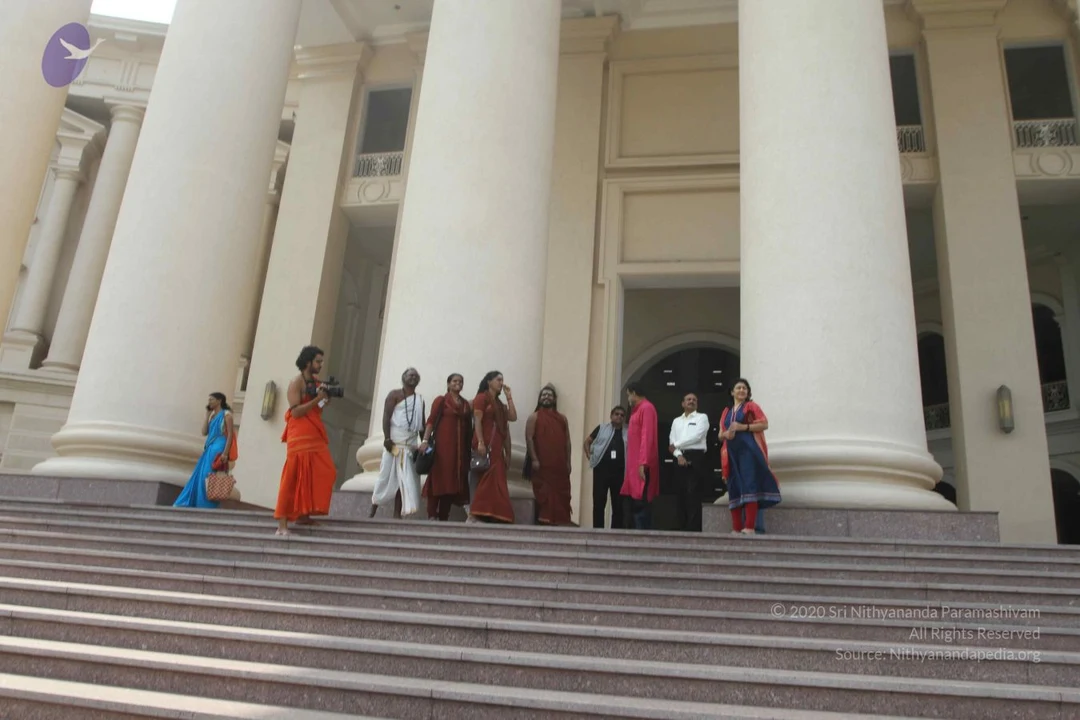
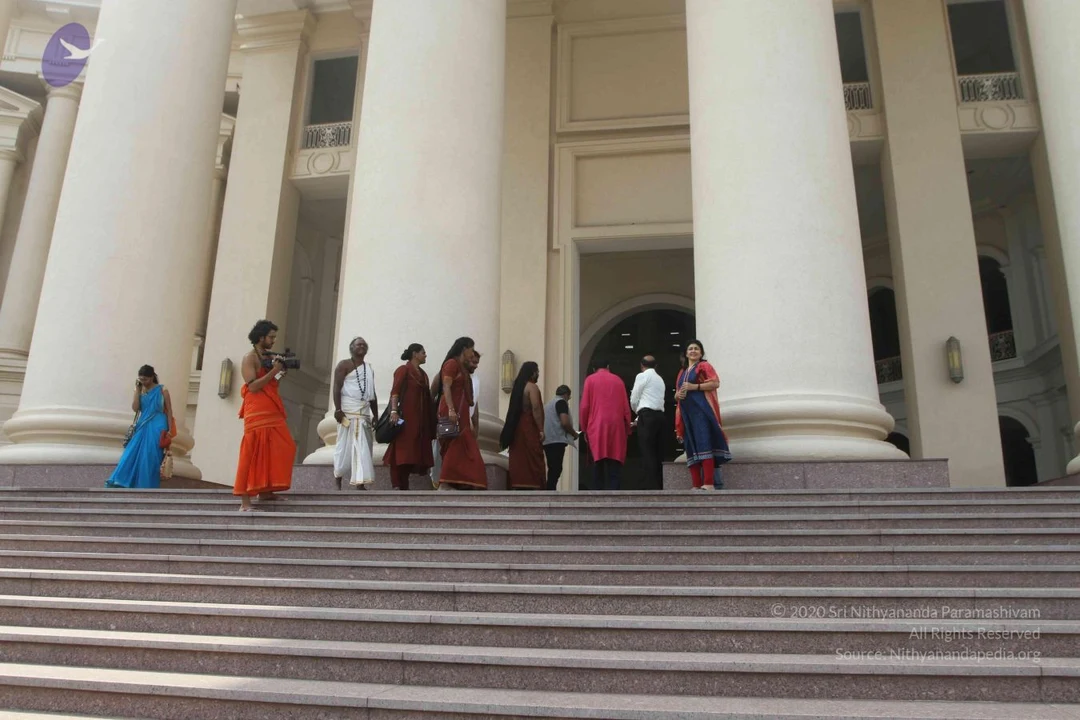
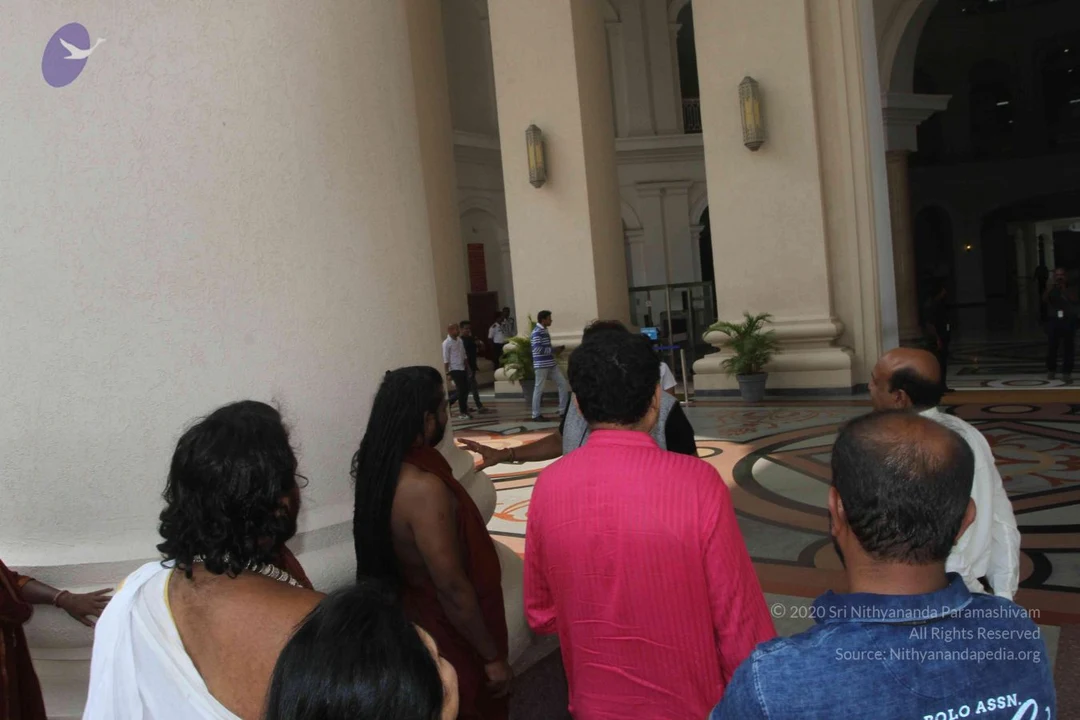
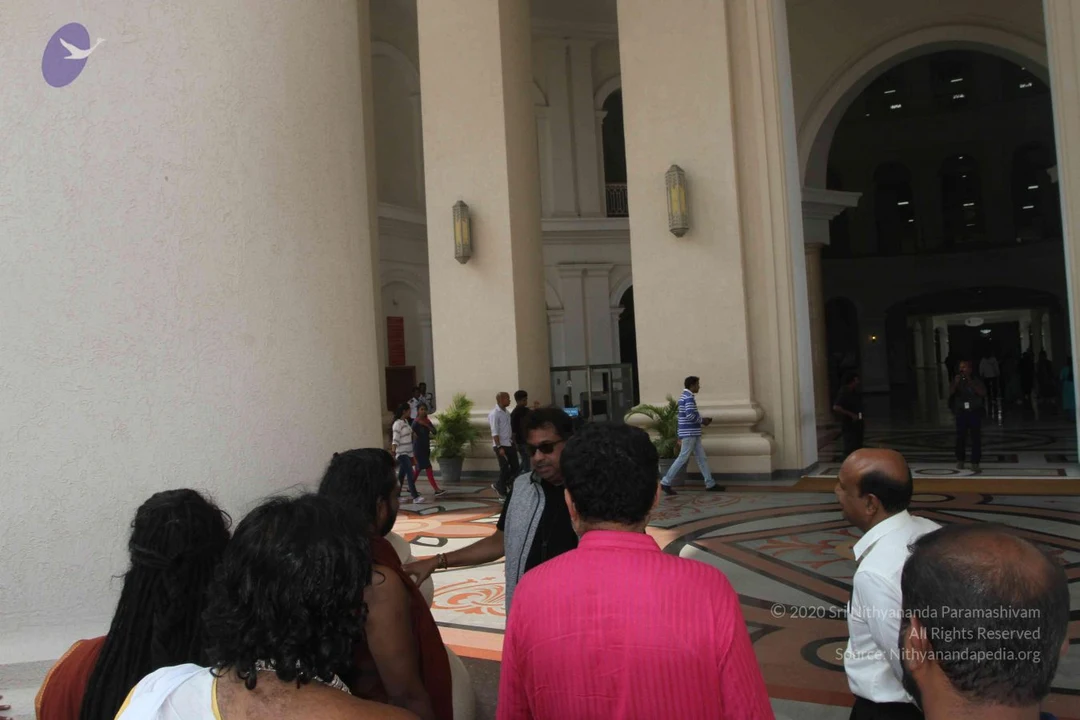
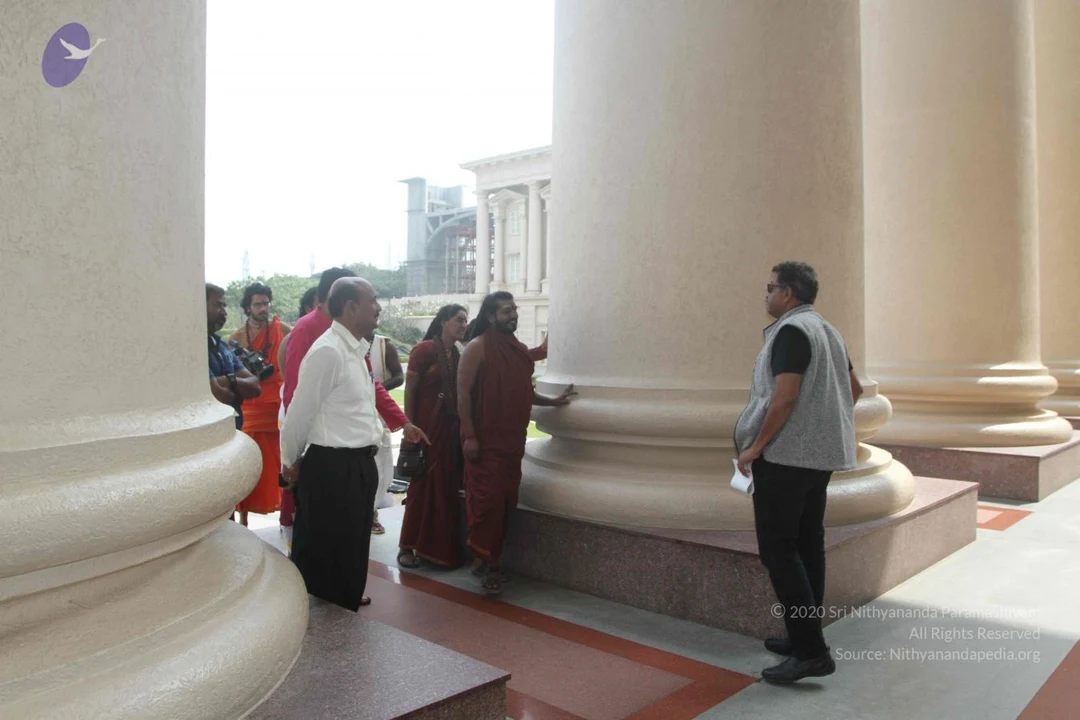
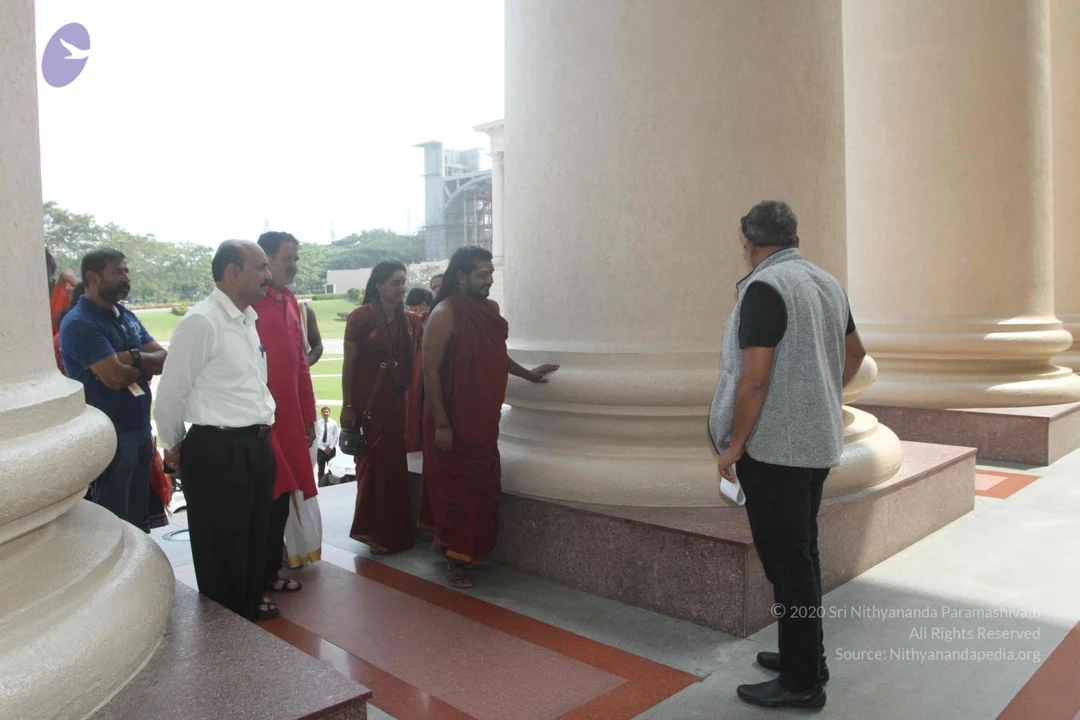
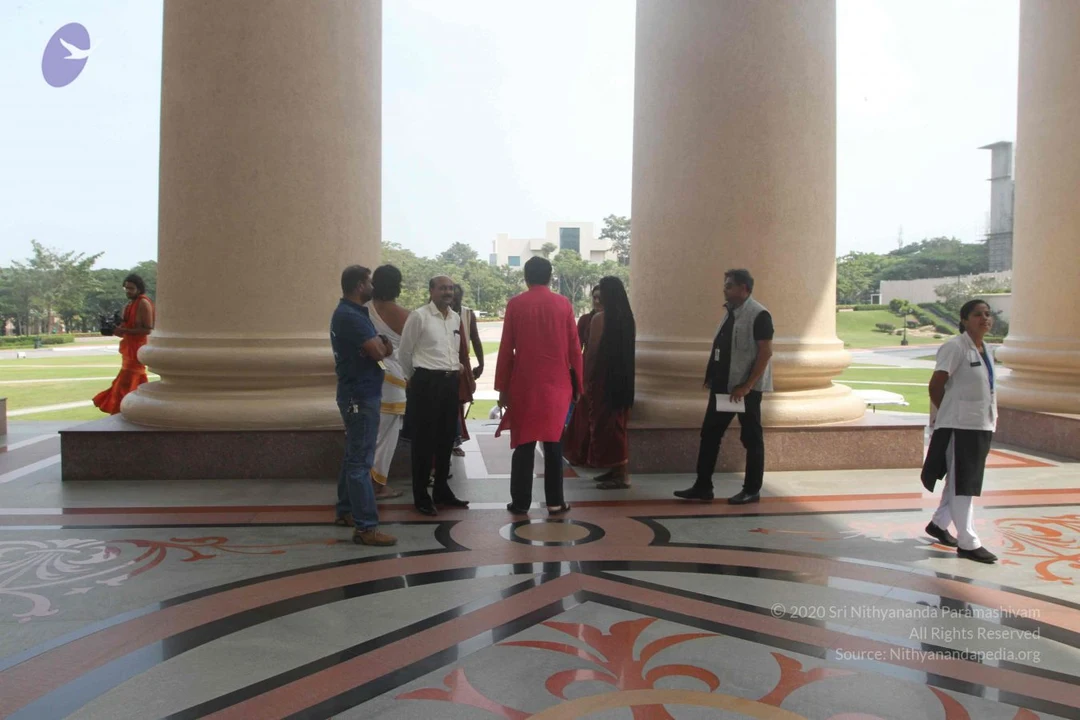
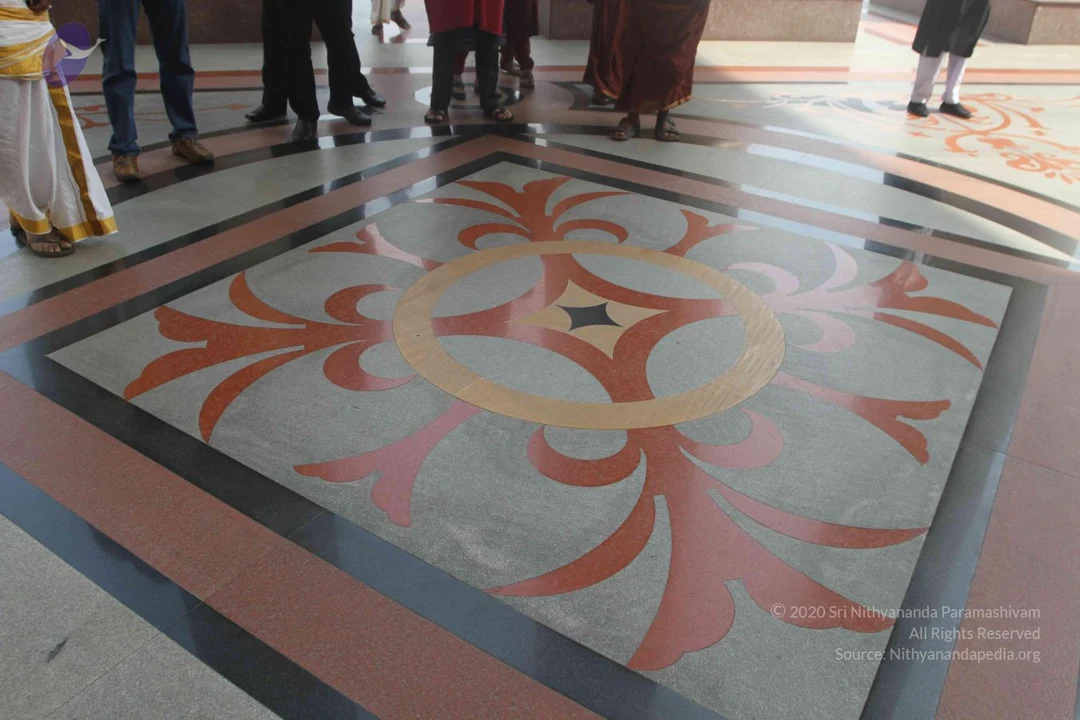
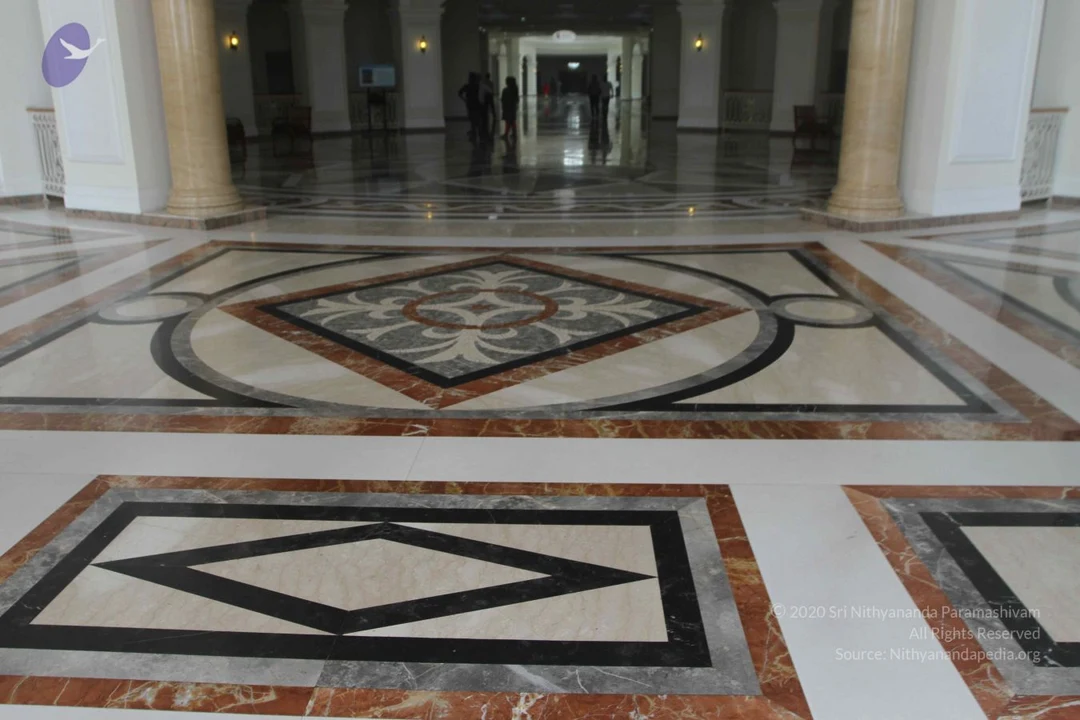
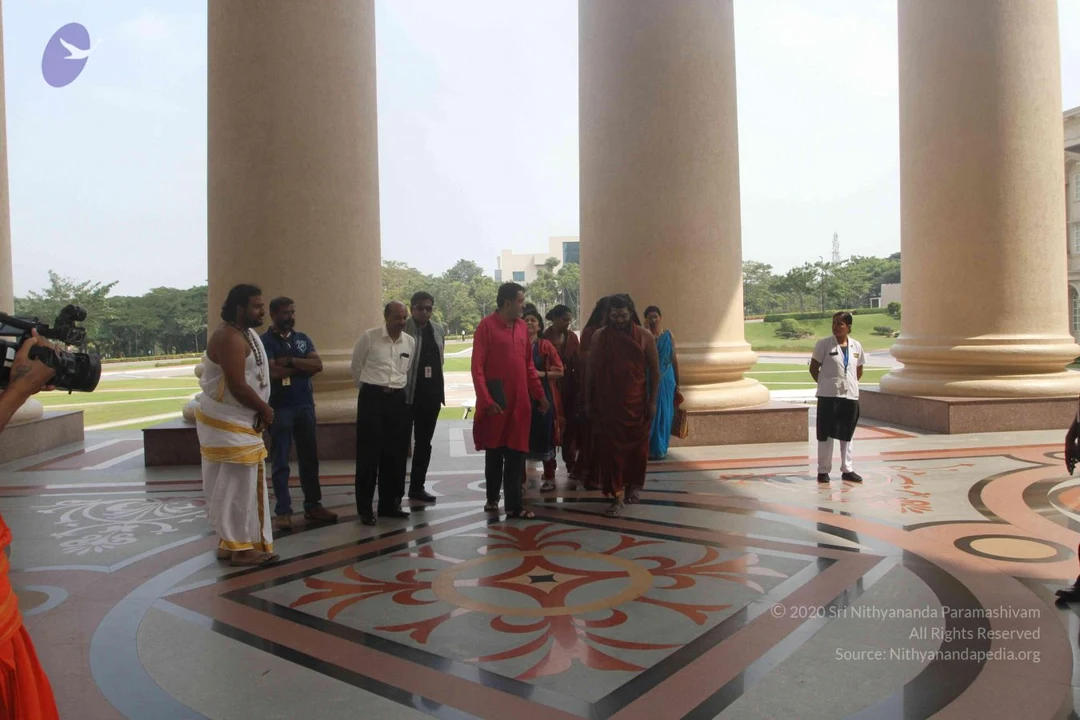
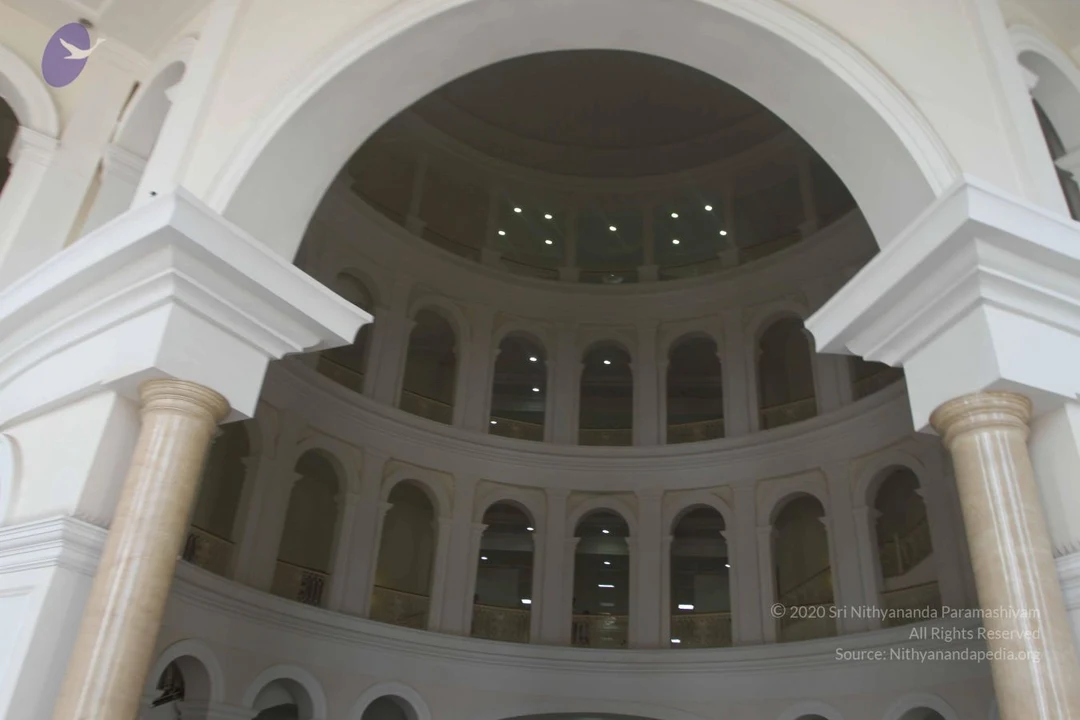
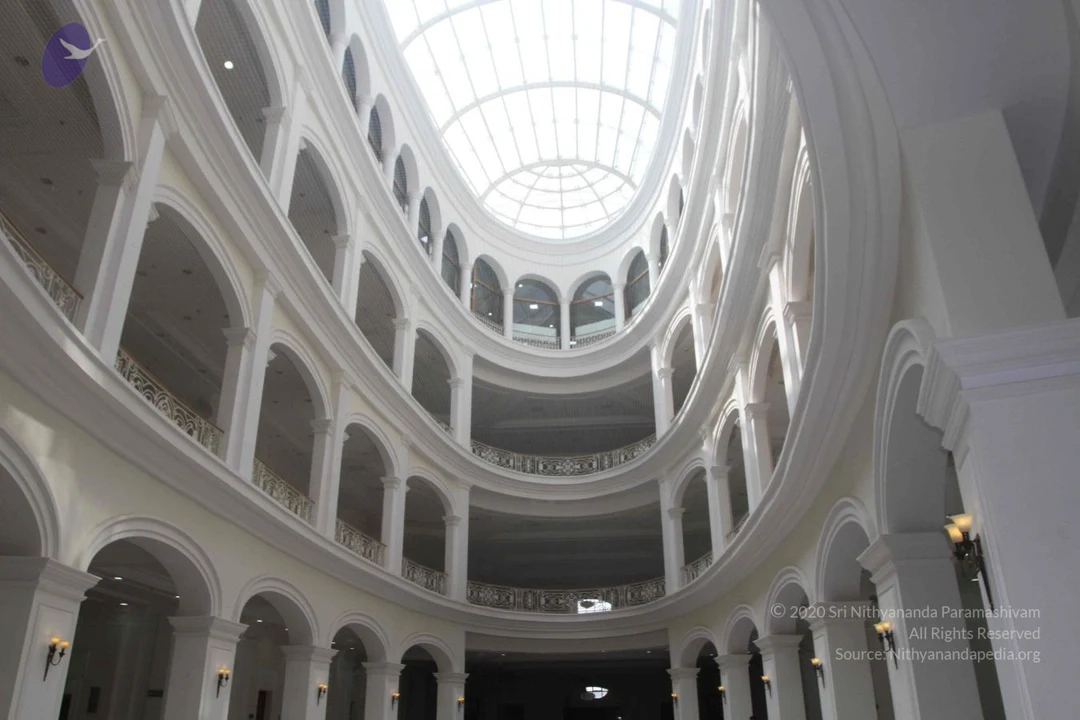
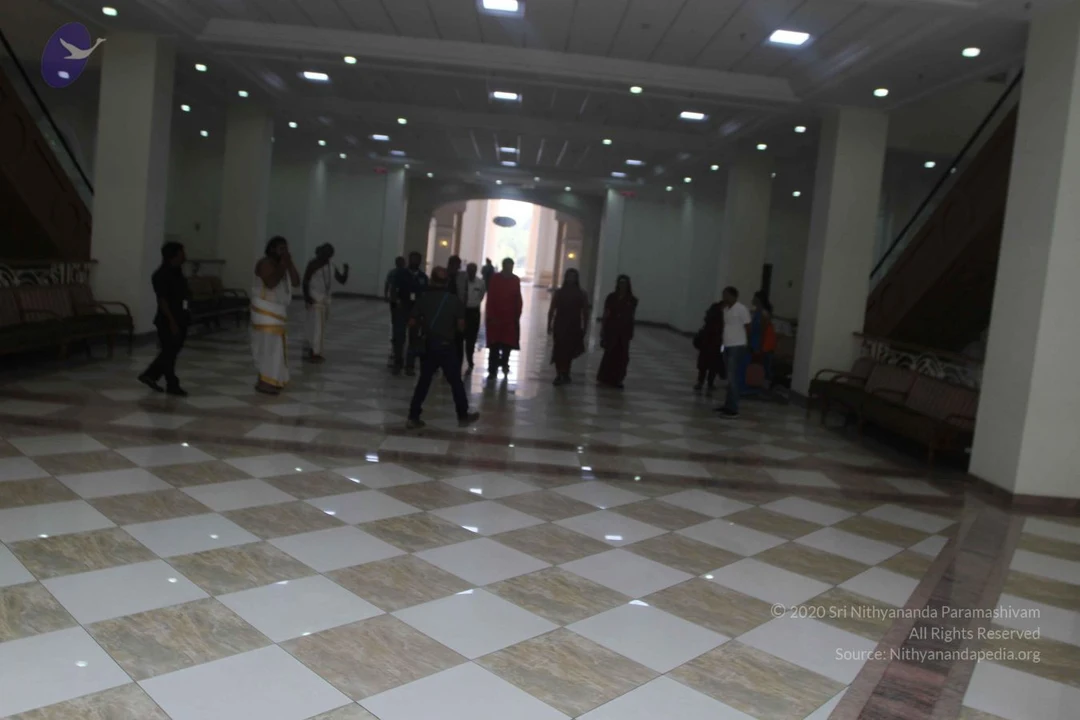
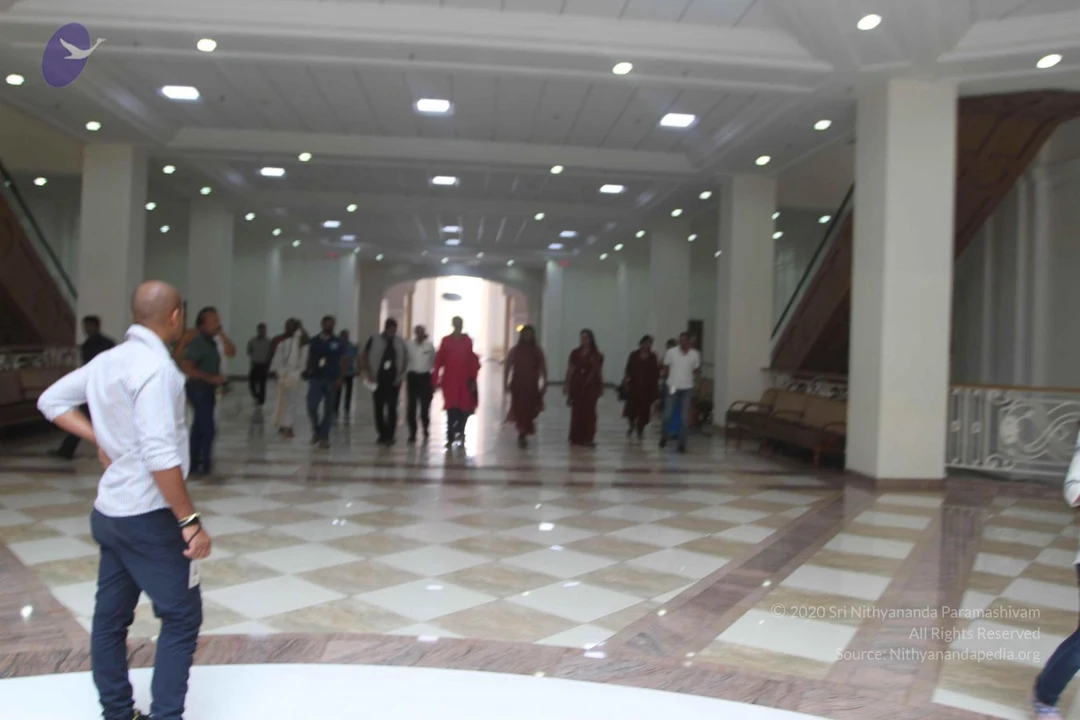
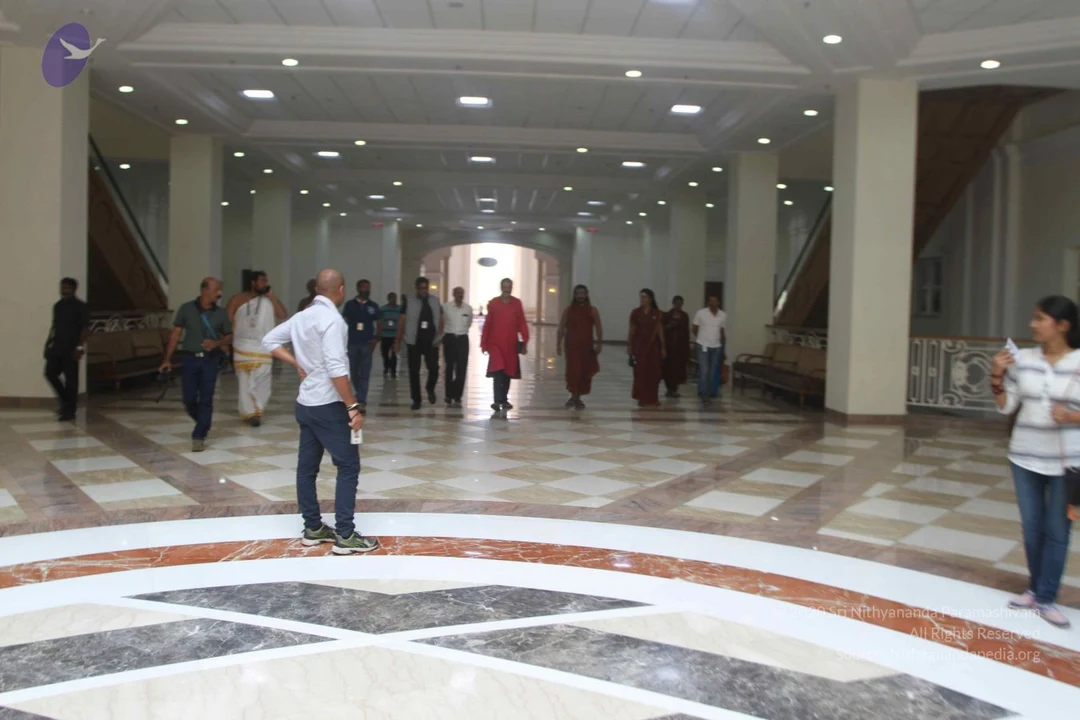
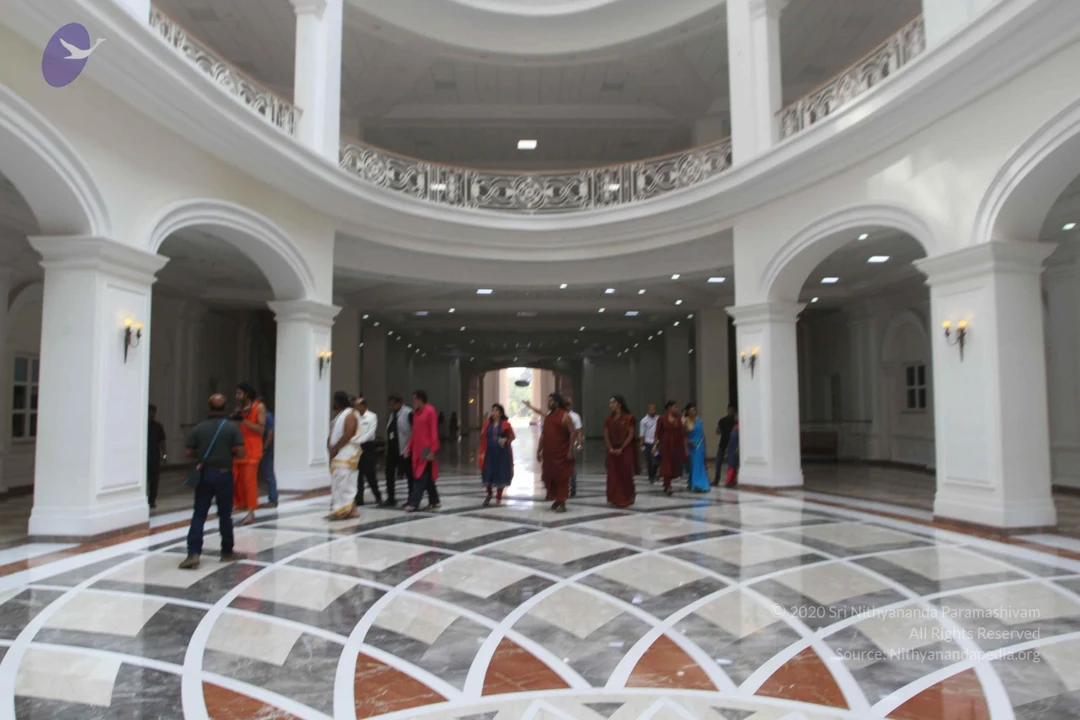
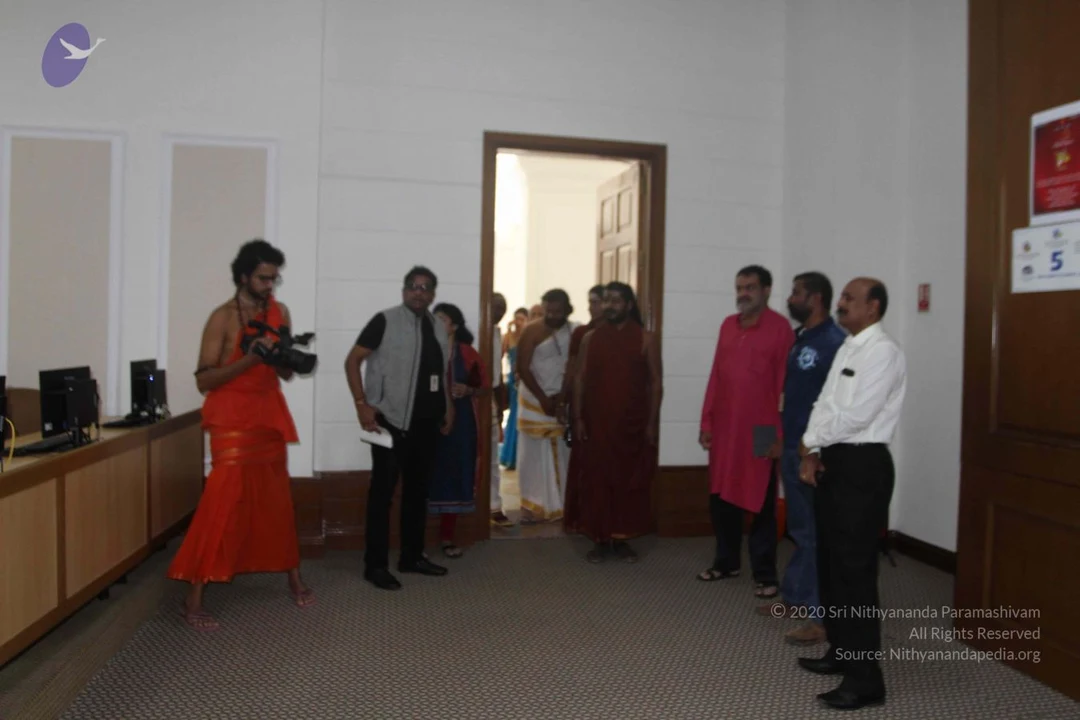
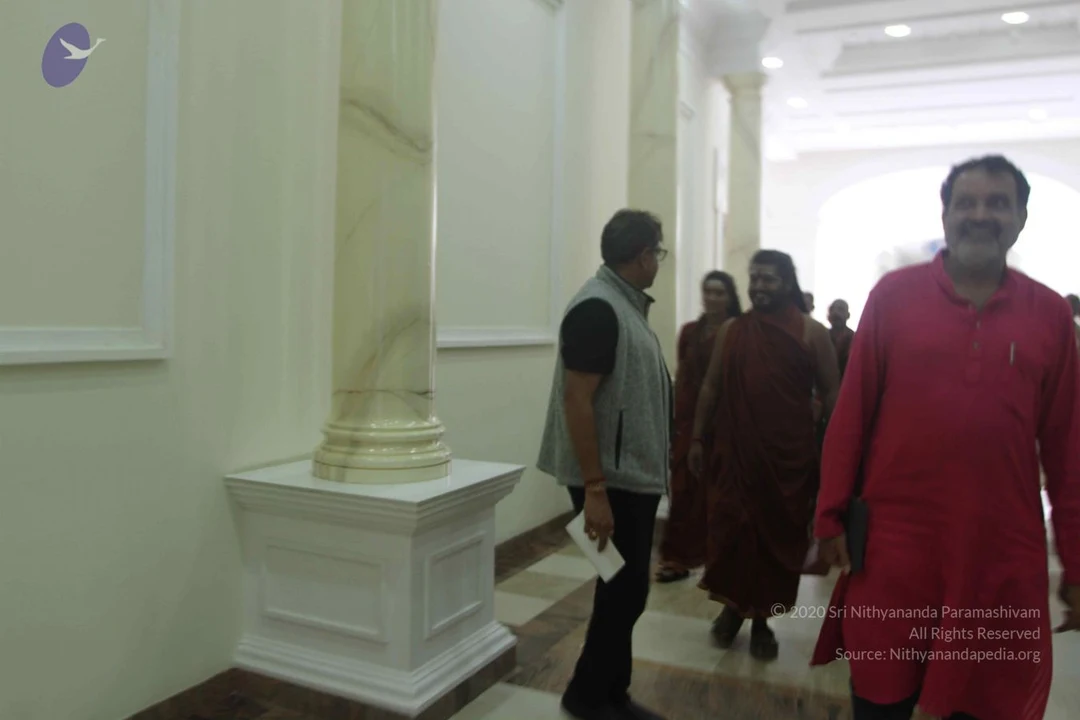
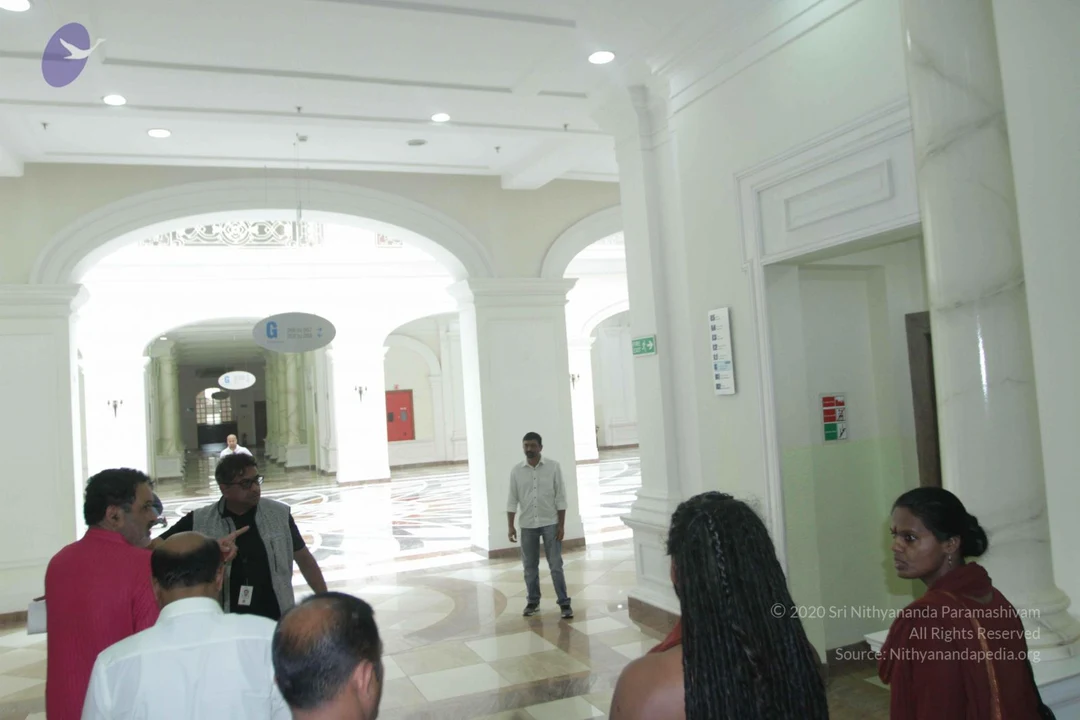
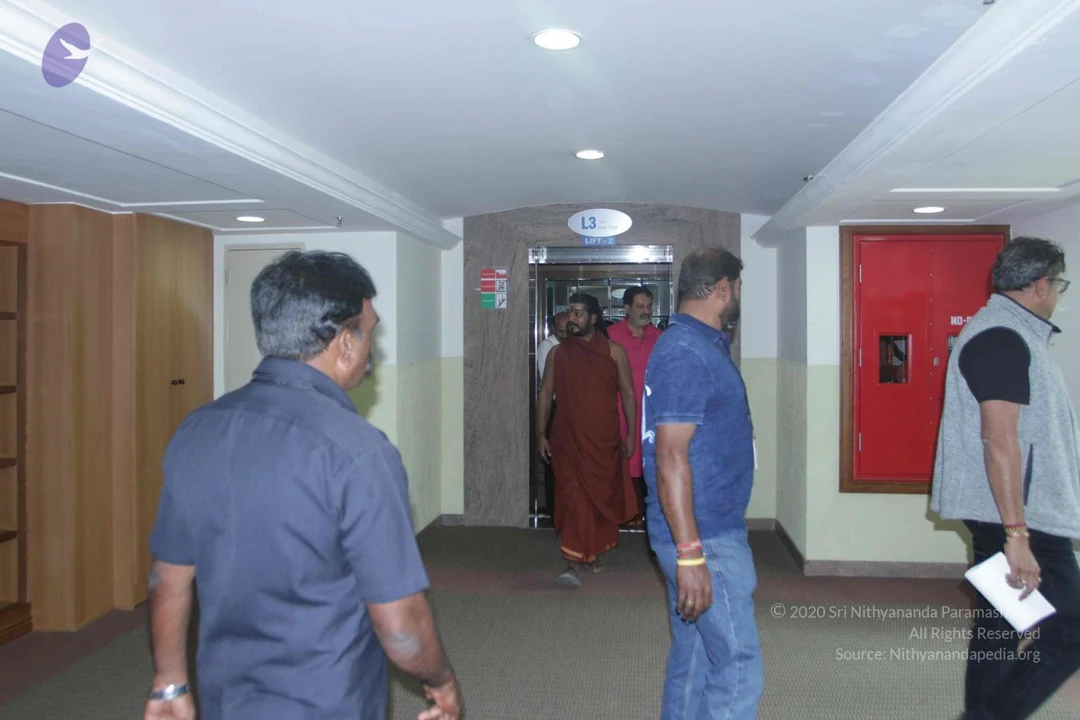
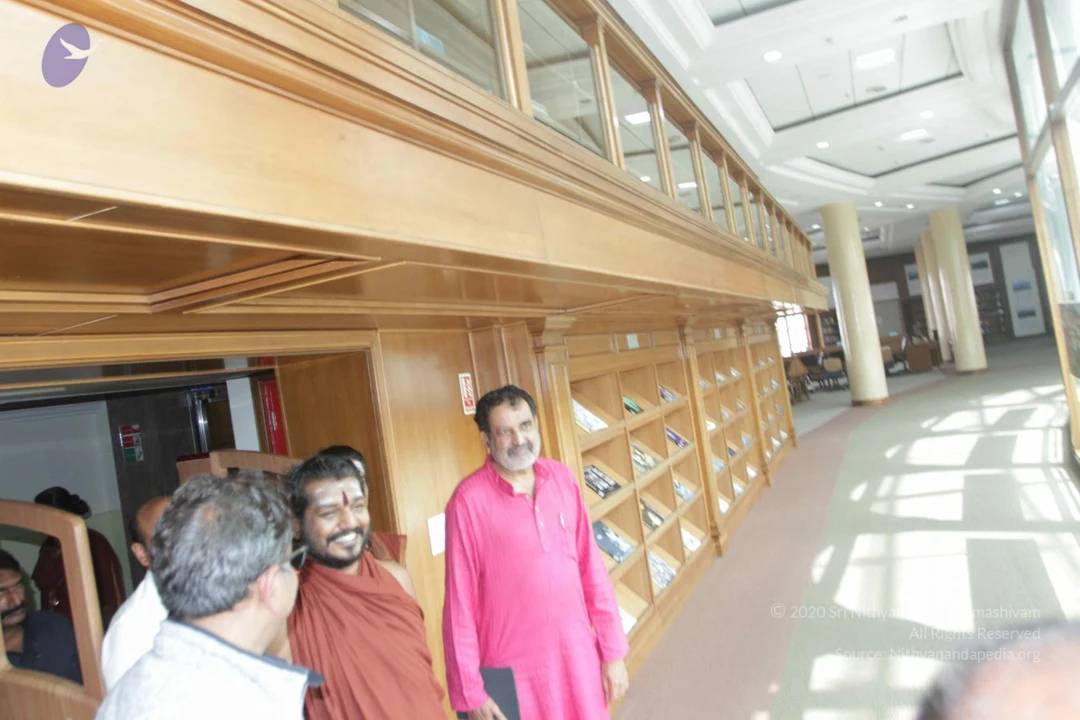
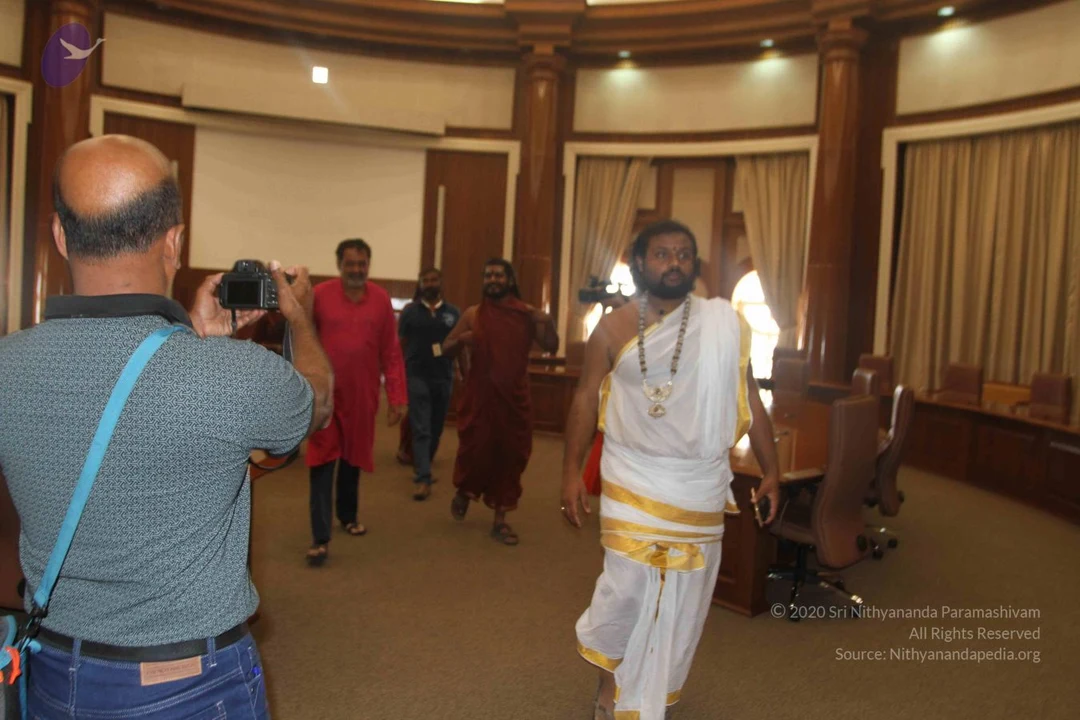
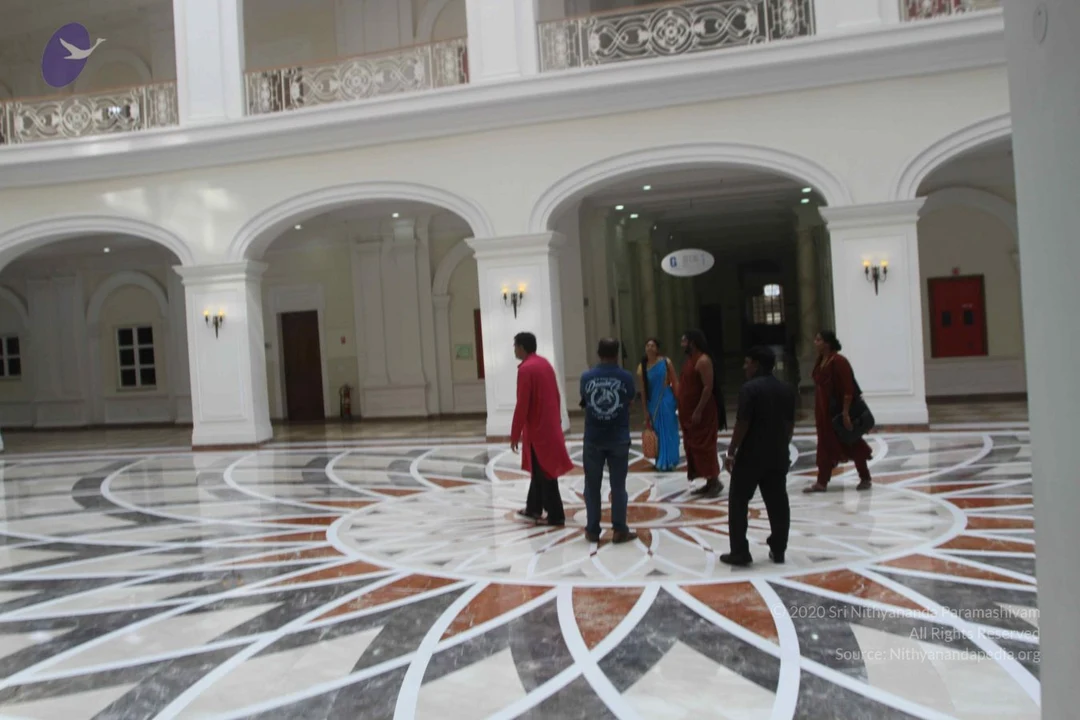
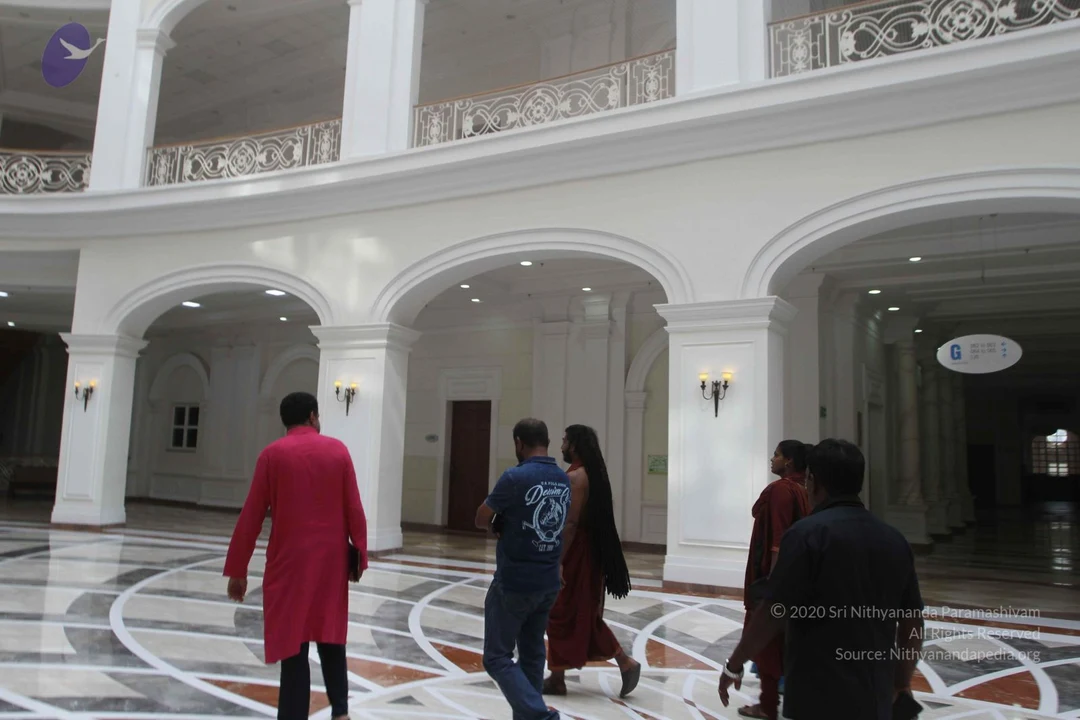
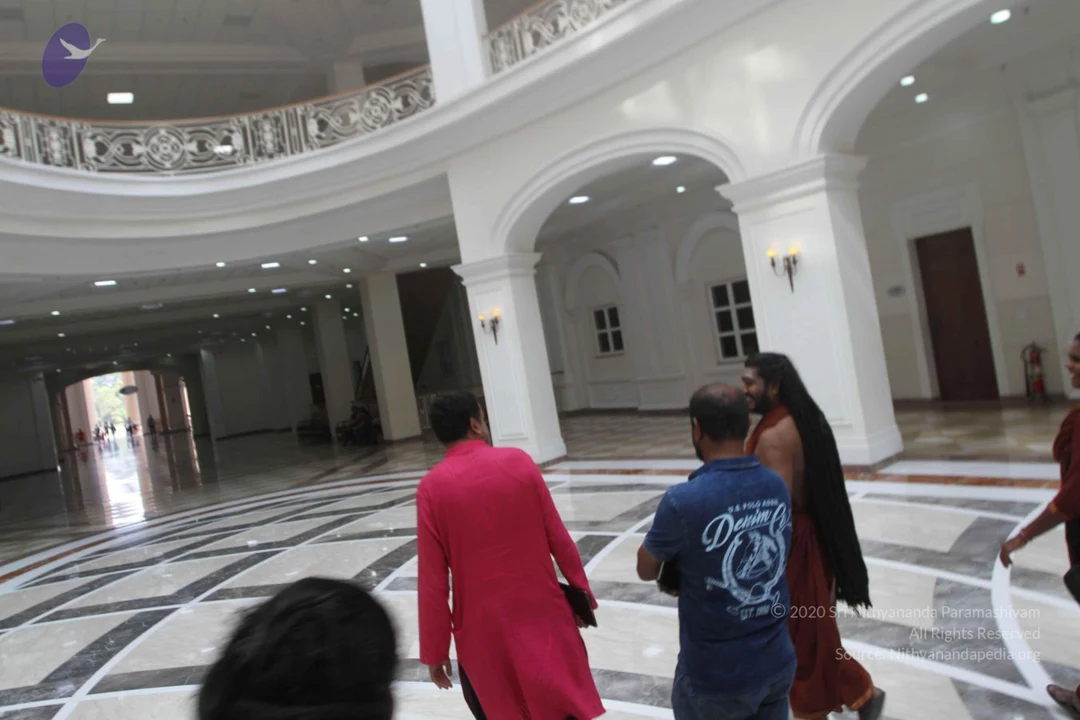
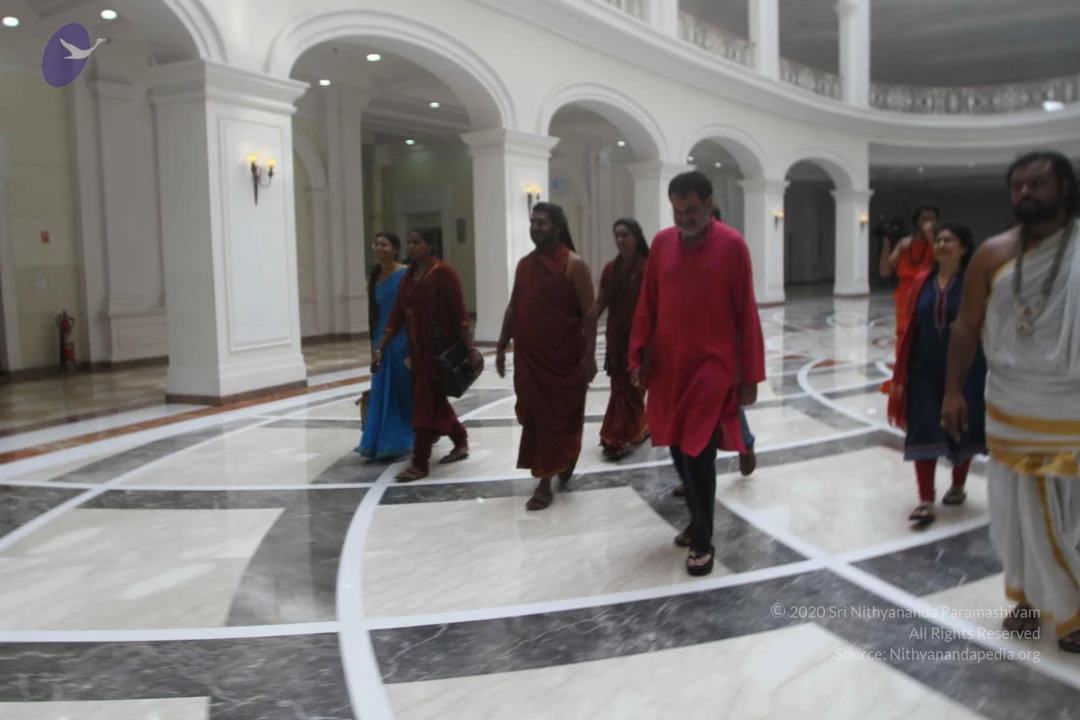
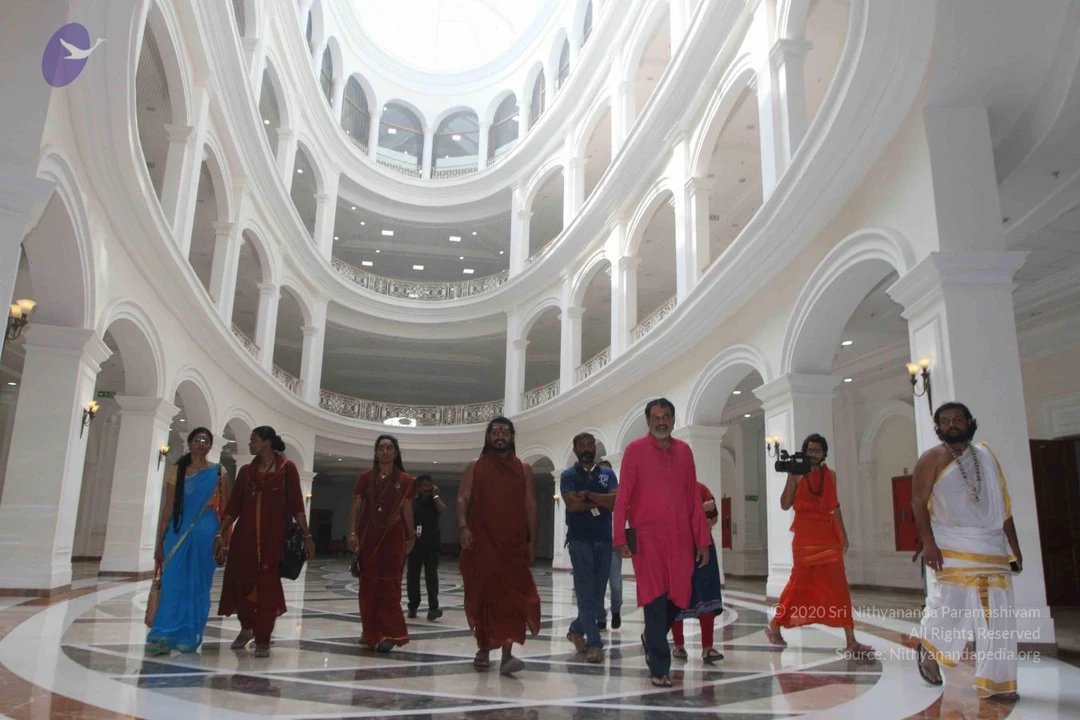
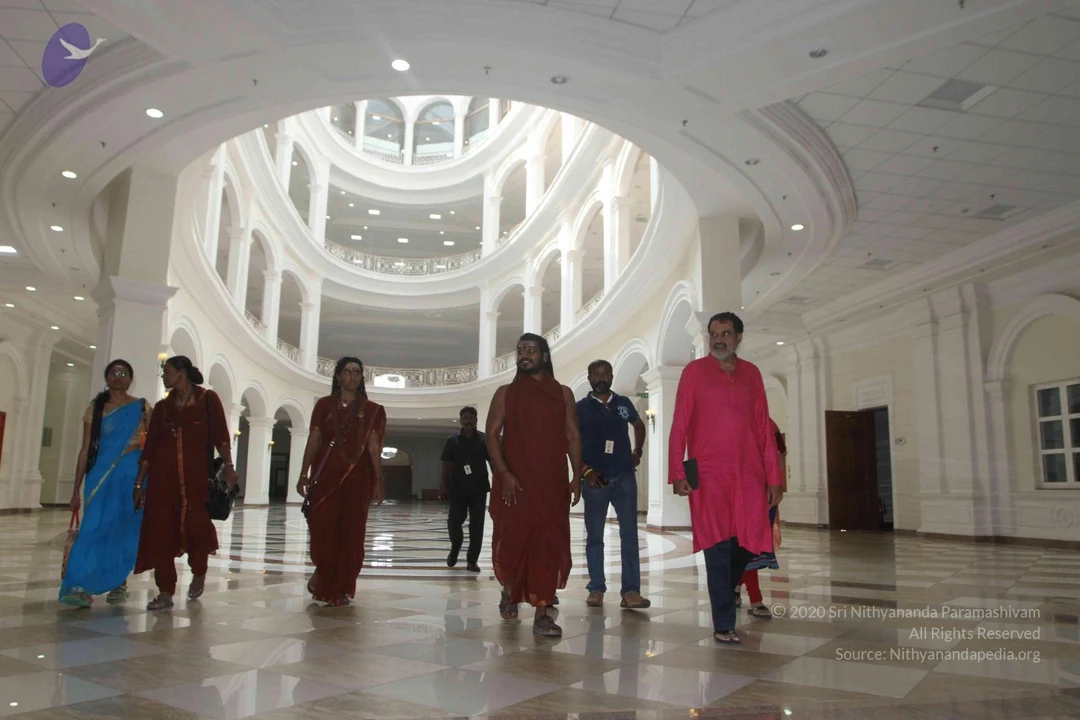
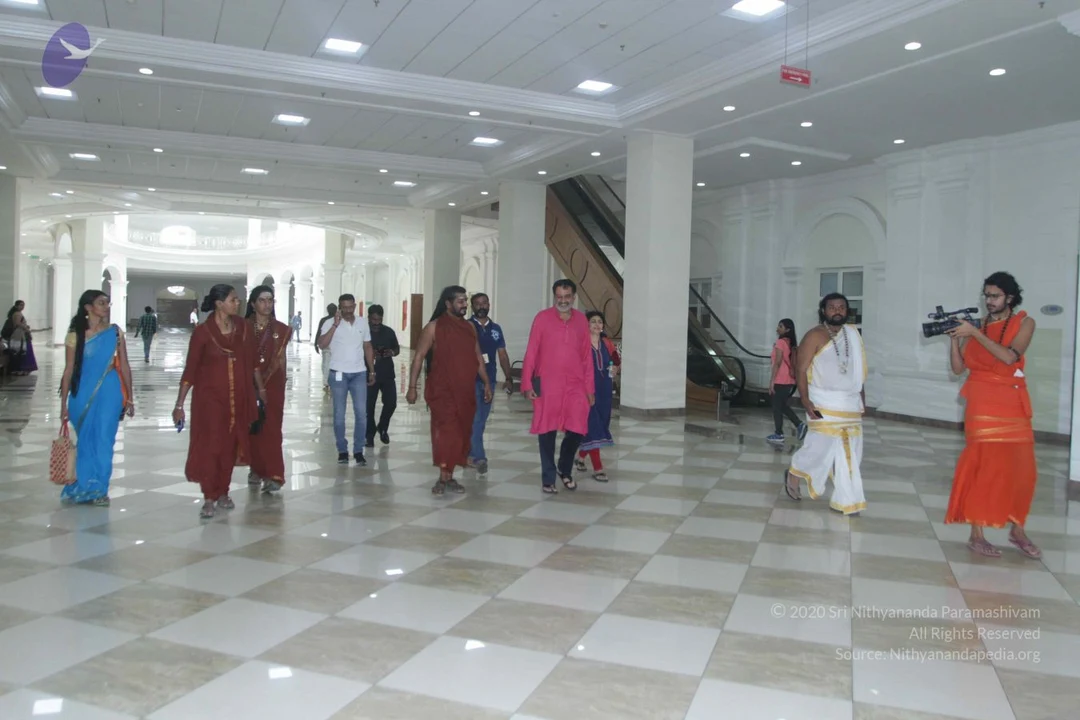
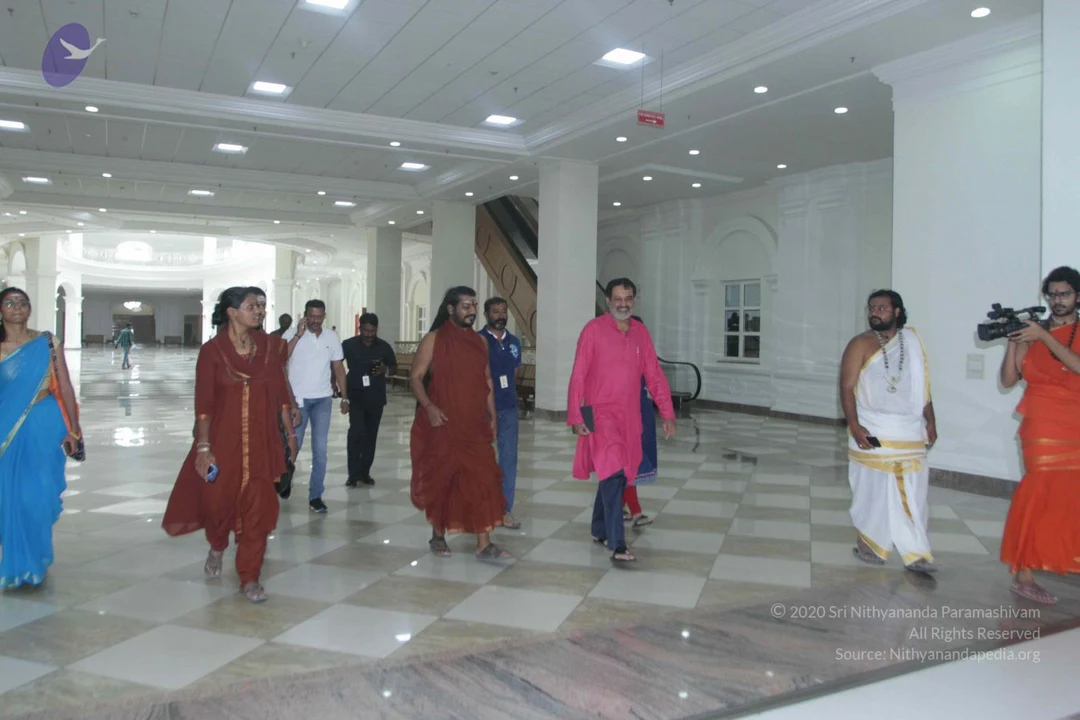
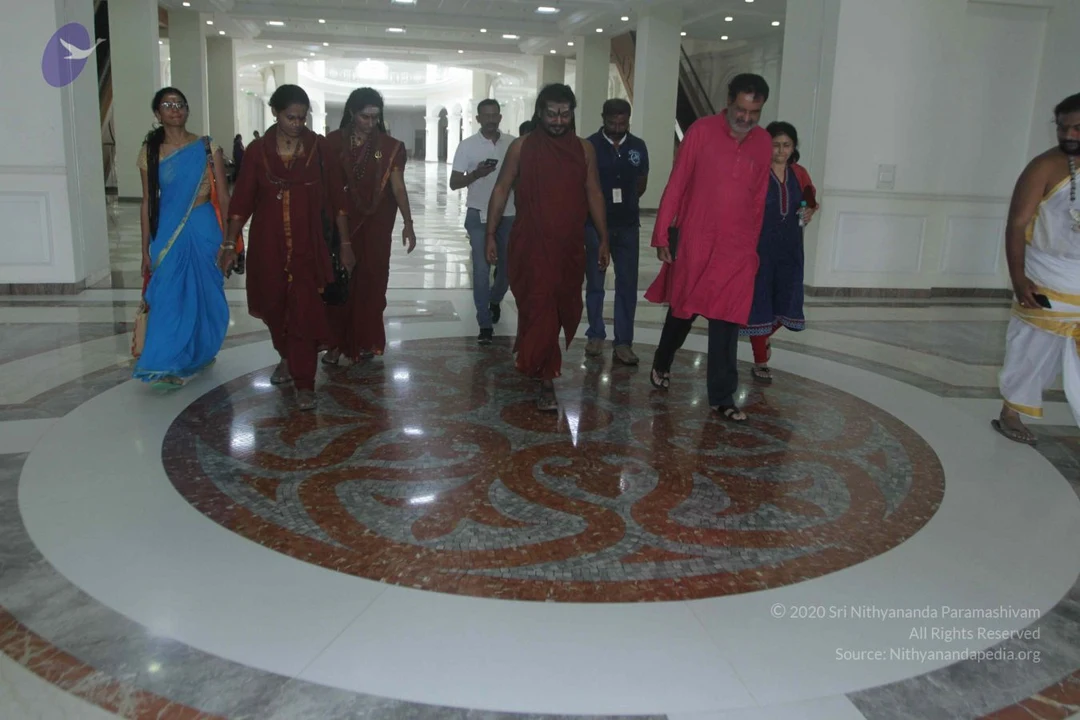
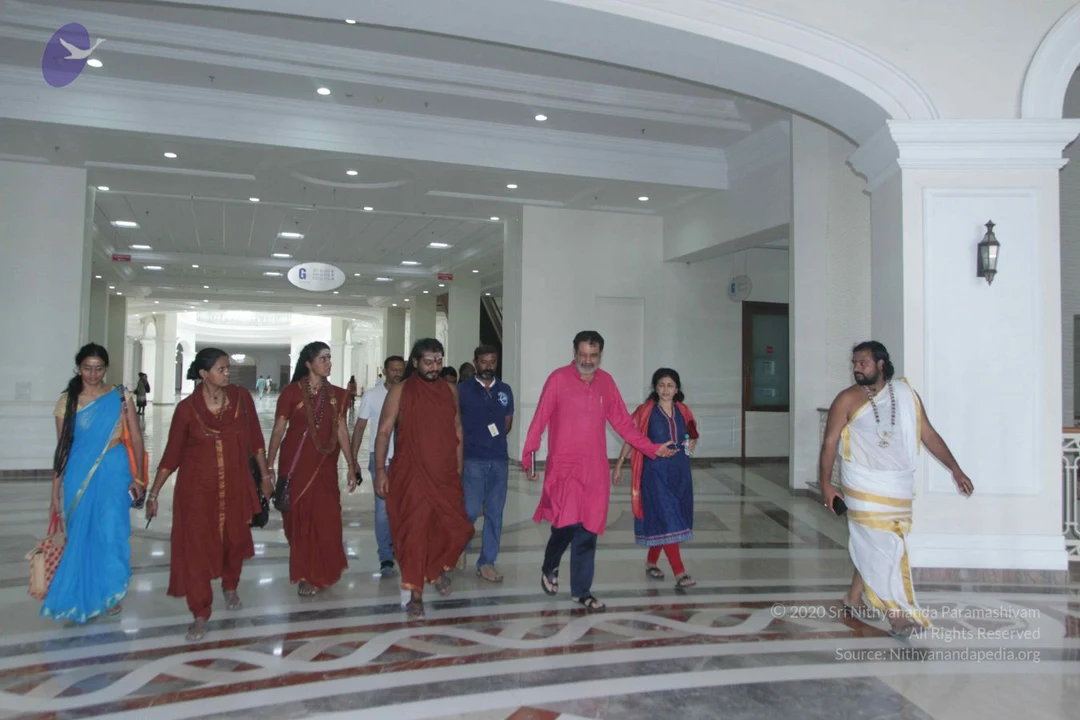
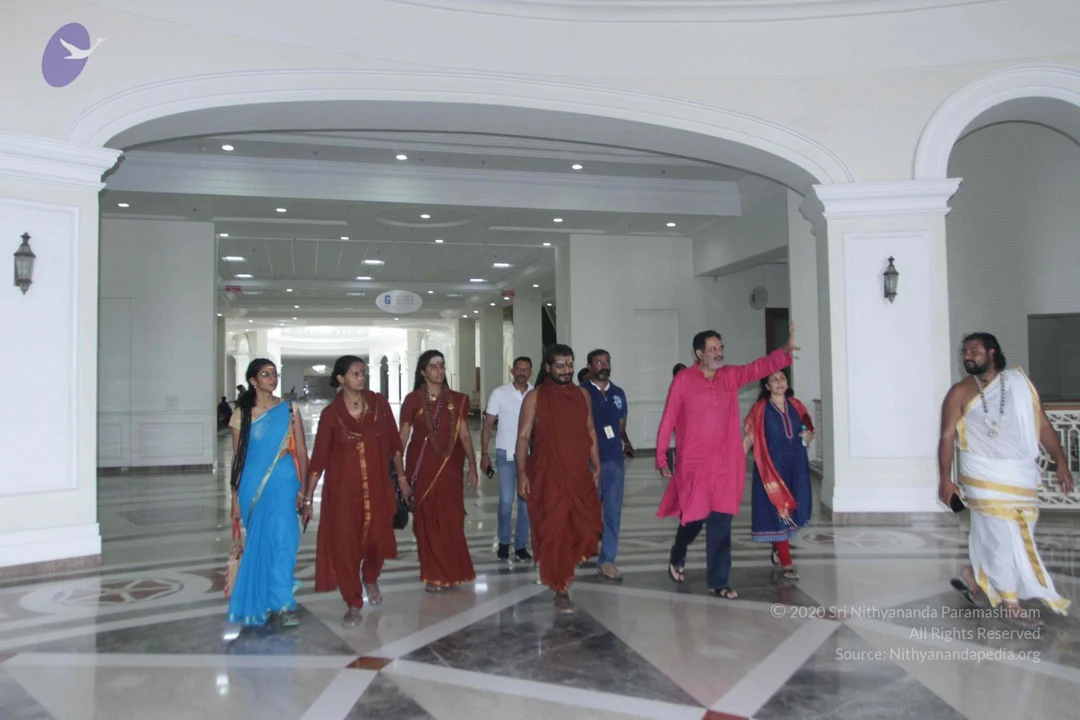
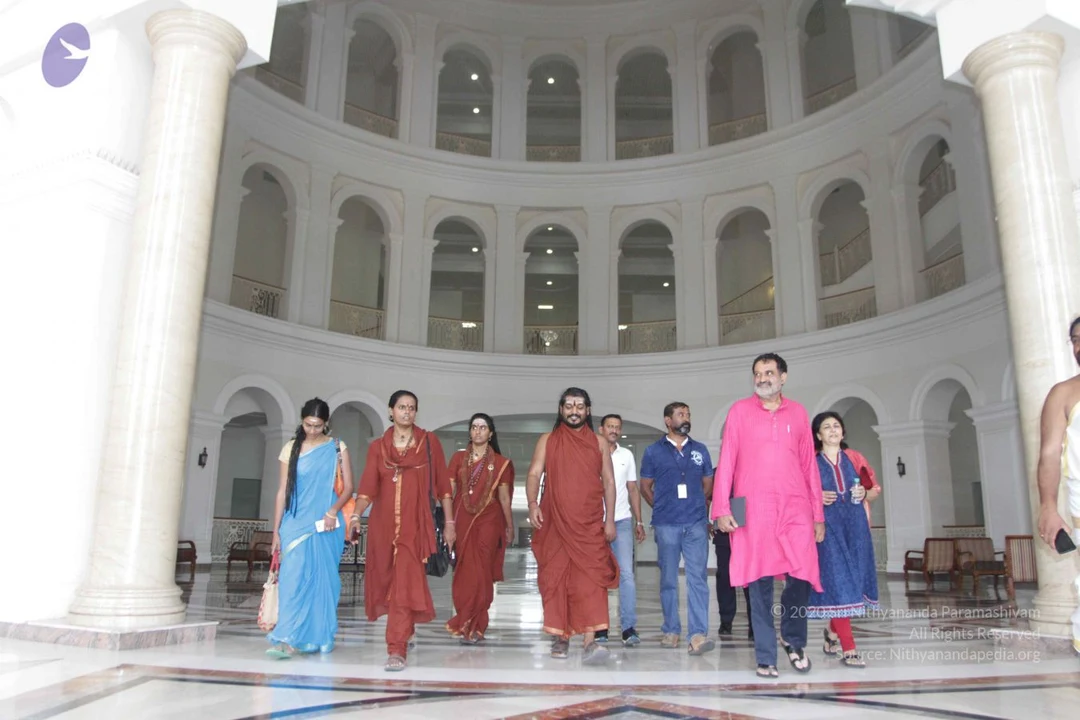
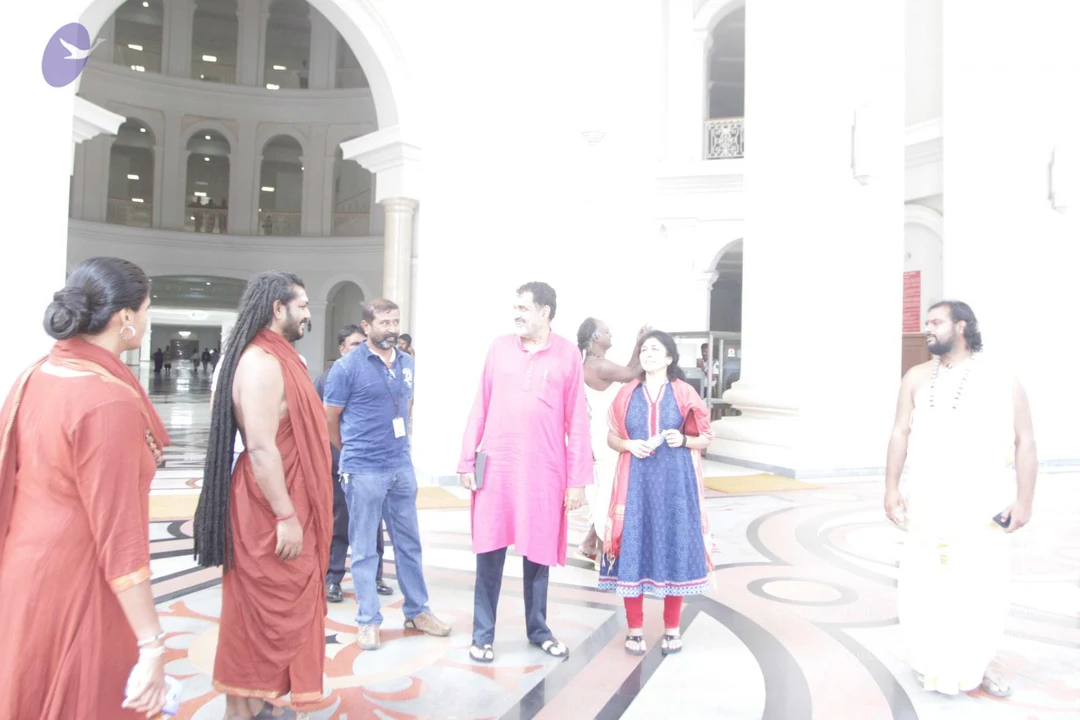
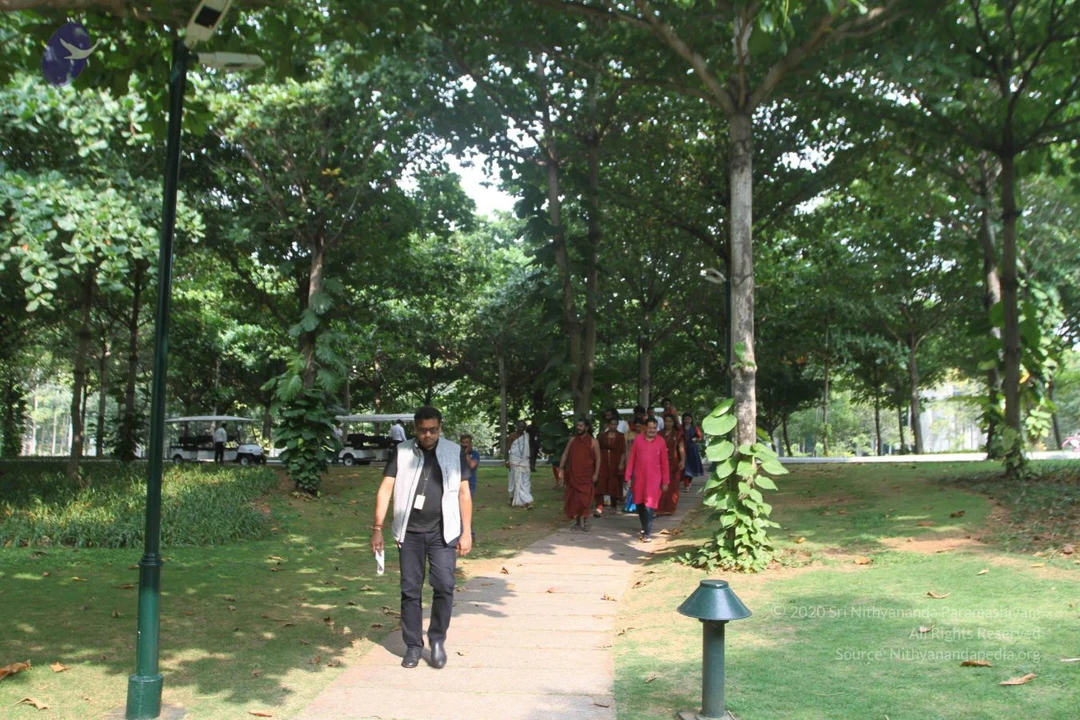
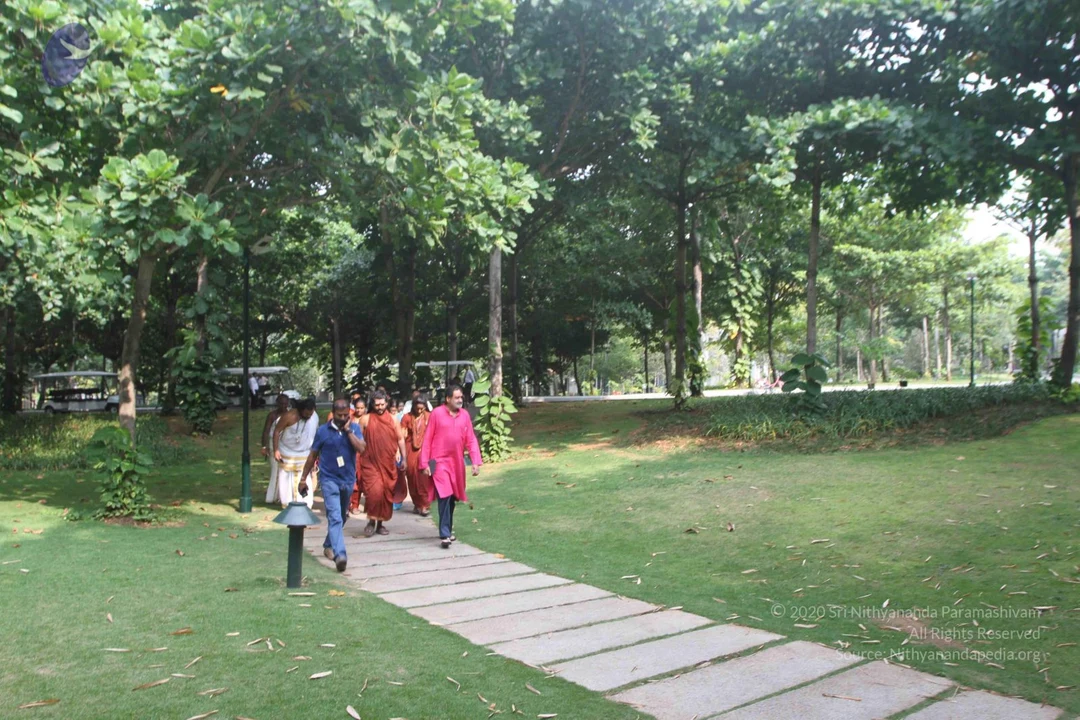
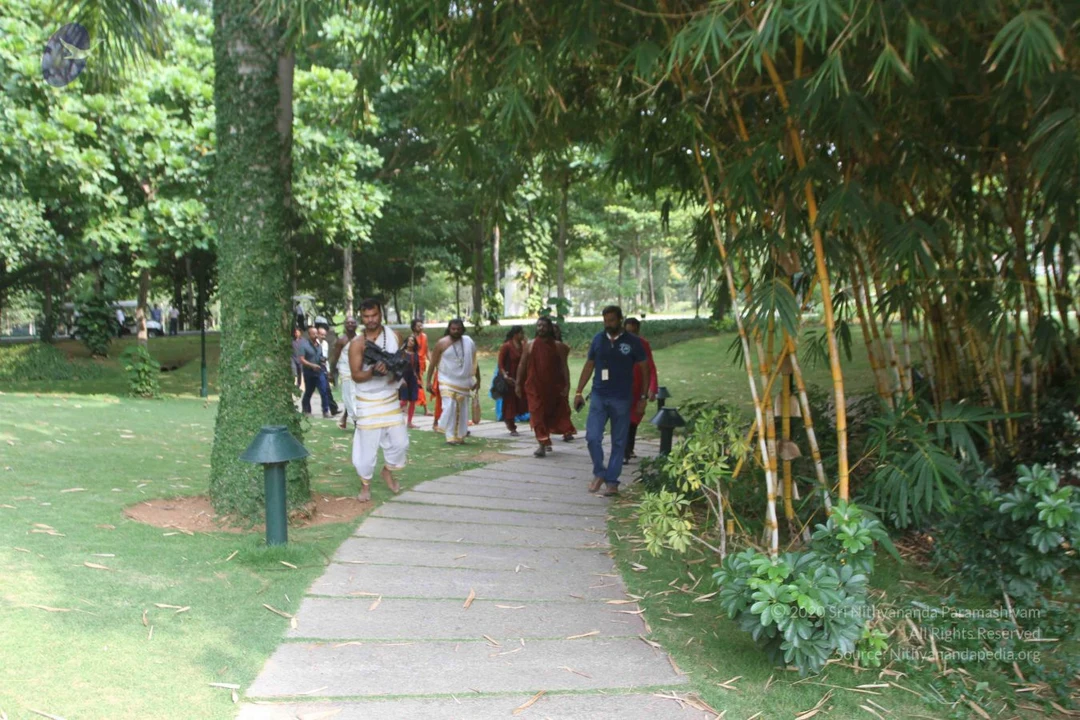
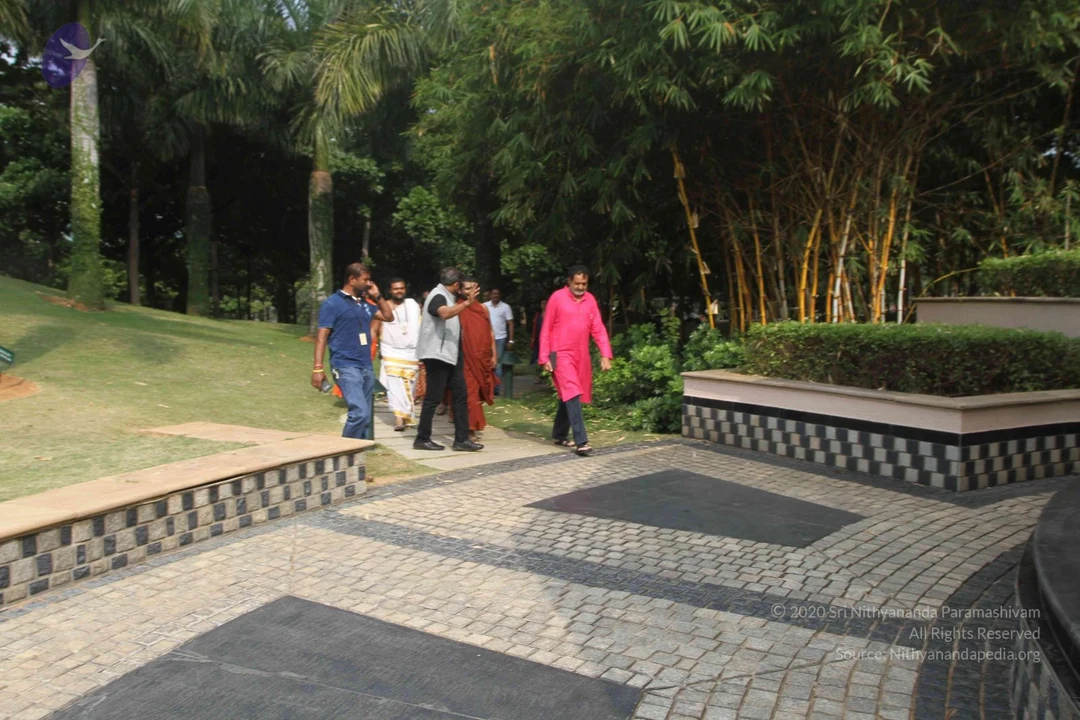
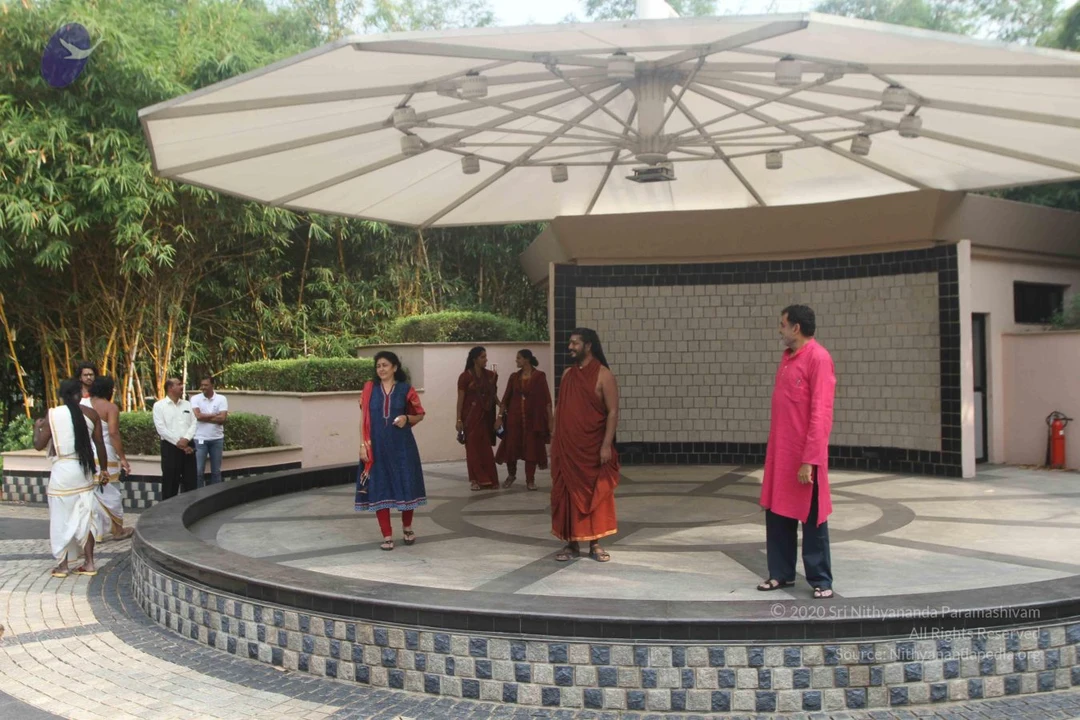
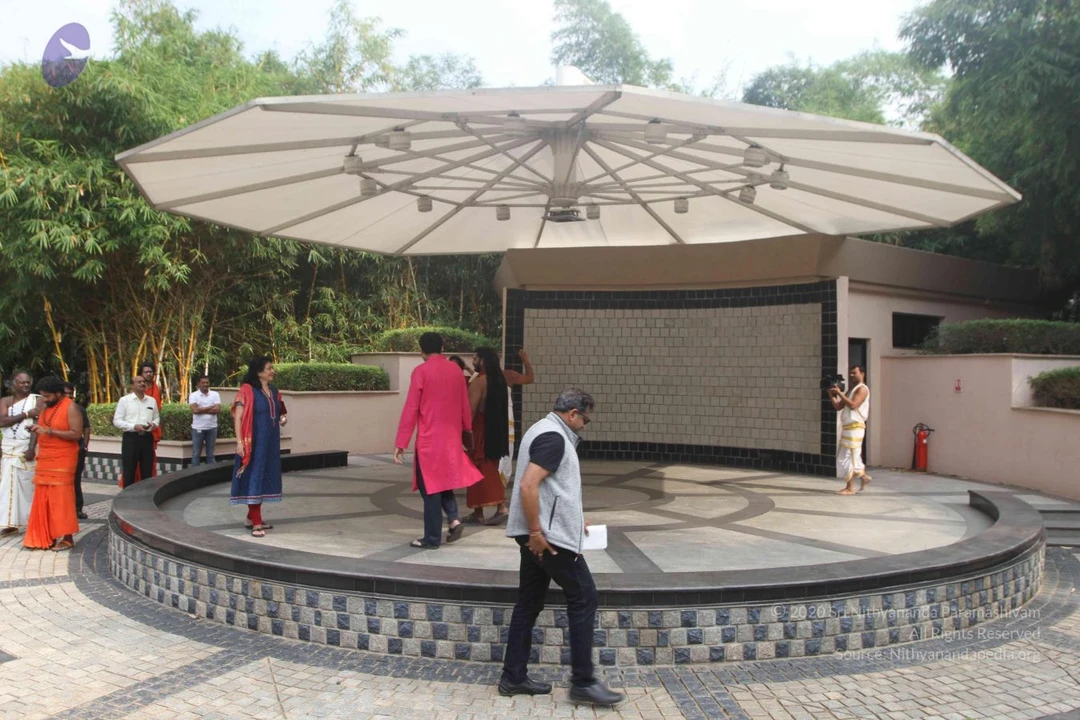
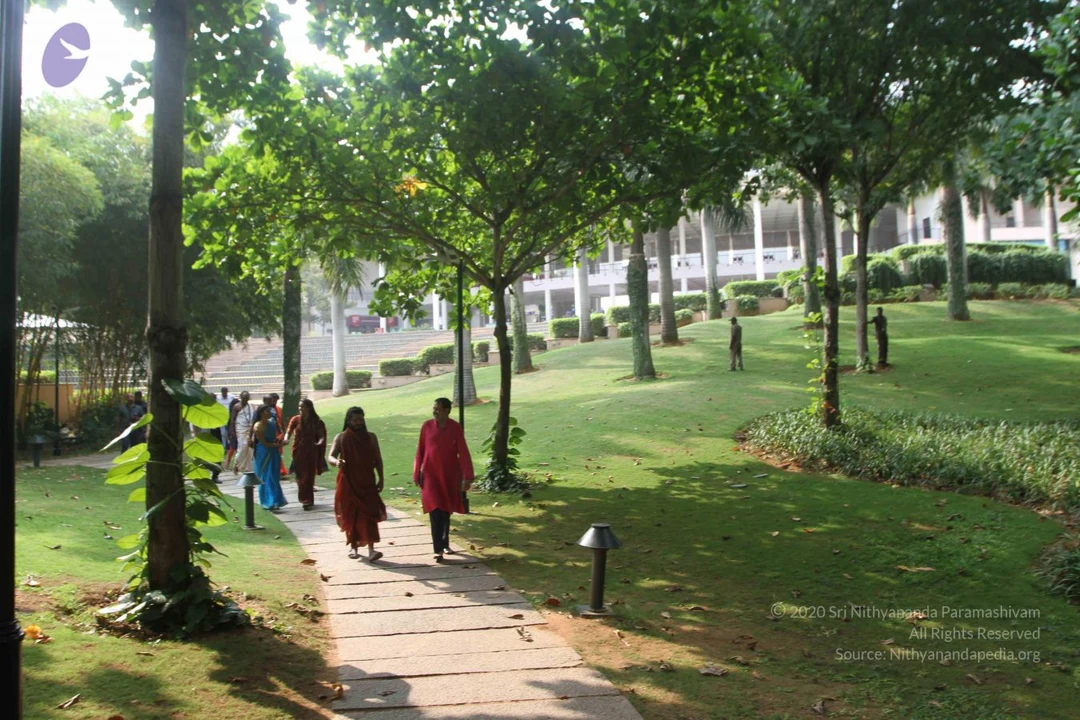
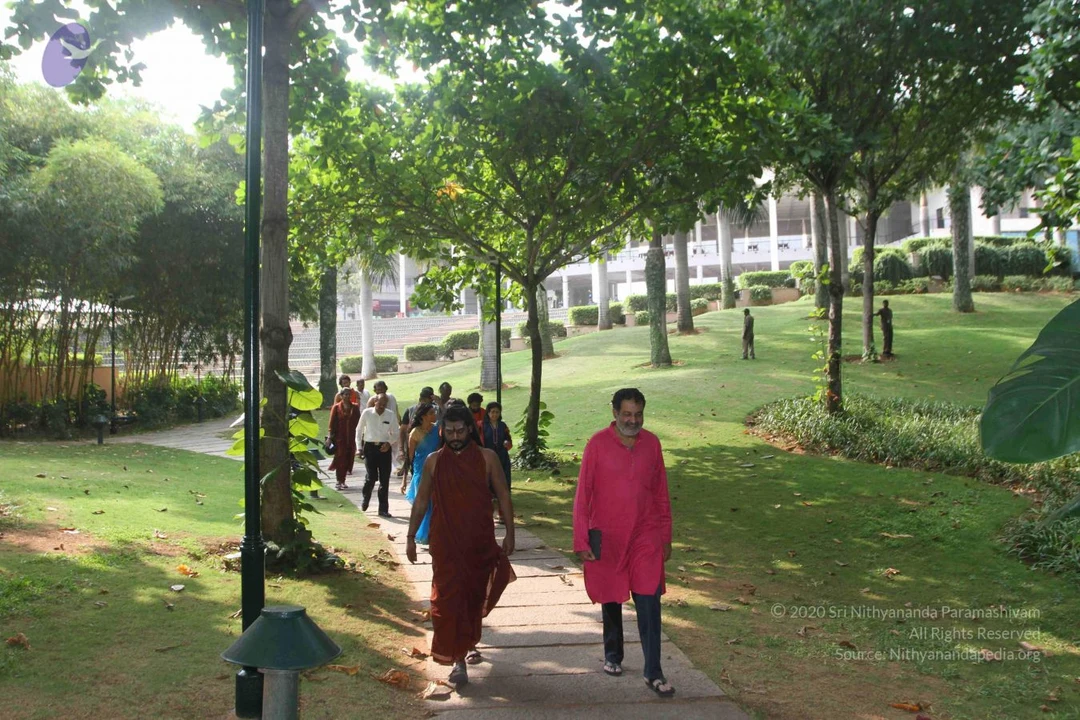
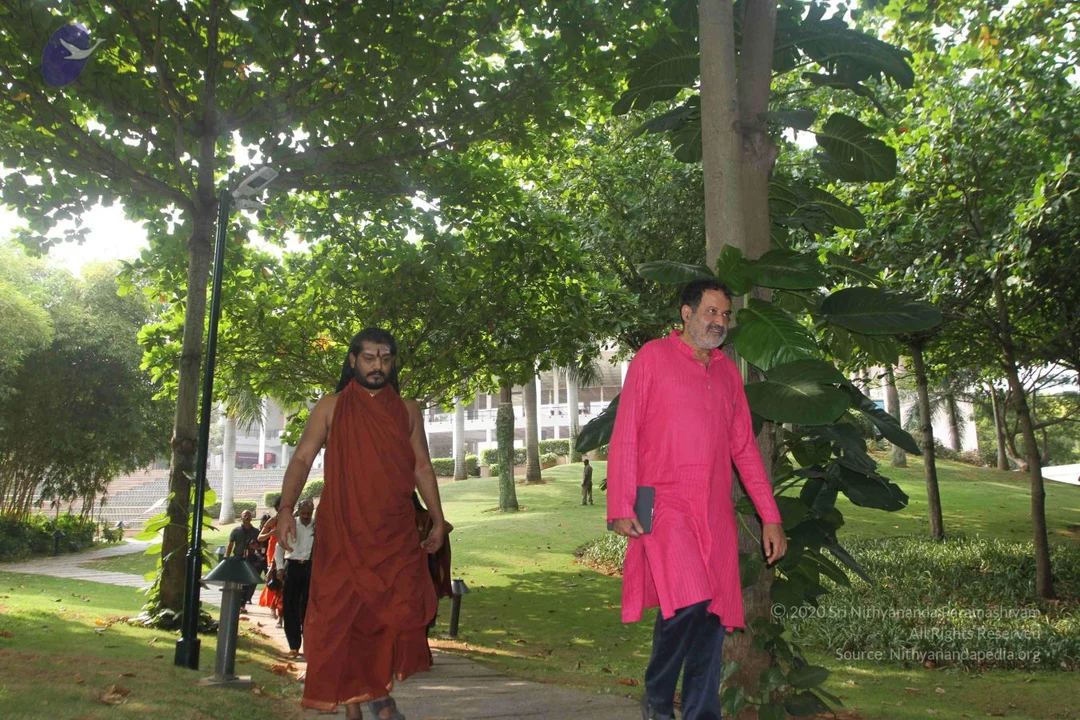
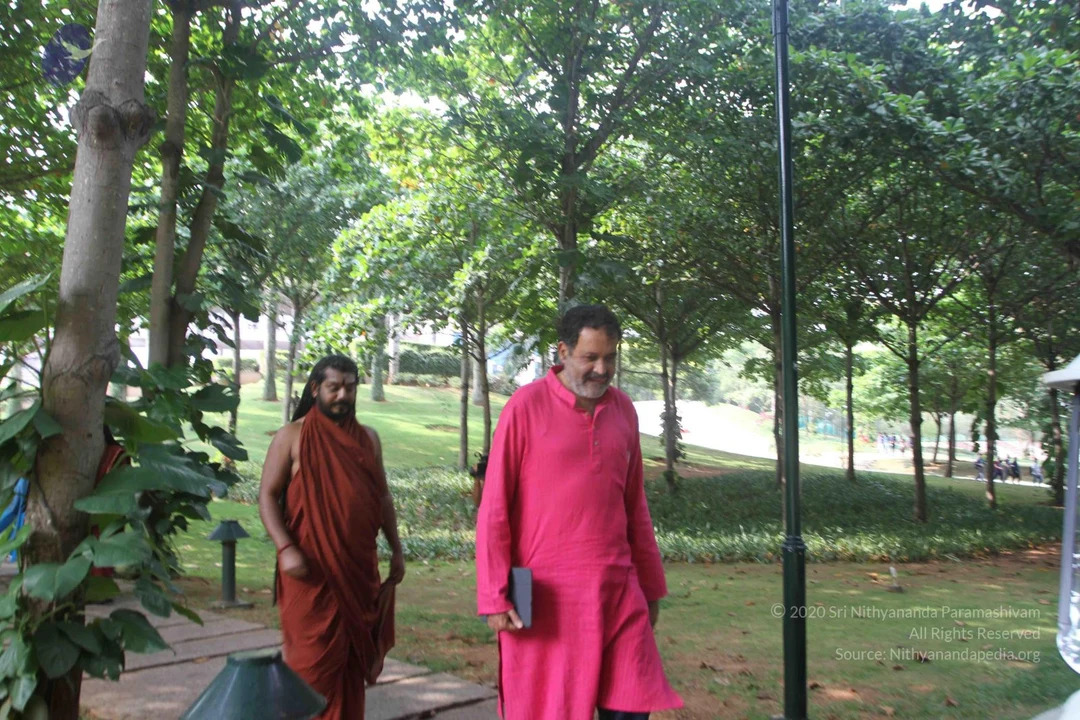
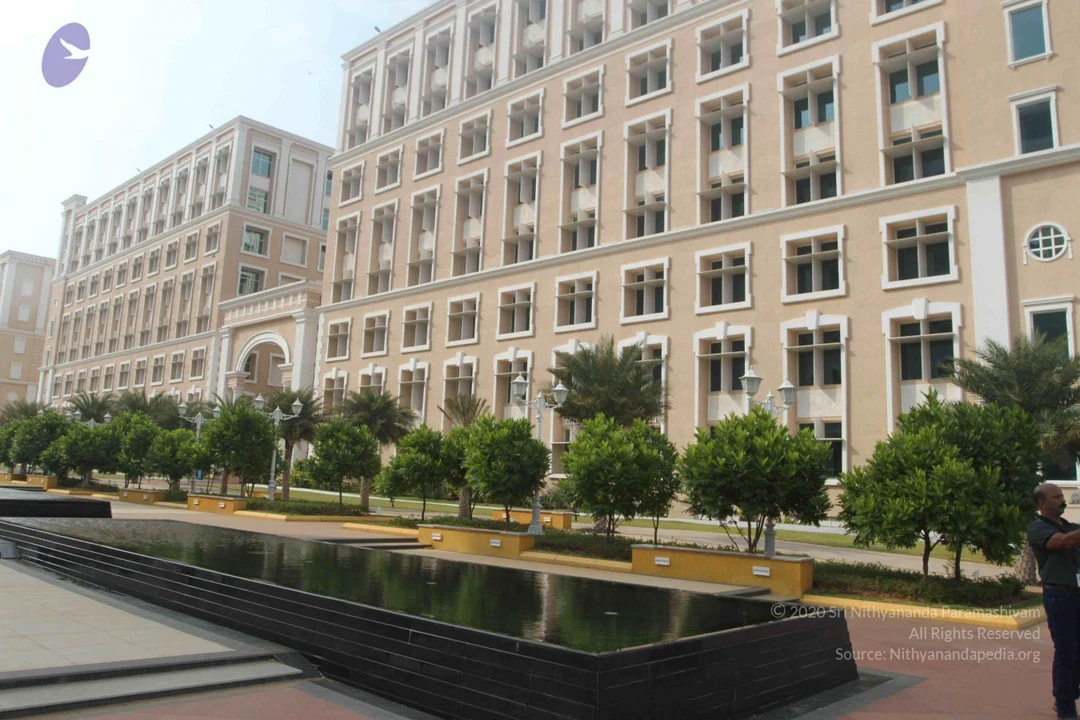
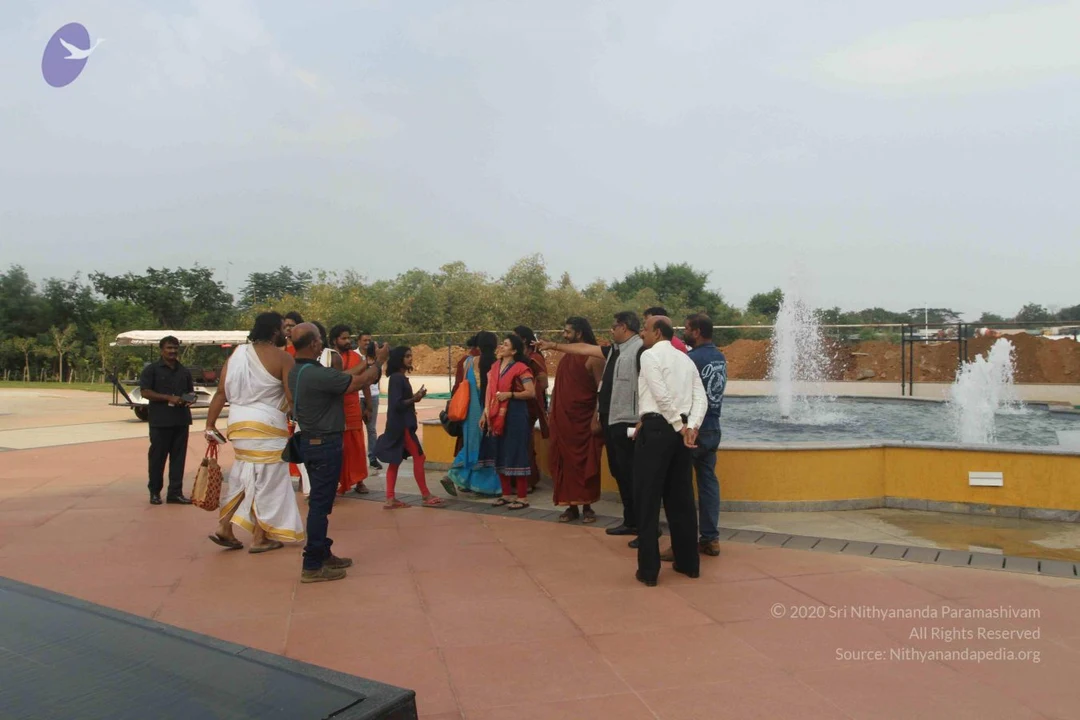
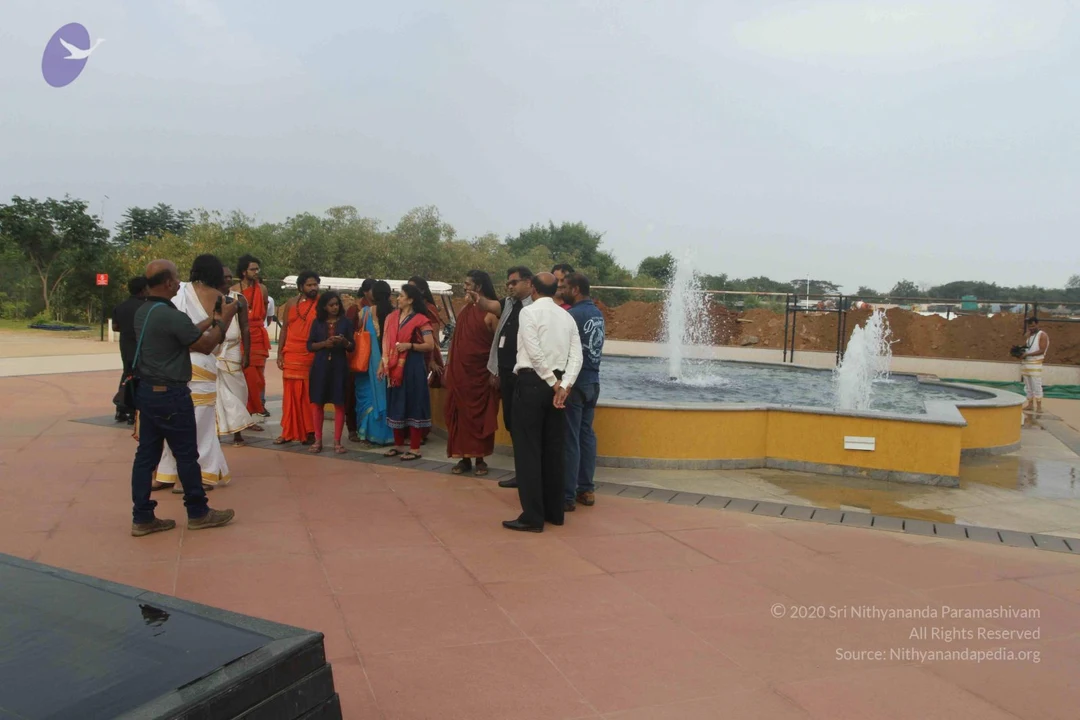
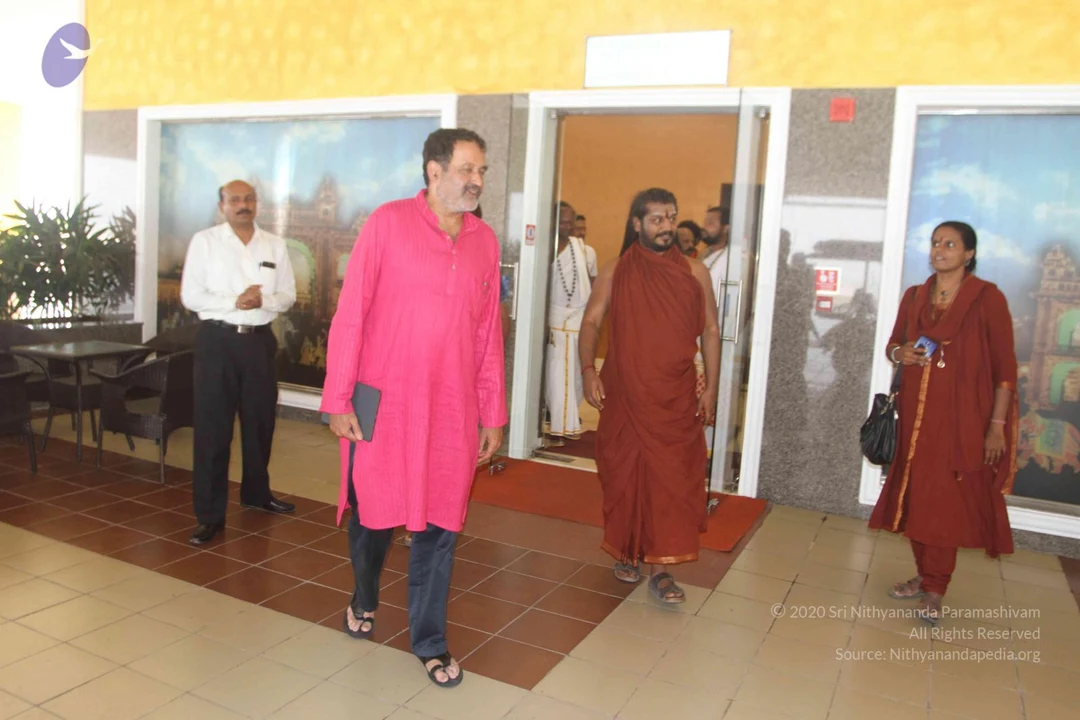
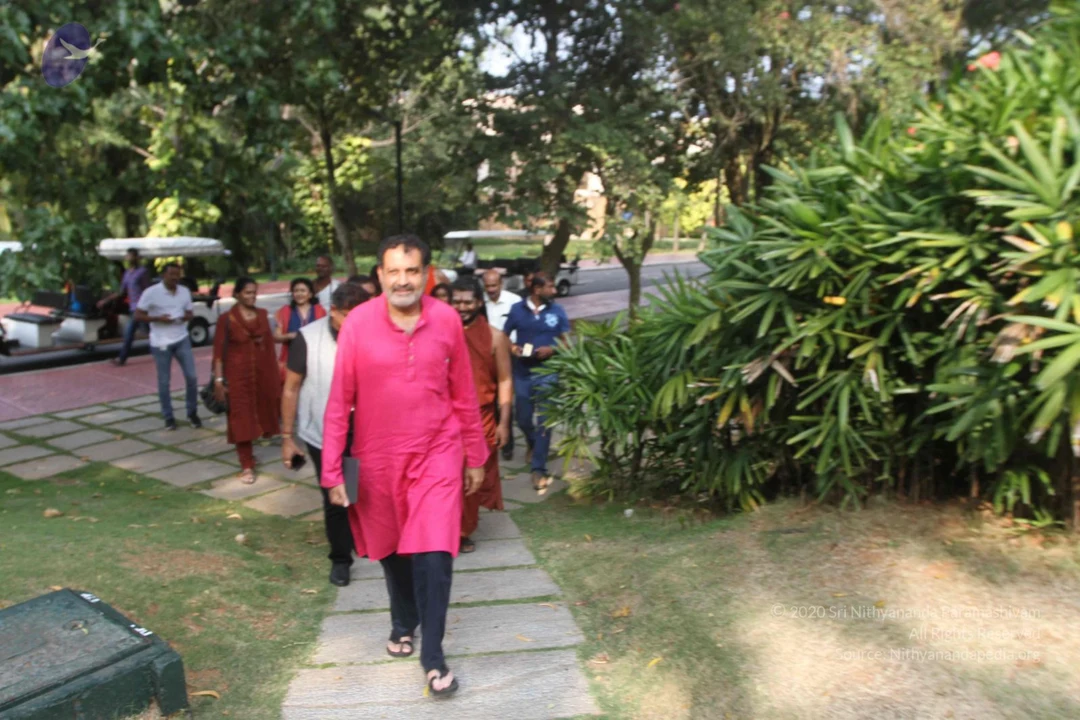
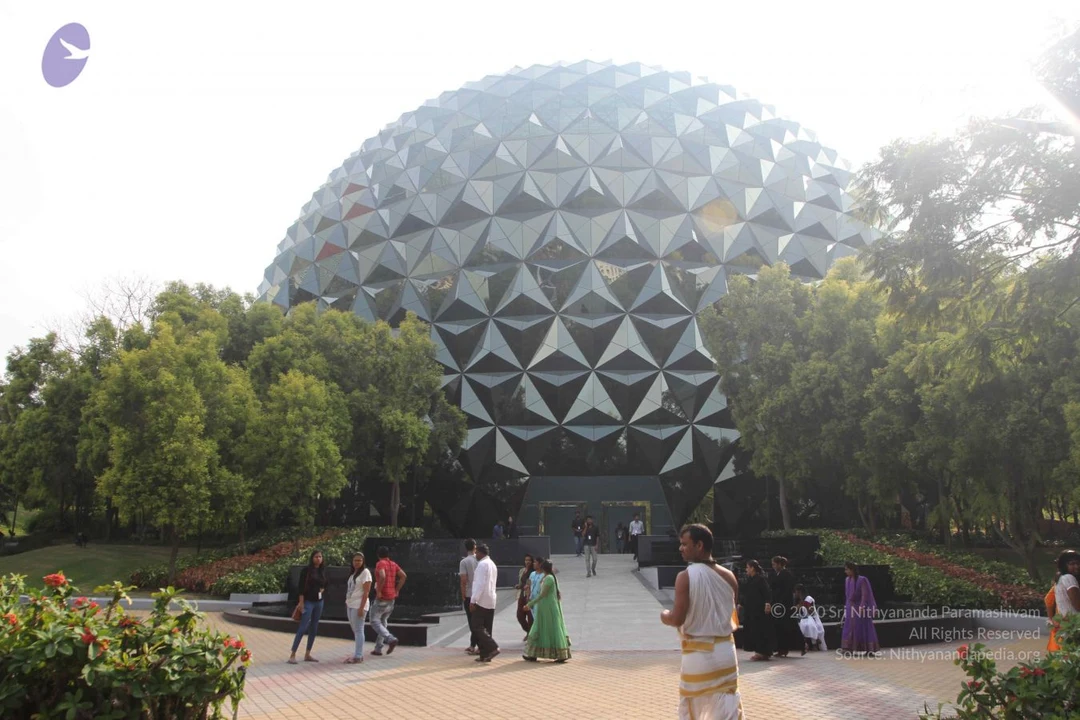
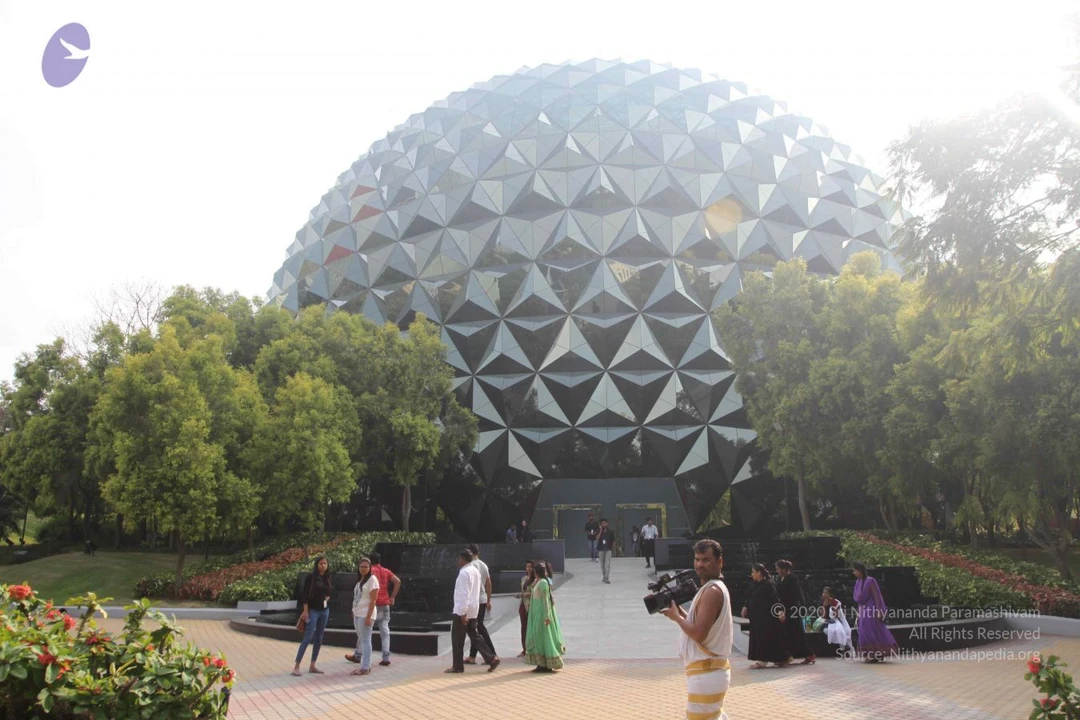
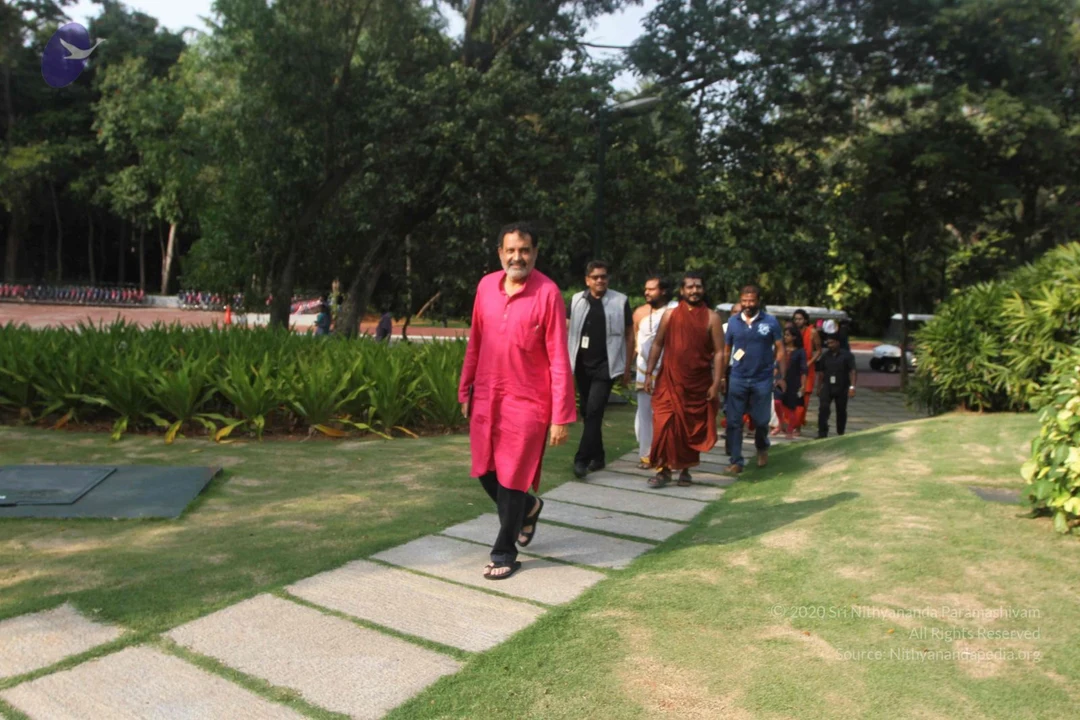
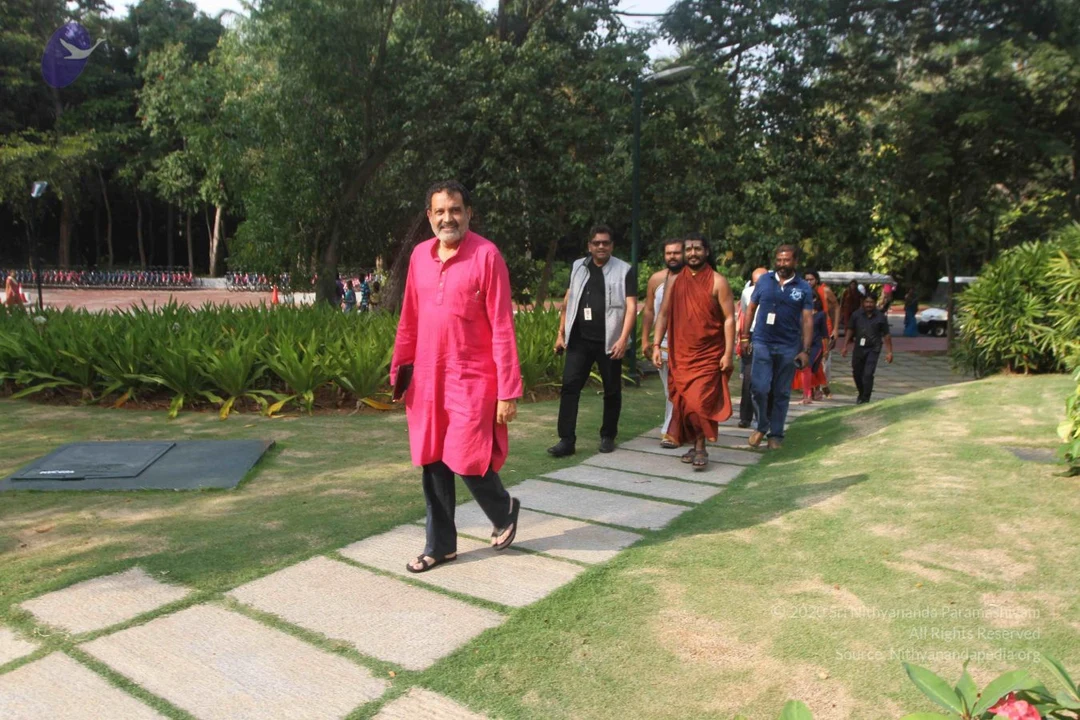
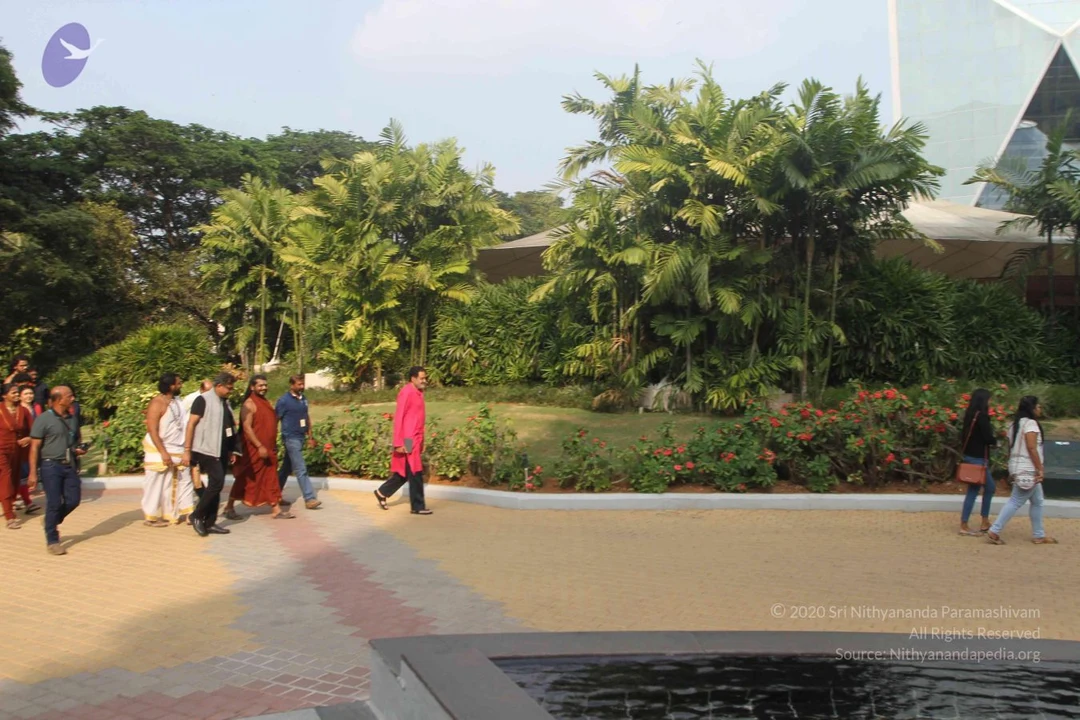
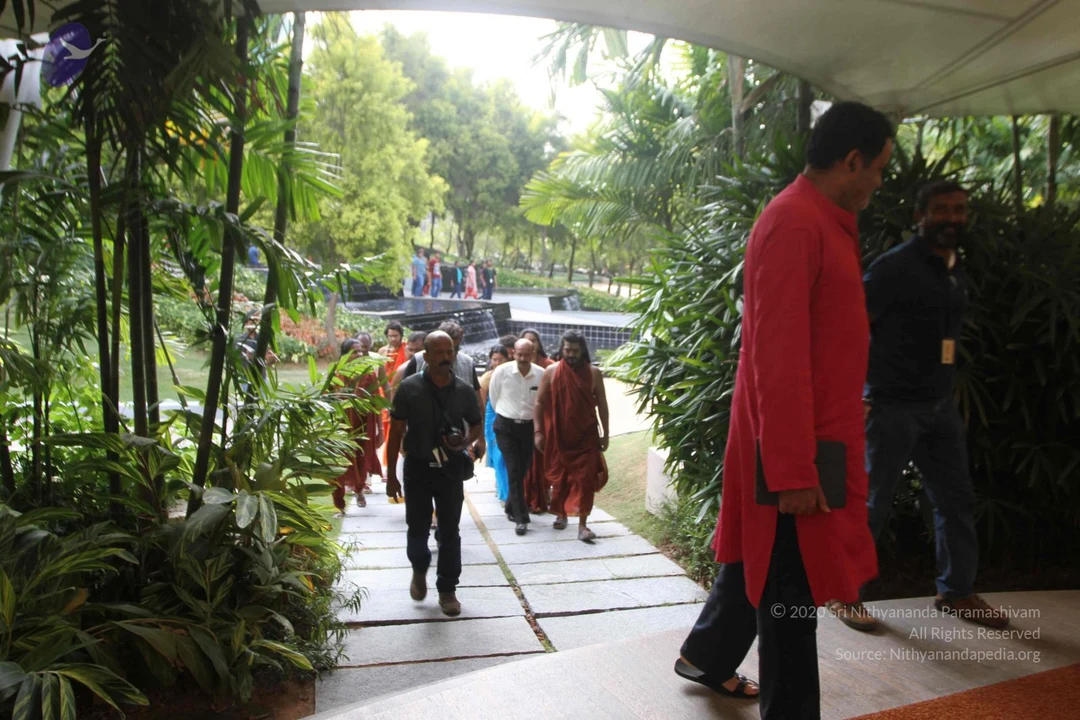
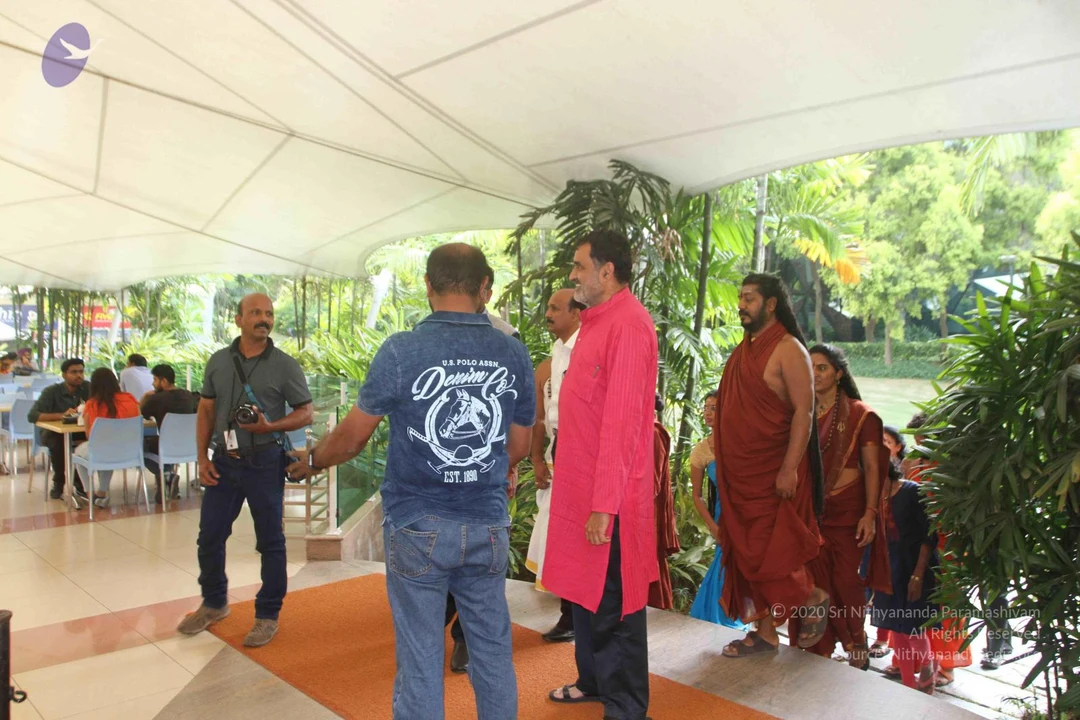
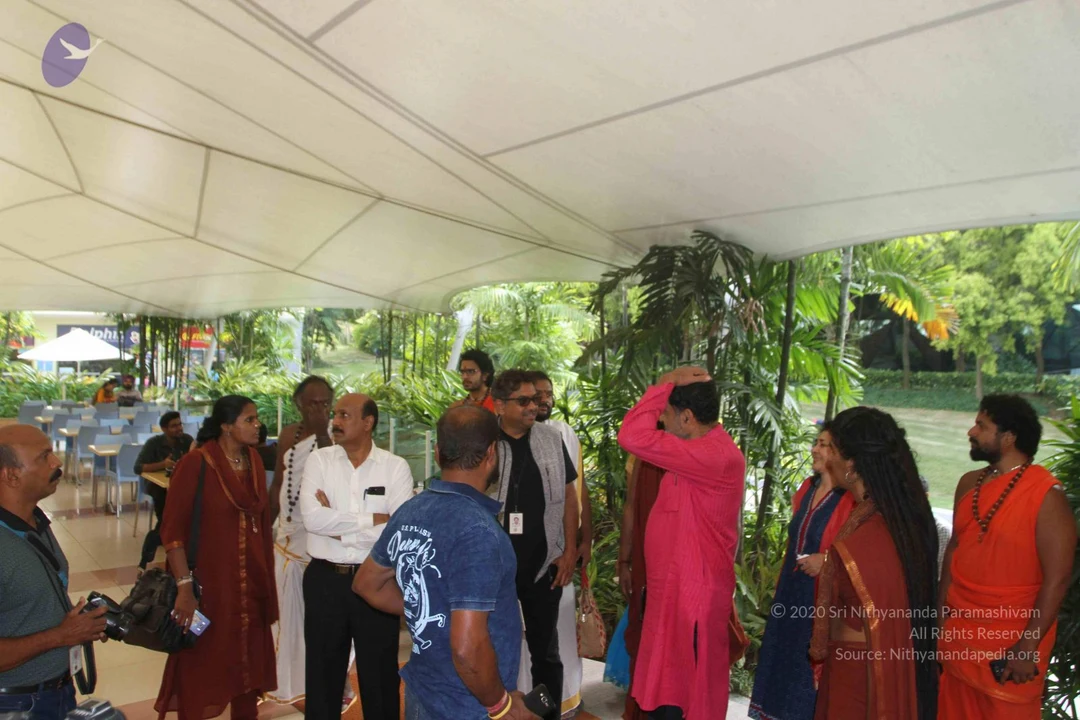
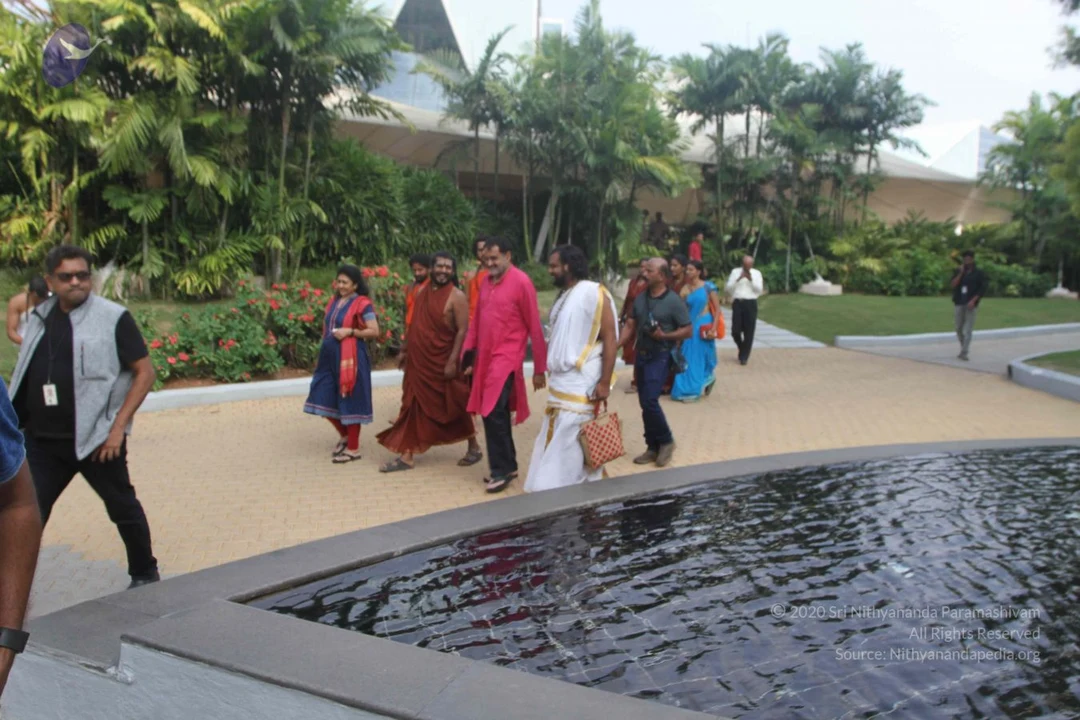
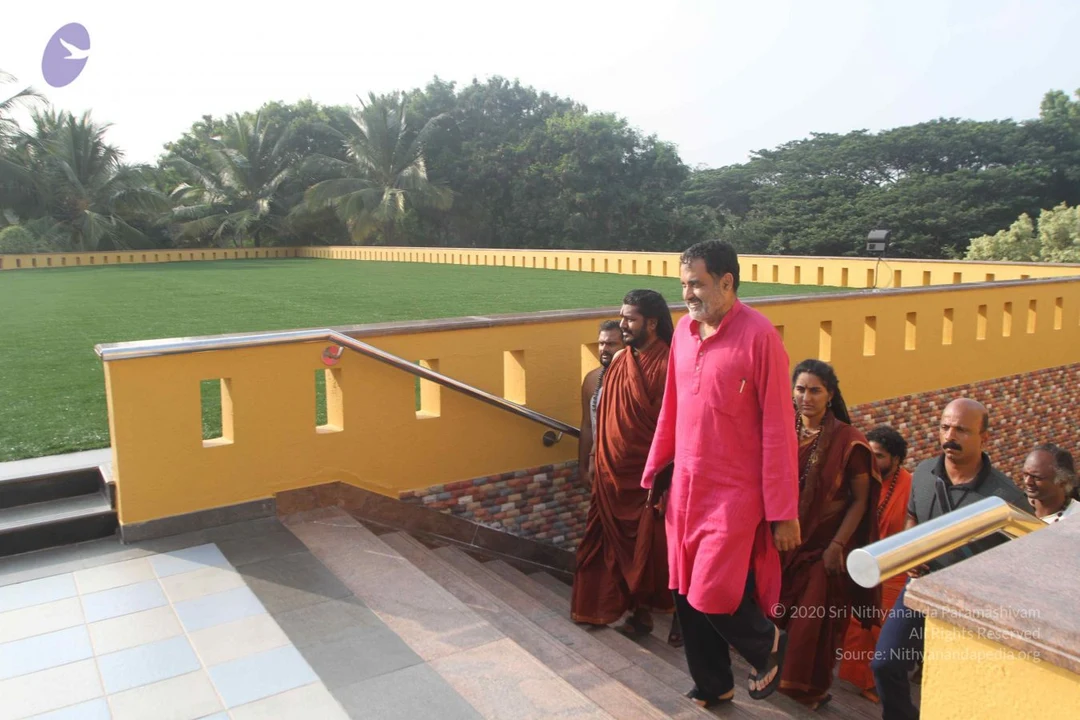
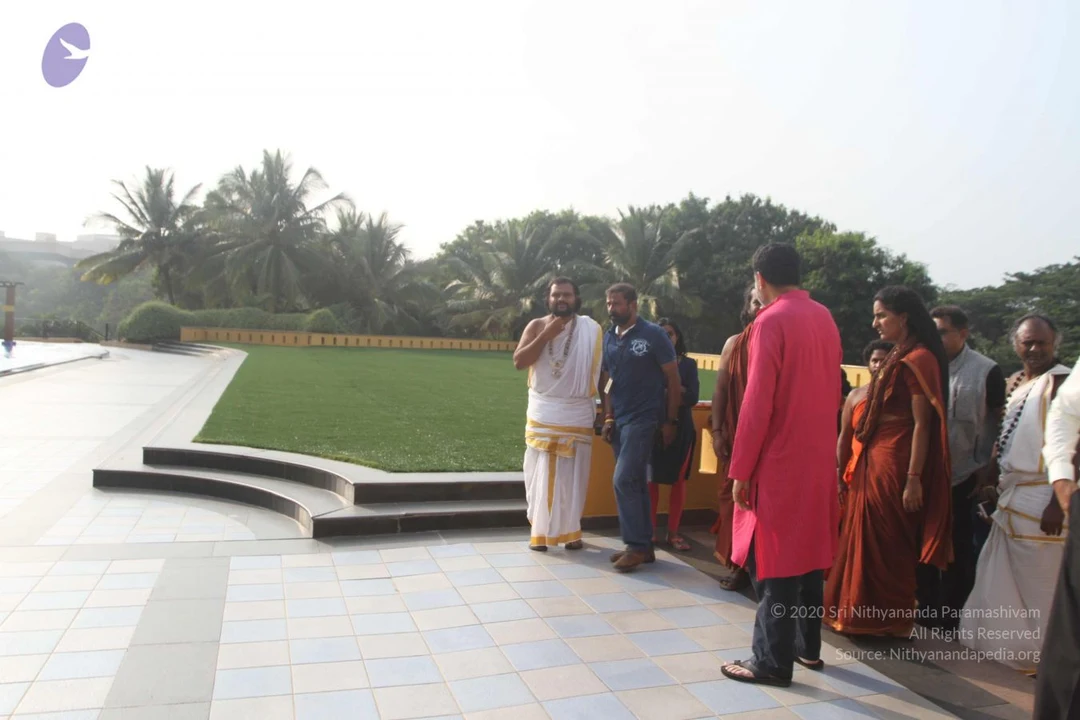
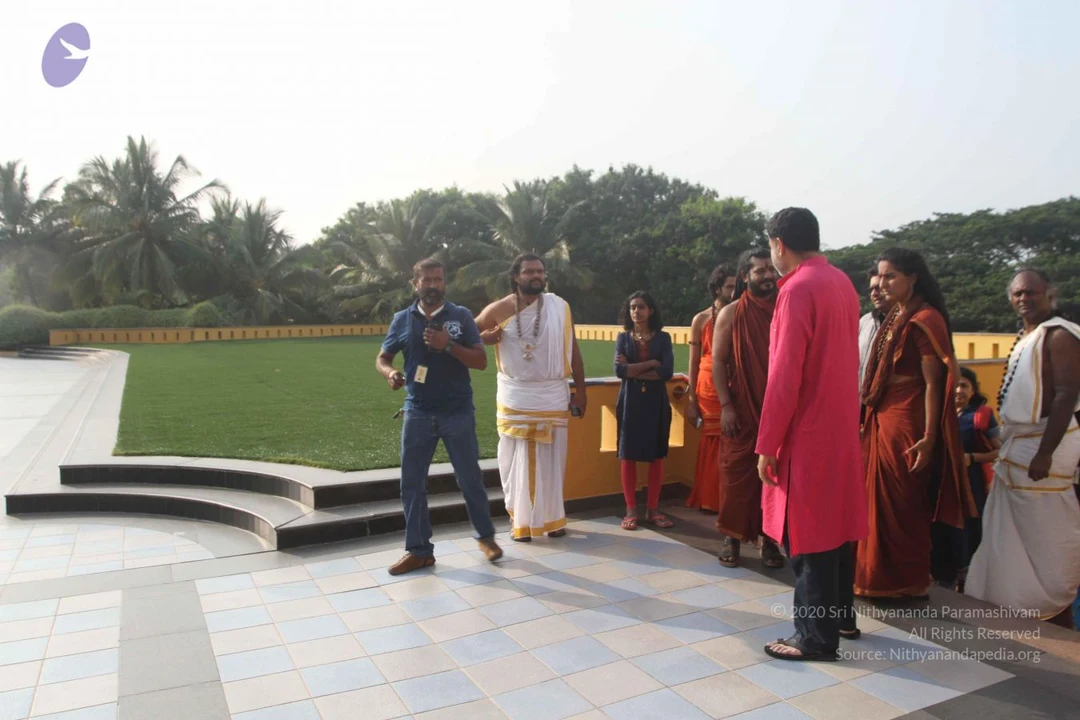
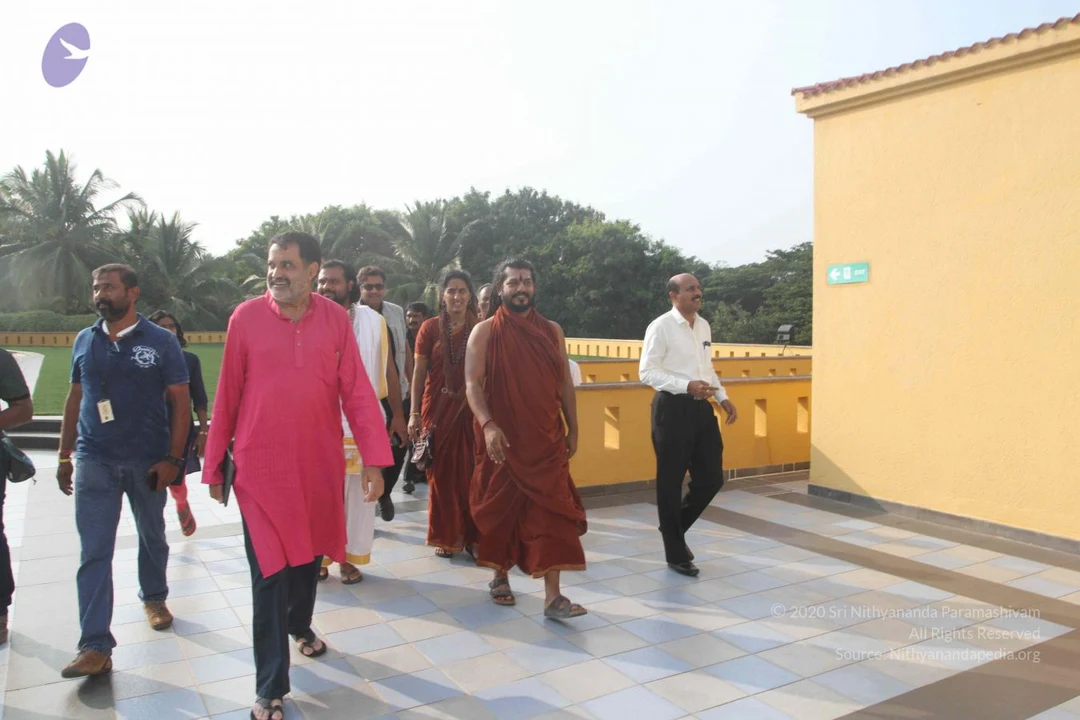
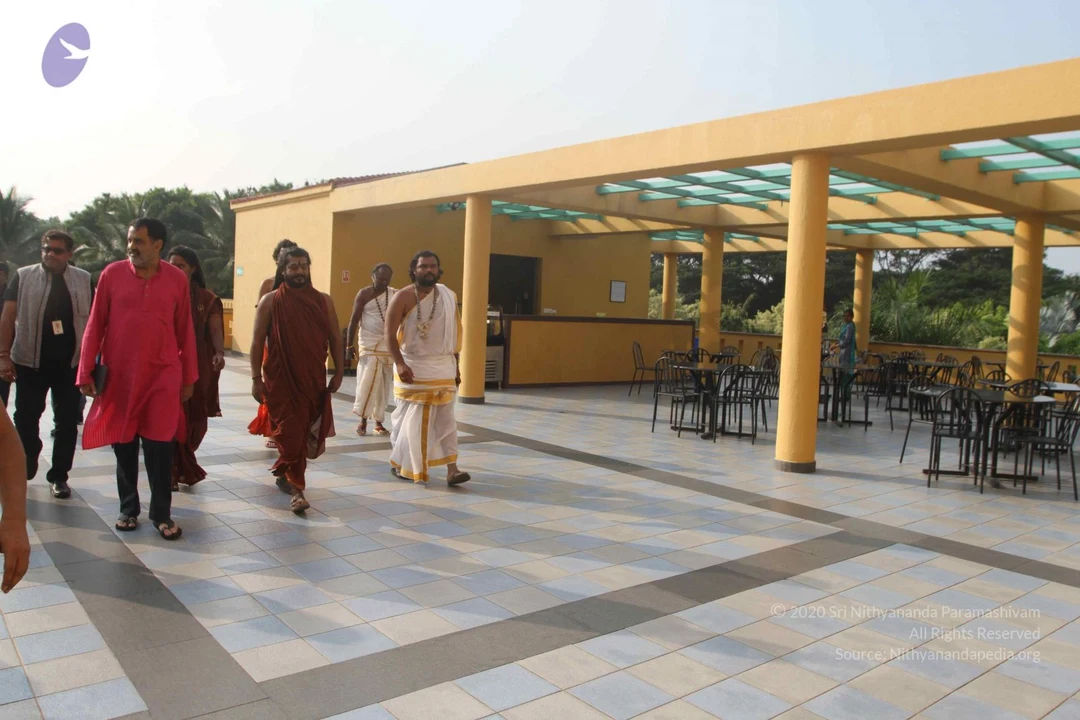
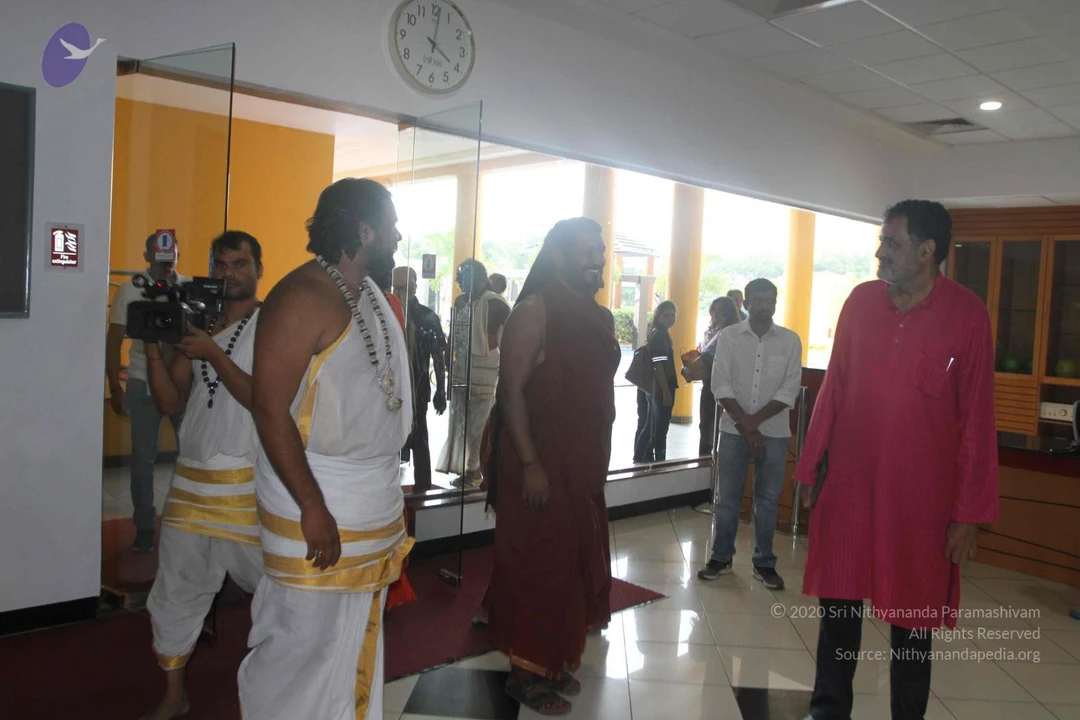
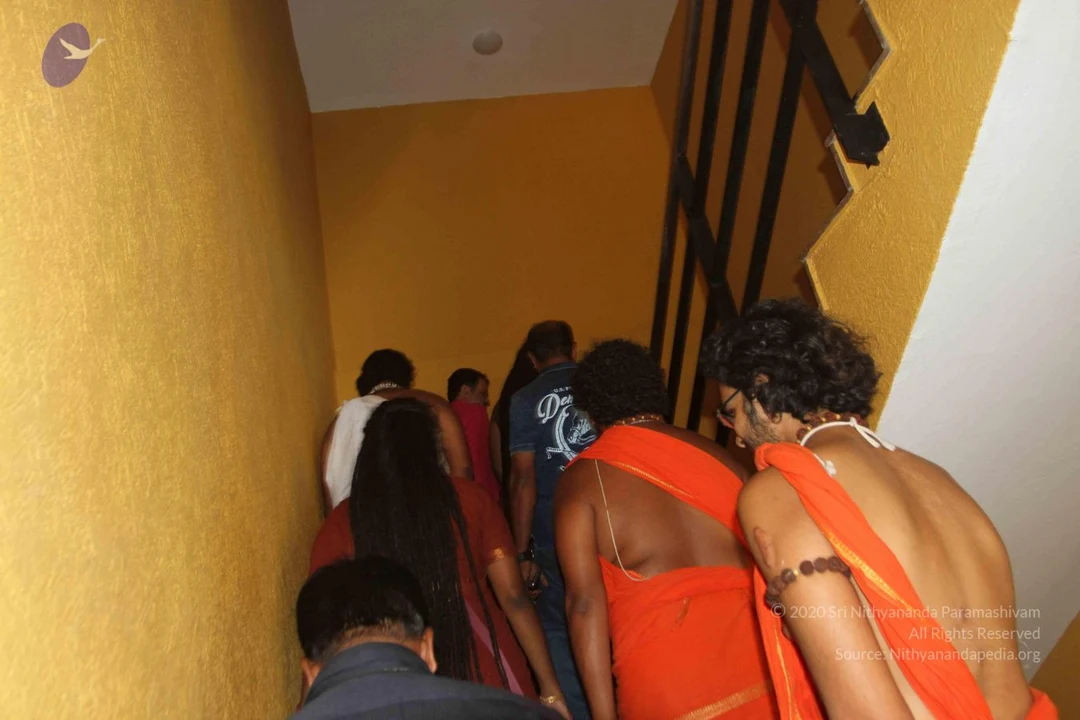
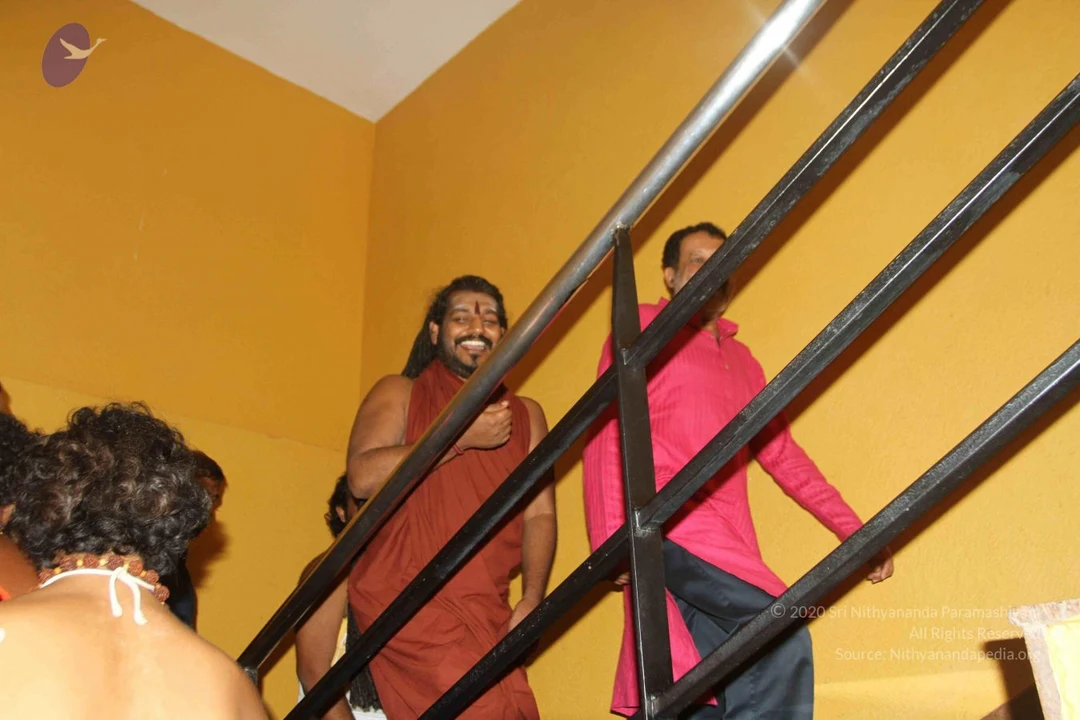
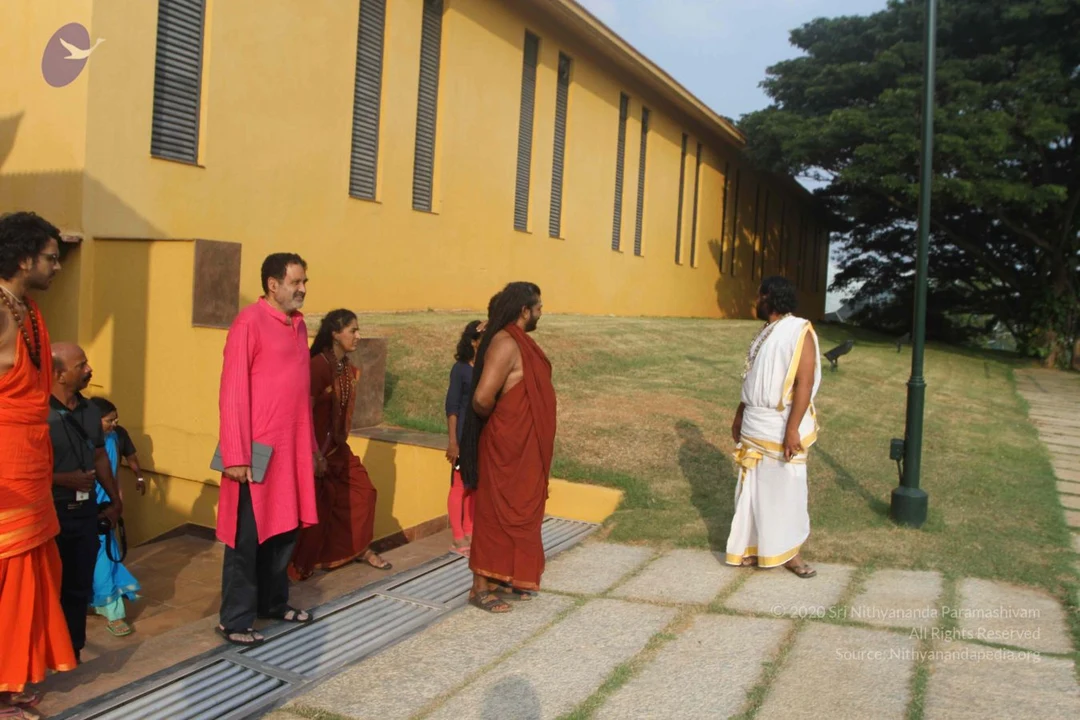
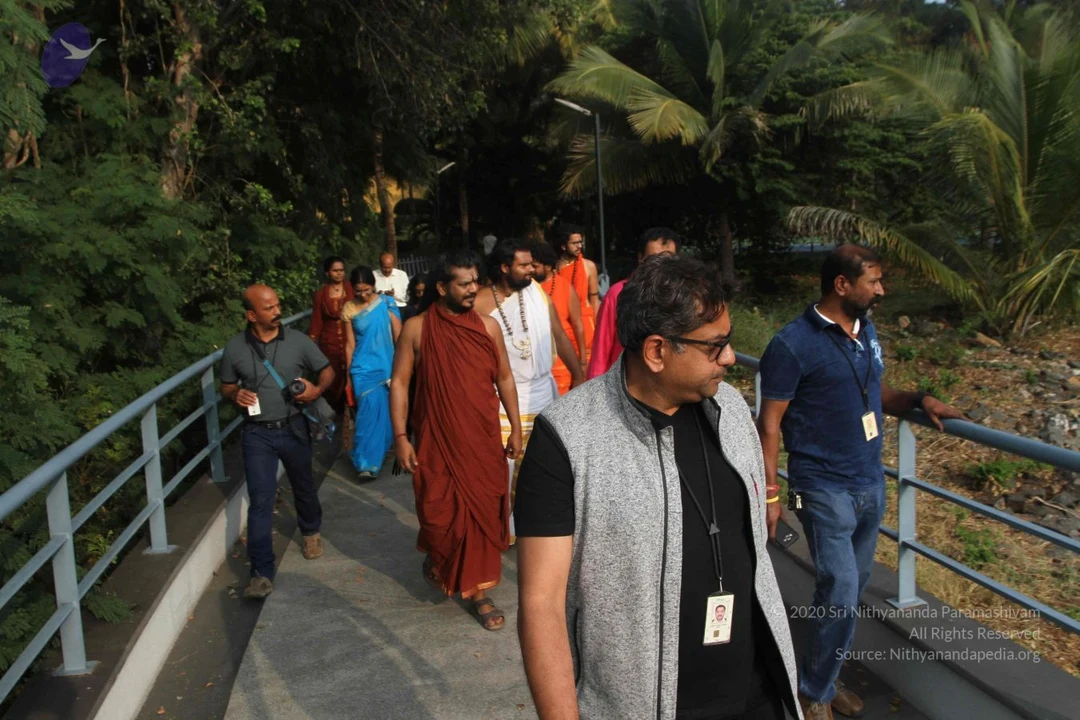
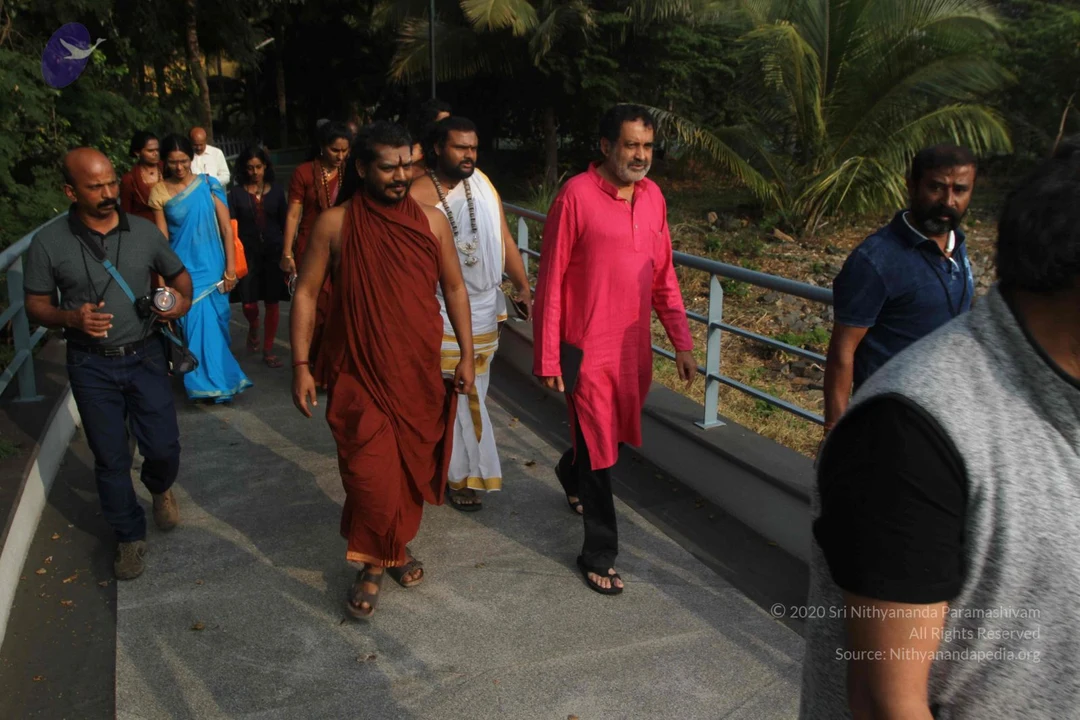
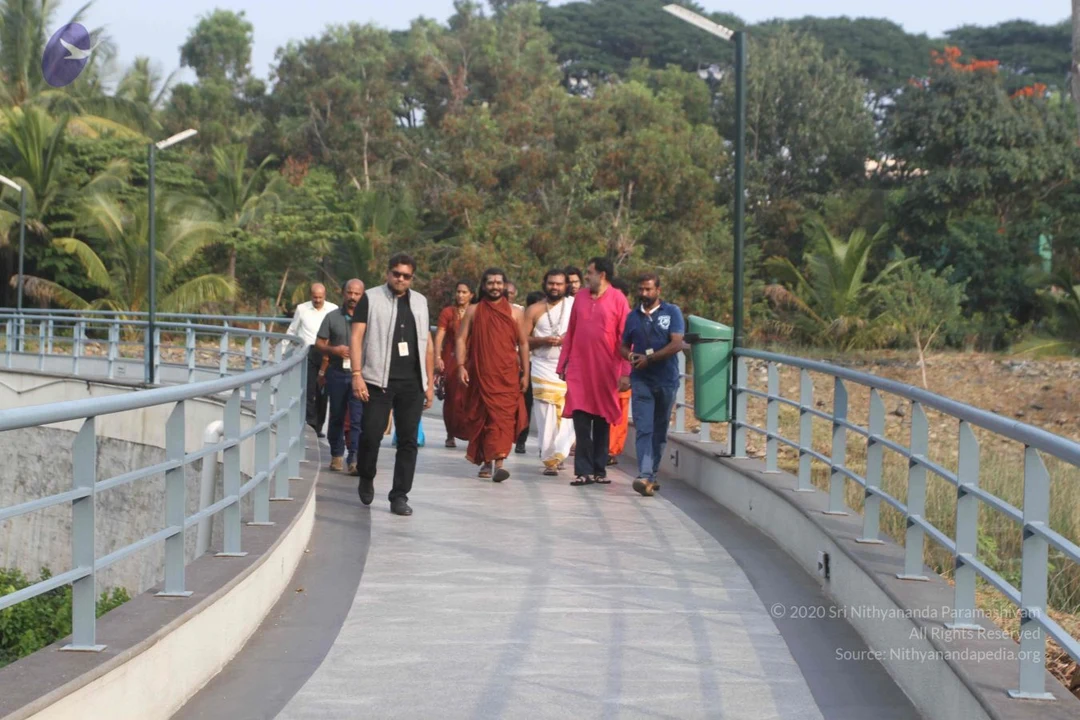
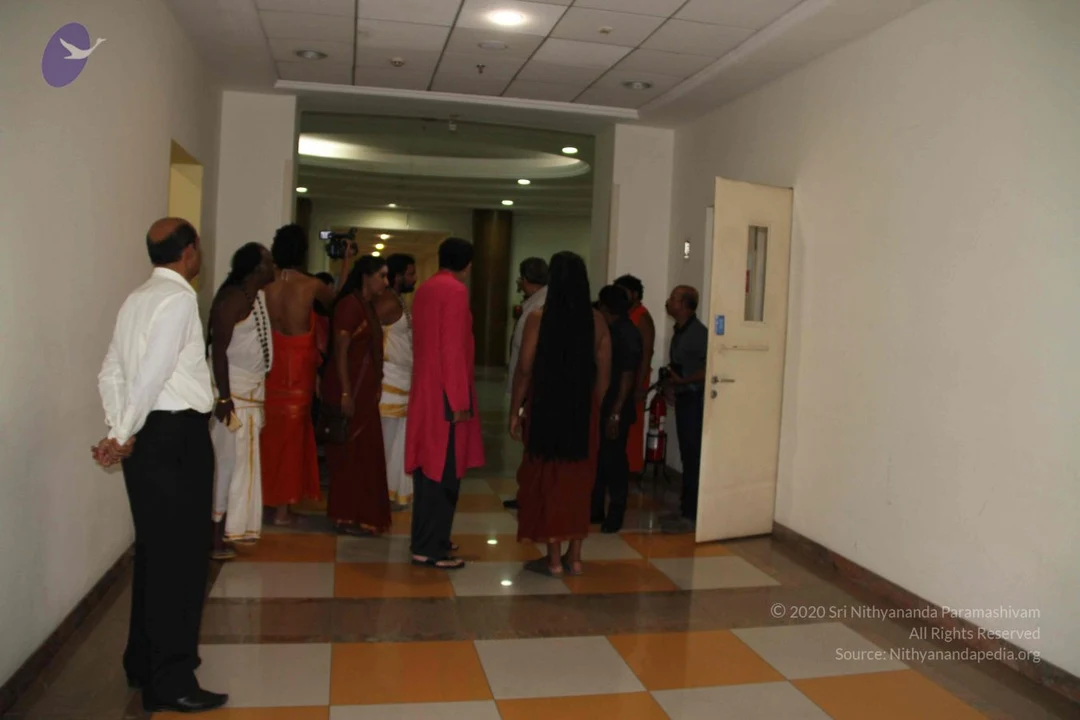
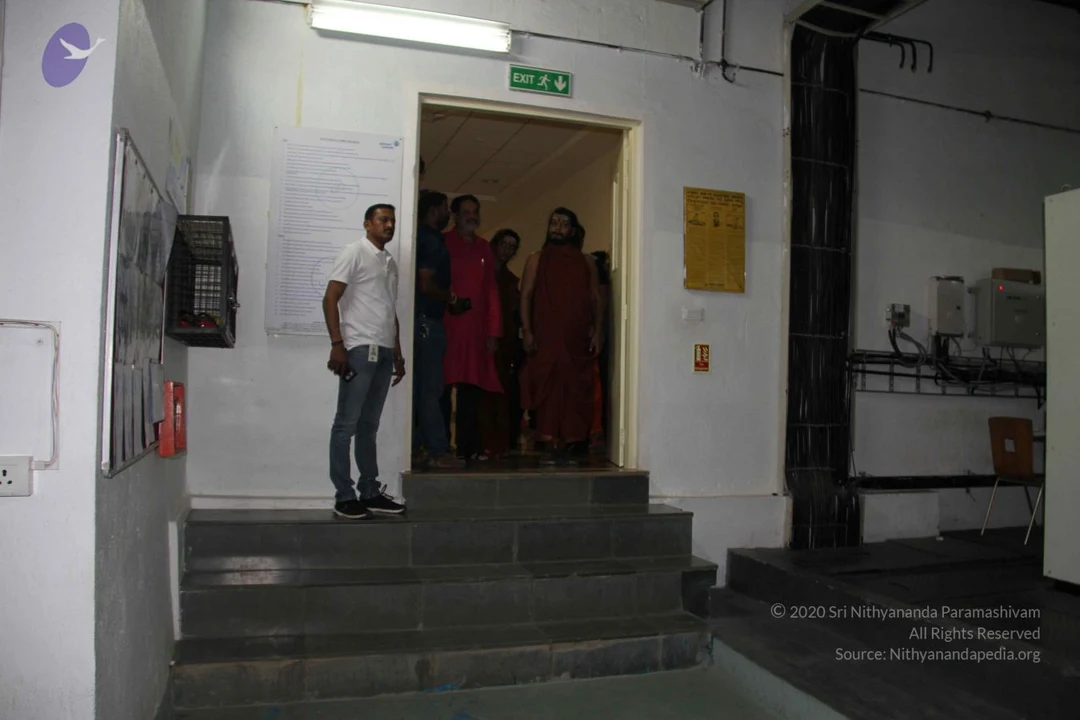
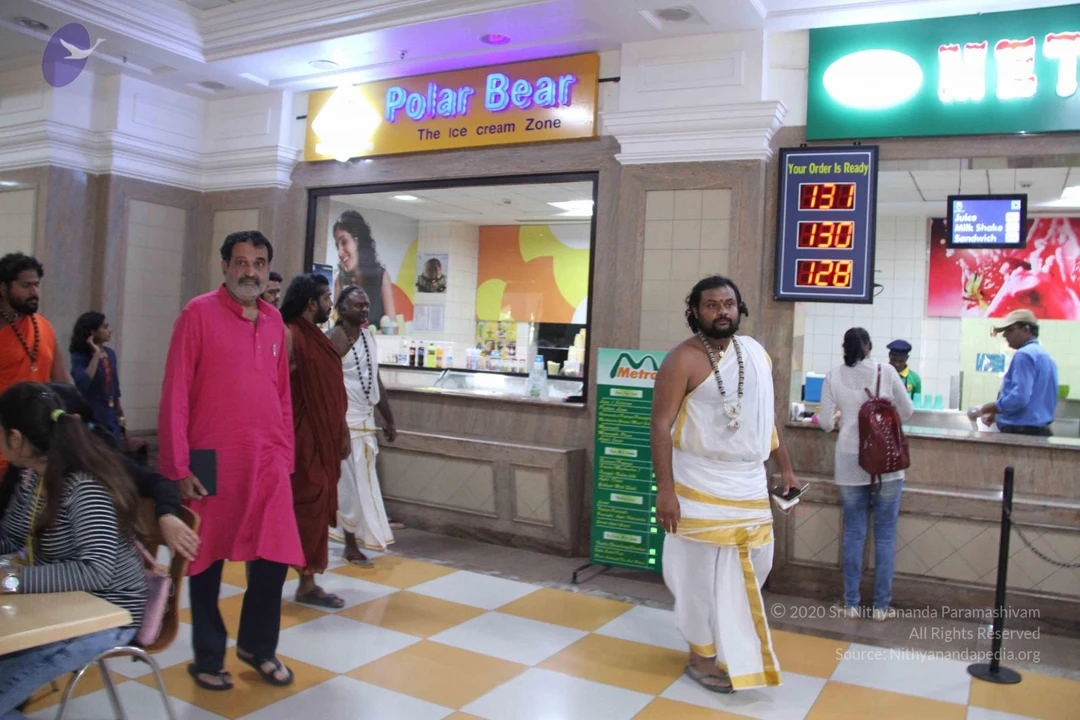
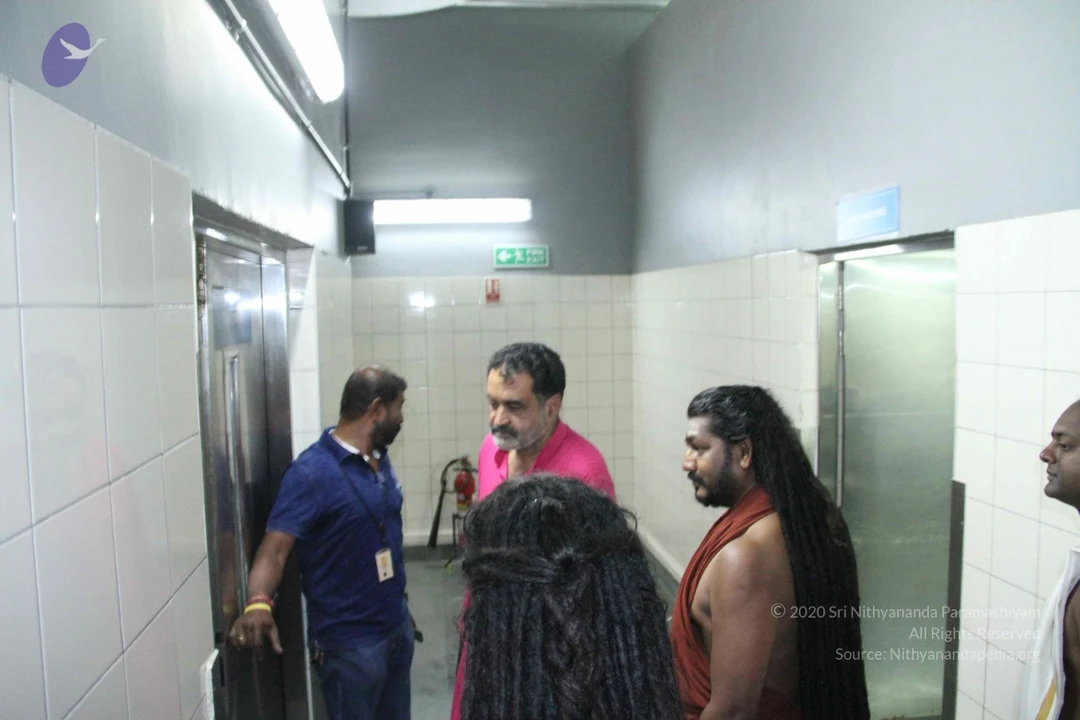
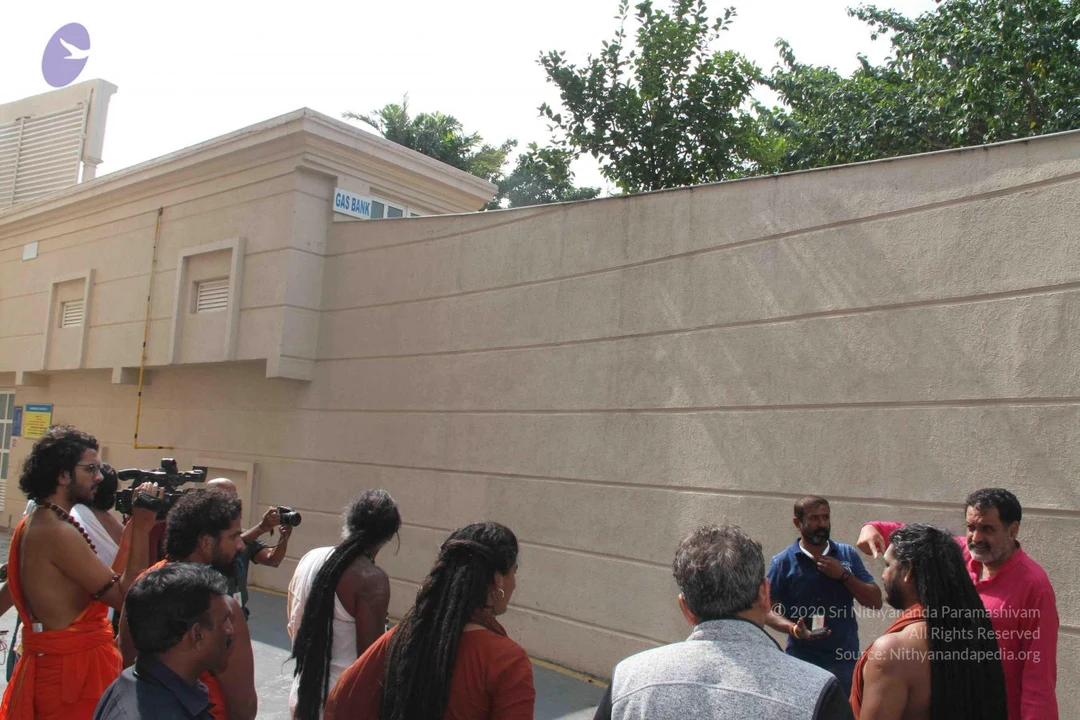
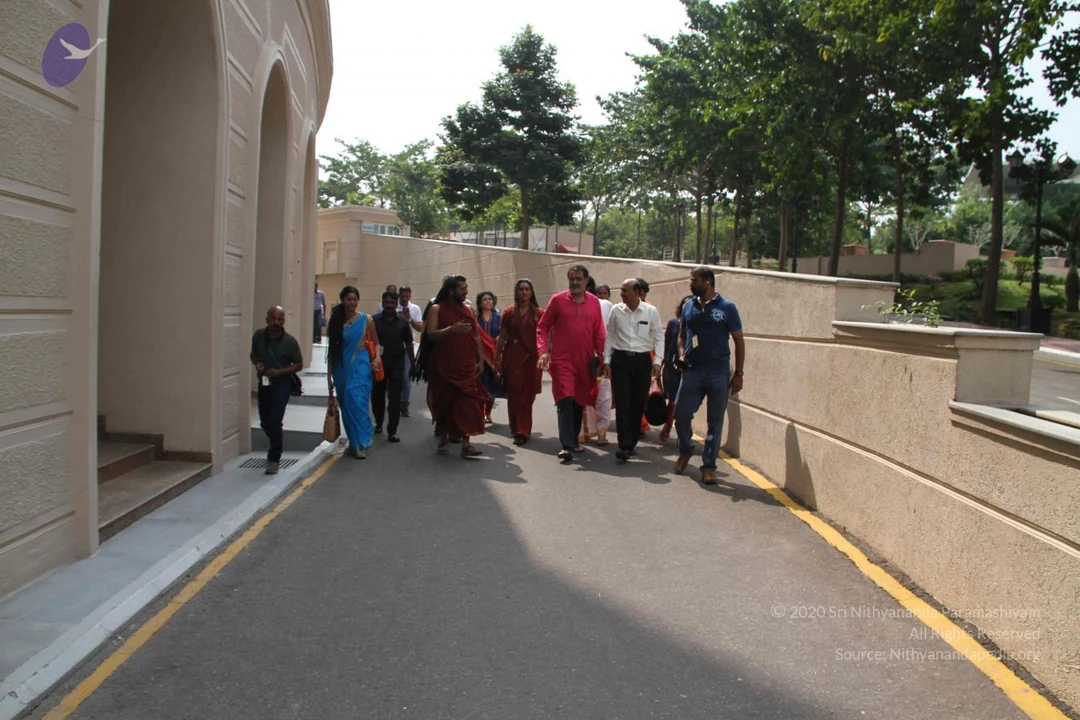
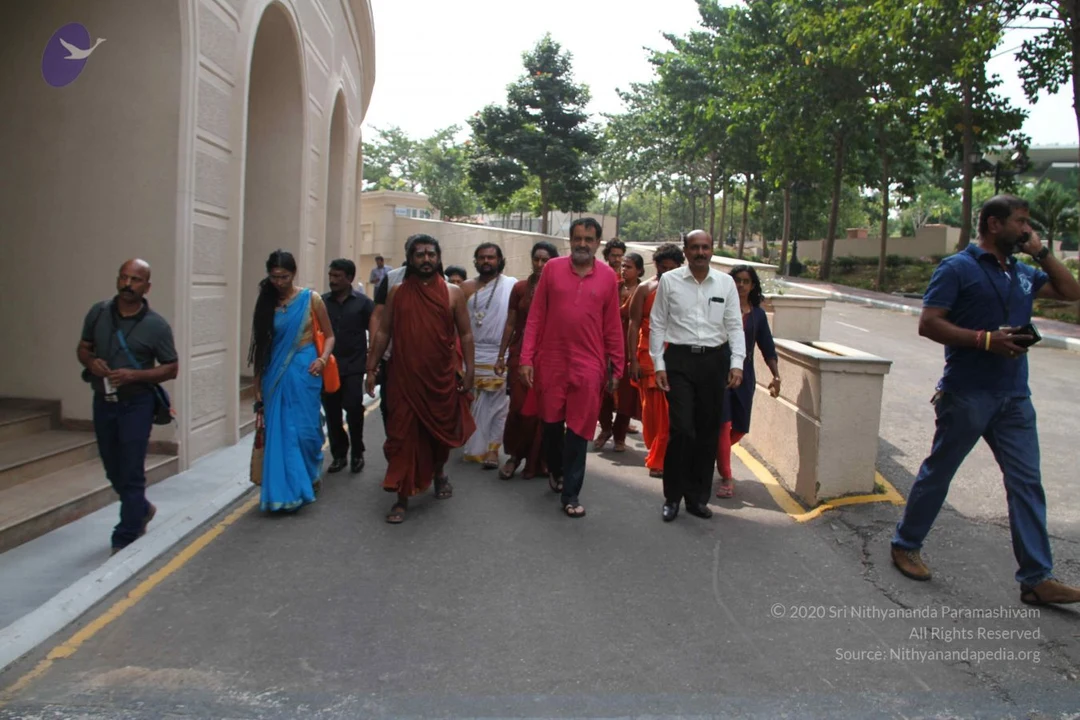
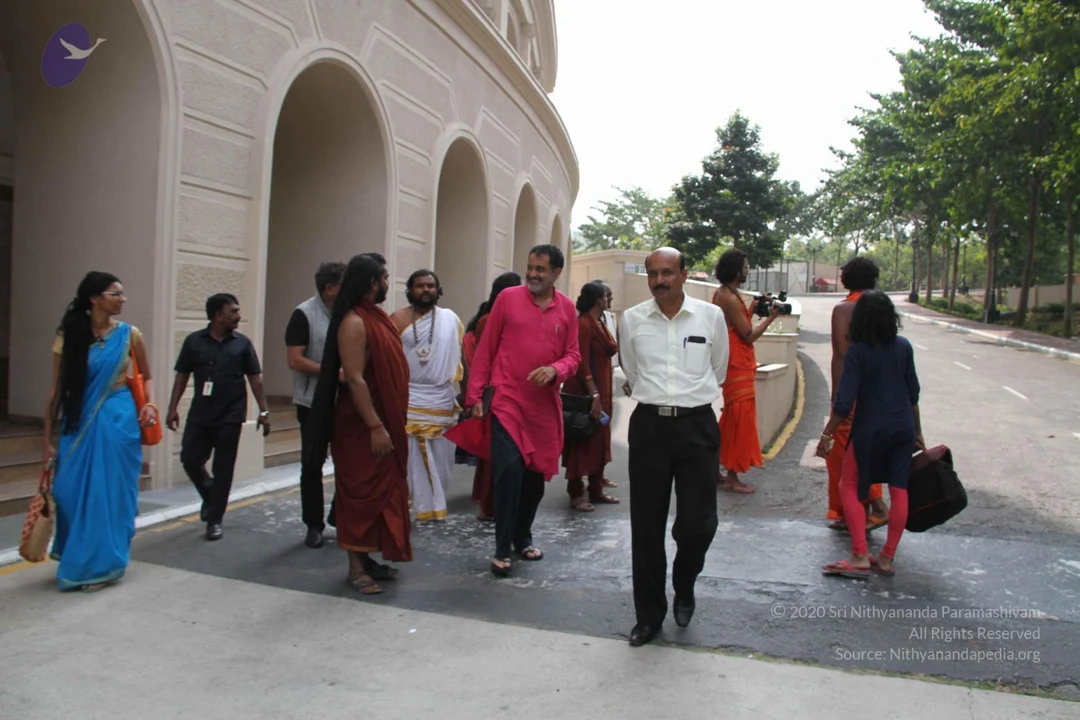
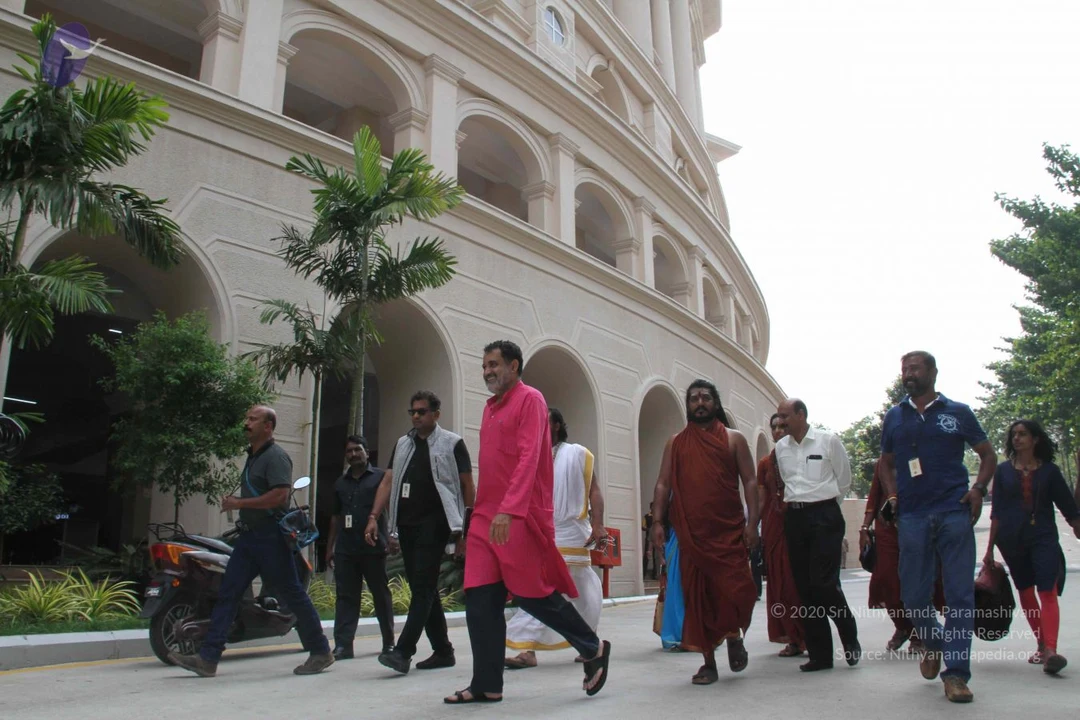
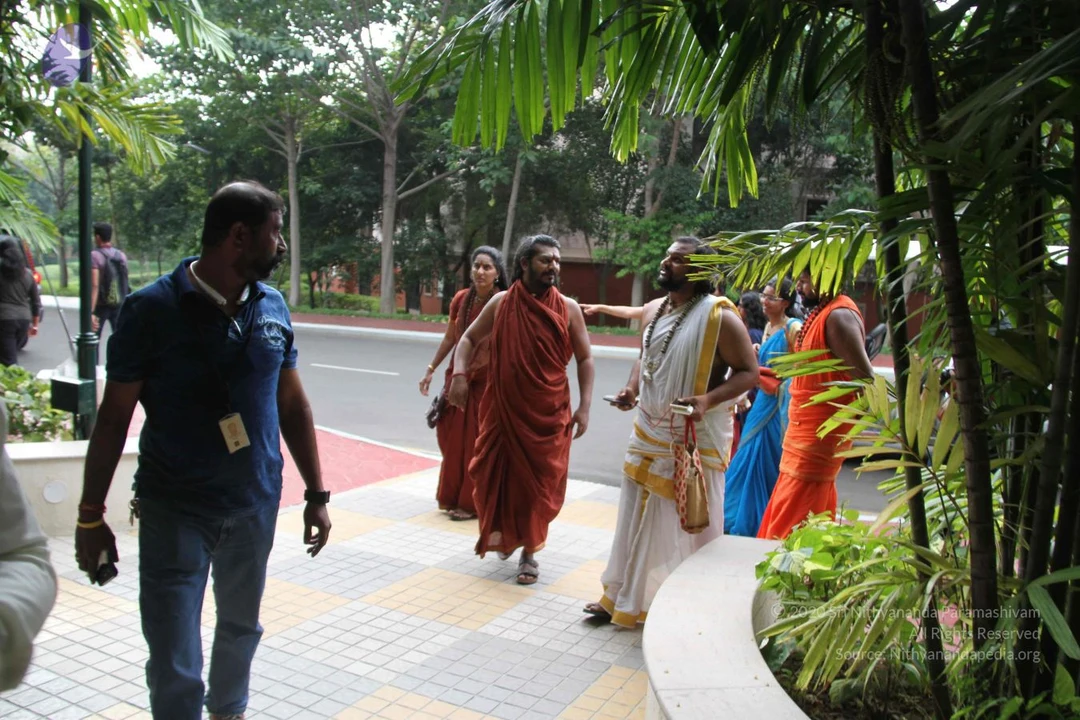
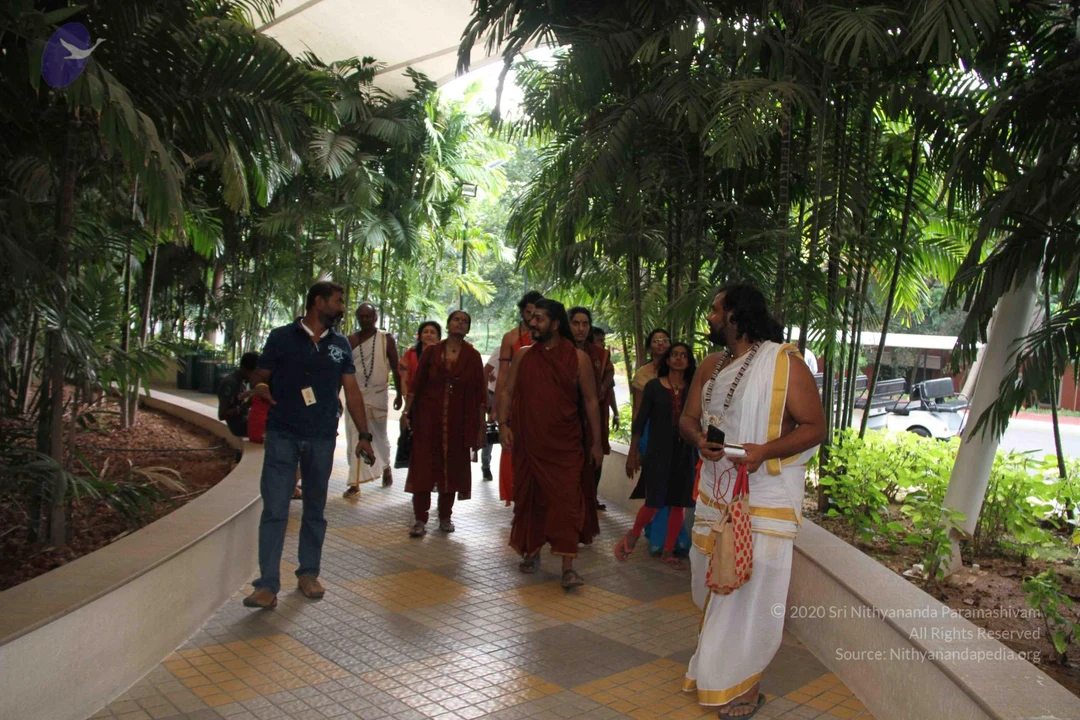
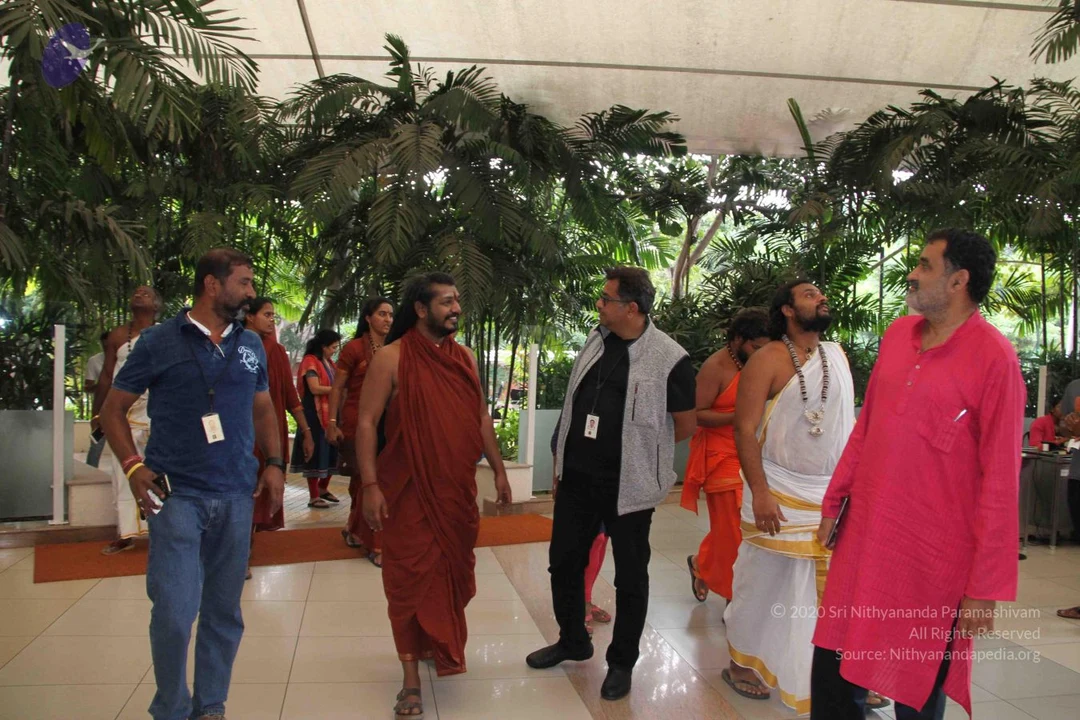
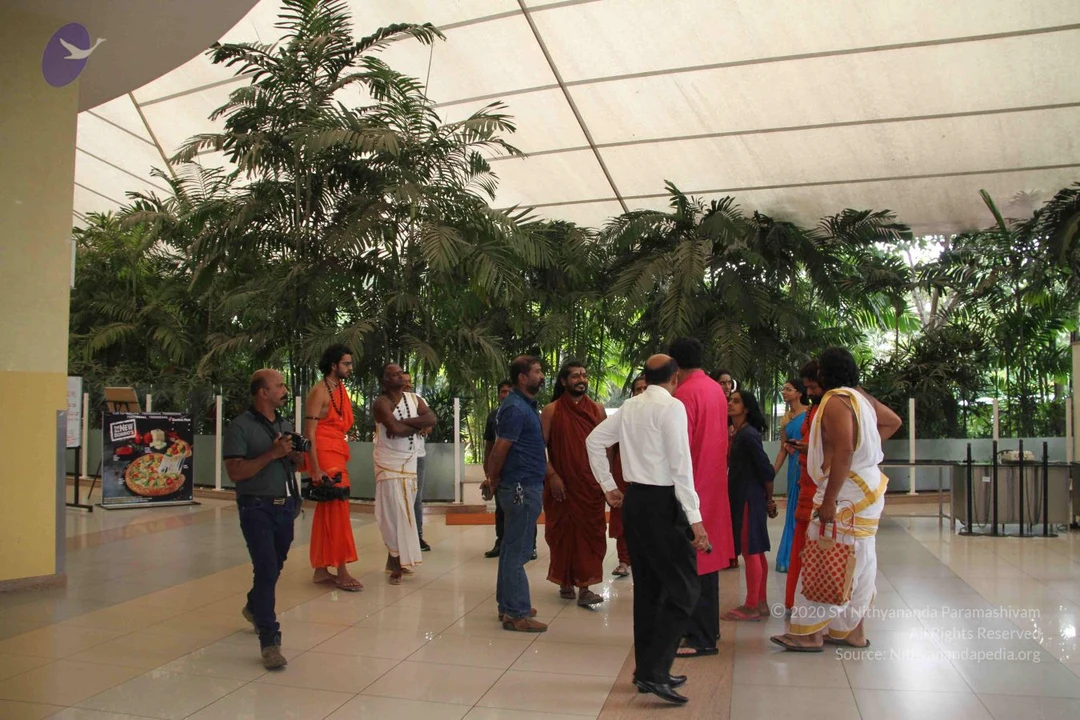
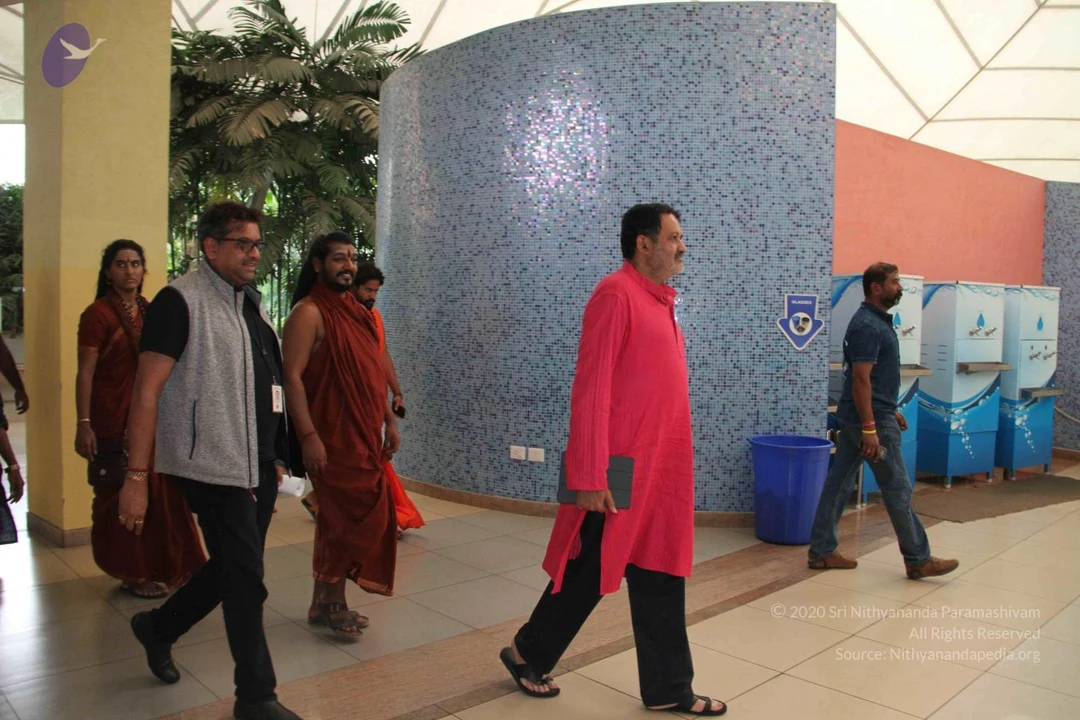
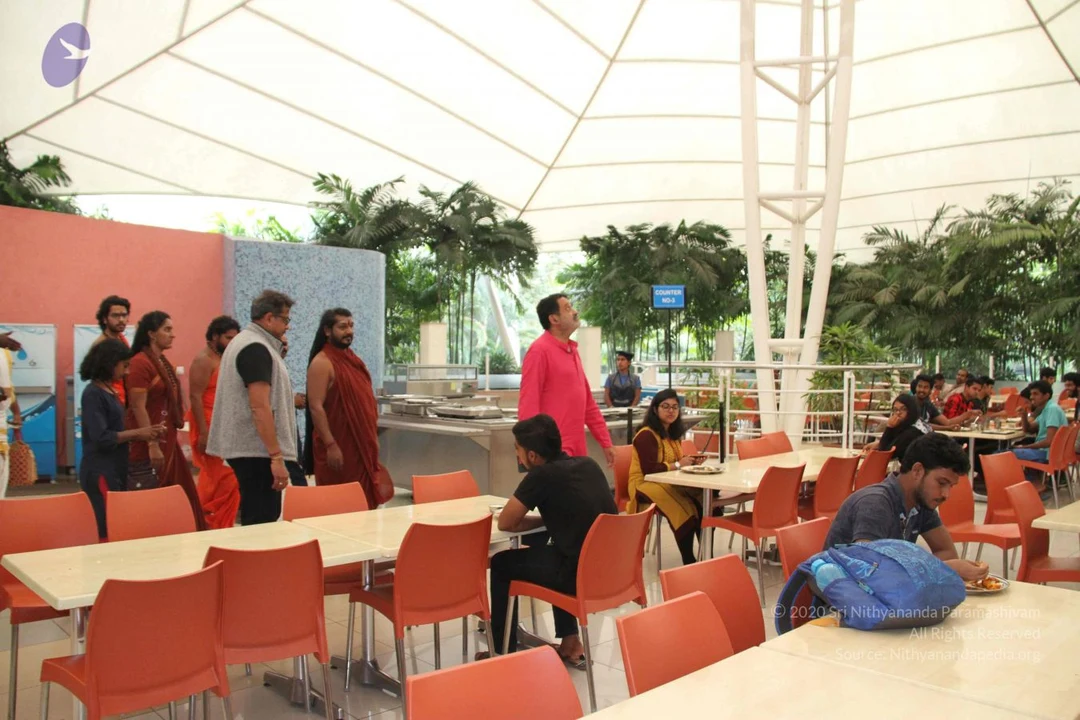
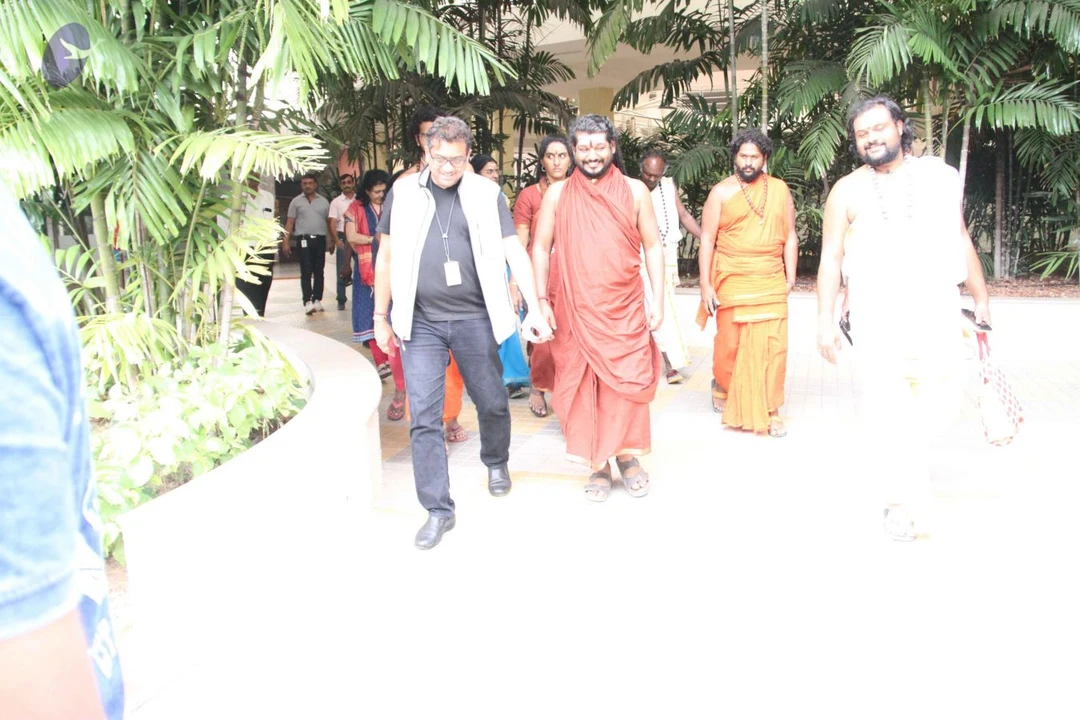
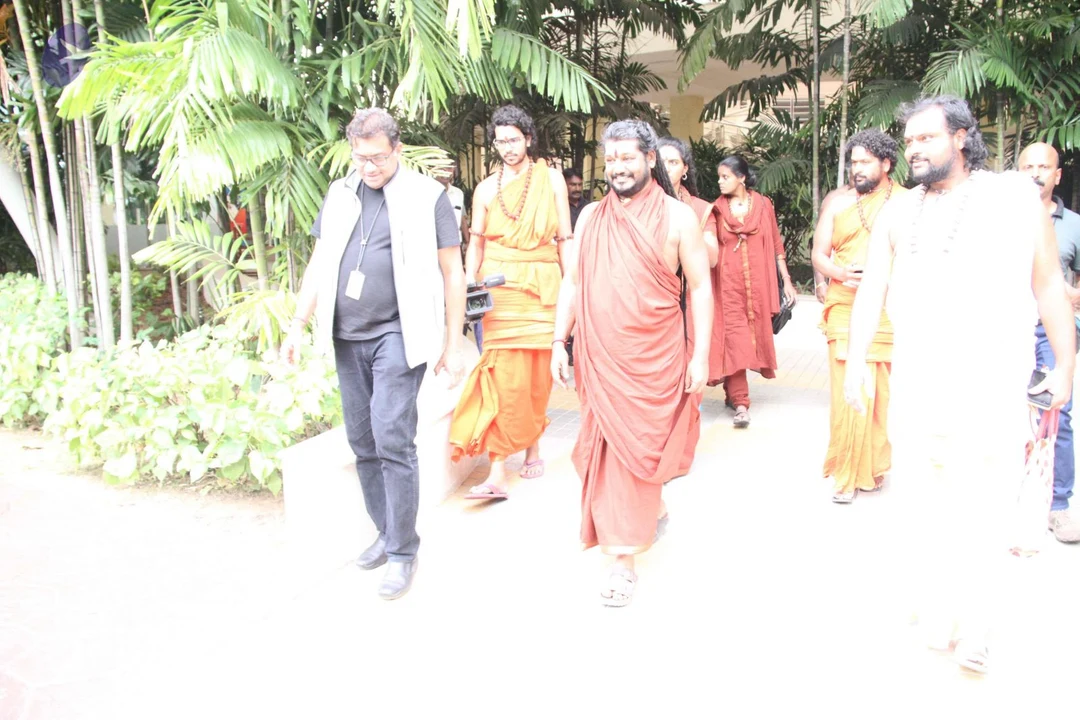
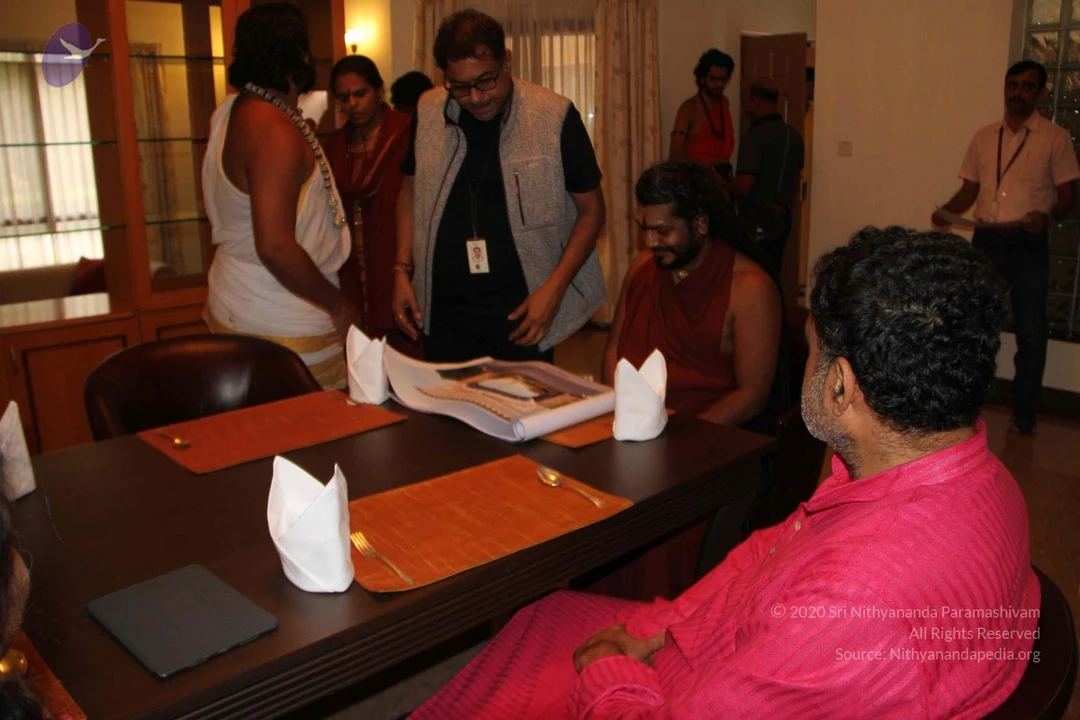
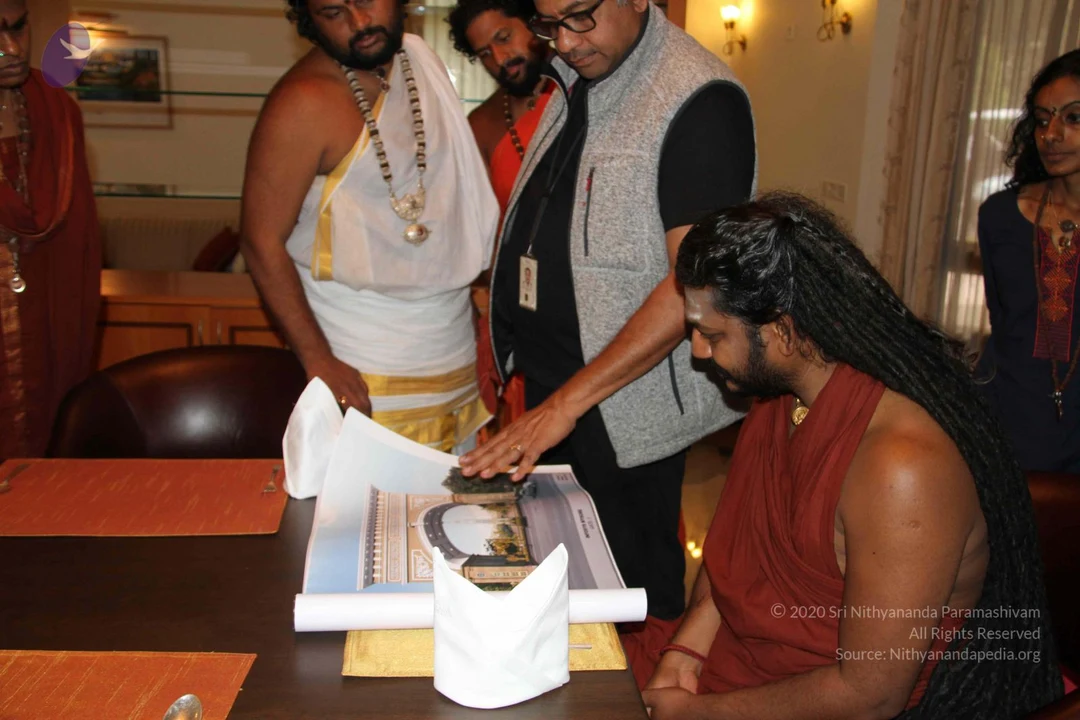
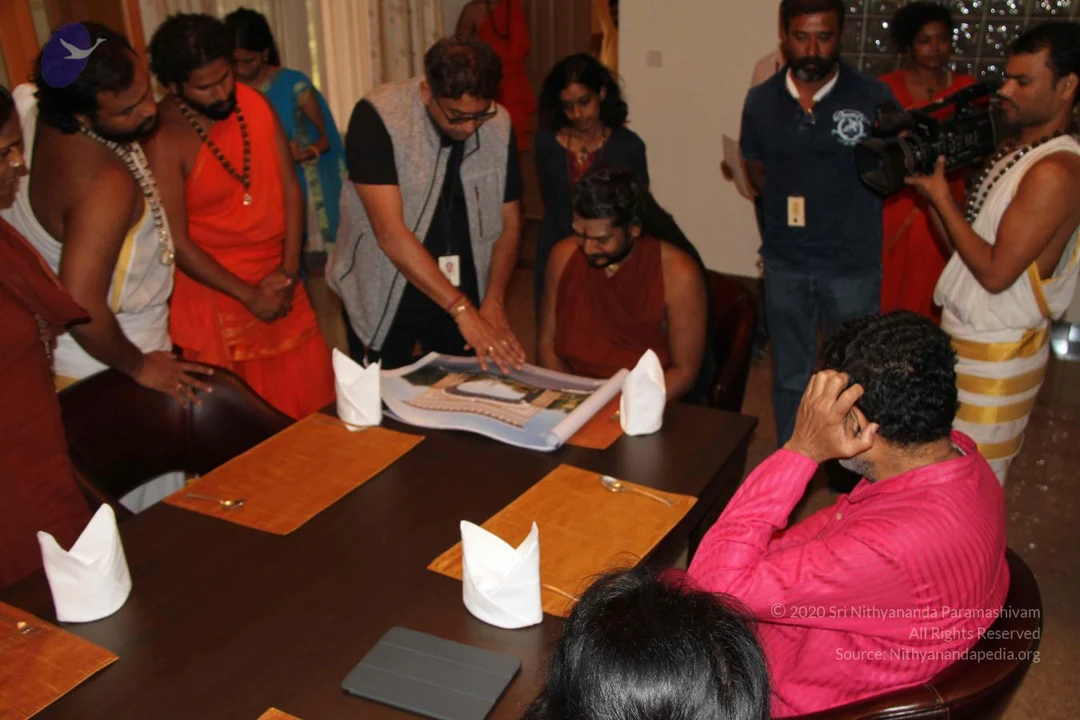
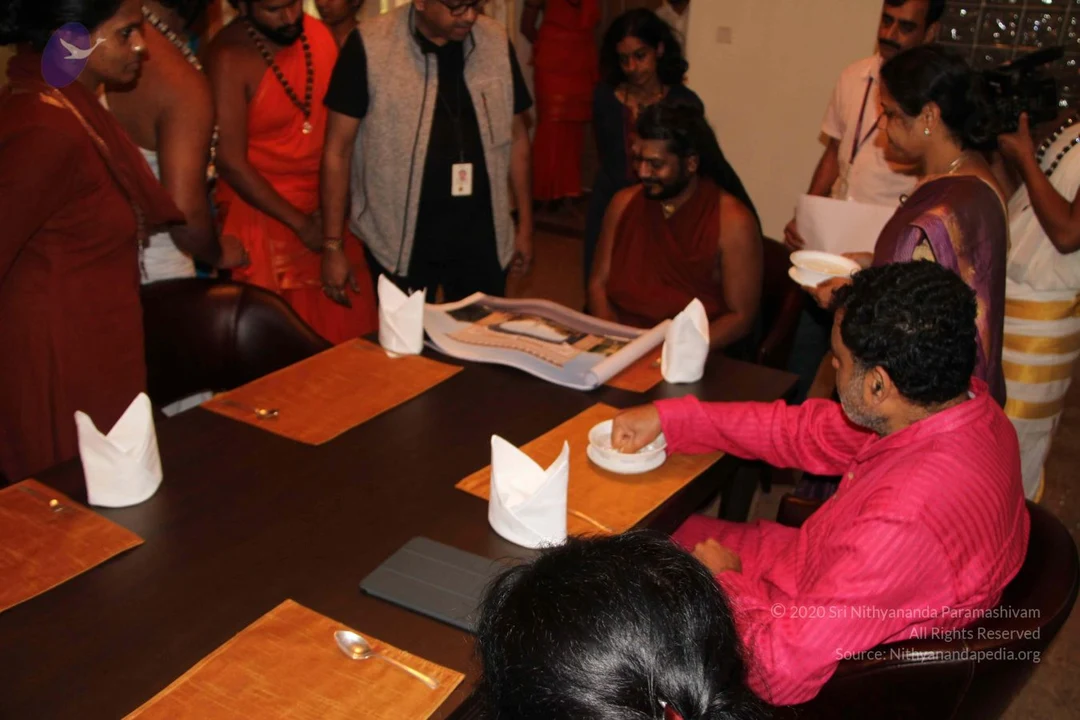
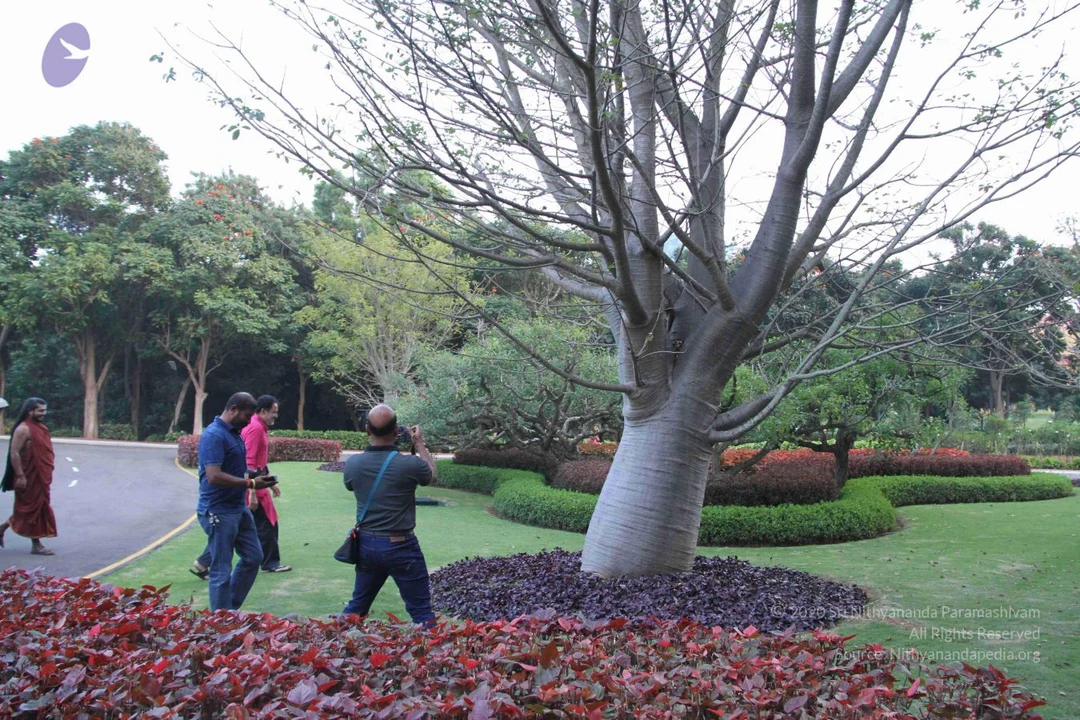
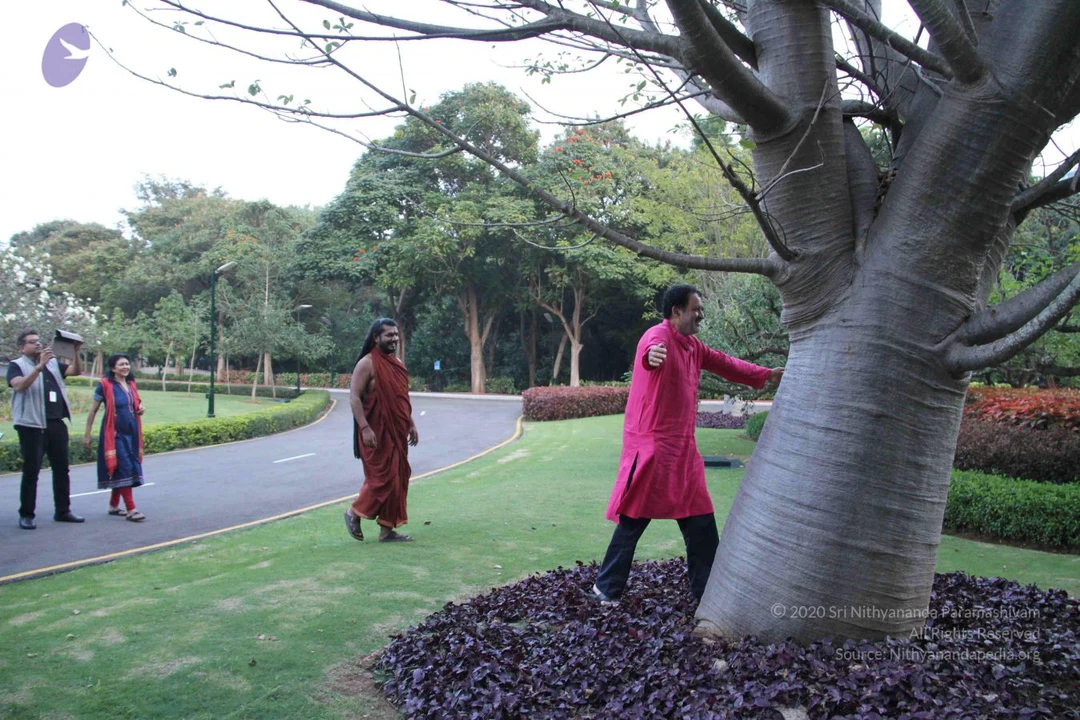
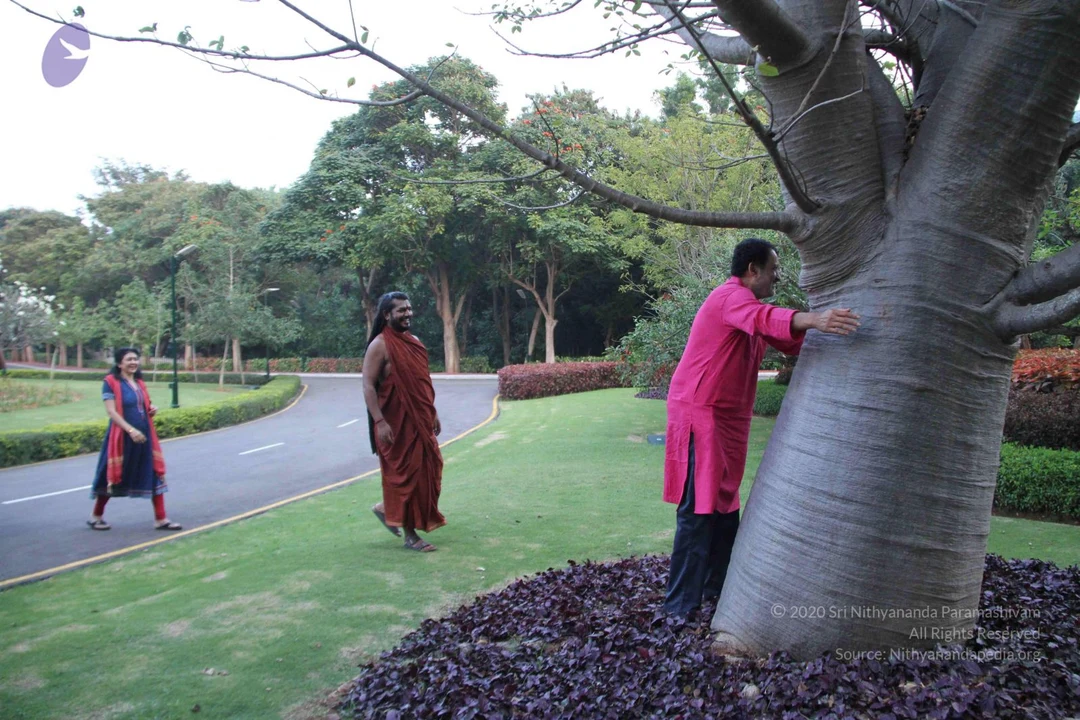
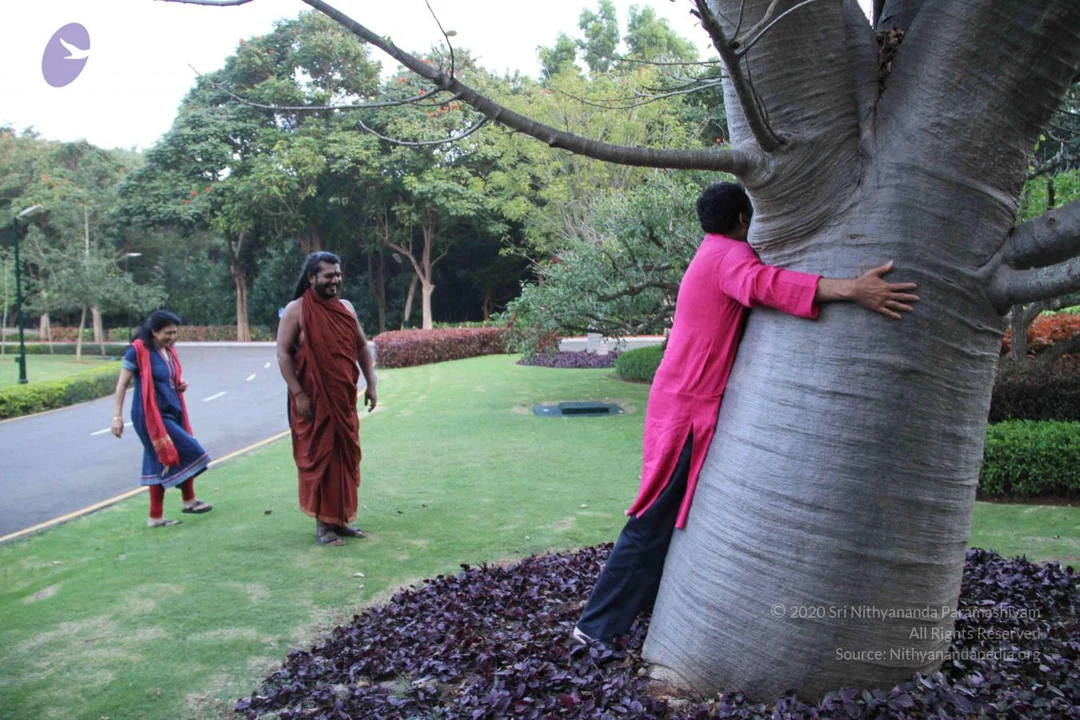
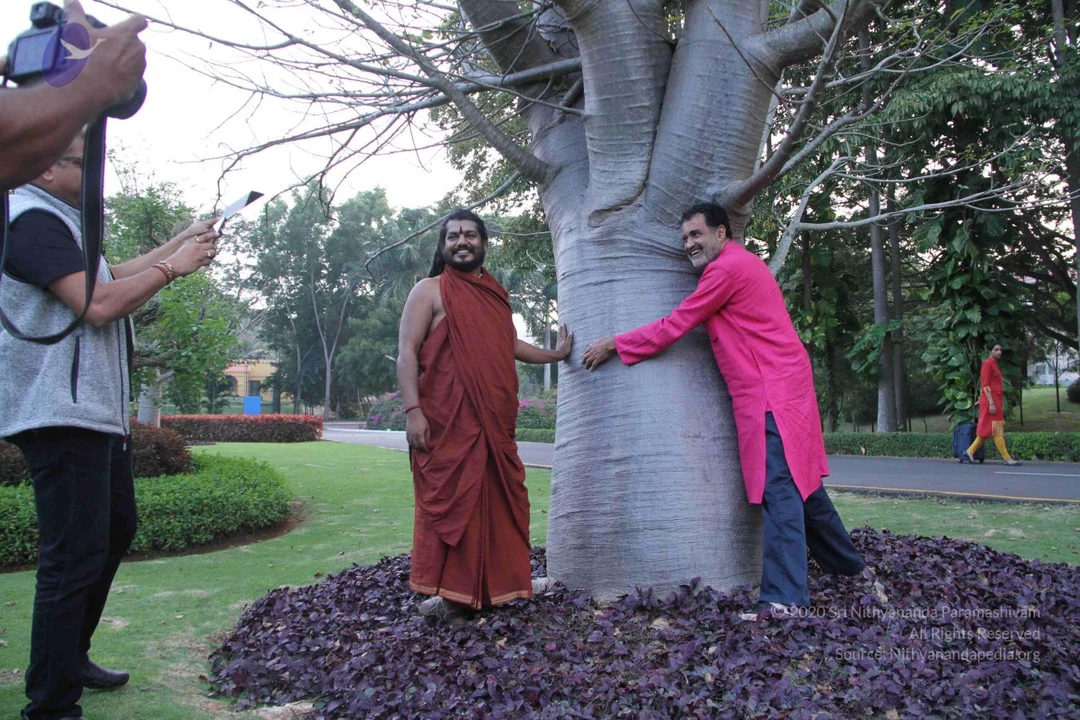
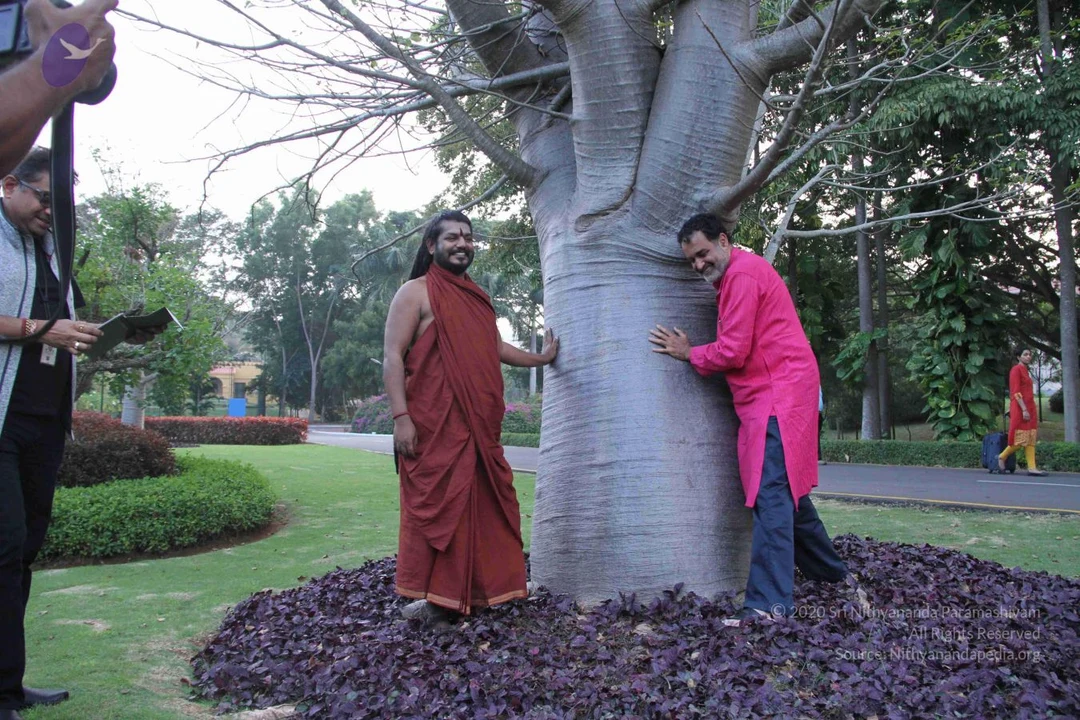
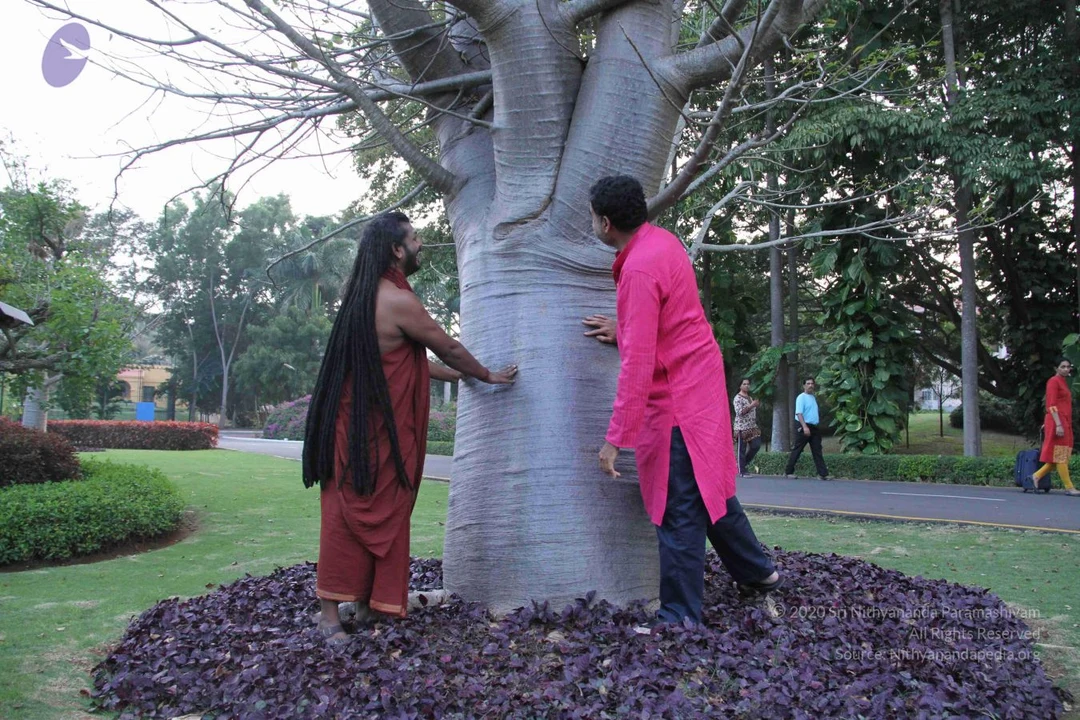
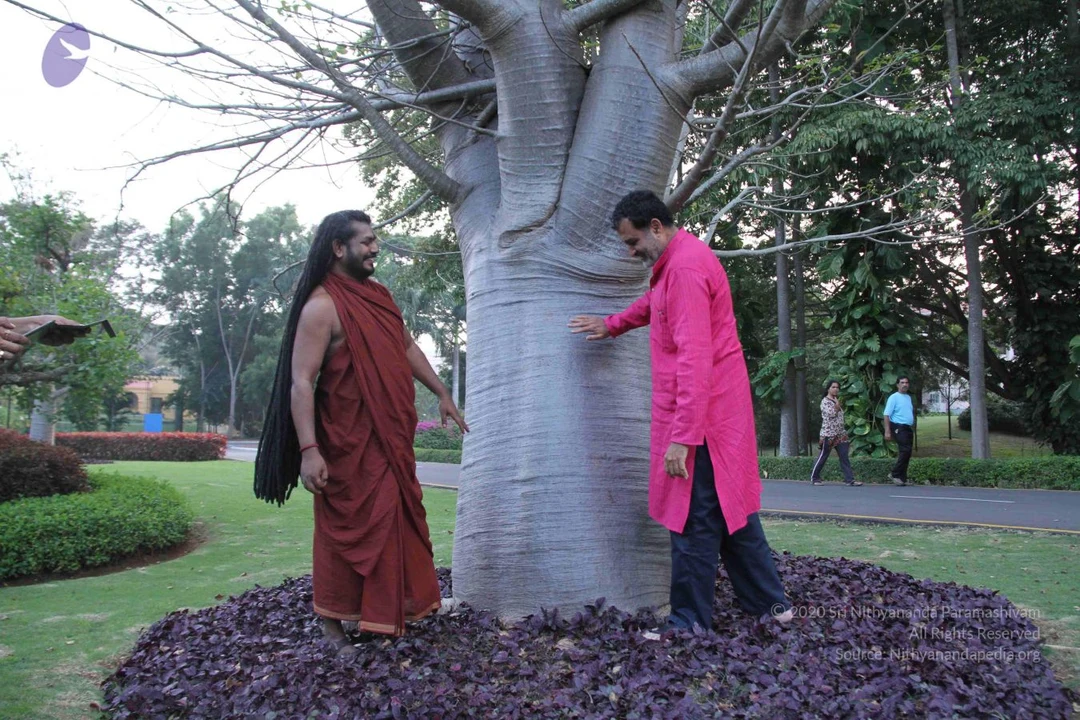
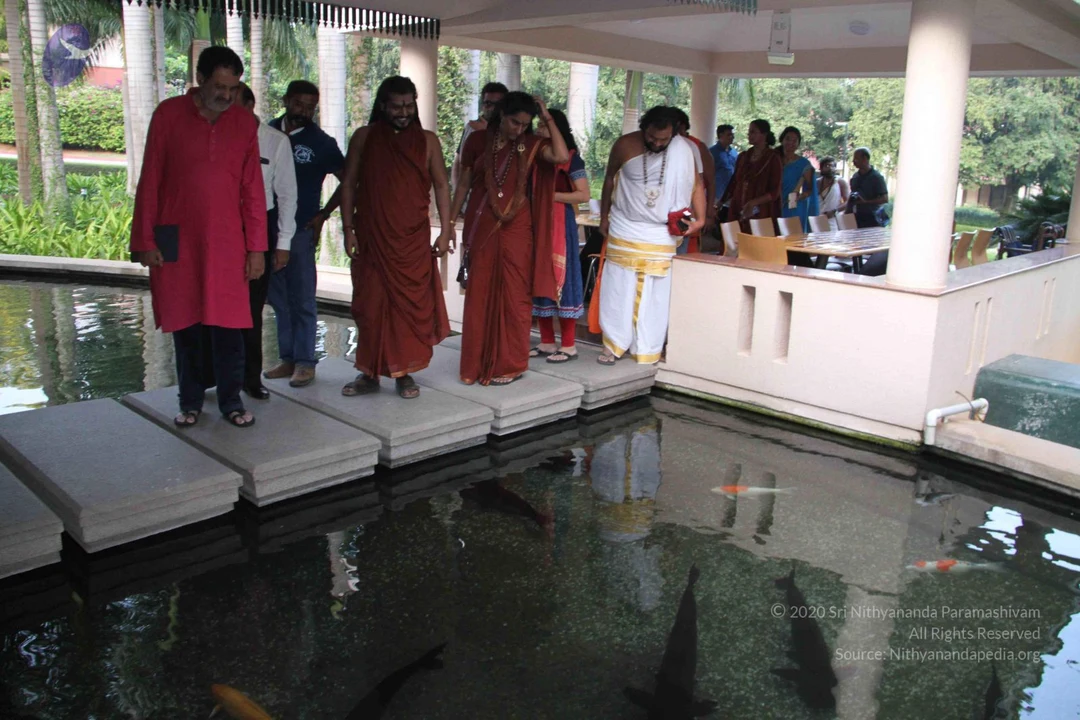
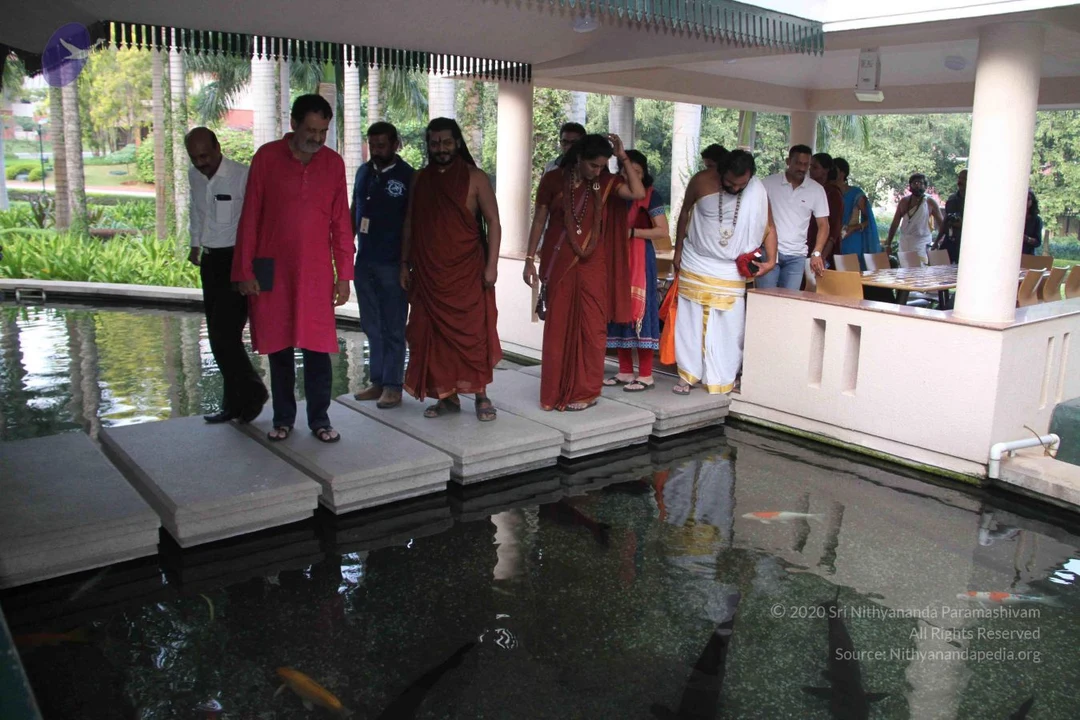
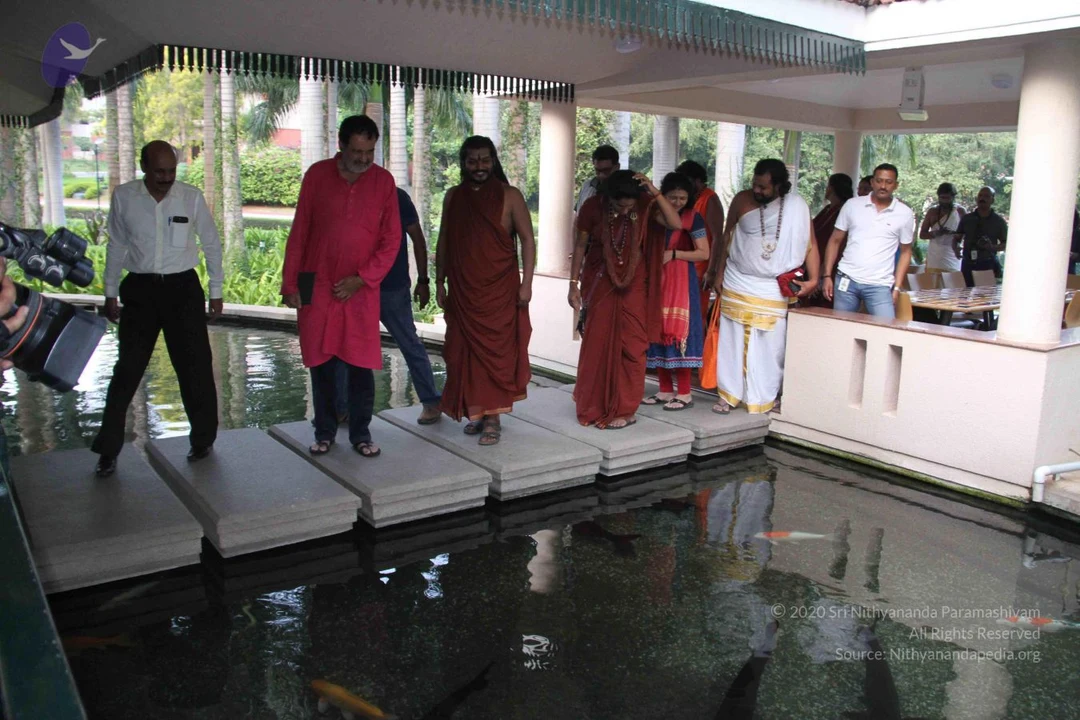
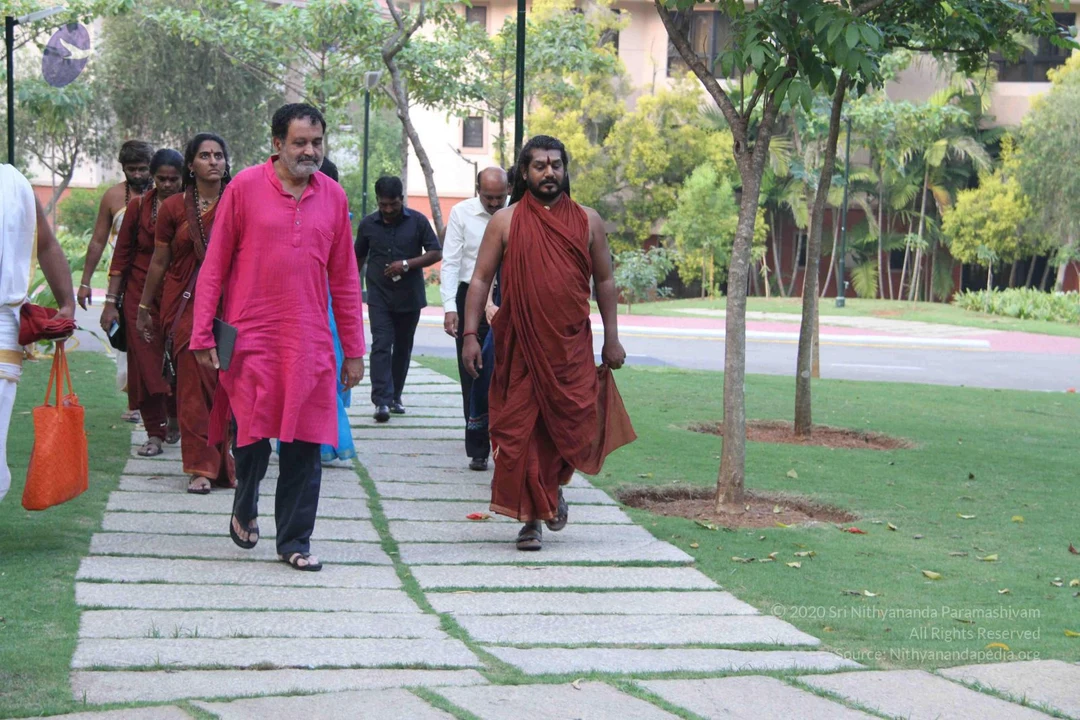
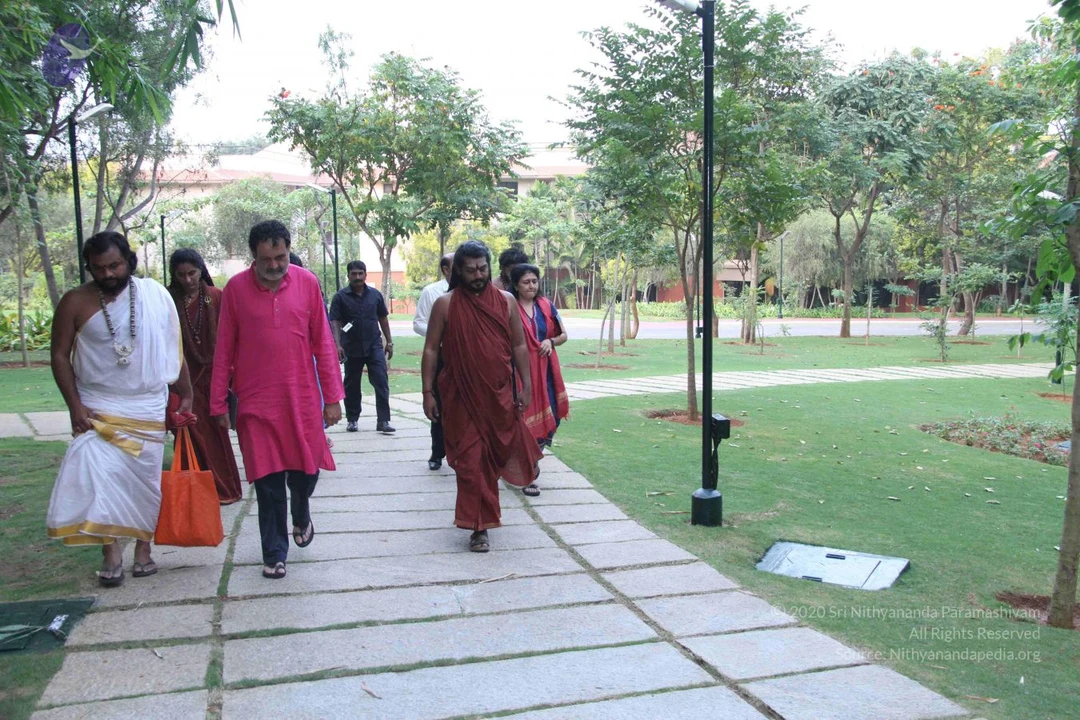
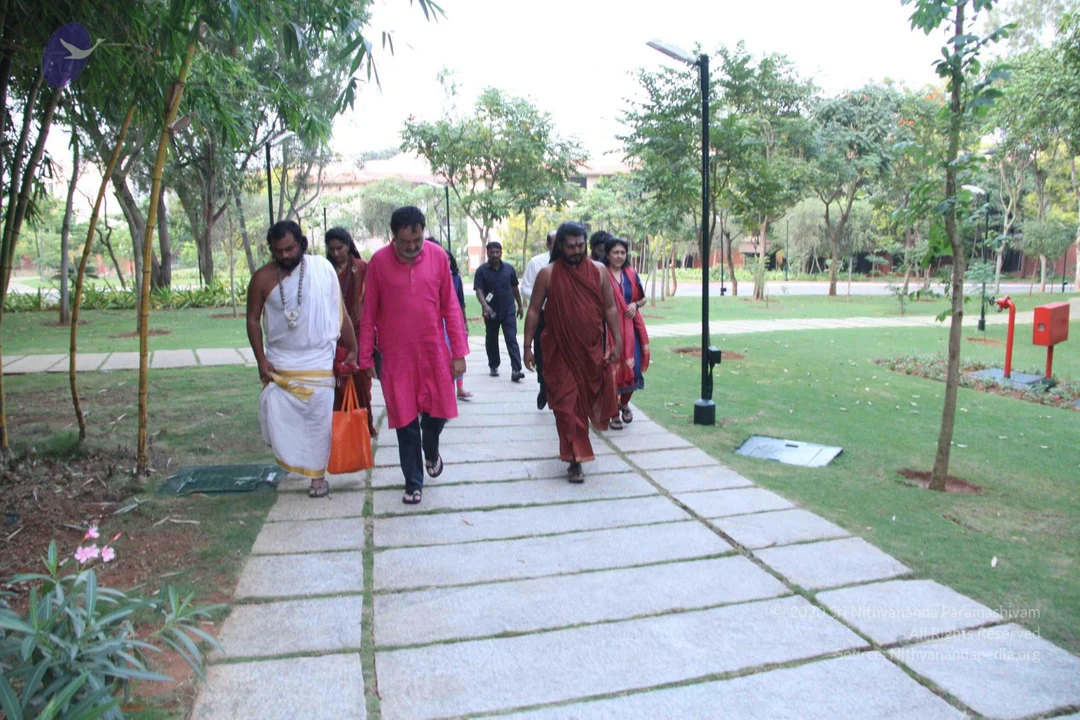
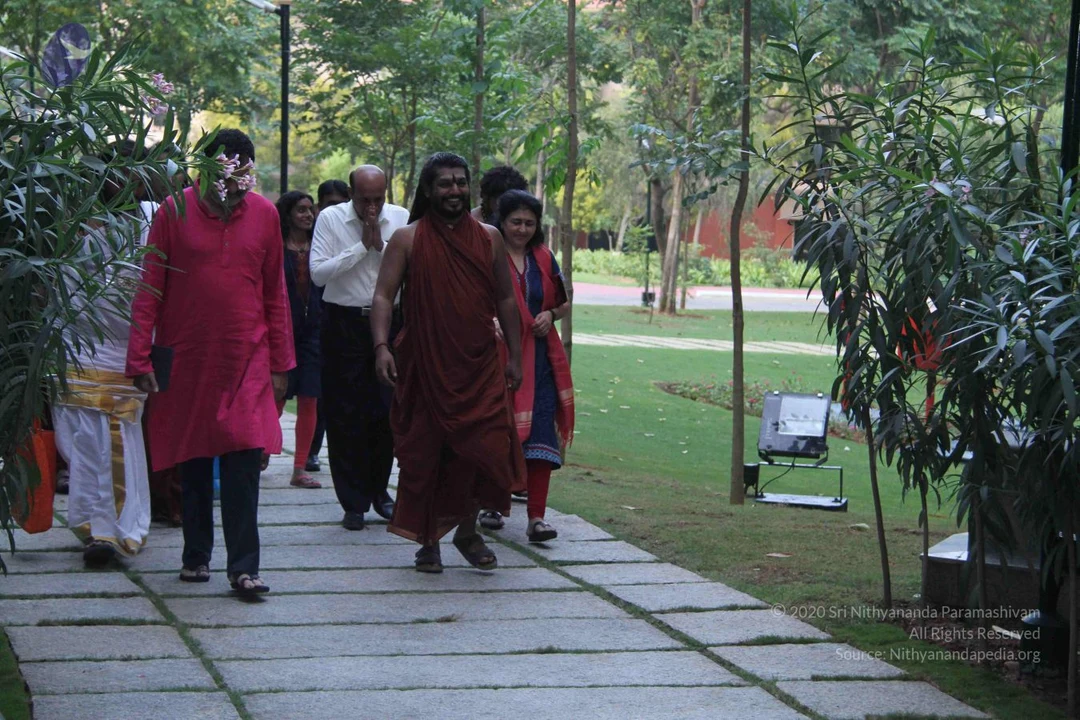
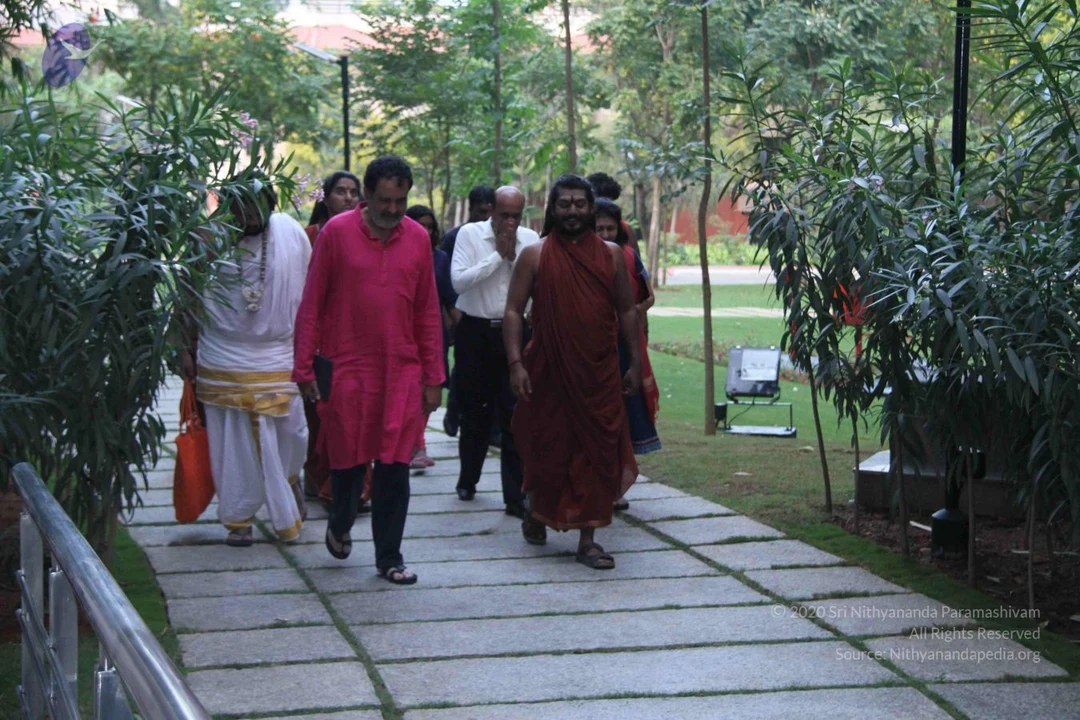
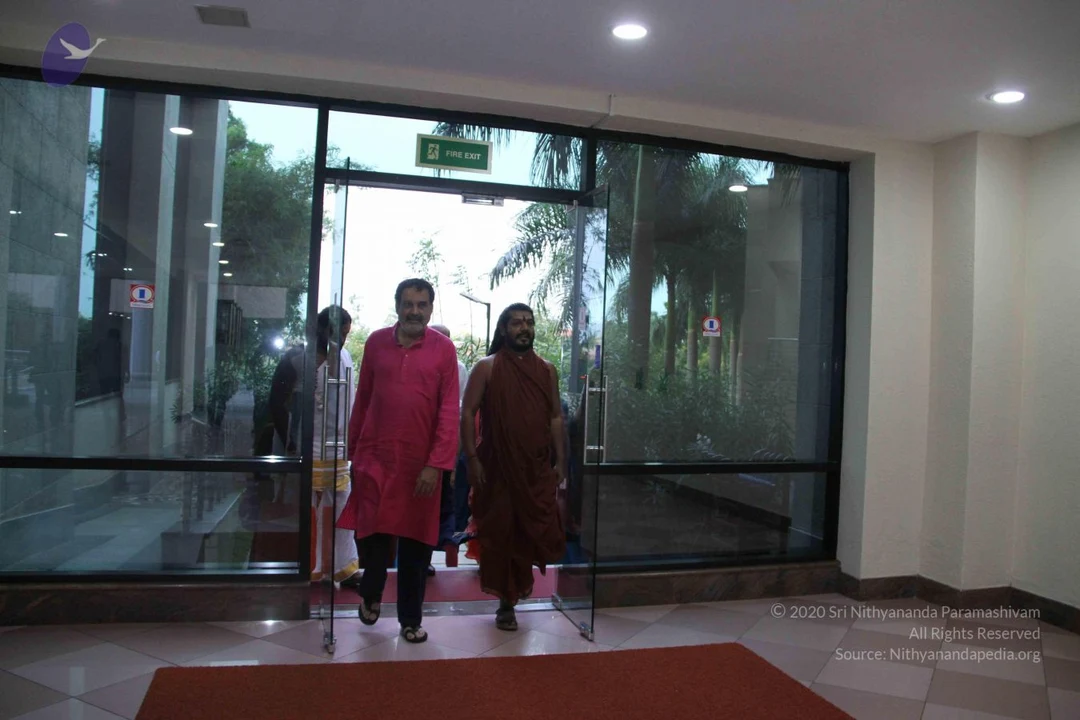
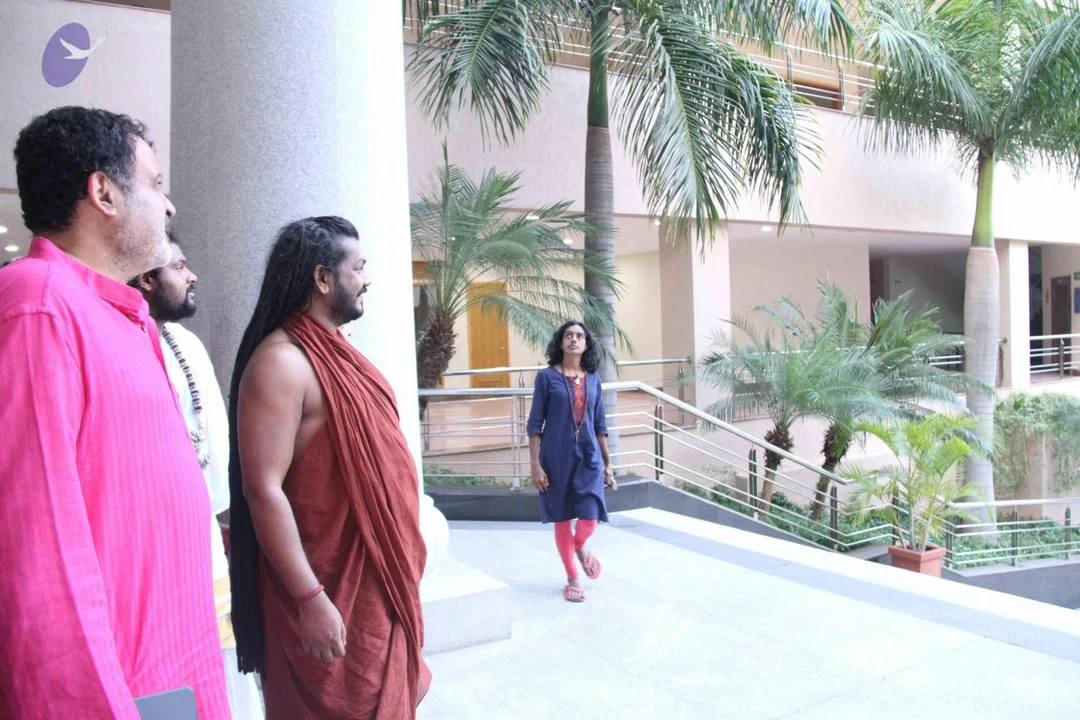
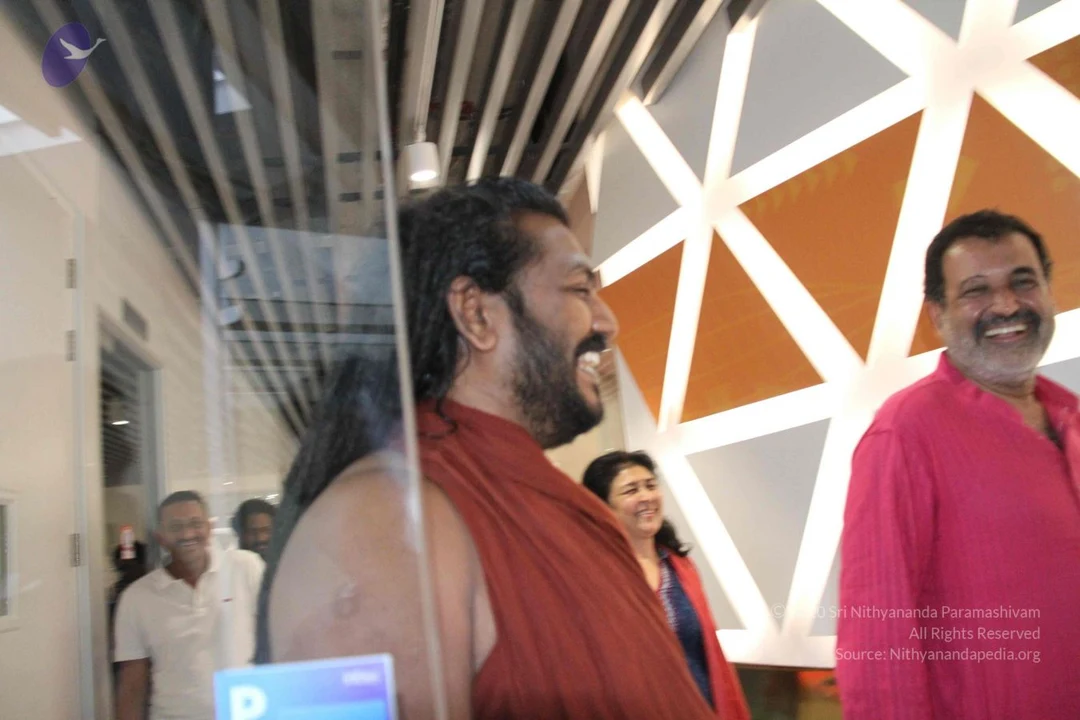
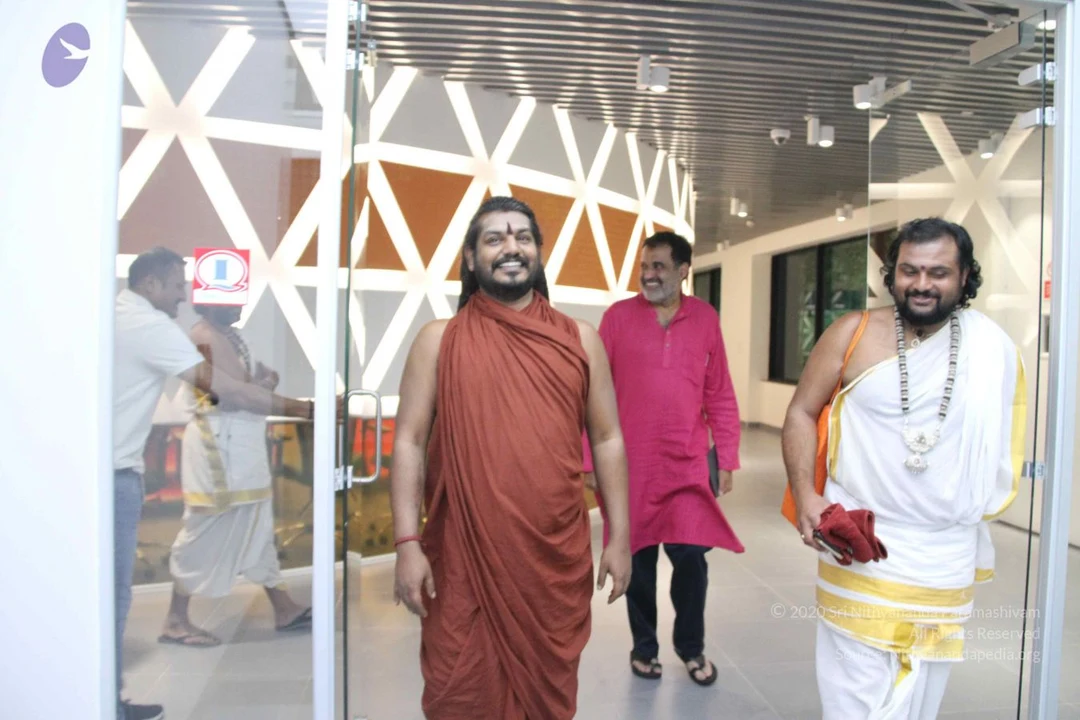
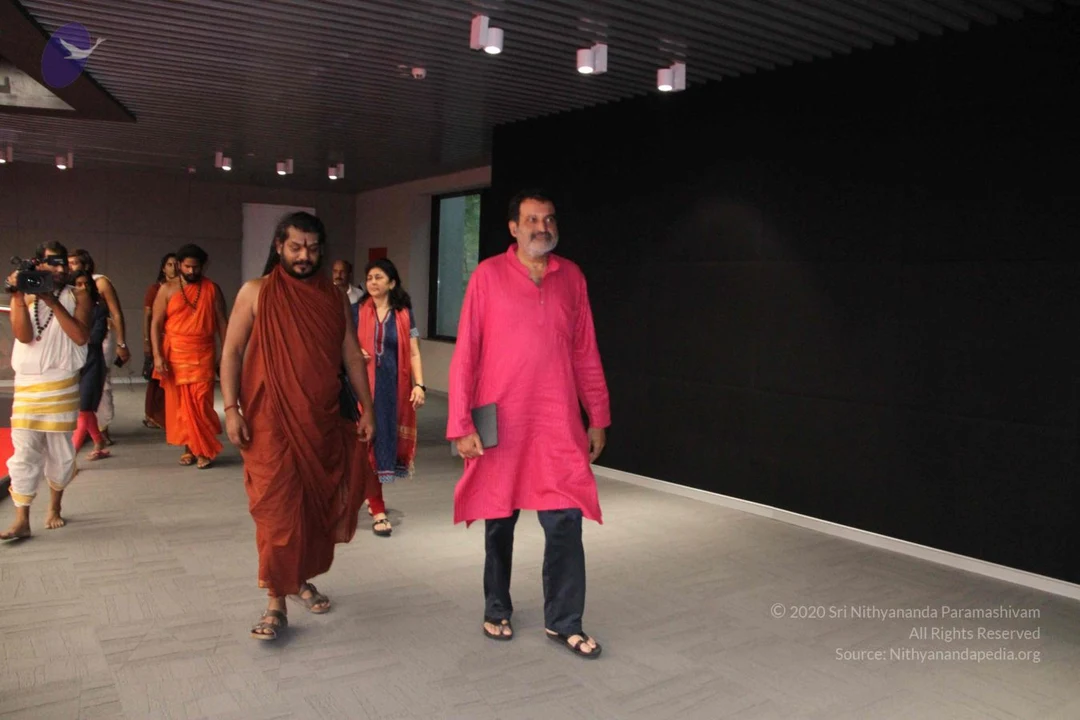
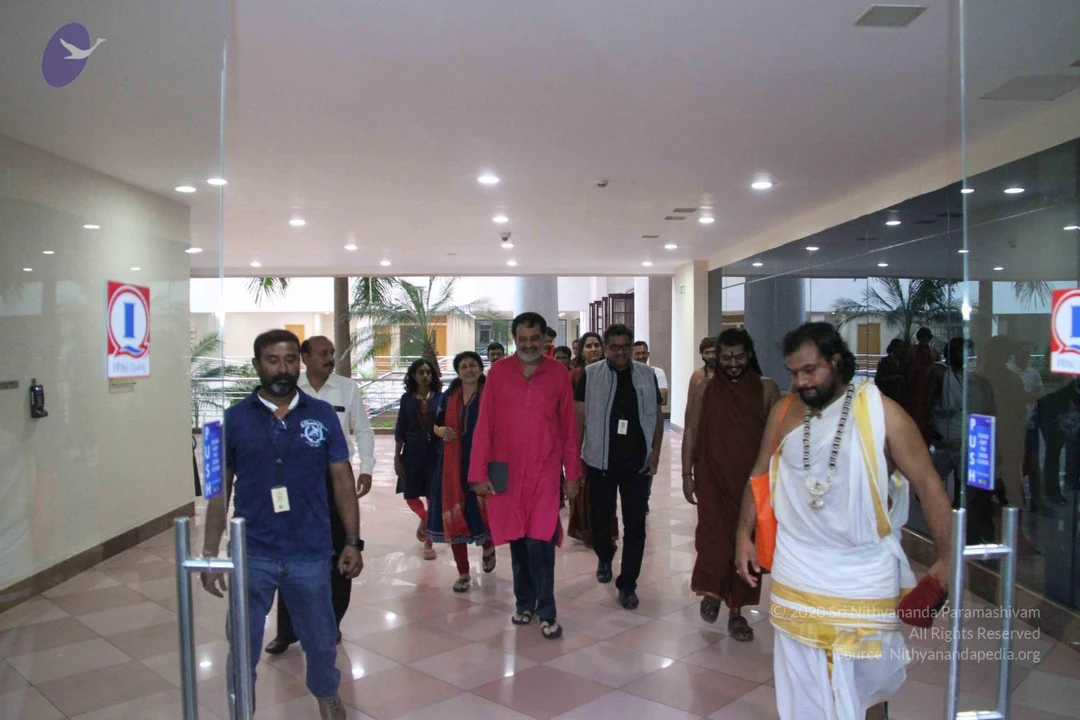
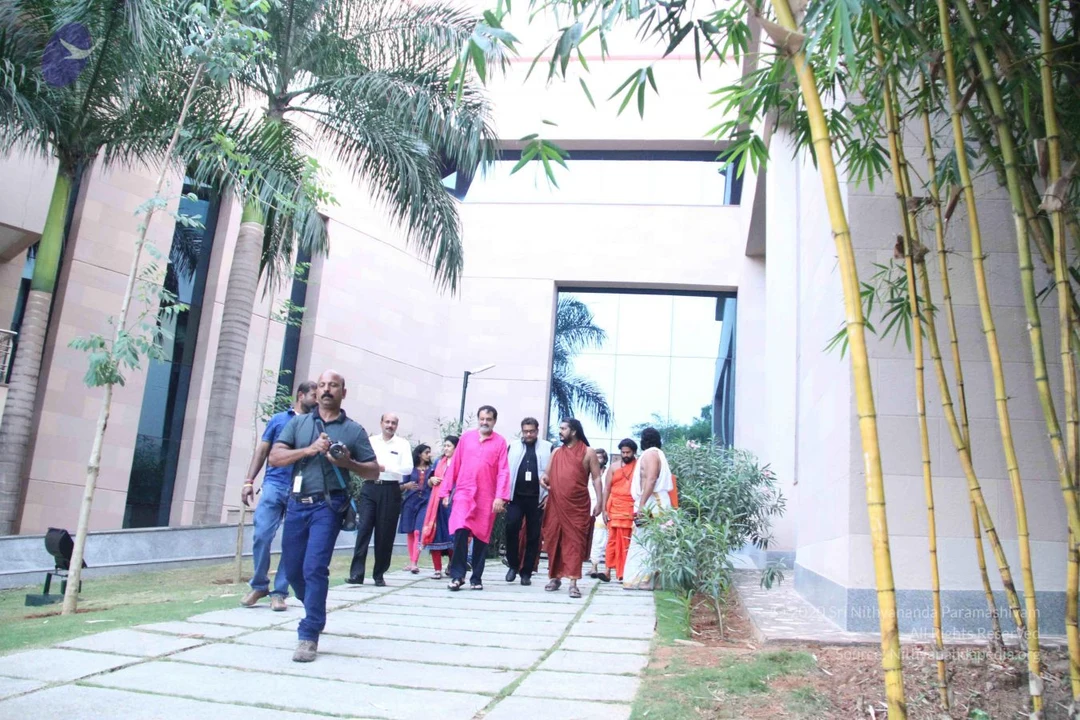
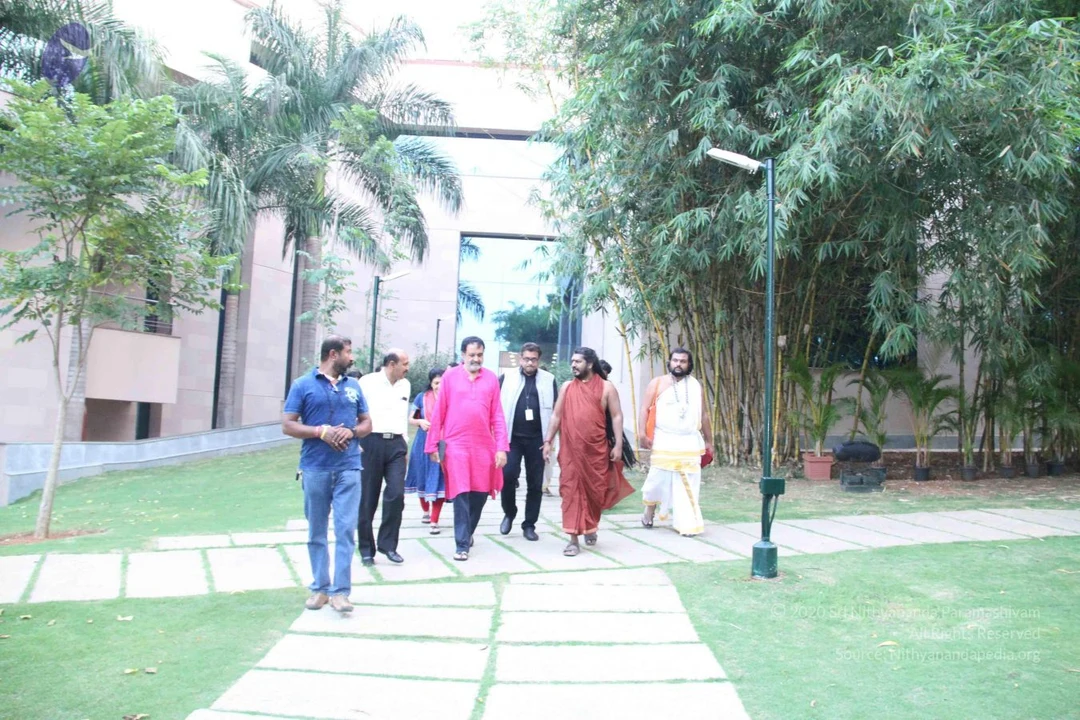
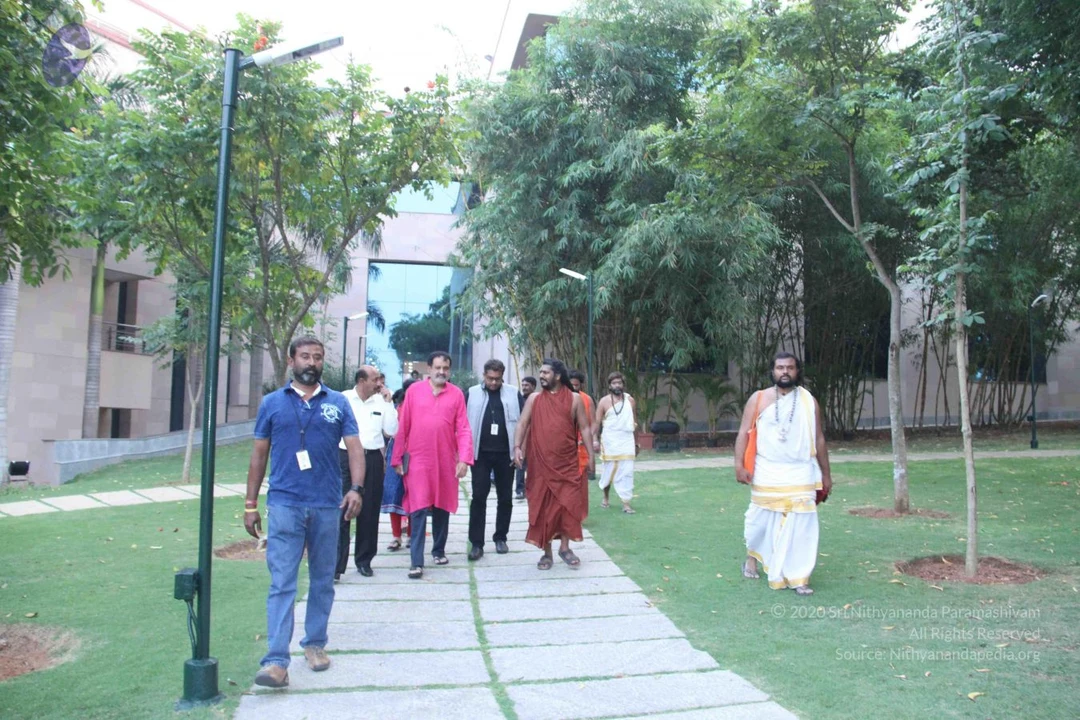
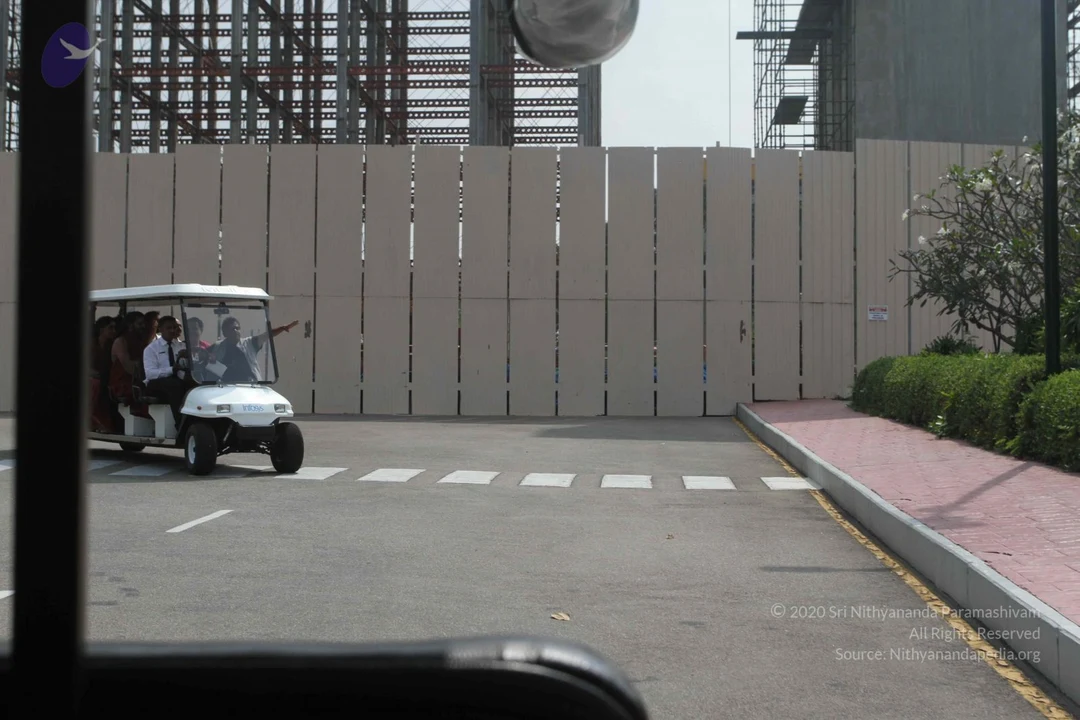
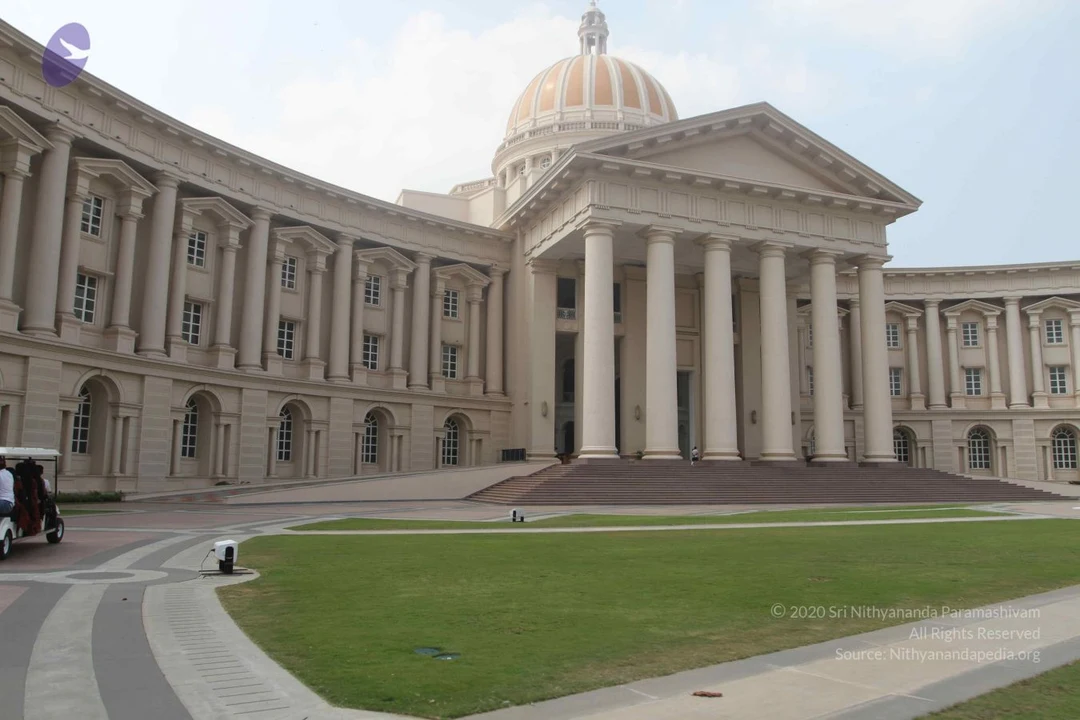
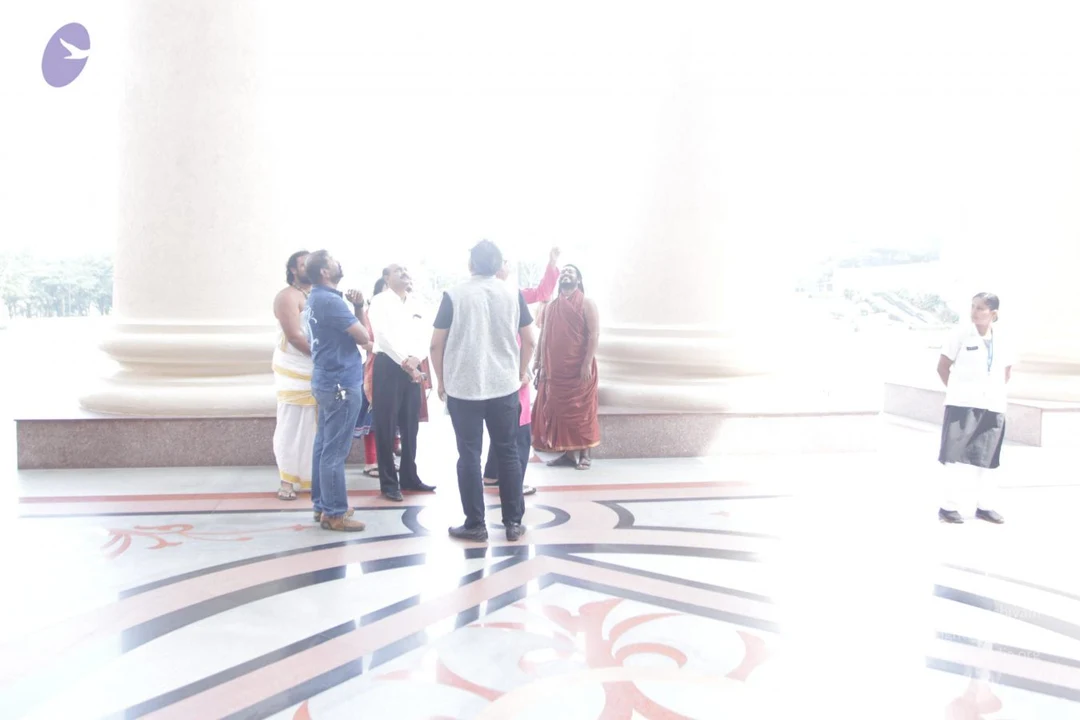
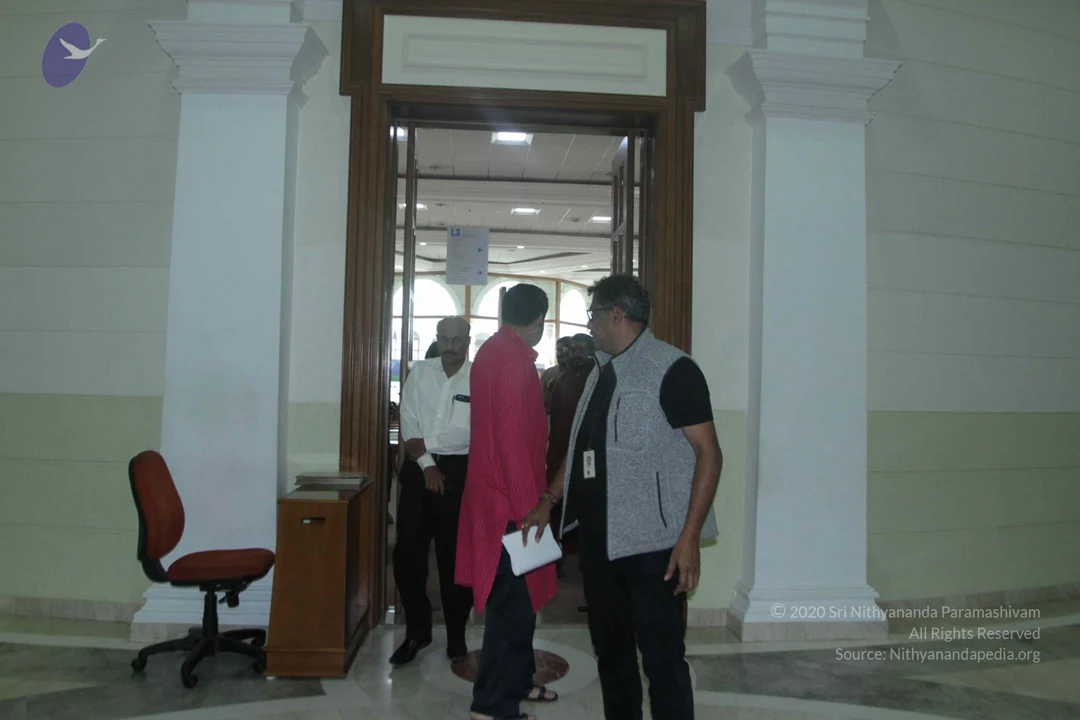
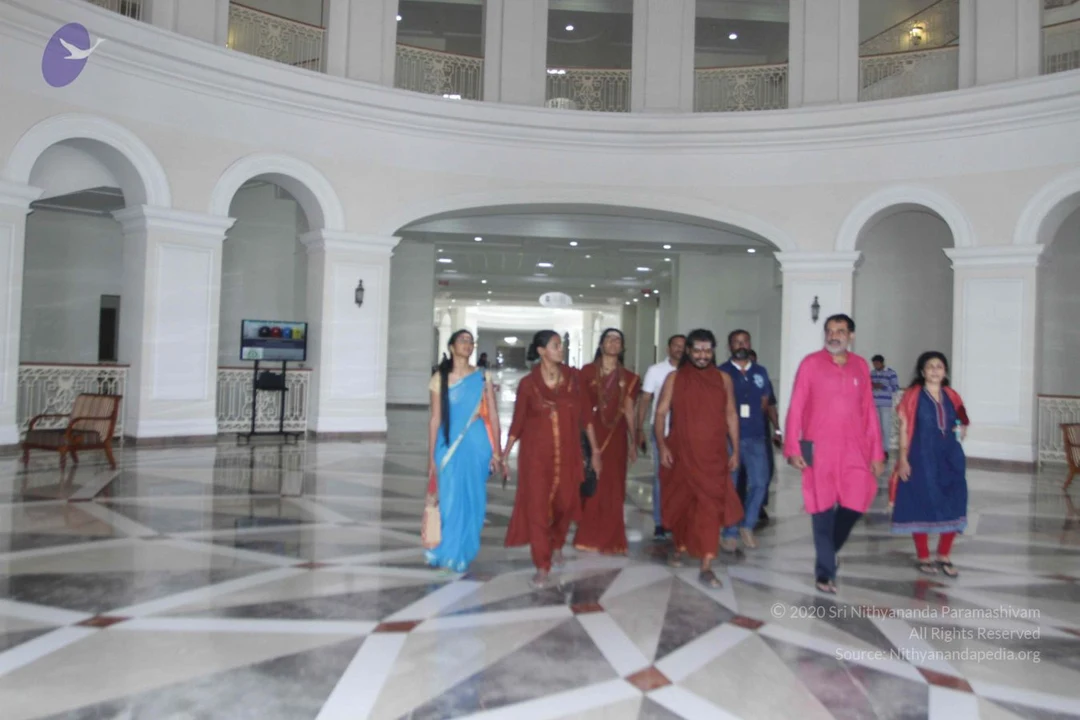
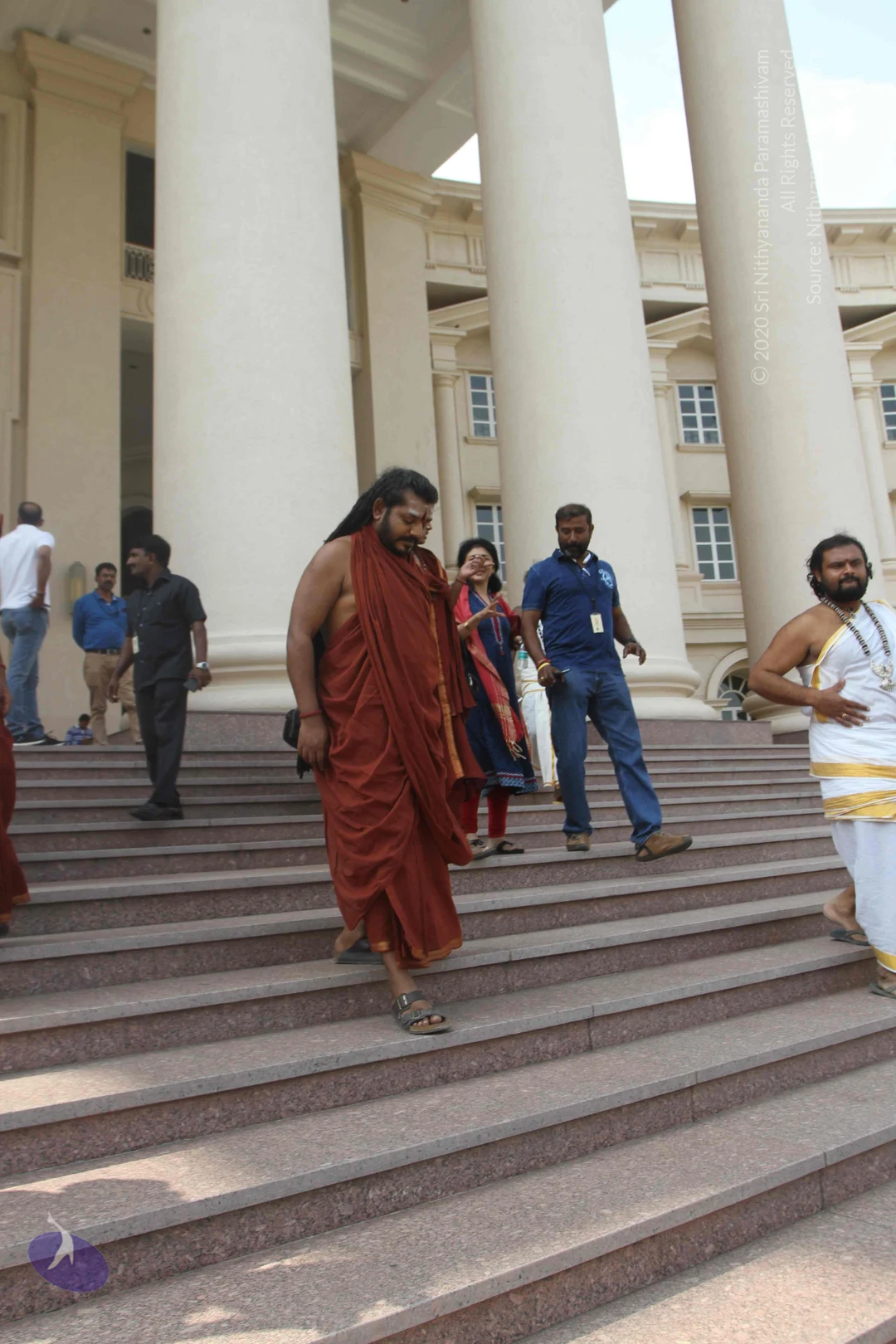
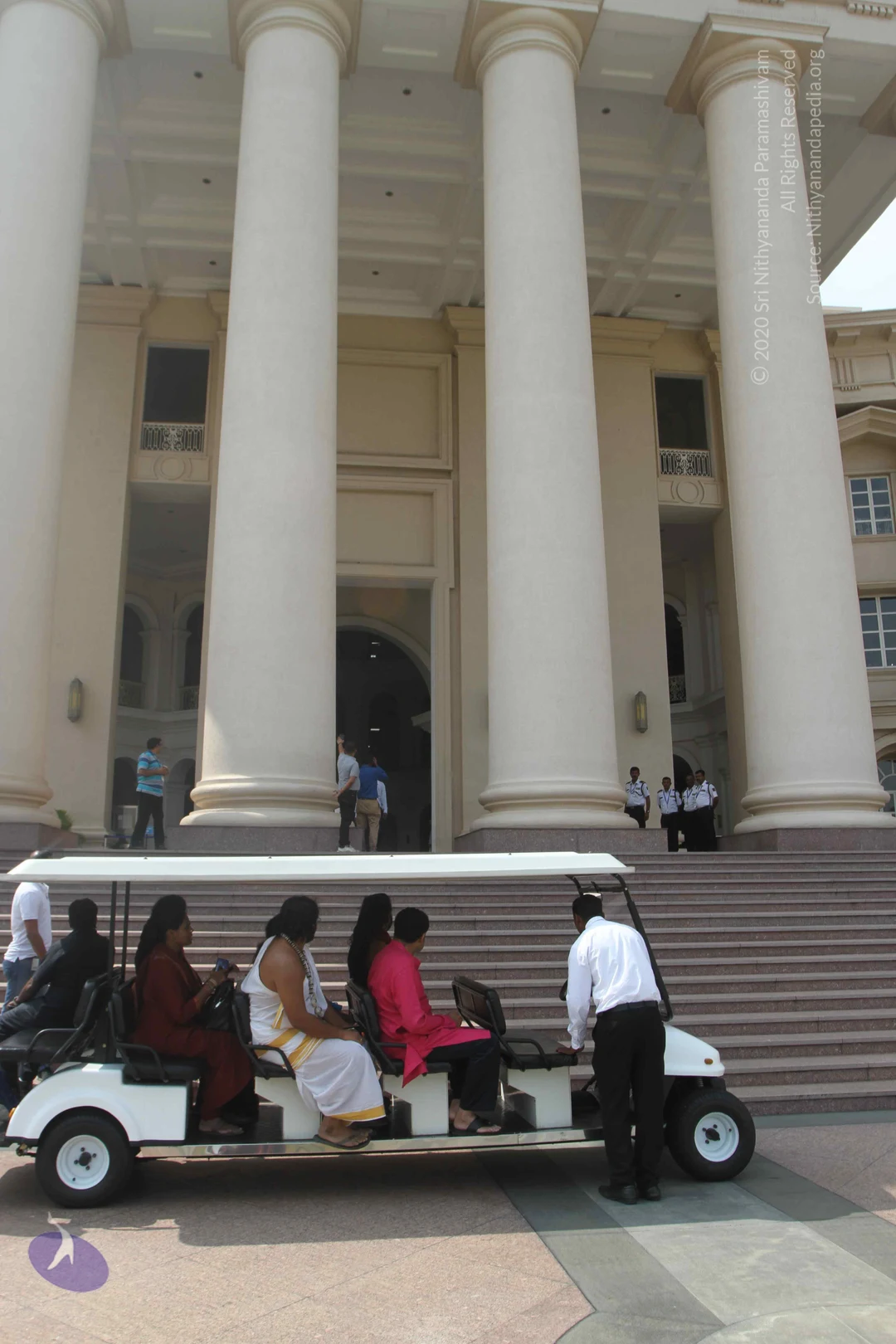
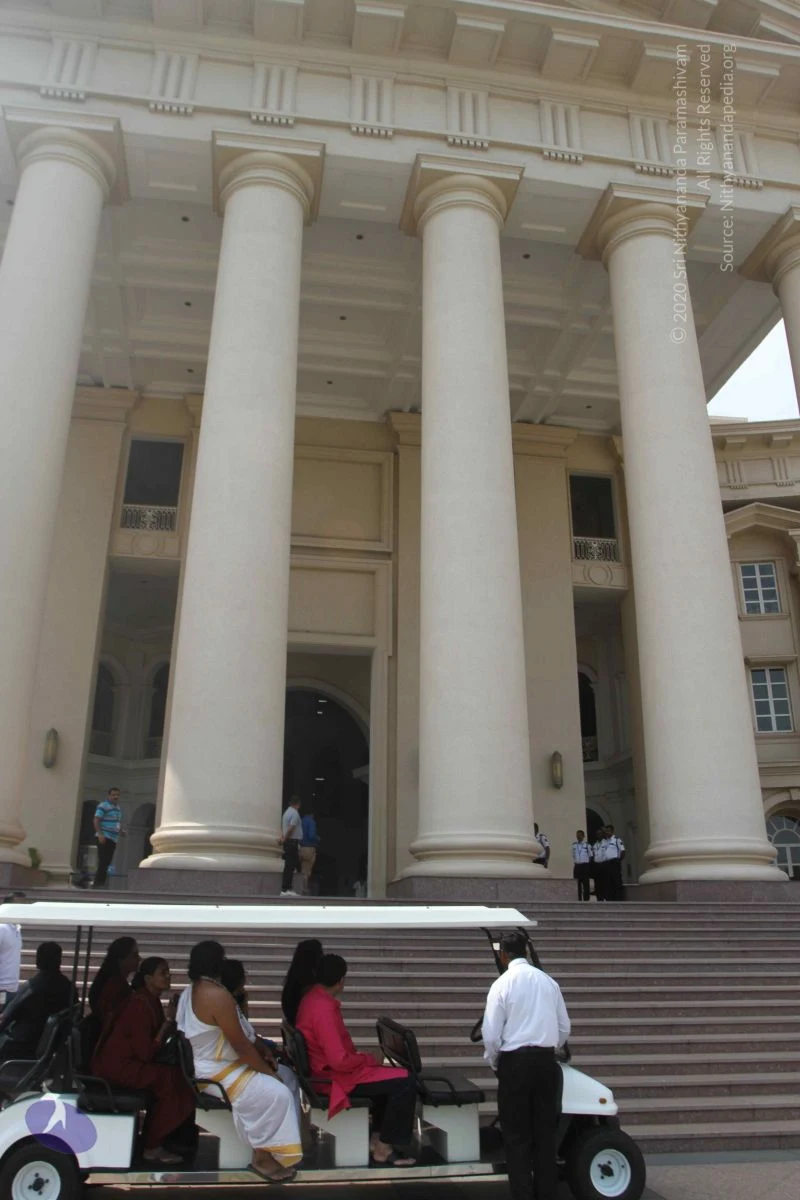
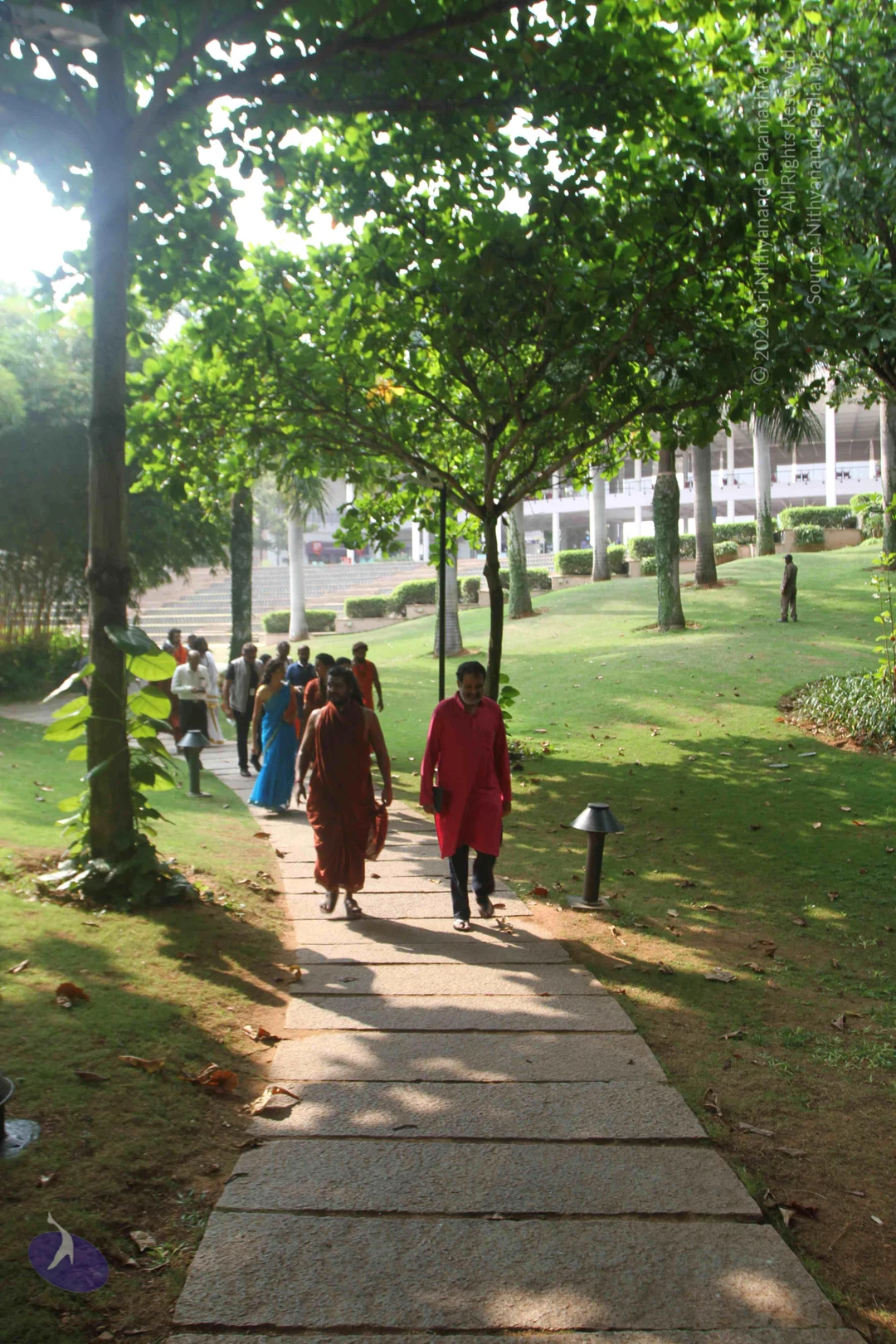
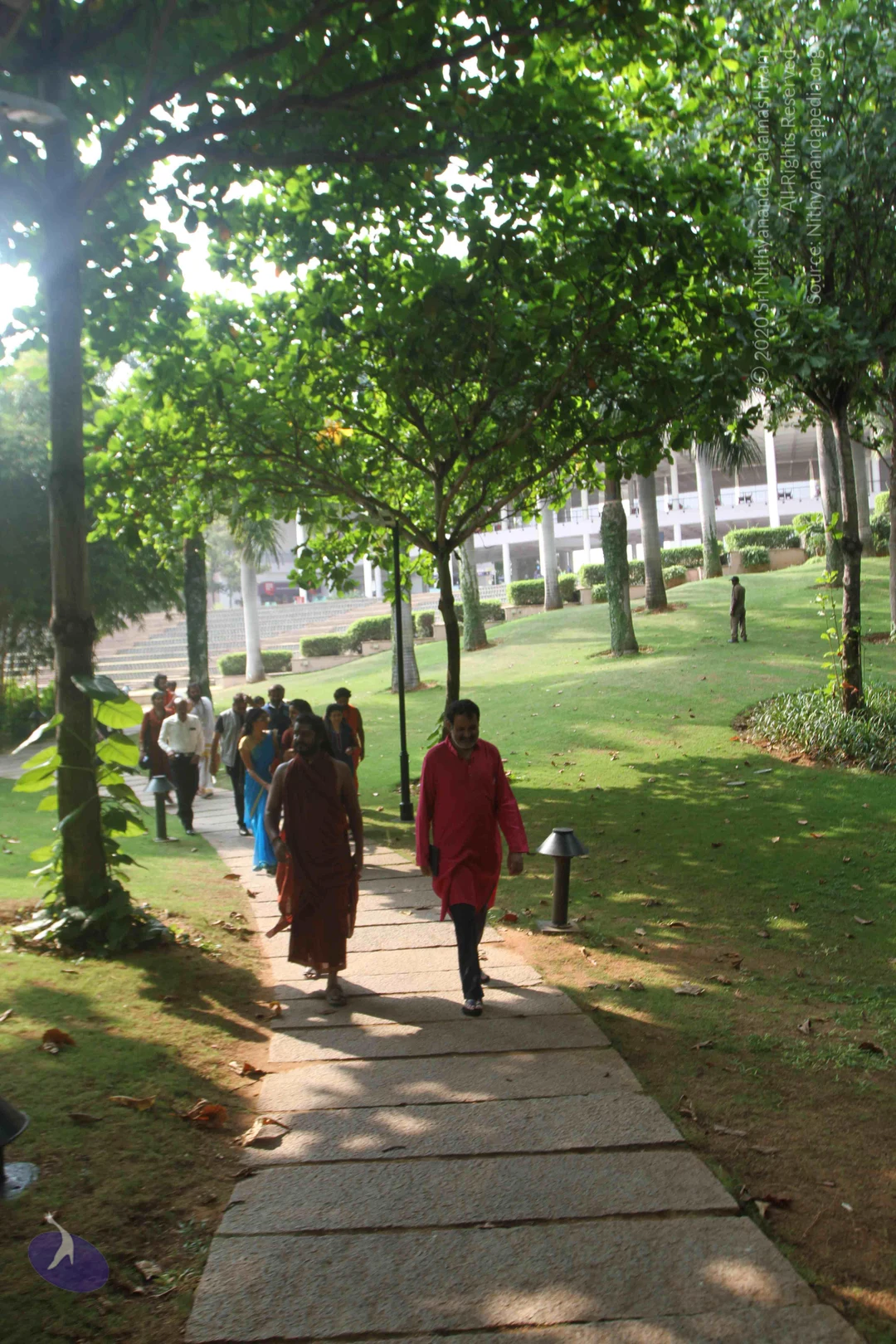
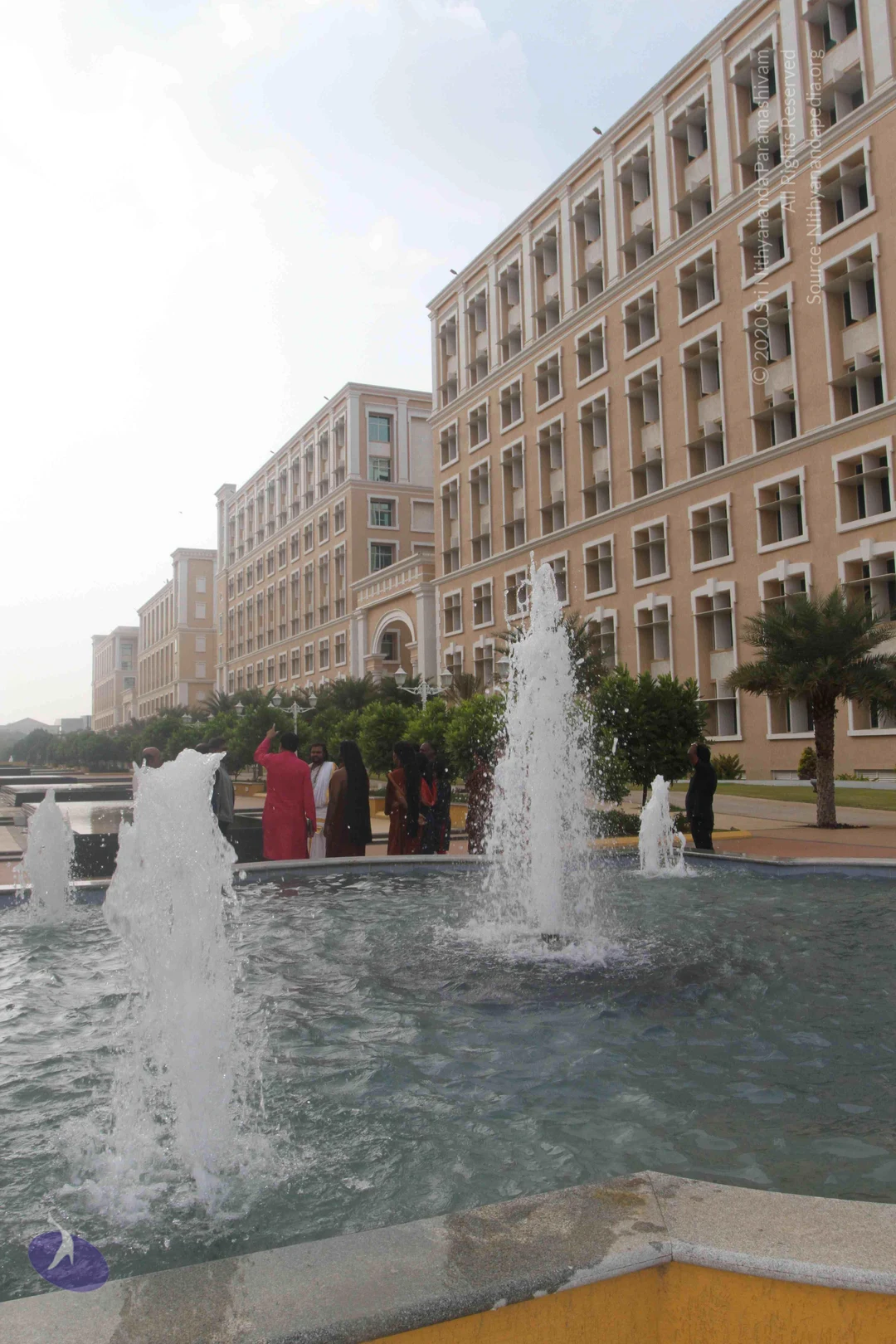
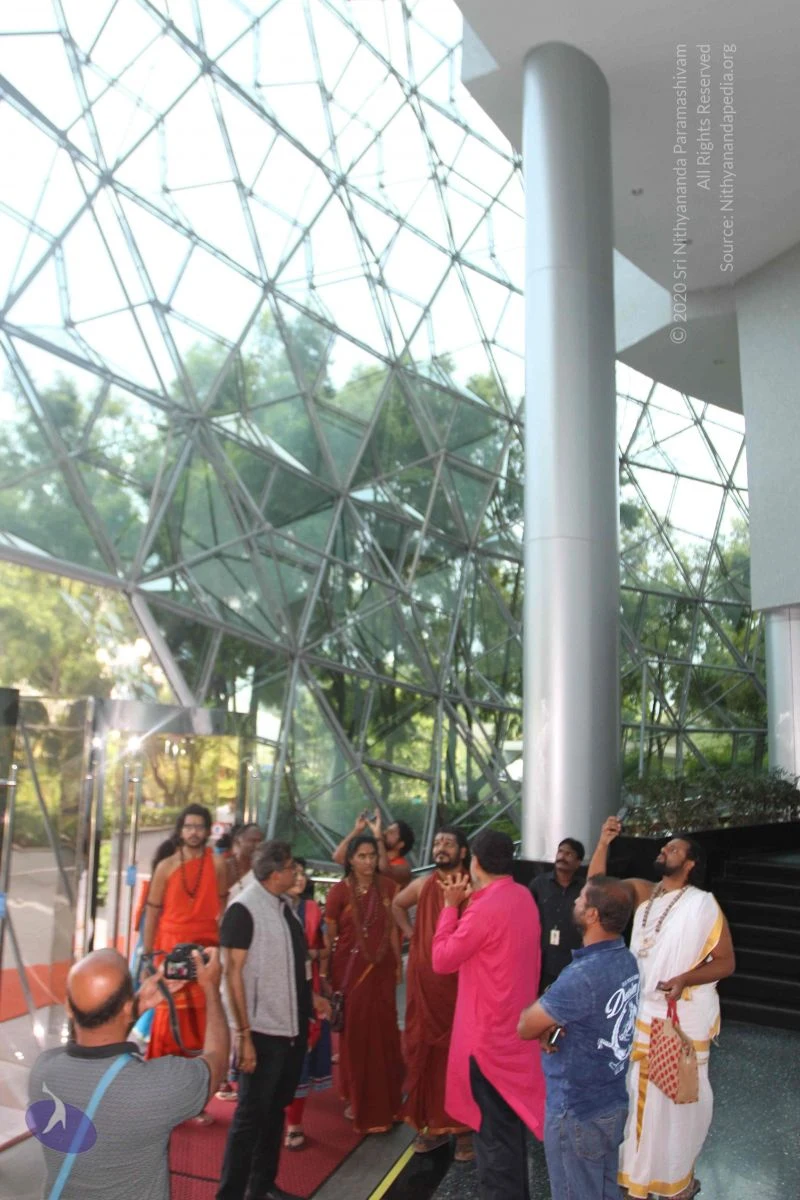
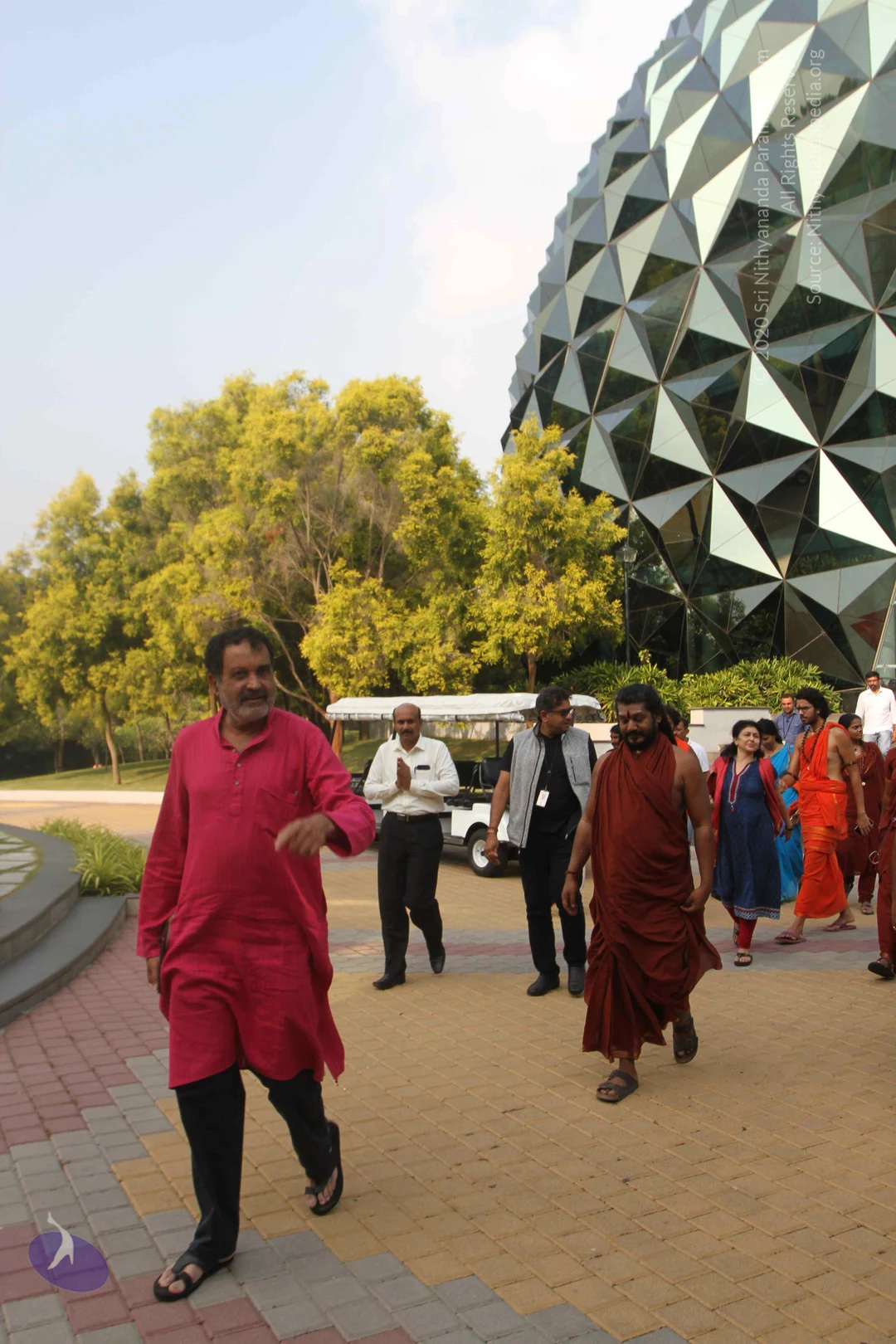
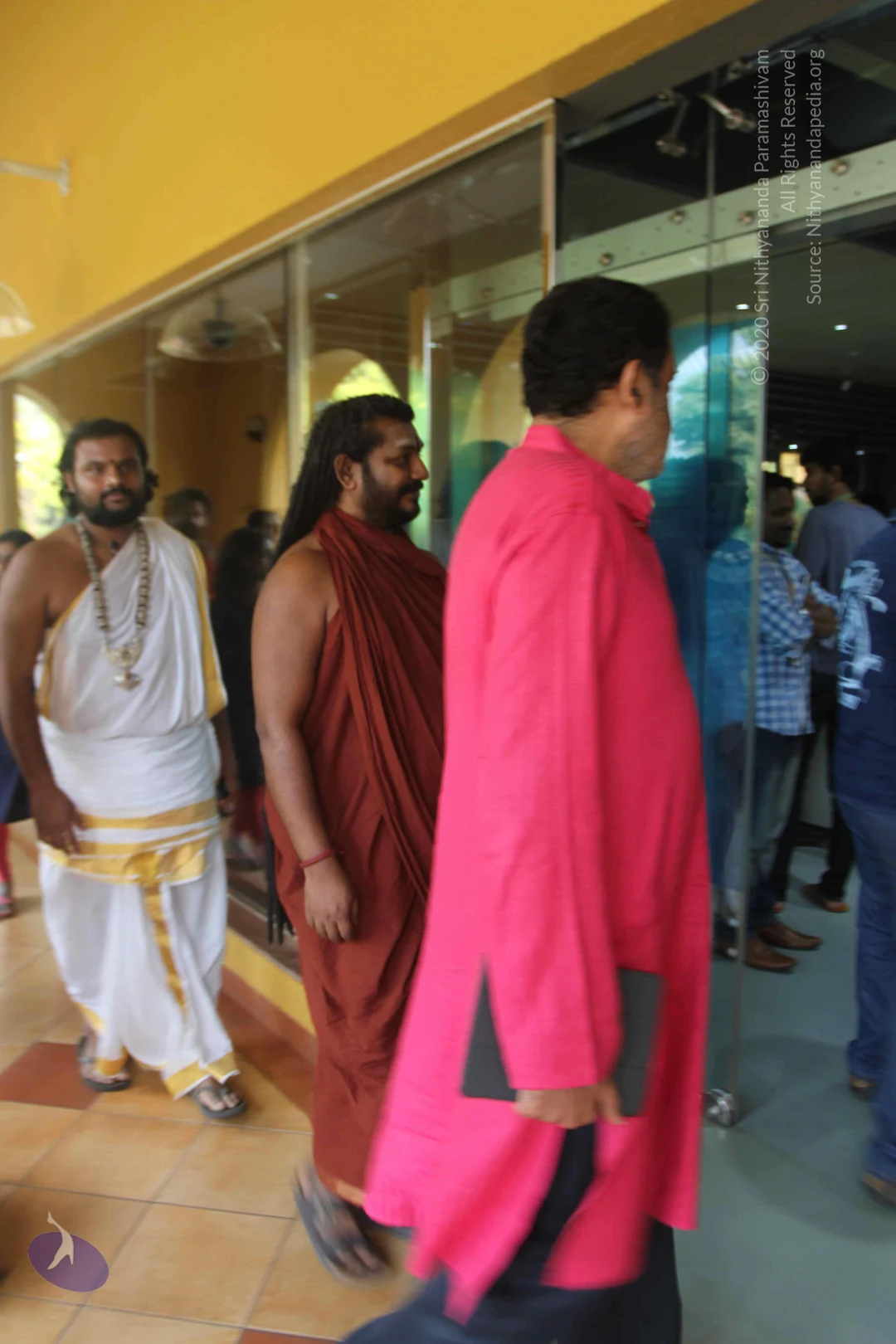
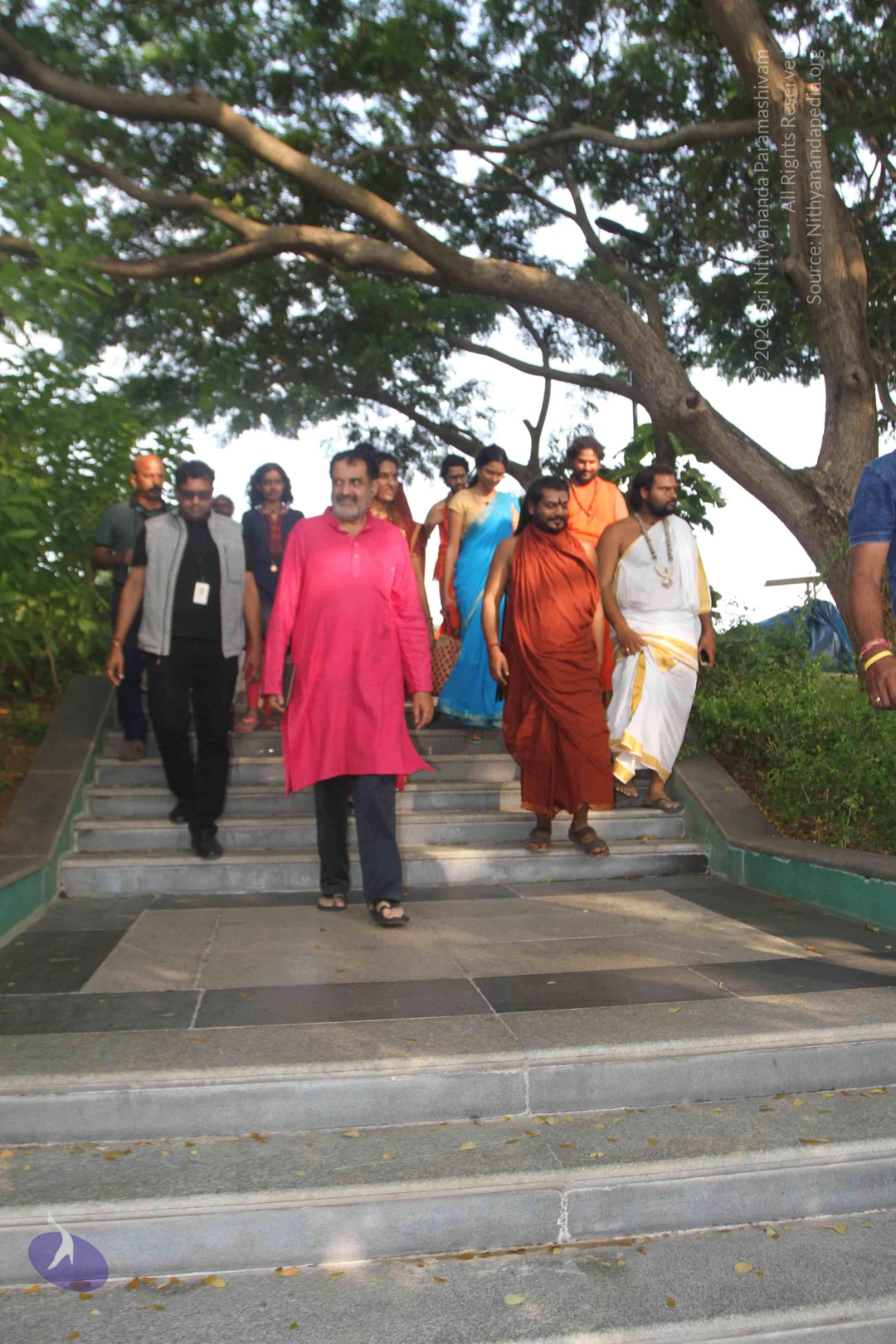
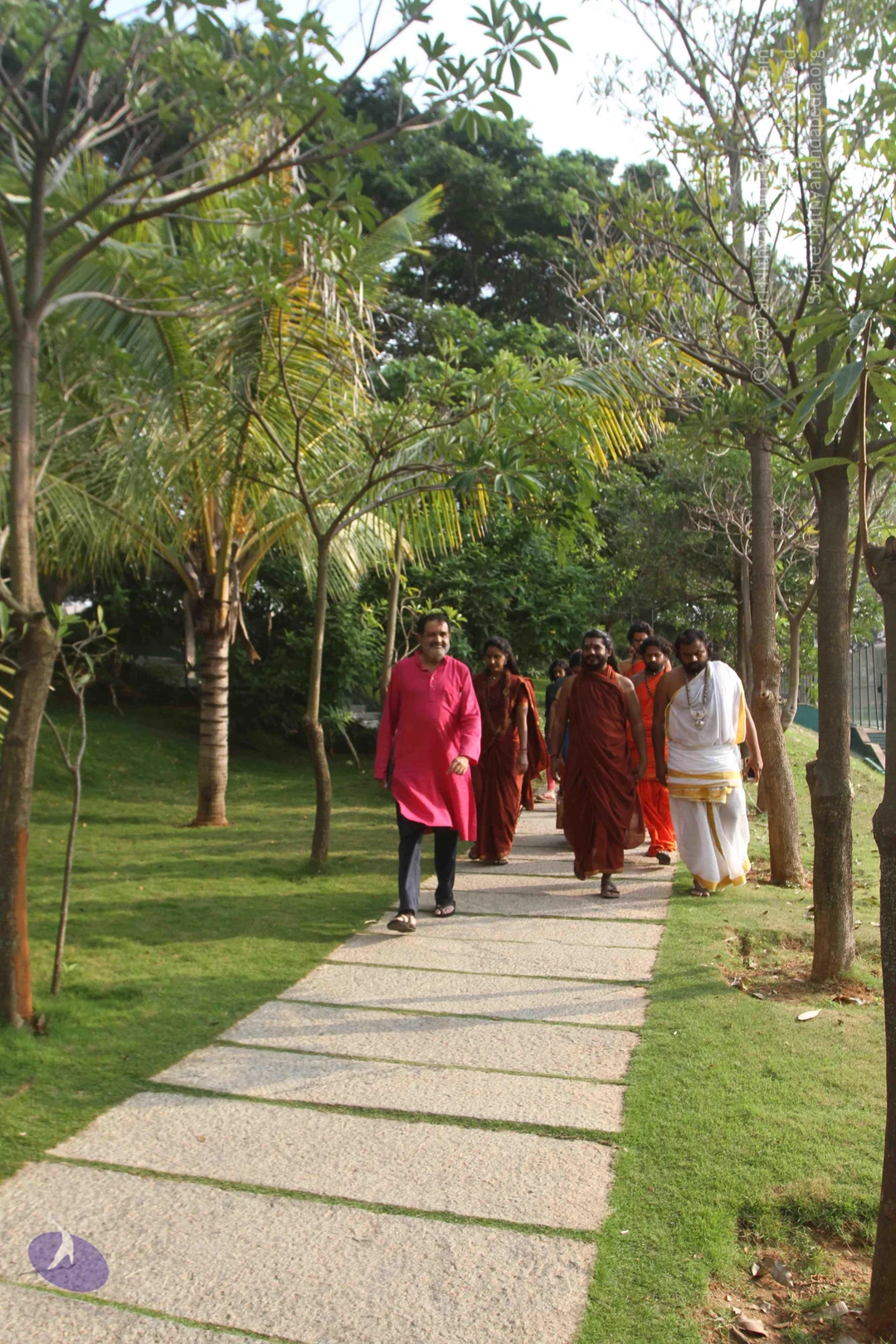
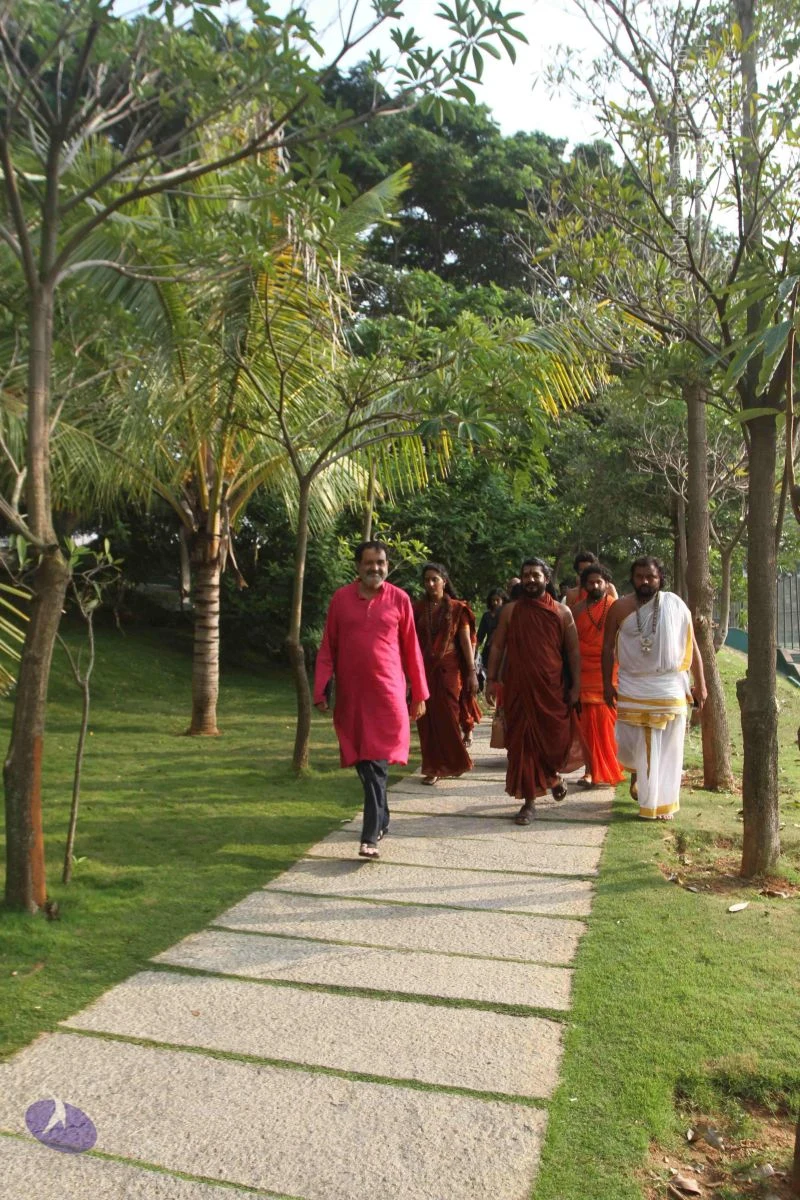
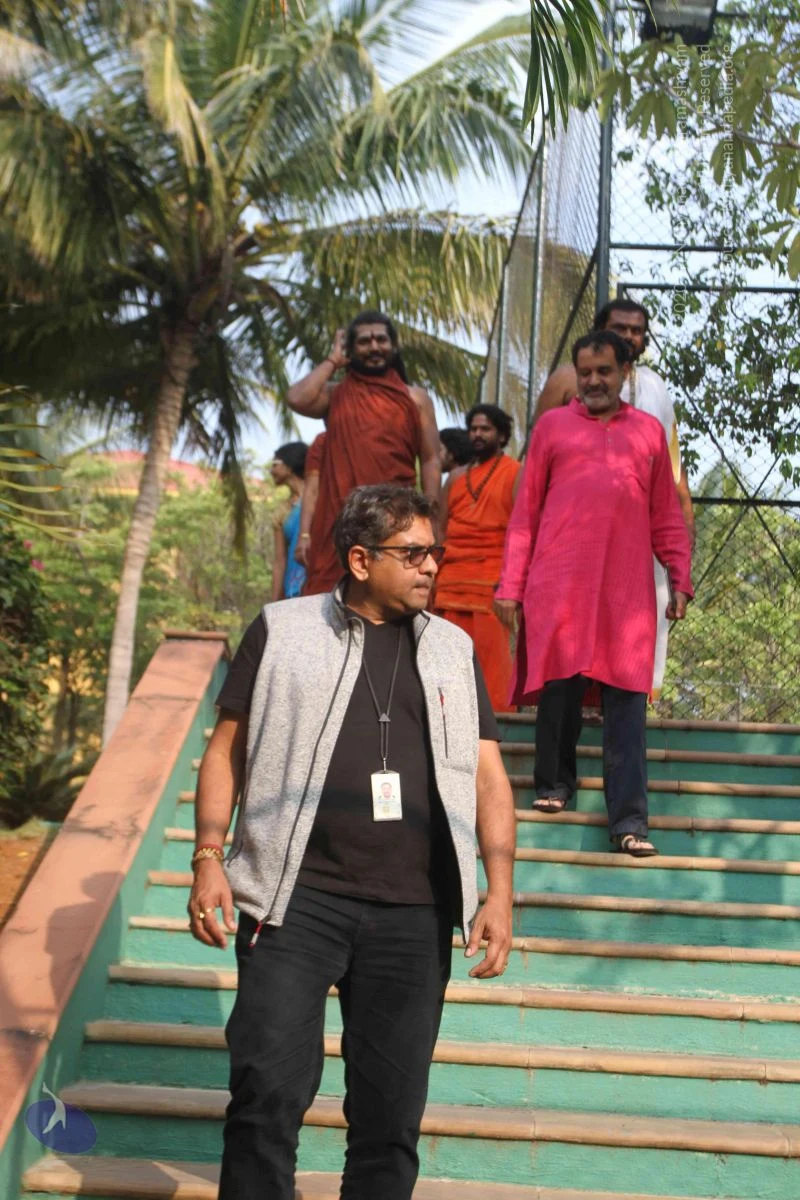
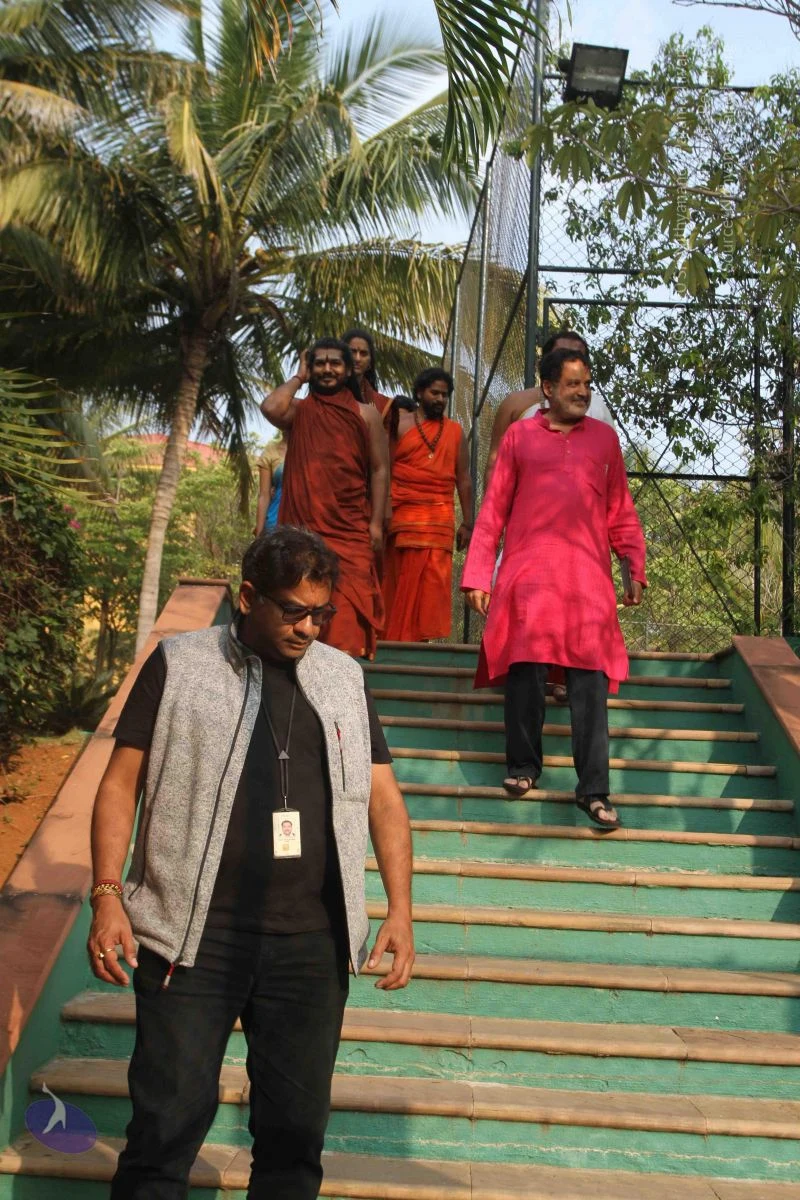
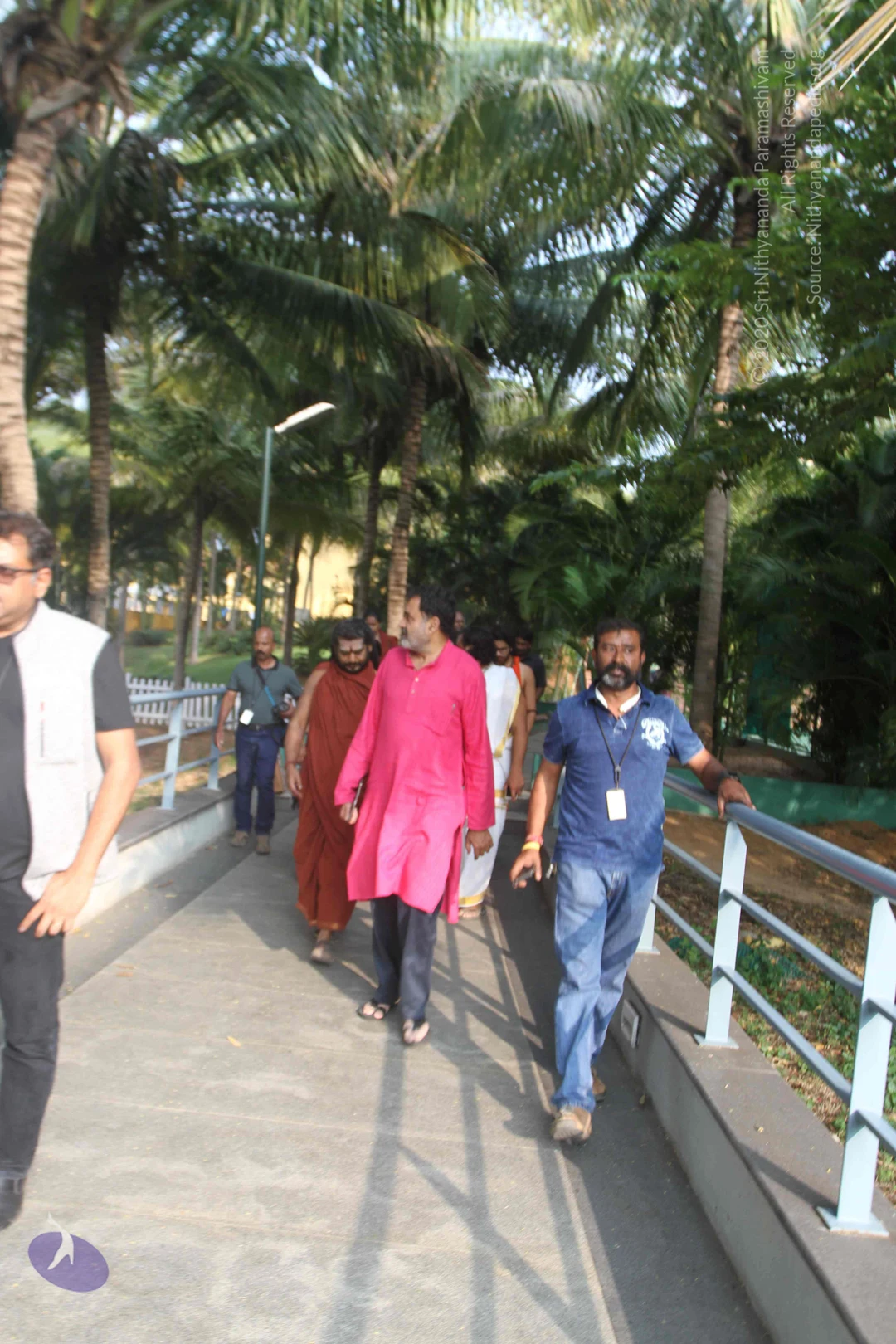
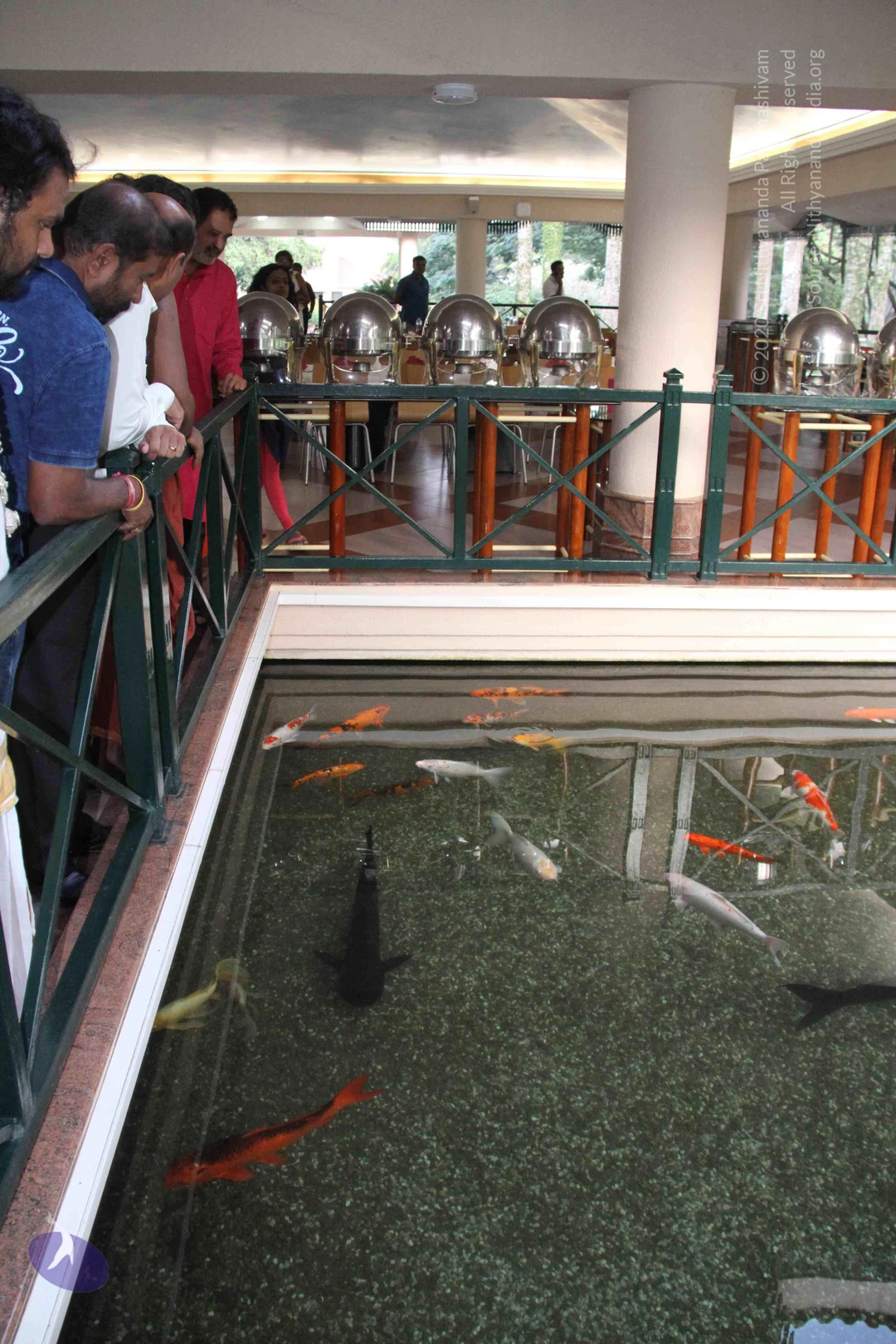
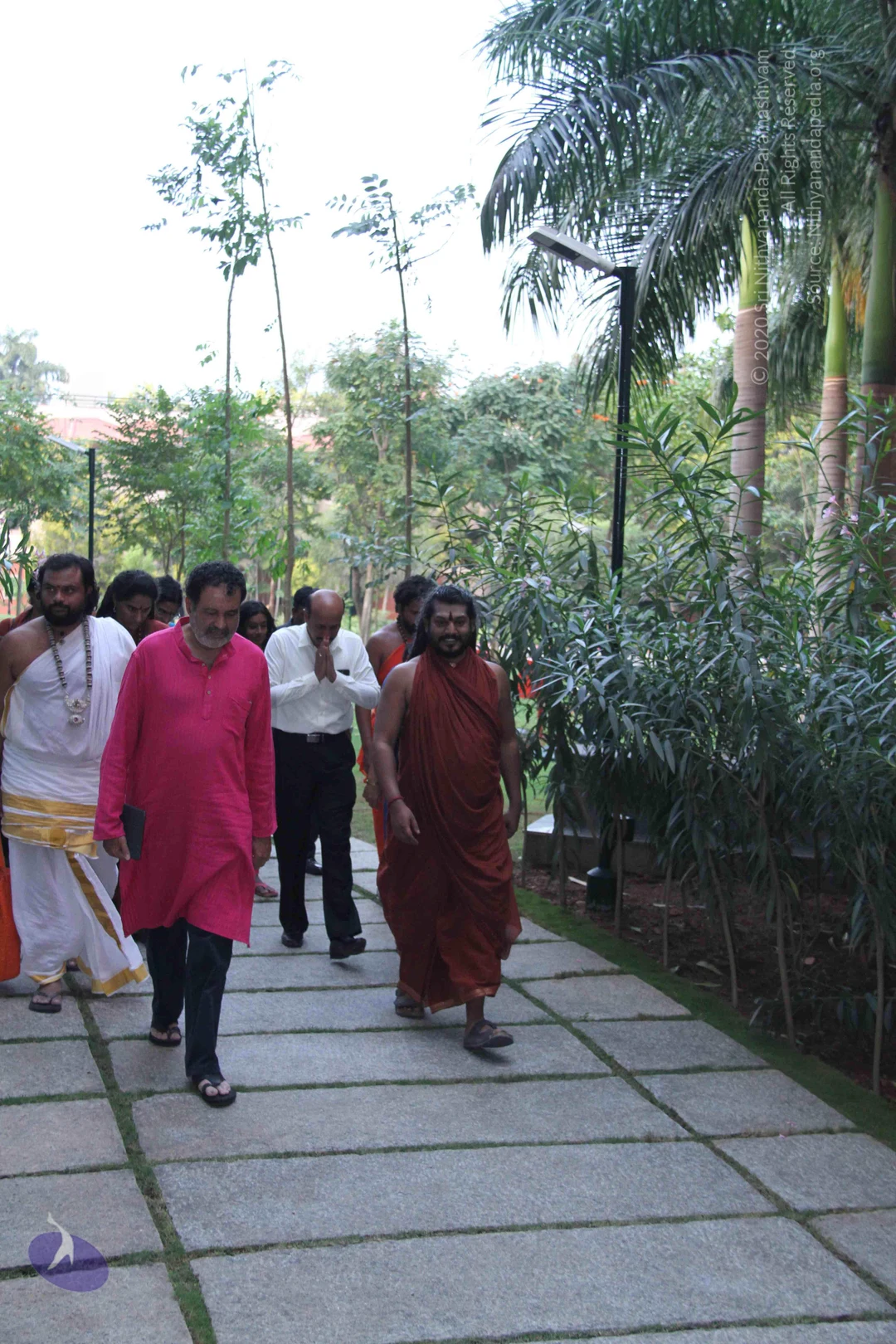
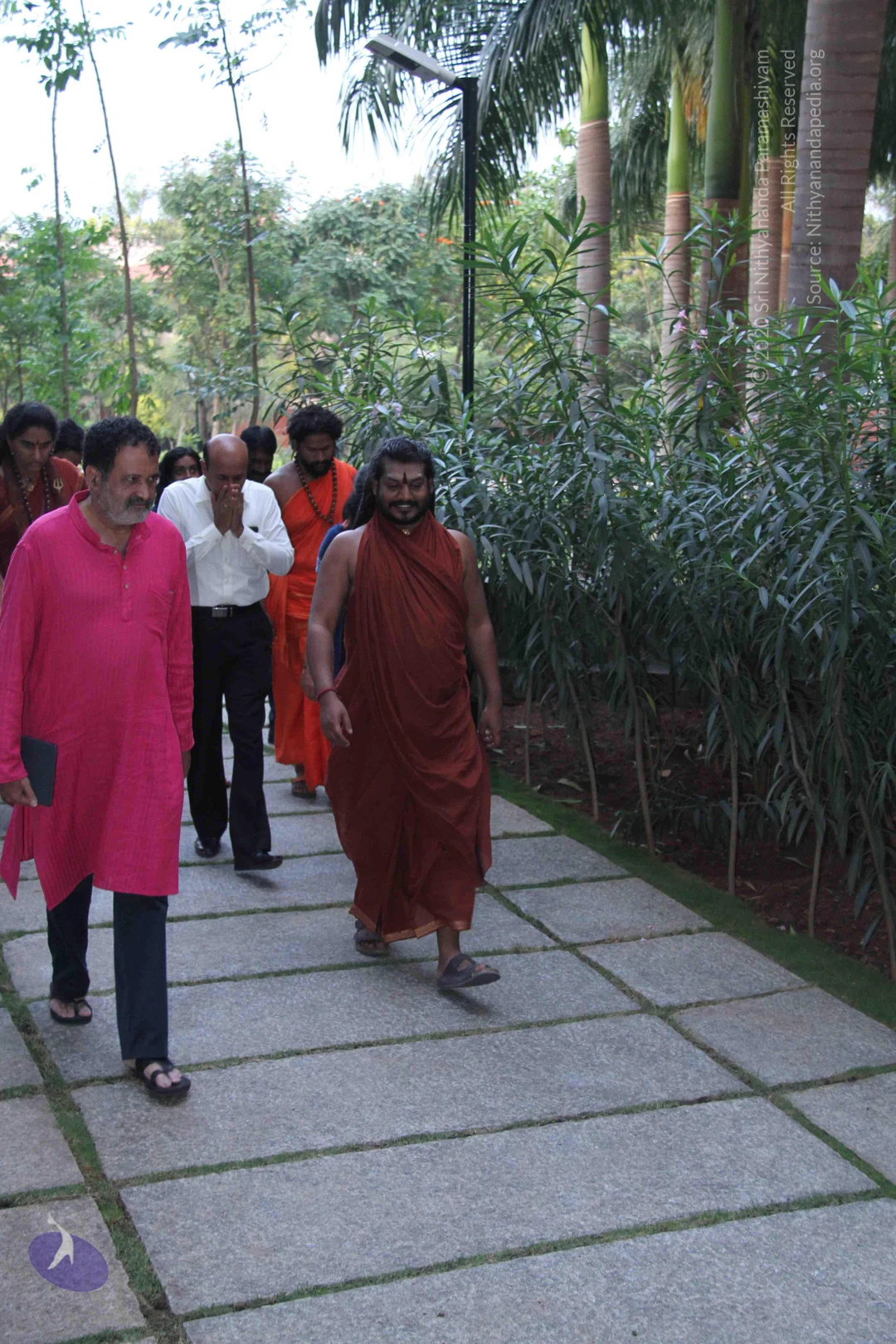
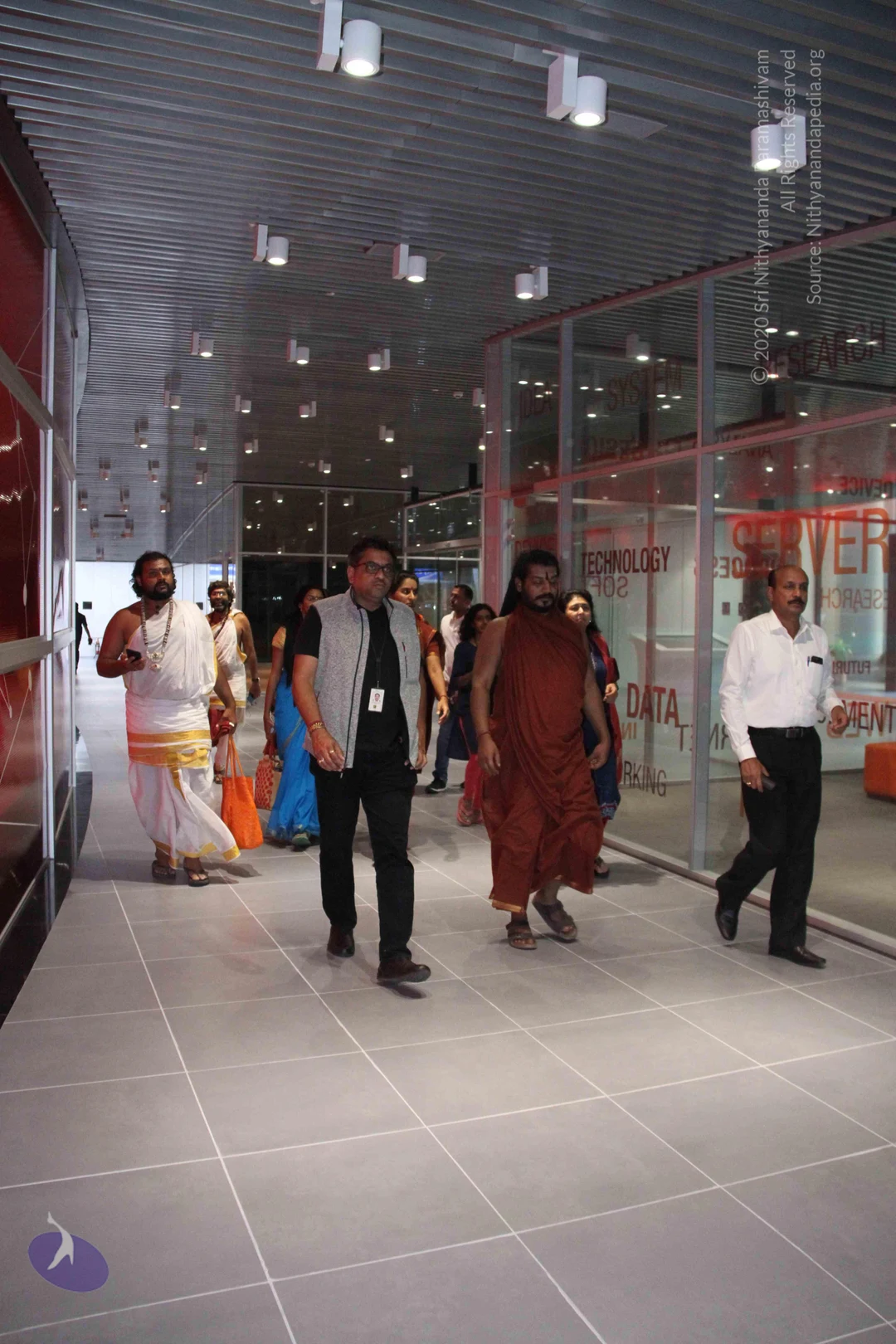
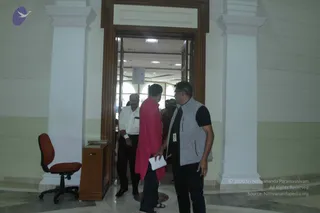
A white electric golf cart with a clear windshield and canopy, branded Infosys, drives along a paved road lined with trees and low beige buildings. Several passengers sit in the cart; a man in a white shirt and dark vest is at the wheel, and a woman in a red sari sits in the rear seats. A red paved walkway runs beside a pale wall on the right.Photograph taken from inside a vehicle looking at a white electric golf cart on a paved road beside a tall beige plank wall, with steel scaffolding and a frangipani tree behind. Several people ride in the open cart; the driver wears a white shirt and dark trousers, and a man in a light shirt seated behind him points ahead, while others in red and orange saris sit in the back. A red brick pavement and trimmed hedge run along the right, and a small road sign is mounted on the wall.A photograph of an interior doorway with a dark wooden frame and white columns in a lobby with pale green walls and a marble floor. Four men stand around the open doorway. In the foreground a man in a red-pink kurta and dark trousers holds a white folder and faces a man in a grey quilted vest over a black shirt with a lanyard. Behind them a man in a white shirt and dark trousers stands near a red office chair, and another older man is visible through the doors. A small orange-and-white sign hangs in the doorway. No one in the scene is identified as the a person by appearance.A group of about seven people walks across a polished marble floor with white and red inlaid geometric patterns inside a white arched colonnade hall with upper balconies and ornate railings. A woman in a blue saree walks at left. Two women in deep red saris follow, and a man in an orange-red sannyasi-style robe walks in the centre-right. A man in a pink kurta and dark trousers walks to the right, beside a woman in a blue top with a red shawl. Other men in casual shirts walk behind, and a wall-mounted monitor and a wooden bench sit at left.A man in a rust-red saffron wrap with bare chest and long dark hair flowing down his back descends a wide pink granite staircase in sandals, a red tilak on his forehead. Behind him, a woman in a blue kurta with a red shawl and a man in a blue polo shirt with an ID lanyard walk down the steps, and a man in a black shirt stands at the bottom. On the right, a man in a white dhoti with a gold border and a beaded necklace walks down. Tall white neoclassical columns and a cream building with many windows form the background. a person in the centre: long swept-back hair, saffron-orange clothing and a bare-chested ascetic presentation, descending the steps in an ashram-style setting.A white electric shuttle cart with a white canopy and several passengers seated on its benches drives in front of a large cream-coloured neoclassical building with tall white columns and a wide stone staircase. A man in a white shirt and black trousers stands beside the cart, apparently helping passengers board. Among the passengers, a woman wears a maroon salwar and a man wears a pink kurta, and another person wears a white dhoti with a yellow border and has a garland around the neck. Several people and uniformed security guards stand near the entrance. The scene is an outdoor visitor transit area at a monumental building.