Skip to content
Sunday

24 November 2013

Sannyas Revolution of Freedom.

Dated photos
253
Source pages
1
Media
2
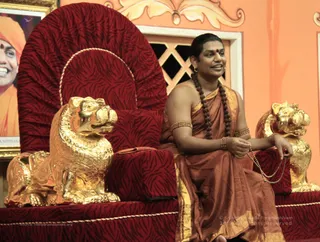
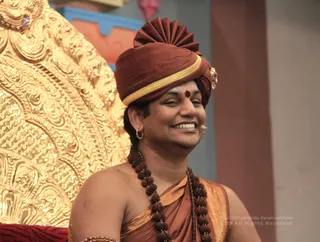
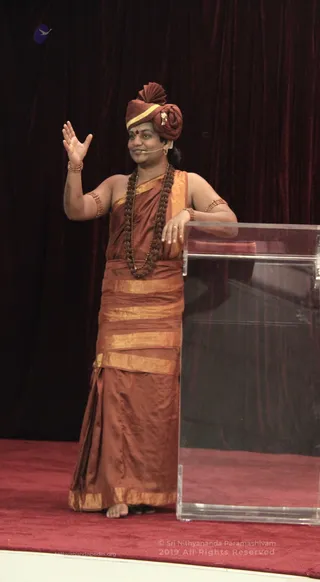
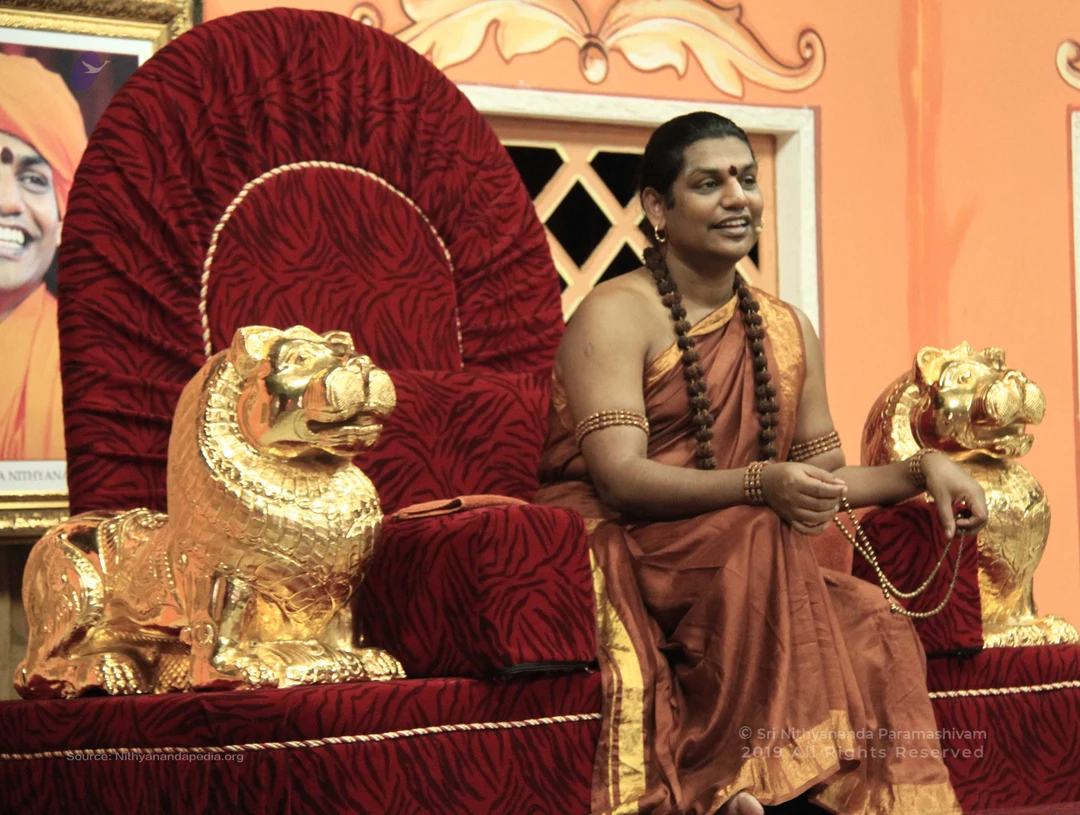
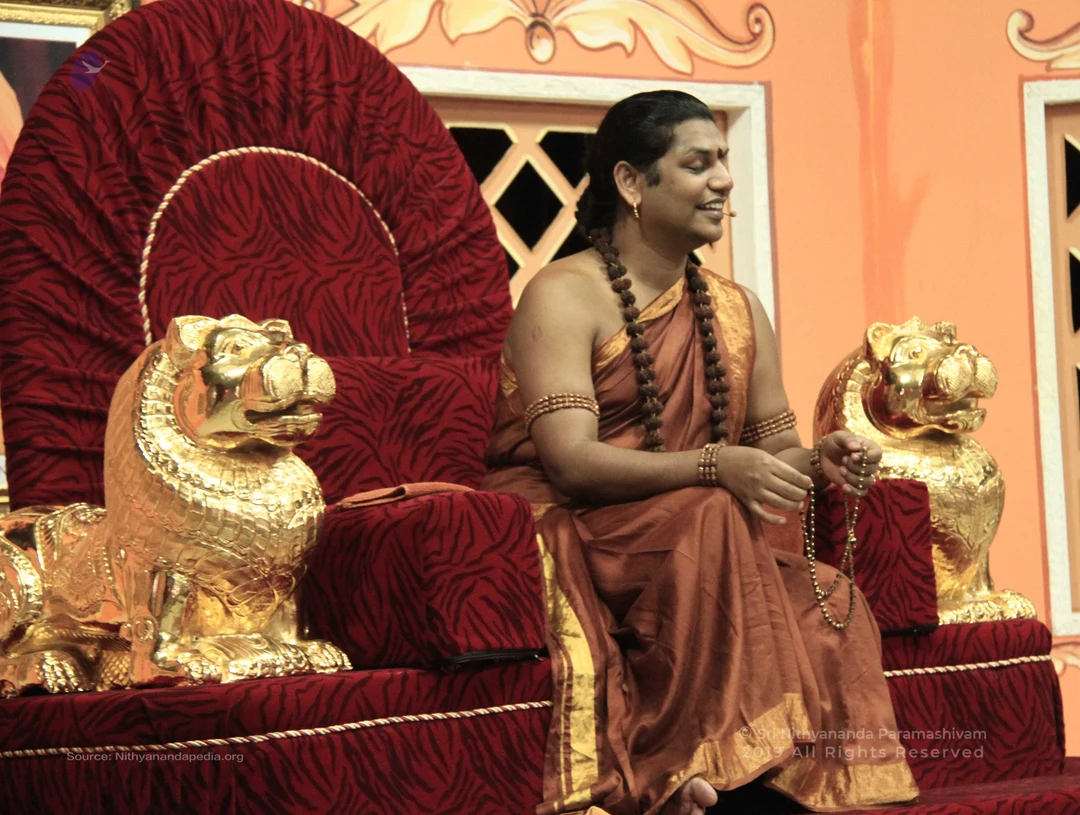
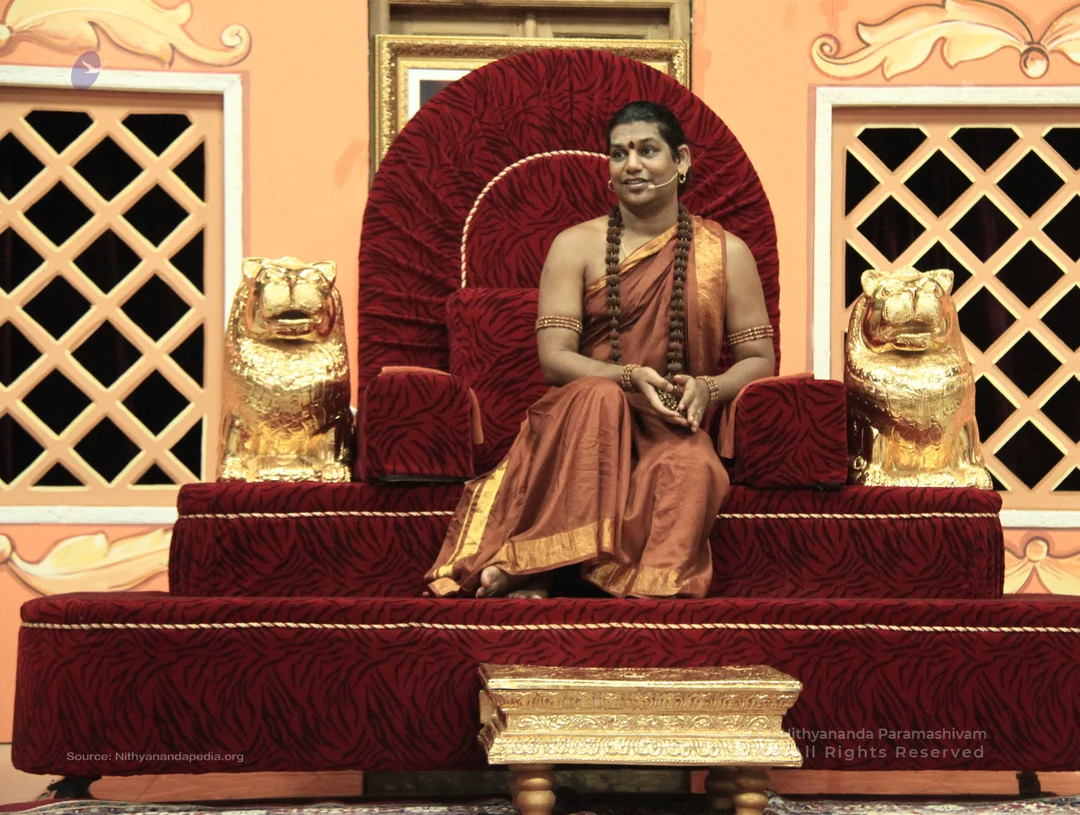
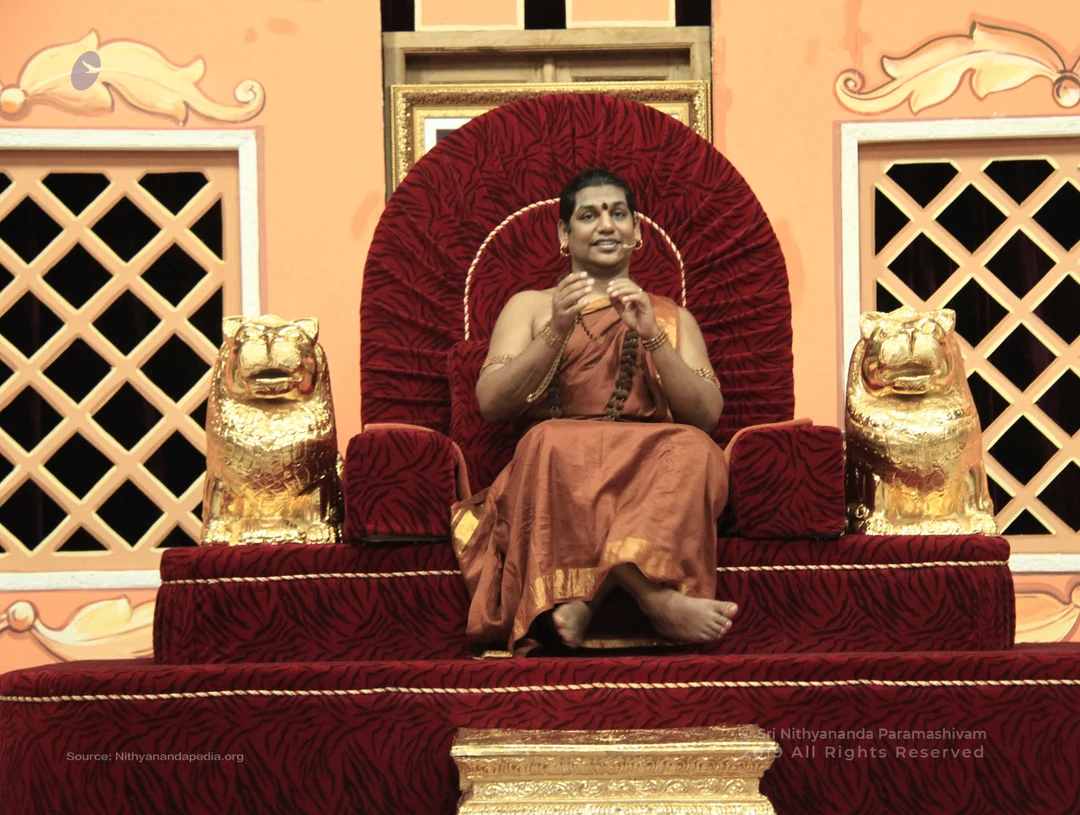
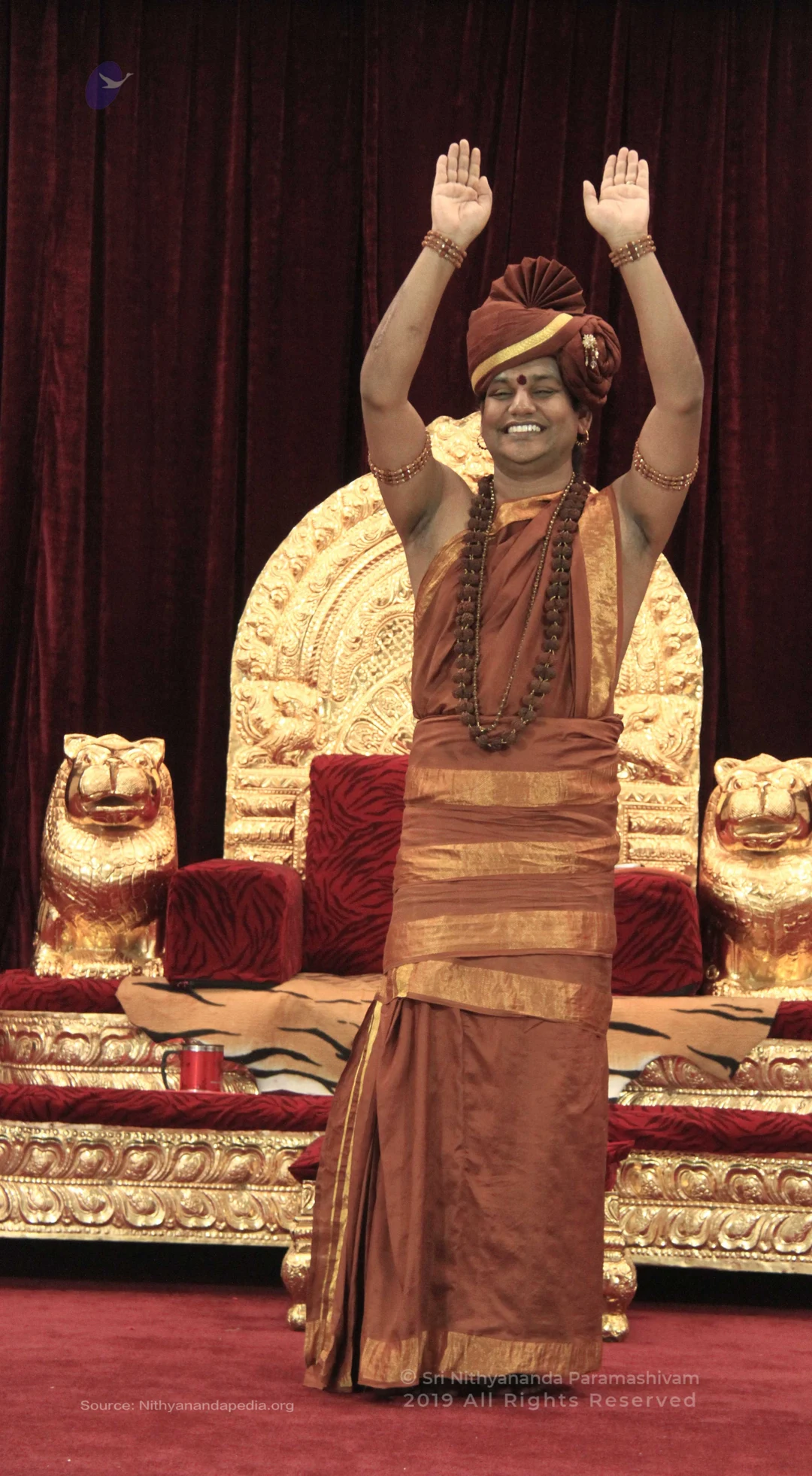
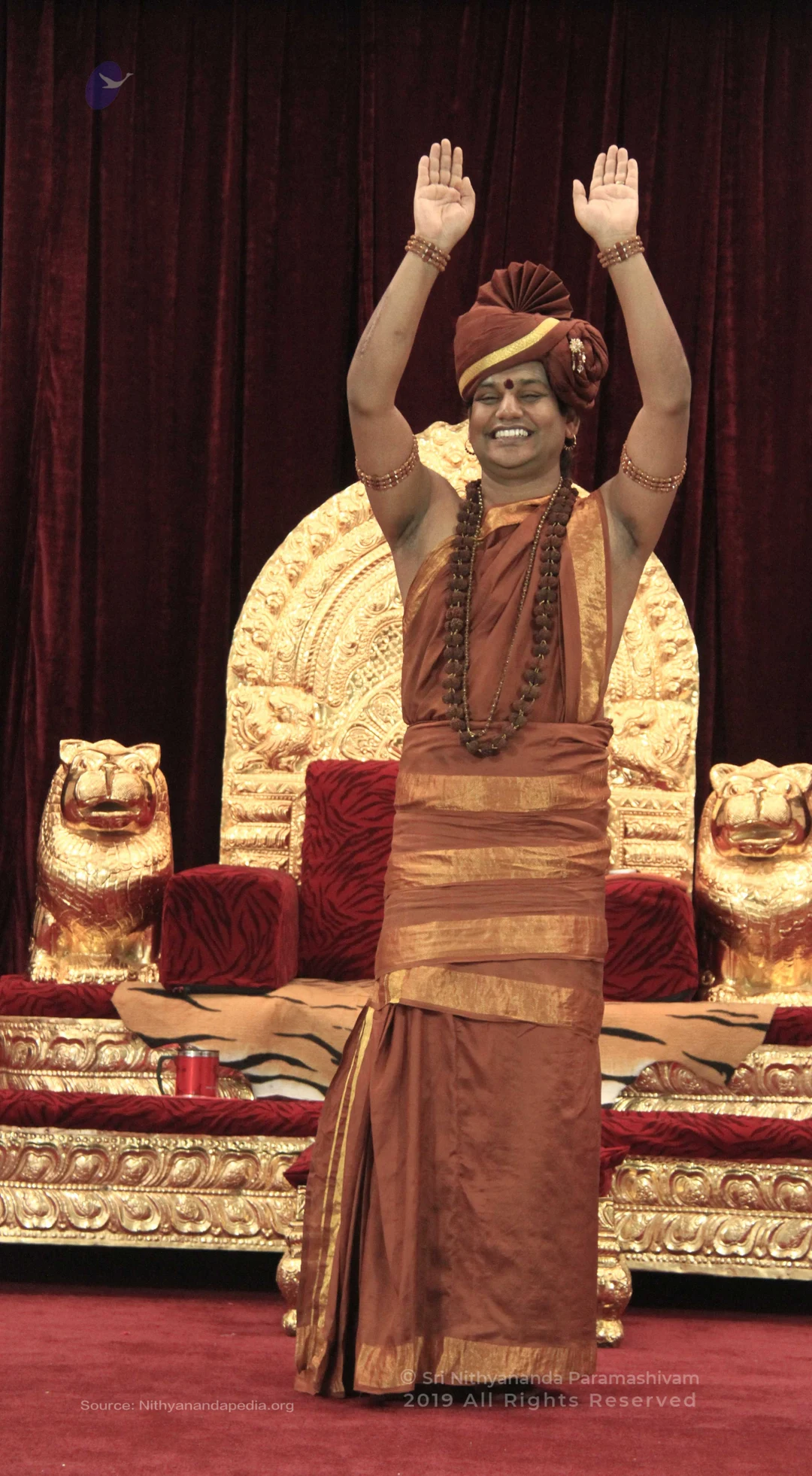
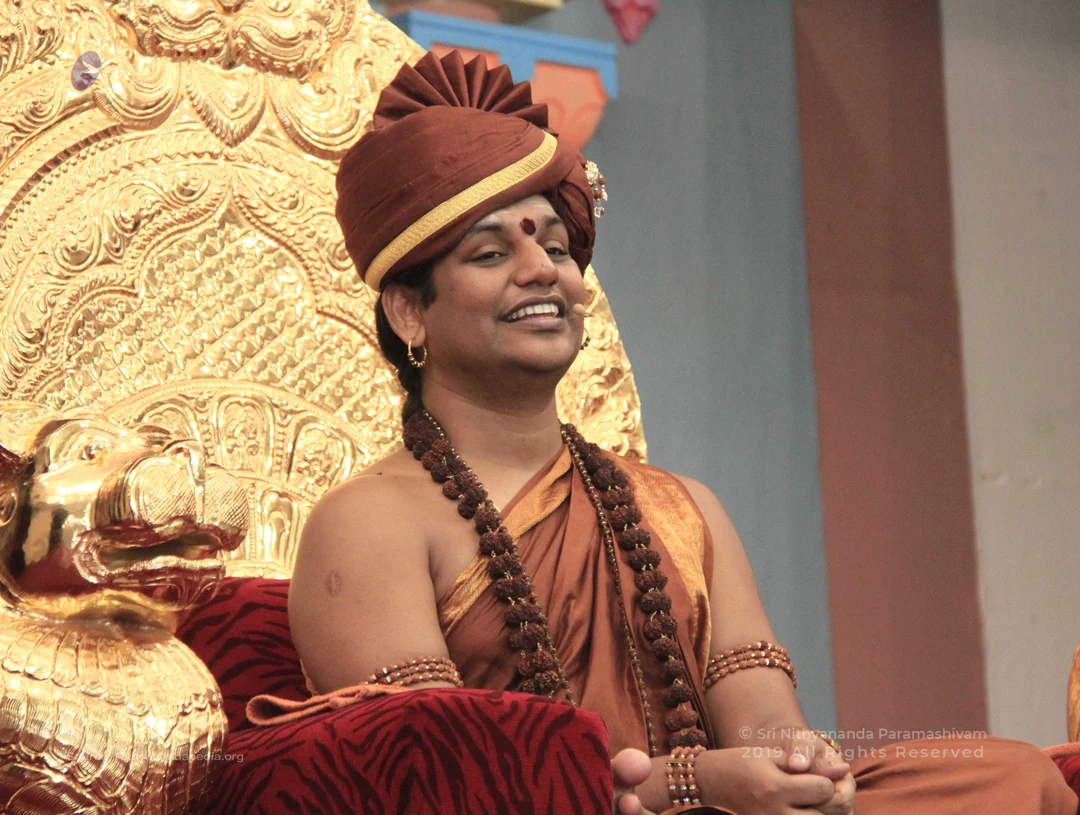
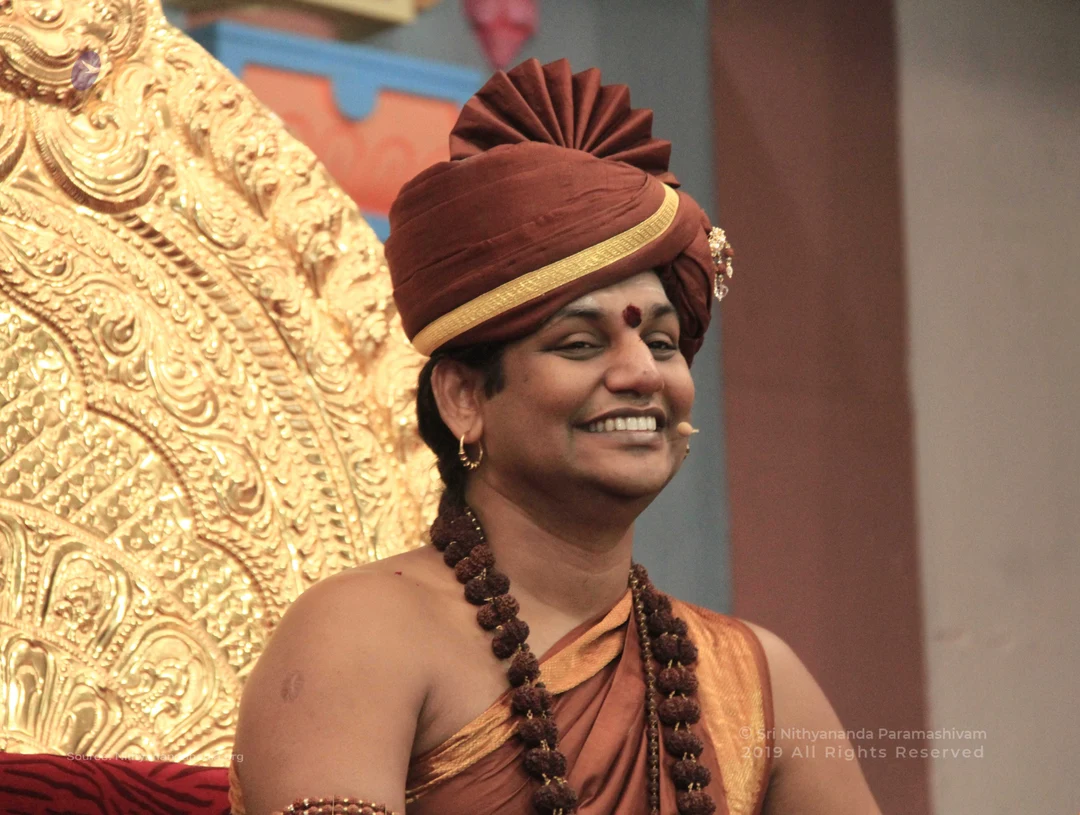
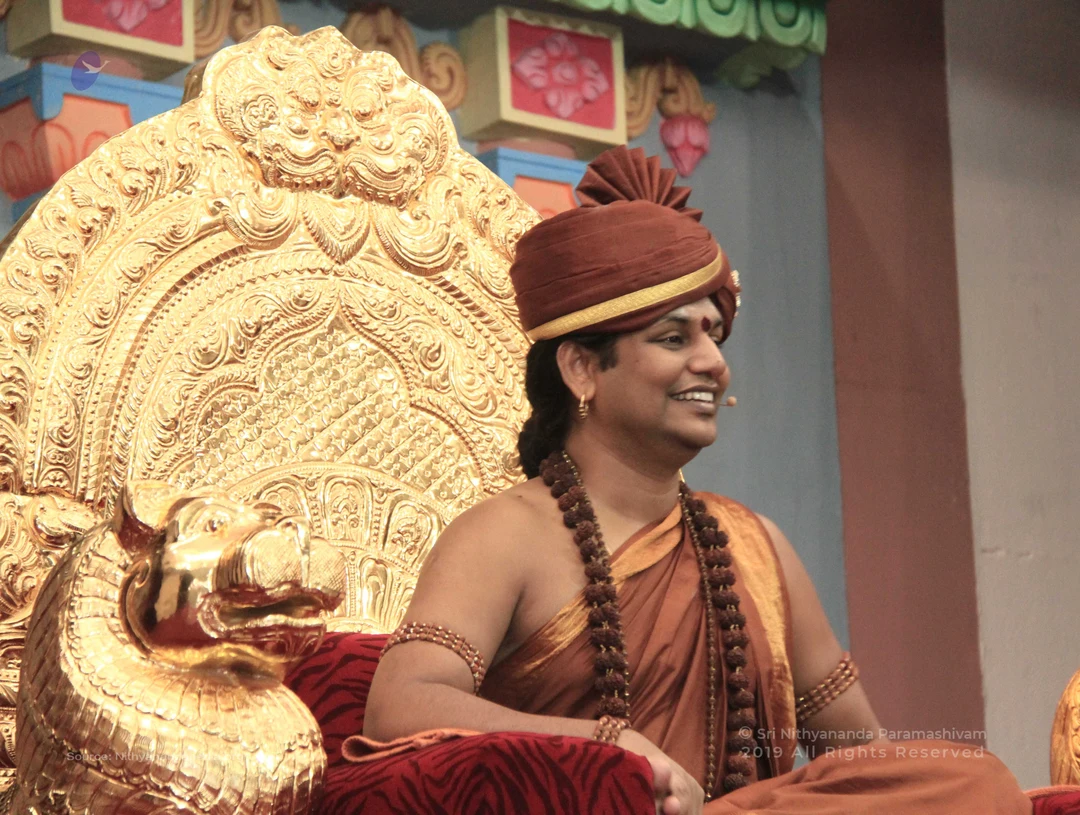
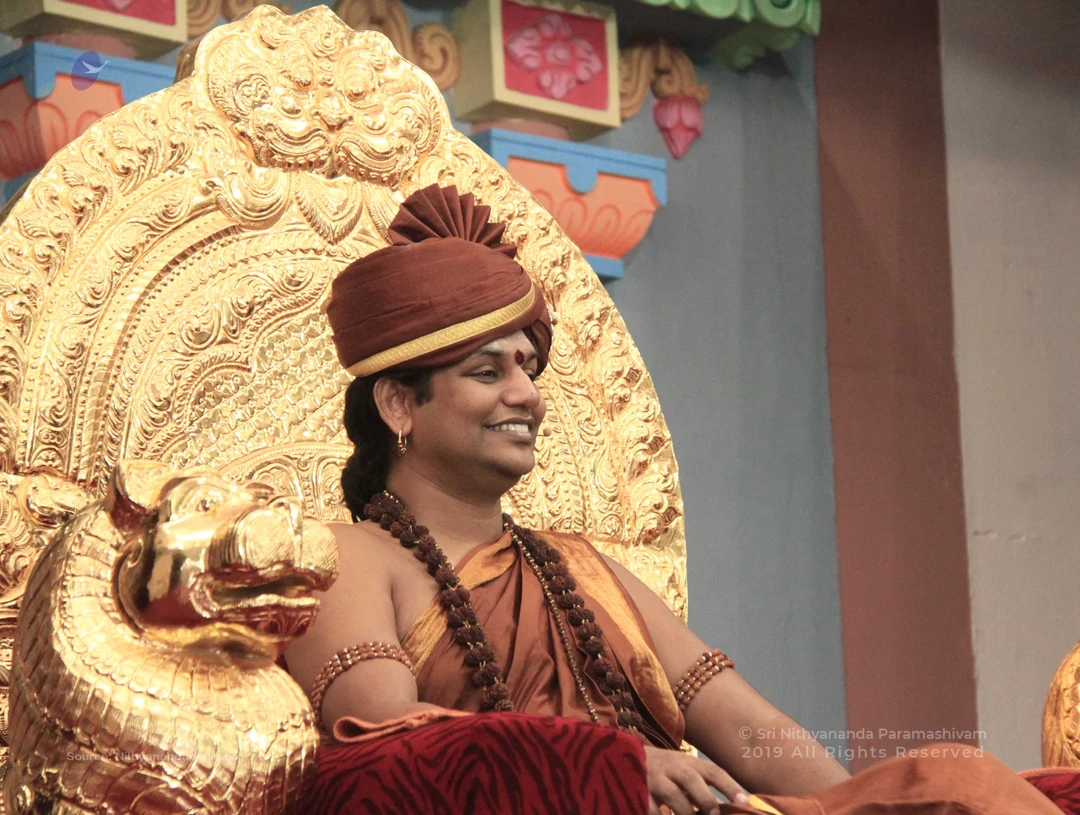
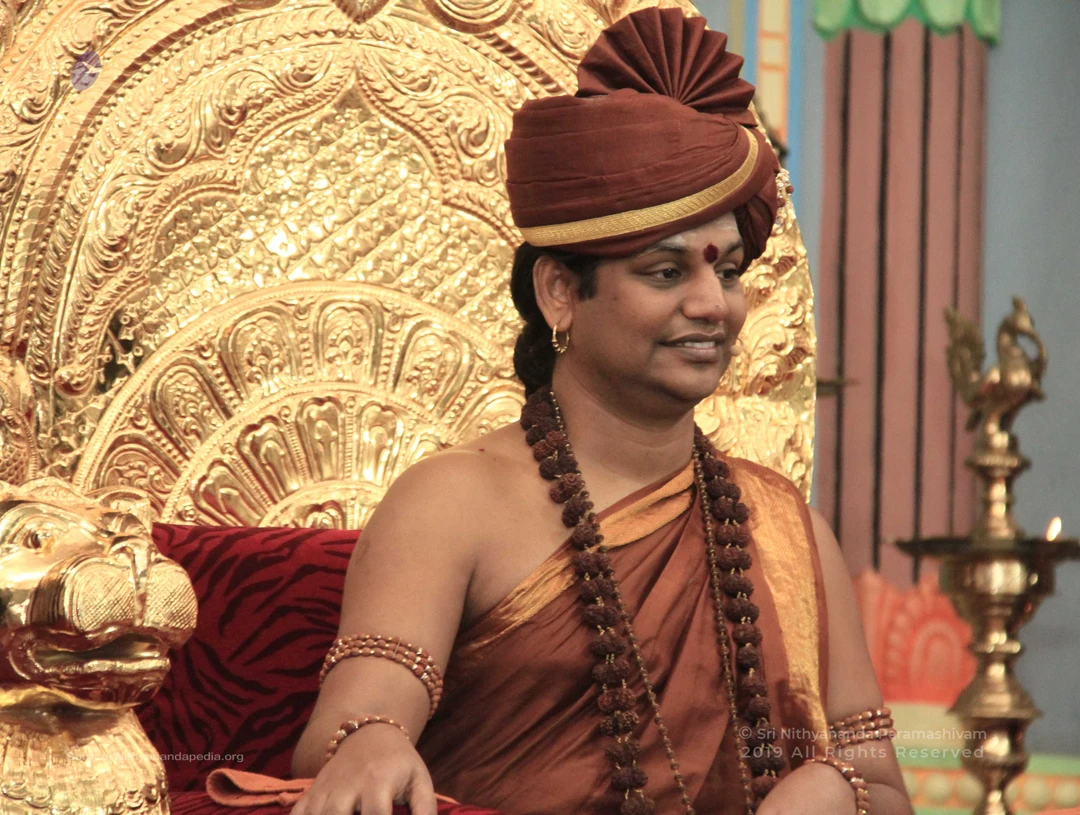
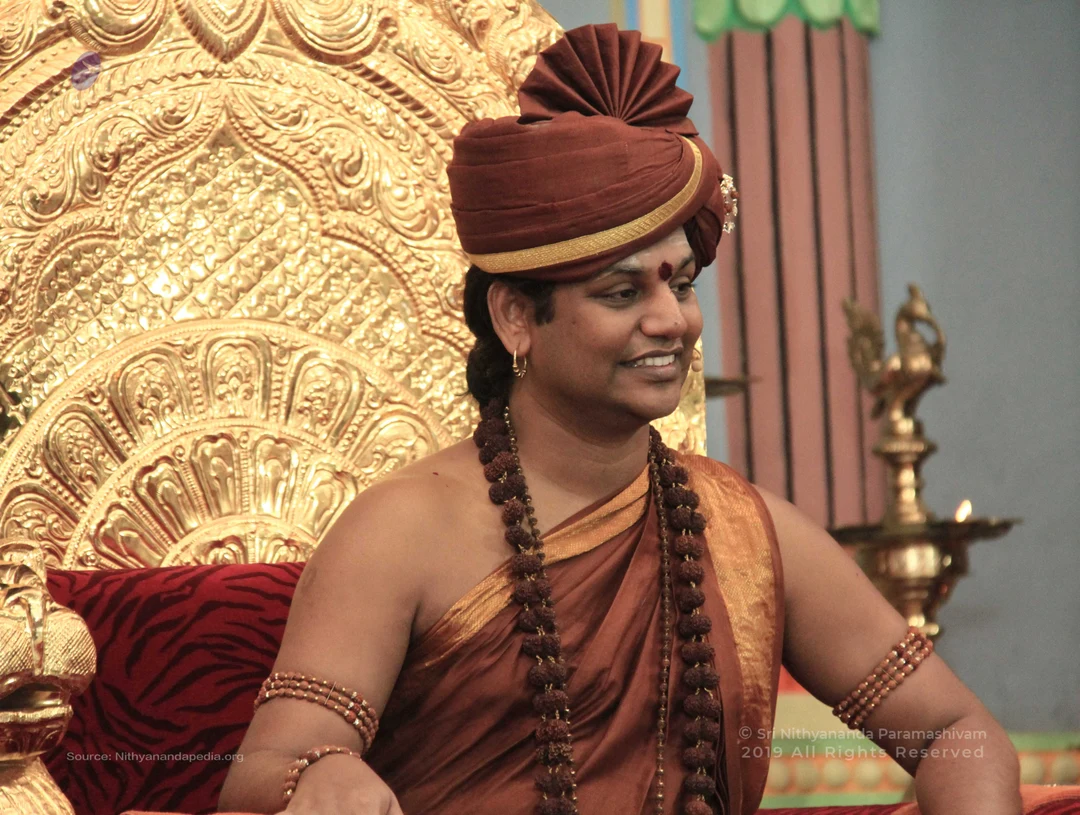
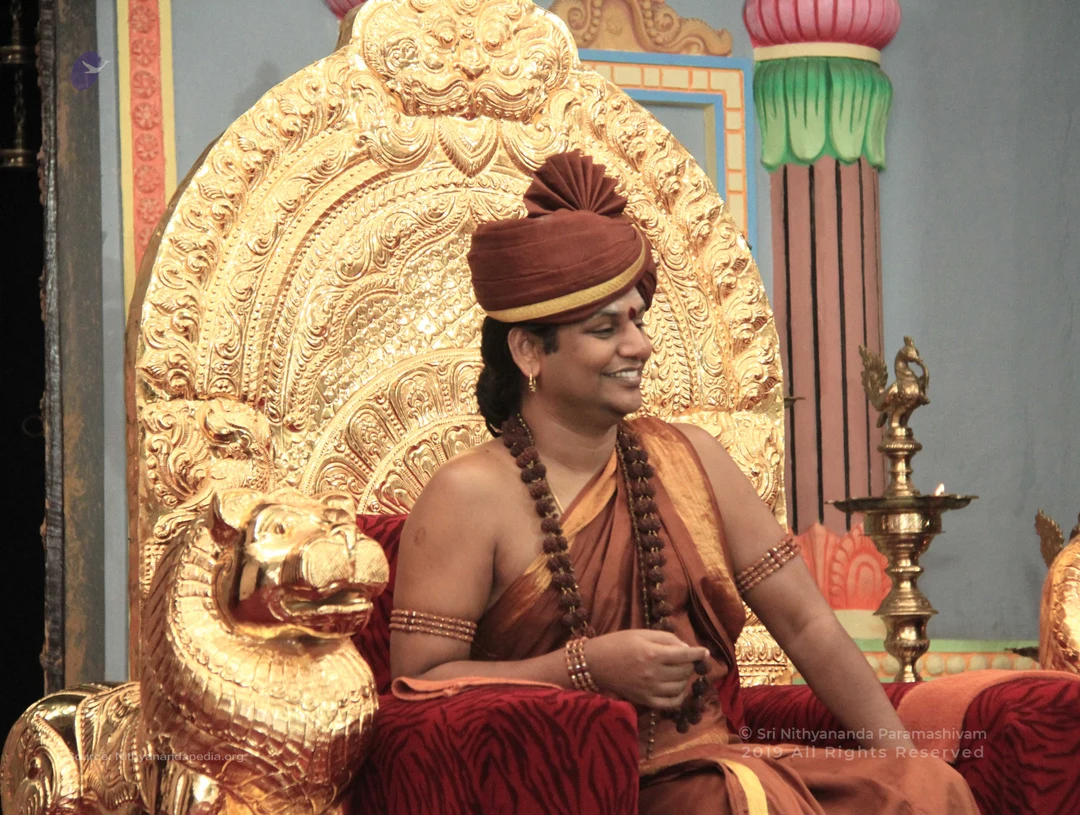
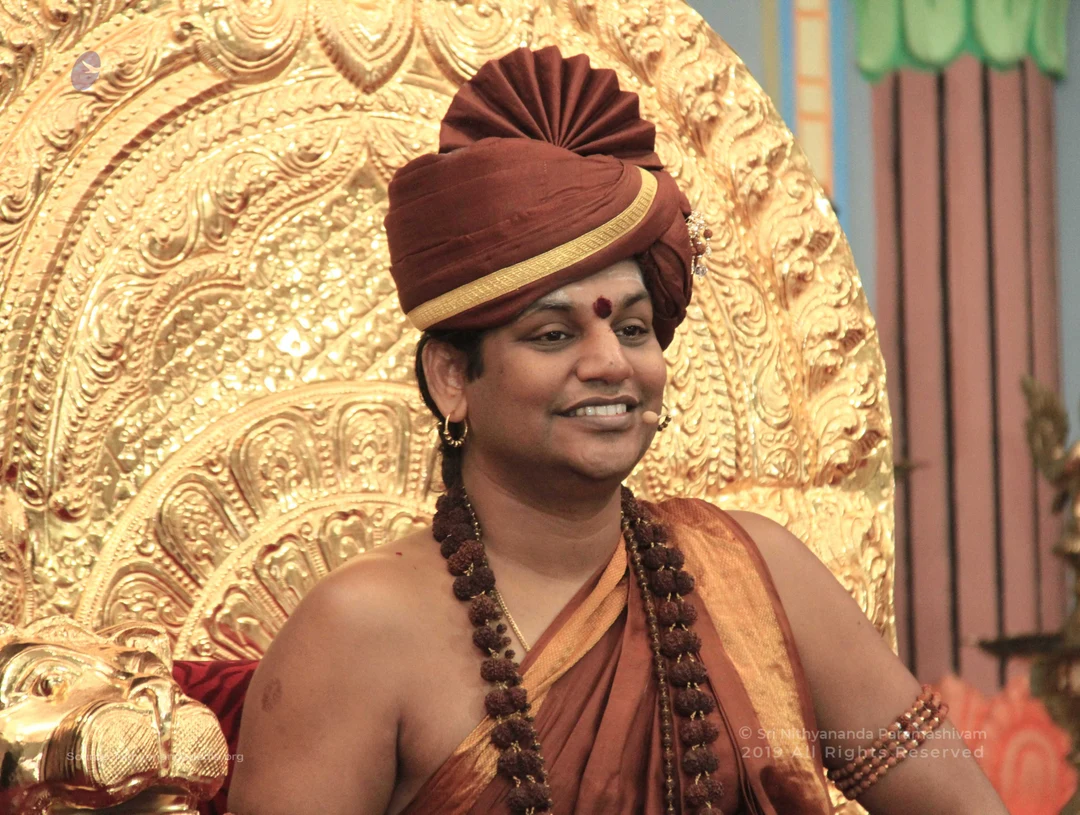
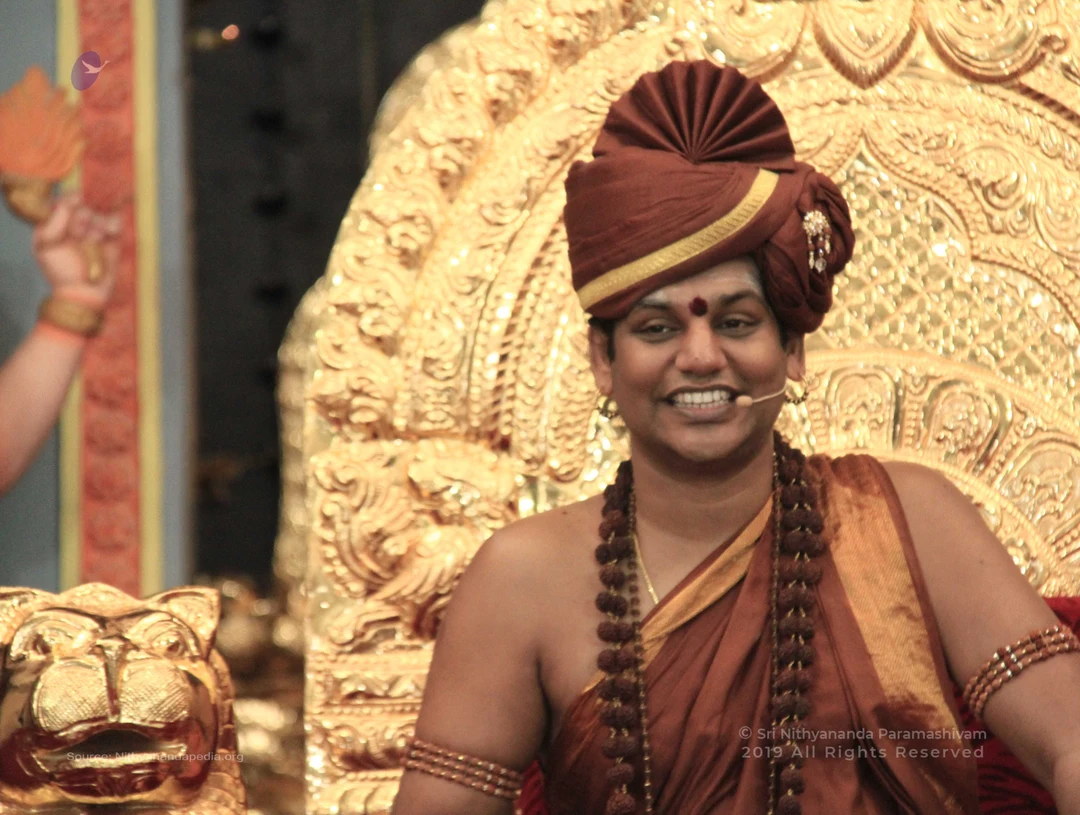
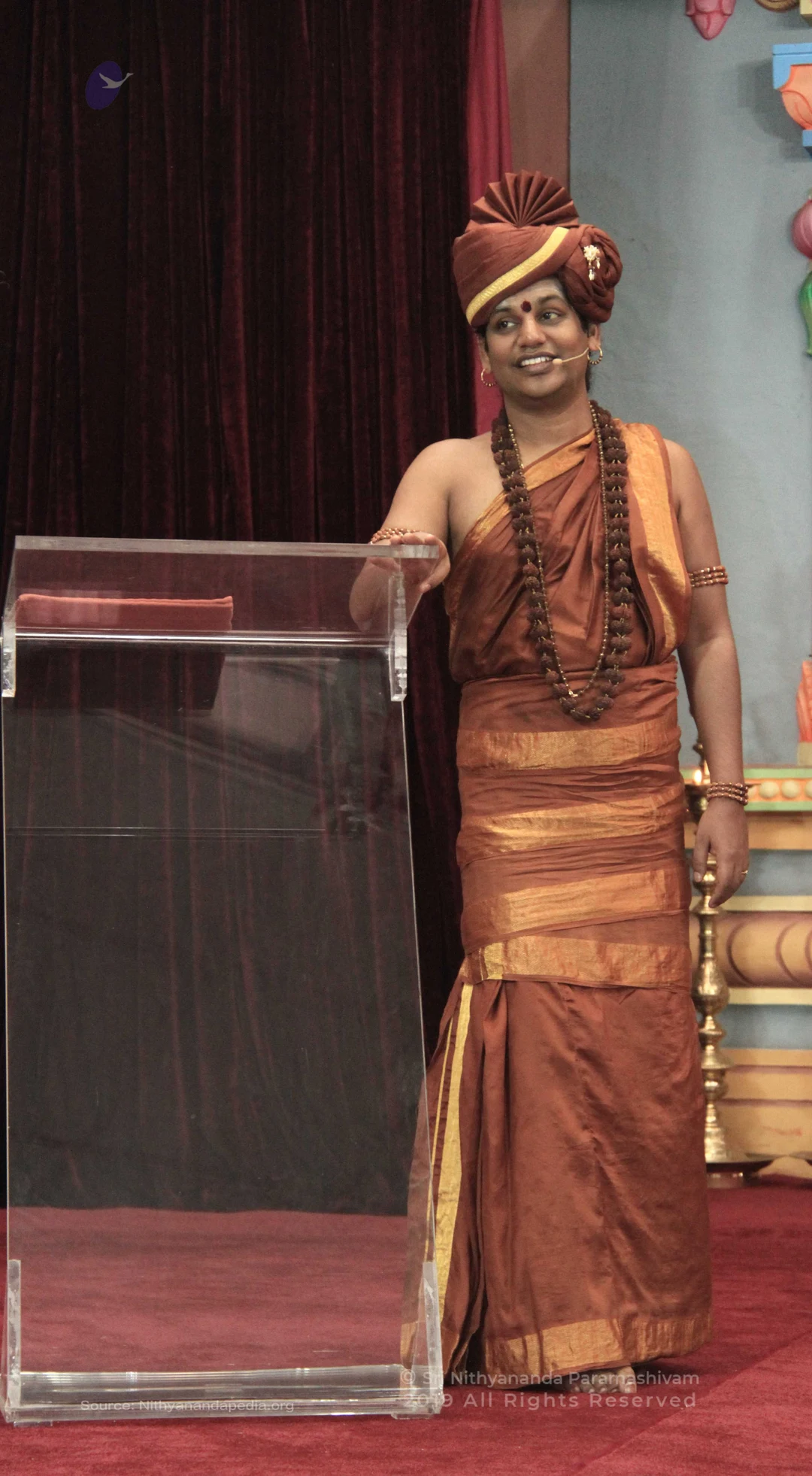
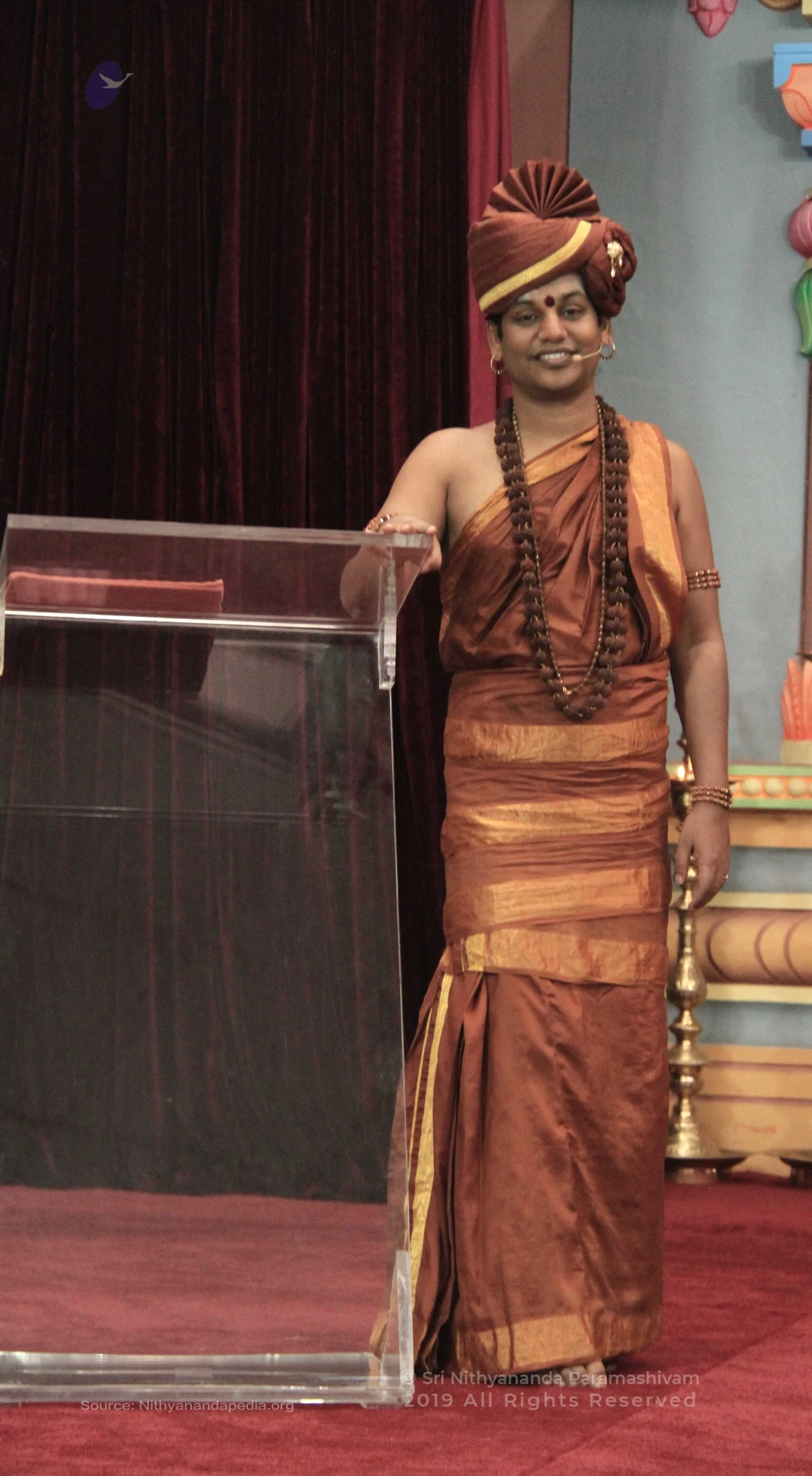
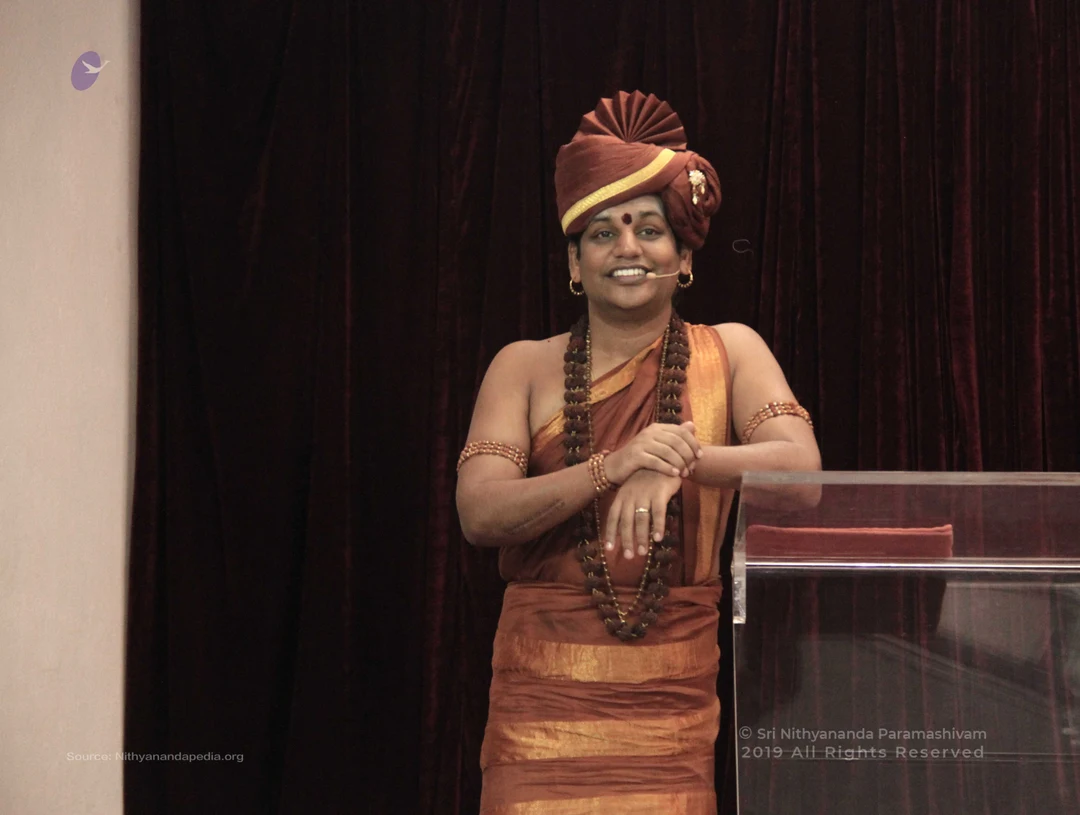
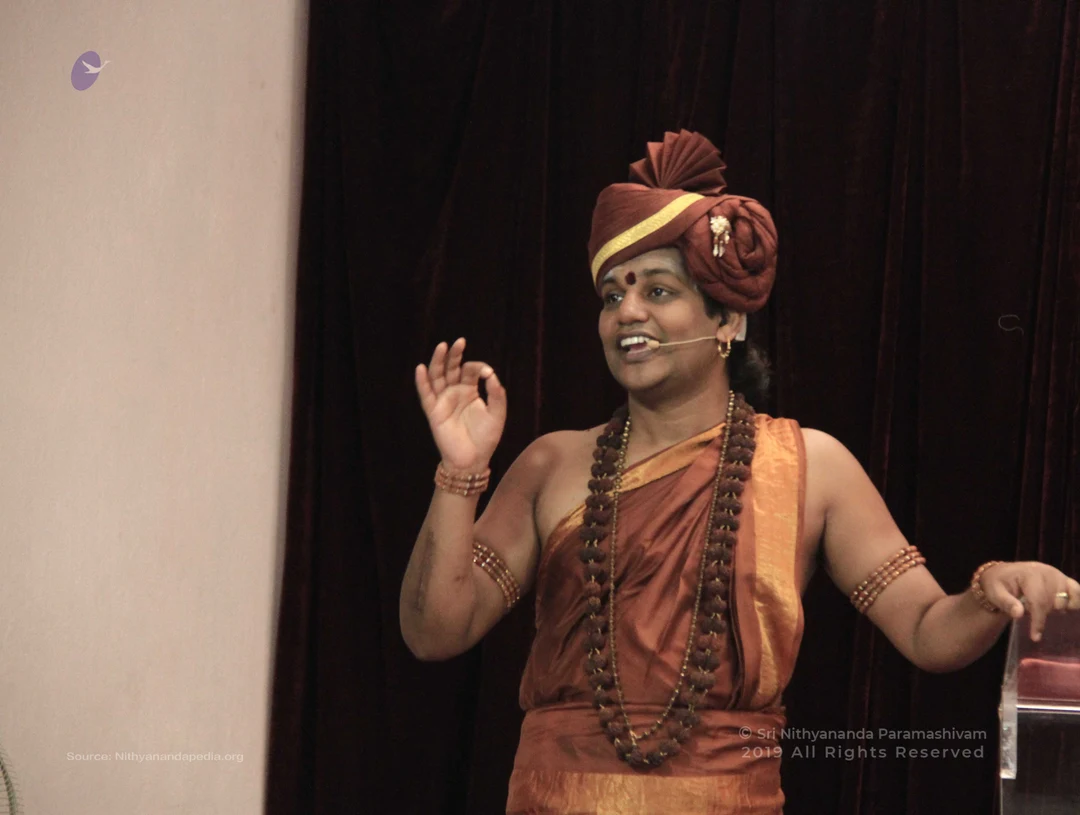
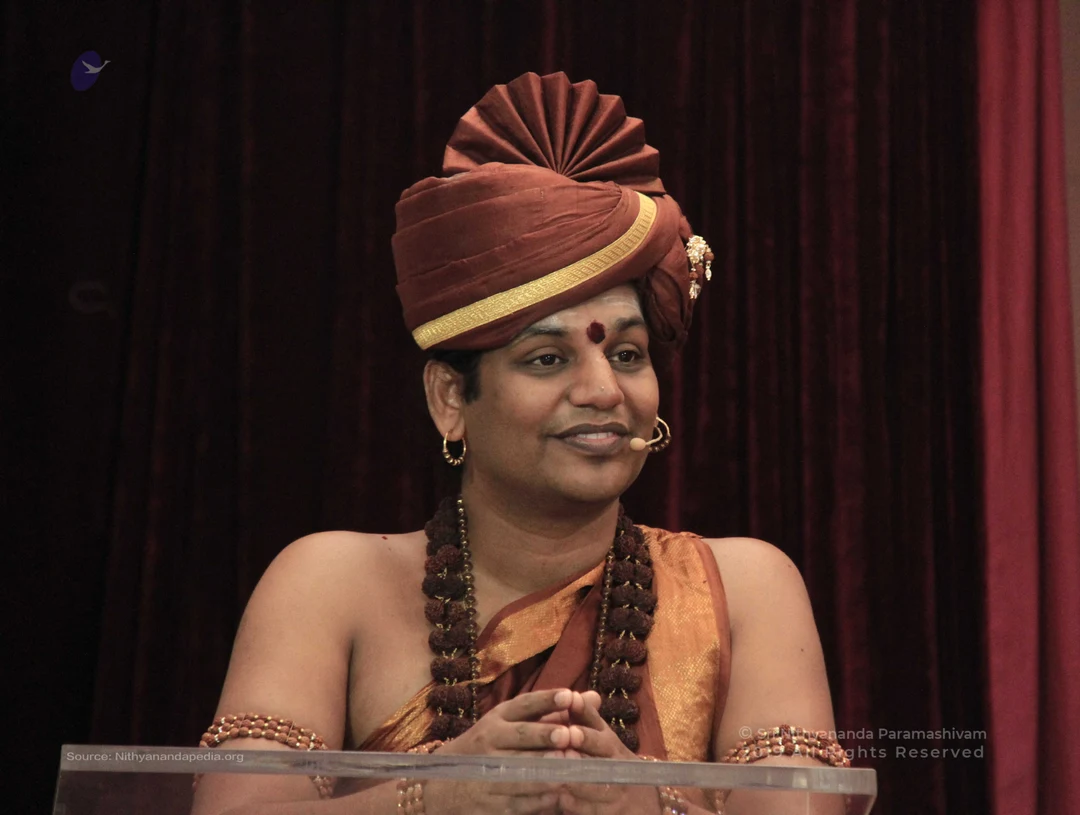
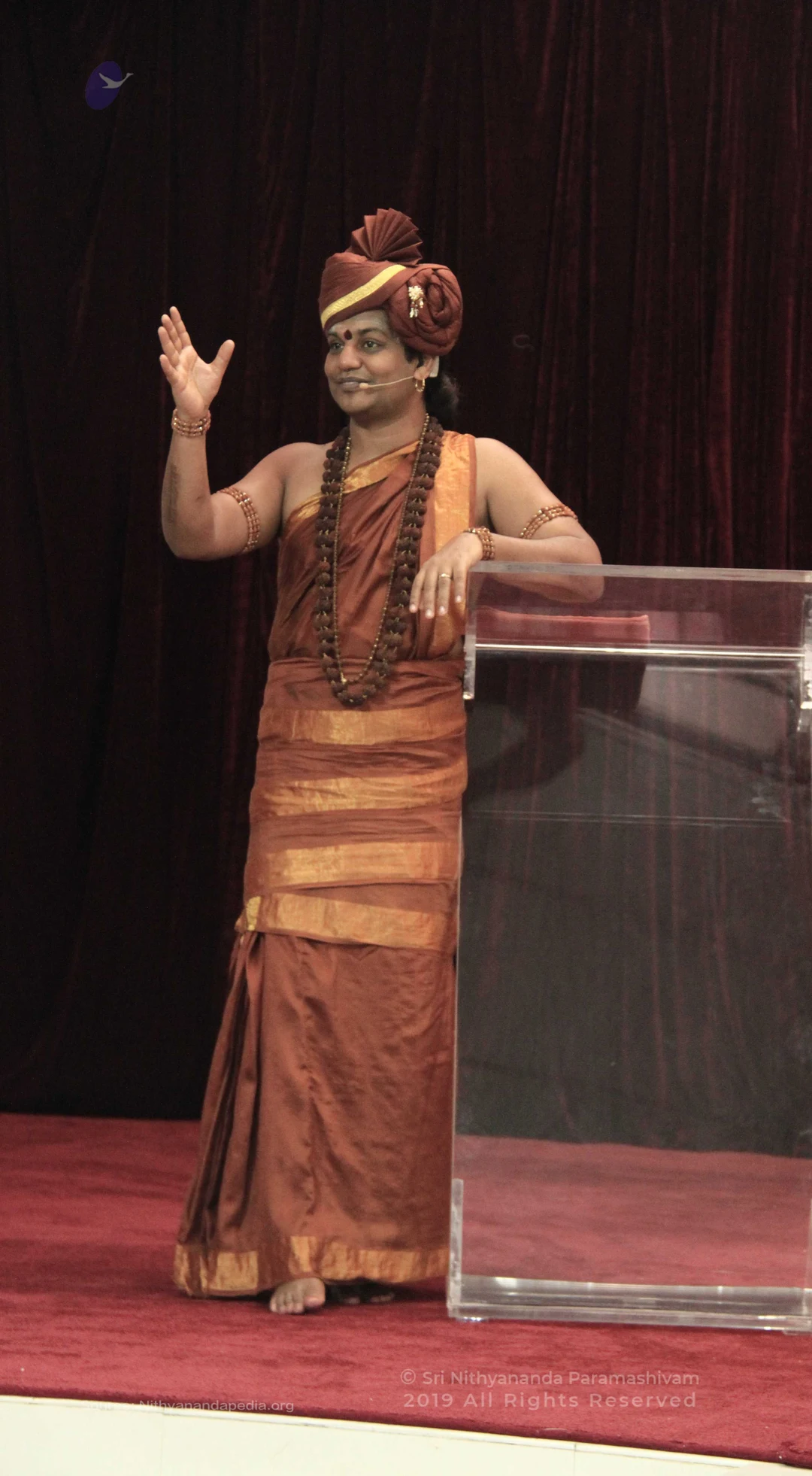
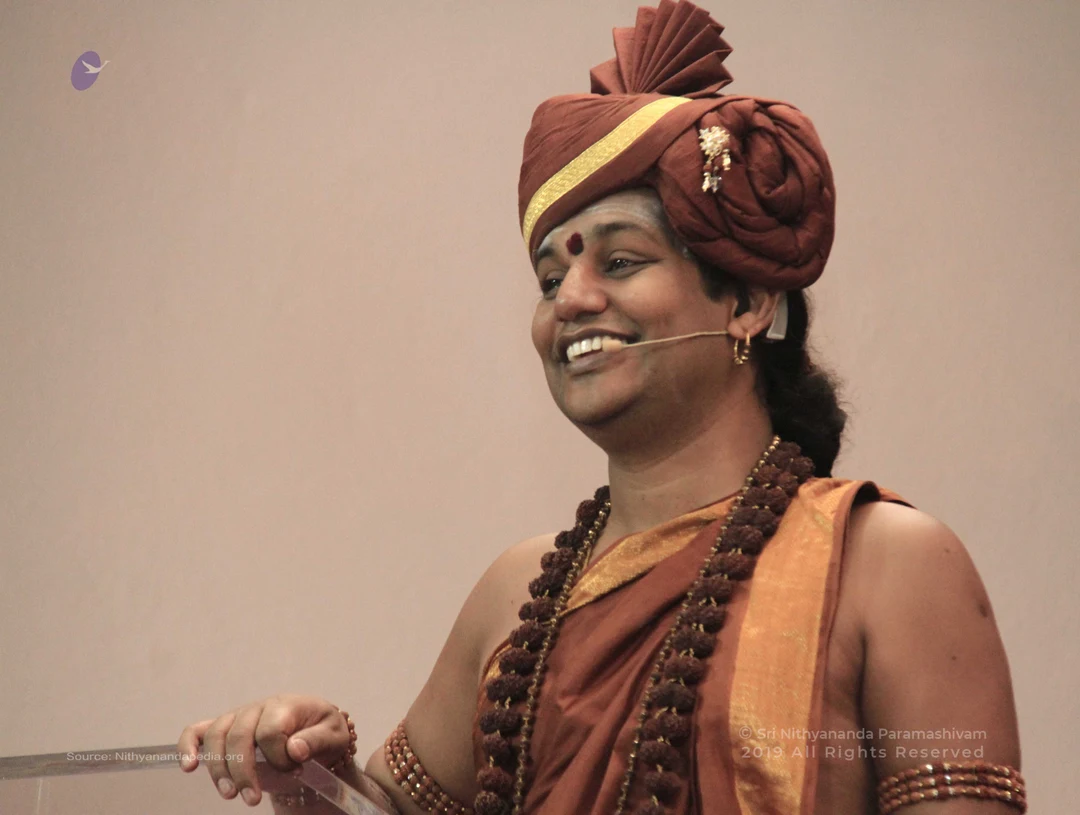
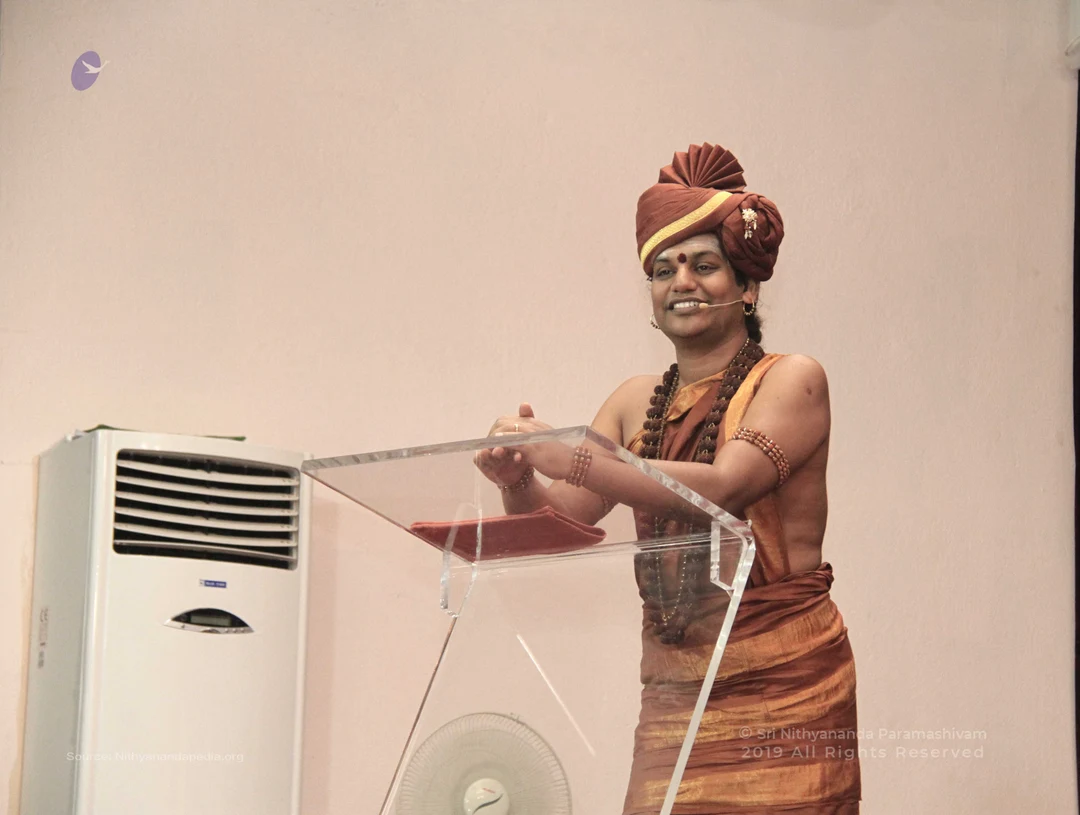
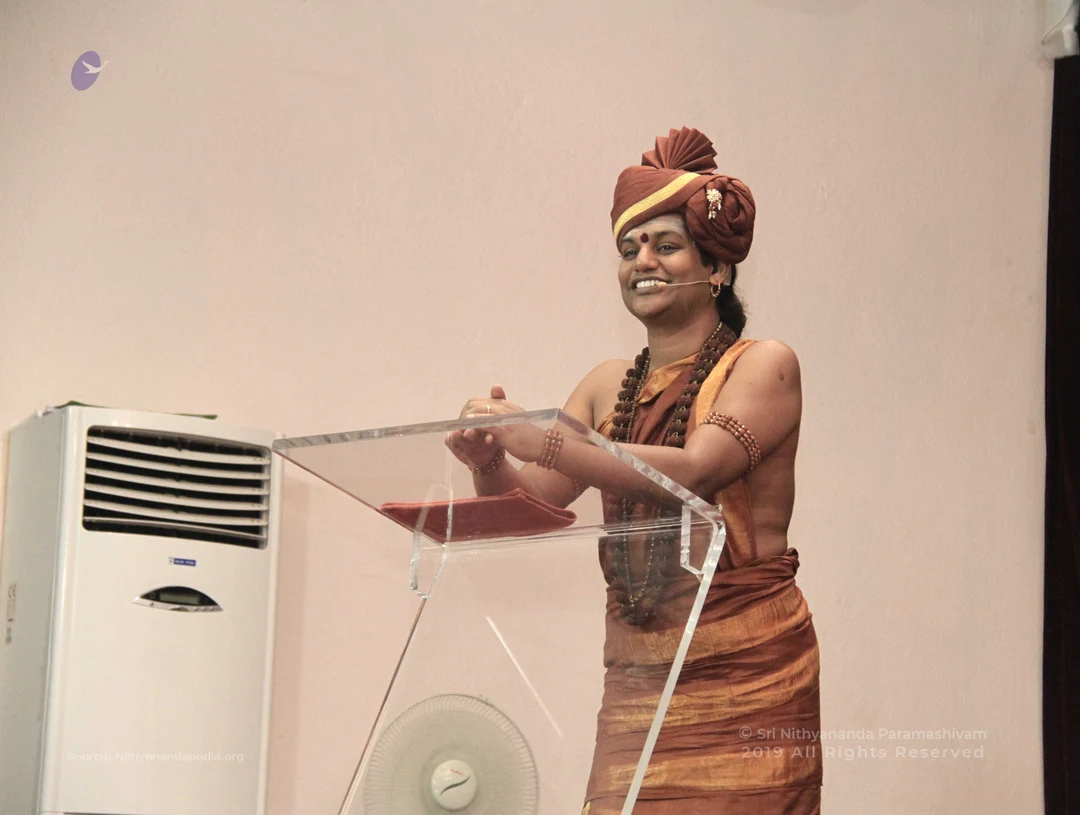
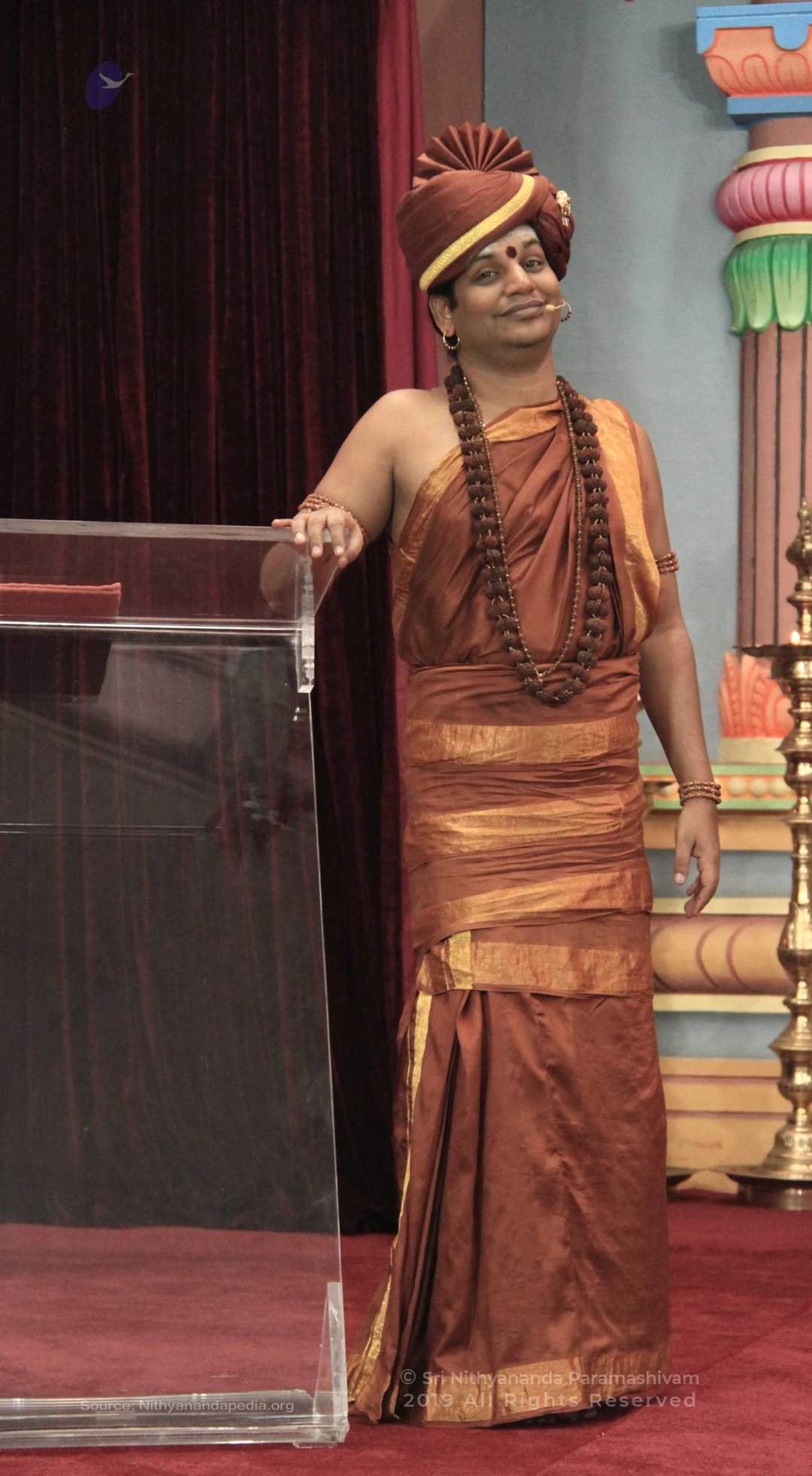
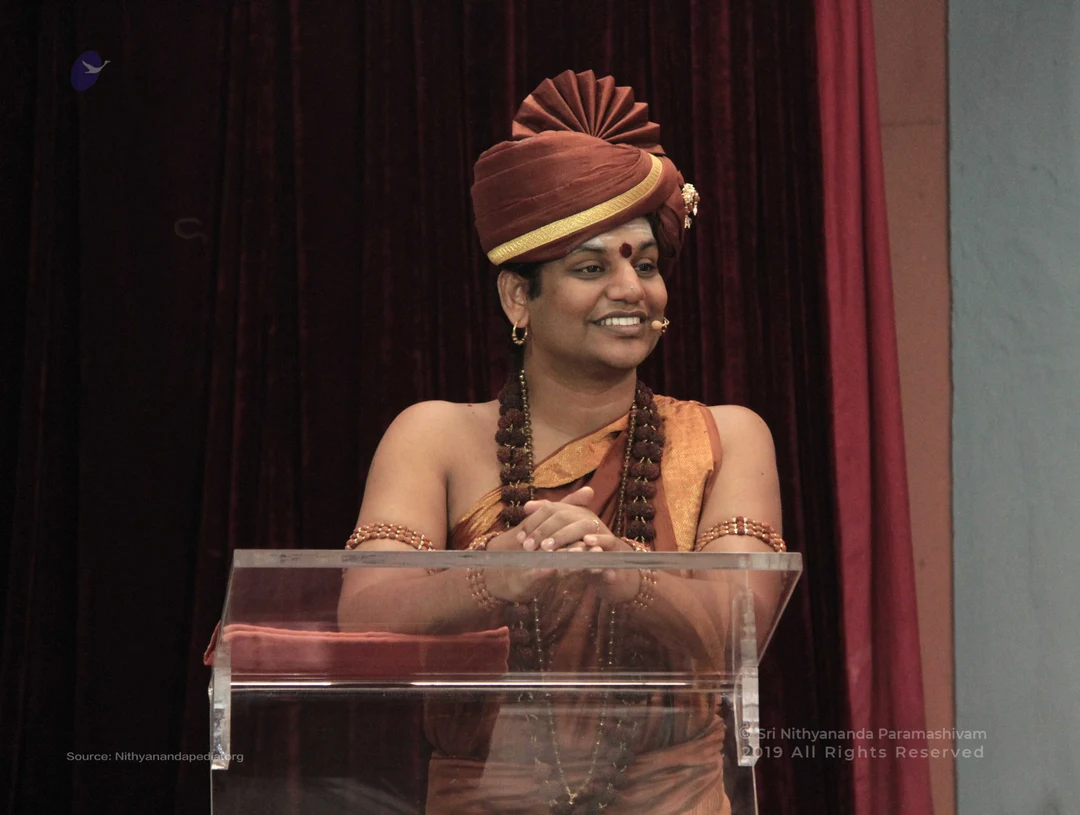
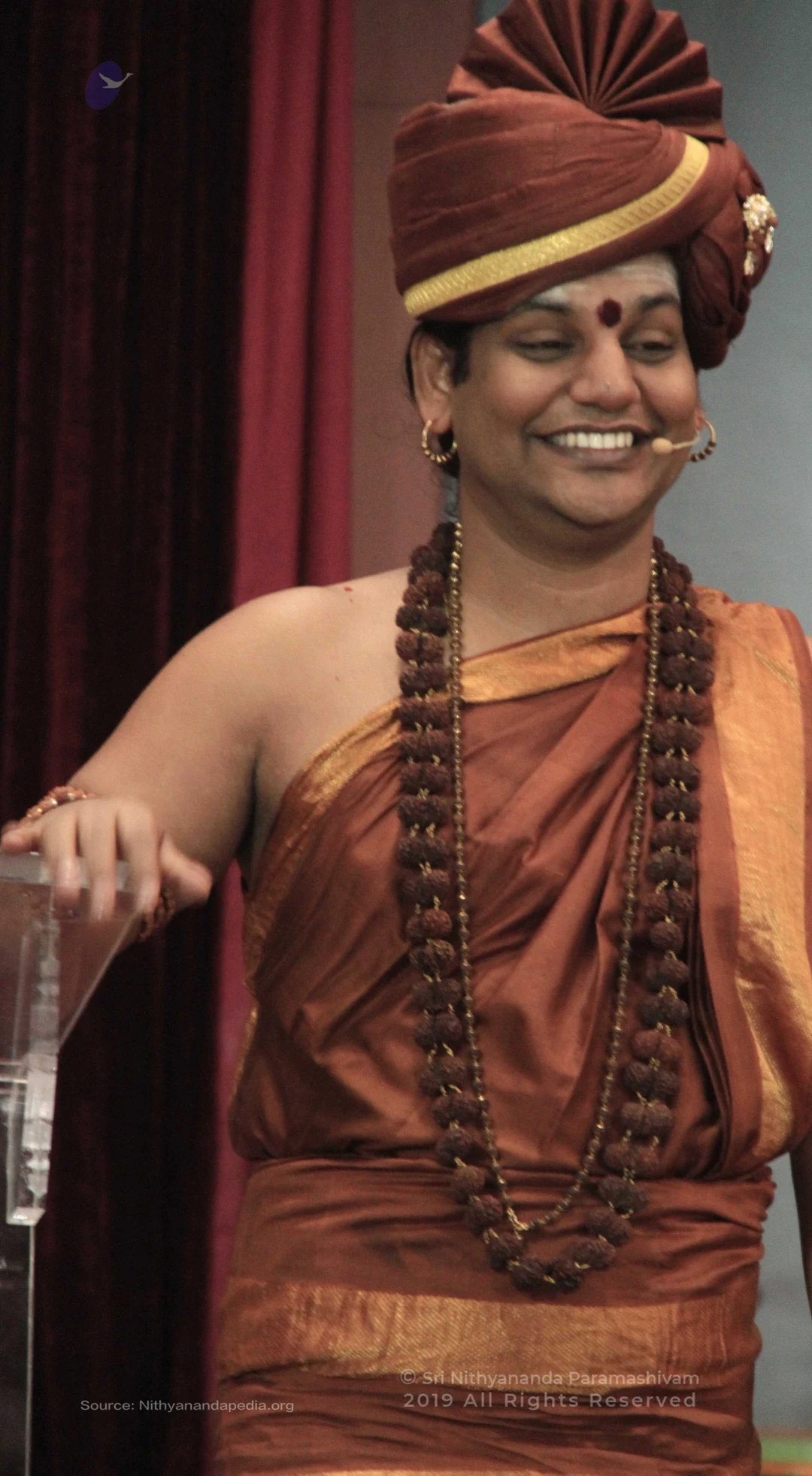
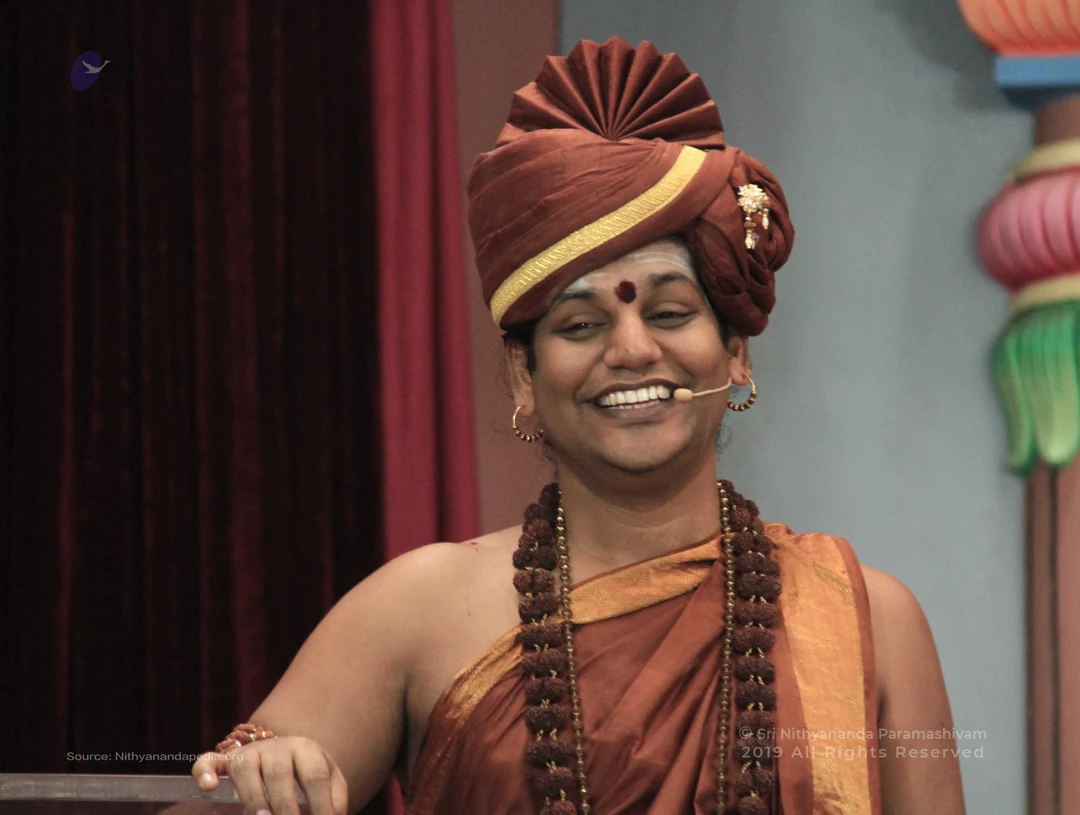
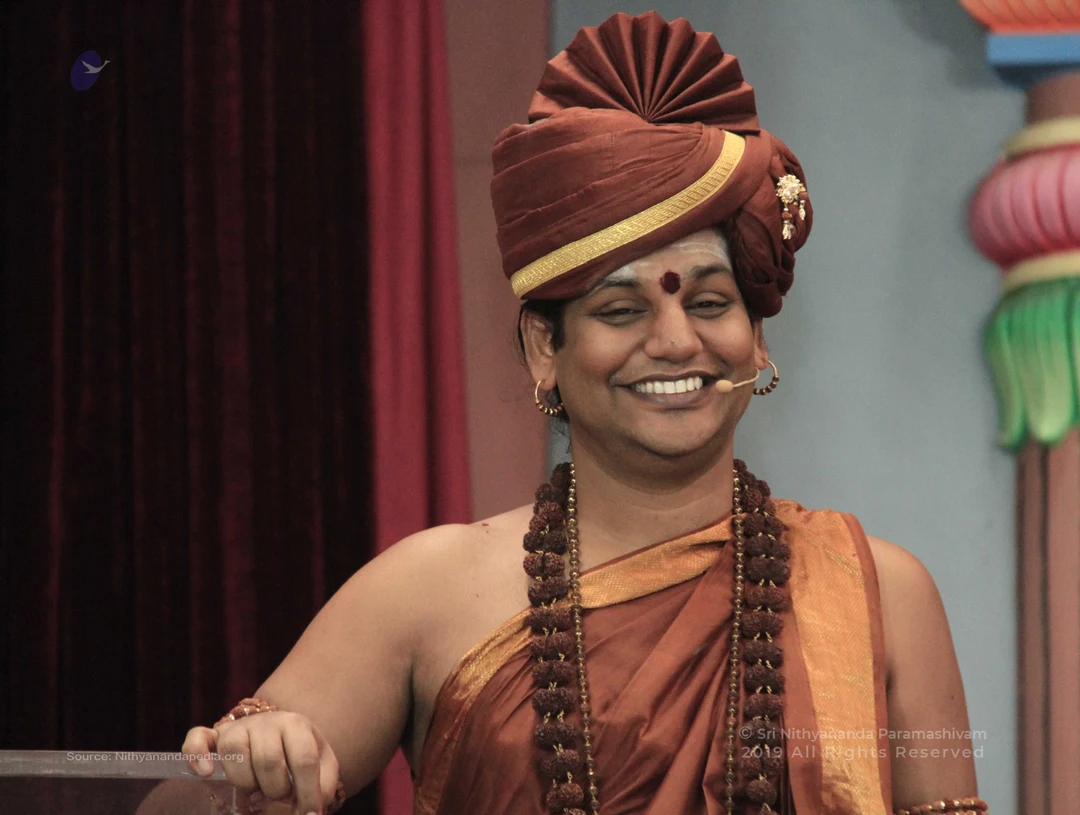
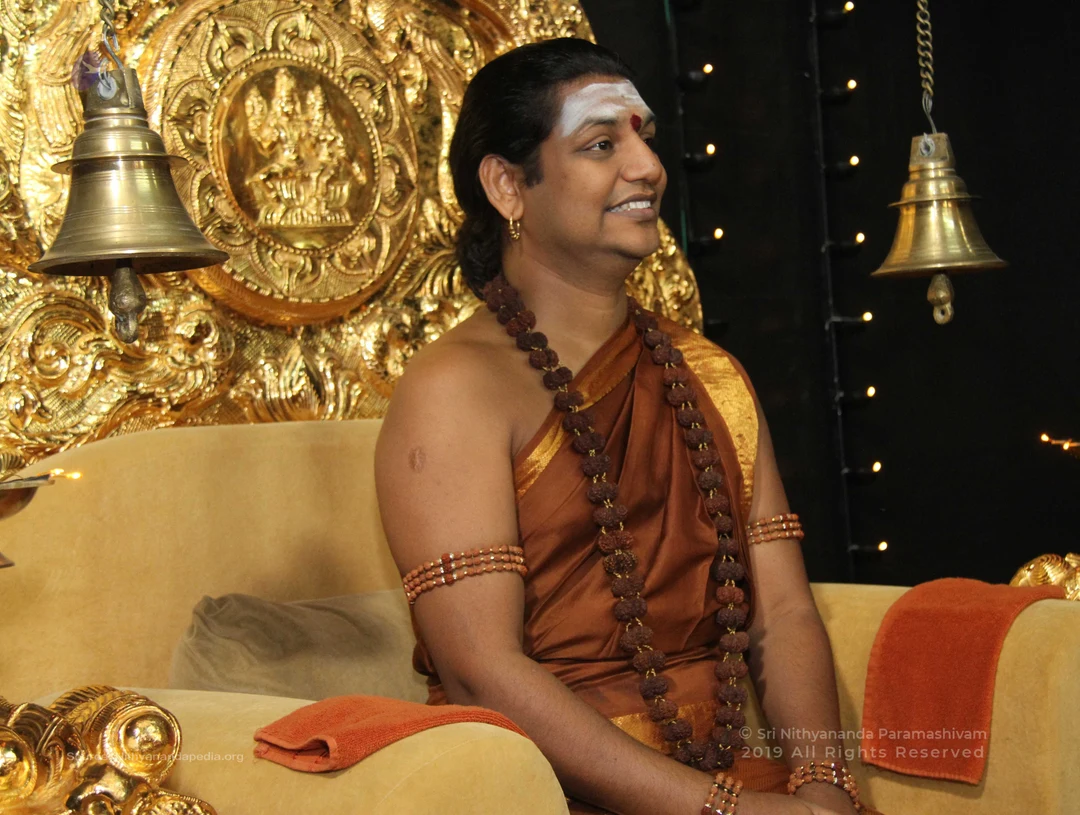
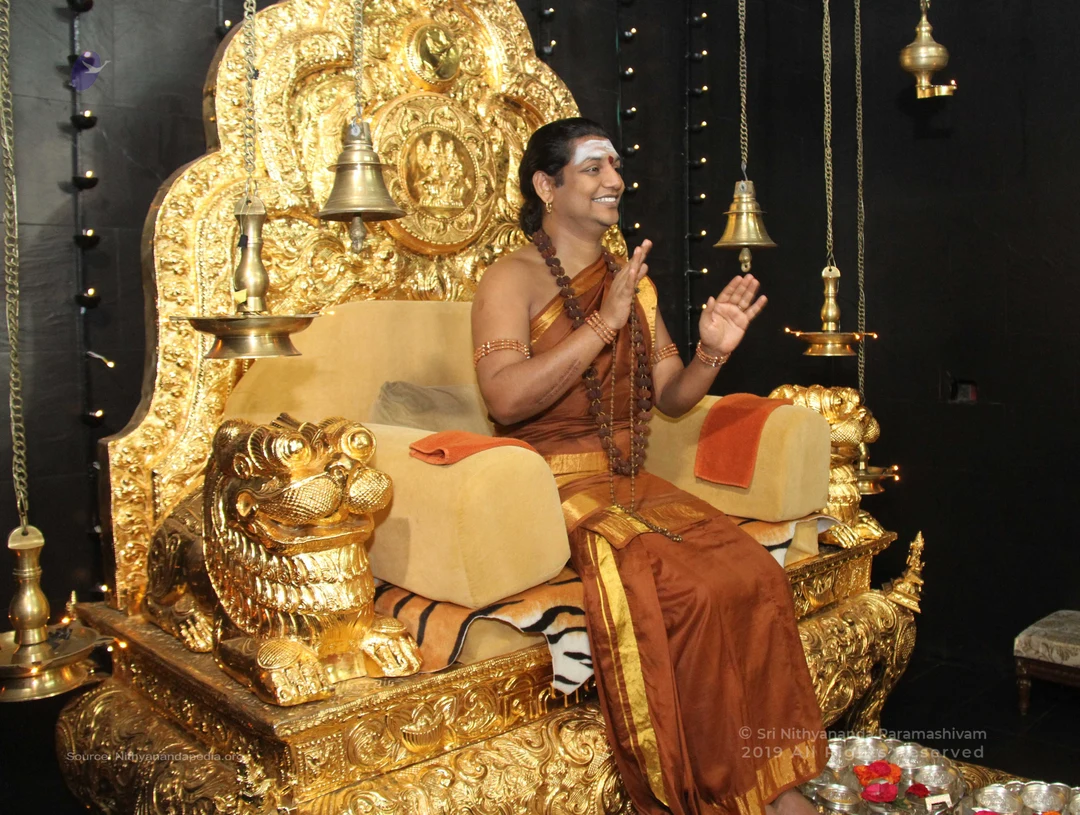
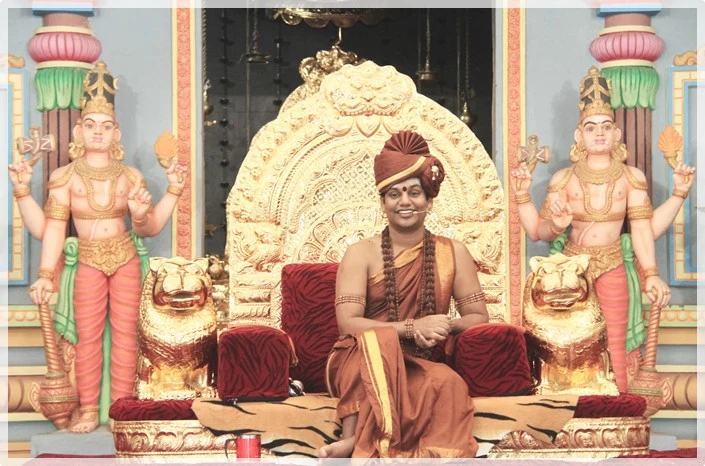
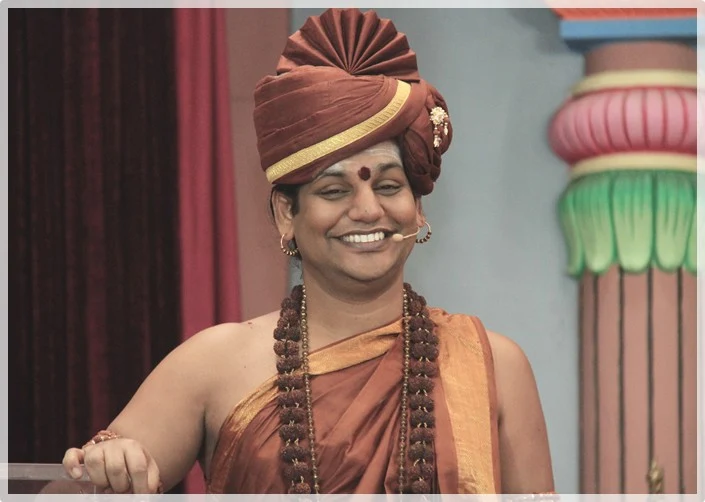
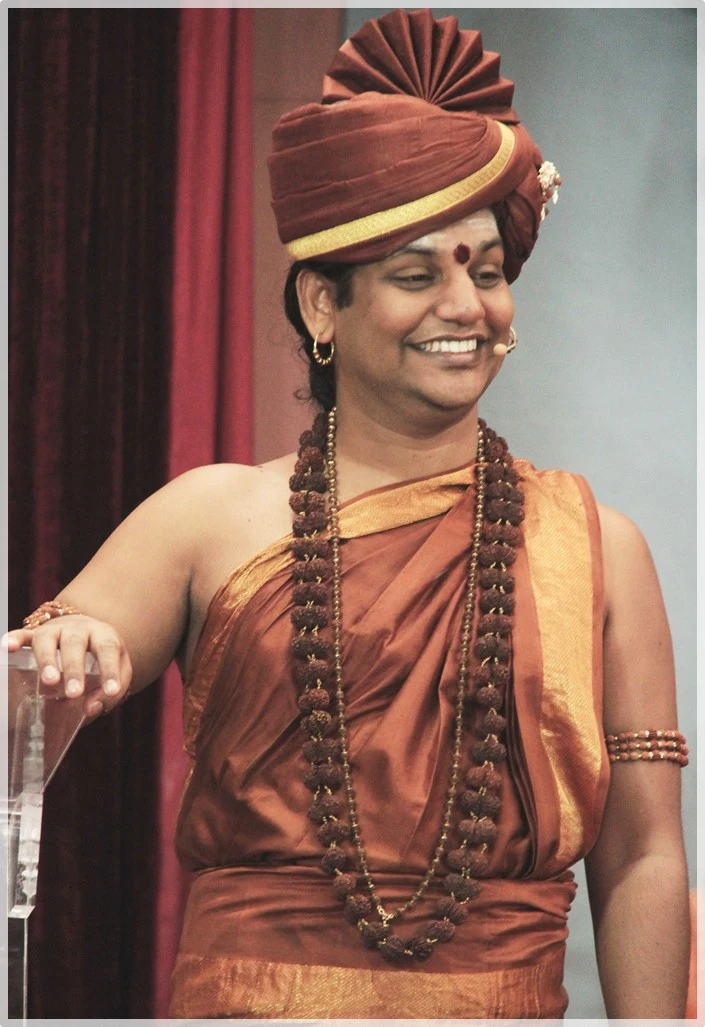
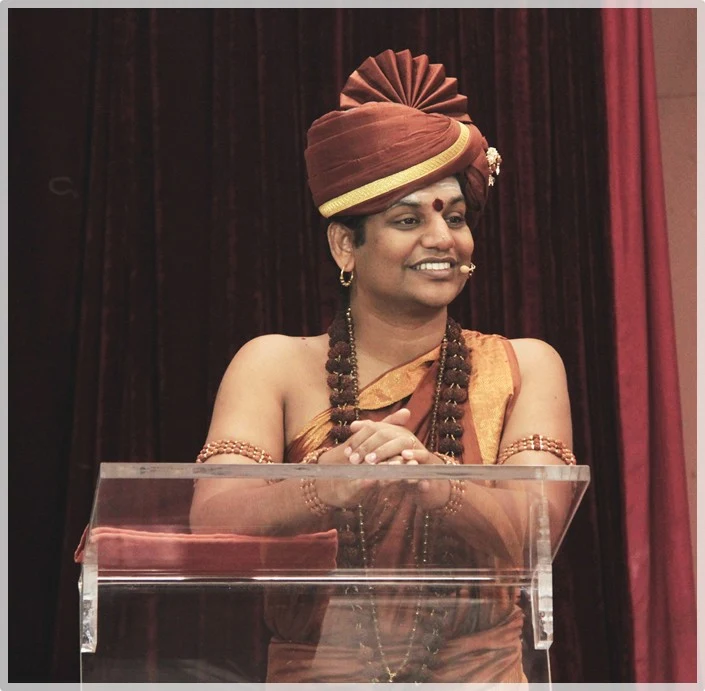
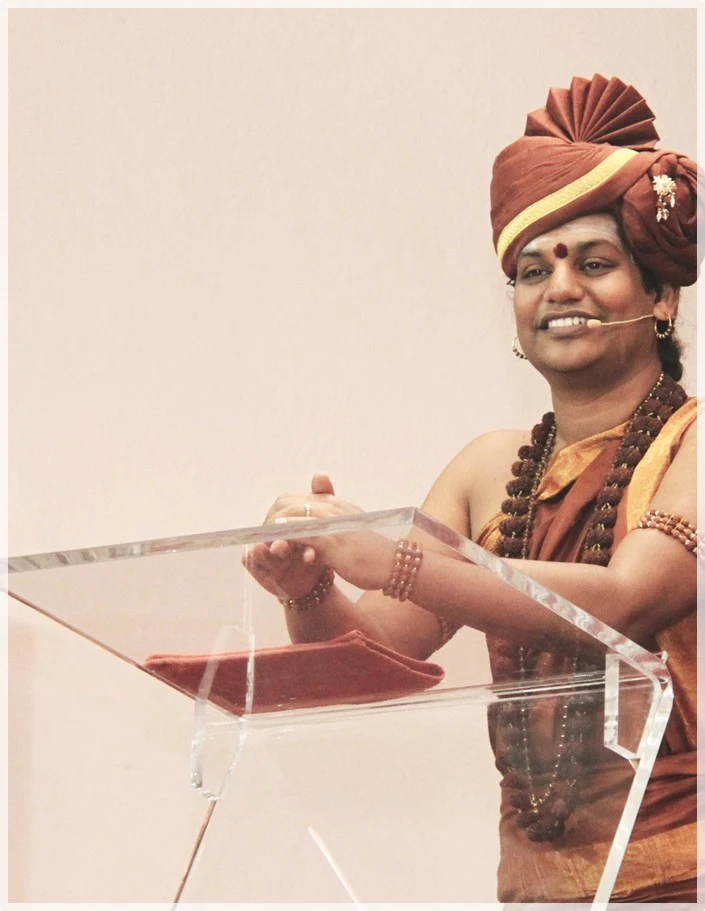
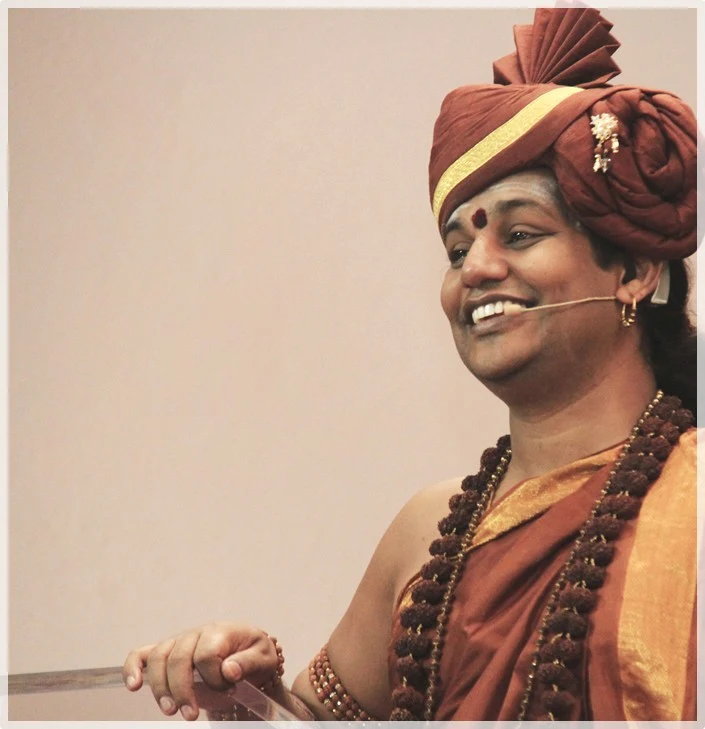
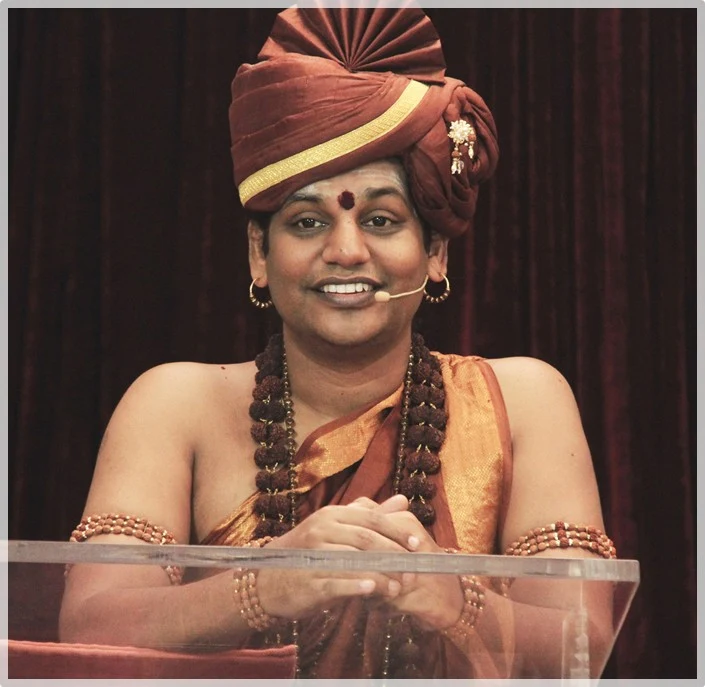
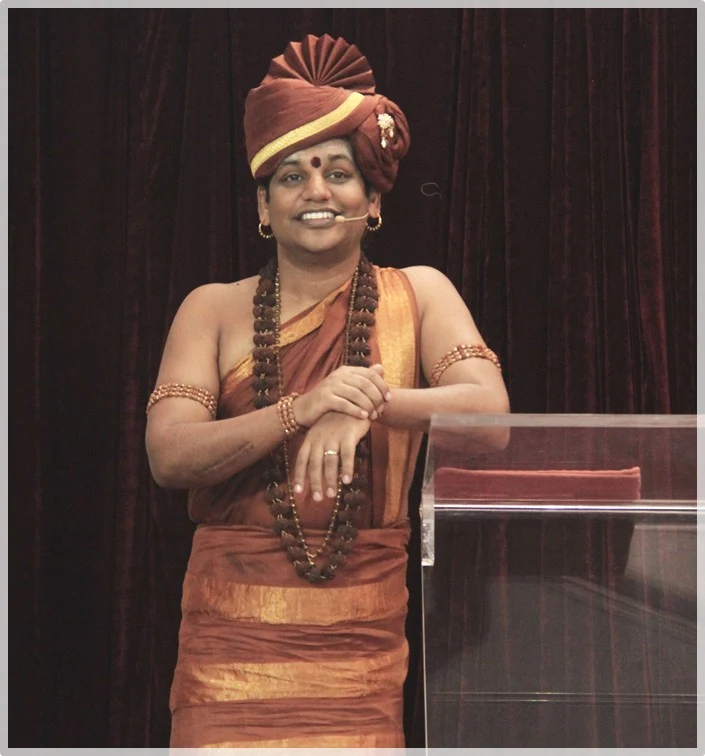
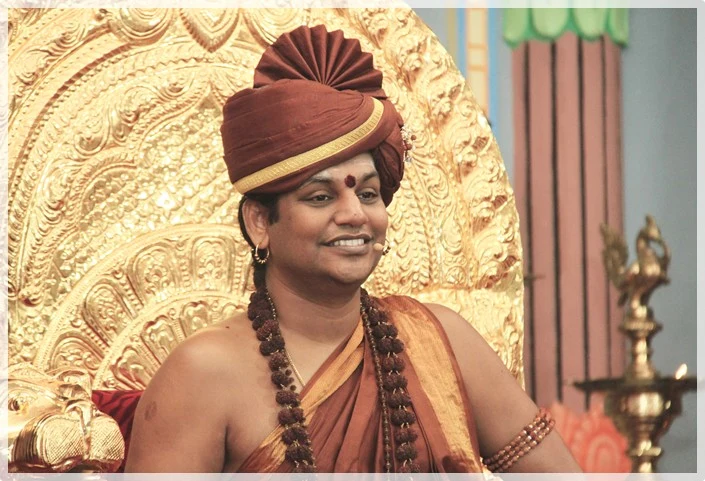
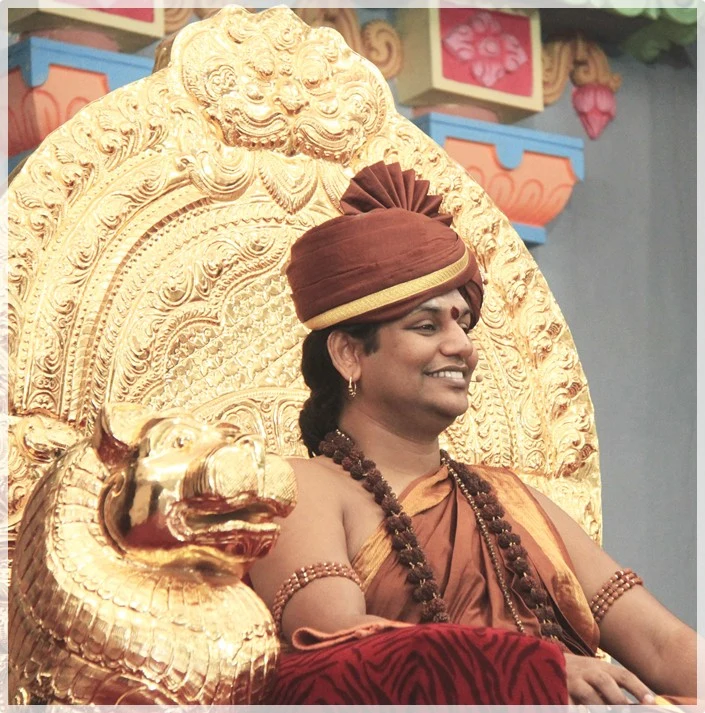
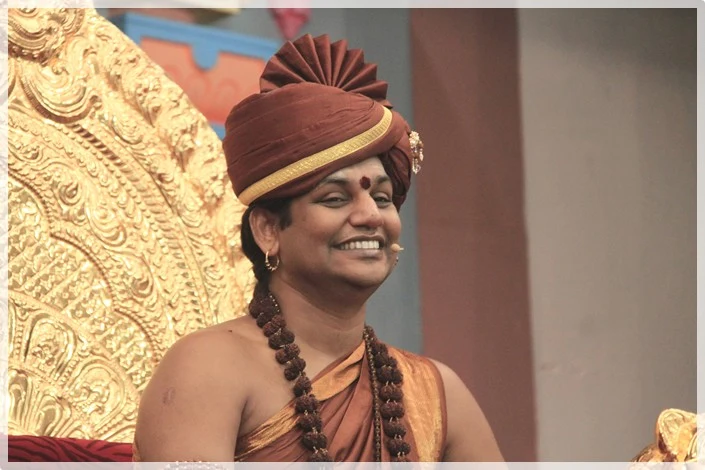
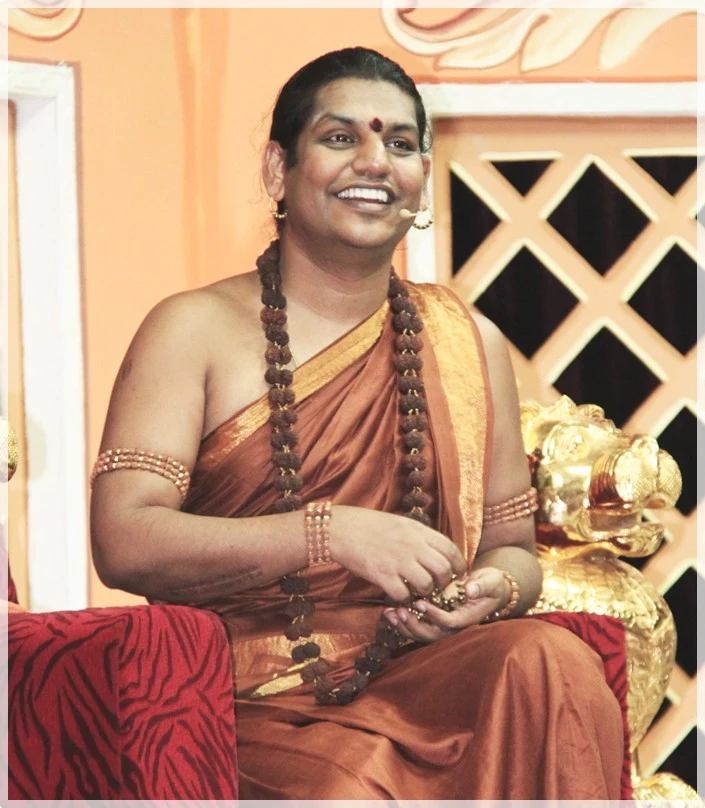
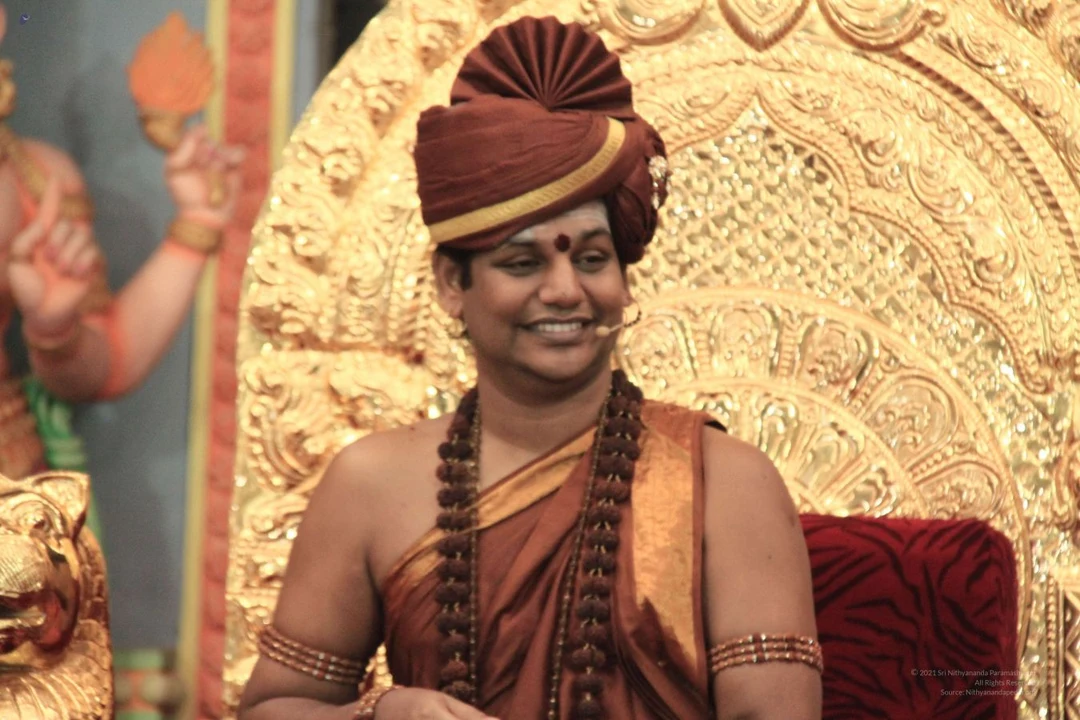
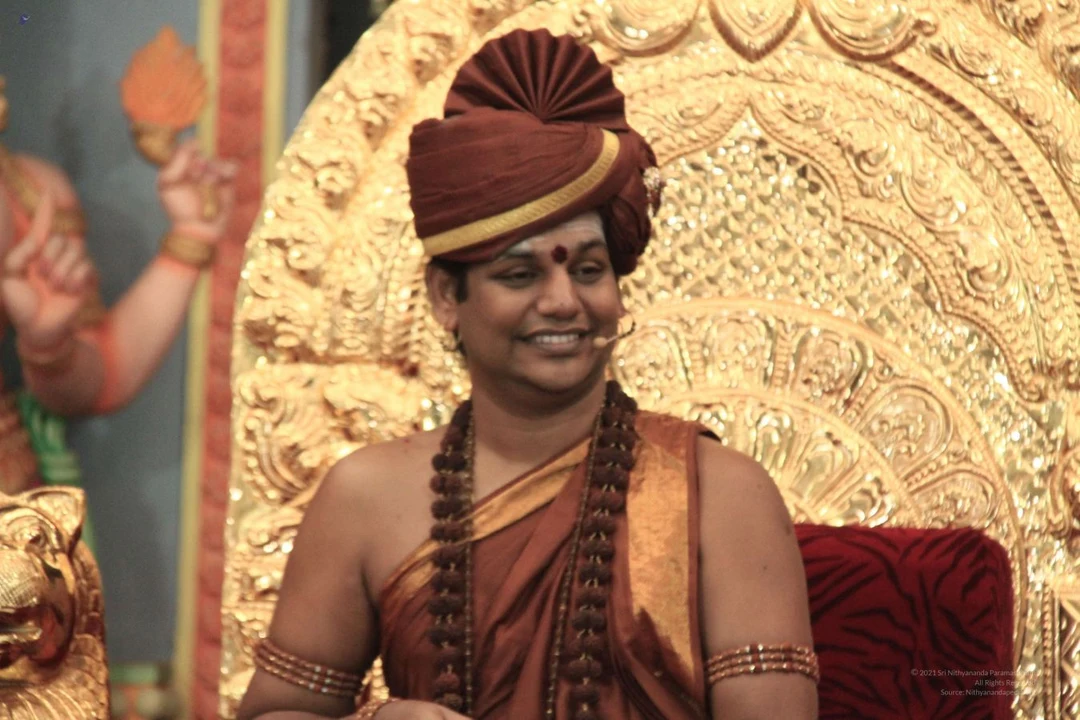
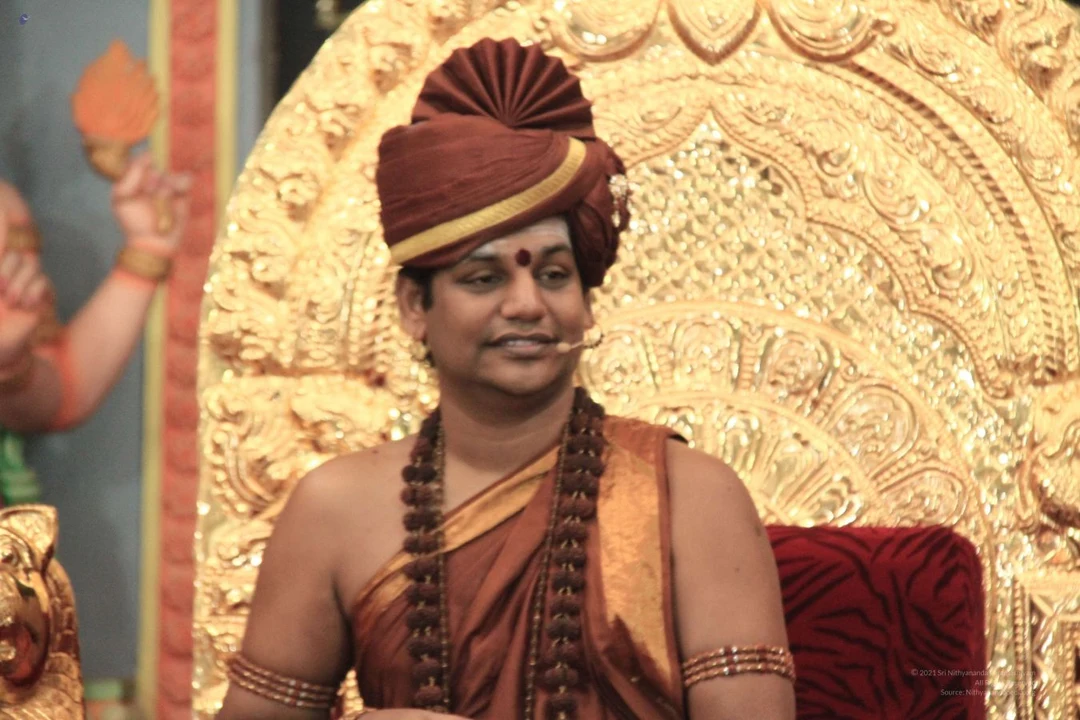
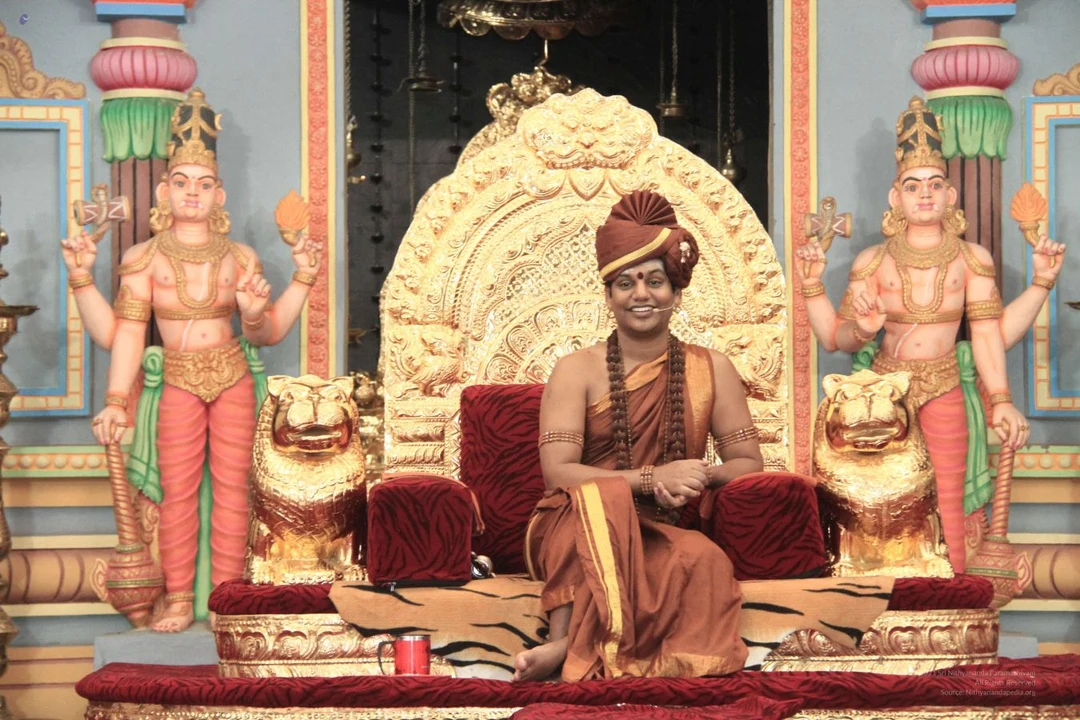
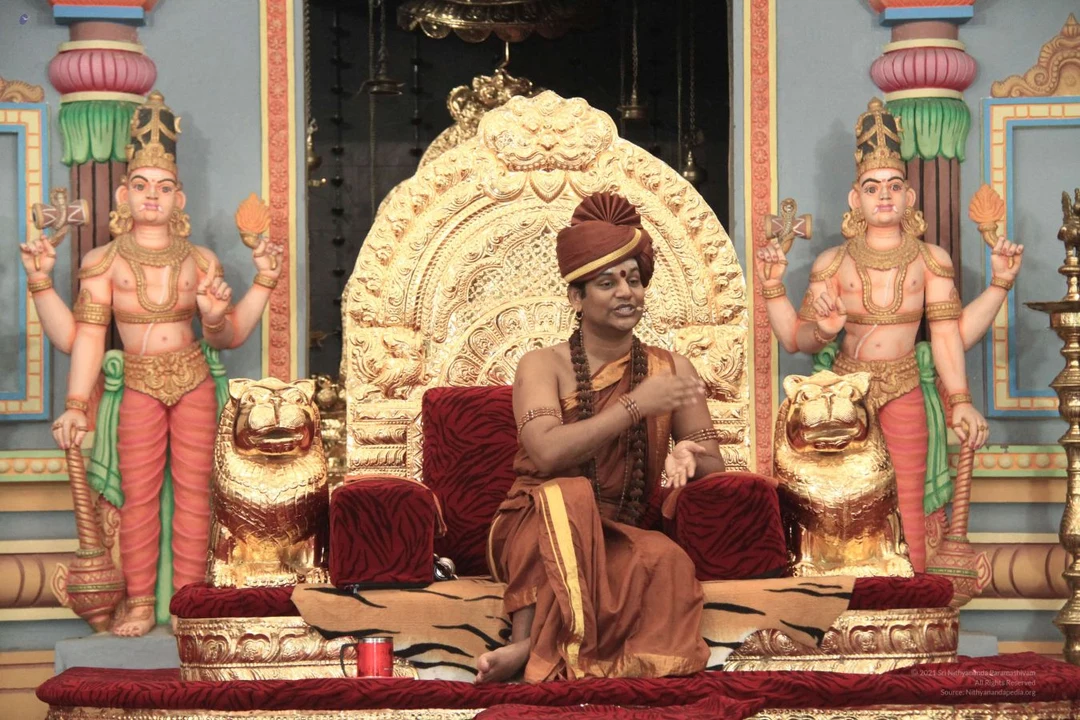
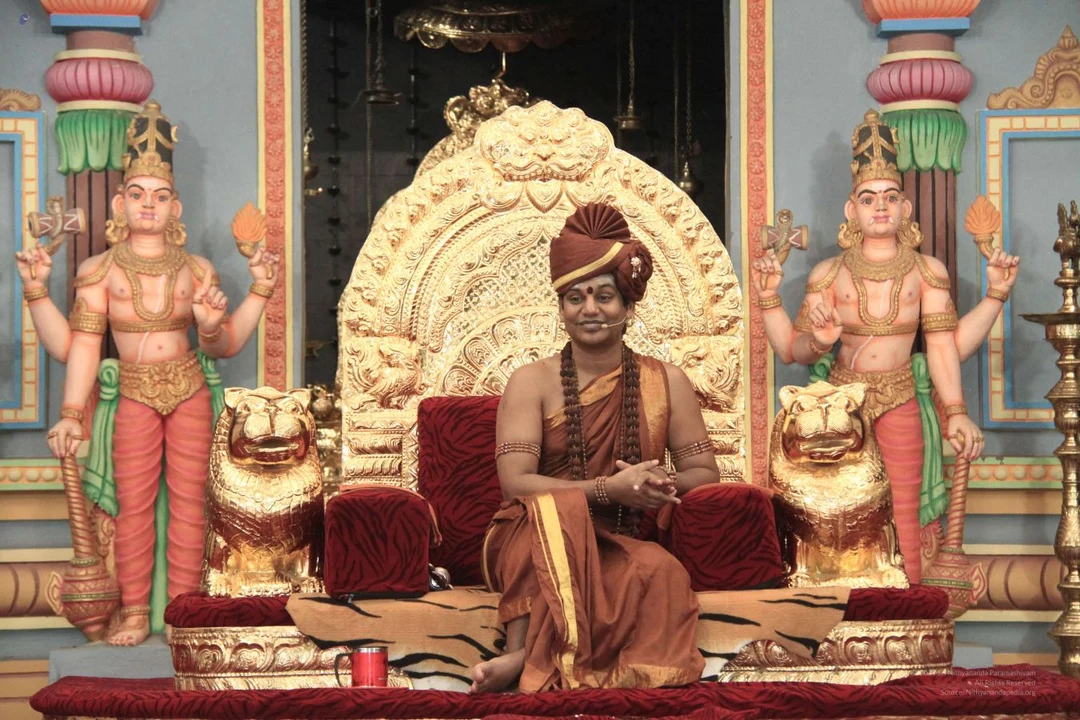
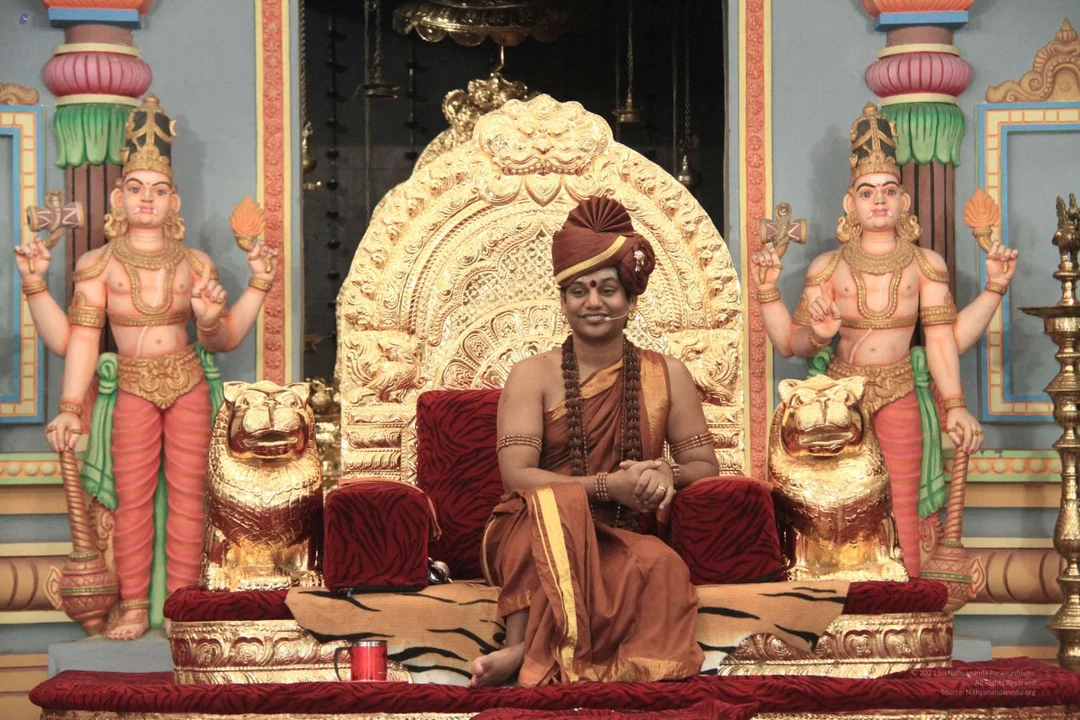
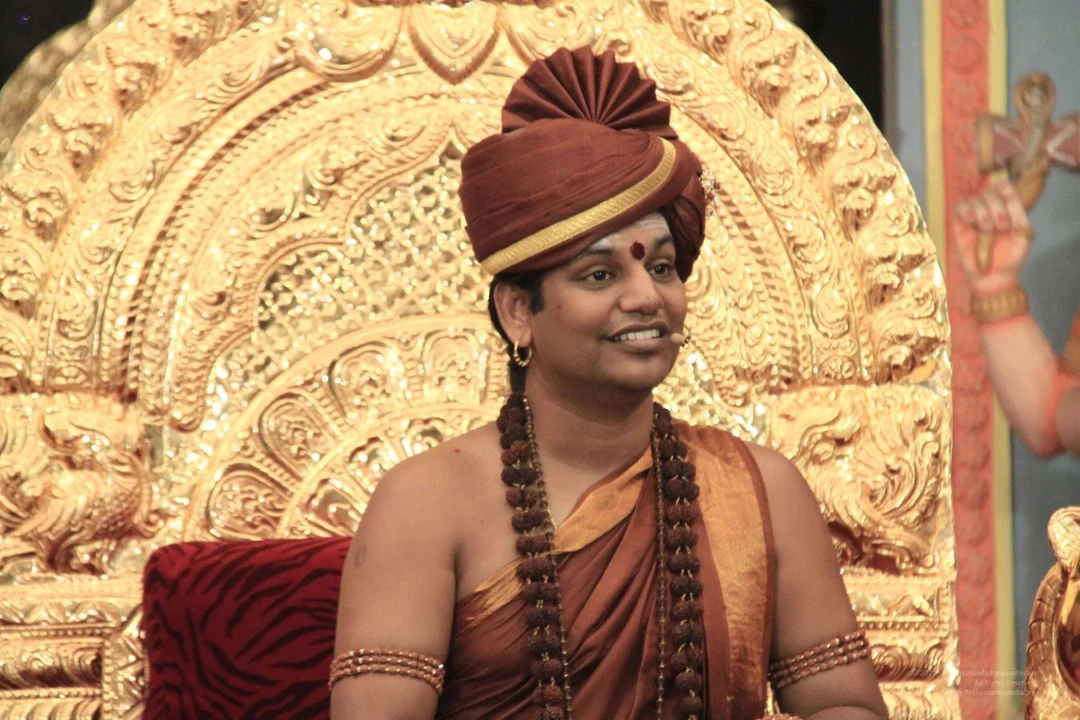
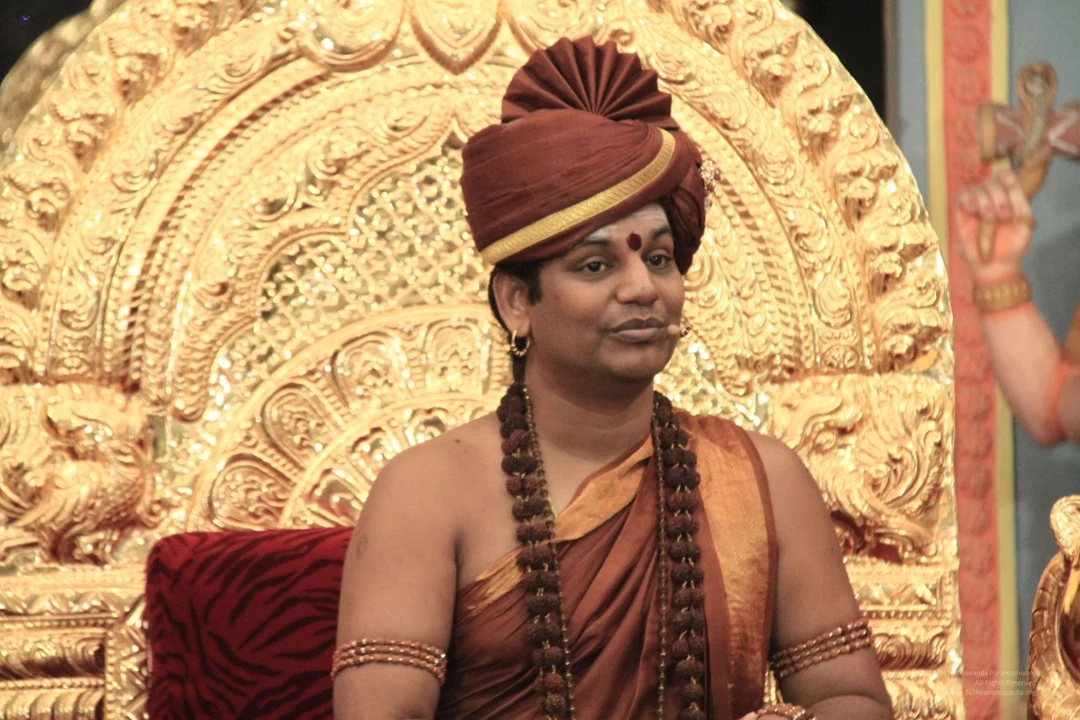
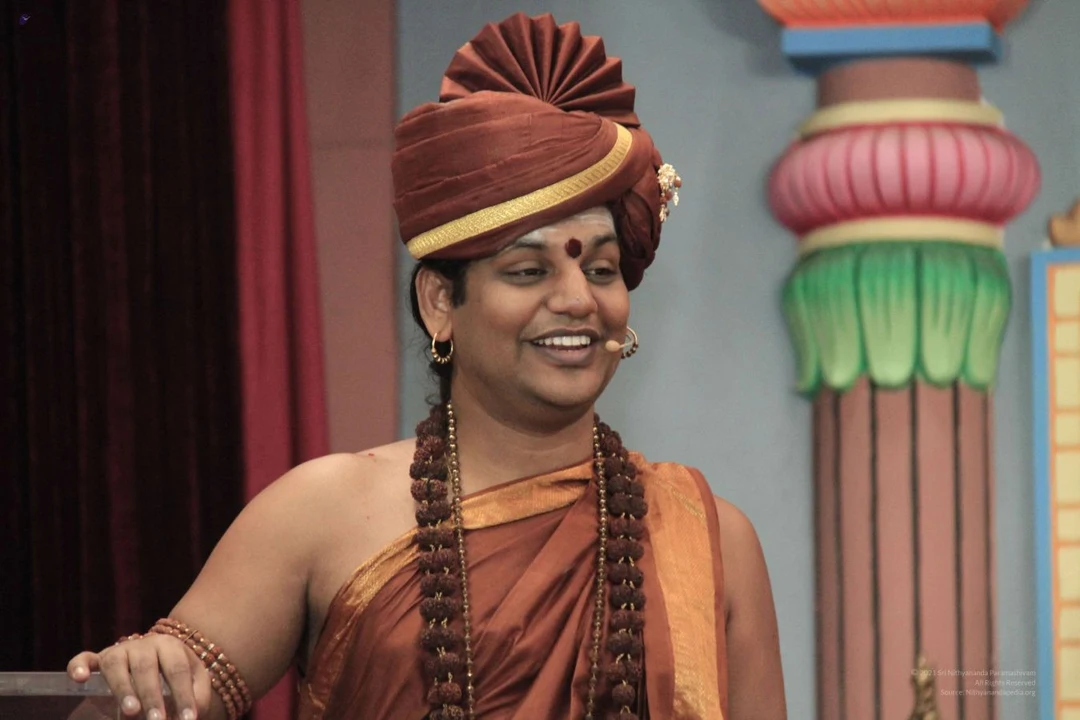
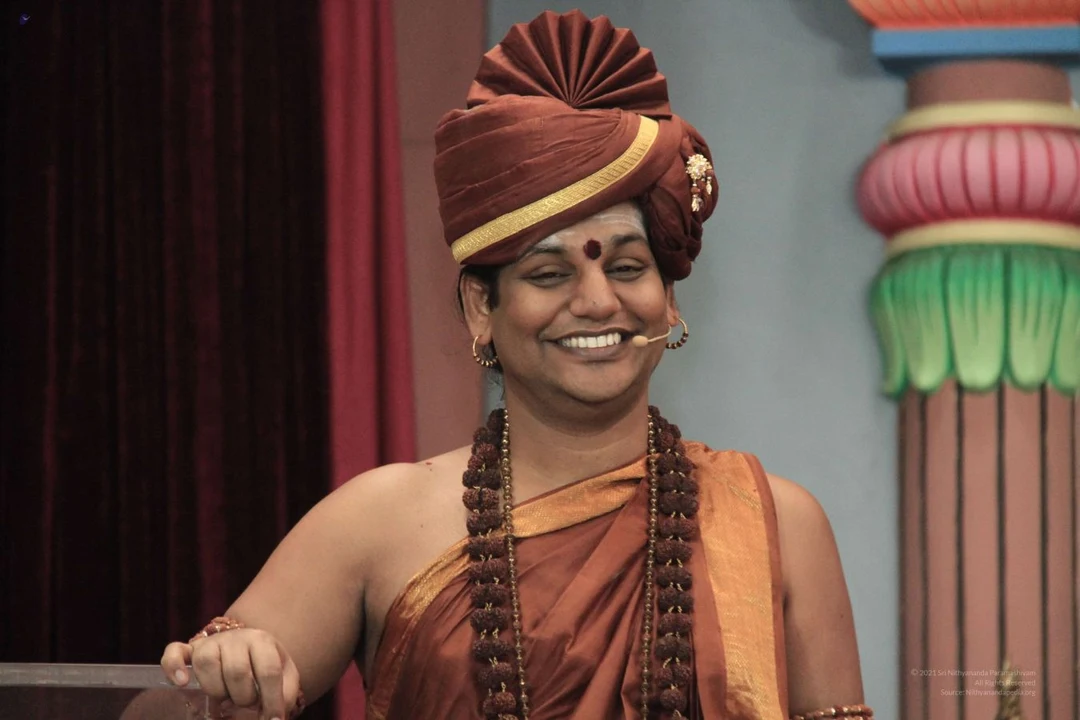
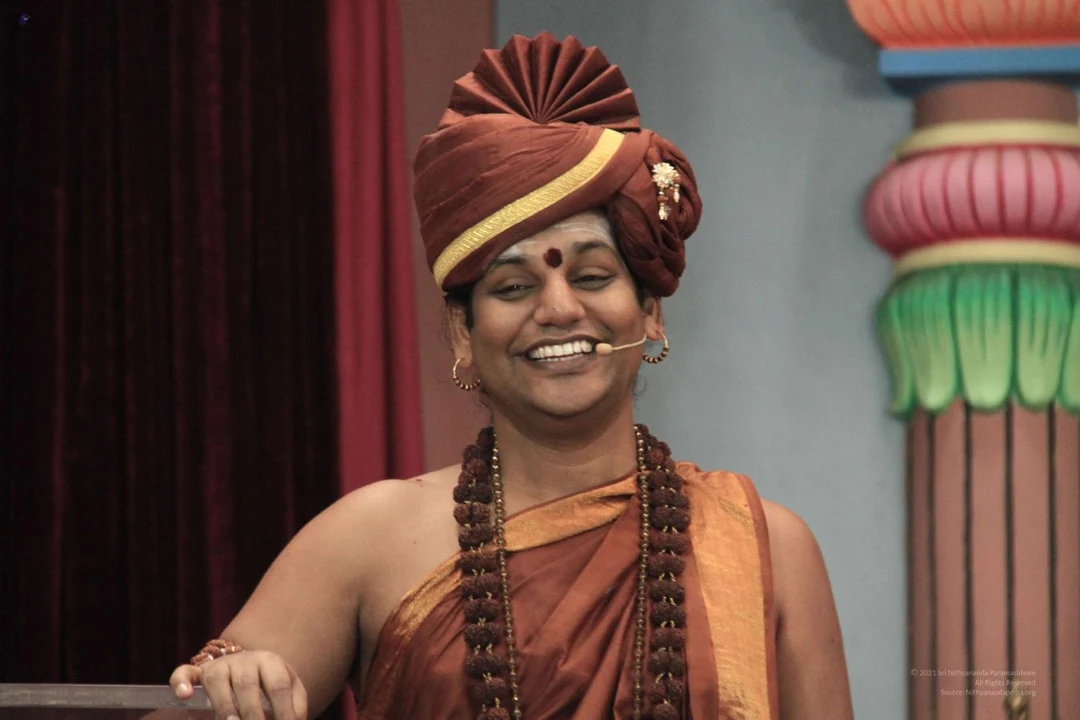
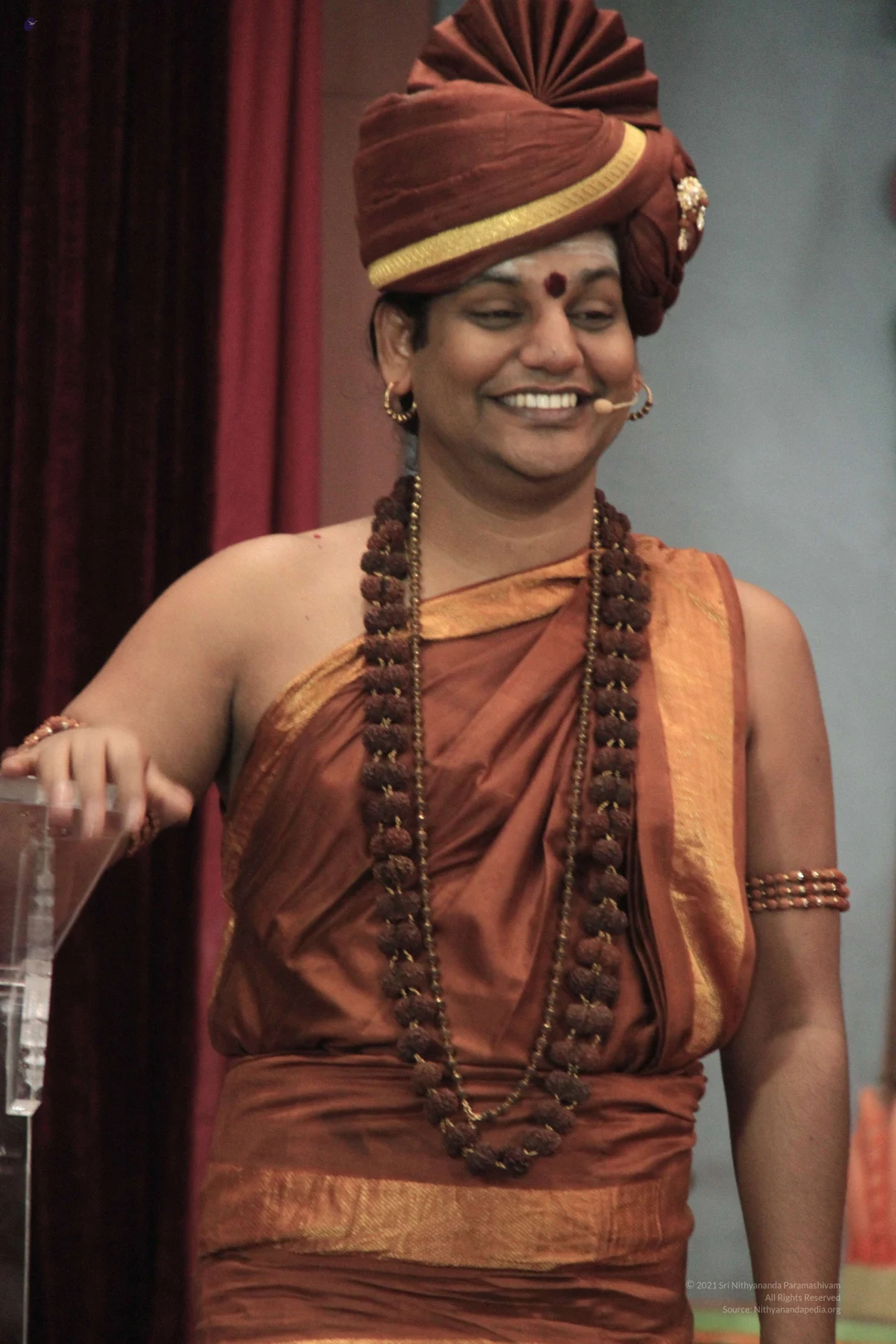
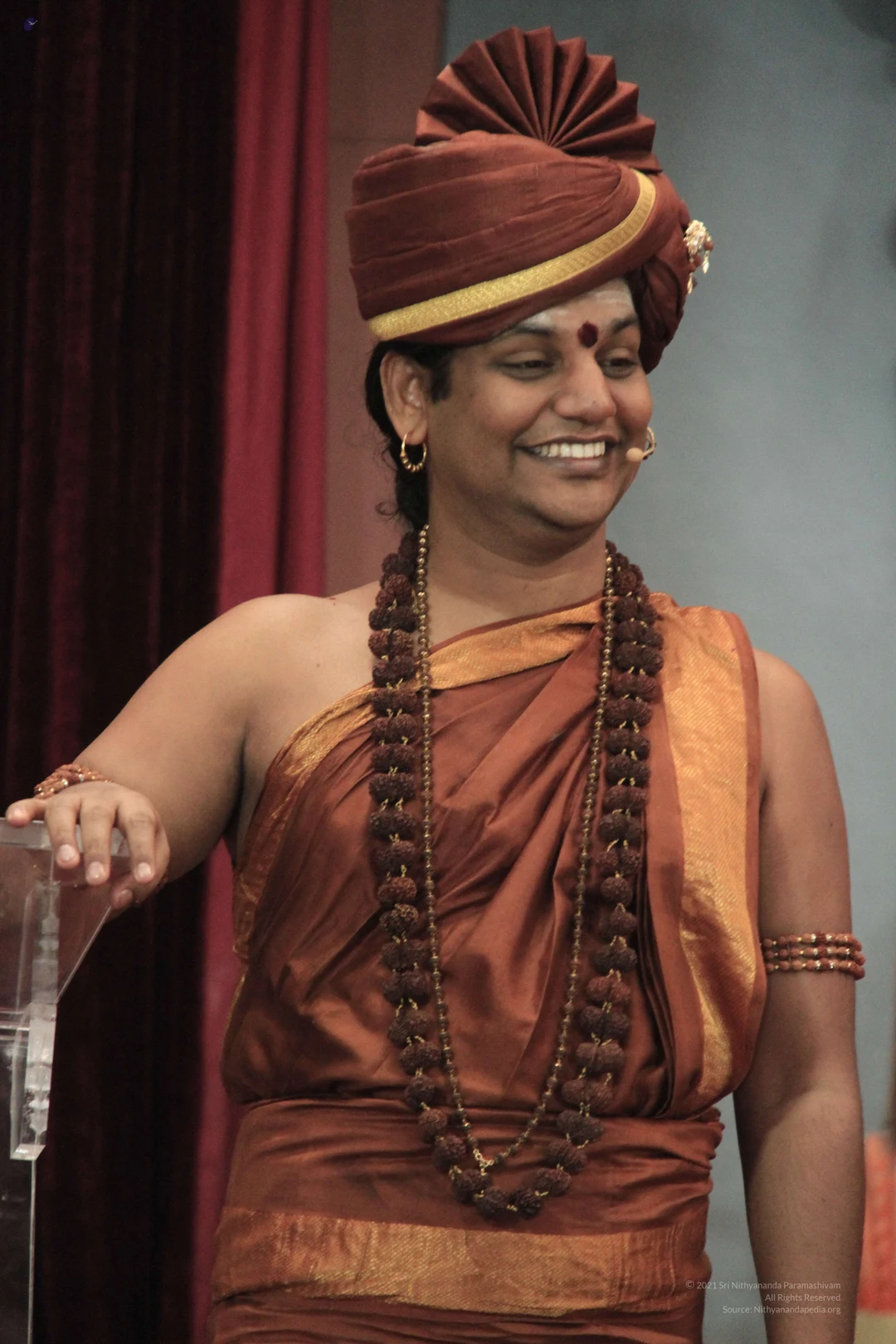
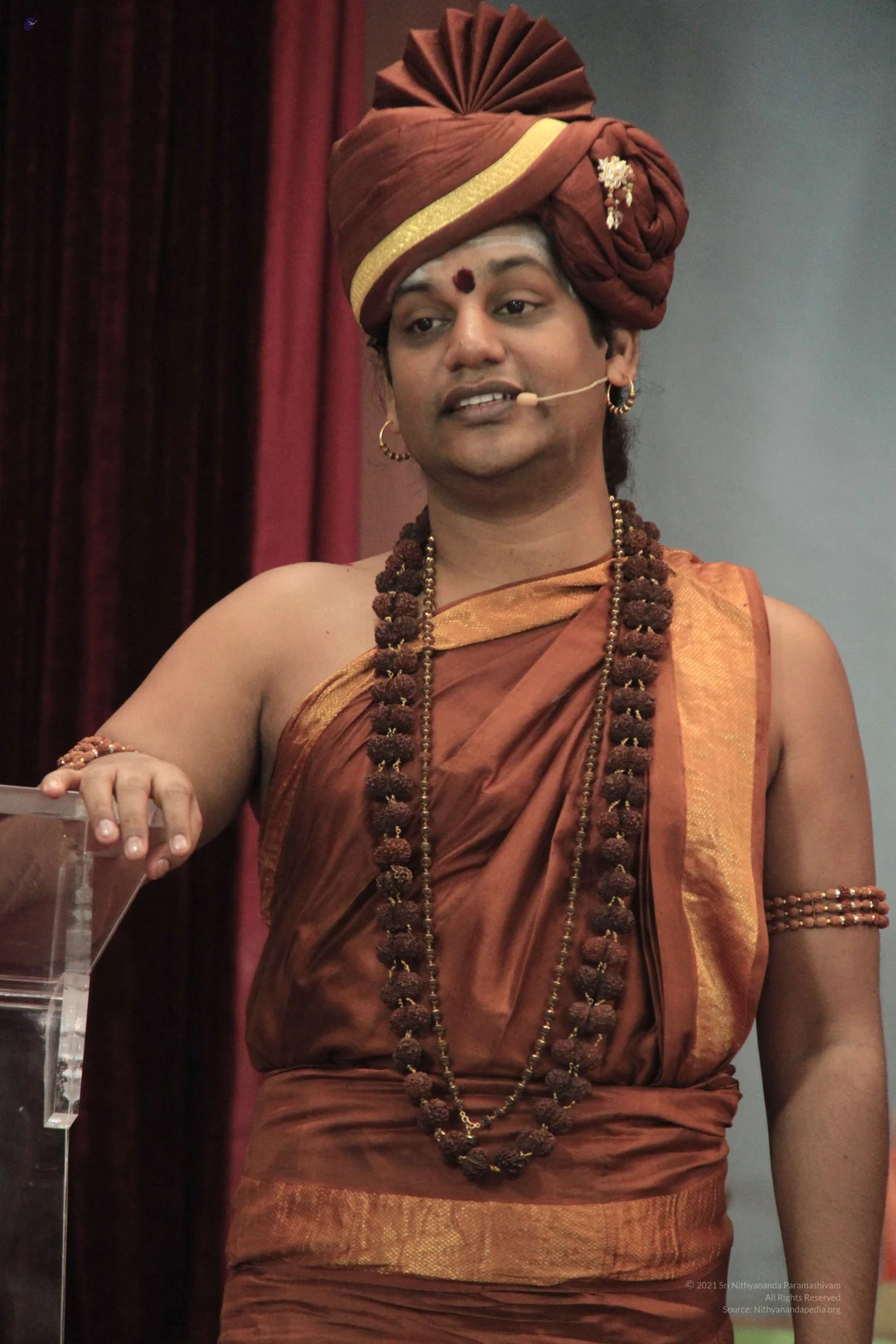
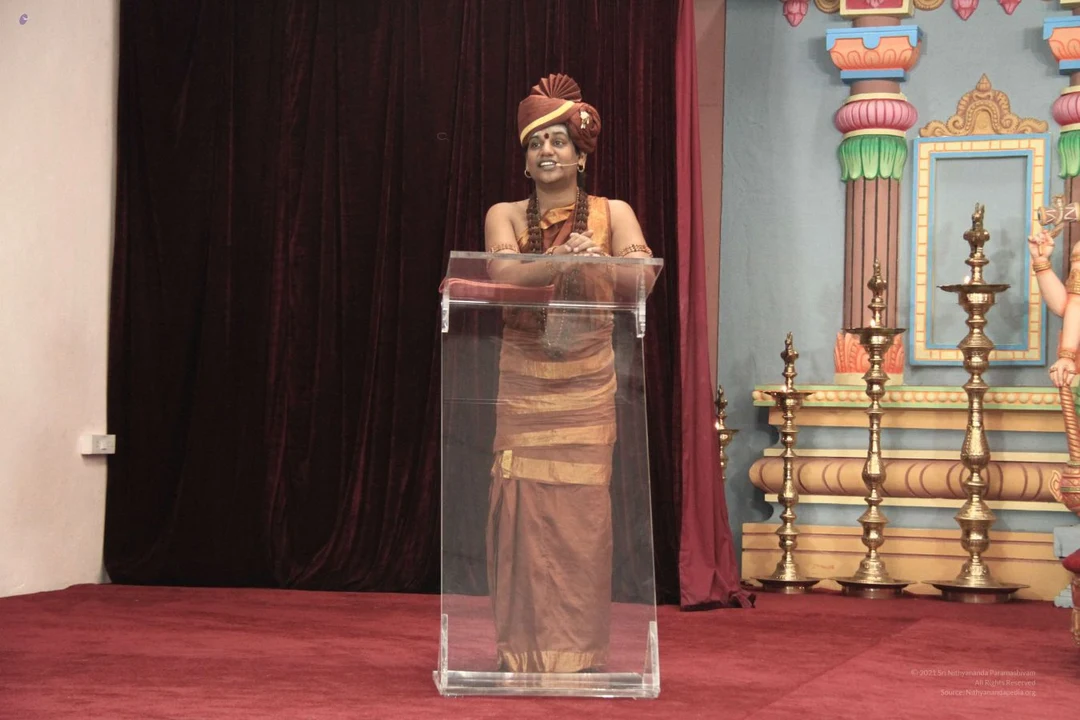
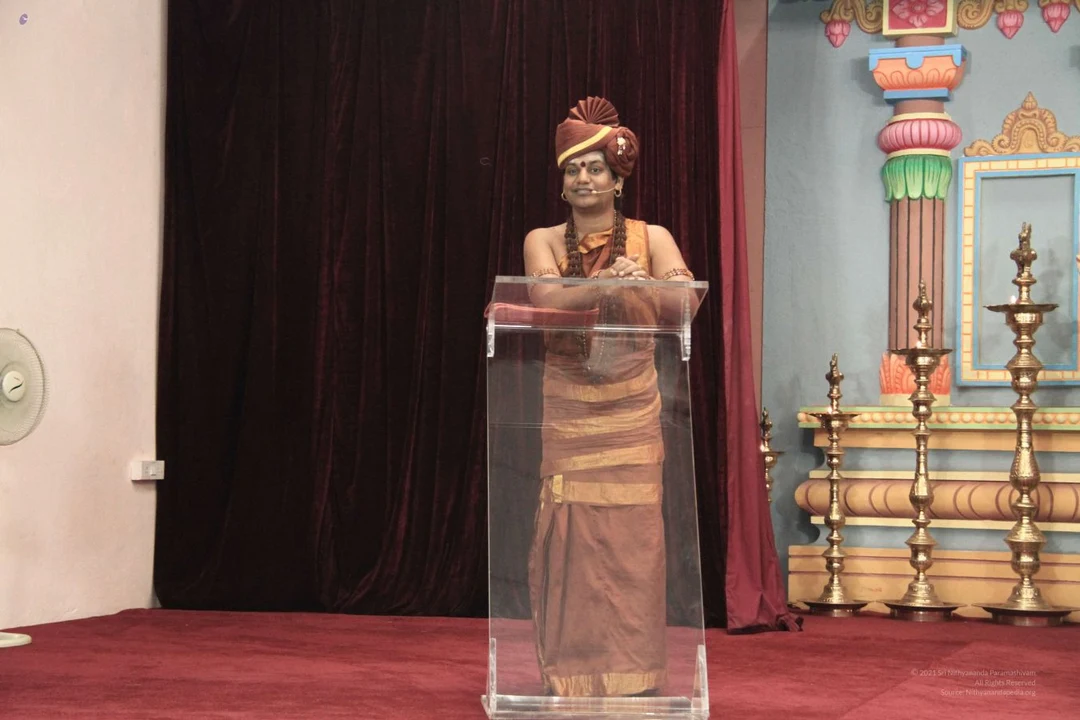
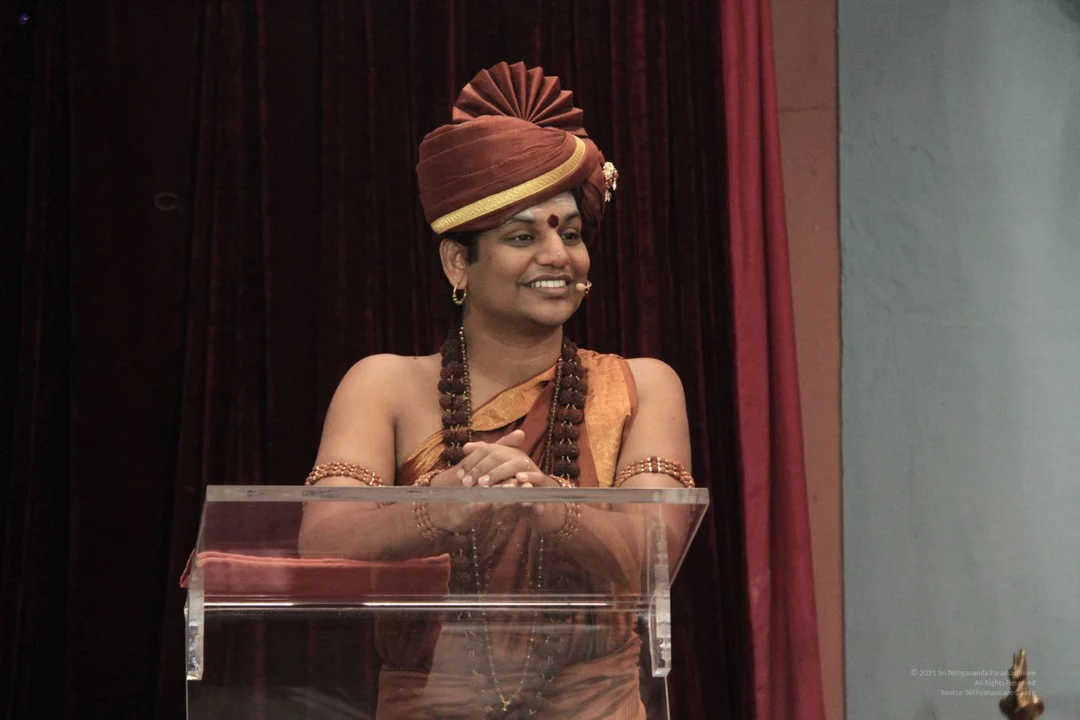
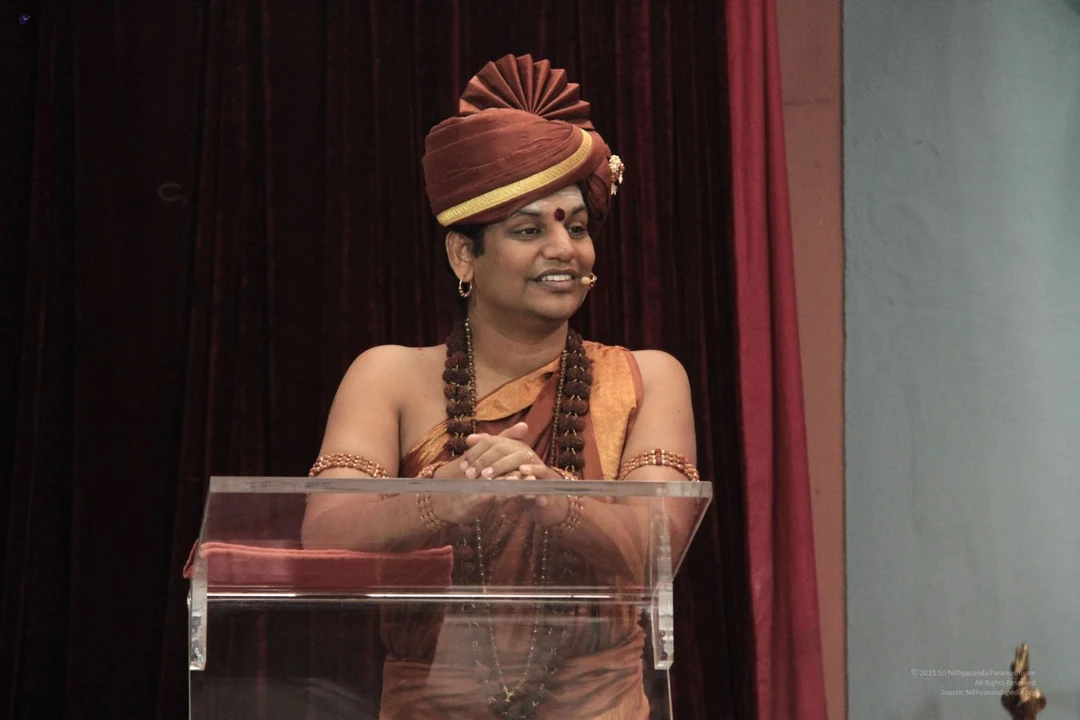
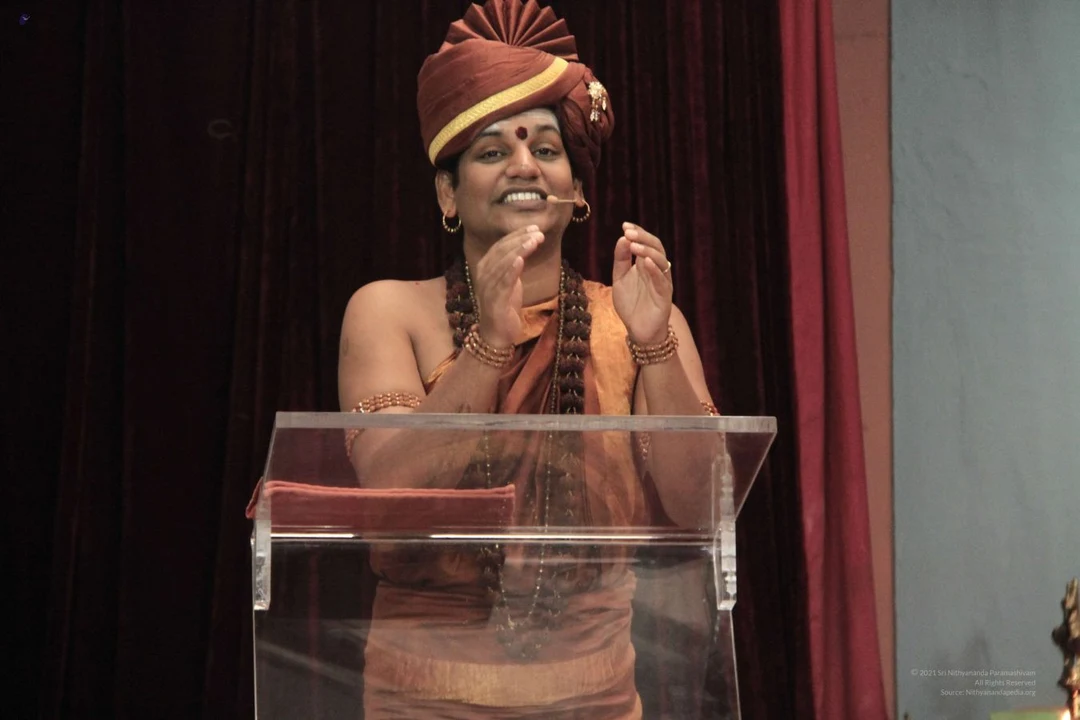
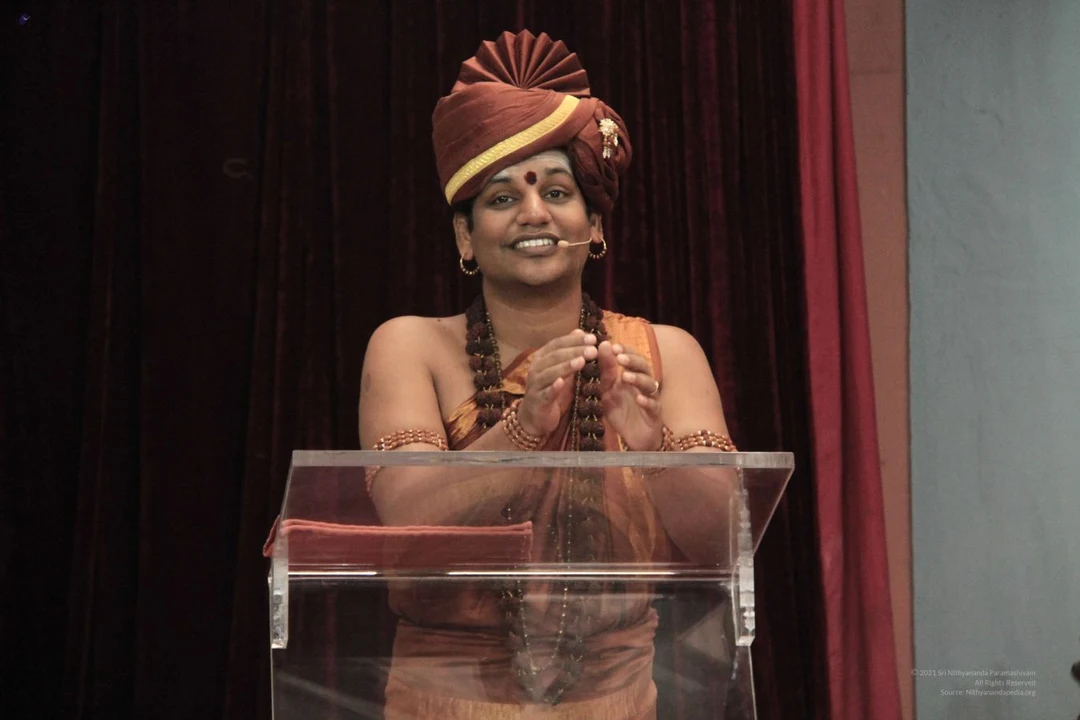
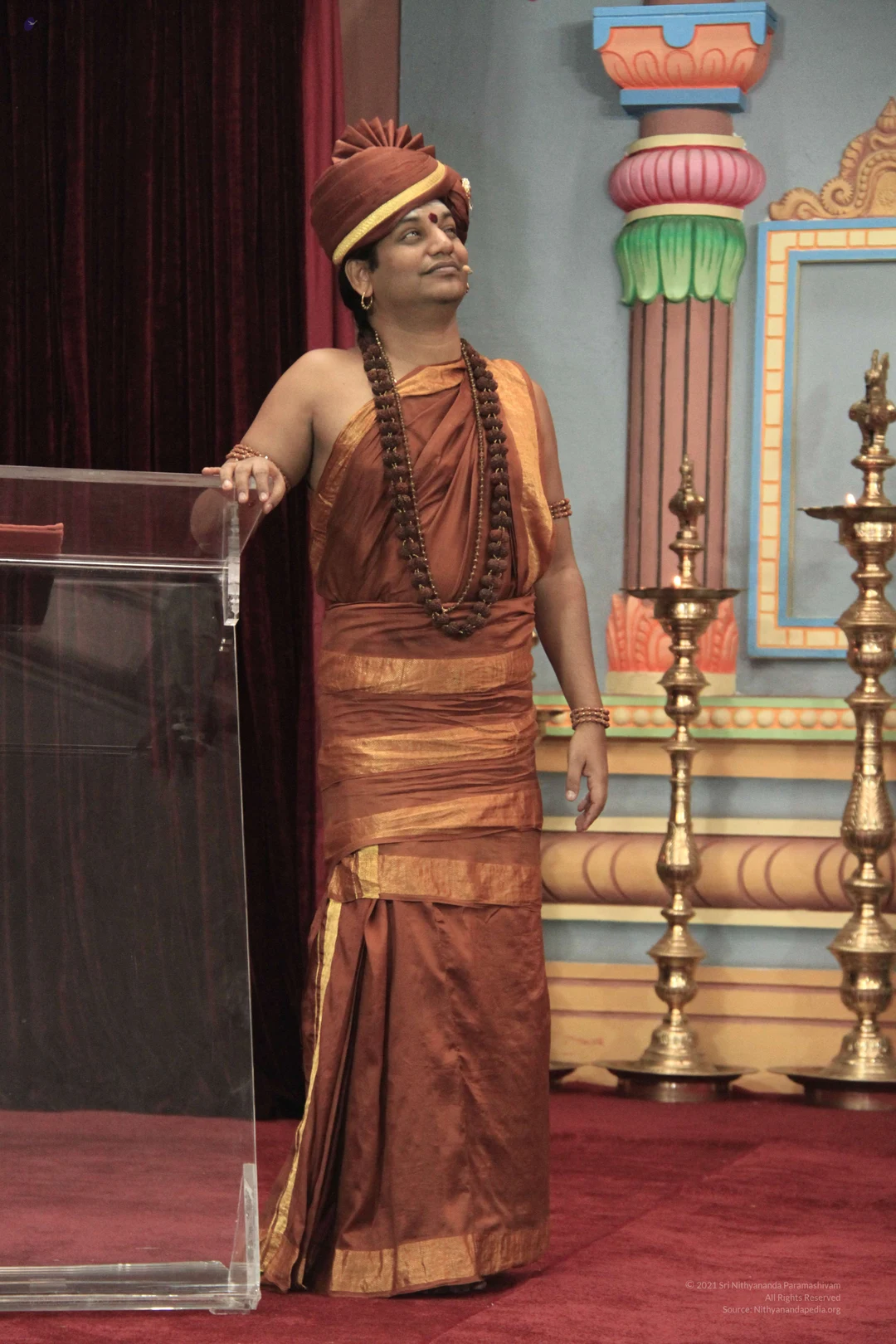
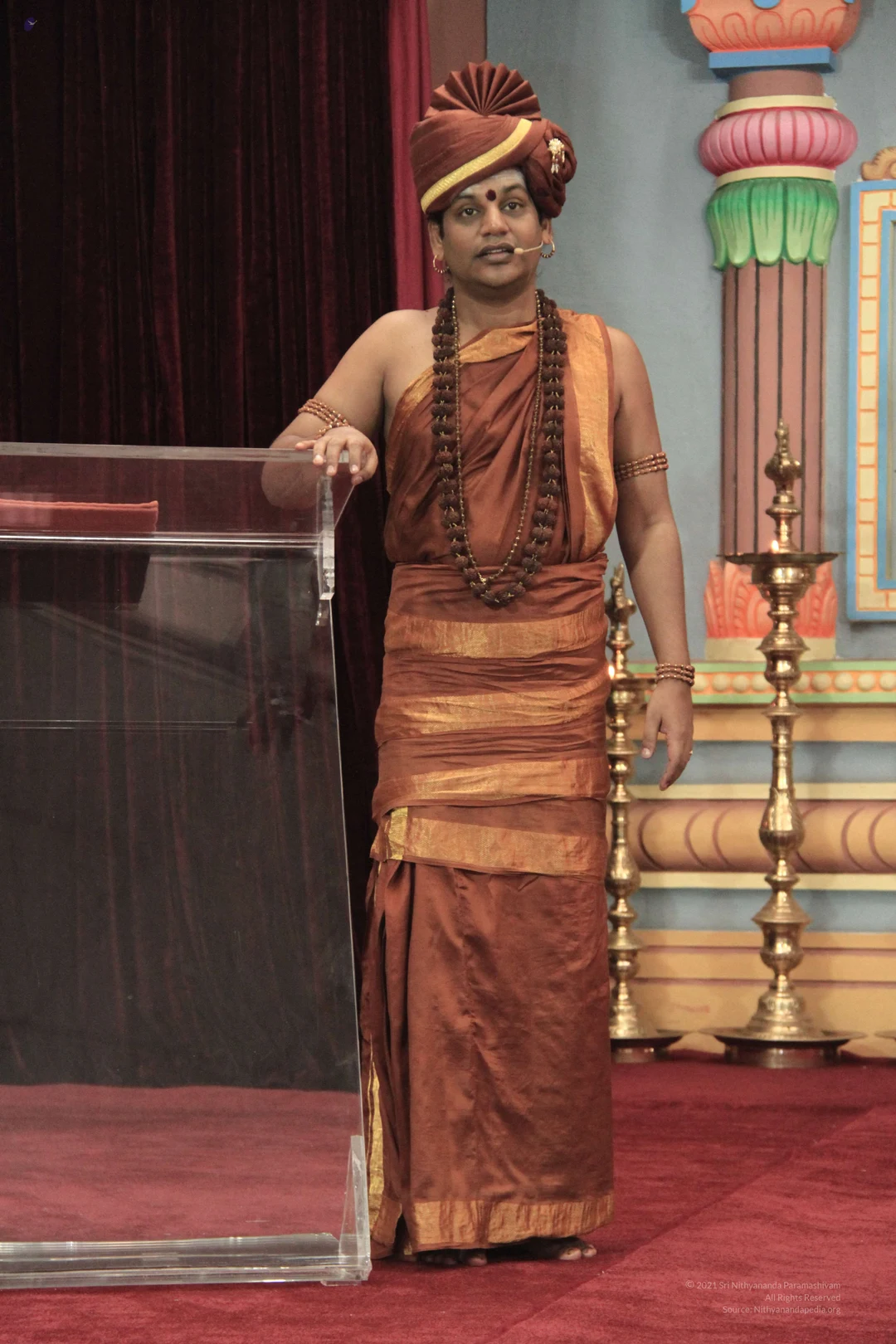
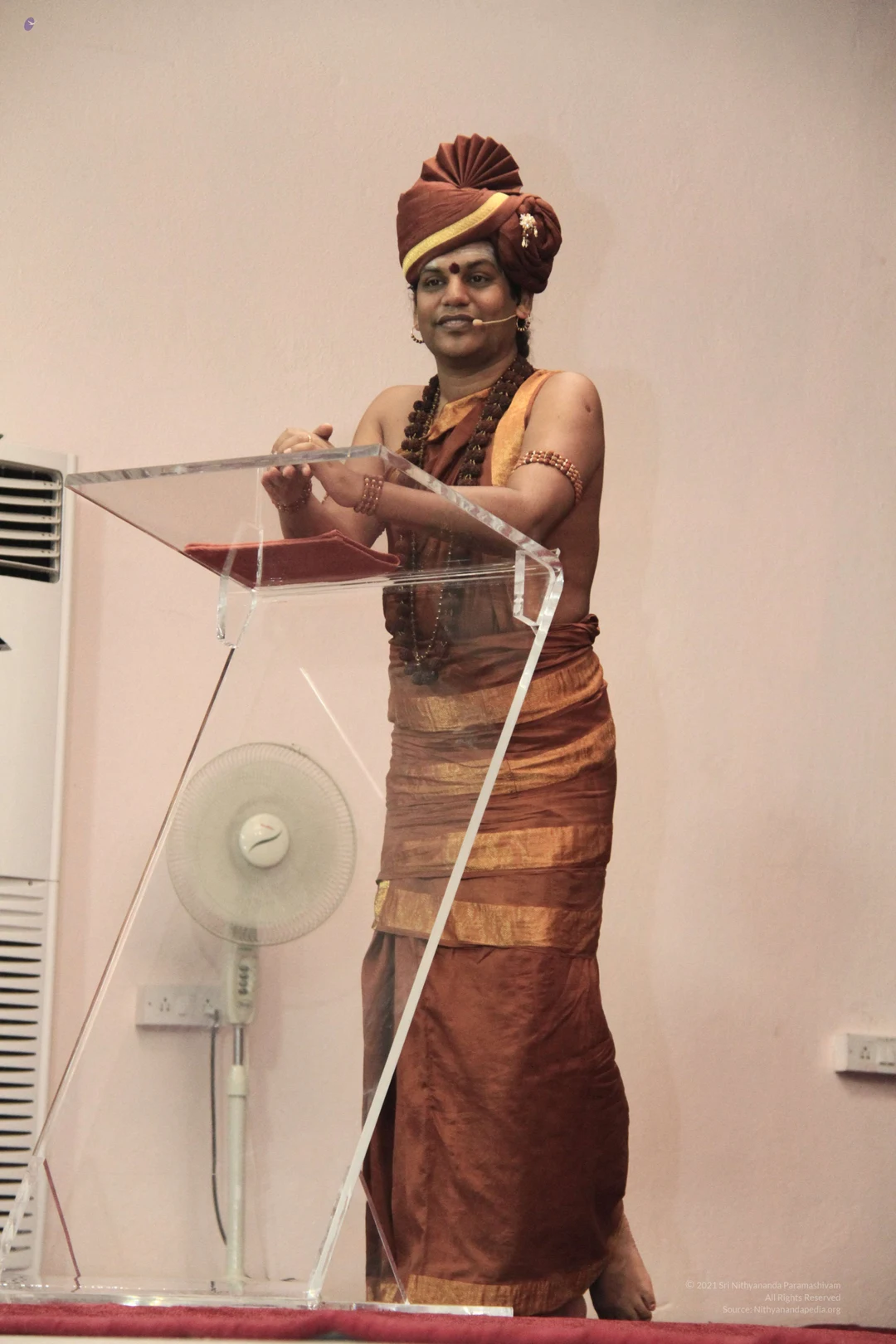
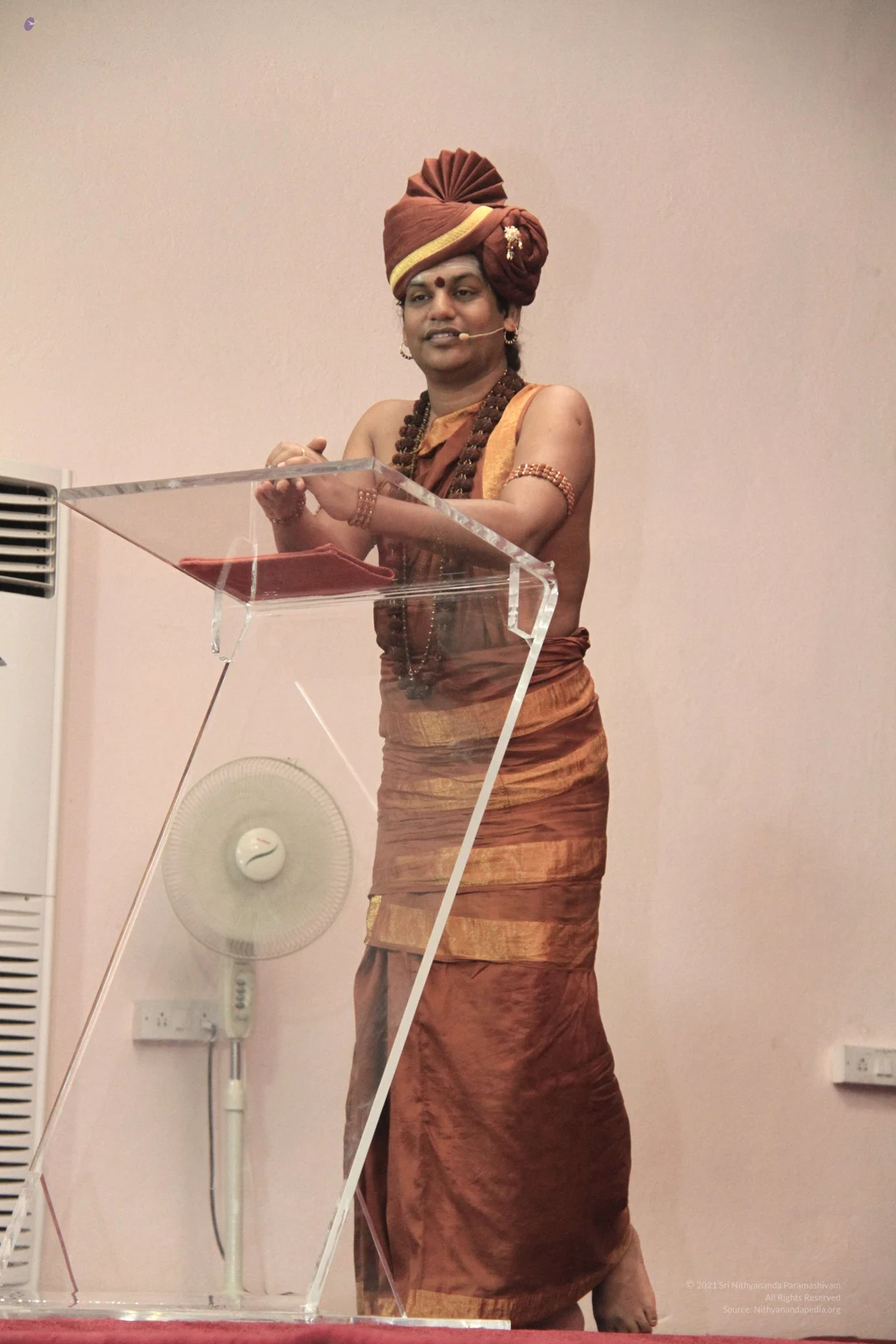
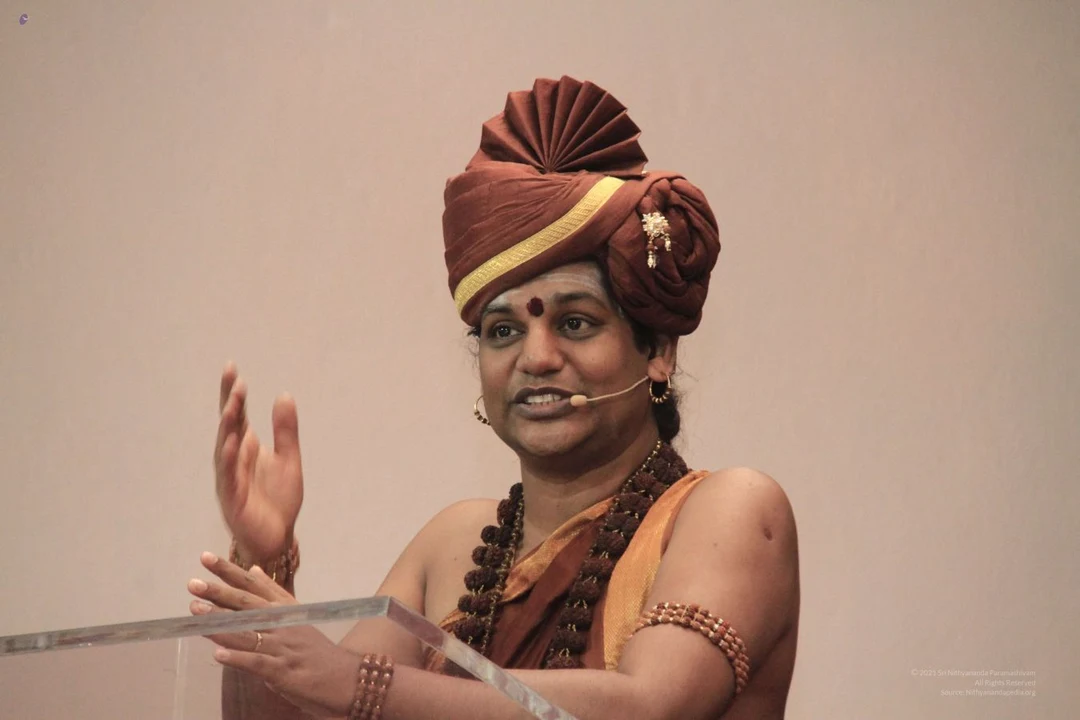
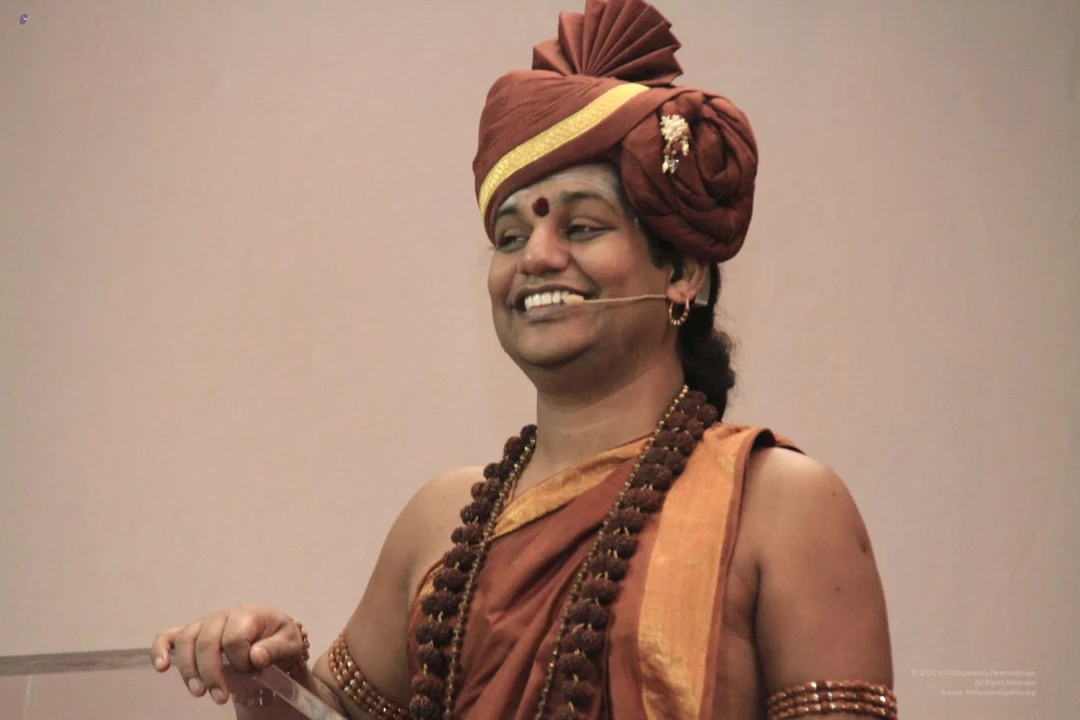
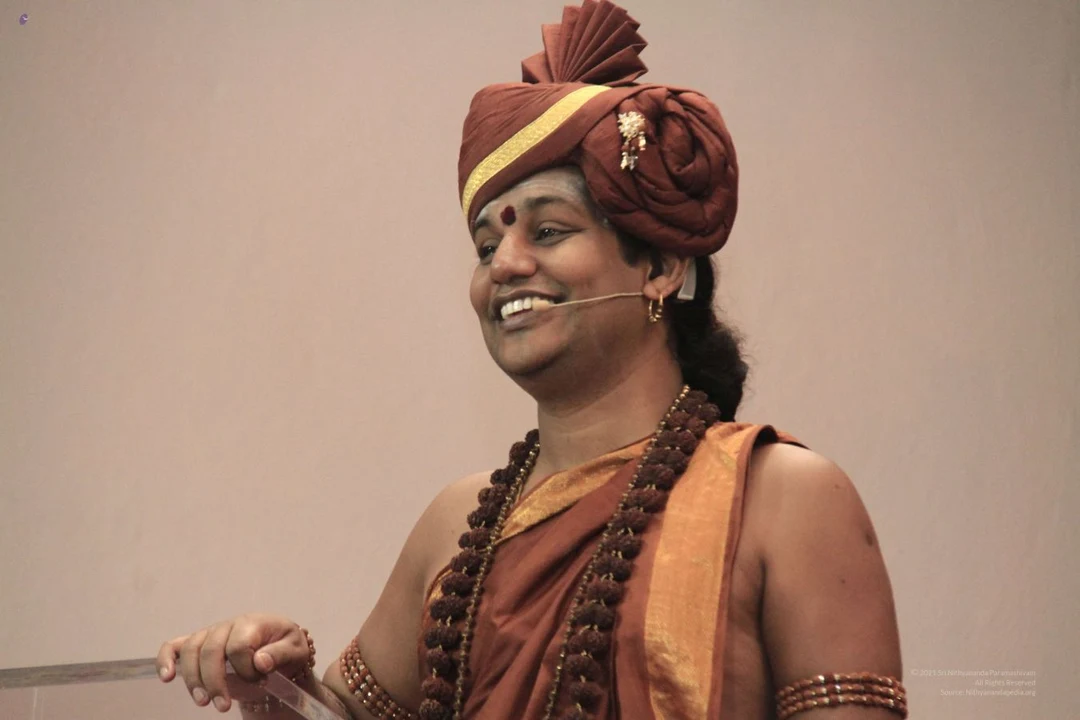
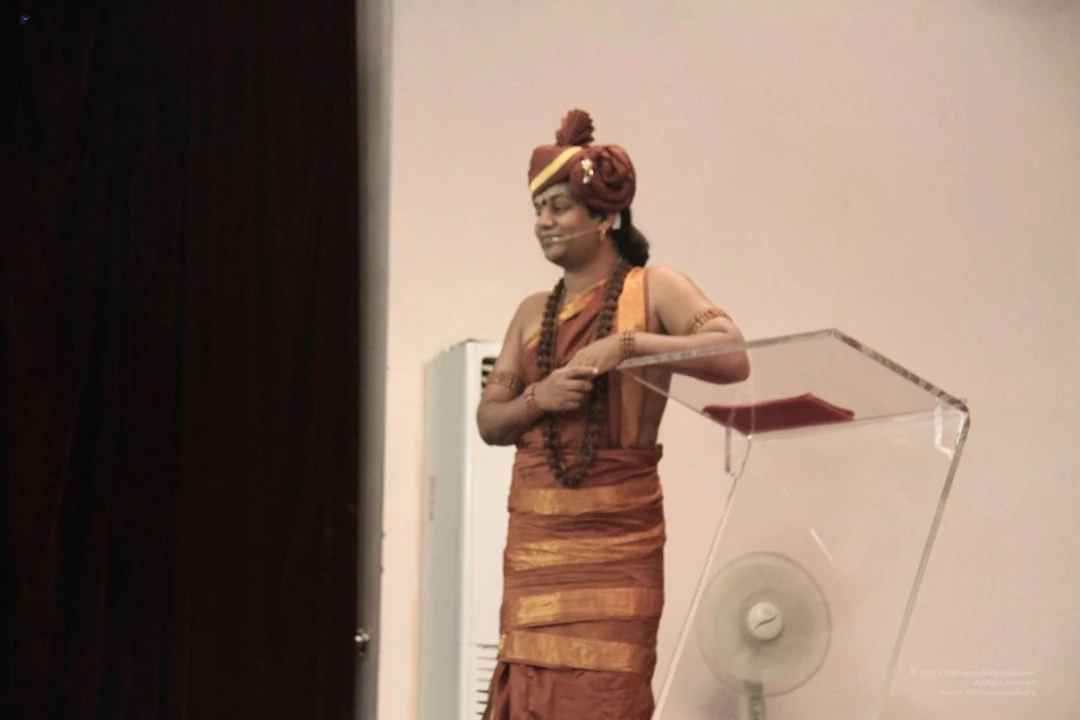
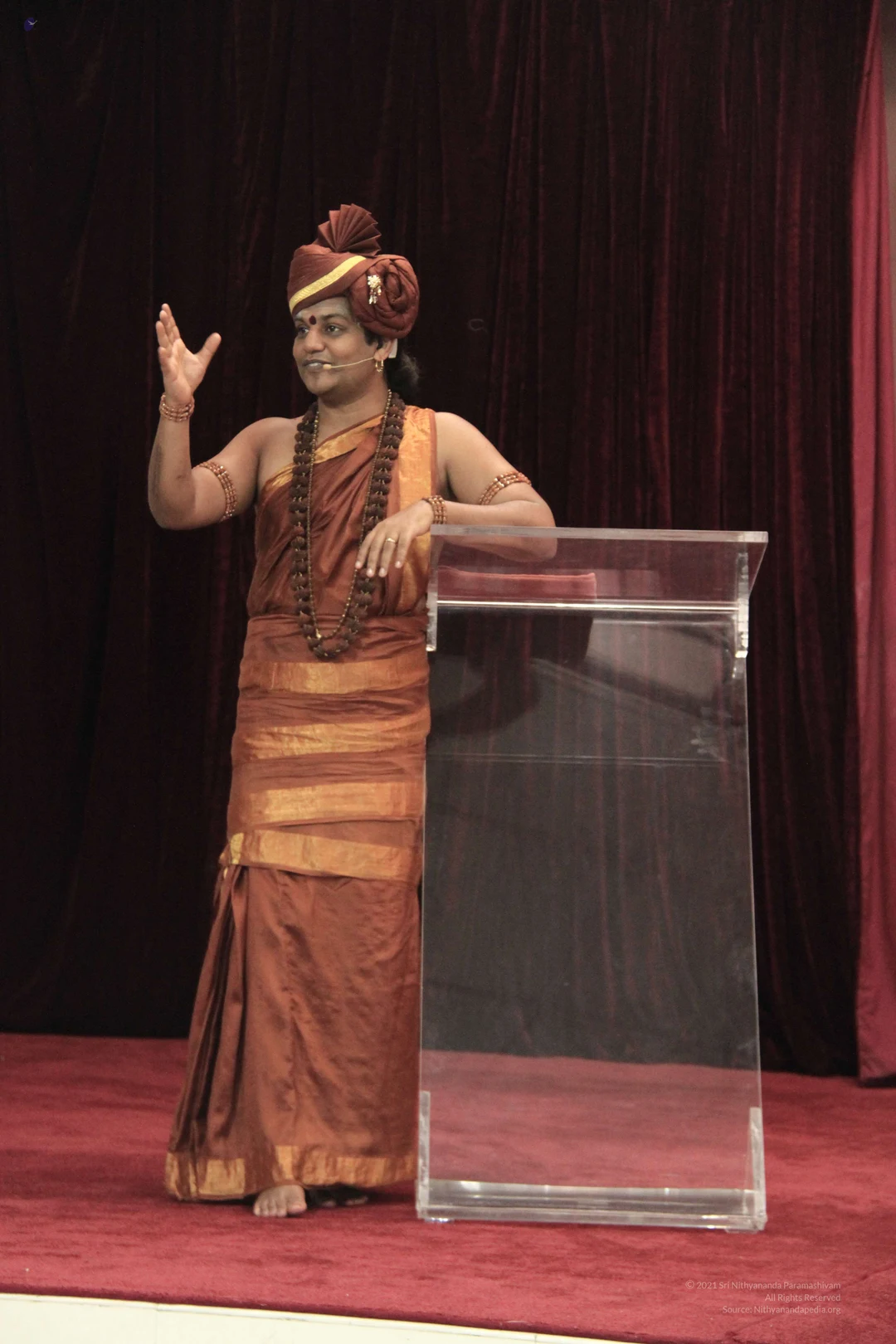
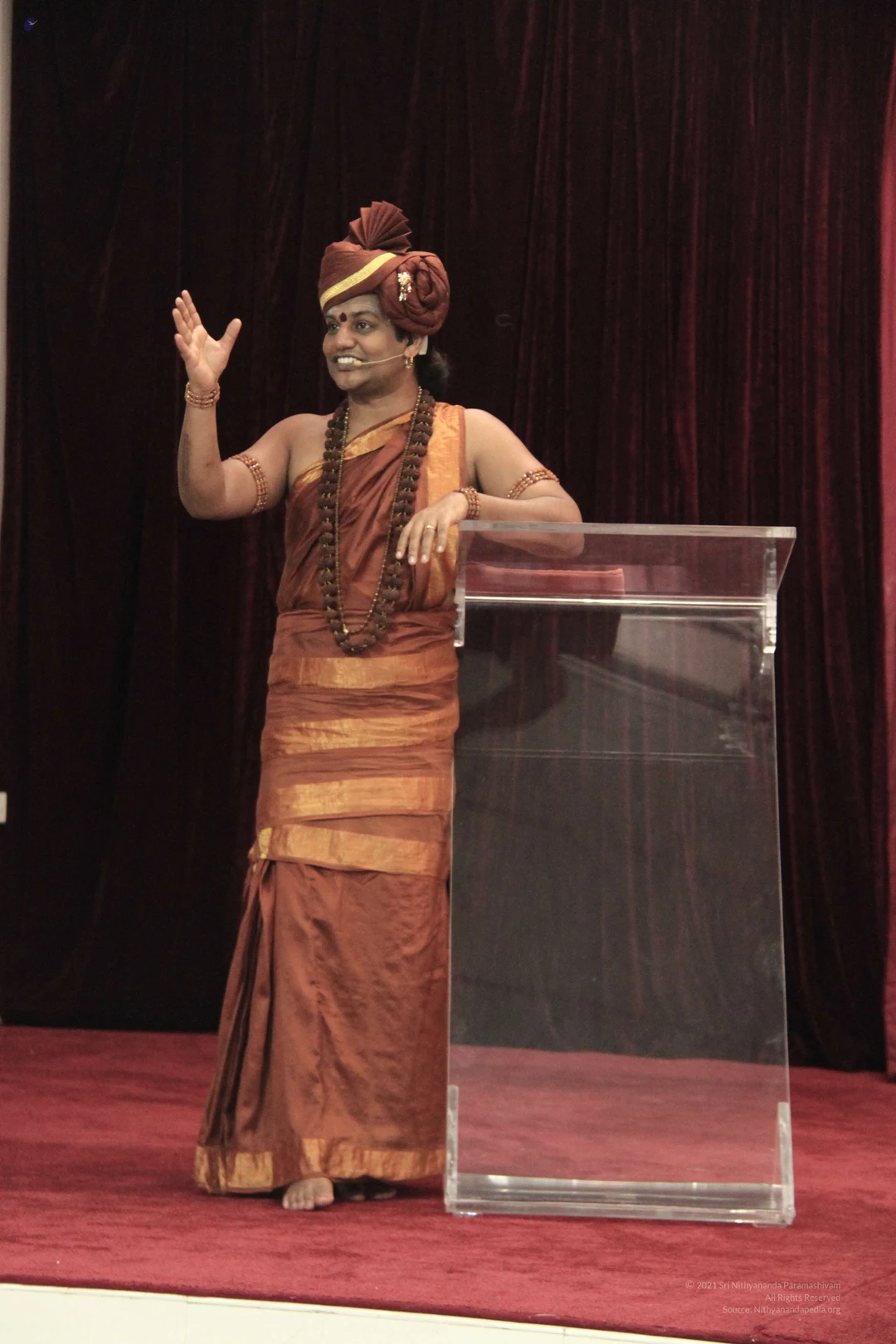
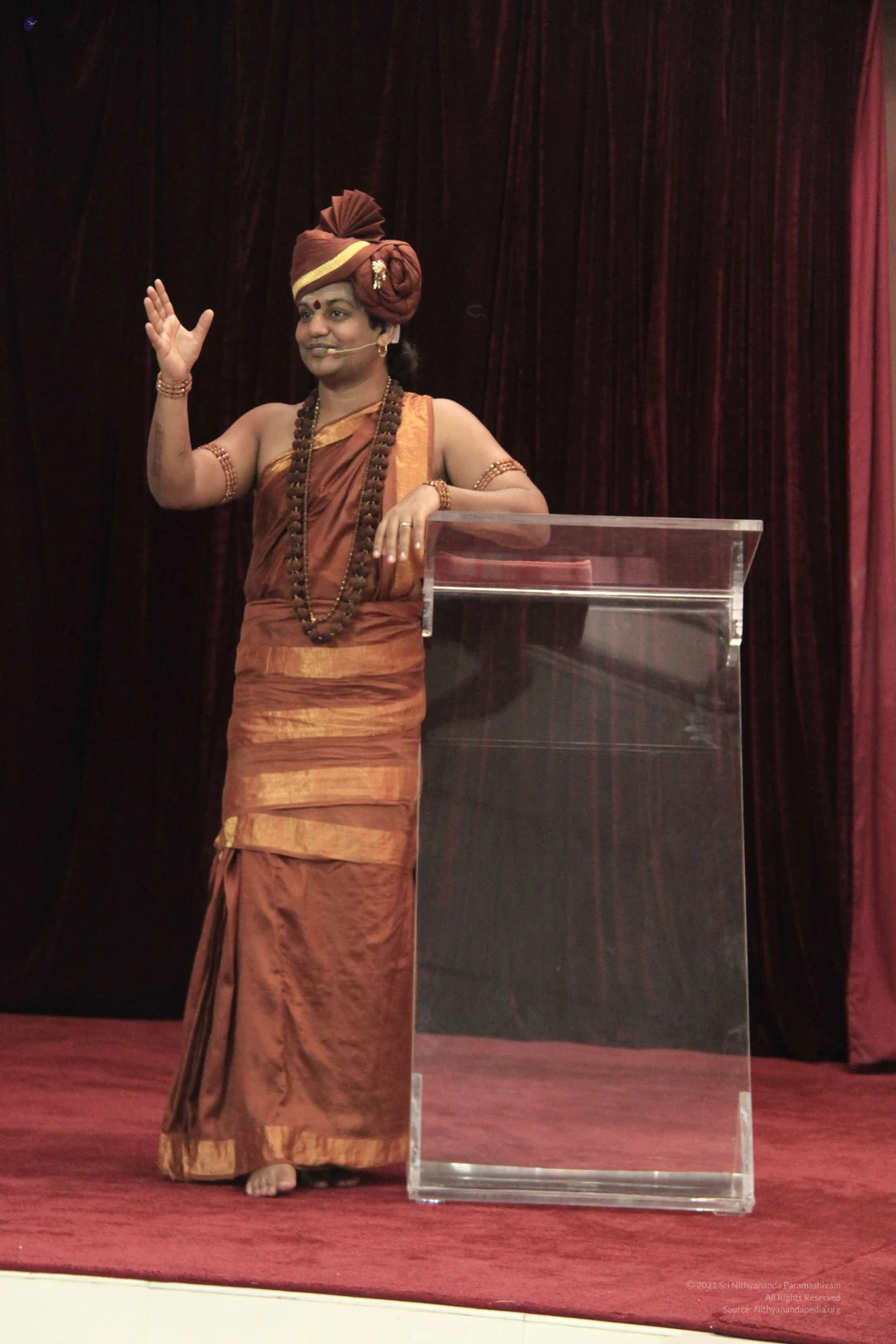
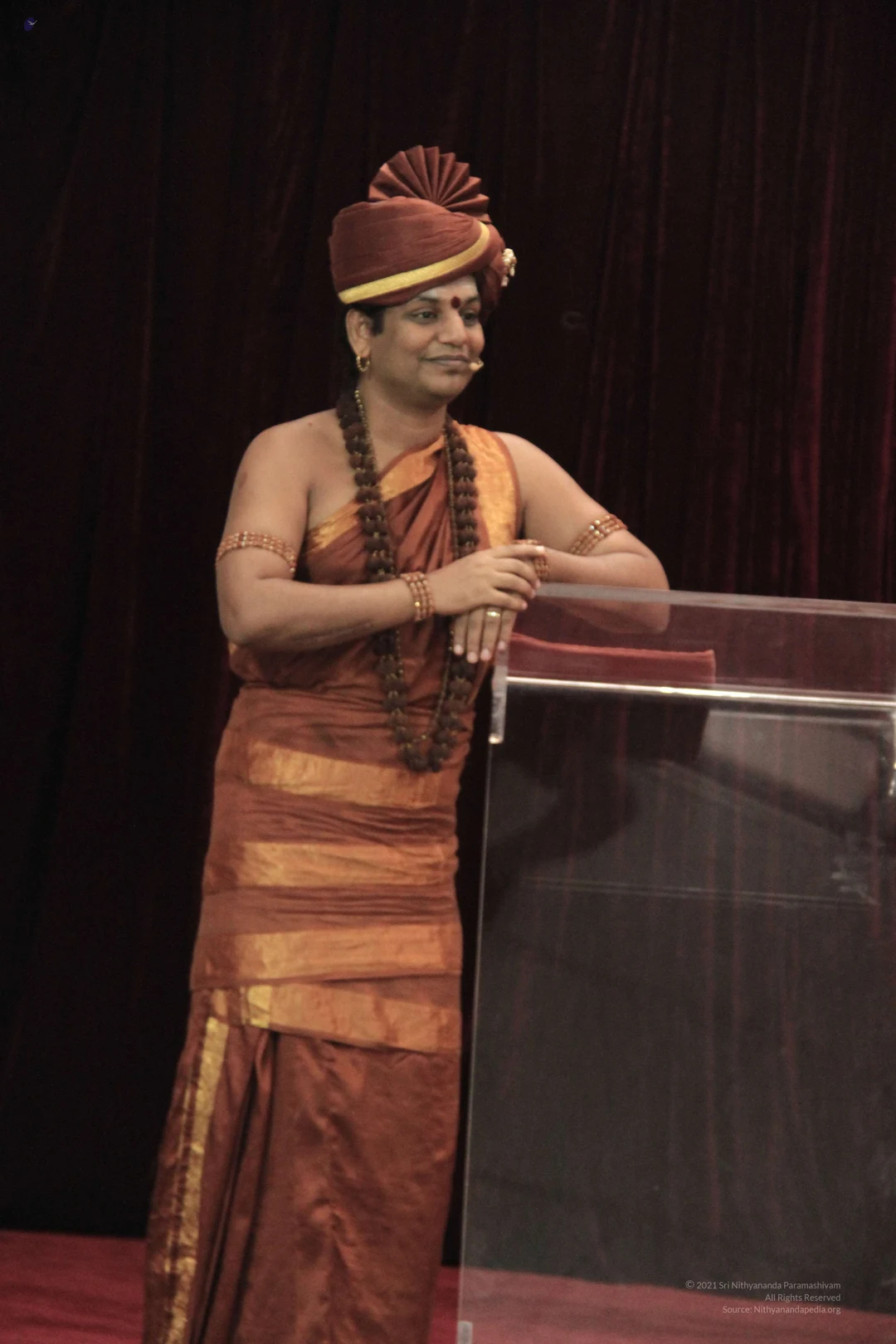
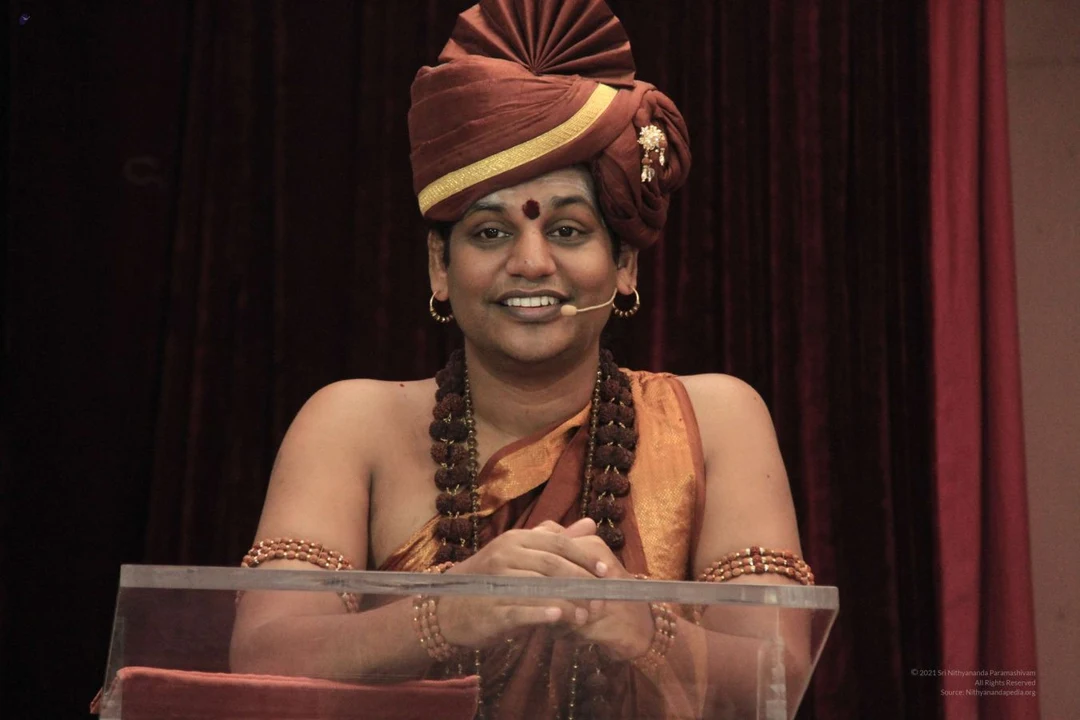
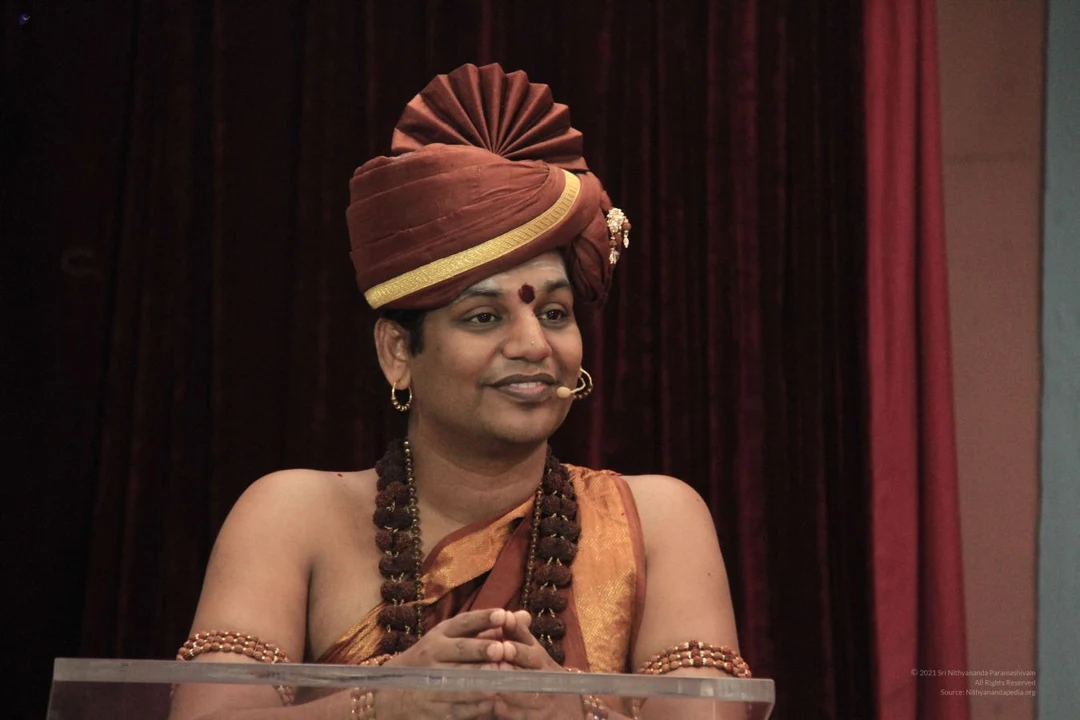
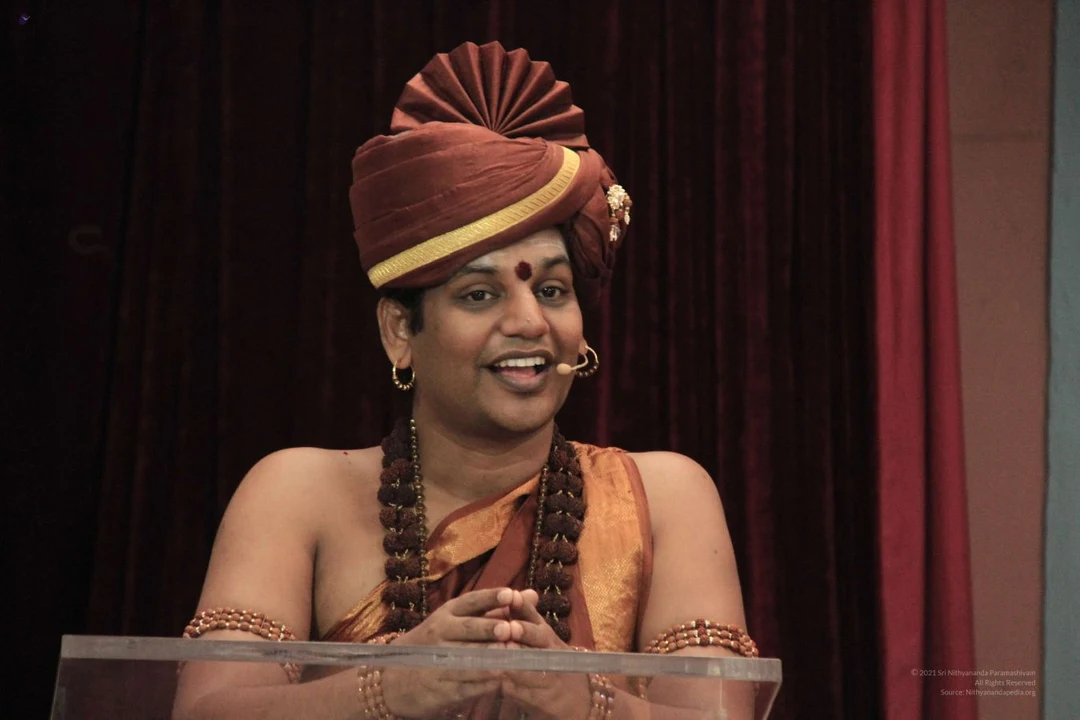
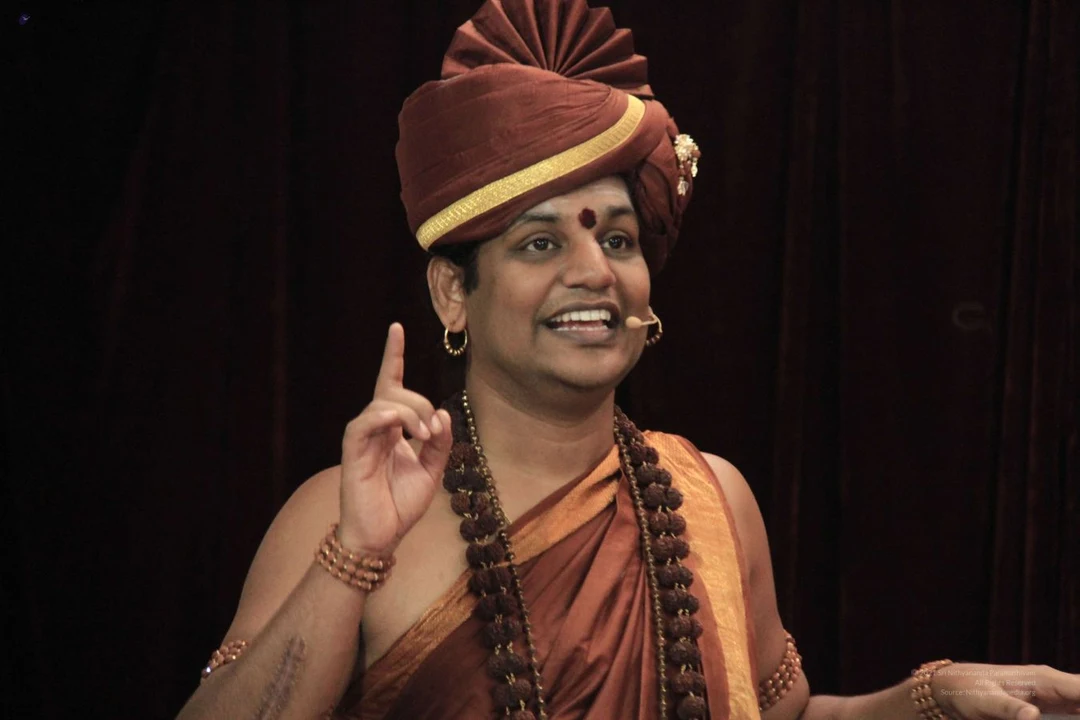
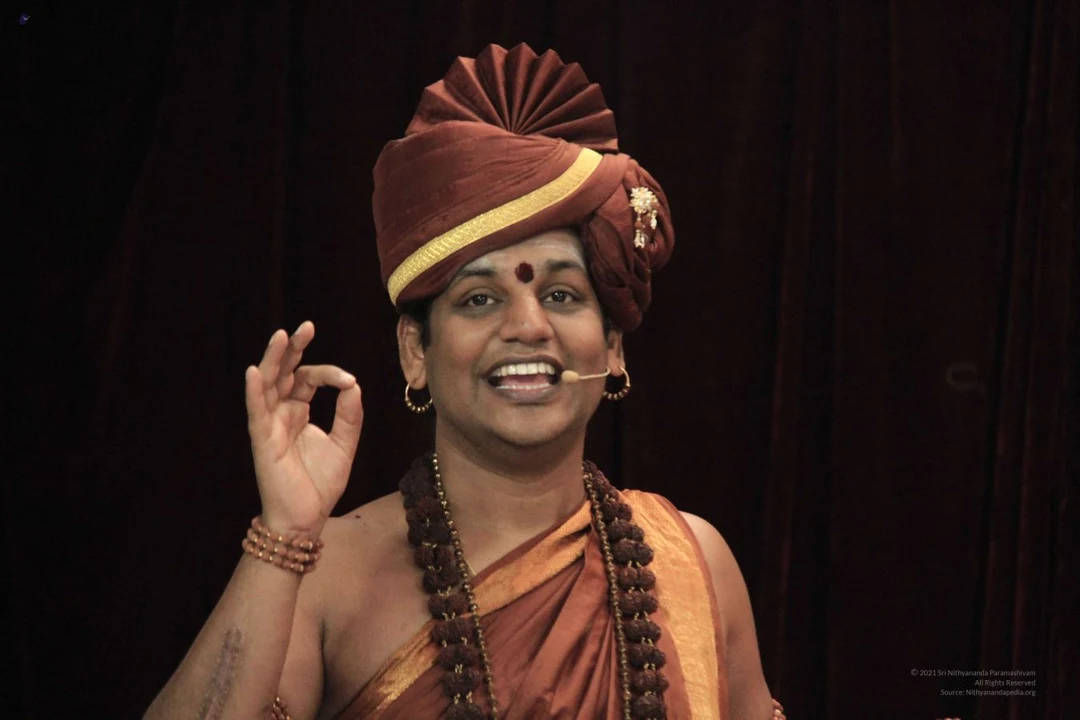
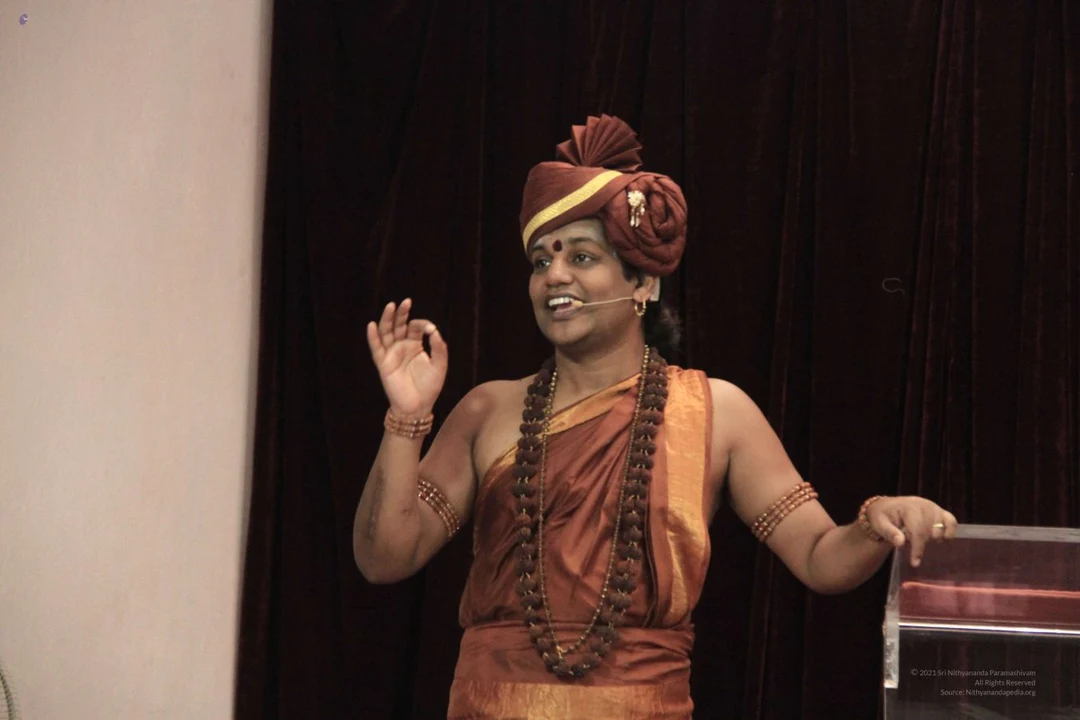
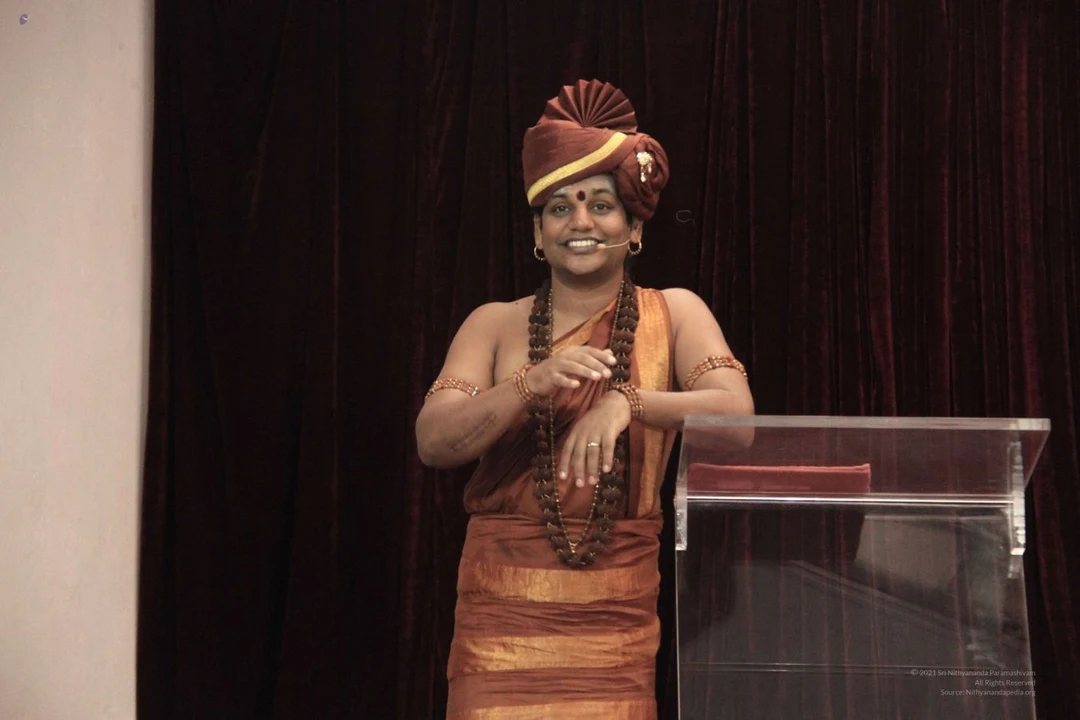
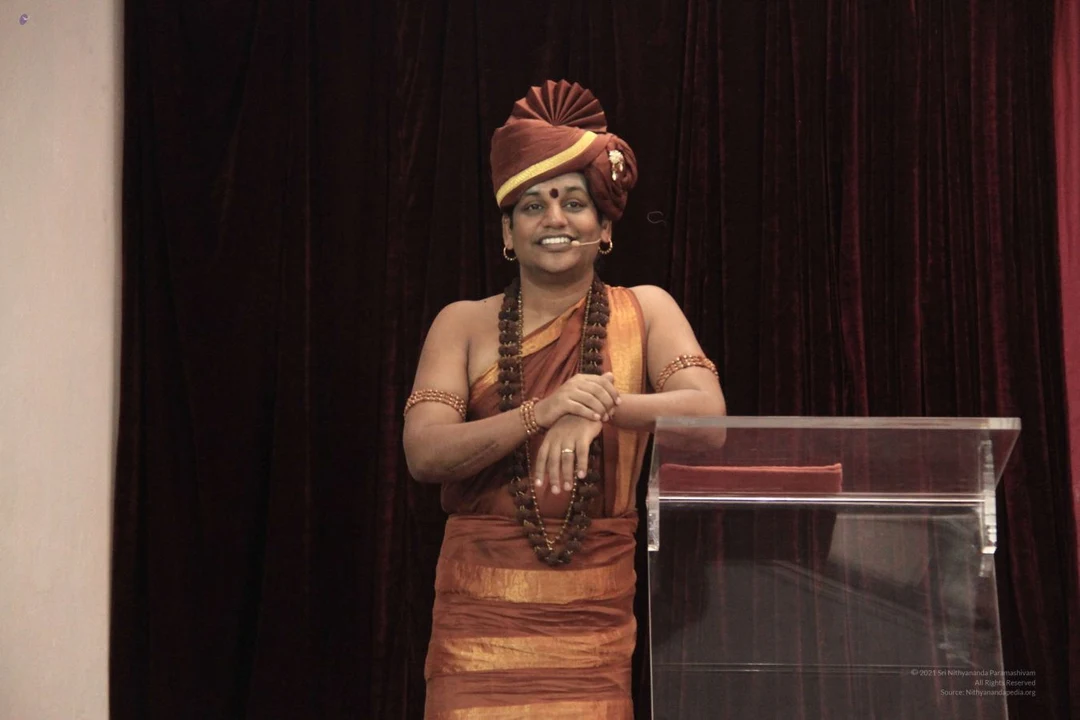
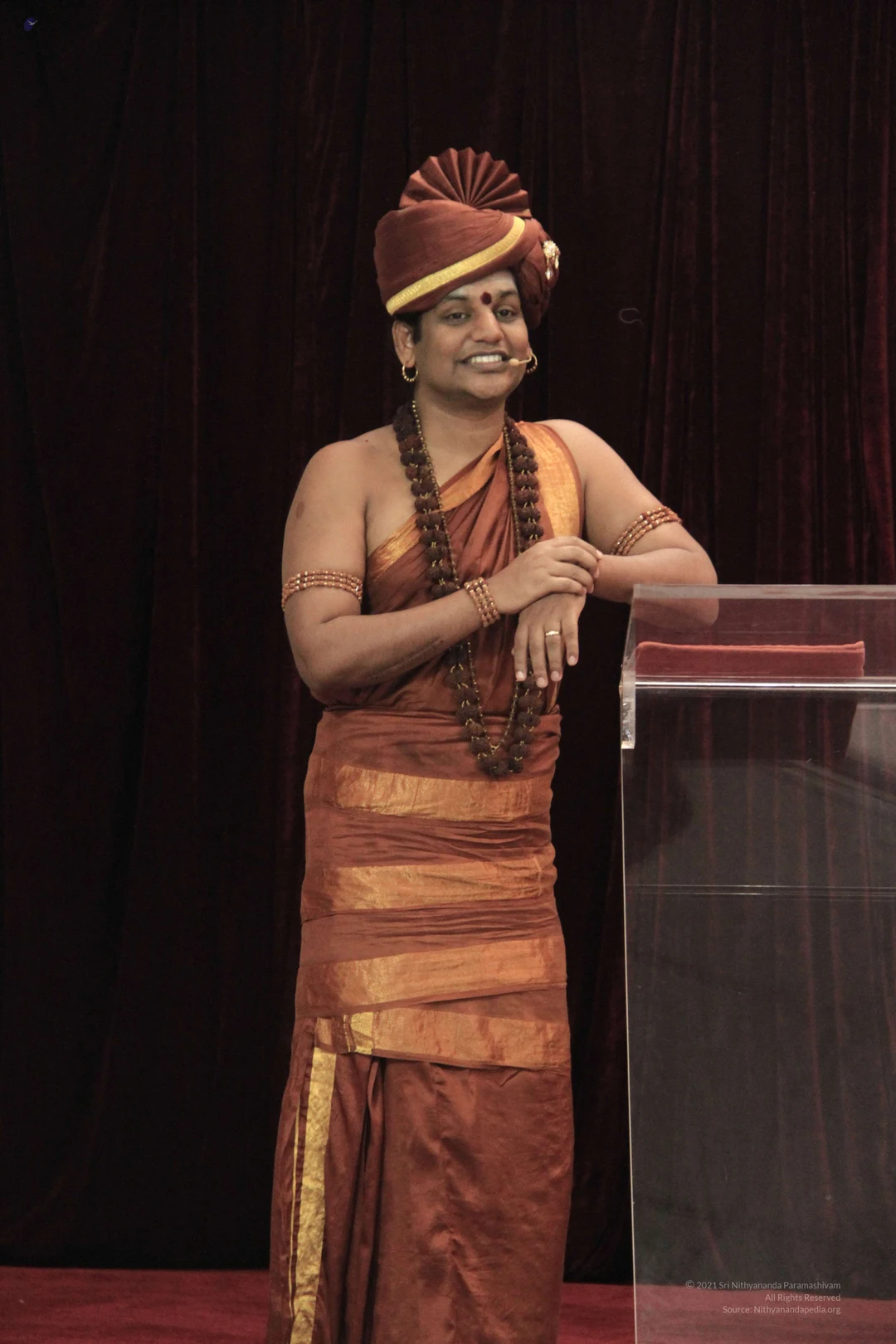
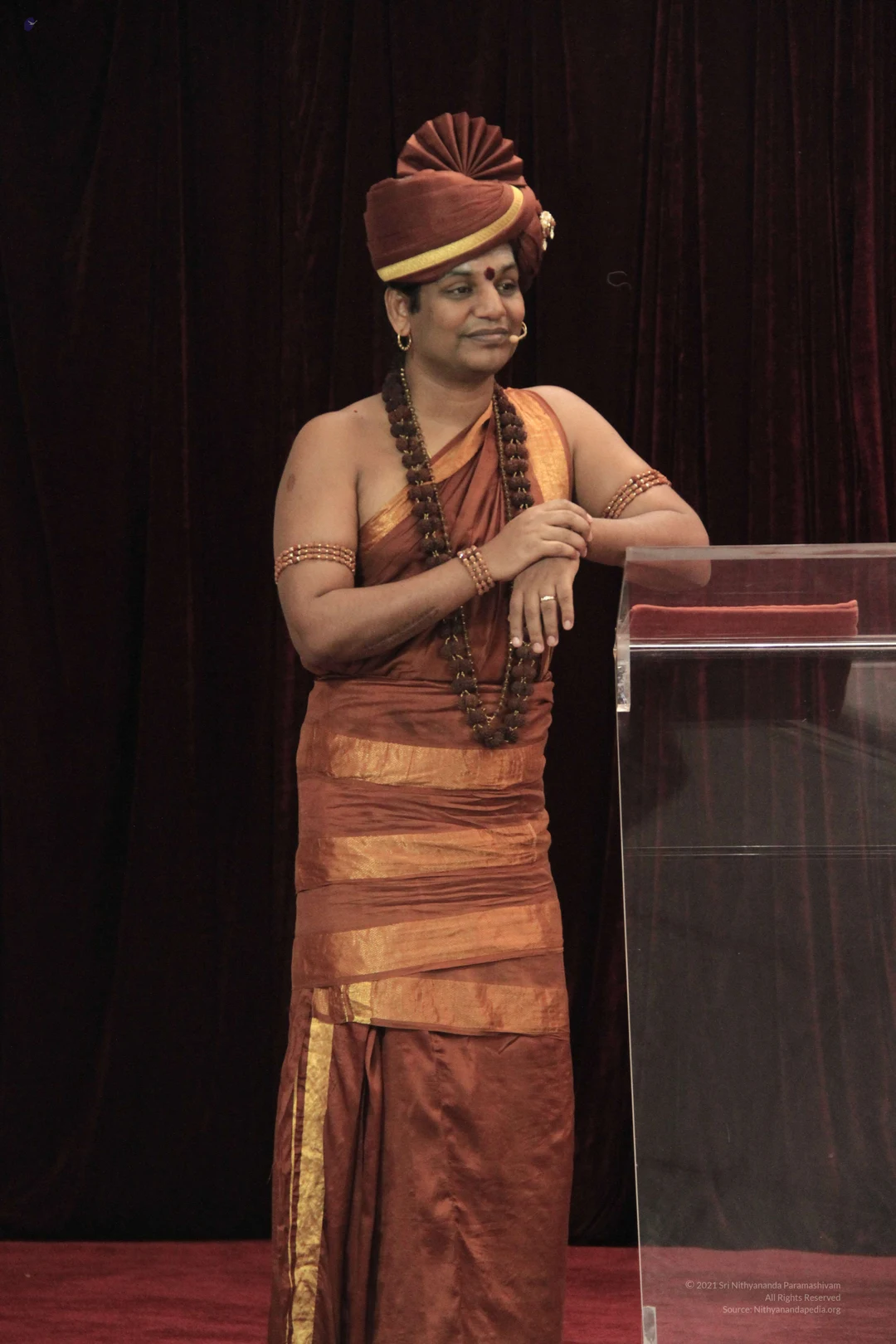
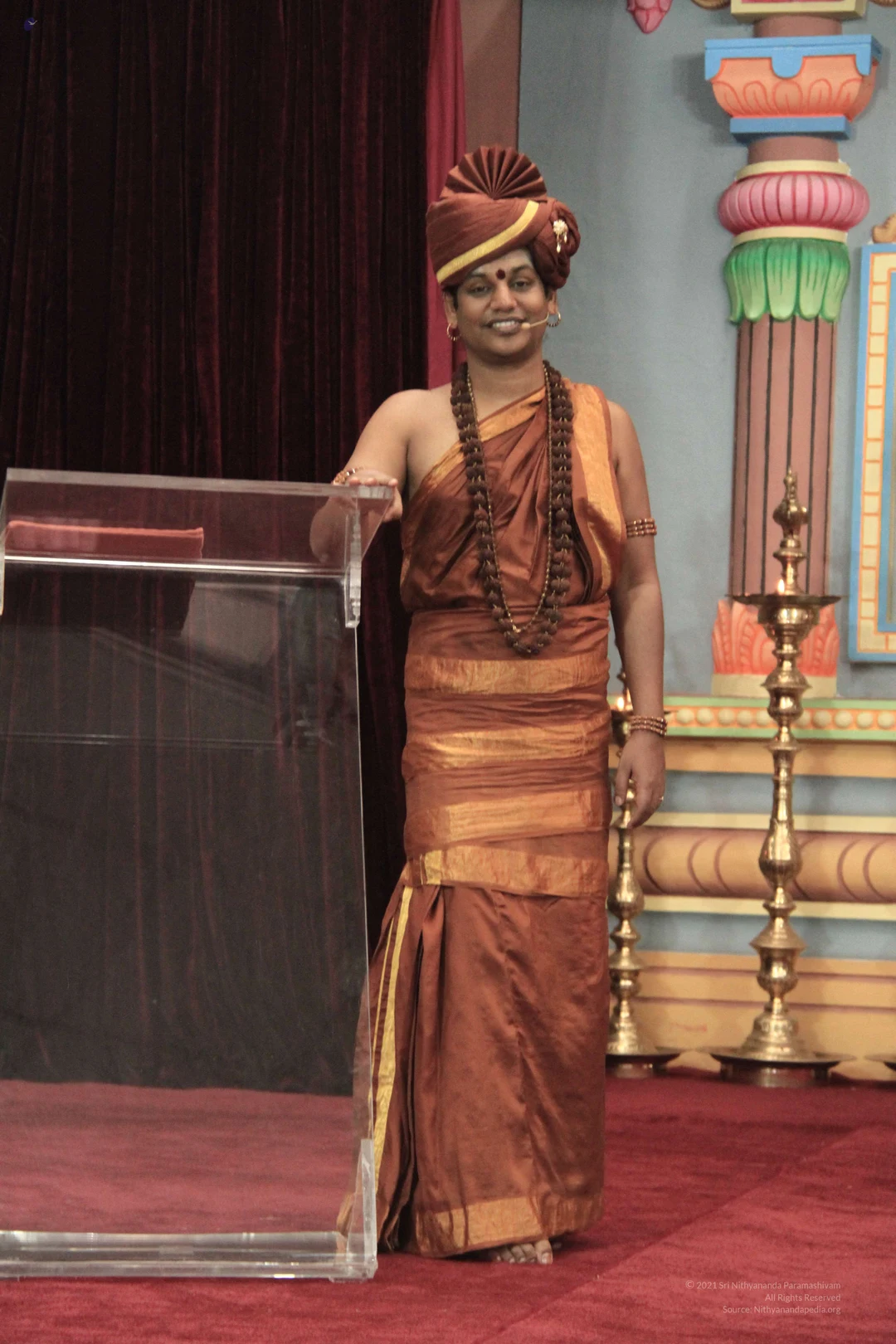
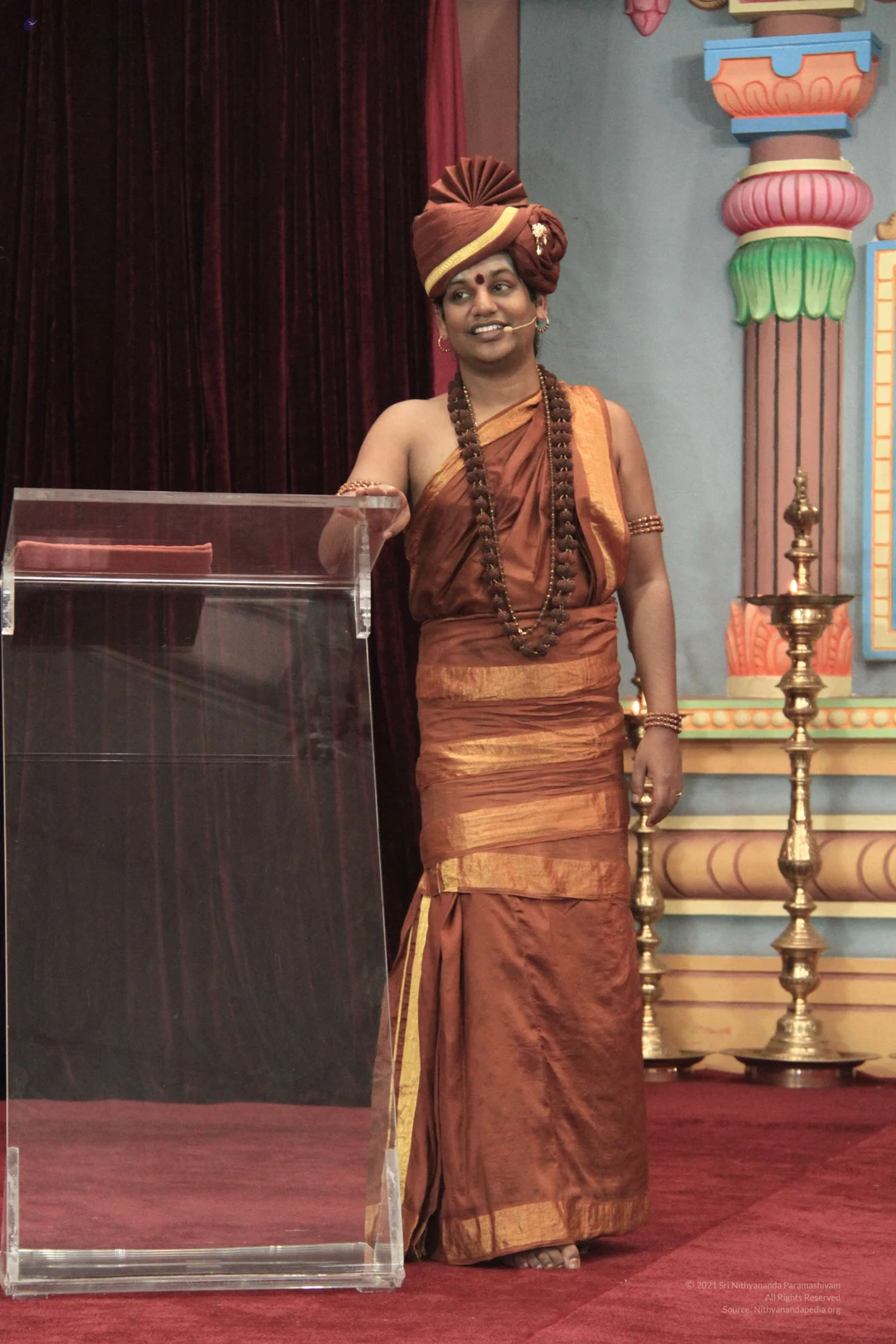
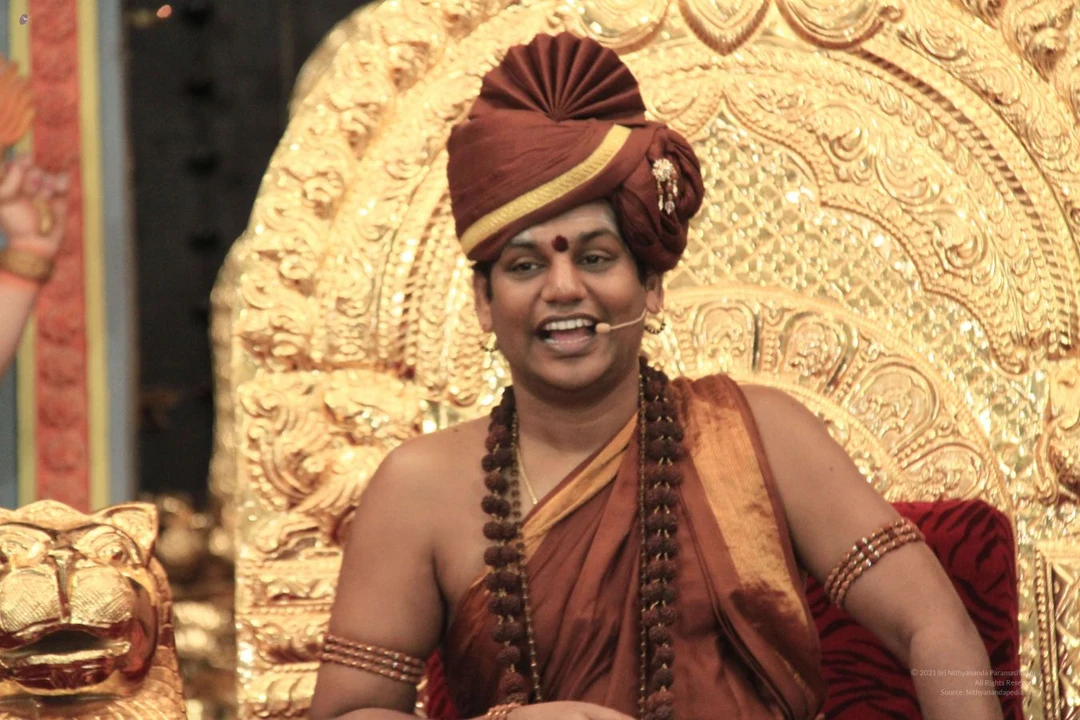
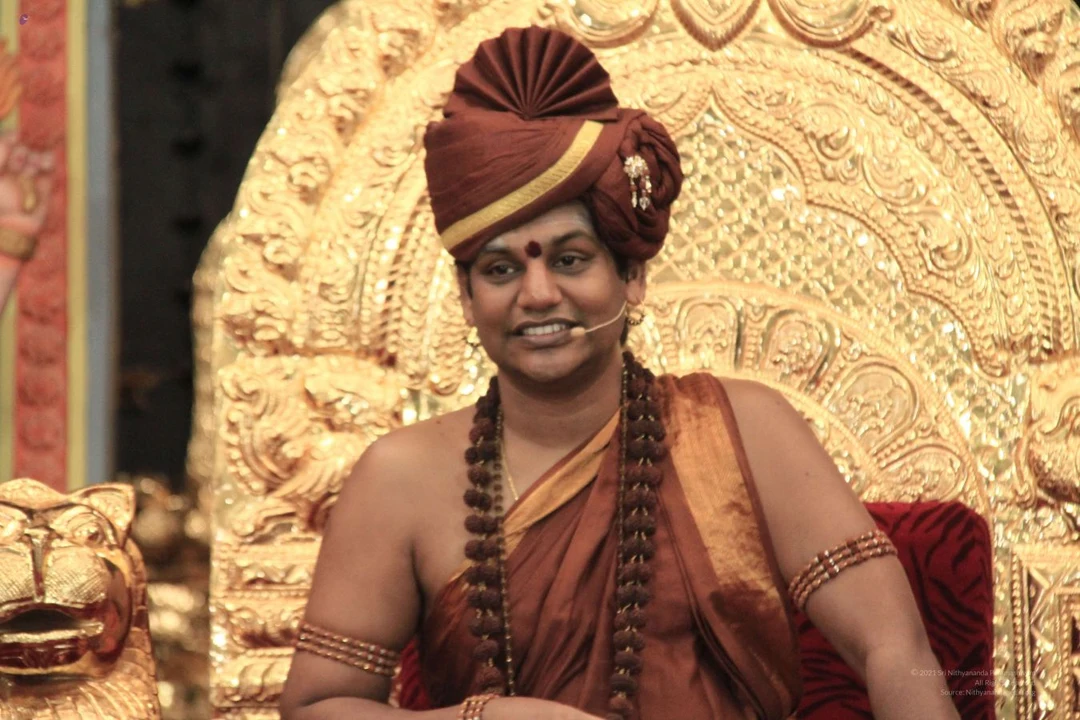
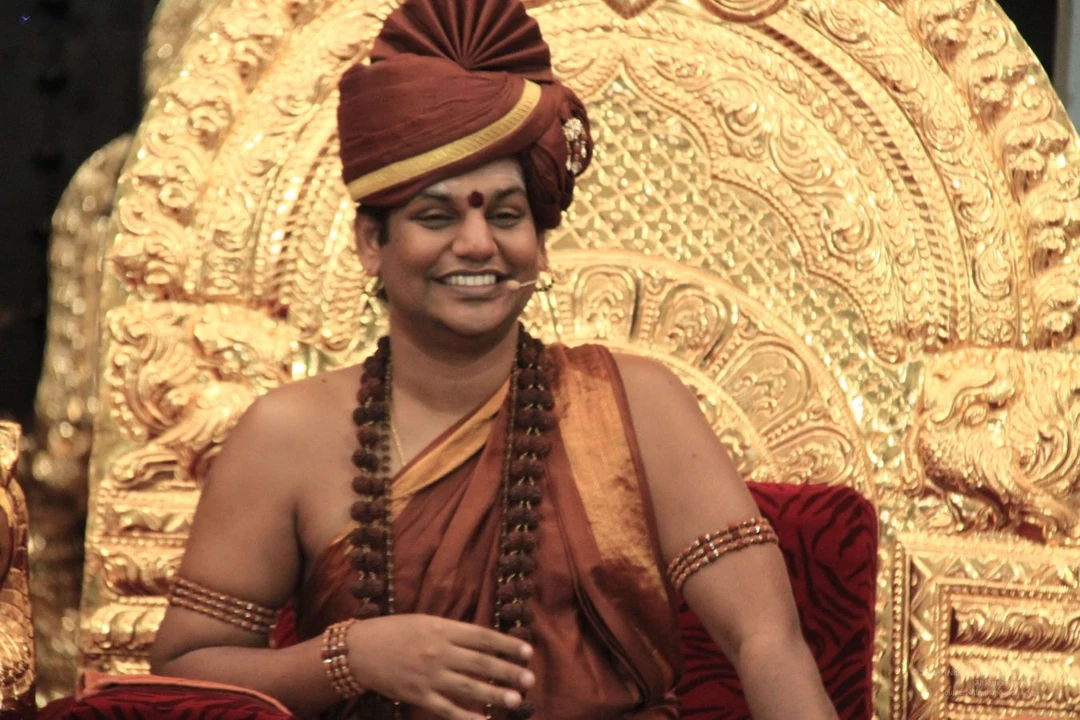
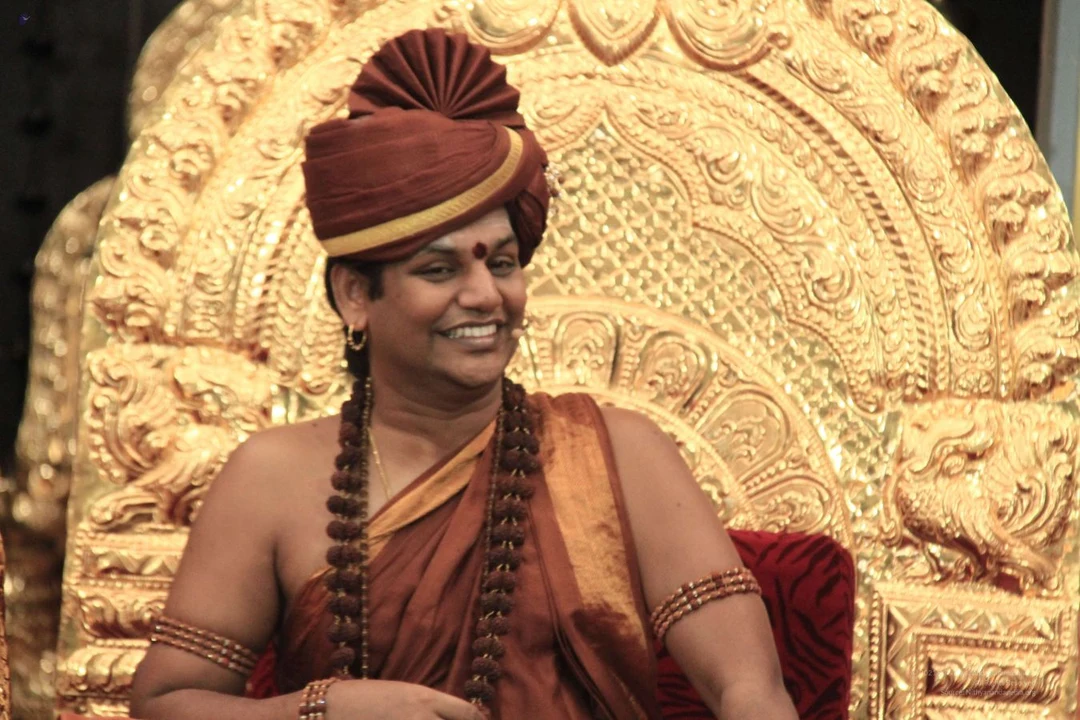
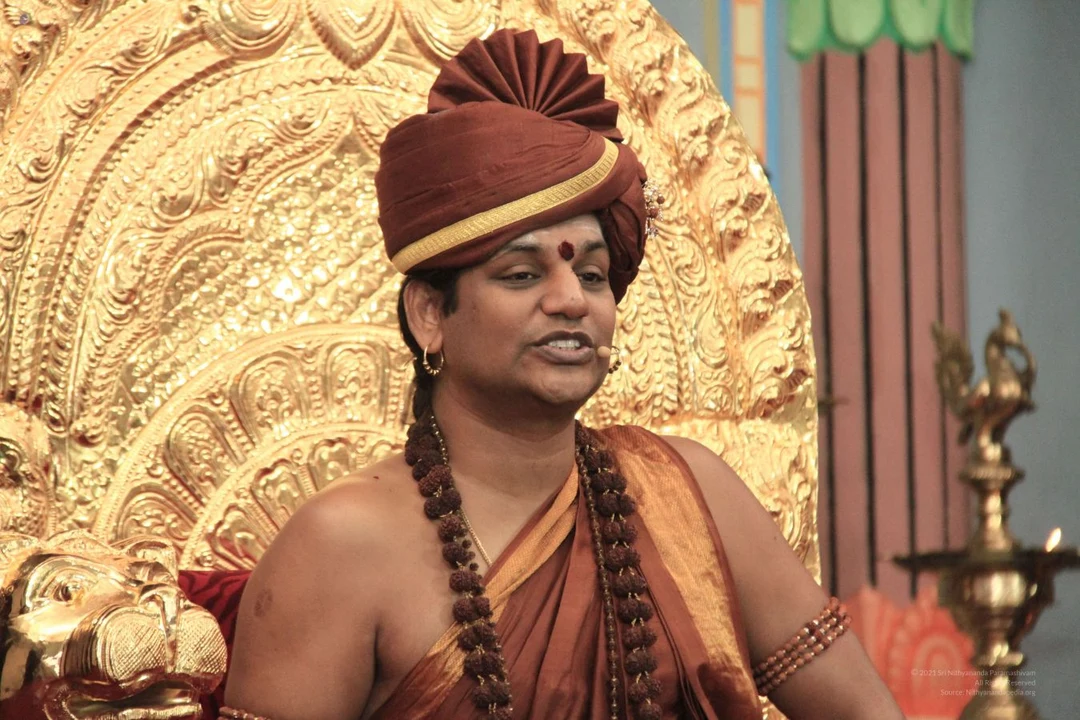
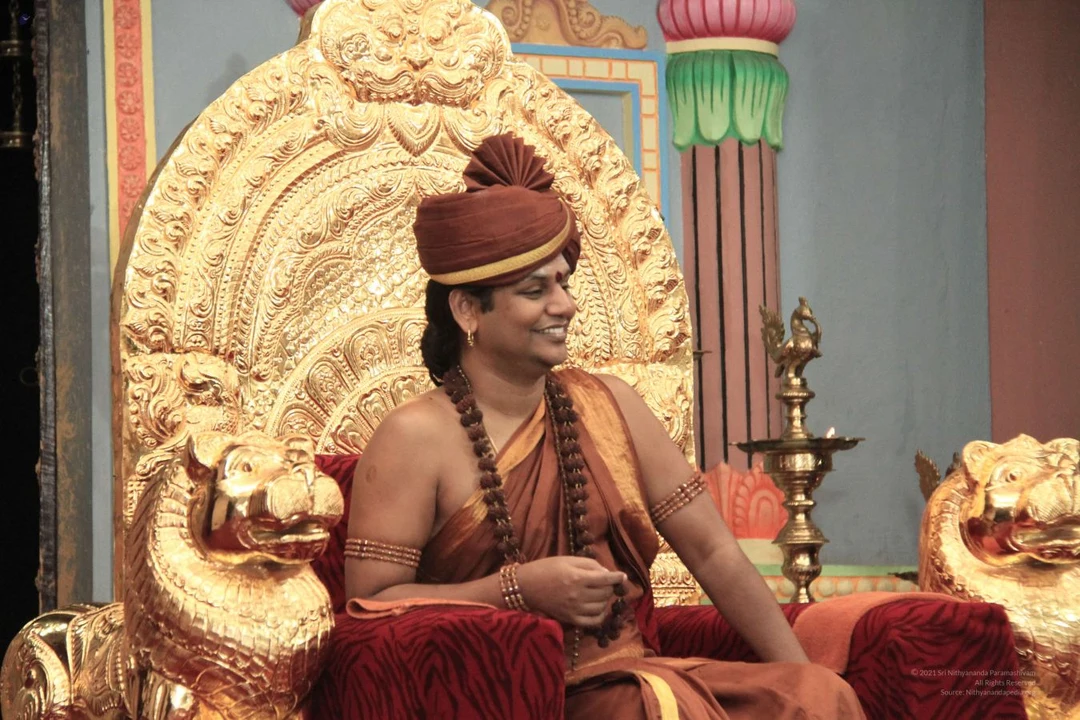
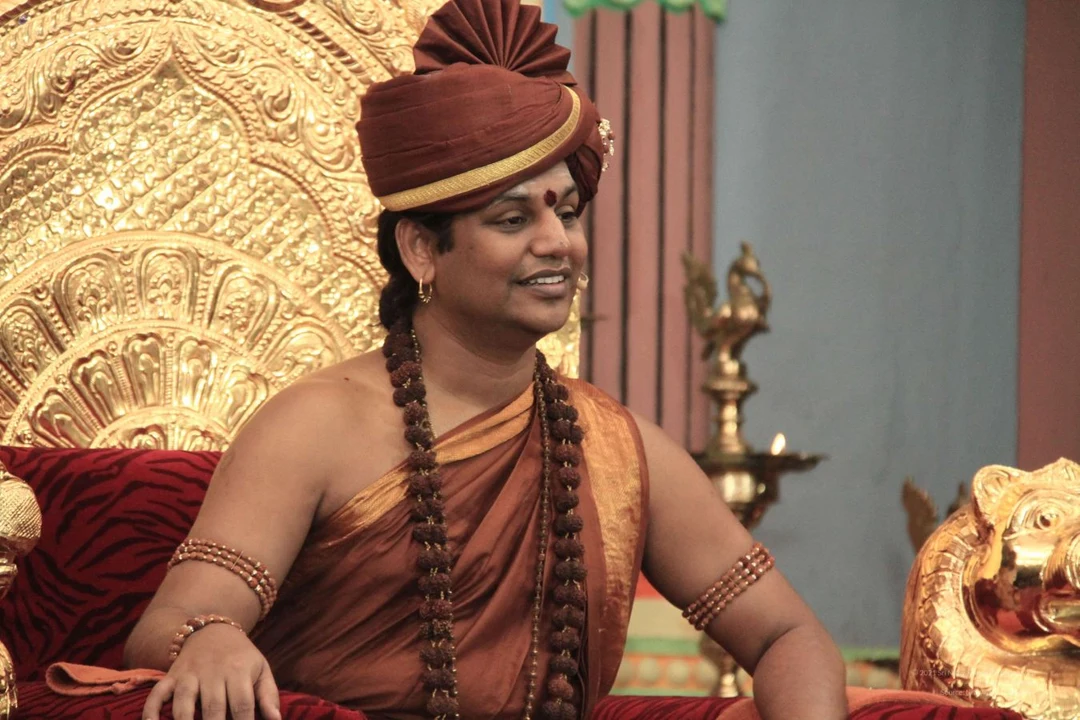
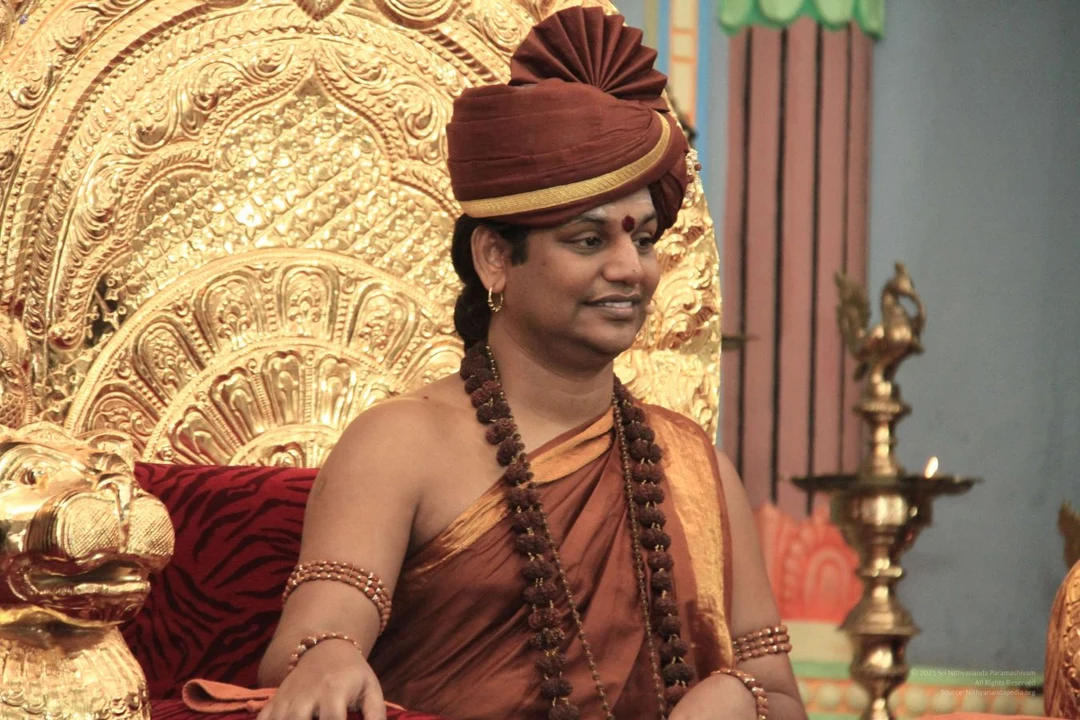
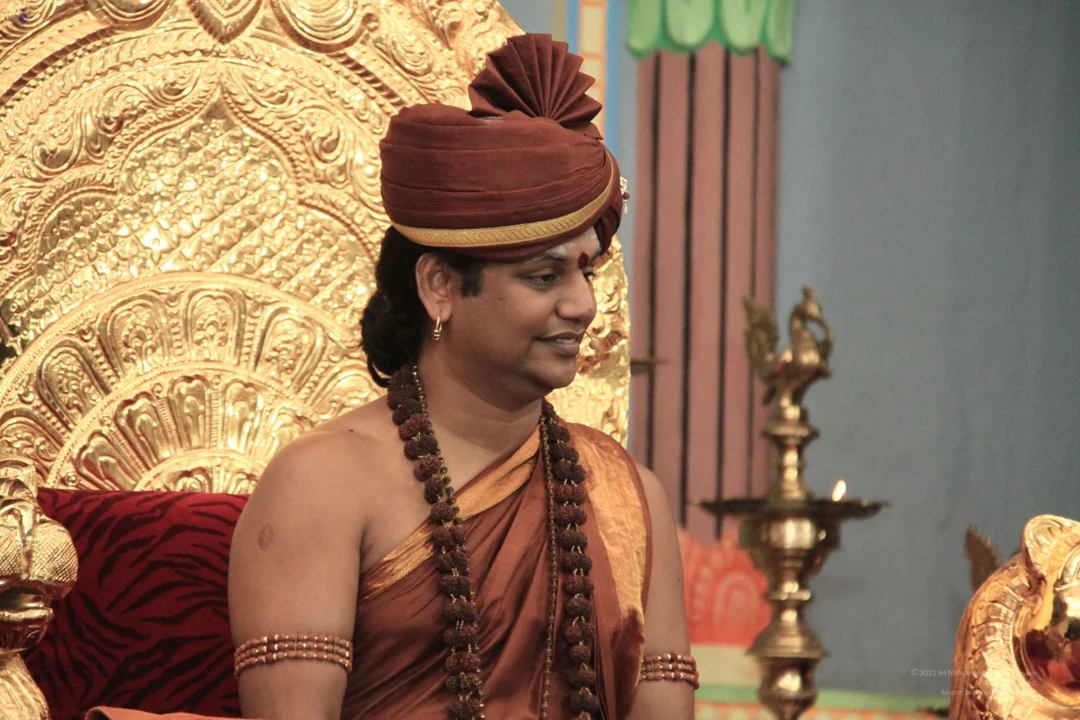
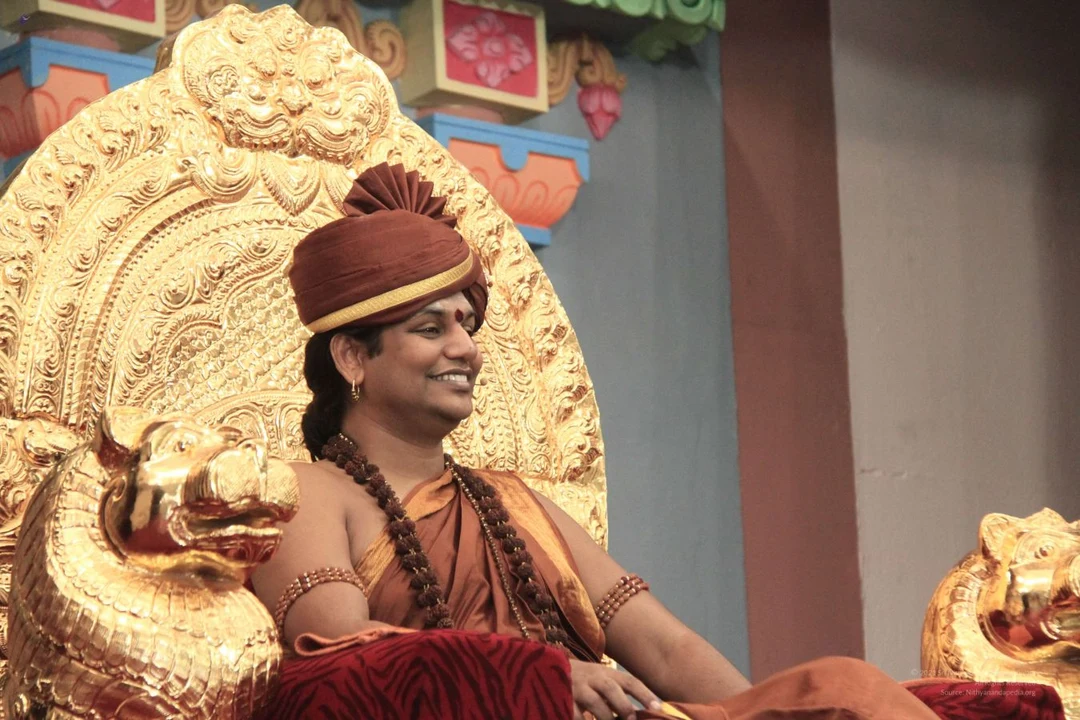
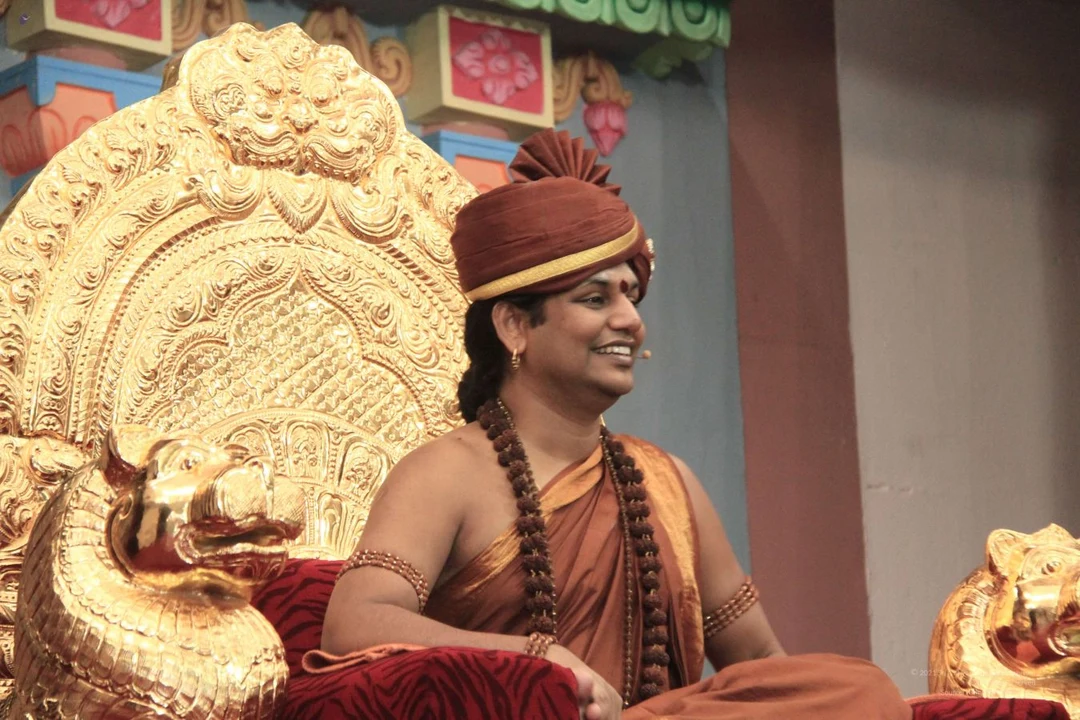
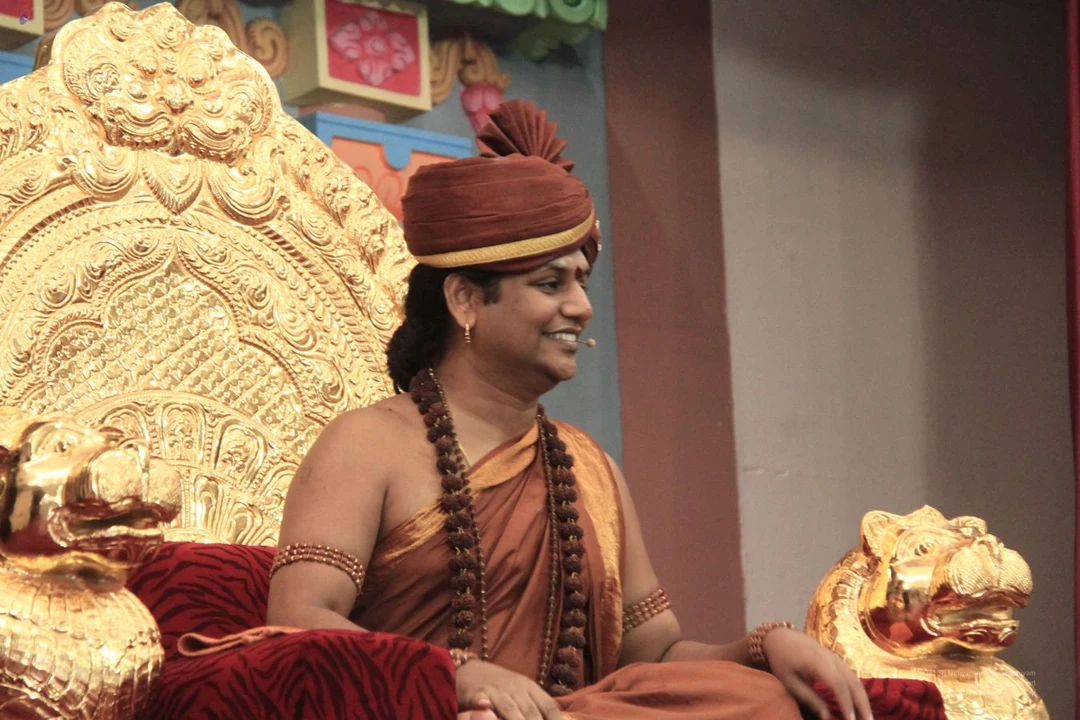
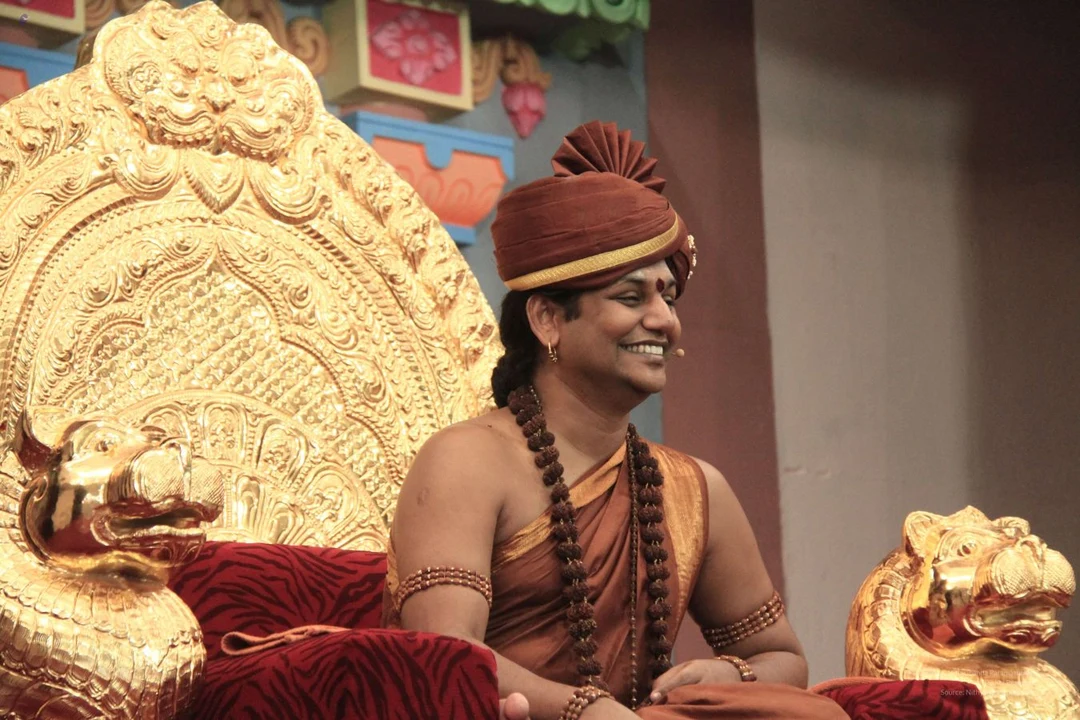
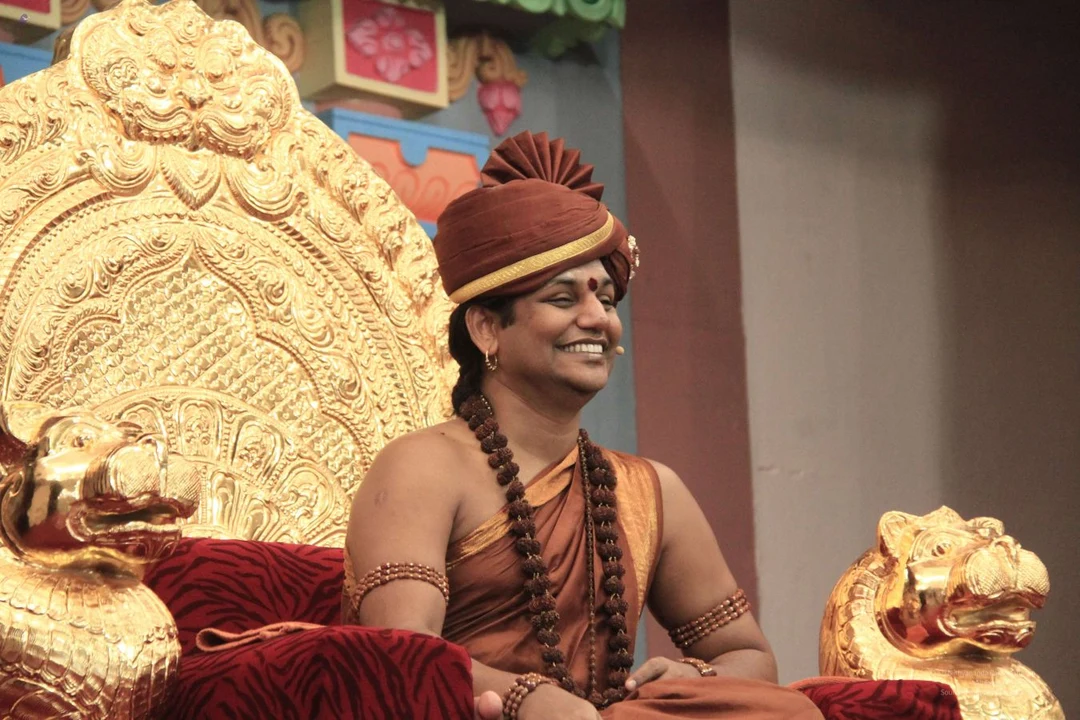
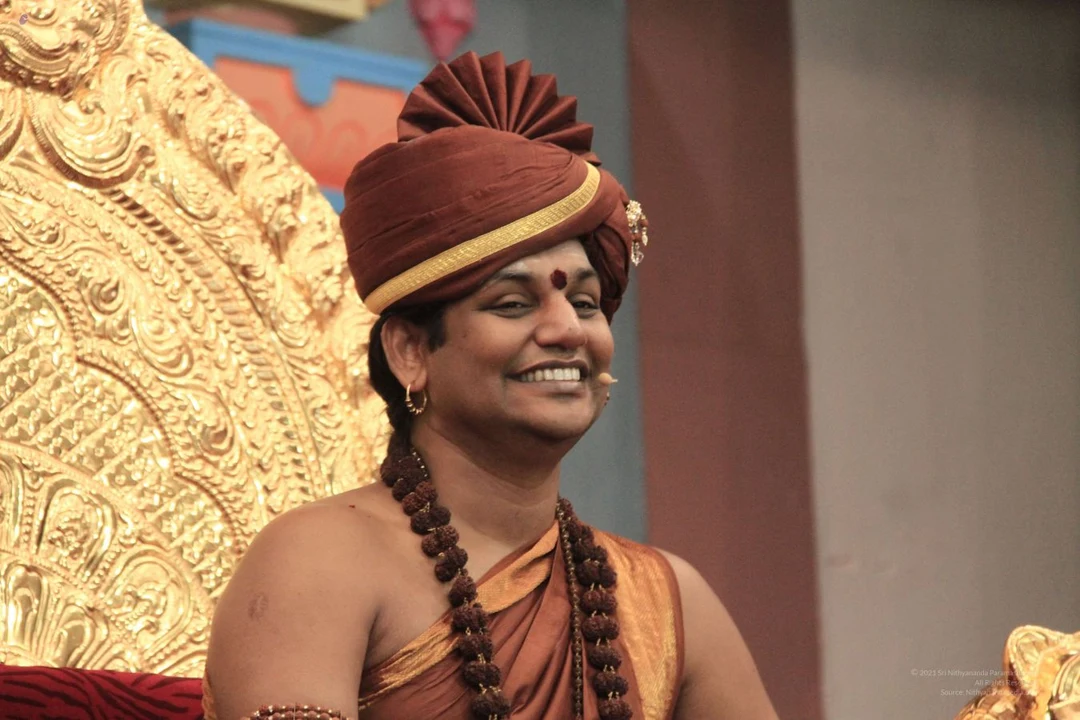
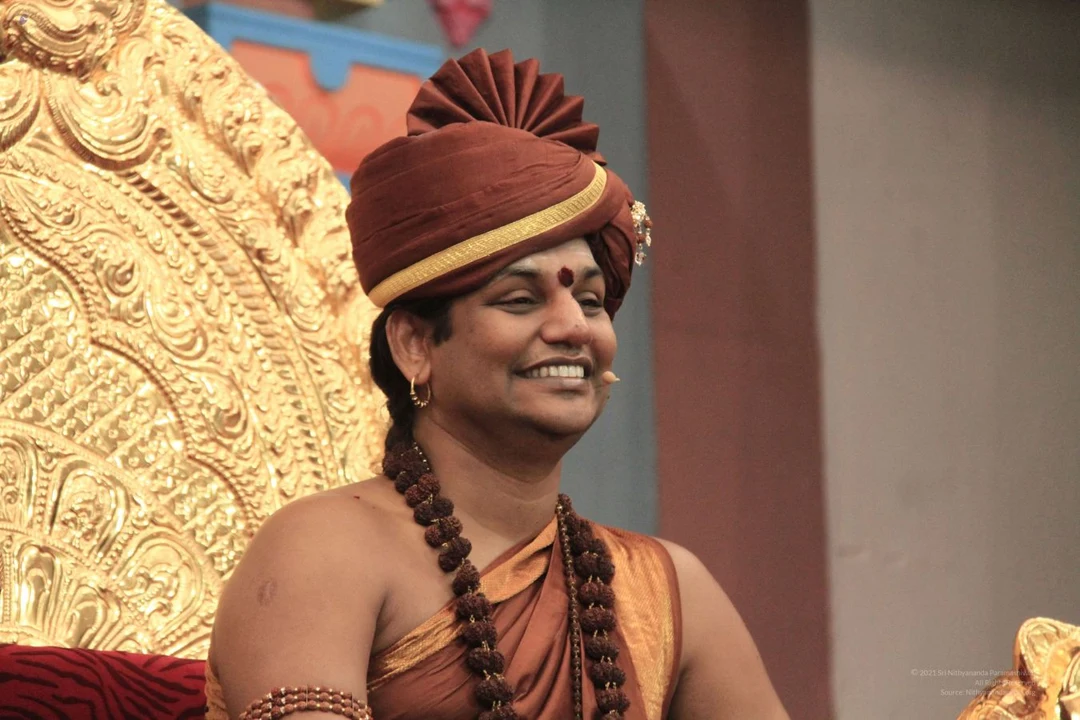
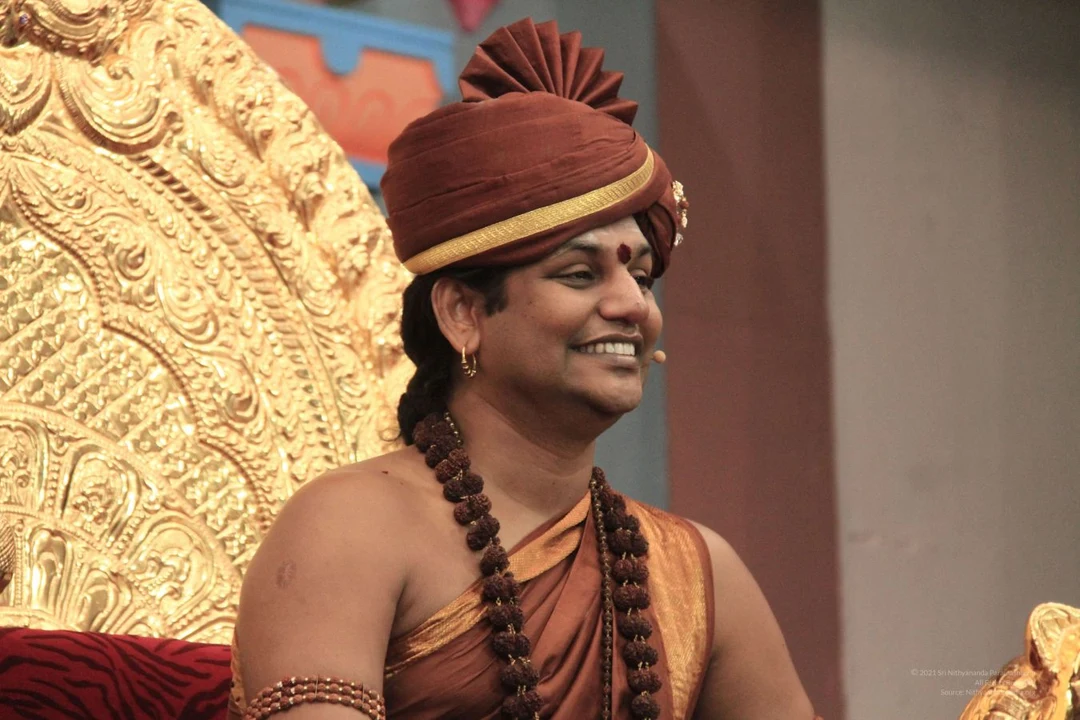
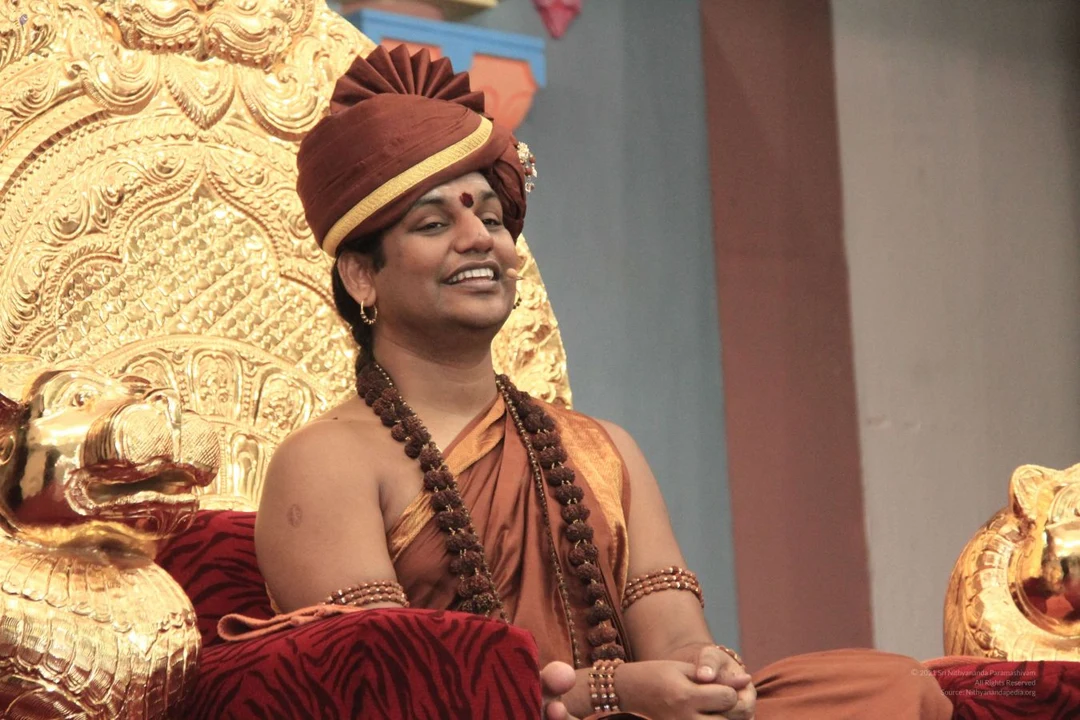
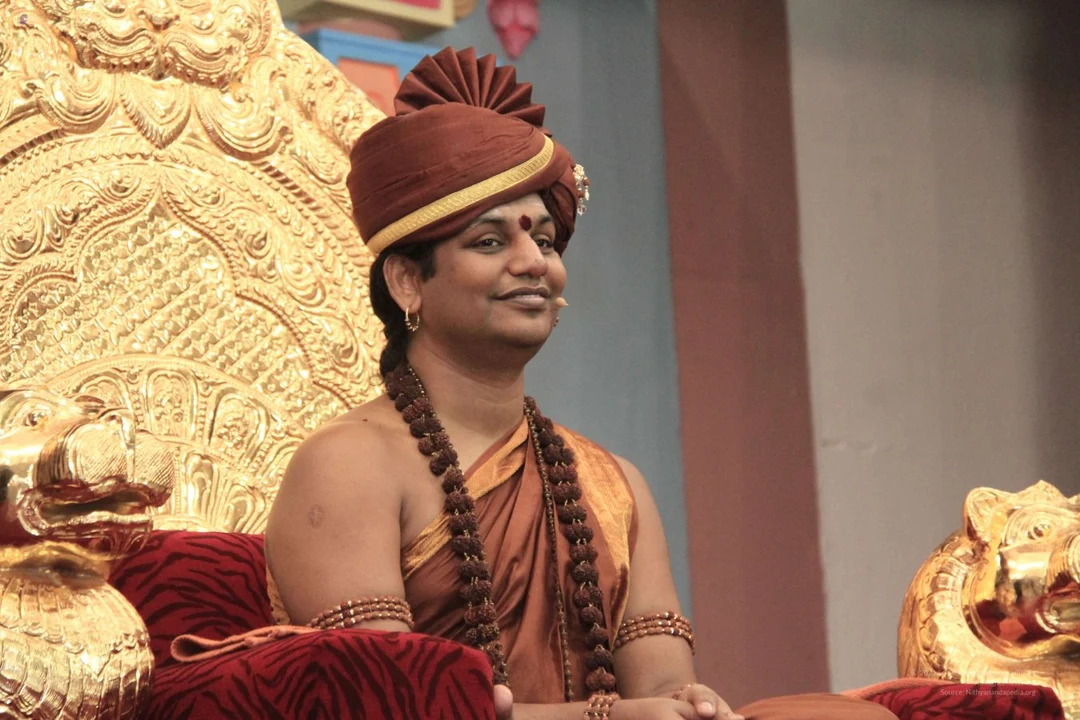
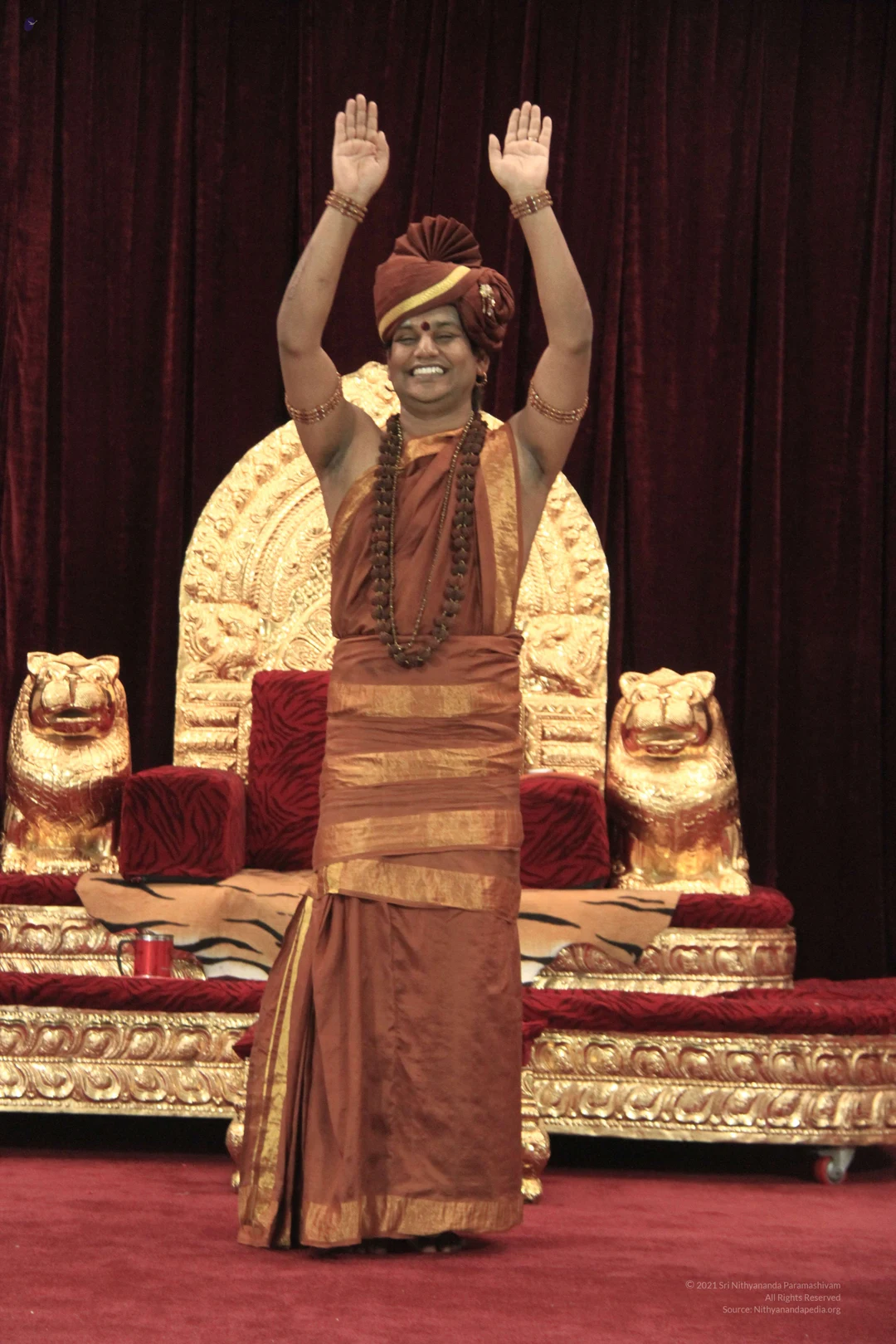
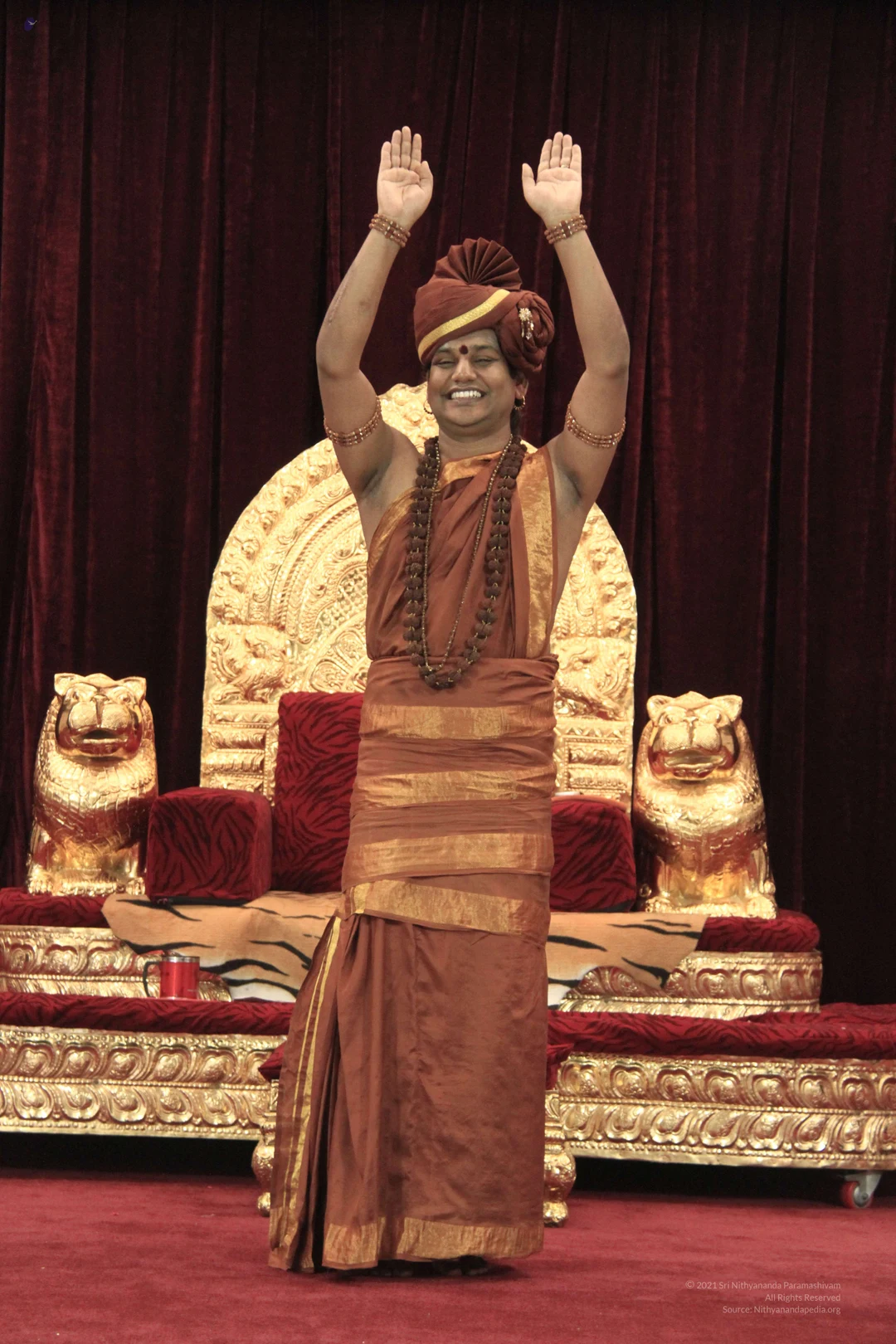
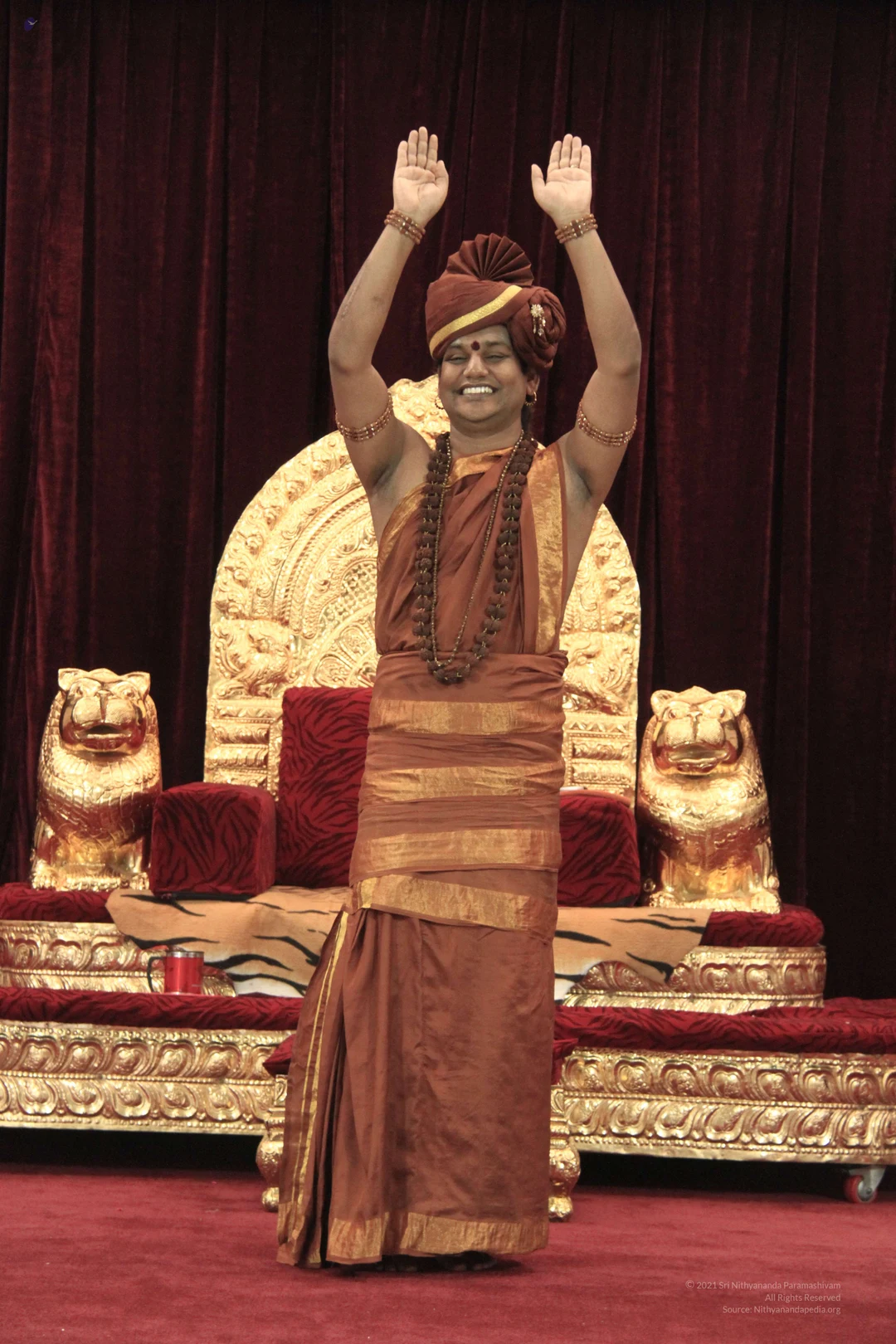
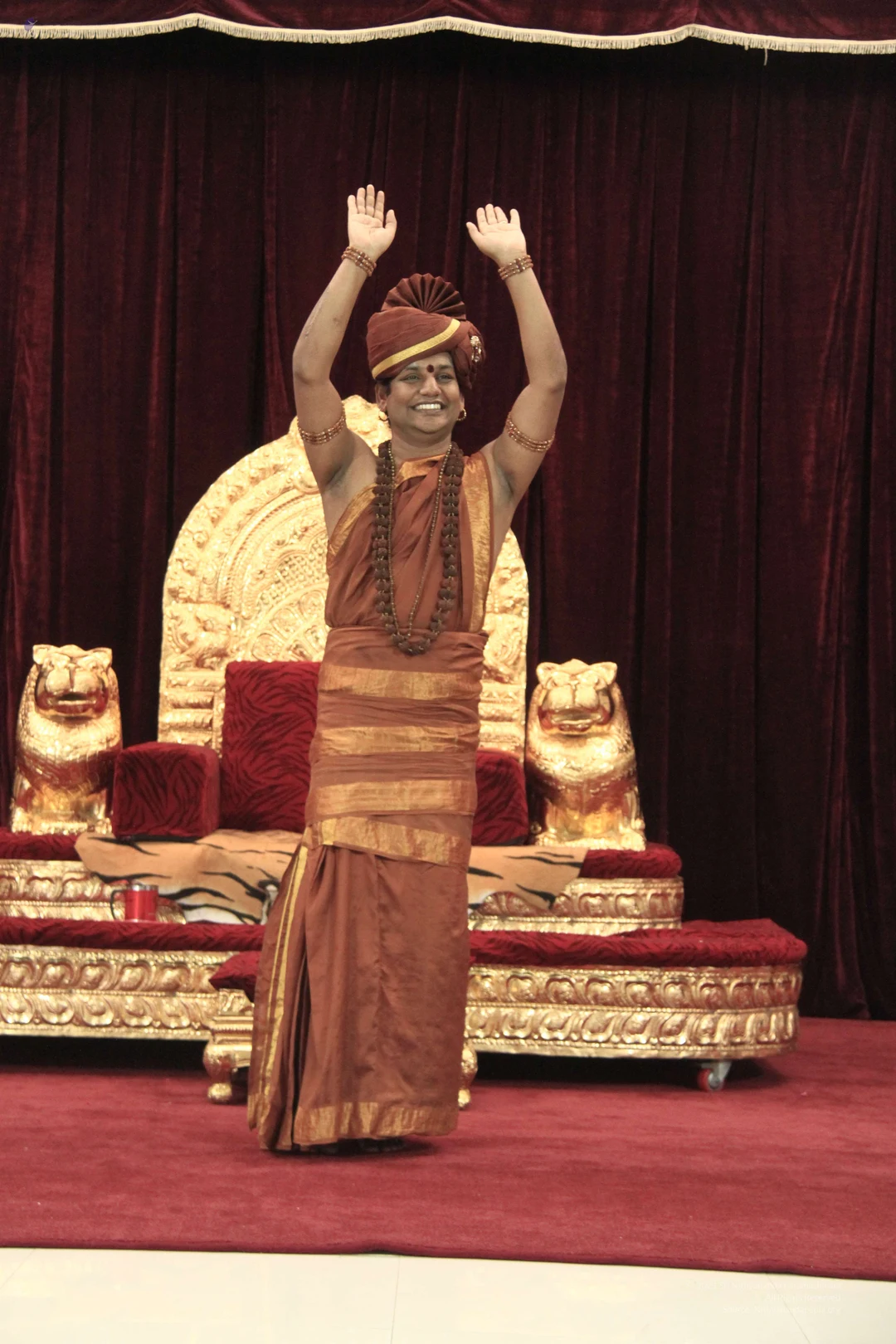
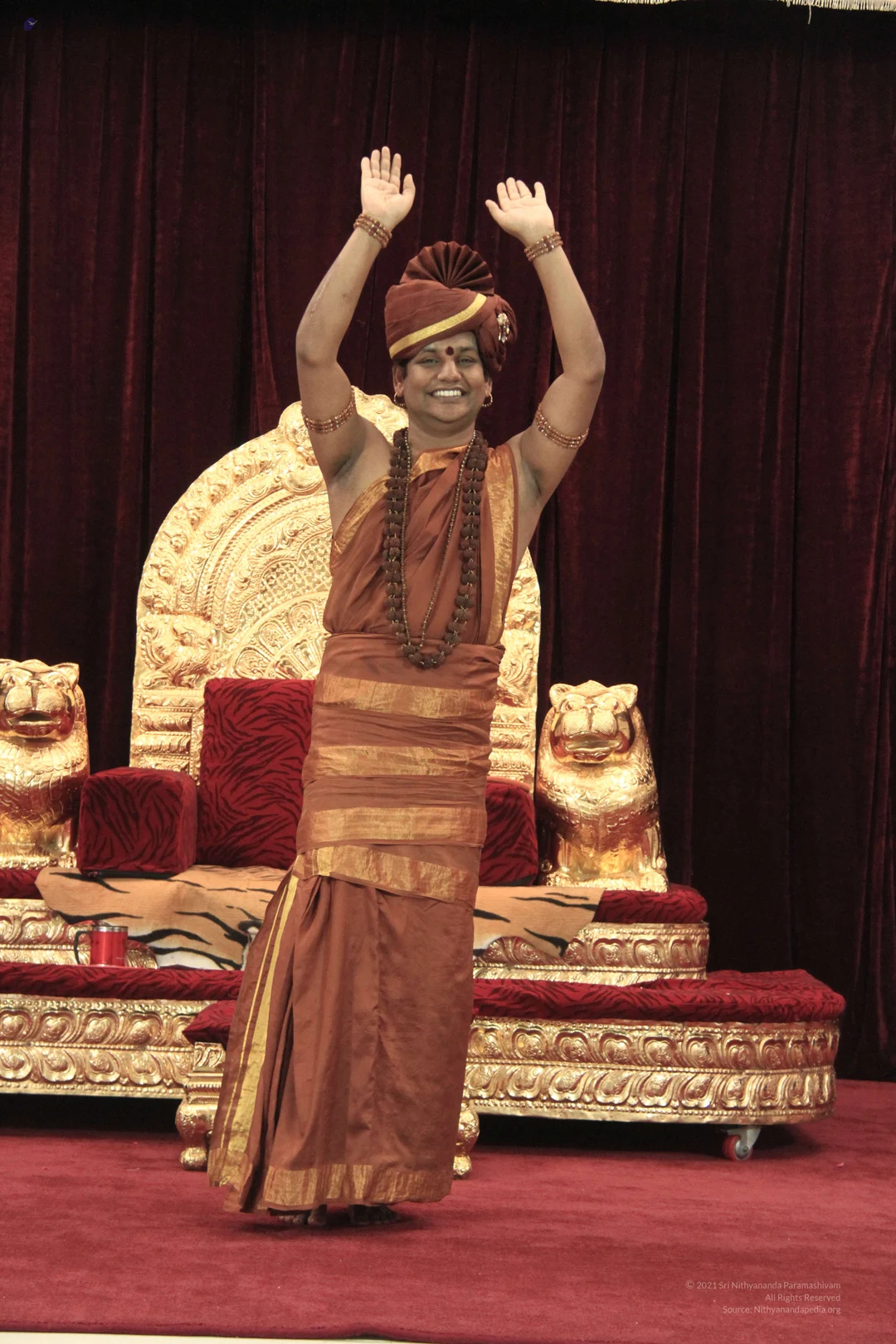
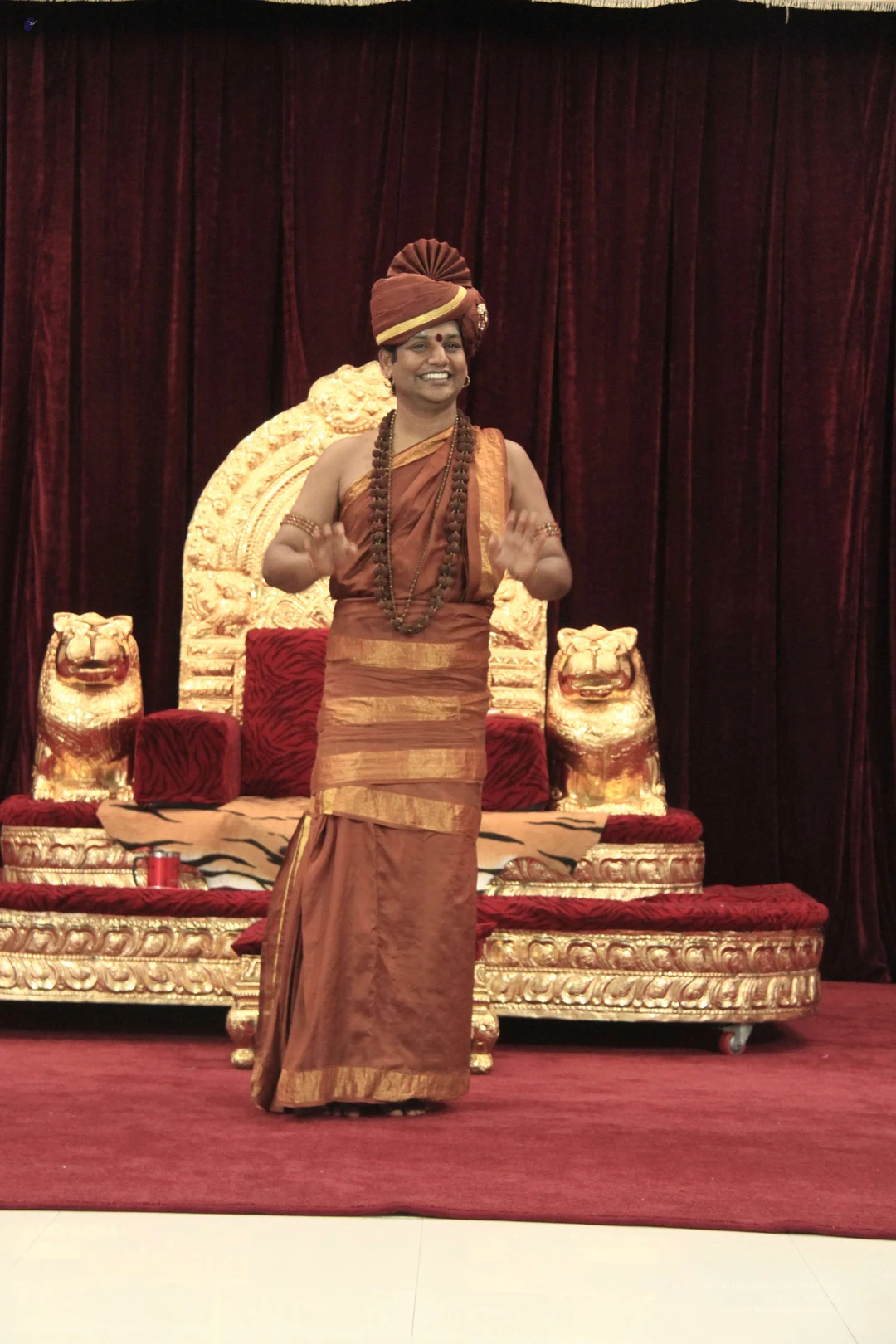
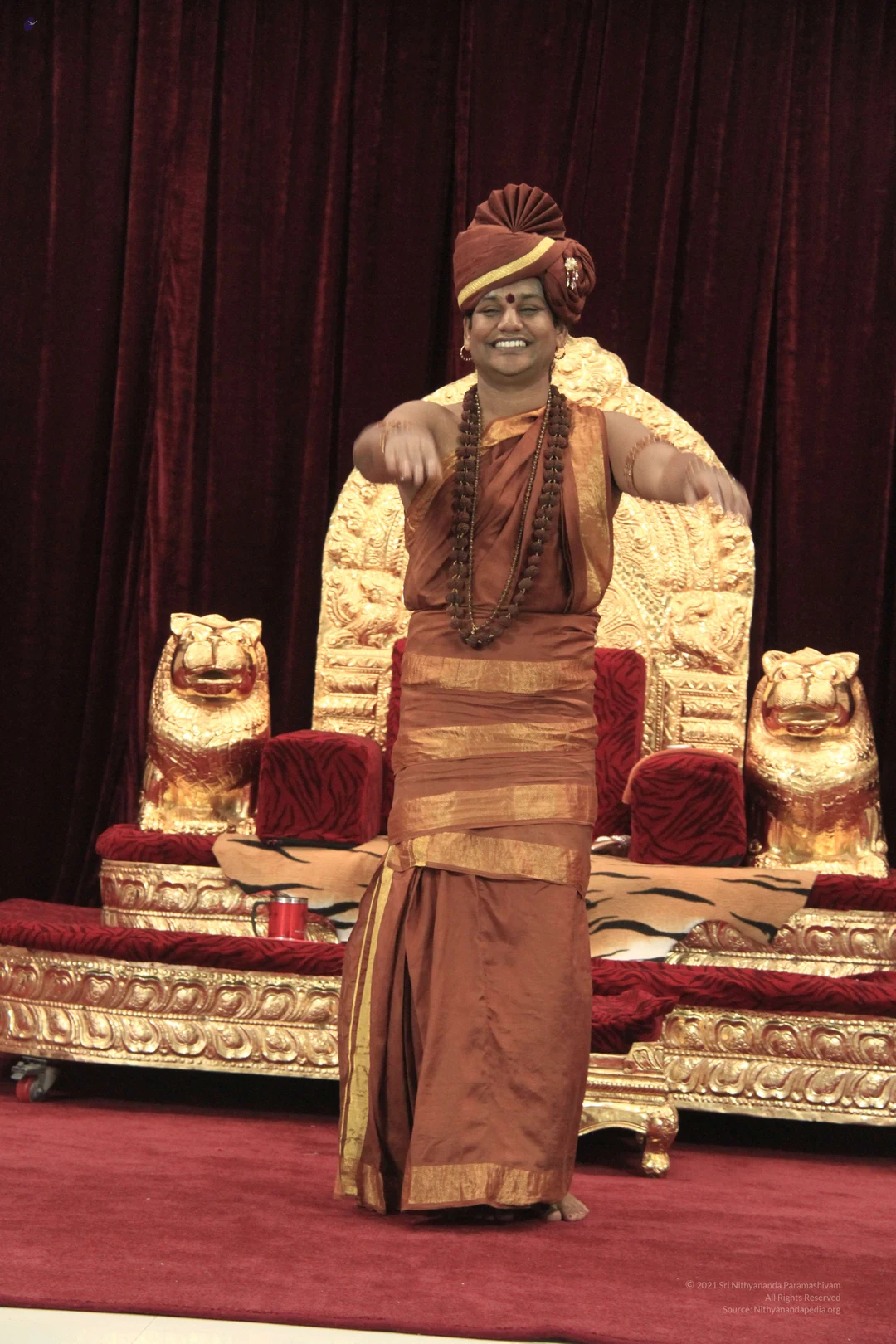
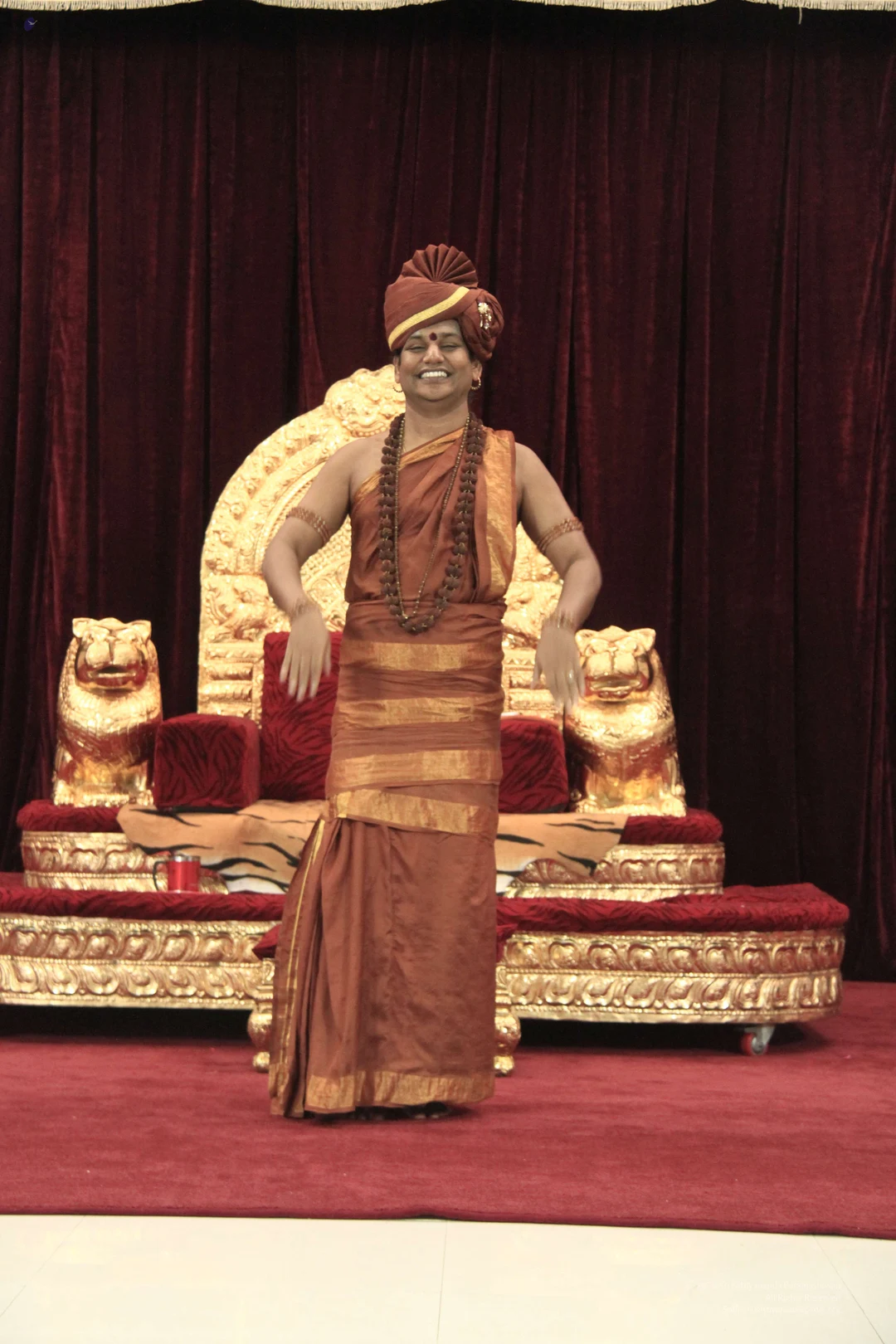
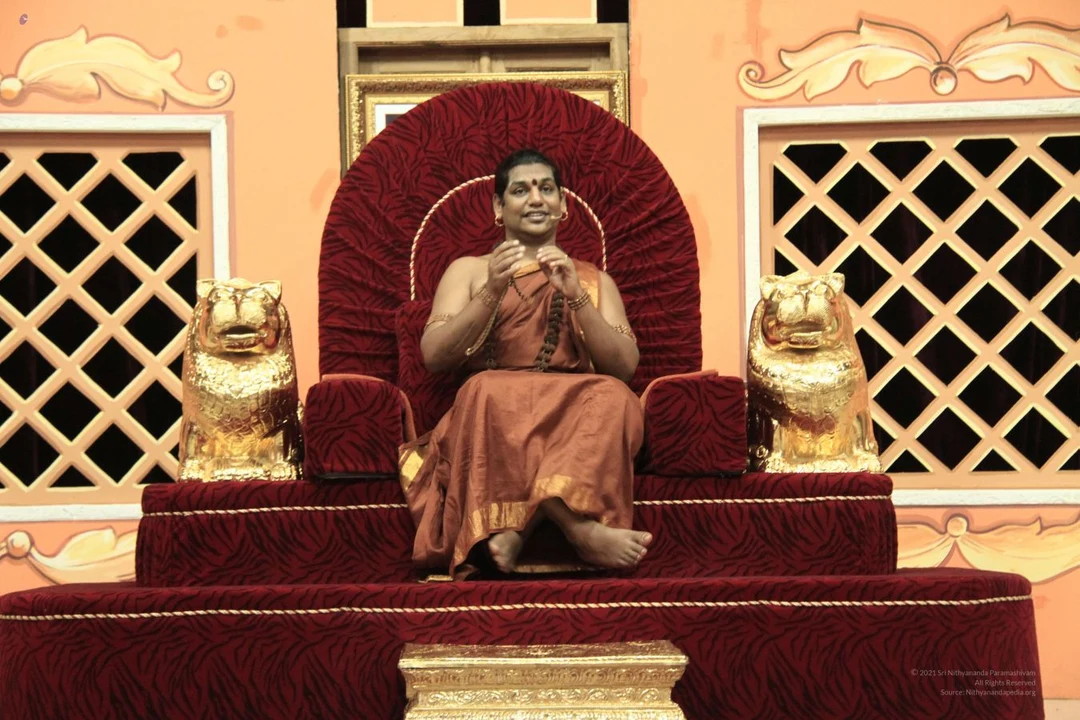
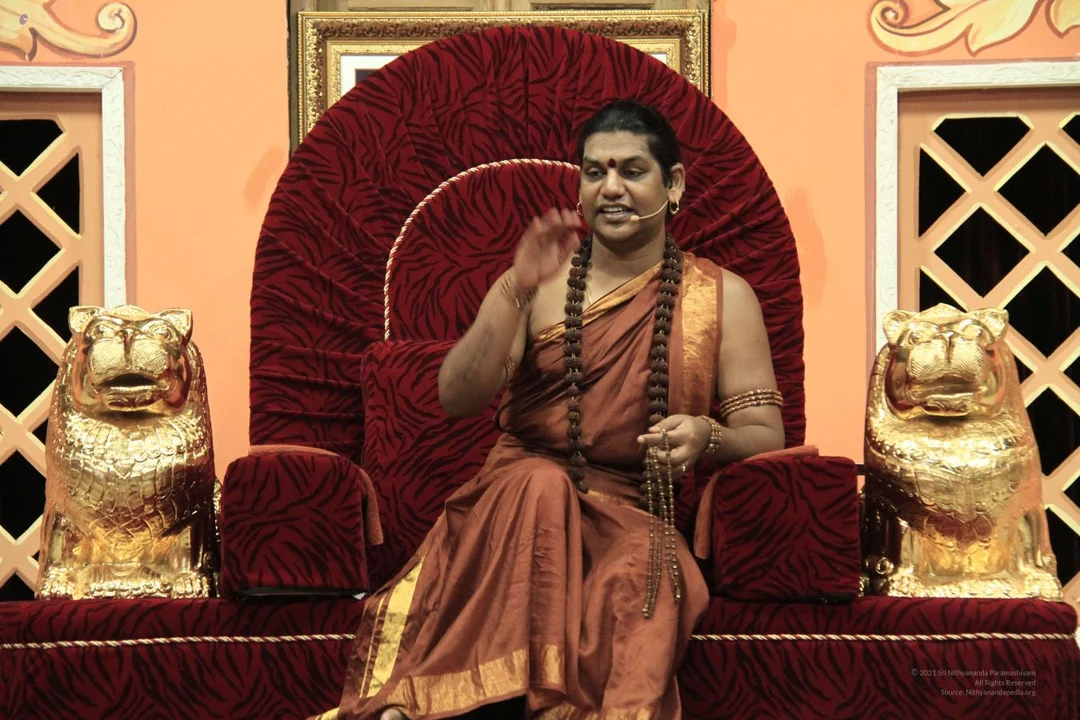
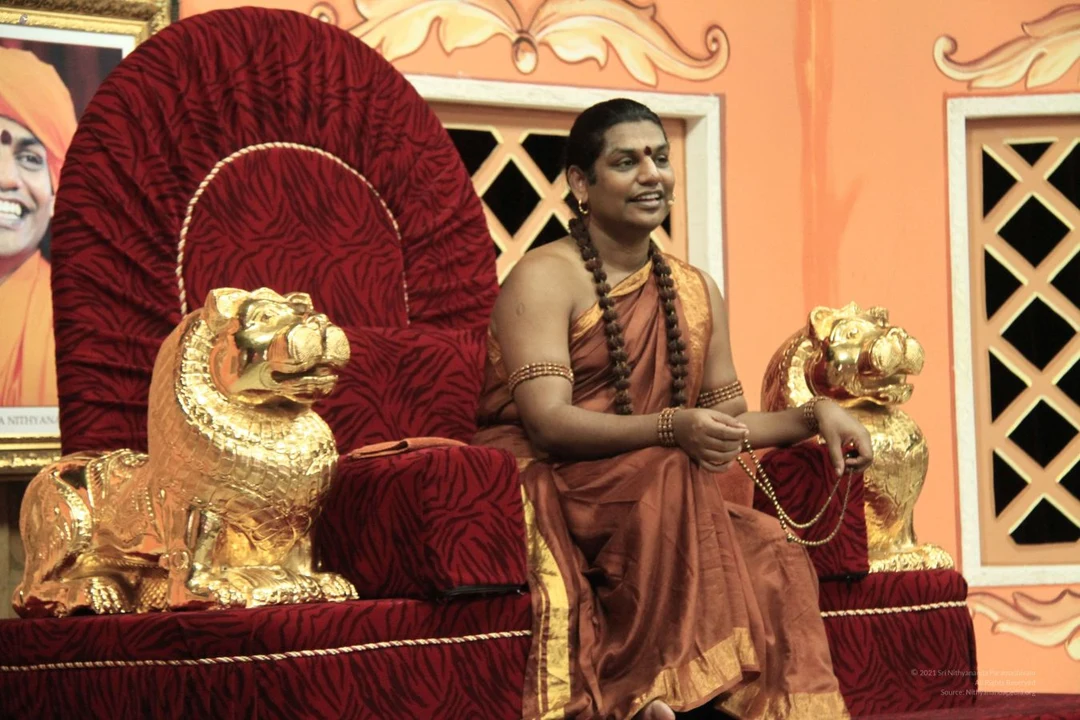
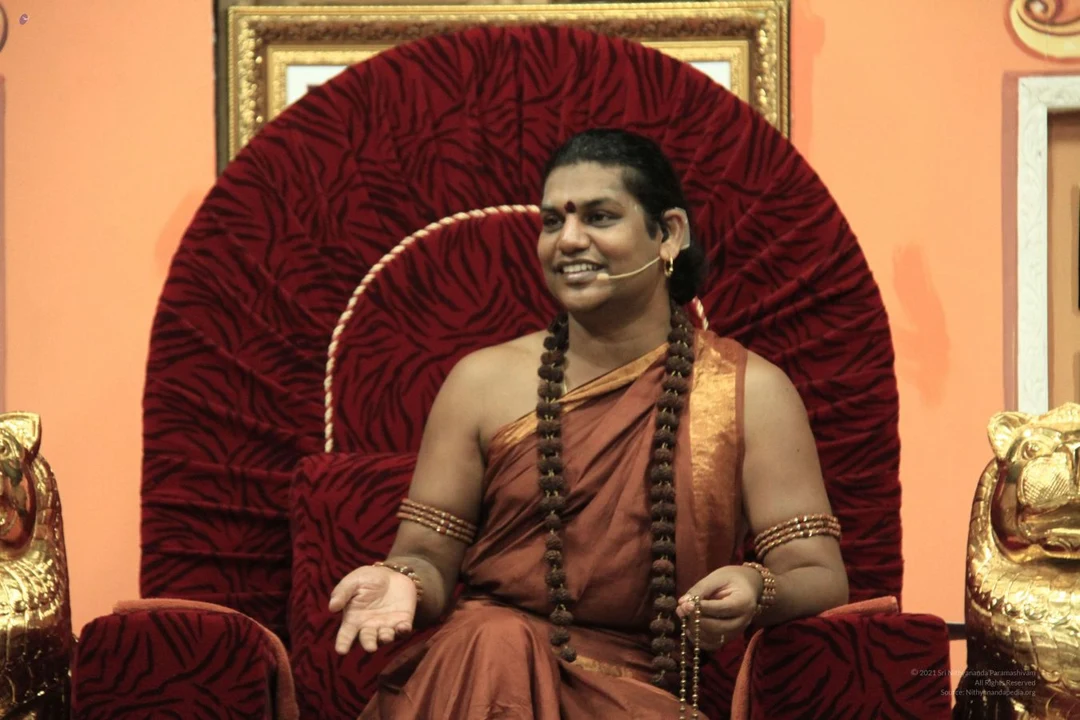
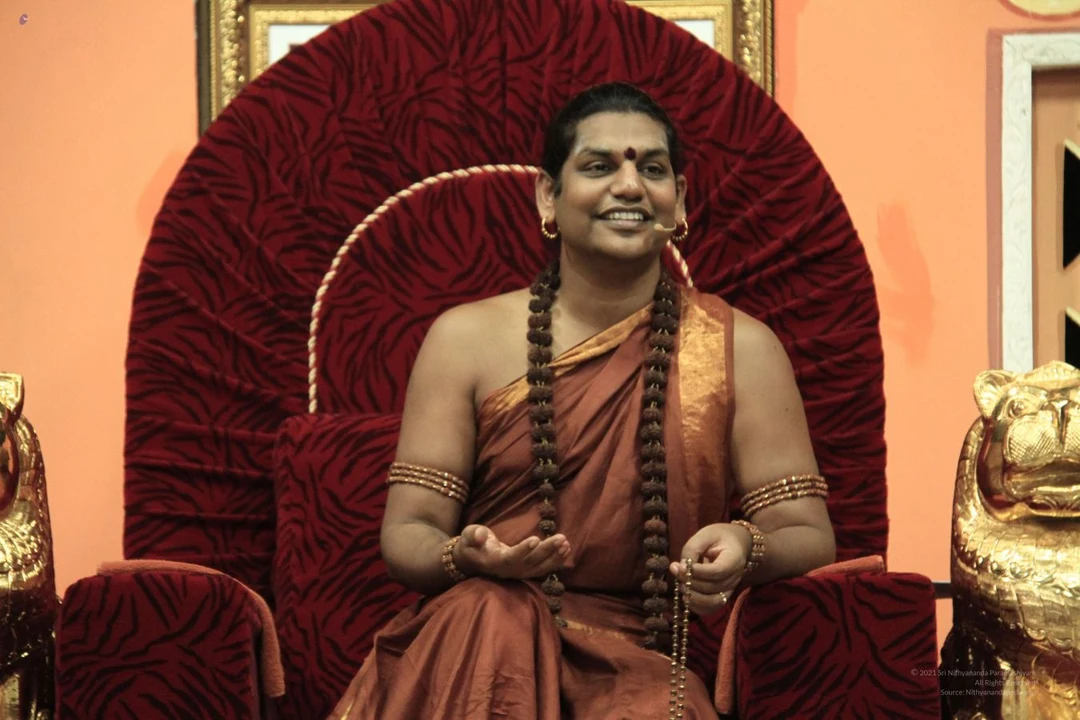
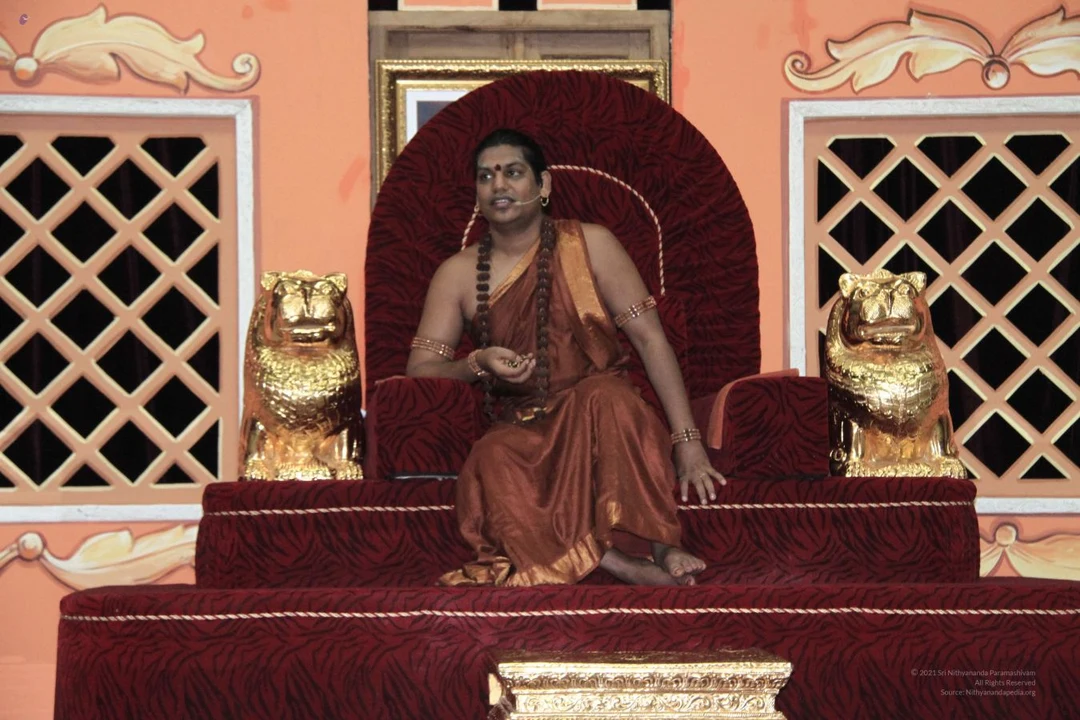
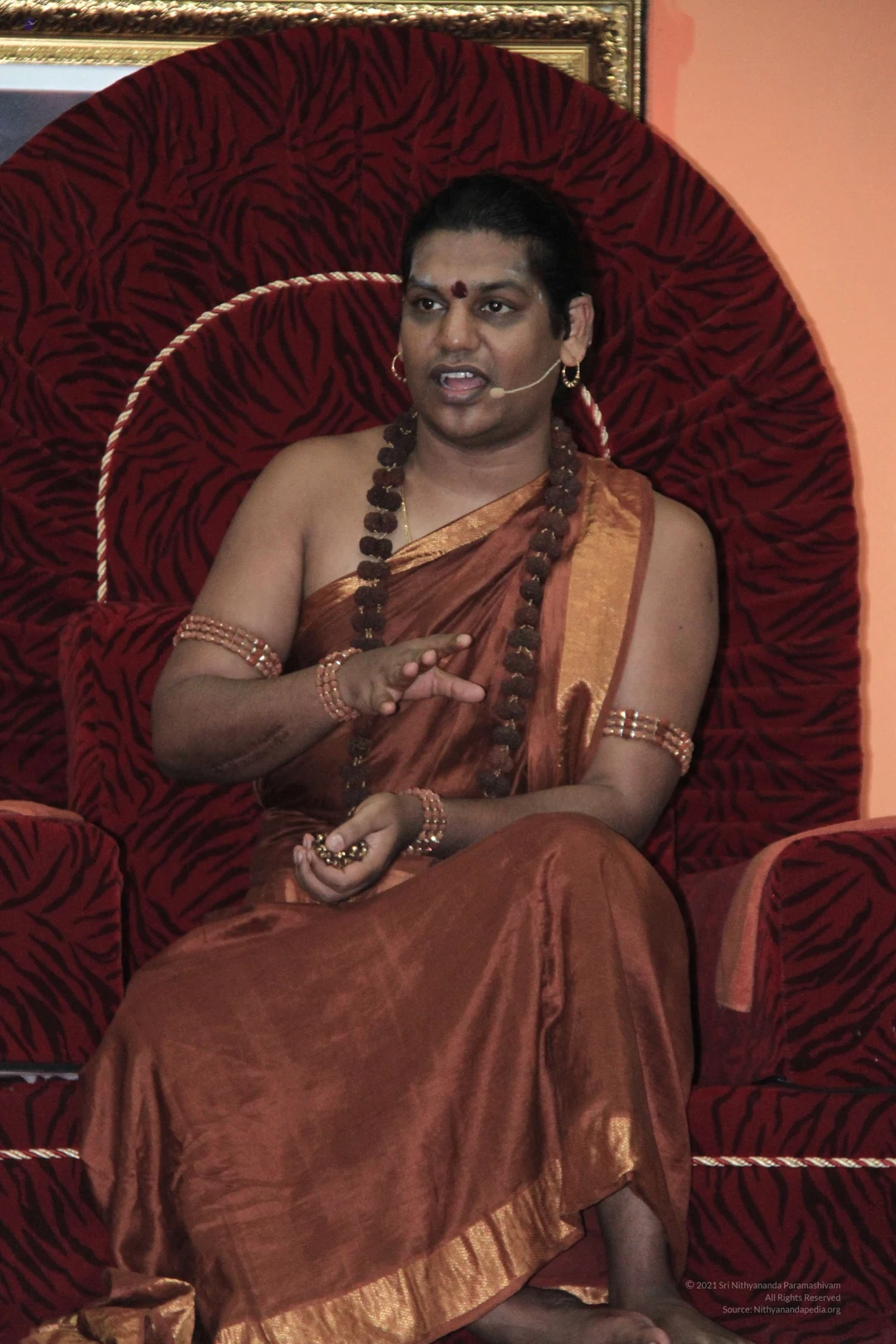
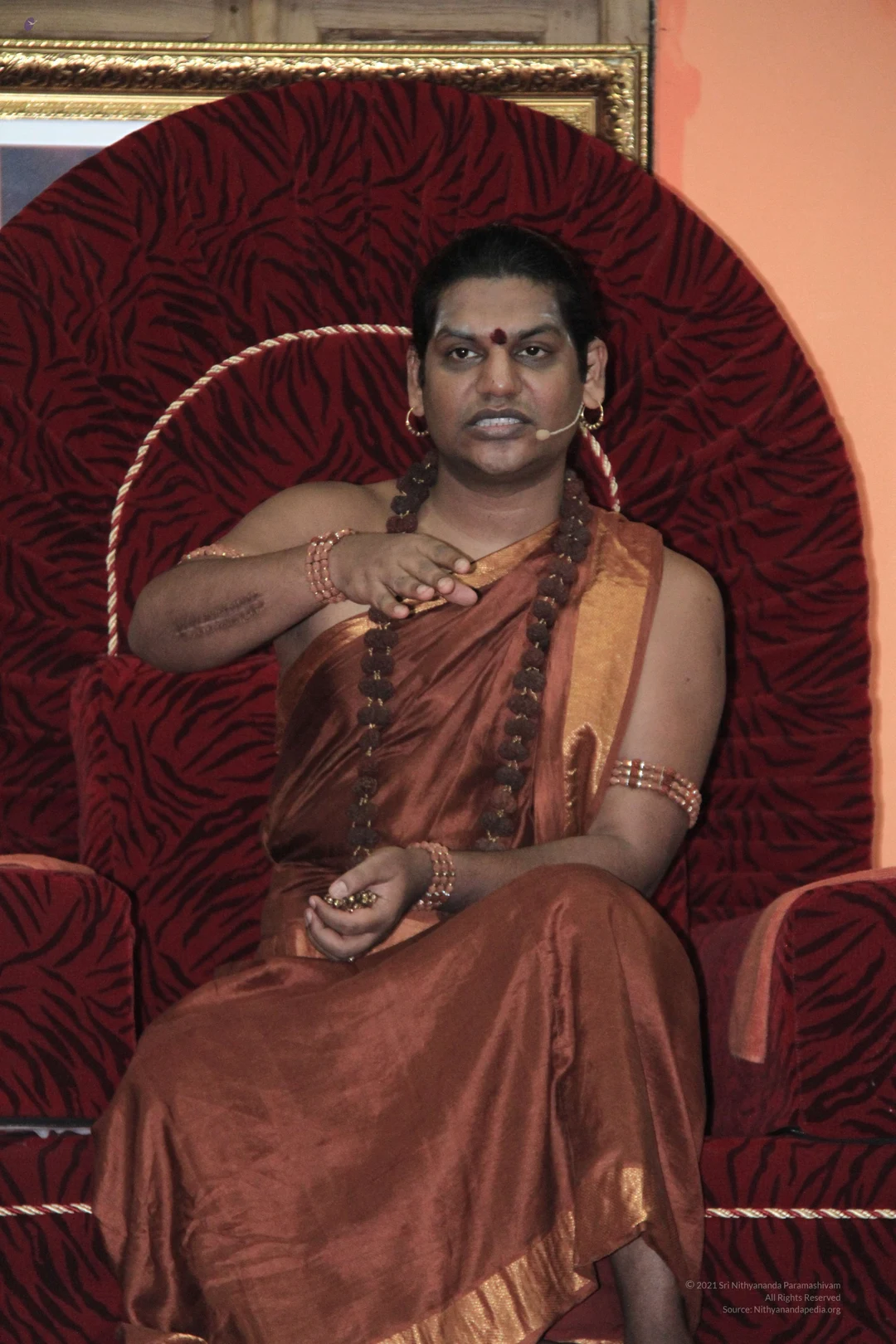
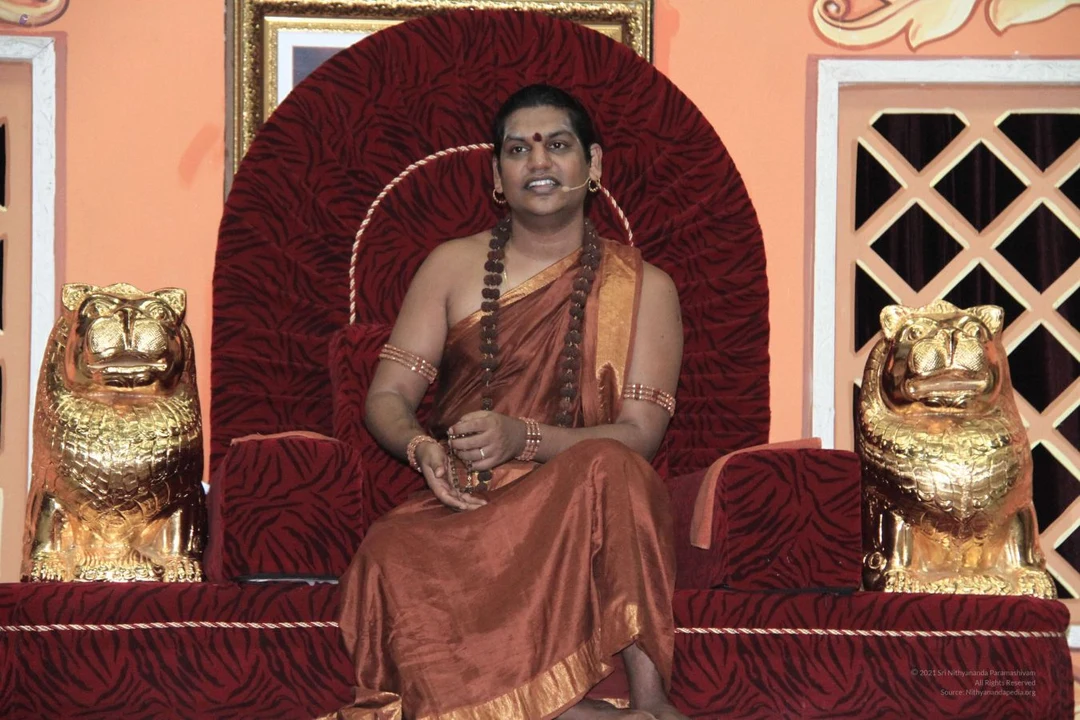
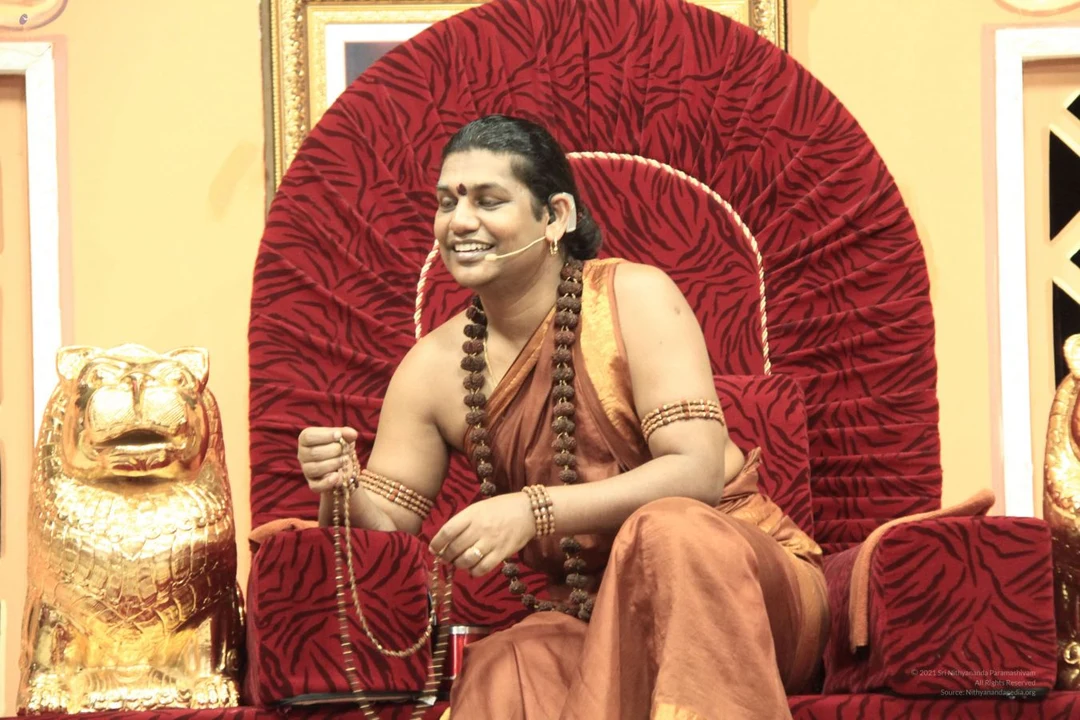
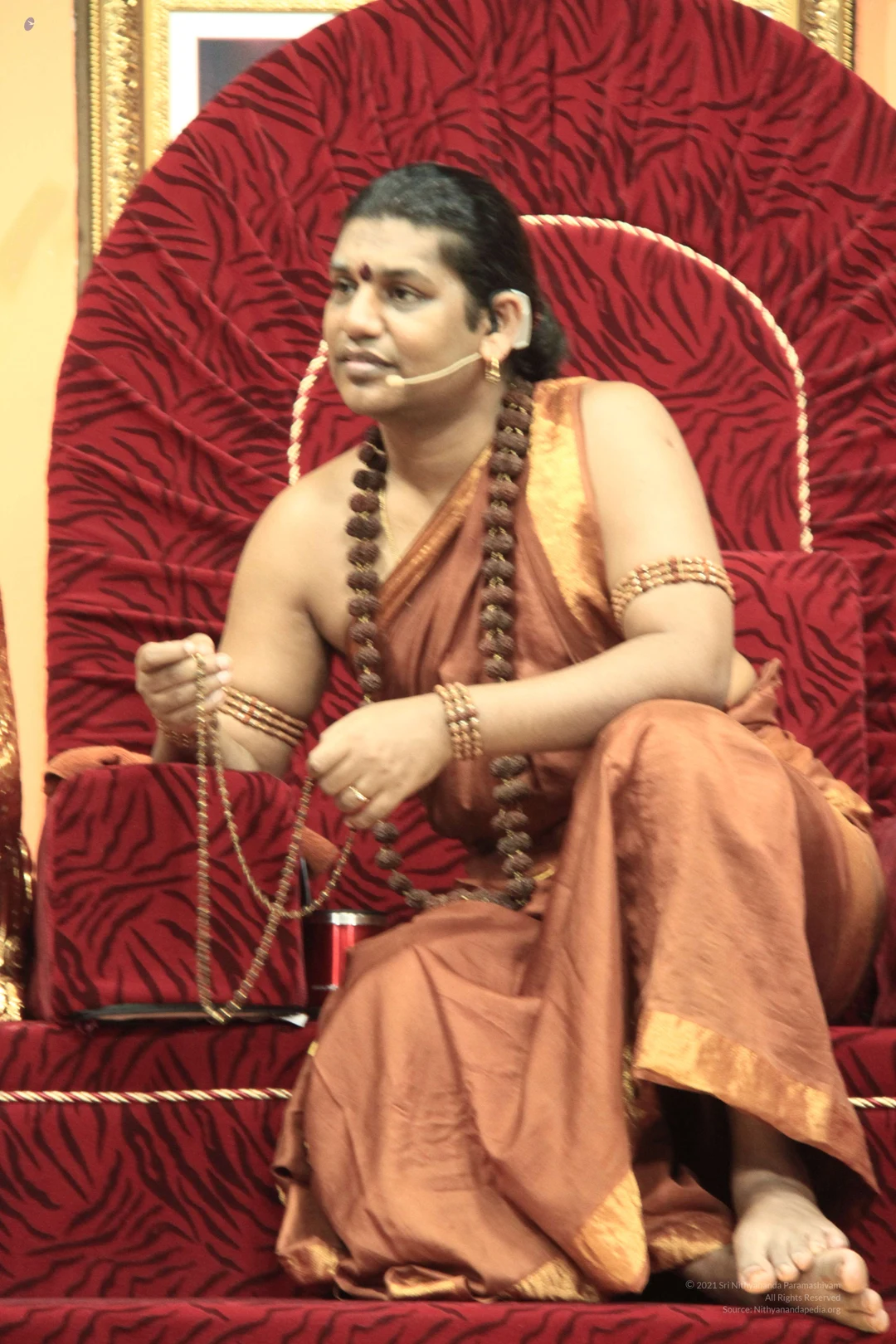
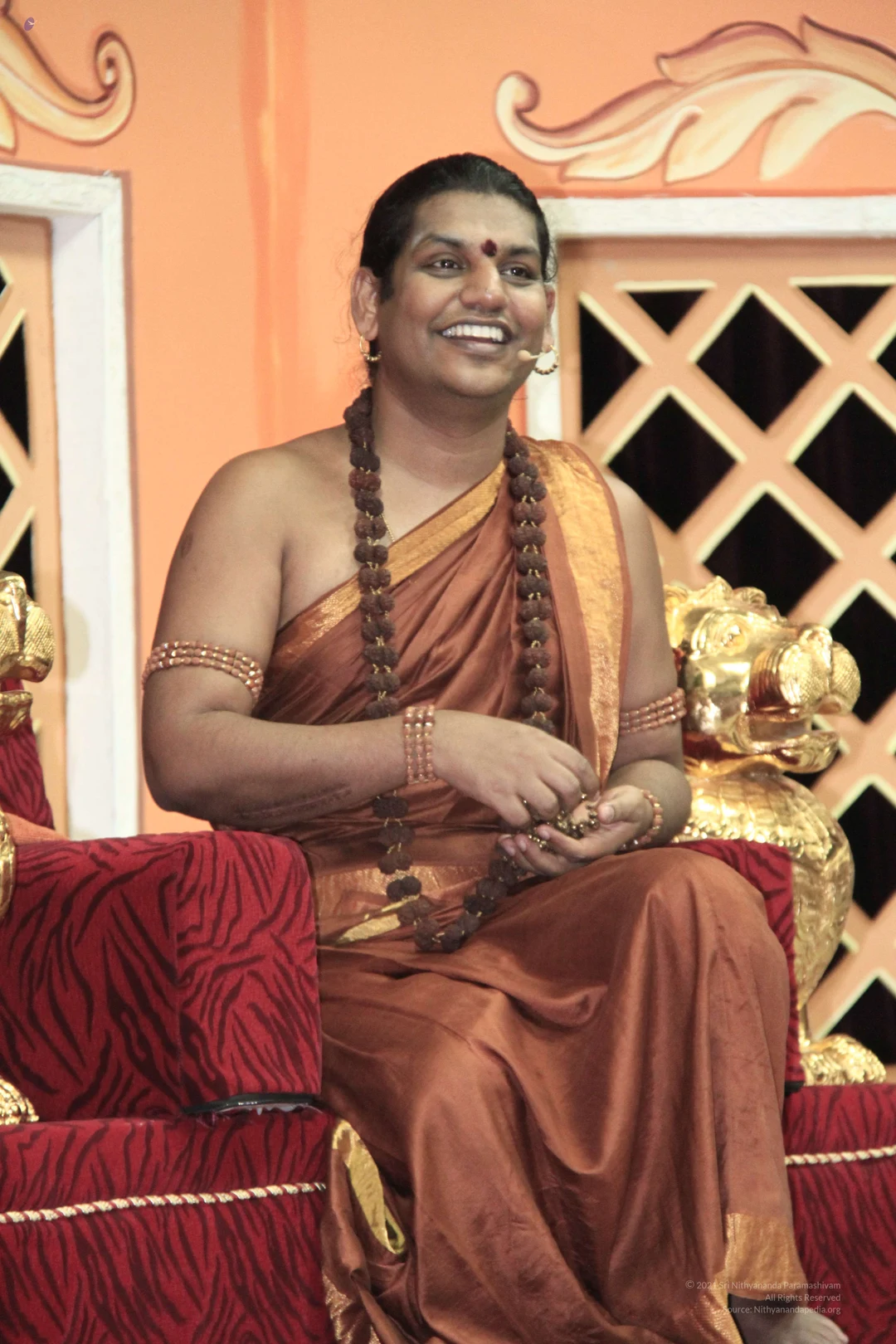
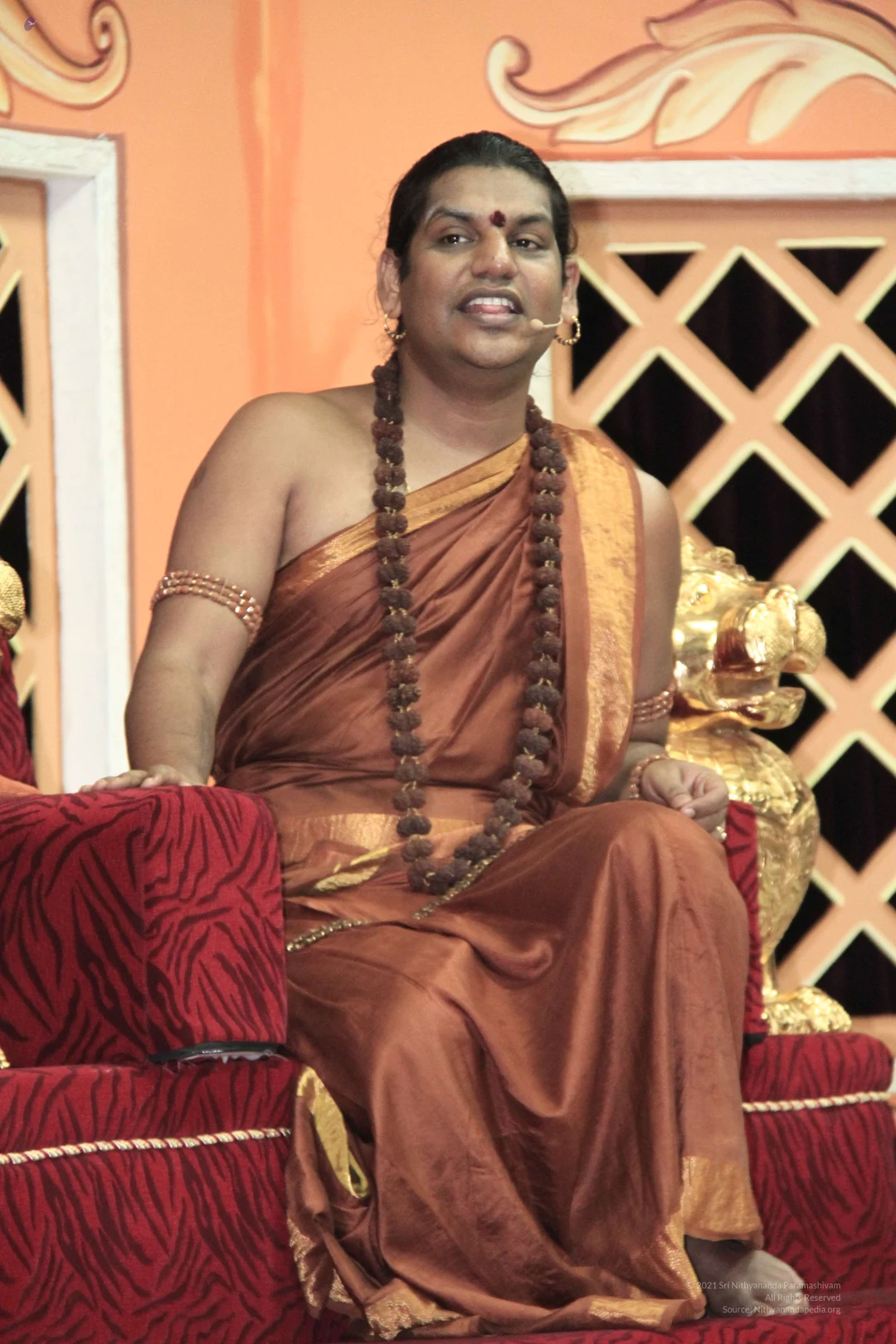
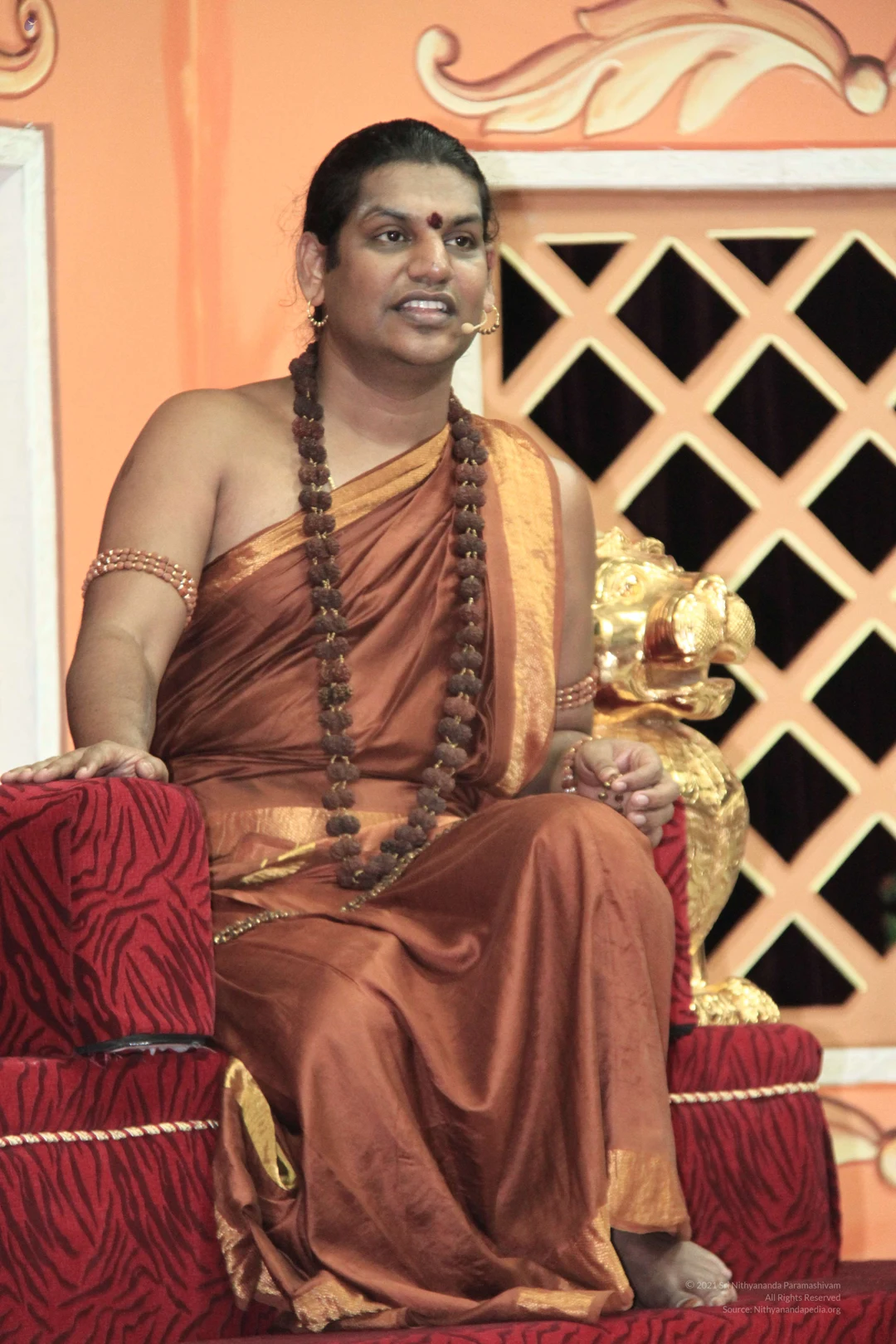
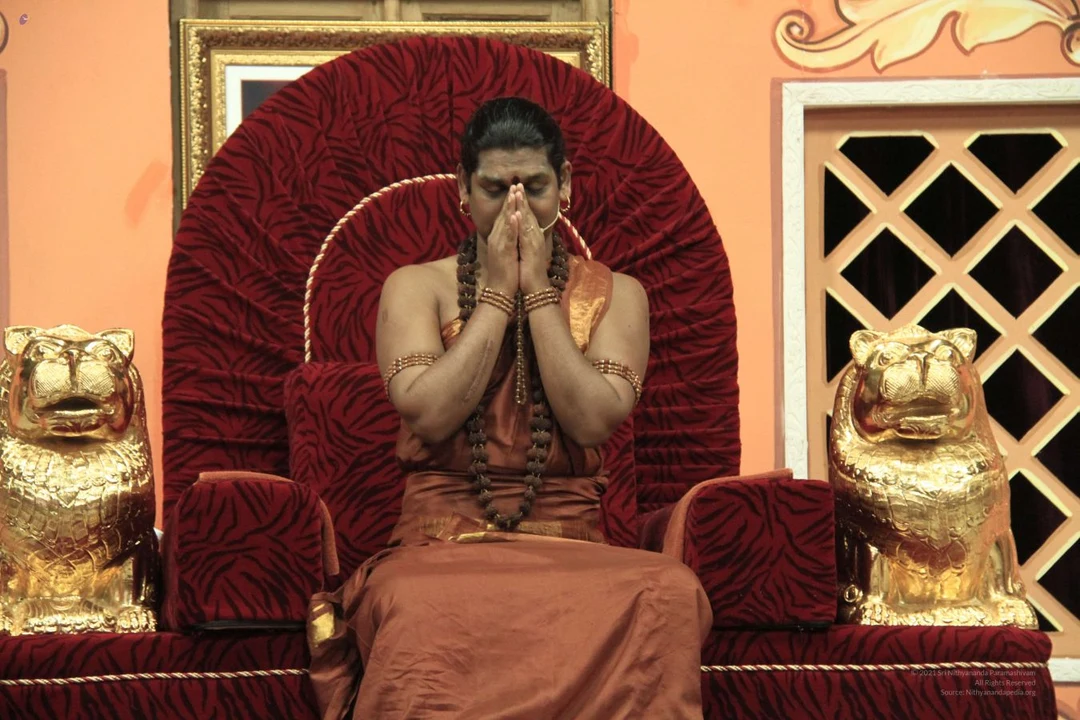
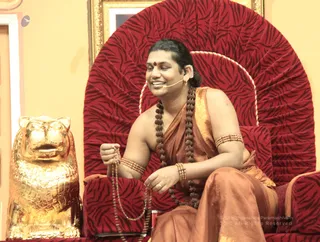
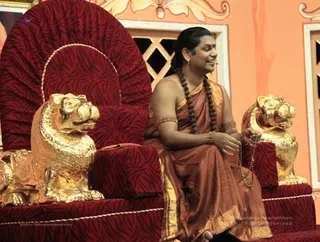
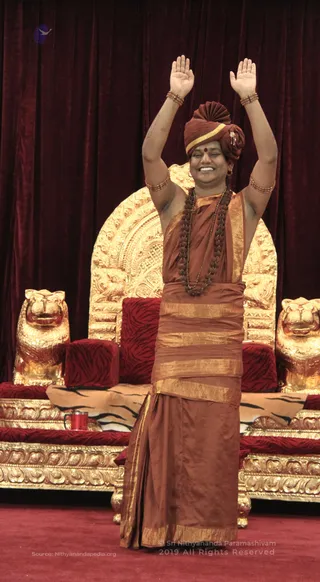
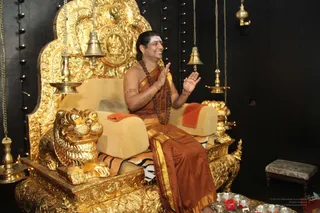
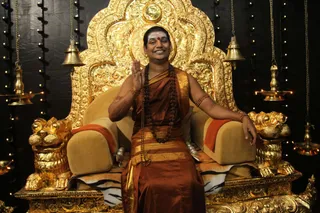
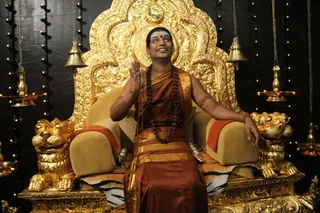
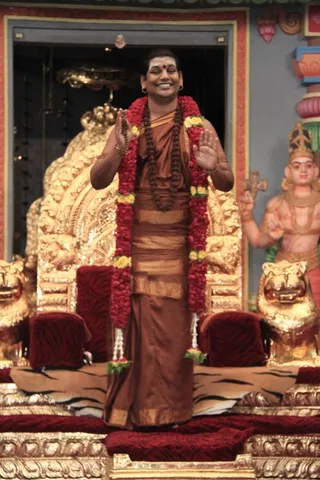
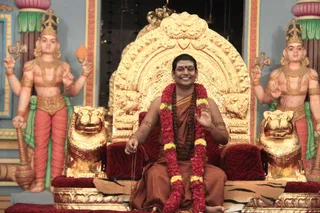
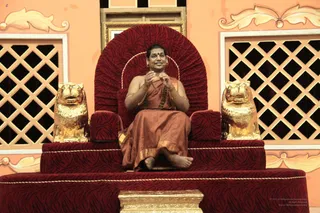
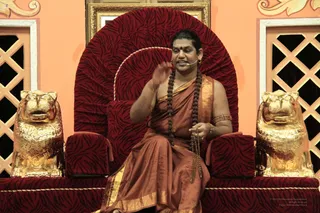
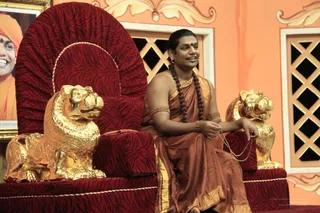
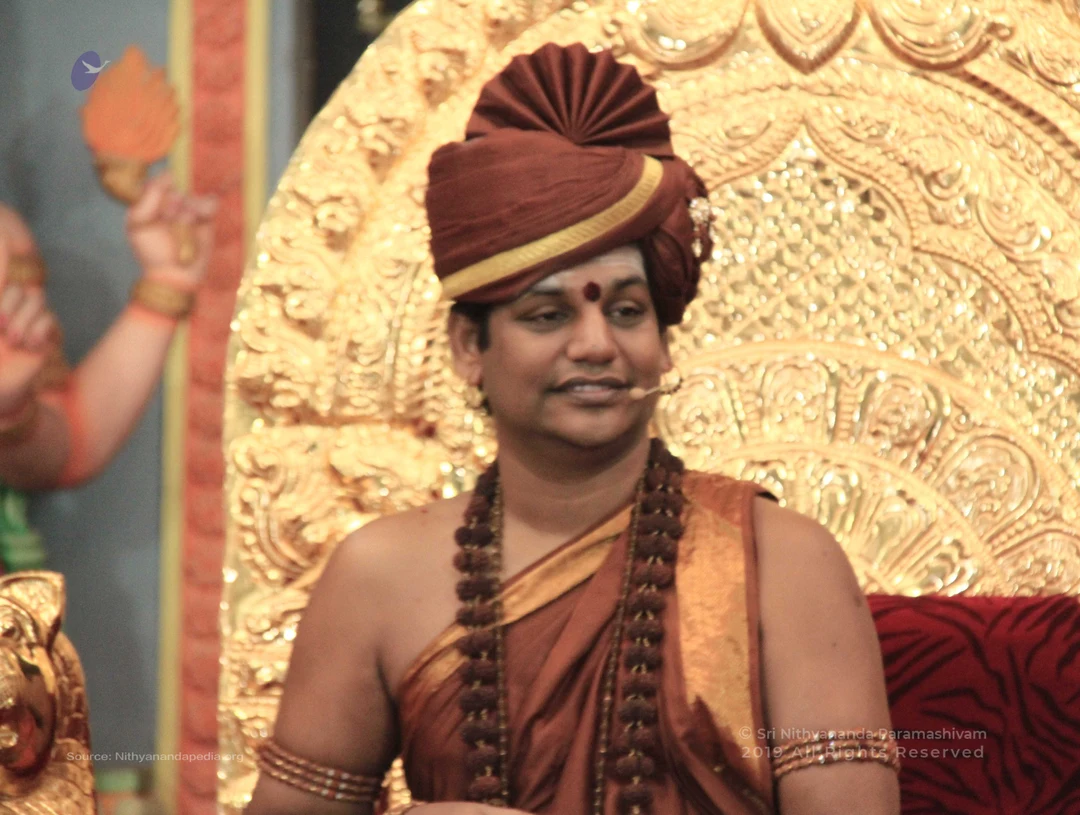
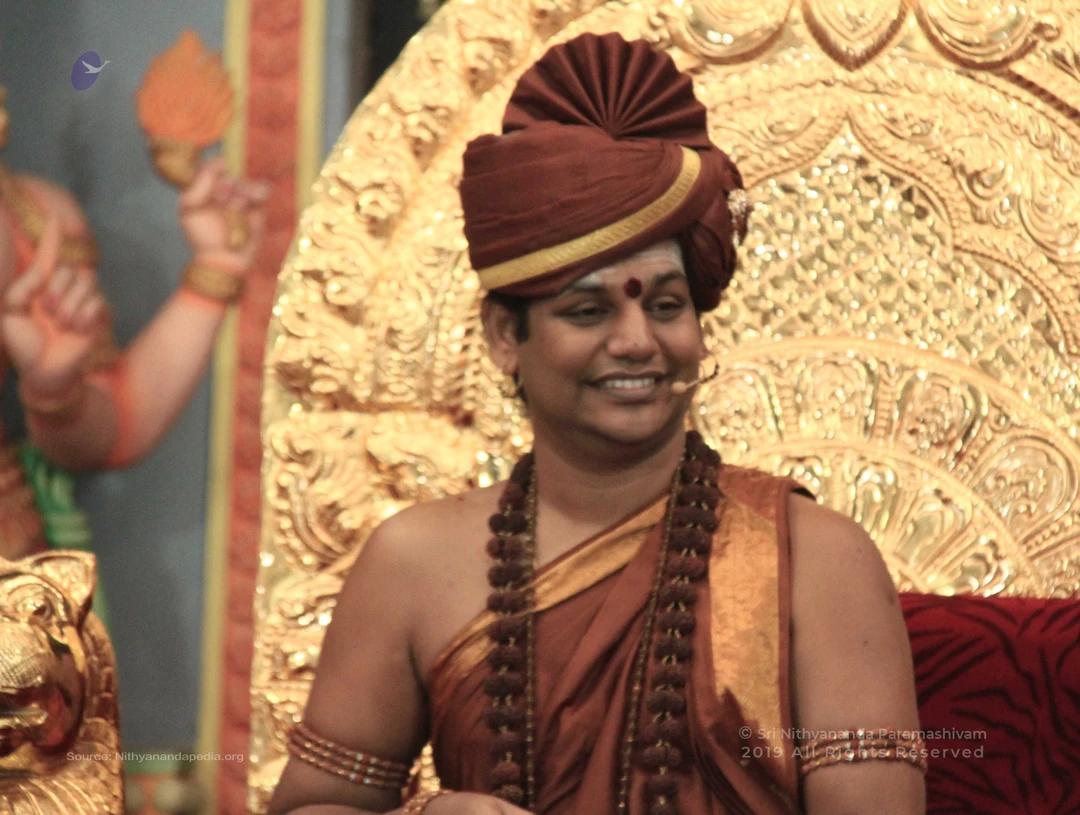
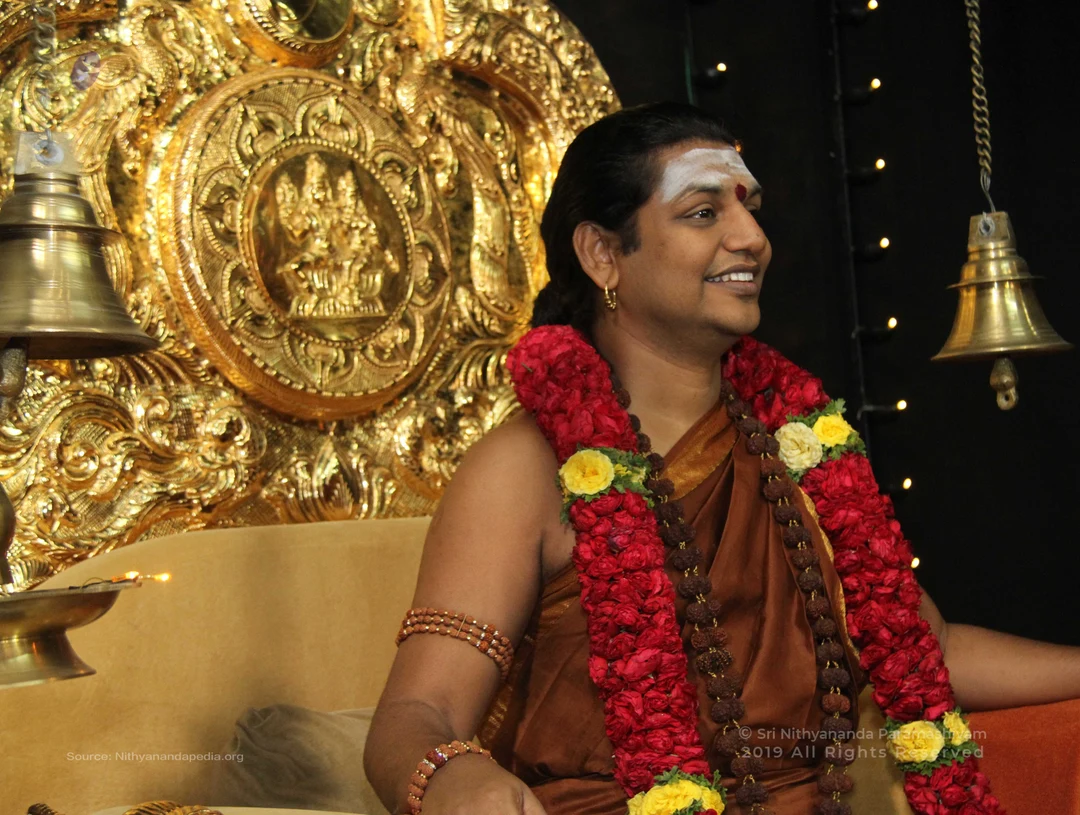
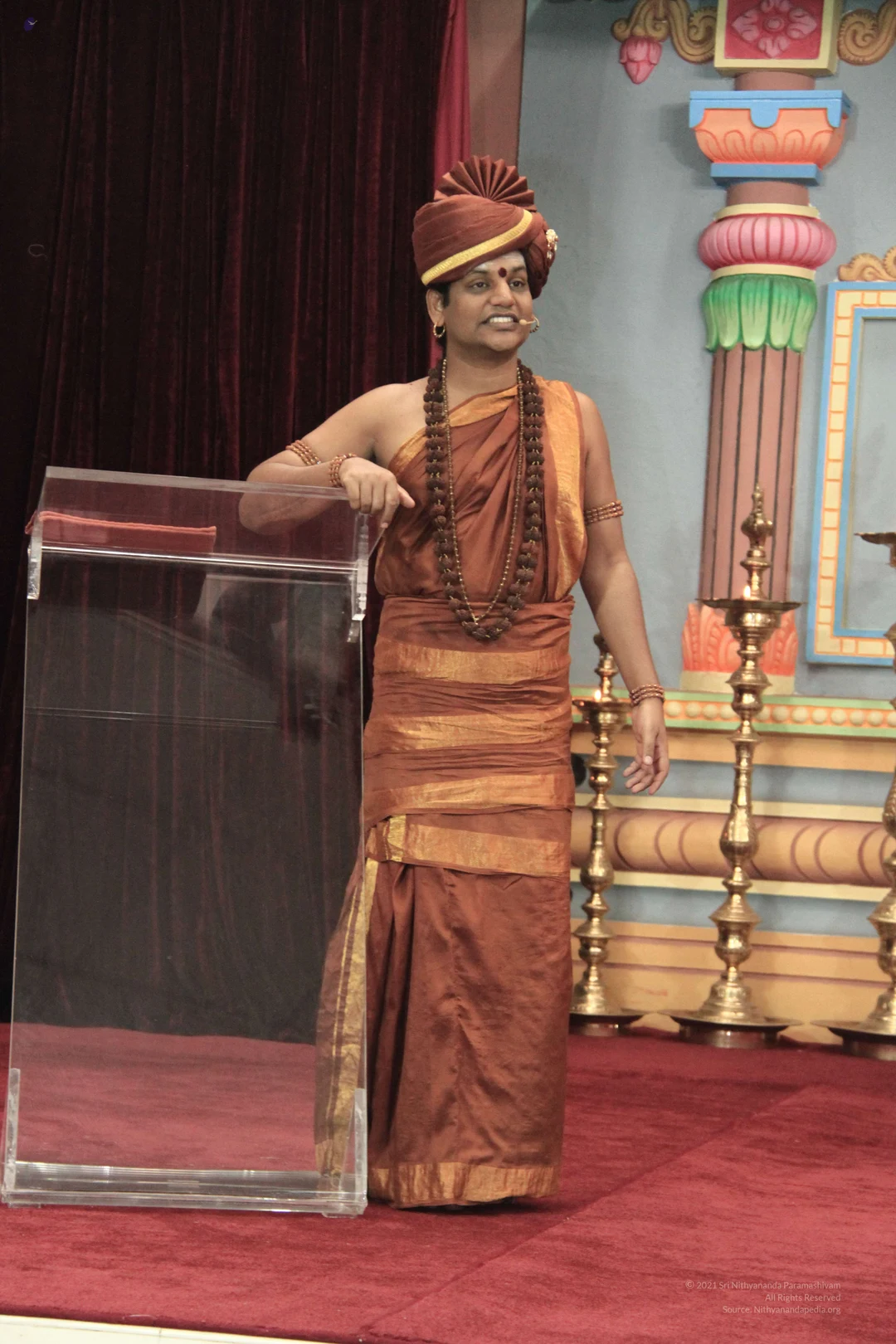
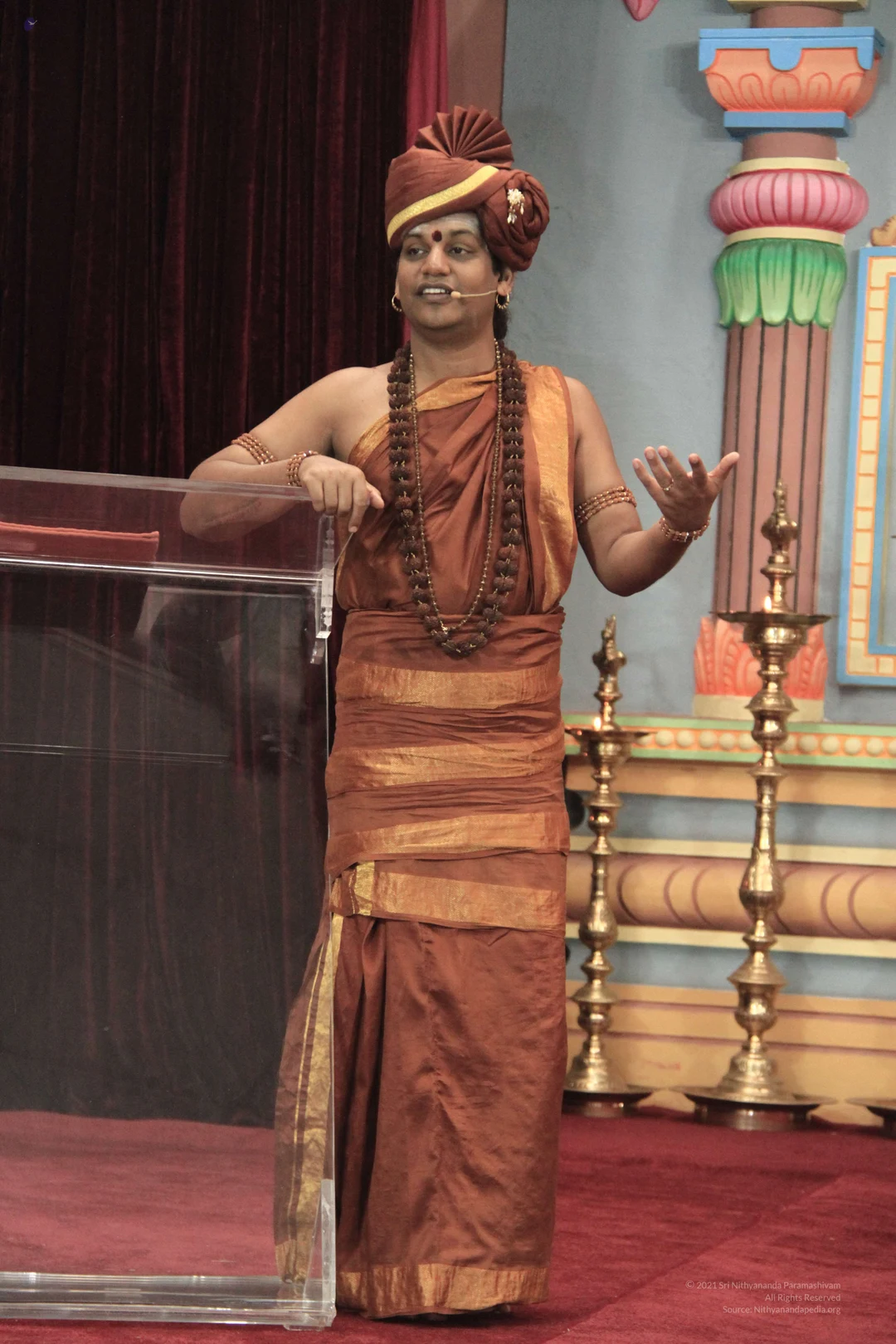
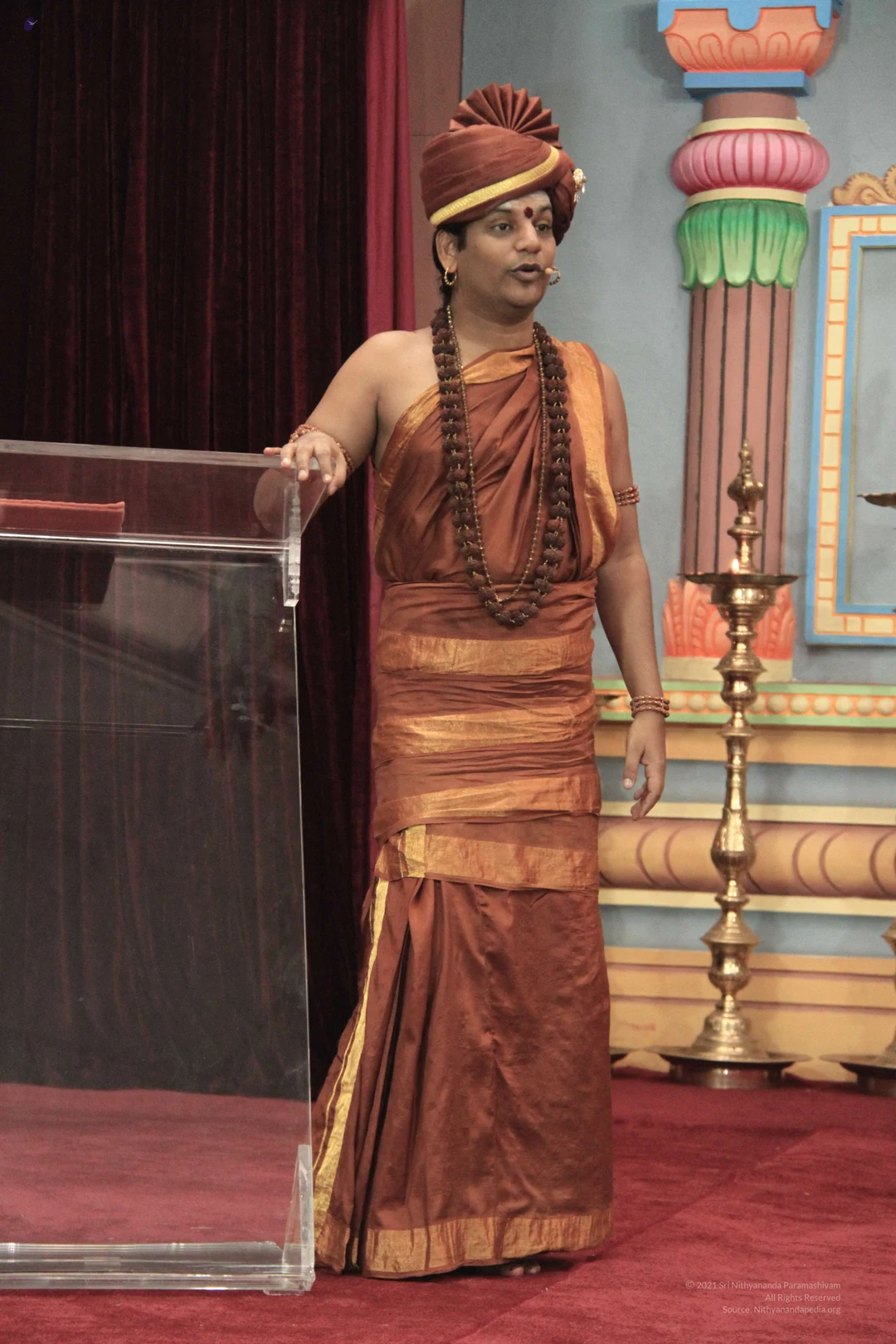
A person with a shaved-looking dark crown and a red bindi sits on a red tiger-striped throne with ornate golden lion-shaped armrests against an orange wall. The seated person wears a rust-brown and gold-bordered robe draped over one shoulder, a long dark rudraksha mala hanging to the lap, gold bangles on the upper arms and wrists, and a small earring, while speaking and gesturing with one hand. Behind the throne, a framed portrait labelled "Paramahamsa Nithyananda" shows a smiling figure in orange with a red forehead mark. Only one physical person is visible.A smiling man in a rust-brown pleated turban with a gold border and a red bindi sits before an ornate gold throne carved with foliate patterns. He wears a rust-brown and gold shawl draped over bare shoulders, a long multi-strand rudraksha mala, a small gold hoop earring, and a clip-on headset microphone near his cheek. A red fabric with tiger-stripe pattern is visible at the lower left. Swamiji (probable): the turban, shawl, and rudraksha mala with a shawl are the qualifying cues, and the setting suggests a satsang stage.A person stands on a red carpeted stage in front of dark red velvet drapery, raising one hand in a gesture while the other rests on a clear acrylic lectern. The person wears a rust-orange turban with a gold-edged band and a small brooch, a rust-orange draped garment with gold borders, a dark rudraksha mala necklace, and gold bangles on the wrists and upper arms, with a red bindi on the forehead and a headset microphone. A small logo appears in the upper left corner. Bare feet are visible on the stage.

November 24 2013

Original wiki page
Contents

Title:

Sannyas Revolution of Freedom.

Description:

In today’s morning Satsang, Paramahamsa Nithyananda brings to light hidden sacred secrets describing how a Sannyasi becomes a separate gender – the transcendental gender. When completion reaches our very biomemory, we have reached the peak of the male and female energies within and gone beyond the identification of being male or female – we are living in a transcendental body. Through completion, we can experience living joyfully in a transcendental body - enlightenment!

Link to Video:

VideoAudio

Transcript:

Nithyanandeshwara Samaarambhaam Nithyanandeshwari Madhyamaam | Asmath Aachaarya Paryanthaam Vandhey Guru Paramparaam ||

00:42 Hindi - 00:51

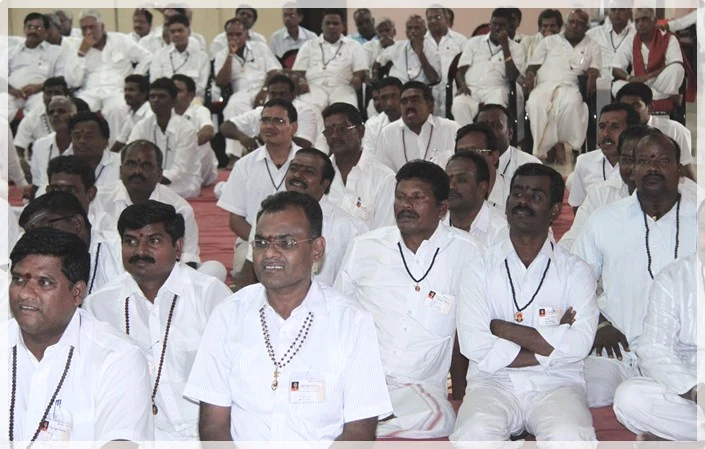
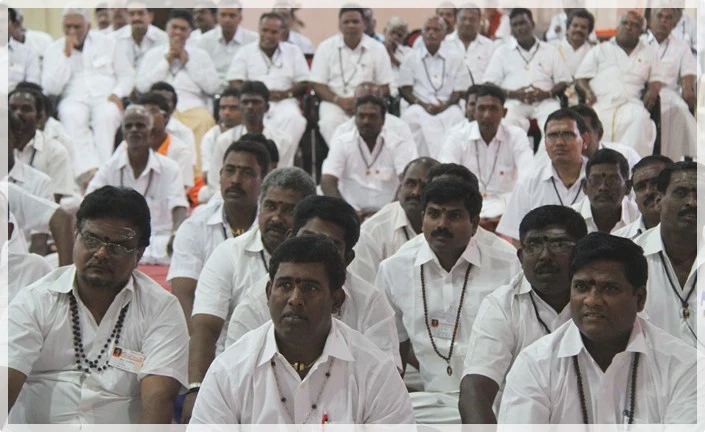
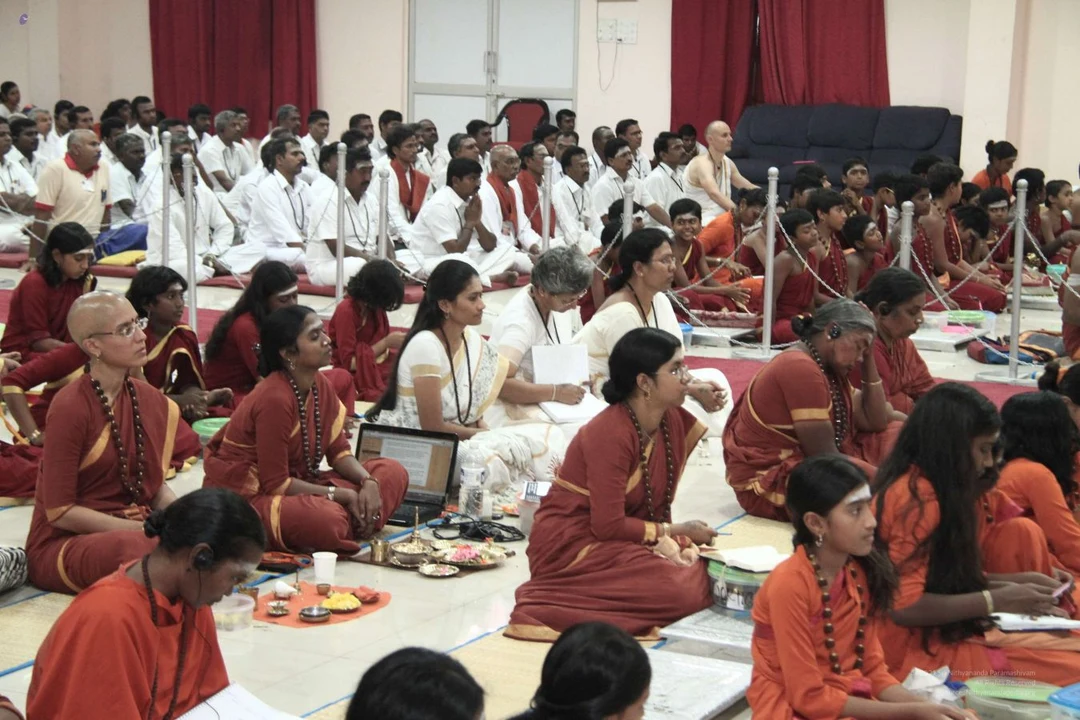
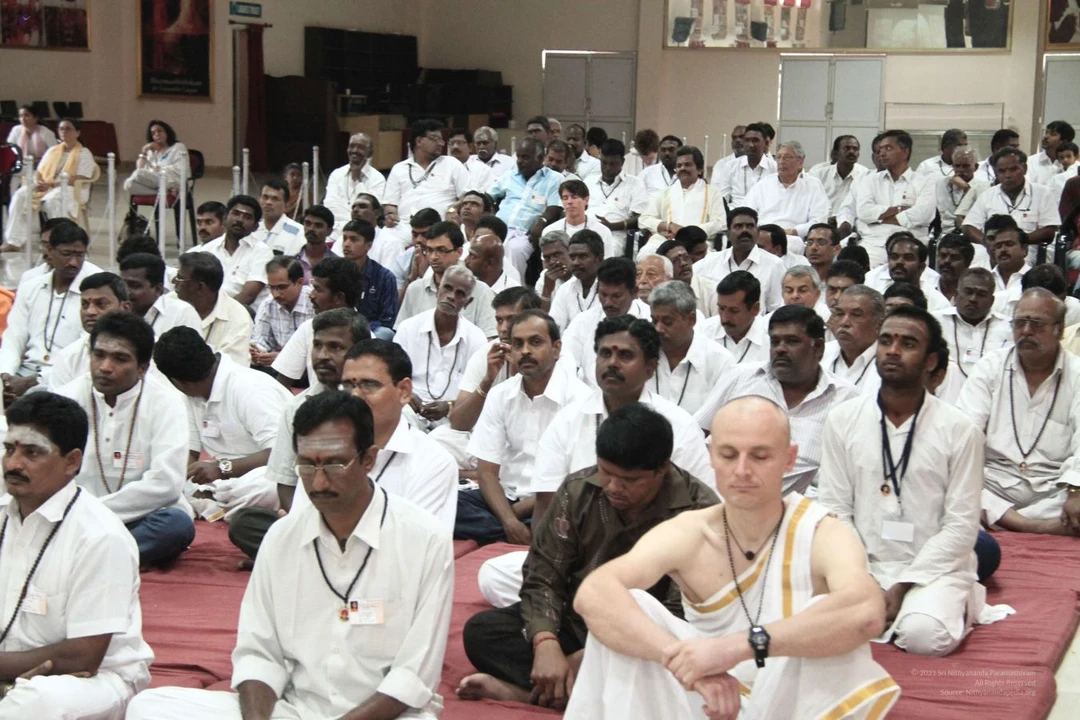
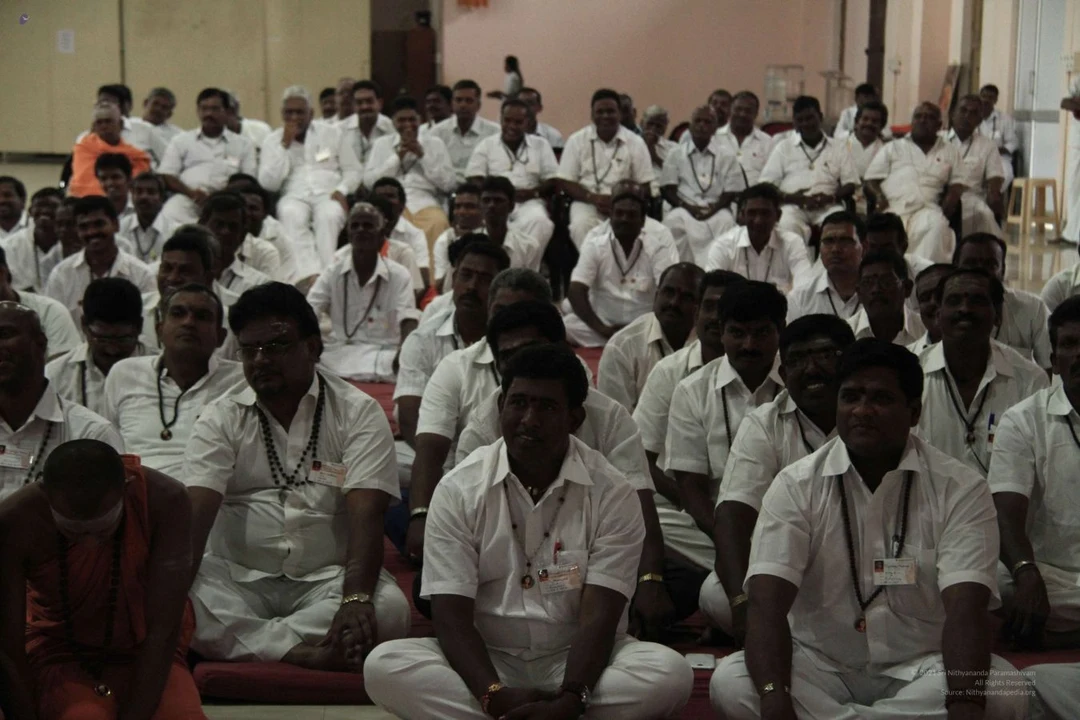
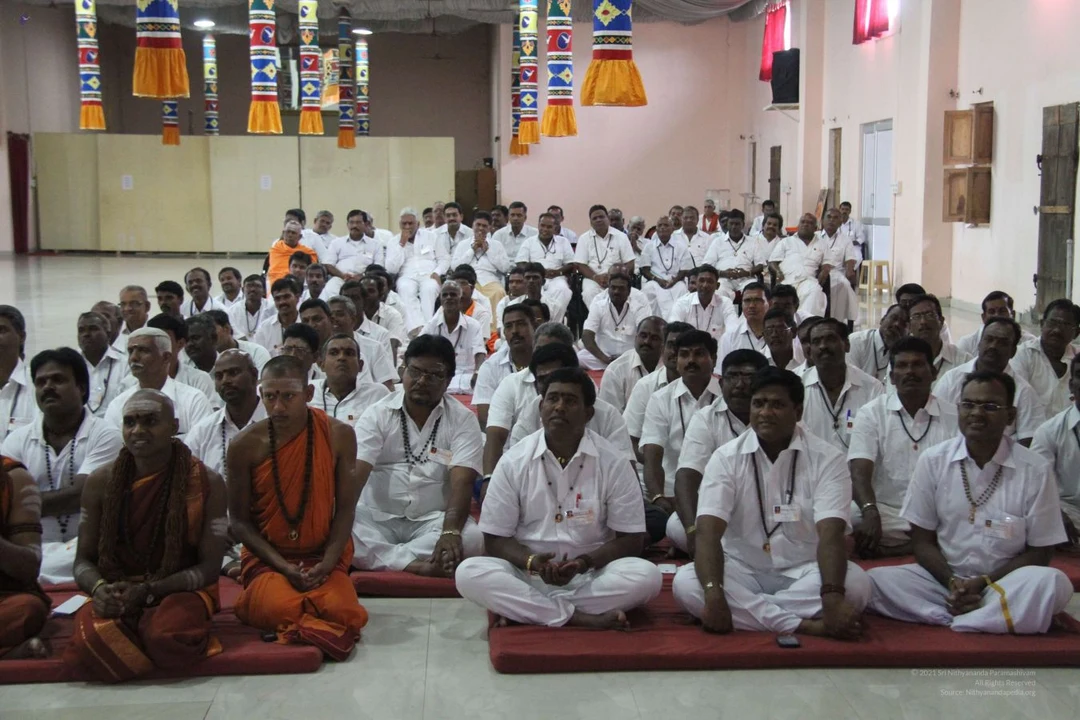
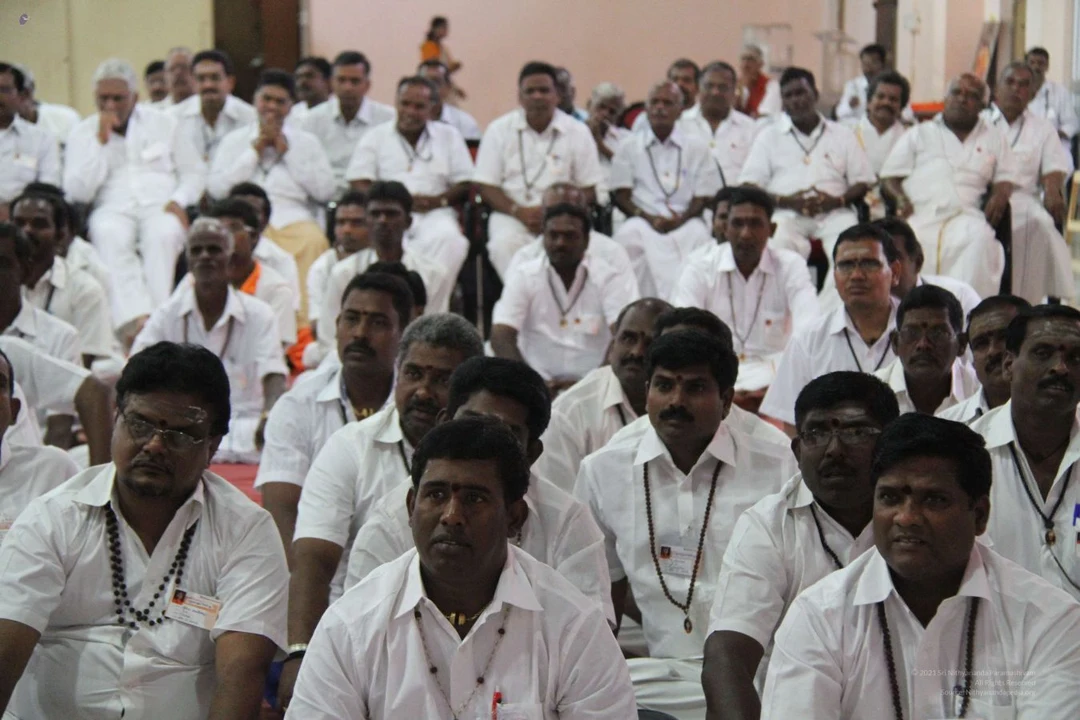
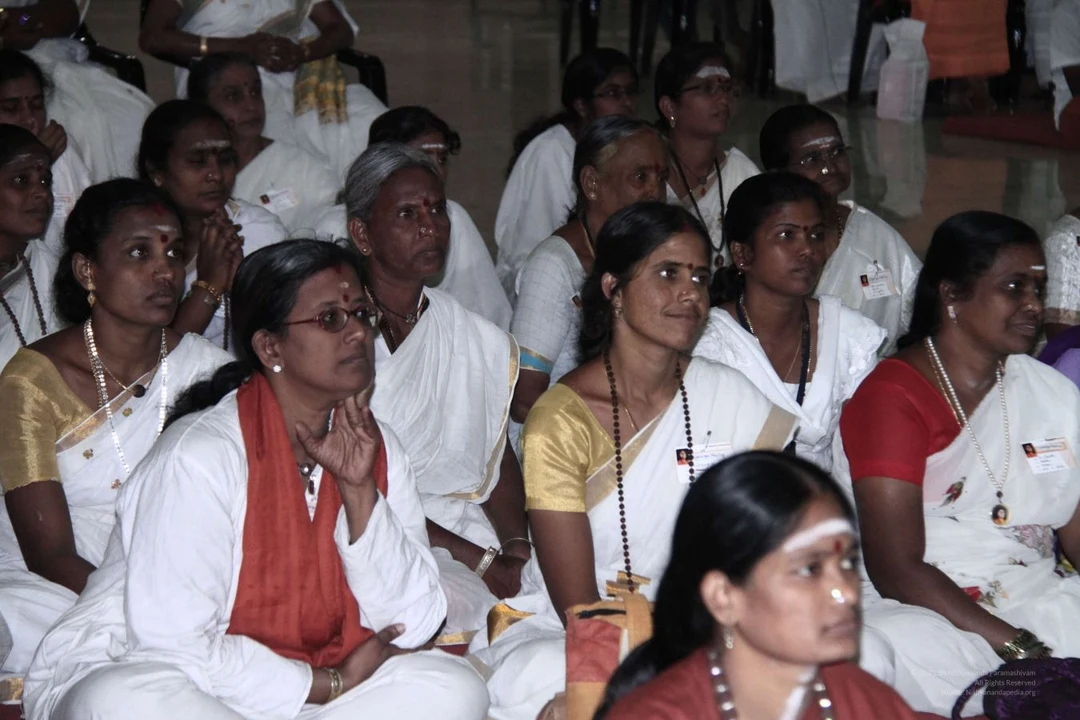
I welcome all the devotees, disciples, samajis, satsanghis, sannyasis sitting with us all over the world at this moment through Nithyananda TV, Sadhna TV, Lotus News Channel, Janashree TV, and through two-way video-conferencing having Nayana Deeksha all over the world.

The cities sitting with us all over the world having Nayana Deeksha: Mattakalappu-Sri Lanka, Kilinochchi-Sri Lanka, Troy-Michigan, Tiruvanmiyur-Chennai, San Antonio Texas Vancouver-Bhubaneshwar, Hong Kong-Sirkazhi, East London-UK, Bangalore North, Devon-UK, Philadelphia-USA, Oman-Sivagangai, New York-Varanasi, New Zealand-Adi Arunachalam, Wellington-New Zealand, Dubai-Vaidyanatham, Warrington-UK, Bogota-Colombia, San Diego-Tirualavai, Hyderabad-Gupta Kashi, Seattle-Chidambaram, Nithyananda Nagaram-Hyderabad, Singapore-Singapuram, Los Angeles-Arunachalam, Kuala Lumpur-Palani, San Jose-Madurai, Houston-Kalahasti, Toronto-Kailasam, Tiruttani Dhyanapeetam, Guru’s Gate-California, Guadeloupe-Rameshwaram, Enriching Temple-Bidadi.

I welcome all of you with my love and blessings.

Today I will expand on “THE SACRED SECRET OF THE SPACE OF SANNYAS”. The space you hold, how the space can ripe and get matured and leads you to Sannyas.

Please listen.

Mahaveera says, ‘Unless you assume the male body, you cannot be enlightened.’ And I am not attesting what he said. I’ll only explain the reason for what he said. The path in which he traveled and became enlightened, which he was teaching, needs a tremendous physical arduousness, tremendous physical strength, where you have to exert your body to the extreme, where it’s like a literally the concept of pain, pleasure, everything is forgotten. In Jainism, even now the tradition is you have to pluck the hair directly by the hand. You can’t even shave your head and you can’t use anything other than ash to take bath or clean the body. So, the path he went, the path through which he traveled and became enlightened and the path he was teaching to others, needs tremendous physical arduousness, physical exertion. So, he thought women may not be able to go through this whole physical process, the physical tapas. That is the reason he may have uttered the words, ‘Unless you assume the male body, you cannot become enlightened.’

But I tell you, one of the important sacred secrets: Sannyasis are separate gender. Please listen, the male – I am describing all the different genders:

Male; Female; Physically, physiologically male, but psychologically female – the gay; Physiologically female, but psychologically male; and Transgenders; All these are different genders. The ultimate gender is “Transcendental Gender”, where the level of Completion, the depth of Completion reaches to your very bio-memory. Please understand the level of Completion gets into your very level of bio-memory, your very muscle-memory and bio-memory where you don’t hold pride of being a male or female, where the fulfillment of womanhood or manhood happens in you. Your manhood and womanhood, both reaches its peak and experience Completion. Your body radiating Completion to the level of bio-memory is what I call “Transcendental Gender”. “Transcendental Gender”.

Sorry for the pronunciation mistake. Once in a while, that village boy from Tiruvannamalai comes out in his pronunciation and accent. Transcendental gender.

Listen, I don’t know the purpose, the reason why Mahaveera made the statement, ‘Unless you are in the male body, you cannot achieve enlightenment.’ But I tell you, unless you reach the Transcendental Gender, you won’t reach the Complete Completion. Complete Completion makes you experience the space of Transcendental Gender, and I tell you, the joy of being in the body which Transcendental Gender is the greatest possibility, but kept away from humanity.

Sometime I feel that our masters have kept too many things as a secret. We lost much of our knowledge and materia medica. The Indian materia medica is the largest knowledge source of medicine. The Siddha Tradition, Ayurvedic Tradition, the Ayurveda practised in seven different zones of India from the totally different understanding. Please listen; the Kerala Ayurveda and the Bengal Ayurveda have no connection other than the word “Ayurveda”. The whole principle is different but both are very powerful. All this knowledge of materia medica and the knowledge about the alchemy processes, so many things got lost due to the concept of “guhyam” – “secret”. If it is sacred, it has to be kept as a secret. No. No, it is time, it is time we bring everything together and share it with the world, we bring everything together and share it with the world.

One of the, see, many sacred things we lost because of our secrecy idea which is completely wrong. One of the important sacred secret we lost because of the concept of “Secret”, keeping things as secret is the joy of living in the Transcendental Gender body. Even the concept seems to be very new. If I speak to the modern-day humanity, it’s almost like I am proposing something which is impossible. See, if I propose human-beings can start flying without any machinery just like that, how people will look at me. ‘Mmmmmm!’ that is exactly the way you guys are looking at me when I say, when I describe about the joy of living in a Transcendental Gender body. I know, it almost feels impossible and because you so strongly cognize and believe it is impossible, deciding it is impossible looks very honest, or accepting it is impossible looks very honest. Like Osho claiming celibacy is never possible; it looks very honest; but, I tell you the word it is not truth; what he said is not the truth. I know if he were alive in the body, we would have had a real, good debate, he is worthy of having a debate.

Please understand debate should be held with a person who does not have vengeance. I may not wanted to have debate with U.G. Krishnamurthy. Even if I had, it is out of compulsion for the responsibility I am holding and just to make him understand; not as a joy. But the debate with Osho would be really a joyful experience. It would have been really like Shankara and Mandana Mishra’s debate. That was such a joyful experience, it was not violent. That is why, see, the scale with which they decided who wins, that is a very important thing. The Mandana Mishra’s wife, she had a motherly affection to Shankara. She was almost in a position of the Mandana Mishra, the Mandana Mishra’s wife her was Ubhaya Bharati, alias Sharada - she had two names. Ubhaya Bharati was her parental name, and Sharada was Sannyas name.

Ubhaya Bharati’s, the husband Mandana Mishra one side, and the son Shankara the other side. And she was also an incarnation of Saraswati. So she puts the standard who wins the debate. She says, ‘Whoever expresses incompletion first, they’ll lose the debate.’ See, when you express incompletion, your body heat will raise, the flower garland you are wearing will wither away. Please understand, always incompletion raises the body temperature. Whenever you are completing, you will see, the body temperature will increase. Body temperature will increase. Any of the diseases which were there in you in the seed form will erupt out like pain or arthritis or skin diseases like psoriasis. All these will erupt out when you go through Completion process, because the body temperature will increase.

Ubhaya Bharati beautifully says, “whose body temperature increases, they lose the debate.’ Means, you are expected to be in the space of Completion and do your debate. If your body temperature increases, the flower garland will naturally wither away. Whose flower garland first withers away loses the debate. When your incompletion is awakened, you don’t maintain your integrity to your logic; you speak just because you have to conquer; you don’t speak to raise yourself to the next level.

Understand, in India we had a great system. Any master if he can lead us to the next level, we are ready to follow him. We don’t care whether he is a Hindu, Buddhist, Shakta, Jain, Tantric, Naga, Aghori. We don’t care about his Sampradaya. If he can raise us to the next level, we are ready to go behind him. This is what I call “Integrated Sanatana Hindu Dharma”. See the Indian history. Suddenly Buddha the most charismatic Sannyas ever walked on Planet Earth walks on the earth, the whole Hindu Brahmins, Hindu kings get converted and live Buddhism. The whole India vibrated with the truth, with the idea: “Buddham Sharanam Gacchami, Dhammam Saranam Gacchami, Sangham Saranam Gacchami”!

Then after he leaves the body, in three hundred-four hundred years, there is a slack; no other enlightened being to lead the people to the next level. They are all just stuck with some spiritual practices, concepts, theories, words, theologies, terminologies.

Then comes Shankara, youngest spiritual leader Hinduism has produced. People saw that he is able to lead everyone to the next level. Immediately, the whole India followed him.

Please understand, it is wrong to measure us with the scale of organized religions of the western traditions. In the West, the tradition is totally different. There you just live with the one organization. In the East, please understand, we have given such a tremendous freedom. Our religion is built on freedom. That is why, I tell you, we are the only religion going to survive next generation, because the next generation’s cognition is based on freedom. Freedom, Choice, Option – this is the mantra for the next generation.

I tell you, I very strongly feel, in next twenty years, this will be the status of humanity, state of the humanity. When you are eighteen, you will have the choice of which country you want to live in, which language you want to speak, where you want to study, where you want to do your job, which religion you want to follow, which gender you want to be. Please understand, by eighteen, you will have all the choices in front of you, the crash course on every religion. They will say, ‘Have the crash course on every religion in six months then choose yours.’ And crash course on languages. They may have even developed a software; just by downloading you may be able to speak that language, who knows? And we will also be having the option, ‘Come on, which gender you want? You don’t have to be stuck in the male or female gender just because you are born into it. You have the choice of surgeries.’ I tell you, when humanity reaches this kind of the wide variety of freedom, choices, options, the only religion which will survive this – the revolution of options, revolution of freedom, revolution of choices – that will be the Vedic tradition.

No other religion, no other tradition will be able to withstand this revolution of choices the humanity is facing. Whether you pick up a channel, if you sit in front of a TV you have a remote in your hand giving three-hundred choices; if you sit with computer, you have such variety of choices. The modern-day’s largest-practiced religion is “Choices”. Freedom, Options, this is the largest-practiced religion in the modern day. The largest revolution in the modern day is Choices, Freedom, Options. I tell you, only the Sanatana Dharma, the integrated Sanatana Hindu Dharma, only this can survive this revolution of Choices because it is built with this cognition. Only a building built to withstand the earthquakes will be able to stand after the quakes, after the earthquakes. Same way, only if the religion is built from the beginning with wide choices, options, varieties, it’ll be able to withstand the revolution which is happening and yet to happen.

So, please understand, when Shankara came, the whole of India changed their mantra to “Hara Hara Shankara, Jaya Jaya Shankara”.

Just a few centuries after Shankara, when Nagarjuna came out, who was really able to make people experience the next level of consciousness. Again, the whole India followed him. “Buddham Sharanam Gacchami, Dhammam Sharanam Gacchami”.

When Ramanuja came out, again the whole India did not have any reluctance to wipe their forehead and put the “Tripundra” and start “Namo Narayana”.

That was the way our whole integrated Sanatana Hindu Dharma was built. The only qualification we expect, ‘whether this guy will be able to lead us to the next level of consciousness, next level of Completion, next level of enlightenment’; that’s all! If the answer to that question is “Yes”, we are ready to drop everything and go behind him. Everything – symbols, temples, monasteries, traditions, way of eating, way of sleeping, way of living, way of thinking, way of dressing – everything is secondary for us. We only ask one question, ‘Can he lead us to the next level of consciousness? Can he lead us to the next level of Completion? Can he lead us to the next level of enlightenment?’ That’s all. If the answer is “Yes”, ‘Come on!, Let’s go behind him.’ If the answer is “No”, then ‘Let’s wait till that person arrives.’ That’s all.

Joy of living in the Transcendental Gender is the next breakthrough, next level of consciousness, next level of Completion I am going to contribute to the world. This will be my unique contribution to the integrated Sanatana Hindu Dharma. You will see this becomes lifestyle. The Completion should go to that depth in your being. All the parasite patterns melt away. They melt away to that extent you even forget the patterns of being male or female. You rest in the space of Completion. You reside in the space of Poornathva. You reside in the joy of being a transcendental consciousness. As a representative of the oldest Sannyas Order of integrated Sanatana Hindu Dharma, the oldest spiritual and religious tradition on the humanity on Planet Earth, I tell you, living in the Transcendental body is enlightenment. That is Heaven, that is Enlightenment, that is Heaven and Completion is the path. Completion is the path to that Heaven. That is the methodology to that Heaven, technique to that Heaven.

Let you all achieve, experience, live, express, radiate, share and explode in eternal bliss, Nithyananda.

Photos
Tags:

Paramahamsa Nithyananda, sacred, secrets, Sannyasi, transcendental gender, biomemory, energies, male, female, completion, transcendental, enlightenment.

Photos Of The Day:
Pada-Puja

Nithyananda-Satsang

Sarva-Darshan

Final-Blessing

Organiser-Meeting

Photos Of The Day:
Sarva-Darshan

Photos from this day
View all 253 photos
Photos
60 photosSource gallery
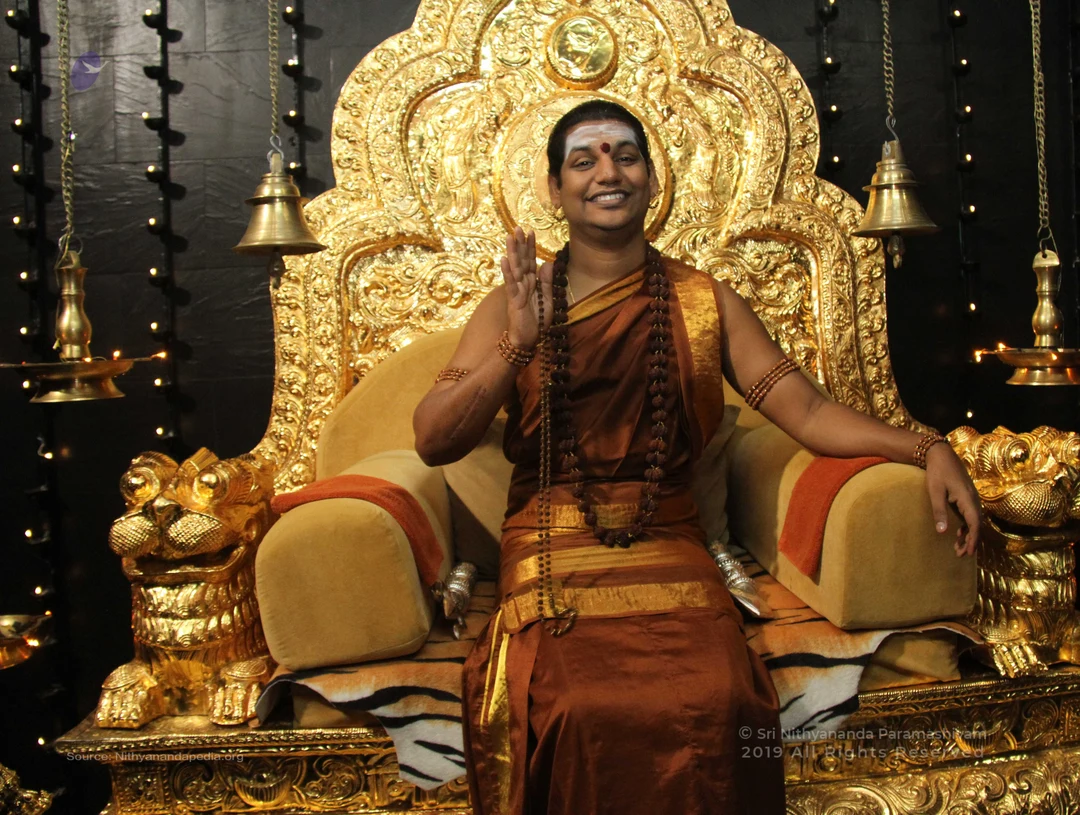
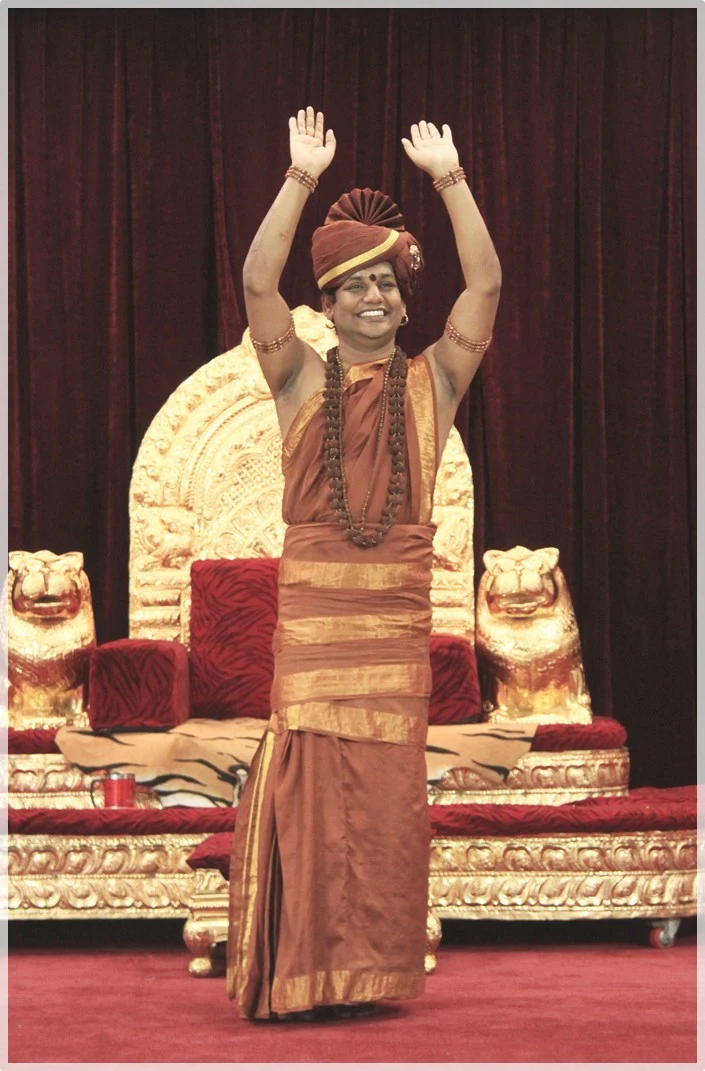
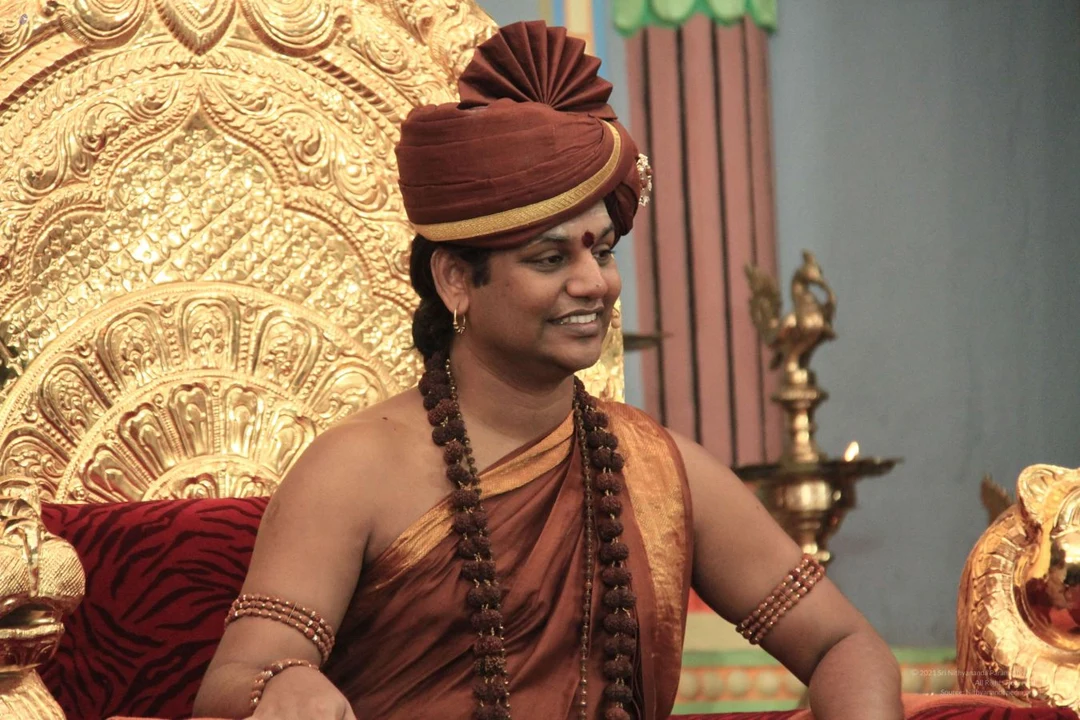
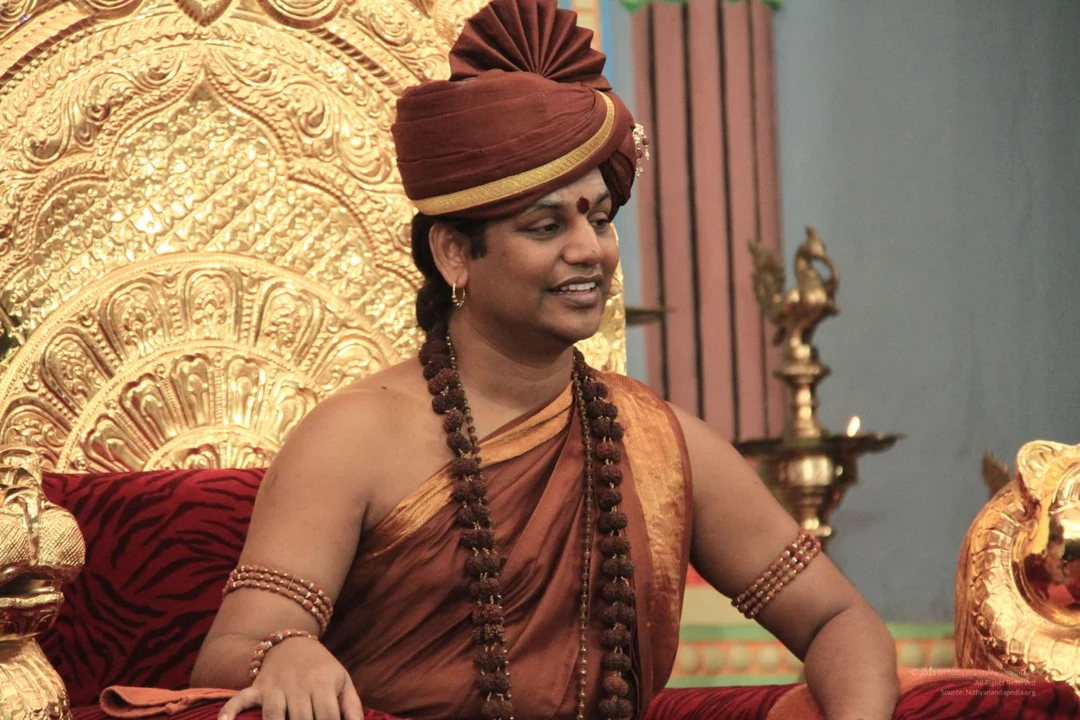
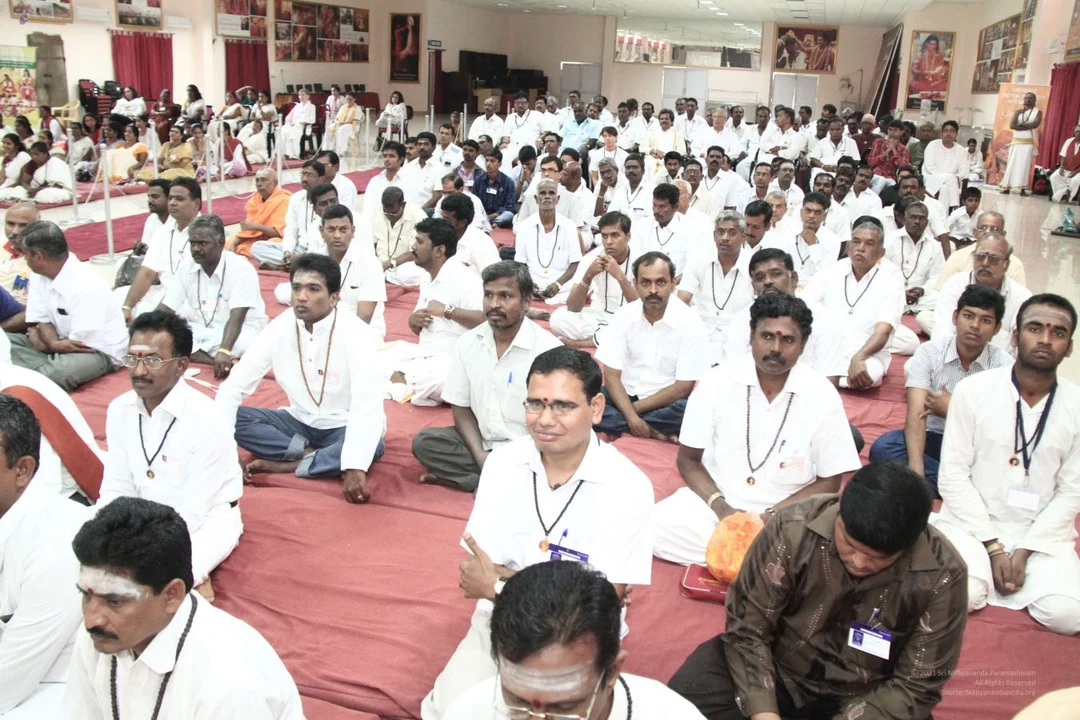
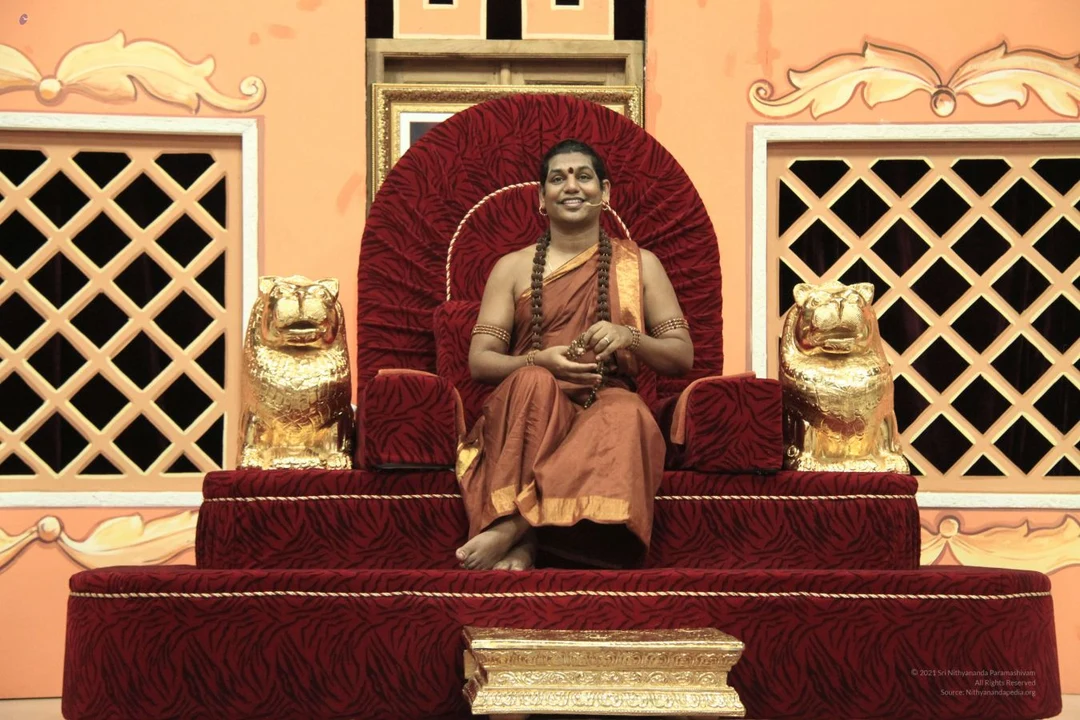
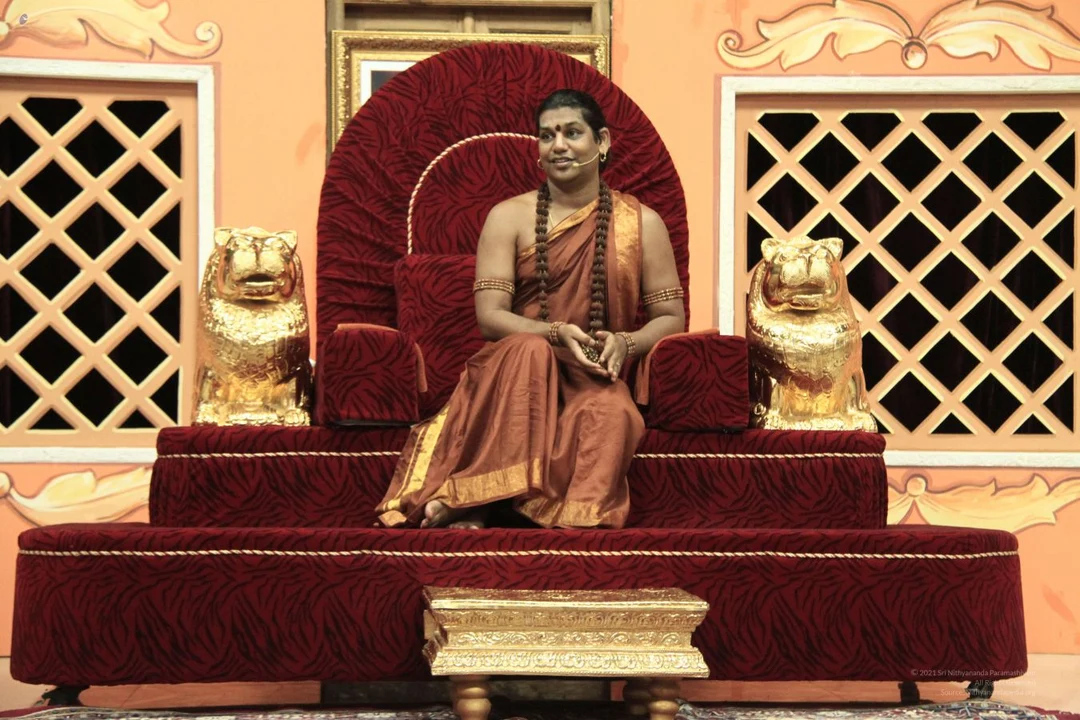
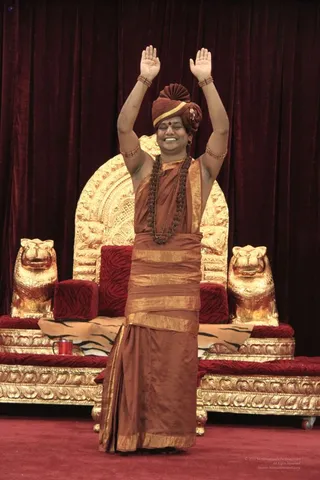
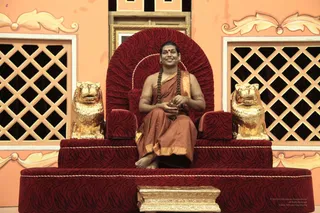
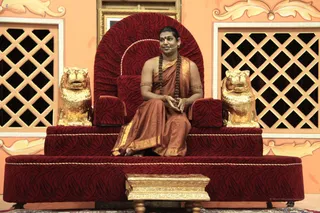
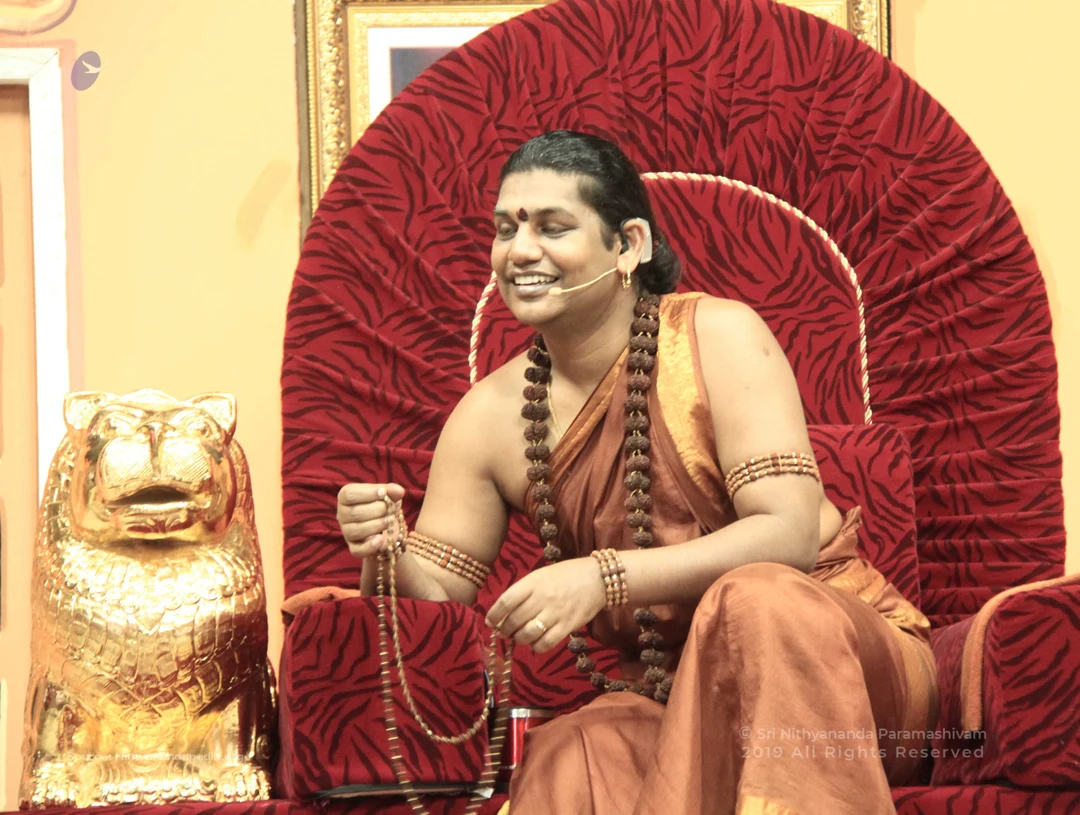
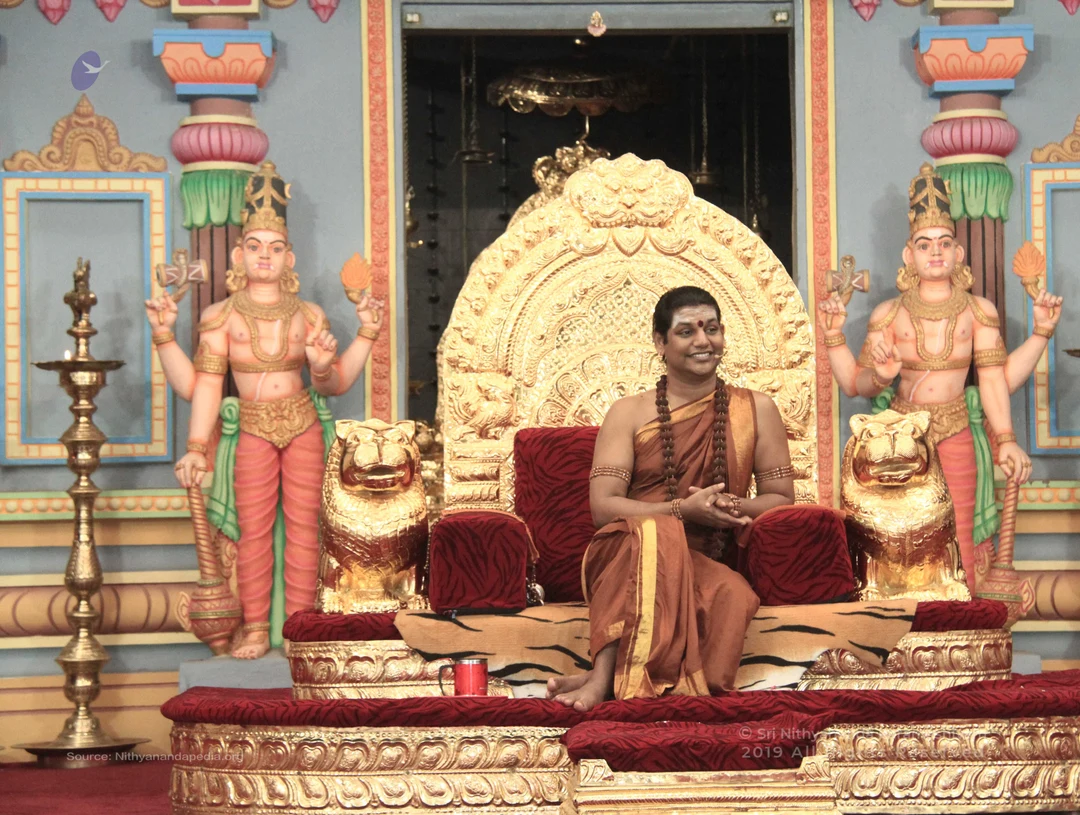
A man seated on a red velvet throne with a tiger-striped pattern and an arched back, smiling and holding a rudraksha mala in both hands. He wears a rust-orange dhoti and shawl with gold border, a bare upper torso, multiple rudraksha malas, beaded bracelets, a red bindi and a small headset microphone. A gold-painted lion or tiger statue sits to the left, and a gilded picture frame hangs on the wall behind.A person with a shaved-looking dark crown and a red bindi sits on a red tiger-striped throne with ornate golden lion-shaped armrests against an orange wall. The seated person wears a rust-brown and gold-bordered robe draped over one shoulder, a long dark rudraksha mala hanging to the lap, gold bangles on the upper arms and wrists, and a small earring, while speaking and gesturing with one hand. Behind the throne, a framed portrait labelled "Paramahamsa Nithyananda" shows a smiling figure in orange with a red forehead mark. Only one physical person is visible.A man seated on an ornate red throne with gold lion-head armrests and a red tiger-stripe upholstered back, set against a peach-coloured wall with a cream lattice window. He wears a rust-orange and gold-bordered draped garment, a rudraksha mala across his chest, gold armbands and bangles, and a small gold earring. His long dark hair is swept back and braided, and he holds a prayer bead mala in his right hand while smiling and looking to the side. Swamiji (probable): long swept-back hair, rudraksha malas and saffron-toned robes with a throne placement.A photograph of a person seated on an ornate red velvet throne with gold lion-head armrests and a gold footstool, set against peach walls with lattice panels. The seated person wears a rust-orange draped garment with gold borders, long dark braided hair, rudraksha beads, gold armbands and a red bindi, and holds a mala in their hands while speaking into a headset microphone. a person: the seated figure has long braided hair, rudraksha beads and an orange garment, and is in the central throne position, so the appearance cues qualify.A man sits cross-legged on a large red velvet throne with a tiger-striped pattern and a gold-threaded edge, flanked by two golden lion-head armrest sculptures. He wears a rust-orange draped garment with a gold border, a rudraksha mala hanging across his chest, gold armbands and bangles, and a red bindi. His bare feet rest on the seat and he has his hands together in front of him while speaking. Behind him are peach-coloured painted walls with gold floral motifs and a gold-framed window with lattice screens.A standing figure in a rust-brown silk robe with gold-bordered drapes raises both arms overhead, palms open, smiling broadly before an ornate gilded throne with carved lion-head armrests and red tiger-striped cushions. The figure wears a rust-brown turban with a gold stripe, gold bangles on the wrists and upper arms, and a long mala of rudraksha beads. Behind is a deep maroon velvet curtain, and a red mug sits on the throne platform. Appearance-based label: Swamiji (probable), presented as a single person in saffron-toned robes with a turban and rudraksha mala.
Pada-Puja

23 photosSource gallery
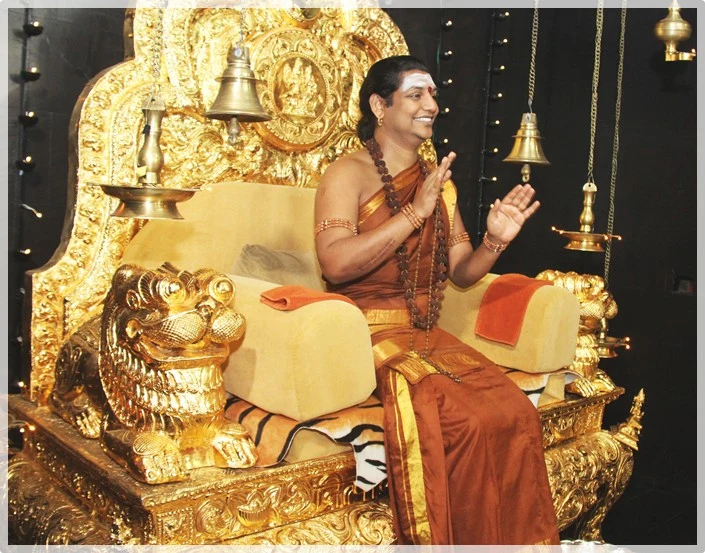
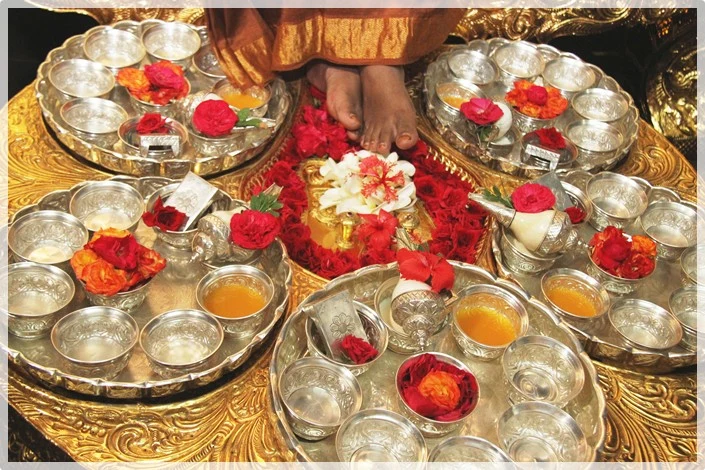
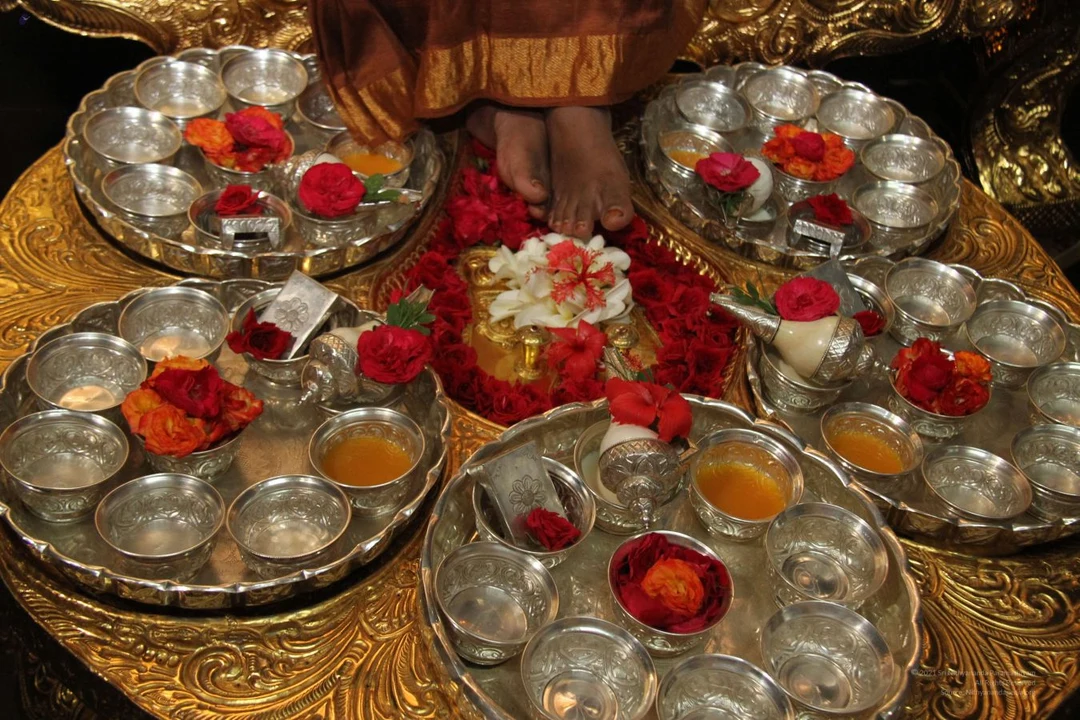
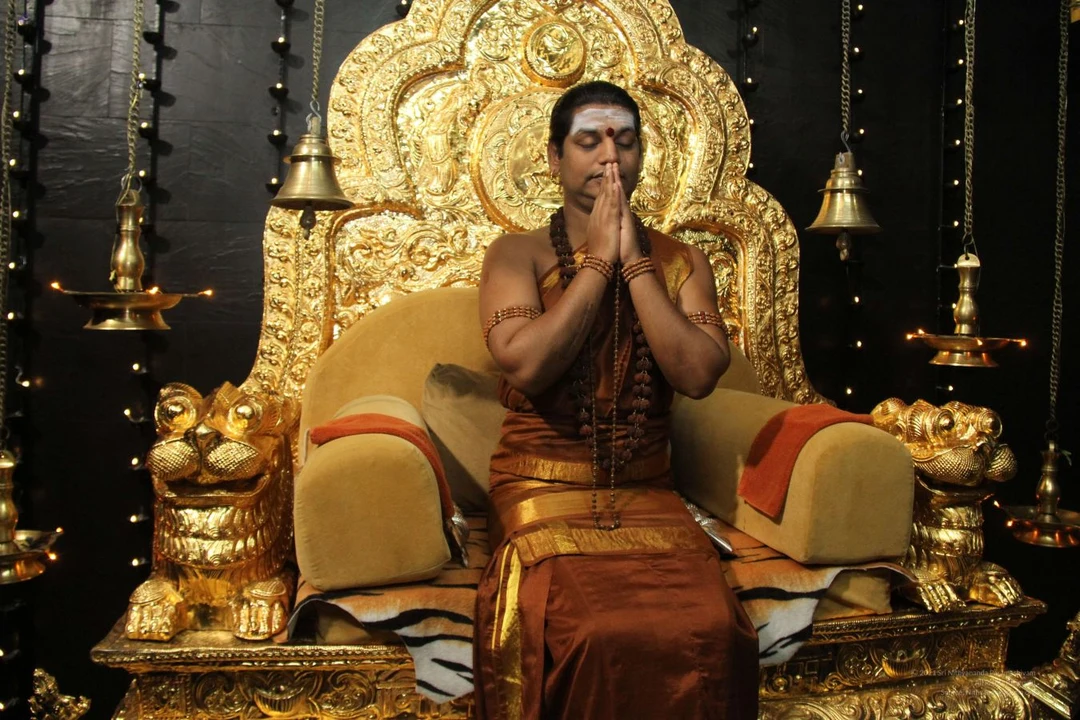
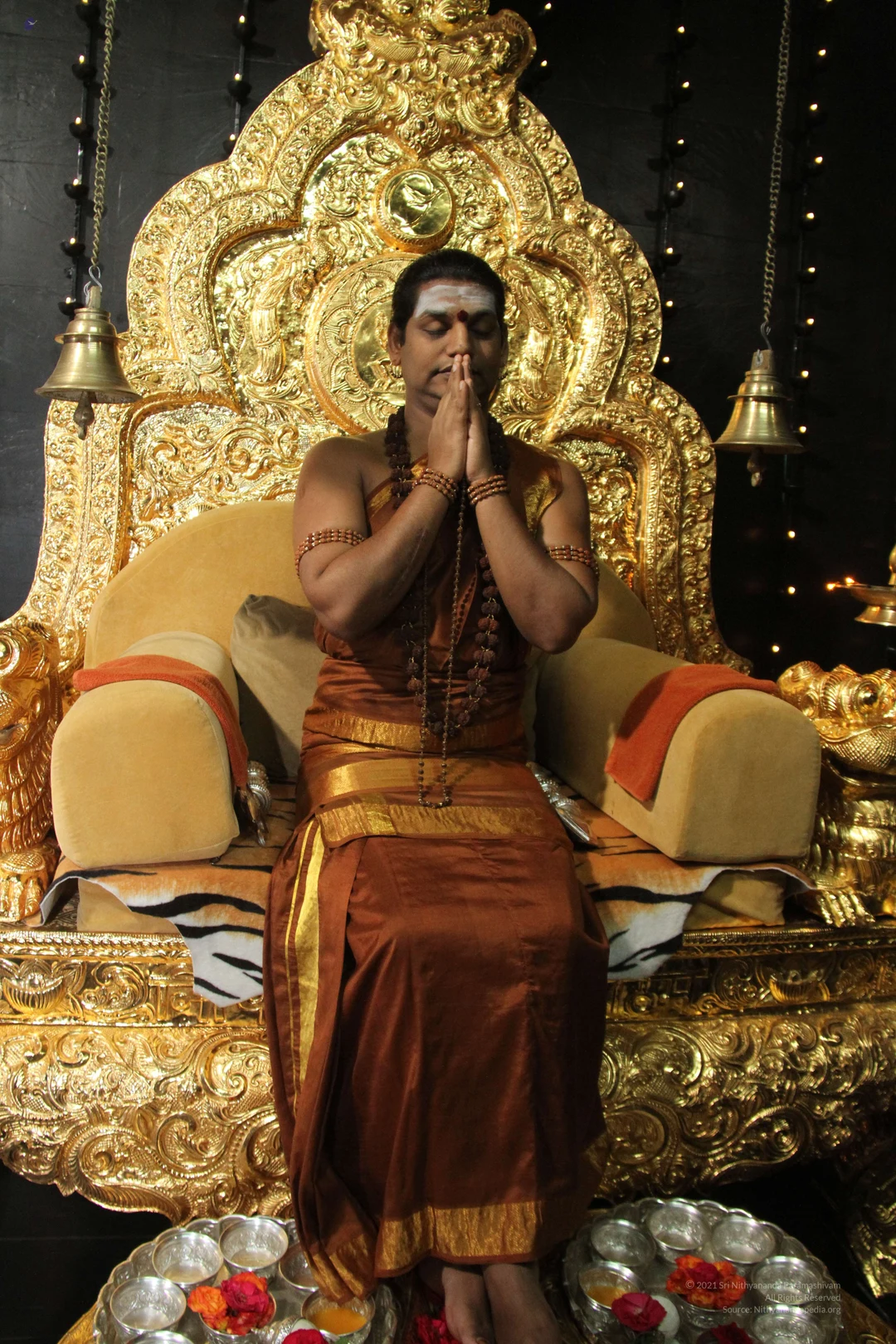
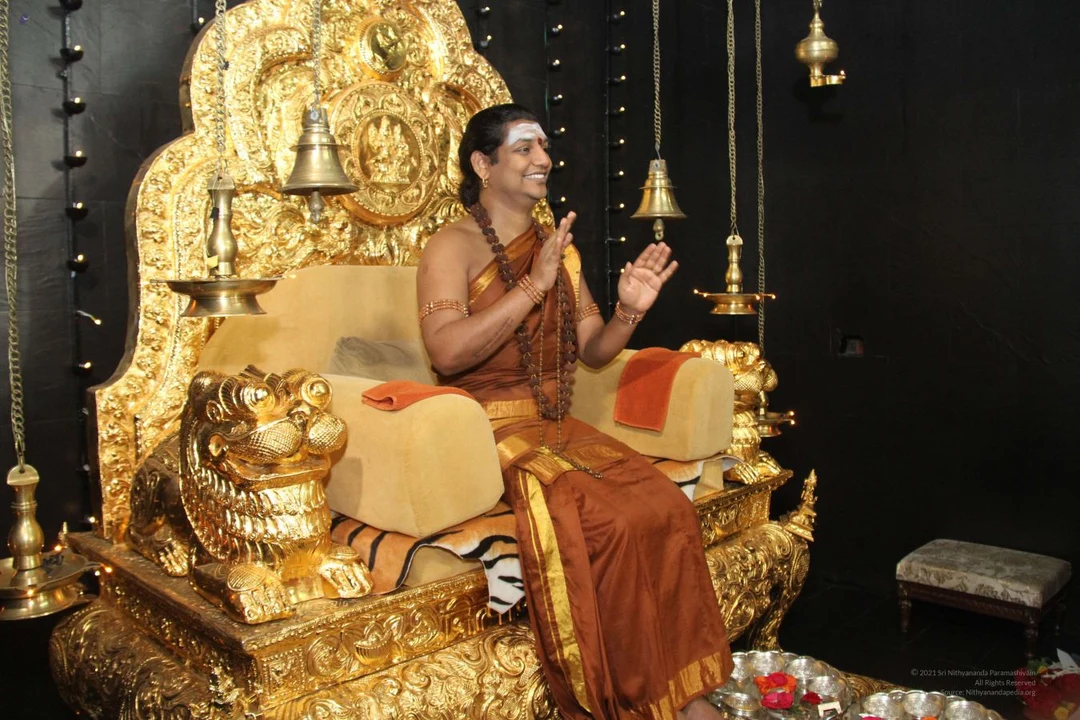
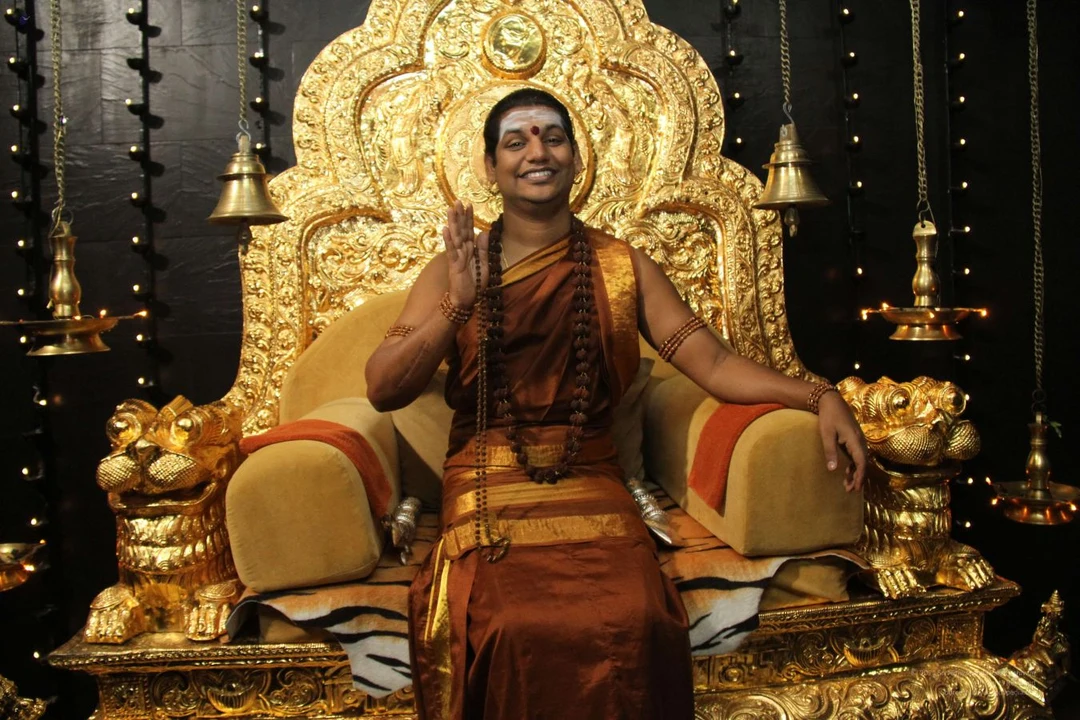
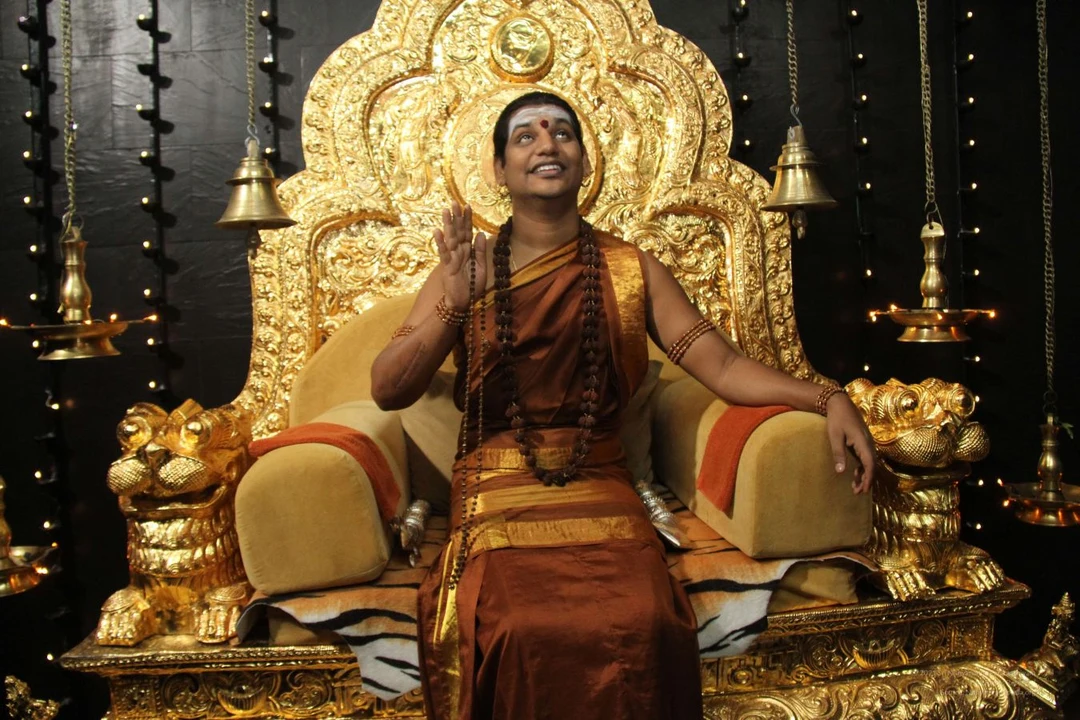
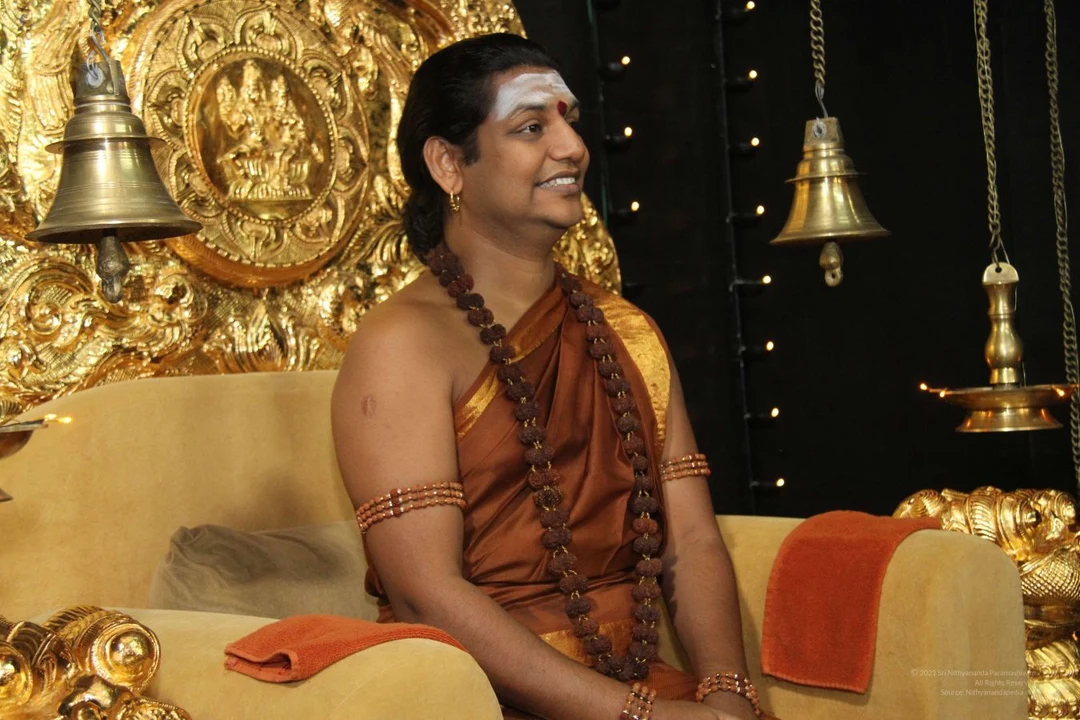
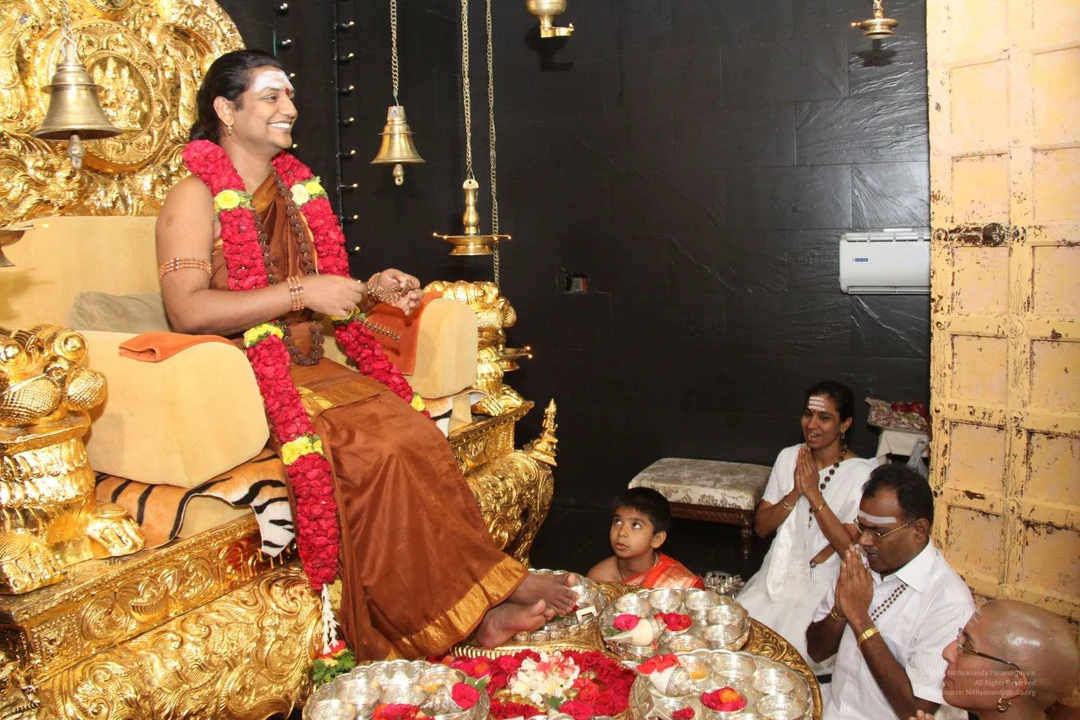
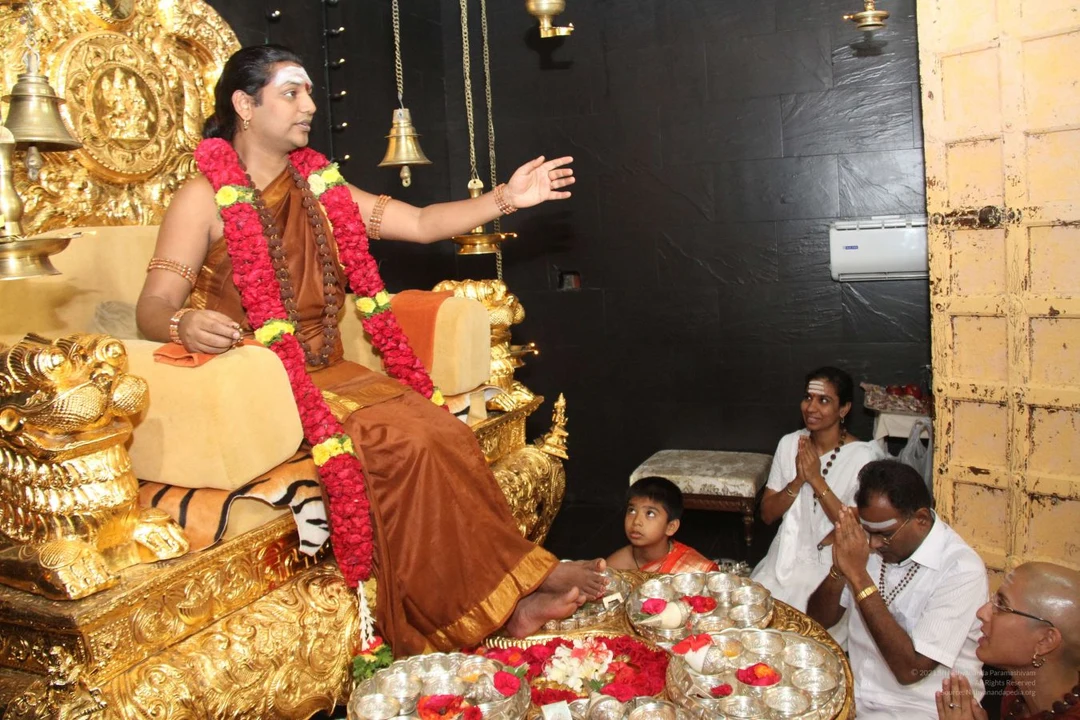
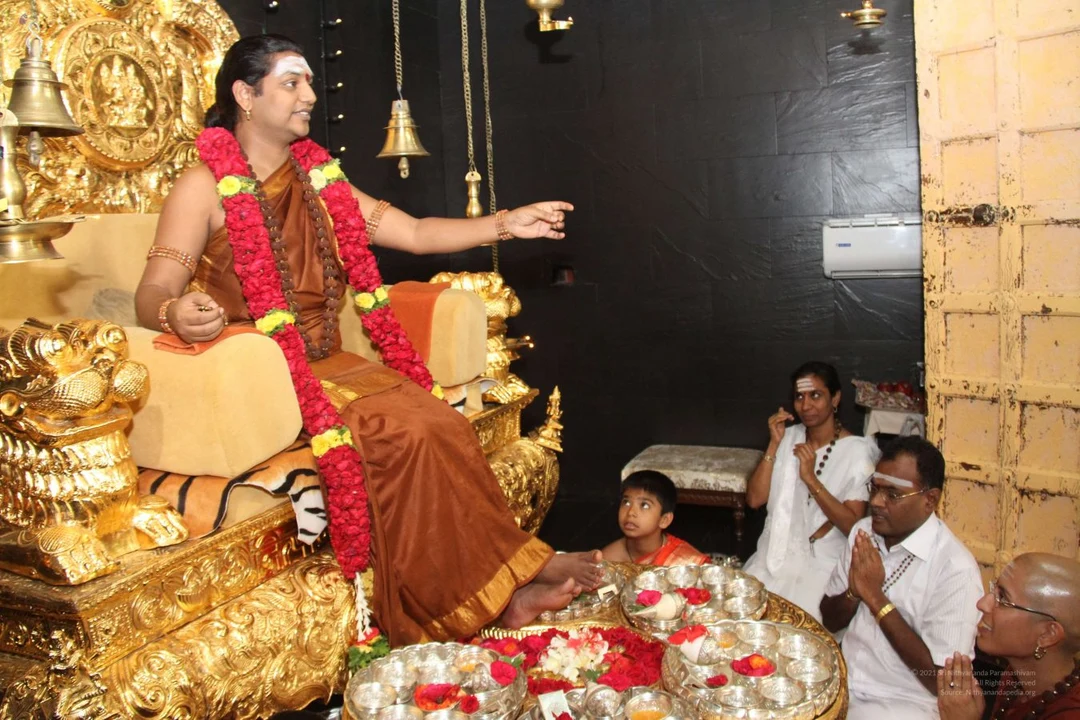
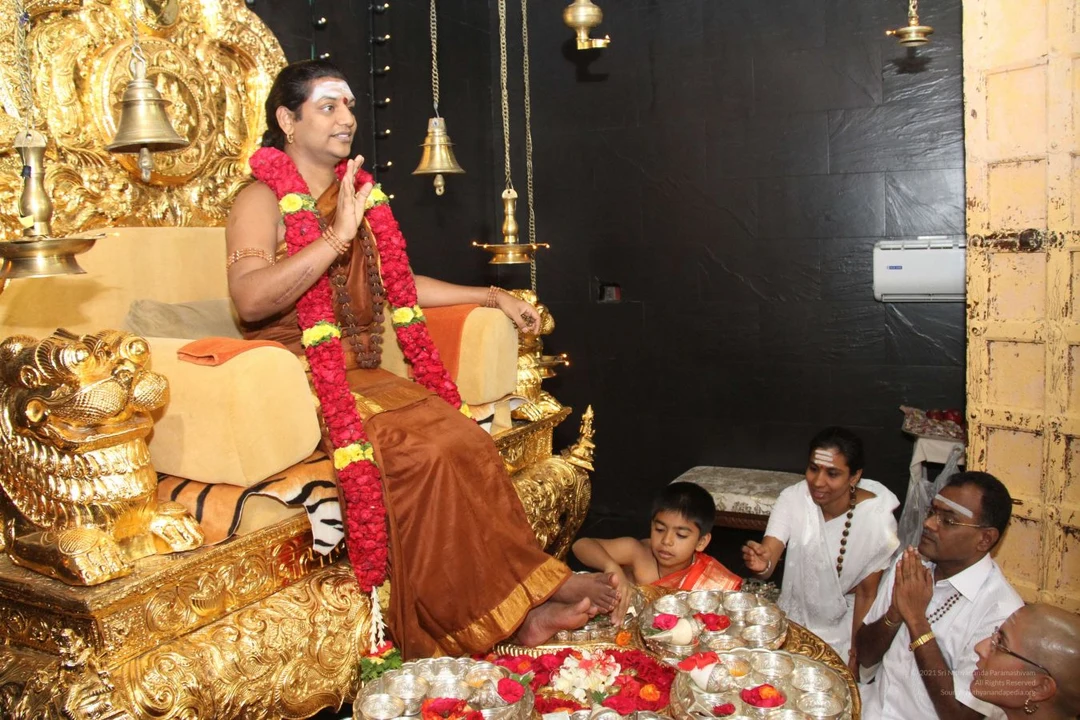
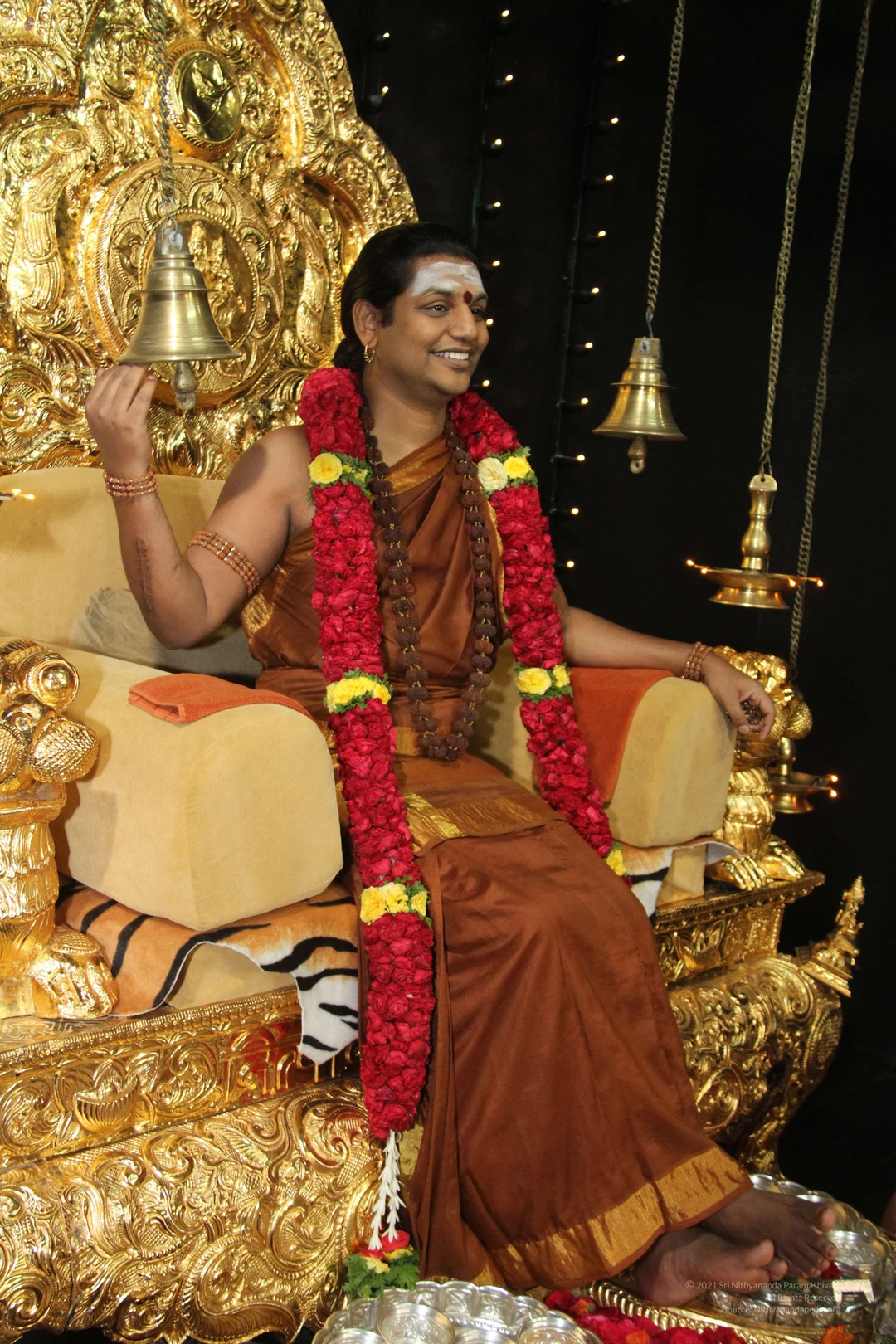
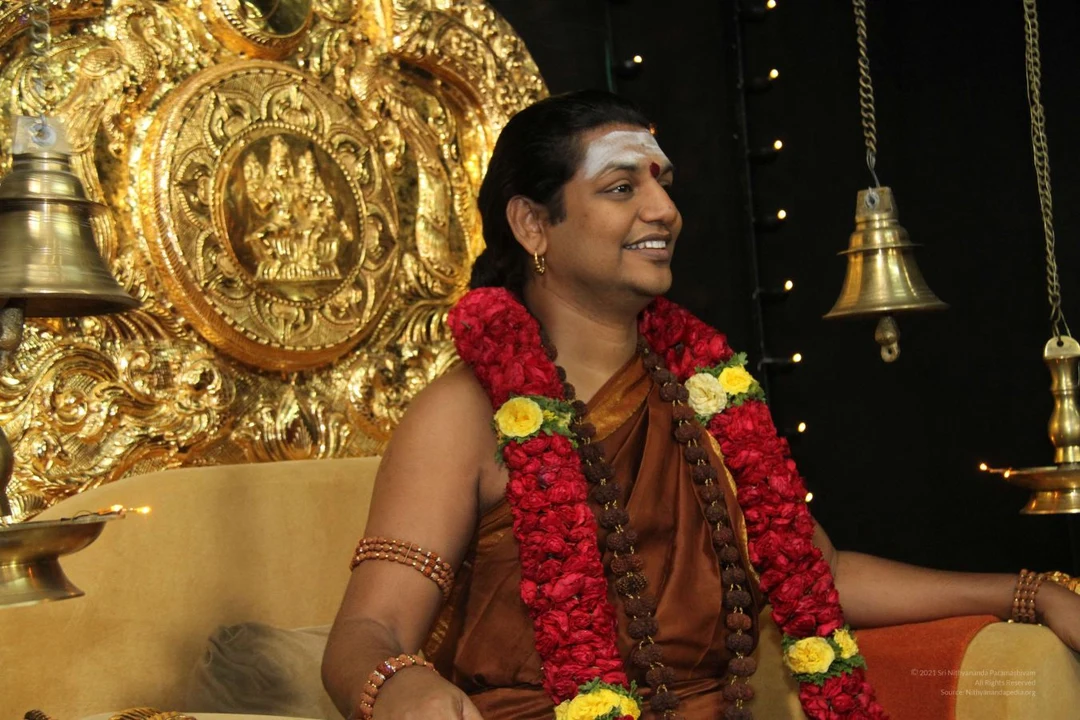
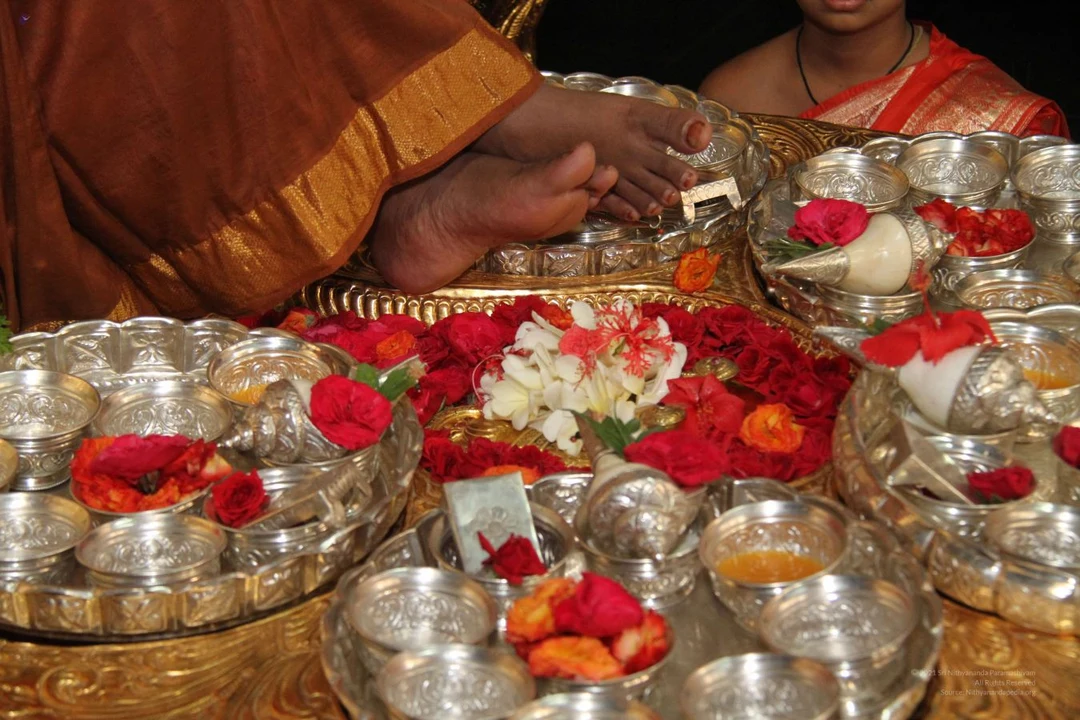
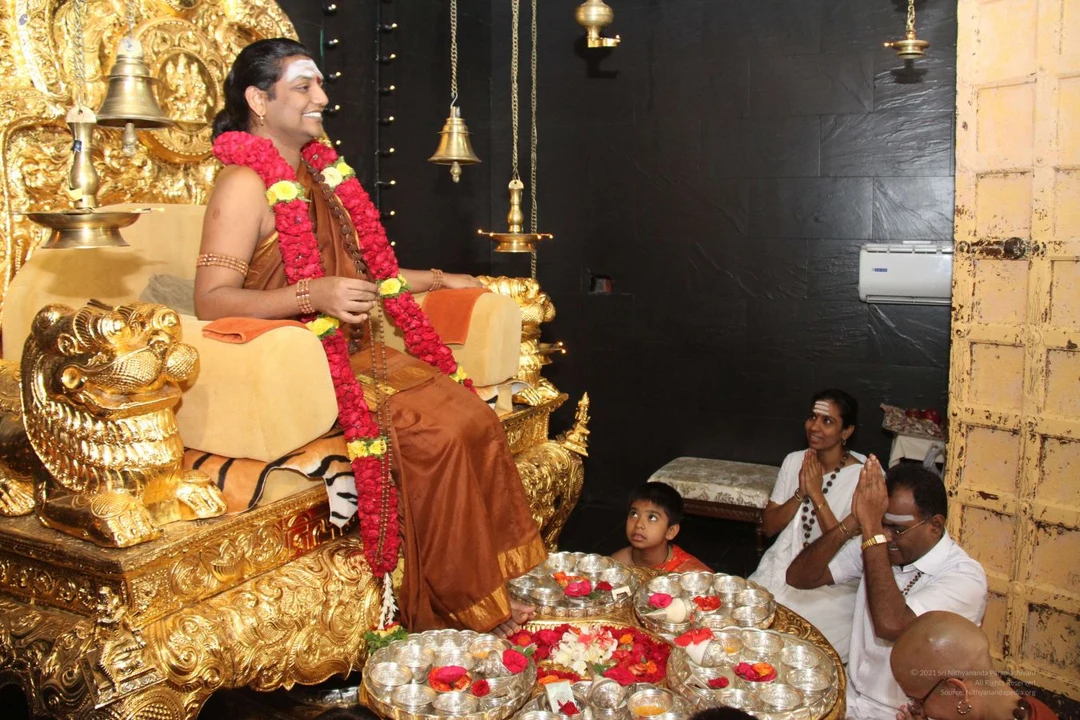
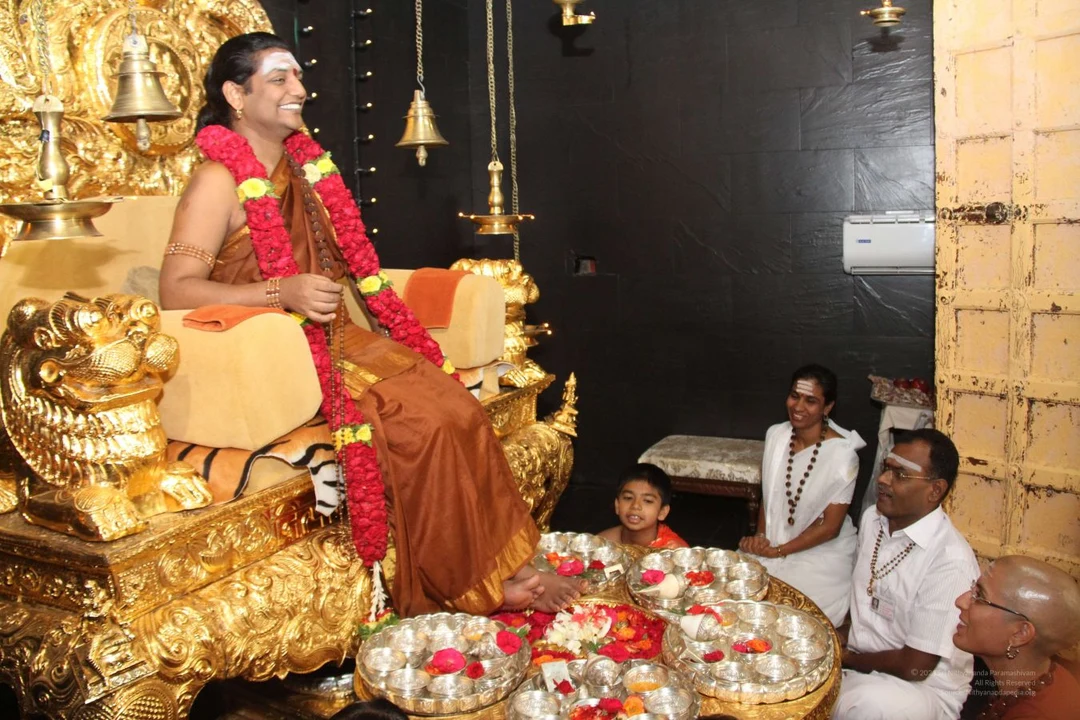
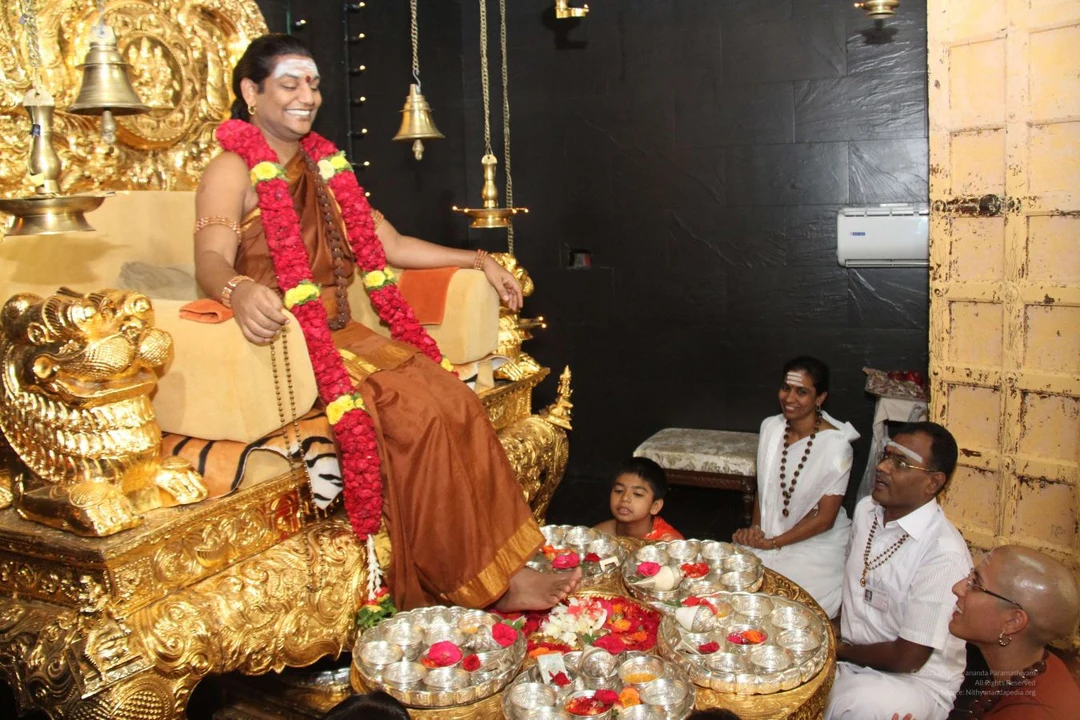
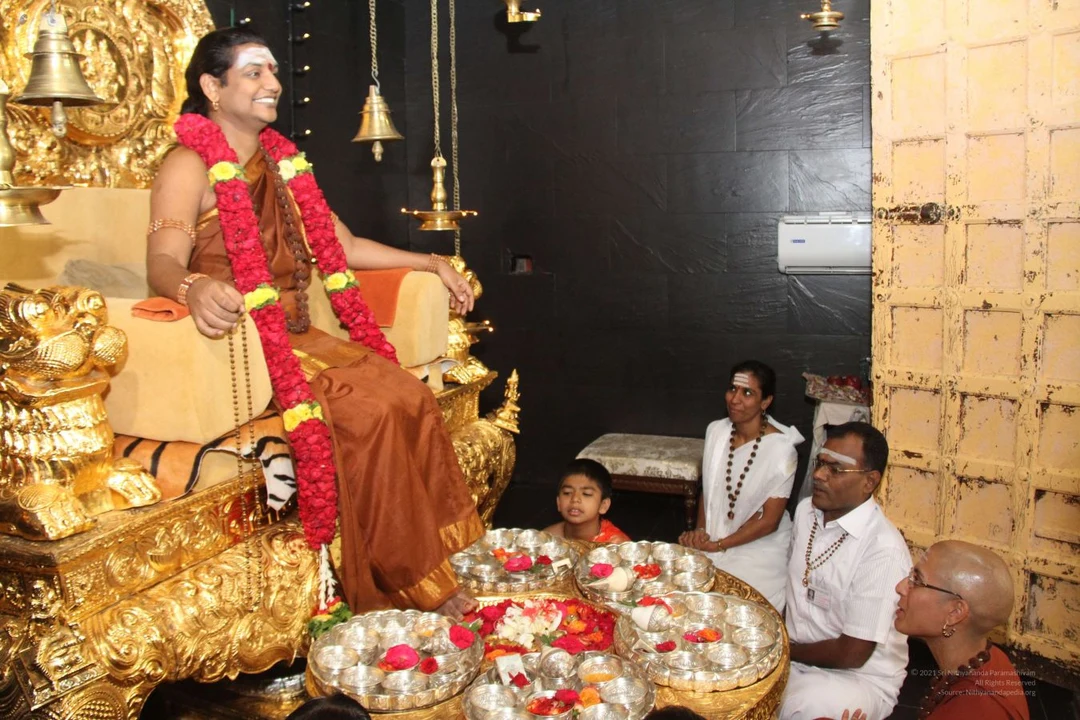
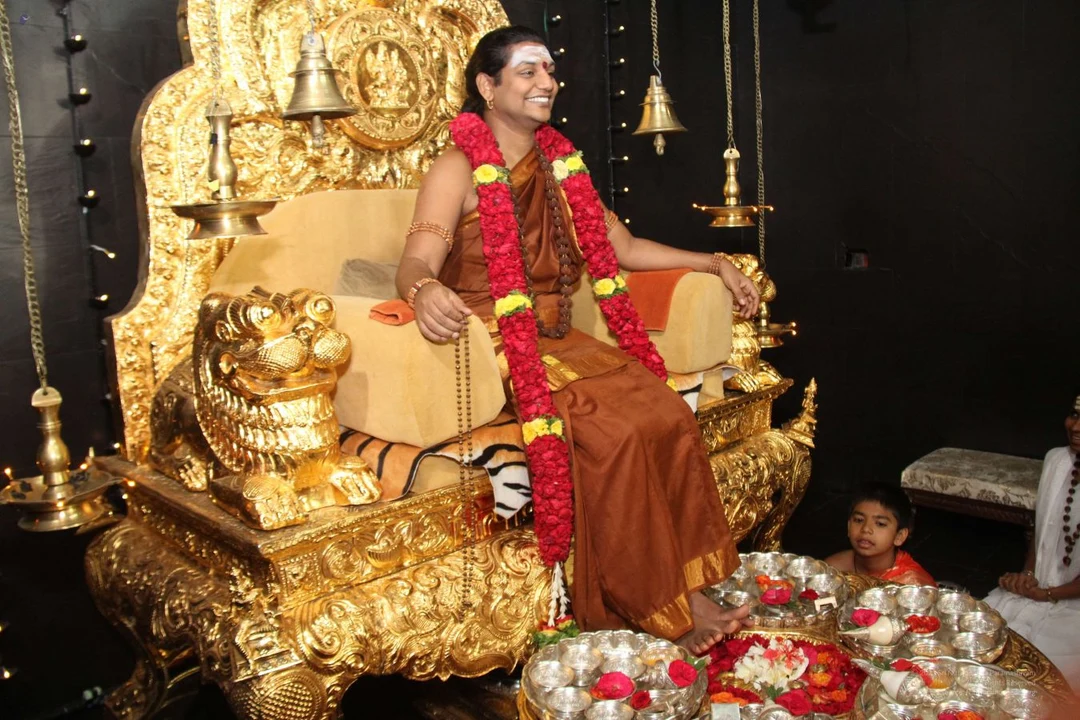
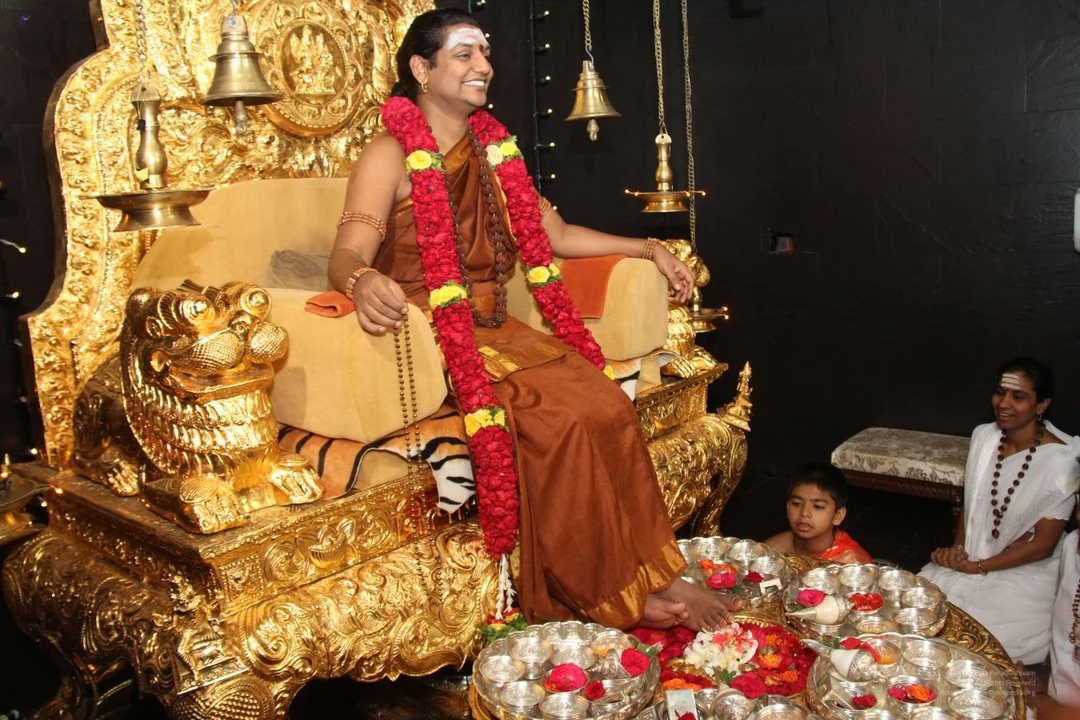
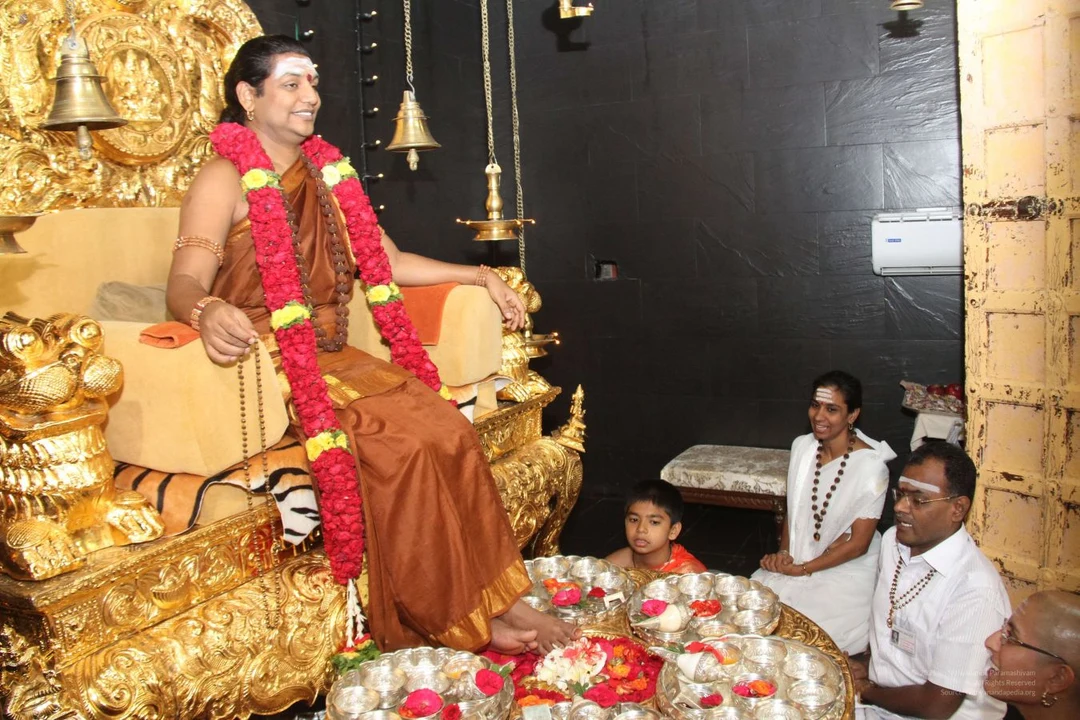
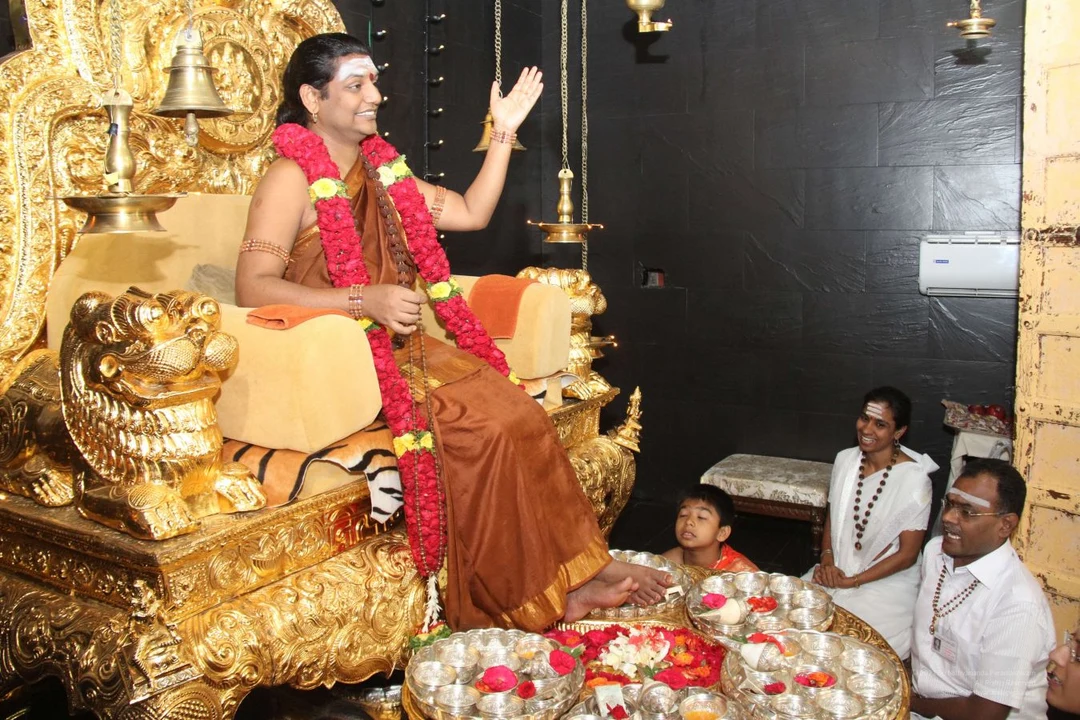
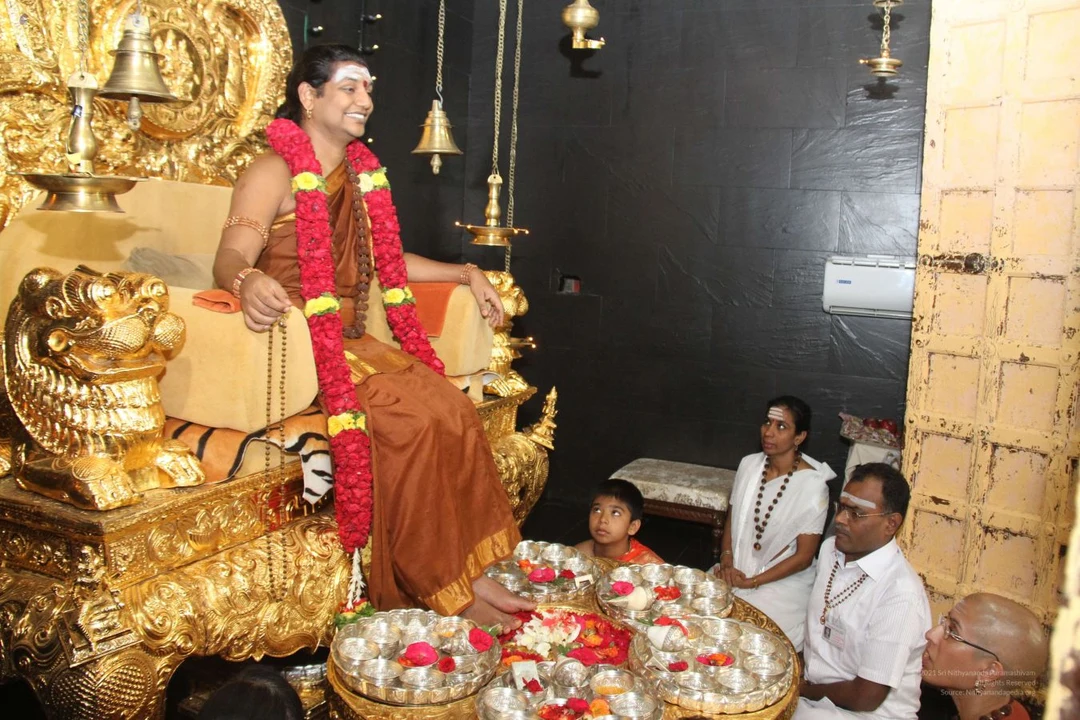
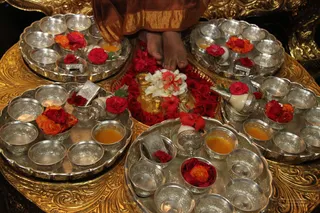
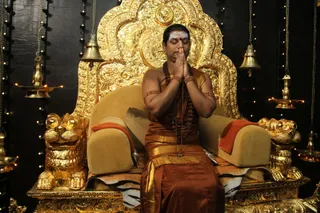
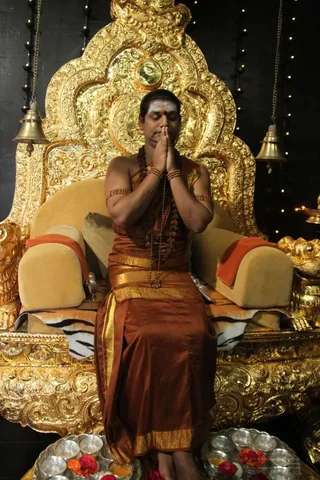
Close view of a ritual padapuja setup: a pair of bare feet, wrapped in a reddish-brown garment with gold border visible above, rest on a golden plate strewn with red rose petals and white flowers. Around them are several silver bowls and trays holding red and orange roses, amber liquid in small bowls, and silver cups with flowers. Ornate gold-embossed metal surfaces surround the arrangement. No faces are visible; the photo shows only feet and offerings.A man seated on an ornate gold throne with carved lion-head arms and a tiger-striped cloth draped over the seat cushions, hands pressed together in namaste with eyes closed. He wears a rust-orange silk dhoti and upper cloth with gold border, a rudraksha mala necklace, beaded bracelets on his upper arms, and white vibhuti with a red kumkum dot on his forehead. Hanging brass bells and oil lamps (deepa) with lit flames surround the throne against a black backdrop. a person is indicated by the rudraksha malas, saffron-orange ceremonial dress and ornate golden throne setting seated figure in devotional posture.A seated man in a rust-orange silk dhoti and matching shawl sits on an ornate gold throne with a carved gilded backrest, draped with a tiger-striped cloth. He holds his palms together in namaskar with eyes closed, wearing a white vertical tilak and red bindi, a rudraksha mala around his neck and rudraksha bracelets on his arms. Brass bells hang beside the throne, and silver plates with marigolds and rose petals sit at his feet.A seated man in a rust-orange and gold-bordered dhoti and matching shawl sits on an ornate gold throne with a carved lion-head armrest and a tiger-skin cushion, smiling and gesturing with raised, palms-together hands. White vibhuti marks his forehead and he wears a rudraksha mala and bangles. Hanging brass bells and oil lamps surround the throne against a black backdrop, with brass vessels and flowers arranged at the base. a person on a throne, presenting satsang-style teaching.A smiling man sits on an ornate gold throne carved with floral and deity-like motifs, with lion-head armrests and a tiger-striped cloth draped over the seat. He wears a rust-orange silk dhoti and shawl, a long rudraksha mala, gold-toned bangles and a white-and-red tilak on his forehead, and raises his right hand in a blessing gesture. Hanging brass bells and oil lamps frame the dark backdrop on both sides. The appearance matches the a person cues from the page, a probable identification based on his ornate saffron-orange robes, rudraksha mala and throne, though the face is not used to identify him. No readable text appears in the image.A seated man in a rust-orange and saffron robe sits on an ornate gold throne with a carved, gilded backrest and lion-like armrests draped with a striped tiger-skin cloth. He wears a rudraksha mala and a long beaded necklace, bangles, and a red bindi with white tilak on his forehead, and raises one hand in blessing while looking upward. Brass hanging bells and oil lamps flank the throne against a black backdrop. Swamiji (probable): the figure has long swept-back hair and a saffron-toned robe with rudraksha malas and ornate adornments, consistent with the page's identification. He sits on a throne in a ceremonial setting.

Nithyananda-Satsang
92 photosSource gallery
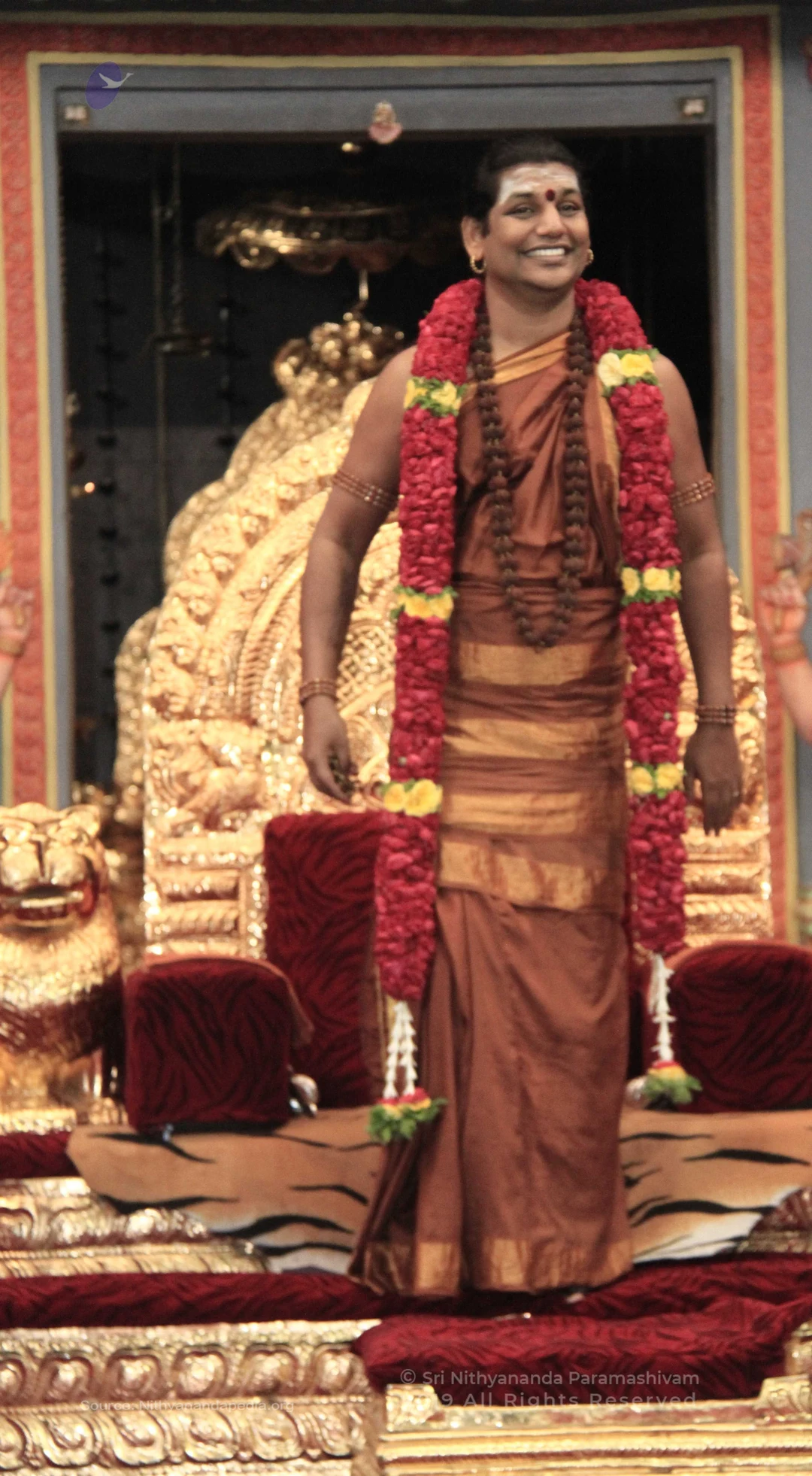
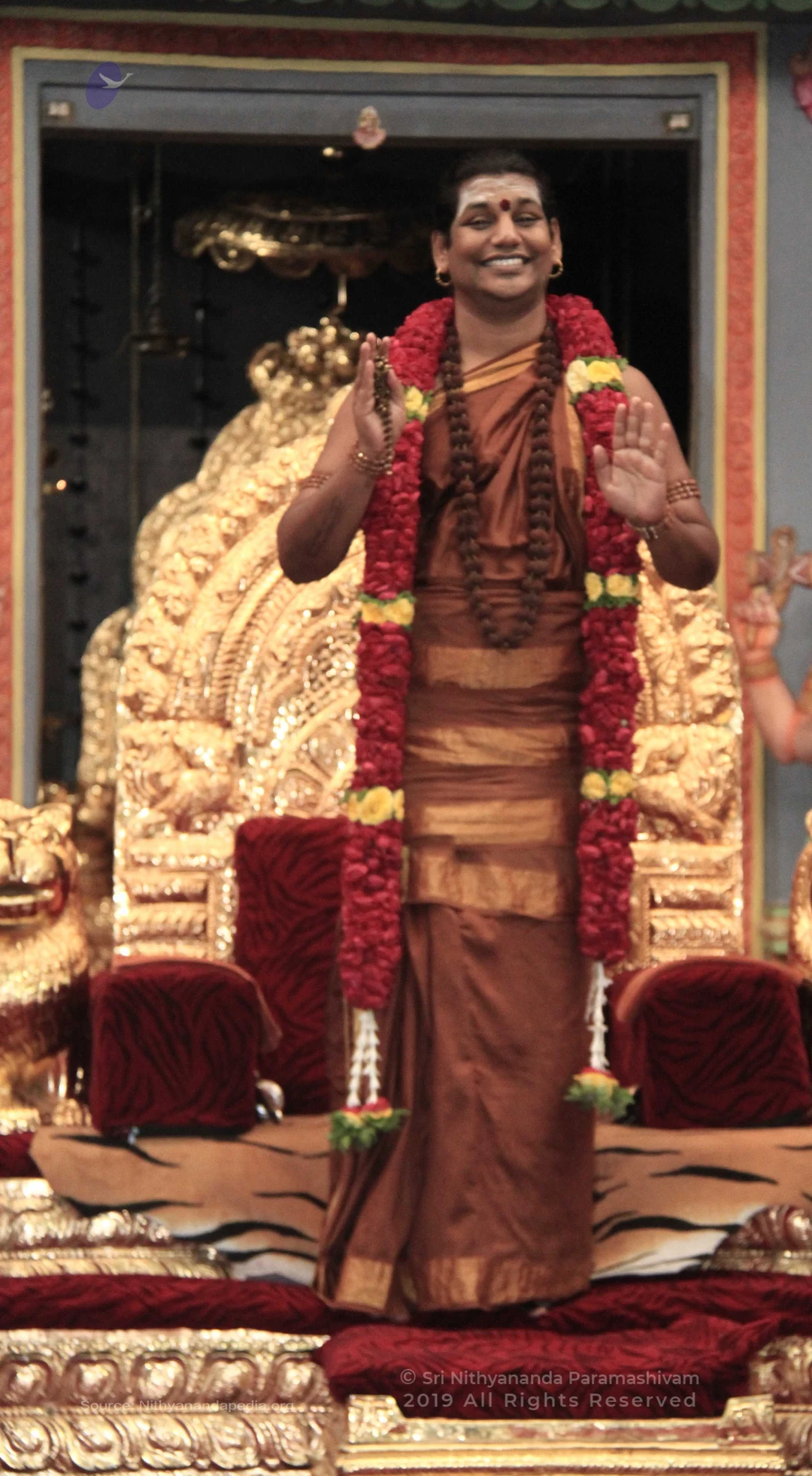
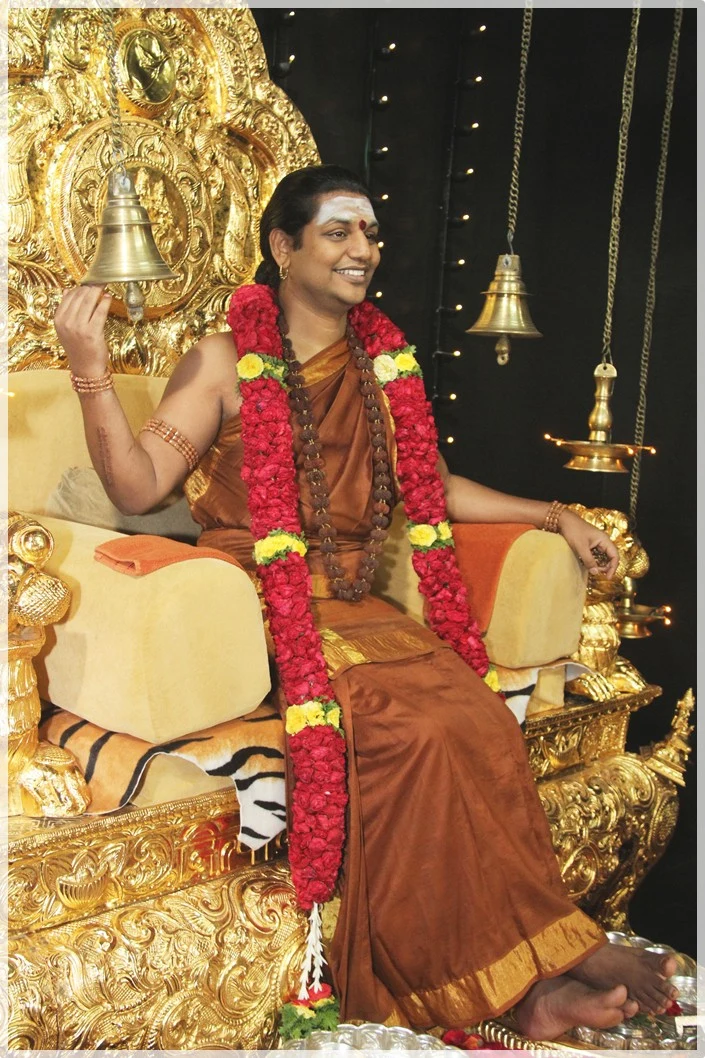
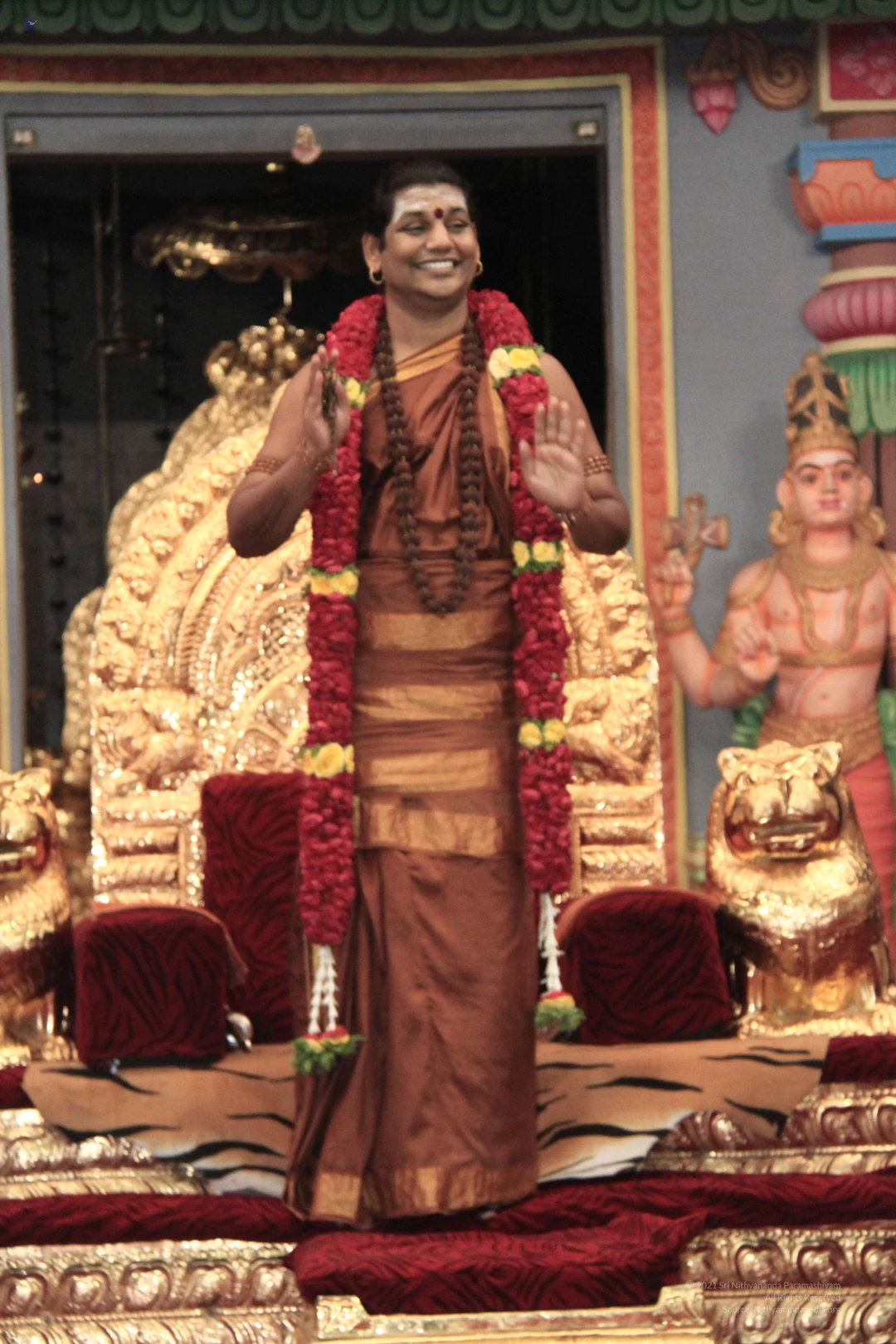
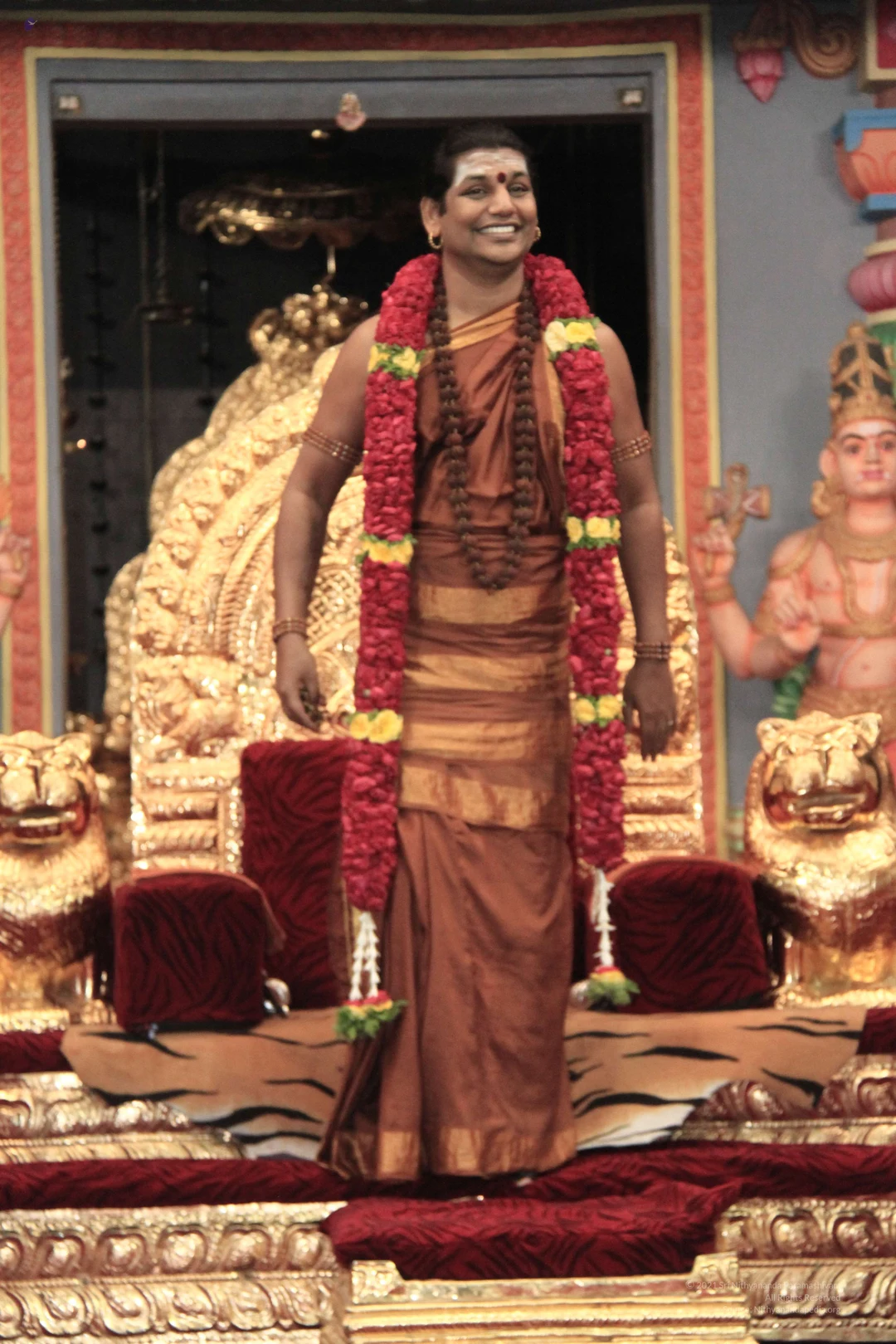
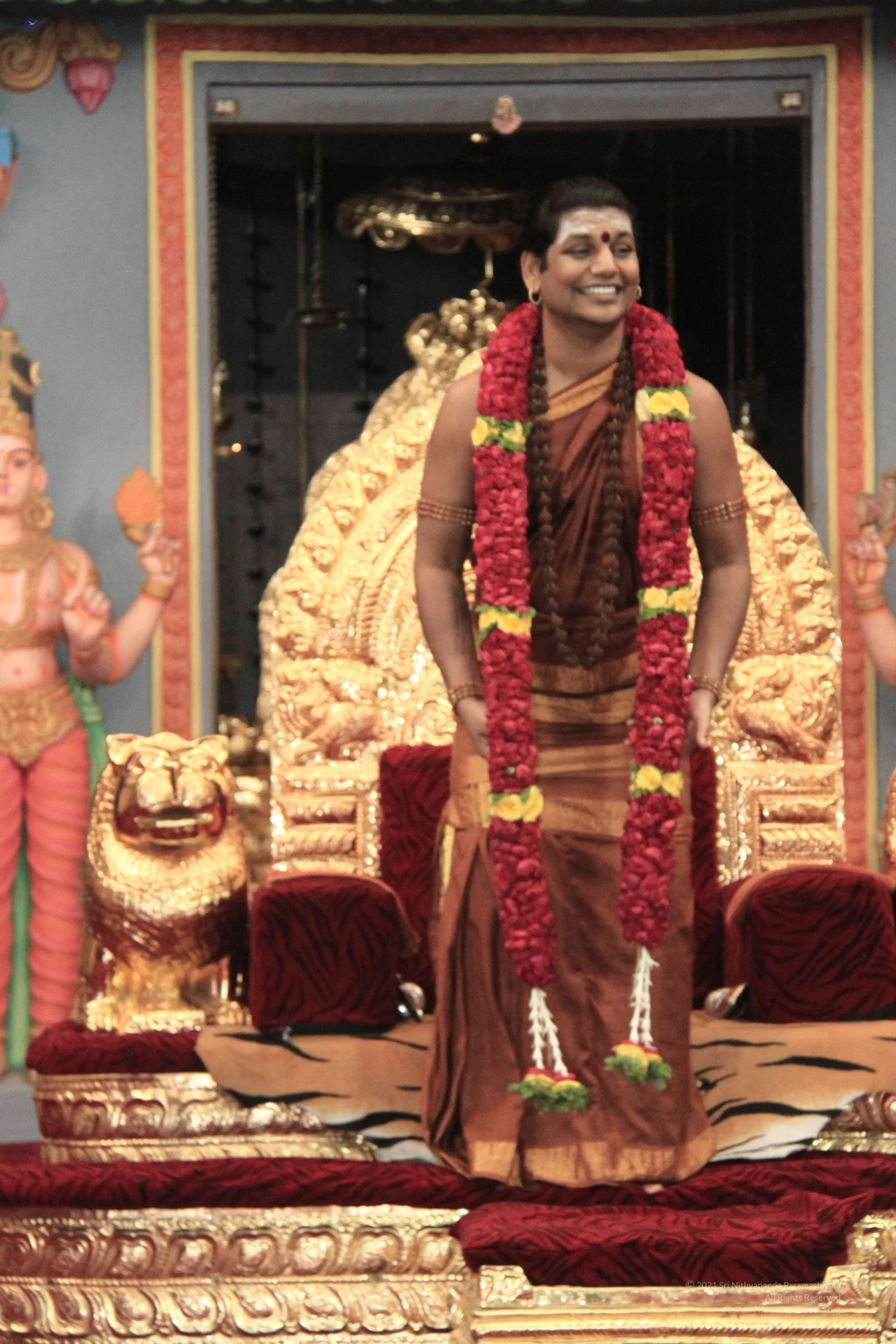
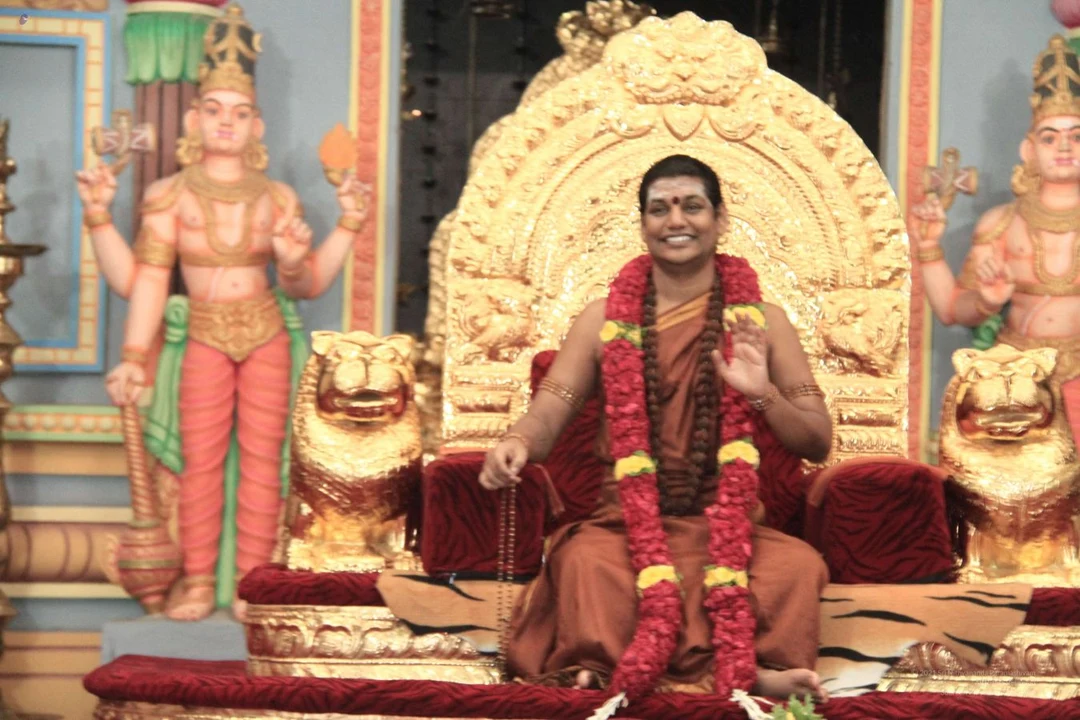
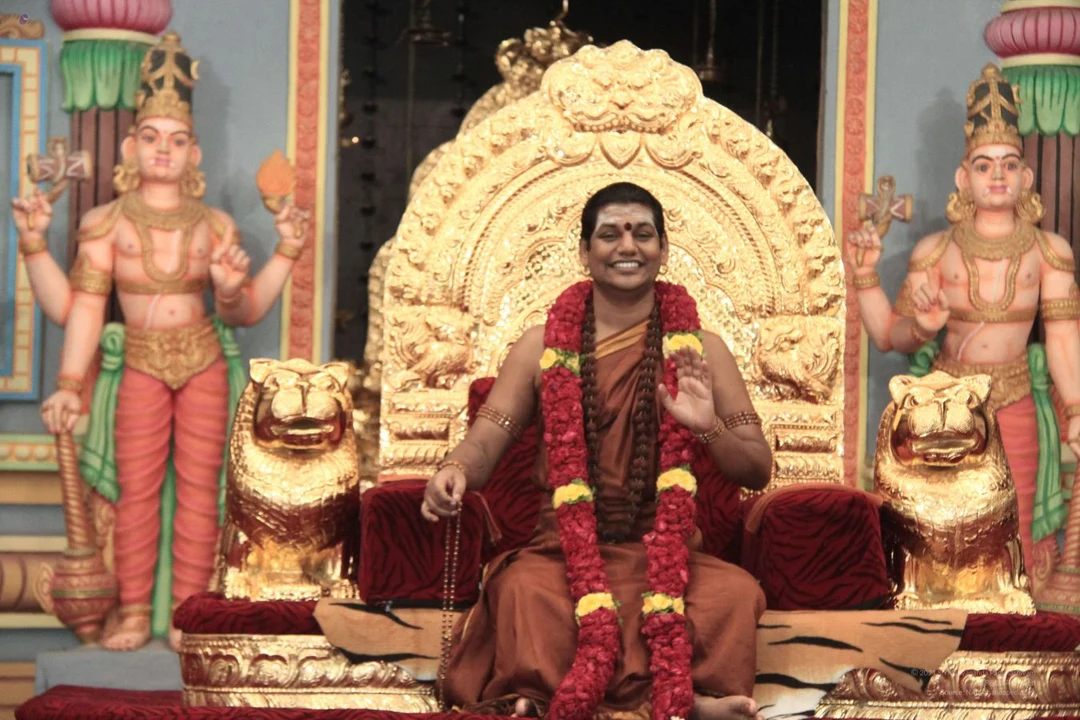
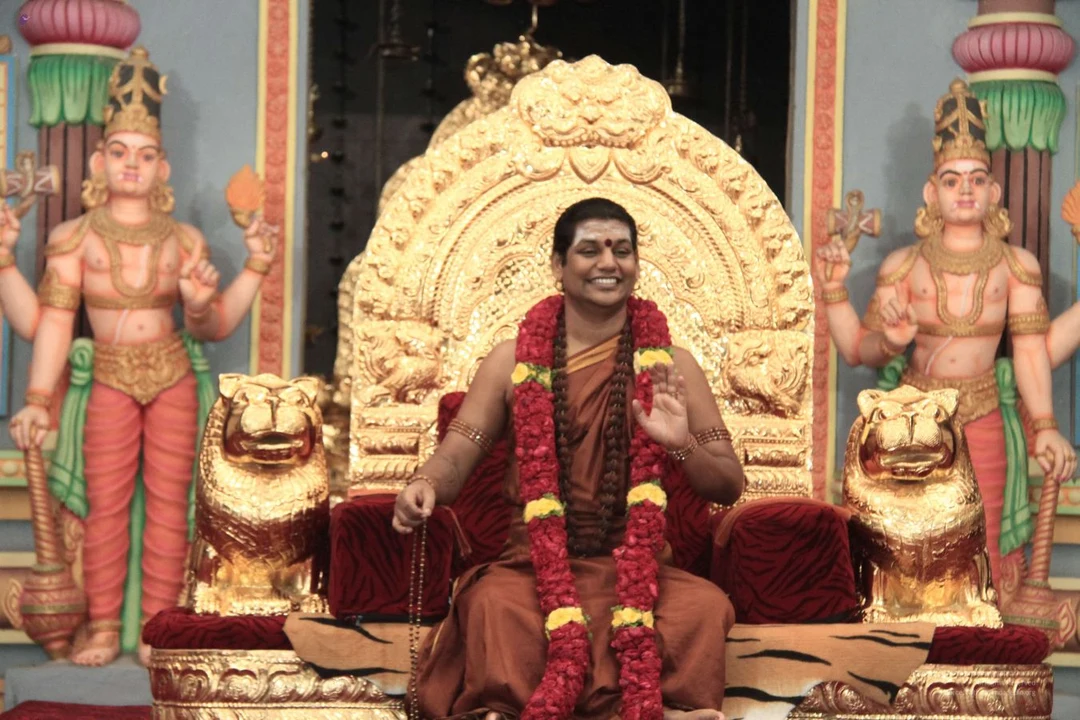
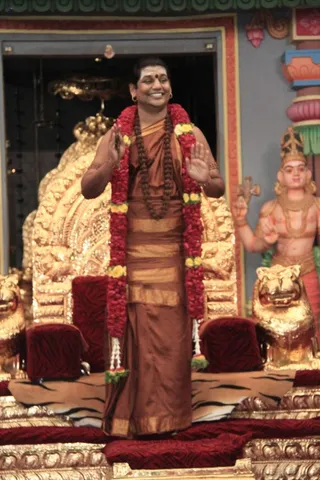
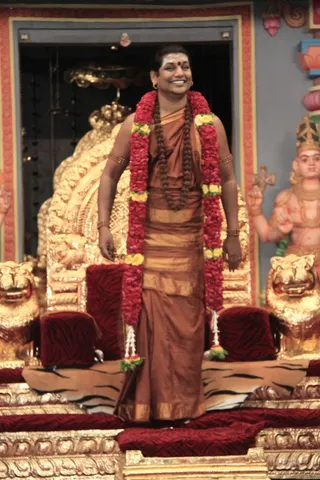
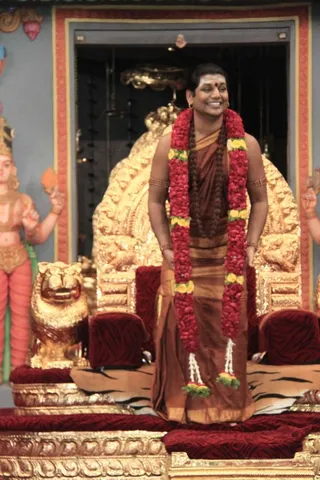
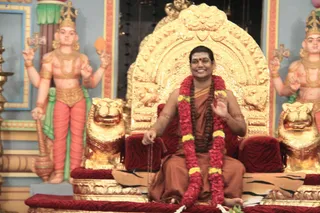
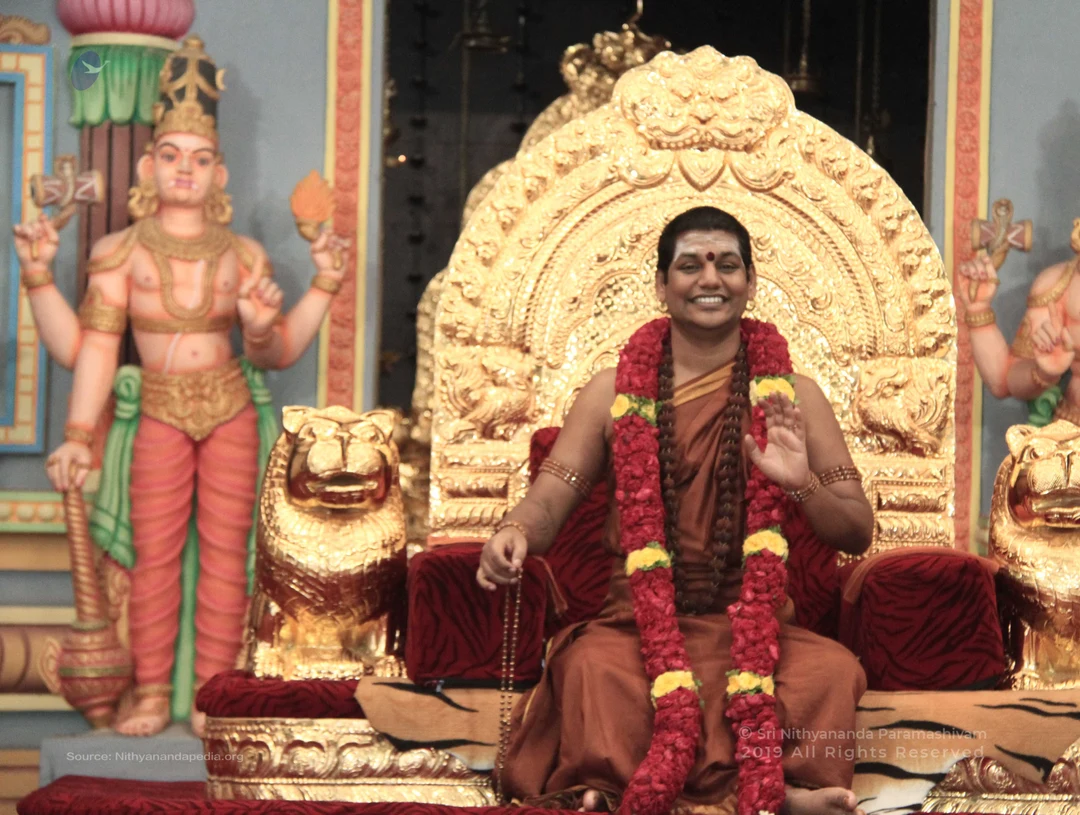
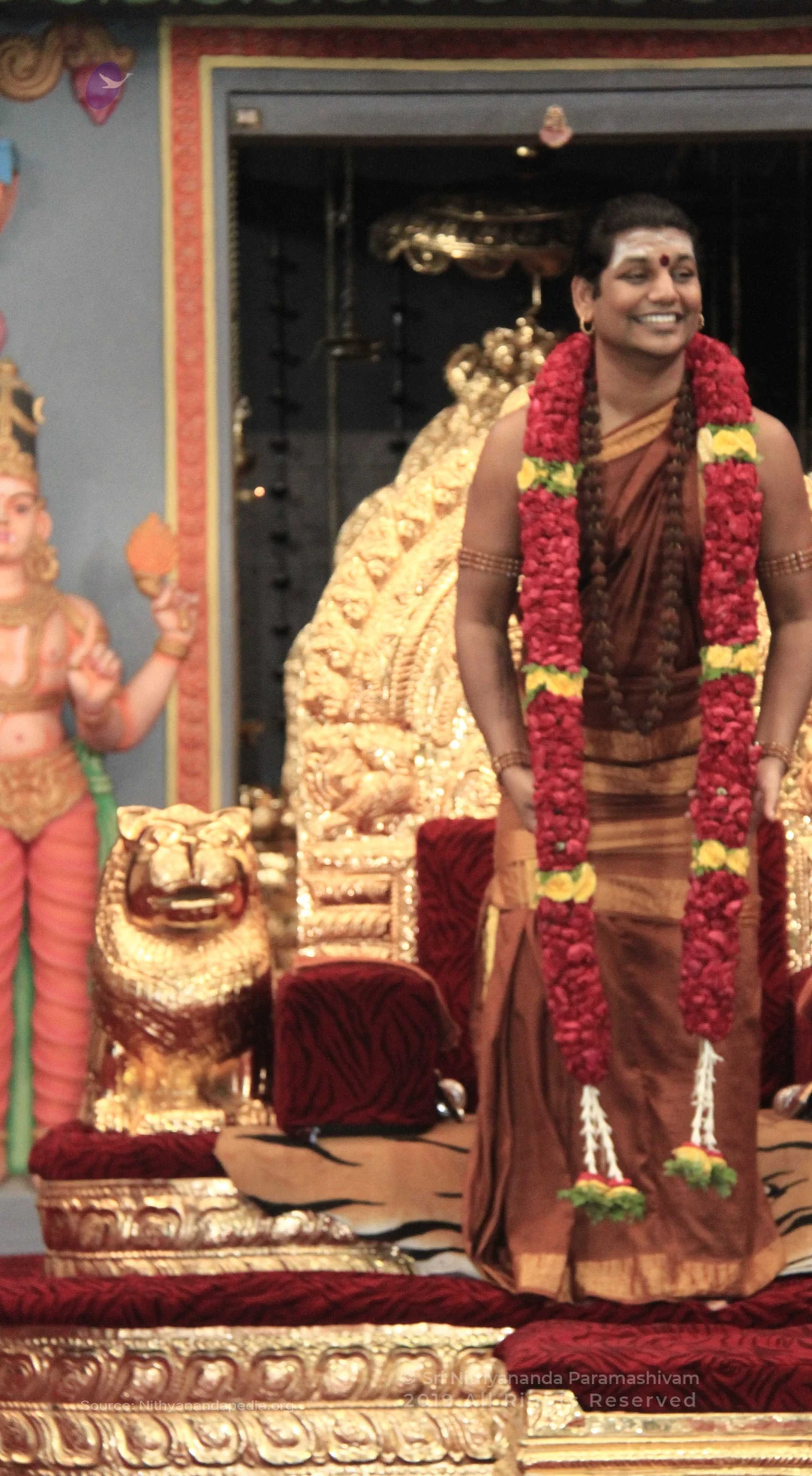
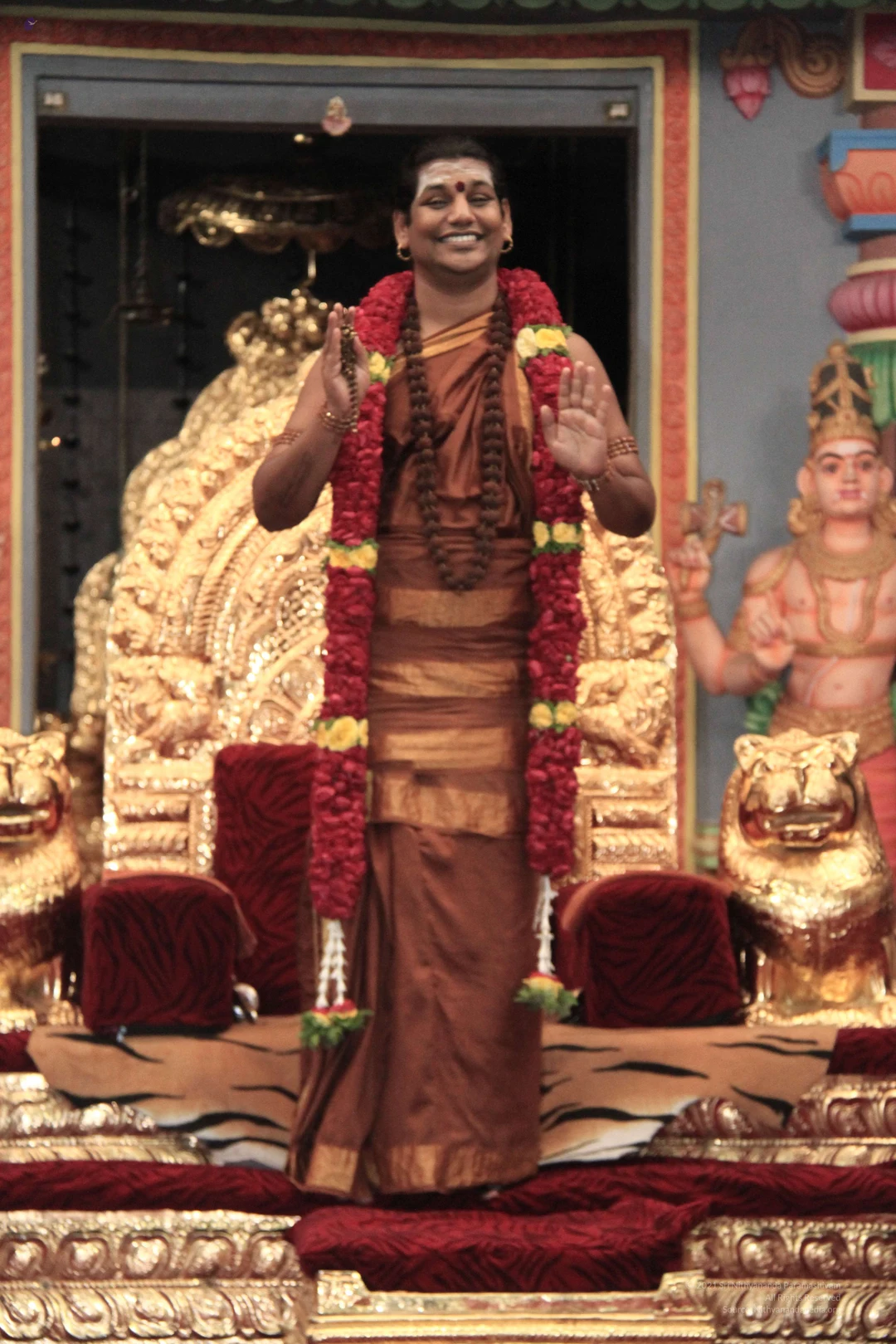
A smiling man in a rust-brown sannyasi robe stands centrally on a tiger-skin-covered dais before an ornate gold throne with red velvet cushions and gold lion sculptures. He wears a red bindi and white vibhuti on his forehead, a dark rudraksha mala, and a thick red and yellow flower garland, and holds his hands raised in a blessing gesture with a mala in one hand. Behind him stands a painted deity murti with a crown and a gold necklace, and a gold-framed doorway with a hanging lamp is visible.A smiling man in a copper-brown silk robe and gold-bordered waist cloth stands on a raised platform, arms raised with palms open in greeting. He wears a long red and yellow flower garland and a rudraksha mala, with a red bindi and white vibhuti marks on his forehead. Behind him stand gilded lion-form seats with red velvet cushions, a tiger-striped cloth on the platform, and a painted deity murti with a crown beside the stage.A man in a rust-brown silk robe with gold border stands smiling on a raised stage in front of a gilded throne with lion-head armrests and red velvet cushions. He wears a long red and yellow flower garland and a dark rudraksha mala, with white and red forehead markings and gold bangles. Behind him is a painted deity murti with a gold crown and a gilded arch. A tiger-striped cloth covers the dais.A smiling man with short dark hair and a red bindi, wearing a brown dhoti and wrap with rudraksha malas, stands on a raised platform before an ornate golden throne with red velvet cushions and a tiger-striped cloth. He wears a long red and yellow flower garland and gold-toned bangles. Behind him is a dark doorway with hanging lamps, and to the left a golden lion figure and a pink-skinned deity murti with multiple arms stand beside the platform. The appearance of the person is not clear enough to confirm identity.A seated man in an ochre-orange robe sits on an ornate gold throne with carved lion-headed arms and red velvet cushions draped with tiger-striped fabric. He wears a long garland of red and yellow flowers, a rudraksha mala, gold bangles, and a red mark on his forehead, smiling and raising one hand. Flanking the throne are two painted standing deity statues with multiple arms, crowns and gold necklaces, one holding a trident and the other a lamp. The setting appears to be a temple stage. Swamiji (probable) appears in person, seated on the throne with long swept-back hair absent, wearing saffron robes and rudraksha beads.A smiling man seated cross-legged on an ornate gold throne with a carved arched back and lion-shaped armrests, wearing a rust-orange sannyasi robe and a long red and yellow flower garland. He holds a rudraksha mala in one hand while raising the other in a blessing gesture, with a red mark on his forehead. Flanking the throne are two painted standing deity murti with multiple arms, crowns, and gold necklaces, and two gilded lion statues rest at the base. The setting appears to be a temple-style stage for satsang.

Sarva-Darshan

36 photosSource gallery
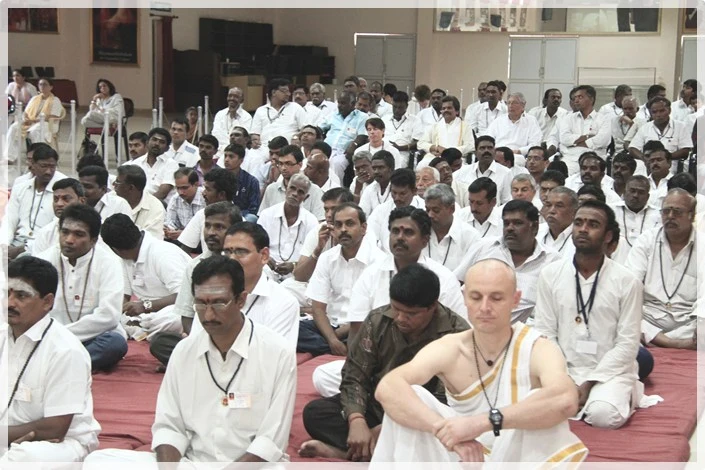
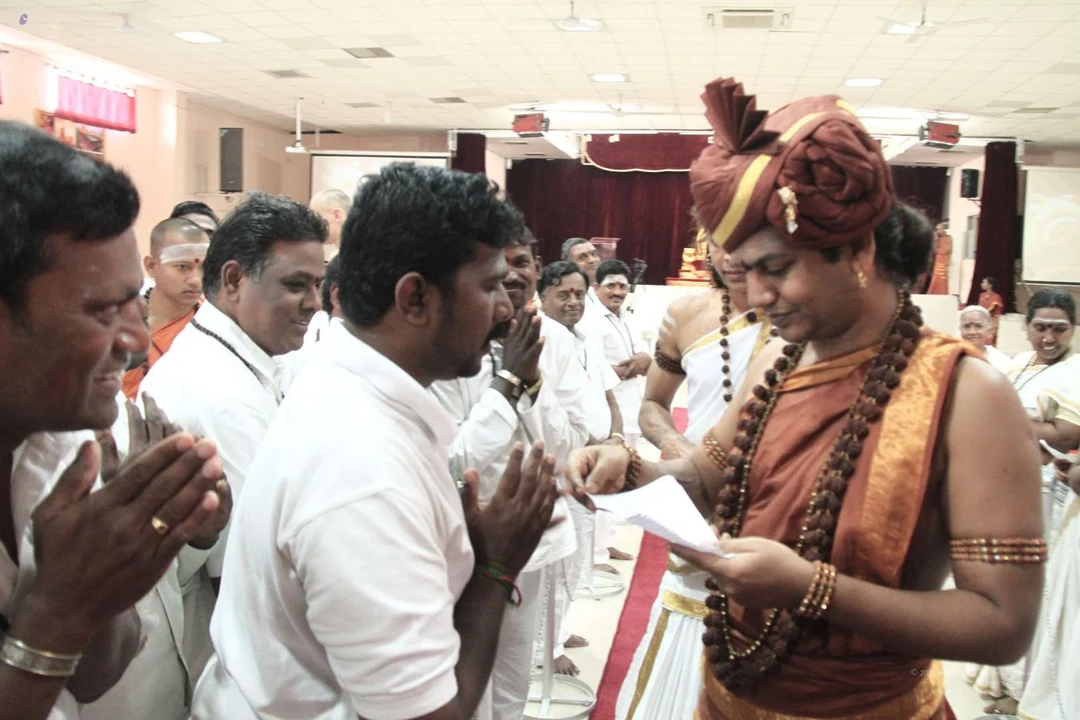
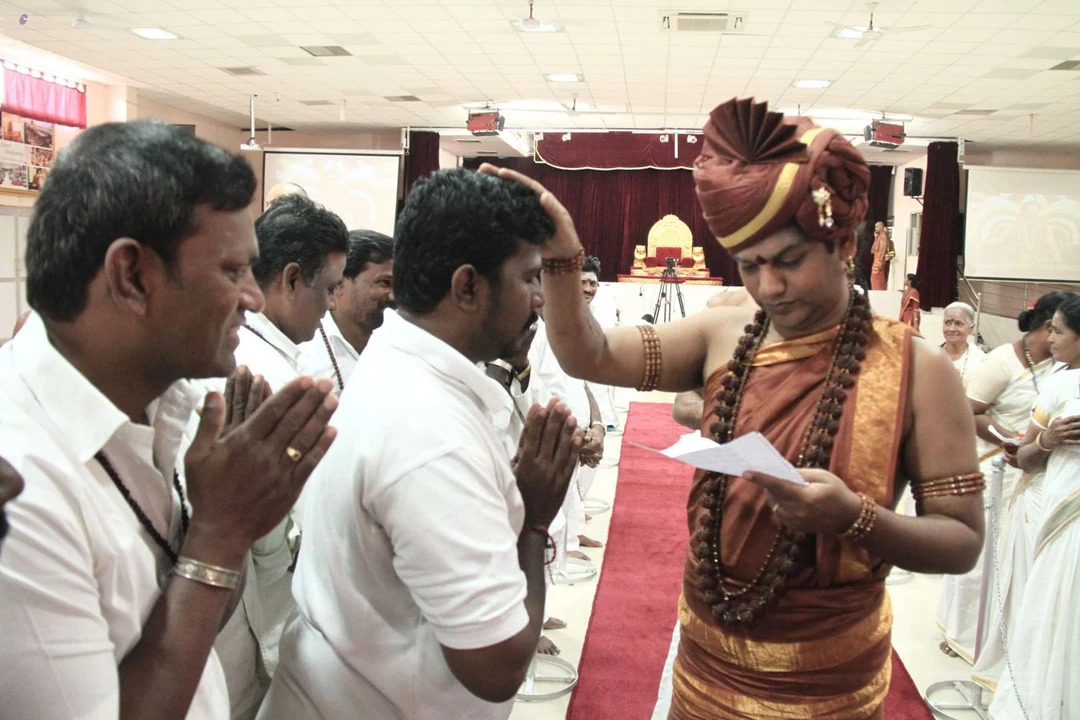
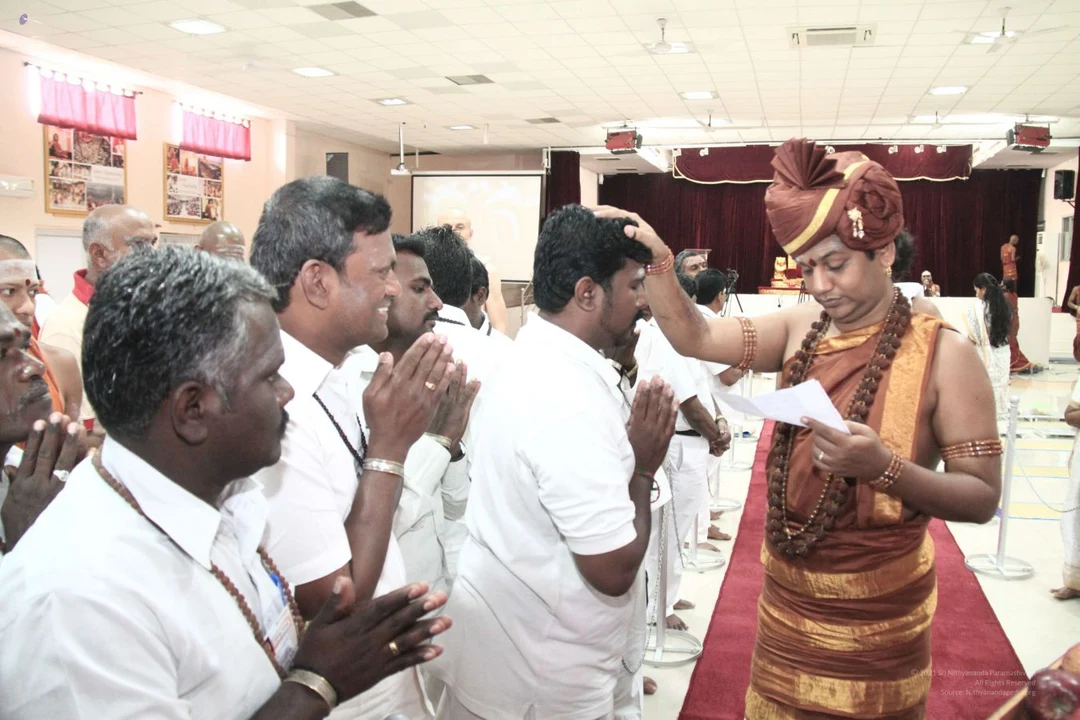
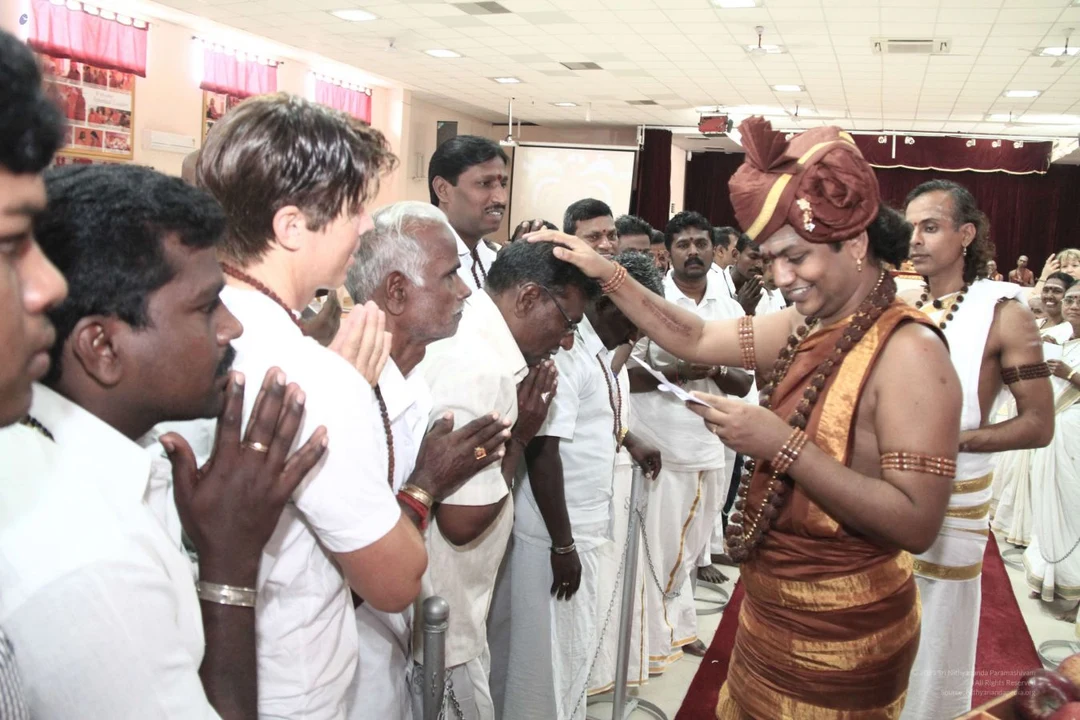
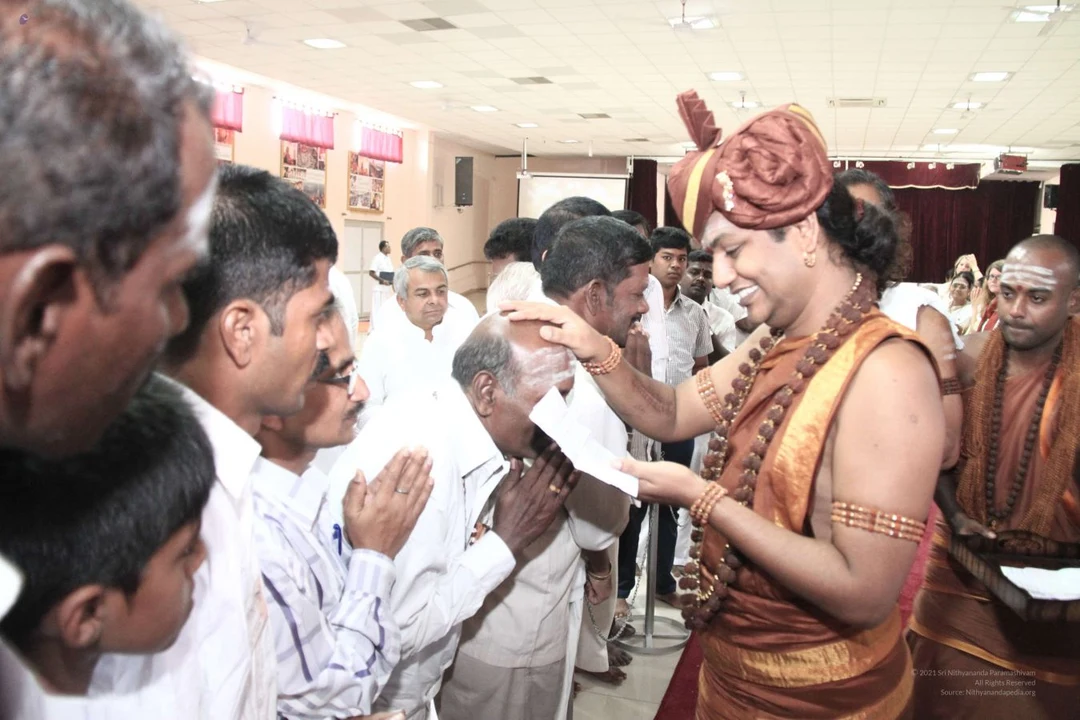
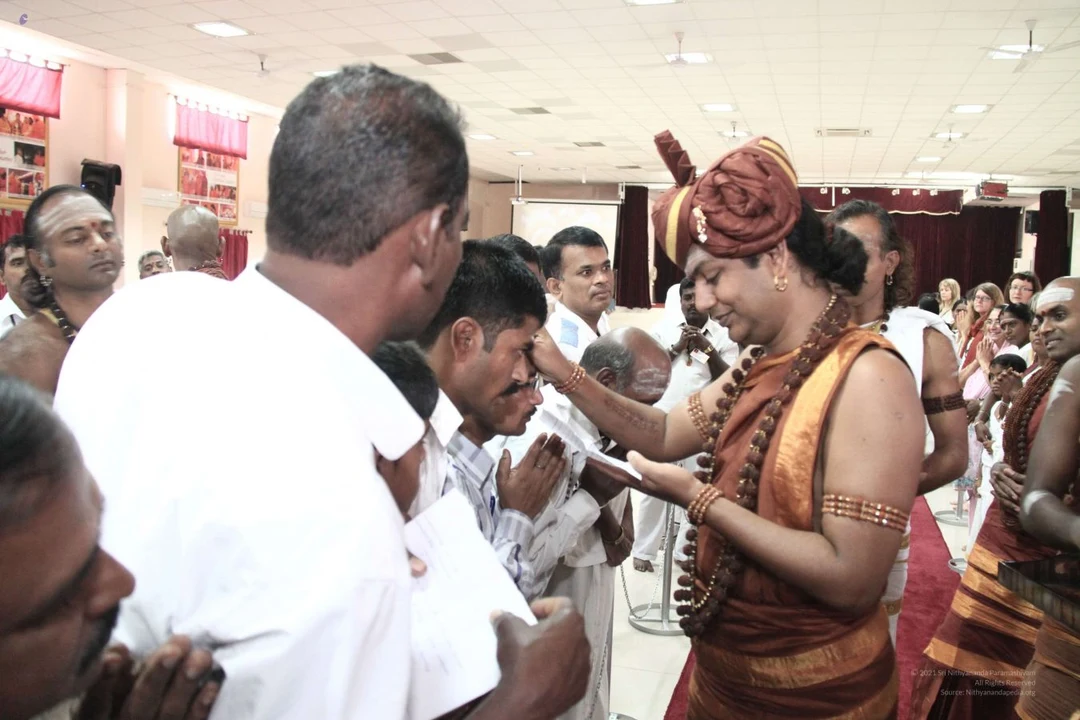
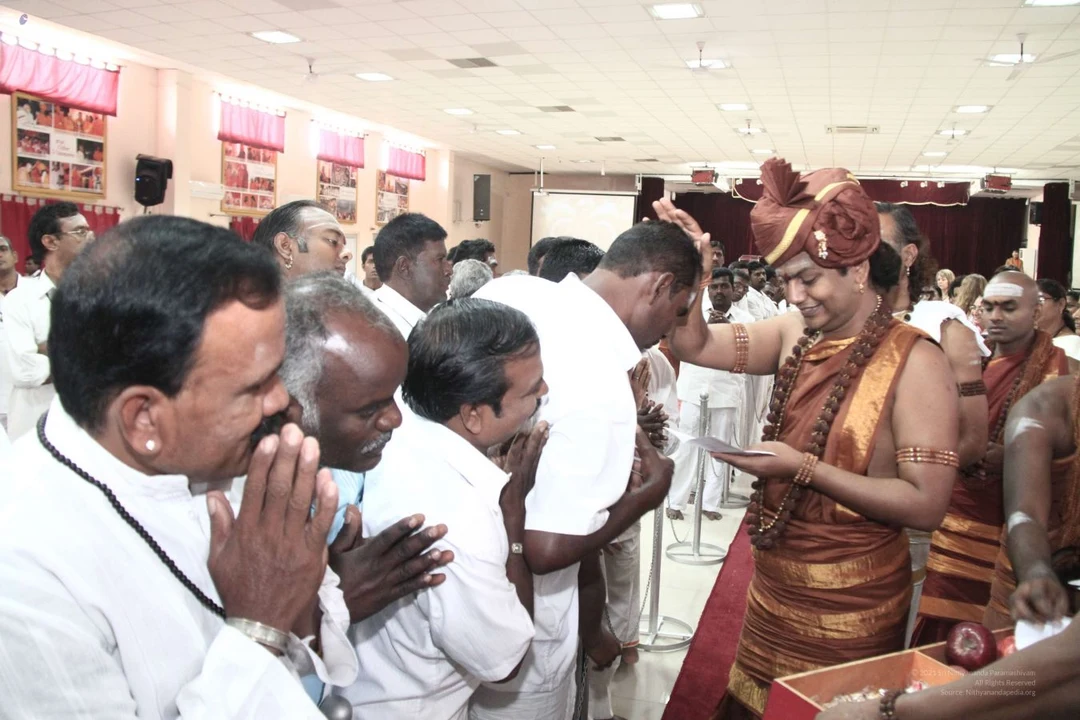
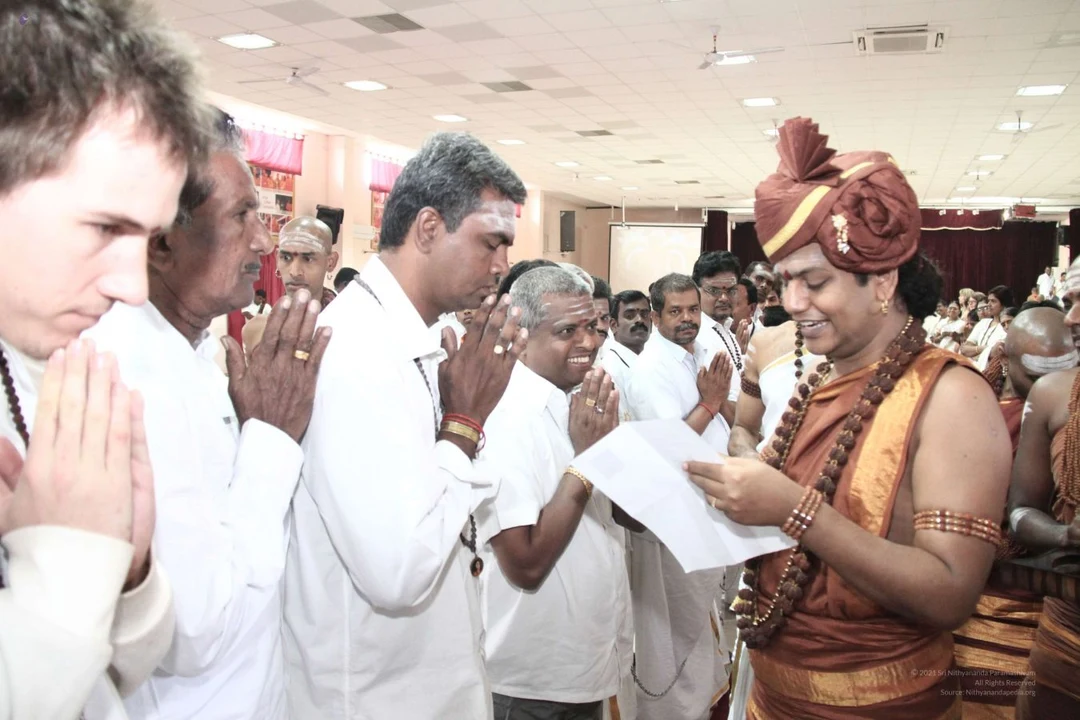
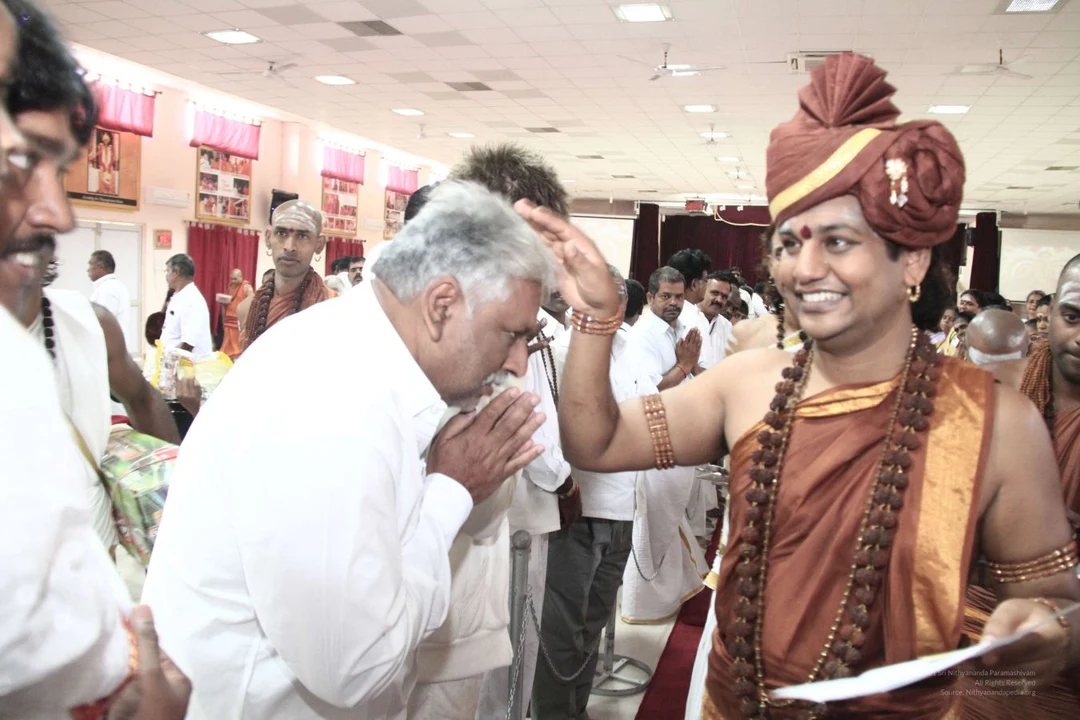
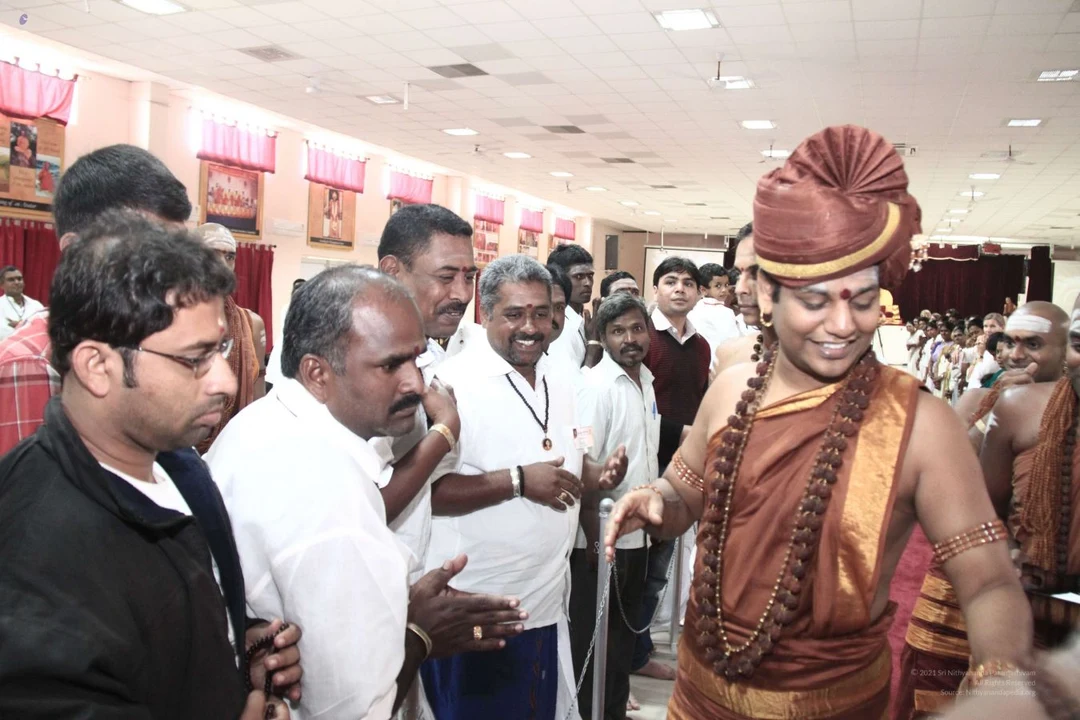
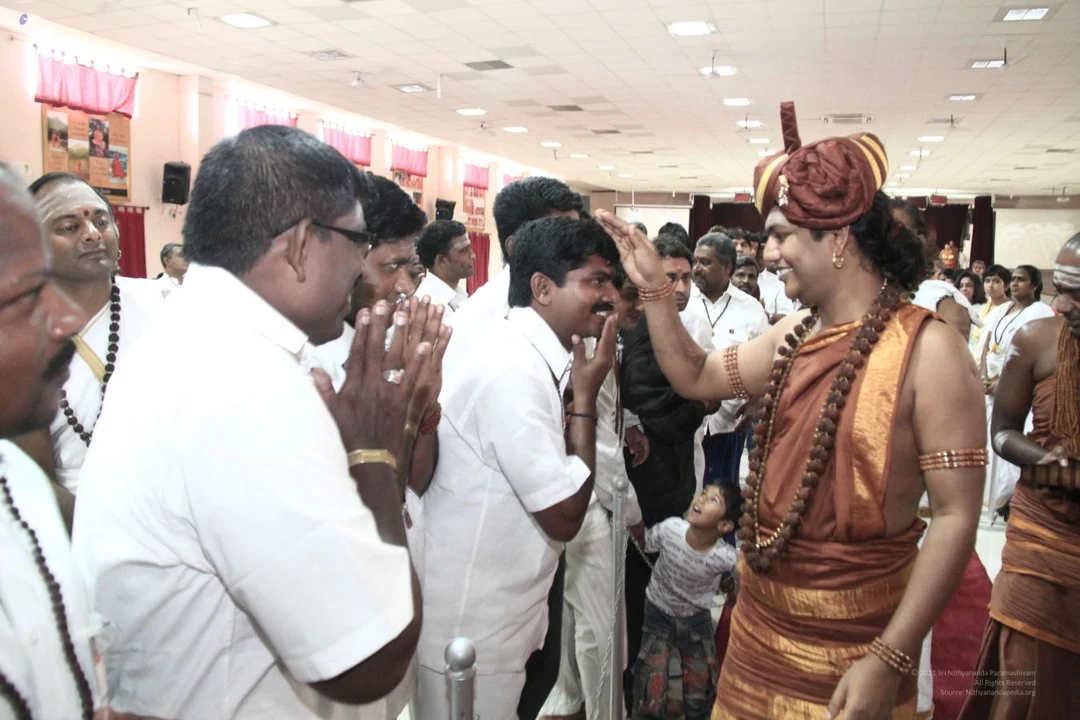
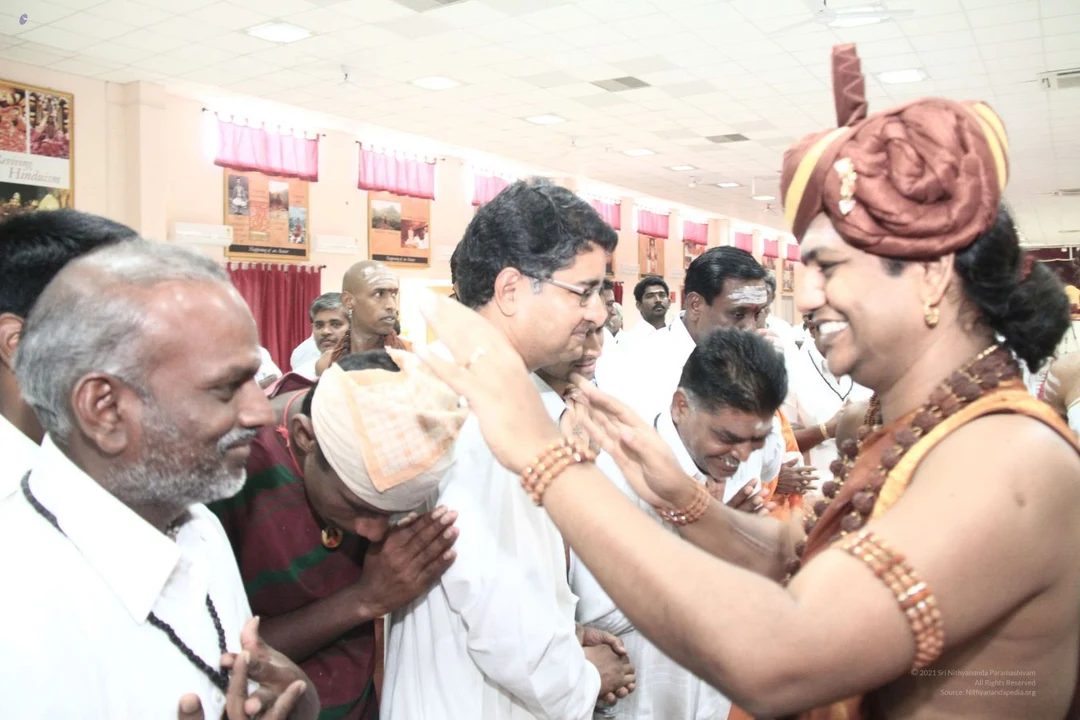
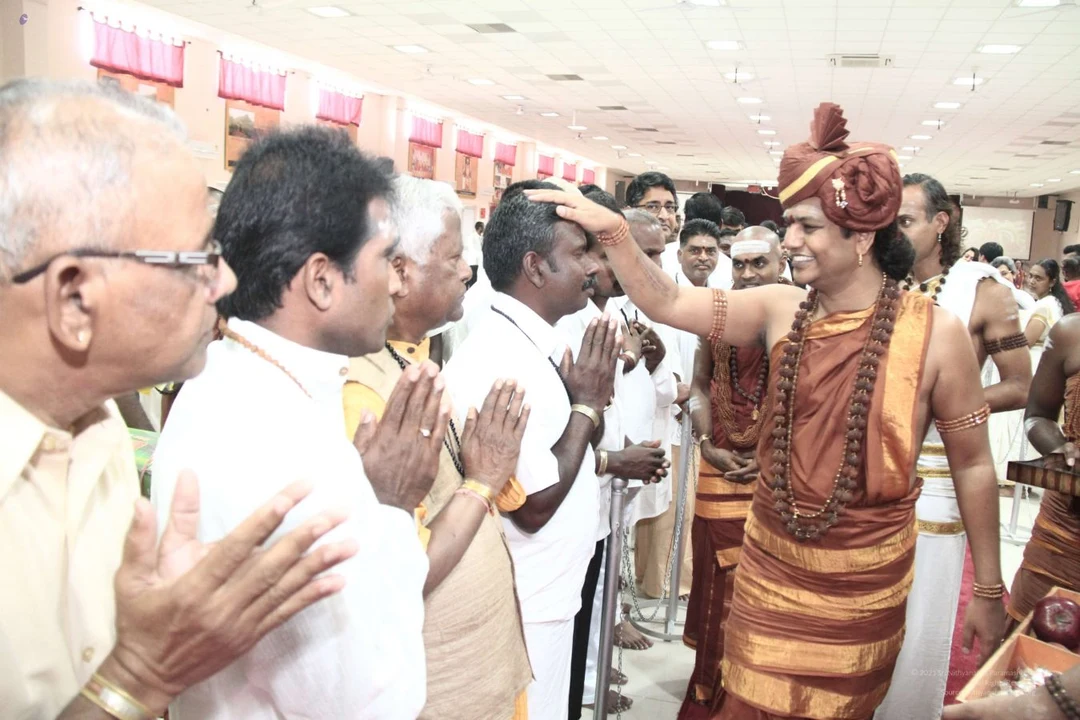
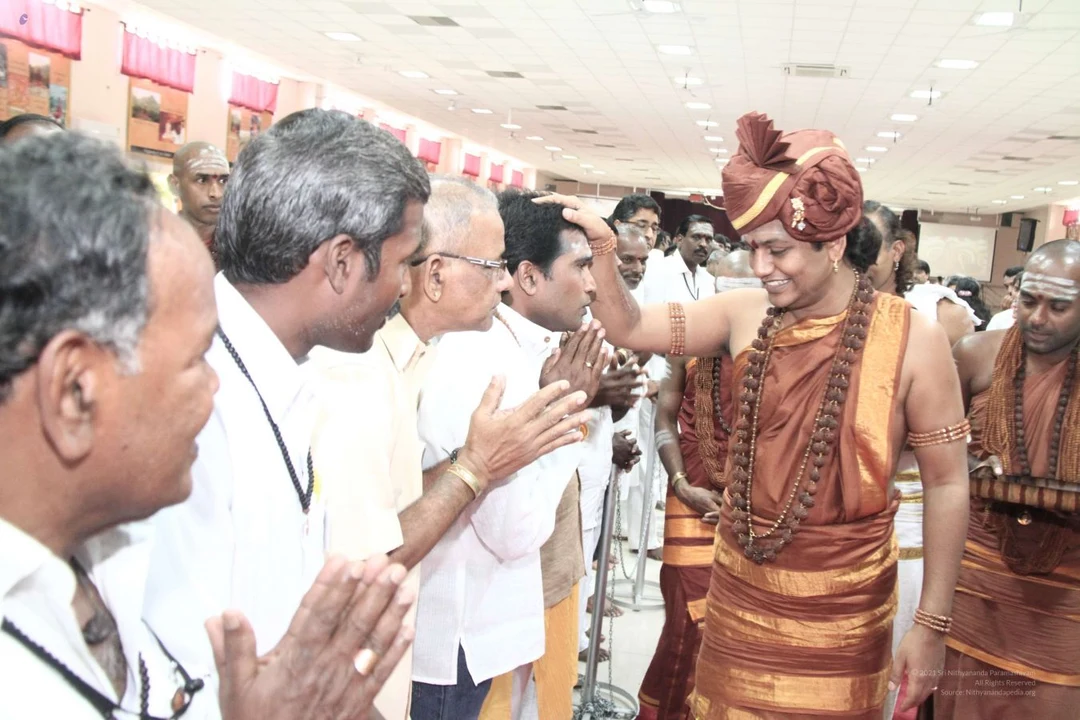
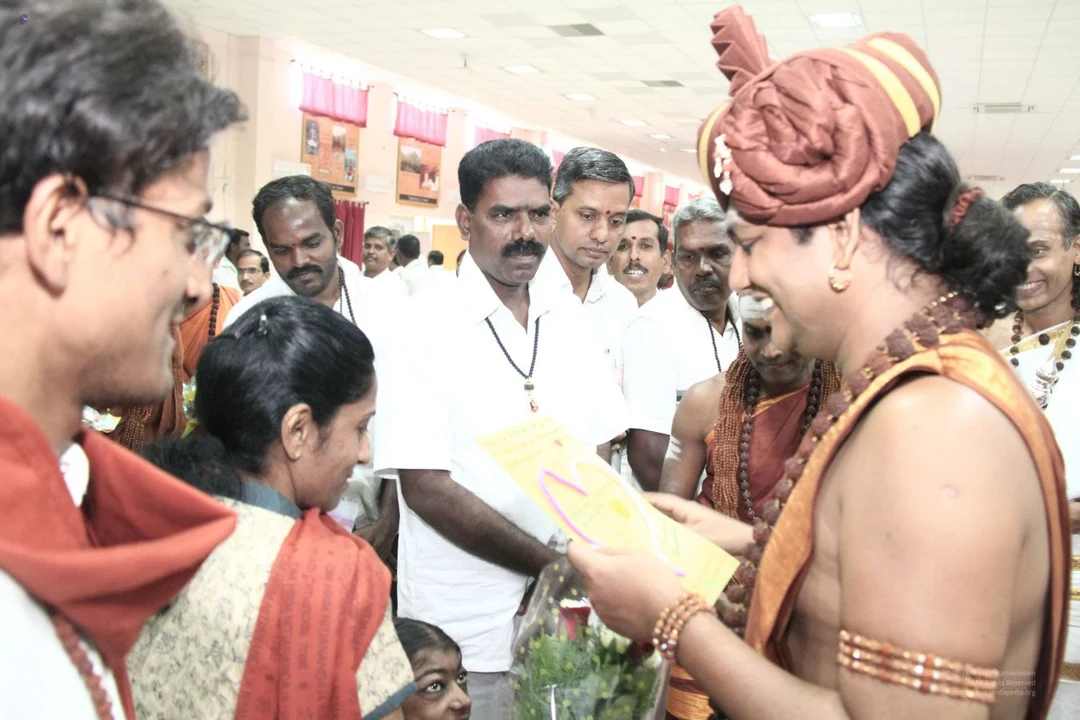
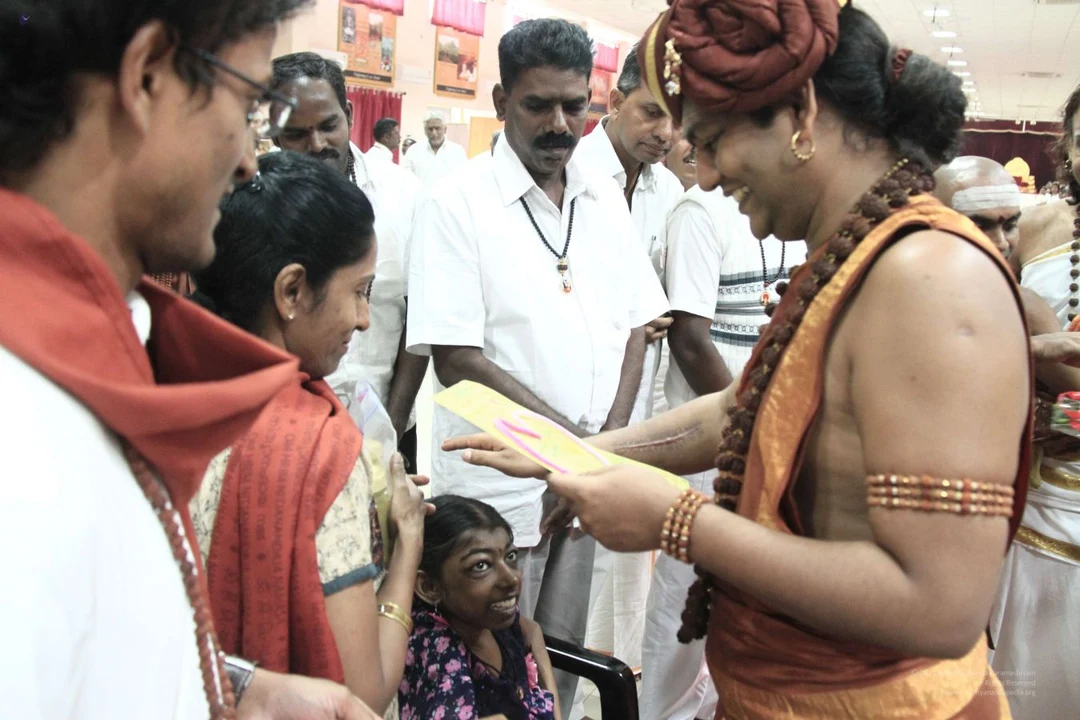
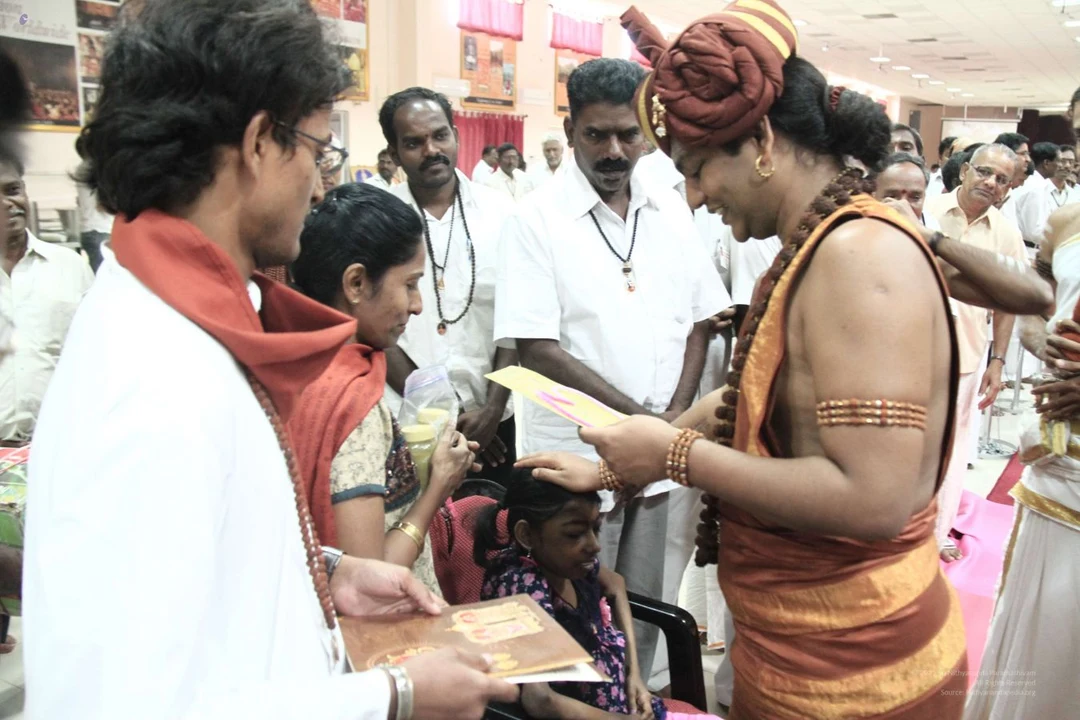
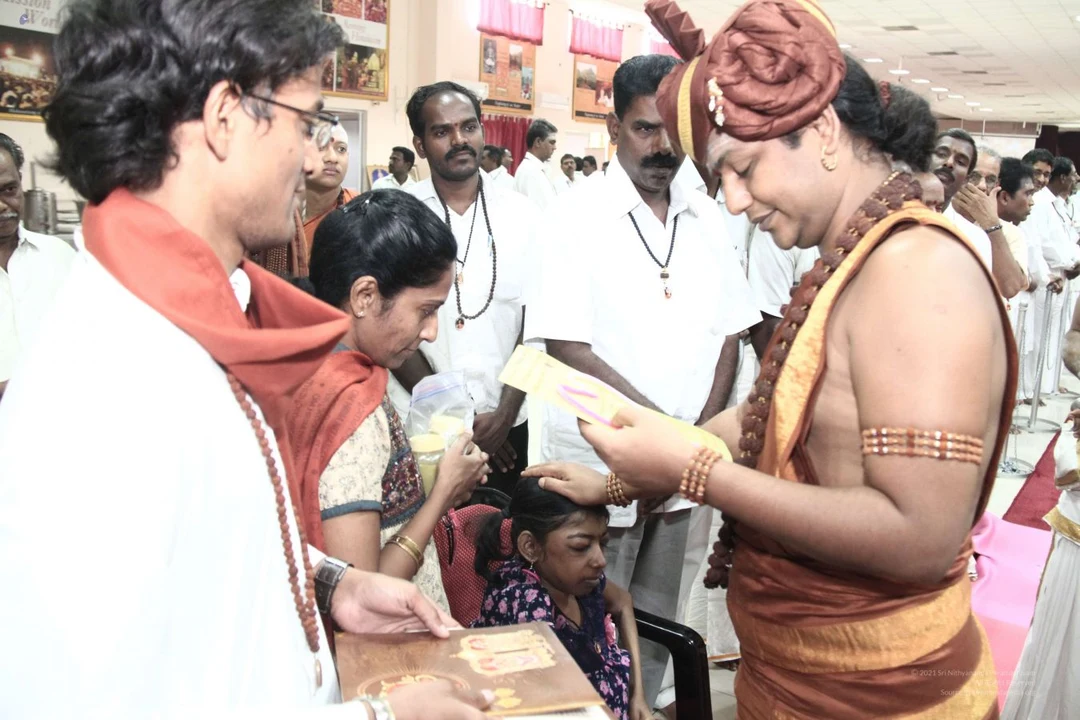
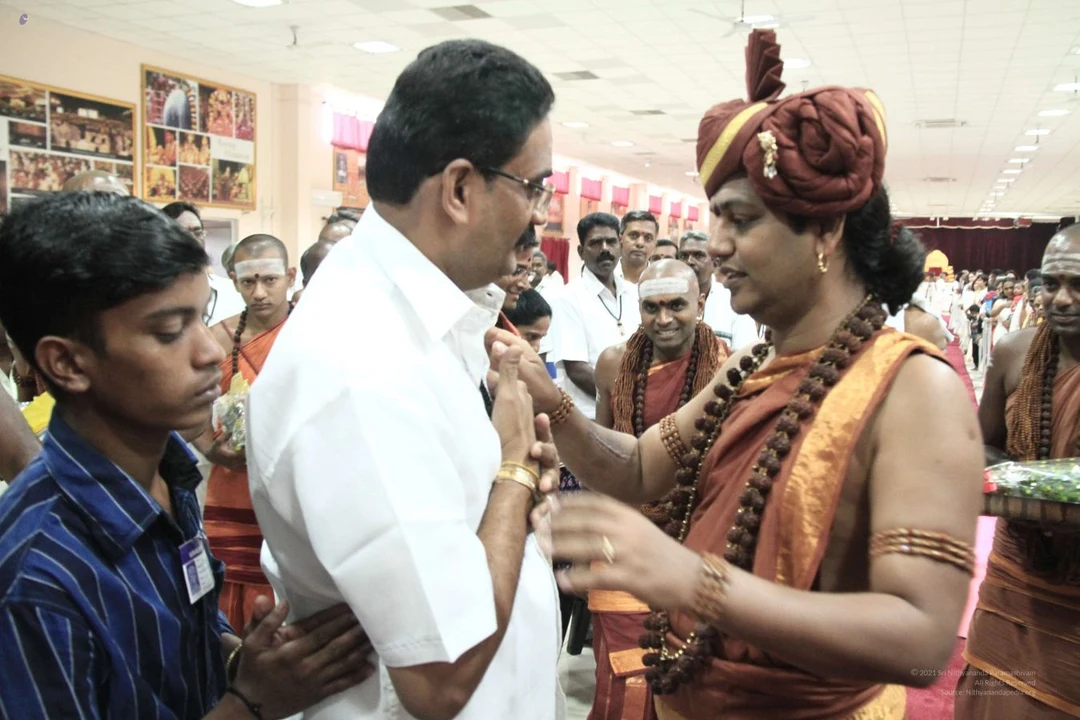
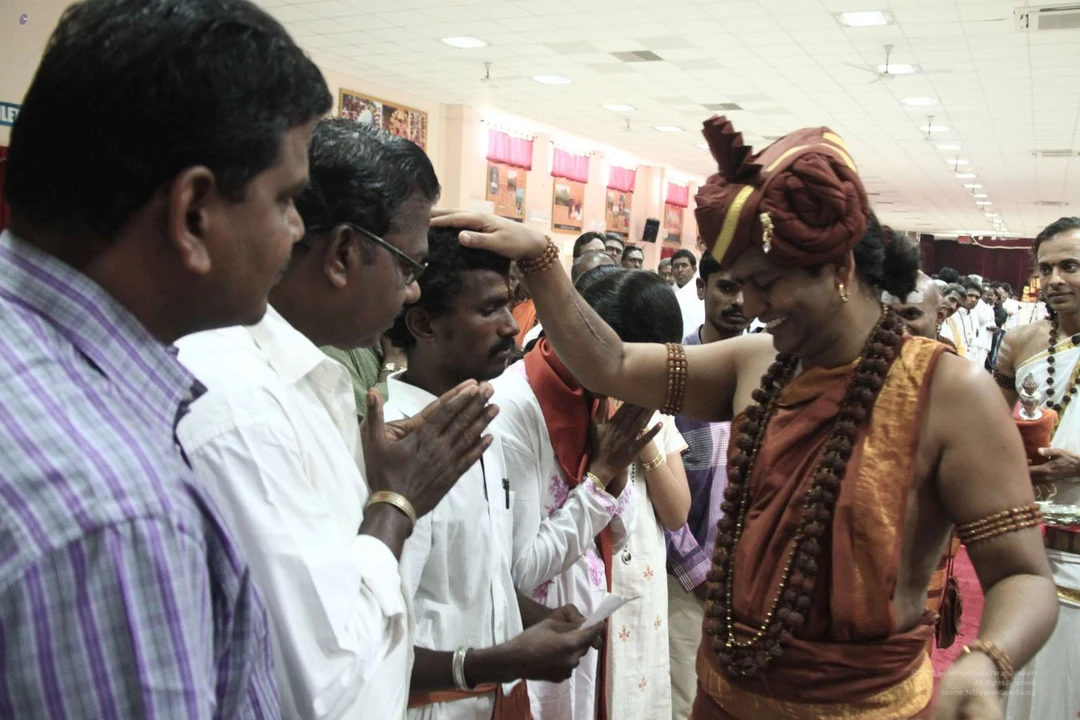
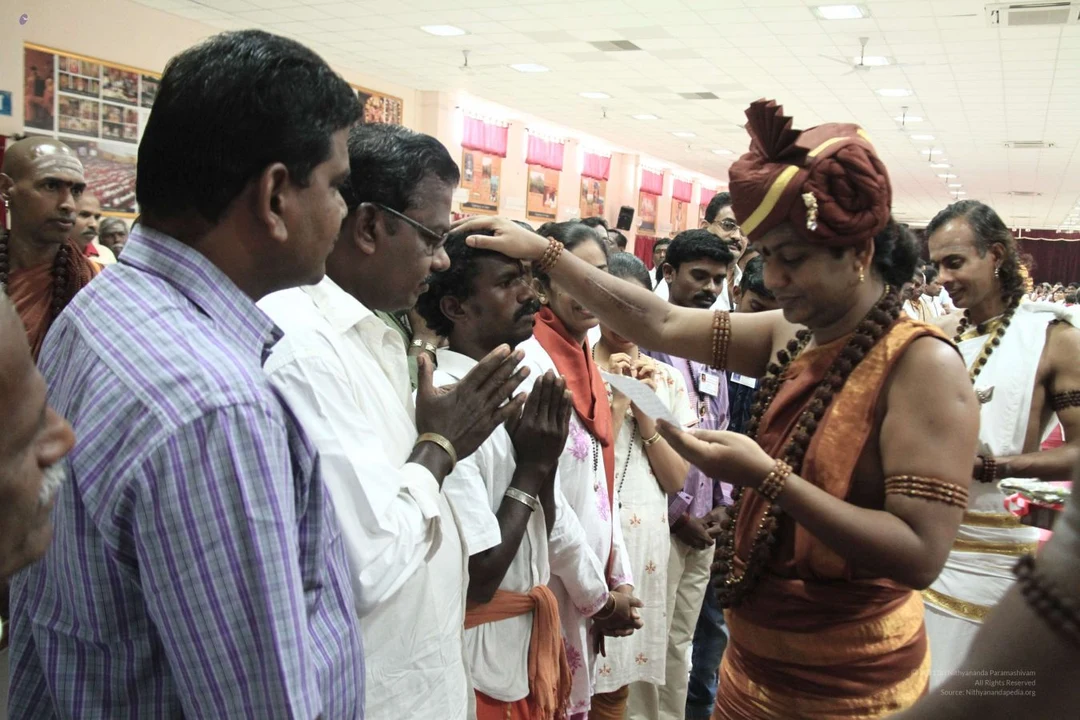
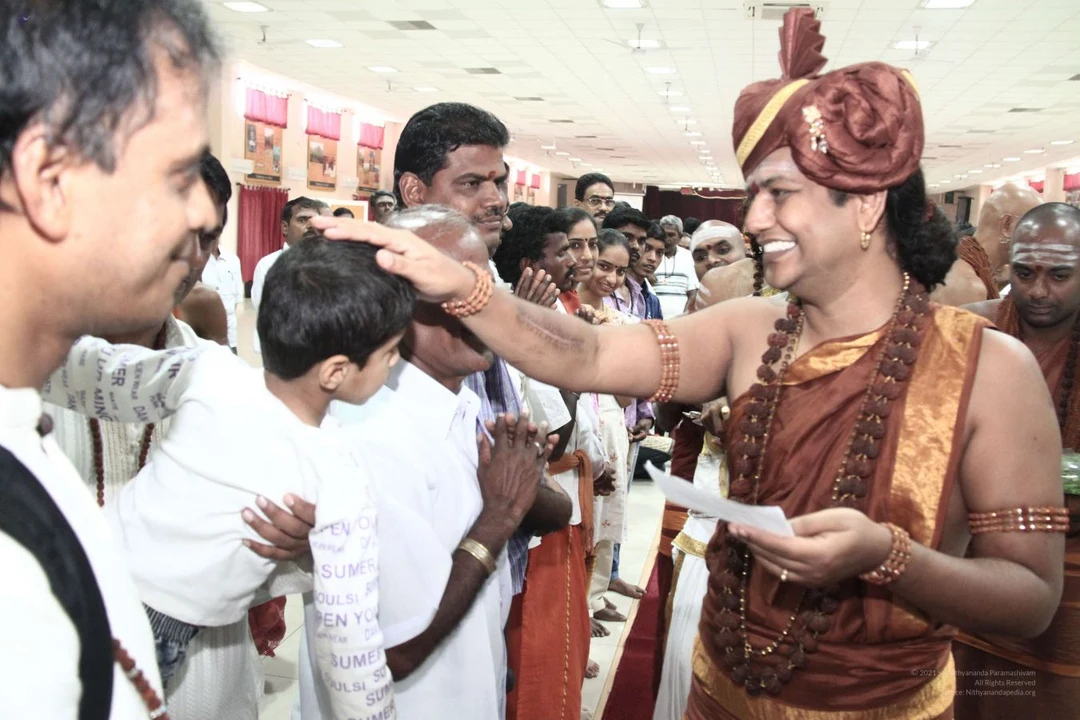
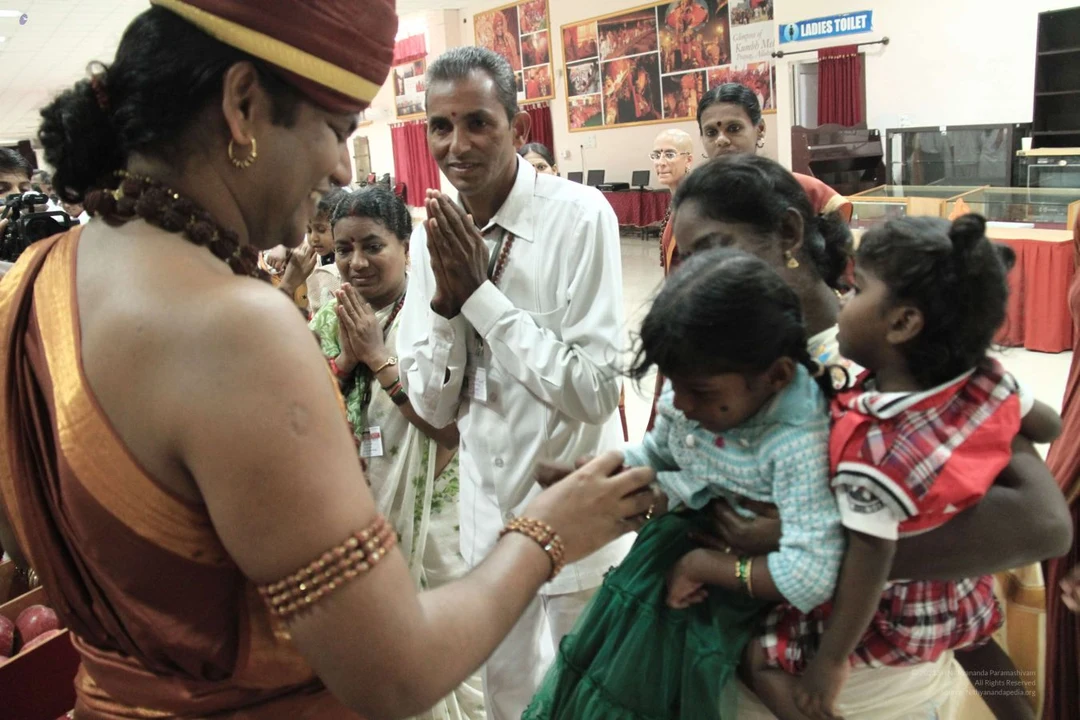
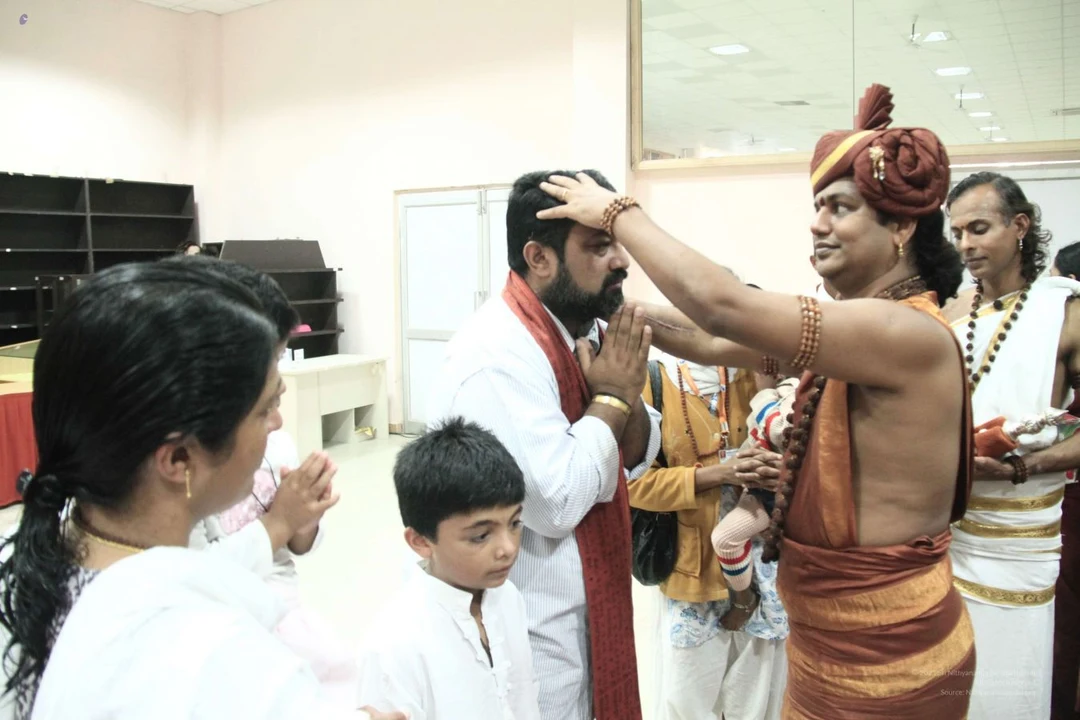
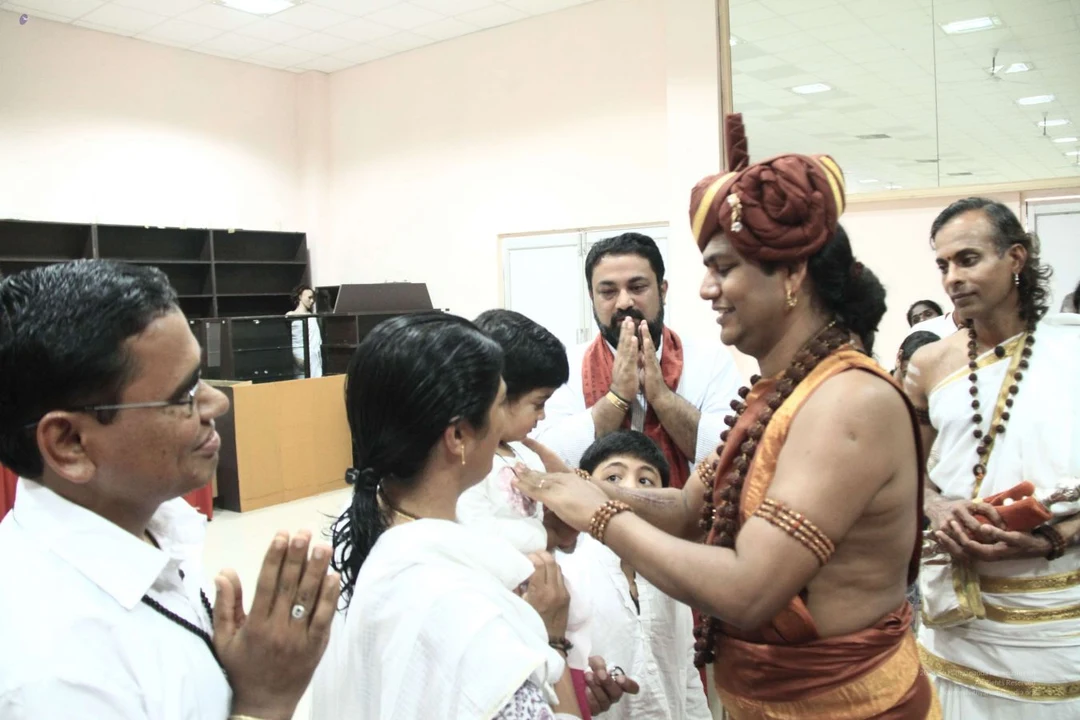
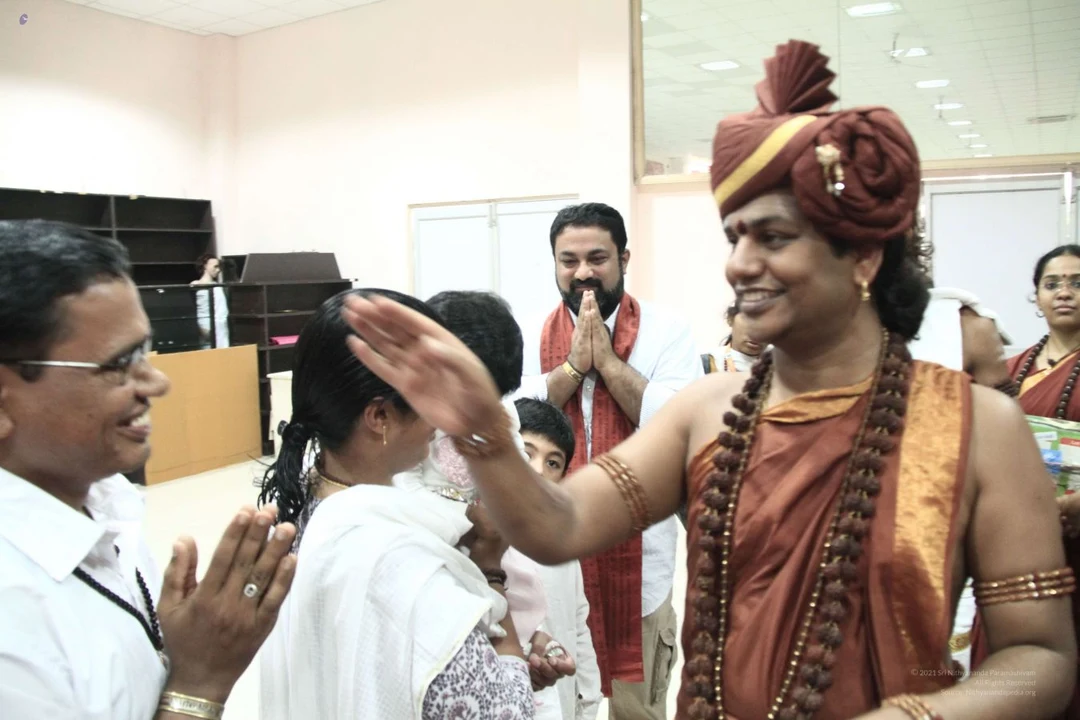
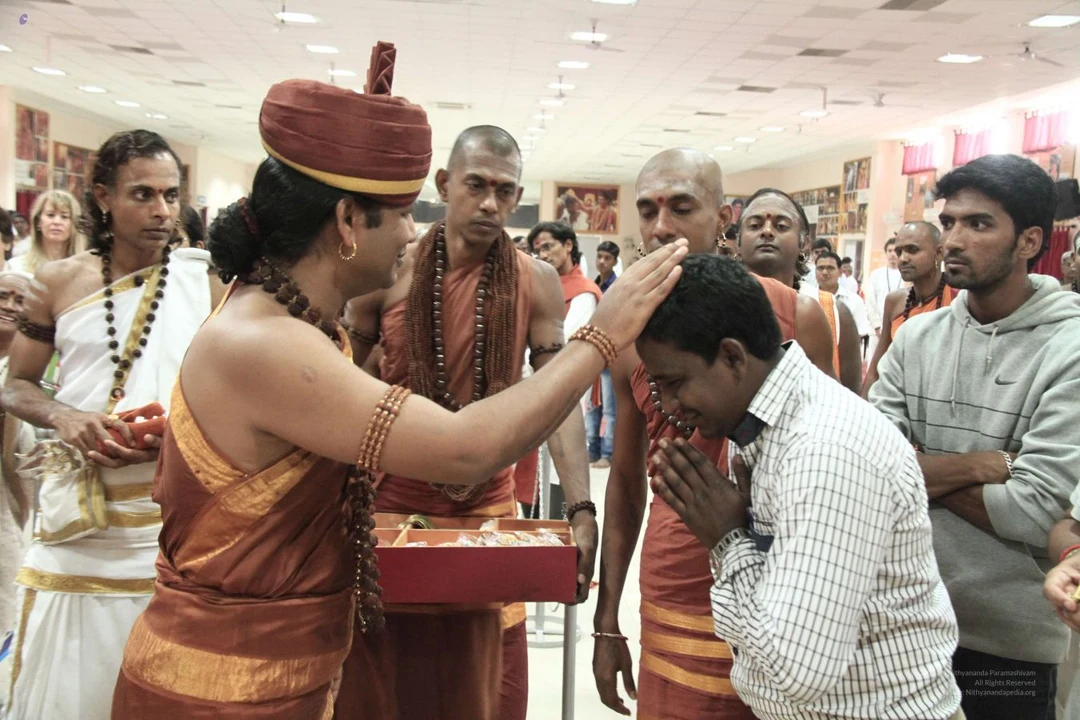
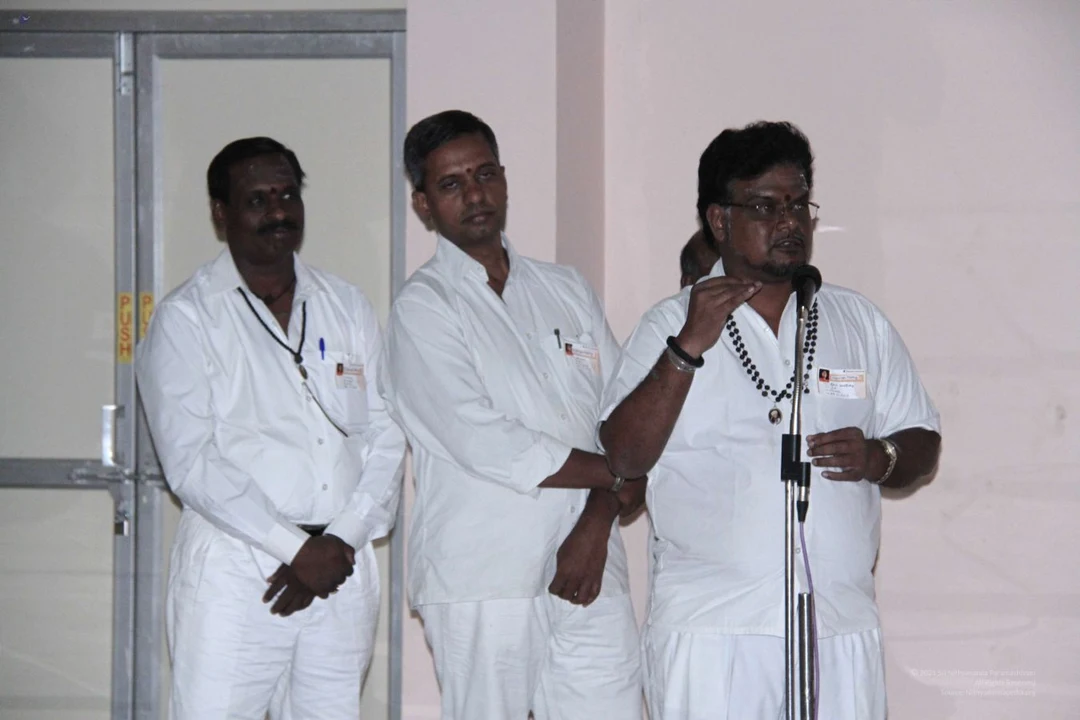
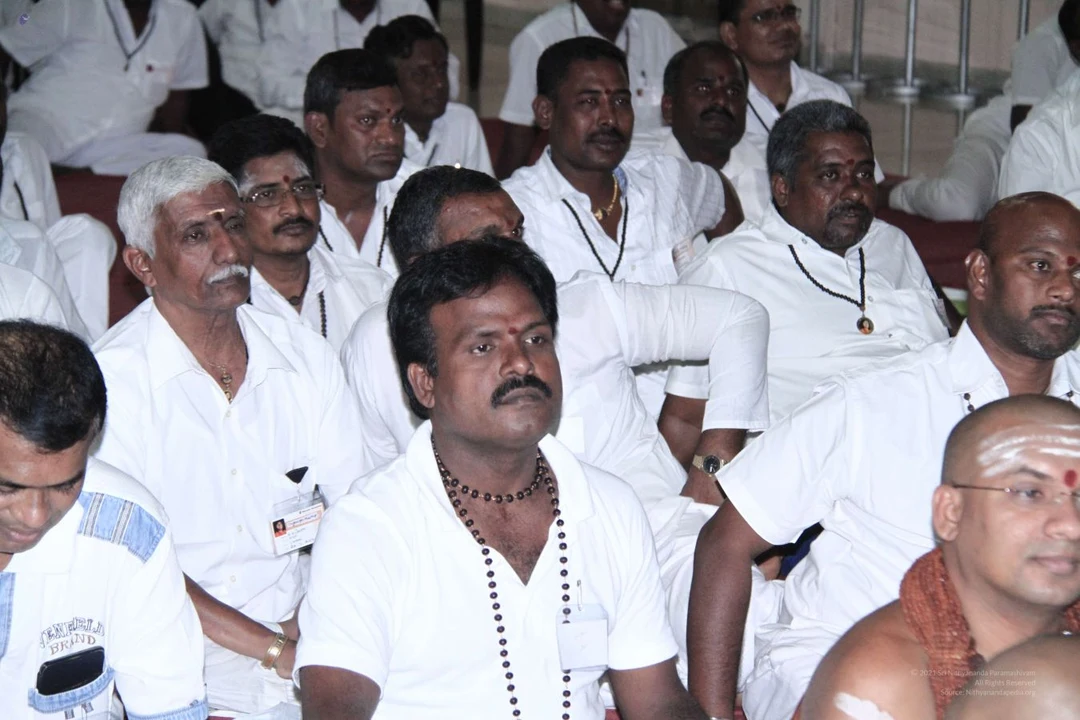
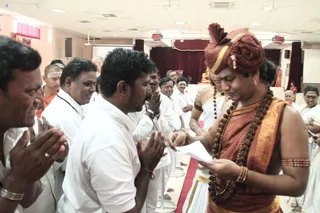
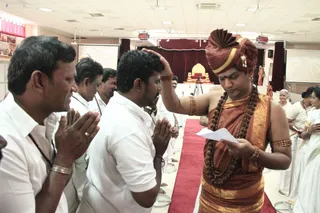
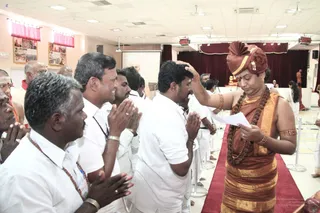
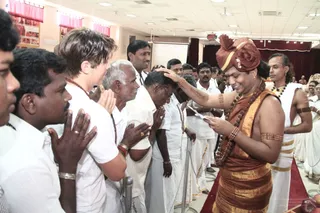
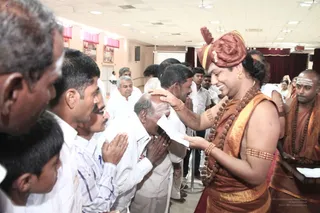
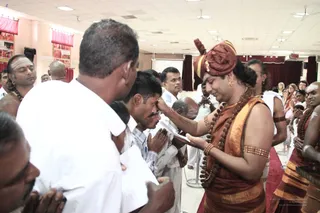
Indoor satsang hall with a red curtain and white ceiling panels. A man in a rust-orange turban with a gold-trimmed fan-shaped top, rudraksha malas, a gold necklace, orange-gold shawl and gold armlets stands at right, reading a sheet of paper. Facing him, a man in a white shirt with folded hands smiles and bows in namaskar, and a line of devotees in white shirts and dhotis stands along a long table with water glasses. A monk in orange with a white forehead band stands at left, and an older man in white at far left also has folded hands.A photo of an indoor hall with a red carpet runner. A man in an orange-brown turban and saffron-orange dhoti with an ornate gold border wears long rudraksha malas and gold bangles. He stands in the foreground, placing his hand on the forehead of a devotee in a white polo shirt who presses his palms together in anjali. Other devotees in white shirts and white traditional dress stand along the carpet with hands folded. In the background a golden throne with a red cushion stands before maroon drapes, and a camera on a tripod is visible. a person, a sannyasi, performs a blessing for the devotee.Indoor ceremony in a hall with a red carpet runner and white rope barriers. A man in a brown turban, rudraksha malas and gold-trimmed saffron-brown dhoti and shawl, with gold armbands, holds a folded paper and touches the head of a devotee. Several men in white shirts and white dhotis stand with palms pressed together in namaste, some wearing rudraksha malas and ID lanyards. A red curtain and a projection screen are visible behind, with a small seated figure near the back and a few other people in the background.A photograph of a devotee line in a bright hall with a red carpet. A man in a maroon turban, saffron-orange shawl and layered rudraksha malas stands at the front, his right hand raised over a bowed devotee's head while he holds a small folded paper. Beside him, a bare-chested attendant wears white and gold dhoti-style cloth with rudraksha malas. Devotees in white shirts and white dhotis stand with palms joined in namaste, several wearing red and brown malas. Chairs and stanchions line the carpet, with a projection screen and red curtains in the background.Photograph of a line of devotees in a hall receiving blessings. A man in a rust-brown turban with a feather-like ornament, long rudraksha malas and a saffron-orange shawl across his body rests his hand on the head of a bowing man in white. Devotees in white shirts and dhotis stand with palms joined. A younger man in saffron-orange cloth with a rudraksha mala stands at right. Behind them, framed posters hang on the pale walls, and red drapes and a projection screen are visible. Candidate for Swamiji (probable): the turban-clad man in orange with rudraksha malas and ceremonial adornments is the one blessing devotees.A photograph inside a hall with pink-and-maroon drapes and ceiling lights, showing a devotional blessing. A man in a rust-orange turban, saffron-orange shawl and many rudraksha malas touches the forehead of a devotee with his right hand while holding a small object in his left. Several white-clothed devotees stand with hands joined in anjali, and a seated figure in white and other attendees are behind them. Swamiji (probable): the robed figure in orange and rudraksha is the central blesser, identified by appearance cues of orange turban, orange shawl and rudraksha malas. Paramahamsa Nithyananda is the giver of blessing in this scene.
Final-Blessing

8 photosSource gallery
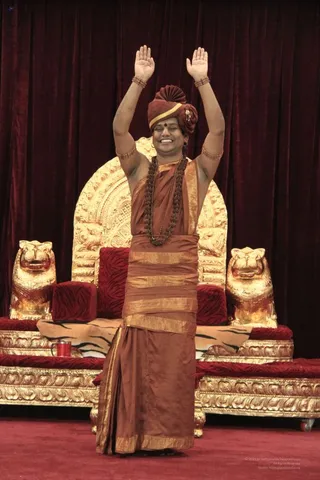
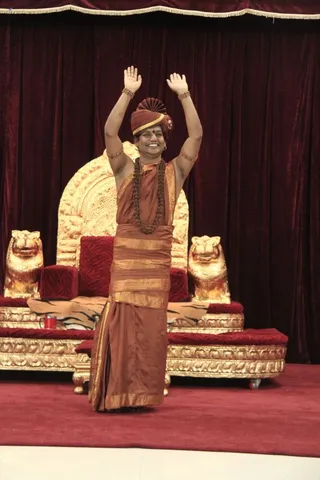
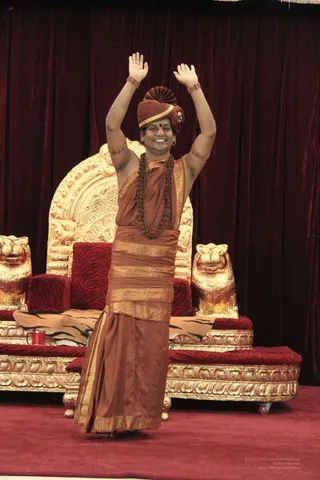
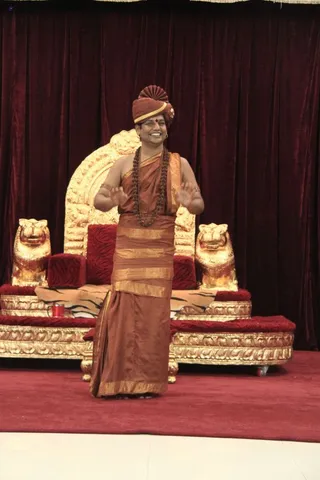
A man stands on a red carpet before an ornate gold throne with carved lion heads and a red velvet backdrop. He wears a rust-orange turban with a gold stripe, rust-orange robes with gold borders, a dark rudraksha mala and gold bangles, and raises both arms high with palms open, smiling with eyes closed. Swamiji (probable): long-haired presentation with an orange turban, orange robes and rudraksha mala. A red cup sits on the throne's side.A standing figure on a red carpet raises both arms overhead with palms open, smiling with eyes closed. He wears a rust-orange turban with a gold-edged band, a rust-orange draped garment with gold borders, a red-brown rudraksha mala and beaded bracelets on both wrists. Behind him stands an ornate gold throne with carved lion-head armrests, red zebra-striped cushions and a tiger-print throne cloth, set against deep red velvet drapes. A red mug sits on the throne platform.A photograph of a standing figure in a rust-brown and gold-bordered draped robe with a matching rust-coloured turban and red bindi, arms raised with palms open, smiling on a red stage carpet. A rudraksha mala hangs at the chest, and gold-bangled arms are visible. Behind is a large ornate gold throne with golden lion-head armrests, red velvet cushions with zebra-stripe patterns, and a tiger-stripe throne cloth, against deep red velvet drapes. A red mug sits on the throne platform. The figure has distinctive rudraksha and turban cues in a saffron-toned ceremonial robe, consistent with a person appearance, shown in a stage welcome gesture; appearance is uncertain.A standing figure on a red carpeted stage raises both arms overhead with palms open, smiling. He wears a rust-brown turban with a gold-edged fan fold, a rust-brown wrap with gold borders, multiple rudraksha malas, and gold-edged bangles on the upper arms and wrists. Behind him stands a large ornate gold throne with carved backrest, gold lion-head armrests, red and zebra-striped cushions, and a red velvet curtain backdrop. Next to the throne sits a red mug.A standing figure in a rust-brown draped robe with gold-bordered pleats and a matching rust turban with gold trim raises both arms overhead on a red carpeted stage. A long rudraksha mala hangs over the chest and gold bangles are worn on the wrists. Behind is an ornate gold throne with carved lion heads, red velvet cushions with tiger-stripe patterning, and a tiger-skin draped seat, set against deep red velvet drapes. A red mug sits on the throne's side. Appearance suggests a candidate matching the a person cues of a turban, rudraksha mala and saffron-toned robe, but the identity is uncertain, so the subject is described by role only.A smiling man stands on a red carpeted stage in front of an ornate golden throne with carved lion-head arms and red tiger-striped cushions, backed by deep red velvet drapes. He wears a rust-brown turban with a gold-edged band, a rust-brown wrap with gold borders, a long rudraksha mala, and gold bangles, and he raises both hands in an open gesture. Swamiji (probable) appears in person, based on the turban, rudraksha mala and ornate saffron-toned clothing, with the throne behind him. A red mug sits on the throne's side ledge.

Organiser-Meeting

30 photosSource gallery
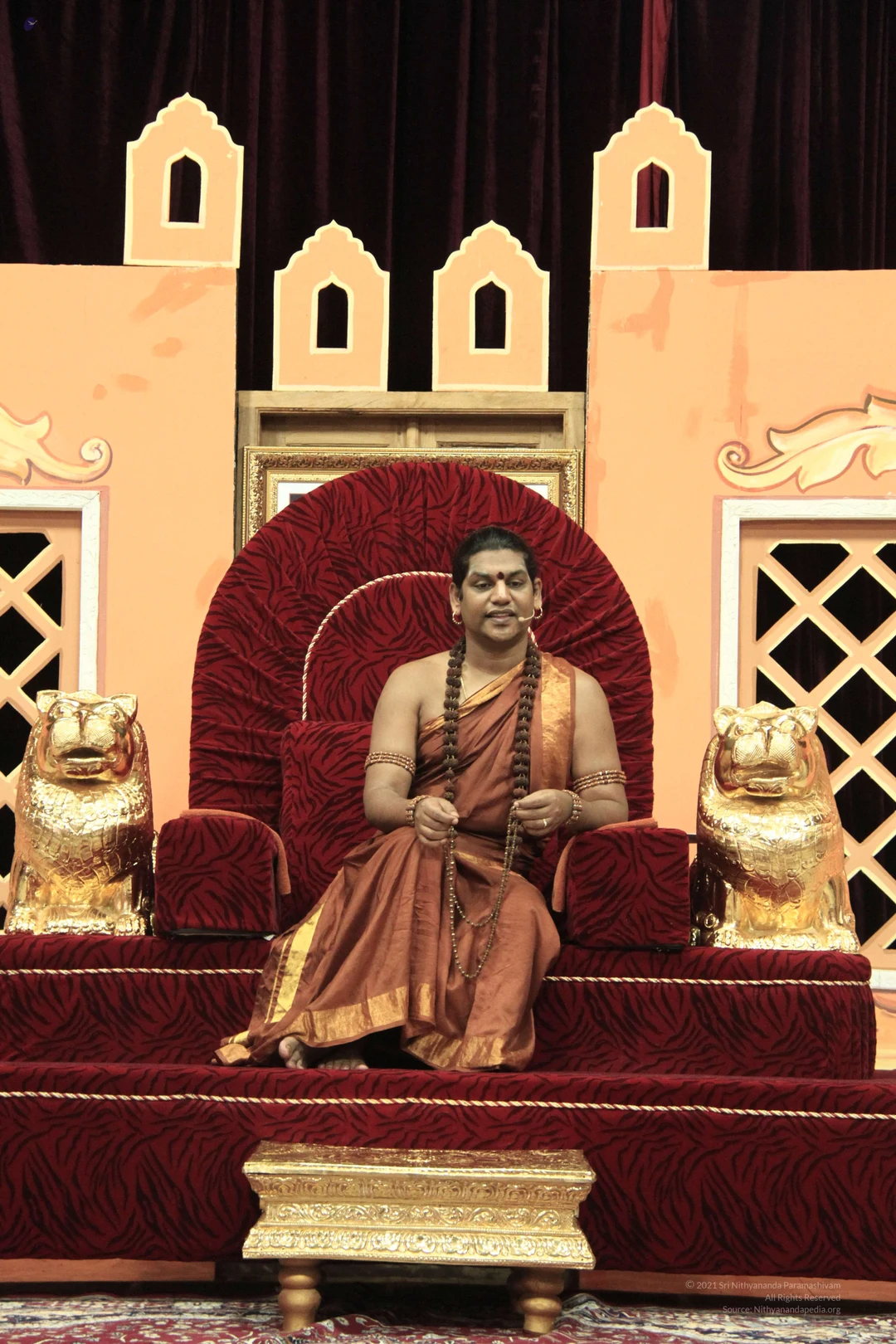
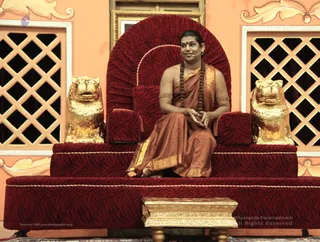
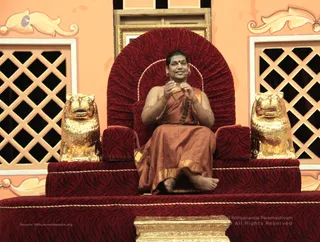
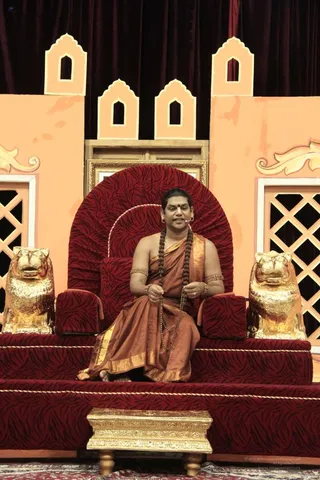
A seated man speaks during a satsang on a stage. He sits on a large red velvet throne with a rounded back, flanked by two golden lion-head armrests, in front of peach-coloured walls with lattice windows. He wears an orange-rust draped garment with a gold border, rudraksha-style beaded necklaces, gold armbands and bangles, and a small red bindi. He has long braided hair and holds his hands together in front of his chest. Swamiji (probable): the cues are the long swept-back hair, ornate gold jewellery and the regal throne, which fit the page's claim. One person is physically present.A photograph of a smiling person seated cross-legged on an ornate red velvet throne with tiger-stripe pattern and gold lion figures on either side. The person wears a rust-orange sari with gold border, rudraksha mala beads hanging to the chest, gold bangles and earrings, and a red bindi. The background has peach-coloured walls with gold lattice windows and floral painted panels. A gold-trimmed footstool sits in front of the throne. Appearance-based identification is uncertain, so the role is given as the seated speaker. One person is visible.A seated man in saffron-orange robes sits on an ornate red velvet throne with gold tiger-head armrests against a peach-coloured backdrop with gold lattice panels. He wears a rudraksha mala with gold bead accents, gold bangles and armlets, and a small bindi, and holds his hands together in his lap while speaking into a headset microphone. A gold footstool sits in front of the throne. A small overlay reads a copyright notice in the lower right corner.A man sits cross-legged on a red and black zebra-patterned velvet throne with gold-painted lion sculptures on each arm, against a peach stage backdrop with arched windows and dark curtains. He wears an orange-brown draped robe with gold border, multiple long rudraksha malas, gold armlets and bangles, and a red bindi, and holds a mala in his hands while speaking into a headset microphone. a person (appearance cues: long rudraksha malas, saffron-toned robe, gold ornaments, seated on a throne).A seated man in a rust-orange saffron-toned robe with a gold-bordered shawl speaks and gestures with his right hand raised, wearing a headset microphone. He sits on an ornate red velvet throne with a zebra-striped pattern and a rounded back, flanked by two gold-painted lion sculptures. Long rudraksha malas hang across his chest, with gold bangles on his wrists and a red tilak on his forehead. The peach-coloured wall behind has decorative gold-framed panels and lattice windows. Swamiji (probable): long swept-back hair, rudraksha malas and saffron-toned robes match his presentation in a seated discourse setting on a throne.A seated man in rust-brown robes with a gold-bordered shawl sits on a red velvet throne with golden lion-head armrests, against an orange wall with latticed windows. He wears a long plaited braid with rudraksha beads, gold armbands and bangles, a red bindi, and holds a beaded mala in his hand. A framed portrait in orange saffron attire with a turban is partly visible at left. a person: the long braid, rudraksha mala, gold ornaments and saffron-toned robes are the cues, and he is seated in the position of a discourse speaker on a throne. A satsang setting.
Sarva-Darshan

4 photosSource gallery
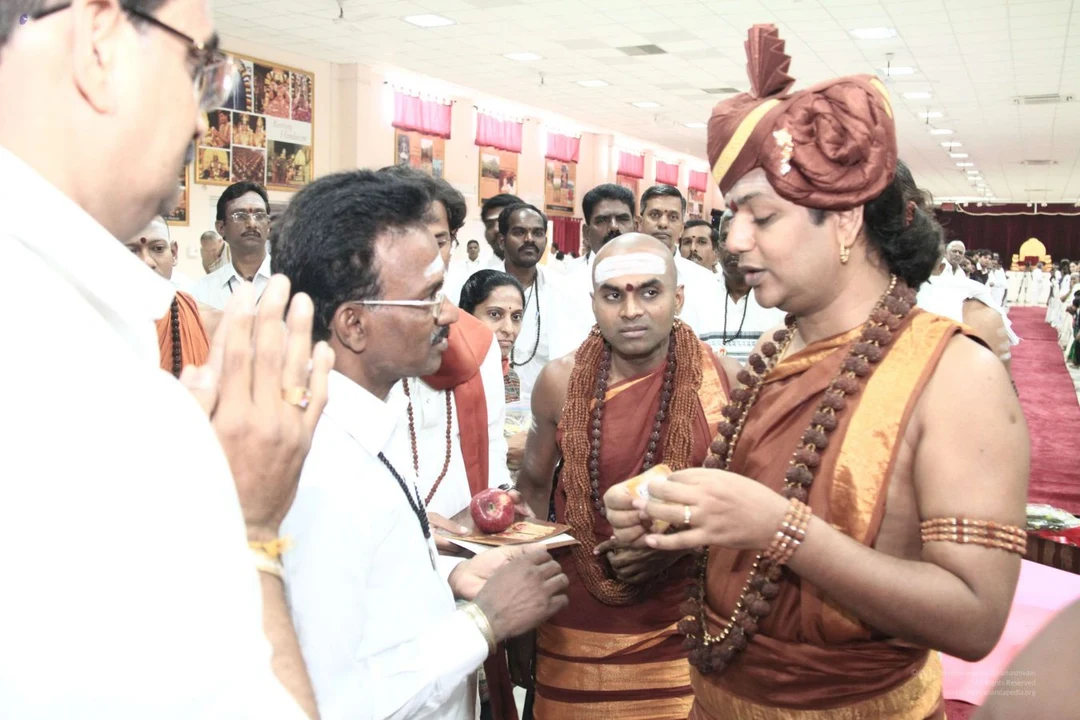
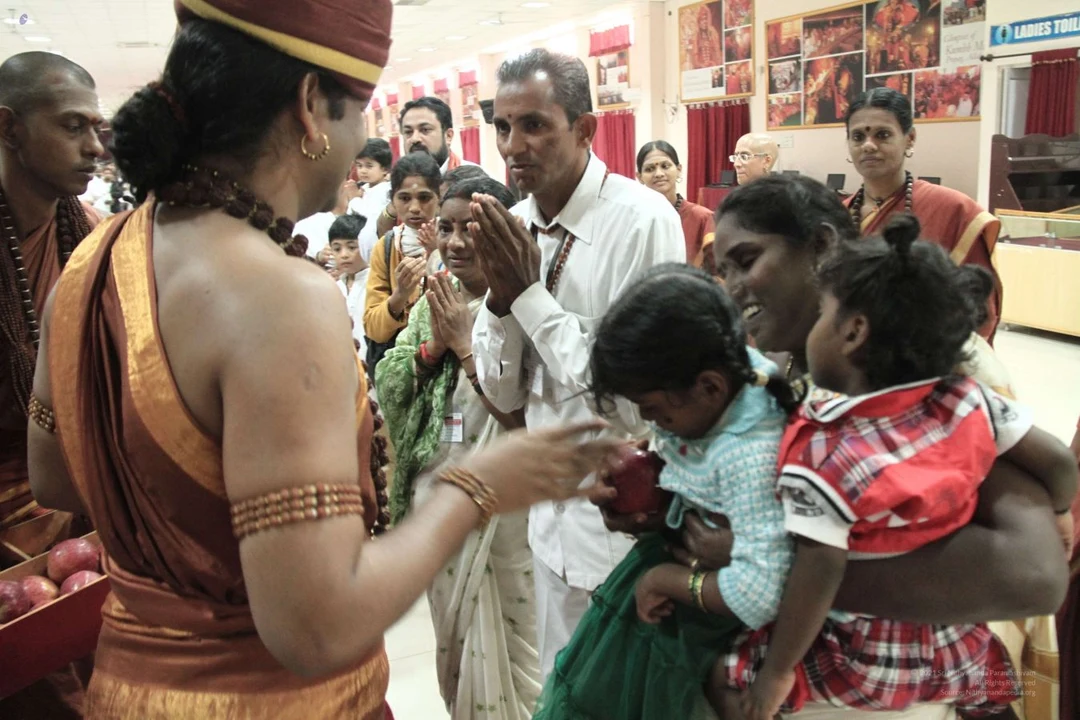
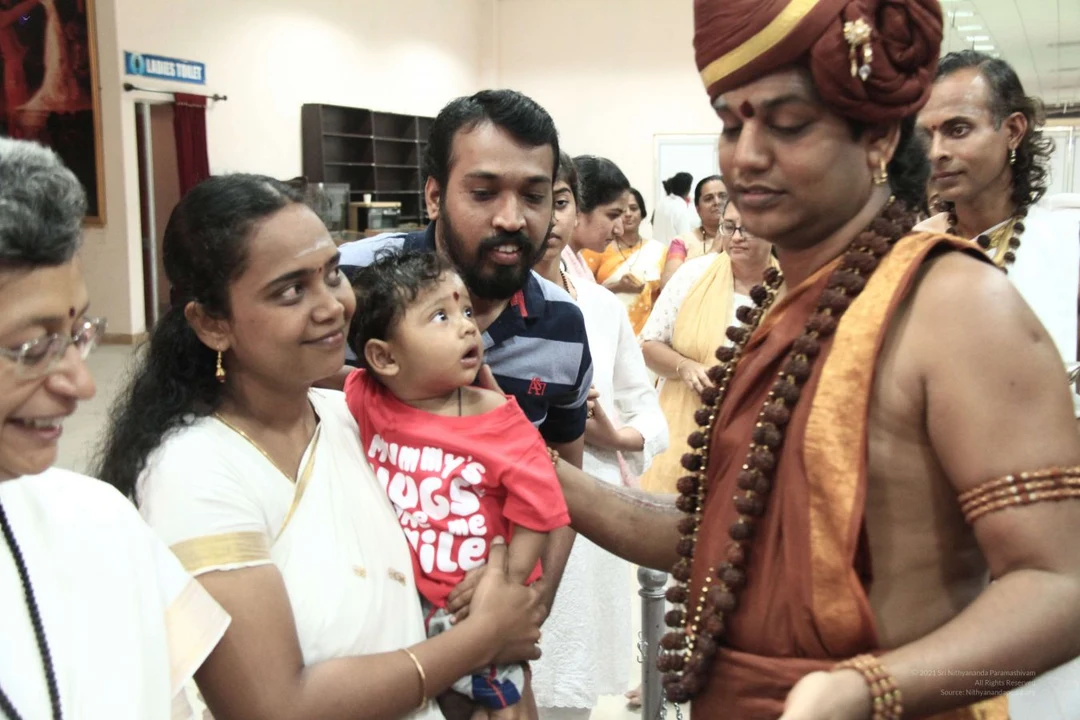
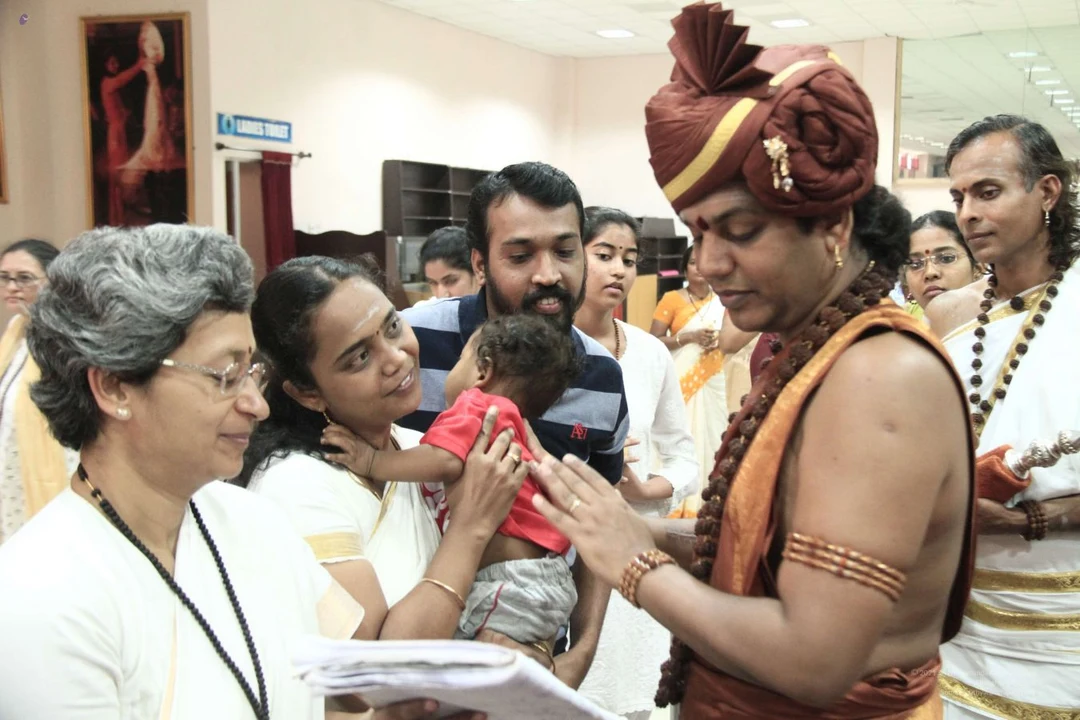
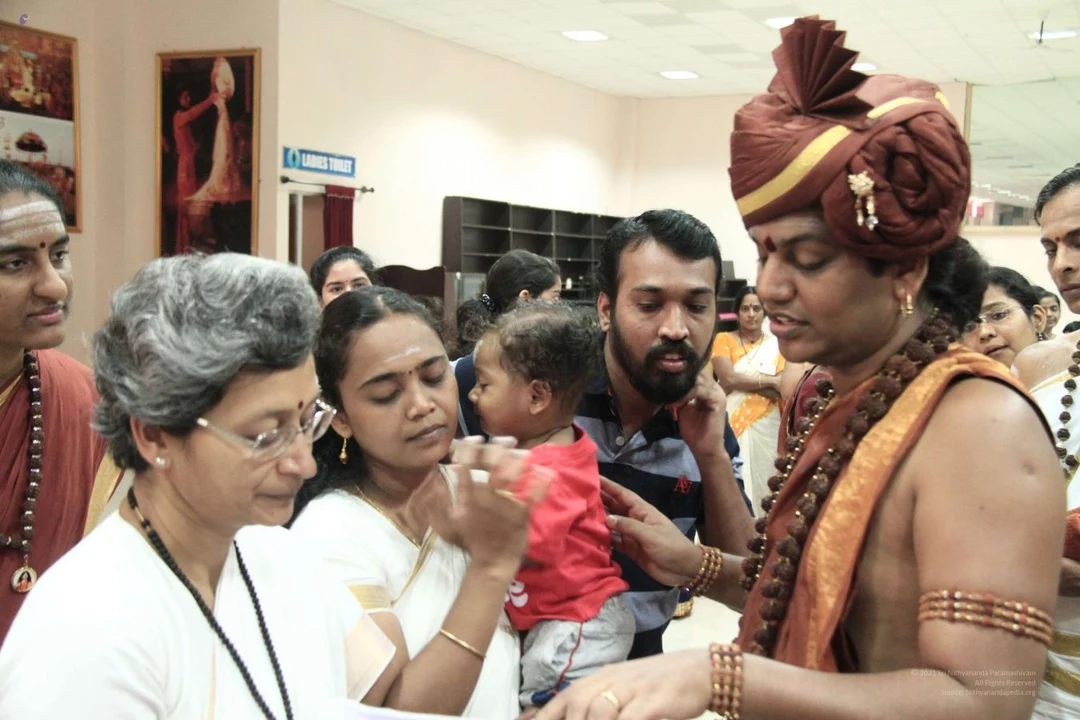
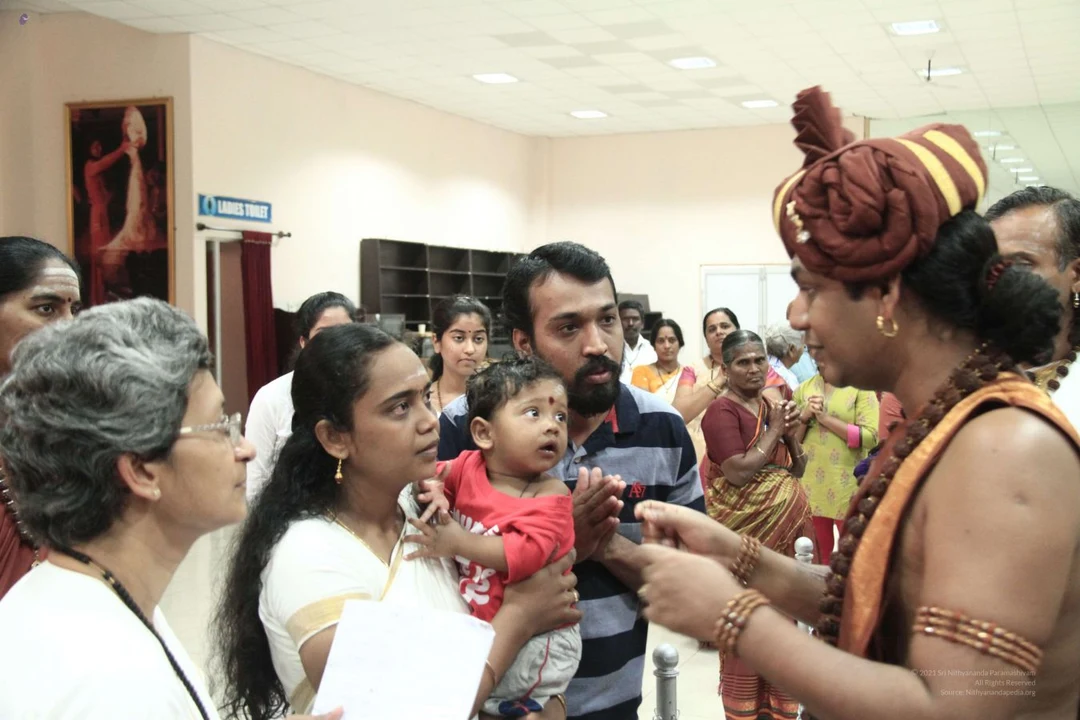
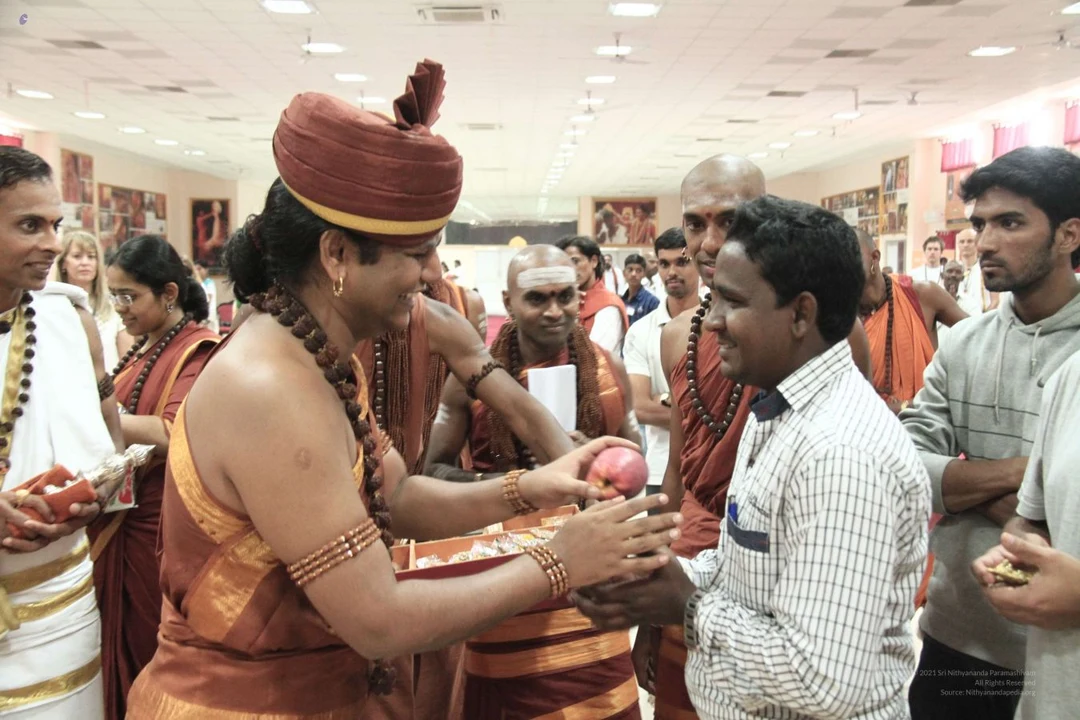
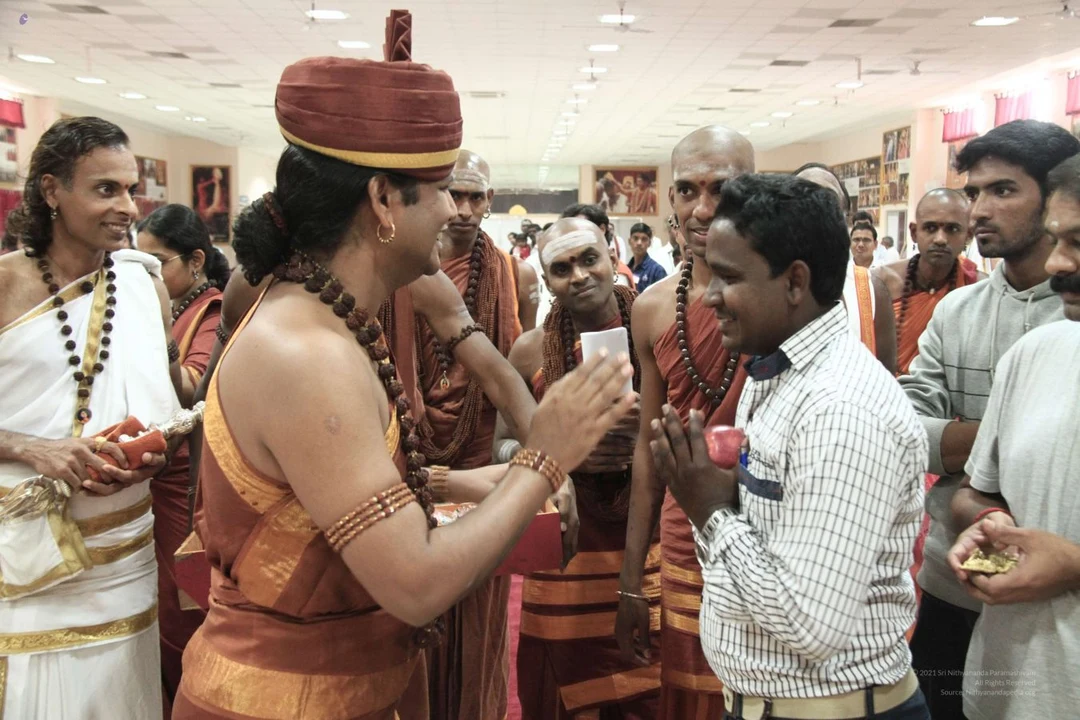
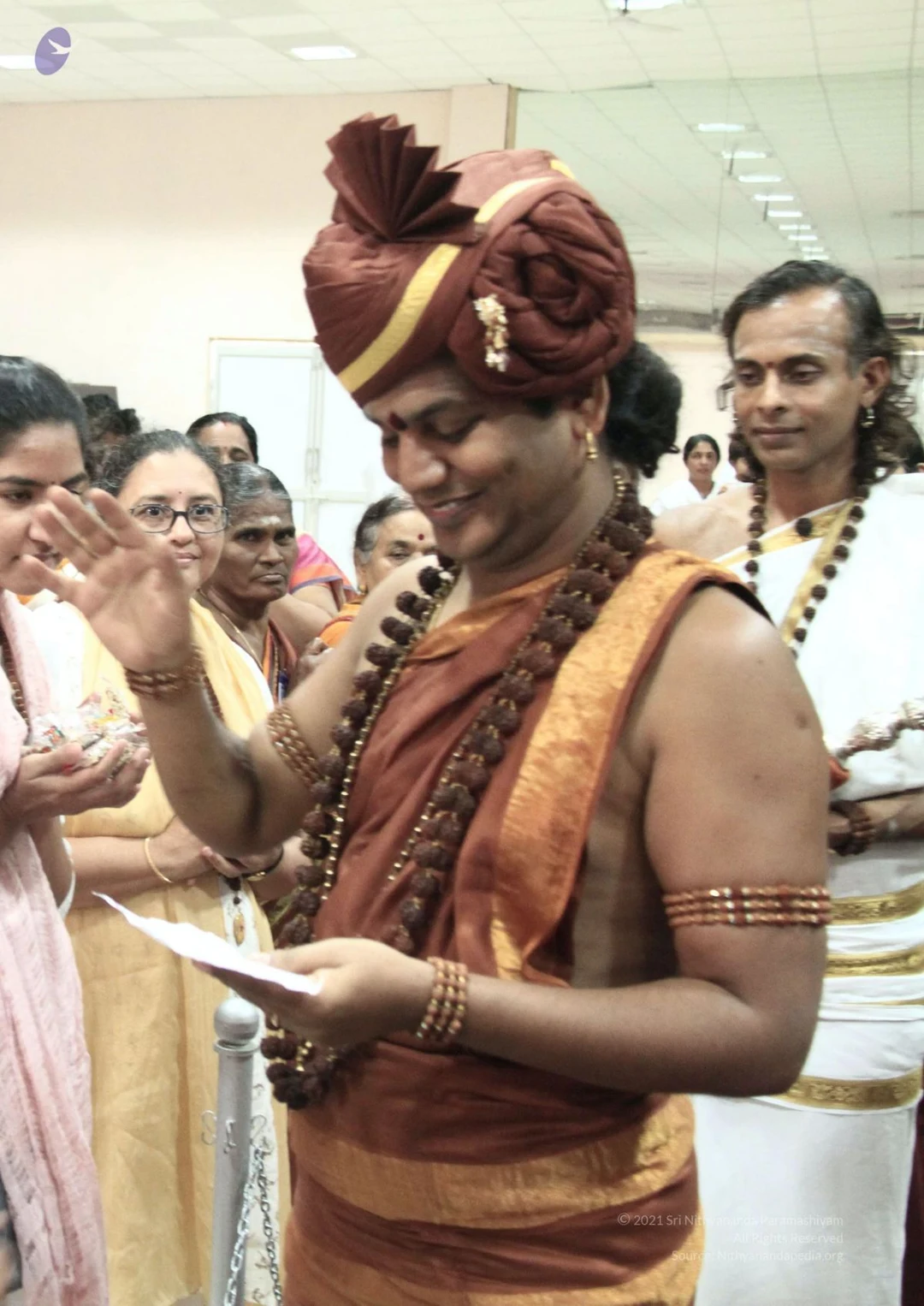
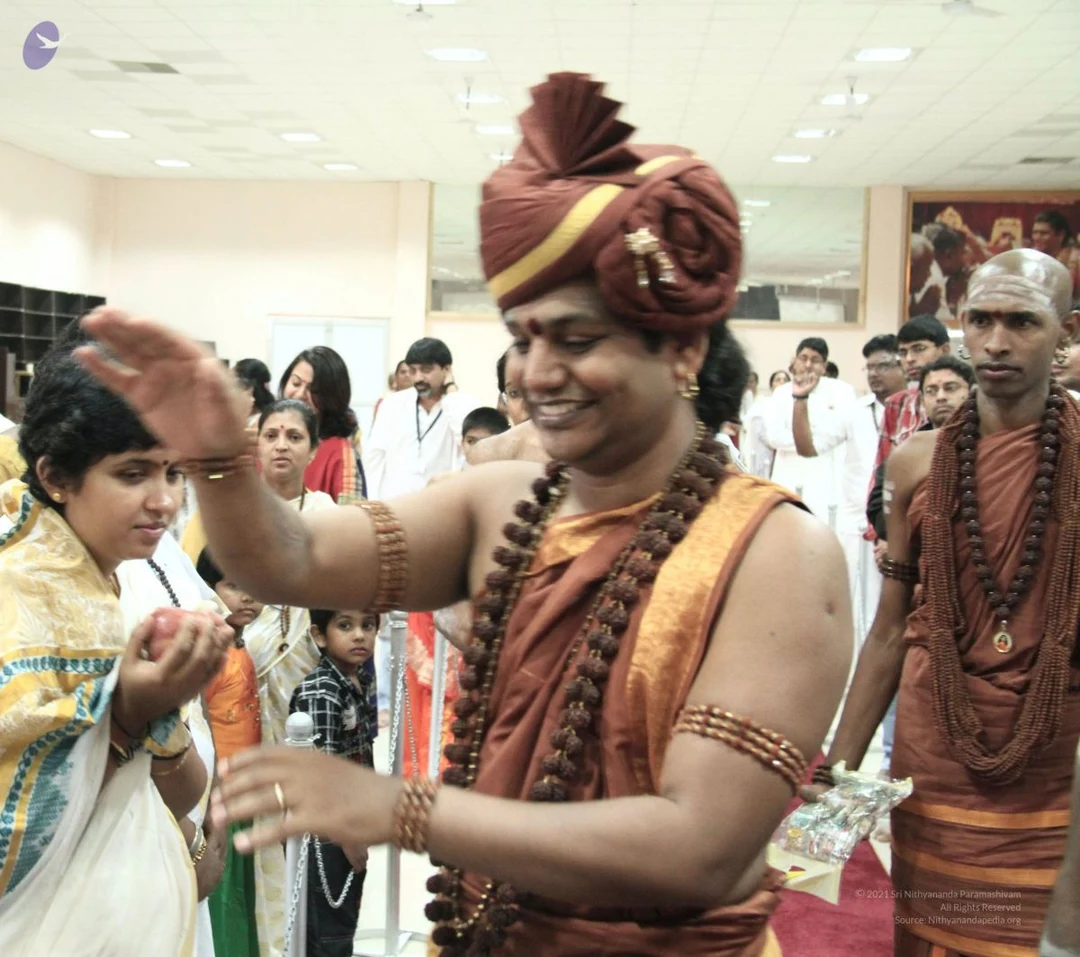
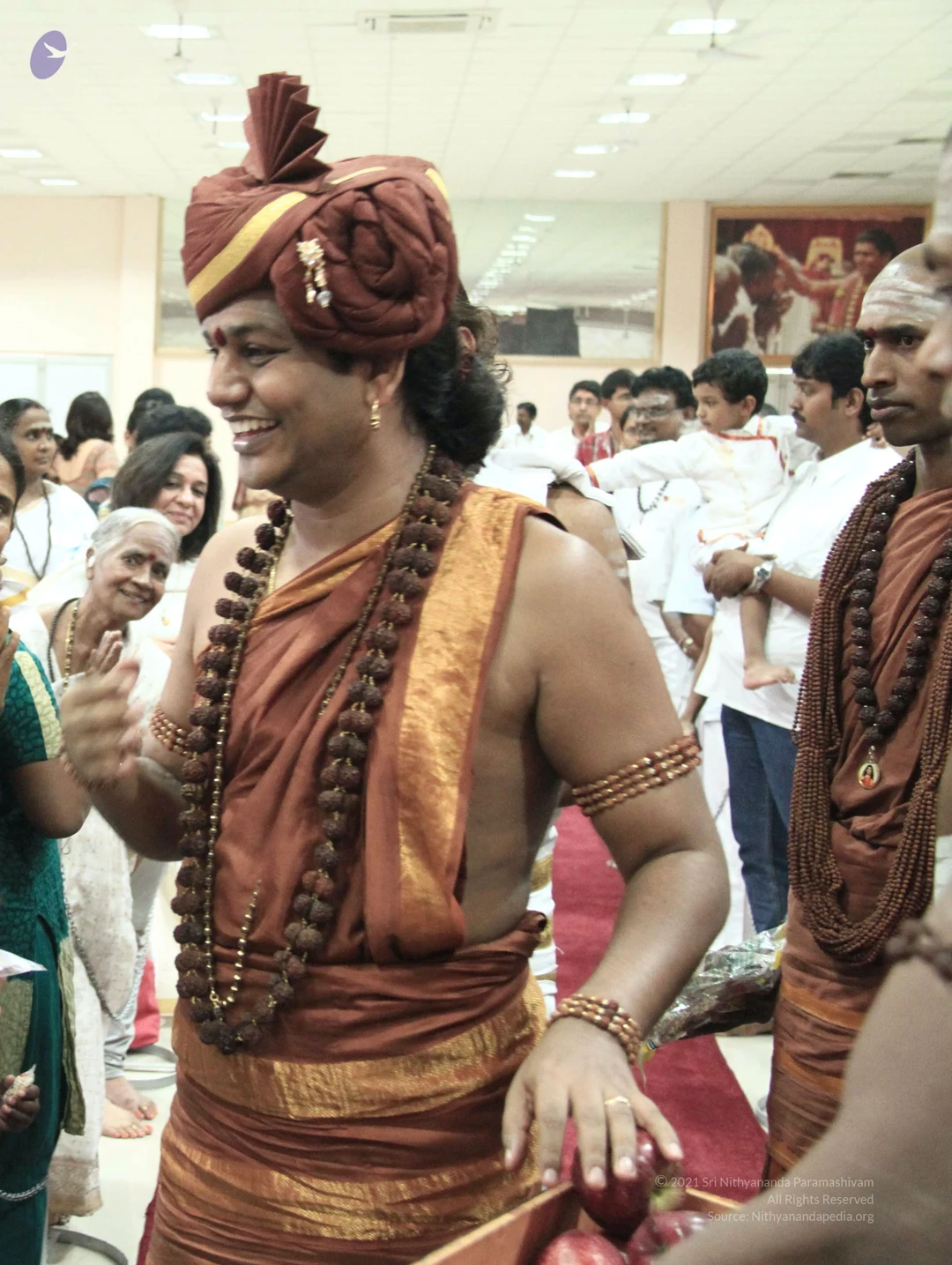
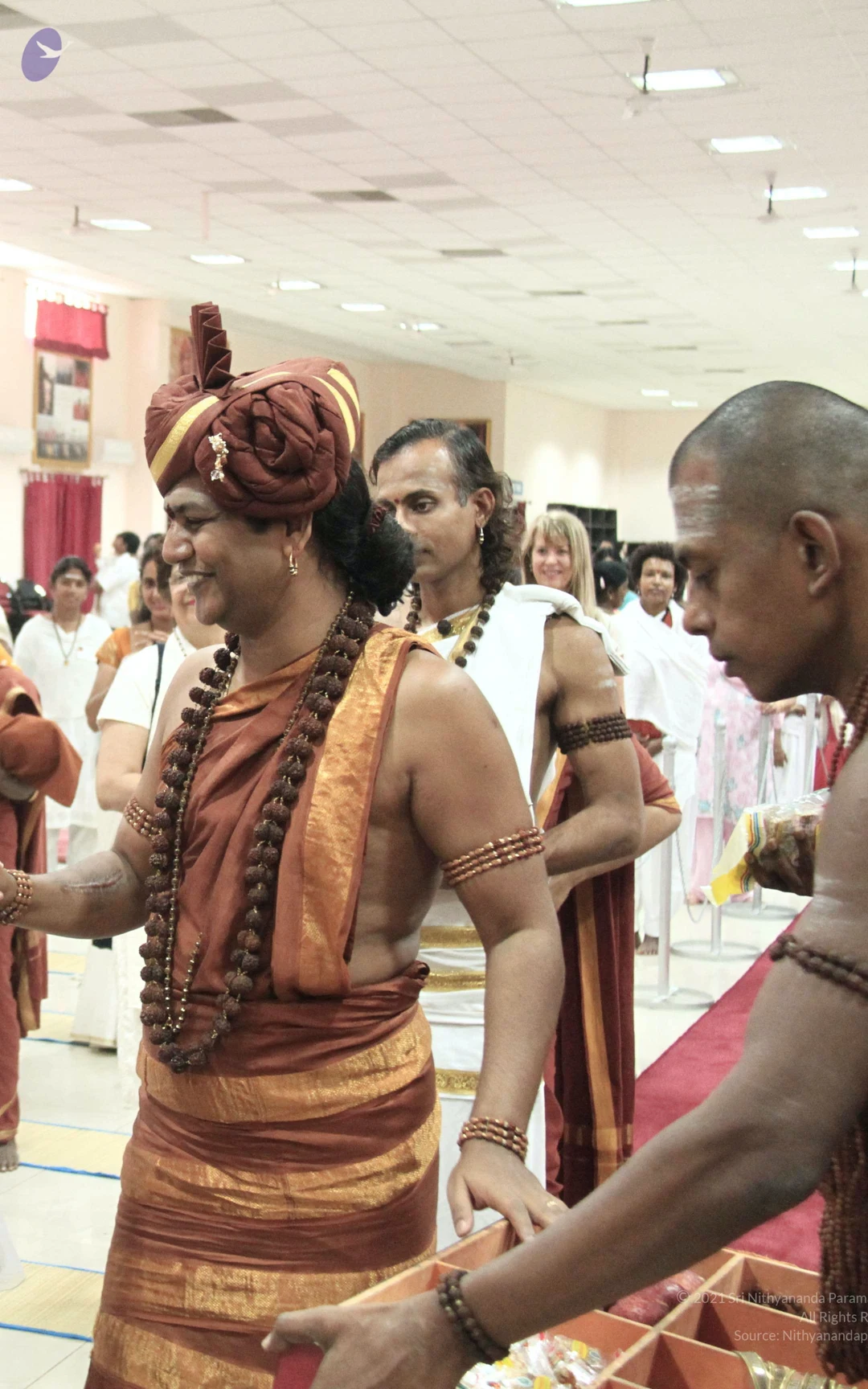
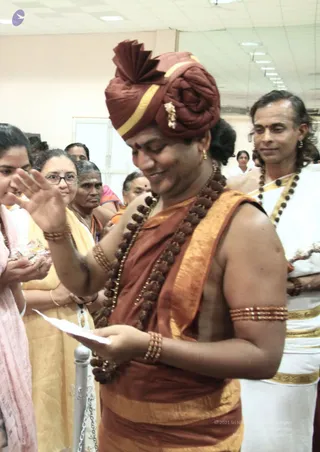
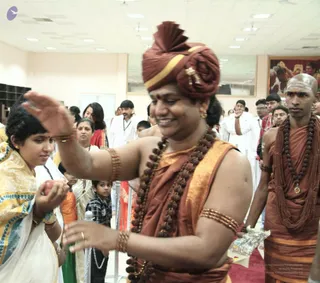
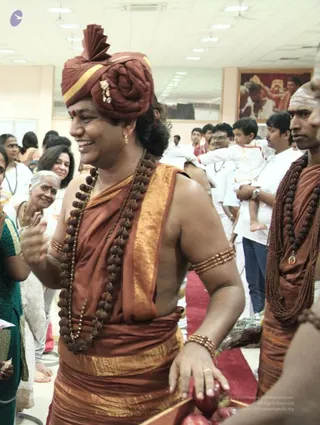
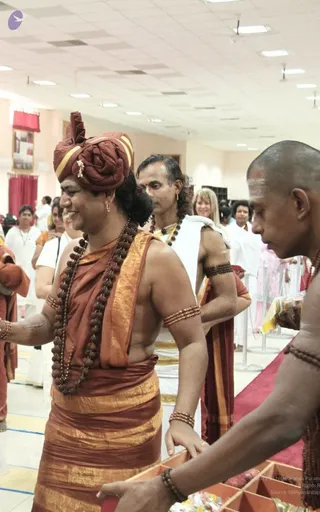
A man in a rust-red turban with a gold stripe and a gold pin, wearing a rust-red and gold-bordered shawl over bare shoulders and layered rudraksha malas, smiles while reading a sheet of paper held in his left hand and raising his right hand. Behind him, a man in white dhoti and shawl with gold borders and rudraksha beads stands beside a group of women in saris, one in yellow and one in pink, several holding small packets. The setting is an indoor hall with a ceiling of fluorescent lights and a metal railing in the foreground. Six or more people are visible in the scene.A photograph inside a bright indoor hall with a white ceiling and recessed lights. In the centre, a smiling man in a maroon-red turban with a gold-trimmed fold and a small gold ornament wears an orange-brown robe with a gold border, layered rudraksha malas and beaded bangles, and raises one hand in greeting. Beside him, a bald man in a rust-brown robe and layered rudraksha necklaces stands with a serious expression. On the left, a woman in a cream and gold-bordered sari holds a red apple. Behind them, devotees in white and saffron clothing stand among a crowd, with a framed painting on the far wall and a red carpet on the floor at right.A smiling man in a rust-brown turban with a gold-edged fan-shaped fold and gold ornament, wearing rust-brown and gold-bordered saffron-toned drapes, multiple rudraksha malas across the chest and arms, and rudraksha bracelets, walks through an indoor hall while touching a tray of red fruit. Behind him, devotees in white and green clothing stand and clap; a child in white is held by a man in white. A large framed painting of a ritual scene hangs on the wall. The turban, rudraksha malas and saffron-toned drapes are visible cues for a sannyasi presentation, and the page identifies this event as Swamiji's, so the figure is a probable Swamiji (probable).Indoor photo in a bright hall with a red carpet and ceiling lights. In the foreground a smiling man wears a rust-brown and gold turban with a fan-pleated ornament, bare-chested with a gold-bordered rust wrap, multiple rudraksha malas and rudraksha bracelets, and gold earrings. Beside him a man in white with a rudraksha mala and armband stands near a woman in white. At right a shaved-headed man in rudraksha beads holds a wooden tray of offerings, possibly fruit and sweets. Devotees in white and pastel clothing stand in the background near red curtains and a framed picture on the wall.