Skip to content
Saturday

23 November 2013

The Supreme Pontiff of Hinduism (SPH), JagatGuru MahaSannidhanam (JGM) Bhagavan Kailasa's Sri Nithyananda Paramashivam

Dated photos
135
Source pages
1
Media
2
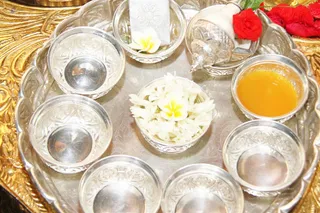
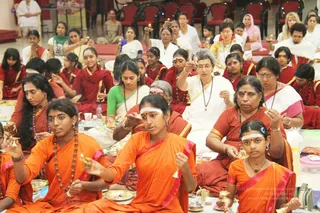
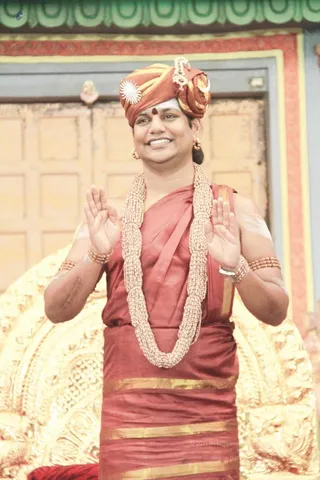
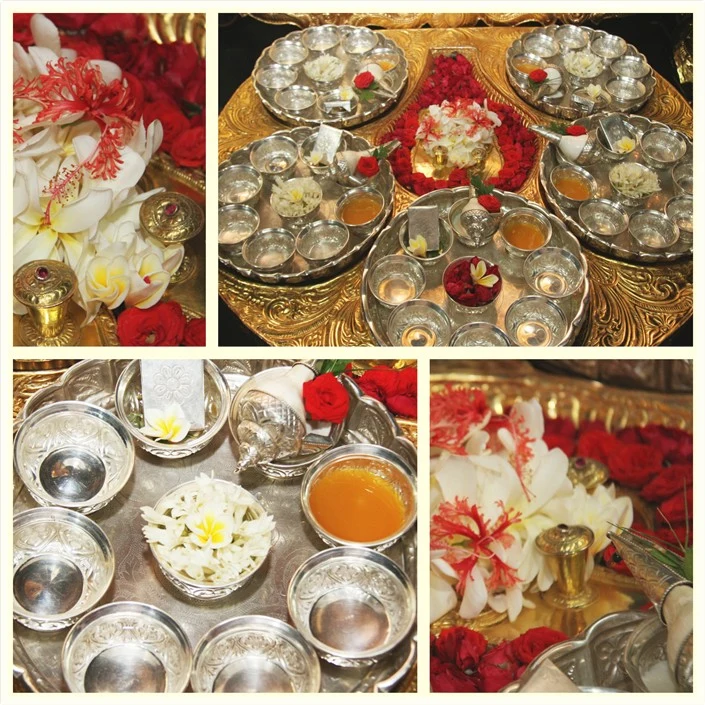
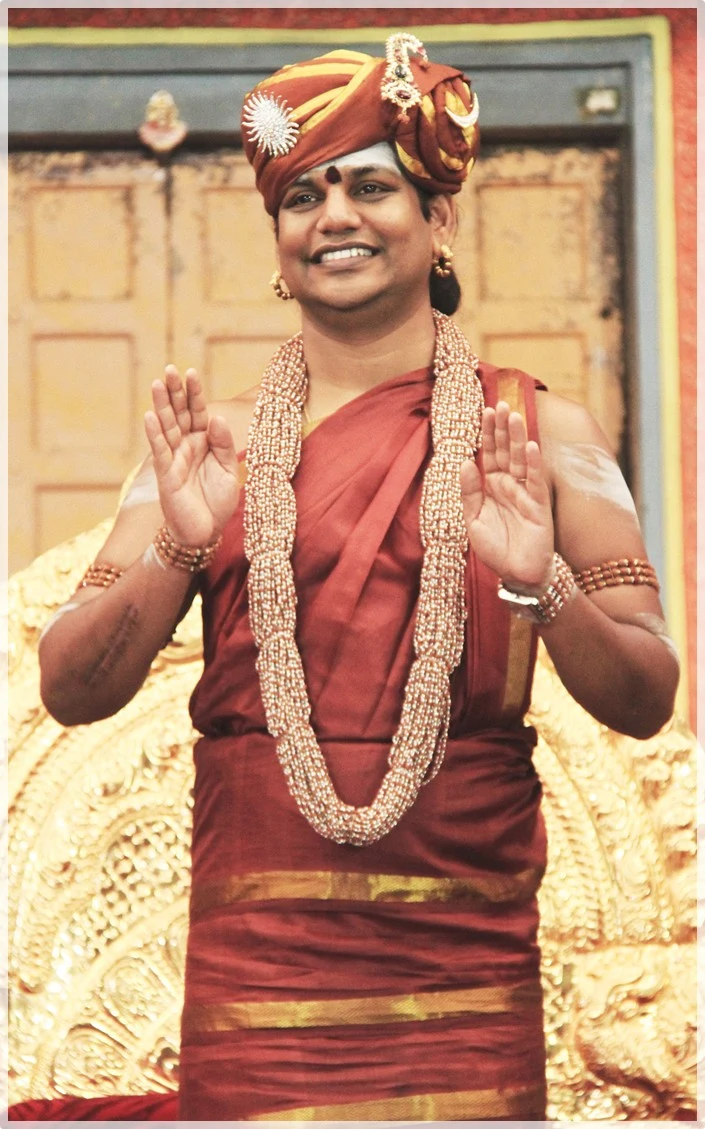
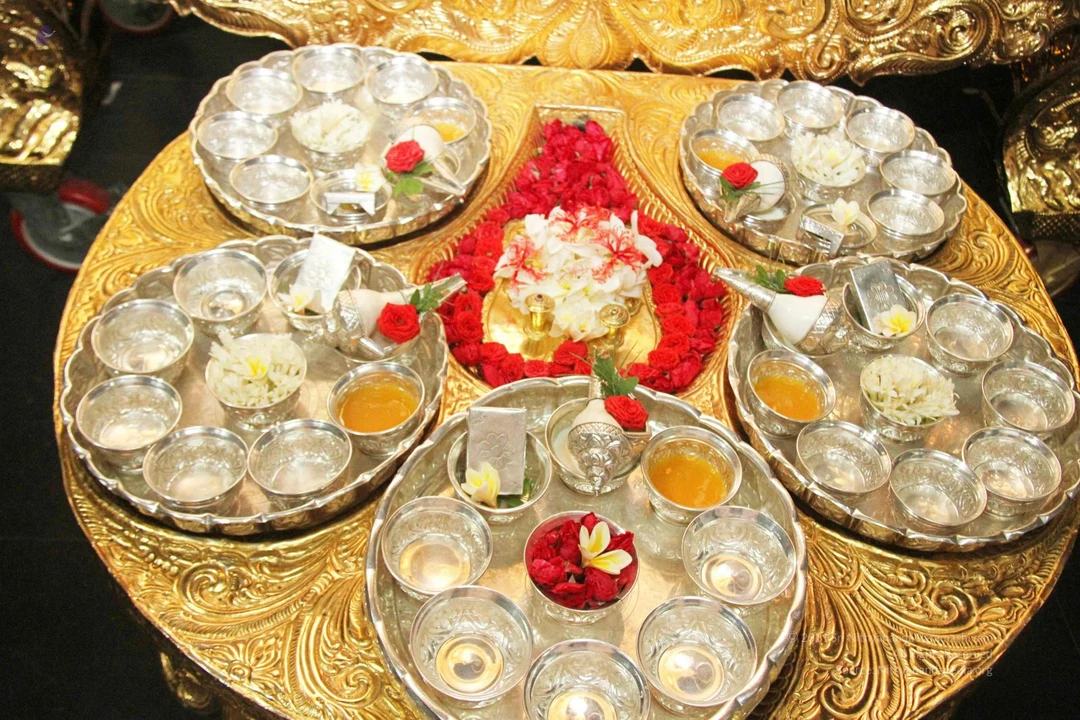
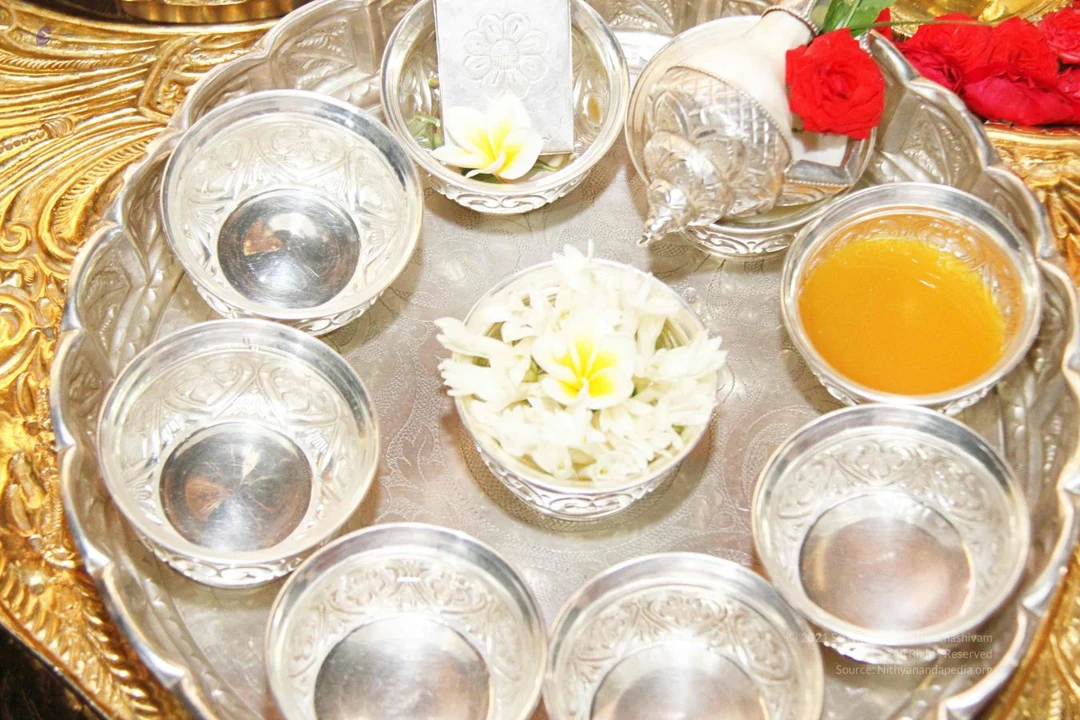
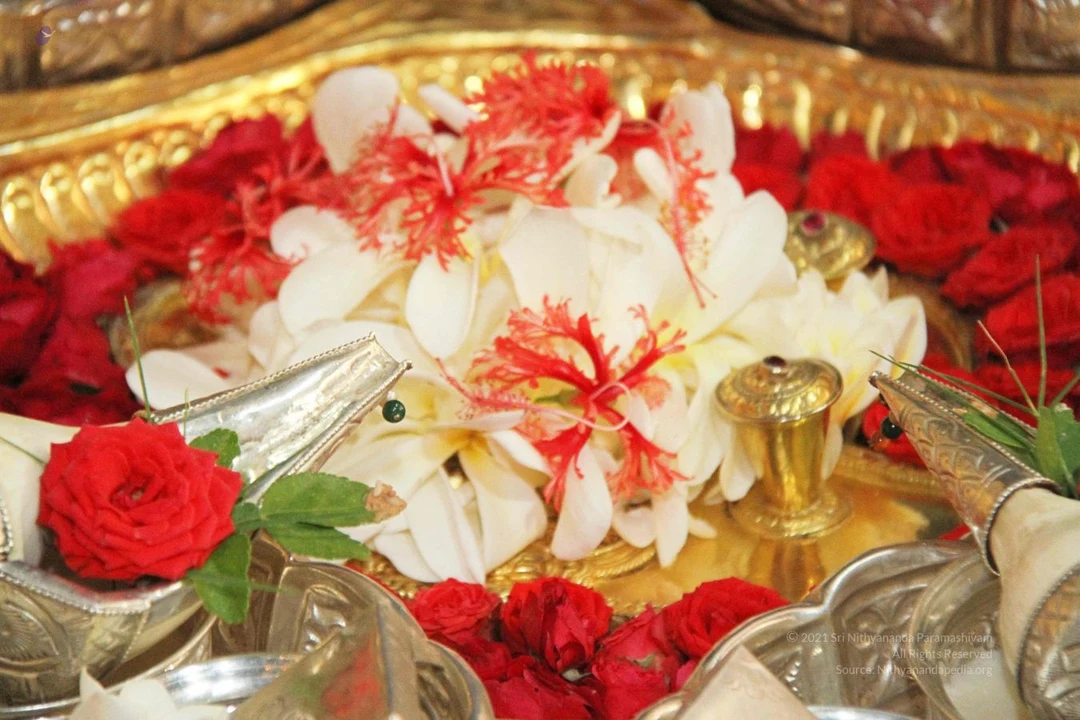
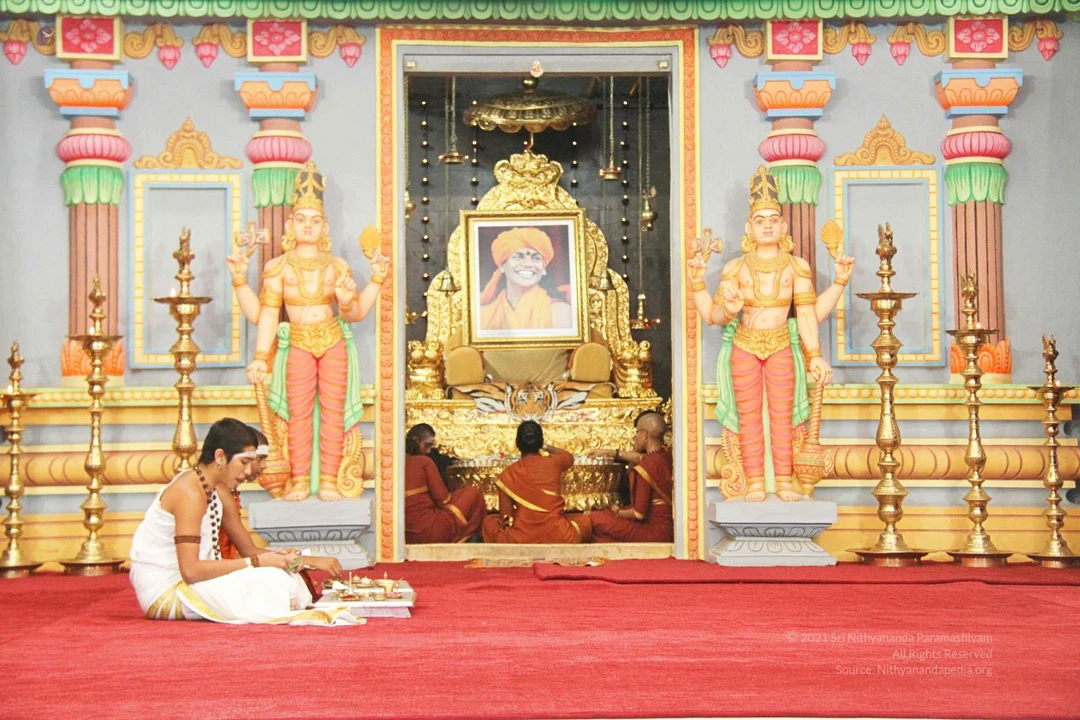
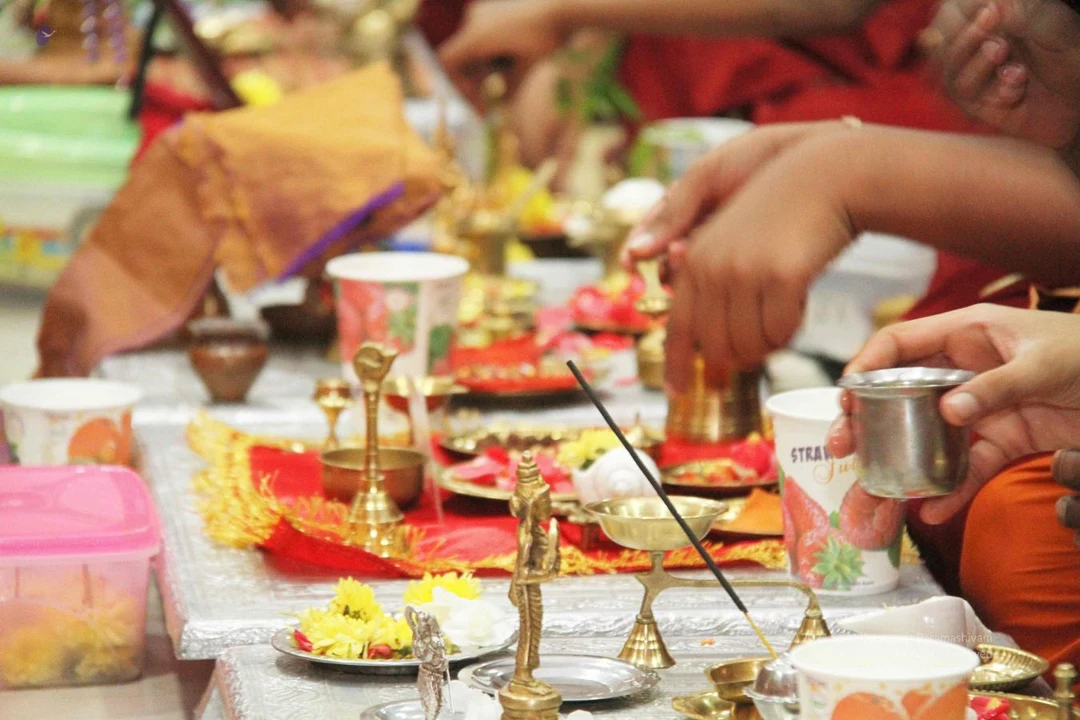
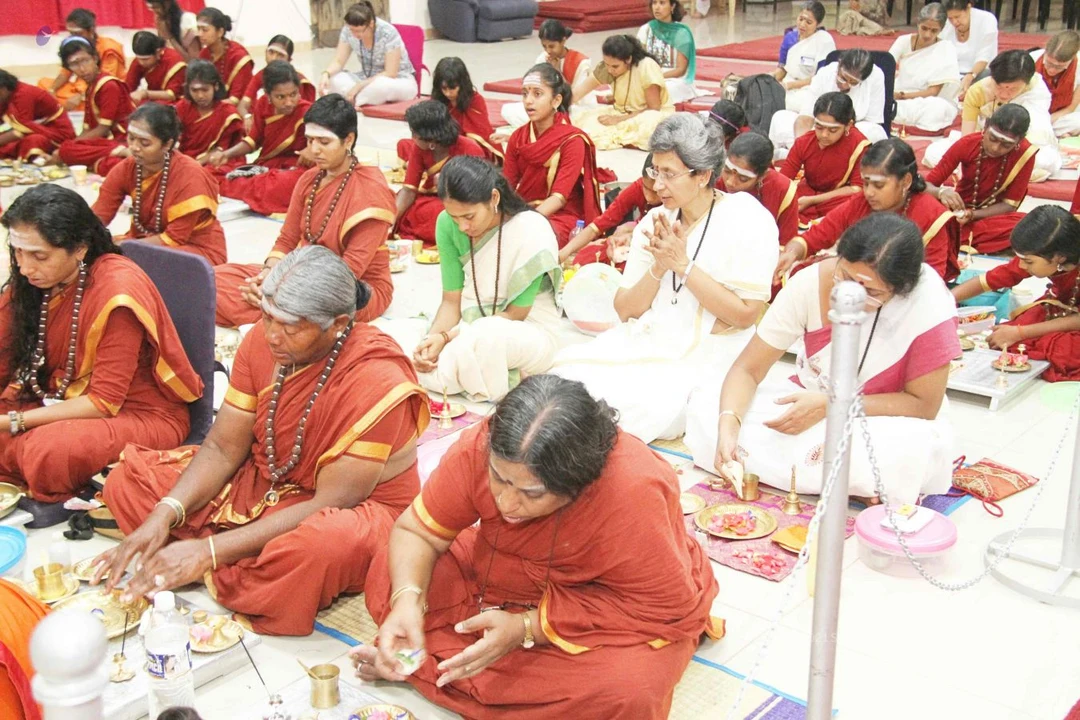
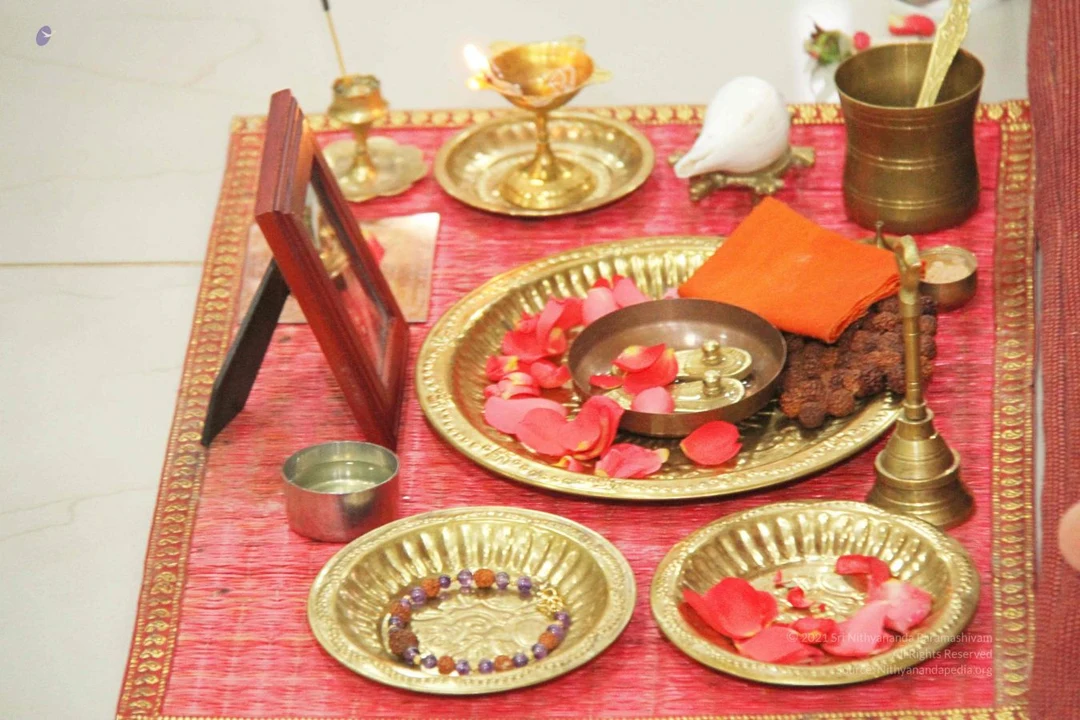
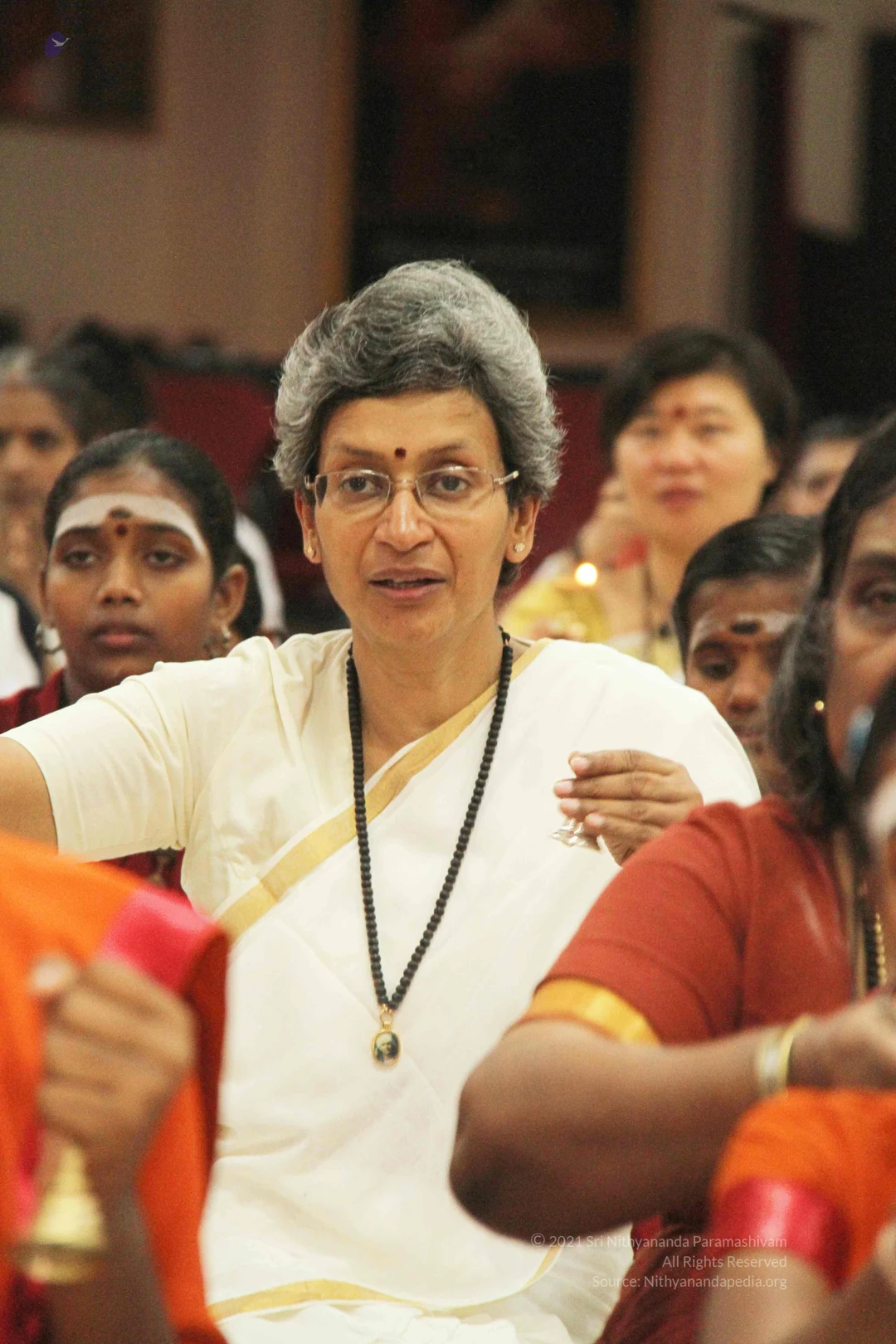
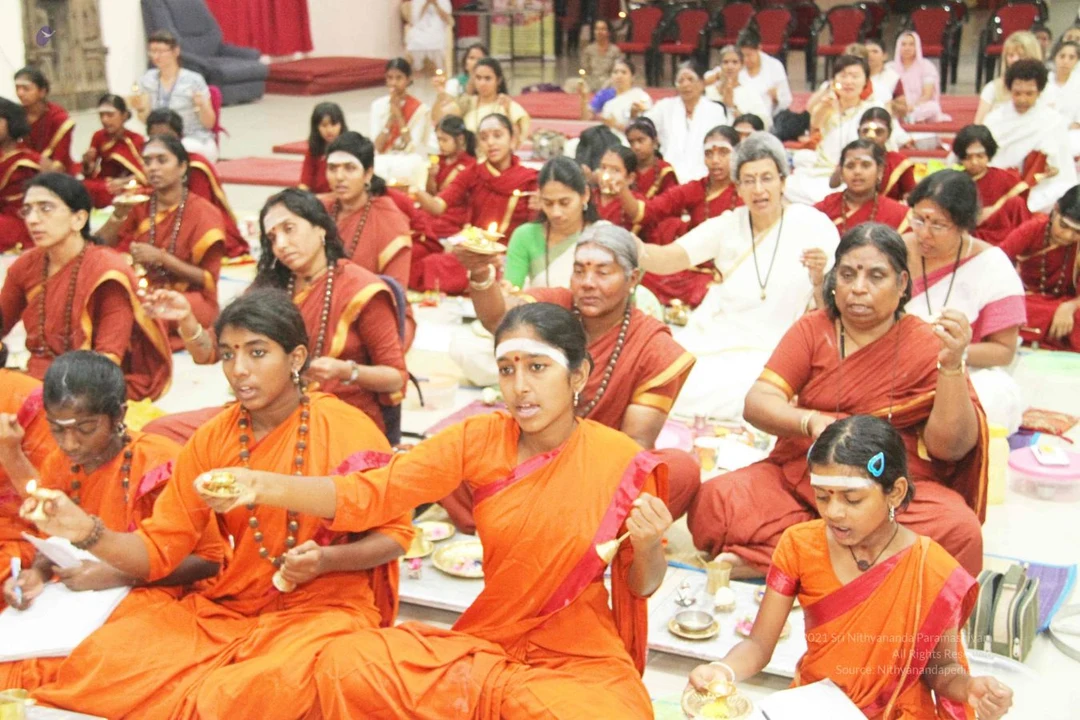
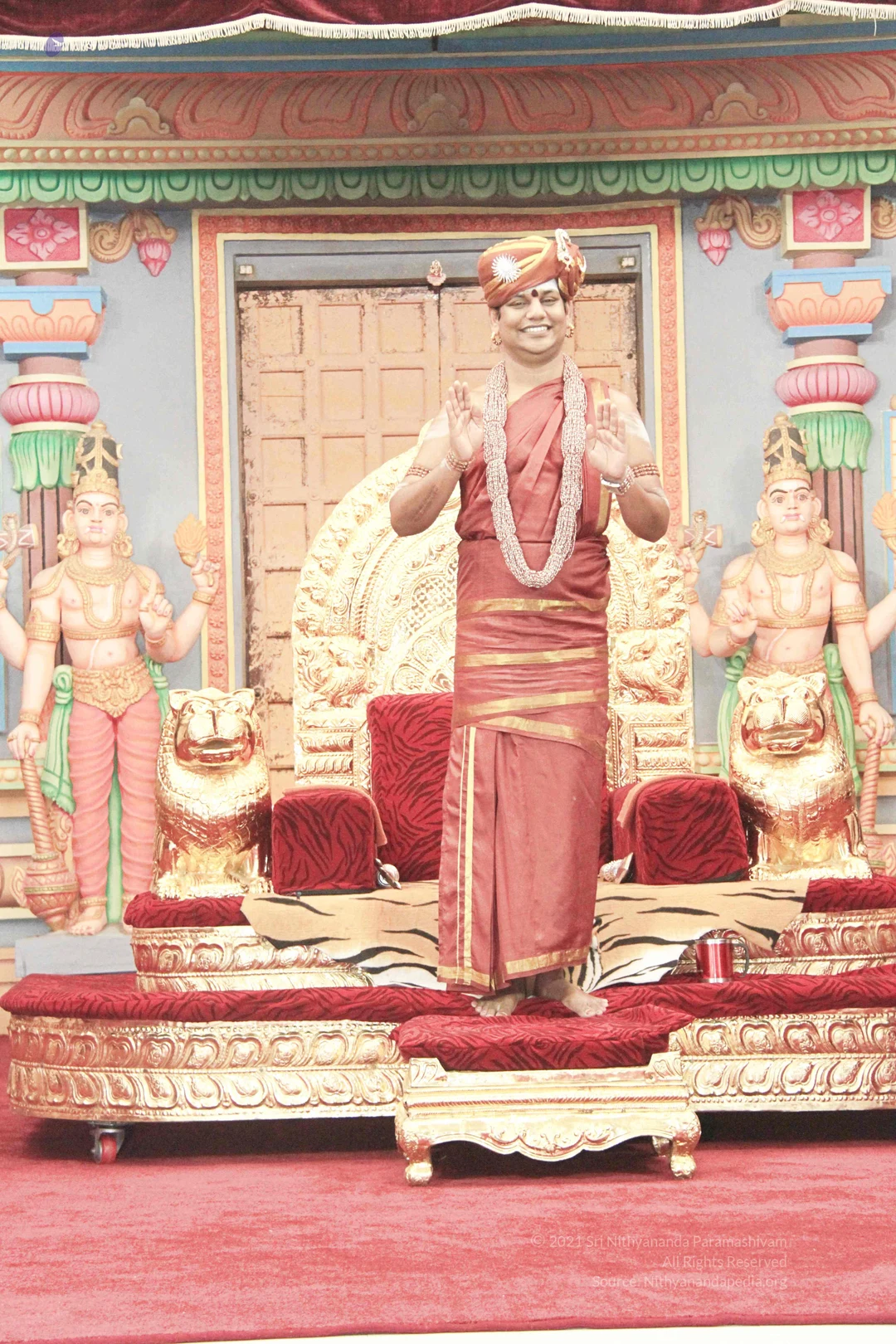
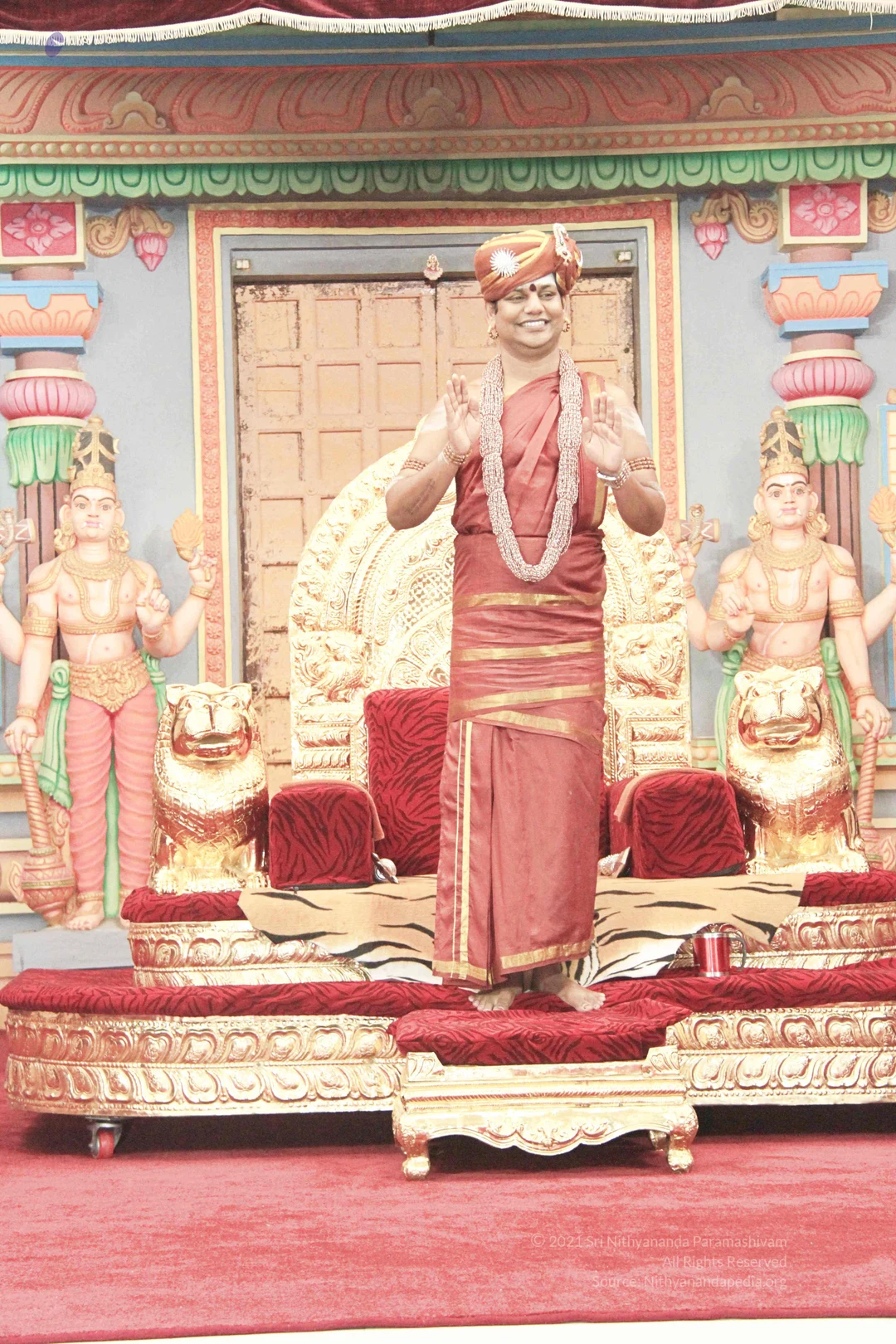
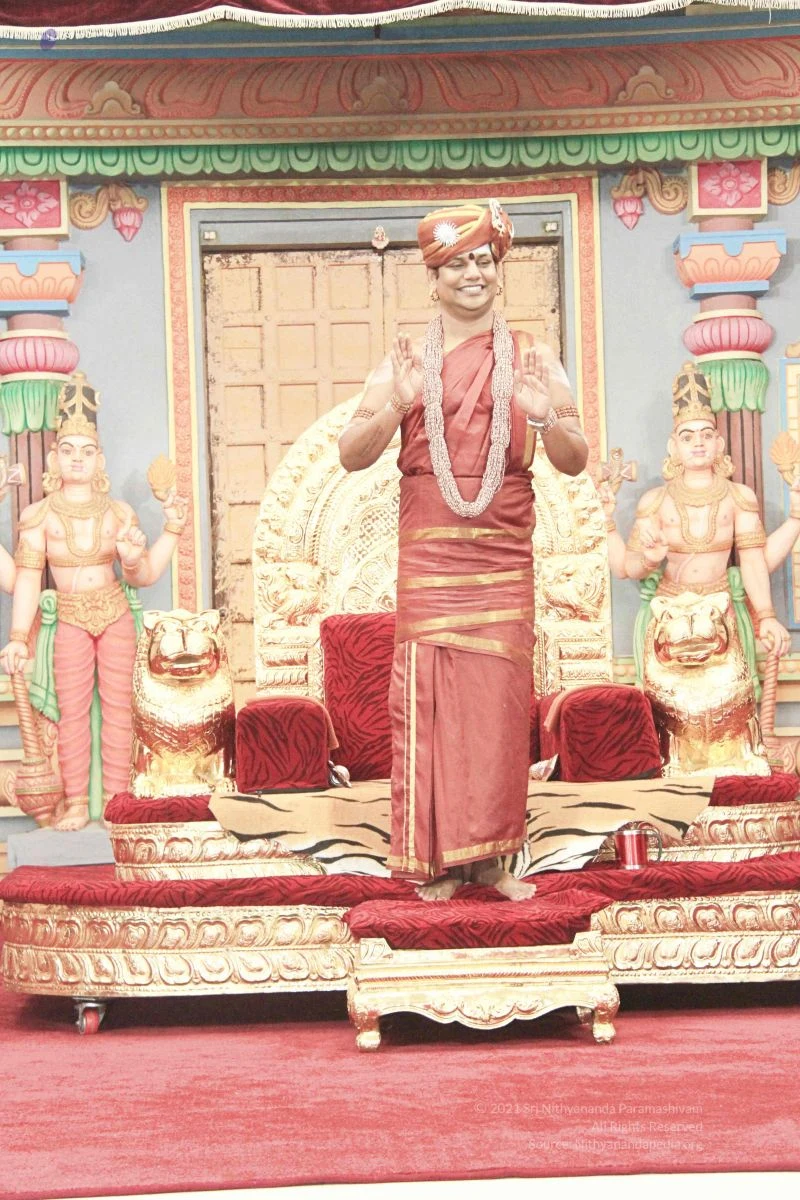
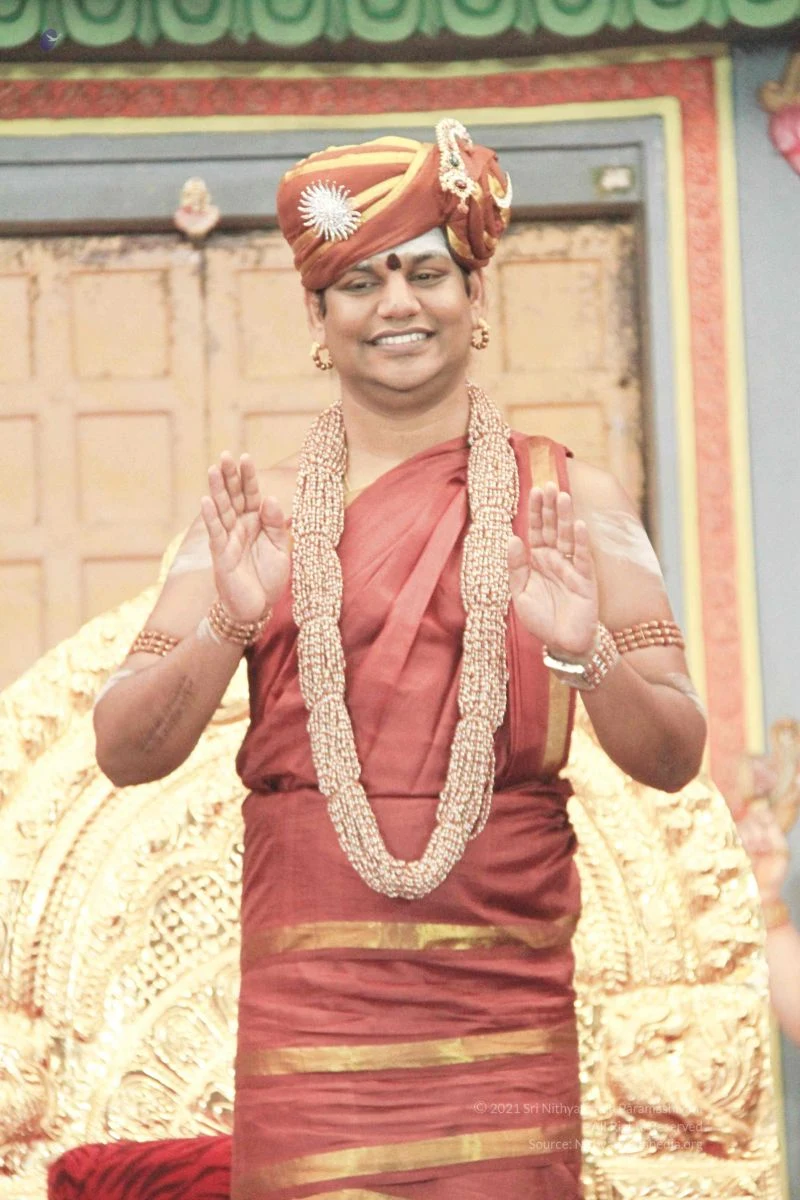
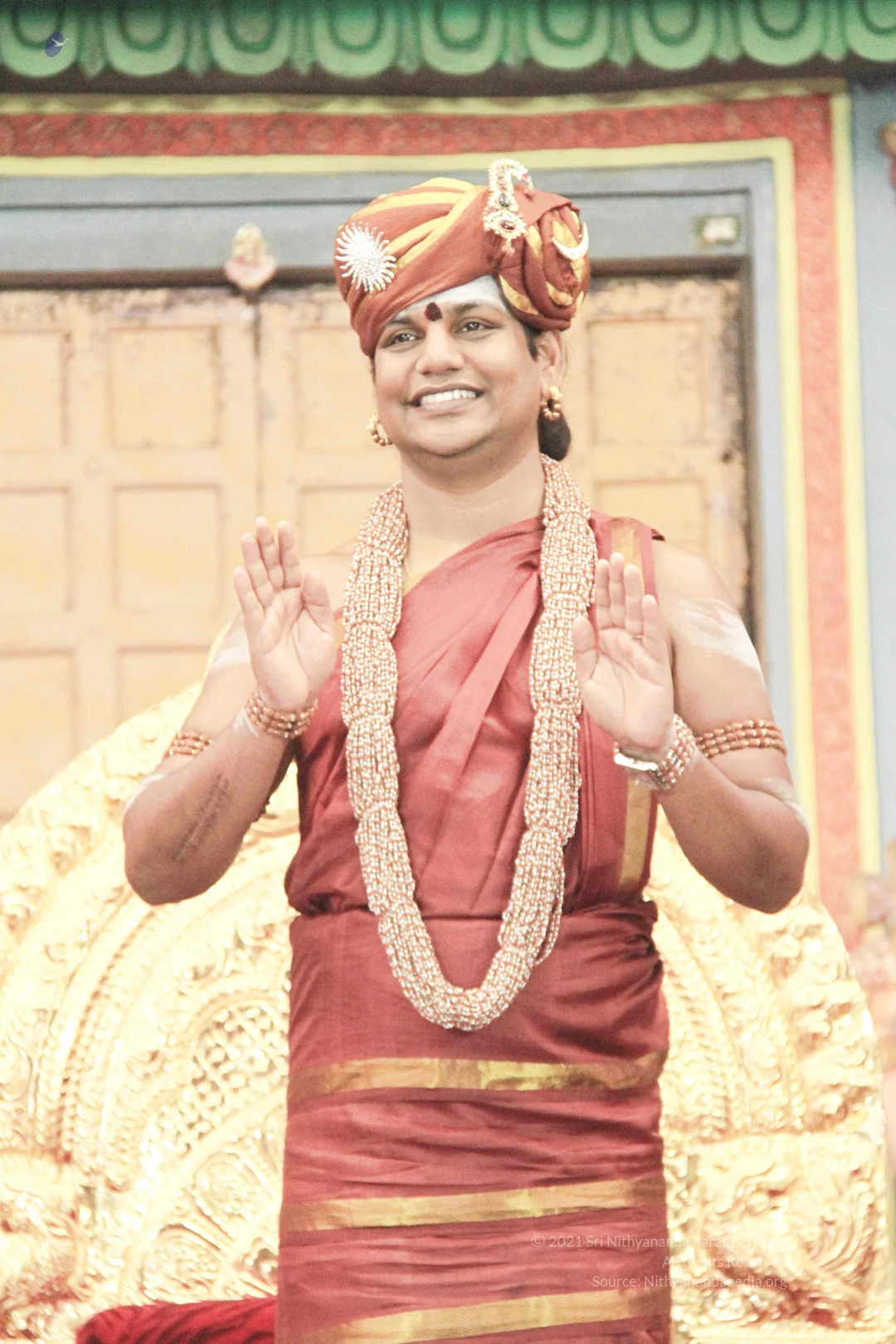
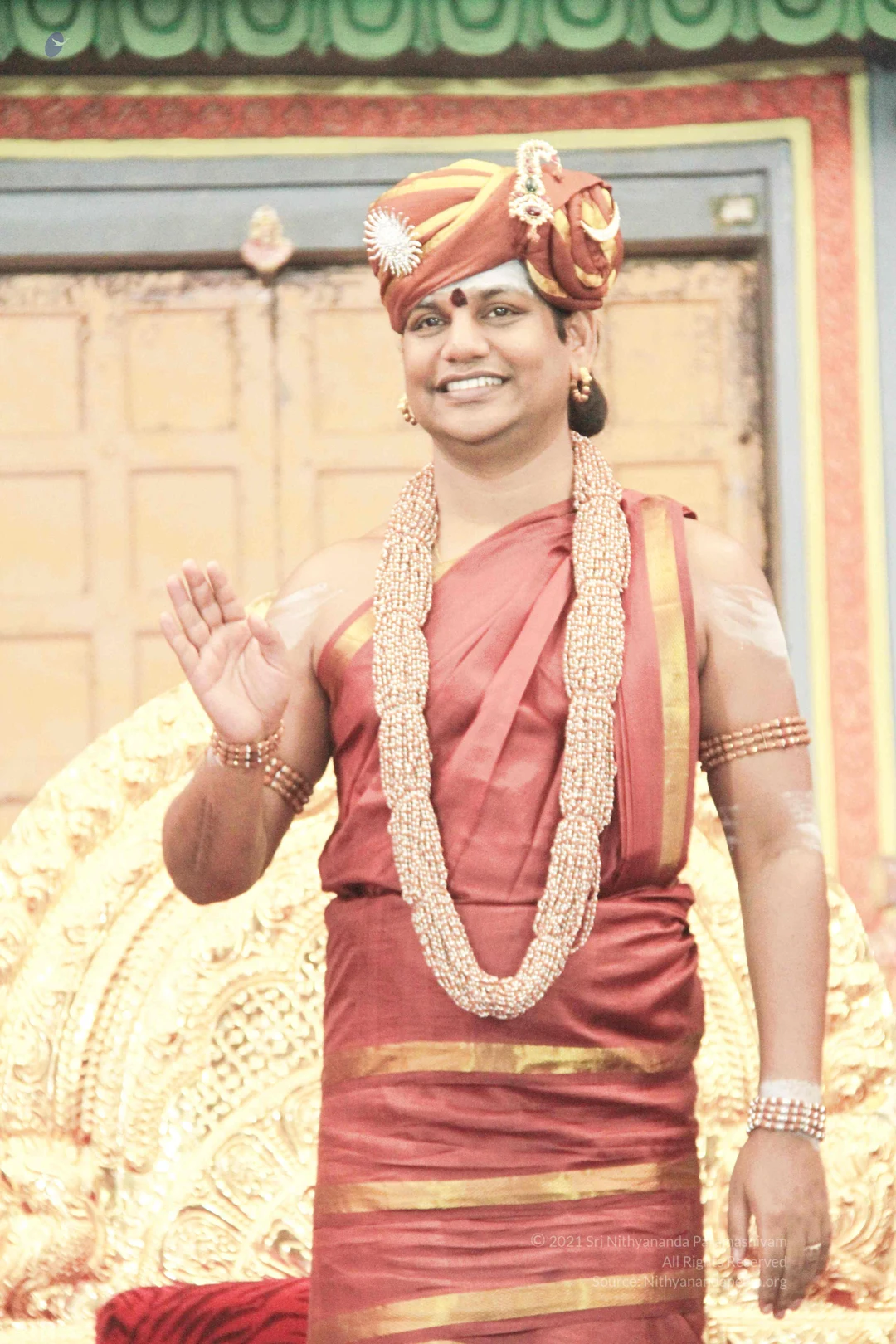
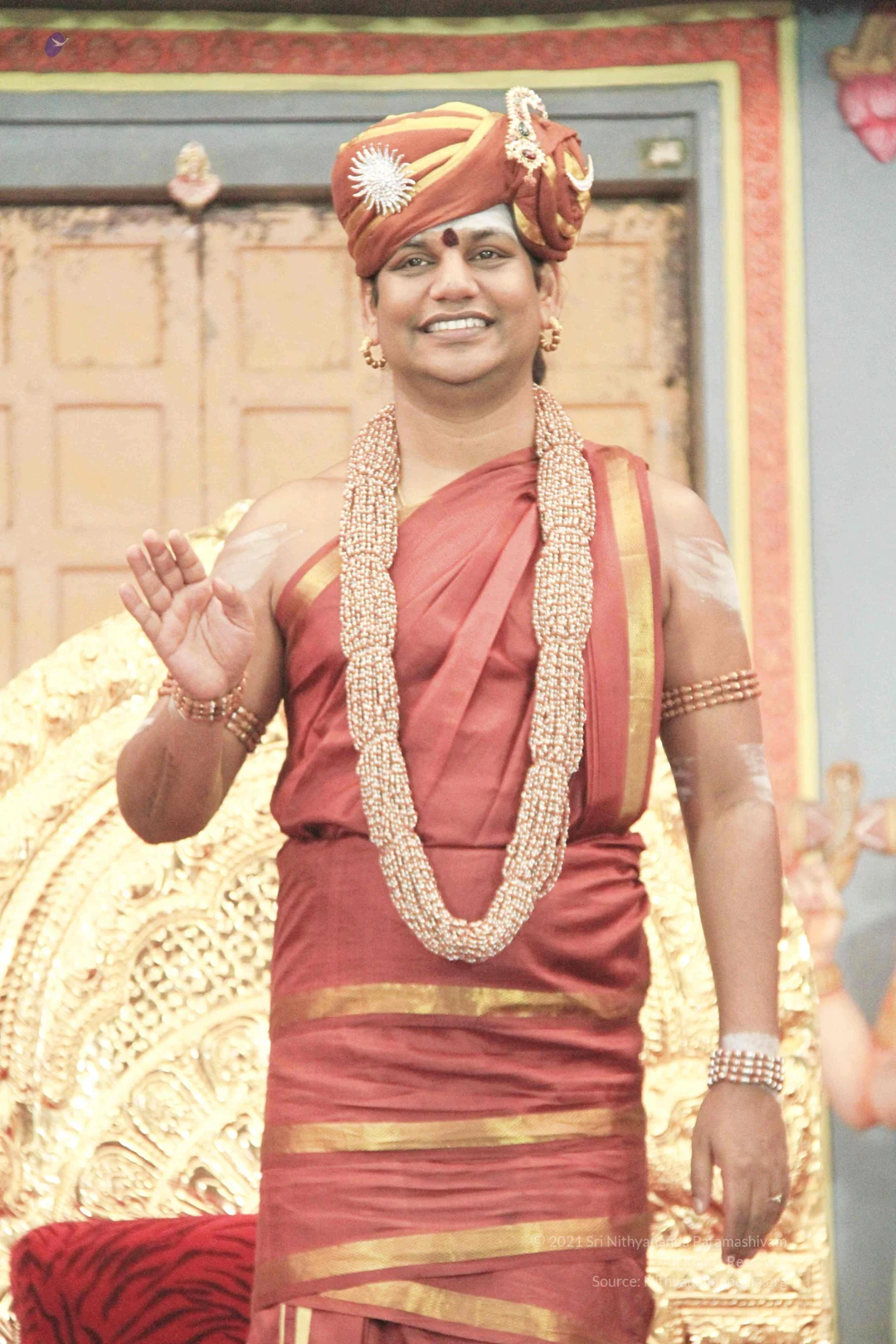
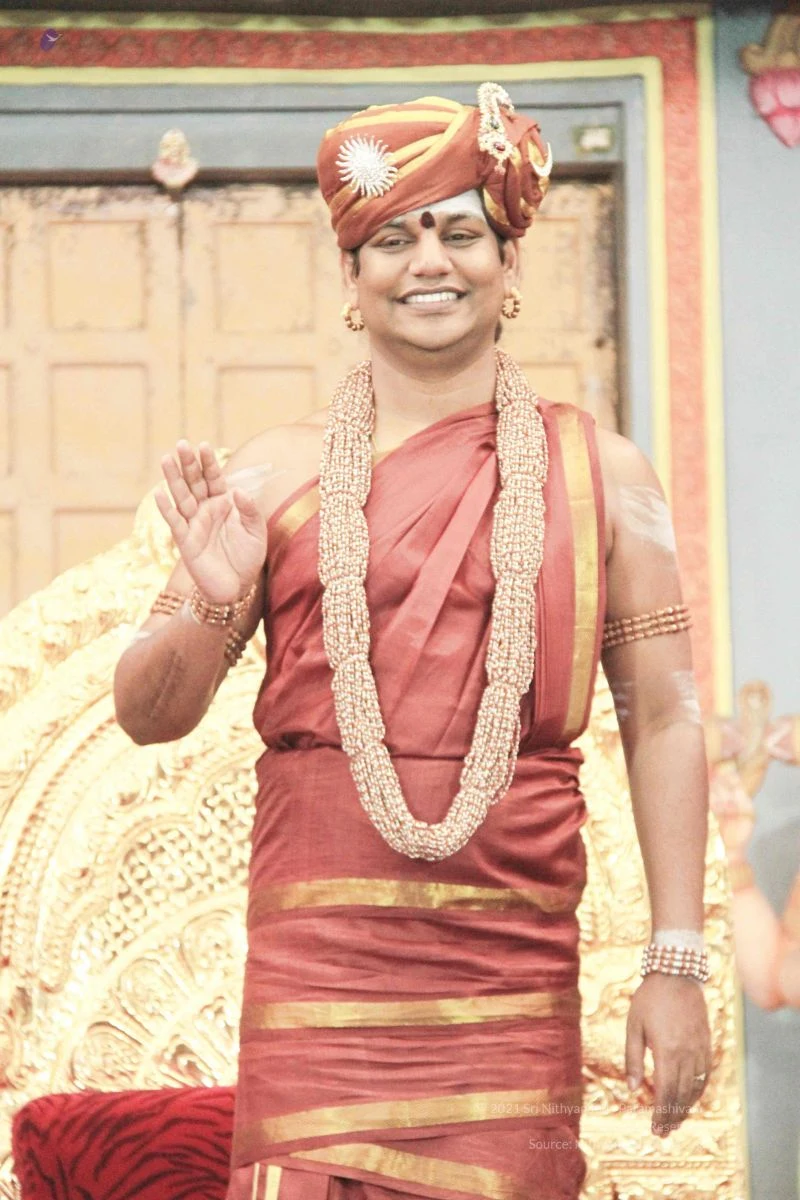
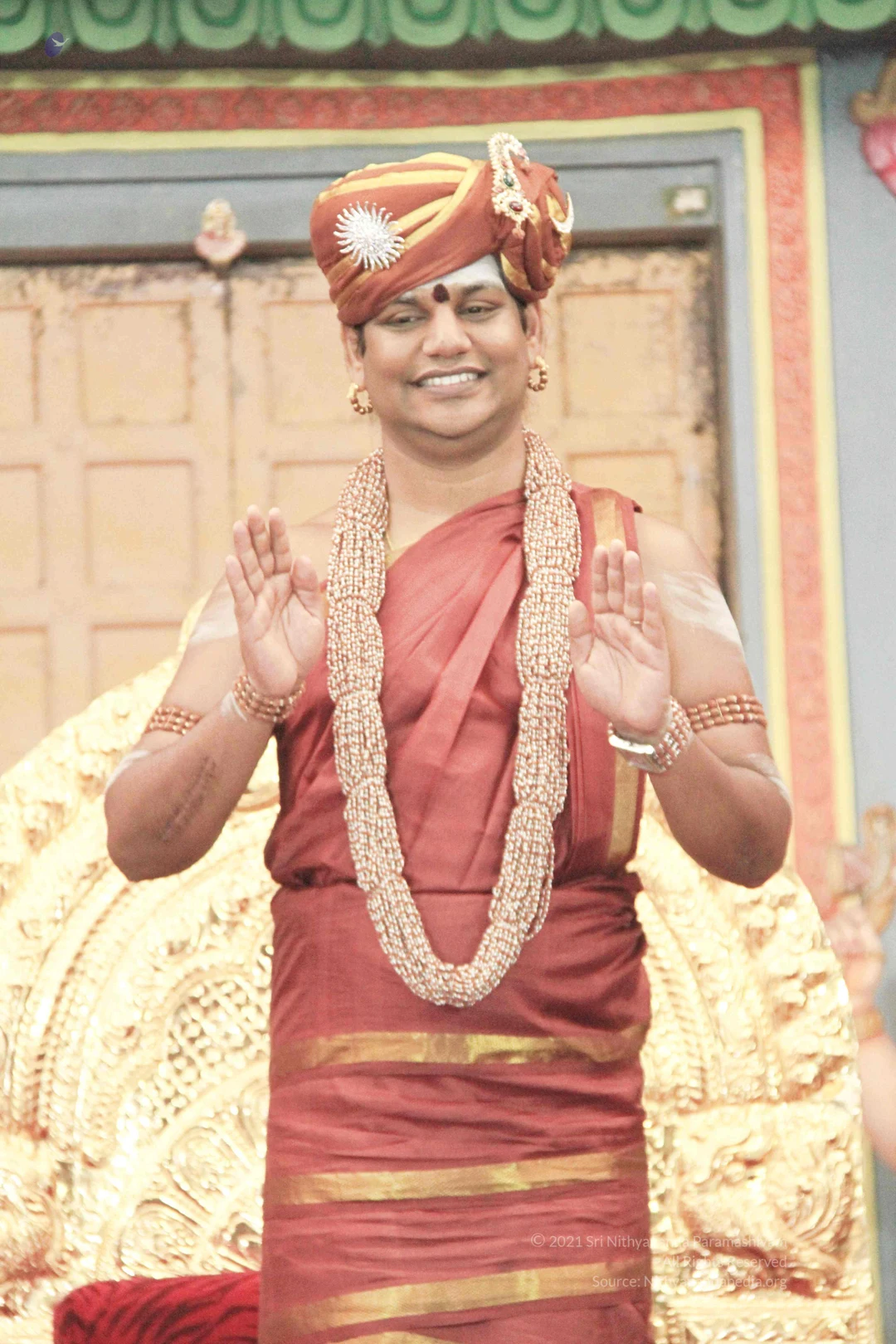
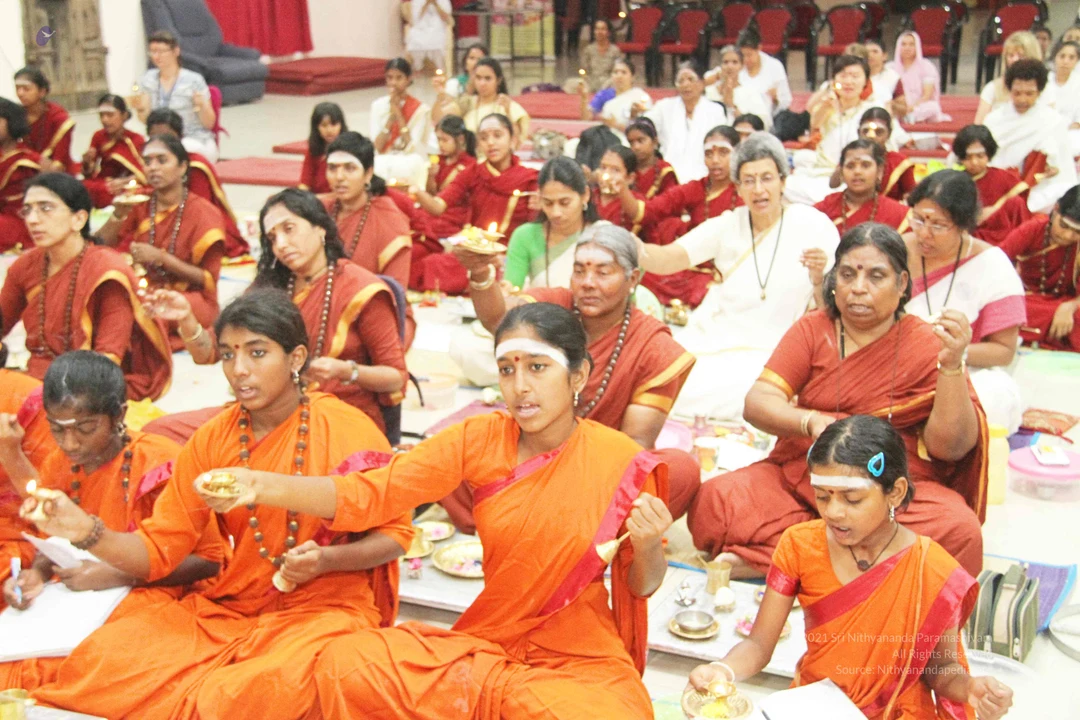
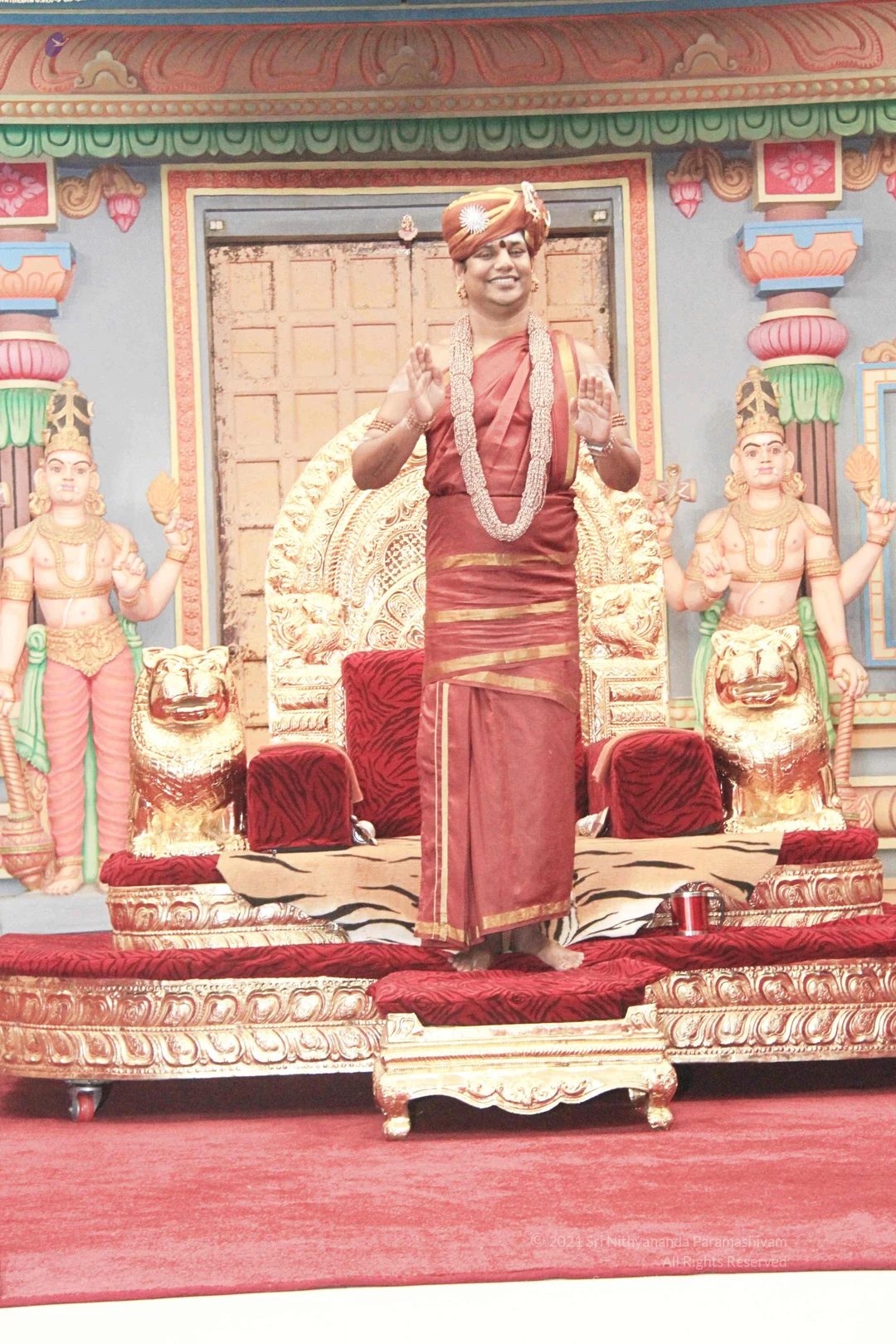
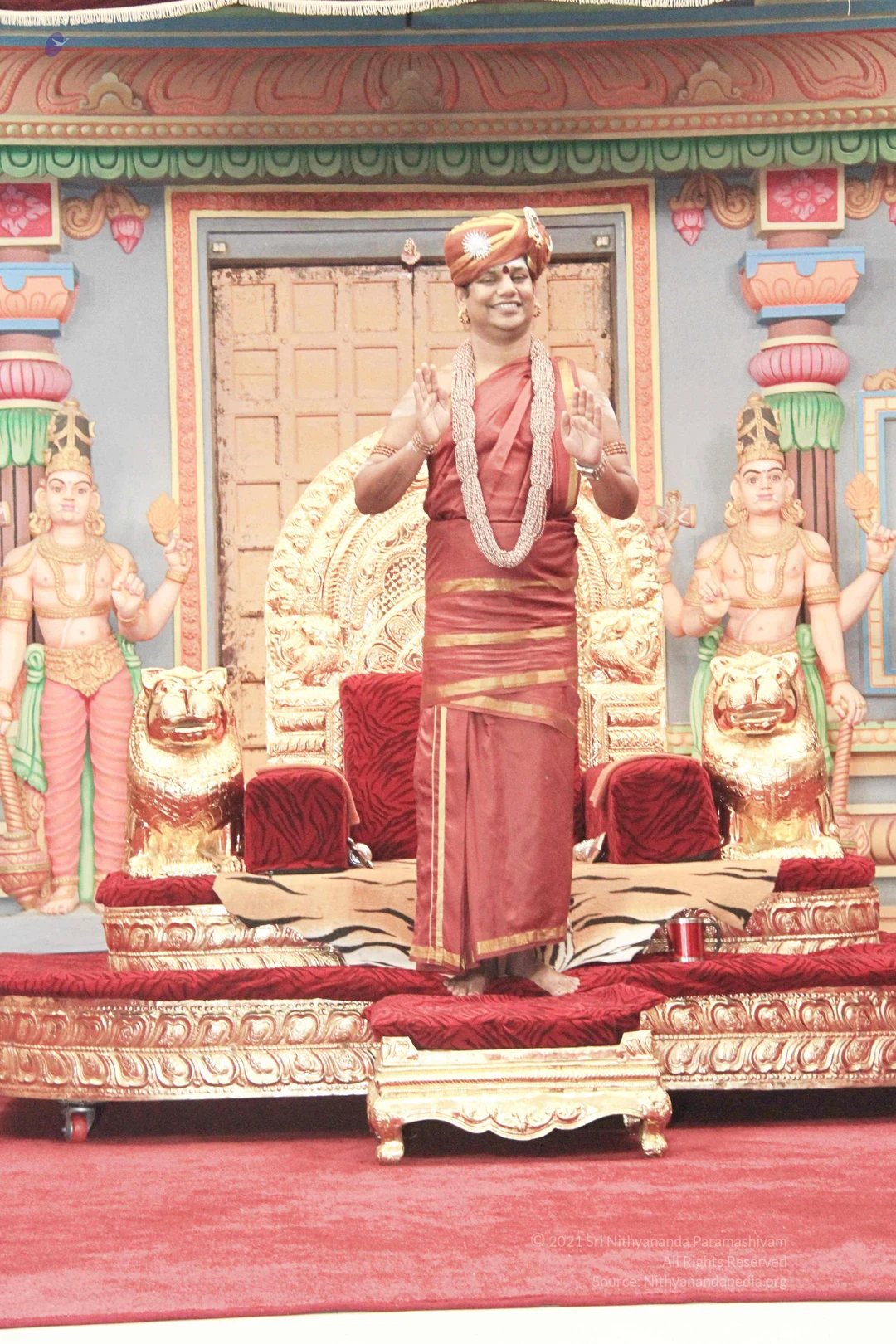
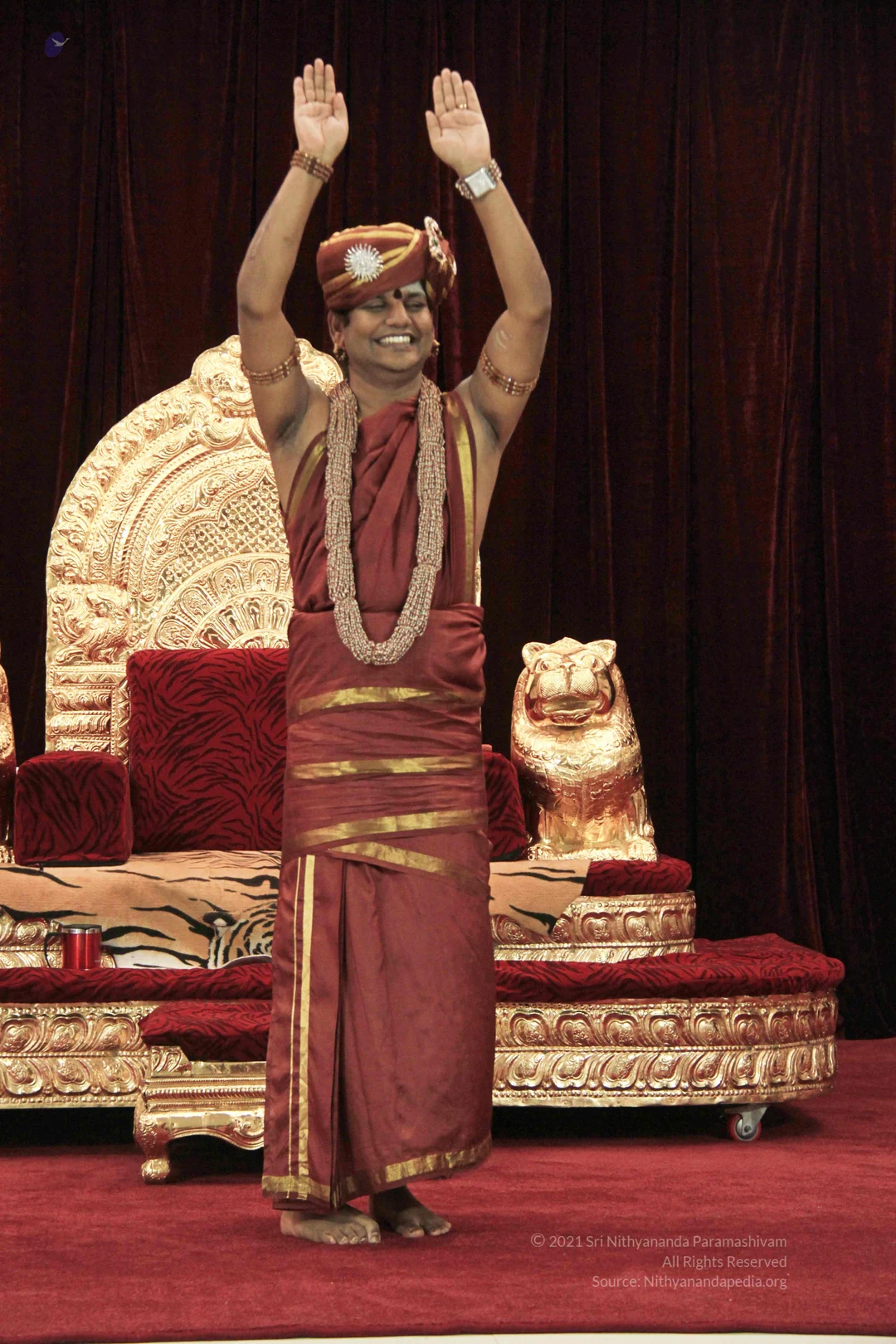
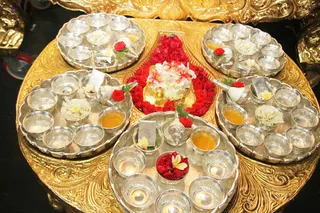
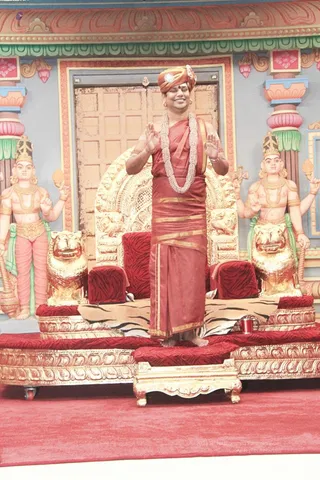
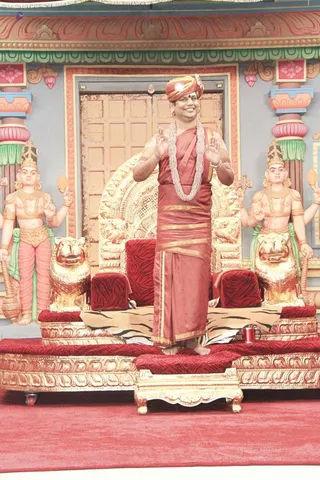
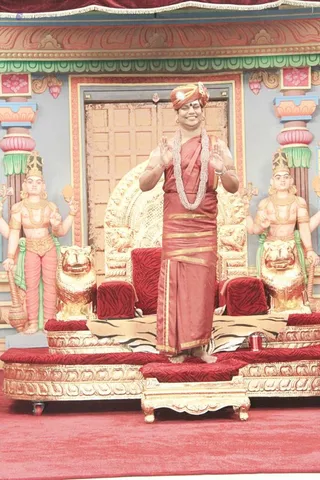
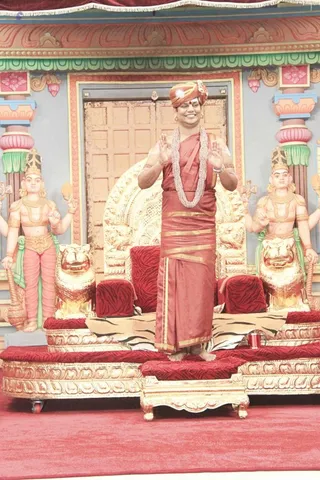
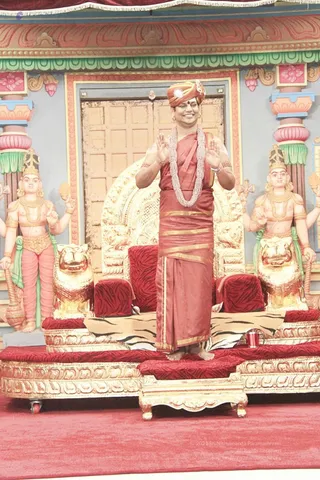
Overhead view of a ritual offering tray on an ornate gold-embossed surface. A round engraved silver plate holds several small silver bowls: clear water in some, a bowl of yellow-orange liquid, a bowl of white jasmine-like flowers with a yellow-centred white frangipani bloom at the centre, and a floral sprig with a white petal. A silver conch-shaped vessel with a white cloth draped over it sits at the upper right beside red roses. No people are visible.A seated group of women and girls performs a ritual with small oil lamps and brass dishes on a red-carpeted hall floor. Front left, a young woman in an orange sari with a red border and a rudraksha mala holds a lamp. Front centre, a girl in orange with white forehead markings holds a lamp and a brass vessel. Centre, a woman in red with a red shawl holds a lamp, and a woman in white with a black mala and glasses lifts a small lamp. Behind them, many participants in red, white and pink saris sit with lamps and offerings, and red chairs line the background. Brass plates, bottles and a plastic container sit on the floor. Several people are visible, the group is seated in rows, and the mood is a collective lamp offering.A smiling man stands before an ornate gold throne in front of a wooden door with red and yellow trim. He wears a red-and-gold turban decorated with a white jeweled ornament, a red-maroon silk robe with gold borders, and a long beaded pearl-white garland. He raises both palms in a gesture of blessing, wearing gold bangles and an armband. He has a red bindi and white tilak markings.

November 23 2013

Original wiki page
Contents

Title

The Supreme Pontiff of Hinduism (SPH), JagatGuru MahaSannidhanam (JGM) Bhagavan Kailasa's Sri Nithyananda Paramashivam

Description:

In today’s morning Satsang, SPH declares that a Sannyasi is a person who has a romance with life! Many of us are living in fear of death, thinking that we are only the body and with its death, we also die. Once we have the understanding that we are only centered on this body and that the death of the body is only an interval in the long procession of lives, we breathe a sigh of relief, relax, and begin the romance with life.

Link to Video:

VideoAudio

Transcript:

Nithyanandeshwara Samaarambhaam

Nithyanandeshwari Madhyamaam |

Asmadaachaarya Paryanthaam

Vande Guru Paramparaam ||

I welcome all the devotees, disciples, samajis, satsanghis sitting with us through Nithyananda TV, Lotus News Channel, Janashree TV, Eshwar TV, and through two-way video-conferencing all over the world.

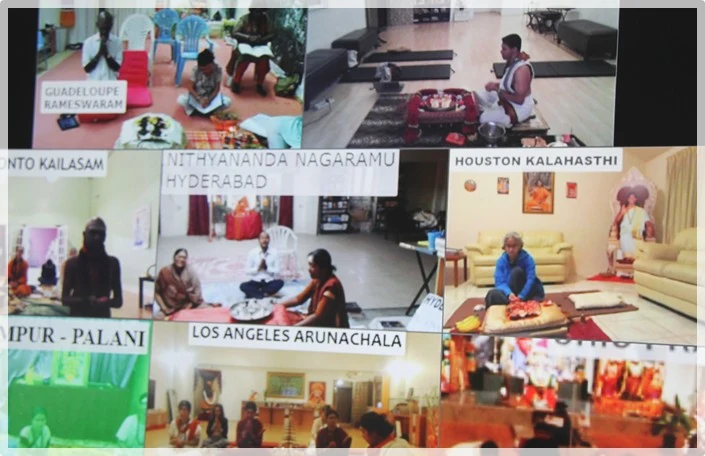
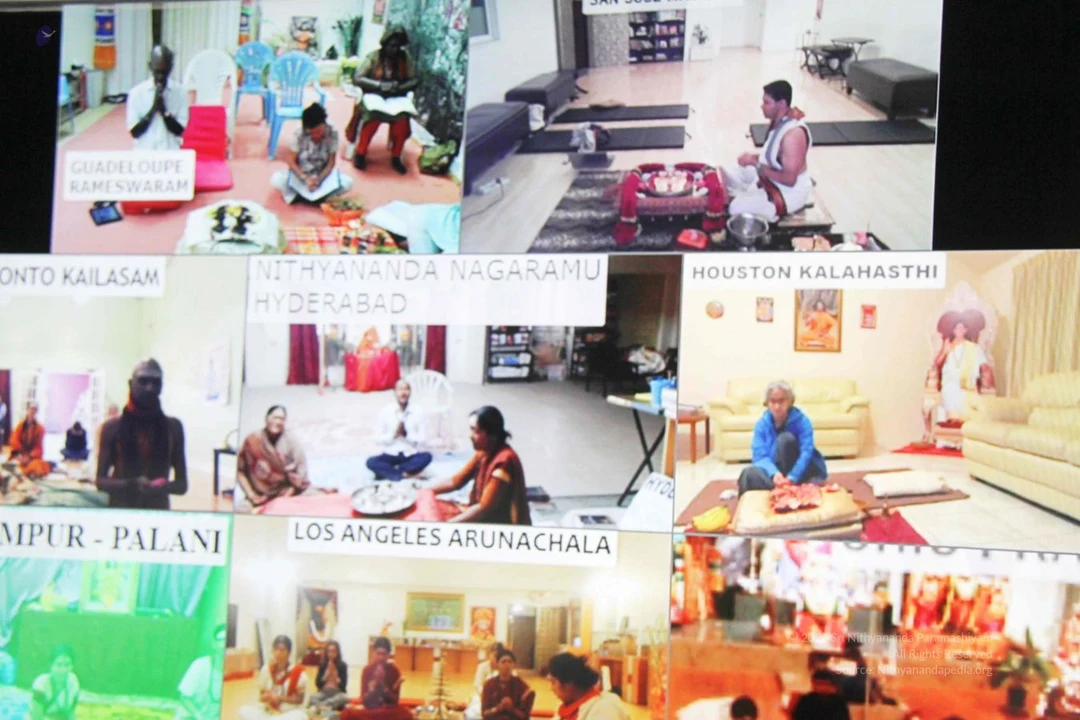
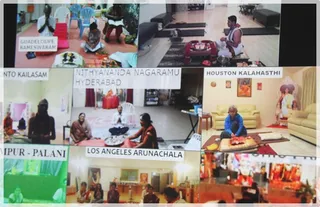
Cities sitting with us in two-way video-conferencing: Santa Fe-New Mexico USA, Singapore-Singapuram, Vancouver-Bhubaneshwar, San Diego-Tirualavai, Hyderabad-Gupta Kashi, St. Louis-Tirumala, East London-UK, Dakota Dunes, Hong Kong-Sirkazhi, Dubai-Vaidyanatham, Riverside-California, Mahankal-Nepal, Oman-Sivagangai, San Antonio-Texas, Tiruvanmiyur-Chennai, Hosur, Nithyananda Nagaram-Hyderabad, Los Angeles-Arunachalam, Varanasi, Ohio-Prayag, Kuala Lumpur-Palani, Seattle-Chidambaram, Houston-Kalahasti, Guadeloupe-Rameshwaram, San Jose-Madurai, Toronto-Kailasam...

I welcome all of you with my love and blessings.

Today I will expand on “SANNYAS”, the concept of Sannyas from different angles. How, whether you take Sannyas or not, this concept is directly useful to you to understand your life and enrich your life, you will understand now.

Please listen! Come to the space of listening, so that whether you take Sannyas or not, this concept is really useful to you.

Listen! Basically, there are two ways of thinking:

· One: thinking that the body you are carrying is everything in your life. From morning till night, washing it, decorating it, painting it, clothing it, feeding it, putting it to sleep; nothing else goes on in your mind, nothing else gets into your system. That is one type of thinking, one kind of thinking.

· Second: understanding that you are centered on this body, but not only the body.

Please understand, there is a group of people who think they are only the body. There are a few intelligent people who understand they are centered on the body. You are centered on the body, but you are not only the body. You are not just the body, you are centered on the body. So, please understand, body is your center.

There are tons of things you do based on the body – relating with the world, relating with humanity, relating with Nature, relating with every piece of your life; but, unfortunately, when you cognize you are only the body, everything in your life gets corrupted. Your attitude towards others, your attitude towards humanity, your attitude towards the Cosmos, your attitude towards the universe, your attitude towards everything is corrupted. When this one understanding is corrupted, when you start thinking you are only the body, you think everything is produced only to be applied on or swallowed by your body. When you see a fish, you see it as food. Even when you see a snake, you see it as food. Whether you see a goat, a cow, or any animal, you see it only as food. Because, when you are thinking you are only the body, you think everything is created just to satisfy the body; or, if it is not created for that, you will find a method to convert everything to satisfy this body – attack, conquer, blow it out, destroy!

This idea that you are only the body is the most dangerous, corrupt, poisonous idea which deforms your consciousness. How arthritis slowly brings deformity in the body, this one idea, ‘I am only the body’, brings deformity in your consciousness.

If you just understand you are centered in your body, you are not the body; the first thing that will happen to you is, you will be relieved from the death fear and anxieties caused by death idea; the heaviness which all of us carry in our heart because of the anxiety due to death, the anxiety due to death! All your anxieties, when you trace back the root, it will end up in death! Death happens once, but is happening every moment! Please listen! Happens once, but HAPPENING every moment! When you are released from the idea that you are not only the body, the first biggest relief you will feel is, ‘Wow! The death of the body is not going to destroy me, end my life!’ Please understand, death of the body is not the climax of your life, it is the interval of your life! It’s not a climax. It may be an exciting scene; a pause, but not full stop! It will bring such a big relief ‘Wow!’ And only then, only when you have that relief, ‘Romance with life starts sprouting.’

Please understand, I’m using the word ‘sprout’; how a seed sprouts, romance with life starts happening! If romance with life starts in you, you are a Sannyasi.

If you think everything is body, listen to this story:

Three engineering students gather together to discuss the possible designers of the human body.

One fellow says, `It was a mechanical engineer. Just look at all the joints.’

The second fellow says, `No, it was an electrical engineer. See the nervous system has many thousands of electrical connections.'

The last fellow says, `Actually it was a civil engineer. Who else would run a toxic waste pipeline through a recreational area?'

HAHAHAHAHAHAHAHAHAHAHAHA!

If you think everything is body, you should understand this joke!

Everything is not body. Please understand, you are centered on the body. I am not saying you don’t have any relationship with your body. You have the same amount of relationship with your body that you have with the other person. Body is also other person in your life. So you are centered on the body. Please understand, just this one understanding, ‘I am centered on this body’, means what? ‘When this body dies, I’m not going to disappear; I’m not going to end, everything does not end, the curtain does not fall, it is not that everything is over.’ I tell you, just this one understanding if it gets drilled into you, if that becomes your cognition, your default cognition starts functioning with the idea, ‘I am centered on this body, but I am not only the body’, then naturally you will look at the whole world, ‘Even if I see and enjoy a cow walking, a goat walking, it is beautiful! I don’t need to put that into my body to enjoy! If I just see a fish jumping, that is great! I don’t need to dump that into my mouth to enjoy!’, the taste, the concept of enjoyment will completely change, the concept of fear will change, the concept of enlightenment will change, the concept of Completion will change, the concept of fulfilment will change!

The basic concepts you carry will completely change the moment you understand you are centered on the body, not the body, and the romance towards life will start expressing itself in you. When you start feeling the romance towards life, you are a Sannyasi. Please understand, as spiritual head of the oldest apex body of Hinduism, as a responsible Hindu sannyas leader, I am defining Sannyas. What I am talking is in no way against any Sampradhaya or tradition. It may look very modern because of the words I am using, but I tell you this is the most authentic definition of Sannyas. “When you have the romance towards life, you are a Sannyasi! When the romance towards life starts with the right understanding, ‘you are centred on the body not the body itself’, you are a Sannyasi!”

Remember this one idea: ‘I am centered on the body, but not the body alone.’ With this understanding, start reviewing all your major decisions of life, like what you think as love, what you think as hatred, what you think as fear, what you think as greed, what you think as love, what you think as joy, what you think as pain, what you think as pleasure. Reorganize everything. What you think as success, what you think as failure, re-cognize everything. When you re-cognize, you will recognize the truth. Re-cognizing is recognizing. Recognizing is nothing but re-cognizing. I tell you, this re-cognizing takes away all the fears about life in you and gives you such a beautiful breathing space.

I tell you, just if you understand this one truth “you are not just the body, you are centered on the body”, your breathing depth will increase in twenty-four hours! You will not have shallow breathing any more. You will have such a complete breathing! Complete breathing keeps you mentally in high zone. Like in your car if you pour the crude oil how it will run, if you pour the kerosene oil how it will run, if you pour the government ration kerosene oil how it will run, if you pour the pure petrol how it will run, and if you pour the aviation fuel how it will run.....you know! Same way, the ideas you carry inside, the root cognitions you carry inside is the fuel with which you are running. If you just bring this one re-cognition that you are centered in the body, but not the body itself, immediately you will be so relieved from so many of your wrong cognitions, and it will bring a deep breathing, a complete breathing in you which naturally will keep your mind in a very high zone. Understand, deep breathing keeps you in high awareness, keeps you in the highest zone; keeps you in the most joyful space. Deep feeling of relief and complete breathing is “Sannyas”. When this re-cognition happens in you, you become a Sannyasi.

The December 27th, the third batch of Sannyasis are the most fortunate ones for various reasons. One: this time I am myself defining Sannyas, encouraging, enriching, enlightening everyone about Sannyas, so that you are clear and trained. Please understand, even if you feel peer pressure and take Sannyas it is good, because it is such an amazing transformative process! Good things can be done even out of peer pressure; nothing wrong. I feel, how the modern-day kids destroy their life by doing drugs, getting pregnant in teenage, all because of peer pressure..... School kids try to get a girlfriend or boyfriend just because of peer pressure. If you don’t have one then you are useless; the way you are looked at, you are seen by your friends, classmates, colleagues, just the peer pressure makes them do drugs, makes them do everything, get teenage pregnancy, everything, whatnot! So listen! I think we should create the positive peer pressure, peer pressure of Krama Brahmacharya, peer pressure of right decisions, right cognition, not the wrong thing.

With this, I bless you all! Let you all radiate with Integrity, Authenticity, Responsibility and Enriching, with eternal bliss, Nithyananda! Thank you!

Photos from the Day
Tags:

Paramahamsa Nithyananda, Sannyasi, romance, fear, death, body, relief, life.

Photos Of The Day:
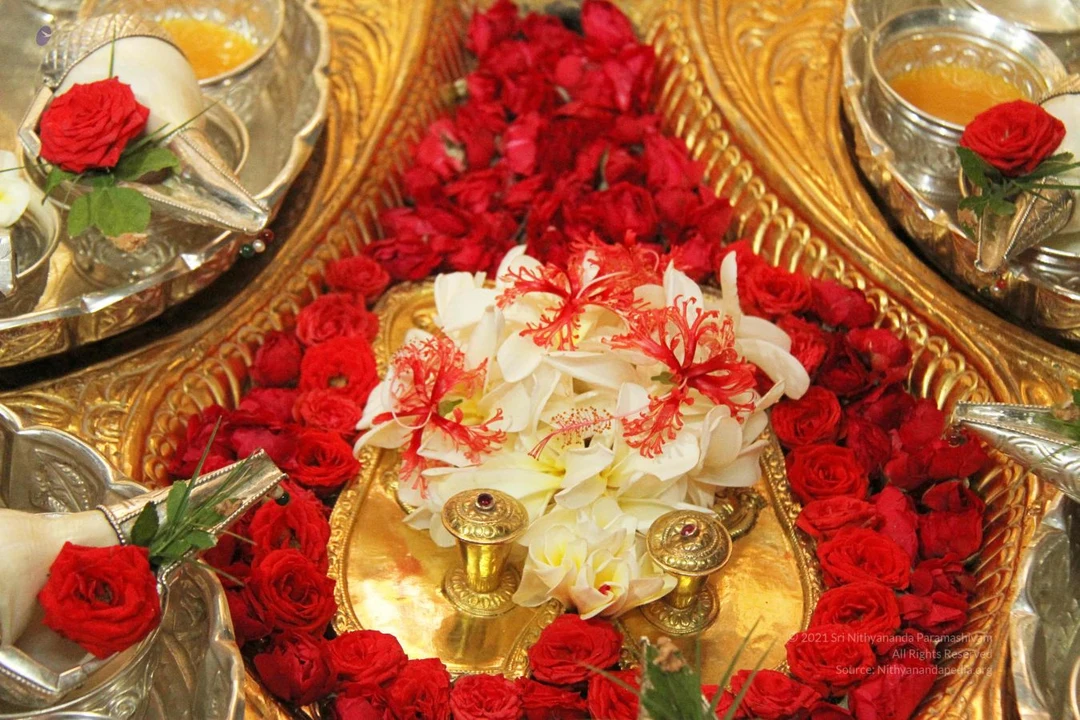
Aadheenavasis offer Paduka Puja

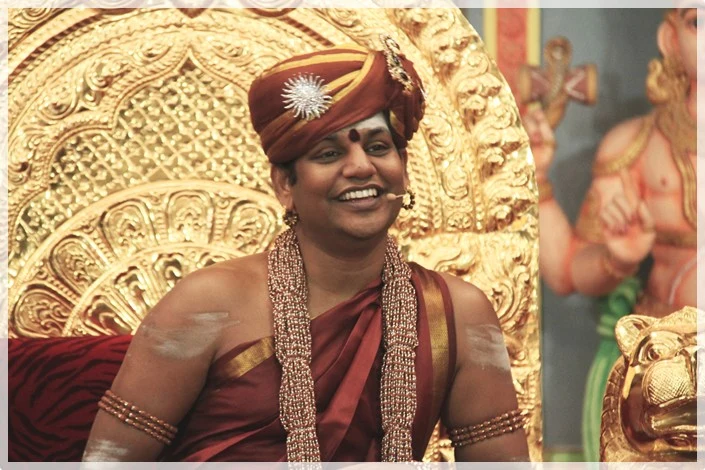
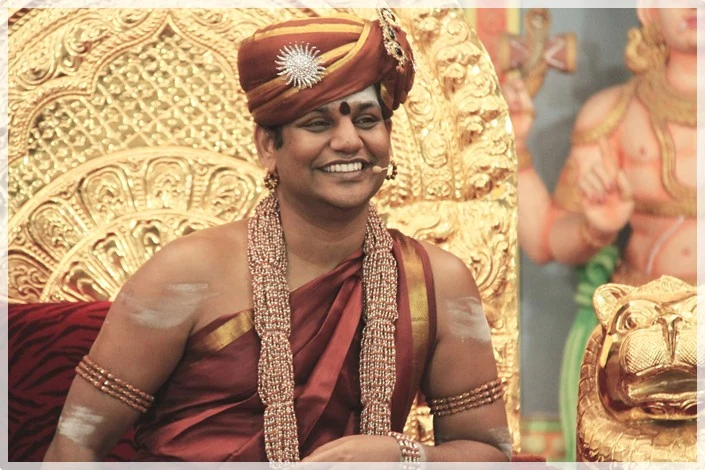
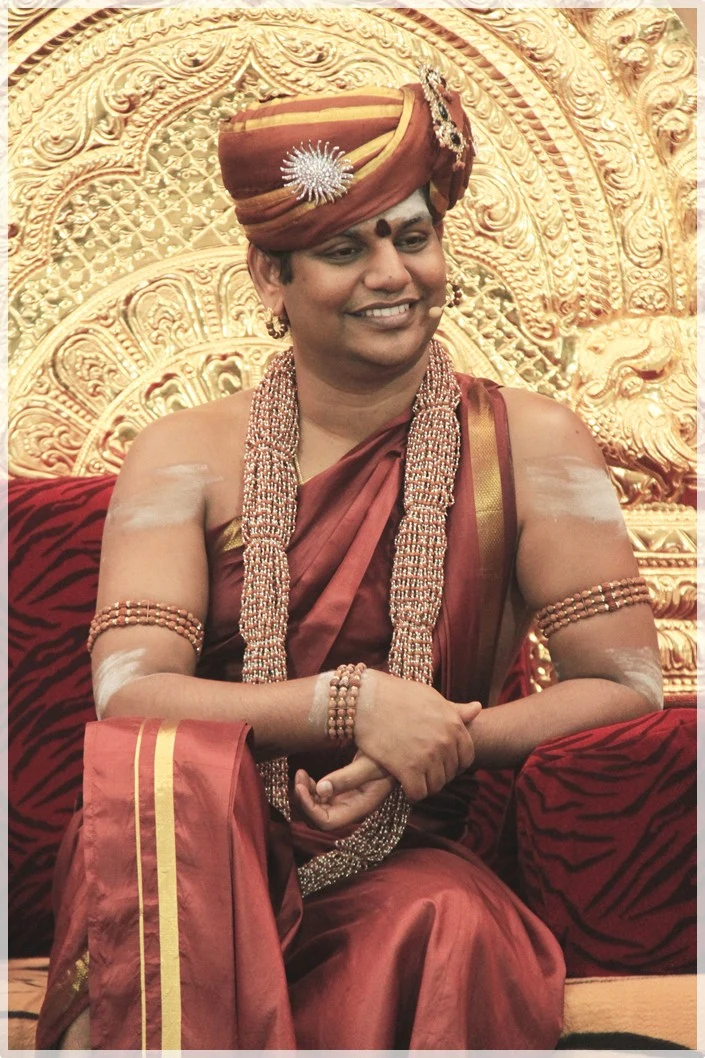
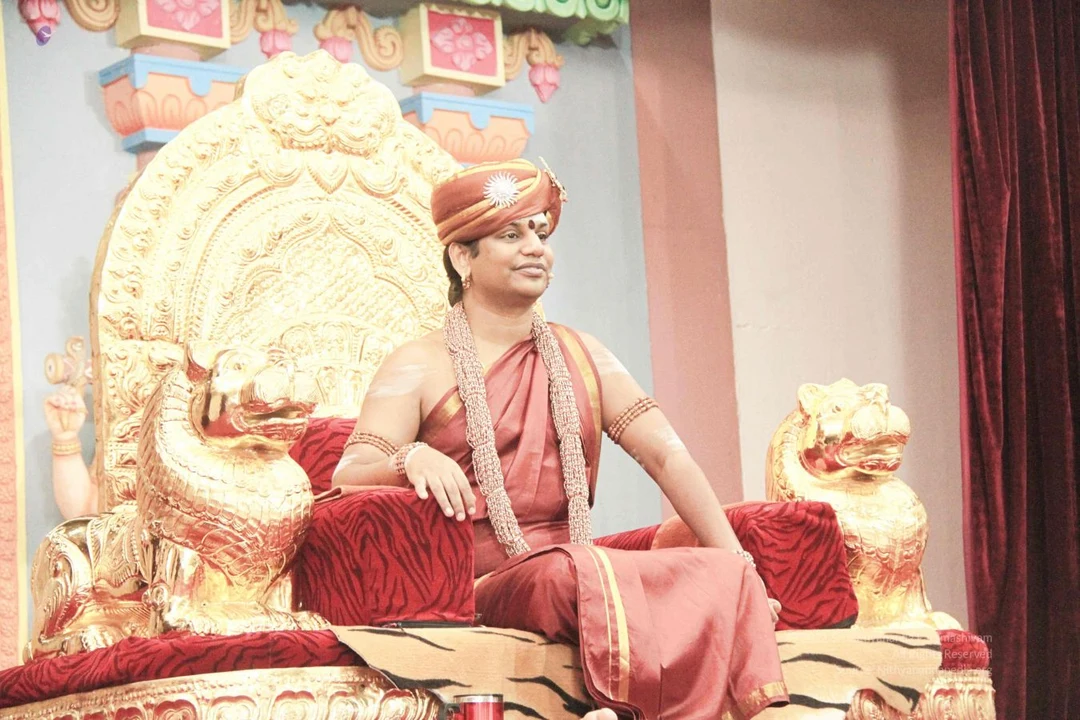
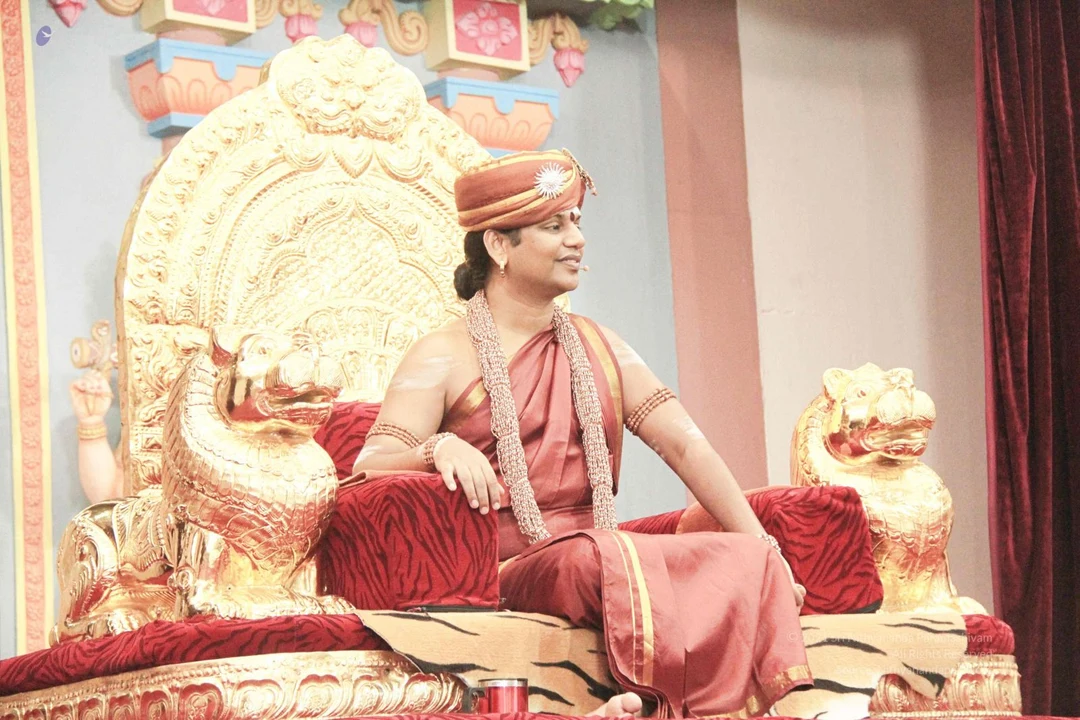
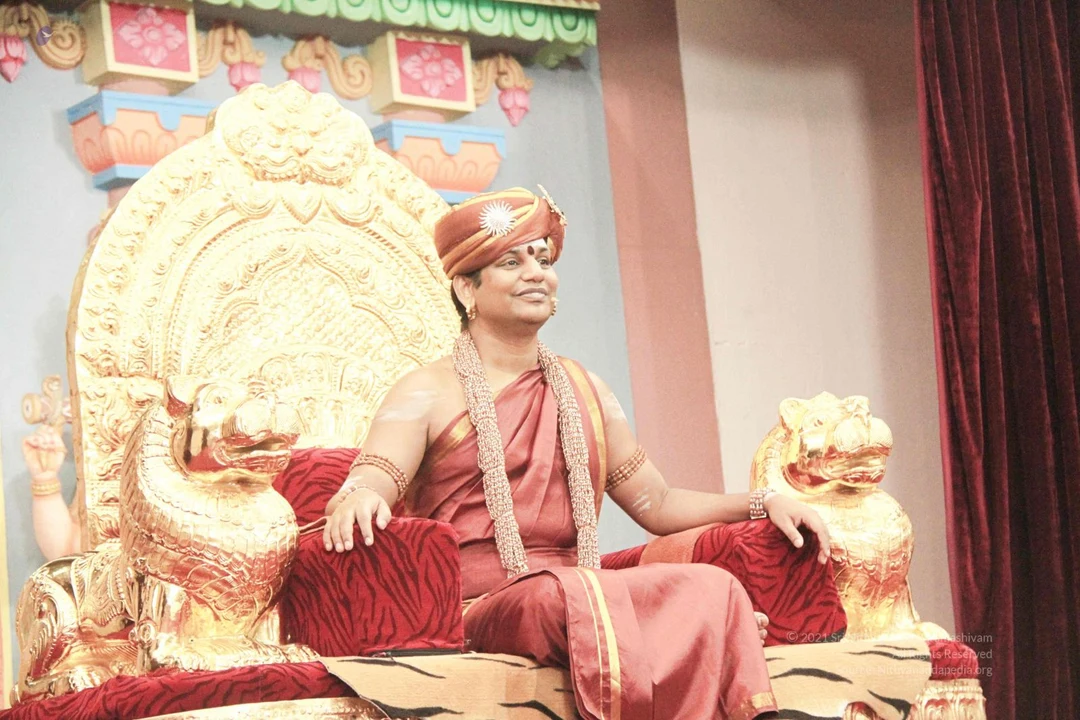
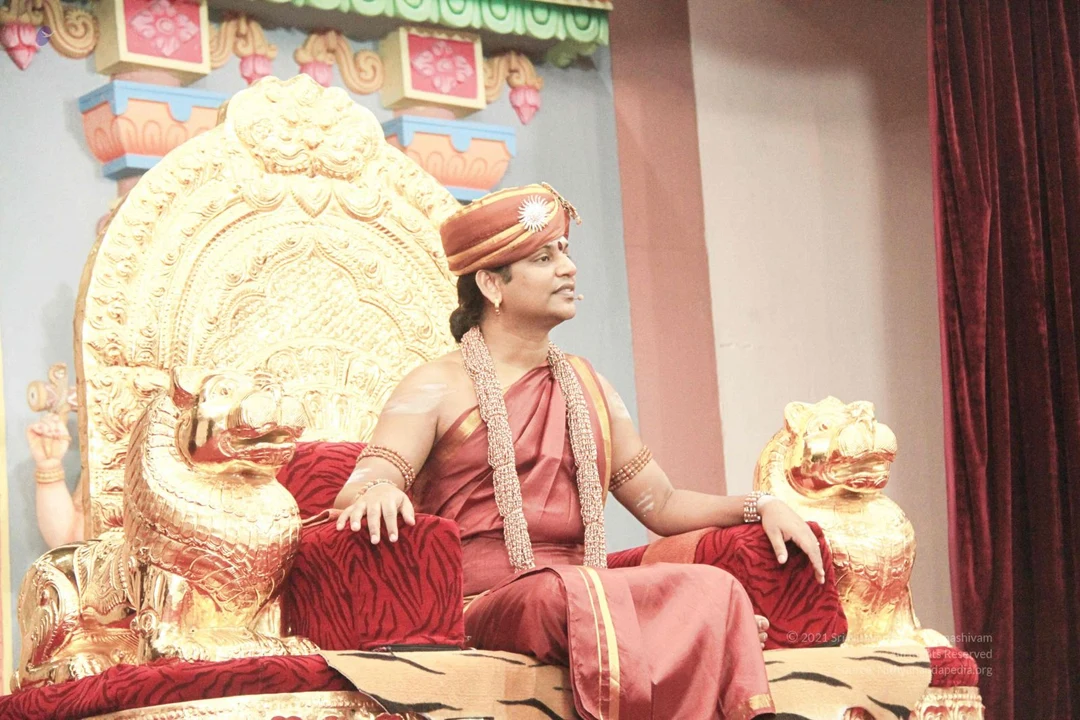
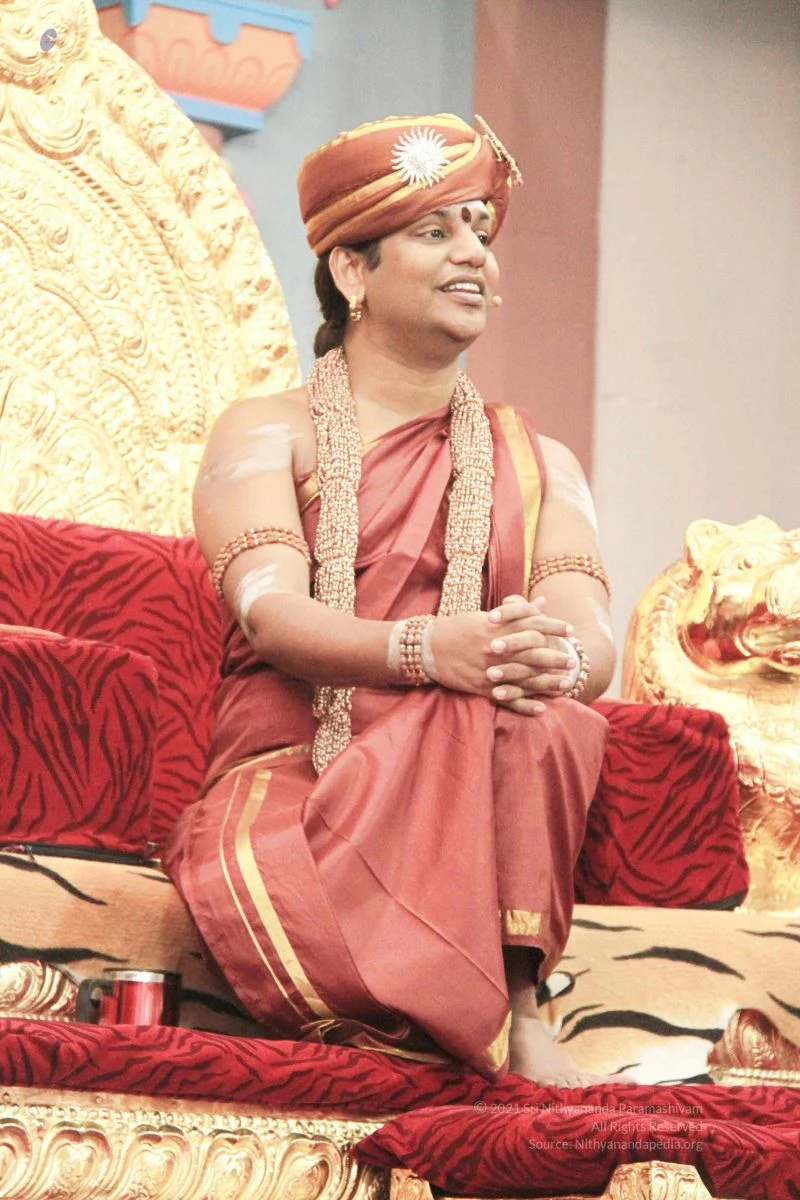
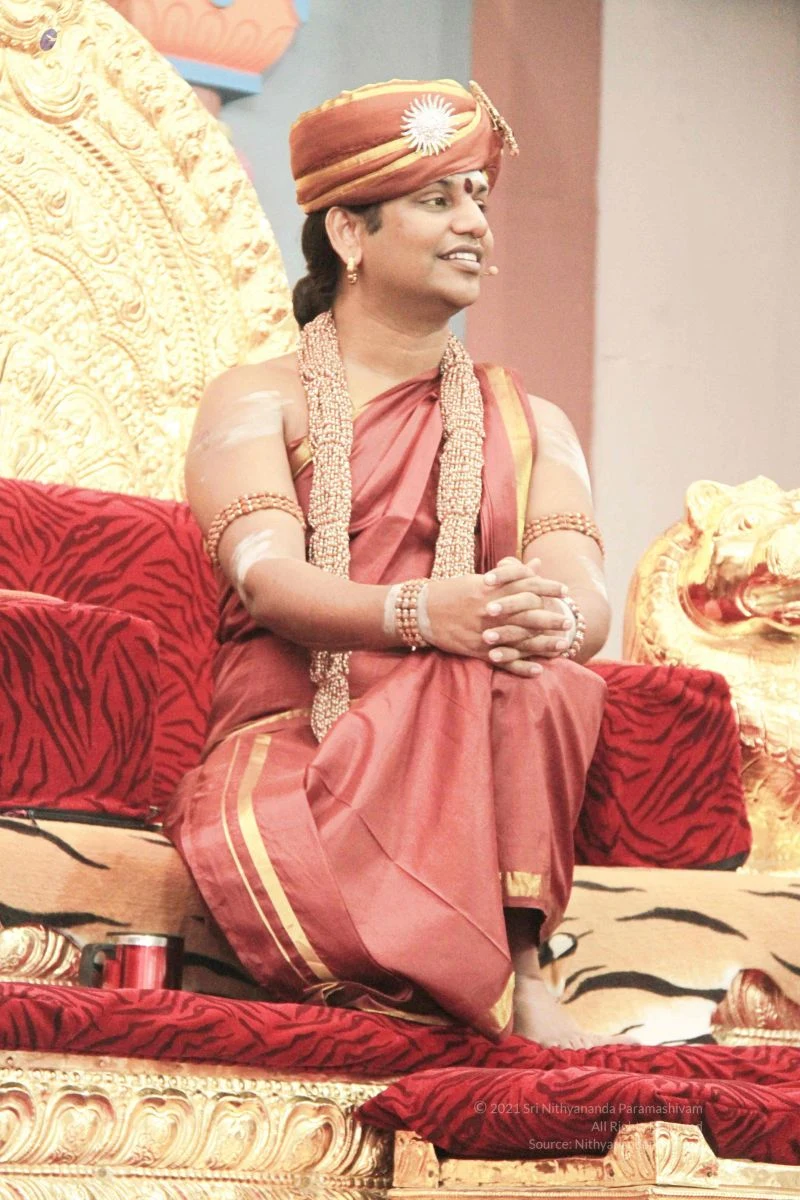
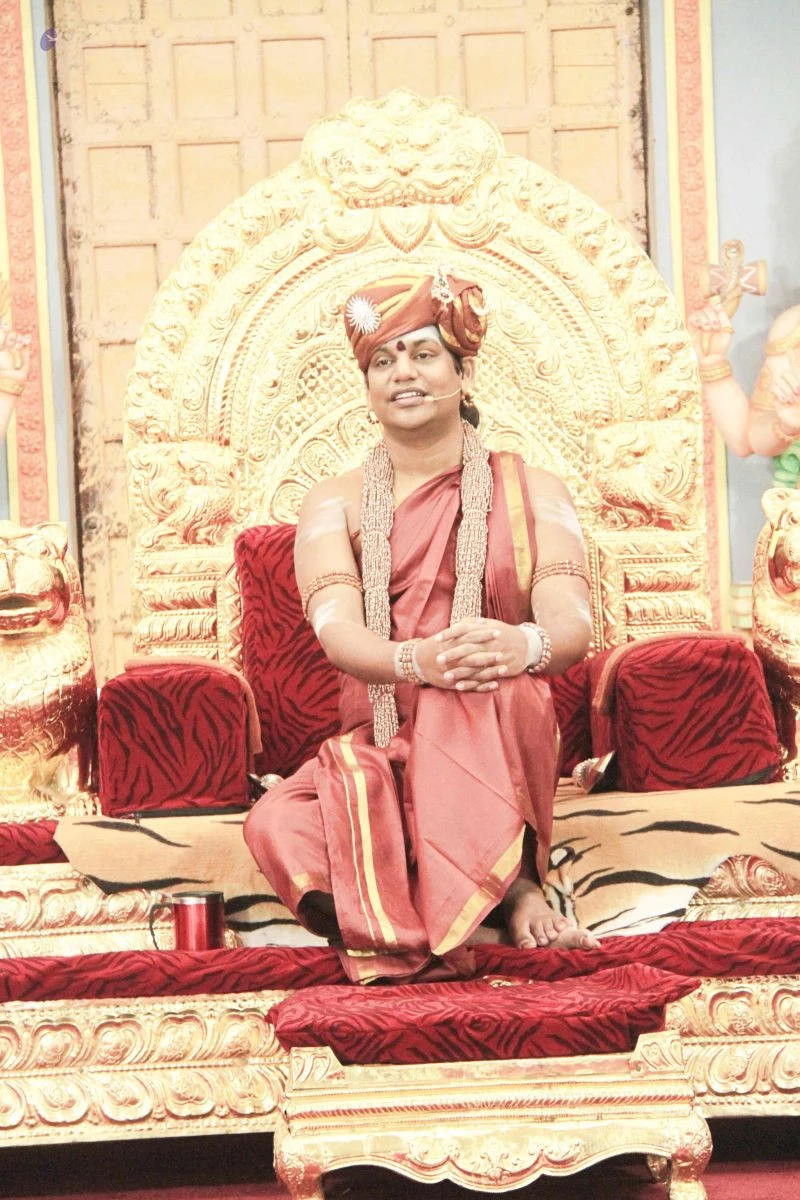
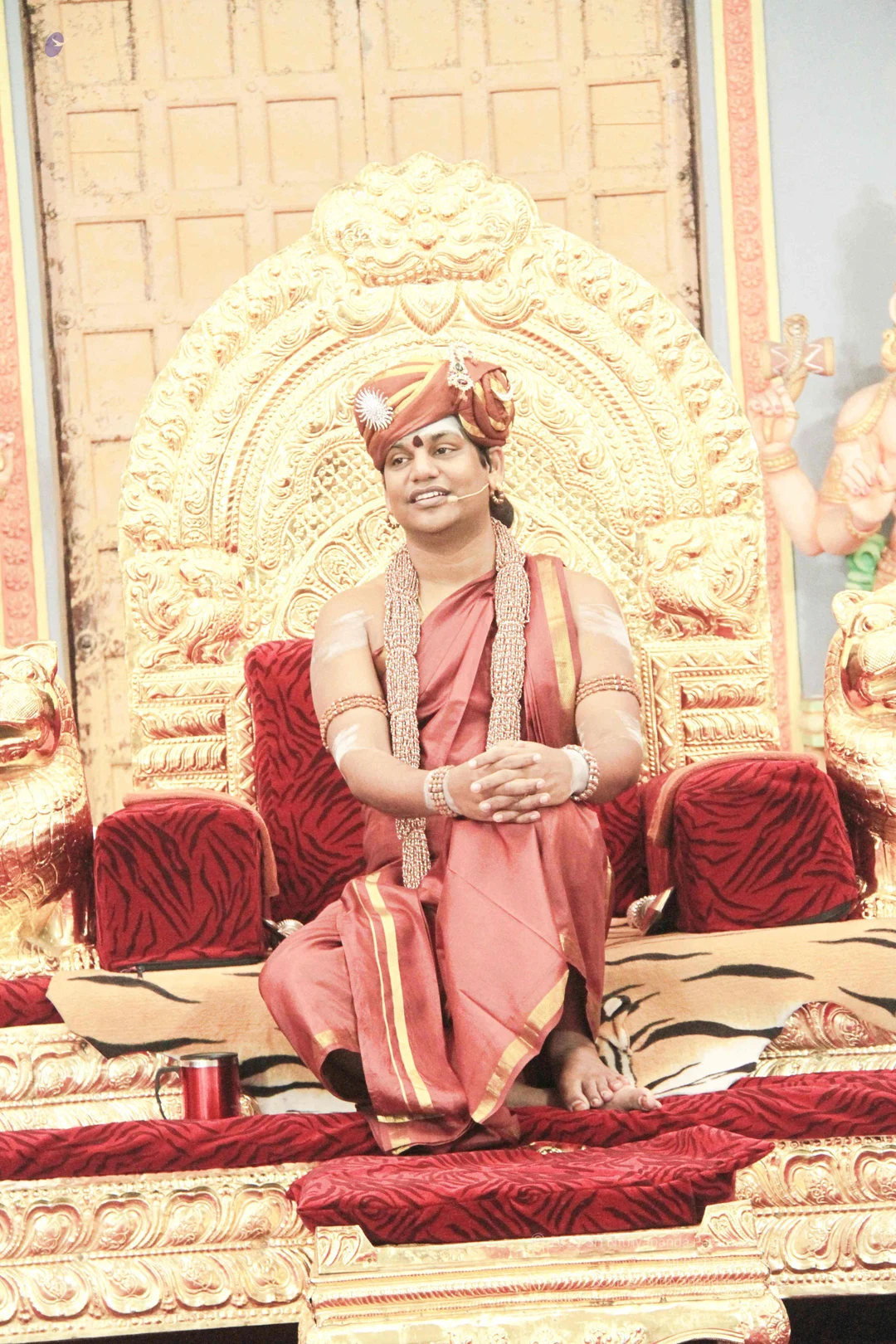
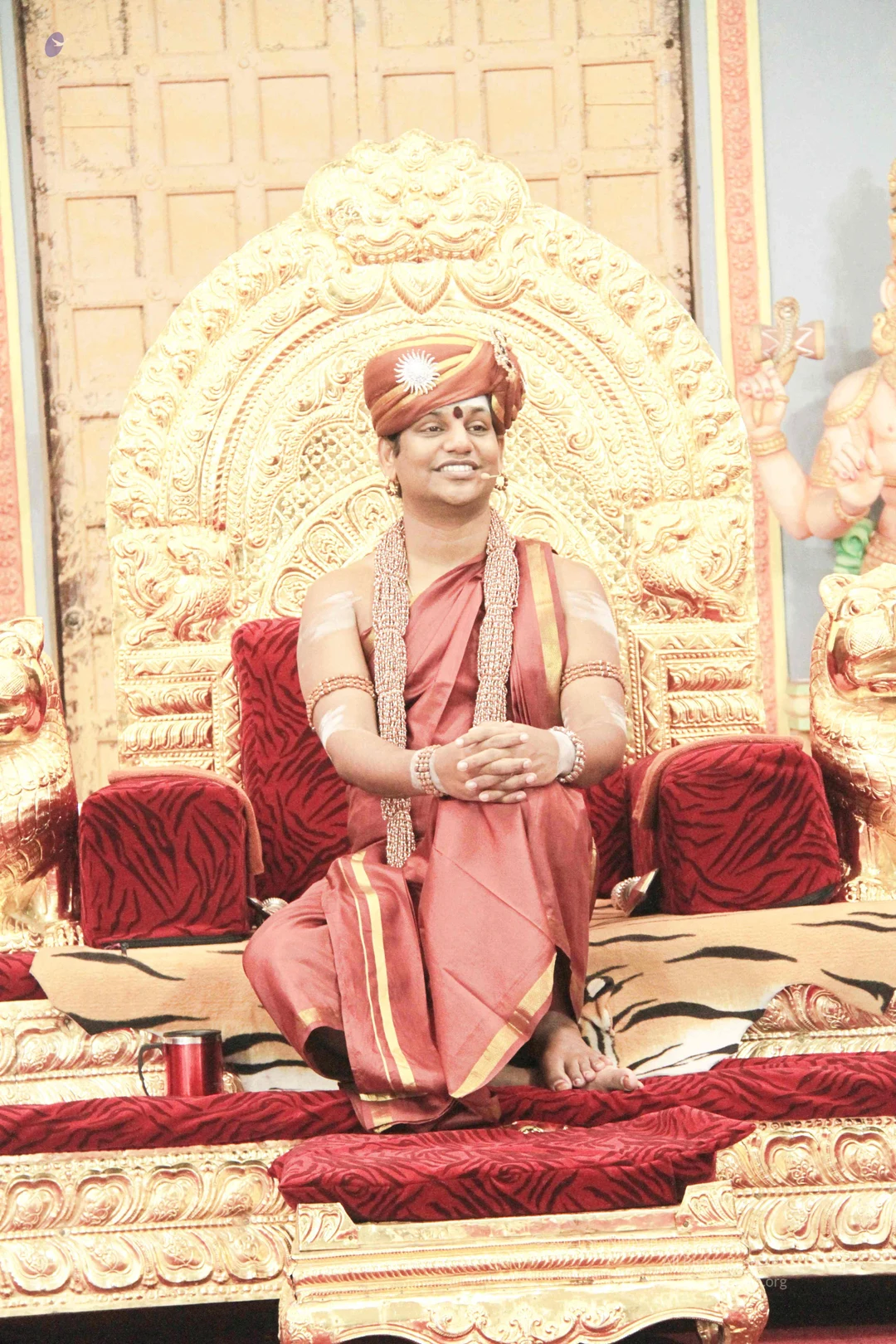
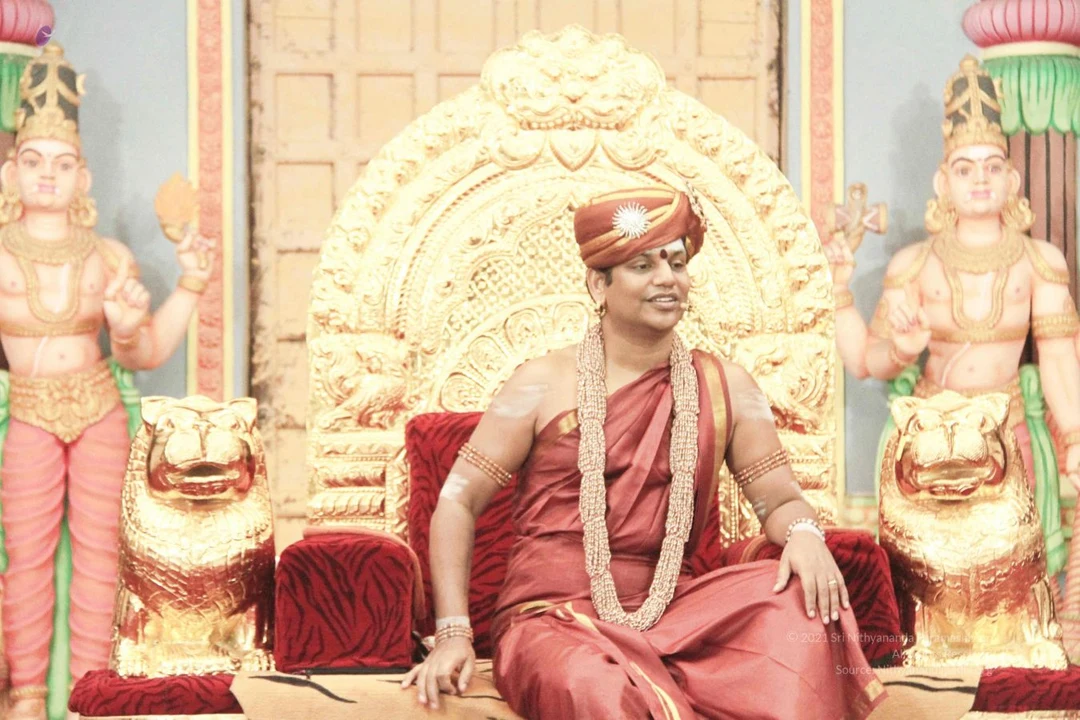
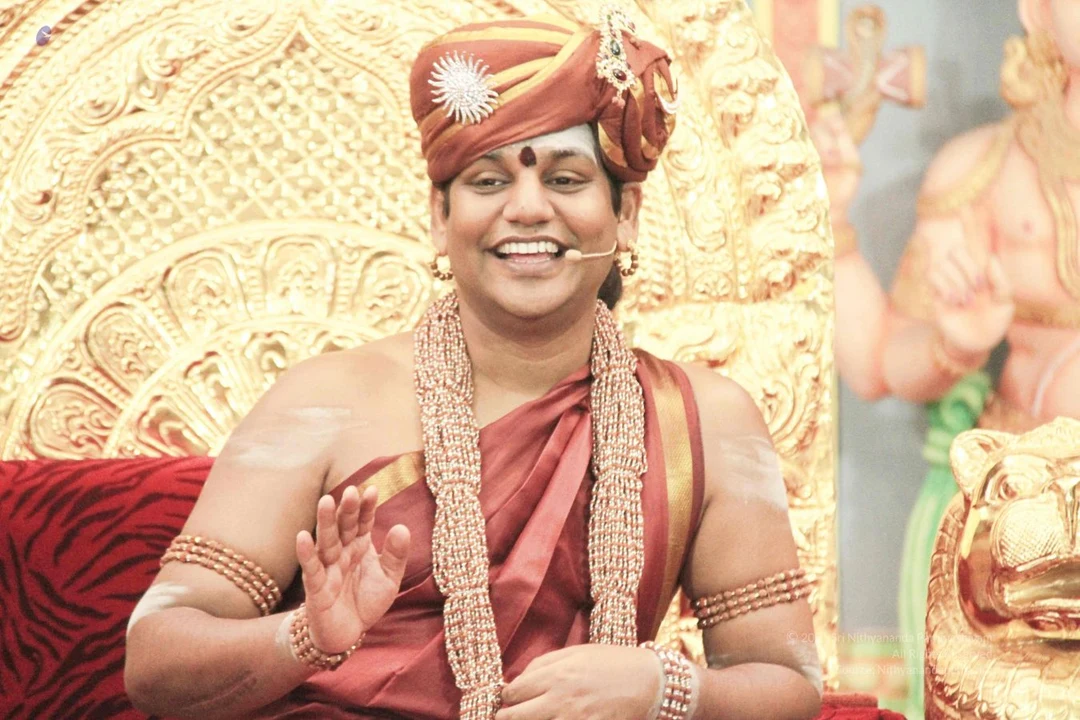
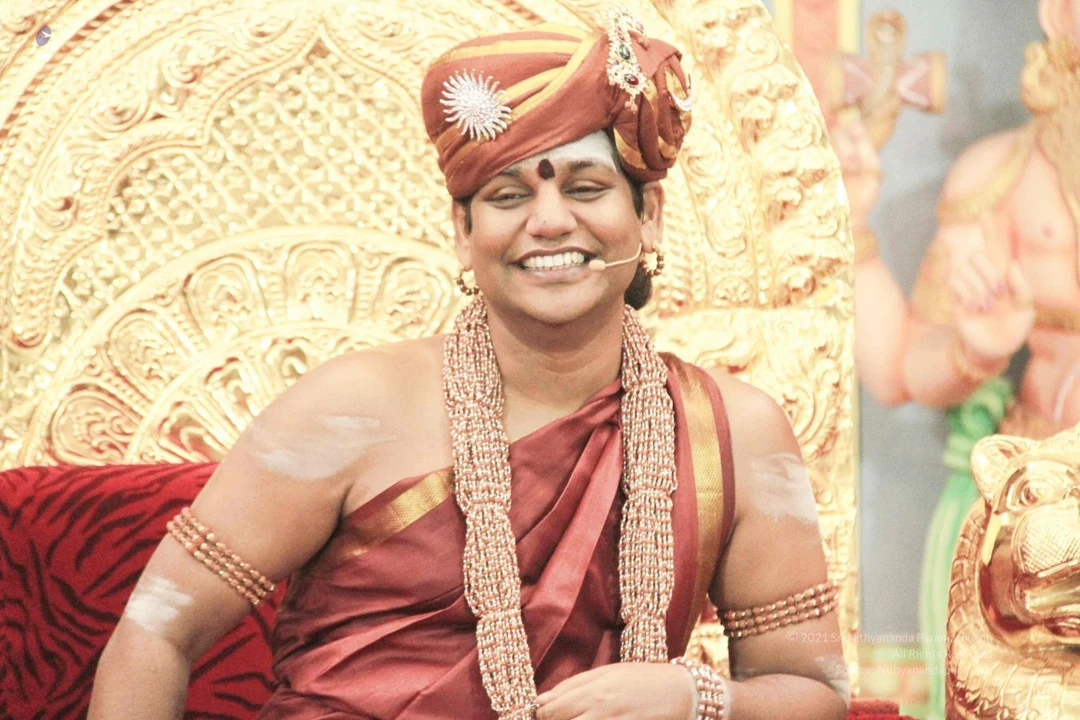
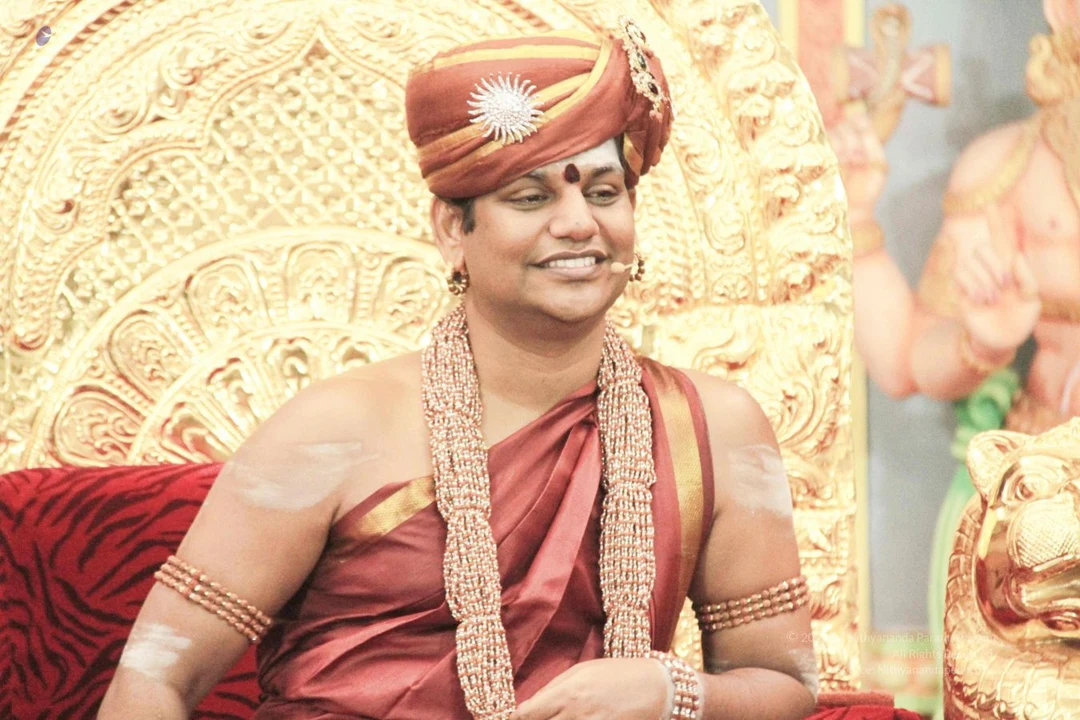
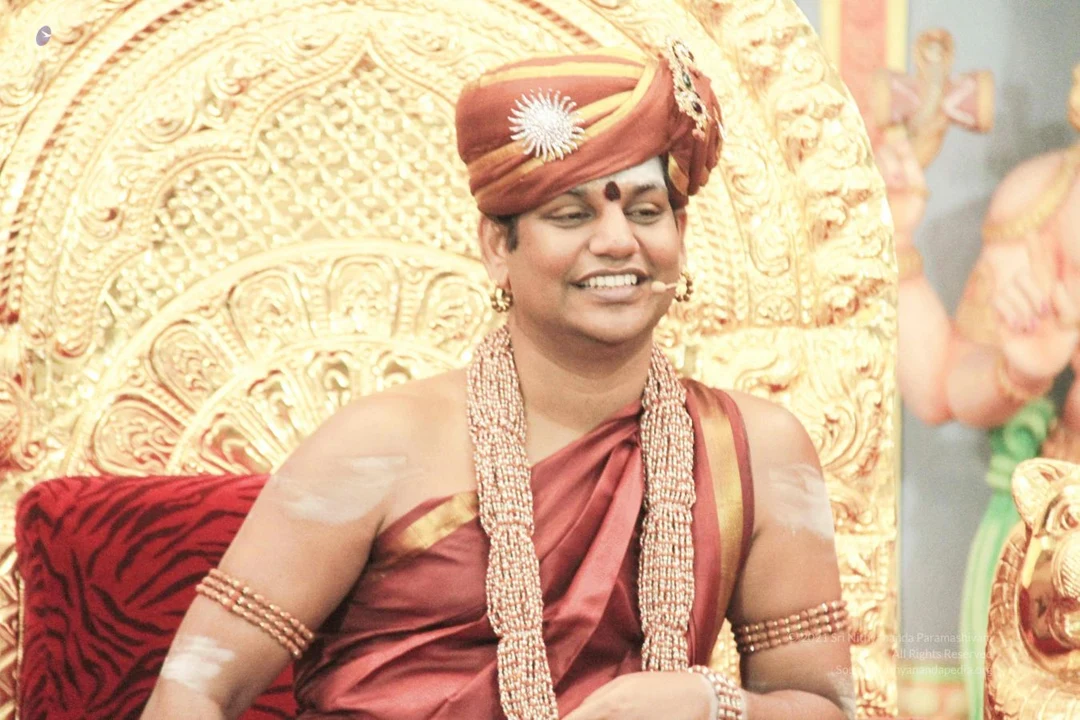
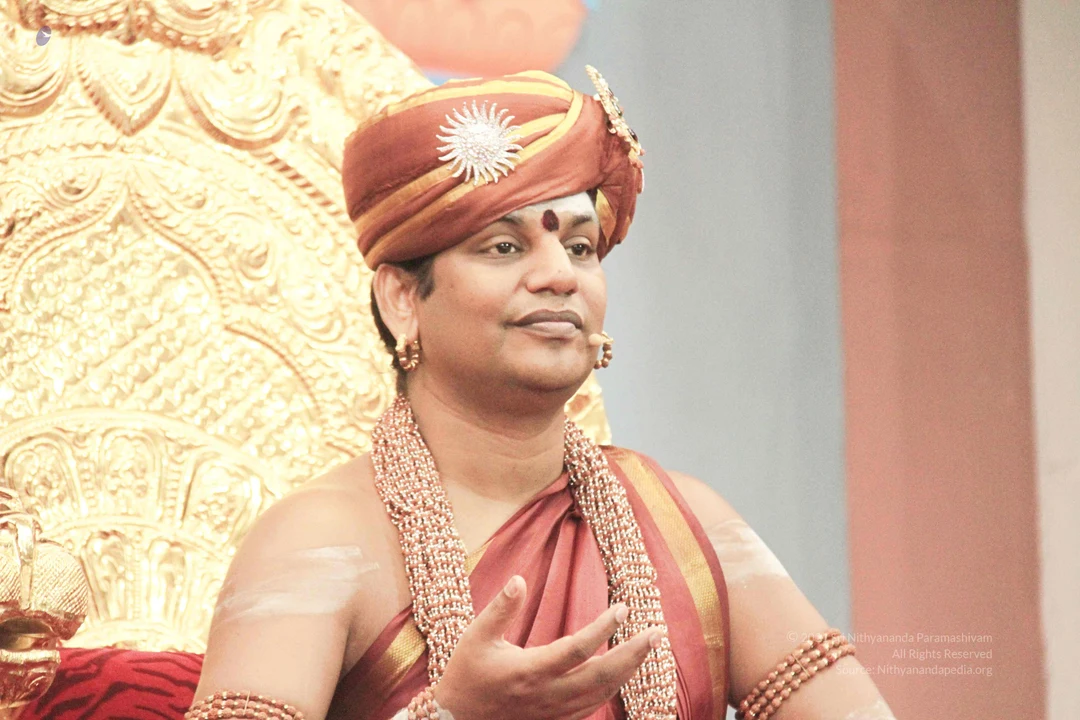
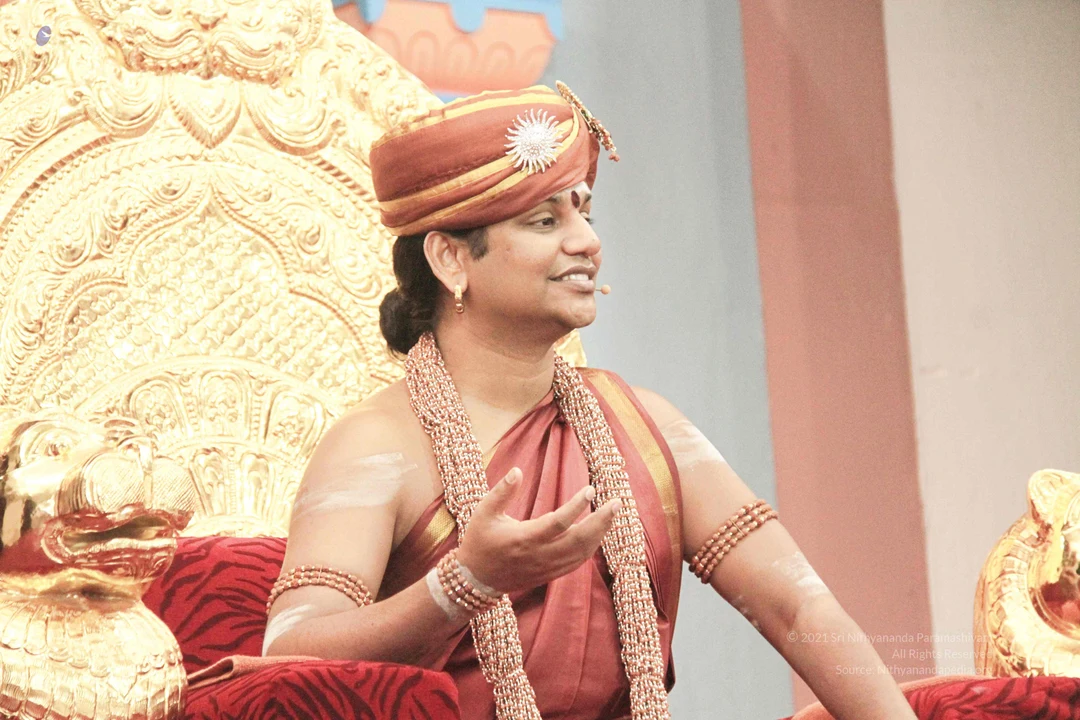
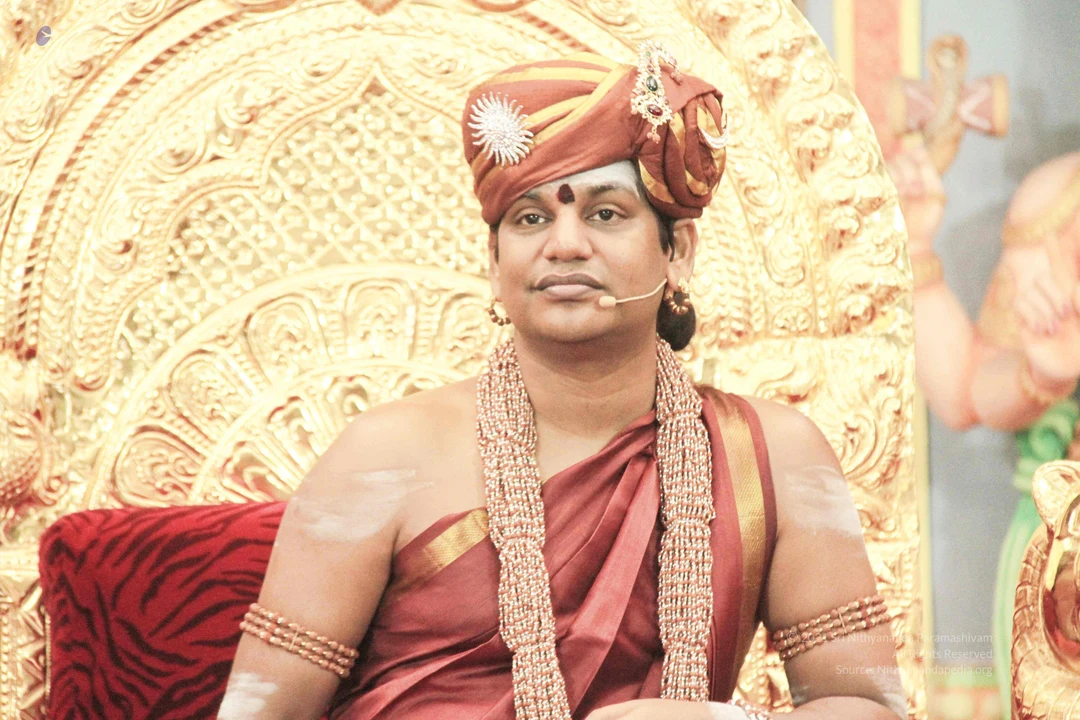
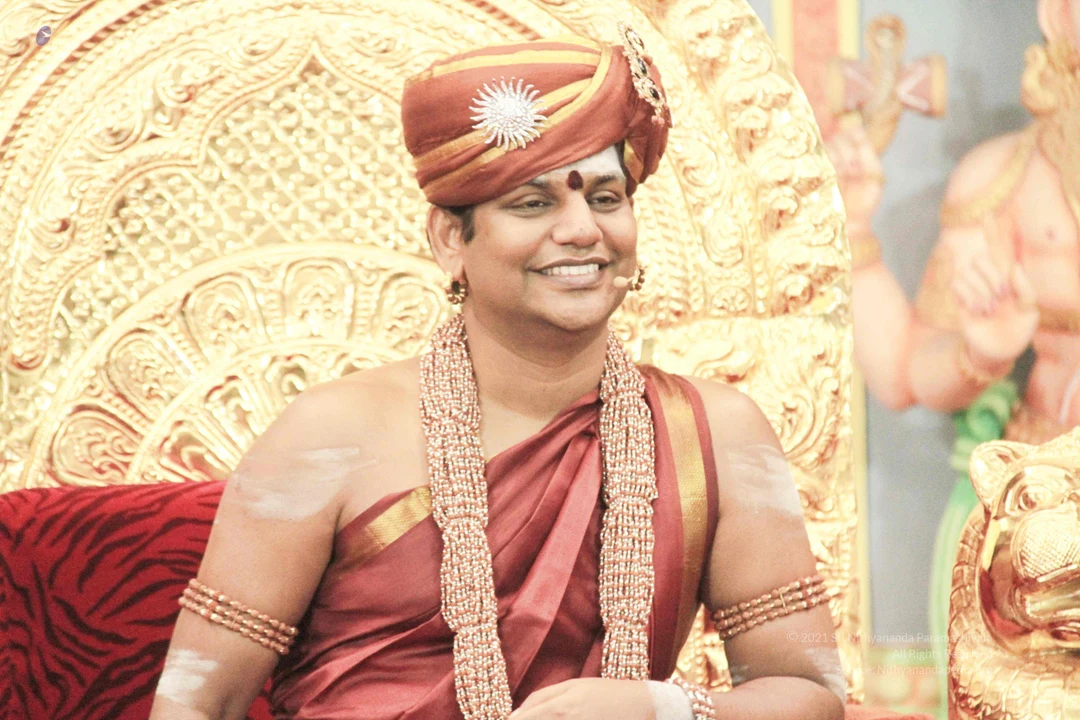
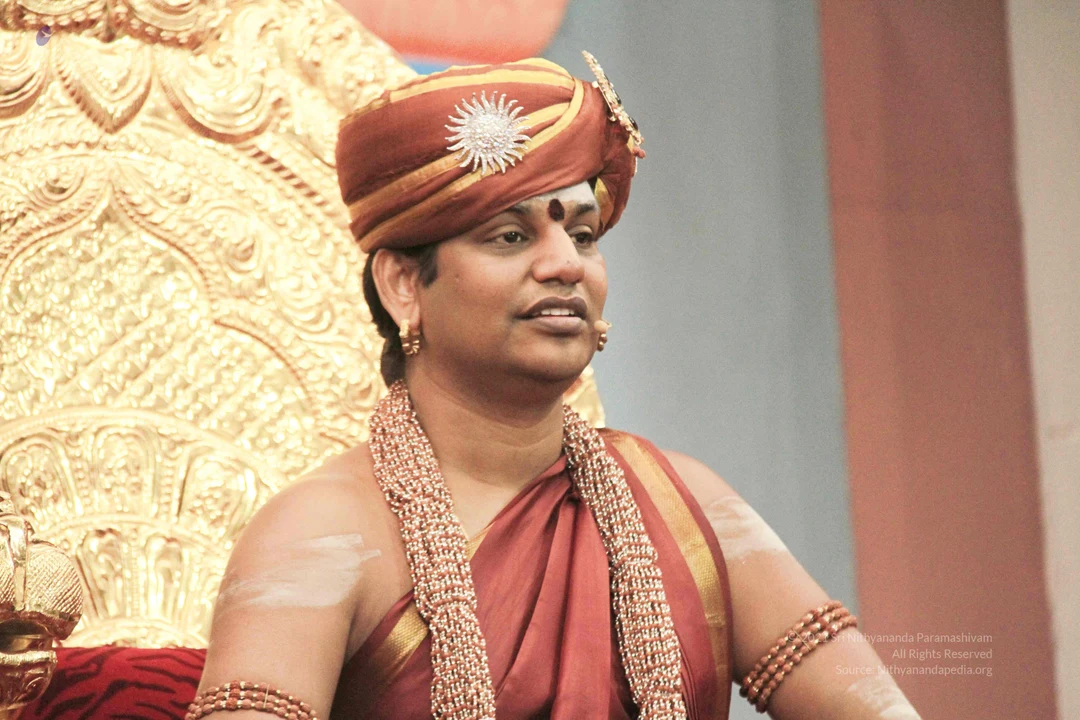
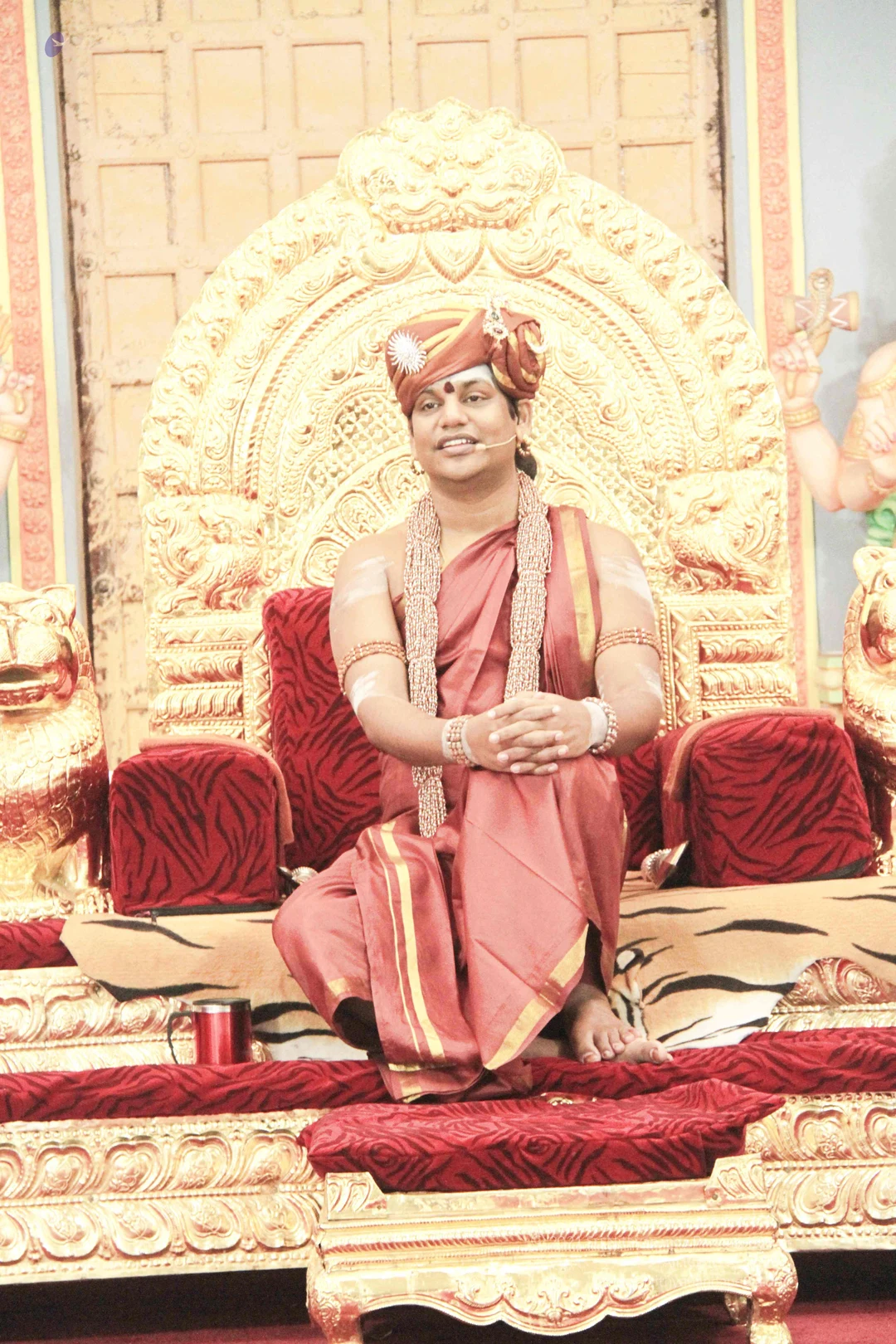
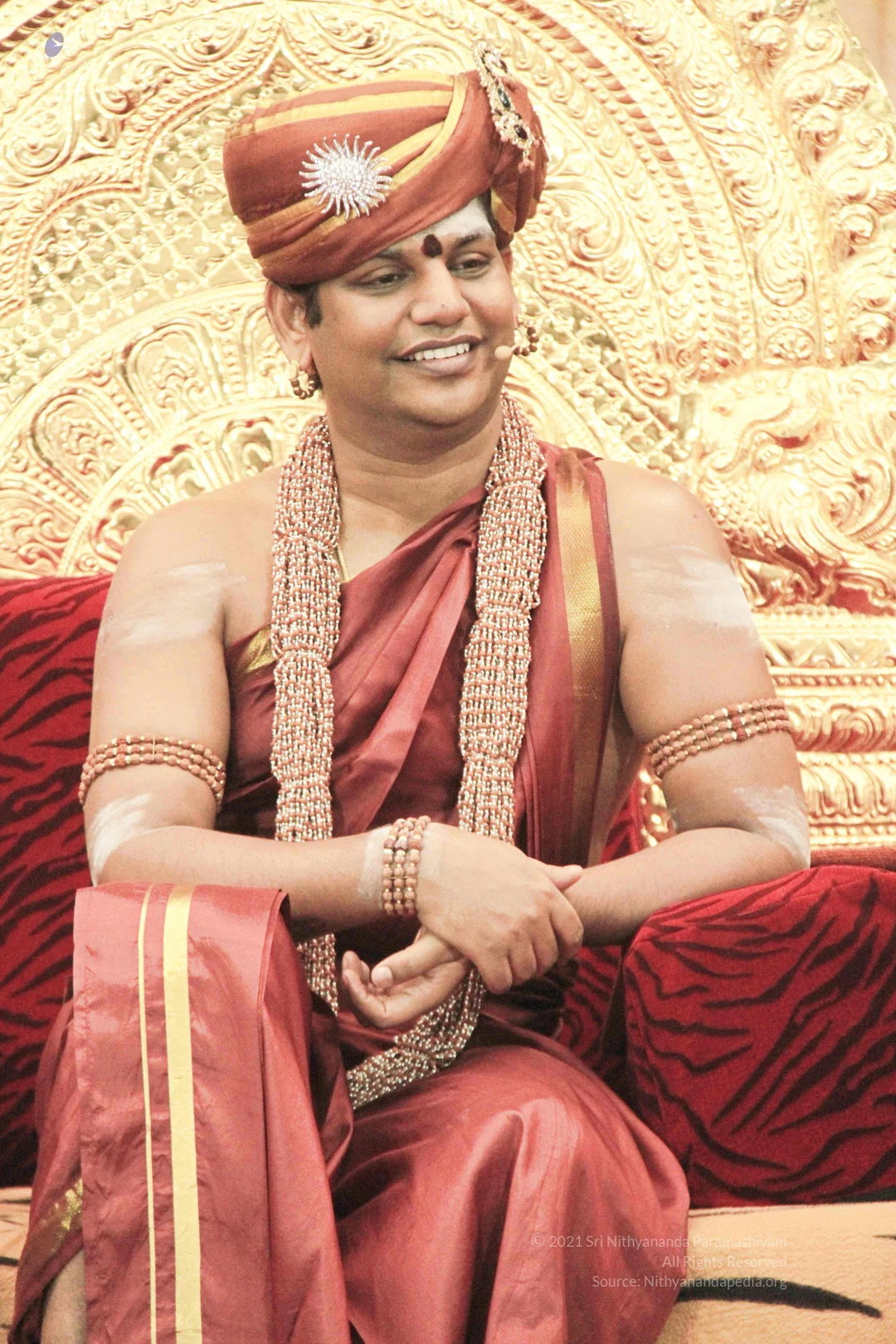
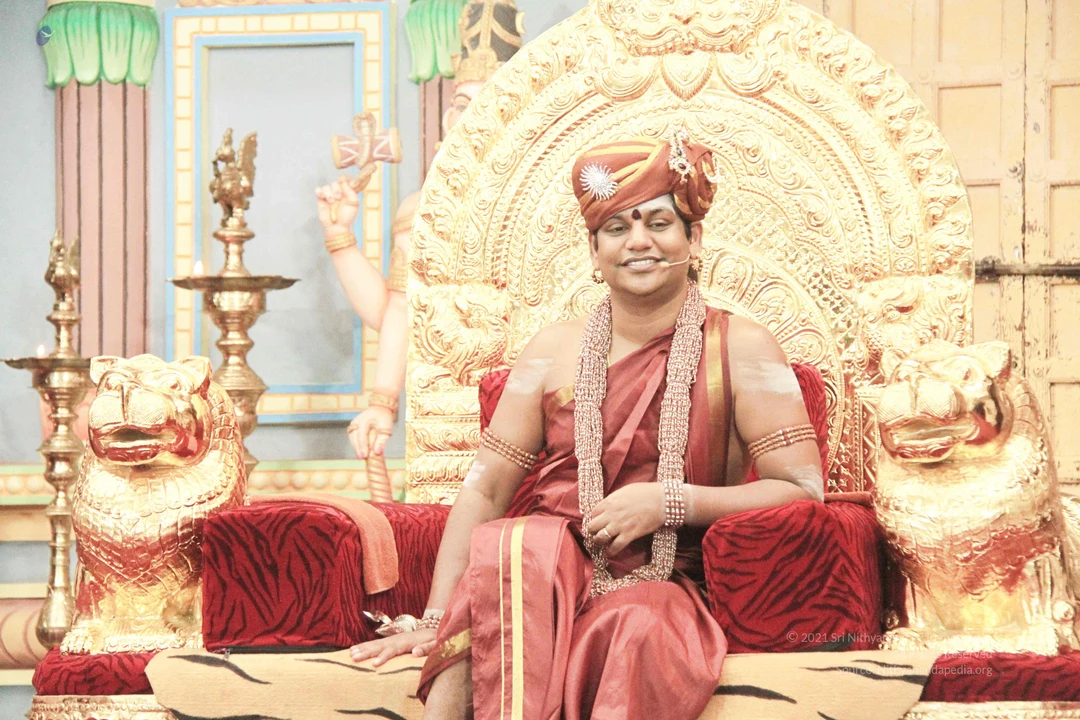
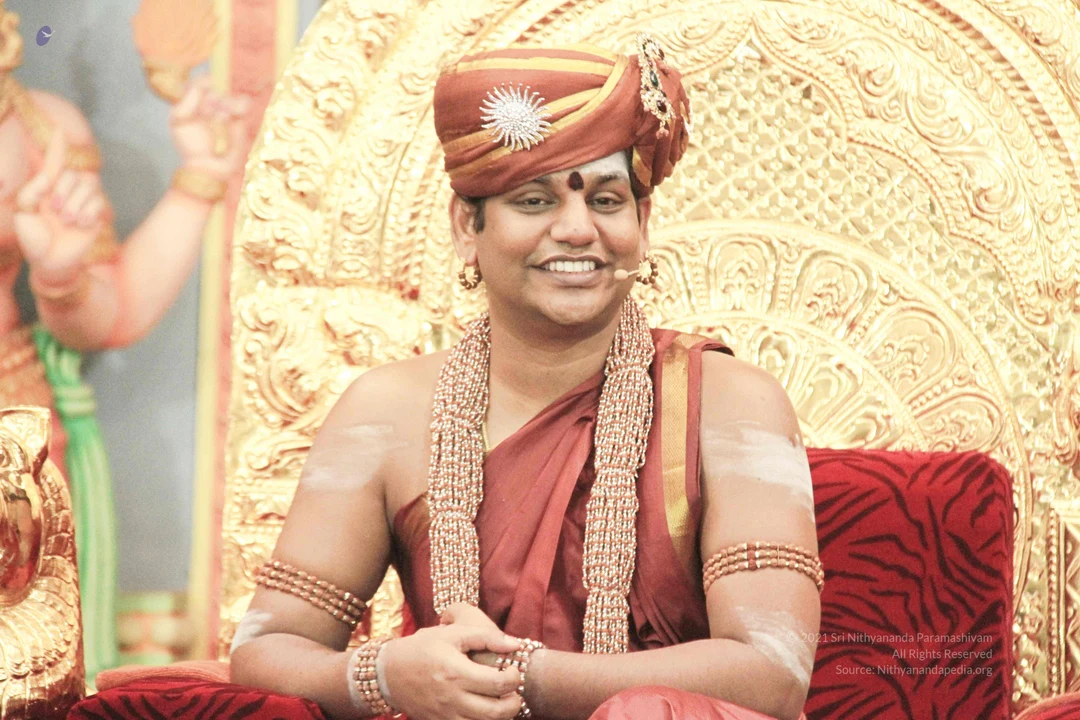
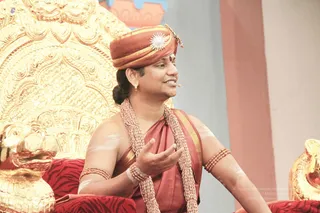
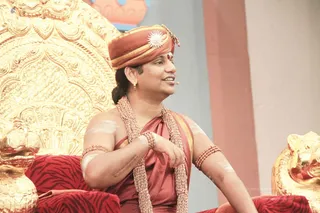
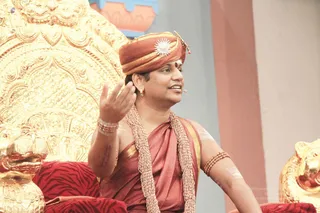
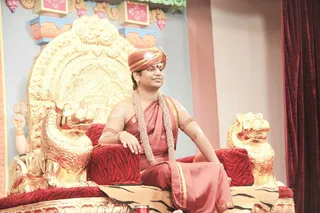
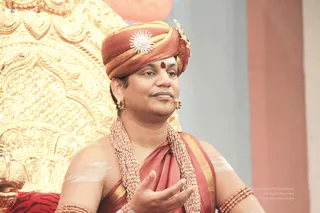
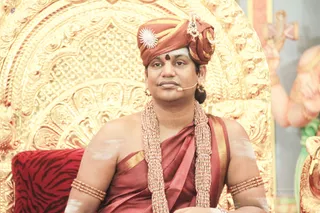
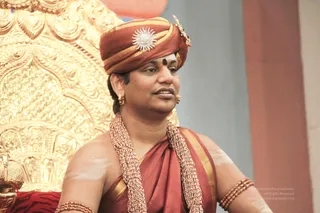
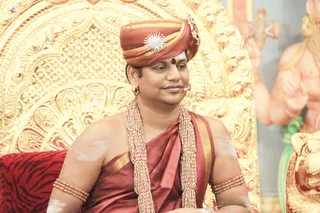
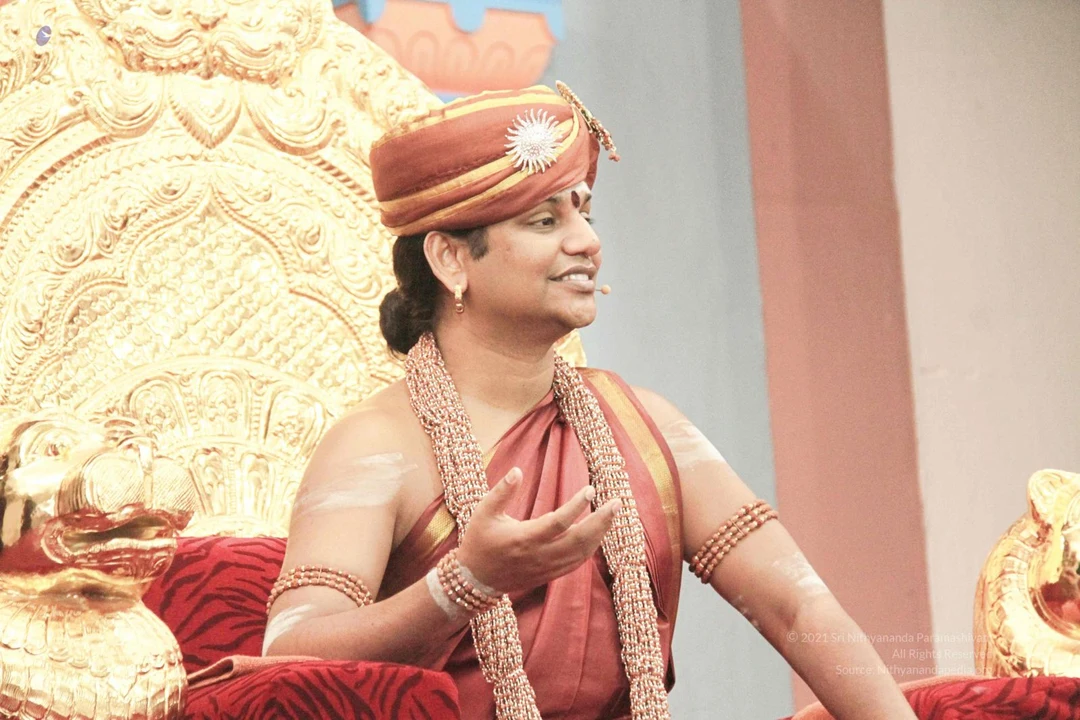
SPH delivering the Satsang
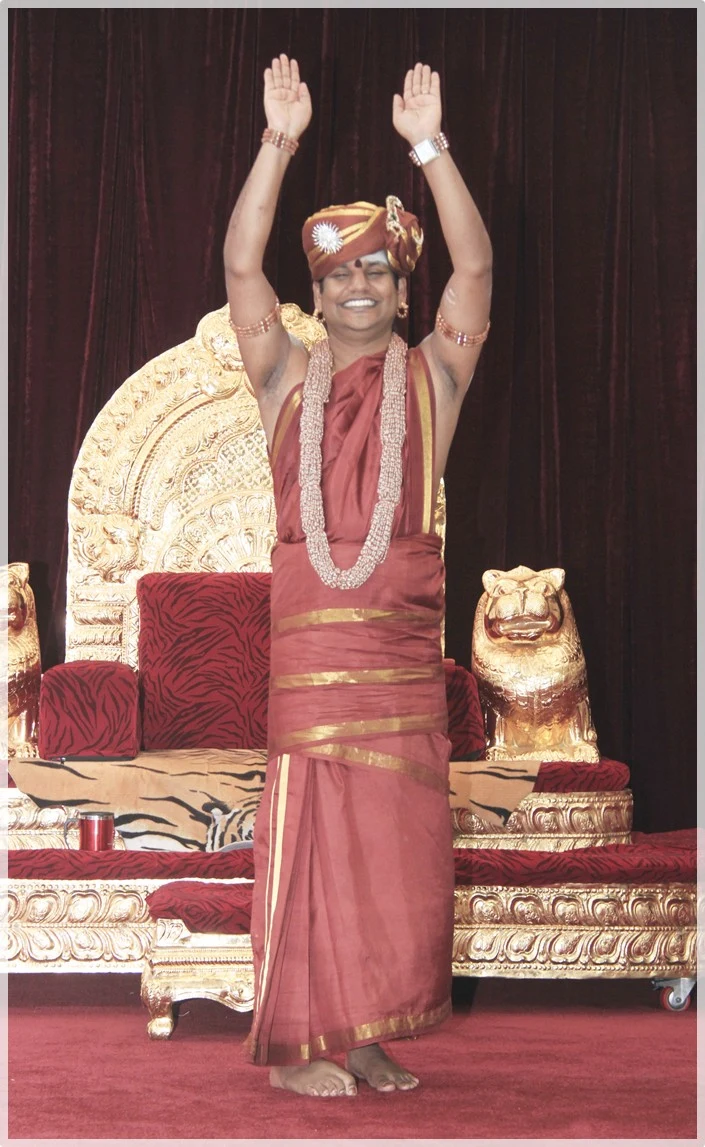
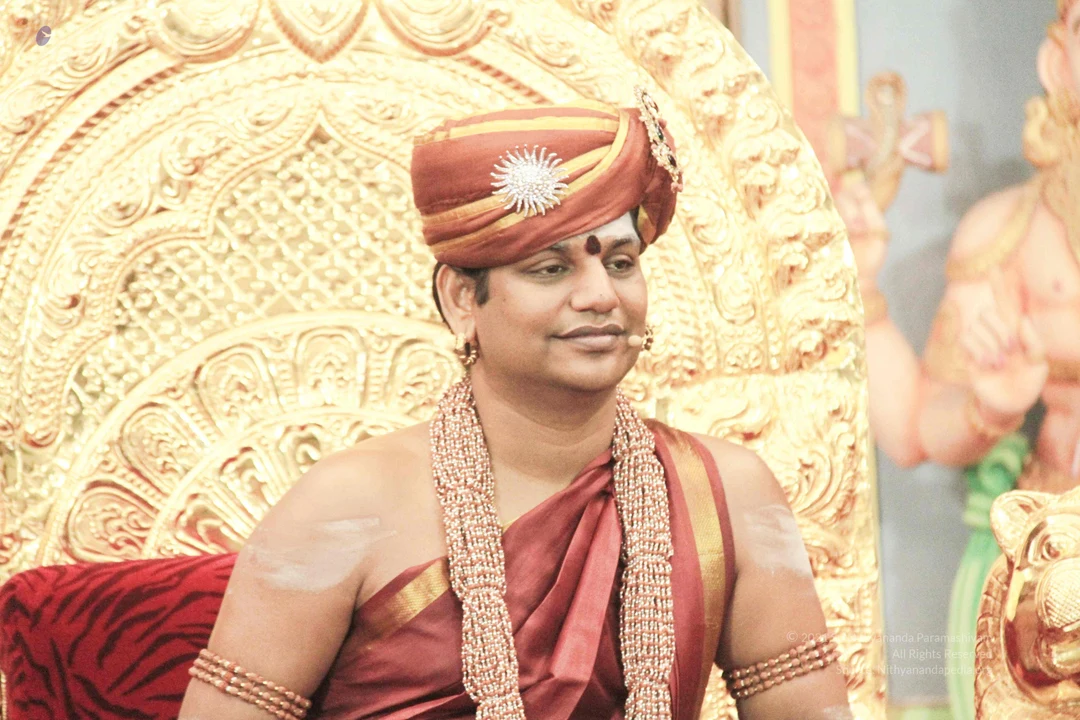
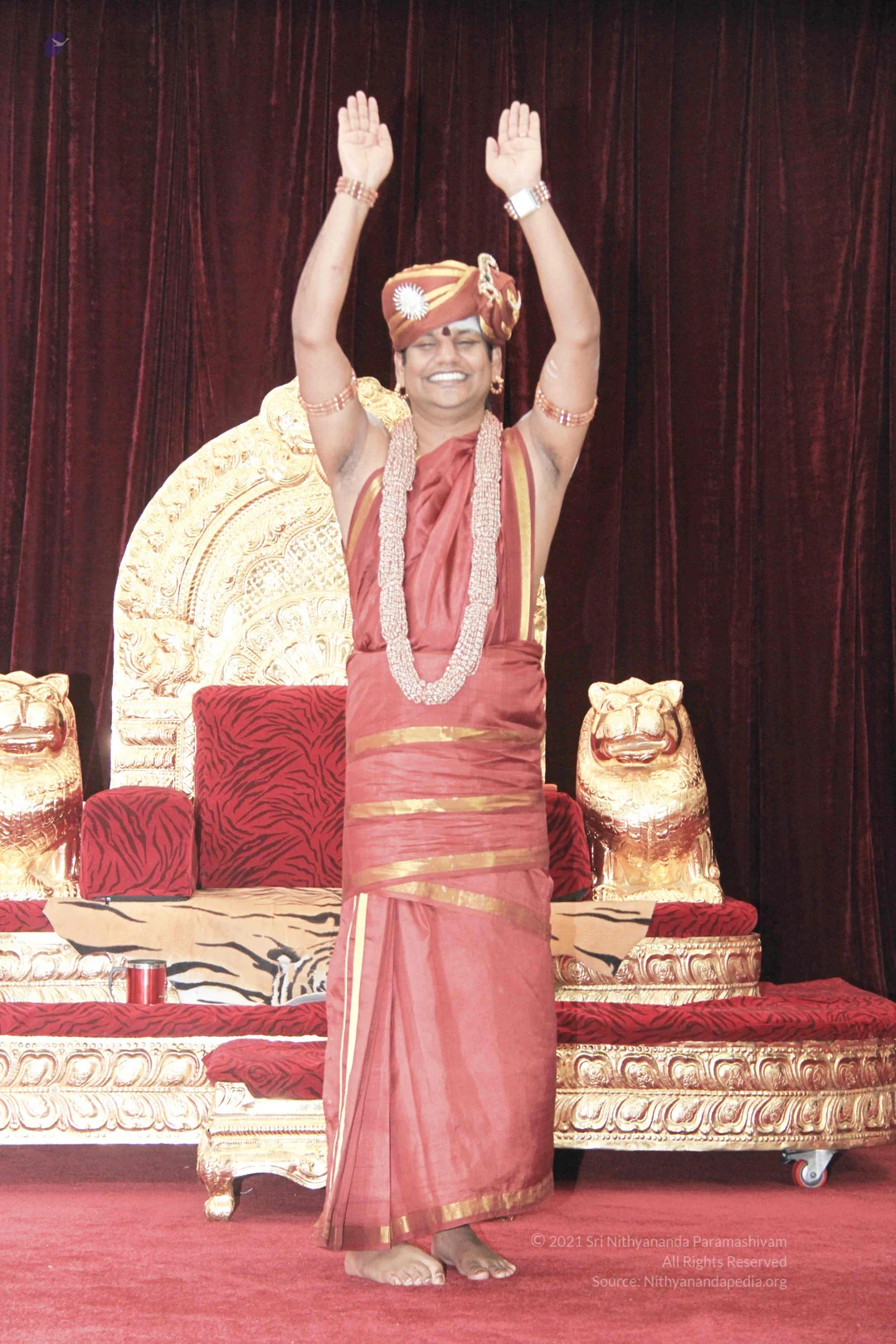
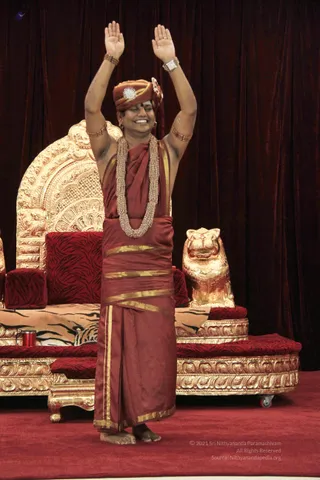
SPH Blessing the world

01--Pada-Puja

02--Satsang

03--Darshan

Photos from this day

View all 135 photos

Photos from the Day

18 photosSource gallery
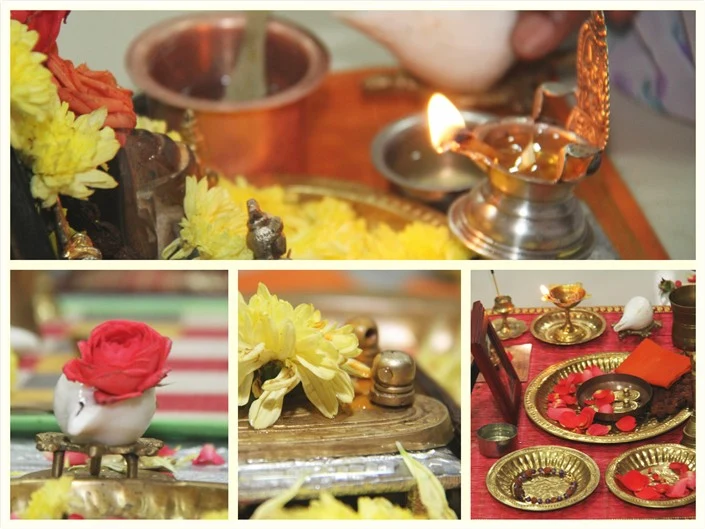
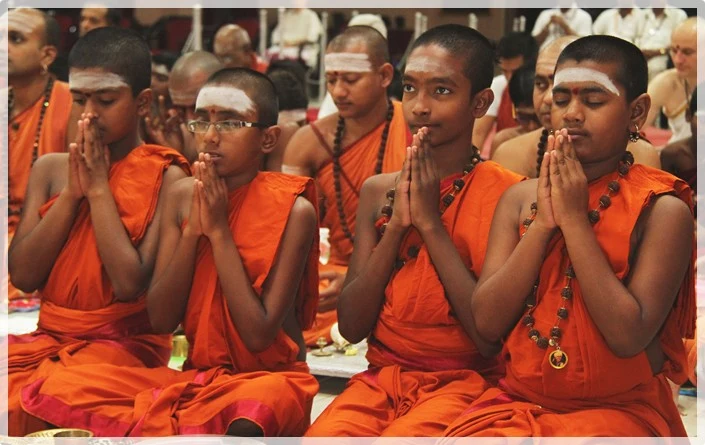
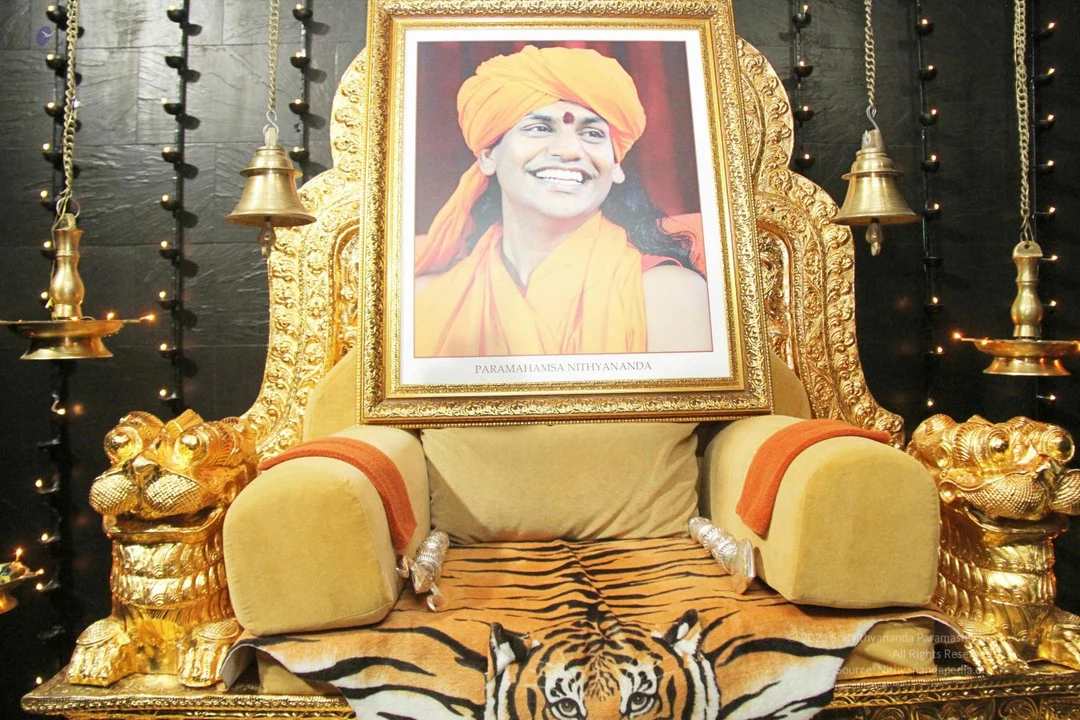
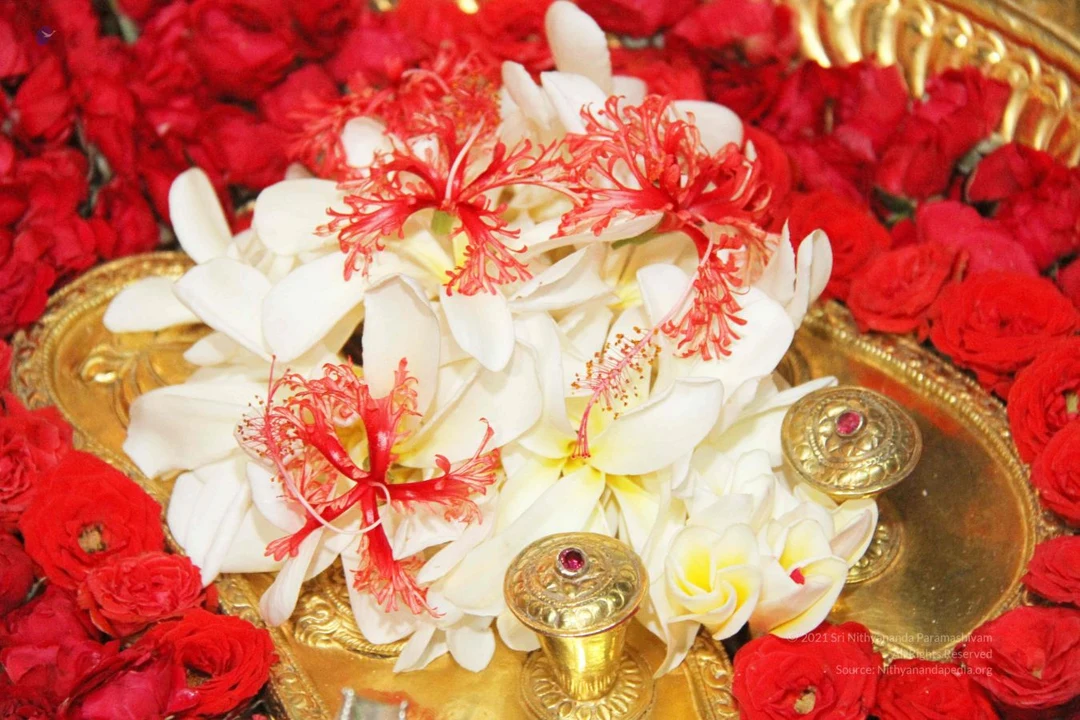
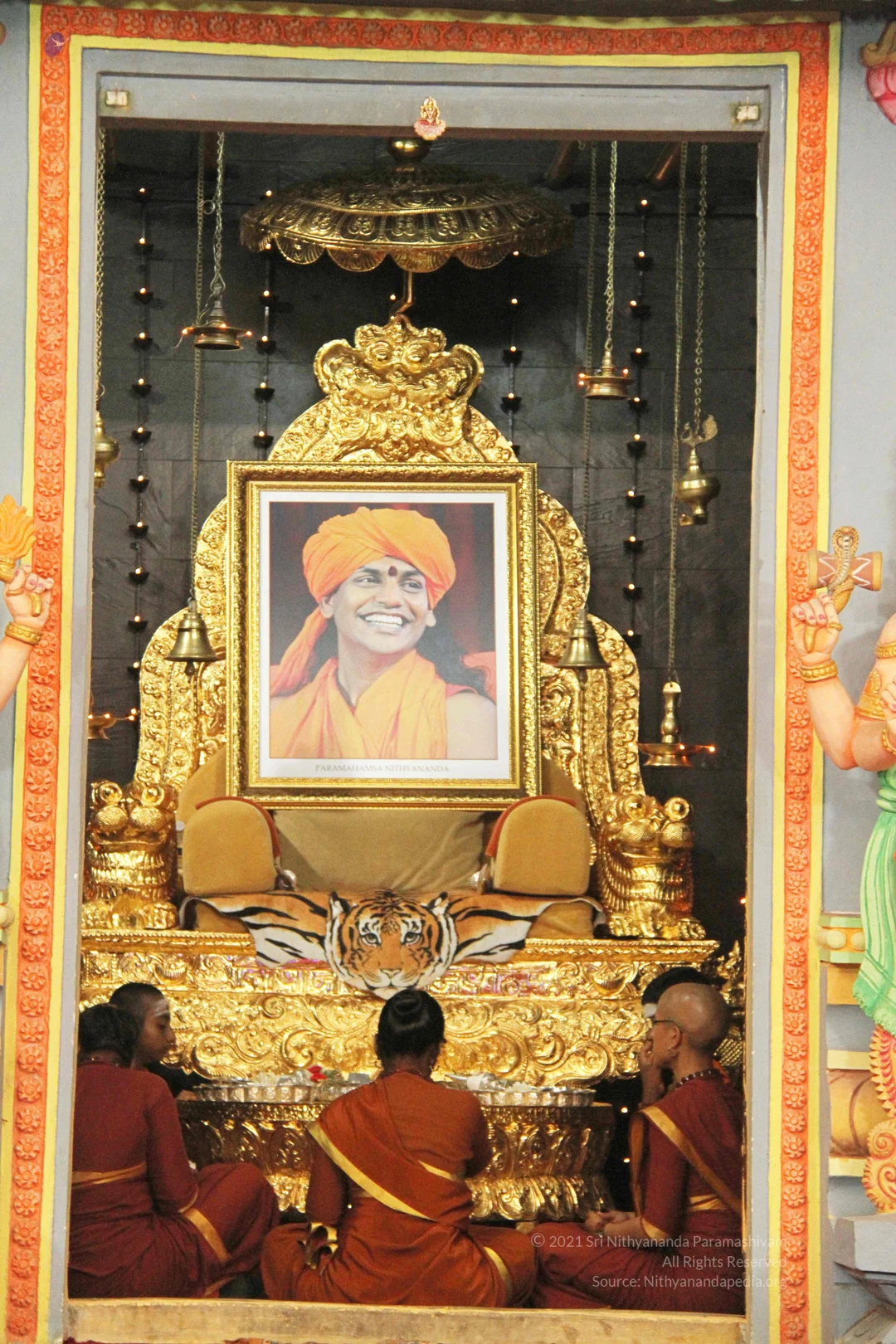
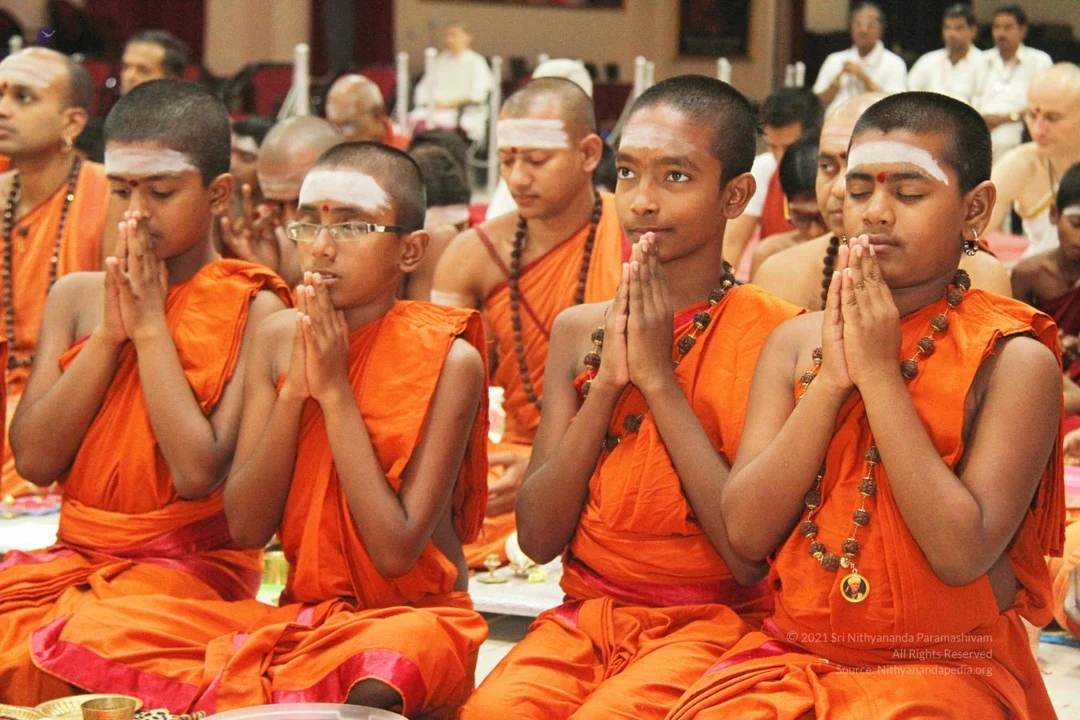
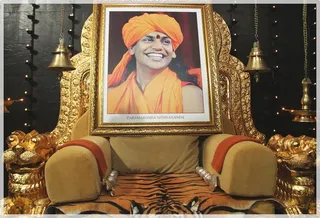
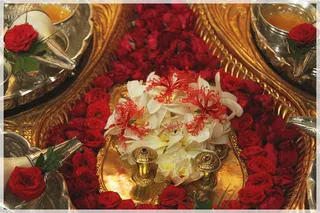
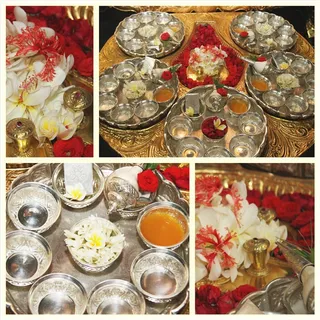
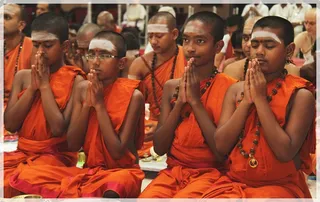
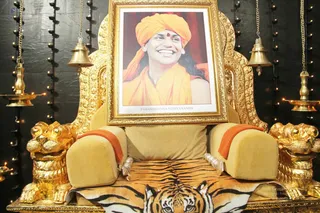
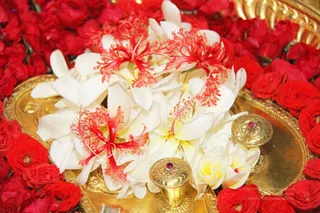
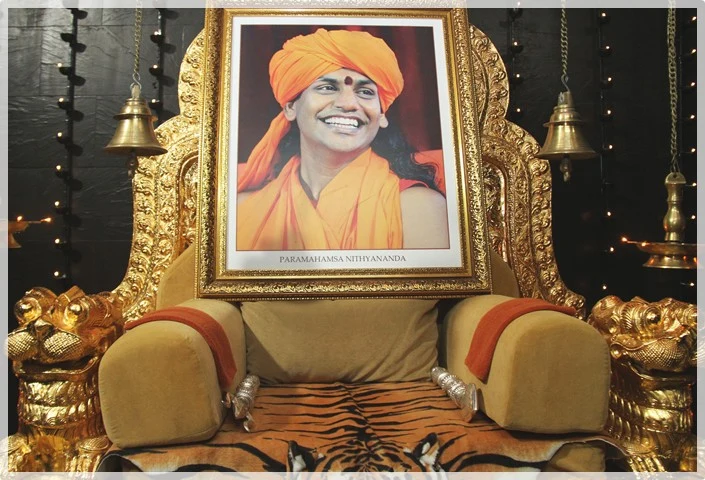
An empty ornate golden throne with carved lion-head armrests sits on a tiger-skin rug, with tan cushions and orange-red accents. Above the seat hangs a large framed photographic portrait of a smiling man in an orange turban and orange robe with a red bindi; the printed caption on the frame reads "PARAMAHAMSA NITHYANANDA". Two brass hanging bells and a brass oil lamp flank the throne against a dark backdrop with string lights. No physical people are present; the portrait is a printed depiction on a framed picture.Close-up photograph of a ritual arrangement on a gilded tray. A dense bed of red rose petals covers the tray, with a central heap of white flowers streaked with red. Silver bowls with red rose blossoms and yellow liquid sit at the upper corners, and a silver spouted vessel appears at the left edge. No people are visible; the scene suggests a puja or abhishekam setup.A four-panel collage of ritual offerings arranged on ornate gold and silver trays. Panels show silver bowls holding honey or ghee, white plumeria and frangipani flowers, red rose petals, red hibiscus blooms, a small gold-topped vessel and a silver kalasha-style pot with a flower. Gold and silver puja plates with scalloped edges and engraved floral patterns hold the arrangements; no people are visible.A four-panel collage of Hindu puja items with no people visible. Top panel shows a copper vessel and a lit brass oil lamp on a tray with yellow and orange marigold flowers, a hand pouring liquid at the top edge. Bottom-left panel shows a white conch shell topped with a red rose on a brass stand. Bottom-middle panel shows a small brass shivalingam on a stone base beside yellow flowers. Bottom-right panel shows a red-draped table with brass plates of red petals, a small lamp, a conch and brass bowls. Plain ritual offerings arranged for worship.A multi-panel video-conference collage of satsang sessions shown on a screen, with each panel captioned by a white label. Top left panel labelled "GUADELOUPE RAMESWARAM" shows a woman in a red sari and a child seated on the floor with a small deity murti and offerings on a mat. Top right panel shows a man in white dhoti seated on a mat before a lit lamp and brass vessels, with a red cloth. Middle left panel labelled "...NTO KAILASAM" shows robed figures seated. Center panel labelled "NITHYANANDA NAGARAMU HYDERABAD" shows seated devotees with a woman in a red sari offering a plate. Right panel labelled "HOUSTON KALAHASTHI" shows a woman in a blue jacket seated before a tray of fruit and flowers, with a framed deity picture. Lower panels labelled "...MPUR - PALANI" and "LOS ANGELES ARUNACHALA" show devotees seated near a lamp and a framed picture. The panels depict screens, not physical people in the room.A photograph of young boys seated in a row in orange-saffron robes, hands pressed together in anjali mudra with eyes closed in devotion. Several have white vibhuti or tilak marks on the forehead and rudraksha malas around their necks. Behind them, other saffron-robed participants and seated devotees in white clothing fill the hall, with brass vessels and small offerings on the floor in front. The setting suggests a satsang or puja gathering.

Aadheenavasis offer Paduka Puja

33 photosSource gallery
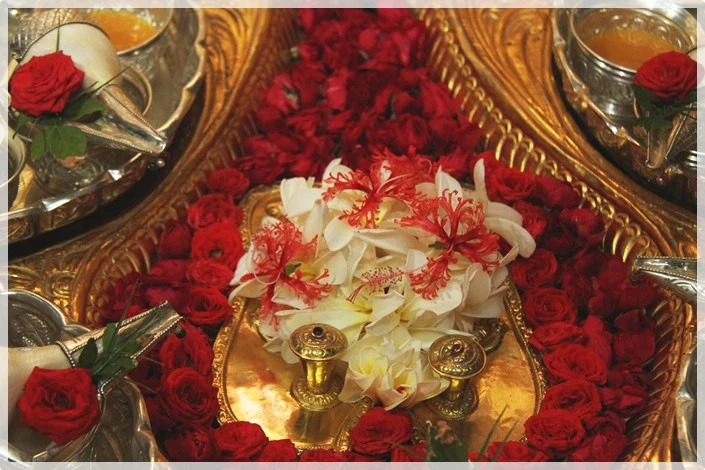
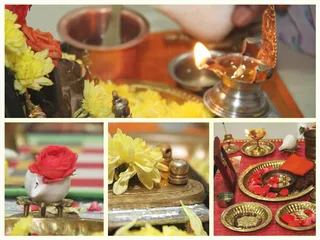
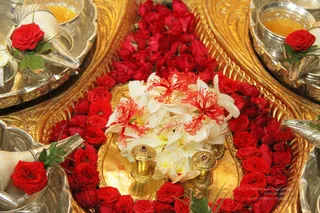
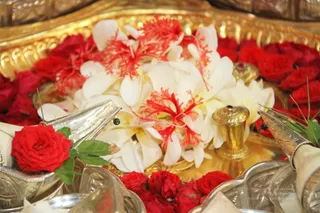
Close-up photograph of a ritual offering arrangement on an ornate gold tray. Red rose petals and red roses fill the tray, with white plumeria flowers and red hibiscus blooms piled at the centre. Two small gold cup-shaped holders with red jewel accents stand among the flowers. Silver bowls holding a yellow liquid and silver conch-shaped vessels with red roses and green leaves sit at the corners. No people are visible.A top-down view of a ritual arrangement on an ornate gold-embossed table. Five silver trays hold small silver bowls filled with white flowers, yellow liquid or honey-like offerings, and lit oil lamps. A central gold plate holds white flower petals, and a ring of red roses surrounds it. Silver cups with red roses and silver spouted vessels sit among the trays. No people are visible.A golden ornate throne draped with a tiger-skin rug stands empty in a dark shrine room, with two gilded lion heads flanking the armrests and brass oil lamps hanging on chains at either side. A large gilded framed portrait on the backrest shows a smiling man with a red bindi, an orange turban and orange robes, labelled Paramahamsa Nithyananda. Orange-covered cushions rest on the armrests, and brass bells hang above the throne. No physical people are present.Close-up photograph of a gold tray heaped with white plumeria (frangipani) flowers and red hibiscus blossoms with long red stamens, set among loose red rose petals. Two small gold cups with red gem accents sit on the tray's edge. No people are visible; the arrangement looks like an offering of flowers for worship.Overhead view of a ritual offering tray on an ornate gold-embossed surface. A round engraved silver plate holds several small silver bowls: clear water in some, a bowl of yellow-orange liquid, a bowl of white jasmine-like flowers with a yellow-centred white frangipani bloom at the centre, and a floral sprig with a white petal. A silver conch-shaped vessel with a white cloth draped over it sits at the upper right beside red roses. No people are visible.Close-up of a ritual arrangement on a gold-rimmed tray: red roses and red hibiscus flowers surround a heap of white plumeria blossoms. A small gold vessel with a narrow neck stands among the flowers, and silver containers with pointed spouts and green beads sit at the edges. No people are visible; the flowers and vessels suggest puja offerings.

SPH delivering the Satsang
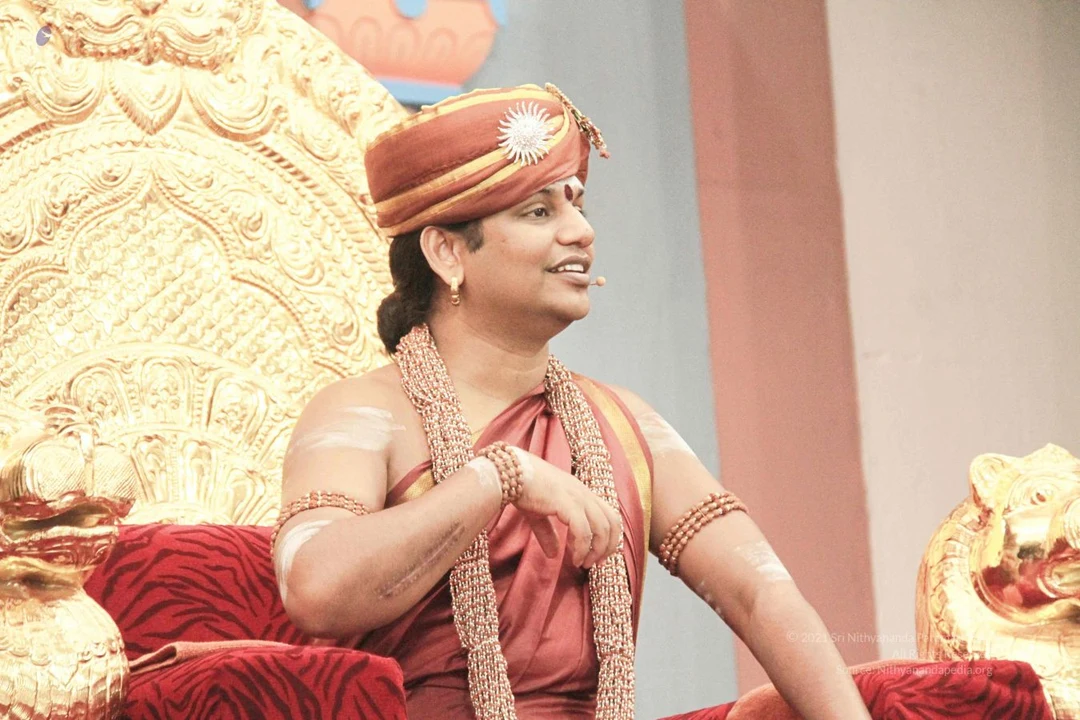
60 photosSource gallery
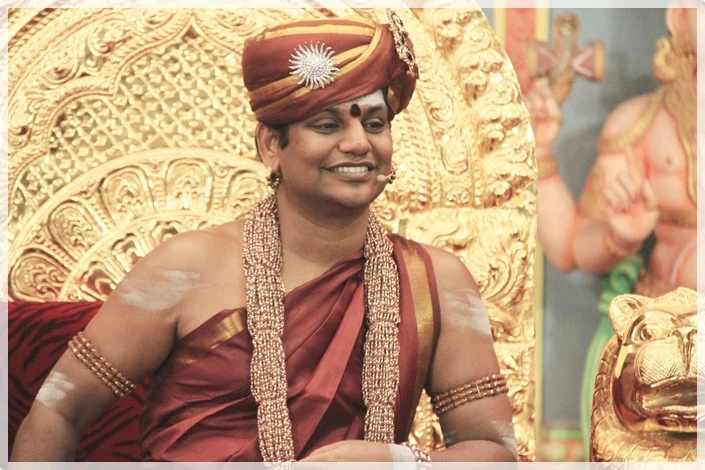
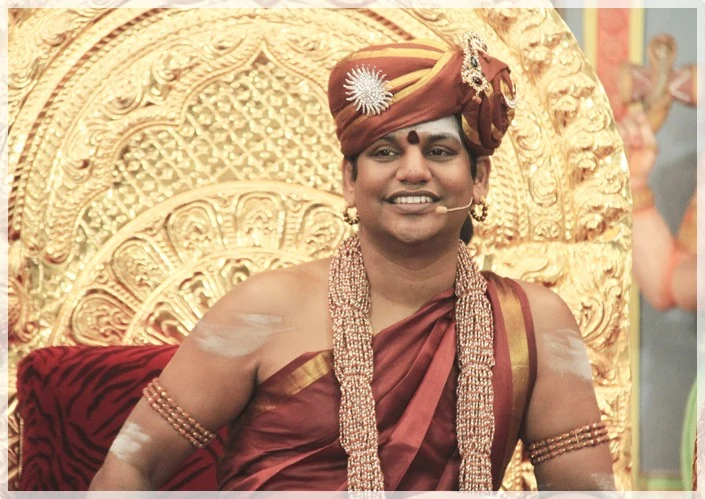
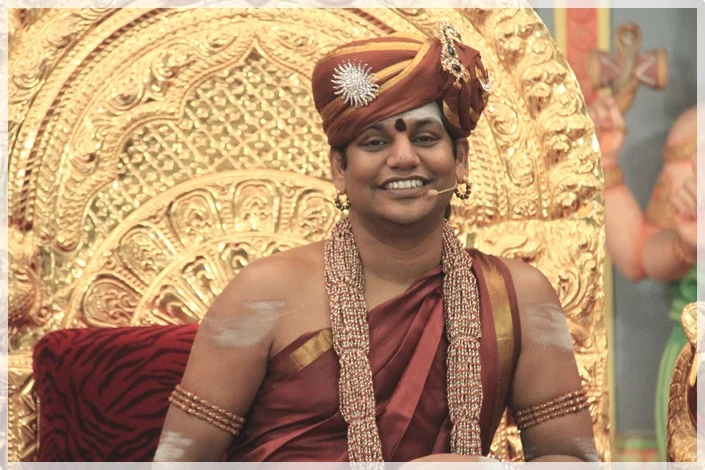
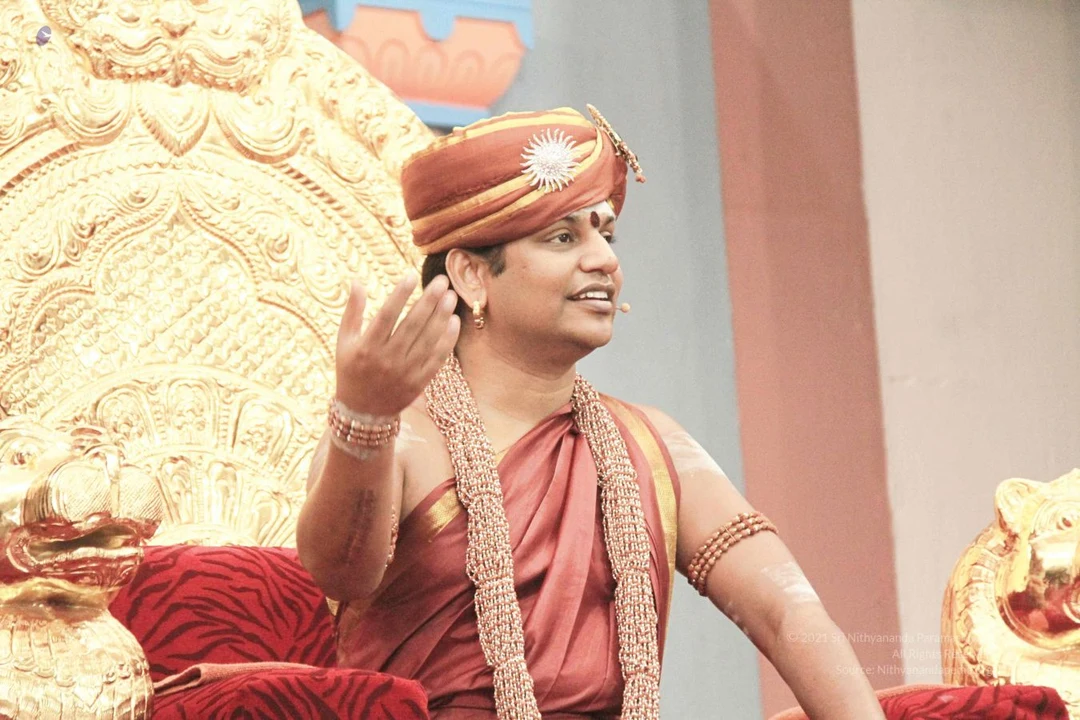
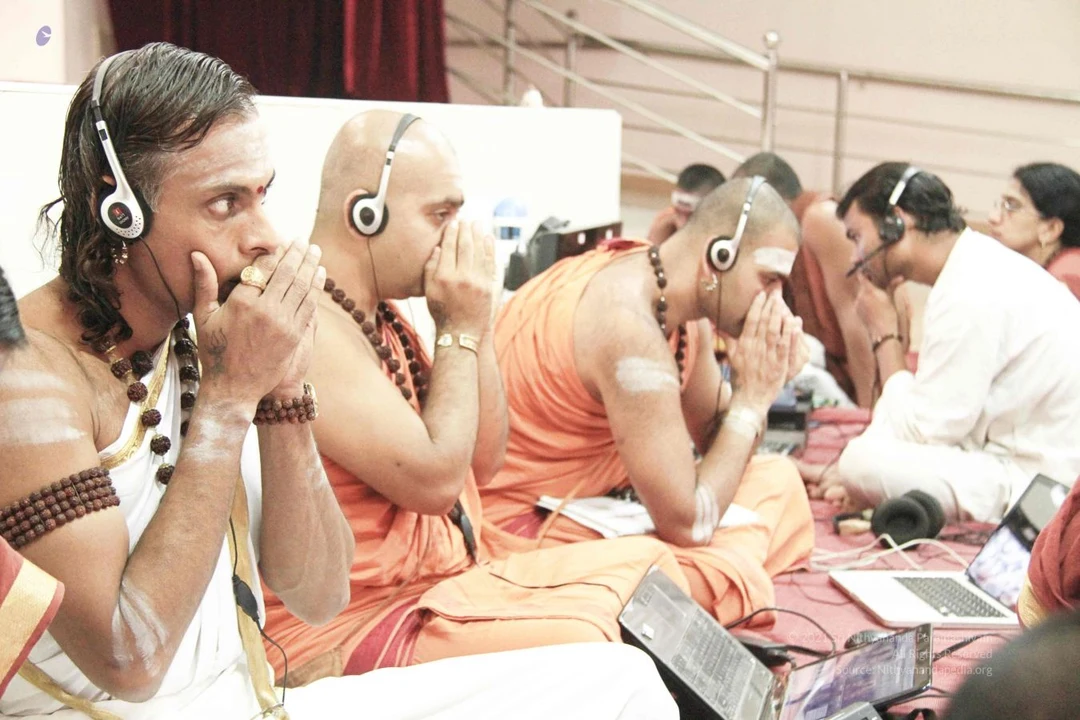
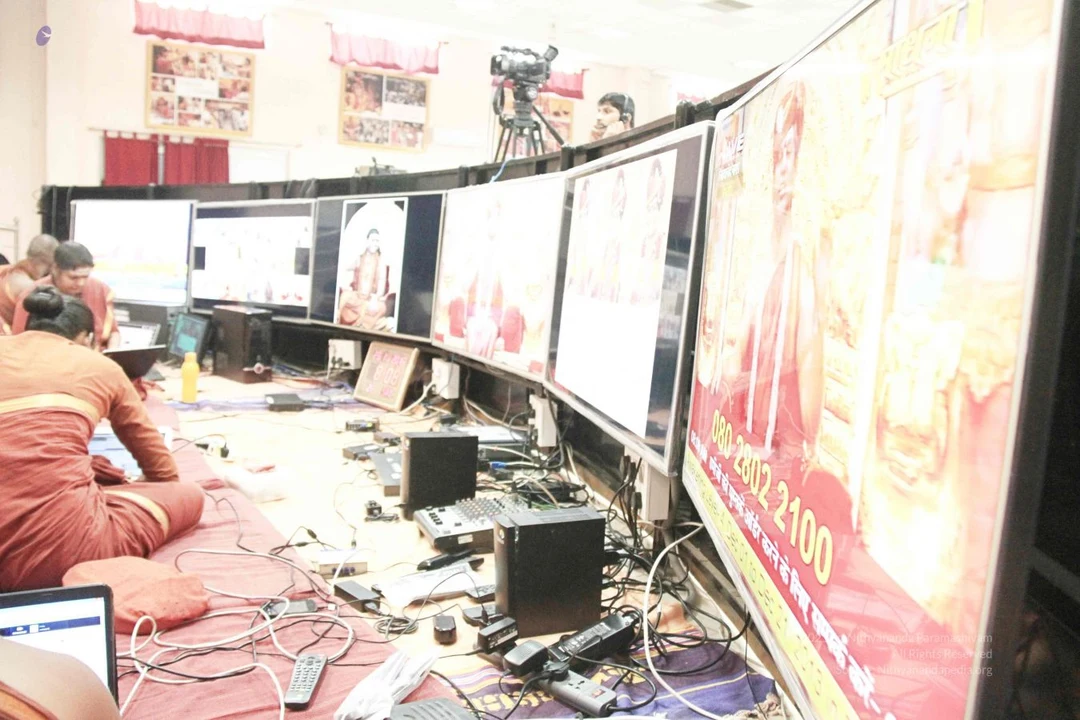
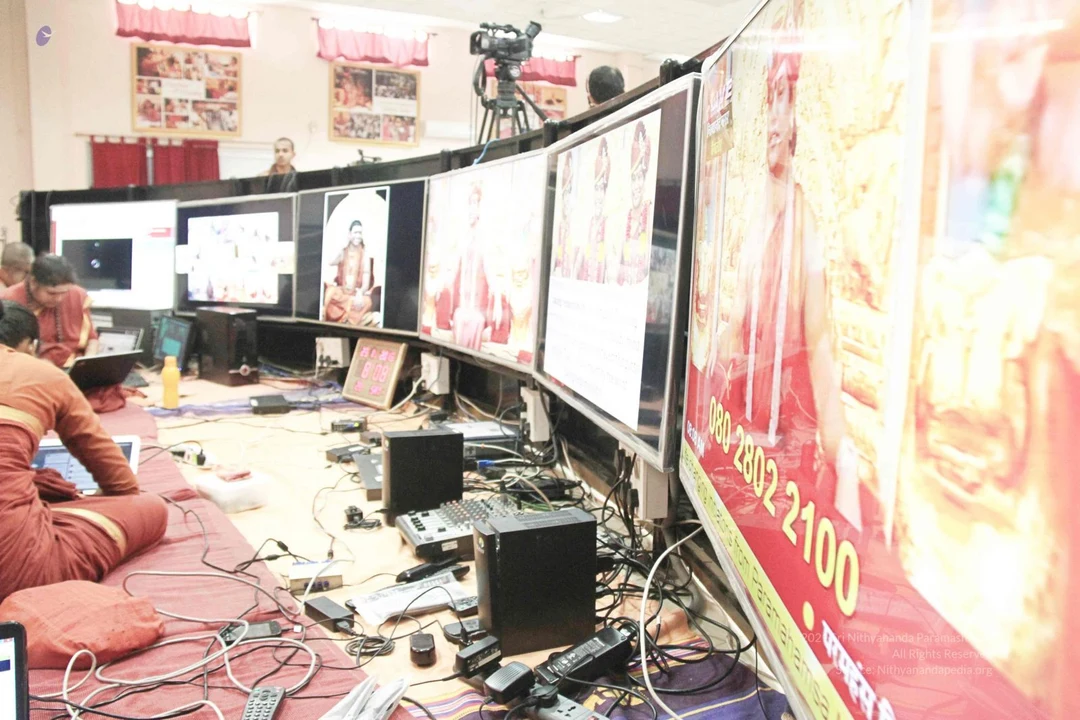
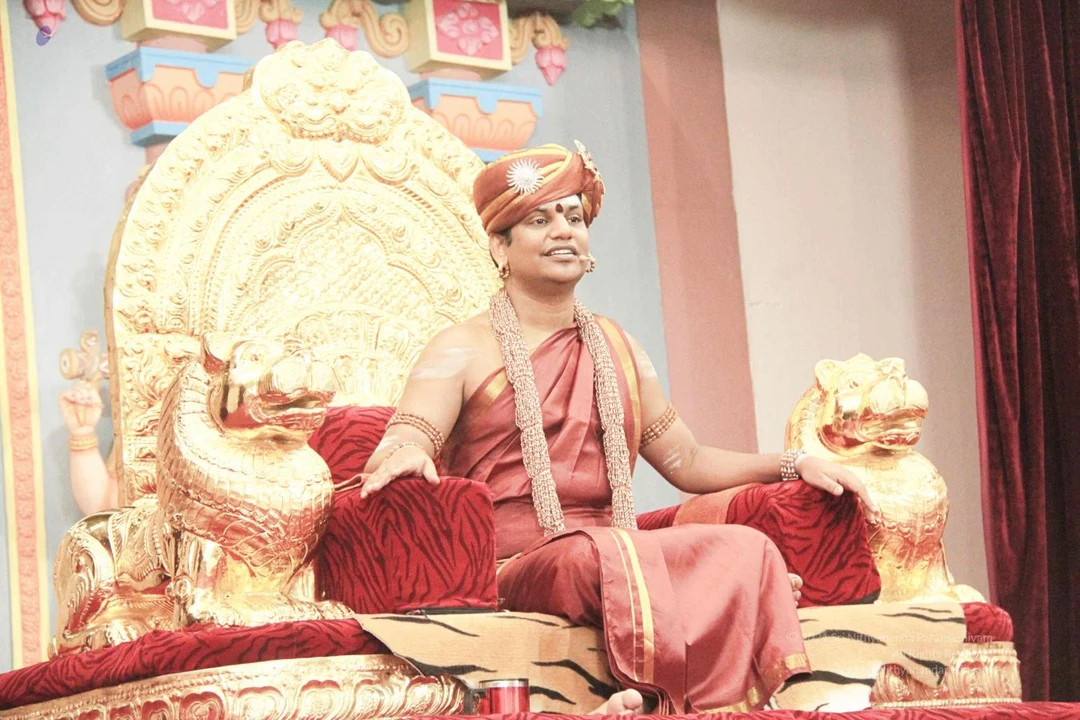
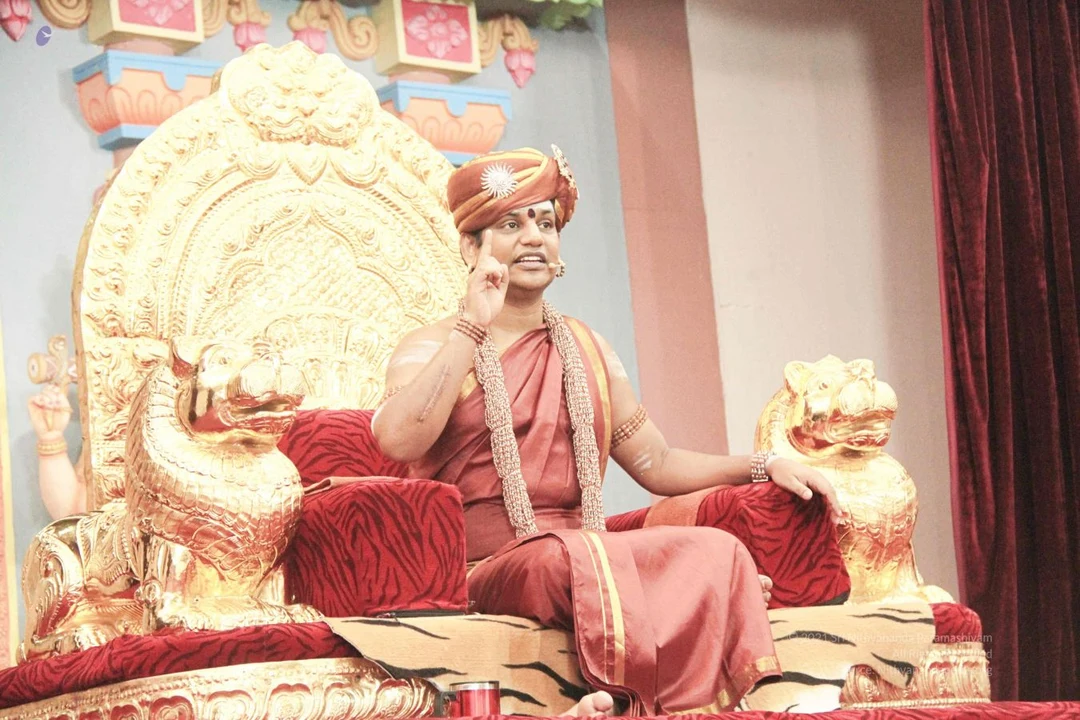
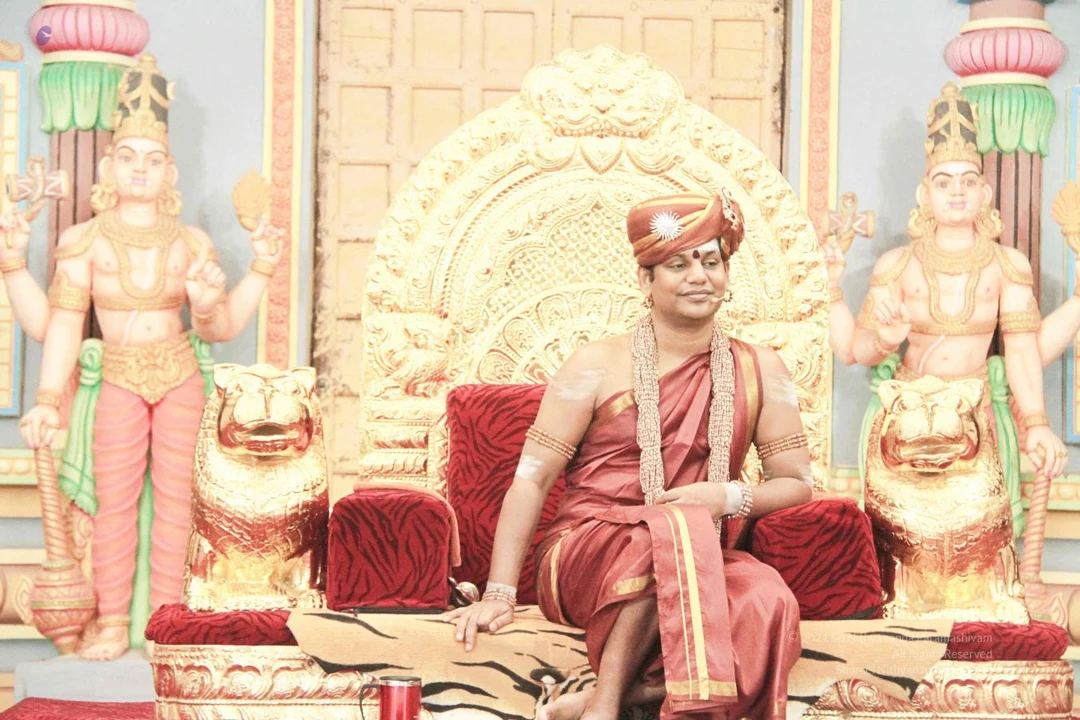
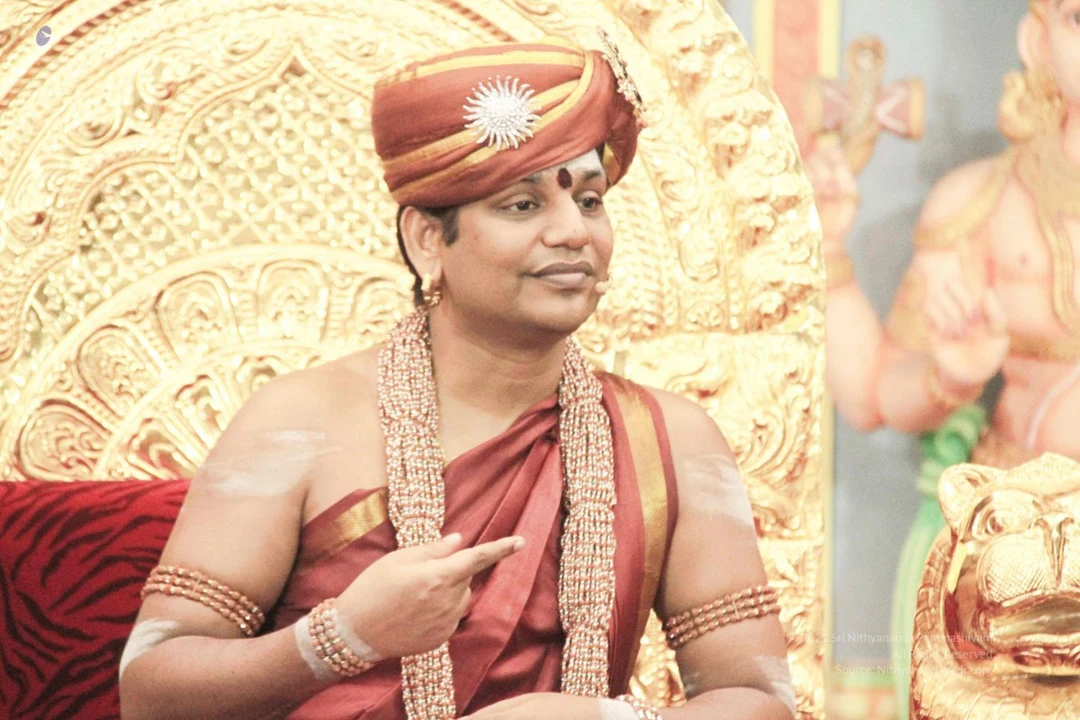
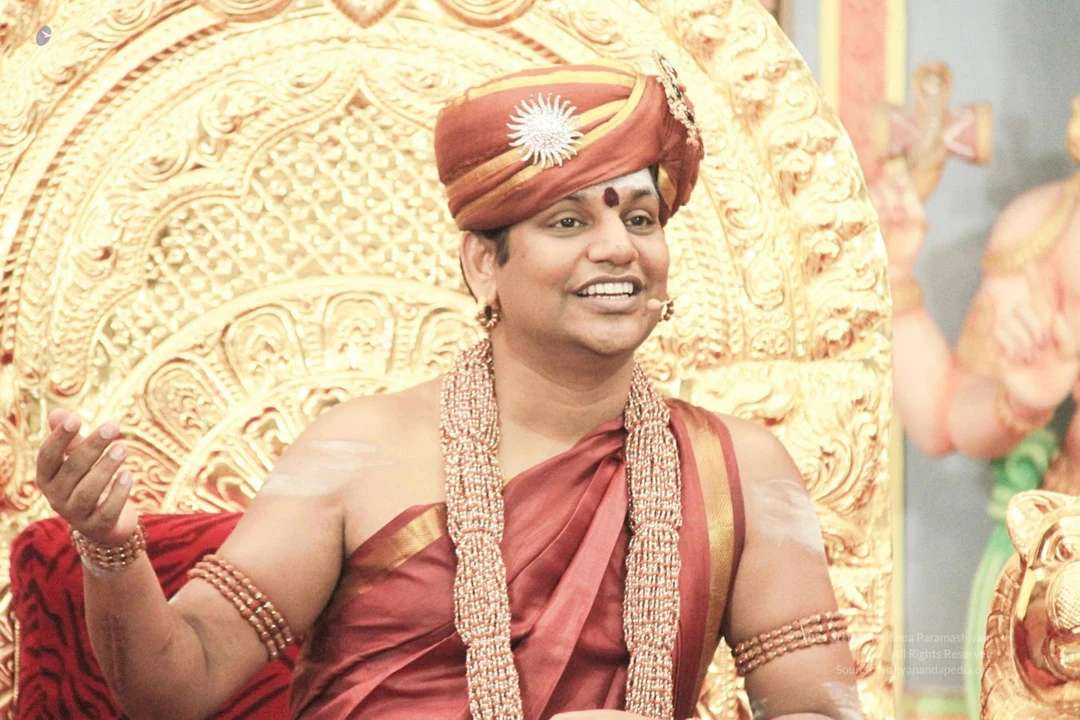
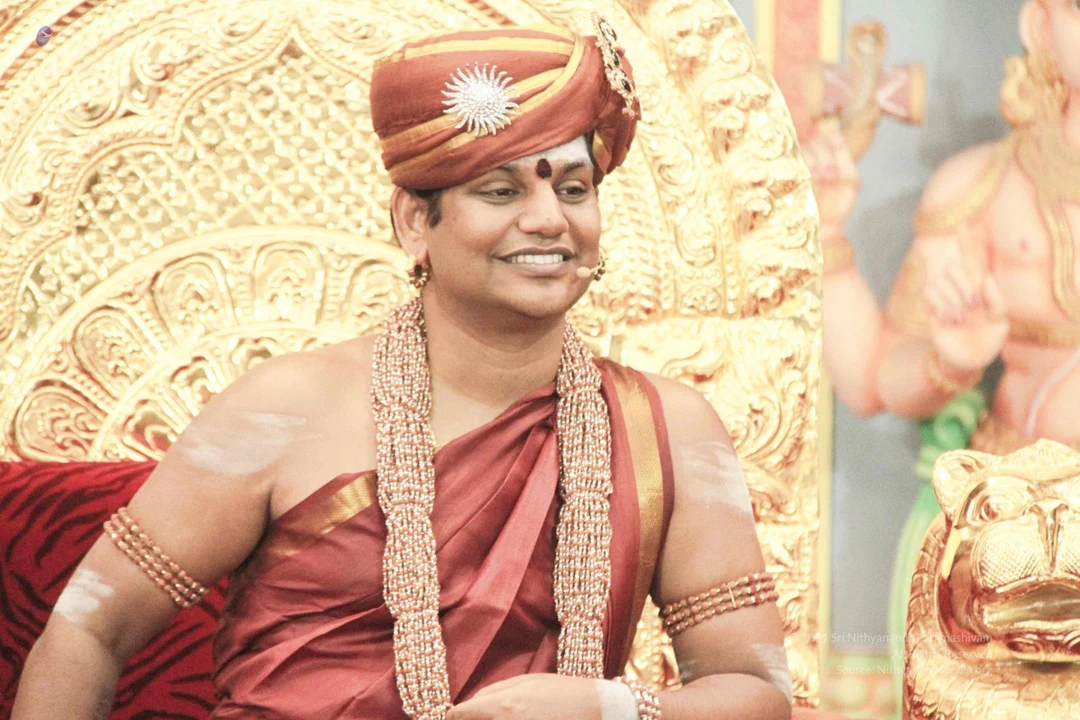
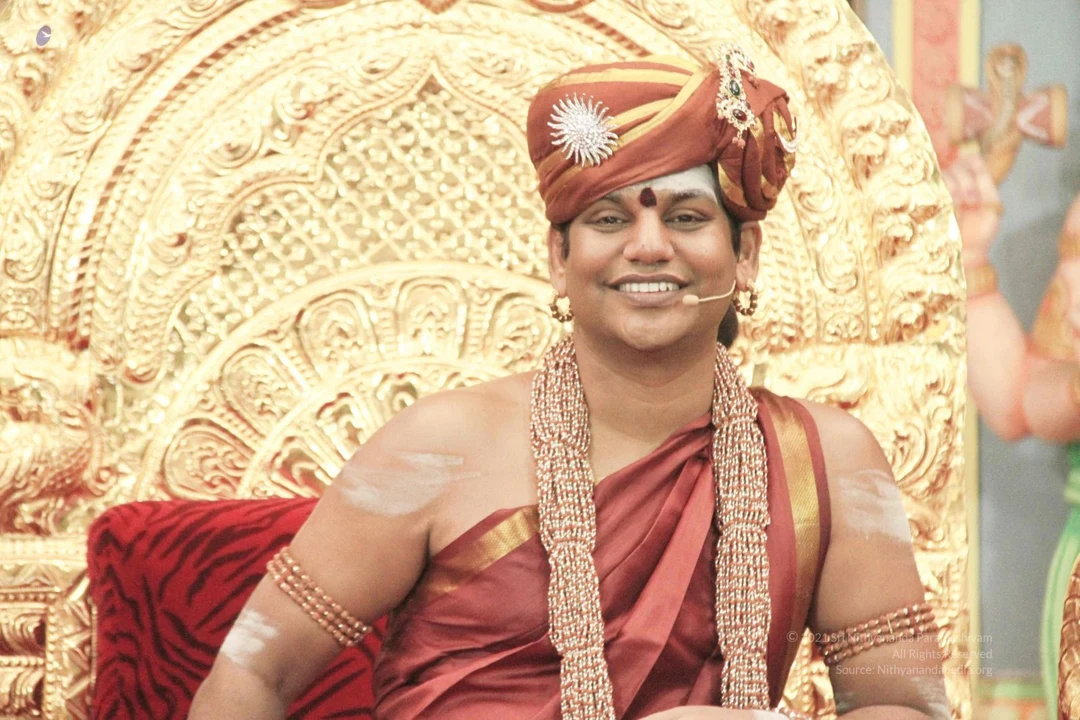
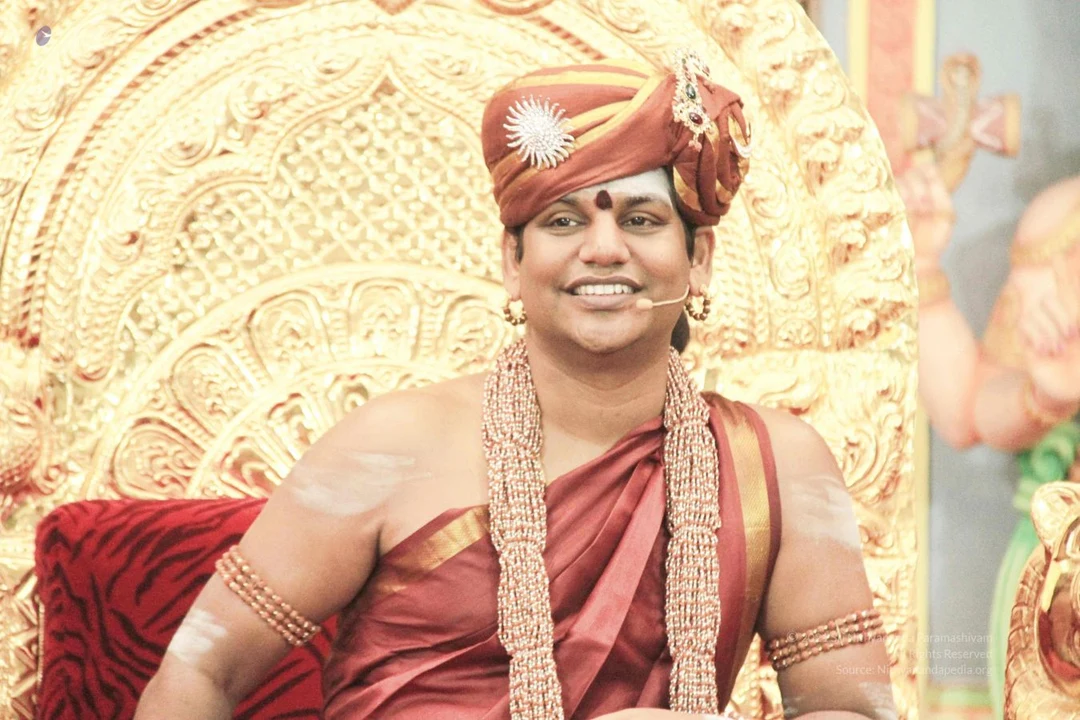
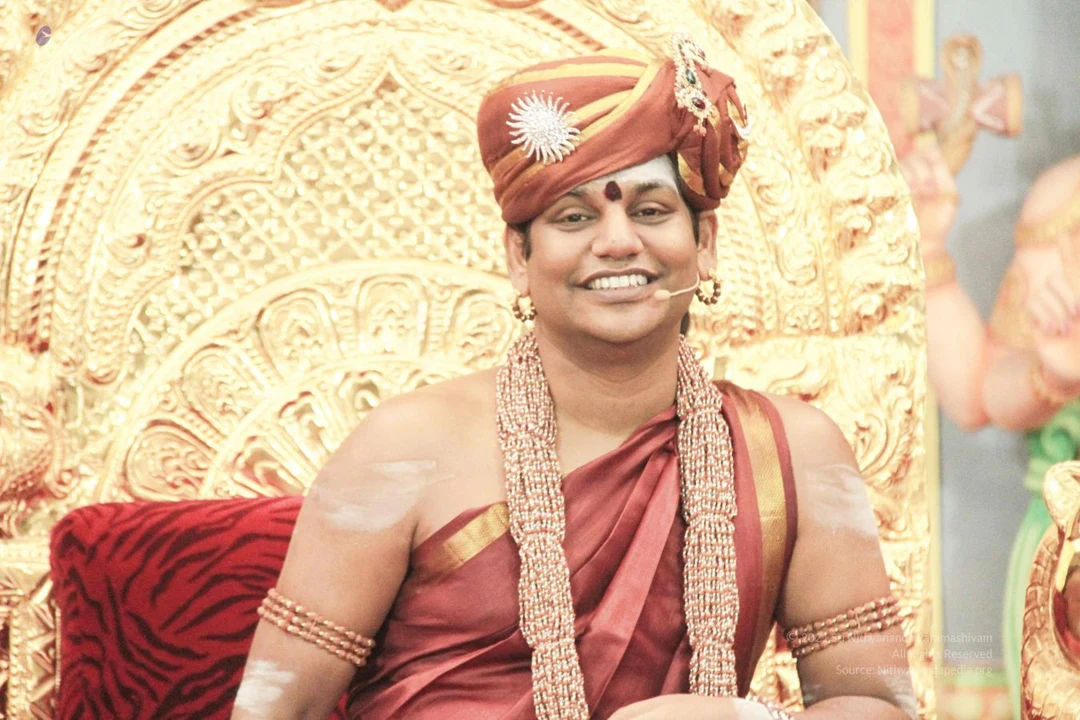
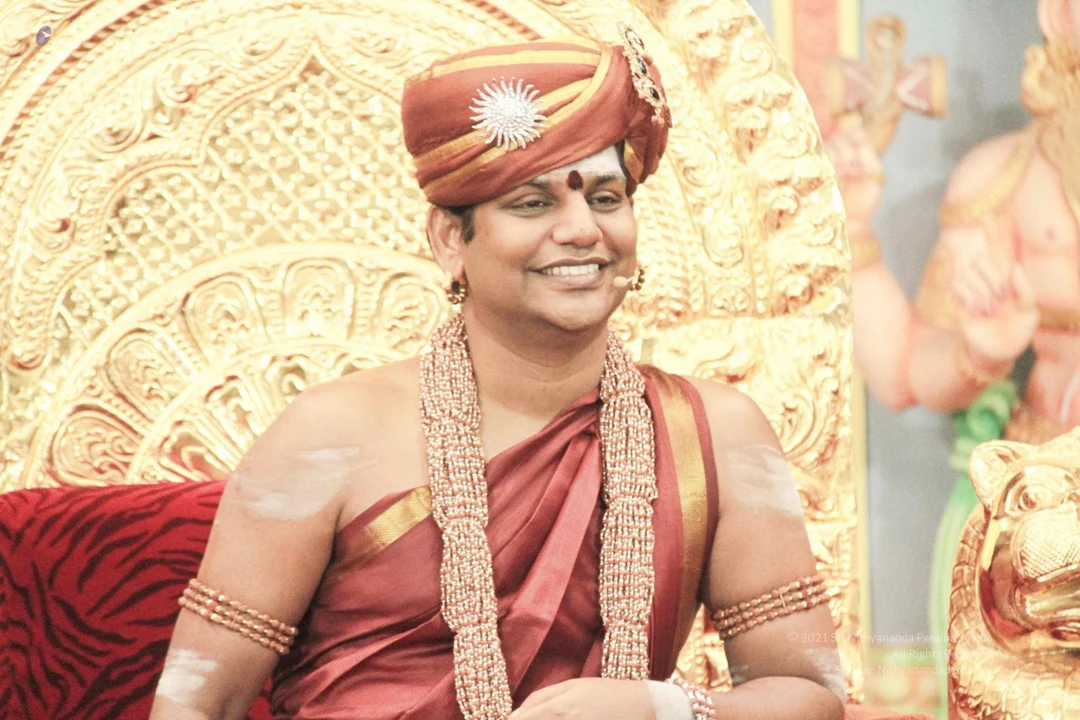
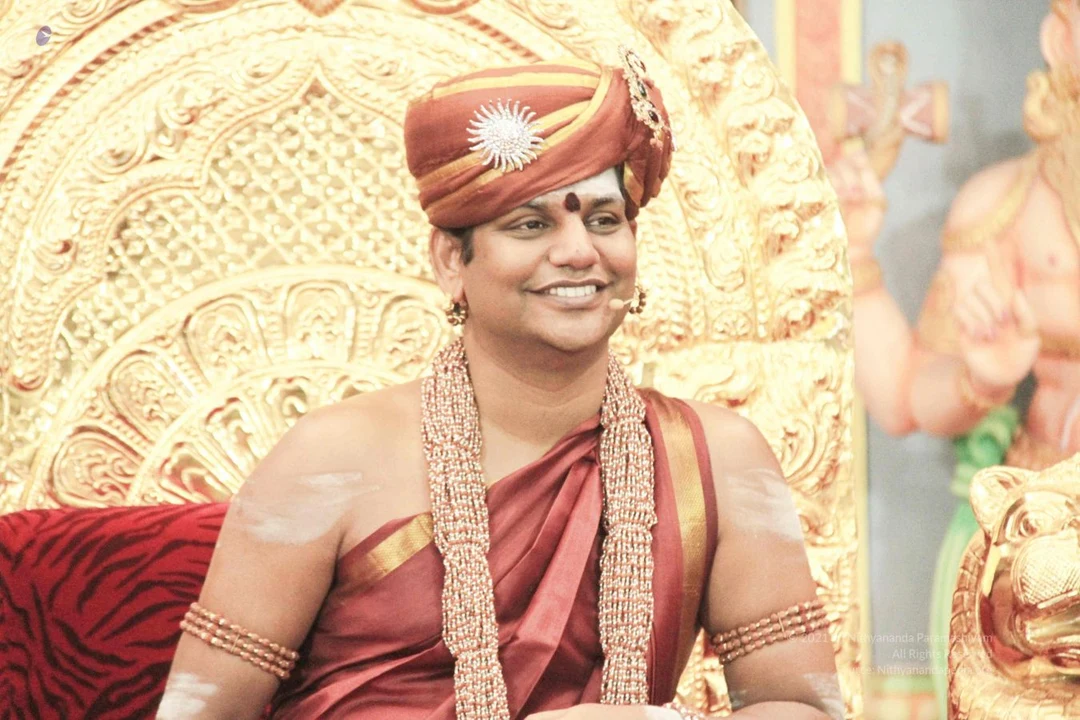
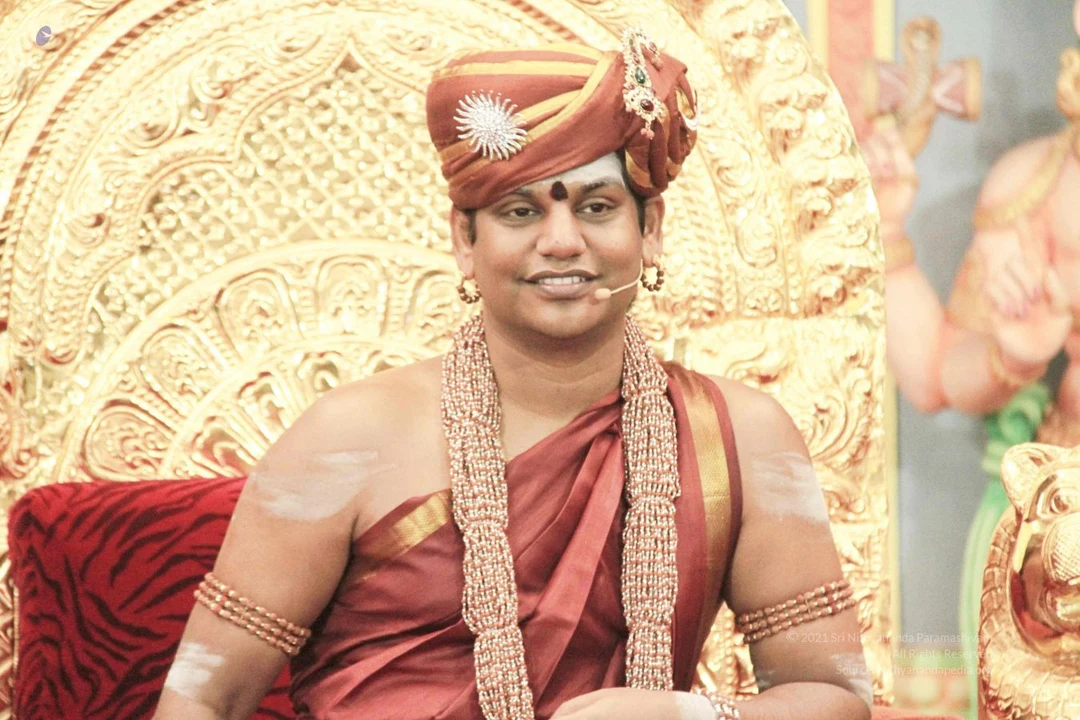
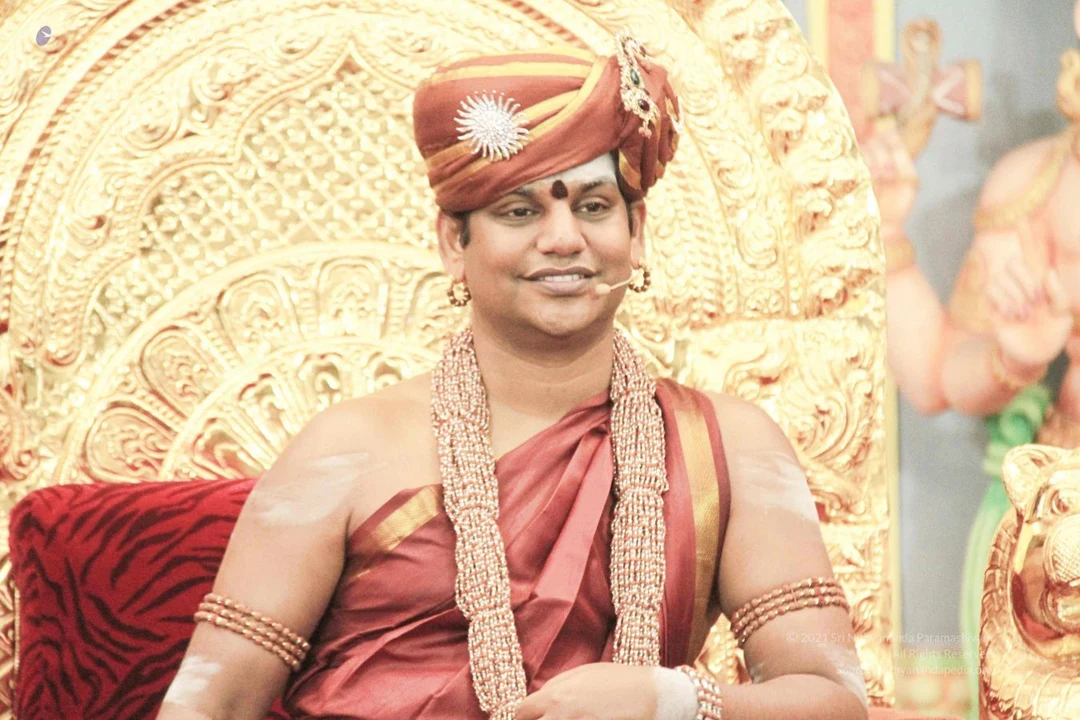
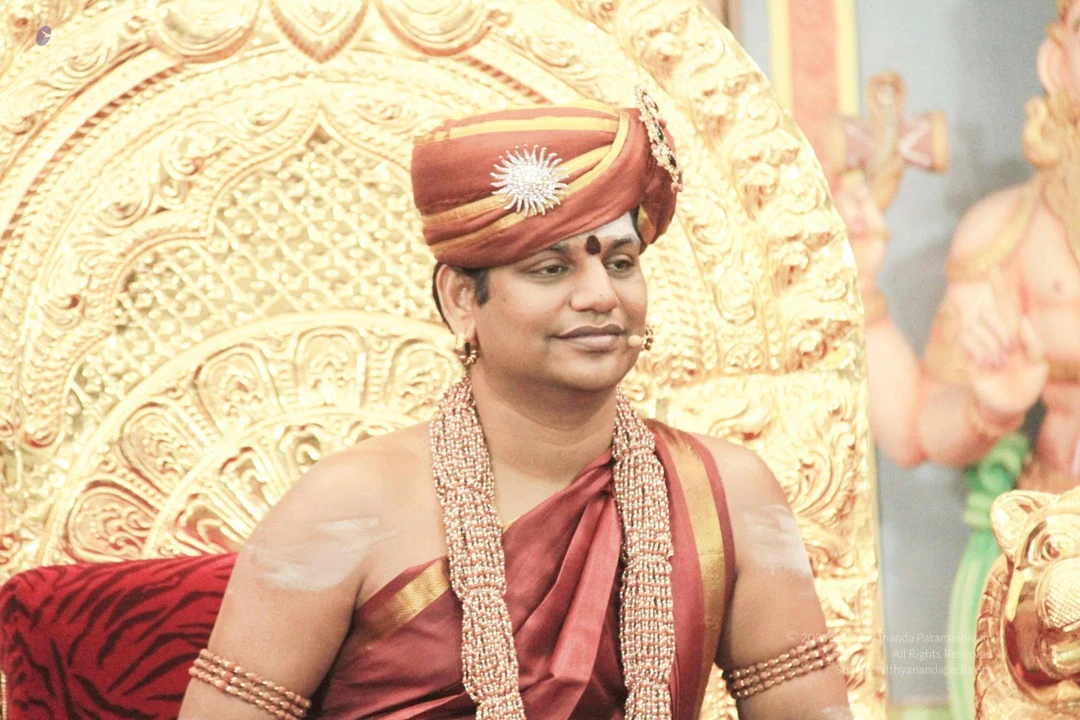
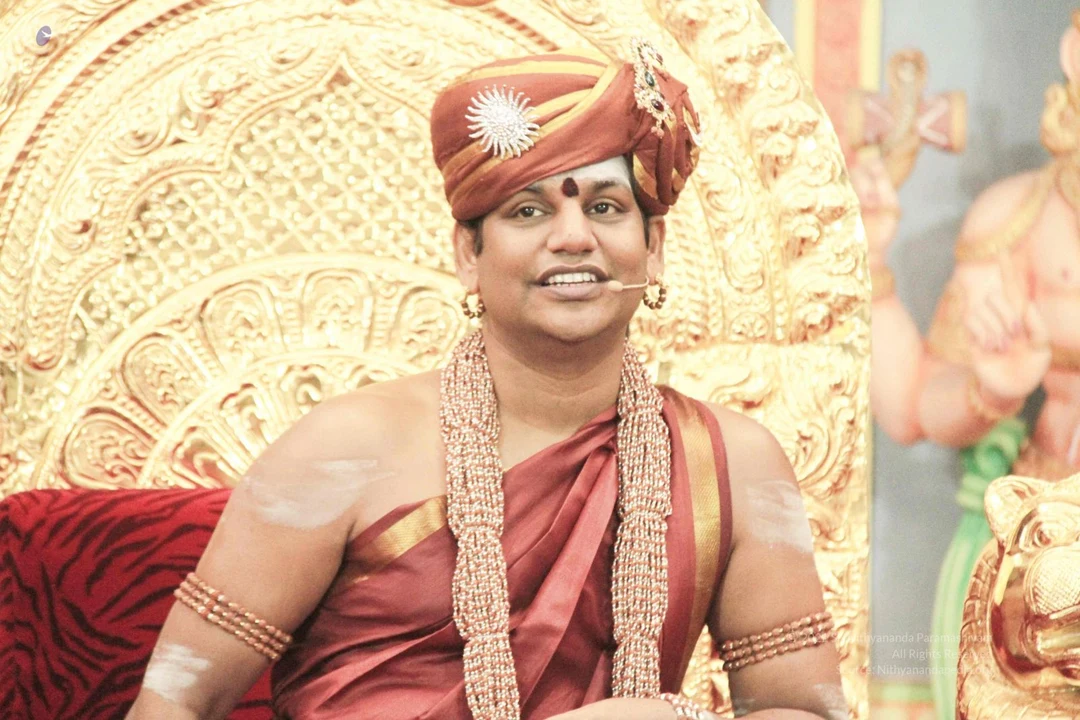
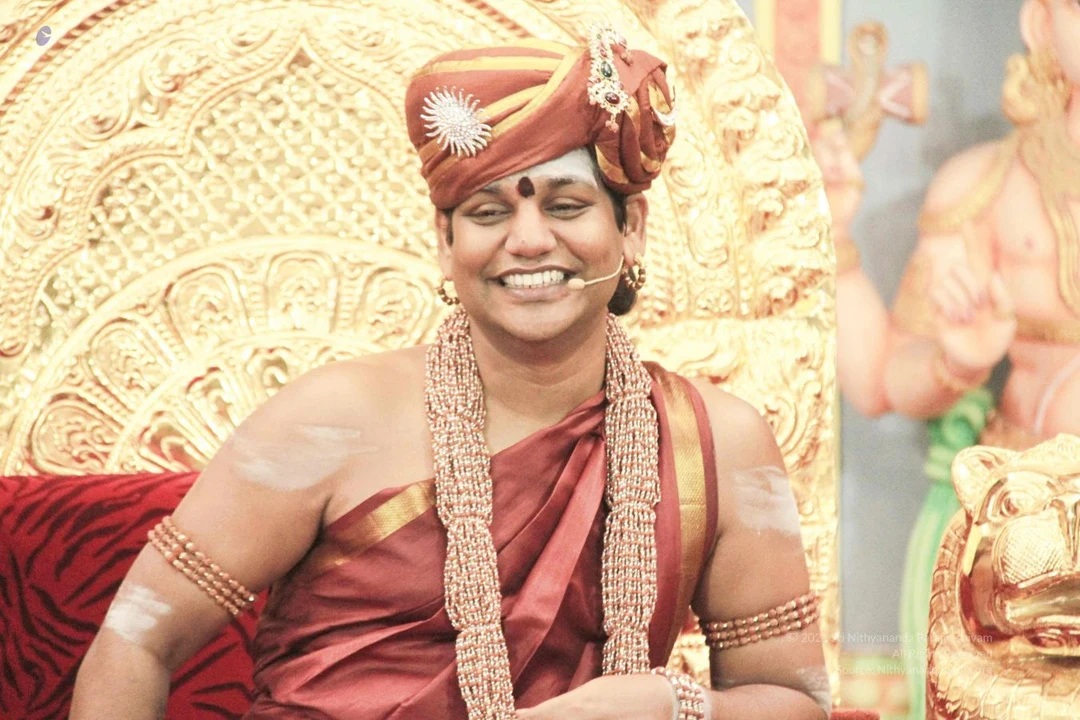
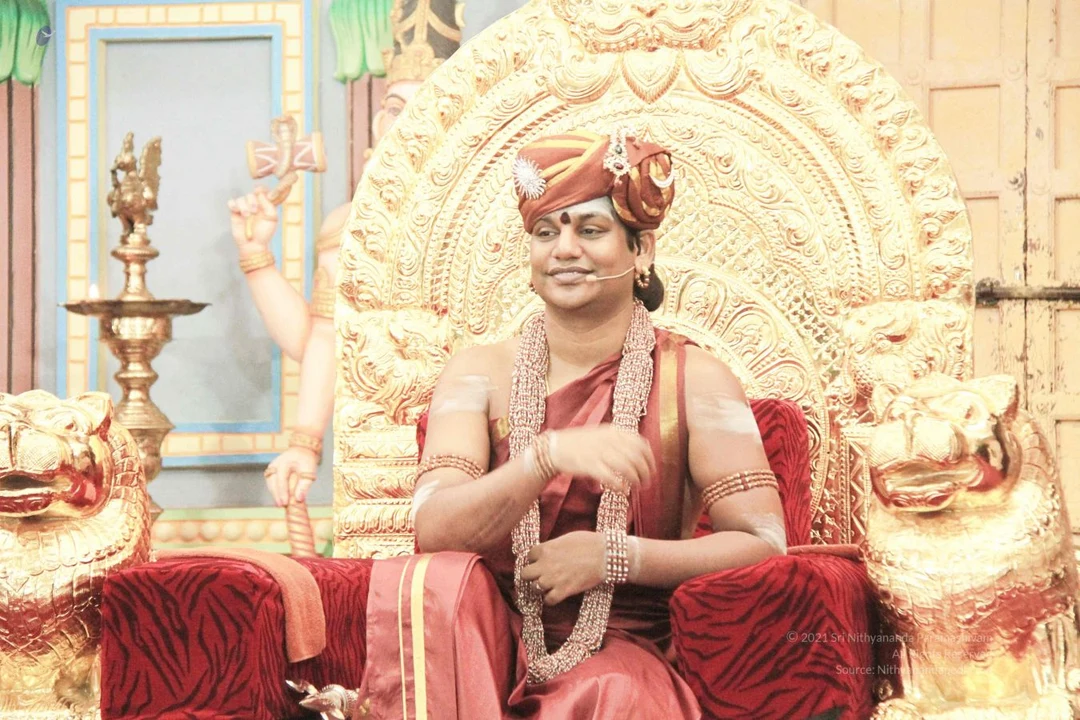
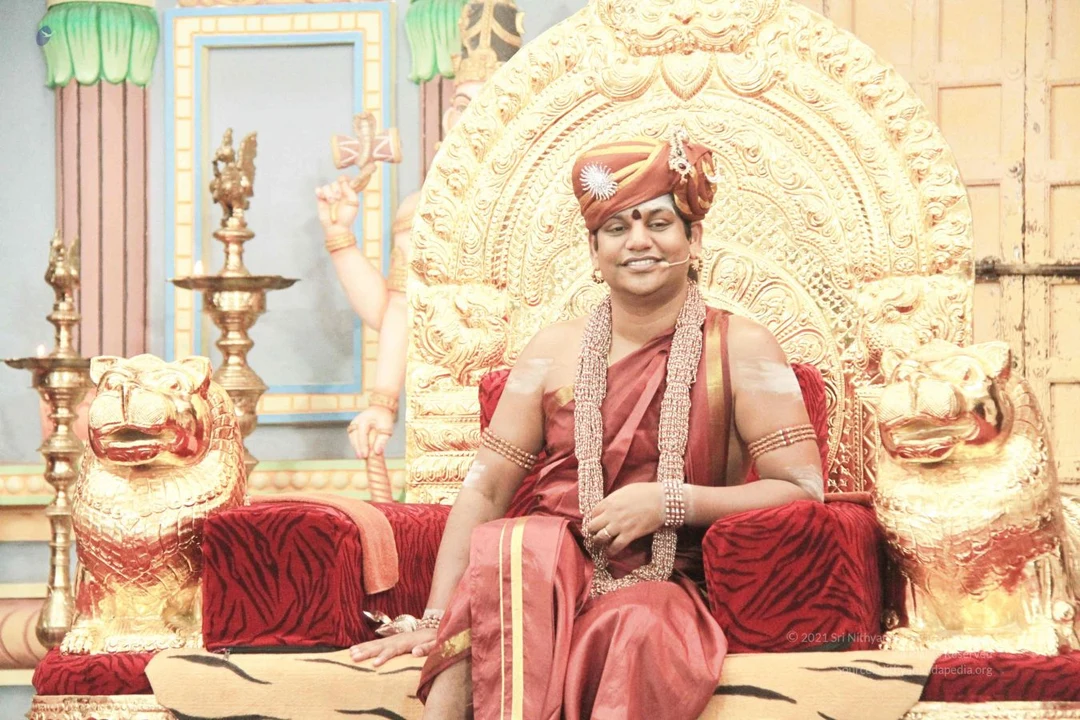
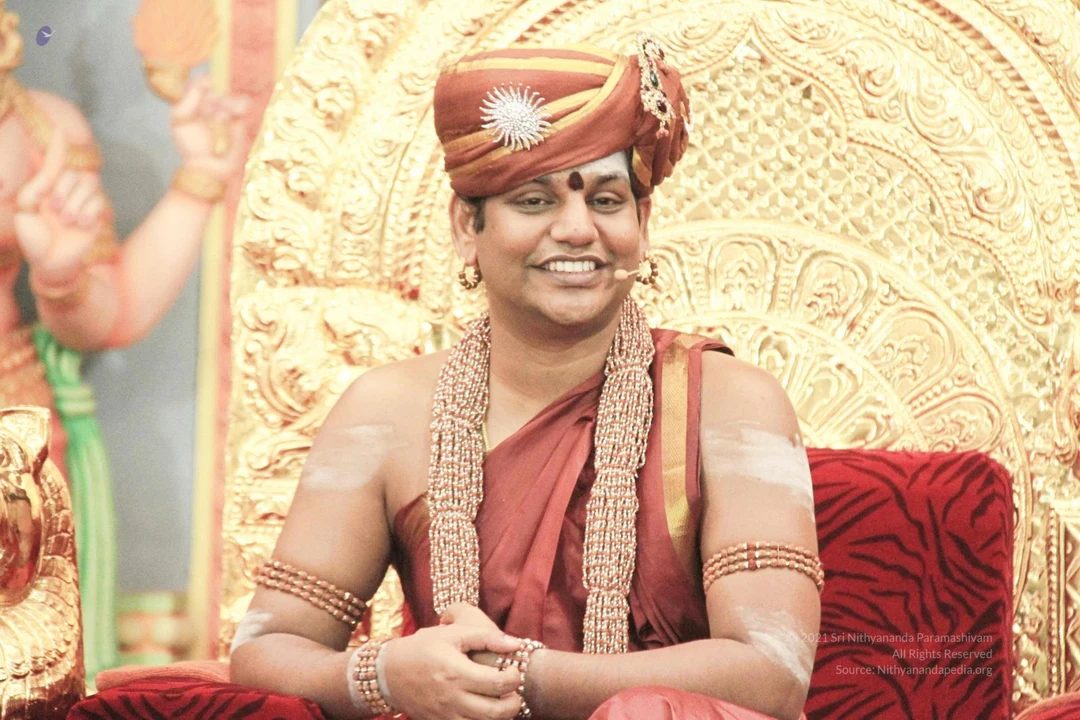
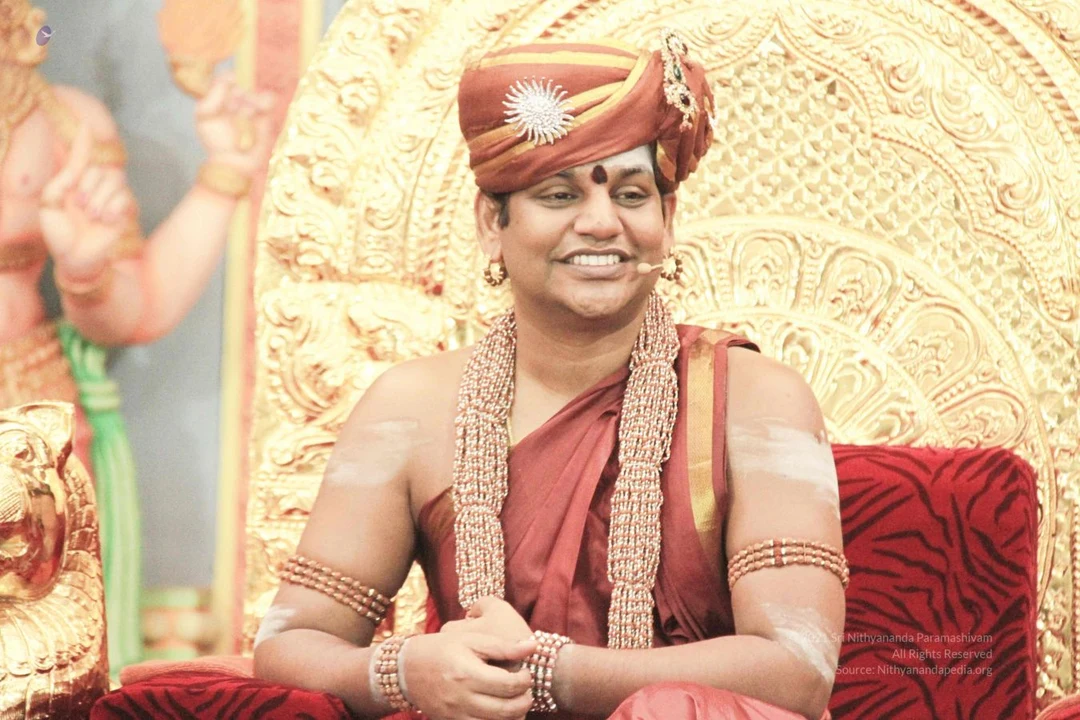
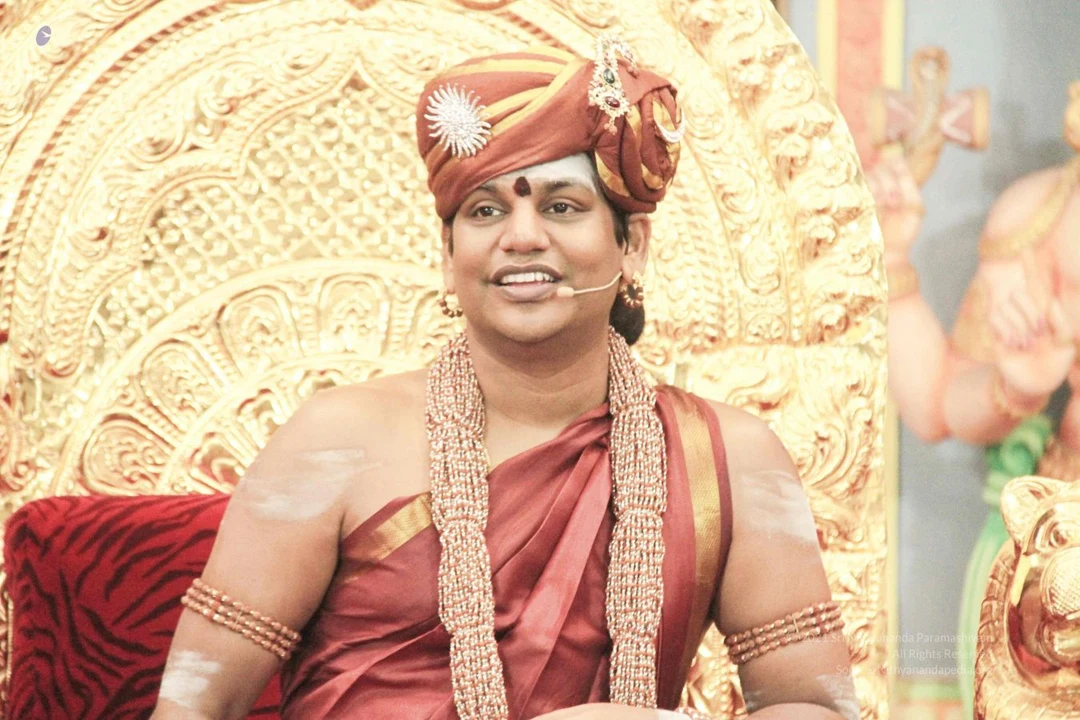
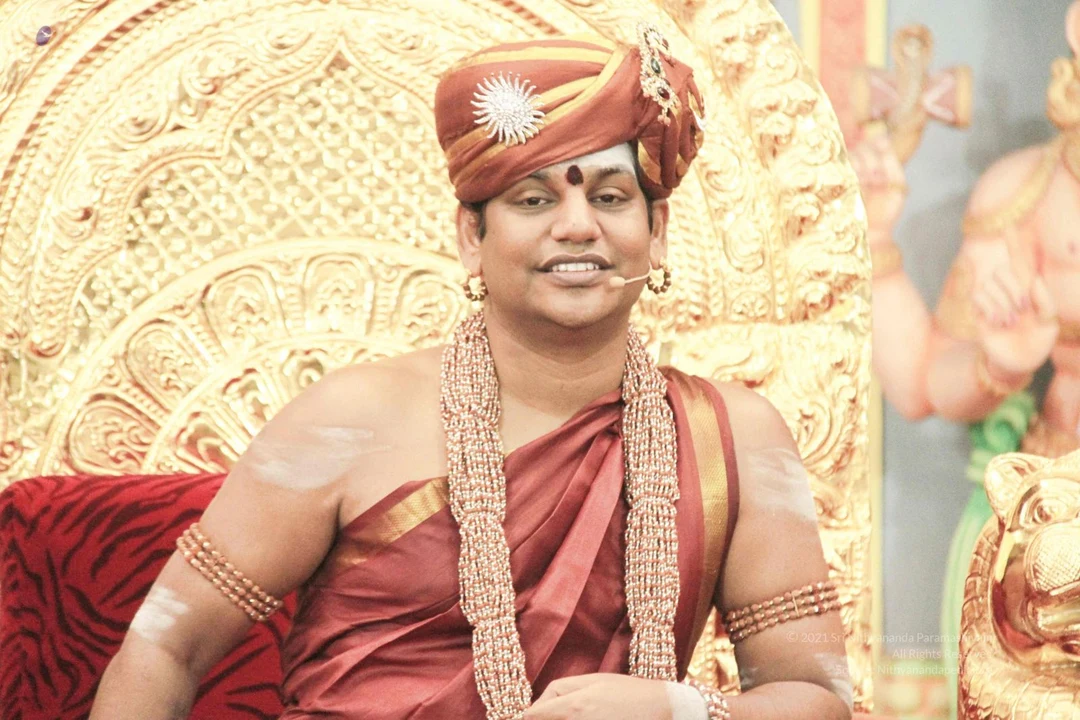
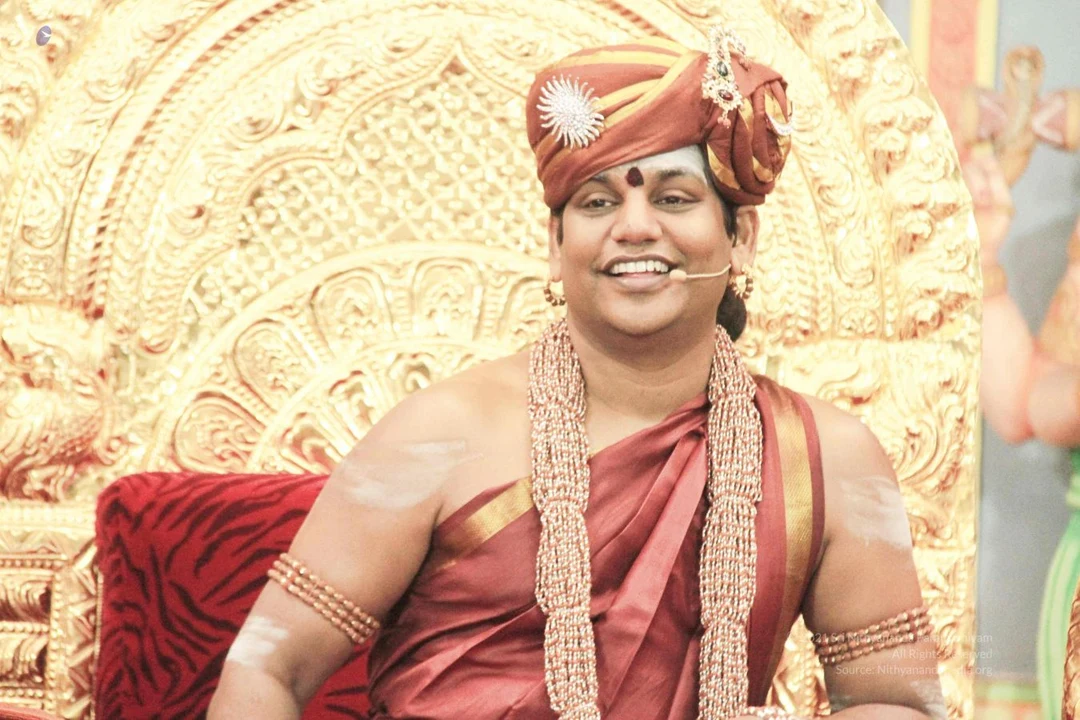
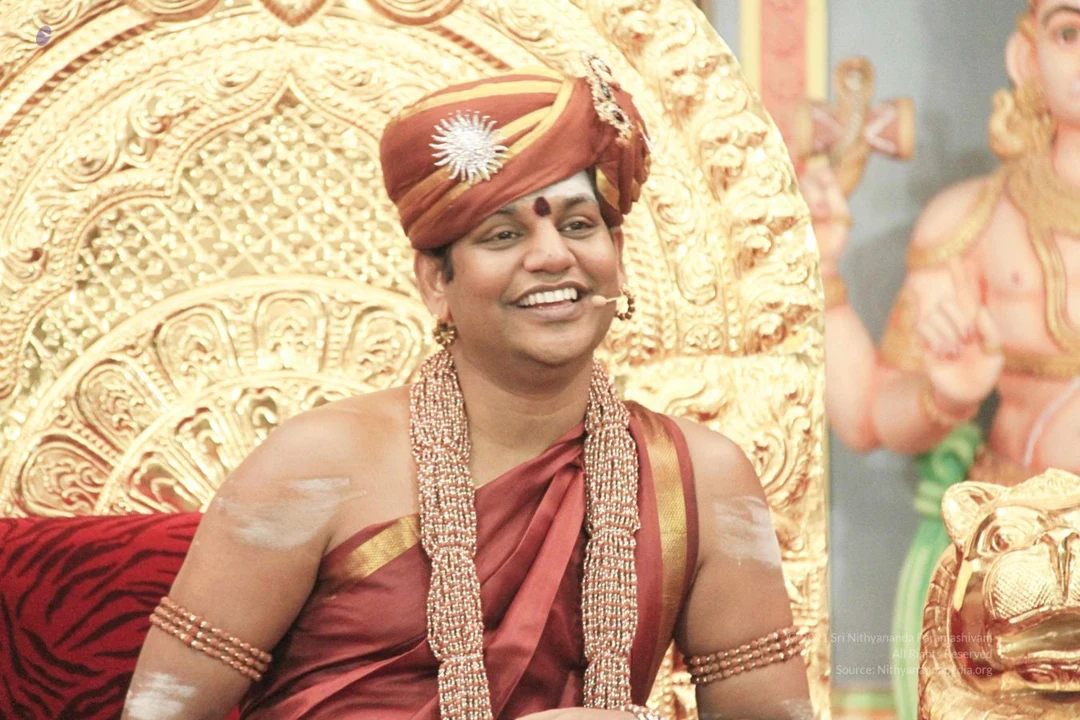
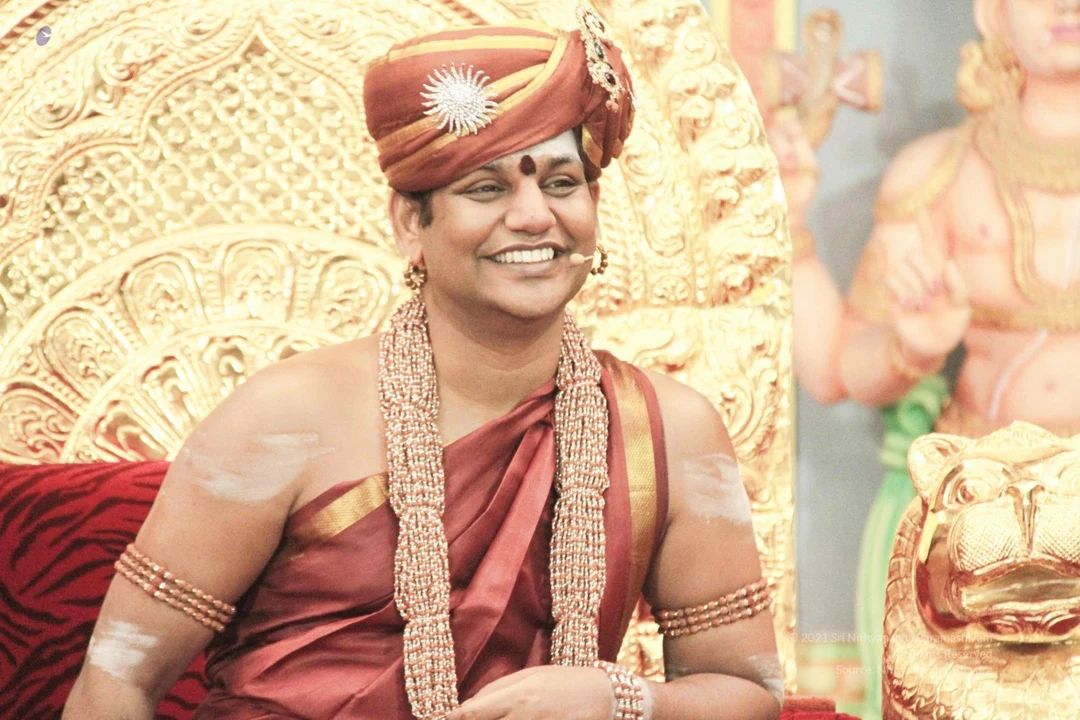
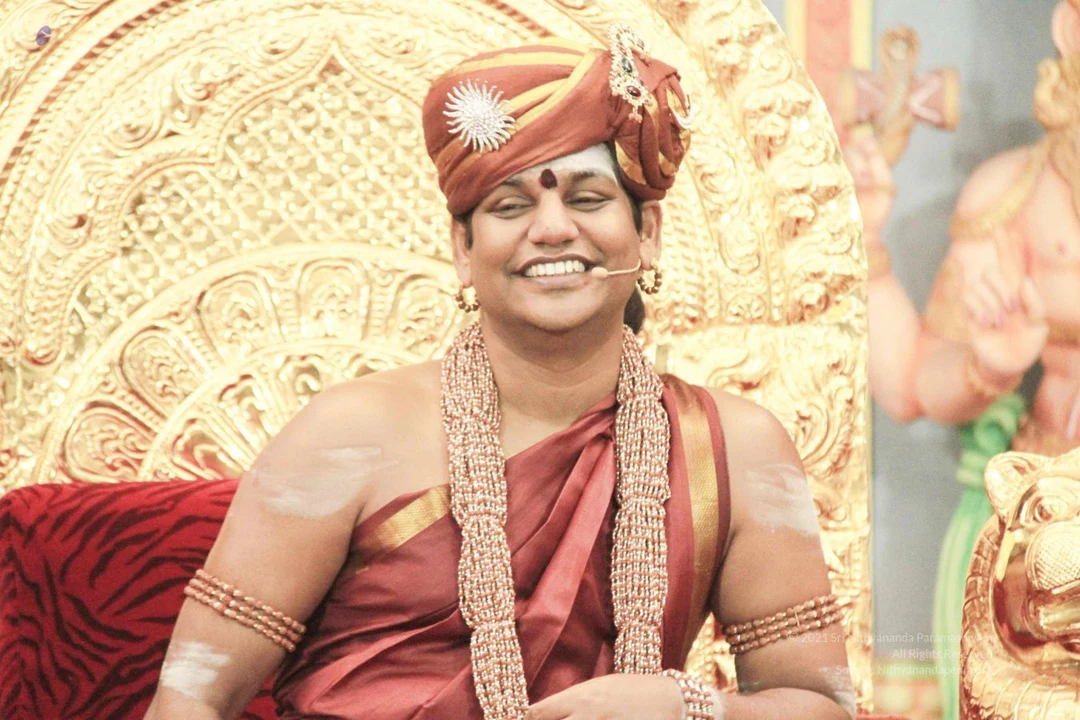
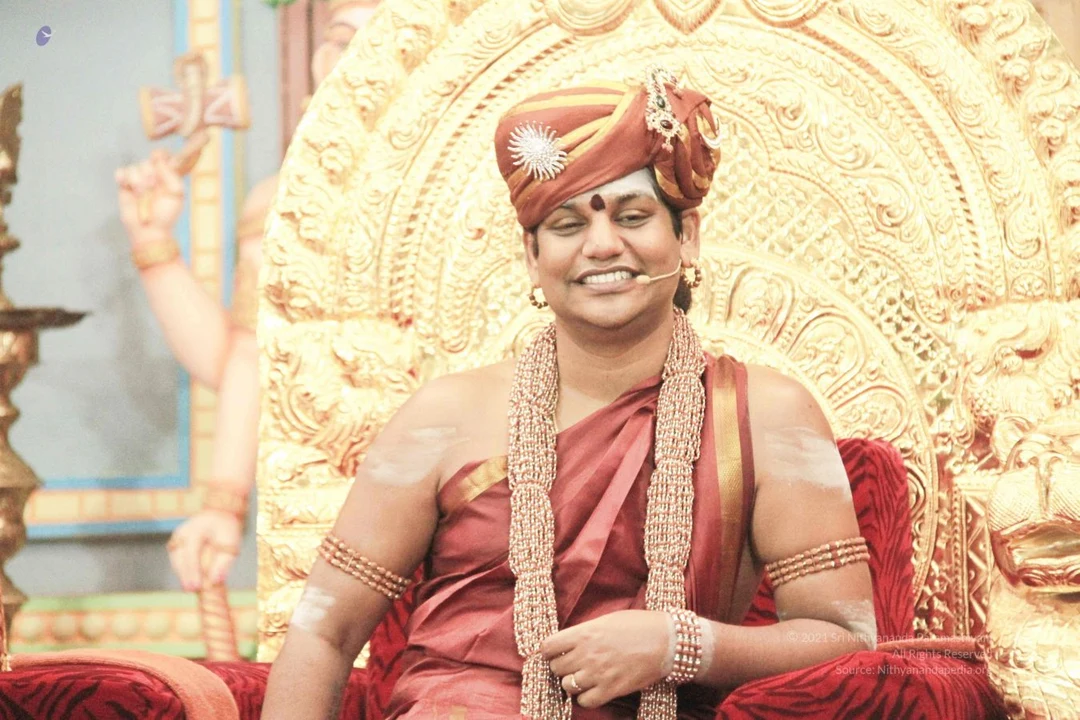
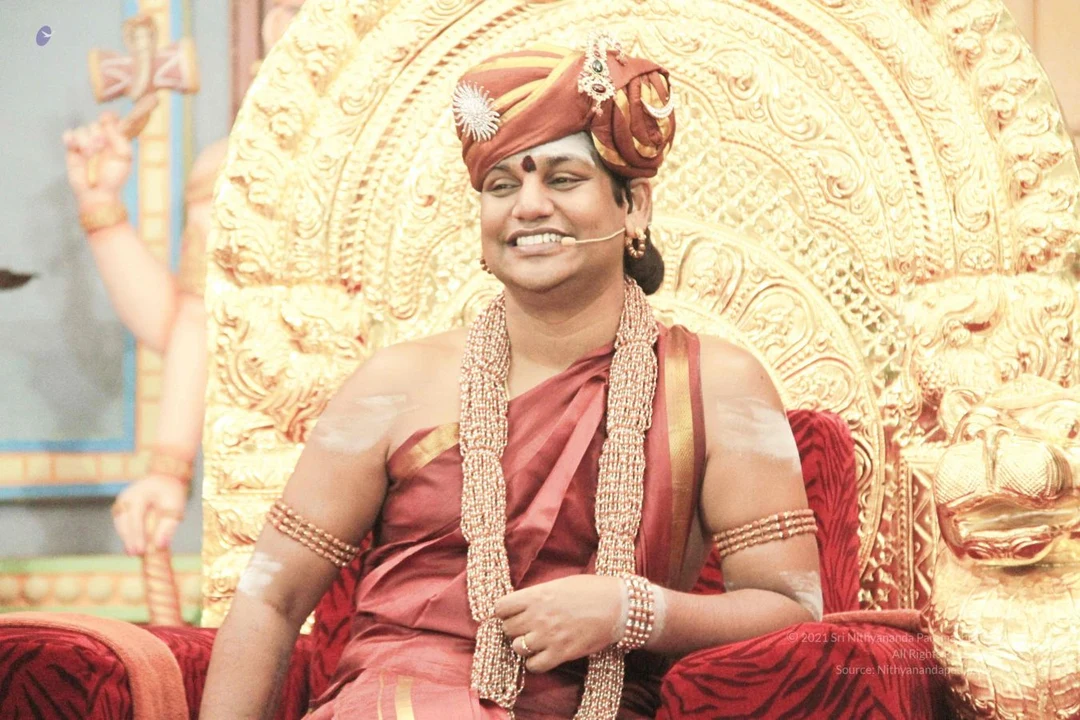
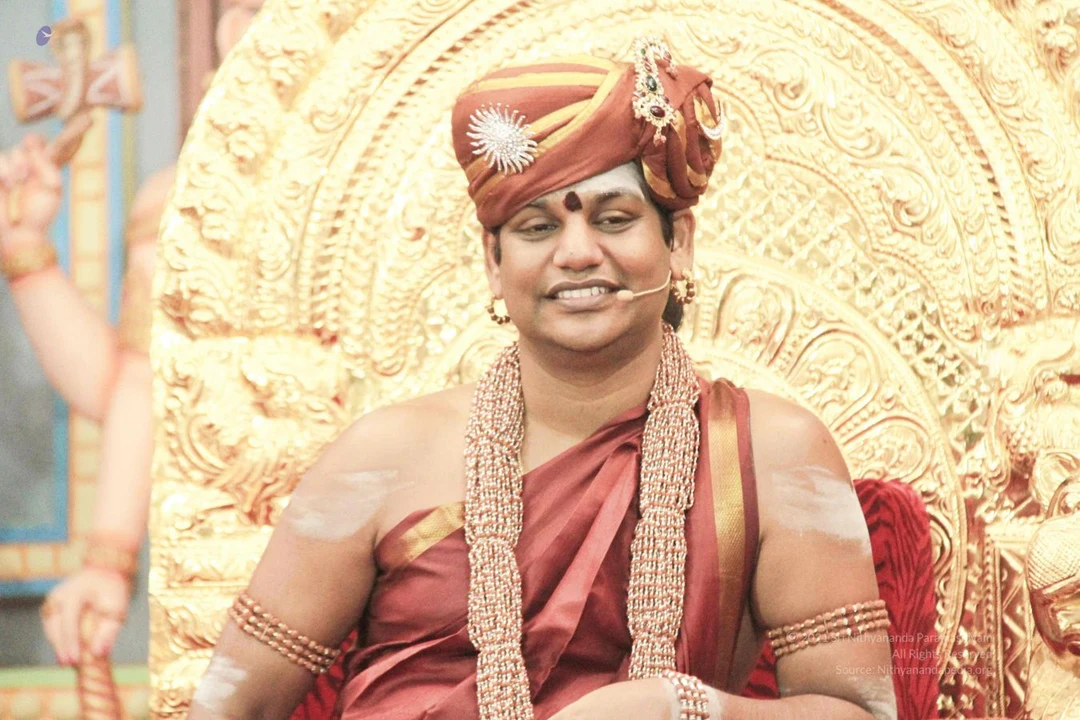
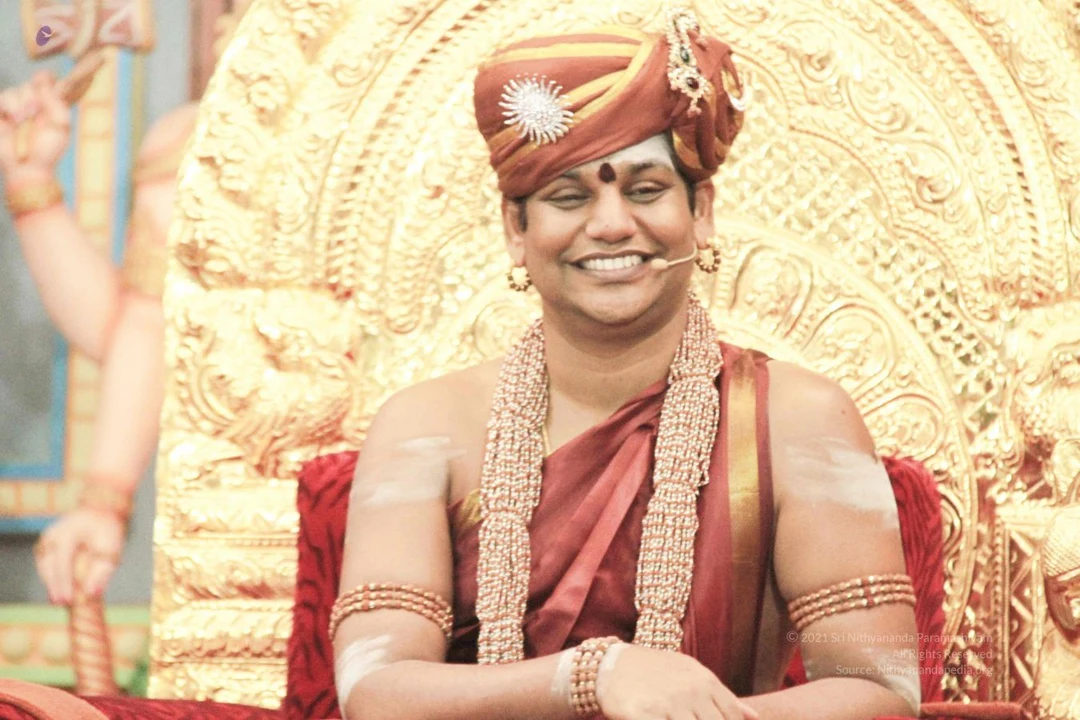
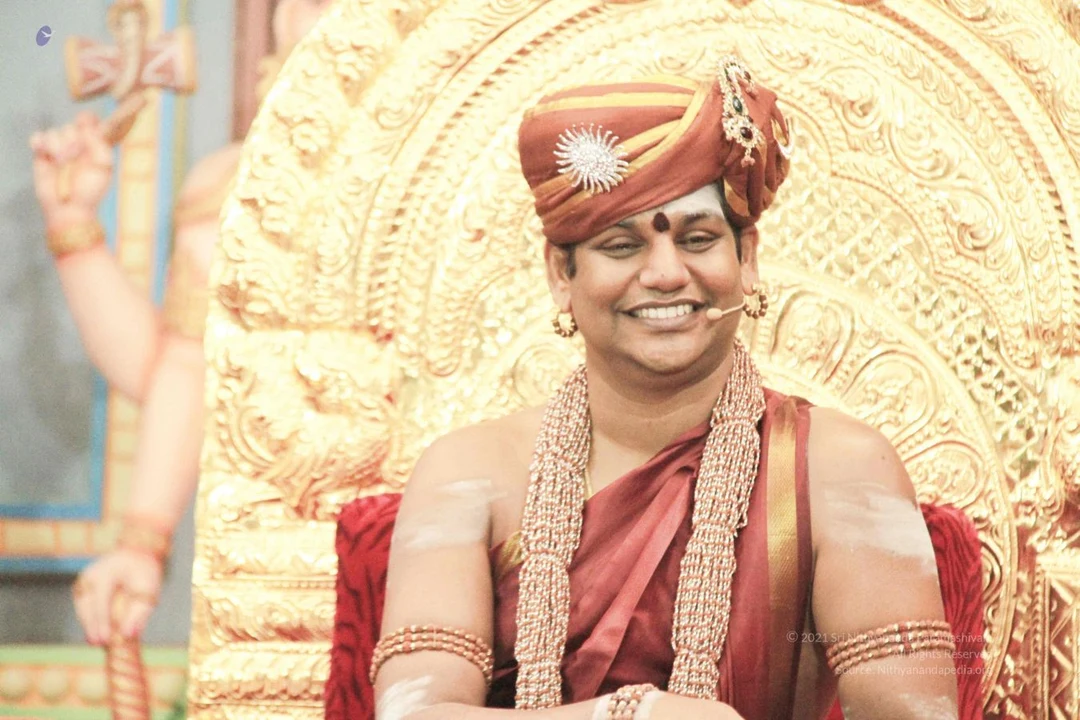
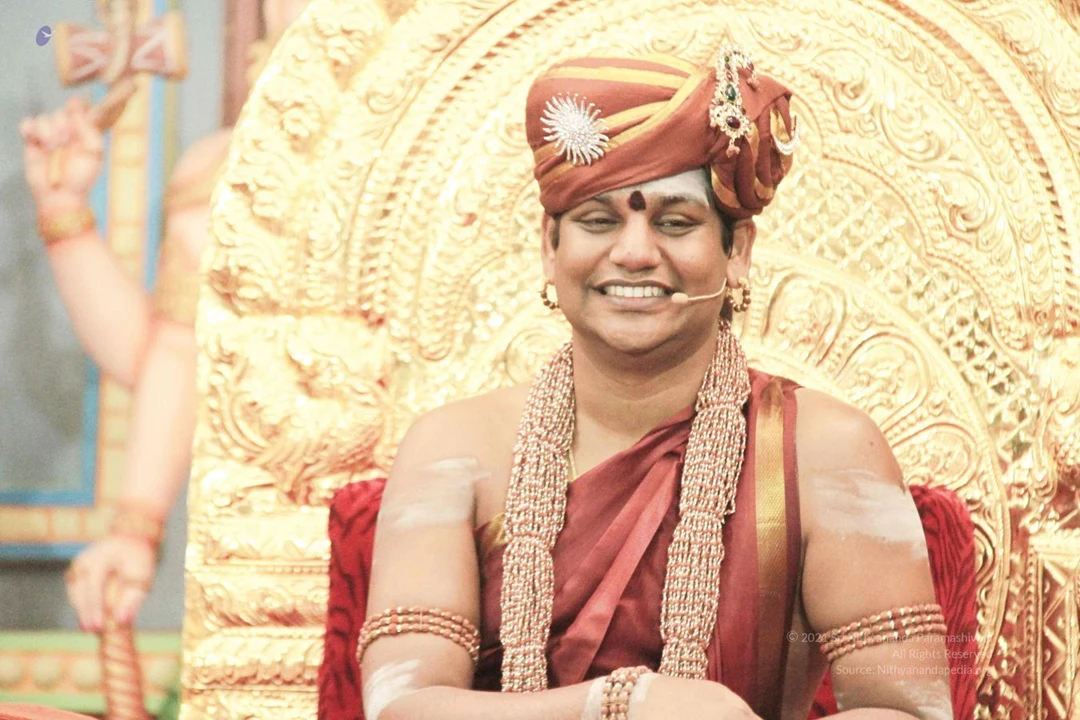
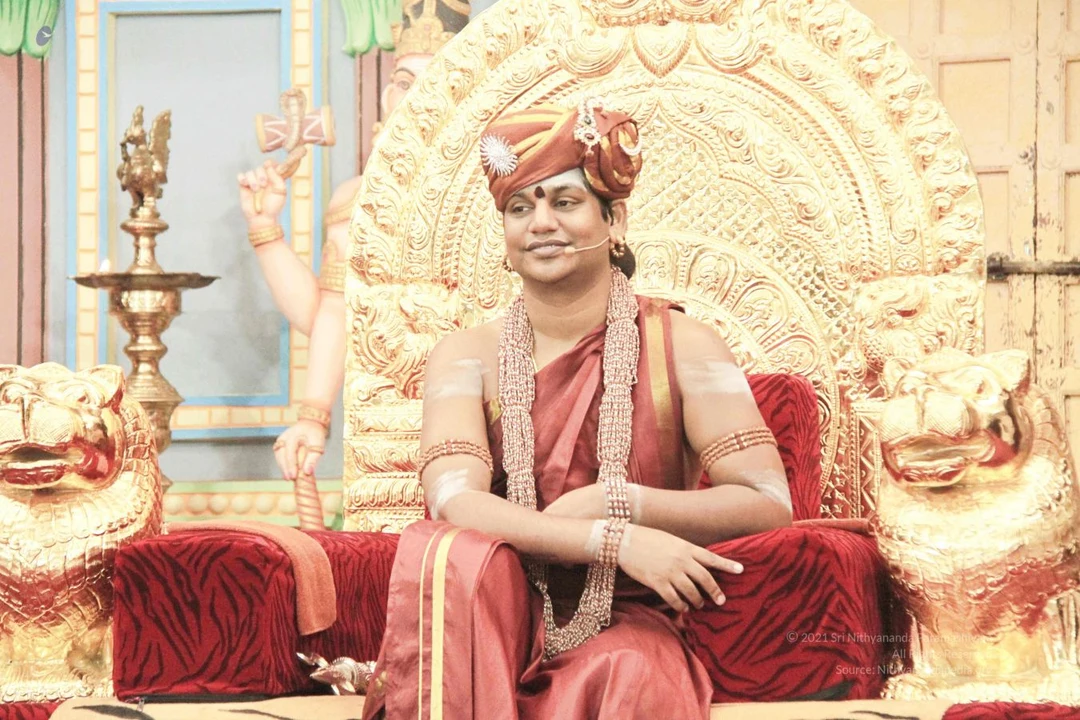
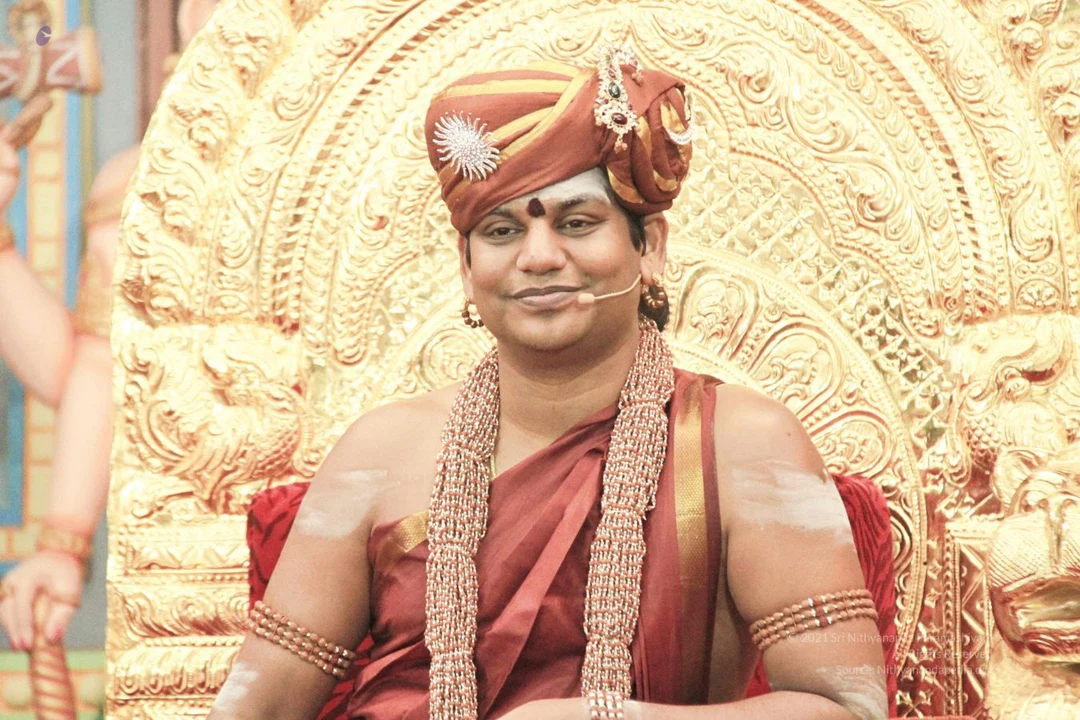
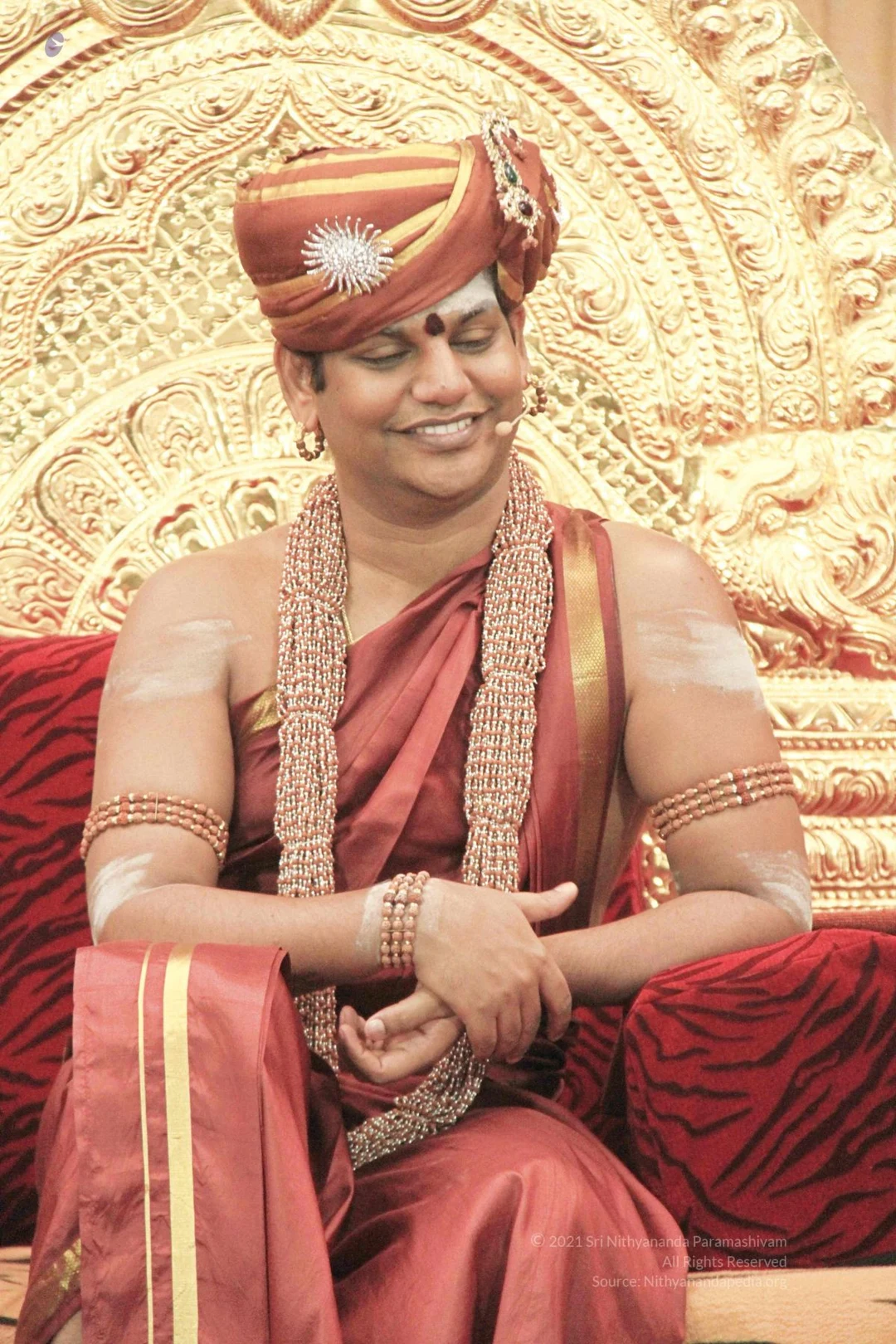
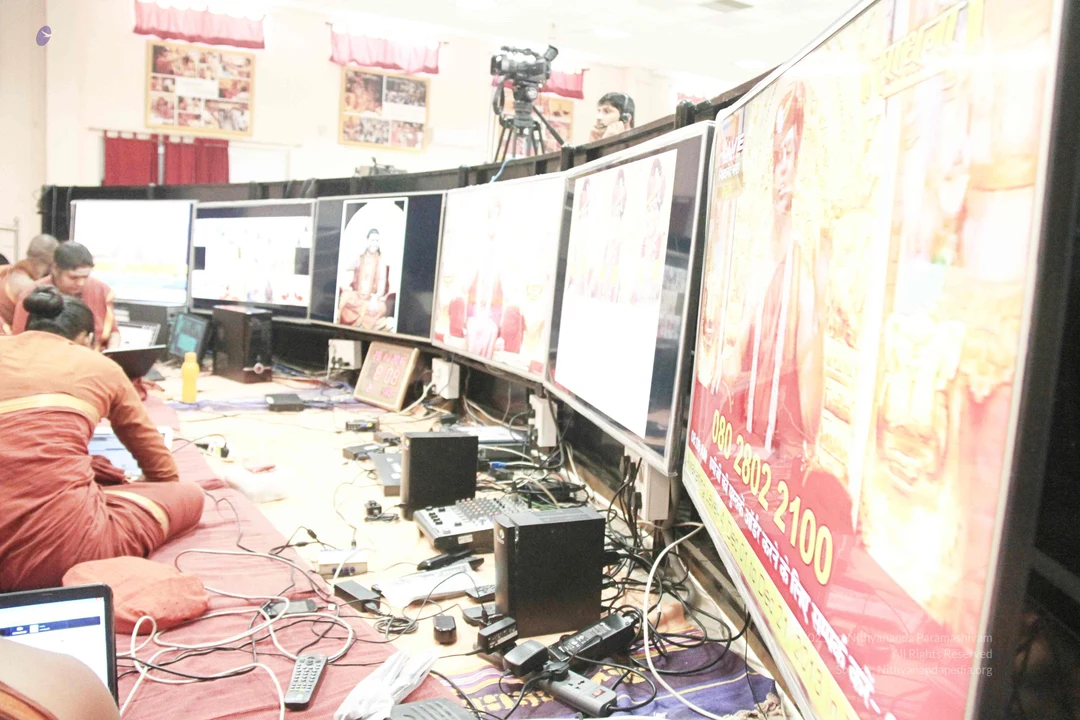
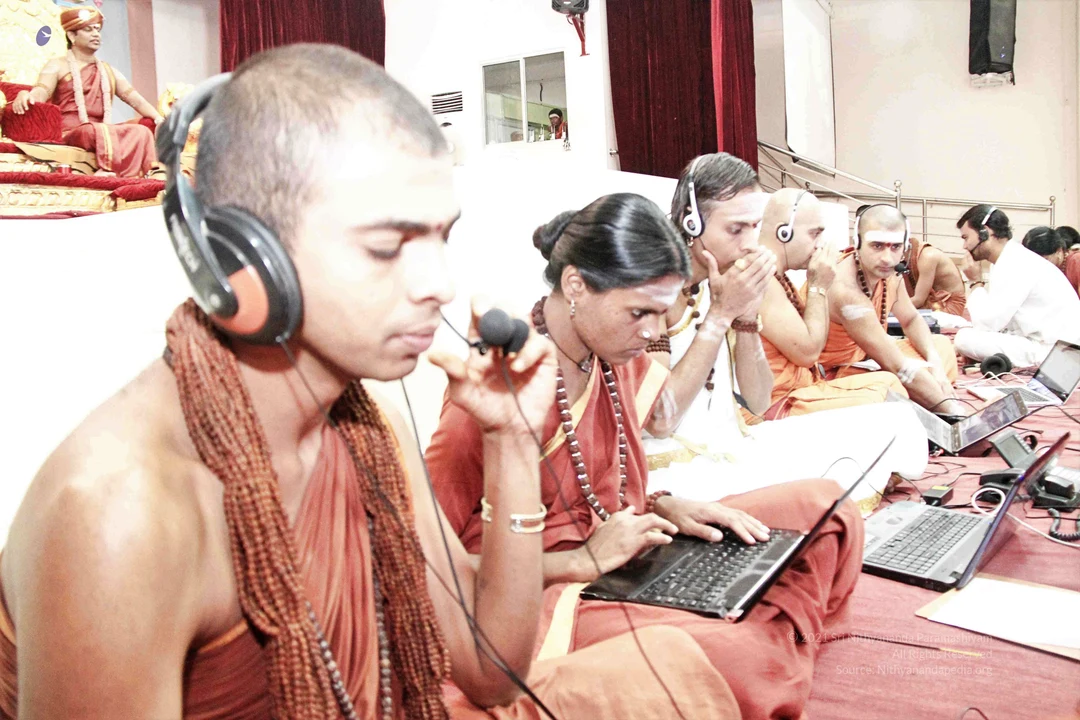
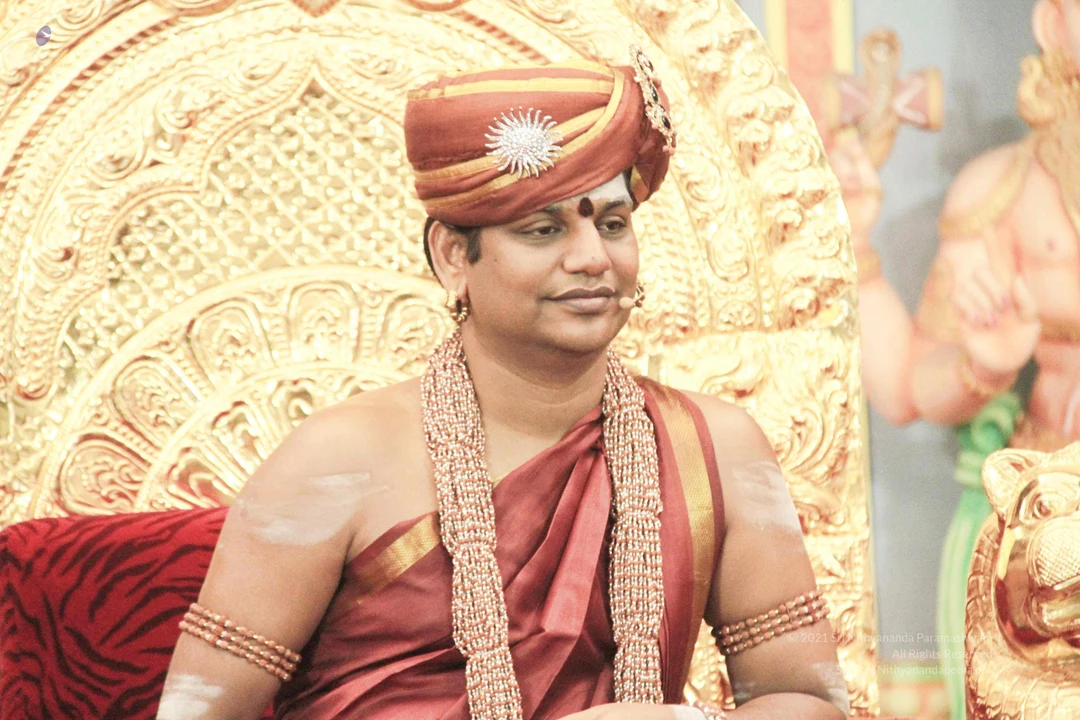
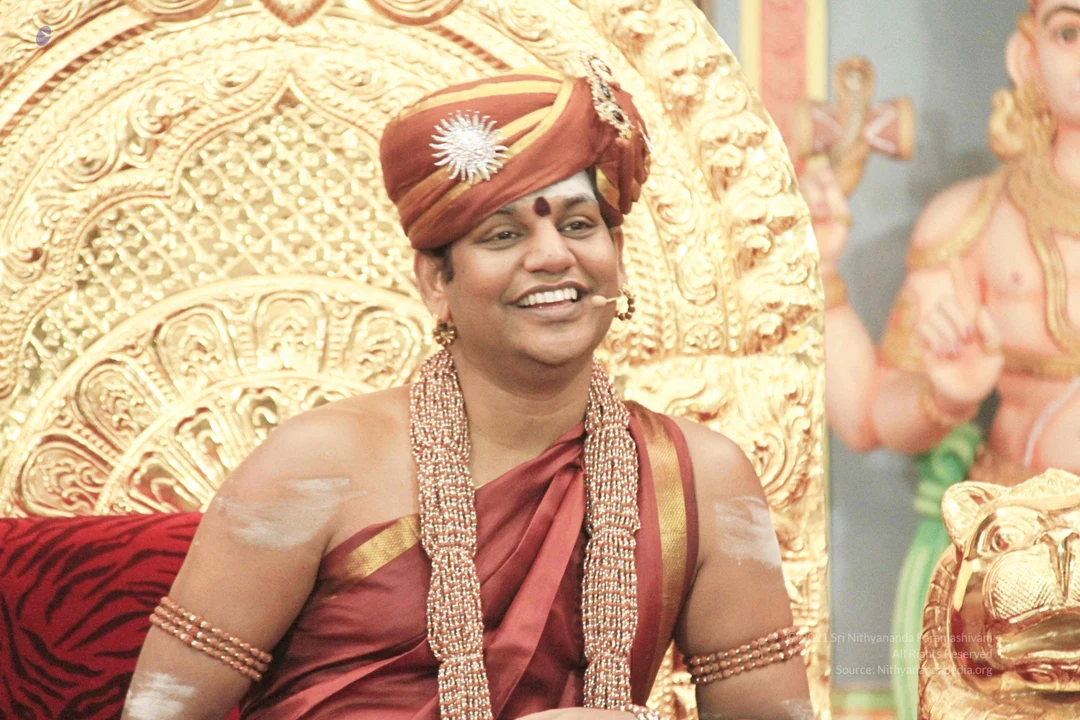
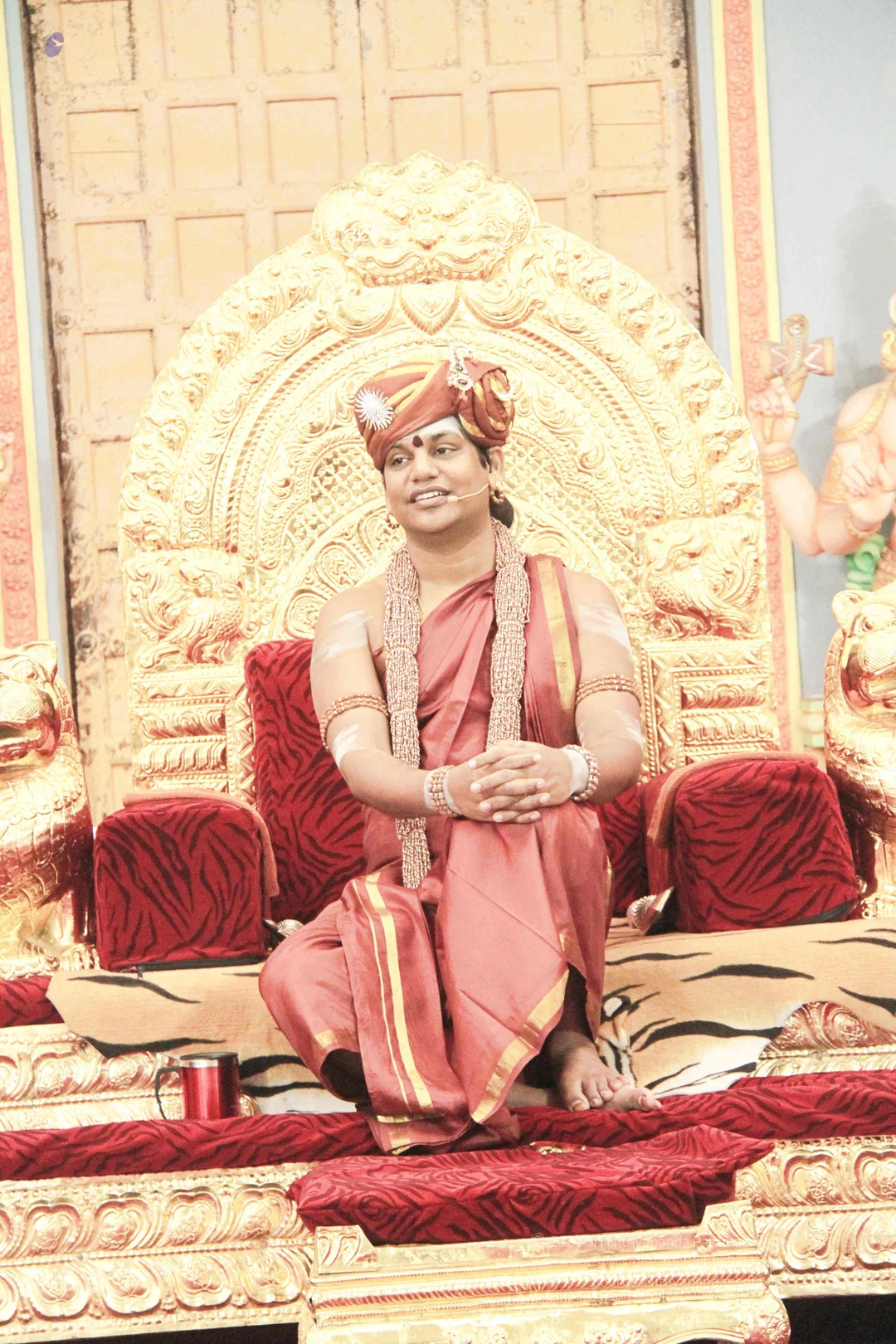
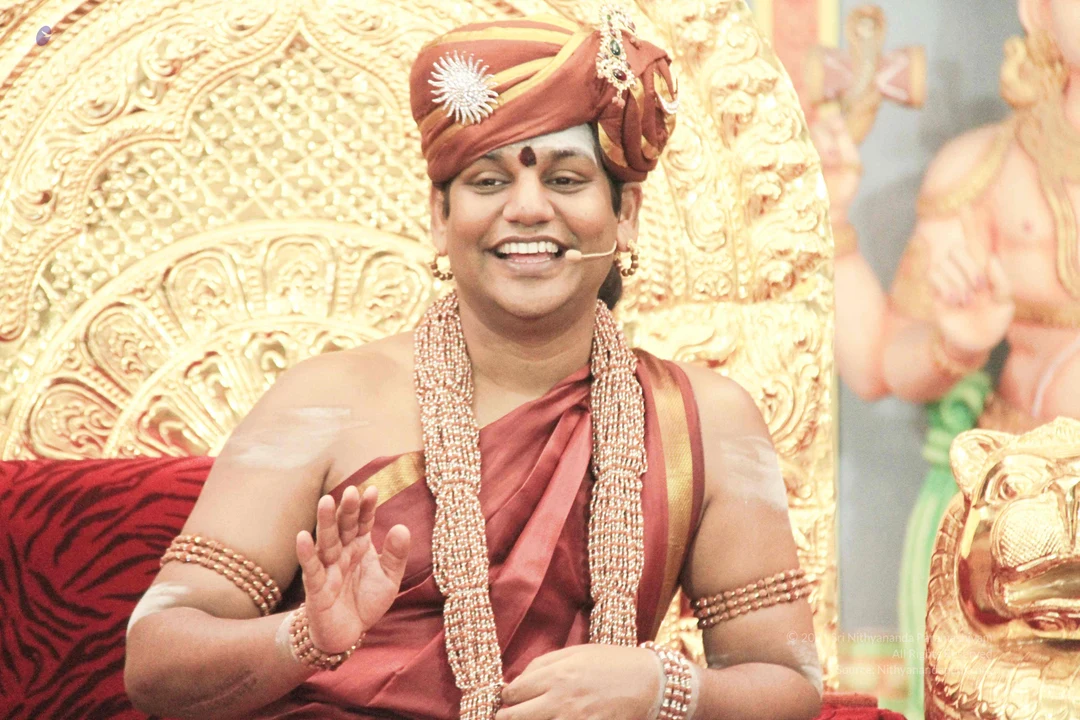
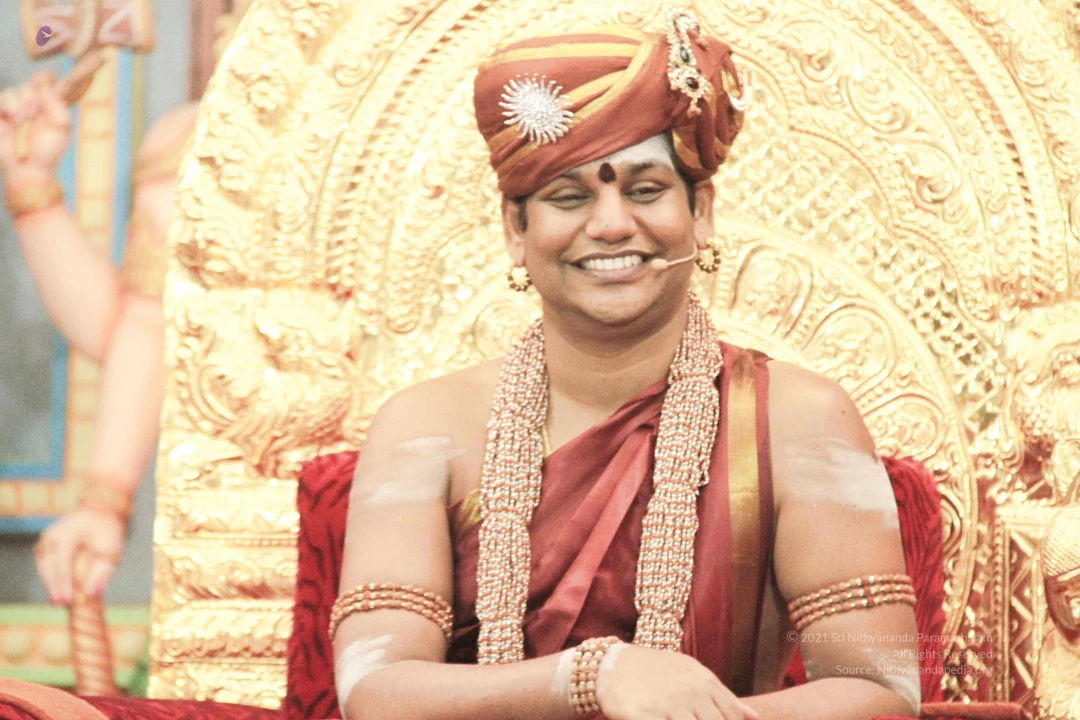
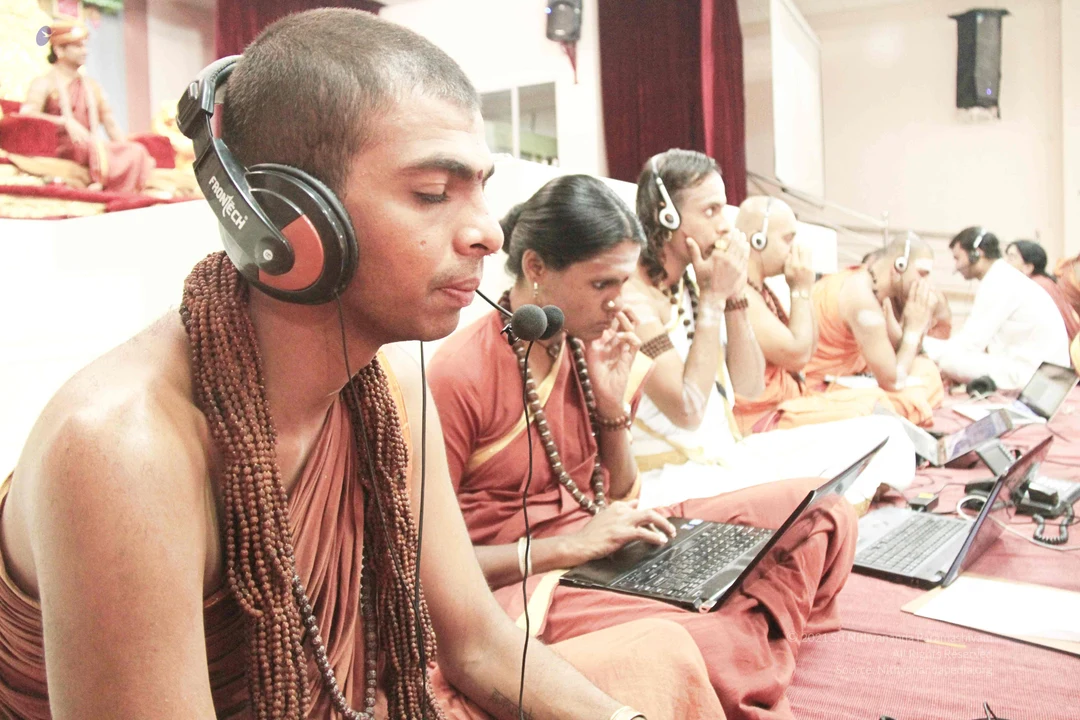
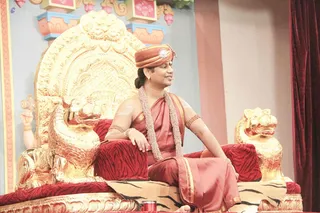
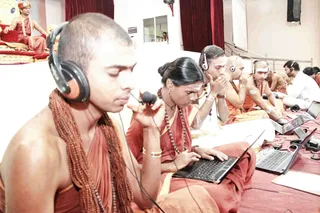
A man seated on an ornate gold throne with carved foliage and red tiger-striped cushions, gesturing with his right hand while speaking. He wears a red-orange turban with a silver sunburst ornament and gold trim, a red-orange cloth draped over his shoulder with gold border, multiple beaded rudraksha-style necklaces, beaded bracelets on the upper arms and wrists, and small gold earrings. A vibhuti or sandalwood mark is visible on his forehead. A headset microphone is on his face. The setting appears to be a stage or satsang hall with a pink pillar behind him. The person appears to be a person in an appearance-based sense, based on turban, saffron-toned clothing and multiple beaded necklaces, while the throne and speaking posture alone are not sufficient.A man seated on an ornate gold throne with red tiger-striped cushions, wearing a red-orange turban with a white sunburst-style emblem and a red tilak mark on his forehead. He wears a reddish-orange draped cloth, layered beaded necklaces, beaded bracelets on the arms and gold earrings, with white ash markings on his arms. He is speaking and smiling toward the side, a microphone visible near his face. A golden lion-head armrest is visible at the right edge, with a gold carved backdrop behind. Swamiji (probable): the figure has a swept-back long hairstyle, turban and ornate saffron-toned clothing consistent with the page's identification as a discourse seat.A man seated on an ornate gold throne with red tiger-stripe upholstery speaks while gesturing with his raised right hand. He wears a rust-orange turban with a white star-shaped brooch and a gold ornament, a rust-orange draped robe with a gold edge, a long beaded necklace and rudraksha-style bead bracelets. A red bindi marks his forehead and a small microphone is clipped to his face. Probable Swamiji, the speaker in a satsang discourse, identified by a turban and saffron-orange clothing with a ceremonial necklace. Gold lion-form armrests and a gilded backrest frame him against a pink and grey stage backdrop.A seated figure on an ornate gilded throne with lion-head armrests and red tiger-striped cushions. He wears a red-orange turban with a white rosette, a matching reddish-orange robe with gold borders, a rudraksha-style beaded necklace with long strands, and bangles on his wrists. Tiger-striped fabric covers the platform beneath the throne, and a red curtain hangs at right against a pink and blue painted backdrop. a person seated in a ceremonial pose, based on the saffron-red robe, ornate turban and long necklace; the image itself is clear about the throne and clothing but the identity is uncertain from appearance alone.A man seated on an ornate gold throne with carved lion-head arms and red tiger-striped cushions, dressed in a maroon-red sannyasi-style wrap with gold trim and a matching red turban with a white emblem. He wears layered beaded mala necklaces, bangles and a red bindi, and his arms show pale ash markings. A red-tasselled vessel sits on the tiger-striped cloth at the base of the throne, and gold-painted decorative panels and red velvet drapes frame the stage. Appearance-based identification is probable: Swamiji (probable) seated in a ceremonial role on the throne, with long swept-back hair, turban, saffron-red ornate clothing and rudraksha-style malas as qualifying cues.Several men in a seated satsang setting wear over-ear headphones, with laptops and cables on a red cloth in front of them. The man on the left has long swept-back hair, a red bindi, white sacred ash markings on his arms, a white dhoti and shawl, rudraksha malas and a gold ring, and presses his hands together near his face. Beside him a shaved-headed man in orange robes and rudraksha beads holds his folded hands to his face, and another man in orange with a shaved head and white markings does the same. Behind them a man in a white shirt wears headphones, and women sit further back near a white wall and railing. Attention is turned toward the speaker or translation feed.

SPH Blessing the world

11 photosSource gallery
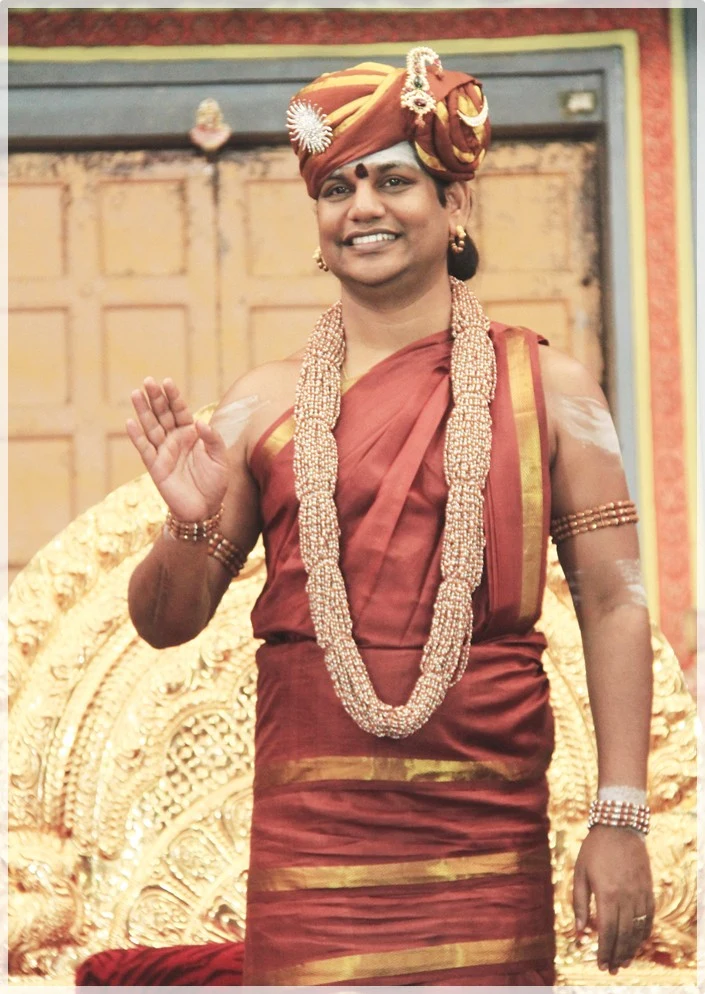
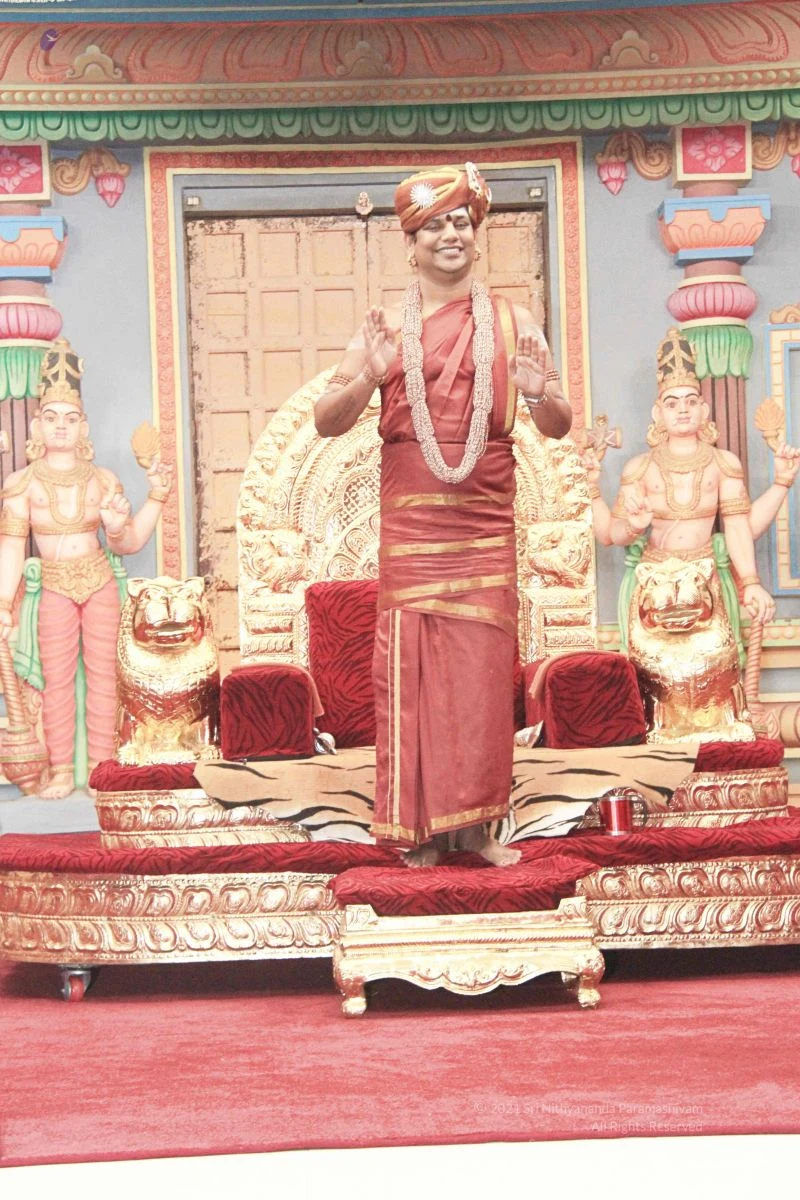
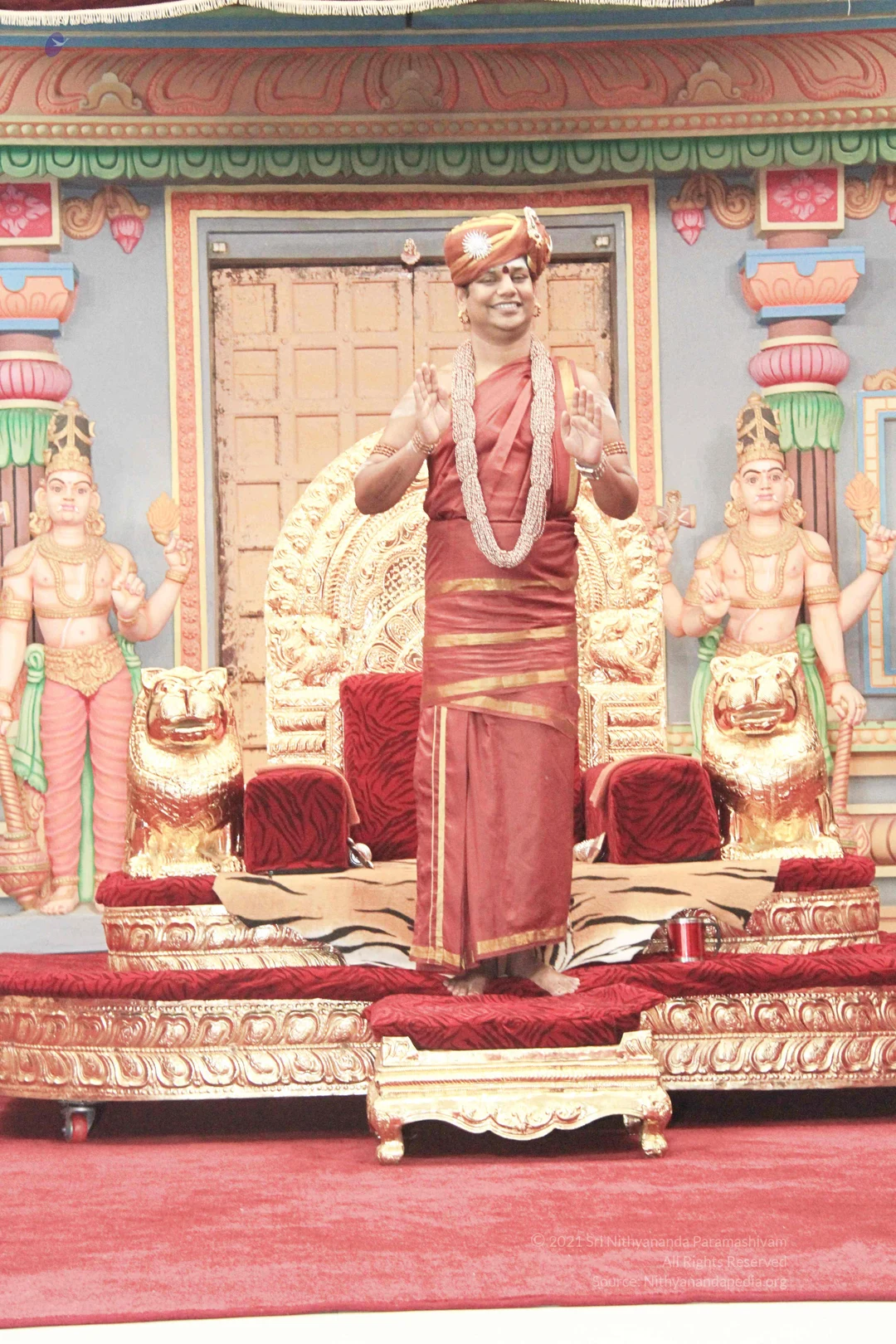
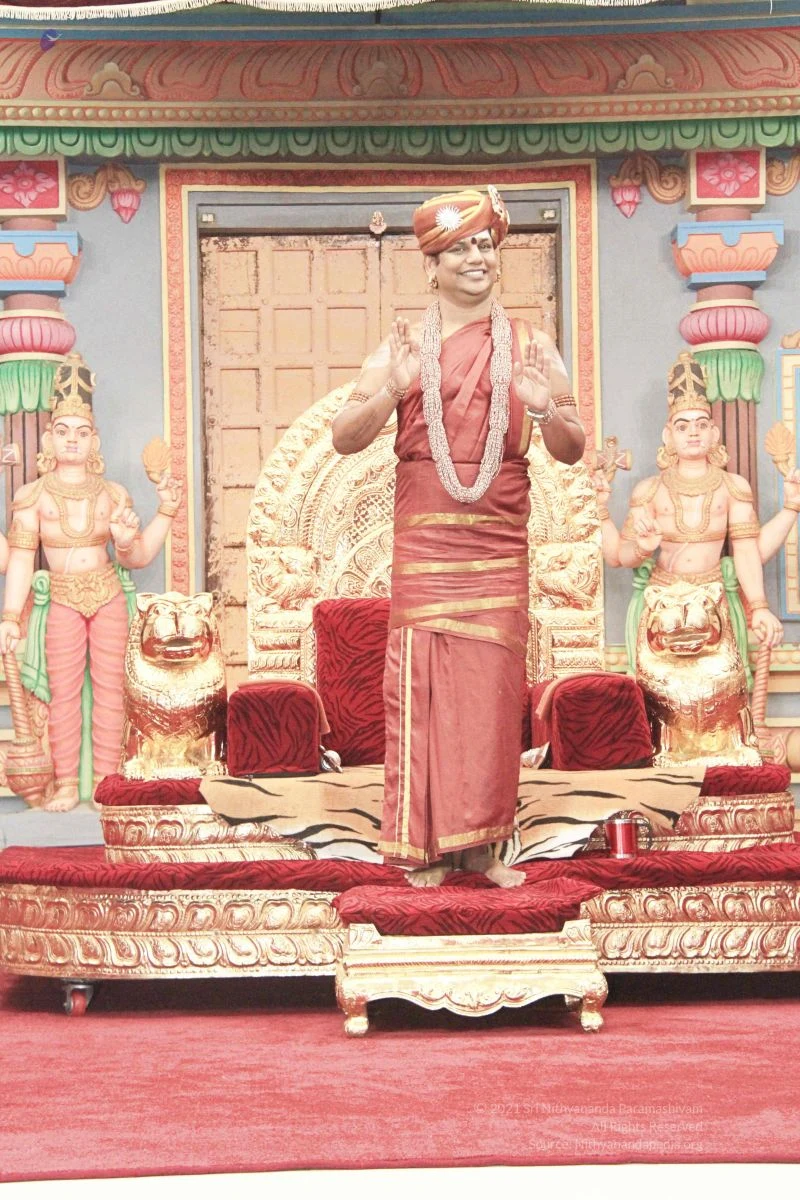
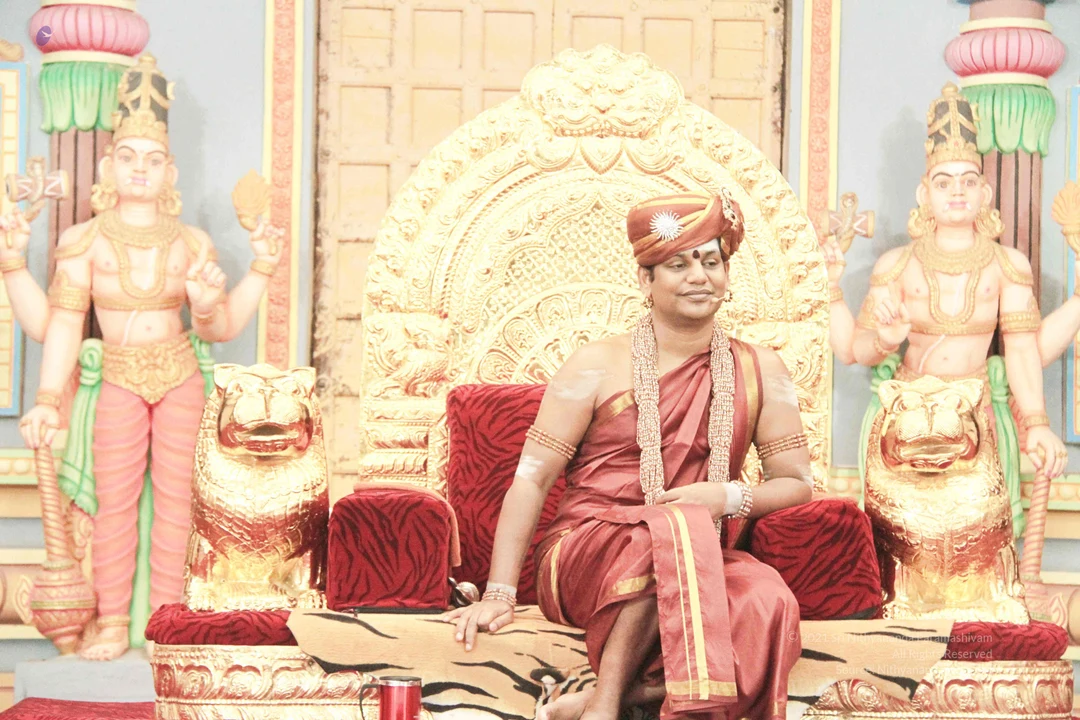
A standing man in a rust-red and gold-bordered dhoti and shawl, wearing an orange-and-gold turban with a white emblem and a long white flower garland, performs a welcoming gesture with both palms raised at chest height on a stage. Behind him is a gold-and-red throne with tiger-head armrests and a tiger-striped cloth, flanked by two gold deity murti figures holding staffs, set against a painted temple-style backdrop with pink and green columns. A small red object sits on the throne platform. The figure's appearance matches the page's Swamiji reference with his turban, saffron-toned robes and garland, so he is identified as Swamiji (probable) addressing a satsang.A man in a rust-red and gold-bordered dhoti and shawl stands on a red-carpeted stage before a golden throne with lion arms and a tiger-striped cloth. He wears an orange turban with a white sun emblem, a long white beaded necklace, and gold bracelets, and he raises both palms in blessing with a smile. Flanking him are two painted deity statues with multiple arms holding lotus buds, in pink and green with gold ornaments. A red mug sits on the throne platform, and a temple-style wall with a wooden door forms the backdrop. Swamiji (probable) is identifiable by the orange turban, long beaded necklace and ornate ceremonial clothing, standing in a satsang-style setting.A standing figure in a rust-red saffron-toned dhoti and shawl with gold borders, wearing a matching red-orange turban with a white ornament, a white beaded mala around the neck, bangles on the wrists, and hands raised in greeting in front of an ornate gold throne with lion-shaped armrests and red velvet cushions, flanked by two gilded dvarapala-style guardian statues holding fly whisks and clubs against a painted temple backdrop. The page identifies the event as a morning satsang, and the figure matches Swamiji (probable) by his turban, saffron-toned robes and rudraksha-style mala cues, standing on the stage in front of the throne.A smiling man stands barefoot on a raised red-and-gold dais before an ornate gold throne with red tiger-striped cushions and a tiger-skin cloth. He wears a saffron-orange turban with a white sun emblem, a rust-red draped garment with gold borders, a white beaded garland, bangles and gold earrings, and holds his palms together in greeting. Two painted, multi-armed deity figures with gold crowns and gold lion-shaped pedestals flank him, and a small red cup sits on the dais.A standing man in a rust-red and saffron-toned dhoti and shawl with gold borders stands barefoot on a red carpet before an ornate golden throne with lion-carved armrests and red tiger-striped cushions. He wears an orange turban with a white rosette, a white beaded garland, bangles, and a red bindi, and holds his palms raised in a welcoming gesture while smiling. Flanking him are two golden-skinned multi-armed deity murti figures with crowns, holding ceremonial objects, and the ornate painted temple-style stage backdrop includes pink and green columns and a wooden door. Probable Swamiji is shown in this appearance-based presentation with a turban, saffron-toned ceremonial clothing and a garland, standing in the central position of a satsang stage.A photograph of a person standing barefoot on a golden throne dais in a richly decorated hall with red carpet. The standing person wears a saffron-orange turban with a white rosette, a rust-red draped garment with gold borders, and a long white beaded necklace, with hands raised in a welcoming gesture. The throne is gold with red velvet cushions and a tiger-striped cloth, flanked by two gold lion sculptures. Two painted multi-armed deity statues in pink and green stand on either side, holding ceremonial objects. A red metal cup sits on the dais. A watermarked archive photo.

02--Satsang
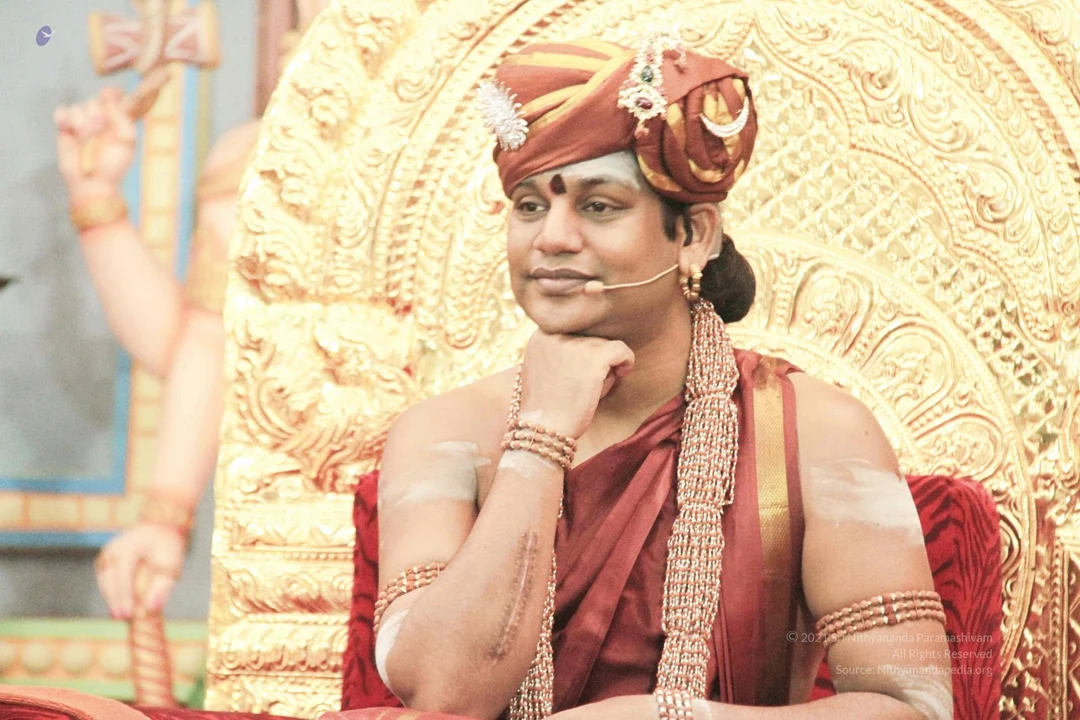
8 photosSource gallery
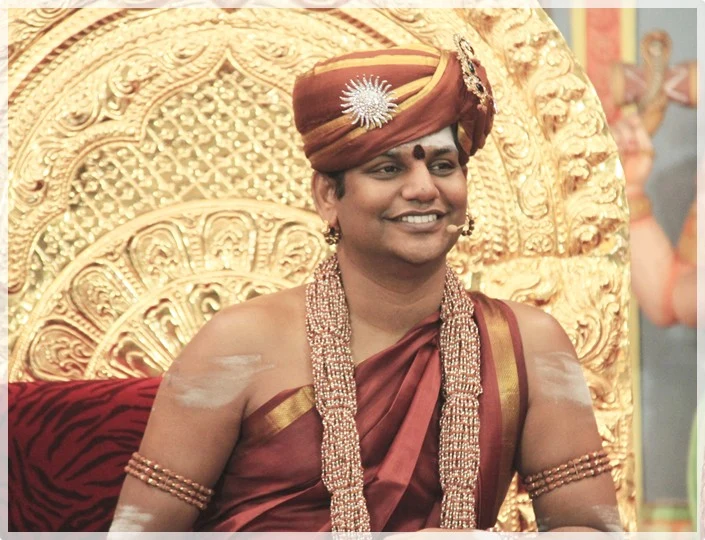
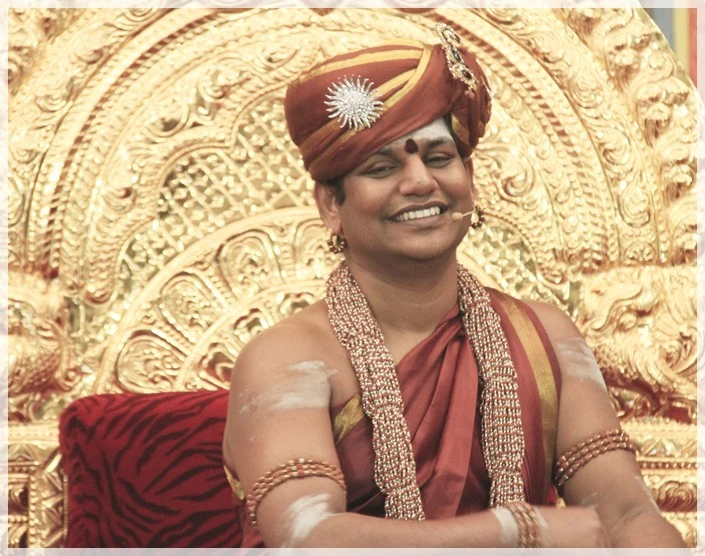
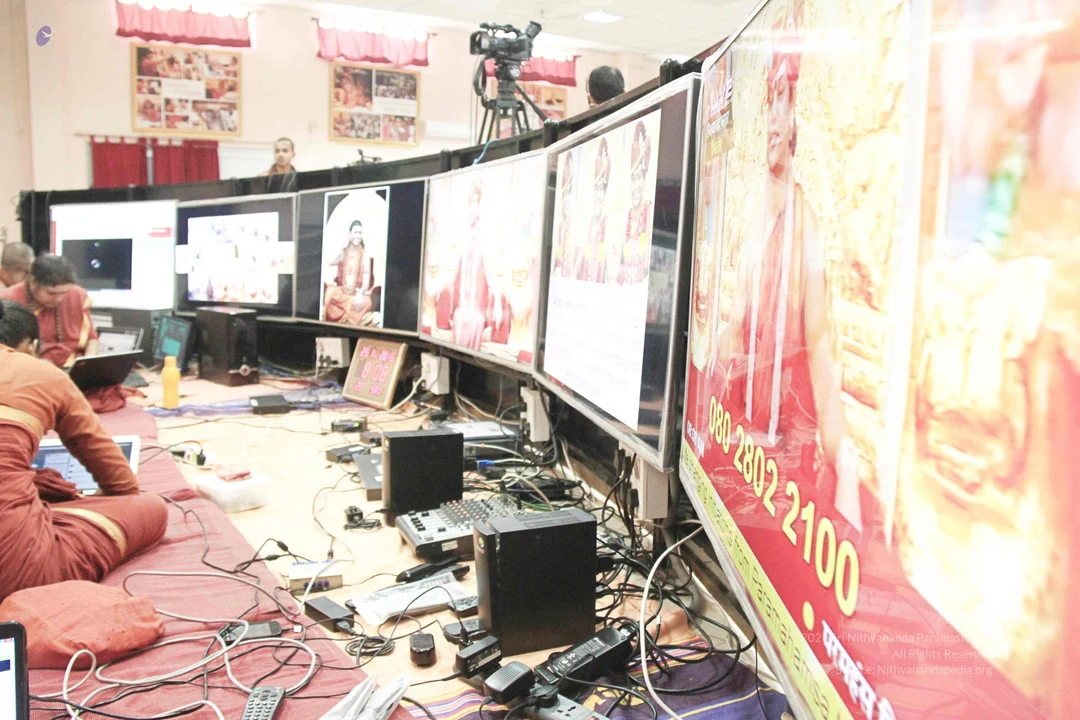
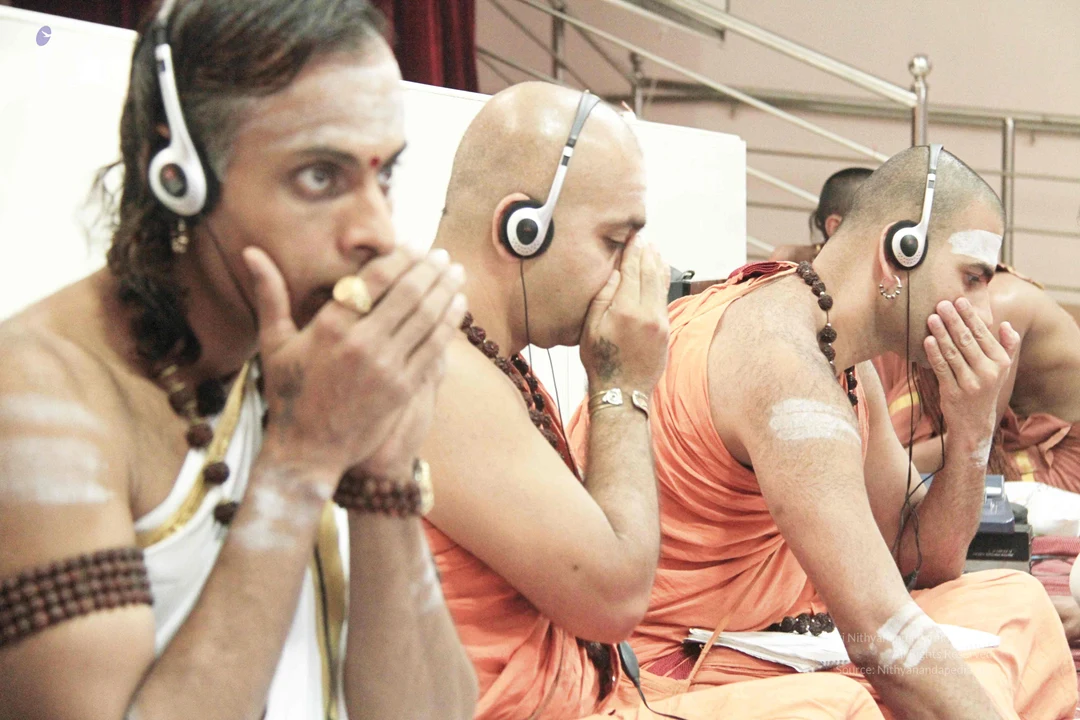
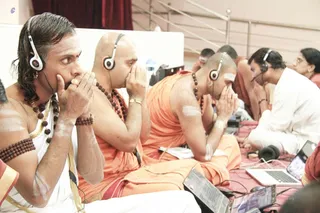
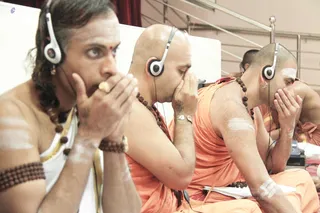
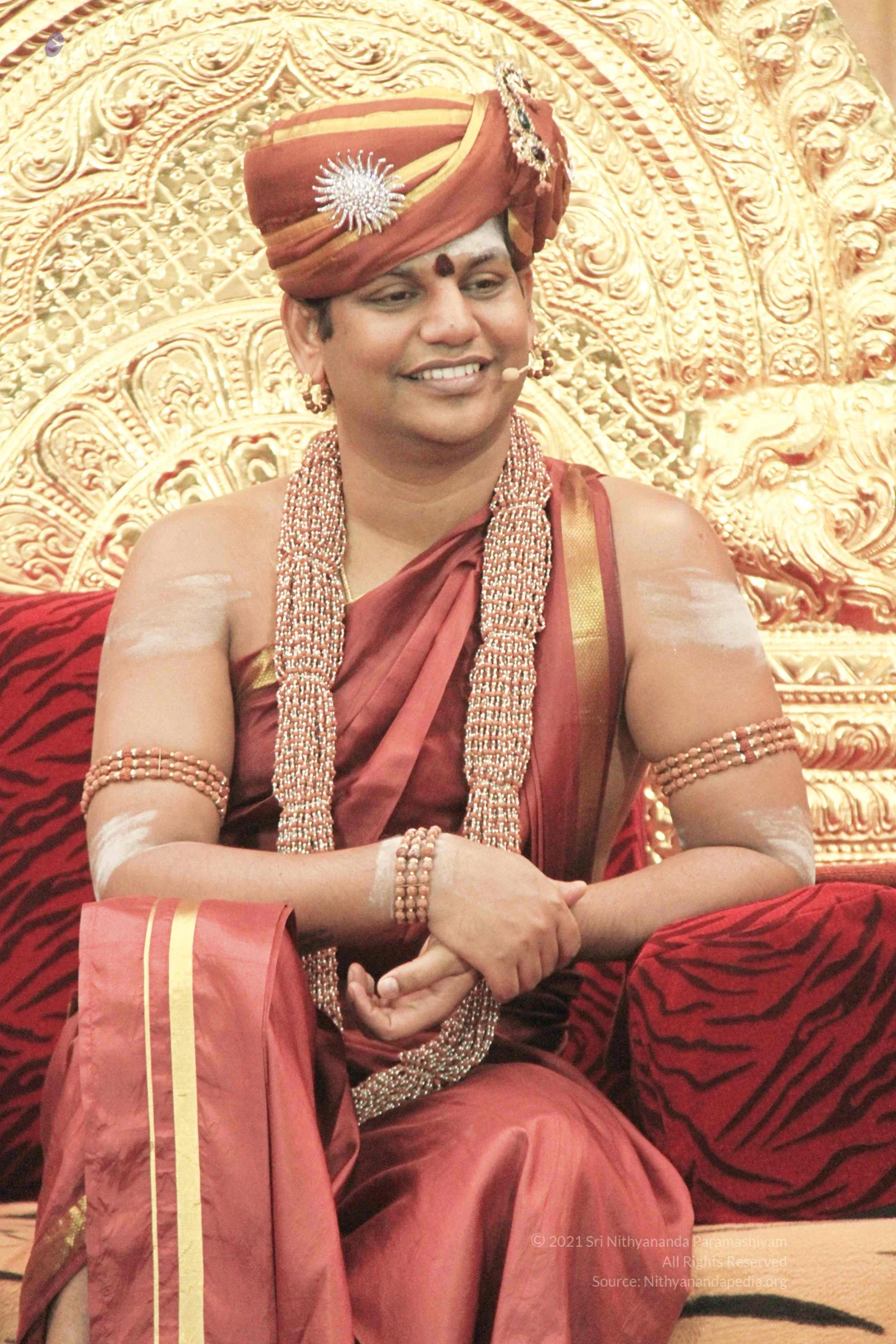
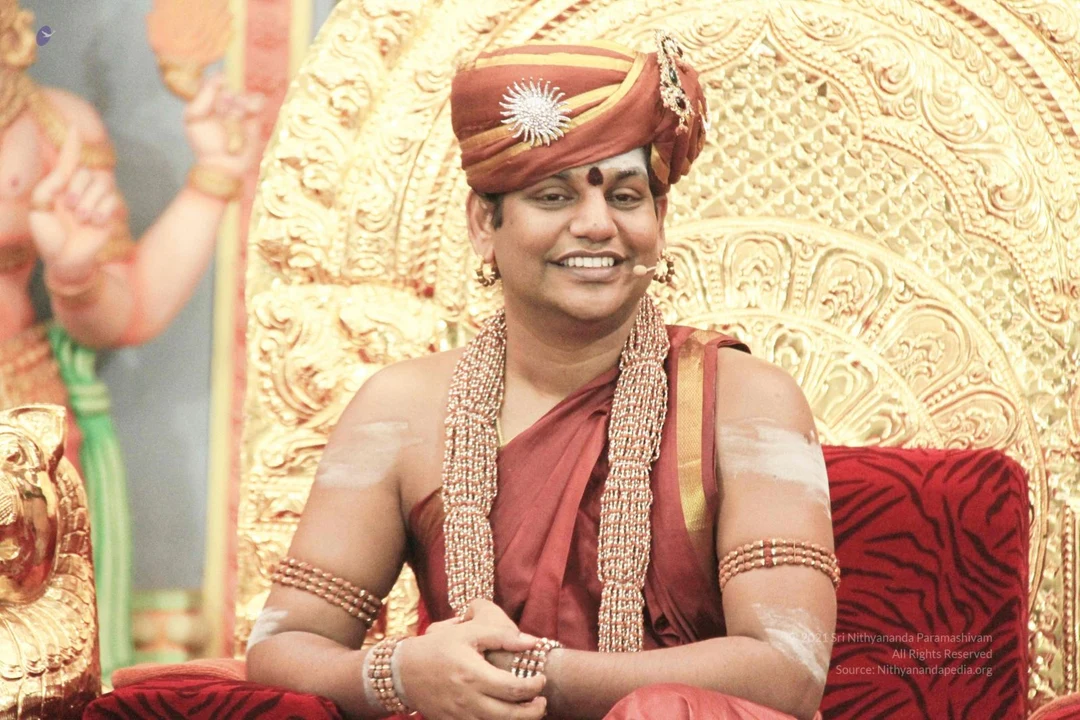
A man seated in front of an ornate golden throne speaks during a satsang, one hand raised in a gesture of explanation. He wears a red-and-maroon turban with a silver sunburst ornament and a gold side piece, a red vermilion dot on his forehead, and a red-maroon garment with gold border draped over the shoulder. He has layered rudraksha-style beaded necklaces, beaded bangles on his upper arms, and gold earrings, with a small headset microphone clipped near his face. Behind him the golden throne has intricate filigree carving, and a pink pillar stands at right.A man seated on an ornate gold throne with intricate repoussé carving, wearing a maroon-red turban with a silver starburst ornament and a jewelled brooch, a red tilak mark on his forehead, and a small headset microphone on his cheek. He wears a maroon-red shawl edged with gold, multi-strand gold-toned beaded necklaces and bead armlets, and has pale white sacred-ash markings on his arms and chest. A red and black tiger-striped cushion lies beside him, and a partly visible figure in pink and green stands at the right edge. Swamiji (probable) is seated in the centre of the frame, and the appearance cues are the crown-like turban, ceremonial gold ornaments and maroon-saffron ornate clothing.A man seated on an ornate gold throne wears a red-orange turban with a silver sunburst brooch and a red bindi on his forehead. He has a red-and-gold draped garment, a heavy beaded gold-toned necklace, gold earrings, and beaded bangles on his upper arms. He is seated in front of a carved gold throne backdrop and a pillar. Appearance cues: turban, ornate ceremonial clothing and ornaments; identity uncertain, so a person is unsure.A satsang hall where several saffron-robed sannyasis sit on a red carpet working on open laptops and wearing headsets with boom microphones. The nearest man in the foreground wears large orange headphones, a rudraksha mala and a bare chest, and speaks into a mic. Next to him a sannyasi with a topknot and rudraksha malas types on a laptop. Other sannyasis in orange and white clothing sit behind them, and a white-clad person sits at the right edge. In the upper left corner a large statue of a seated figure in an orange turban and saffron robes sits on a red-and-gold throne. Red curtains hang behind the group. The scene reads as a translation or transcription team at work during a live broadcast.A seated man in a maroon-red turban with a silver starburst ornament and a red tilak on his forehead wears a maroon-red wrap over his shoulders with gold border and is adorned with layered beaded necklaces and beaded armlets. He sits on a red tiger-striped cushion before an ornate golden throne with intricate relief carvings, with a golden lion figure at lower right and a red-and-gold deity statue at right edge.Photograph of three men seated closely in a hall, wearing white headphones and holding their palms to their faces in a listening or contemplative pose. The man on the left wears a white dhoti with a gold border, rudraksha malas on his neck and wrist, a red bindi and long hair, and a gold ring. The two men on the right wear saffron-orange robes and rudraksha malas; the one in the centre has a shaved head, a silver watch and a gold bracelet. White vertical ash marks are visible on their arms and foreheads. Behind them stand metal railings and a red curtain, and a recording device sits on the right. Partial faces of a fourth man appear at the edge.
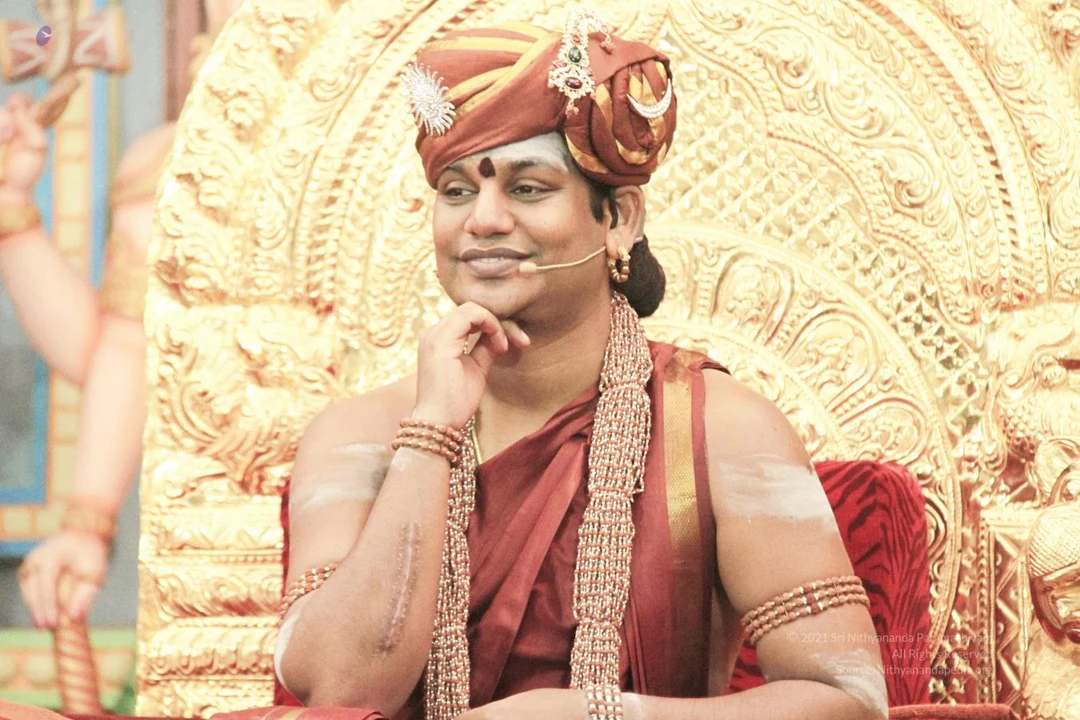
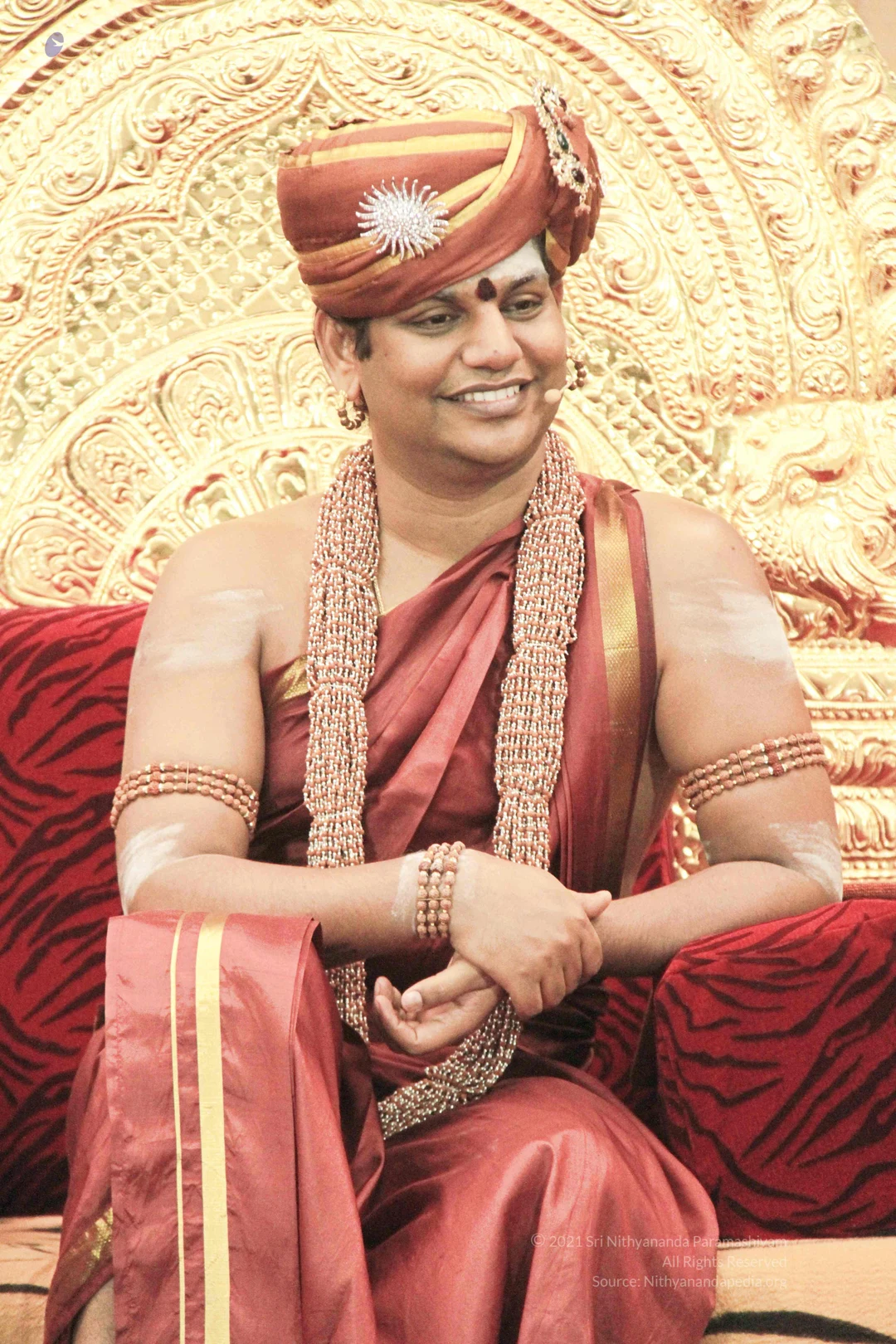
03--Darshan

4 photosSource gallery
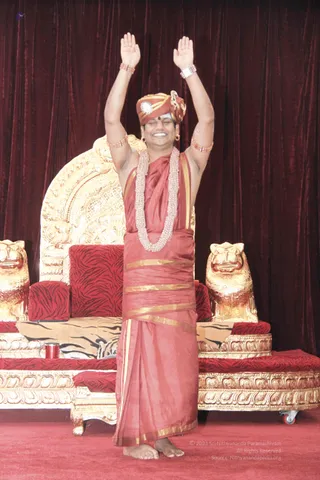
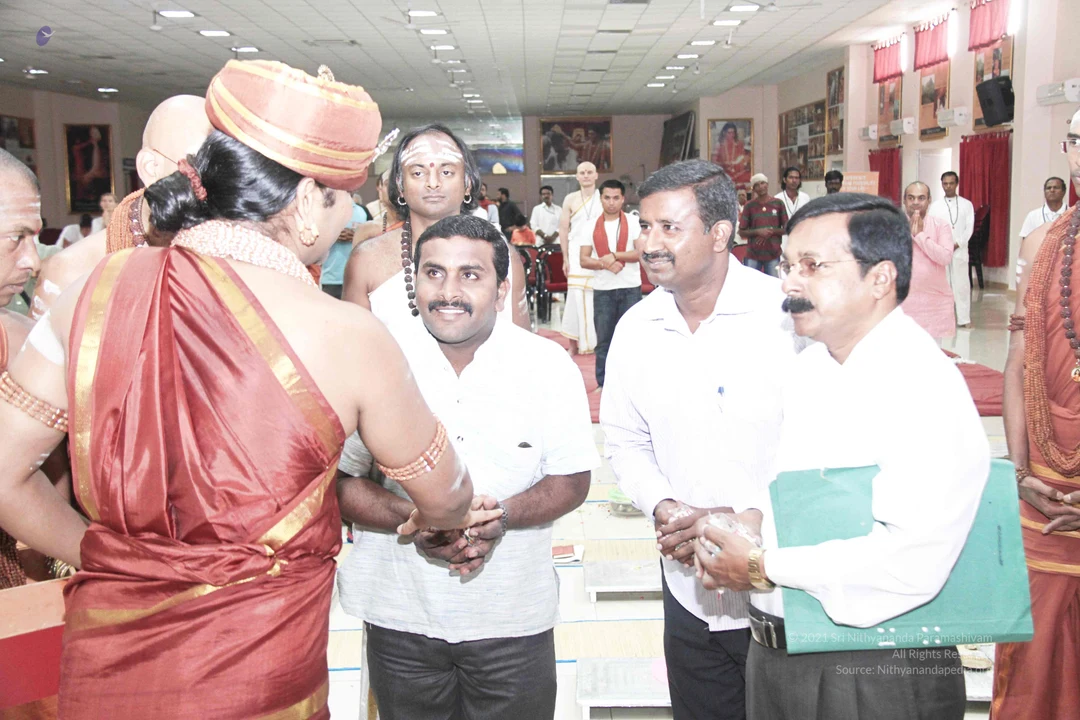
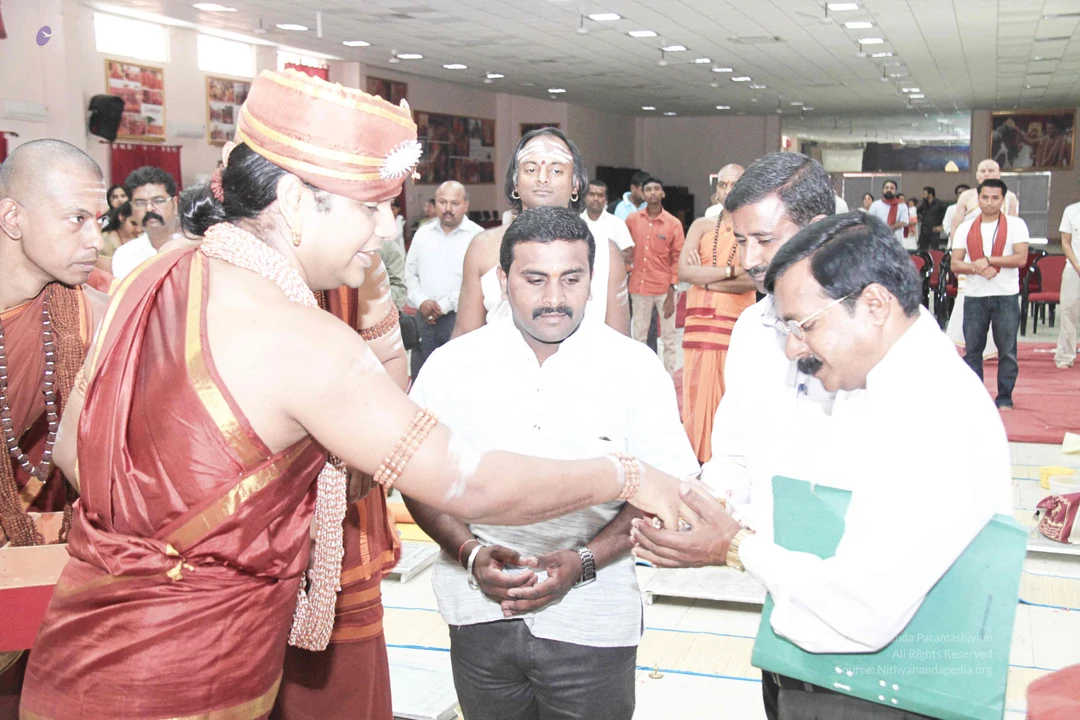
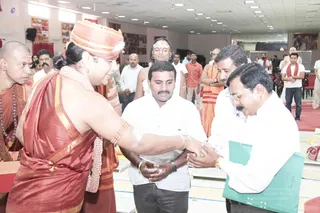
A smiling man stands barefoot on a red carpet in front of a gilded throne with lion-head armrests and red tiger-striped cushions, backed by dark red velvet drapes. He raises both open palms overhead in greeting or blessing. He wears a red-orange turban with a white rosette, a red-orange wrapped garment edged with gold borders, and a white beaded mala around his neck, plus copper bangles and a wristwatch. A red tumbler sits on the throne's side. The figure's appearance is consistent with Swamiji (probable), wearing turban, saffron-toned ornate clothing and a ceremonial mala, performing a raised-hands blessing before the throne.Indoor photo of a hall with pink walls, ceiling lights and framed portraits. In the foreground, a person in a red-and-gold saree with a red orange turban and a red sash on the shoulder stands with hands joined, facing three men in white shirts. One man in a grey-white shirt smiles and clasps hands, another in a white shirt and dark trousers stands beside him, and a man in a white shirt holds a green folder while pressing palms together. Behind them, a man with a white forehead marking and rudraksha beads, and several other men in white and saffron-red clothing stand among seated devotees.A photograph inside a large hall with red carpet and framed pictures on the walls. In the foreground a woman in a rust-red and gold-bordered sari, with a red-and-gold head covering and a white flower pinned in her hair, stands at left, extending her arm to clasp hands with a man in a white shirt and dark trousers who holds a green folder. Beside him a man in a white shirt and glasses leans in, and another man in grey stands with hands folded. Behind them, a shaved-headed man in orange robes and a rudraksha mala stands at left, and further back a man with white tilak marks on his forehead, a young man in white, and several other standing people in white and orange attire are visible. A bare-armed man in a white dhoti with white marks on his forehead stands in the background. The overall scene resembles a formal greeting or exchange of papers during an event.A standing man in a maroon-red turban with a white sunburst emblem and a maroon shawl over a maroon dhoti edged with gold borders, raises both arms overhead with palms open while smiling. He wears a long beaded necklace of pale rudraksha-style beads, gold-toned bangles on the wrists and a wristwatch. Behind him is an ornate gold-carved throne with a red tiger-striped cushion and a gold lion figure at its side, set against dark red velvet drapes on a red carpet. Swamiji (probable): the figure has a turban, rudraksha mala and saffron-maroon ceremonial clothing, identified by appearance cues only, and is shown in a celebratory standing gesture before the throne.

November 23 2013

1 photoView all
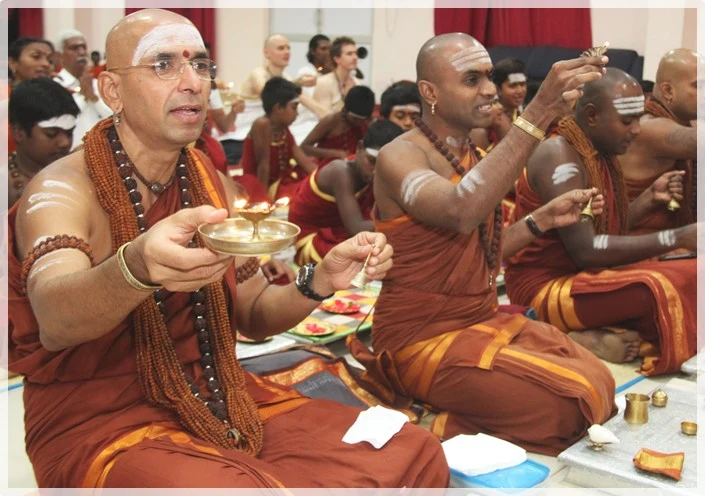
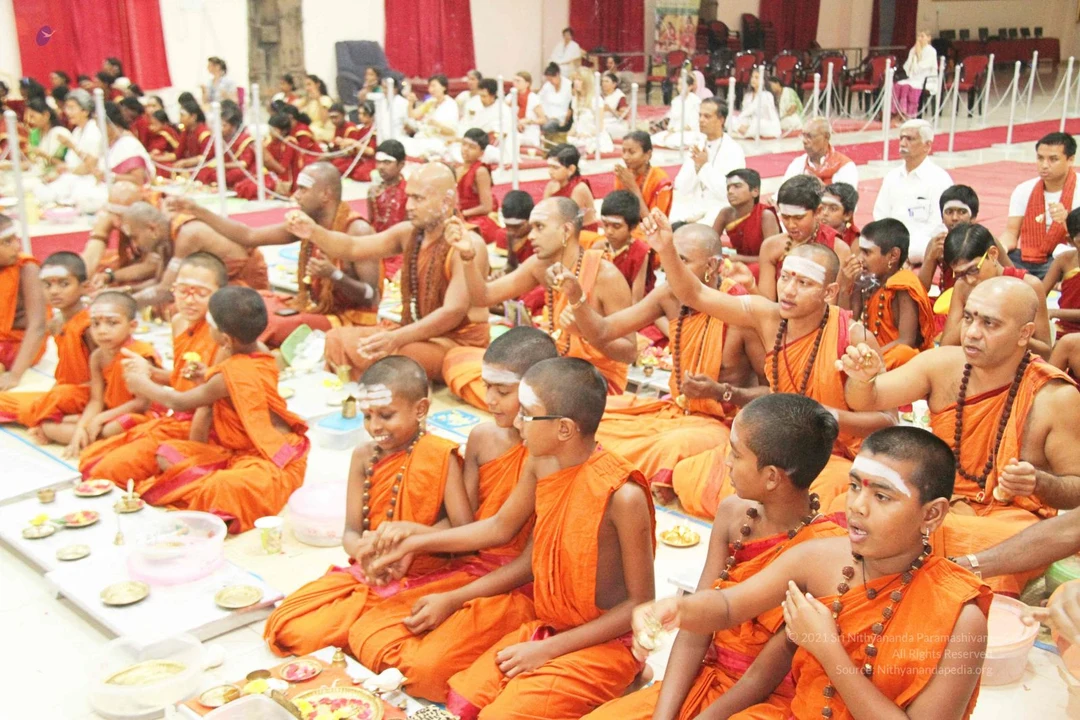
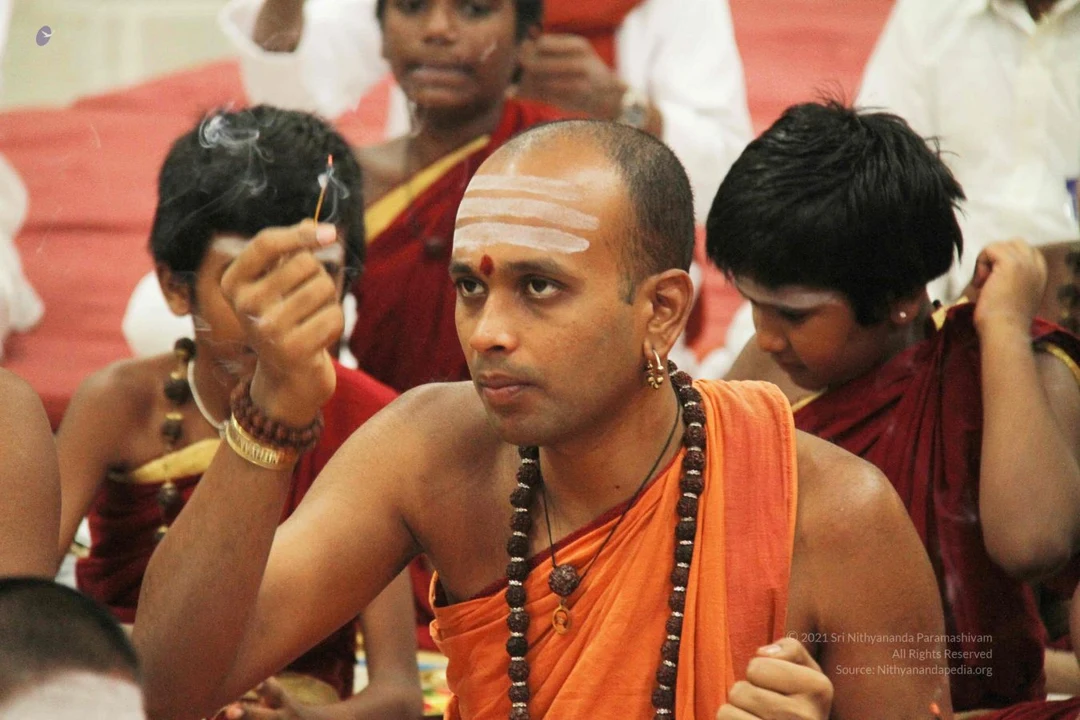
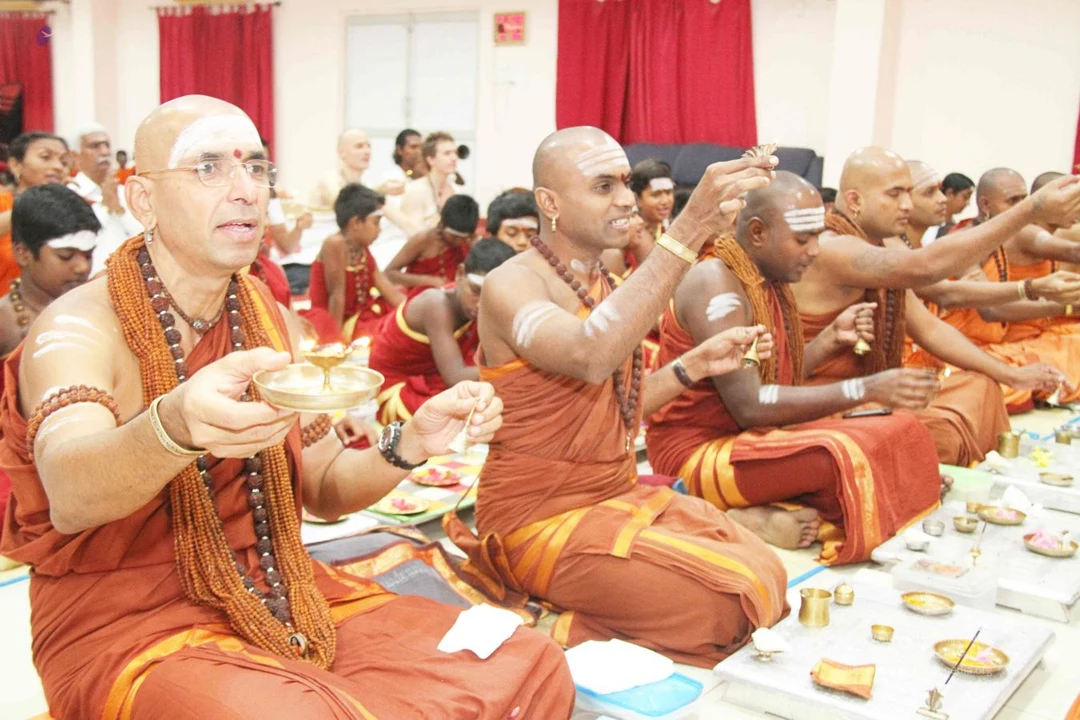
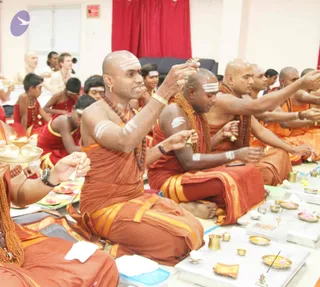
A seated puja in a hall with red curtains. In the foreground, a shaved-headed priest in orange robes and rudraksha mala holds a small lamp-like object raised in one hand while speaking, with white tripundra marks on his forehead. Beside him, seated men in orange and saffron garments hold brass implements and bowls on a low white table with flowers, small brass cups, and a yellow cloth. Other devotees in red and orange sit behind, including children in red garments. A brass aarti plate with oil lamps sits at the left edge. No figure is identifiable as a particular person from appearance here.