Skip to content
Friday

22 November 2013

Dated photos
303
Source pages
1
Media
2
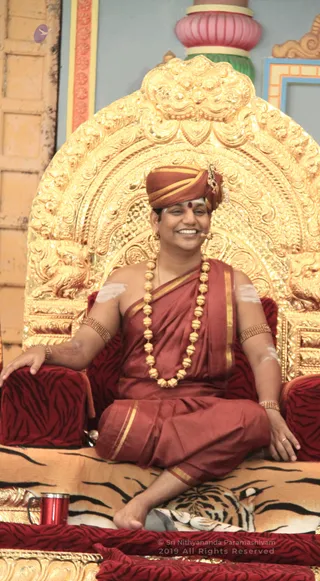
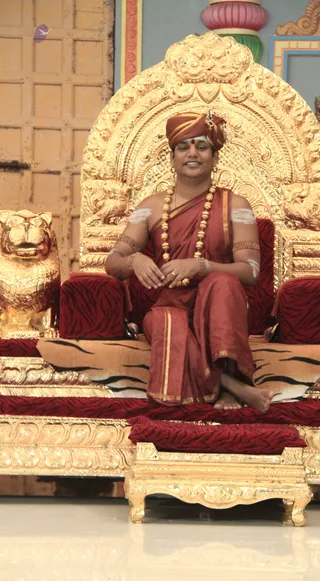
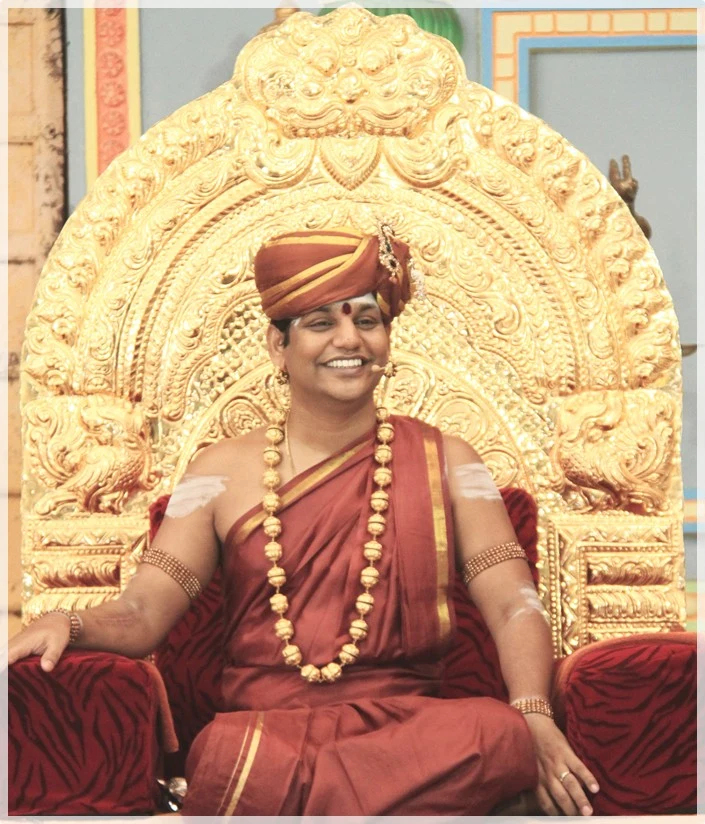
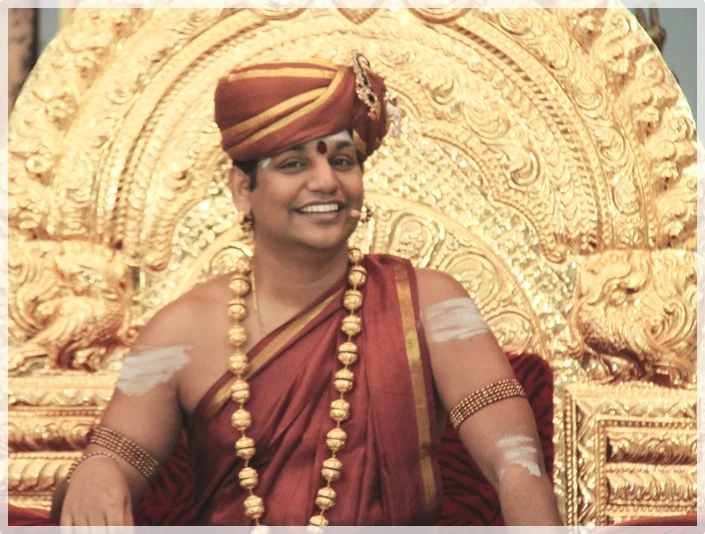
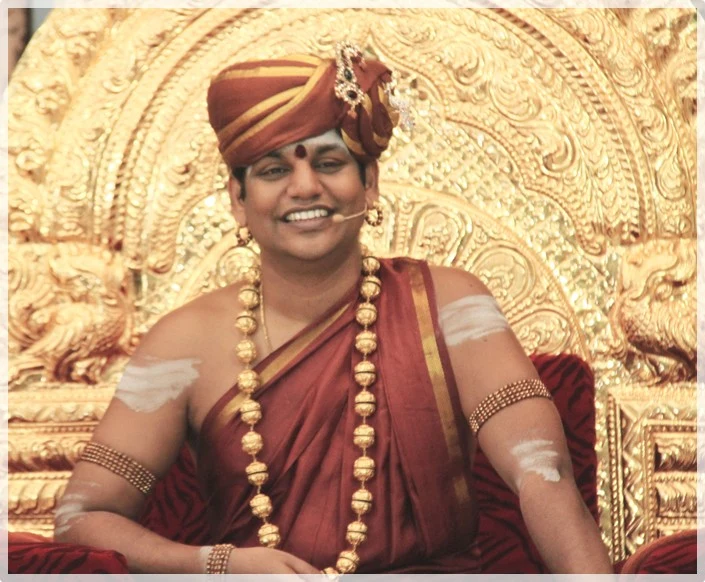
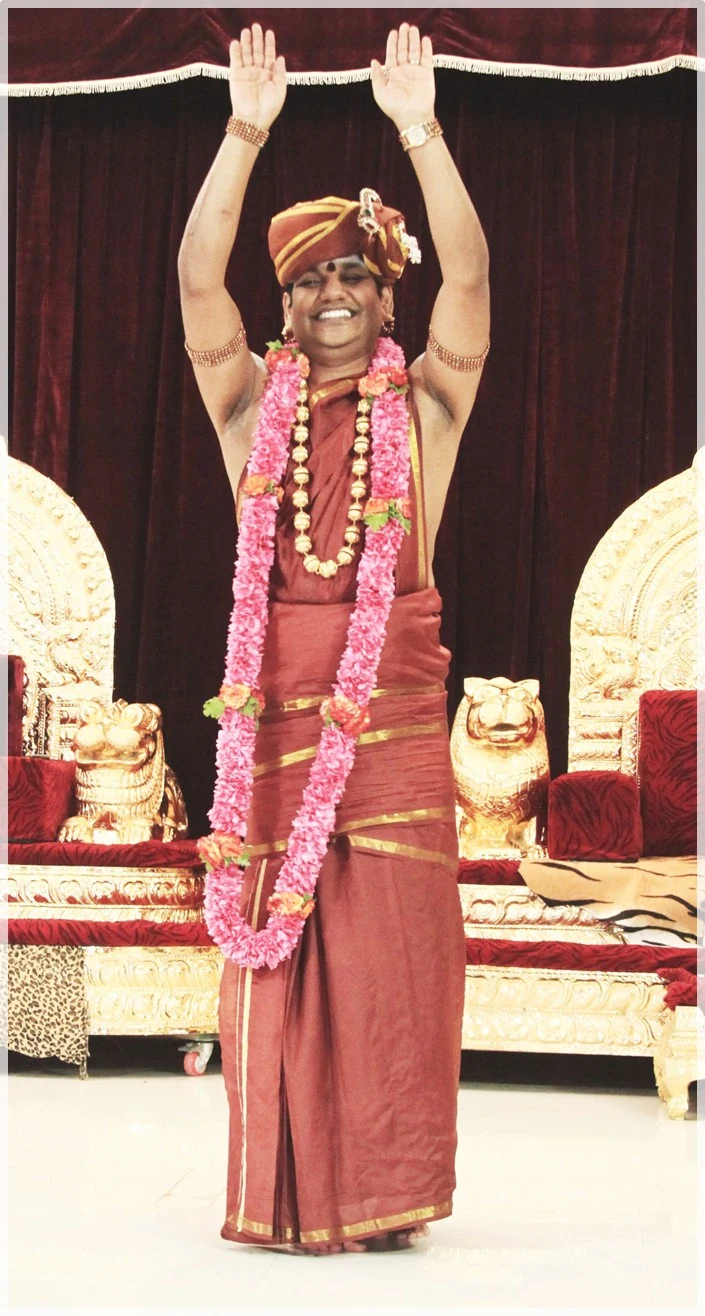
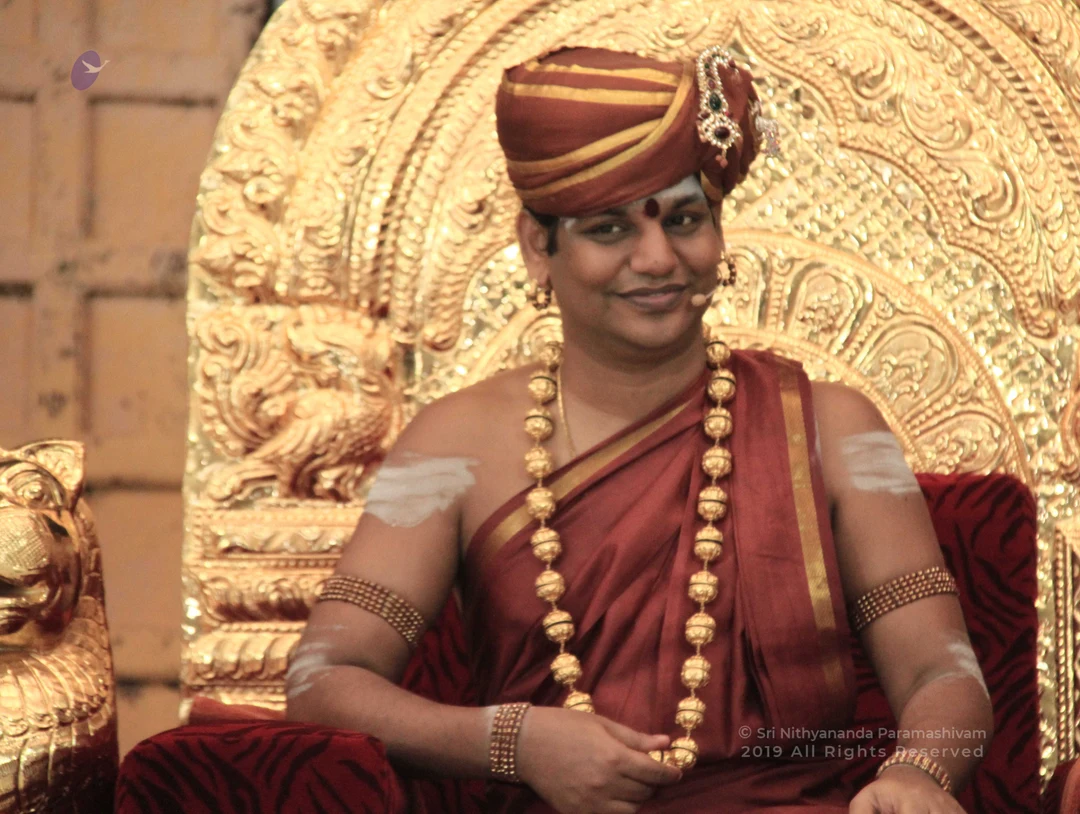
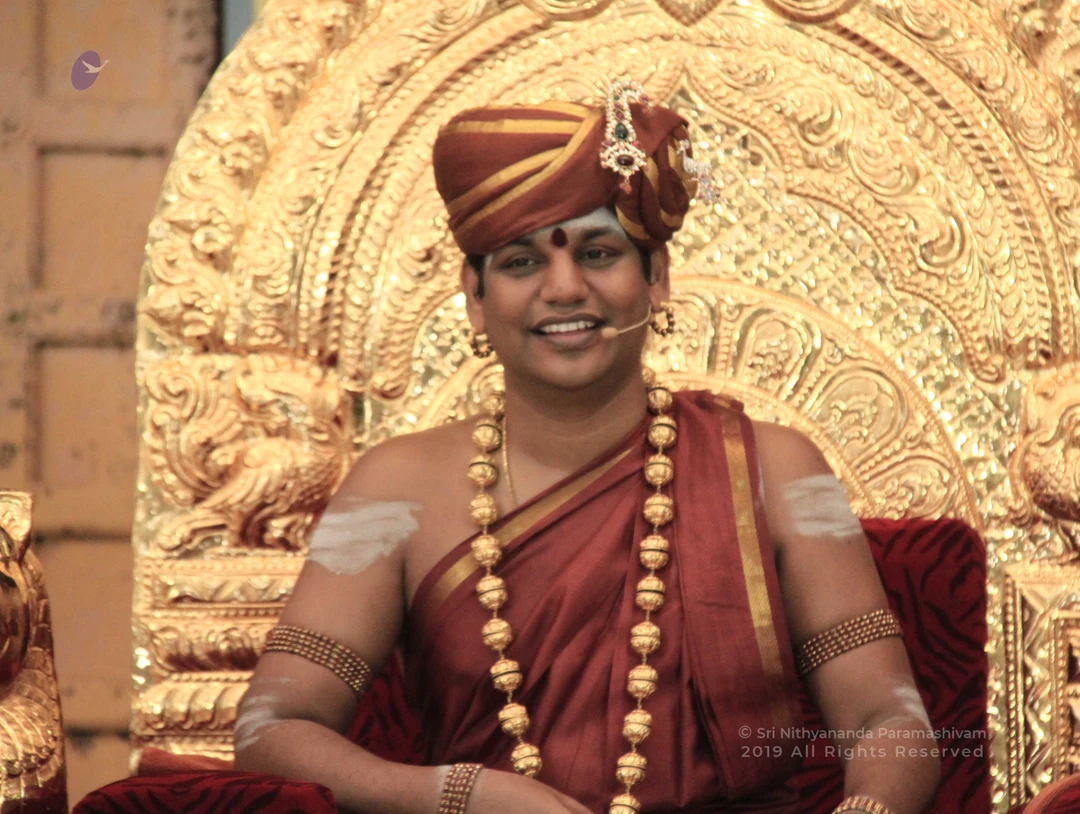
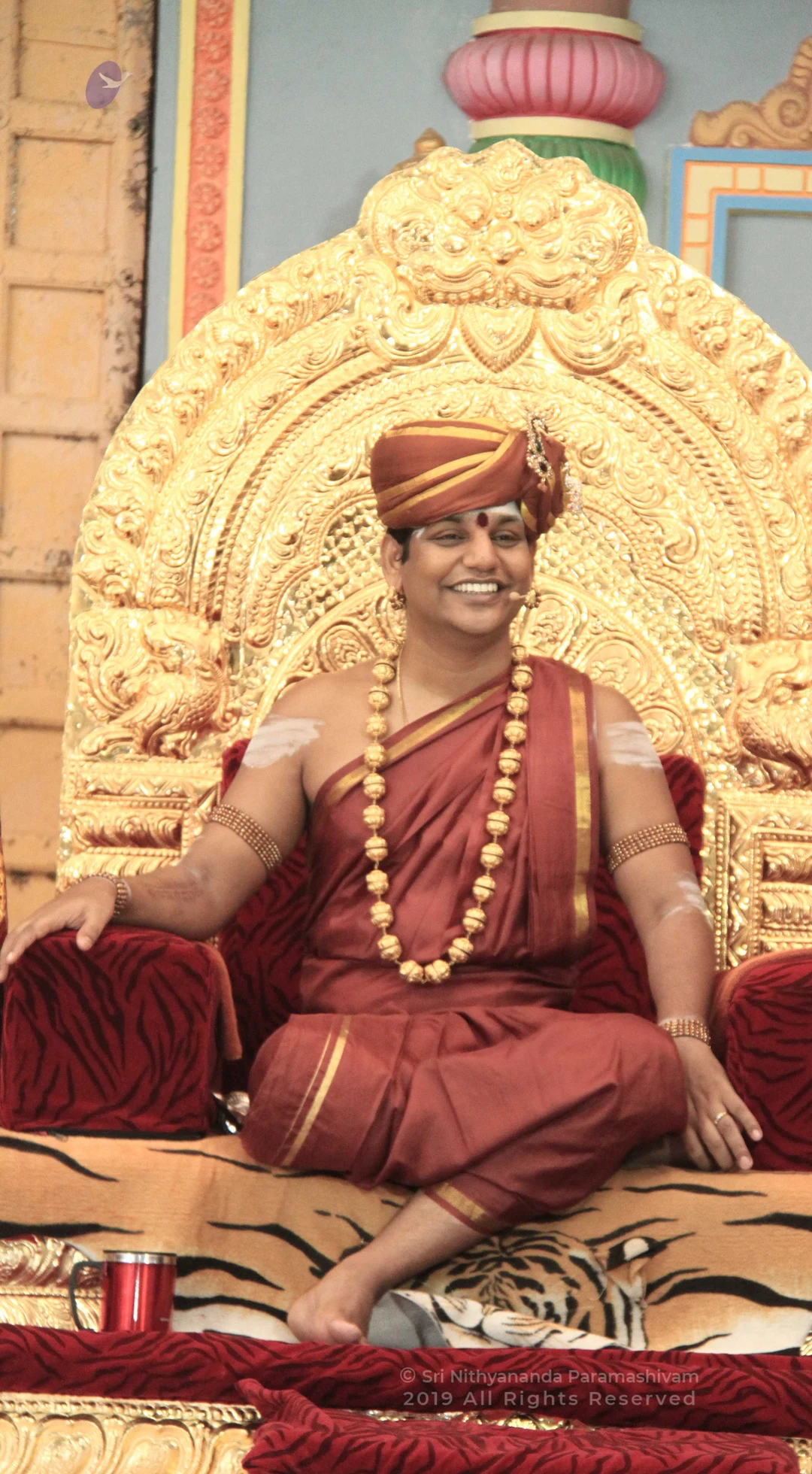
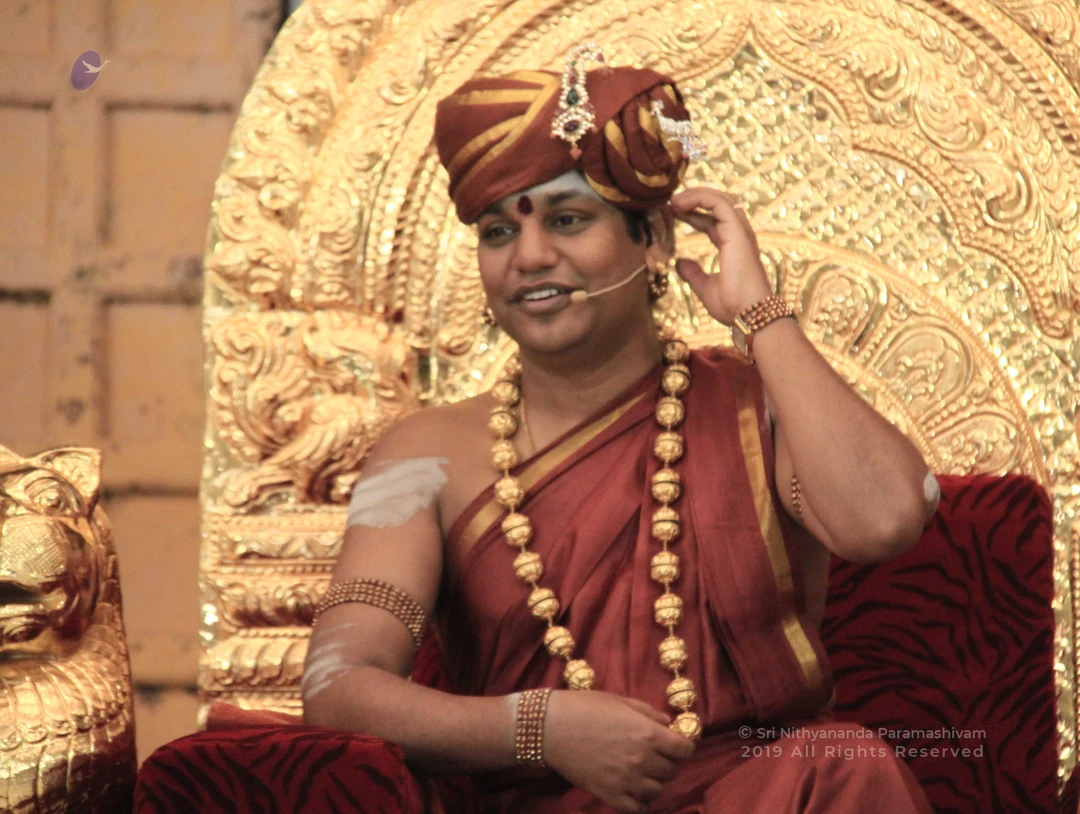
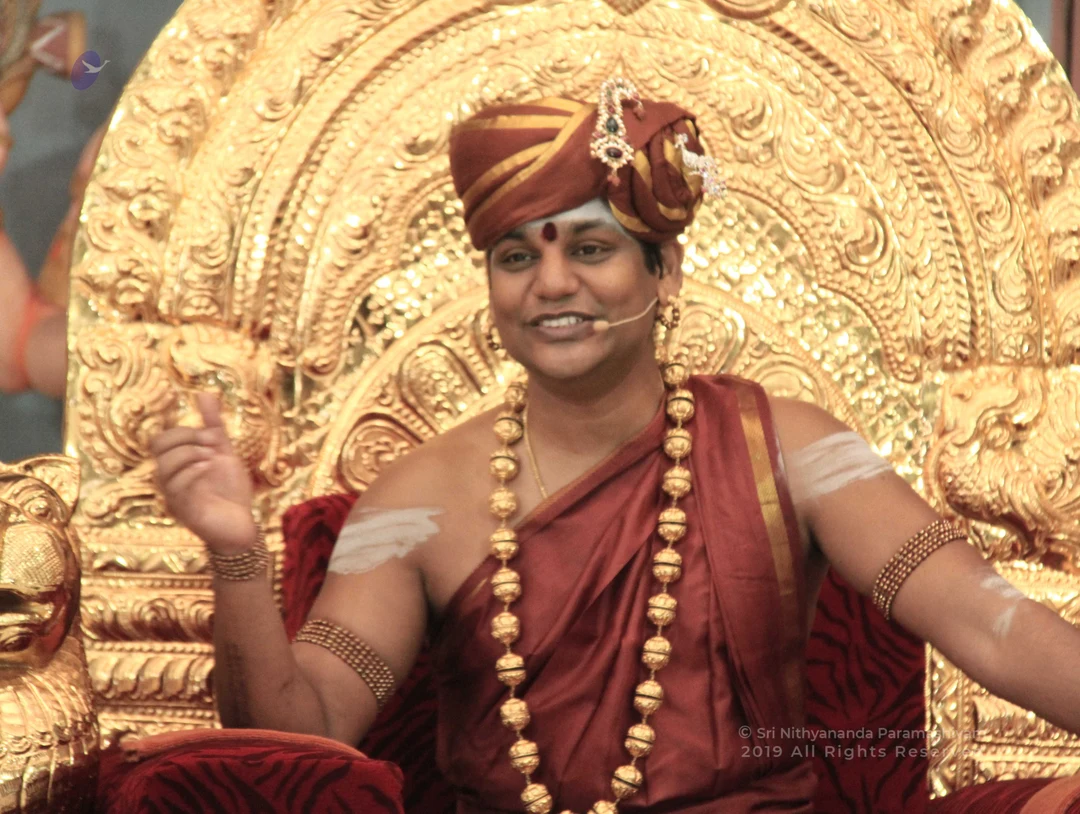
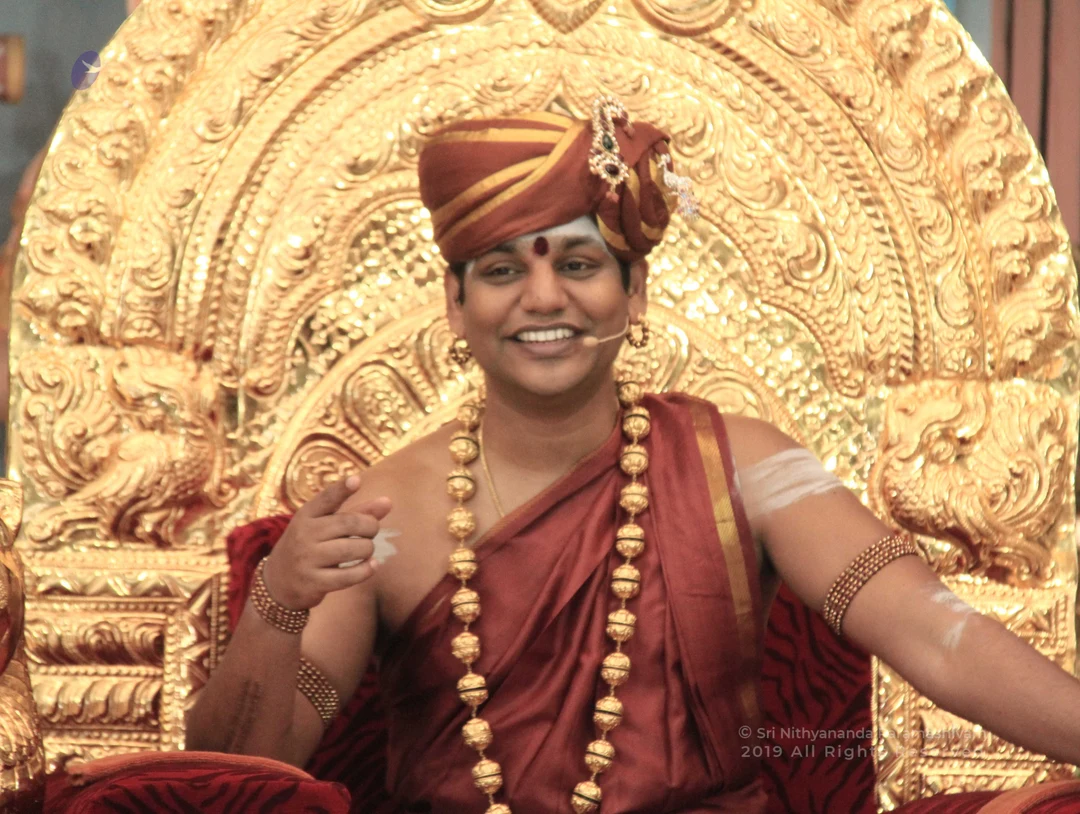
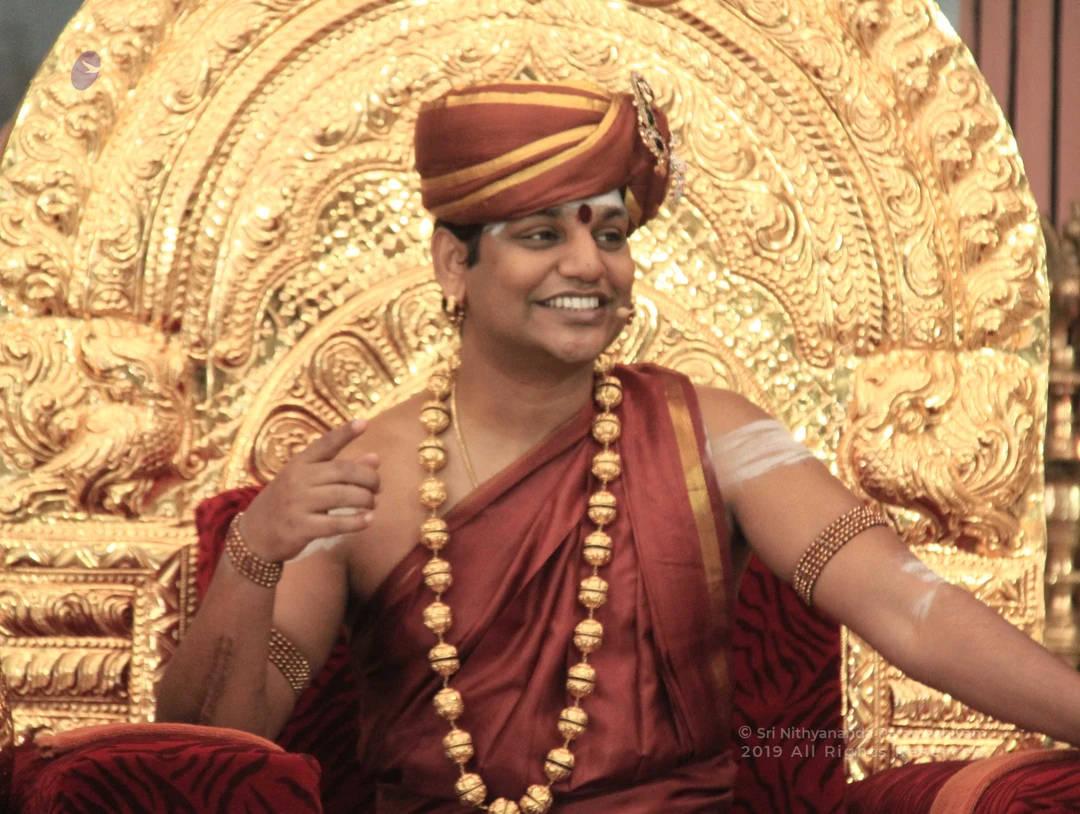
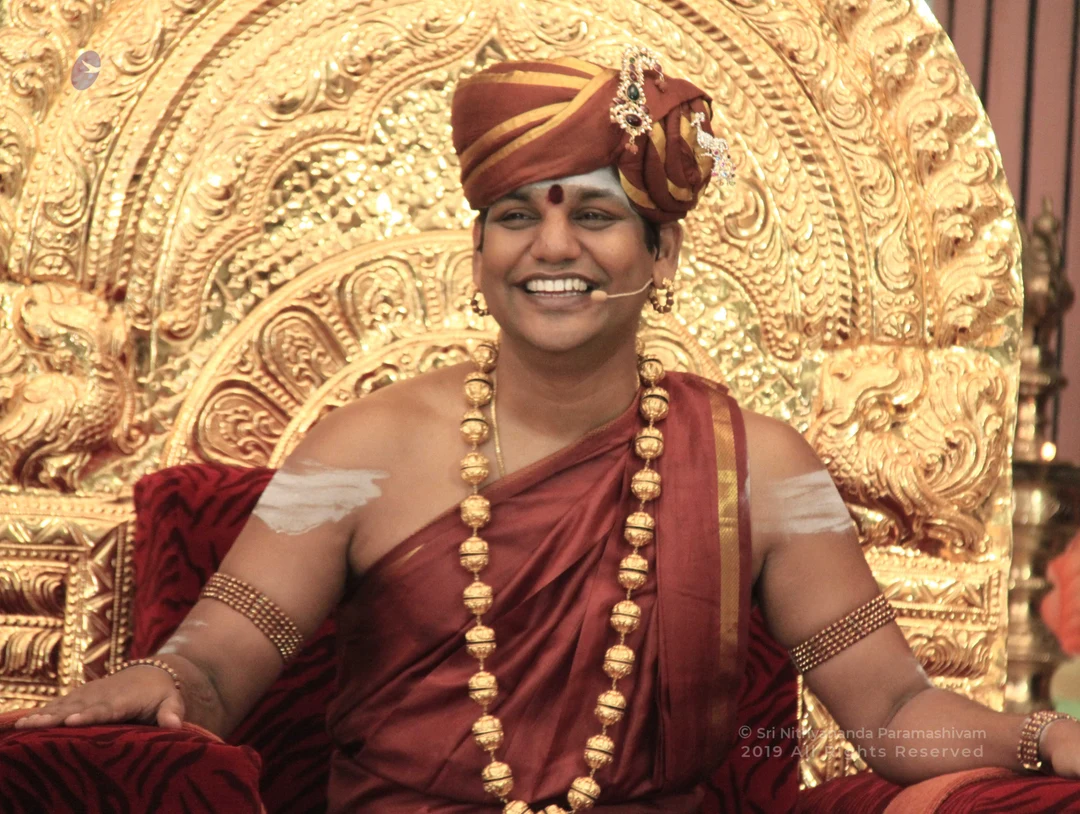
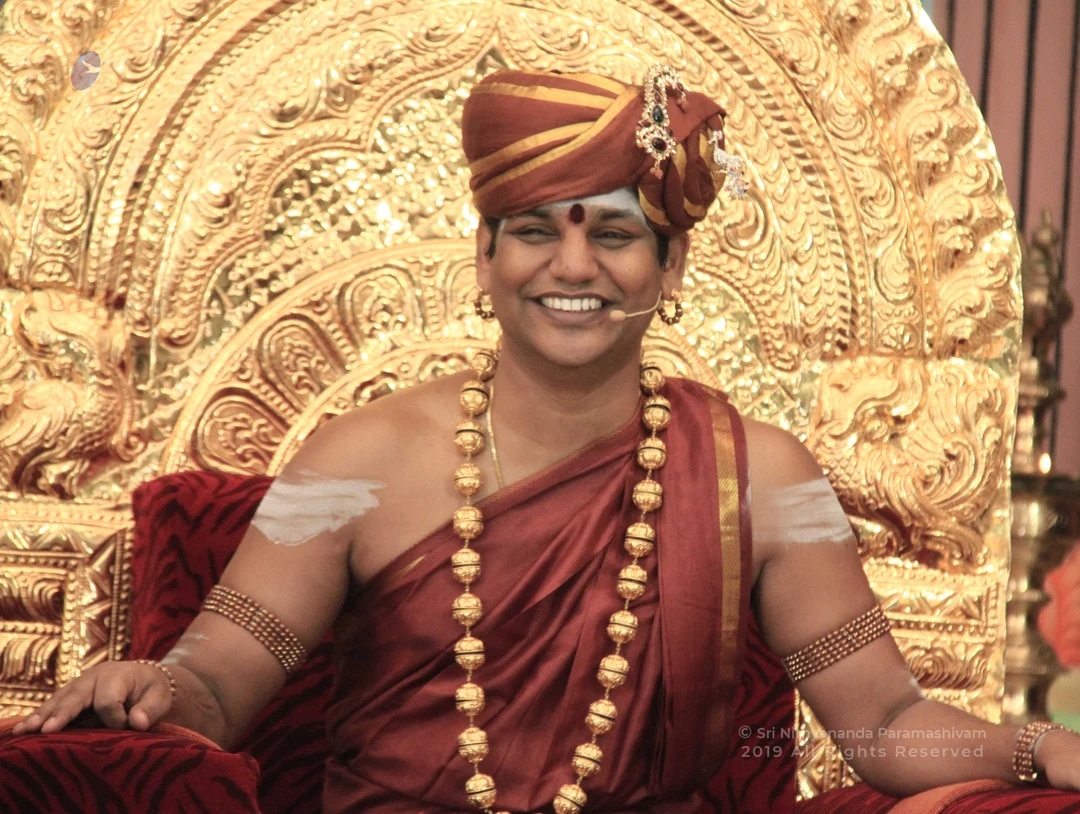
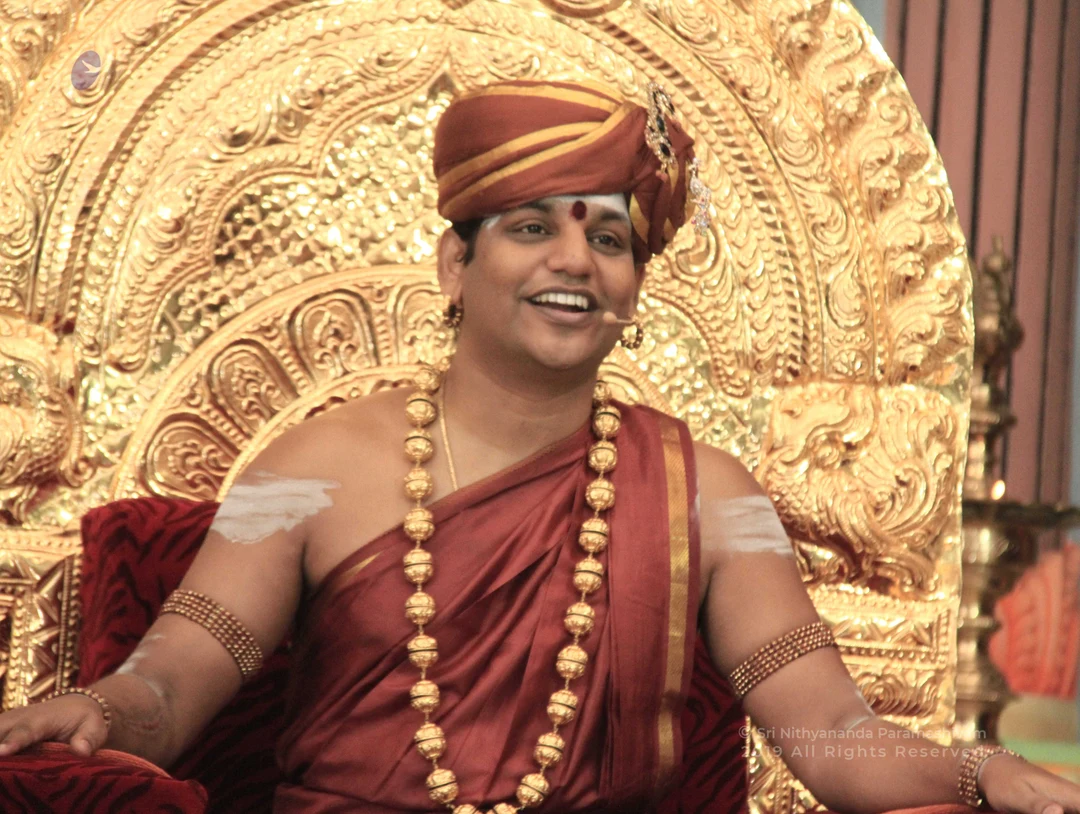
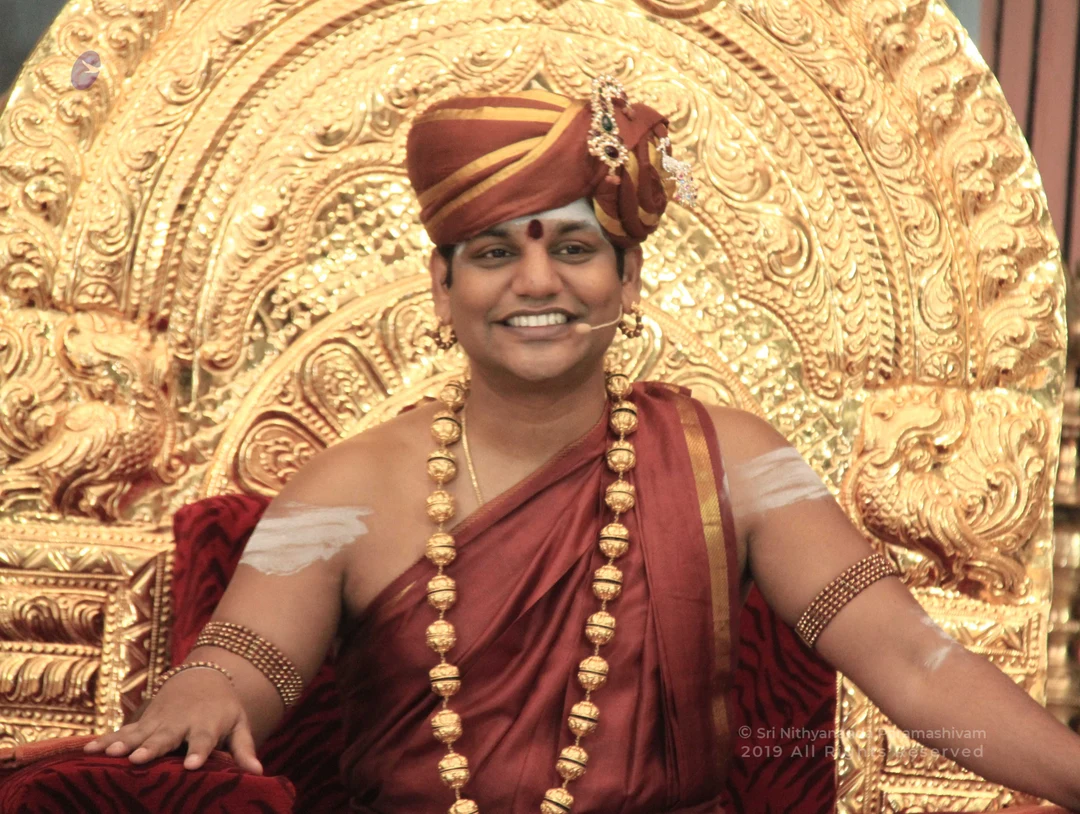
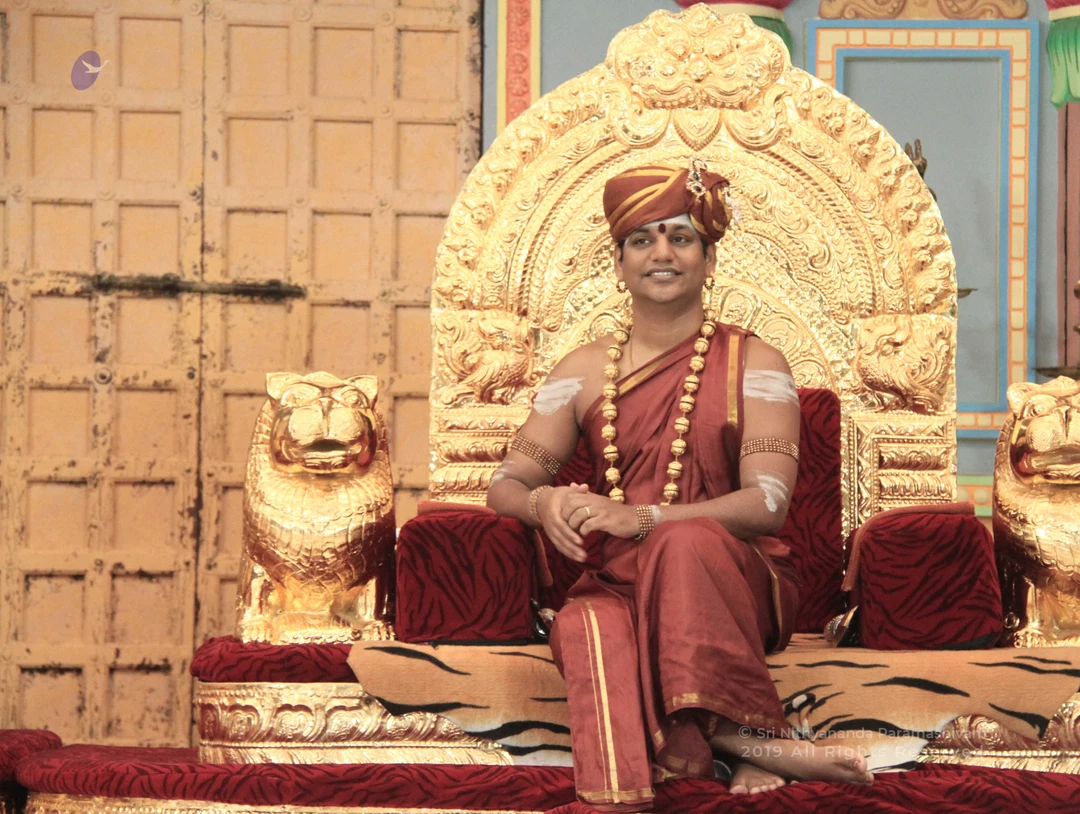
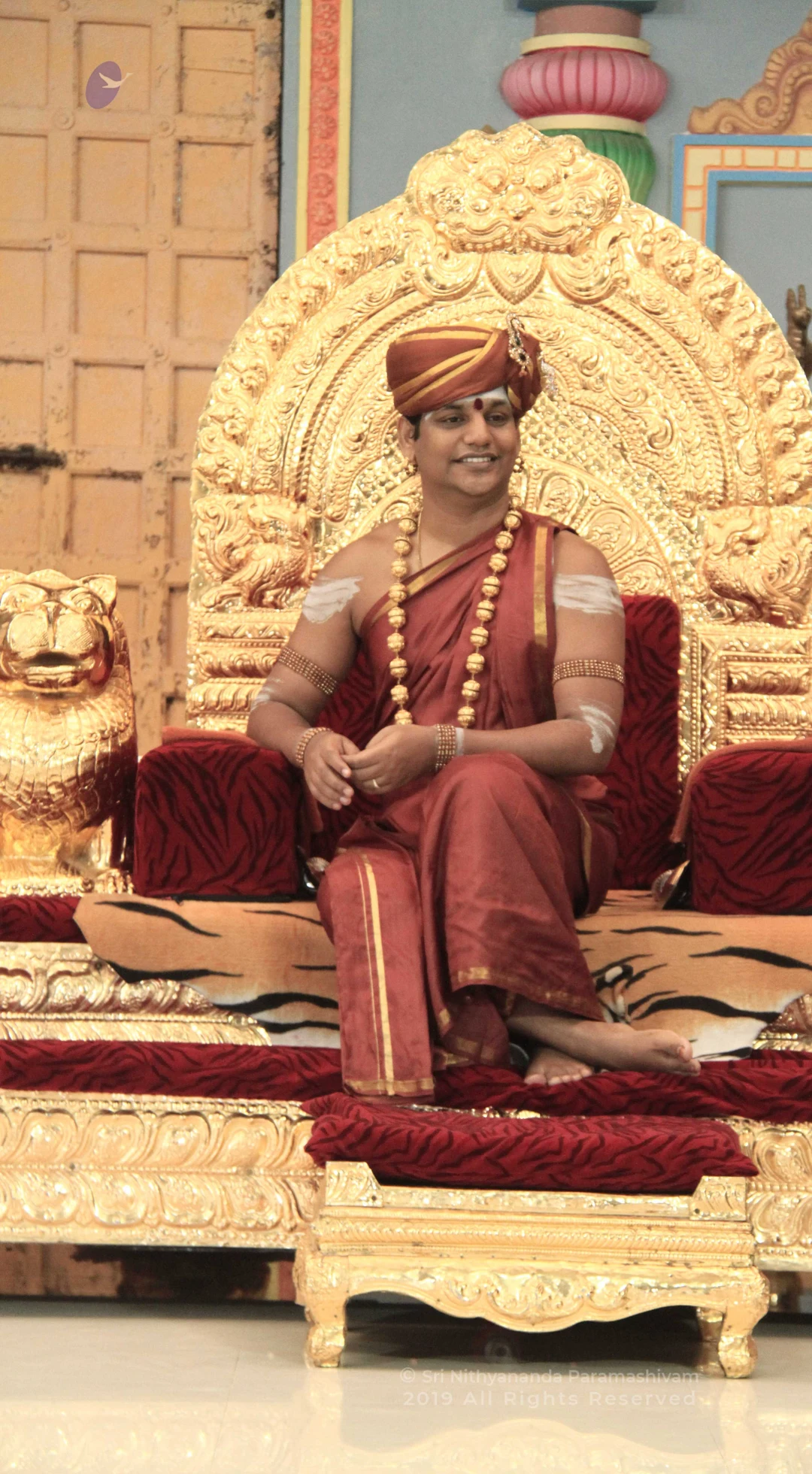
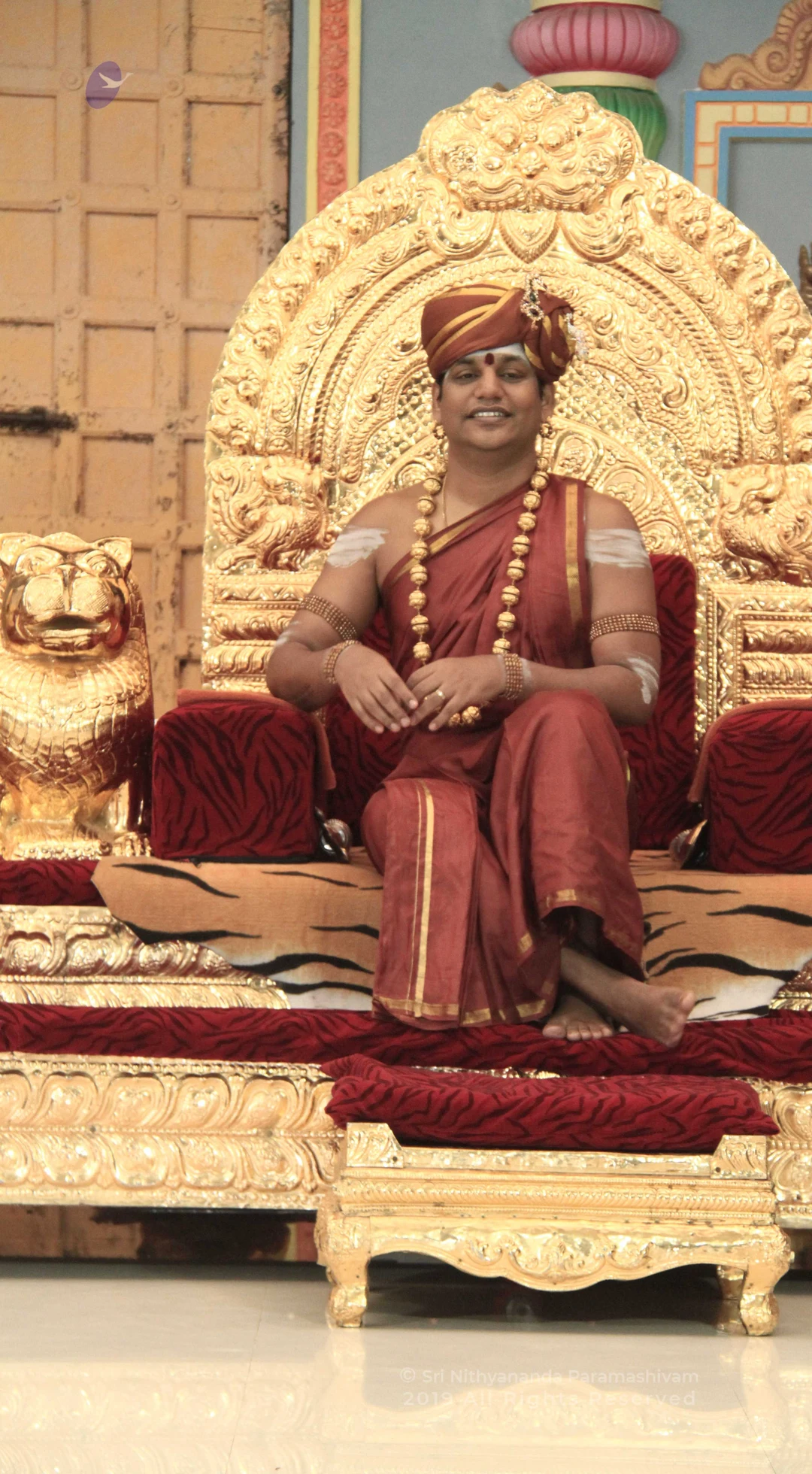
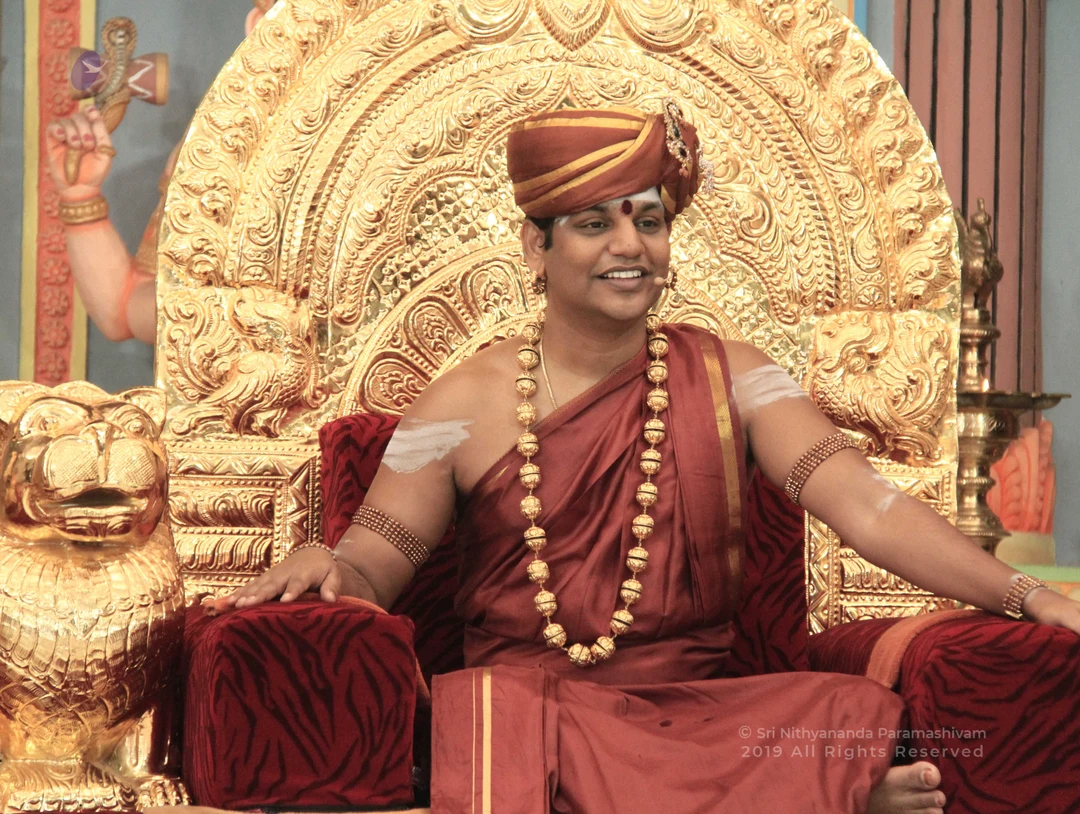
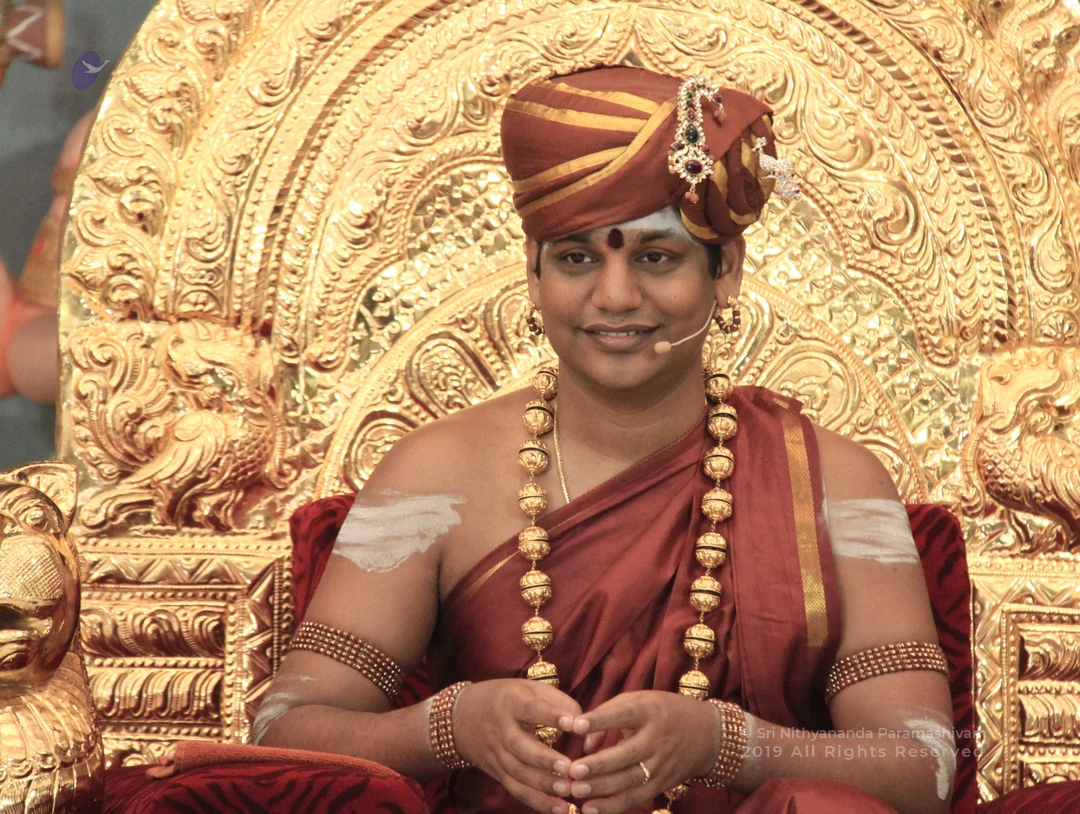
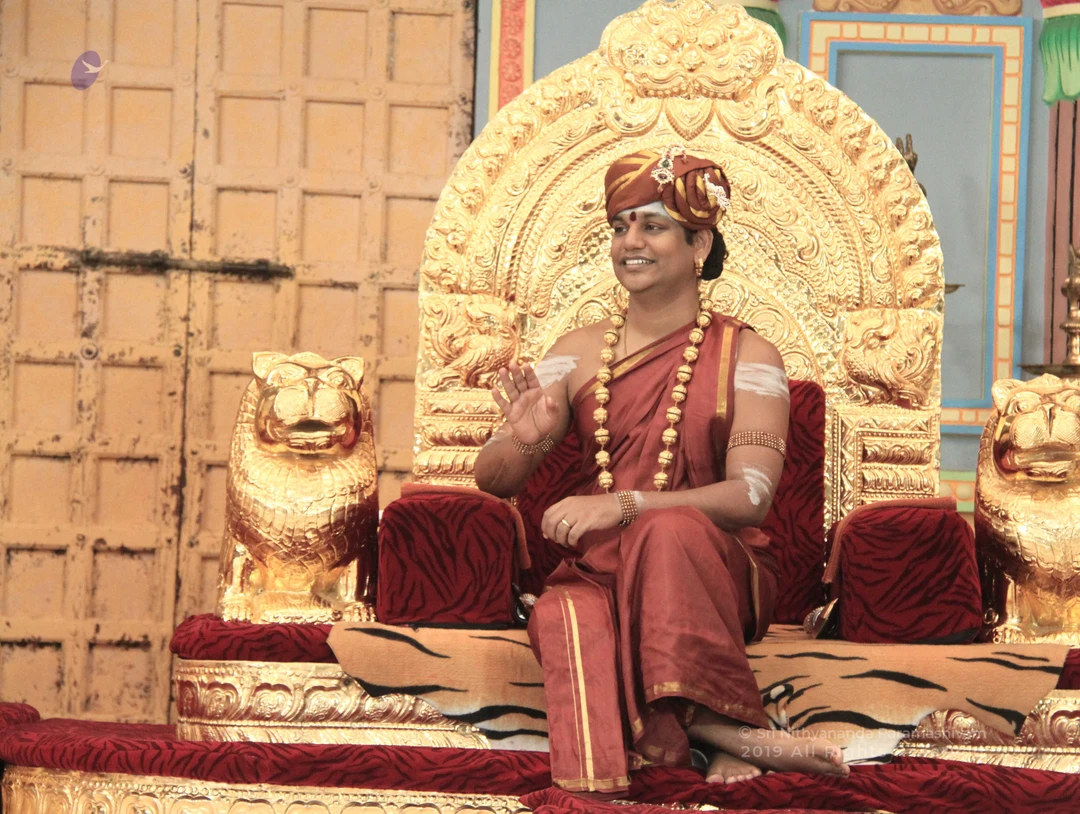
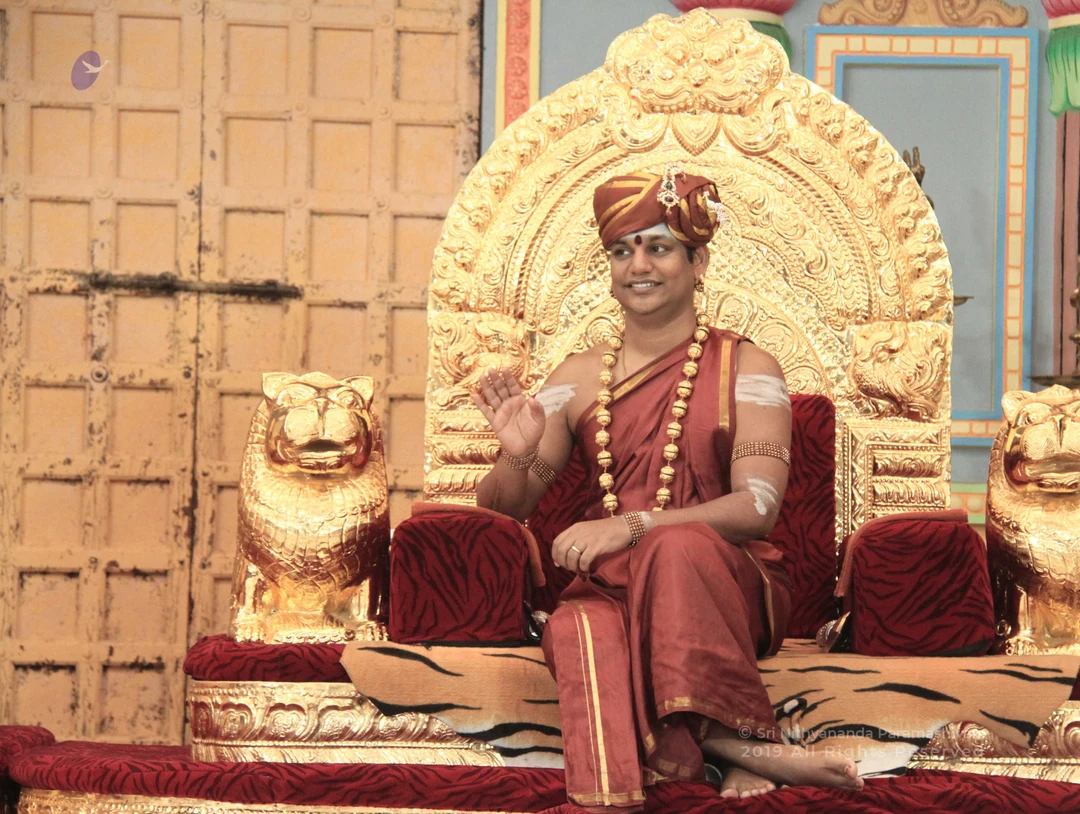
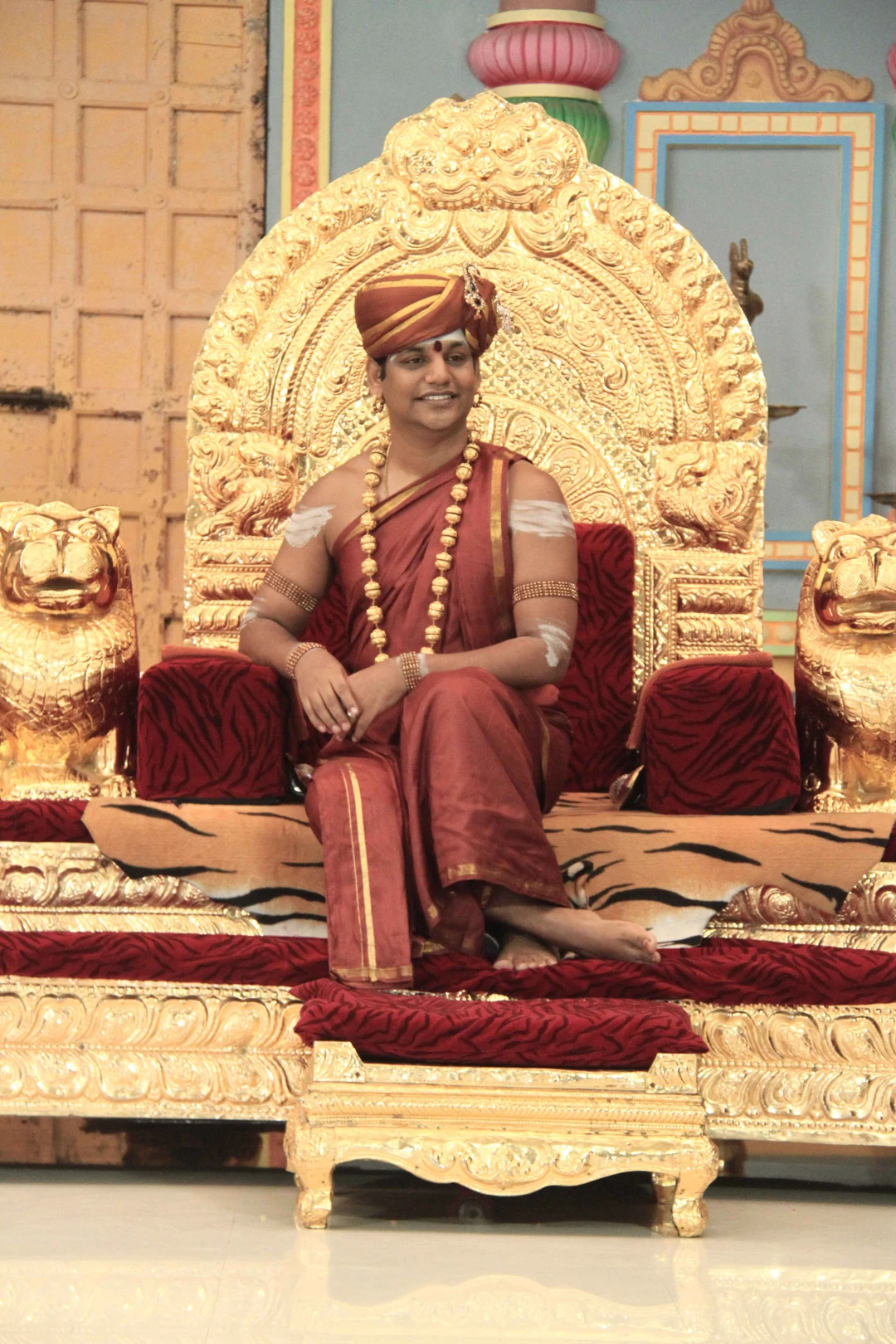
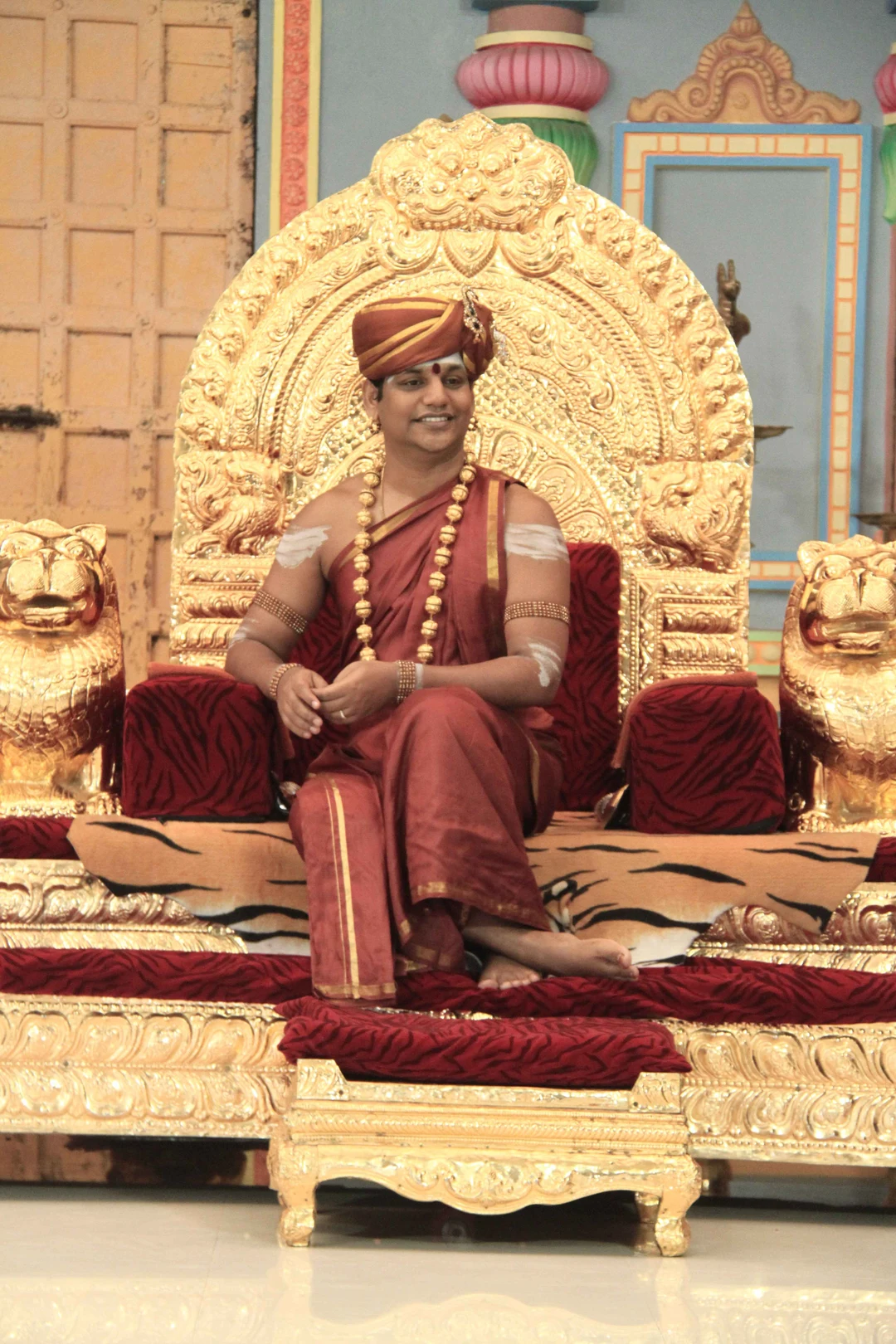
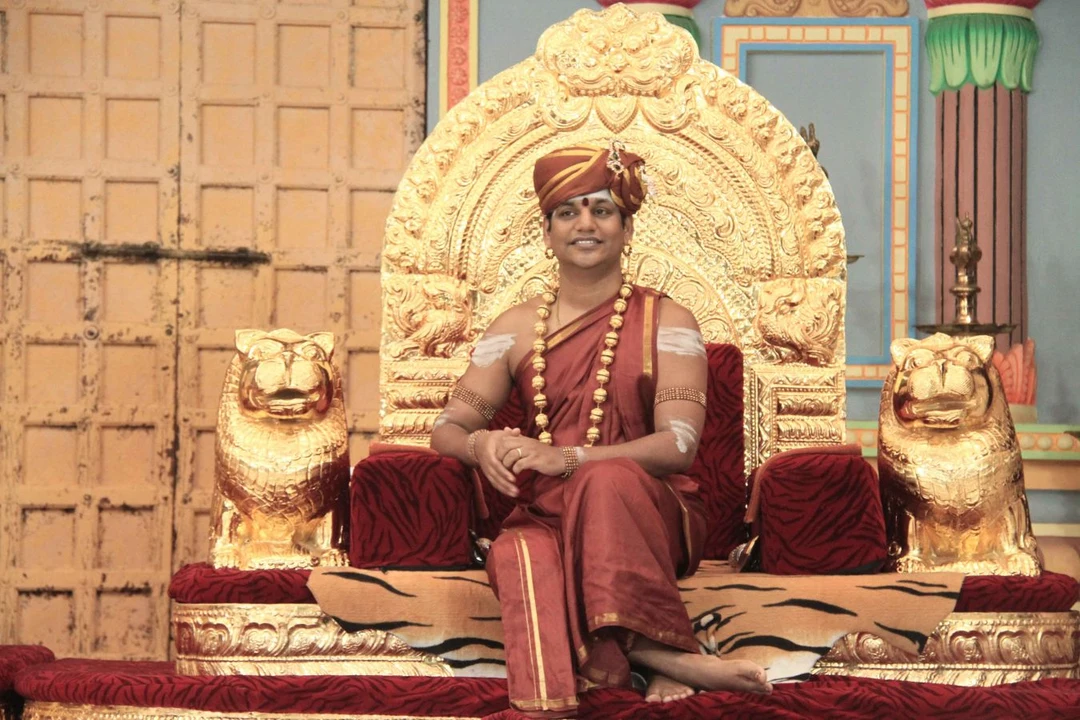
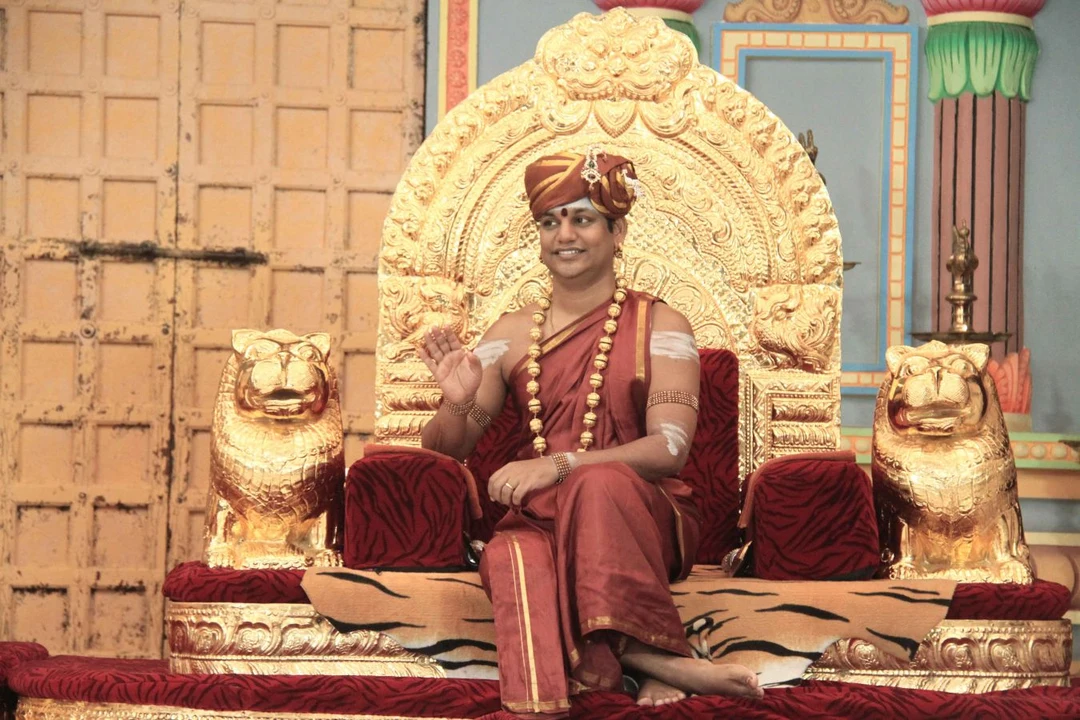
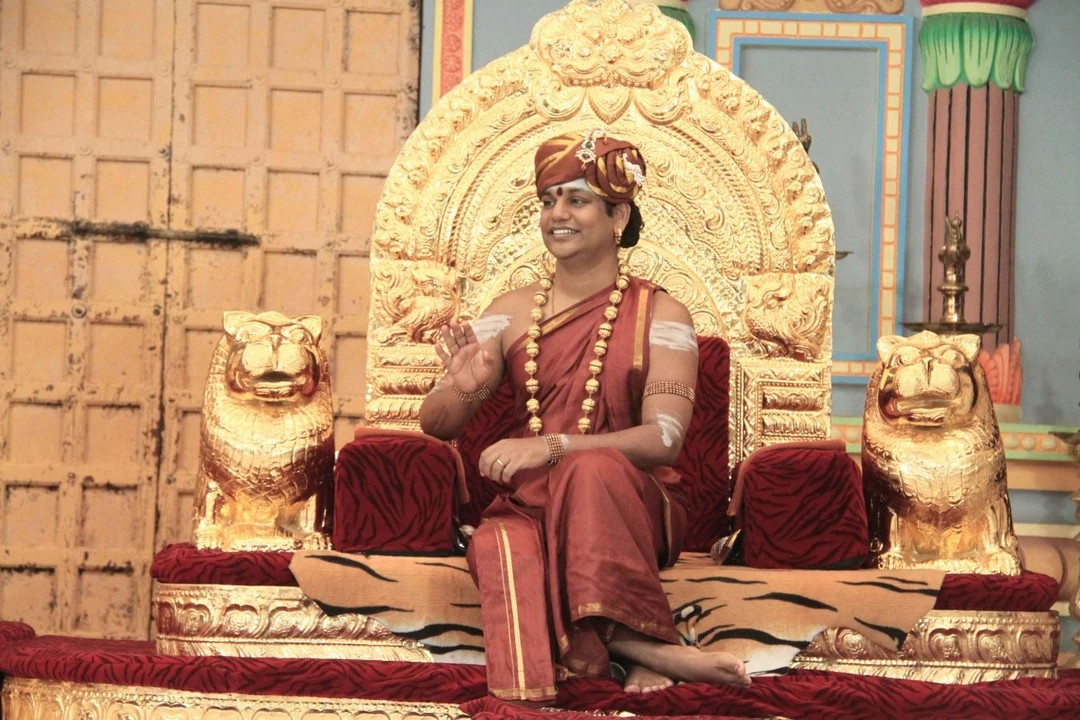
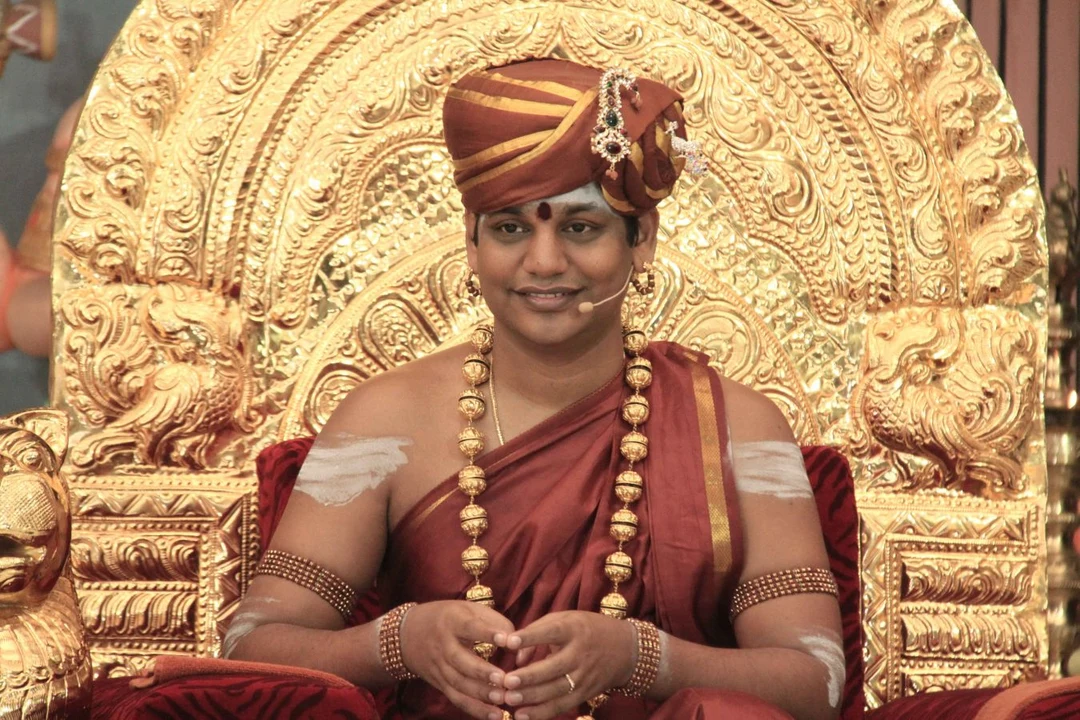
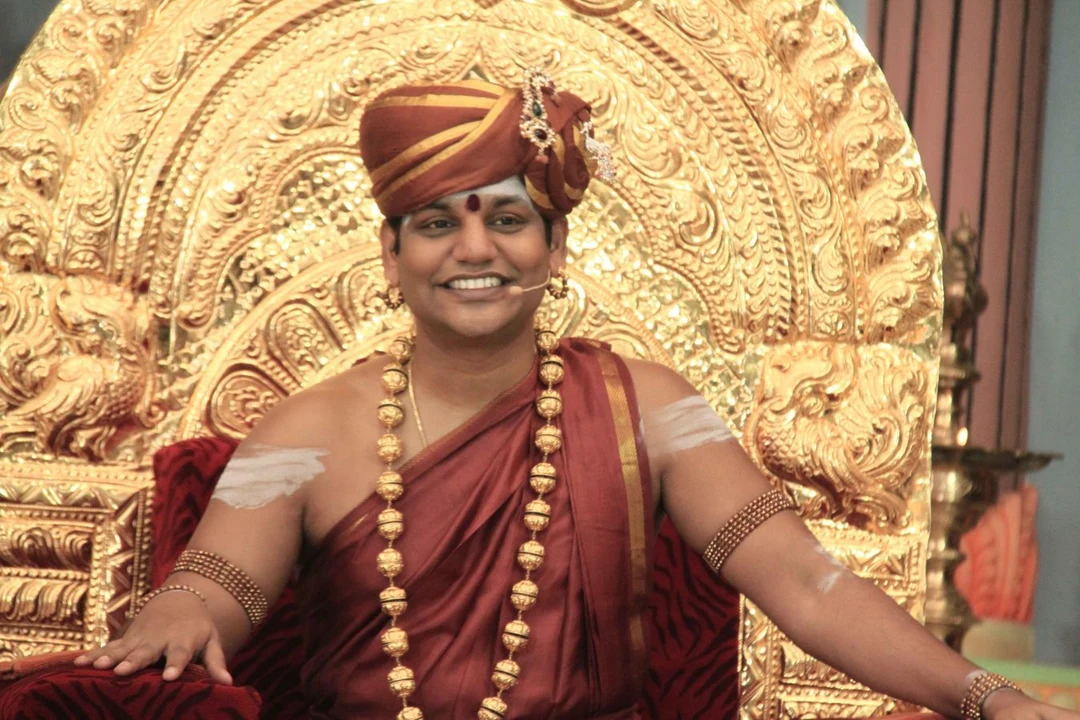
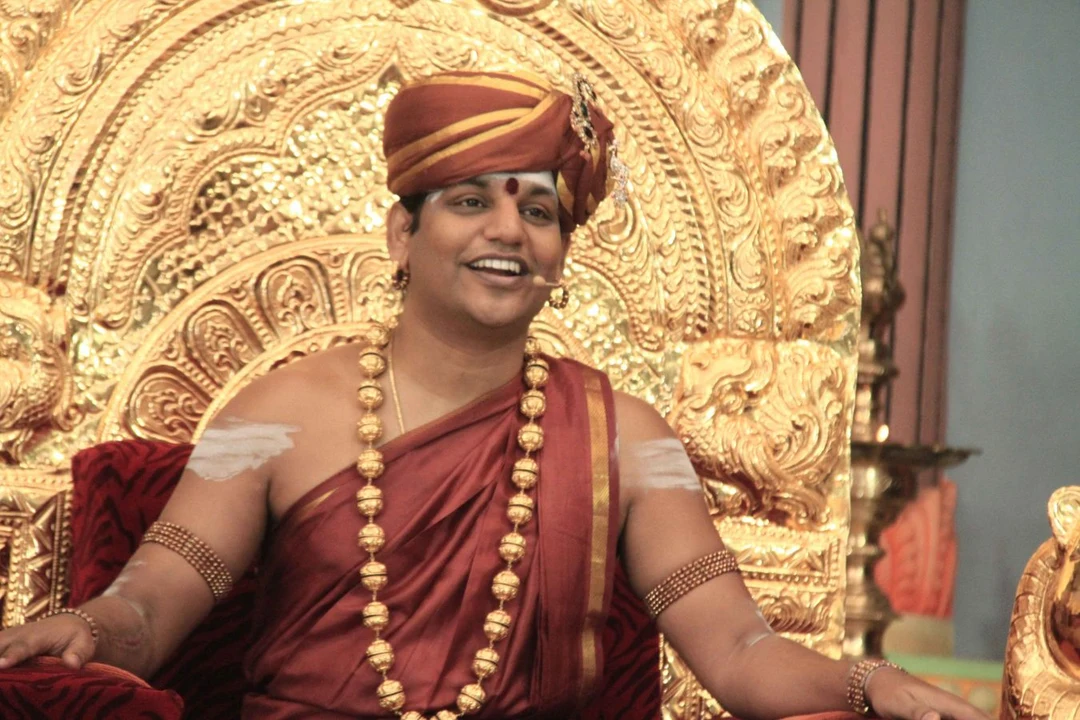
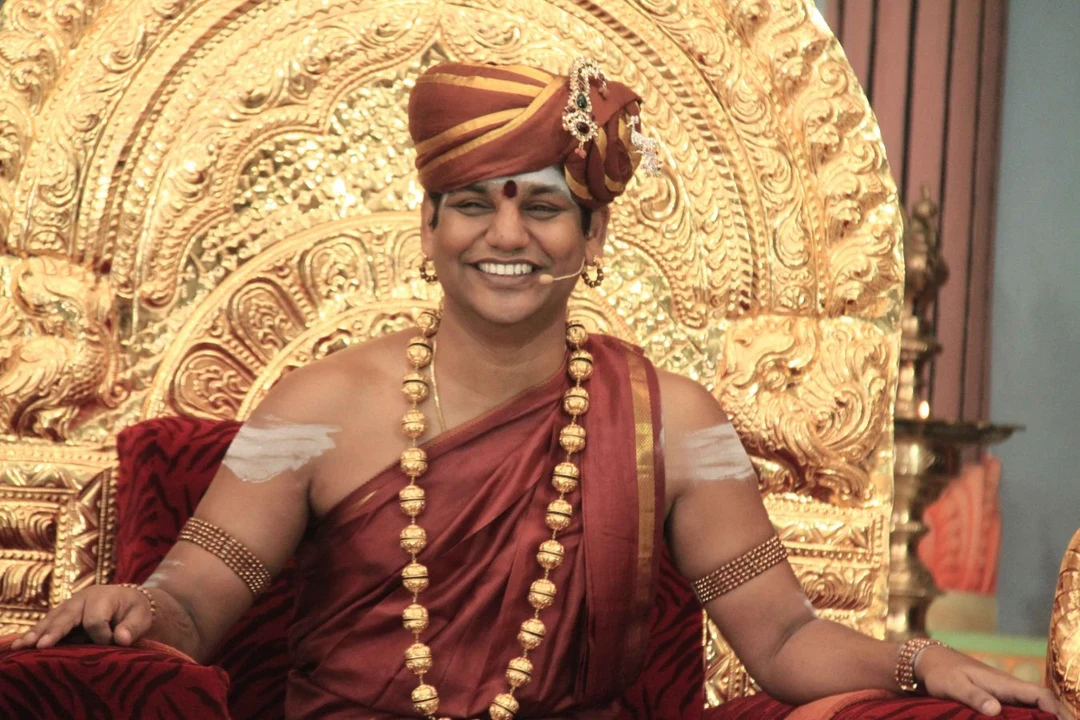
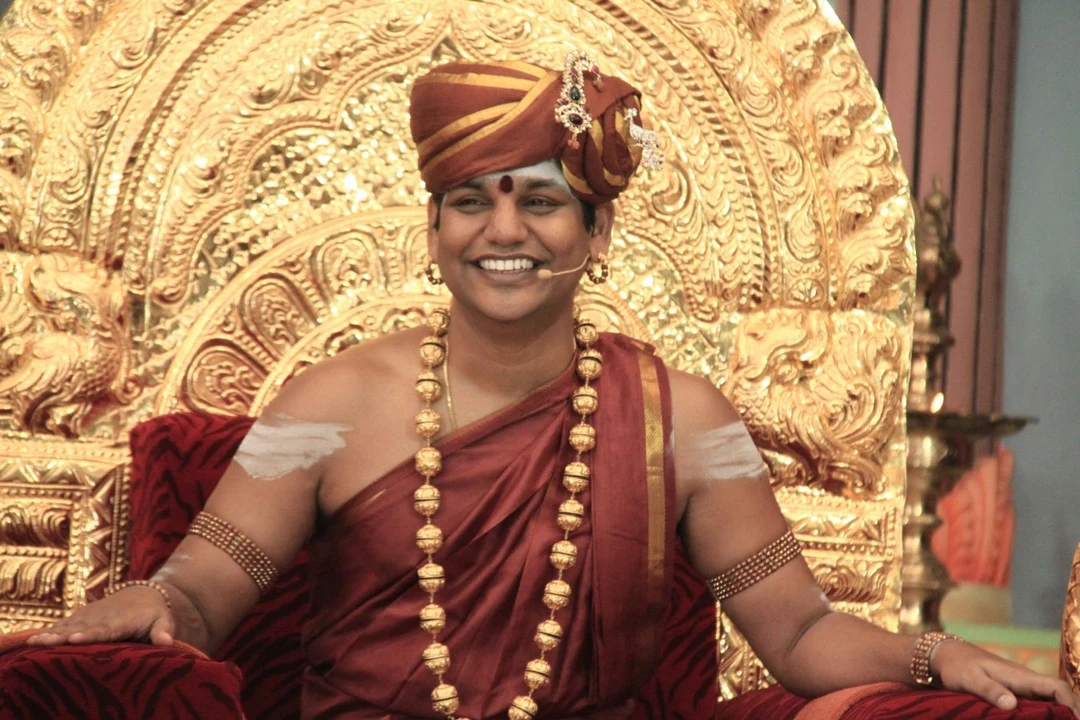
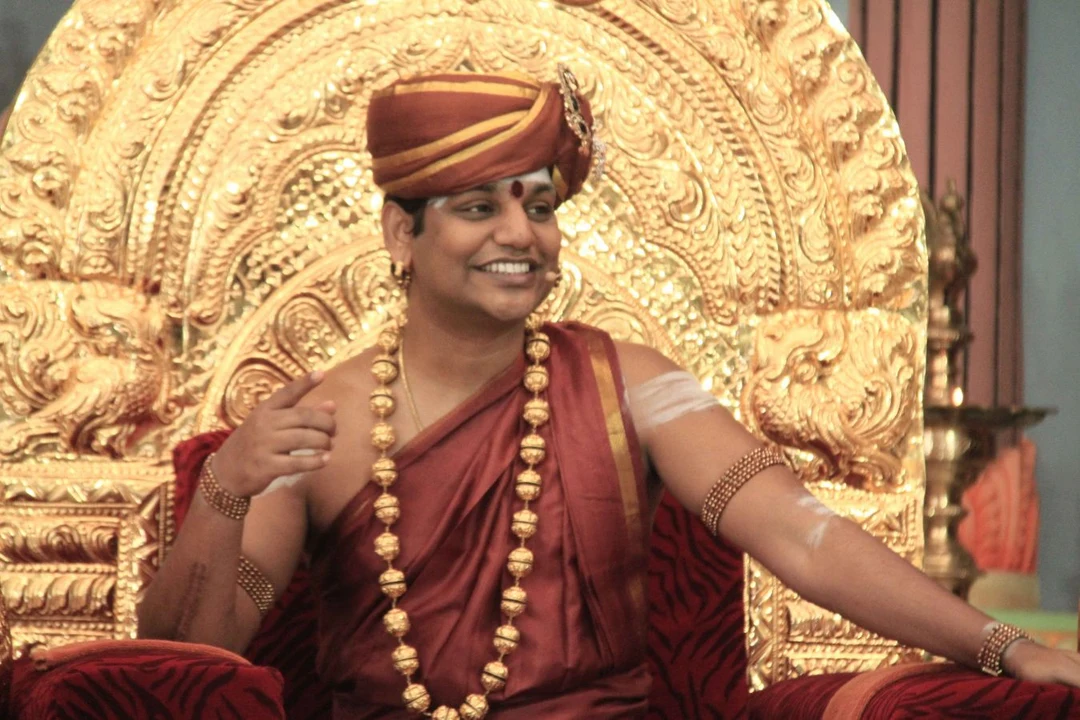
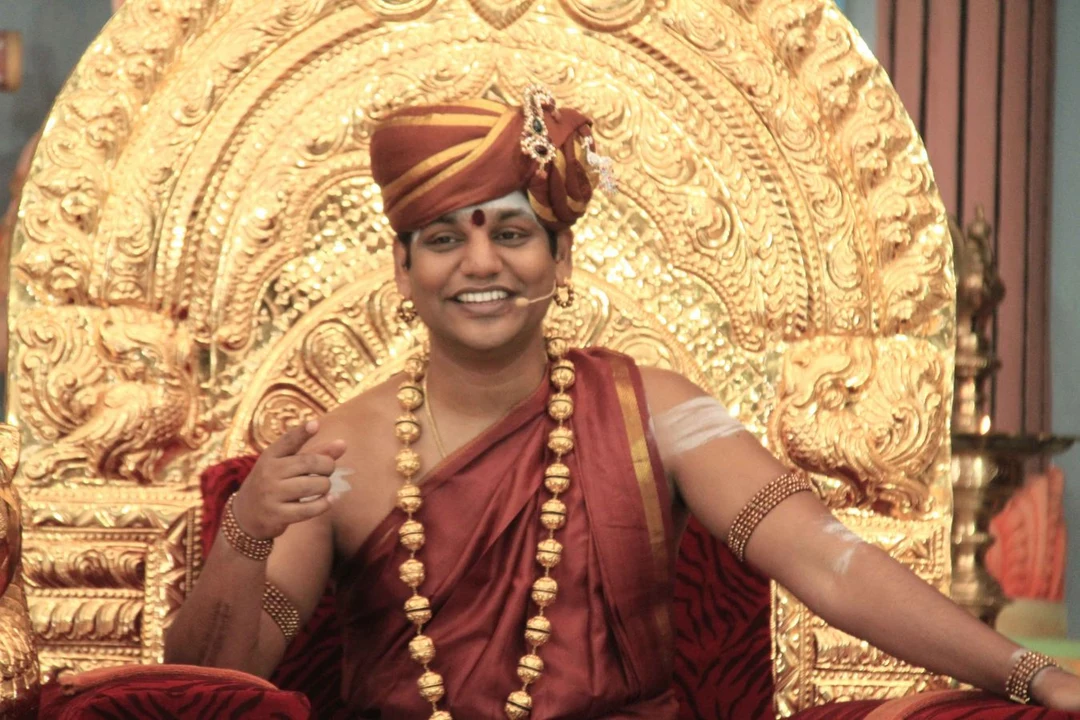
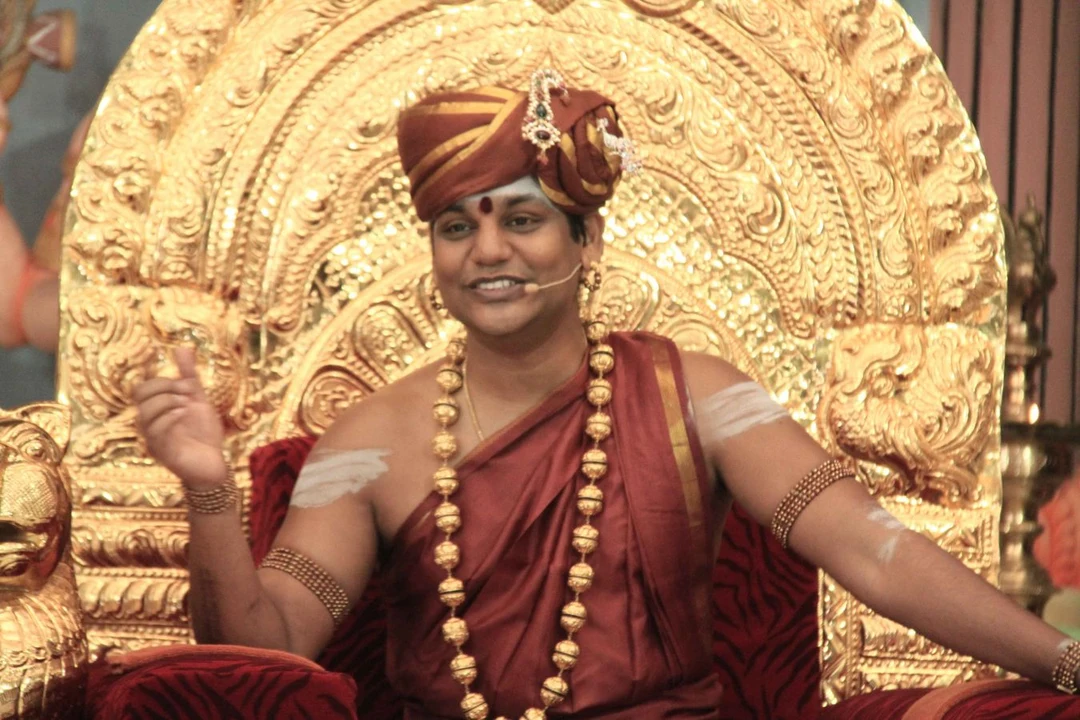
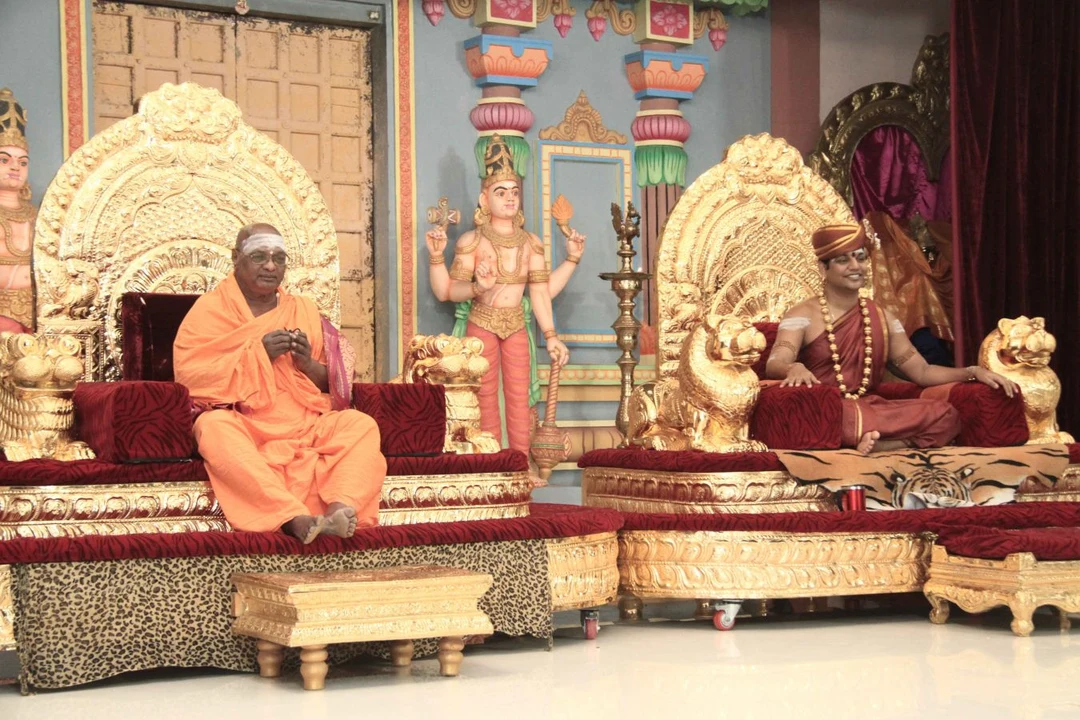
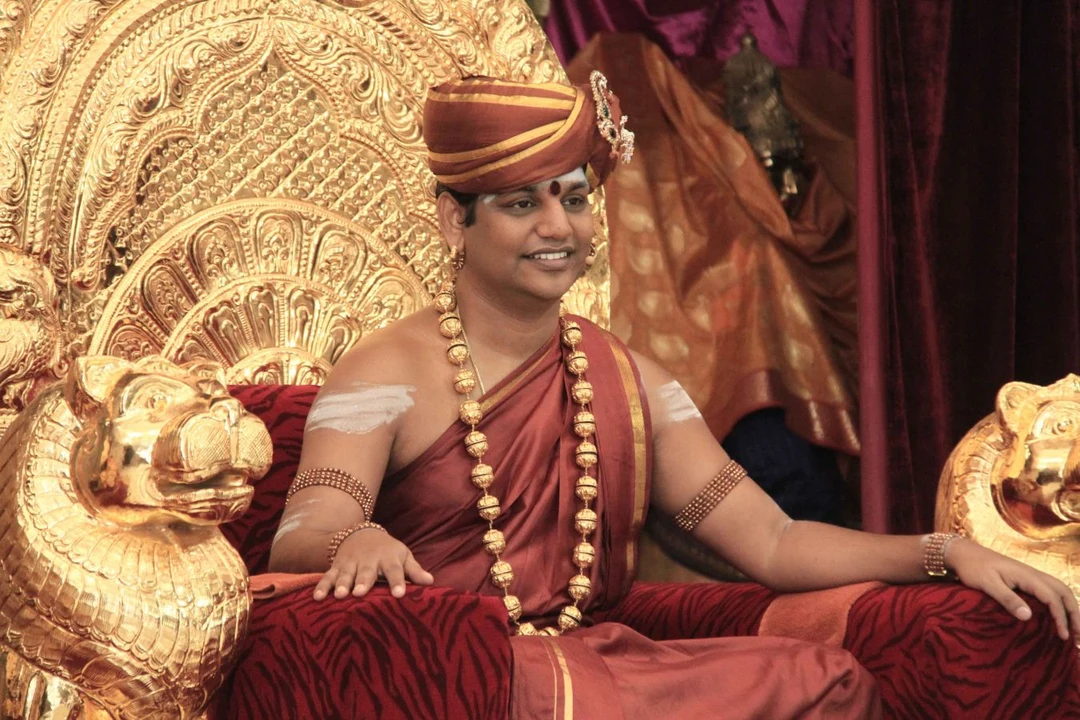
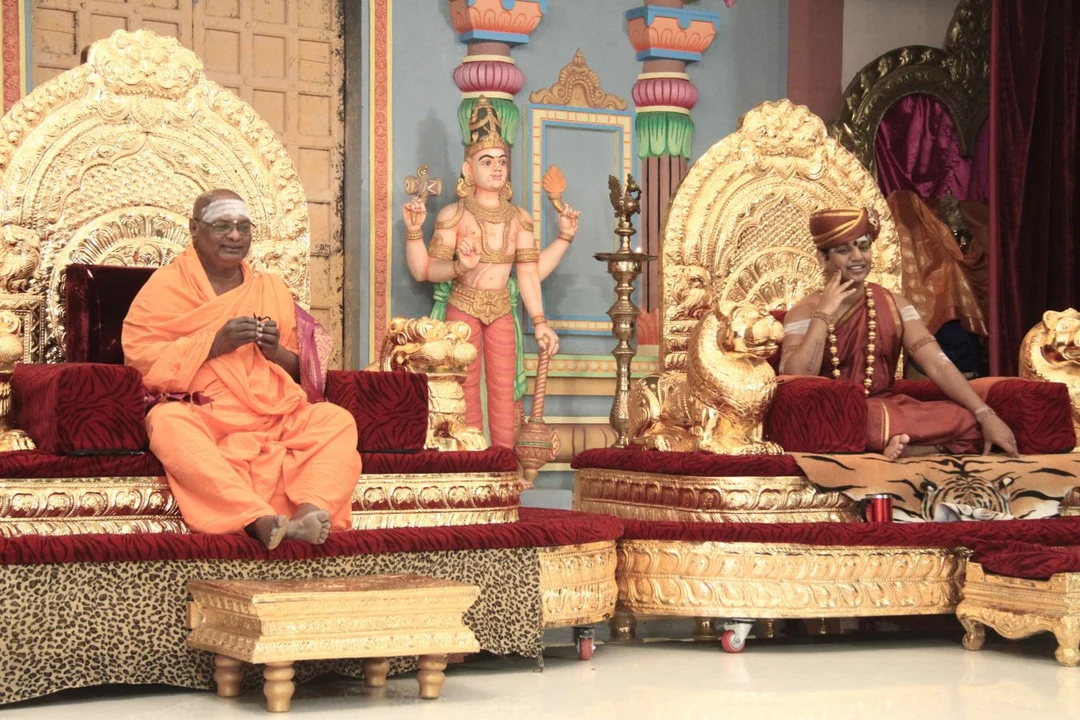
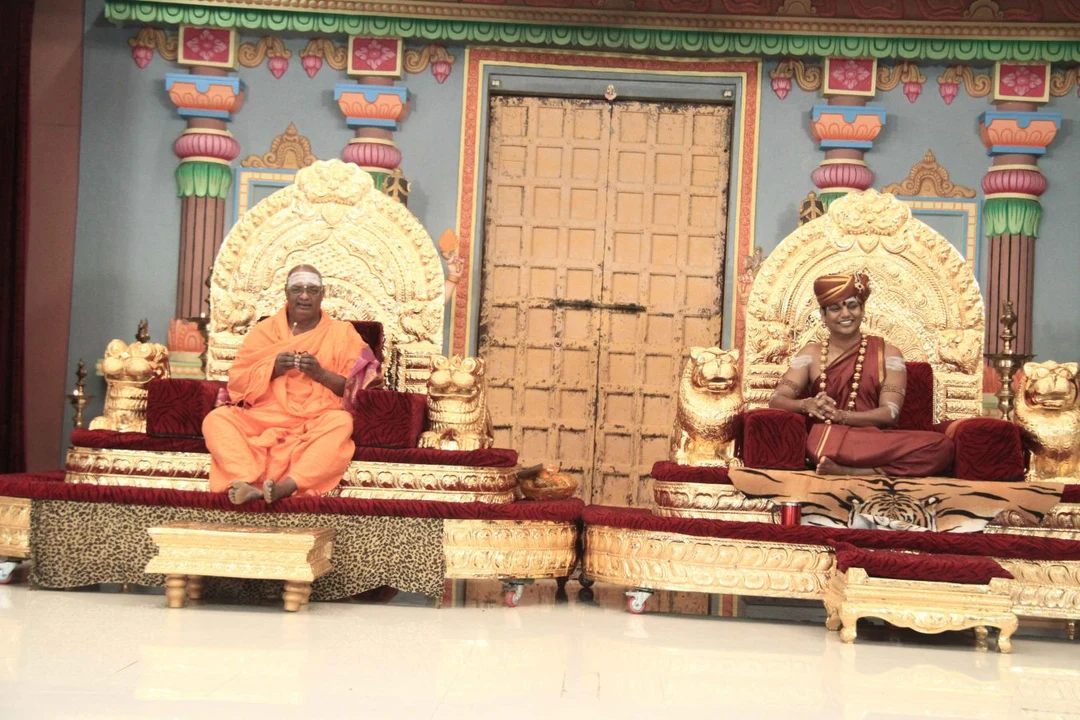
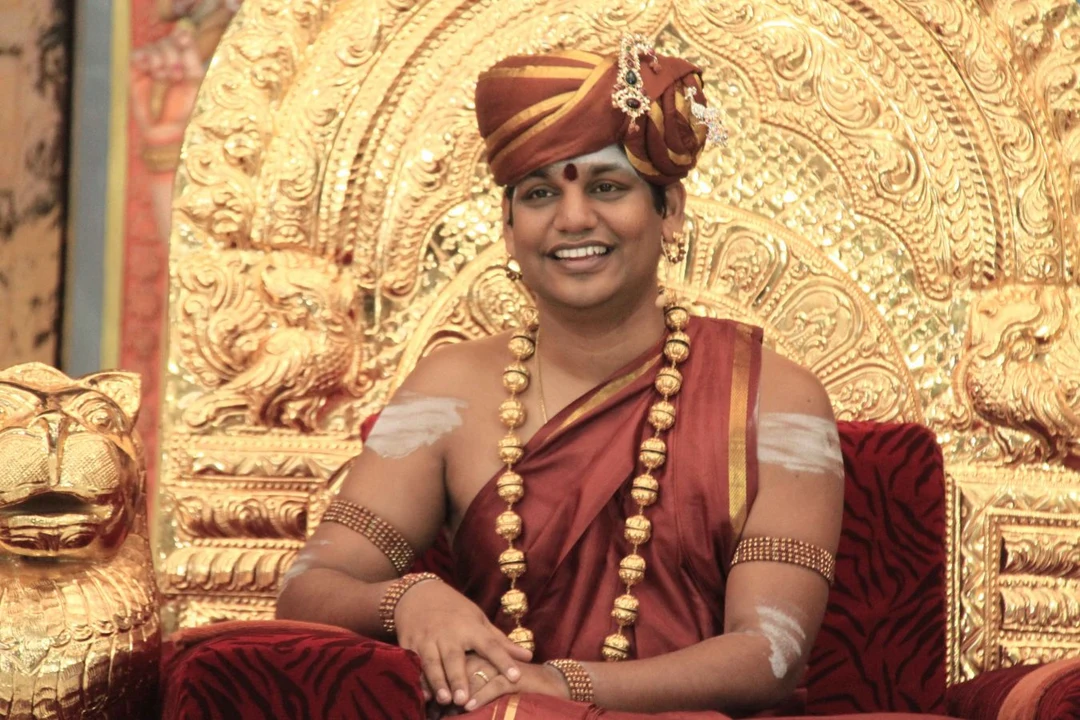
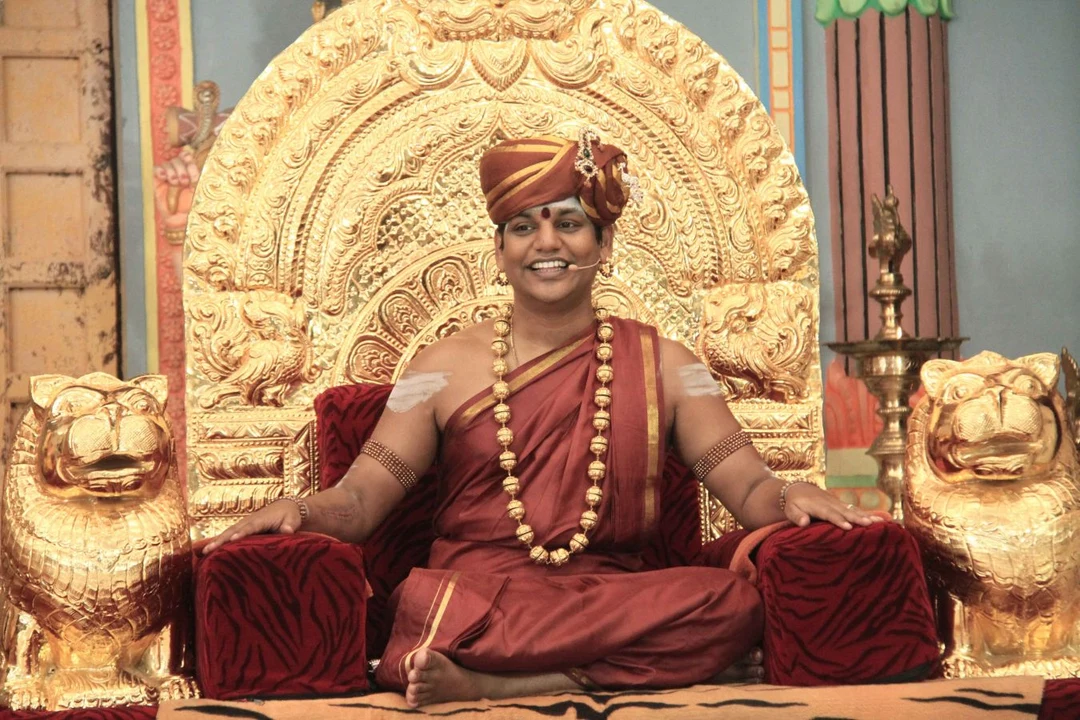
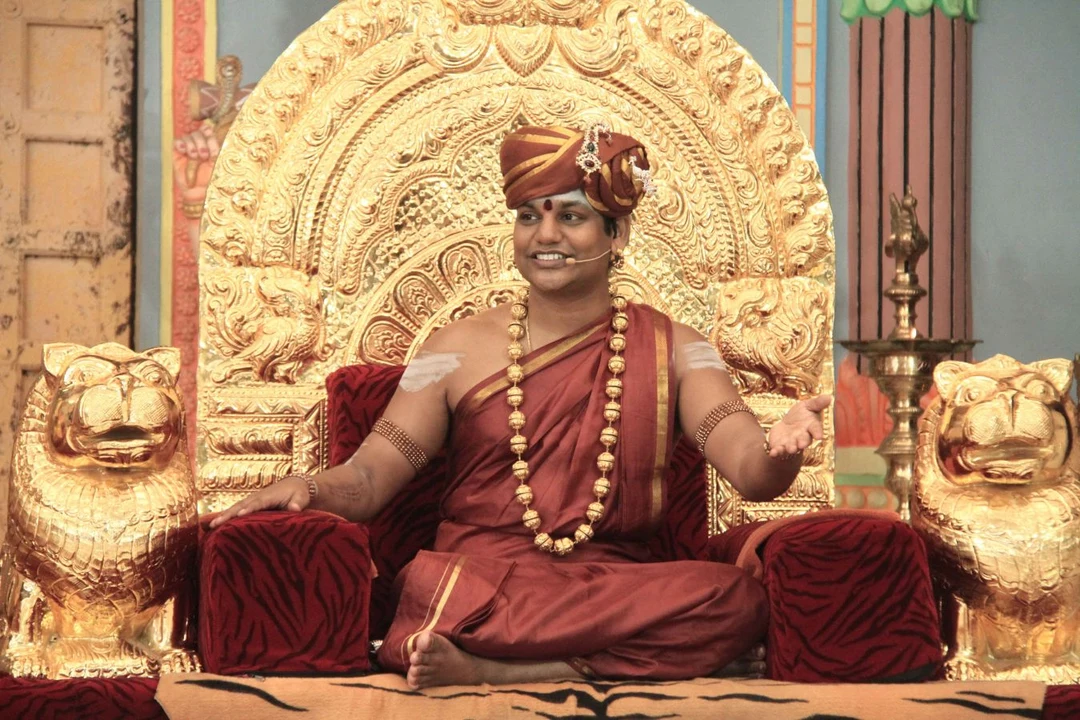
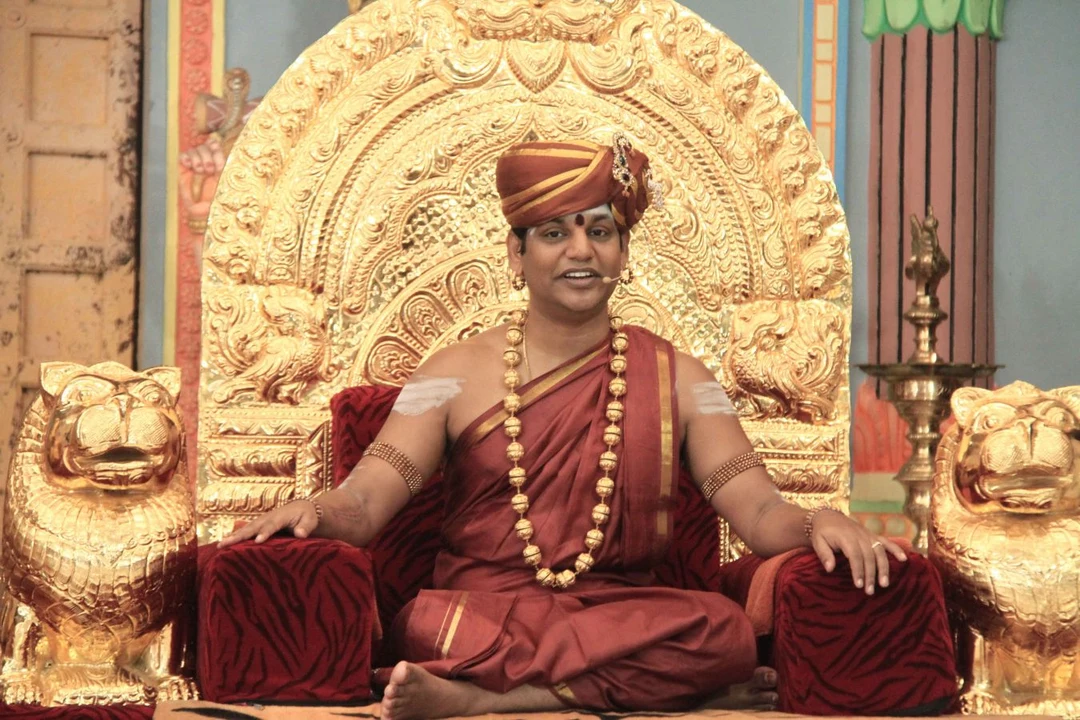
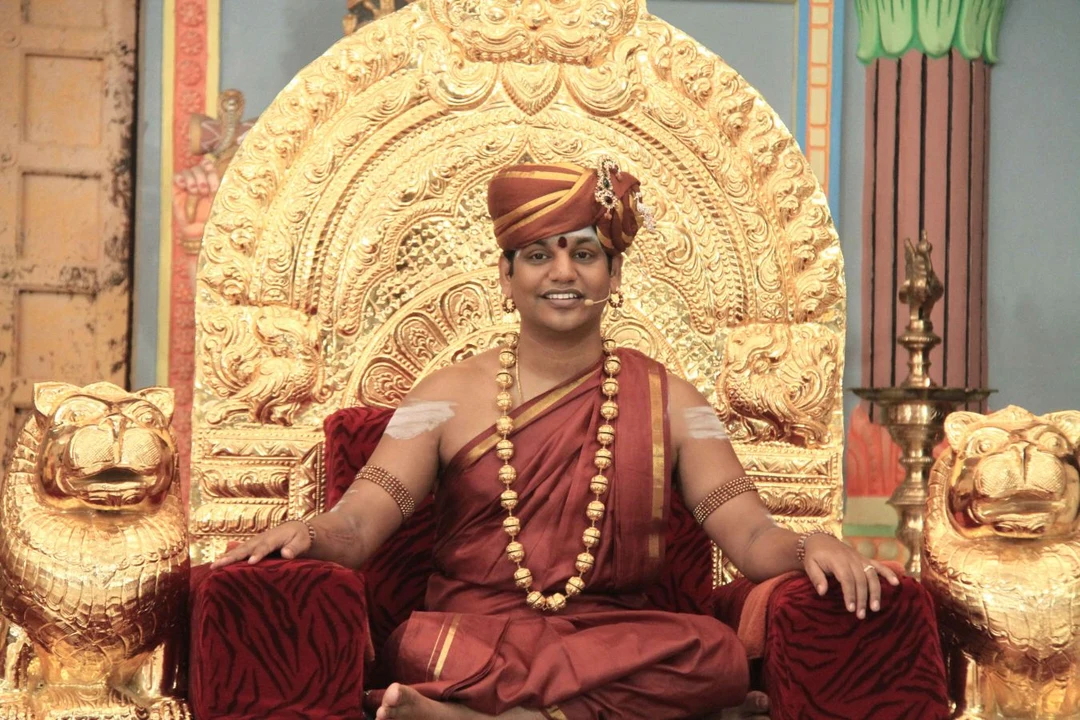
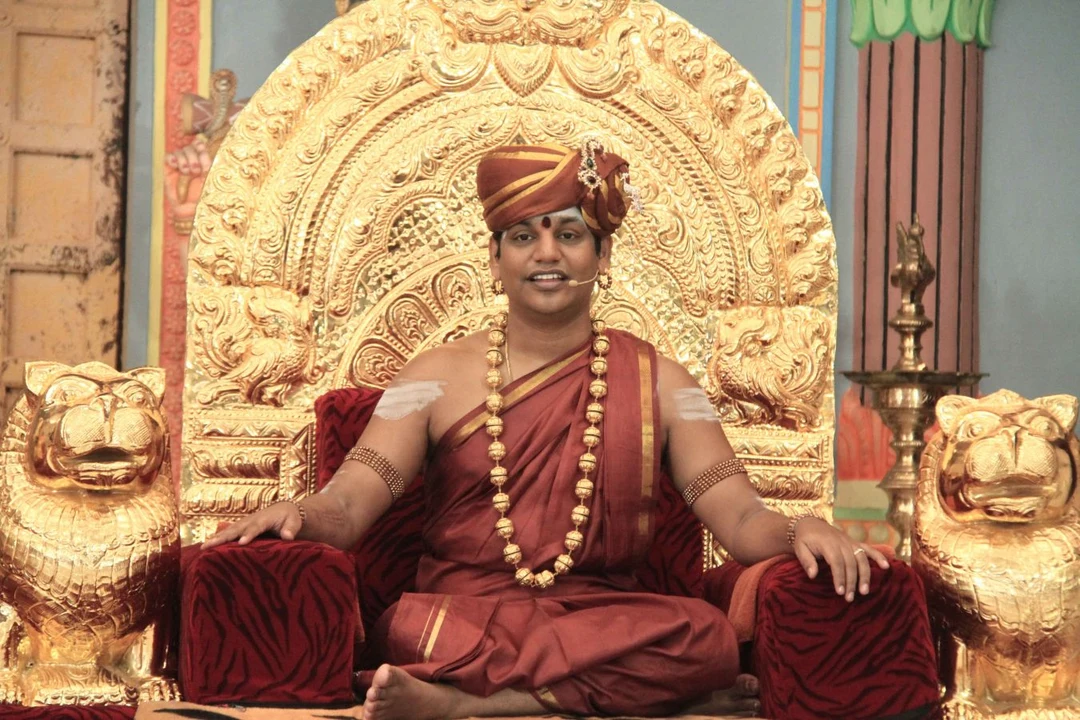
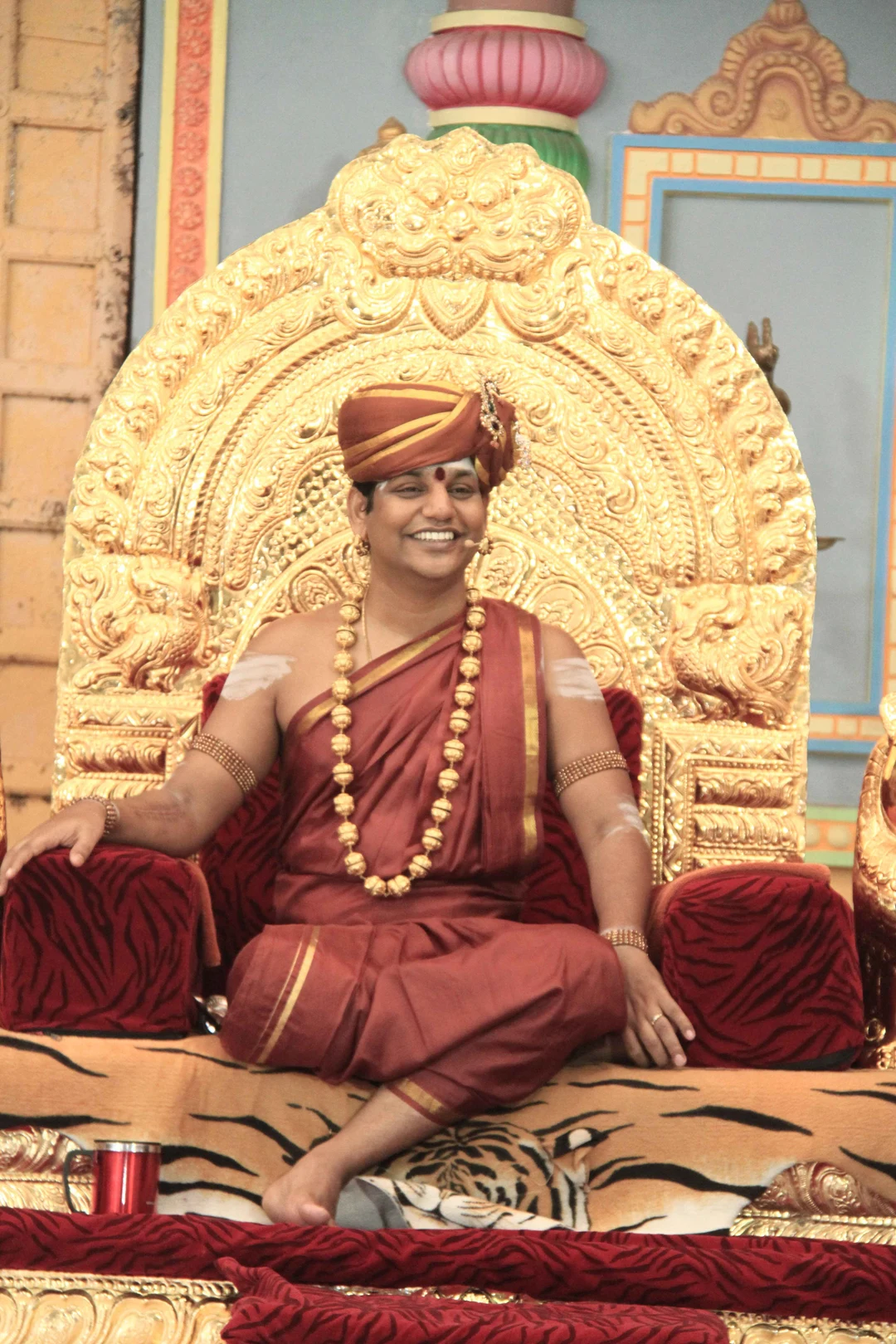
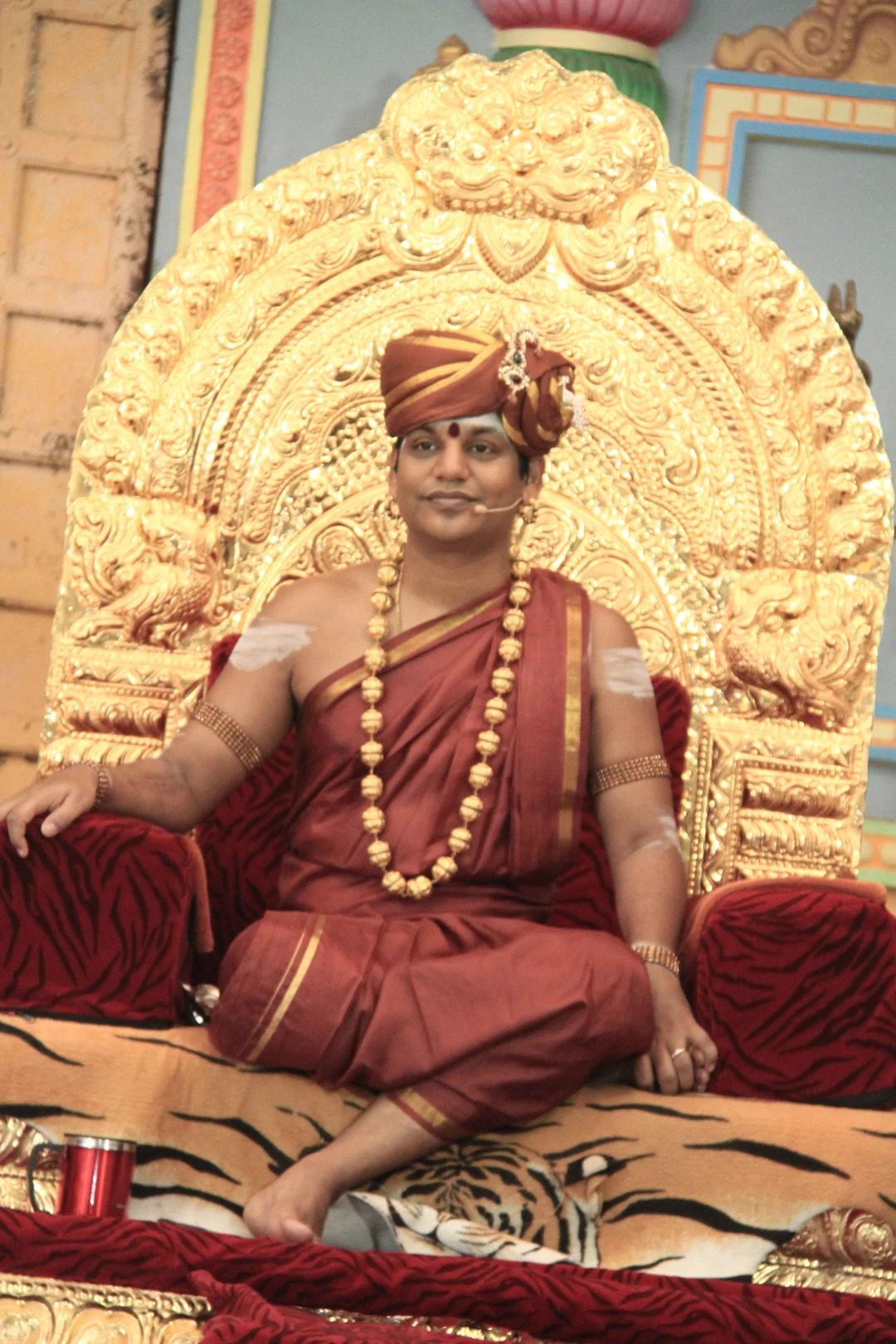
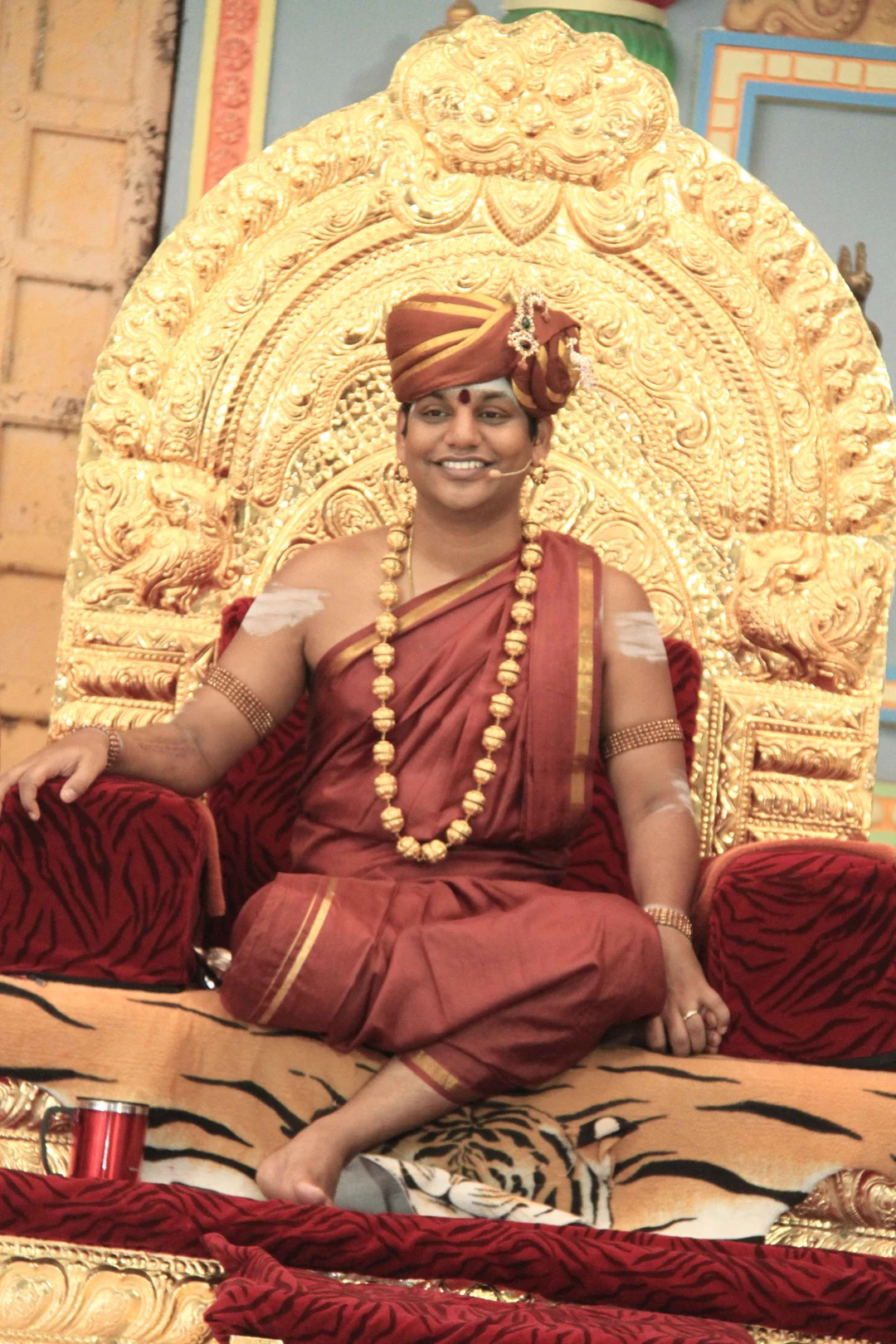
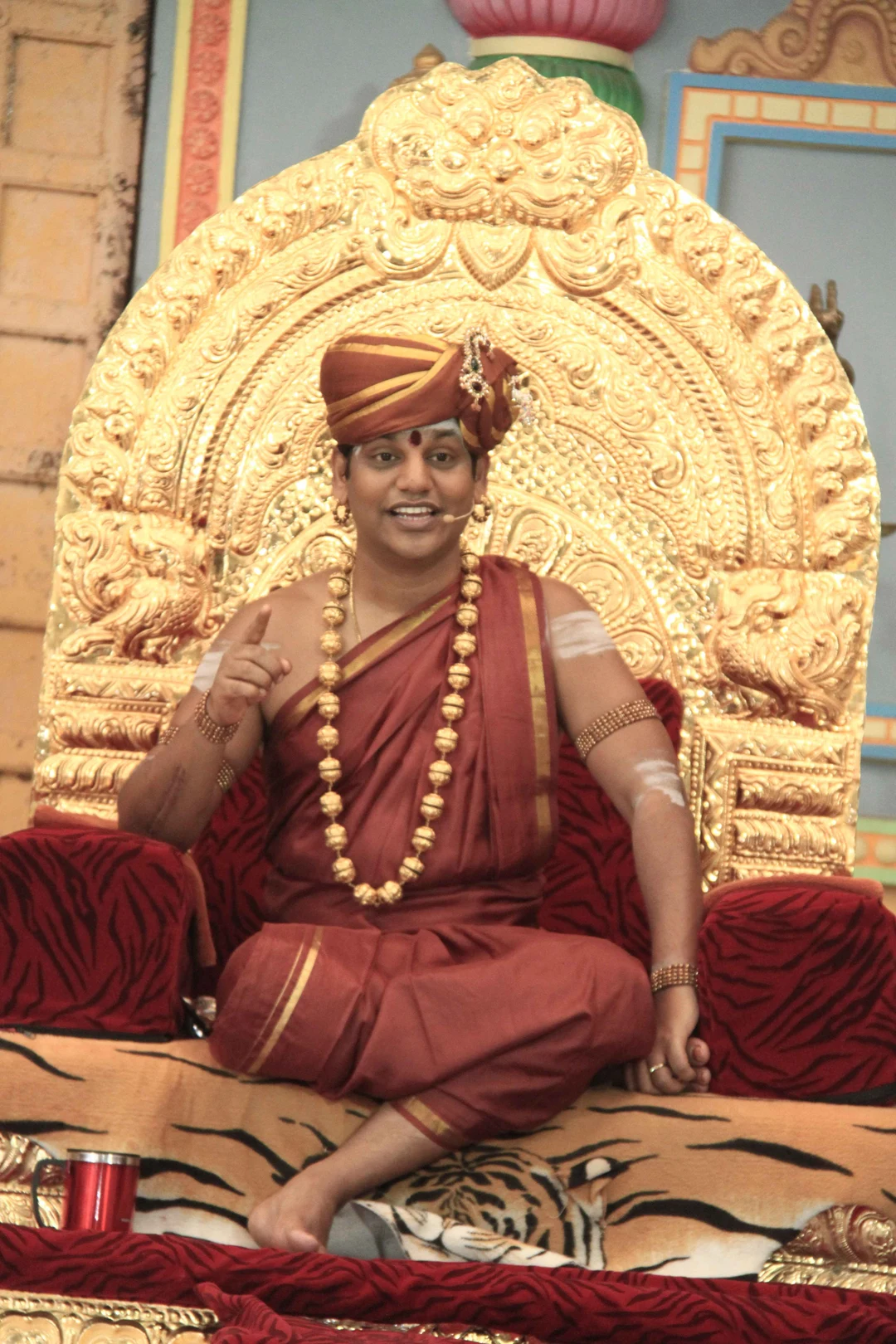
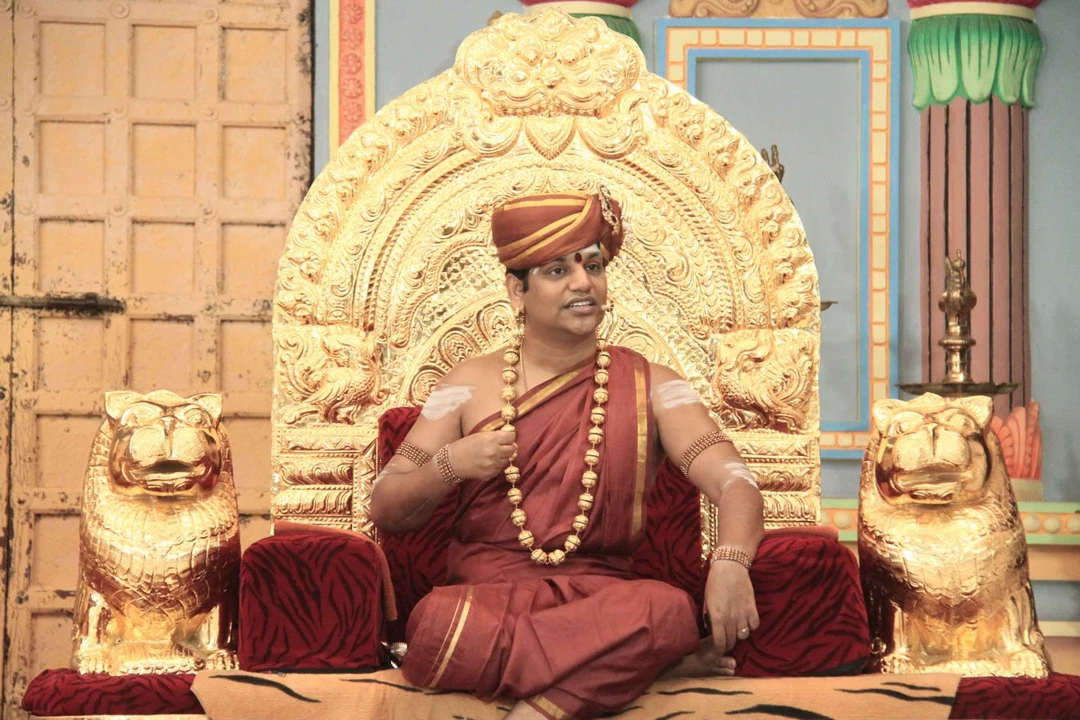
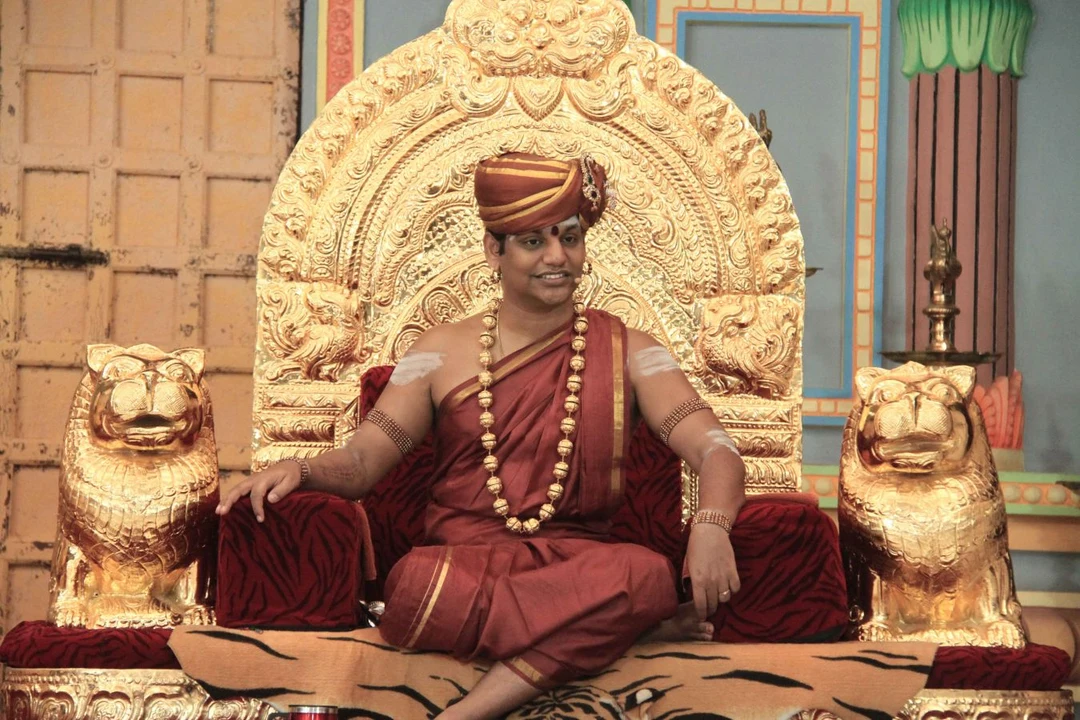
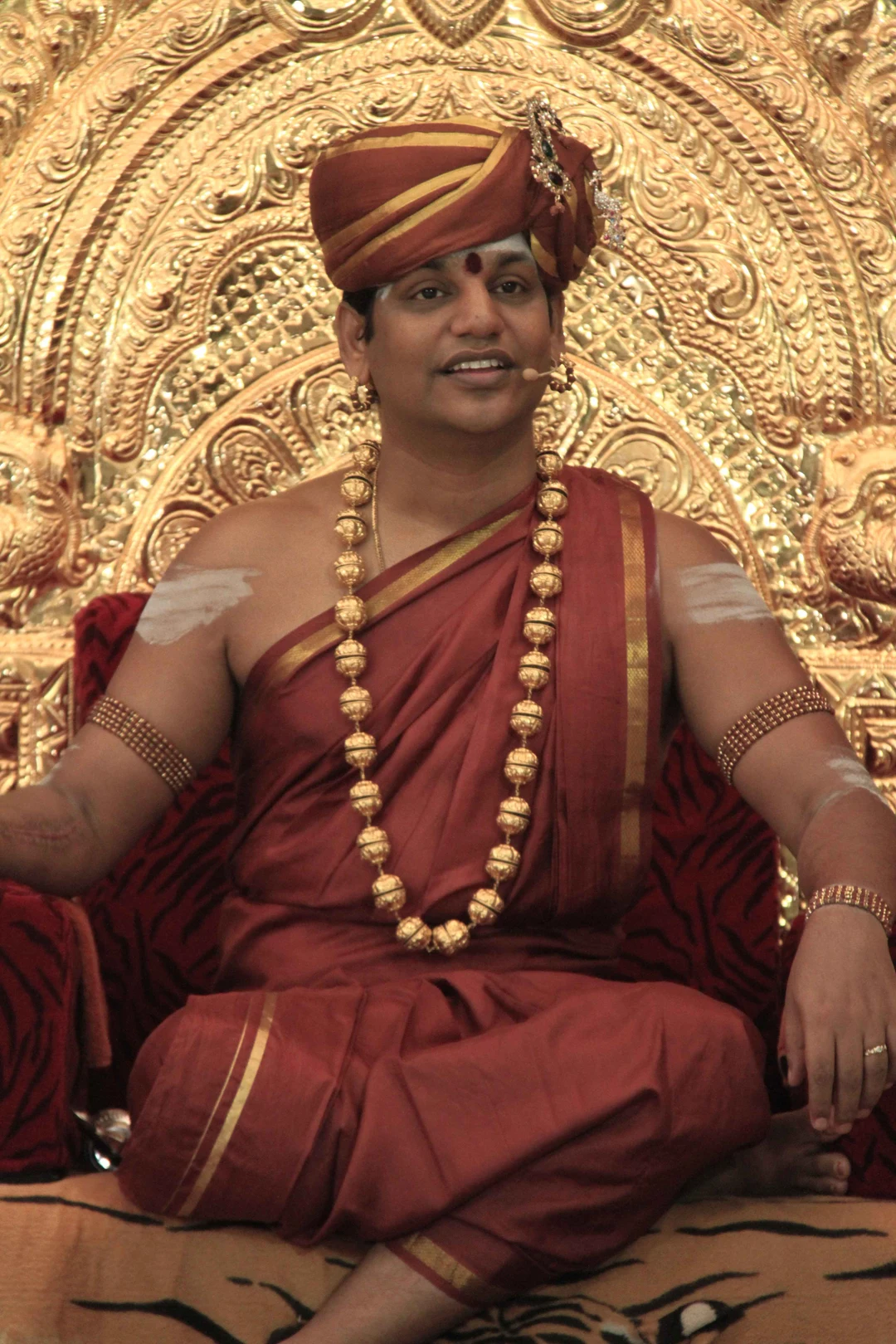
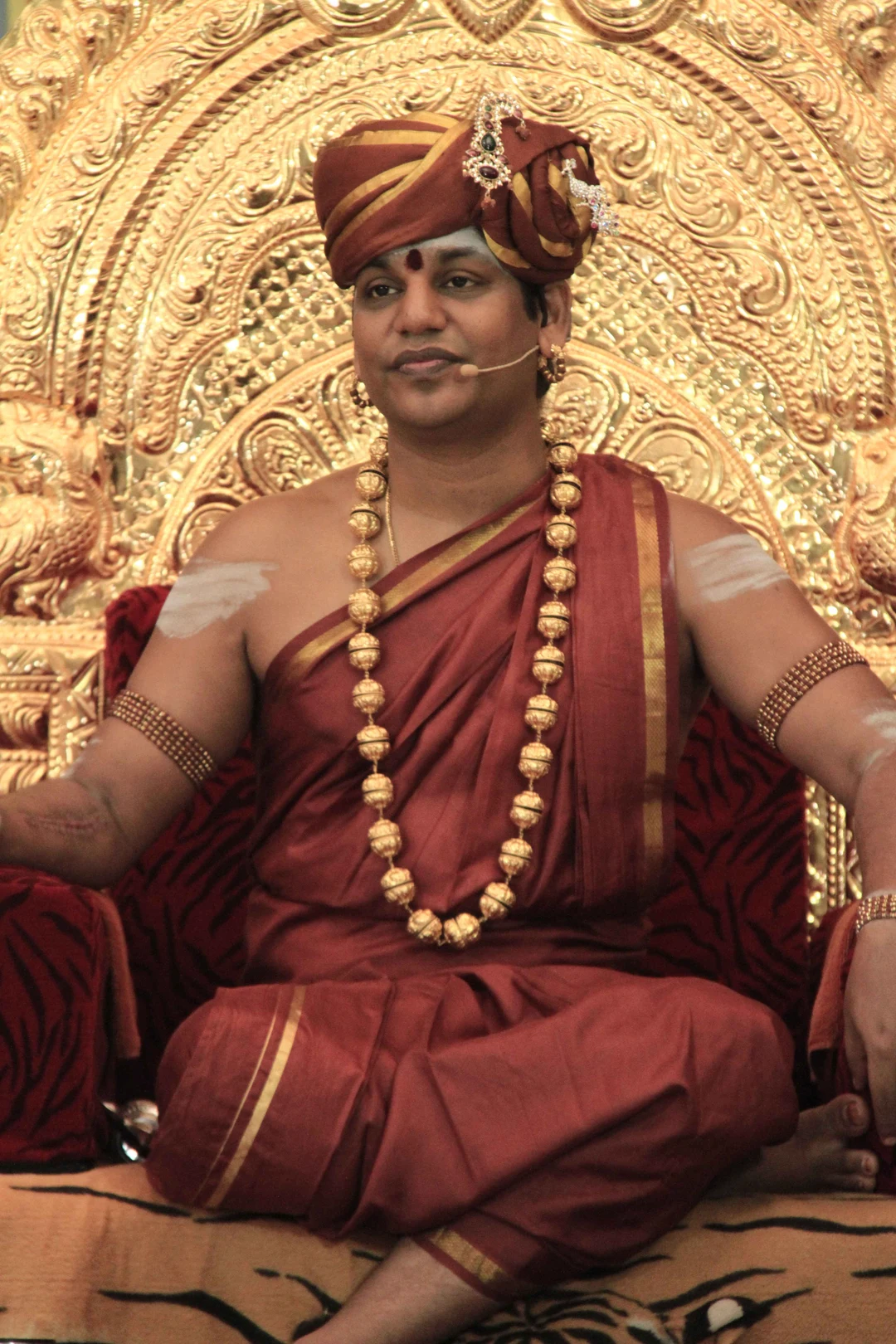
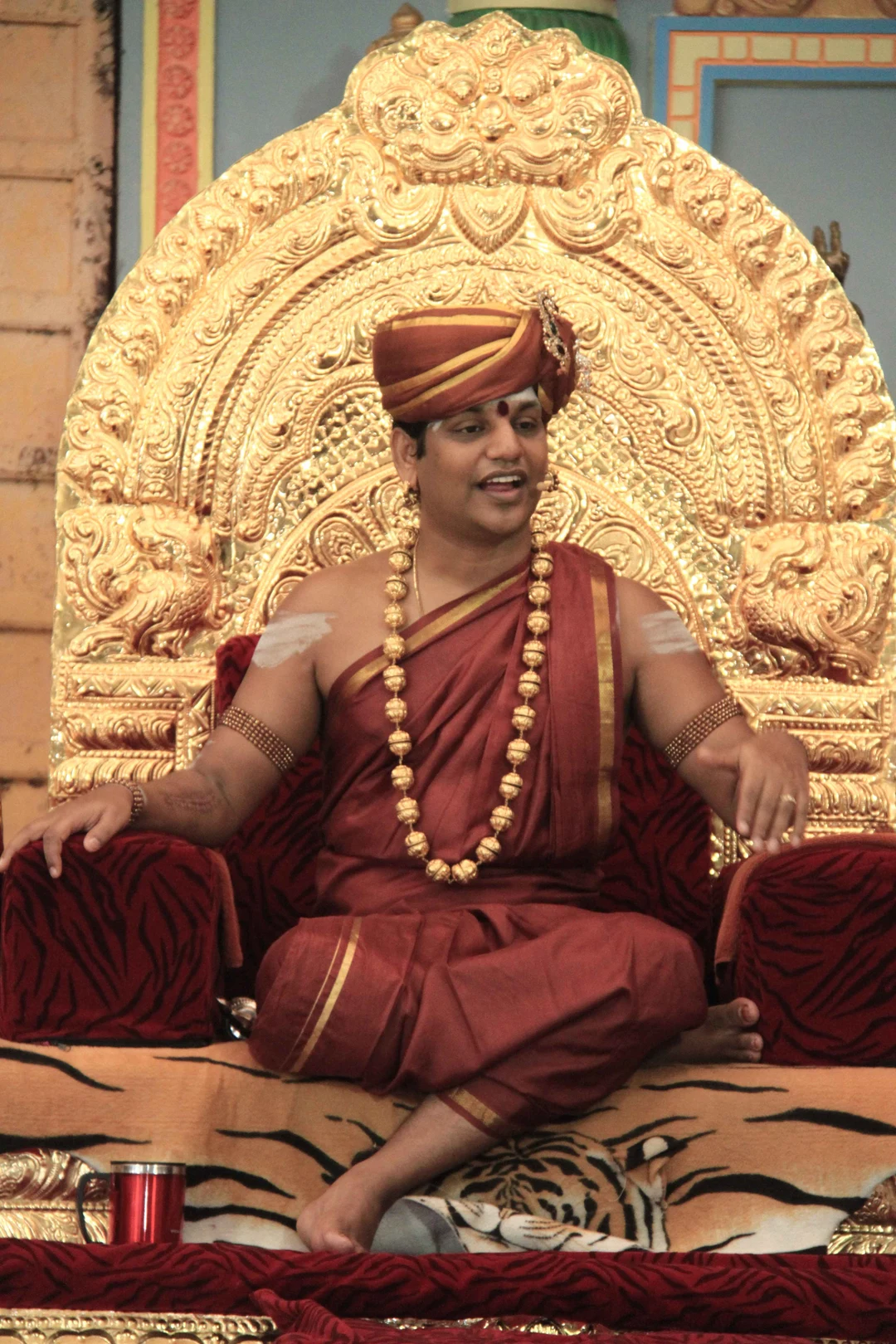
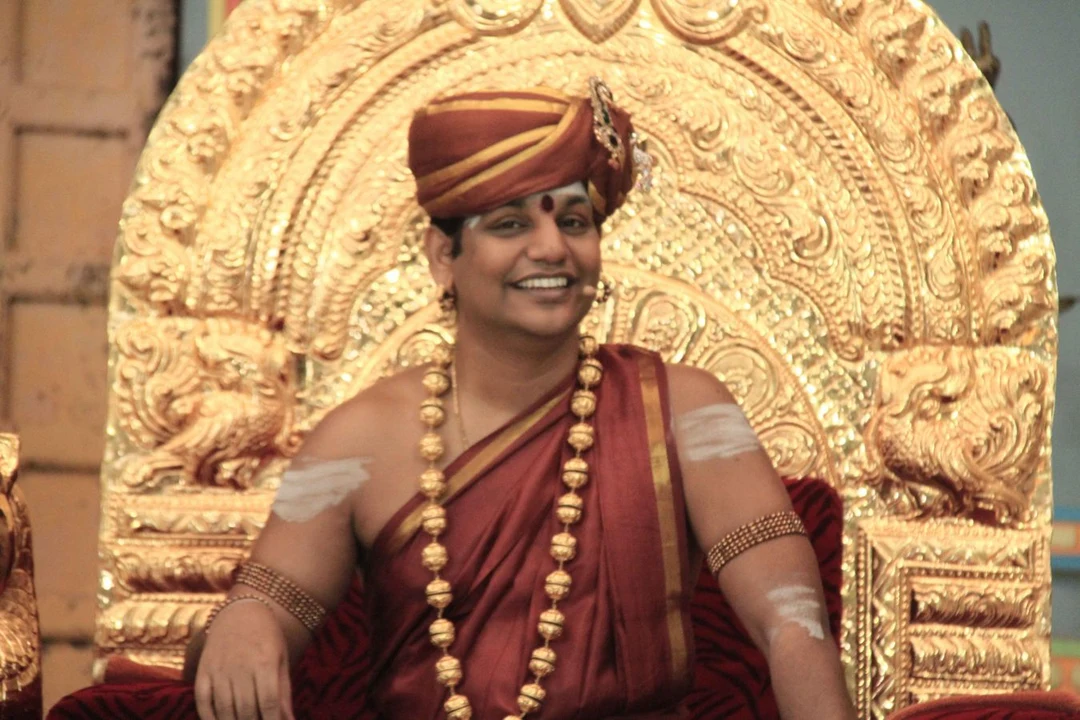
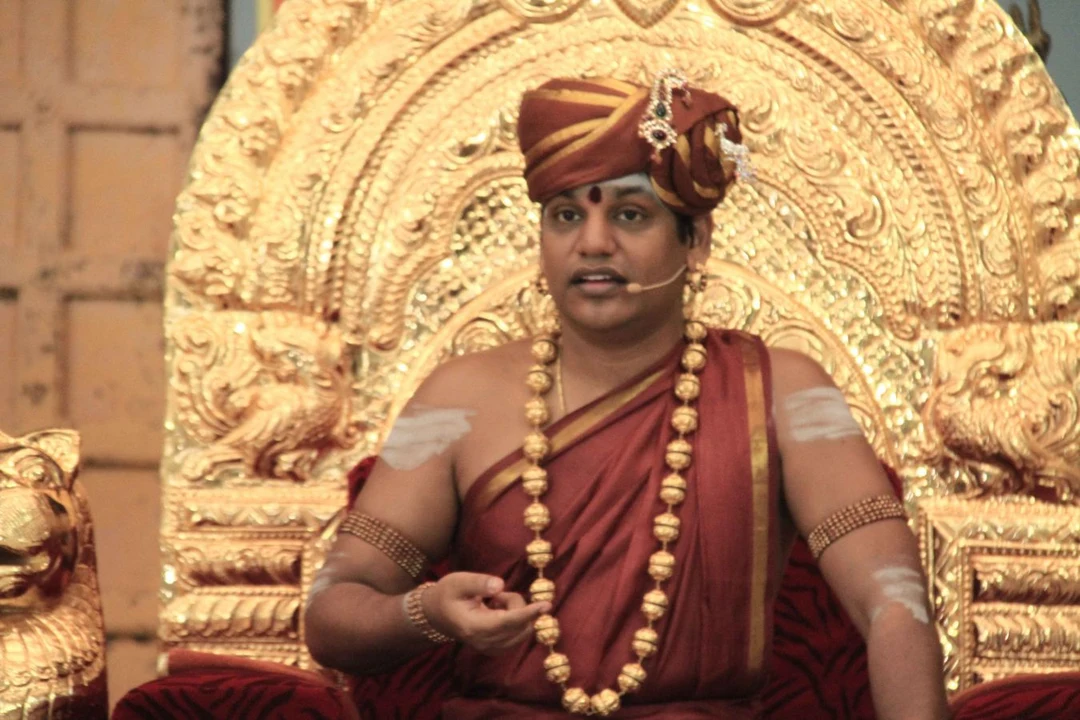
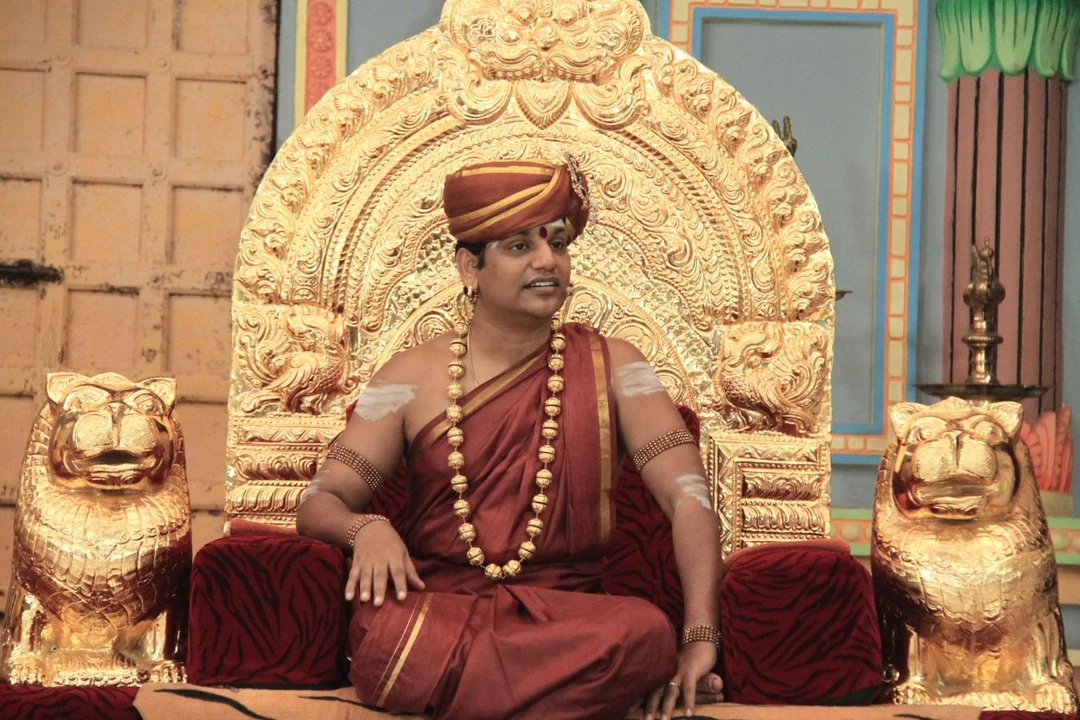
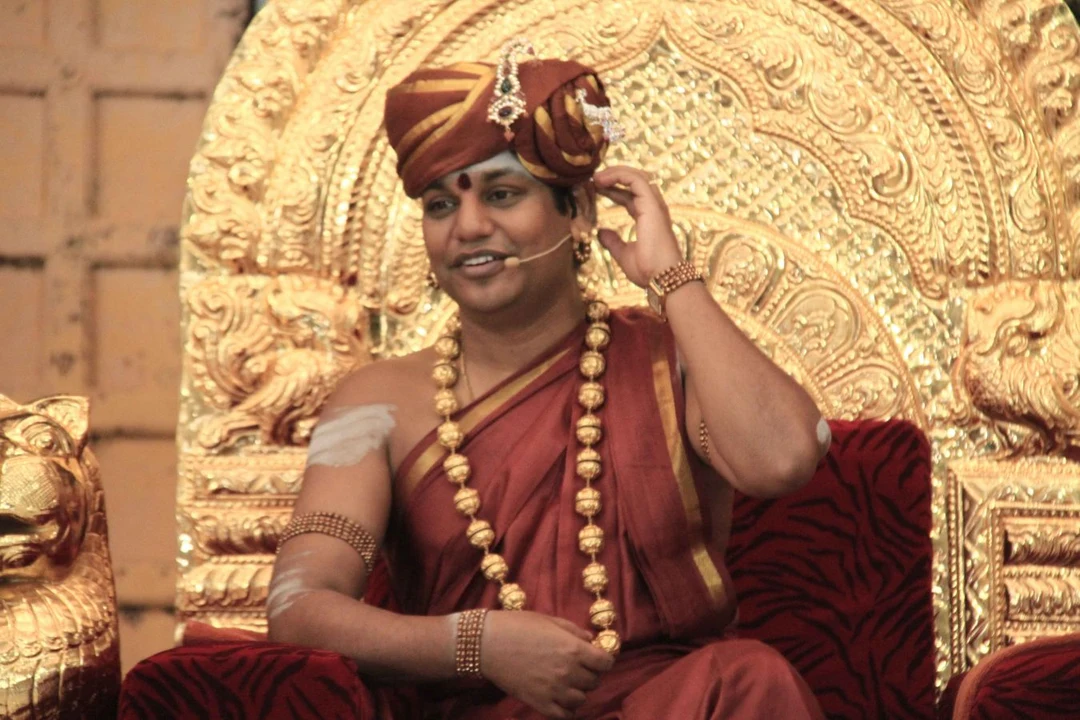
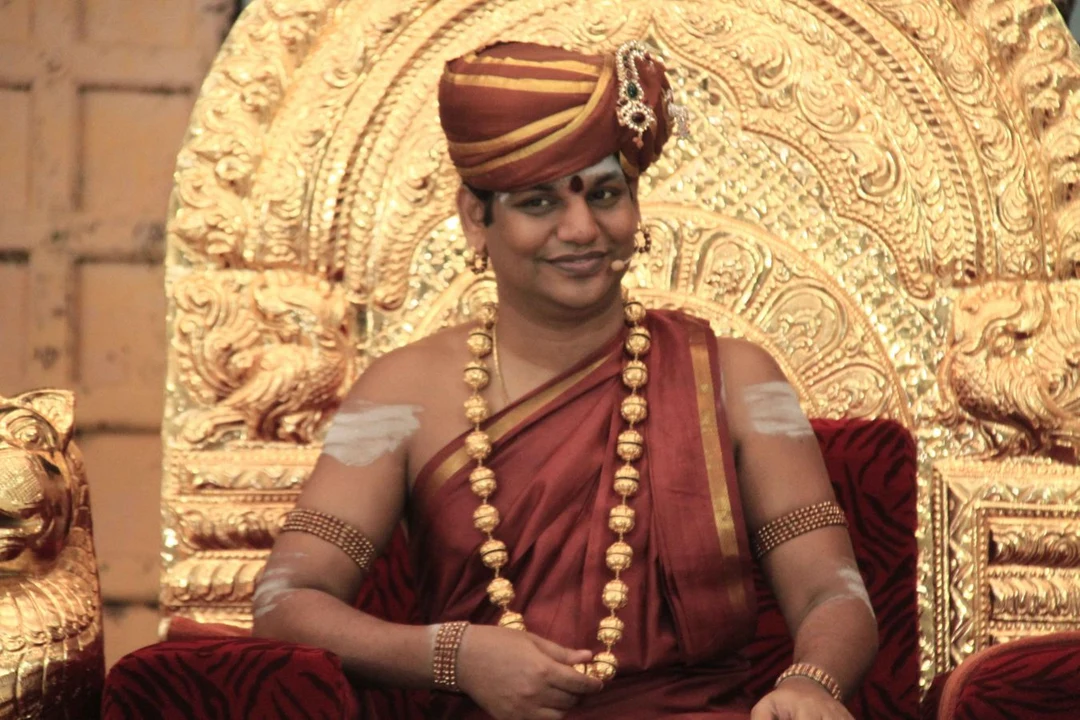
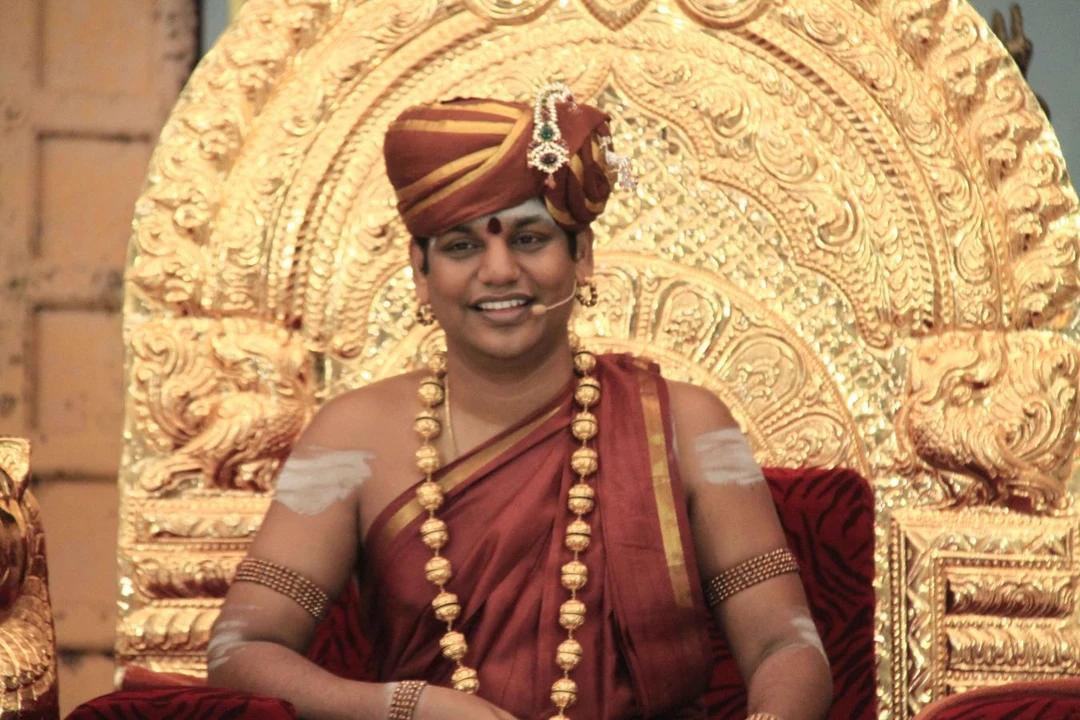
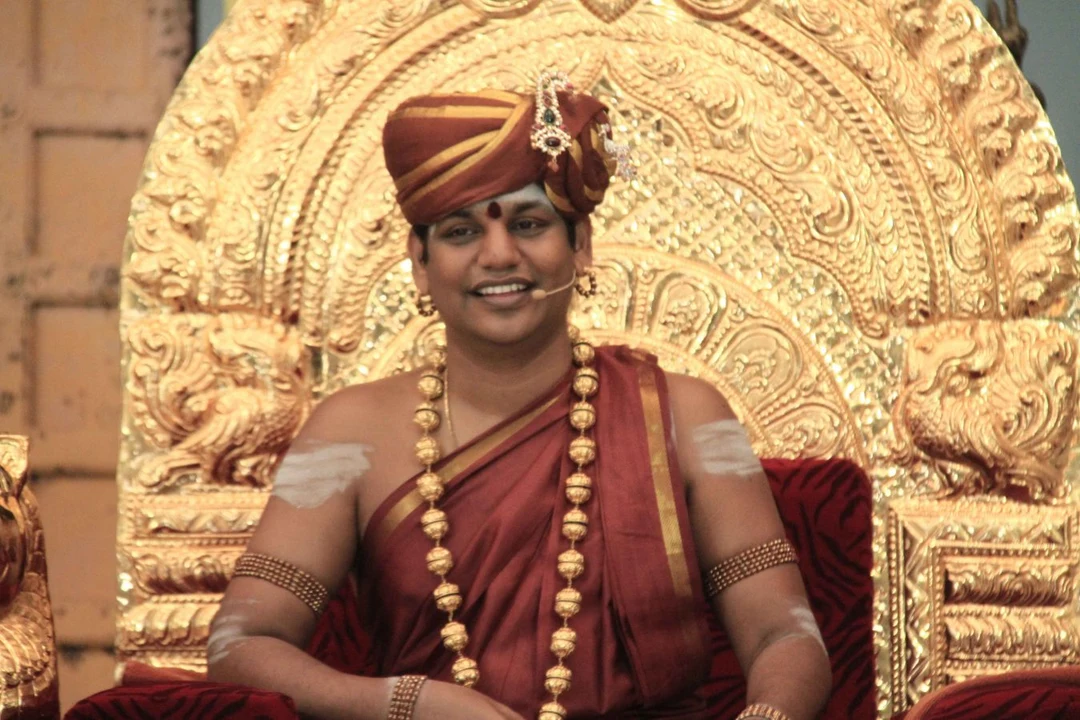
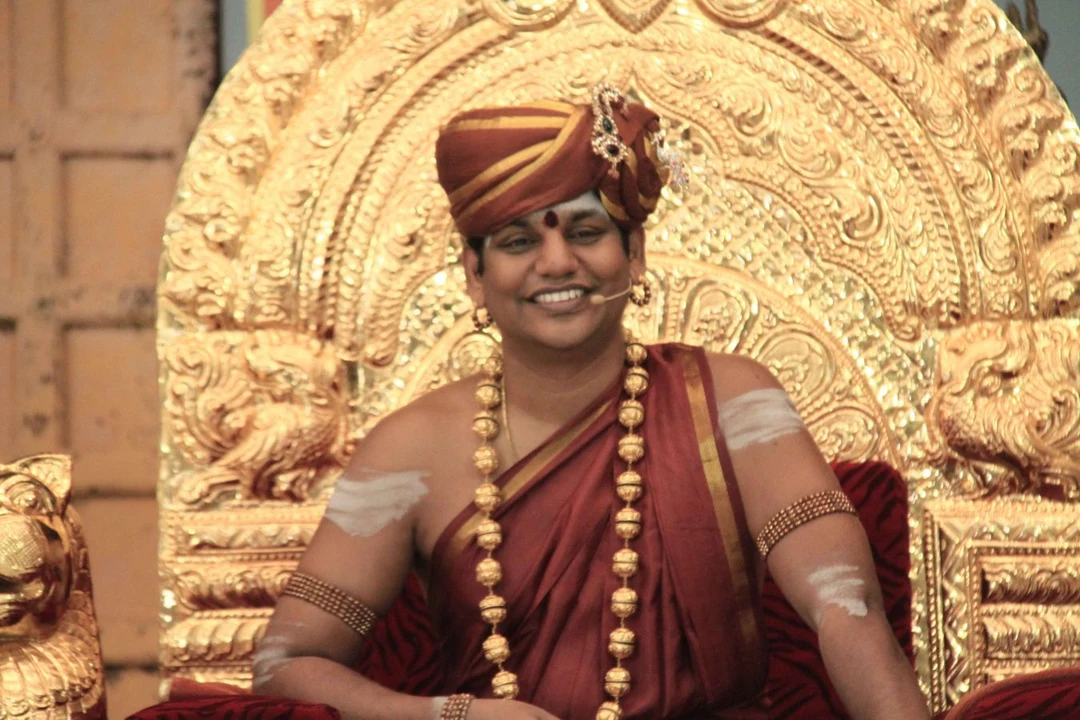
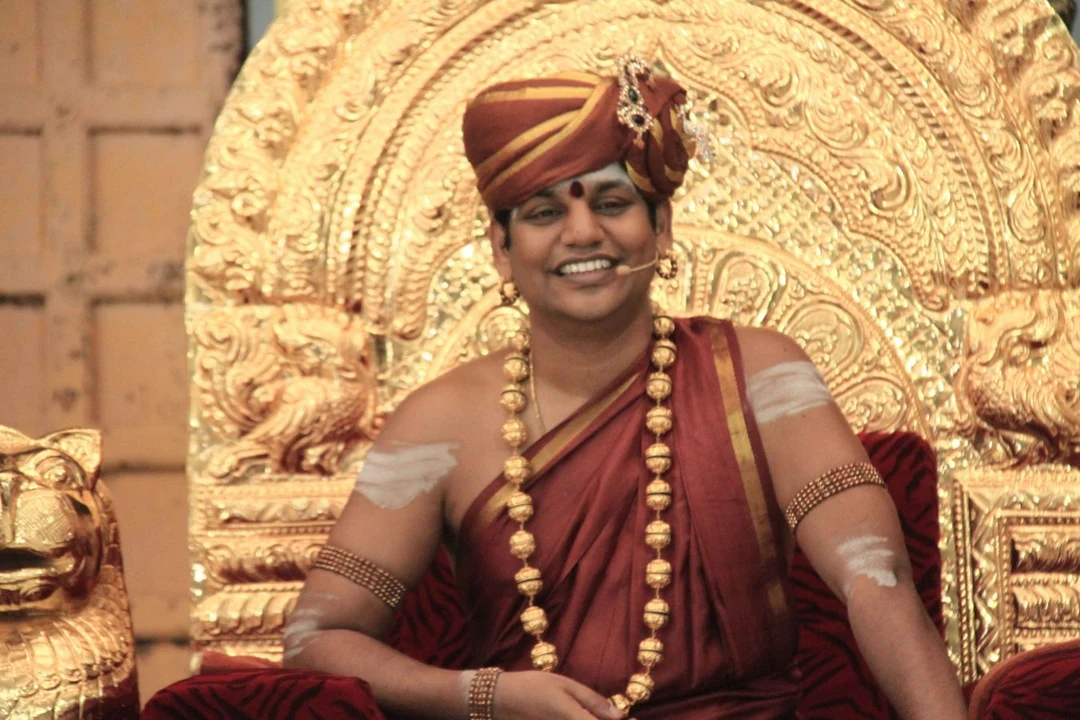
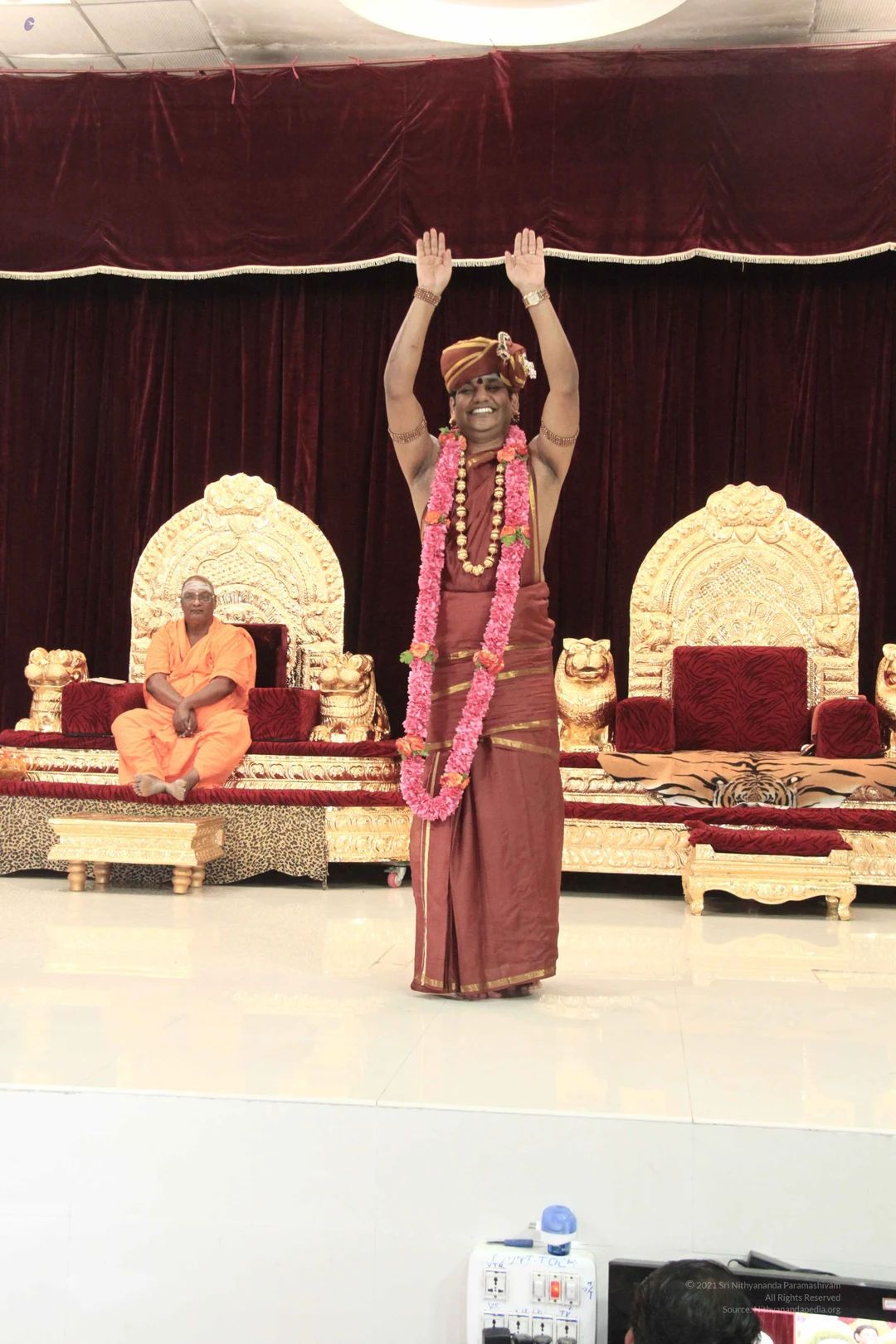
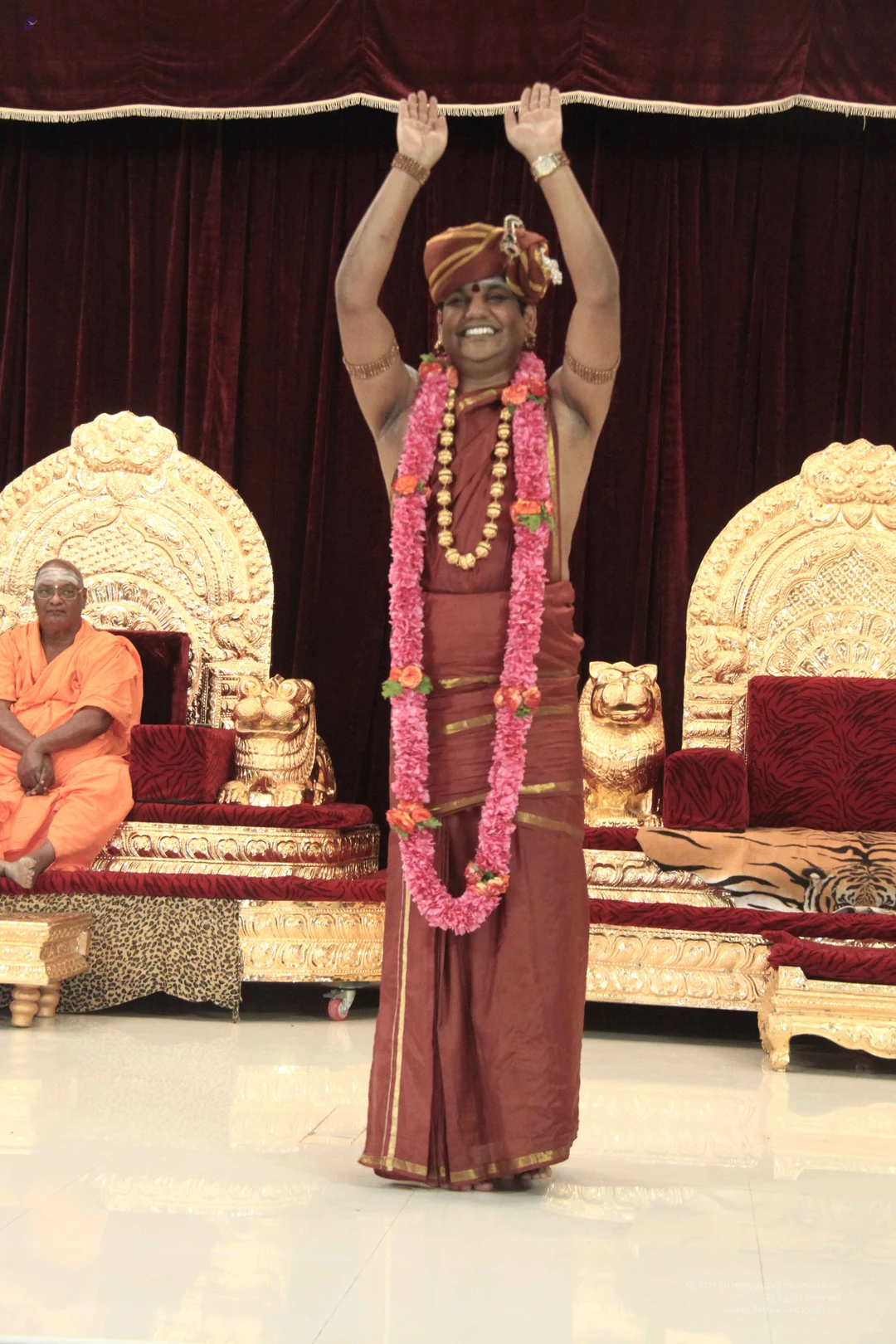
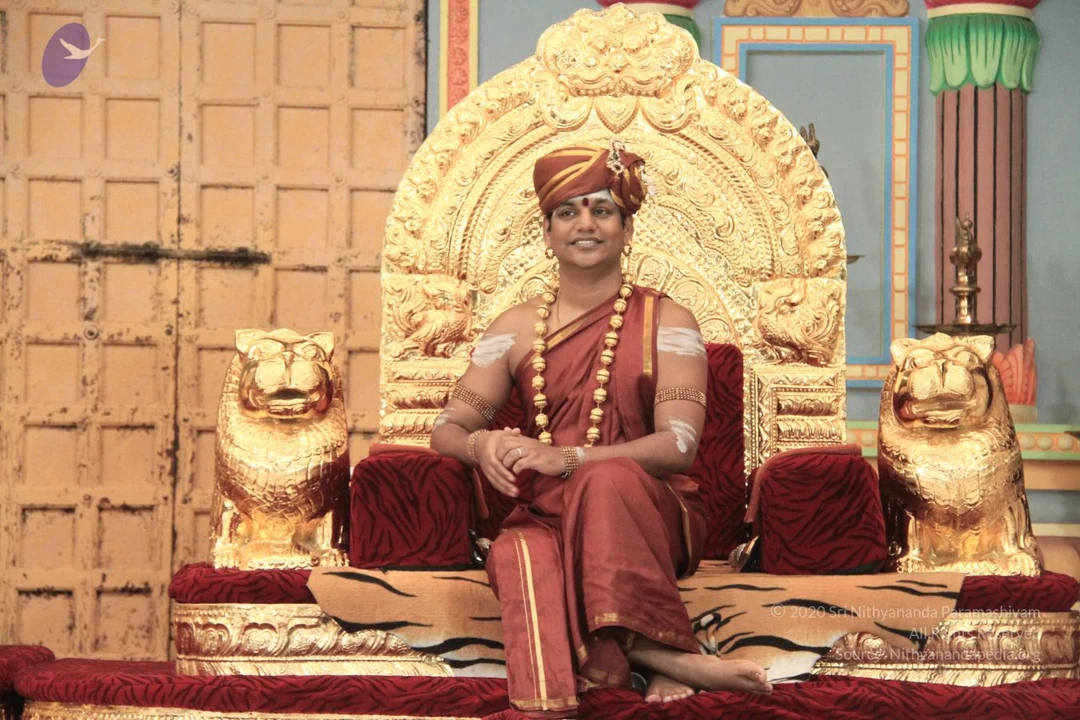
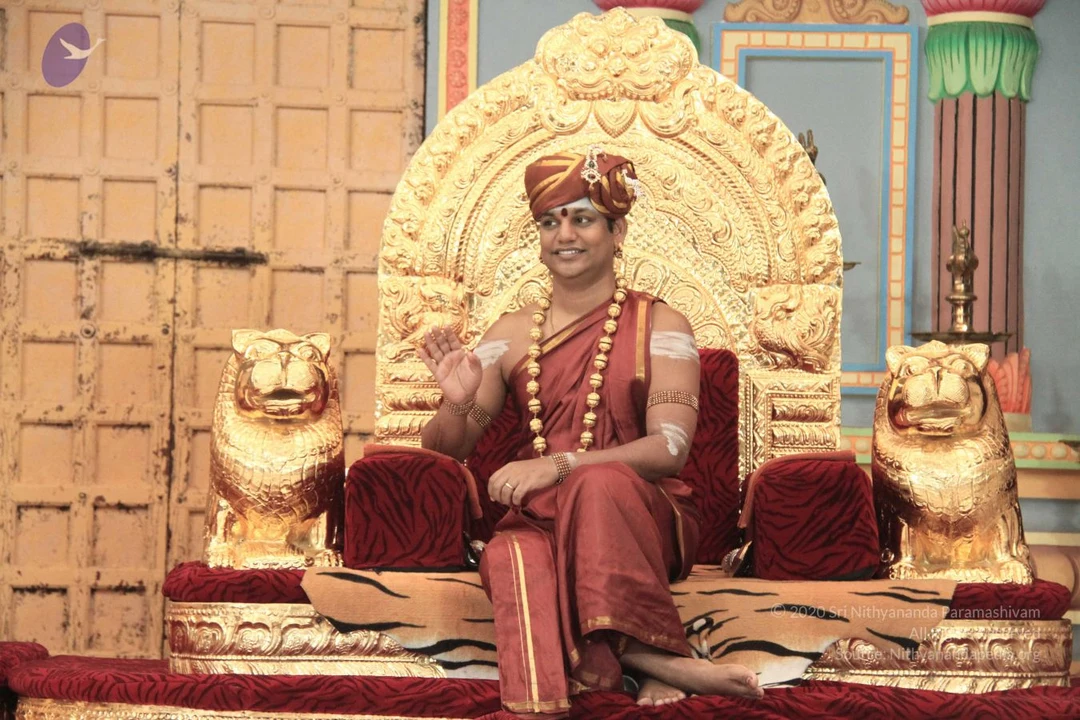
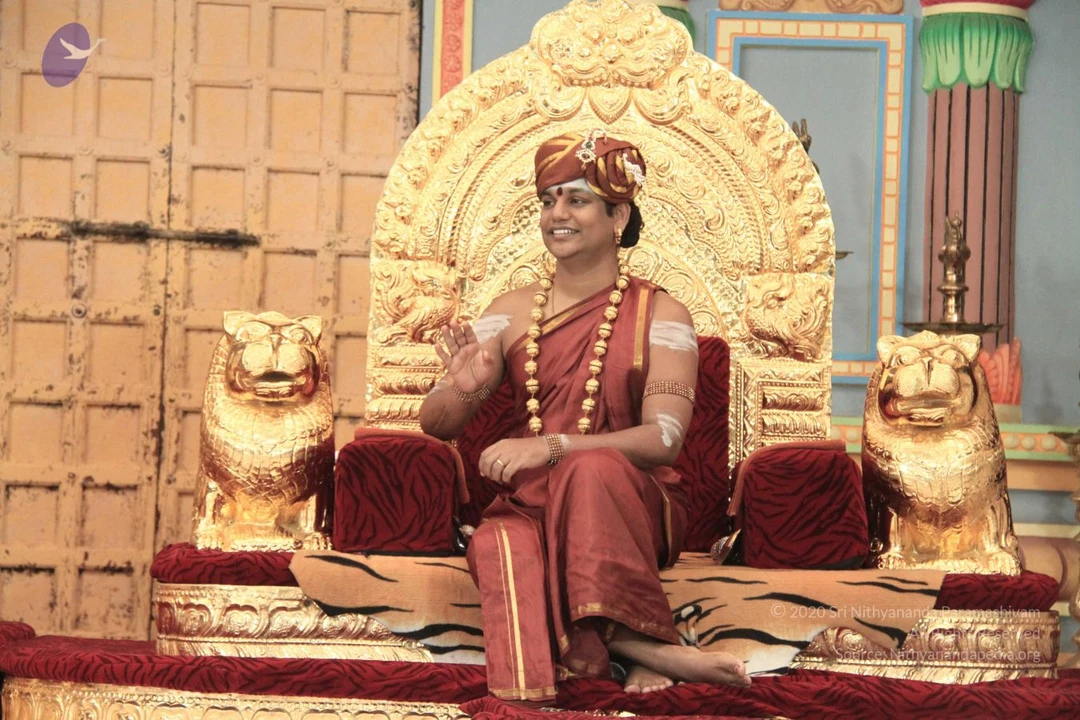
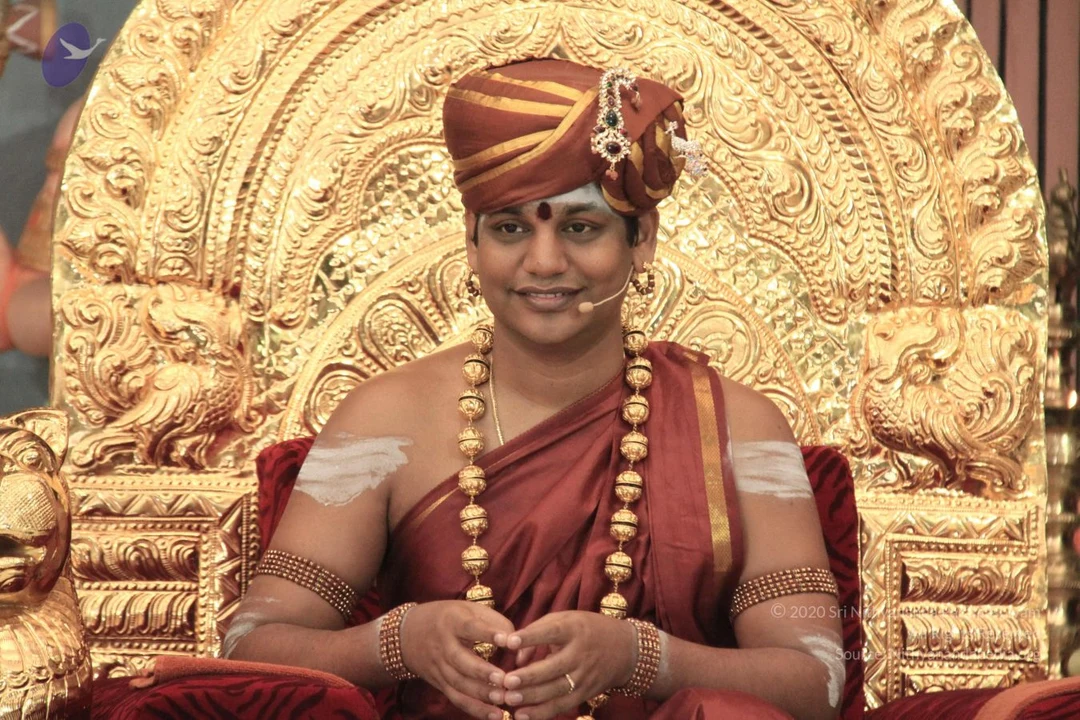
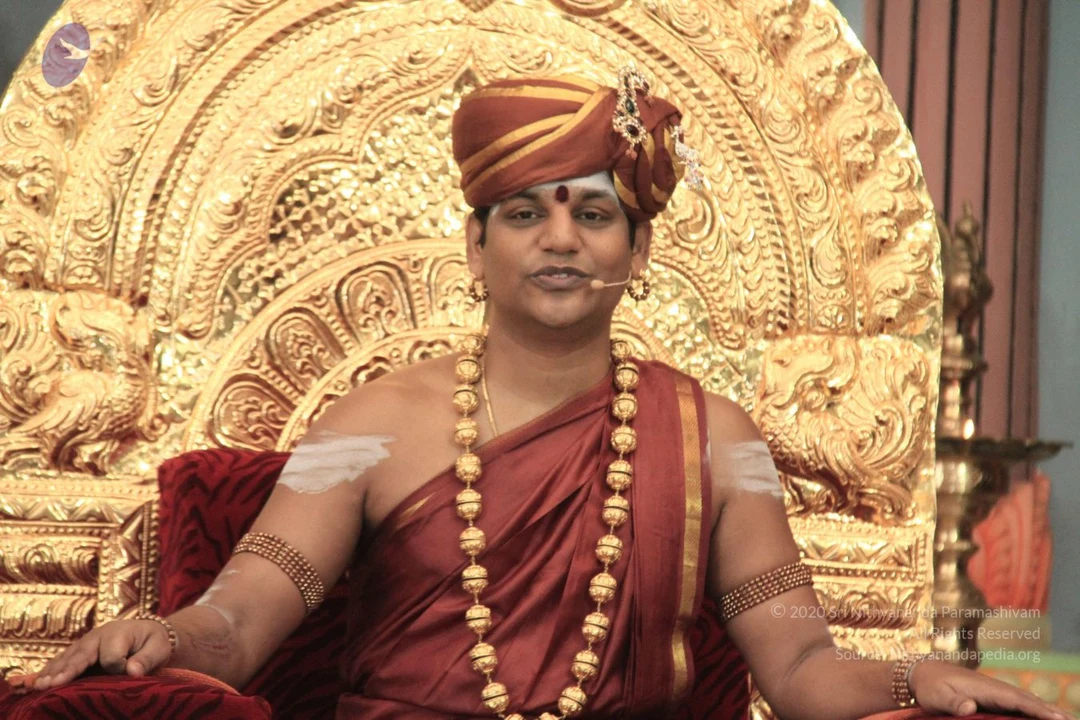
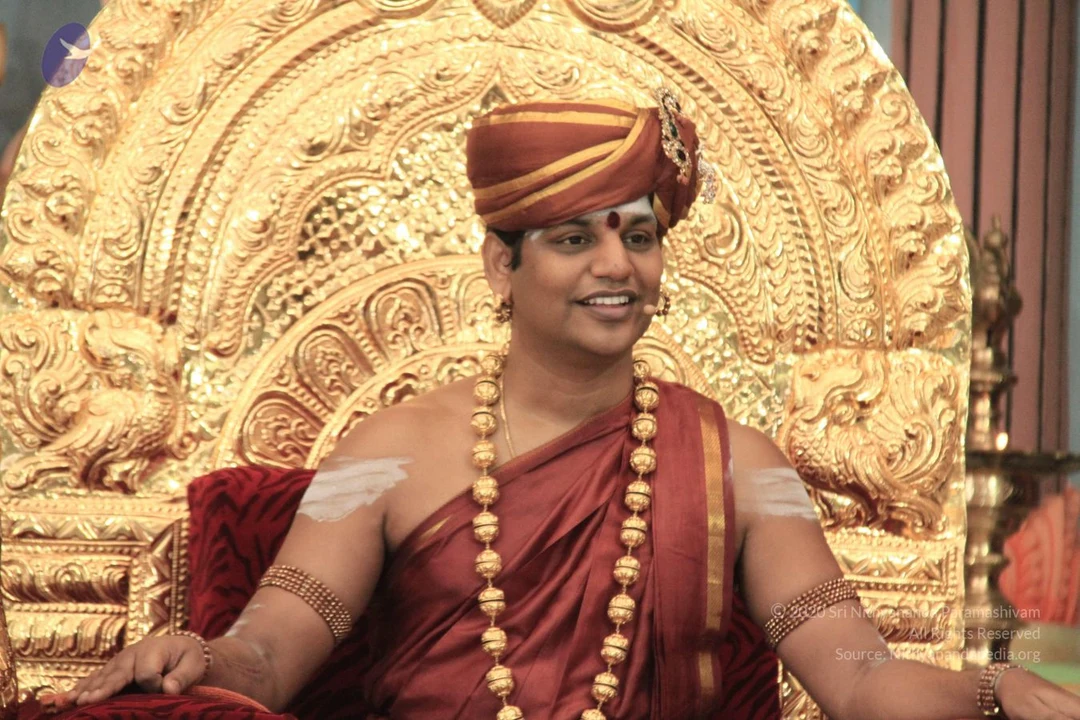
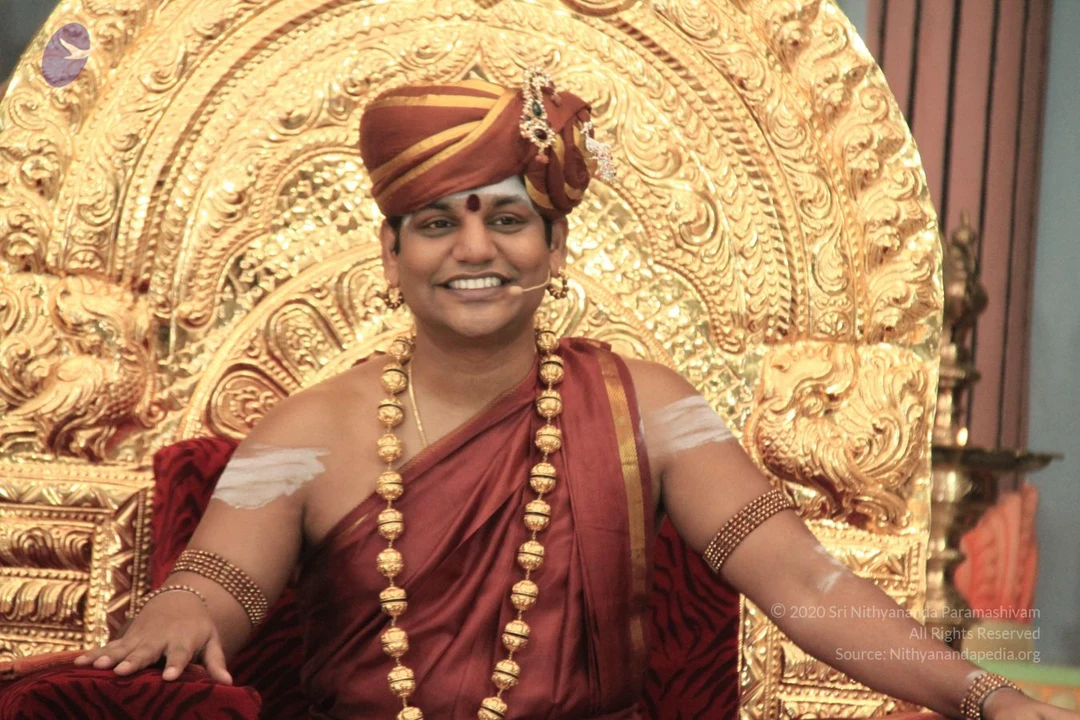
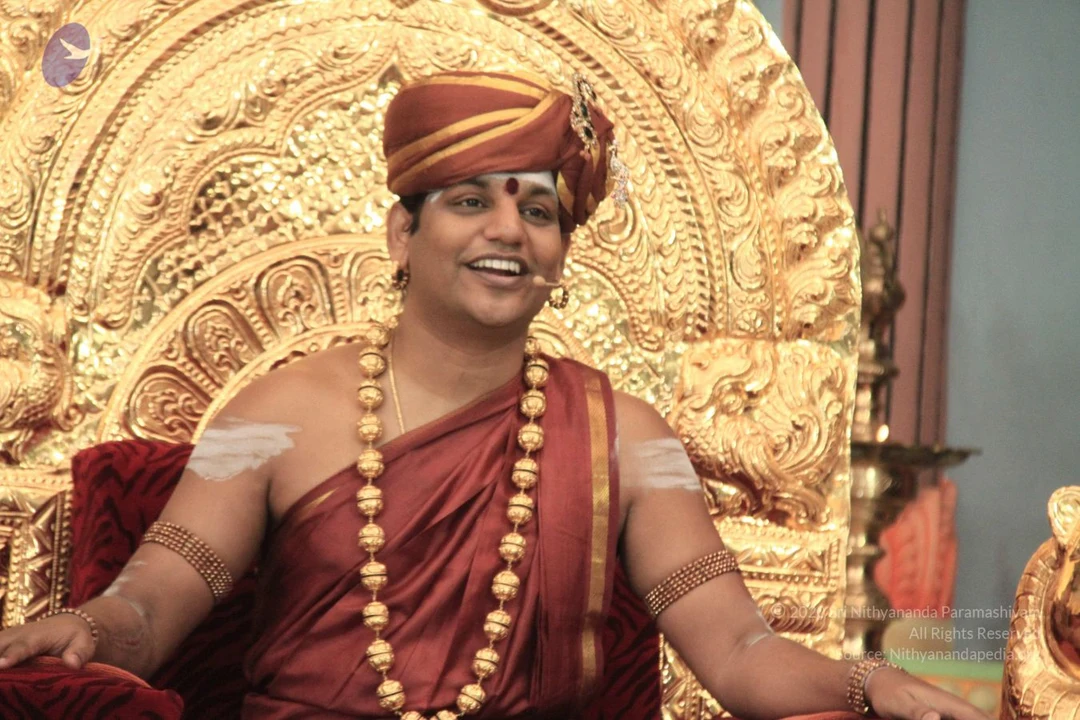
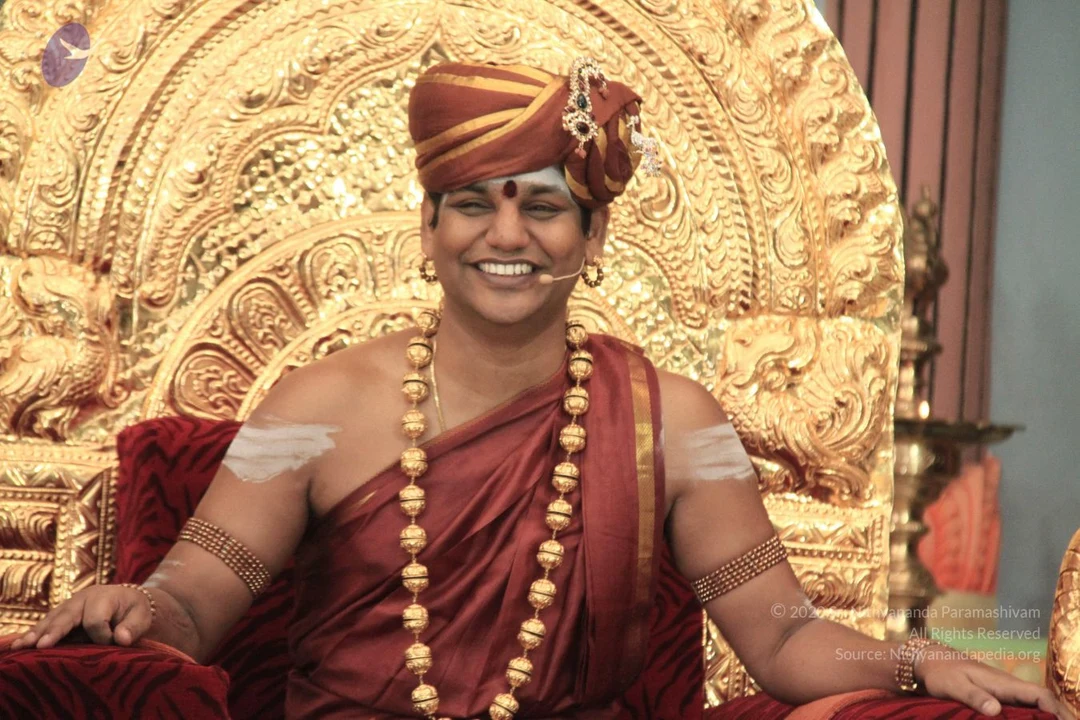
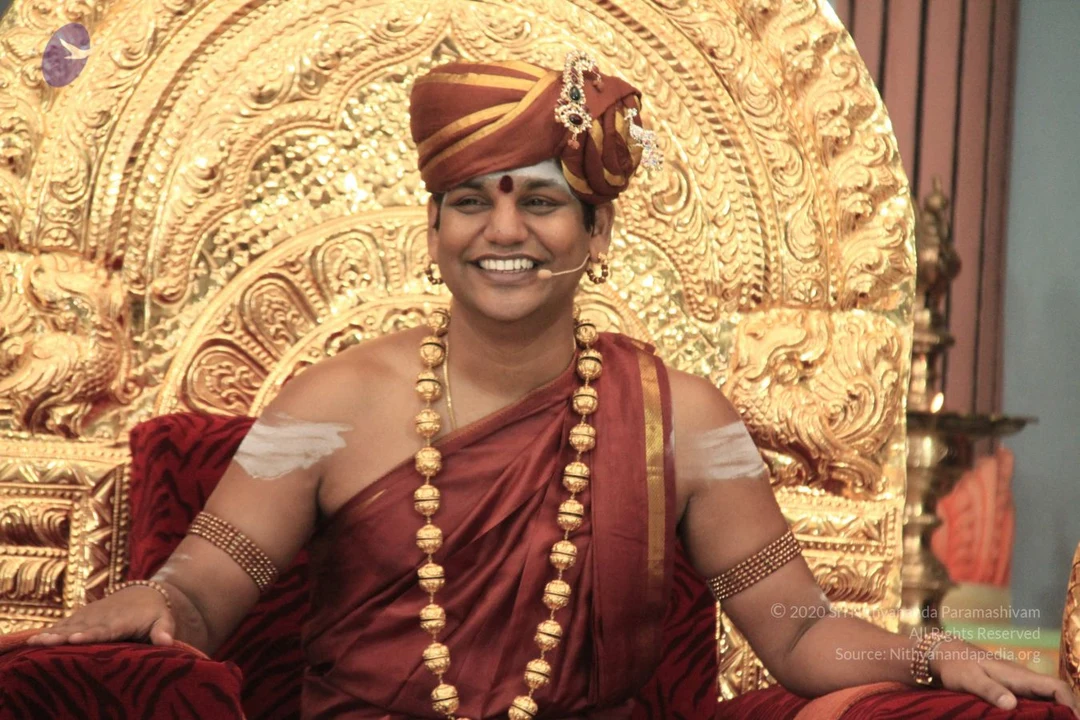
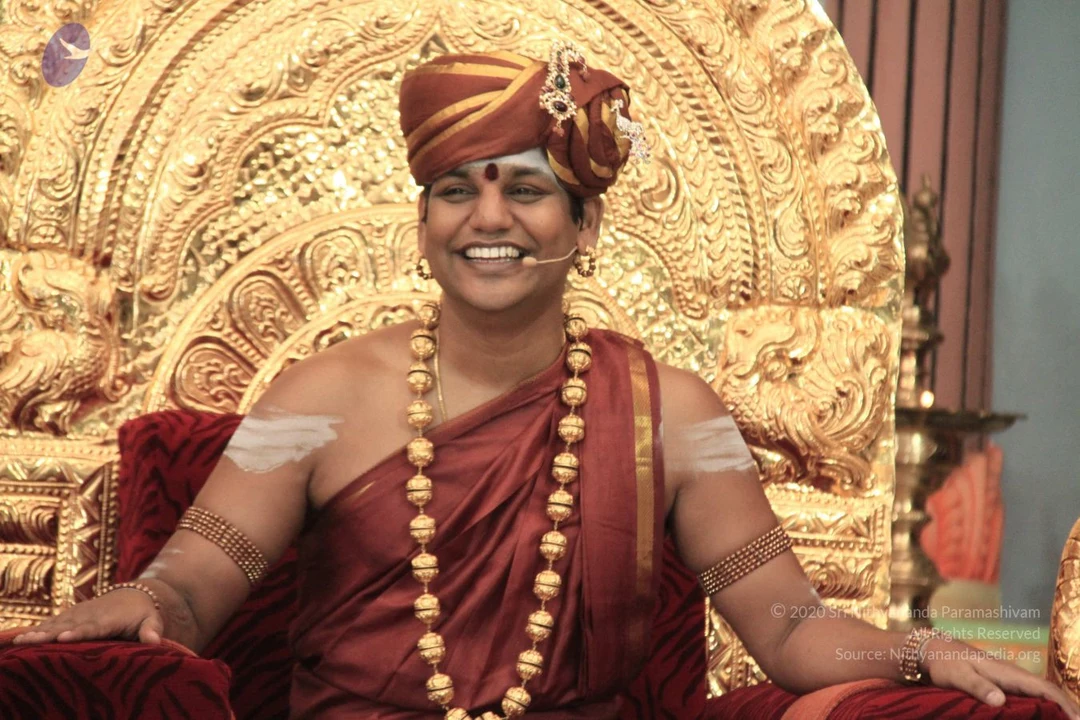
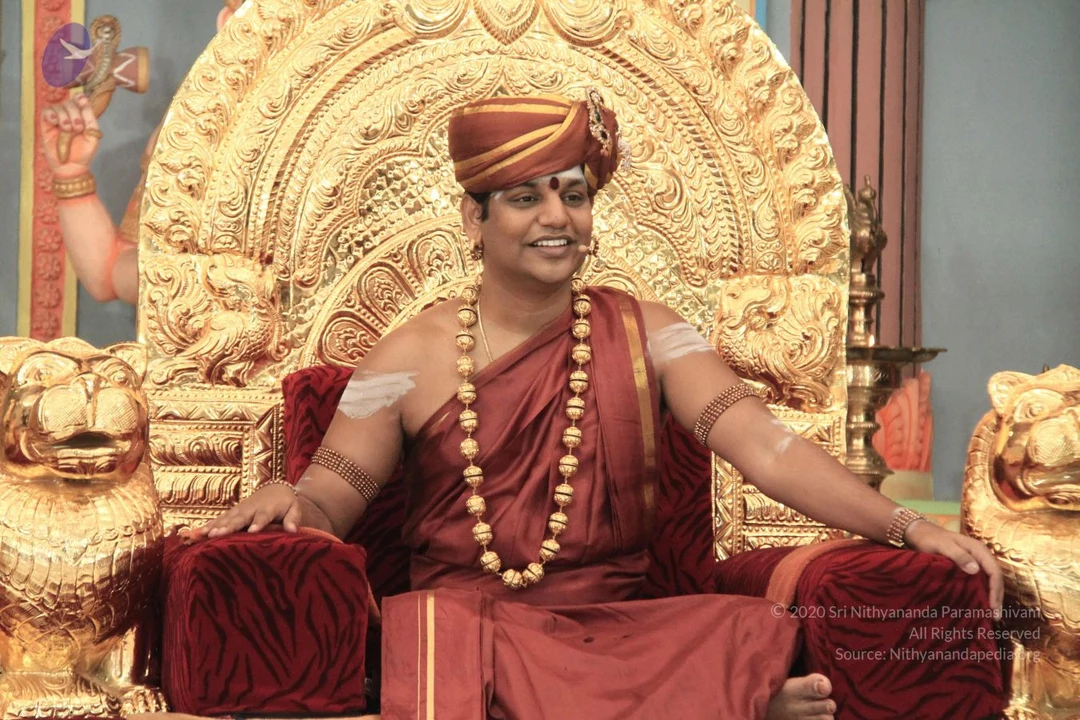
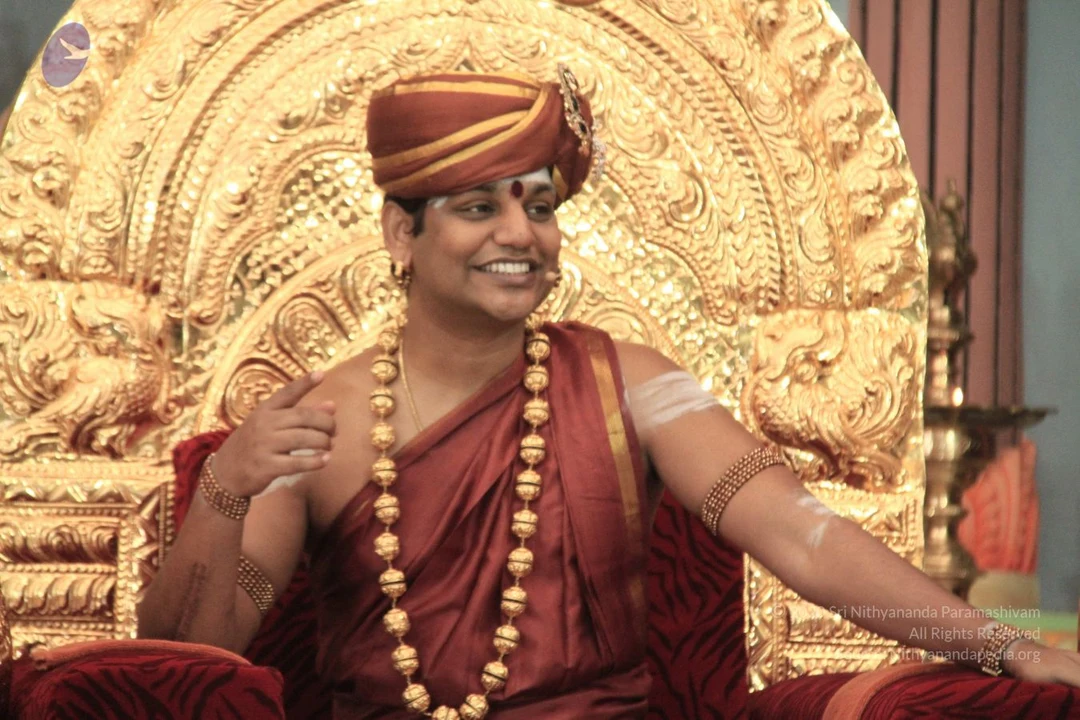
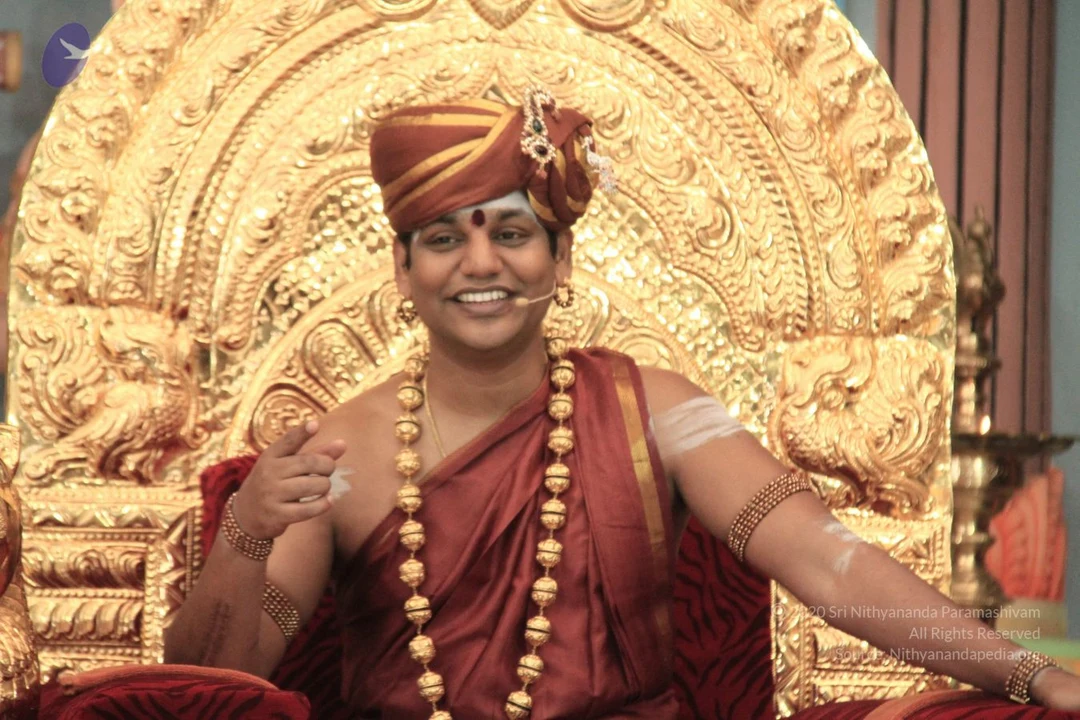
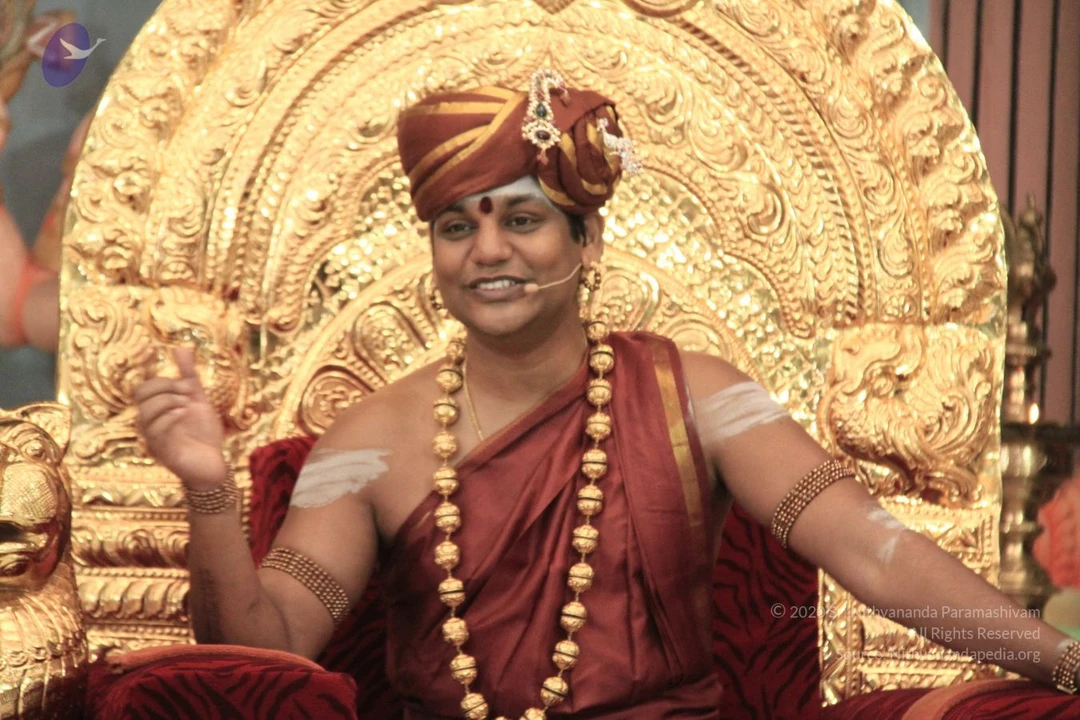
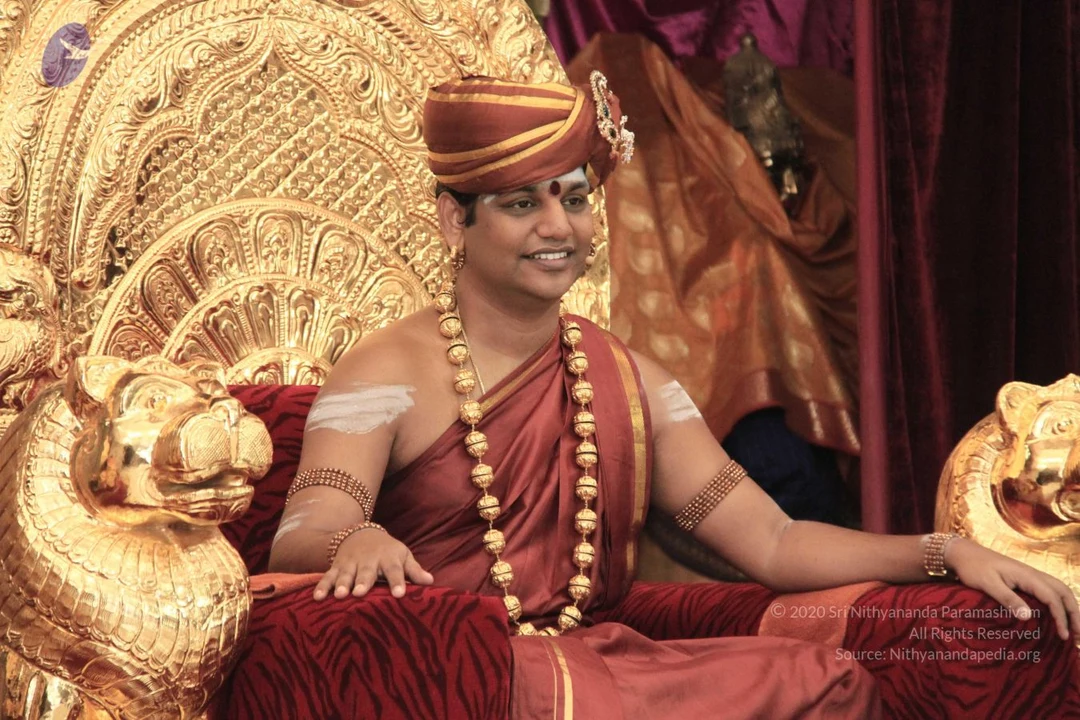
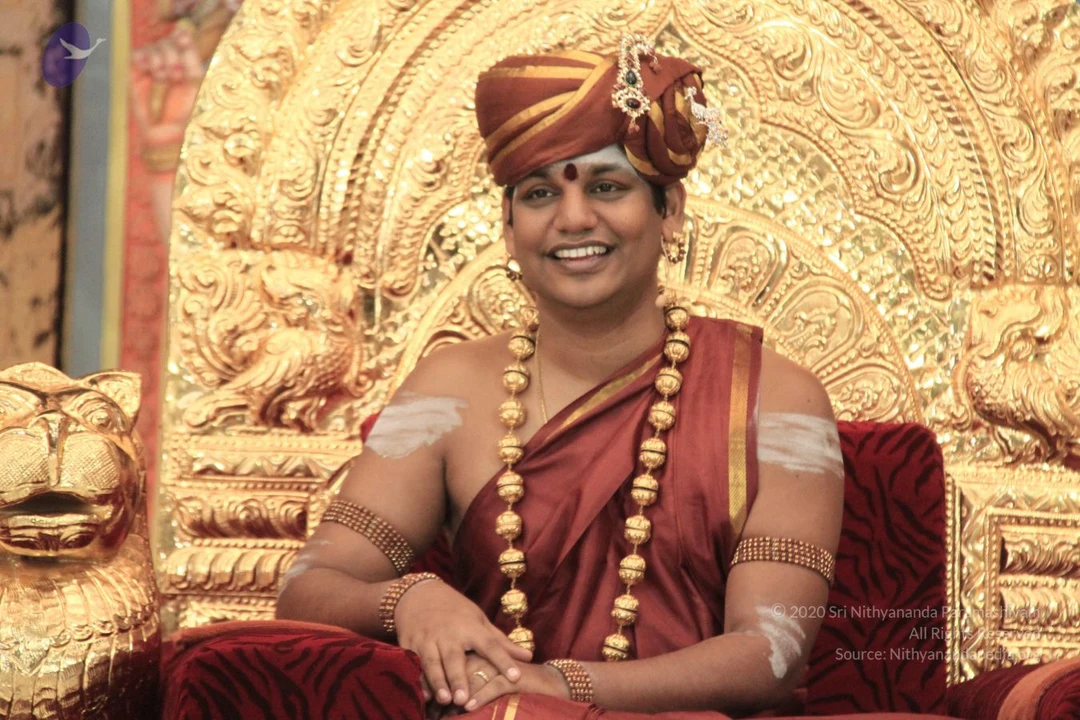
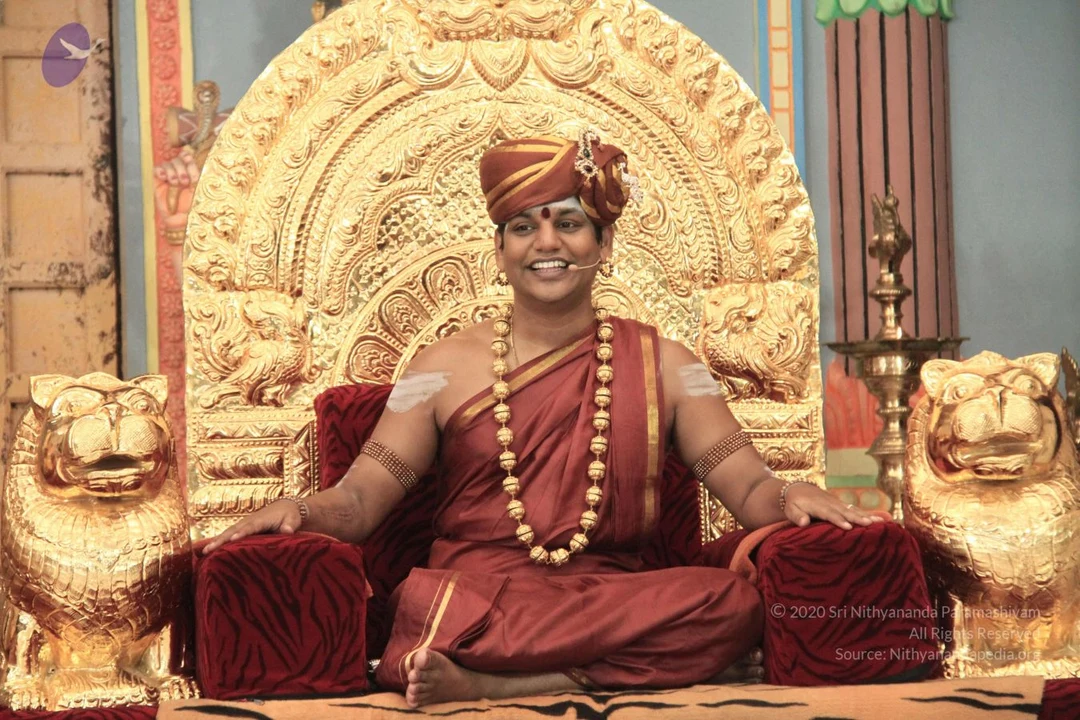
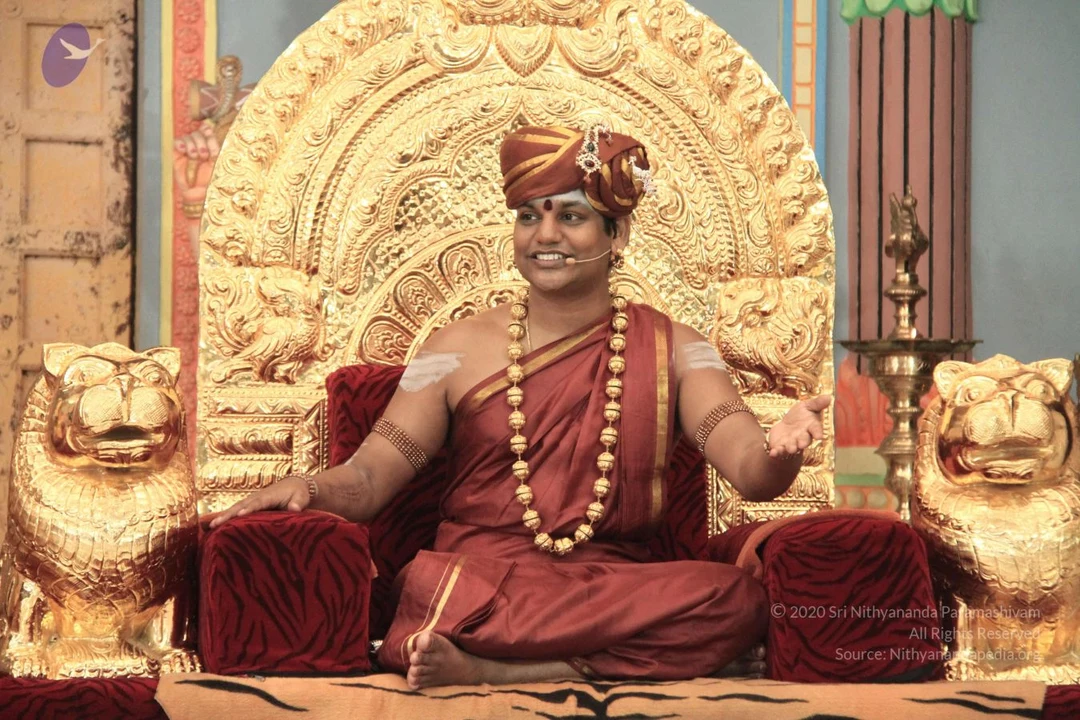
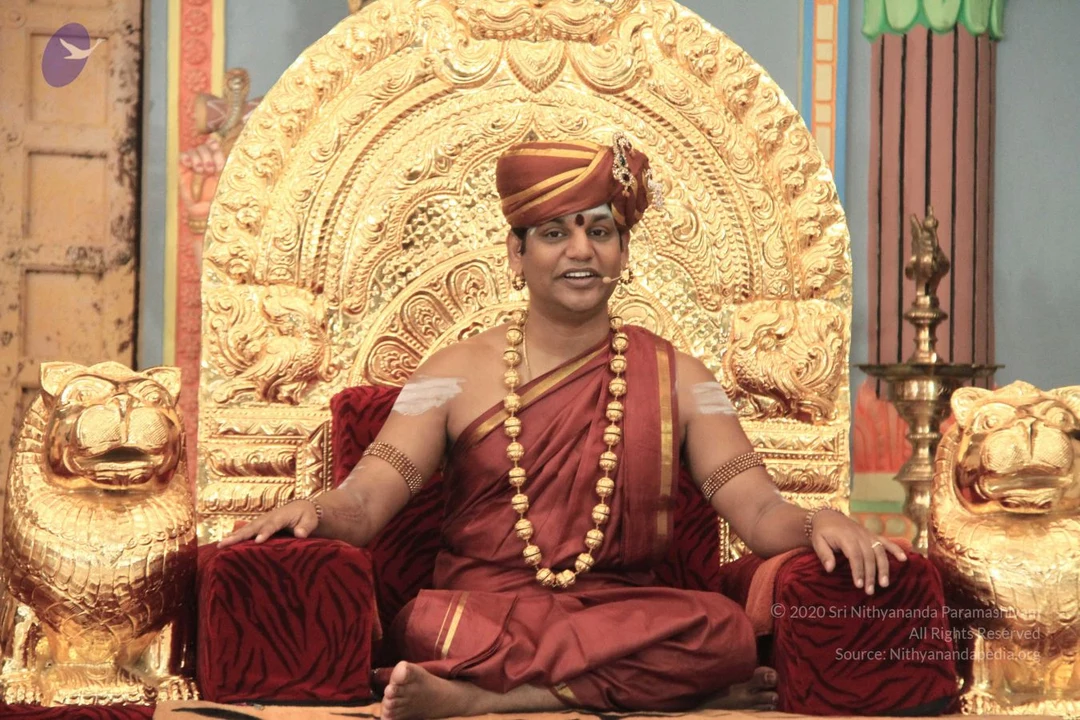
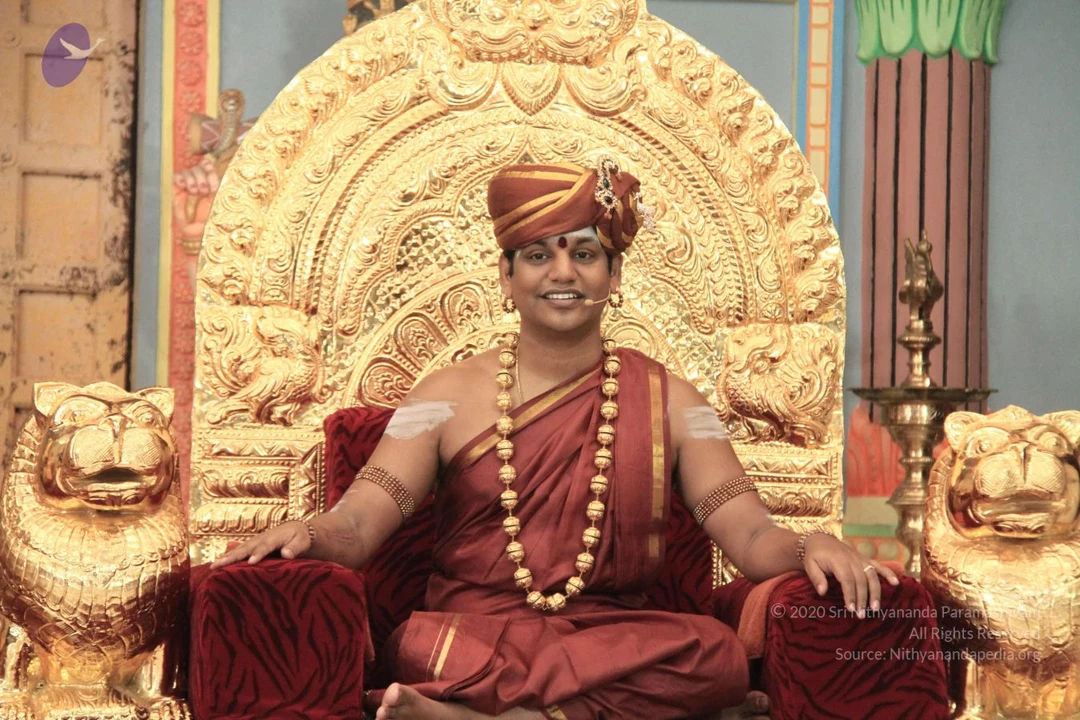
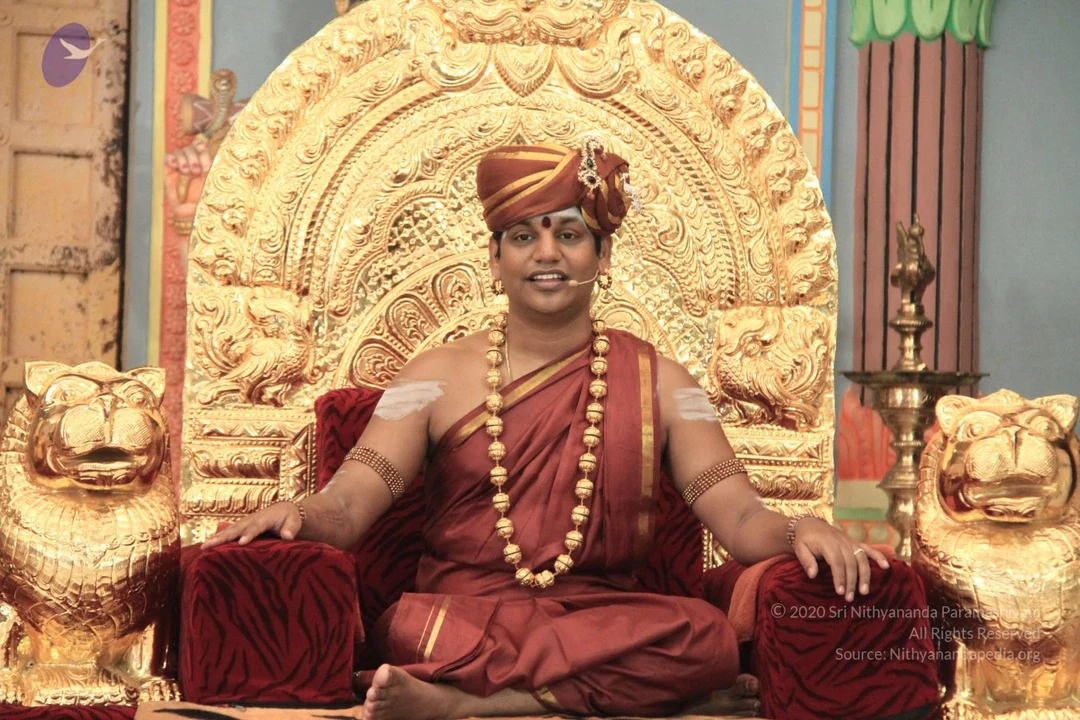
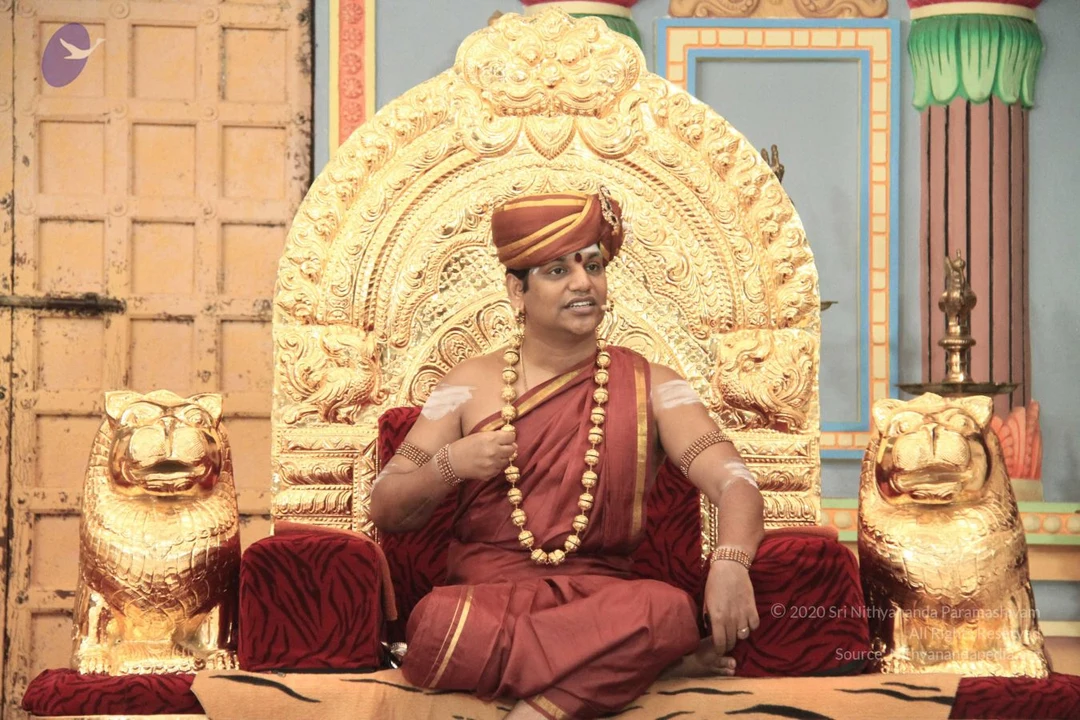
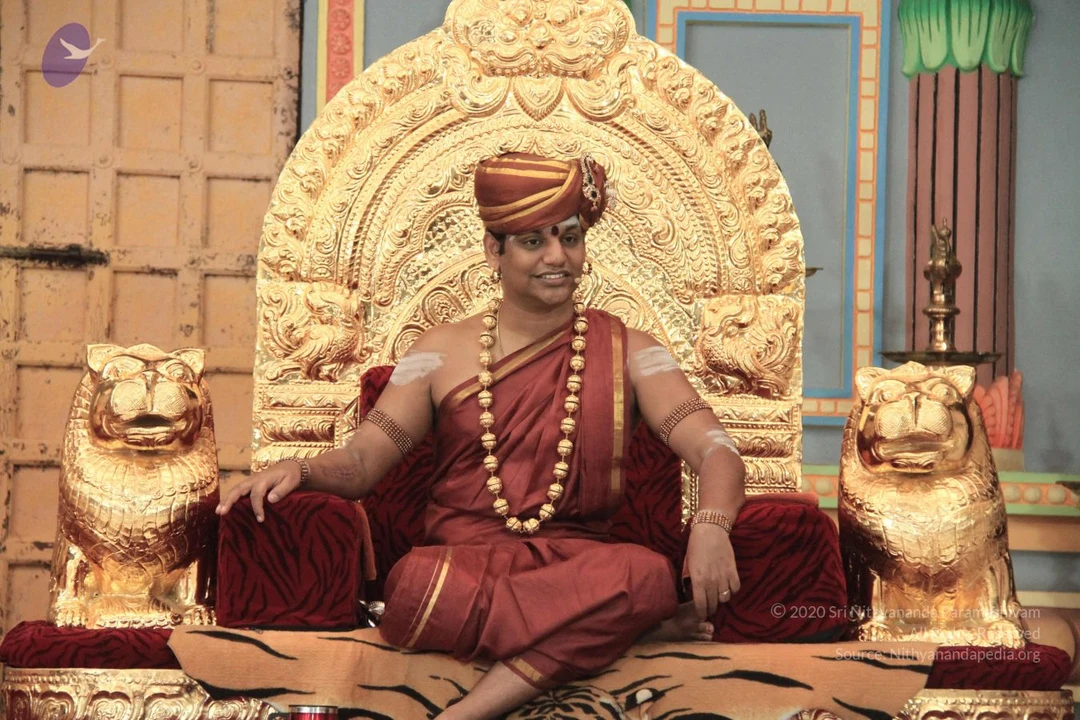
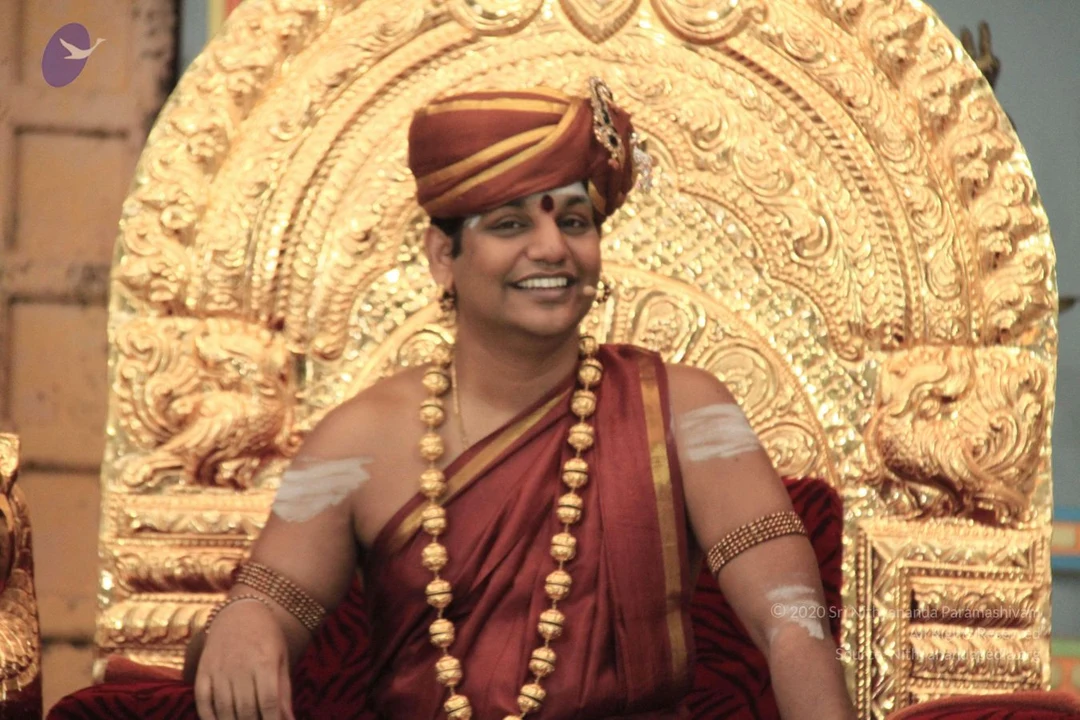
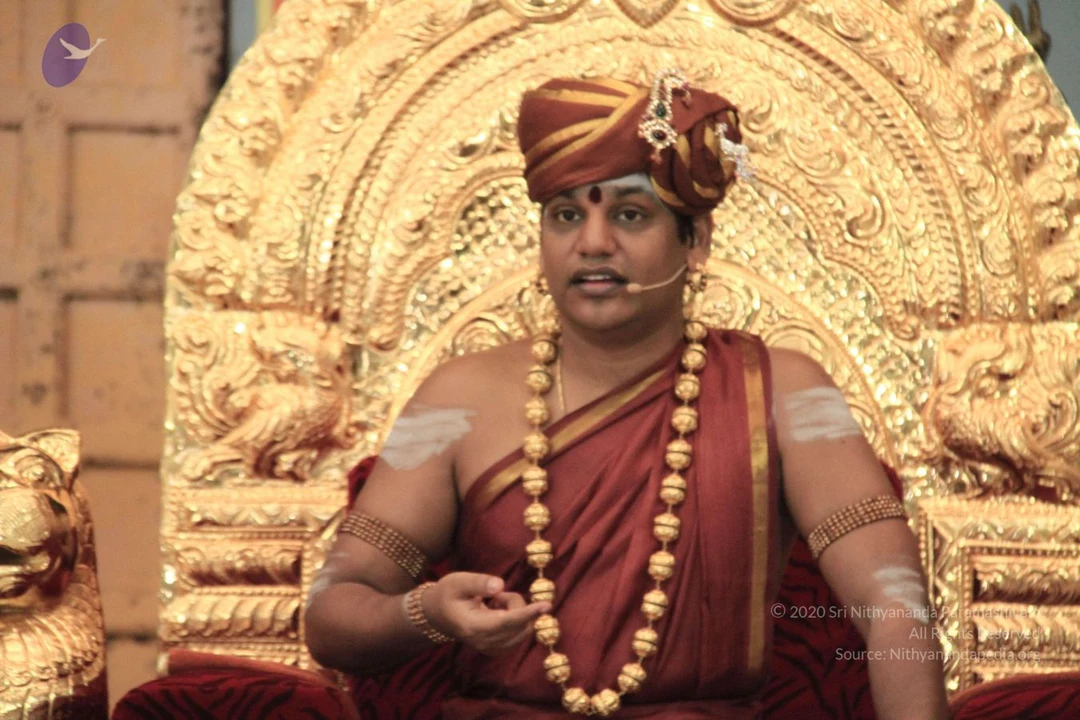
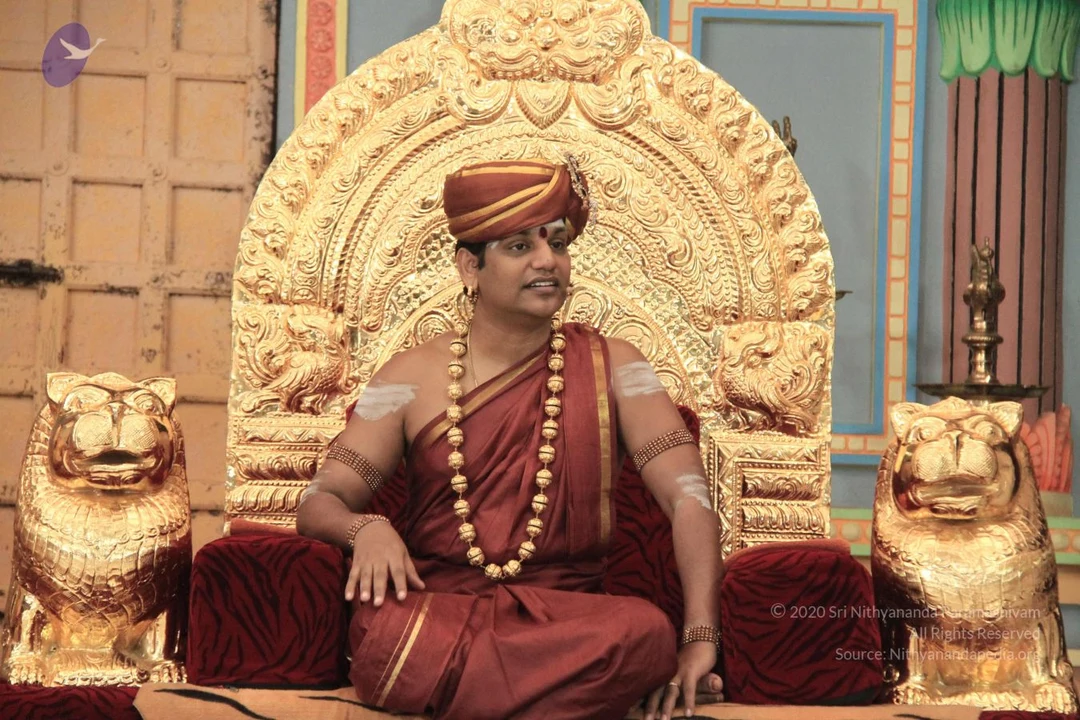
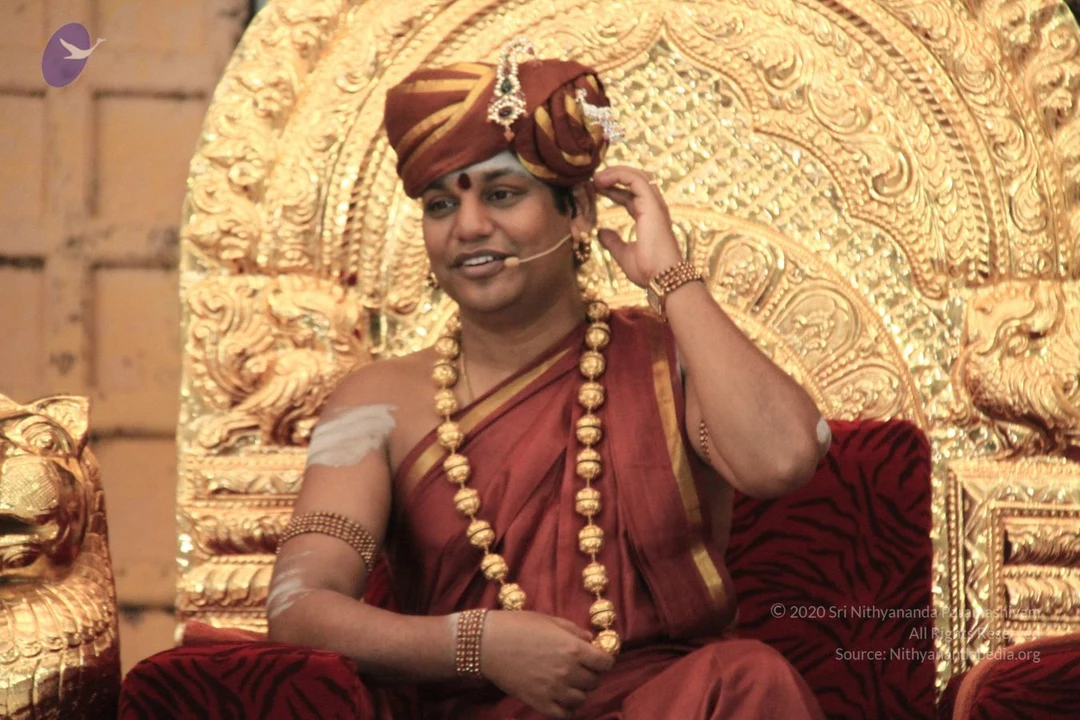
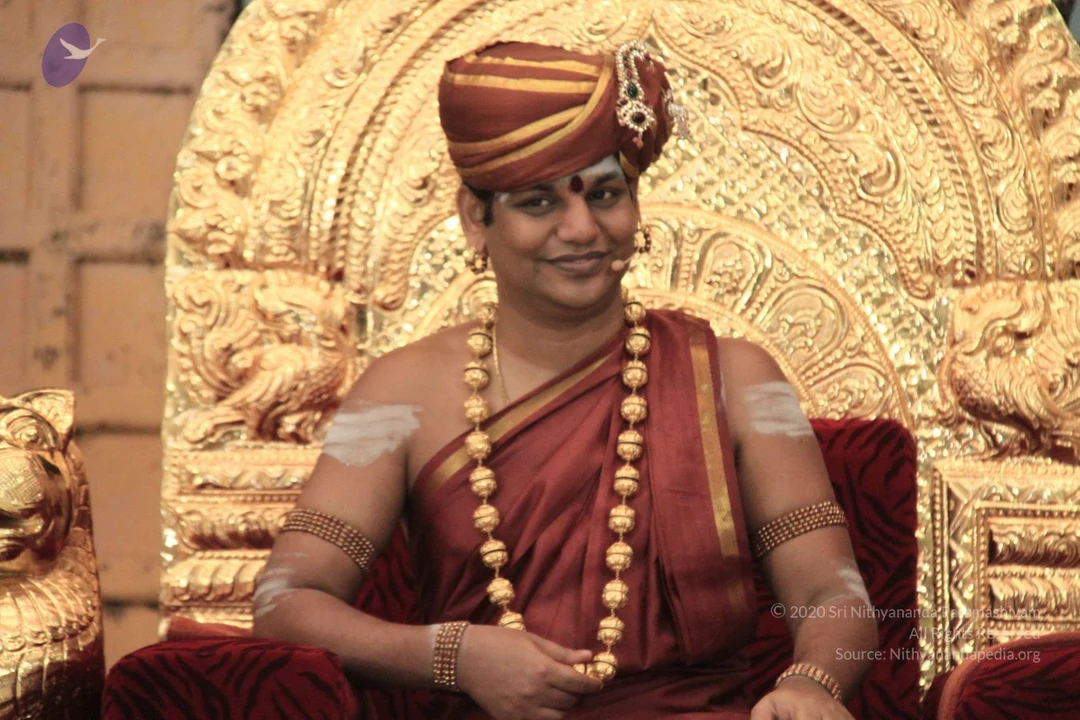
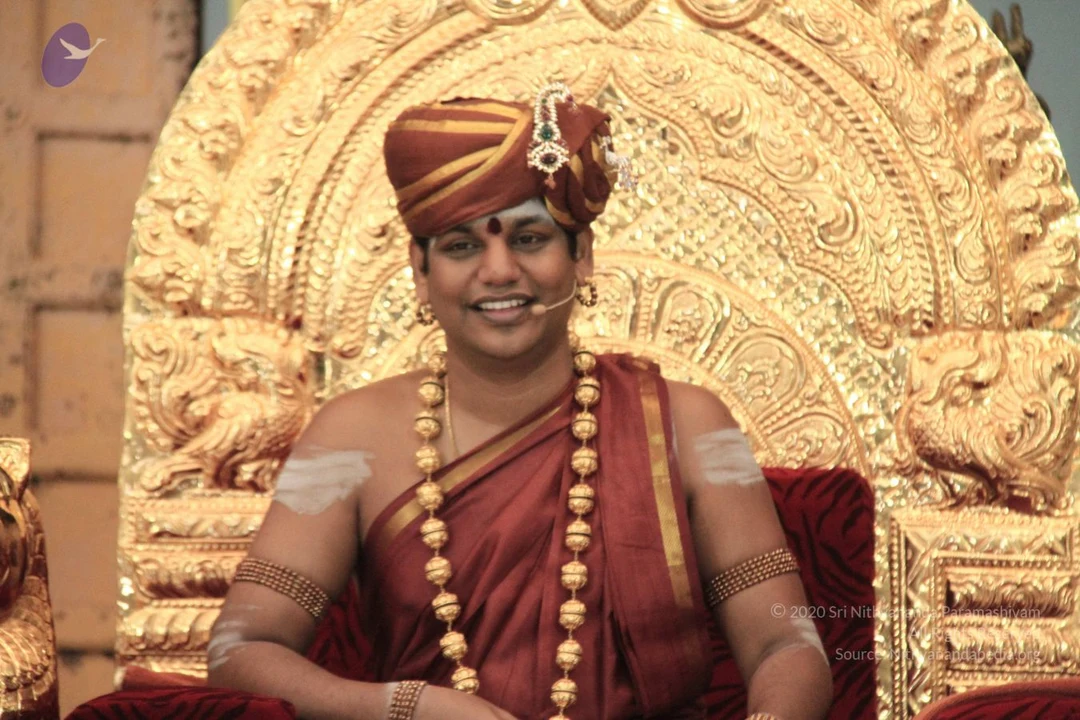
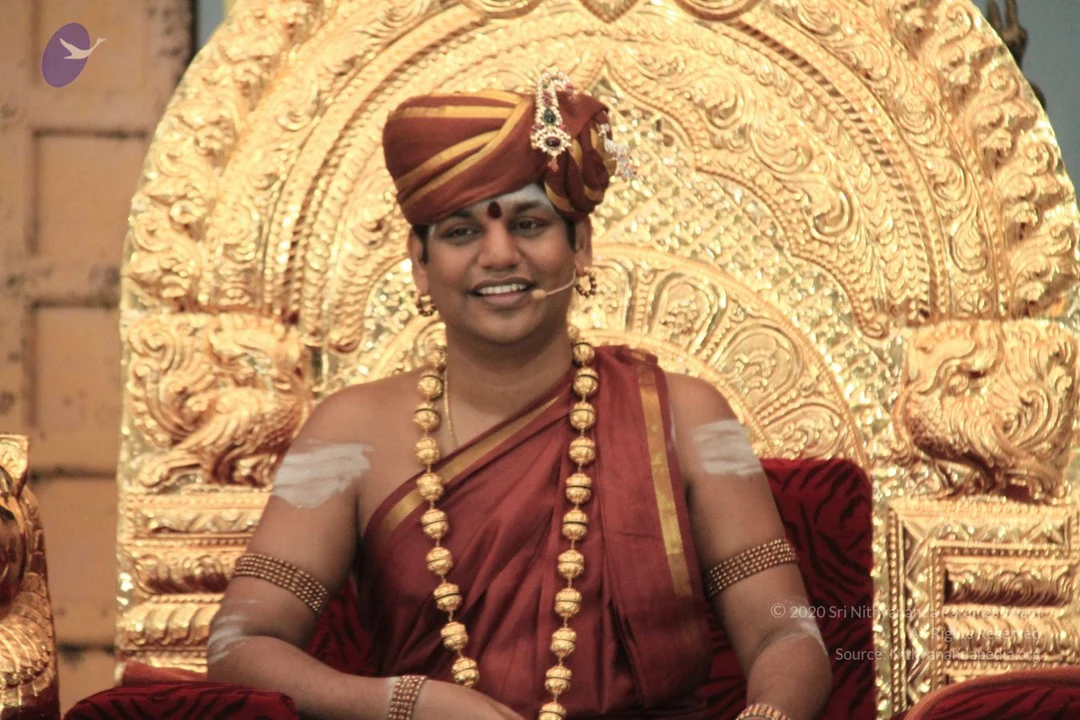
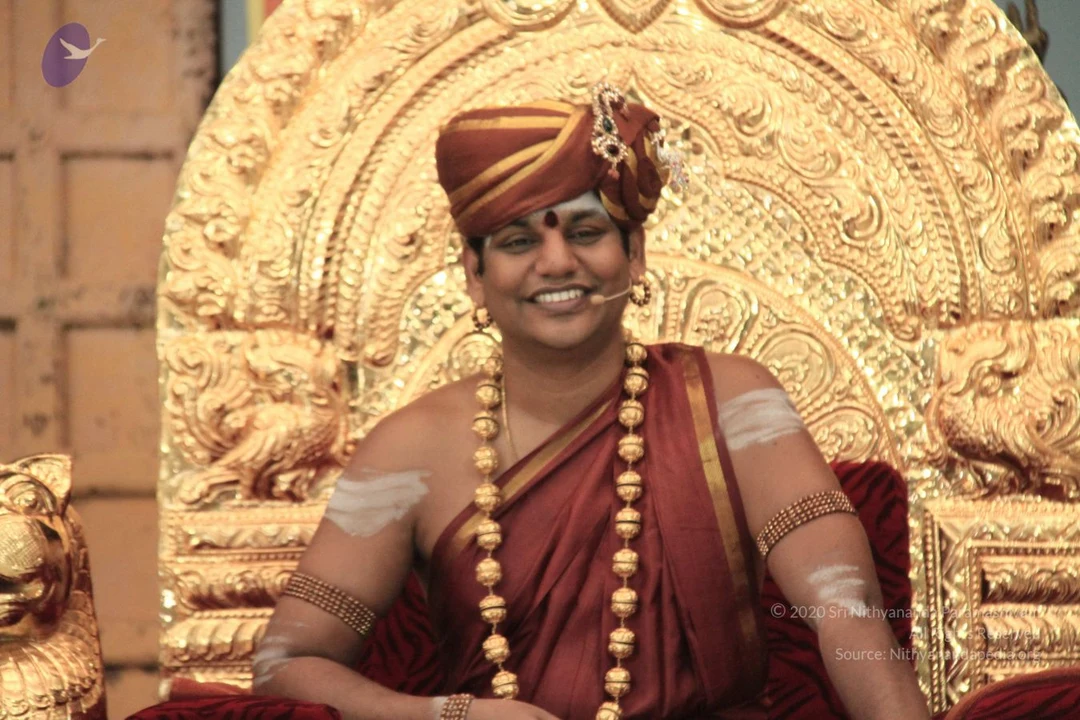
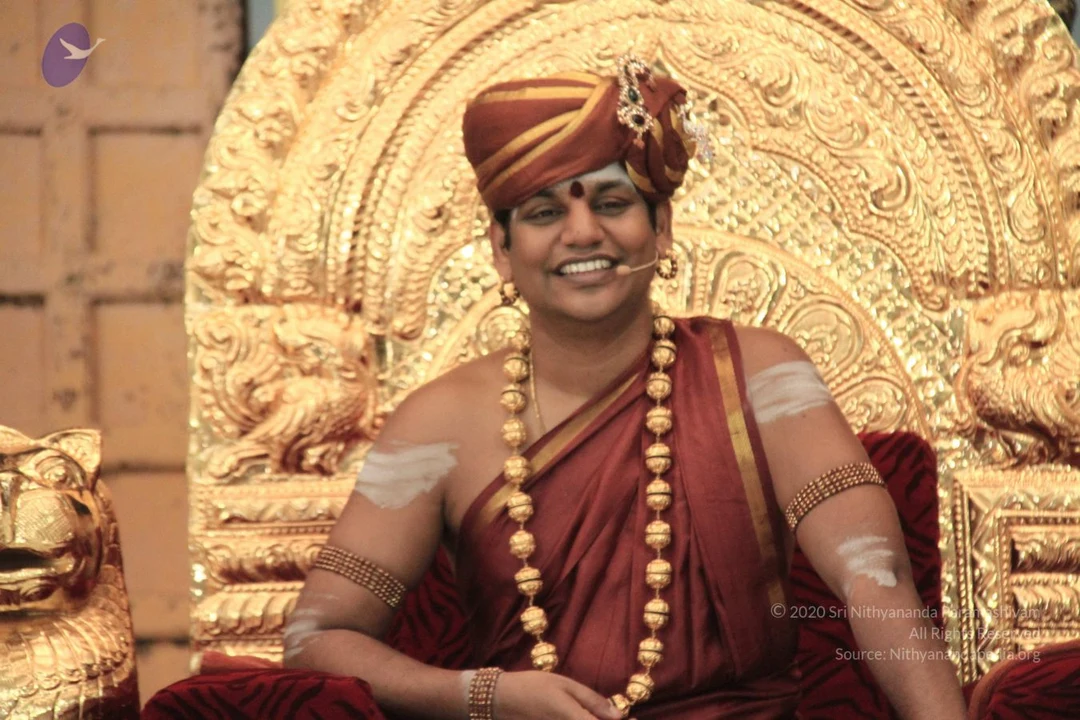
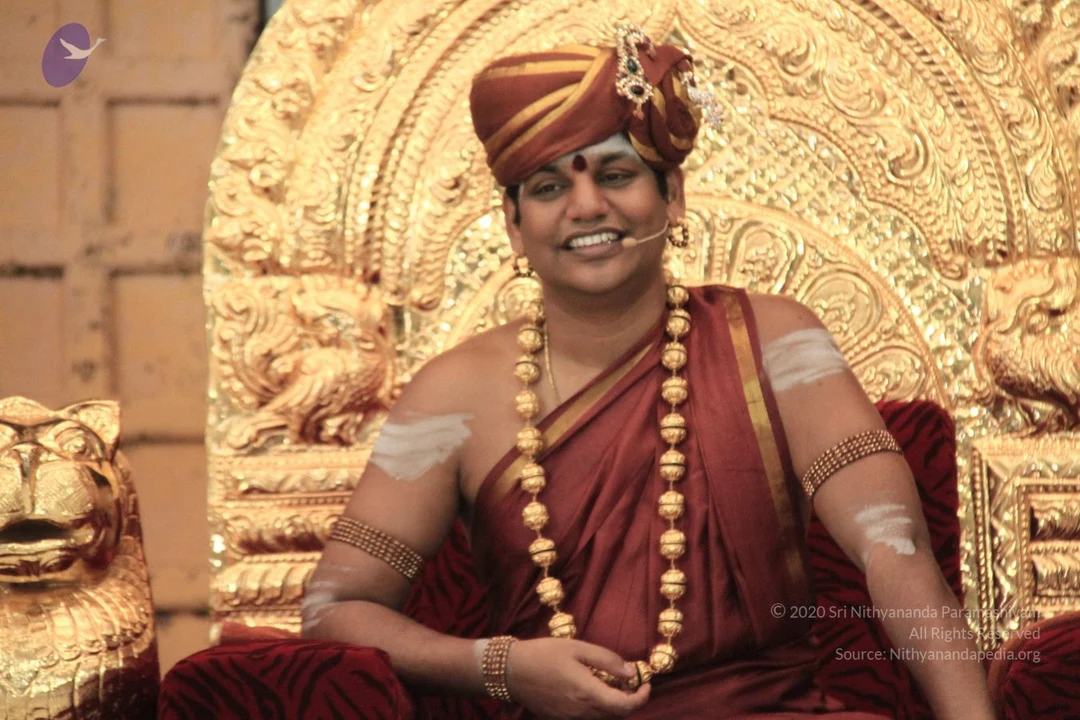
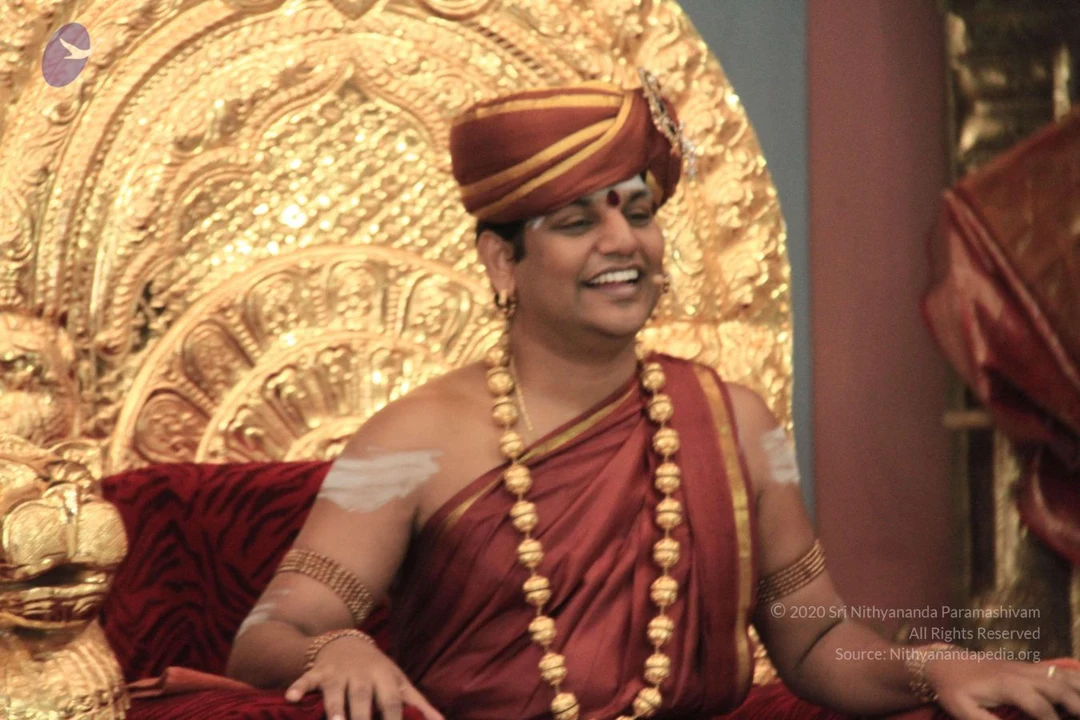
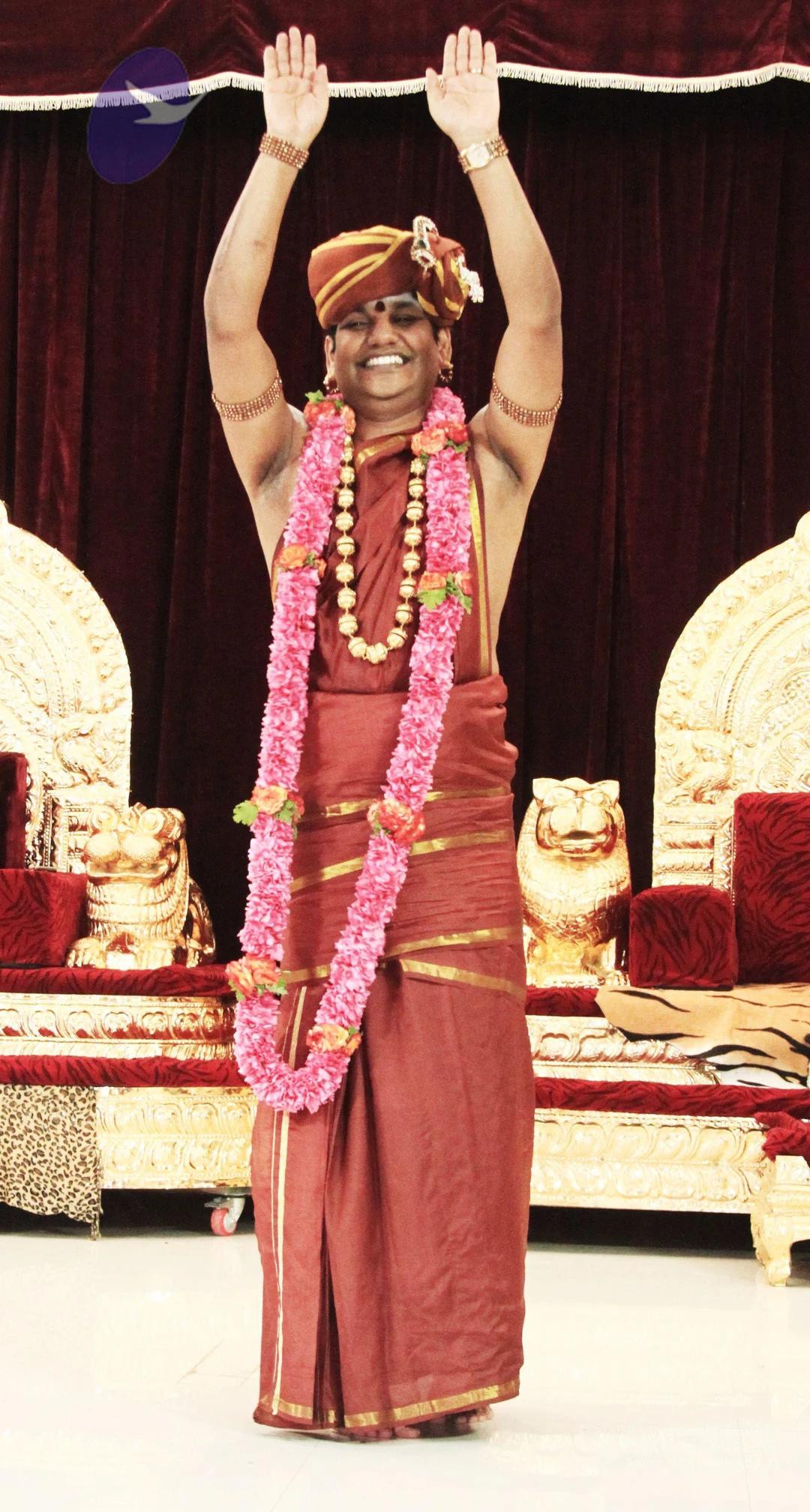
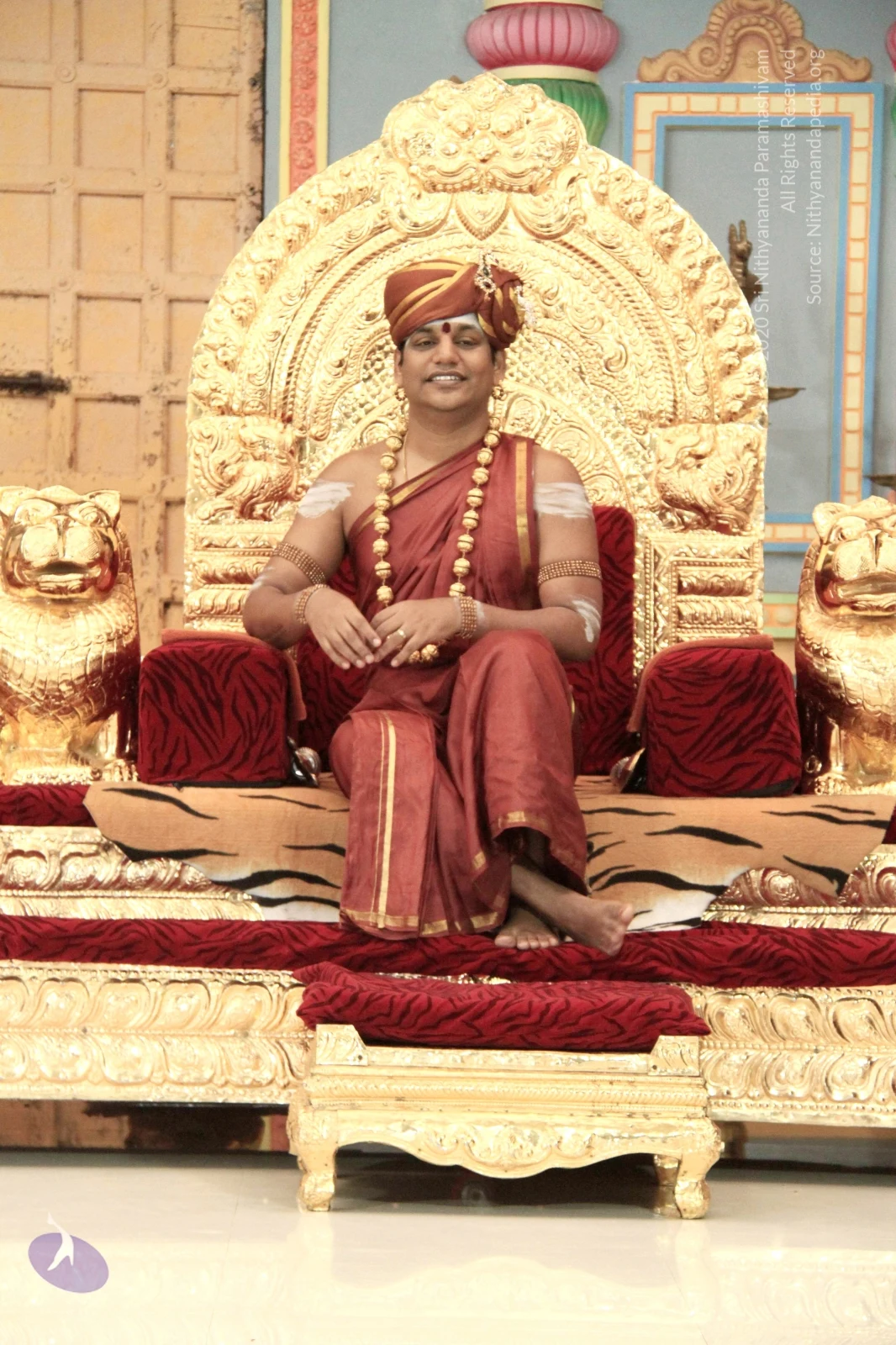
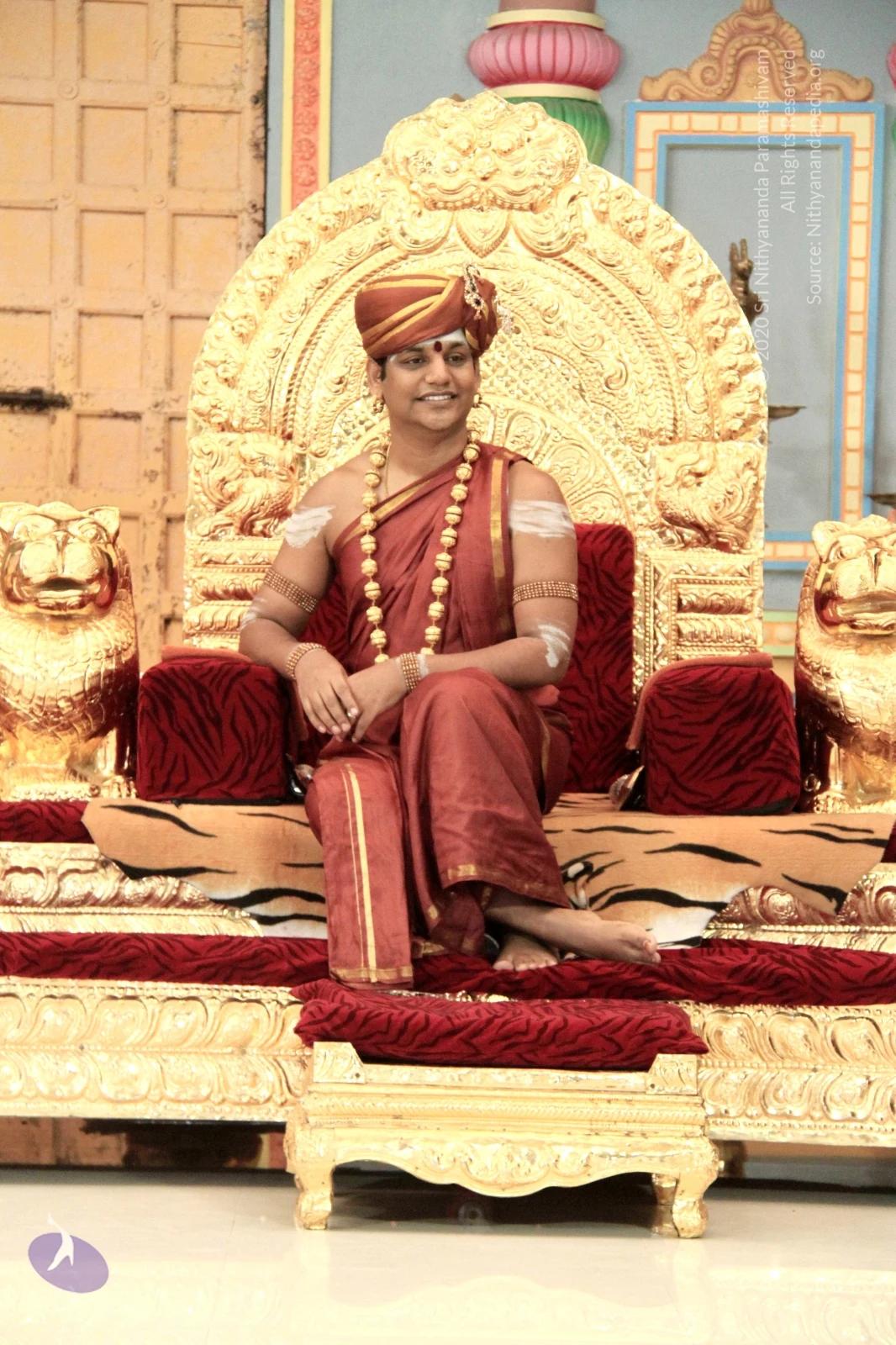
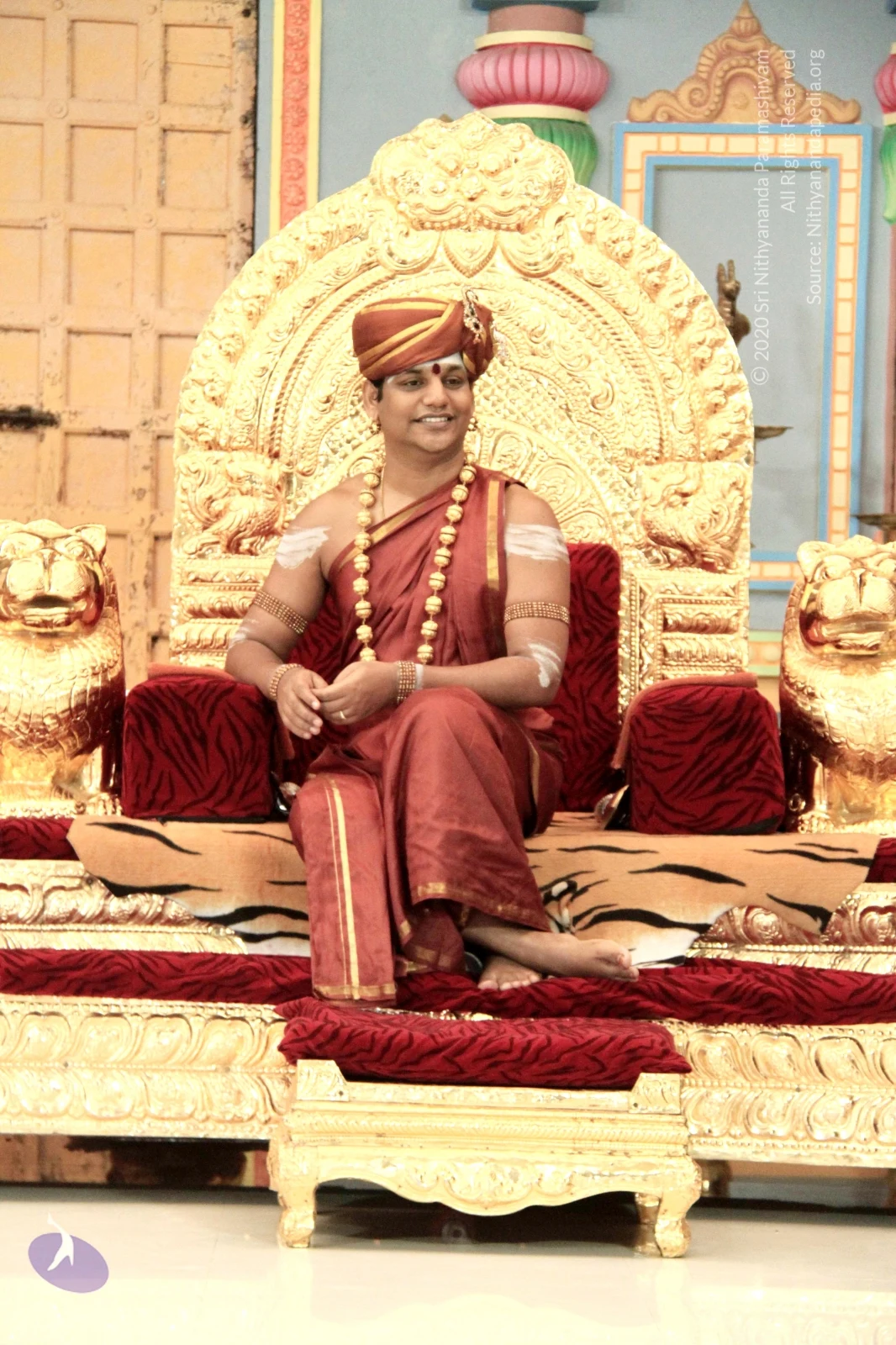
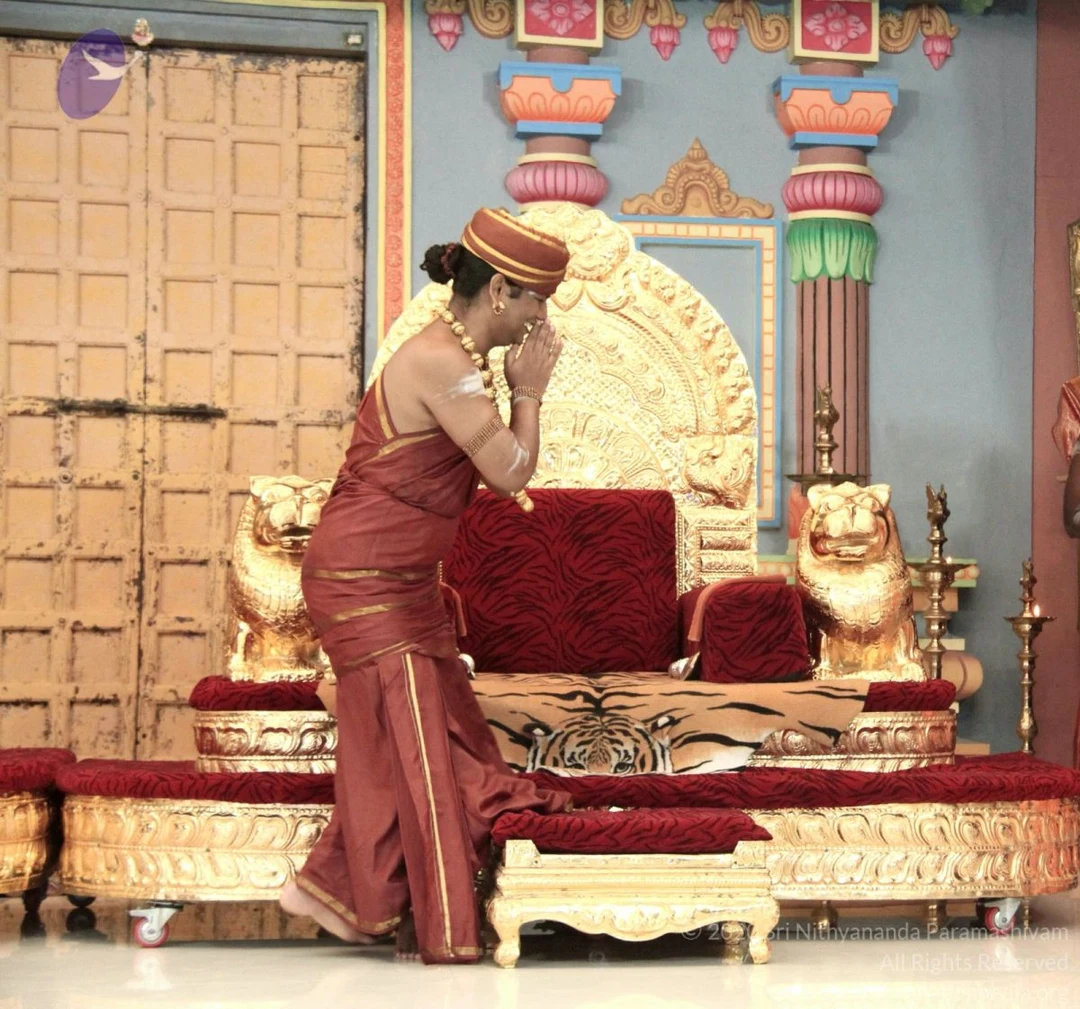
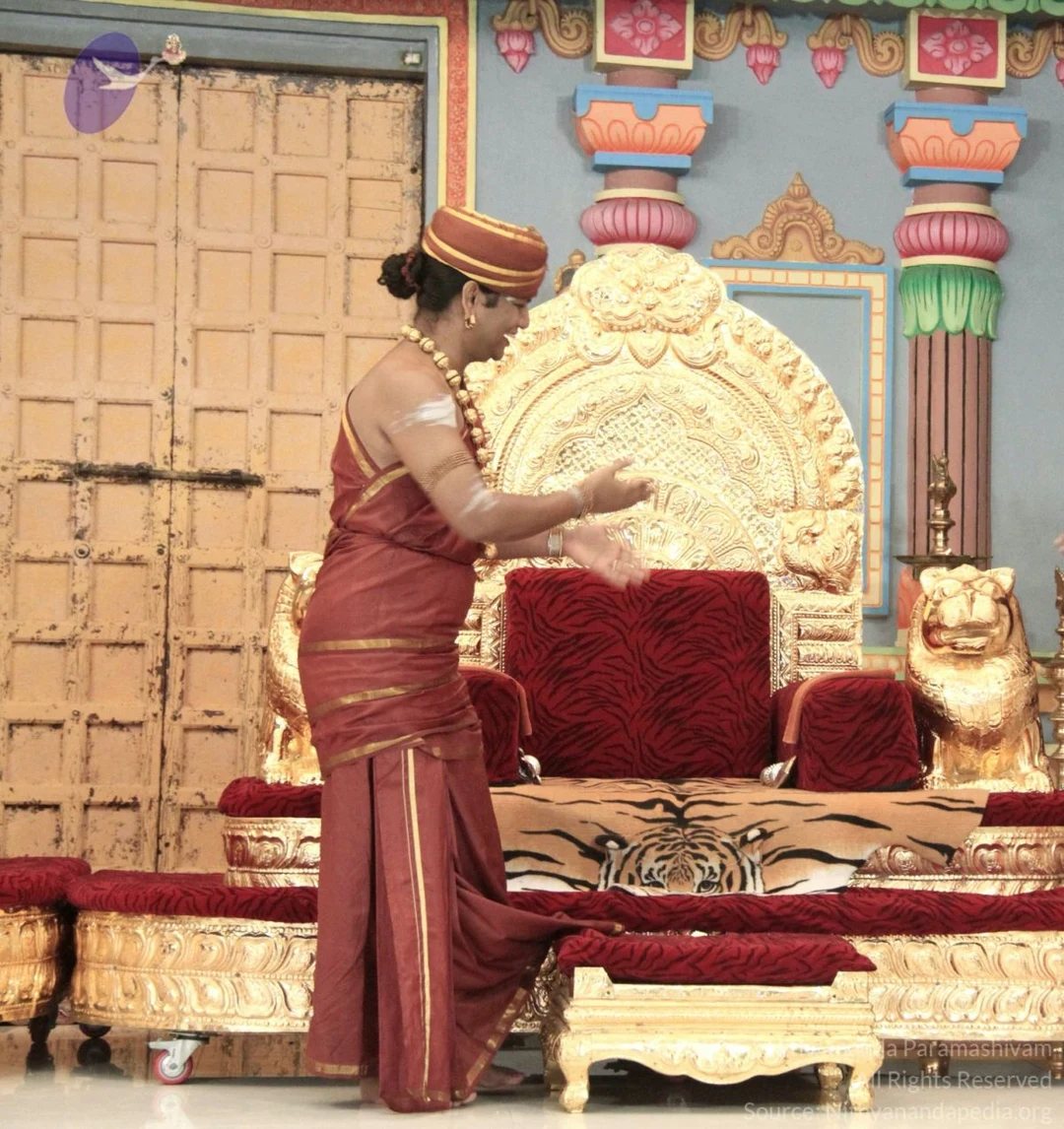
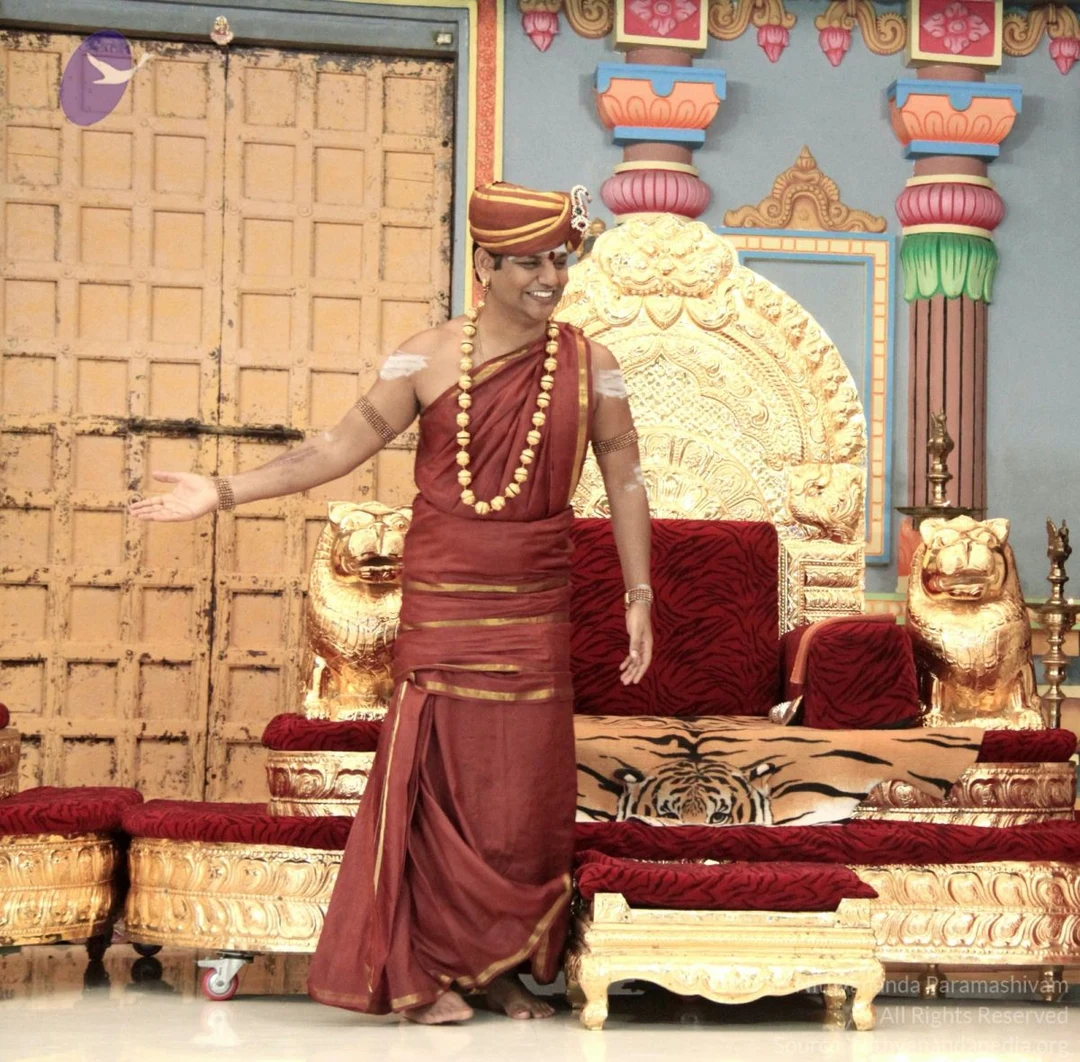
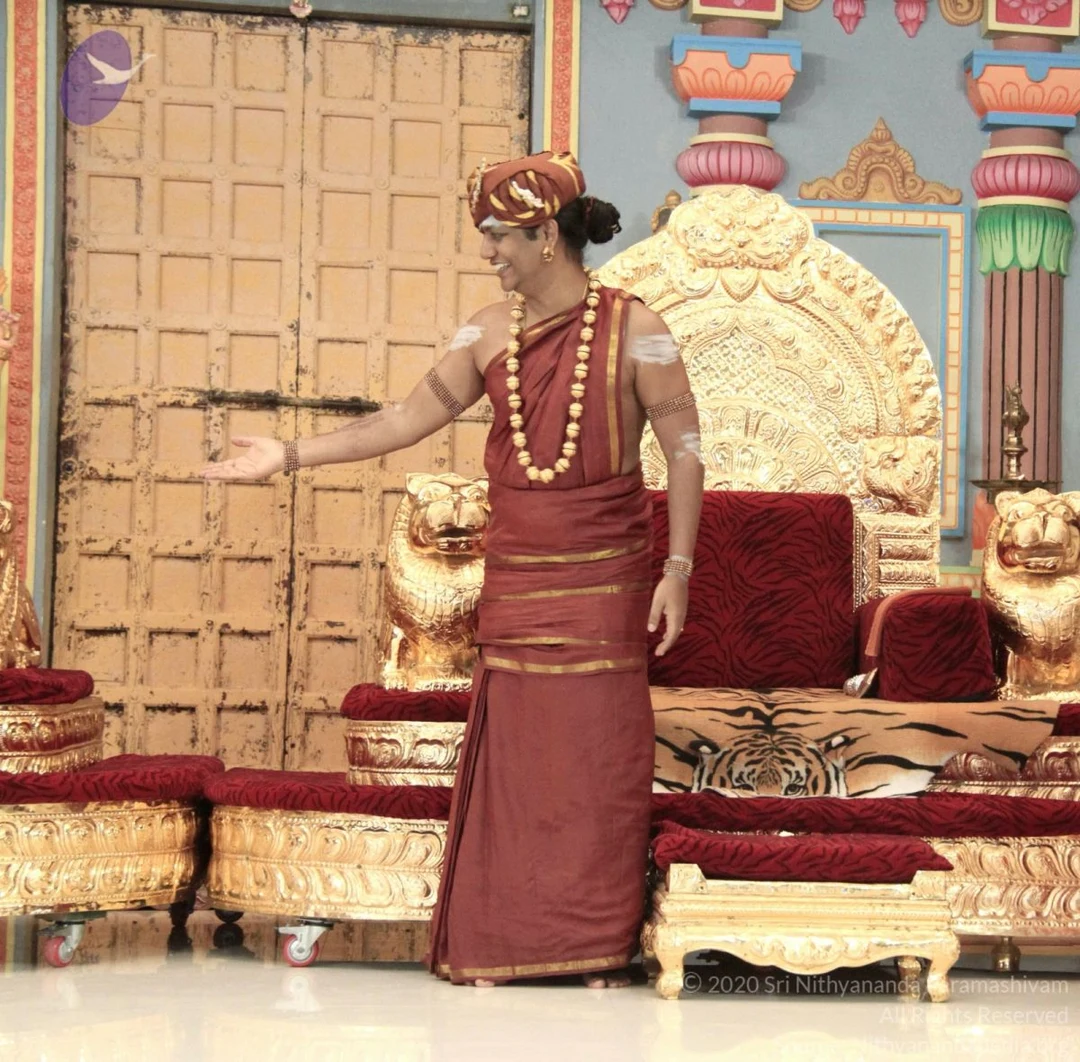
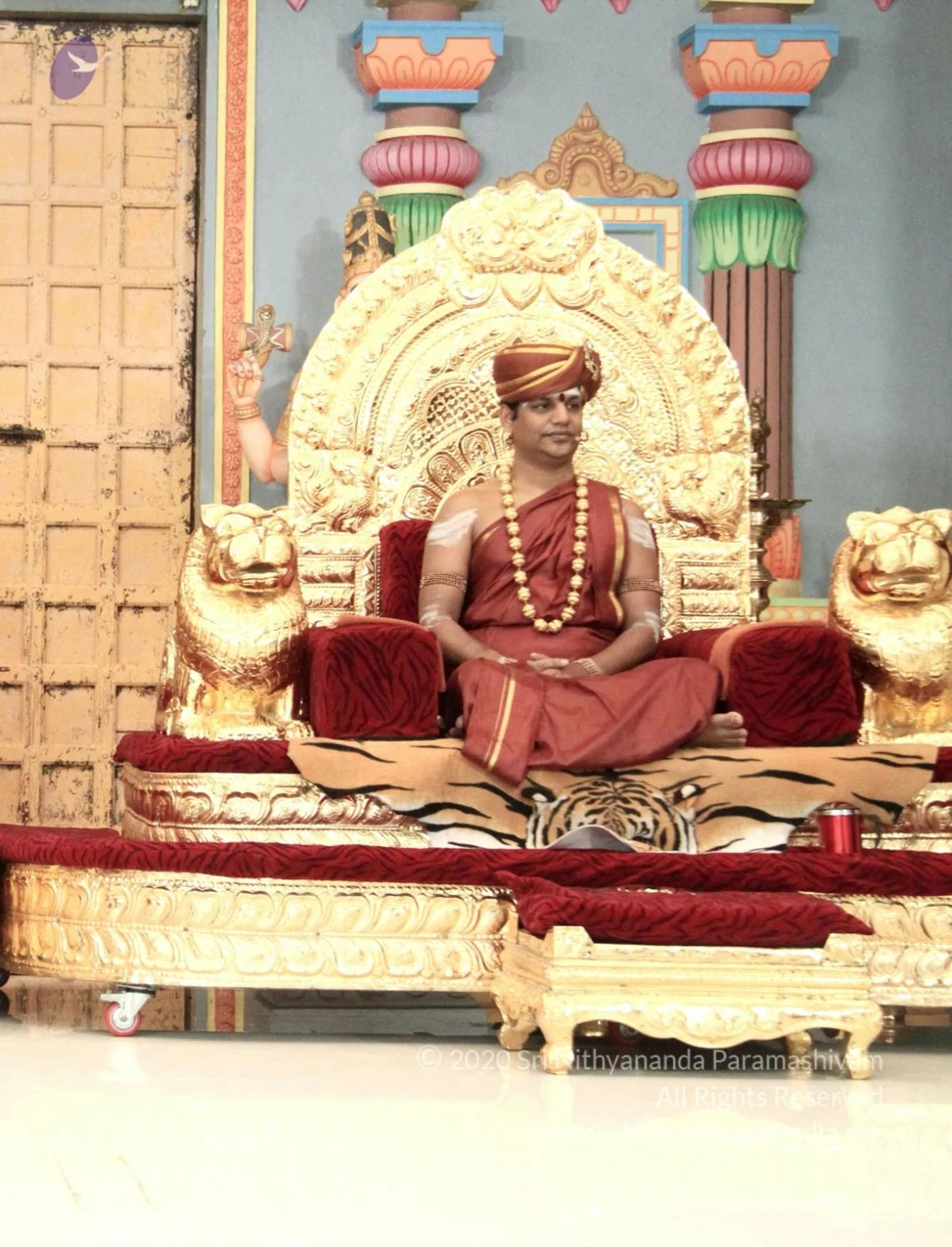
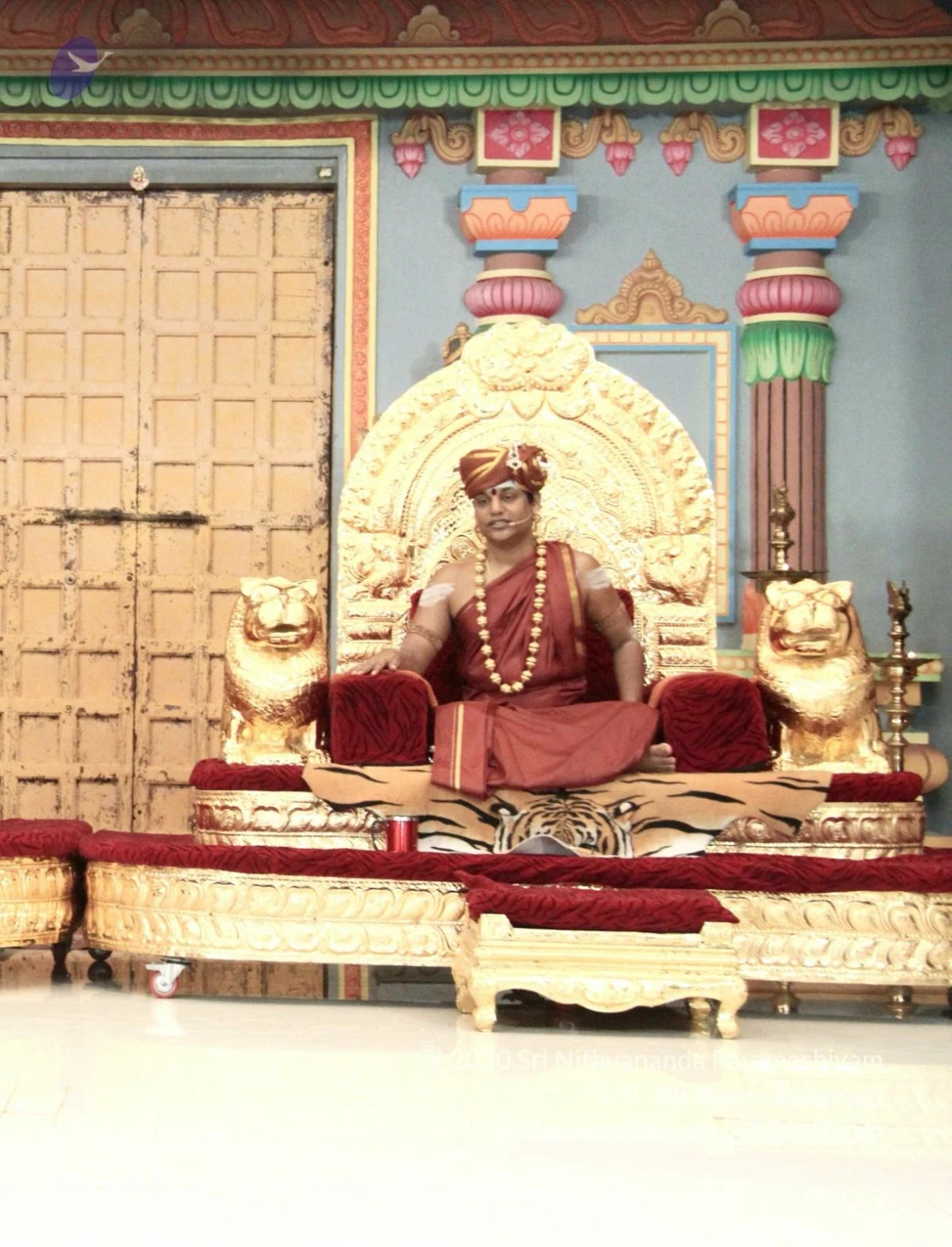
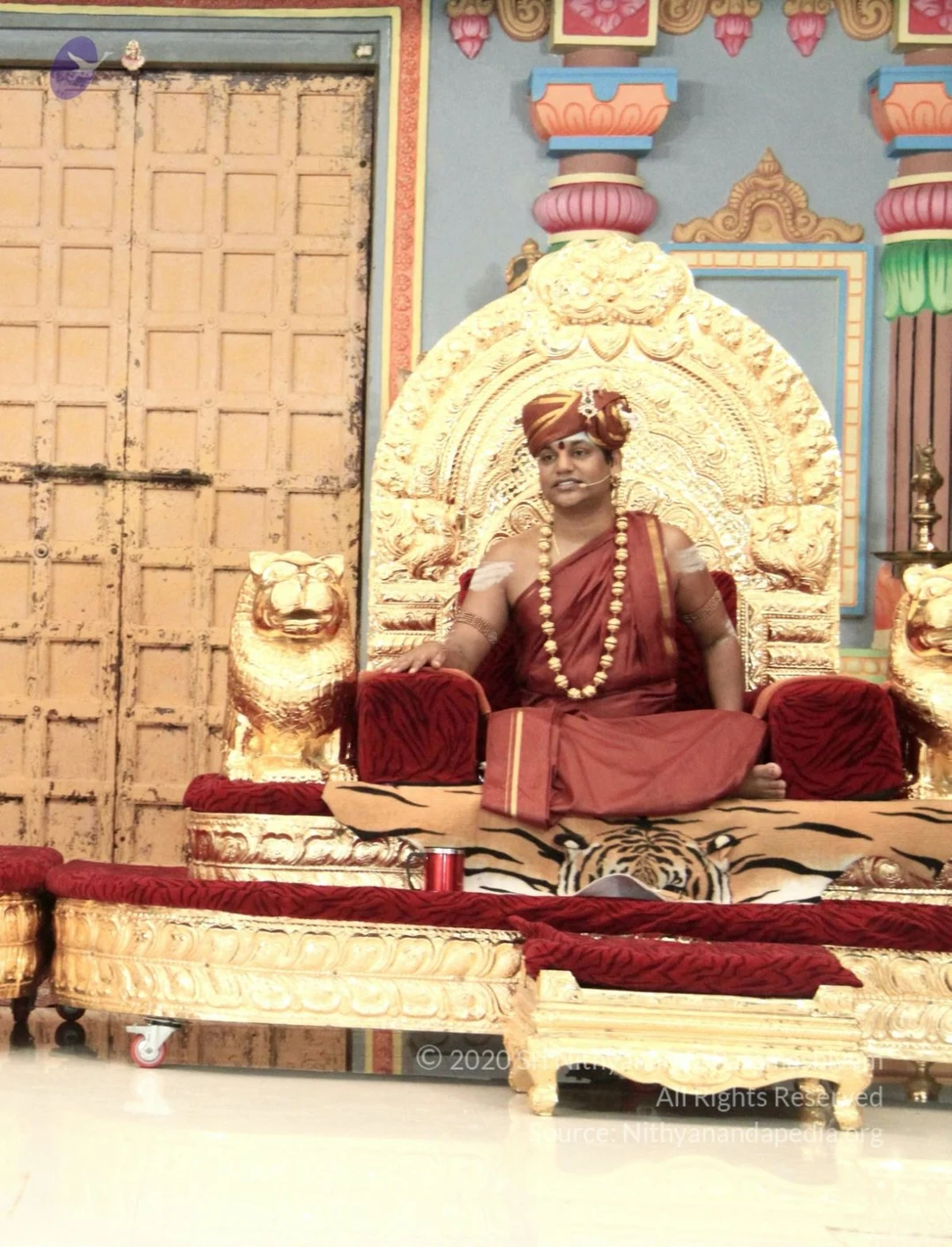
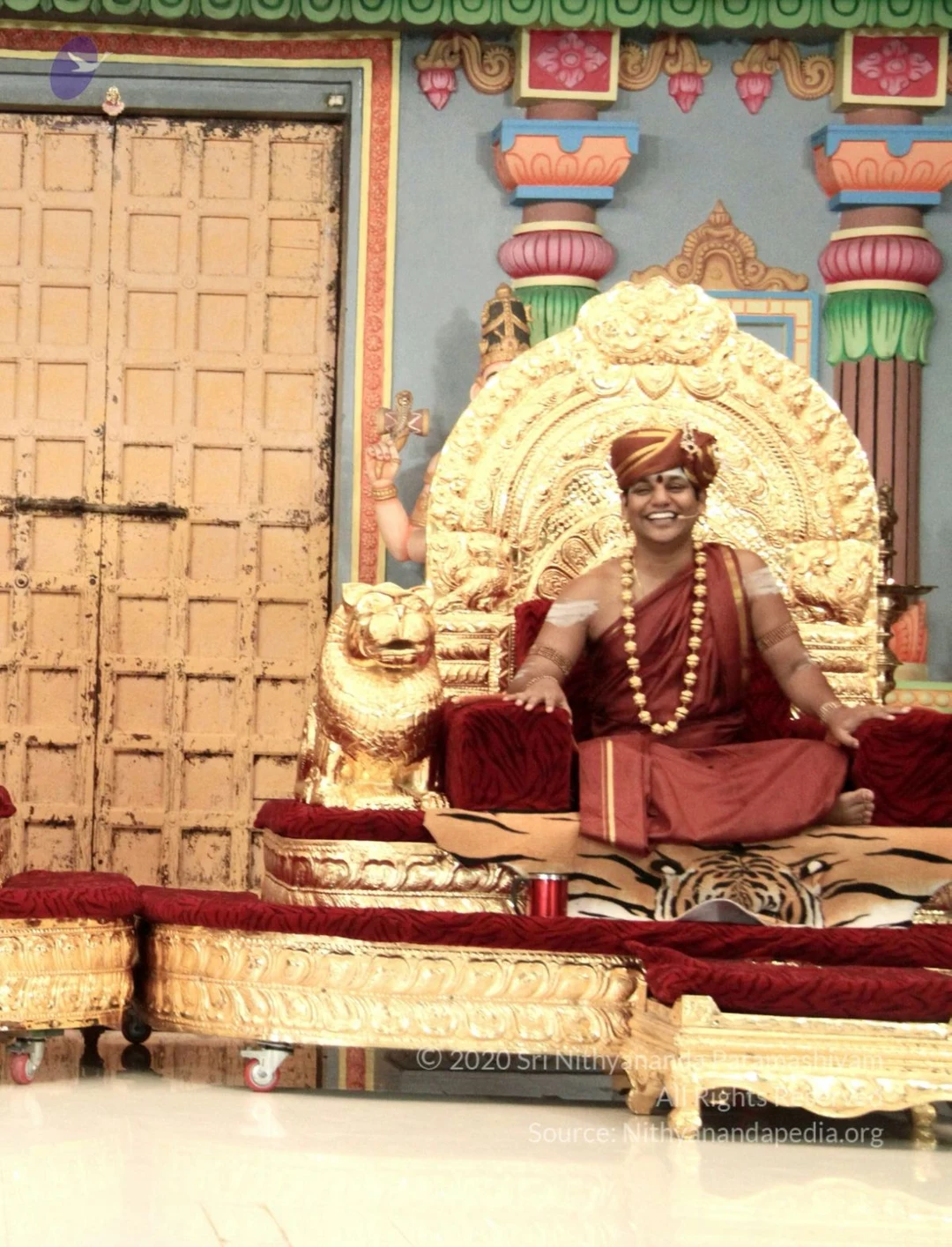
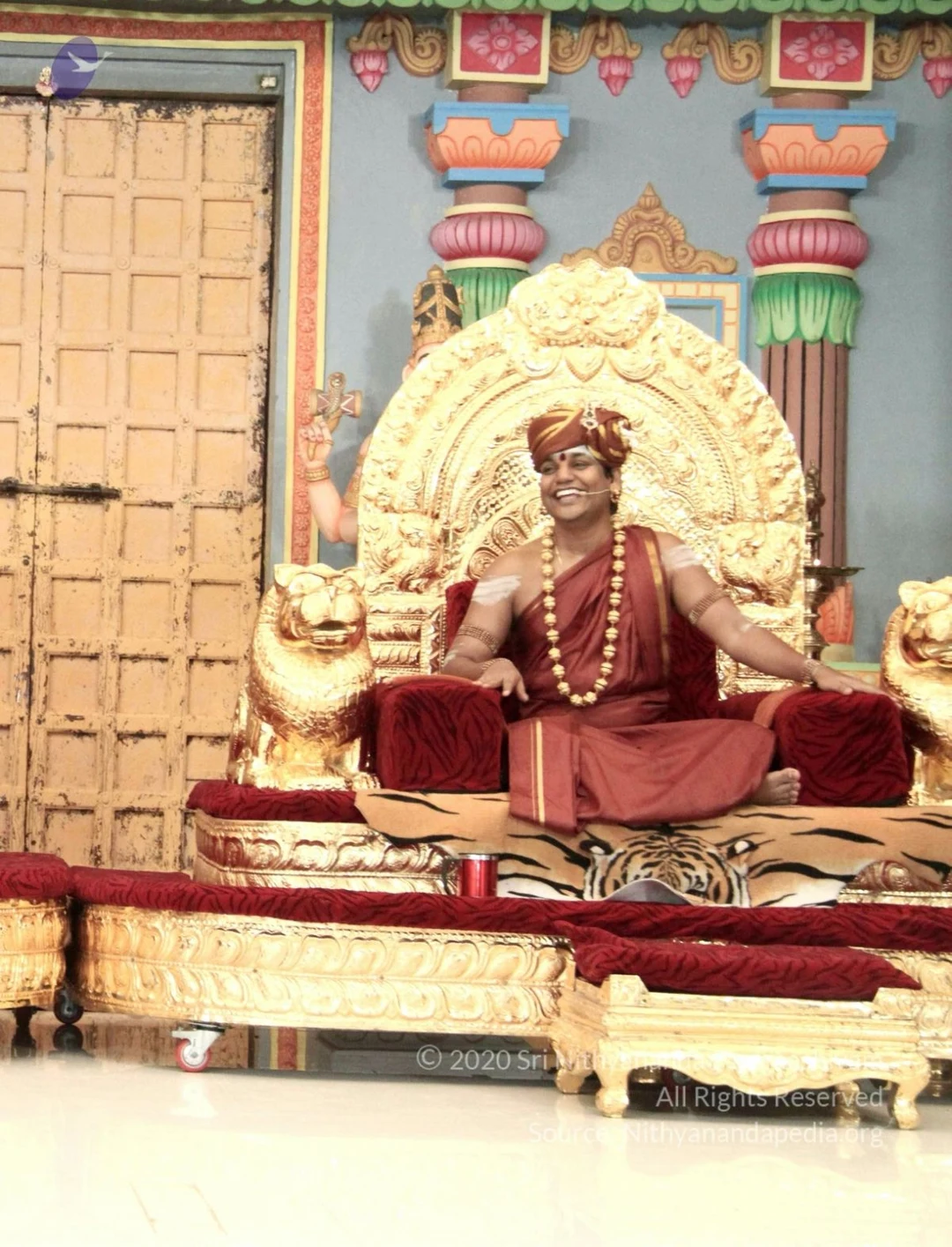
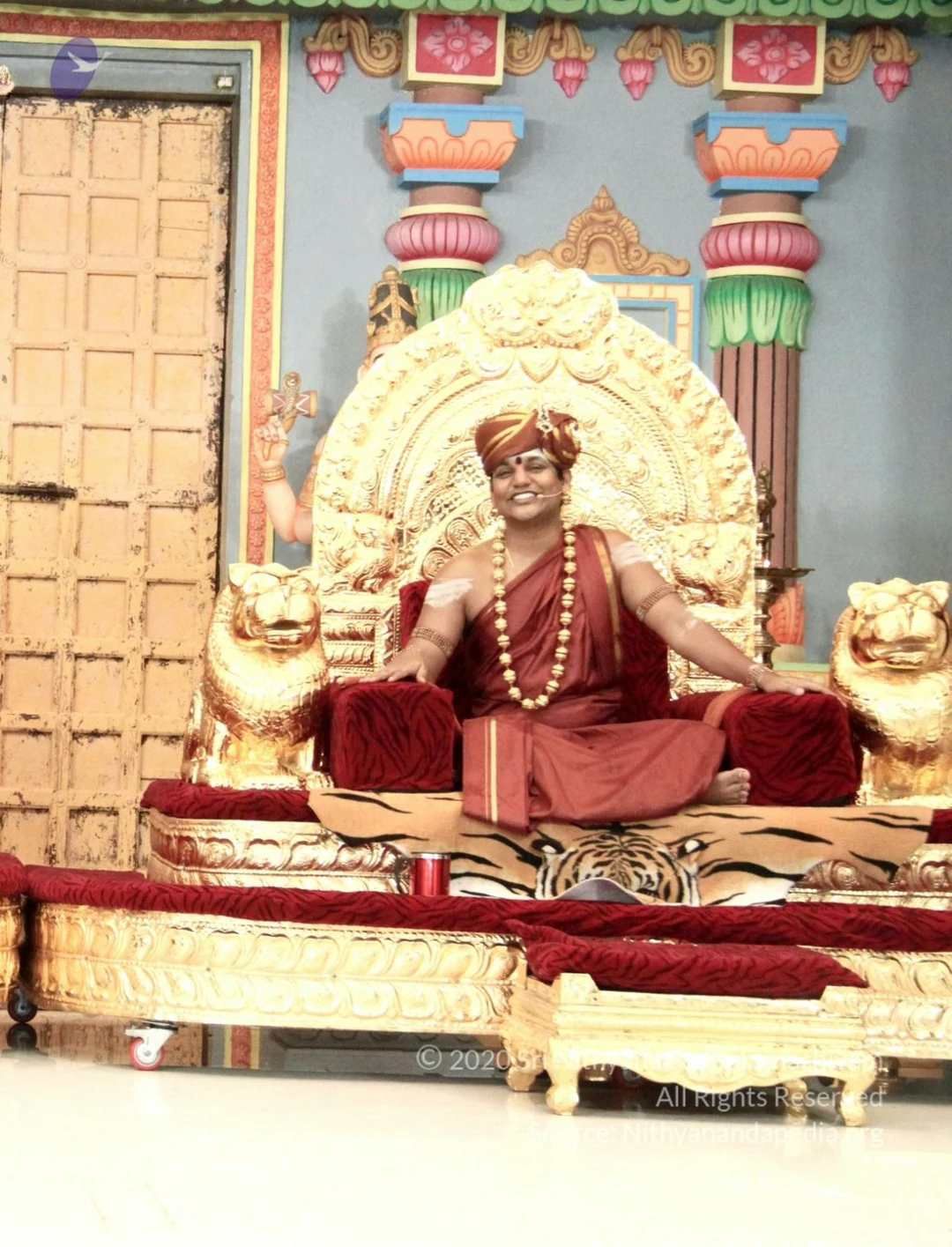
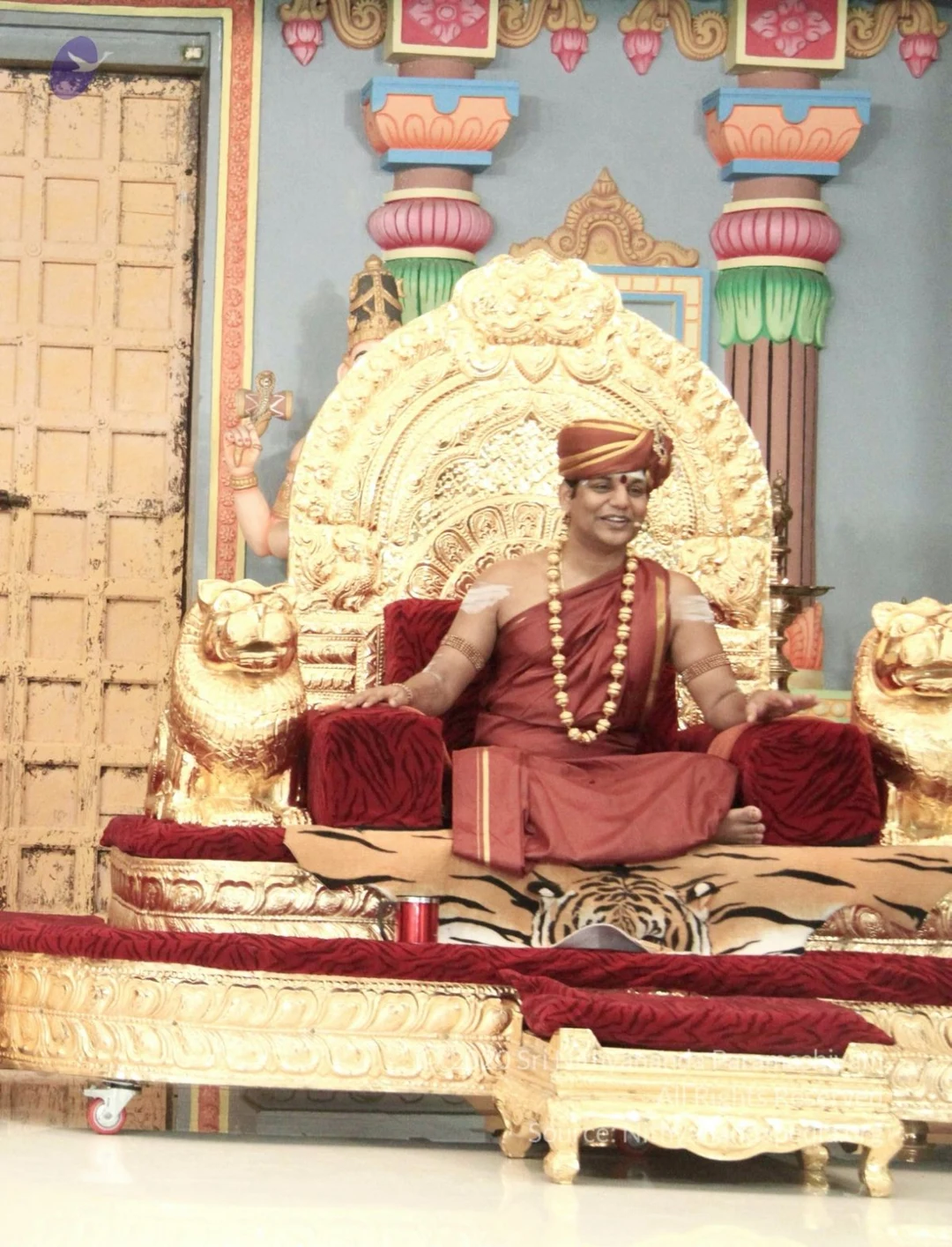
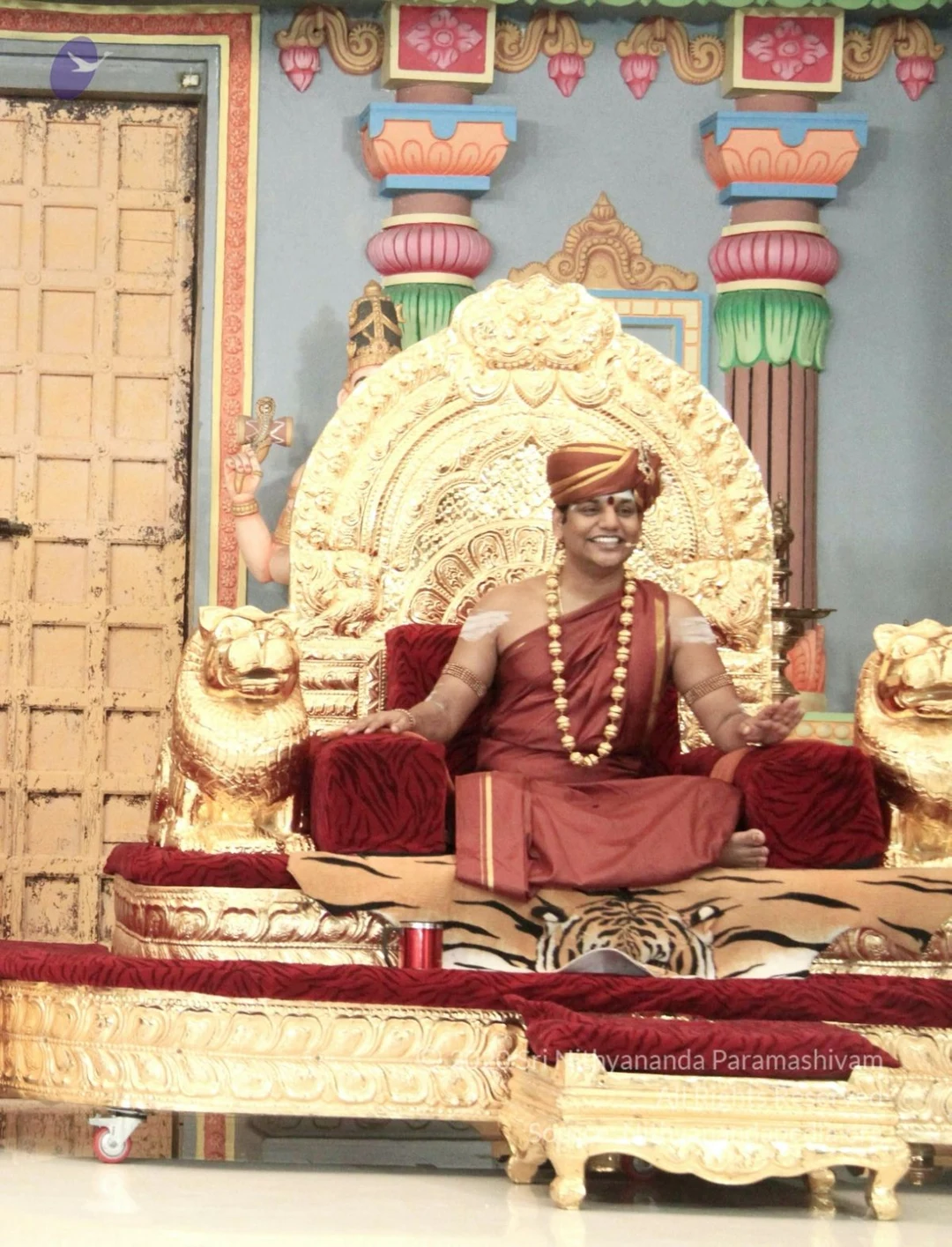
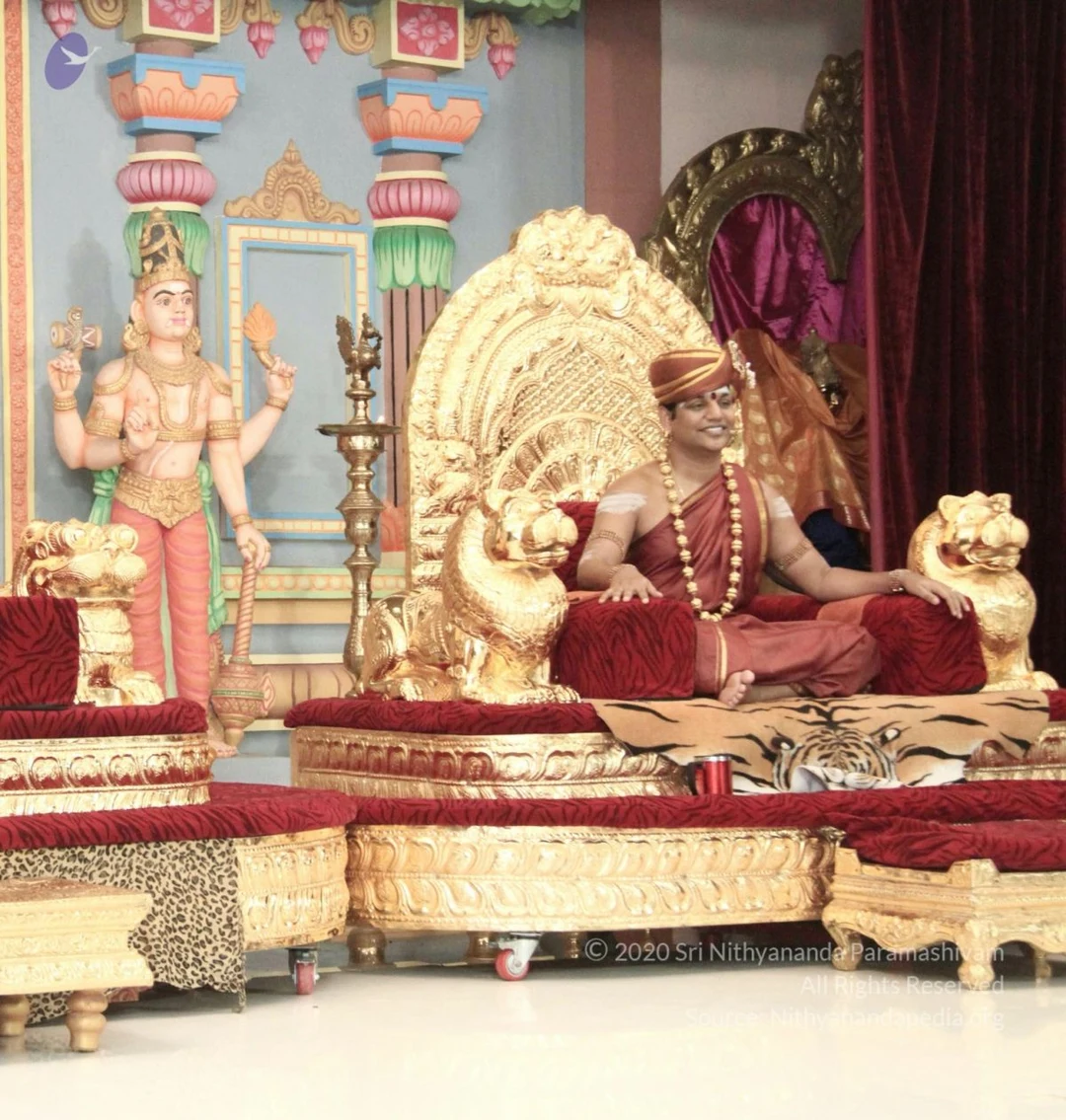
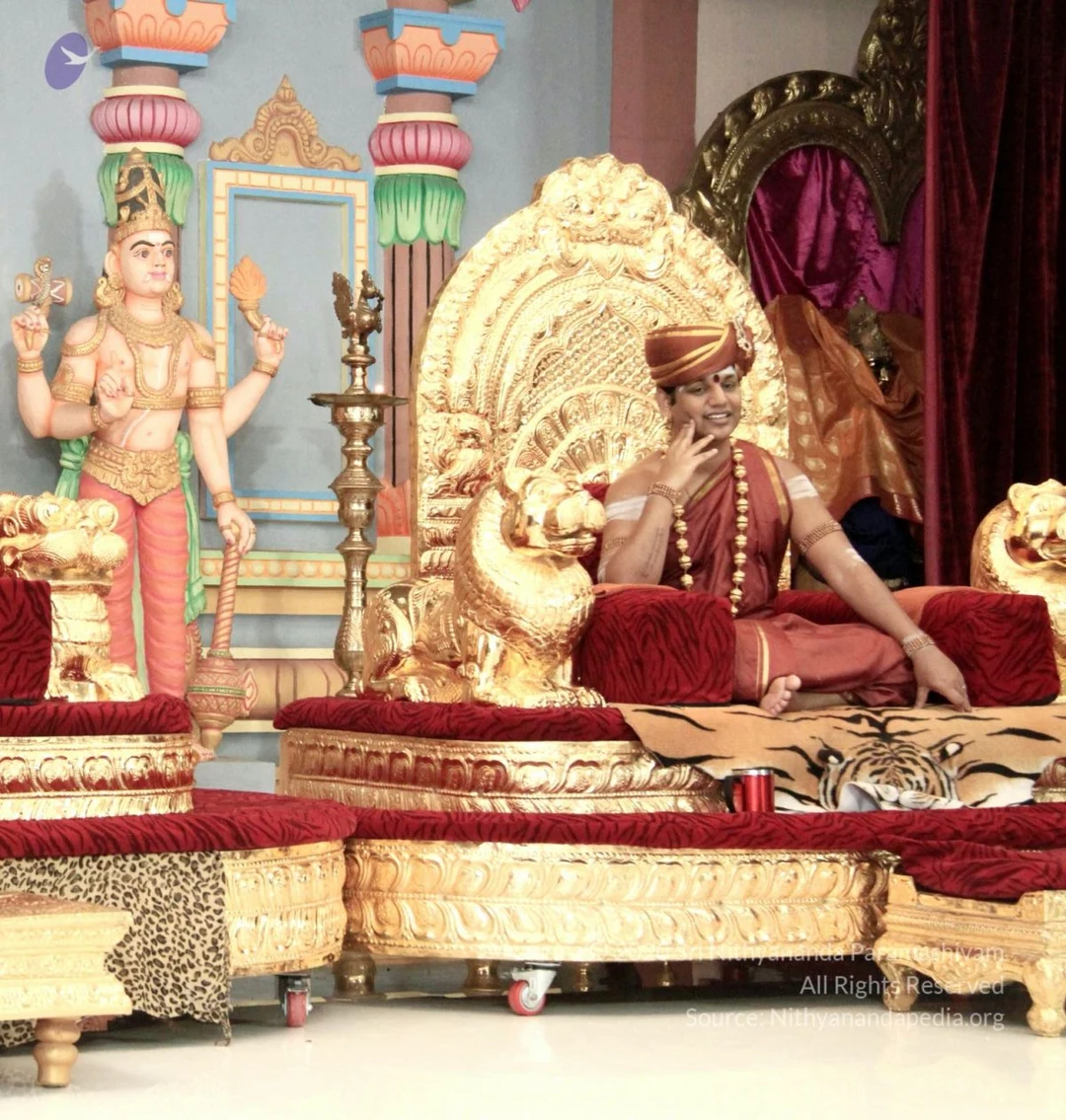
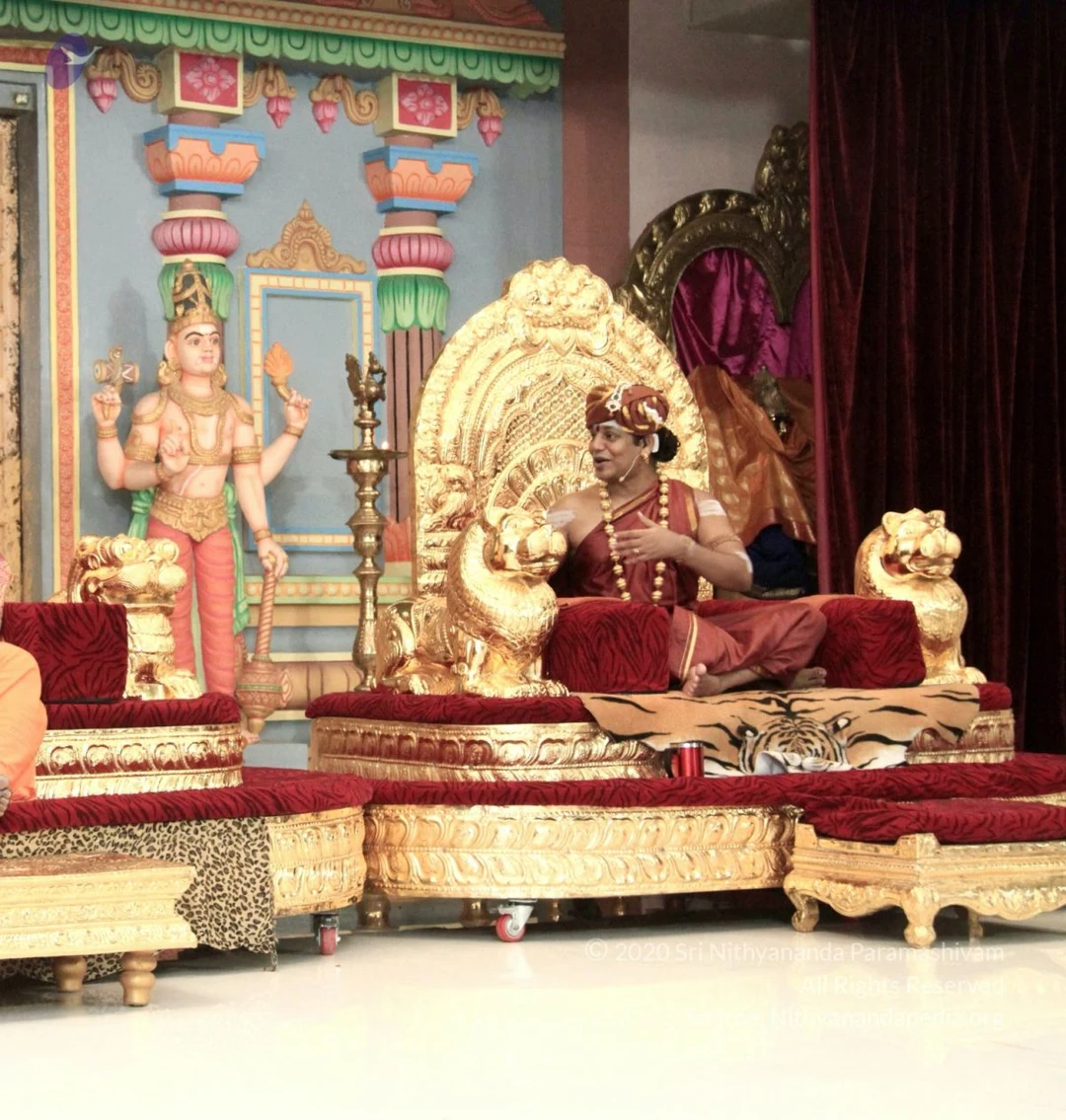
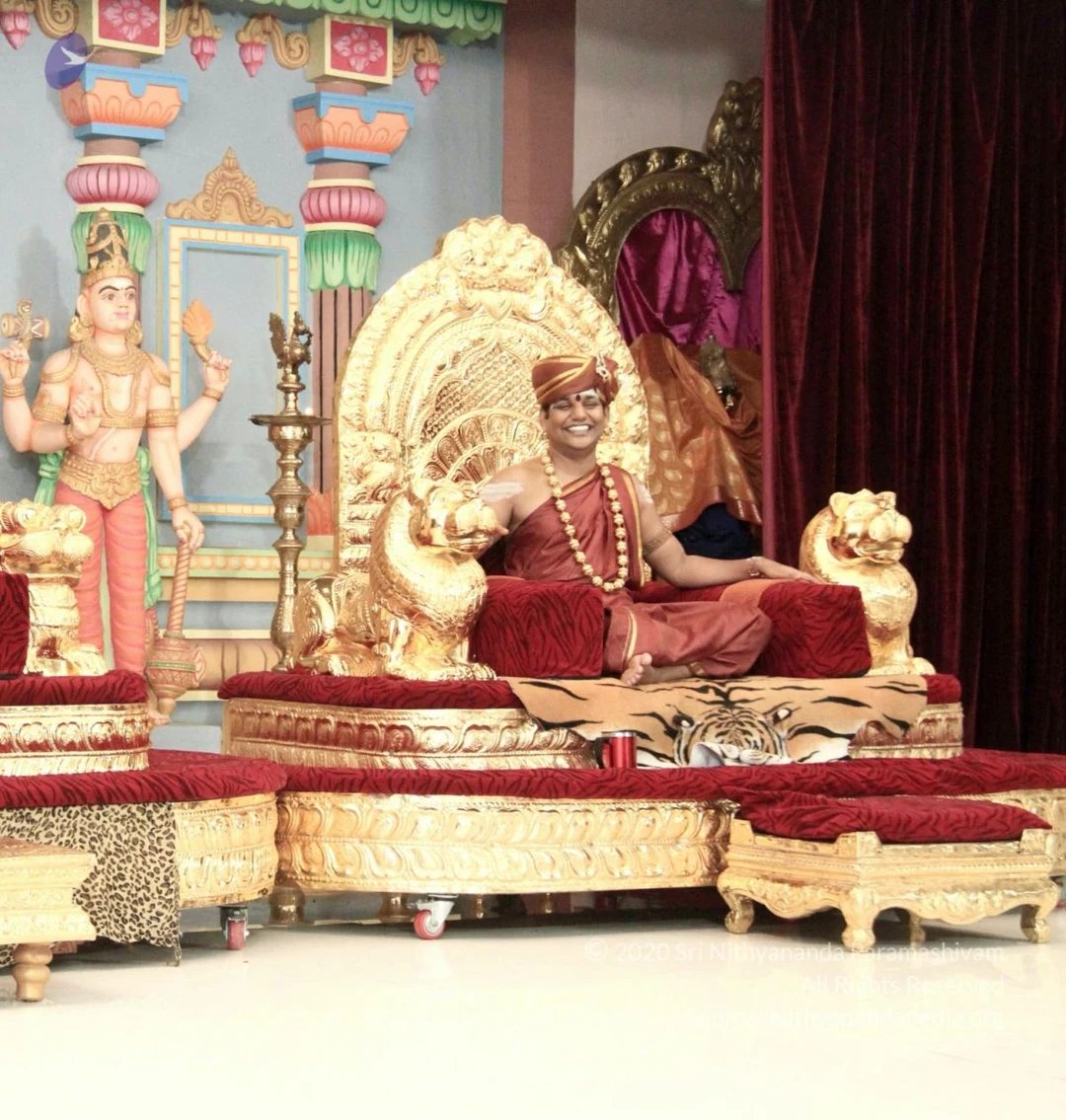
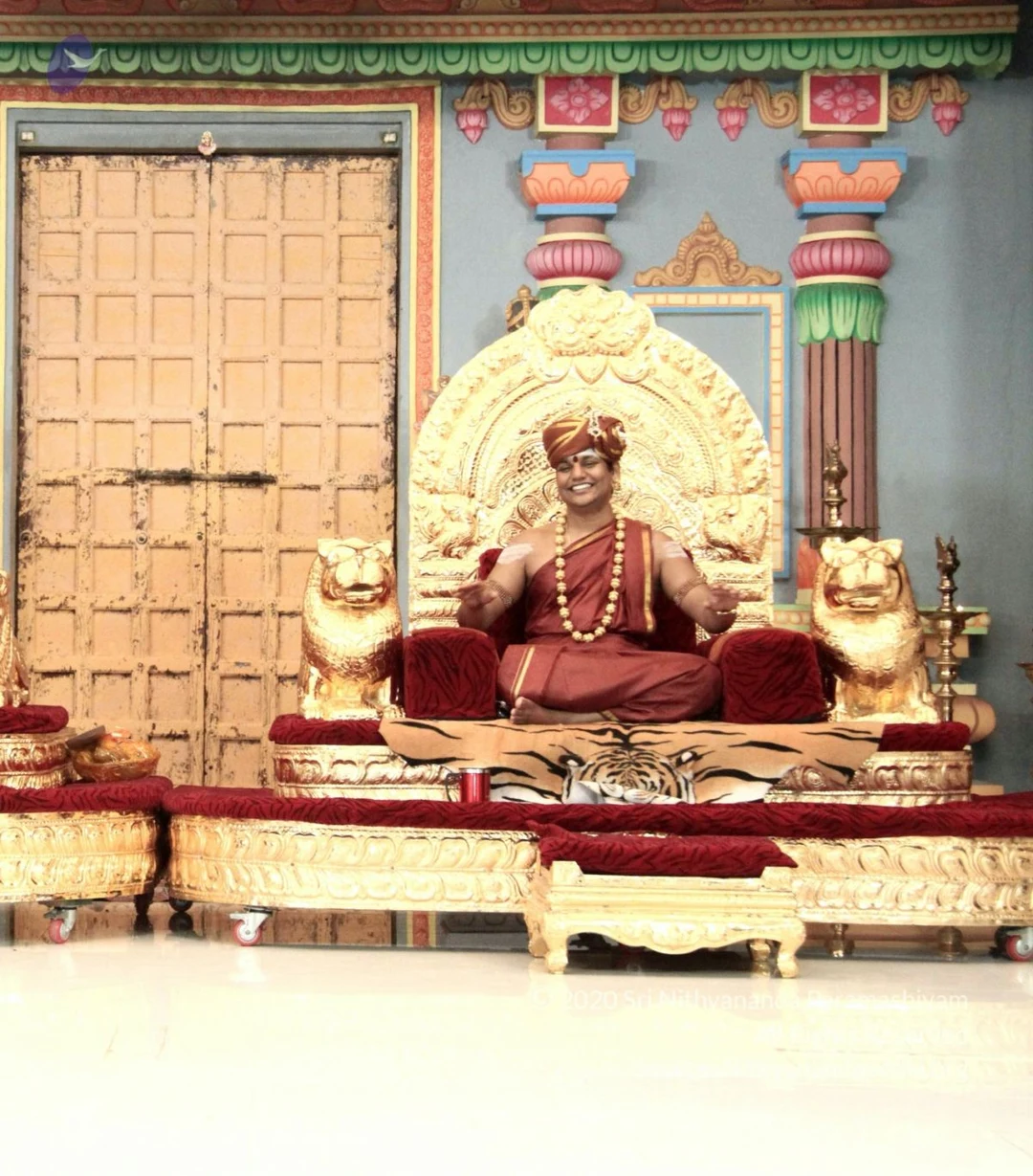
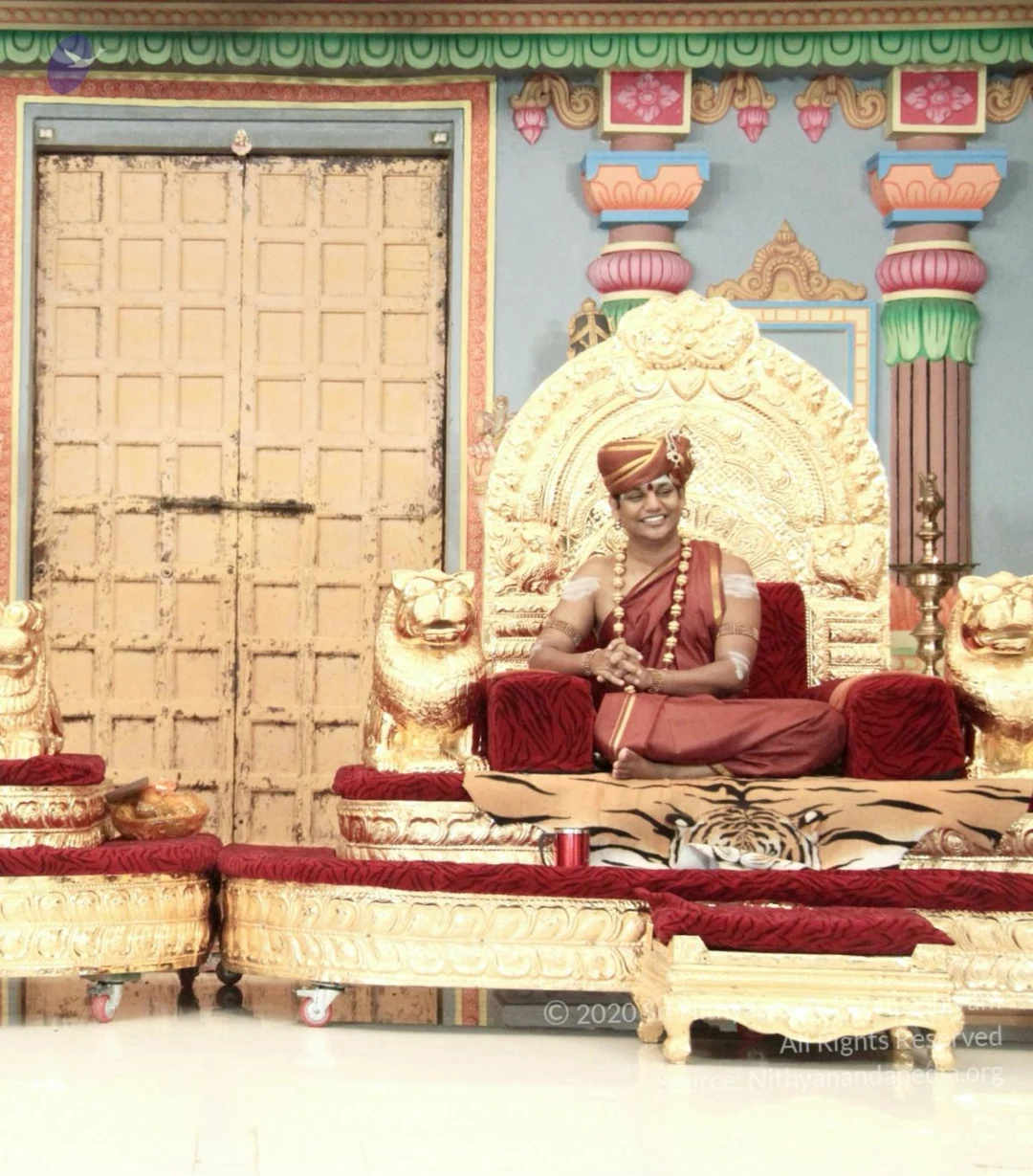
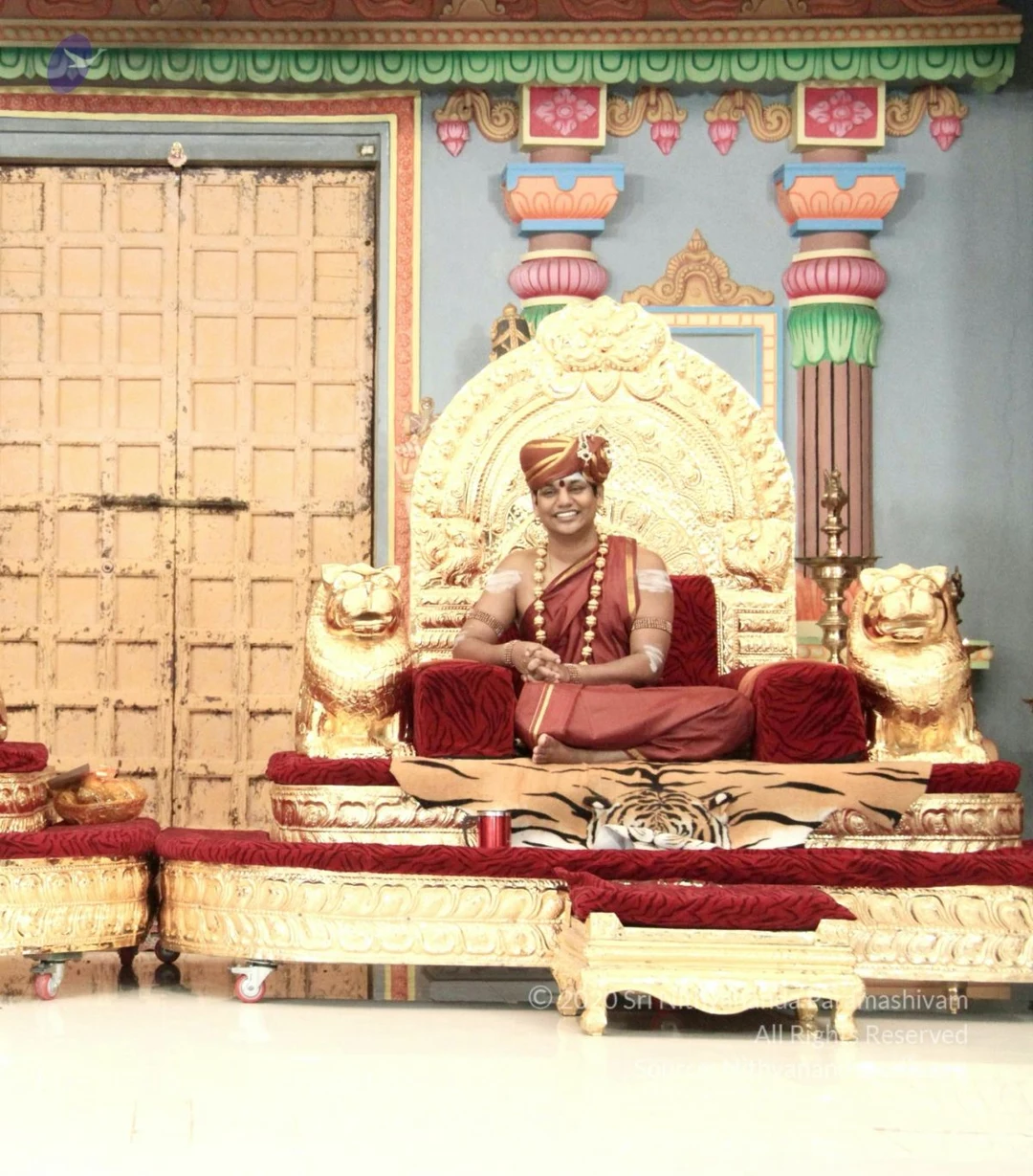
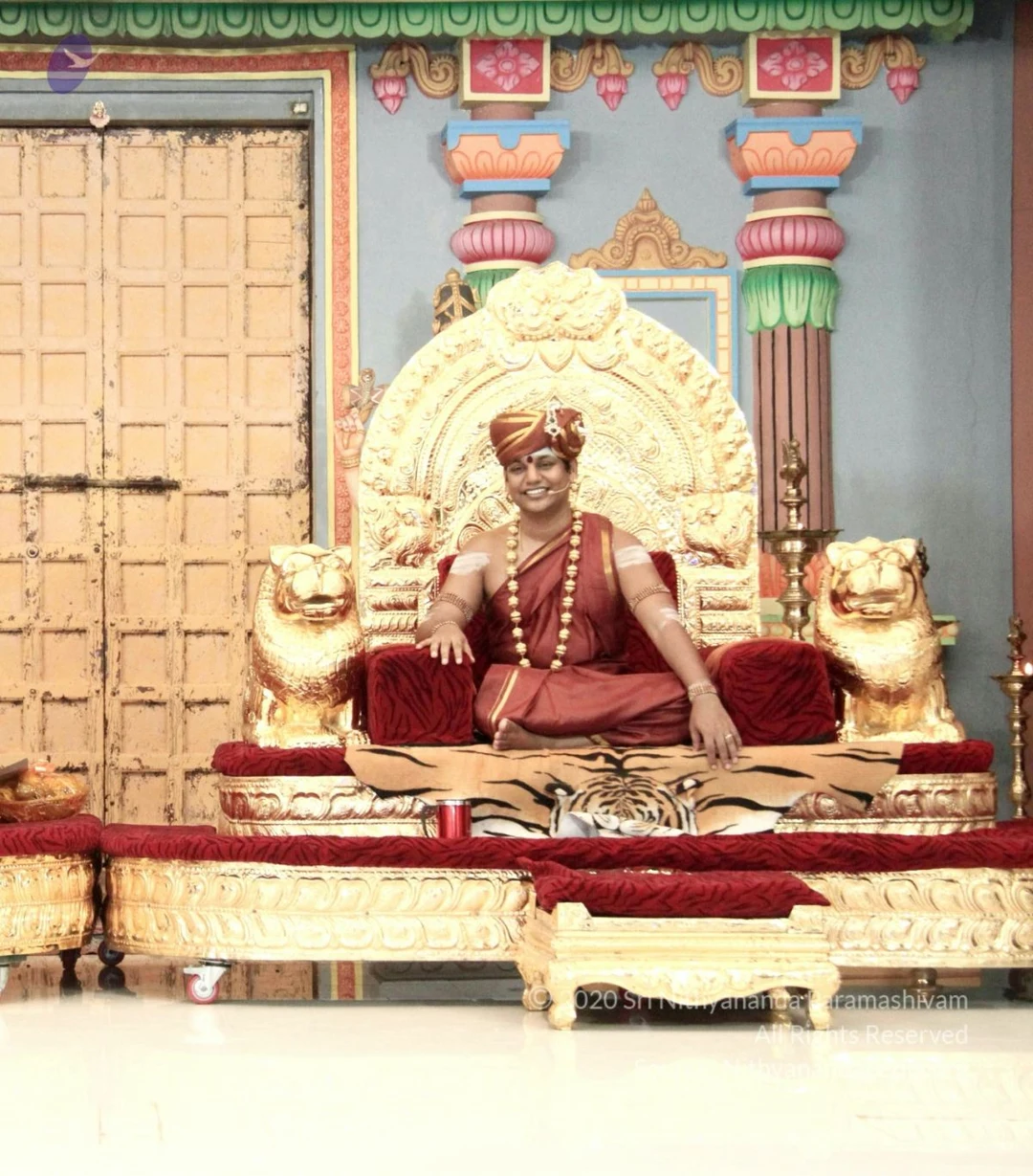
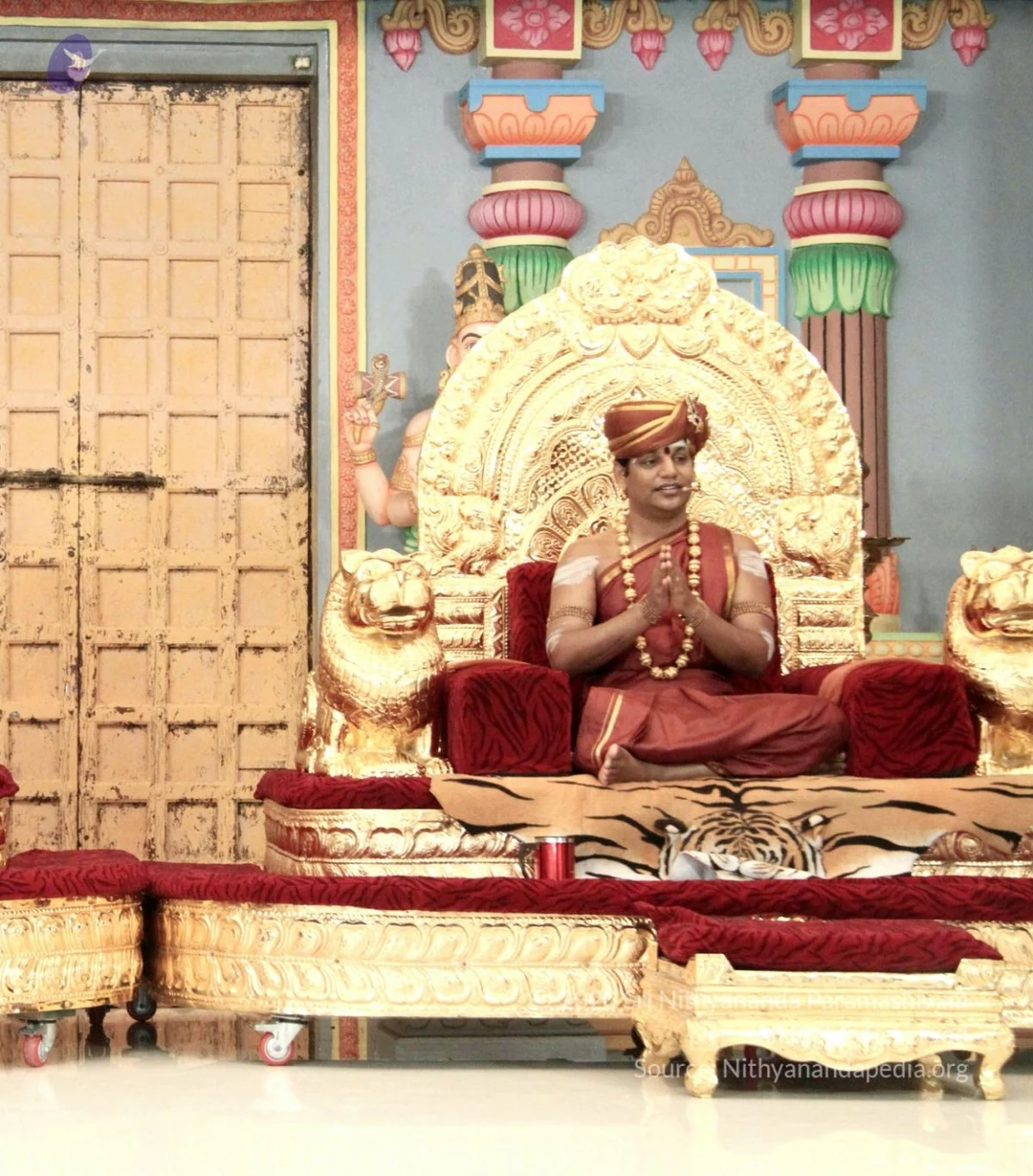
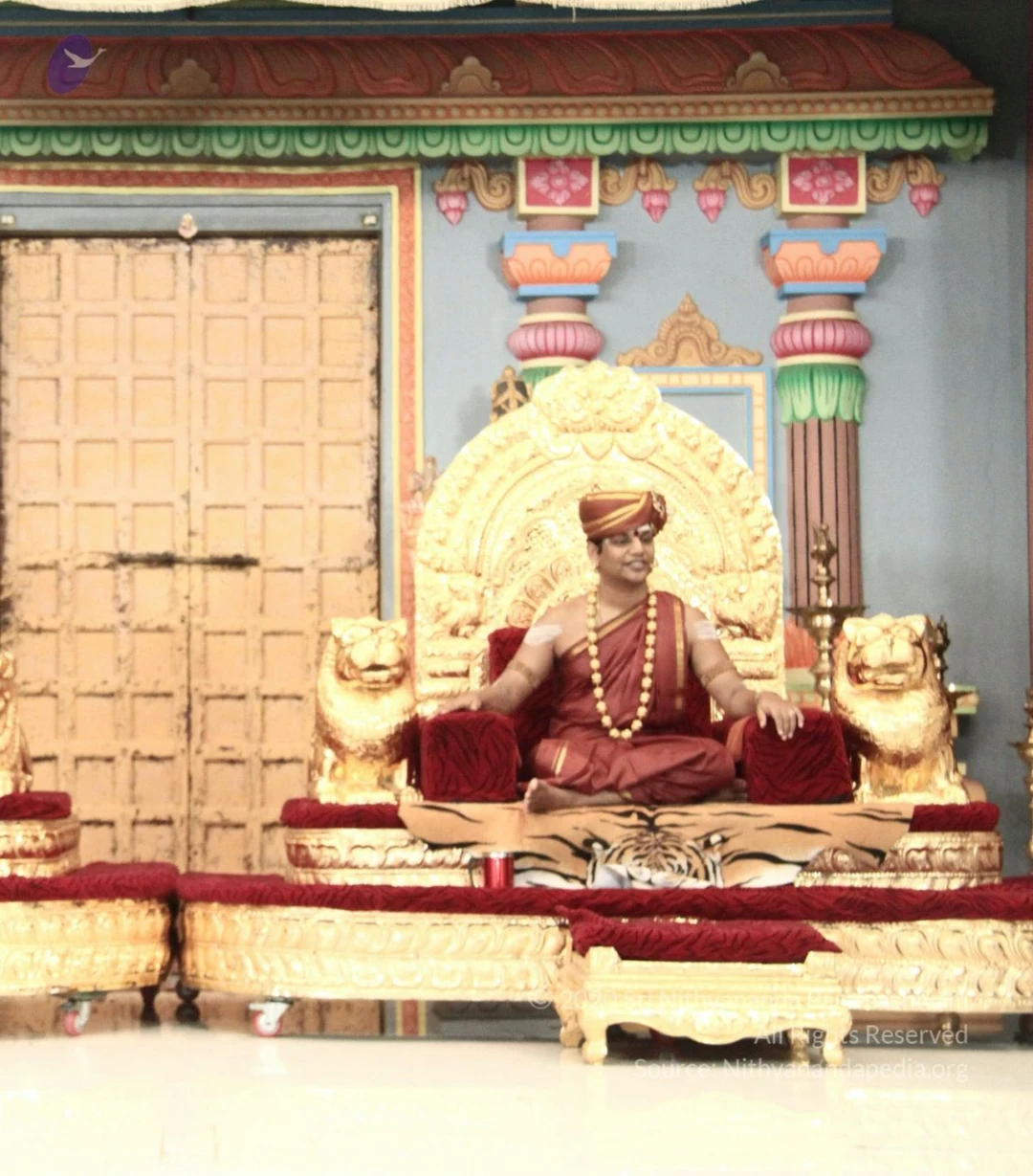
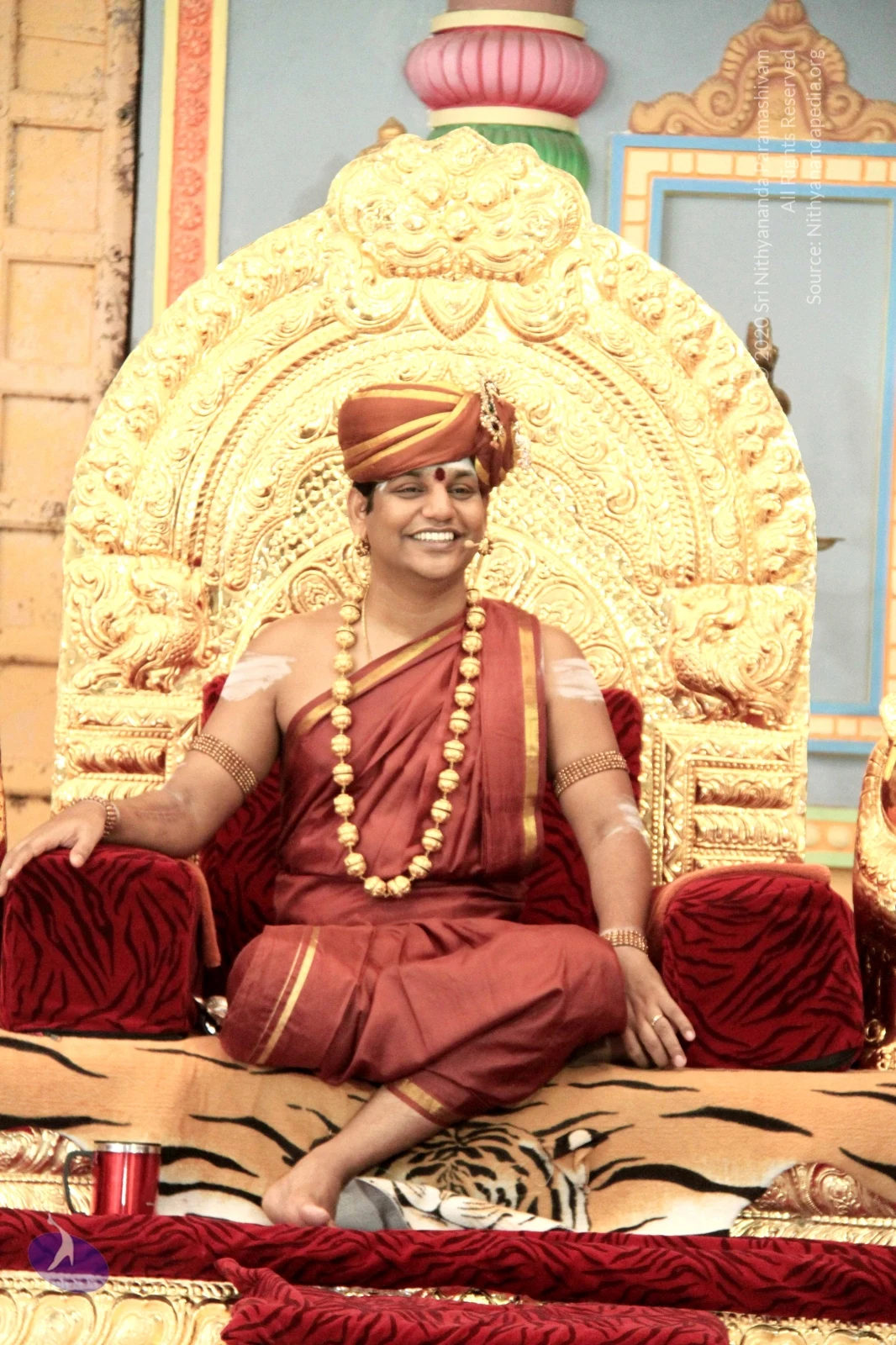
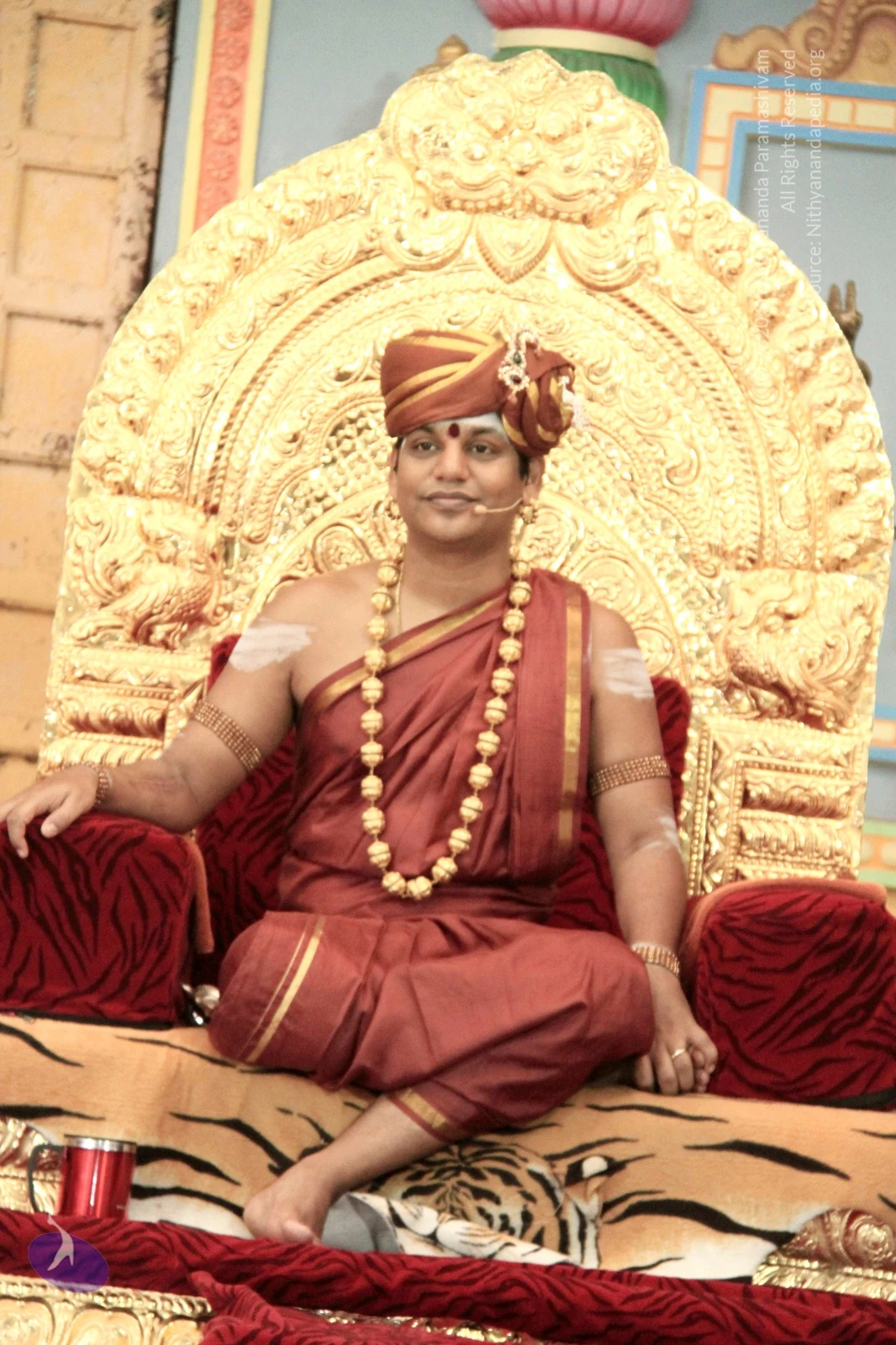
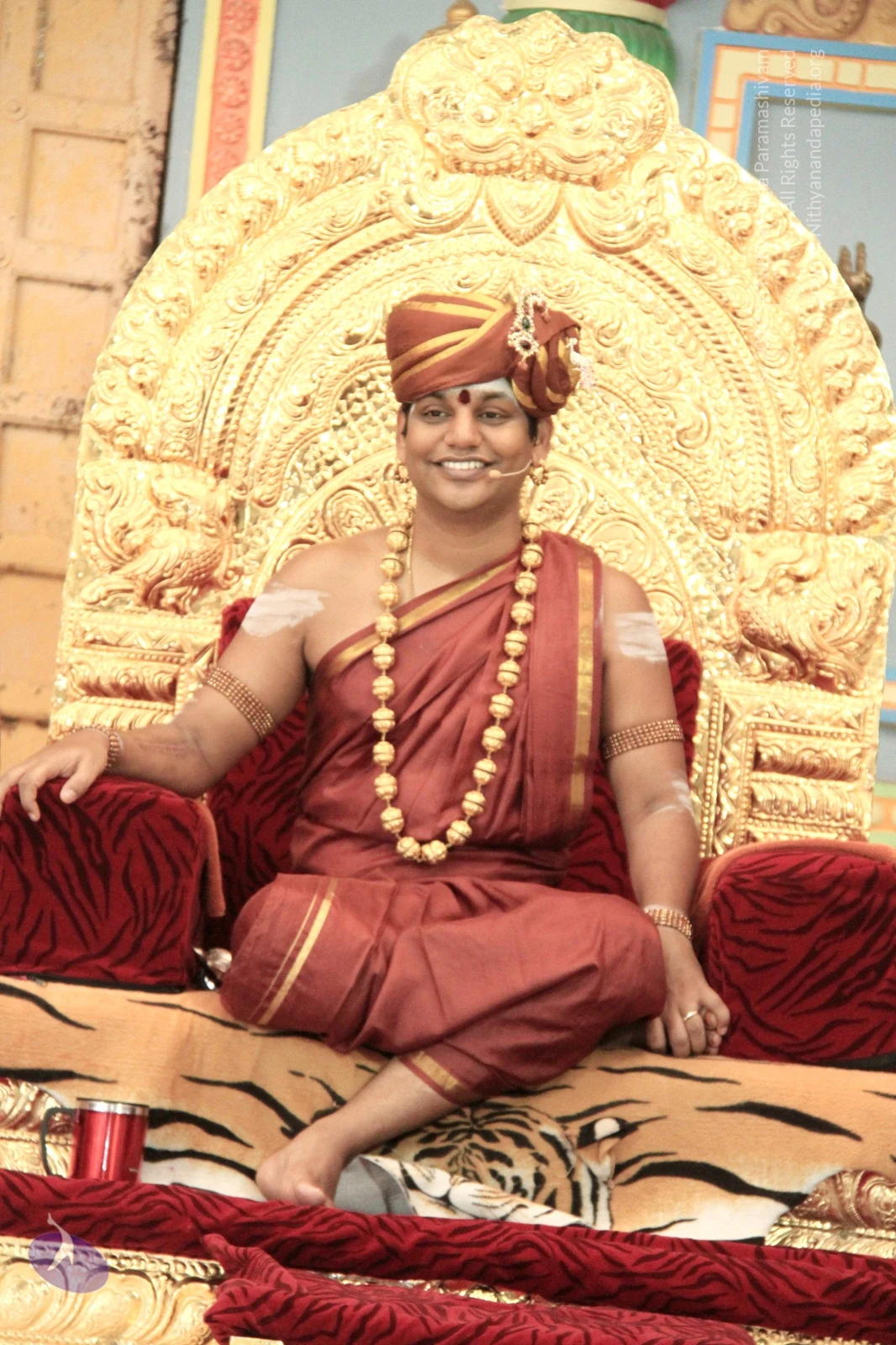
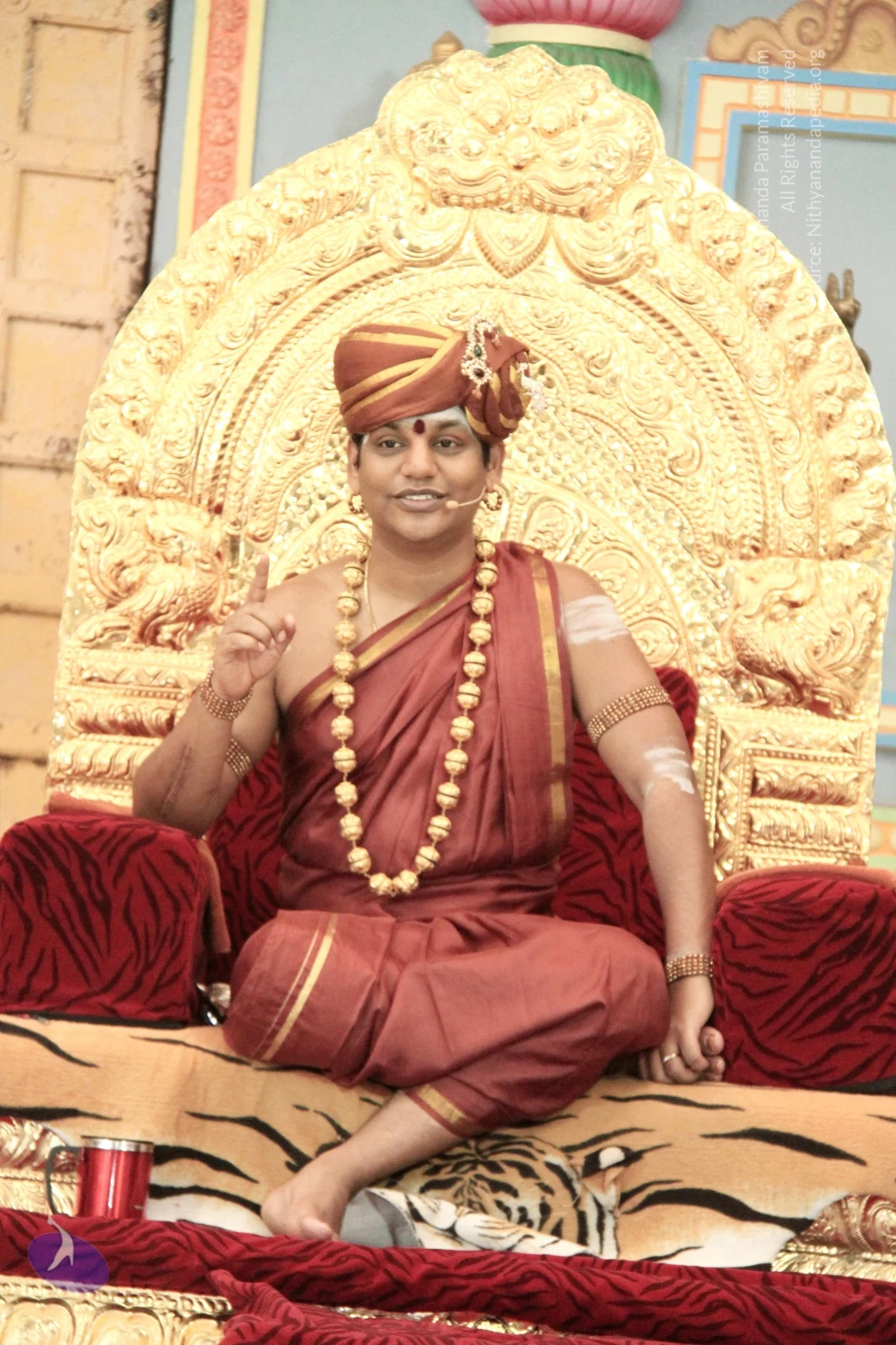
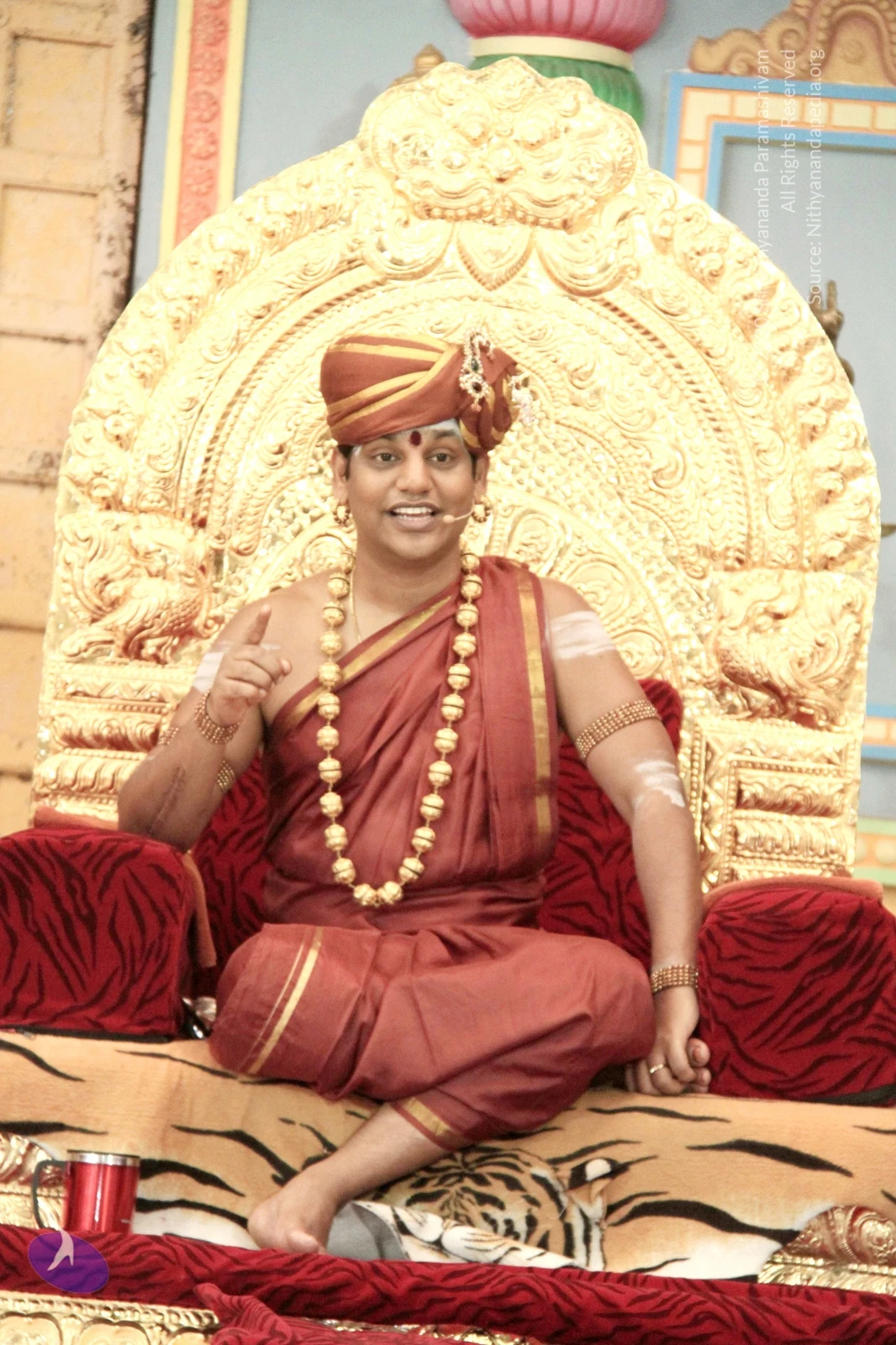
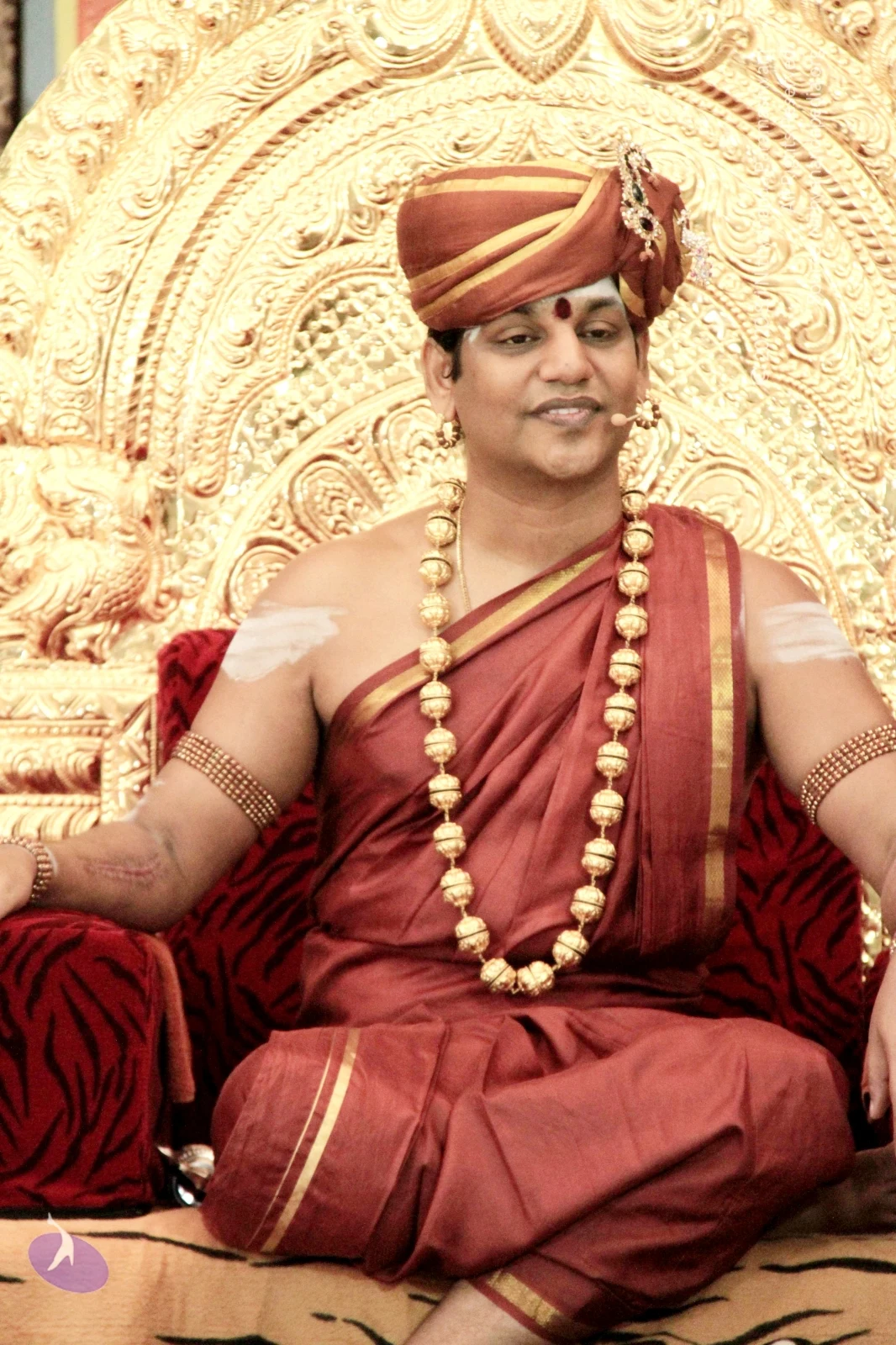
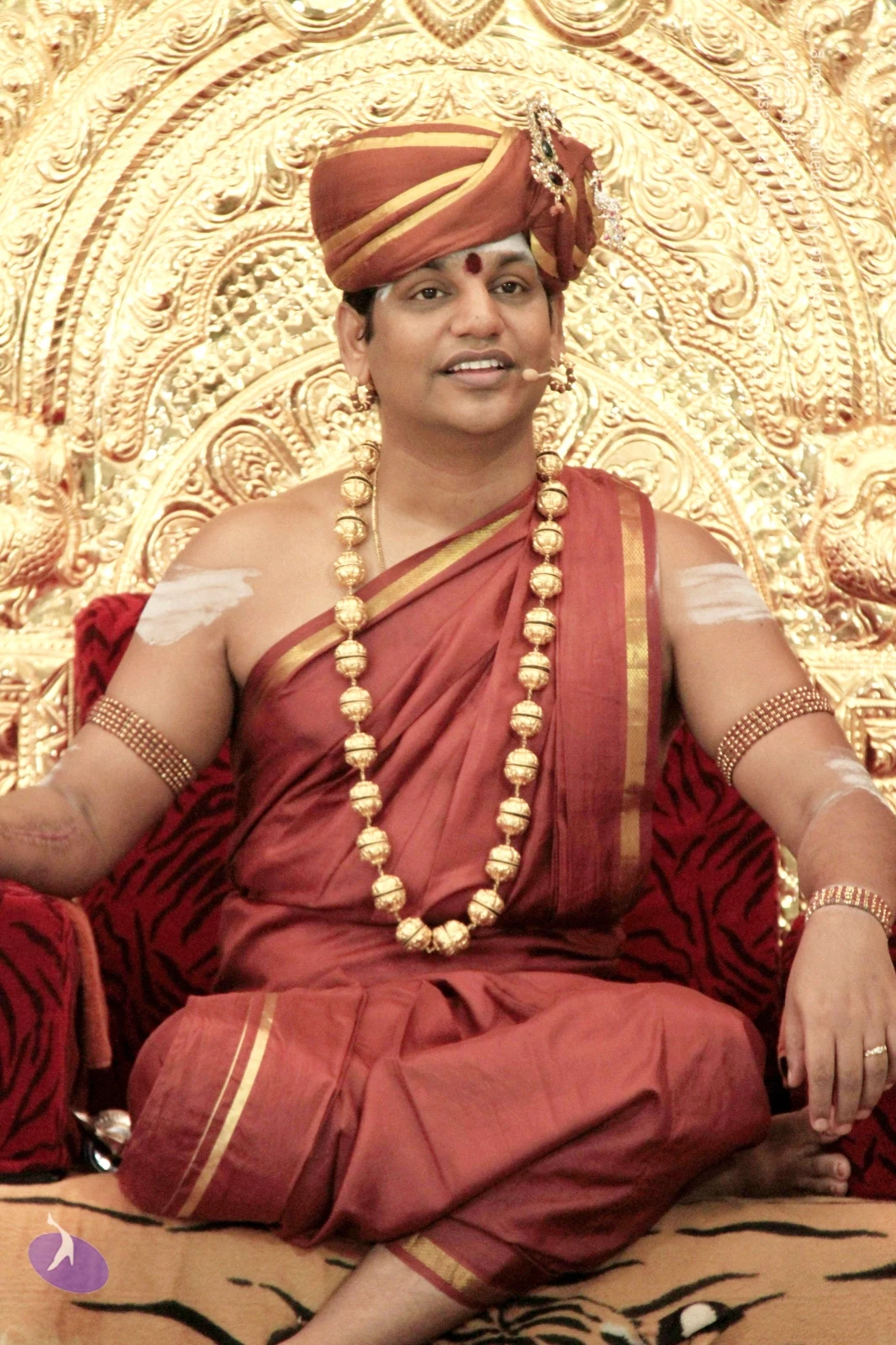
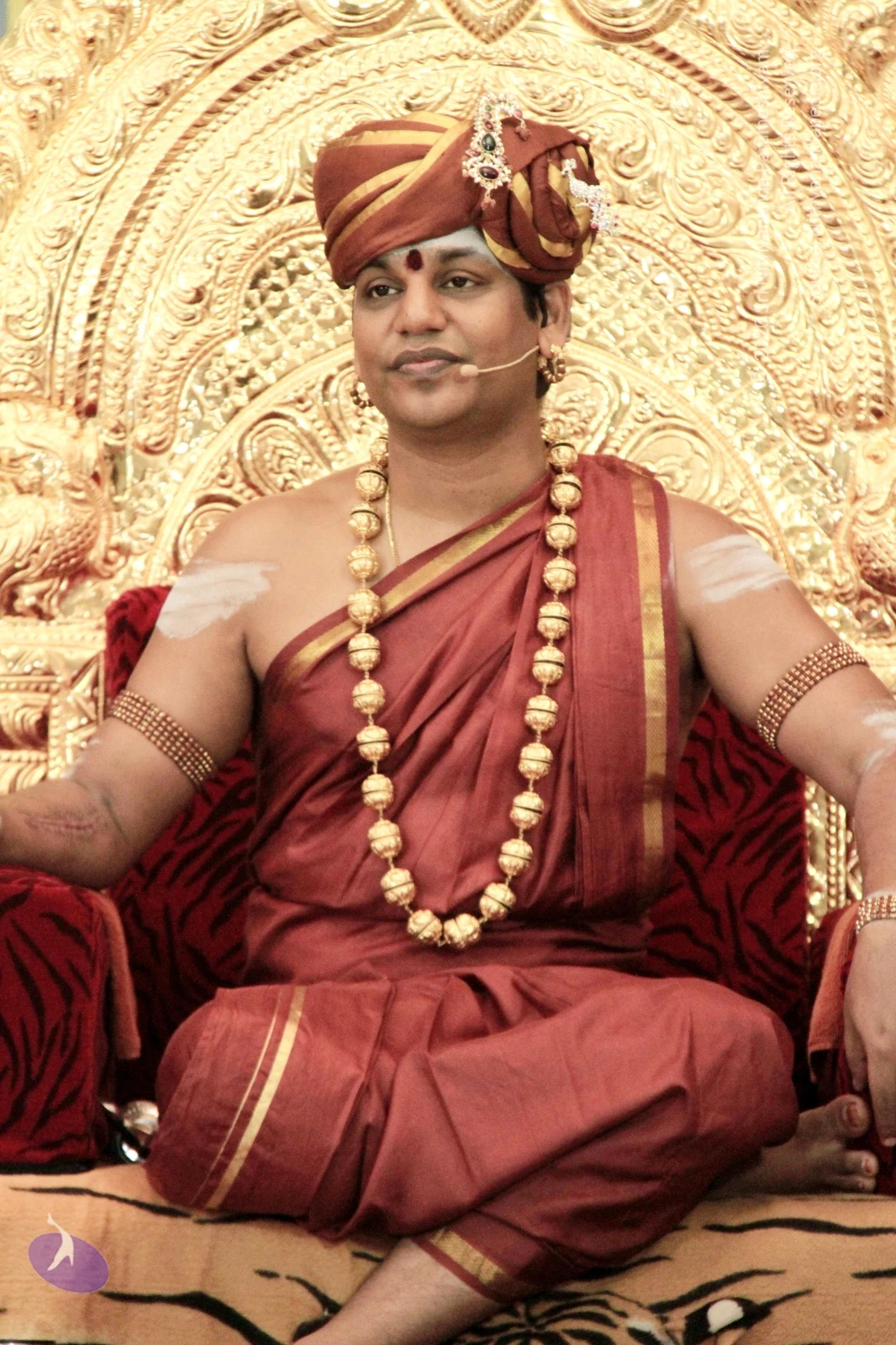
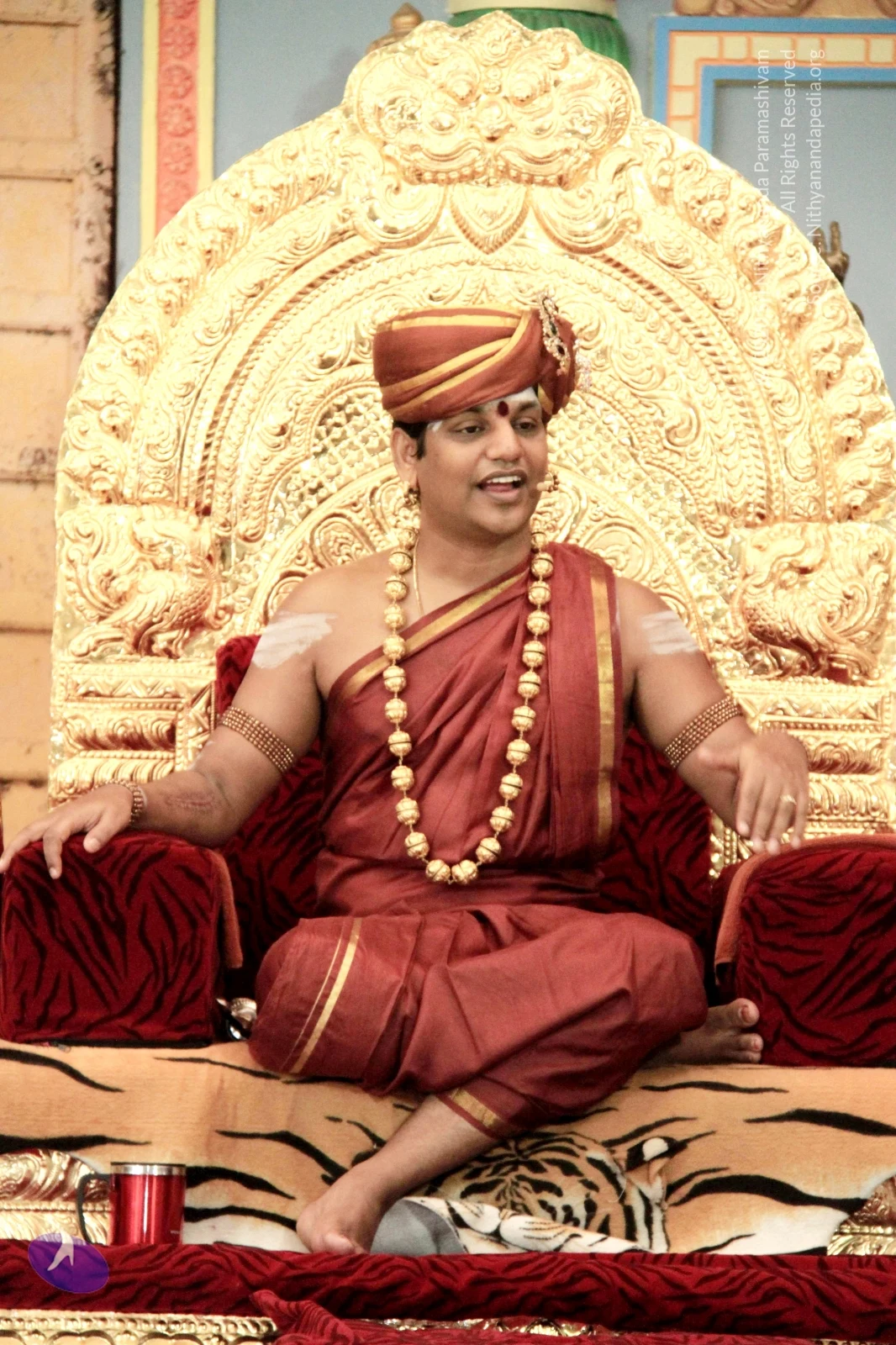
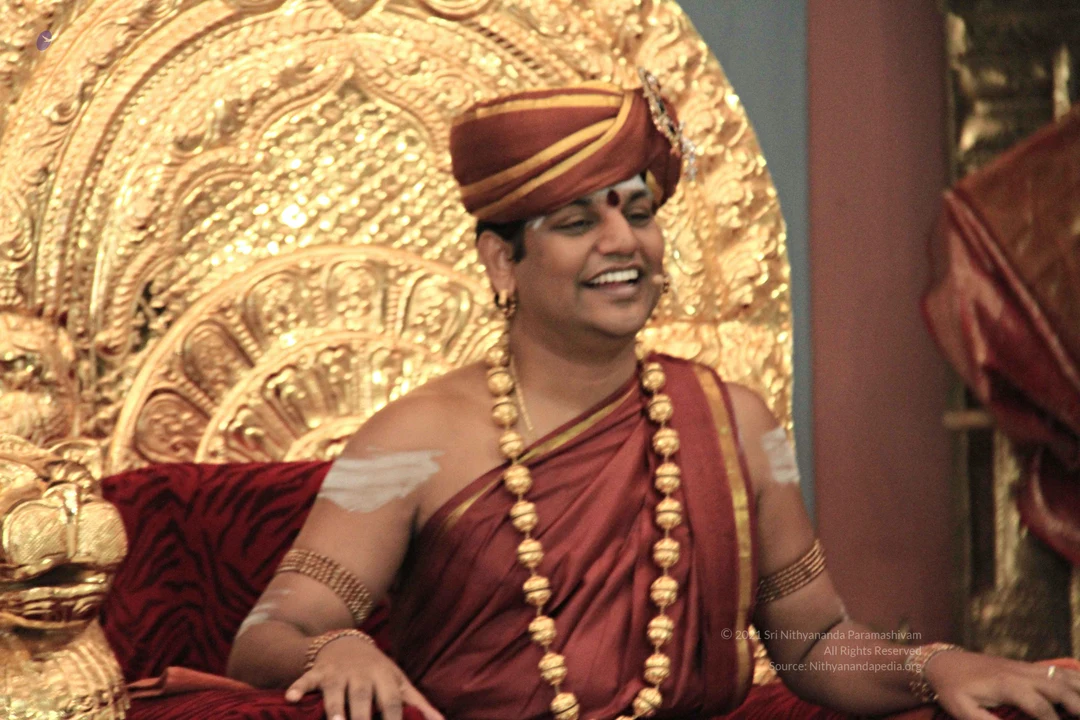
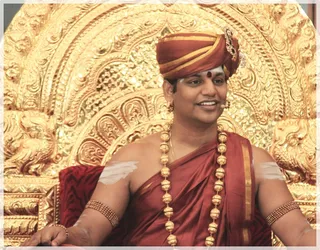
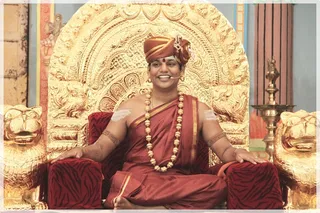
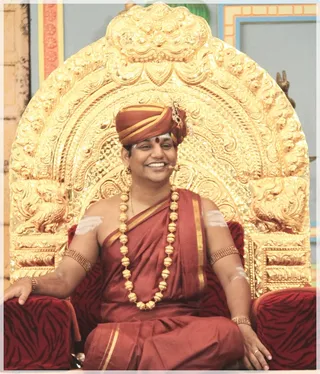
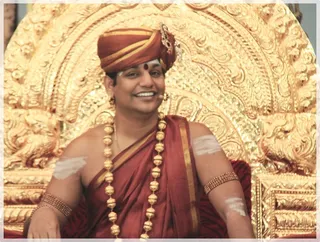
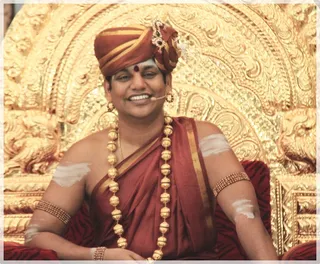
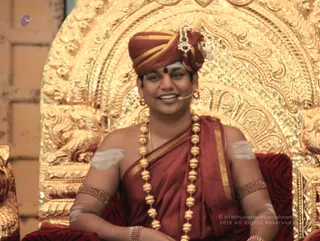
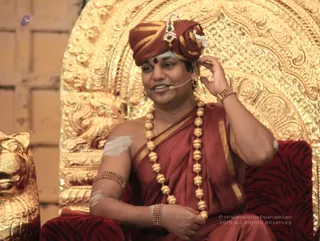
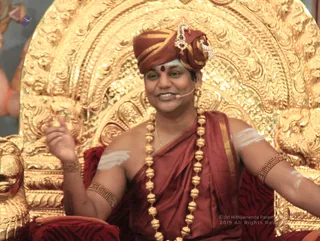
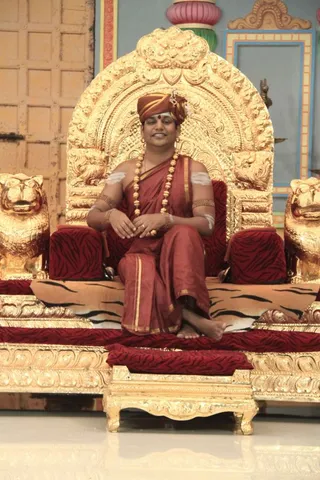
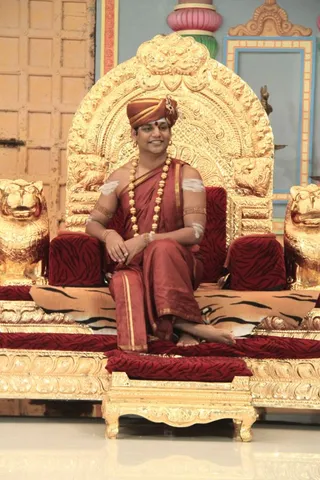
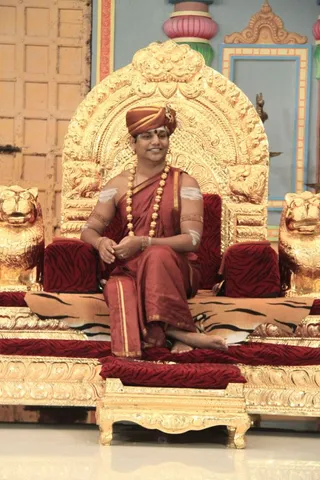
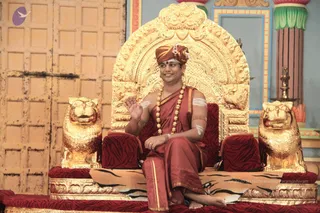
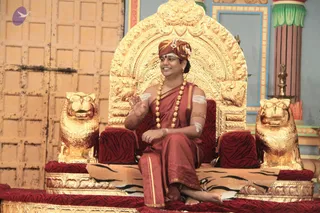
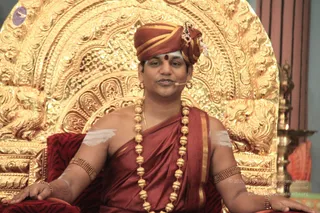
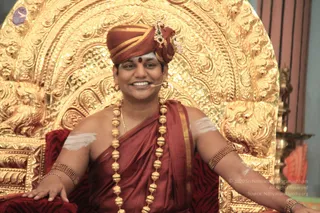
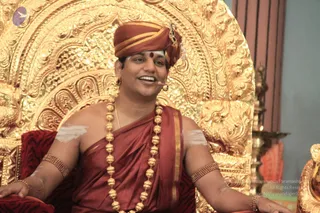
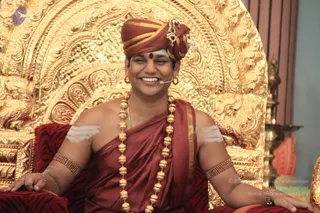
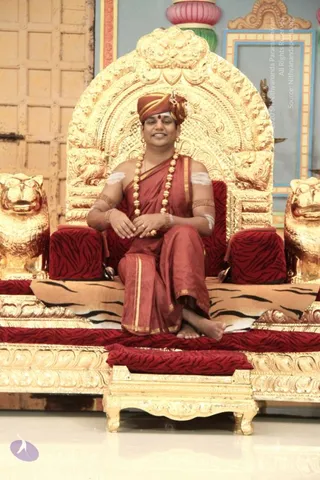
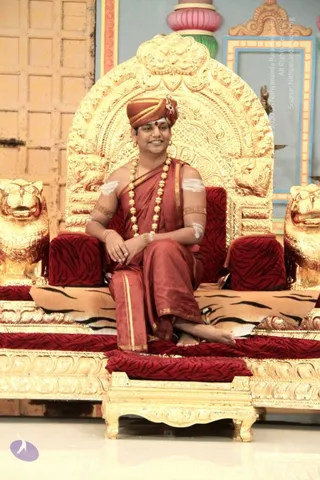
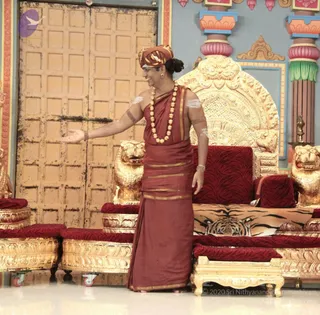
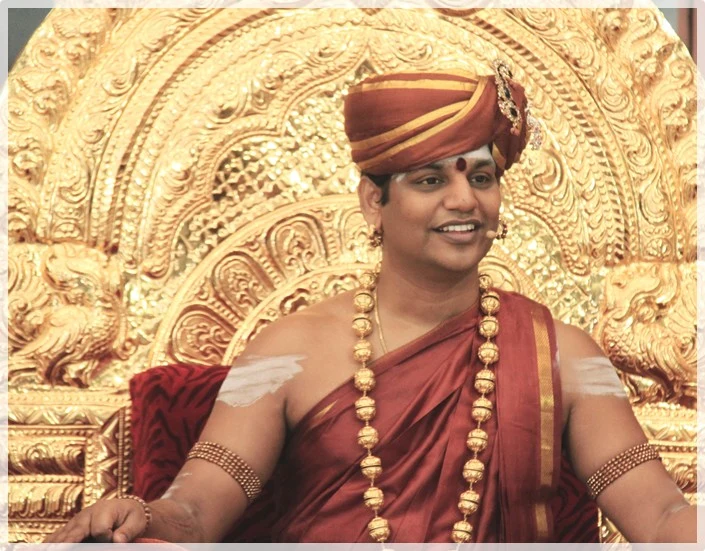
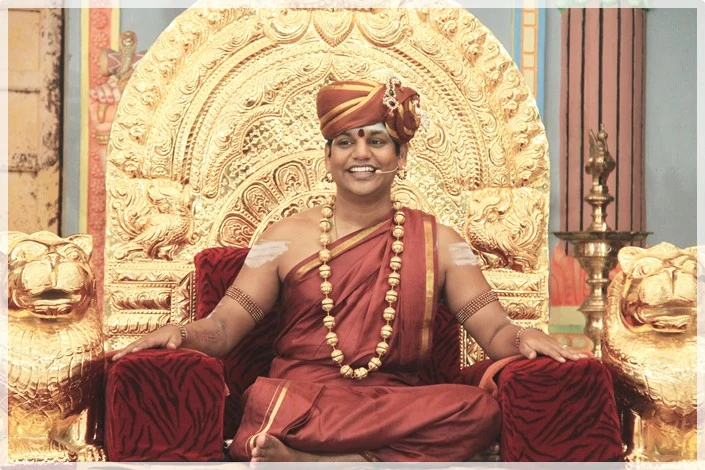
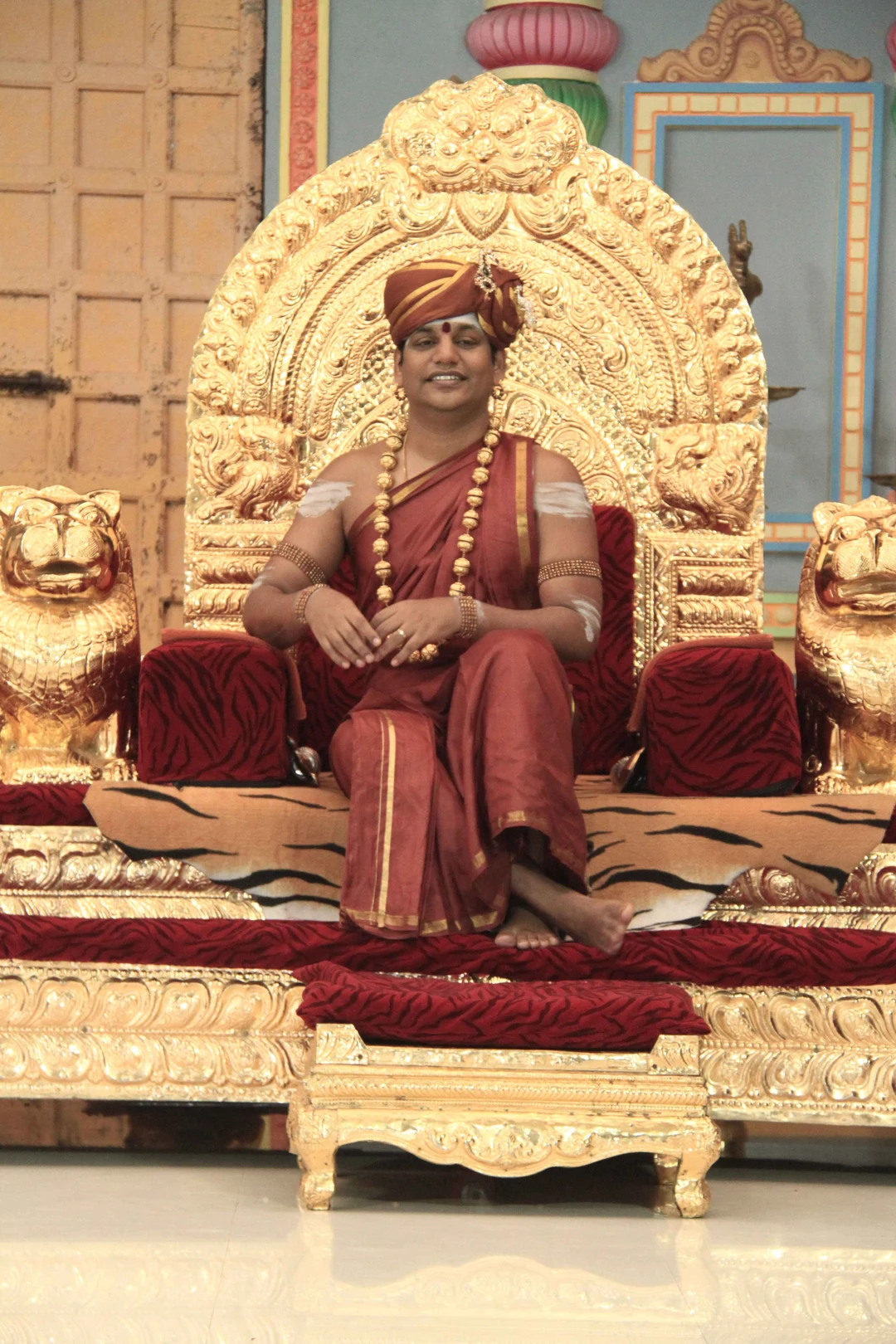
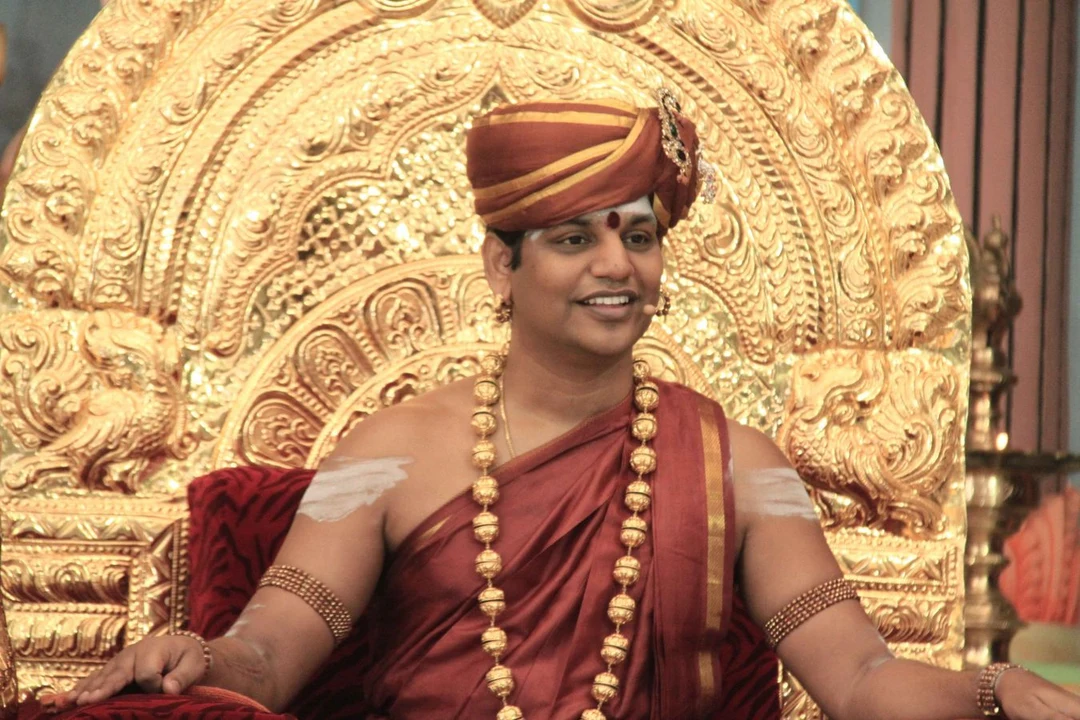
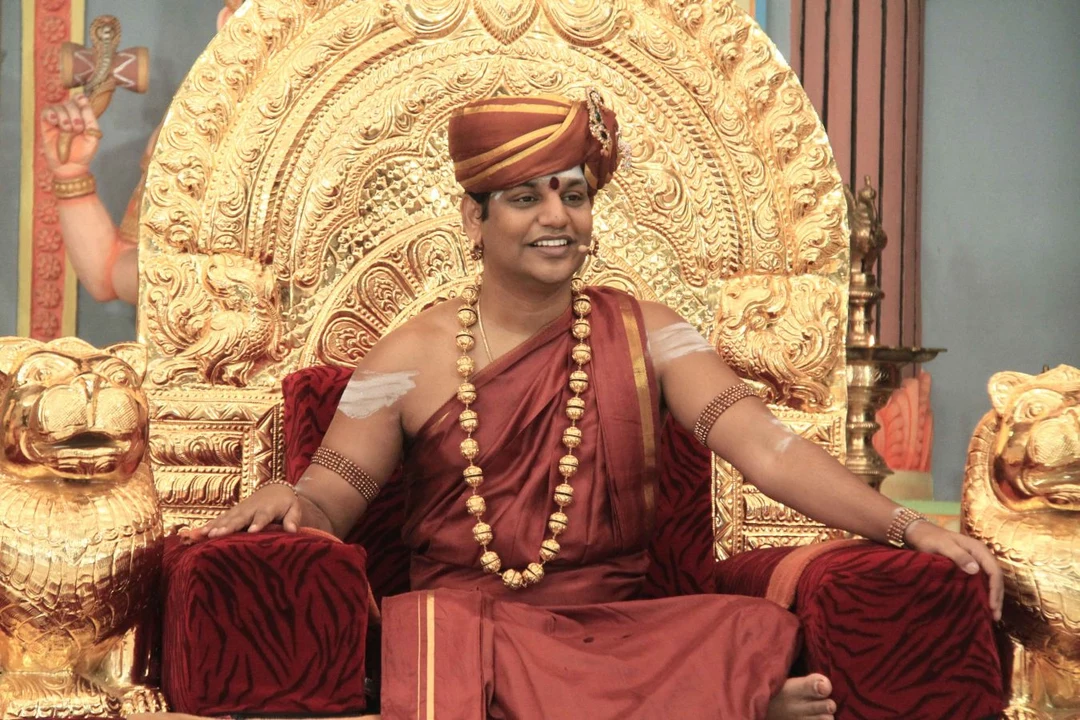
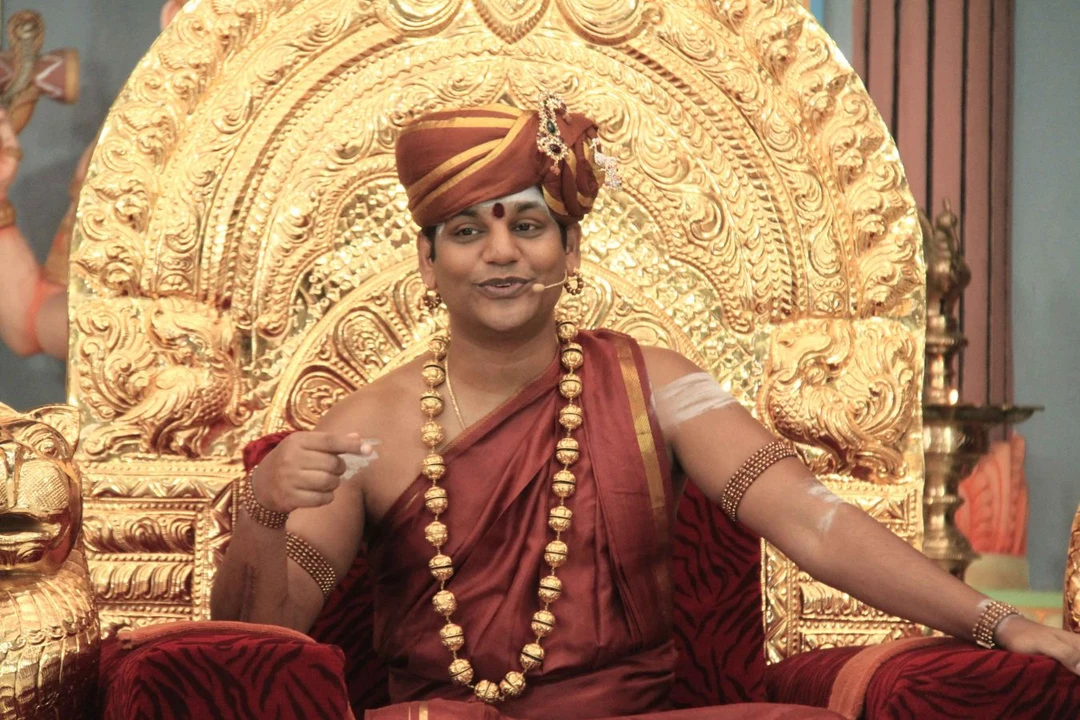
A smiling man sits on an ornate gilded throne with a tall arched back carved with floral and lion motifs. He wears a maroon-red turban with gold border and a jewelled ornament, a red-brown dhoti-style cloth with gold edging draped over his shoulder, and a long gold bead mala around his neck, plus gold armbands. A red bindi is on his forehead and white ash marks show on his arms. He sits on a tiger-striped cushion with red velvet side cushions, and a red steel cup rests beside him. Swamiji (probable) appears in person, seated on the throne with a lavalier microphone clipped near his face, marked by the turban, saffron-toned robes and rudraksha-style gold mala.A smiling man sits on an ornate gilded throne with carved floral and scrollwork backrest. He wears a maroon-red turban with gold trim and jewelled ornament, a maroon-red robe with gold border draped over one shoulder, and a long necklace of large golden-brown beads. White sacred ash marks his shoulders and forehead, with a red bindi, and a small microphone is clipped near his mouth. A gold bangle is on each upper arm. This appearance matches the a person label based on the turban, saffron-red ornate clothing and rudraksha-style beads, though identity is uncertain. The image shows a seated speaker on a throne with a microphone, consistent with a satsang setting.A man seated on an ornate gilded throne with a carved arched backrest and gold lion-form armrests, draped in red-tiger-striped cushions and a tiger-skin-patterned seat cover. He wears a maroon-red turban with a small ornament, a maroon-red dhoti and upper cloth with gold borders, multiple strands of gold beads hanging around his neck, gold bangles on his wrists and upper arms, and a red bindi with white markings on his arms and forehead. He sits barefoot with hands resting in his lap, smiling. A saffron-and-gold ritual setting with a pink and green kalasha-style finial behind the throne. Swamiji (probable): the man on the throne has a distinctive turban, ornate gold necklaces and rudraksha-style gold beads, with a throne-seated presentation.

November 22 2013

Original wiki page
Contents

Description:

In today’s morning Satsang, Paramahamsa Nithyananda dives into the deeper aspects of completion. To achieve complete completion, we need to complete with all the layers of karma that we carry. It is not enough to simply follow a spiritual path, practicing completion as we remember throughout the day. Even making completion a priority is inadequate. We need to eat, sleep, breath, and live it! It must be the only priority in our lives! A Sannyas is a person who is making completion the only priority in life!

Link to Video:

Audio Link

become the cause of change

Transcript:

Nithyanandeshwara Samaarambhaam

Nithyanandeshwari Madhyamaam |

Asmath Aachaarya Paryanthaam

Vandhey Guru Paramparaam ||

00:41 Hindi - 00:51

I welcome all the devotees, disciples, samajis, satsanghis sitting with us all over the world through Nithyananda TV, Sadhna TV, Lotus News Channel, Janashree TV, Eshwar TV and two-way video-conferencing. I welcome all of you with my love and respects.

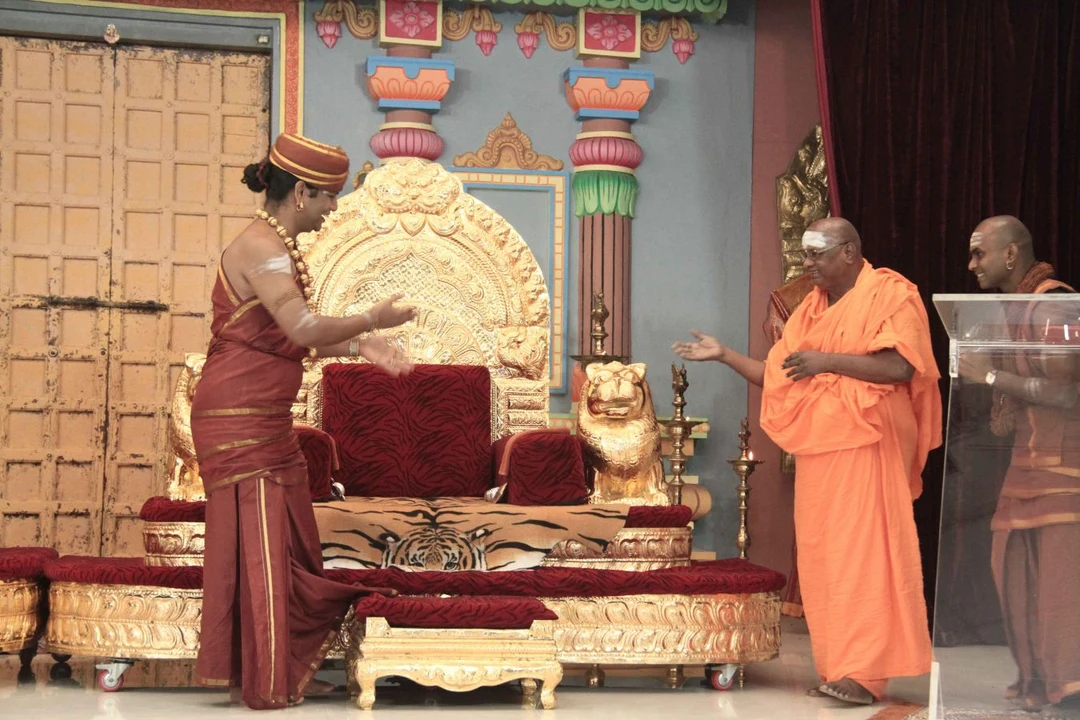
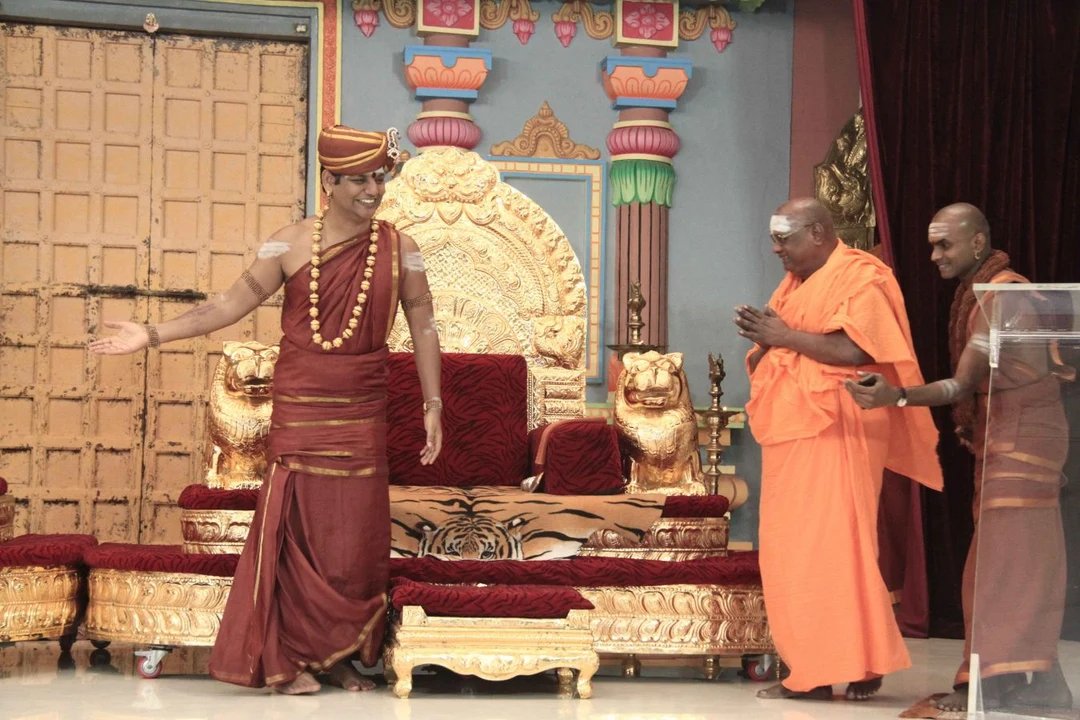
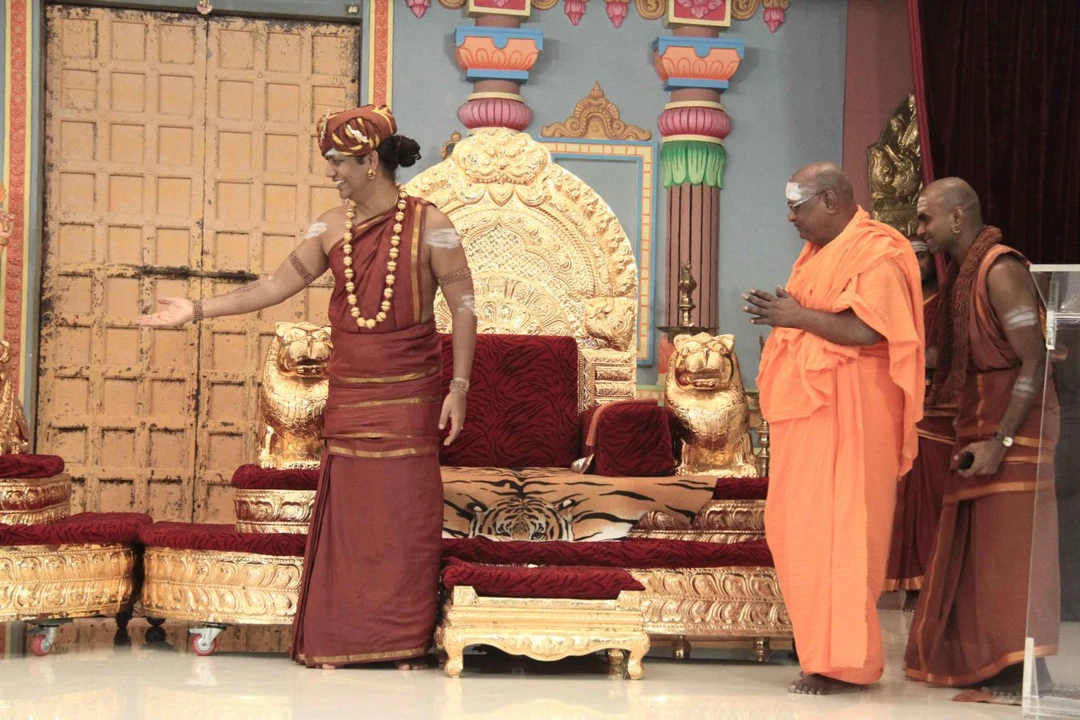
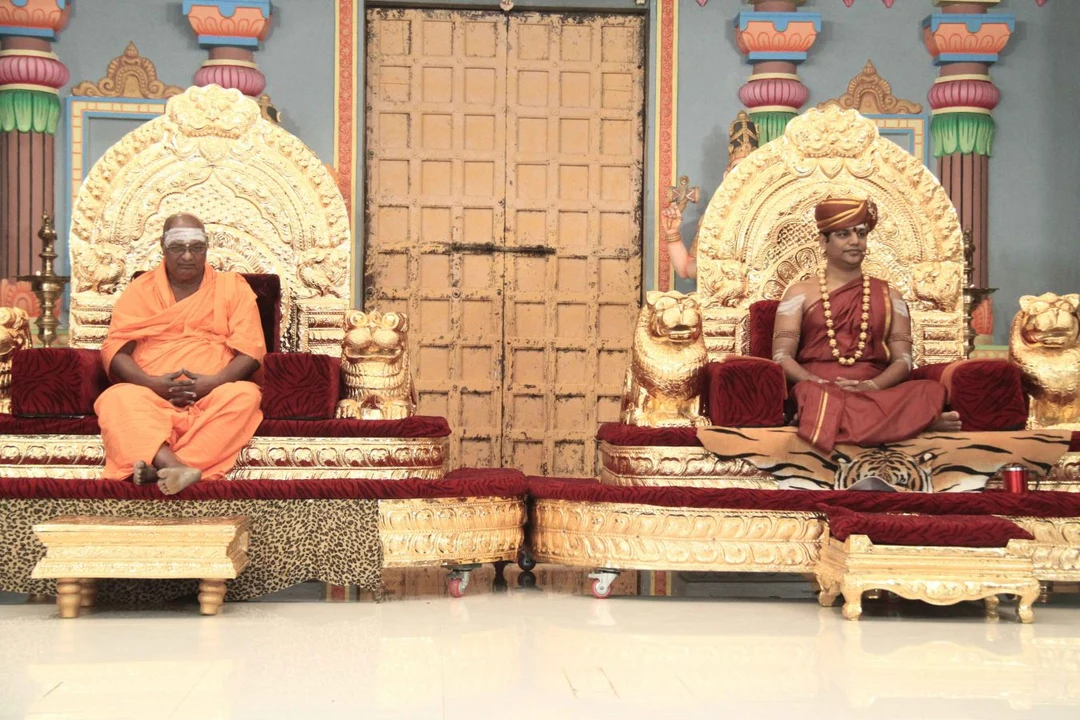
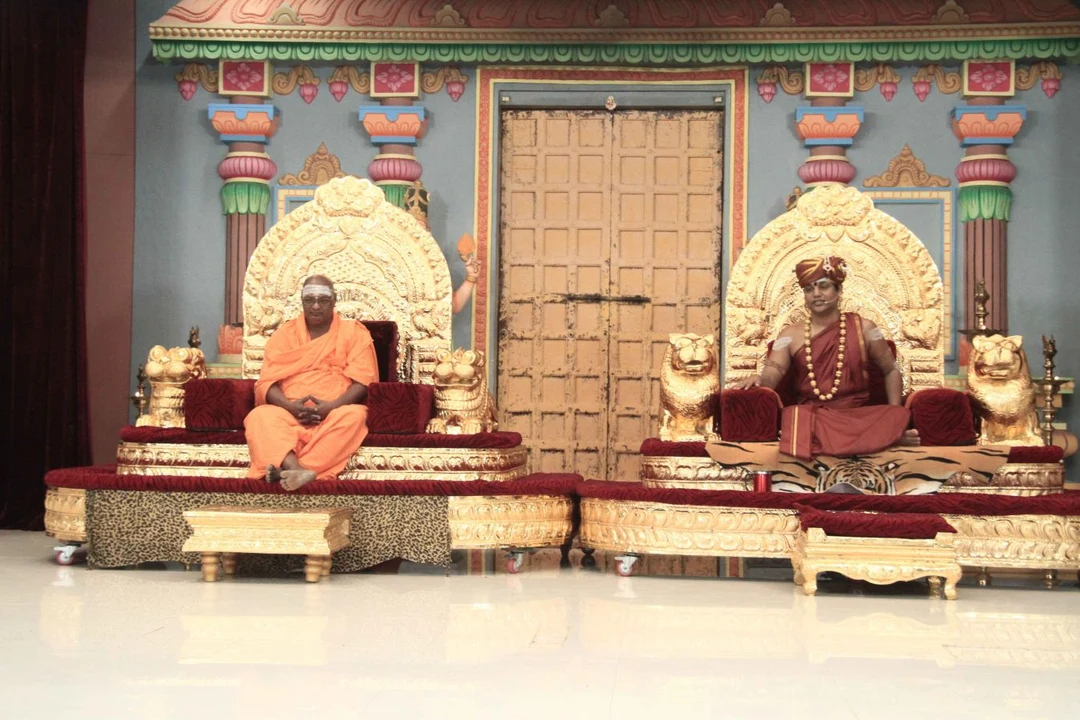
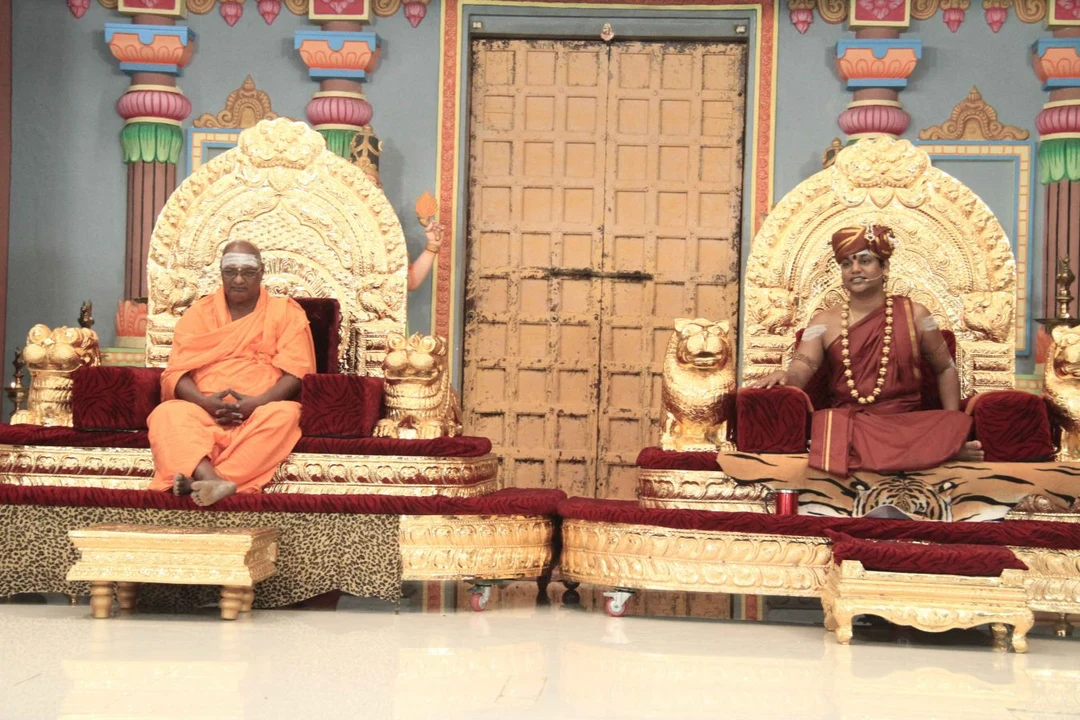
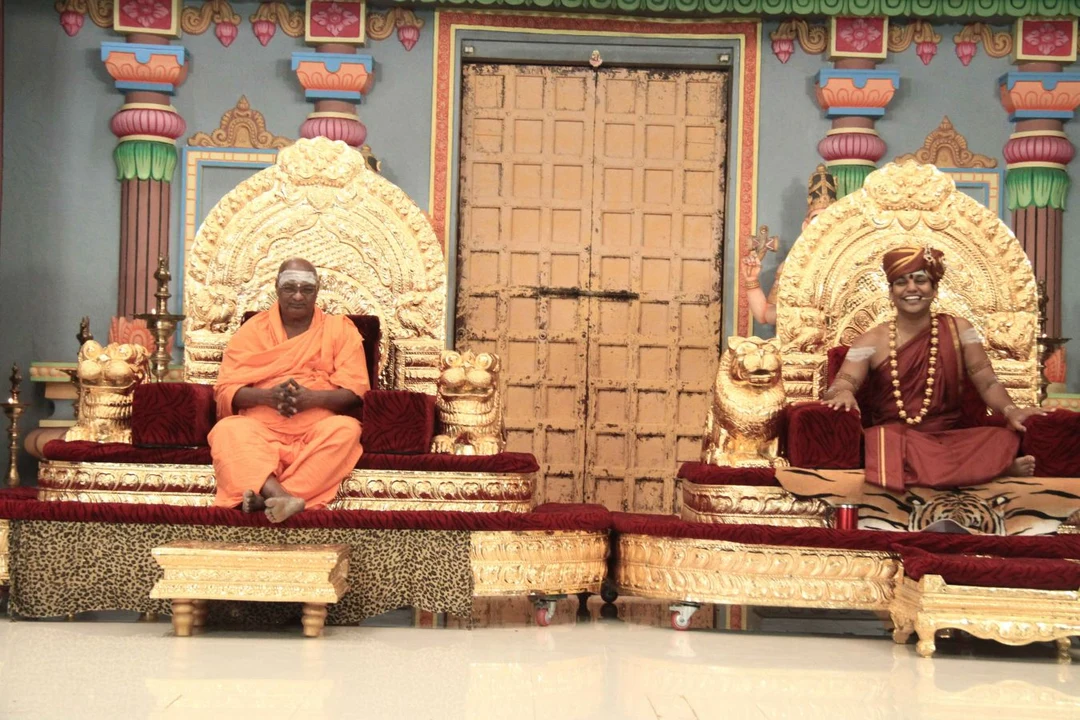
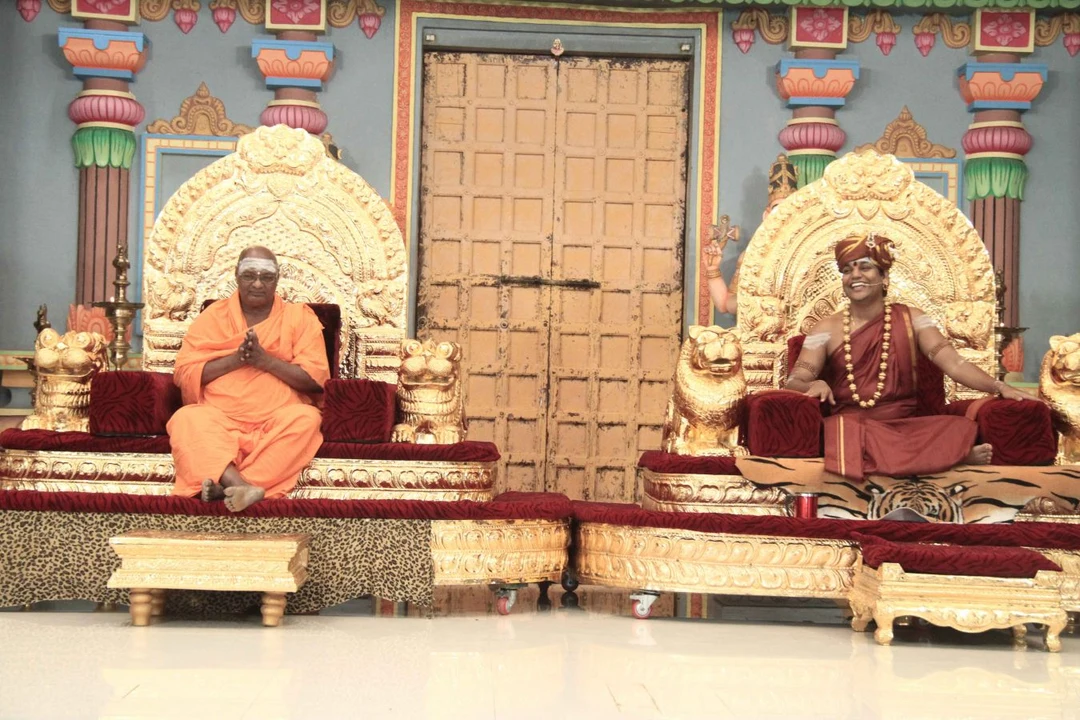
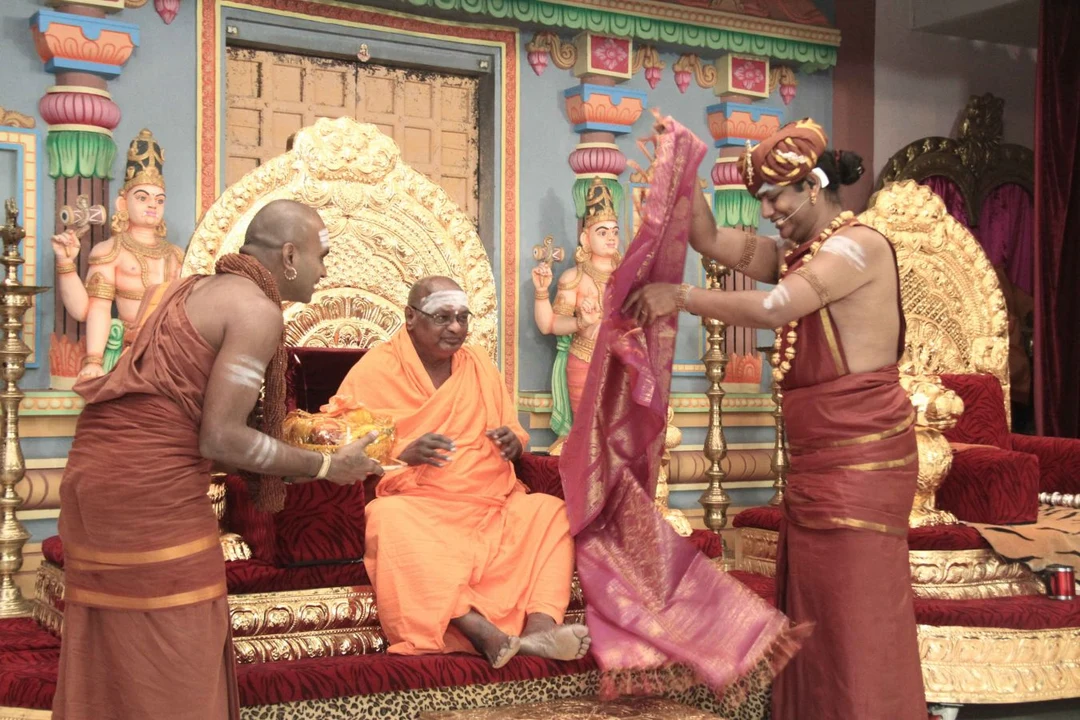
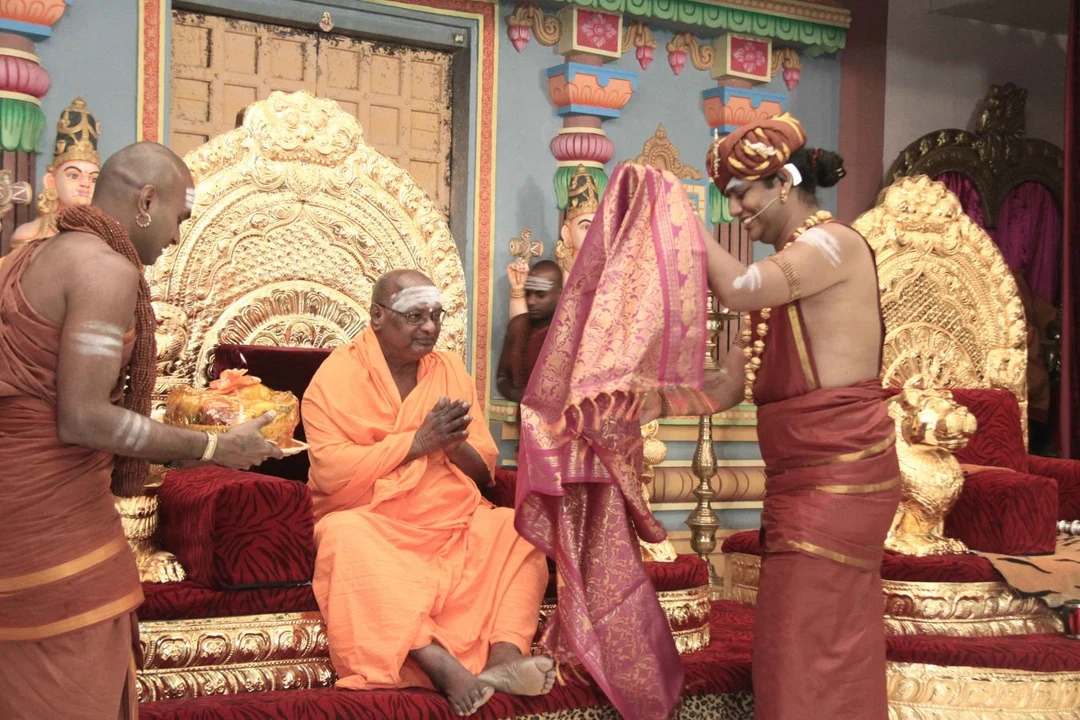
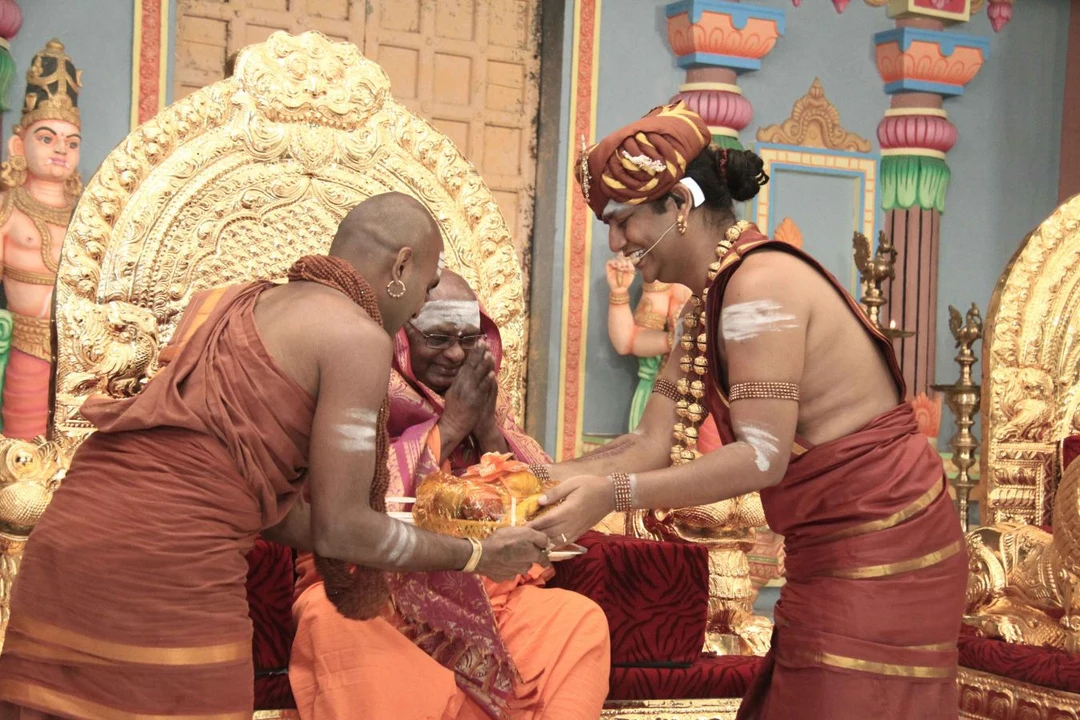
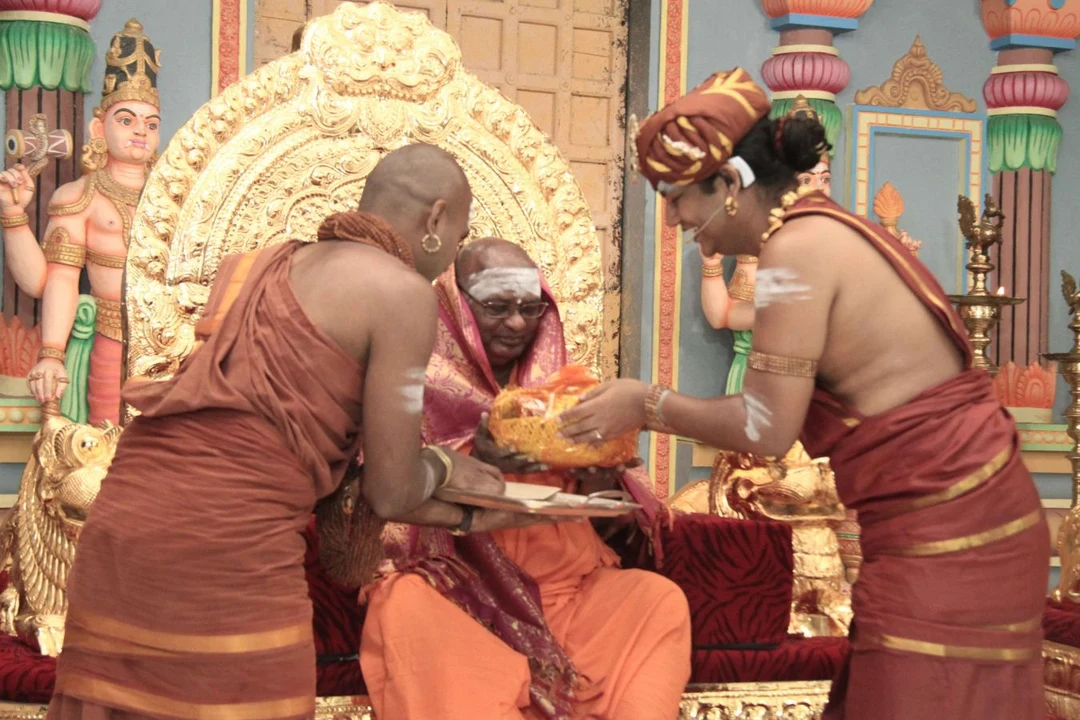
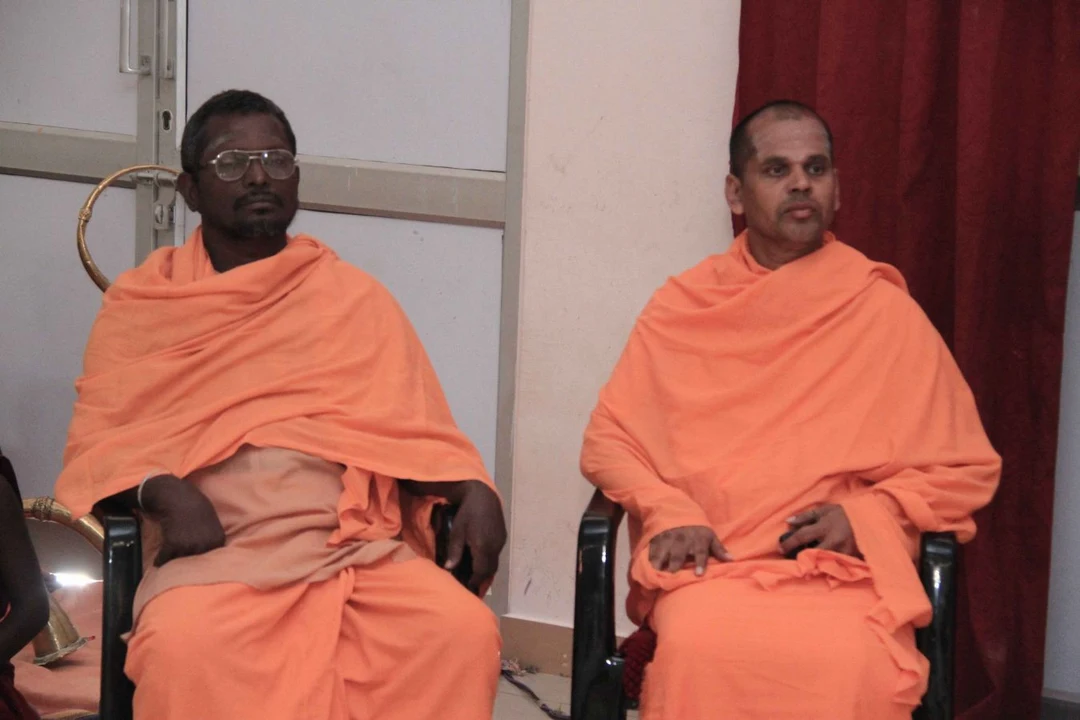
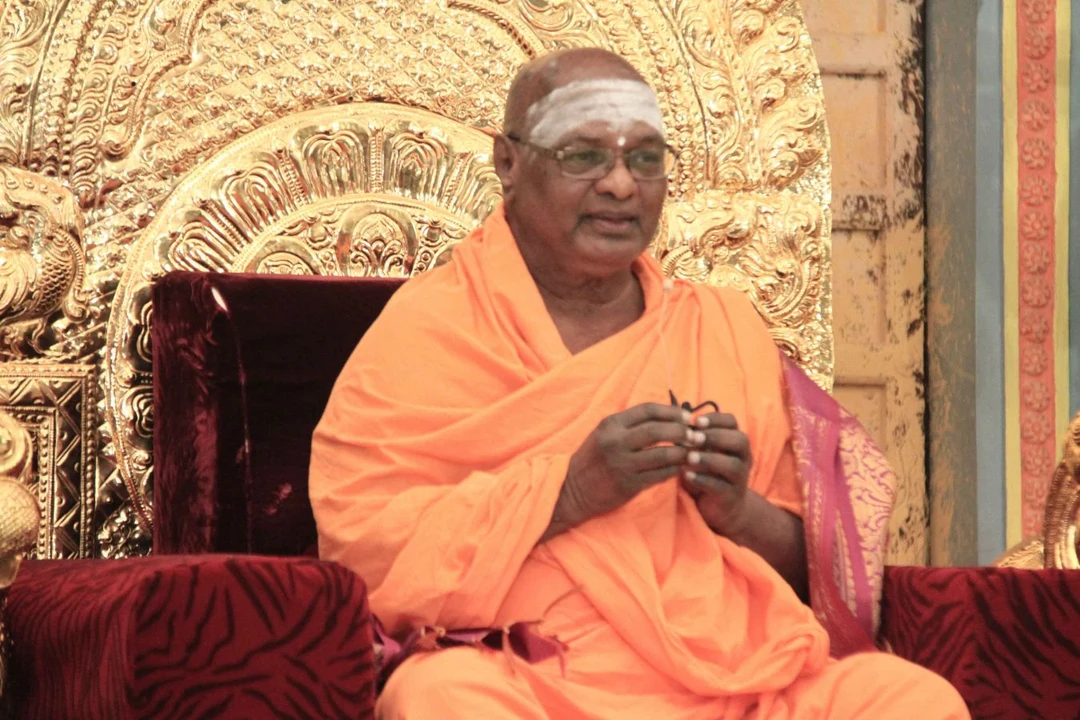
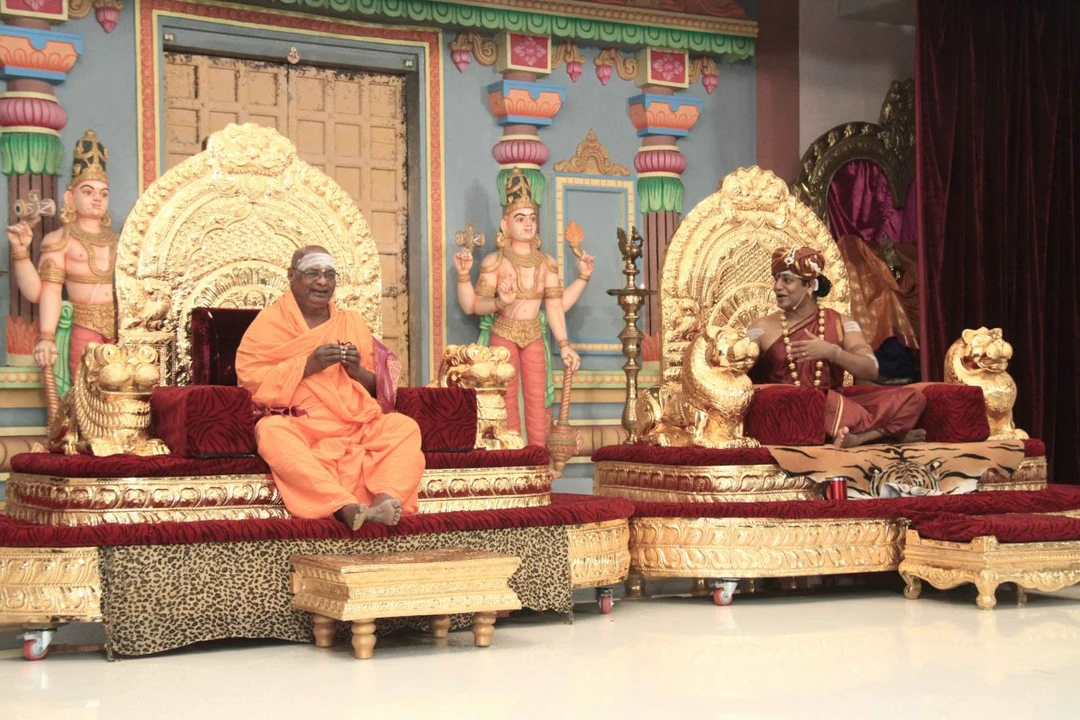
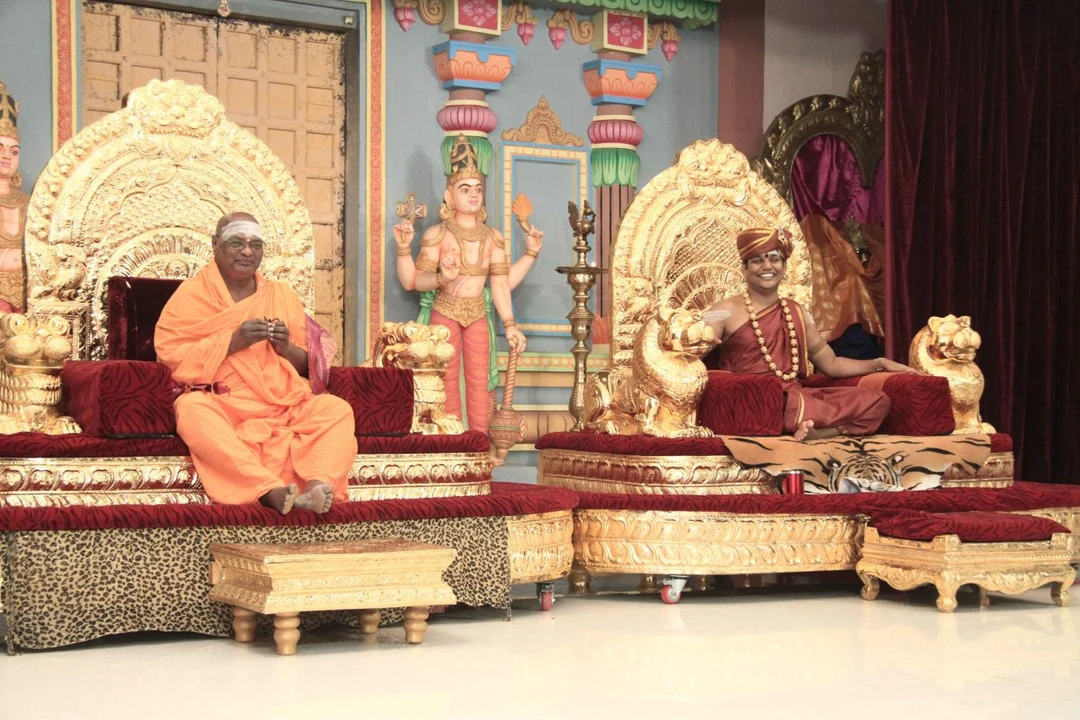
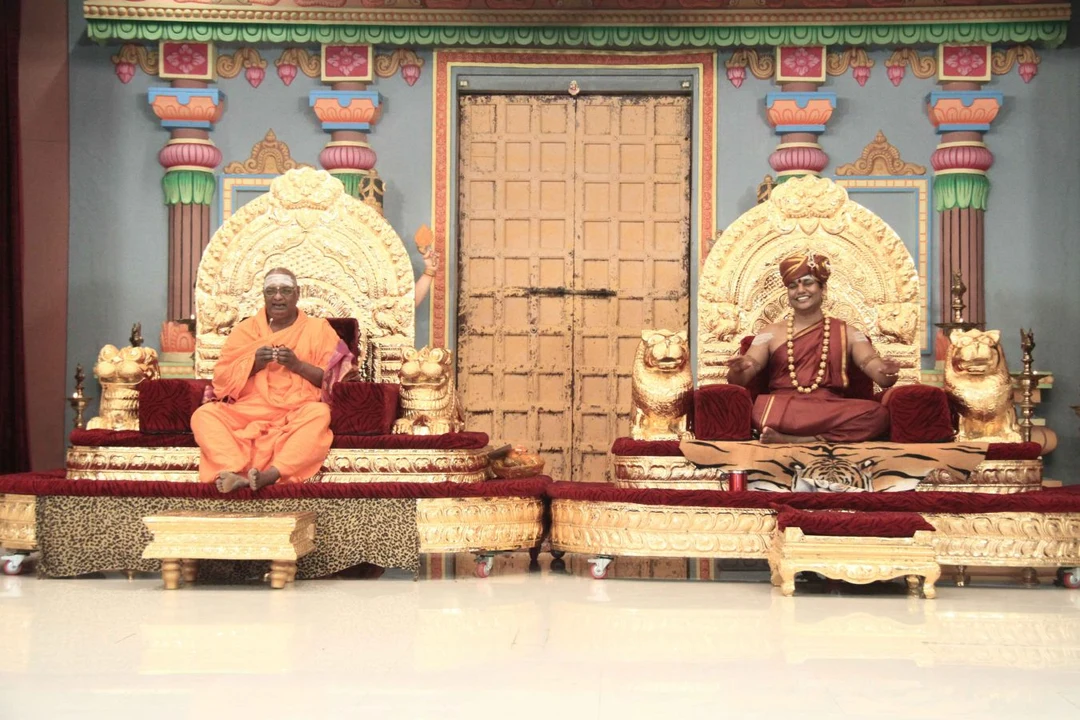
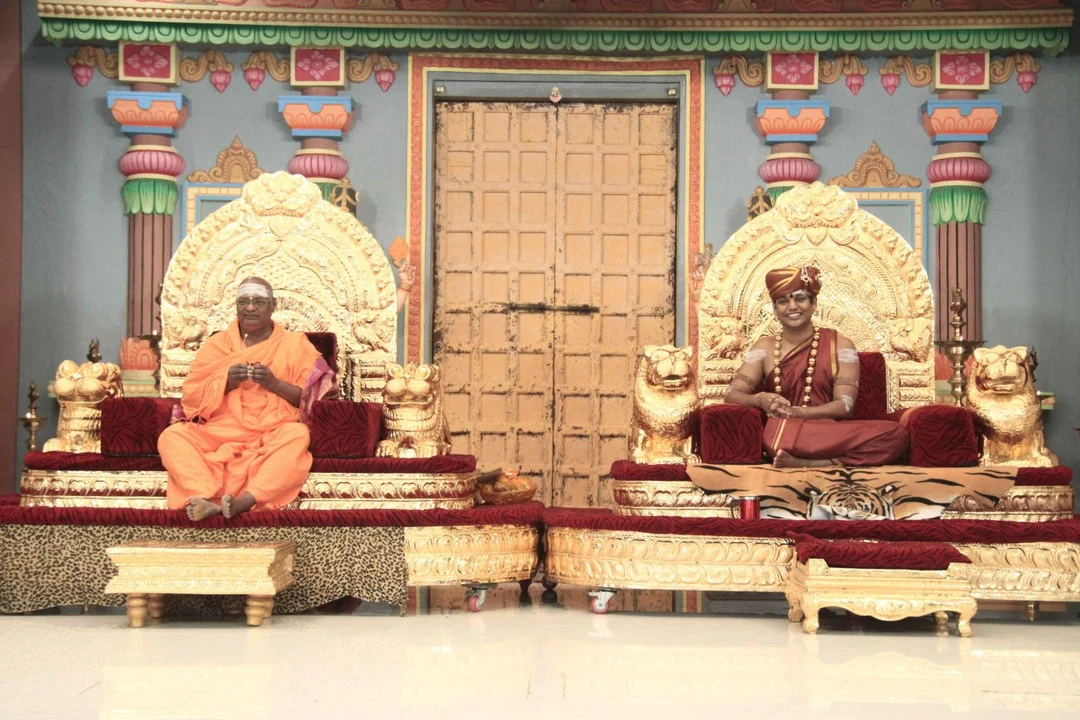
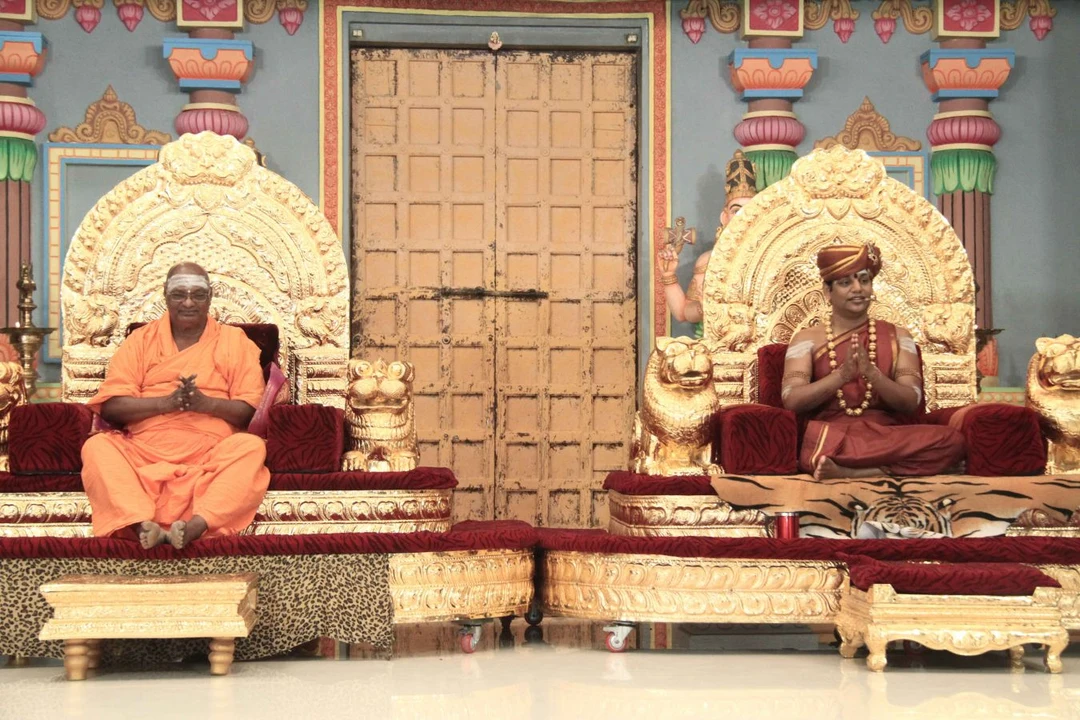
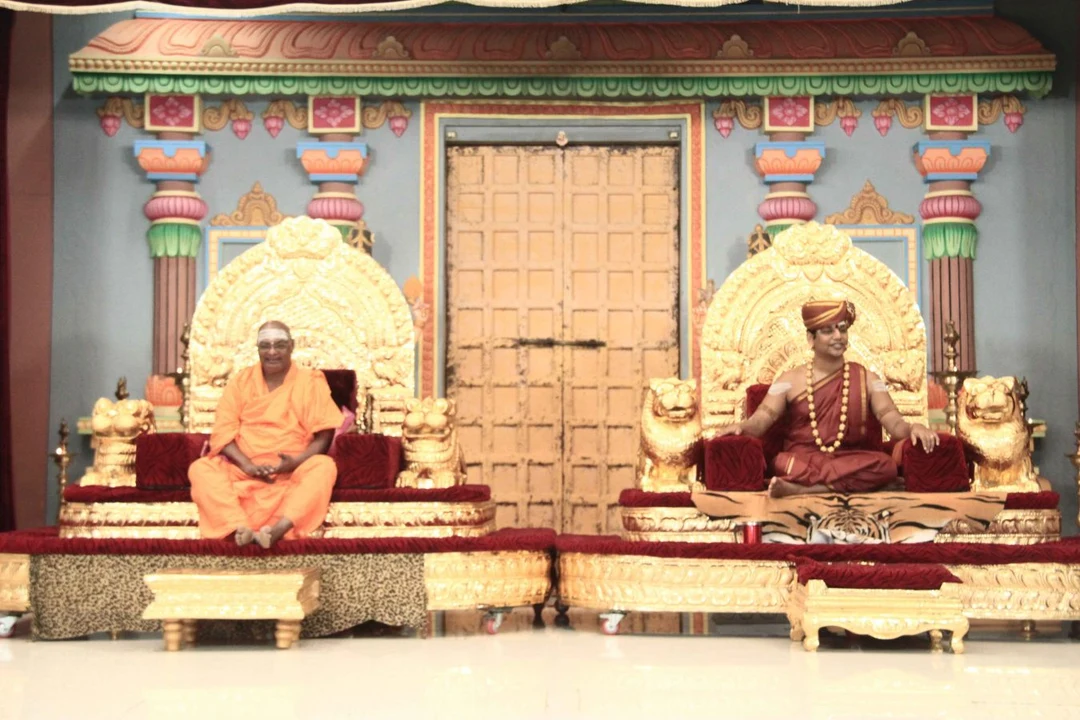
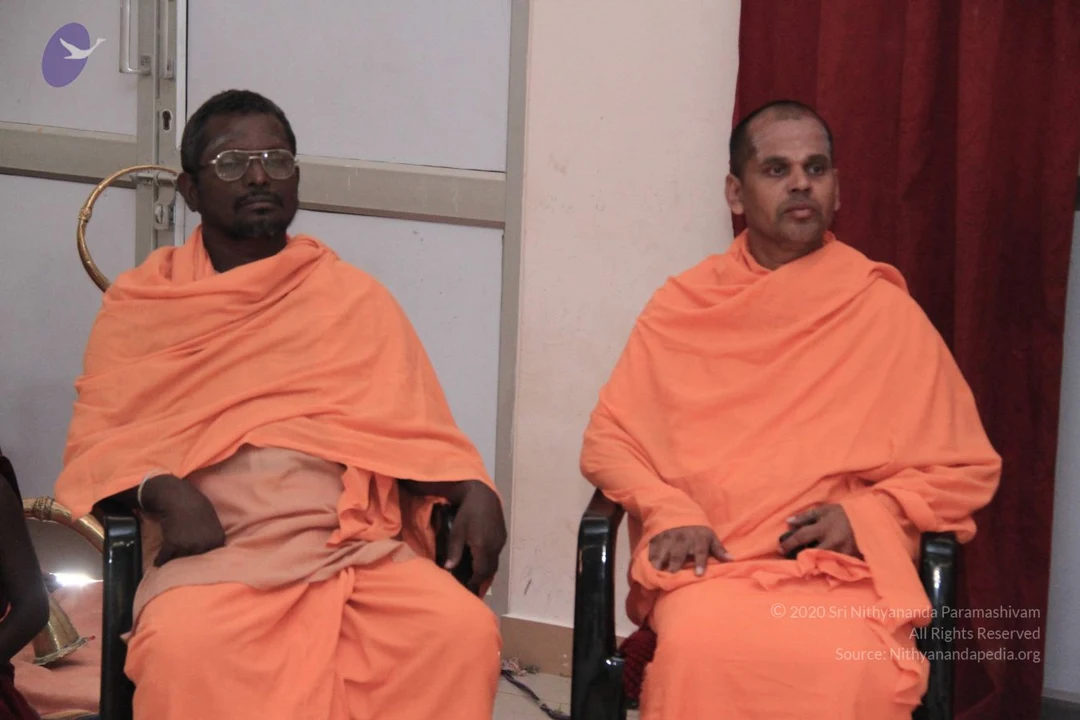
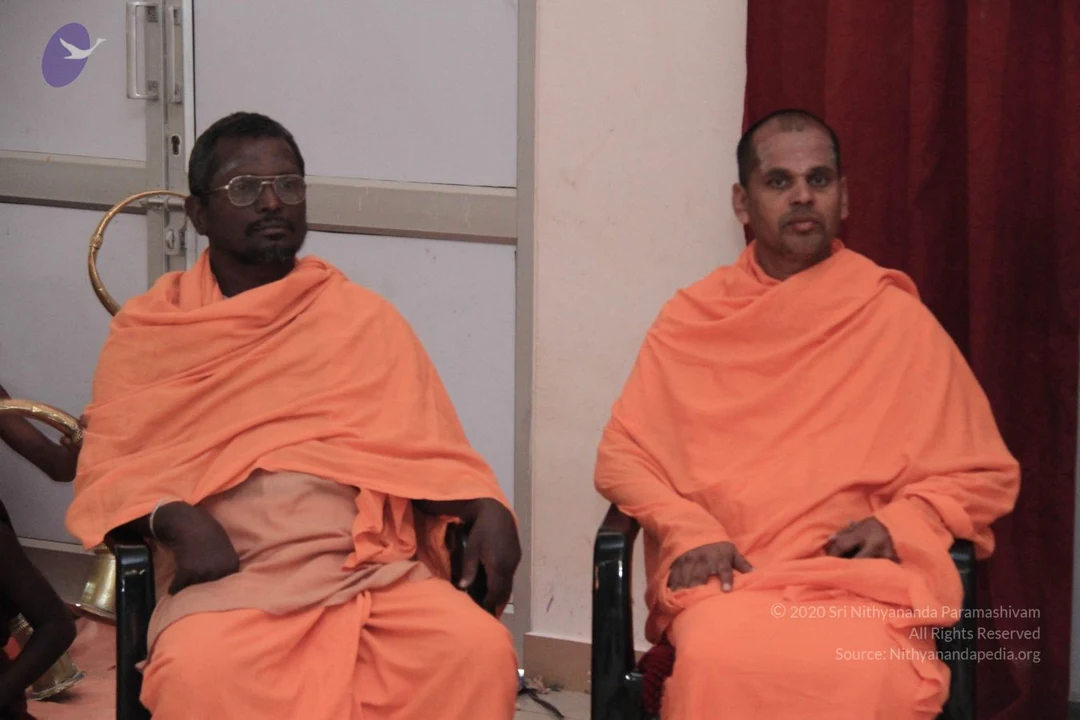
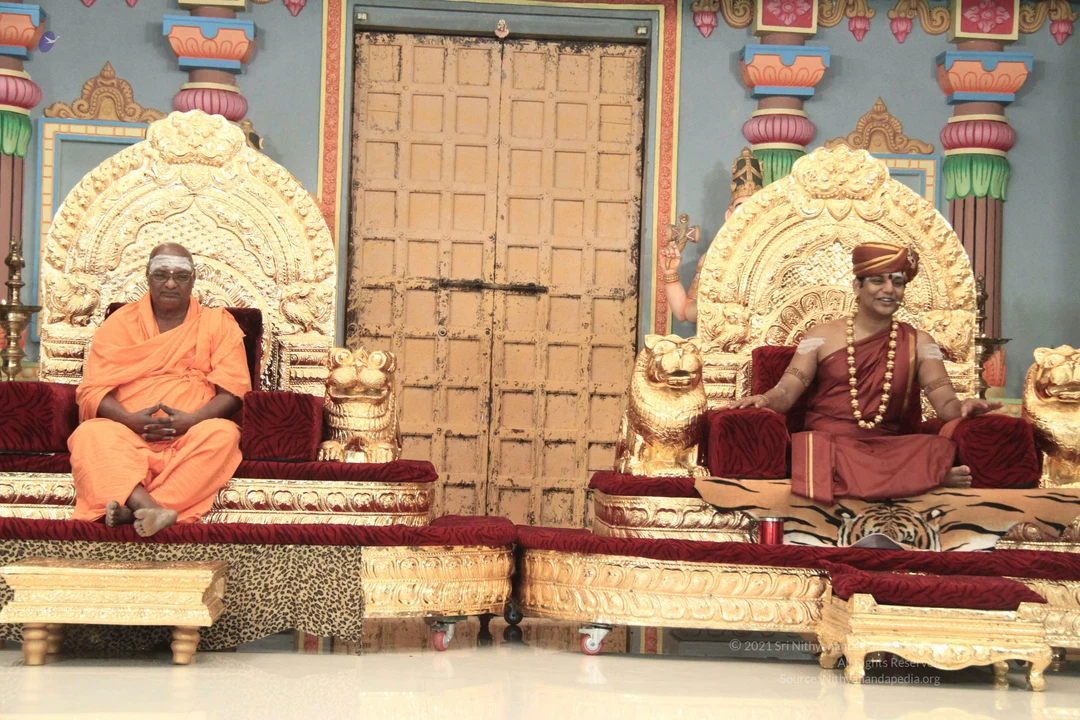
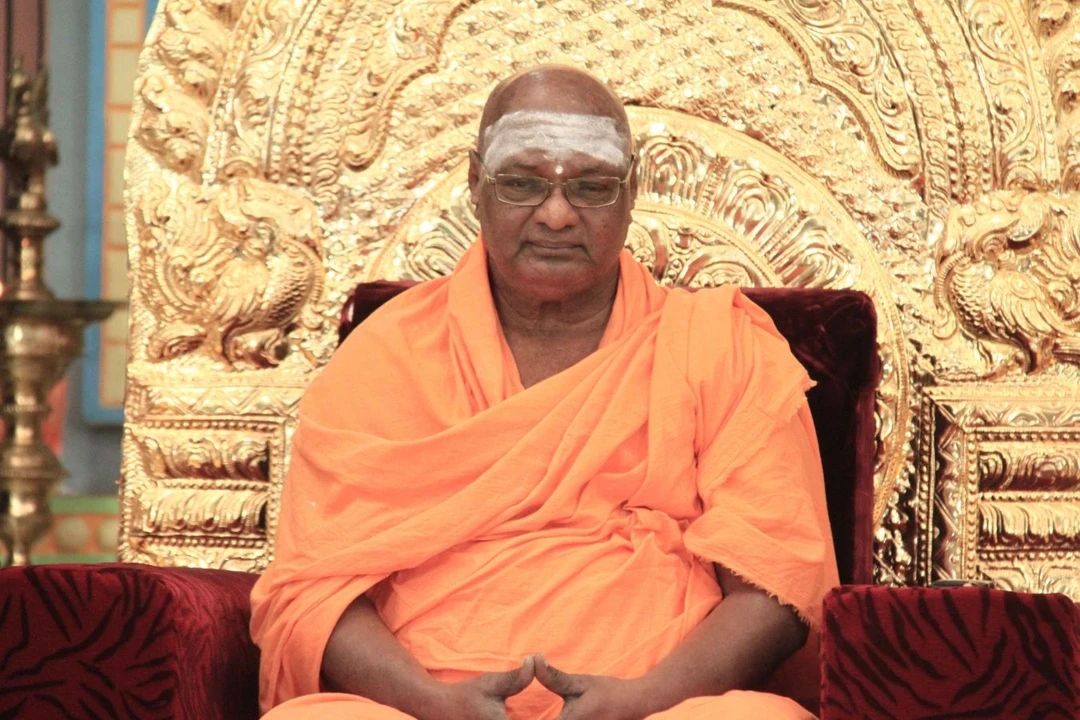
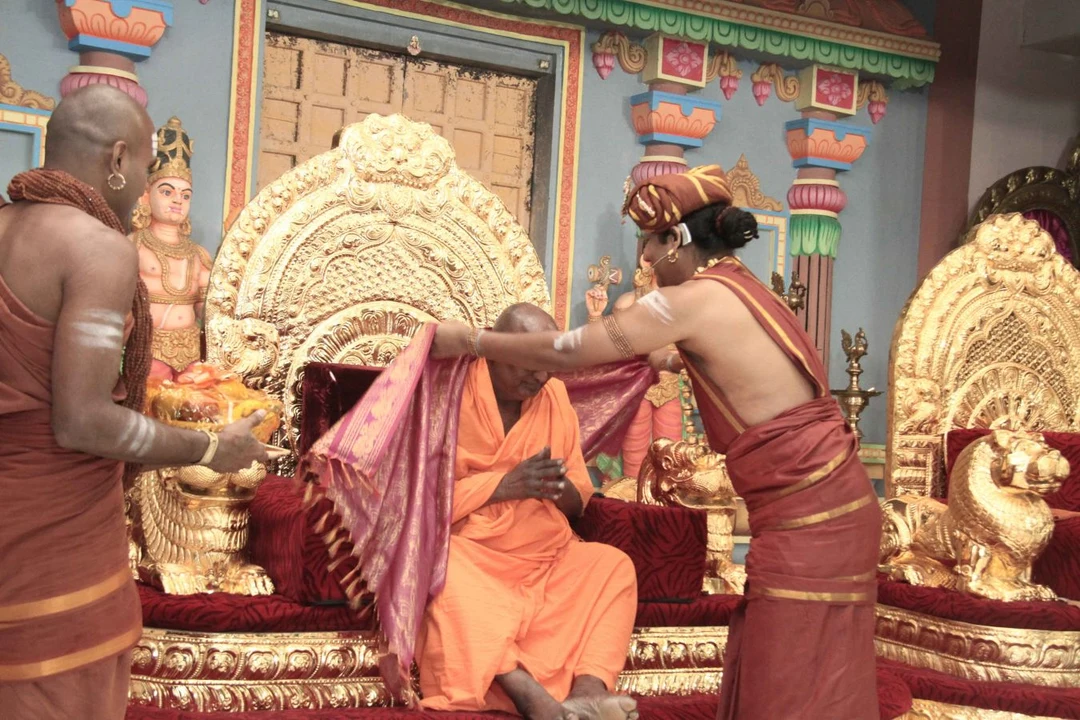
Today, we have a special Chief Guest, Swami Atmanandaji Maharaj from Kanavaipudur. Swamiji is a direct disciple of Swami Chidbhavananda. Swami Chidbhavananda is South India’s Vivekananda. Swami Chidbhavananda has contributed so much. I don’t want to introduce Swami Chidbhavananda to all of you, because I have already spoken about Swami Chidbhavananda many times in our satsanghs. The whole Bhagavad Gita satsanghs our satsang and book I have dedicated to Swami Chidbhavananda, because I read Bhagavad Gita first time from Swami Chidbhavananda’s Tamil translation. So even though I have never met Swami Chidbhavananda directly, he was a great inspiration for me.

Swami is a direct disciple of Swami Chidbhavananda and Swamiji has also created huge organizations. Actually, Swamiji’s the creator of whole Karur in and around organisations in Karur and area. All the educational institutions now owned by Tapovanam has been created by Swamiji and at present Swamiji is the President of the Sharada Niketan Trust. He heads education institutions and he also has many schools where thousands of students are getting free education. Swamiji’s a powerful orator, teacher and a great sadhu. He has initiated many Sannyasis and Sannyasinis and created many institutions for his brother disciples. Above all, an important thing for Dhyanapeetam our sangha should know Swamiji is the first person who gave money for Dhyanapeetam.

In 2001 January, now I think twelve, thirteen years before, , twelve years before when the Erode devotees gathered together and wanted to donate land to me, I said, ‘I will go to Nerur Sadashiva Brahmendra’s samadhi and take the blessings and come. Then we will start the ashram.’ I went to Nerur to have Sadashiva Brahmendra’s samadhi’s darshan and blessings, then on the way I went to Swamiji Atmanandaji’s ashram and I took blessings from Swamiji also. I asked Swamiji to bless. I said, ‘Swamiji, now I have completed my parivrajaka yatra. Now I am going to settle down in one place. Few devotees are giving a small land in Erode. I am going to start staying there but I don’t know where I wanted the ashram to be but I am going to be staying in Erode.’ The moment he heard that immediately Swamiji gave the first donation. Still the receipt we have. So in a way Swamiji started Nithyananda Dhyanapeetam. It is, the whole Nithyananda Dhyanapeetam is initiated, started by Swamiji.

Then please understand, it is not what amount is important, but the attitude of giving. That is the first thing. Swamiji is such a compassionate, loving and giving sadhu. And not only the money, the blessings he gave. Please understand, now after our huge success, suddenly so many people claim that I belong to them, I belong to them, I belong to them I belong to them, but it is actually Swamiji who started the whole Nithyananda Dhyanapeetam. So actually, the money with which Swamiji gave, with that only we registered that land. Registration of that land happened with the money Swamiji gave and now you know, rest is history. And throughout the thin and thick times, Swamiji always stood by us, supported us, blessed us and today Swamiji is here to bless all of us.

I requested Swamiji to speak few words but Swamiji said it is okay. But, on behalf of me and Nithyananda Dhyanapeetam, I offer our humble respects to Swamiji. Then I’ll continue the satsangh.

06:48 - 12:03 Swamiji Atmanandaji Maharaj’s address in Tami

Translator:

Nithyanandam, the translation of the blessing message Swami Atmananda Maharaj. Swamiji belongs to the same parampara, the heredity of Sri Ramakrishna. Indeed Swamiji is now decorating, adorning the sacred seat which was previously adorned by the group of Sri Ramakrishna, totapuri . By God’s grace Swamiji took birth. Right from the young age Swamiji has been doing so much pious and enriching work to society and the whole world. With spirituality in India, showing the world Swamiji is doing that work. From young age he received God’s grace and is doing the great work and accomplishments. If you have God’s grace all good thoughts and wishes will get fulfilled. Swamiji has established centres across the world and spread spirituality. When we are talking, when we both were talking yesterday, he said the number of Sannyasis and Sanyasanis in Dhyanapeetam if we see we don’t even have one Sannyasi per city. Swamiji wants to create at least 10 lakh Sannyasis in India. Swamiji indeed has the grace and blessings of the holy trinity Sri Ramakrishna, Sharada Devi and Swamiji Vivekananda and the blessings of God, grace of God. Swamiji Atmanandaji Maharaj extends his whole hearted cooperation, support and assures that his support and cooperation will be there always for Swamiji. From a small age Swamiji has become the tool of God and is doing great things. If God’s blessings is there all good things will happen. The dream of Swami Vivekananda that is winning the whole world with spirituality, India winning the whole world with spirituality and the spreading of spirituality throughout the world. Let all this happen and all men should have, all people should have great wealth and prosperity and live a blissful life. Let everybody be happy. We are all very fortunate to have the grace of Swamiji.

With this Swamiji Atmanandaji Maharaj concluded his blessing message, thank you, Nithyanandam

Swamiji:

On behalf of me and Nithyananda Dhyanapeetam, I thank Swamiji and offer our respects and gratitude for being here, blessing us and gracing the occasion. With this I’ll move to the morning satsangh.

Cities sitting with us: Los Angeles-Arunachalam, Seattle-Chidambaram, Adi Nithyananda Dhyanapeetam-Avathipalayam, Nithyananda Nagaram-Hyderabad, San Jose-Madurai, Guadeloupe-Rameshwaram, Sharga Toronto-Kailasam, Ohio-Prayag, Varanasi, Hosur, Oman-Sivagangai, Hyderabad-Gupta Kashi, Vancouver-British Columbia, Bogota-Colombia, Monterrey-Mexico, Hong Kong-Sirkazhi, East London-UK, Singapore-Singapuram, San Diego-Tirualavai, Dubai-Vaidyanatham, Bangalore North, Jorpati-Nepal, Tiruvannamalai Dhyanapeetam.

I welcome all of you with my love and blessings.

I’ll continue to expand on the subject: “SANNYAS”. Today, I think fourth or fifth day, I will continue to expand on “SANNYAS”, because I have so much to share about Sannyas, so much to tell about Sannyas.

Please understand, the patterns you created, the incompletions you accumulated, the samskaras you built, the engrams you engraved for janmas, for ages, from time immemorial, at least you need to spend one birth to complete them, one birth to be free of them. Whatever is said and done, when there is some other priority in the life, the Completion doesn’t happen to the level of completing with Completion itself.

Please listen. There are various levels of Completion. If you have a good relationship with others, you think it is Completion. That is only one level of Completion. Many times, people get settled with that level of Completion. Many times, people think that is enough for the life to go on. Please understand, not having disease is not enough healthy, not having disease may be one step of health but yogic body is far away from this negative health. Same way, not having mental chaos and confusion does not mean you have achieved the ultimate. Not having fights in the house does not mean you really completed.

So, the level of Completion to run your life smoothly, just to have a good relationship, a friendly atmosphere, that alone is not ultimate peak possibility of human life. Please listen that alone is not peak possibility of human life. The completion should happen in your being to the level of completing with the very incompletion which started the life and death cycle in you, birth and death cycle in you. Please understand, the birth and death cycle itself started in you due to some incompletion. Going to that level and completing.

You have three layers of Karma:

The brought karma is “Prarabdha Karma”.

Accumulated karma is “Agamya Karma”.

Reserve Karma is “Sanchita Karma”.

Please understand, the brought karma, karma brought to be enjoyed, completed in this body is “Prarabdha”.

The karmas you accumulate, incompletions you accumulate after you assumed this body in this life is “Agamya”.

The reserve is “Sanchita”.

Usually, if you complete with Agamya itself you get satisfied. Seekers go a little deeper than Agamya. They complete the Prarabdha also but only when you complete with the Sanchita also you will be liberated from the cycle of birth and death. Just having good relationships, just having health, just having mental wellness may not be completely.

Having Completion as the first priority is not my goal. Having Completion as the only priority is the goal of human life. Please understand, having Completion in your laundry list is the life of common man. Having Completion as the first priority in your laundry list is the life of a Seeker. Having Completion as the only priority is the life of Sannyas.

Having Completion in your laundry list, having Completion in your list of things to do which every one of you paste in your refrigerator, things to do – laundry, shopping, pick up the kid, drop the daughter in the dance school, Completion also if you have time. This is a life of a human being.

Completion - the first priority - life of a Seeker.

Completion the one and only priority - life of a Sannyasi.

Please listen. All the best things you see in life, whether it is intelligence, or art and architecture, or language, or music and poetry, or lifestyle knowledge, anything best, please understand, anything best you see is the gift of Sannyasis. It is contribution of Sannyasis.

Recently, I am spending a lot of time with the history of Naga Sannyasis. I had the opportunity to see the original documents and records belongs to Mahanirvani Akhada, our akhada and many of the historical references about our Mahants; during the Moghul period, British period, the achievements of these great sadhus; and pre-history, 5,000 years before, the contribution of these sadhus. I tell you, please understand, these sadhus are literally like Mahadeva, Shiva. If you see Shiva’s story, all the useless things he keeps with himself, but all the best things he gives to society. See when the churning of the Milky Ocean happened, the best fragrant flower trees, he gave to devatha’s; Shyamantaka jewelry he gave it to Vishnu; the Miss Universe – Lakshmi – he gave it to Narayana. Everything he gave away. What finally he kept with himself? Poison! What is his ornaments? The snakes which drinks that poison. Same way, Naga sadhus, all the useless things of the society they kept with themselves. They did not even wear dress. They did not keep the best things with themselves. All the useless things they kept with themselves. But all the best things they gave to society. All the best things they gave to society.

When I was studying, please understand, the first flight is not done by the Wright Brothers. It is done by a person in Mumbai; you need to know this fact, financed by Nagas of Mumbai Mahanirvani Akhada. Sannyas ashram of Mumbai. Swami Maheshwarananda Puri has financed this venture. There are records. Swami Maheshwarananda Puri of Mumbai Sannyas ashram has financed the first aircraft building forty years before the Wright Brothers flew into the air. So, the first aircraft was not created by the Wright Brothers. It was created by a pundit, Vedic pundit in Mumbai. The pundit did not have any money. It was financed by the Mahanirvani Akhada.

When I dig out the history of the Naga sadhus, the amount of contribution they have done in the Science, Art, in every field education in every field. Unimaginable contribution, what they have done then and what they are doing even now. It is unimaginable, amazing contribution. They protected the Dharma. Dharma protected them. Dharmo Rakshati Rakshitaha! They protected Dharma and Dharma protected them. It the contribution of the Sannyasis still this country’s culture, knowledge is alive. The contribution of Sannyasis is unimaginable, unique, amazing. I can give you tons and tons of references how all the ancient best things are preserved, protected, enriched and expounded by the great Sannyasis. Not just in the spiritual field, even in the field of agriculture, in the field of clothes, in the field of architecture, how the intelligence of Sannyasis played such a major role and efficiency of the Sannyasis played such an amazing role in the whole field. It’s unimaginable.

Please understand, it is time for us to revive that same tradition. I am committing with Mahanirvani Peeta, in this lifetime, in this body, in this lifetime, I will create ten lakh sadhus. It is my commitment to Mahanirvani Peeta, revive this Sannyas Sampradaya. India has 6,40,000 villages. I’ll see to it that each village has installed at least one Sannyasi.

I request all the devotees, please listen; I wanted to remind you all of this word:

If you change after the change, you will SURVIVE.

If you change along with the change, you will SUCCEED.

If you cause the change, you will LEAD.

So I request all the devotees, be cause for the change, be cause for the change, because change is happening now, be cause for the change, because change is happening now. Be cause of the change in some form. If you are unmarried, jump into Sannyas. If you are married, at least see to it that you give one child to Sannyas. I am very bold in asking. I never asked anything from people, money or any favour. Now I am saying, now I am requesting this, not for me, but for humanity, for your own life.

I have seen various organizations, rise and fall of so many organizations from various religions and Hindu religion and my own organization. I can’t say “fall”; people try to make it fall. I have seen everything. I tell you from that rich experience, Hinduism needs only one thing – trained Sannyasis. Hinduism has everything else. It’s not that money is our problem; it is not that not having followers is our problem; it’s not that media attacking is our problem. That and all is secondary. The first need is integrated, authentic, trained sannyasis, shaastra dhaari sannyasis who can digest the shaastras and enrich the world with that same shaastras. So, ten lakh shaastra dhaari sannyasis is the goal. Ten lakh shaastra dhaari sannyasis is life. Let us go to nook and corner of the world, reach out to every village of the country and ask the village, ‘Give us at least ten people. We will train them and give them back to you to enrich your village, not just spiritually, in every possibility.’

Please understand, only a Sannyasi continues to stay with the goal throughout the life.

People many time come and tell me, ‘What is there Swamiji? I live as a Sannyasi inside. Why can’t I live as a Sannyasi inside? In the same house itself in the same lifestyle. Why should I give up? I am a Sannyasi inside. ‘In the Facebook I also see many postings.

If you want my answer, the one-word answer. I don’t need to give any word. You all understand my smile.

No really only a Sannyasi remembers even to himself that he has taken up this ideal. If you have not declared to the world and taken up this lifestyle, if you just declare to you and live this without declaring to the world and taking as a lifestyle what you call as a “mental Sannyasi”, in ten days you will forget that you took mental Sannyas. Forget about others forgetting, even you will forget. Even for you to remember, you need to do so many things of declaring, wearing, taking up, all this.

So understand, Sannyas is a powerful lifestyle, enriching yourself and enriching others. Enriching yourself and enriching others/

Essence of today’s satsangh:

LET SANNYAS BE THE CHANGE AND YOU BE THE CAUSE OF THE CHANGE.

33:40 Hindi - 36:59

Let you all achieve, experience, live, express, radiate, share and explode in eternal bliss, Nithyananda.

Photos from the Day

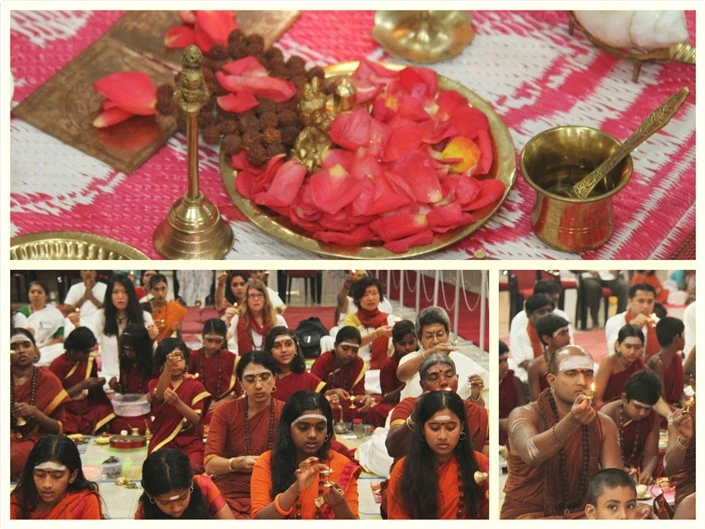
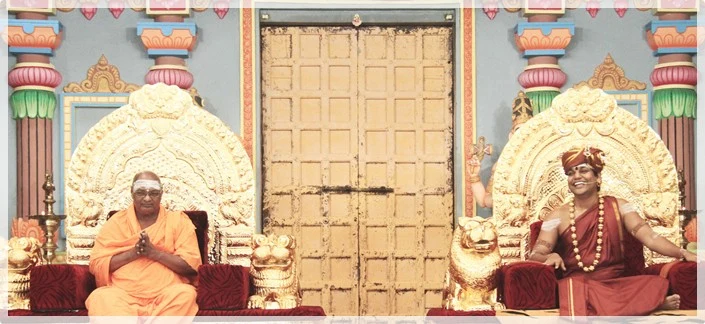
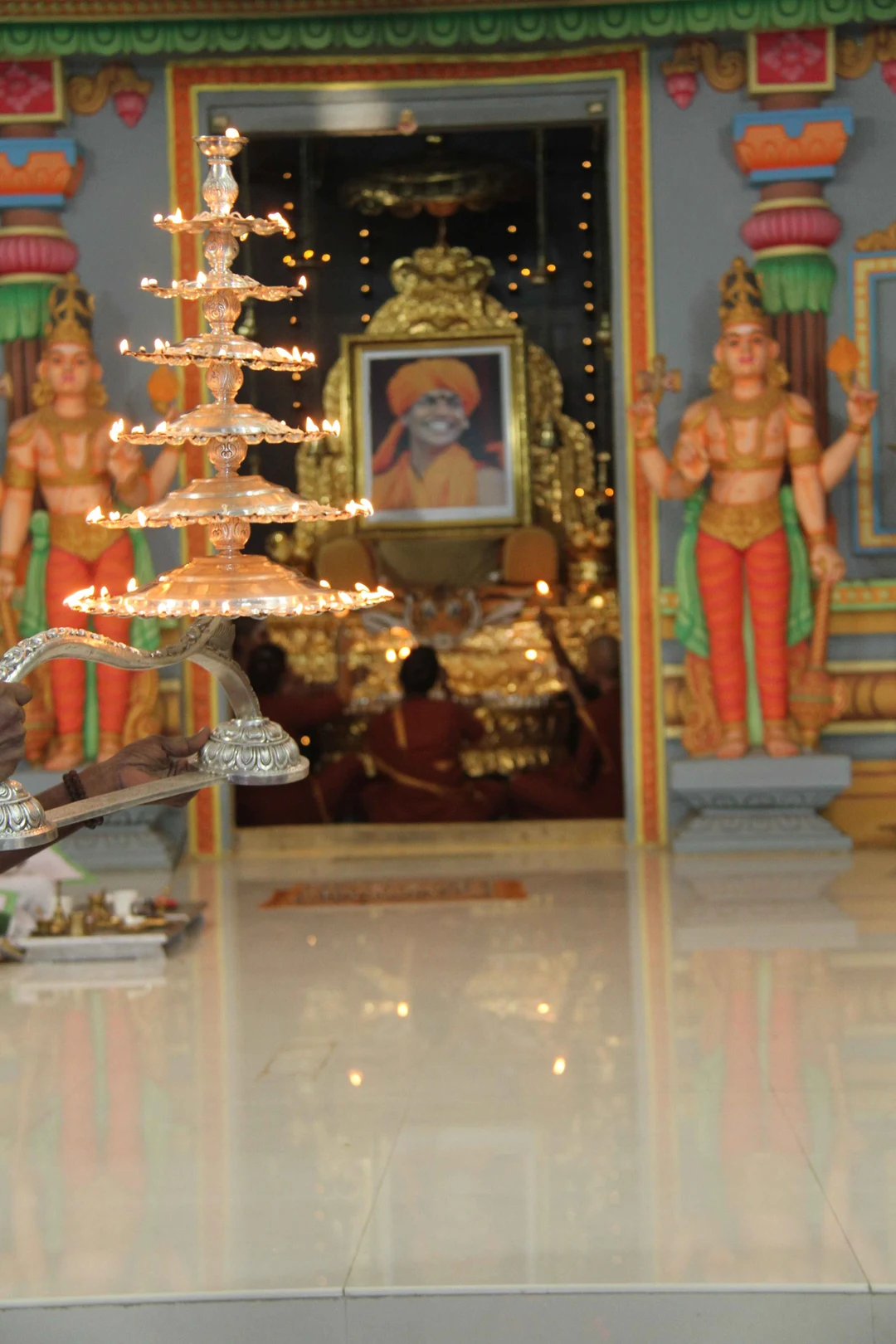
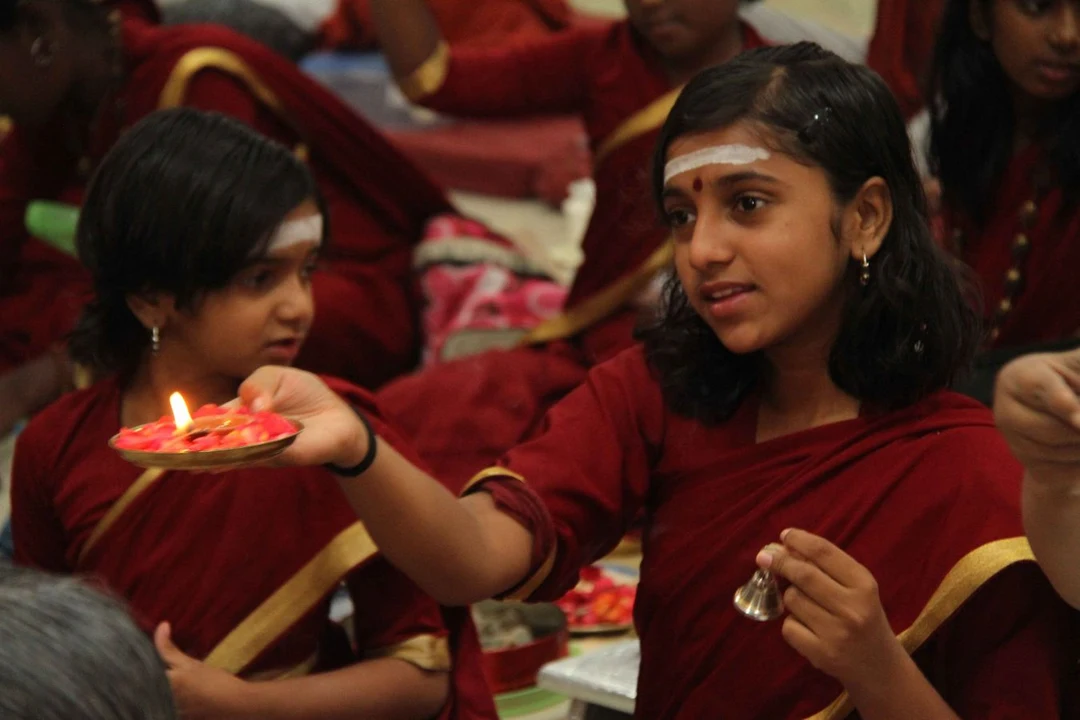
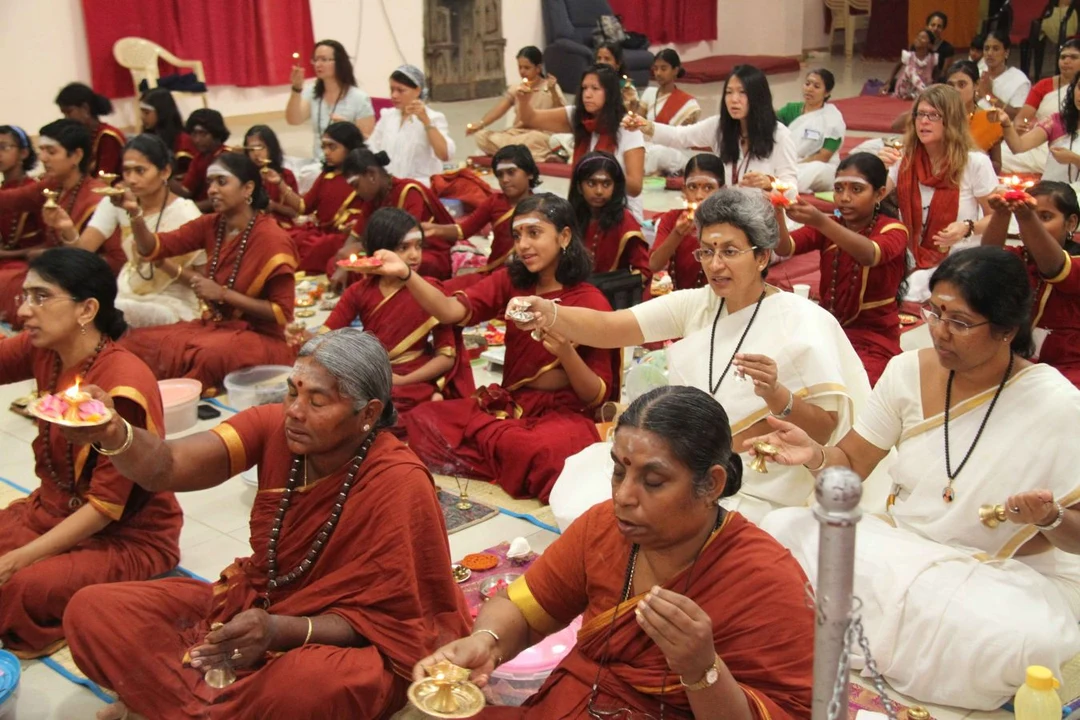
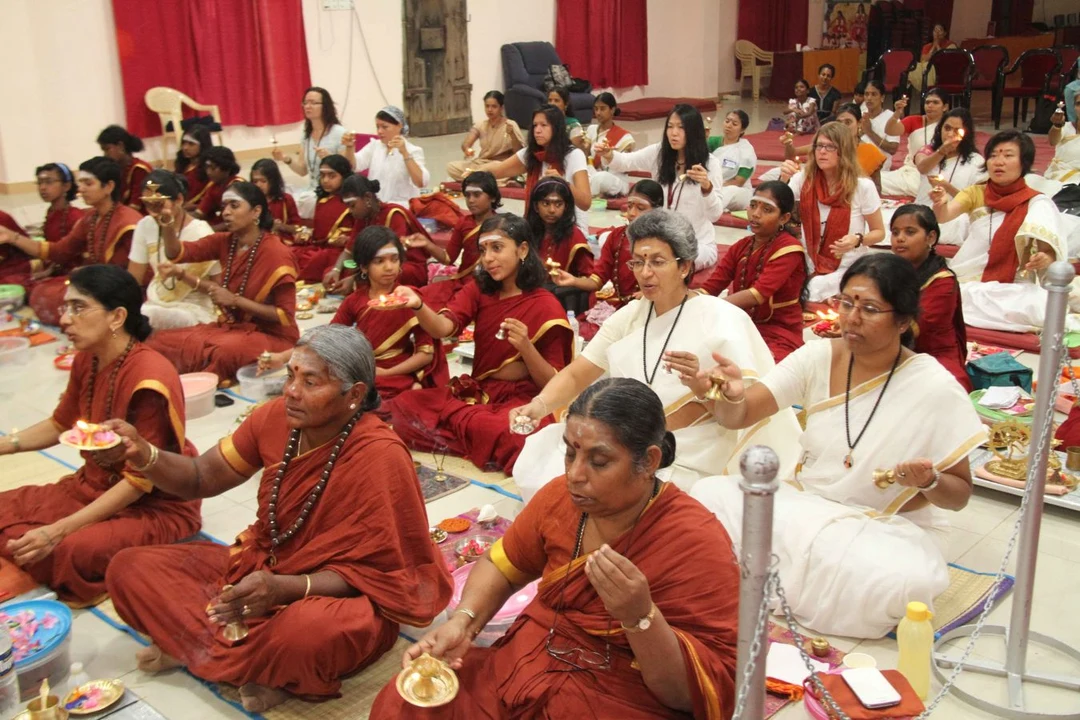
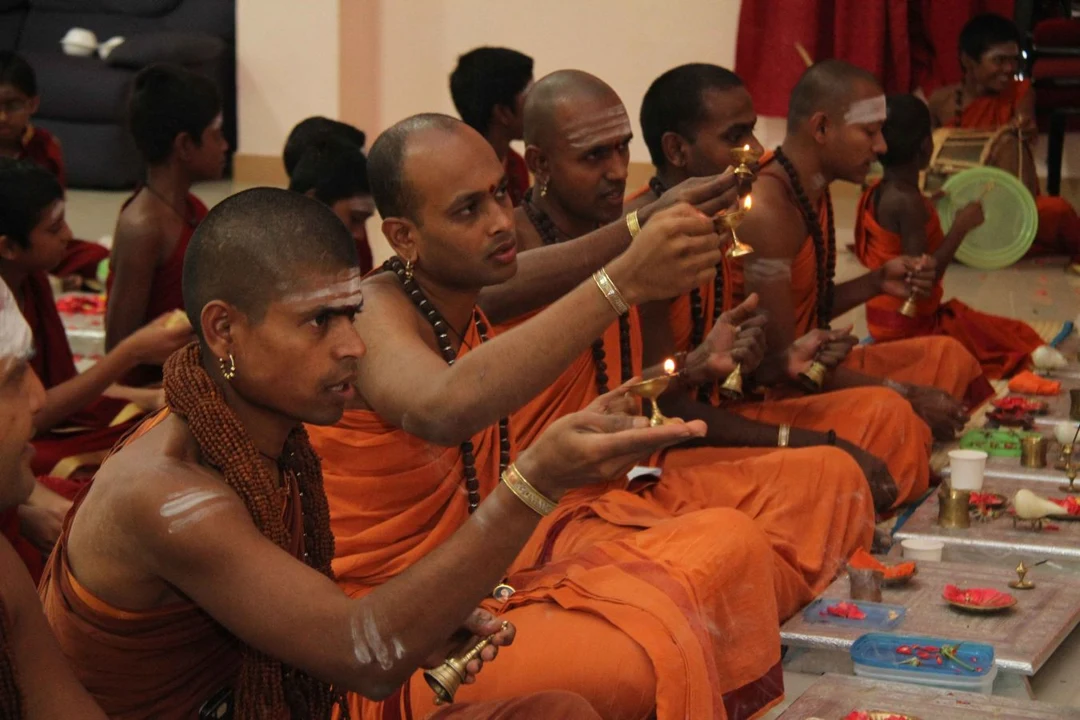
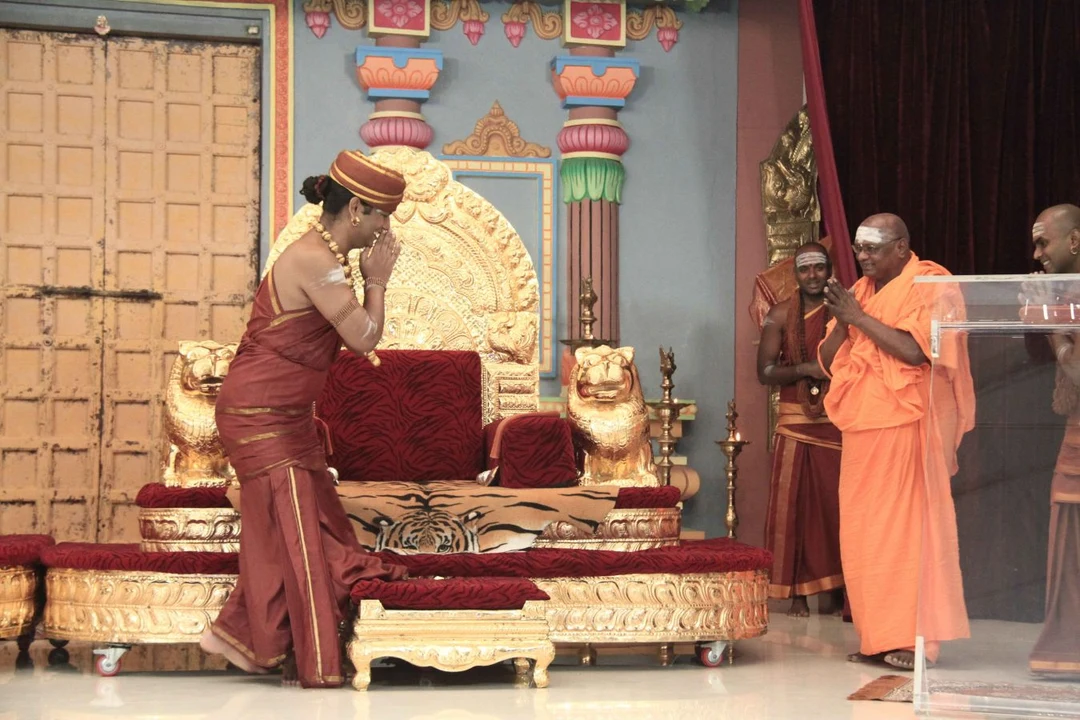
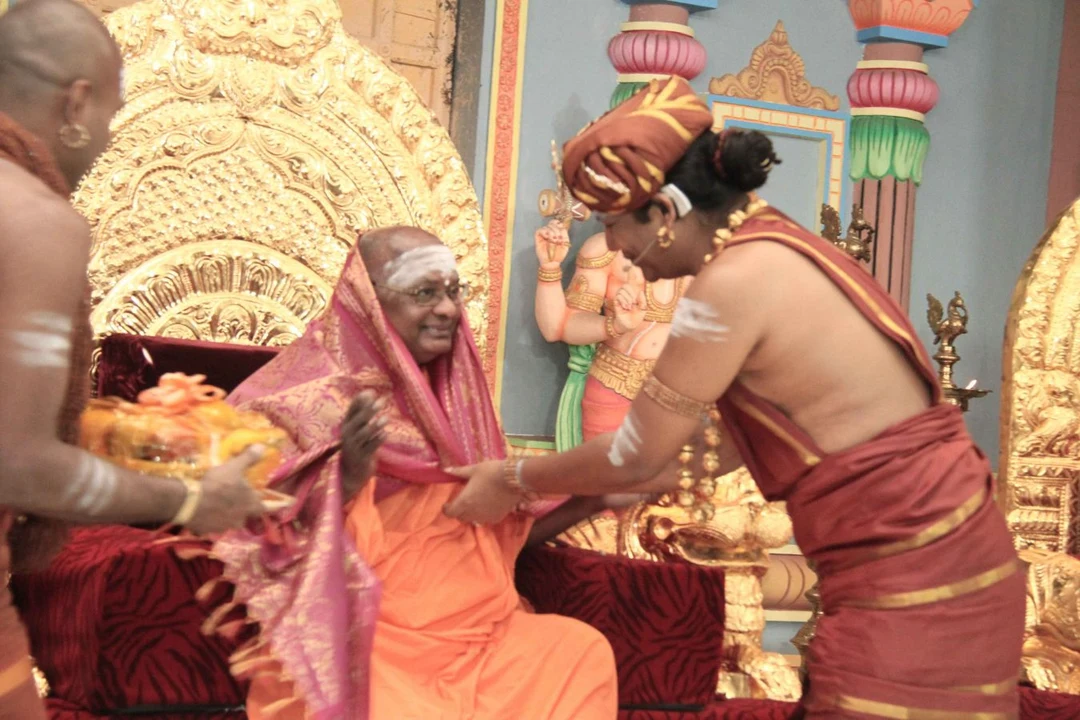
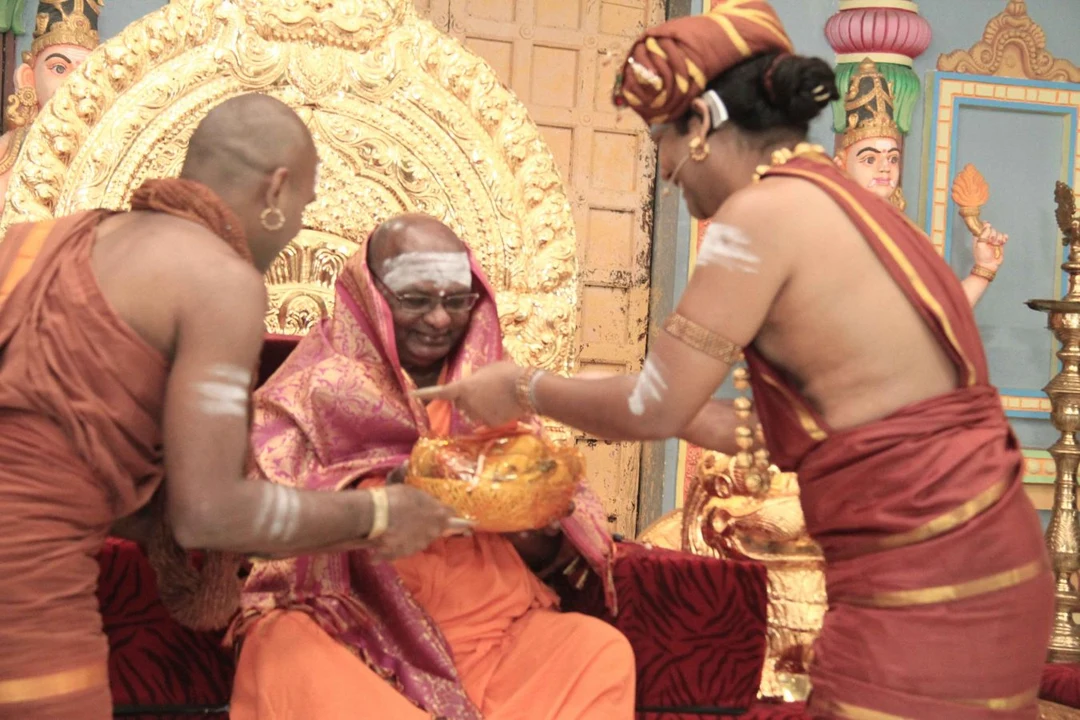
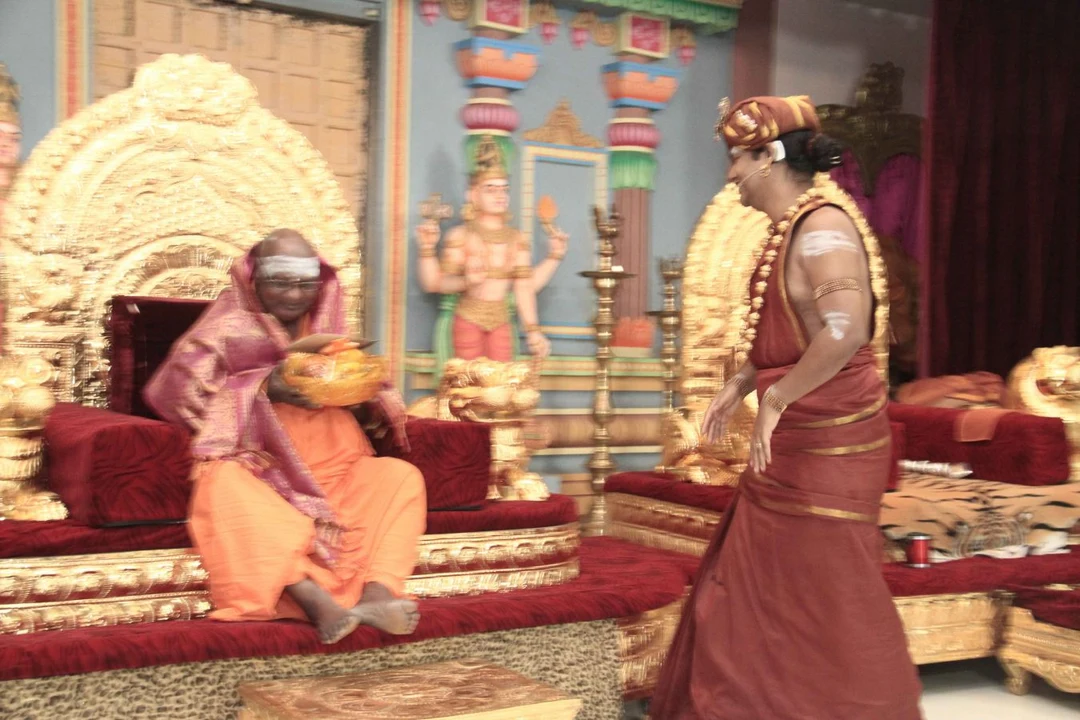
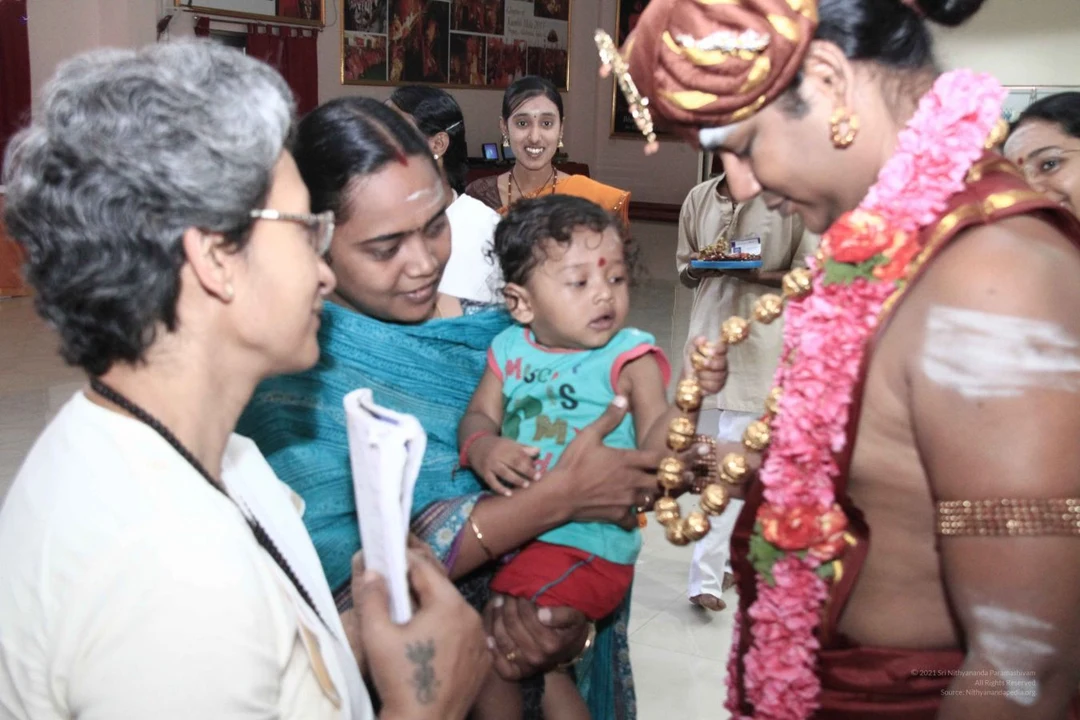
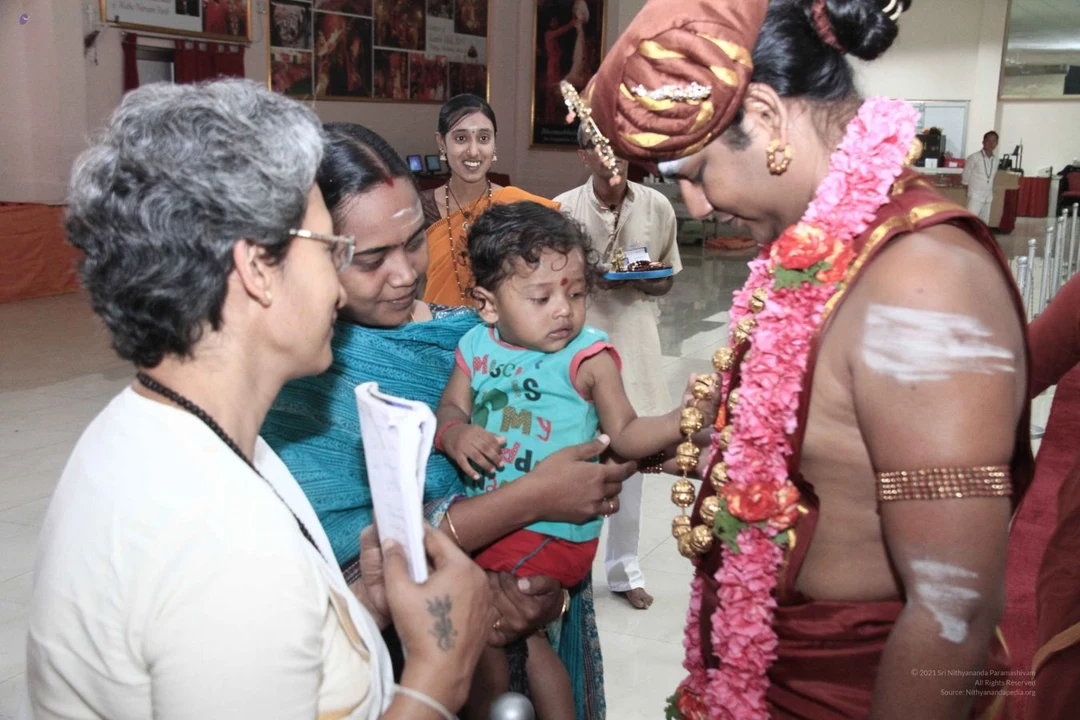
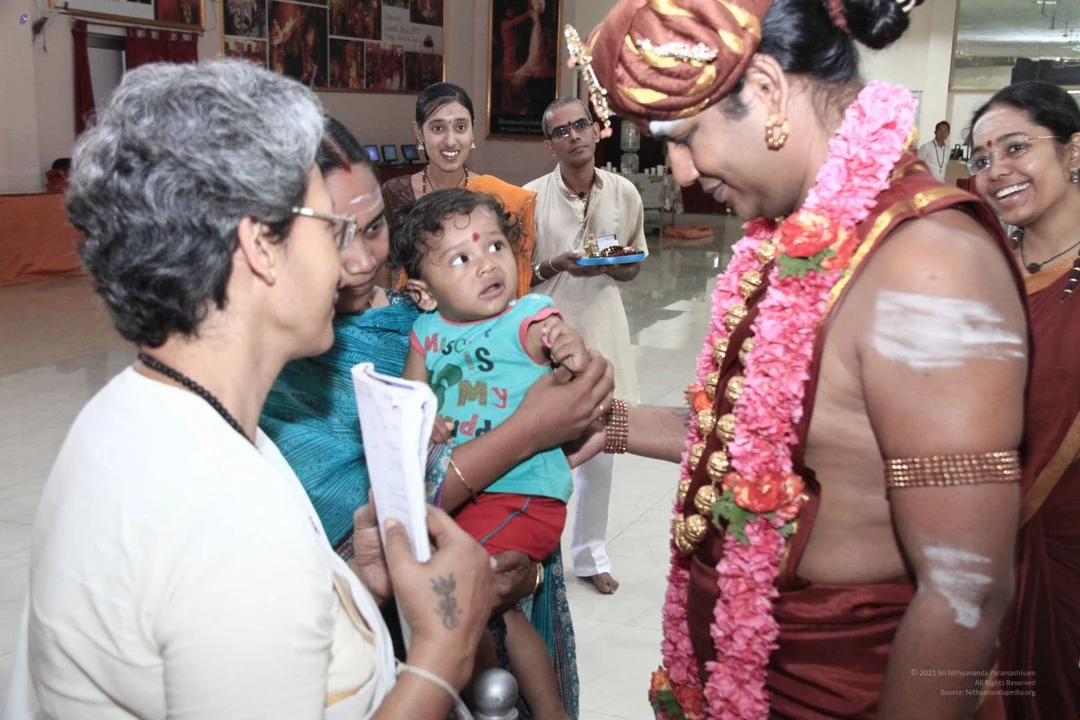
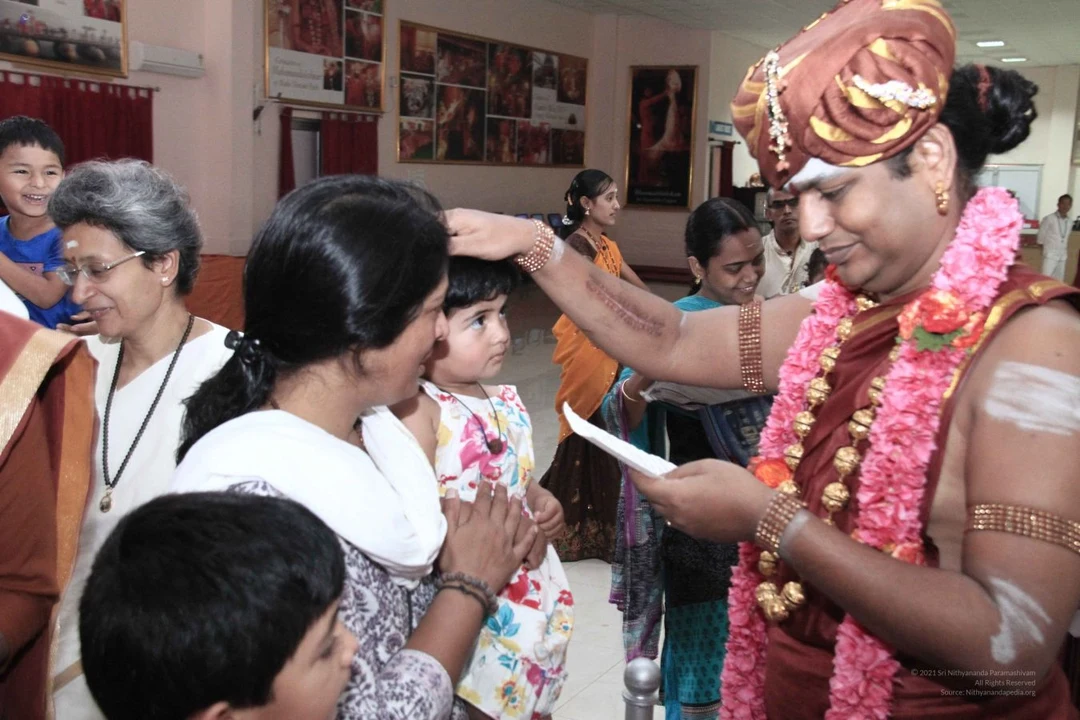
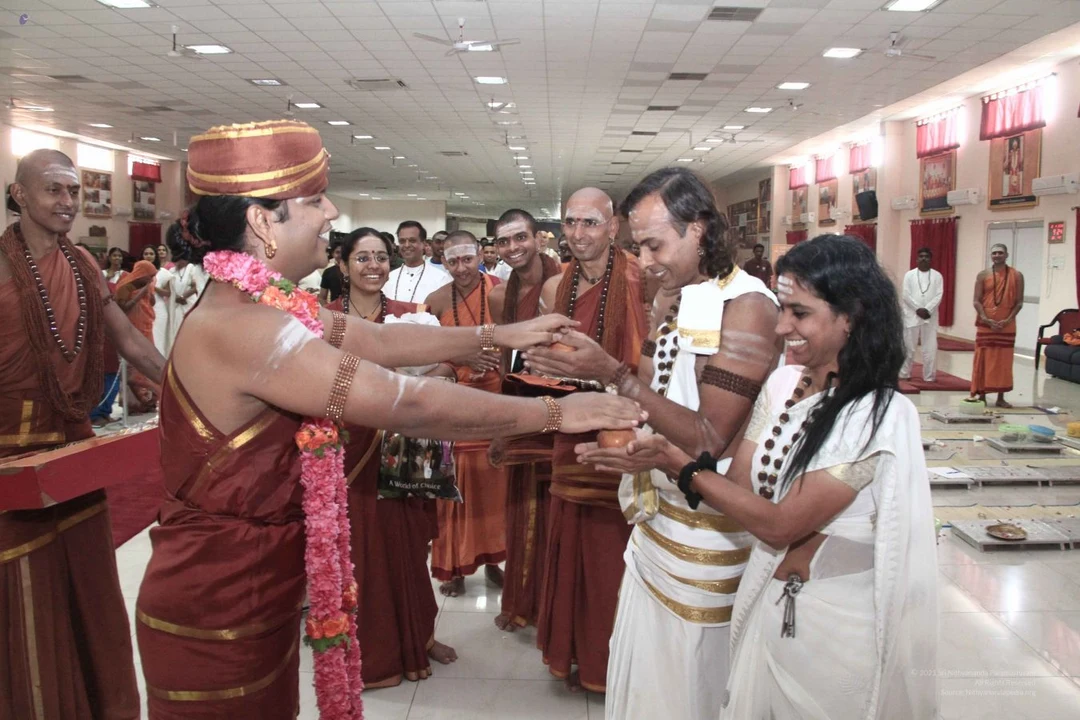
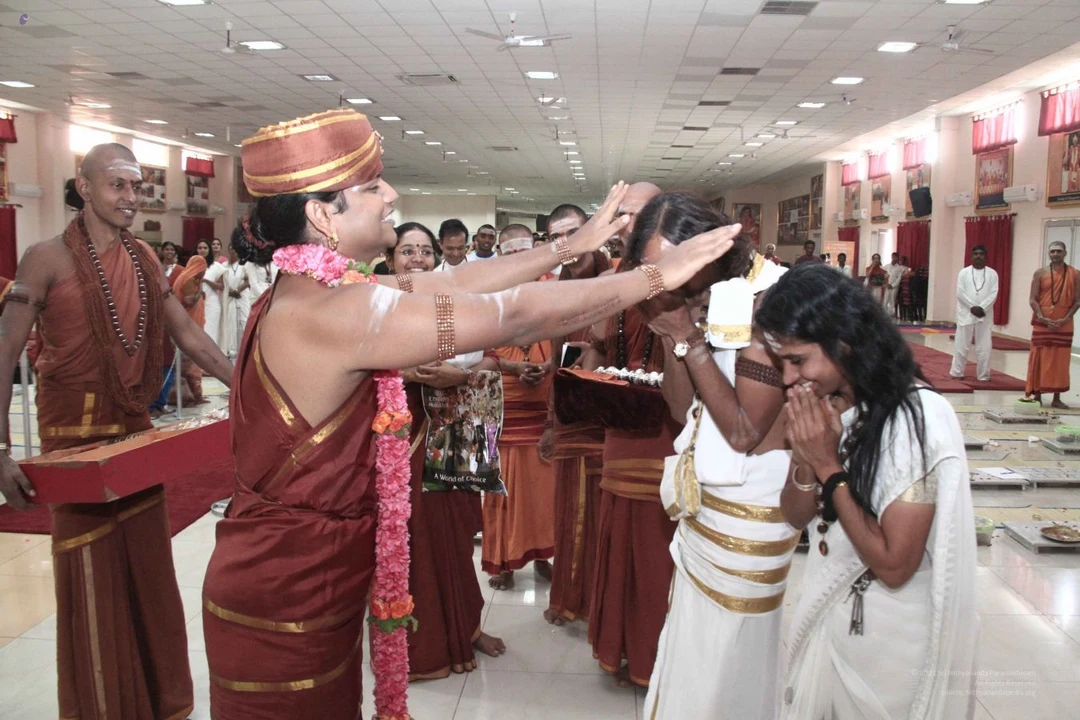
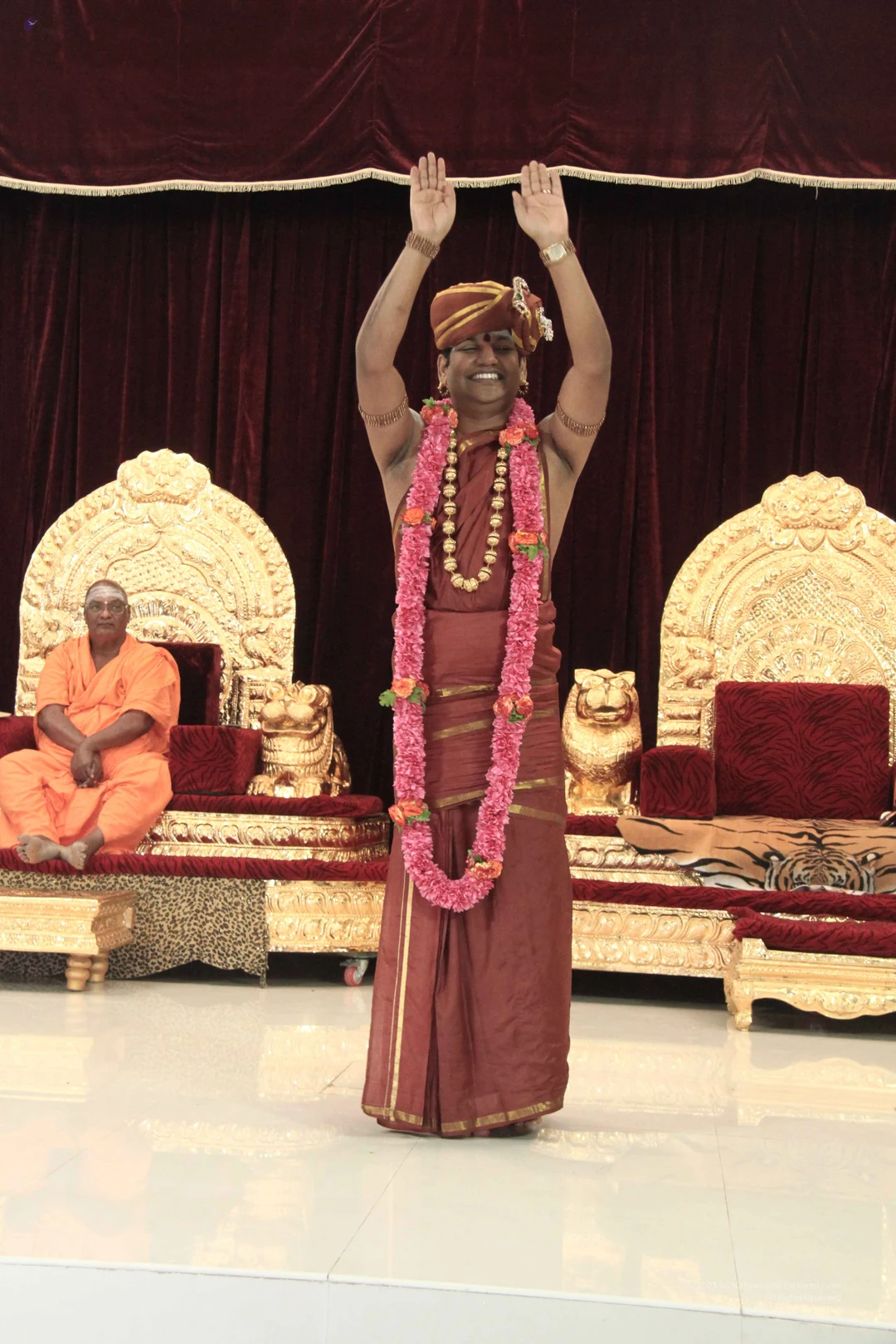
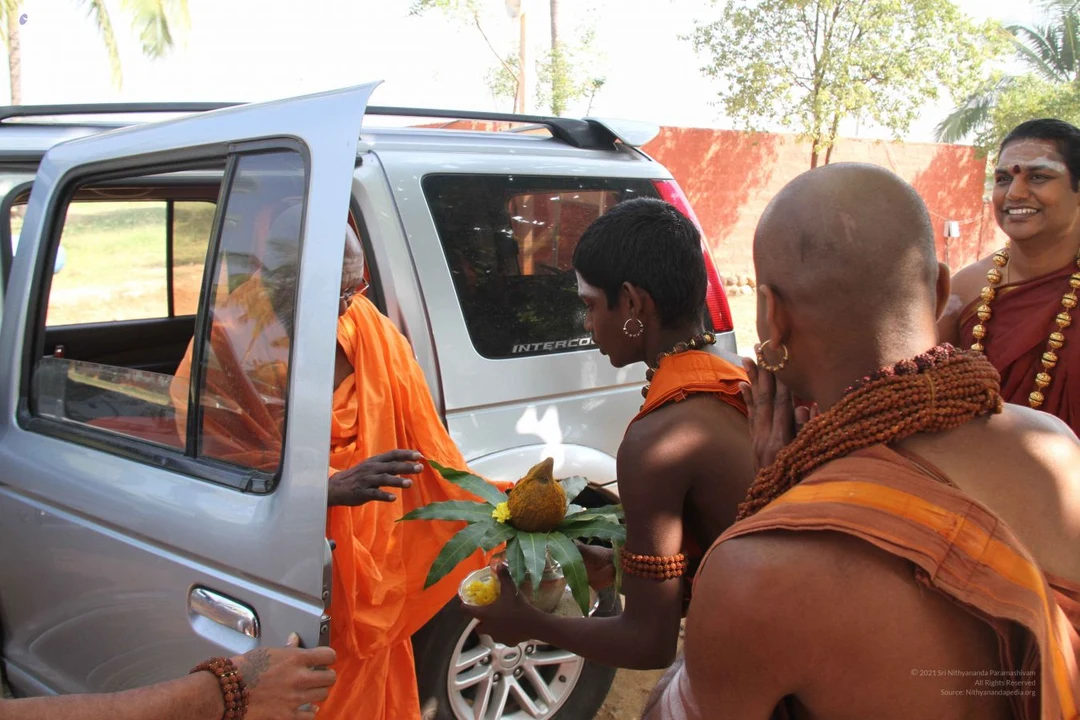
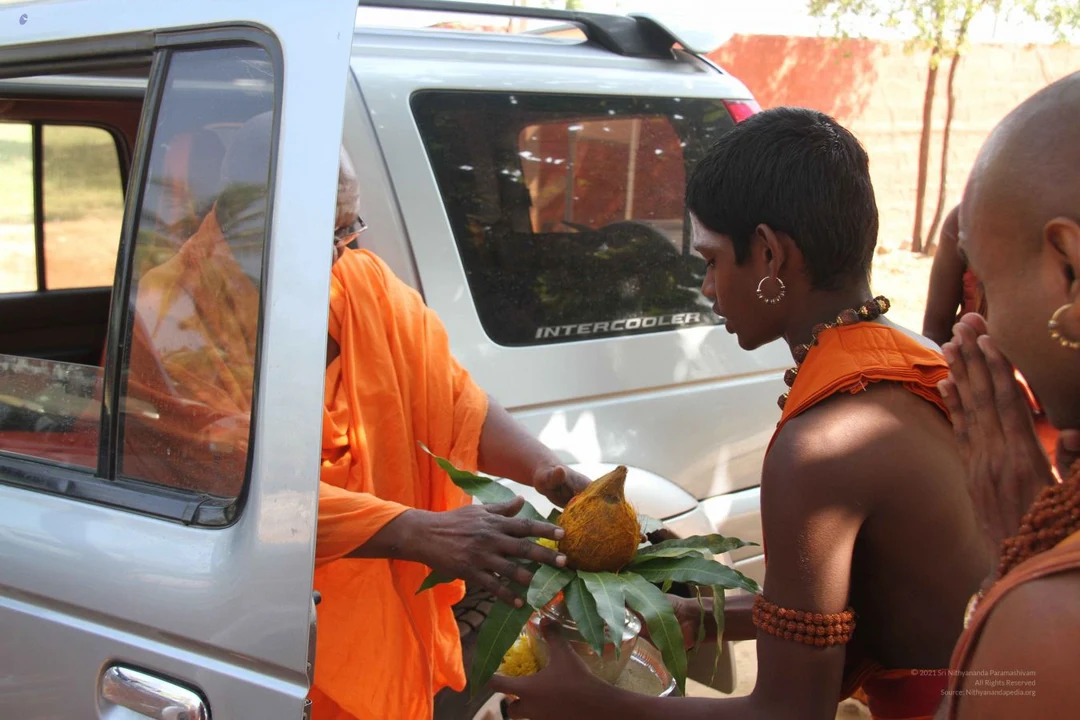
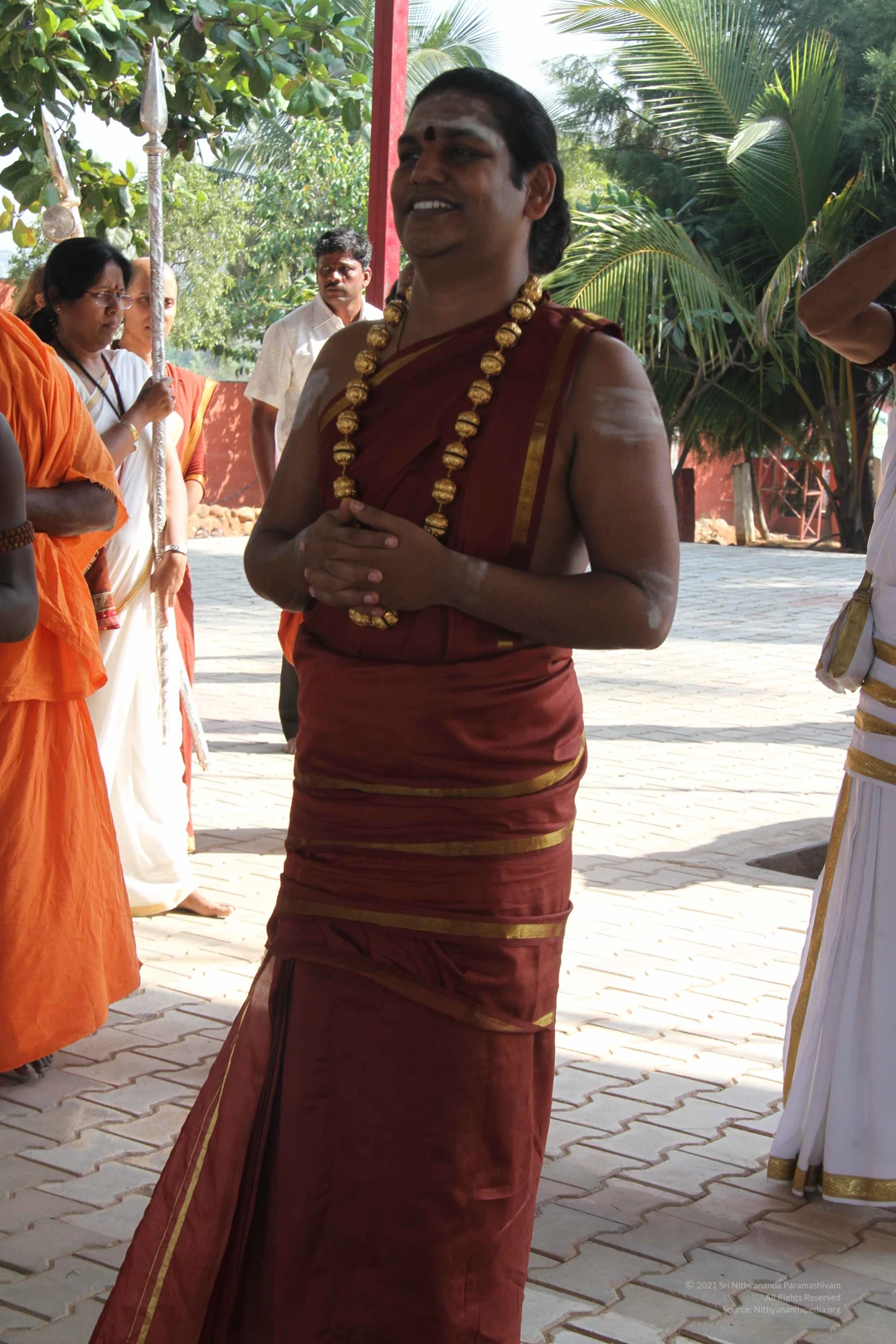
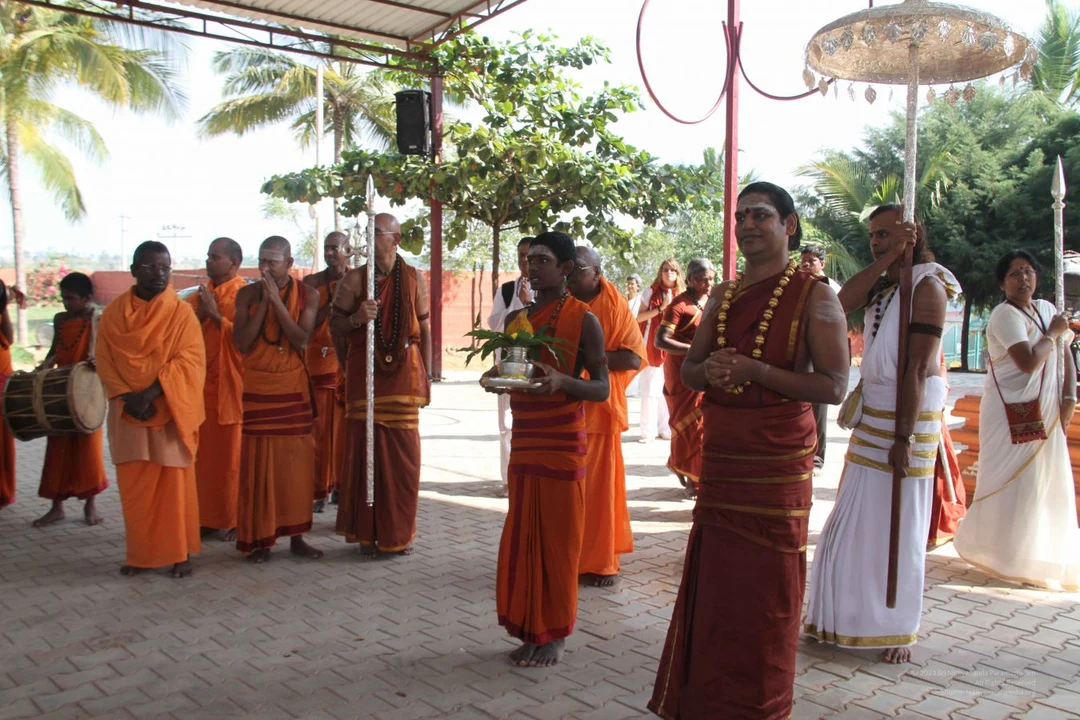
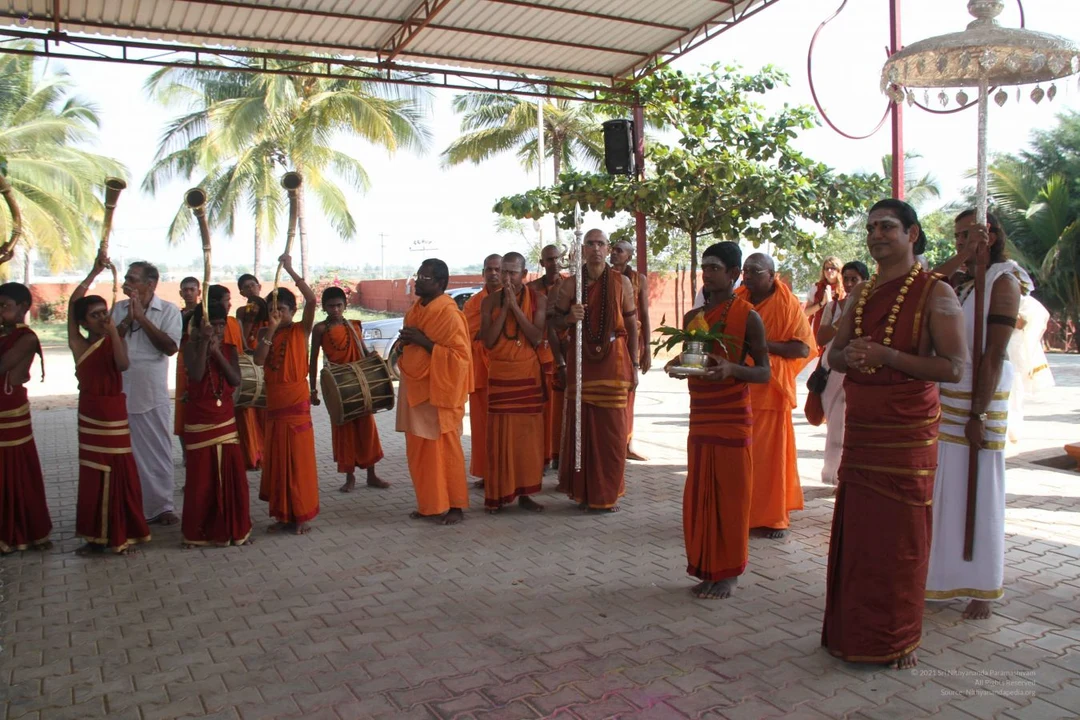
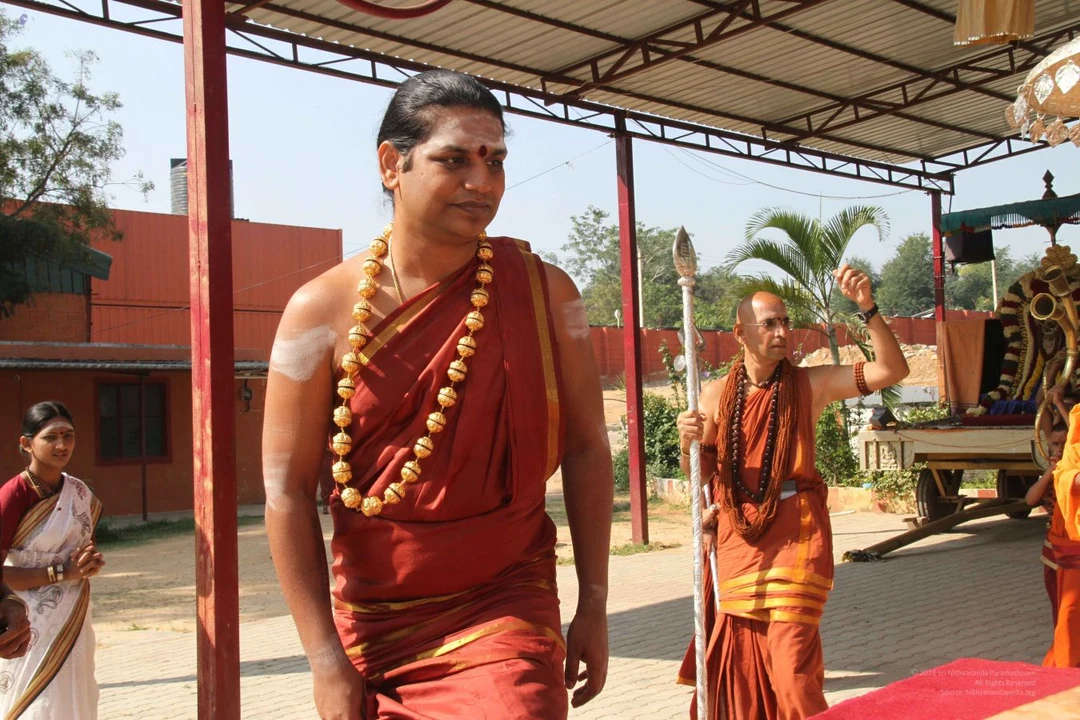
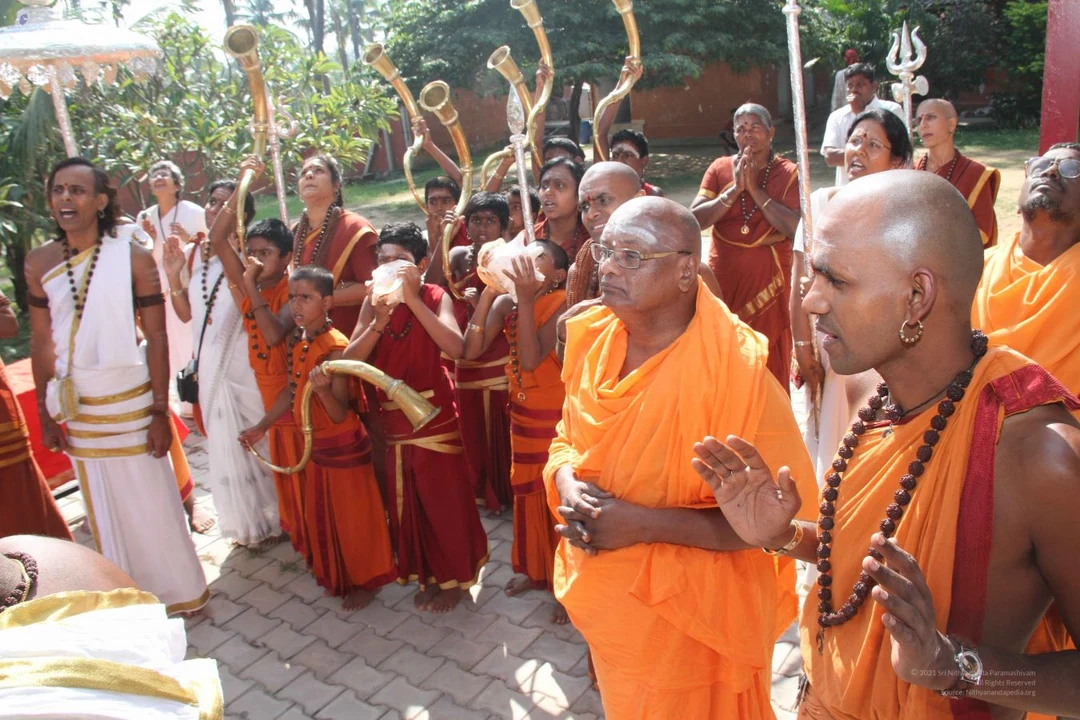
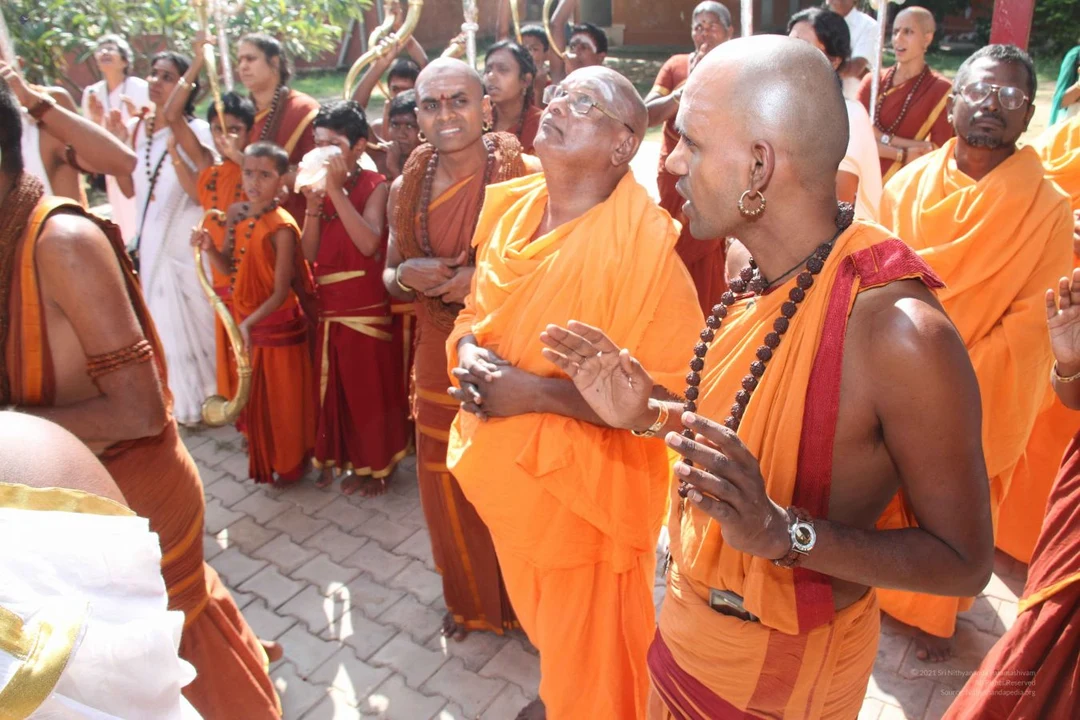
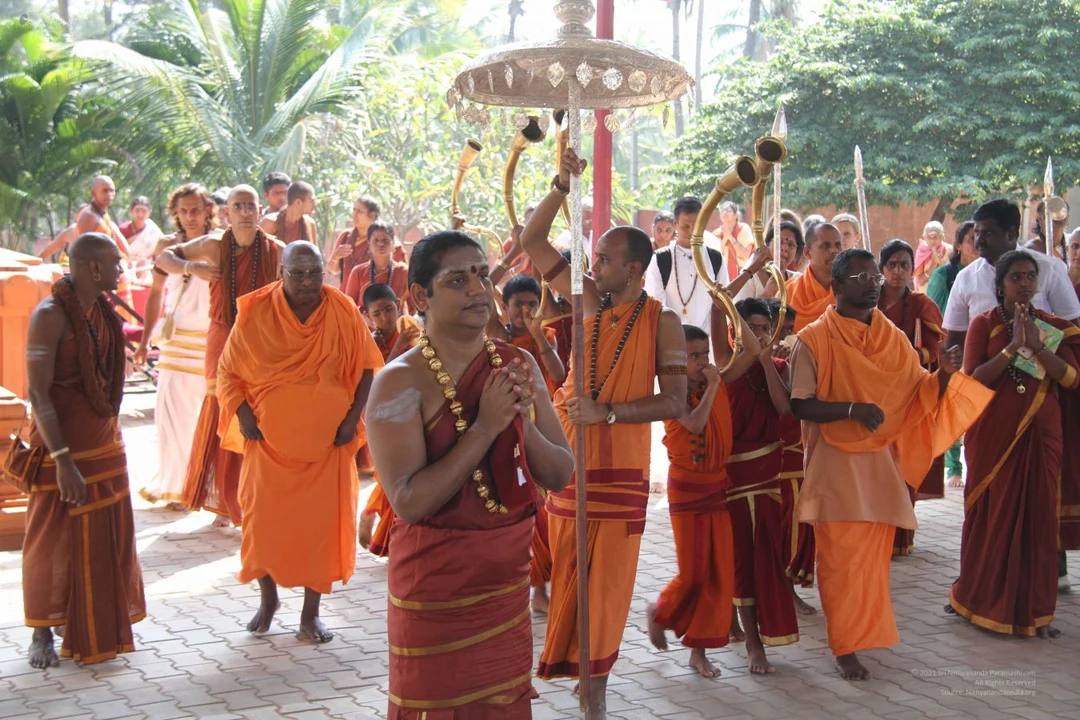
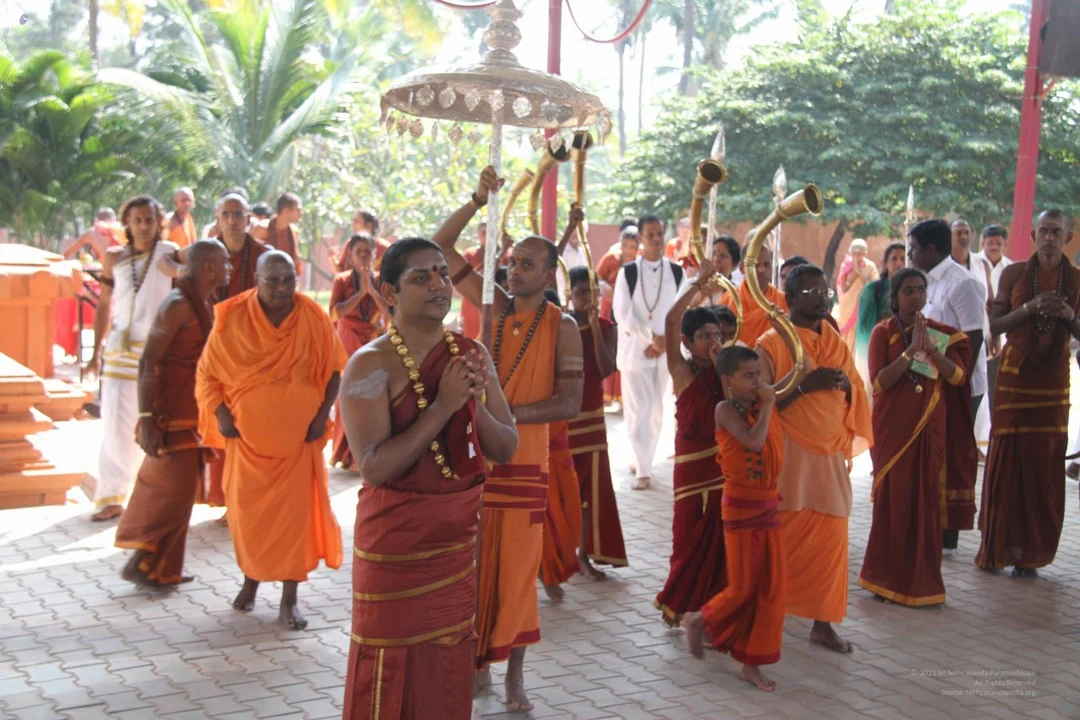
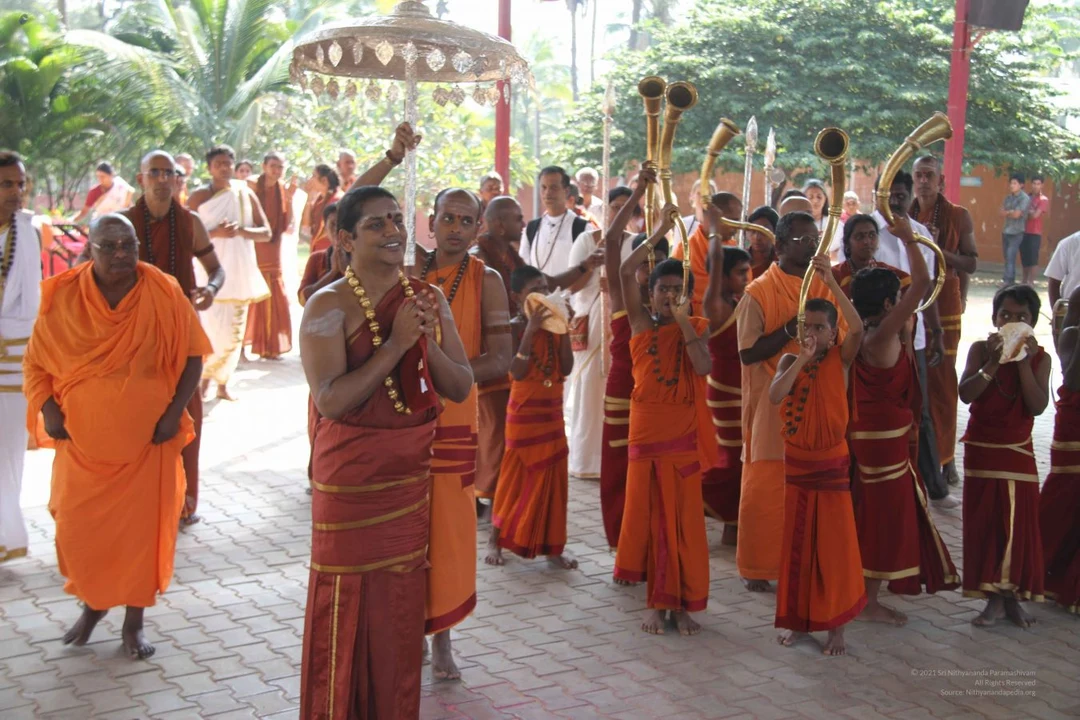
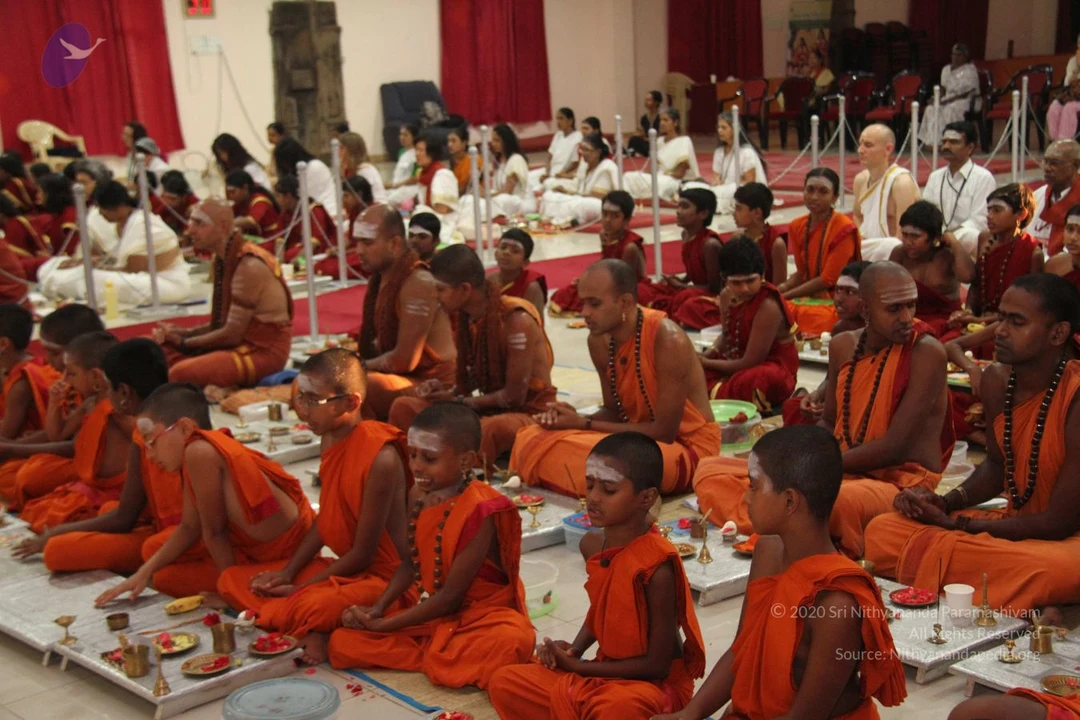
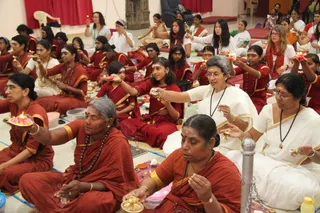
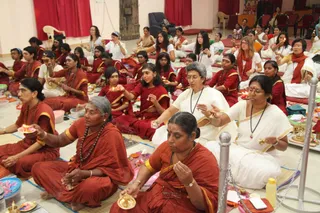
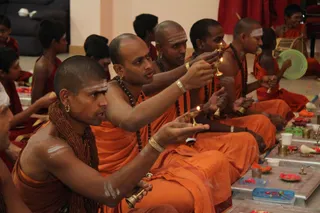
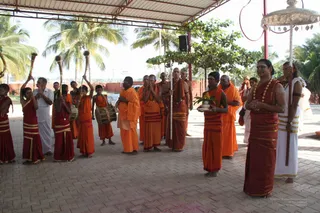
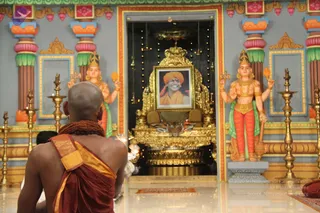
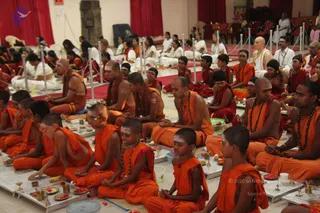
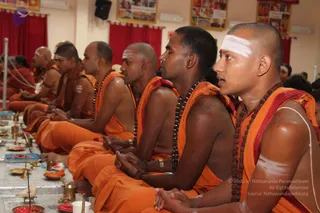
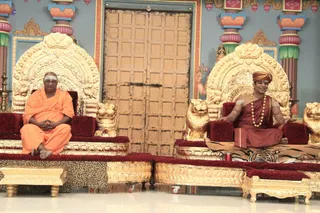
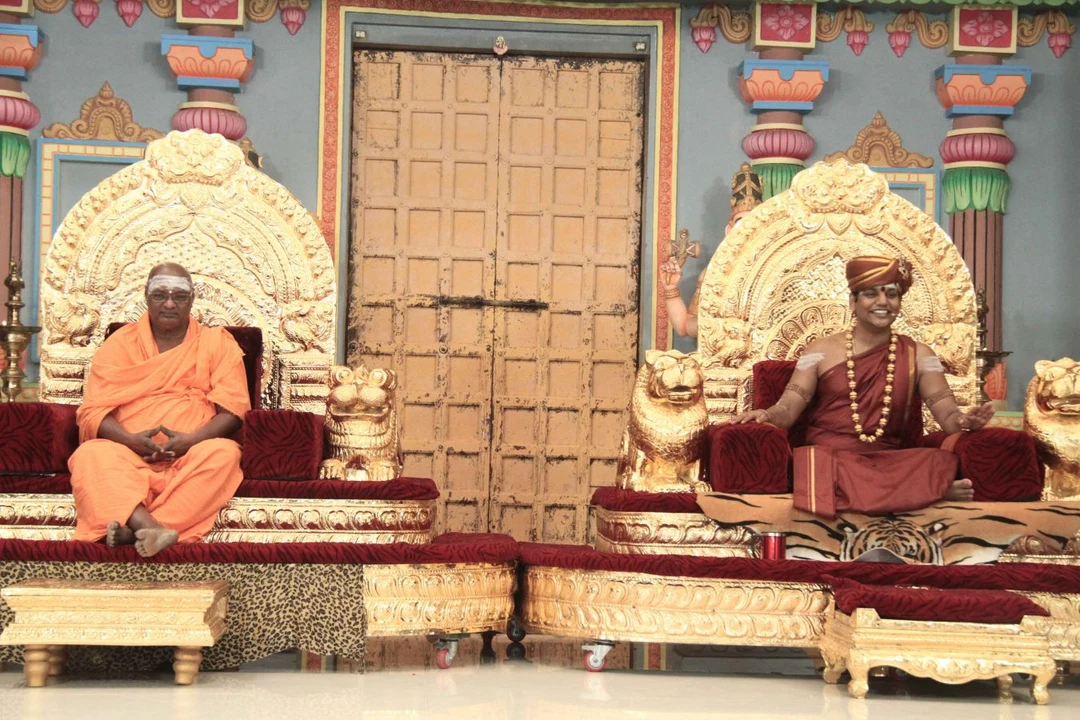
This morning devotees gathered to offer Paduka Puja (an offering of gratitude to the sacred sandals of the master) followed by chanting from Guru Gita. We were graced with the presence of Swami Atmananda Swamiji, the first sponsor of Nithyananda Dhyaanapeetham, who spoke a few words and gave blessings to Nithyananda Sangha.

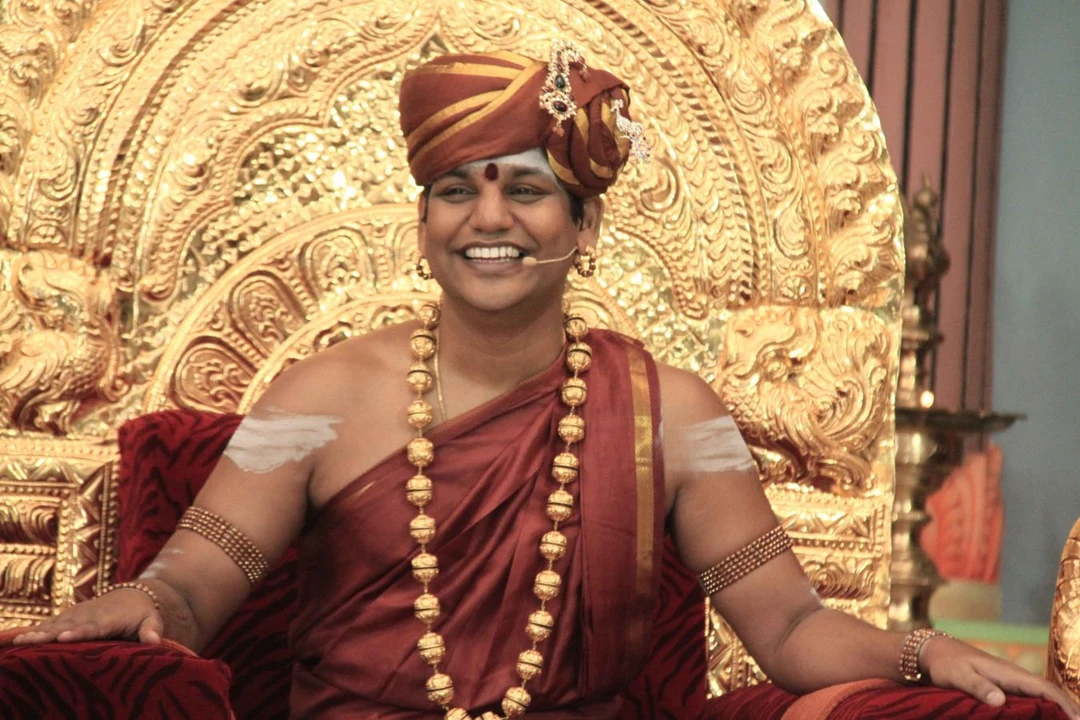
The daily morning Satsang continued to expand on the subject of Sannyas, for the fifth day. Swamiji spoke about the birth & death cycle, and how it originated out of incompletion. He said that we must go to that level of completion to be ‘completely complete’. He then reinforced yesterday’s message by requesting all devotees to be a ‘cause’ for change, “because the change is happening now!” Those who put the cause of Completion as their only priority are Sannyas. Swamiji has committed to creating 10 lakh Sannyasis in this lifetime.

A last interesting note from Swamiji today was that the first recorded flight actually occurred 40 years before the Wright Brothers, by Mumbai Naga Sannyasis and was funded by Mahanirvani Arcada! – Another example of the richness of the Sannyas tradition, and what they have offered to the world.
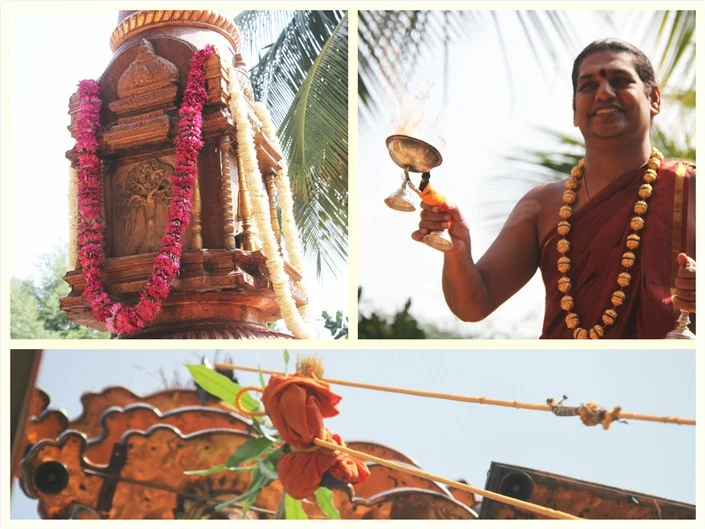
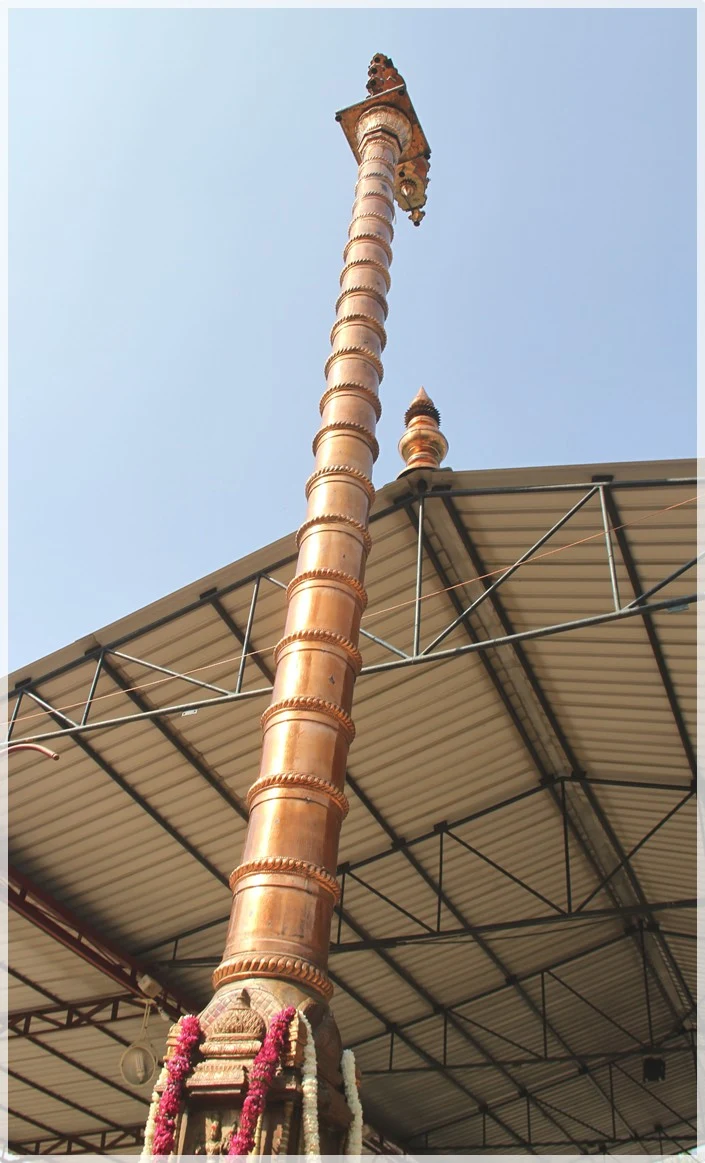
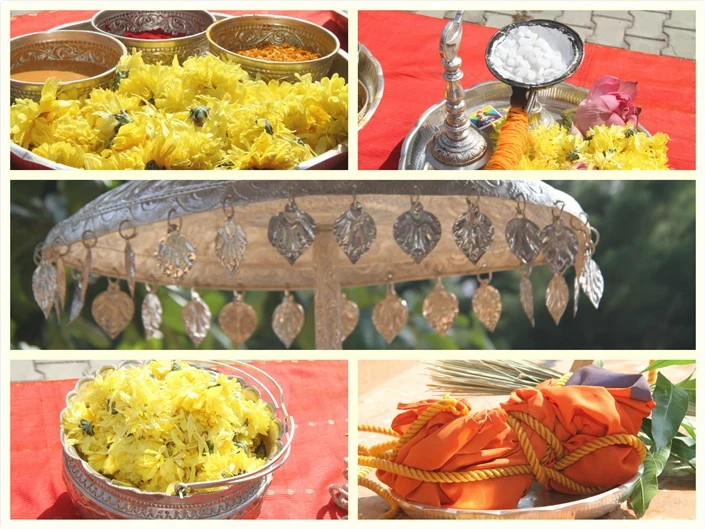
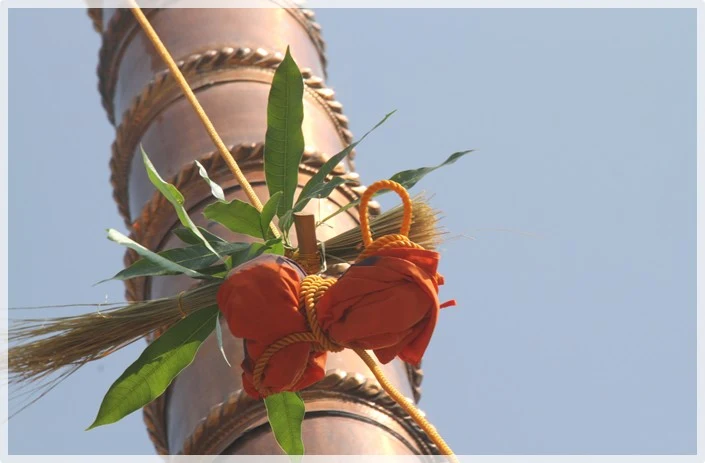
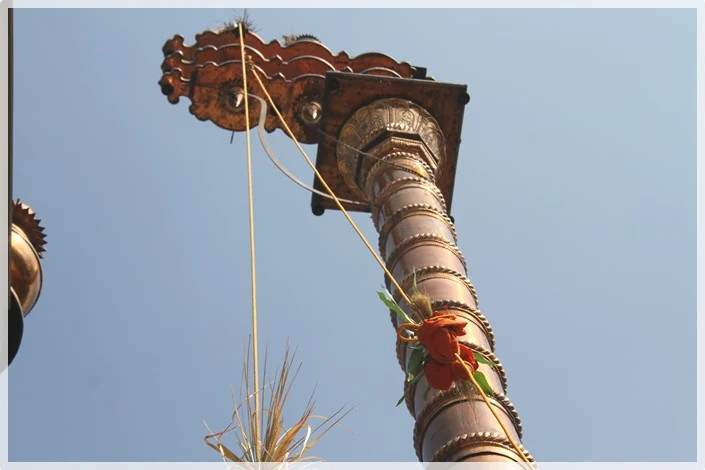
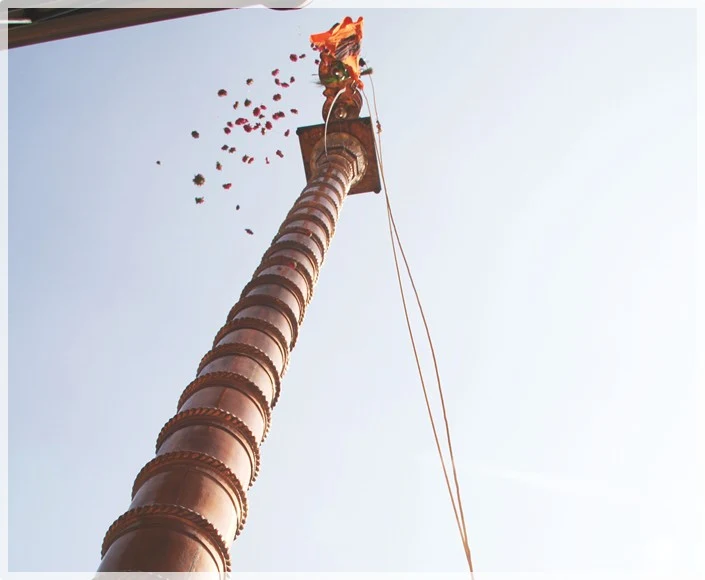
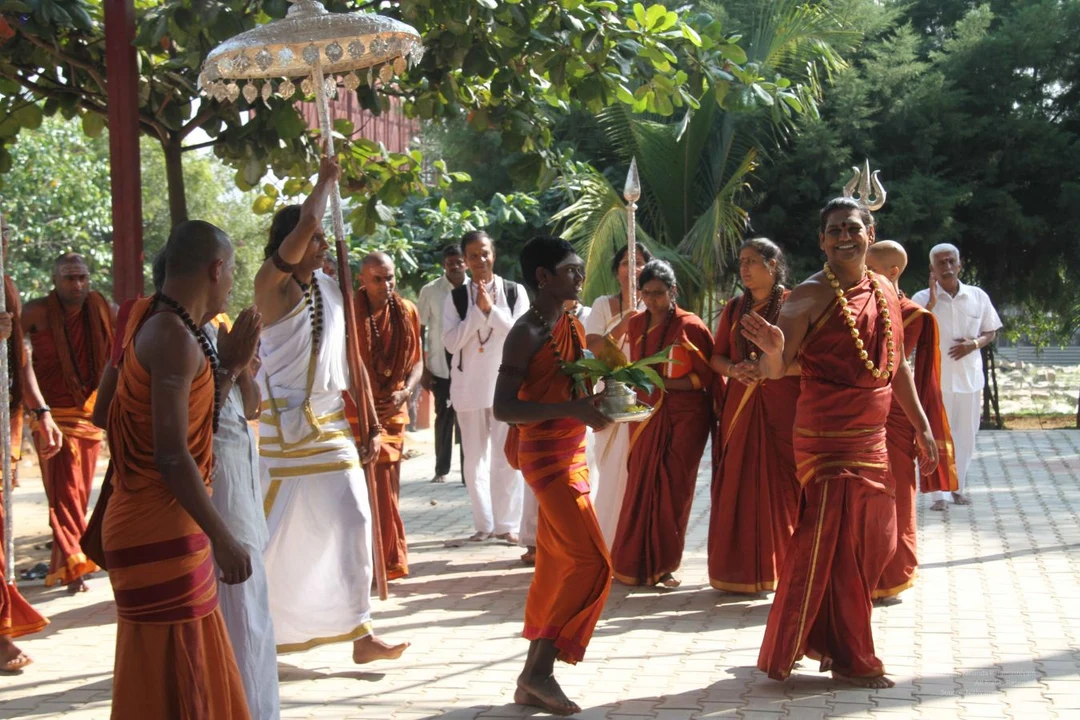
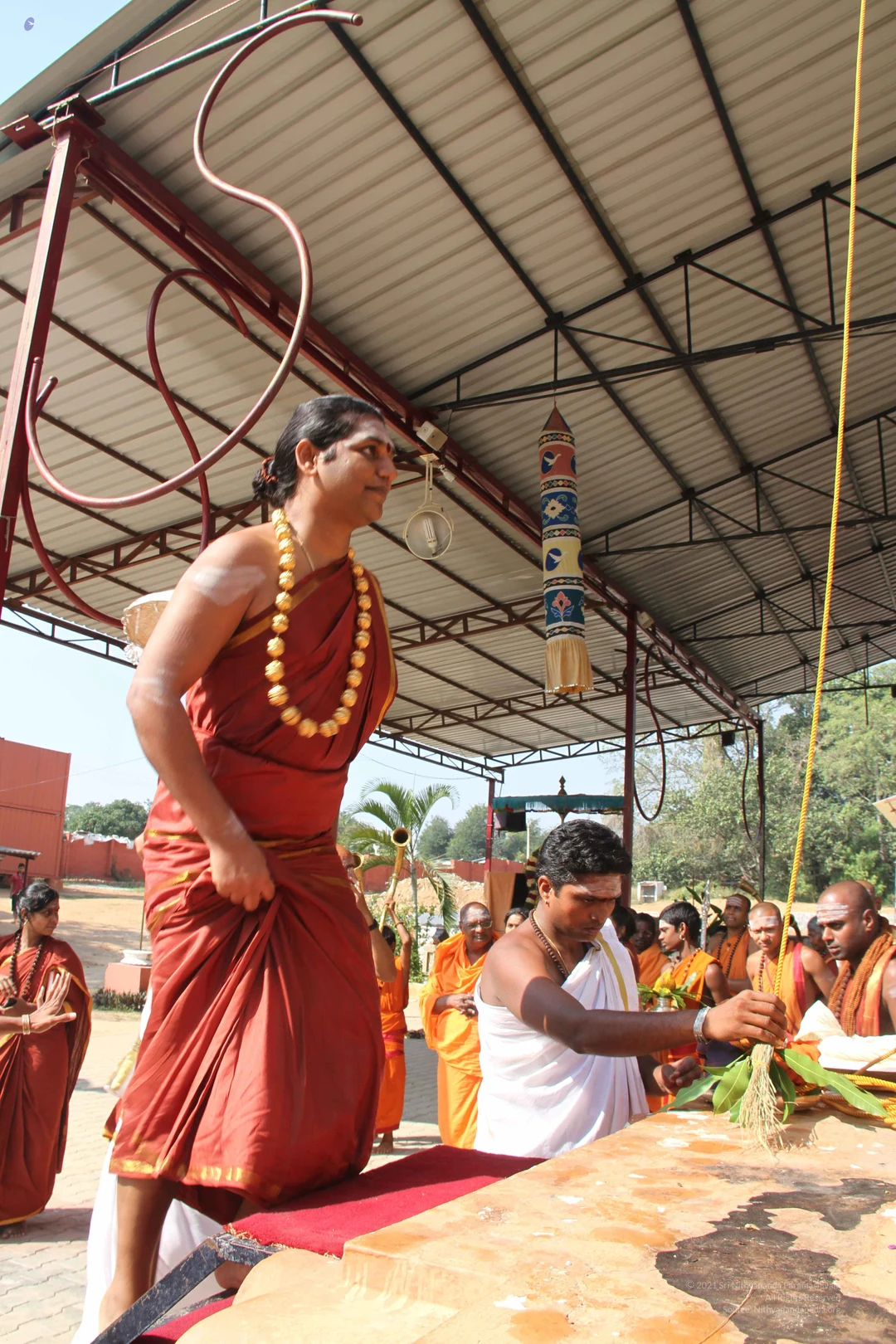
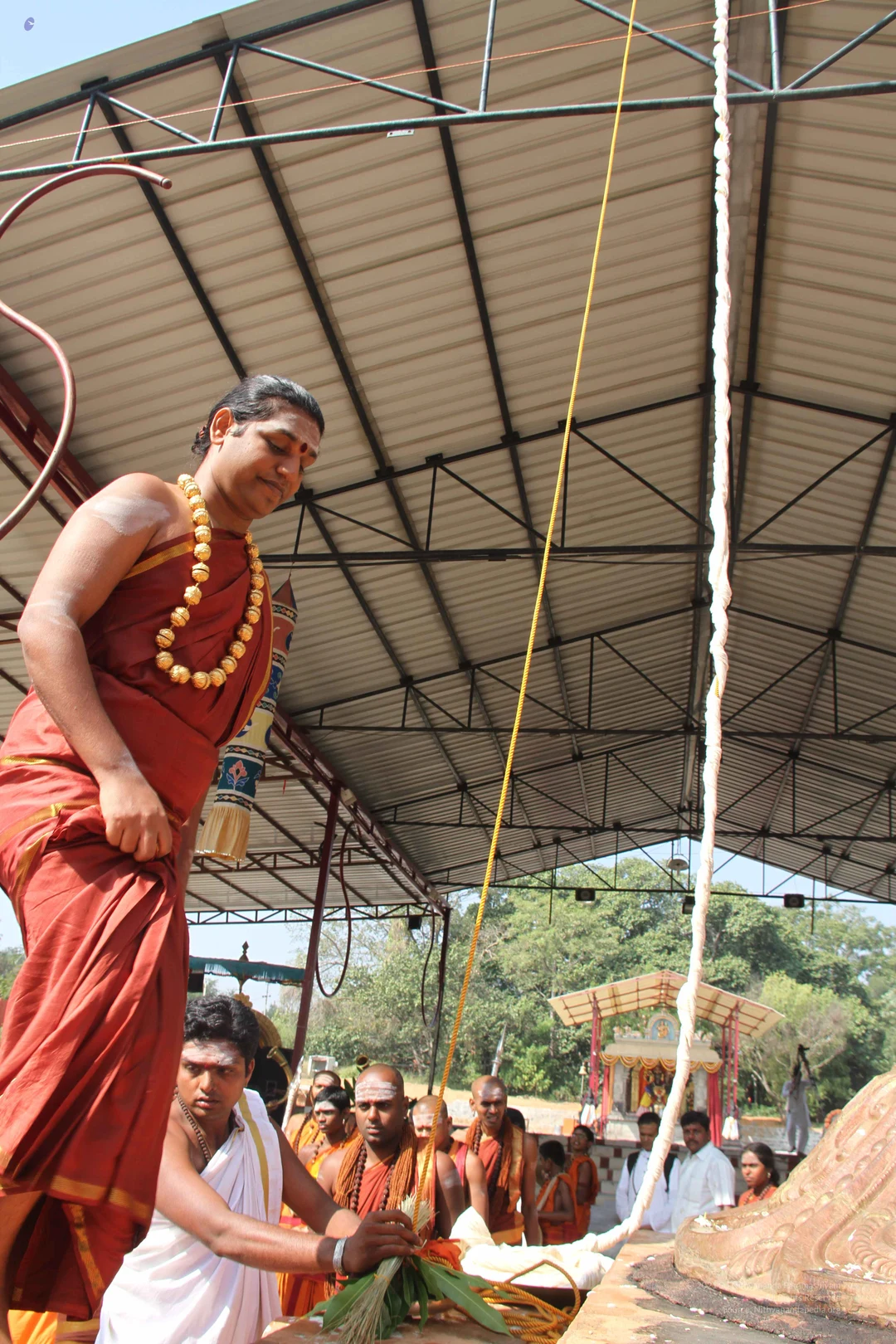
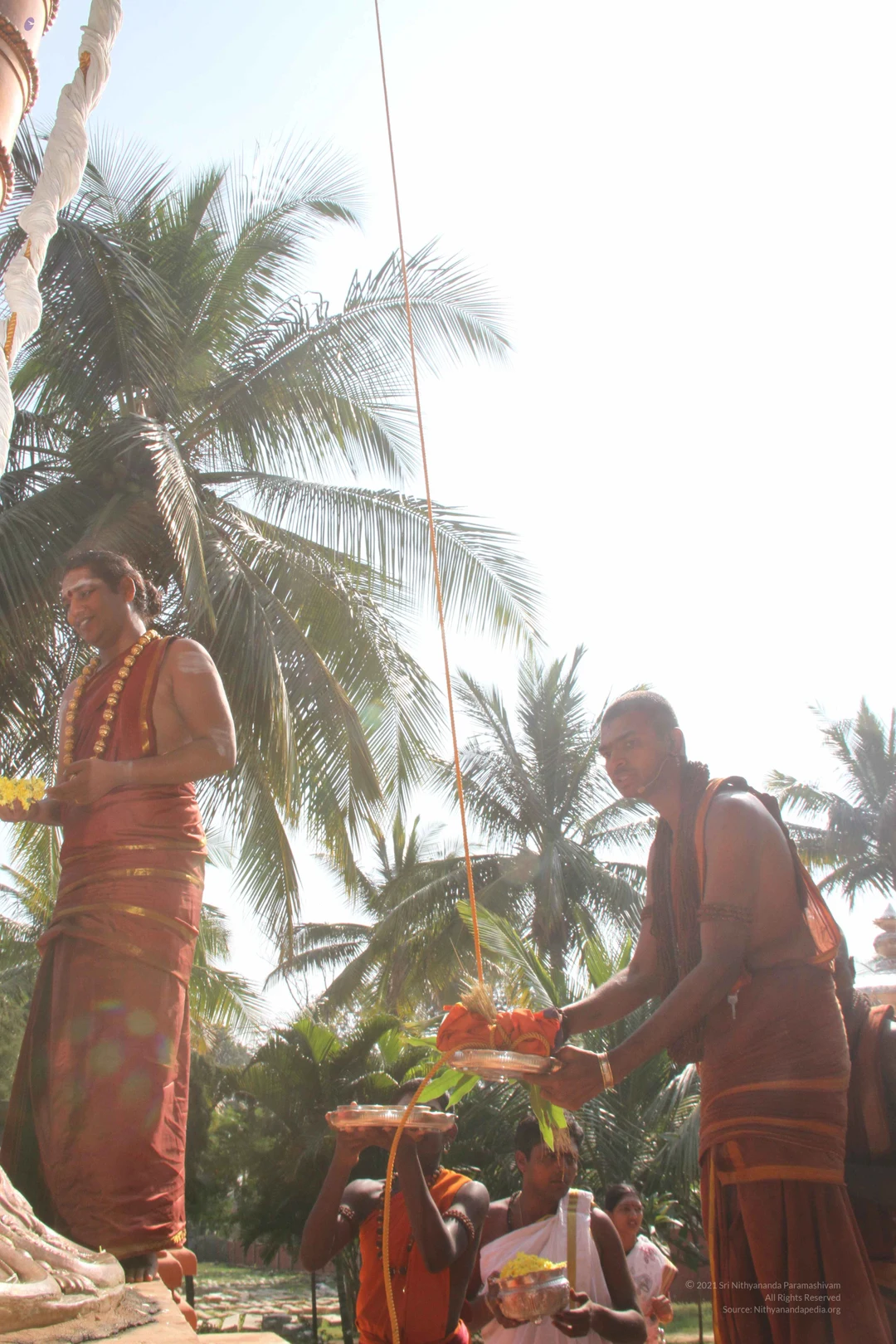
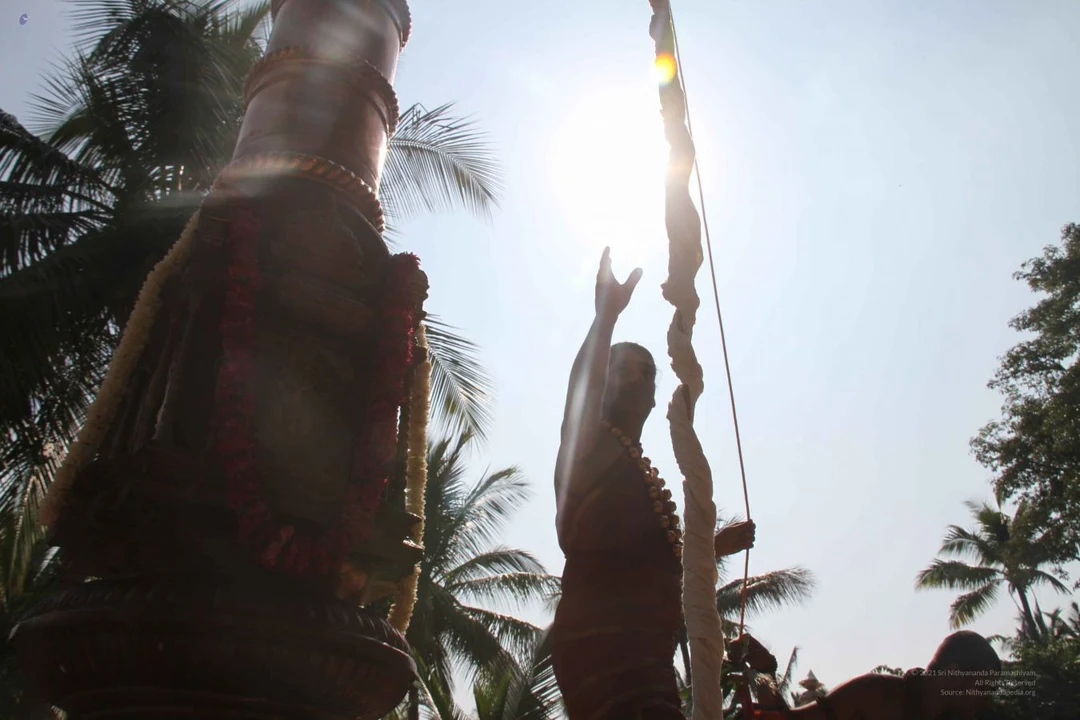
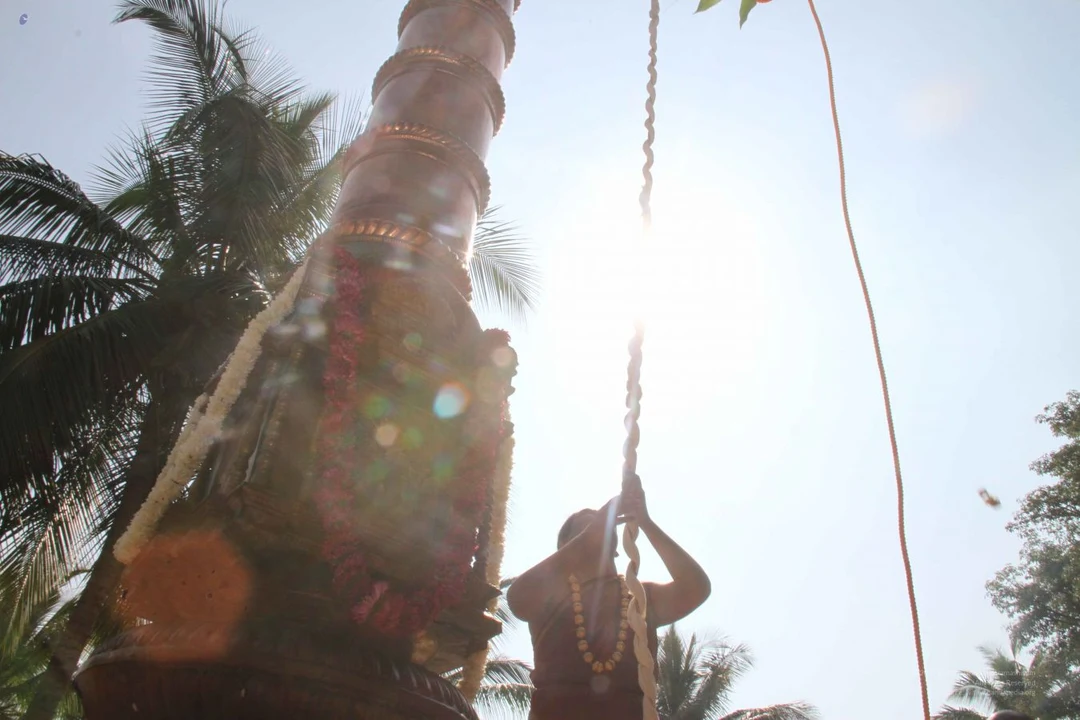
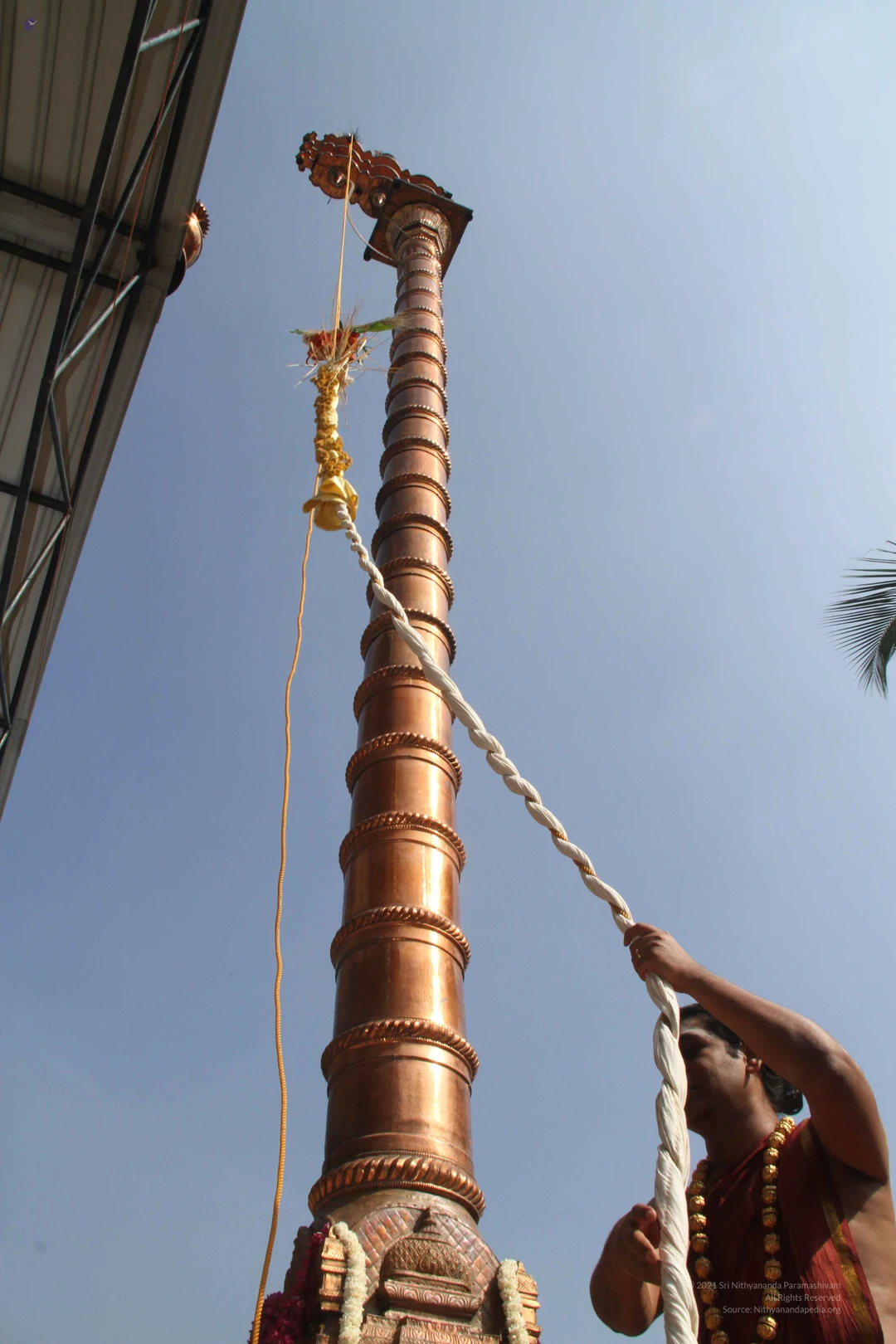
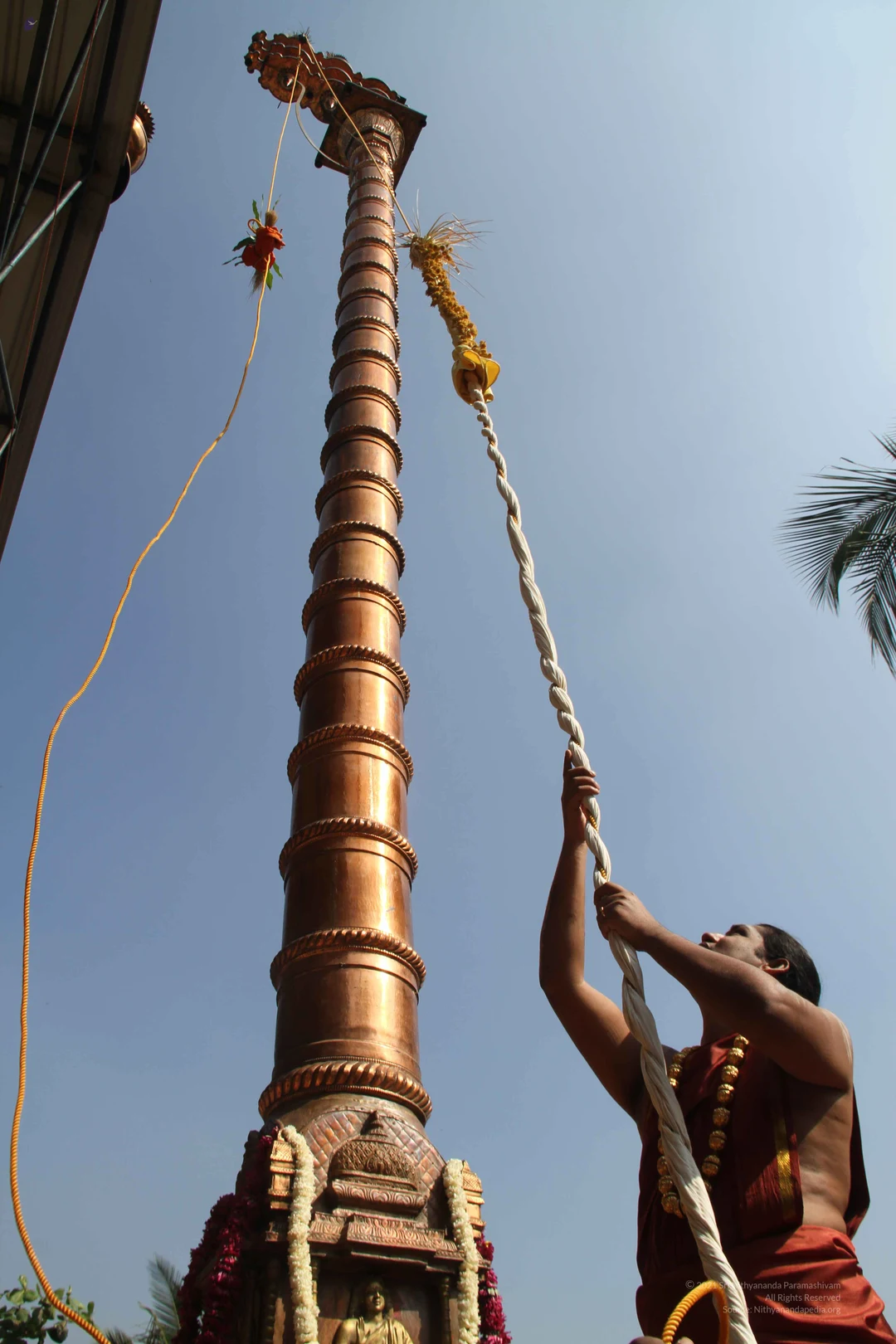
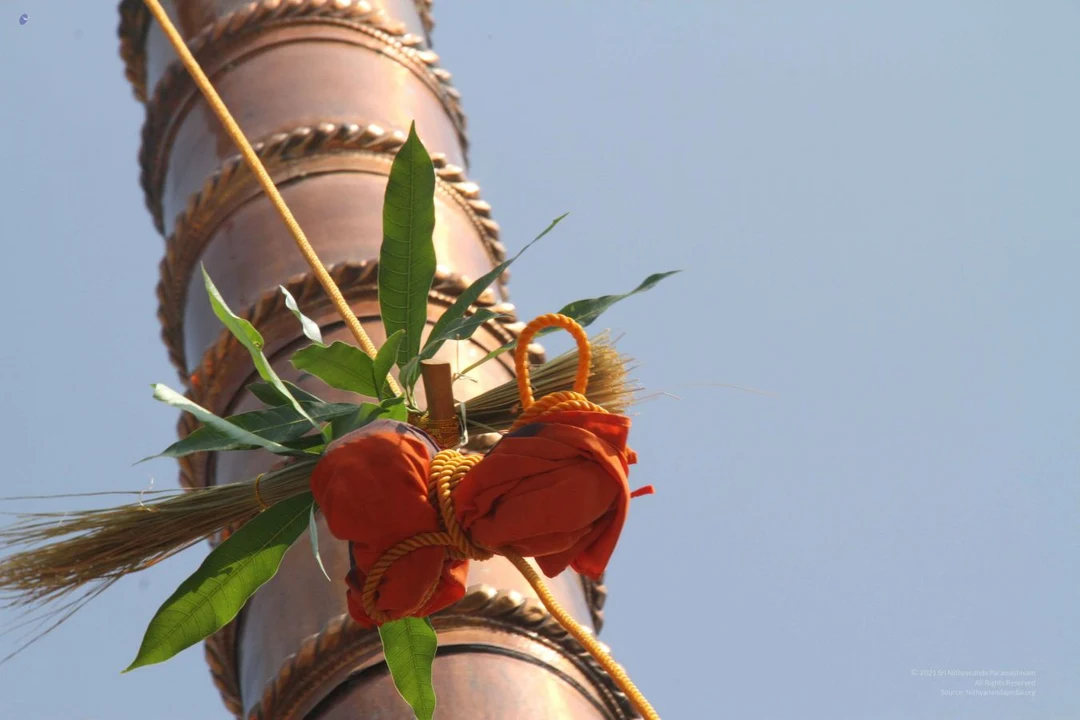
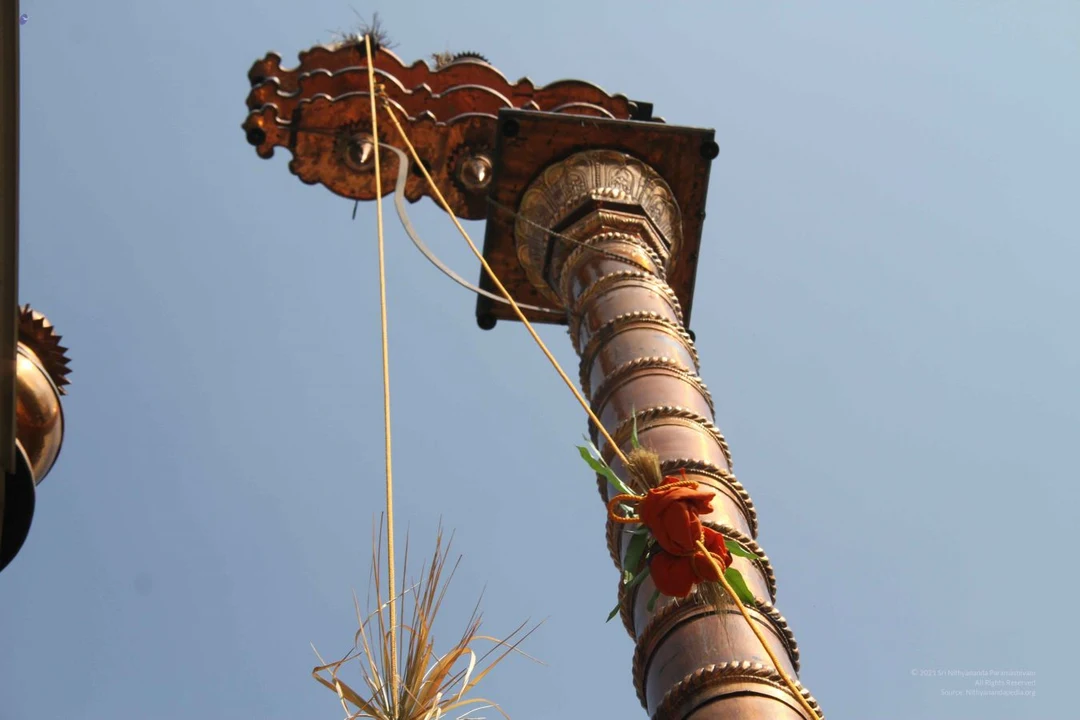
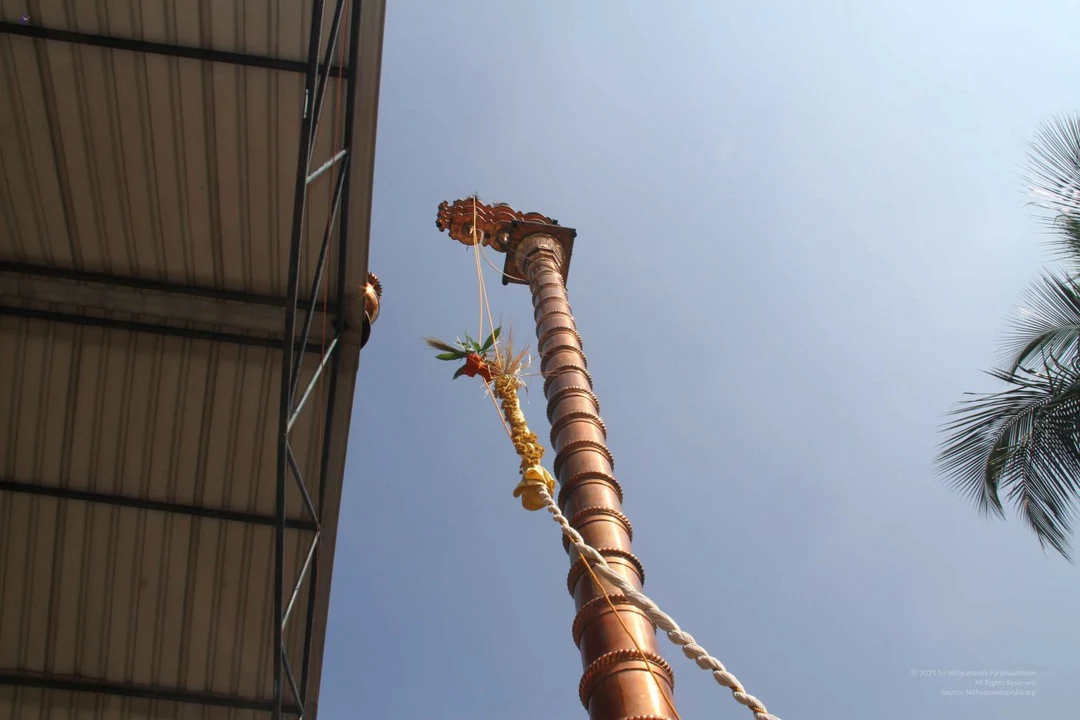
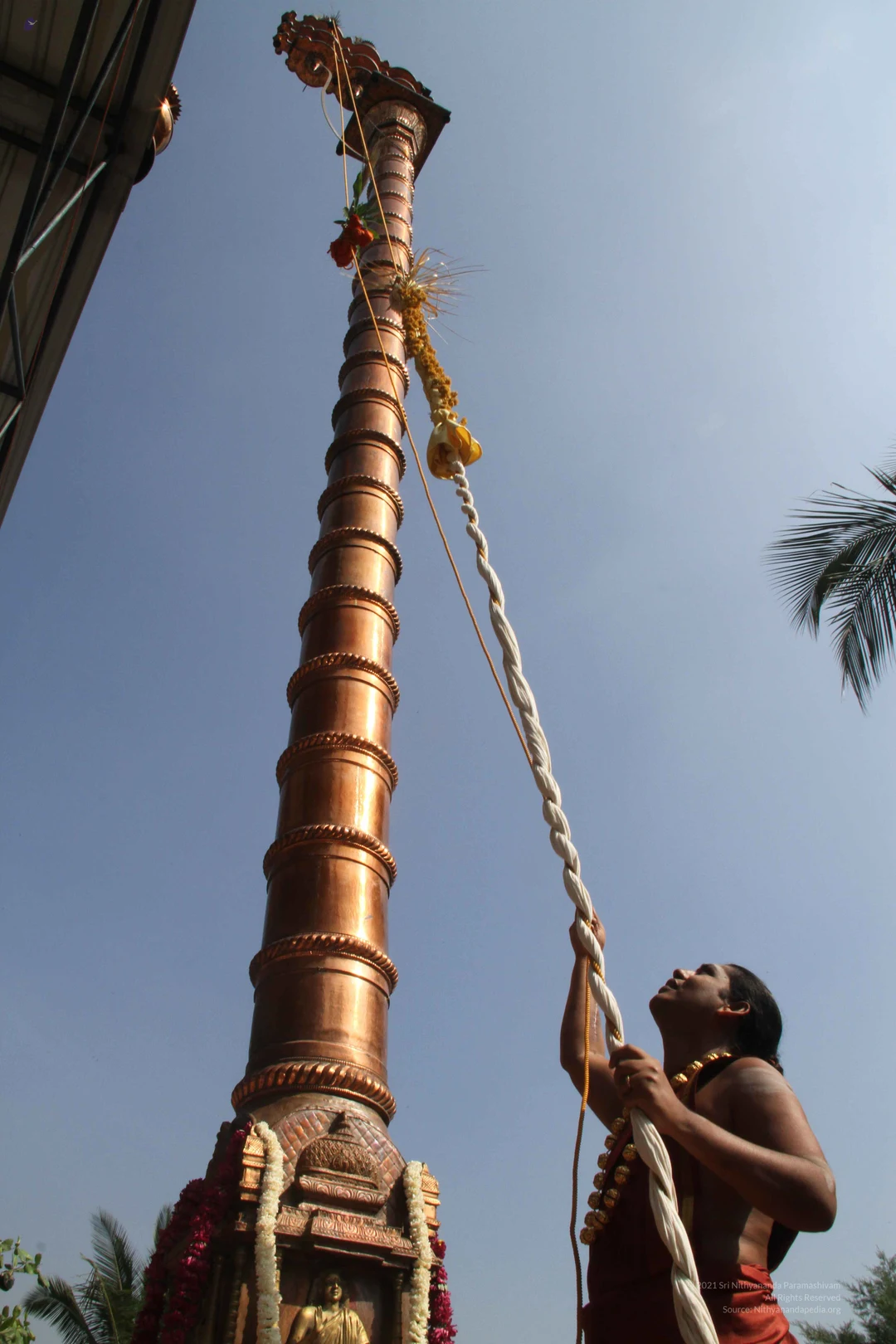
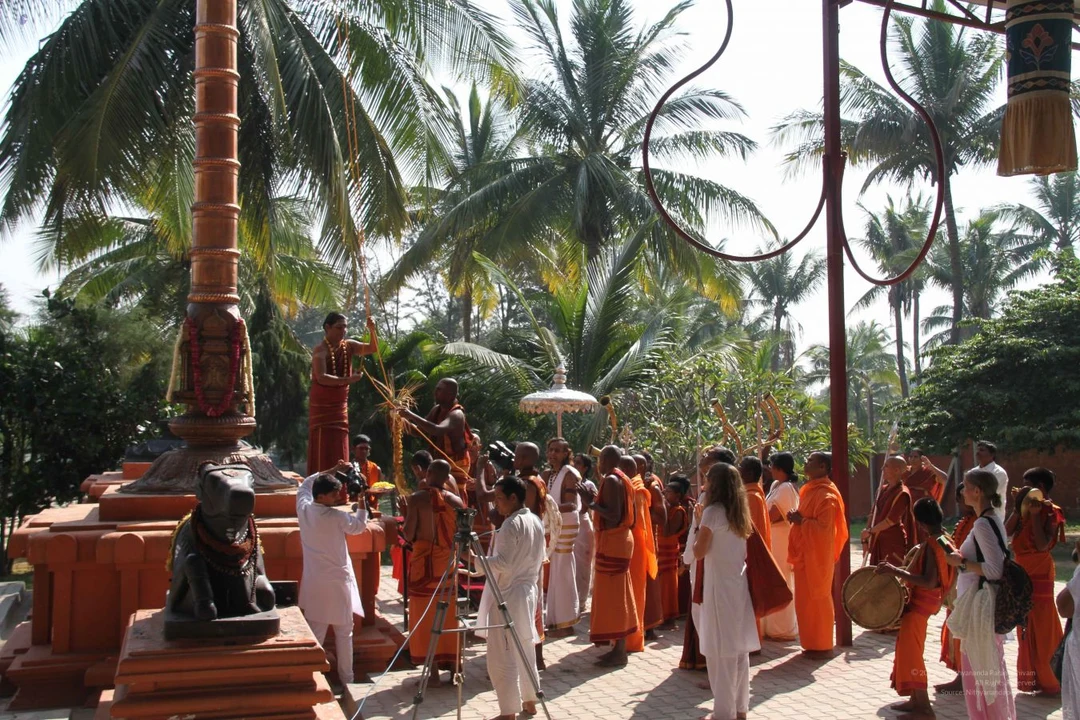
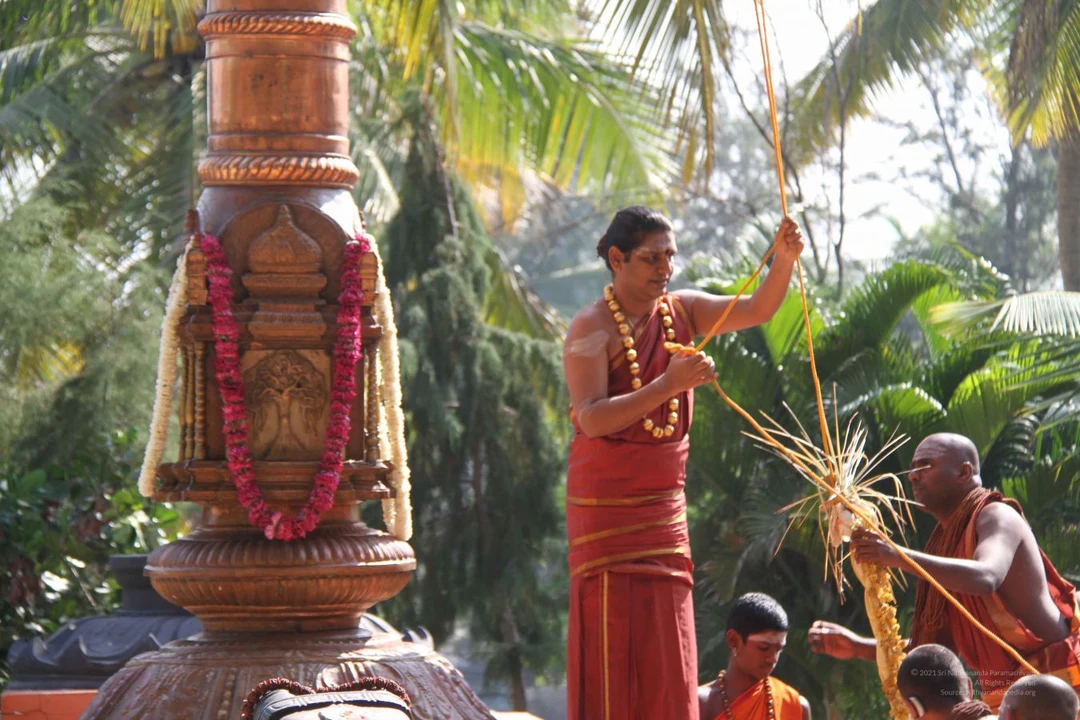
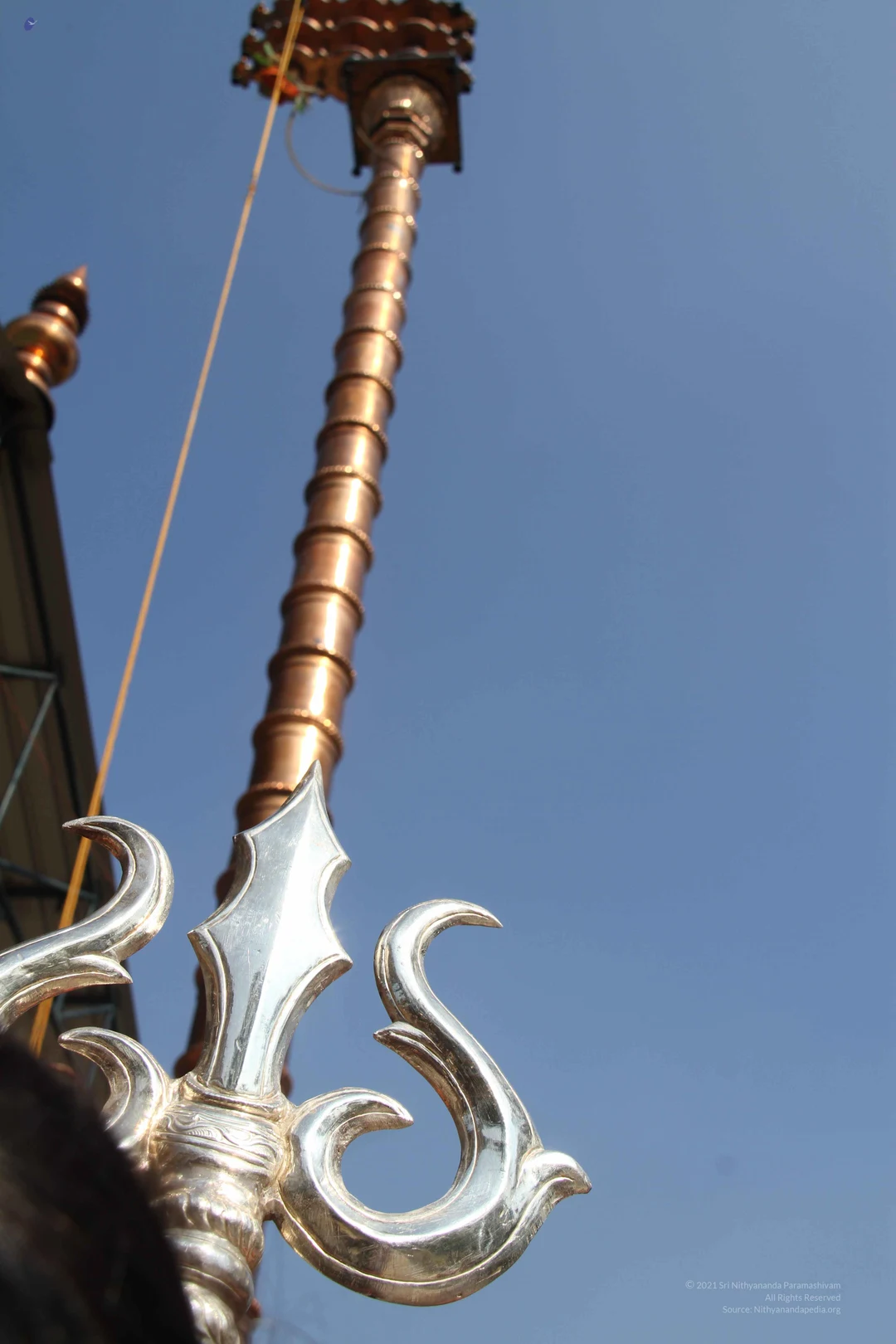
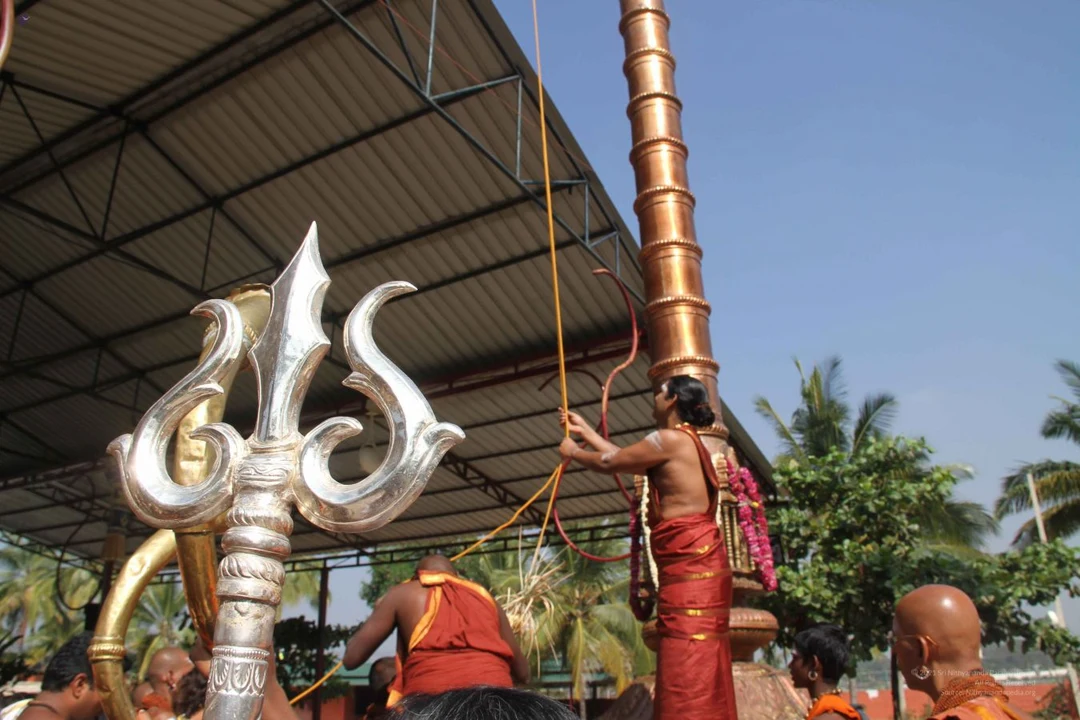
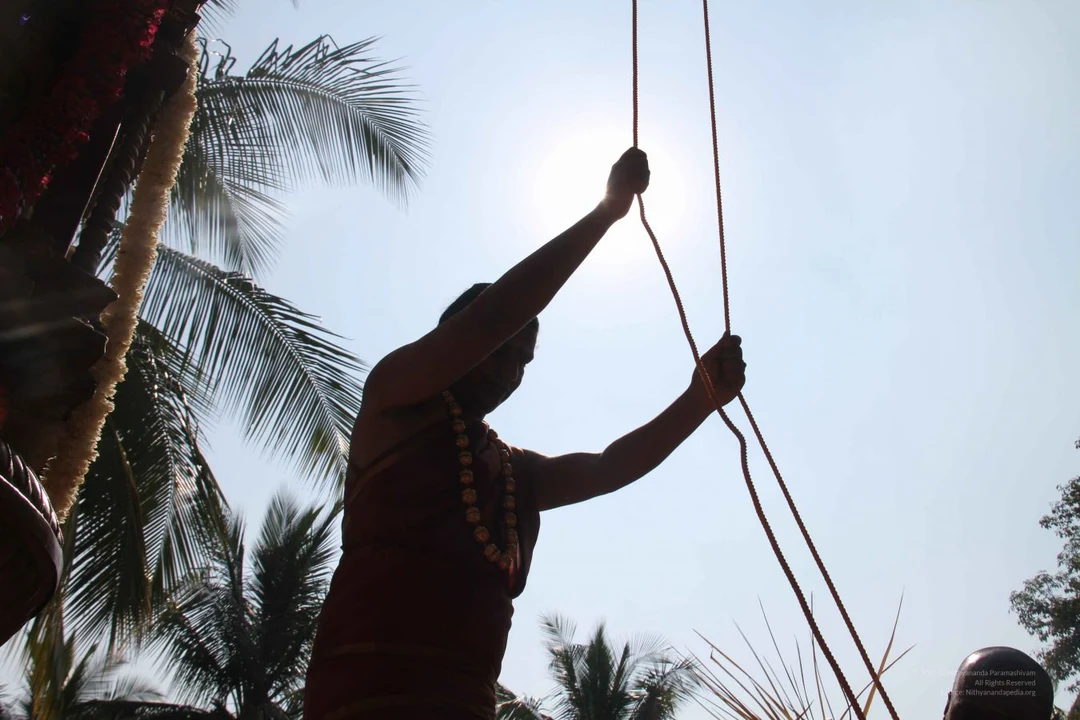
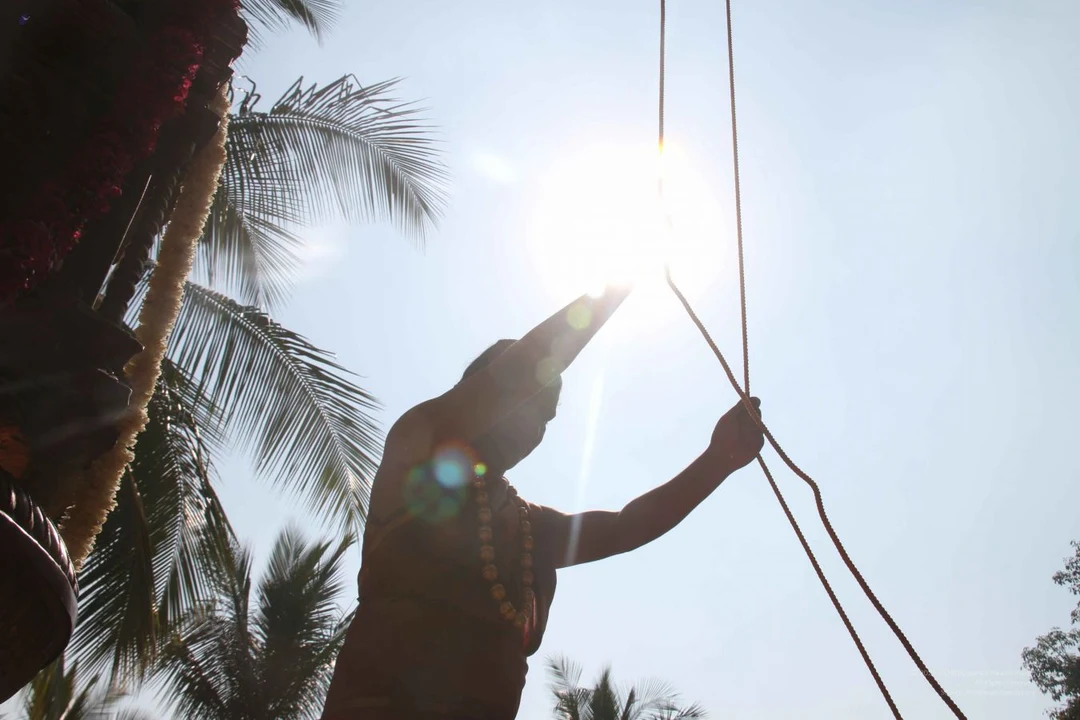
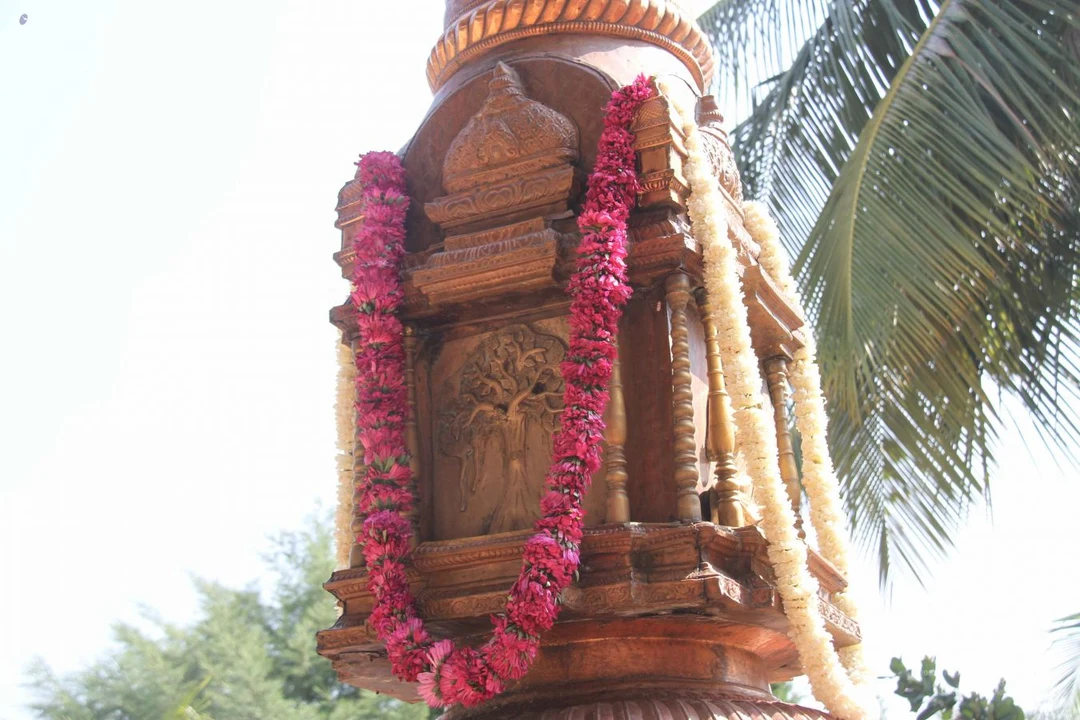
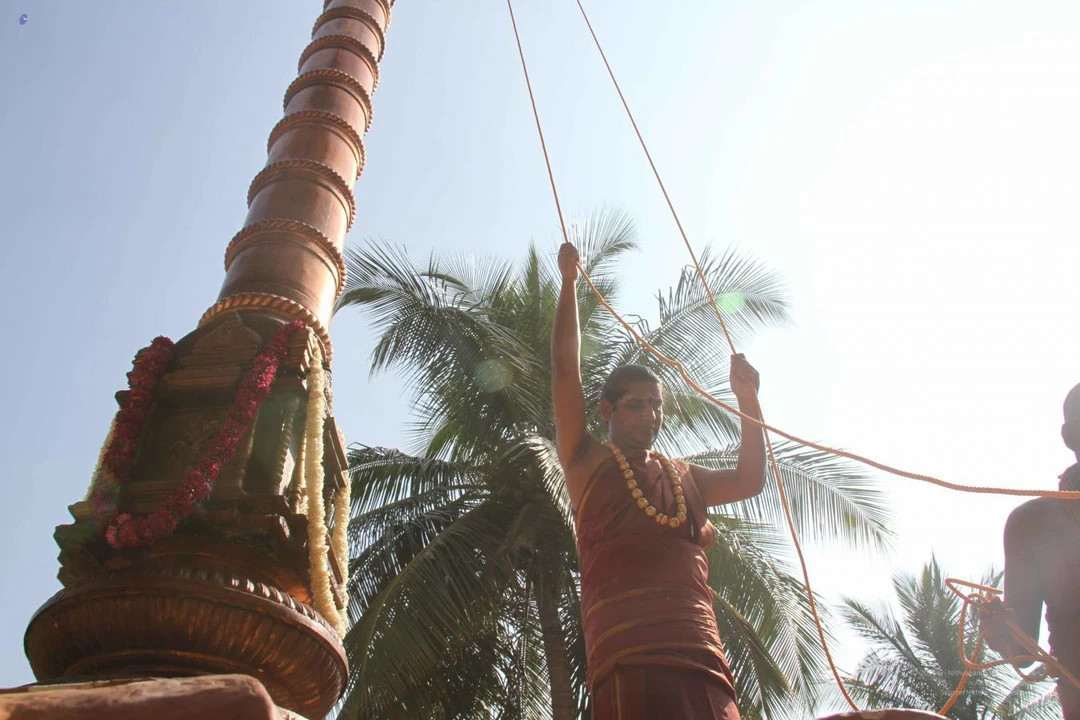
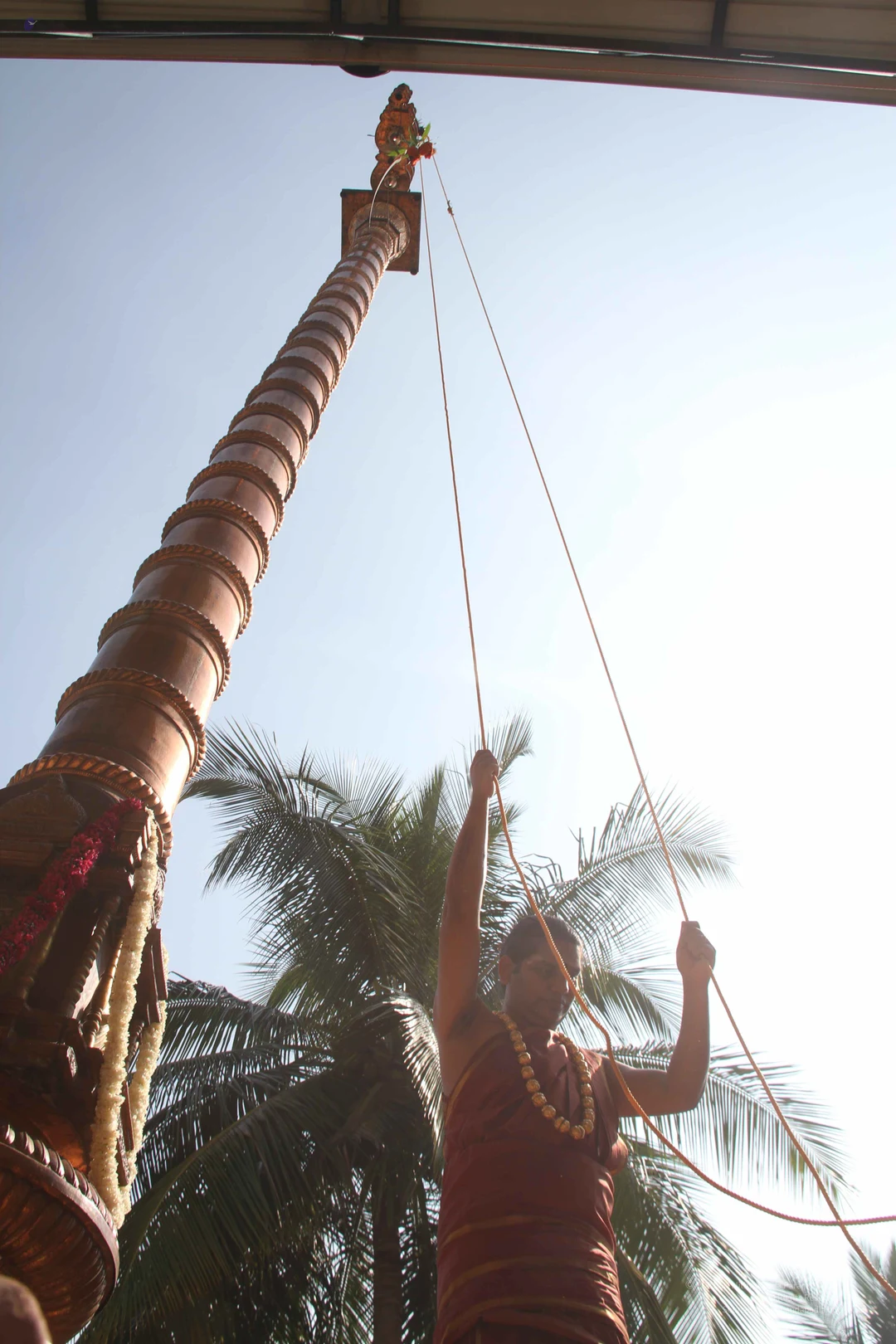
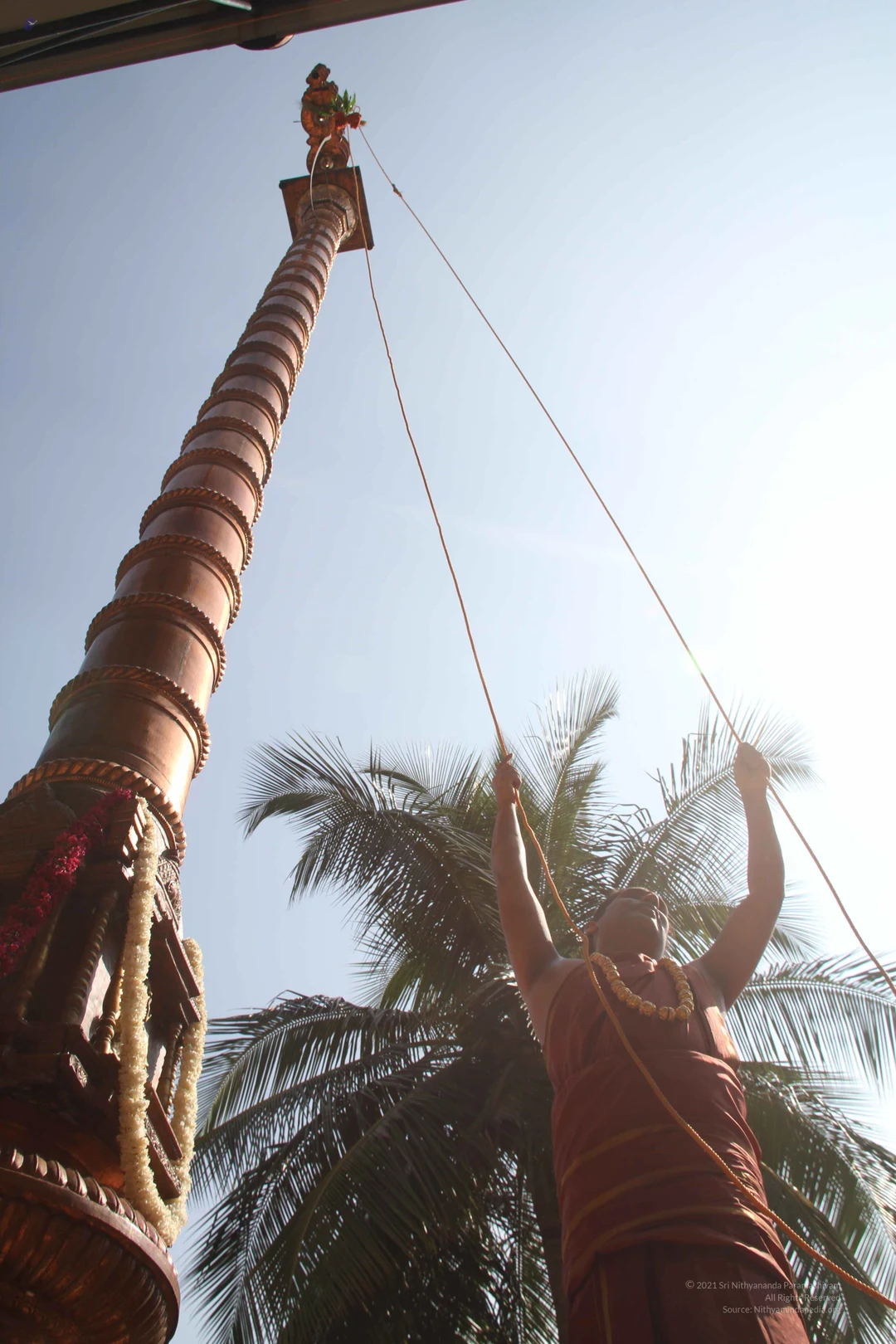
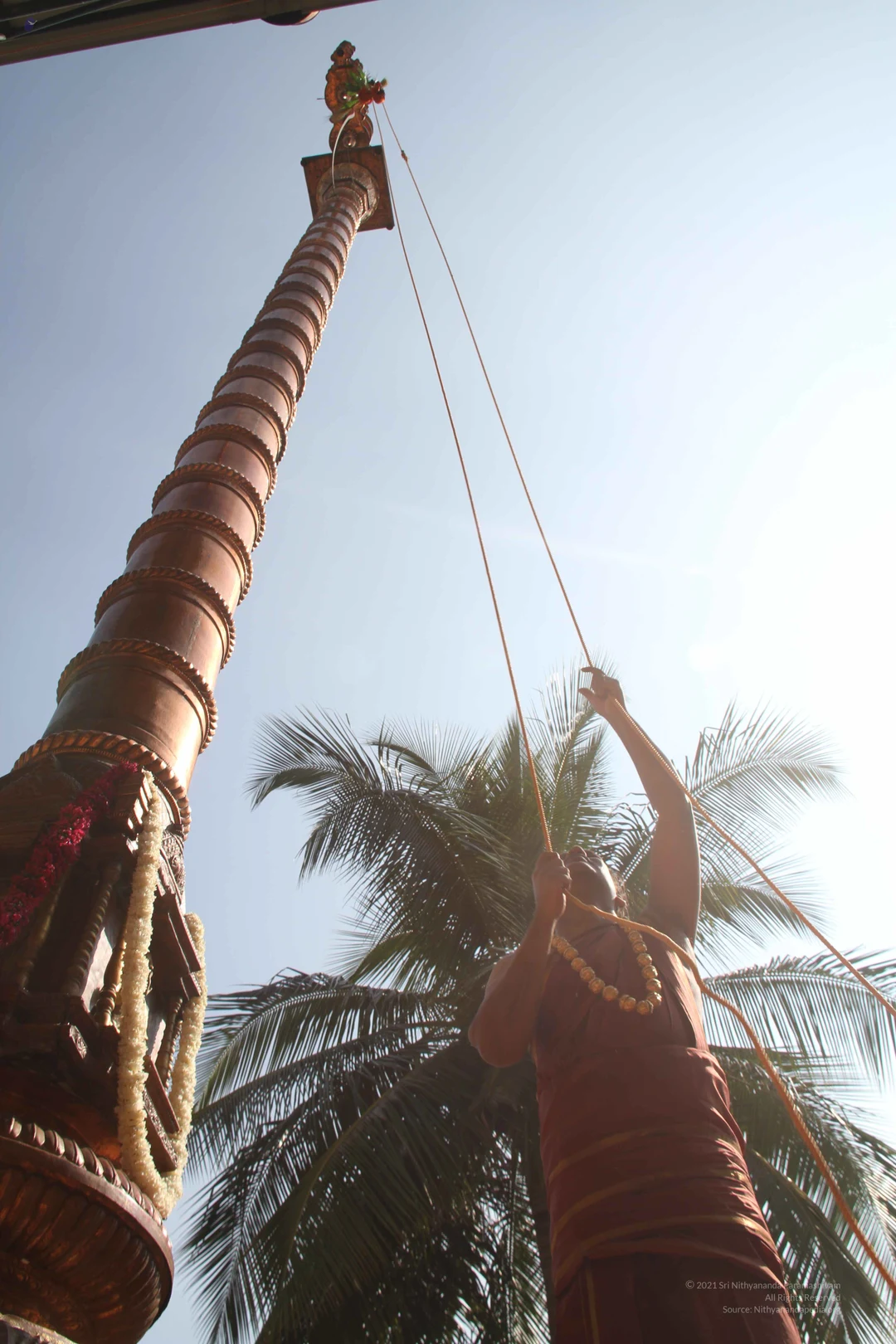
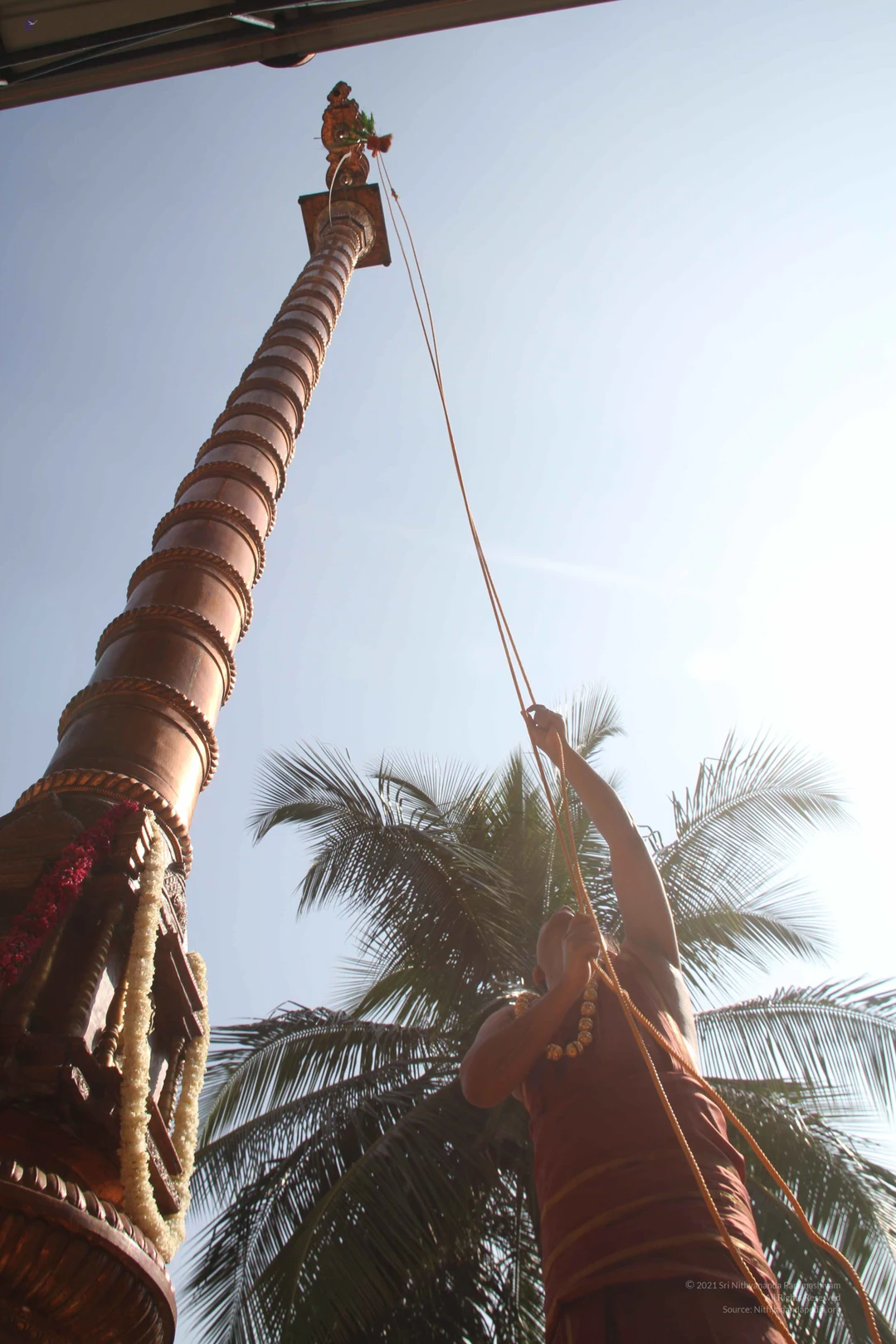
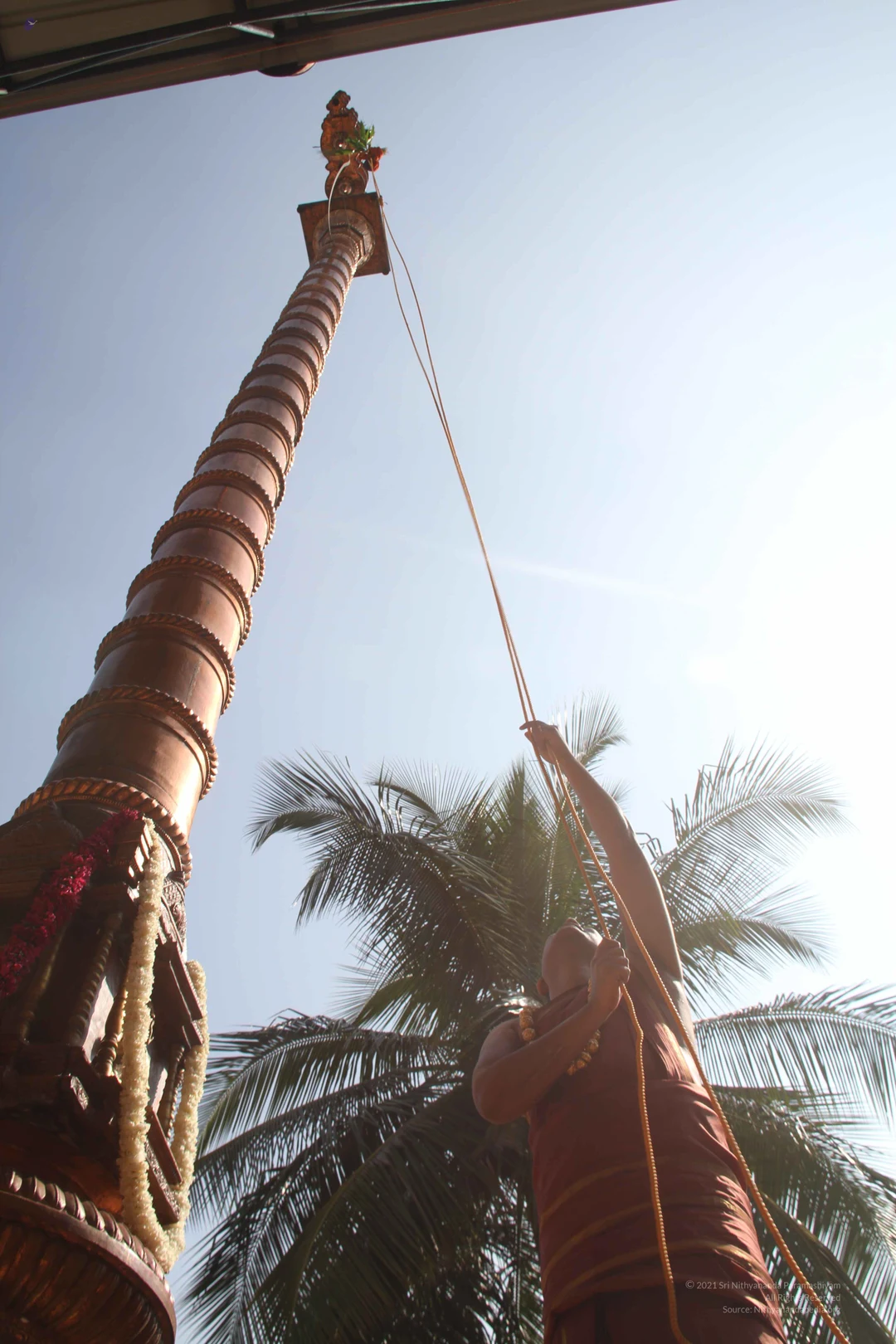
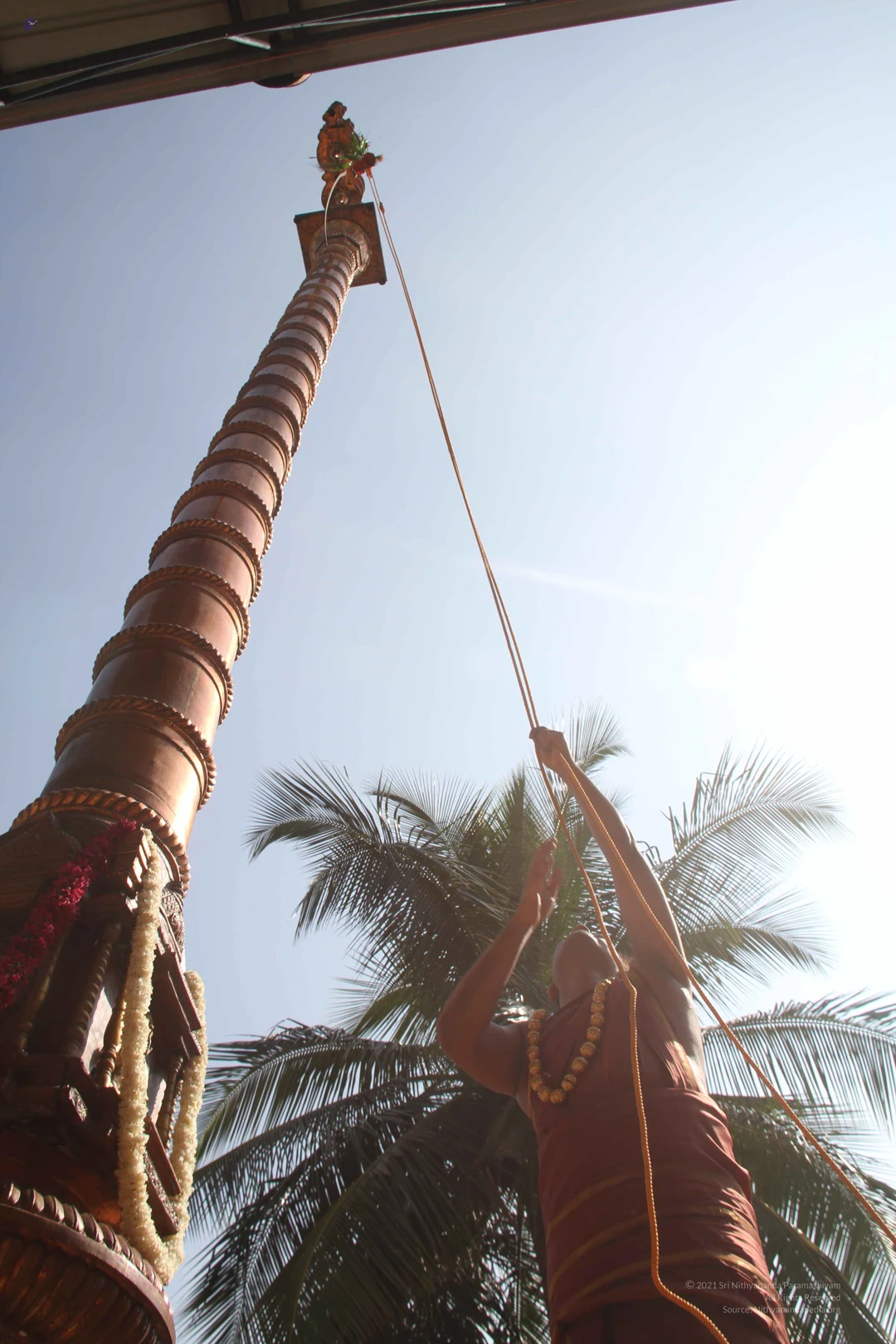
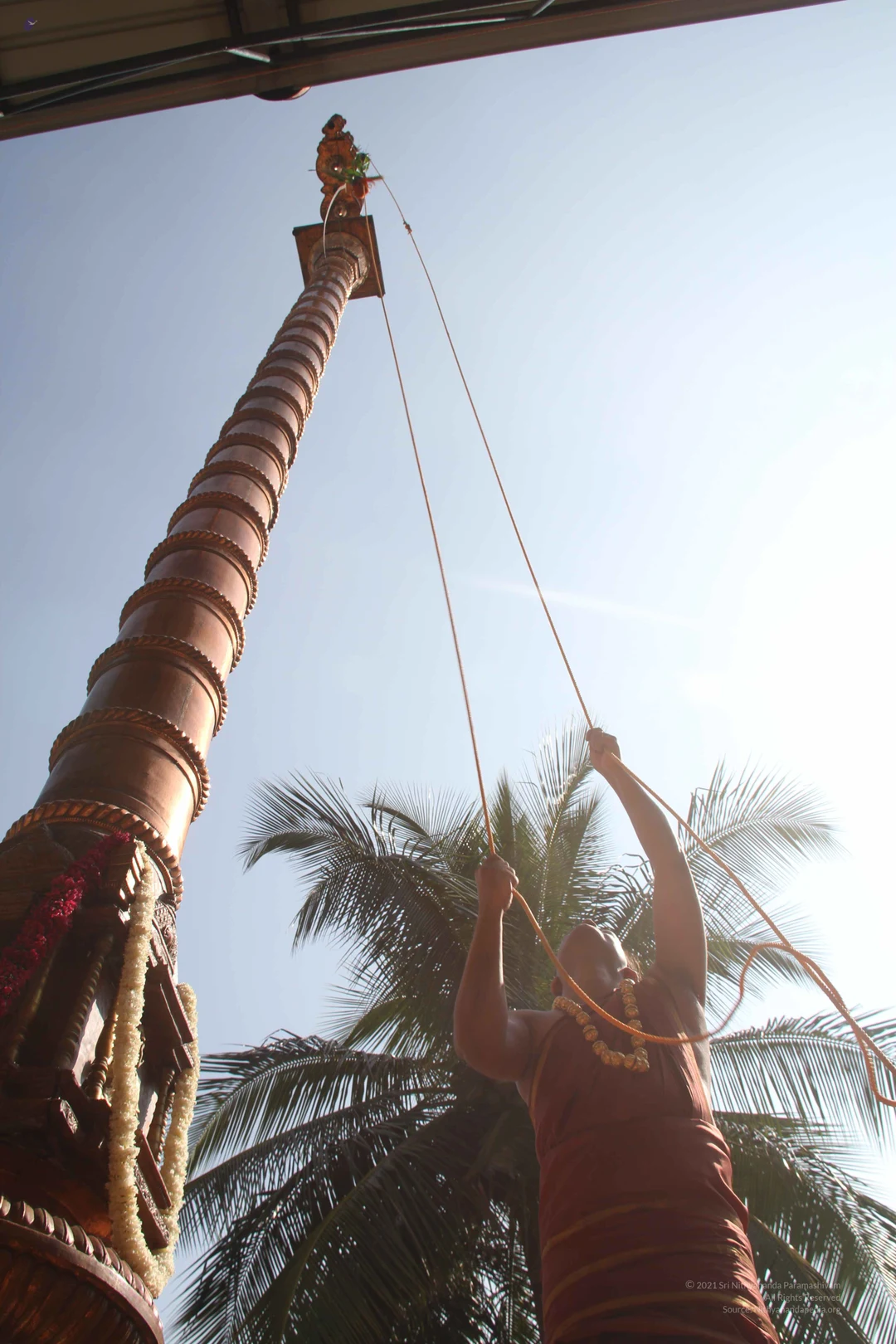
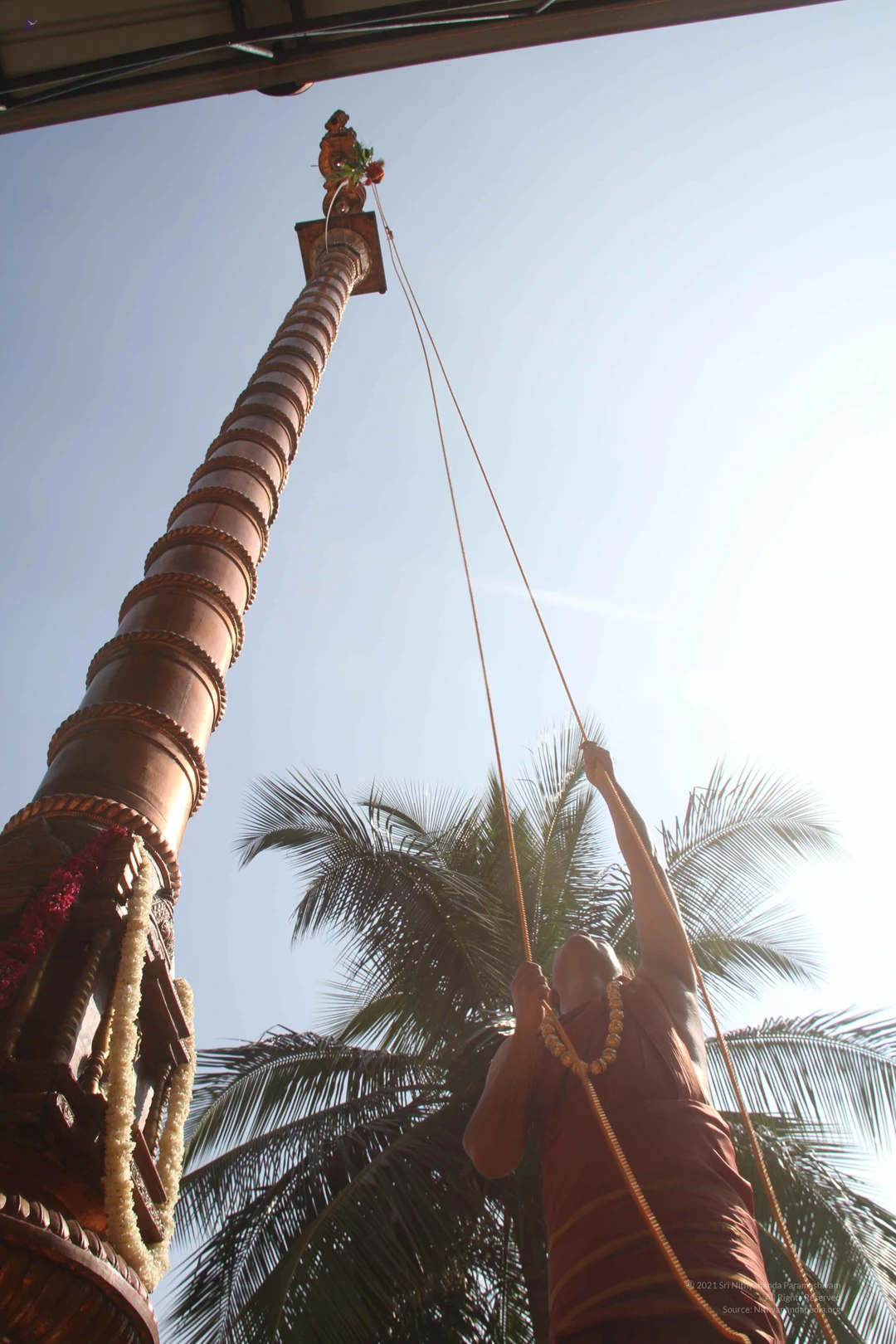
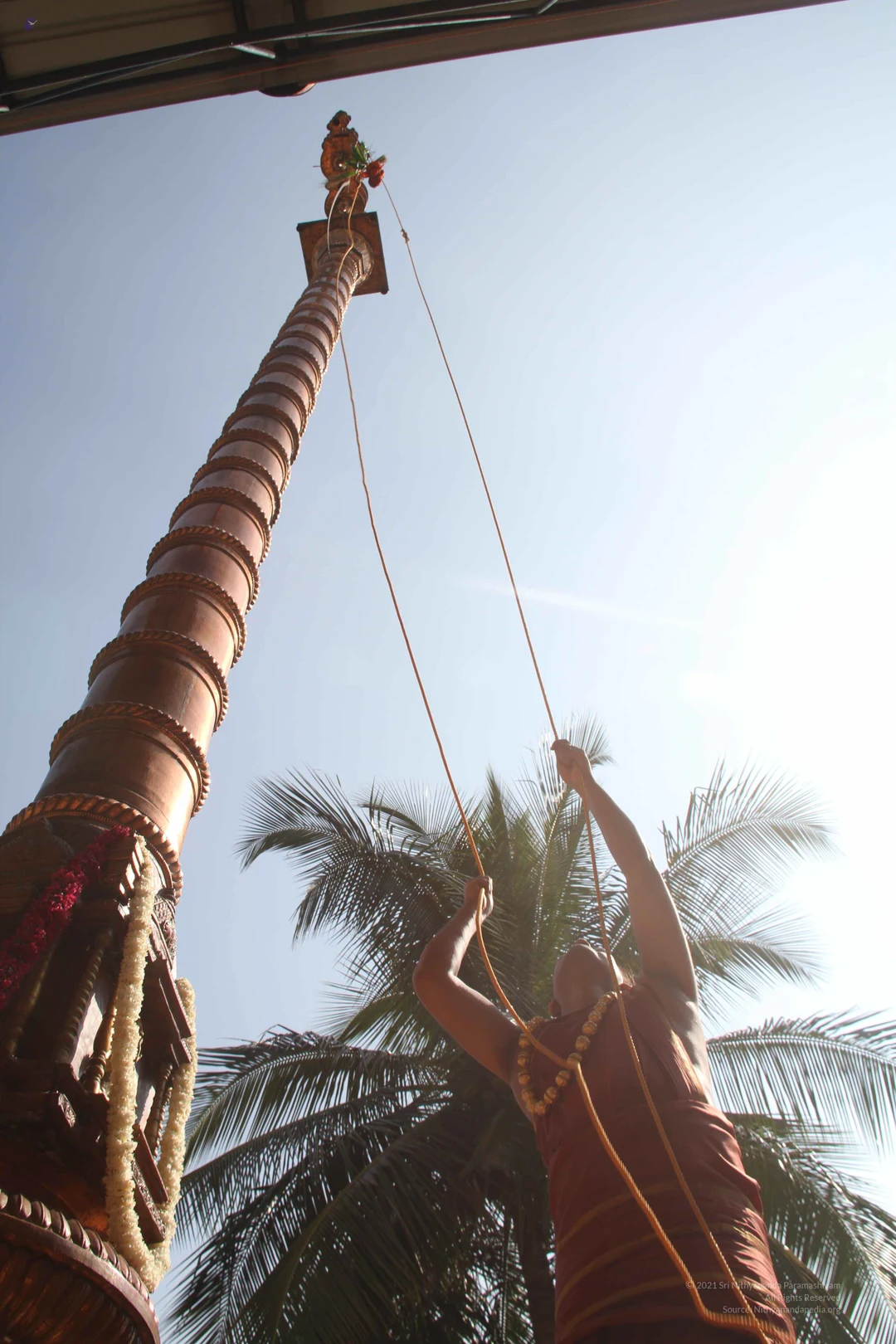
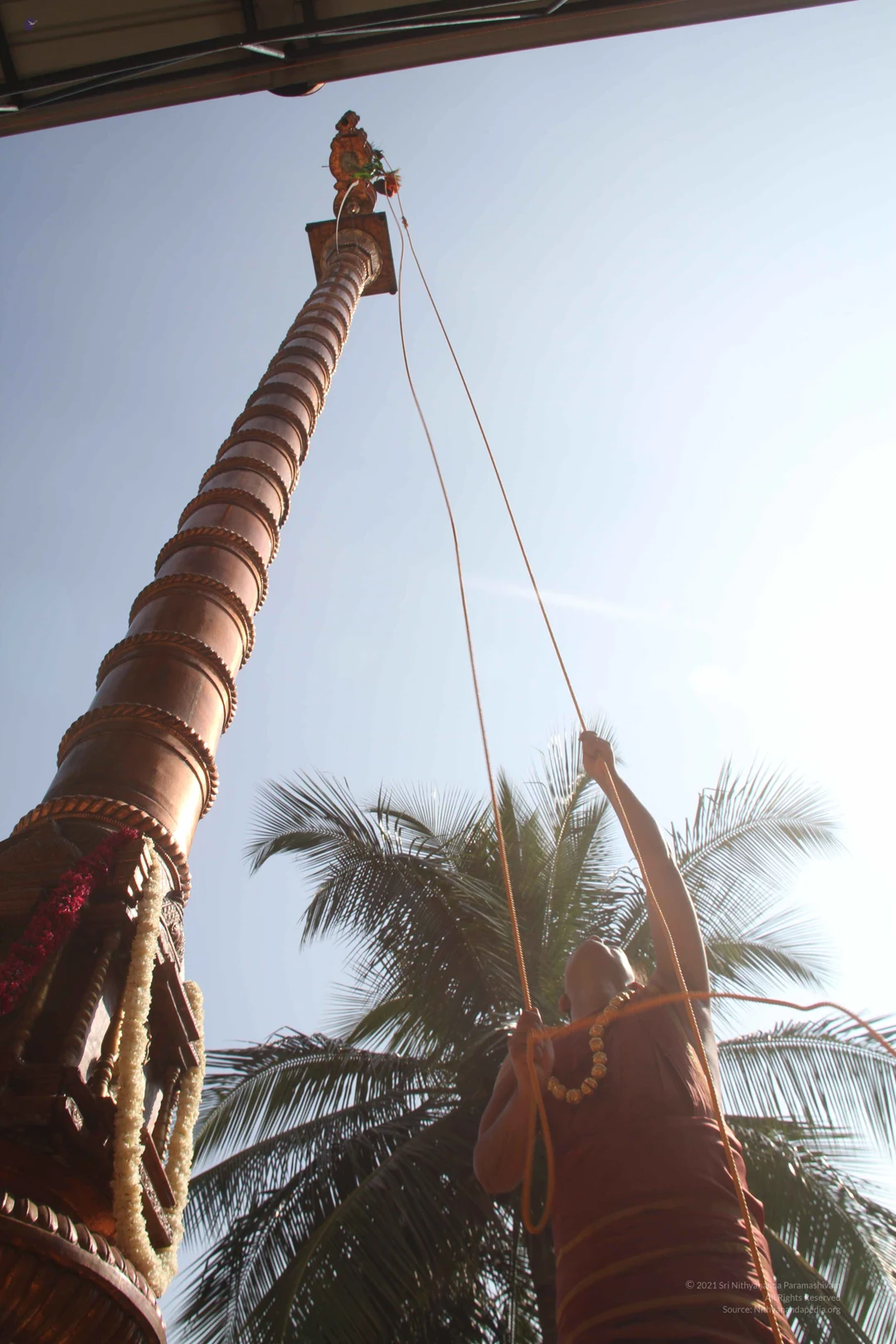
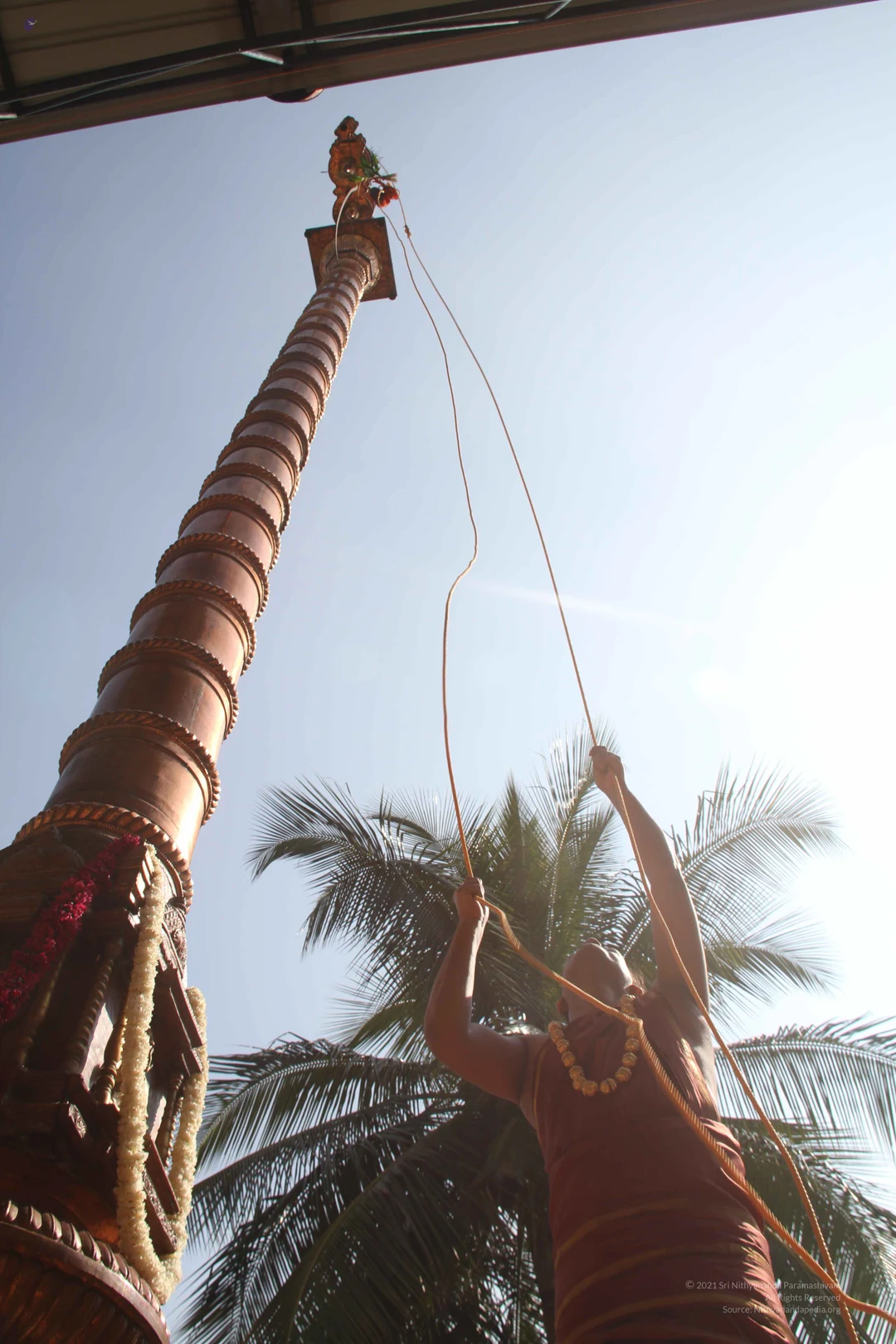
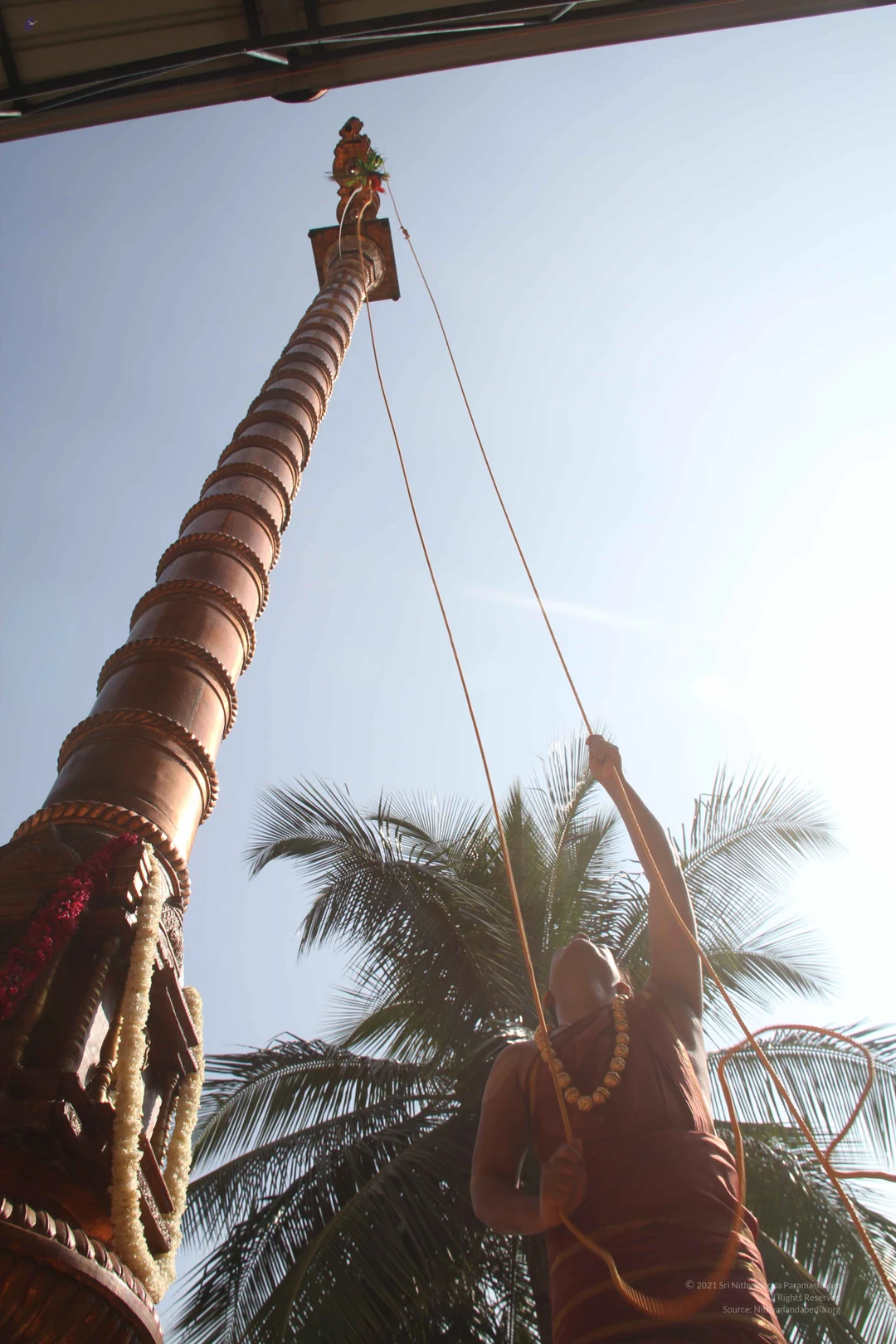
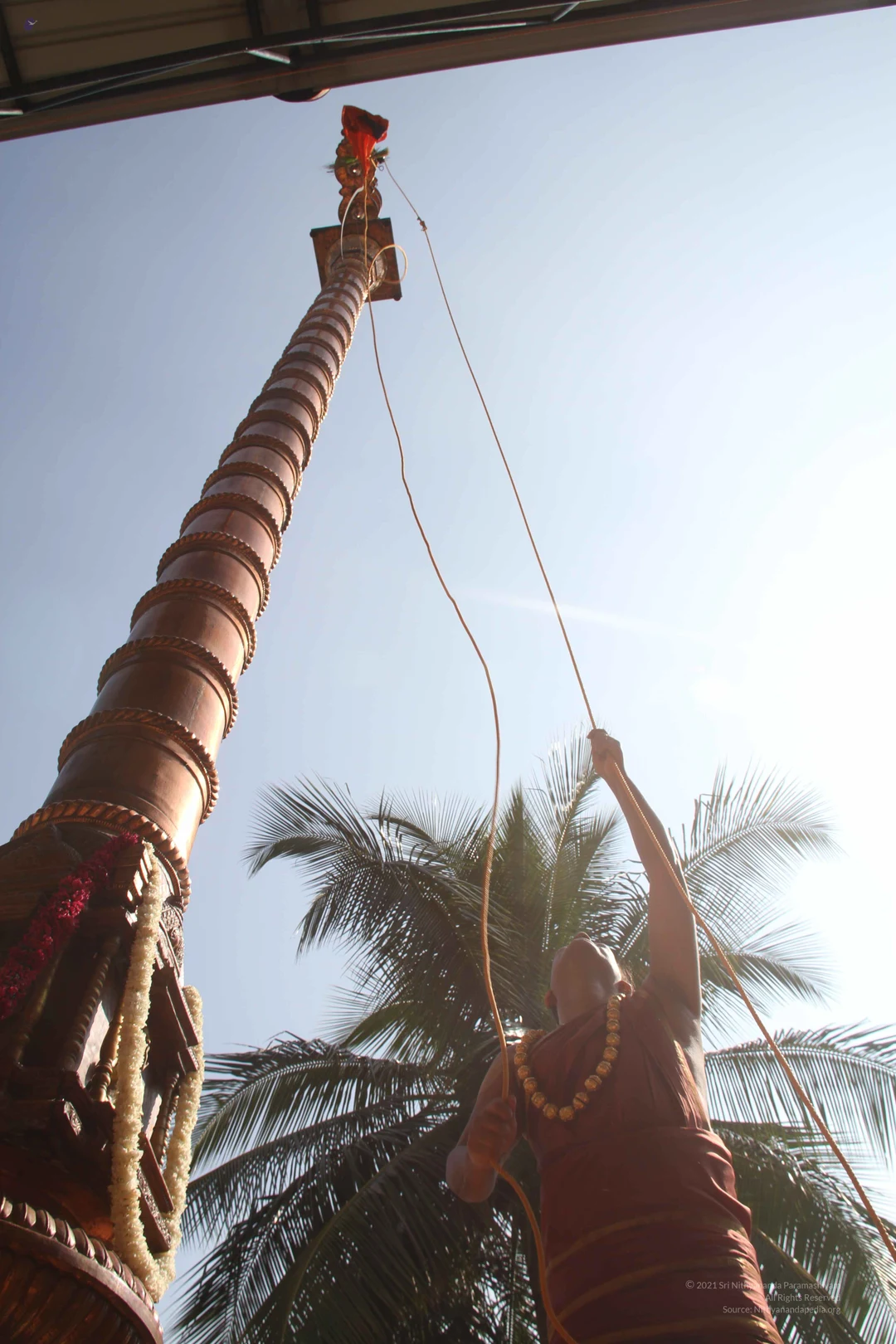
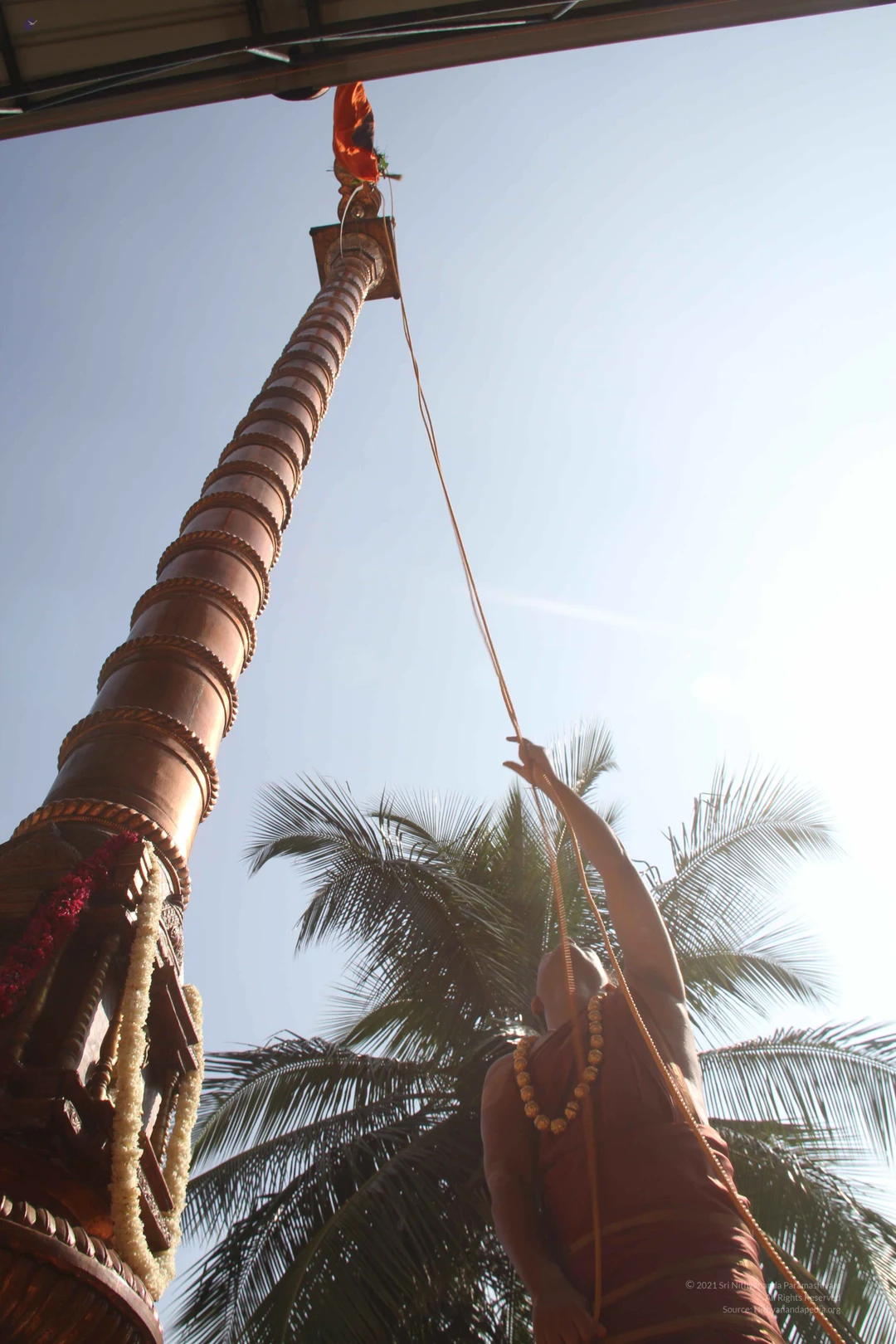
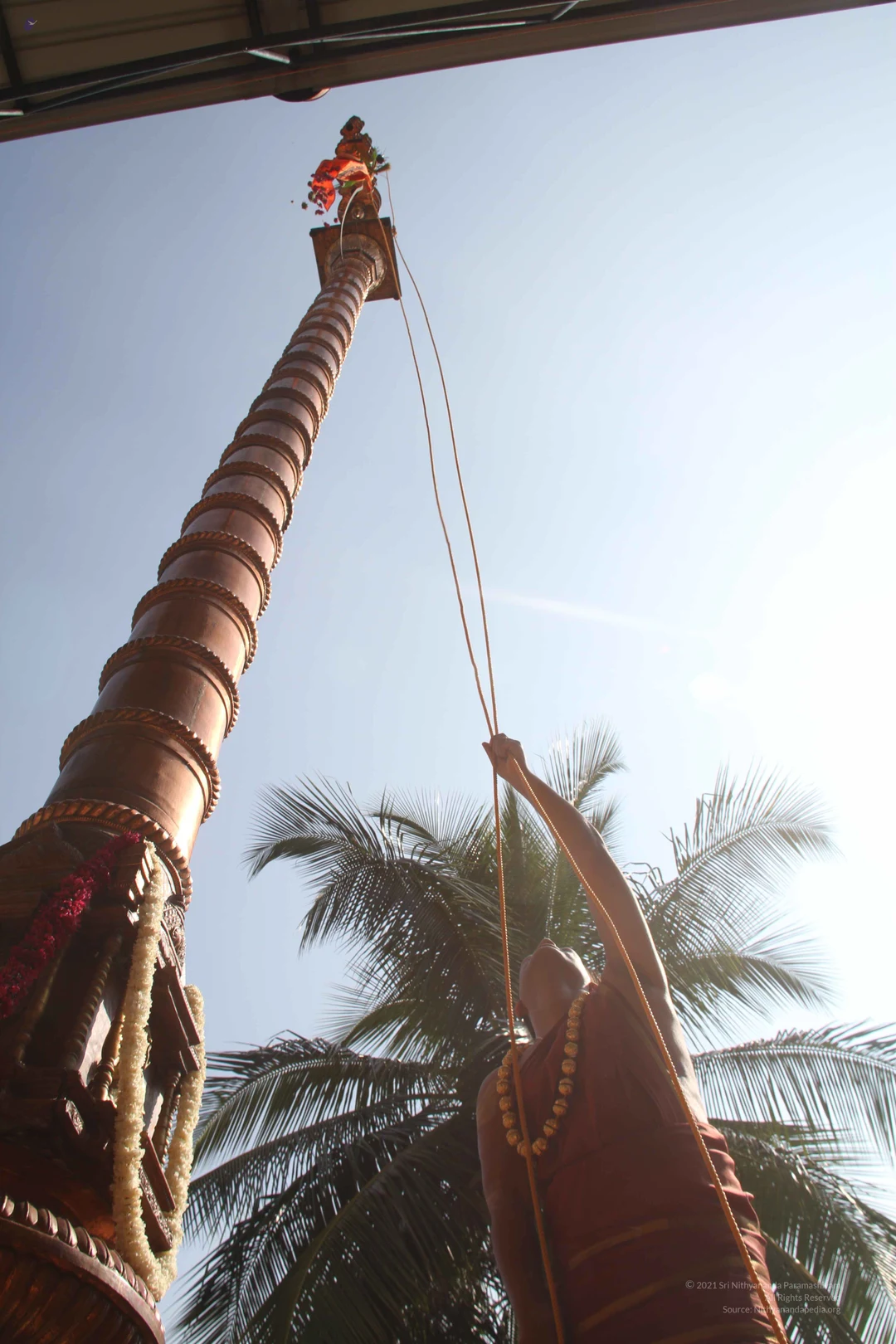
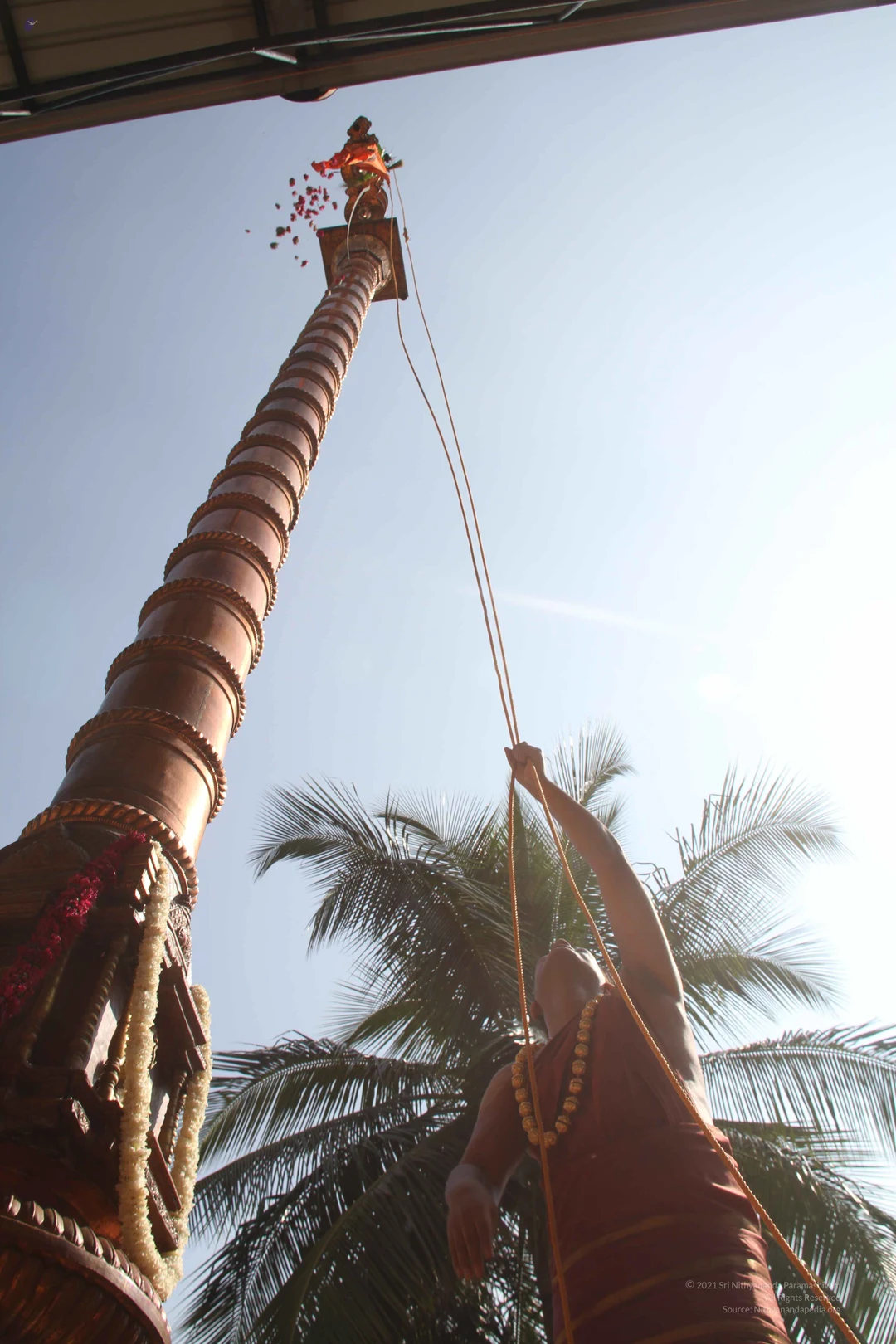
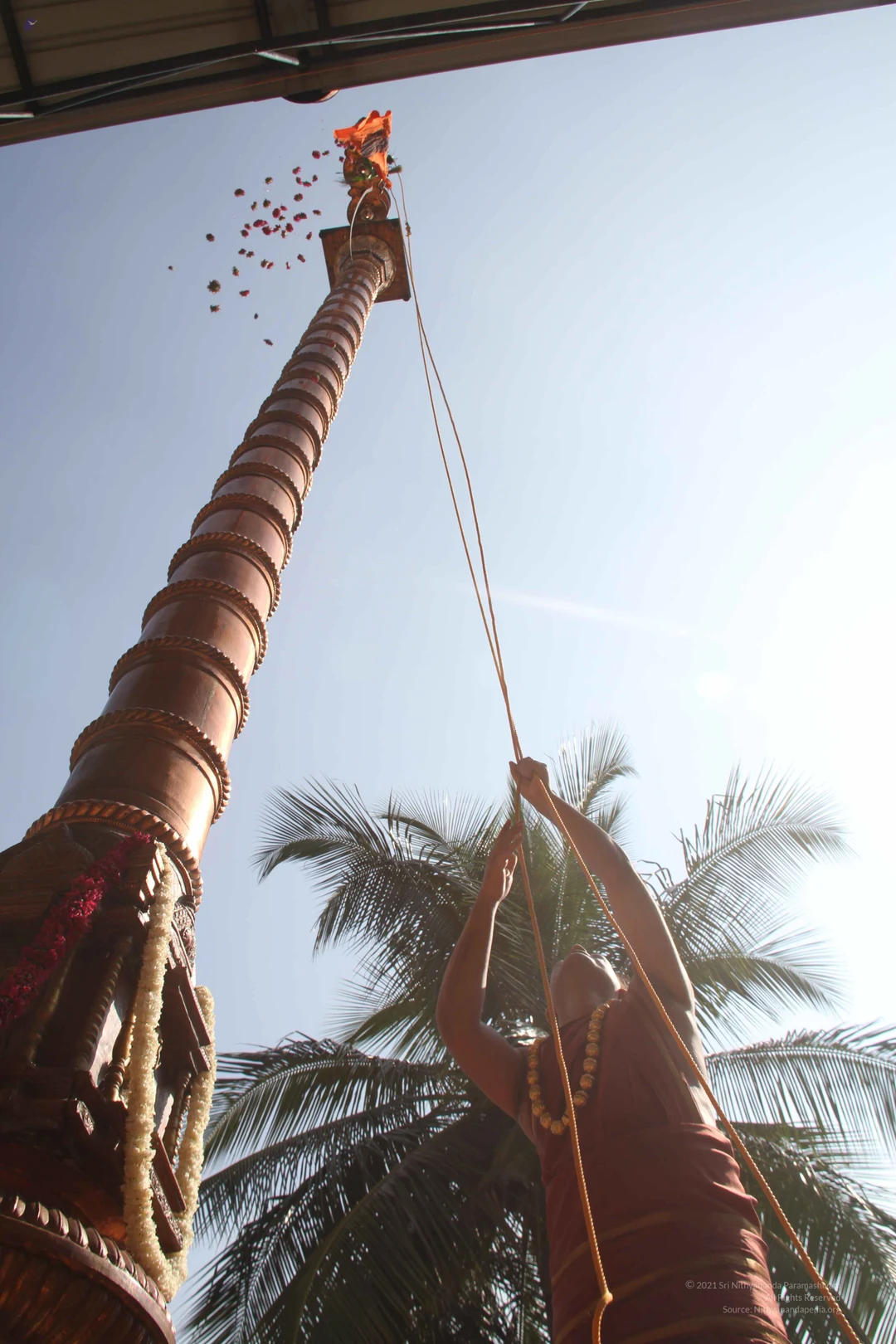
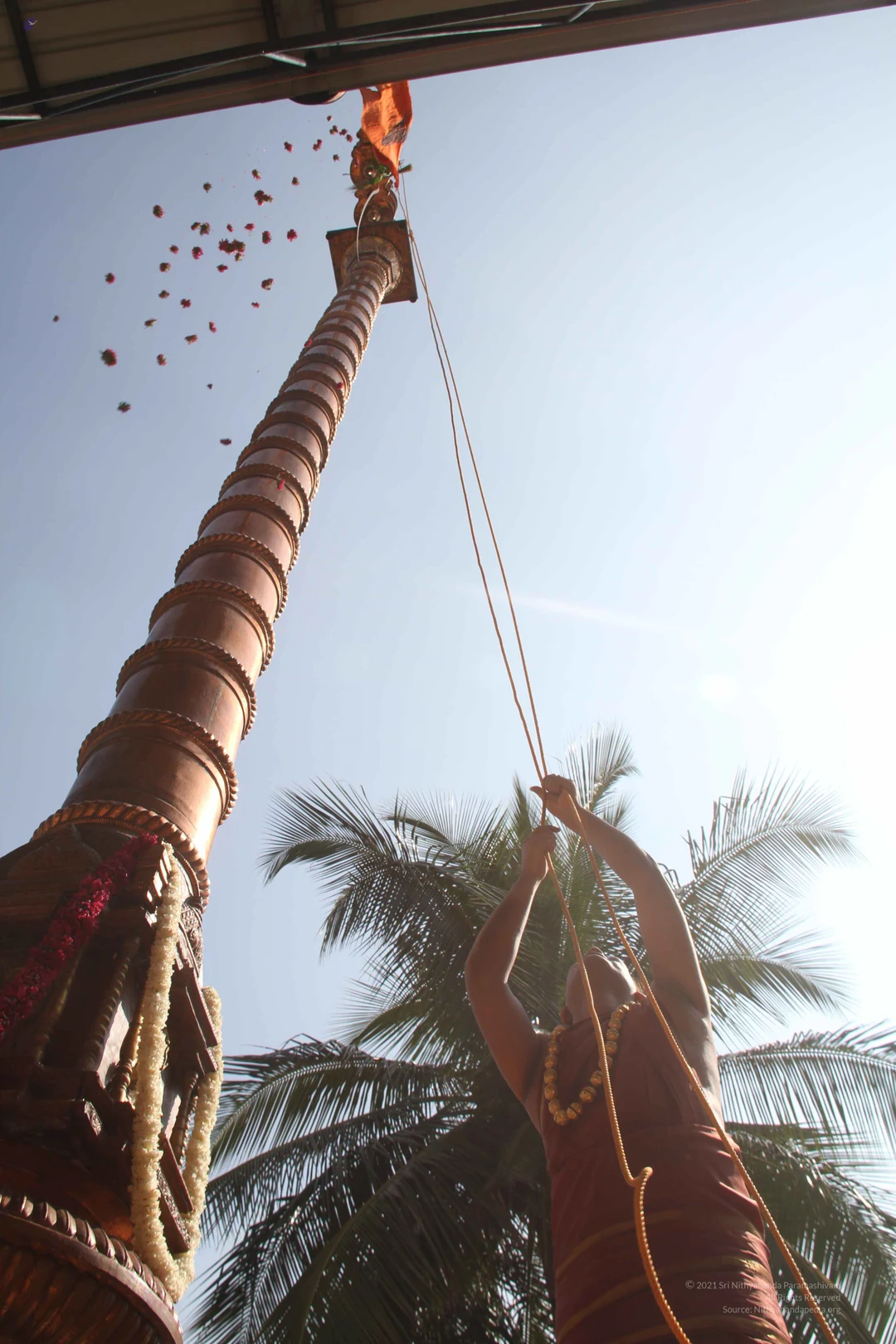
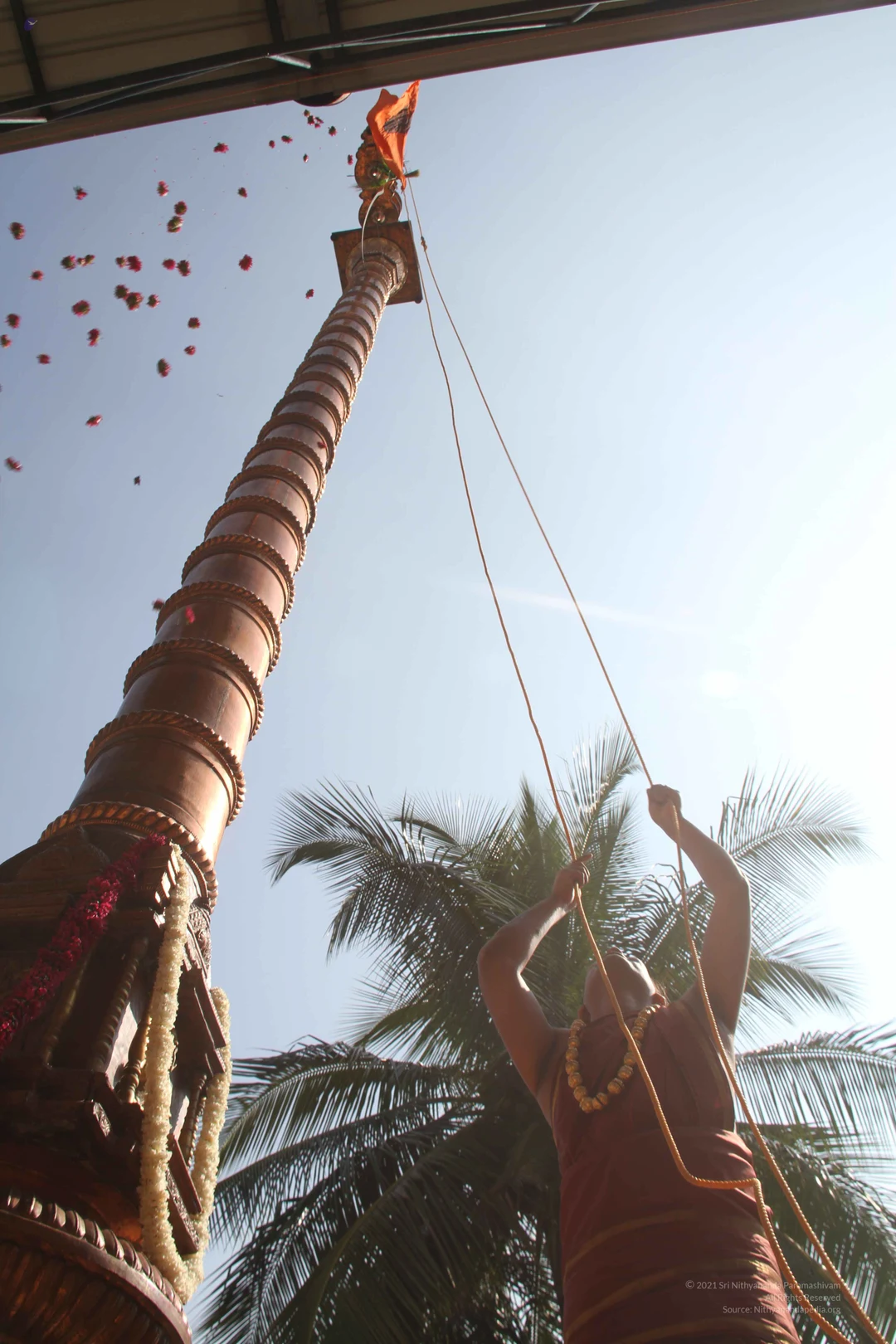
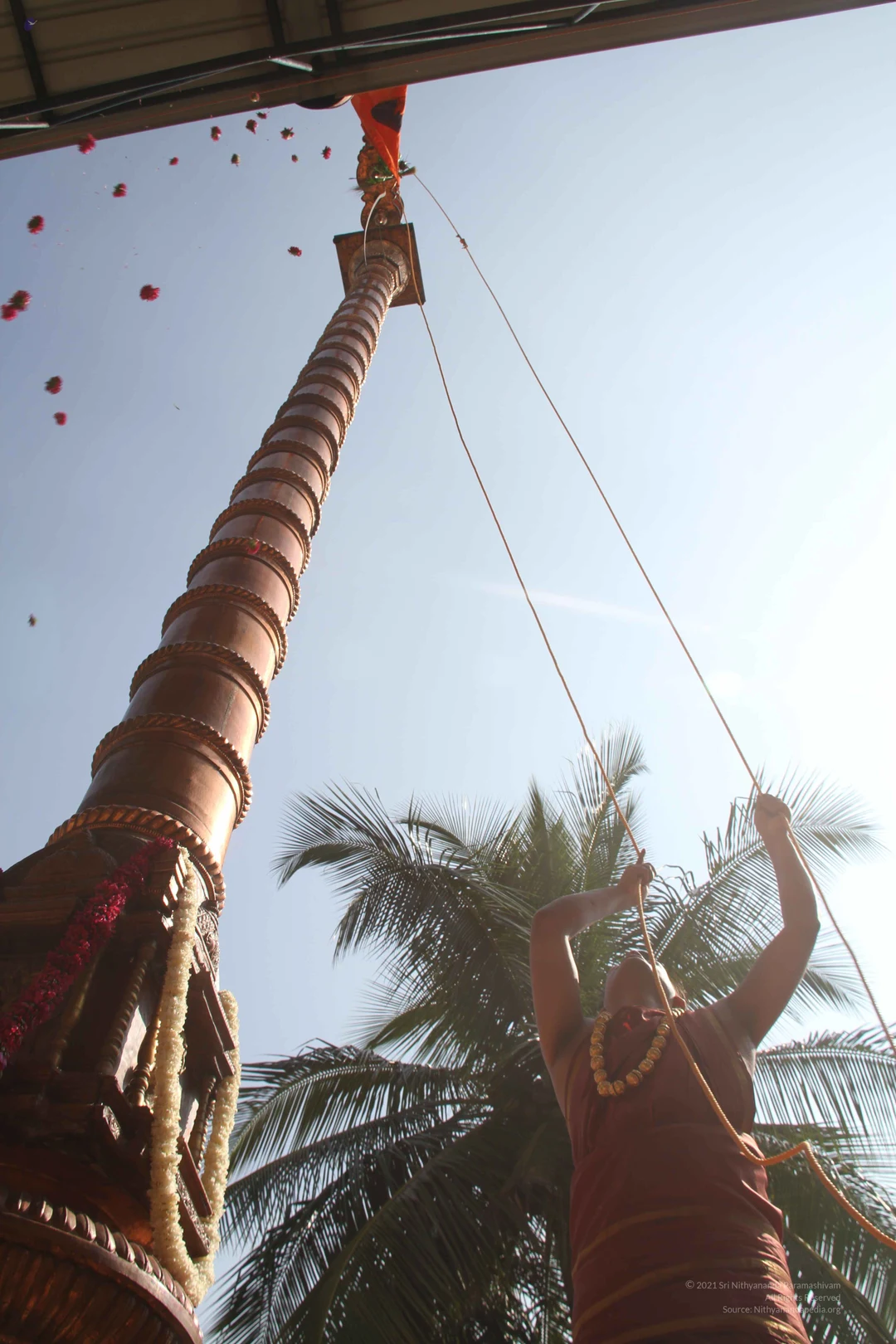
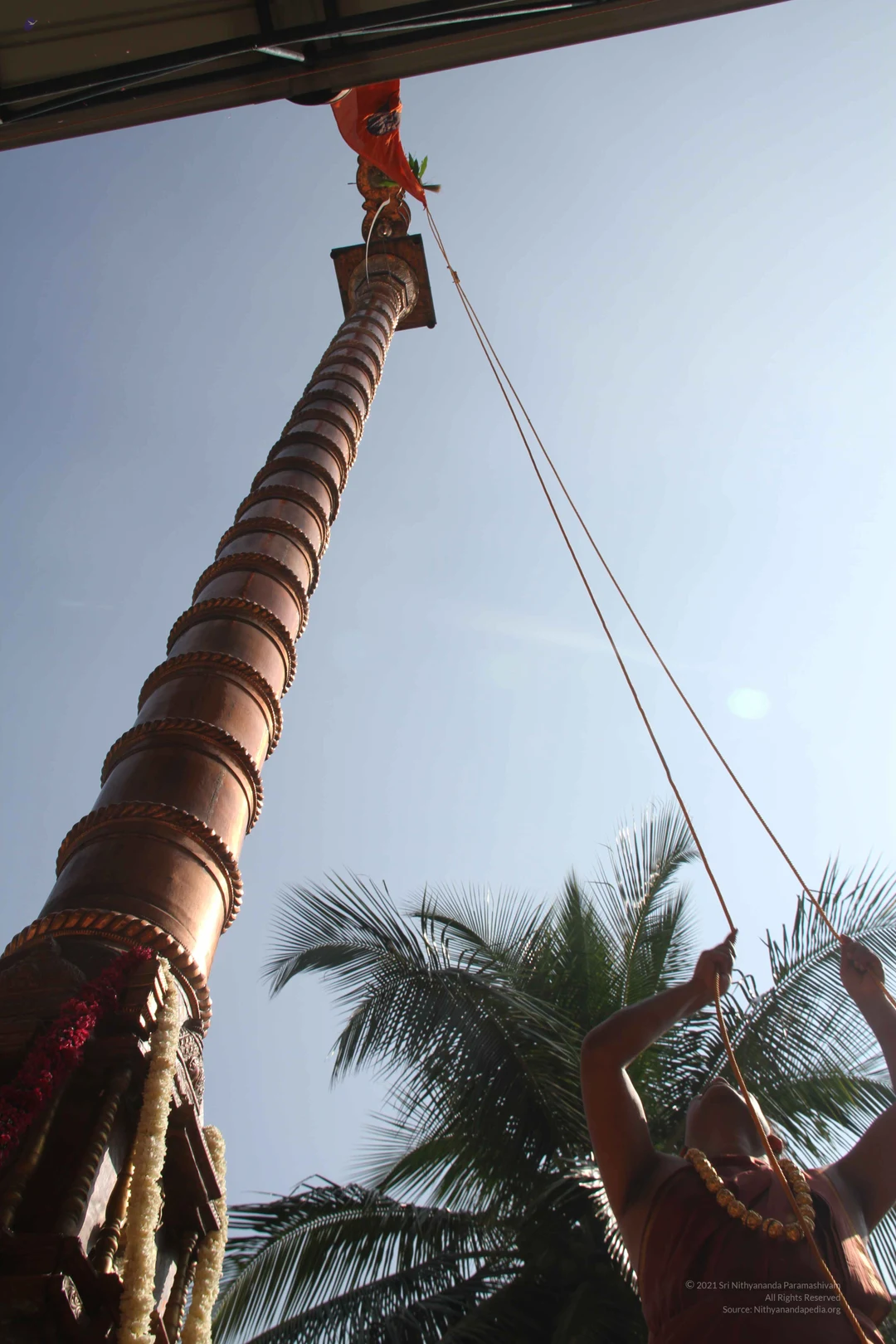
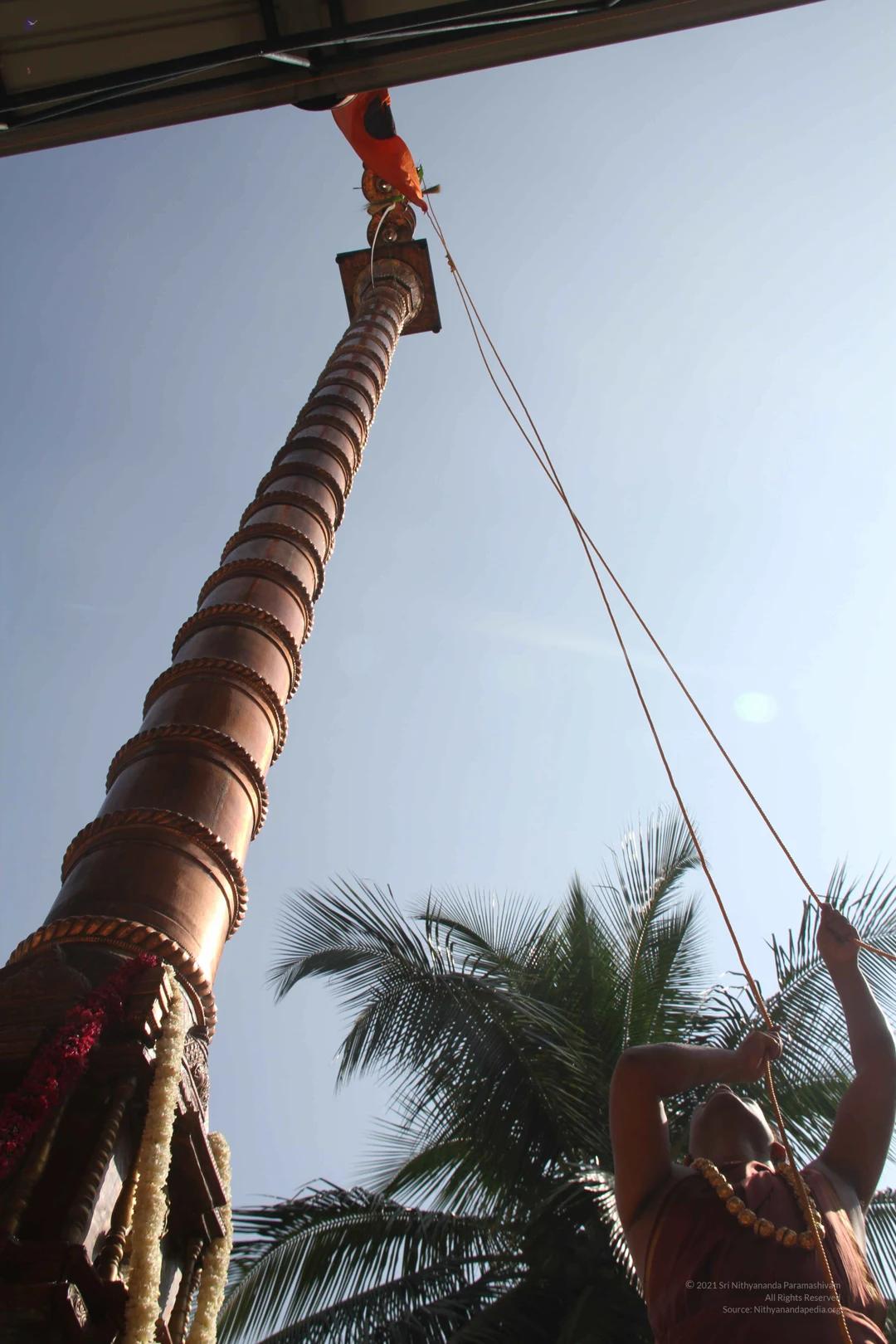
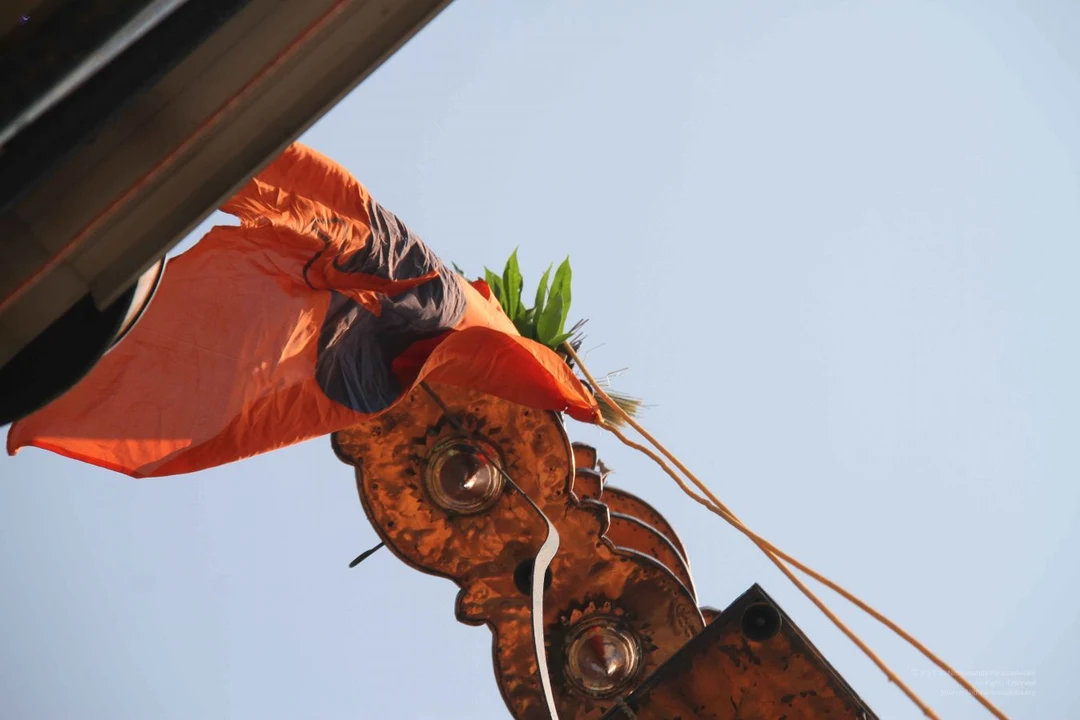
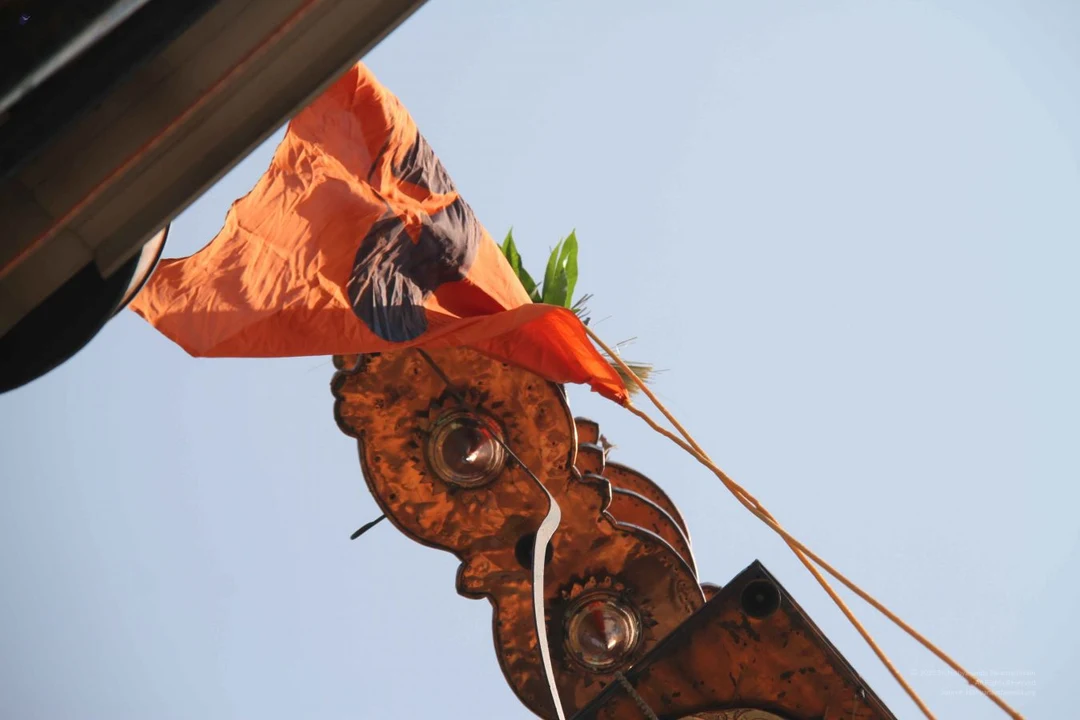
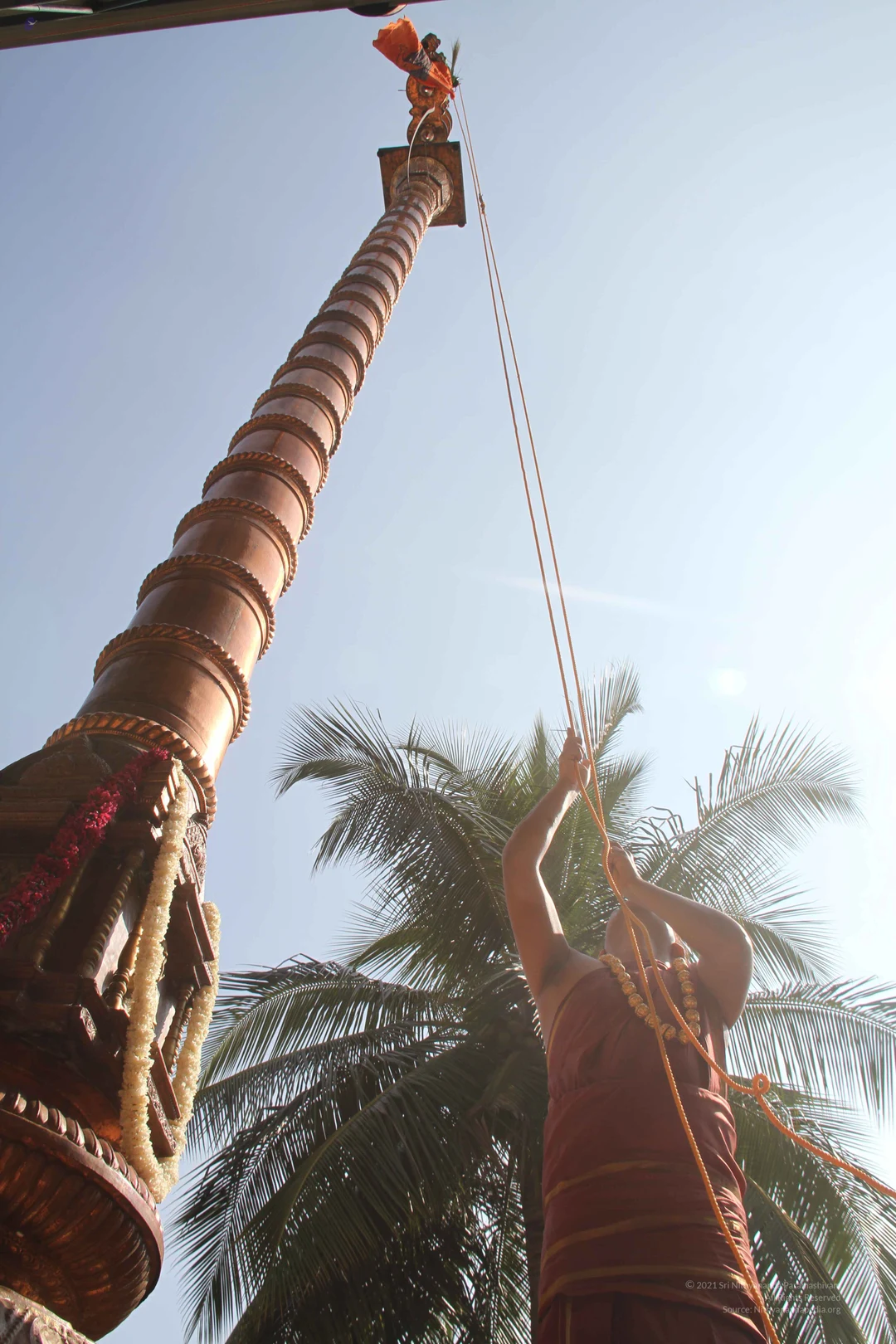
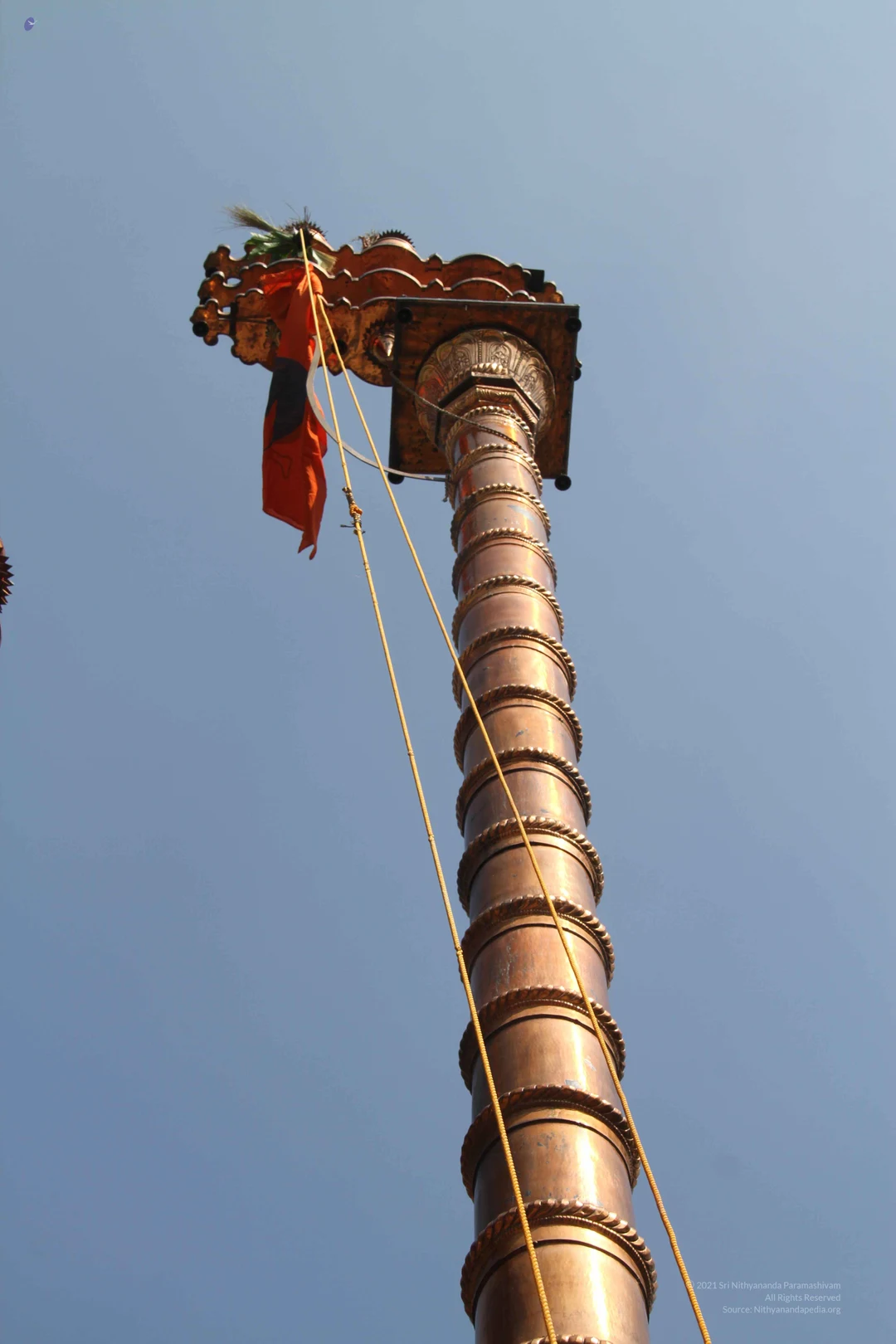
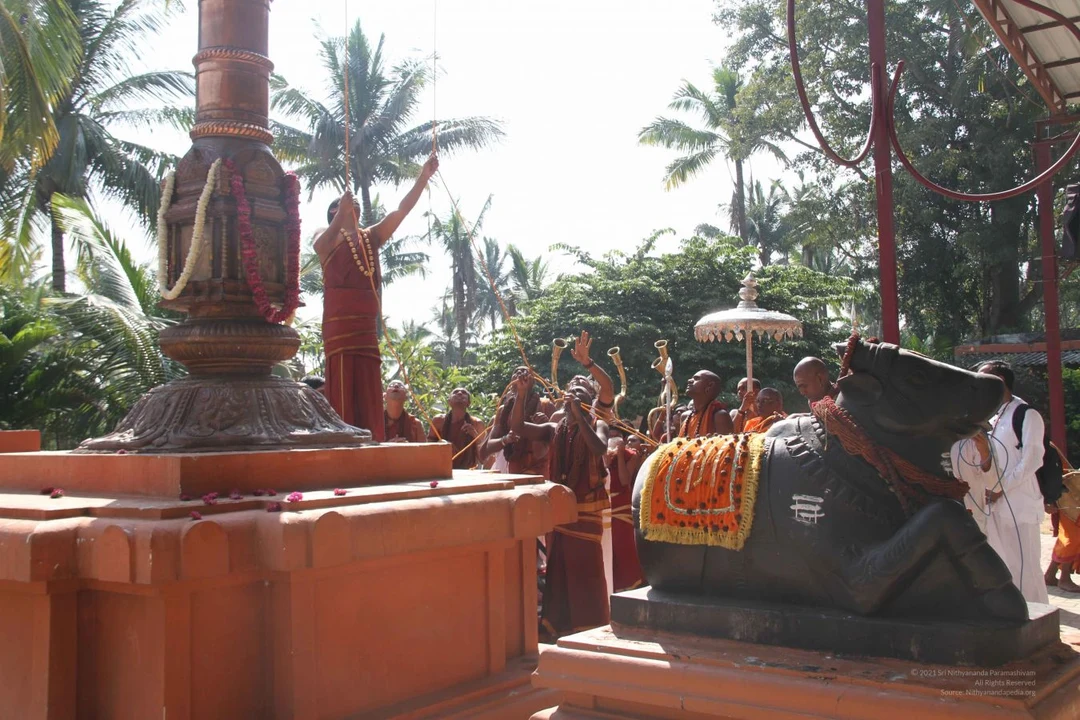
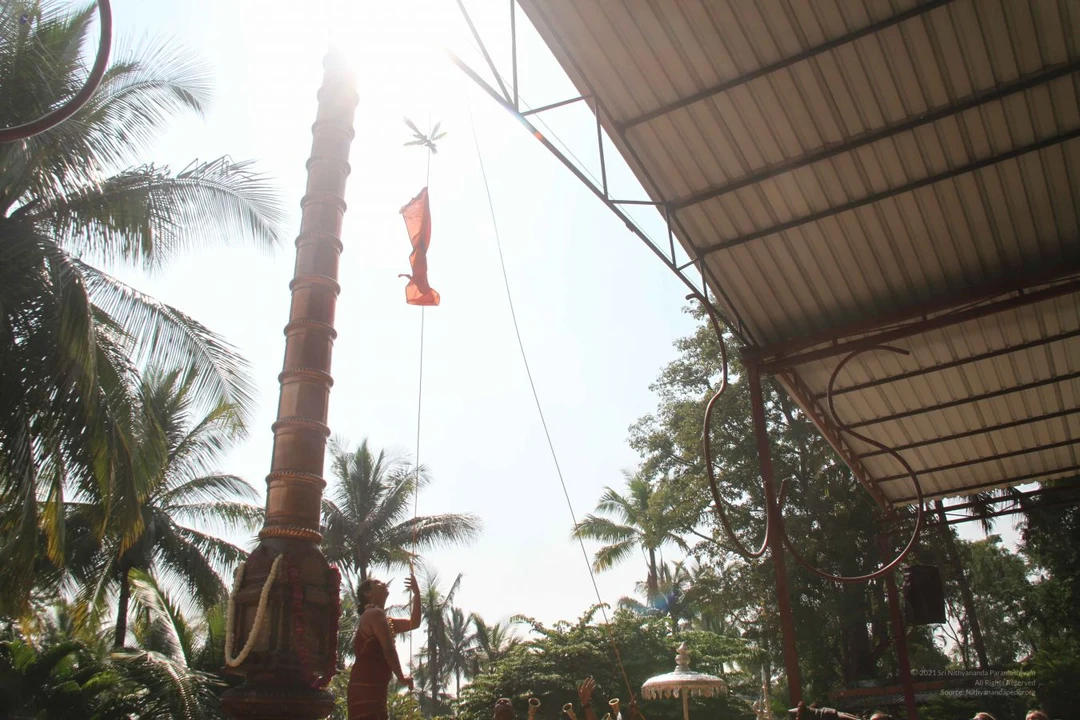
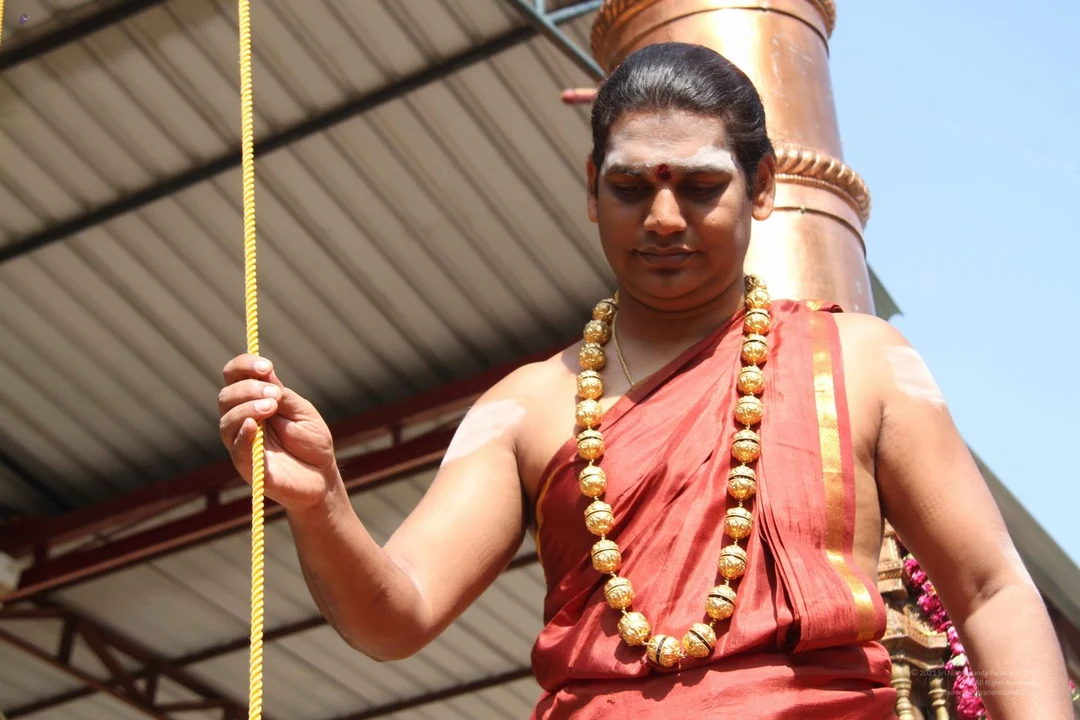
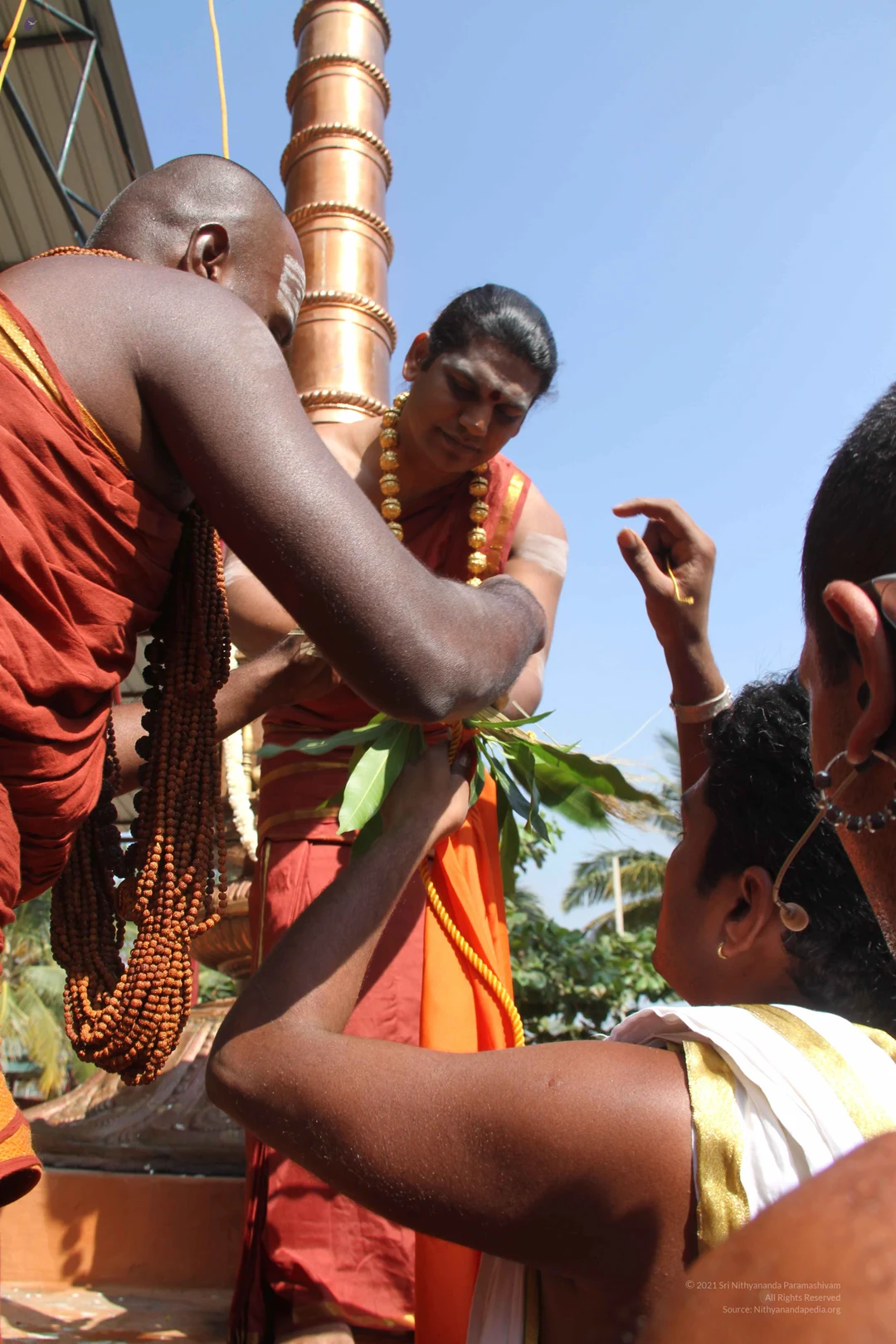
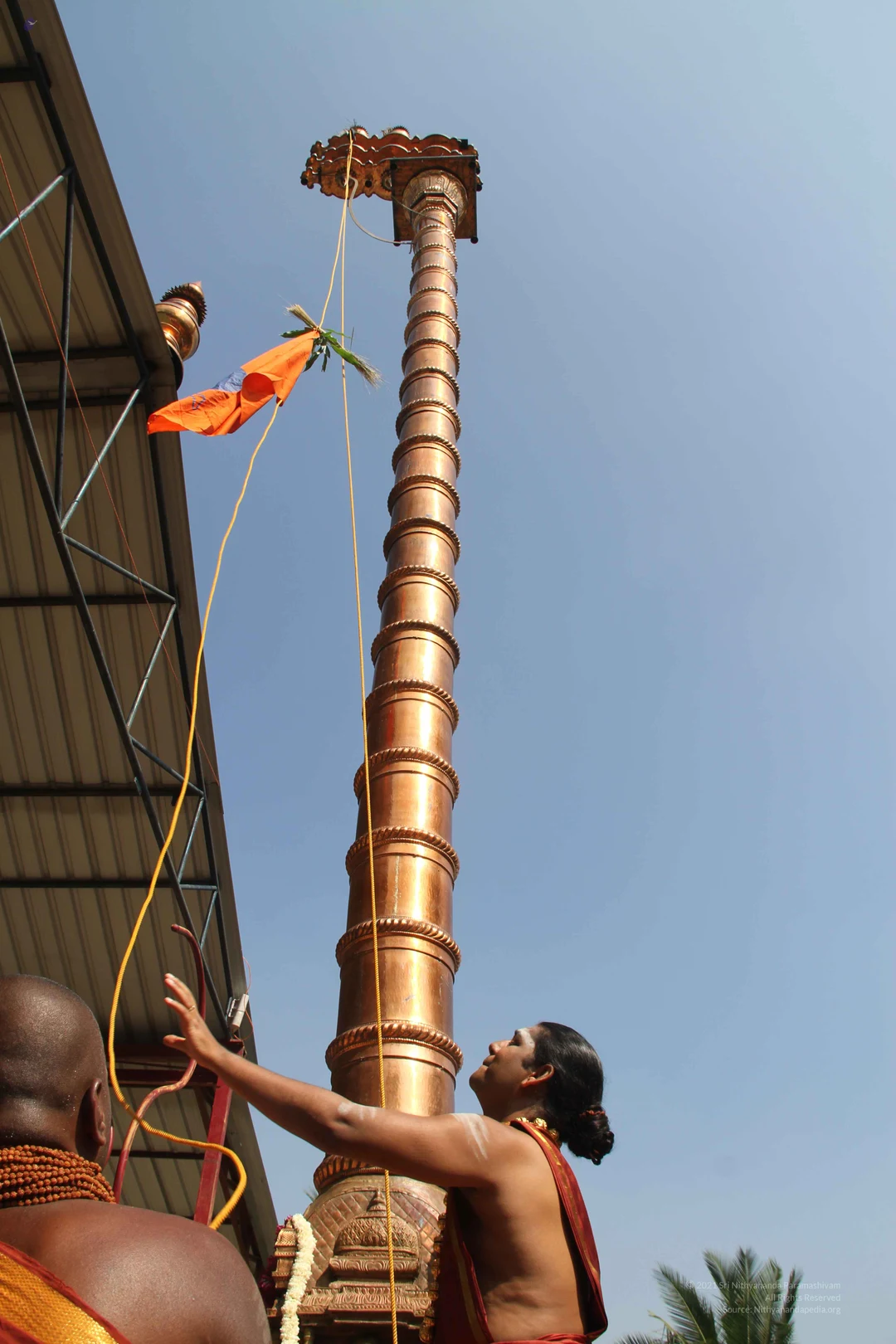
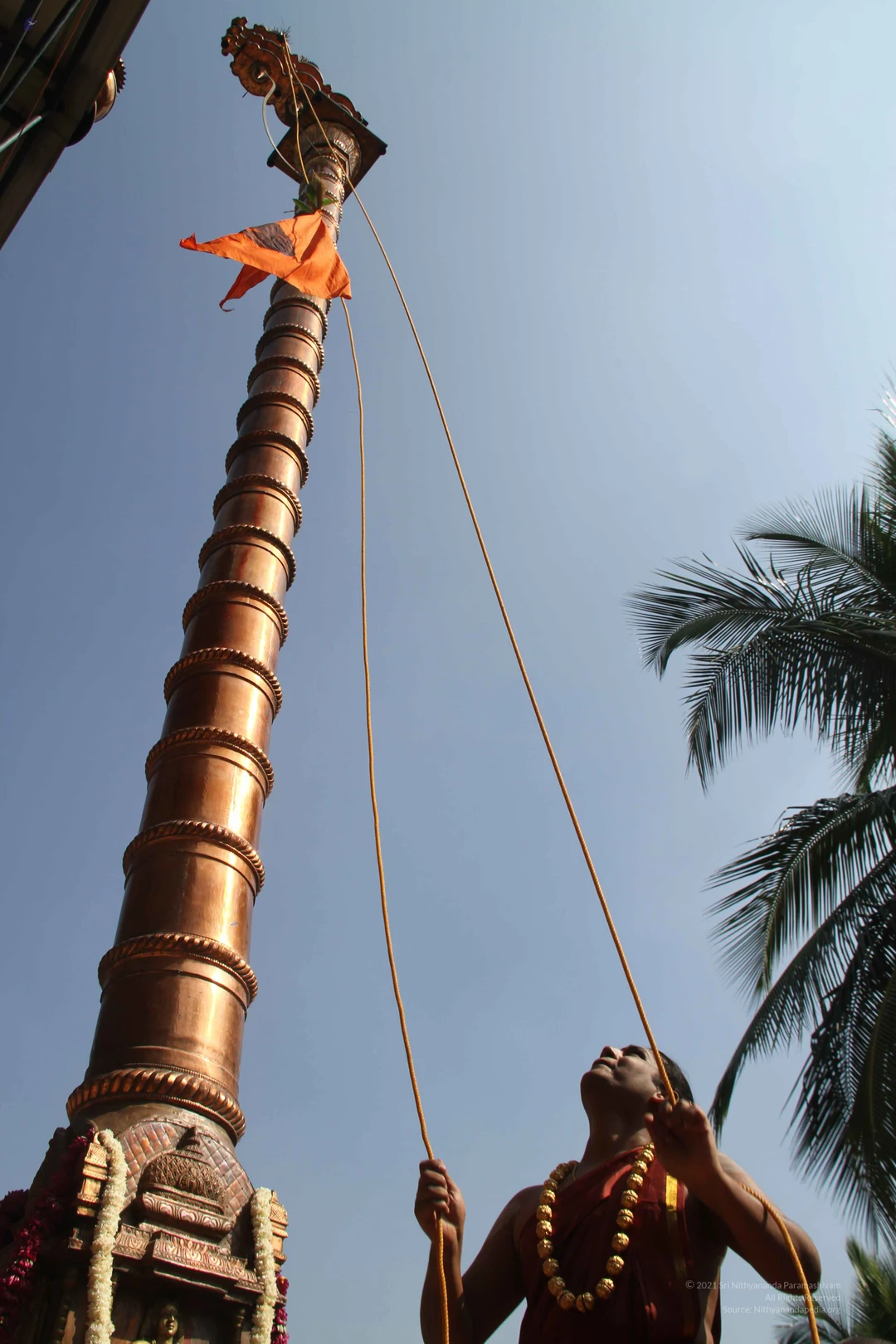
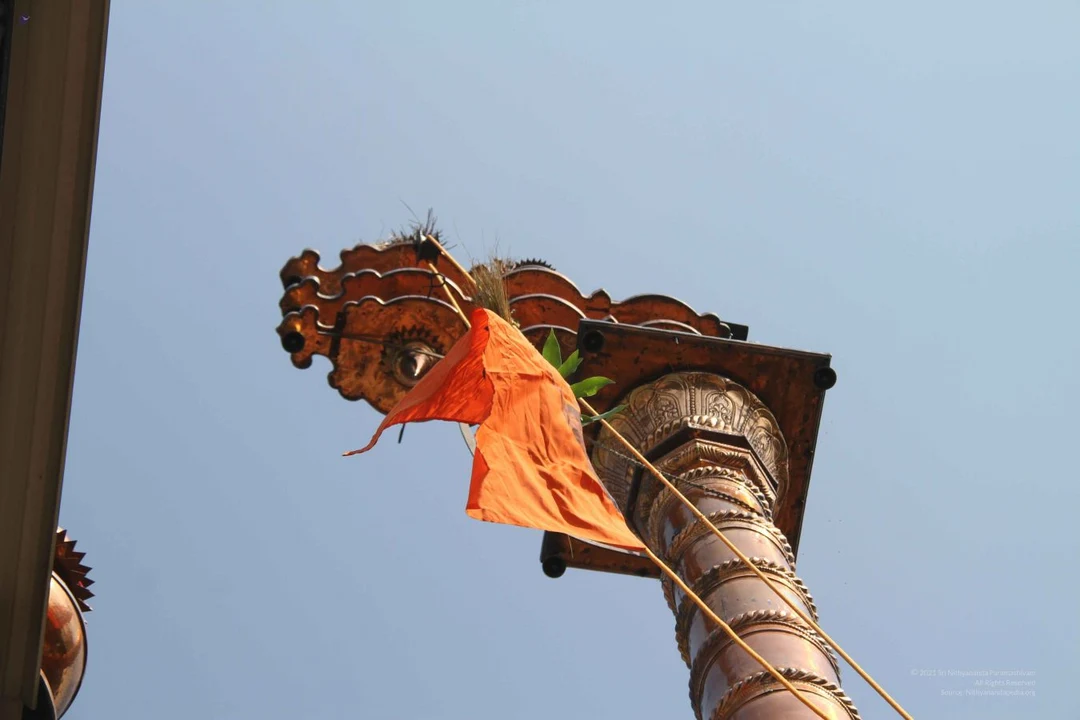
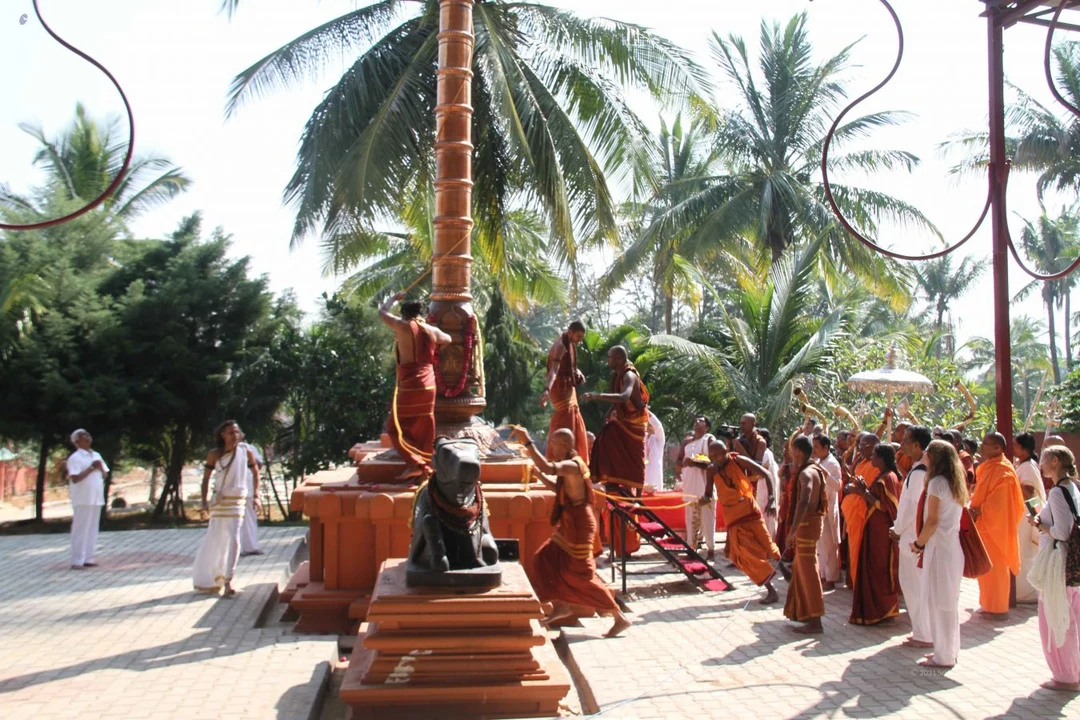
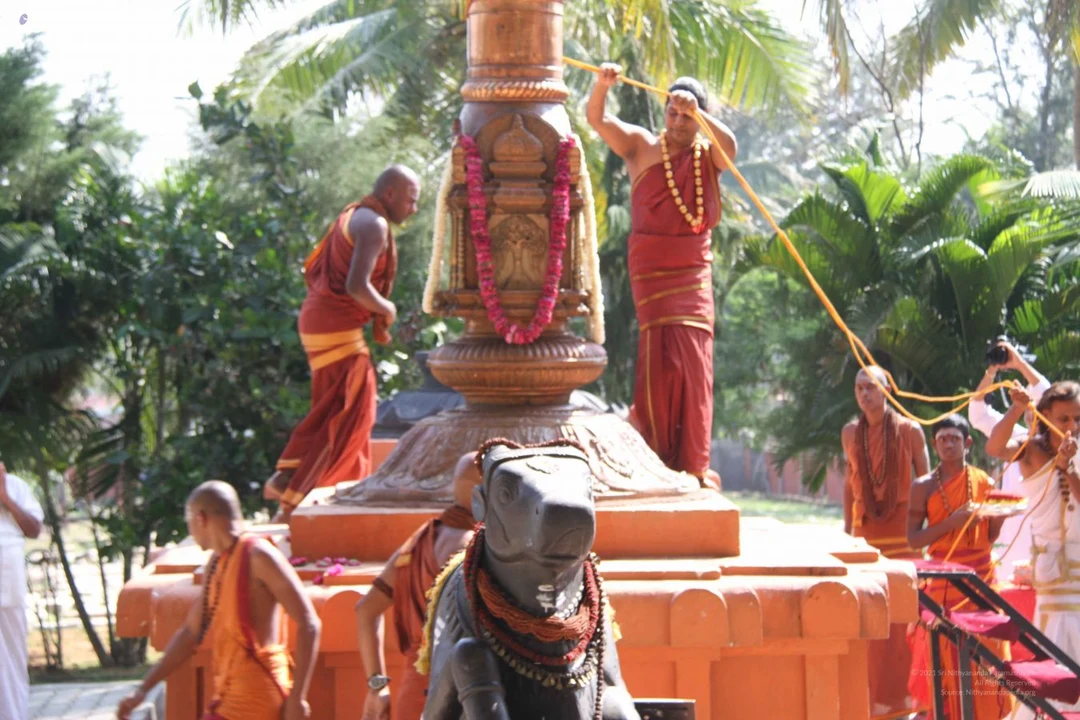
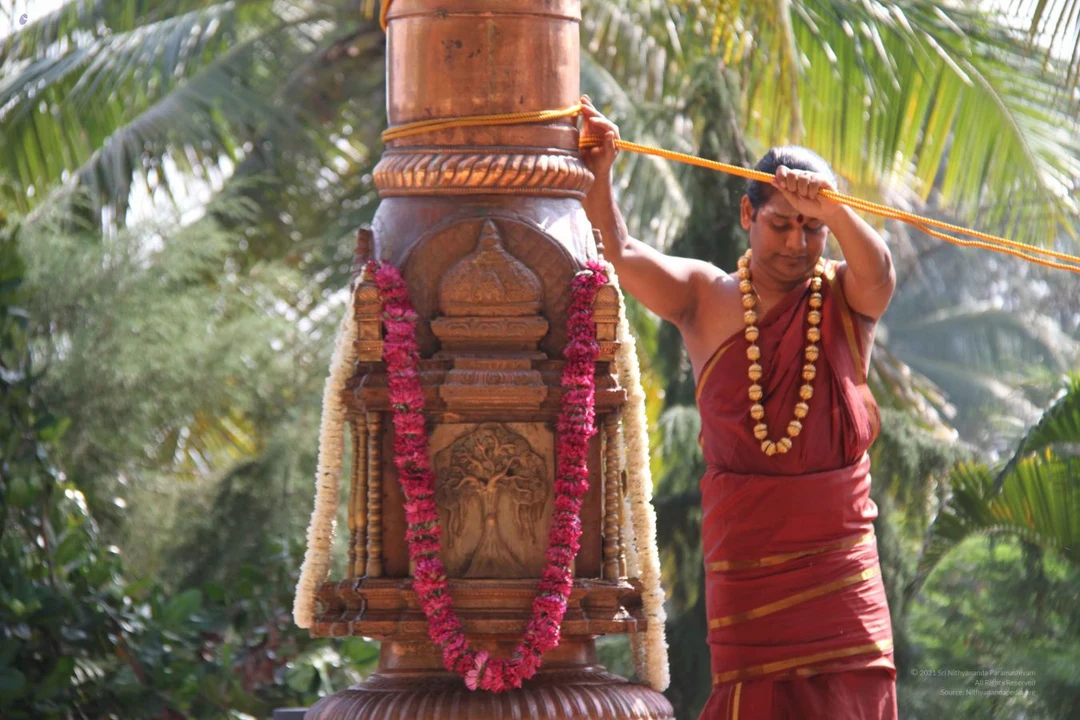
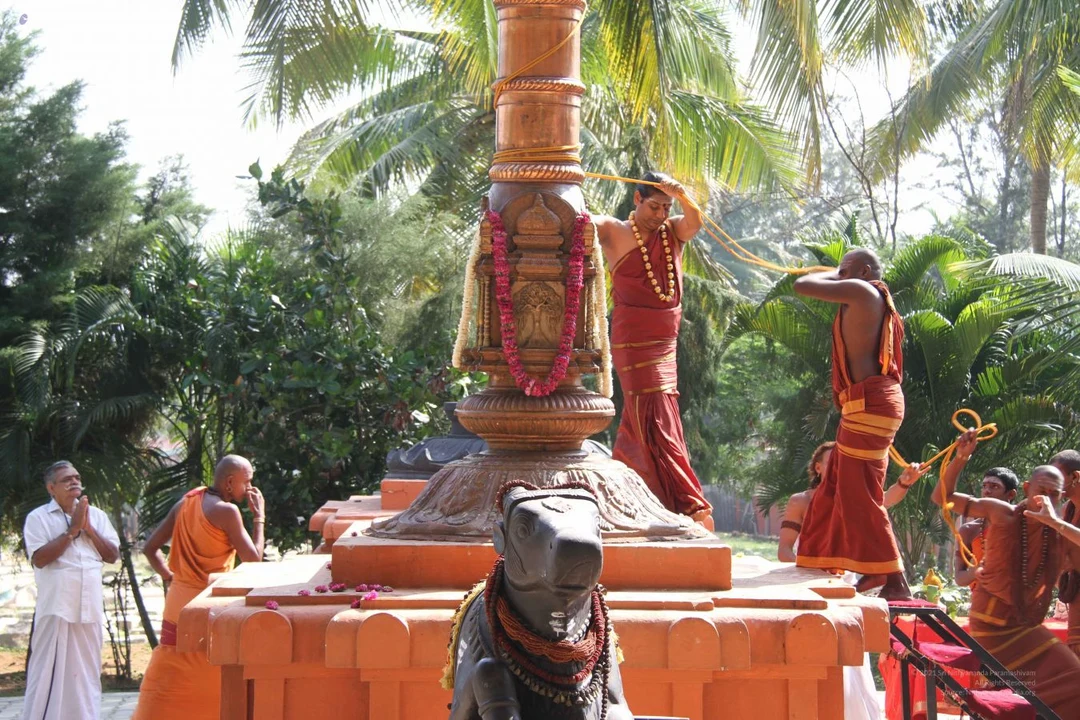
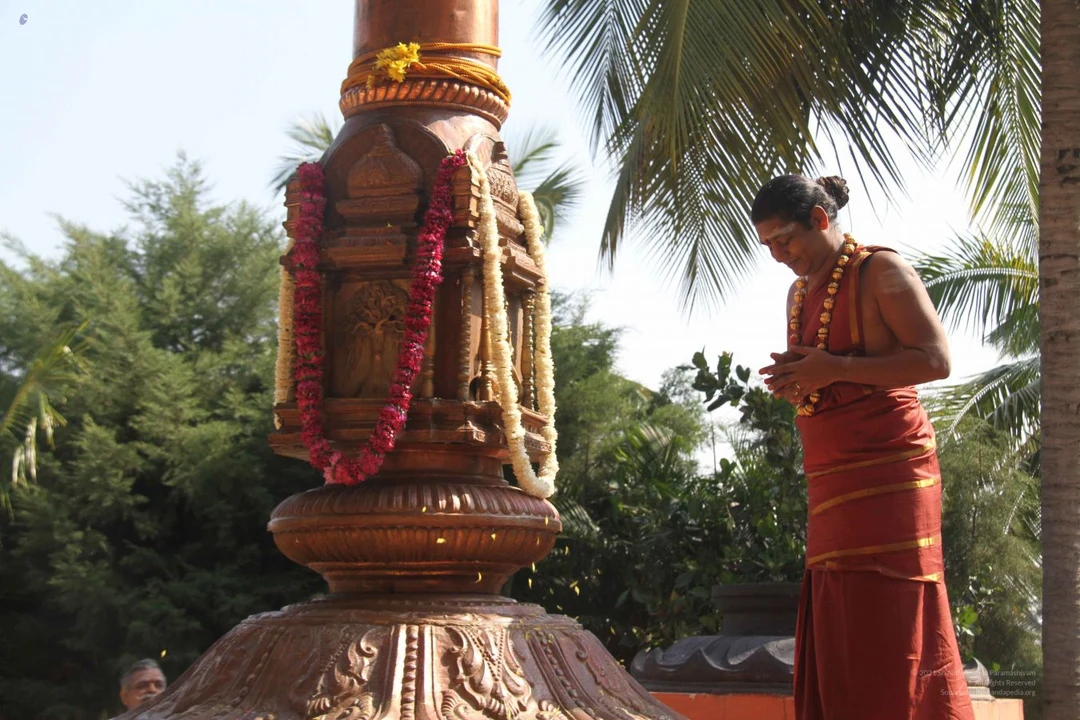
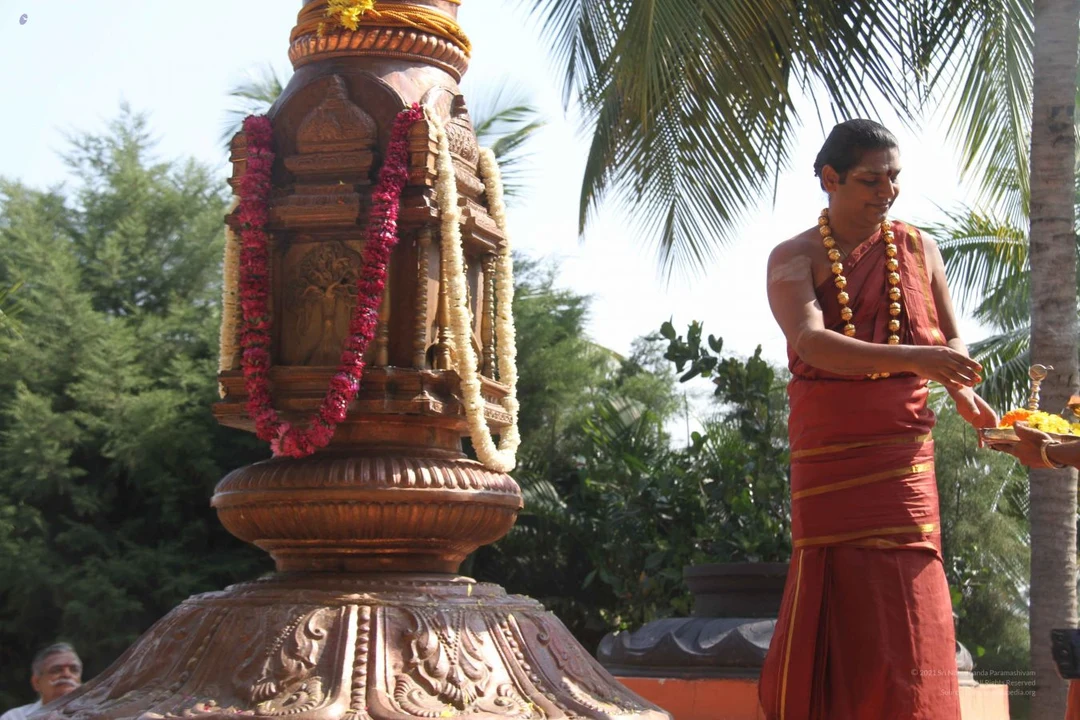
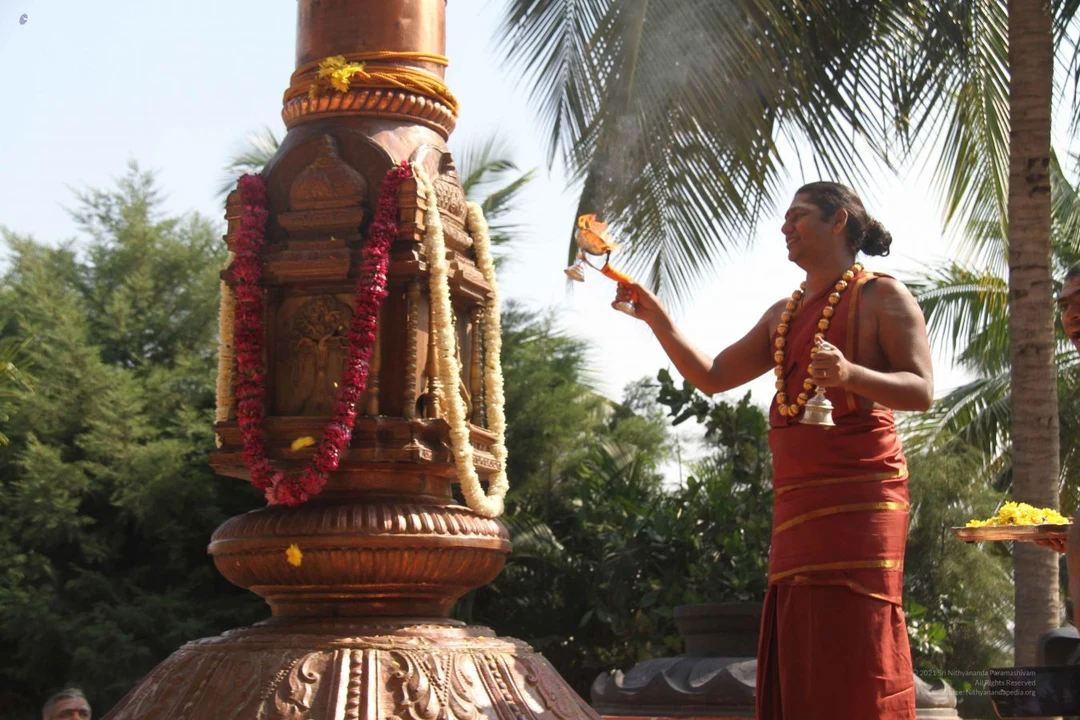
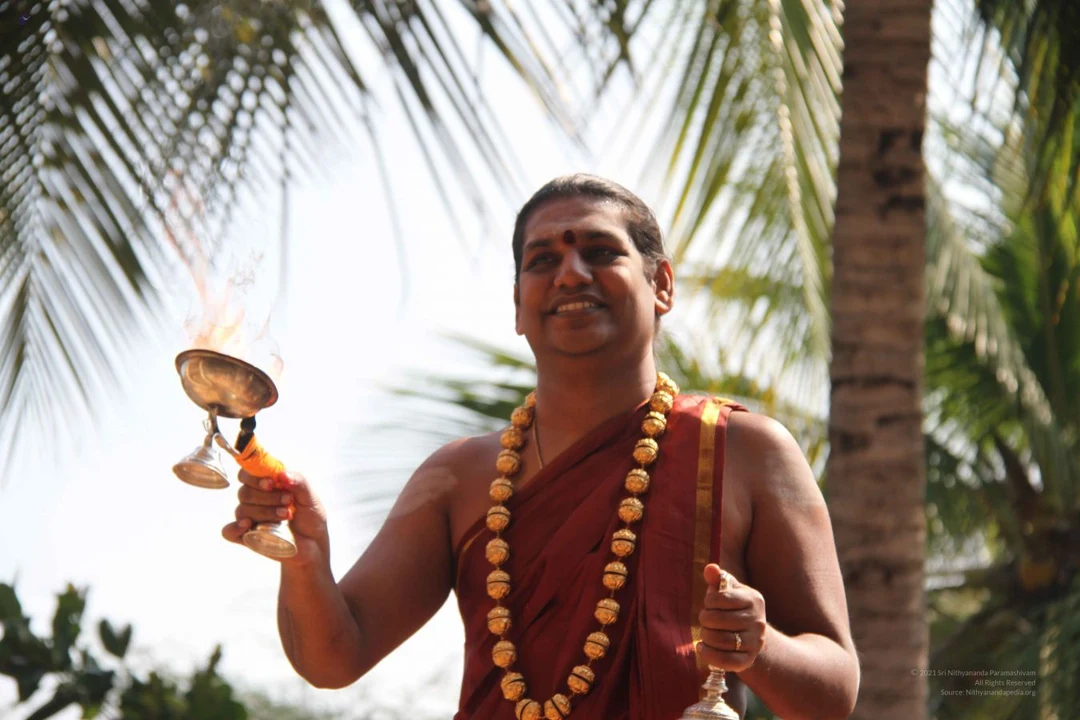
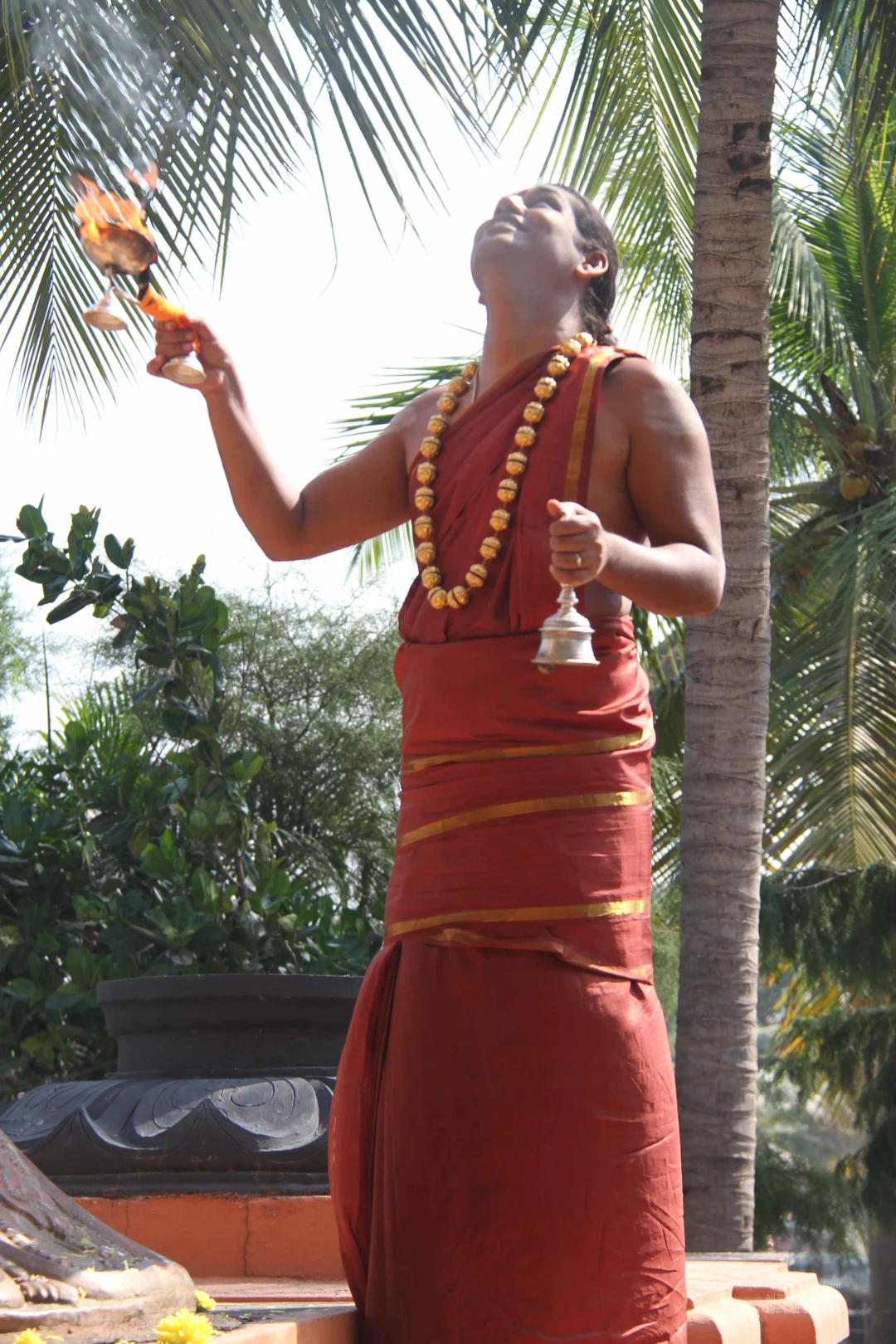
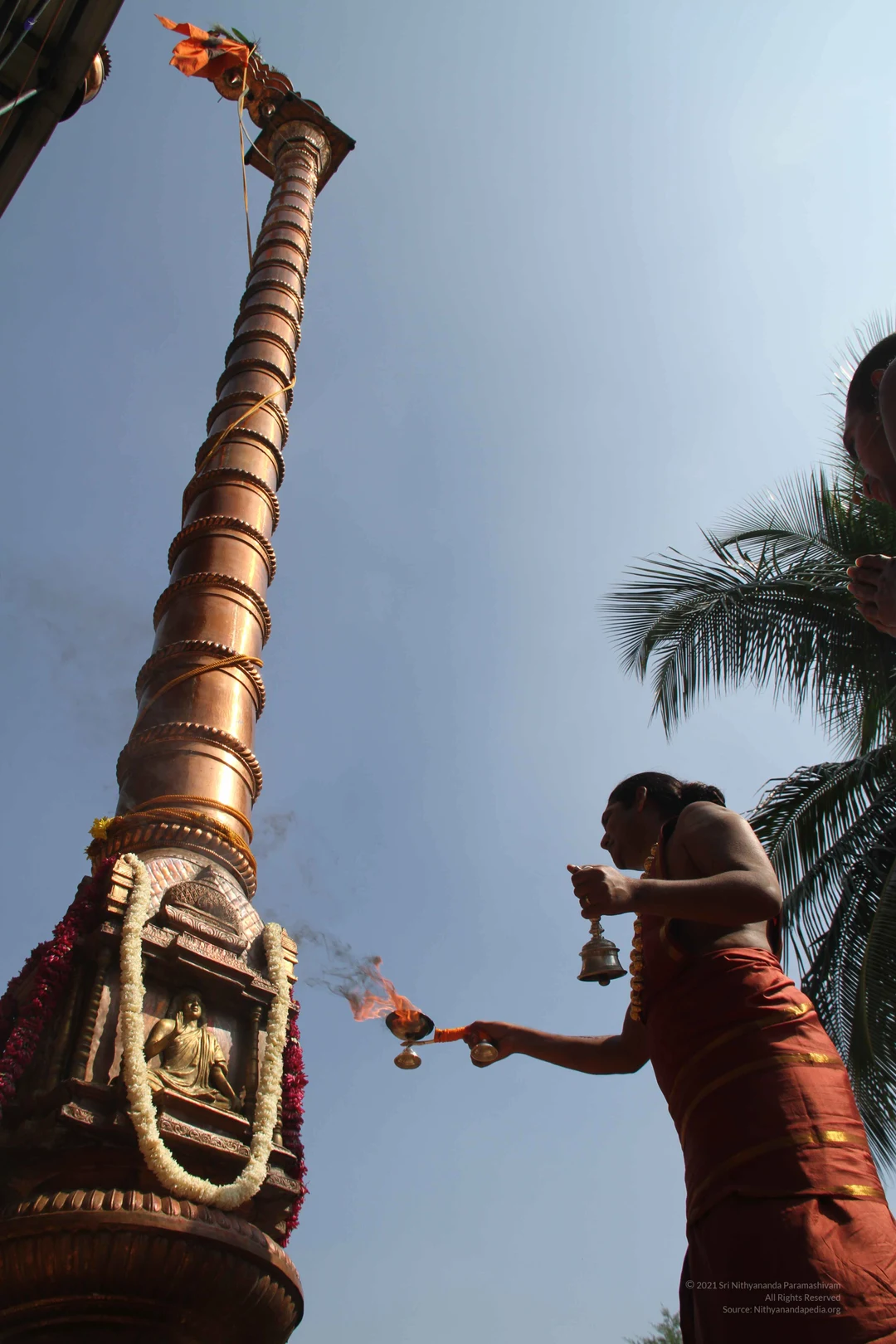
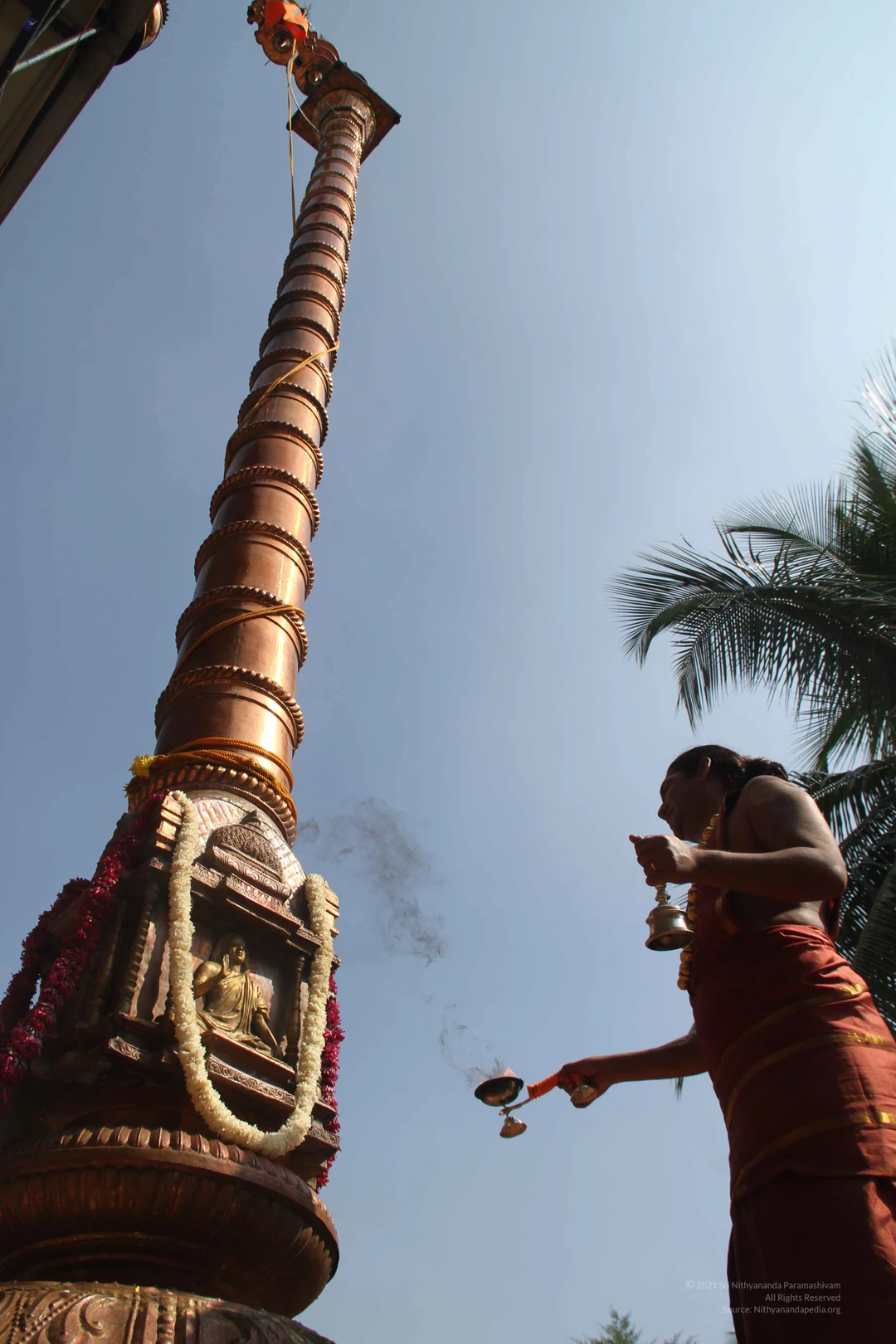
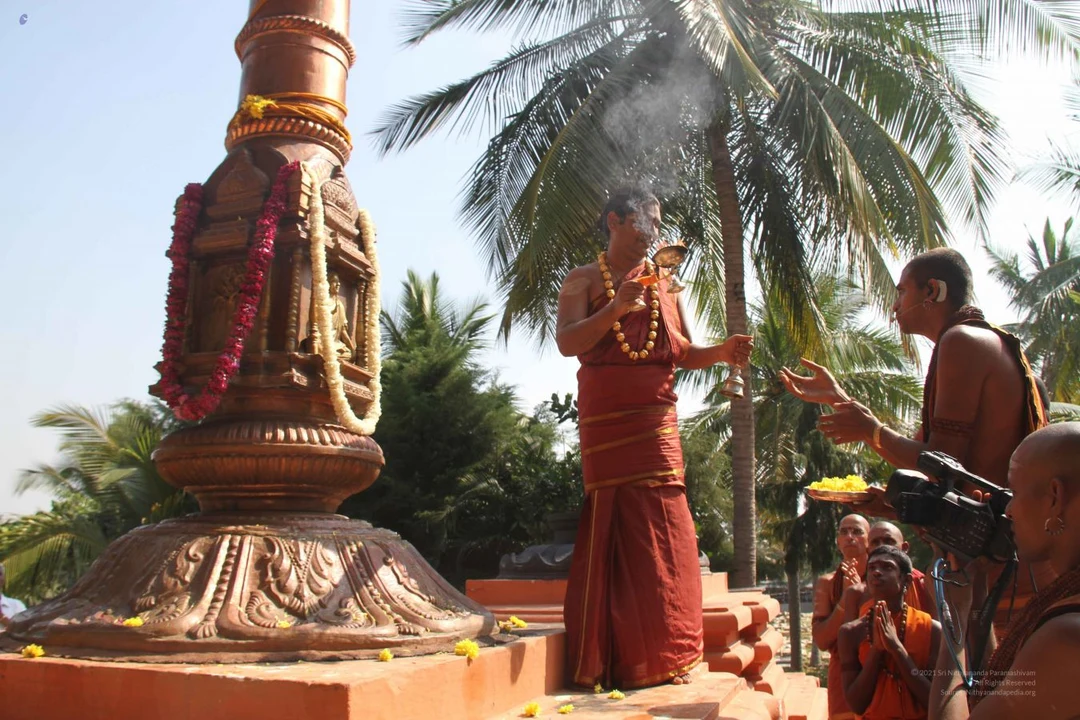
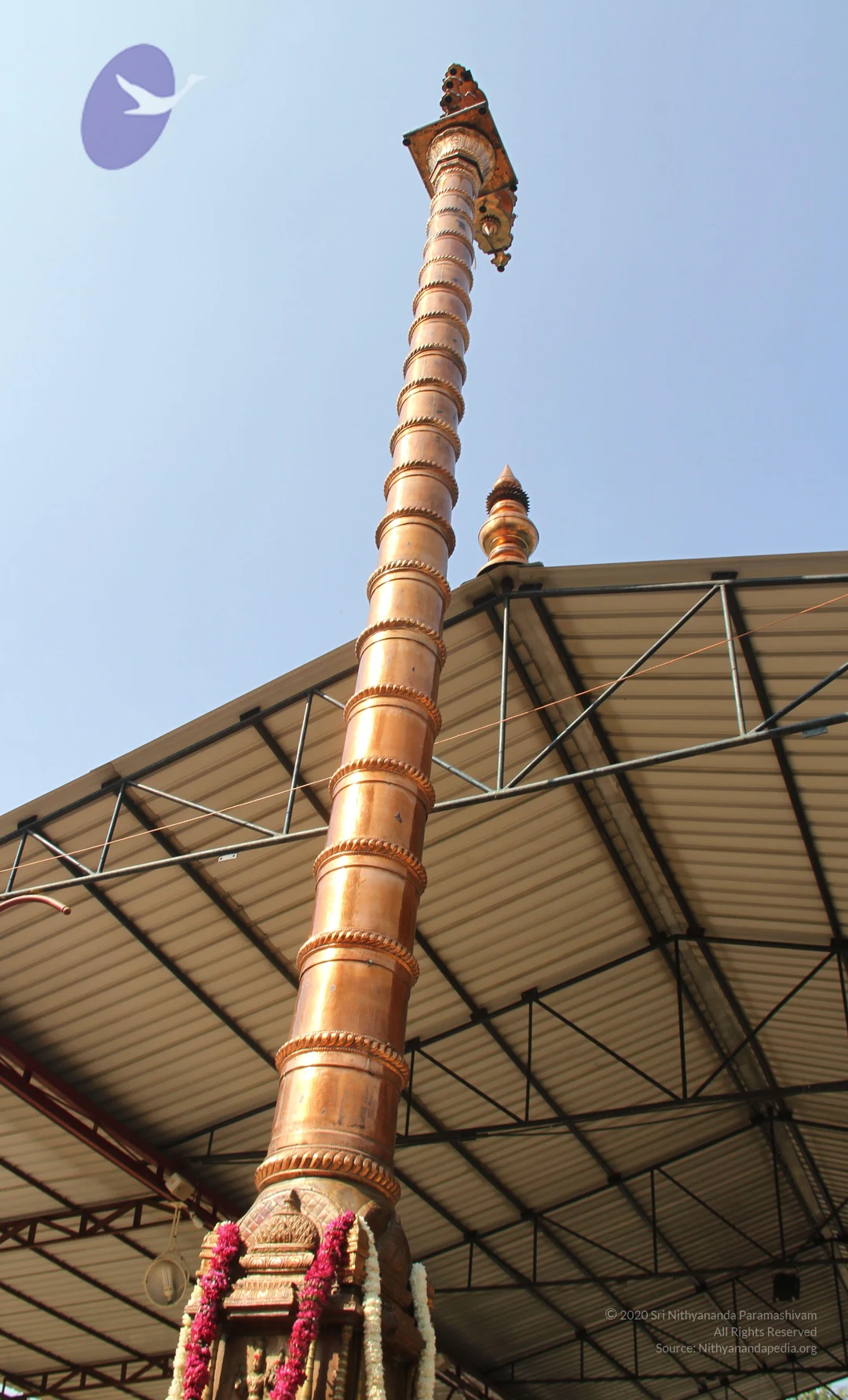
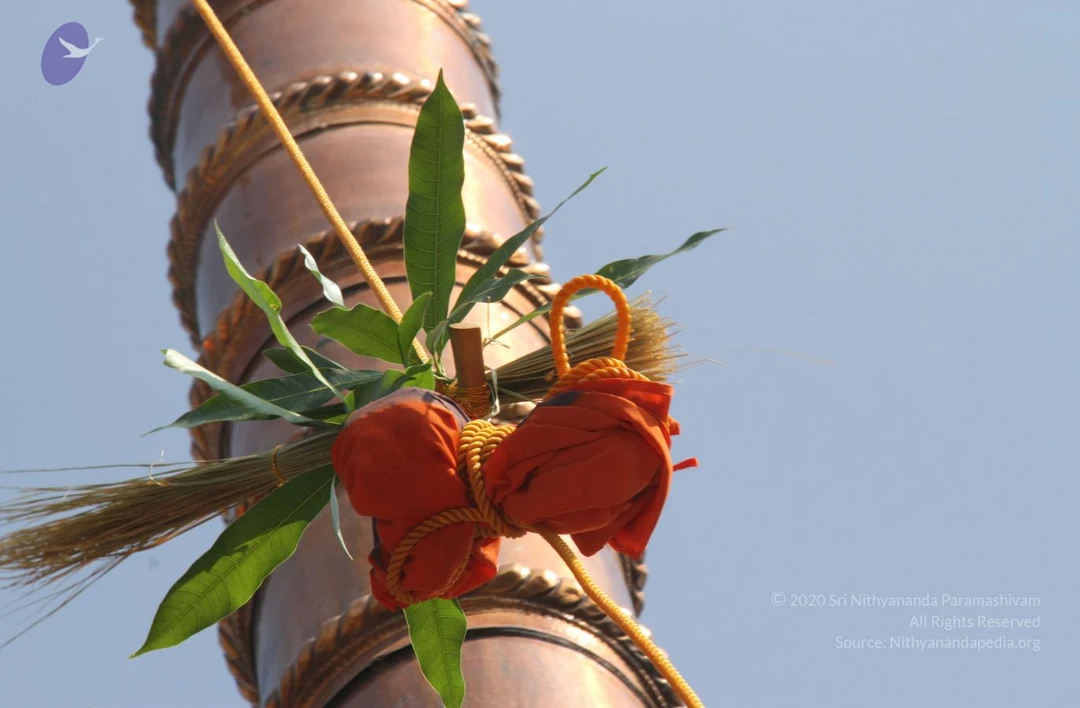
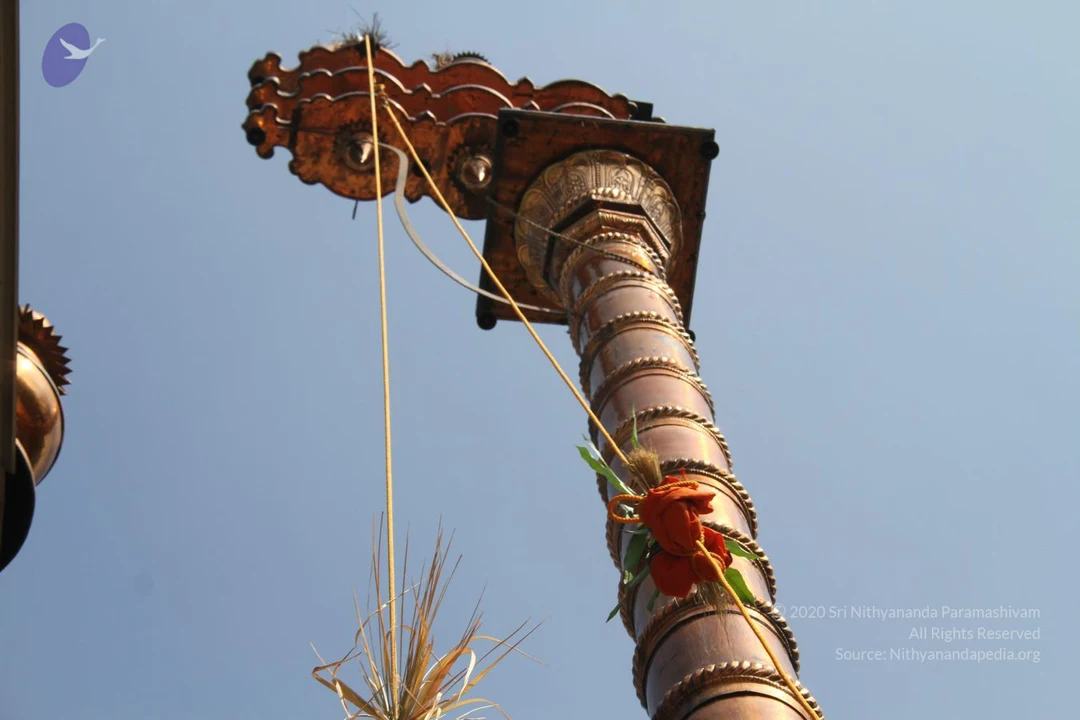
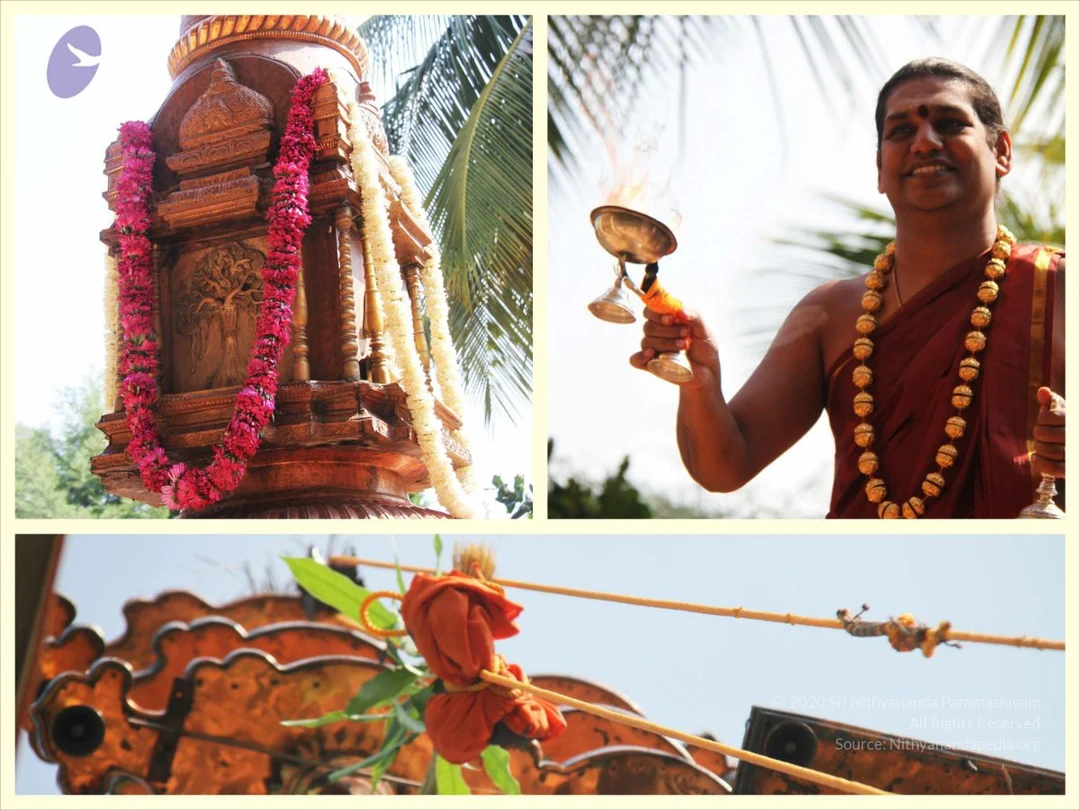
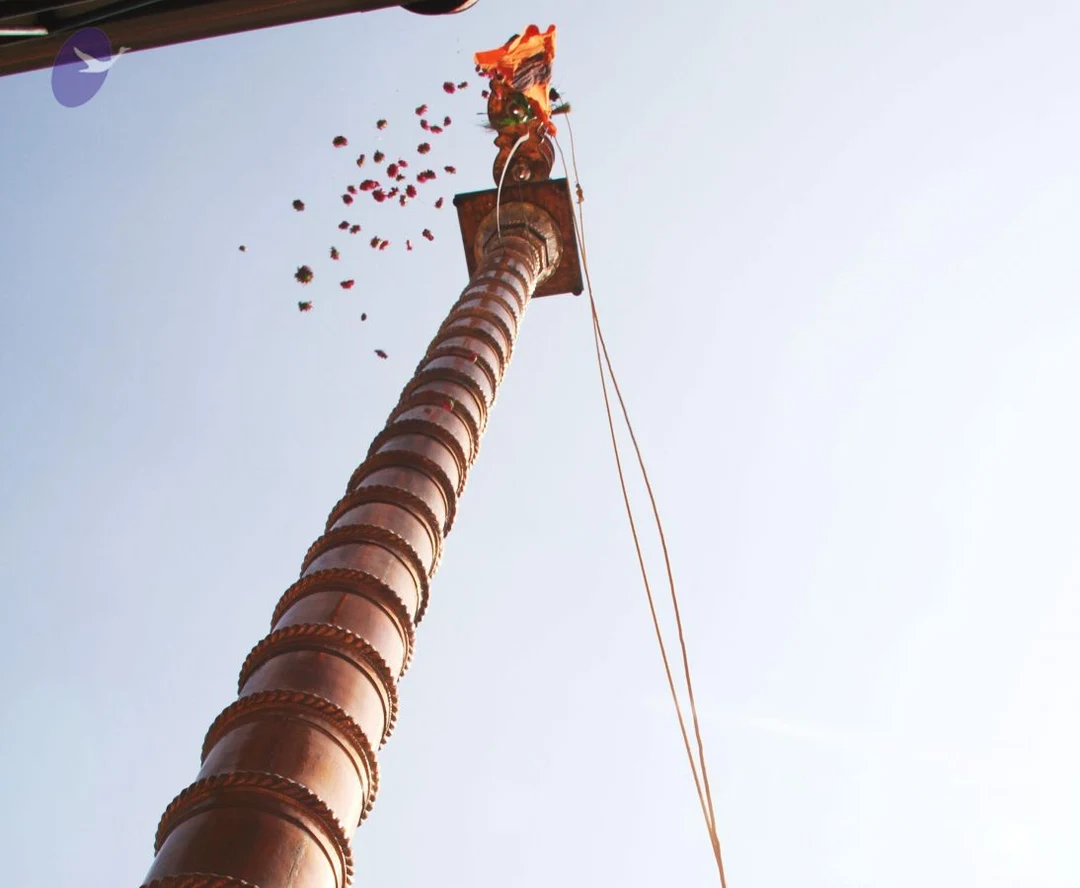
Dwajarohanam (Swamiji hoisted nithyotsava flag as Nithyanandeswara Brahmotsavam Completed Yesterday)

Tags:

Paramahamsa Nithyananda, completion, karma, spiritual path, eat, sleep, breath, live, Sannyas.

Photos Of The Day:

Pada-Puja

Satsang
Sarva-Darshan

Flag-Hoisting

Photos Of The Day:

Paduka-Puja

Satsang
Dwajarohanam

Chandikeswara

Photos Of The Day:

Paduka-Puja

Satsang
Dwajarohanam

Chandikeswara

01-Satsang

Photos from this day

View all 303 photos

Photos from the Day

5 photosSource gallery
A smiling man seated on an ornate gold throne with carved floral and scroll patterns behind him. He wears a red-orange turban with a small gold ornament, a red bindi, gold earrings, a red-orange saffron-style wrap with gold border, layered gold bead necklaces, and gold bangles on his wrists. White ash markings appear on his upper arms and shoulders. He rests one hand on the armrest of the throne.A seated man in a maroon-red robe and a matching red-and-gold turban sits on an ornate gold throne with carved lions and red velvet upholstery. He wears a long gold bead necklace, bangles, and a small red bindi, and rests his hands on the armrests while smiling. A brass oil lamp stands beside the throne against a blue-and-orange painted wall. The swami on the throne appears to be the a person candidate, with long swept-back hair and ceremonial gold beads, so the figure is marked as probable and his identity is uncertain.A smiling man seated on an ornate gilded throne with carved floral and scroll patterns and a red zebra-striped cushion. He wears a maroon-red turban with gold border, a red and gold-bordered dhoti and shawl, a long gold bead mala with large beads, gold bangles and a gold armlet. He has a red kumkum mark and white vibhuti streaks on his arms and chest. Behind him are a red and gold panel and a lit wall.A smiling man sits on an ornate gold throne carved with lion-like figures and floral scrollwork. He wears a red-and-gold turban with a jewelled ornament, a red-and-gold saffron-toned shawl draped over his shoulders, and a long beaded necklace of large gold-coloured beads, plus gold bangles on both arms. A red kumkum mark and white vibhuti stripes appear on his forehead and arms. The bare-shouldered figure, with long swept-back styling visible in the frame, presents as a person seated in a ceremonial setting.A seated man in a maroon and gold turban with a red bindi smiles broadly on an ornate golden throne carved with floral and animal motifs. He wears a rust-red dhoti-style garment with a gold border, a long necklace of large gold beads, and gold bangles on his wrists, with white ash markings on his shoulders and upper arms. A small microphone is visible near his face. Swamiji (probable) is shown as the seated central figure, identified by the throne, the crown-like turban and the ornate gold necklace. One physical person is visible.

Photos from the Day

31 photosSource gallery
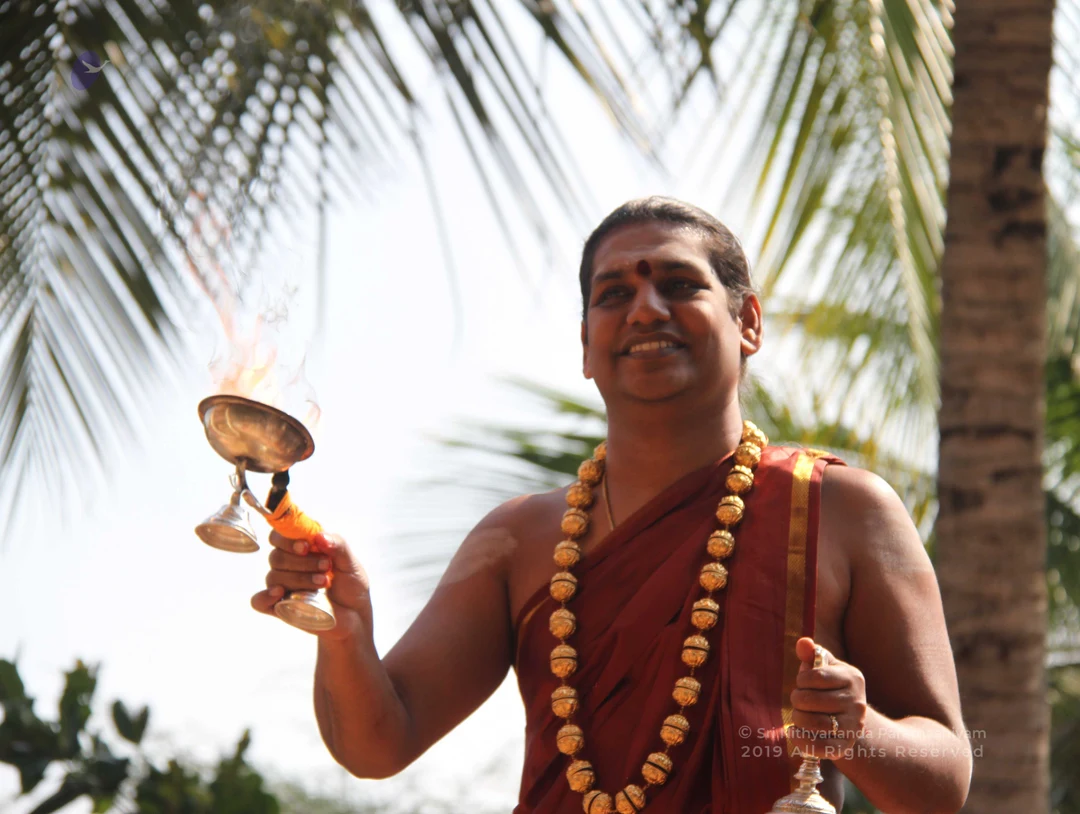
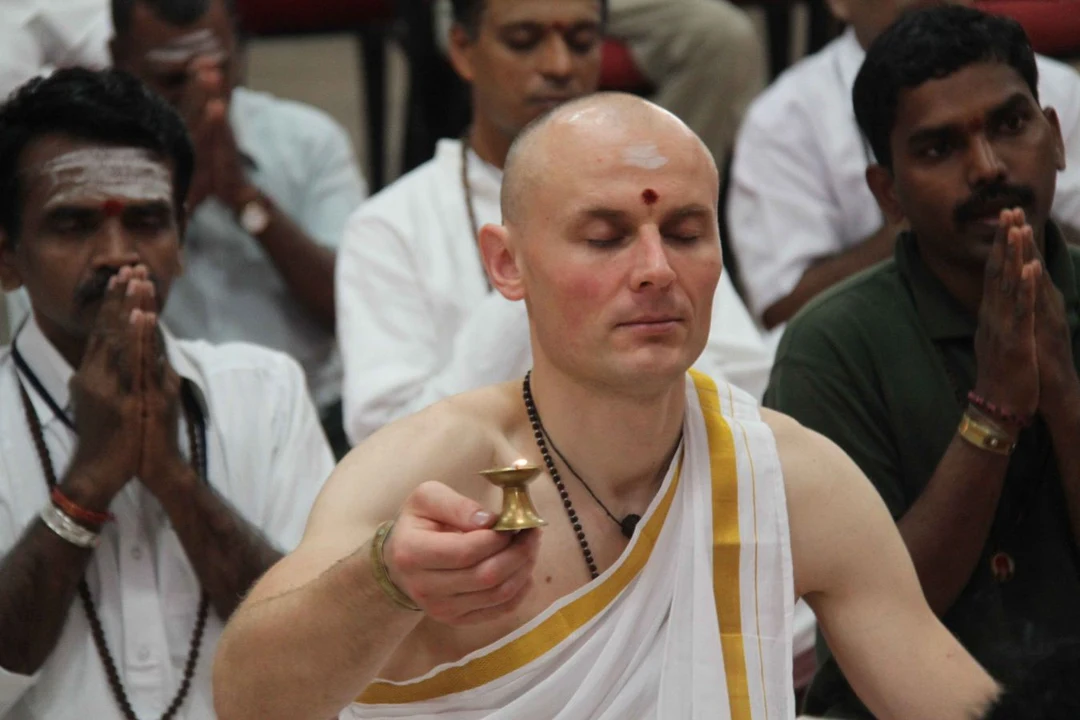
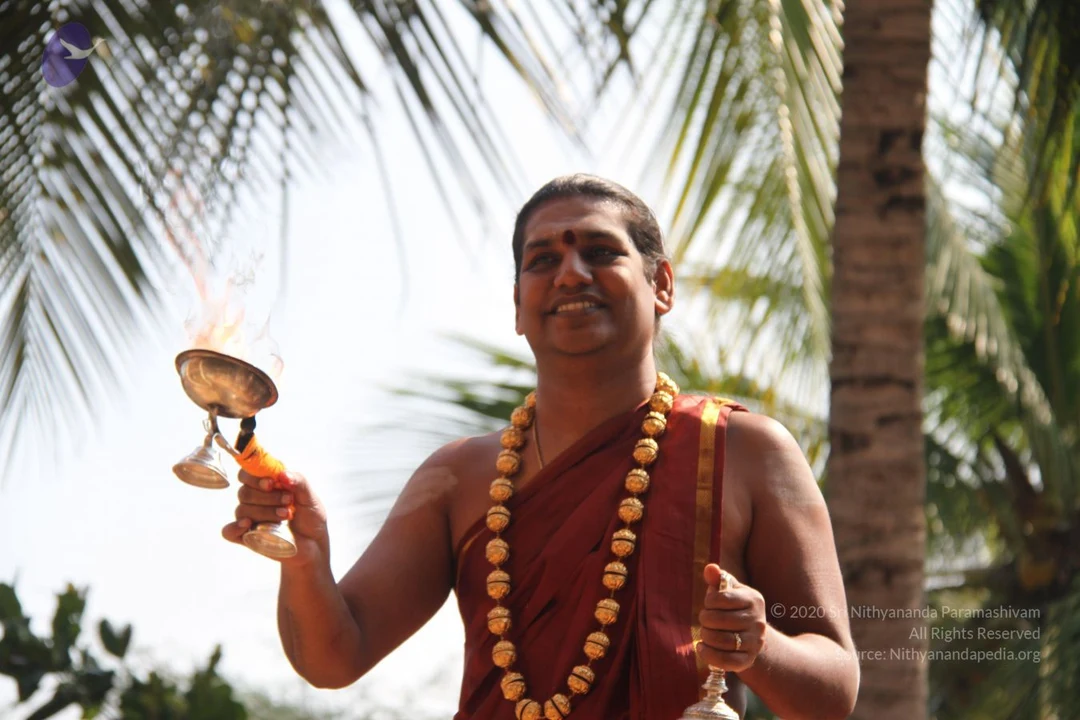
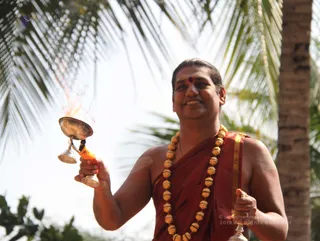
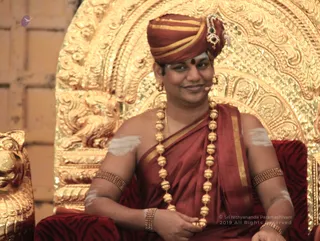
A smiling man stands outdoors before tall palm fronds and a palm trunk, holding a brass aarti lamp with a flame in his right hand and a brass bell or lamp stand in his left. He wears a rust-red dhoti-style wrap with a gold border over bare shoulders, a long rudraksha mala with large beads reaching his chest, and a red bindi on his forehead. He has short hair swept back. The aarti lamp suggests a puja or aarti ritual. Only one physical person is present.A man seated on an ornate gold throne with carved floral and scroll patterns, wearing a maroon-red turban with gold trim and a jewelled ornament, a red-brown shawl over the body with gold border, multiple gold bead necklaces, gold armlets and bangles, a red bindi and white markings on the forehead and arms. He smiles slightly with a small headset microphone near his face and rests his hands in his lap. The throne has red striped cushions and a carved lion-like armrest is visible at left. The 2019 ' appears in the lower right and is omitted from textA smiling man wearing a maroon-red turban with a gold trim and a jewelled ornament at the front sits on an ornate gold throne carved with floral and mythical-animal motifs. He wears a maroon-red shawl with a gold border, a long necklace of gold beads, gold bangles on his upper arms and wrists, and a red dot on his forehead, with white markings on his arms. A small microphone is attached near his face.A smiling man sits on an ornate gilded throne with a tall arched back carved with floral and lion motifs. He wears a maroon-red turban with gold border and a jewelled ornament, a red-brown dhoti-style cloth with gold edging draped over his shoulder, and a long gold bead mala around his neck, plus gold armbands. A red bindi is on his forehead and white ash marks show on his arms. He sits on a tiger-striped cushion with red velvet side cushions, and a red steel cup rests beside him. Swamiji (probable) appears in person, seated on the throne with a lavalier microphone clipped near his face, marked by the turban, saffron-toned robes and rudraksha-style gold mala.A man seated on an ornate gold throne with carved floral and scrollwork backrest, wearing a maroon-red turban decorated with a gold jewelled ornament, a red-and-gold saffron-toned wrap, a long gold bead mala necklace and gold bangles. He has a red bindi and white vertical tilak, a small headset microphone, and his right hand touches his turban while he speaks. A gold lion-head armrest is visible at left, and the throne upholstery is red with dark tiger stripes. The appearance and ceremonial cues (turban, gold mala, saffron-toned clothing, throne seating) are consistent with the Swamiji (probable) candidate, though this is an appearance-based label only.A man seated on an ornate gold throne with a carved lion-form armrest, speaking and gesturing with his right hand during a satsang. He wears a maroon-red turban with gold trim and a jewelled ornament, a red-and-white forehead mark, a red-brown silk robe with gold border, a heavy gold bead necklace, and gold bangles on both arms. A lapel microphone is clipped near his mouth. Behind the throne are gold carvings. Probable Swamiji: the person's distinctive ceremonial cues include a jewelled turban, ornate gold necklaces and a throne presentation.

Pada-Puja

5 photosSource gallery
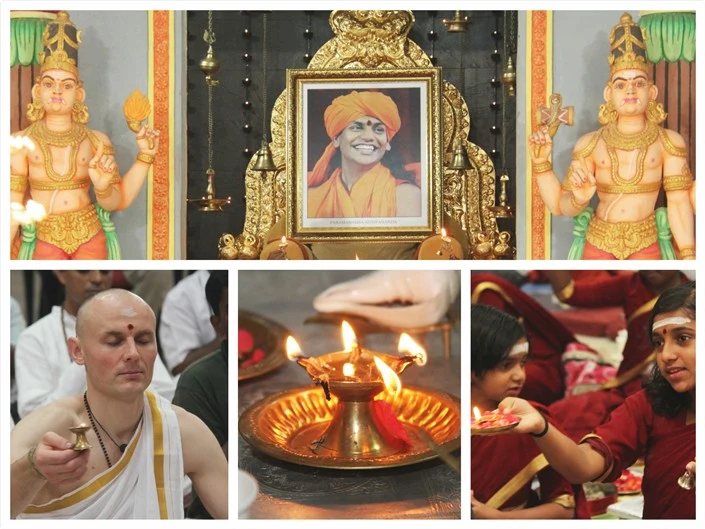
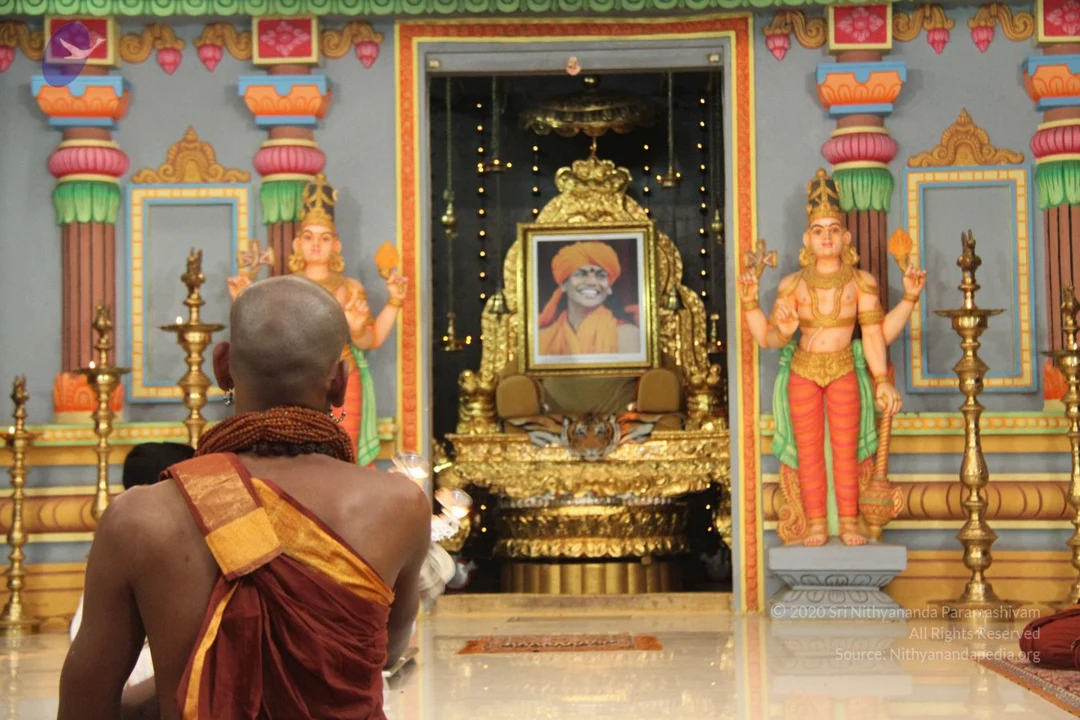
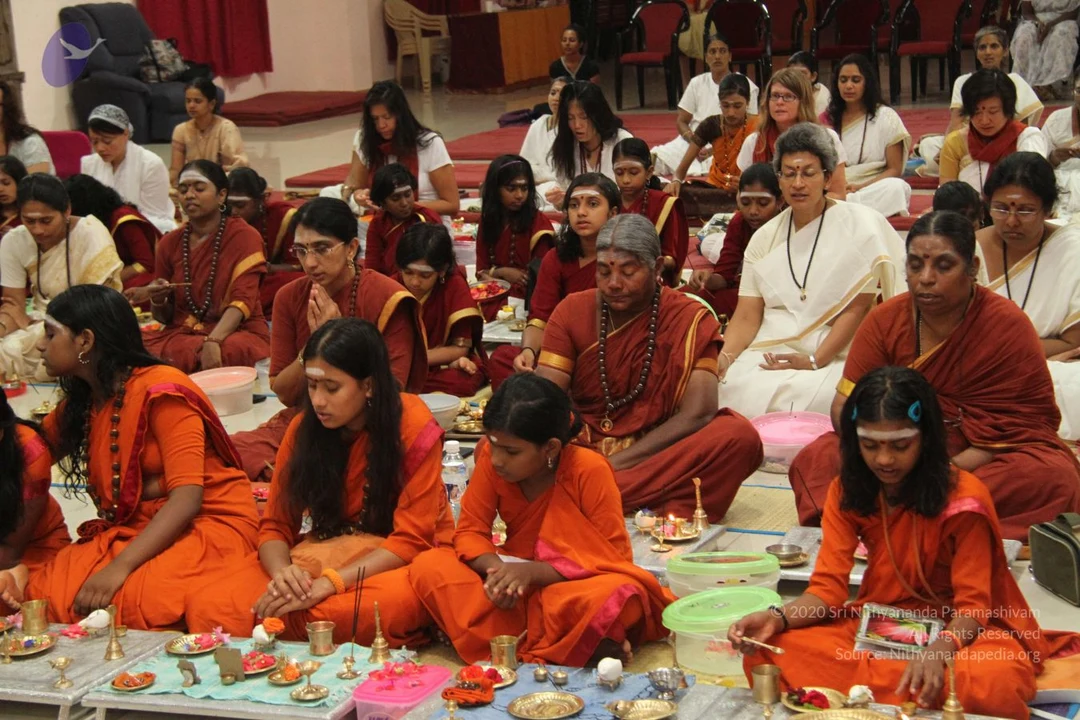
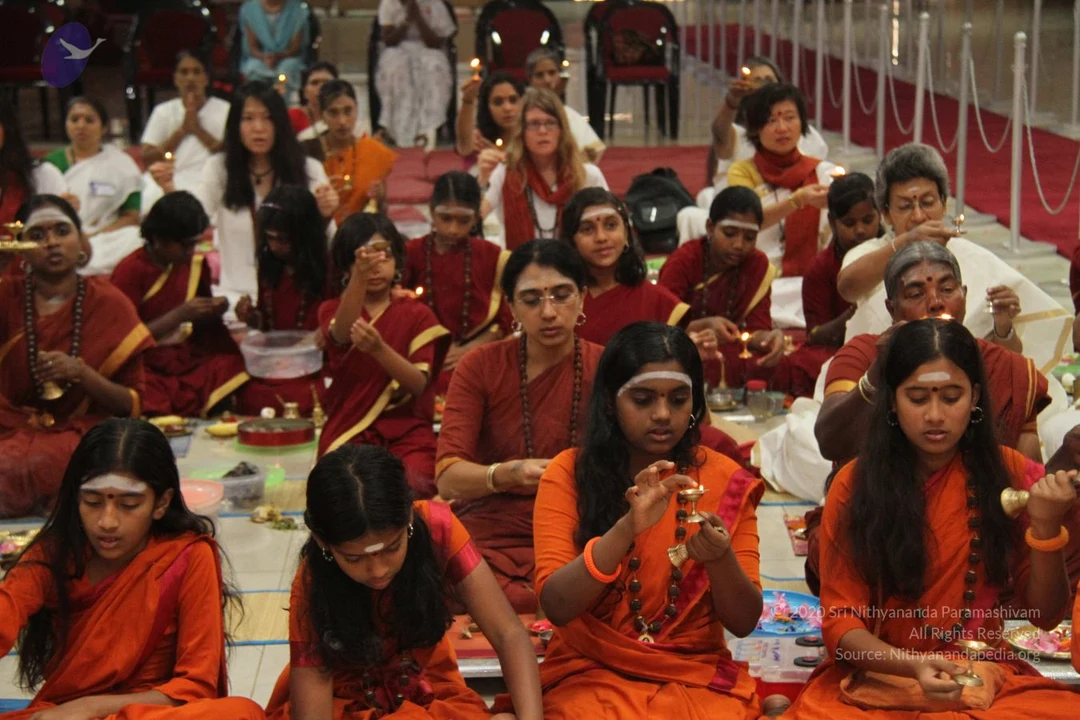
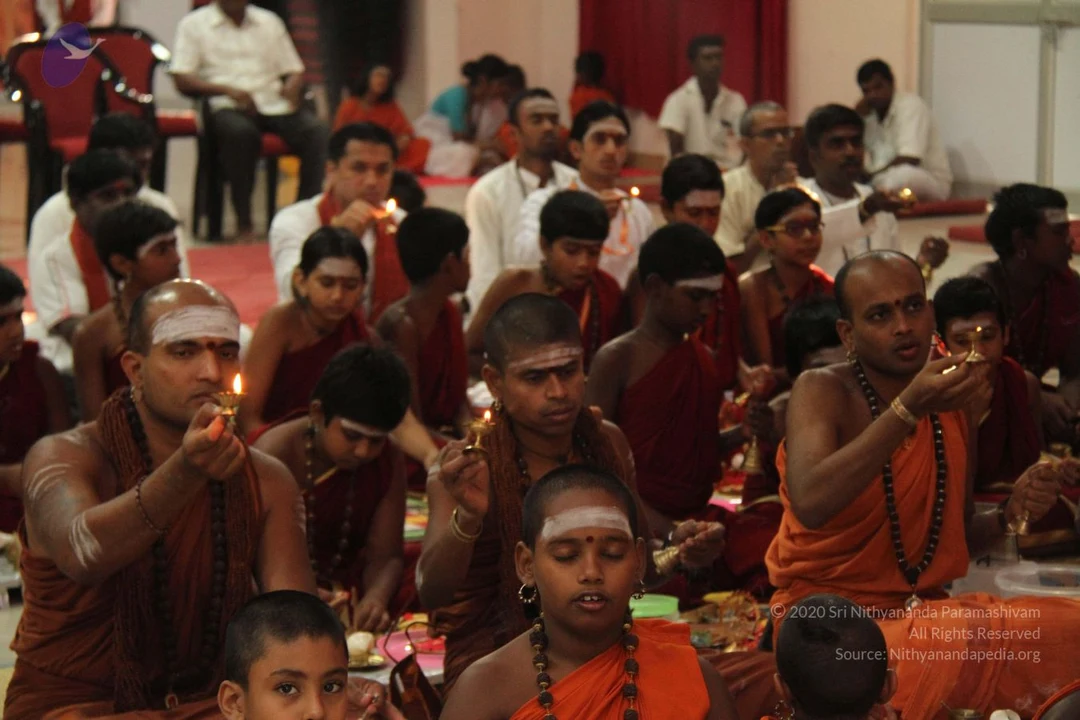
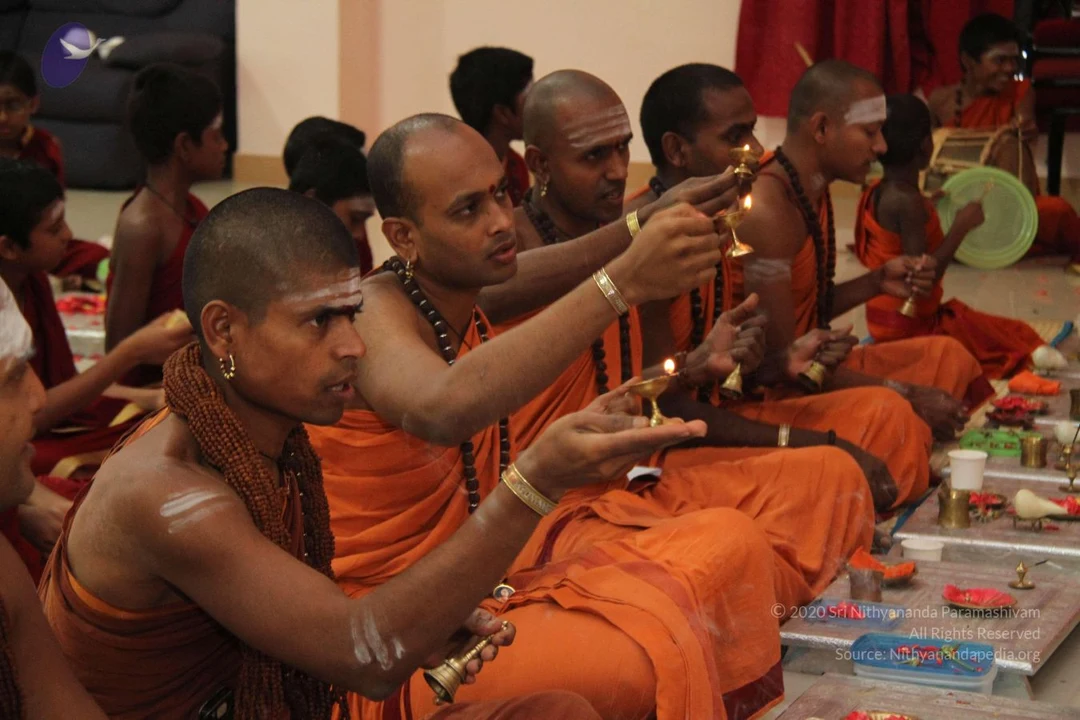
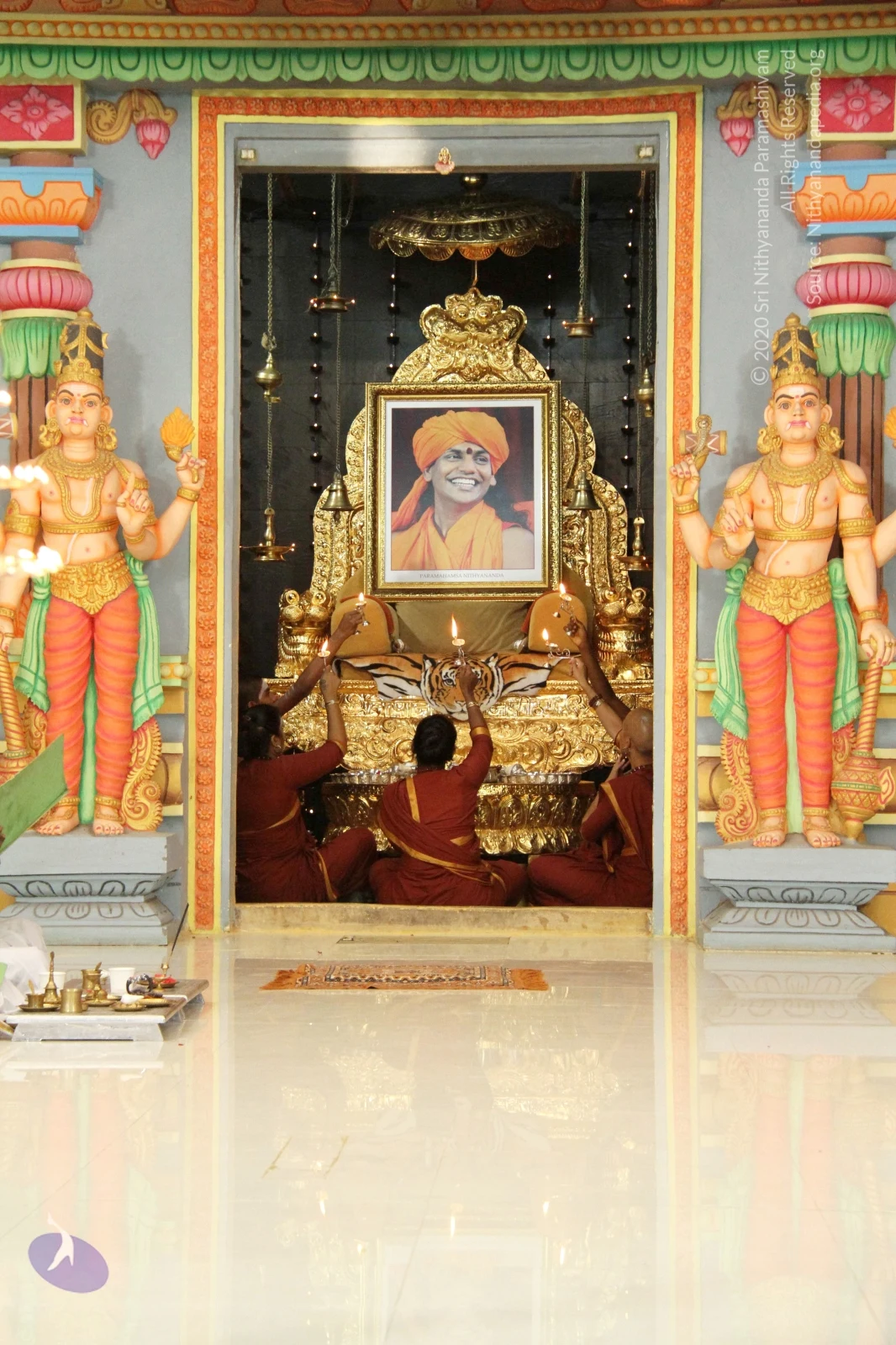
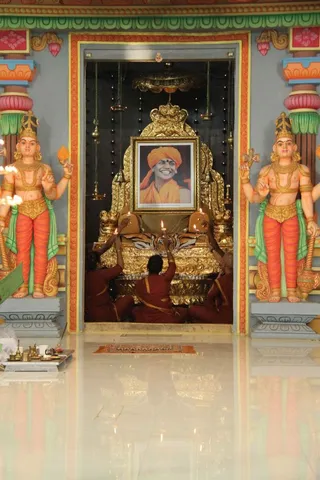
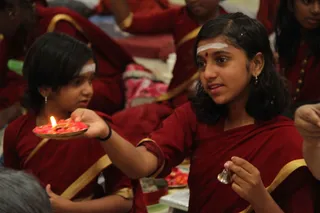
Interior temple shrine photograph: a golden throne (peetha) with ornate gilding stands before a framed portrait labelled "PARAMAHAMSA NITHYANANDA" showing a smiling man in an orange turban and orange shawl. A striped tiger-skin cloth lies on the throne. Three devotees in maroon robes kneel before the throne holding lit oil lamps aloft, possibly performing aarti. Two large painted guardian statues flank the doorway, figures with multiple arms, orange dhotis and green sashes. Brass oil lamps hang from the ceiling, and a brass puja set sits on a table at left. The polished white floor reflects the scene.Two young girls in deep red garments with gold borders sit close together during a ritual. The girl on the right holds a small brass bell in her right hand and extends a brass tray toward the other girl; the tray holds a lit oil lamp and red flower petals. Both girls wear white sandalwood paste lines on their foreheads, with a red dot on the right girl's forehead, and small earrings. Other people in matching red clothes sit behind them, and a low table with offerings sits in the background.A large group of women seated on the floor in a hall performs a ritual with lit oil lamps and brass vessels. Many wear rust-orange and red saris with black rudraksha malas, while others wear white saris with gold borders. A woman in the foreground holds a lit lamp on a plate, and another in white lifts a small brass lamp. Plain walls and a red curtain frame the room; no a person is visible among the participants.A seated group of women in a hall performs an aarti with oil lamps and brass lamps. Many wear rust-orange and red saris with rudraksha malas, while several in the front wear white saris and white tops with red or black shawls. Some hold lit lamps and small brass dishes; a brass kalasha-style vessel and offering plates sit on the floor. Red curtains and a wooden door frame stand in the background. No individual is identified as a person.A seated group of shaven-headed male sannyasis in saffron-orange robes performs an aarti ceremony, holding lit oil lamps and brass bells. Several wear rudraksha malas and bangles, and some have white vibhuti marks on their foreheads. In the foreground a man with a rudraksha mala holds a lamp toward a lit flame. Behind them, younger participants in red and orange clothes sit near a metal tray with kumkum-marked offerings, small brass vessels and bowls of flower petals. A green drum is visible at the upper right. The setting appears to be an indoor satsang hall with red curtains.

Satsang
60 photosSource gallery
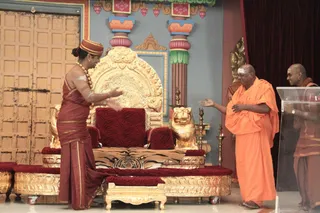
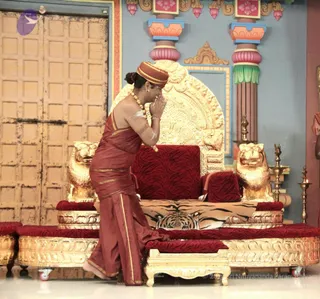
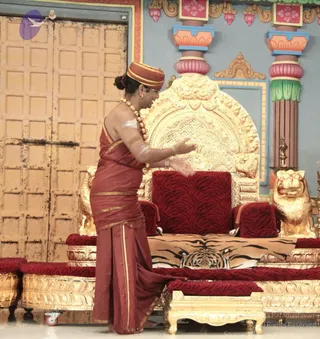
A seated man sits on an ornate gilded throne with a high arched back carved with scrollwork and lion-head arm supports. He wears a rust-red and maroon draped garment with gold borders, a maroon turban with gold trim, and a red bindi on his forehead. He has white markings on his arms and wears a long gold bead necklace and gold bangles. Red and black tiger-striped cushions cover the throne, and a small gilded footstool rests before it. The background includes a painted panel and a decorative wall. Swamiji (probable): the appearance cues include the red-orange garments, ornate gold necklace, turban and bangles, and the seated throne placement, though the identification rests on appearance alone.A man sits on an ornate gold throne with carved arch and gold lion-head armrests, draped in red-velvet cushions and a tiger-striped cloth. He wears a maroon-red turban with a gold ornament, a maroon-red garment with gold border, a long gold bead necklace, gold armlets and bangles, and a red bindi. White ash marks are on his arms and chest. a person is seated with bare feet on a gold footstool, smiling, in a temple-style stage setting with painted blue and red panels and a brass lamp at right.A man seated on an ornate gilded throne with carved lion-head arms and red tiger-striped cushions, wearing a rust-red turban with a small gold ornament, rust-red robes, a long beaded rudraksha-style mala necklace, gold armbands and bangles, and a red bindi on his forehead. White ash markings are visible on his upper arms. He sits barefoot on a gilded footstool, smiling, with a painted pink-and-green pillar and a brass lamp behind him. Appearance-based identification is uncertain, so no name is asserted.A seated man in a rust-red saffron robe and matching turban sits on an ornate gold throne carved with lion heads and a decorated arch. He wears a long beaded gold-toned necklace, bangles, and white markings on his shoulders and arms, with a red tilak on his forehead. Dark-red velvet cushions and a tiger-striped mat cover the throne, and two gold lion figures flank him. Behind him stands a wooden panelled door and a painted pillar with a brass oil lamp. Swamiji (probable) is the seated figure, identified by the rust-red robe and turban, bead necklace, and throne seating. He is shown alone, smiling, hands folded in his lap.A photograph of a ceremonial stage with an ornate golden throne backed by a gold-carved arch and flanked by golden lion figures, draped in a red velvet cushion and a striped tiger-skin cover. A figure in a dark red-brown dhoti and shawl with a matching red-brown turban, gold necklaces and bangles stands at the left, hands pressed together in namaskar, bowing toward the throne. To the right, a bald man in saffron-orange robes with a white forehead mark and a white cloth around his neck stands with palms joined. Behind him, a man in dark red-brown dhoti and white forehead markings stands near a gold kalasha-style lamp stand, and a bald man in red-brown dhoti stands at the far right beside an acrylic lectern. Brass oil lamps and a gold lamp stand sit beside the throne and carved pillars with pink lotus-capital tops frame the background.A photograph on a temple-style stage with a large gold-leafed throne upholstered in red velvet and a tiger-striped cushion, flanked by golden lion figures and brass lamps. A person in a maroon dhoti-style garment with a gold border, a maroon-and-gold turban and a beaded necklace gestures toward the throne with open hands. Facing them, a bald man in saffron-orange robes with a white forehead marking extends one arm in greeting. At right, a glass lectern stands beside a third person in orange and a bare-shouldered wrap. Painted pillars with pink and green lotus motifs frame the set, and a wooden door is at left. Three people are visible.

Sarva-Darshan

29 photosSource gallery
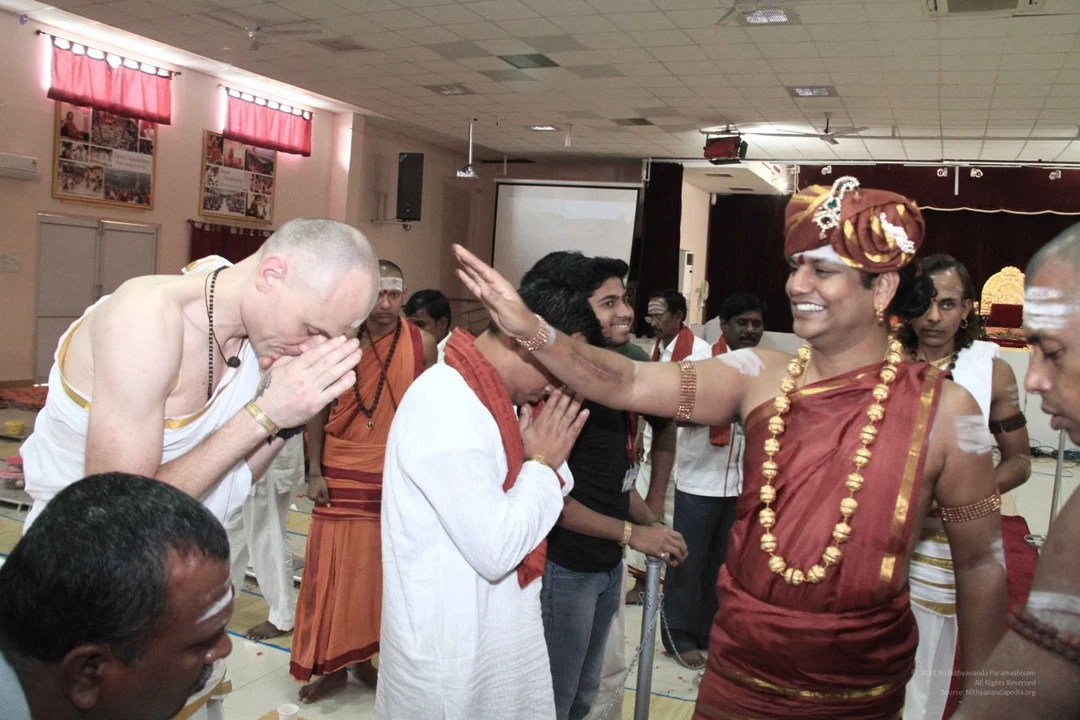
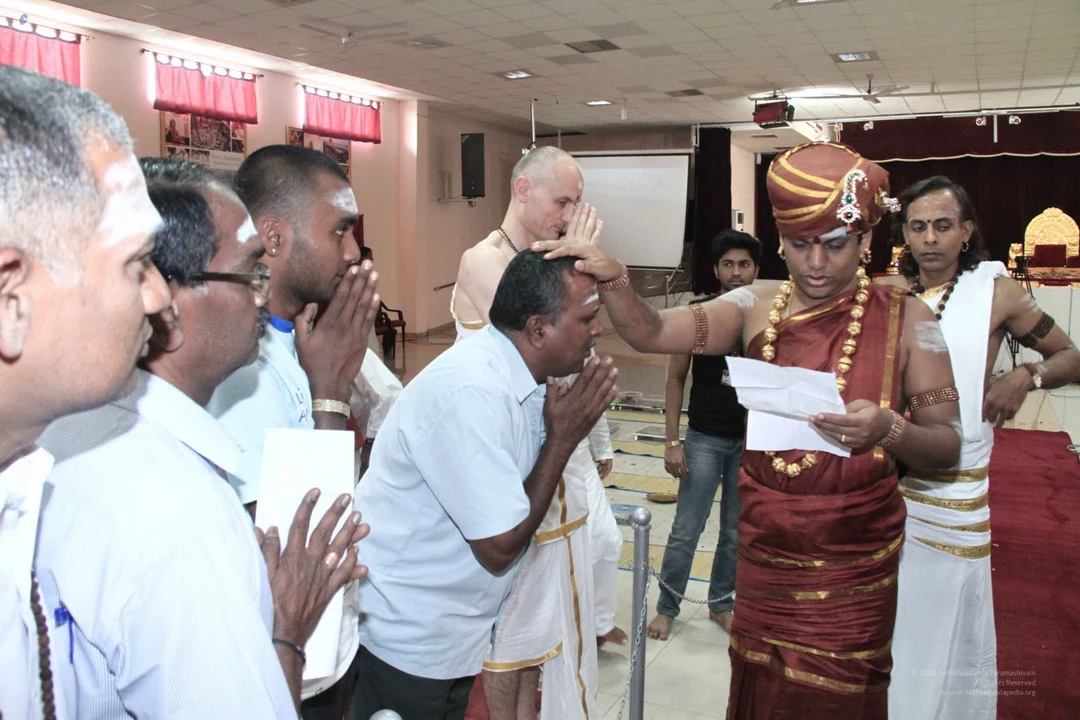
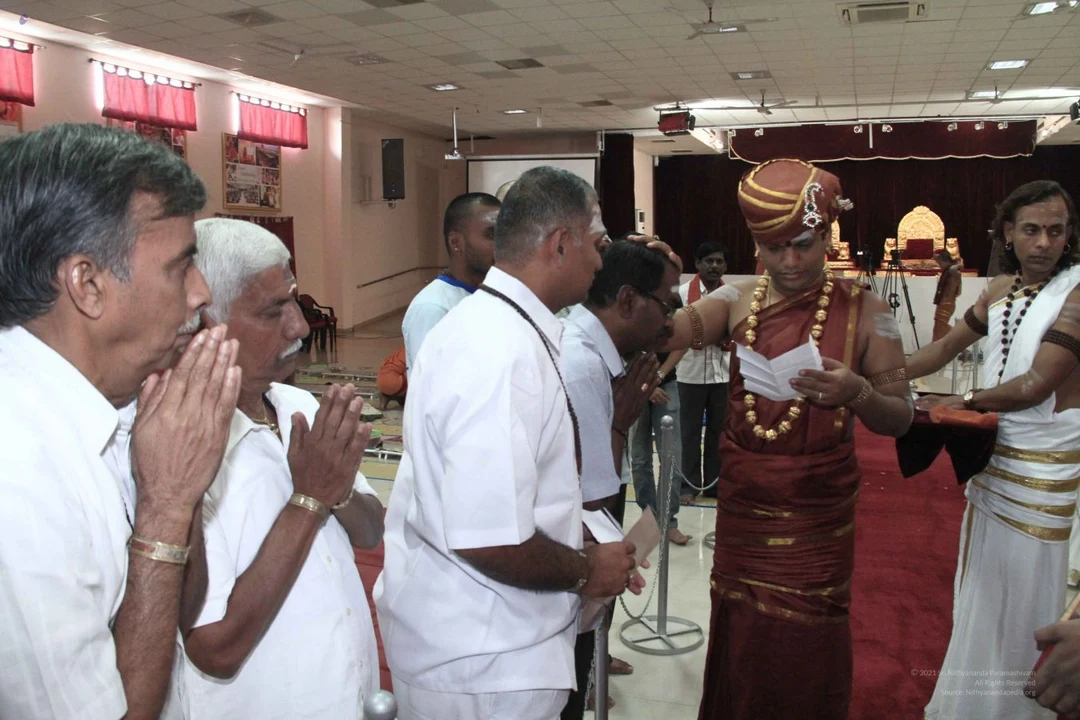
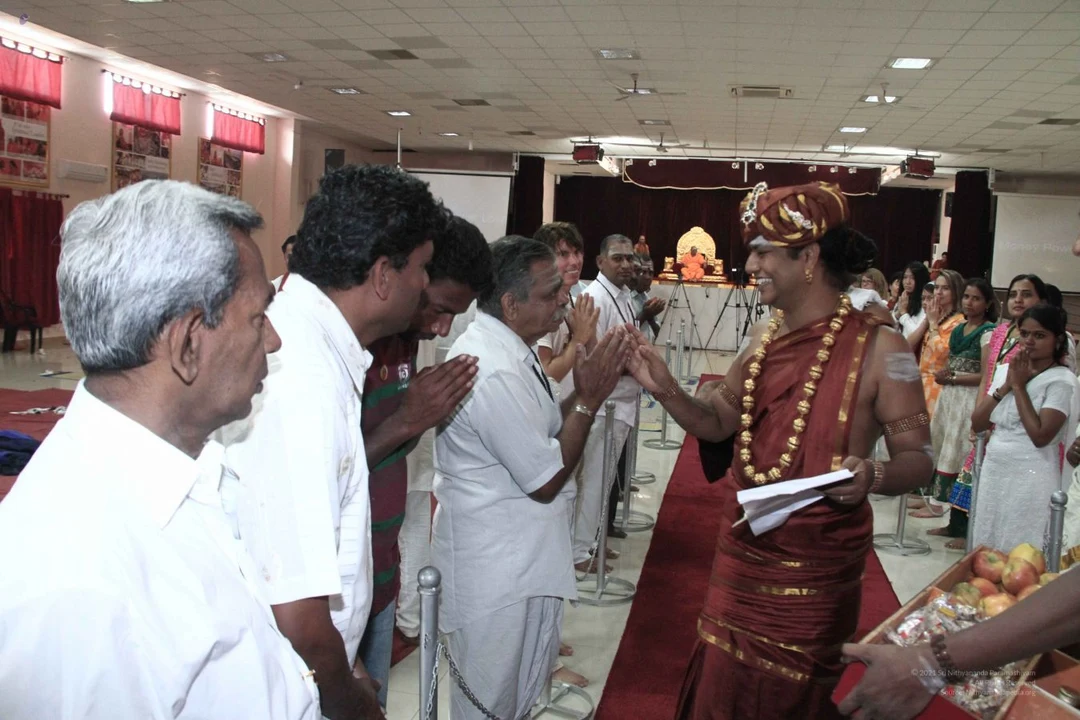
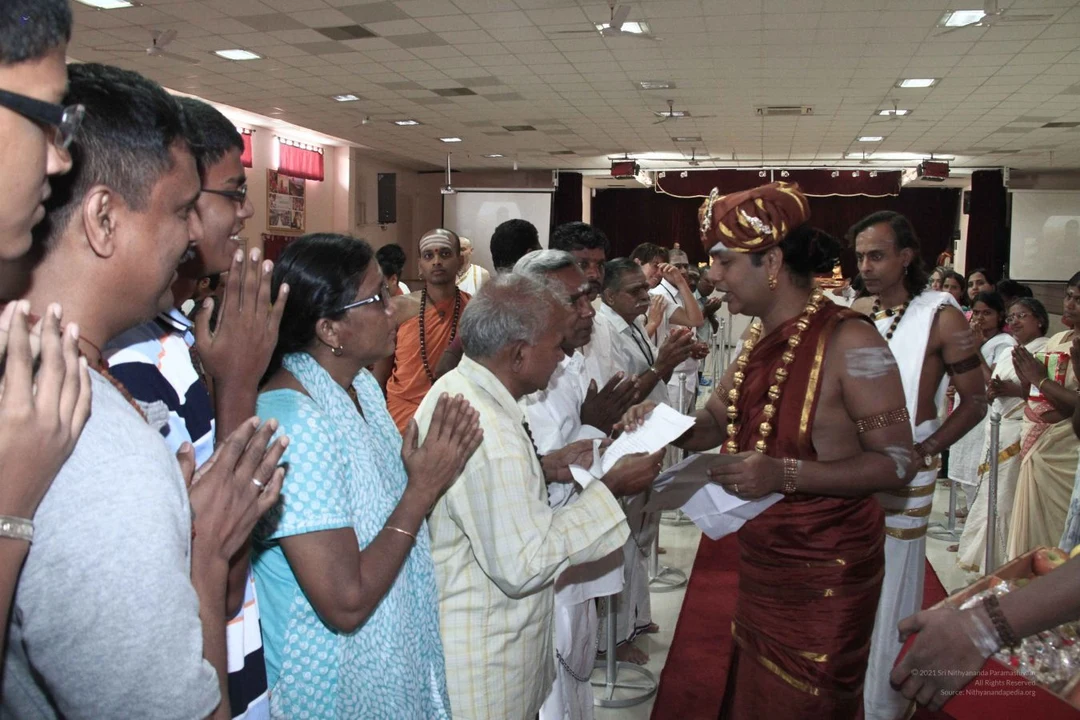
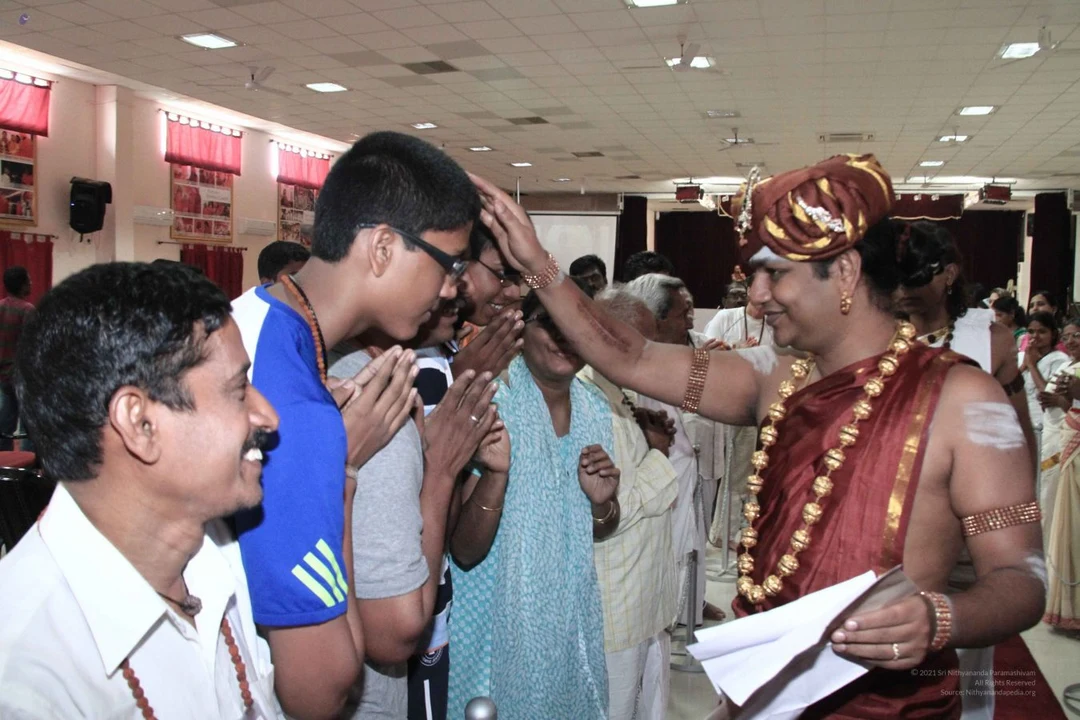
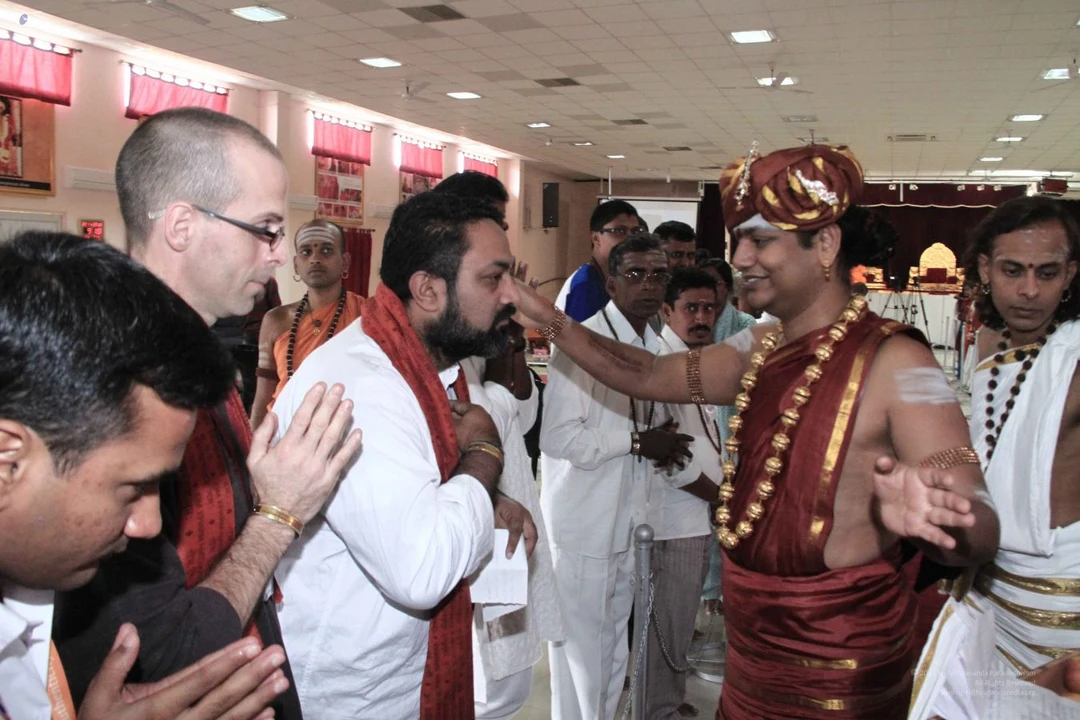
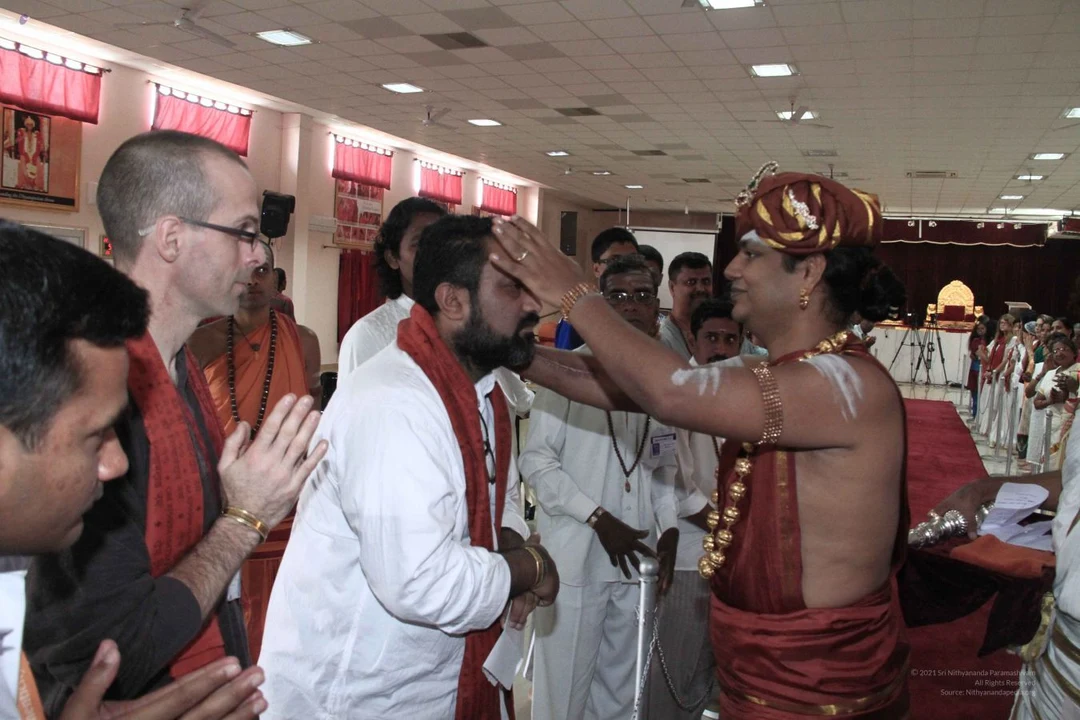
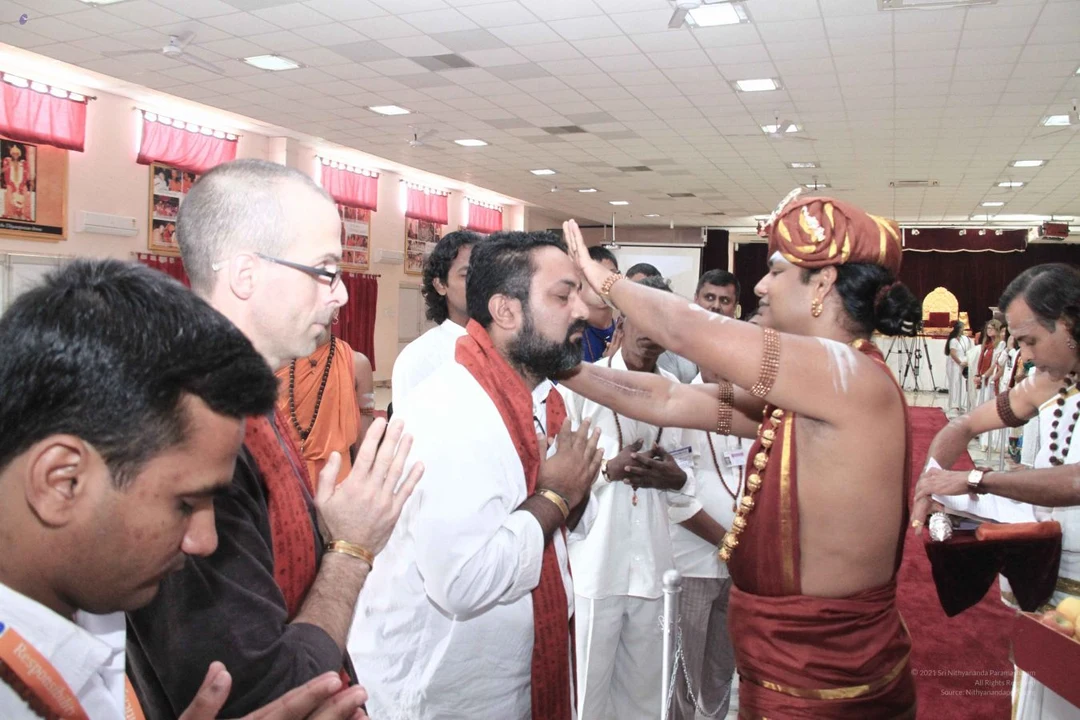
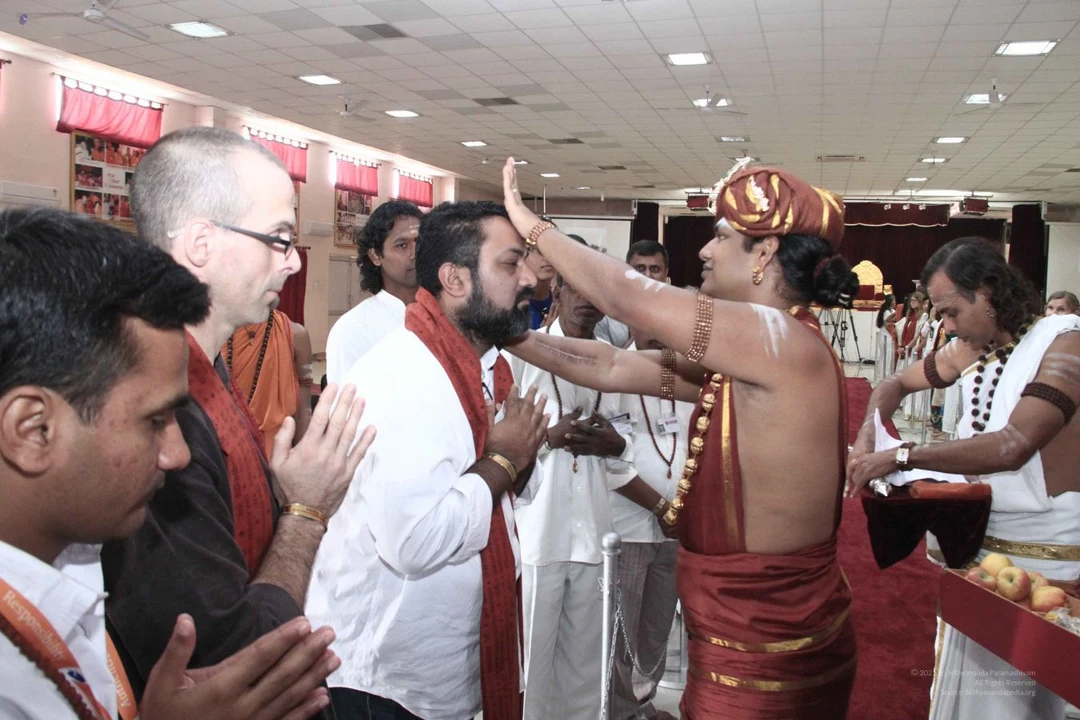
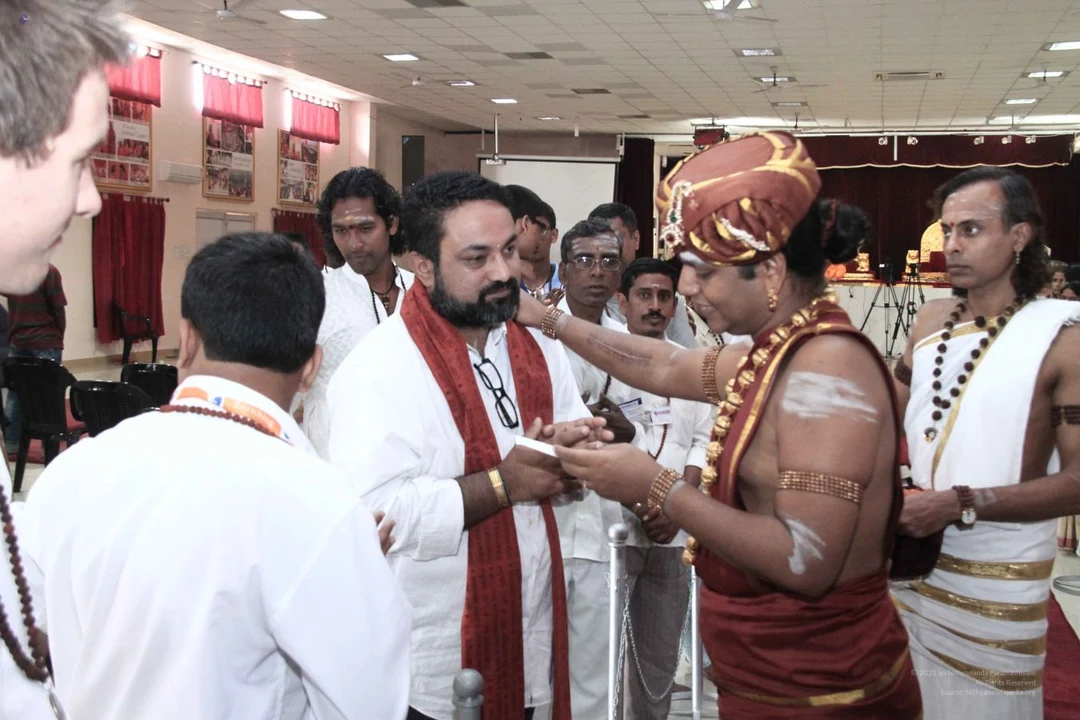
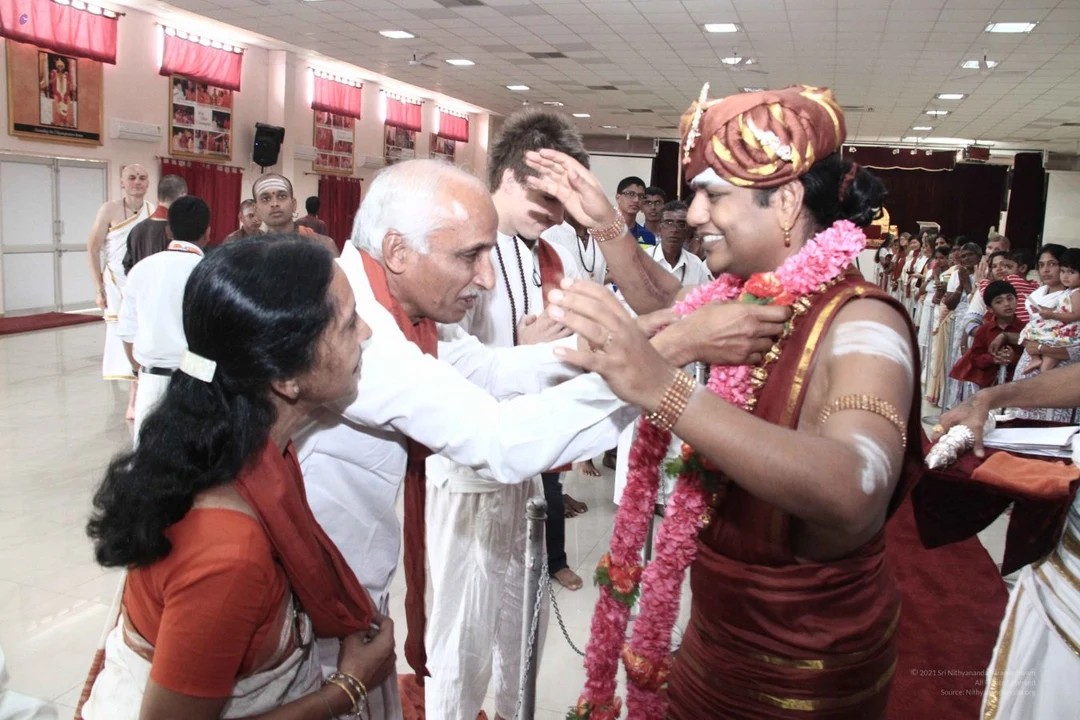
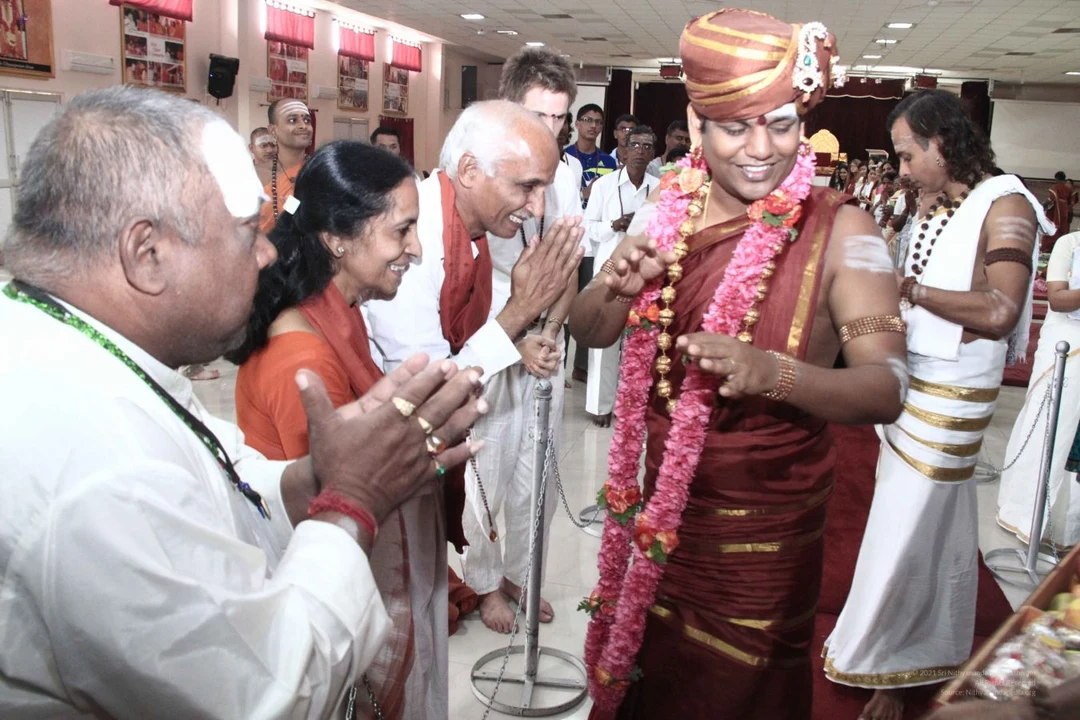
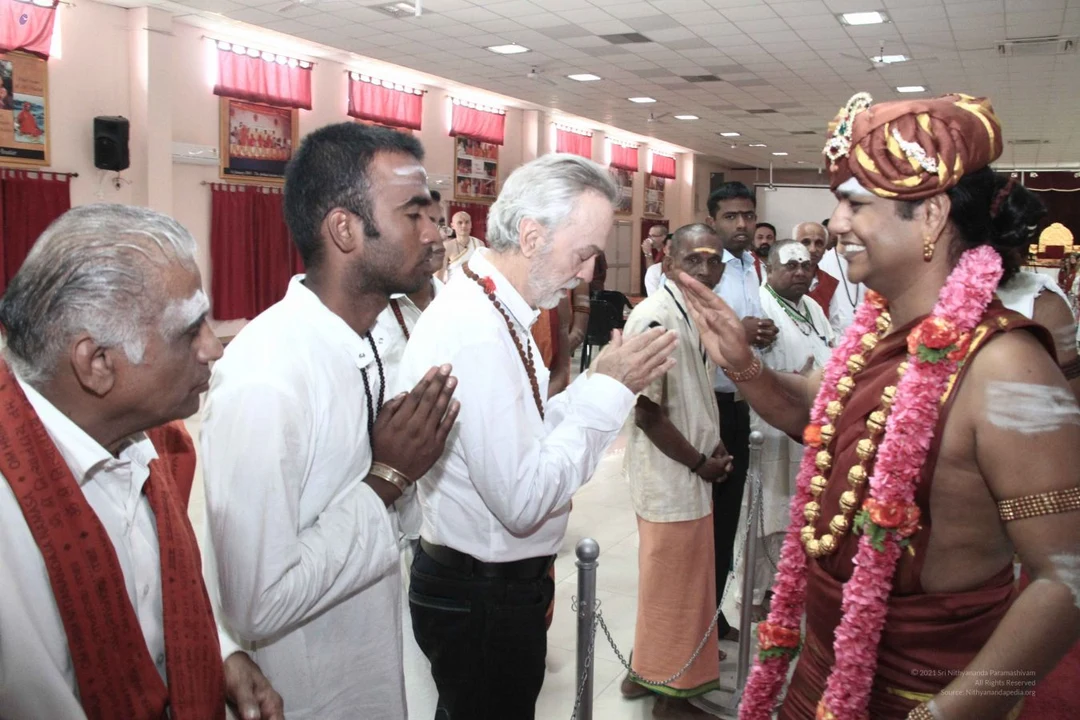
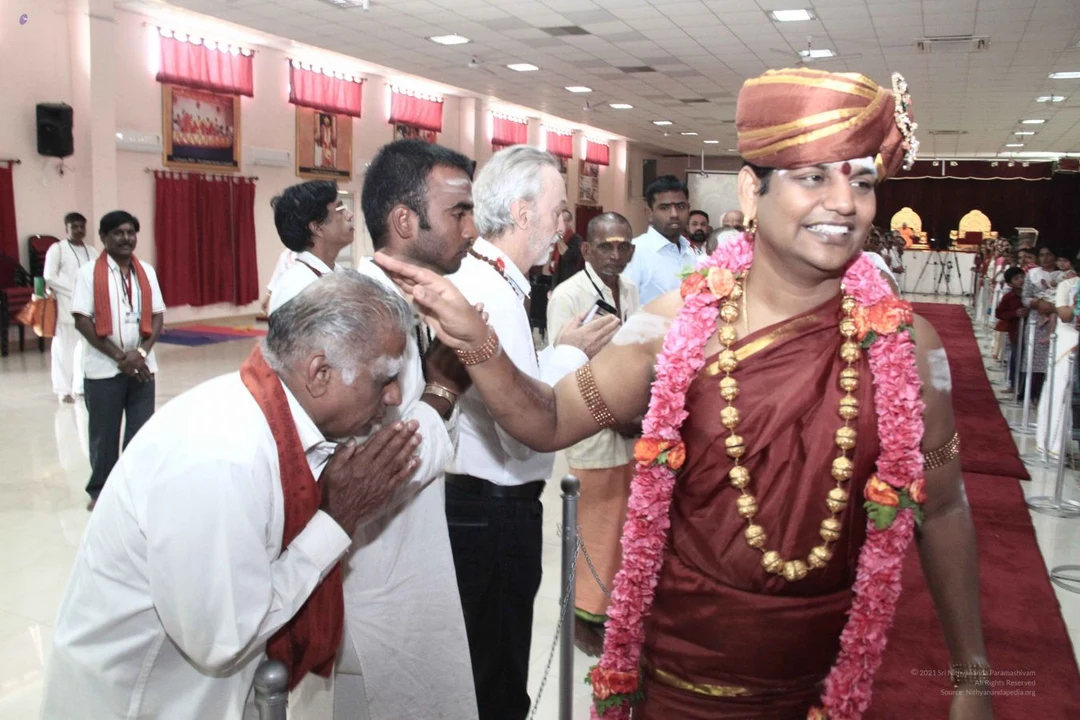
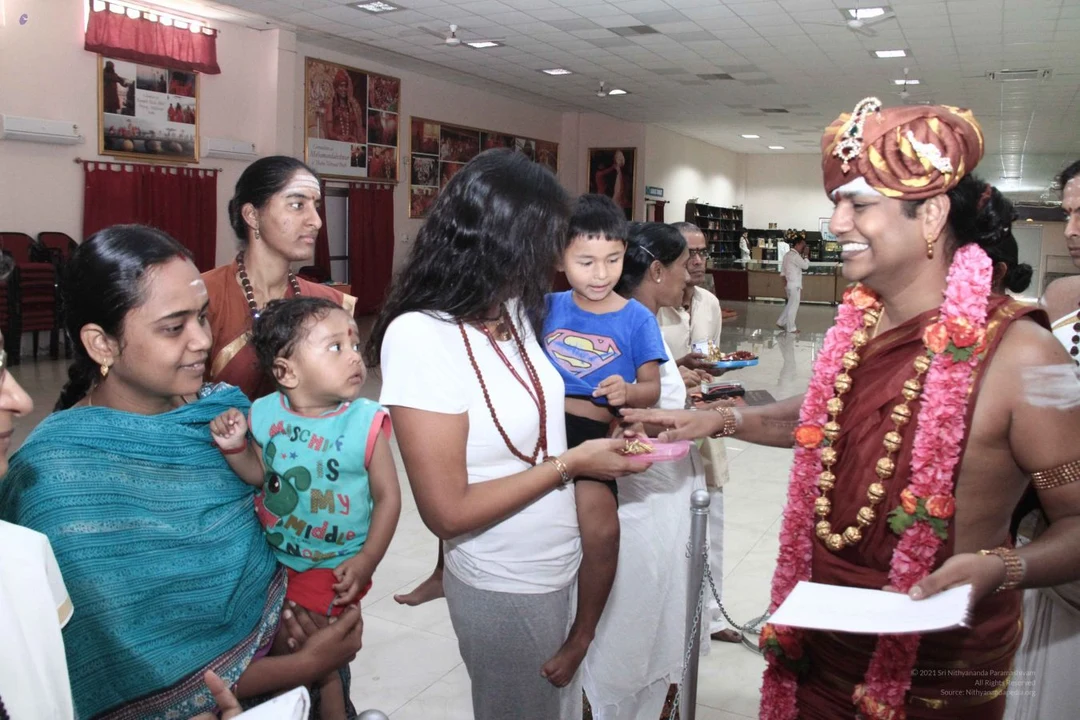
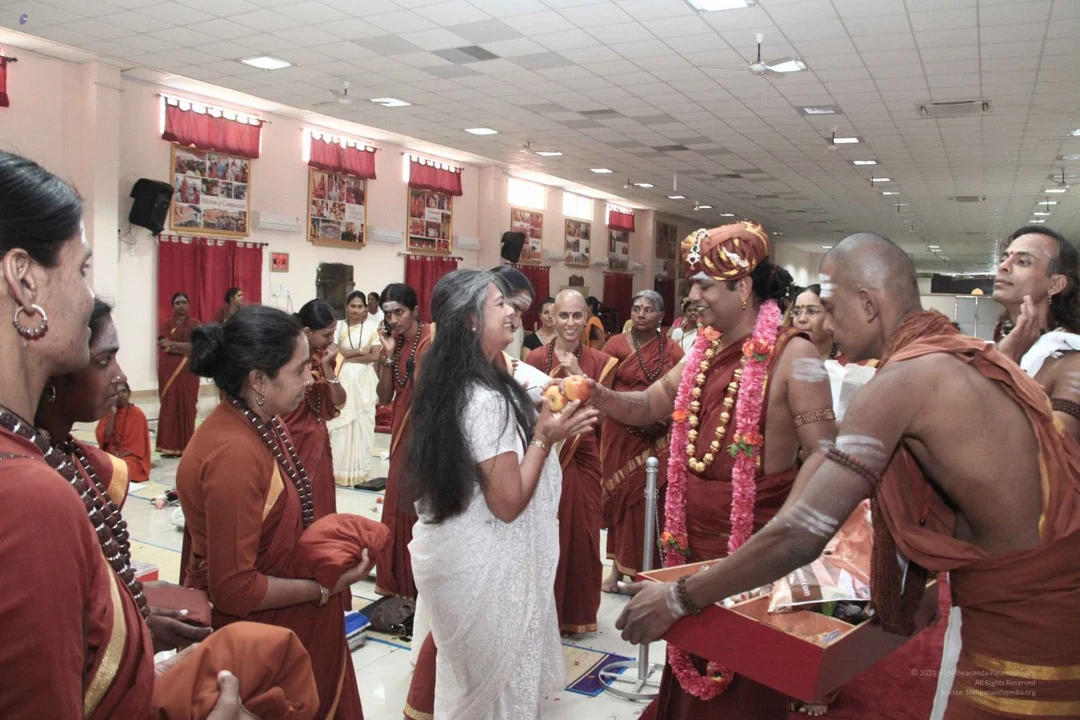
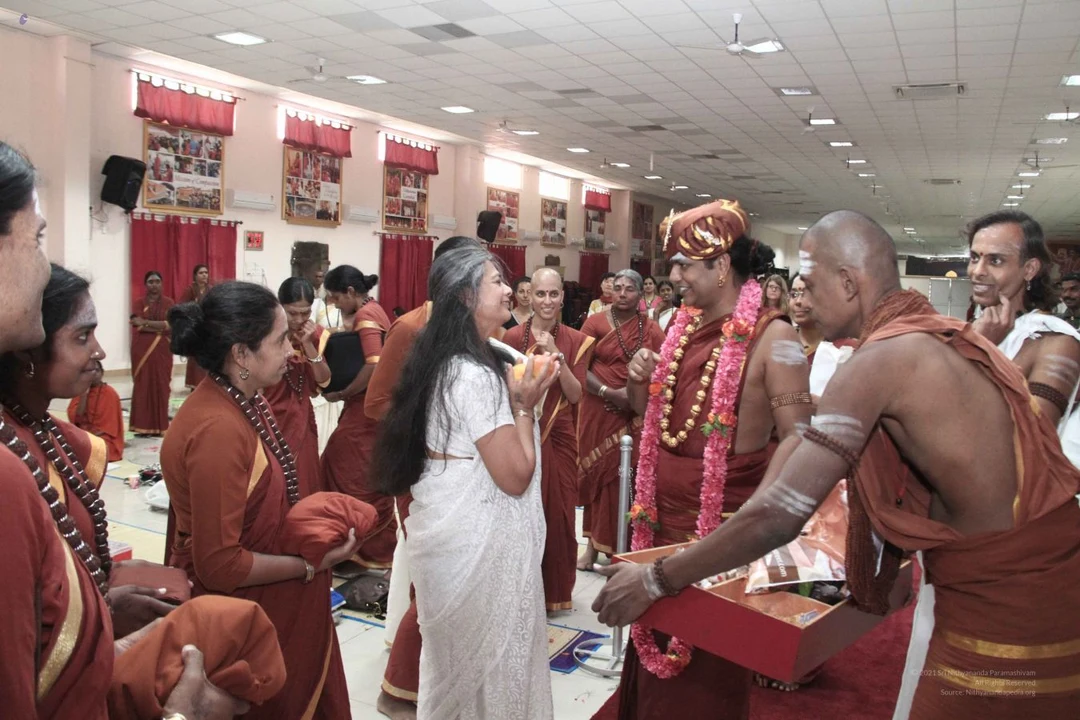
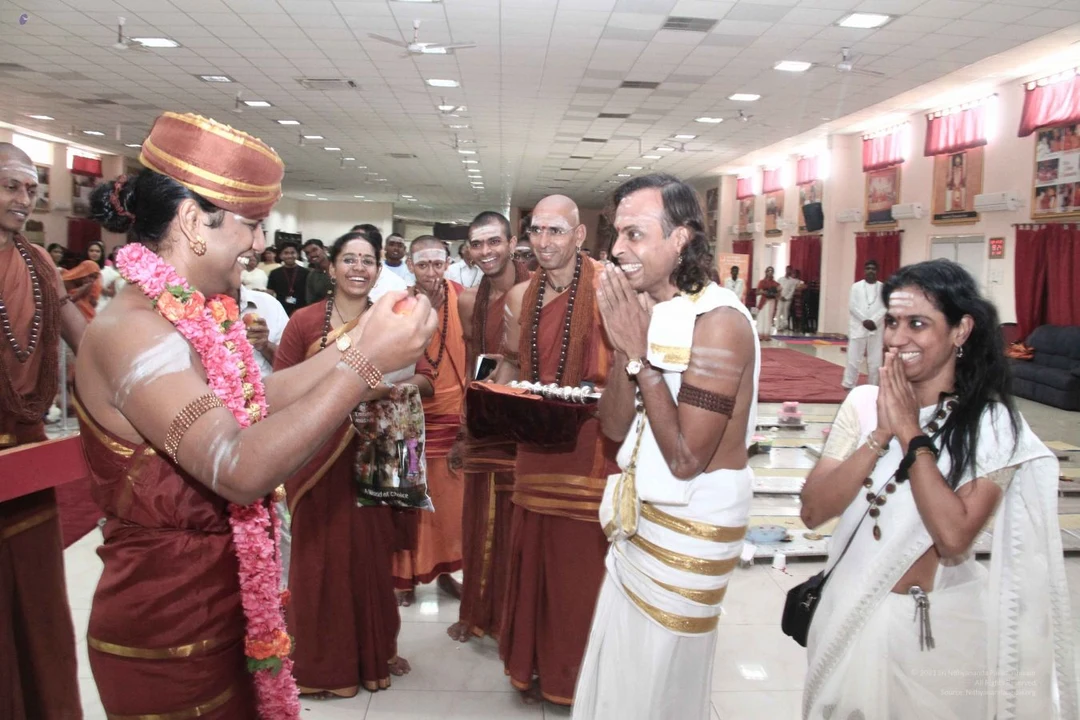
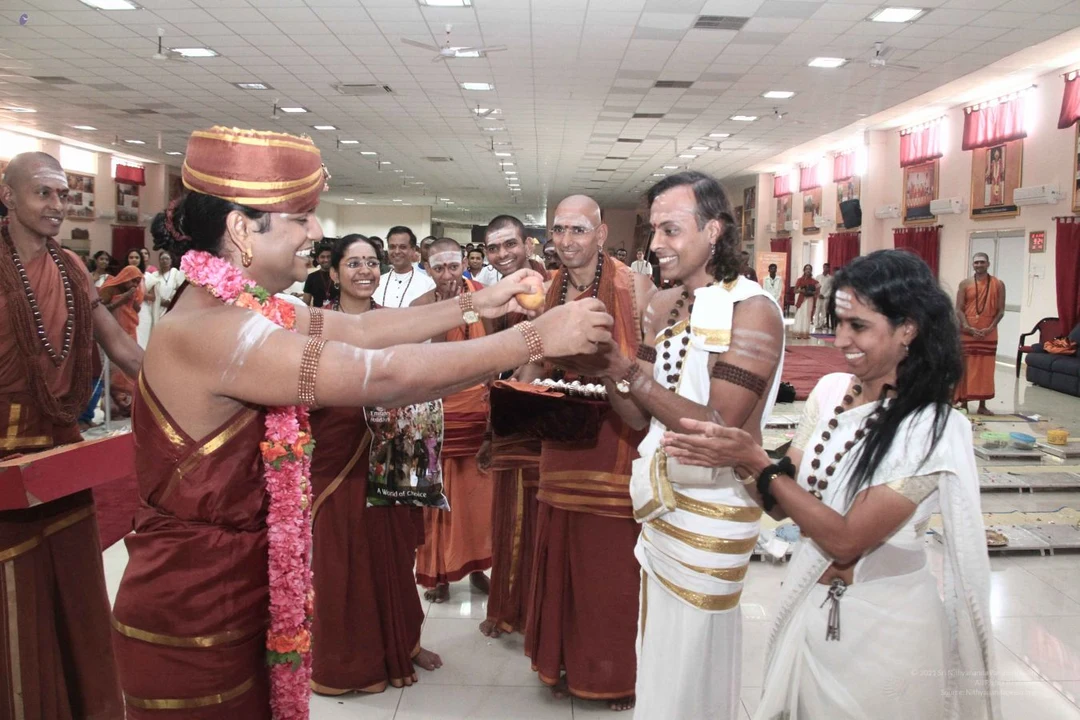
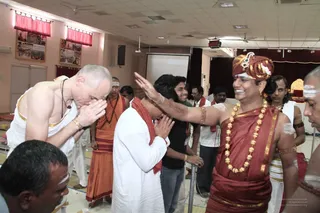
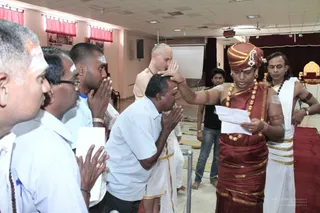
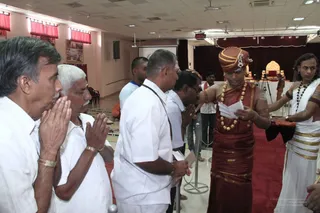
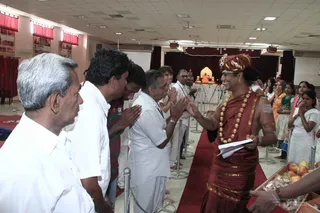
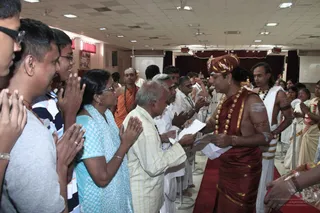
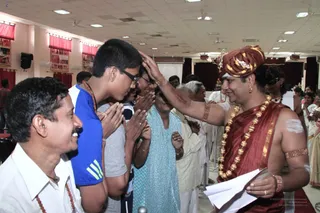
A photograph in a hall with white ceiling fans and a projector screen, showing a man in a deep red-orange dhoti and shawl with gold trim, wearing a matching orange turban with a jewelled ornament and a long gold bead necklace, raising his hand in blessing. Several people in white and saffron-orange clothes stand around him, a bald man in white with a rudraksha mala bows with palms pressed together, and a man in a white kurta with a red shawl folds his hands in greeting. Framed photos hang on the wall behind them.A photograph of a devotee ritual in an indoor hall with pale walls, red curtains and a projector screen. A man in a red-brown dhoti and shawl, wearing a red turban with gold trim, multiple gold-bead necklaces and gold armbands, places his hand on the head of a kneeling man in a light blue shirt who has his palms pressed together in prayer. The turbaned man holds a white sheet of paper. Around them, devotees with white tilak marks on their foreheads stand with folded hands, and a bare-chested man in white dhoti with a white cloth over his shoulder stands behind. A gold-and-red throne sits at the right edge. A man in a dark shirt and jeans stands in the background. The turbaned figure's appearance matches a distinctive ceremonial presentation with turban, gold ornaments and ceremonial red-brown robes, but it is not certain who he is, so the identity is left unsure.A photograph in an indoor hall with a red carpet and a golden throne-like seat in the background. In the center, a man in a deep red-brown saffron-toned dhoti and wrap, with a large turban-style headwrap, multiple gold necklaces, and gold bangles, stands with a folded paper in his hands while receiving honour from a line of devotees. On the left, several older men in white shirts and white dhotis stand with palms pressed together in namaskar, one wearing a rudraksha-style mala. On the right, a man in white dhoti and white garment with gold trim and beaded malas stands near the edge. Behind them, a small attendant in a white shirt and an orange cloth stands by red curtains and a projector screen. a person appears as the central figure in red-brown robes, gold necklaces and a turban, receiving the gesture of respect.A photograph in a hall with a red carpet and rope barriers. A man in a maroon-and-gold robe, a matching turban with a gold ornament, a long gold beaded necklace and bare upper arm with a white armband stands on the carpet, hands pressed together in greeting toward the line of devotees. Several men in white shirts and dhotis and a woman in a green sari stand with palms joined in namaste along the barrier. Women in colourful saris and salwars and a girl in white stand to the right. At the far end, a golden throne-like seat with an orange-clad figure sits before a dark curtain, with a mic stand nearby. A tray of apples and sweets sits at lower right.Indoor hall photo of a devotional greeting line. A man with a tall striped orange-and-maroon turban, gold necklaces and a rudraksha mala, wearing a maroon shawl over bare shoulders and gold armlets, stands at the centre receiving a paper from an older man in a white-and-yellow checked shirt who holds it with folded hands. Around them, standing devotees in white dhotis, sandals and light clothes, a younger man in an orange cloth, and a woman in a blue salwar with glasses press palms together in namaskar. A man in a white shirt and grey trousers and two young men in glasses stand on the left. Red curtains, ceiling fans and a projection screen line the room, with fruit offerings at the lower right edge.A photograph of a devotional greeting in a hall with white ceiling fans and red curtains. A man in a rust-red turban, rust-red cloth wrapped over a bare upper body, and a heavy gold bead necklace presses his right palm onto the forehead of a young boy in a blue and white Adidas-style shirt and glasses, who stands with hands folded in namaste. A bearded man in white shirt with a rudraksha mala on the left smiles nearby, and several seated and standing devotees in white and light blue clothes watch. The turbaned figure bears ornate gold armlets and bracelets and holds a folded paper in his other hand. Probable Swamiji is the turbaned figure, identified by his rust-red turban, gold necklace and ornate adornments while blessing the boy with a gesture of grace.

Flag-Hoisting

82 photosSource gallery
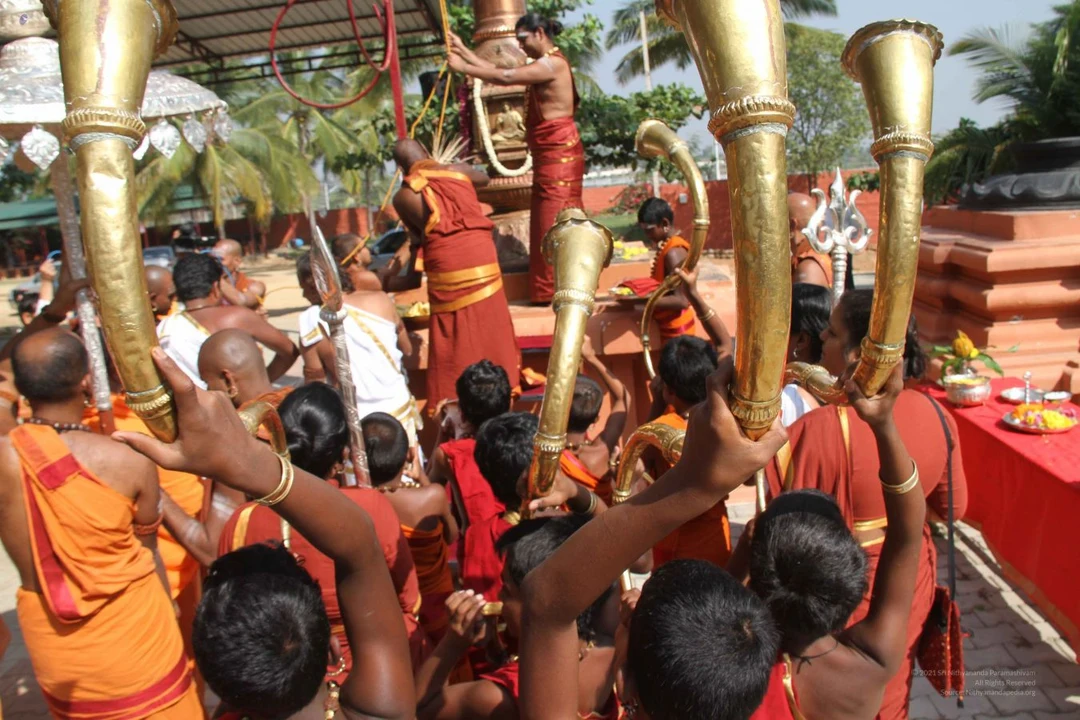
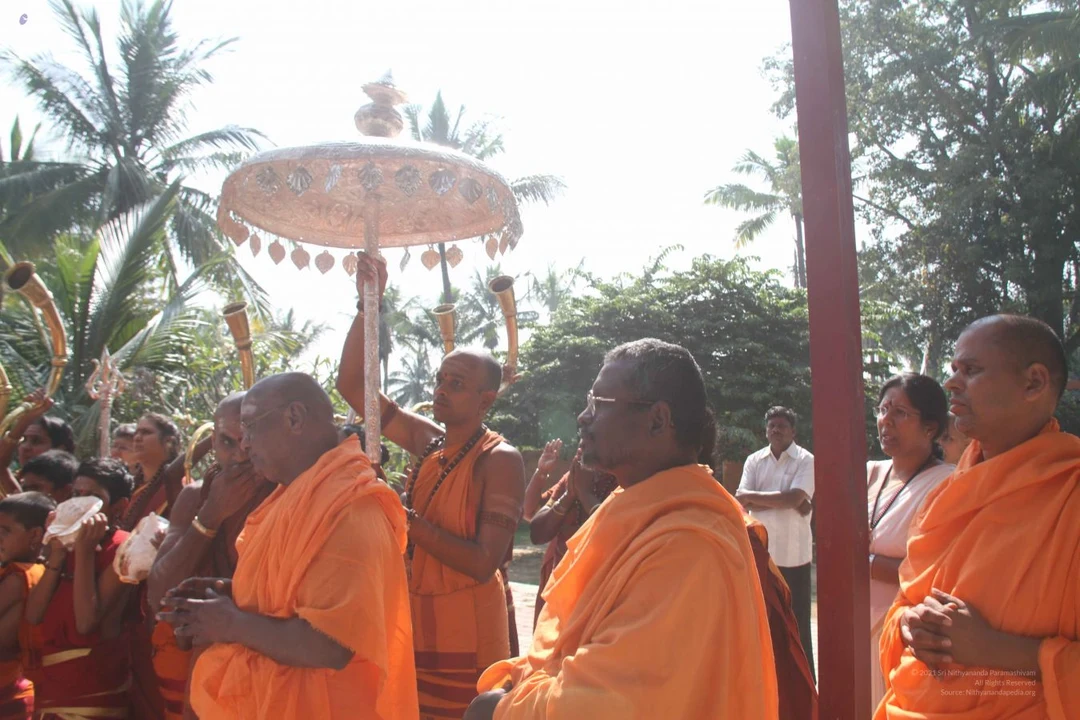
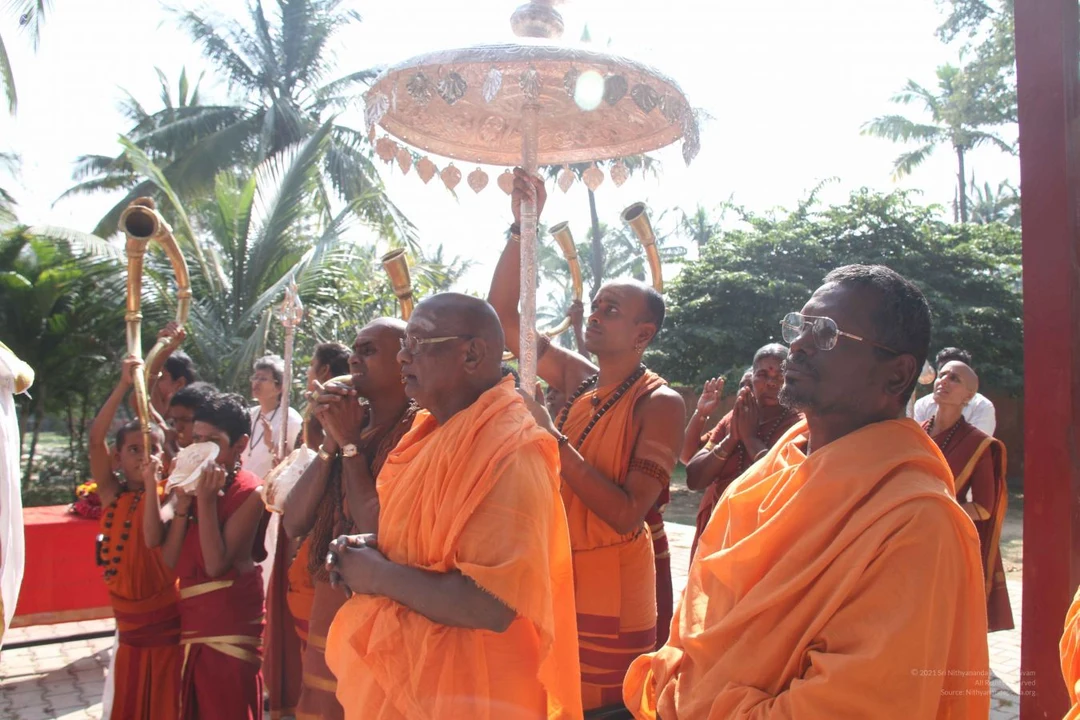
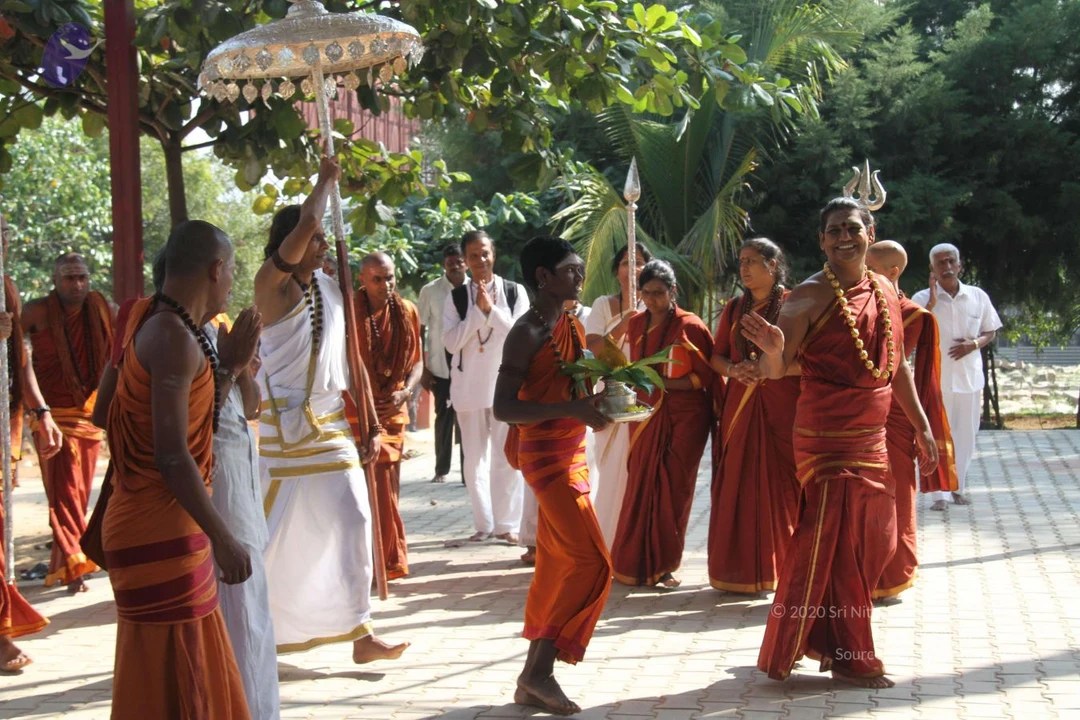
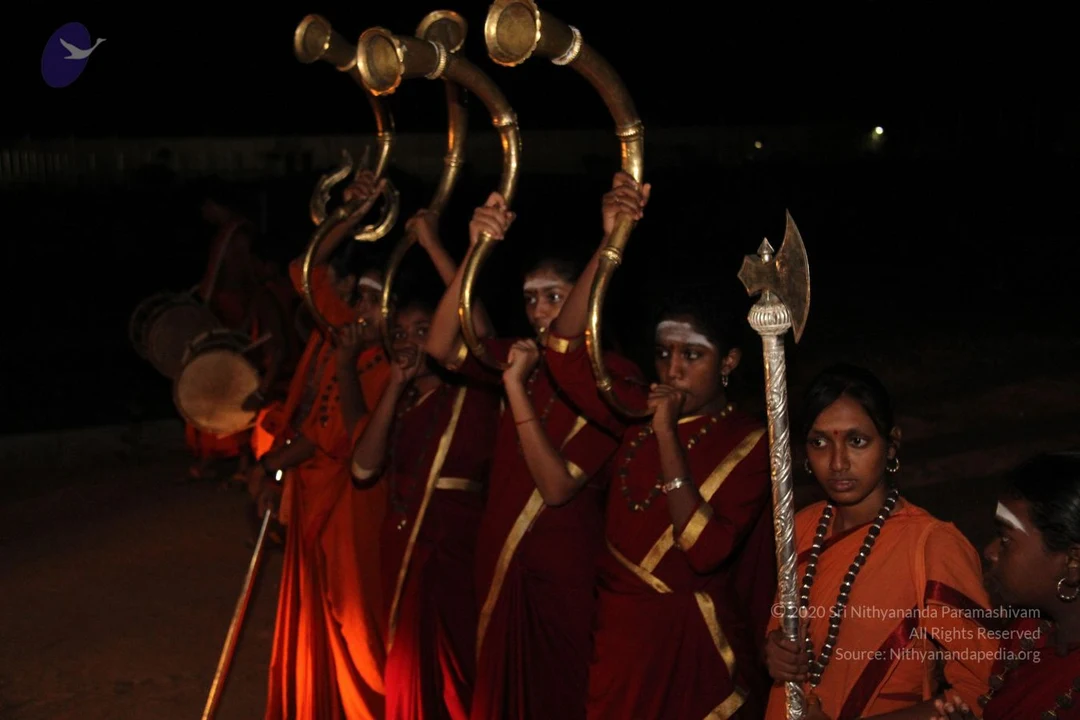
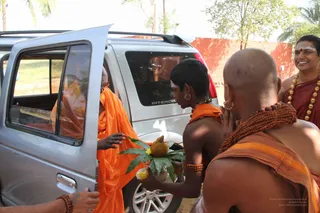
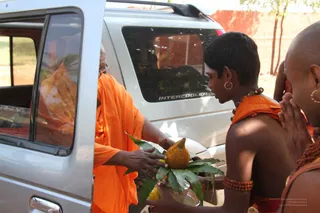
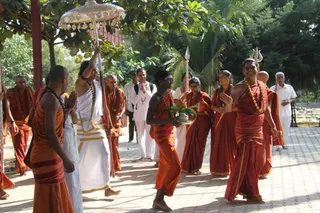
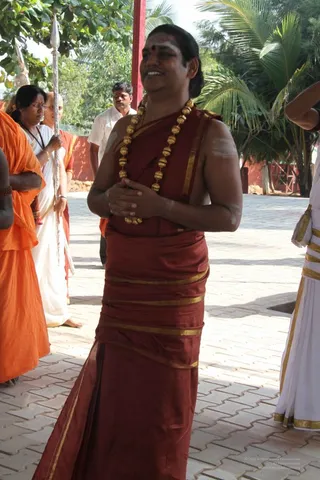
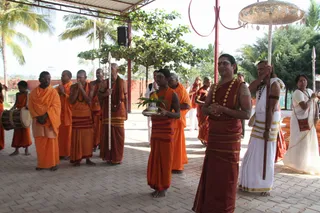
Outdoor arrival scene beside a silver Chevrolet Intercool SUV with its rear door open. A man in orange robes stands at the open door, reaching out with one hand. A young boy with short dark hair, hoop earrings, a beaded necklace and an orange garment holds a brass-like kalasha-style offering with a coconut-like fruit, green leaves and yellow flowers, and a small dish of turmeric or kumkum. A bald man in orange robes and a rudraksha mala stands with hands folded in namaste at right, and another man in a maroon robe with a long gold chain and white forehead markings smiles nearby. A red brick wall and green trees form the background. Four people are visible.Outdoor photo beside a silver minivan with a rear window reading INTERCOOLER. A man in orange robes and glasses stands at the open sliding door, reaching toward a brass tray held by a young bare-chested devotee in orange cloth, a rudraksha mala necklace, hoop earrings and rudraksha bracelets. The tray holds a green-yellow coconut wrapped in mango leaves, plus a yellow fruit, as a welcome offering. A shaved-headed man in the right foreground stands with palms pressed together in anjali mudra, wearing rudraksha beads. Red walls and young trees are behind, with dry ground under bright daylight. Two people are visible, including partially visible ones.A procession on a paved courtyard under trees. In the foreground a man in red-orange robes with a rudraksha mala and a trident-topped staff walks forward smiling, hands together in greeting. Behind him a younger man in orange robes carries a brass plate with a green leaf offering. Several devotees in saffron and red-orange dress follow, and a man in white dhoti and shirt stands with hands folded. A white and gold umbrella with decorative fringe is held aloft by a man in white robes with gold borders, marking a ceremonial procession.A smiling man stands outdoors on a paved courtyard, wearing a deep maroon sleeveless wrap with thin gold borders and a long gold-trimmed maroon cloth draped around his body. He wears a large gold bead necklace and a small red dot on his forehead, and has his hands folded at his chest. Behind him, women in white saris with gold borders and orange-robed attendants stand near a tall silver staff topped with a finial. Palm trees and a red wall form the background, and a man in white shirt stands further back.A procession at an outdoor ashram courtyard under a shade canopy, with palm trees and a red-painted pillar behind. Saffron-robed sannyasis walk in a line, several with hands folded in anjali, and one drummer on the left beats a drum. A man in a maroon dhoti with a gold-toned garland of flowers leads the group, holding his hands together. Beside him a young man in saffron cloth carries a silver tray with a plant sprig. On the right a man in a white dhoti with gold borders holds a tall ceremonial parasol, and a woman in white stands near him. The scene resembles a ritual procession.A procession outdoors under a open-sided pavilion with palm trees behind, on a paved brick floor. Several men in saffron-orange robes walk in a line; a man in a dark red-maroon dhoti and a bare upper body with yellow-gold ornaments and a garland stands at right holding a long staff, while a shaved-headed monk in orange holds a metal bowl with green leaves. Behind them, boys in red robes play long brass horns and a drum, and a white-clad man stands at left with hands folded. A large ceremonial parasol with ornate fringed edges is raised at the right. Some people appear to be in a ritual procession rather than a formal stage setting.

Paduka-Puja

11 photosSource gallery
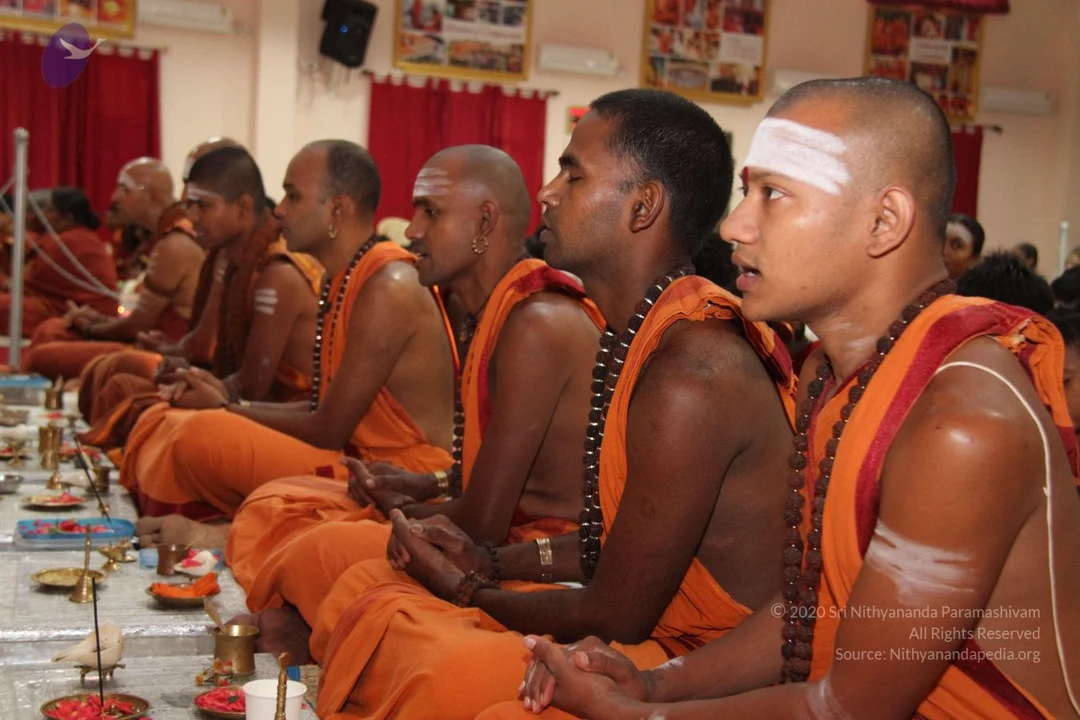
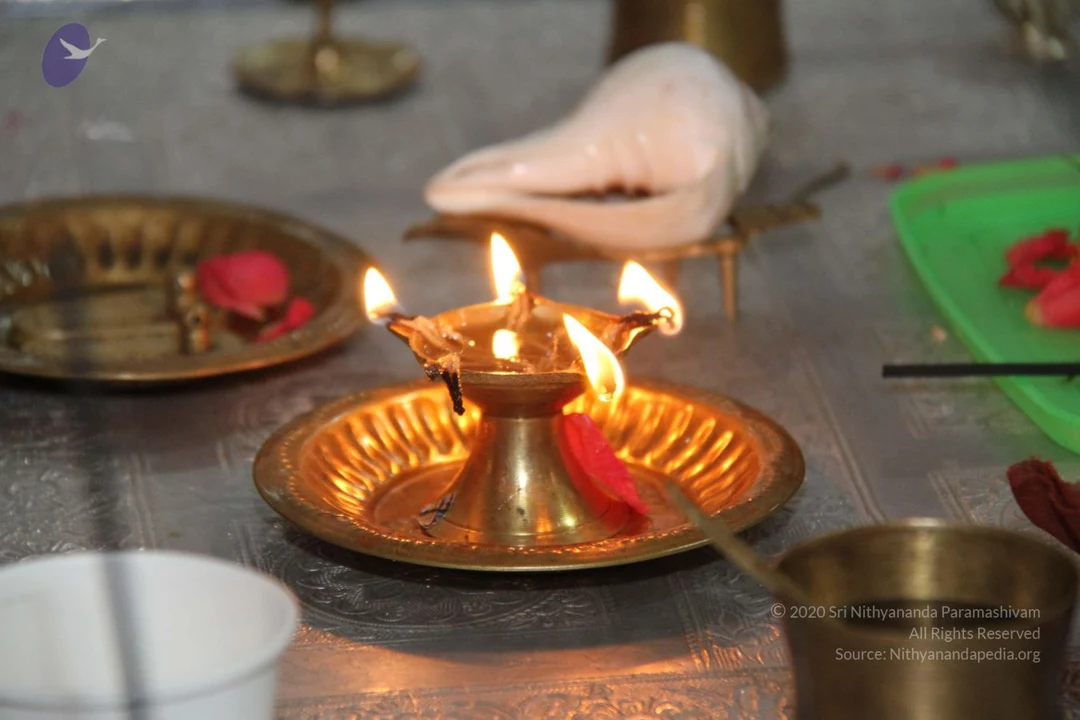
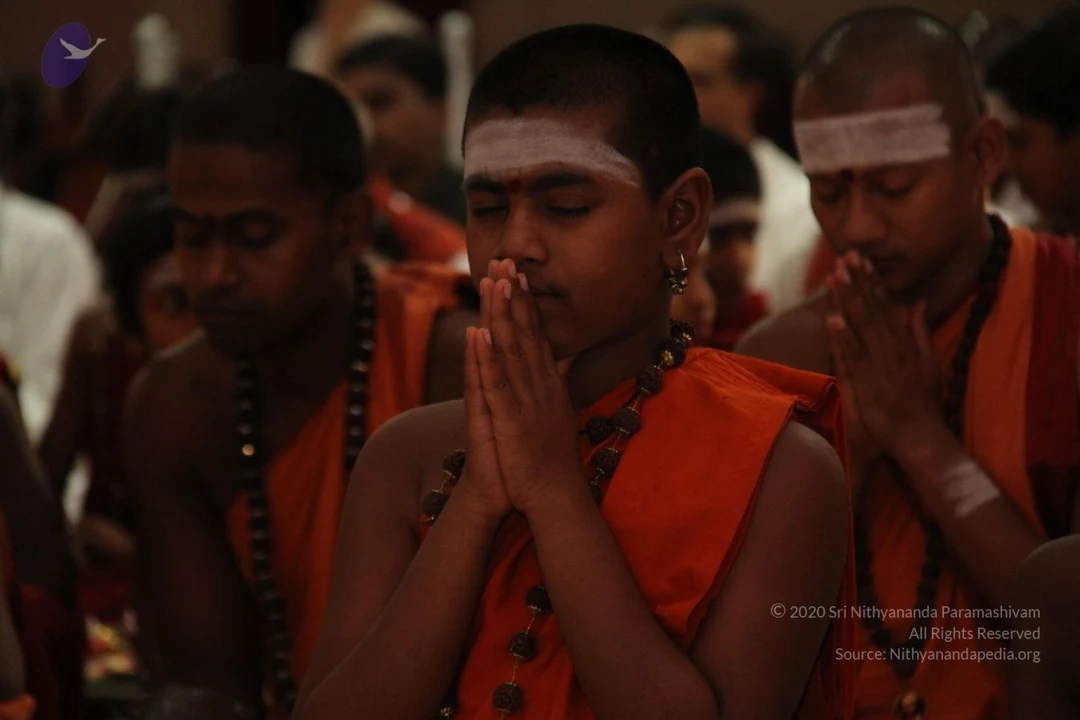
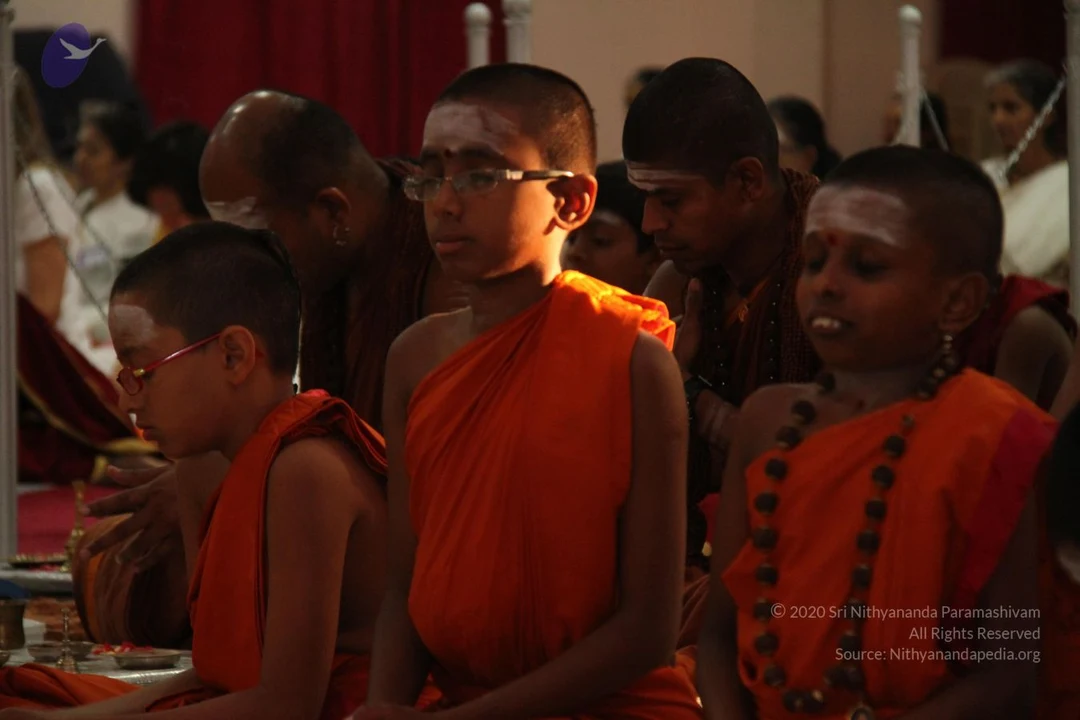
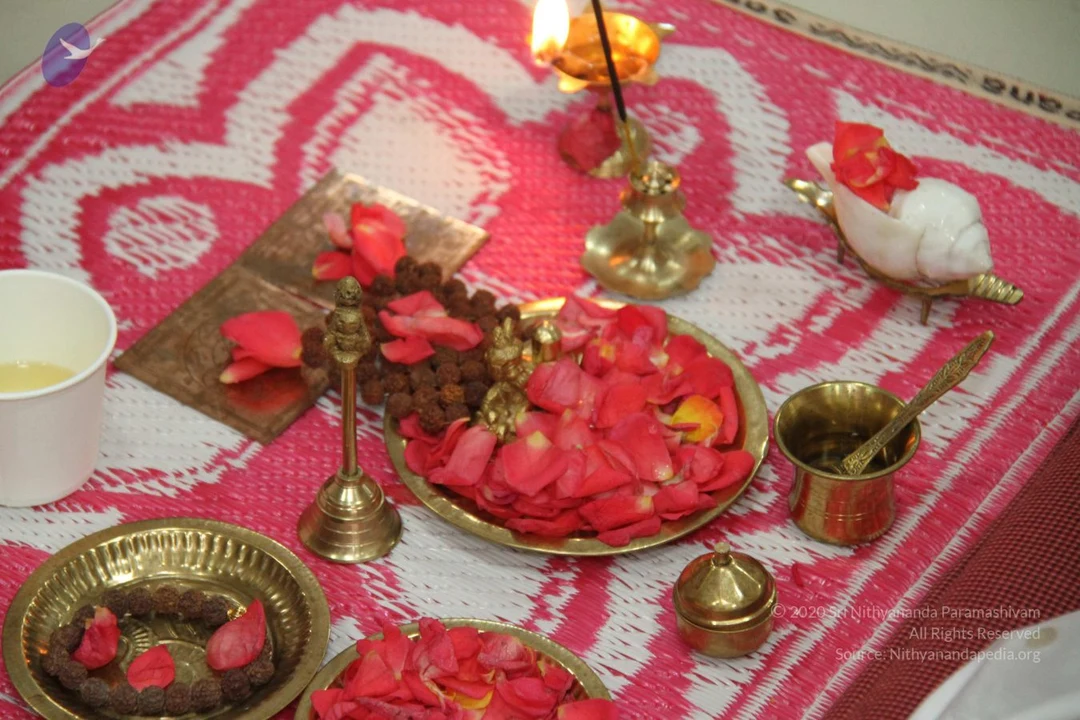
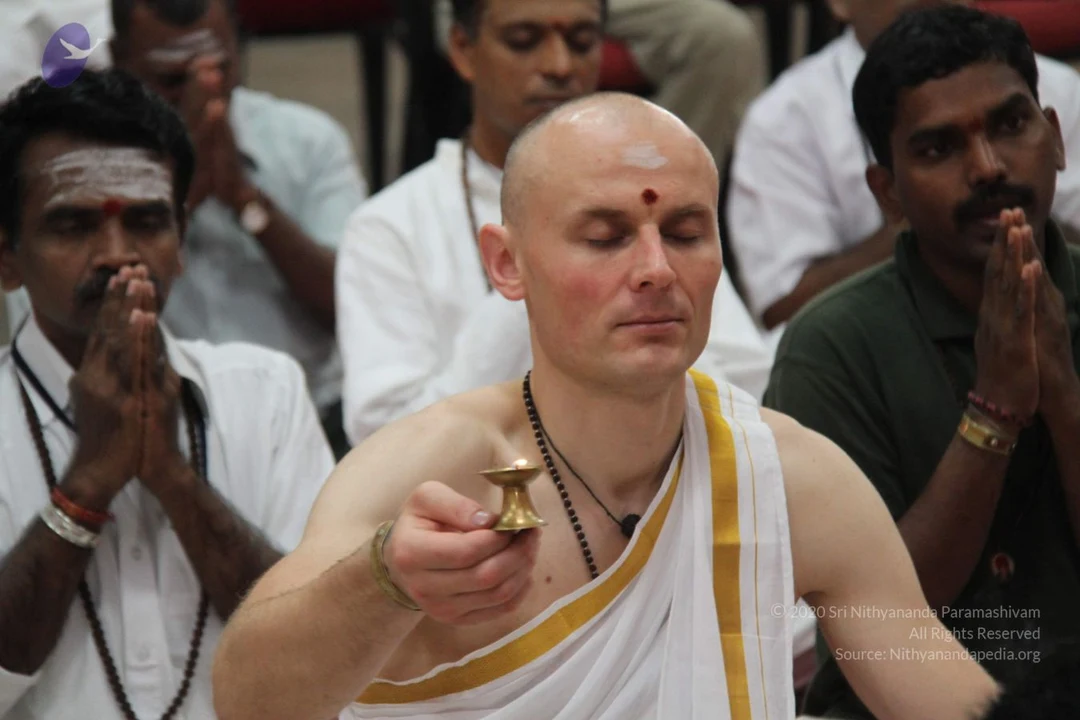
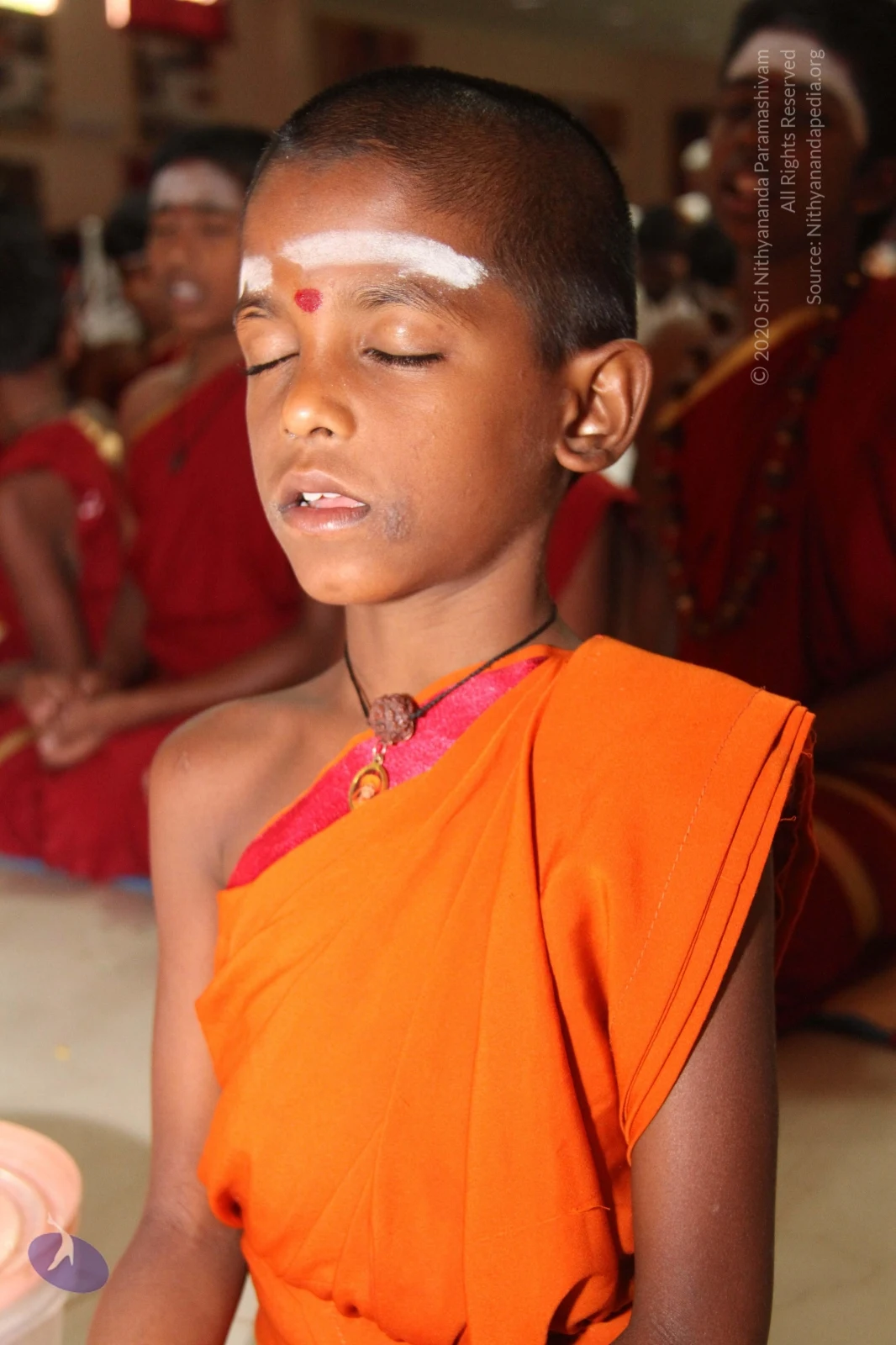
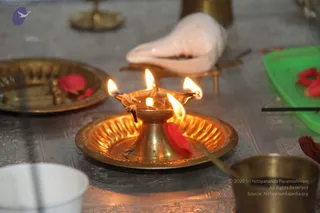
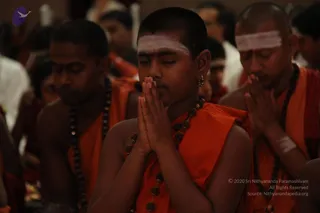
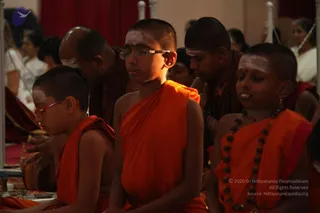
Inside a richly decorated shrine with painted pillars in pink, green and orange, a shaved-headed devotee in a maroon dhoti with a gold-bordered cloth and a rudraksha mala sits from behind, facing a golden throne. On the throne is a framed portrait of a smiling man in an orange turban and saffron robe, flanked by two gilded deity figures holding lamps and tridents. Brass oil lamps stand on both sides, and a tiger skin lies on the throne seat. The devotee appears to be offering a light or performing puja before the portrait.A photograph of a seated group of saffron-robed sannyasins and young boys in an indoor hall with red curtains and red carpeting. Many wear orange and saffron robes with rudraksha malas, and several have white tilak marks on their foreheads. Brass oil lamps, small metal dishes with red offerings, and silver plates sit before them on white floor mats. Behind them, women in white and red saris sit in rows, and a man in white stands at the right. Several figures are seated with hands joined in meditation or ritual. A bald man in an ochre shawl at the upper right is partially visible; no identity is established from appearance. A pillar and framed images line the back wall.A row of seated sannyasis in saffron-orange robes sit cross-legged on a floor before a long low table set with brass lamps, a conch shell, small brass cups, and shallow plates of red flower petals and offerings. The men wear rudraksha malas around their necks, and several have white and red tilak marks on their foreheads and sacred thread across their shoulders. The foremost man on the right has a white tripundra mark and holds his hands together in prayer. Behind them, devotees sit in a hall with red curtains and framed posters on the wall. The scene suggests a satsang or puja gathering.Close view of a brass five-wick oil lamp on a brass tray, its wicks burning with bright flames, sitting on a metal table. Rose petals are scattered on the tray and a small brass cup sits nearby. Behind it a large pale conch shell rests on a brass stand, and a green tray with red flower petals is at the right edge. No people are visible; this is a ritual setup with oil lamp and conch shell.A photograph of young men in saffron-orange robes with rudraksha malas, seated in a crowded hall with hands pressed together in anjali mudra and eyes closed. The central young man, with a shaved head and white sandalwood tilak with a red dot on his forehead, wears a small earring. Two other young men on either side also have white forehead markings and malas, and a seated crowd in white and orange surrounds them.A photograph of young sannyasi boys seated in a row during a ritual, all in saffron-orange robes with white vibhuti marks on their foreheads. The boy in the centre wears clear-rimmed glasses and a plain orange wrap, while the boy on the right wears a rudraksha mala with a red mark on his forehead. An older sannyasi in brown-red robes sits behind them, and small brass vessels and offering plates sit on a low table in front. Attendees in white sit in the background beside a red curtain.

Satsang
21 photosSource gallery
A seated man sits on an ornate gold throne with carved backrest and golden lion-head armrests, draped with red and tiger-striped cushions and a tiger-stripe cloth. He wears an orange-and-maroon turban with a jewelled ornament, a red-brown robe with a gold border, a long gold necklace, gold bangles and a bracelet, and white markings on his arms and chest. He raises one hand in a gesture while speaking, and a brass lamp stands at the right edge beside a painted pillar. Doors and a blue-and-gold wall form the backdrop. a person is the central figure, seated as a speaker during a satsang.A man seated on an ornate gilded throne with lion-head armrests and a golden arched backrest, draped with a tiger-striped cushion and red velvet upholstery. He wears a maroon-red saffron-toned robe, a turban in orange and red with a small ornament, layered rudraksha-style beaded malas and gold bangles, and a white vibhuti marking on his forehead and arms. His right hand is raised in a gesture while he speaks to an unseen audience. Behind him are a carved wooden door and a blue-painted wall with a brass oil lamp.A man seated on an ornate gold throne with carved floral and scrollwork backrest speaks into a small headset microphone. He wears a maroon and gold turban with a jewelled ornament, a red bindi and white markings on his forehead and arms. He is draped in a deep red shawl with gold border and wears a long gold bead necklace, gold bangles and earrings. One hand rests on the armrest. Behind the throne stands a brass oil lamp and a red and gold cloth. The sitting figure matches the appearance cues of a person, so this is in-person presence at a satsang, with his role as the speaker seated on the throne.A smiling man seated on an ornate golden throne with carved floral and scroll patterns. He wears a maroon-red turban with gold trim, a red bindi, white vertical marks on his forehead and upper arms, a maroon-red shawl draped over the body, a long necklace of gold beads, gold armbands and gold earrings. A small microphone clips near his face. Behind him stands a brass oil lamp. Appearance-based probable candidate Swamiji (probable), seated on a throne in ceremonial dress with distinctive turban, gold necklace and ornate adornments. The throne is gilded and carved, and the background is a plain wooden panel. One person is visible.A smiling man seated on an ornate gilded throne with elaborate repoussé carvings, wearing a maroon-red turban with gold trim and a red bindi on his forehead. He wears a maroon-red robe with a gold border, a long necklace of large gold beads, gold bangles on both upper arms, and a small microphone clipped near his face. White ash markings appear on his forearms and shoulders. Behind him stands a brass oil lamp and a golden ritual vessel. Probable Swamiji is seated in a satsang setting, with the saffron-red robe, turban and gold bead mala cues matching the Nithyananda Paramashivam description.A smiling man seated on an ornate gilded throne with elaborate repoussé carvings, wearing a maroon-red turban with gold trim and a jewelled ornament, a red-brown robe with gold border draped over the shoulder, and a long necklace of large gold beads. He wears gold bangles on his upper arms and forearms, a red bindi, and a small microphone clipped near his face. White ash marks appear on his upper arms. A brass oil lamp stands at the right edge beside the throne. Appearance-based candidate: Swamiji (probable), seated in person, with cues of a turban, saffron-toned ceremonial robe, rudraksha-style gold bead necklace and ornate gold adornments.

Dwajarohanam

12 photosSource gallery
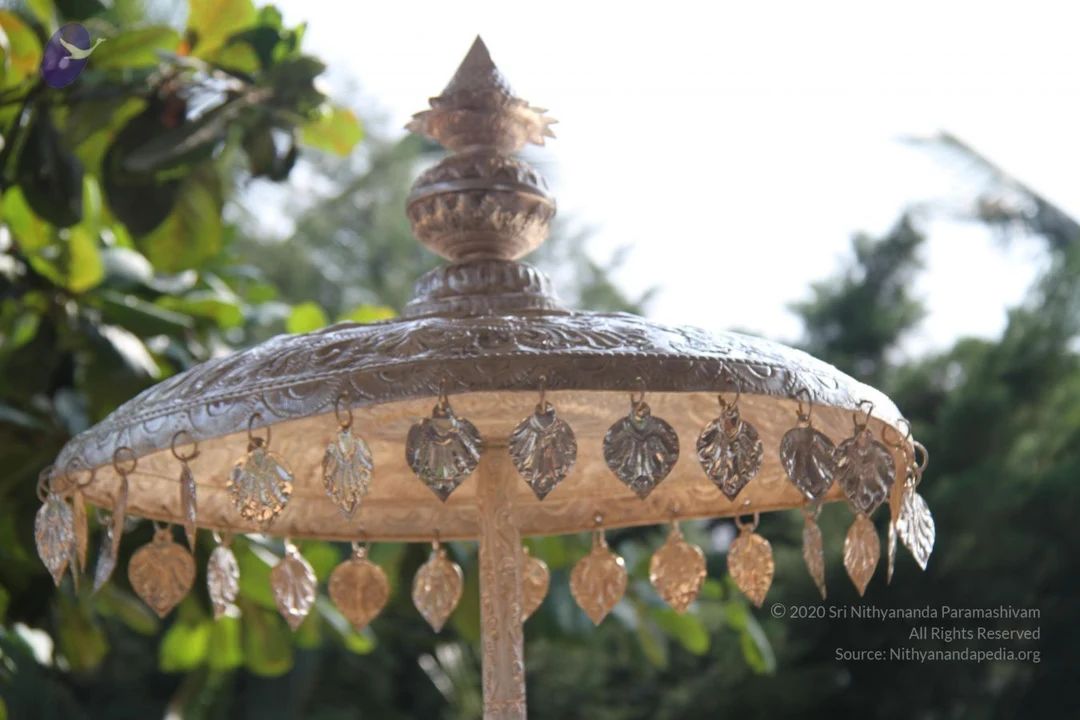
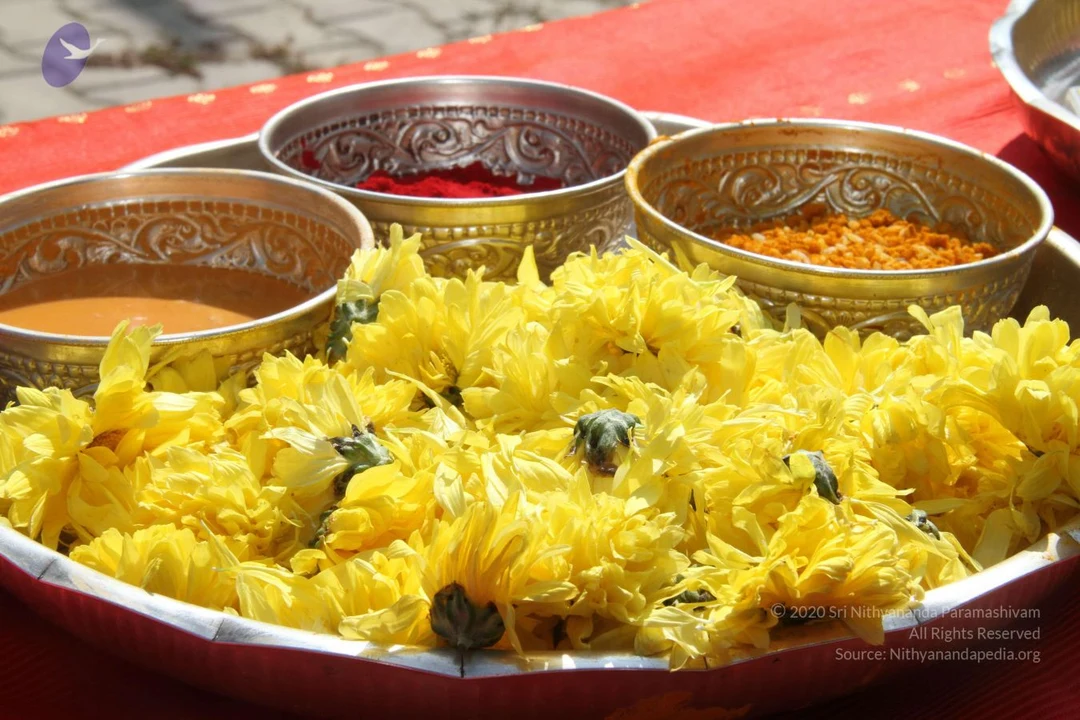
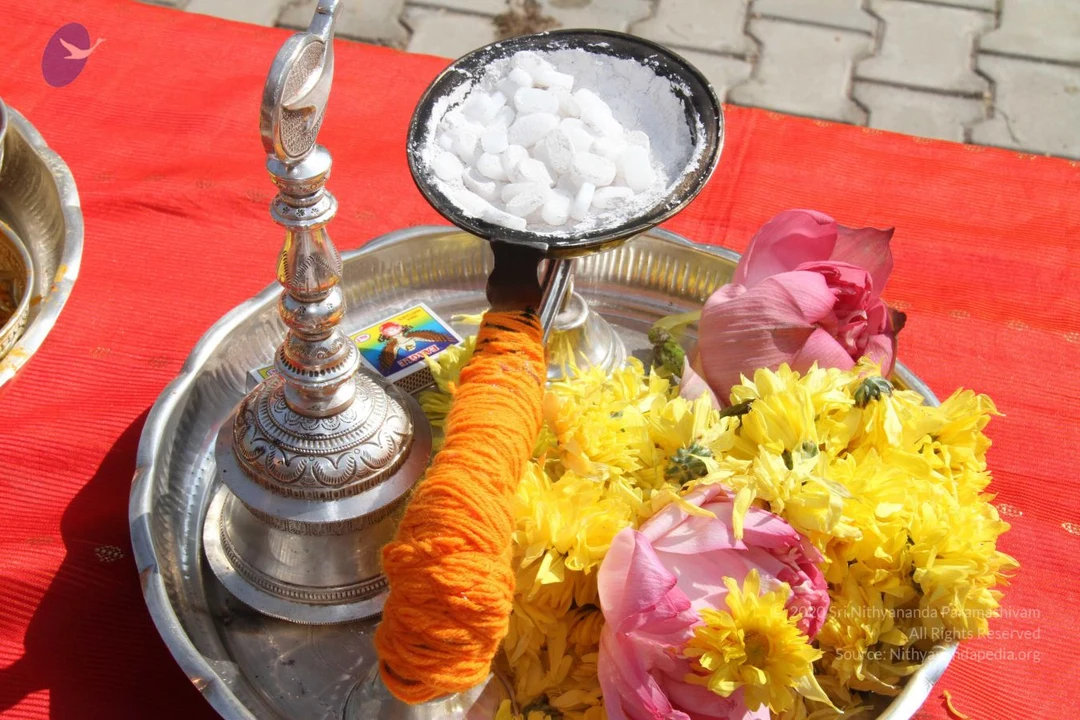
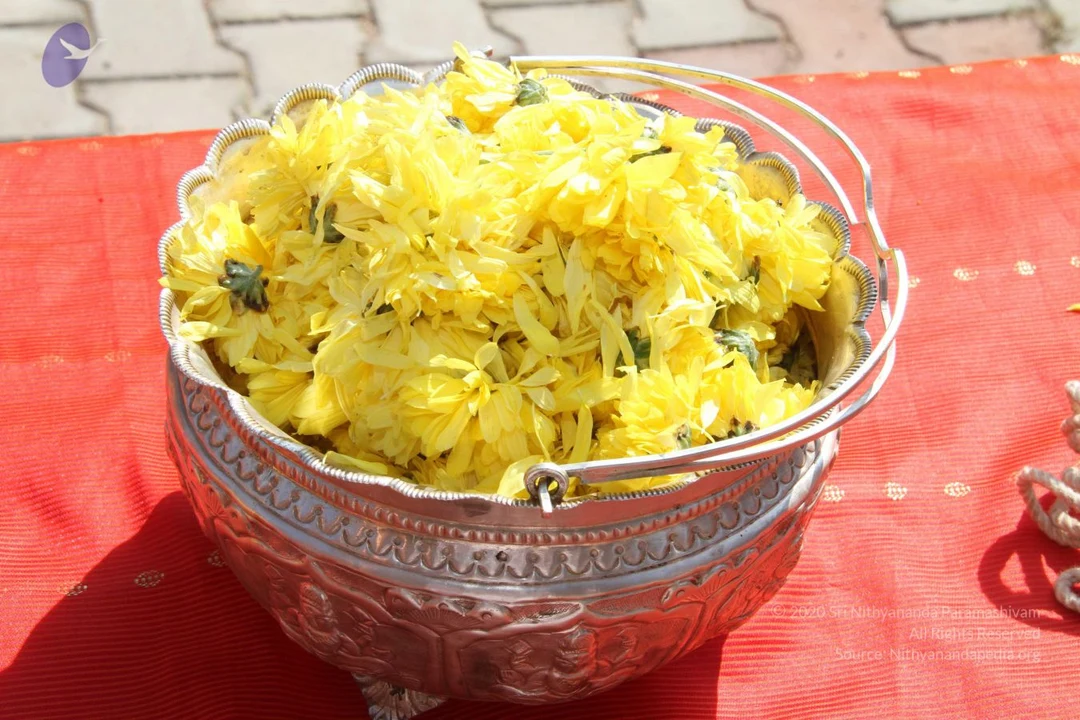
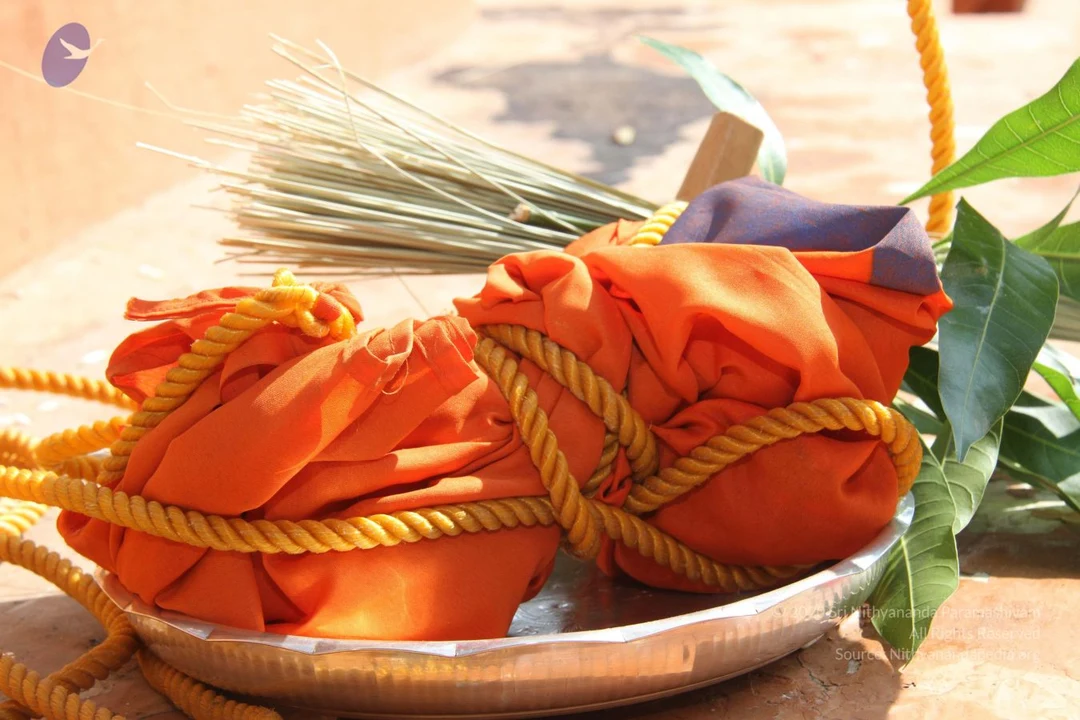
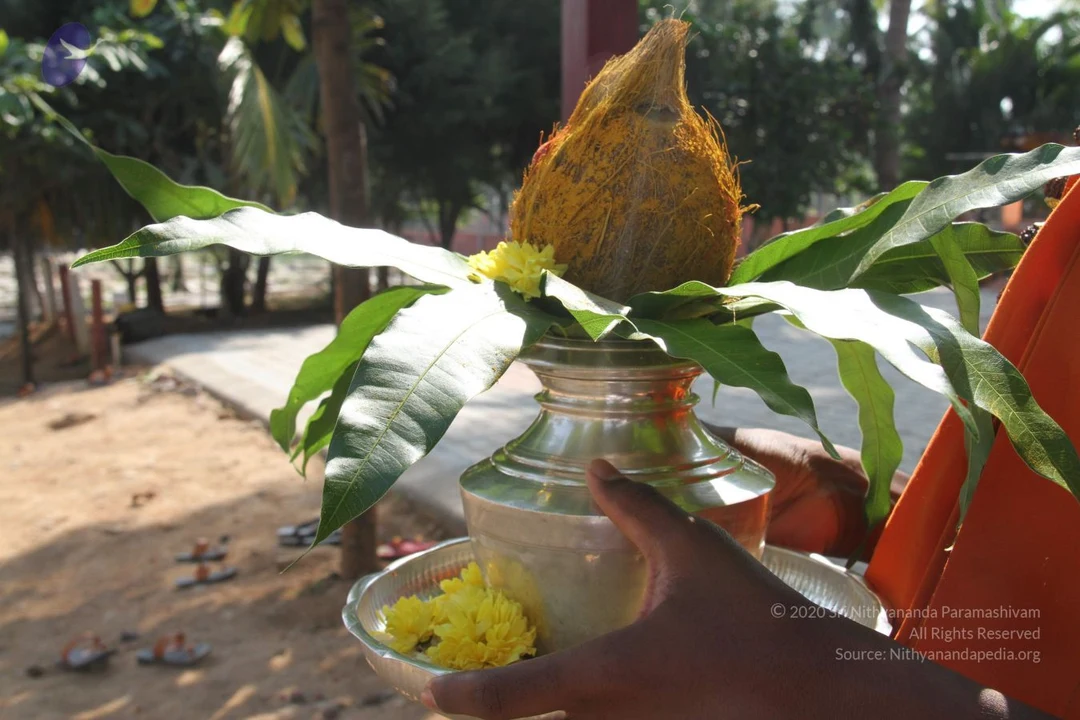
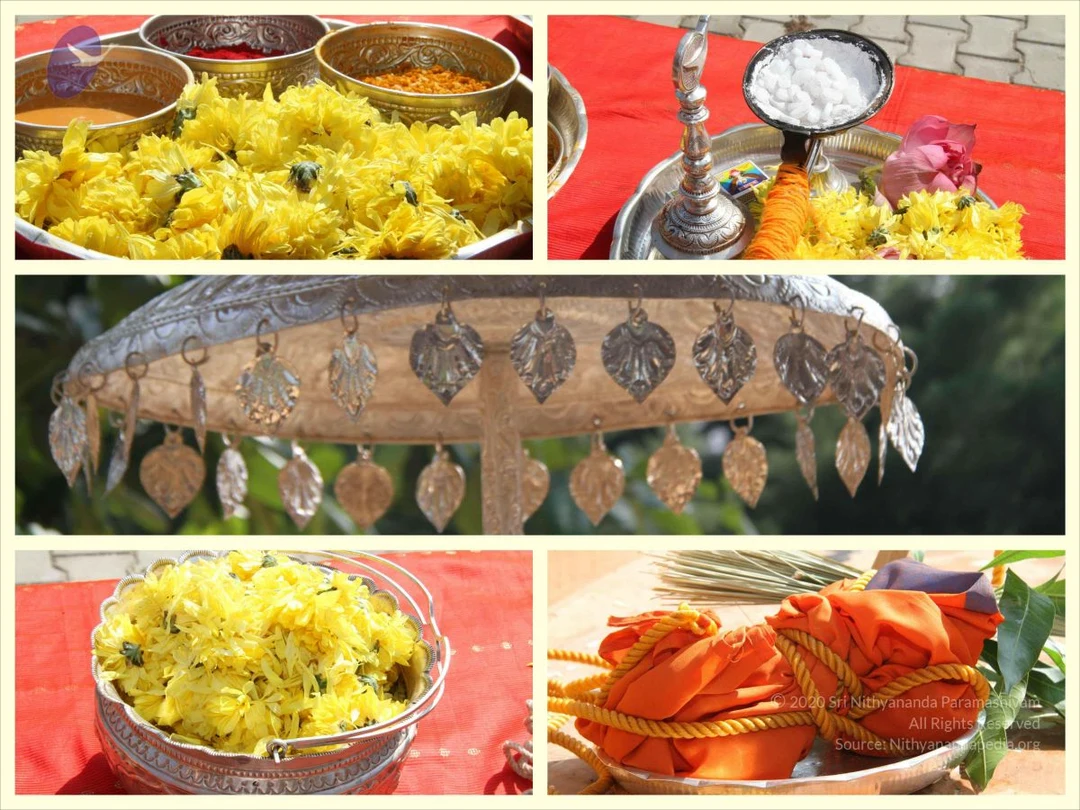
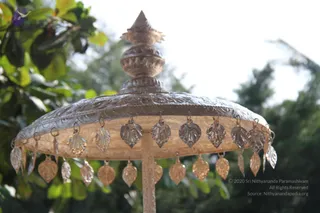
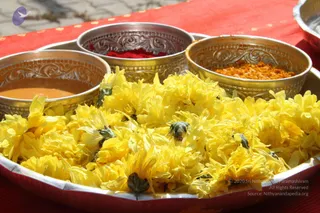
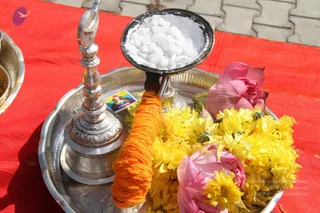
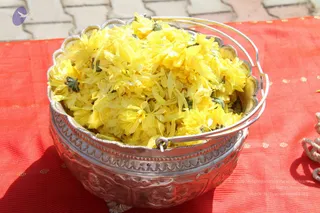
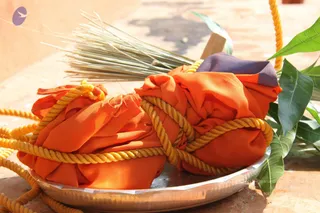
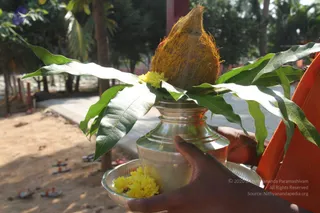
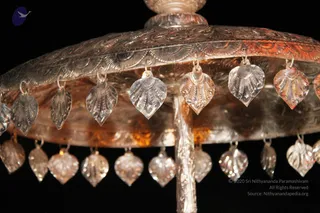
A close-up photograph of an ornate metal parasol or umbrella canopy with a pointed finial and tiered knob on top. The shade is embossed with fine floral and scroll patterns and edged with a fringe of hanging leaf-shaped metal pendants in a golden-bronze tone. Blurred green foliage and bright sky form the background. No people are visible.Close-up photo of a large metal tray piled with bright yellow marigold blossoms and buds, set on a red cloth in daylight. Three ornately engraved brass bowls sit at the back holding, from left, orange-tinted liquid, red kumkum powder, and yellow turmeric powder. These are ritual offerings and puja materials; no people are visible.A close-up photo of a silver puja thali on a red cloth. A silver kalasha-style lamp stands at left, a dark bowl heaped with white sugar crystals sits centre with a small wooden spoon, a bundle of orange thread lies on the tray, and yellow marigold flowers with two pink lotus blossoms fill the right side. No people are visible.A close photograph of a large ornate silver bowl with a looped handle, filled with loose yellow flower petals and buds. The bowl has embossed decorative bands and a scalloped rim. A sunlit paved surface is visible at the top, and a corner of a white rope or cord appears at the right edge. No people or a person are visible.Two bundles wrapped in saffron-orange cloth and tied with twisted golden-yellow cords rest on a polished brass or silver tray. Green mango leaves and a bundle of dried grass stalks lie behind them on a weathered terracotta surface. The bundles appear to be ceremonial packages of cloth.A close outdoor photograph of a silver kalasha held by a hand in the lower right, topped with a yellow-orange turmeric-coated coconut wreathed in fresh green mango leaves and a yellow marigold flower. Yellow marigold petals rest on a silver tray beneath the vessel. A saffron-orange cloth sleeve appears at the right edge. Behind it, a concrete walkway, sandy ground, scattered slippers and leafy trees form the setting.

Chandikeswara

8 photosSource gallery
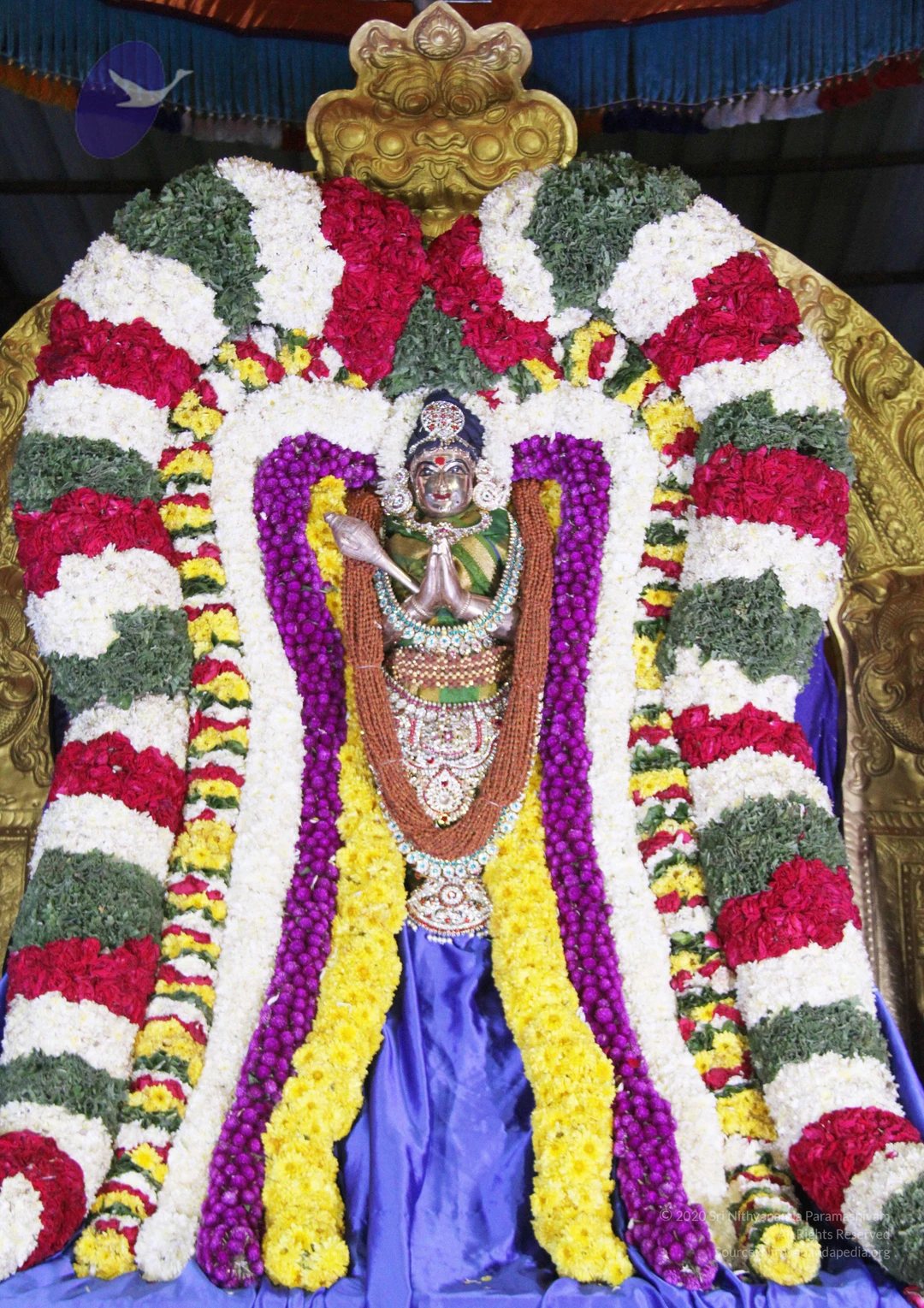
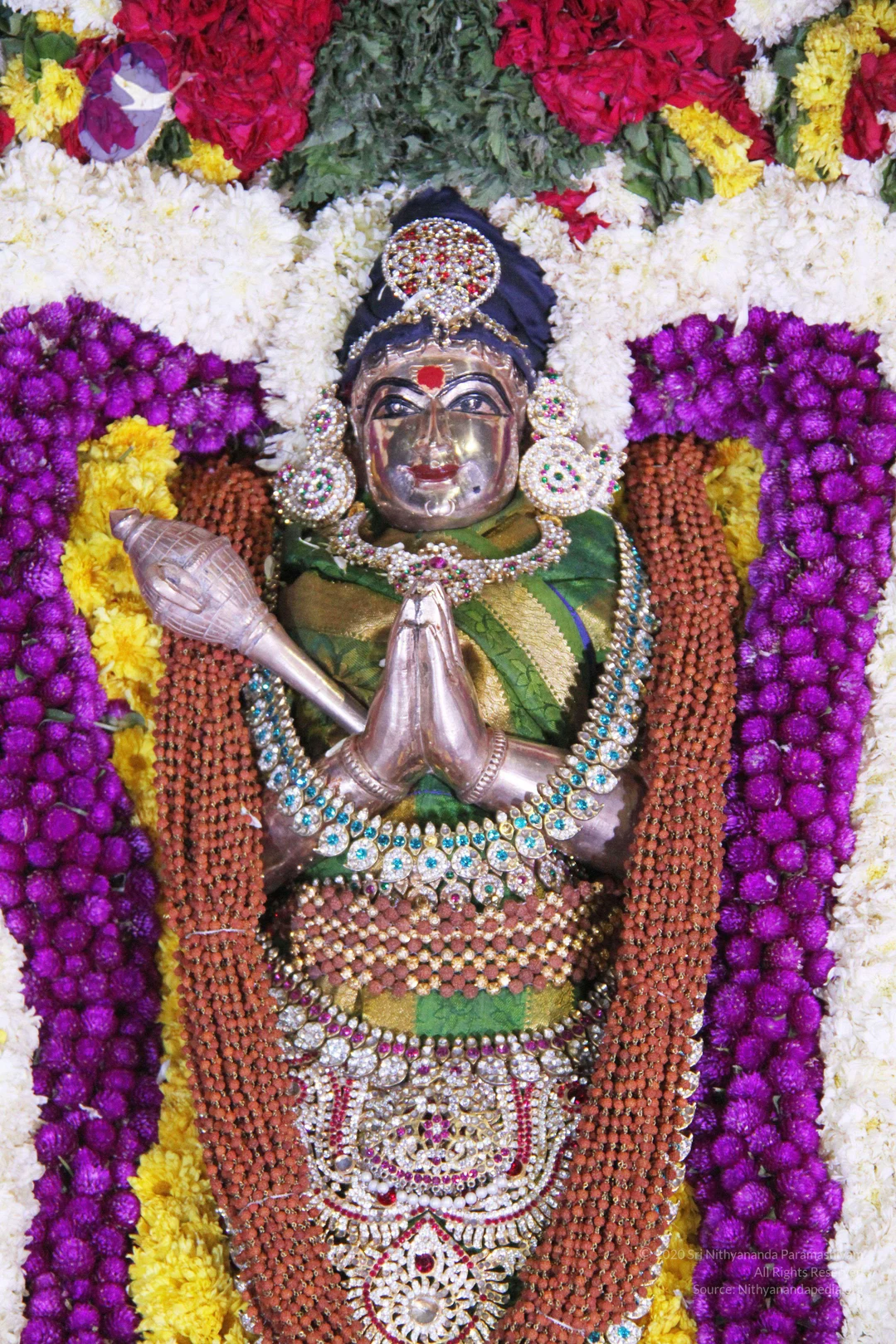
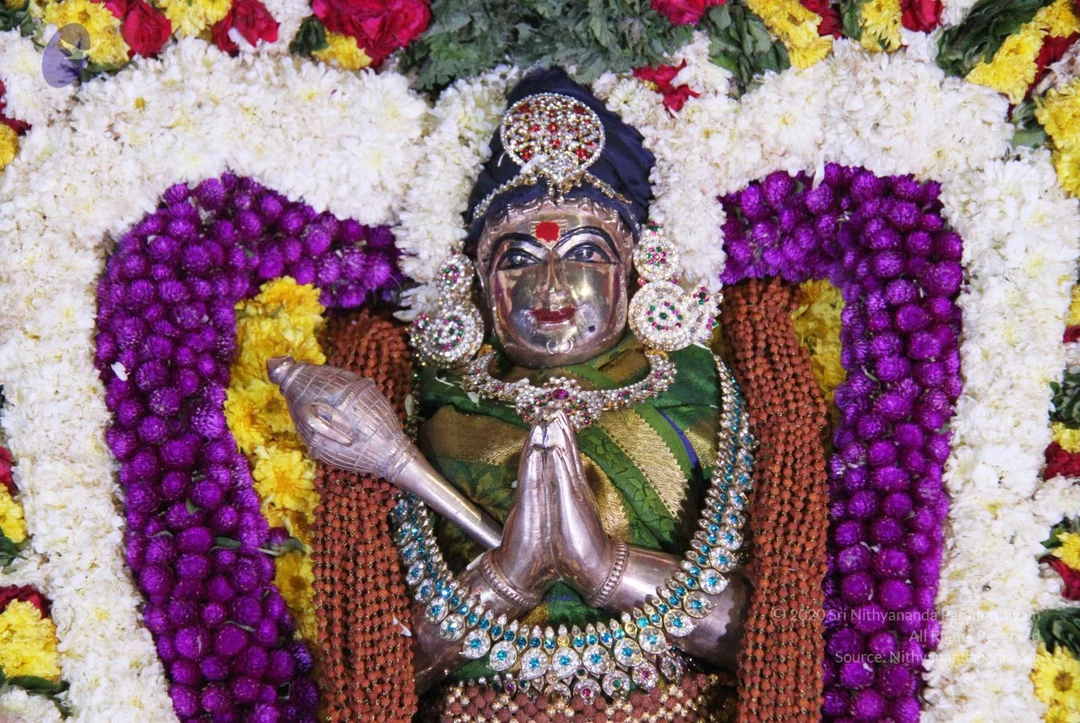
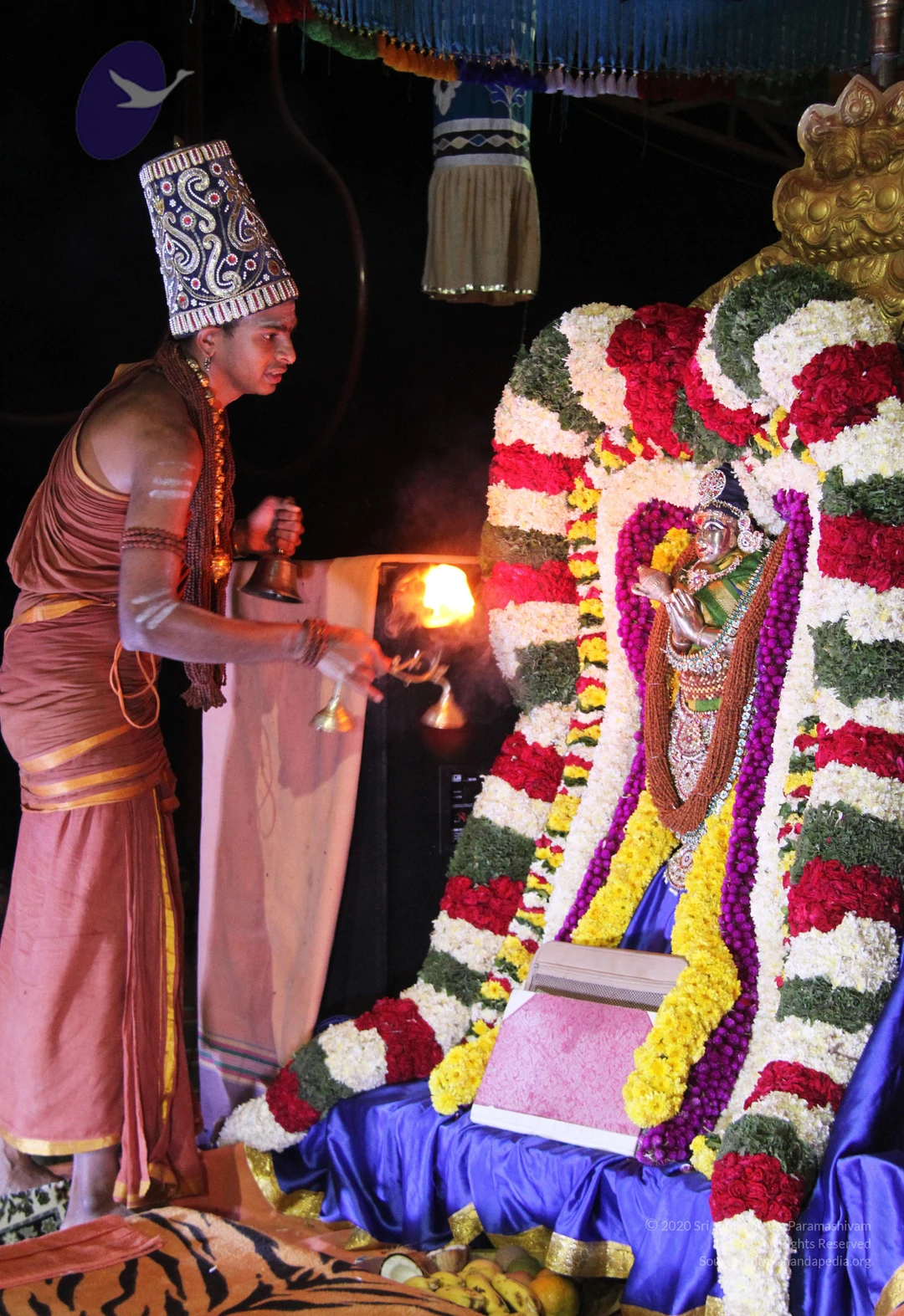
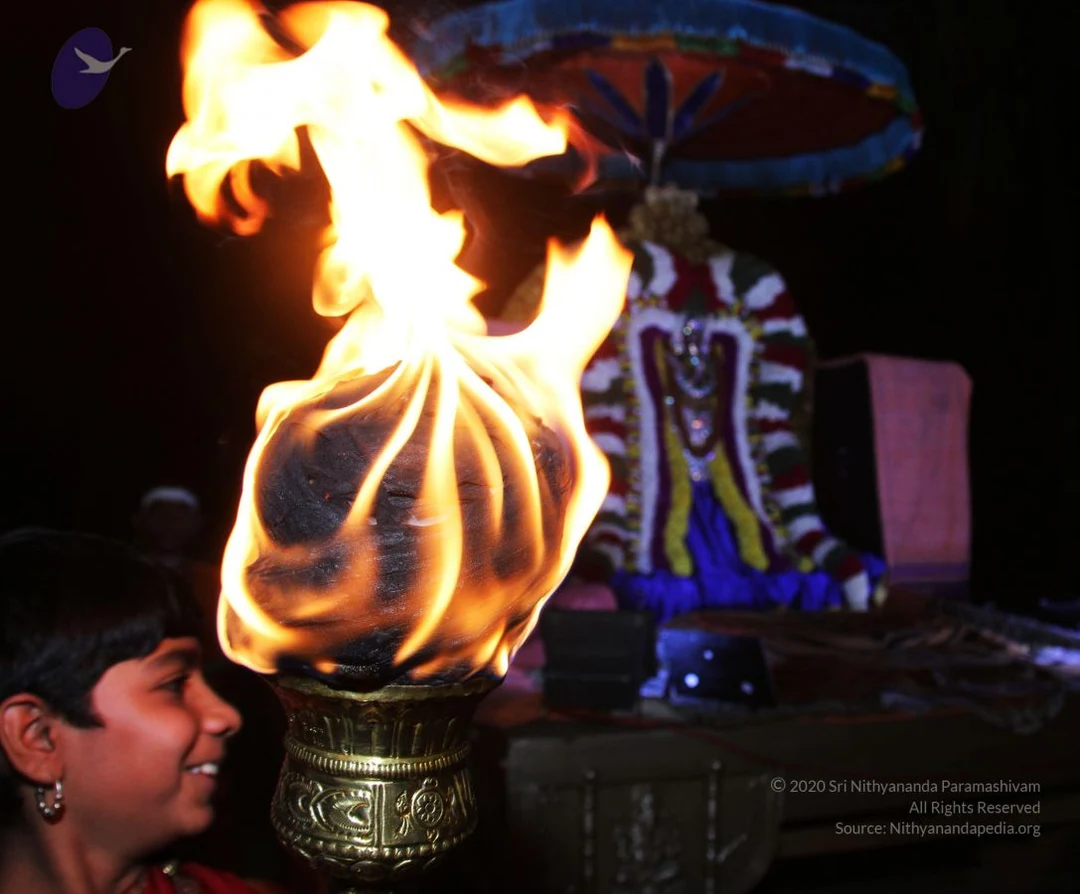
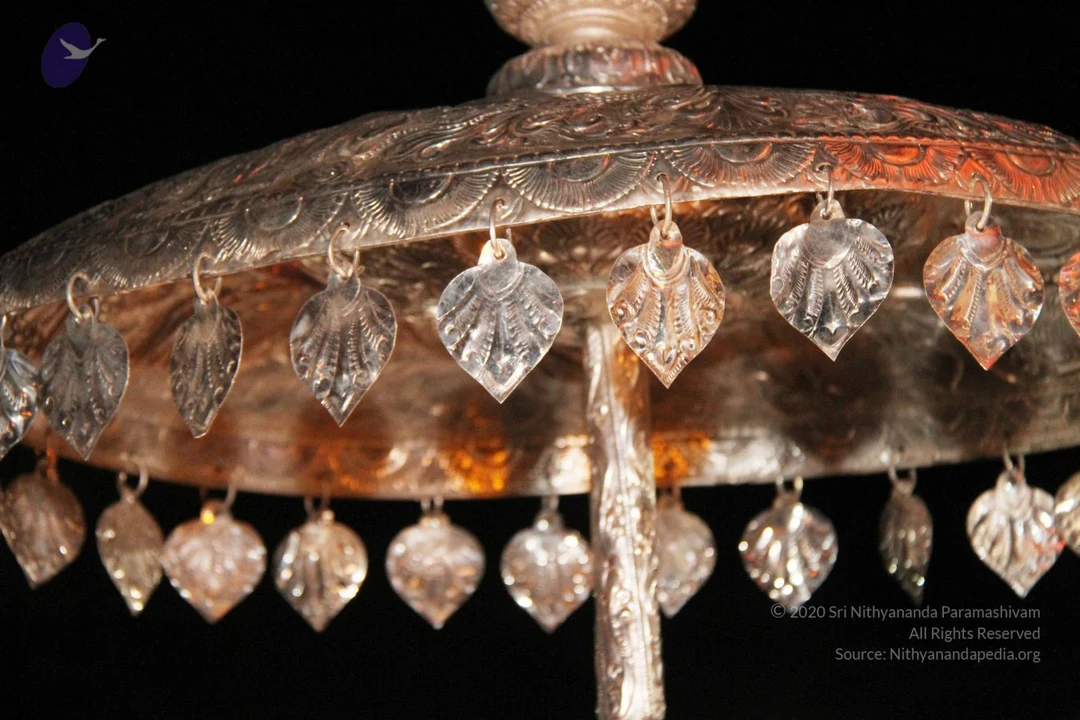
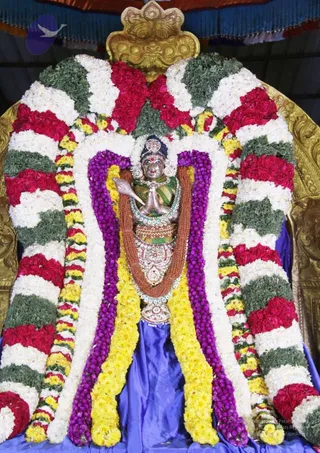
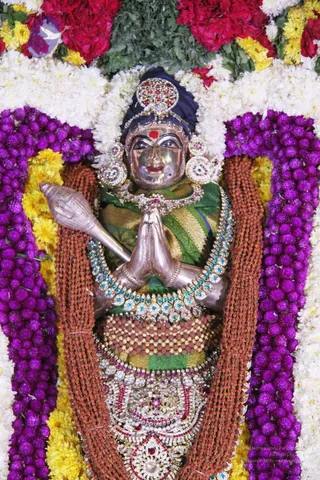
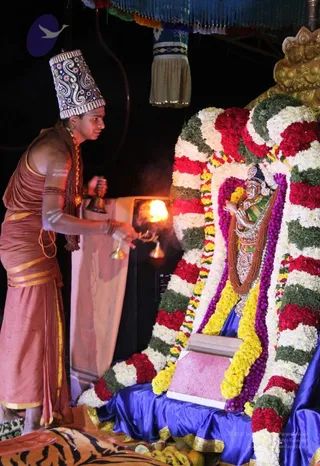
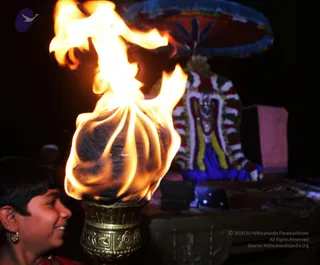
A metal deity murti stands with palms pressed together in namaskar, heavily adorned with a dense flower garland arch of white, red, green and yellow blossoms plus purple flower strands framing the figure. Ornate jewelled necklaces, a gem-set crown and a green-and-gold garment decorate the murti. A golden kirtimukha-style arch with a blue draped cloth backdrop surrounds it.Close-up photograph of a metal murti of a deity with hands folded in anjali mudra, dressed in a green and gold silk garment and adorned with layered rudraksha malas, jewelled necklaces, jewelled earrings and a jewelled crown with a red tilak on the forehead. The figure is framed by garlands of purple globe amaranth, white jasmine and yellow marigolds, with red petals above. It holds a small ornate staff or sceptre in one hand. No physical people are present.A metal deity murti. It has a red tilak on its forehead, a jeweled crown, and large jeweled earrings. The figure holds a mace in its left hand and has its palms joined in anjali mudra. It wears a green and gold garment and a heavy jeweled necklace, and rudraksha-like beads hang on either side. Purple globe amaranth, white jasmine and yellow marigold garlands frame the figure in an ornate decorative arch.A priest in a rust-orange dhoti and matching upper cloth stands at left, wearing a tall, beaded, navy-and-gold conical headdress and a rudraksha-style mala with white sacred markings on his arms. He holds a brass bell in one hand and a lit lamp in the other, offering aarti. To the right, a silver-and-gold deity murti with a crown and garlands of red, white, yellow and purple flowers stands on a blue draped platform, with fruit and a striped cloth below. A gold-coloured decorative frame stands behind. No one else is visible.Night photo of a brass lamp holder with a large flame rising from a dark wick mass, held in the foreground. Beside it, a smiling woman with short dark hair and a red top looks toward the flame. Behind, a deity murti is dressed in striped white, red, green and purple garments with garlands, under a blue and red decorated canopy on a table. The flame is an aarti lamp, and the setting suggests a puja.Close-up photograph of an ornate silver ceremonial umbrella or canopy with a domed top, embossed scalloped and floral patterns, and a row of hanging silver leaf-shaped pendants along its rim. A slender silver shaft with carved detailing rises from the center. The background is dark, with warm reflections on the metal. No people are visible.

Paduka-Puja

8 photosSource gallery
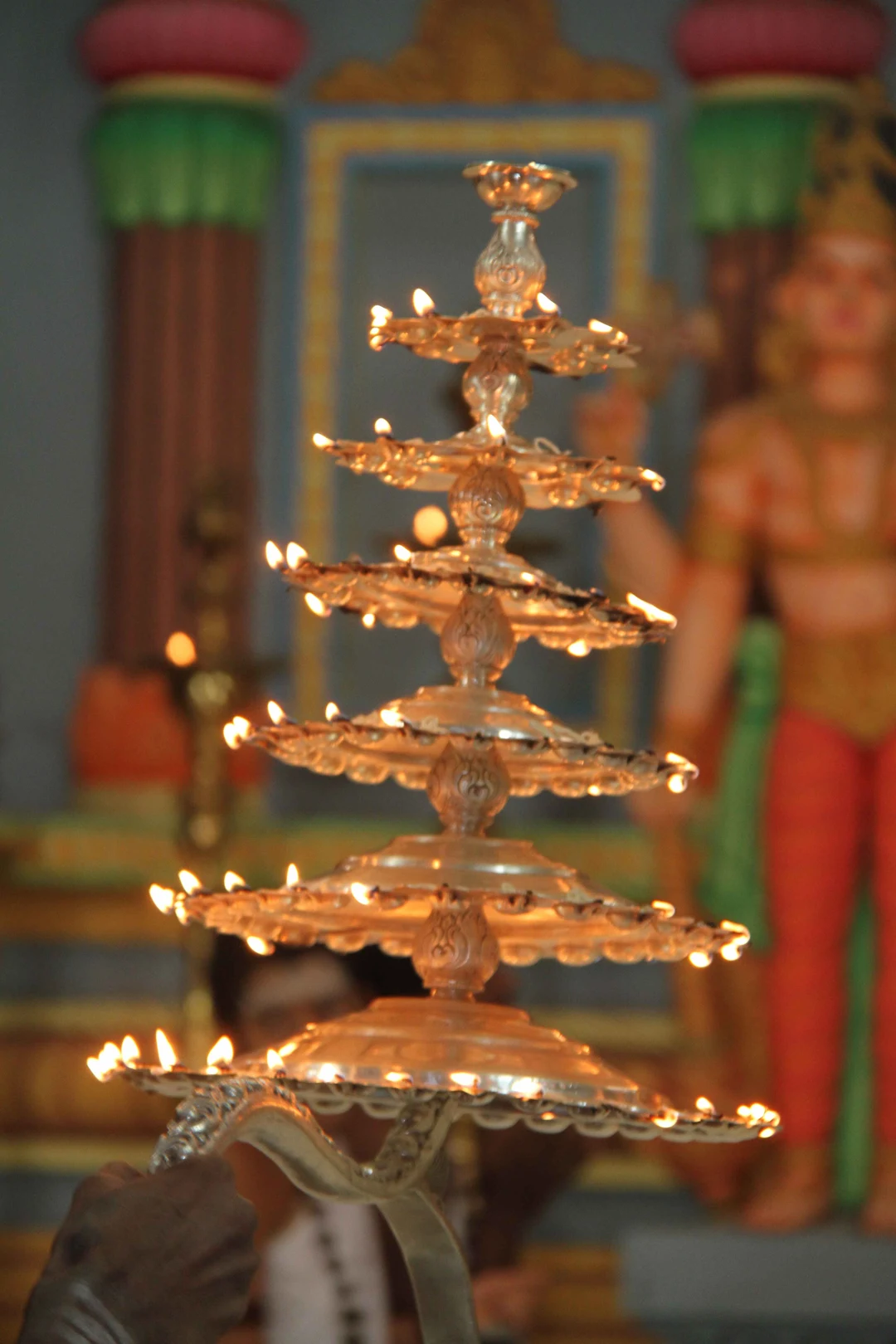
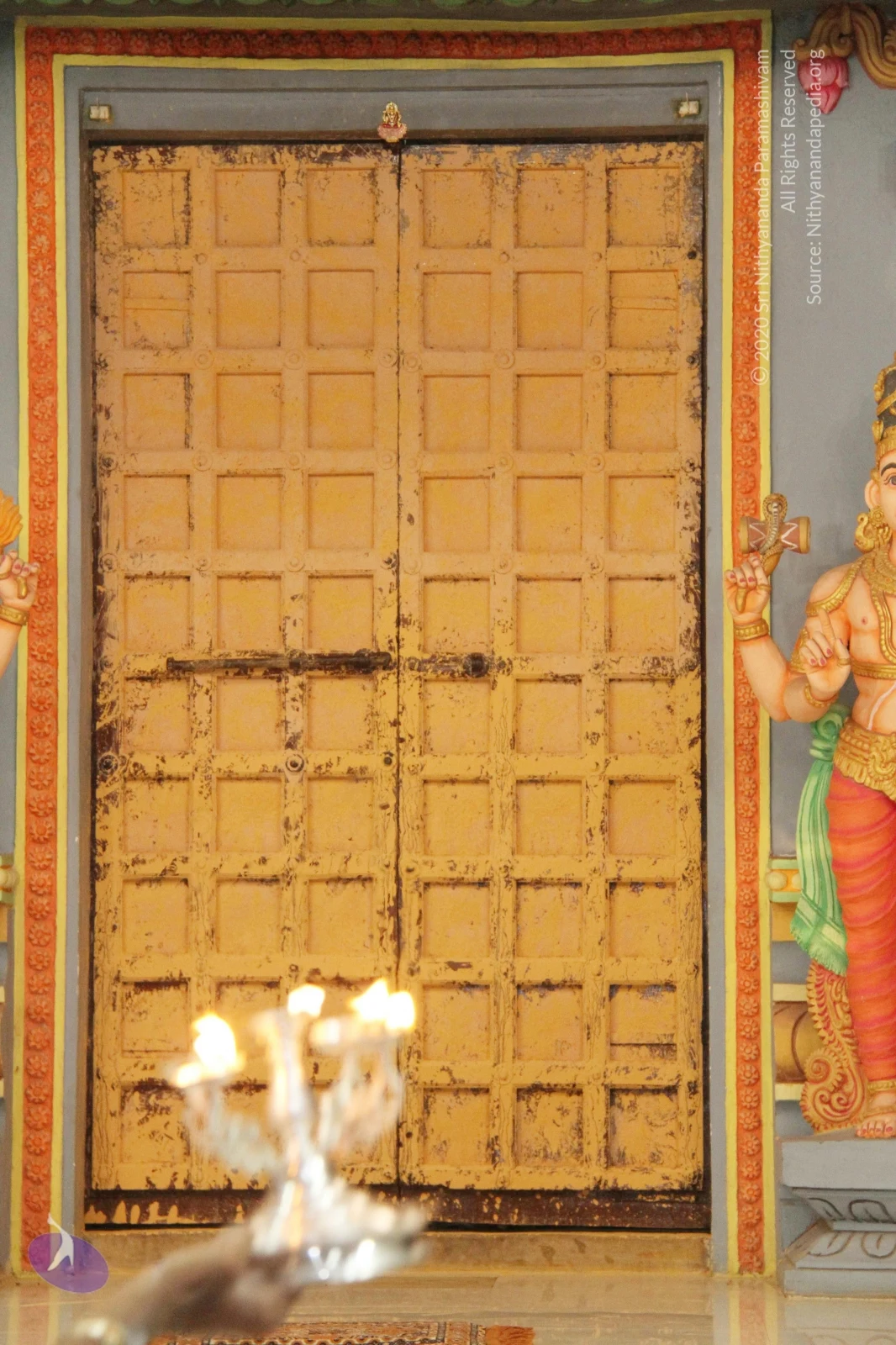
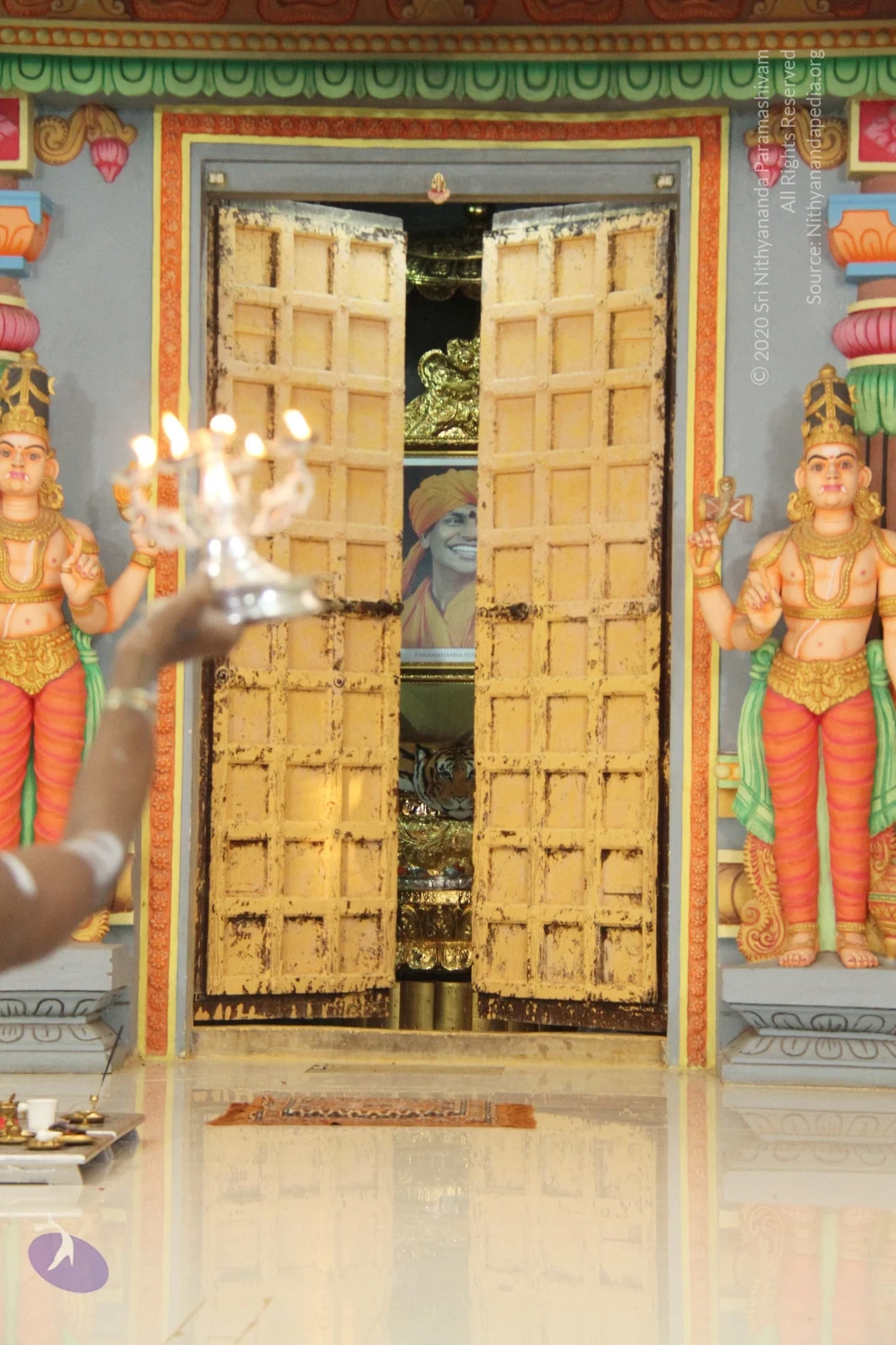
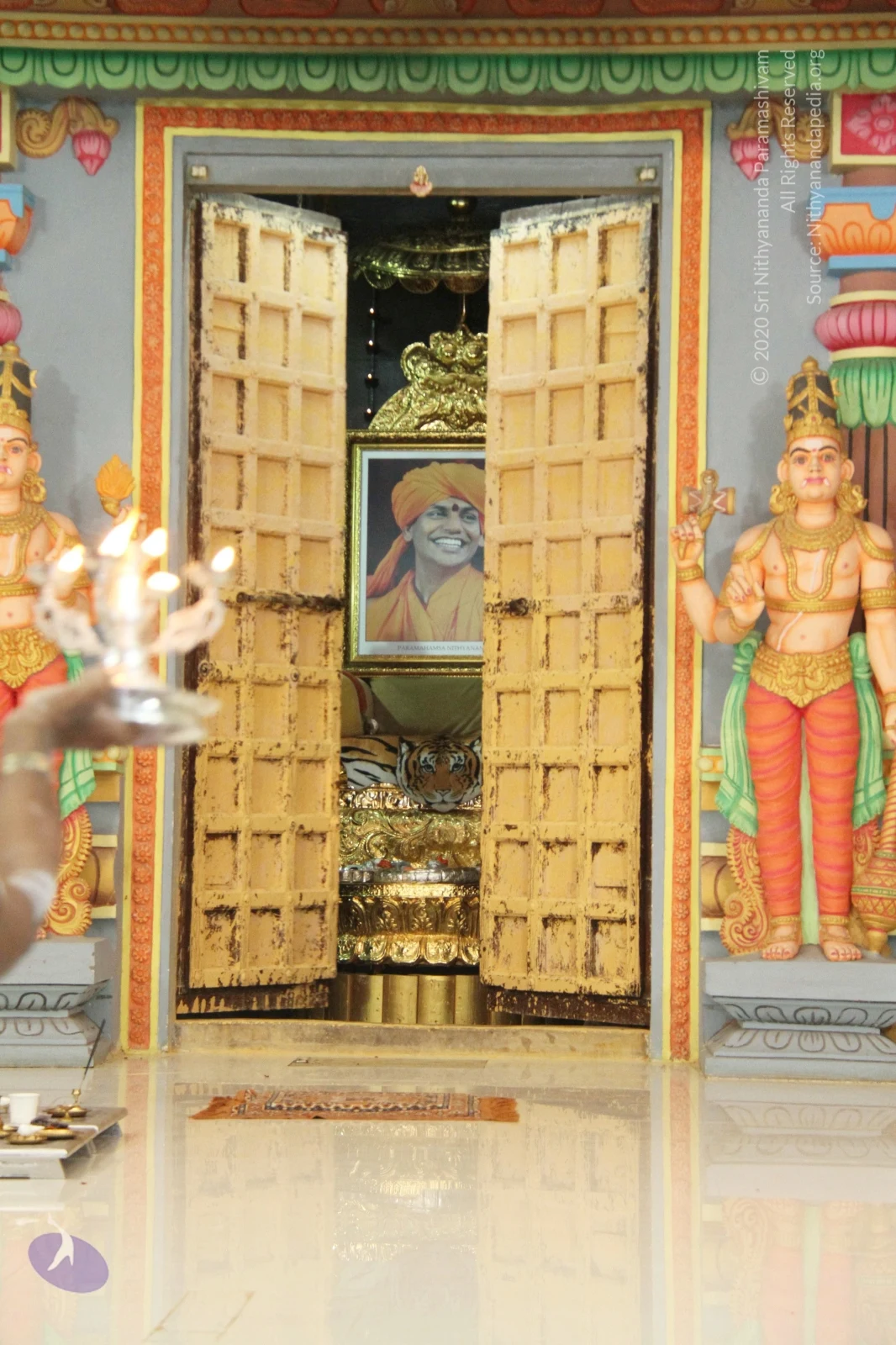
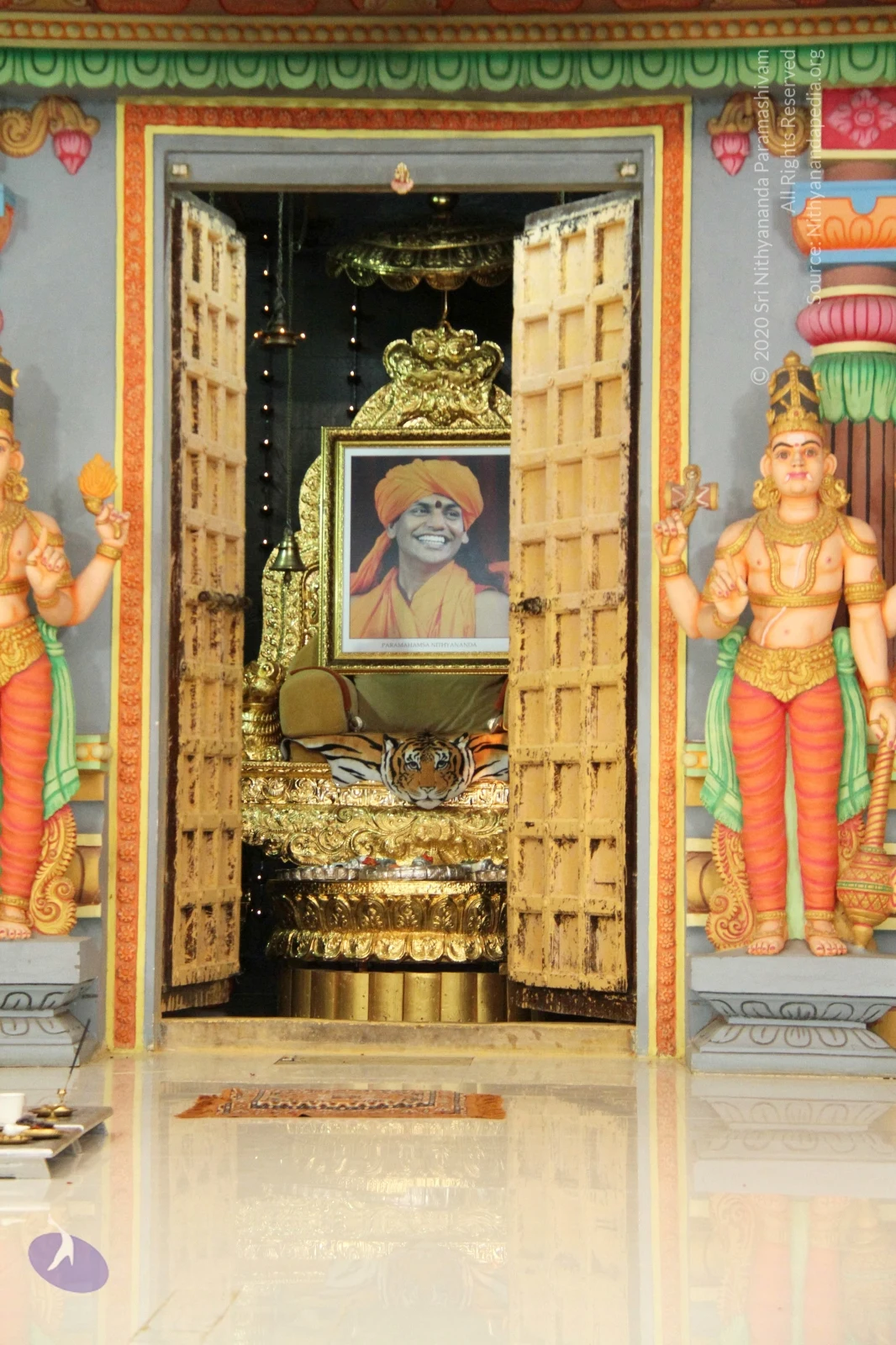
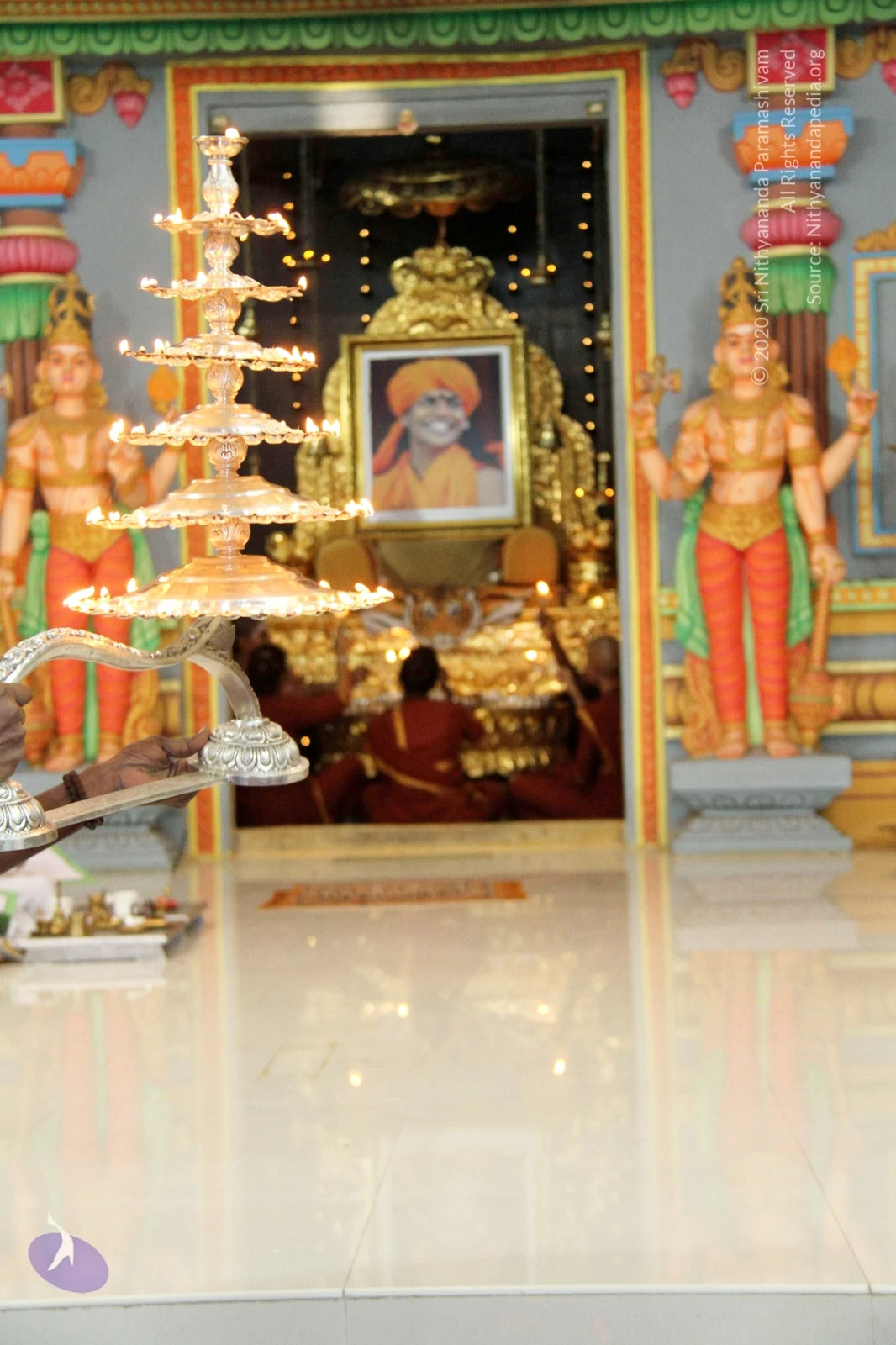
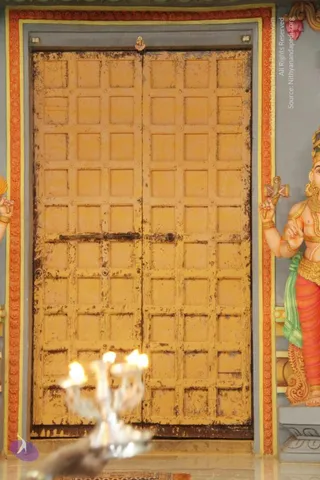
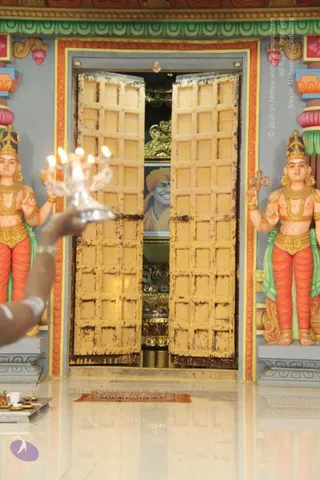
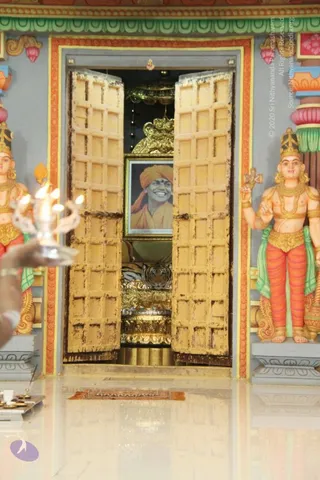
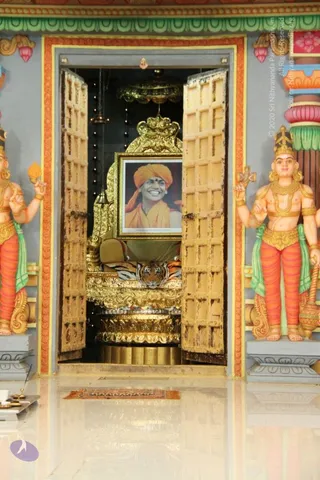
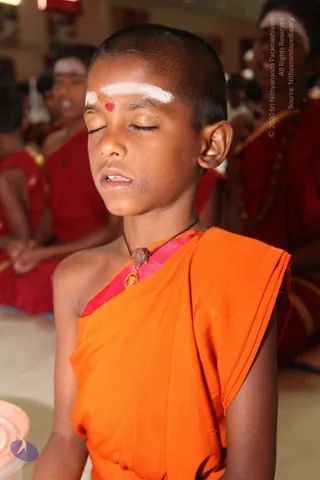
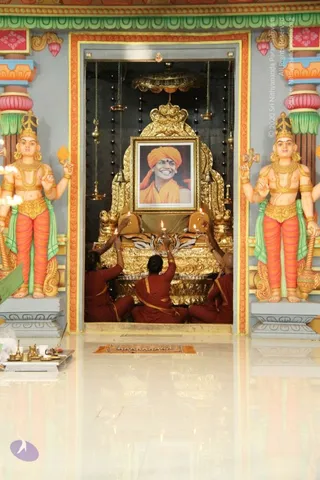
A photograph of a temple entrance with heavy old wooden double doors painted ochre, with a wooden crossbar and iron fittings, framed by red and yellow painted borders. On the right stands a painted deity figure with four arms, gold jewellery and a pink-and-green dhoti, holding a small drum-like object and a cobra-like emblem. In the foreground a blurred silver aarti lamp with several burning oil lamp flames is held by an unseen hand. No people are visible in the scene.A photograph of a temple sanctum with tall ornate wooden doors standing open, revealing a shrine behind. Inside, a framed portrait shows a smiling man in an orange-saffron turban and robe, with a caption label reading Paramahamsa Nithyananda beneath it, flanked by gilded murtis and a tiger image. Two painted dvarapala guardian statues with crowns, gold jewellery and orange-and-green dhoti stand on either side of the doorway. In the foreground at left, a hand holds a silver aarti lamp with several flames, and a brass puja tray sits on the floor. The polished white floor reflects the scene. The person holding the lamp is partially visible and no other living people appear.Photograph of an ornate temple shrine with tall wooden doors opened to reveal a golden inner sanctum. Inside, a framed portrait labelled "PARAMAHAMSA NITHYANANDA" shows a smiling man in an orange-saffron turban and robe, placed above a golden throne draped with a tiger-skin cloth. Flanking the doorway are painted stucco guardian figures in orange and red dhotis with gold jewellery. In the left foreground, a hand holds a silver aarti lamp with lit flames. The floor is polished white stone, with a small brass tray of ritual items at the lower left. No physical people are clearly visible apart from the hand holding the lamp.Wooden double doors open onto a golden throne inside a temple shrine, with a framed portrait on the throne back of a smiling man in an orange-yellow turban and saffron robe, labelled "Paramahamsa Nithyananda" on the frame. A tiger skin draped over the golden seat. Two painted, multi-armed guardian statues in red and green dhotis with gold ornaments flank the doorway on a polished white floor. No living people are visible.Close photo of a young shaven-headed boy in an orange saffron robe with a red undergarment, eyes closed, mouth open as if chanting. He wears a rudraksha bead pendant on a dark cord, a white horizontal tilak across the forehead and a red bindi. Behind him, other boys in red robes sit and chant with white forehead markings. Setting is an indoor hall with a pale floor.A temple sanctum entrance with colourful painted guardian statues on either side, each with four arms, gold crowns and gold waist ornaments. Inside, a gold-framed portrait labelled "Paramahamsa Nithyananda" shows a smiling man in an orange turban and orange shawl, placed on an ornate gold throne draped with a tiger-striped cloth. Three people in maroon robes kneel before the throne, holding lit oil lamps raised toward it. Hanging brass bells and lamps, dark beaded strands and a gold canopy frame the shrine, and a brass puja tray with bells sits on the polished floor at left.

Satsang
32 photosSource gallery
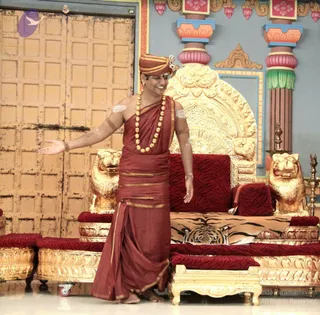
A seated man in a rust-red turban and matching rust-red robe sits on an ornate gilded throne with carved lion heads, red and black tiger-striped cushions and a golden footstool. He wears a long beaded gold necklace, gold bangles and a red bindi, with white markings on his arms, and his bare feet rest on the floor. Behind him are a gilded arch, pink and green lotus-shaped finials and painted panels. One person is visible.A seated man in a rust-red dhoti and shawl wears a matching red-and-gold turban with a jewelled ornament and a red tilak. He has gold beaded necklaces, gold armlets and bangles, and white ash marks on his arms and shoulders. He sits cross-legged on an ornate gold throne with carved lion-head armrests, red velvet cushions and a tiger-skin rug, against a gold arched backdrop, with a decorated pillar and oil lamp beside him.A person in a maroon-red sari-style garment with gold trim and a maroon headwrap stands bent forward with palms joined in namaskar before an ornate gold throne. The throne has golden lion heads on its arms, red velvet cushions and a tiger-skin cover on the seat. Behind it are a blue wall with pink and green pillars, large carved wooden doors, and brass oil lamps on the right. The person wears a rudraksha-style bead necklace and bangles, with white marks on the arms and forehead. Only one person is visible and the scene appears to be a stage or ceremonial hall setting. Appearance does not clearly confirm the identity of the figure, so this is recorded as an uncertain candidate.A person in a maroon-and-gold draped garment and a matching maroon head wrap stands beside an ornate gold throne with lion-figure armrests and red tiger-striped cushions, a tiger-skin rug on the seat. The person's hands gesture toward the throne, which is set against a blue and pink temple-style backdrop with lotus-topped pillars and large wooden doors. A beaded necklace is visible. Watermarked photo from the archive; no other people are visible.A man in a maroon-red dhoti-style wrap with gold borders and a matching red-and-gold turban stands barefoot on a glossy white floor, smiling, with his left arm extended outward and a gold-beaded necklace across his chest. Behind him is an ornate gold throne with carved lion heads, red velvet cushions and a tiger-striped seat cover, flanked by golden lion figures and brass oil lamps against a pink, blue and green pillared backdrop with large wooden doors. The figure's appearance matches a person through the swept maroon turban, gold necklace and saffron-toned ceremonial dress, presented in front of a throne, though the page's Satsang context is not visible in the image itself. Lamps and throne are decorative elements; no ritual activity is visible.A man in a maroon-red wrap and striped turban stands on a polished floor beside a large gilded throne with carved golden lion heads, red-and-black tiger-pattern cushions and a tiger-skin cushion. Beige ornate wooden doors stand behind him, with painted pillars and a lotus motif on the blue-and-pink wall. He wears a long gold-bead necklace, bangles and earrings, has a hair bun, and extends his right hand toward the throne with a smile. a person is present in person: long hair in a bun, a striped turban, ornate gold beads and ceremonial attire.
Dwajarohanam

1 photoSource gallery
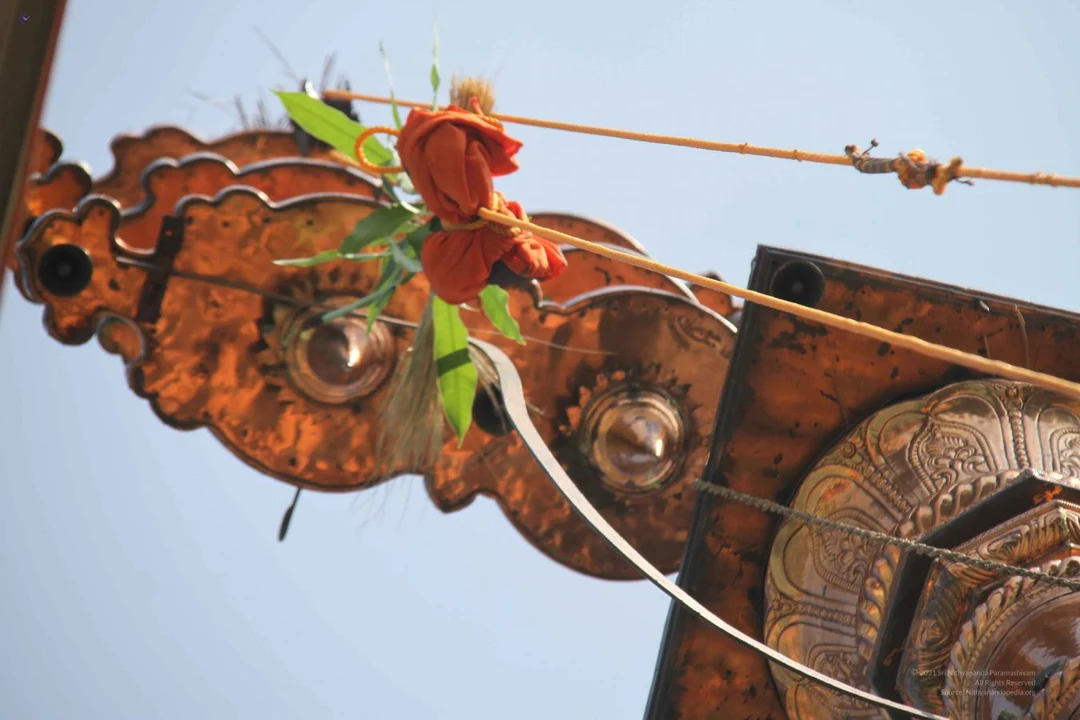
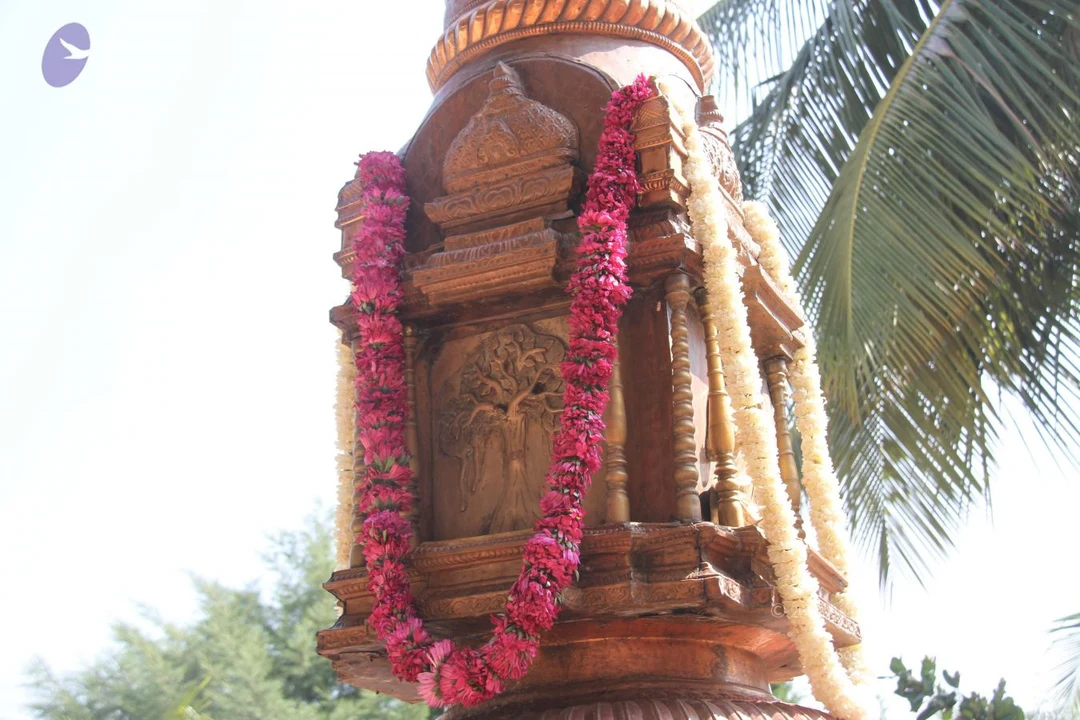
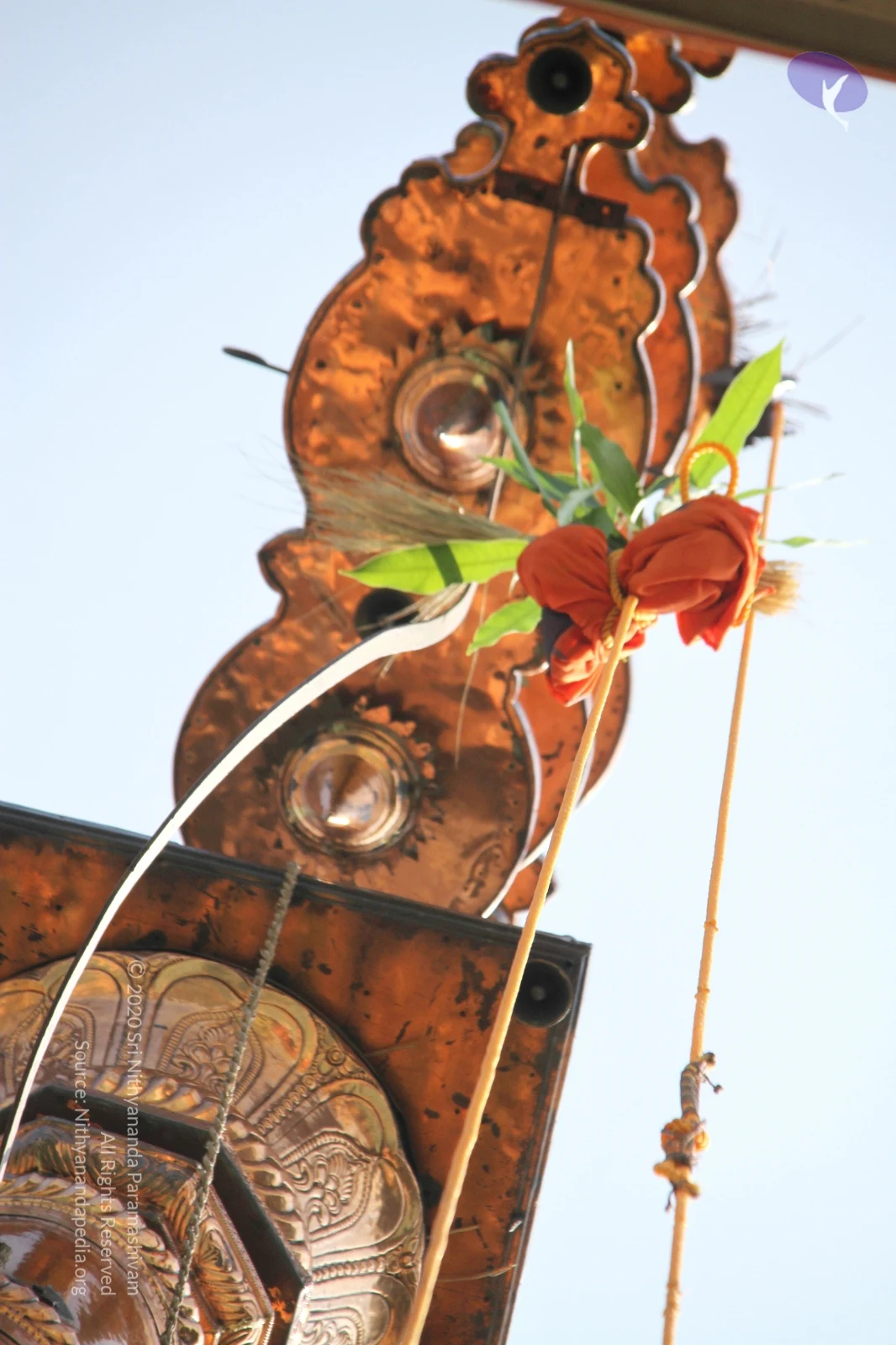
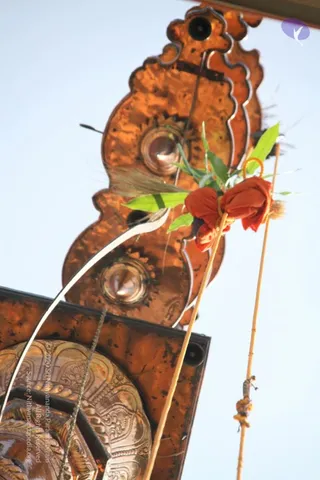
Low-angle photograph of an ornate copper temple chariot or ratha element against a pale blue sky. A large copper finial with scalloped edges and round mirror-like discs rises above a copper panel decorated with repoussé floral motifs. Red-orange cloth bundles, green mango leaves and a feathery plume are tied to a curved rod and guide ropes. No people are visible; the scene shows only the decorated structure and its hanging cords.

Chandikeswara

2 photosSource gallery
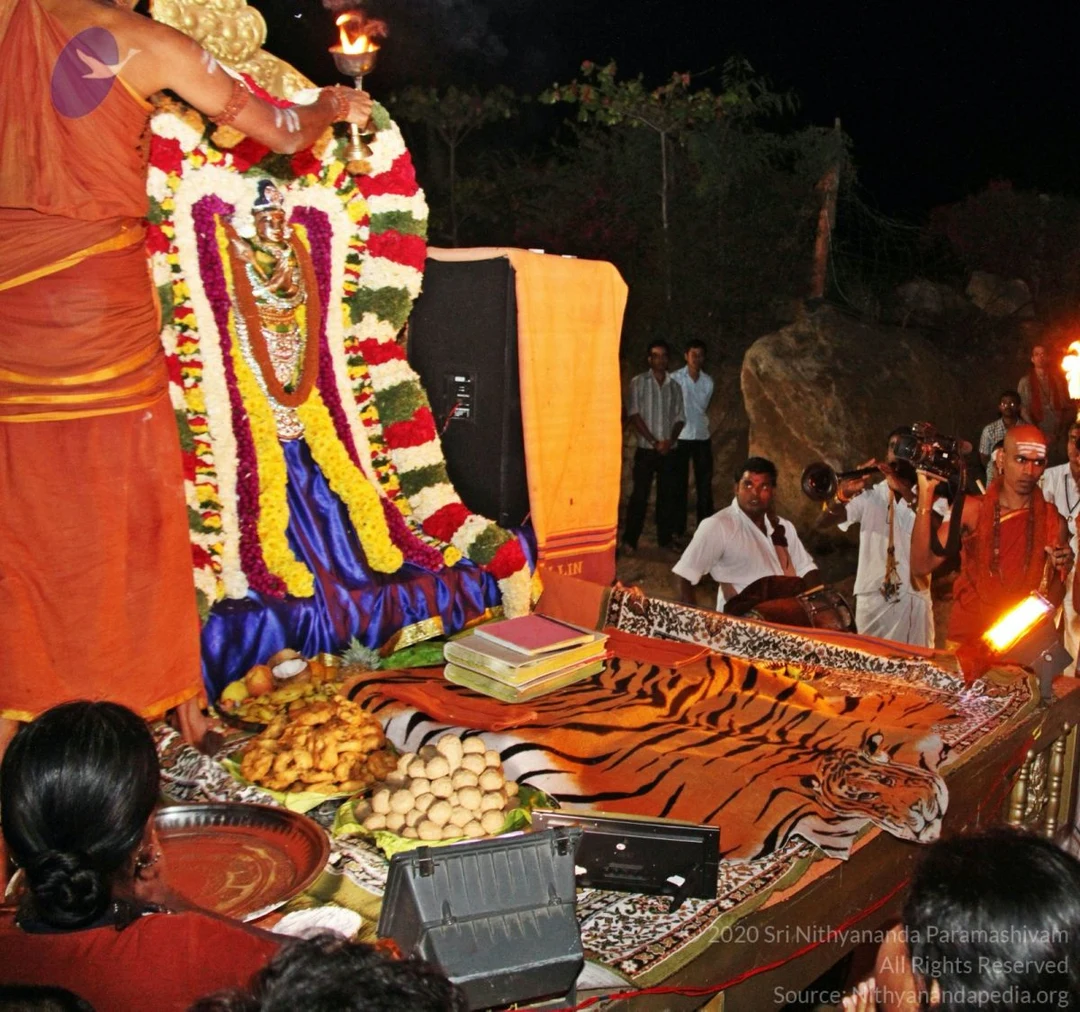
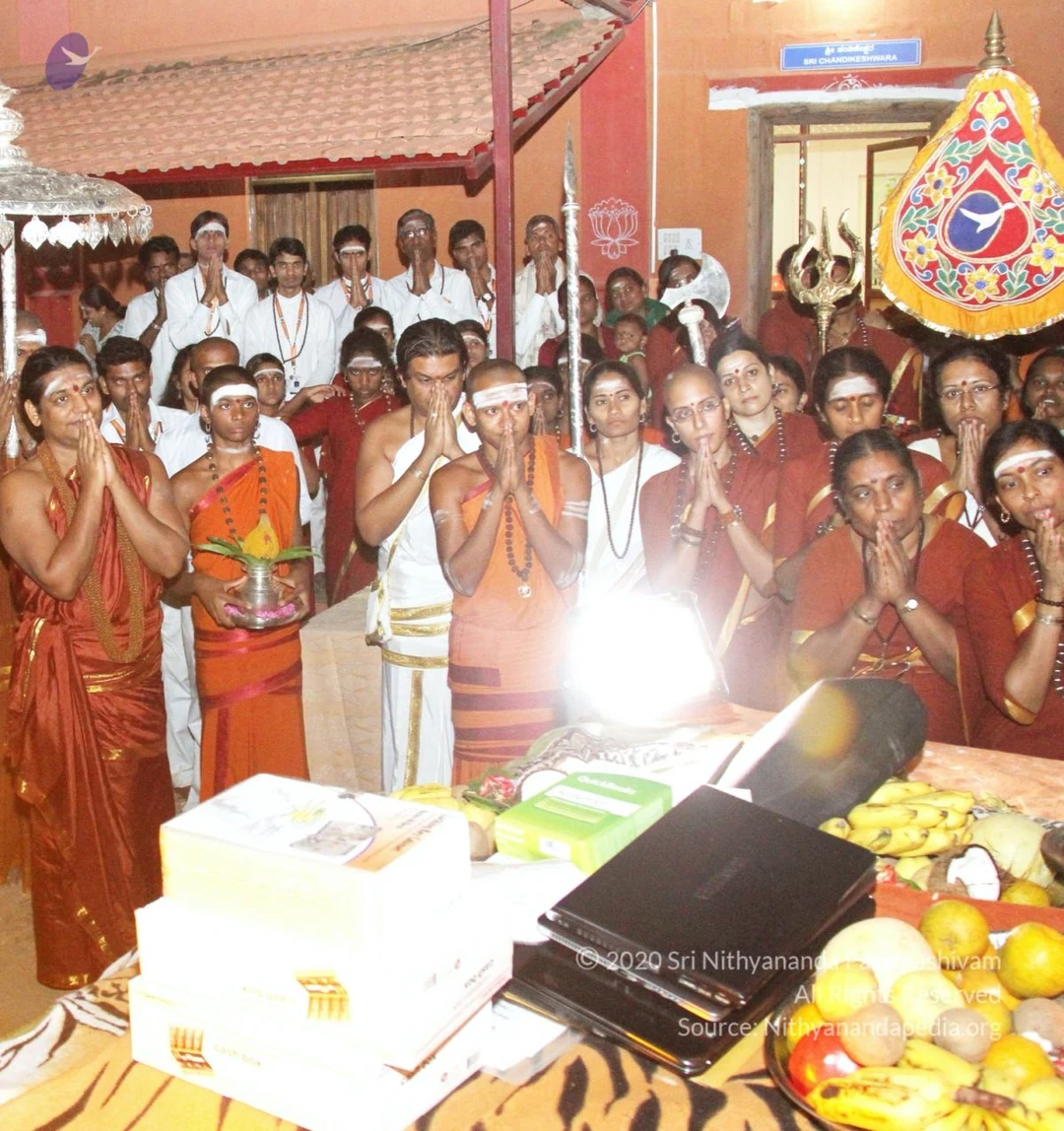
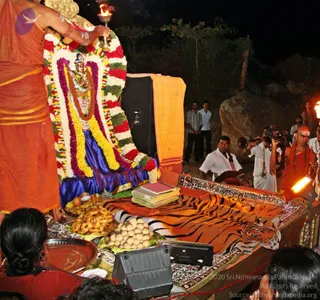
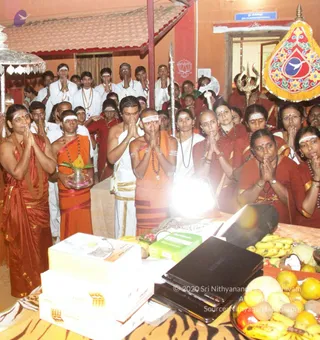
A night-time outdoor aarti at a temple-like setting. A figure in orange robes stands at left holding a lit oil lamp aloft toward a silver deity murti adorned with a thick garland of red, white, yellow and purple flowers, set on a blue cloth. On the table before the deity are a tiger-skin cloth, stacked books, fruit, fried snacks, round sweets and a metal plate. A bald man in orange robes at right, beside a drummer in white and a trumpet player, appears to be playing or holding ritual items, while onlookers in white shirts watch from the background. The deity garland and drapery are vivid in colour against the dark night.Indoor photo of a devotional gathering in an orange-walled hall, with a sign reading Sri Chandikeshwara above the doorway. Several people stand with palms pressed together in namaskar. A woman at left wears a deep red-orange sari with a long beaded mala, and a young man beside her in an orange garment holds a small metal vessel with green leaves. Men in white dhotis and white shirts, and women in red and maroon saris with white forehead bands, stand behind them. A silver umbrella canopy and a silver trident stand at the edge, and a red-and-gold embroidered banner hangs at right. In front, a table holds bananas, oranges, a laptop and boxed items, with a tiger-striped cloth over the surface.

01-Satsang
1 photoSource gallery
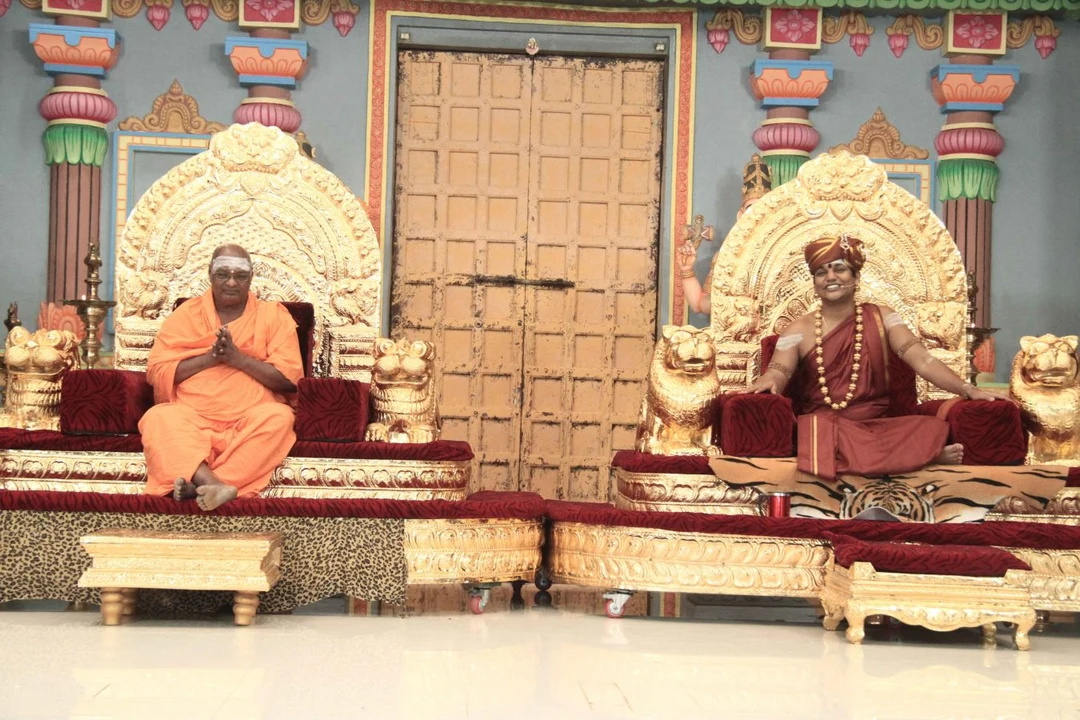
Two men sit on ornate gilded thrones with red velvet cushions in a hall with a large wooden door behind them. The man on the left wears an orange robe, has a shaved head with a white tilak, and rests his hands in his lap. The man on the right sits cross-legged on a tiger-skin rug, wearing a maroon-brown robe, a matching turban, a long rudraksha mala and white dressing on his arms, with one hand extended toward the floor. A deity figure in a painted niche is partly visible above him, and brass lamps stand beside the thrones. The image is a photograph of a satsang setting.