Skip to content
Thursday

21 November 2013

Sannyas Brings out the Best in you.

Dated photos
507
Source pages
1
Media
2
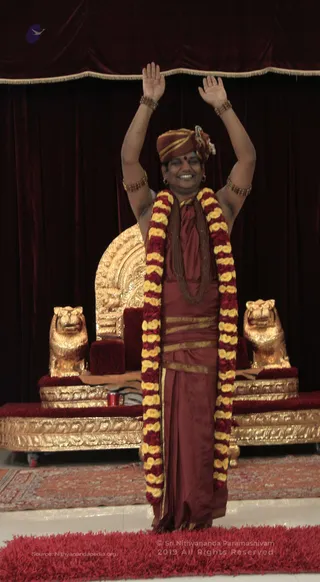
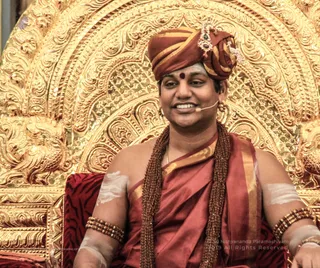
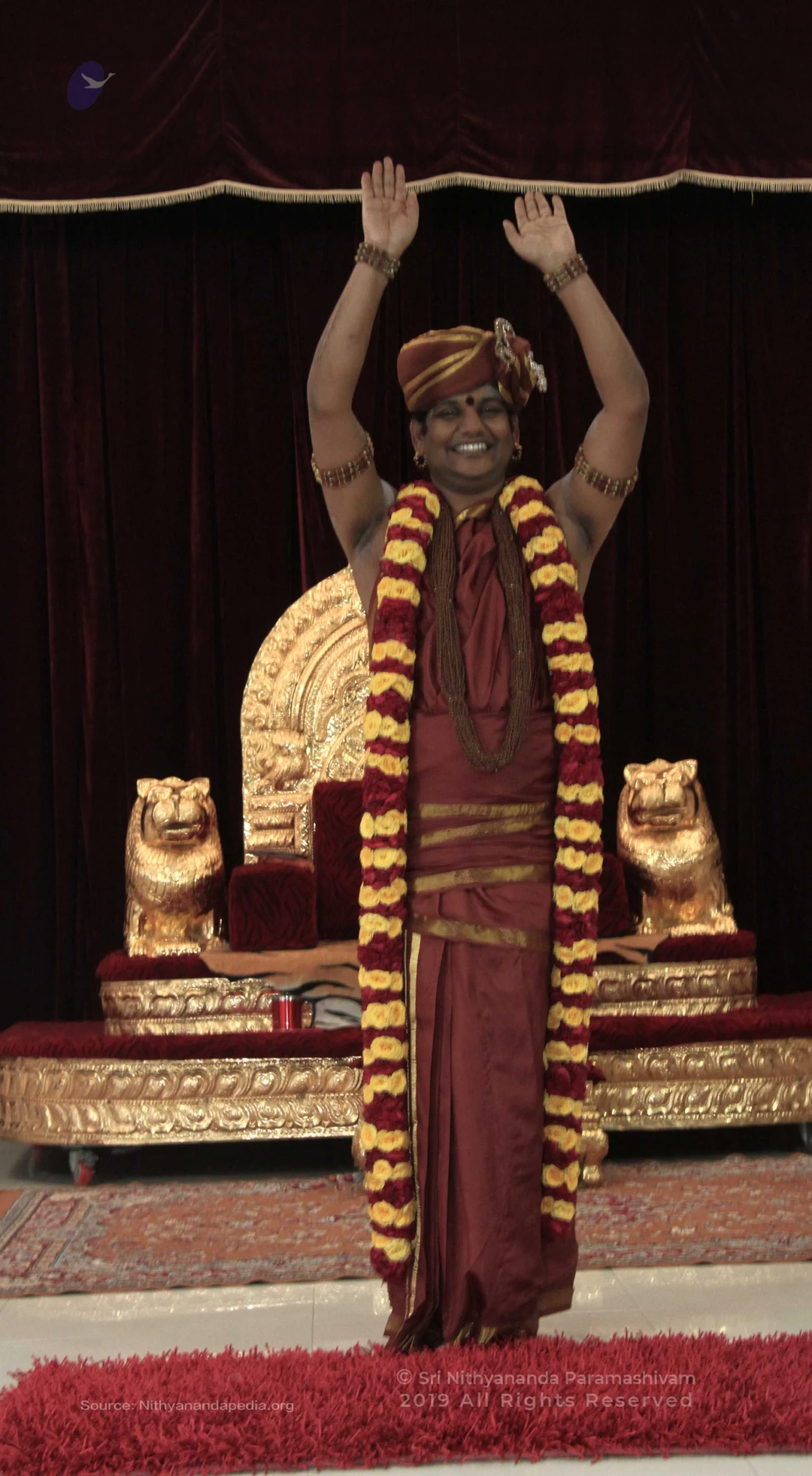
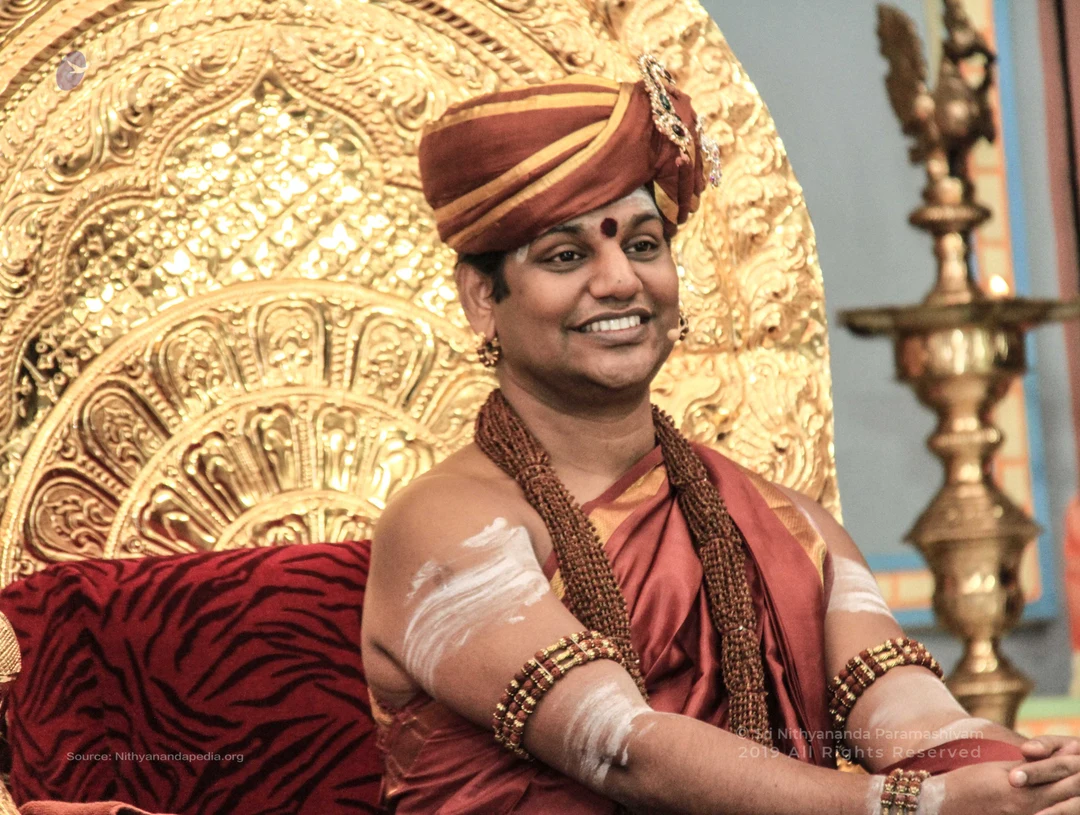
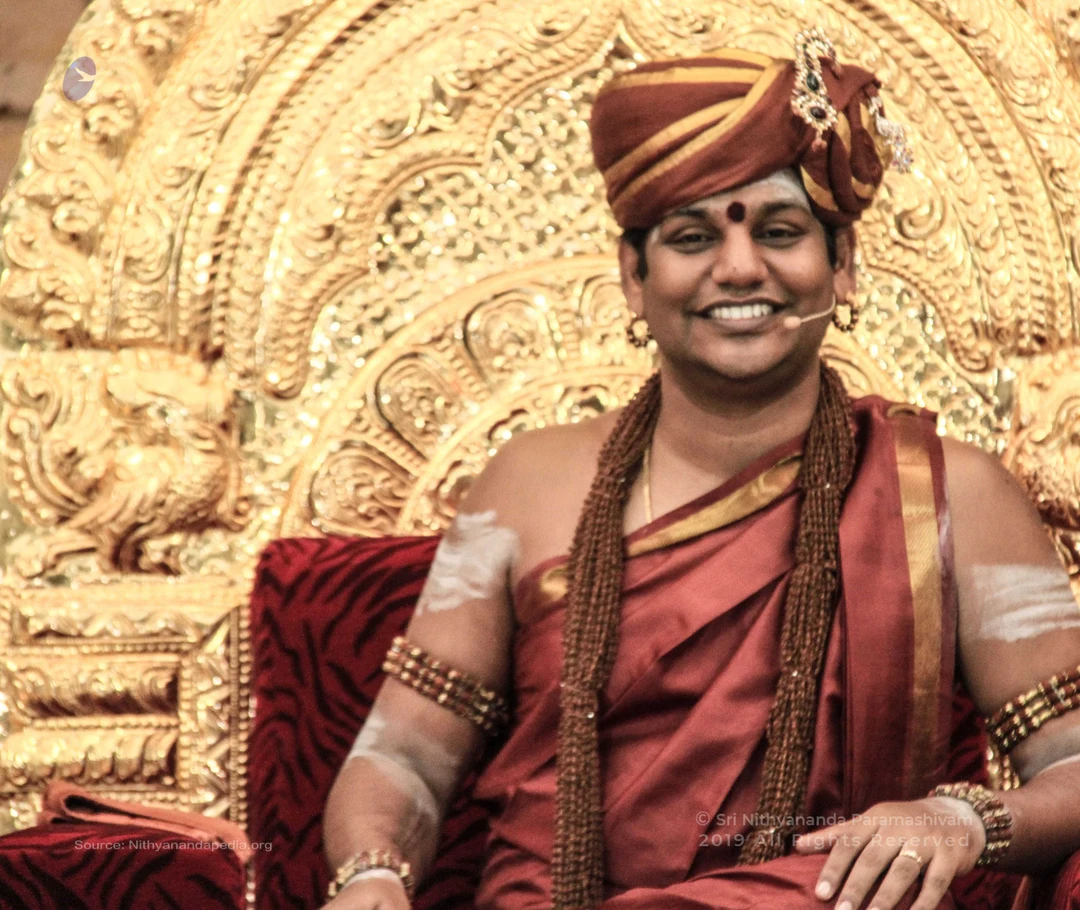
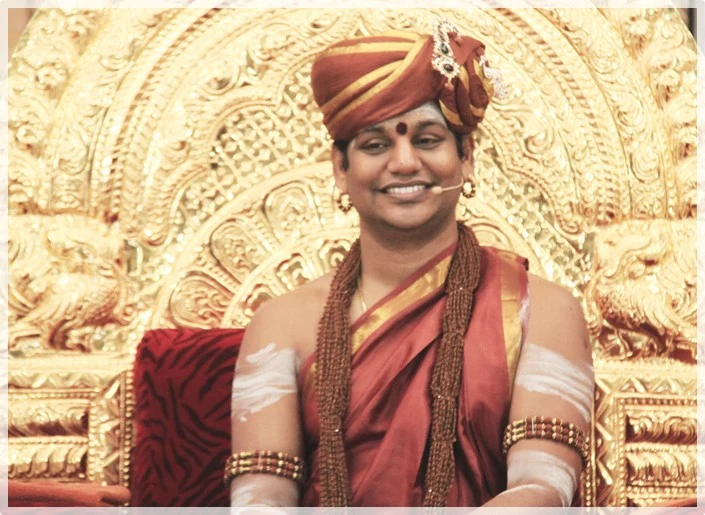
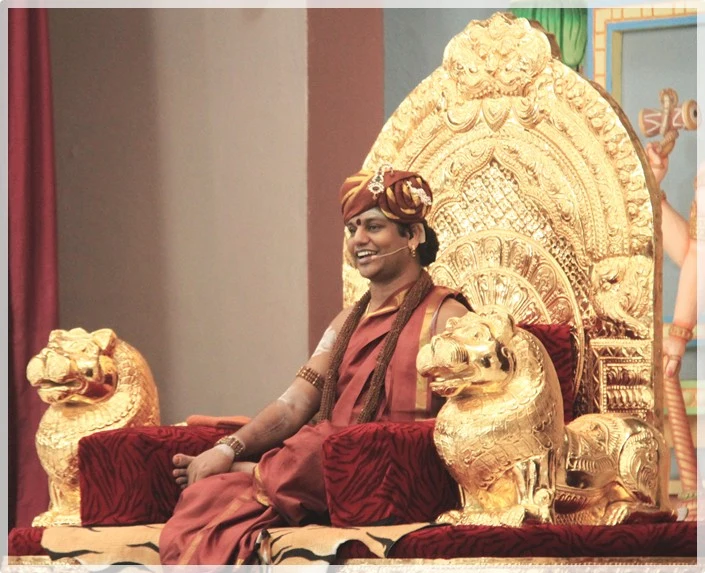
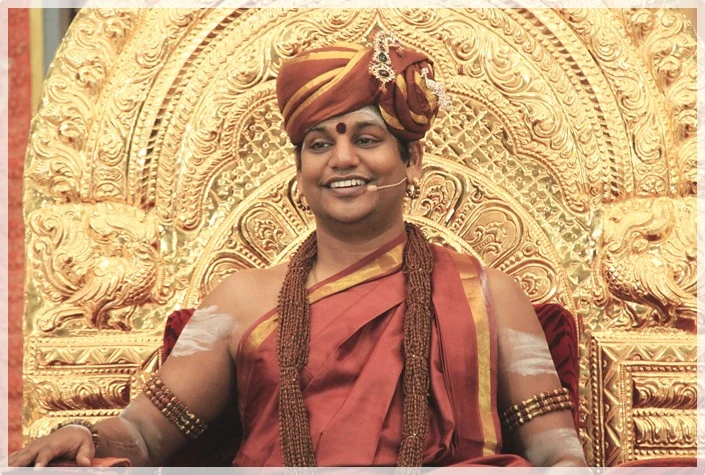
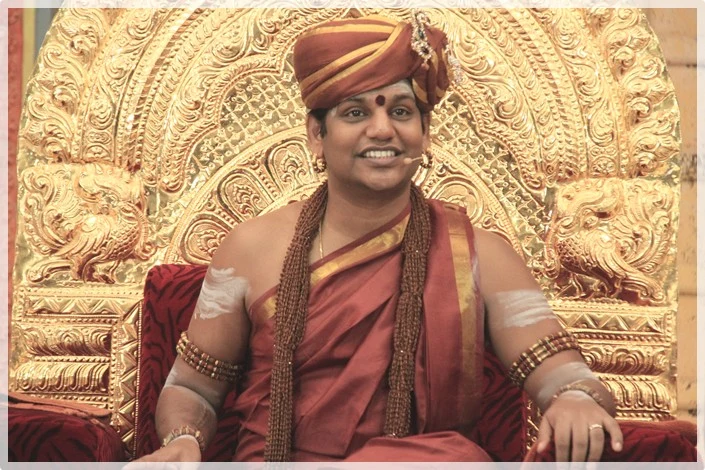
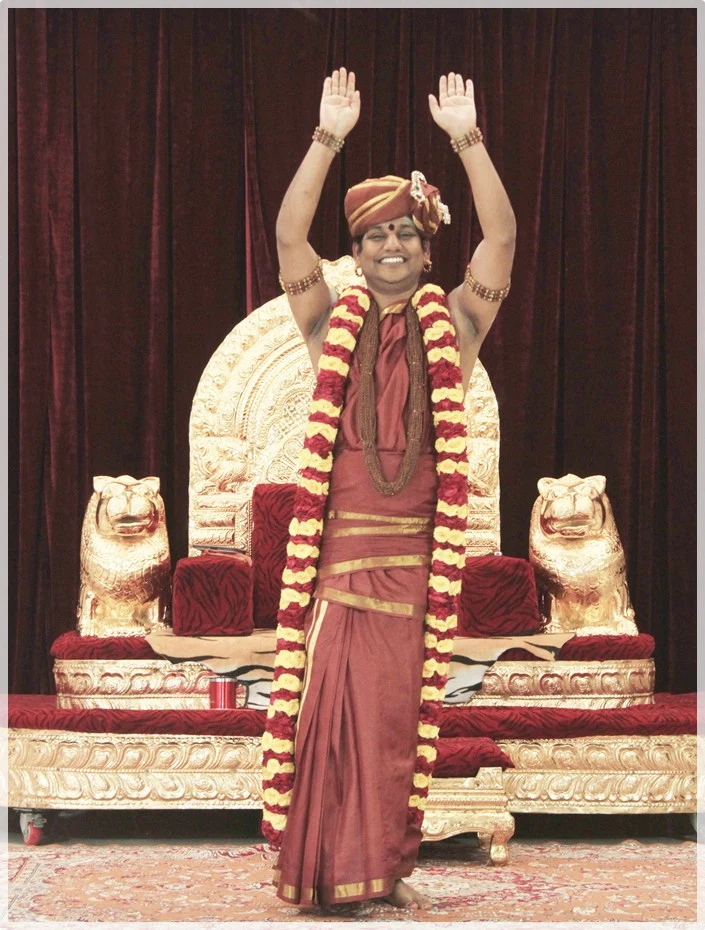
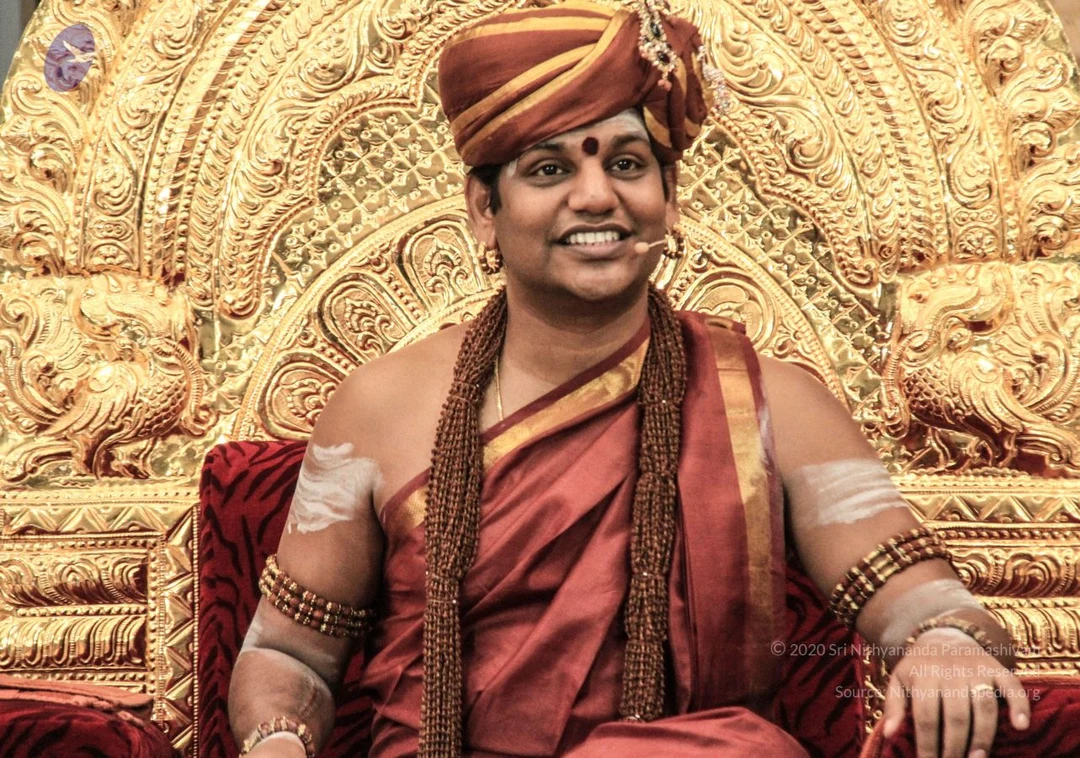
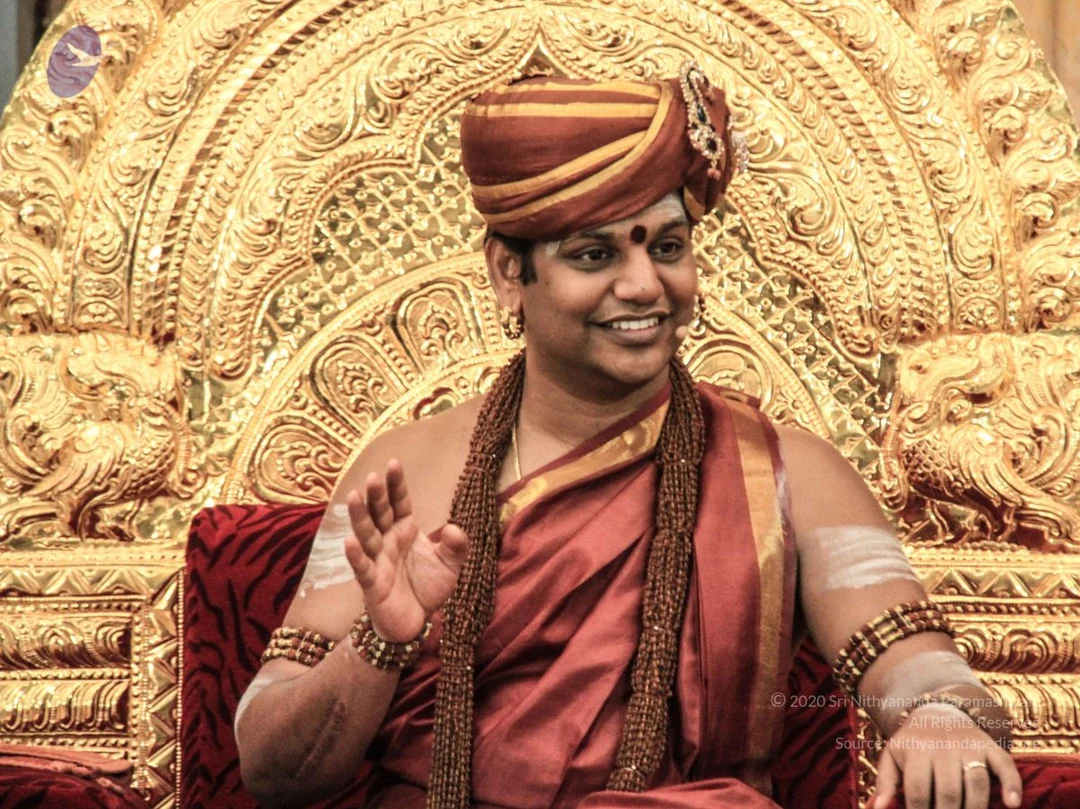
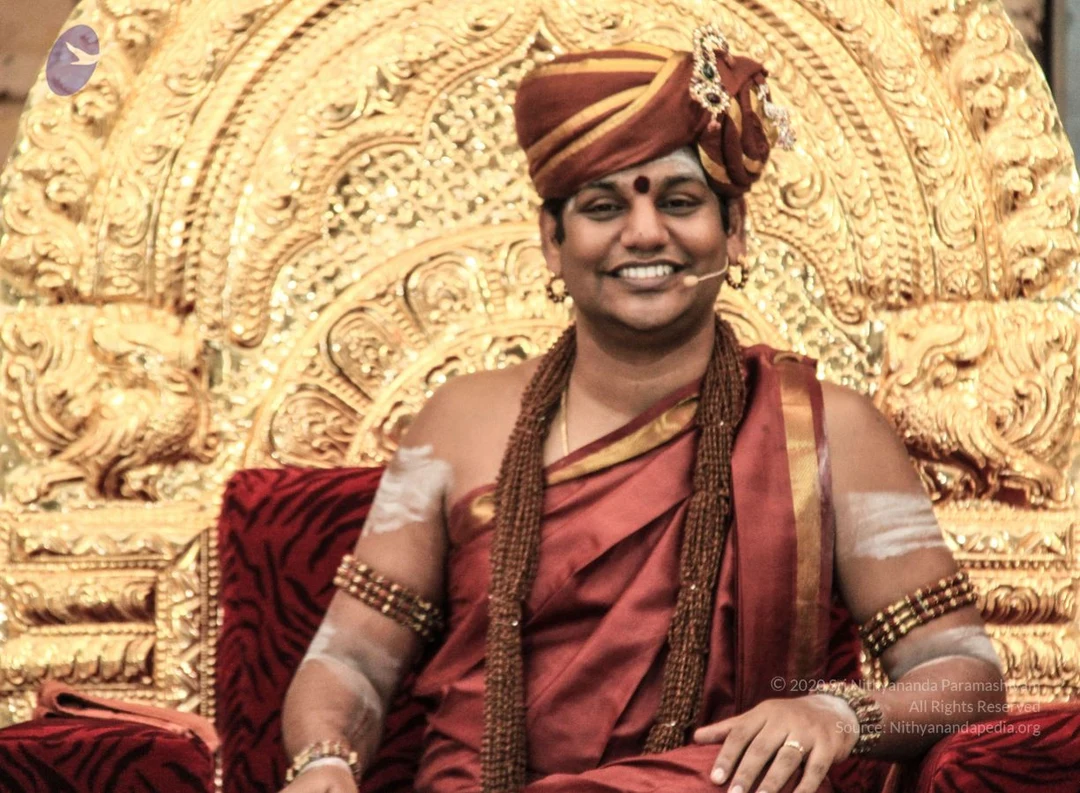
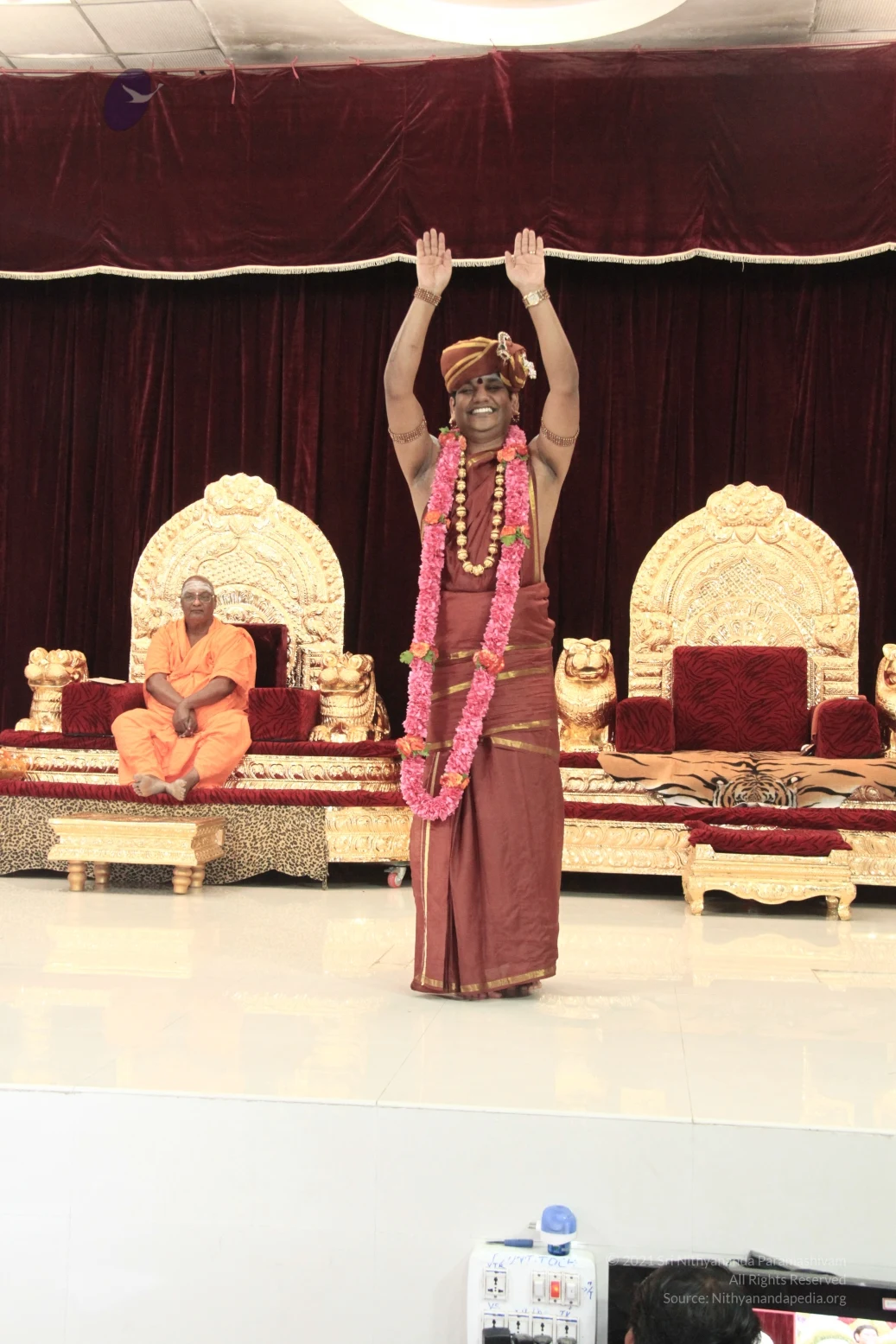
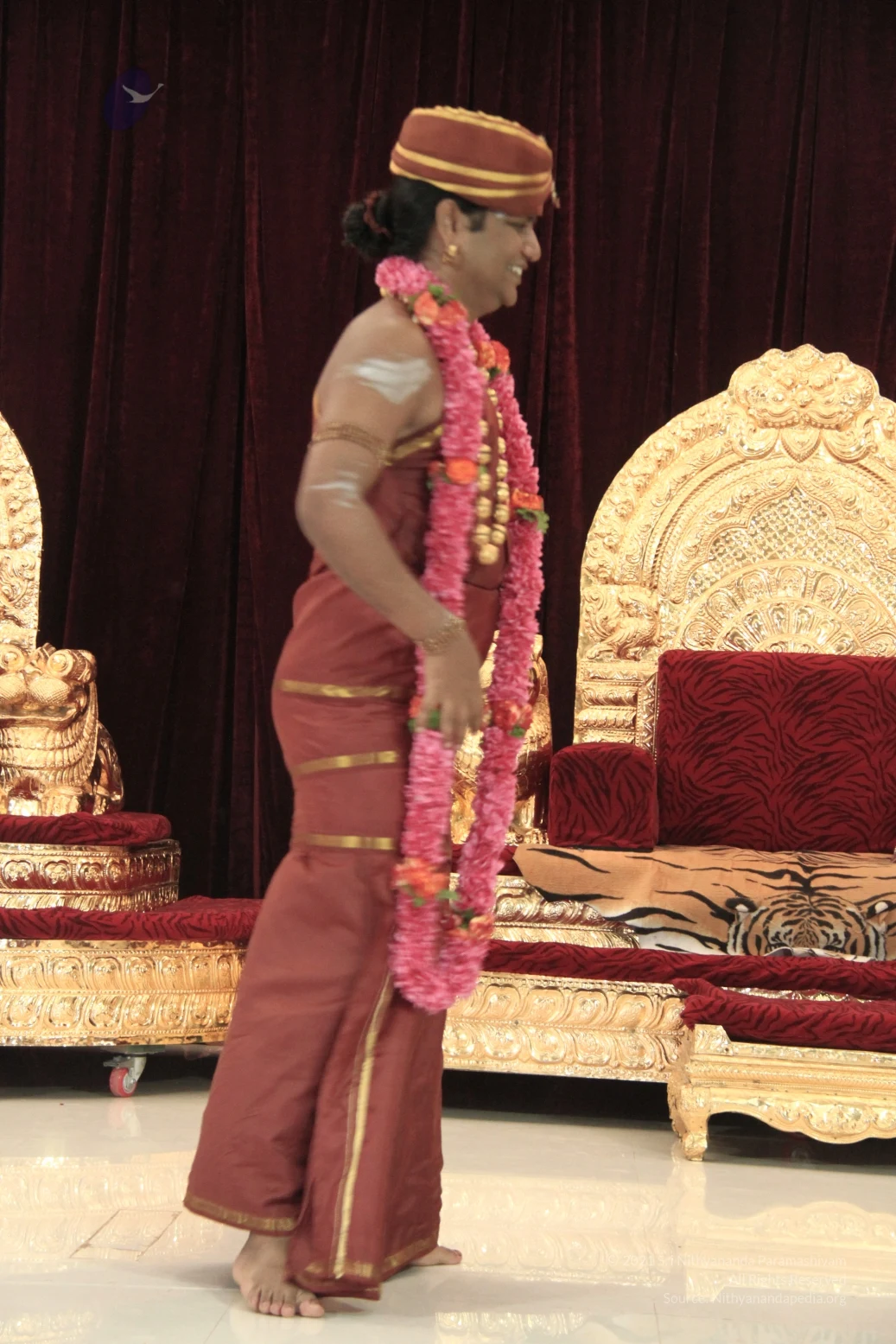
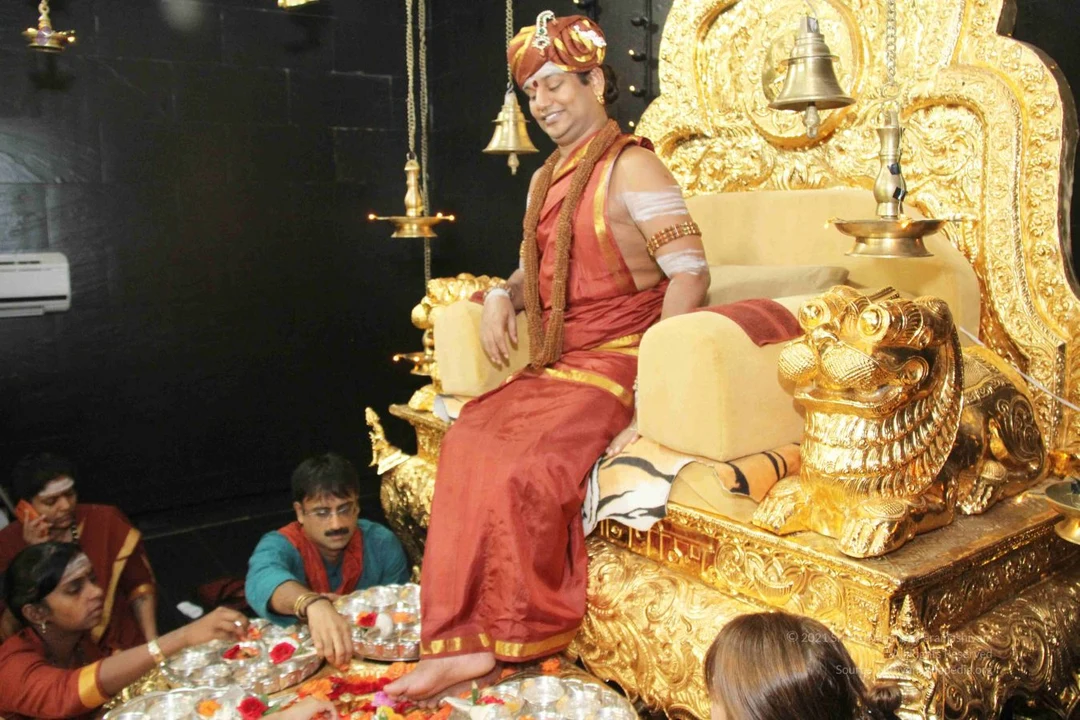
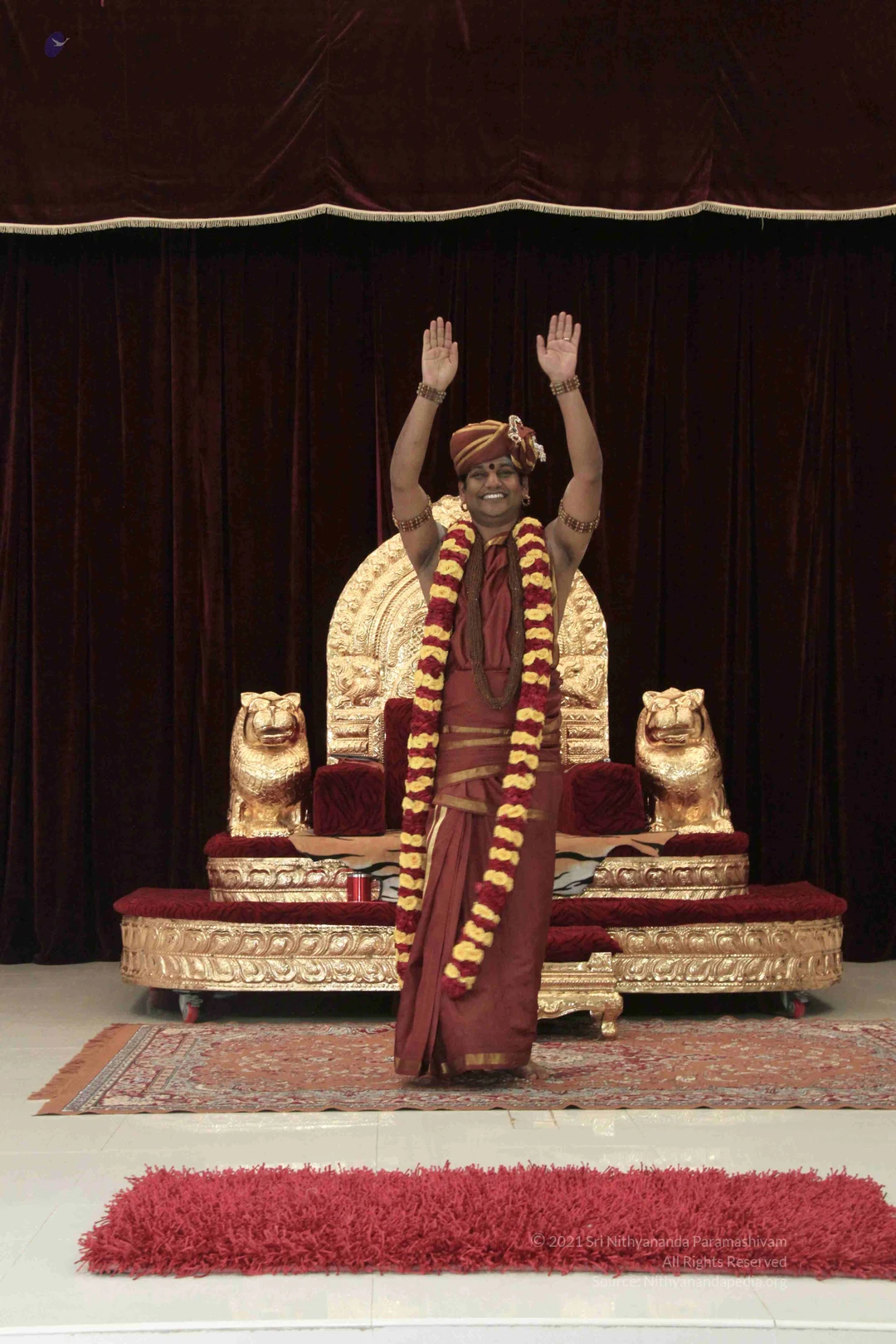
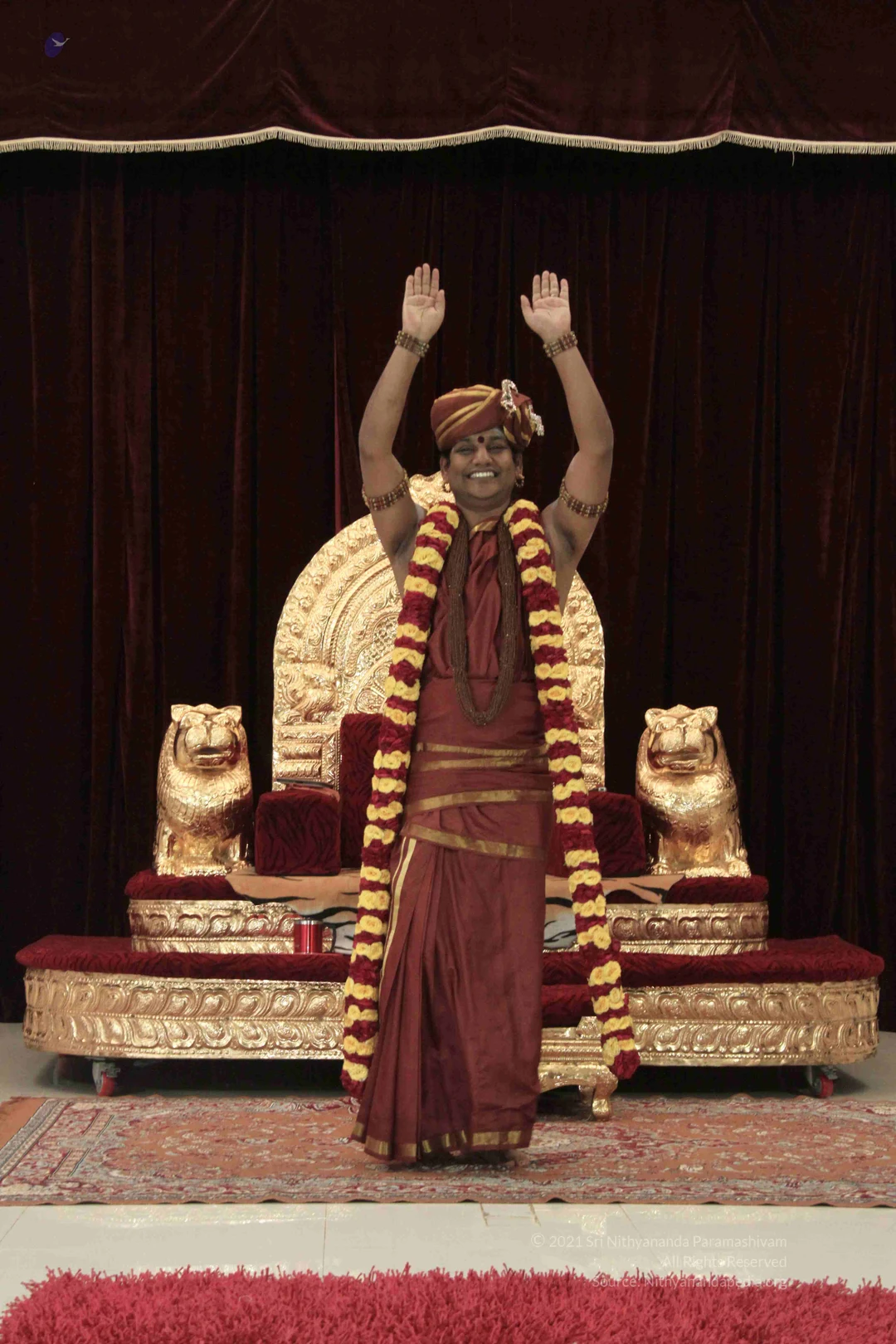
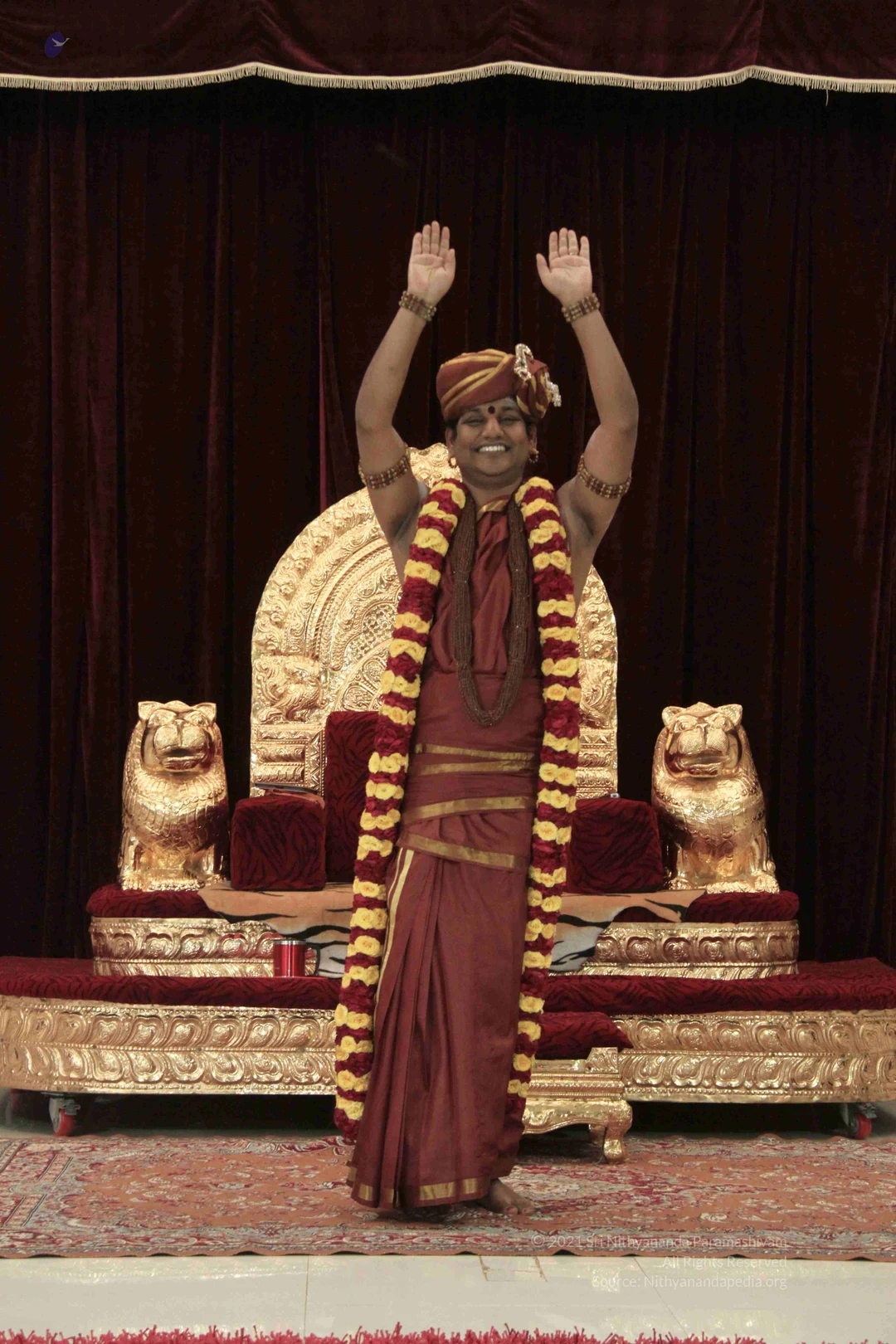
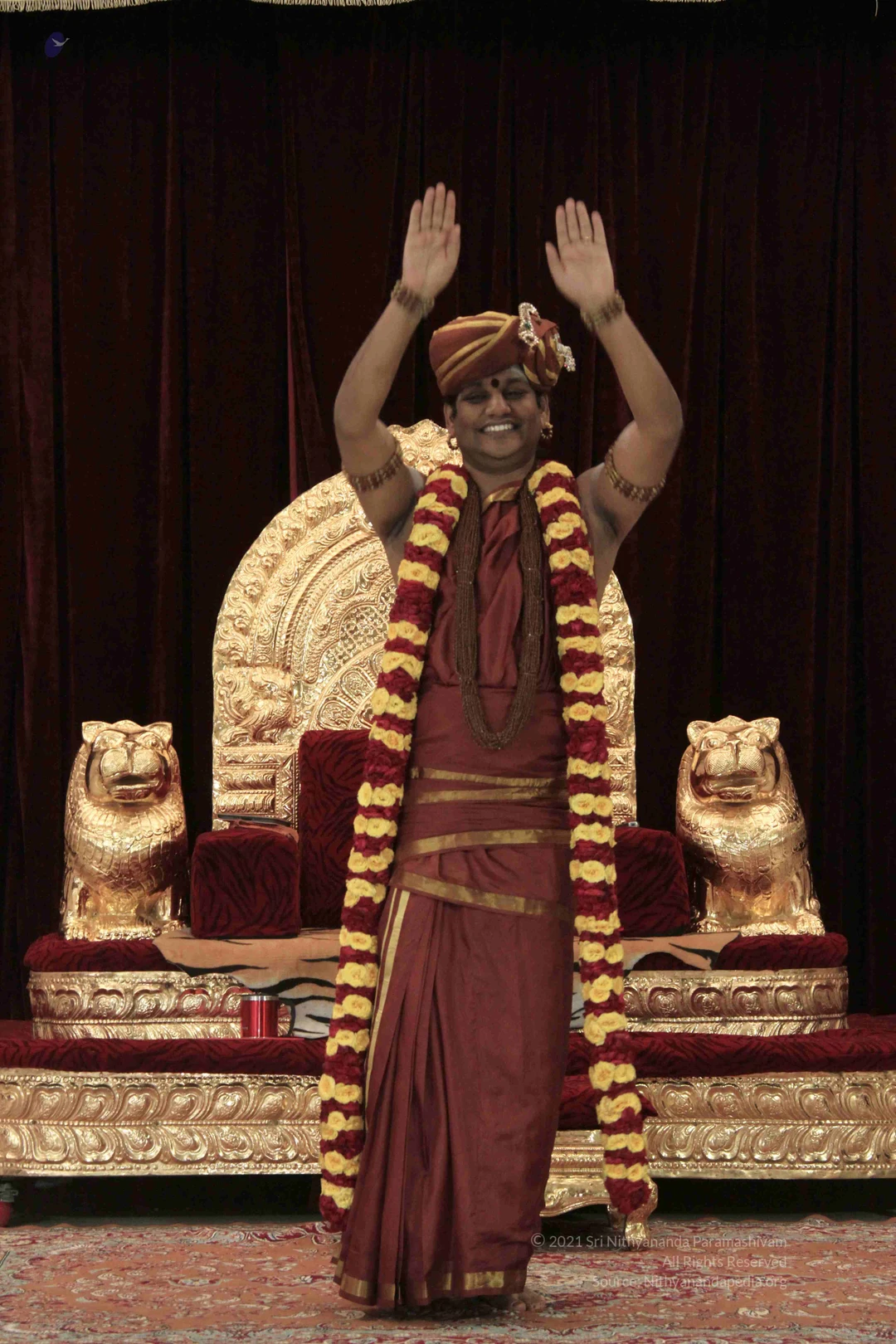
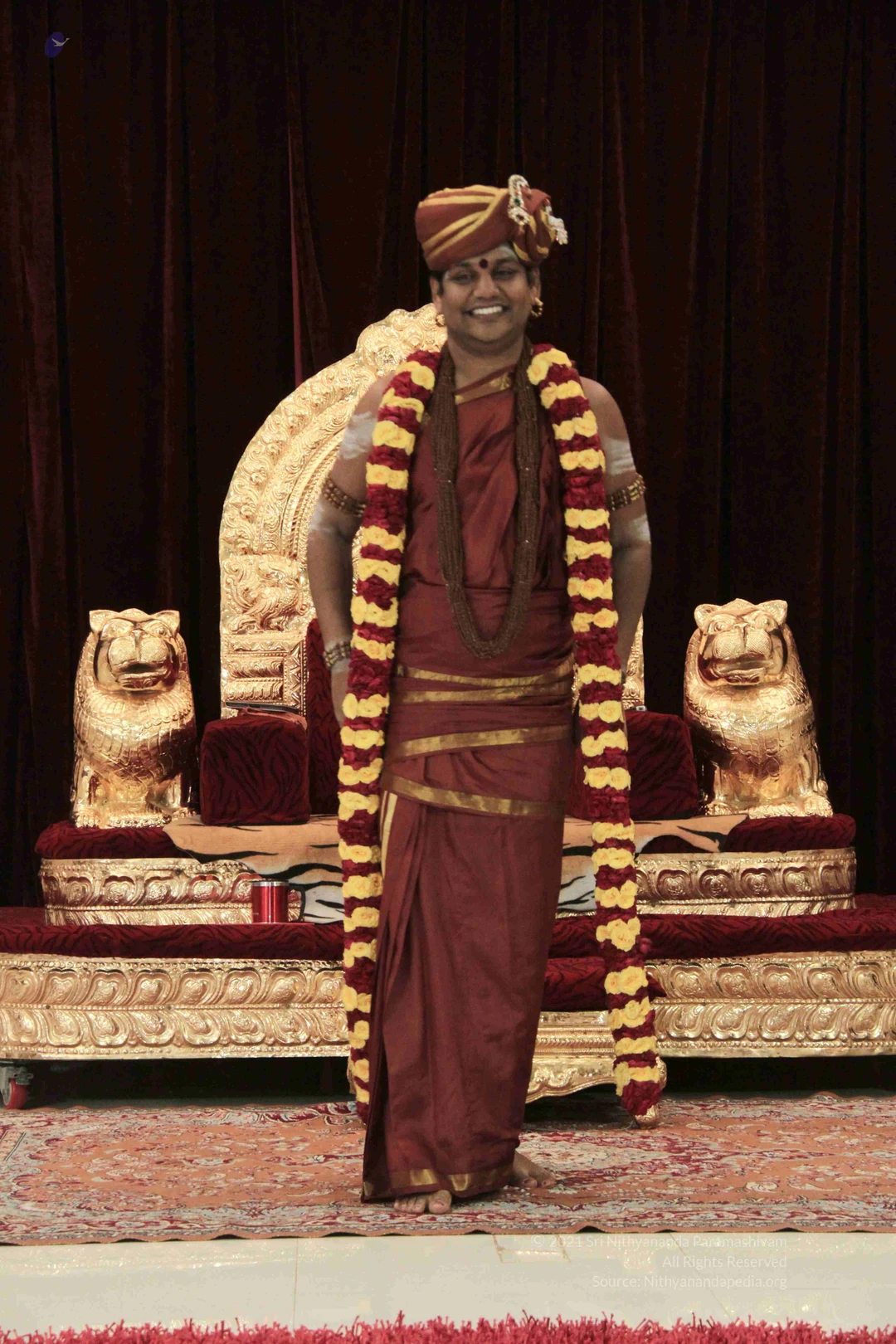
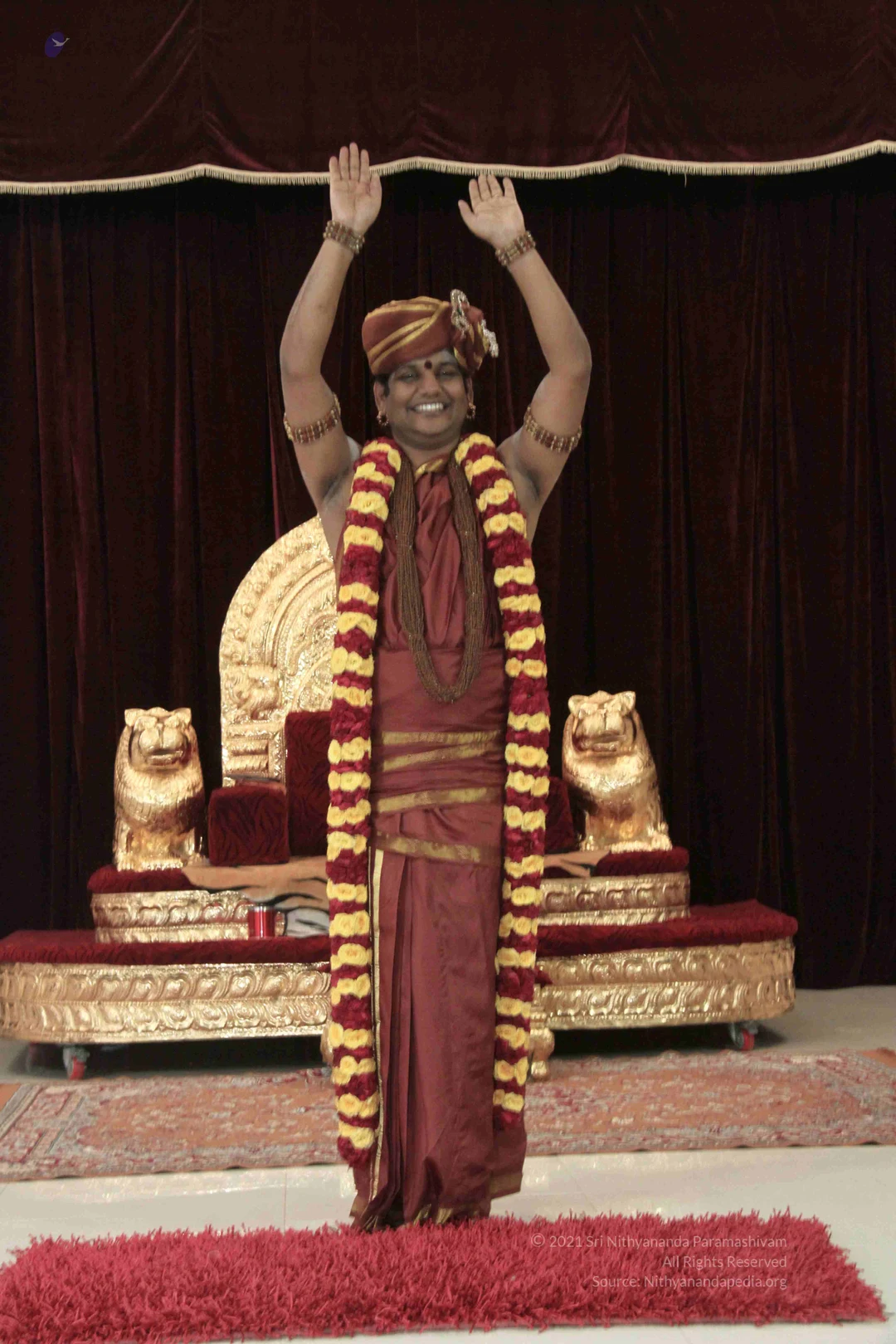
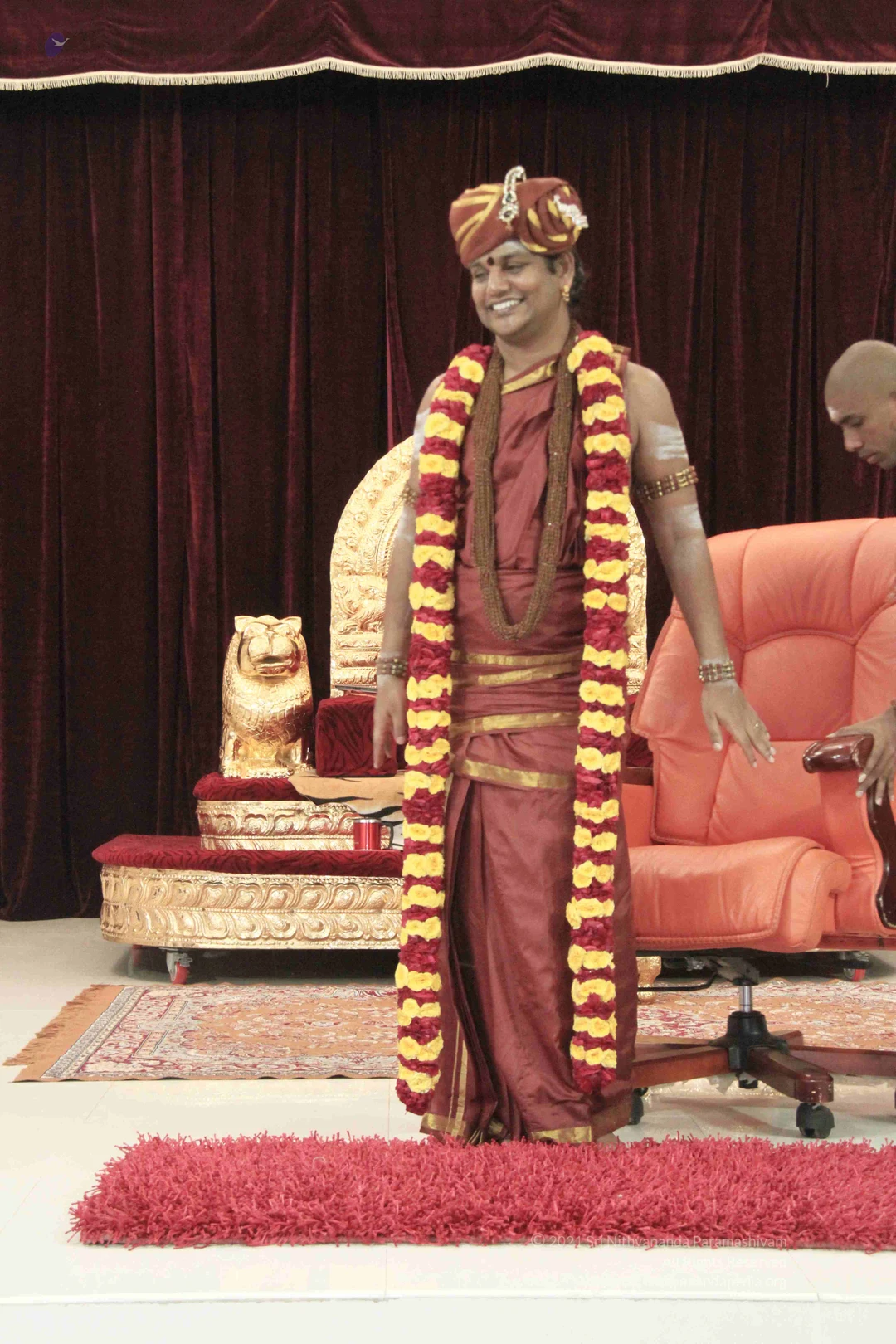
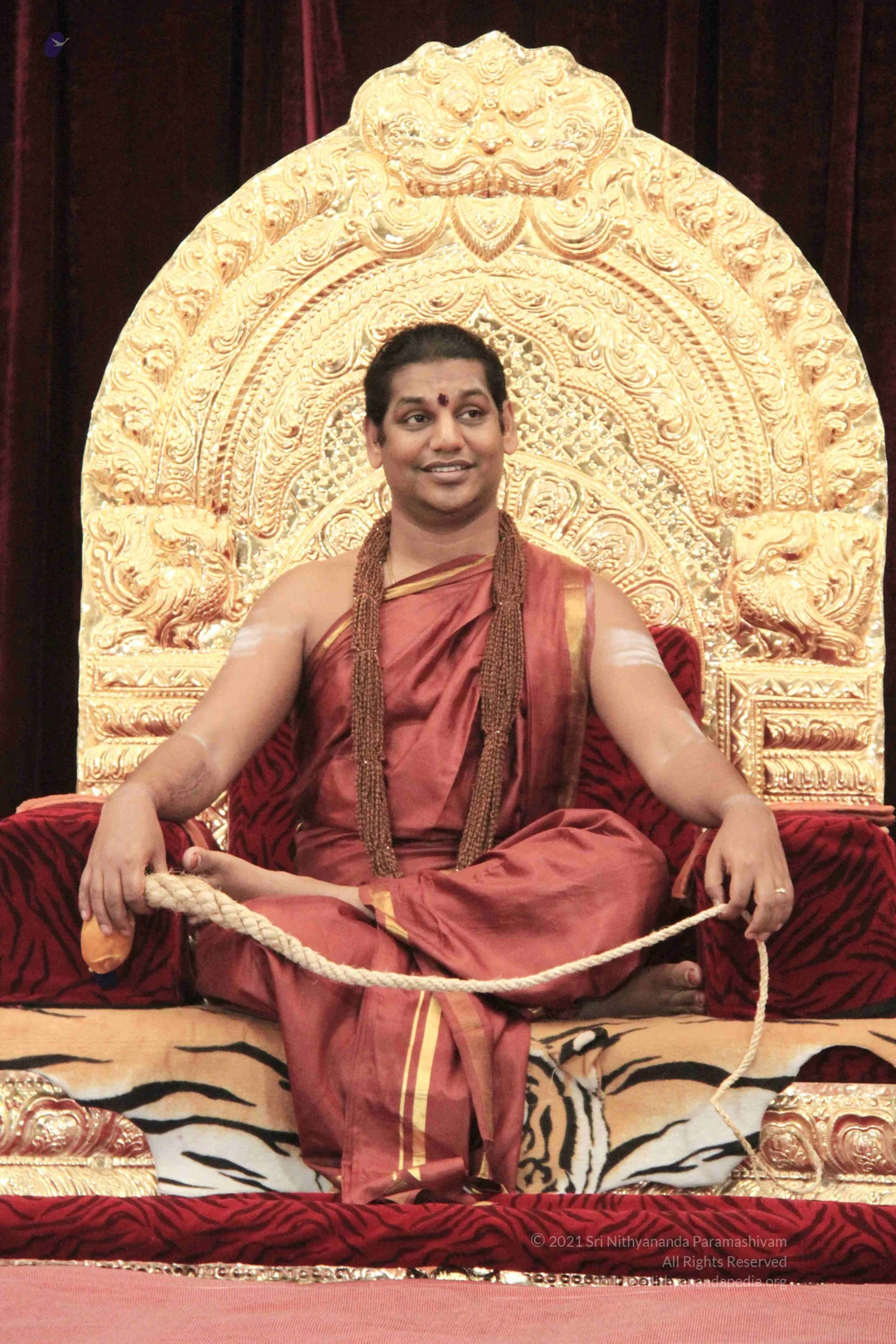
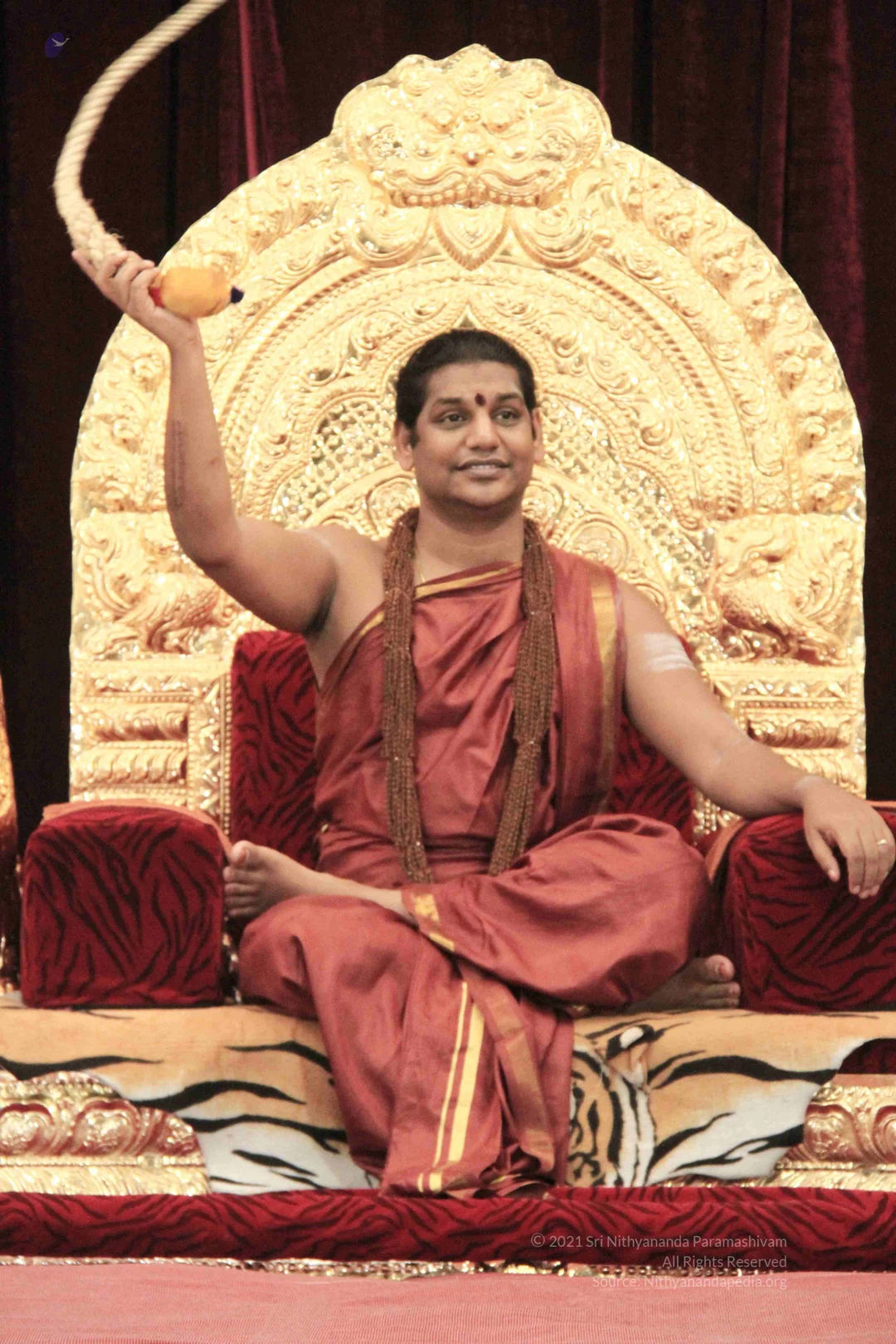
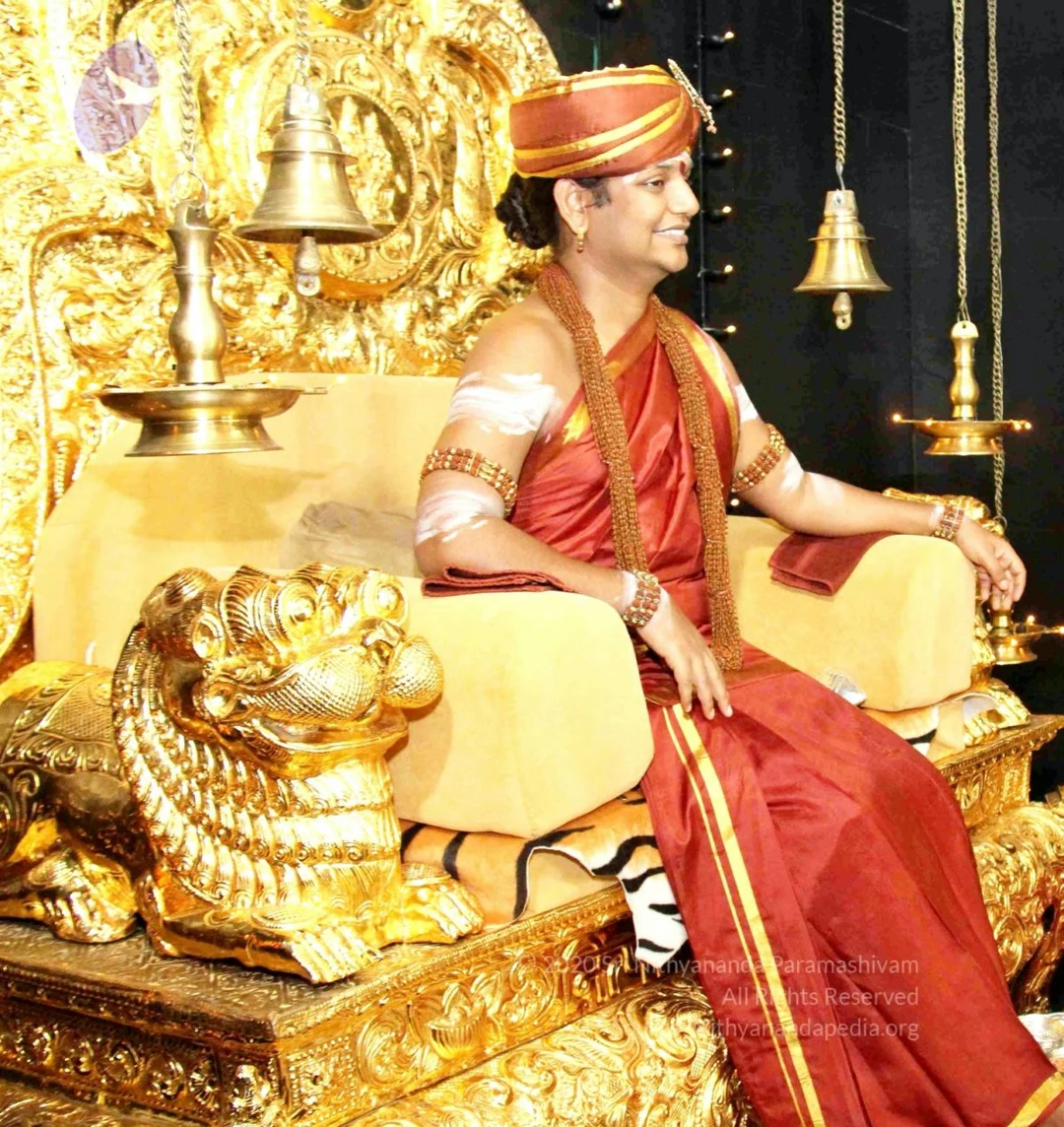
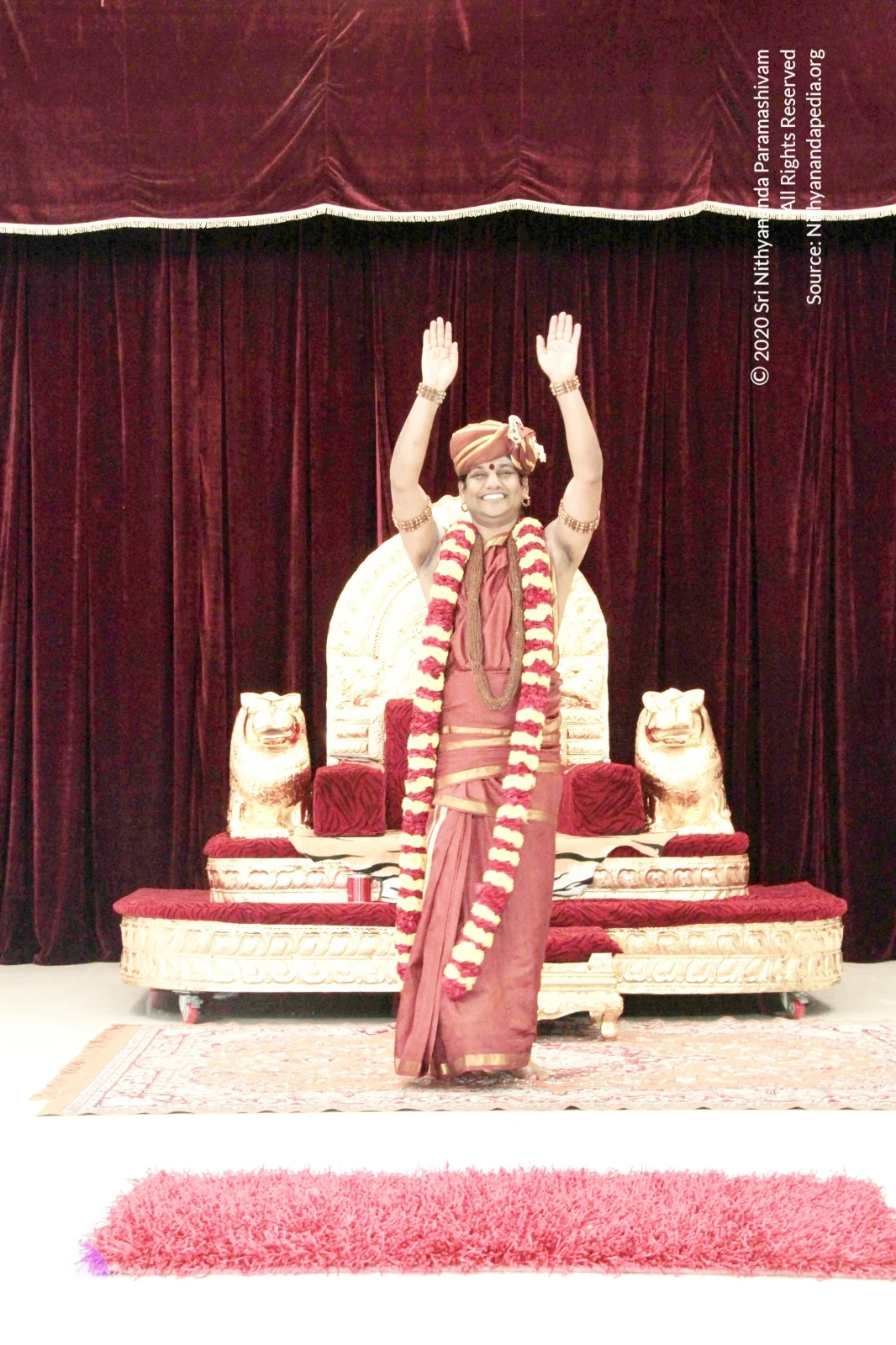
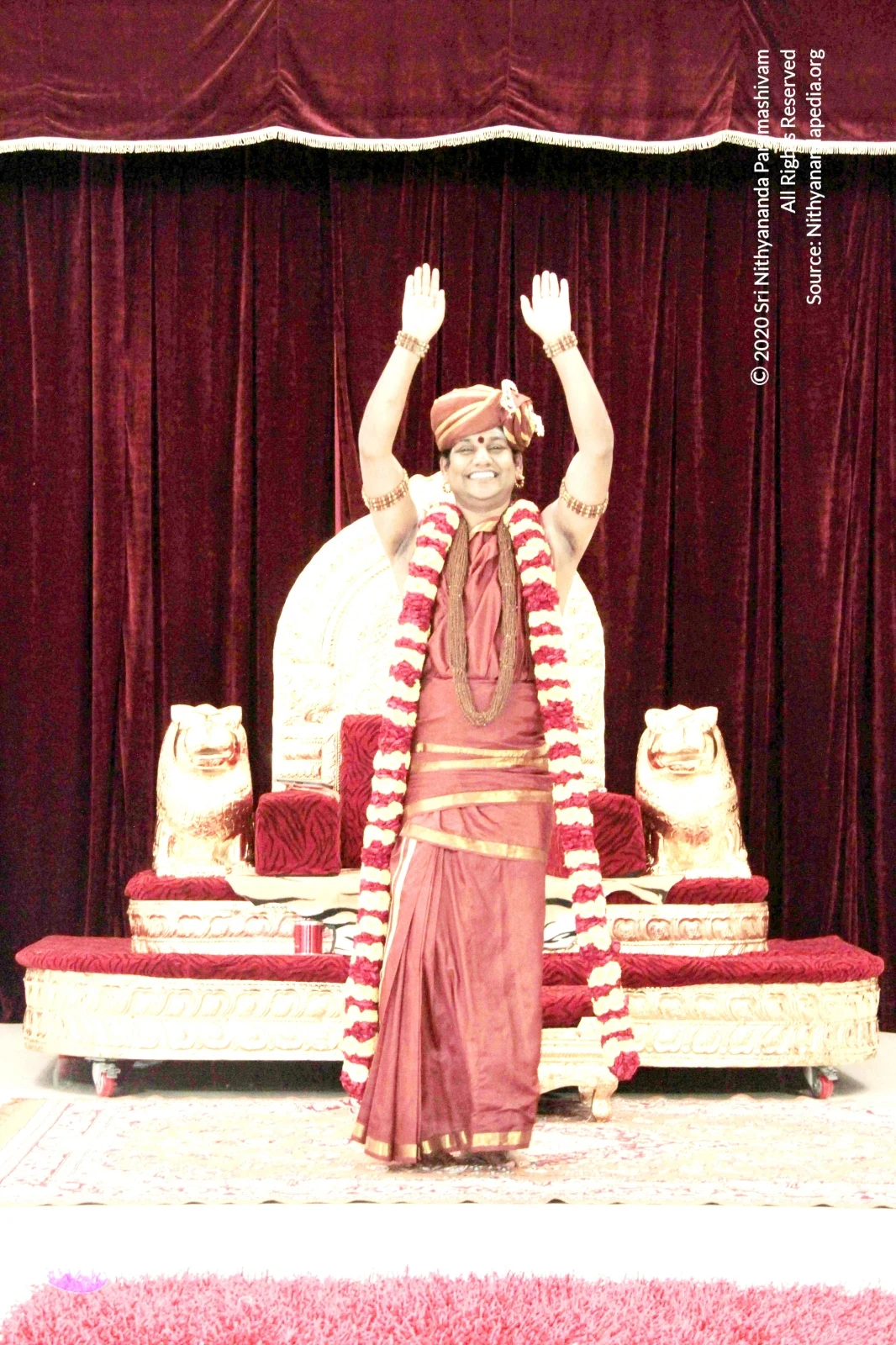
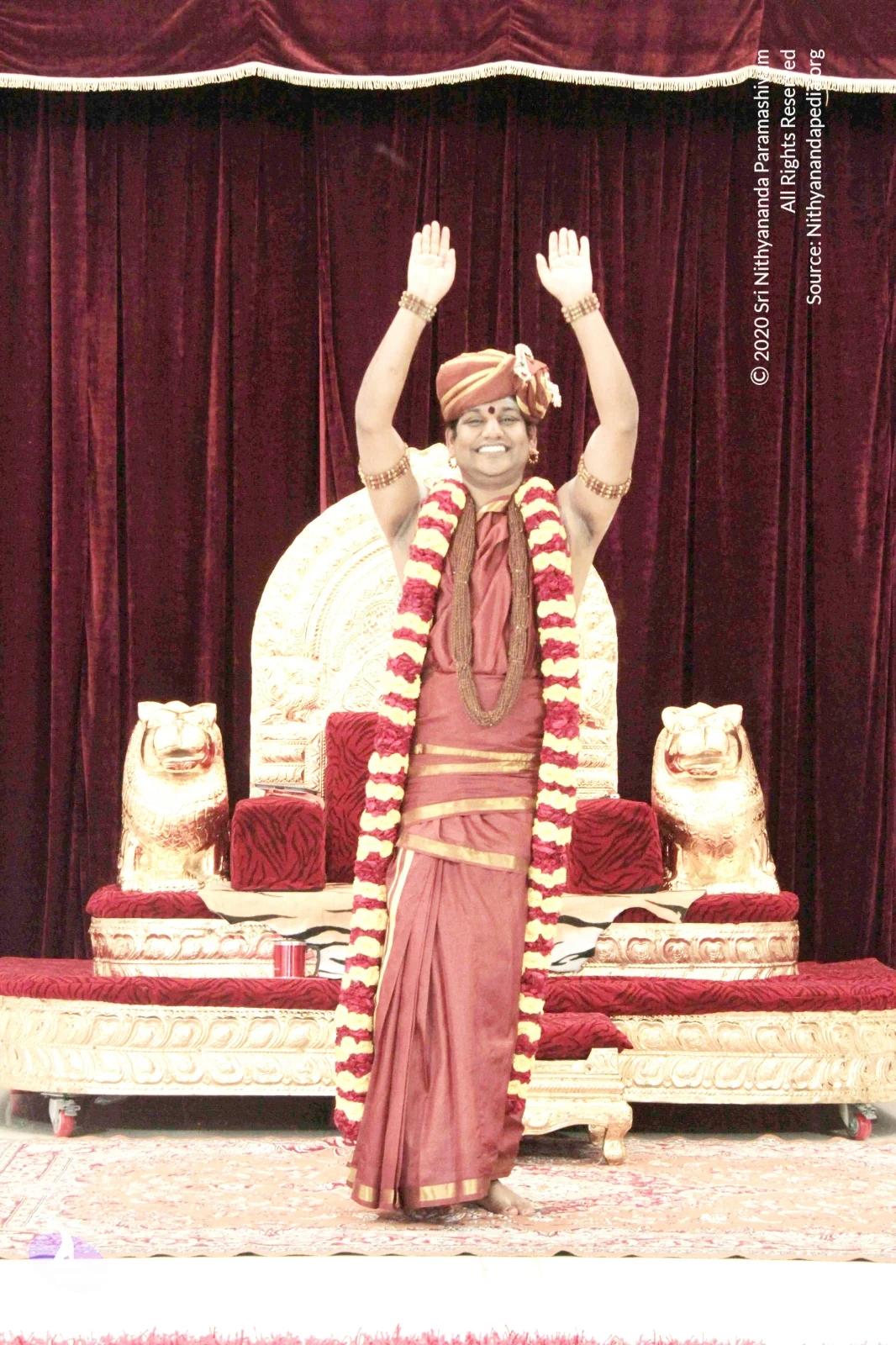
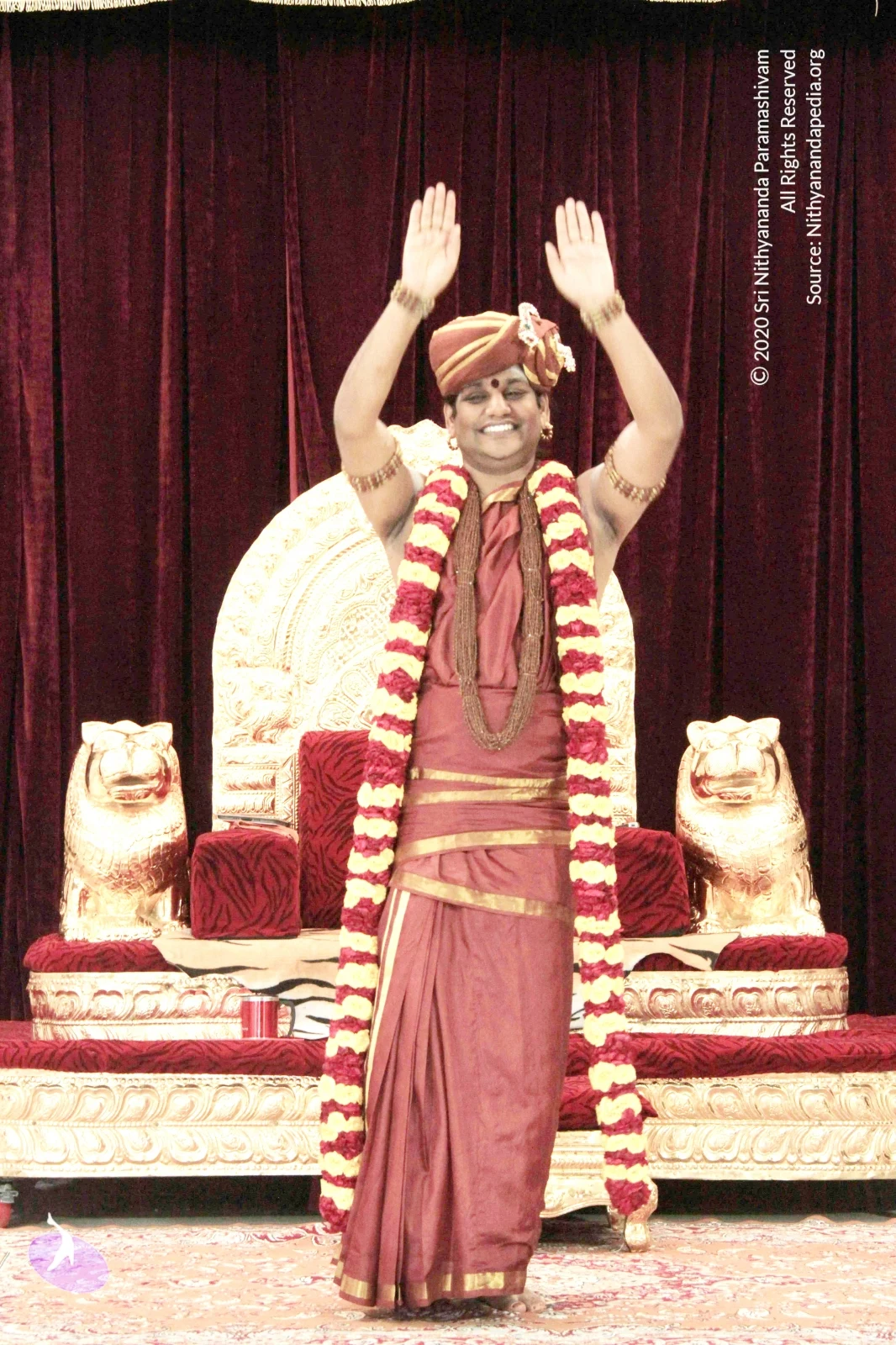
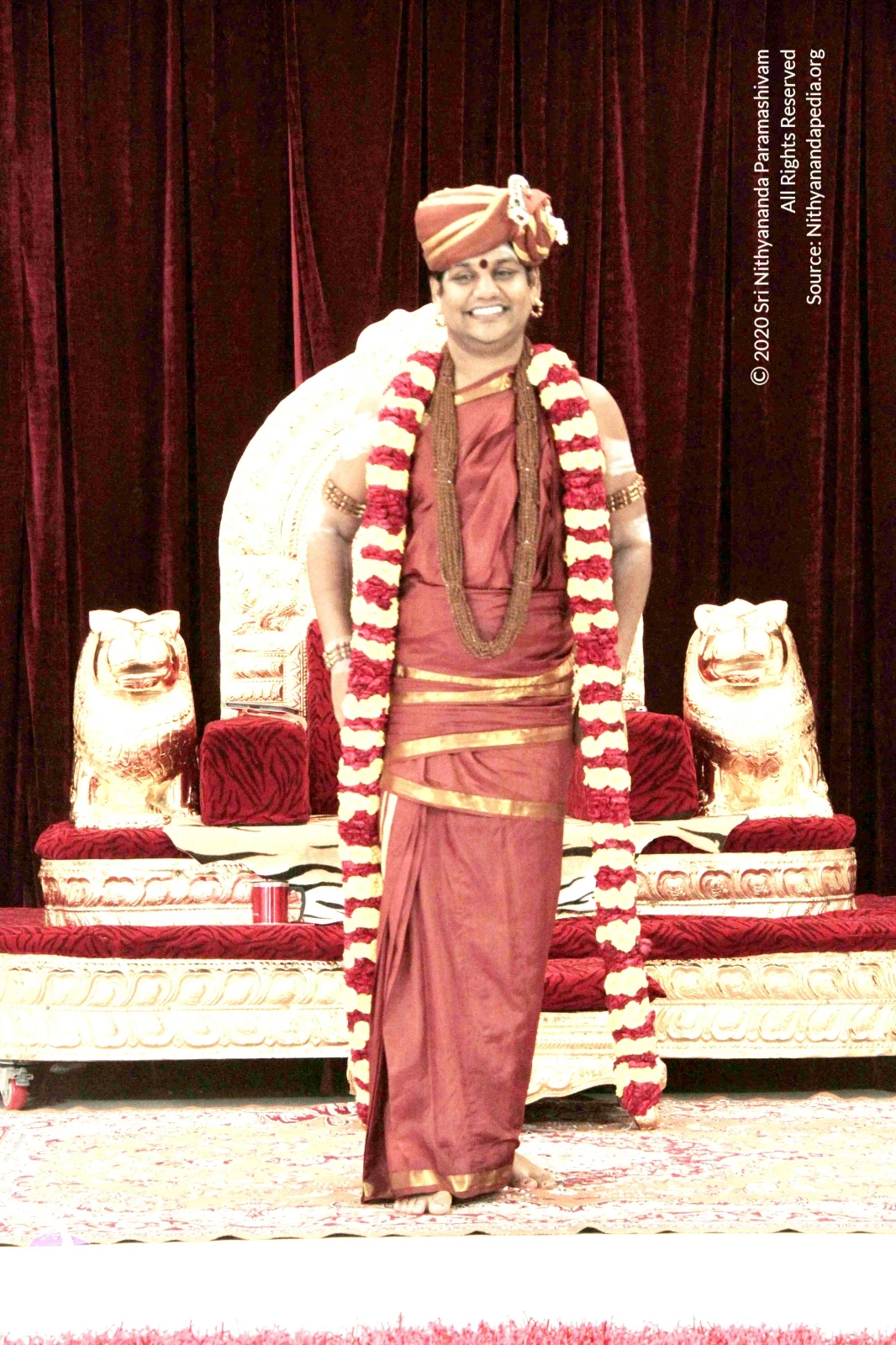
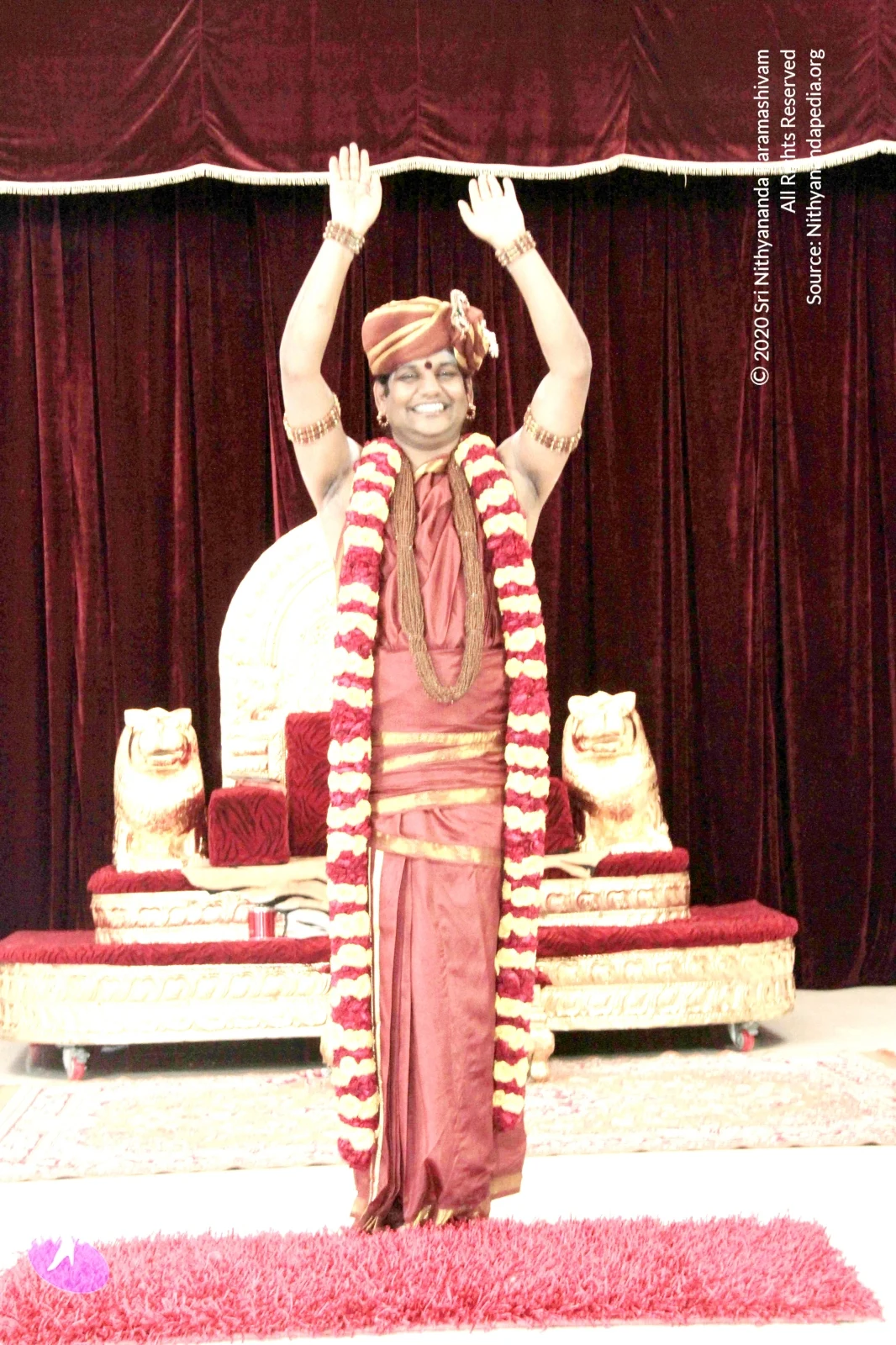
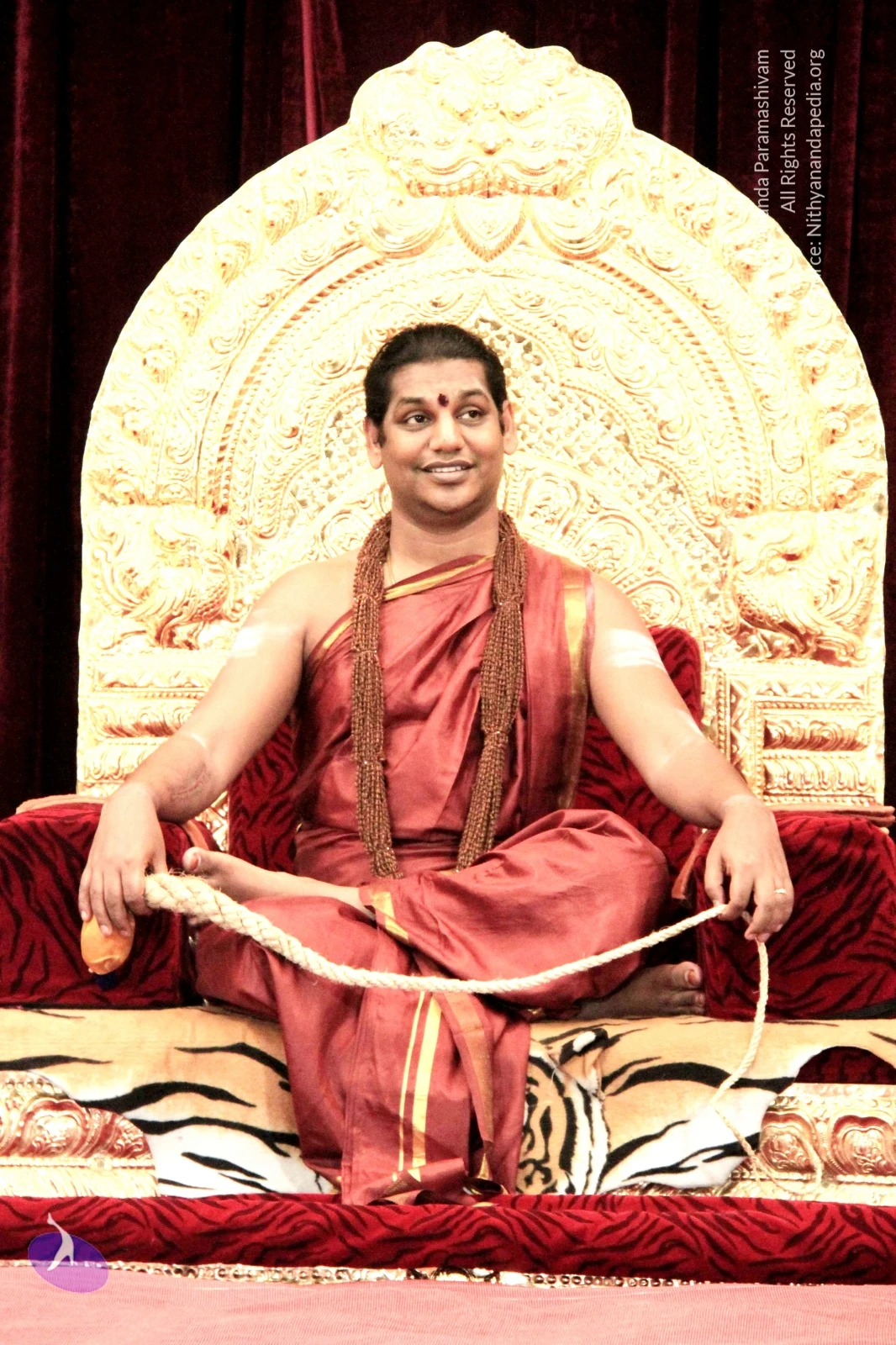
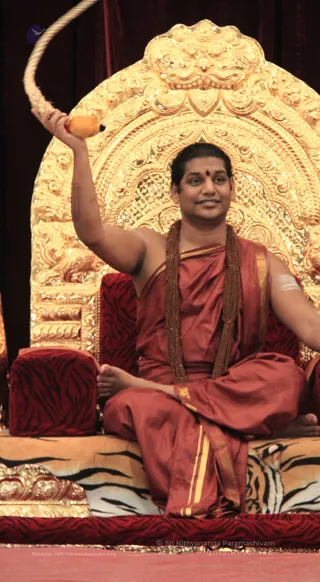
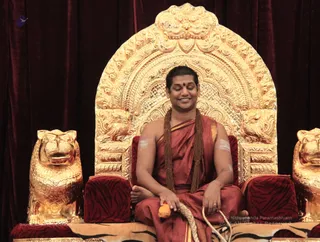
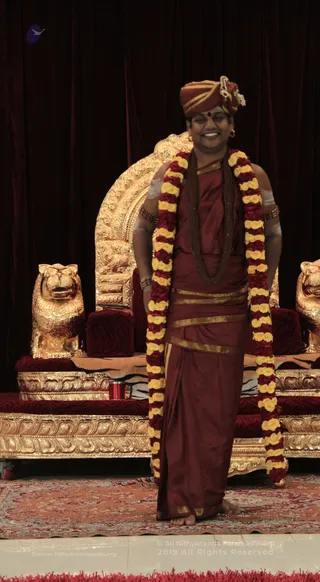
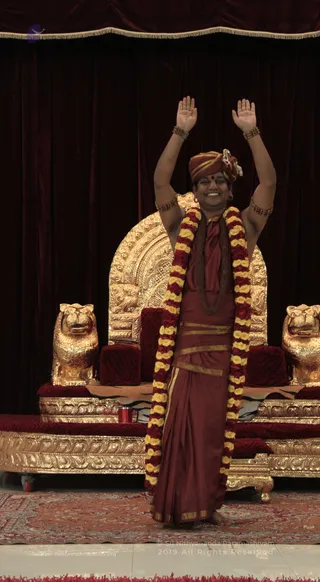
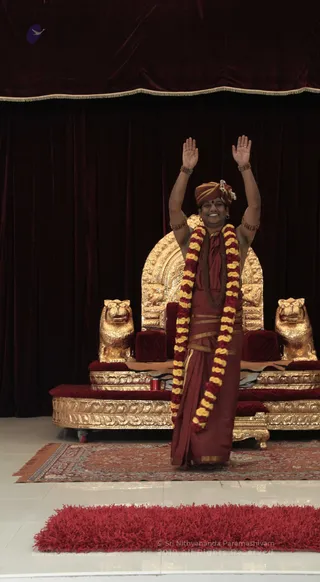
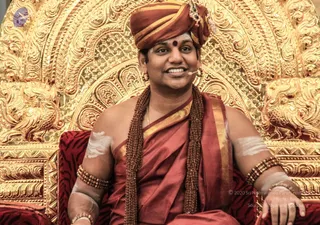
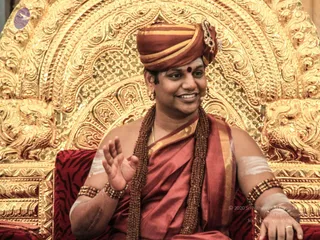
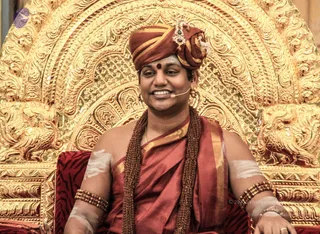
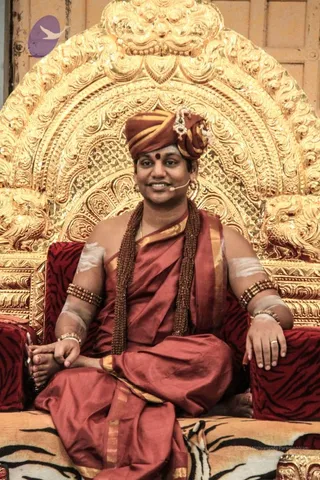
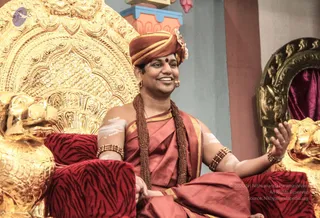
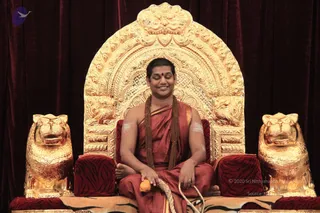
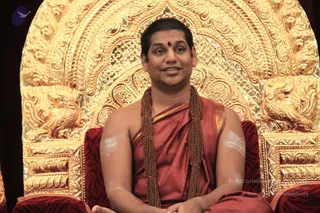
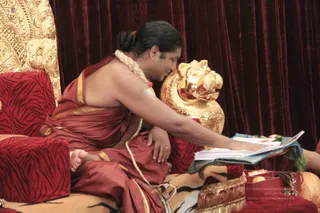
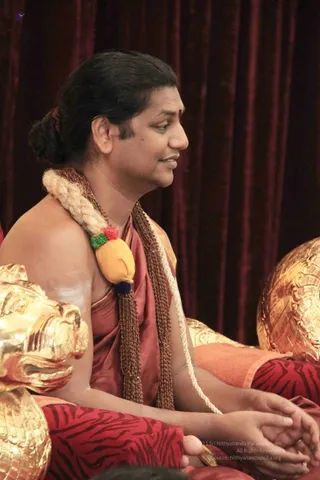
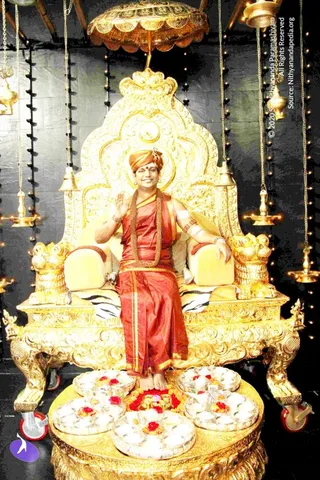
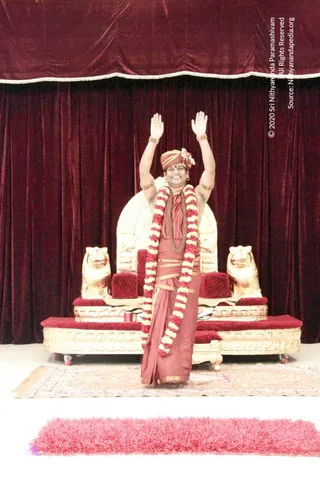
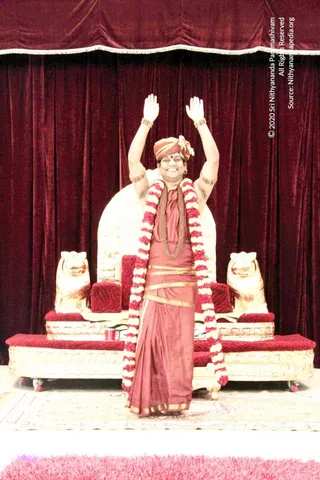
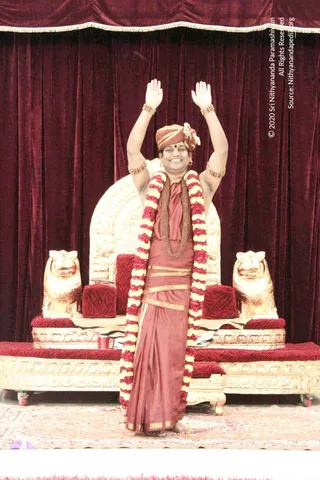
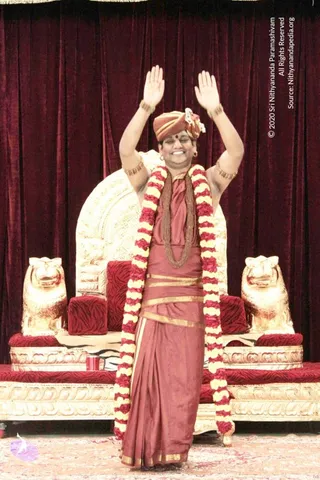
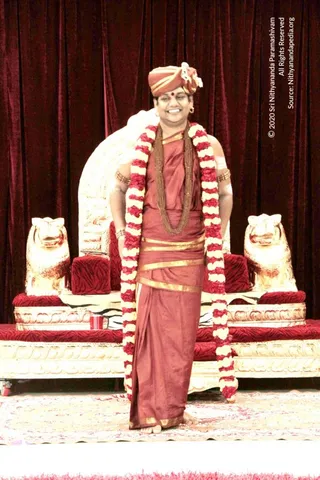
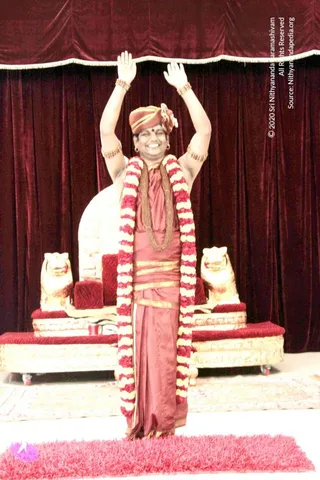
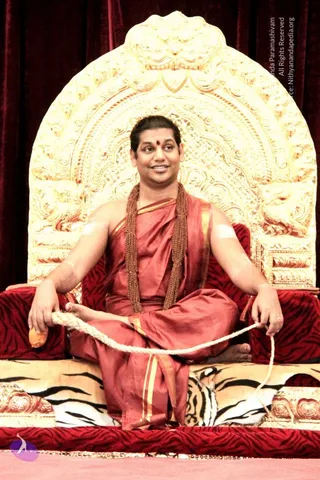
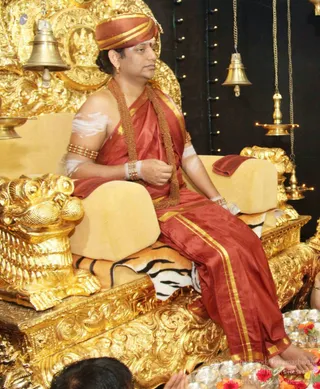
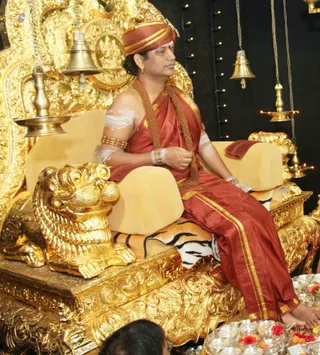
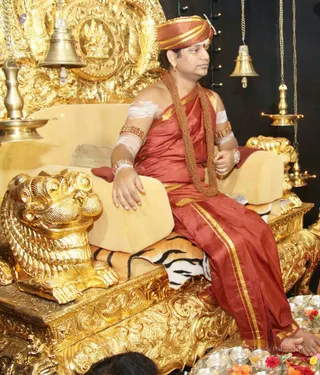
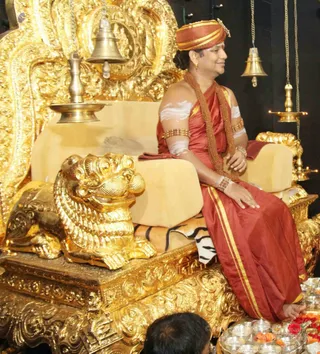
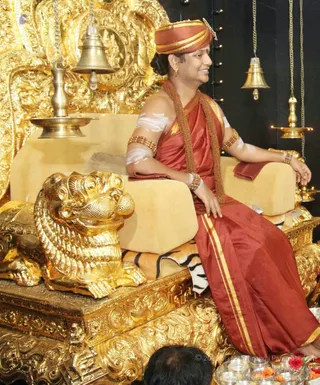
A standing man in a maroon-red sannyasi robe with a gold-edged wrap, wearing a maroon and gold turban with a small ornament, raises both arms overhead and smiles. He wears a double-strand rudraksha mala and a bead garland of red and yellow flowers around his neck, plus gold armlets and bangles. Behind him stands a golden throne with carved lion-headed armrests against red velvet drapes, with a red plush rug on the white floor. Swamiji (probable): the figure wears a turban, rudraksha mala, flower garland and ornate gold adornments, consistent with the page's claim.Photograph of a smiling man seated on an ornate gold throne with a carved, repoussé backrest and a red tiger-striped cushion. He wears a red and maroon turban with gold trim and jewelled ornament, a red bindi, a headset microphone, and a maroon silk garment with gold border draped over bare shoulders. He has rudraksha mala strands around his neck and bangles on his wrists, and white markings on his arms.

November 21 2013

Original wiki page
Contents

Title:

Sannyas Brings out the Best in you.

Description:

In today’s morning Satsang, Paramahamsa Nithyananda expands on the lifestyle of Sannyas. The purpose for life is for completion! Only in the lifestyle of Sannyas can you both fully live the science of completion while enriching others by teaching them how they can also live in the space of completion. Sannyas can take us out of survival-need mode and social ignorance and is the best way to reach out to planet Earth, empowering people to live in completion!

Link to Video:

VideoAudio

Transcript:

Nithyanandeshwara Samaarambhaam Nithyanandeshwari Madhyamaam | Asmath Aachaarya Paryanthaam Vandhey Guru Paramparaam ||

00:42 Hindi - 00:52

I welcome all the devotees, disciples, samajis, satsangis sitting with us through Nithyananda TV, Lotus TV, Sadhana TV, two-way video-conferencing having Nayana Deeksha, in Janashree TV, Eshwar TV, all over the world.

The cities sitting with us in two-way video-conferencing having Nayana Deeksha - I welcome all of you with my love and blessings.

I have a wonderful announcement. First, from December 1st, we will be having the satsang morning 7 to 8. We are preponing the satsang time. After three surveys, majority of the devotees, listeners, viewers are requesting that 7 to 8 am will be much better than 8 to 9 am. So, we will be moving the morning satsang 7 to 8 am. Between 7 to 7:40 satsang and 7:40 to 8 dial the avatar calls. I’ll be attending to your calls and blessing you all and we have also organised in all the channels you will have, you will be listening to my voice in that language. For example in Sadhana you will be listening in Hindi, in Lotus channel you will be hearing in Tamil, in Janashree you will be listening in Kannada. So each language our own you will be listening in your own language. How? You will see. So Pada Puja will be happening every day morning, 6 to 7, Satsang 7 to 8. The morning yoga for the Adheenam will be shifted to evening. Morning Akhada and yoga will be shifted to evening.

Soon we will be having live satsangh in Telugu Channel also in Telugu voice. We have already we are signing contract with different channels. It will be 7 to 8 in the satsangh in your own language, and 7:40 to 8 Dial-the-Avatar.

I’ll expand today on the same subject Sannyas..

Today, 21st batch Inner Awakening, 21st day. The conclusion day. We will be working on unique process – unclutching from all the incompletions in the bio-memory level.

Sannyas. Please listen.

All our Sannyasis are doing Sannyas Yatra. All of our Sannyasis are doing Sannyas Yatra doing padayatra, inspiring youngsters to take up the life of Sannyas and to live with intelligence. From more than 20 places all over the India people are doing padayatra towards Tiruvannamalai. From Tiruvannamalai all together to Bidadi, Sannyas Yatra.

And I also have one more announcement. From December, Nithyananda TV English, Nithyananda TV Tamil, Nithyananda TV Kannada, Nithyananda TV Telugu, all four will be functioning and Nithyananda TV Hindi - five will be functioning. You can expect a lot of wonderful spiritual programs.

Let us expand on Sannyas.

The purpose of human life is you experiencing Completion and, please listen, you experiencing Completion and working, radiating, showering – please understand, I am using three different words: “working”, “radiating”, “showering” – others also with the same space of Completion. This is the first and foremost goal of life. Completion, Completion, Completion! Be established in the space of Completion. Go on helping everyone around you to reach the space of Completion. Help yourself to be in the space of Completion. Go on enriching everyone to be in the space of Completion.

Understand, in no other lifestyle you can live in Completion, go on inspiring people to be in the space of Completion. Sannyas brings out best of you. See, a common middle-class man spends almost 90% of his life just food, shelter, clothes. These three literally takes away 90% of his time because one-third of his life goes in sleeping. In the remaining two-thirds, first twenty-five years goes to get education for food, clothing and shelter. When you start making all that, you are already fifty, waiting for death. So large part of your life disappears just trying to get food, shelter and clothes. All I am trying to tell you is, by offering Sannyas I take away that basic problem from your life. Now come on start moving to the next level. It is enough. You are stuck in the same rut. You eat what for? To work. You work what for? To eat – over! You don’t come out of that rut of the basic survival need. Let us raise the human-beings consciously to the next level. Human-beings need to be told about the next possibility. Human-beings need to be told about the next possibility, please listen. Possibility.

Please listen, you need to know a very important truth:

People, who change after the change happens, SURVIVE.

People, who change along with the change, SUCCEED.

People who lead the change are LEADERS!

People, who change after the change, SURVIVE. People, who change along with the change, SUCCEED. People, who cause the change, LEAD!

I am telling you, I am the change for the world. Not as a pride, not as egoistic; I am telling you a simple truth. I am the change! Change along with the change itself to succeed. Why do you want to change after the change to survive? Sannyas is the biggest change I am bringing to the world, making it as a mainstream lifestyle. You will see in a decade, every city in the world will have a monastery, a Hindu monastery, a Nithyananda Sampradaya monastery. Every city in the world because, we have something great to offer to the world. We have something huge to offer to the world. The integrated sanatana Hindu Dharma has something great to offer to the world. It is time human-beings learn the Science of Completion, human-beings learn the Science of Jeevan Mukthi, human-beings learn the Science of Living Enlightenment.

Understand Sannyas is going to be the greatest revival of integrated sanatana Hindu Dharma intelligence. This is the only way we are going to stop the suicides, drugs and death; we are going to stop depression, destruction. Sannyas not only completes you, you become the instrument for people to achieve Completion, humanity to reach Completion. Humanity should experience Completion through you. You should become part of this great spiritual change.

Remember this one statement:

If you change after the change, you will SURVIVE.

If you change along with the change, you will SUCCEED.

If you cause the change, you will be LEADING!

If you decide you want to be a leader, now is the time. Be a cause for the whole world to experience Completion. Be a cause for the universe to experience Completion.

Last four days I am continuously talking about Sannyas. I think today is the fourth day on Sannyas. I tell you, so much is stuck in my throat, so much to tell the world. Let the Completion be a driving force in your life, not just adrenaline and testosterone. As of now, life is run by these two hormones – Testosterone and Adrenaline. Please be liberated from these two. Let the Completion run your life. Let the Completion be centre of your life.

Completion should be taught by living. I tell you, Sannyas is the best lifestyle, you can teach Completion to the world by living. By living you can teach Completion.

I just feel there is a traffic jam in my throat. So many ideas want to come out. I am looking at Sannyas from so many angle – angle of individual completion, social completion, universal completion, completion of the humanity, ultimately completion of the Cosmos. I am looking at Sannyas from so many angles and I tell you, from every angle this is the best lifestyle.

From time immemorial, all the great acharyas, all the great achievements, I am just glancing at the whole Indian history. I can see very clearly, this colour is the most bright, heroic colour throughout the Indian history. The character of Bhishma in the Mahabharata, in each epic the characters the character of Hanuman in Ramayana, they excel more than any other heroes of the epics. Hanuman excels than Rama! I can be very bold about it! Bhishma excels than Krishna! I am very bold about it! That is why; the only good thing we have is saffron colour on top of the Indian Flag. That is why still this country is alive. This colour. Thousands and thousands of men, I can say millions and millions of men and women held this flag of Dharma fly high, Dharma Dhwaja so high. I think the first job of our Sangha is enrich at least million lives with Sannyas. Then Sannyasis who live in the space of Completion will start enriching the world with the Science of Completion. Sannyasis who live in the space of Completion will enrich the world with the Science of Completion.

16:36 Hindi - 19: 24

I tell you, it is only Sannyasis who are going to hold the Dharma Dhwaja up and high without being traitors of sanatana Dharma. Please understand, I tell you from my experience I am going to build my Sangha based on Sannyasis. And it is Sannyasis who are going to keep the Flag of Dhamma high, alive. The very logical flow, cognition flow of the intellectuals is different. The very cognition flow, logical flow of the Sannyasis is different. That is why I am telling you, Sannyasis.

Ramakrishna says, ‘Even a failed Sannyasi is million times greater than a successful grihastha.’ I was shocked when I read that. It felt really fanatic. And Ramakrishna, himself a grihastha, making this statement. Please understand, till death he was officially married to Sharada Devi even though he took Sannyas. Of course, he never lived together; that’s different he never had a physical relationship; that is different! But until the end of Ramakrishna's life, Sharada Devi was living with him, taking care of him. And he continued to function as a Sannyasi, doing all the rites and rituals of sannyasis, even going to the extent of giving Sannyas to his disciples. Twelve disciples he gave Sannyas. Vivekananda, Shivananda, Brahmananda all of them all twelve of them were initiated into Sannyas by him.

21:35 Hindi - 22:27

Understand Sannyas in every dimension makes you mature, makes you ripe, makes you intelligent and understand the Cosmic law deeper and clear.

I trust only Sannyasis for the revival of integrated sanatana Hindu Dharma, and I am very clear I don’t trust anybody else, neither intellectuals nor scholars. I trust only Sannyasi scholars and Sannyasi intellectuals for the revival of integrated sanatana Hindu Dharma.

Let you all achieve, experience, live, express, radiate, share and explode in eternal bliss, Nithyananda.

Photos
Tags:

Paramahamsa Nithyananda, Sannyas, lifestyle, science, completion, enriching, space, social, planet, Earth.

Photos Of The Day:
Yoga

Pada-Puja

Satsang

Sarva-Darshan

Session

Darshan

Group-Photos

Prasadam

Photos Of The Day:
Sarva-Darshan

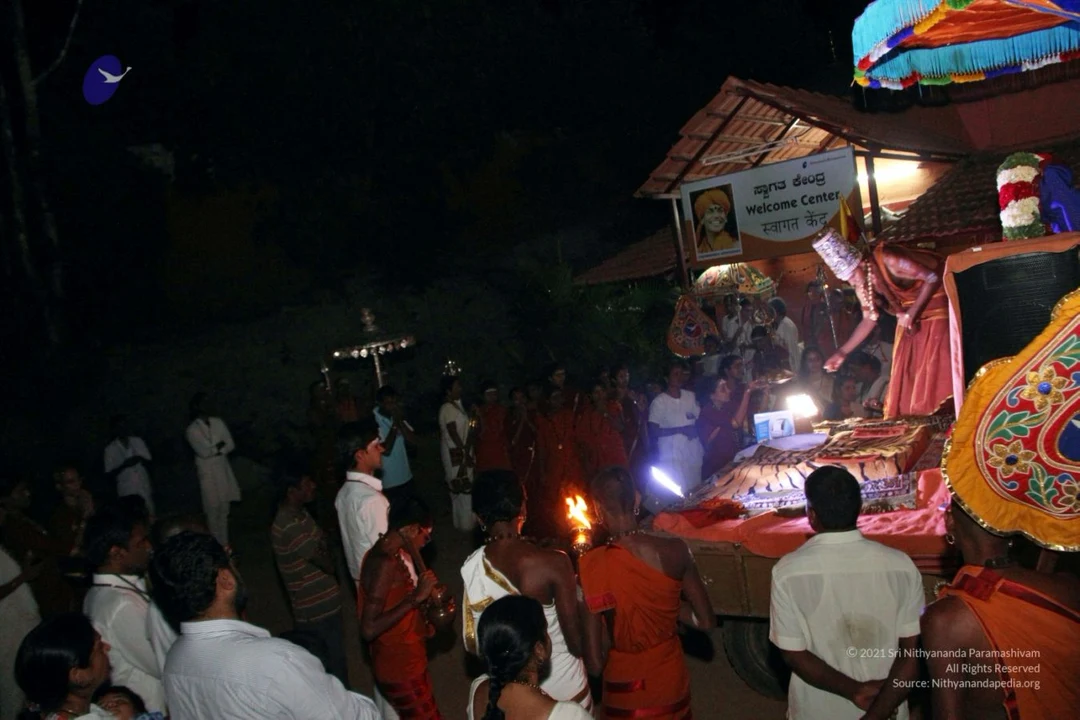
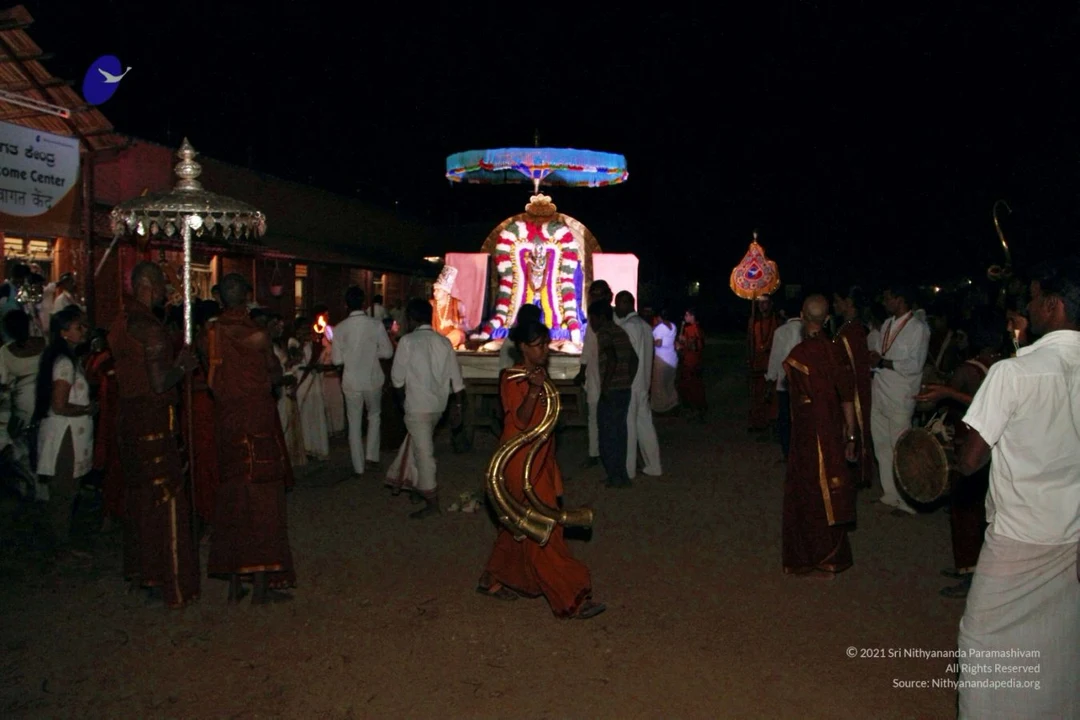
Chandikeshwara-Procession

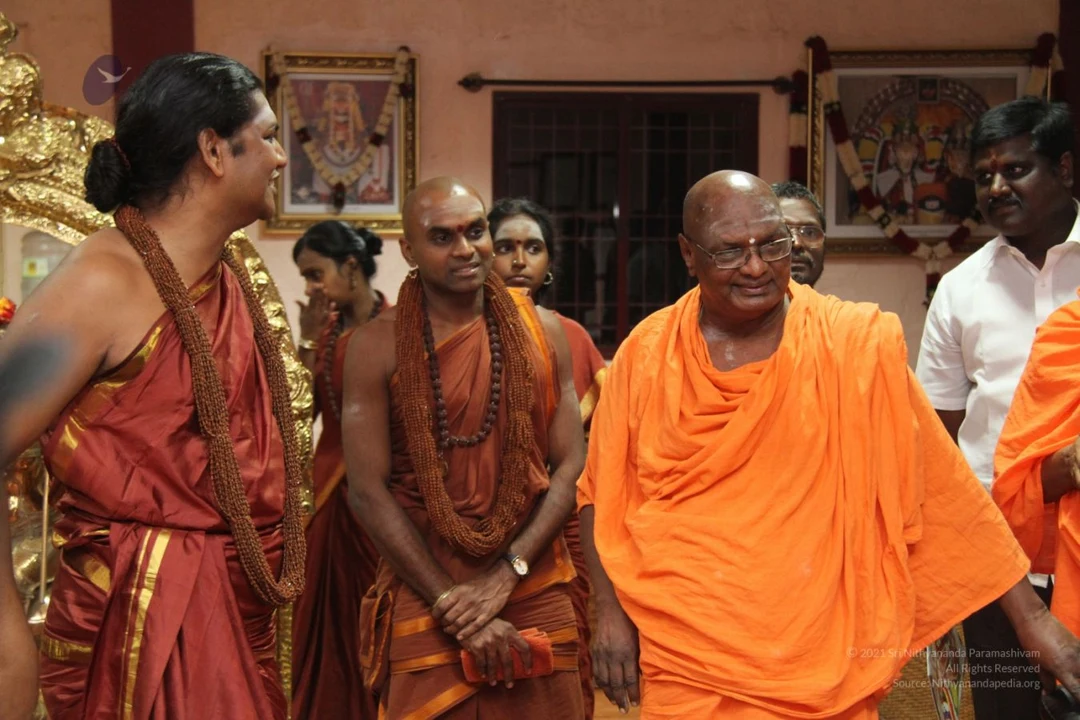
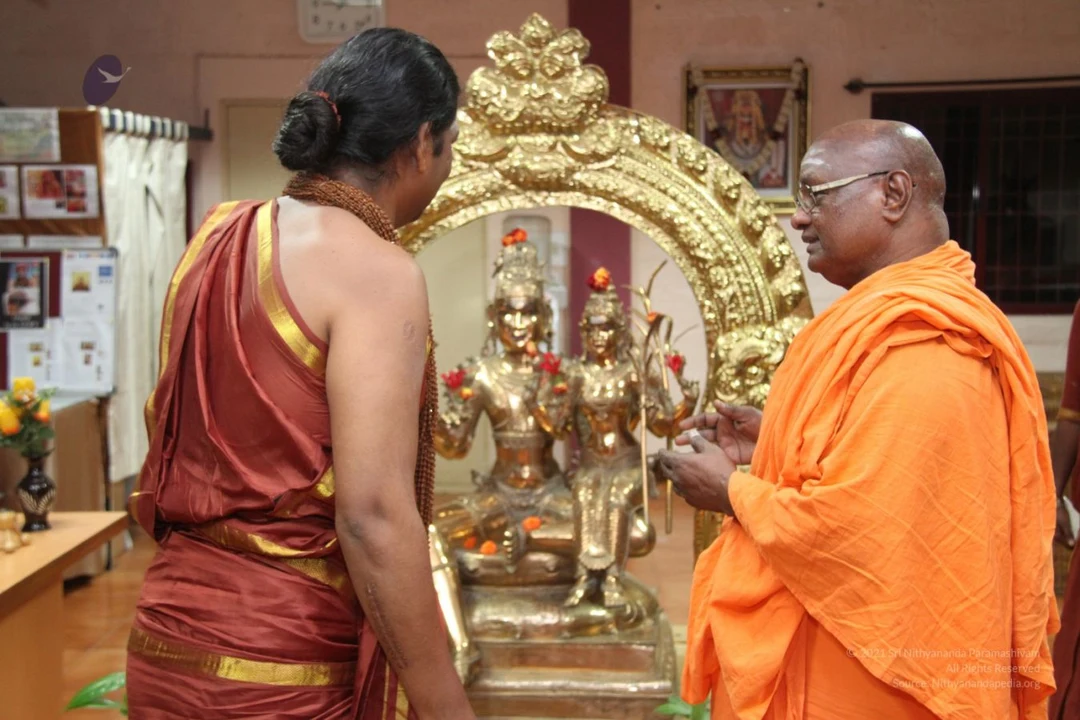
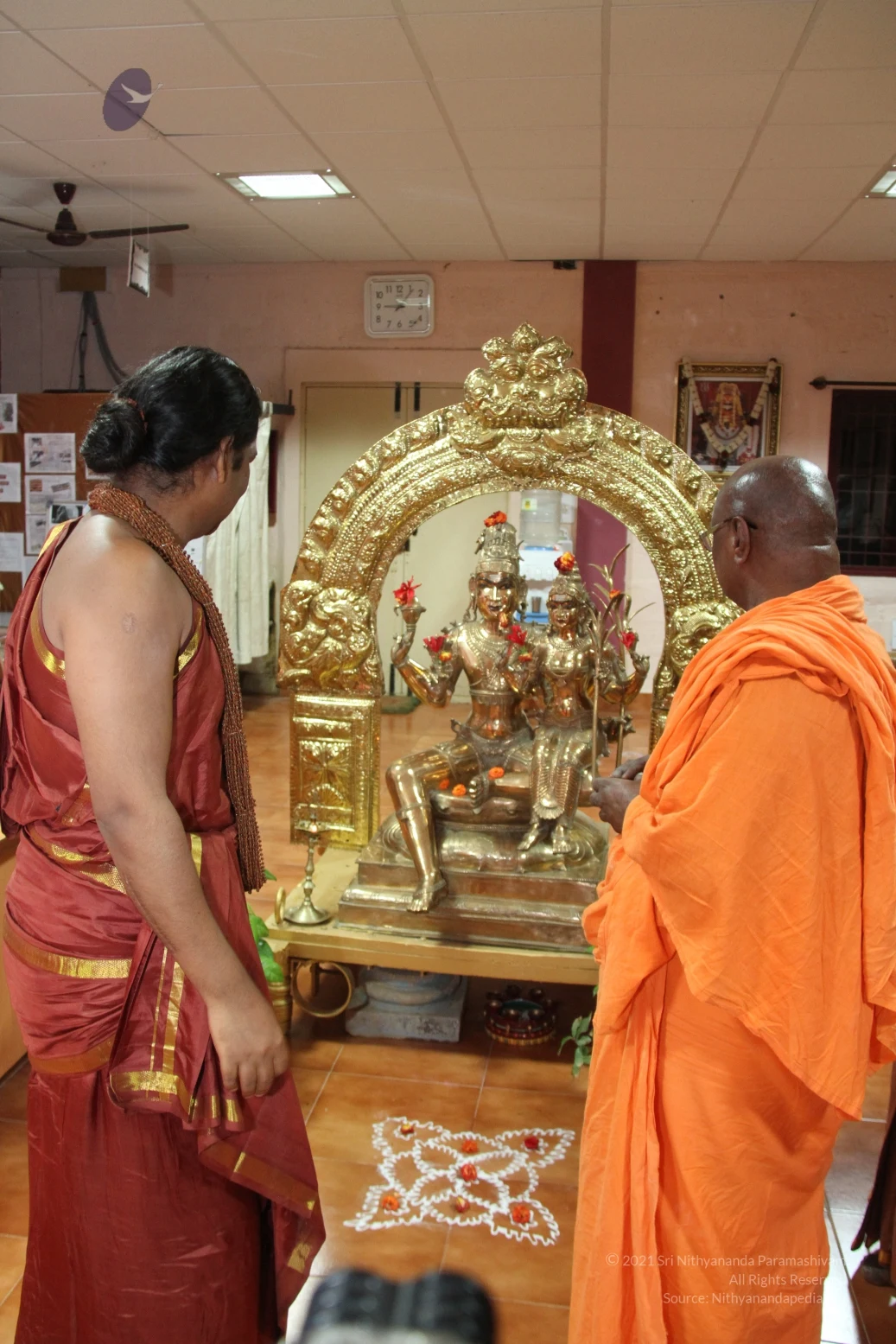
Arrival-of-SPH-with-Guest

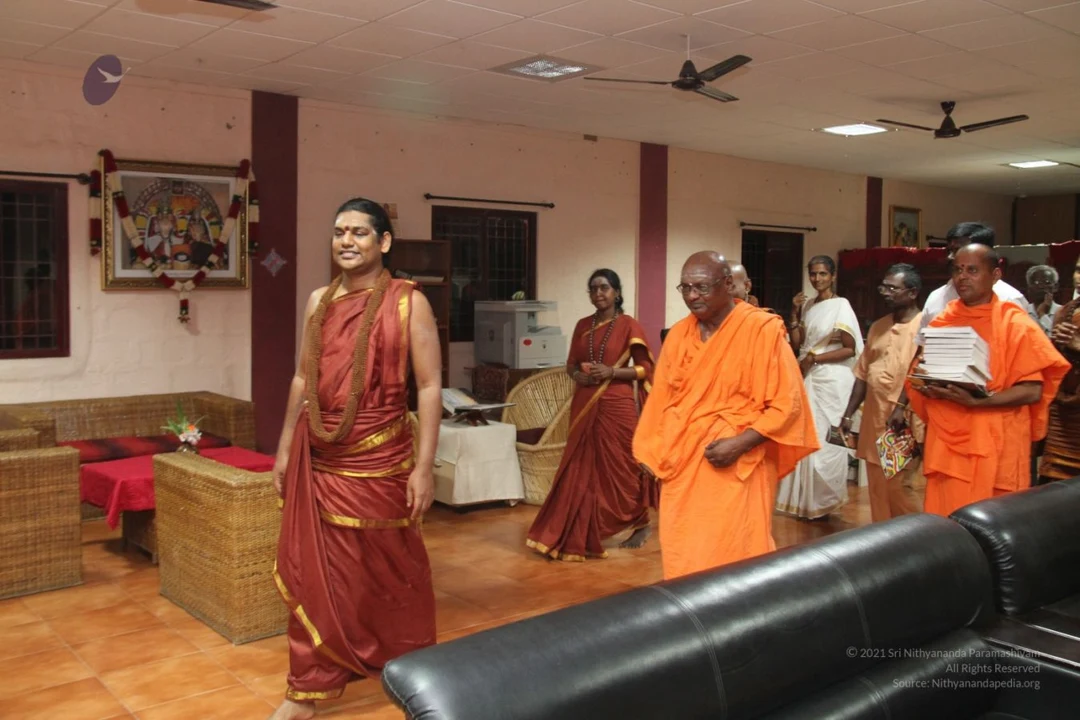
Tour-of-Welcome-Centre

TV-Broadcast

Photos Of The Day:
Yoga

Pada-Puja

Sarva-Darshan

Darshan

Group-Photos
Photos Of The Day:
Pada-Puja

Satsang

Darshan

Session

Photos Of The Day:
Pada-Puja
Photos from this day

View all 507 photos

Photos

30 photosSource gallery
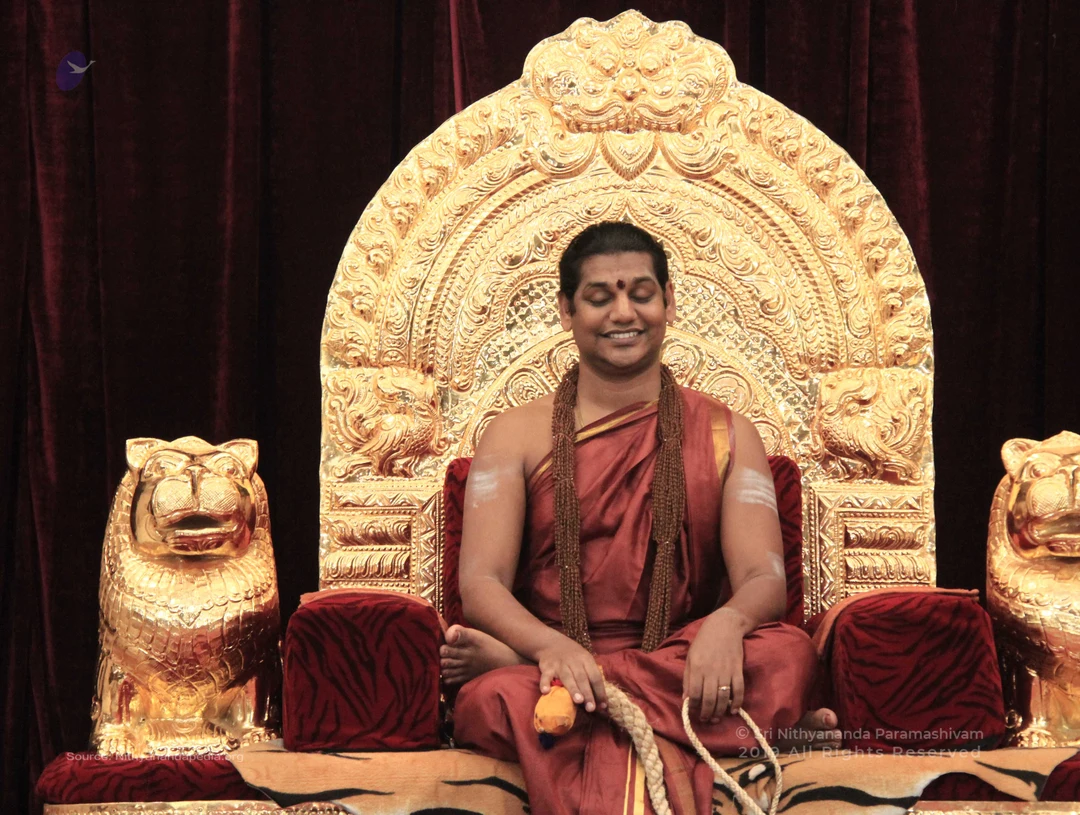
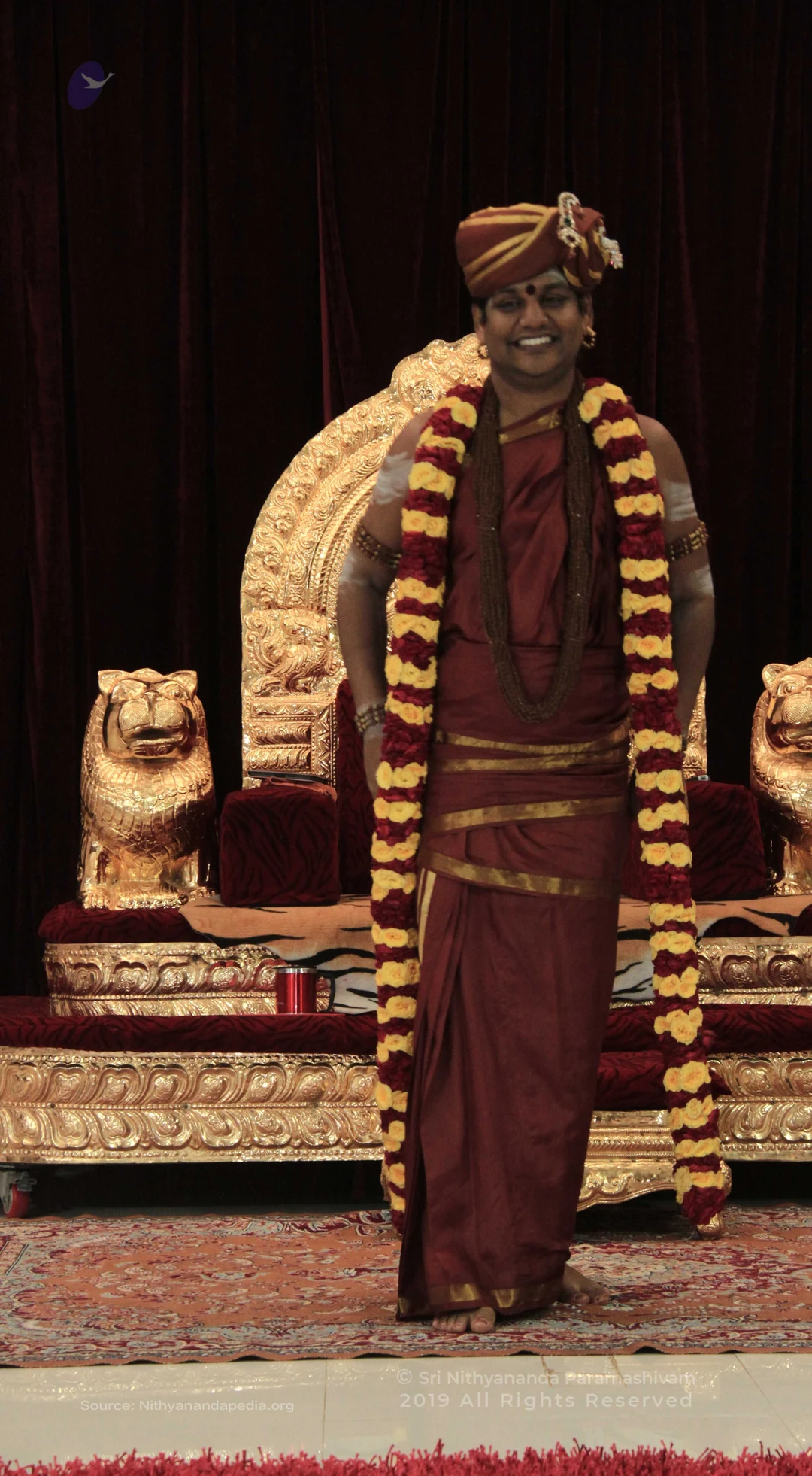
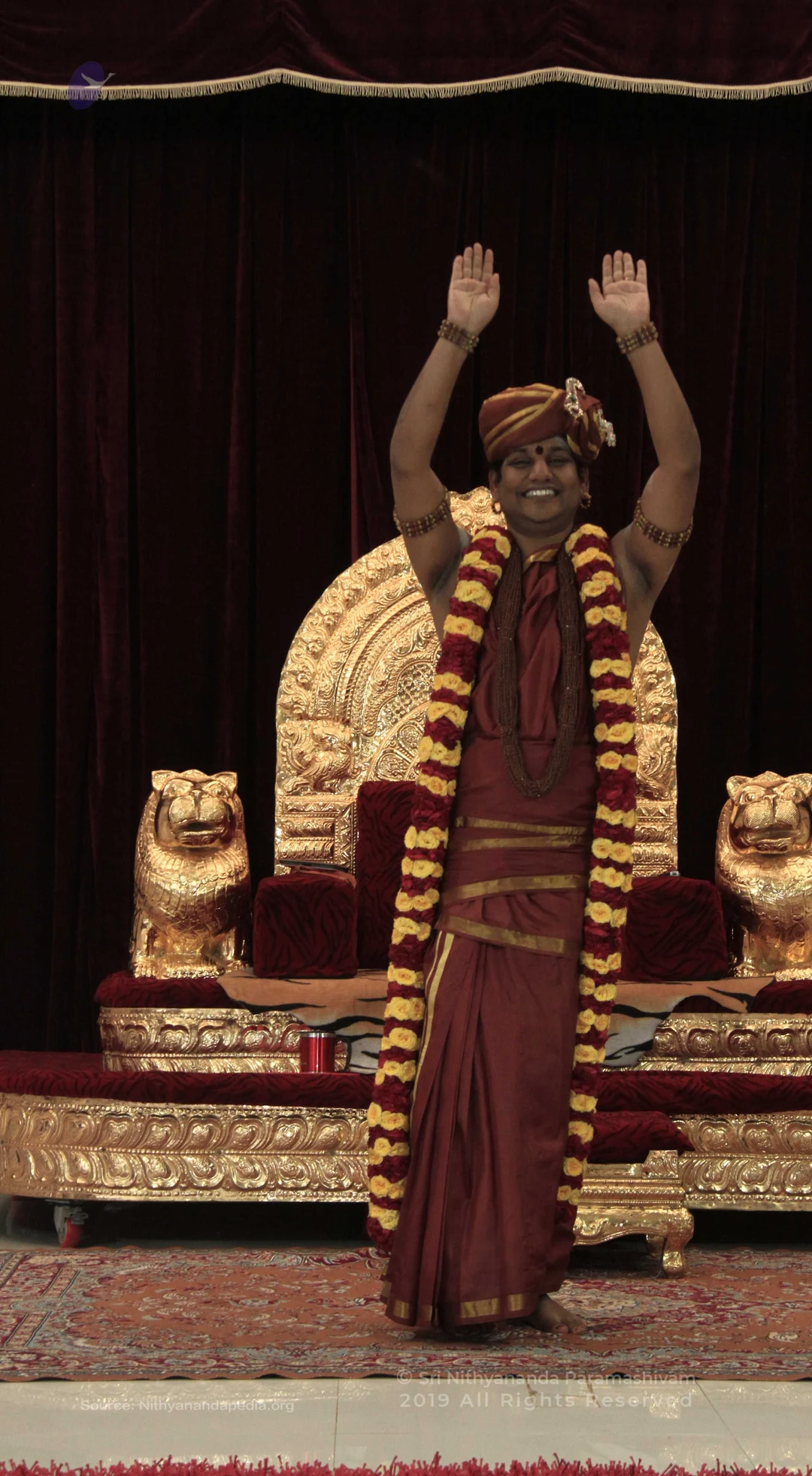
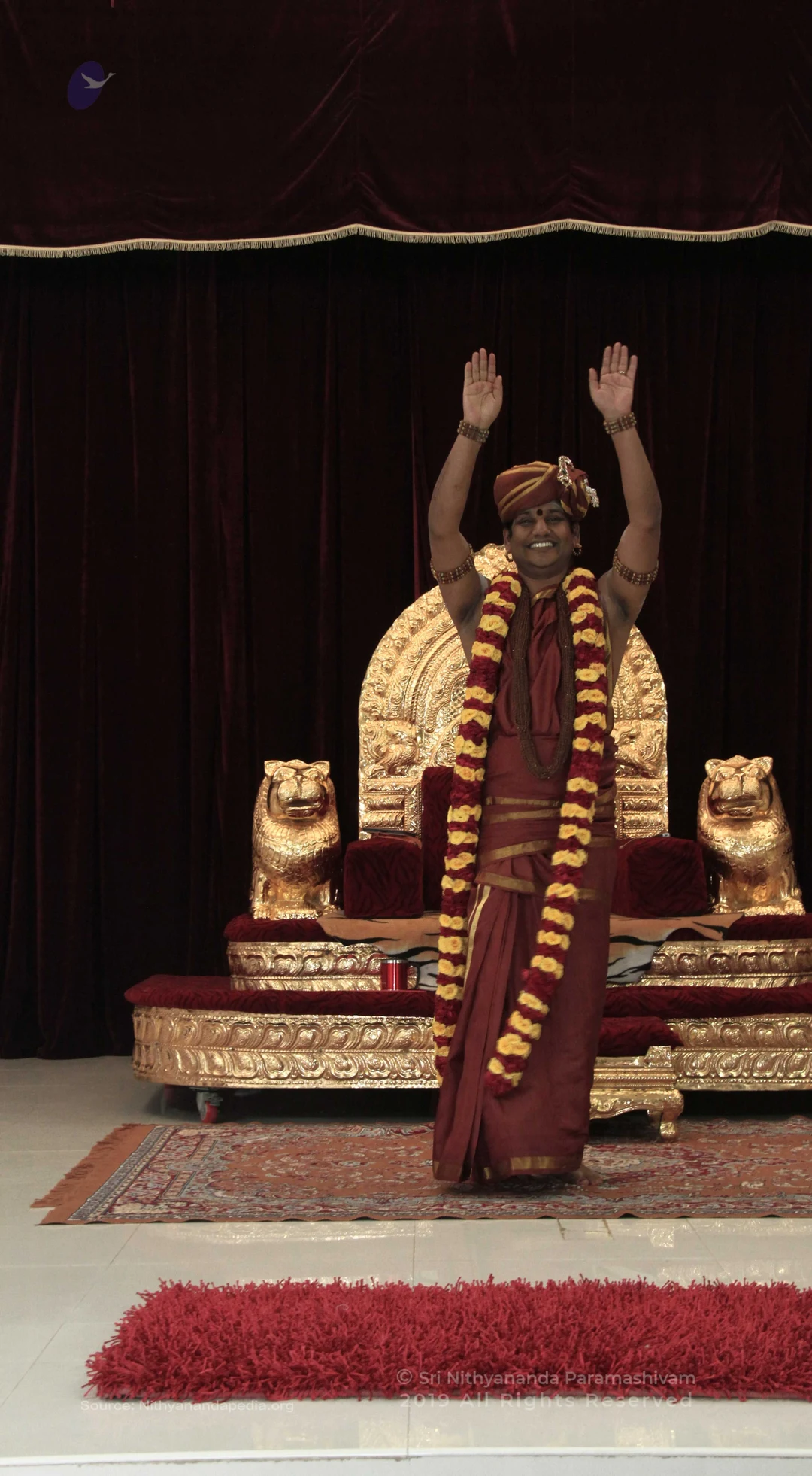
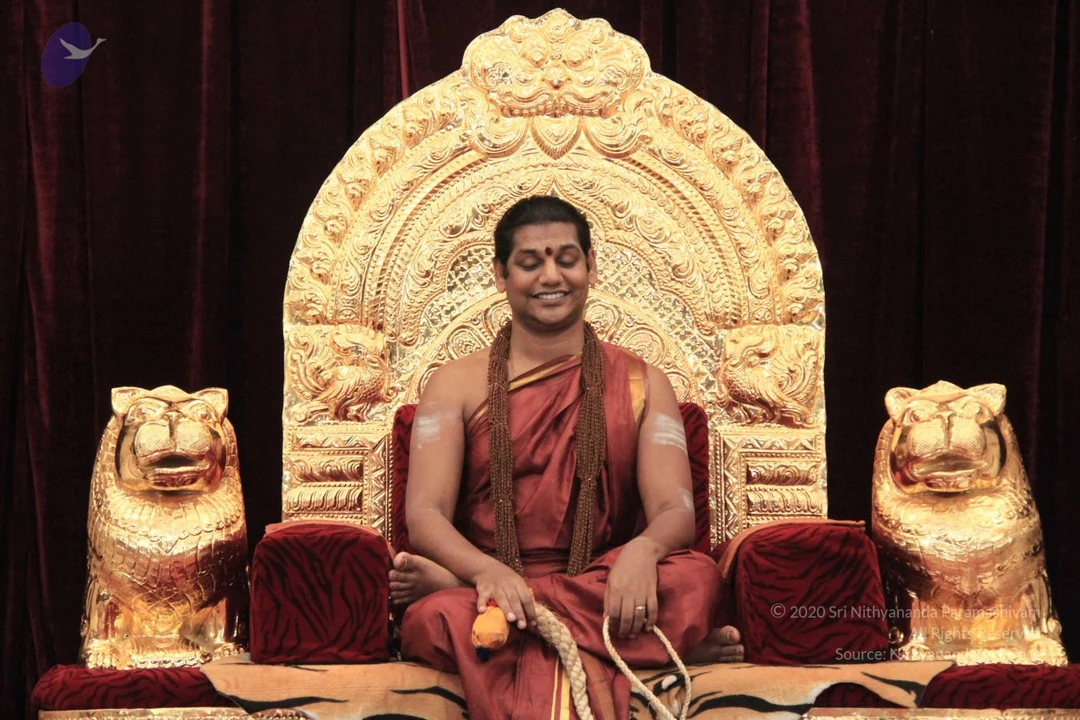
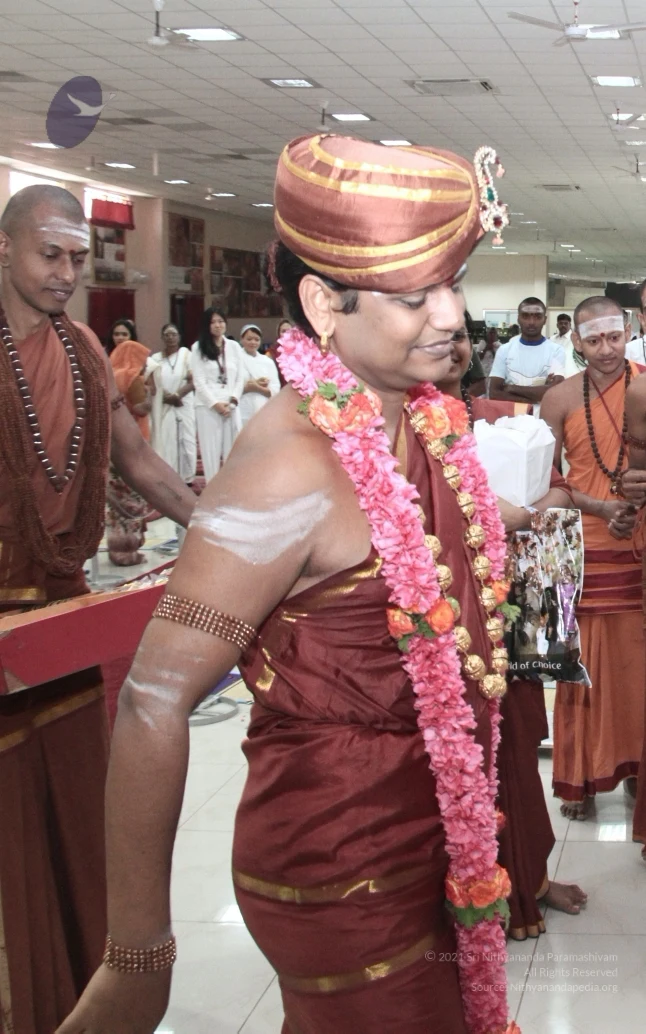
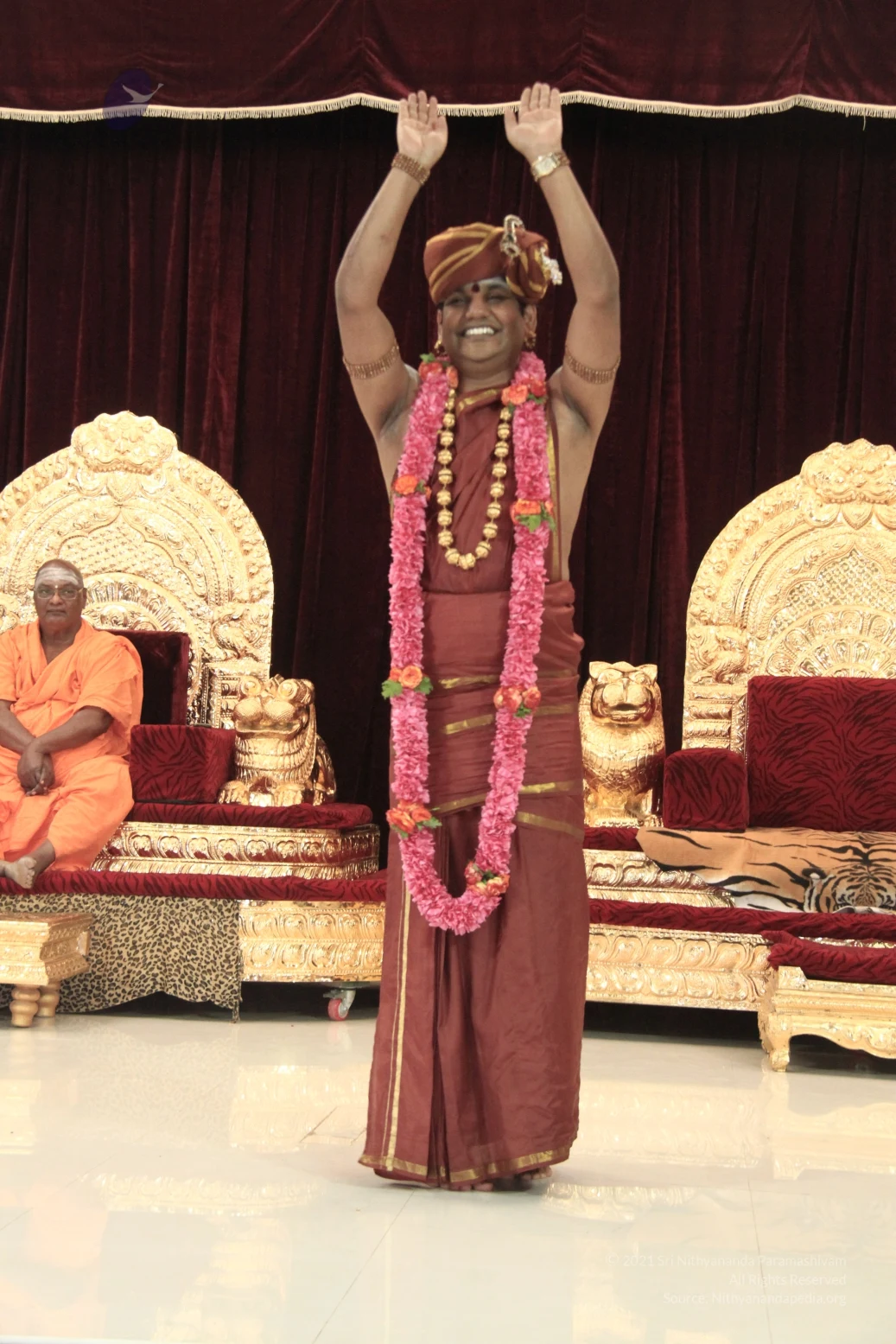
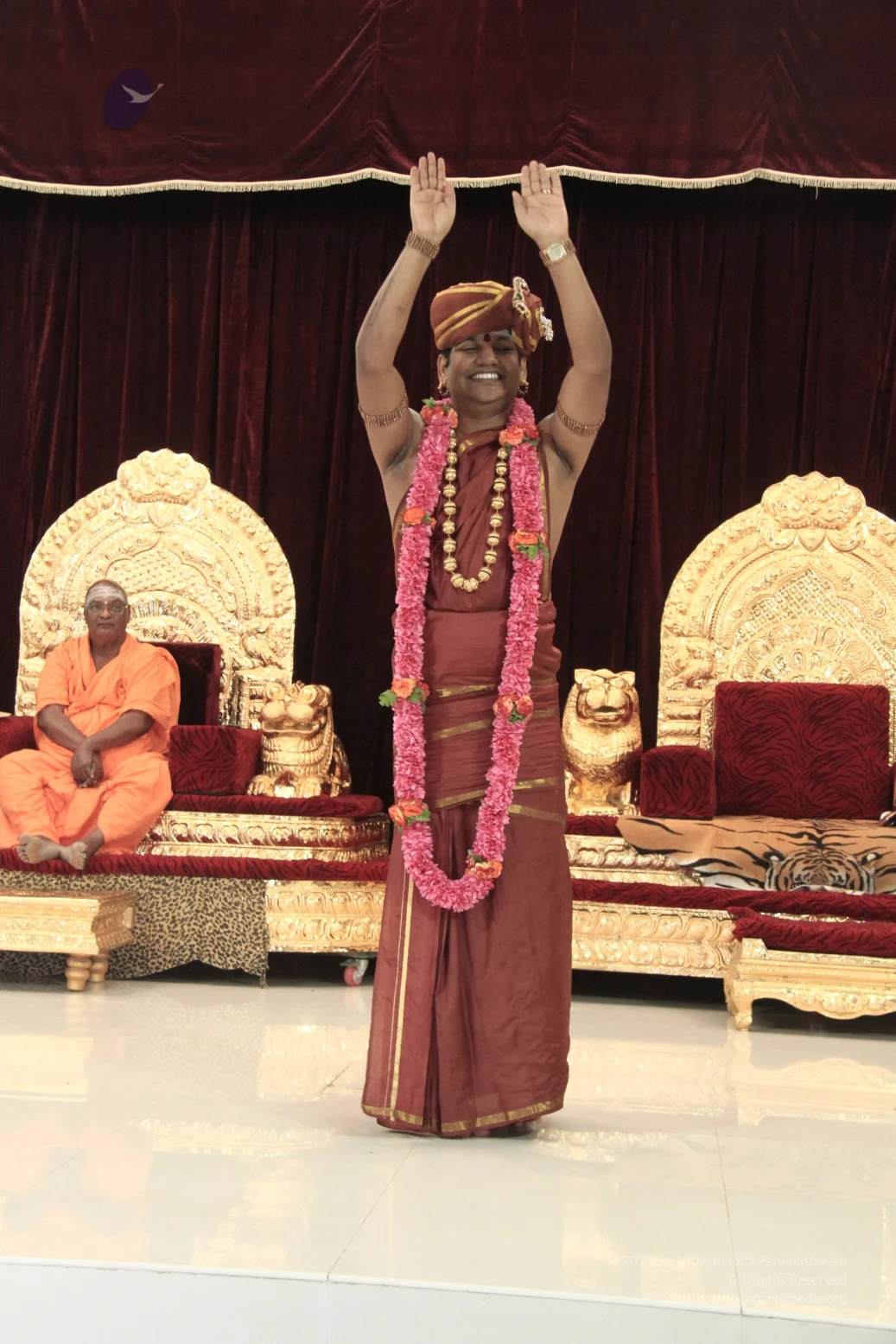
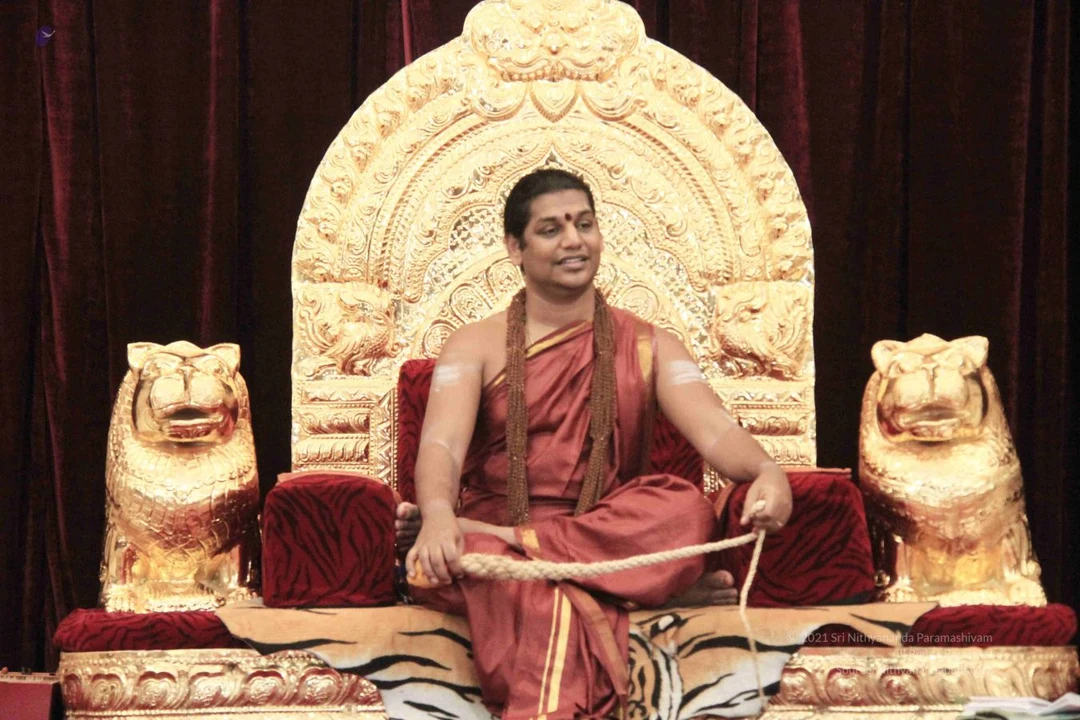
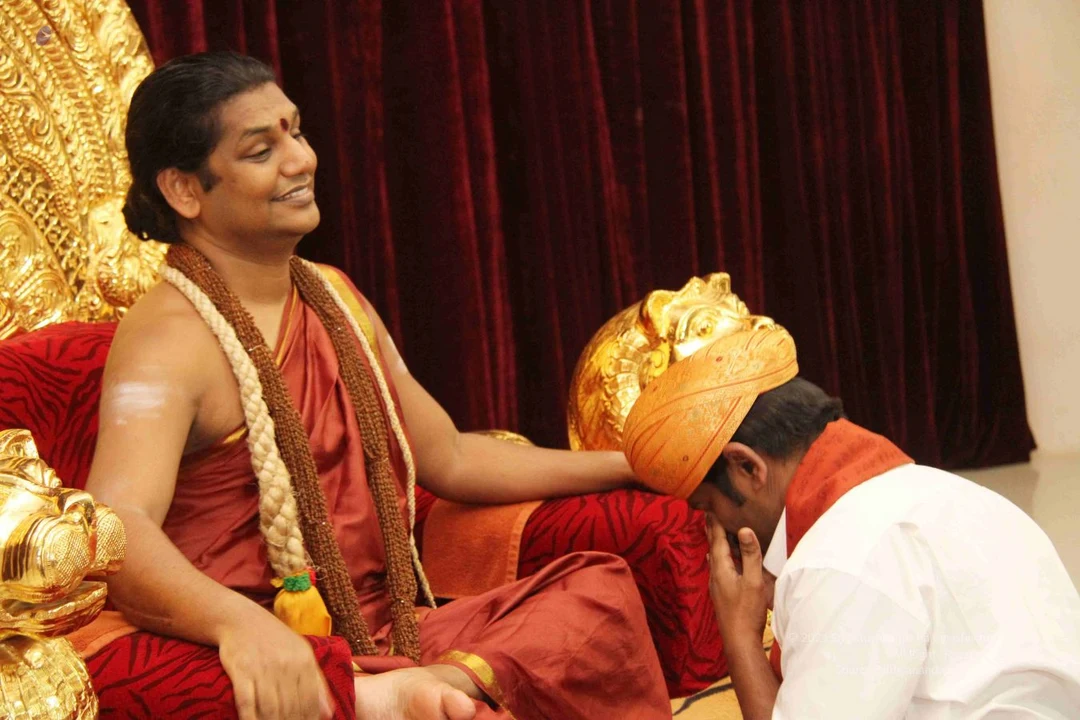
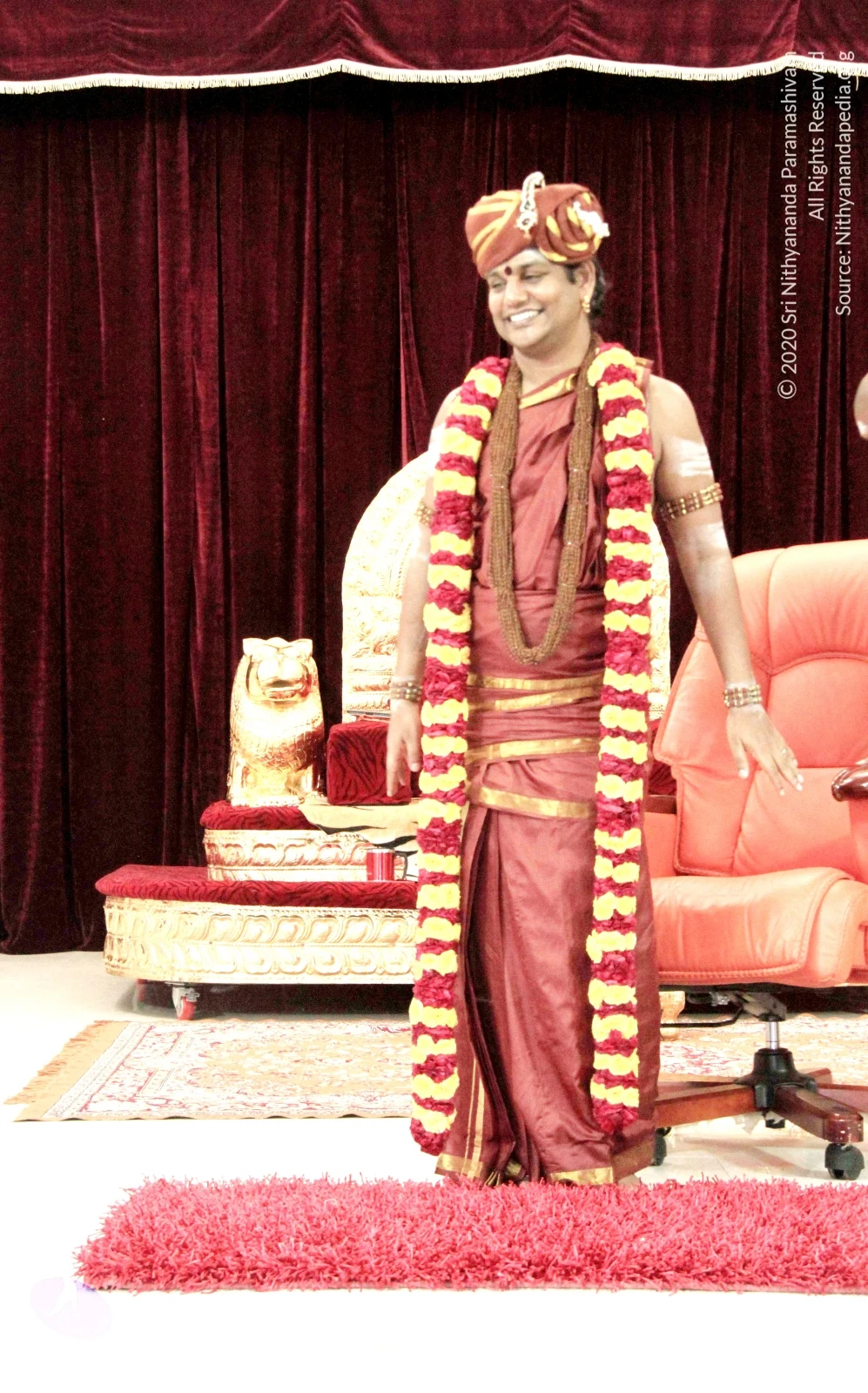
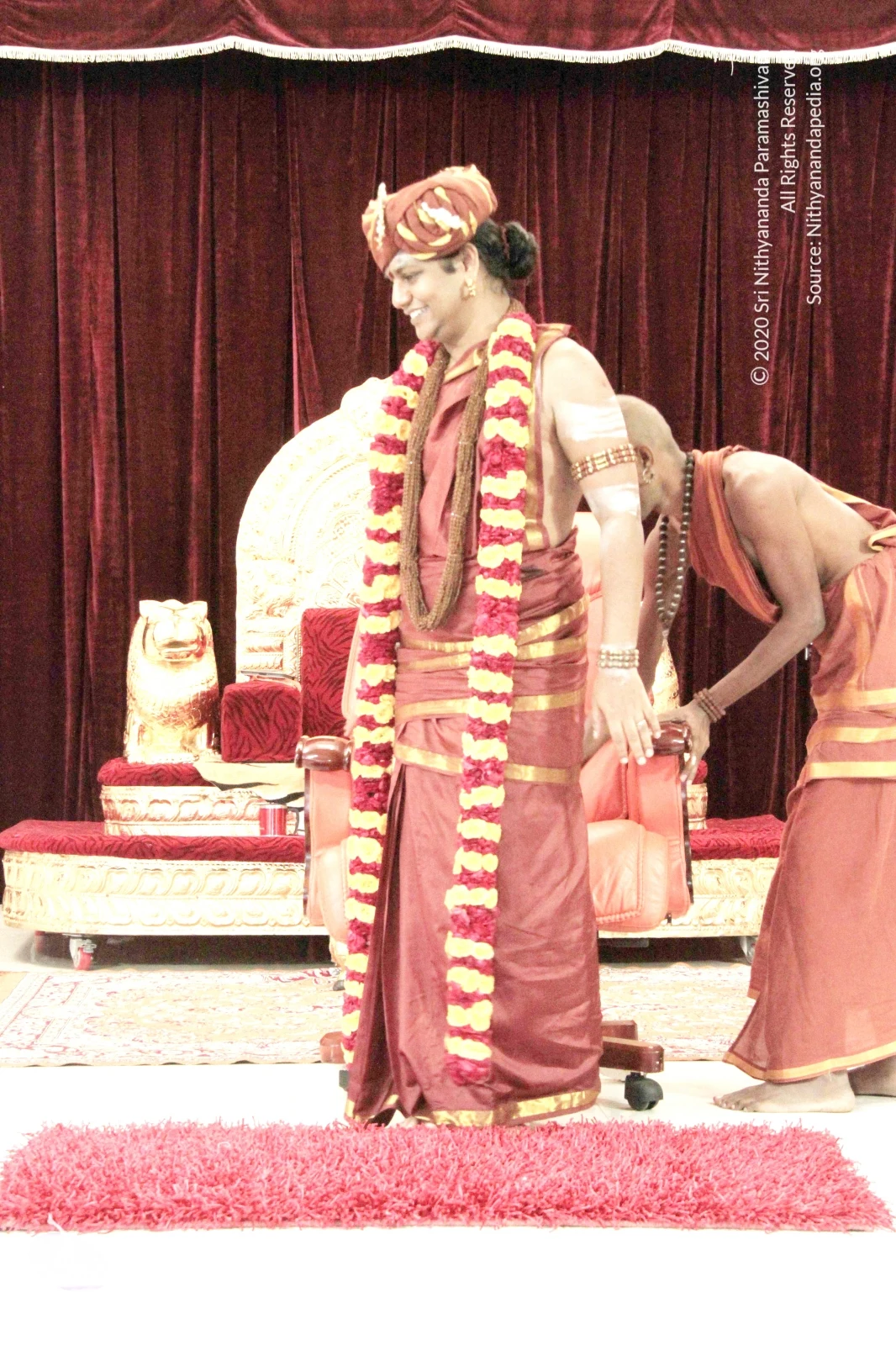
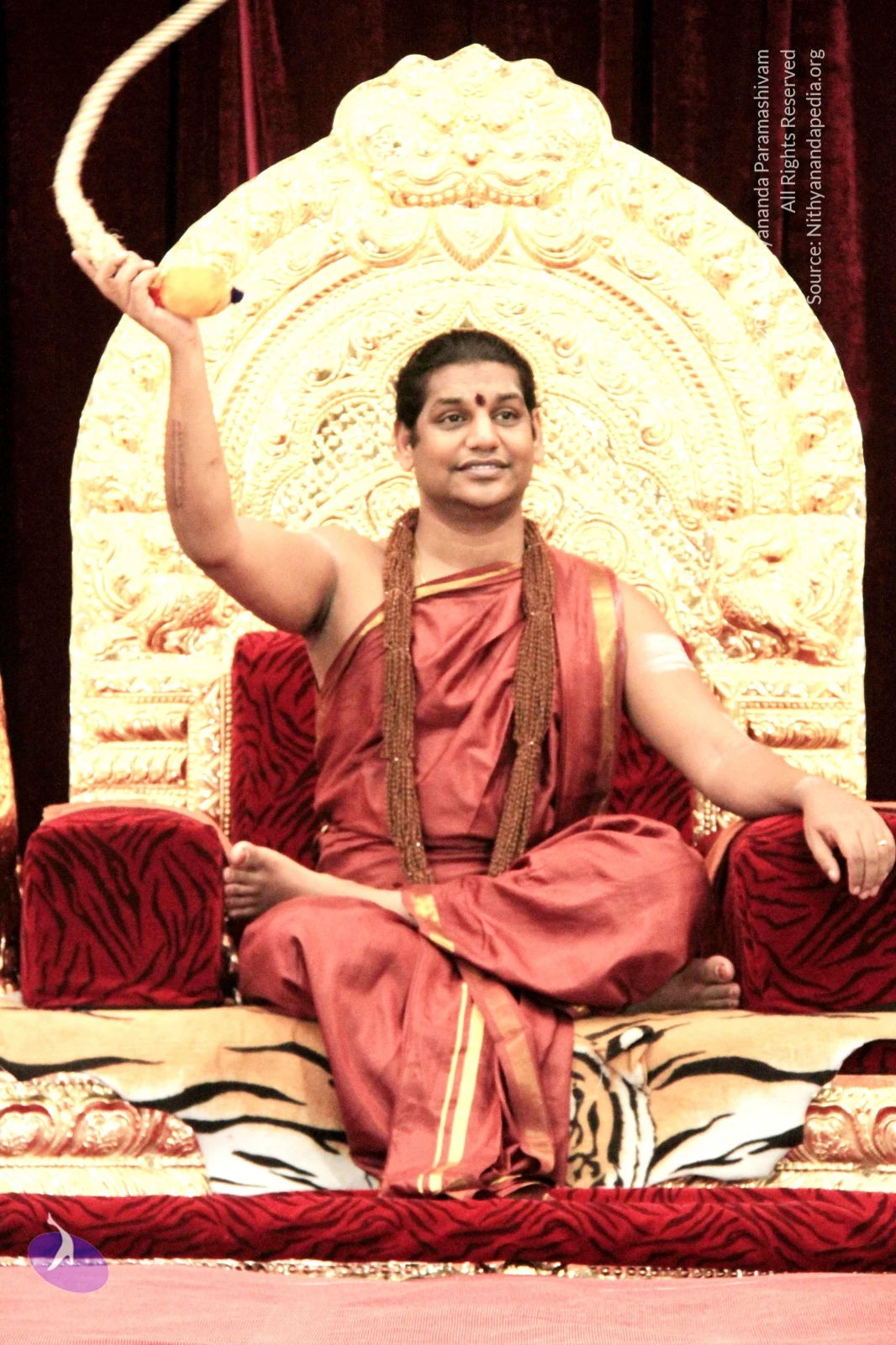
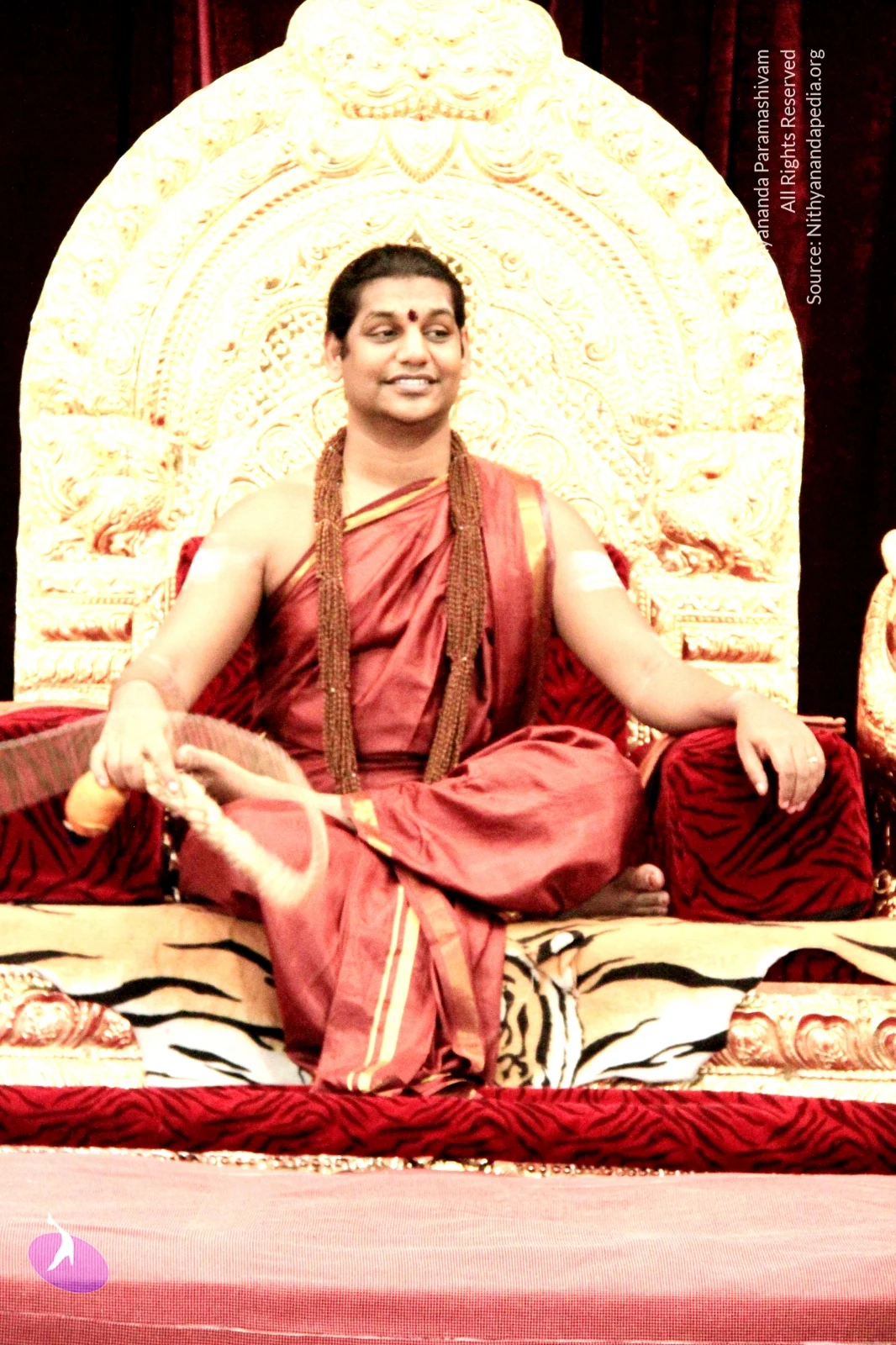
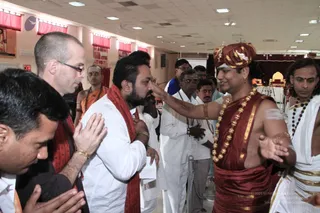
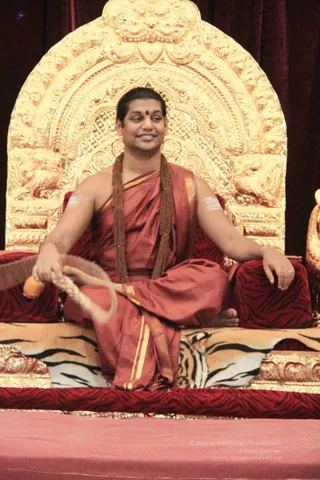
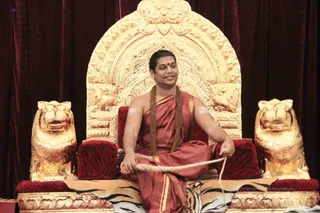
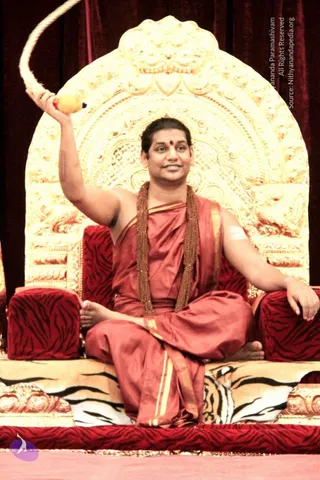
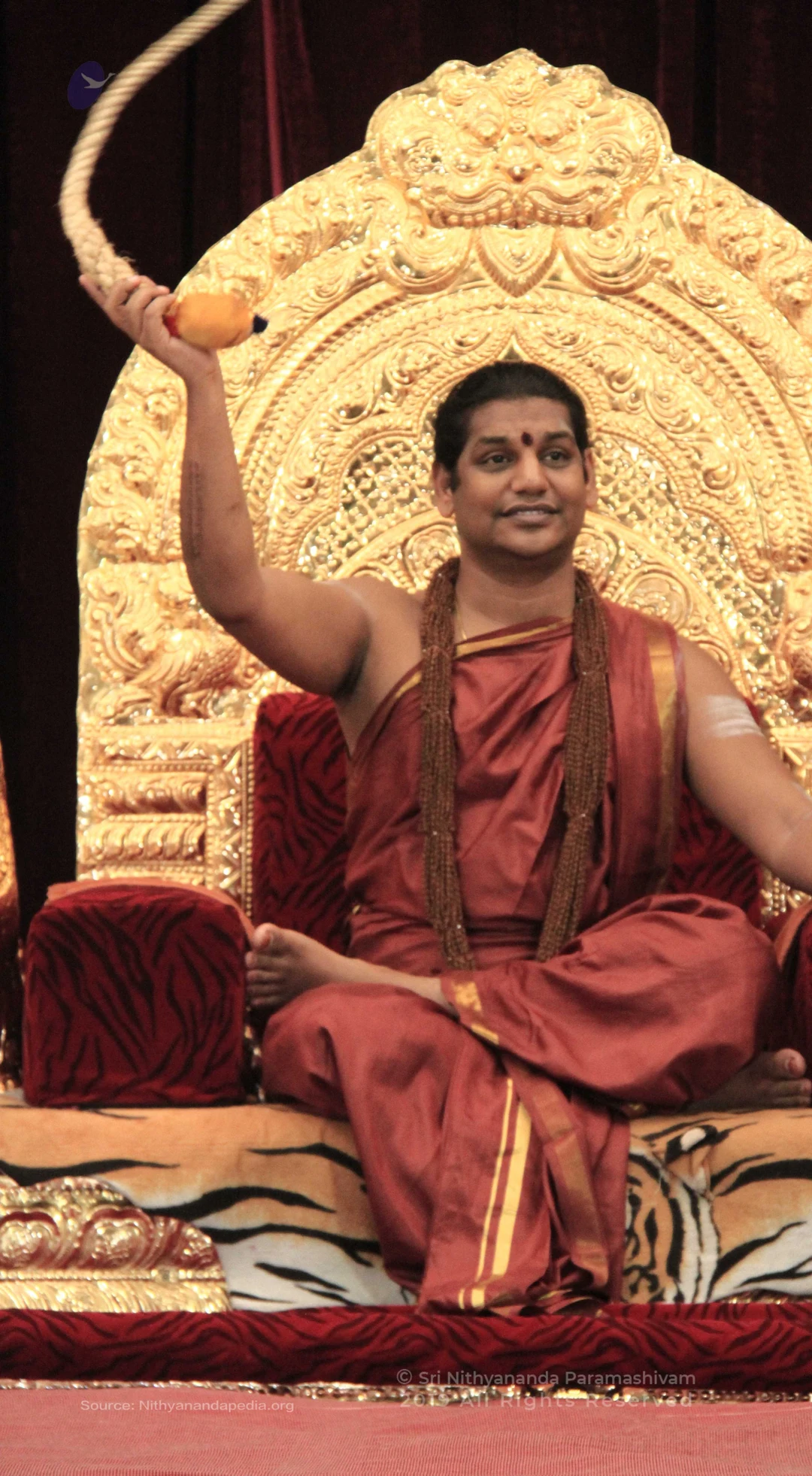
A seated man in red-brown sannyasi robes sits on an ornate gold throne with a tiger-striped cushion, holding a rope-like whip with an orange tip aloft in his raised right hand. He wears a red bindi and a long brown rudraksha mala draped over his chest. The gilded throne back has elaborate repoussé floral and figural carving, with red velvet armrests and a red-draped stage behind. a person is shown seated on the throne holding a whip, a presiding teaching posture consistent with a satsang setting.A seated man in red-maroon ceremonial robes sits on an ornate gold throne with a tall arched back carved with floral and scroll patterns. Two gilded lion sculptures flank the throne, and a deep red velvet backdrop hangs behind. He wears a long rudraksha mala draped over his chest, has white markings on his upper arms, and holds a beaded cord and an orange object in his hands with eyes closed in a calm smile. Swamiji (probable): the appearance shows a long-haired figure in saffron-red robes with rudraksha malas and ornate seated throne presentation, consistent with the page's identification.A standing man in a maroon-red sannyasi robe with a gold-edged wrap, wearing a maroon and gold turban with a small ornament, raises both arms overhead and smiles. He wears a double-strand rudraksha mala and a bead garland of red and yellow flowers around his neck, plus gold armlets and bangles. Behind him stands a golden throne with carved lion-headed armrests against red velvet drapes, with a red plush rug on the white floor. Swamiji (probable): the figure wears a turban, rudraksha mala, flower garland and ornate gold adornments, consistent with the page's claim.A standing man in maroon-red sannyasi-style robes with a gold-banded waist wrap stands barefoot on a patterned rug before an ornate gold throne with carved lion-headed armrests and dark maroon velvet cushions. He wears a maroon and gold turban, a long multi-strand brown rudraksha mala, and a long garland of yellow and red-maroon flowers draped to his knees. Behind him hang deep maroon velvet drapes, and a red cup sits on the throne's side ledge. The man smiles with hands resting at his sides.A smiling man in maroon sannyasi-style robes stands on a carpeted stage with both arms raised overhead. He wears a maroon and gold turban, a long rudraksha mala, a long red-and-yellow marigold garland, and beaded bracelets. Behind him stands an ornate gold throne flanked by golden lion heads on a maroon velvet dais, with deep maroon drapes behind.A standing man in a maroon-red sannyasi drape and matching turban raises both hands in welcome before a gilded throne with carved lion-head armrests and red velvet cushions. A long garland of yellow and red marigolds hangs from his neck, and he wears beaded bangles and a rudraksha-style necklace. Behind him hangs dark burgundy velvet drapery, with a patterned rug and a red shag mat in front. a person: the swept-back look, saffron-red ochre robes, ornate gilded throne and garland match the page's claim, so he is recorded as a probable in-person candidate.

Yoga

18 photosSource gallery
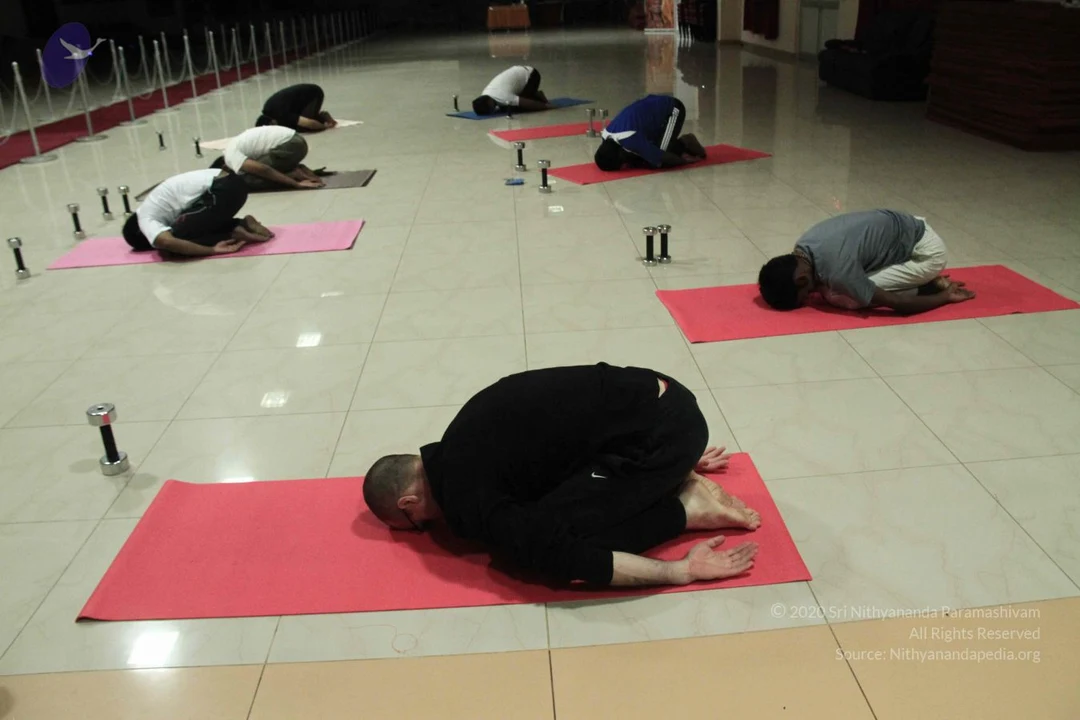
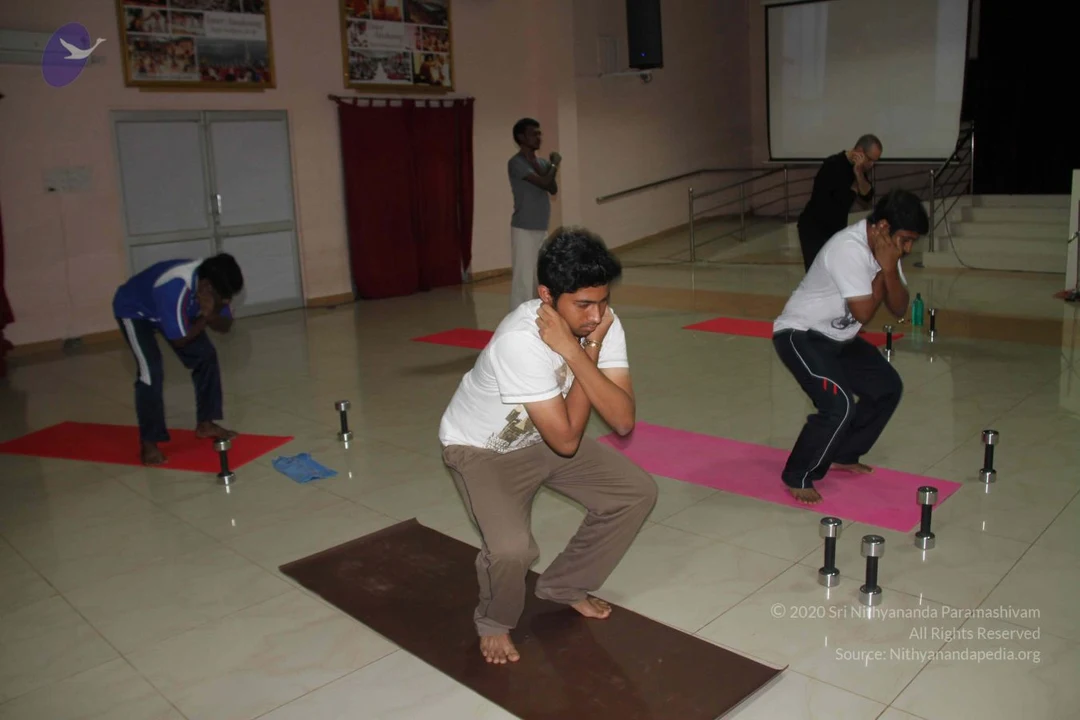
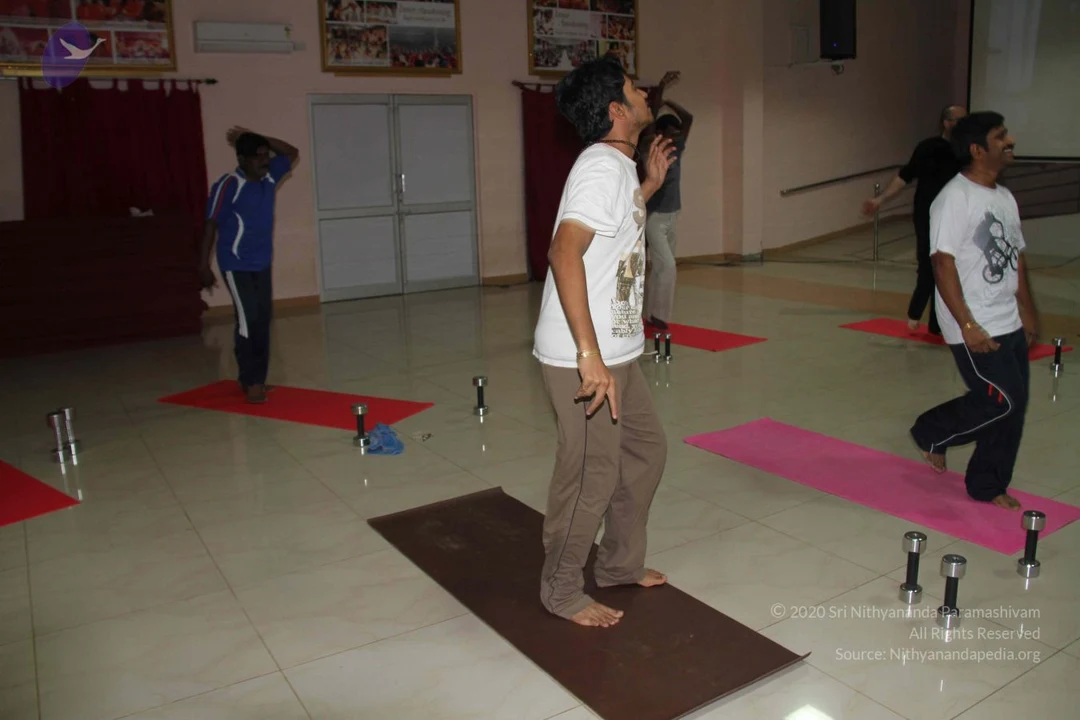
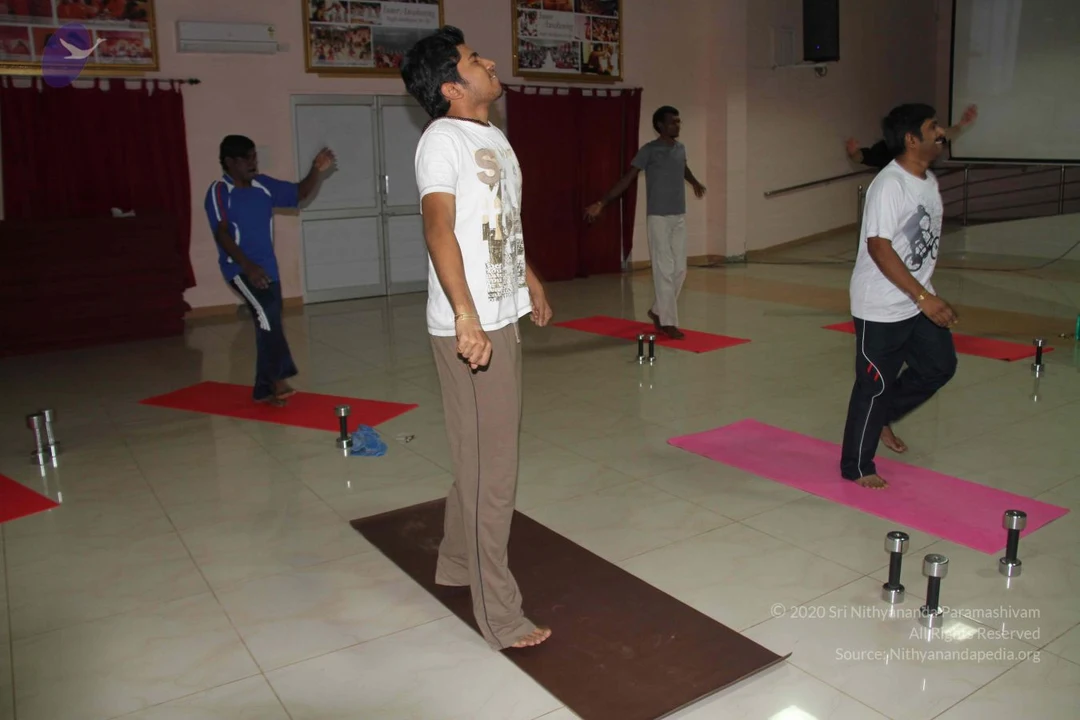
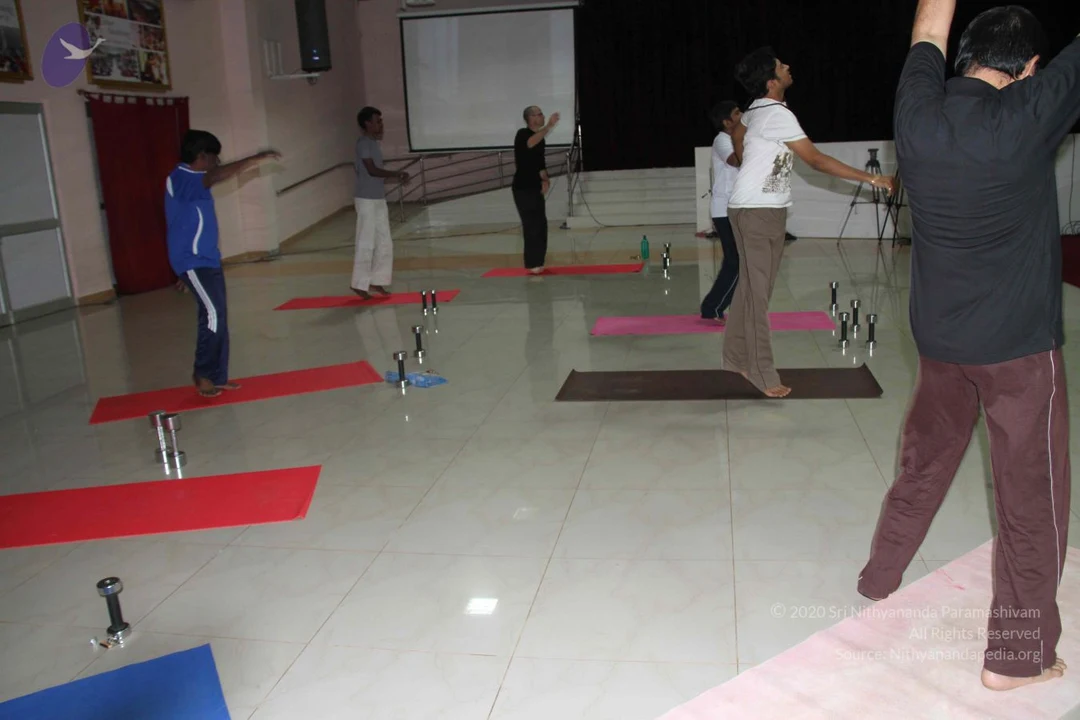
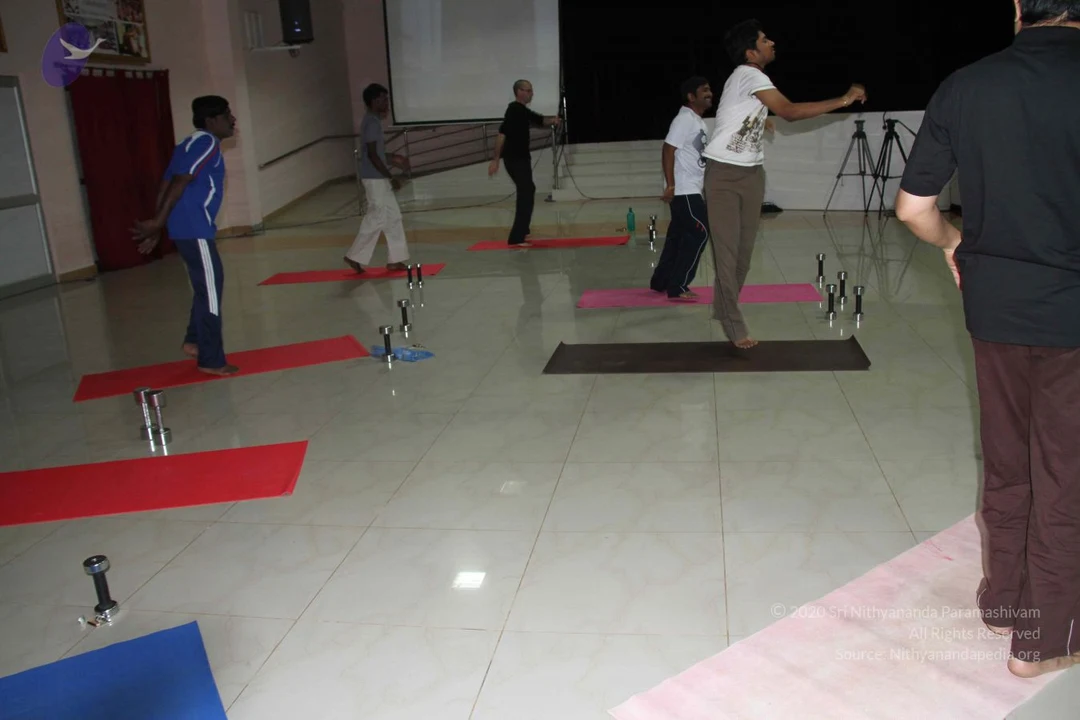
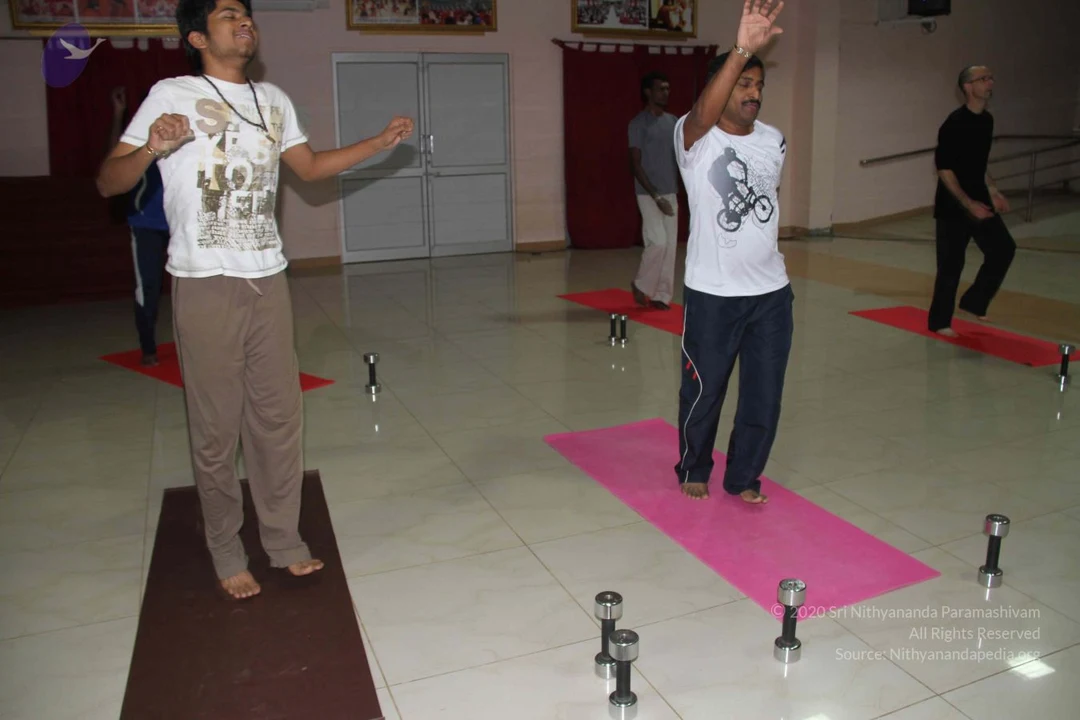
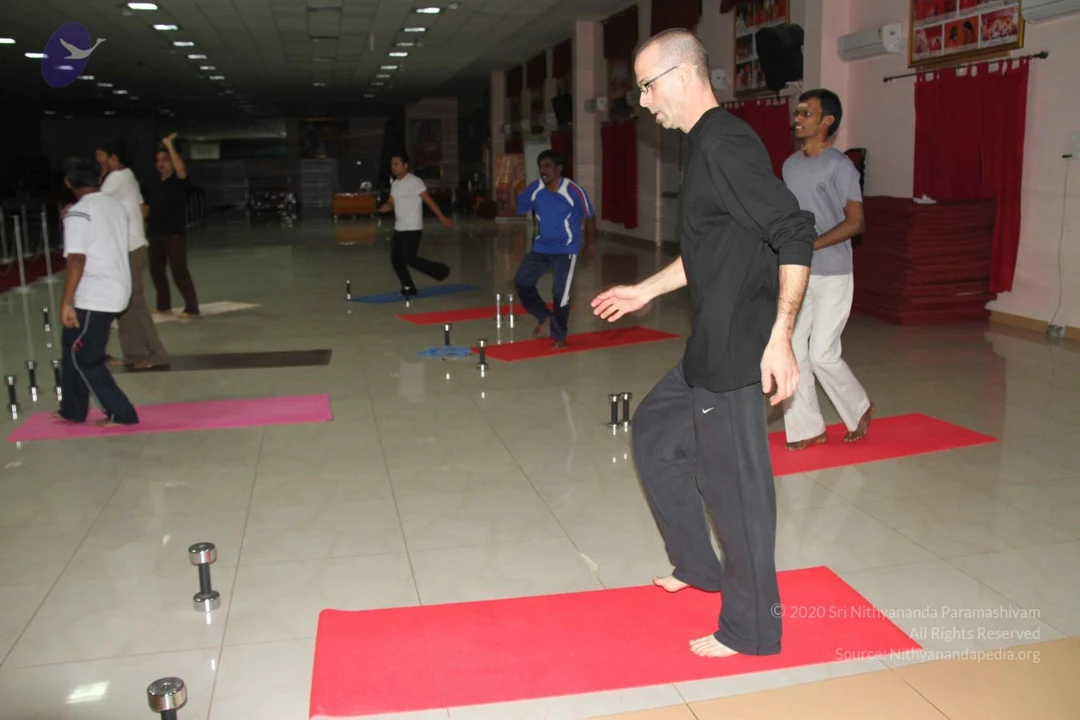
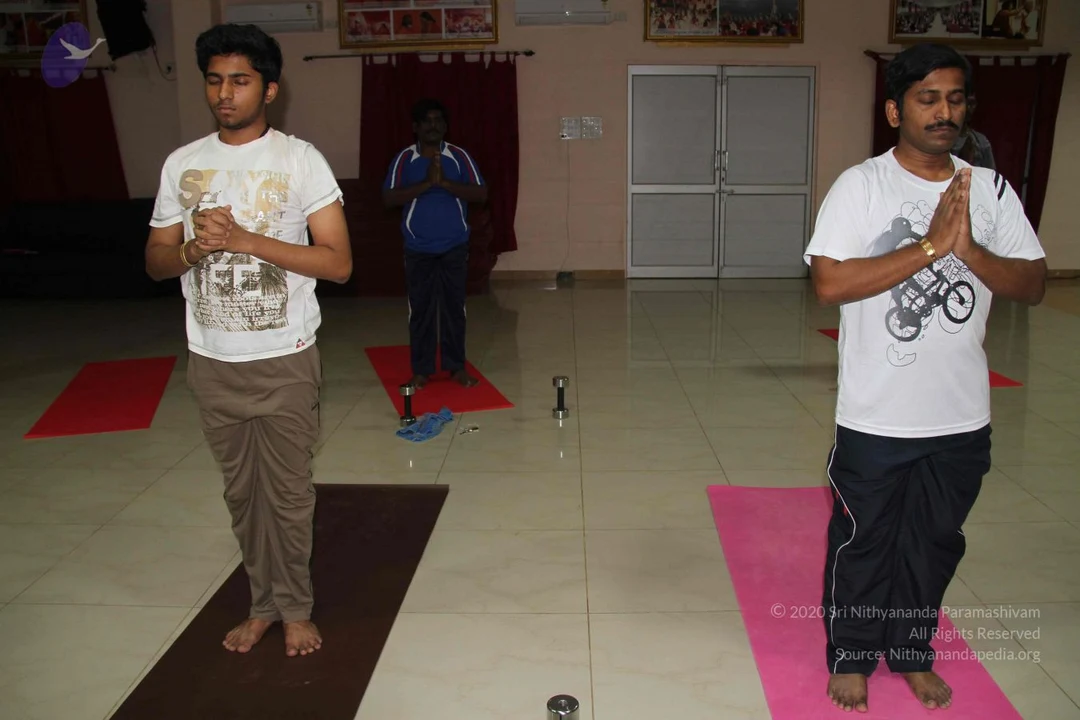
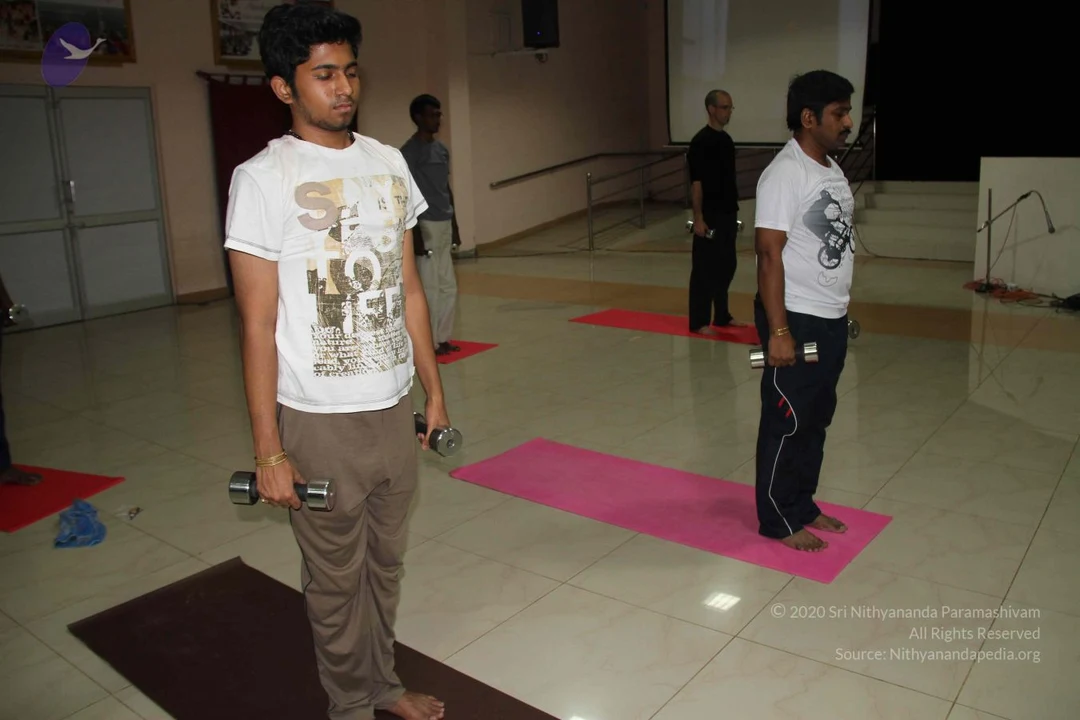
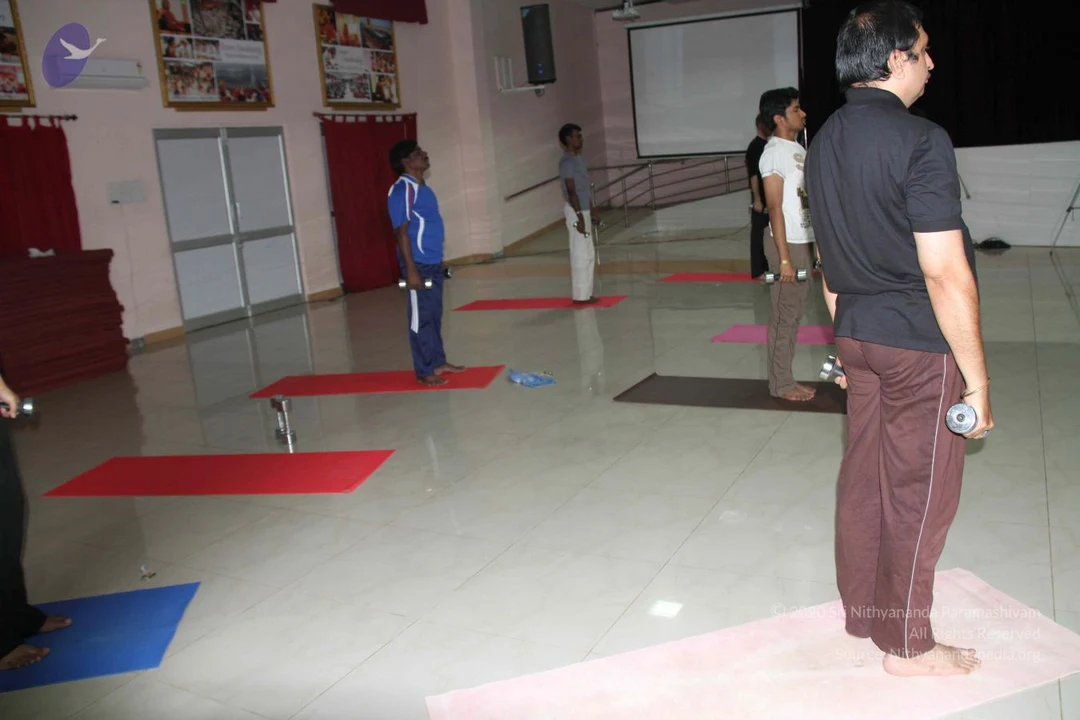
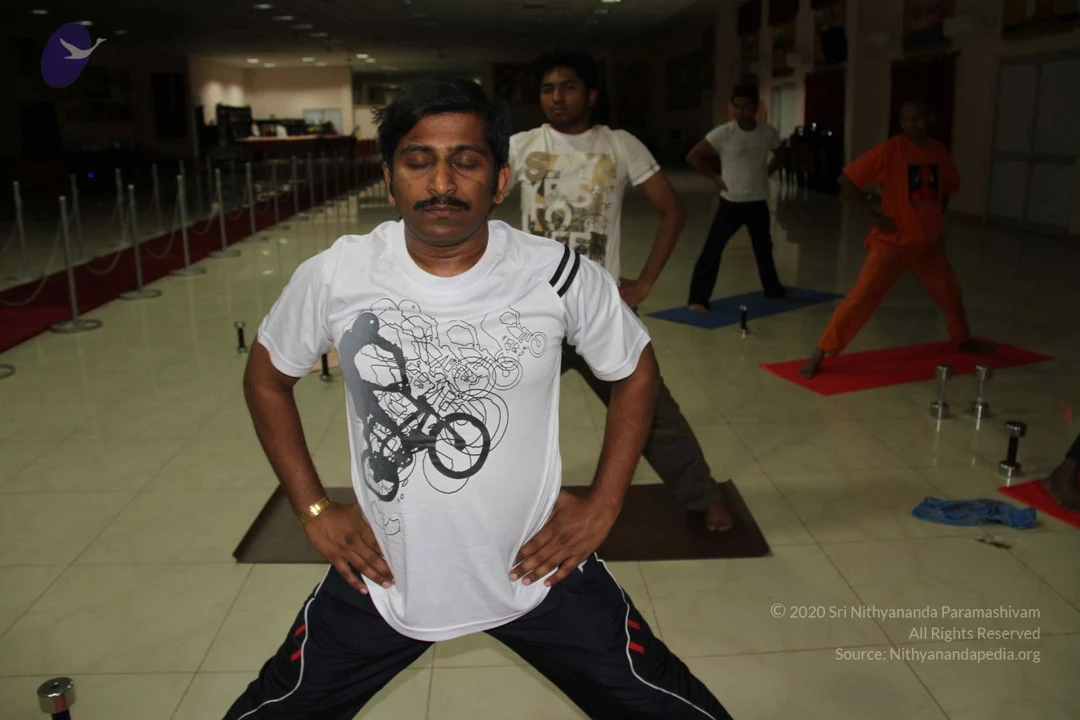
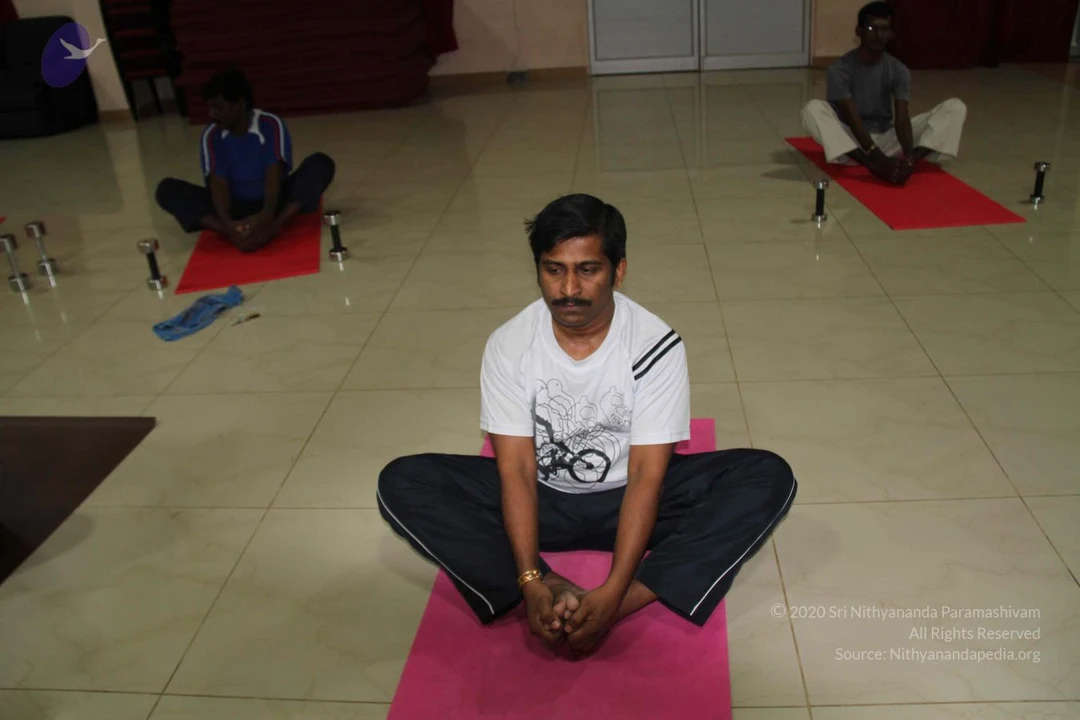
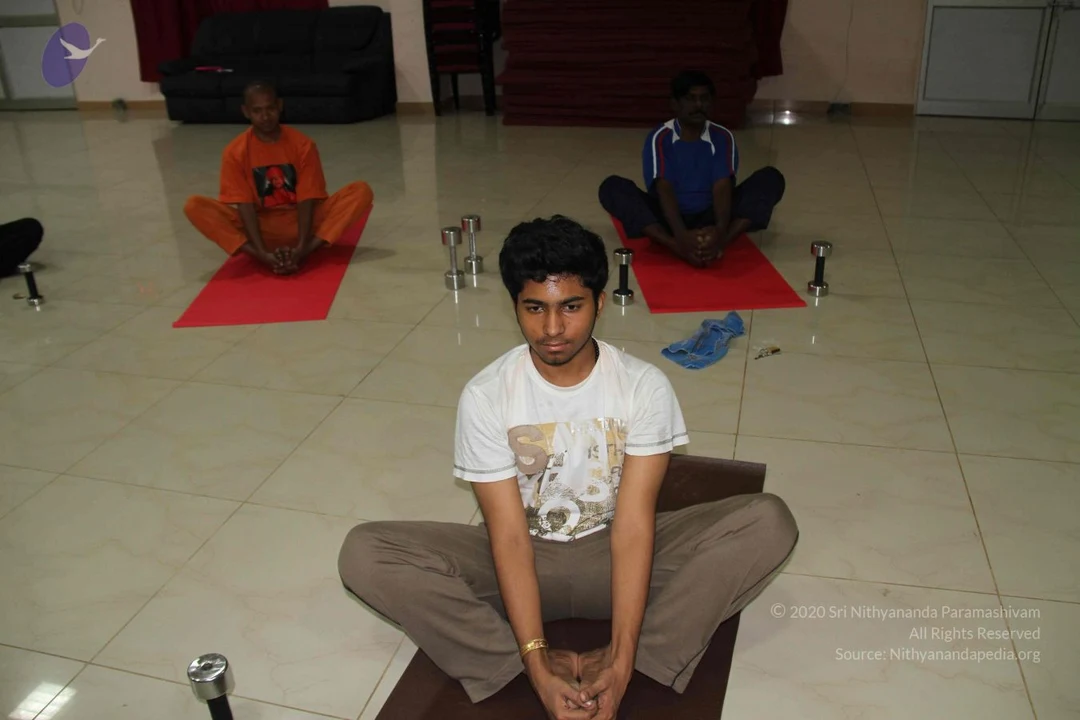
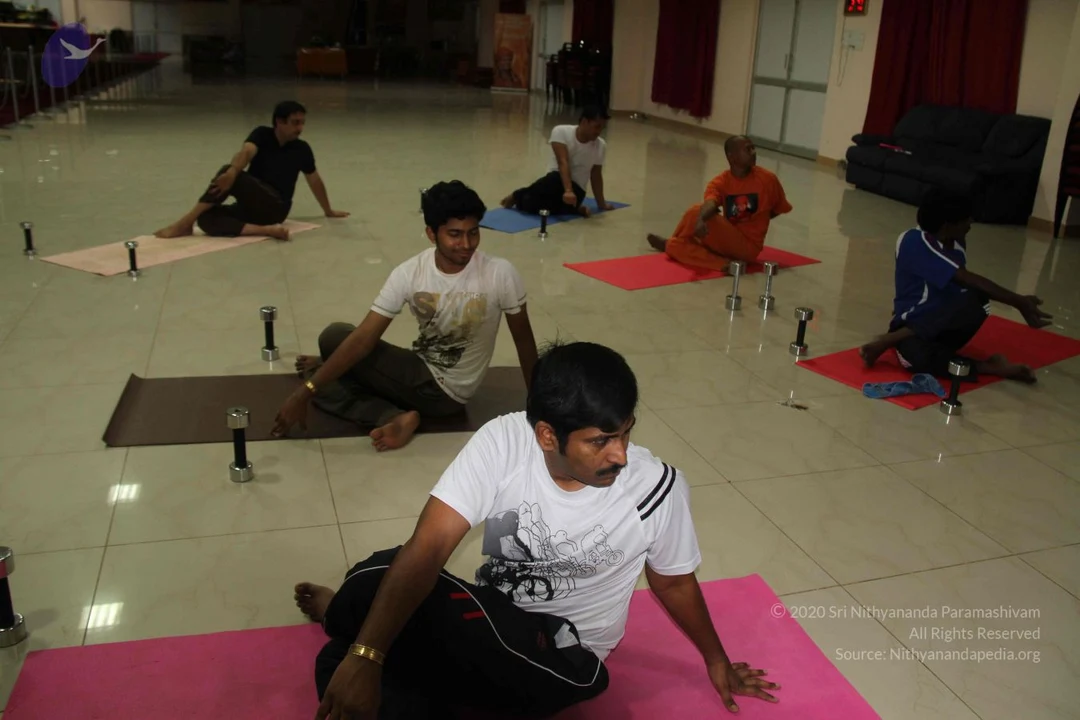
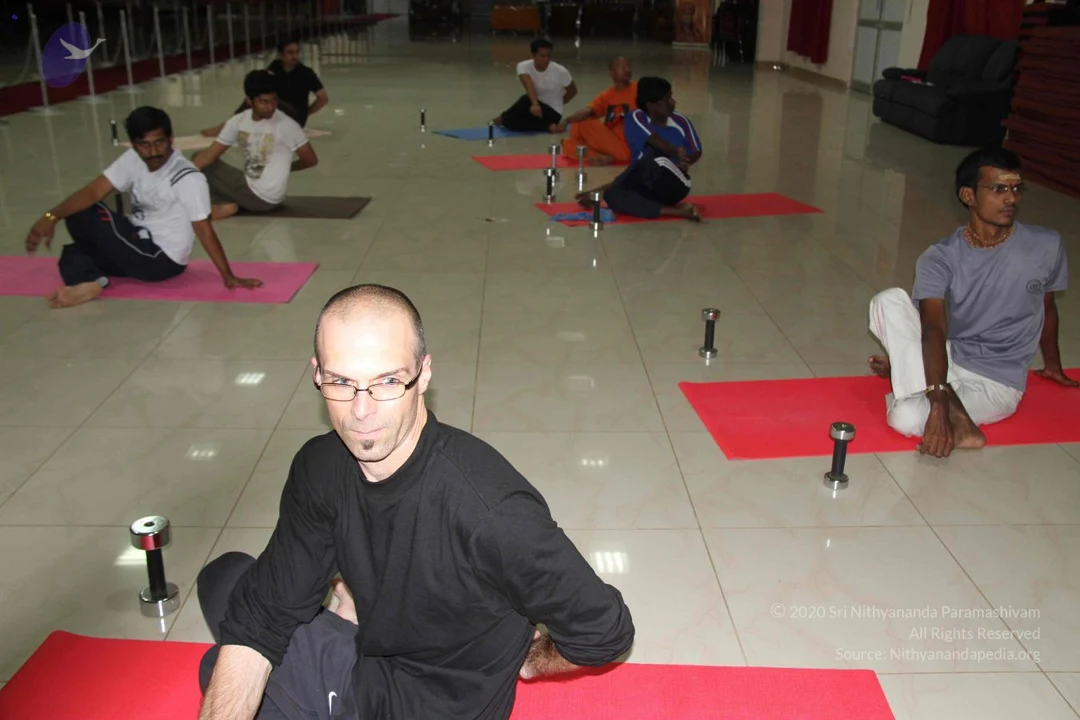
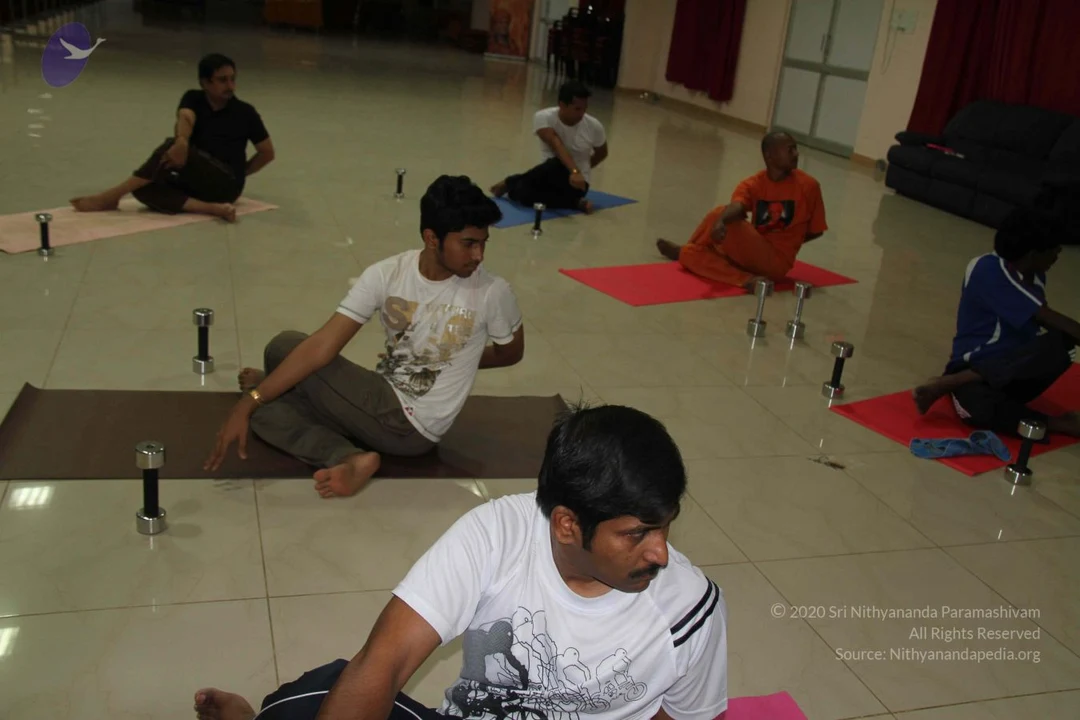
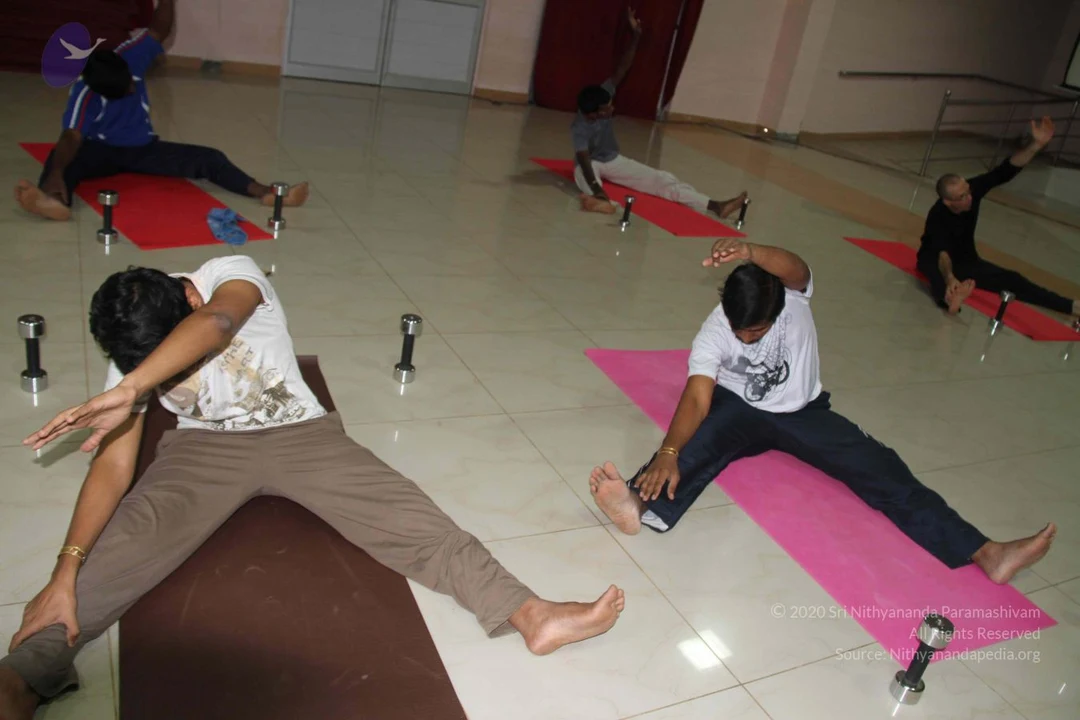
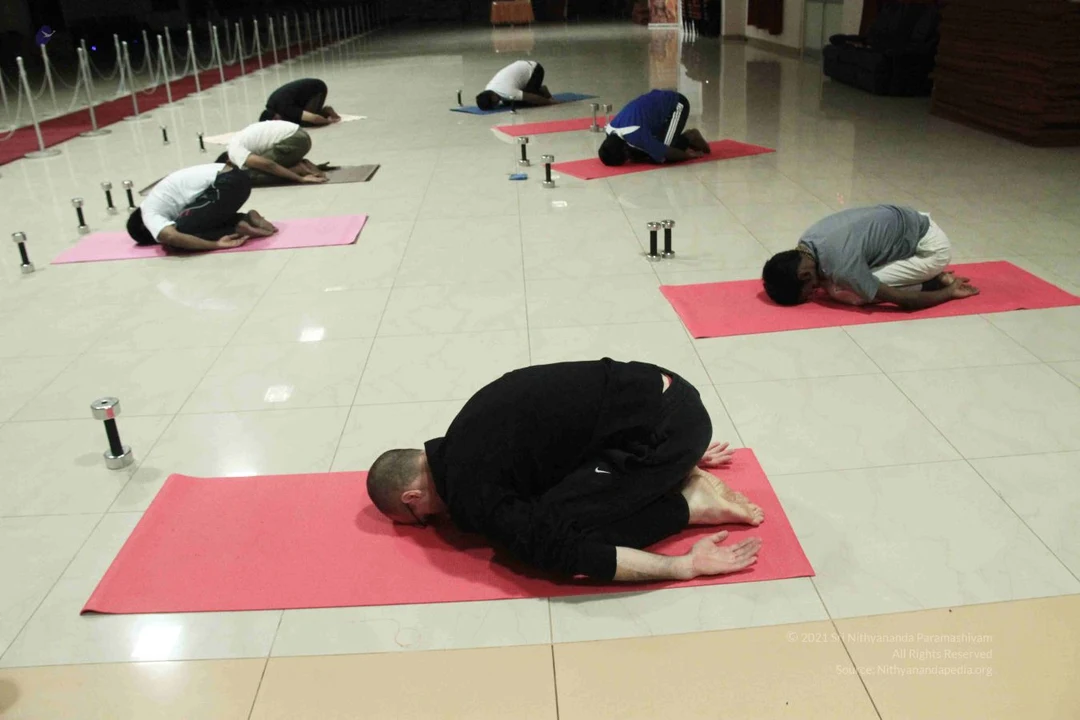
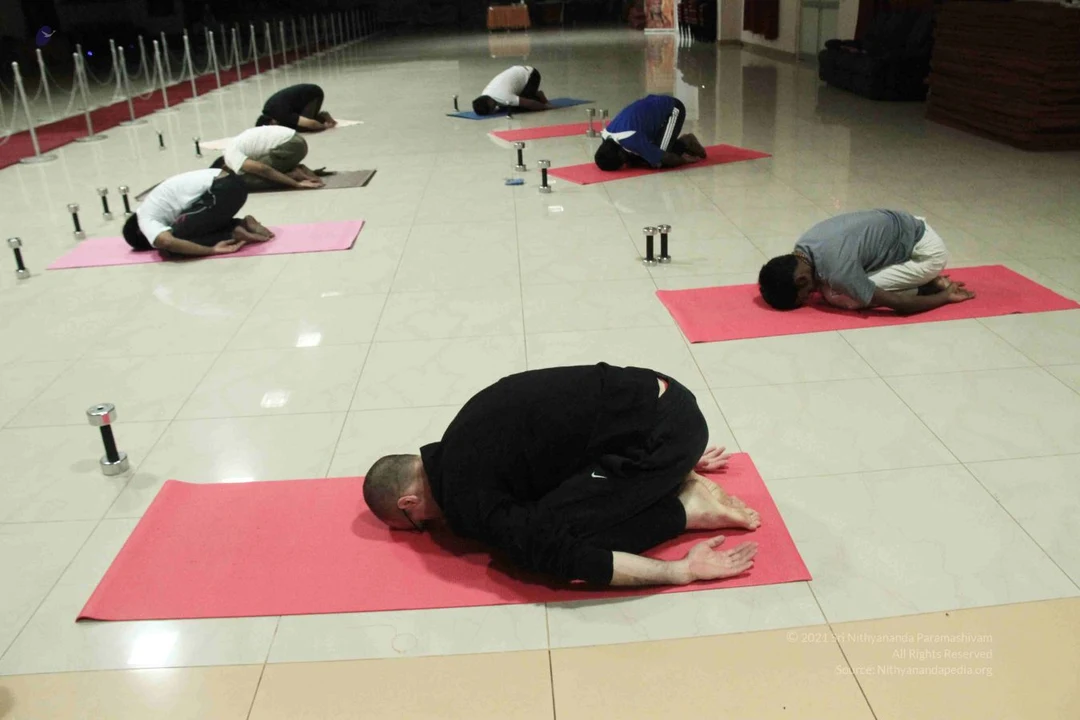
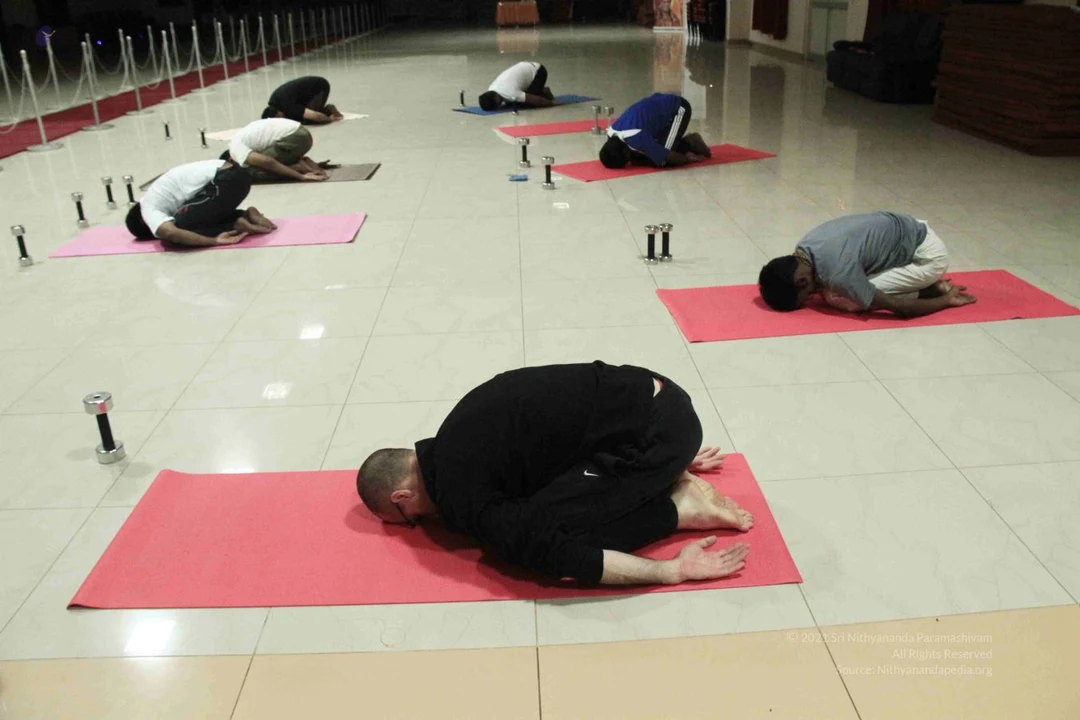
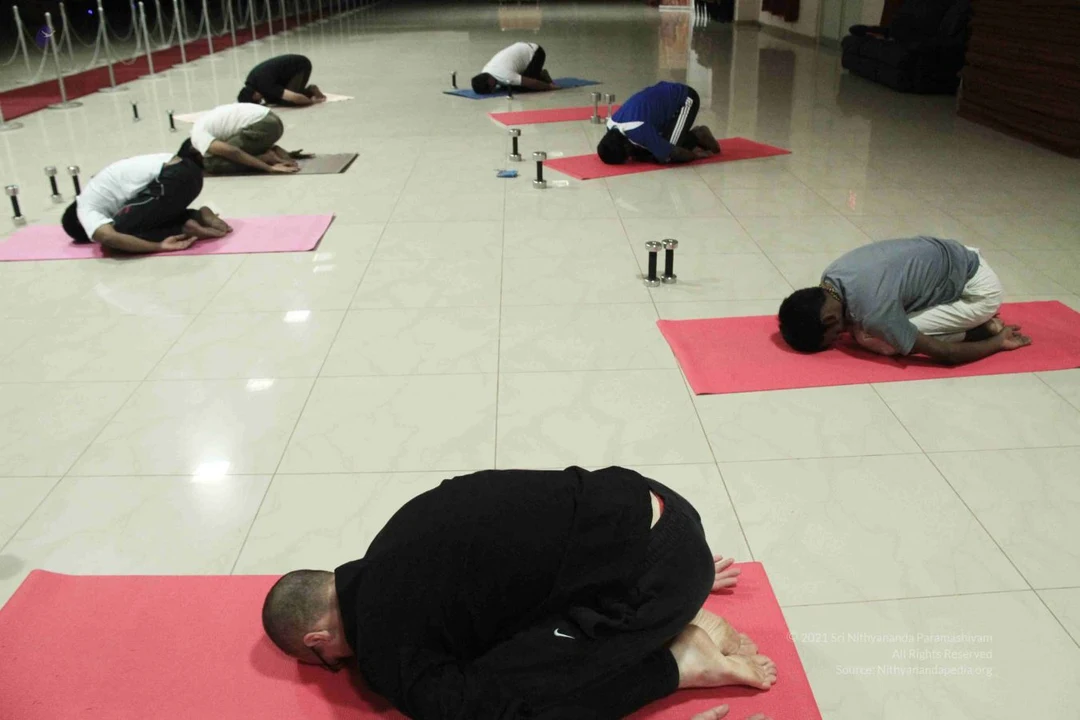
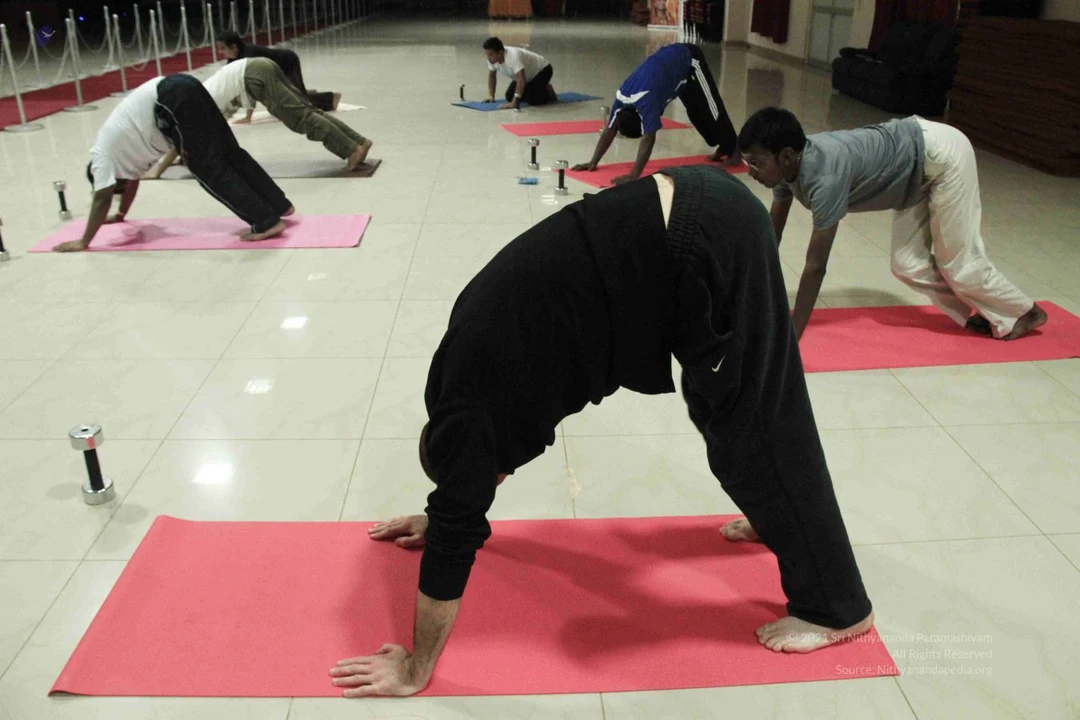
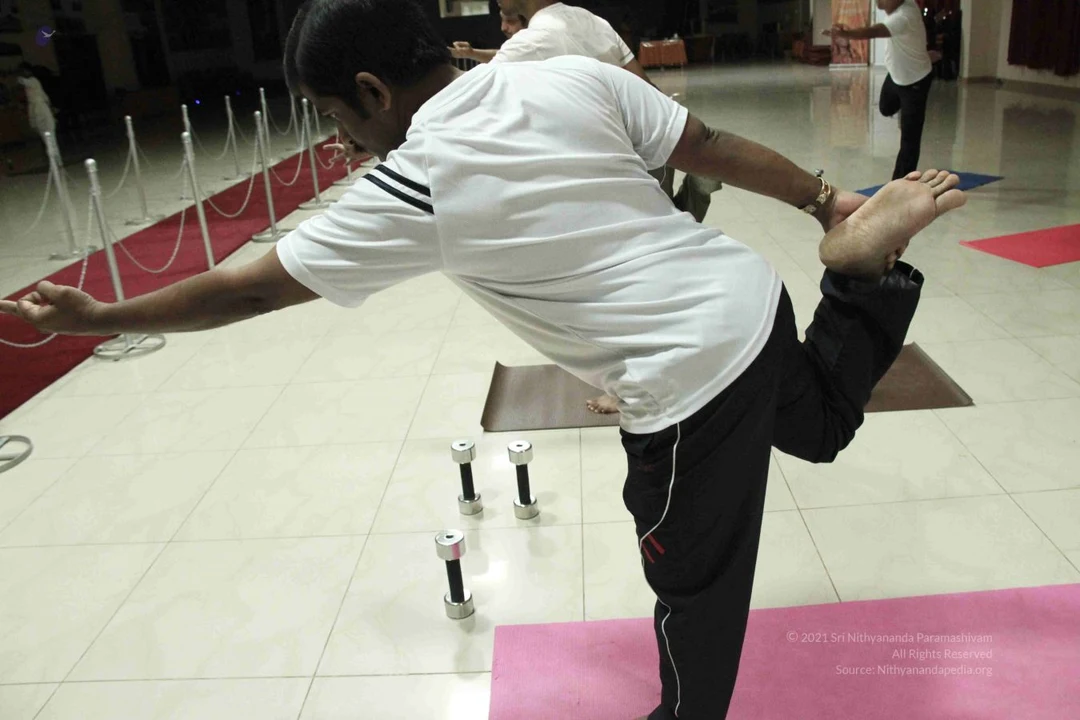
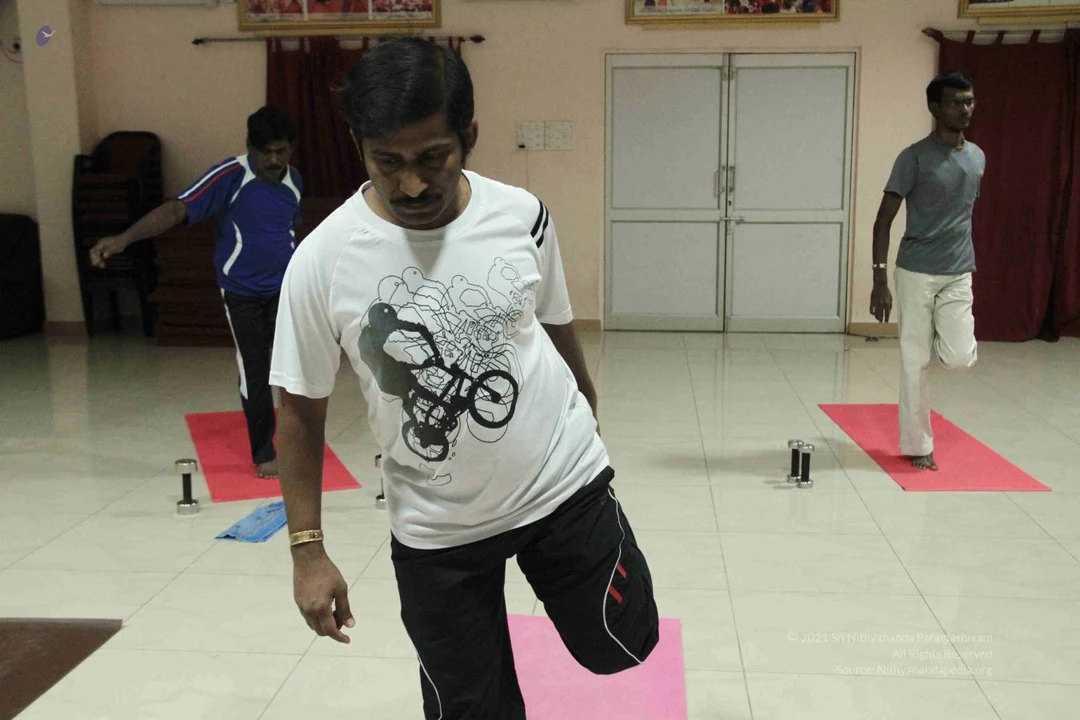
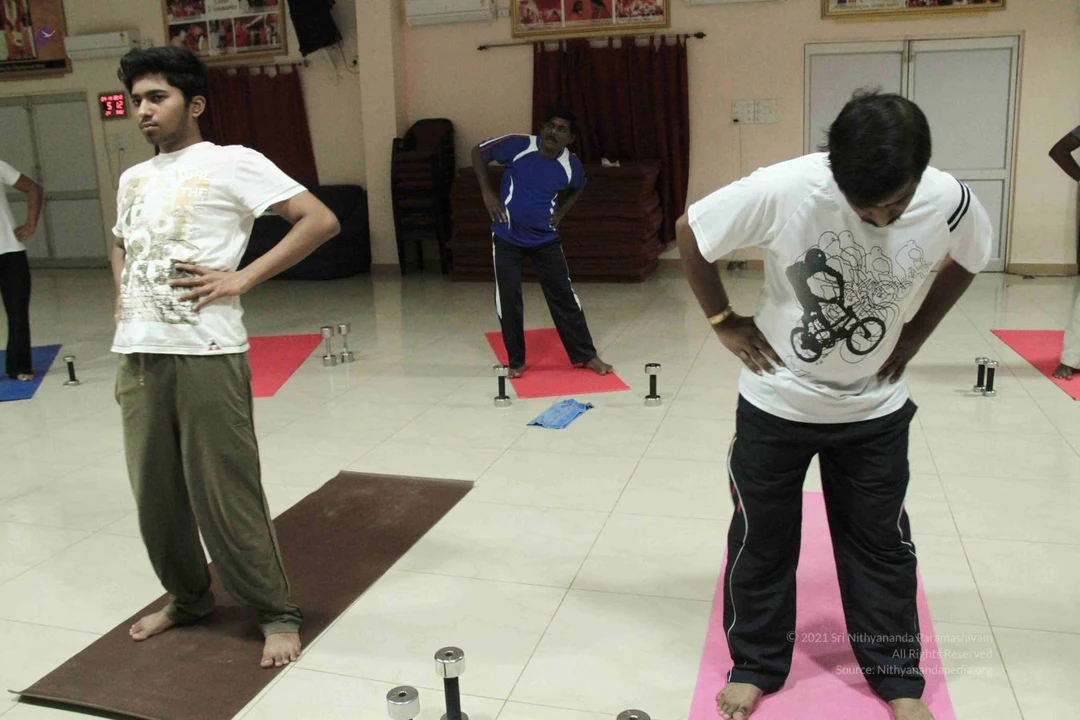
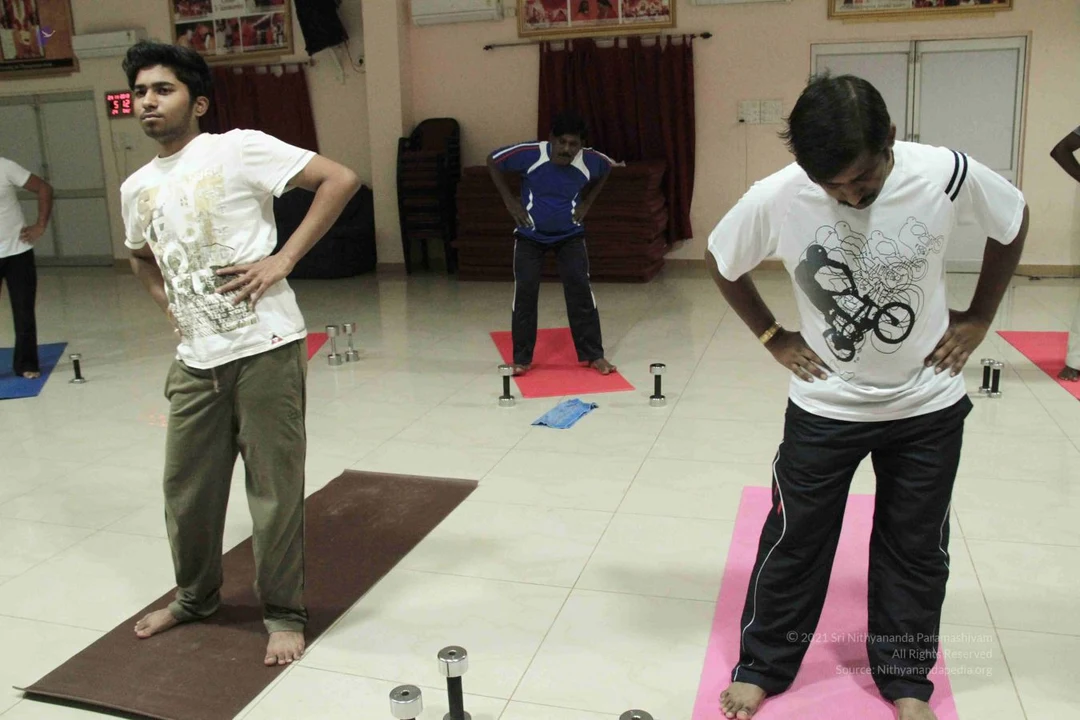
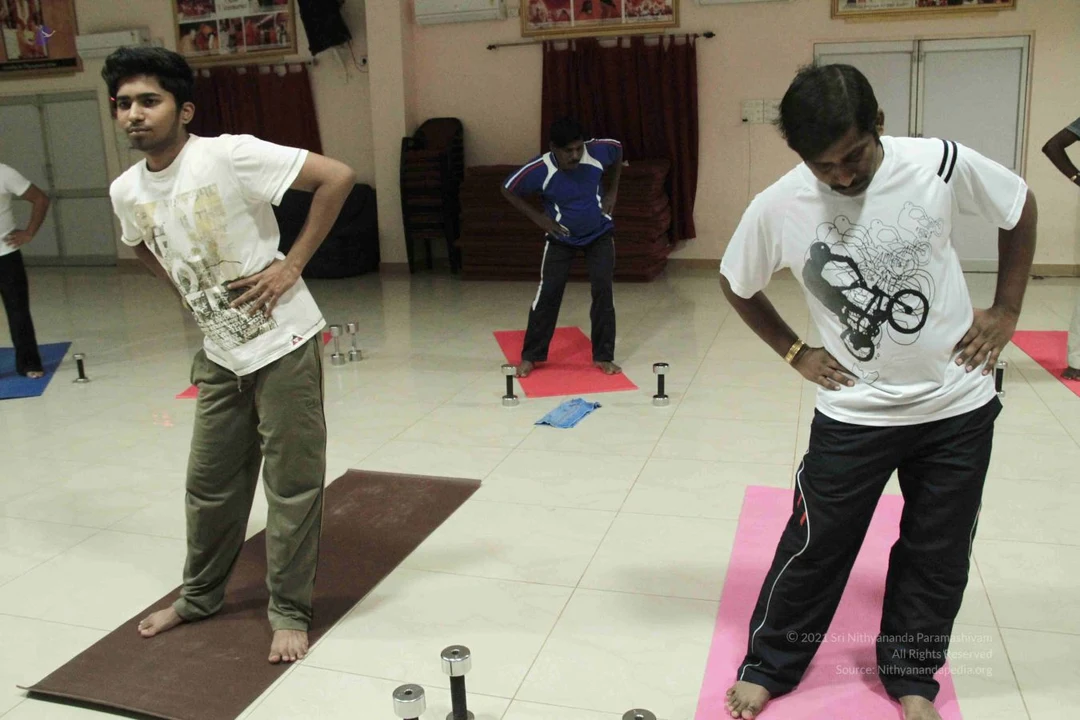
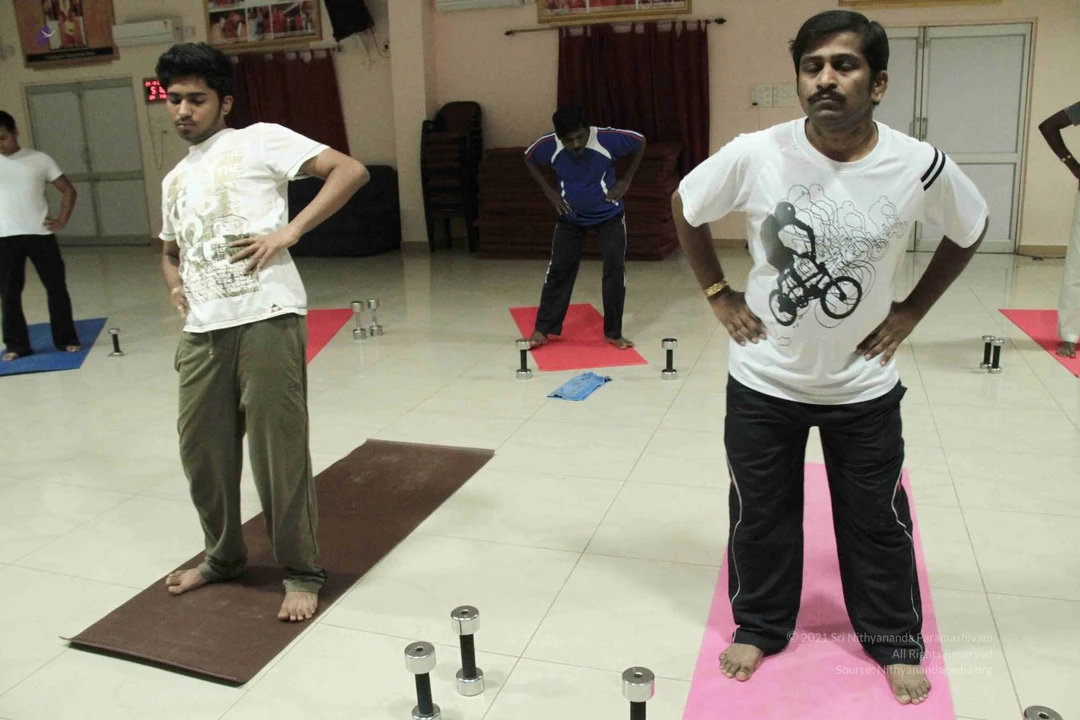
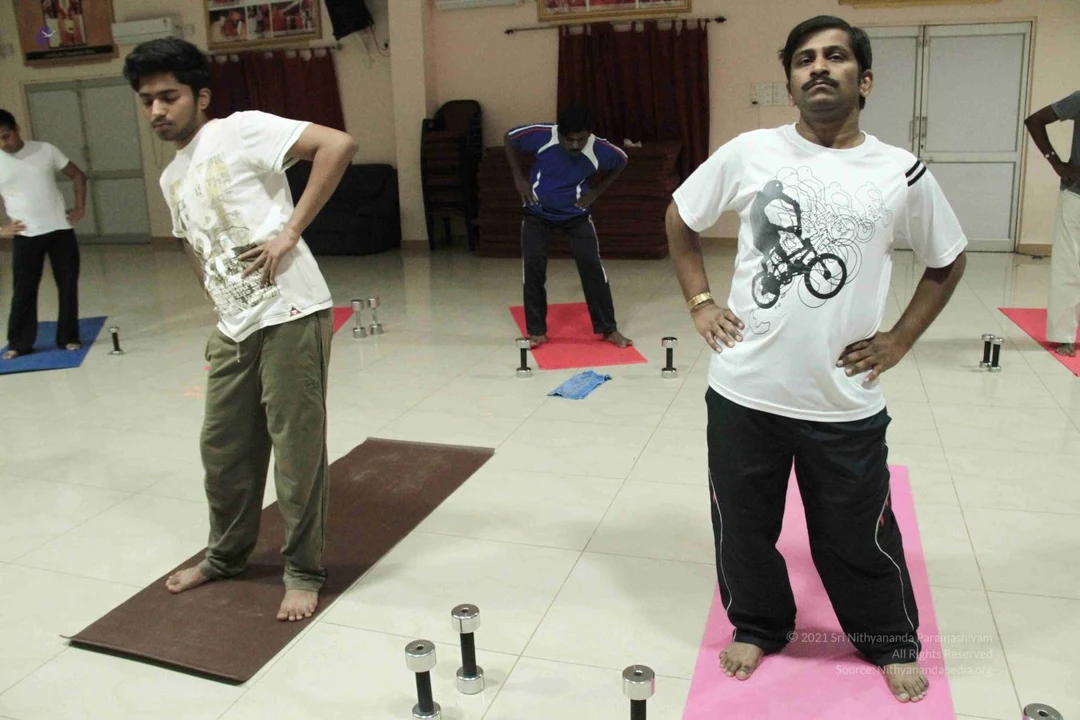
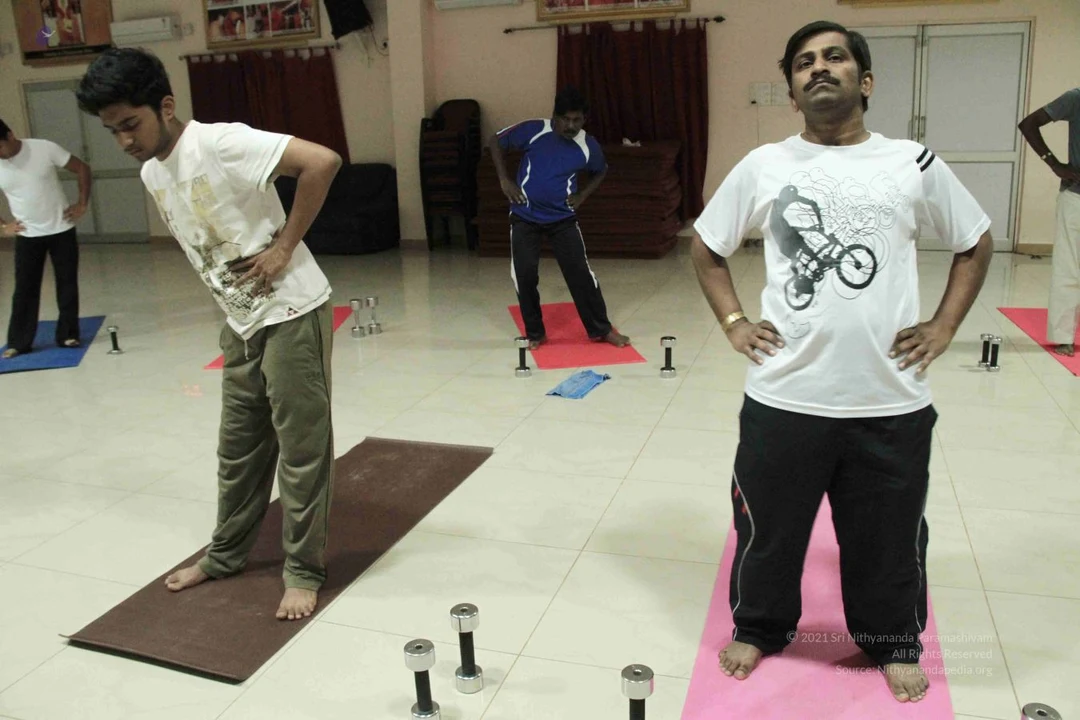
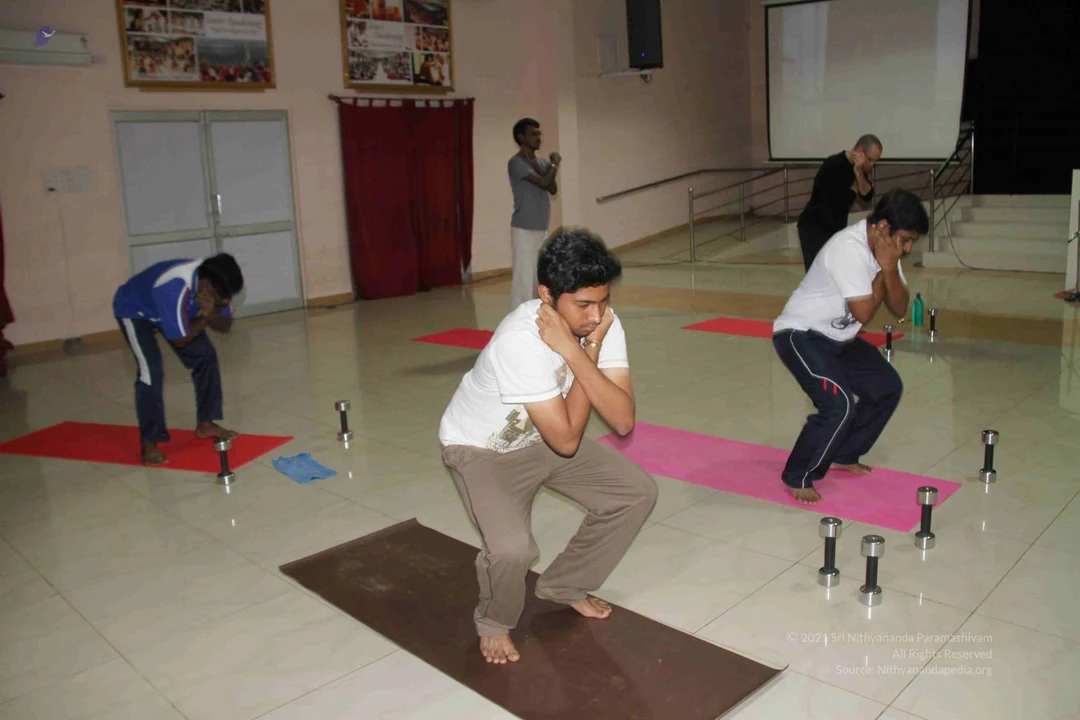
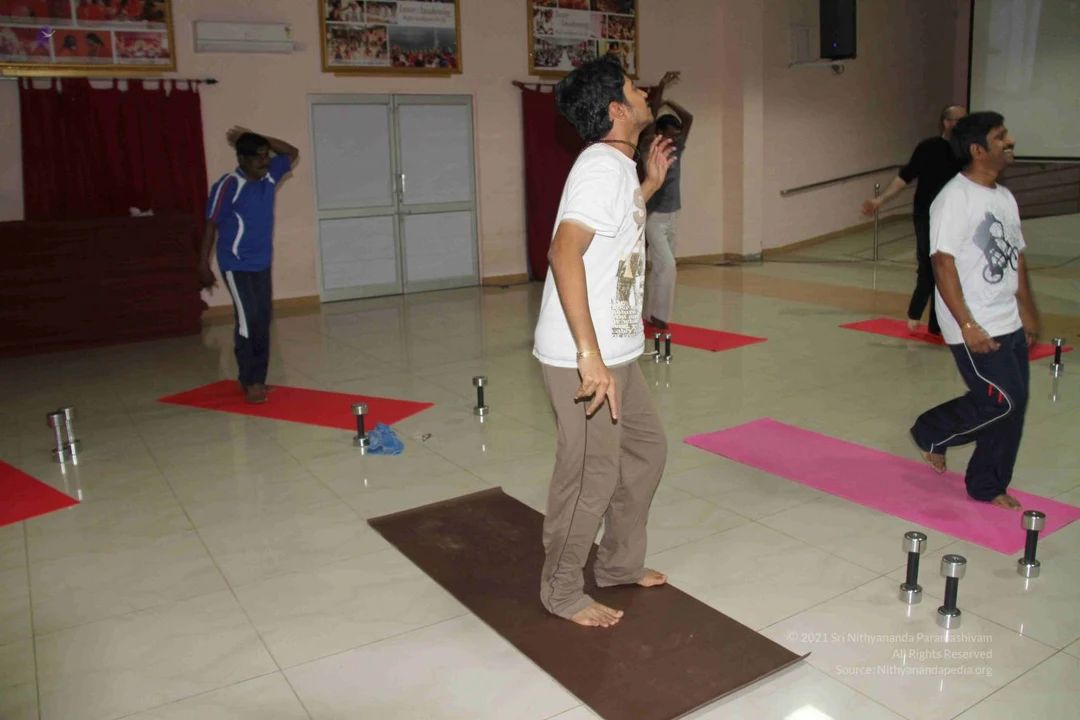
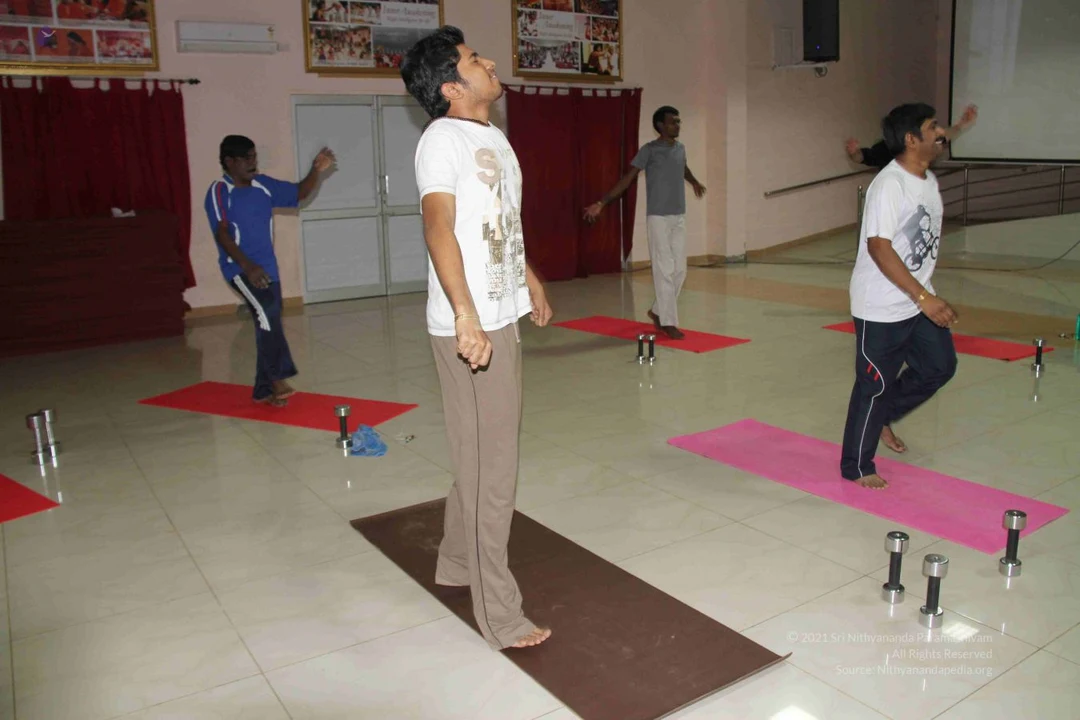
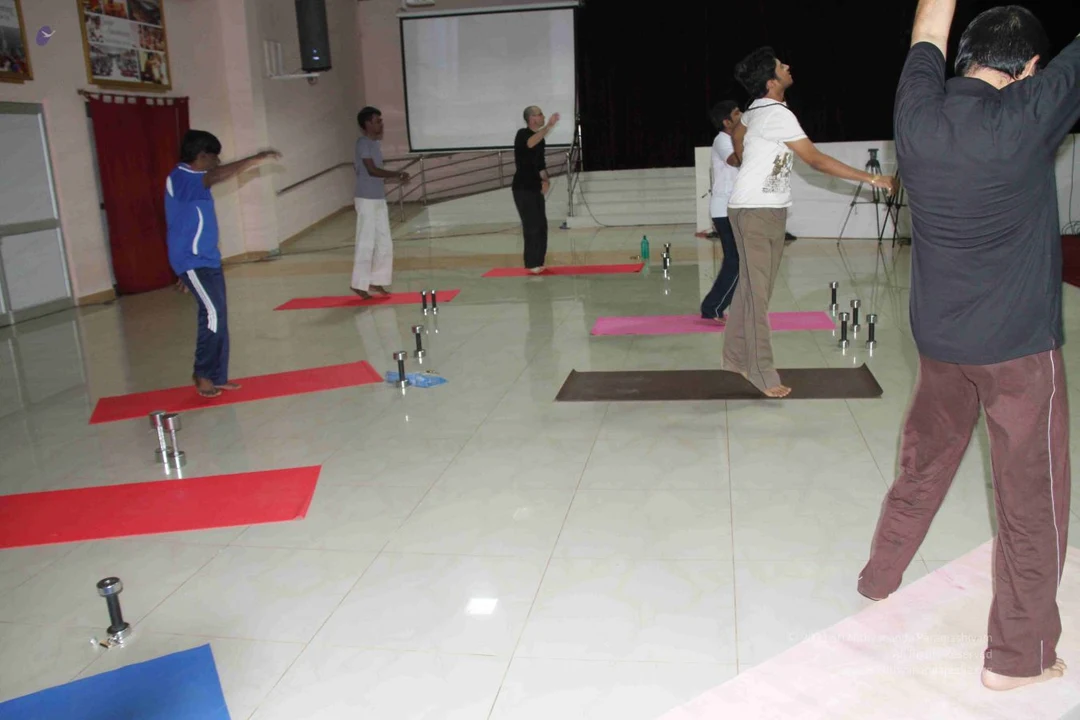
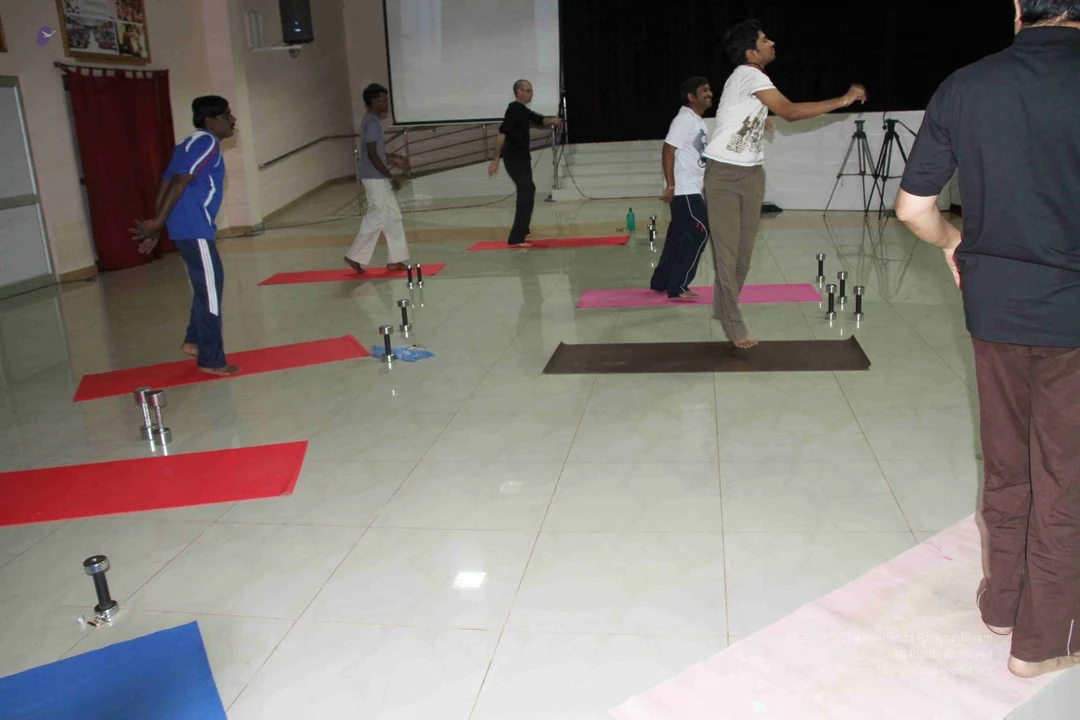
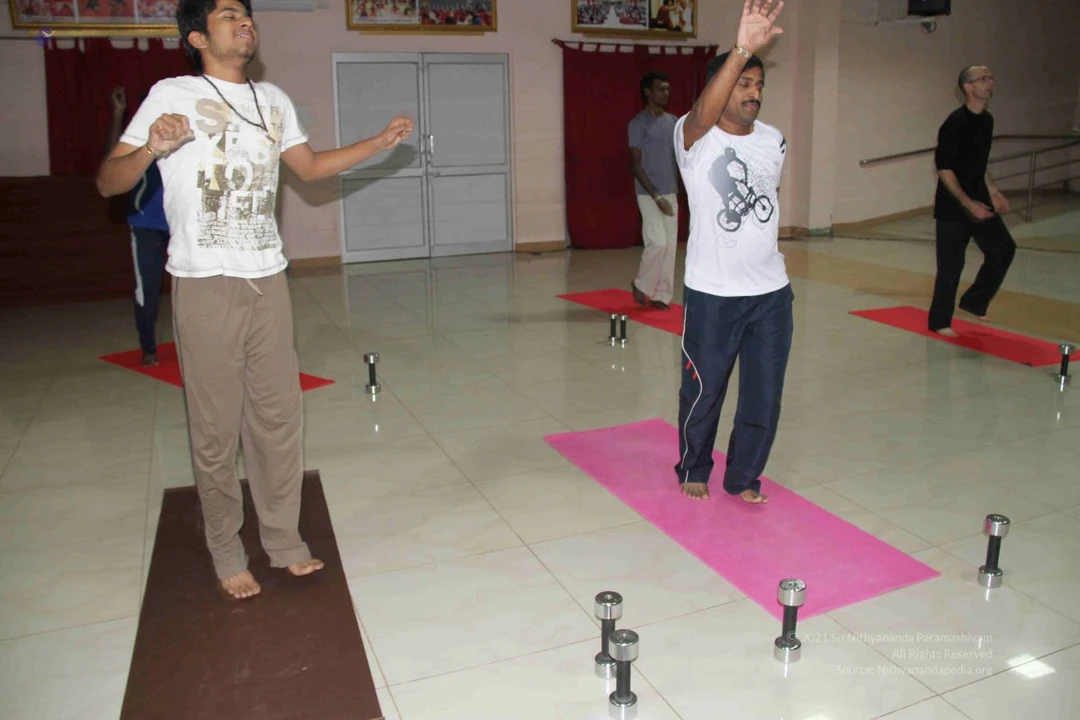
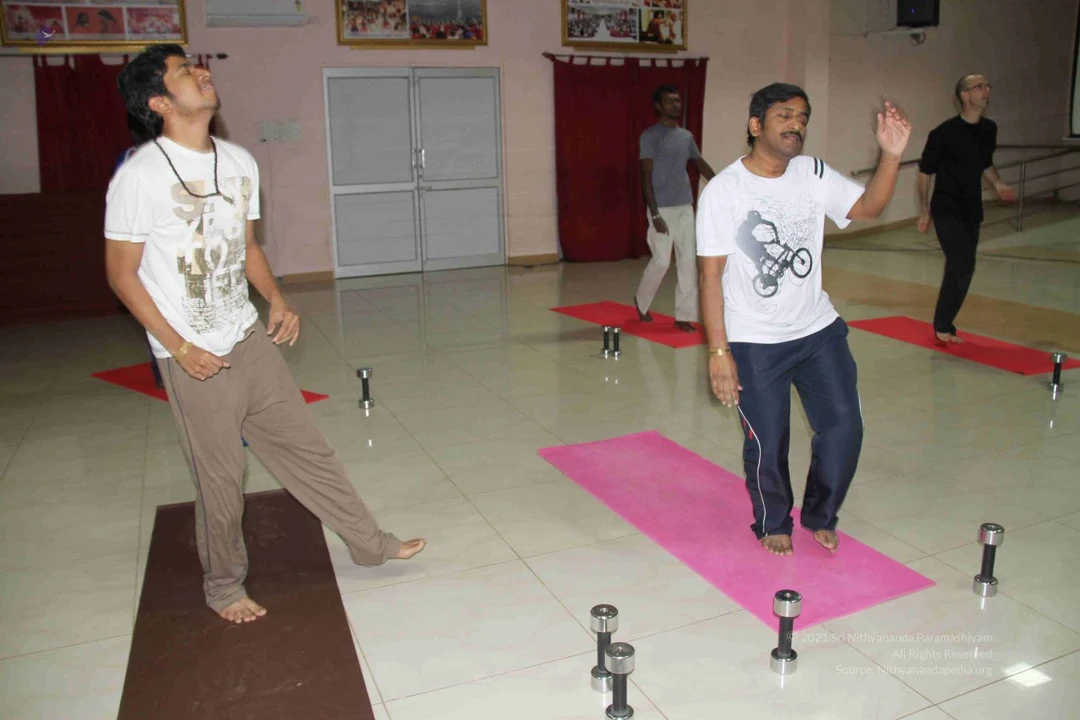
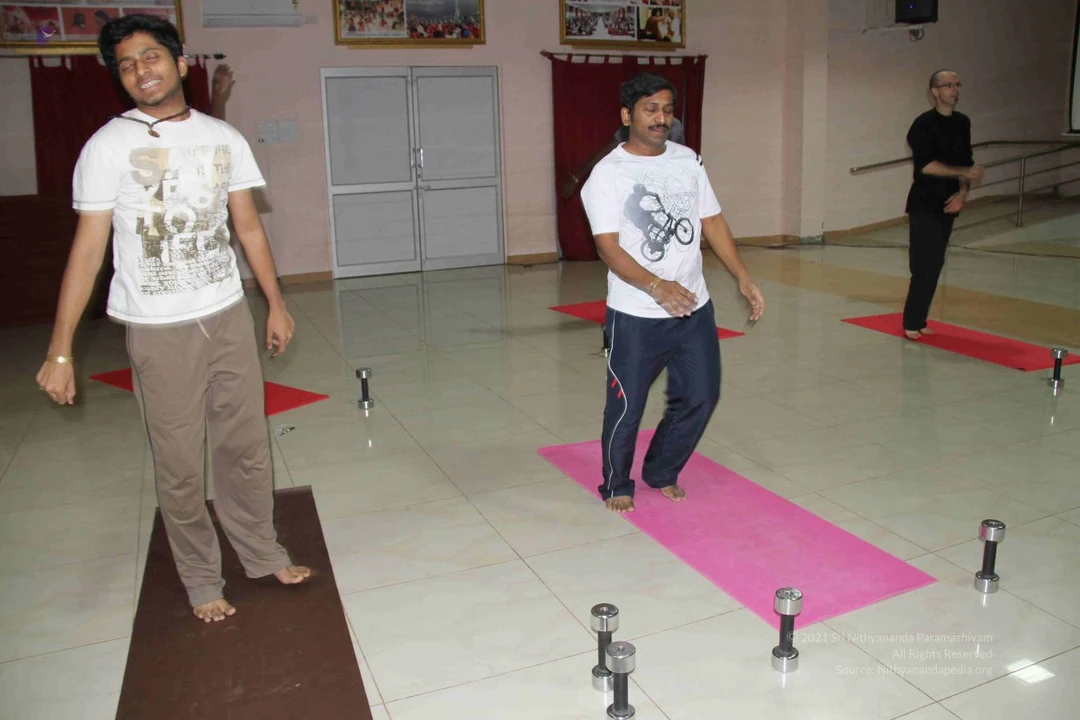
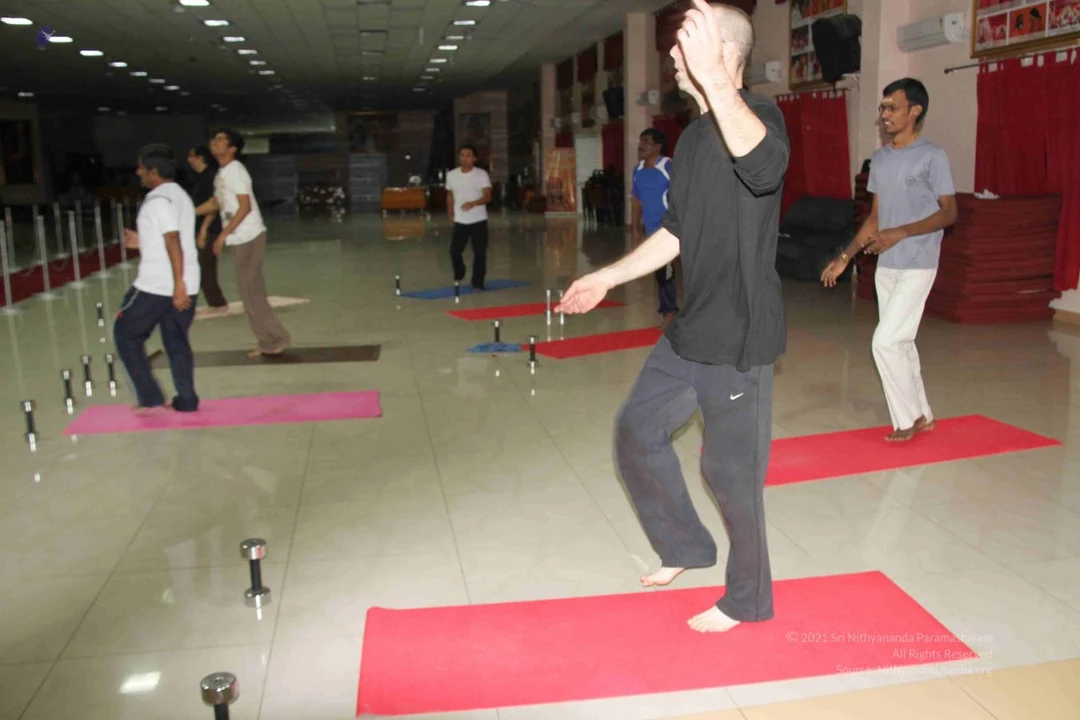
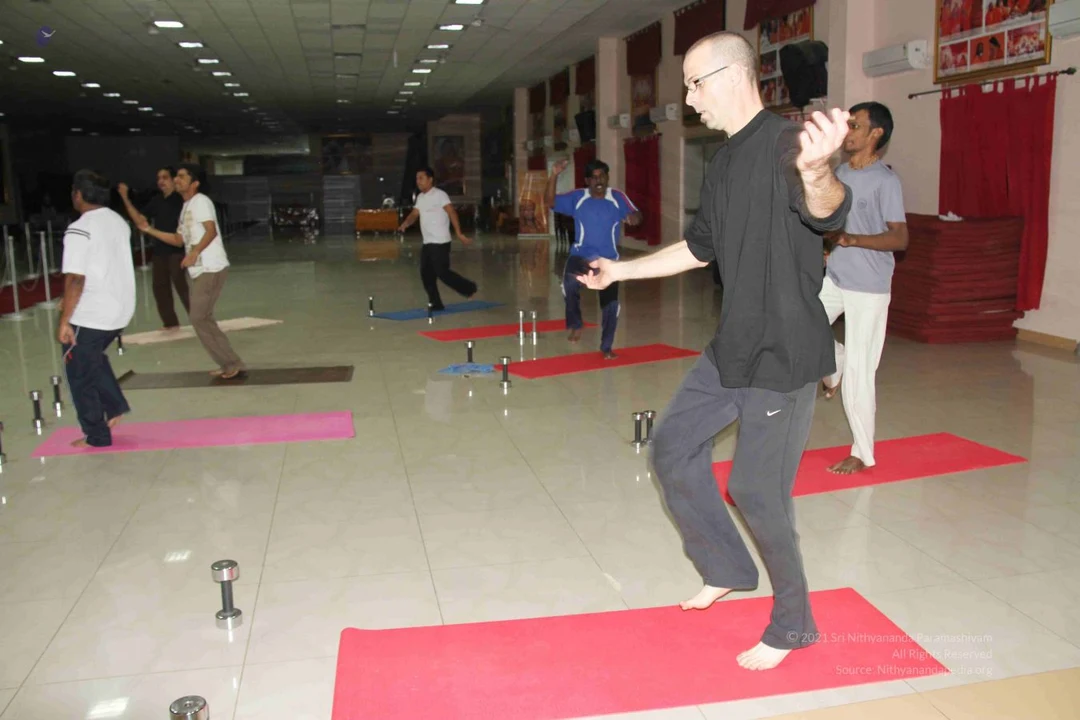
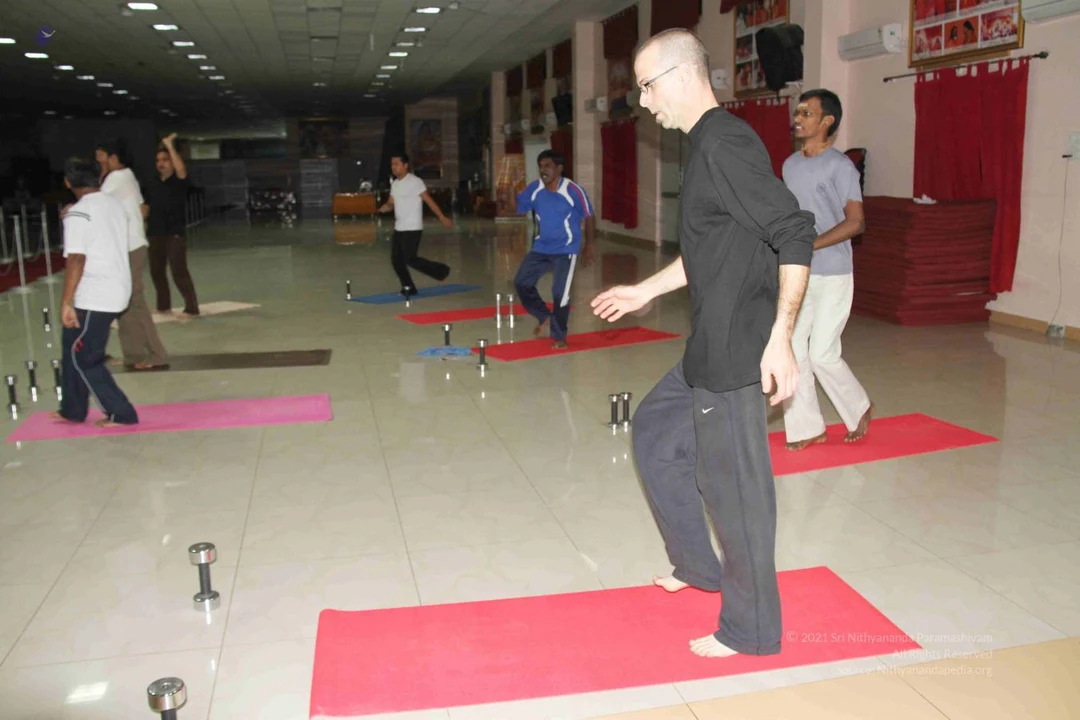
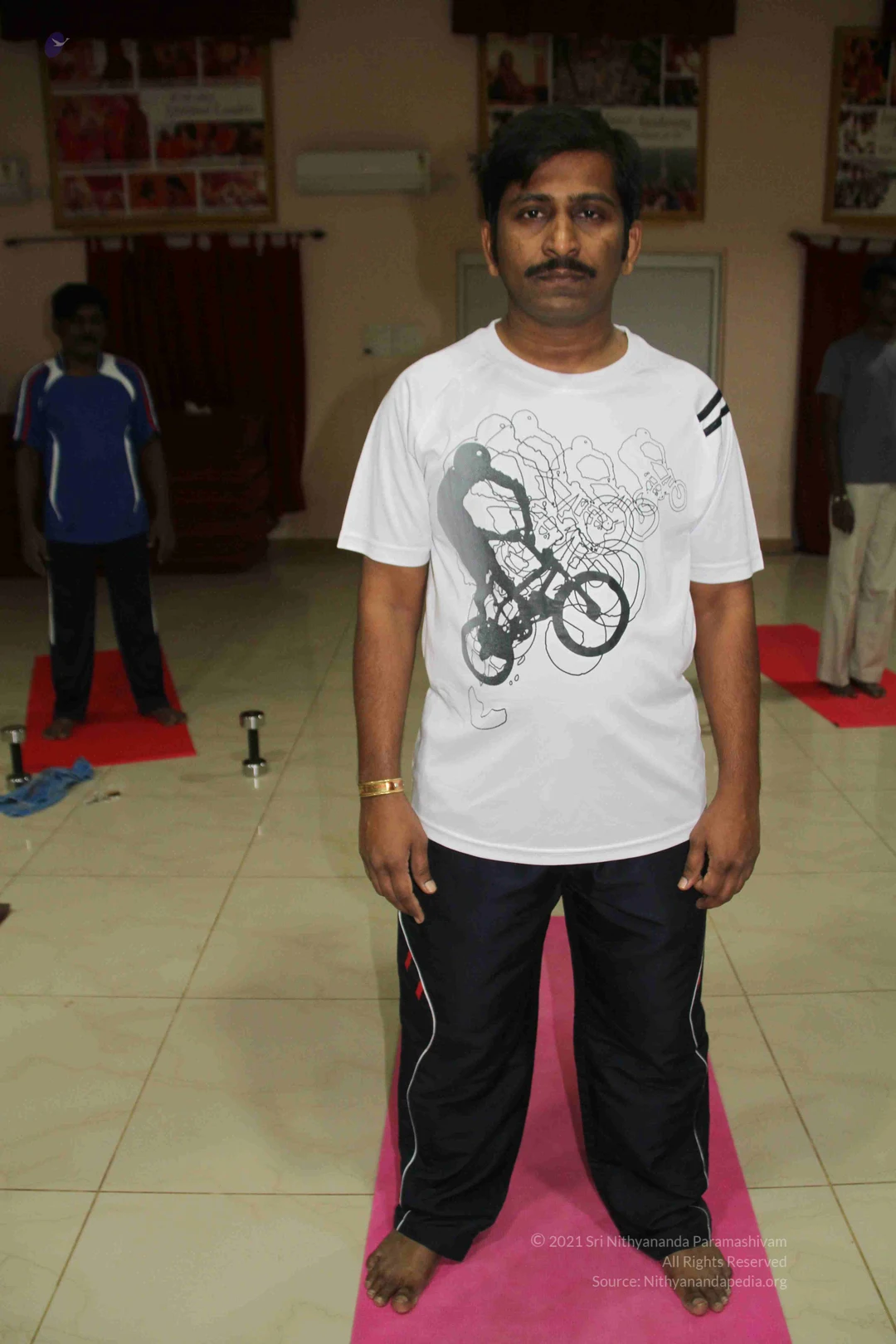
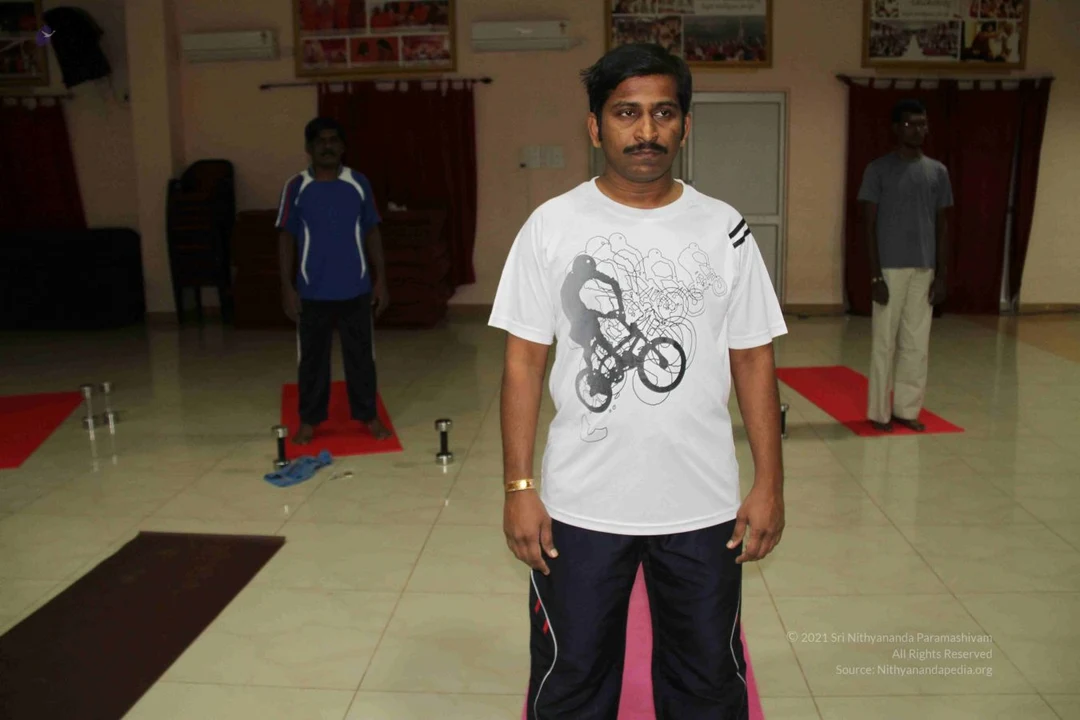
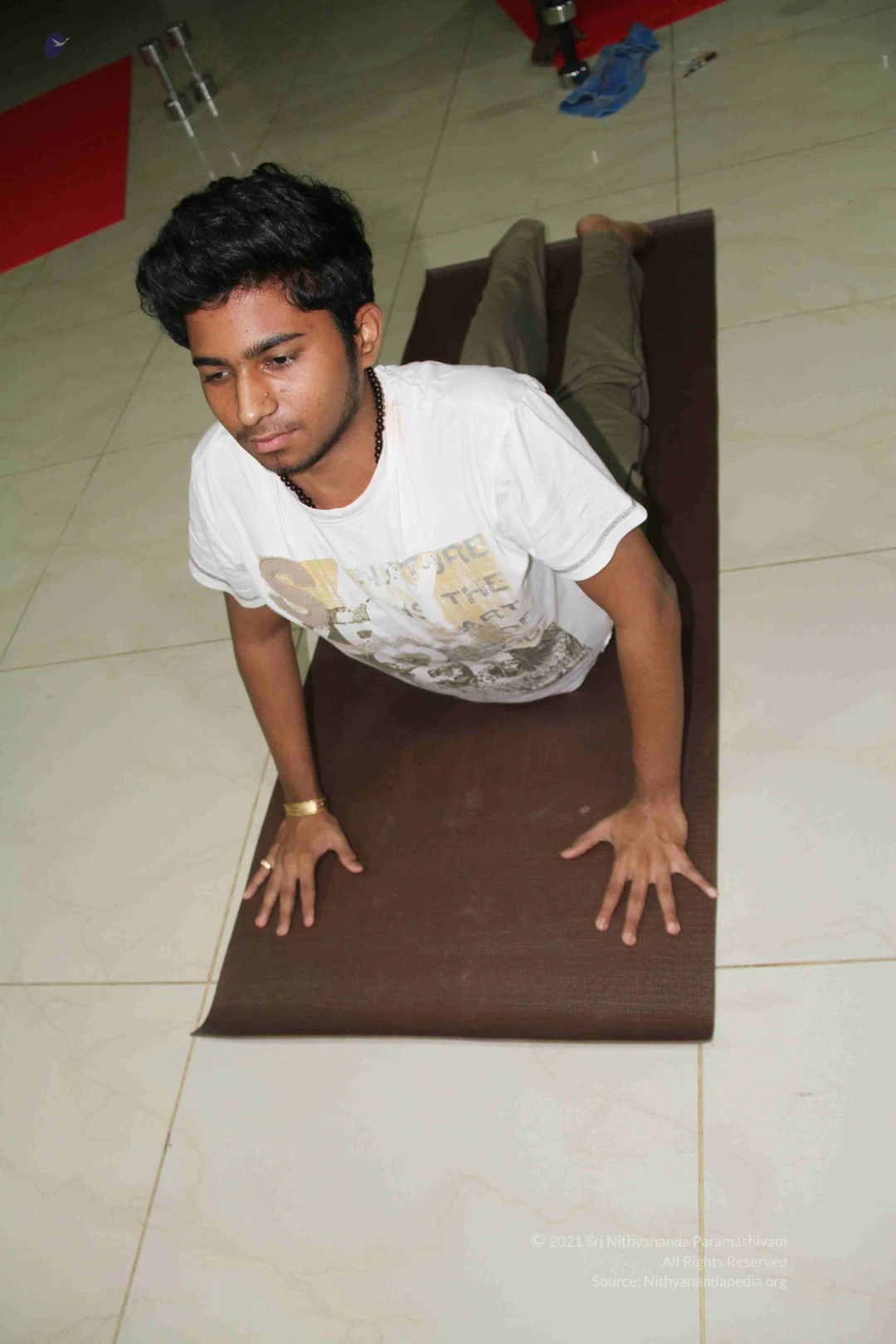
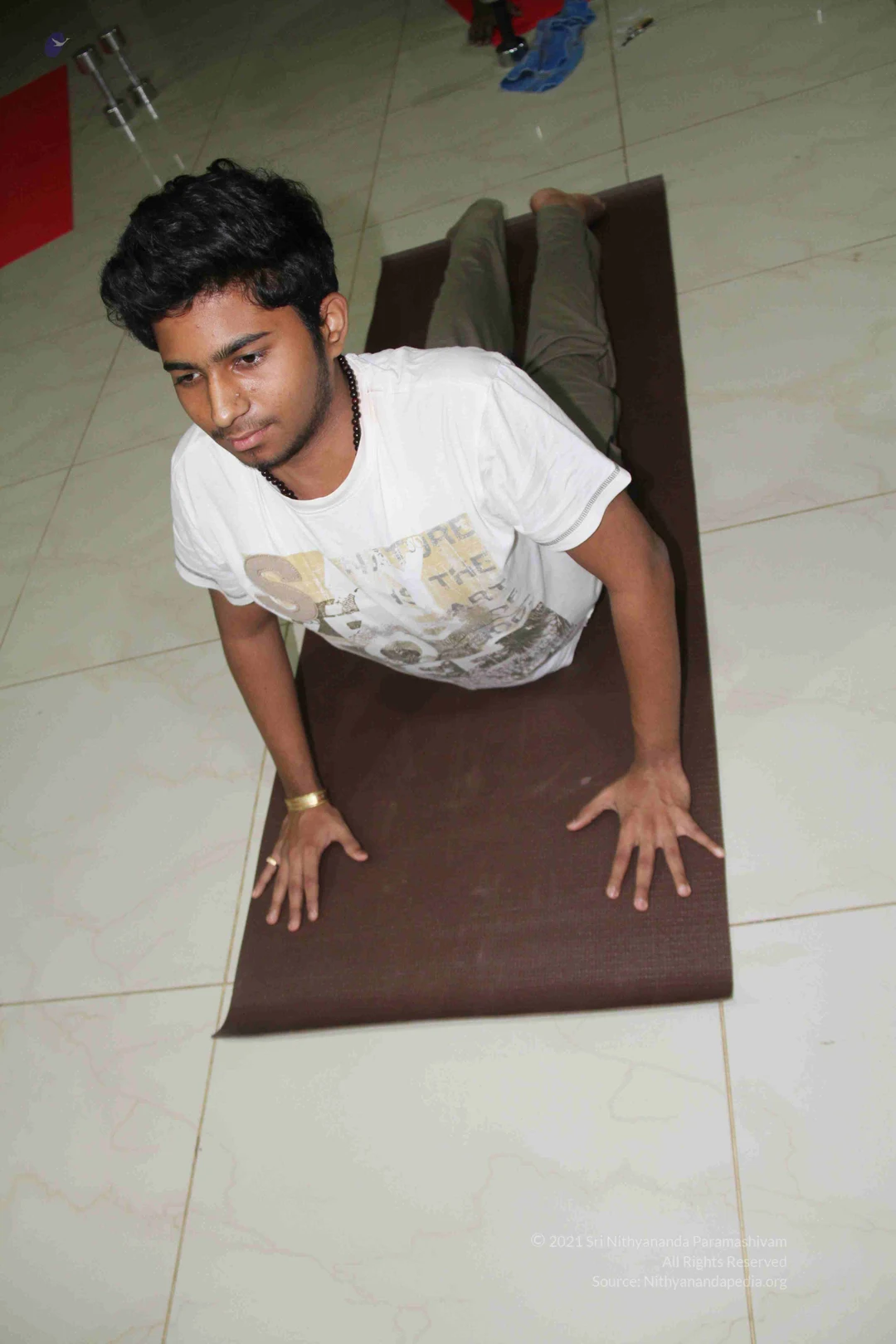
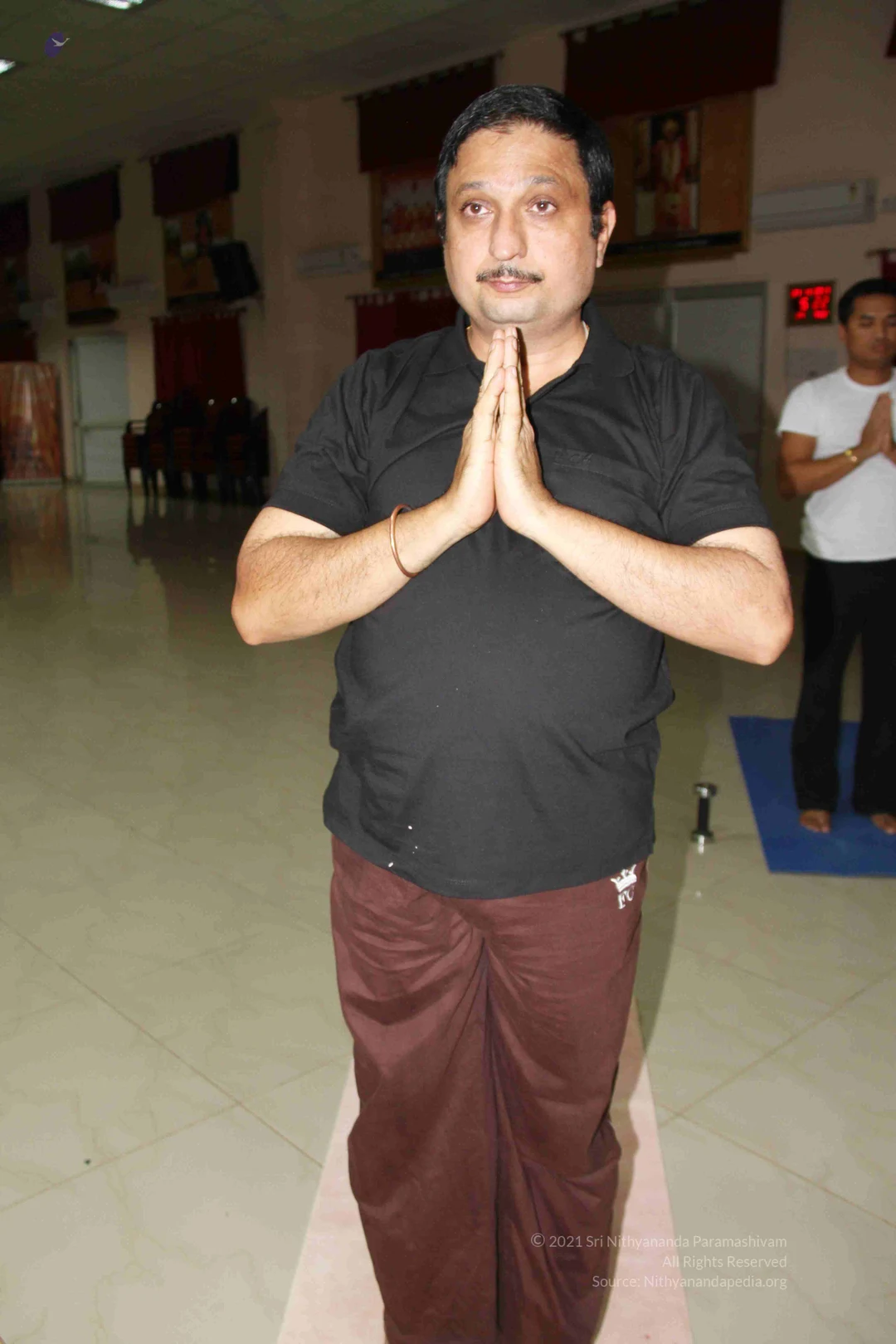
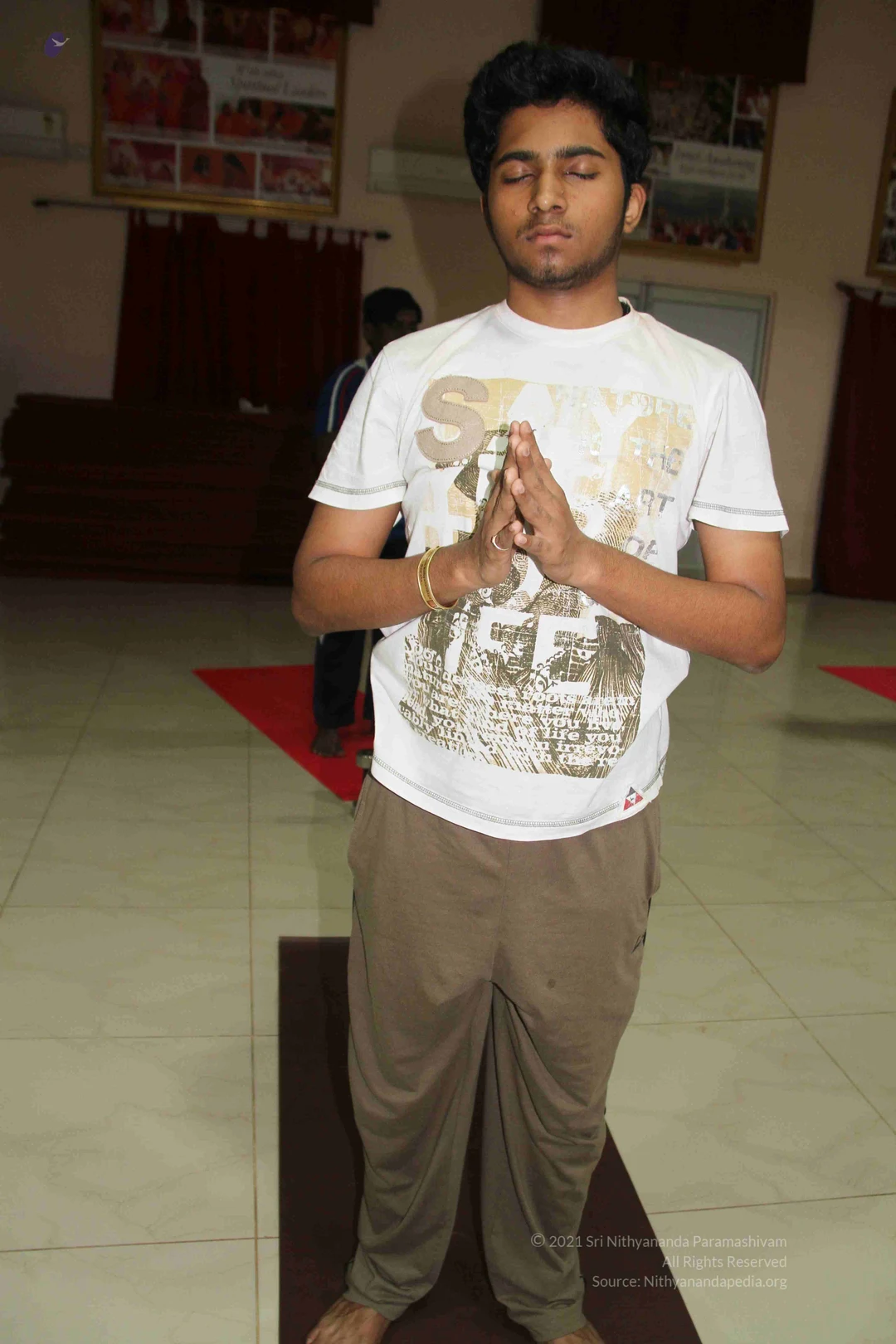
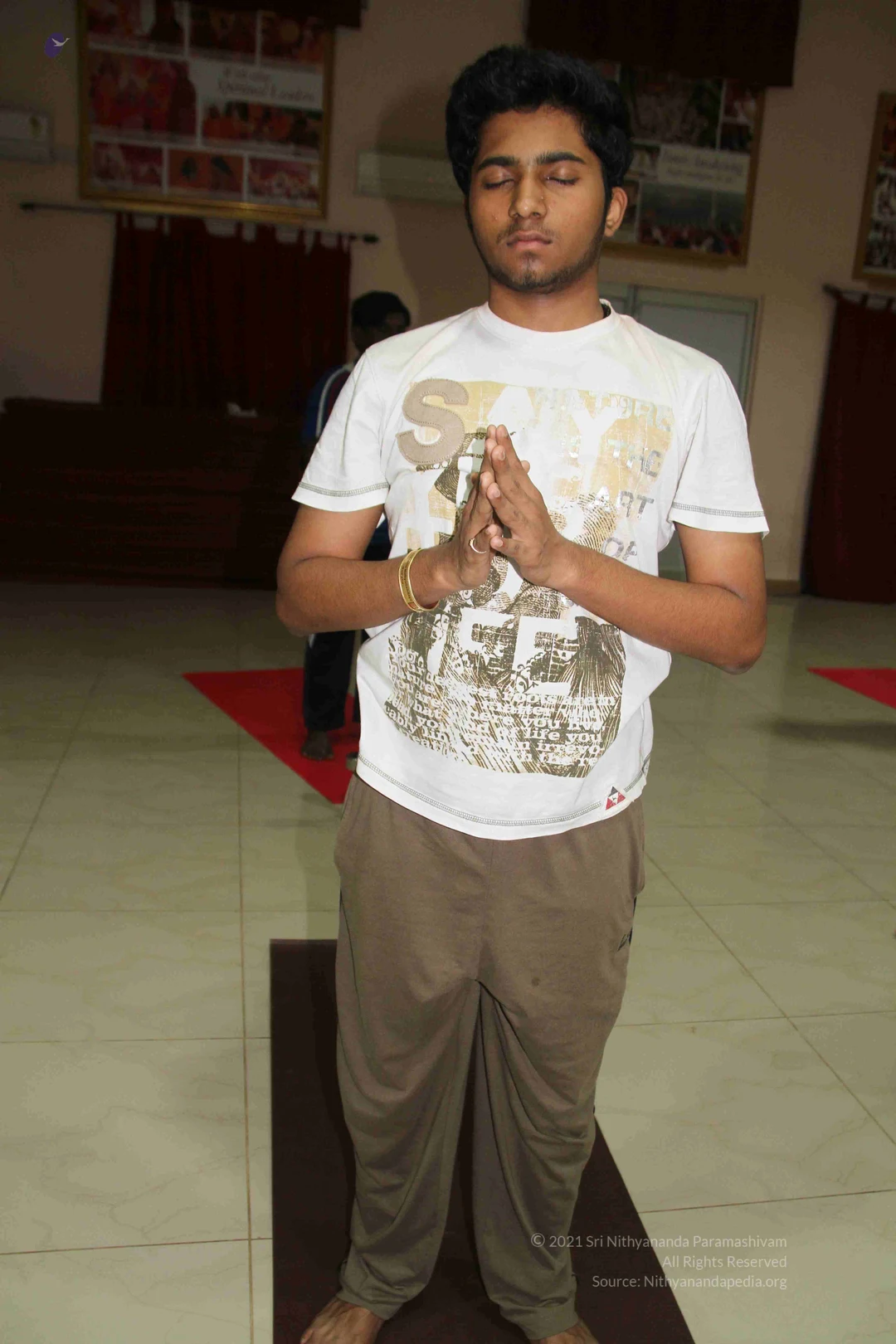
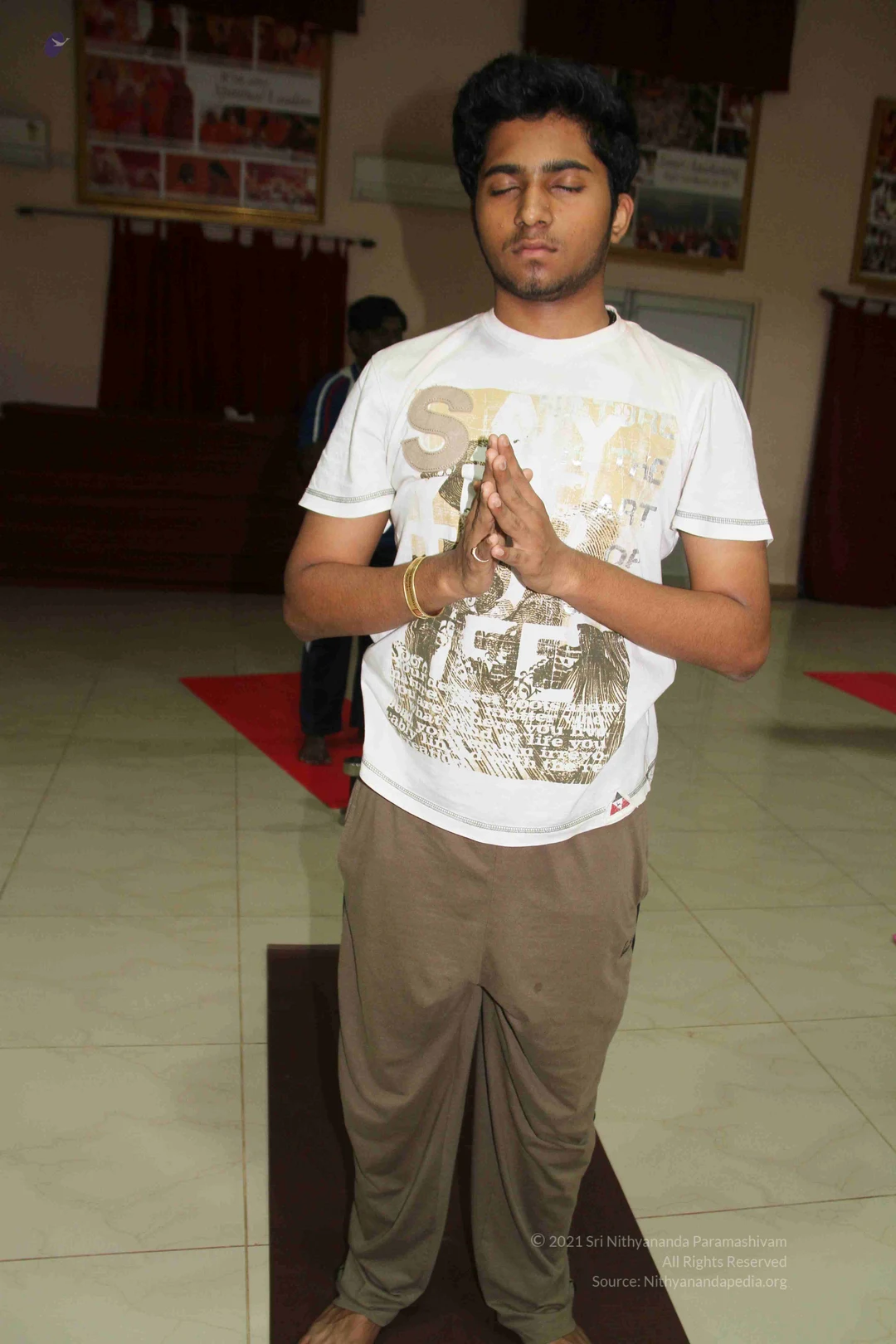
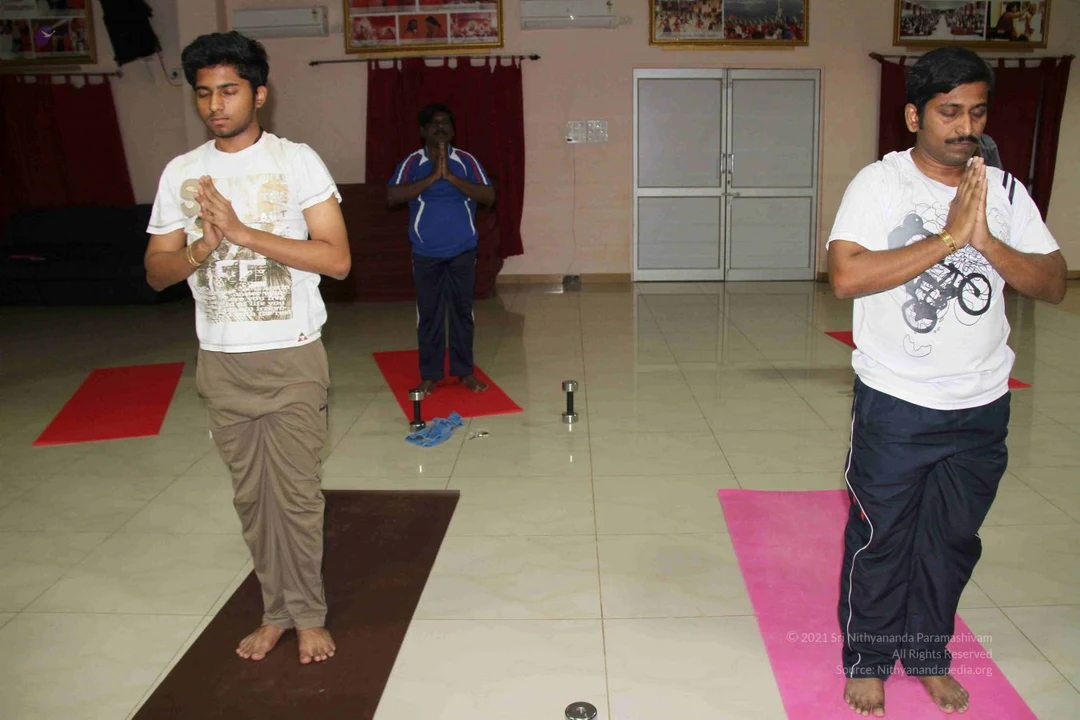
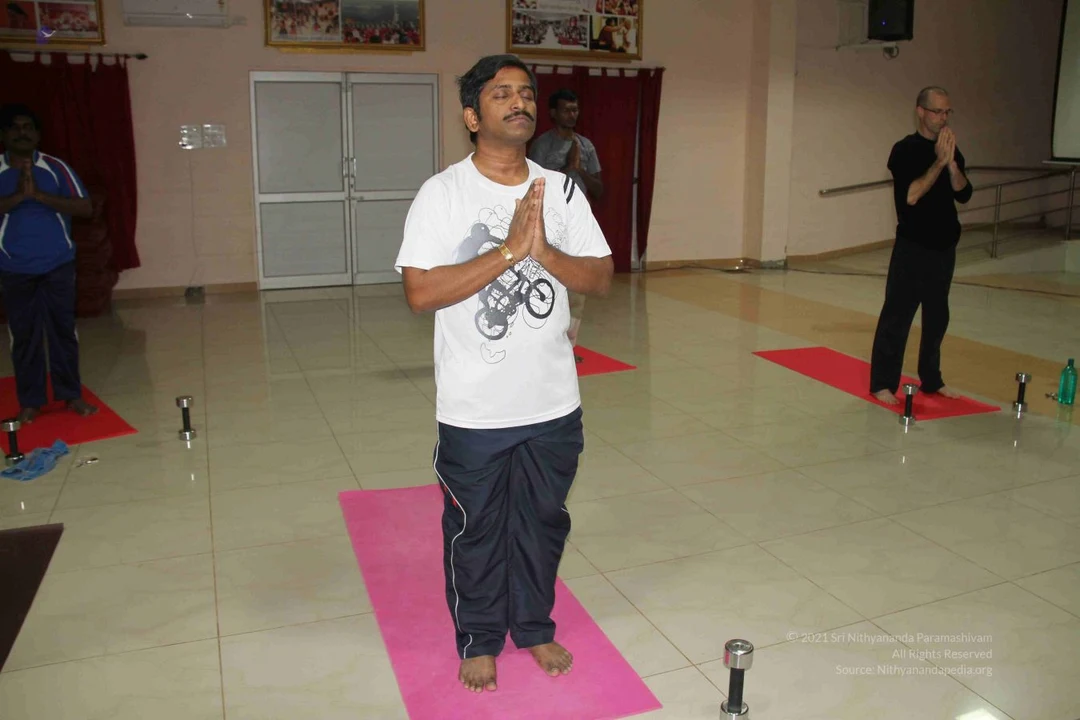
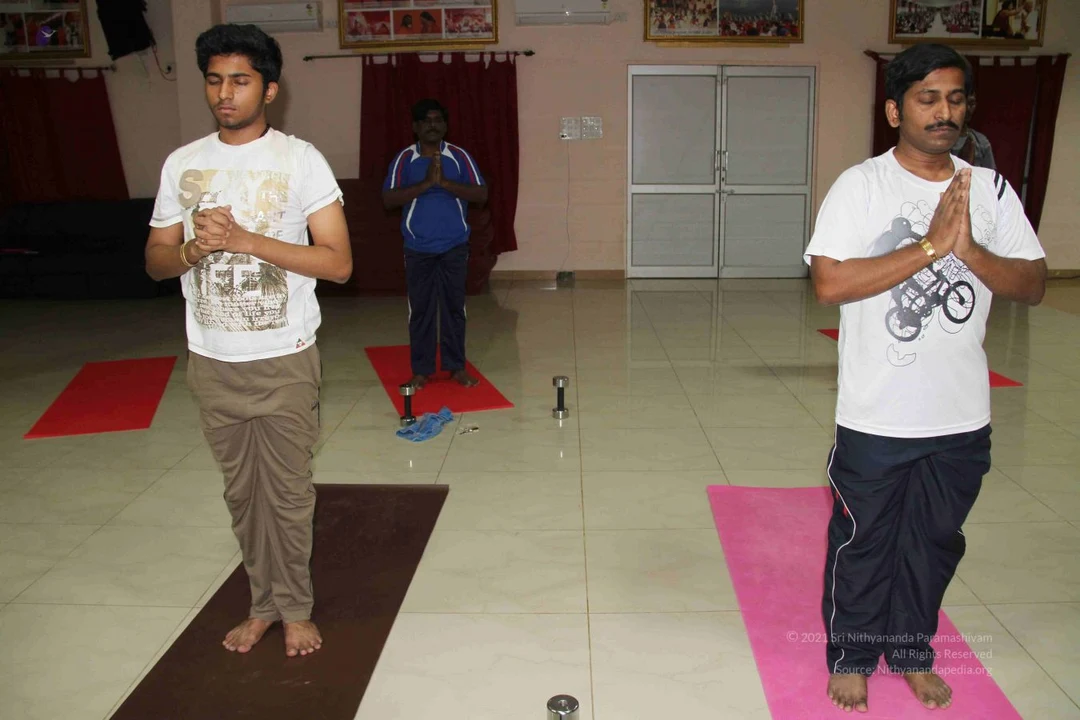
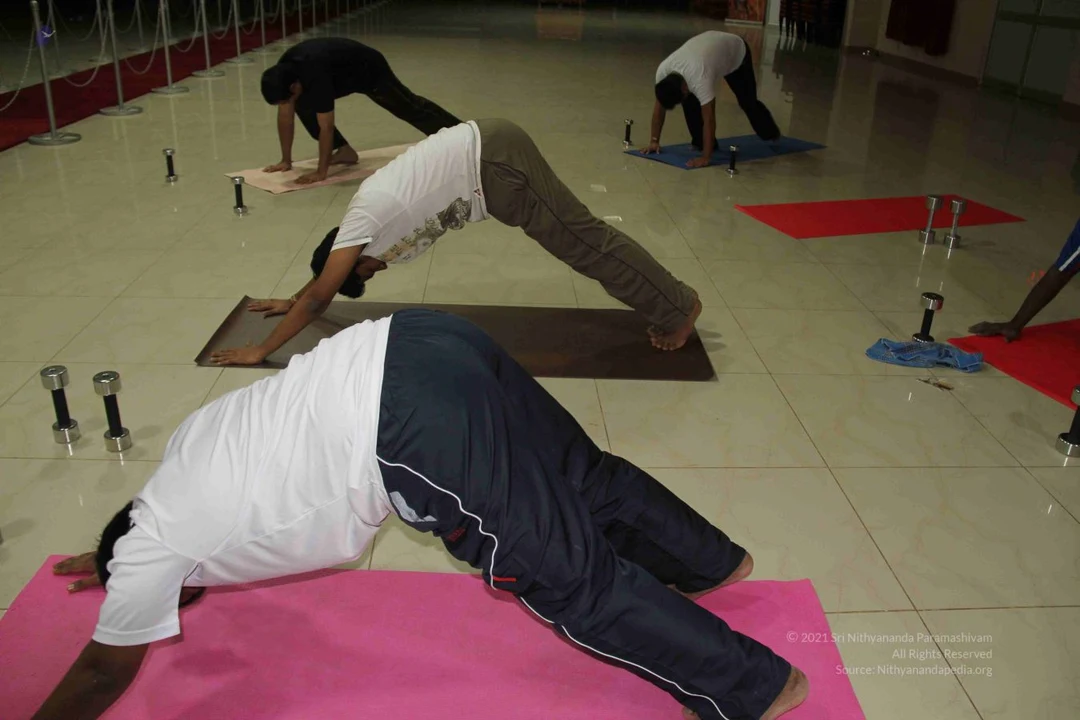
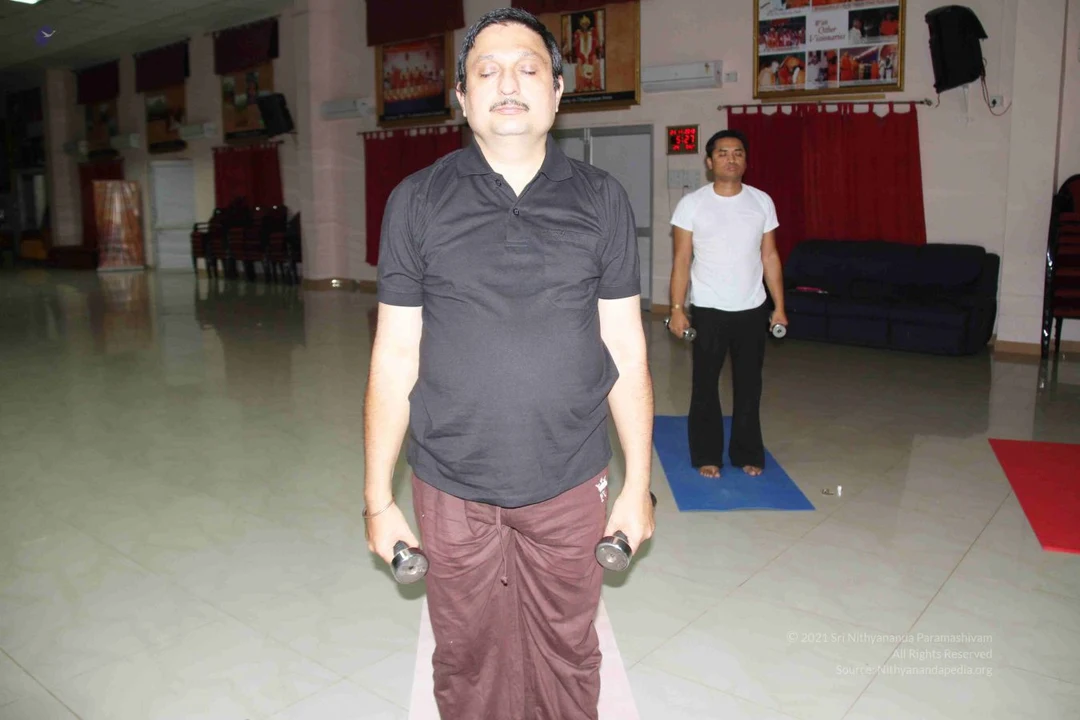
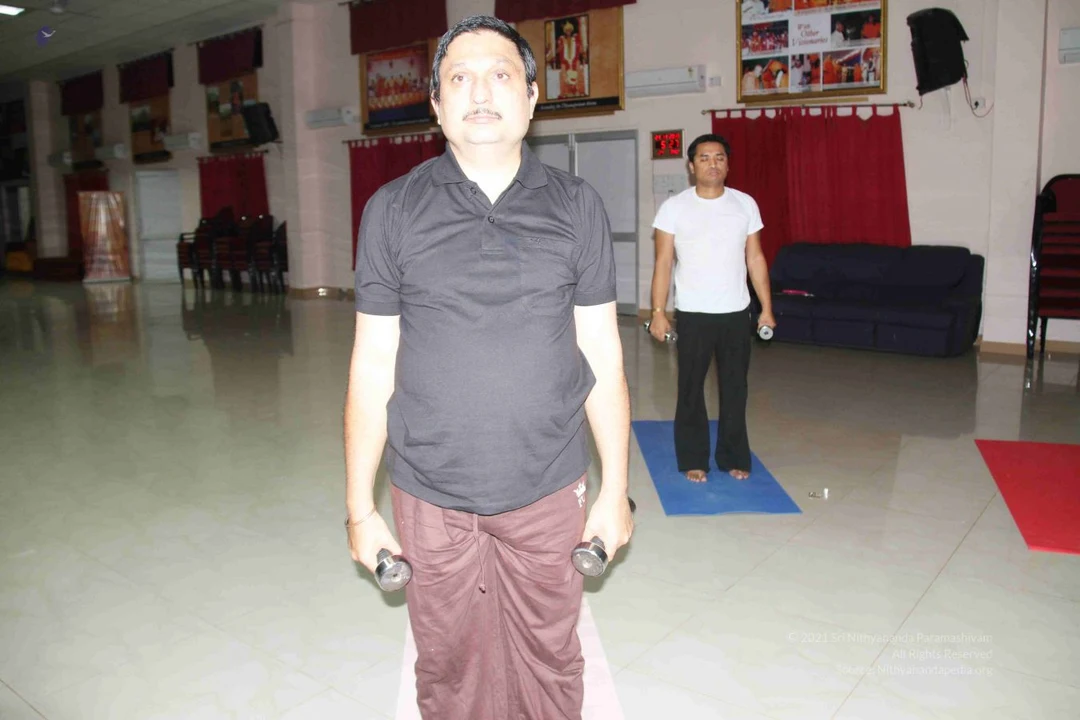
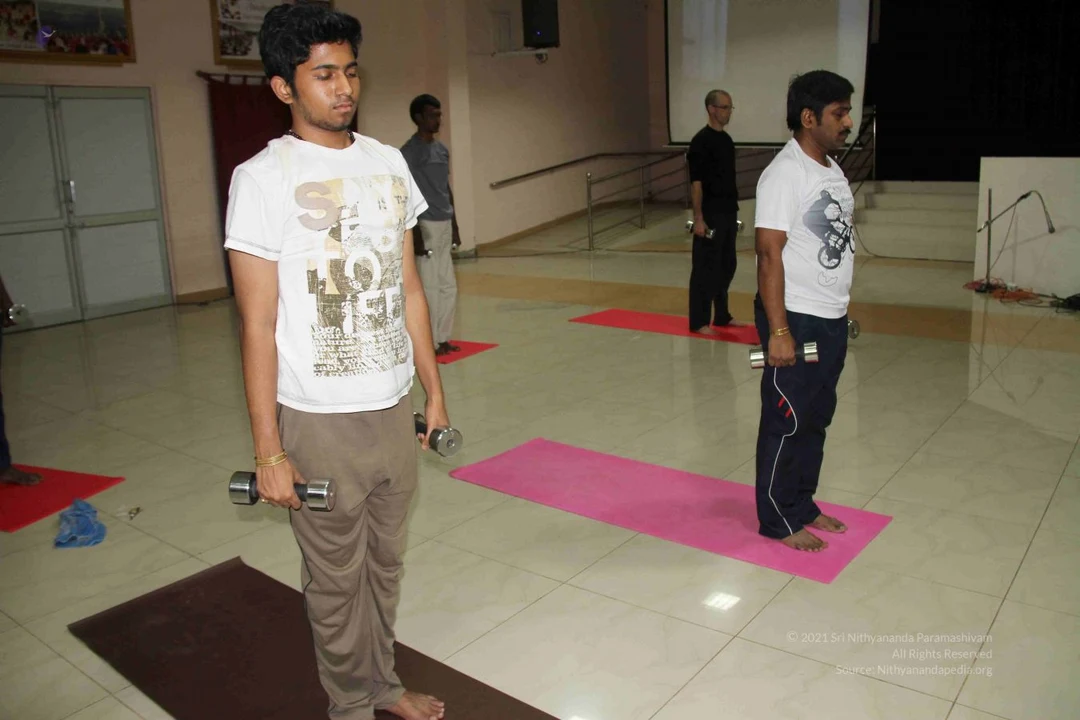
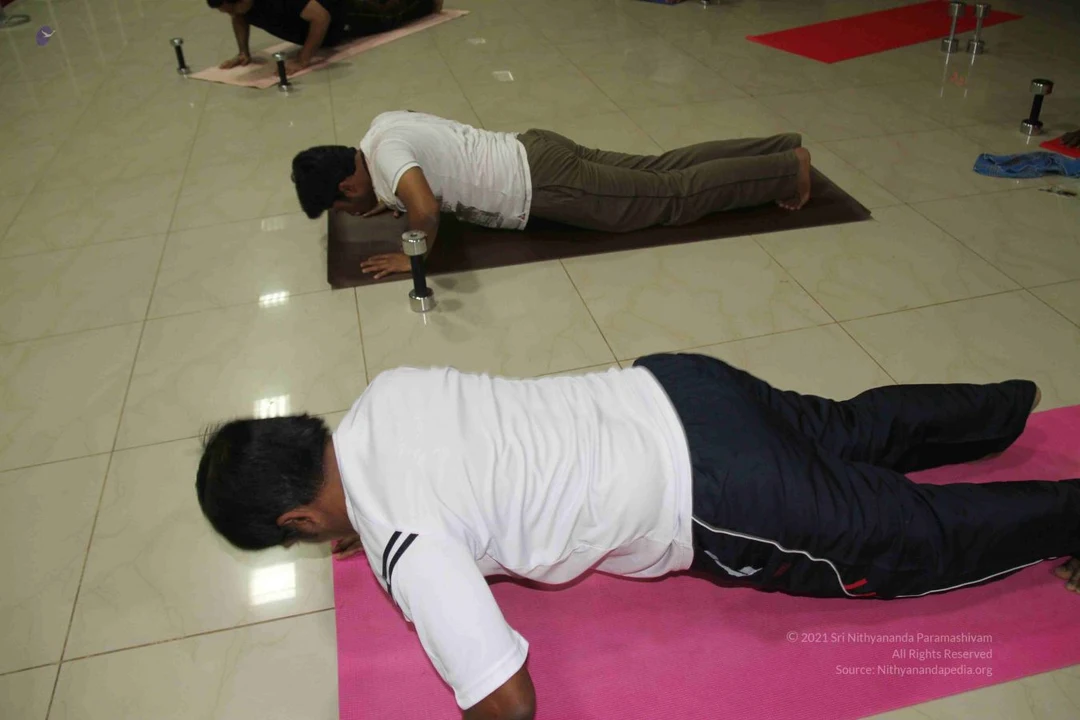
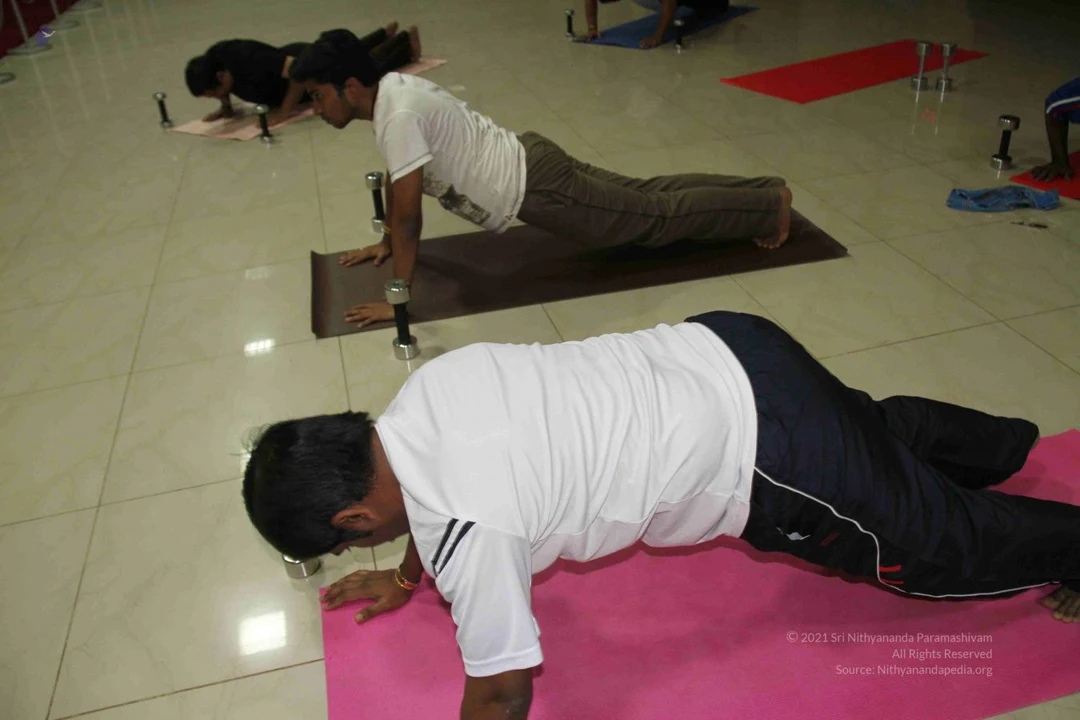
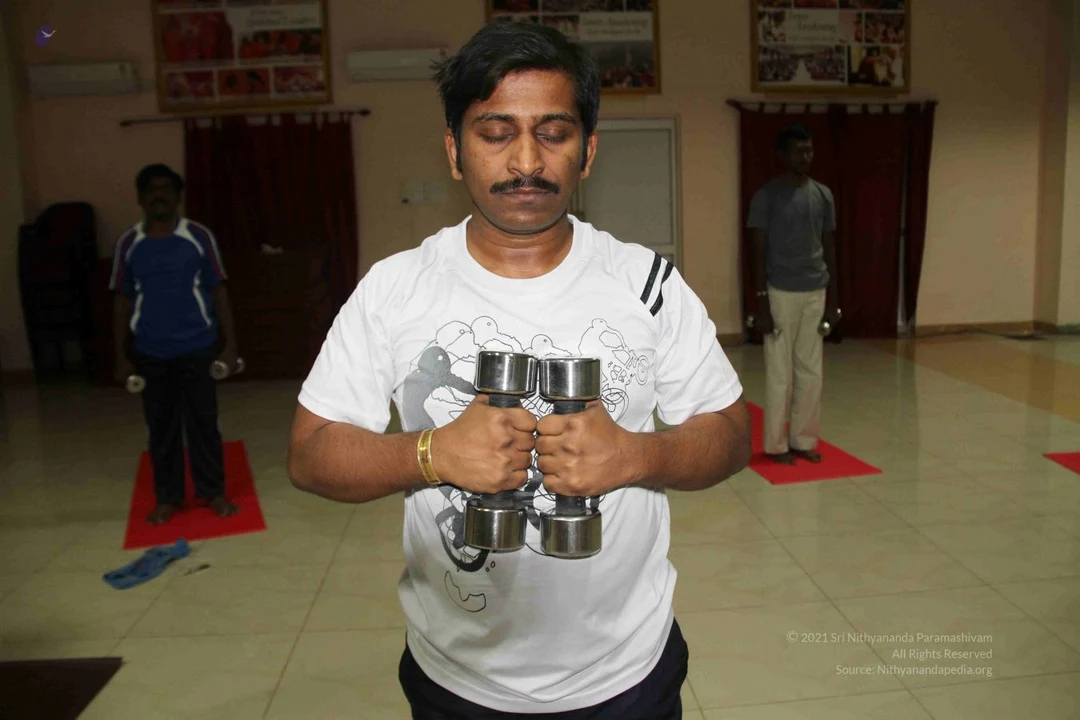
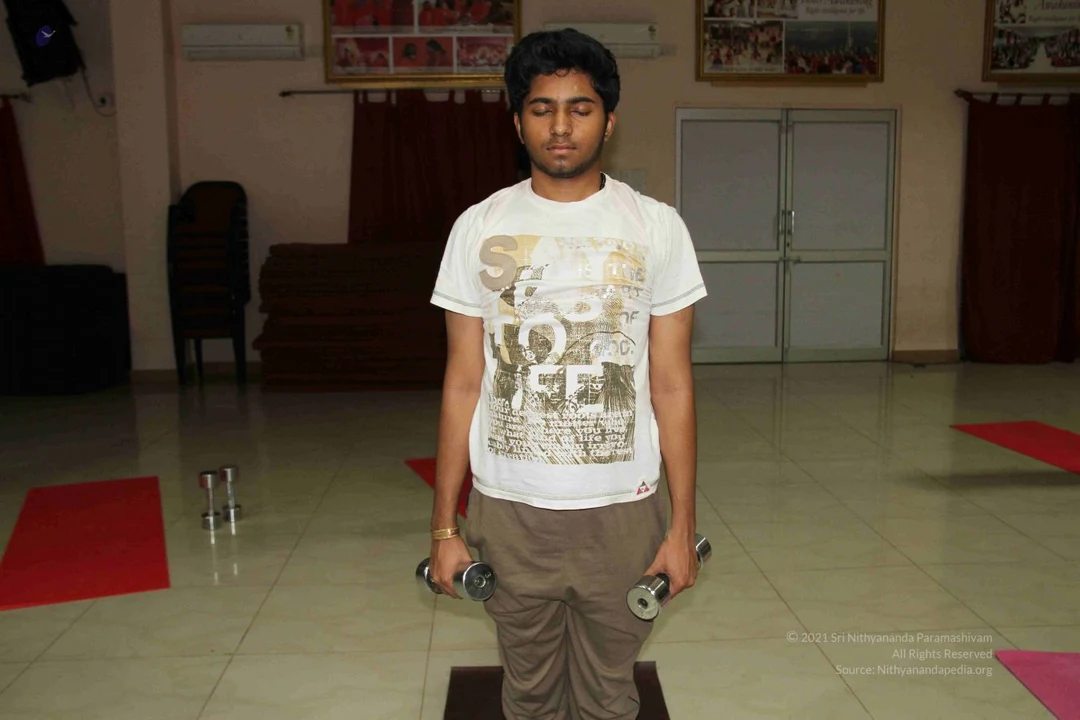
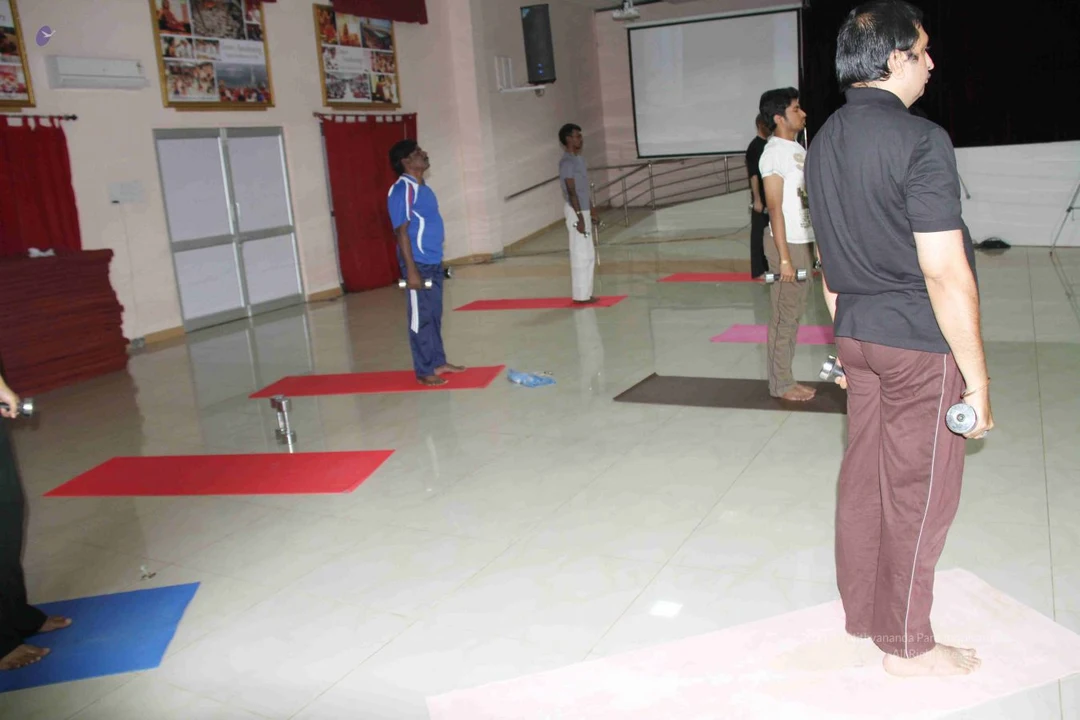
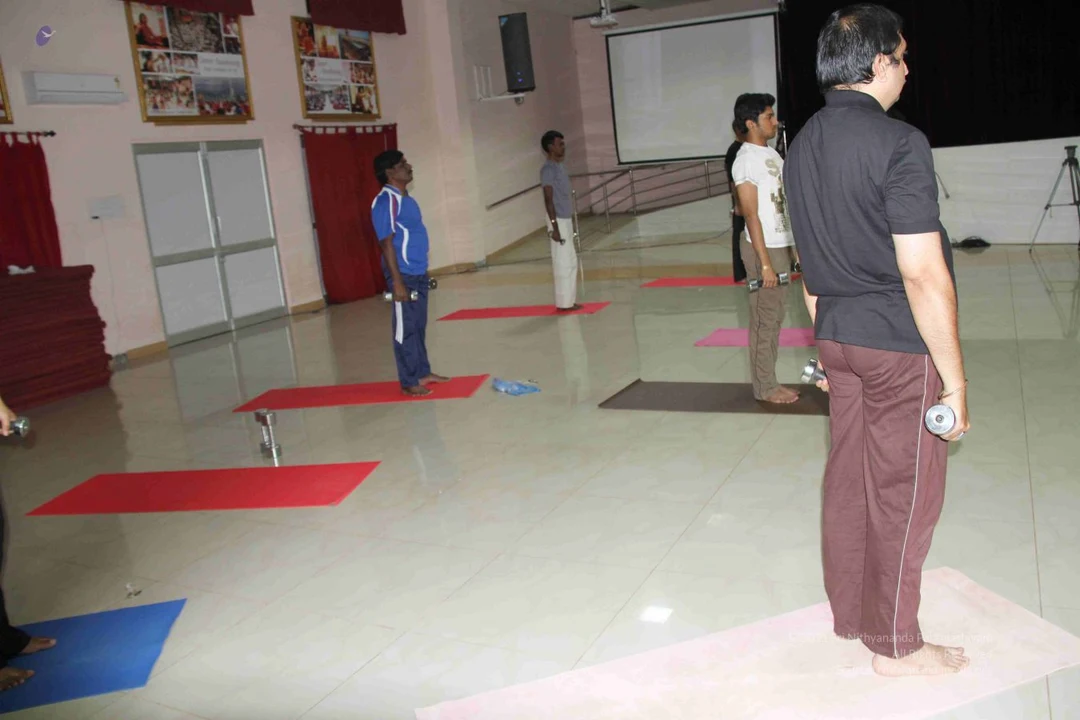
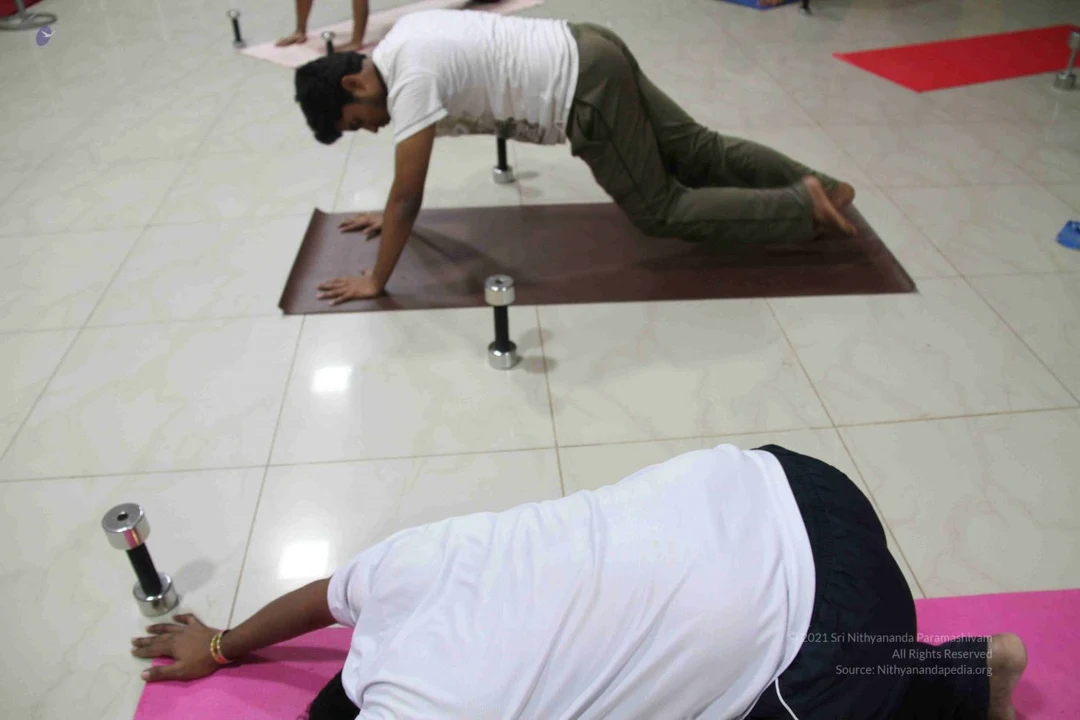
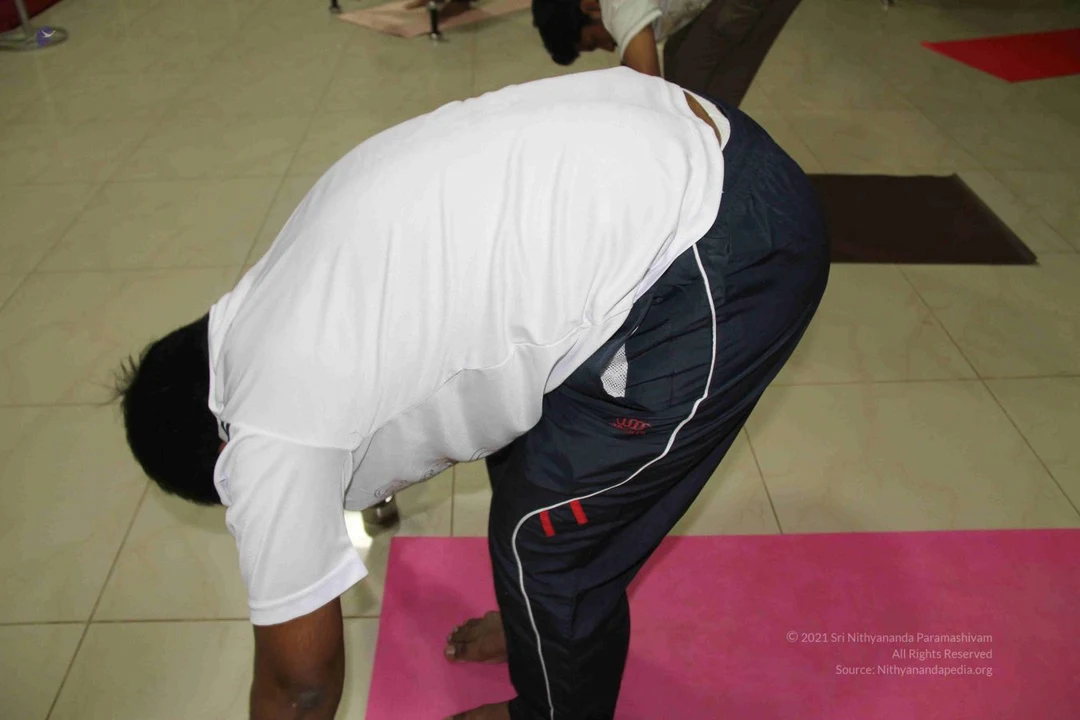
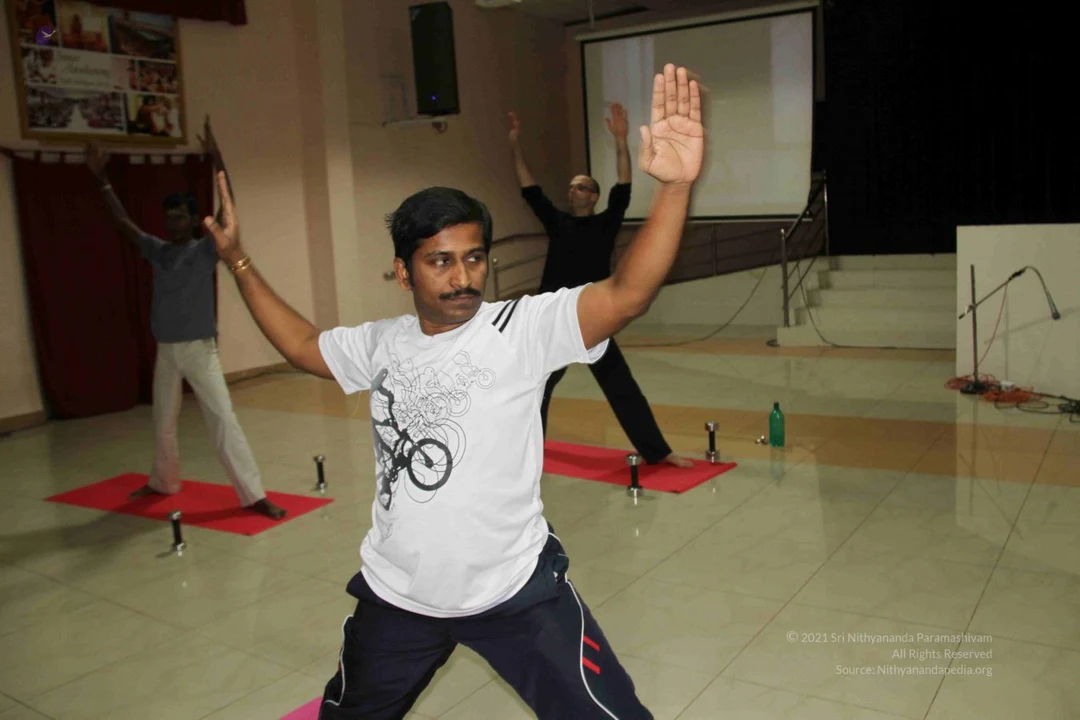
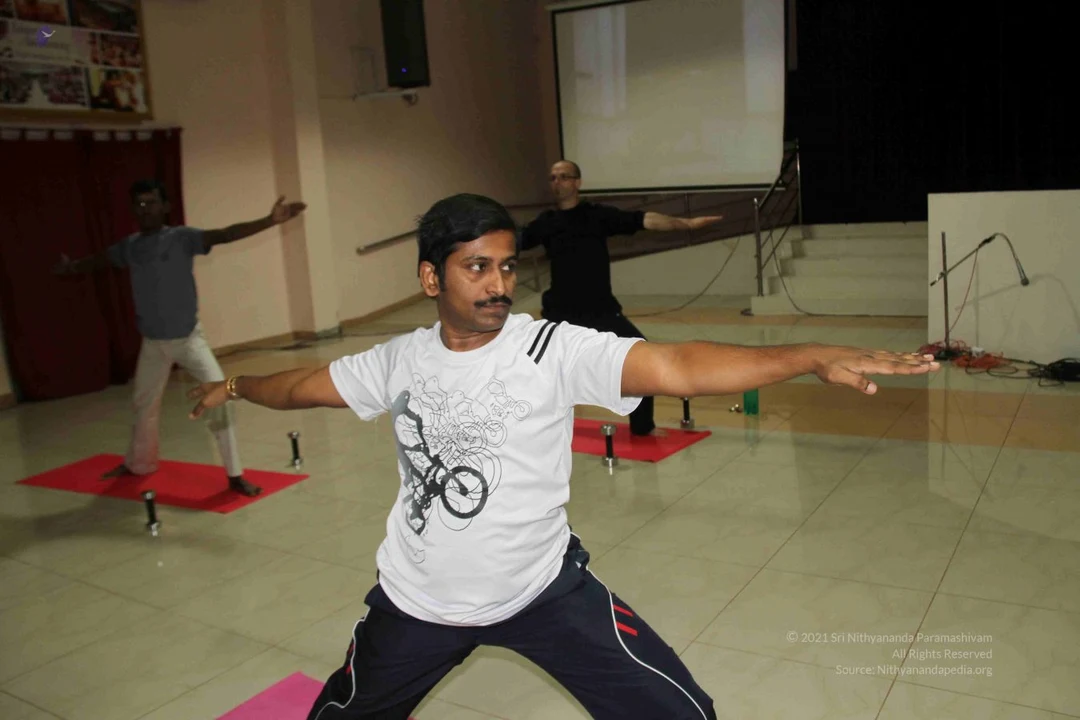
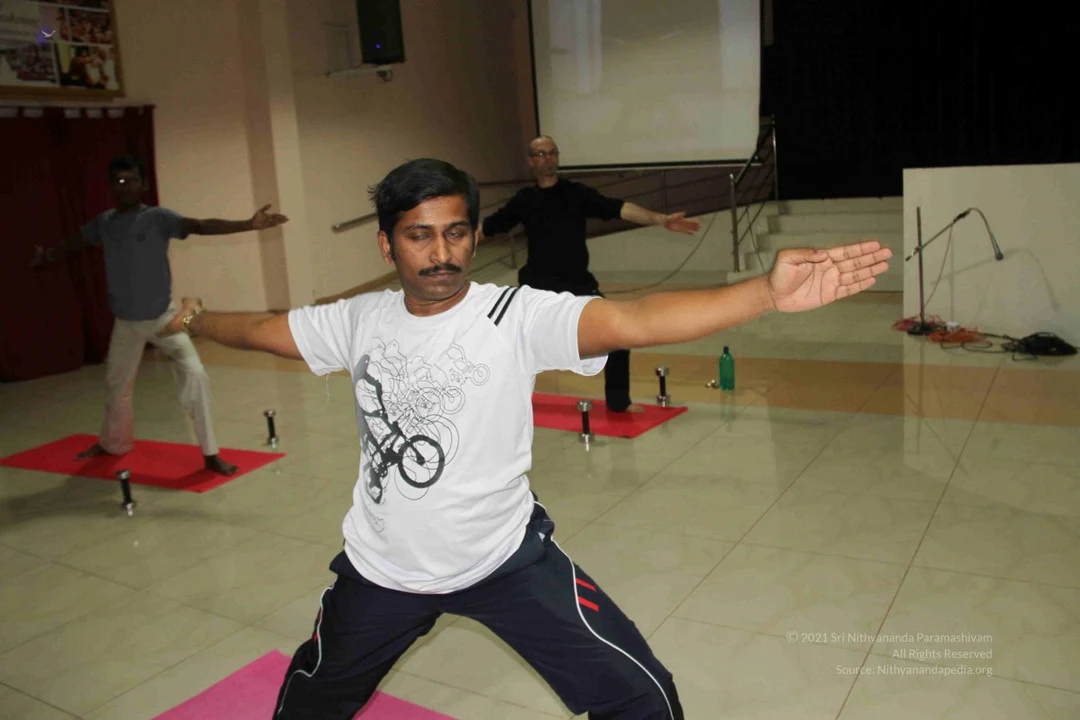
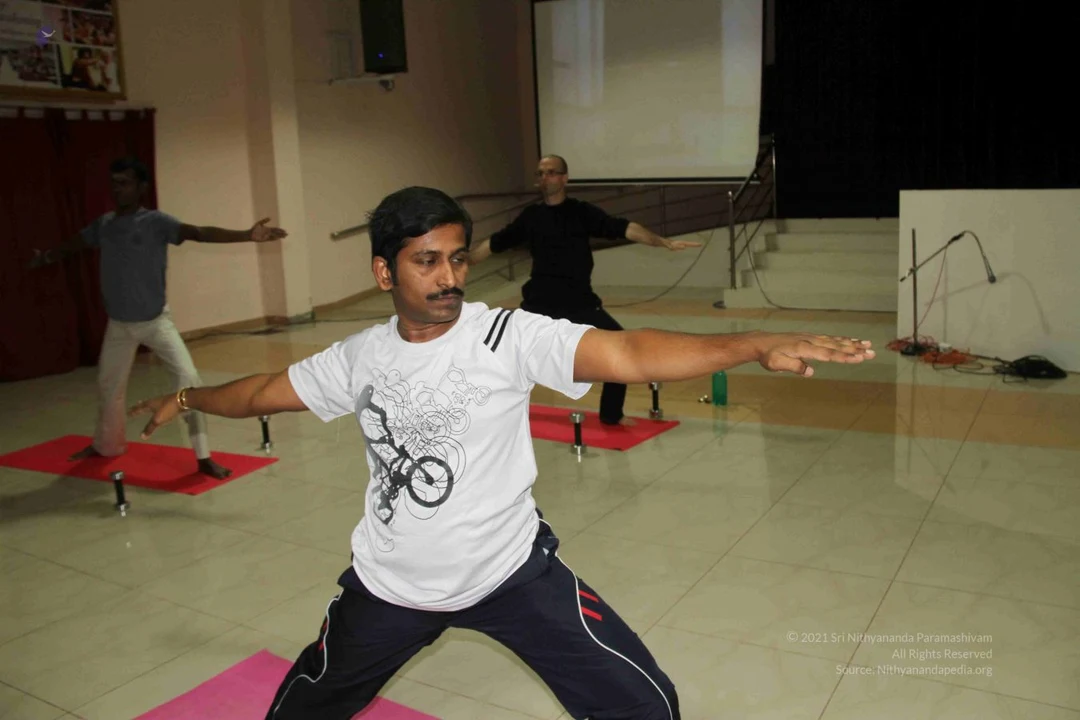
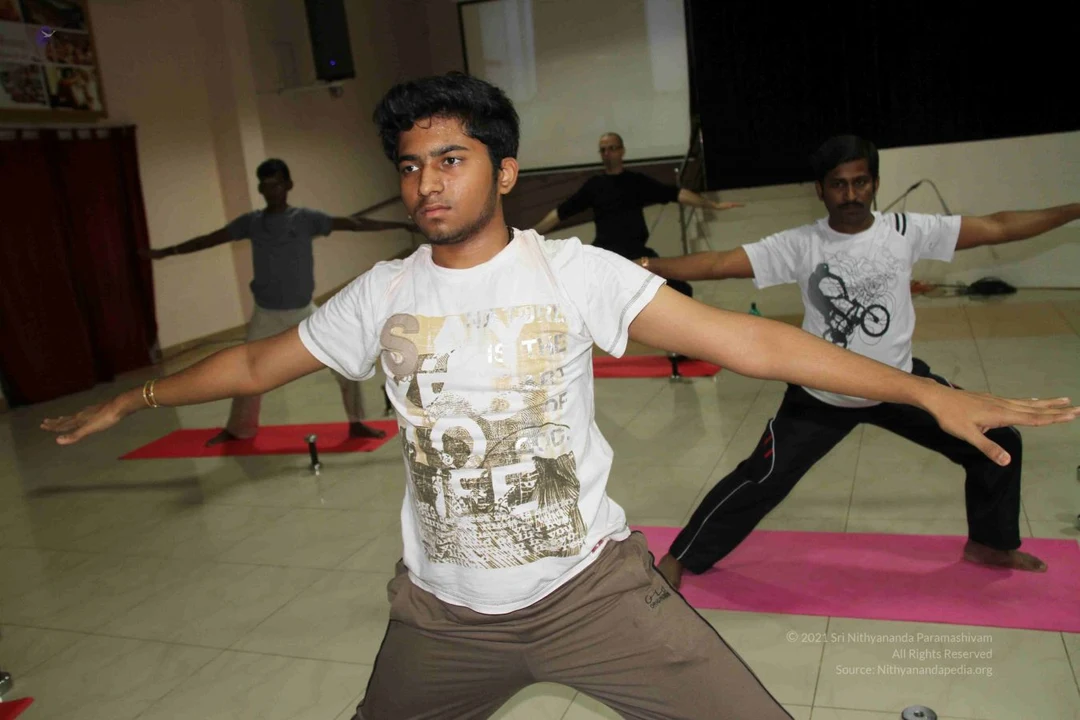
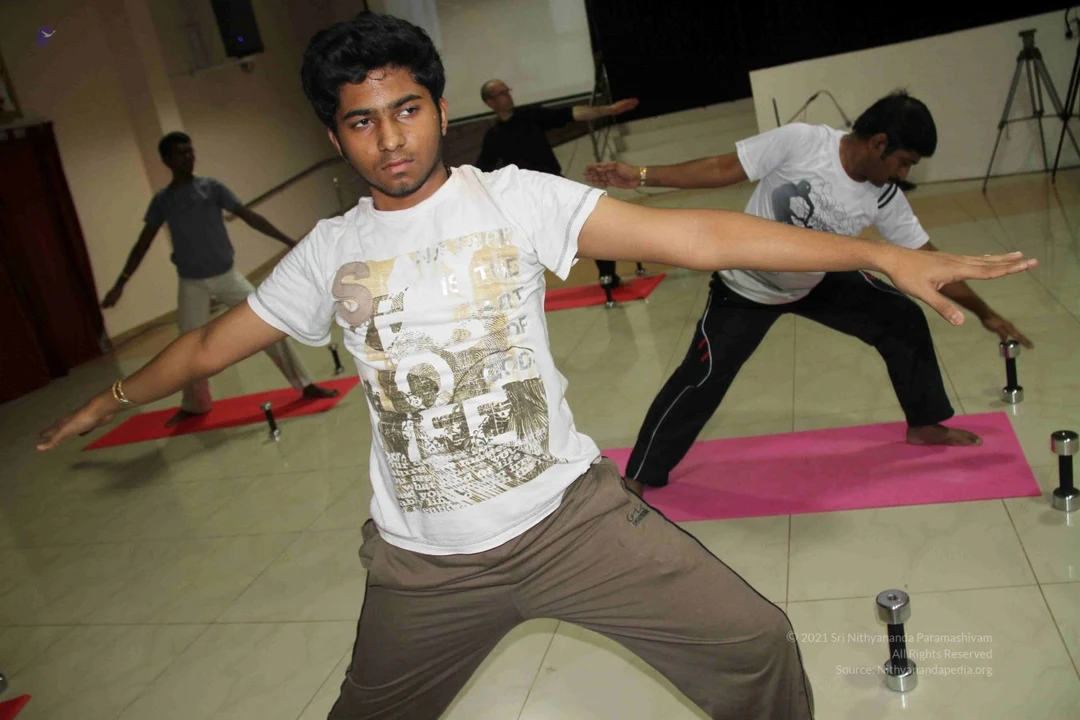
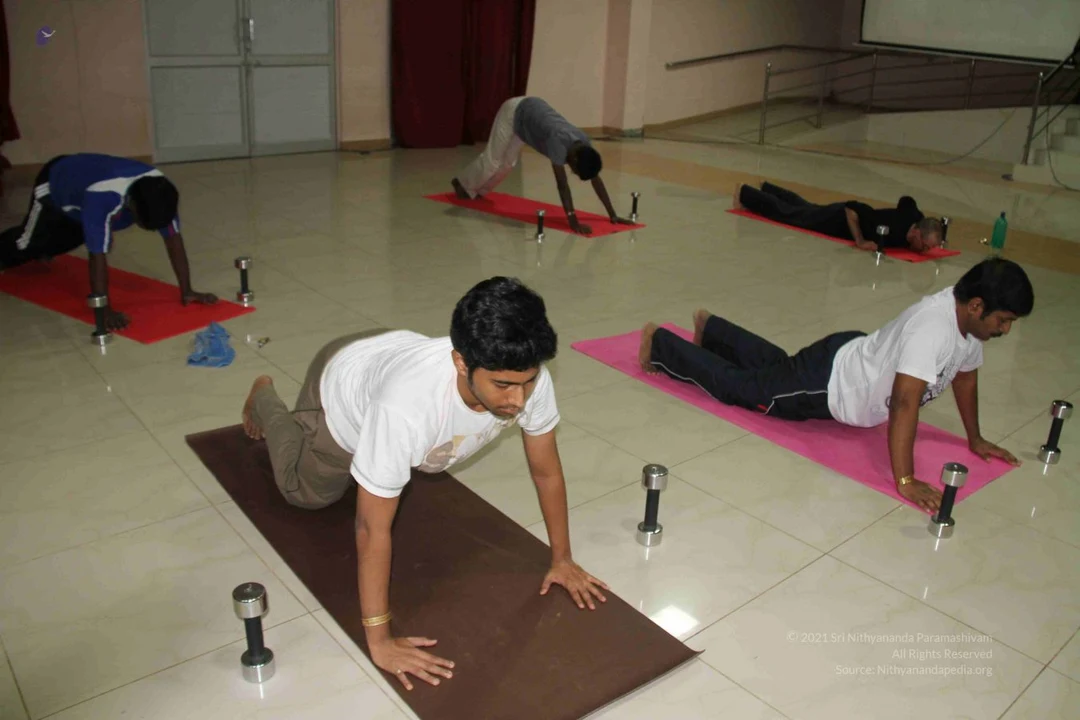
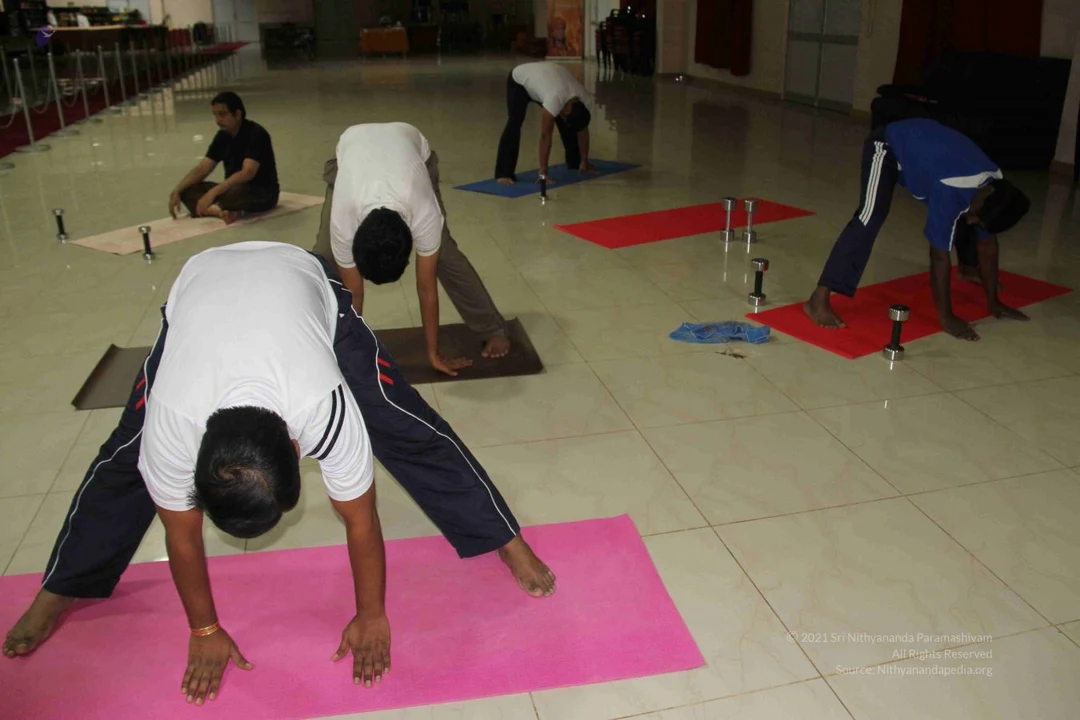
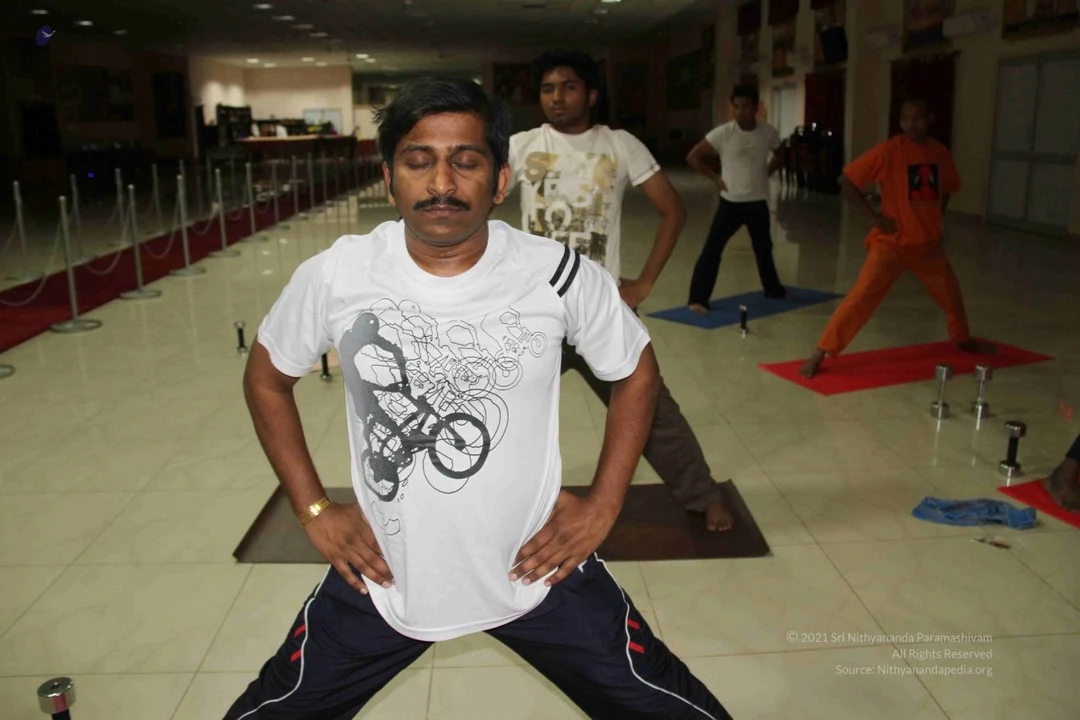
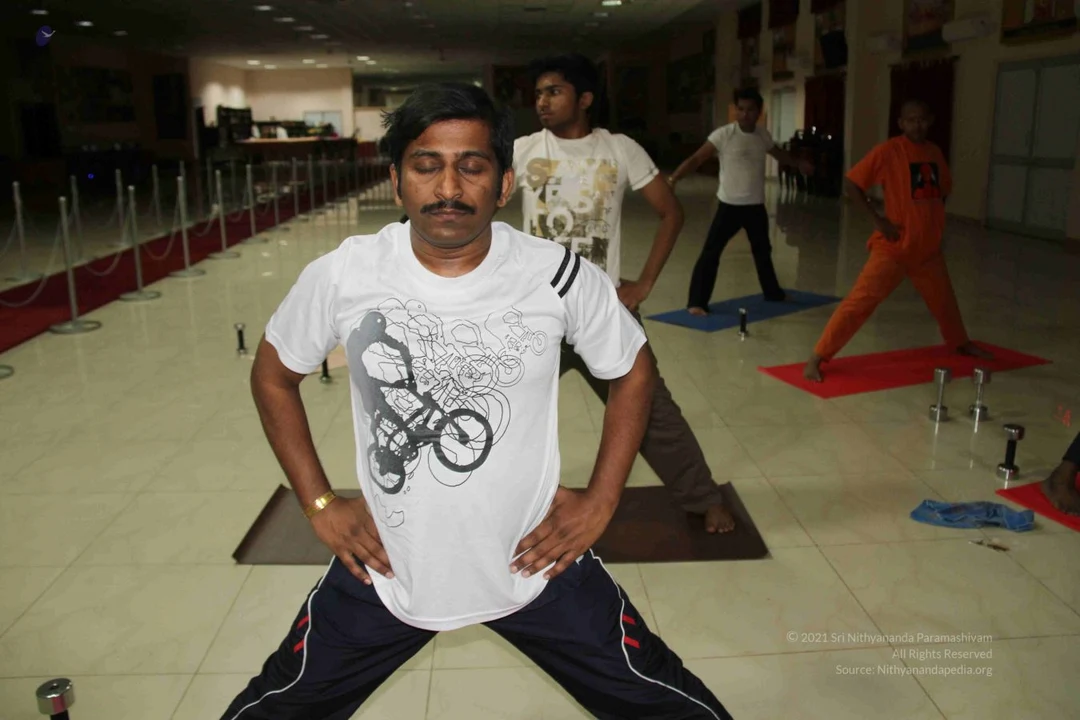
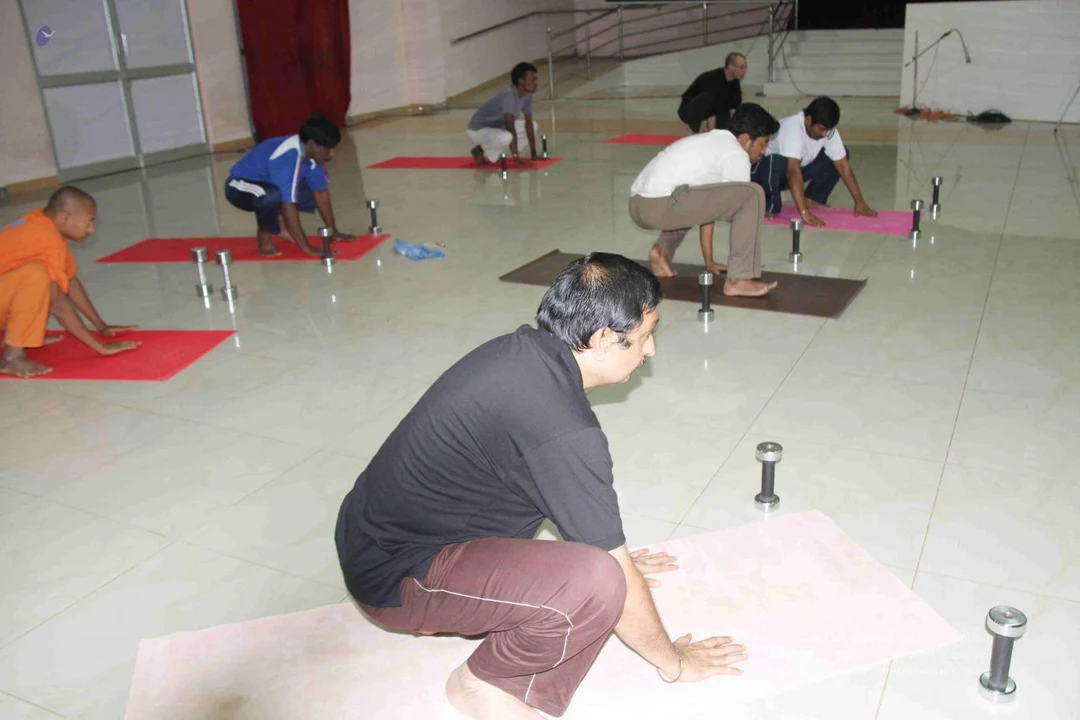
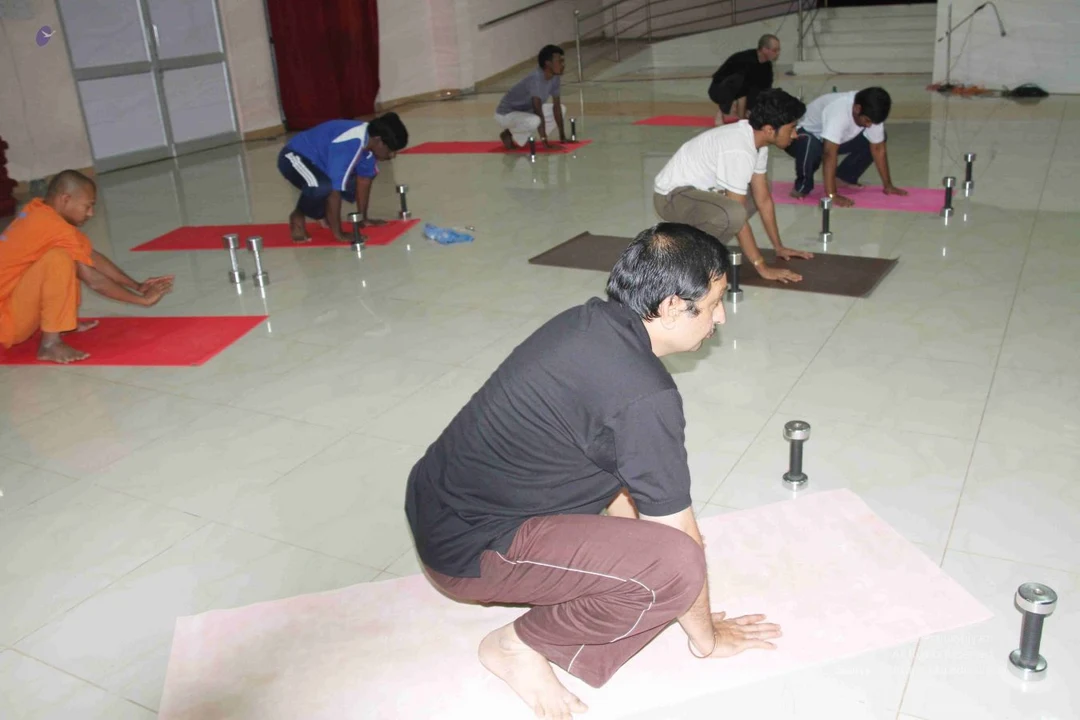
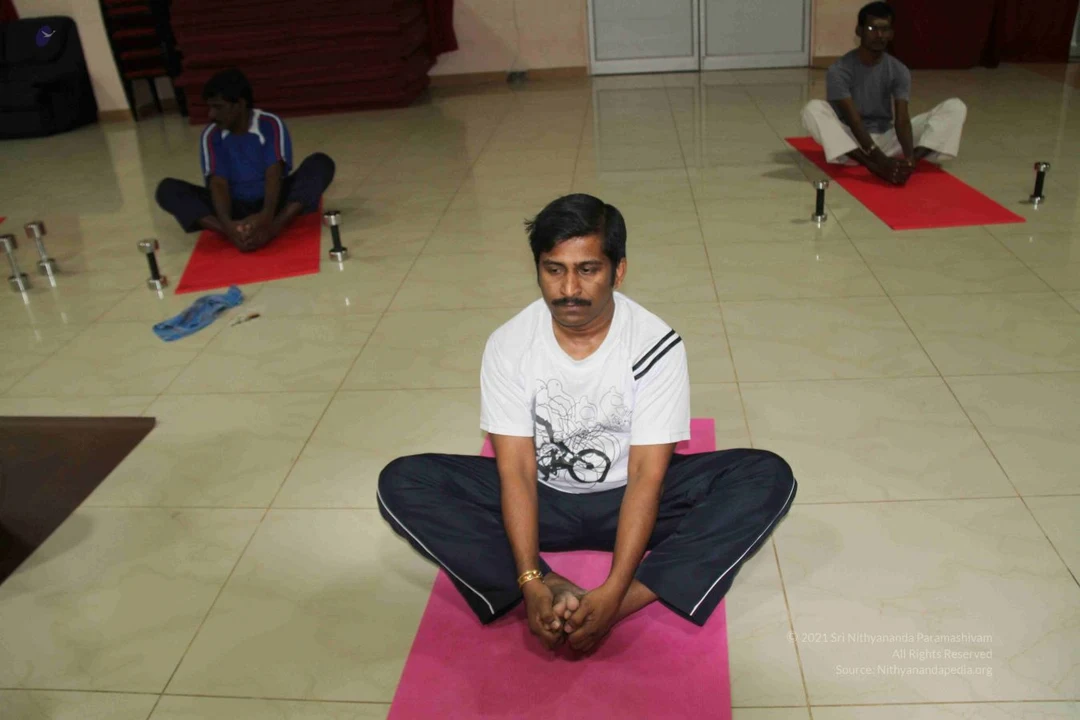
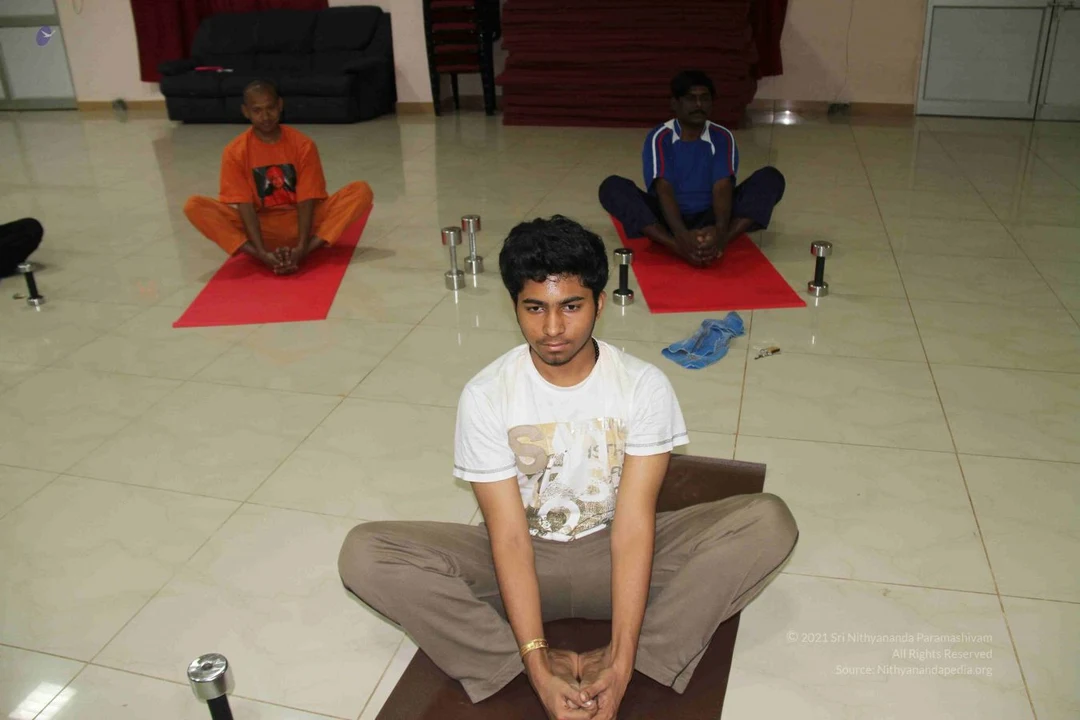
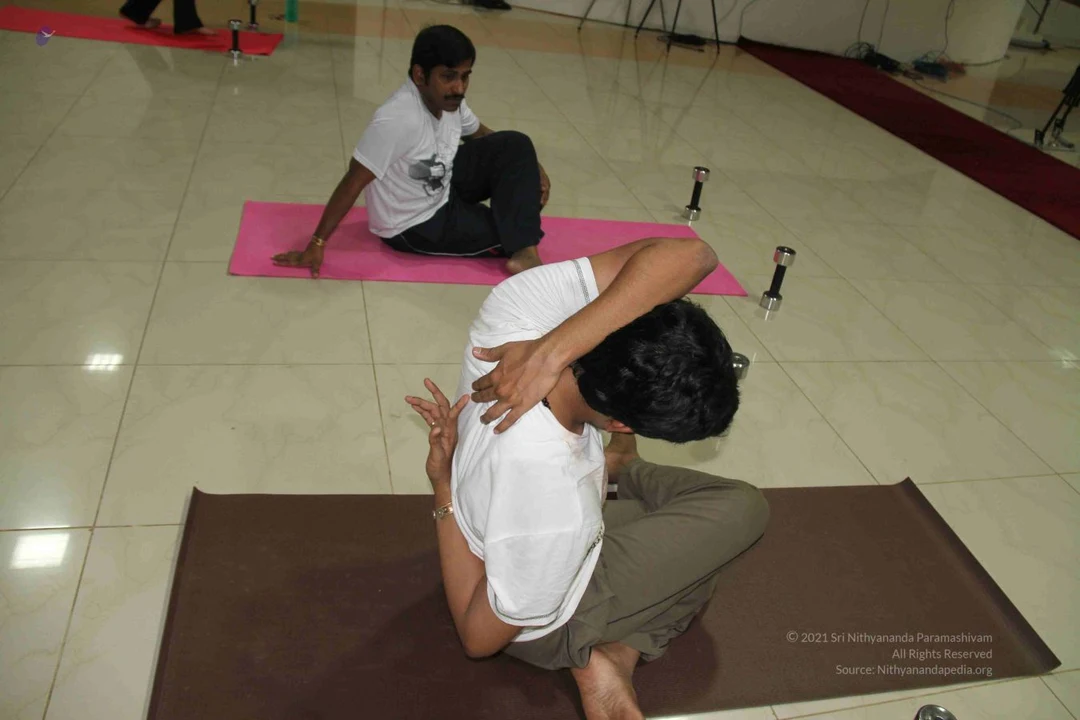
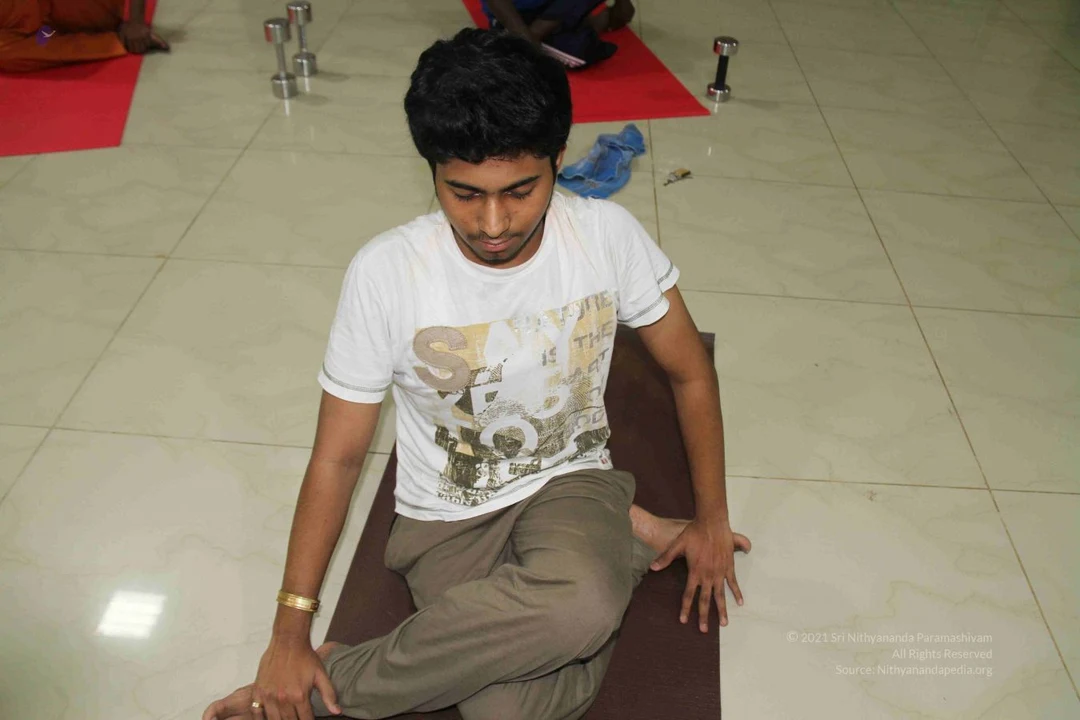
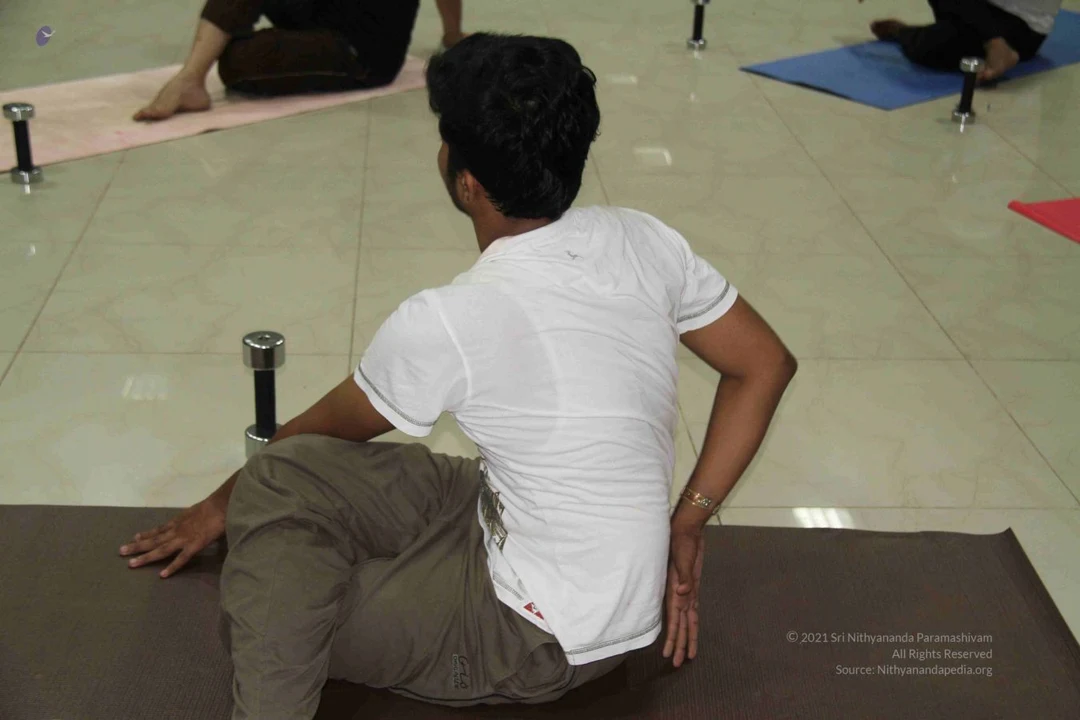
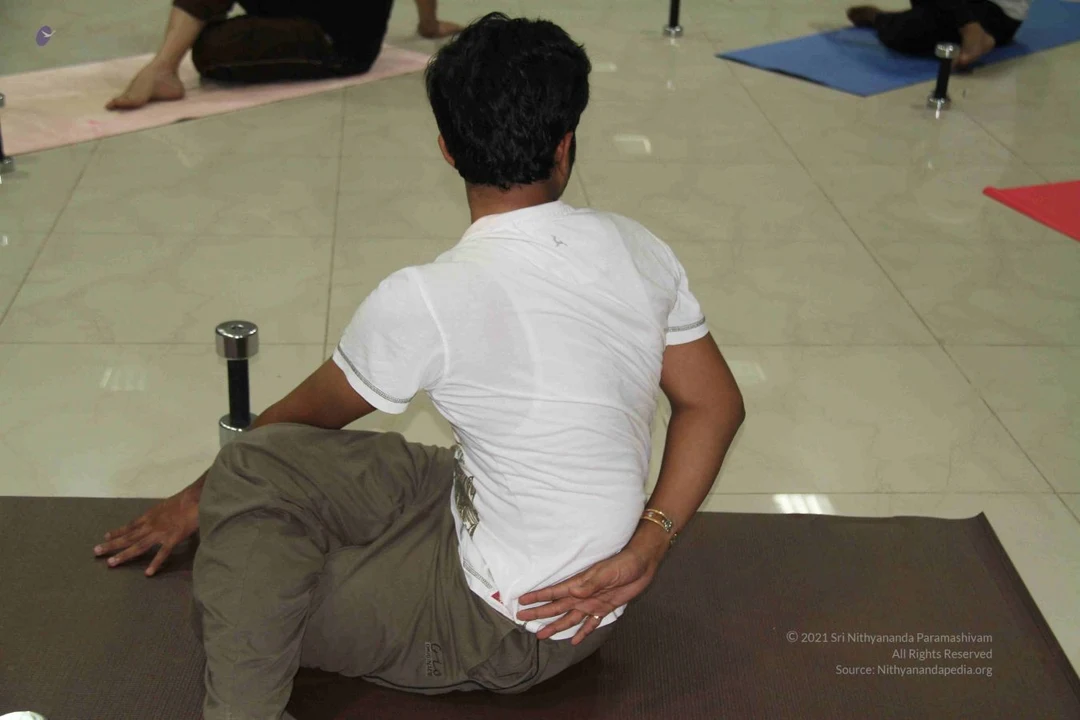
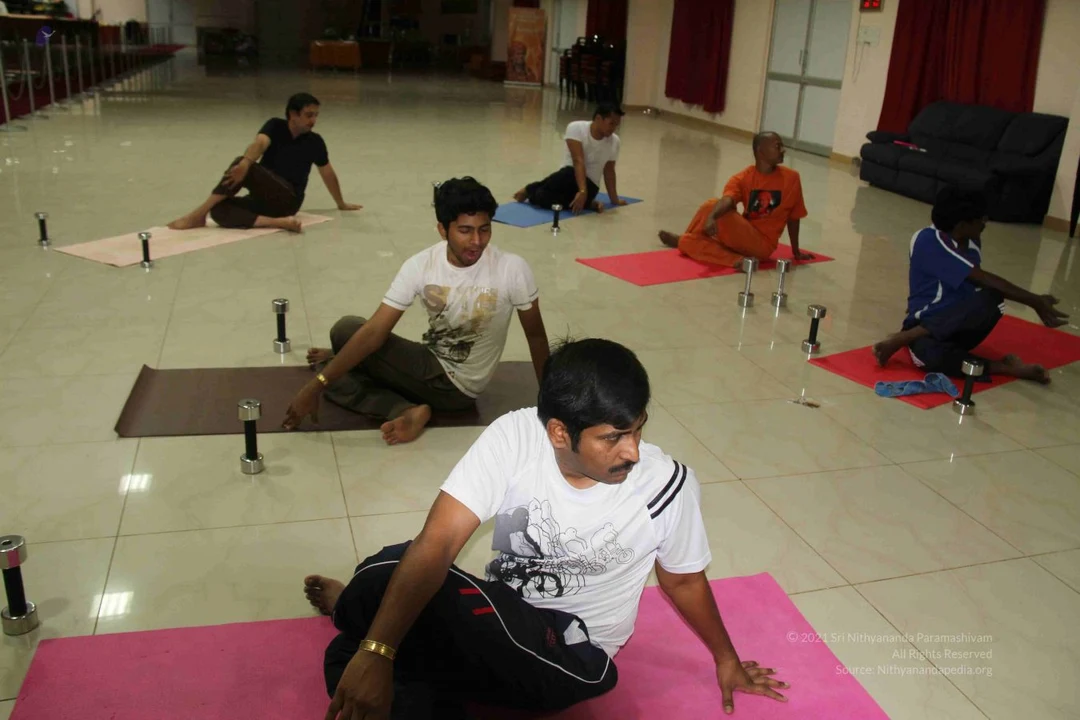
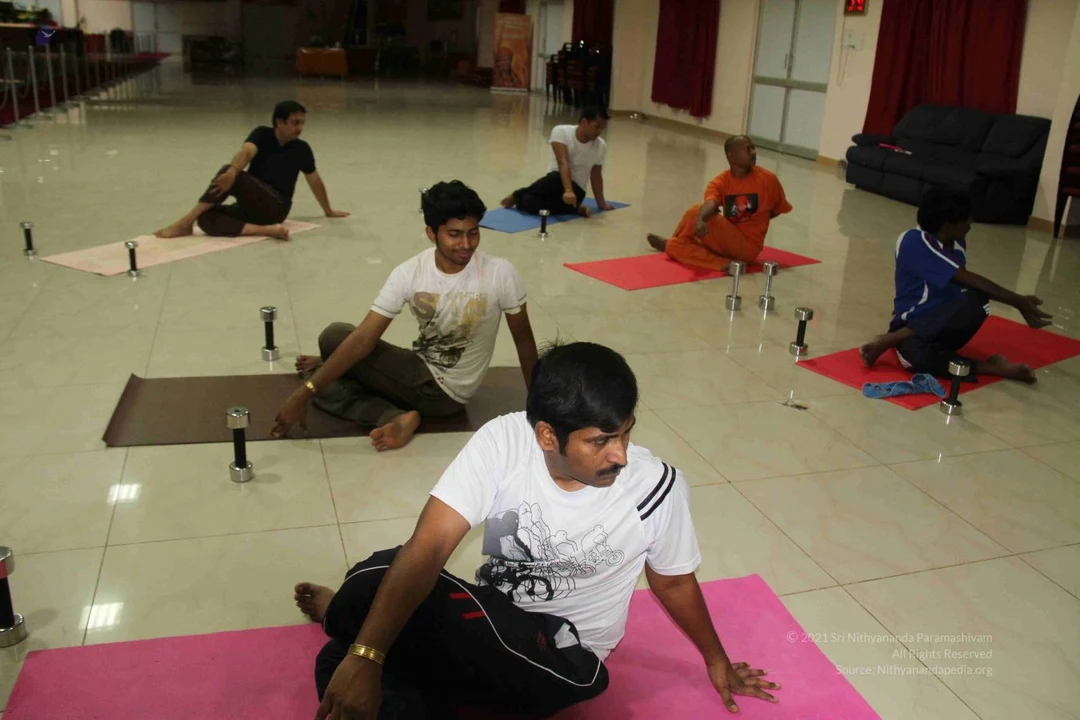
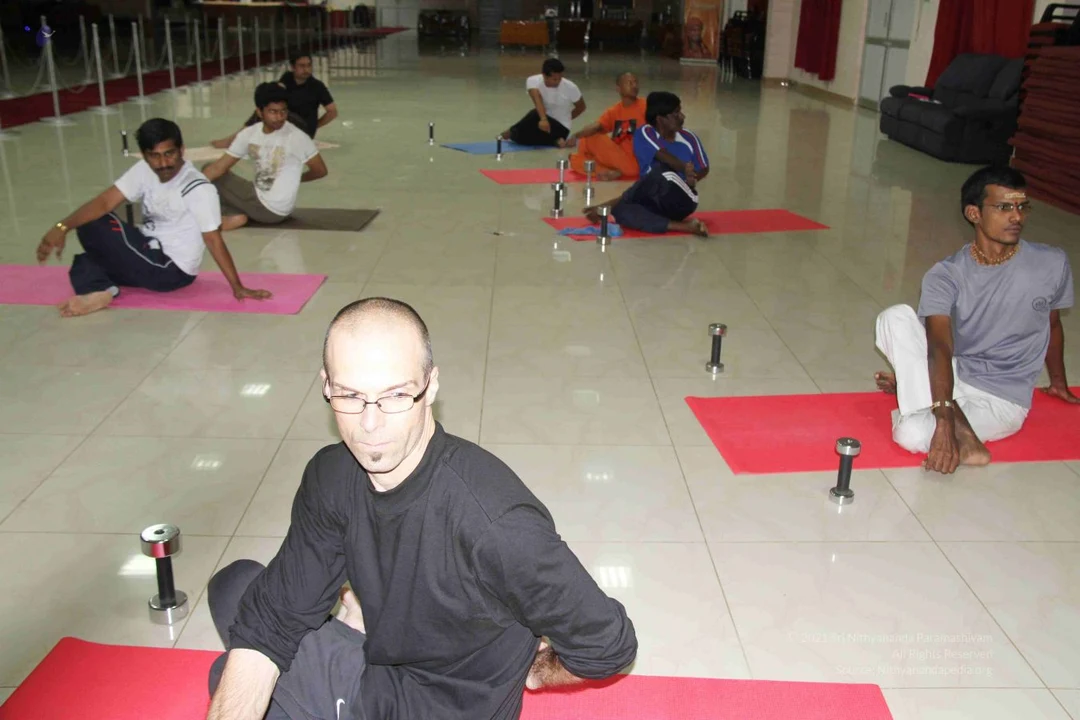
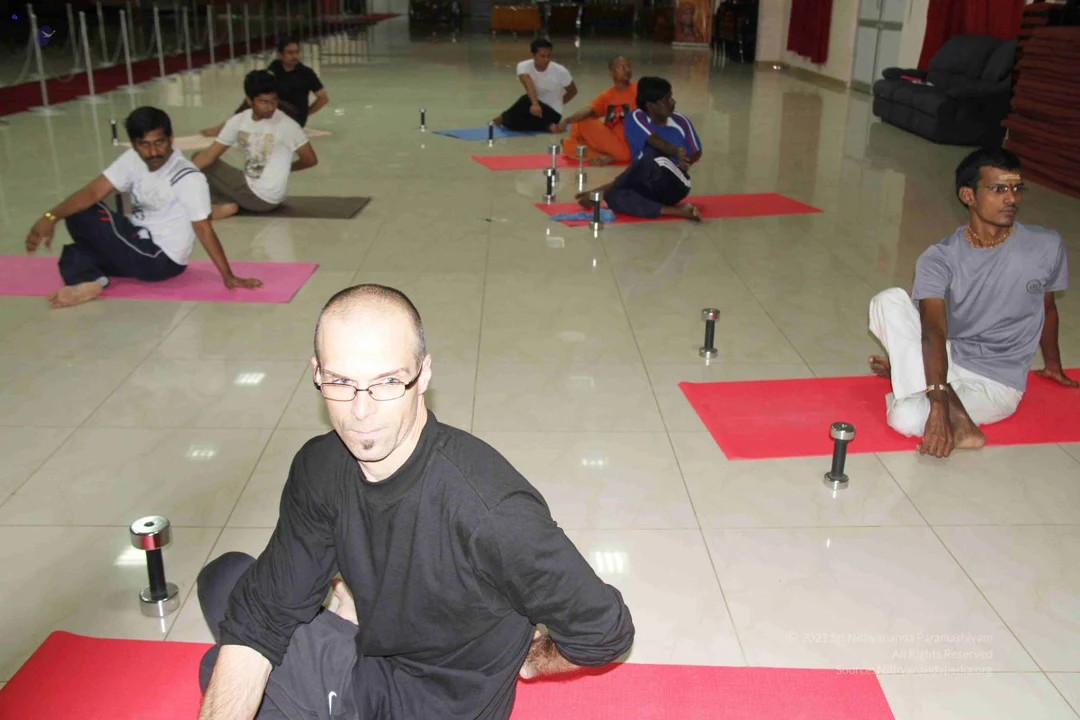
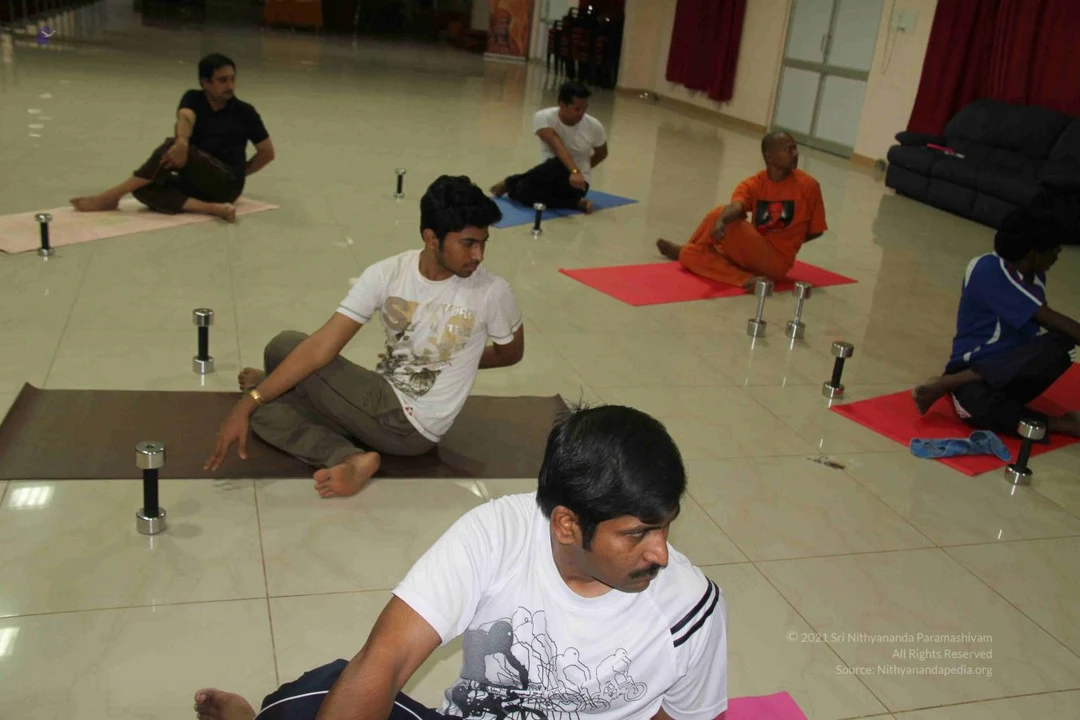
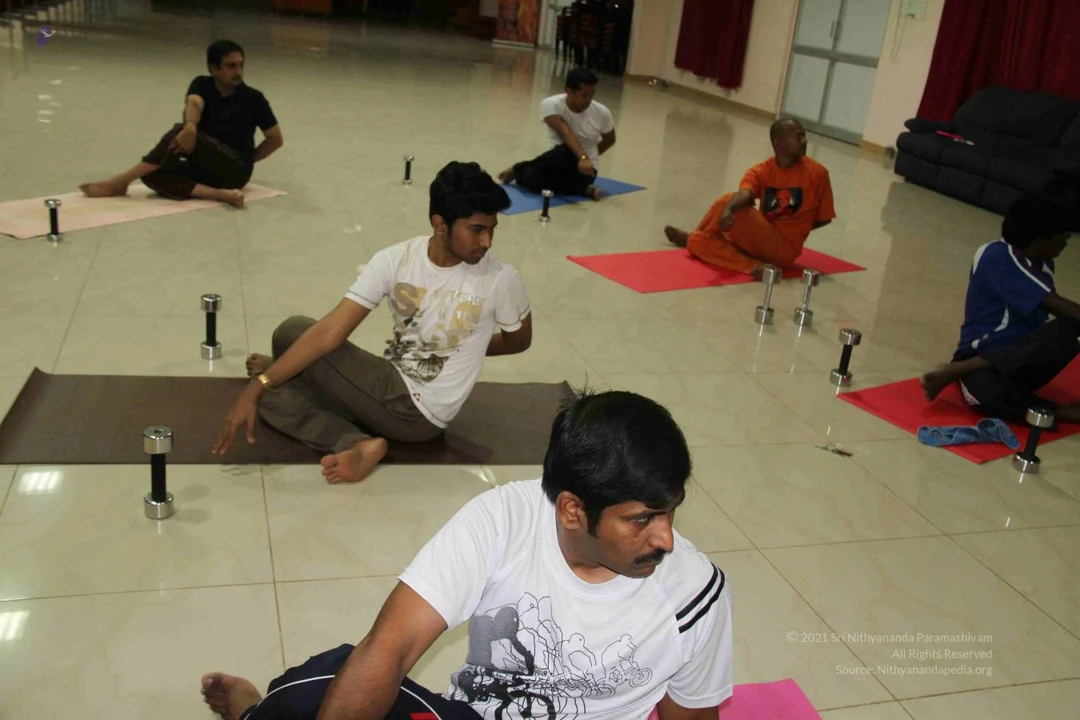
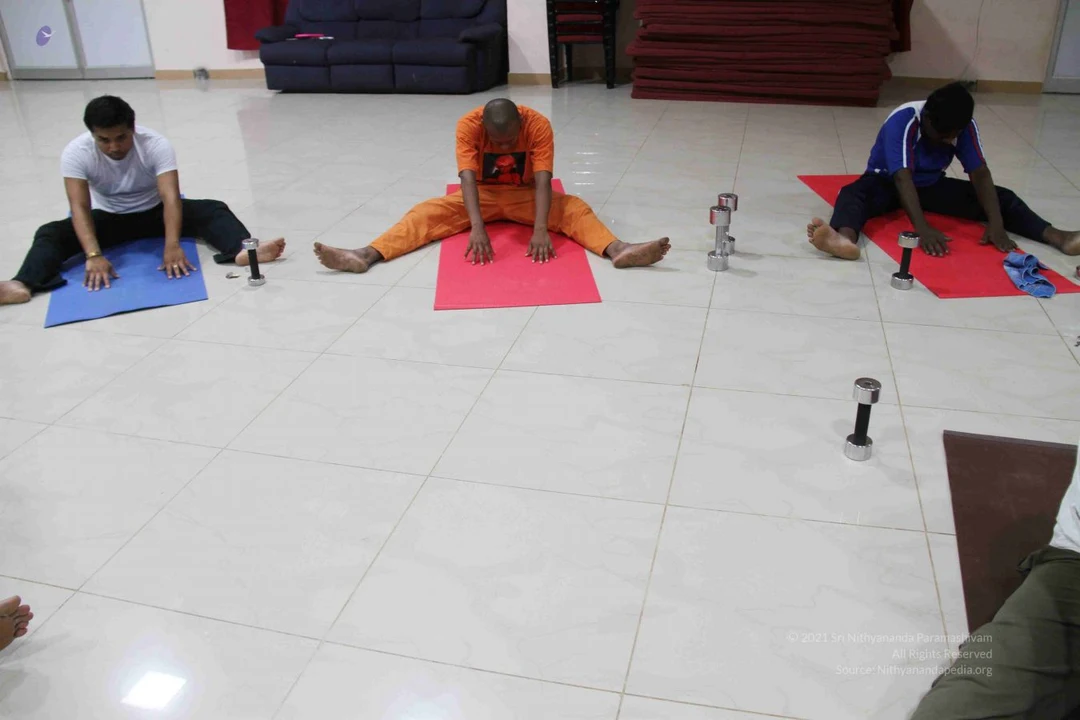
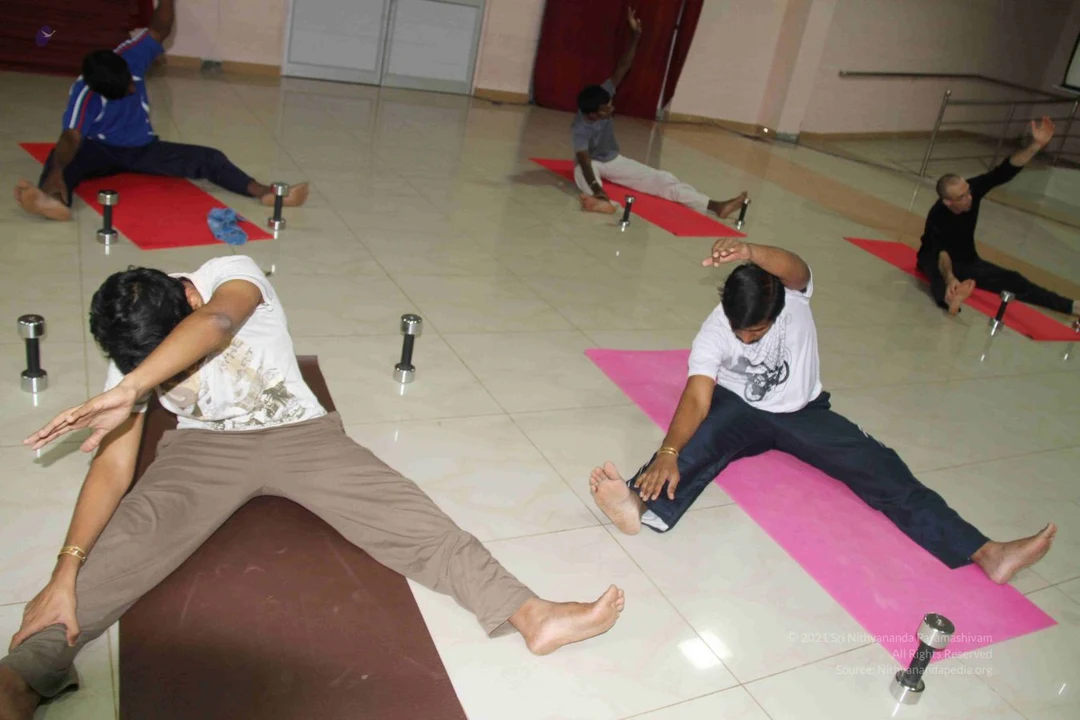
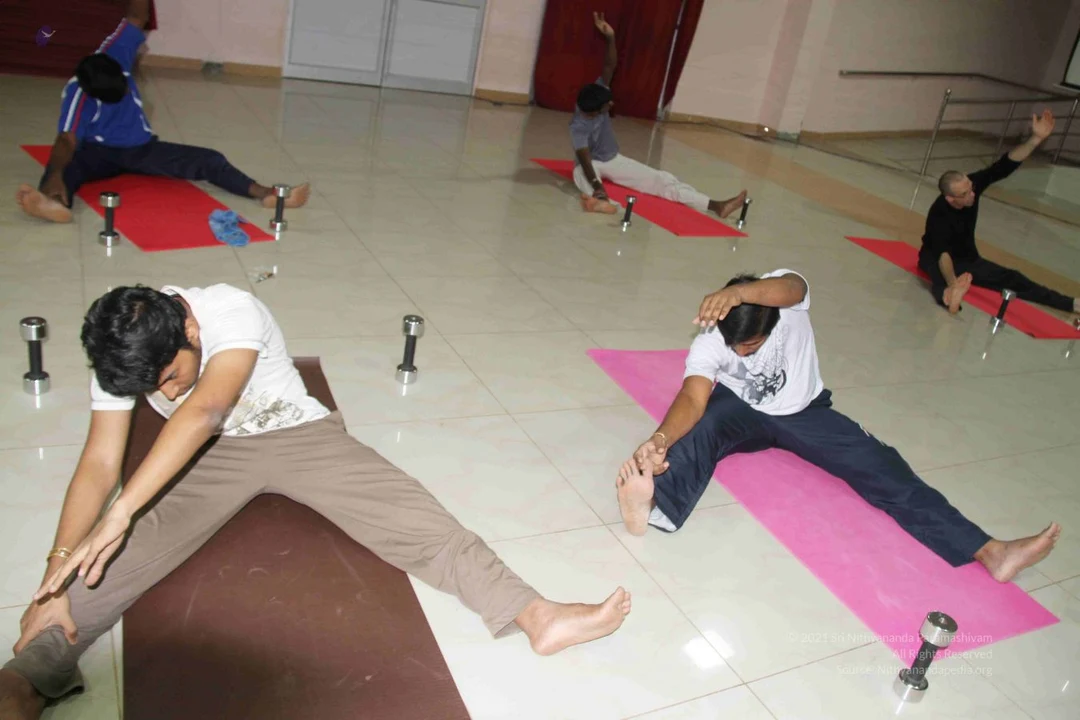
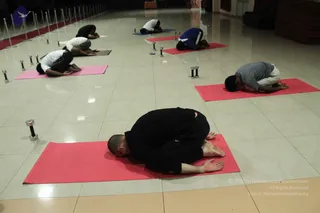
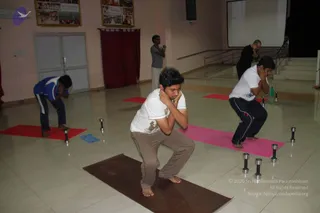
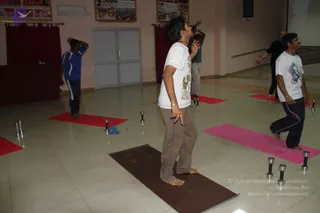
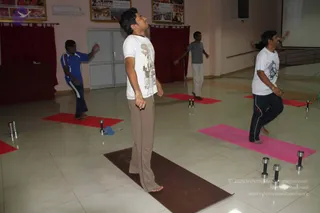
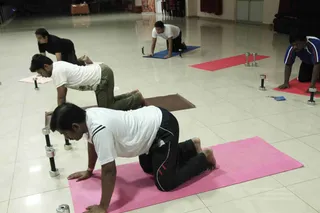
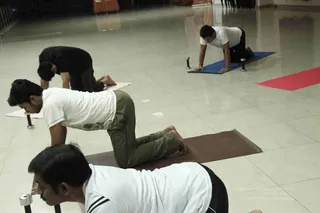
Several people practise a prostrated yoga posture on pink and grey exercise mats across a polished tiled hall. Most are in child's pose with foreheads to the floor and arms stretched forward. A man in the foreground wears a black top and black trousers, his bald head bowed toward the mat. Others wear white or grey t-shirts and dark trousers. Chrome dumbbells lie between the mats, and red stanchions with chrome posts line the far edge of the hall.A group of young men exercise barefoot in a tiled hall on red, pink and brown yoga mats, each with a pair of small dumbbells set beside them. The front man in a white t-shirt and khaki trousers squats low with his hands clasped near his chin, while others bend forward or squat in similar positions. A man in a grey shirt stands at the back near a red curtain, and a man in black watches from a raised stair. Framed photos hang on the pale wall and a projector screen is mounted at the far end. No identifiable a person candidate is visible in the scene.Indoor photograph of a group yoga or exercise session in a bright hall with cream tiled floor and a wall-mounted mirror. Several participants stand on coloured exercise mats (brown, red, pink) with metal dumbbells placed beside them. A man in a white t-shirt and khaki trousers, barefoot, stands centred on a brown mat with arms raised and eyes looking upward. Another man in a white t-shirt and dark track pants on the right stretches on a pink mat. Others in blue and dark clothing stand in the background near red curtains and framed photos on the wall. No identifiable a person candidate is clearly visible.A photograph of an indoor exercise session in a tiled hall with pink walls and dark red curtains. Four men stand barefoot on yoga mats and dumbbells; the front man in a white printed t-shirt and khaki-brown trousers stands upright with his face tilted up. Another man in a blue shirt and dark trousers, one in a grey t-shirt and cream trousers, and one in a white t-shirt and black trousers are mid-movement with arms extended. Framed photos hang on the wall behind and a projector screen is on the right.Indoor yoga or exercise class in a bright tiled hall with a projector screen and black curtain behind. Several people stand on red, pink, brown and blue mats, doing standing stretches with arms raised or extended sideways. A man in a black shirt and maroon track pants stands barefoot on the right, arms overhead. A woman in black stands at the back of the room, arm raised, facing the class. Metal dumbbells sit beside the mats. No identifiable a person figure is visible; the instructor appears to be a woman in black clothing.A photograph of an indoor exercise session in a tiled hall. Several men stand on red, pink, brown and blue yoga mats arranged across the floor, with chrome dumbbells placed beside some mats. A man in a blue track top at left stretches his arms, a man in grey and white stands in the middle, and a man in a white t-shirt and khaki trousers at right extends one arm forward. An older man in black stands near a tripod in the background, and a man in a black shirt and brown trousers stands at the right edge, partly cropped. A projection screen hangs on the back wall beside a red curtain.

Pada-Puja
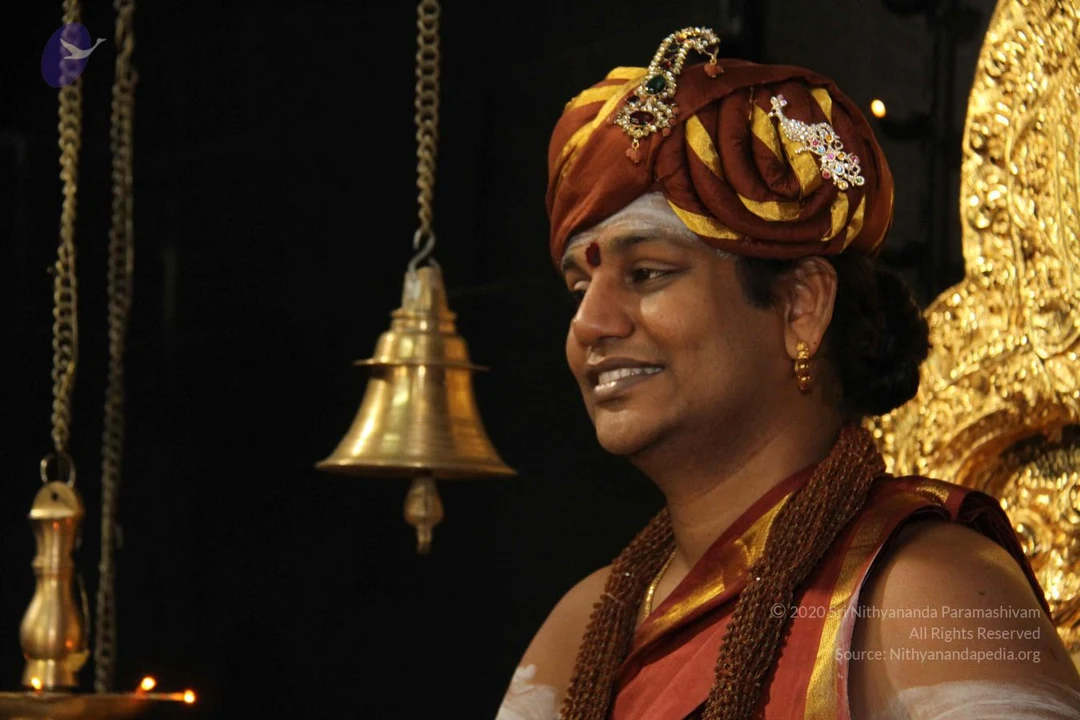
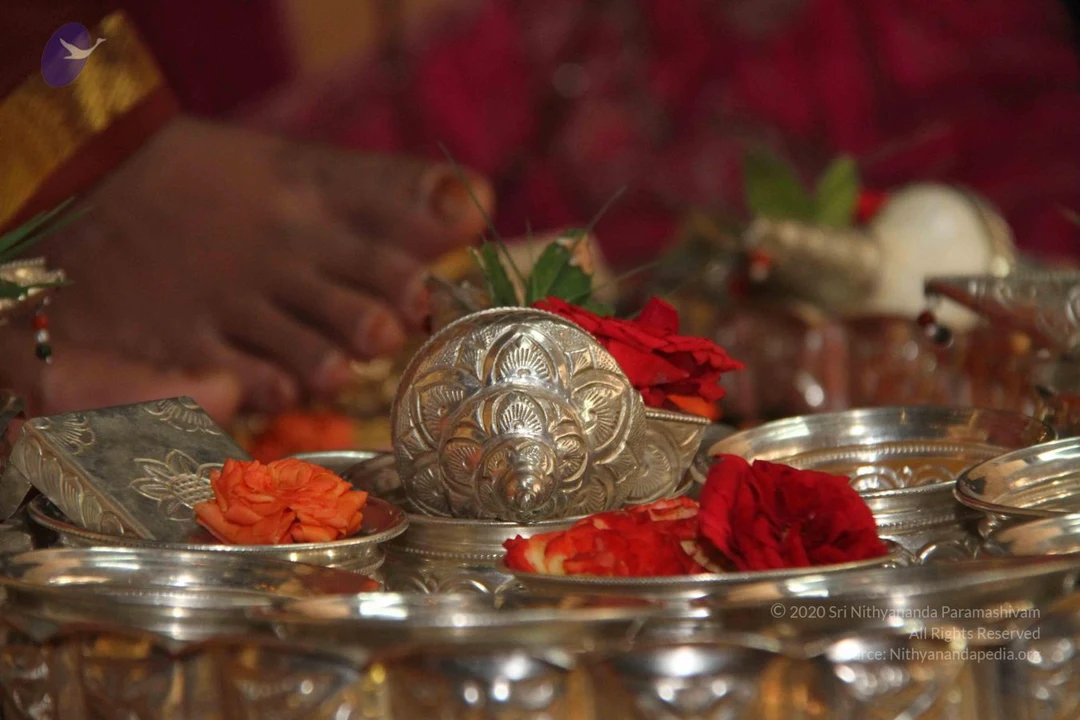
12 photosSource gallery
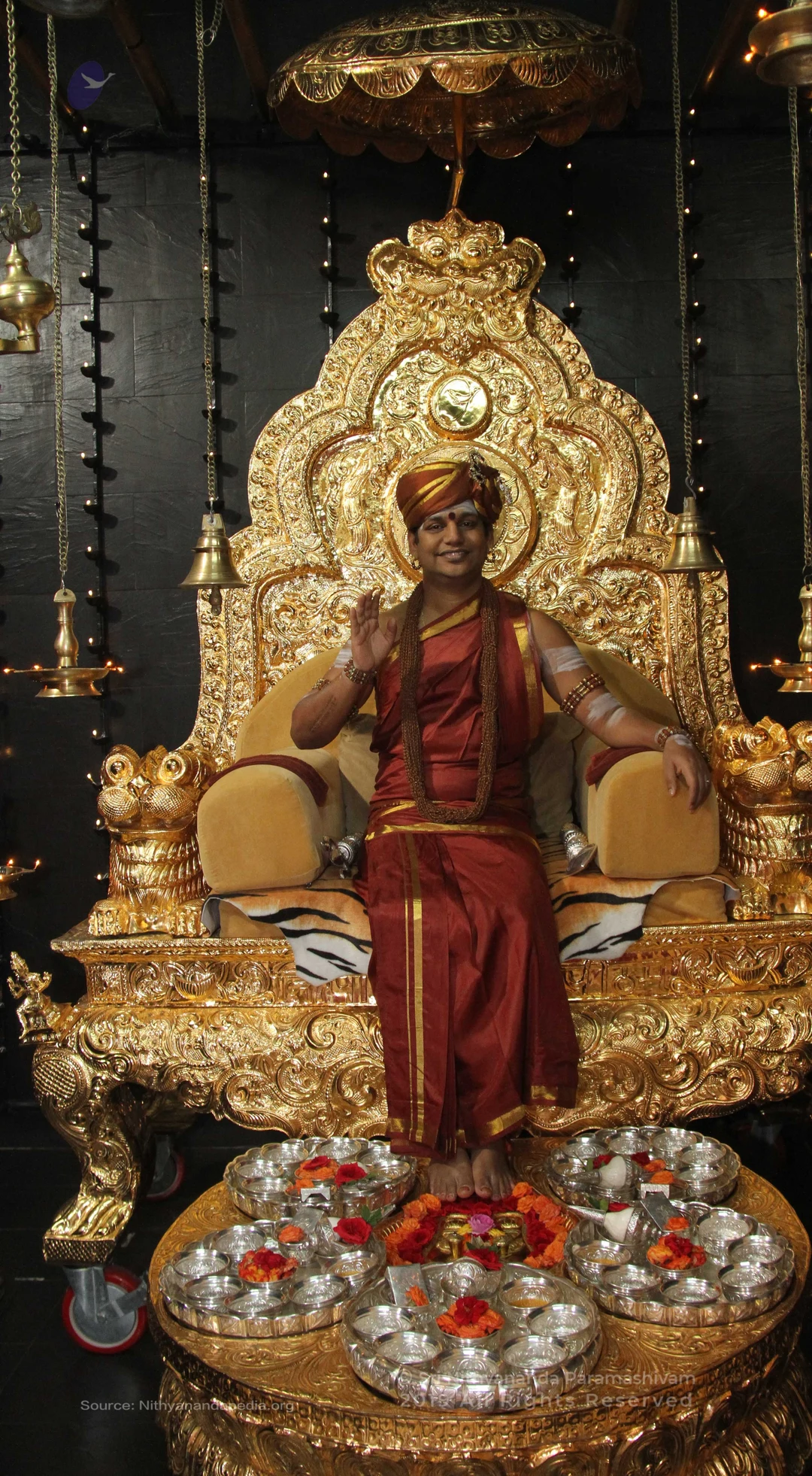
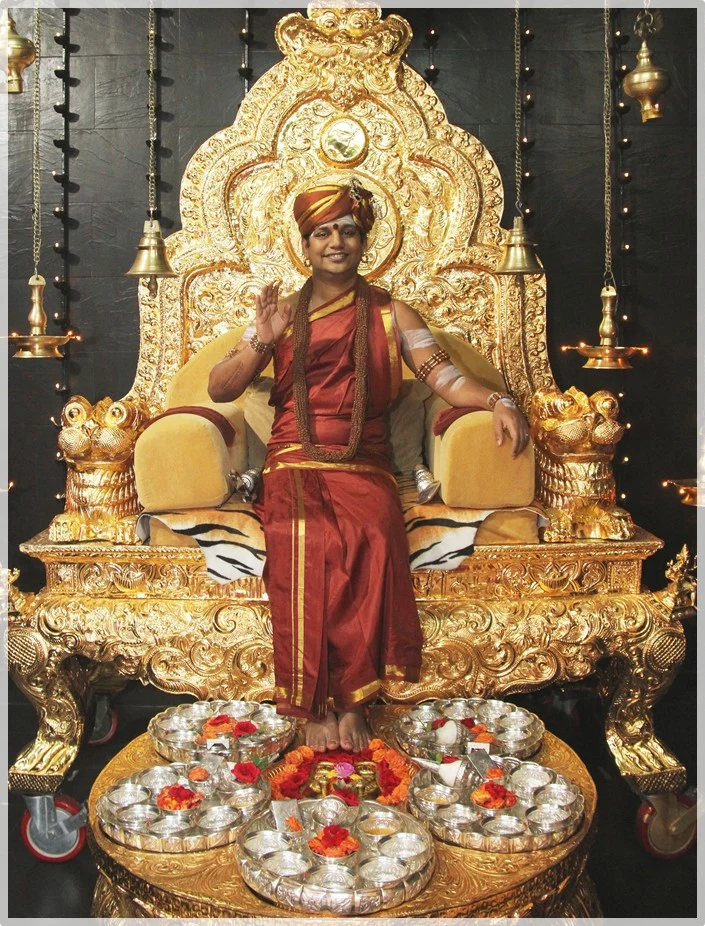
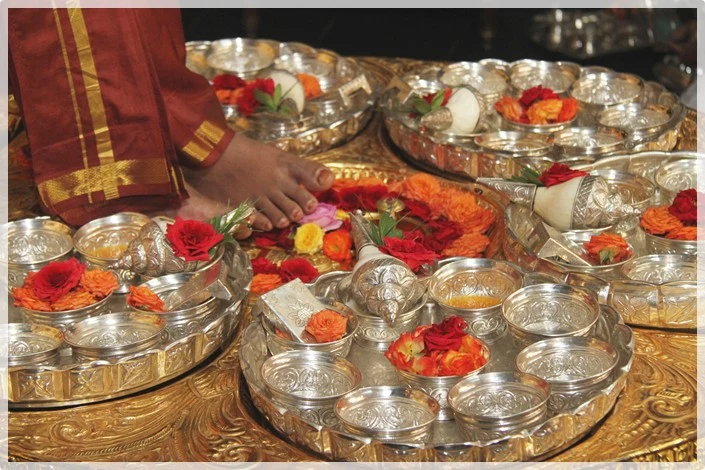
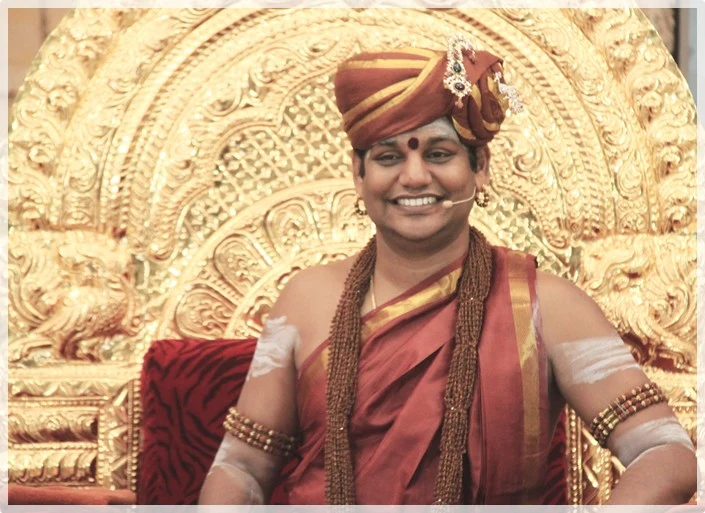
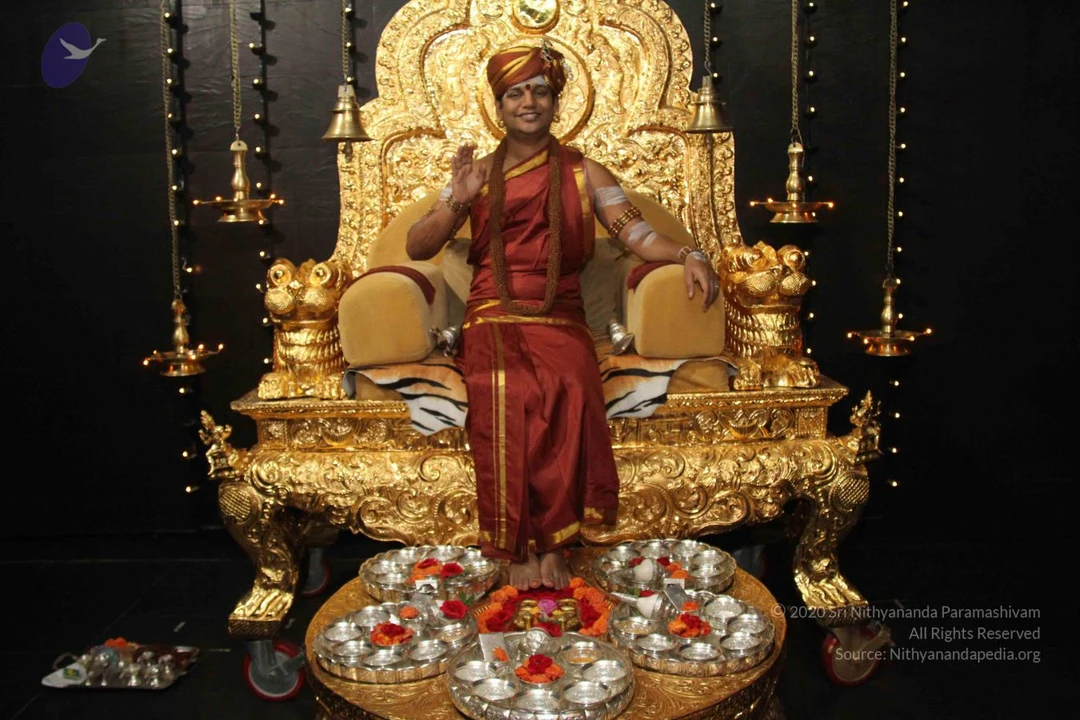
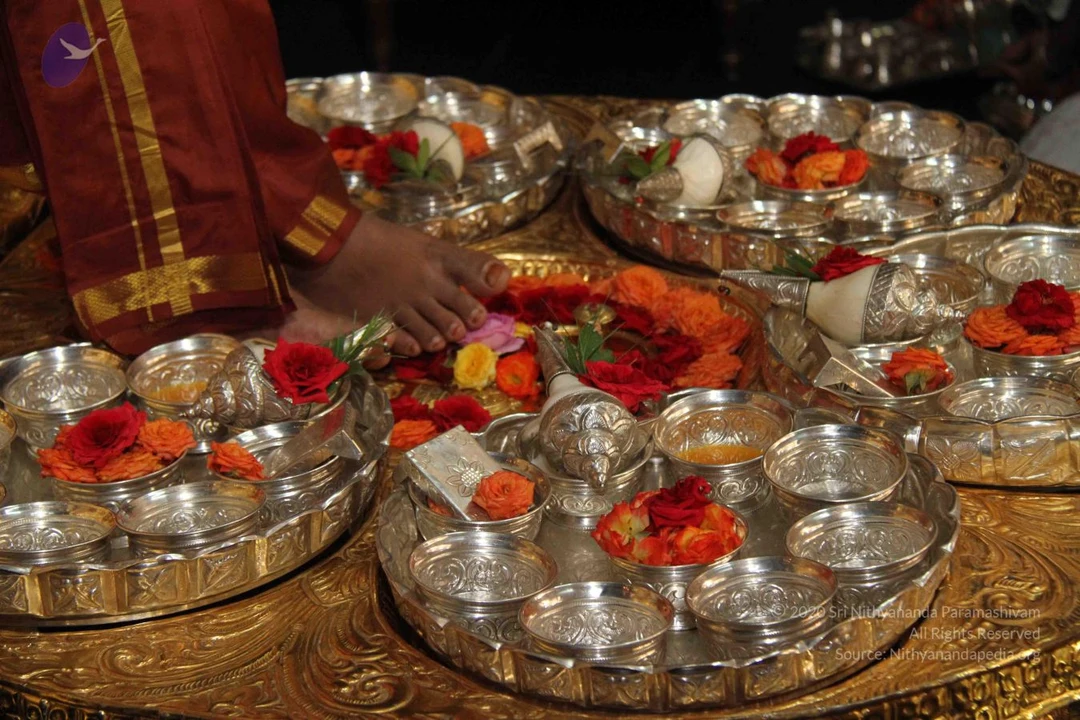
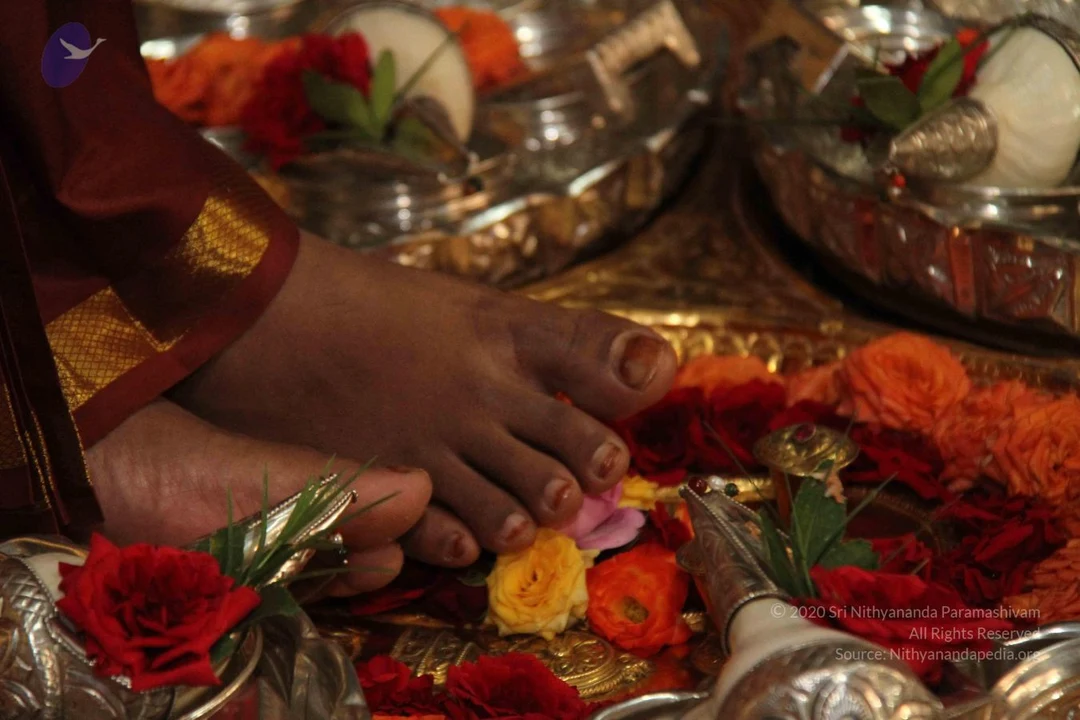
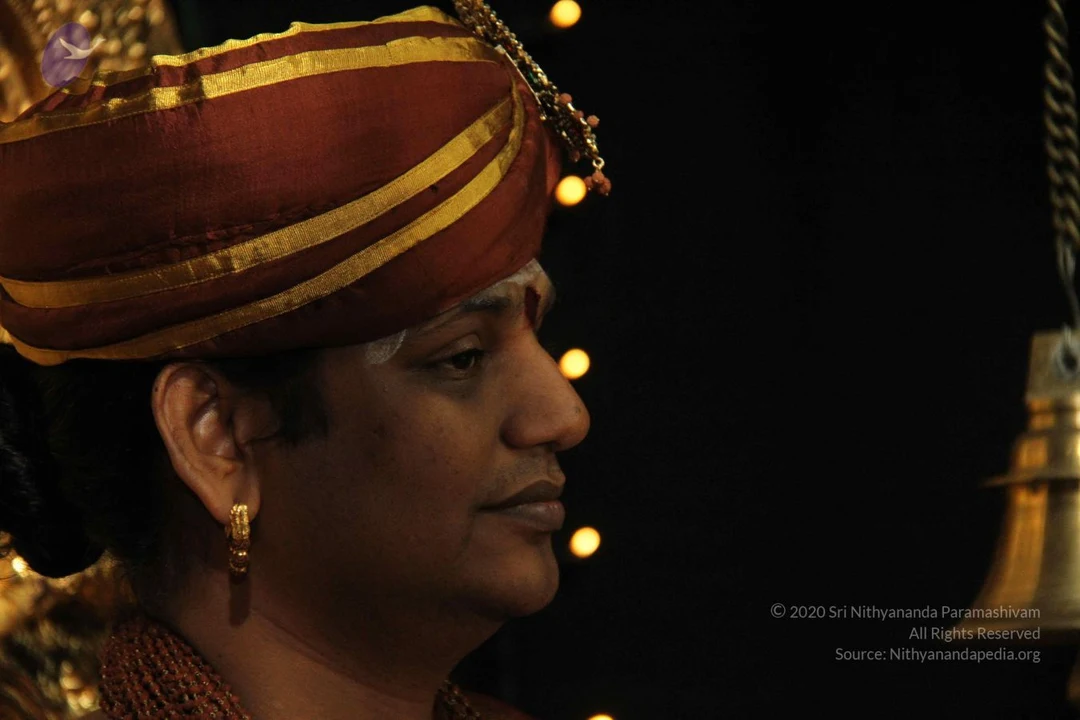
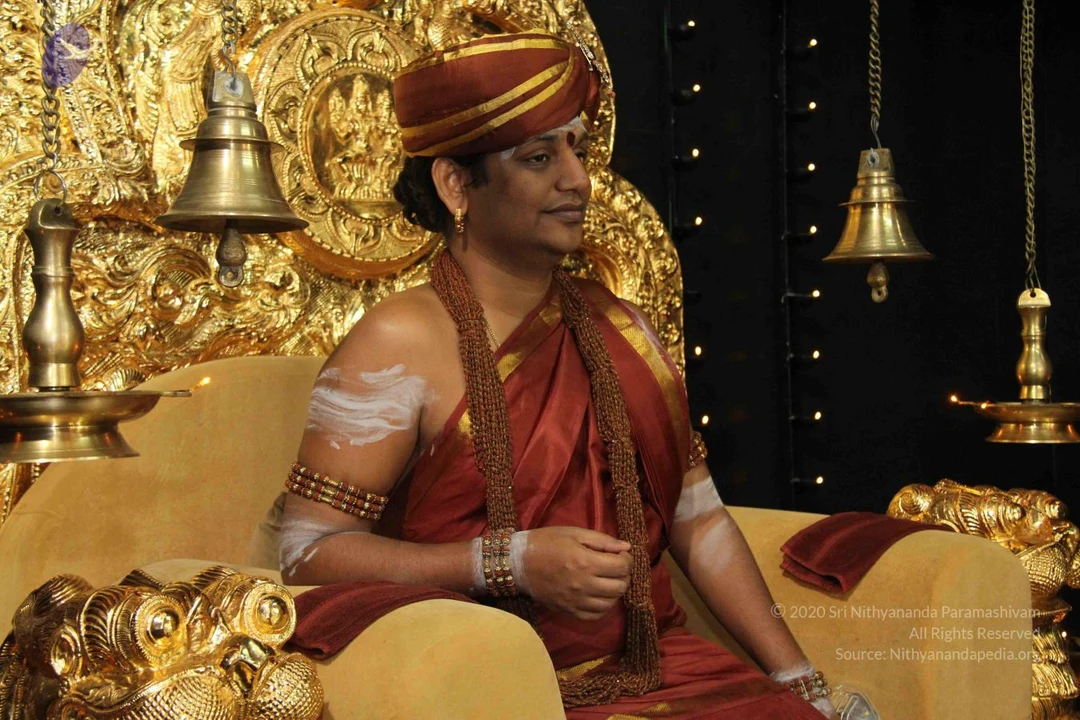
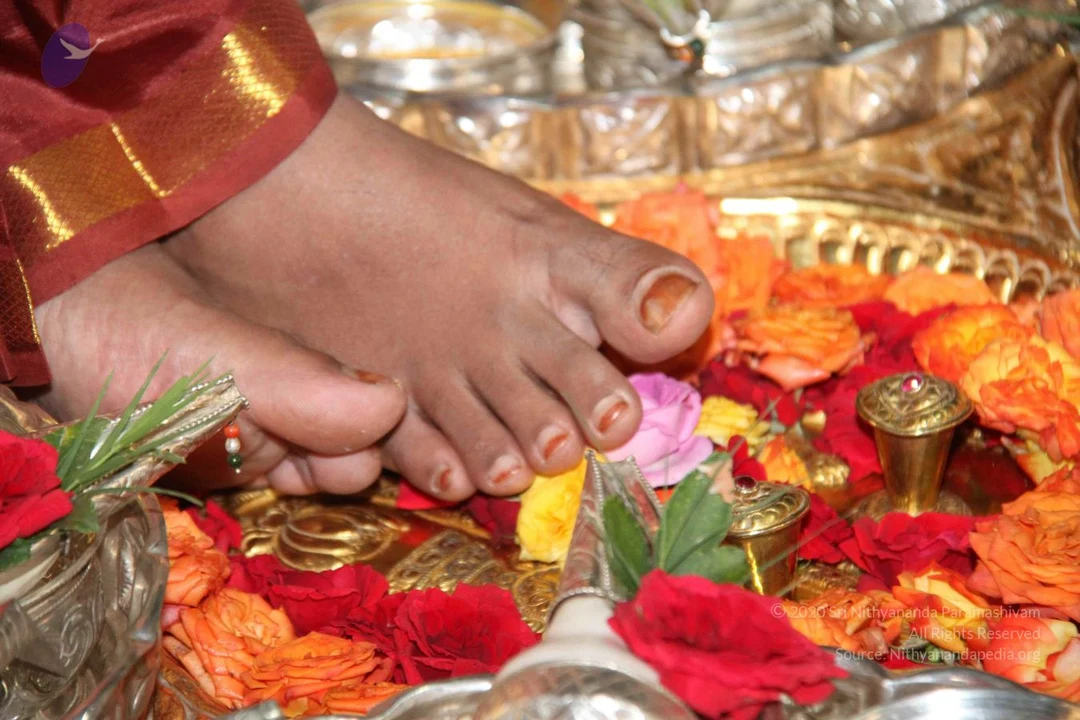
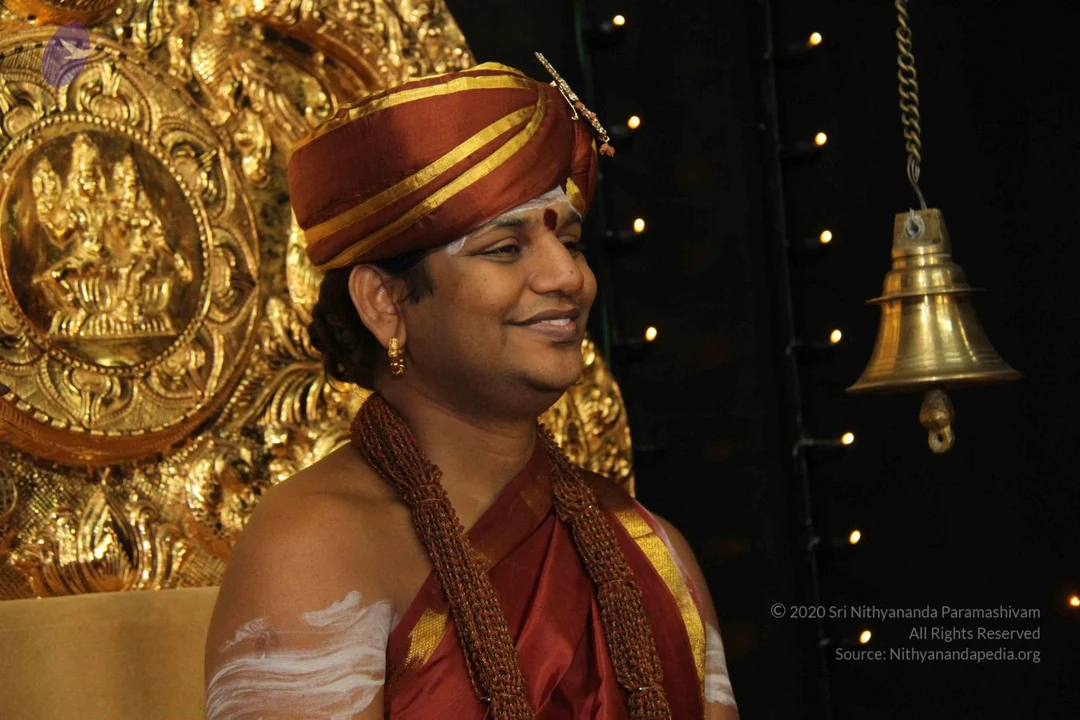
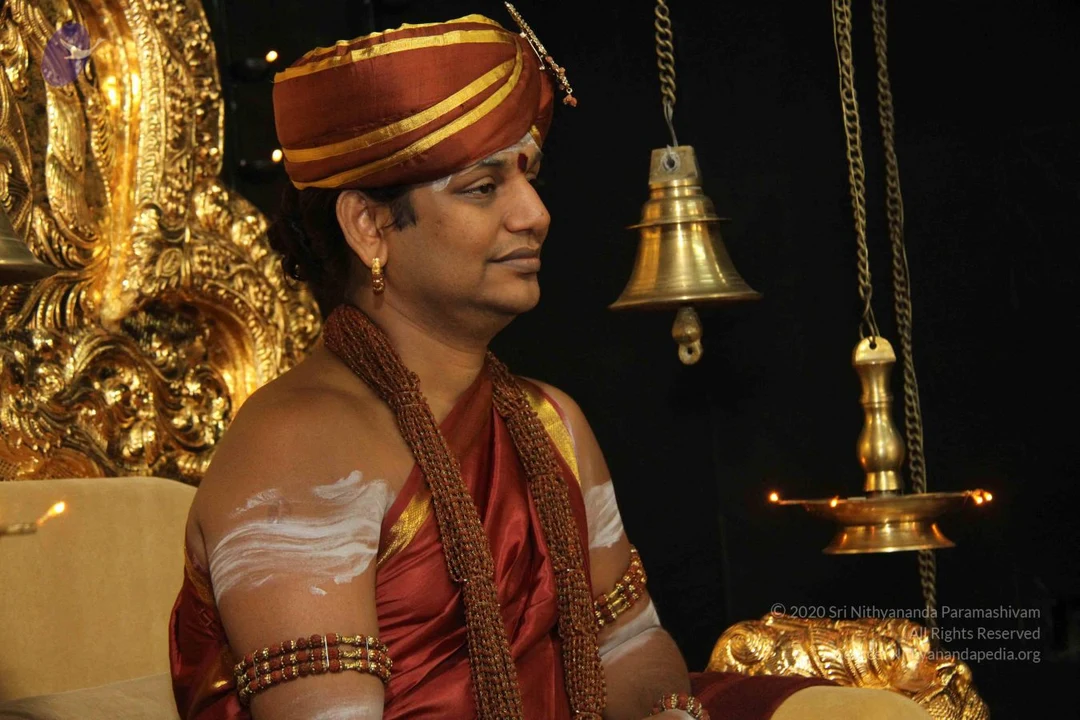
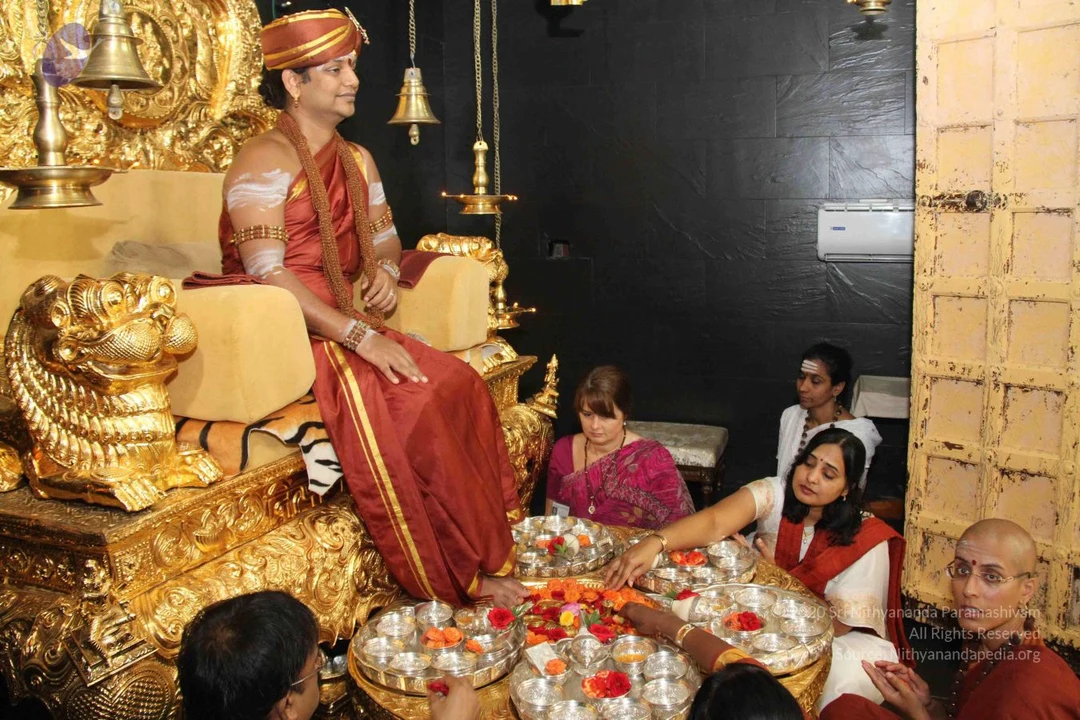
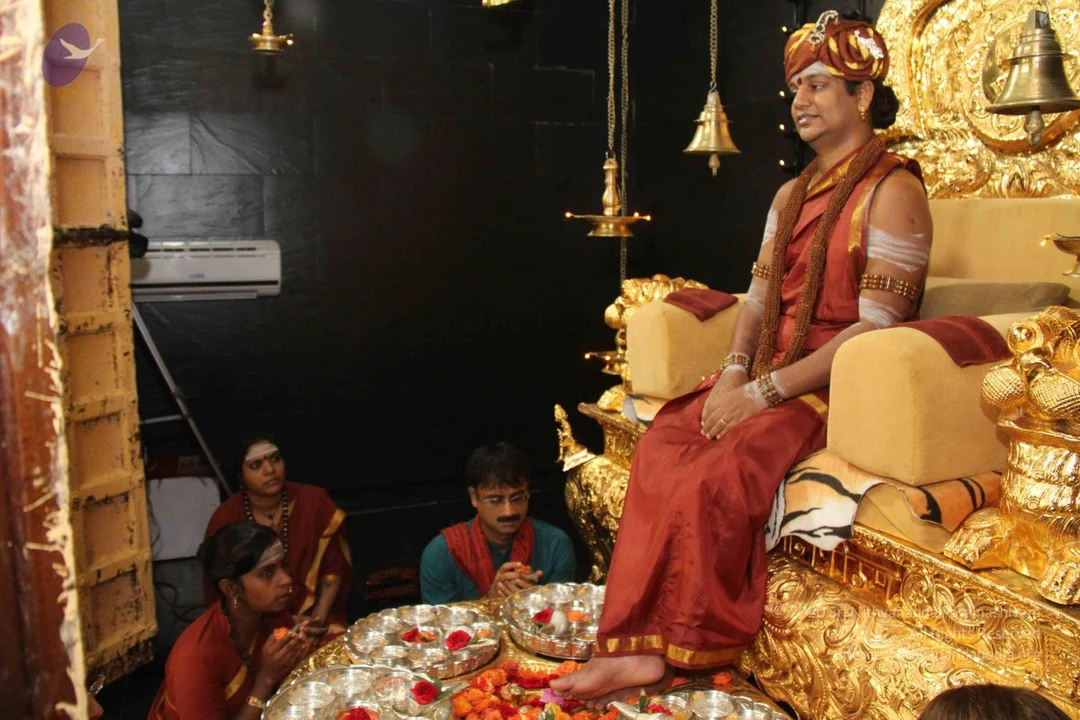
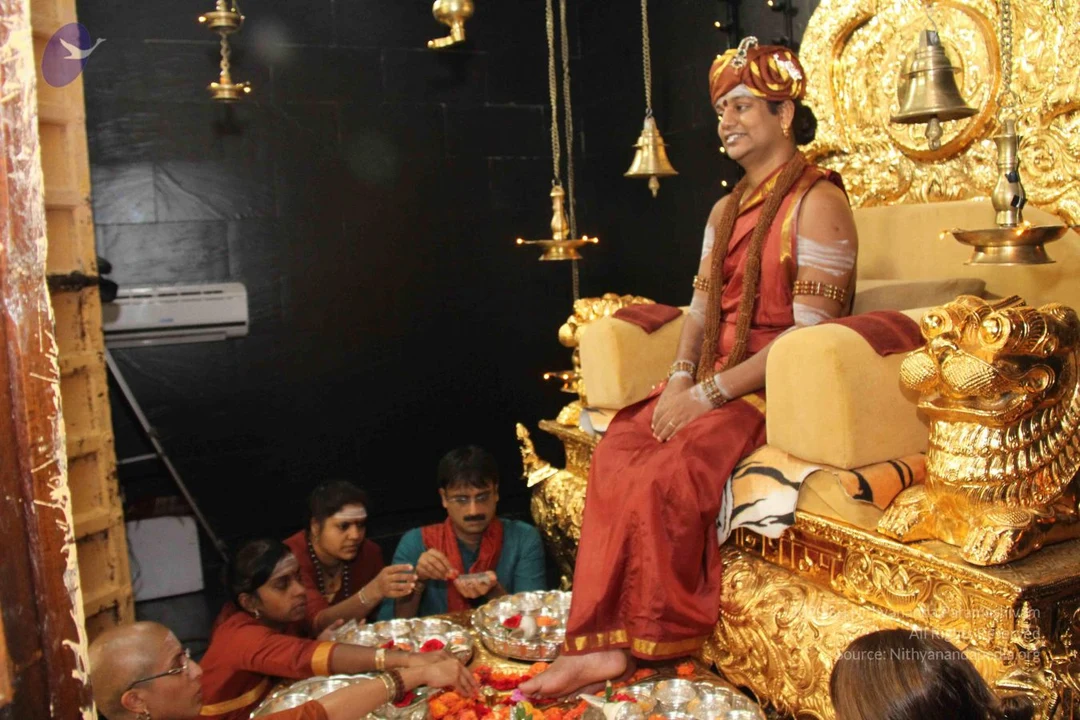
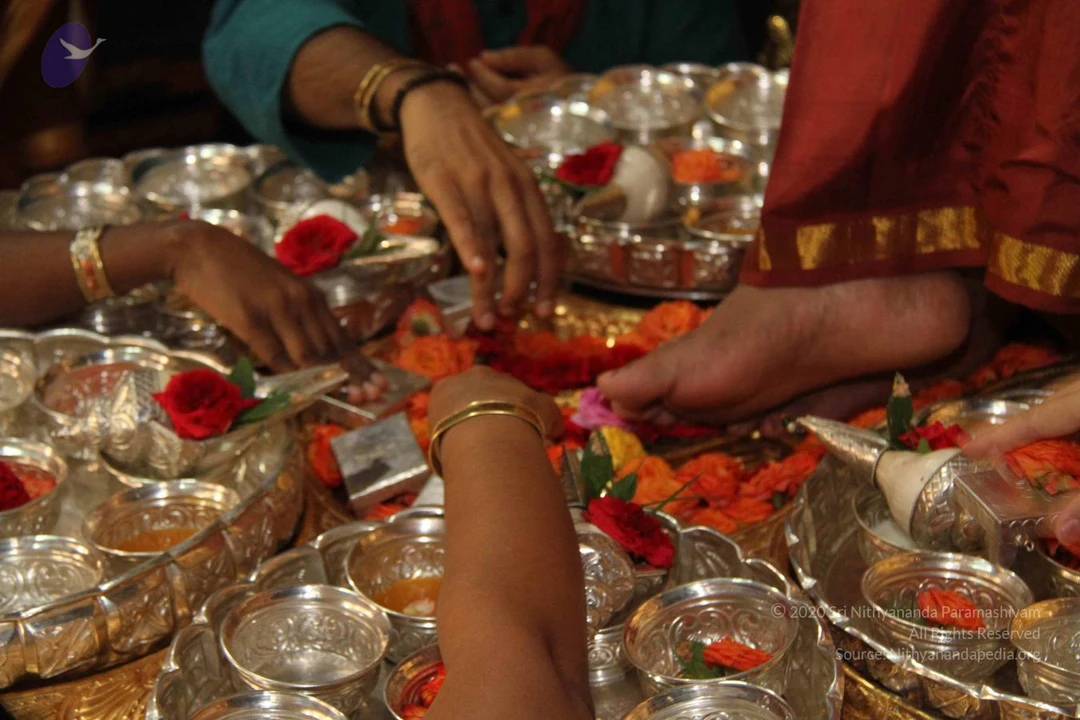
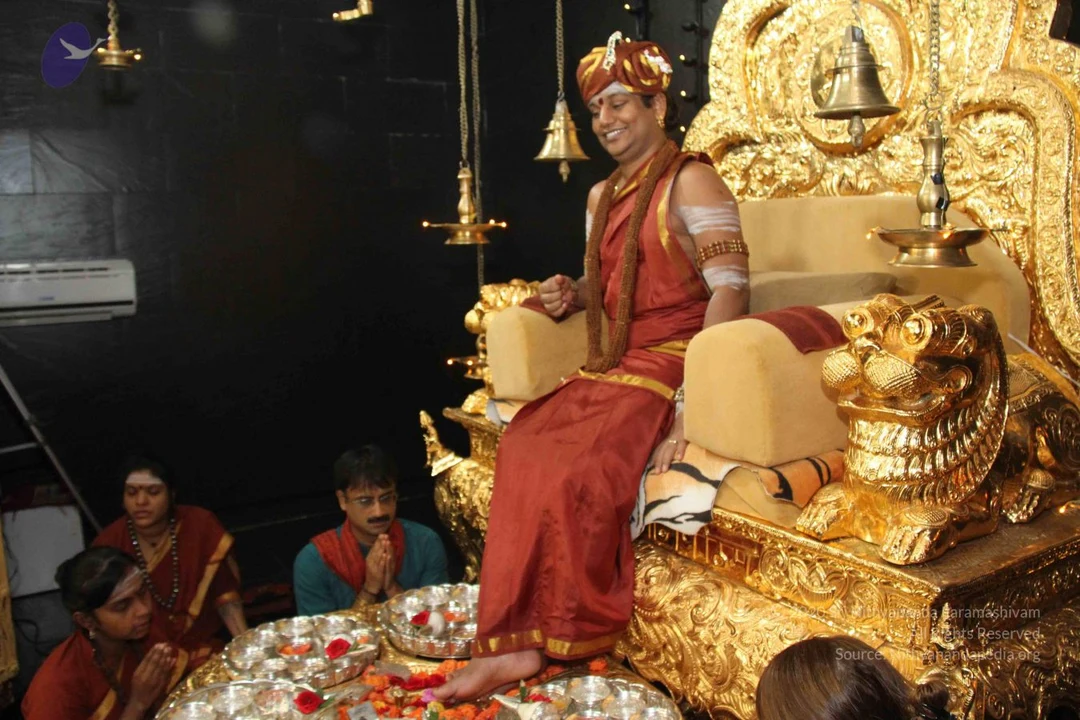
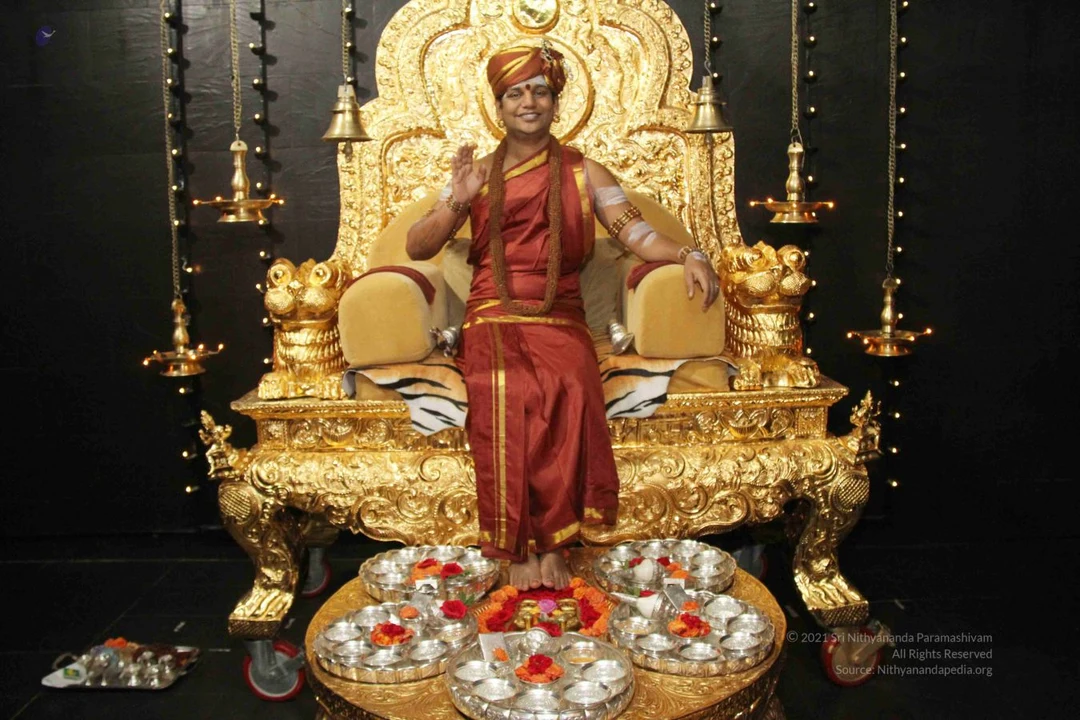
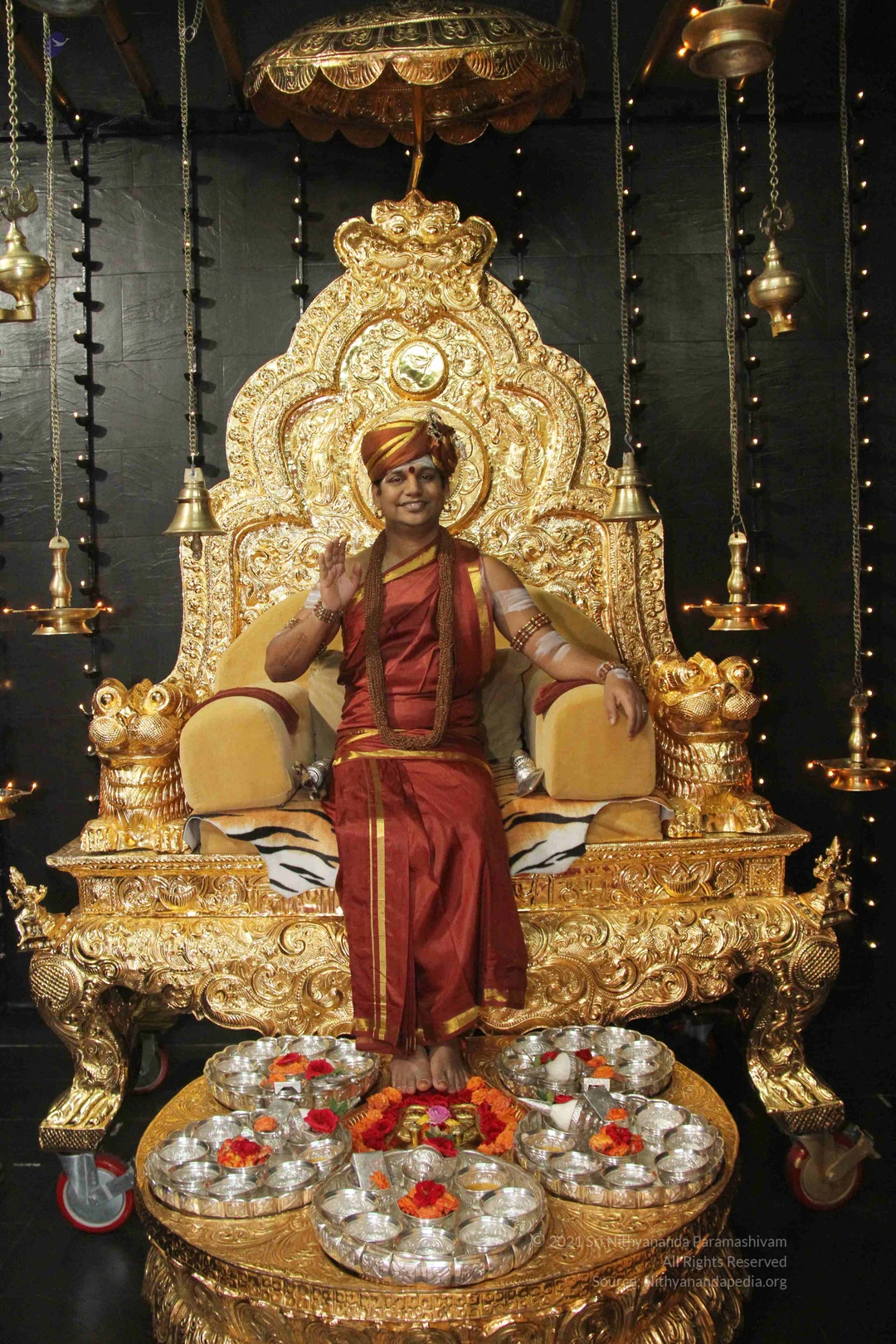
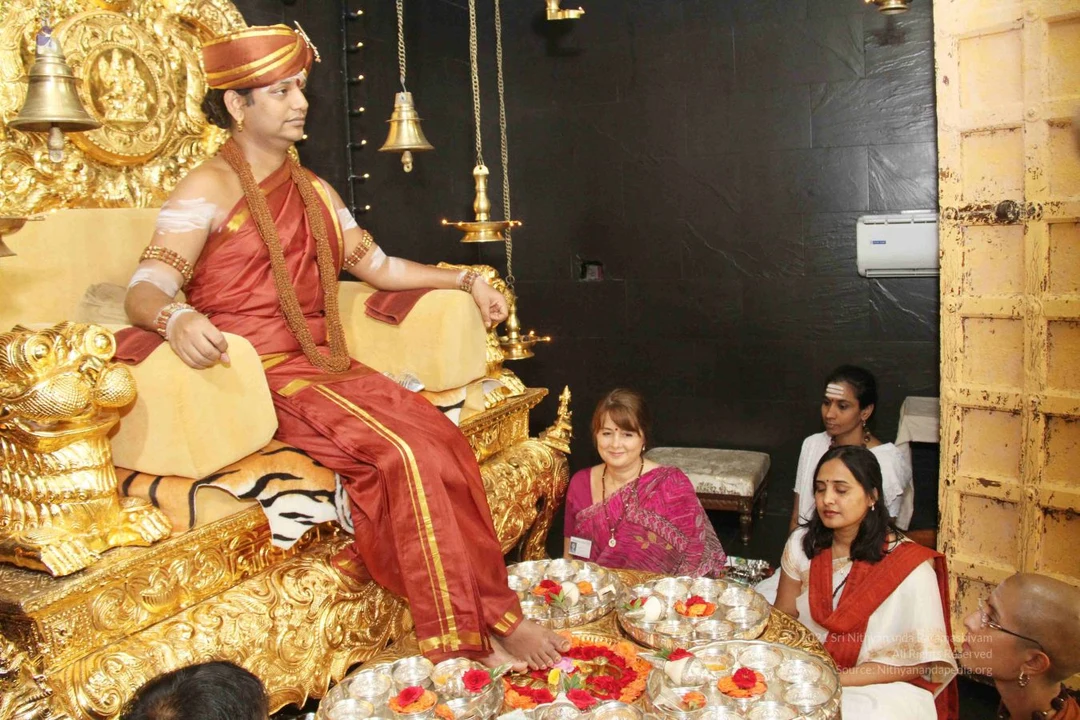
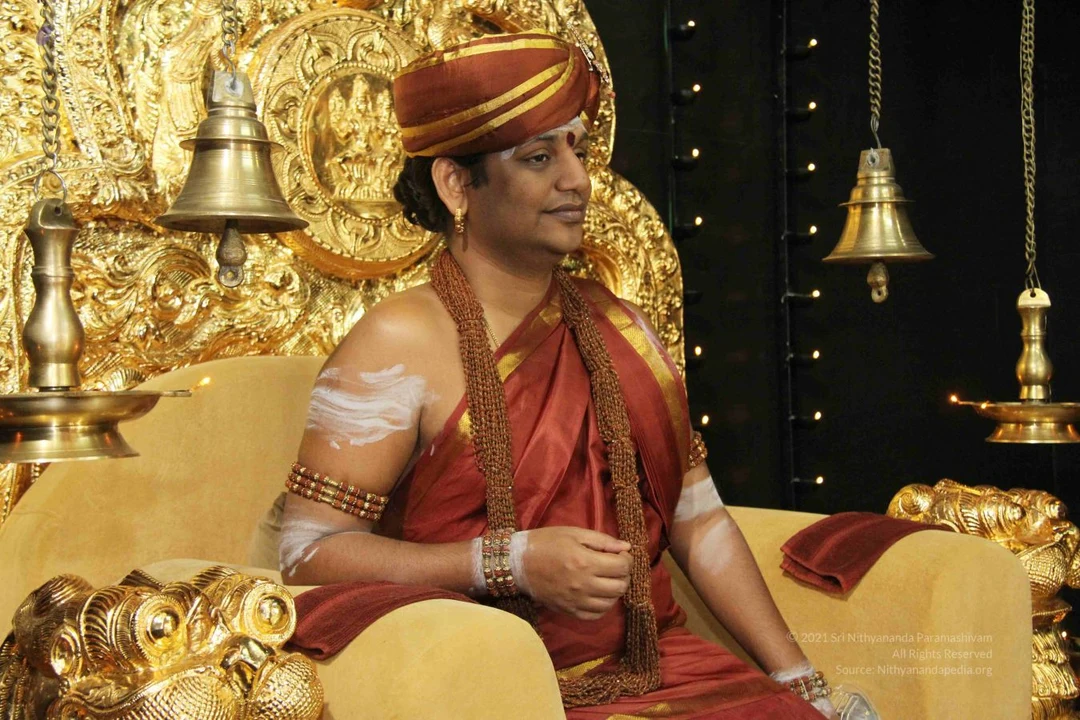
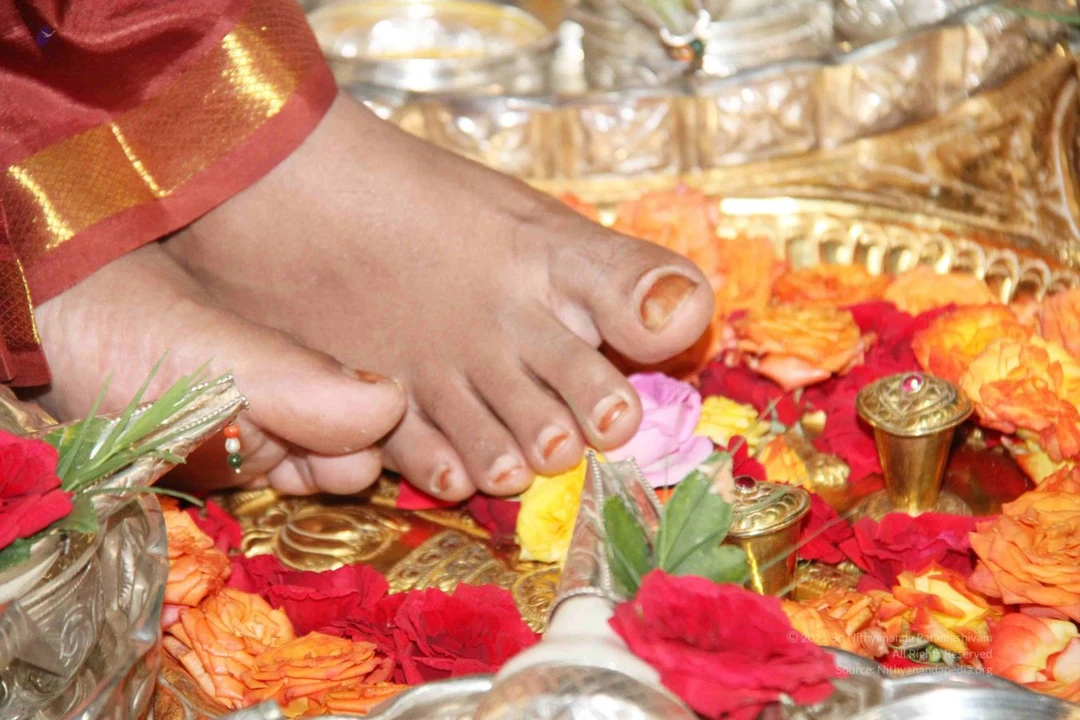
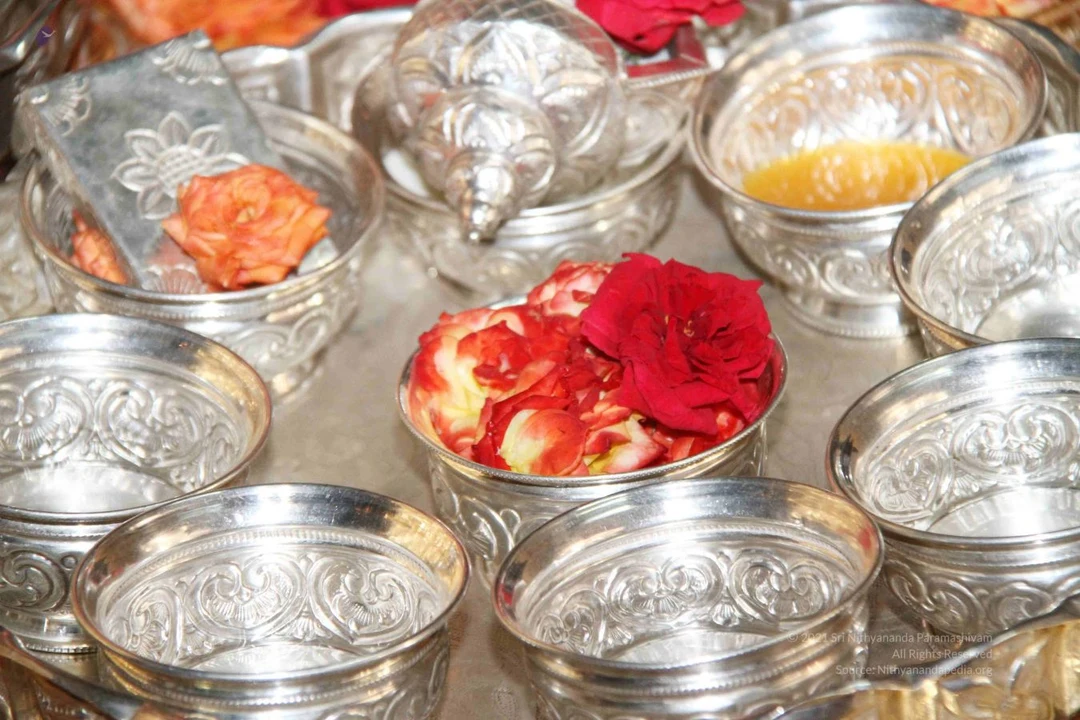
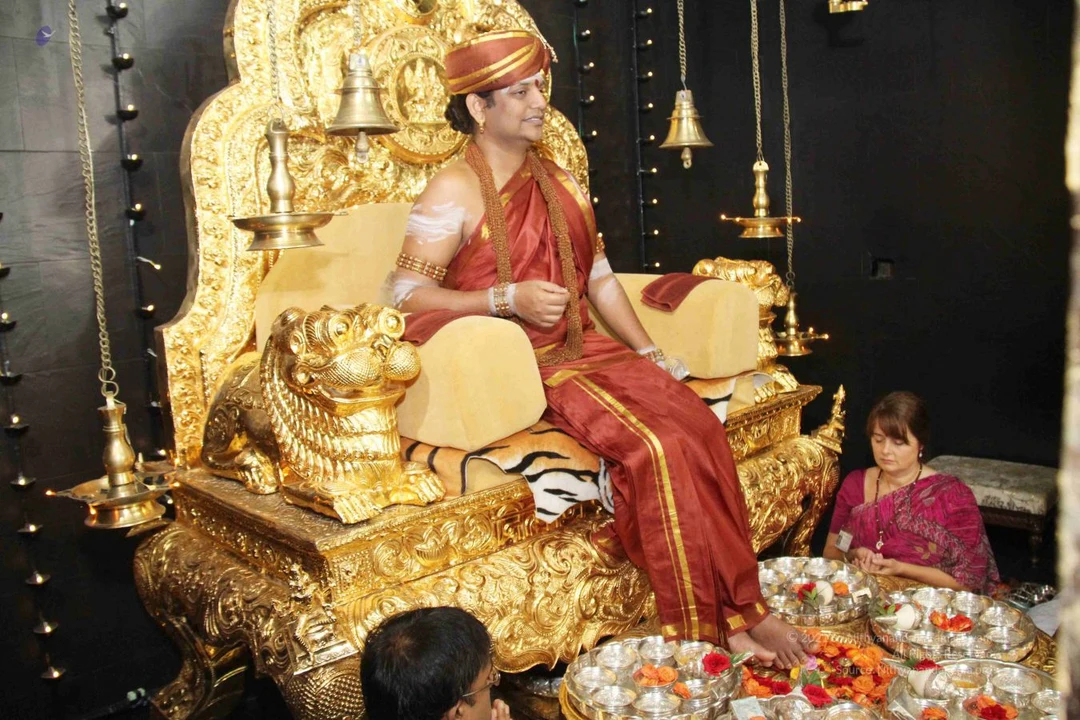
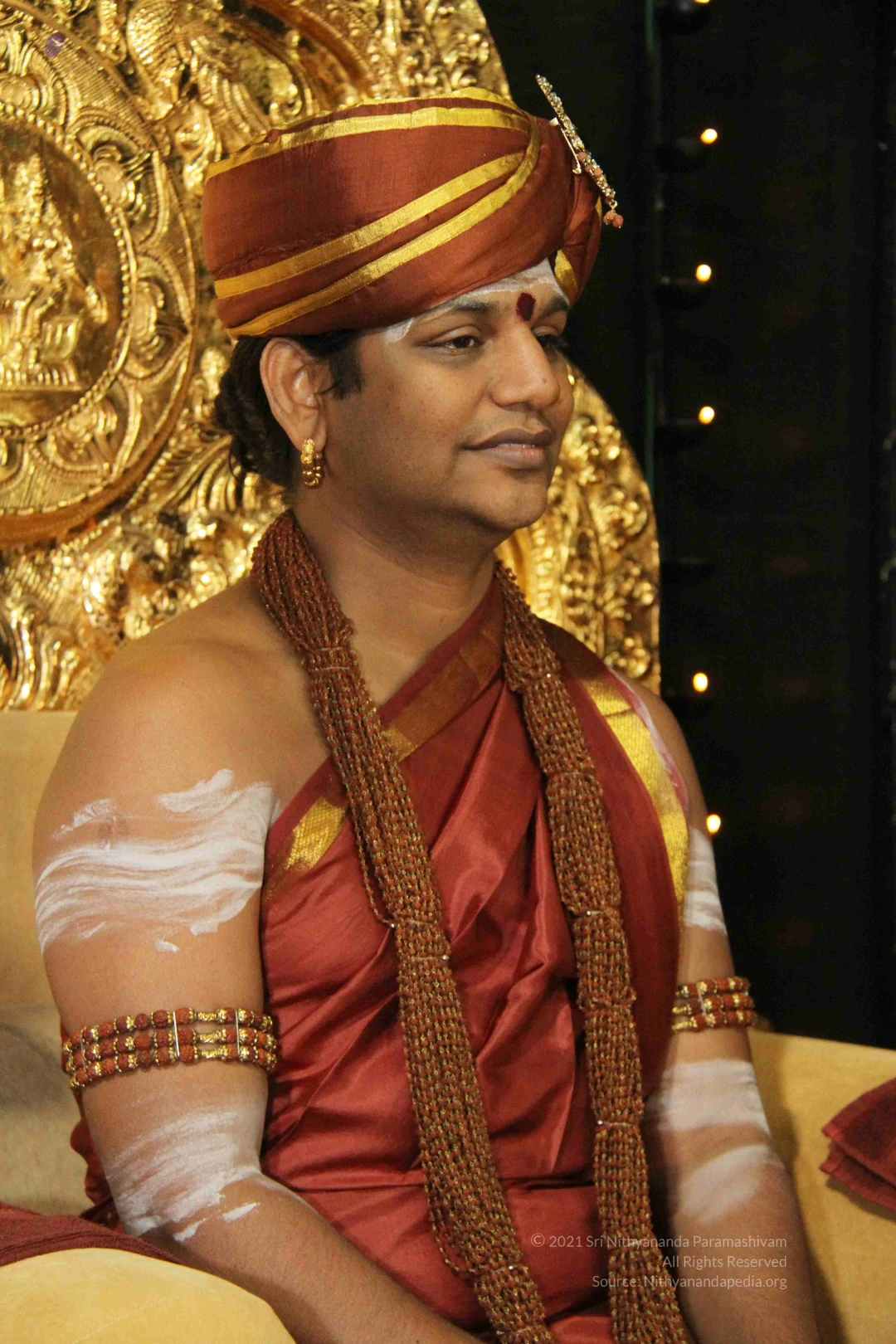
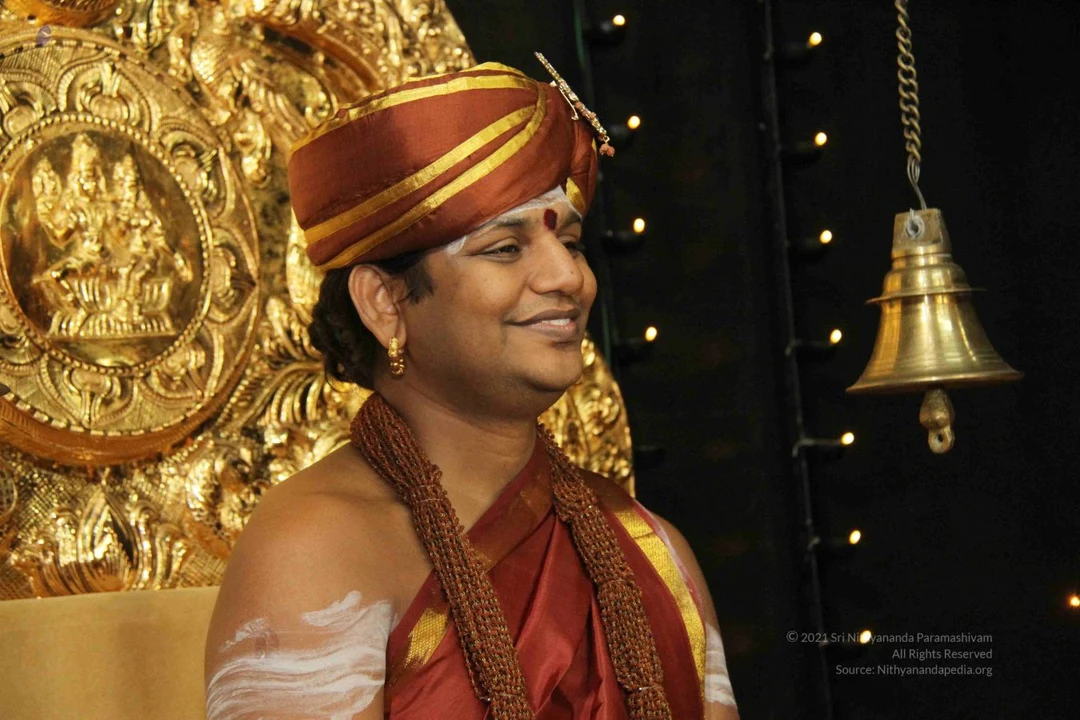
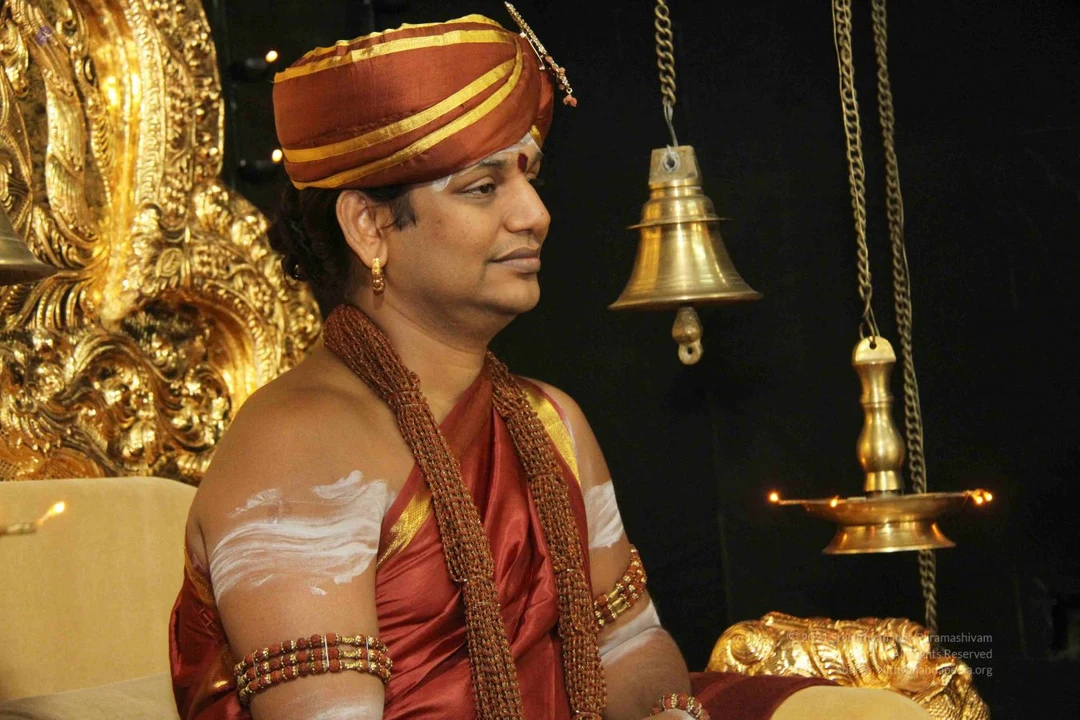
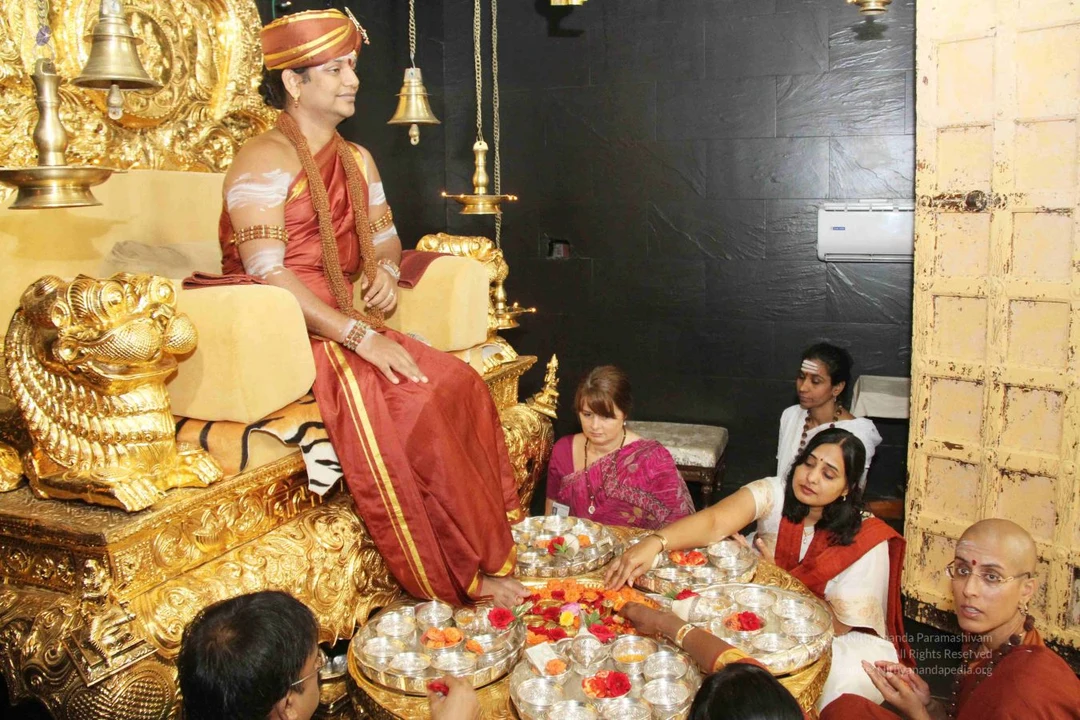
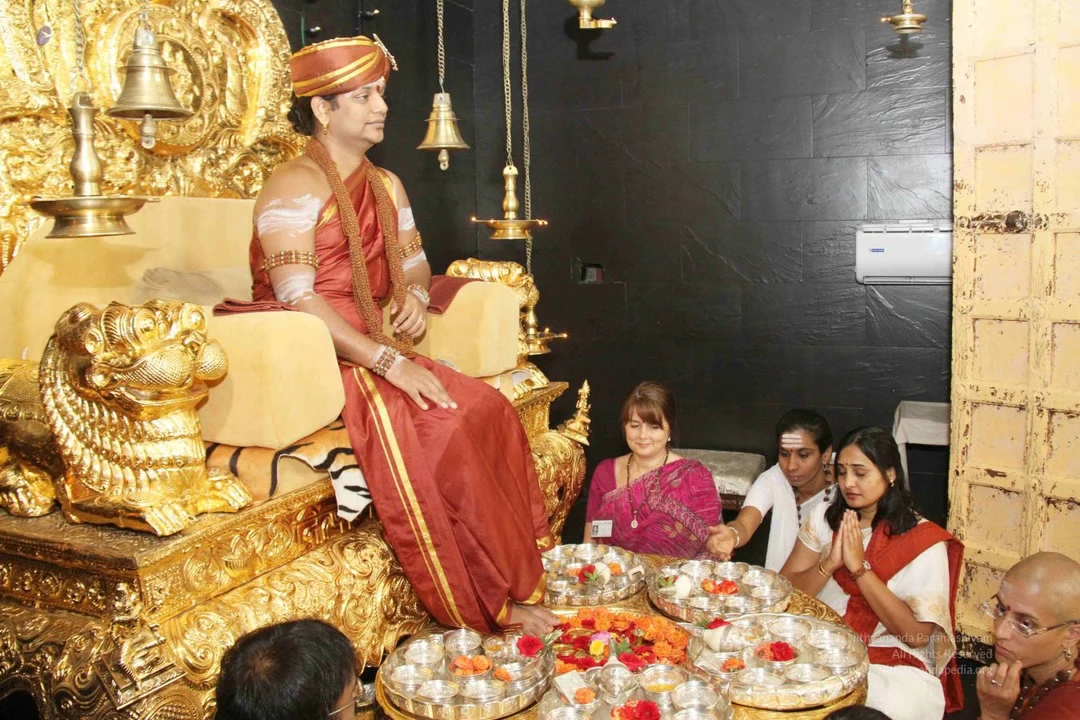
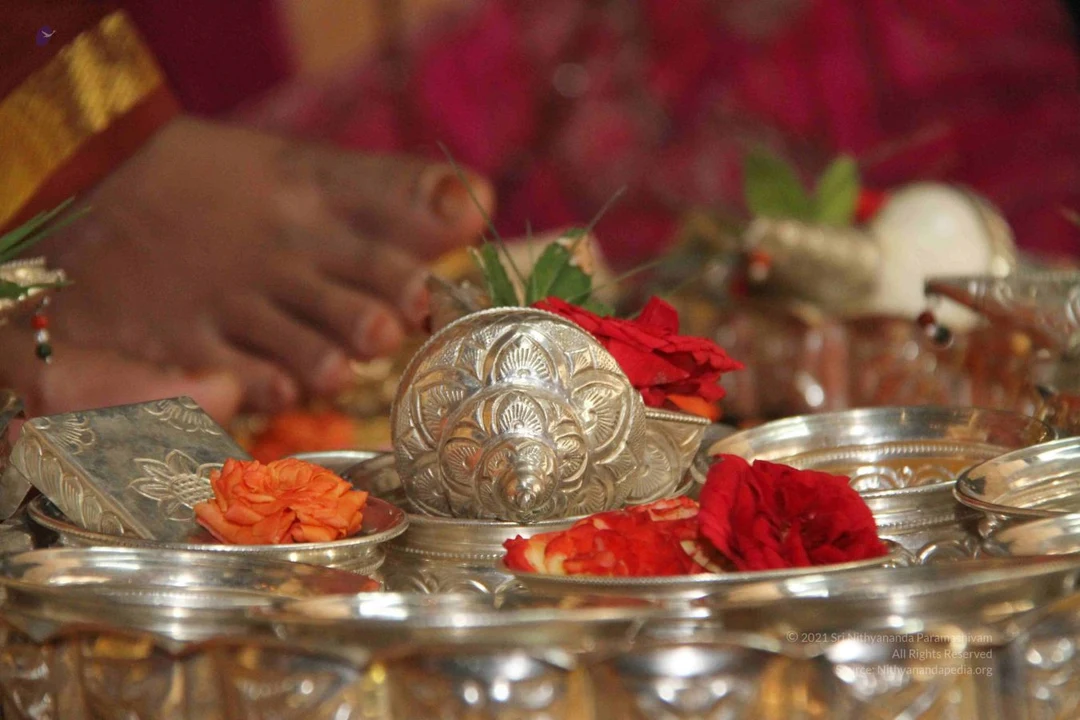
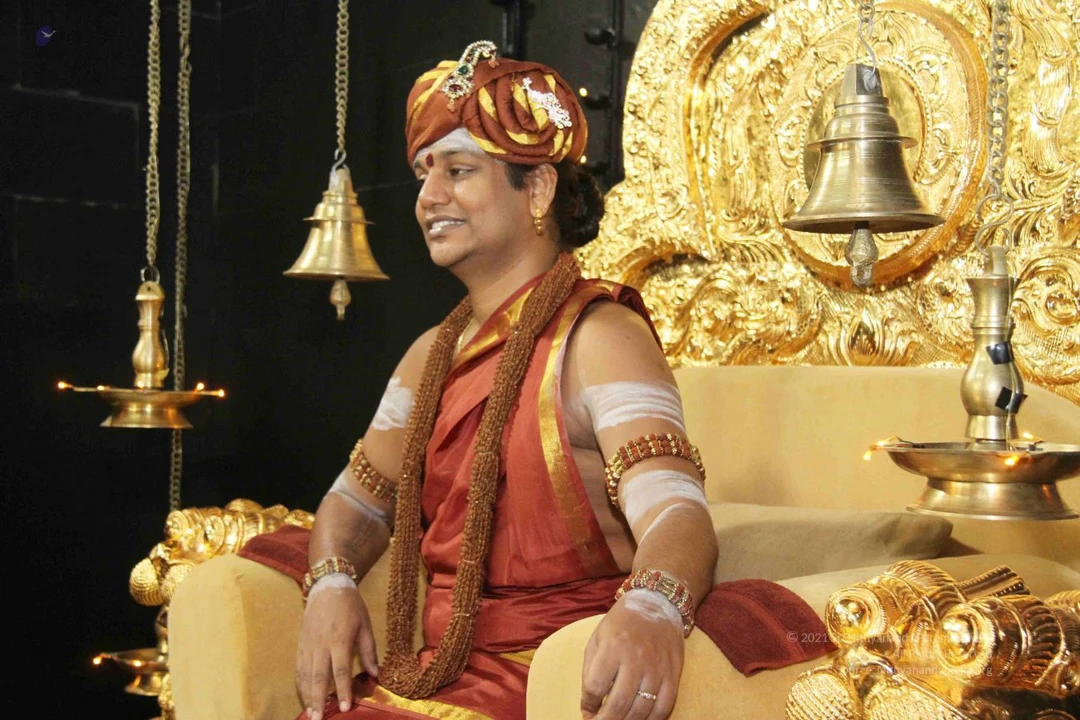
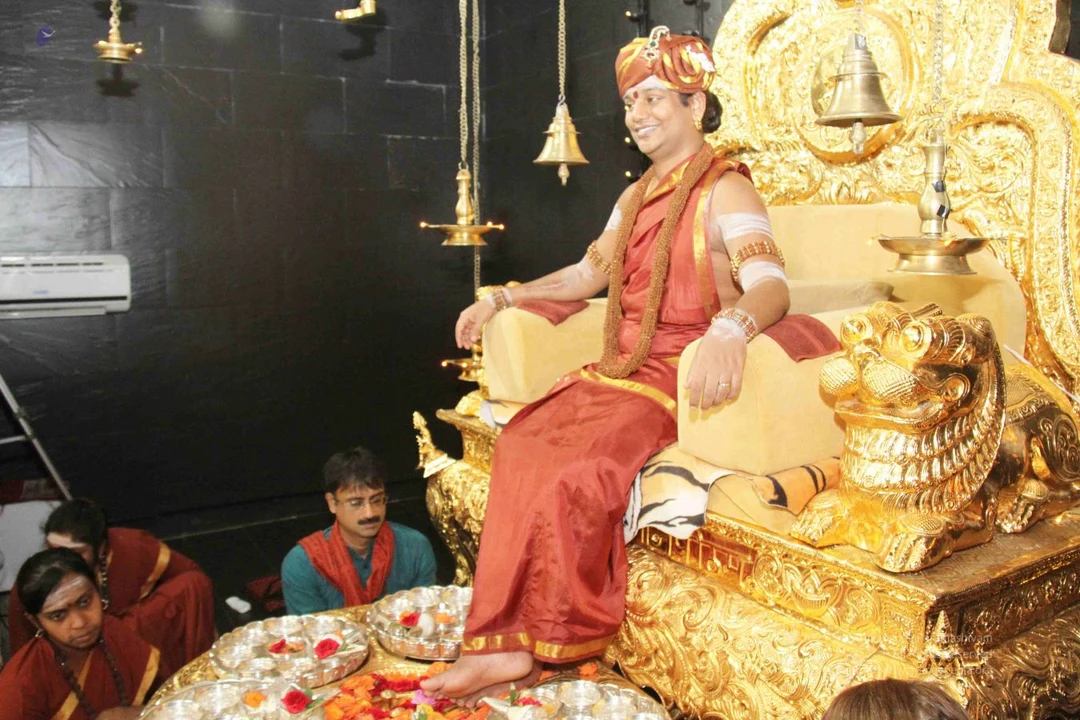
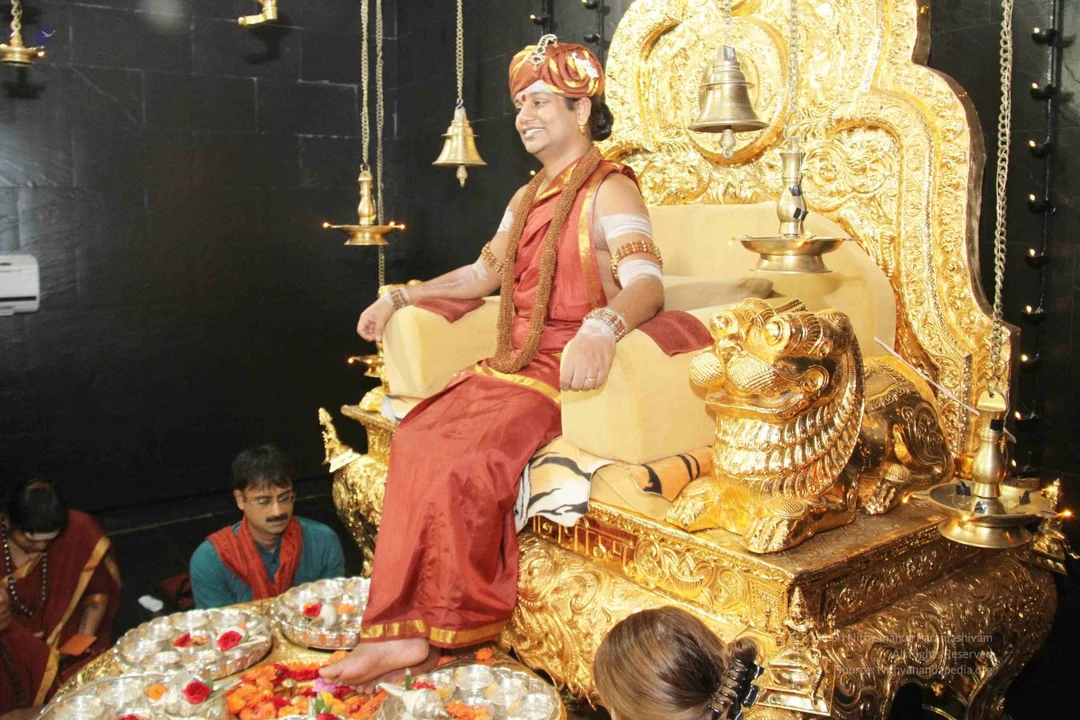
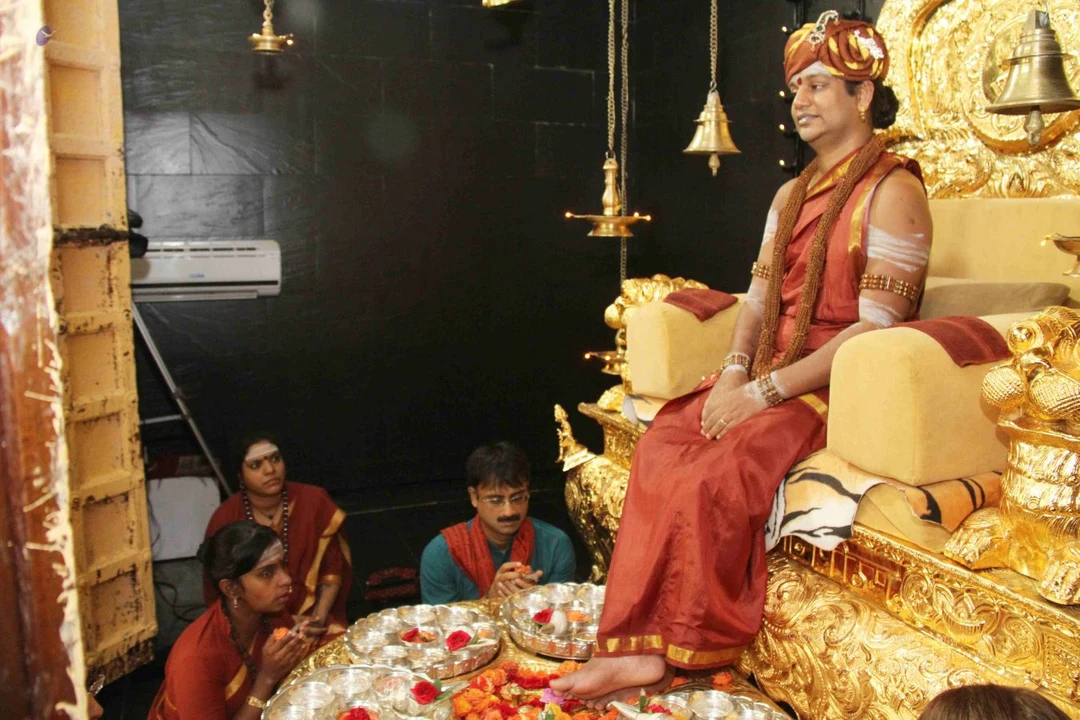
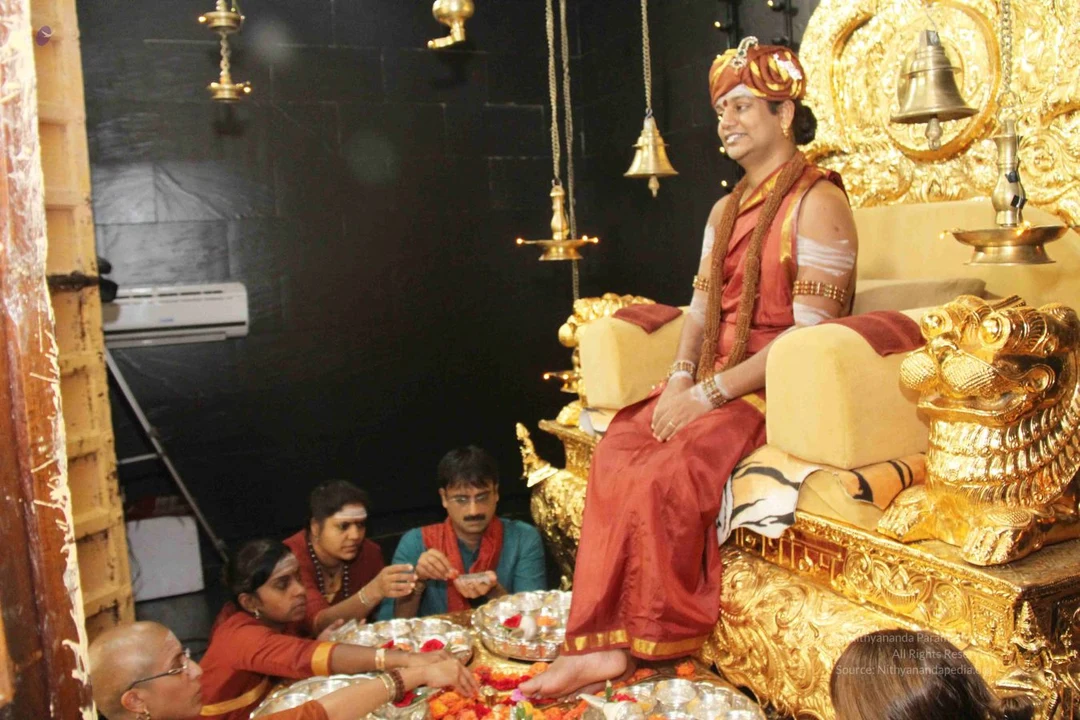
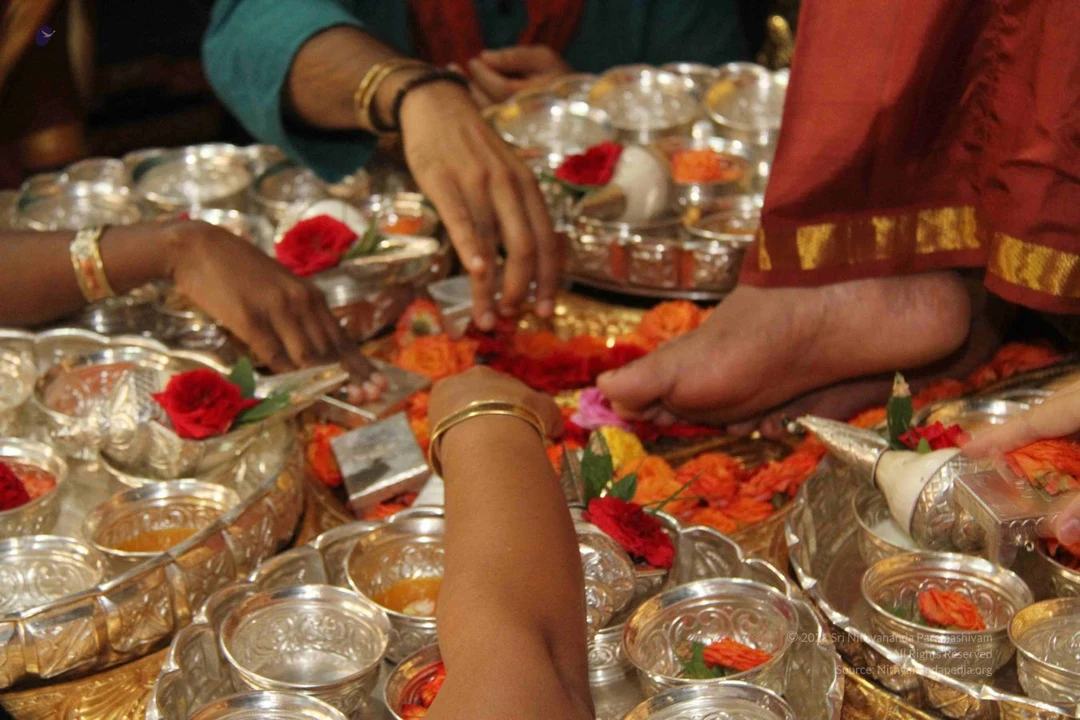
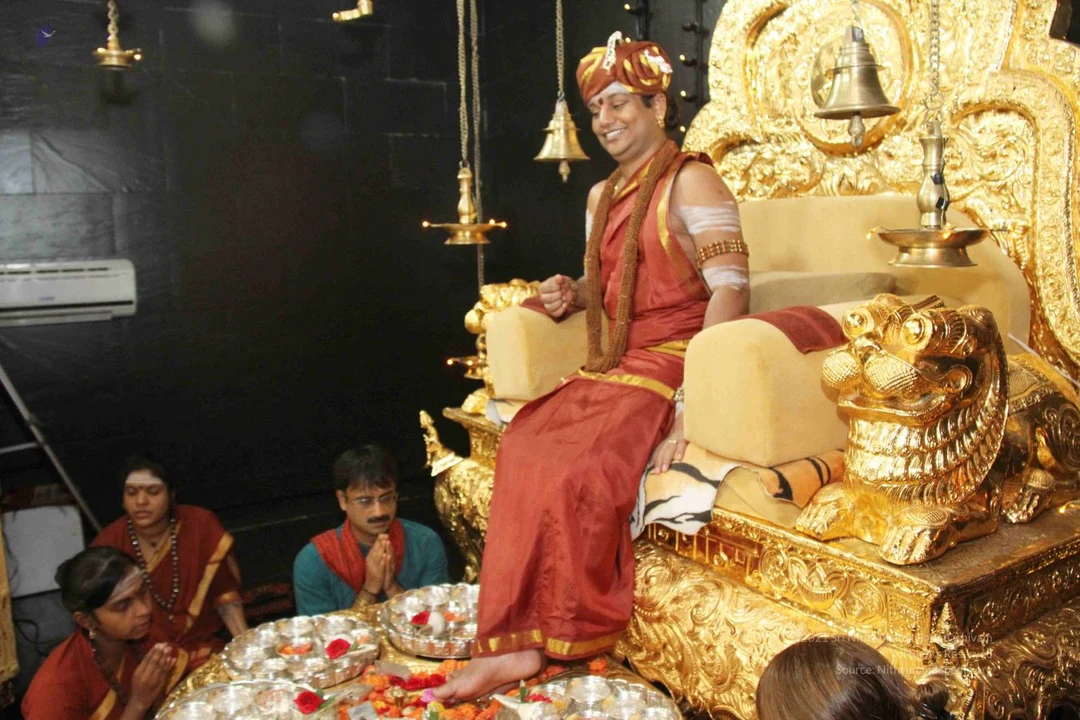
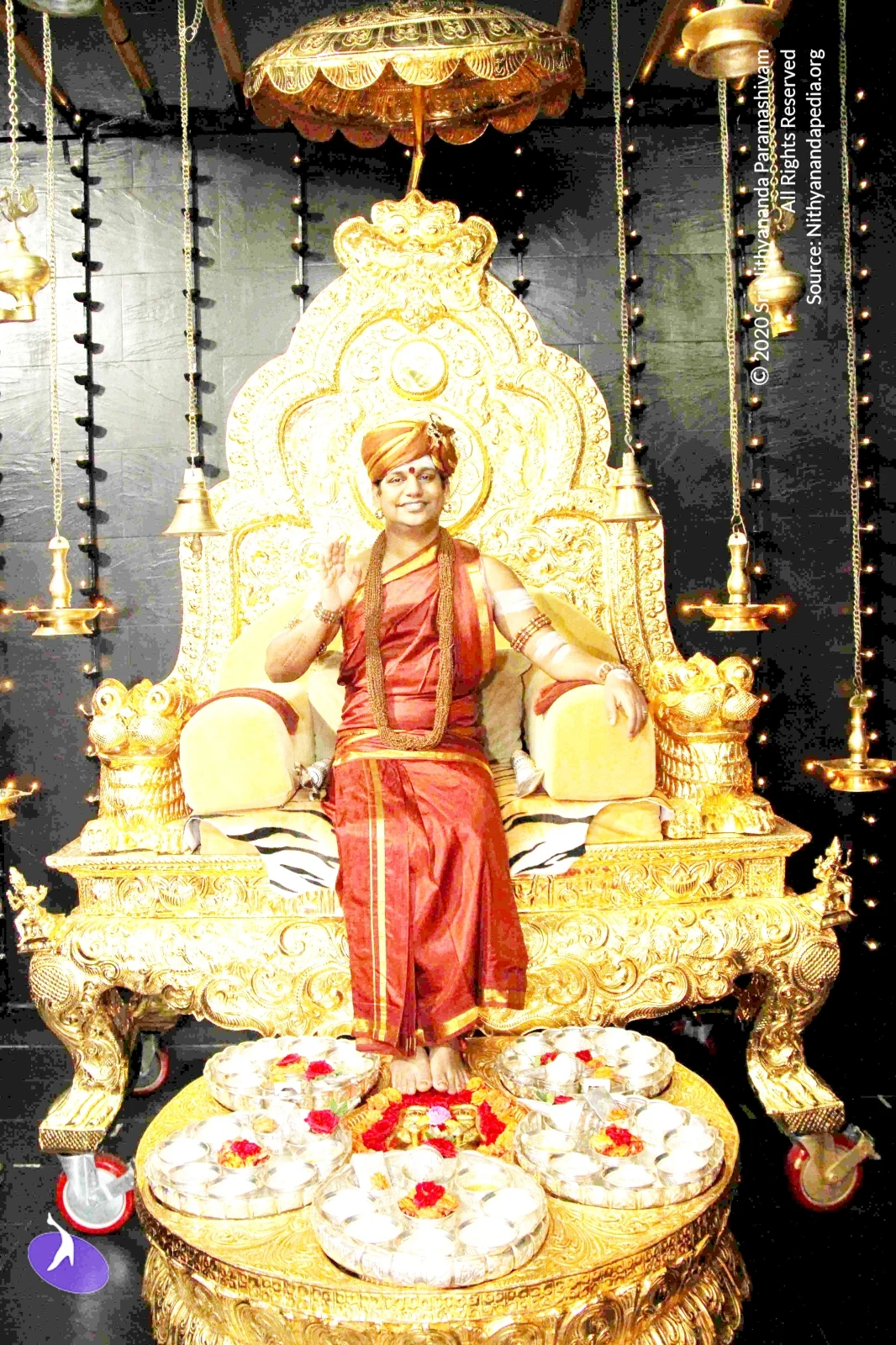
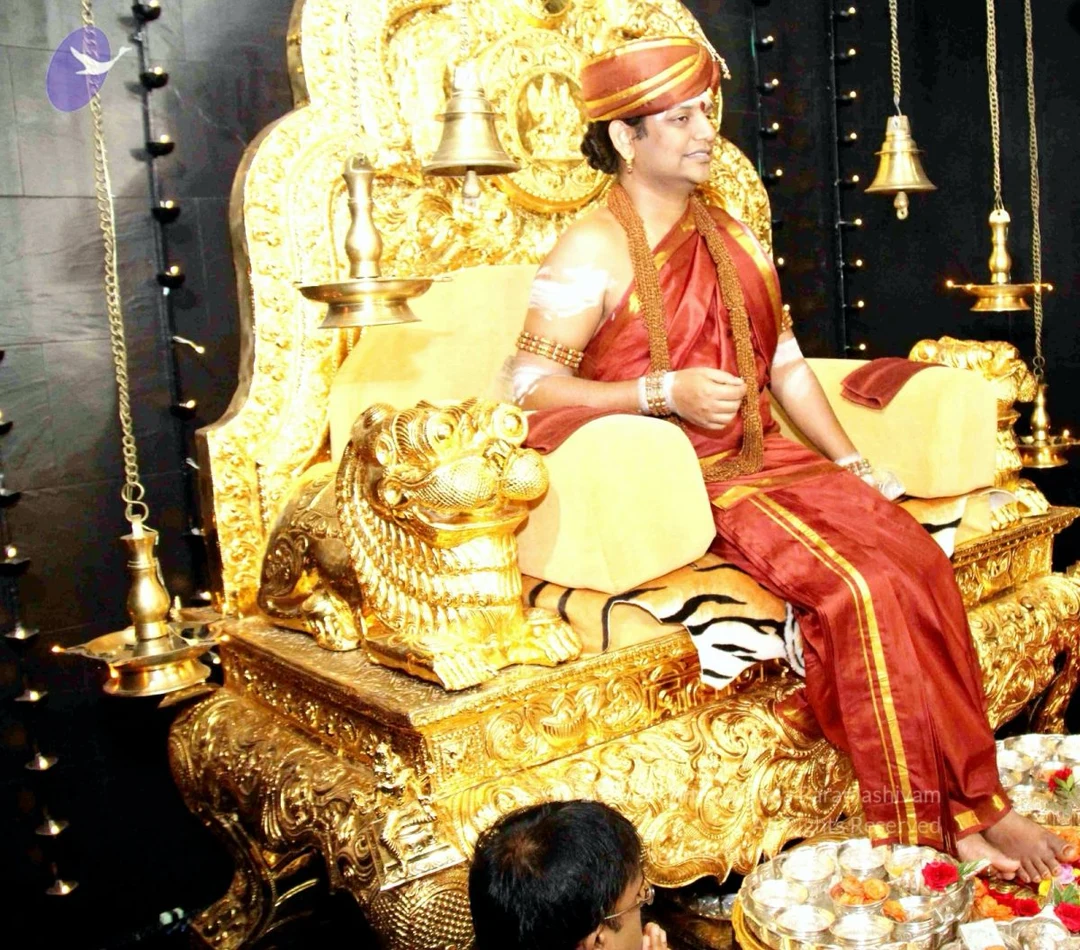
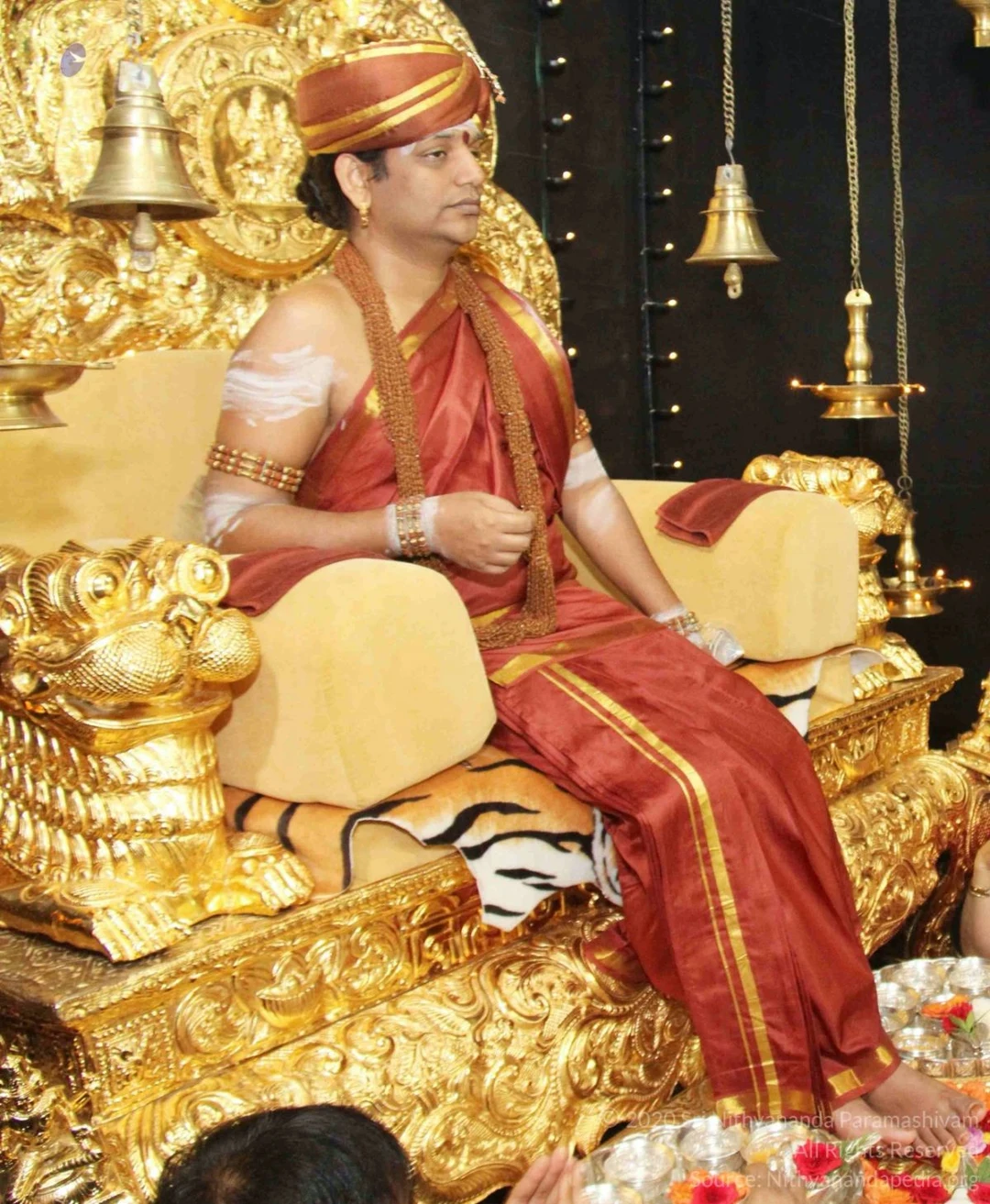
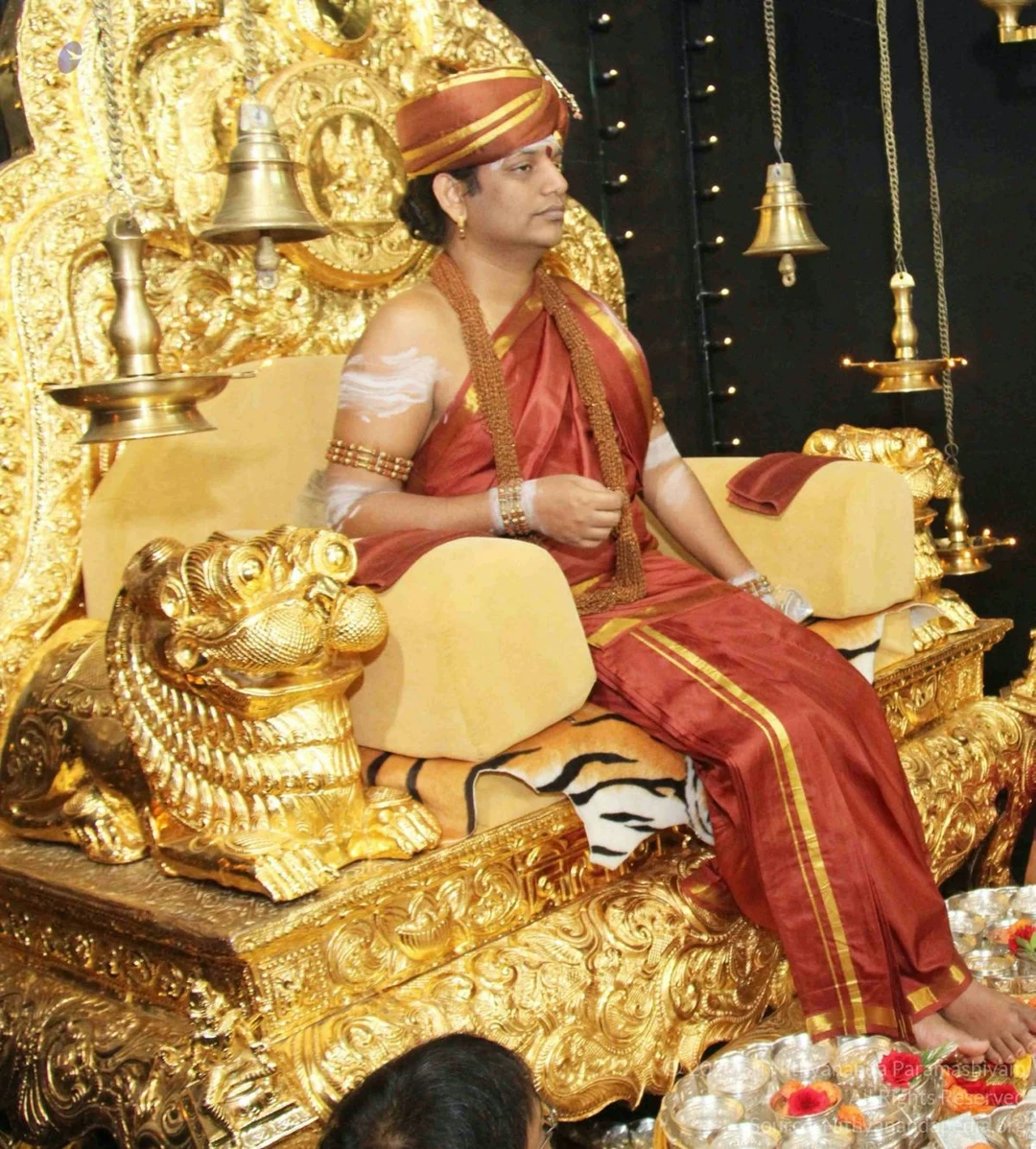
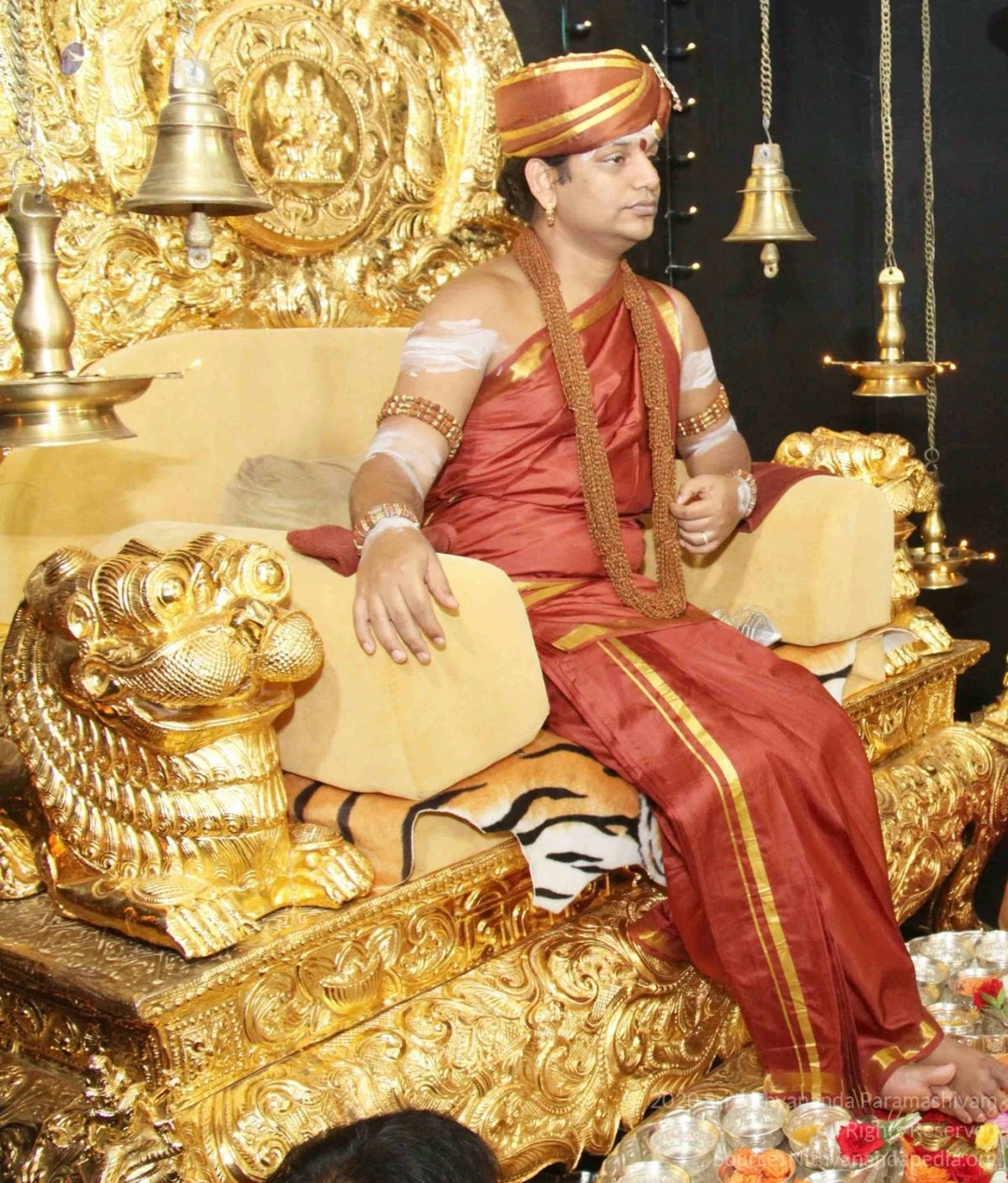
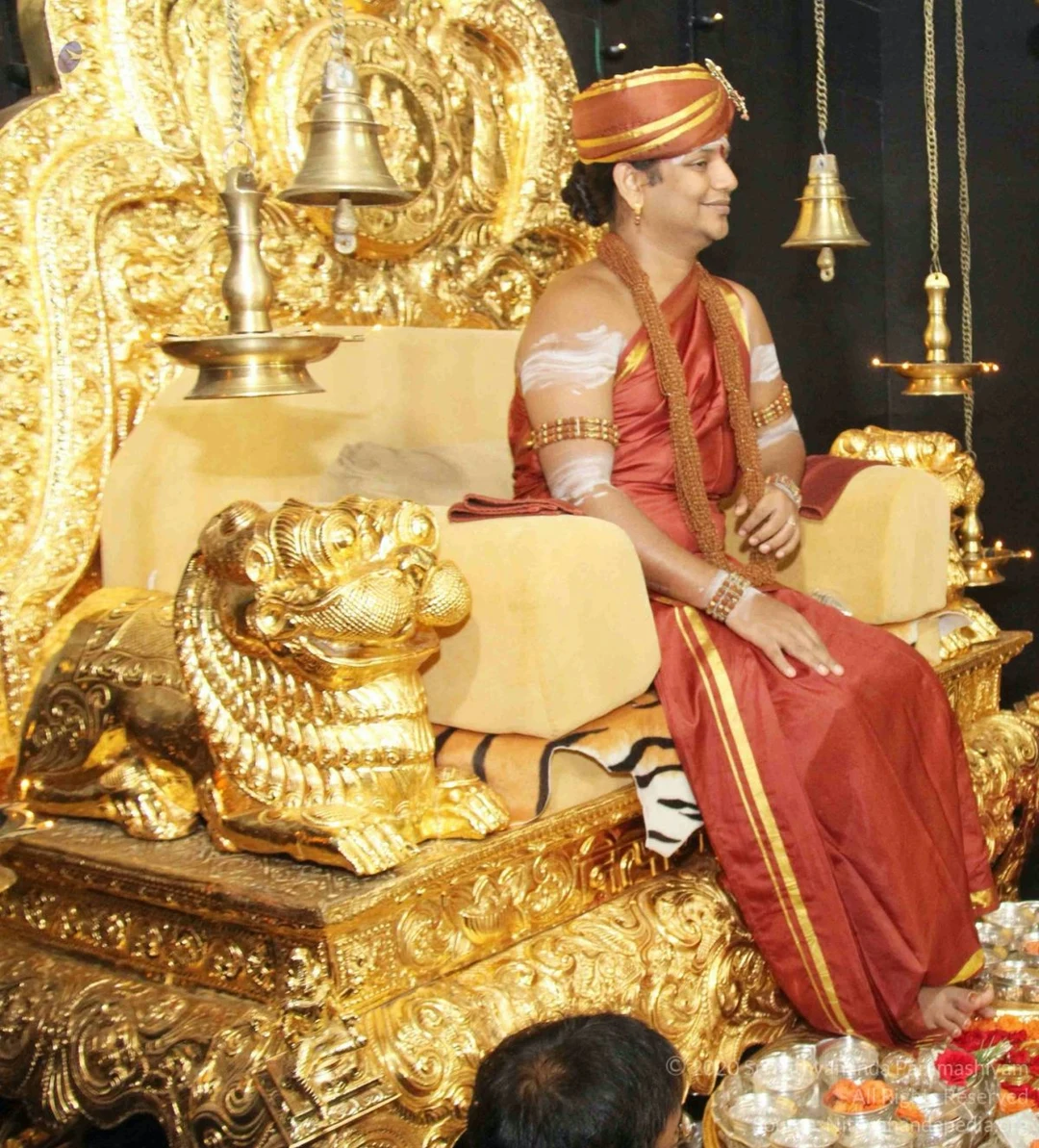
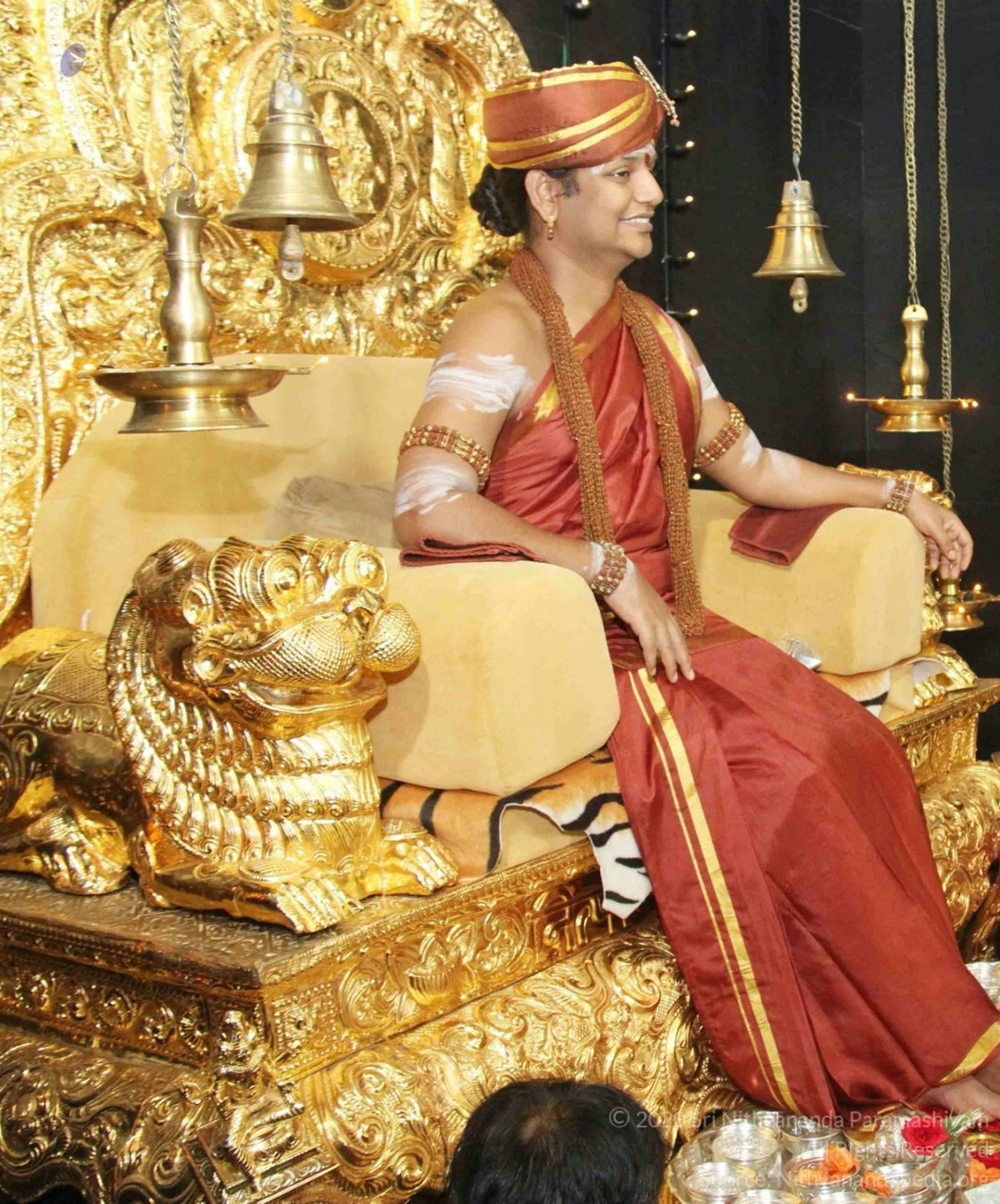
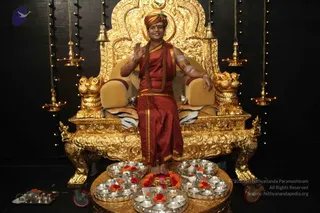
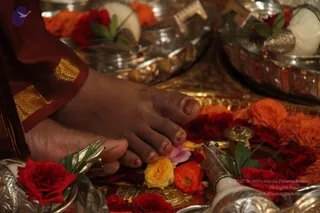
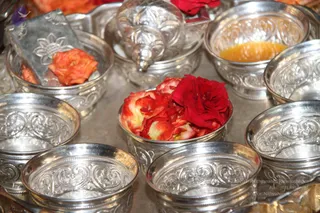
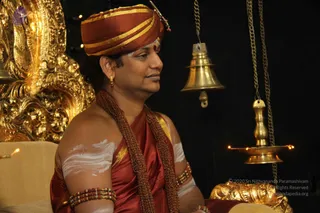
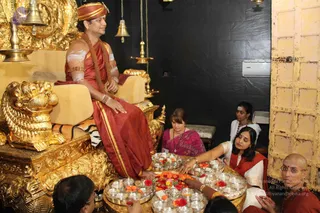
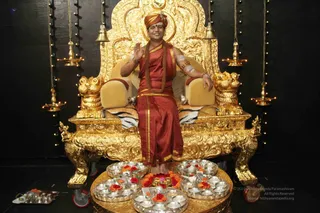
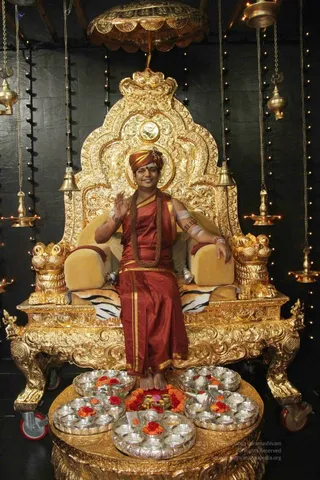
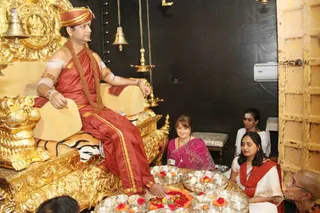
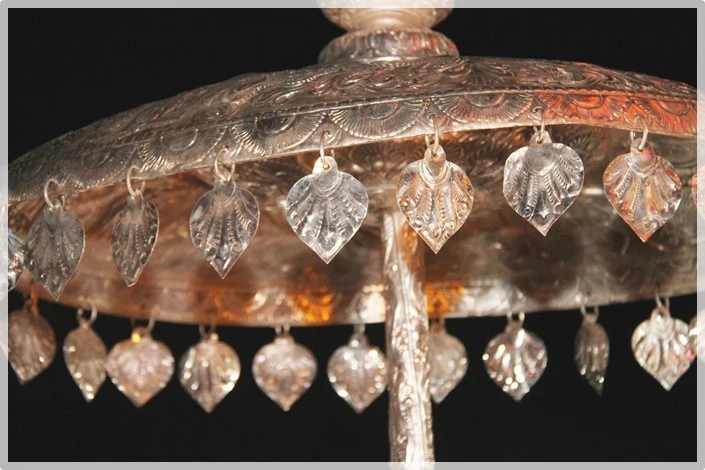
A seated figure in a red-maroon dhoti and matching shoulder wrap with thin gold borders sits on an ornate gold throne carved with lion-head armrests and tiger-striped cushions against a black backdrop. He wears a red-orange turban, a long rudraksha-style mala, and white ritual markings on the forehead and arms, and raises one hand in blessing. Brass oil lamps hang on chains on either side, and in front of the throne a round gold table holds several silver thali trays with red flowers, orange marigolds and small offerings.Close photograph of bare feet resting on a gold tray heaped with red, orange and yellow roses, marigold-like blossoms and green leaves. A man's bare feet, one foot overlapping the other, are at the centre; he wears a maroon garment with gold zari border at the left edge. Silver ritual vessels, a silver bowl and a silver-rimmed lamp surround the tray, with white coconut-like offerings and flower petals scattered around. The scene suggests padapuja, a ritual of worshipping the feet with flowers. Only feet and lower garment are visible, so no face is shown.Close-up of a silver ritual tray with ornately embossed bowls holding red and orange rose petals, a small yellow liquid in one bowl, a silver conch-shaped vessel with a lid, and a small embossed silver box with an orange flower. No people visible; this is an arrangement of puja offerings and silverware.A man seated on an ornate gold throne wears a red-and-gold turban with a jeweled pin, a red-orange silk drape with gold border, and a long mala of rudraksha beads over his shoulders. White markings adorn his forearms and upper arms, with beaded bracelets on the wrists. Beside him hangs a brass bell on chains and a brass oil lamp with a lit flame on a dark background. The man appears to be a person, seated in a ceremonial sannyasi role during a satsang setting, with a golden throne behind him and a brass lamp lit at his side.A photograph of a padapuja-style ritual in an ornate golden-throne setting. A man with a red-and-gold turban, red-and-gold robe, long beaded mala and white ceremonial markings on his arms sits on a gilded throne with lion-head armrests. Before him, several women in white and red saris and a woman in magenta kneel and arrange steel plates of flowers, petals and oil lamps. A bald man in orange clothing sits at lower right, and a person in white with a tilak stands behind them. Brass bells and hanging lamps are visible above, with a yellow panelled door on the right. Several people, roughly 2-5 physically visible, are present in the scene.Close photograph of a smiling man in a red-and-gold turban decorated with a jeweled ornament and a jeweled clip, with a red bindi and white markings on his forehead. He wears a rudraksha mala necklace over an orange-and-gold garment and gold earrings. Beside him hangs a brass bell on chains and a brass oil lamp with a lit flame, with a gilded carved panel behind him. a person: the turban, rudraksha mala and ornate saffron clothing are visible cues, but the appearance match is not certain enough for a firm identification. A watermarked copyright line is not described.

Satsang

13 photosSource gallery
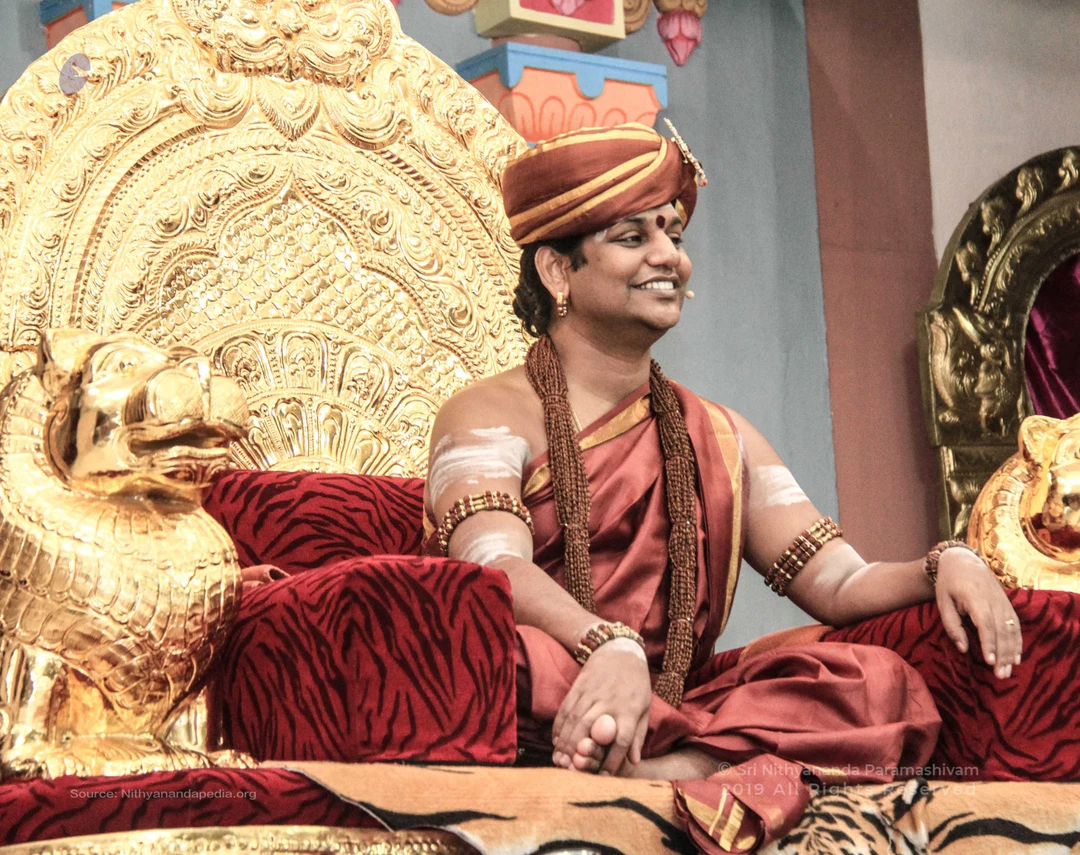
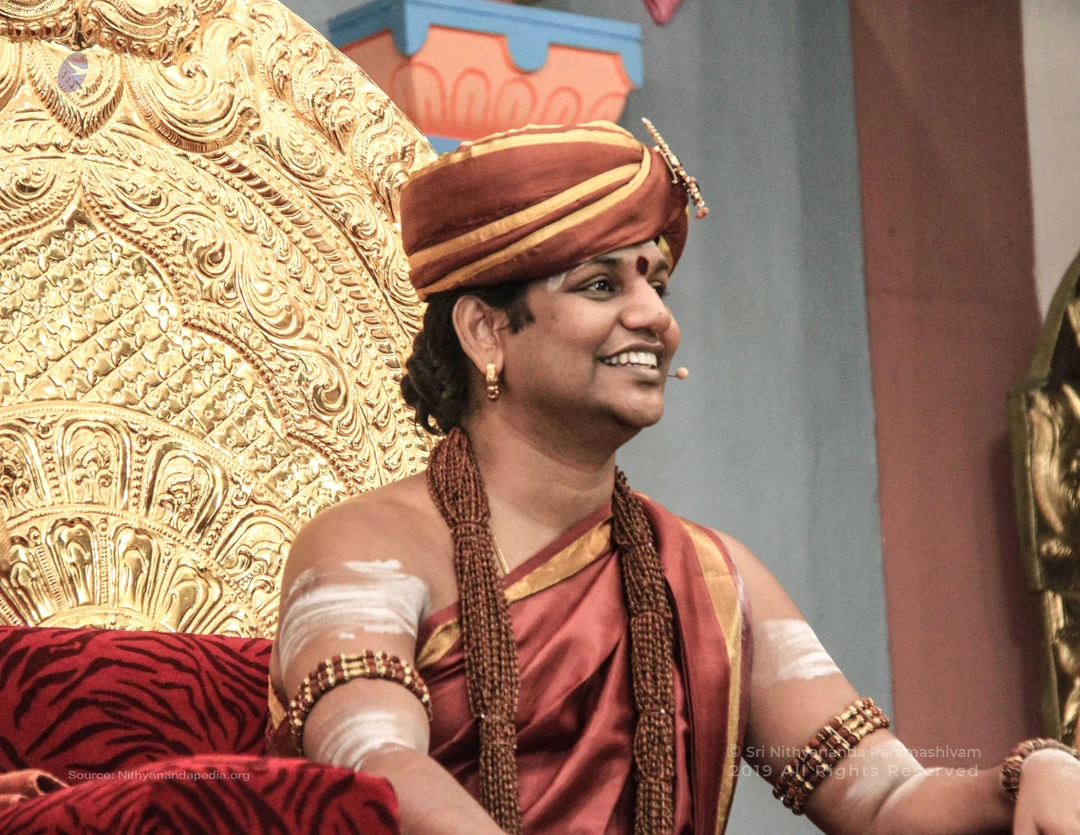
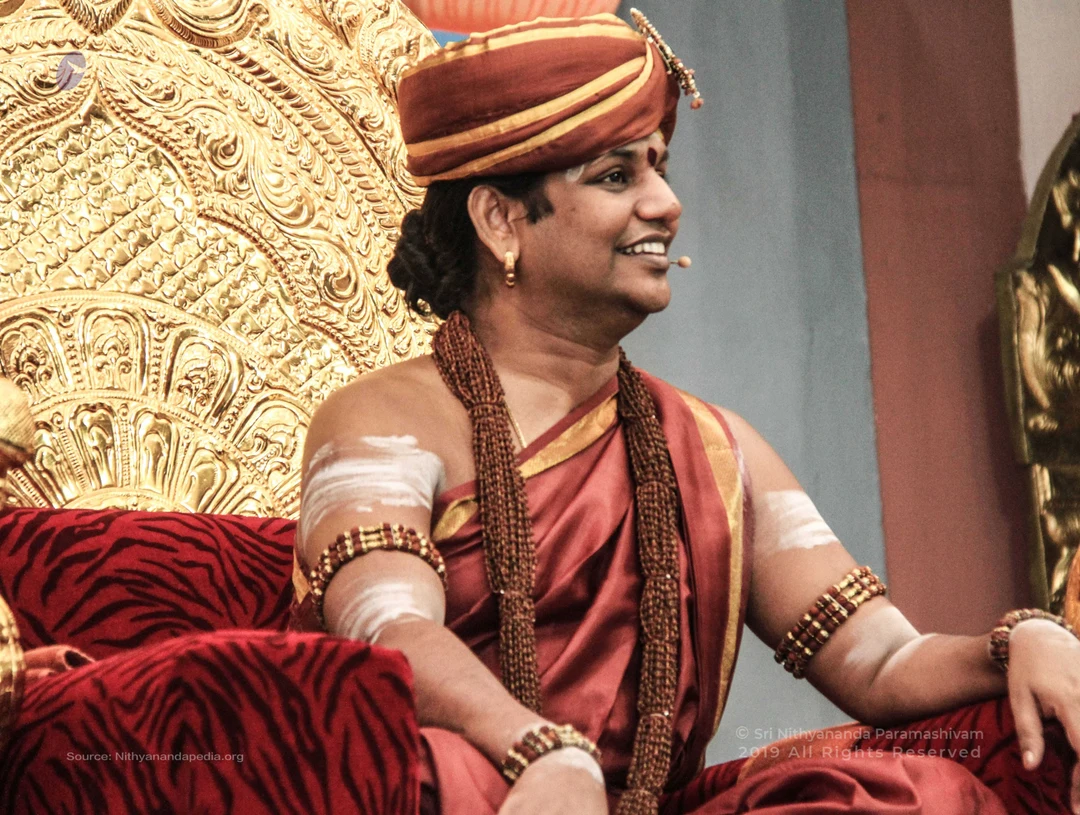
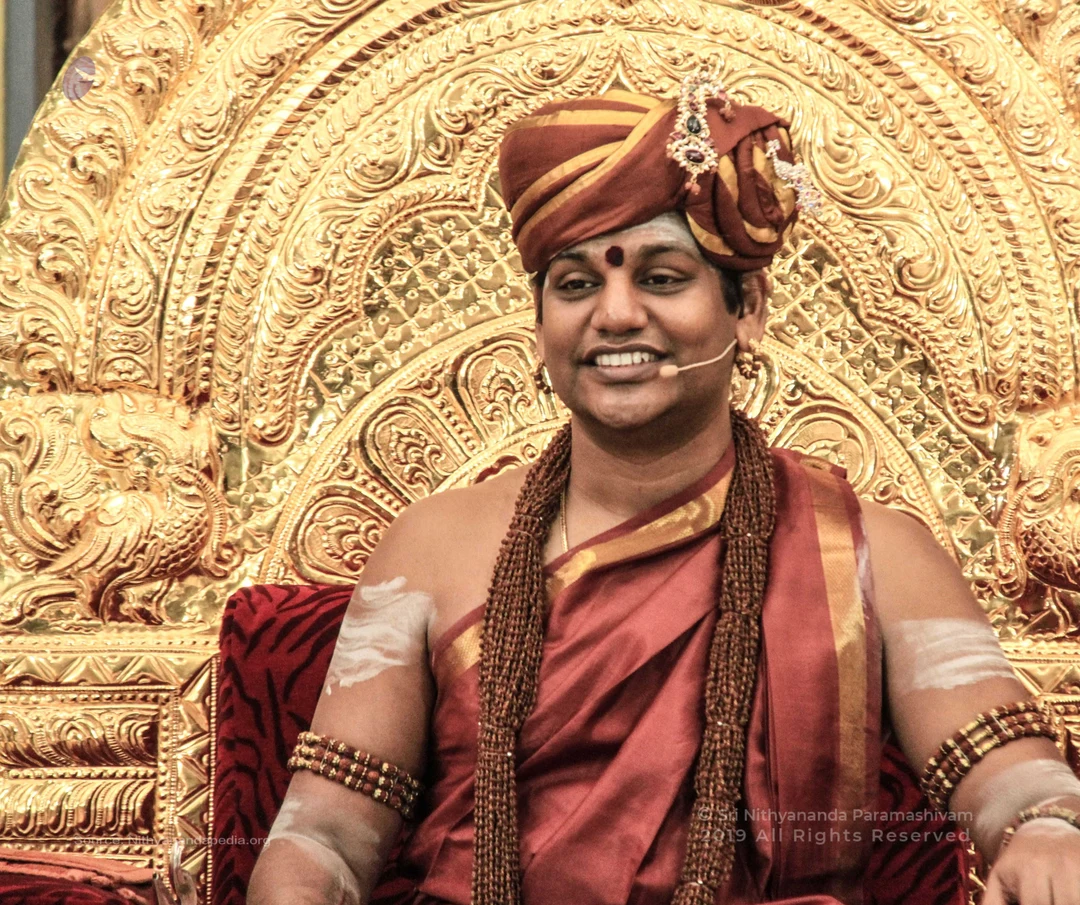
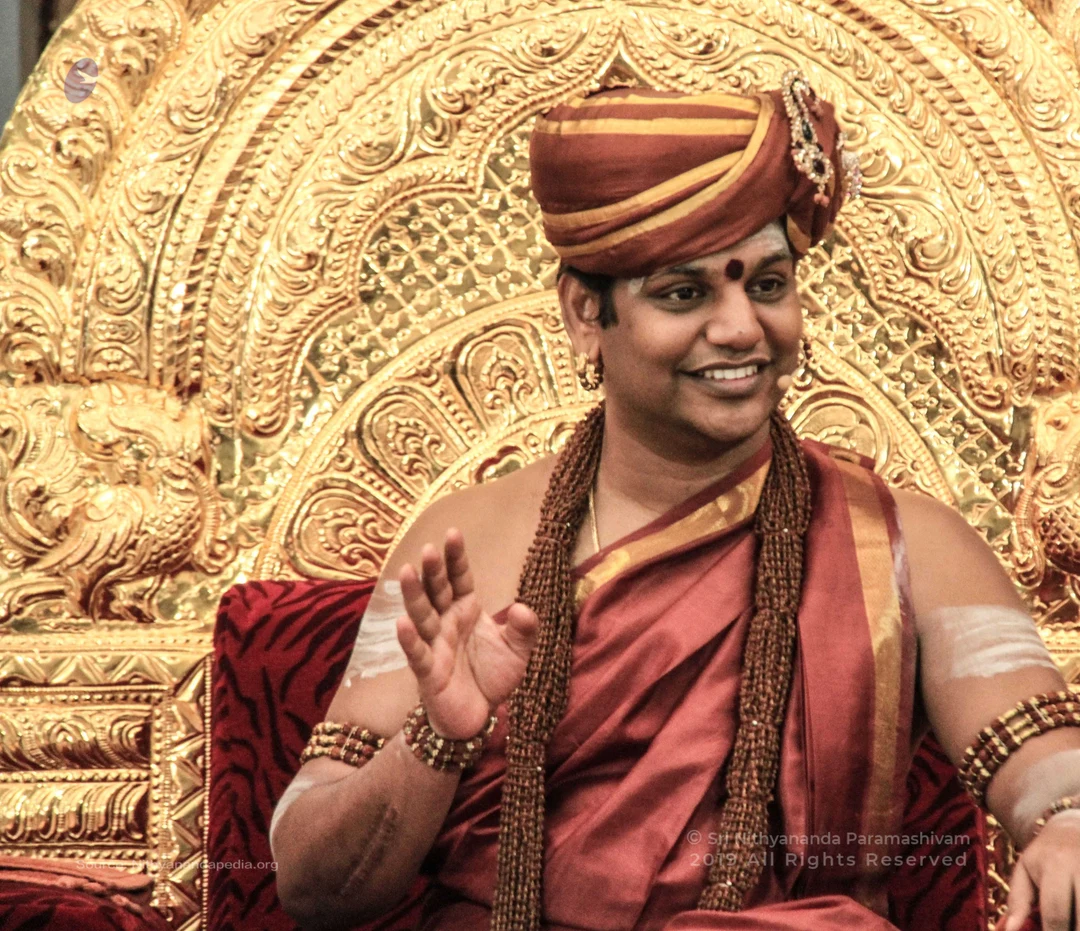
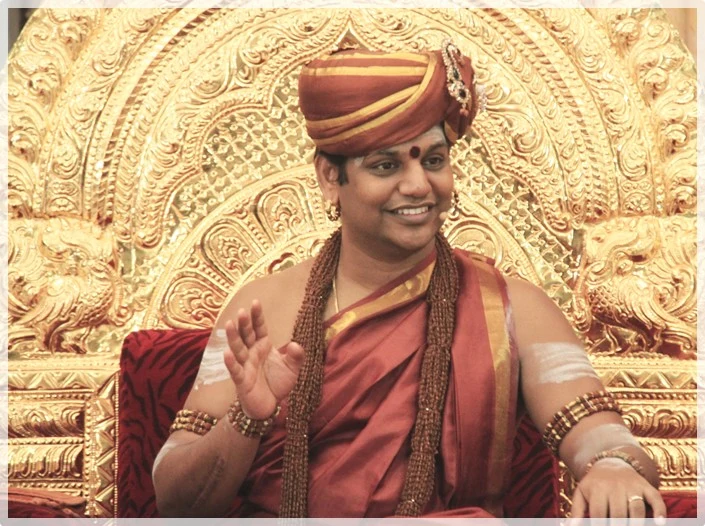
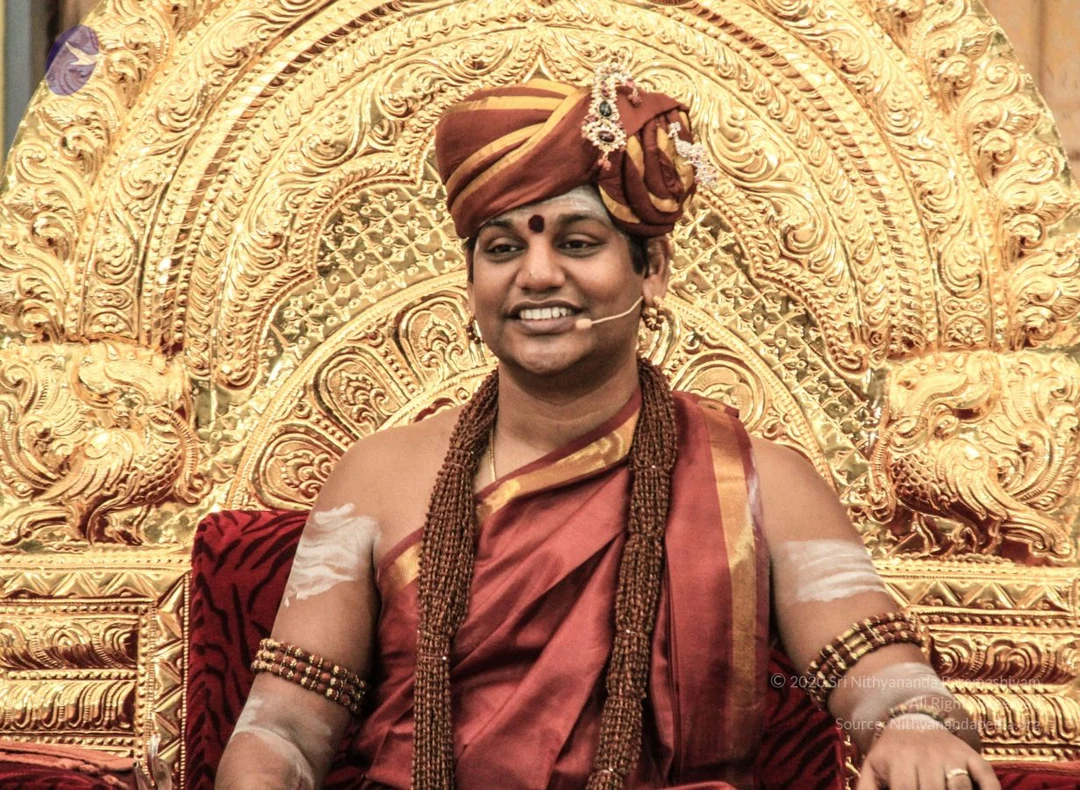
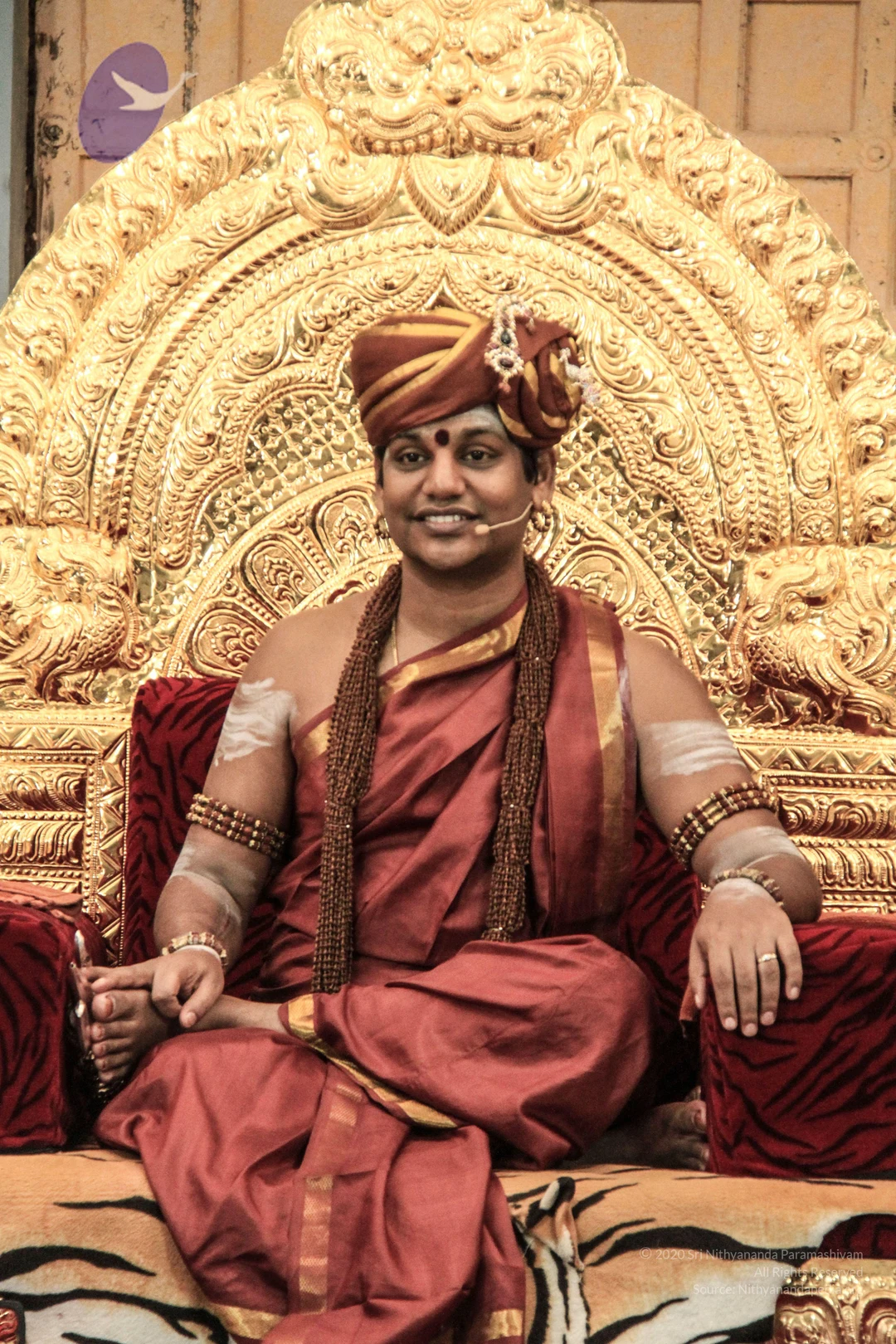
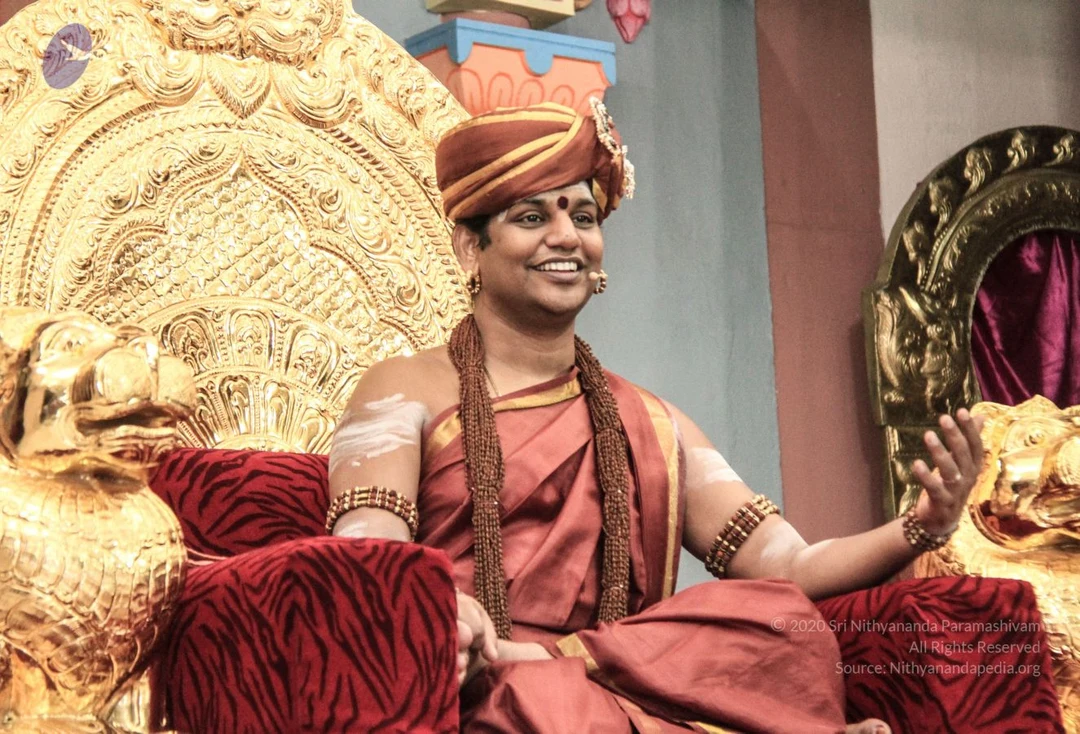
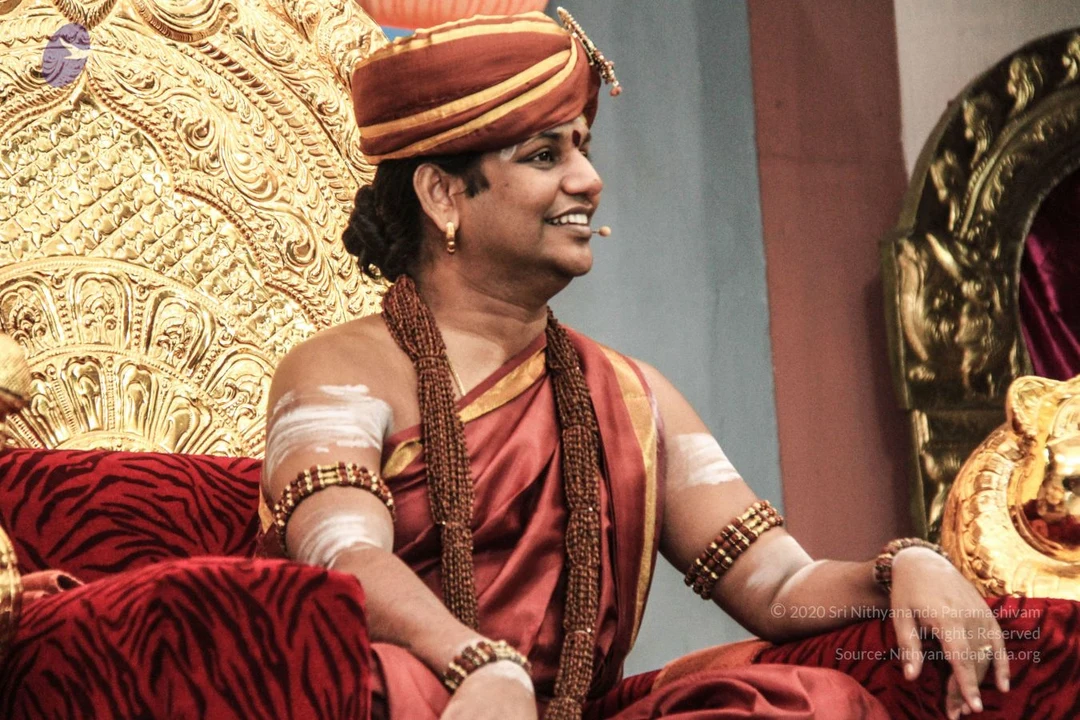
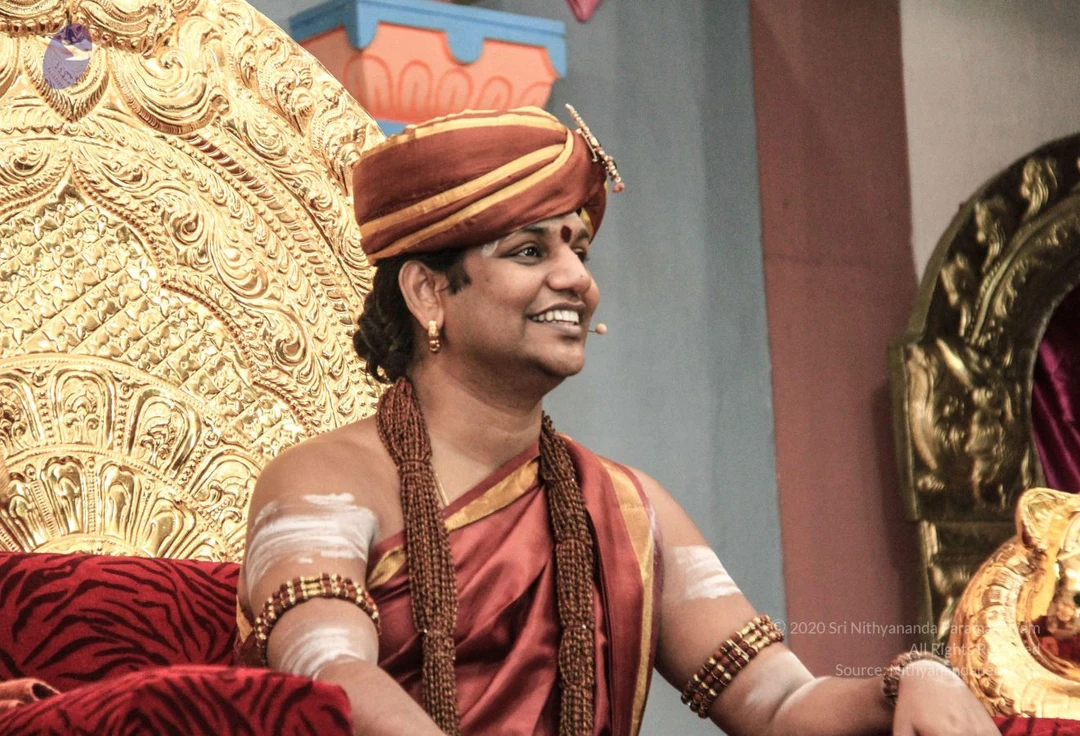
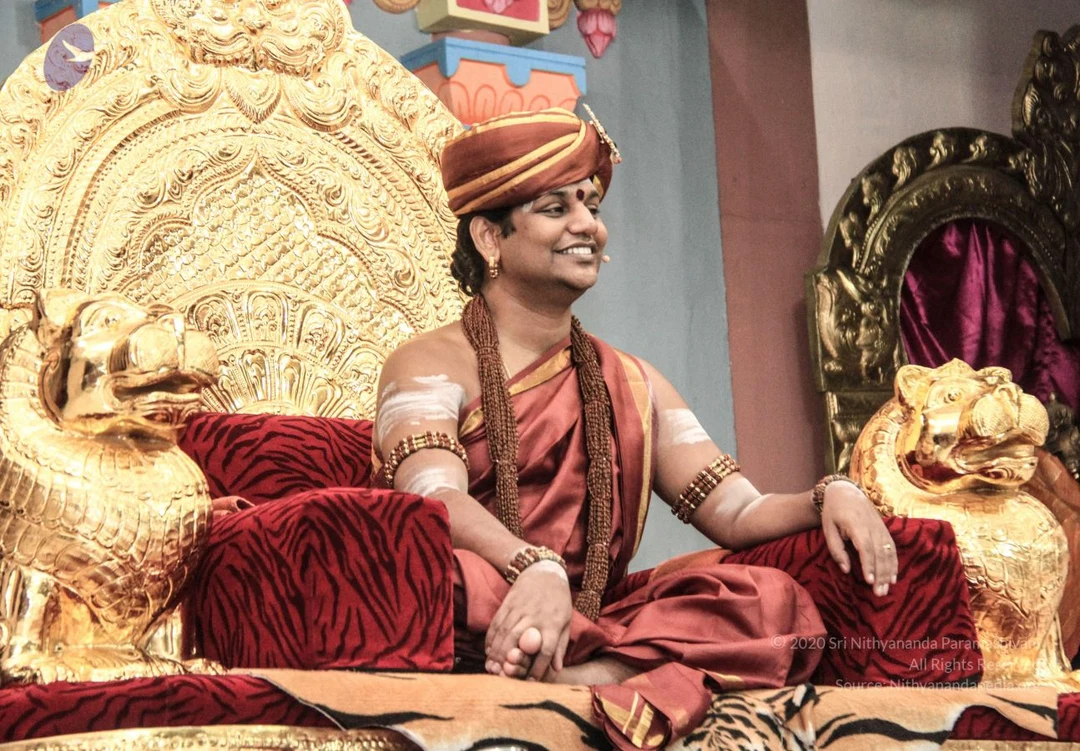
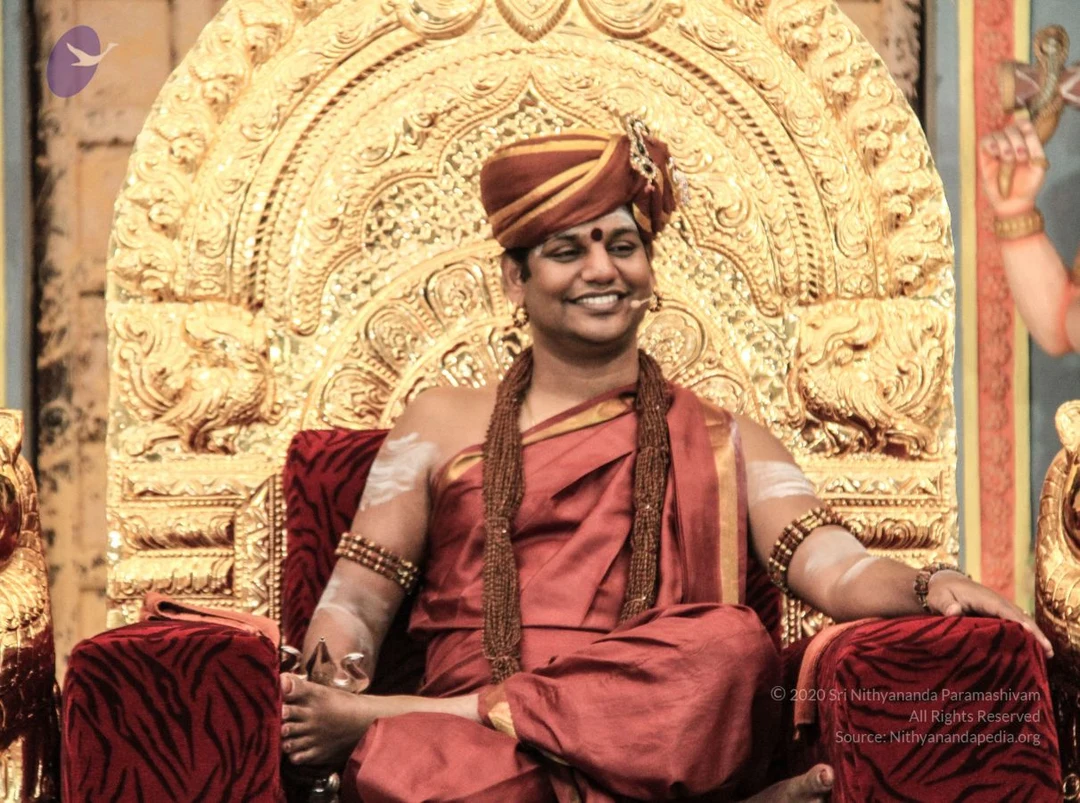
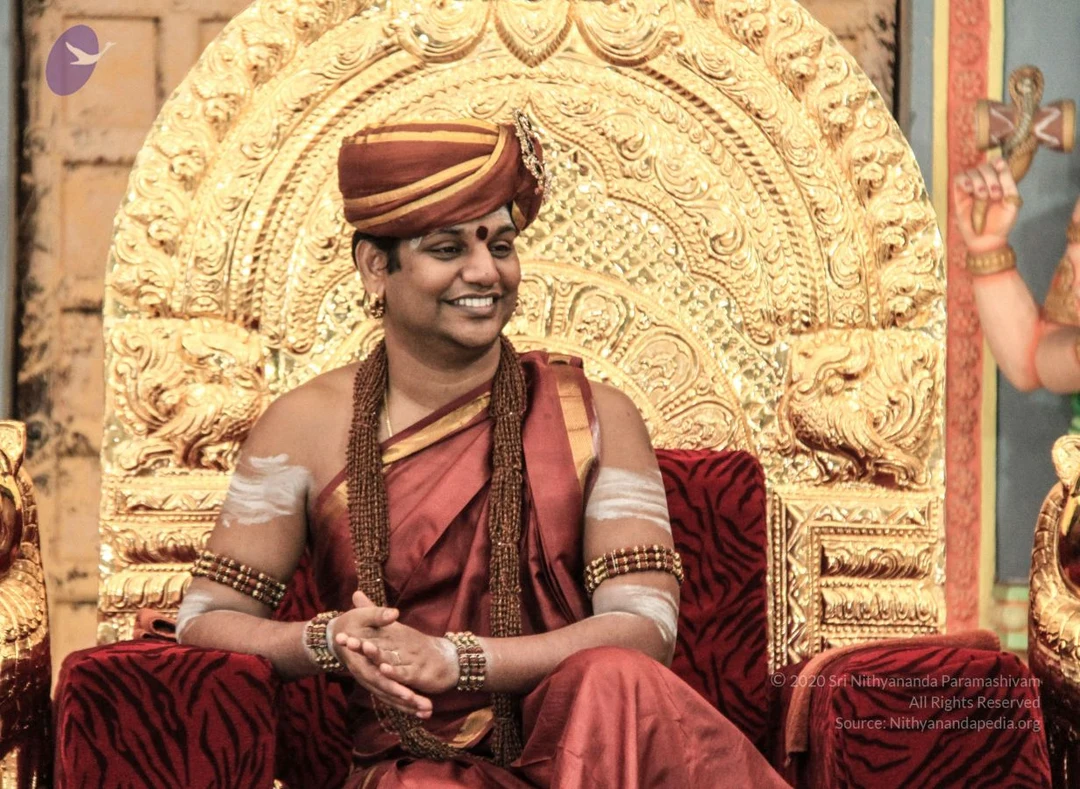
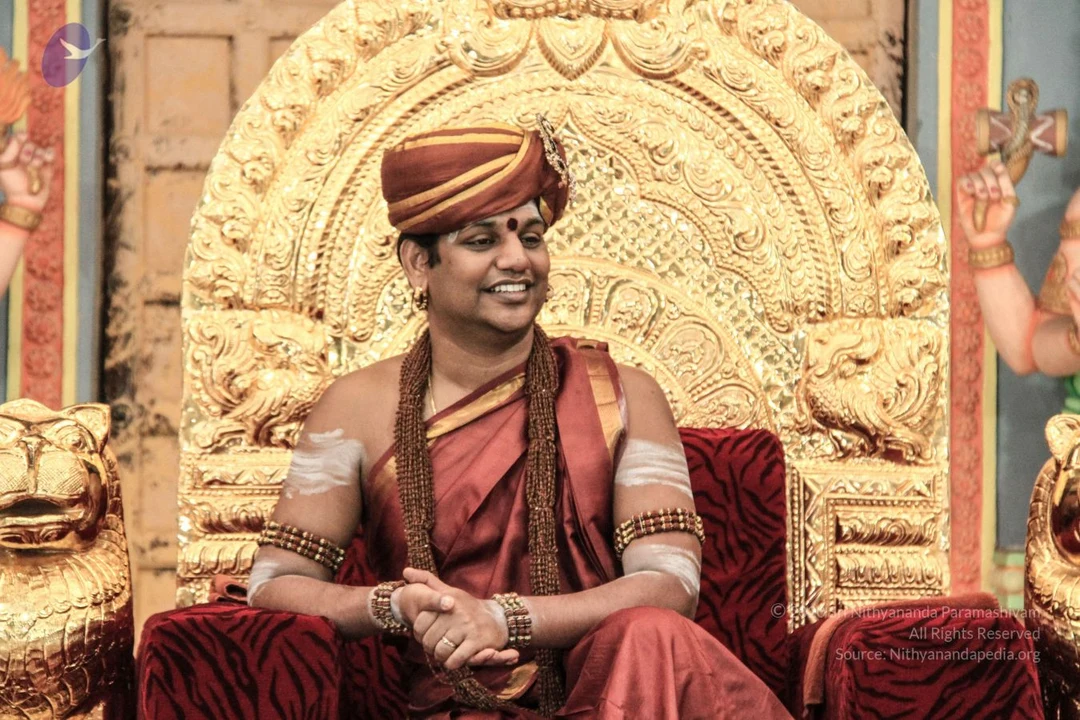
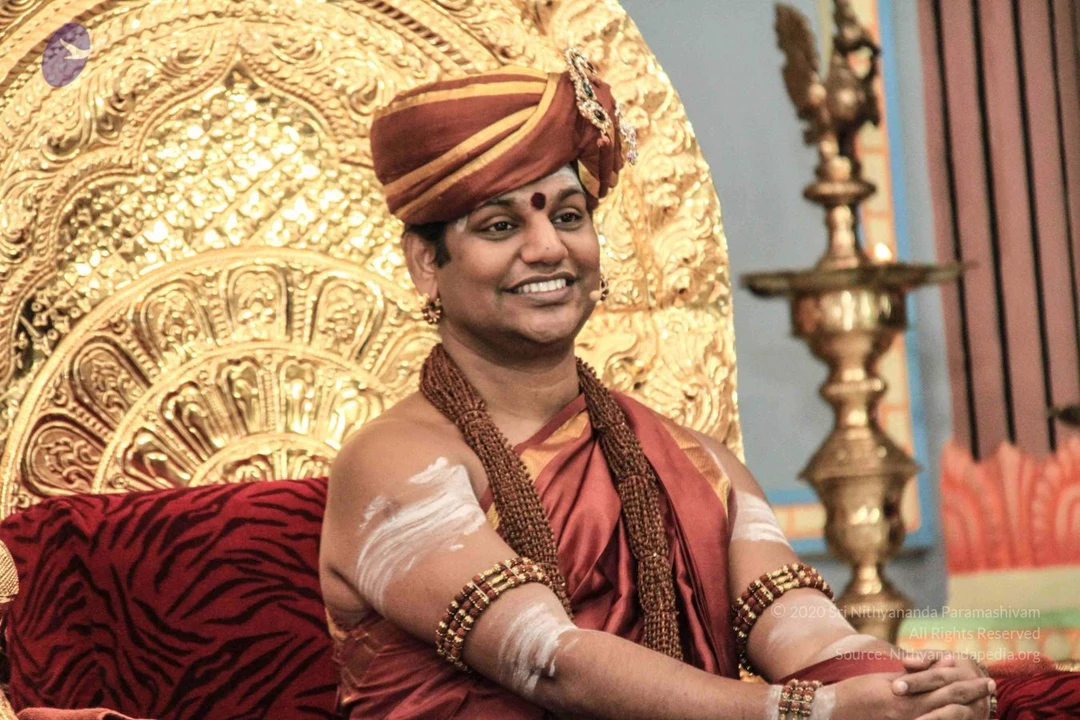
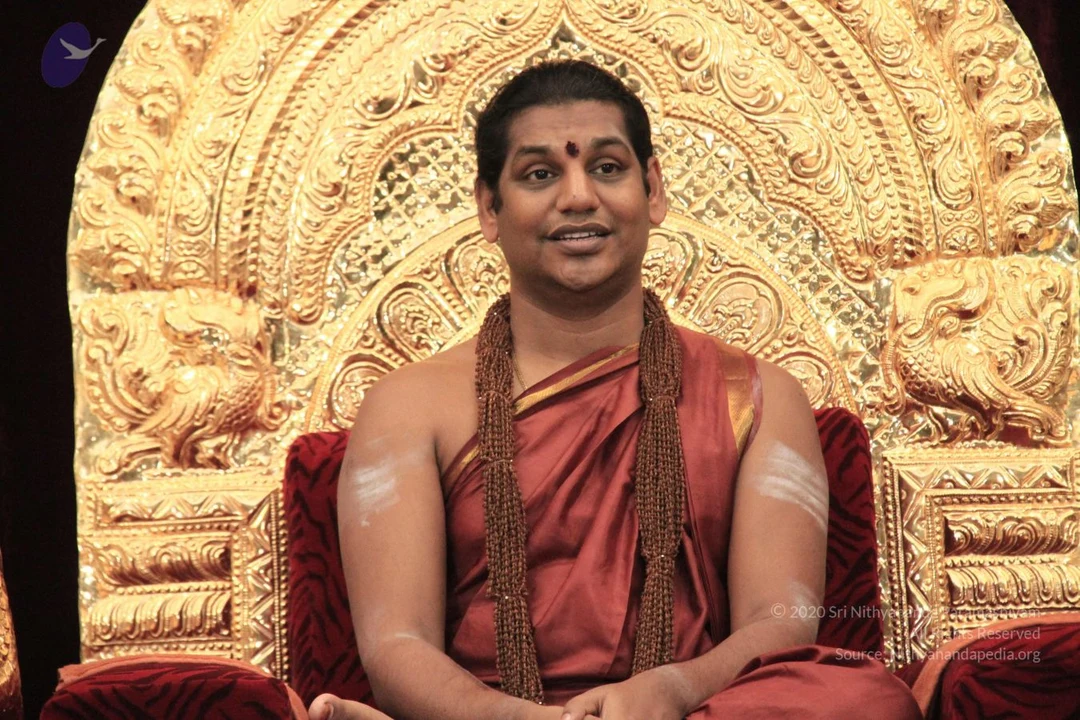
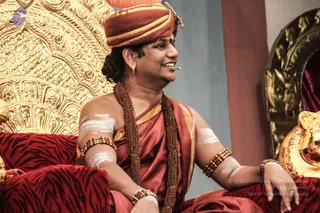
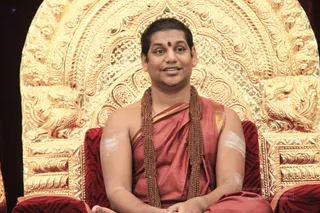
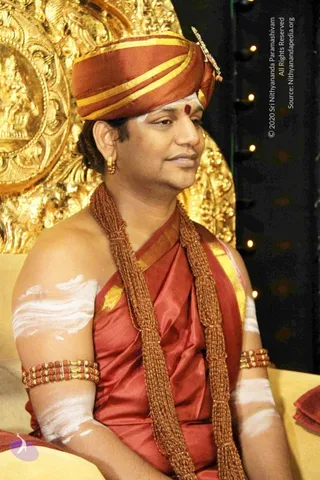
A smiling man seated on an ornate gold throne with carved lion-like figures and a red tiger-striped cushion. He wears a rust-red turban with gold trim and a red-and-gold draped garment, with long rudraksha mala strands crossing his chest and a gold necklace. White sacred ash marks show on his arms and shoulders, a red bindi on his forehead, and beaded bangles on his wrists. A small microphone is clipped near his face. Swamiji (probable), appearing as the seated speaker wearing a turban, rudraksha malas and ceremonial gold ornaments on a throne. The background is gold ornamental carving.A smiling man seated on an ornate gold throne with carved lion-like motifs and a red cushion, gesturing with his right hand raised. He wears a rust-red and orange turban with a gem brooch, a red-orange silk garment with gold border, multiple rudraksha mala strands across his chest, beaded bracelets, and a red bindi. White ceremonial markings appear on his upper arms. A lapel microphone is visible near his ear.A smiling man seated on an ornate gold throne with carved floral and lion-like motifs. He wears a rust-red turban decorated with jewelled ornaments, a red-orange shawl with gold border over his shoulders, a brown rudraksha-style mala necklace, beaded bracelets on his wrists, and a small red bindi. A small wireless microphone is clipped near his face. The throne has red velvet cushioning. Swamiji (probable): the orange-red turban, ornate clothing, rudraksha mala and ceremonial gold setting are consistent with the page's identification, and he is shown as a seated teacher in person.A seated man in a rust-red turban and matching red-orange silk garments sits cross-legged on an ornate gold throne with carved lion-like side panels and a large embossed arch behind him, the throne draped with a tiger-striped cloth. He wears a long rudraksha mala draped over both shoulders, beaded wrist bands, white sacred ash marks on his arms, a red bindi, and a small headset microphone near his mouth, smiling toward the viewer.A smiling man seated on an ornate gold throne with carved lion-like armrests and red tiger-striped cushions. He wears a rust-red and gold turban with a brooch, a rust-red robe with gold border, long rudraksha-style beaded malas and beaded bracelets, and a small red bindi. He gestures with one raised hand while speaking into a small headset microphone. Behind him is a pale blue wall and a gold-framed arch with maroon drapery. Appearance-based label: a person, based on the rudraksha malas, saffron-toned robes and throne seating, seen in a talk setting.A photograph of a smiling man seated on an ornate golden throne with red tiger-striped cushions. He wears a red-orange turban with a gold-edged fabric, a red-orange robe with gold border, layered rudraksha malas across his chest, and beaded bangles on both wrists. A small red tilak marks his forehead, and a lapel microphone is clipped near his face. White ash markings appear on his upper arms, and gold carved panels frame the background. Swamiji (probable): the appearance cues of a turban, rudraksha malas, saffron-toned clothing and a throne fit the page's reference to Swamiji, though the image itself is uncertain.

Sarva-Darshan

16 photosSource gallery
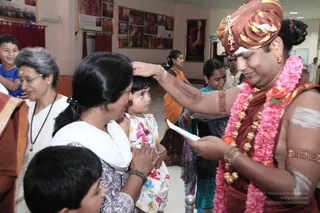
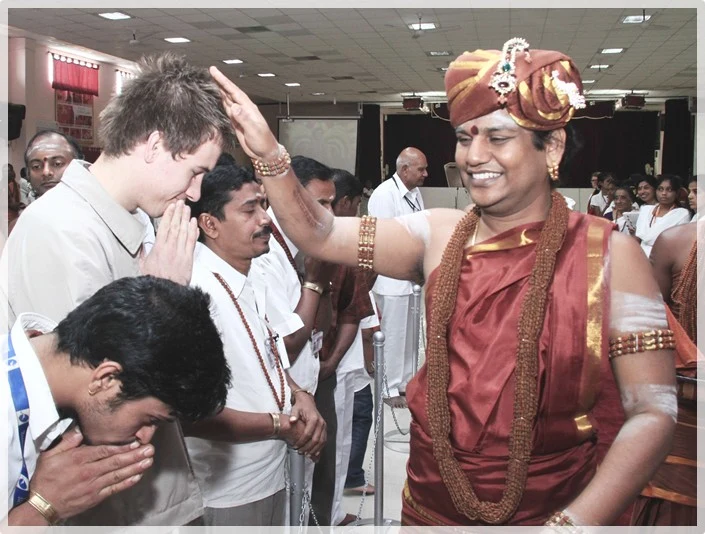
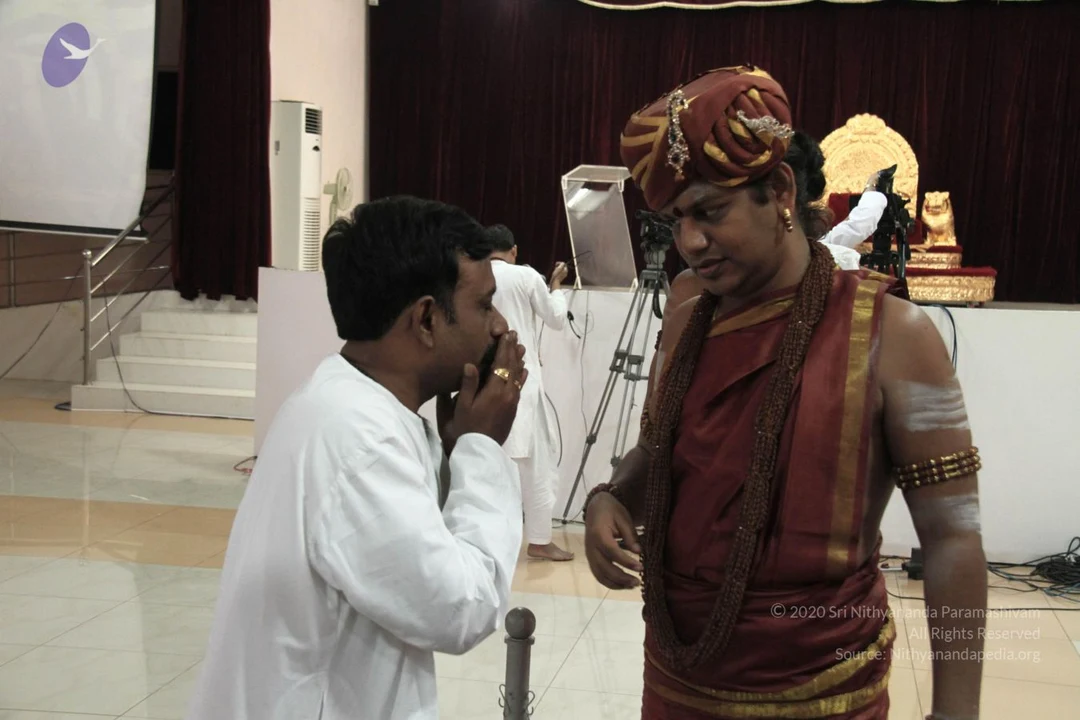
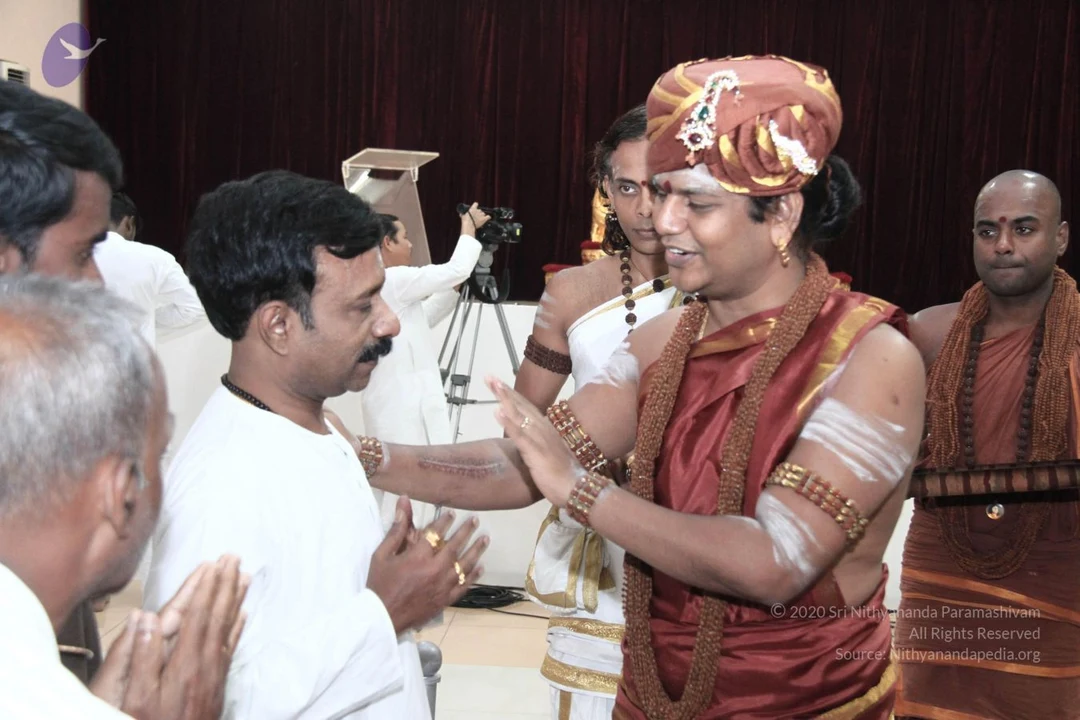
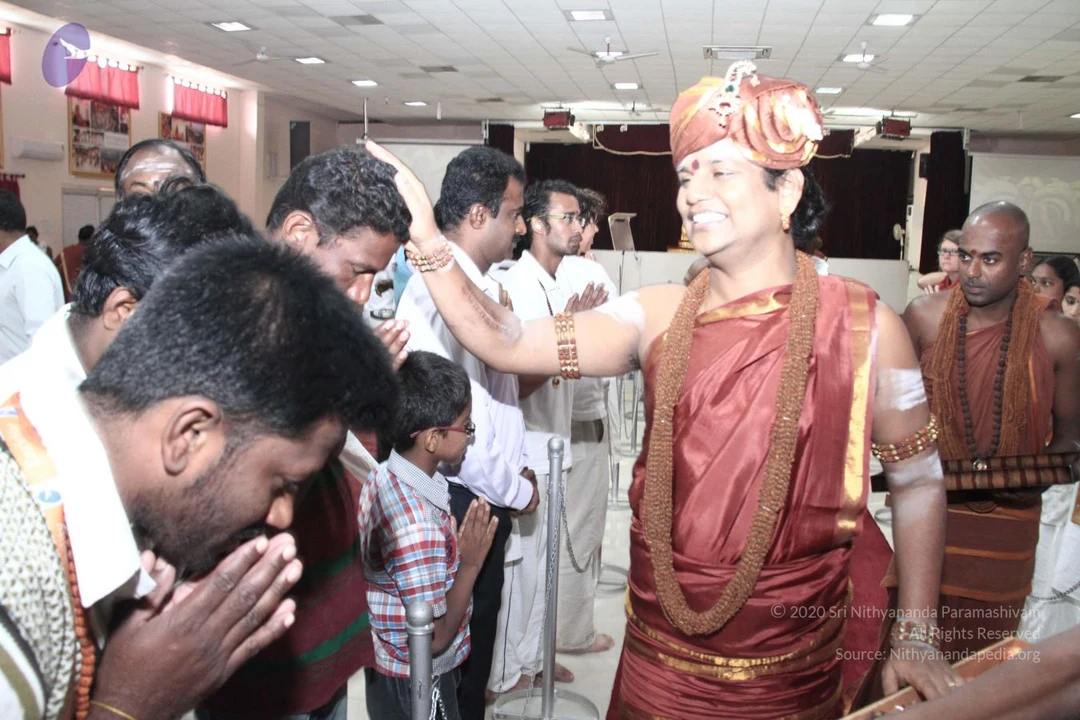
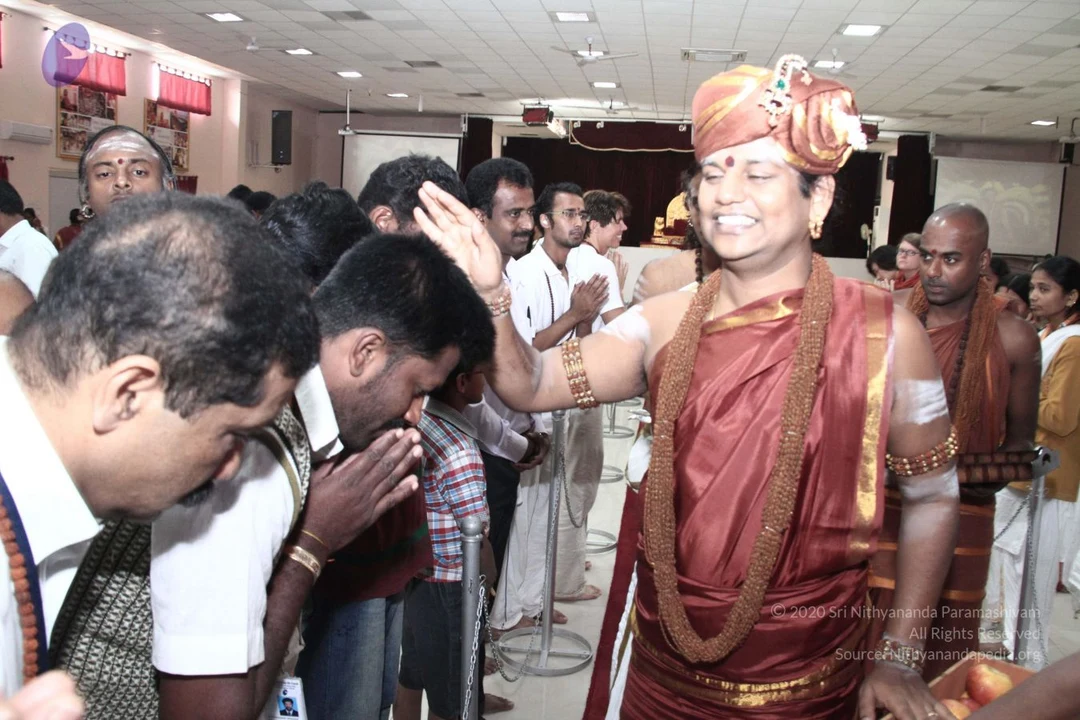
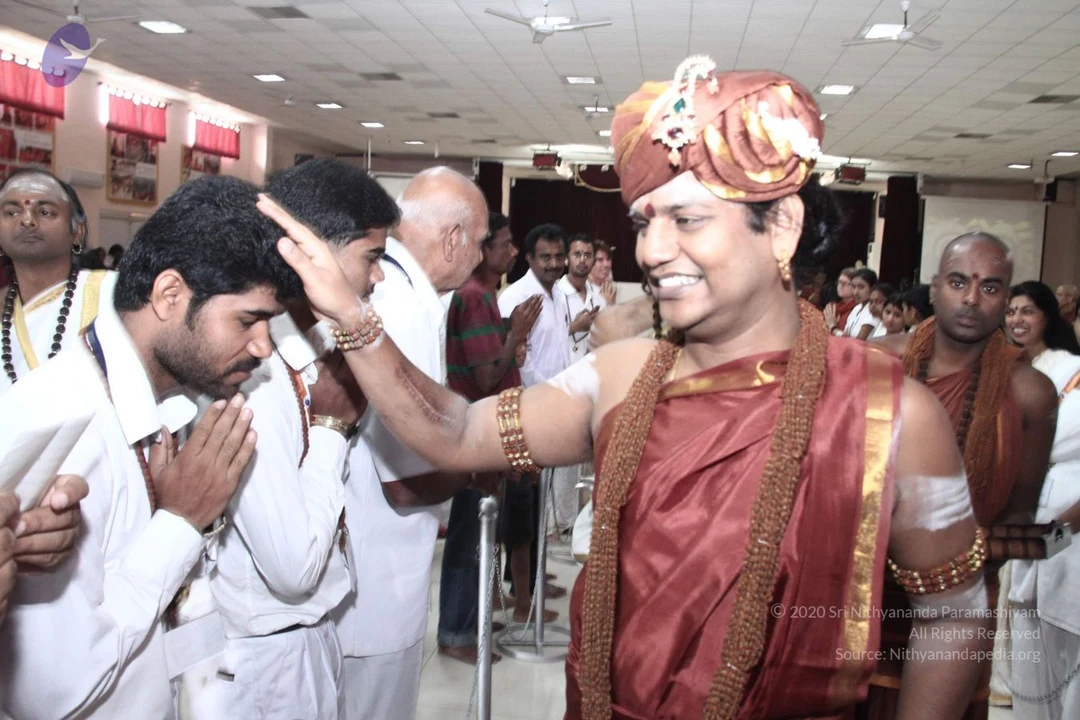
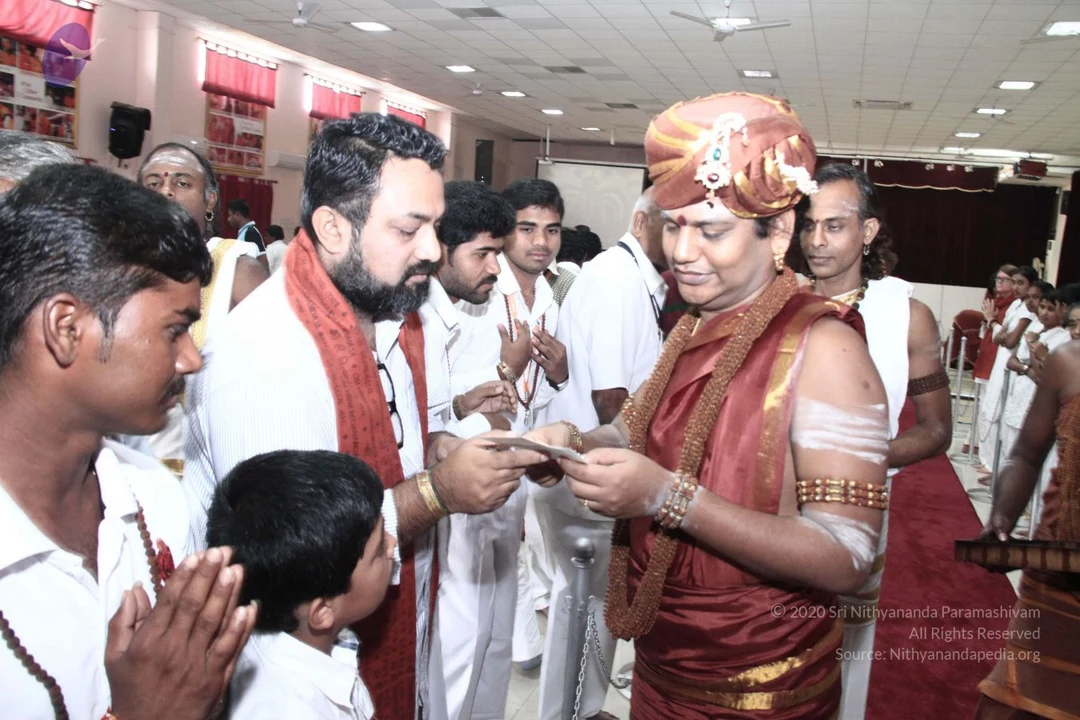
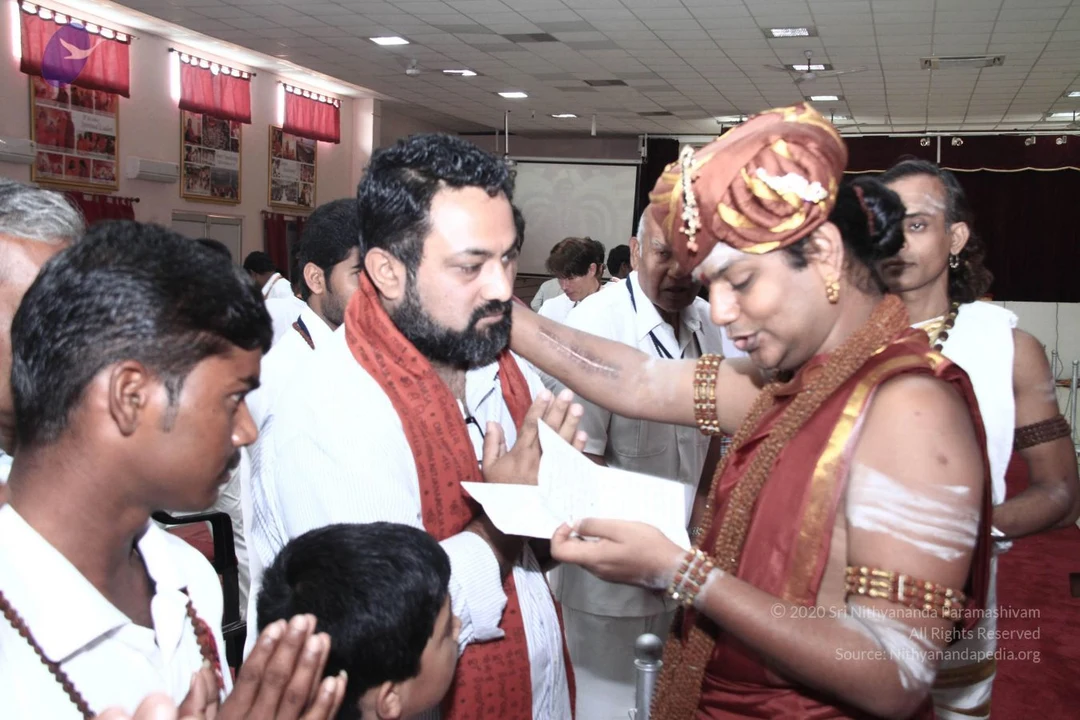
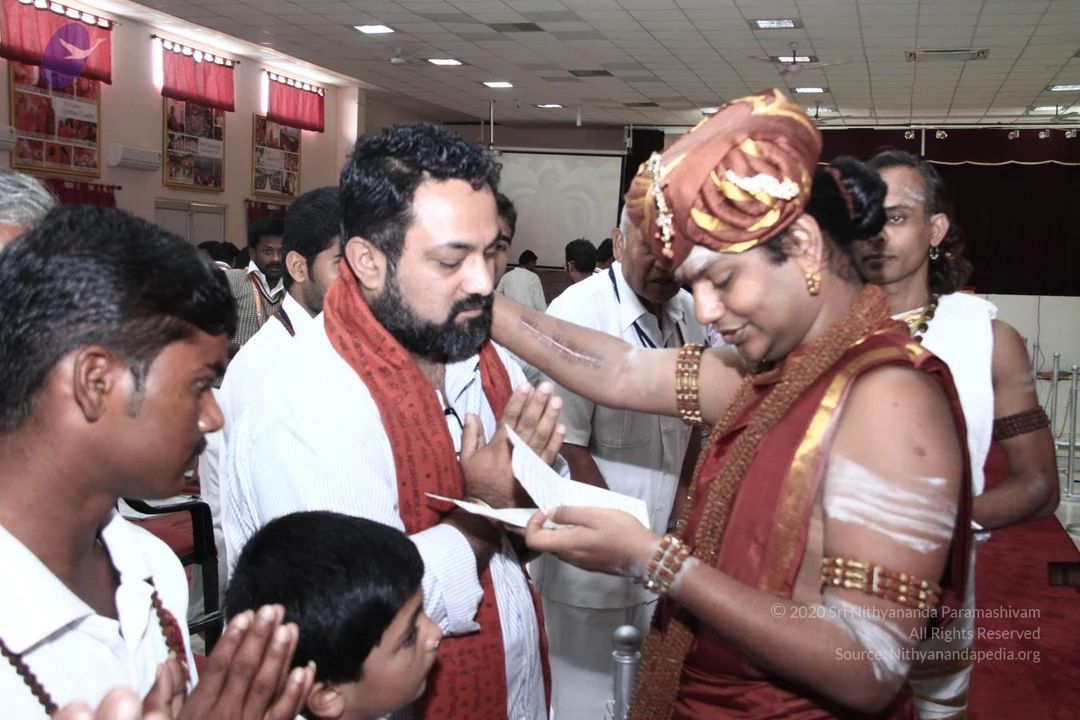
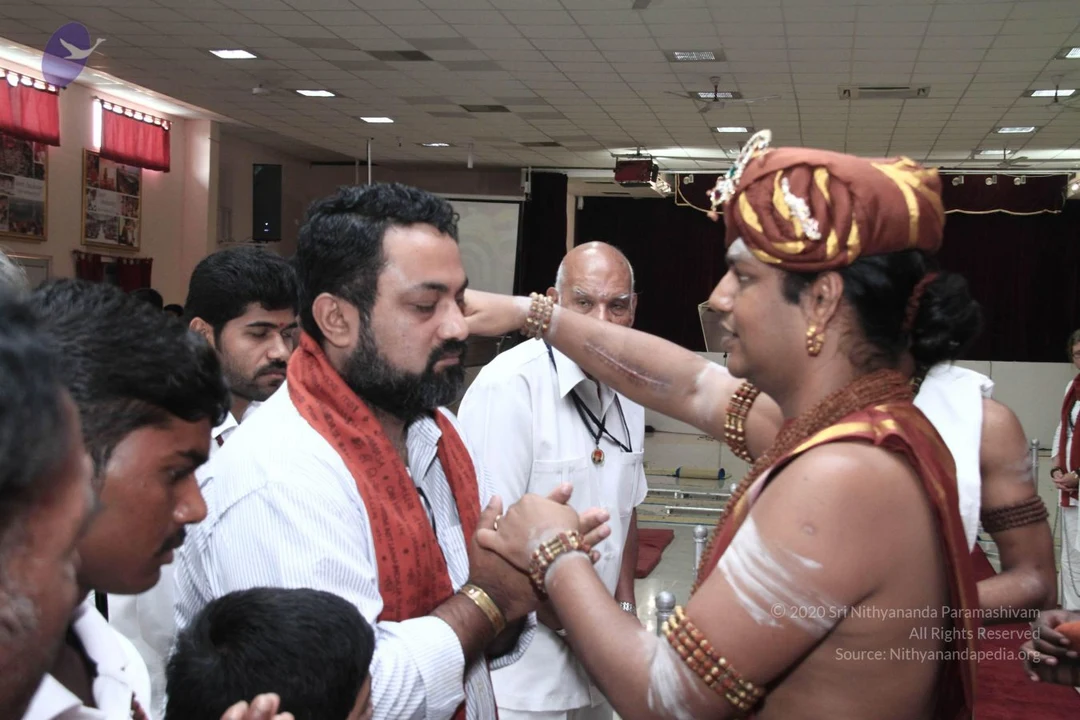
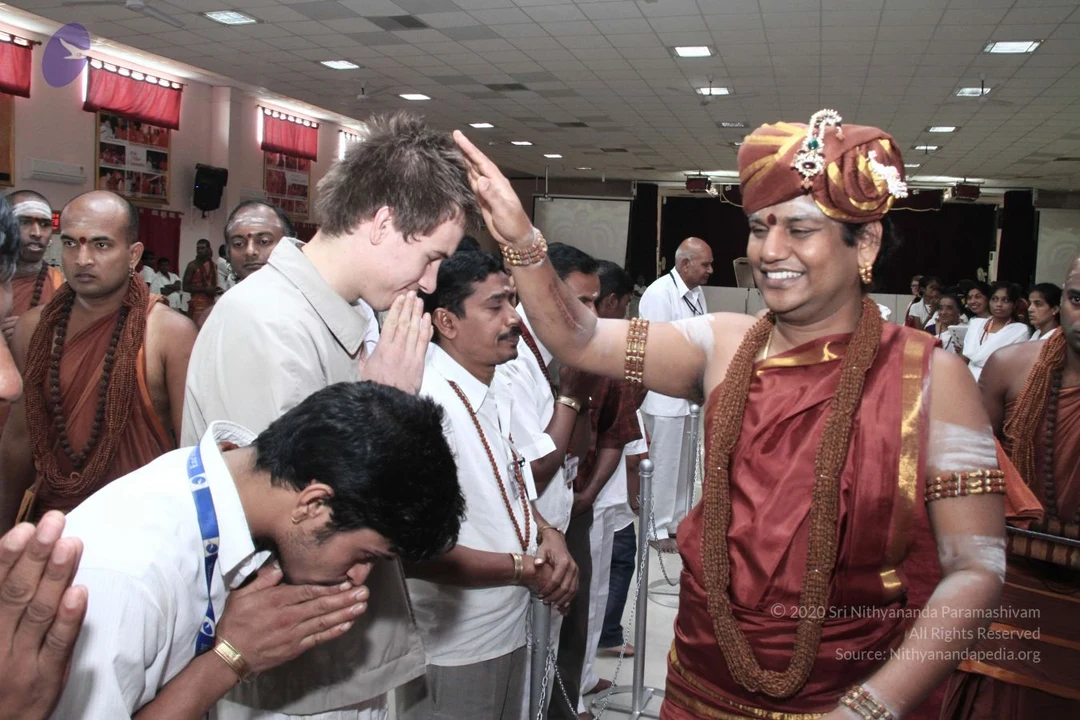
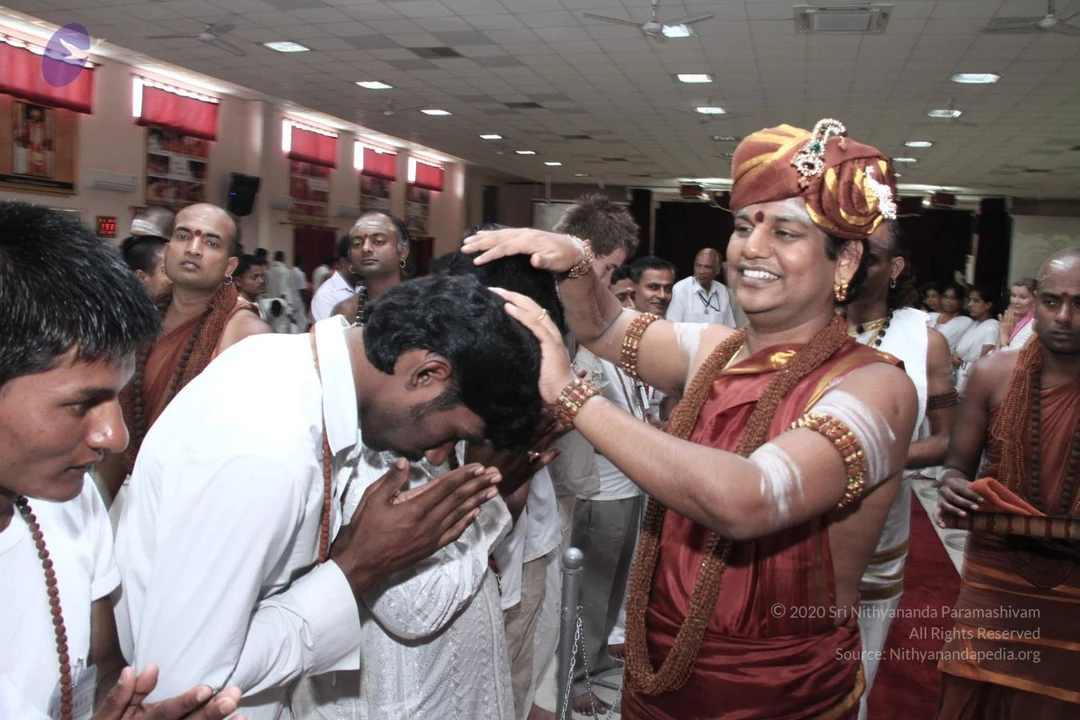
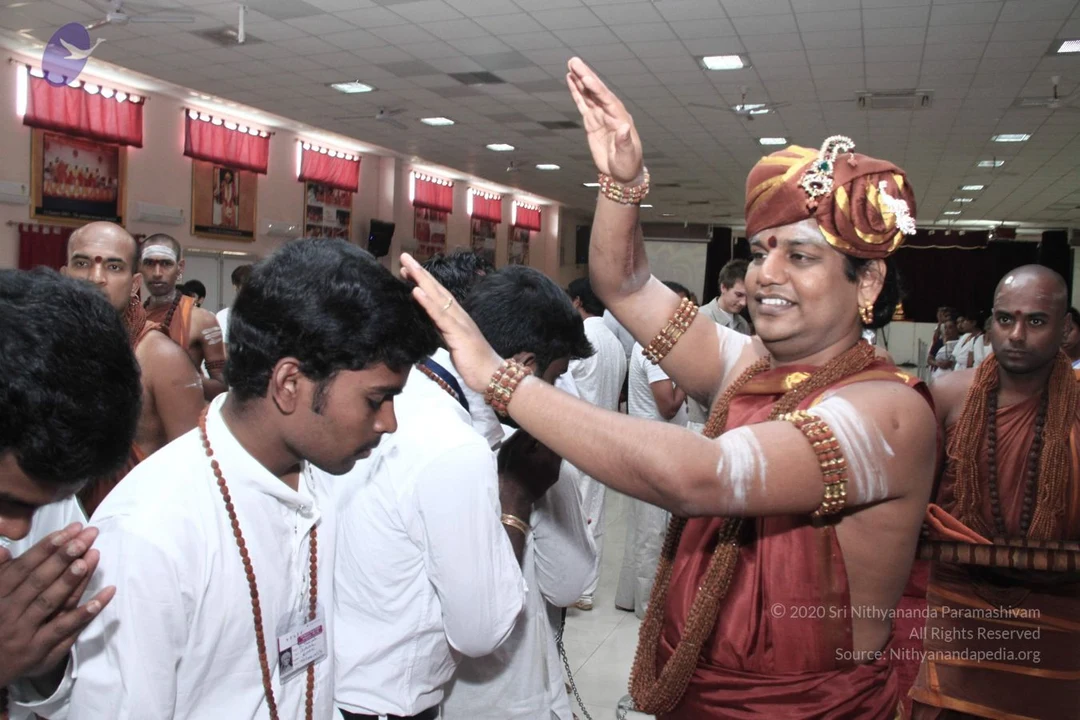
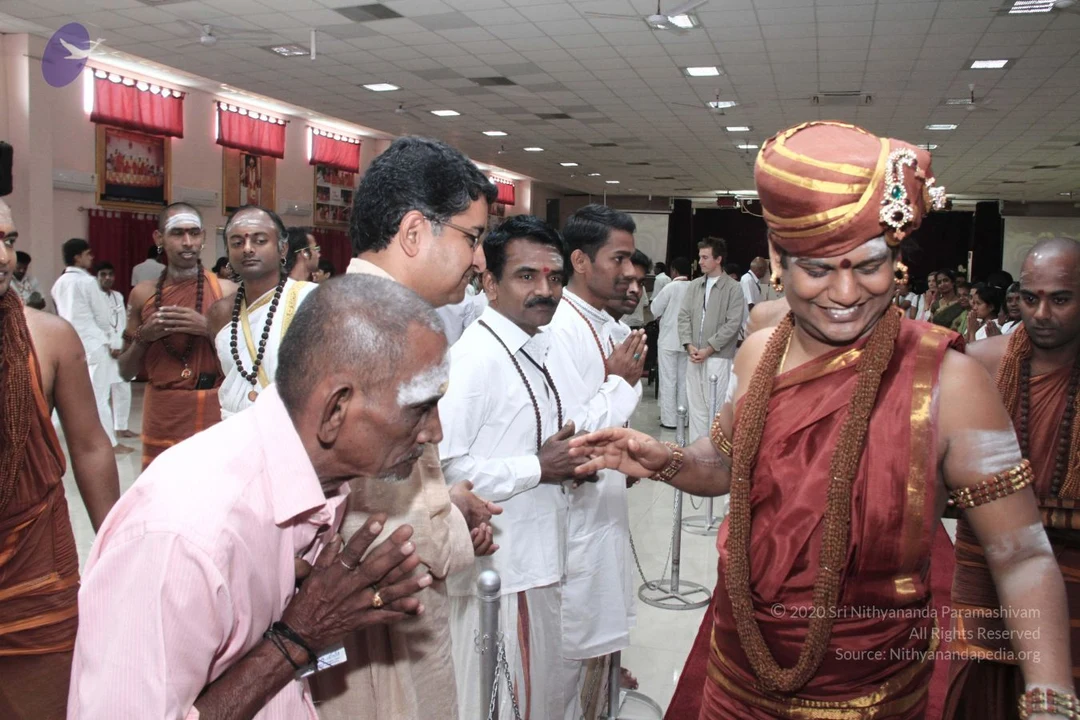
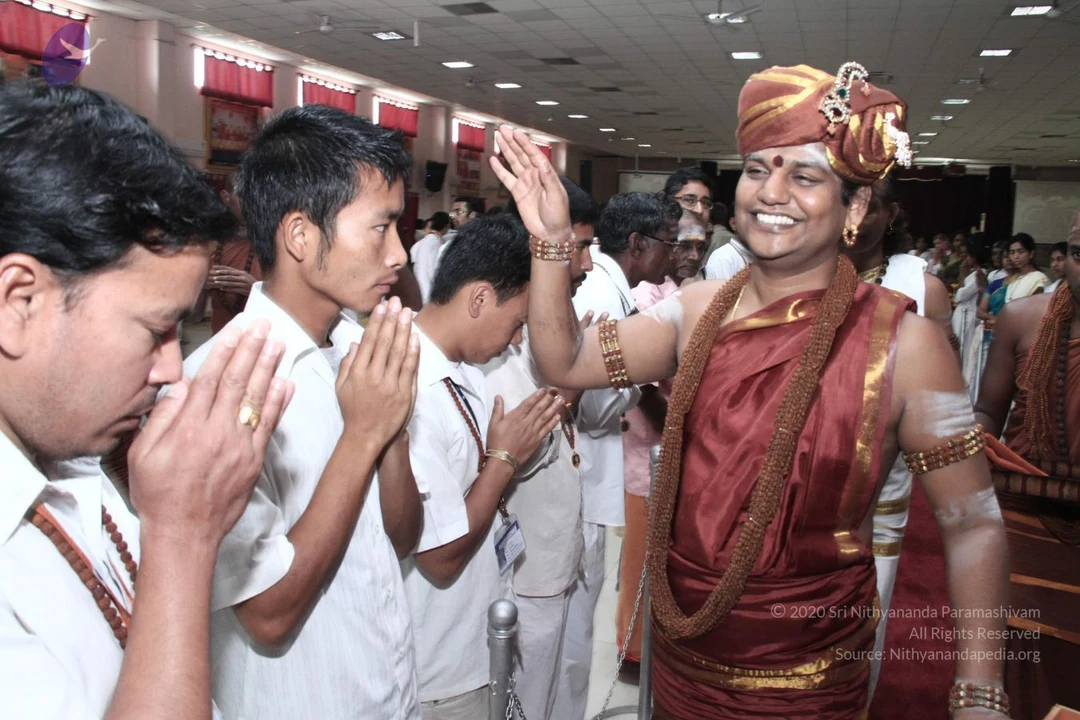
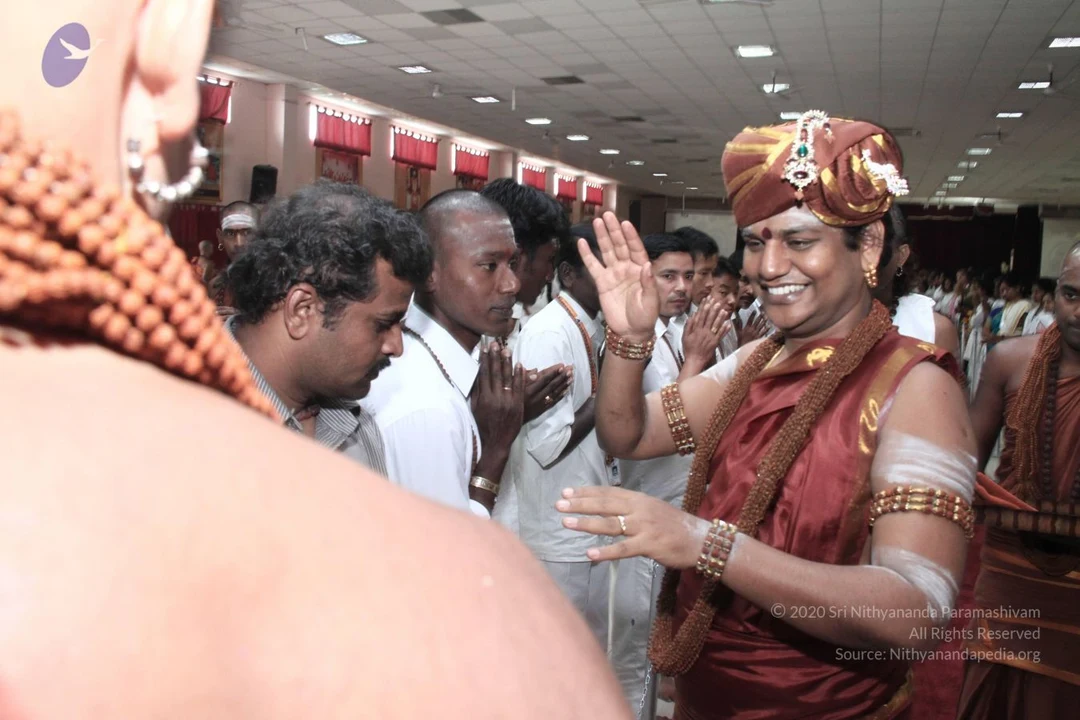
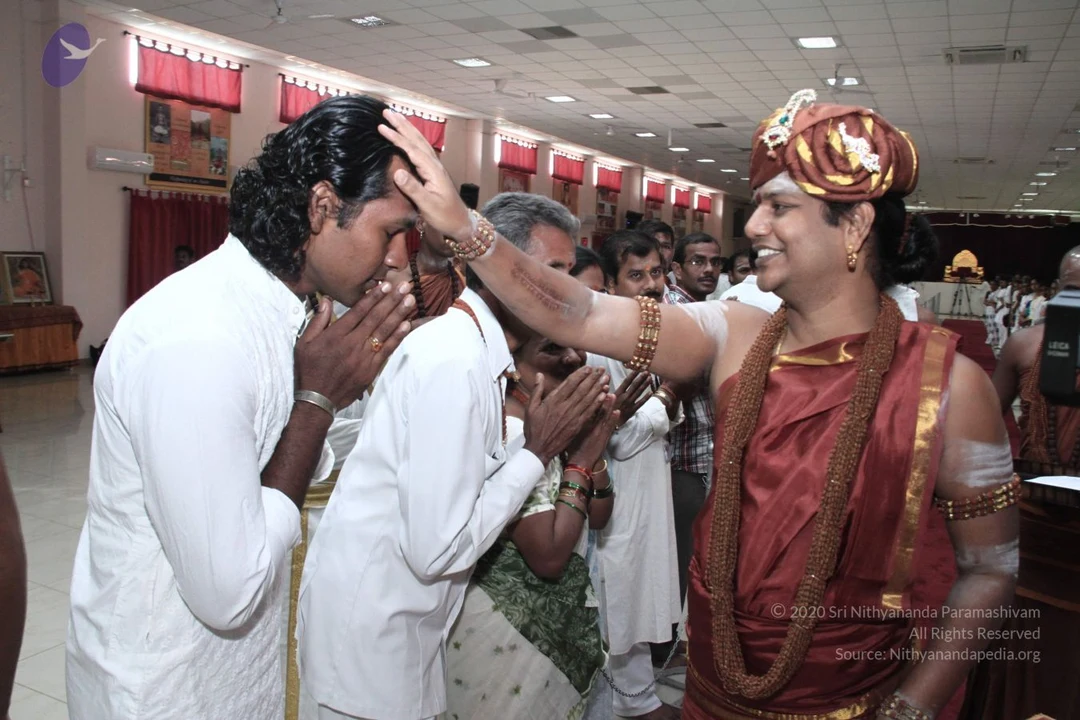
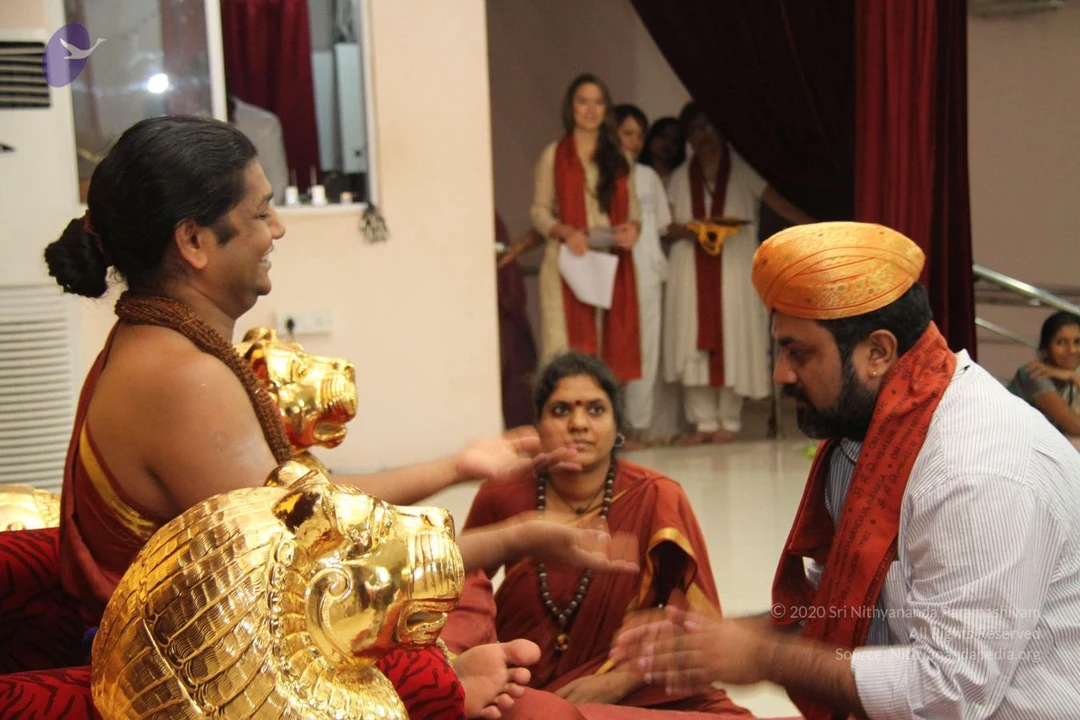
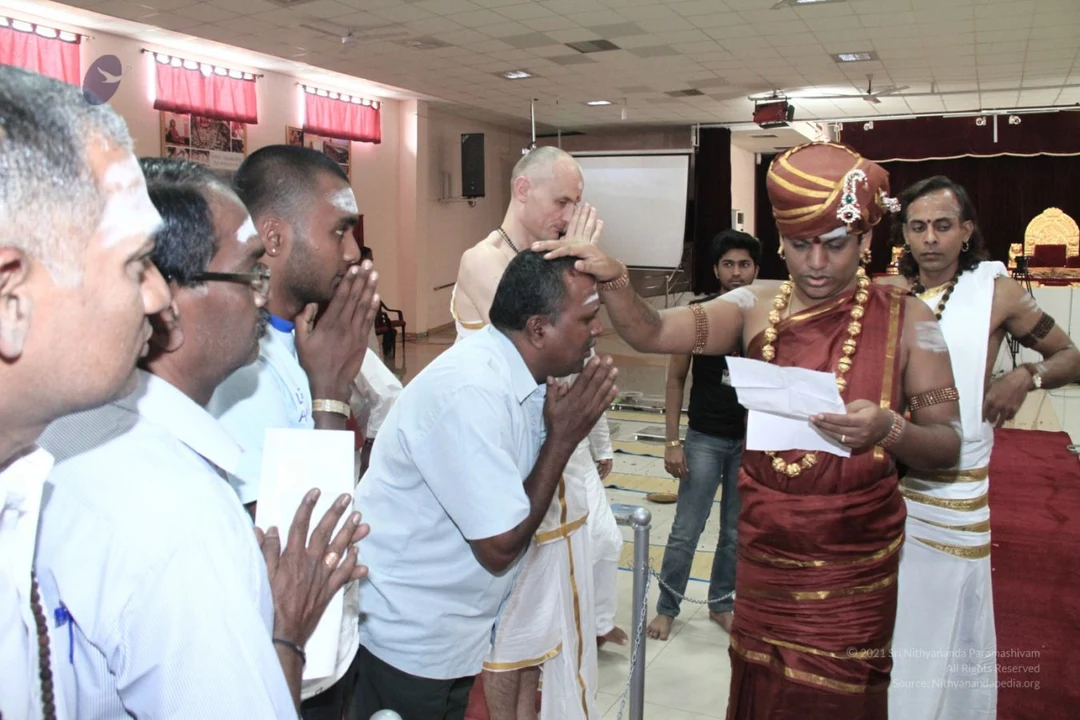
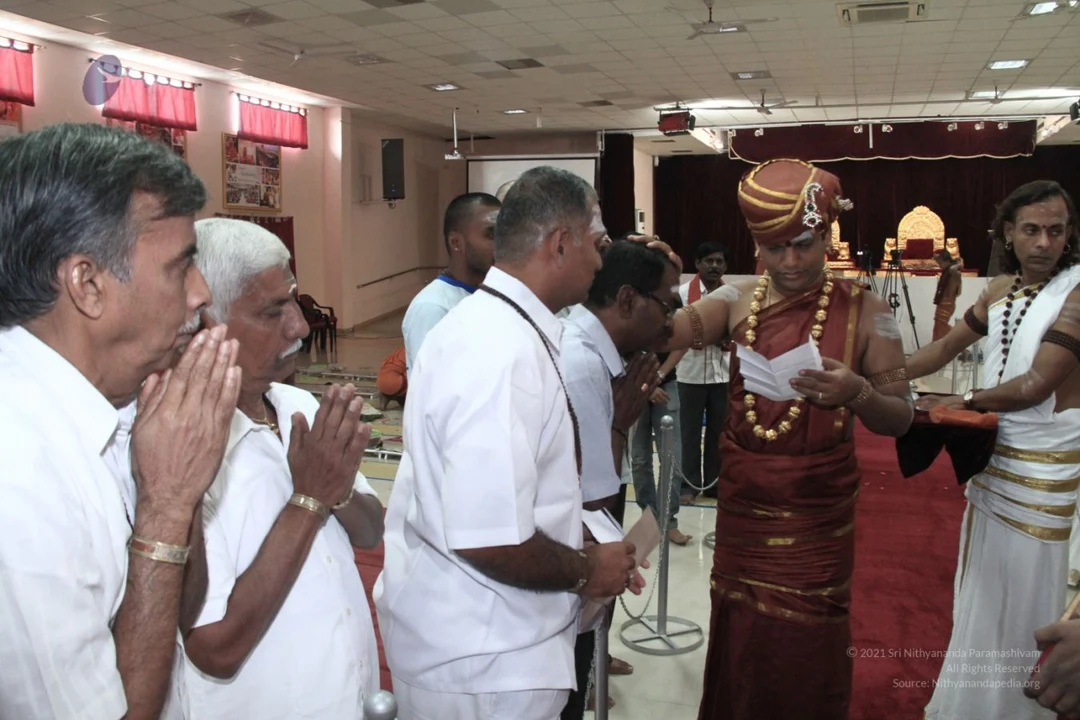
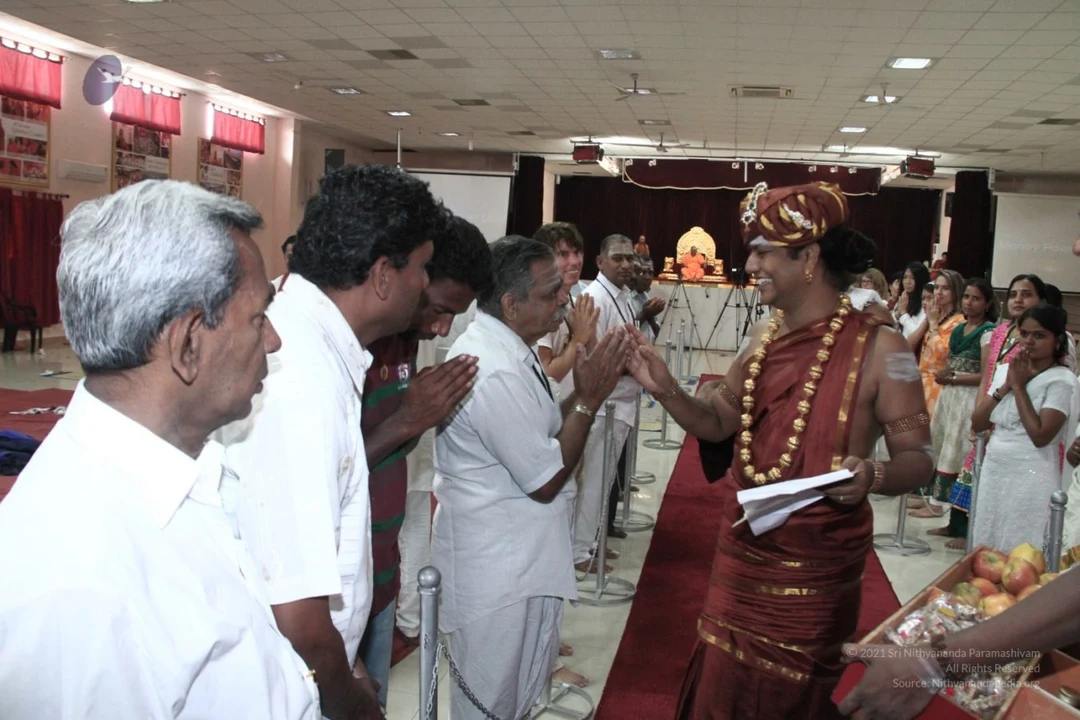
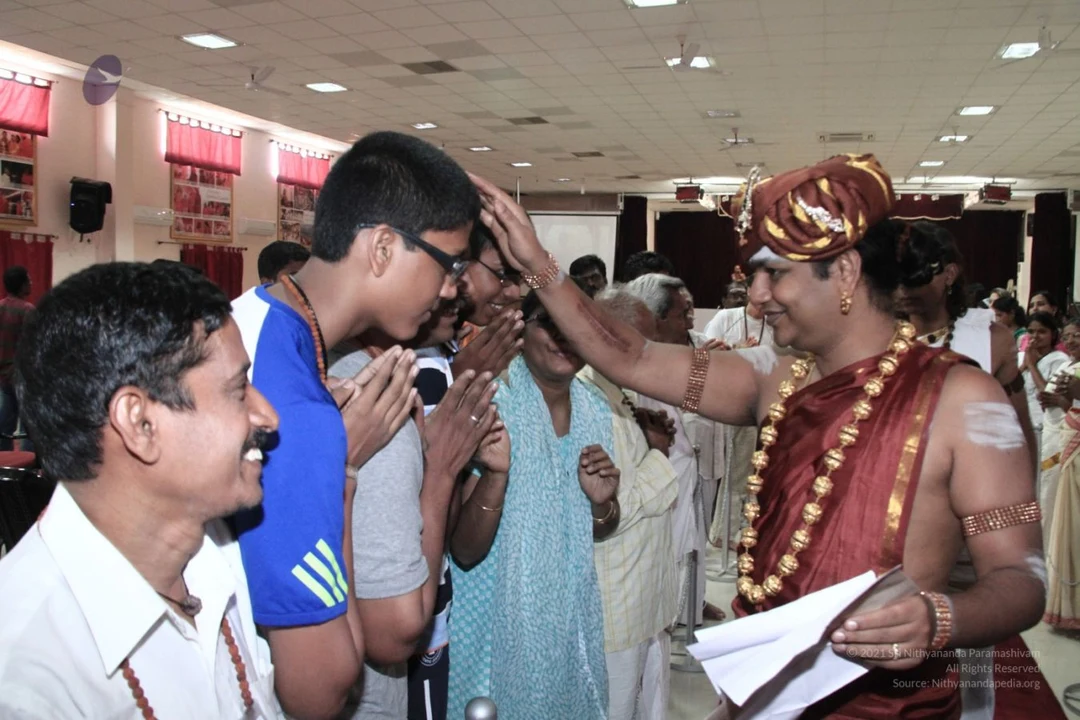
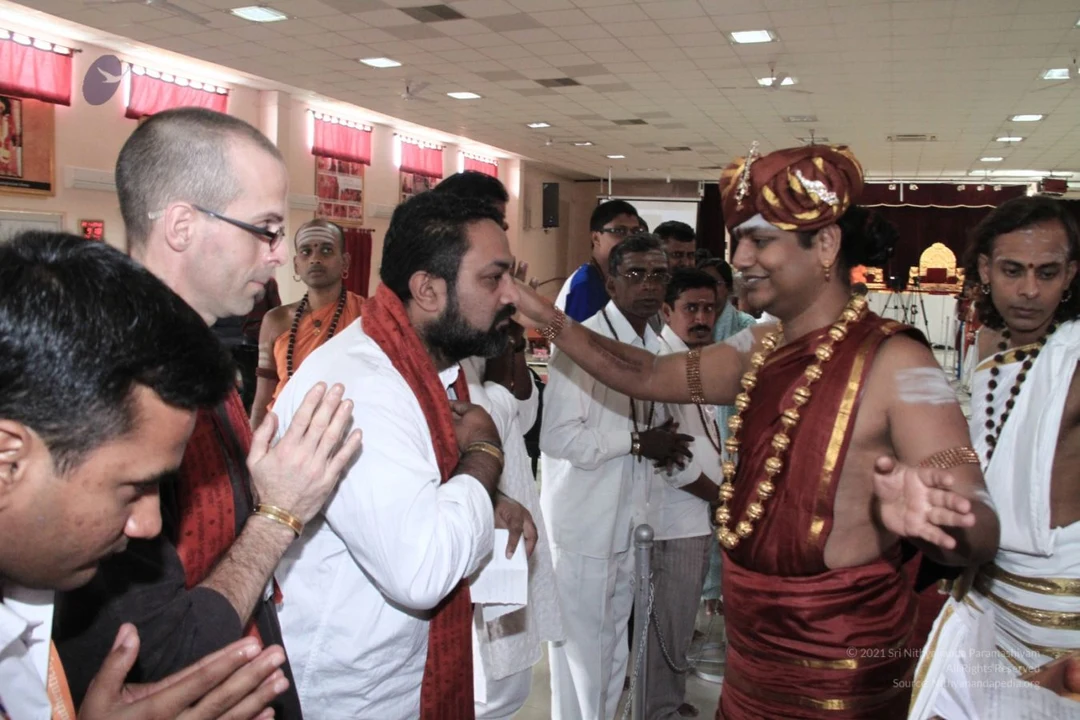
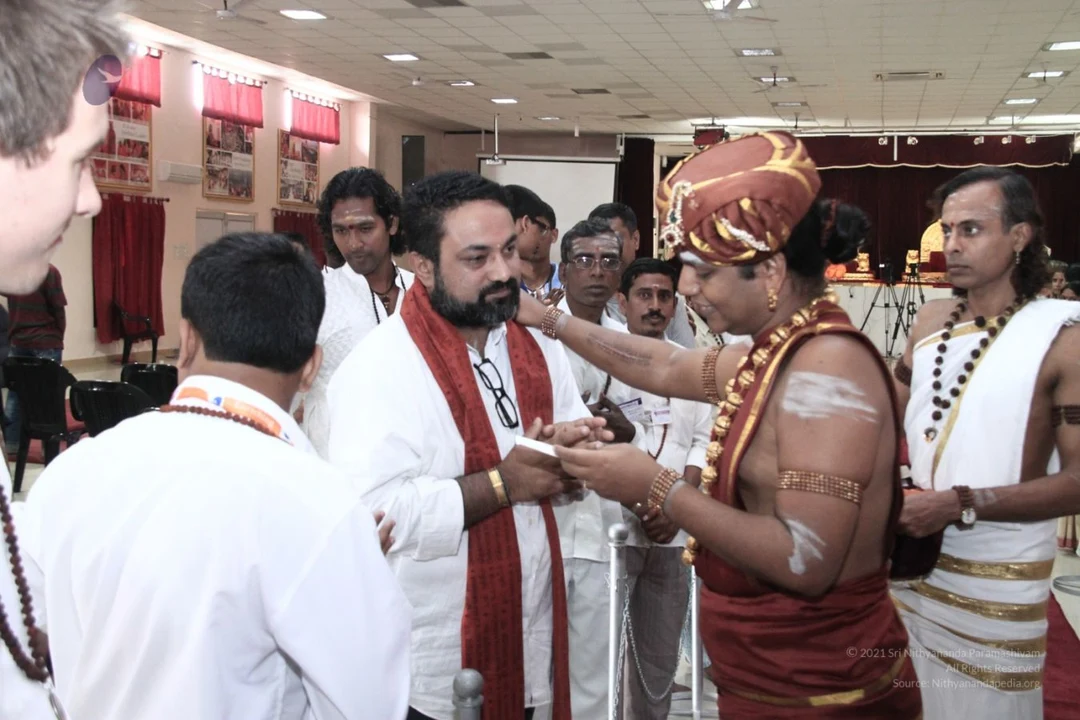
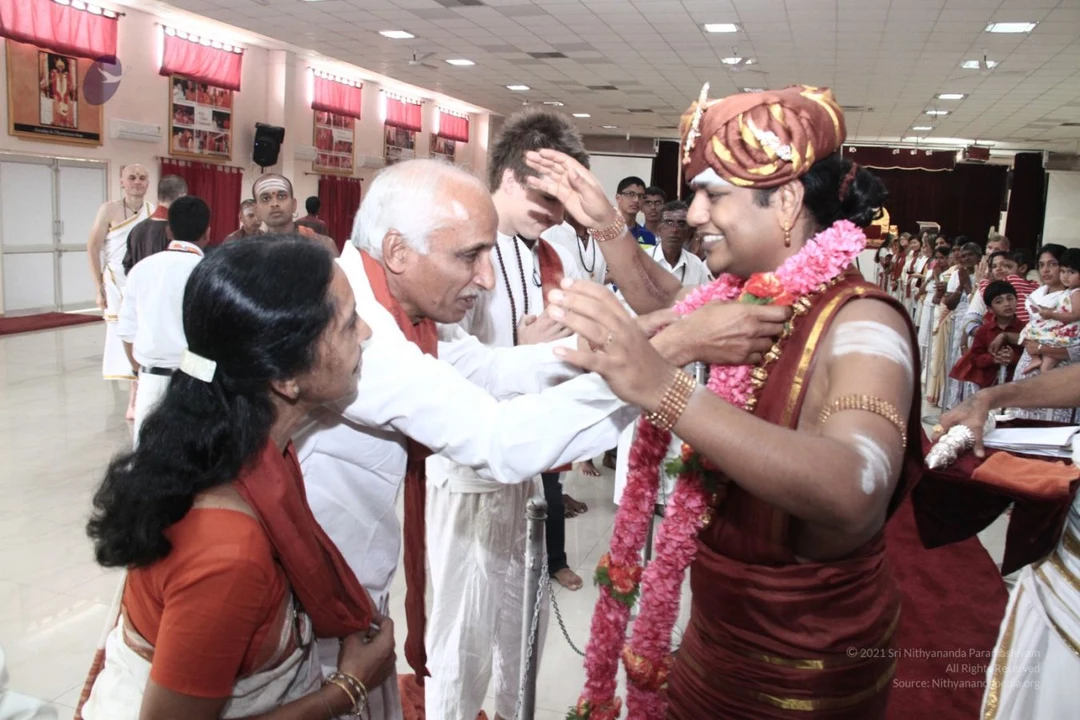
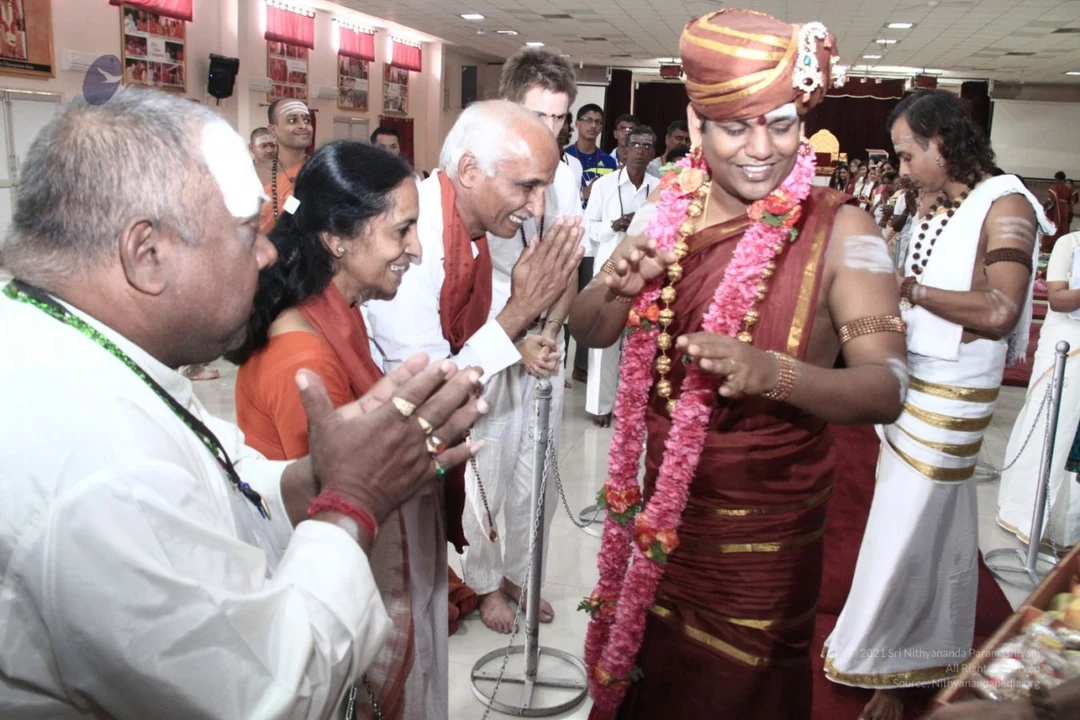
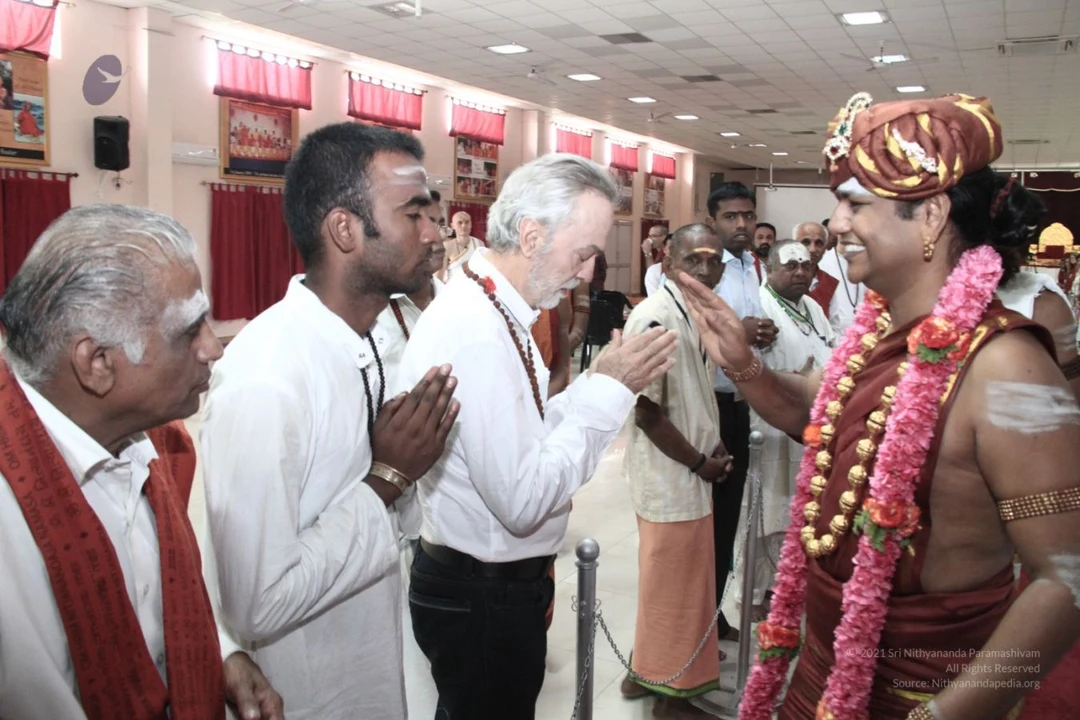
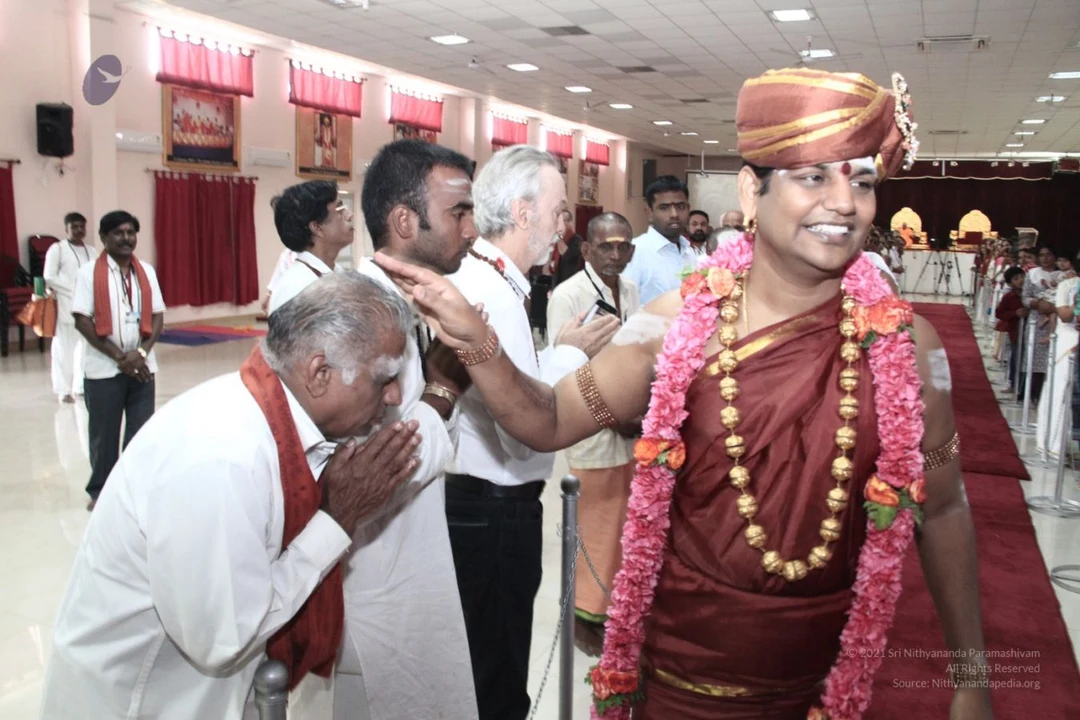
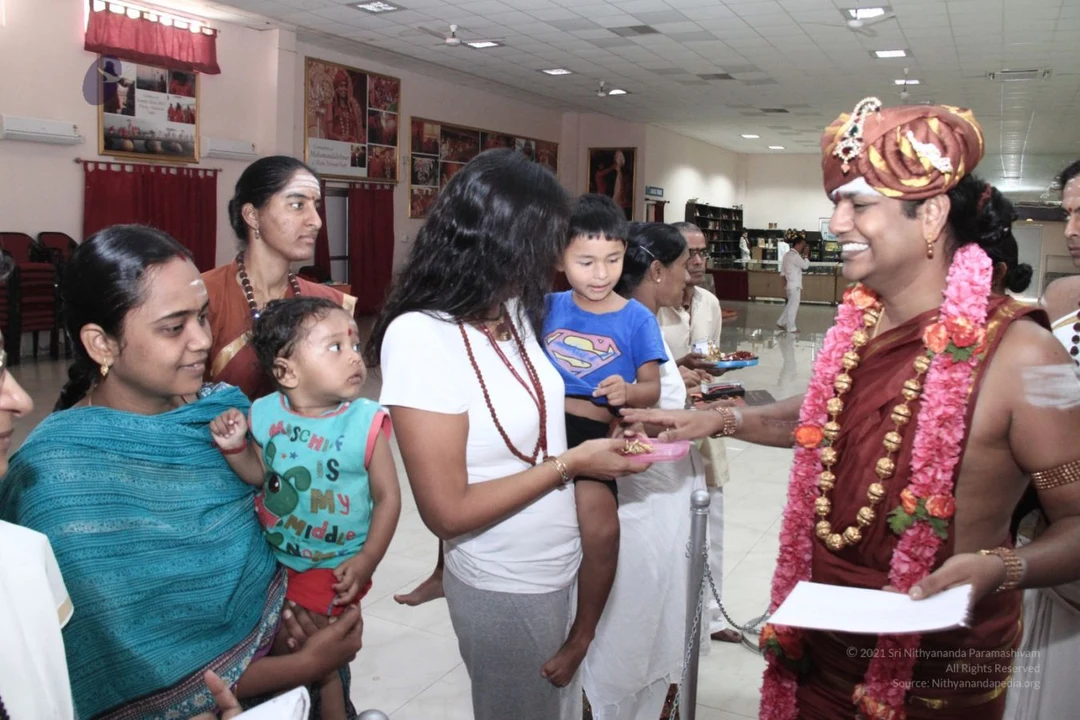
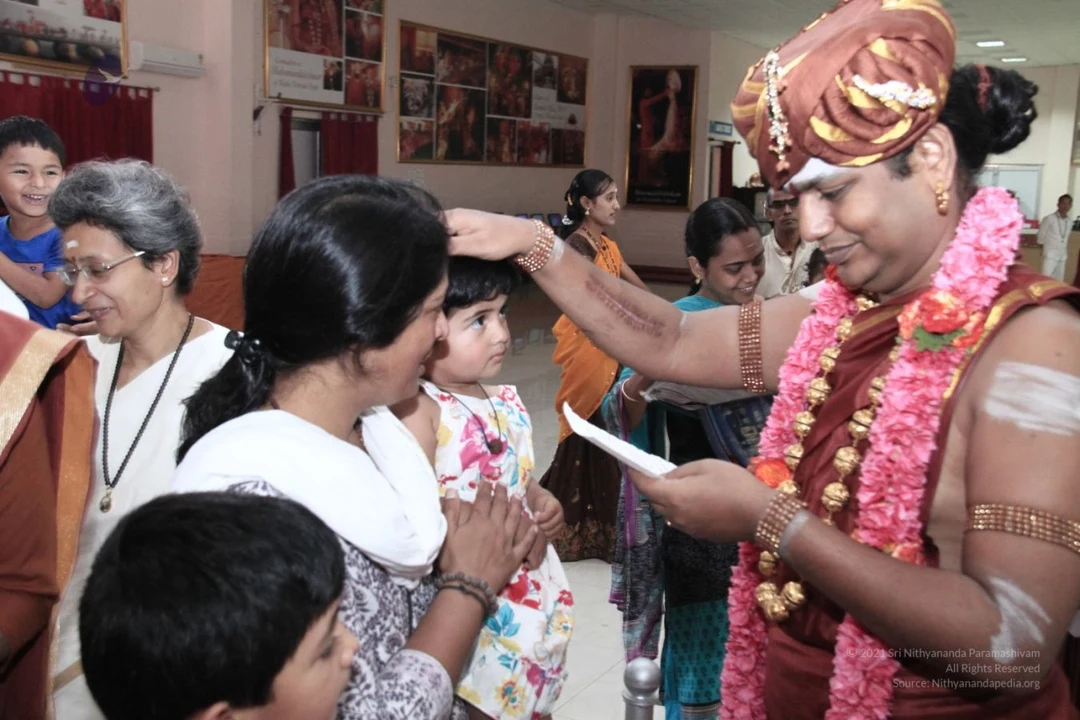
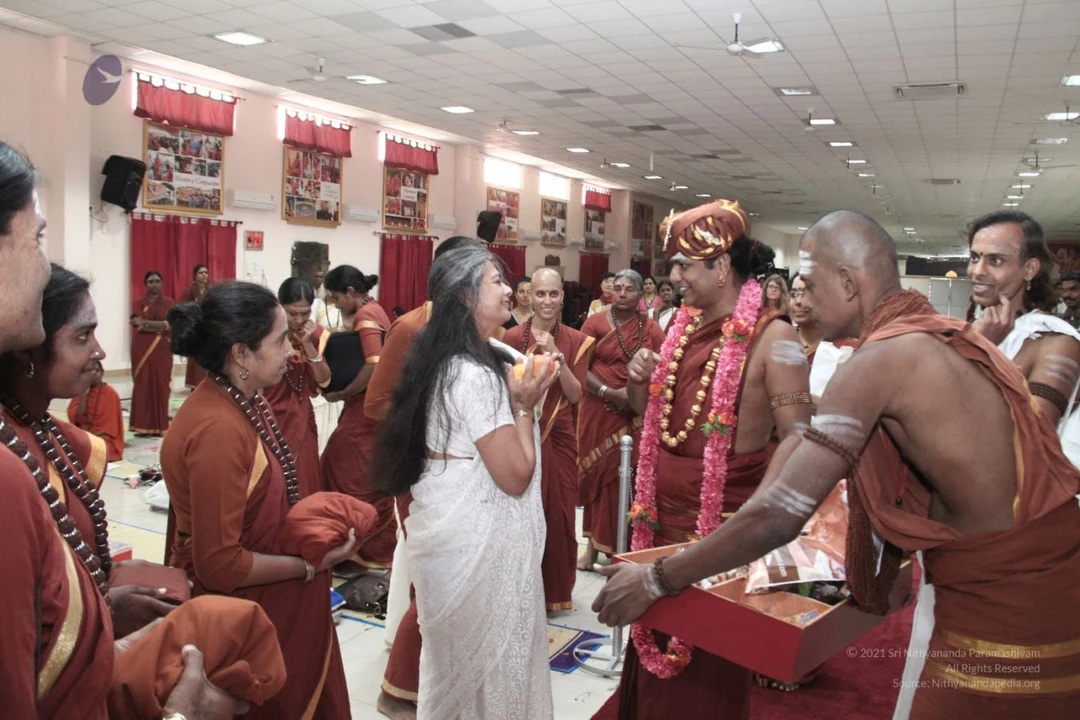
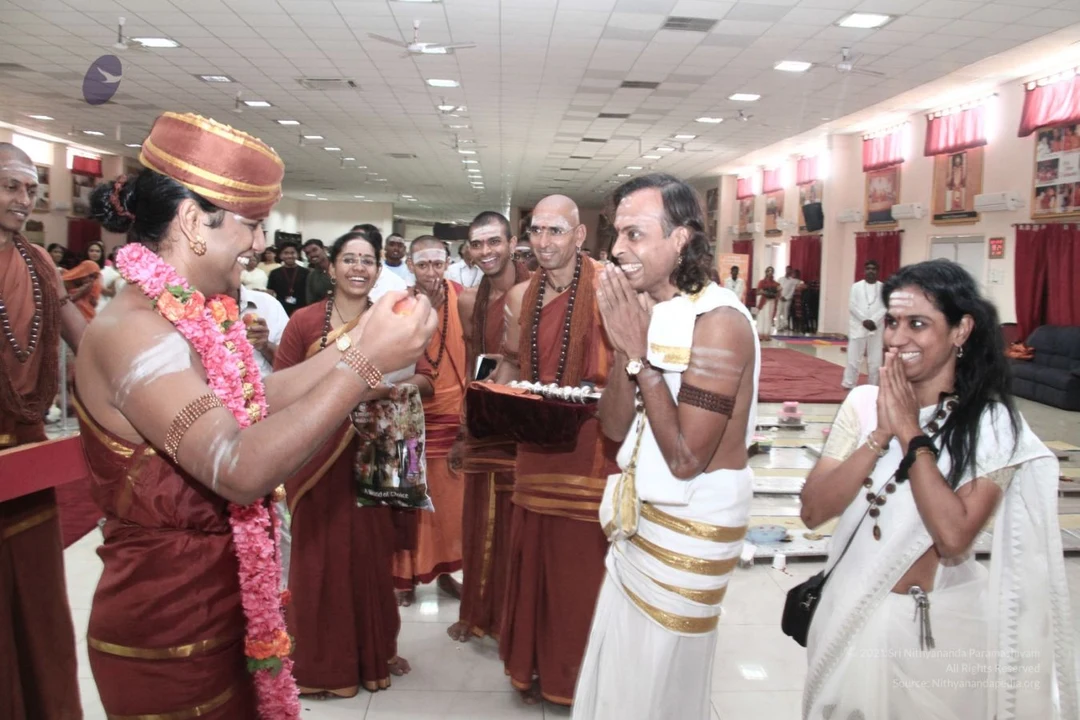
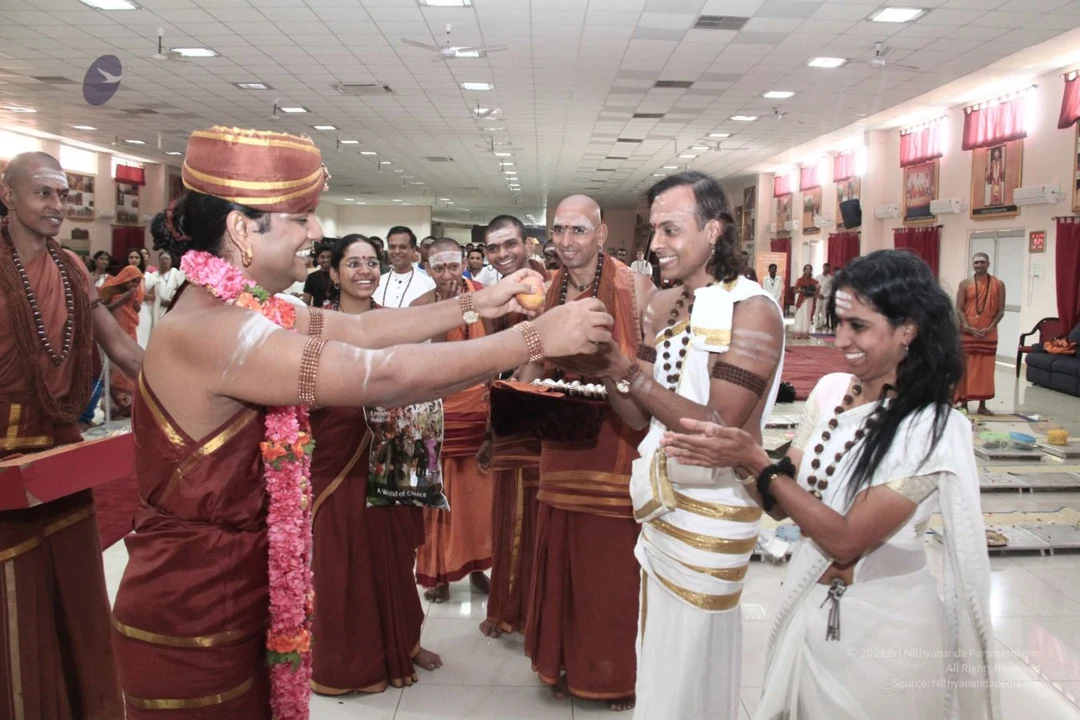
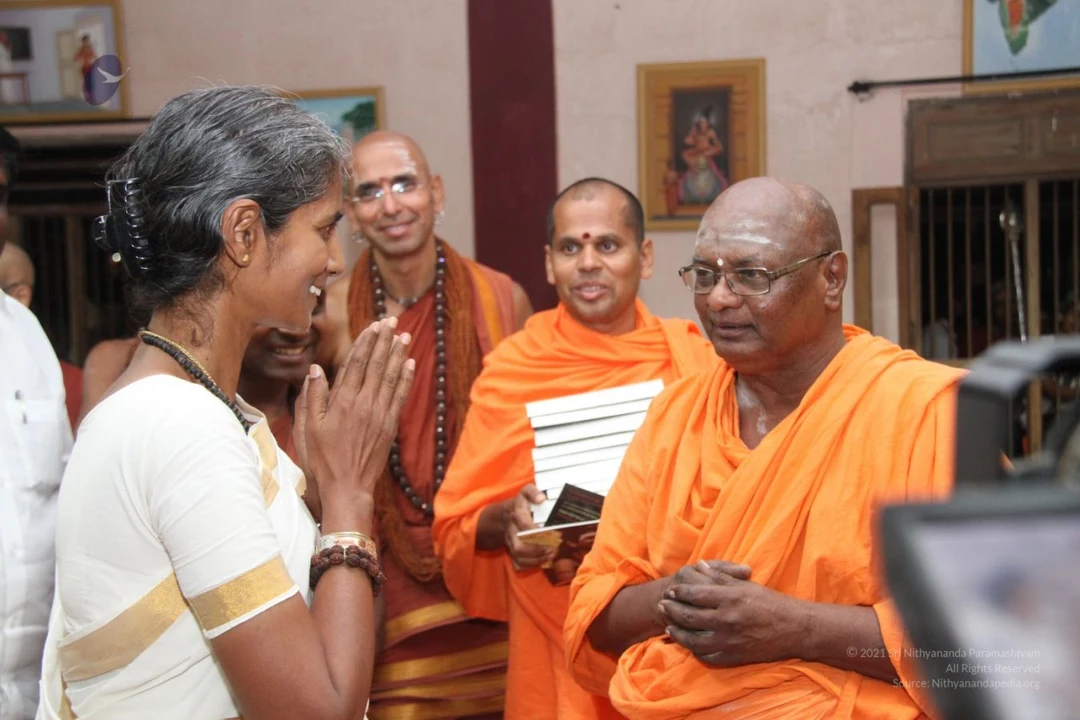
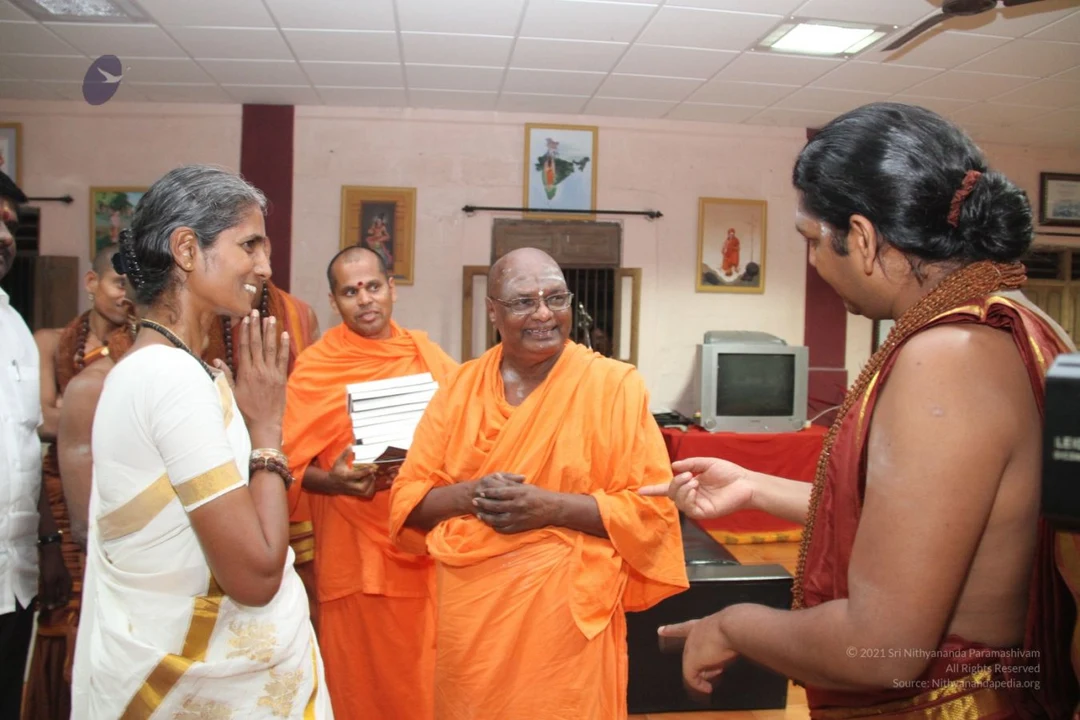
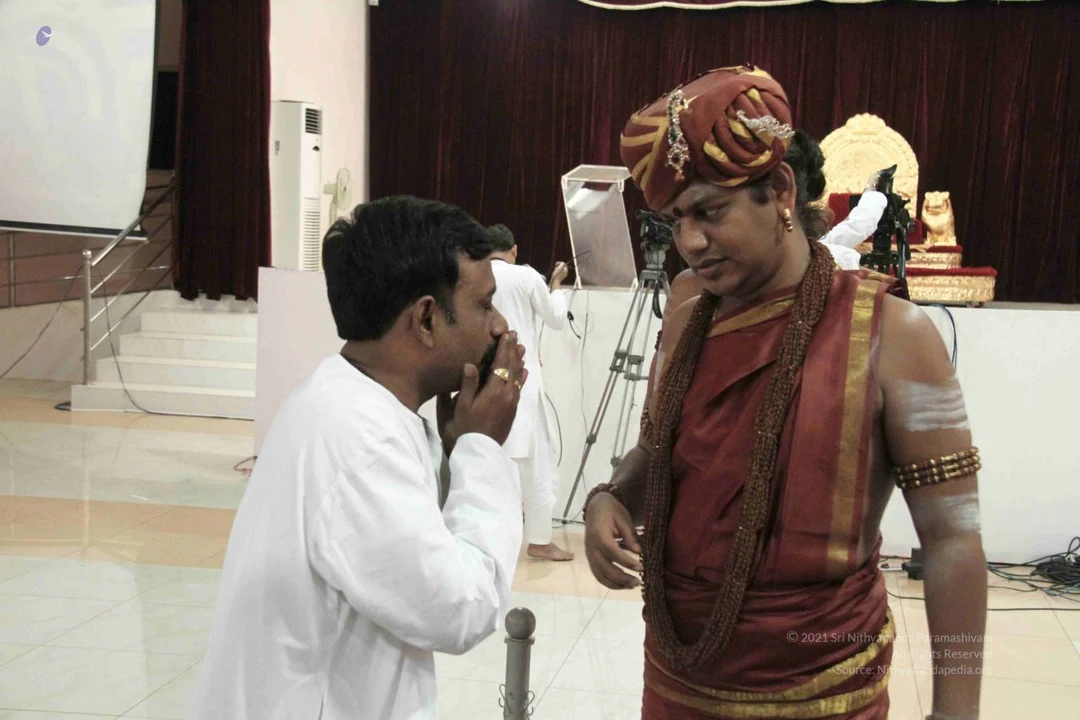
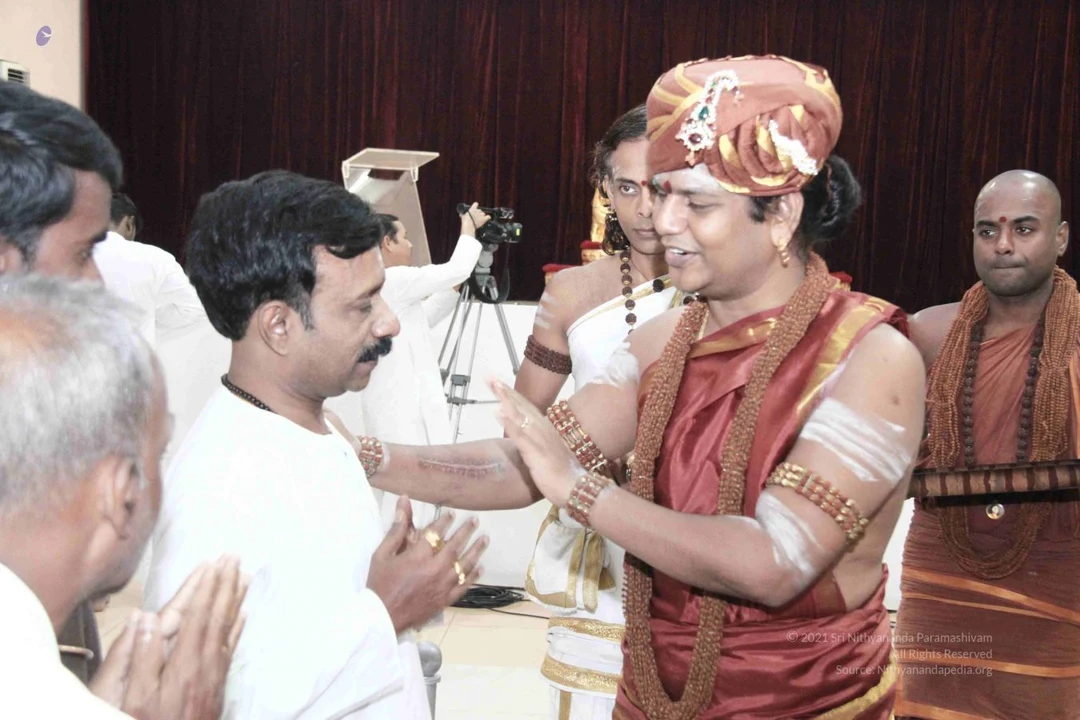
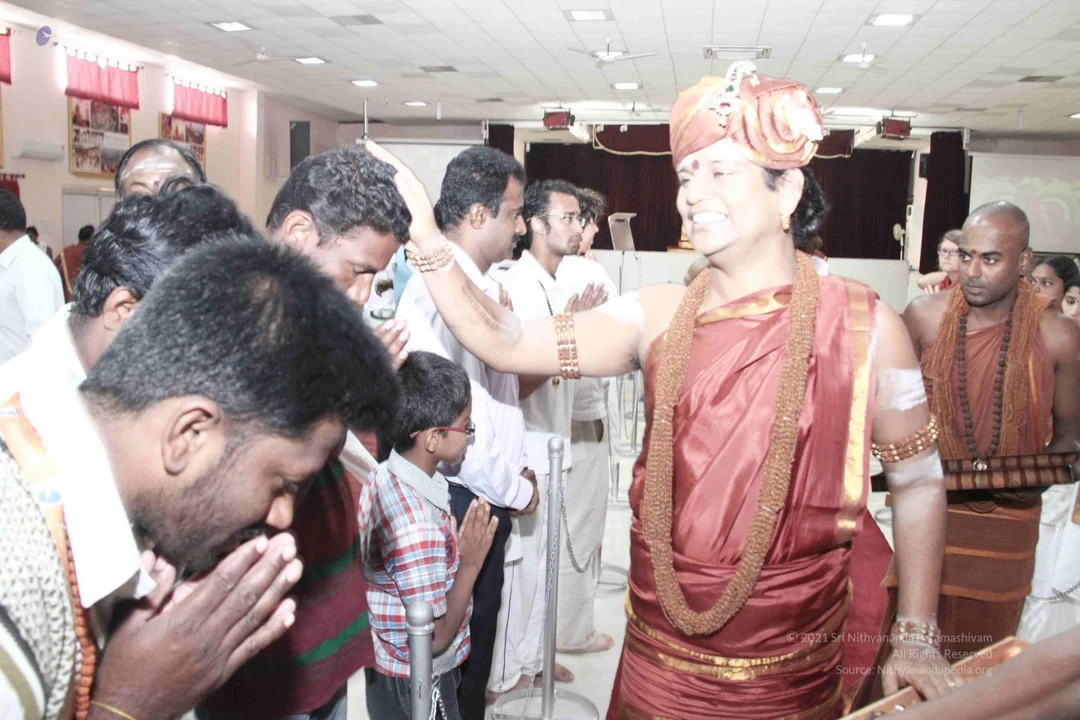
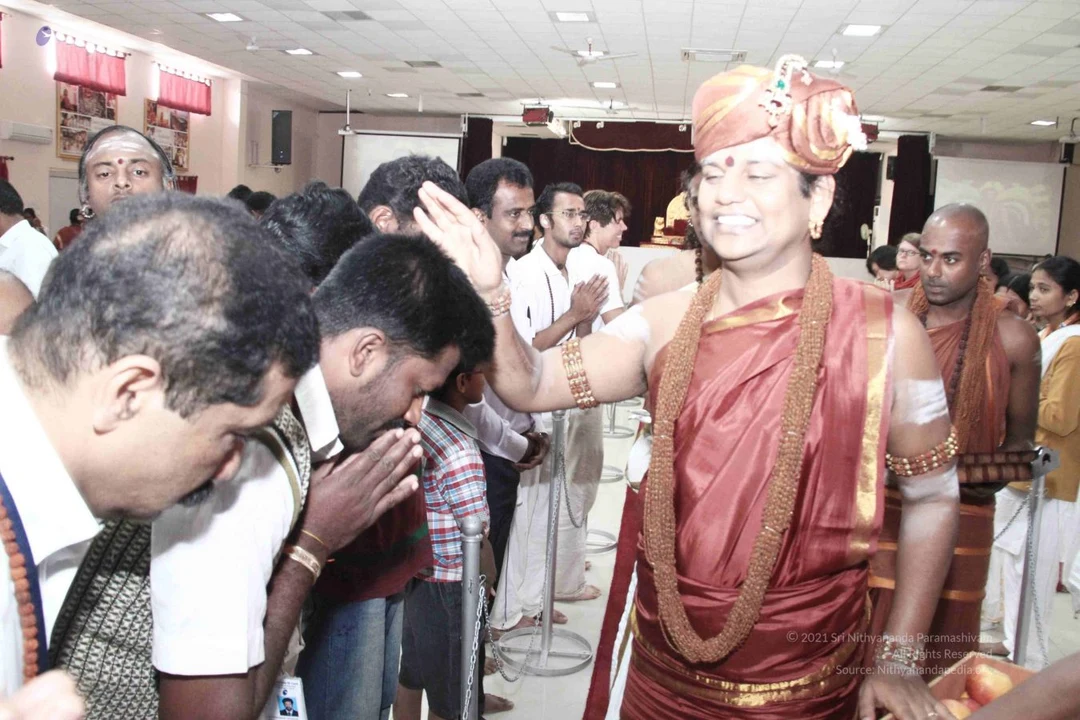
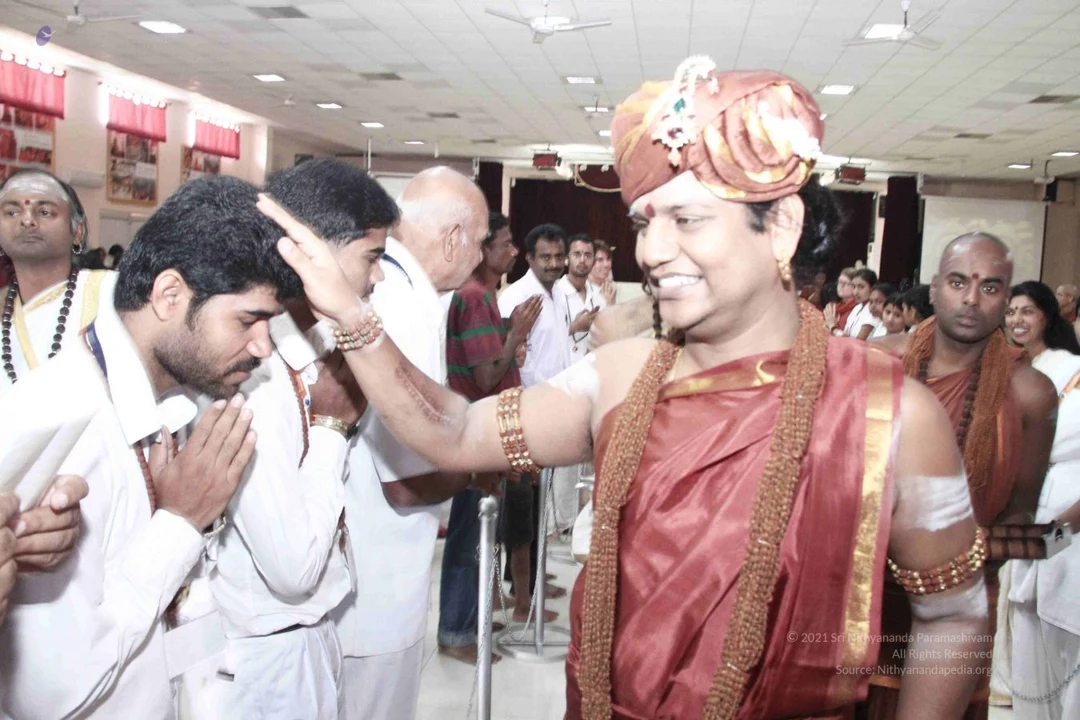
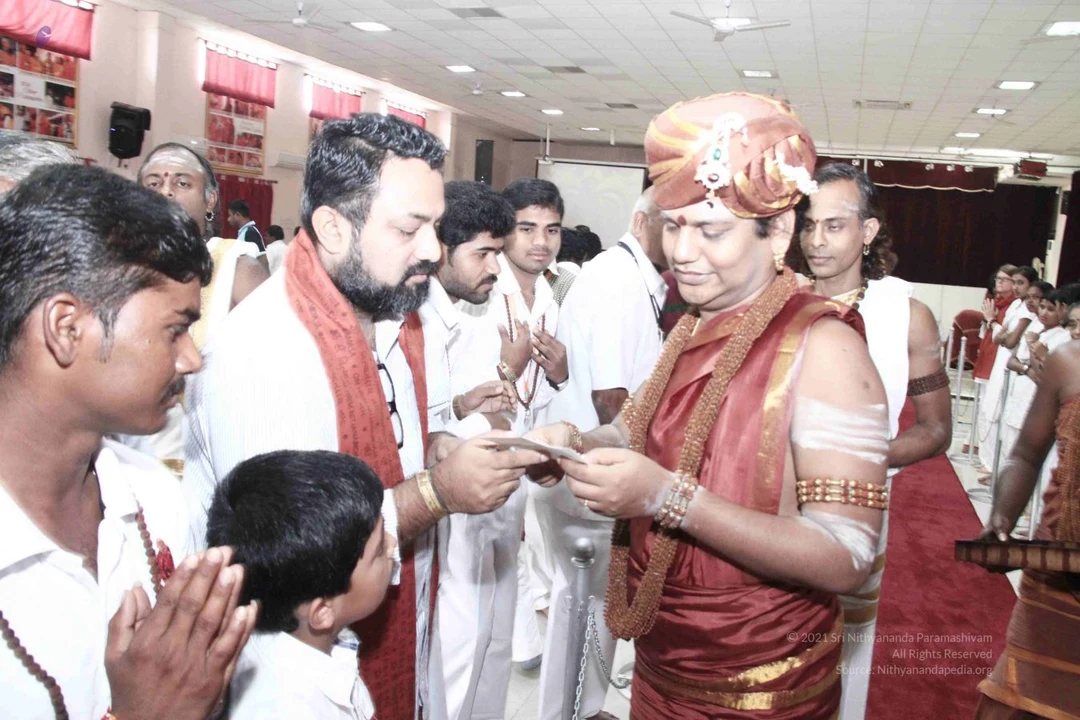
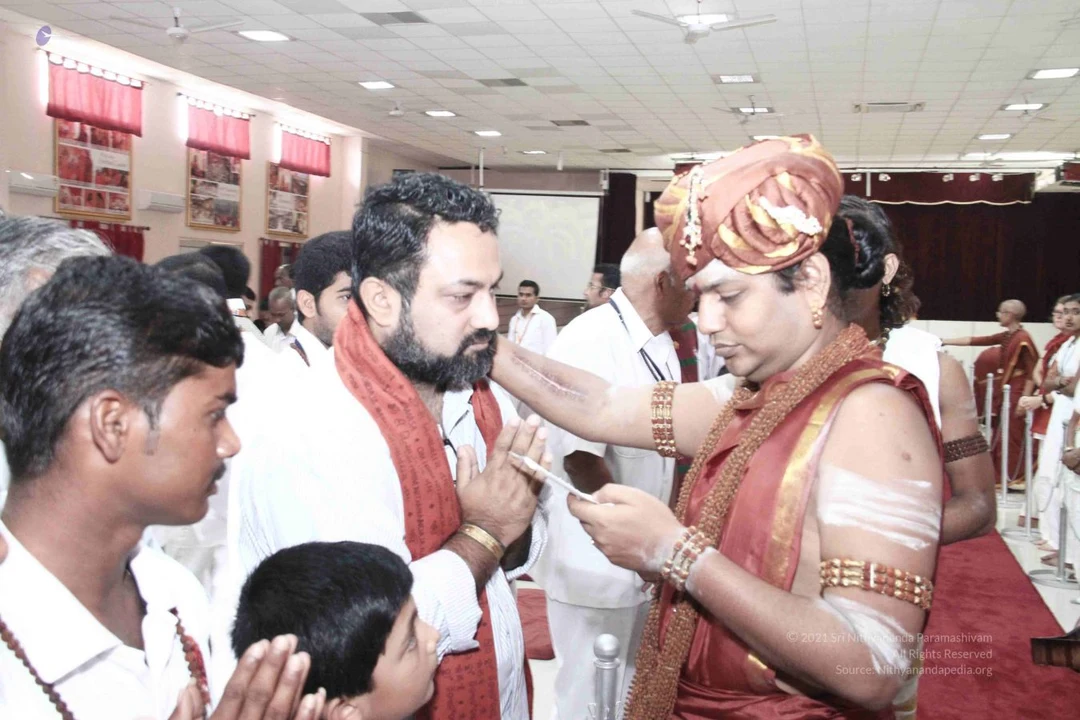
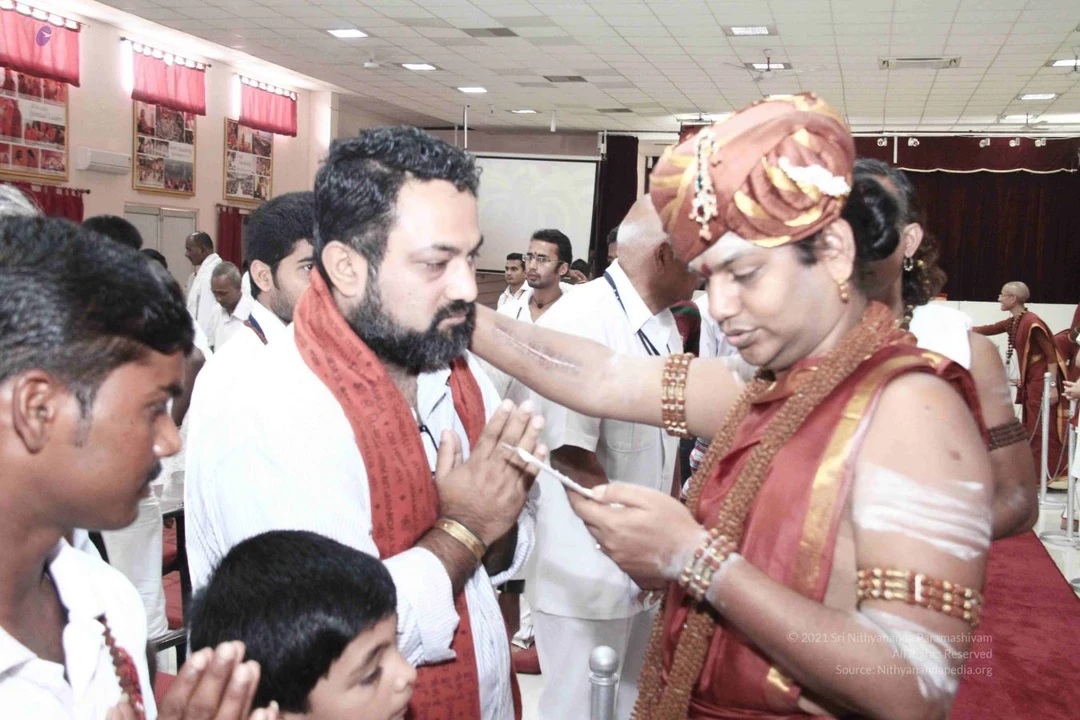
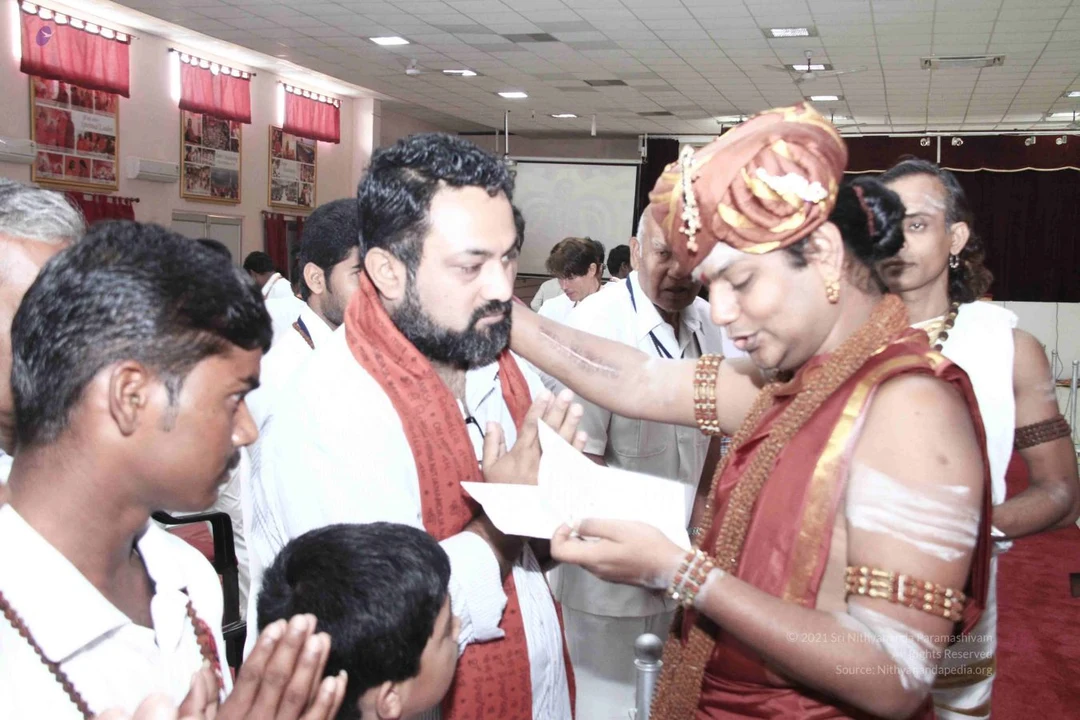
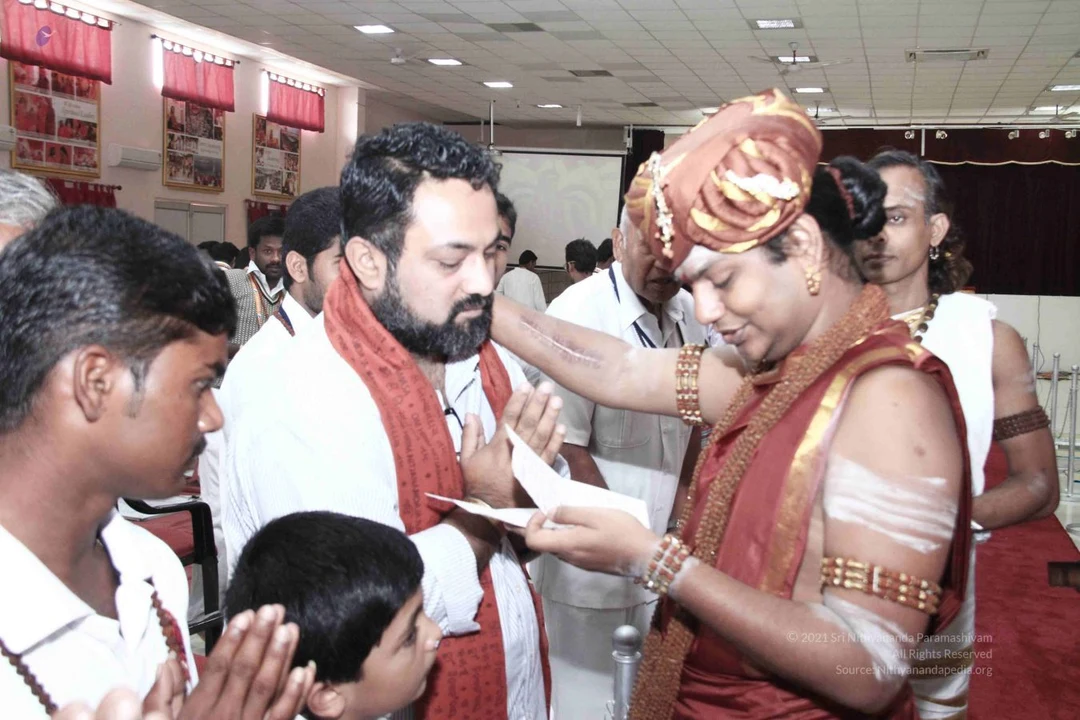
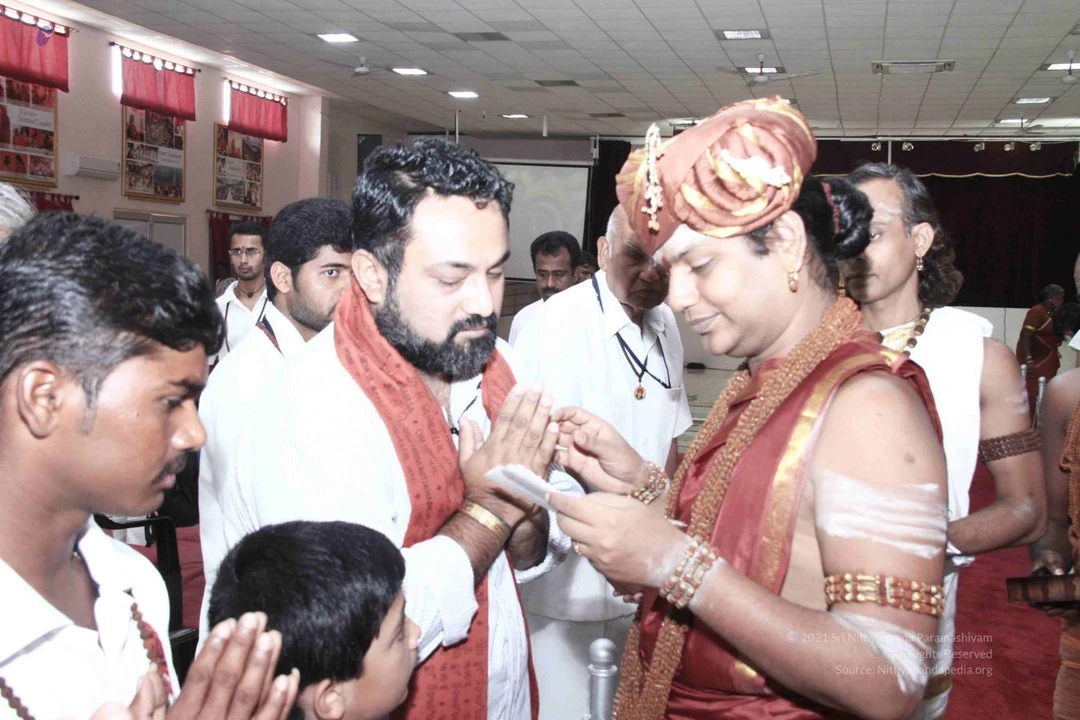
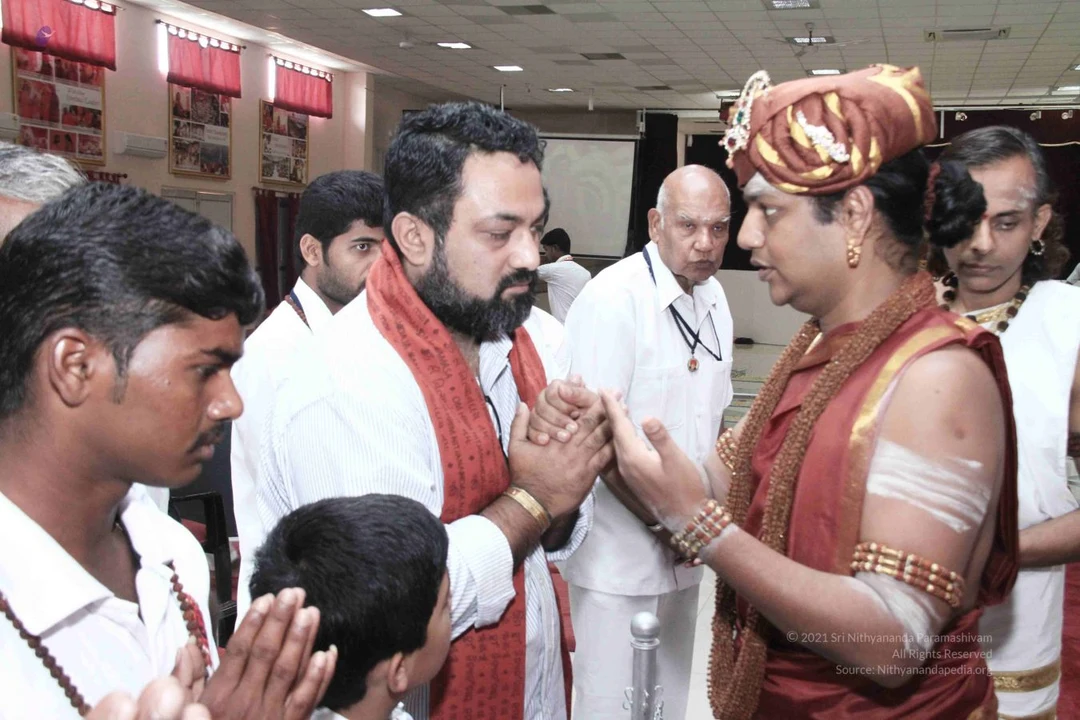
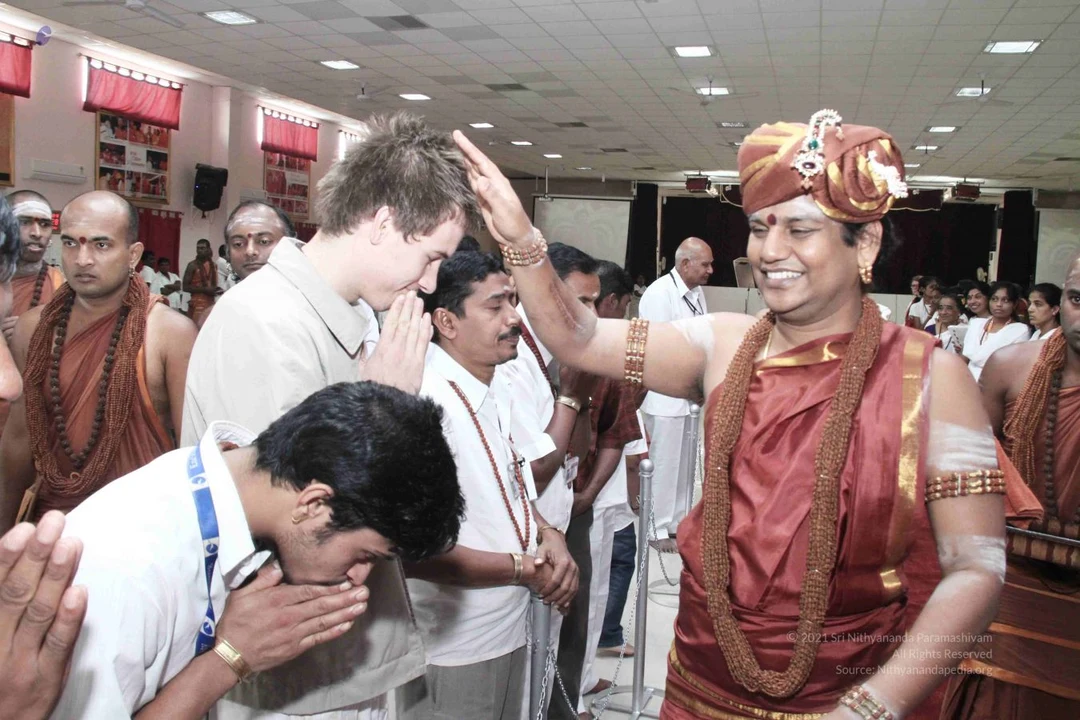
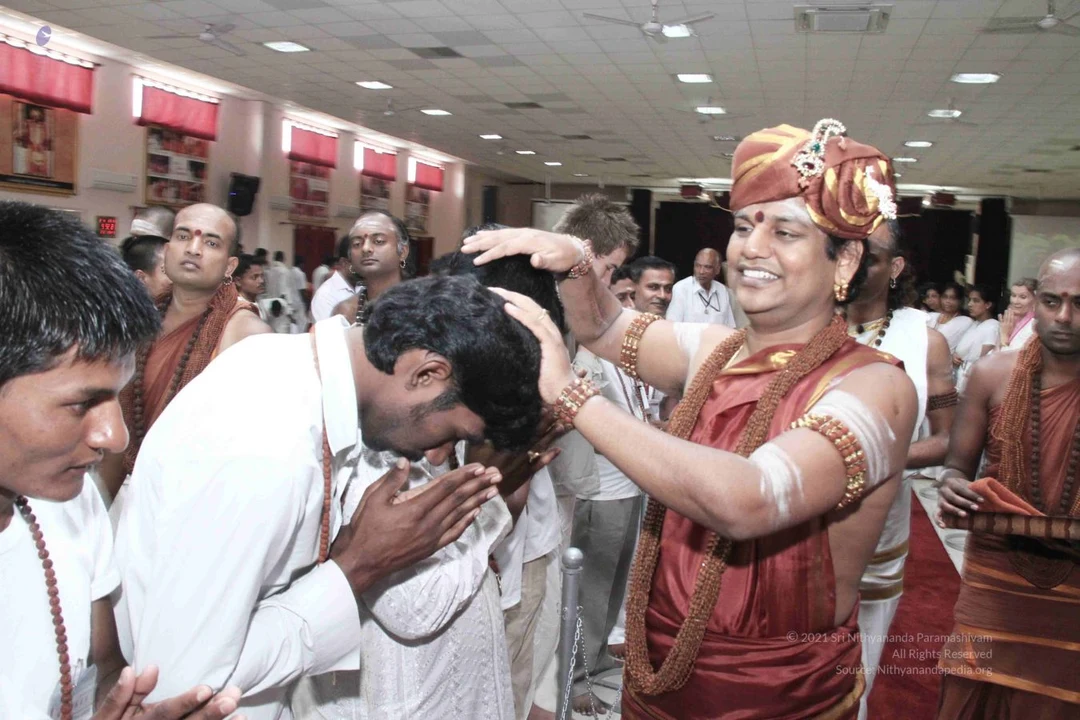
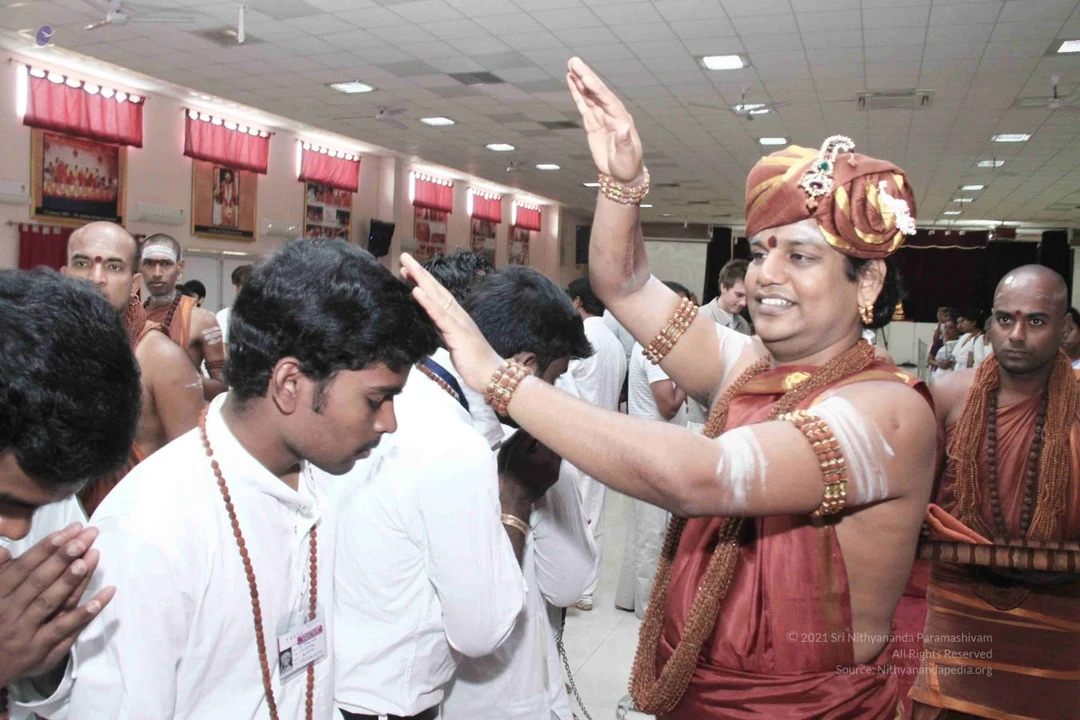
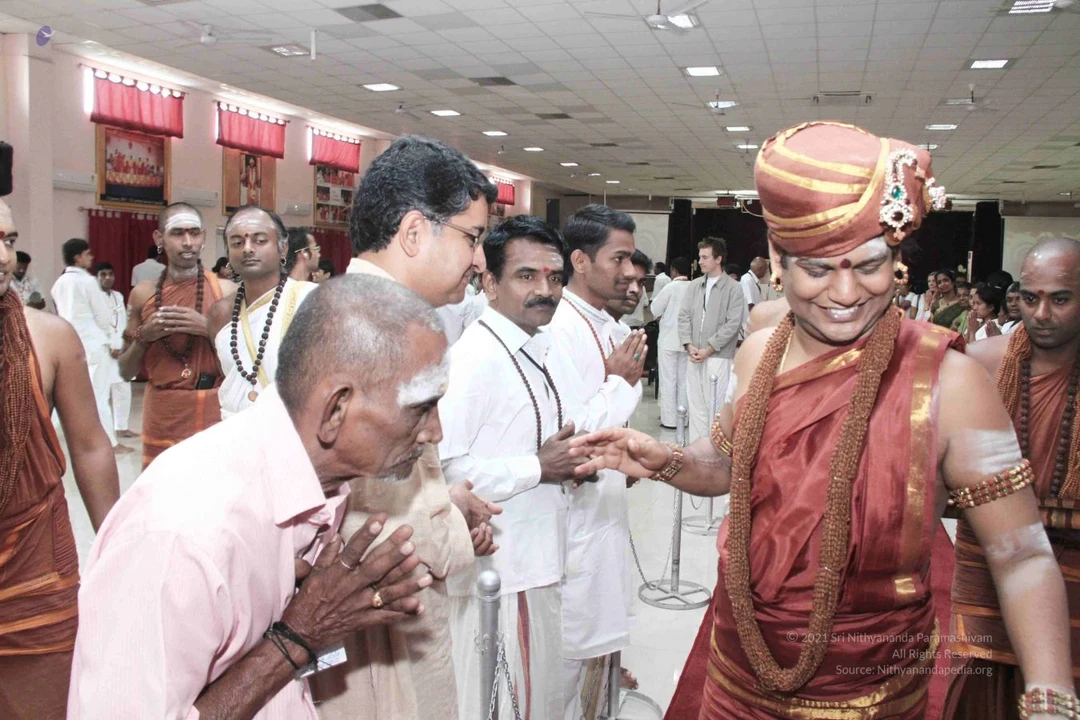
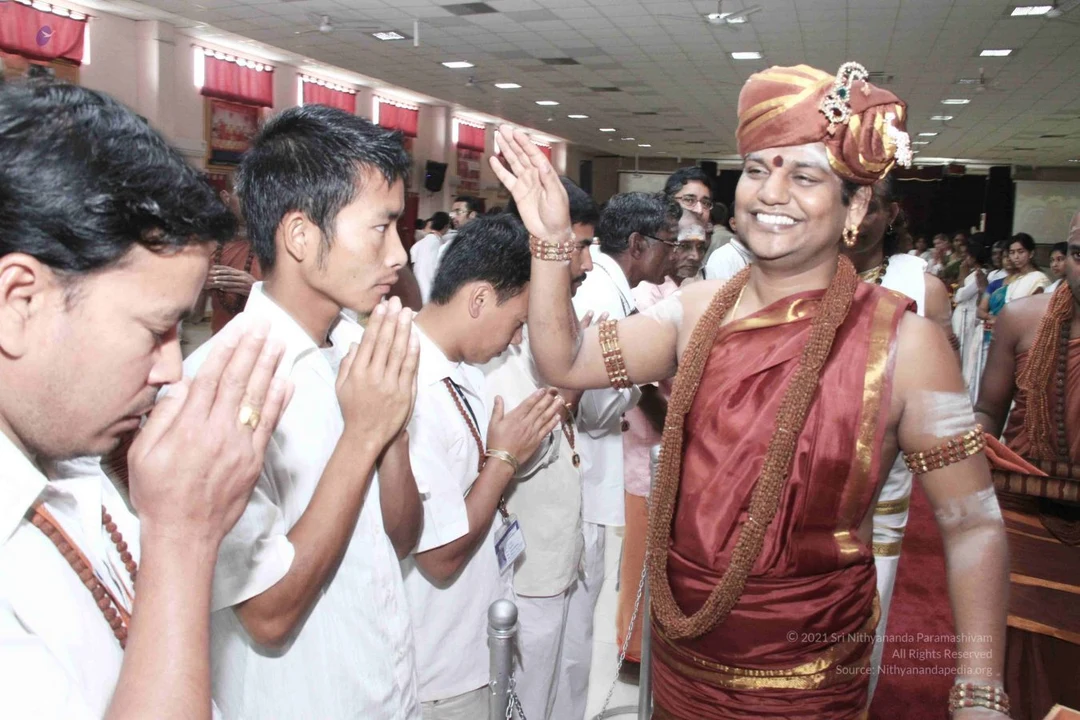
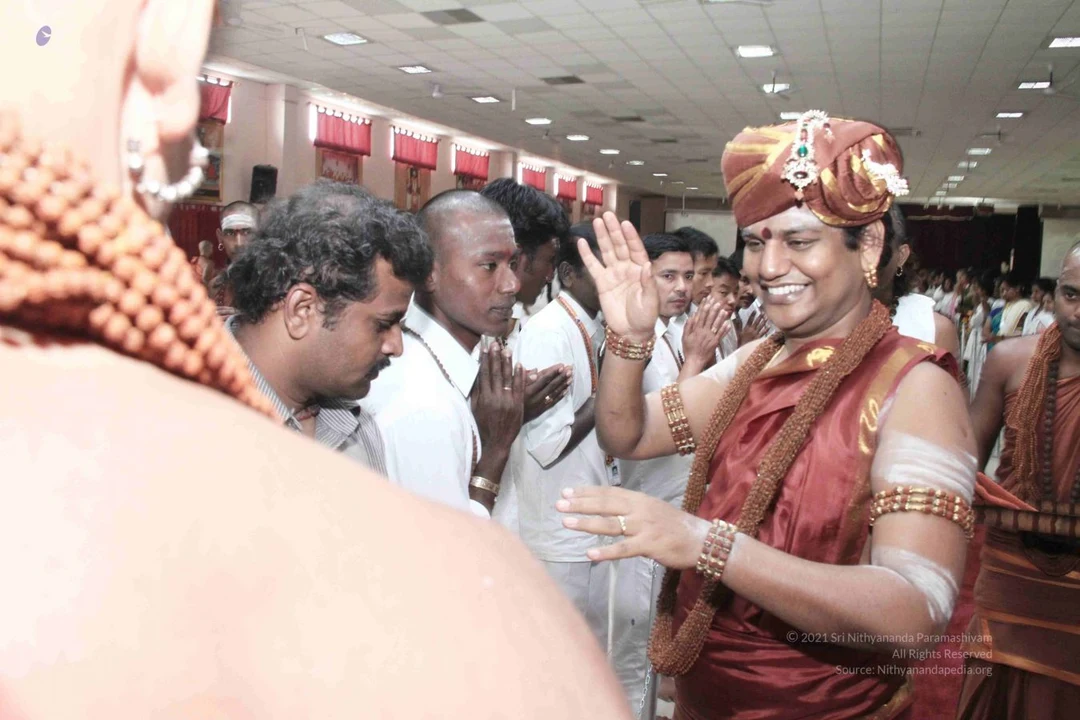
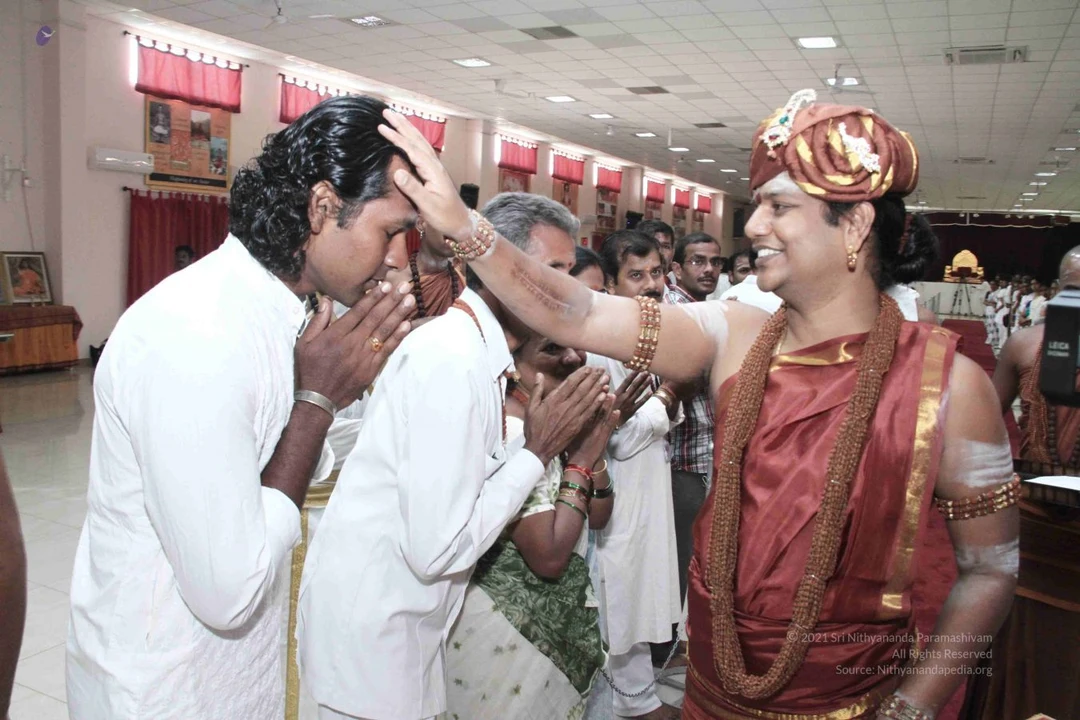
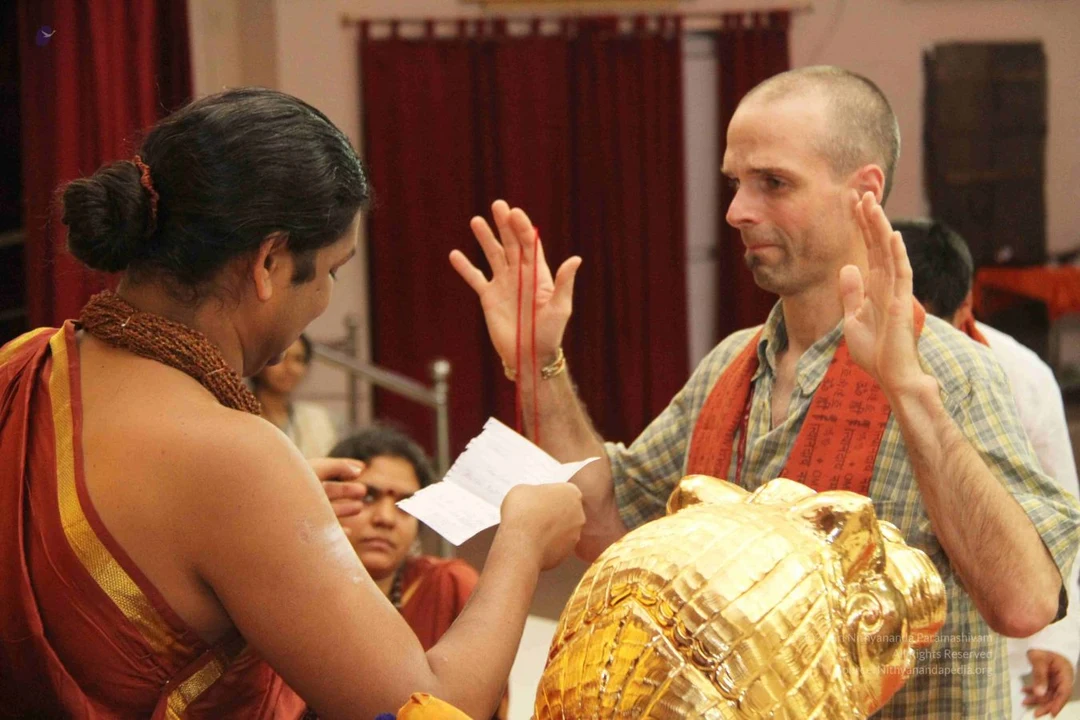
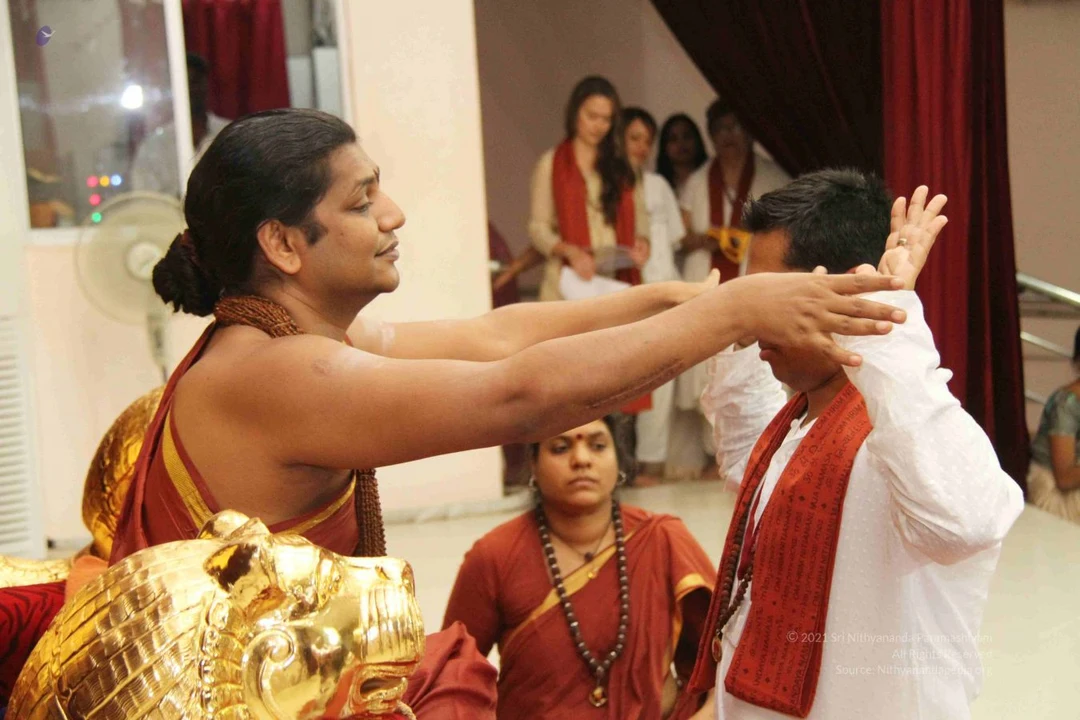
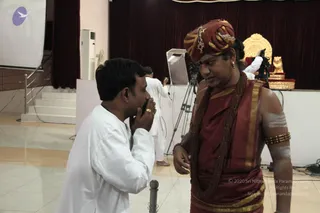
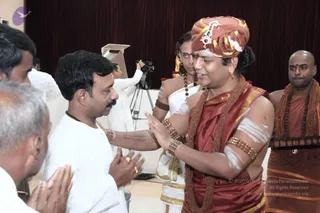
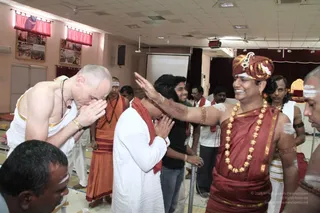
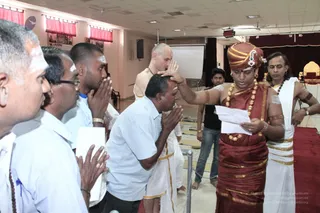
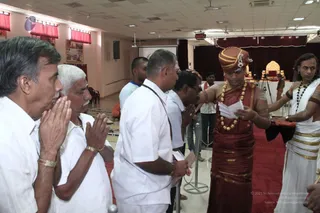
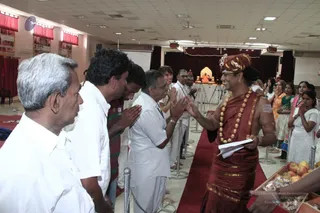
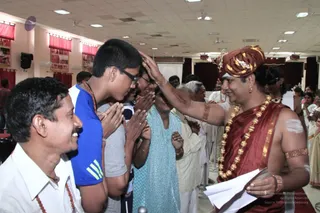
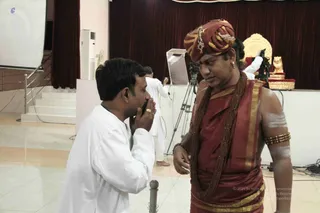
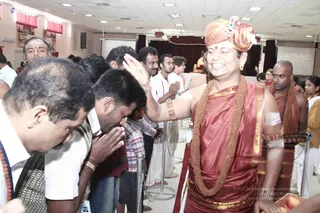
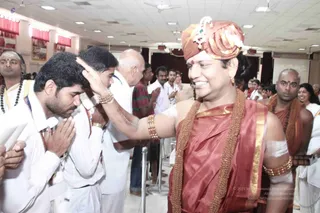
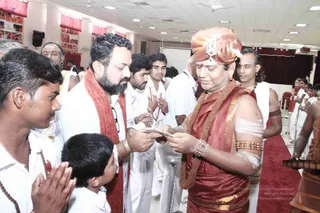
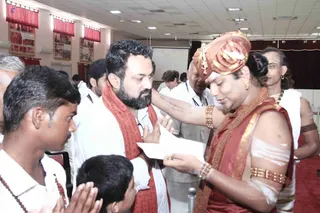
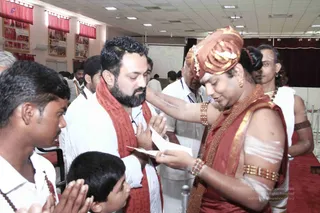
Indoor photograph in a hall with maroon curtains and a gold-framed backdrop. A man in a maroon and gold-bordered dhoti-style garment, a maroon and gold turban with a decorative brooch, and a long rudraksha mala draped over one shoulder stands at right, with white sacred markings on his upper arm and a gold armband. He is speaking with a shorter man in white kurta clothing at left, who is cupping his hand near his mouth. Behind them, a white-clothed attendant stands near a tripod and camera equipment, and a golden seated figure and a gold lion-like statue sit on a red-draped platform. A projection screen and staircase are visible at left. The turbaned figure shows probable Swamiji cues: a turban, rudraksha mala and saffron-toned ornate clothing.A photograph of an indoor ceremonial exchange in front of a dark red curtain. A central figure wearing a saffron-red turban with a jewelled ornament, a rust-red shawl, a long rudraksha mala and ceremonial gold necklaces raises a hand in greeting toward a man in white clothes with folded hands. Another man in white with a black bead necklace stands at left, and a bald man in orange robes with a rudraksha garland stands at right. A woman in a white sari with a gold border stands behind, and a cameraman with a tripod is visible in the background.A photograph in a bright hall with white ceiling lights and red curtains on the walls. A figure in a maroon-and-gold silk robe, a large orange-and-gold turban and a long beaded necklace stands at right, smiling, with one hand raised and palm pressed onto the head of a kneeling devotee in a white shirt with folded hands. Around them, several men in white shirts and white dhotis stand with palms joined, and a young boy in a checked shirt and glasses presses his hands together. Devotees in white and an orange-garlanded man with bare shoulders and a rudraksha mala stand at right. The scene suggests a blessing being given during a satsang gathering.A photograph inside a hall with a white ceiling and red curtains. A woman in a saffron-and-gold sari wrap and a matching saffron-red turban with gold trim stands at centre right, wearing a long rudraksha mala and gold bangles, smiling and raising her right hand in blessing. Devotees in white and dark shirts on the left bow with palms pressed together. Monks in saffron robes stand at right holding a tray of fruit. A bearded man in a turban stands at top left. White chairs and a stage with a screen are visible behind. Nithyananda Dhyanapeetam-style setting; the woman may be a person in person with distinctive saffron turban, rudraksha and gold cues.A photograph of an indoor hall with ceiling fans and red-curtained windows. A man in a rust-red and gold-bordered dhoti and shawl, wearing a red-orange turban with white flower decorations, a rudraksha mala and bangles, smiles while raising his hand in blessing toward a young man in white shirt and trousers who bows with palms joined. Behind them, devotees in white clothes stand near metal barricades, one bare-chested man in orange cloth with a rudraksha mala is visible at right. Probable Swamiji (probable) is the blessing figure, shown in appearance-based cues of a red turban with flowers, rudraksha mala and ornate red-gold clothing, with a devotee receiving blessing.Indoor event in a hall with white ceiling fans, red curtains and framed photos on the left wall. A man in an orange-gold turban with a jewelled ornament, wearing a dark red-maroon silk garment, a long rudraksha mala with gold-bead accents, a gold armlet and white sacred ash on his arm, receives a folded paper or card from a bearded man in a white shirt with a red-and-gold patterned shawl. Around them, several men in white shirts and dhotis stand close, some with hands folded in namaste and some with rudraksha malas. A young boy in white stands in the lower foreground, and a man with white ash on his forehead and a white dhoti stands at the far right. a person (in appearance: turban, rudraksha mala, ornate red garment) is shown receiving a paper from the devotee in the centre, with disciples attending.

Session

4 photosSource gallery
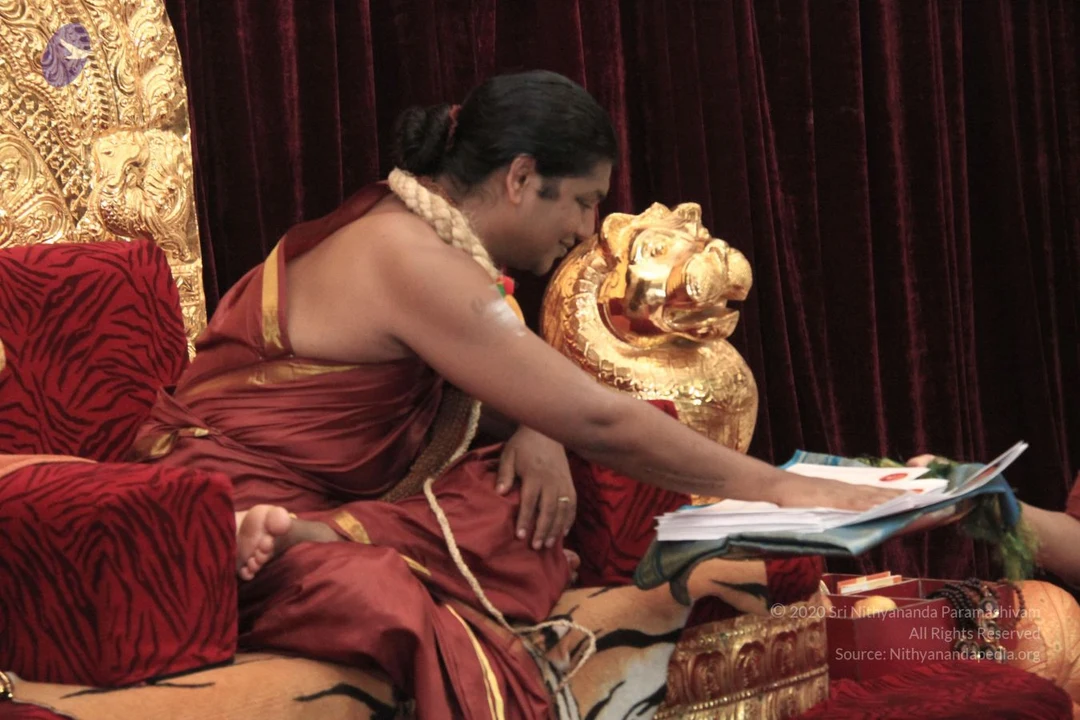
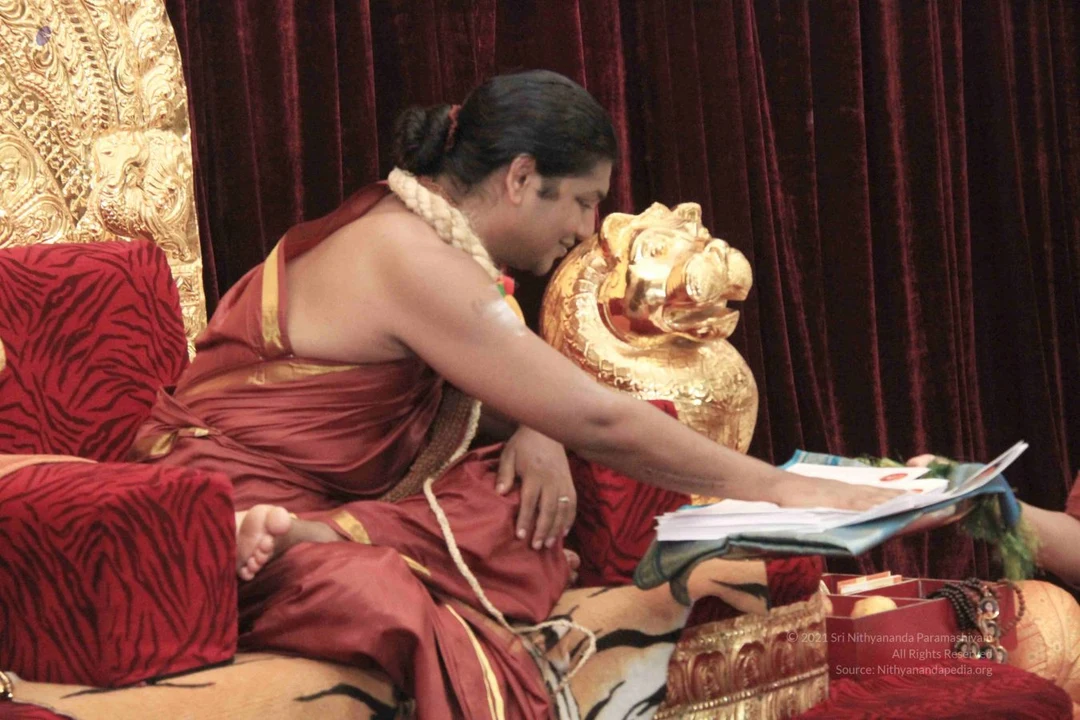
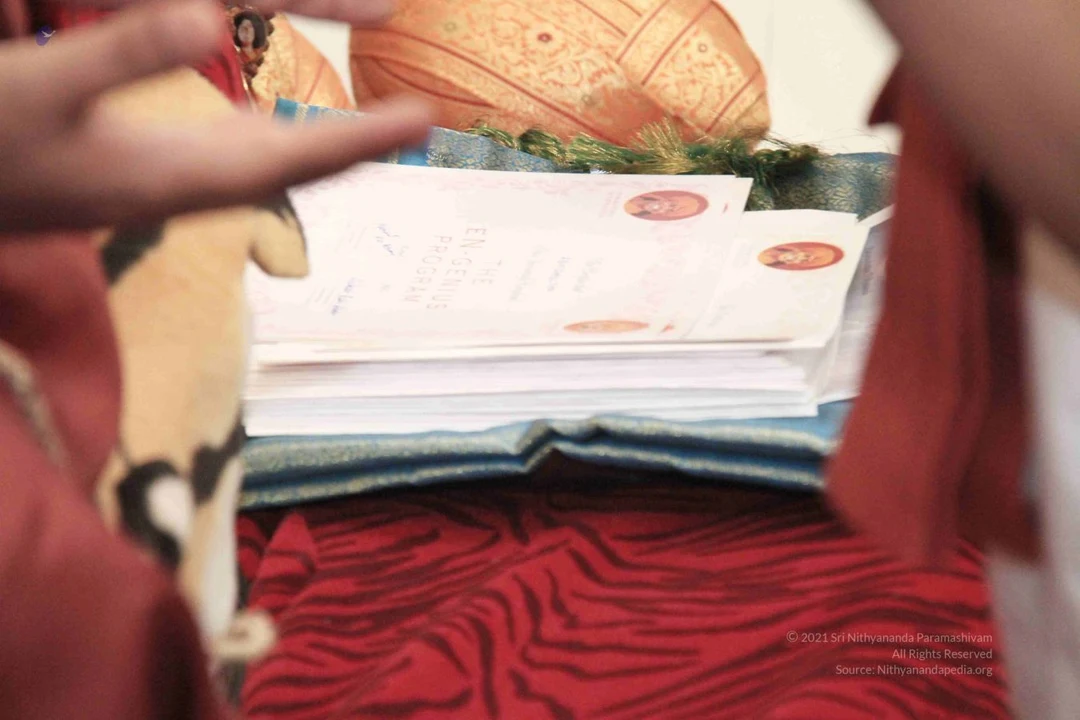
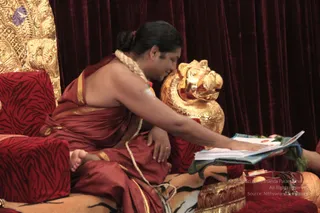
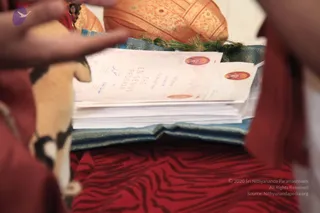
A man seated cross-legged on an ornate golden throne with a tall arched back carved with floral scrollwork, flanked by two golden lion-head pedestals. He wears a rust-red saffron-toned dhoti and upper cloth, a long brown rudraksha mala draped over his shoulders, and a red bindi on his forehead, with white ash marks on his arms. His eyes are closed in a serene smile, and his left hand rests on an orange cloth-wrapped object while a rope or cord lies across his lap. Behind him hang deep maroon velvet drapes and the throne sits on a striped tiger-print cloth. Appearance-based label: a person, seated on the throne with rudraksha mala, saffron-red robes and a bindi.A man seated on an ornate gold throne with a tall, elaborately carved gilt backrest and red velvet cushion, wearing a red-orange silk shawl over a bare upper body. He has a red bindi on his forehead, multiple rudraksha mala strands hanging to his chest, and white ash markings on his arms. He is speaking with a slight smile, hands resting in his lap. Stylized gold carvings of mythical birds flank the throne. The sole visible person is the seated speaker, identified only by appearance cues and ceremonial setting.A man with long dark hair tied back sits on a red and gold throne-like seat with a gold lion-head armrest and red tiger-striped cushions, in front of a dark red velvet curtain. He wears a rust-red and saffron draped robe, a white flower garland, and bare feet. He reaches forward to take a stack of printed papers offered from the right, and a small red box with a decorative gold base sits in the foreground. a person appears in saffron/red sannyasi clothing with a garland, seated on the throne during a satsang.A close, slightly blurred photograph of a stack of printed cards and booklets resting on a blue and gold brocade cloth in front of a red zebra-striped fabric. Partly visible in the foreground are a hand gesturing and a cow-print or spotted cloth edge. Behind the stack, an ornate saffron and gold cushion or throne fabric is visible. The top card reads THE ENGENIUS PROGRAM with a small circular portrait emblem in red. No full person is clearly visible, only fingers and a sleeve edge.

Darshan

15 photosSource gallery
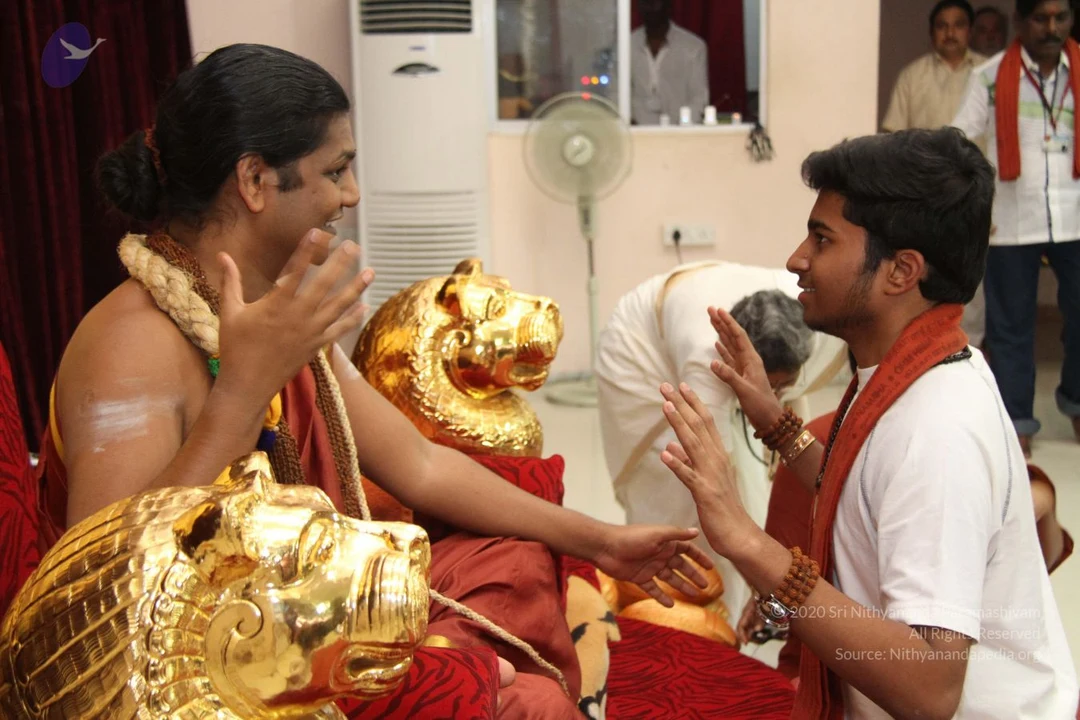
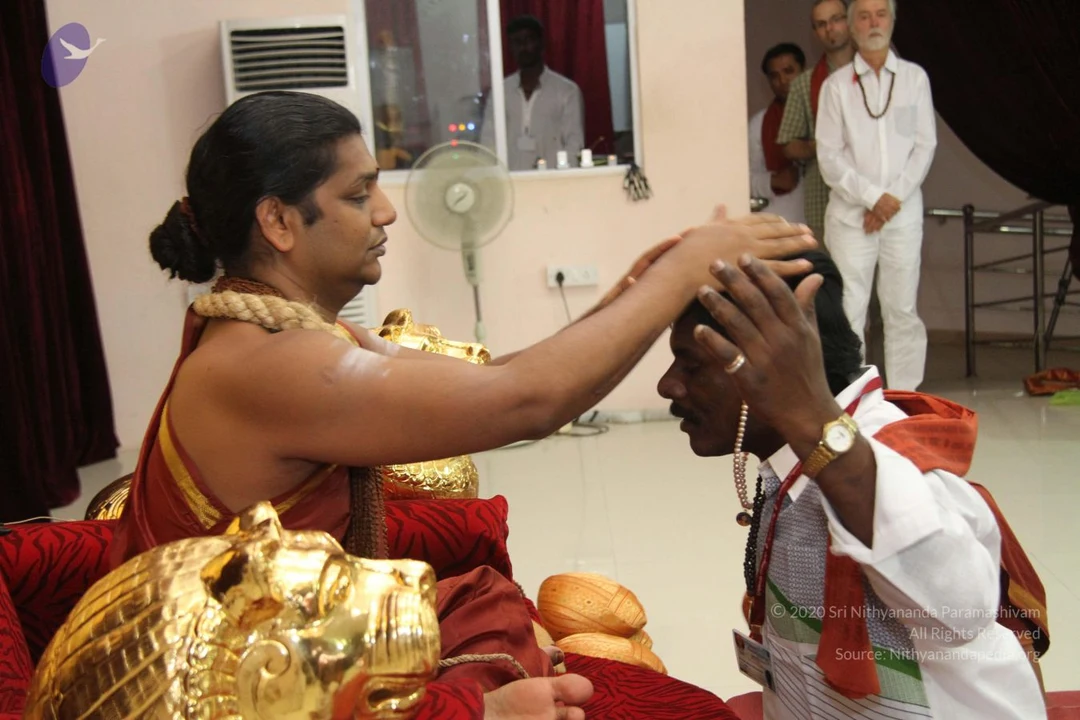
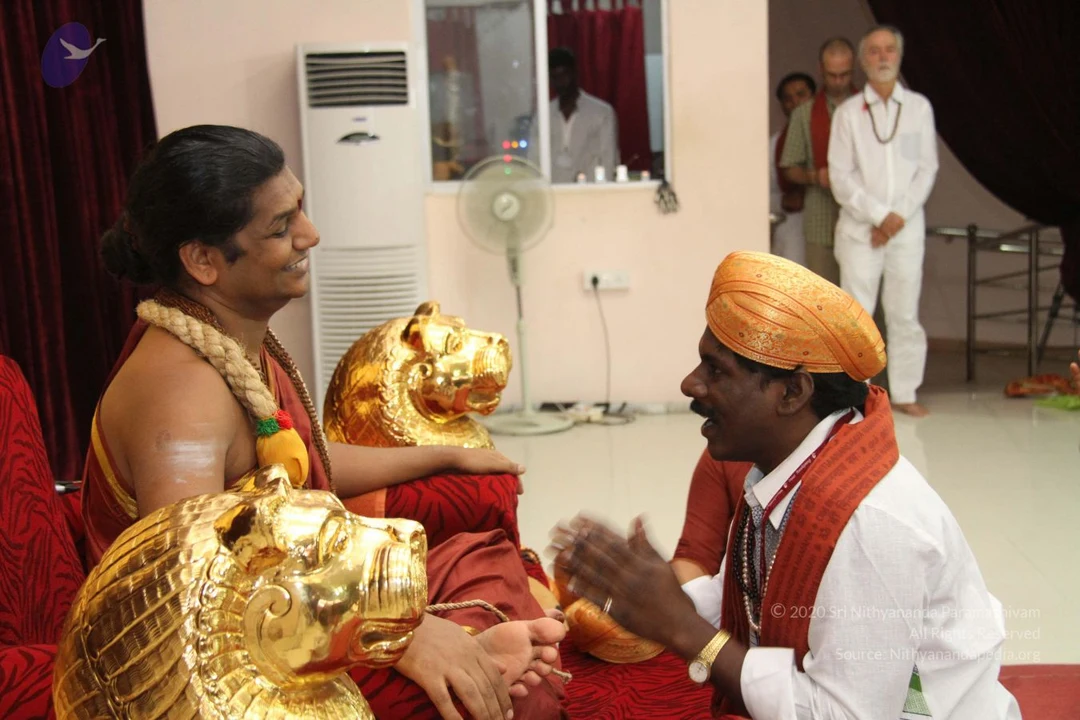
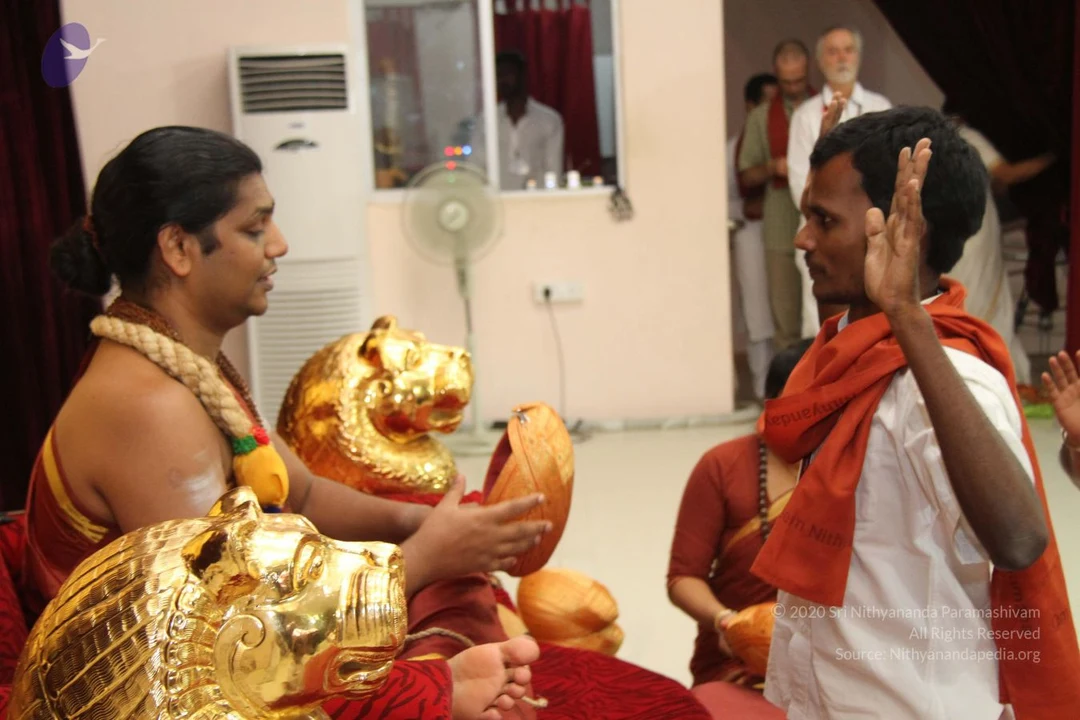
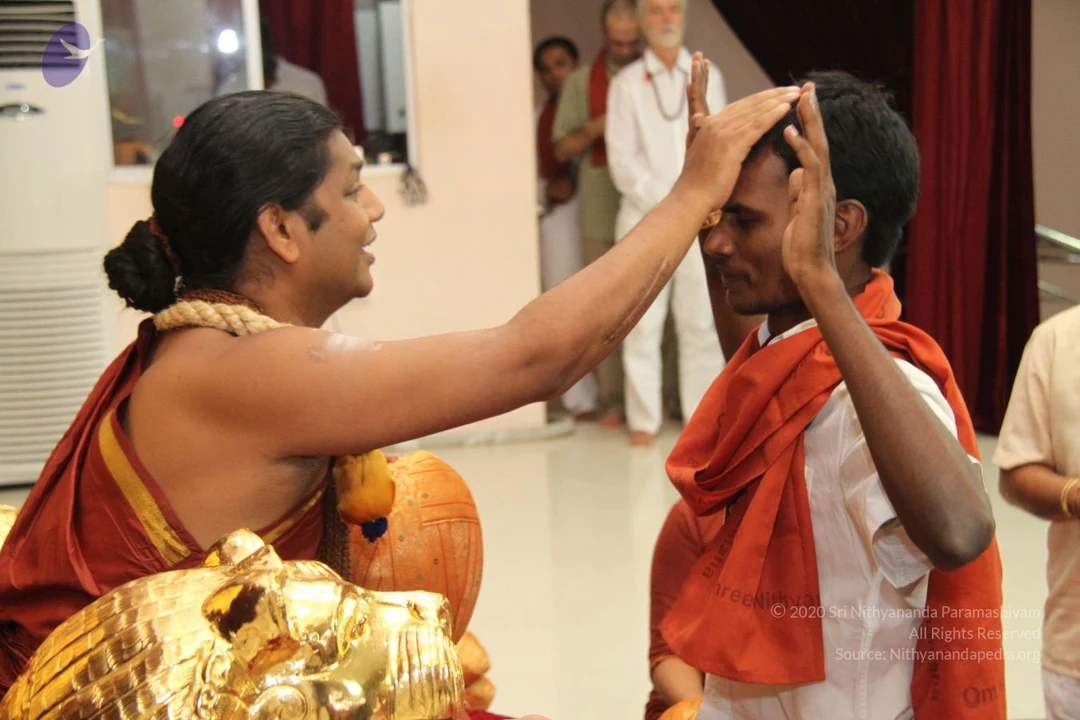
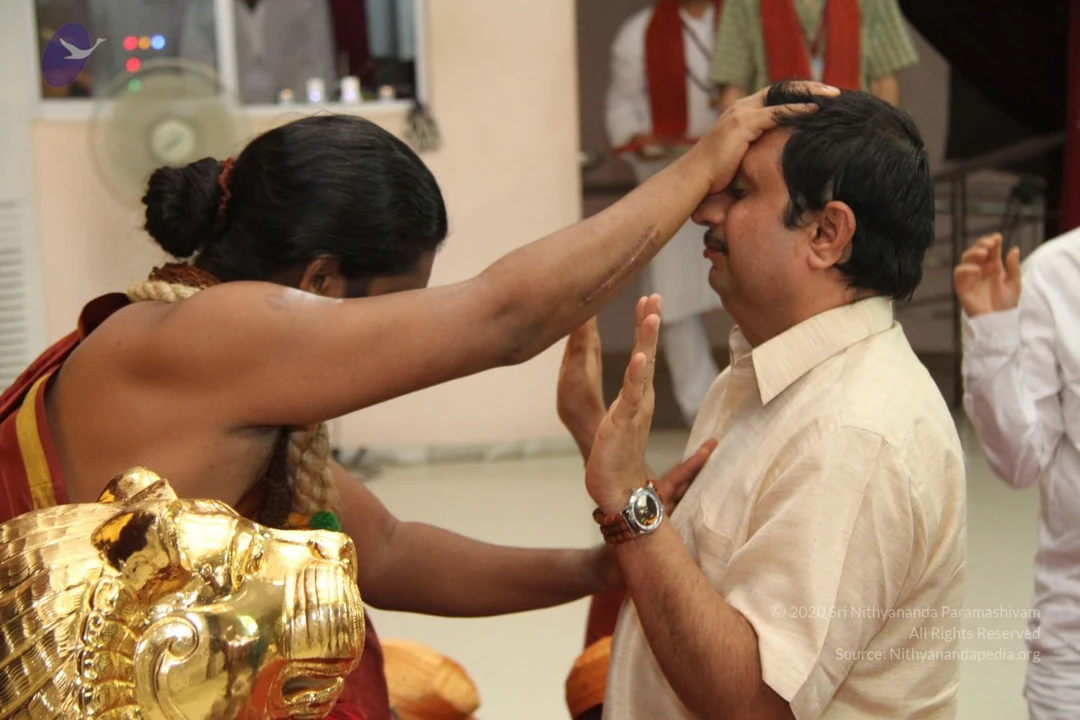
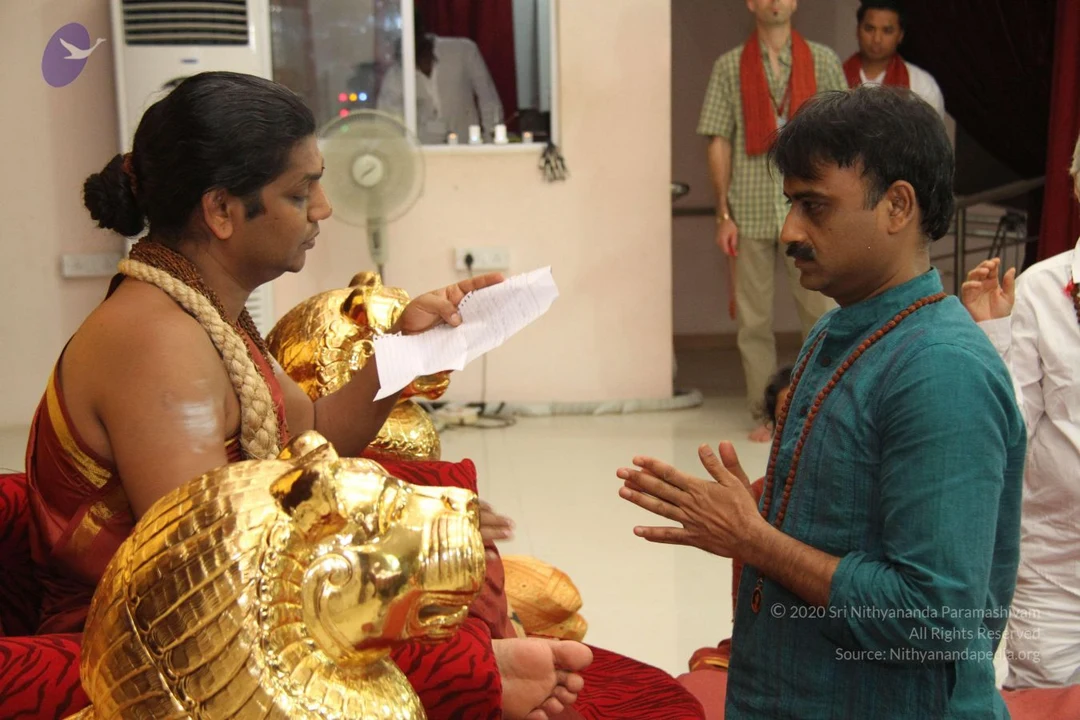
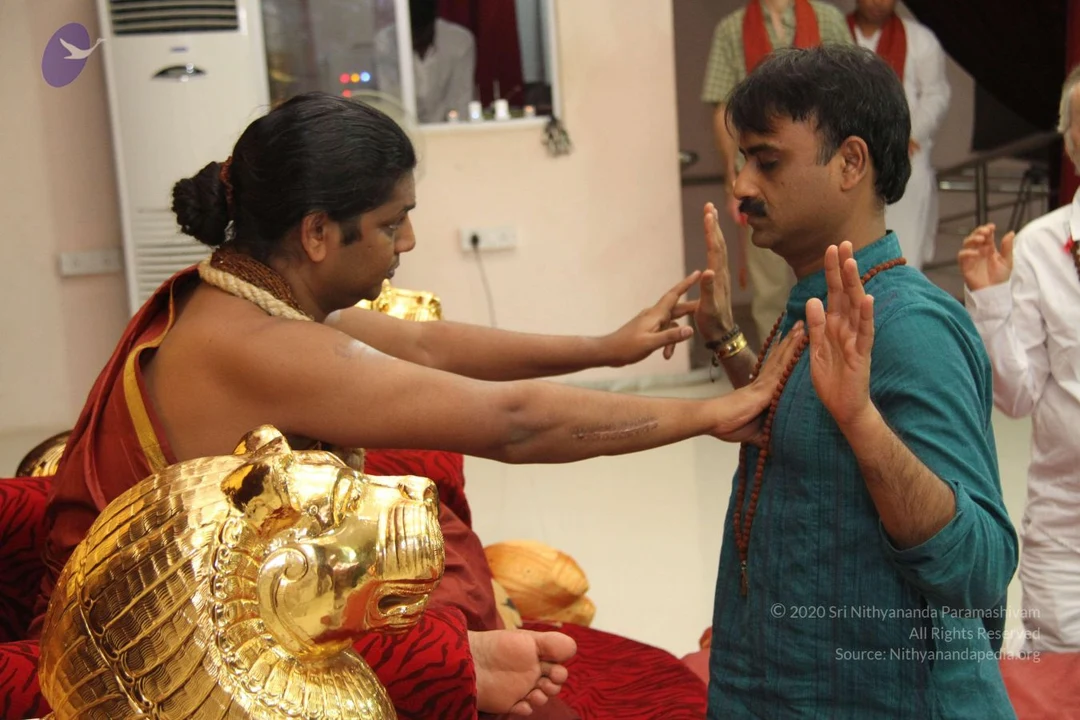
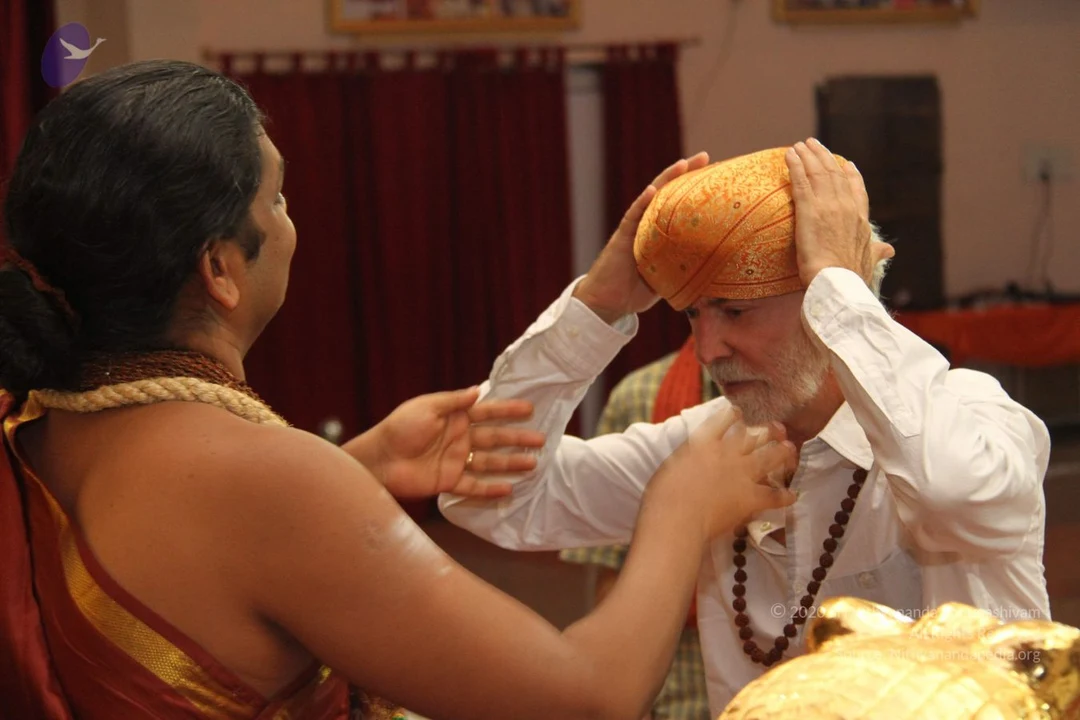
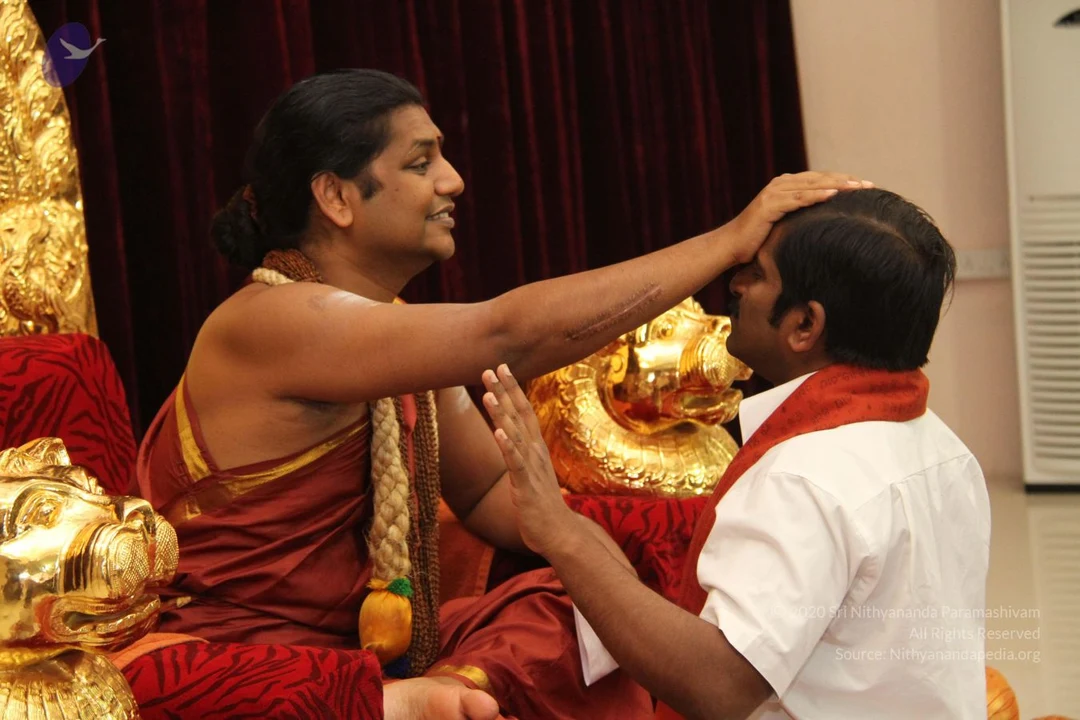
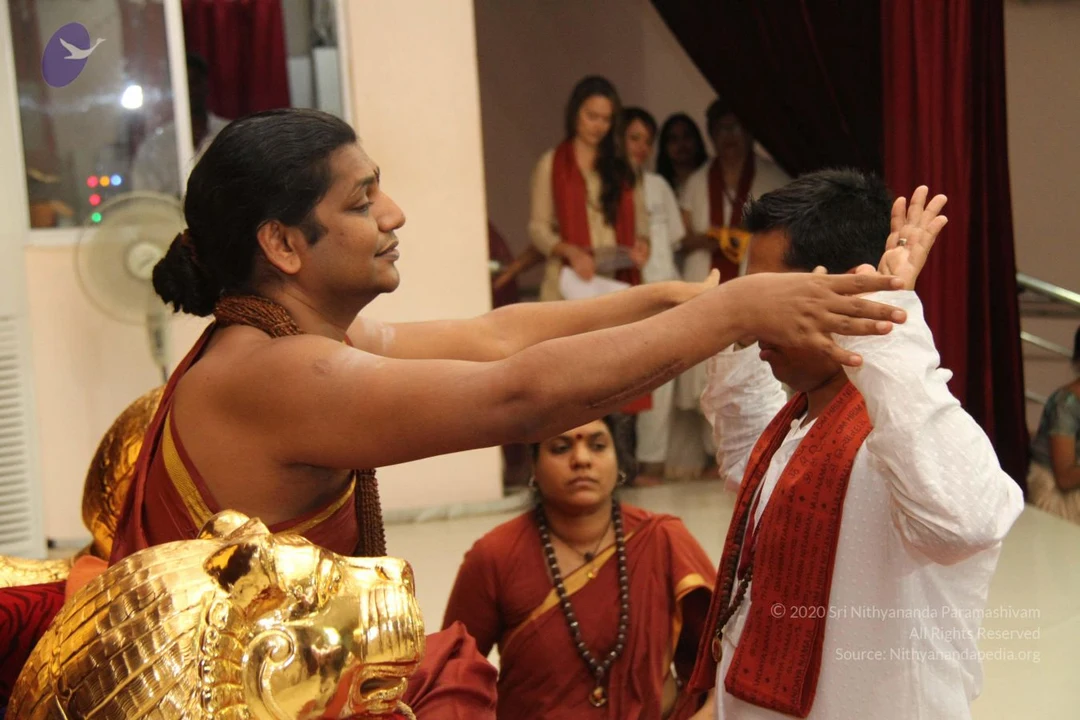
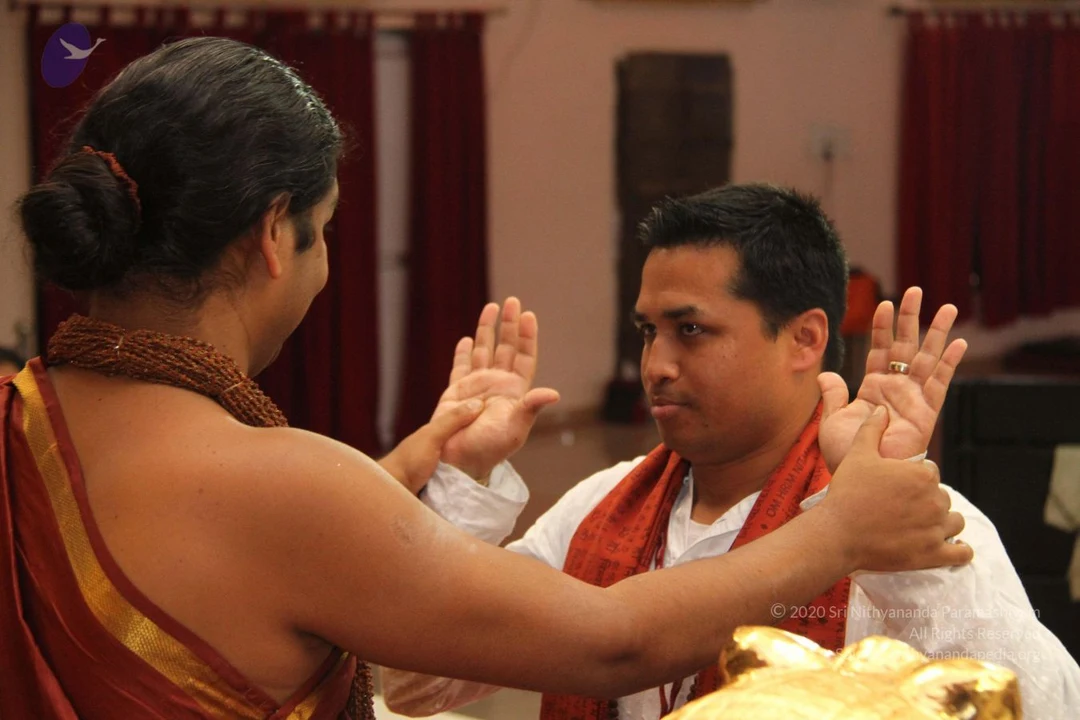
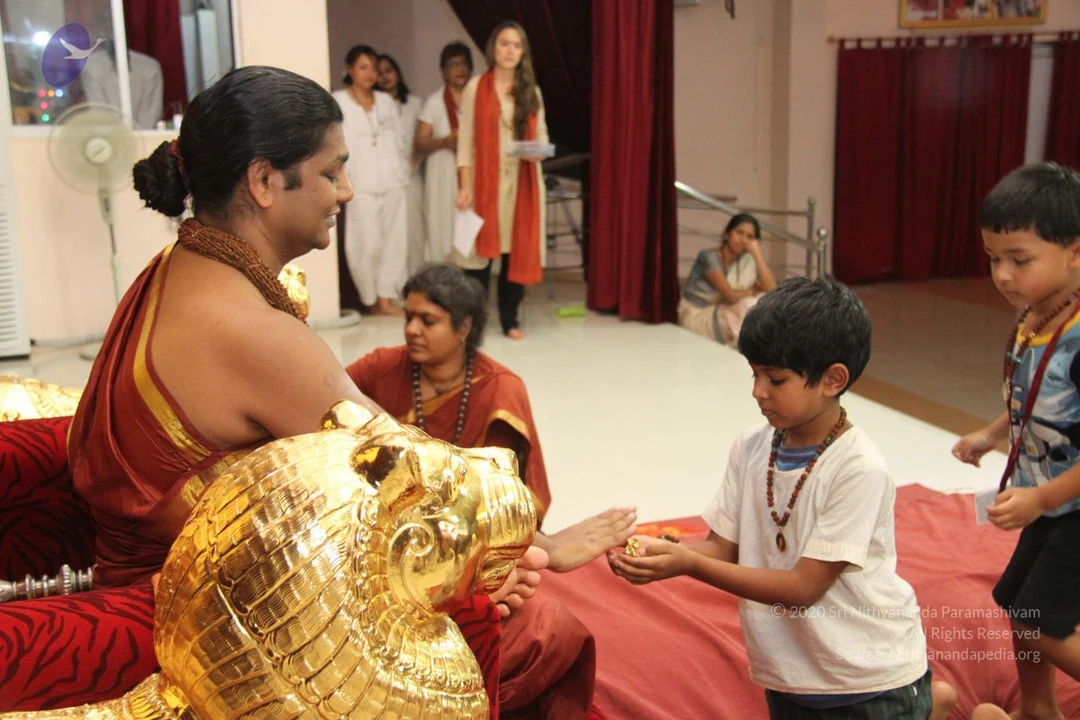
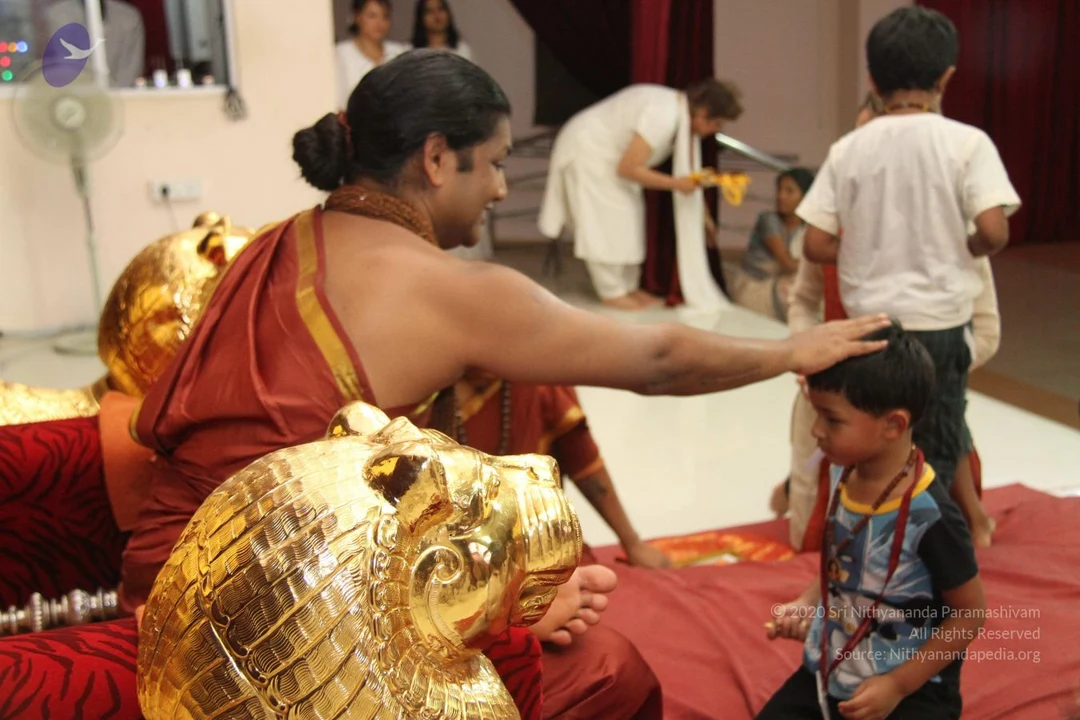
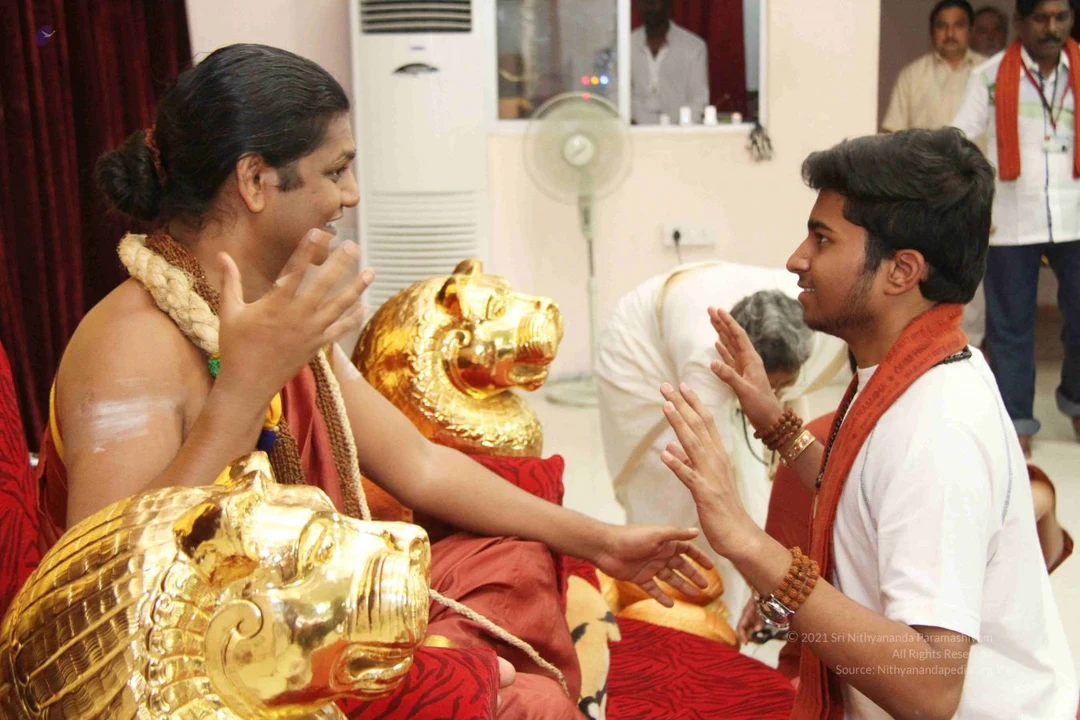
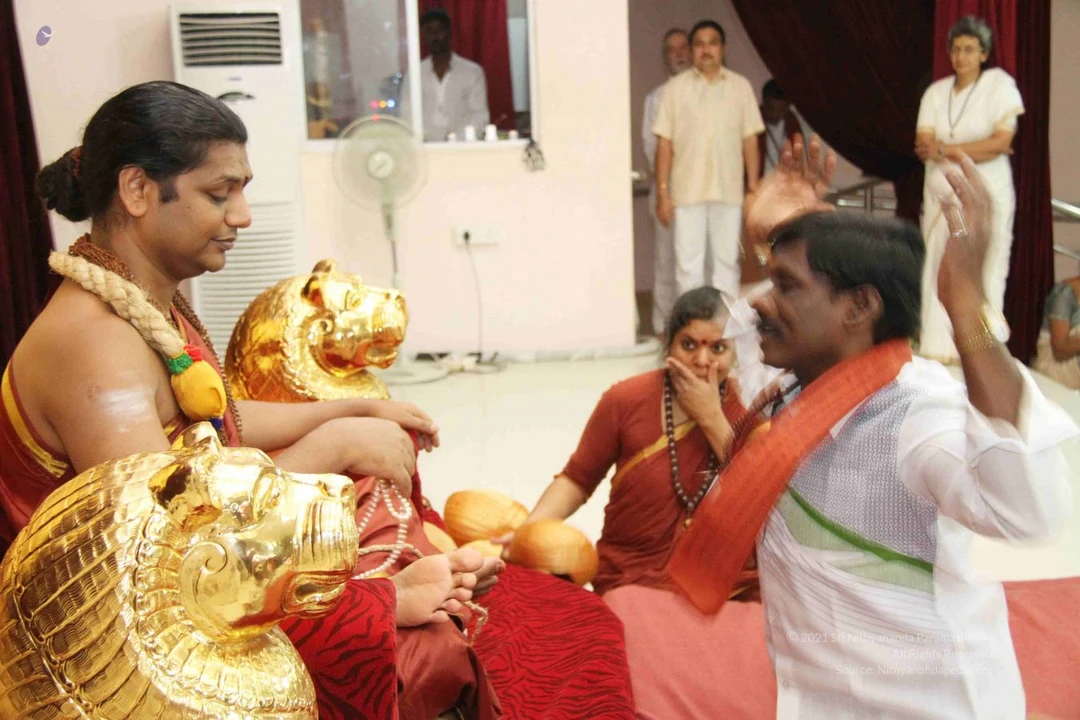
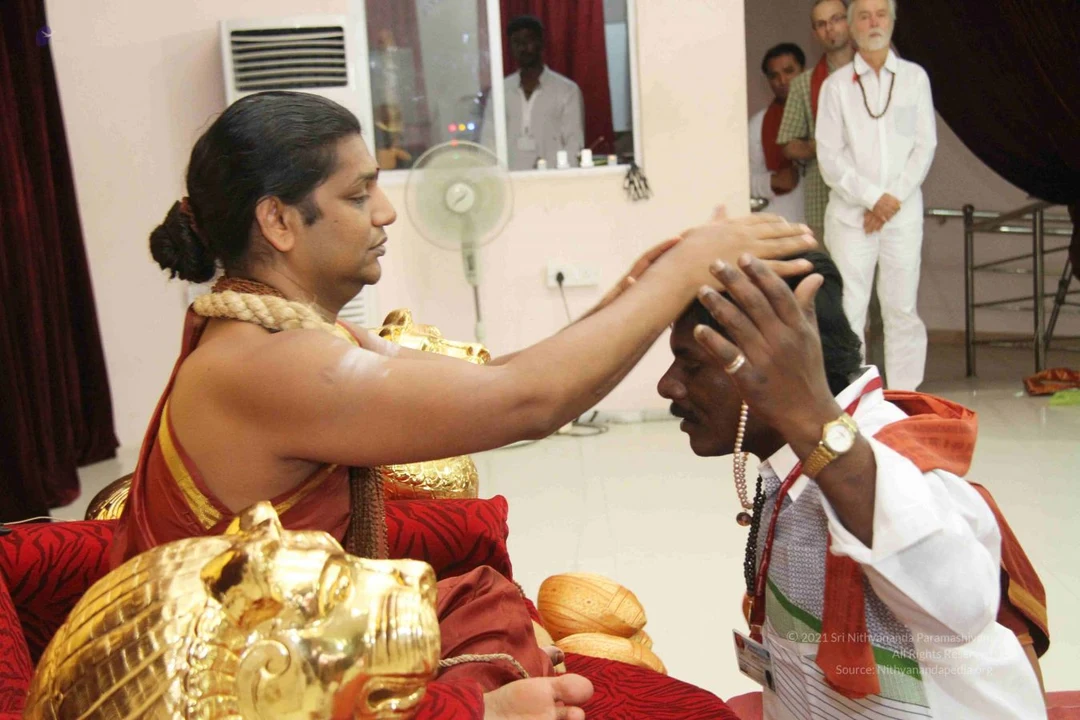
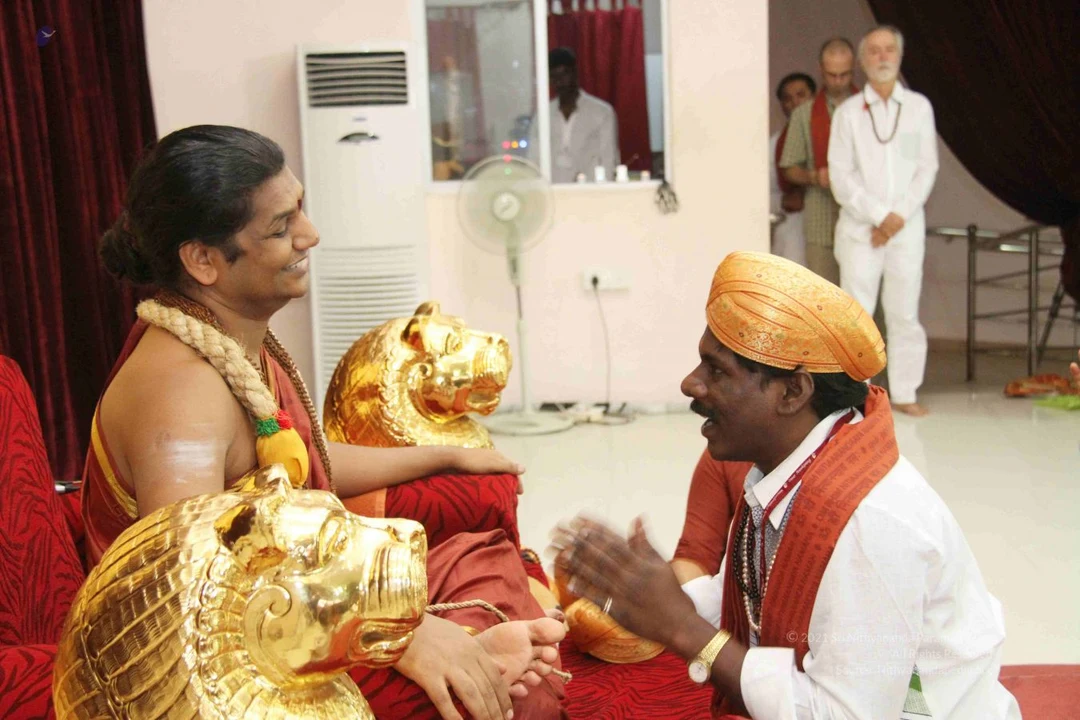
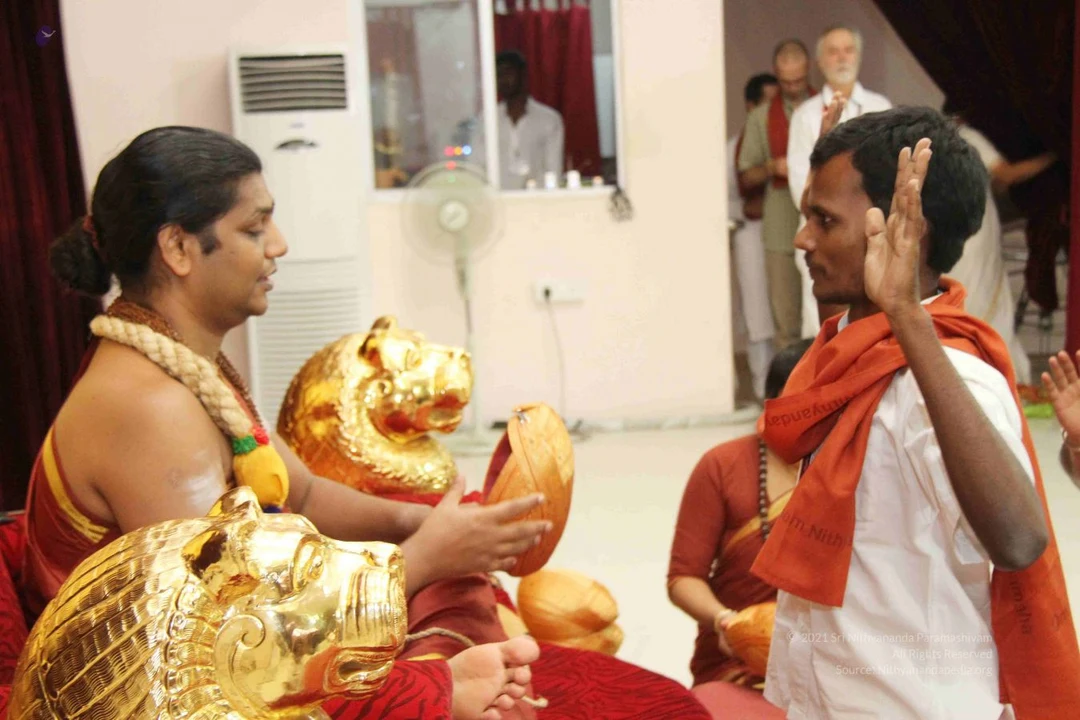
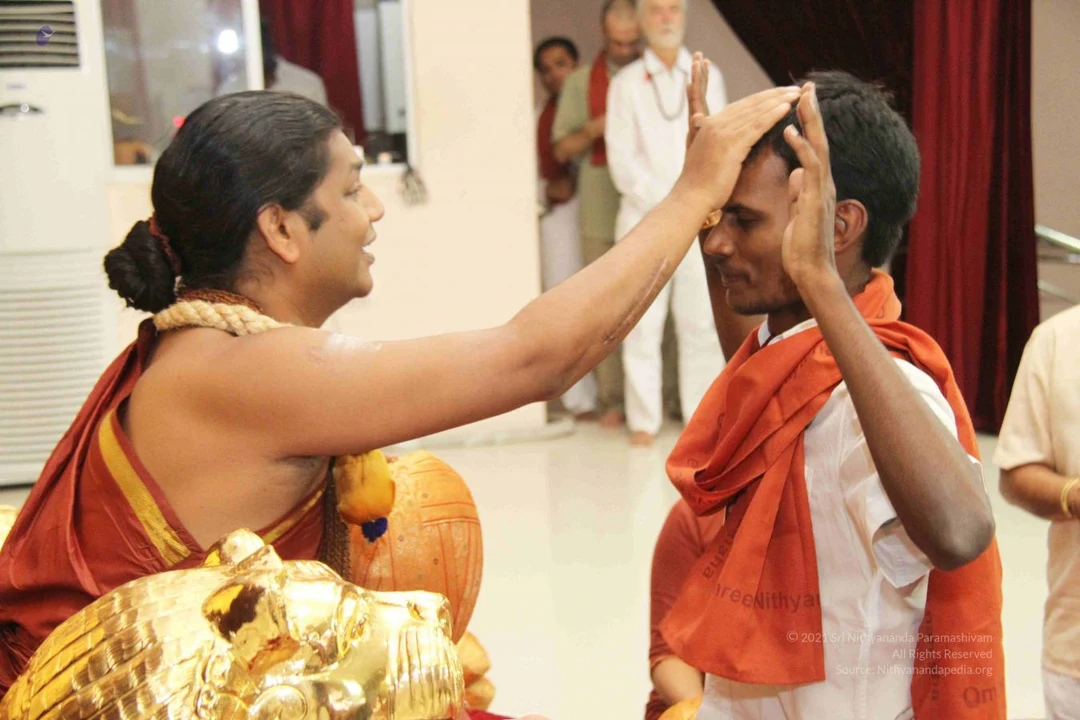
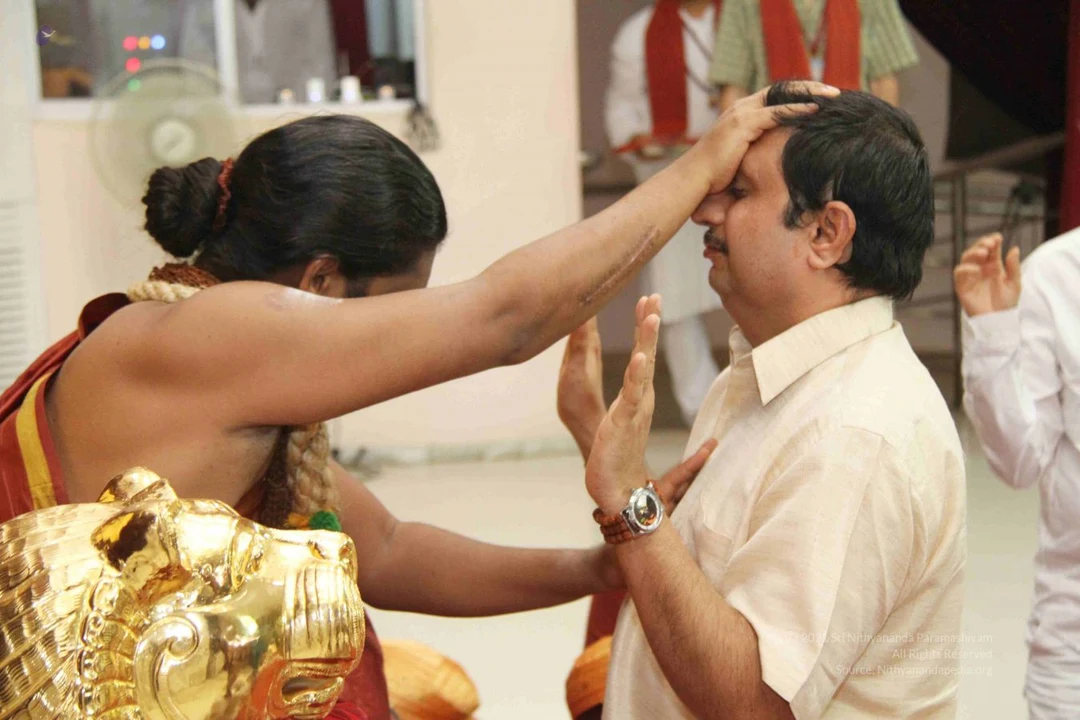
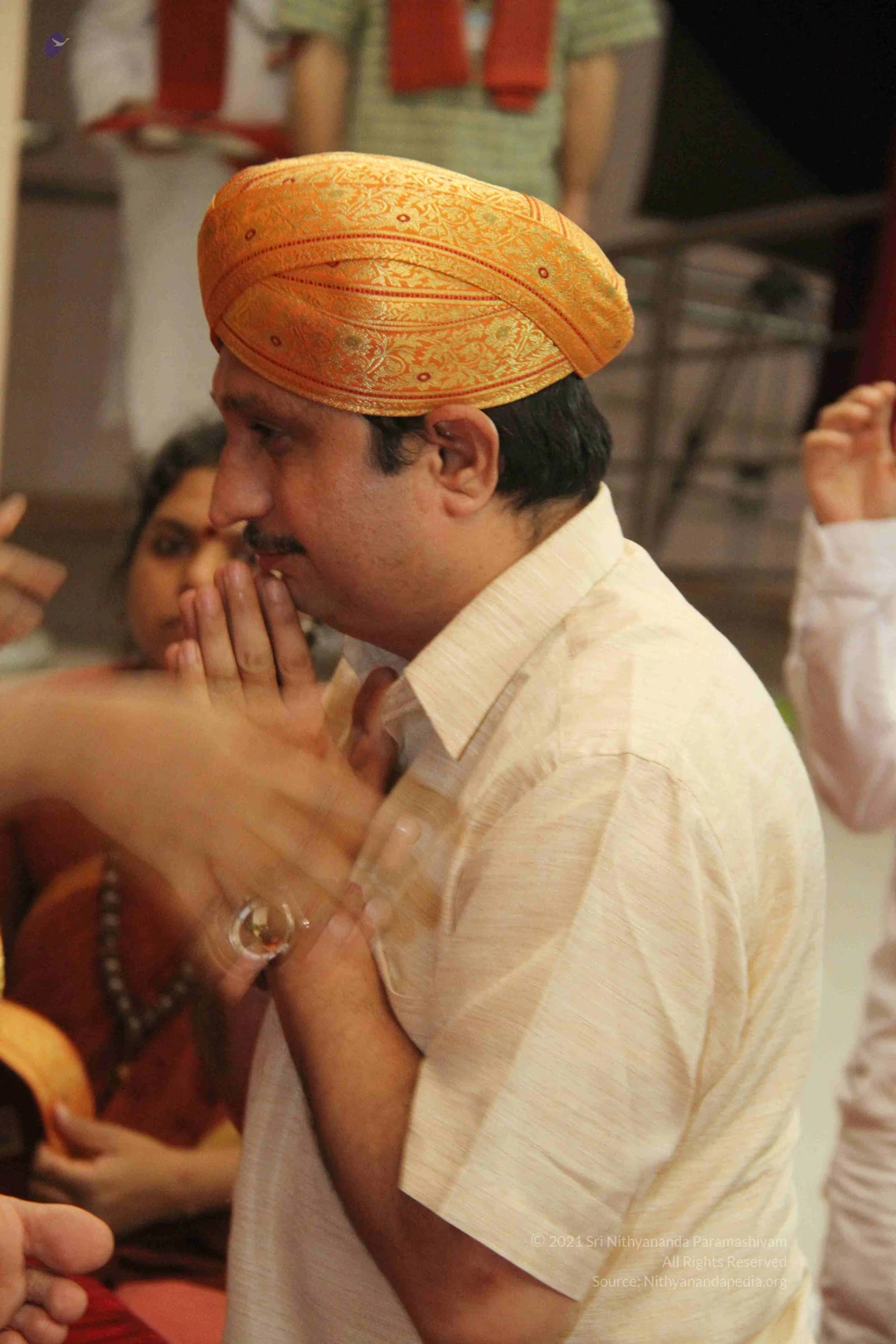
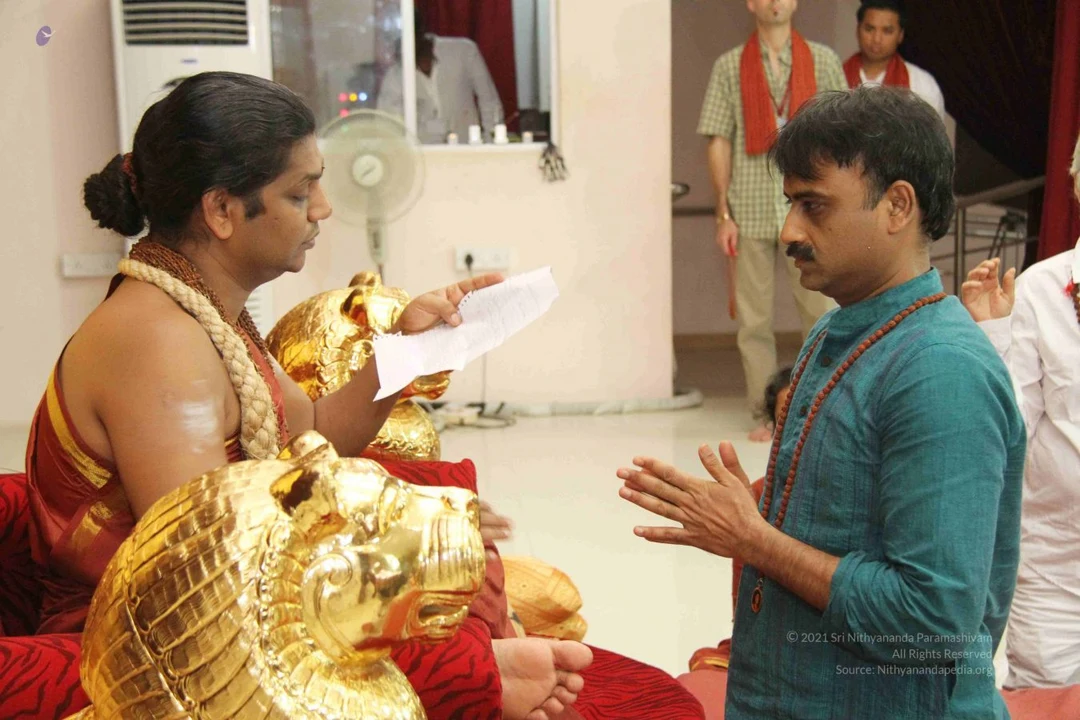
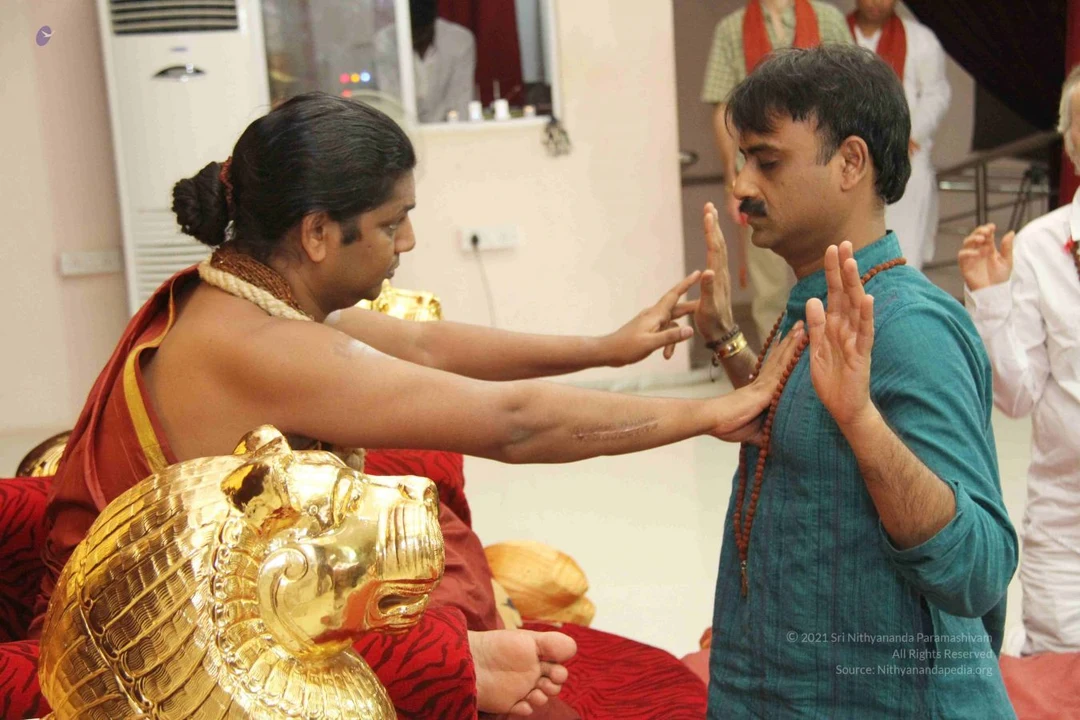
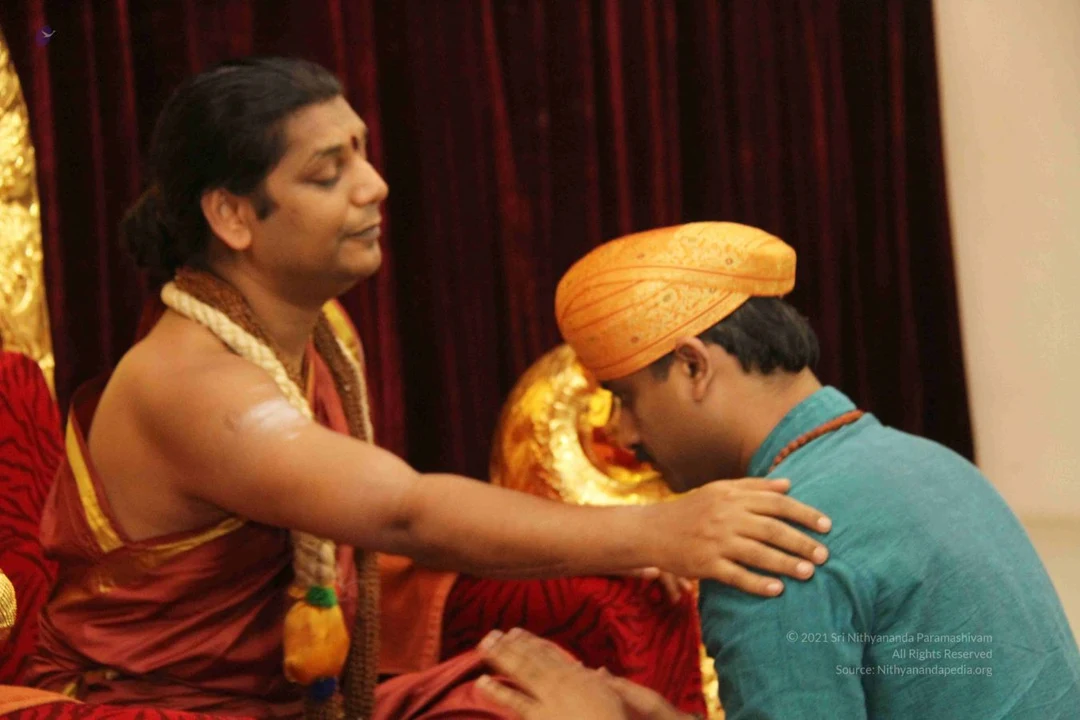
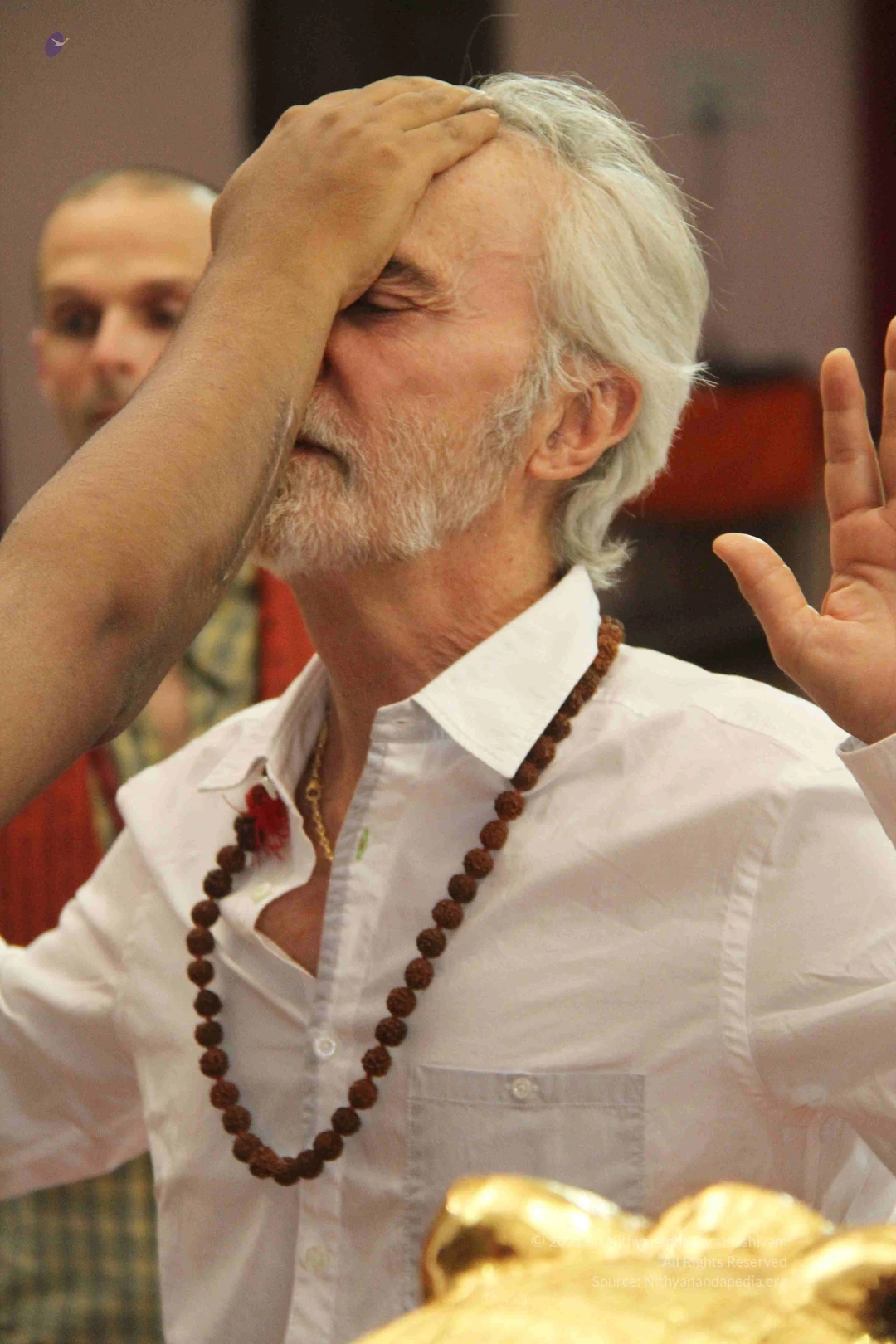
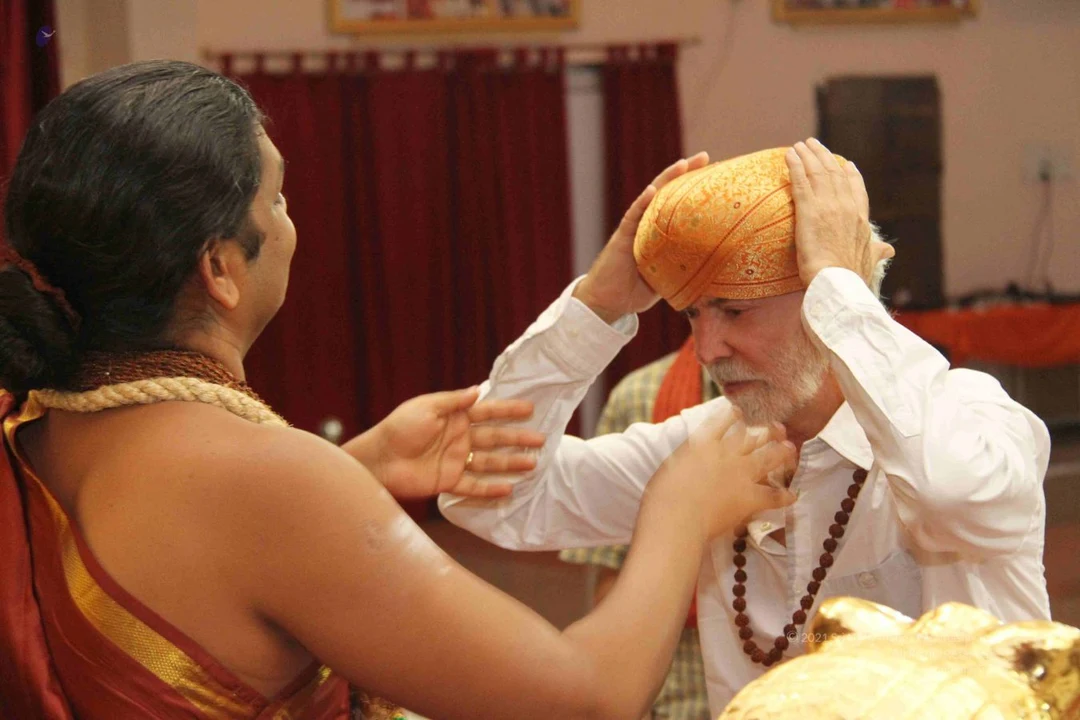
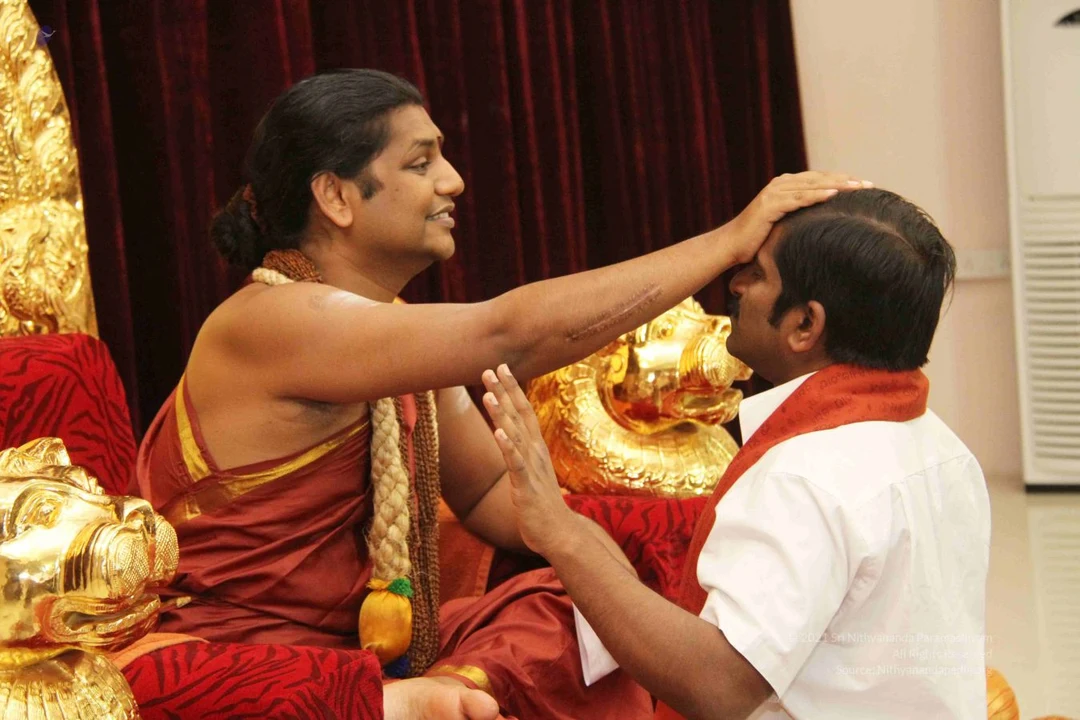
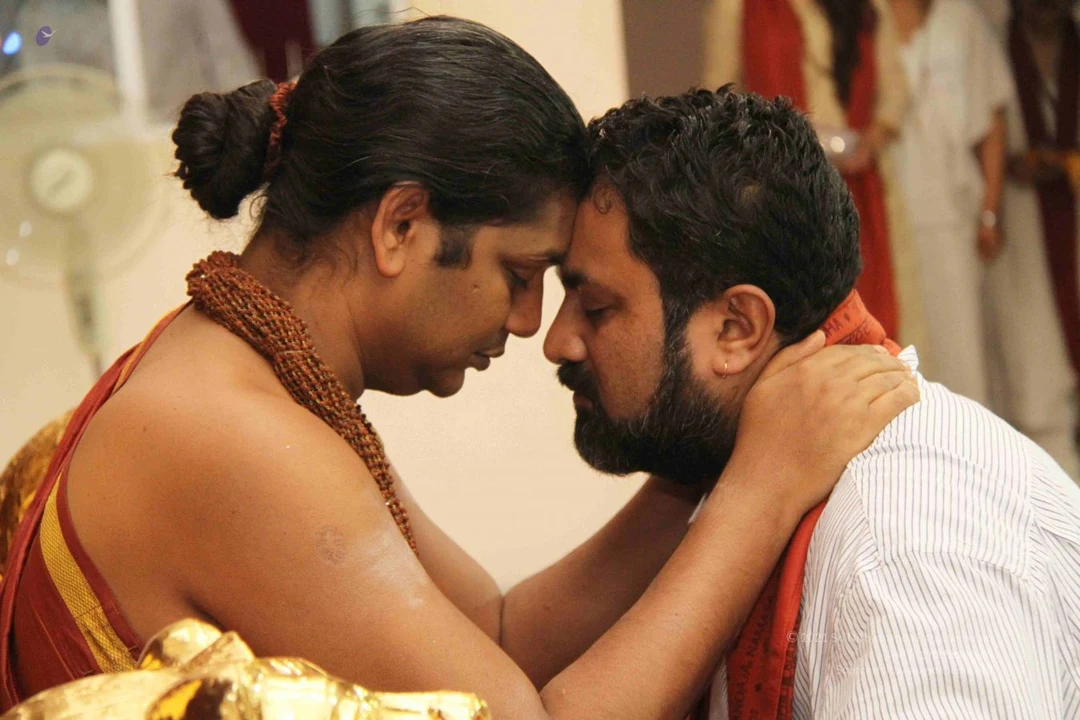
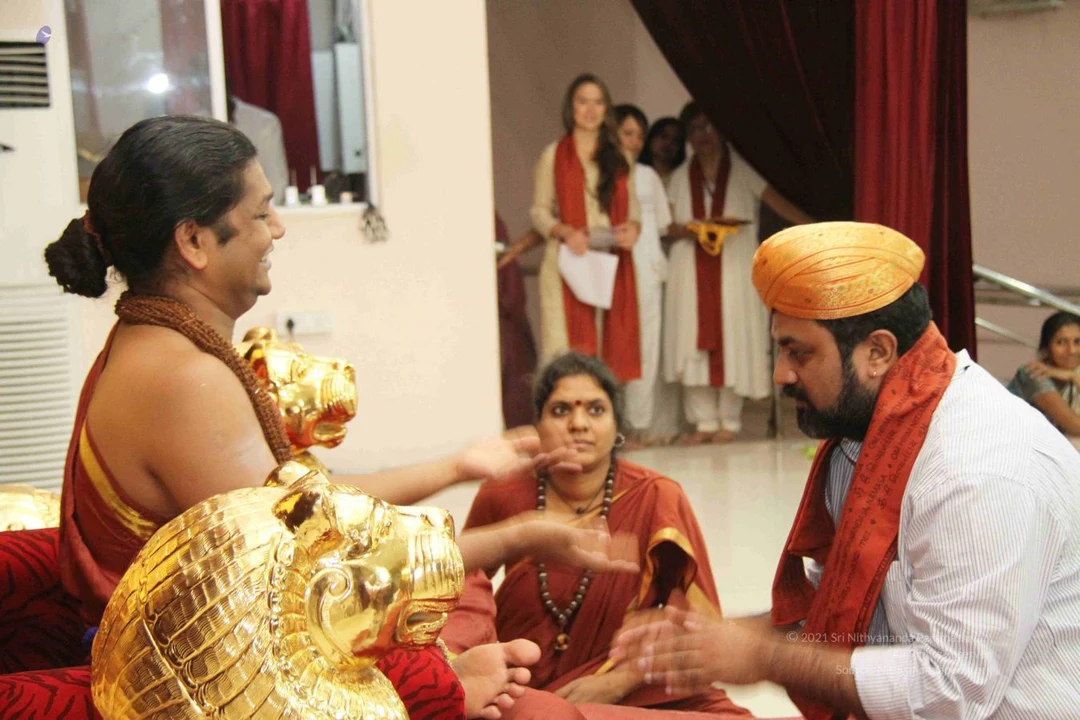
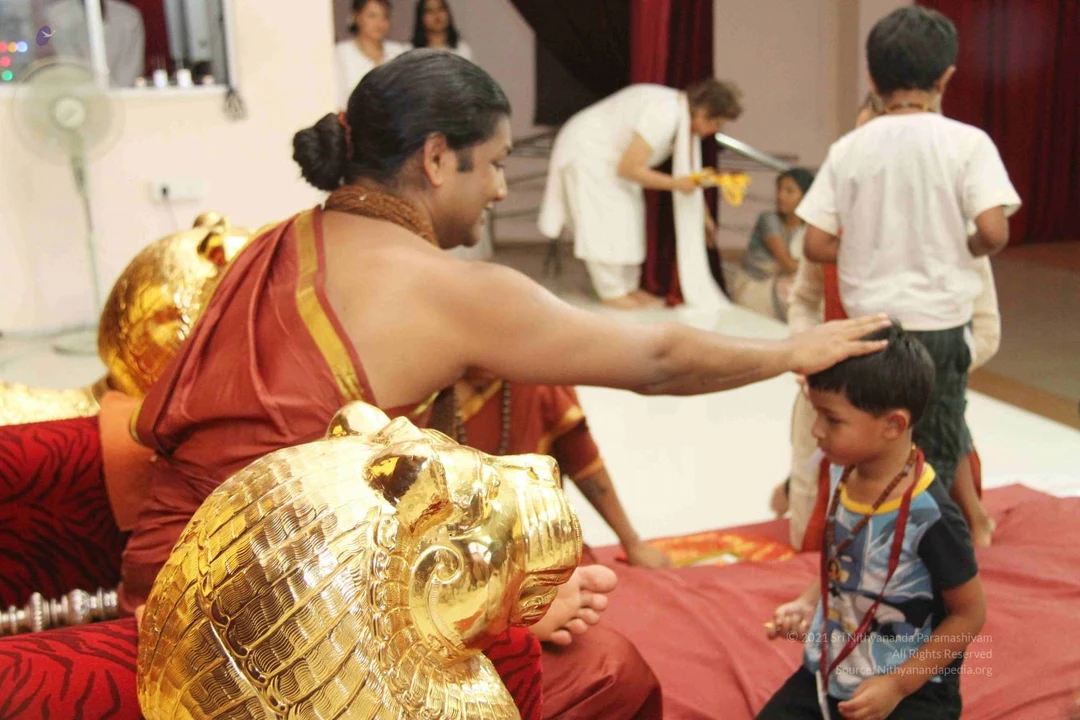
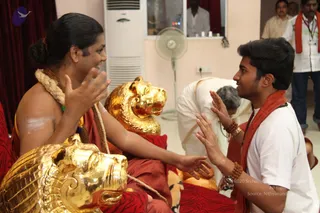
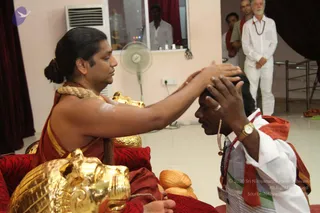
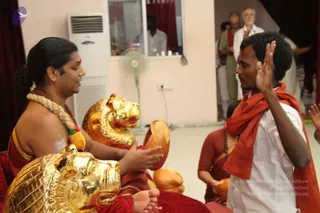
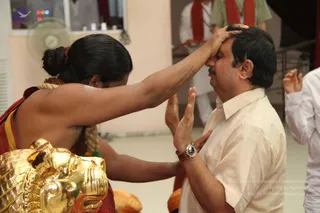
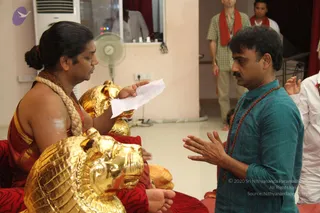
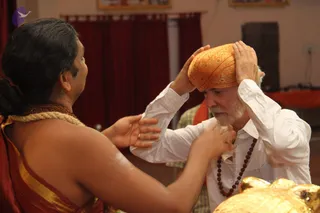
A seated figure on a red-cushioned throne flanked by golden lion-head armrests speaks with a younger man in a white shirt and orange-red shawl. The seated figure has long dark hair in a bun, a thick cream-white rope necklace, rudraksha beads, and bare-skinned upper body with white sacred ash marks on the arm, wearing a rust-red cloth. The young man wears a white shirt, rudraksha mala and bracelets, and both gesture with open hands as if in conversation. Behind them an elderly man in white dhoti bows, and a standing man in an orange shawl and white shirt watches. A white floor-standing air conditioner and fan sit in the room.A seated figure in a red and maroon sannyasi-style wrap with a thick gold-tone rope necklace and a gold lion-head armrest in the foreground places both palms on the head of a kneeling man in a white shirt with a red-orange shawl, a rudraksha-style bead mala, a wristwatch and a visitor badge. Behind them, a standing man in white and a red-stoled man watch from a doorway beside a white wall-mounted fan and a dark red curtain. Brass-coloured coconut-like offerings rest on the red cushioned seat.A photograph of a seated ritual exchange in a bright indoor hall with maroon curtains and a pale pink wall. On the left, a bare-chested man with hair tied back wears a thick white garland with green and red beads, a rudraksha mala, and a red-and-gold cloth wrapped at his waist; he holds a small orange-brown cup-shaped object and gestures toward a man on the right. That man wears a white shirt and an orange-red shawl and raises his palm in blessing. Two gold-coloured lion-head ornaments sit in front of them. Behind, a few people in white and saffron-coloured clothing stand near a window, and a standing fan and an air conditioner are visible.A woman with hair in a bun and a braid, wearing a red-and-gold garment, places her right palm on the forehead of a man in a cream short-sleeved shirt with a wristwatch and a red thread bracelet, while his other hand is raised in a blessing gesture. A golden lion-faced figure is in the foreground. Blurred figures in white and red stand behind, and a window with a fan is at the top left.A seated man with long dark hair in a bun wears a red-orange garment, a white flower garland and rudraksha beads, holding a sheet of paper while speaking. Beside him are gold lion-head armrests on a red cushioned seat. Facing him, a man in a teal kurta with rudraksha mala gestures with both hands in conversation. Two more men stand in the background, one in a red scarf. The room has a wall fan and an air conditioner.A photograph of a ritual turban being placed. A bearded man with white hair wears a white long-sleeved shirt and a rudraksha mala, and bows his head while another person's hands set an orange and gold brocade turban on his head. The person helping wears a red garment with gold border and a rope-like cord around the neck, and holds his shoulder with the other hand. Red curtains and framed pictures hang behind them, and a gold-wrapped object is visible at the lower right.

Group-Photos

3 photosSource gallery
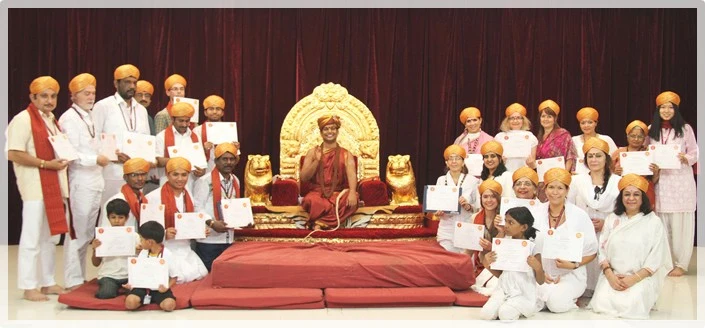
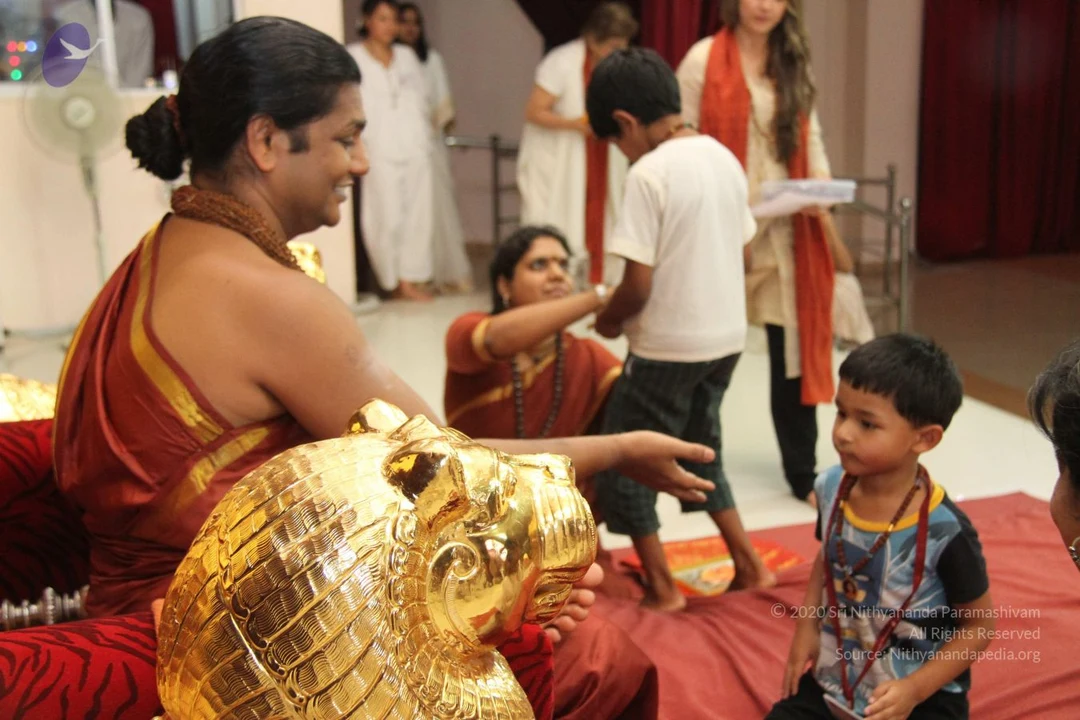
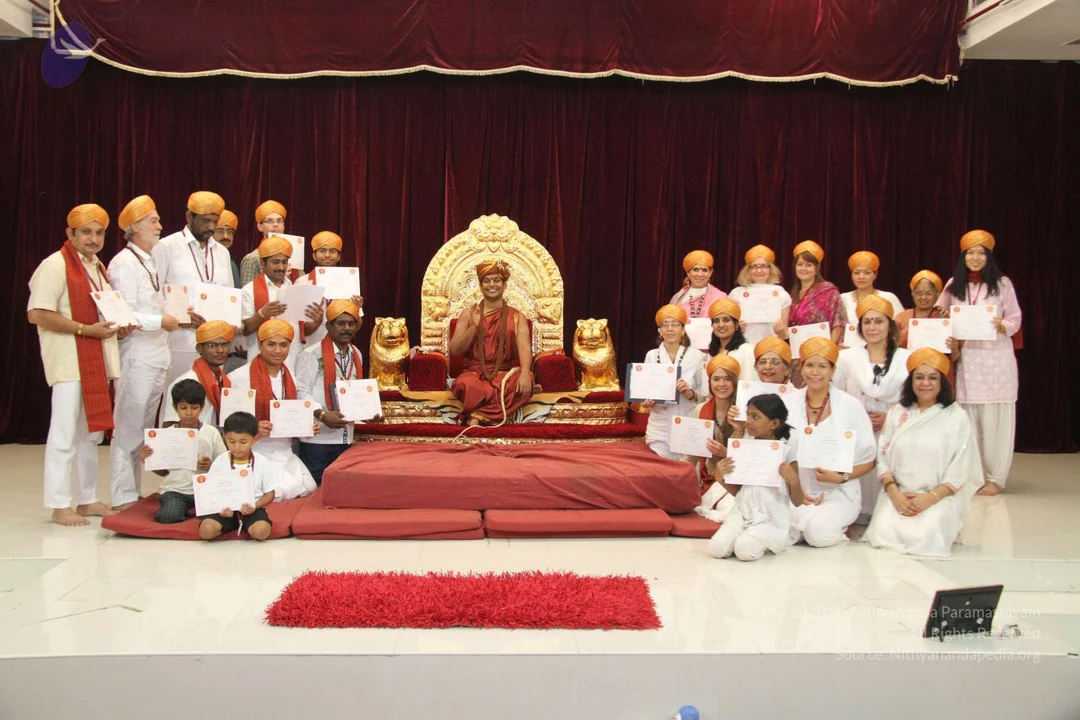
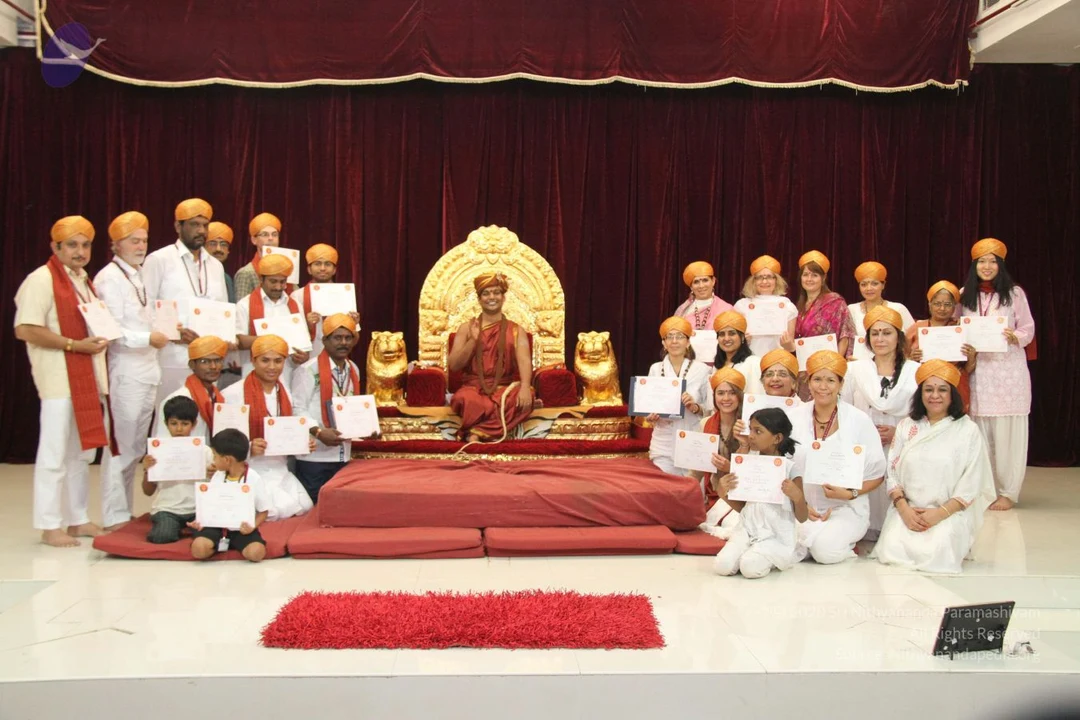
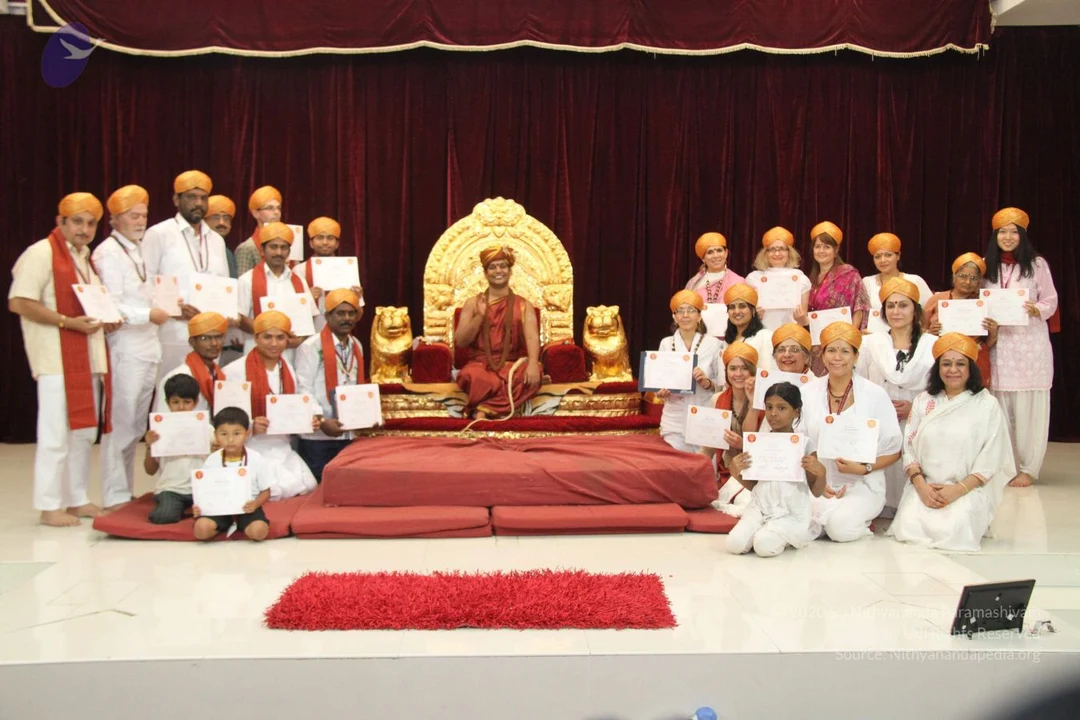
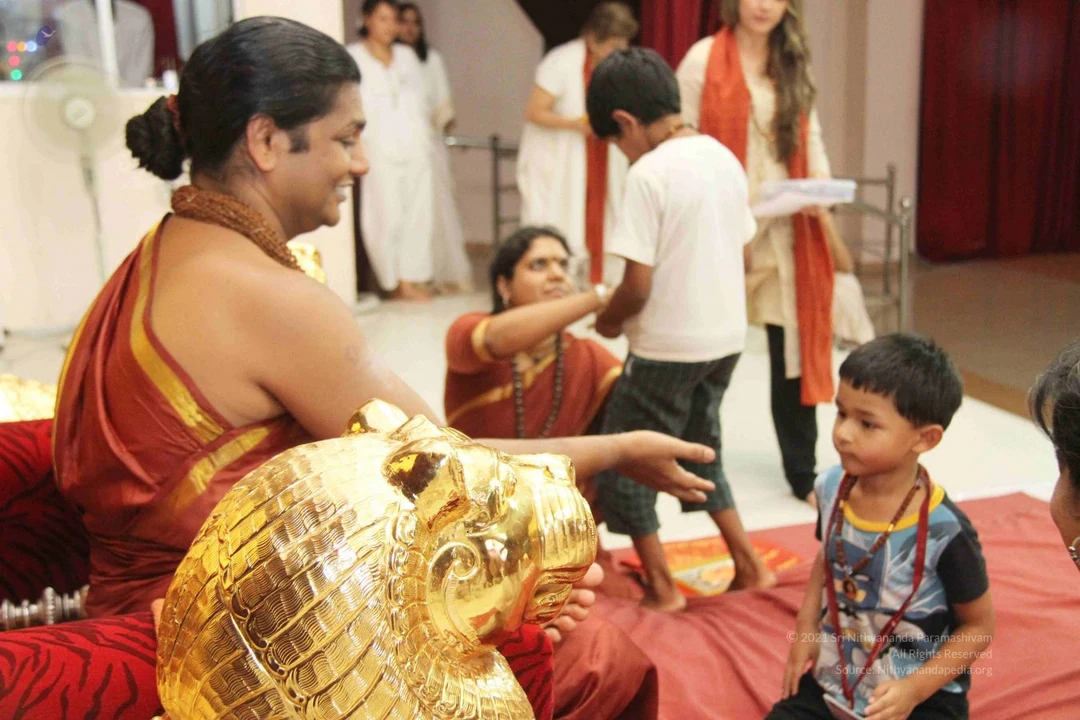
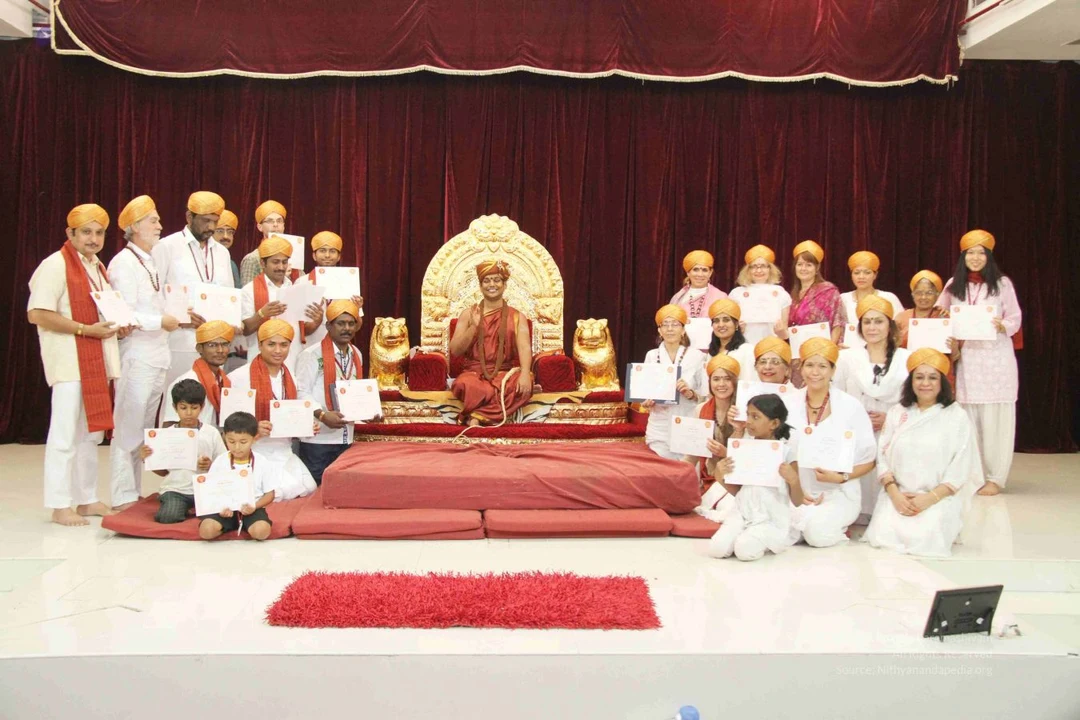
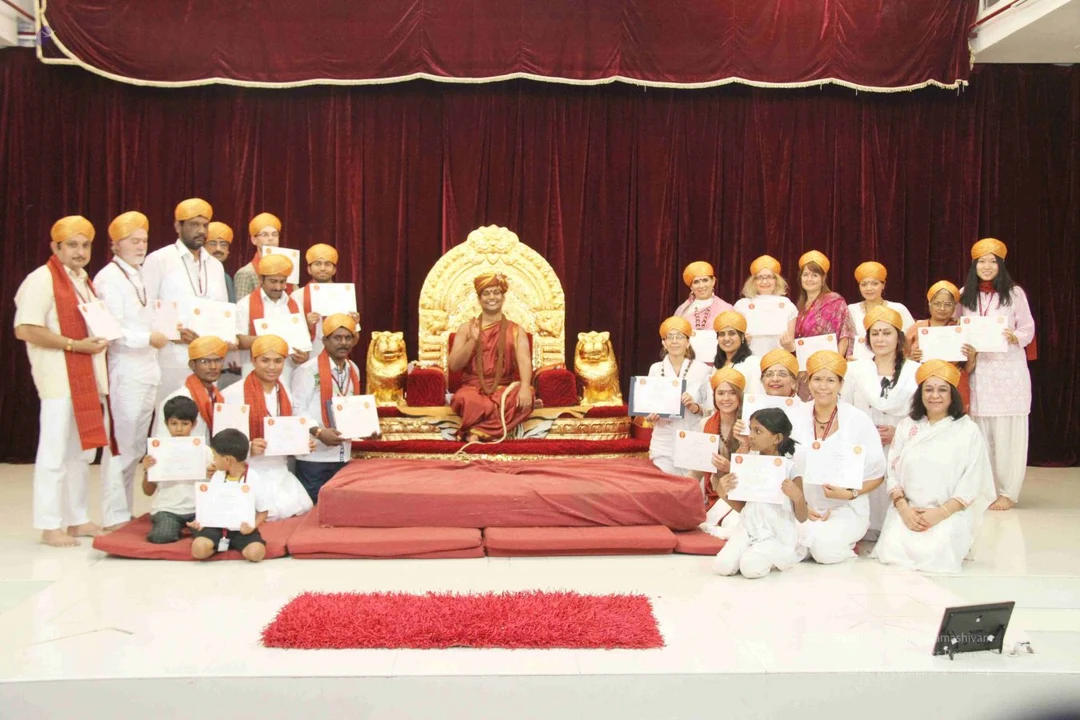
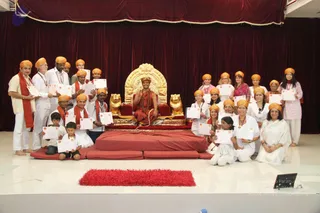
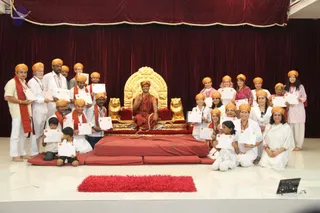
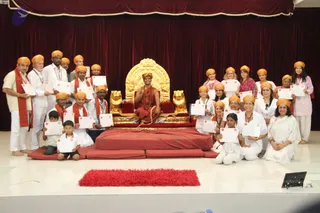
A group photograph on a stage with red velvet drapes. A seated figure in the centre sits on an ornate gold throne flanked by two gold lion sculptures, wearing a saffron-orange robe and a saffron head wrap, with a rudraksha-style necklace visible. Around him, about two dozen people in orange head wraps and white or pastel clothing hold white certificates, some kneeling in front and others standing at the sides and back. A low red-cushioned platform sits before the throne, and a red woven mat lies at the front of the stage. The setting suggests a certificate ceremony at an ashram event.Group photograph on a stage with a deep red velvet curtain. A man in saffron-orange robes and a red-orange shawl sits centrally on an ornate gold throne flanked by golden lion figures, on a red cushioned dais. Around him stand and kneel about two dozen people, most wearing orange turbans and white or cream ceremonial clothing, many holding white certificates up toward the camera. Several children sit or kneel at the front, one holding a certificate. A bright red woven mat lies on the white floor in front. Count of physical people is approximately 25, within the 21-100 range.A group photograph on a stage with a deep red velvet curtain backdrop. A man in the centre wears an orange turban and orange-red robes and sits on an ornate gold throne with carved lion-head armrests, set on red cushions and a red-draped platform. Around him, about two dozen participants stand and kneel in orange turbans and white or red shawls, many holding framed certificates. Some are in white kurtas, others in pink and white saris and salwar kameez. A small red mat lies on the stage floor in front of the platform. The person on the throne has long hair, a crown-like orange turban and distinctive adornments, matching the page's reference to a person, but the appearance cues are not sufficient for a firm identification.

Prasadam

6 photosSource gallery
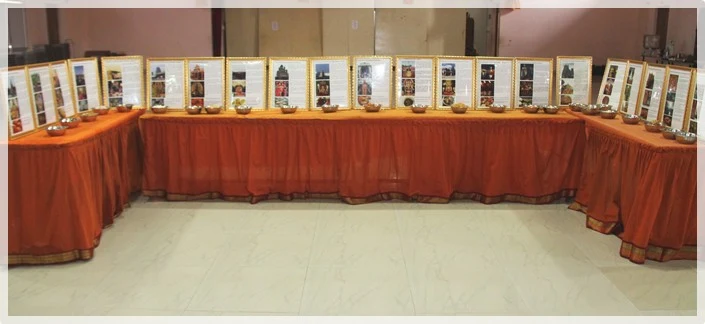
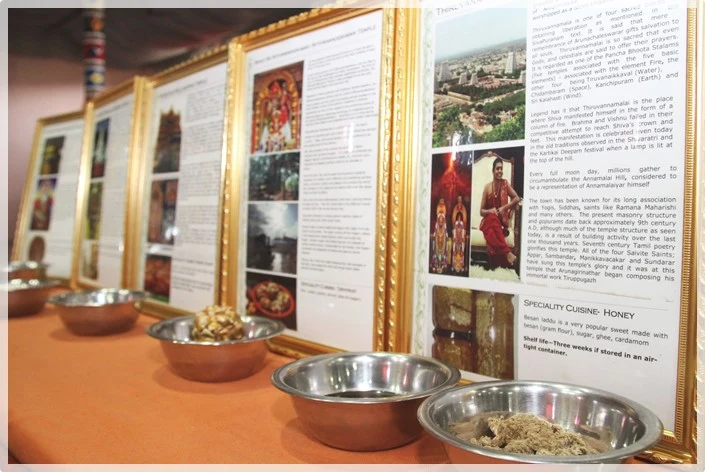
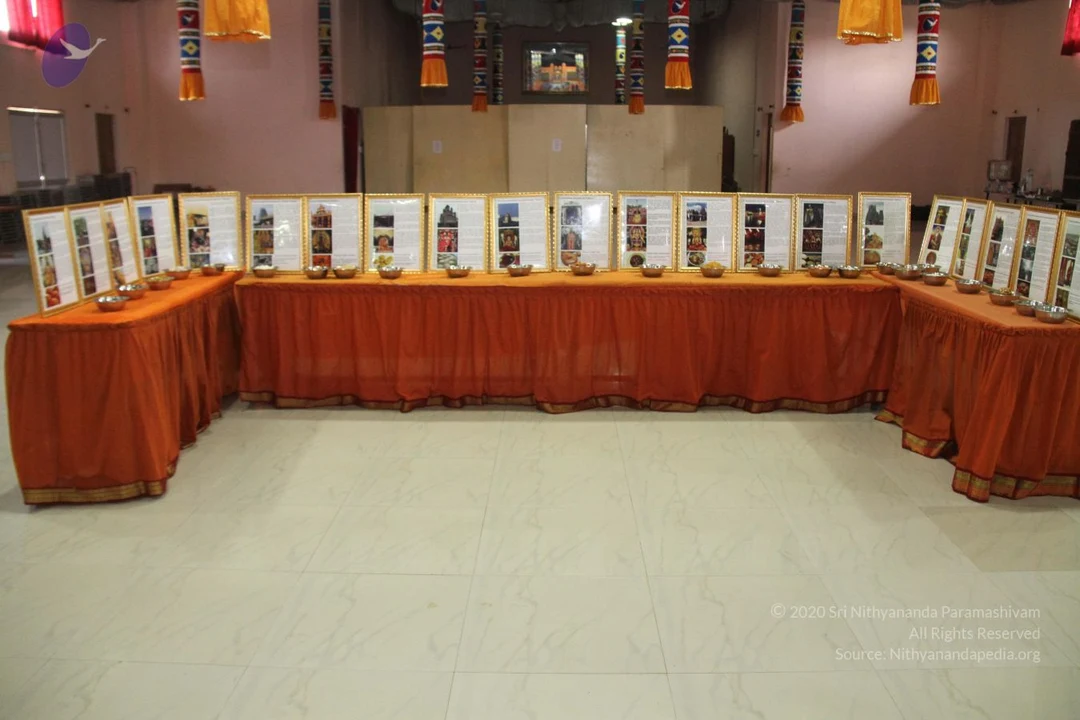
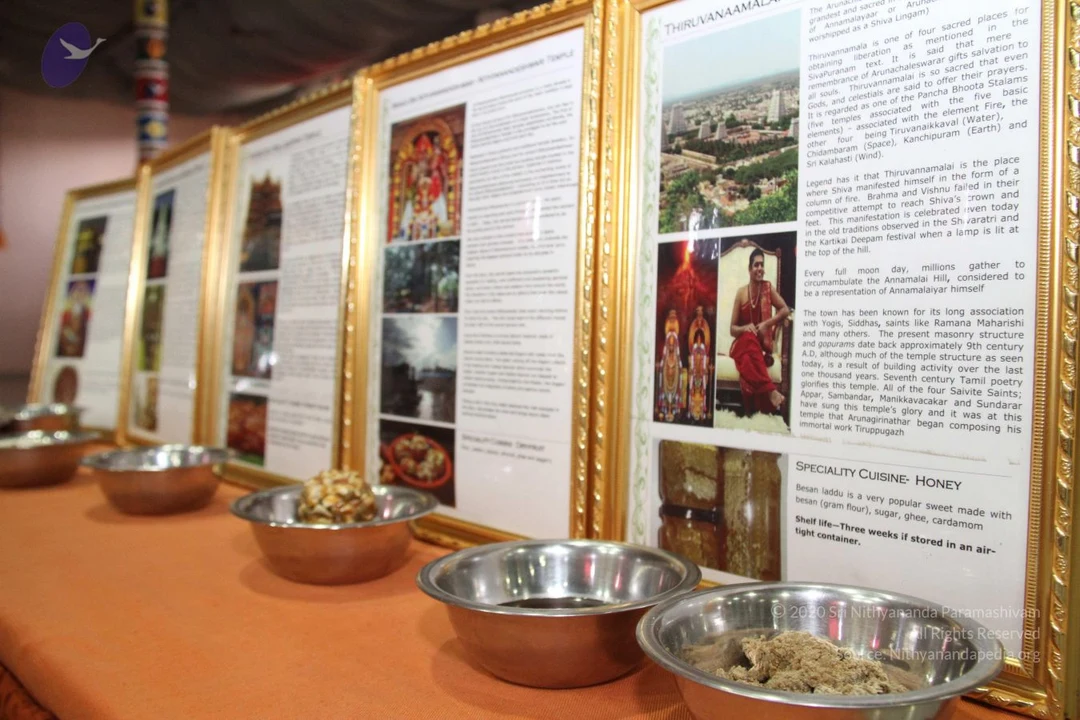
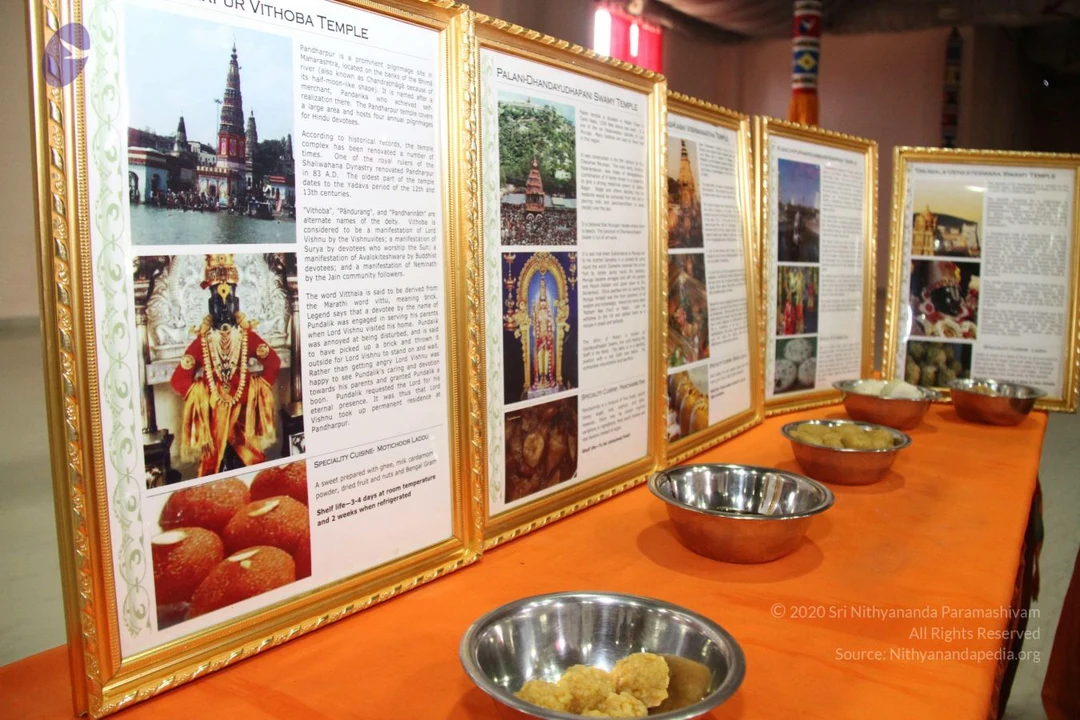
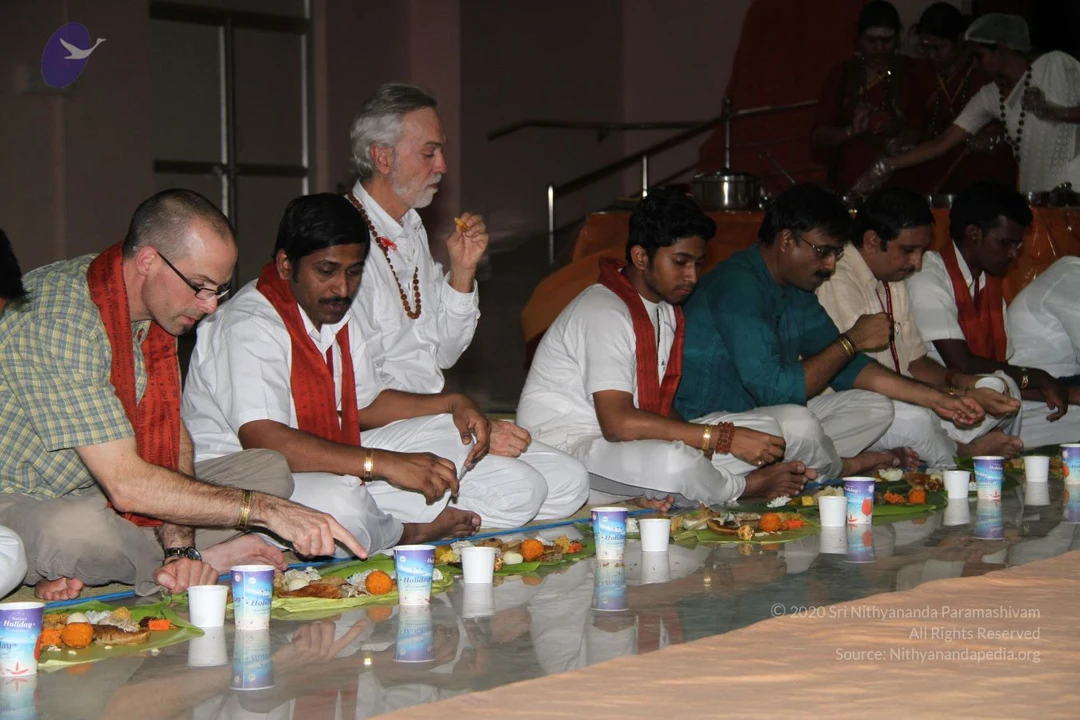
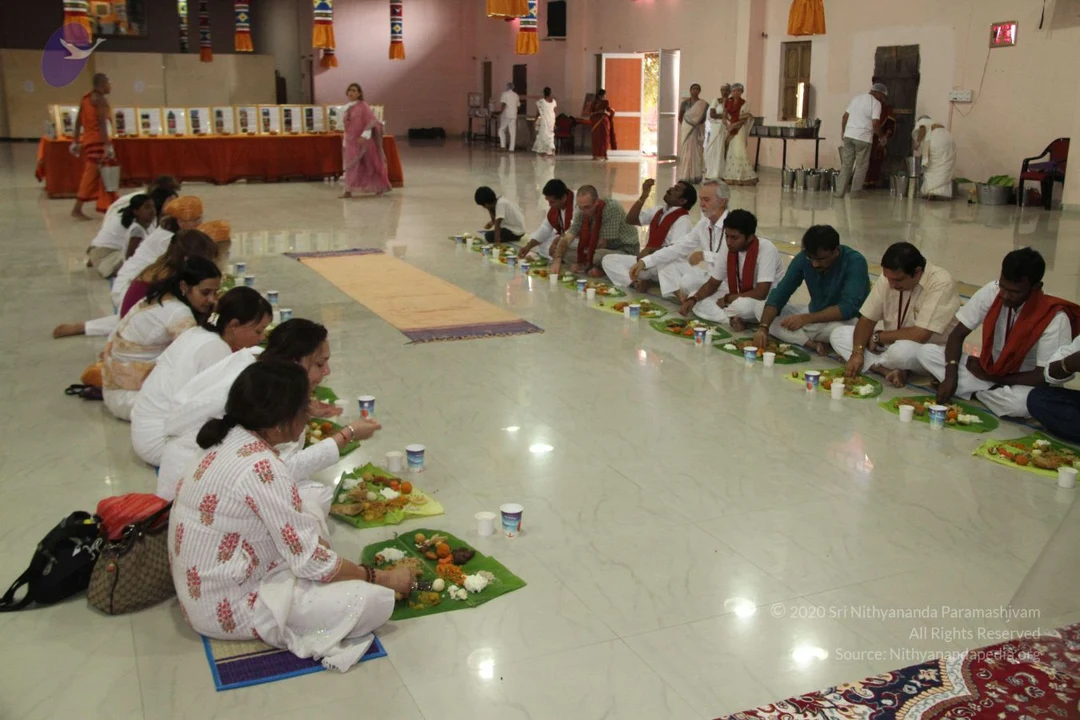
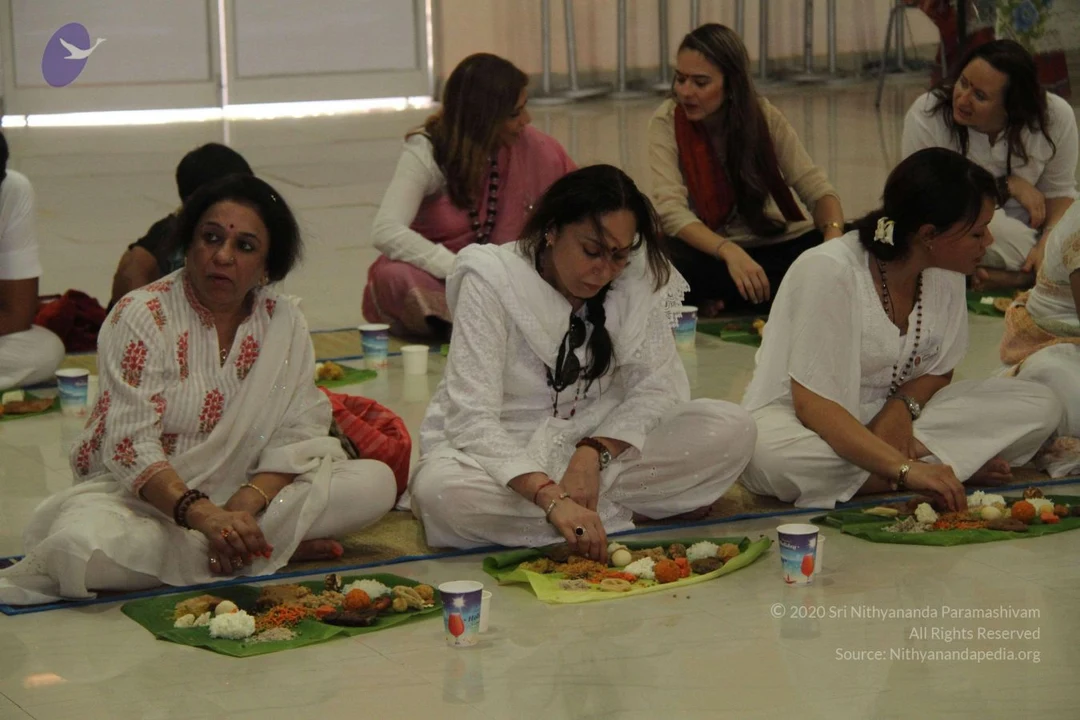
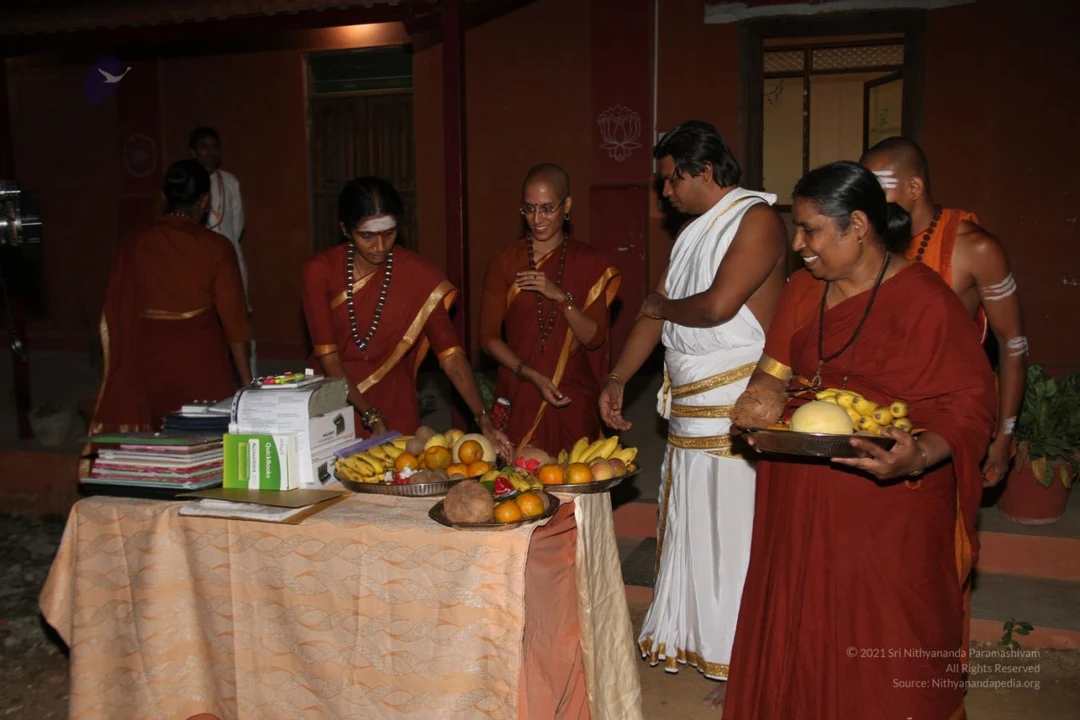
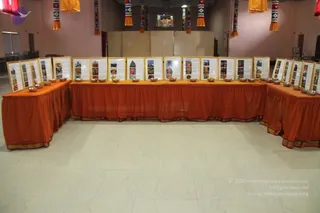
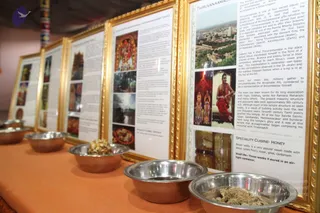
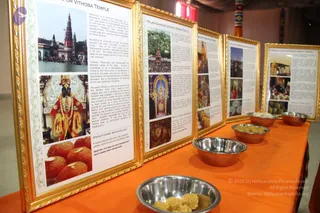
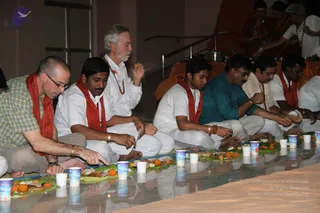
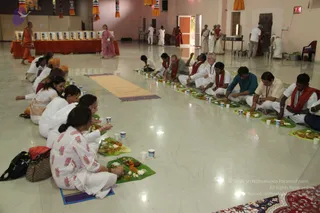
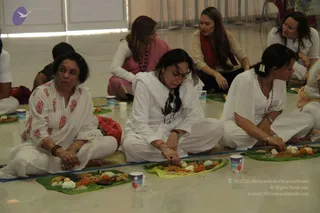
A hall with pale marble floor and pink walls displays a long U-shaped arrangement of framed photographs on orange-draped tables. Each framed panel holds a pair of photographs above printed text, with small brass bowls placed along the table edge in front of them. Orange and multicoloured tasselled banners hang from the ceiling, and a large framed image hangs on the back wall. No people are visible in the scene.A photograph of a display table draped in orange cloth, with a row of framed gold-bordered information panels behind it. The panels show photographs and text about Thiruvannamalai, including an aerial view of a temple town, a woman in red sitting beside deity images, and a heading reading Specialty Cuisine- Honey. In front of the panels sit several stainless steel bowls holding sweets and food items, including besan laddu and honey-based items. No people are visible in the scene, and no a person candidate appears in the image.A display of framed information boards on a row of temple sites, set on a table draped in orange cloth. Each gold-framed board carries printed text, a heading and several small photographs of temples, deities and food. The left board features a photo of Pandharpur Vithoba Temple with a deity murti in red and gold clothing and a large garland, and a sweet labelled as Modhichor Laddu. Metal bowls holding laddus and sweets sit on the orange tablecloth in front. No people are visible.A row of devotees sits cross-legged on the floor along a long reflective table, eating from green leaf plates laid with rice, orange sweets and side dishes. Seven men are visible. The man at far left wears a plaid shirt and red shawl, a seated man in white wears a red shawl, an older bearded man in white wears a rudraksha mala and eats with his hand, and younger men in white and a teal kurta wear red shawls and bangles. Paper cups stand along the table, and behind them a few people in white and orange garments and beads attend to a stage with a kalasha and a metal pot.Devotees sit in two long rows on a polished white marble floor, eating a communal meal from green banana-leaf plates arranged with rice, vegetables and sweets, with small paper cups of water beside each leaf. Men in white dhotis and red angavastras and women in white and pink saris, one in a white kurta with red block-print, sit cross-legged or kneel. A monk in orange robes walks past a table draped in orange cloth with framed photographs on it. Orange and red banners hang from the ceiling, and a few attendants in white move about in the background. Nobody in the scene can be confidently identified as a person from appearance alone.Several women sit cross-legged on a light marble floor eating a communal meal from banana leaves. The woman in the centre wears a white churidar-style outfit and dark sunglasses hanging at her collar, and she is mixing rice and side dishes on her leaf with her fingers. A woman on the left wears a white kurta with red embroidery and white dupatta, and a woman on the right wears white with a rudraksha mala. Other seated women in pink, white and a red scarf sit behind, with paper cups placed near the leaves. A large window lets in daylight at the top left. Visible people: about six seated women.

Sarva-Darshan

22 photosSource gallery

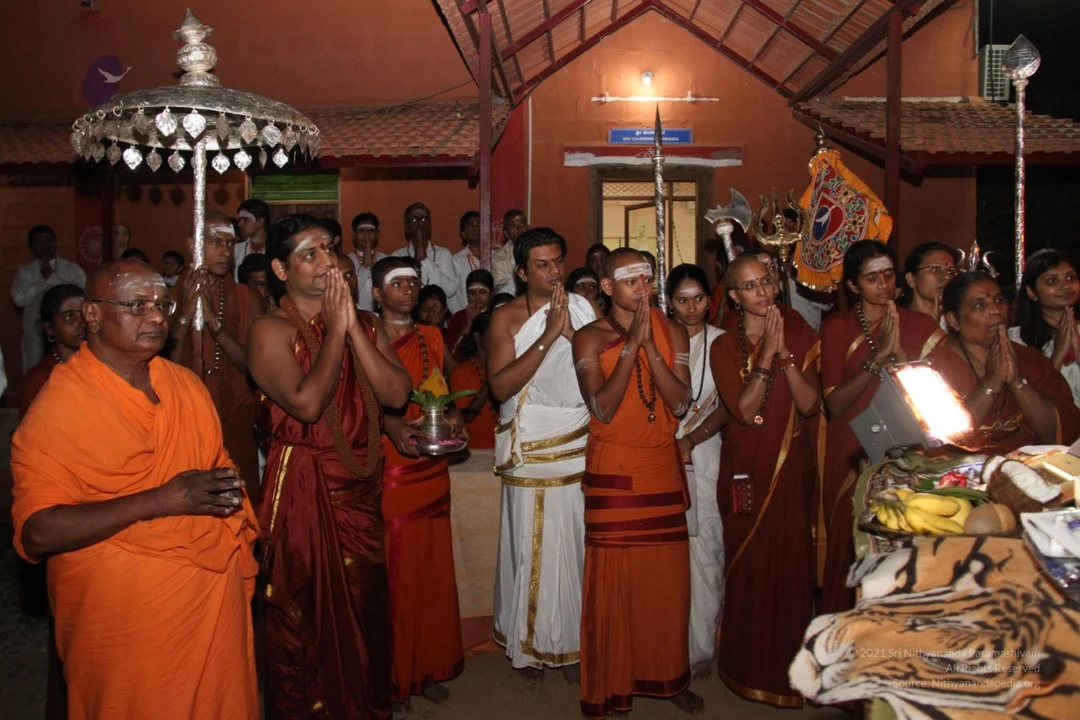
Chandikeshwara-Procession

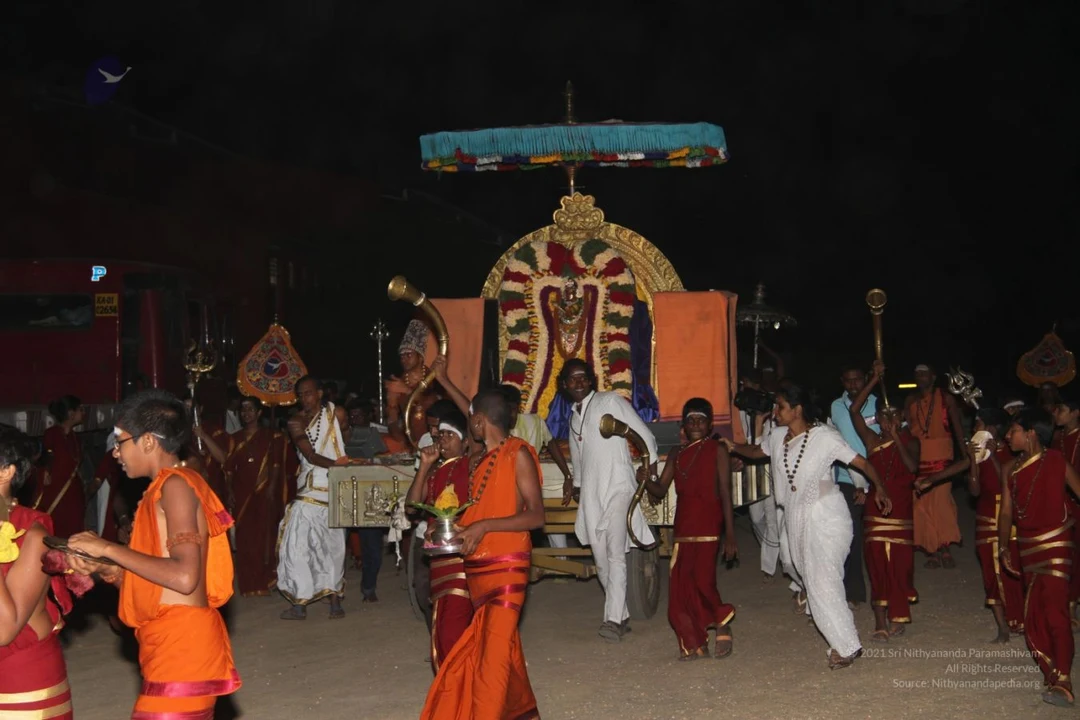
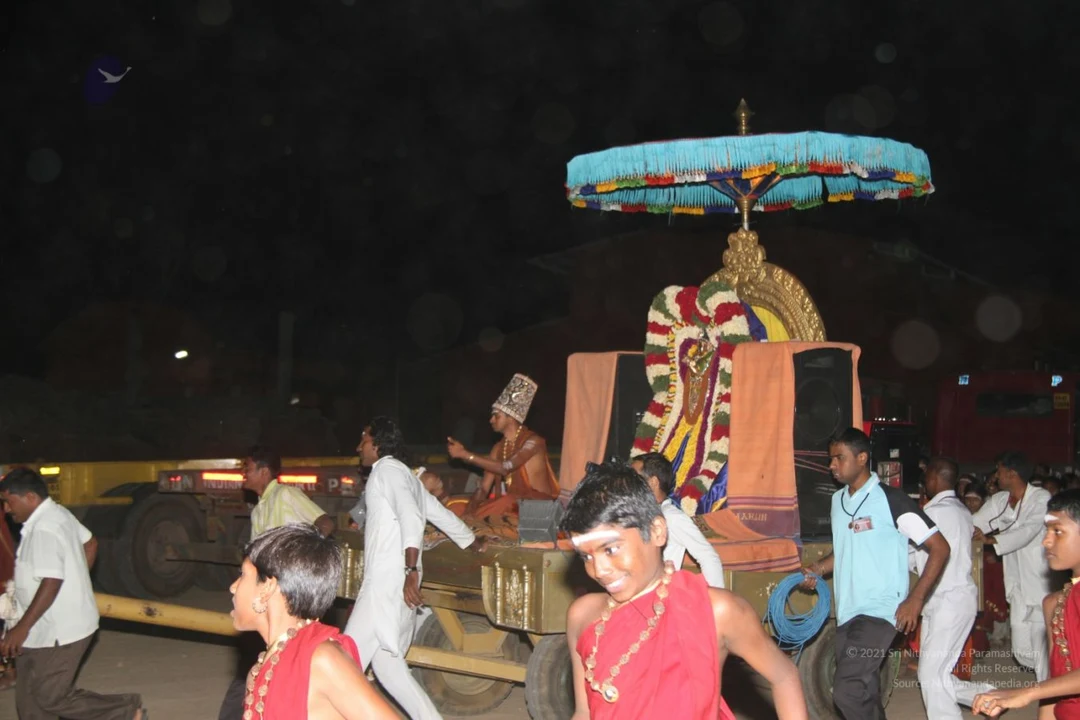
57 photosSource gallery
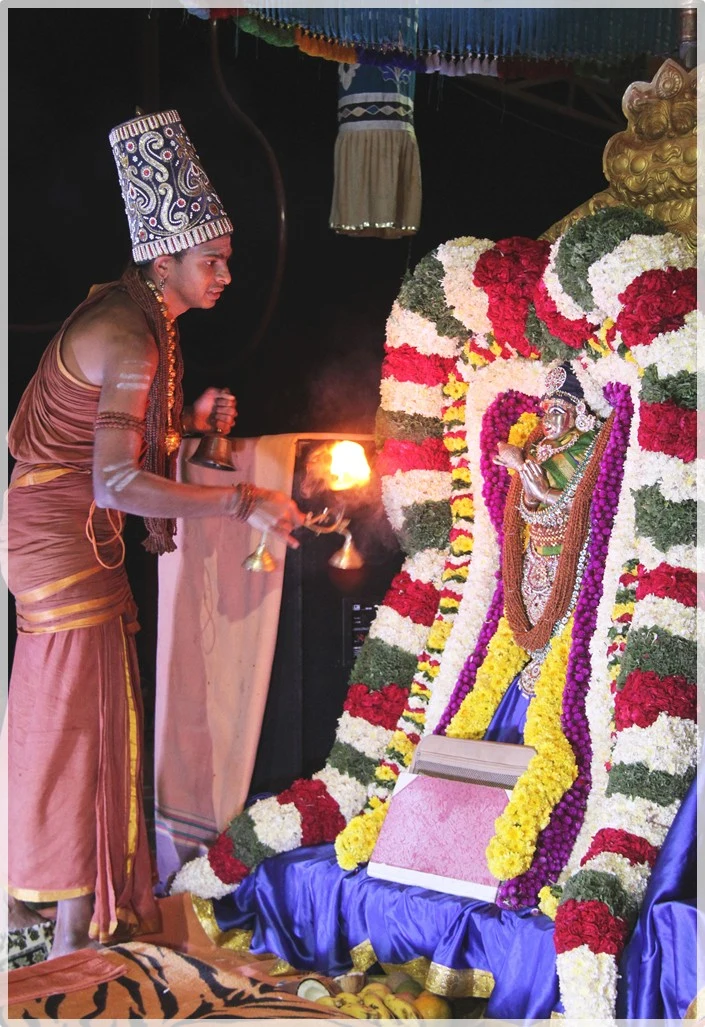
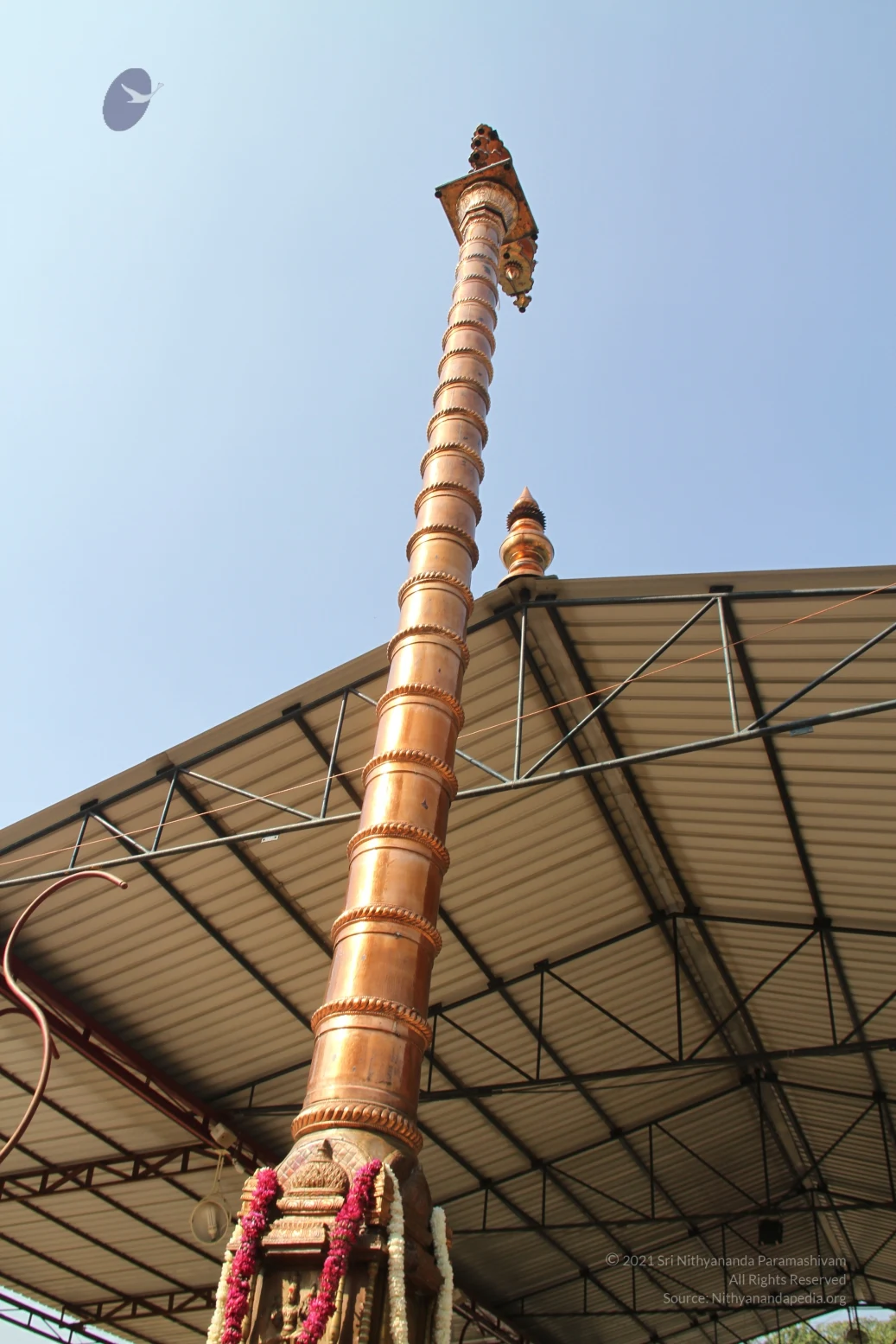
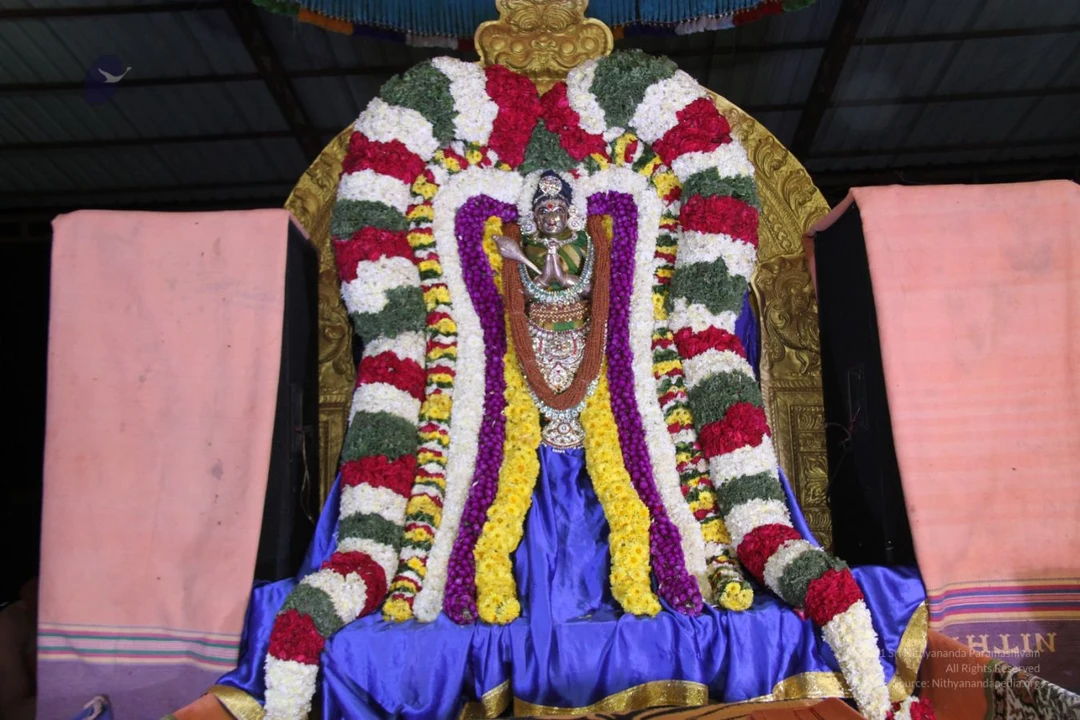
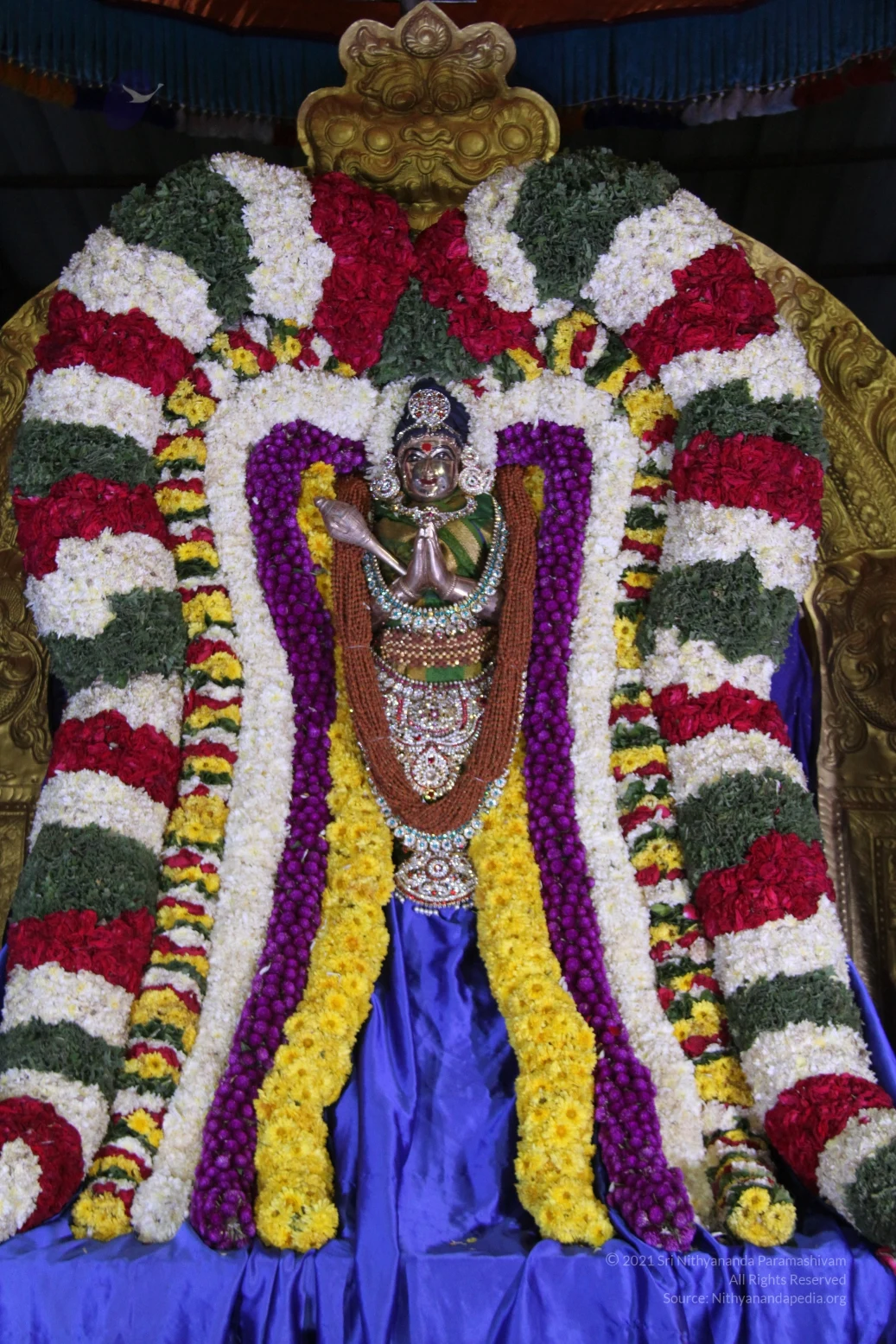
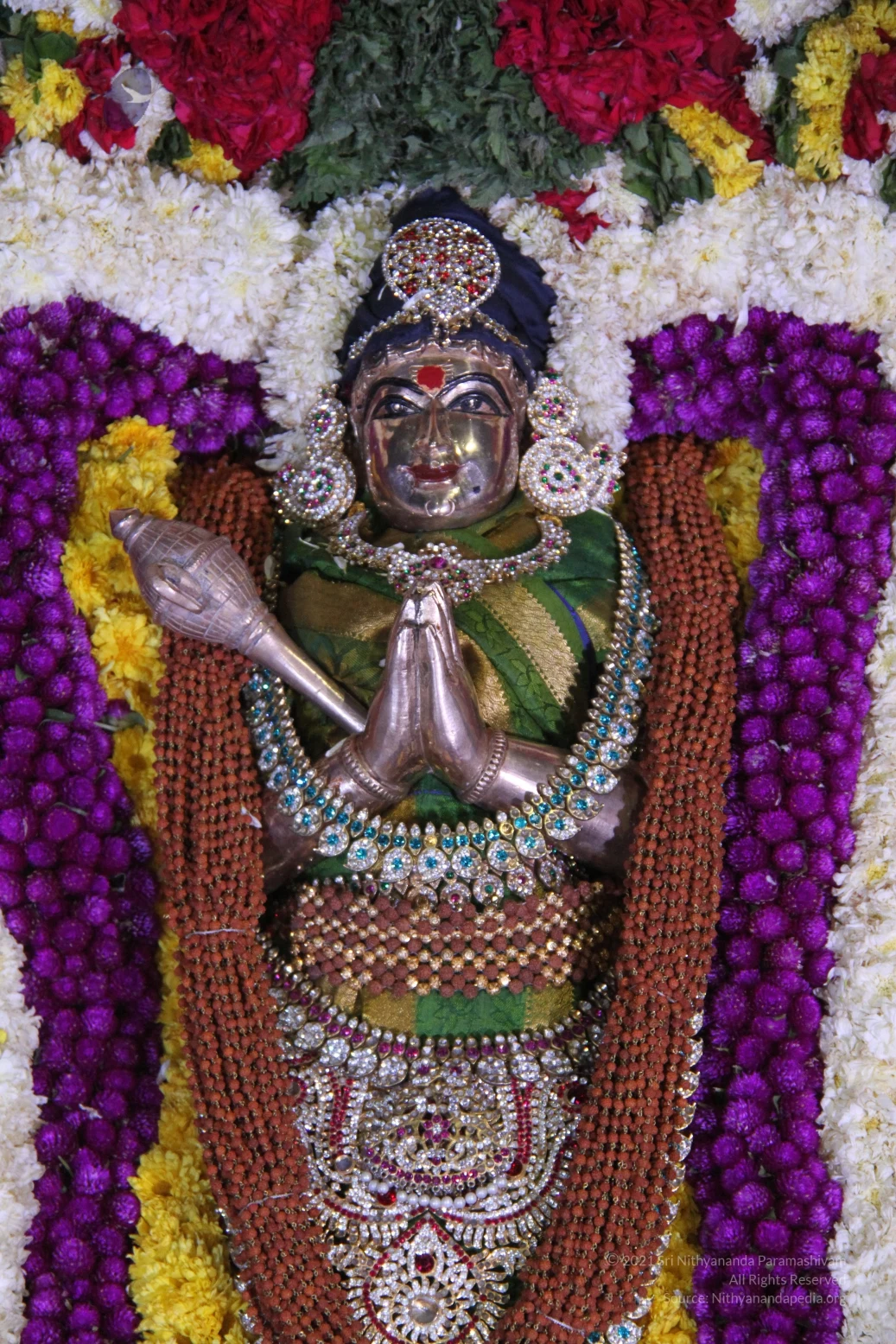
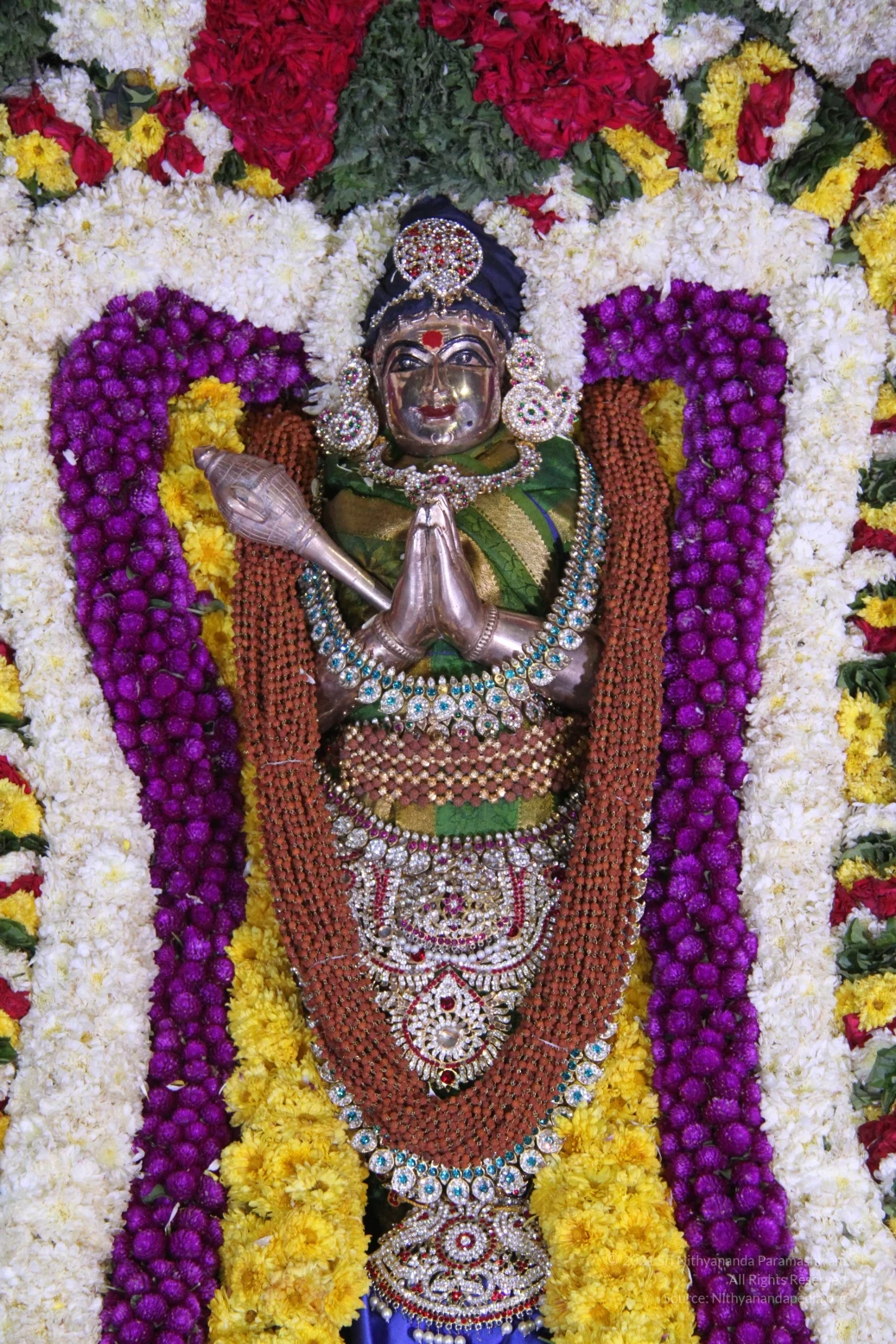
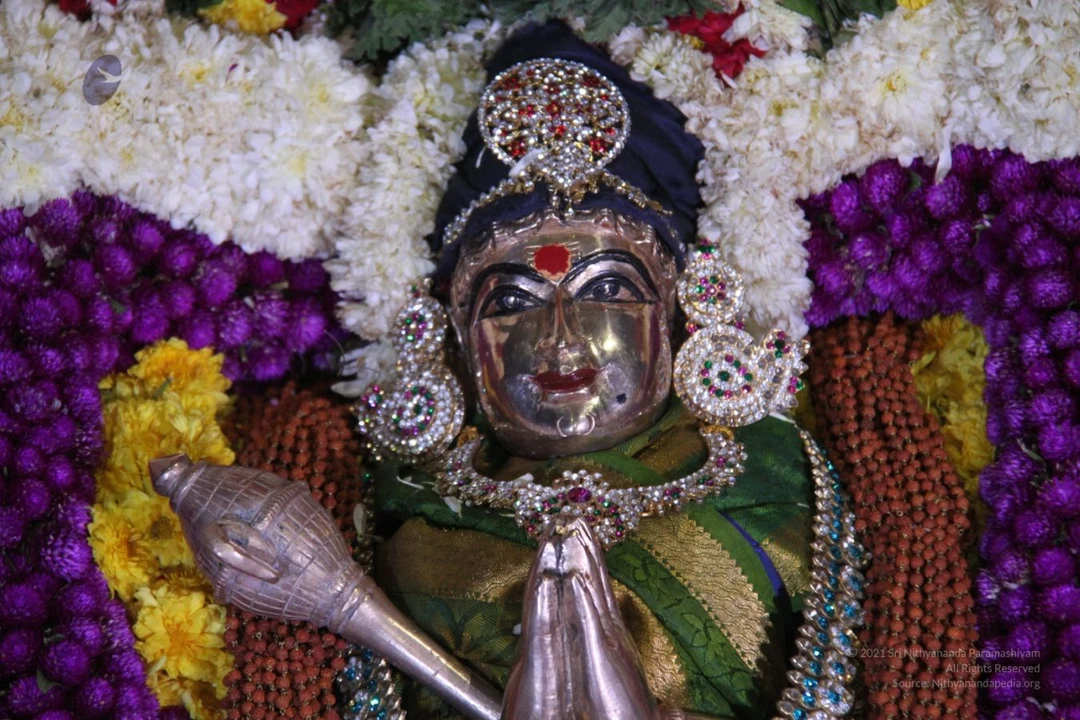
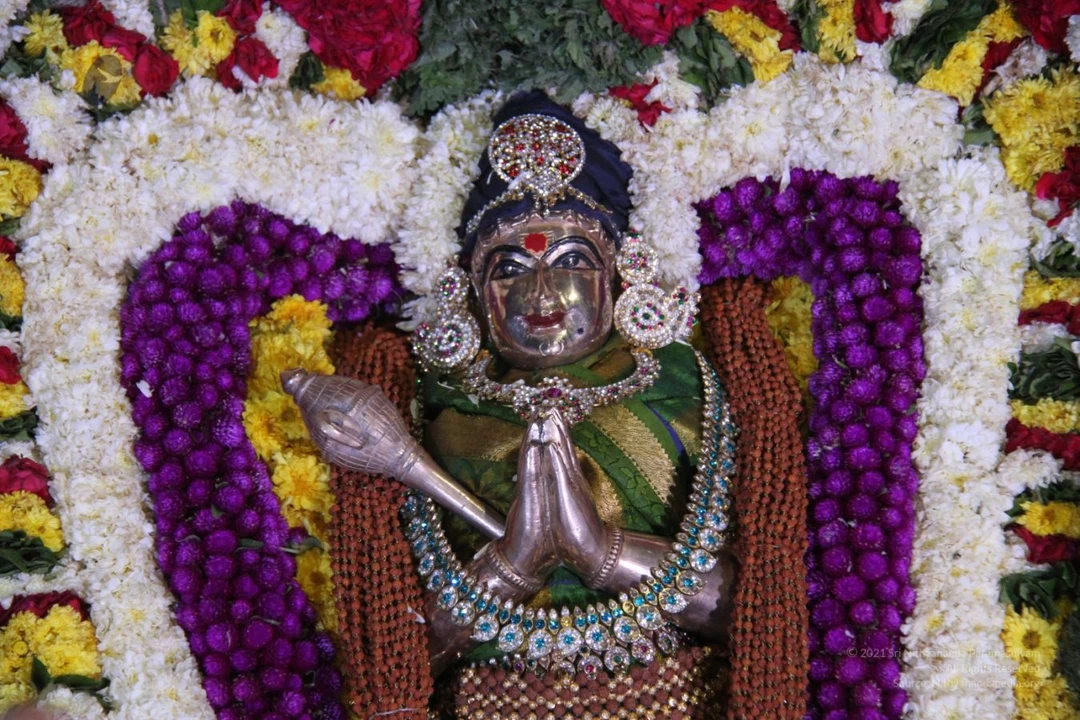
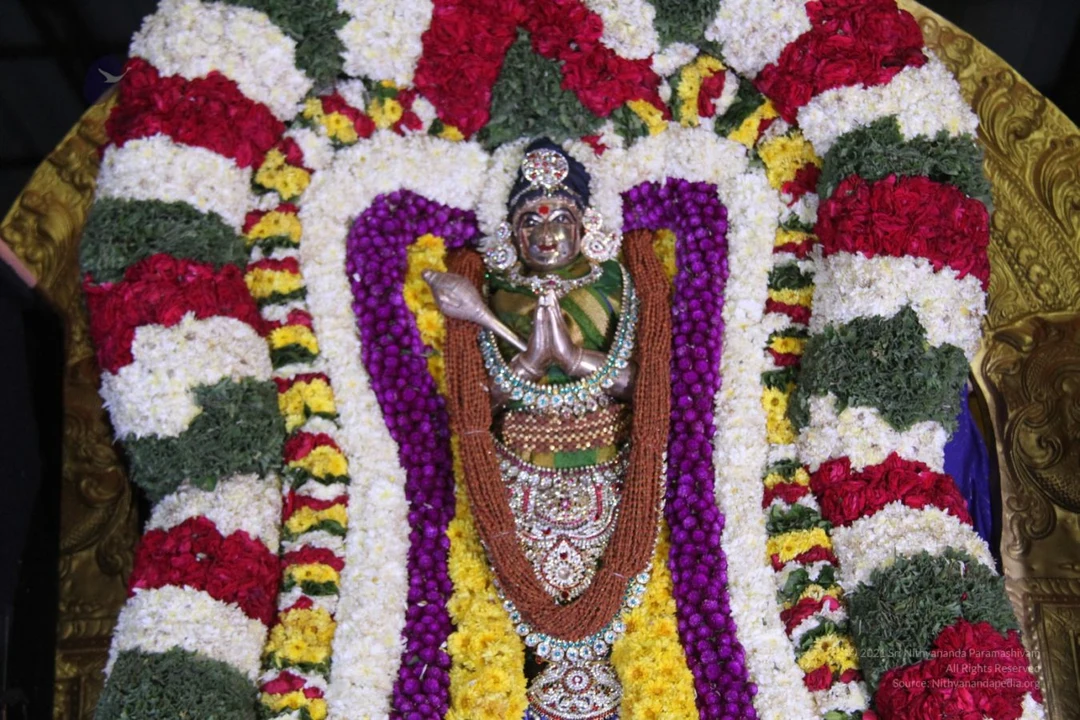
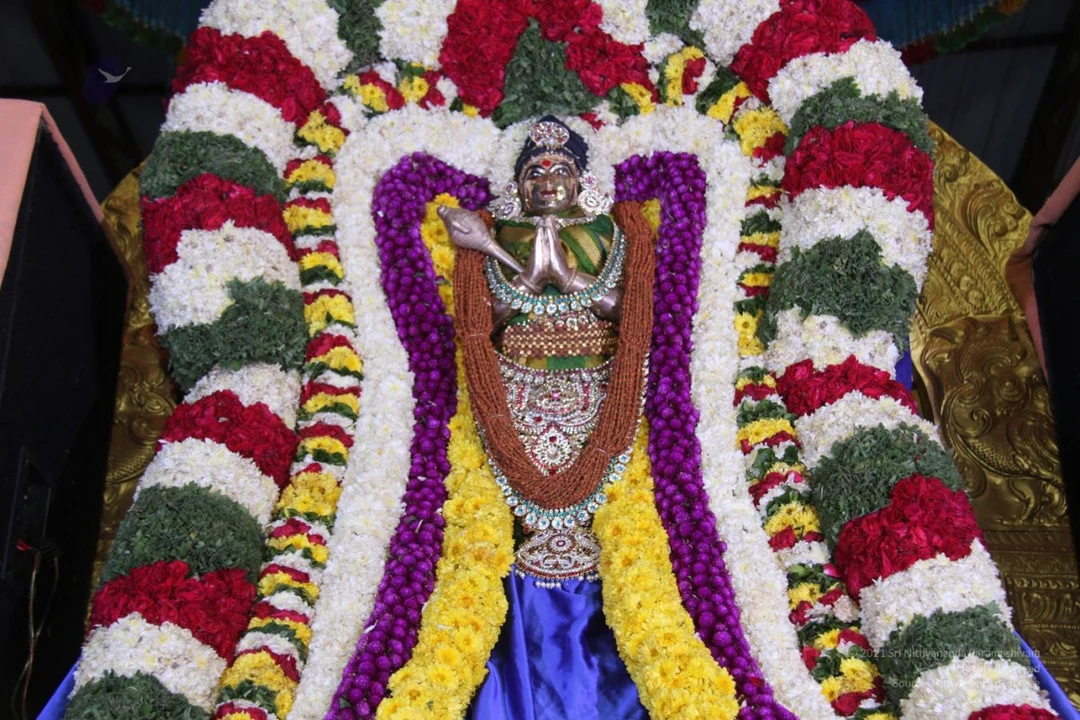
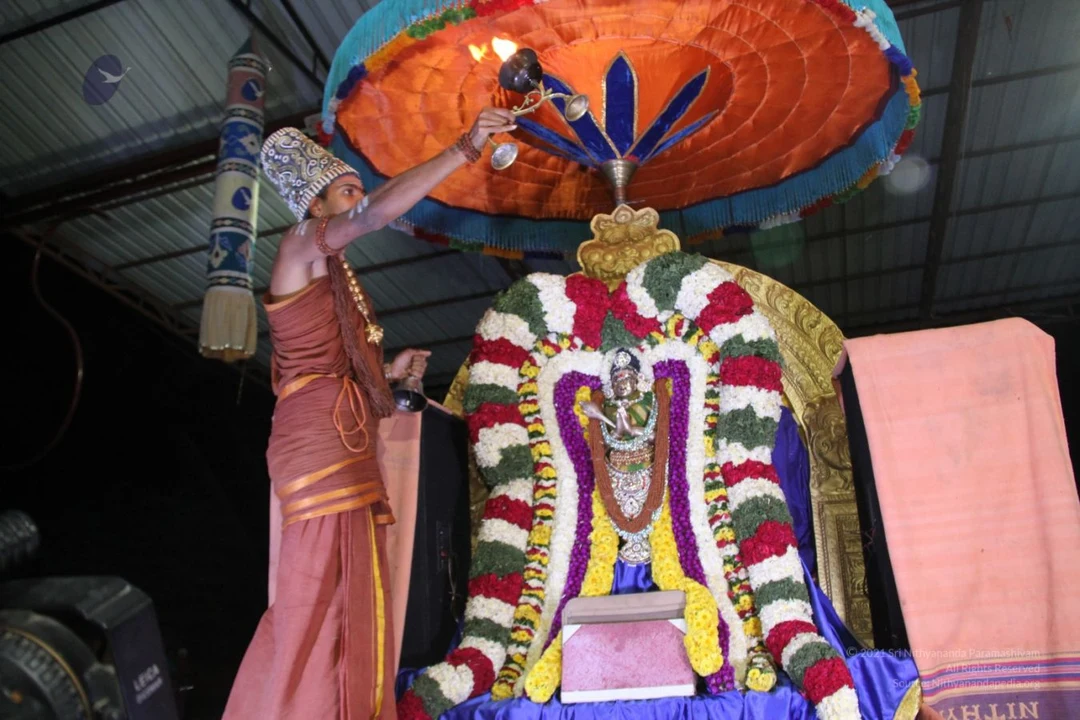
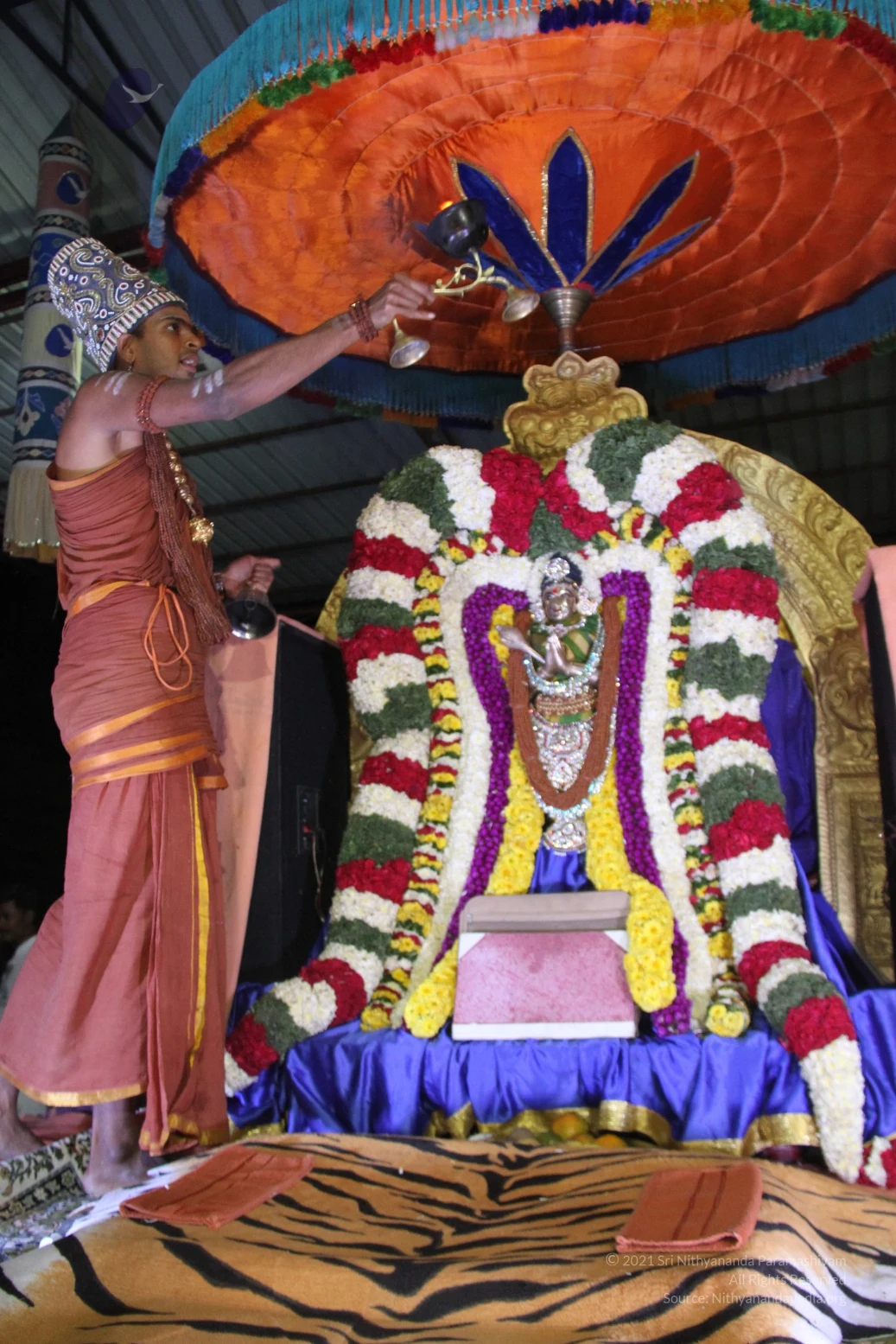
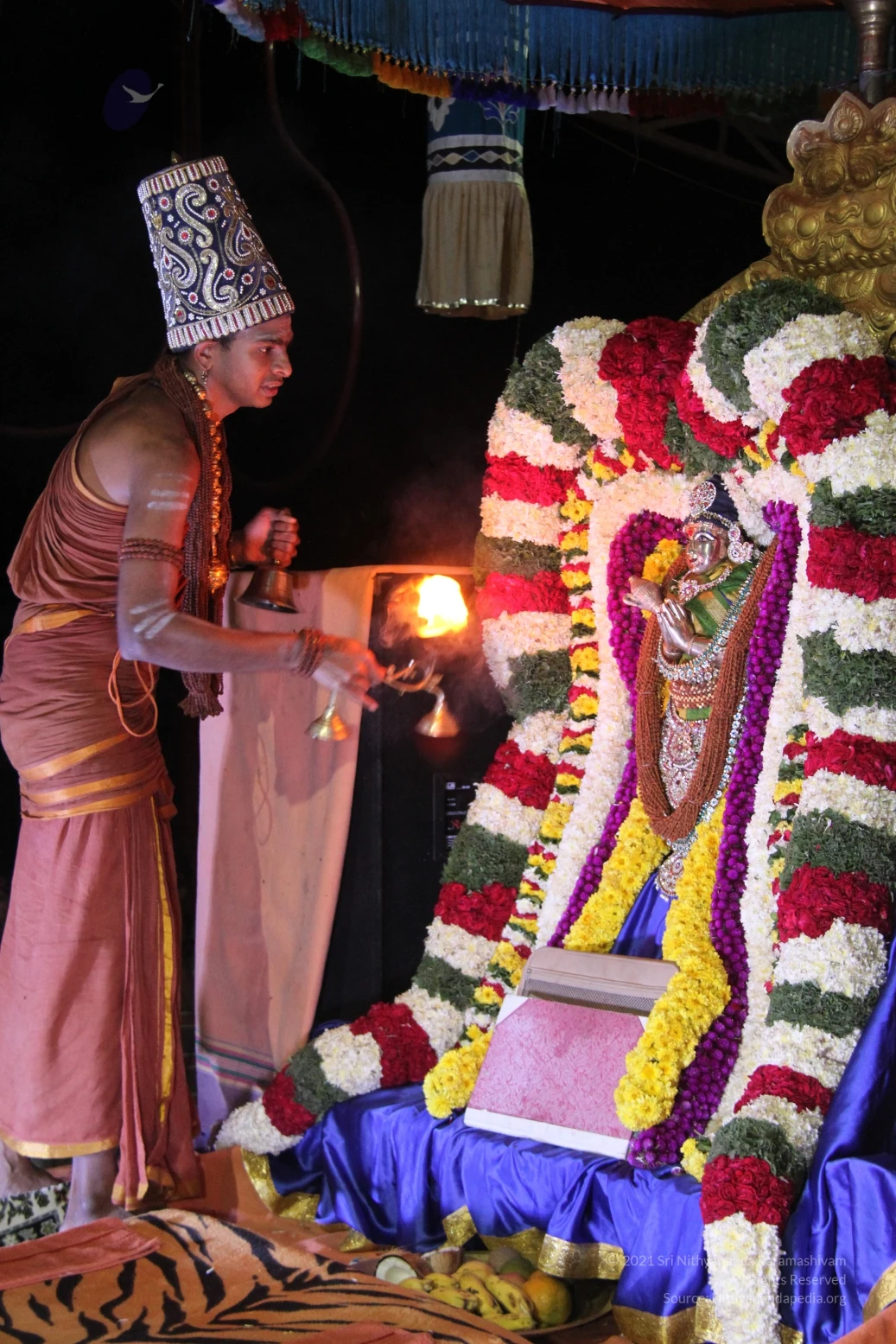
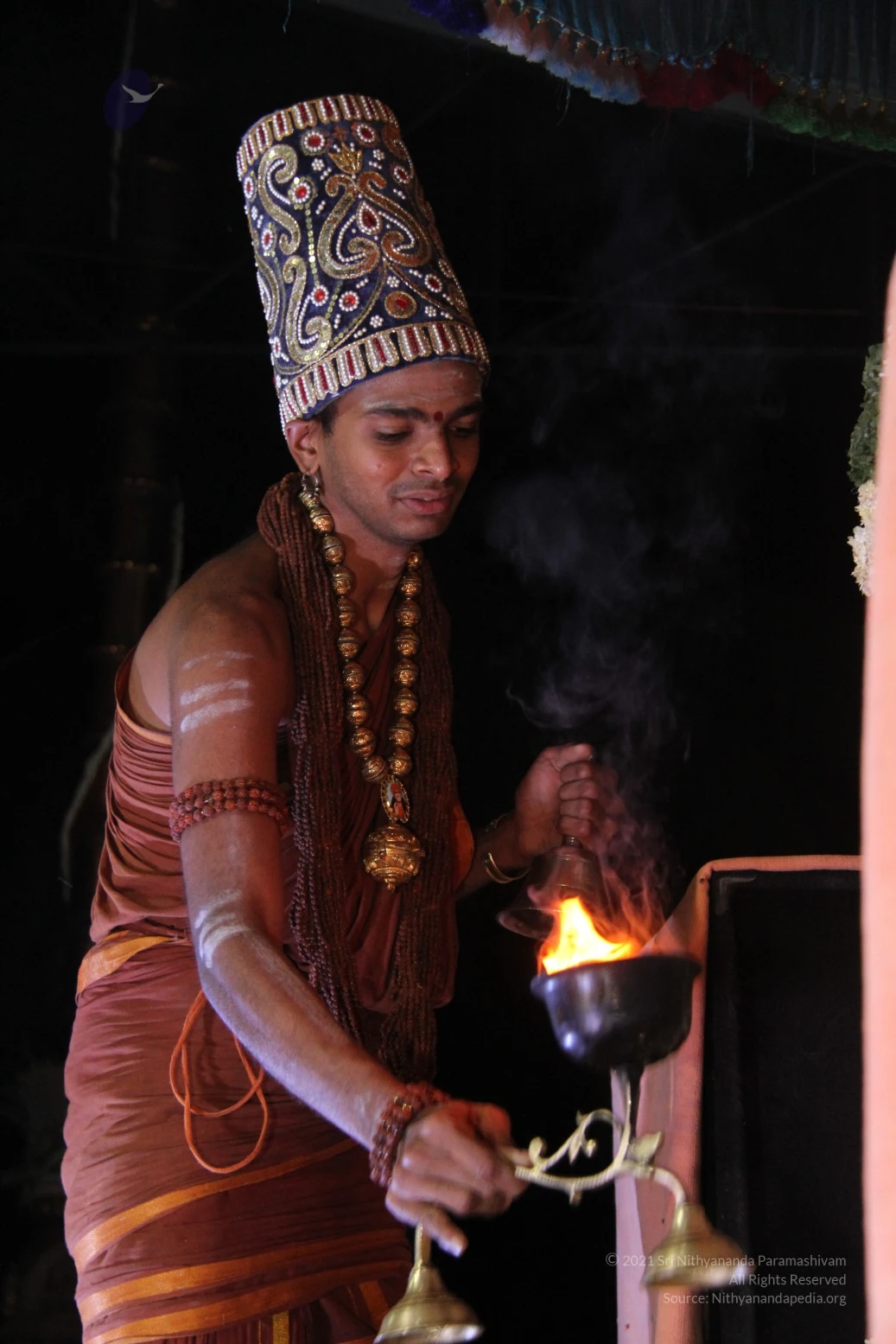
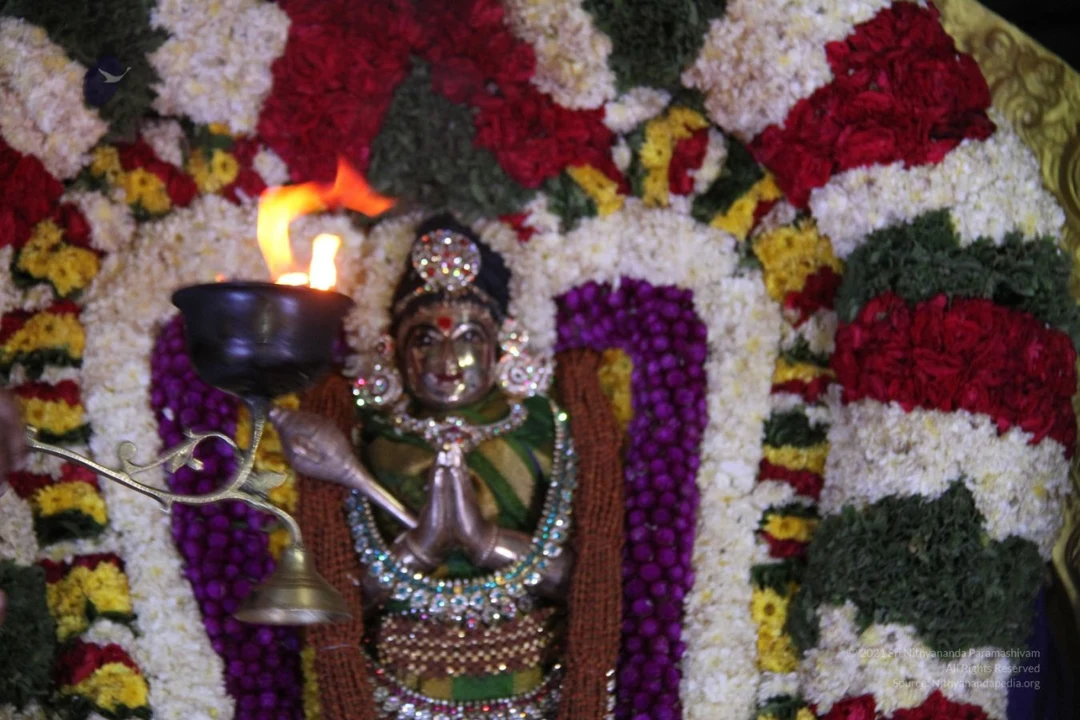
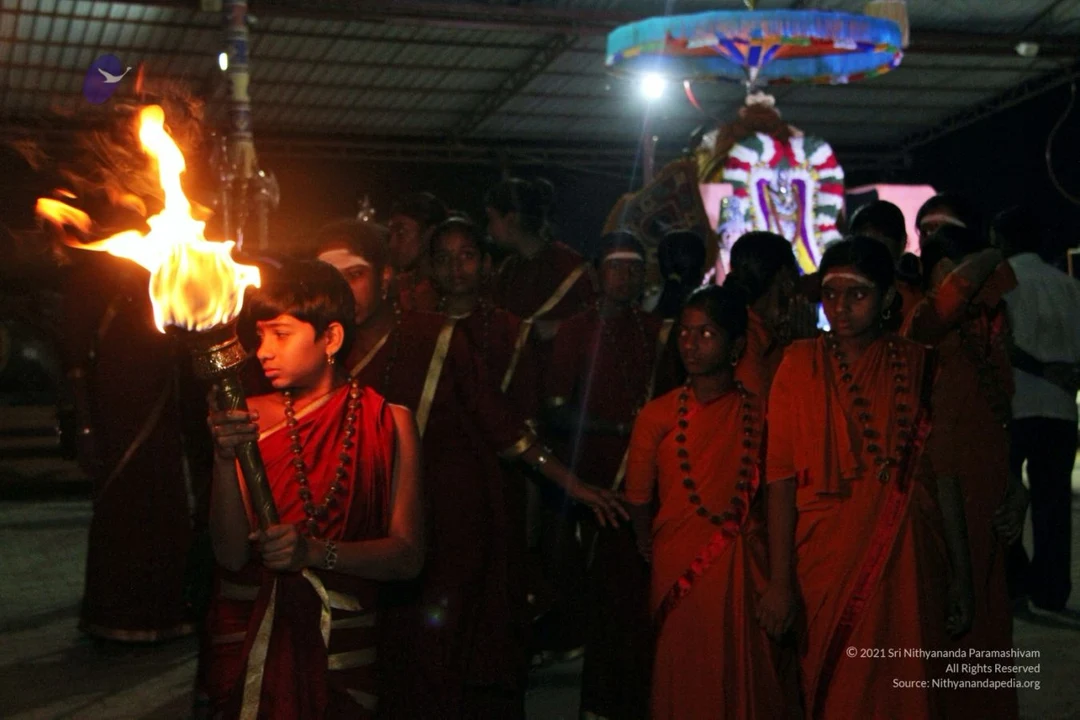
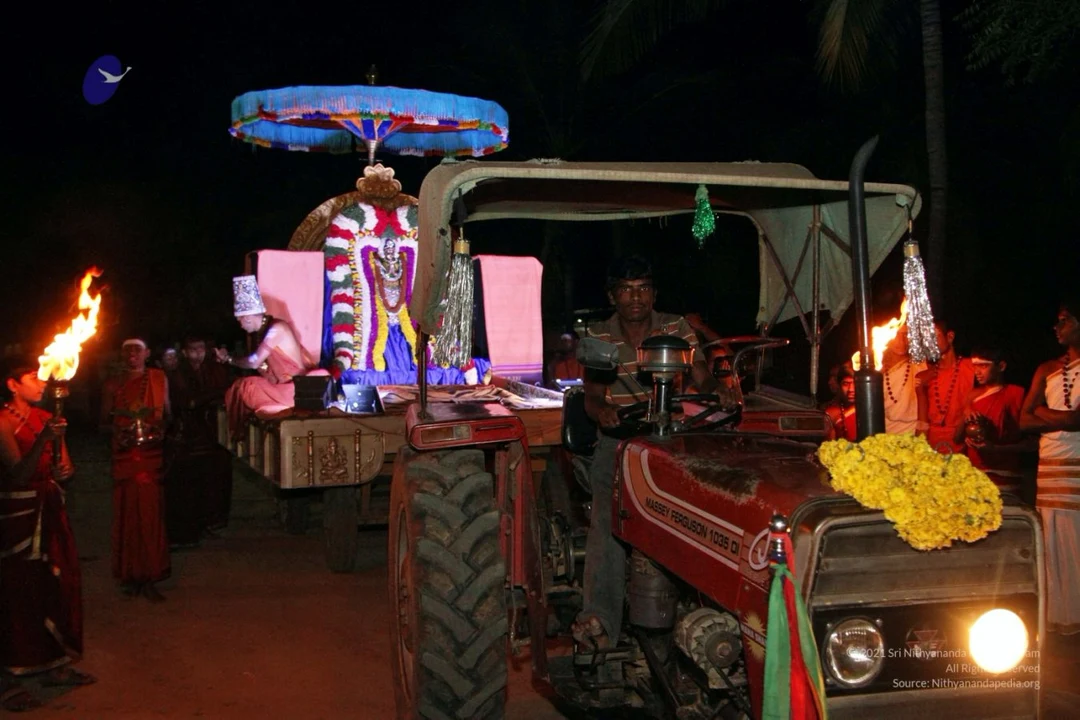
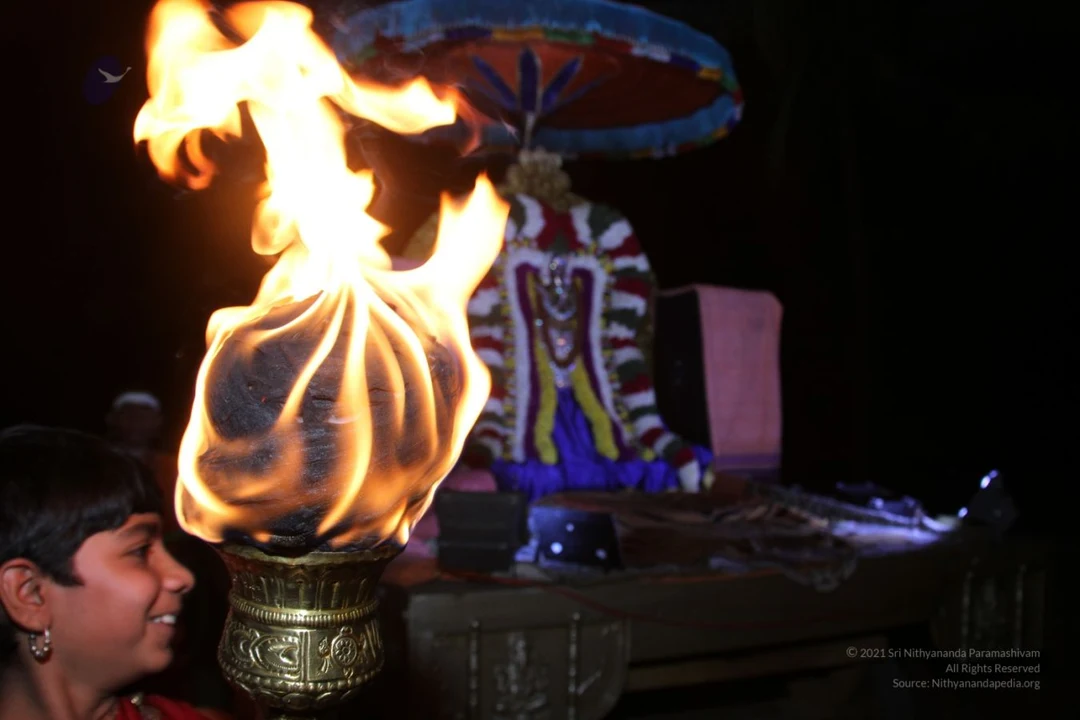
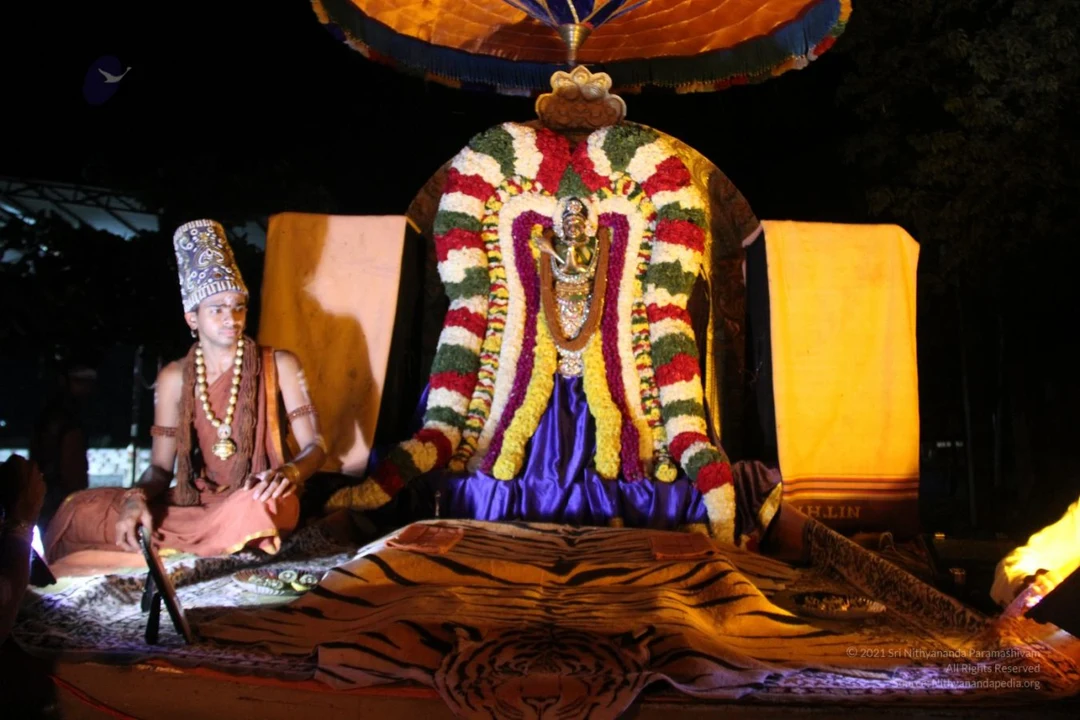
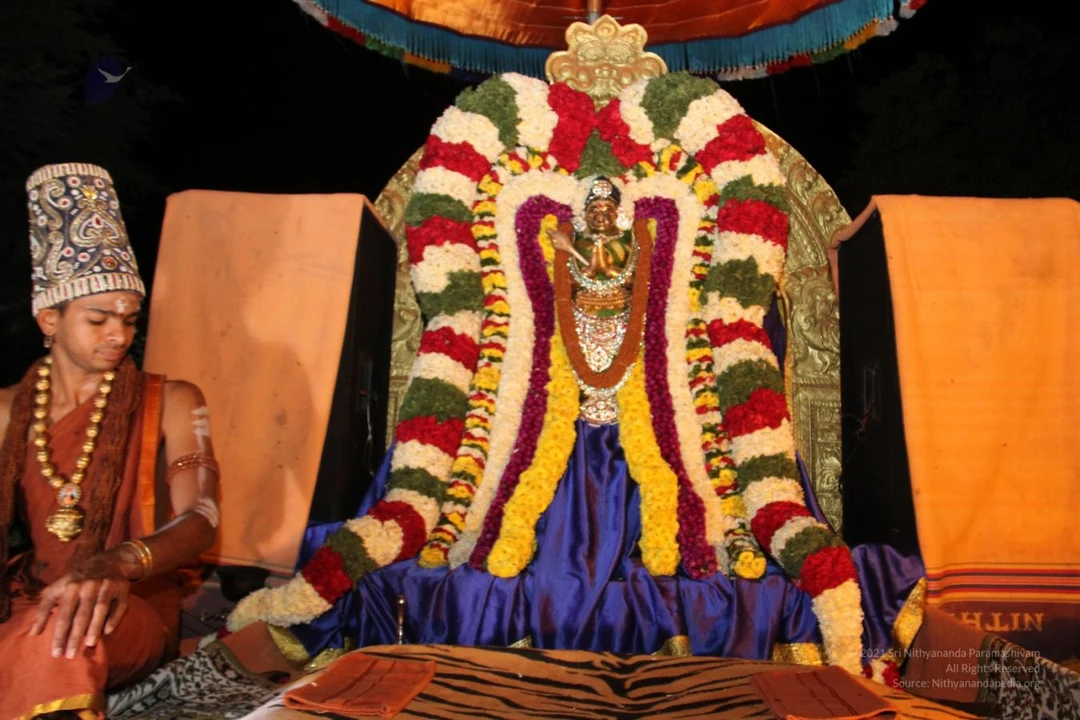
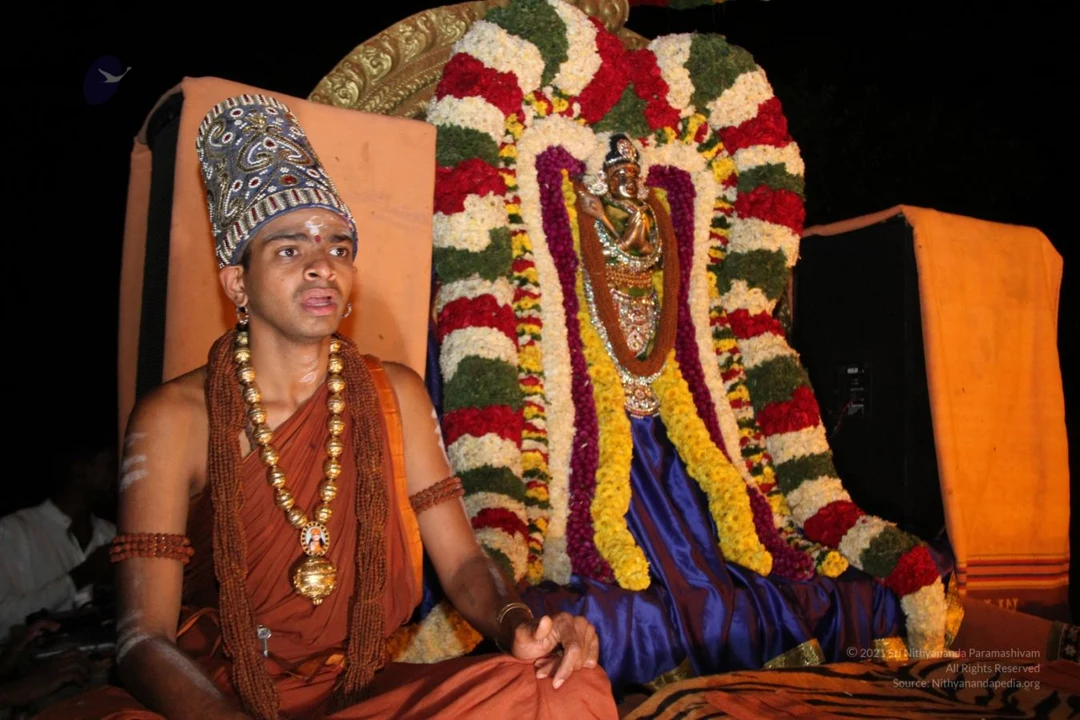
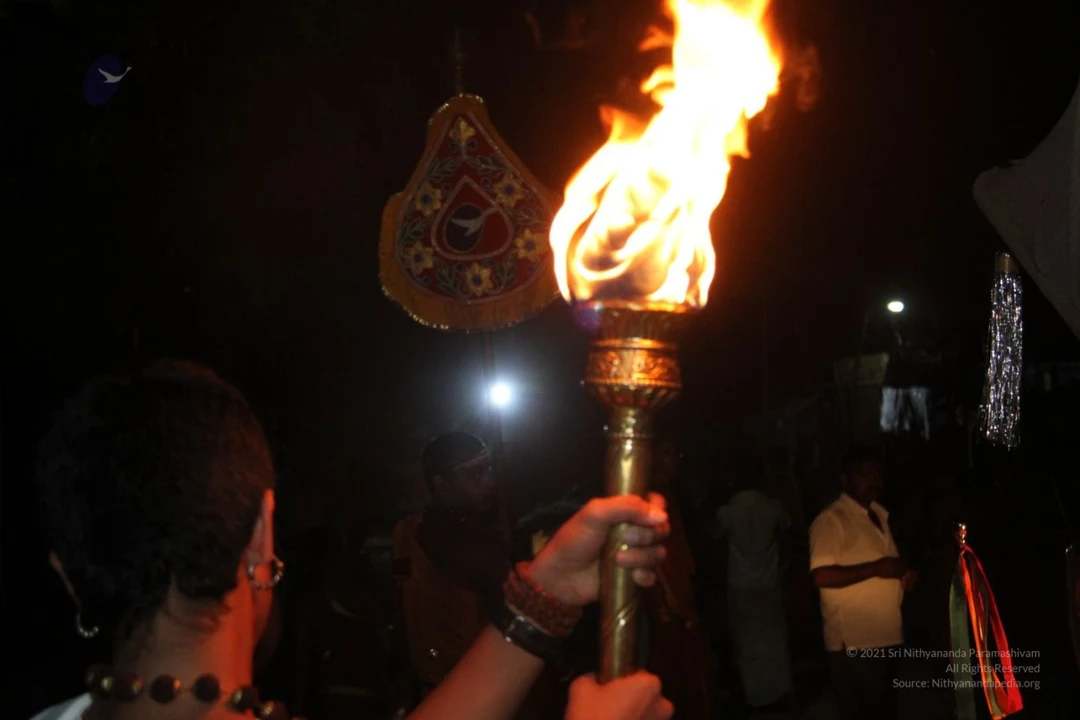
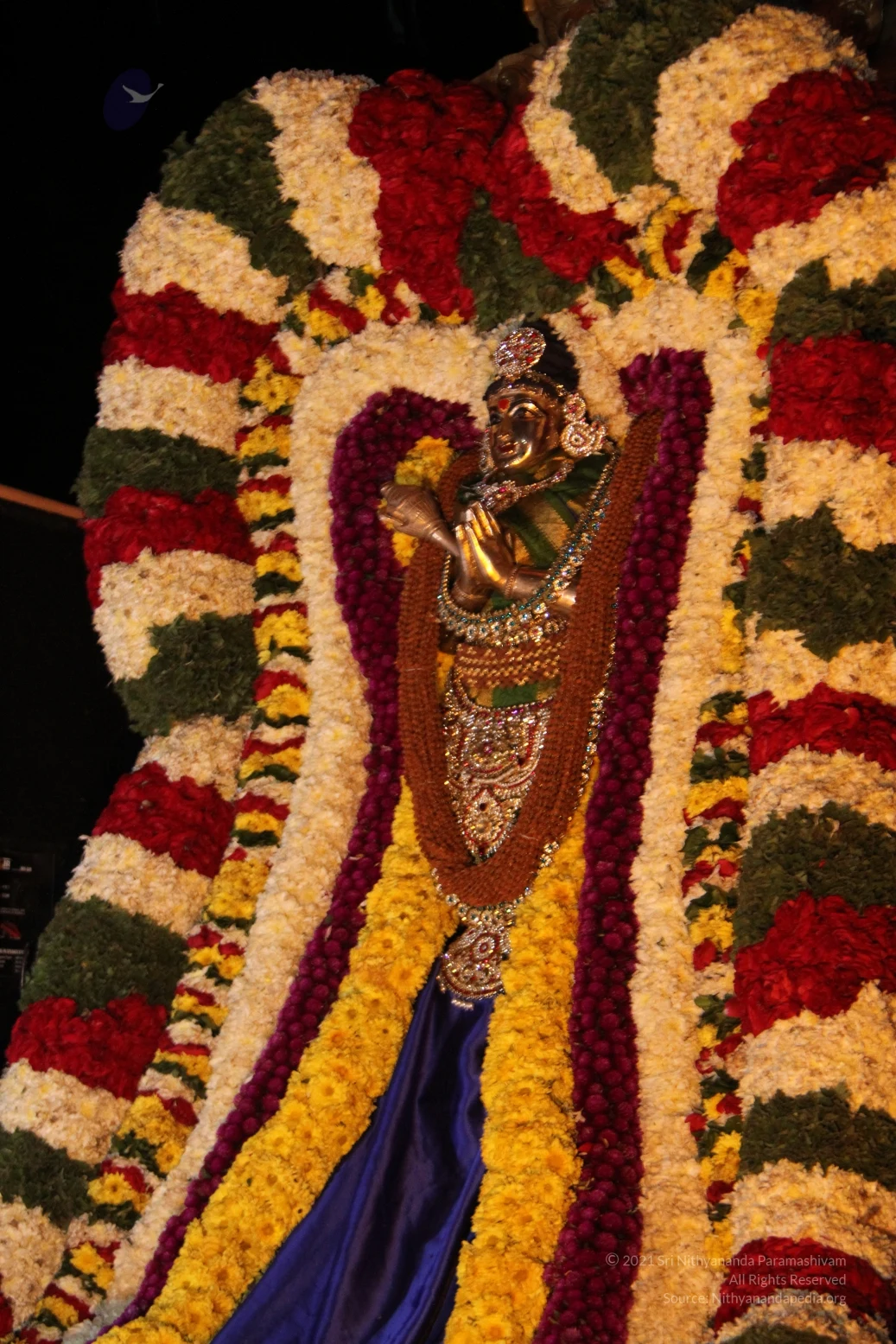
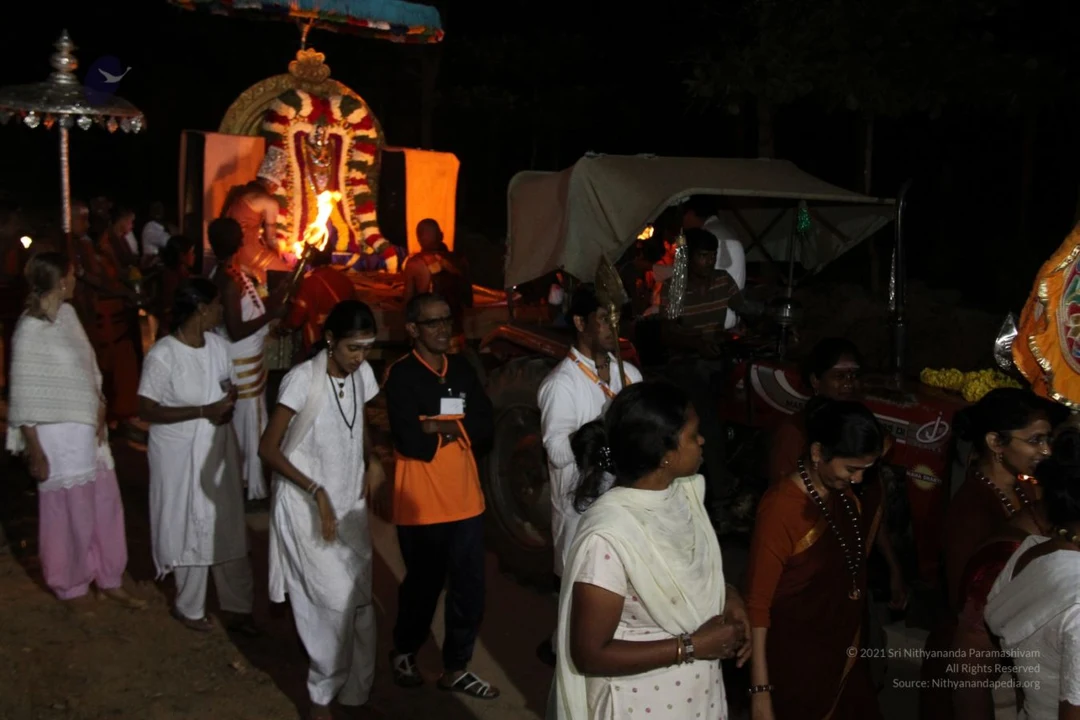
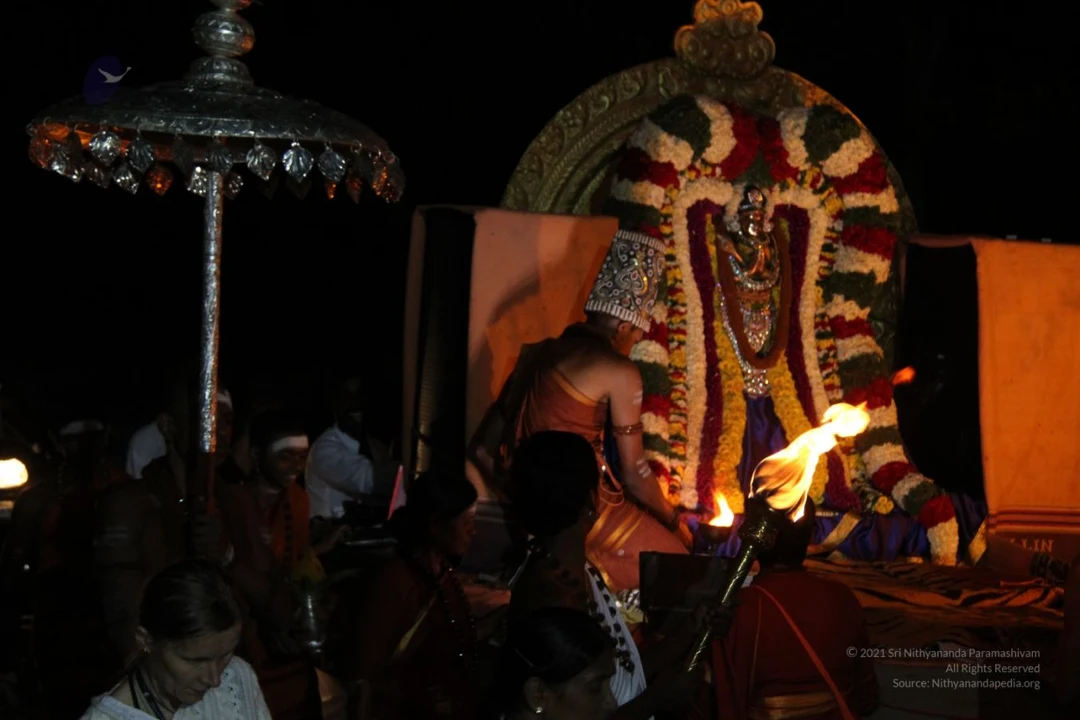
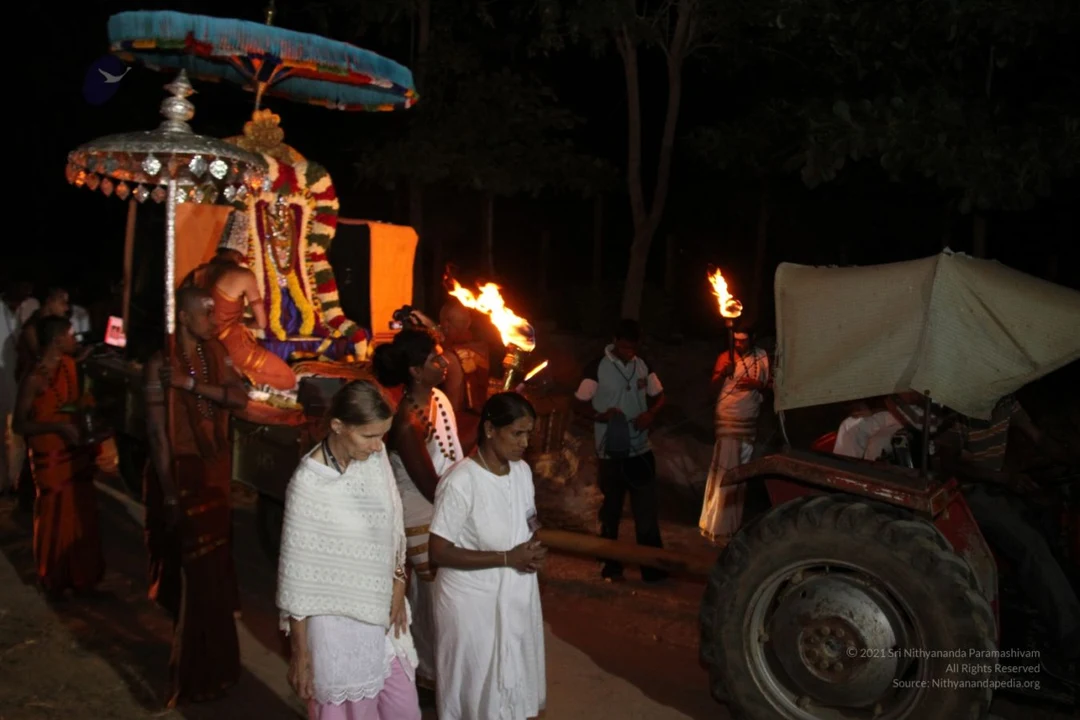
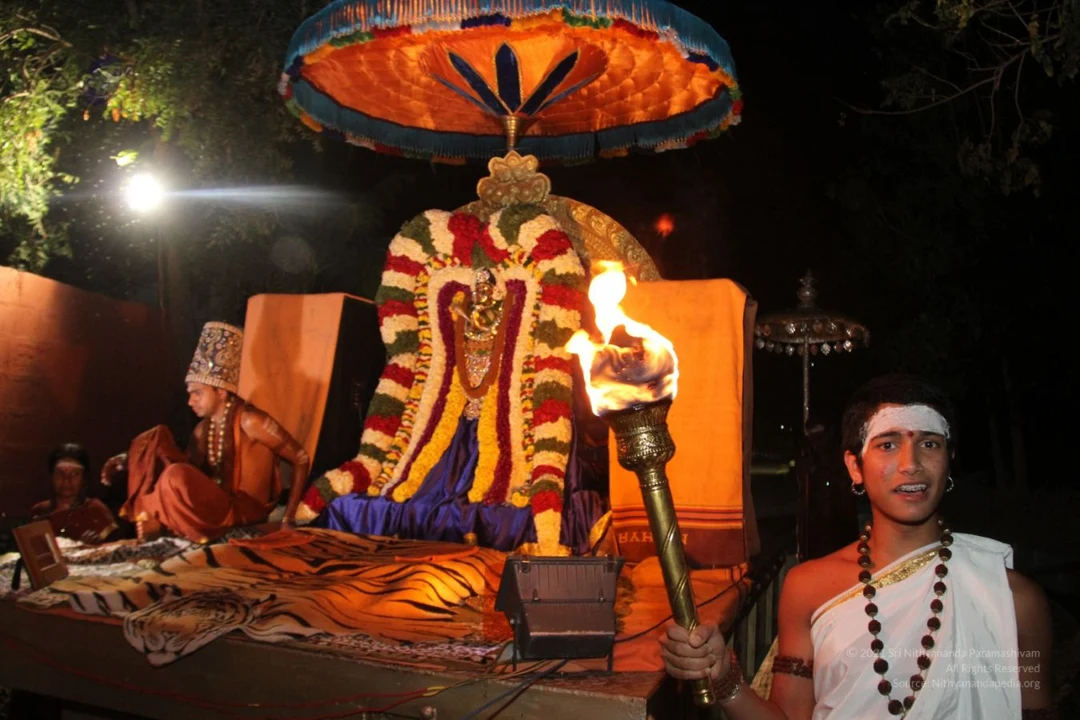
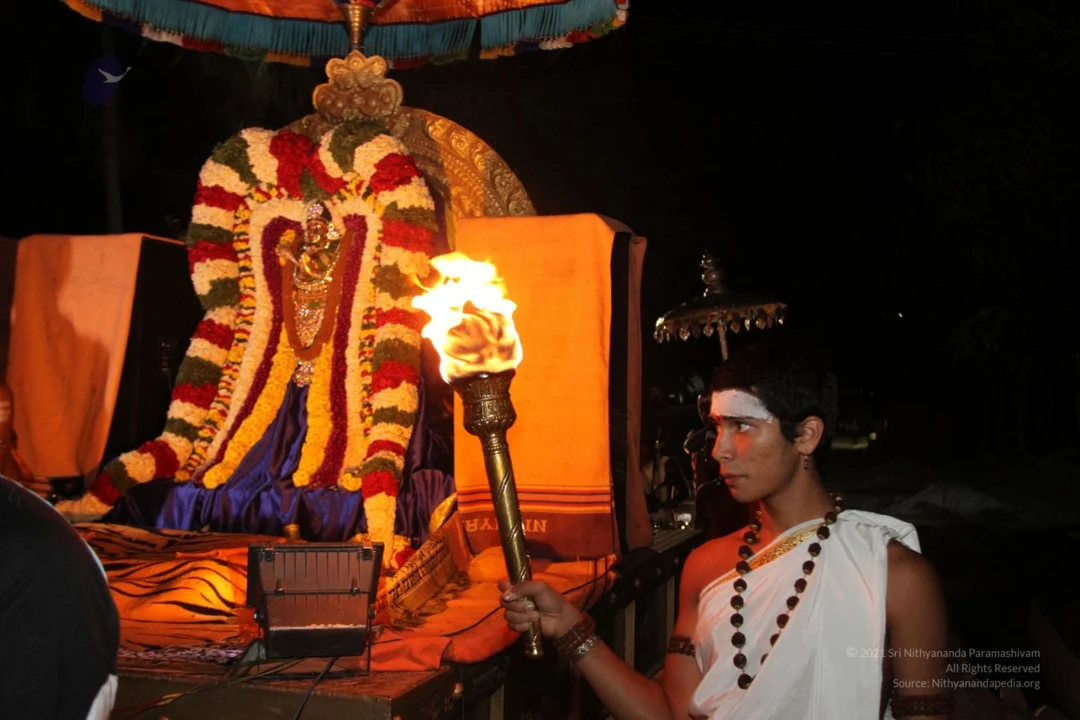
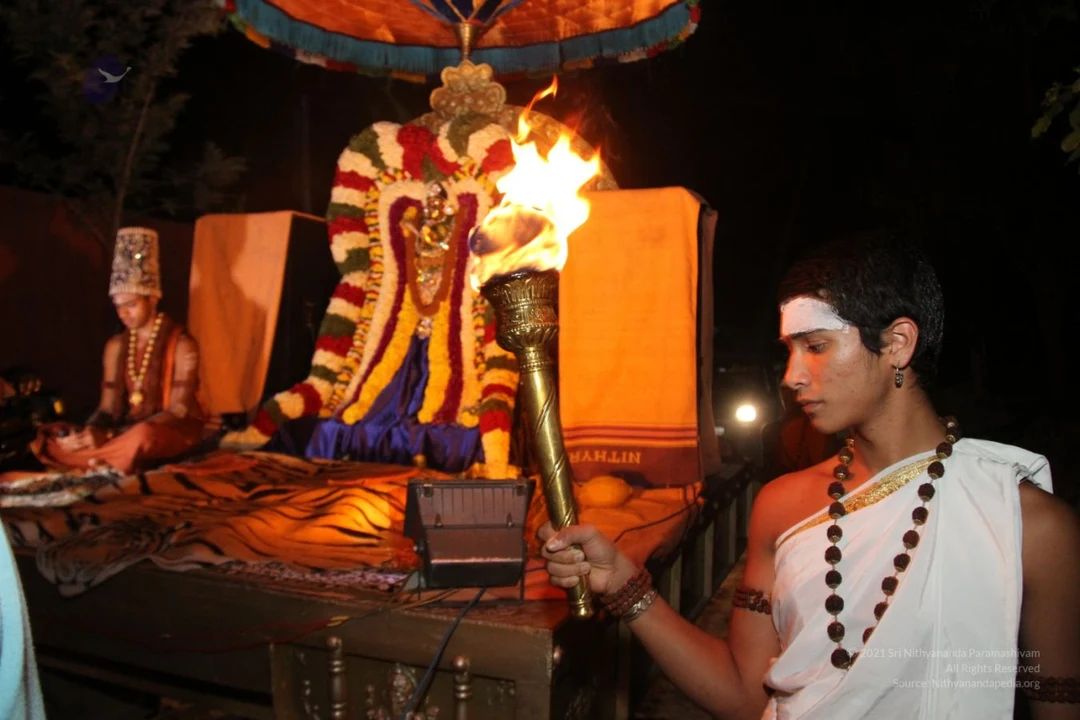
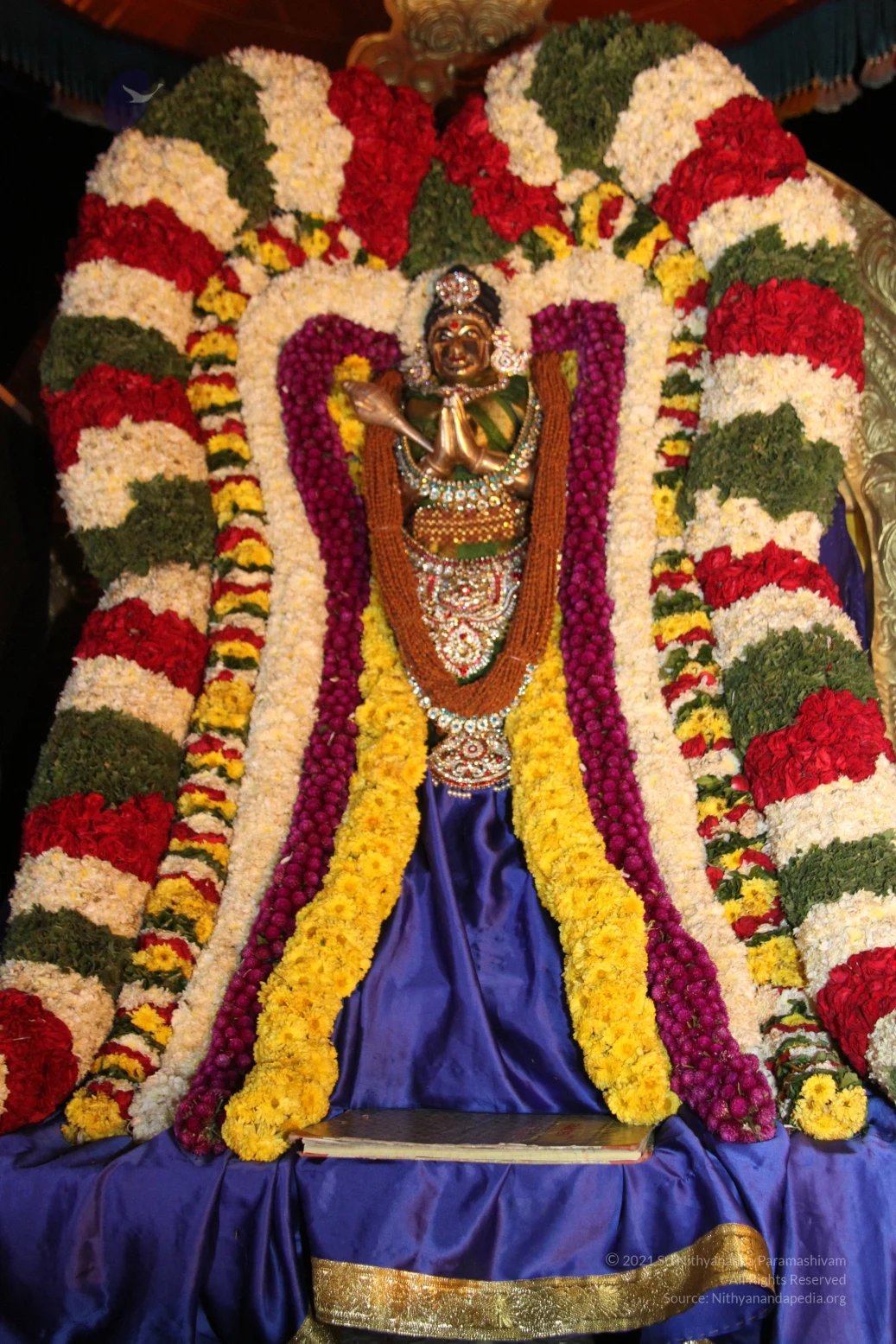
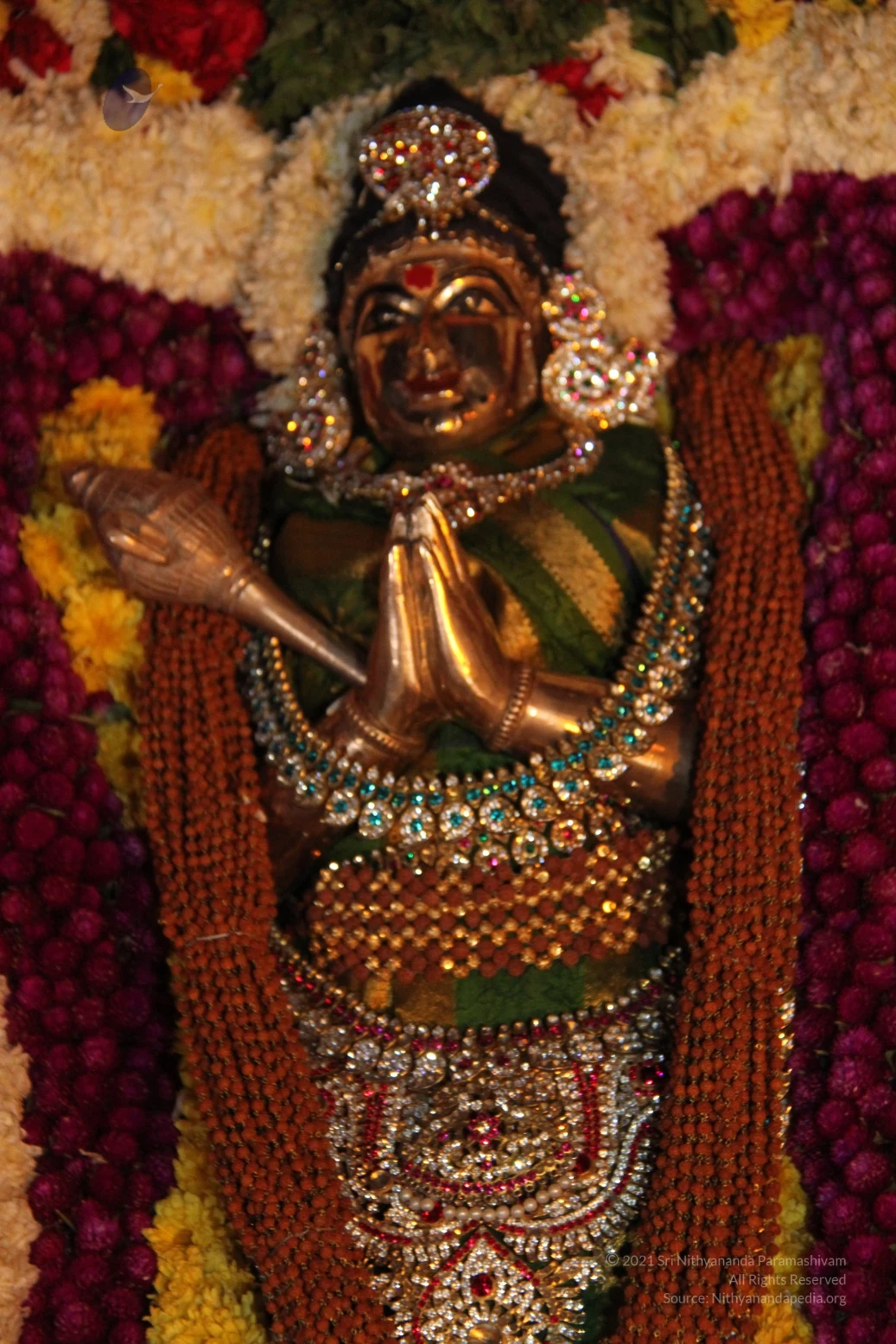
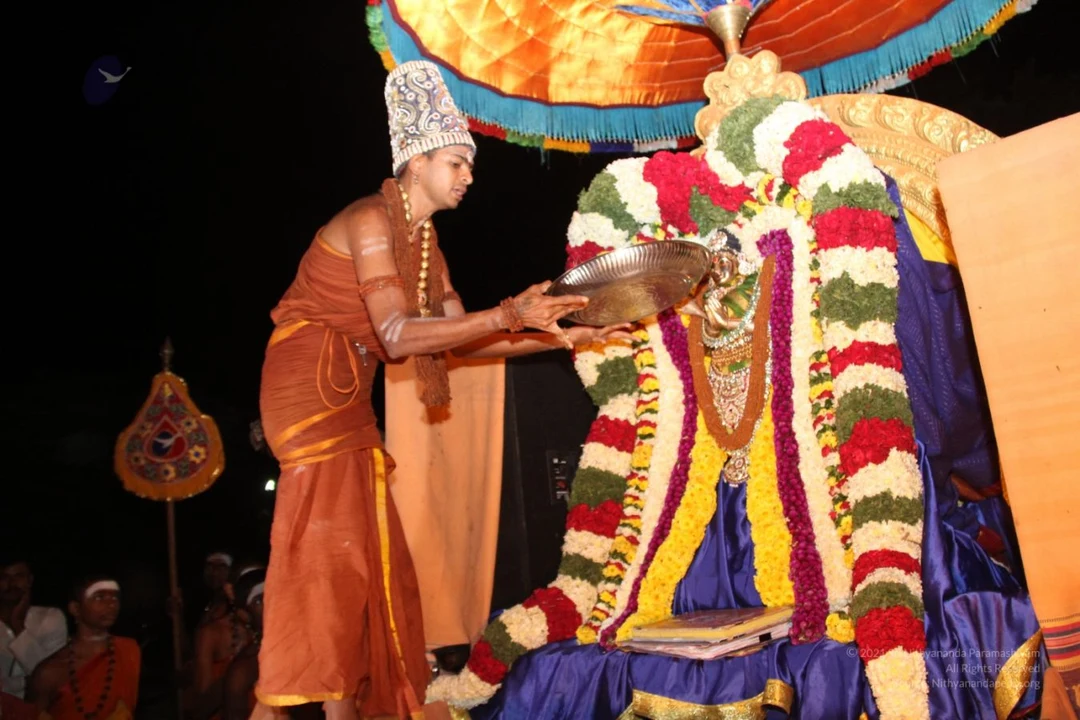
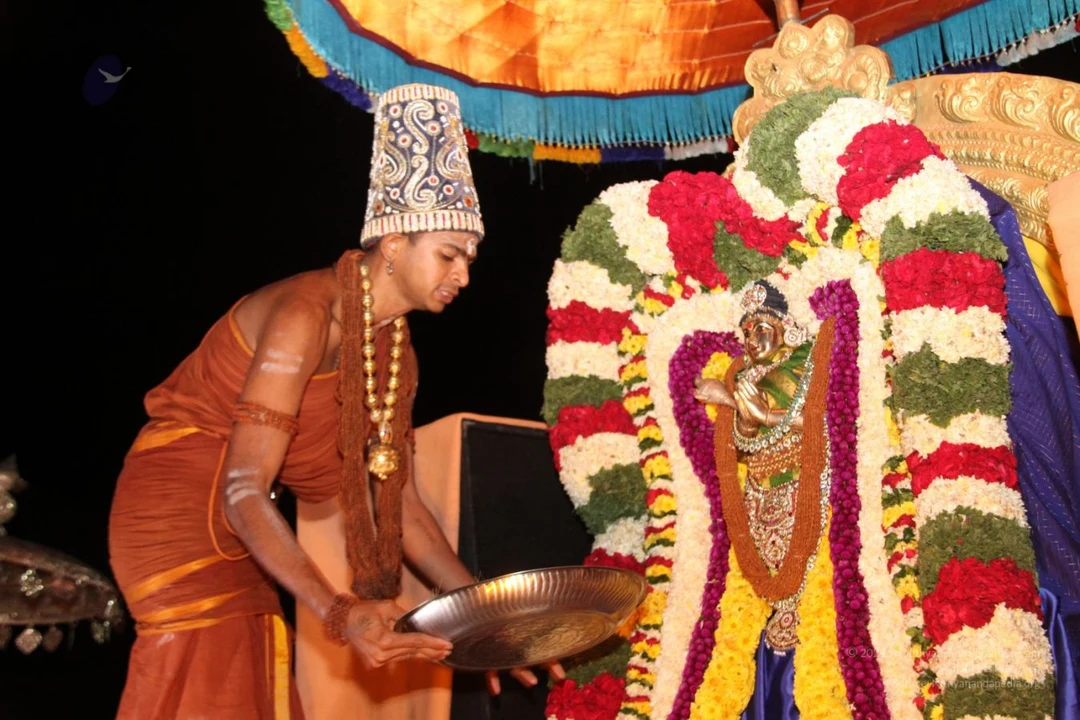
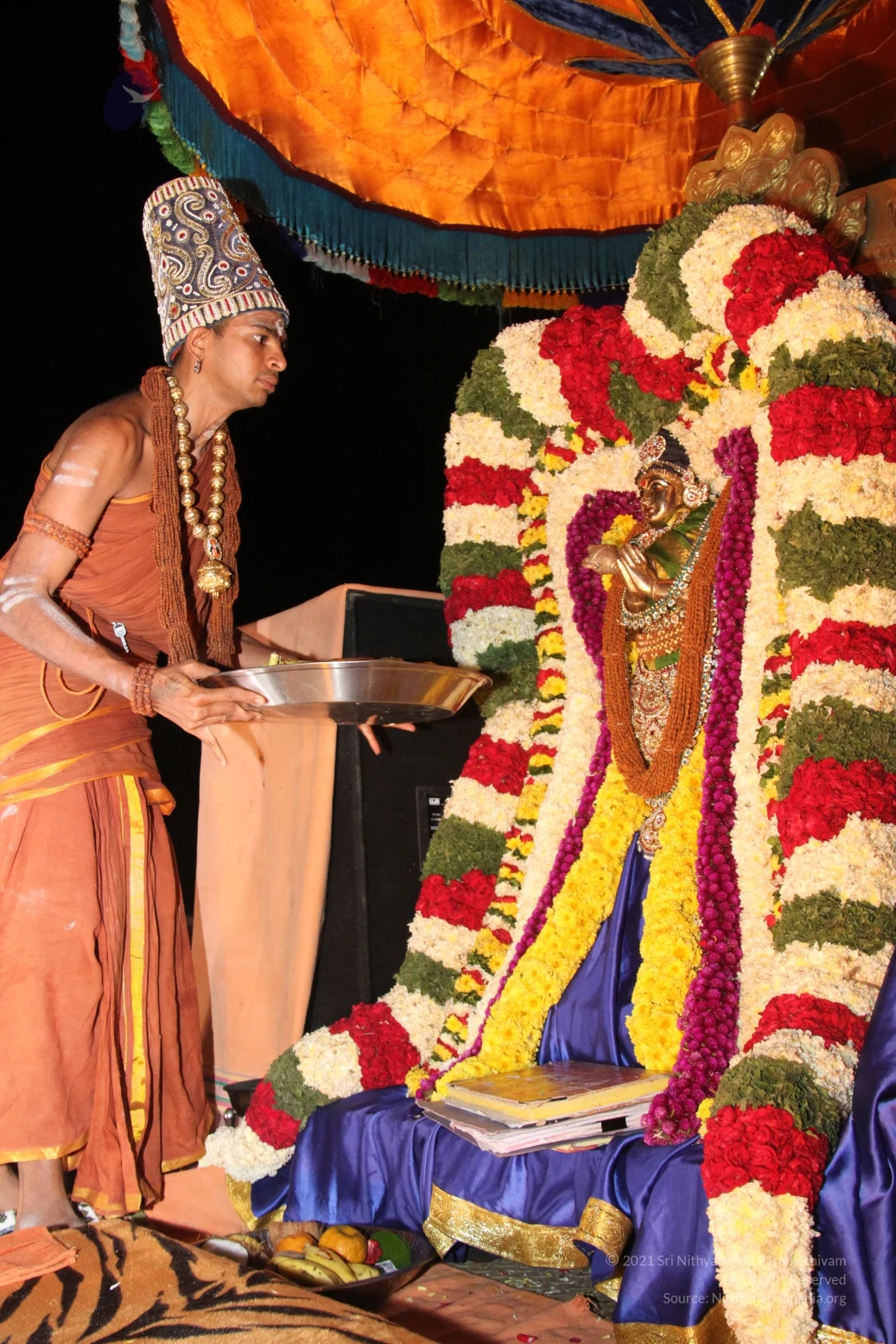
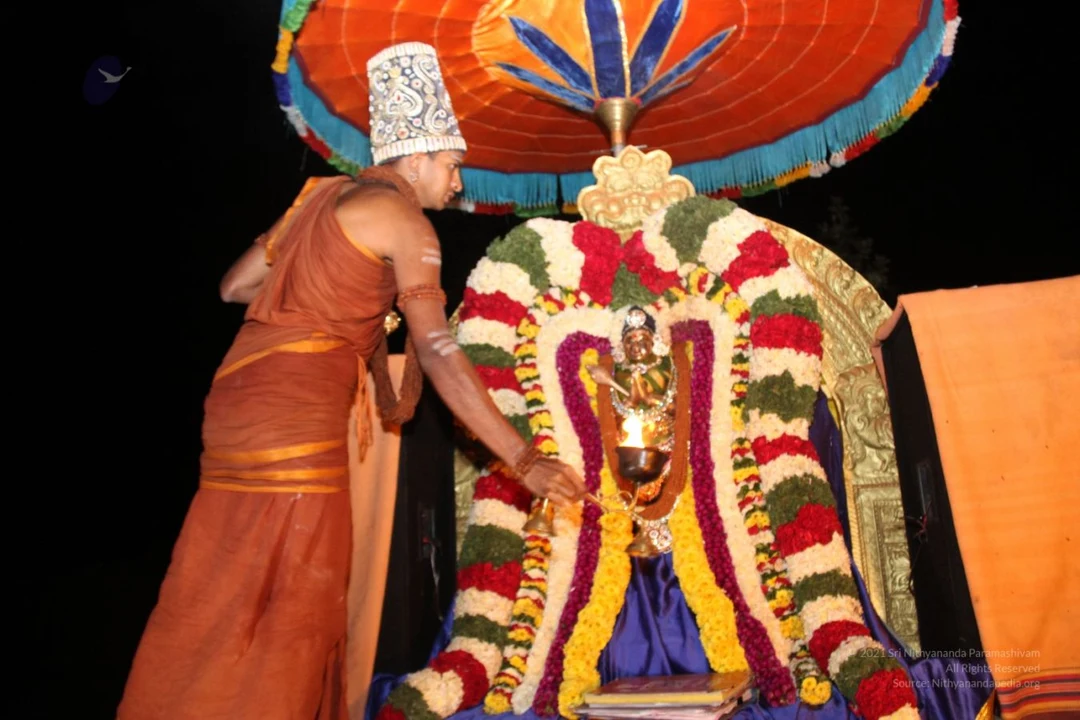
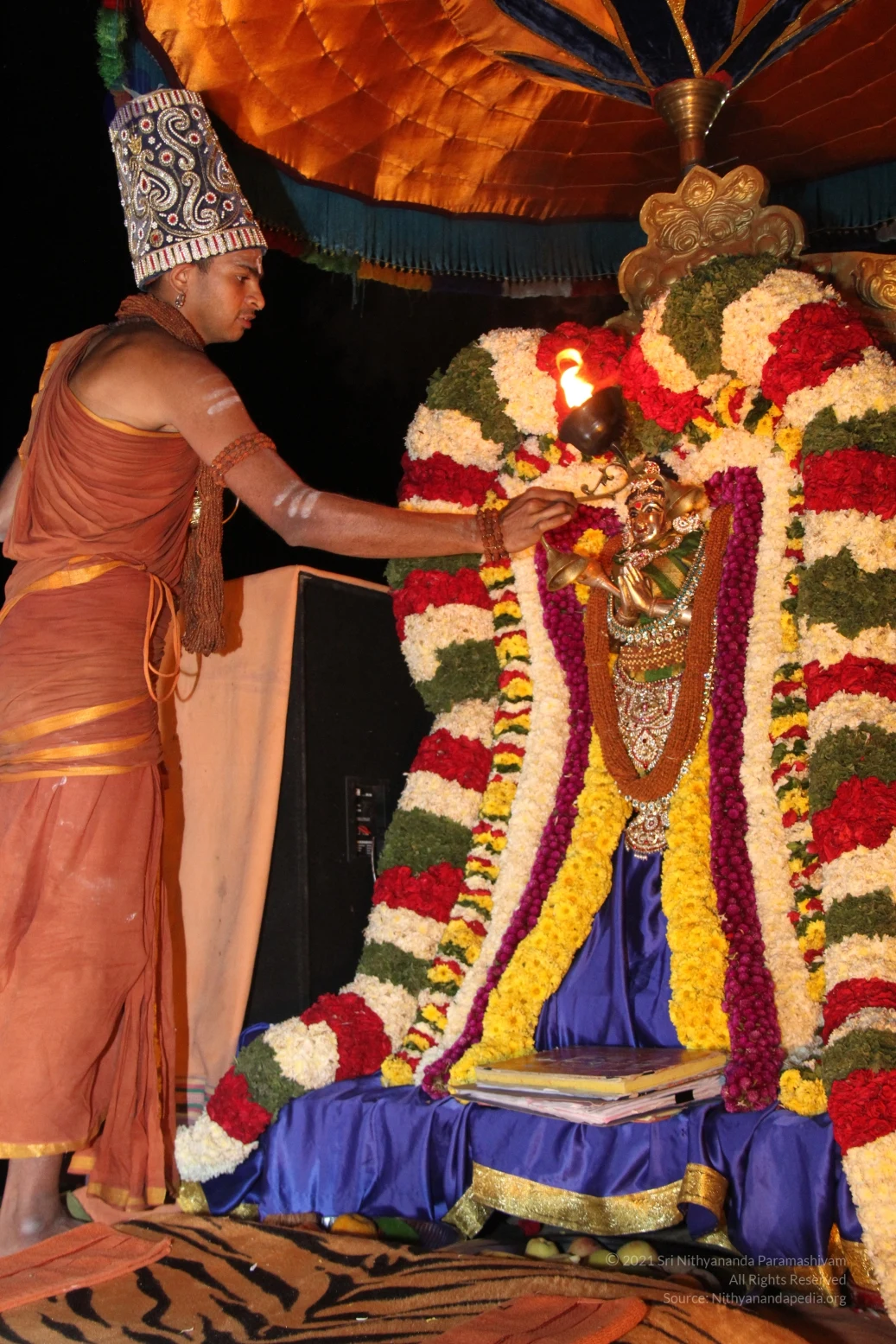
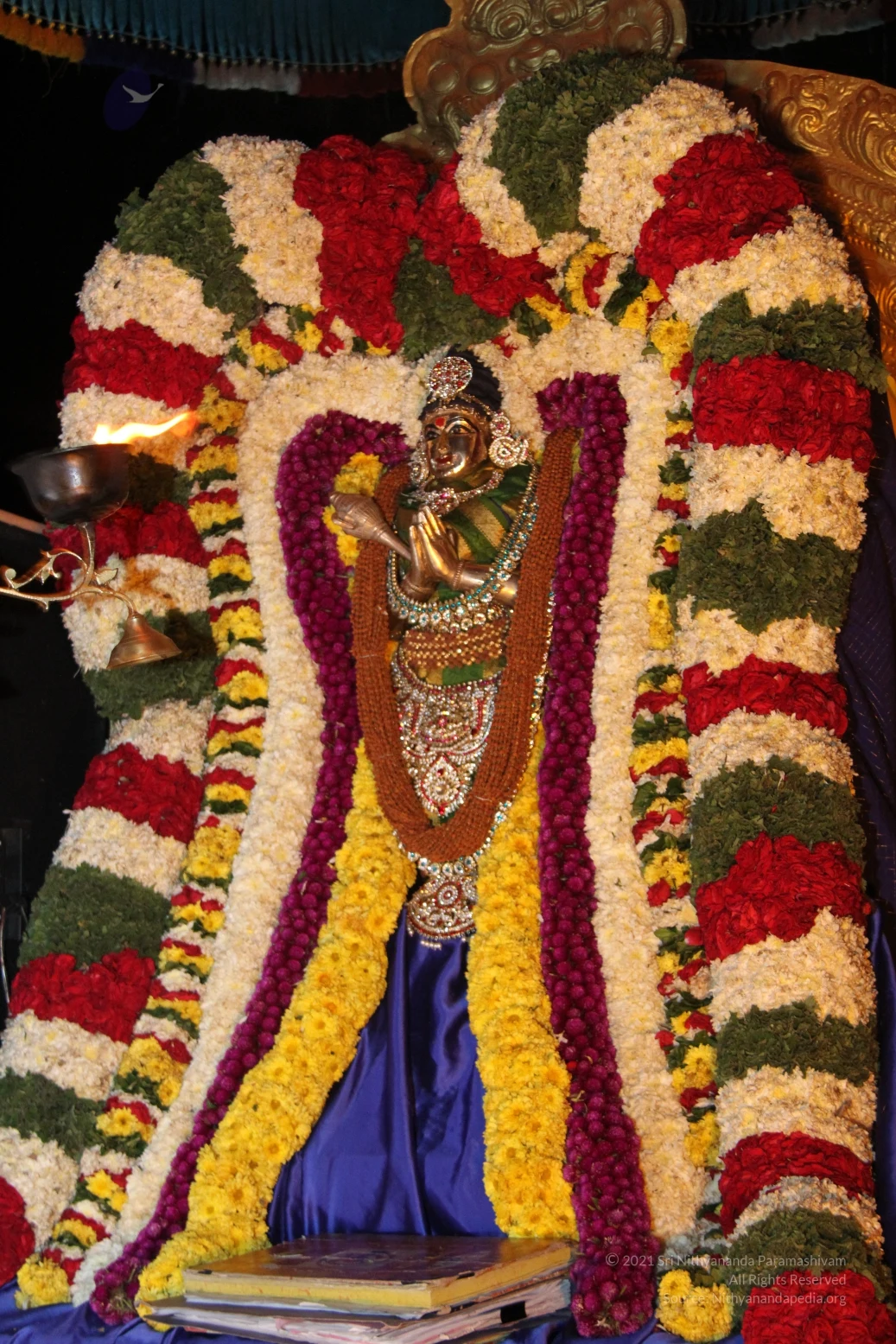
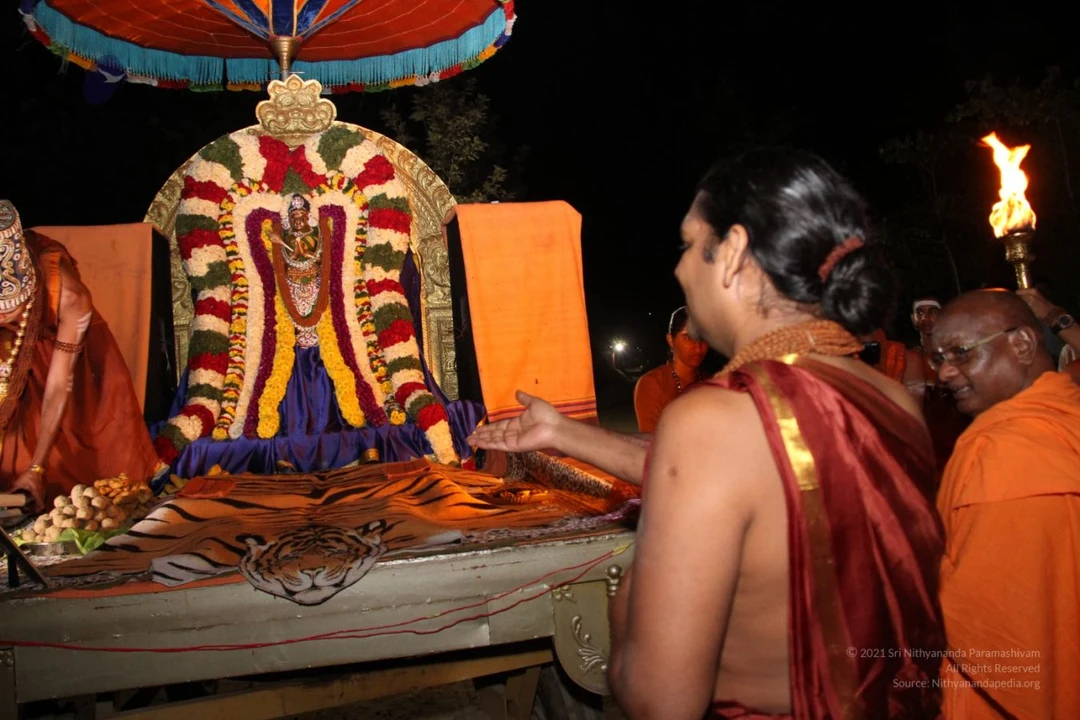
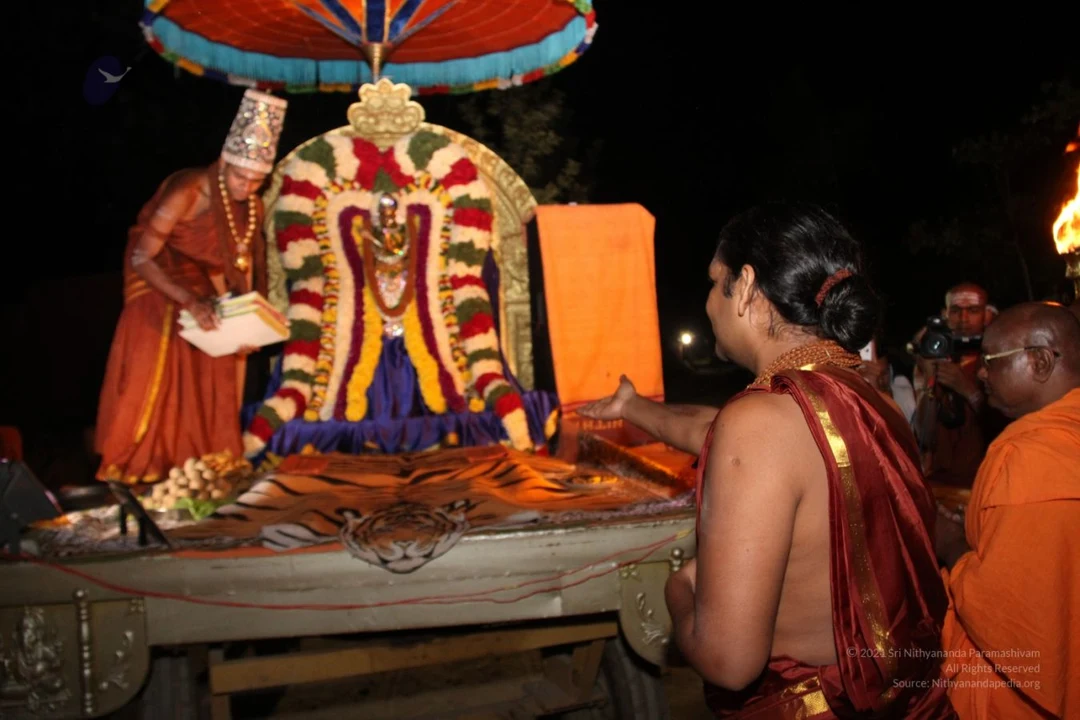
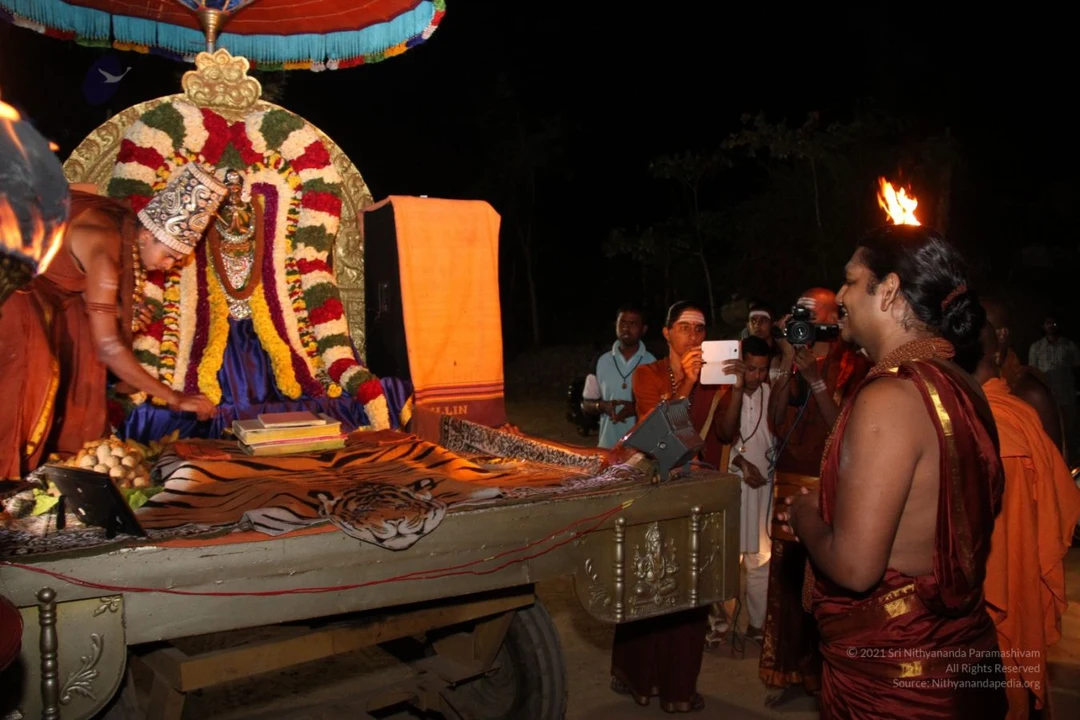
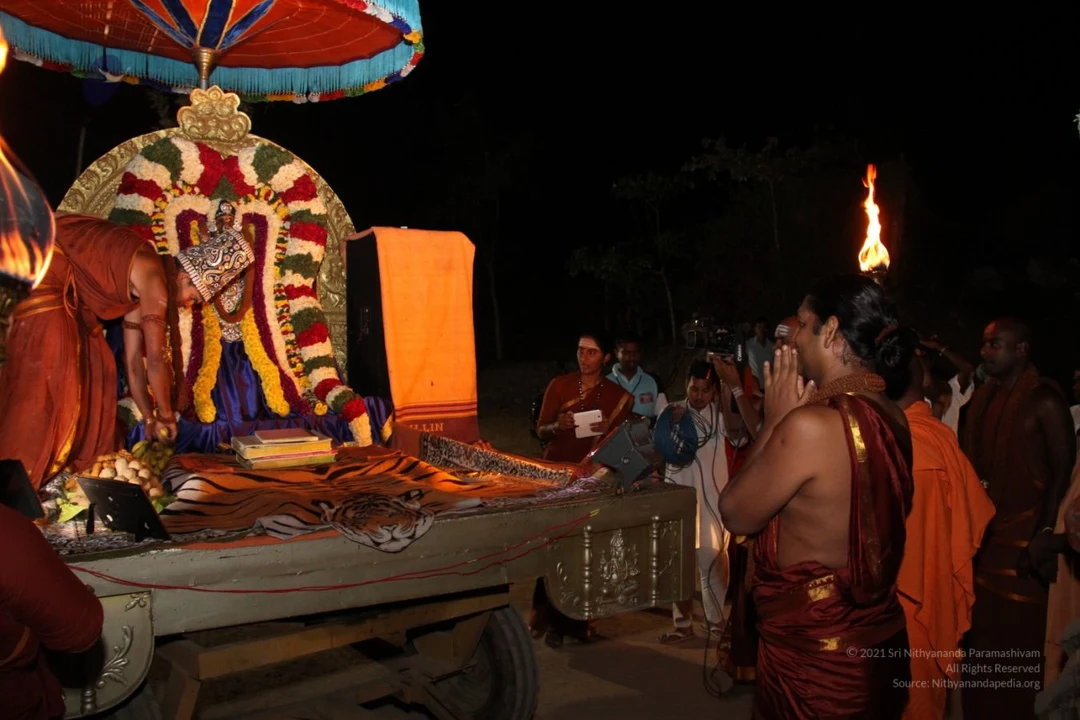
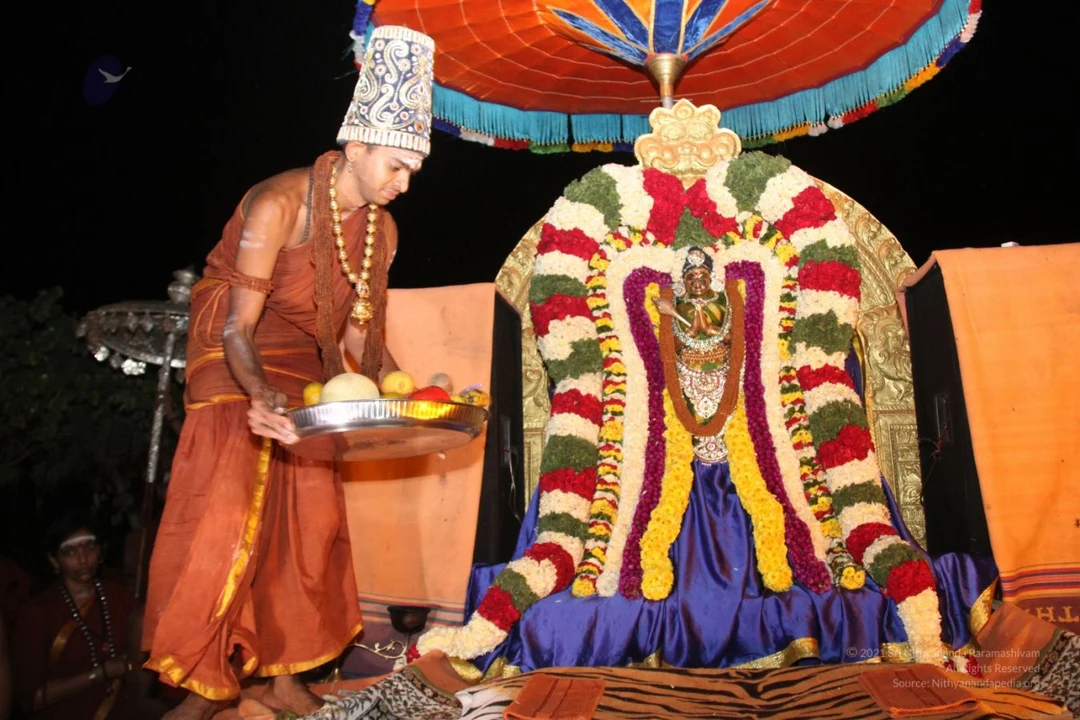
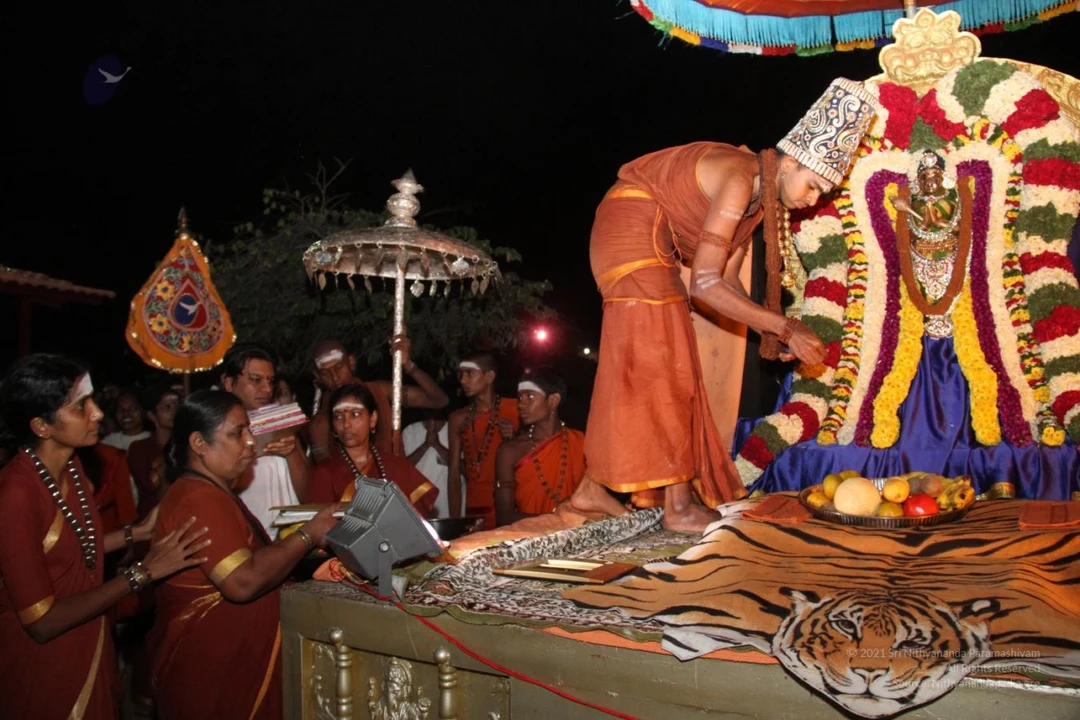
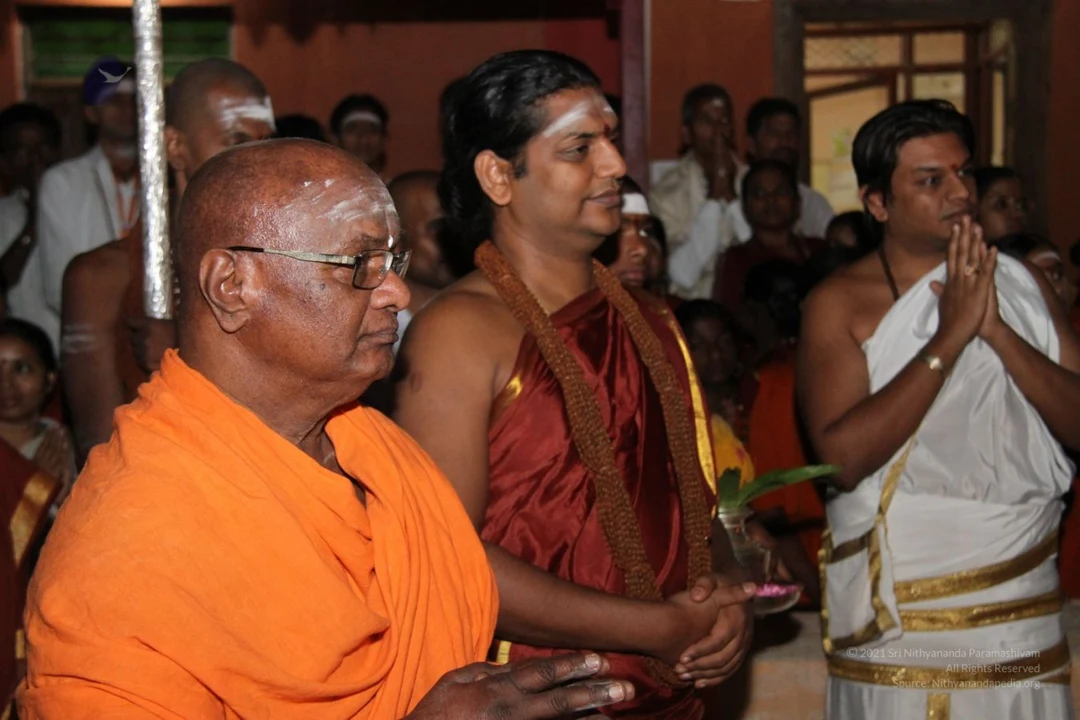
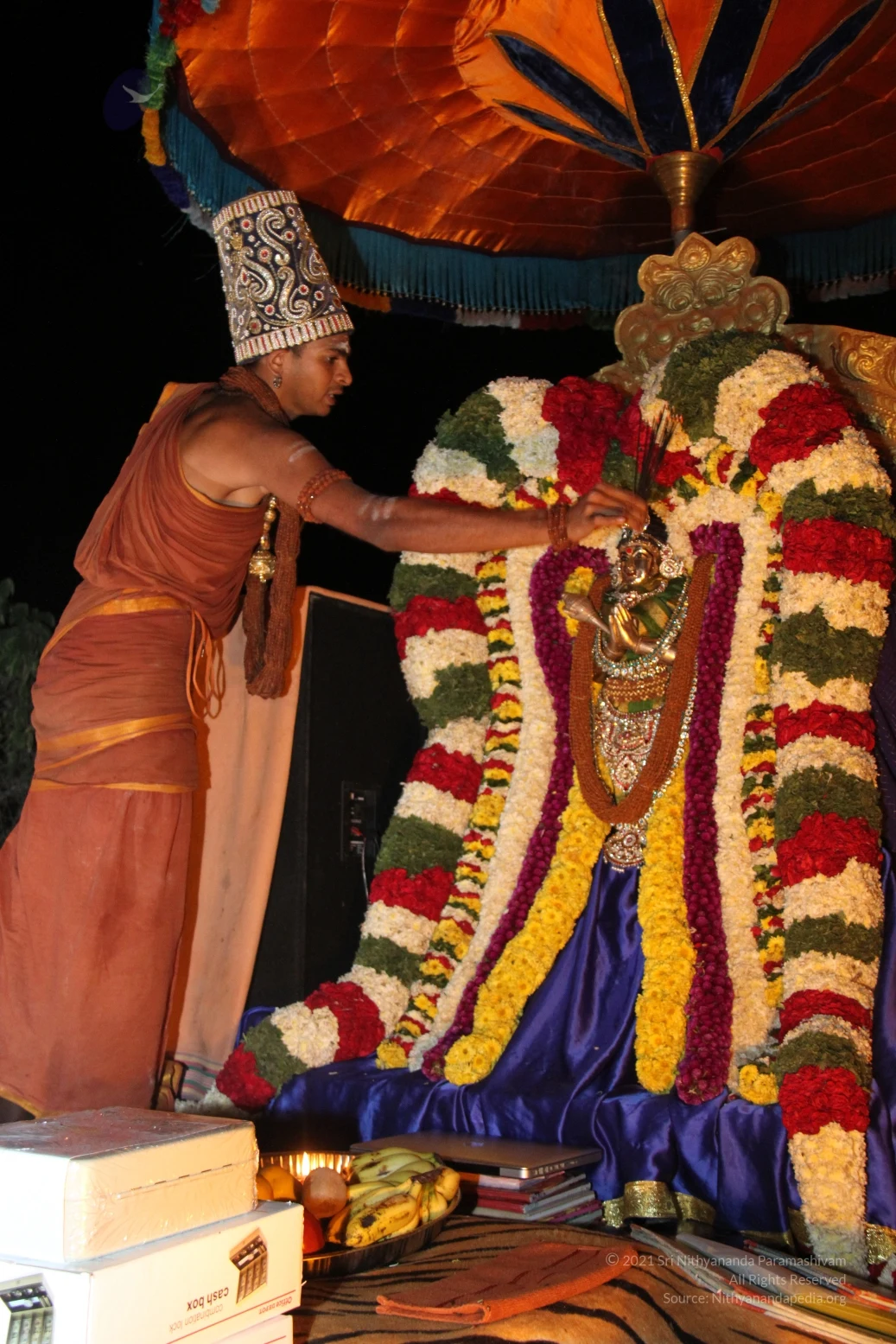
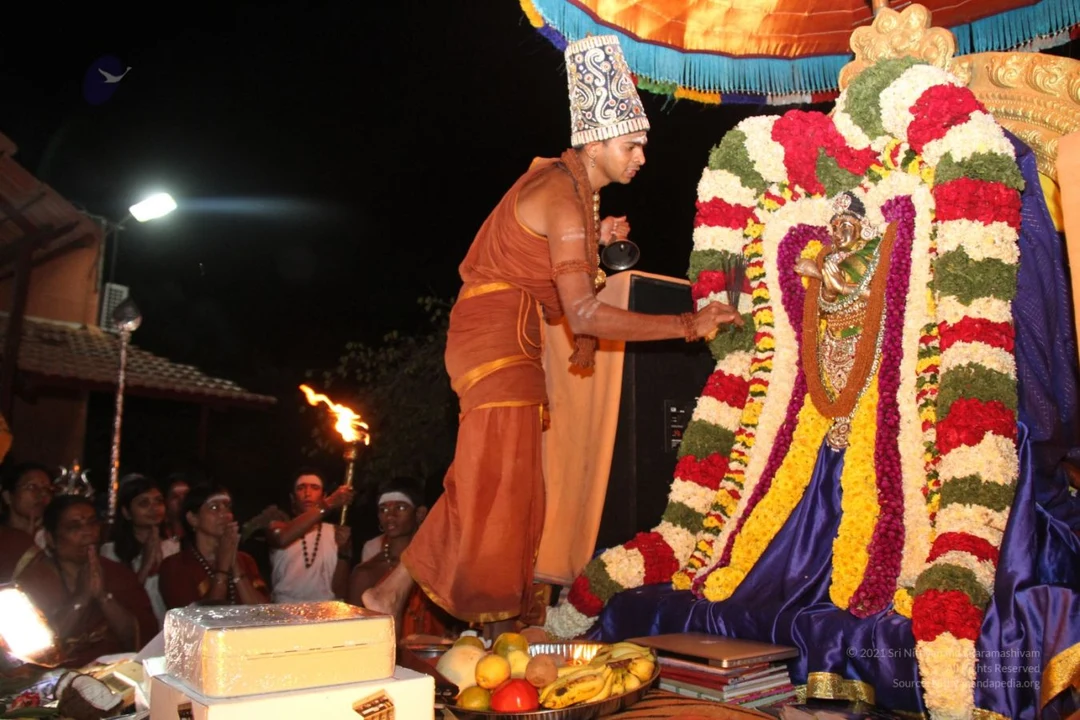
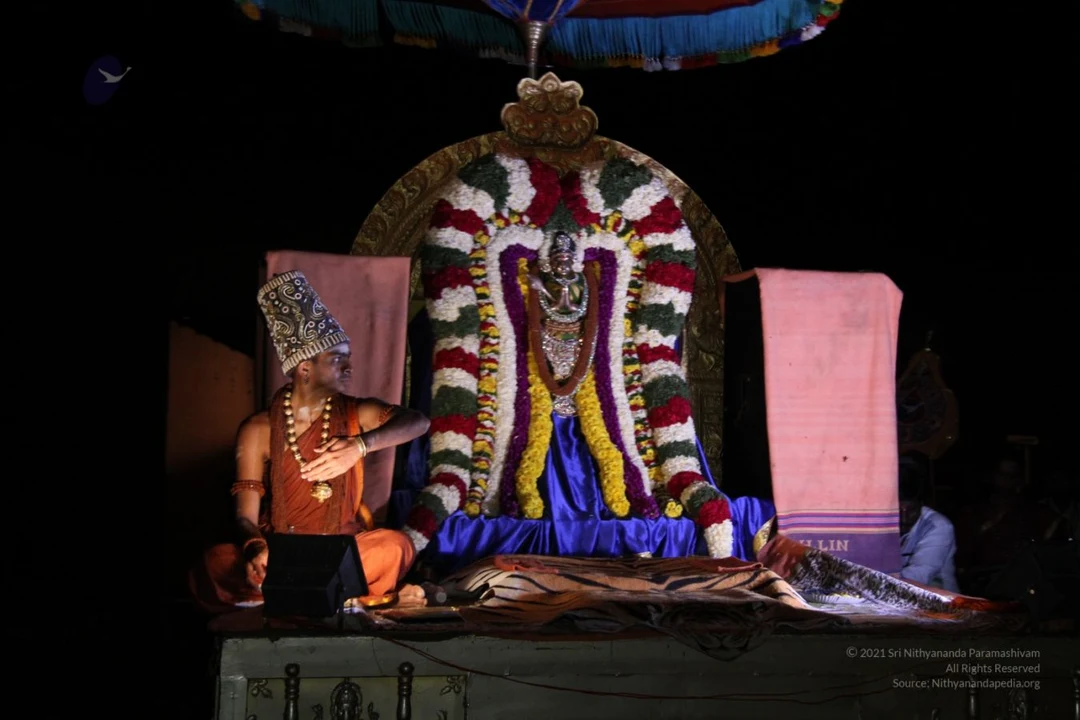
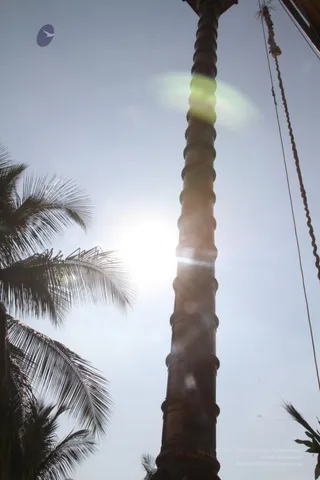
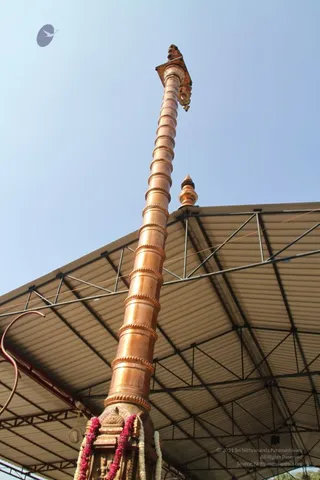
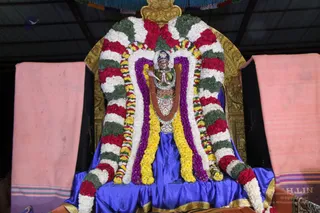
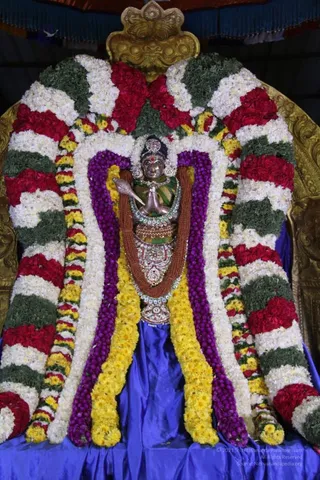
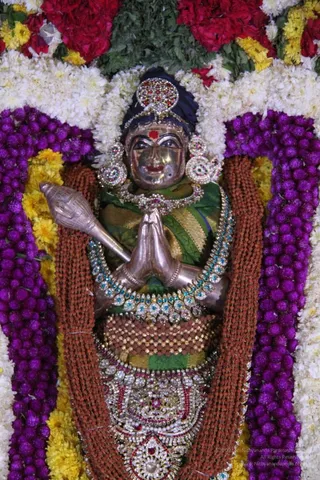
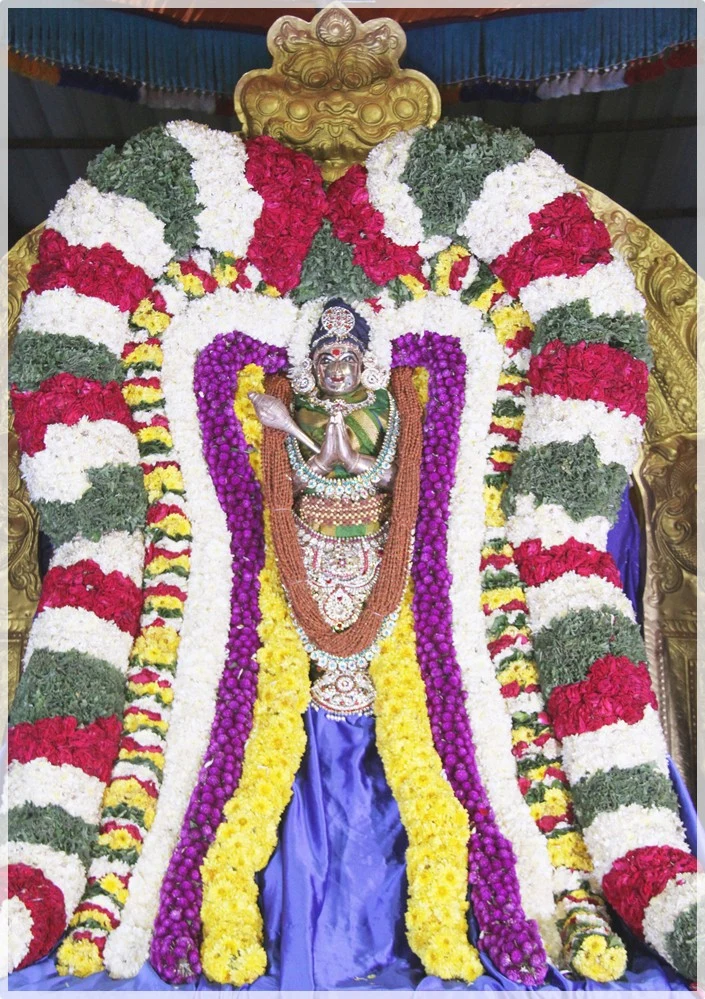
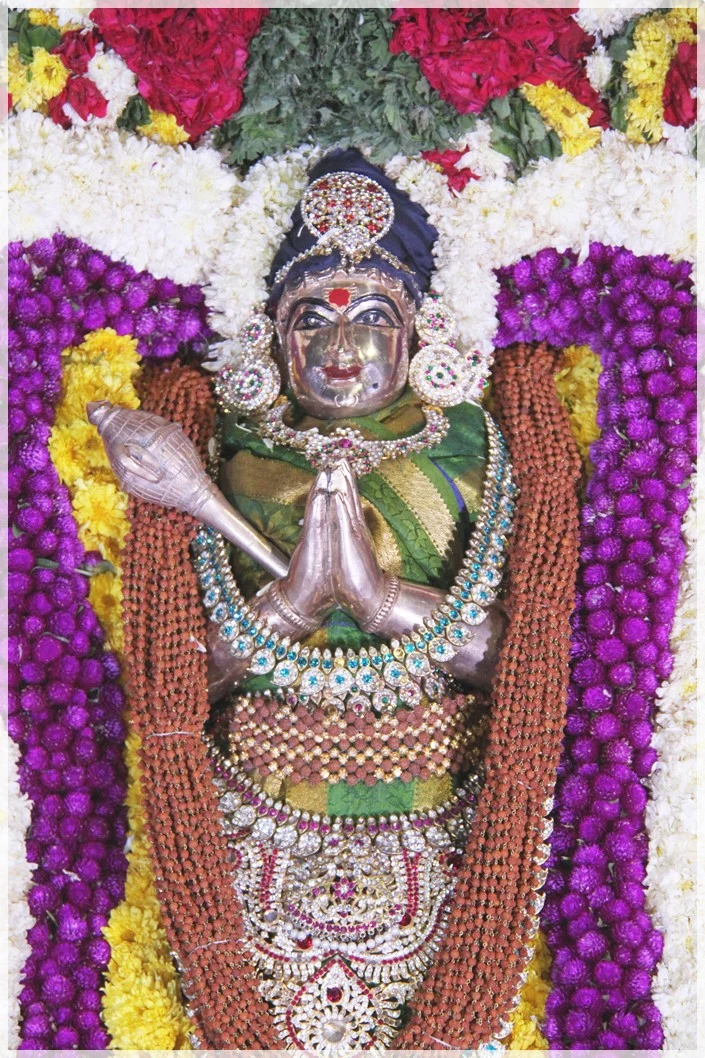
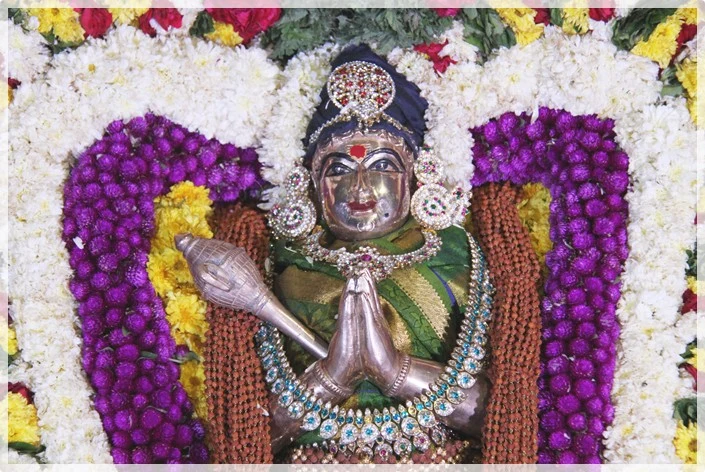
Low-angle photograph of a tall wooden ritual pole with spiral-carved, banded segments rising against a pale hazy sky, with a bright sun flare near its middle. Coconut palm fronds frame the left edge, and a twisted rope or cord hangs beside the pole on the right, with a bamboo-like ornamental top at the upper right. No people are visible, and no a person candidate appears in the scene. A small blue bird-shaped logo sits in the upper left sky.A tall, polished copper dhwajastambha (flagstaff) rises steeply against a clear blue sky, its segmented shaft ringed with decorative bands and topped by an ornate finial with a small carved crown-like element. Its base is wrapped with pink and white flower garlands and sits in front of a carved stone plinth on a metal-framed open canopy roof. Two lower finial pieces appear along the roof edge. No people are visible.A small metal deity murti stands centred on a blue draped platform beneath a large arch of garlands in red, white, green, purple and yellow flowers. The murti wears a jewelled ornamental necklace and a crown and holds its hands in a gesture. Gold-coloured ornamental panels frame the arch, with pink cloth hangings on either side and a yellow-trimmed blue cloth below. No physical people are visible in the scene.A small metal deity murti with folded hands stands on a blue satin cloth, framed by a large arch of garlands in white, red, green and yellow flowers, with purple and yellow flower strands and a brown bead necklace; ornate gold silver jewellery and a jewelled crown adorn the figure. Behind is a gilded carved backdrop with a golden makara-style crest. No people are visible in the scene.A close photograph of a metal murti of a deity in a pose of folded hands in namaste, adorned with a jewelled crown, large jewelled earrings, a red bindi on the forehead, layered jewelled necklaces and a green and gold silk garment. Rudraksha mala strands hang over the shoulders and sides, and the figure is framed by garlands of purple globe amaranth, yellow marigolds, white jasmine and red roses. No physical people are visible; the figure is a statue, so a person is none.

Arrival-of-SPH-with-Guest

70 photosSource gallery
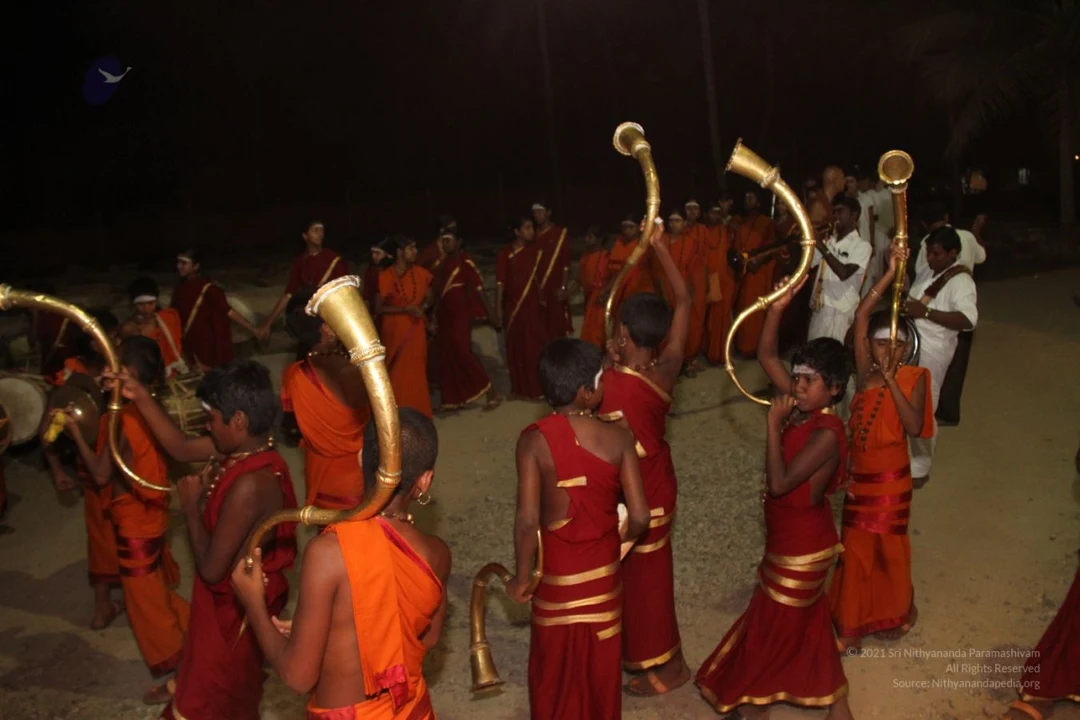
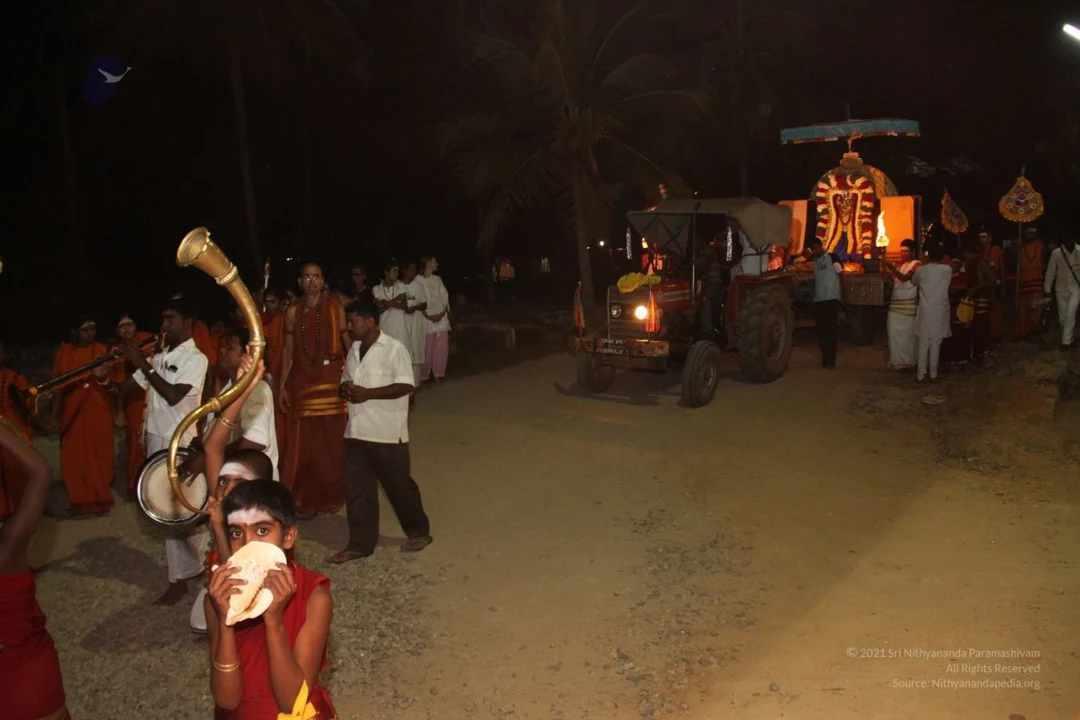
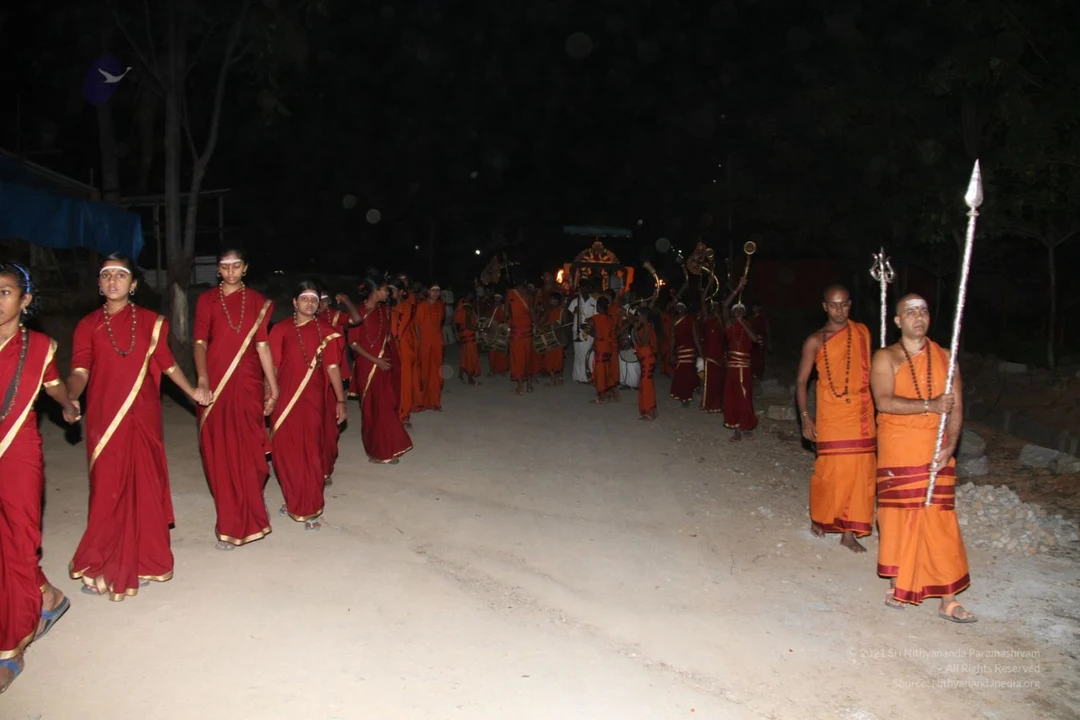
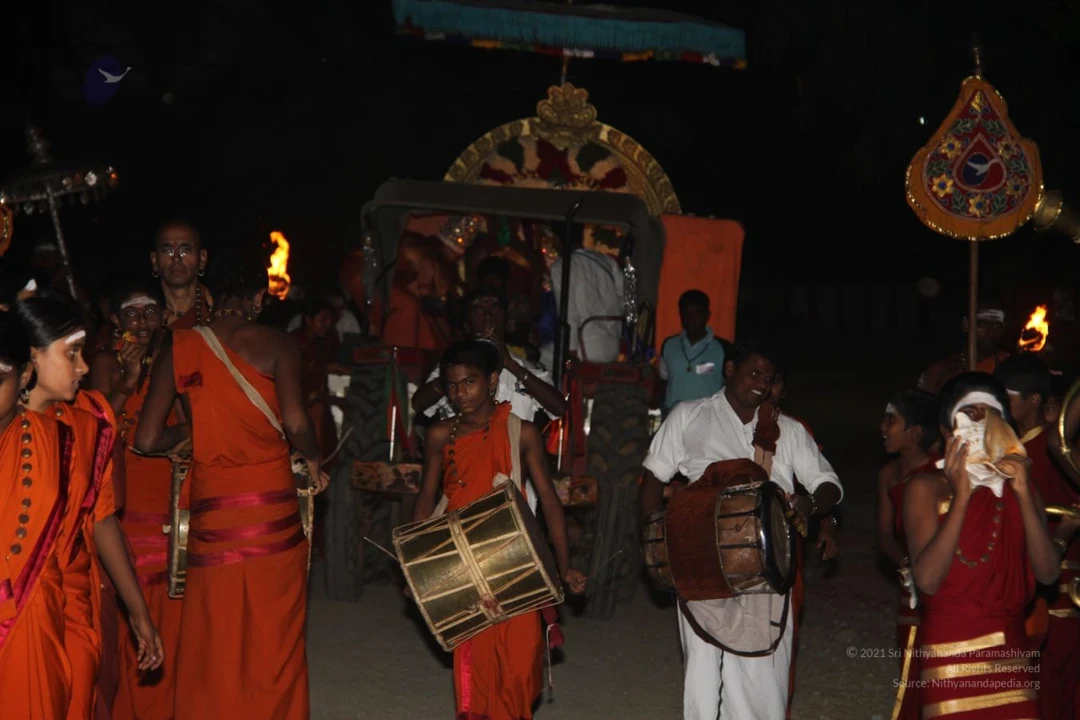
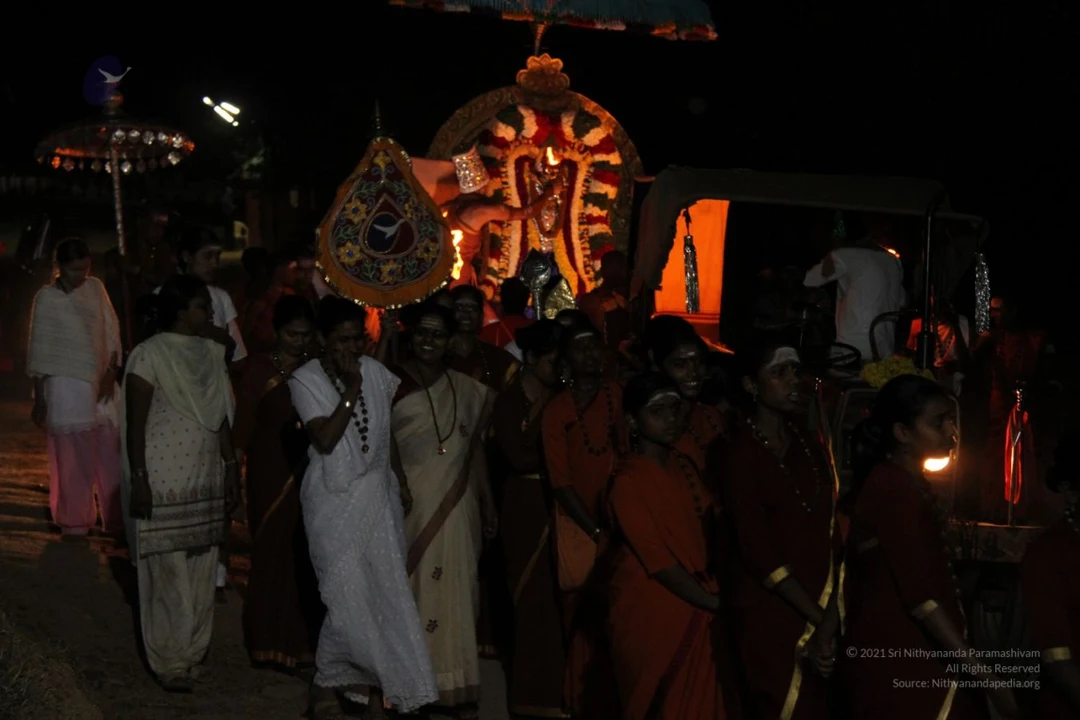
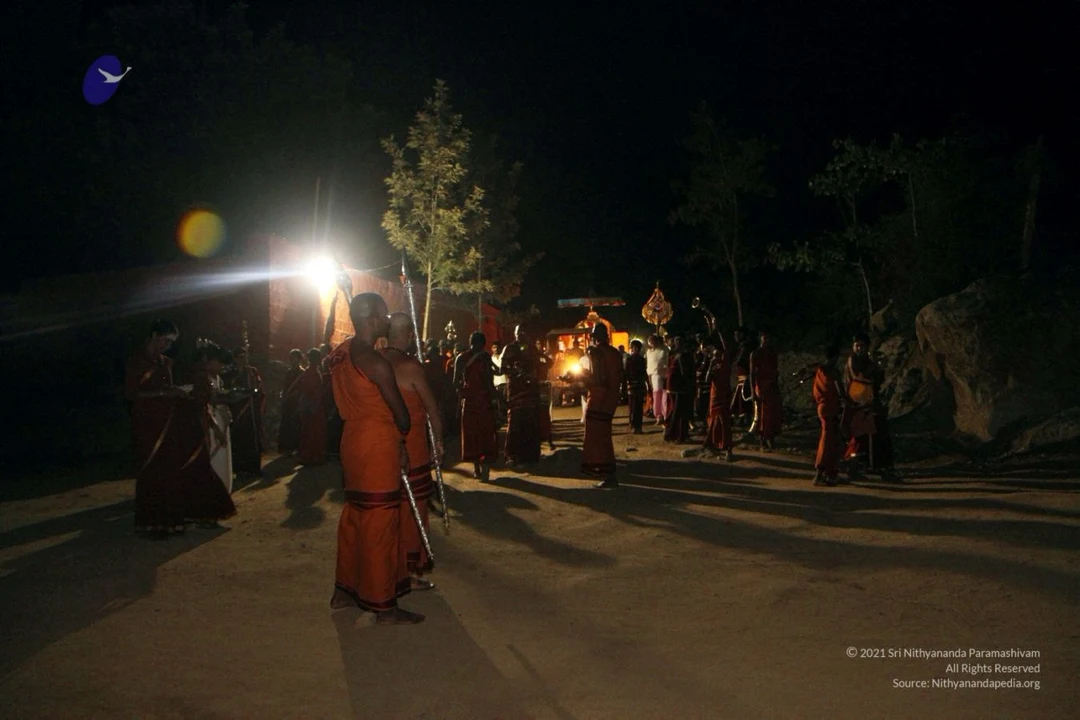
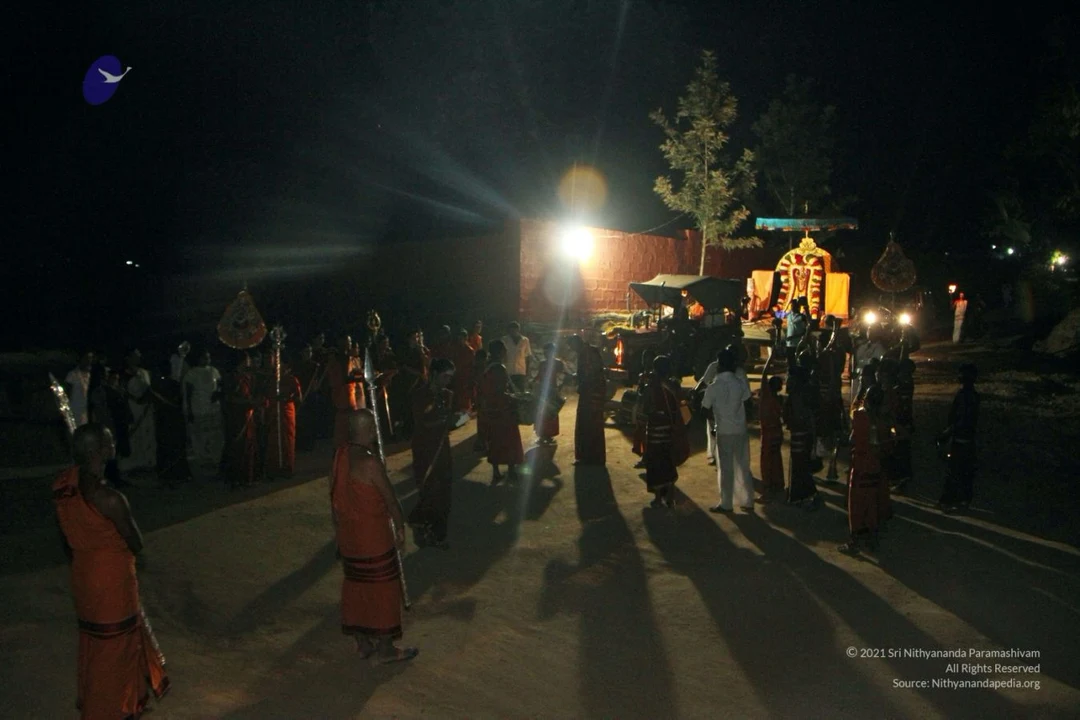
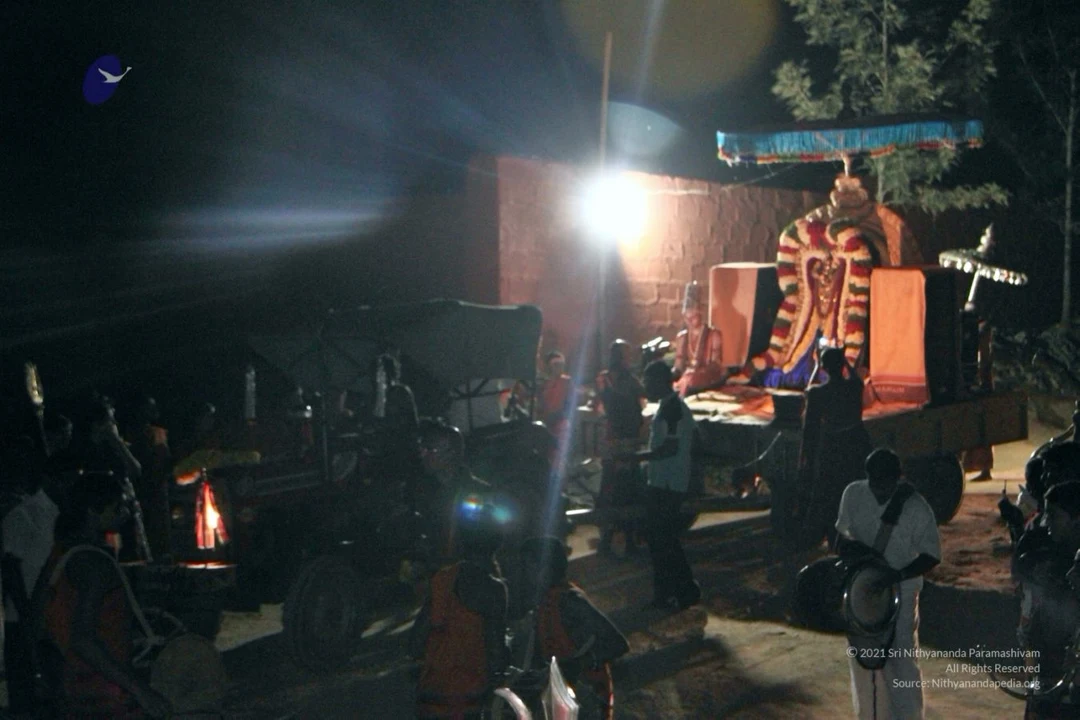
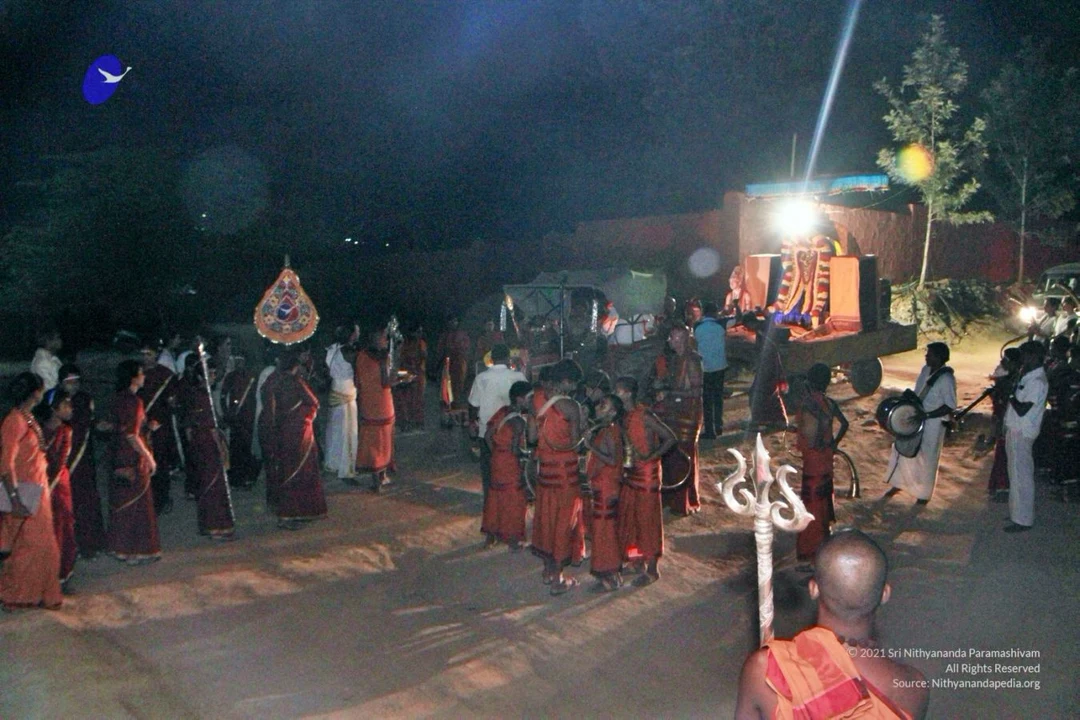
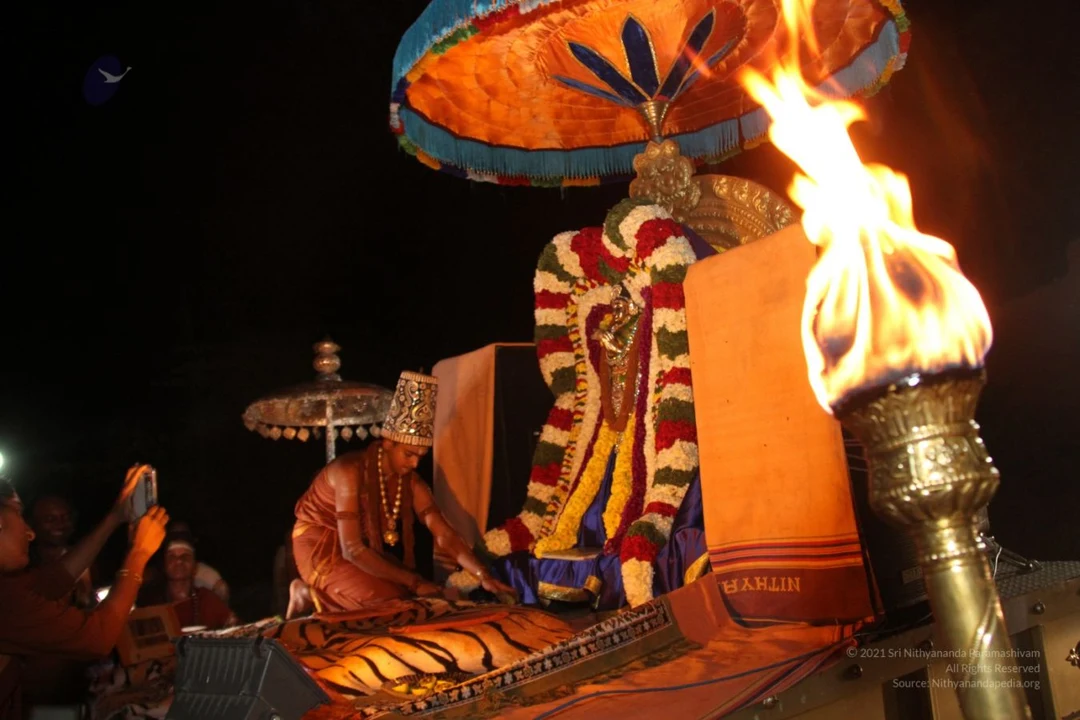
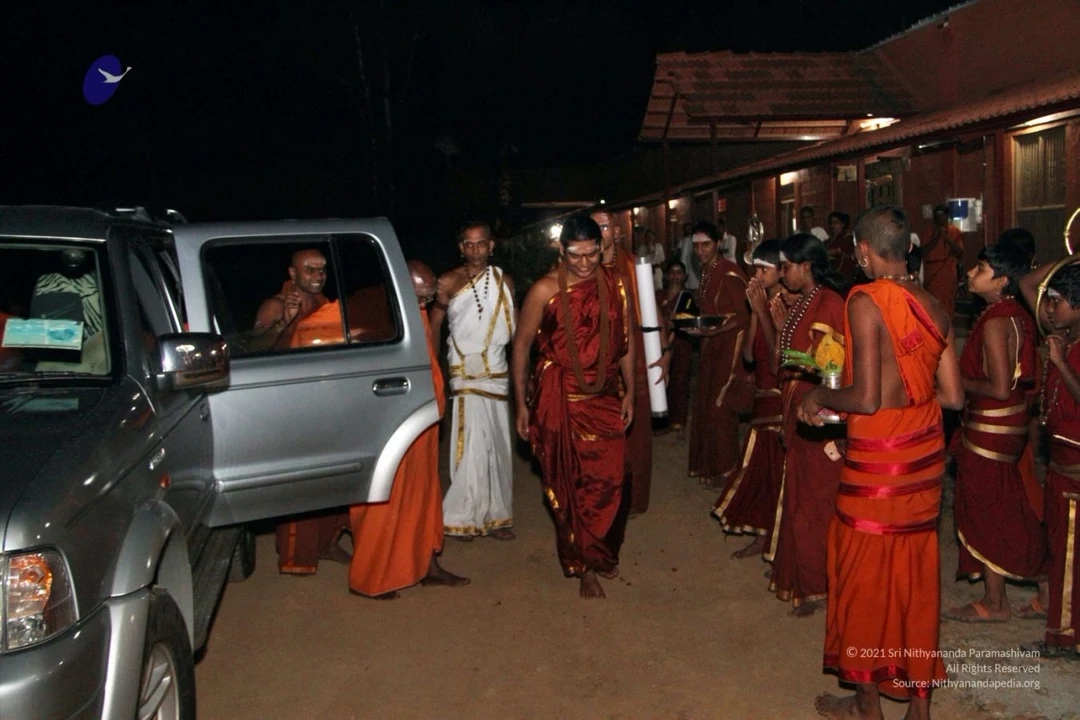
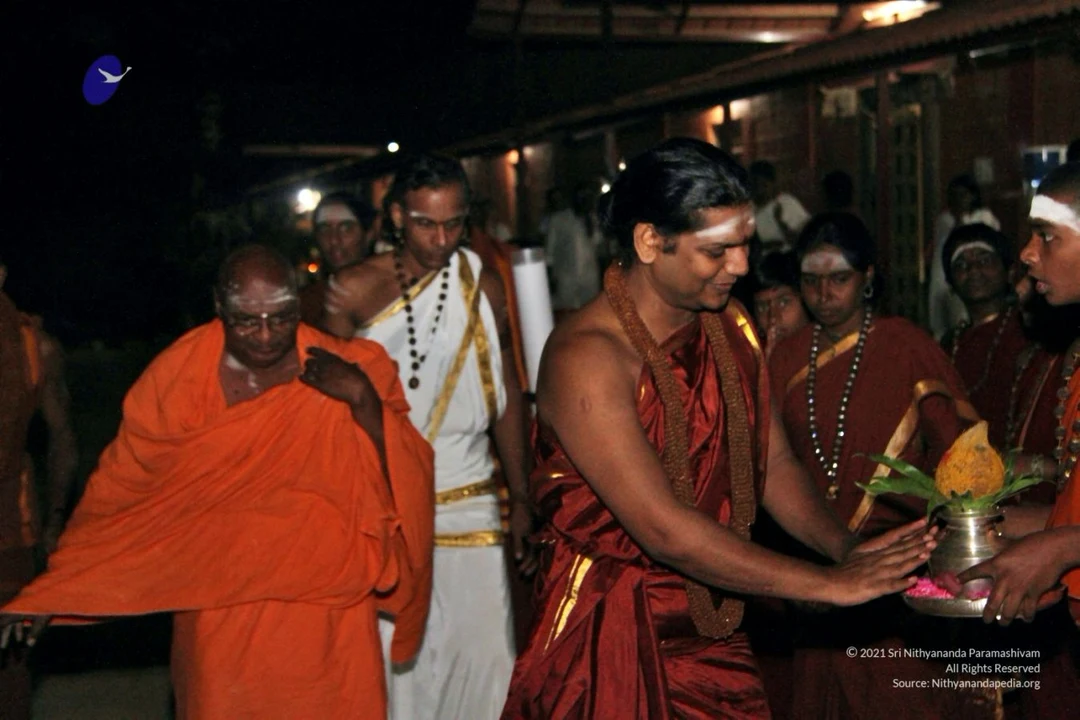
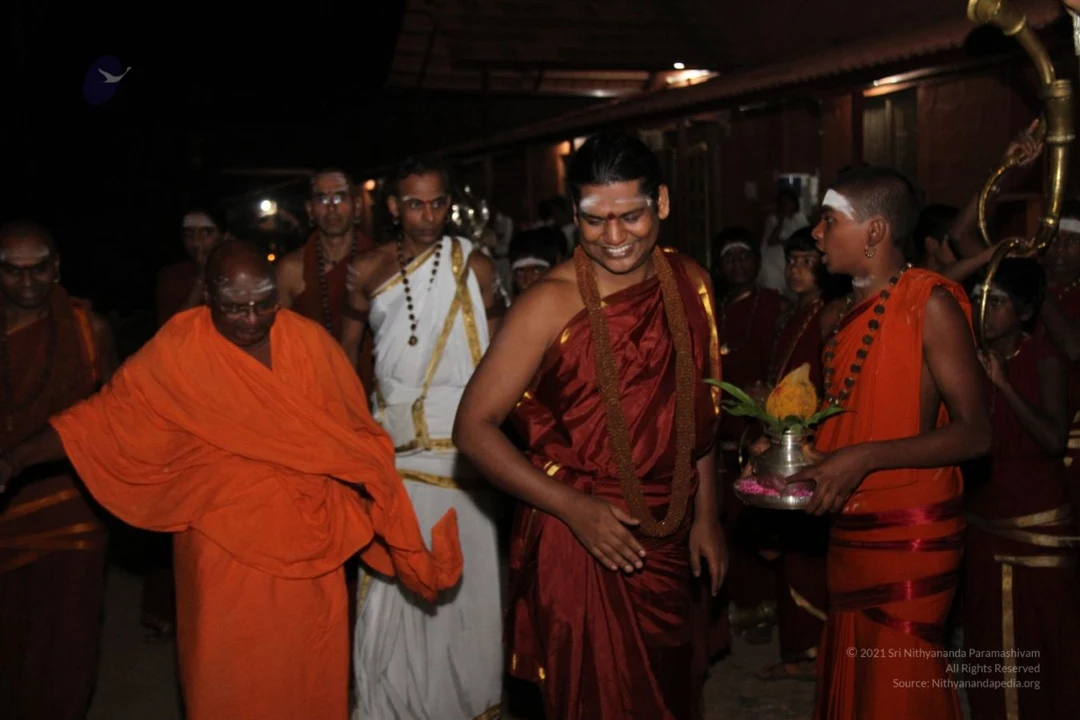
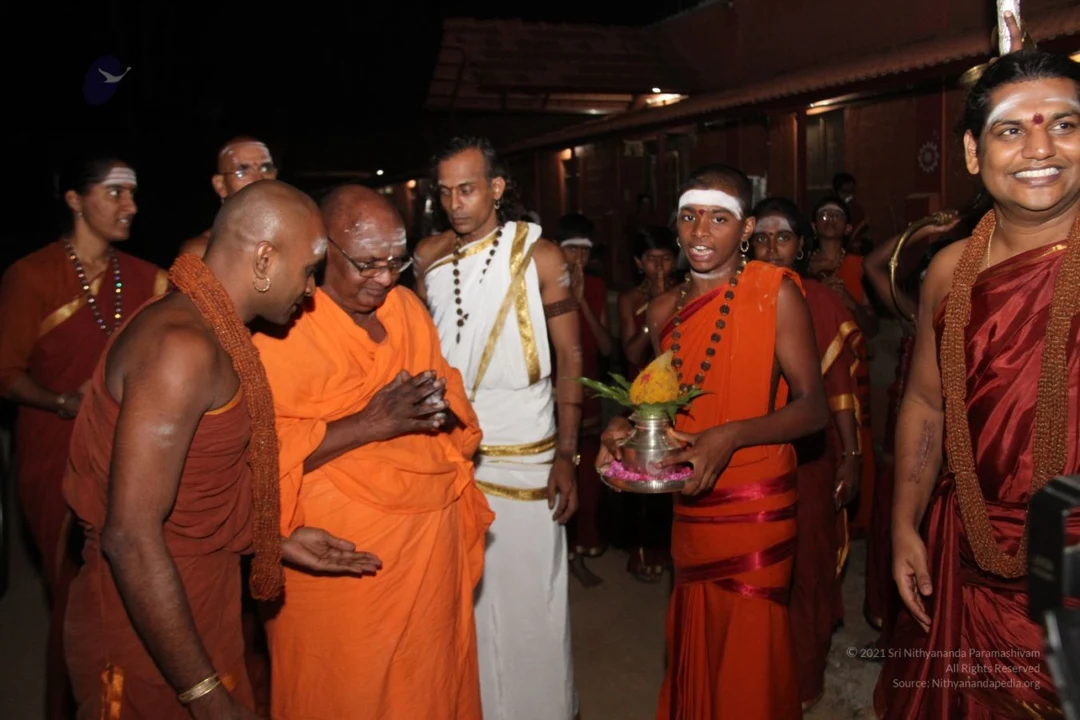
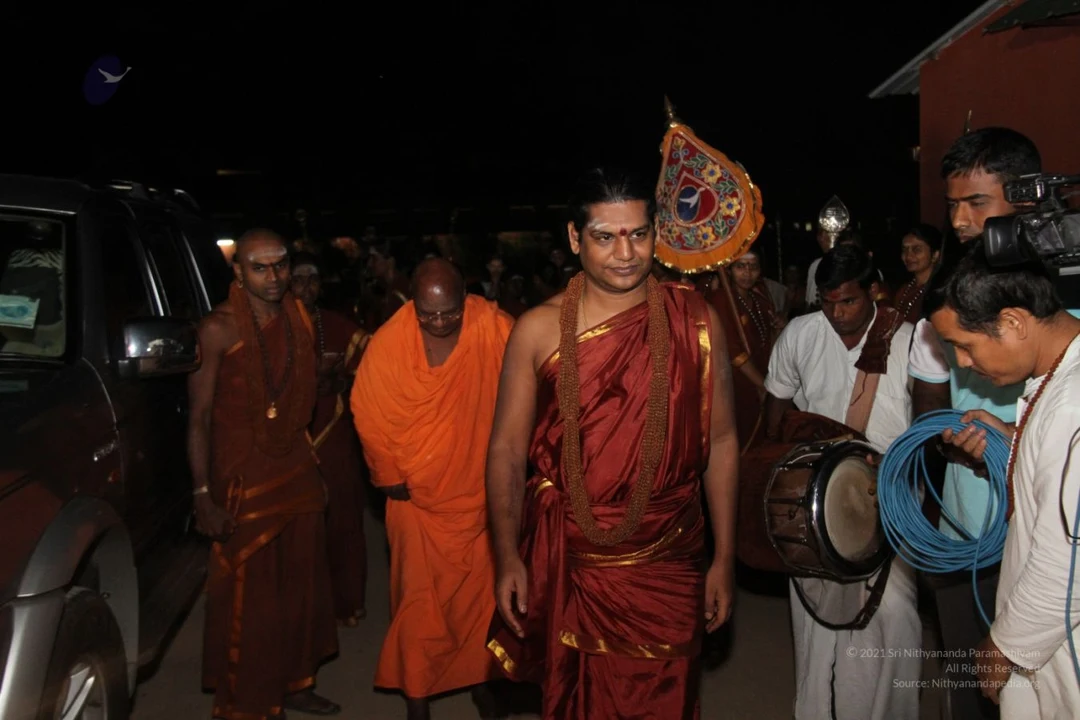
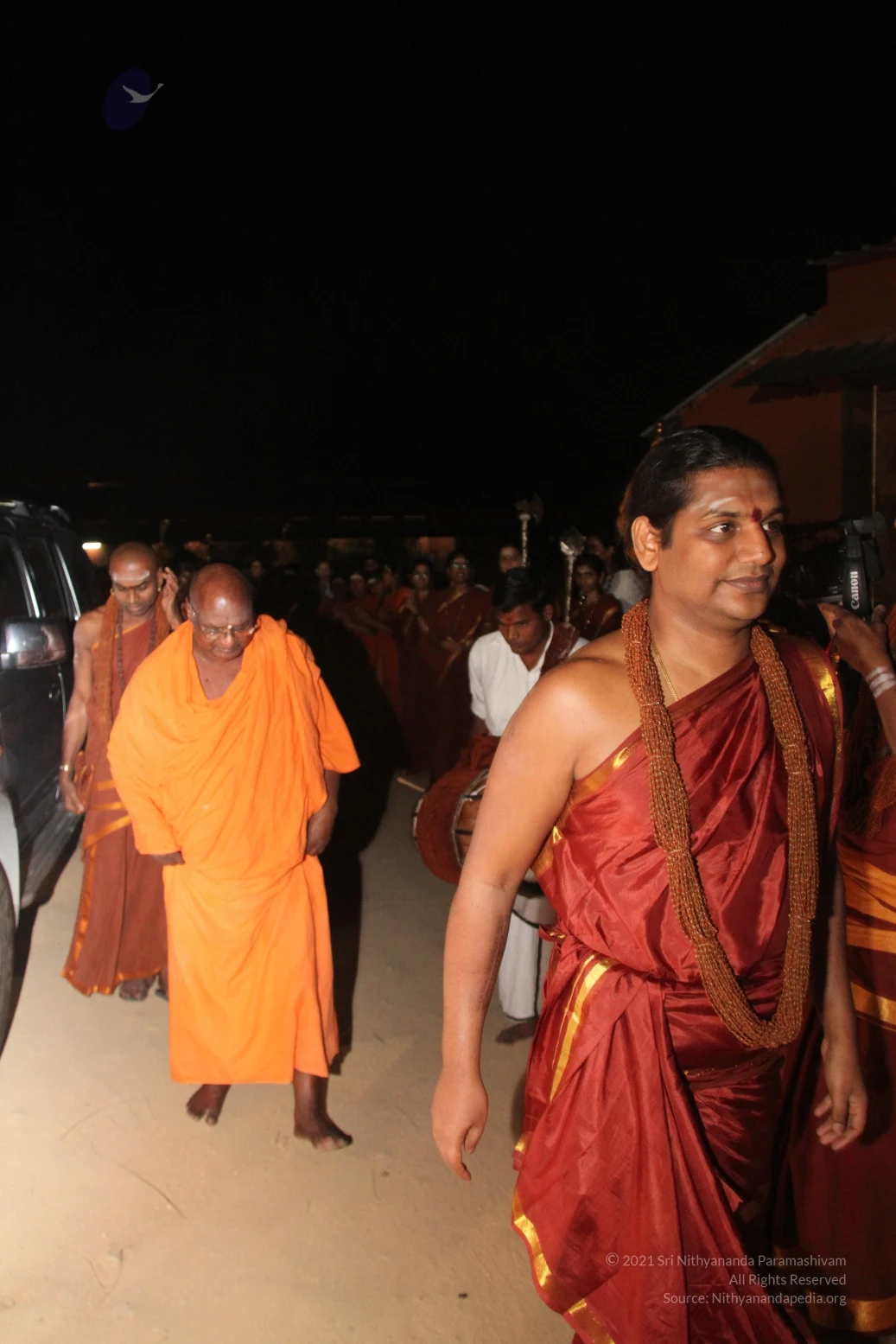
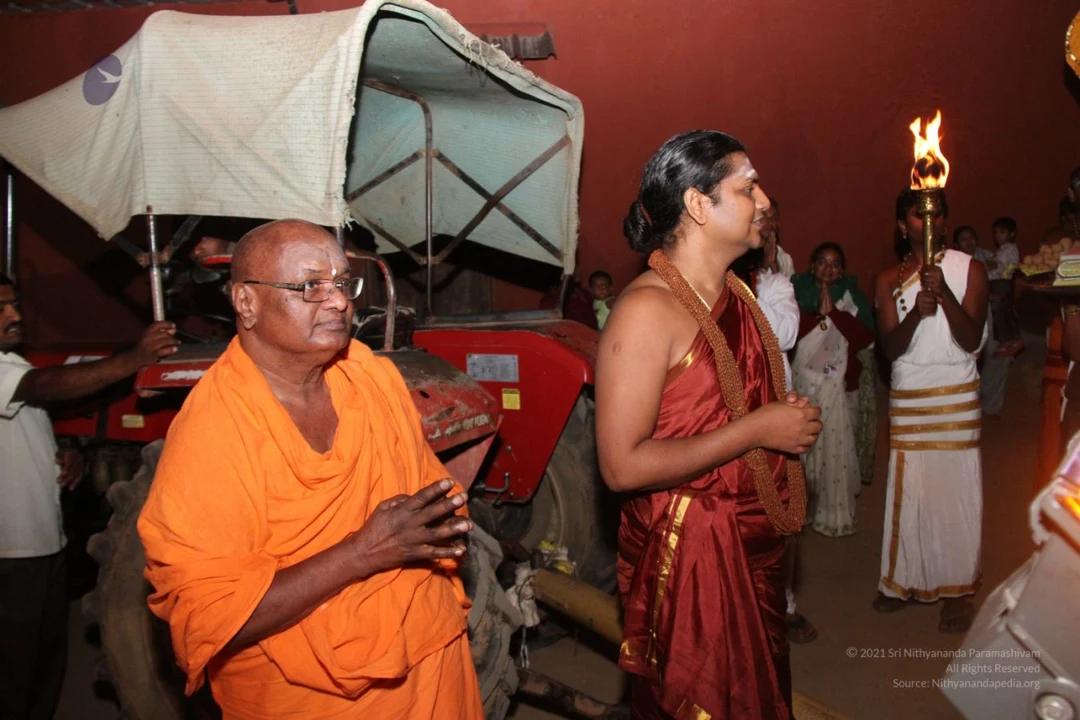
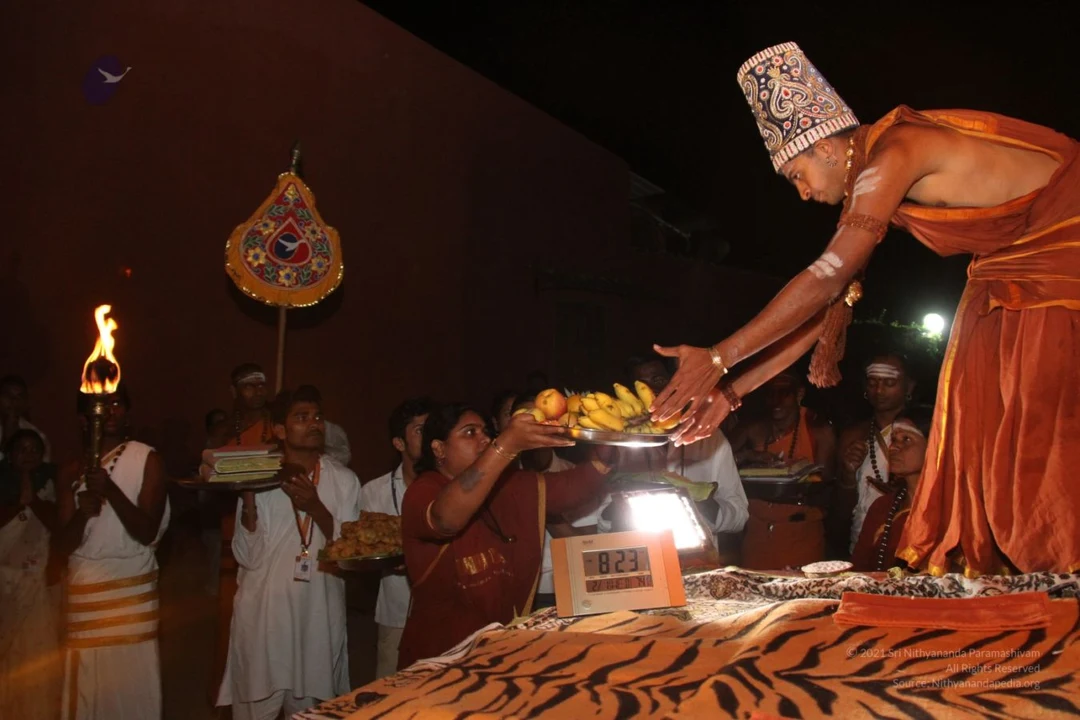
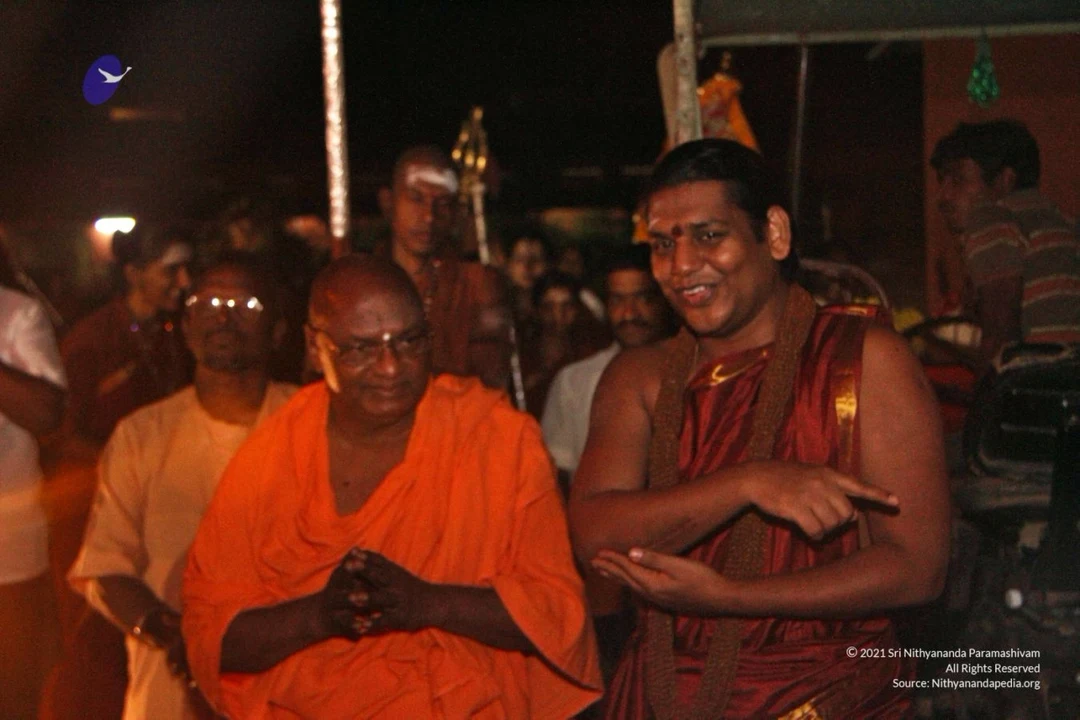
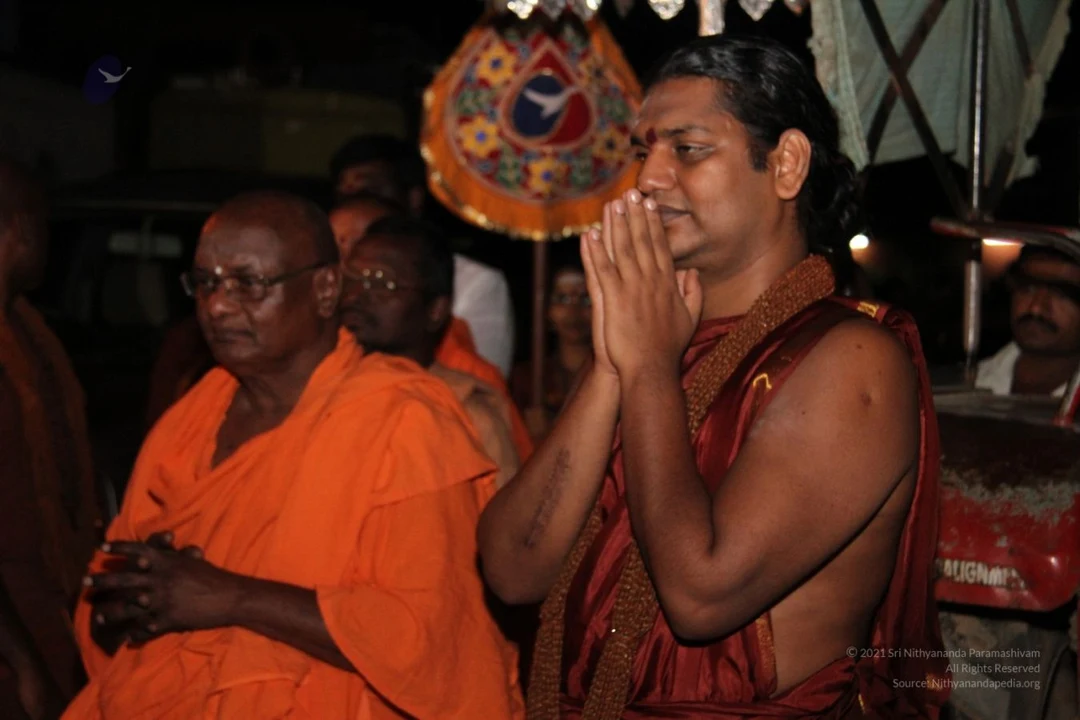
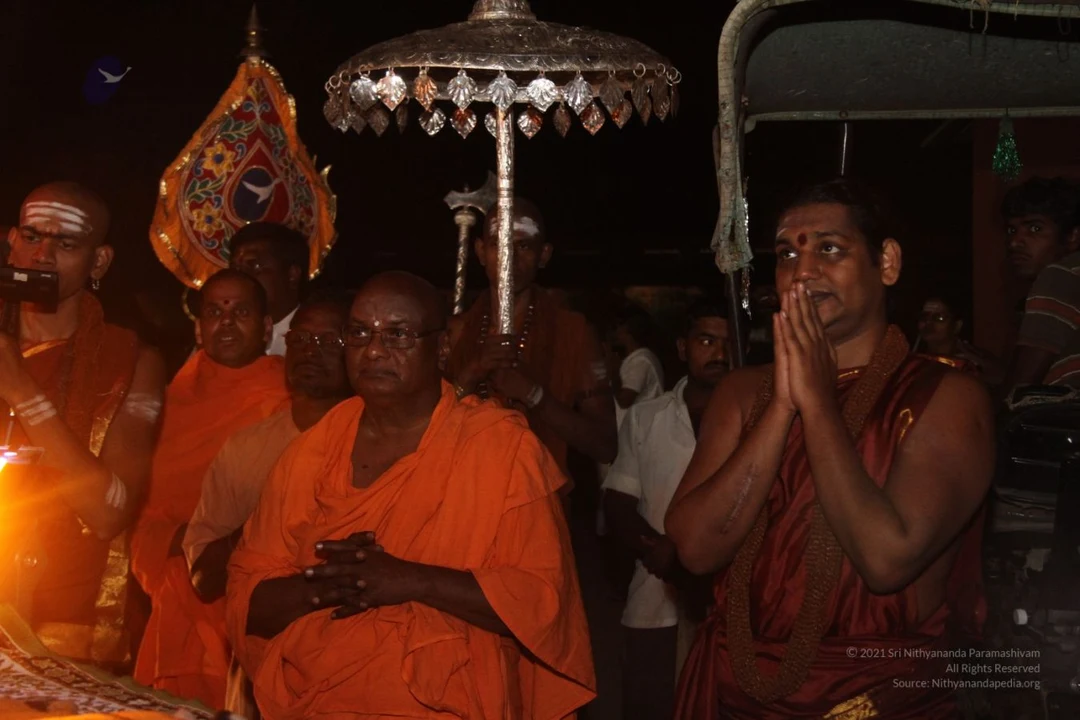
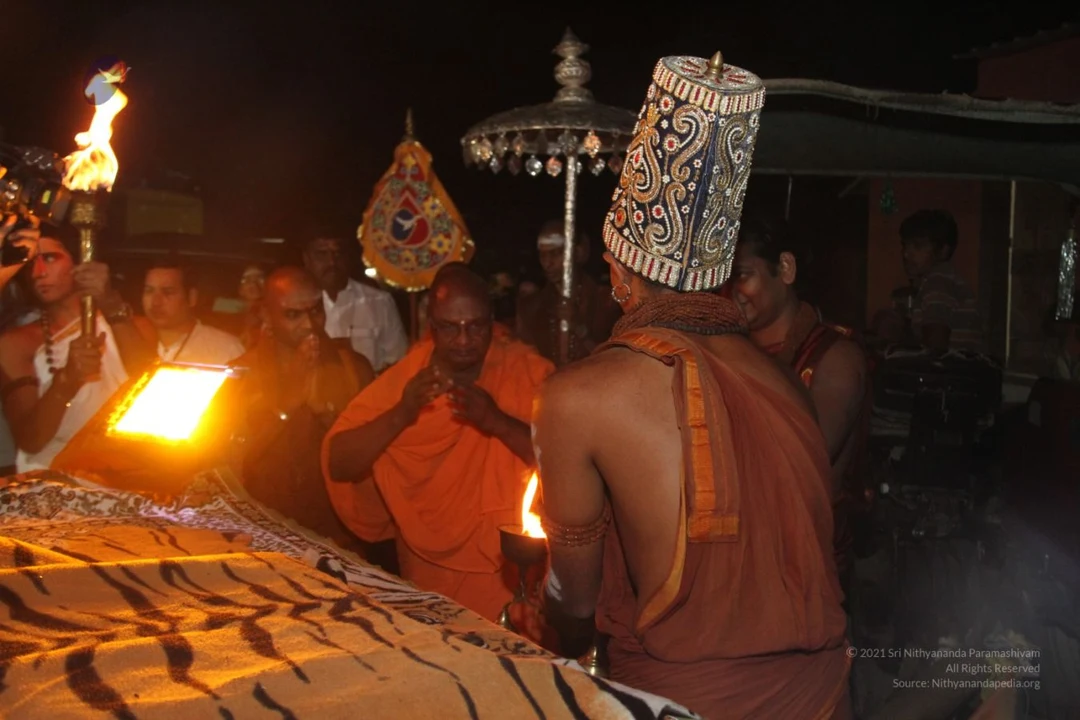
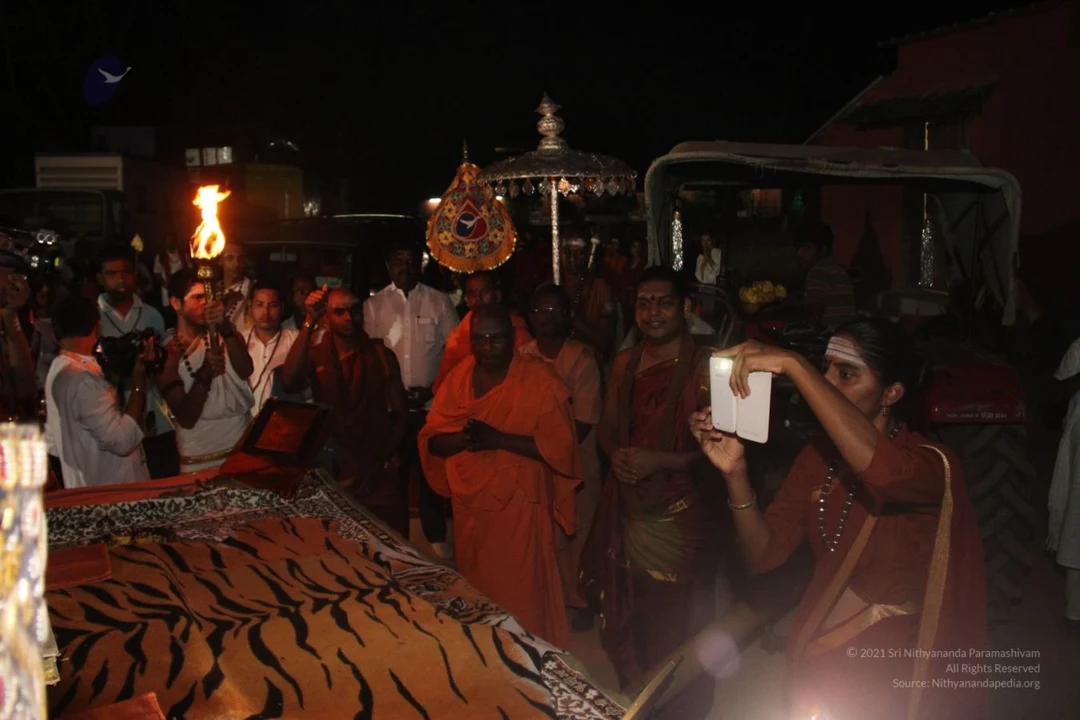
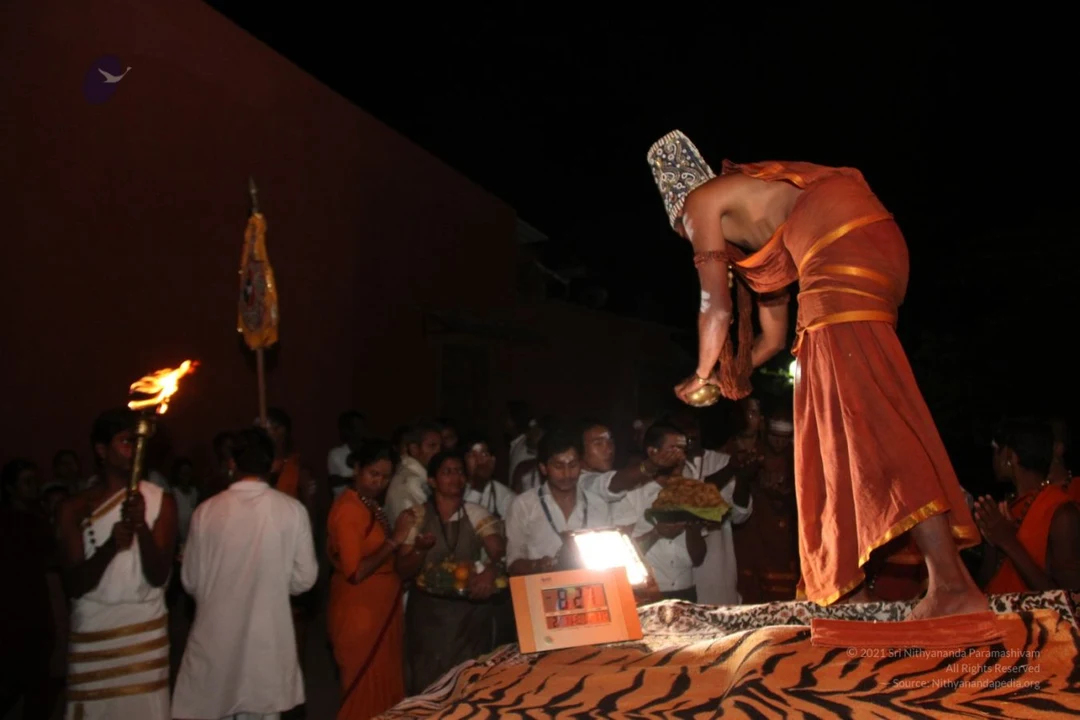
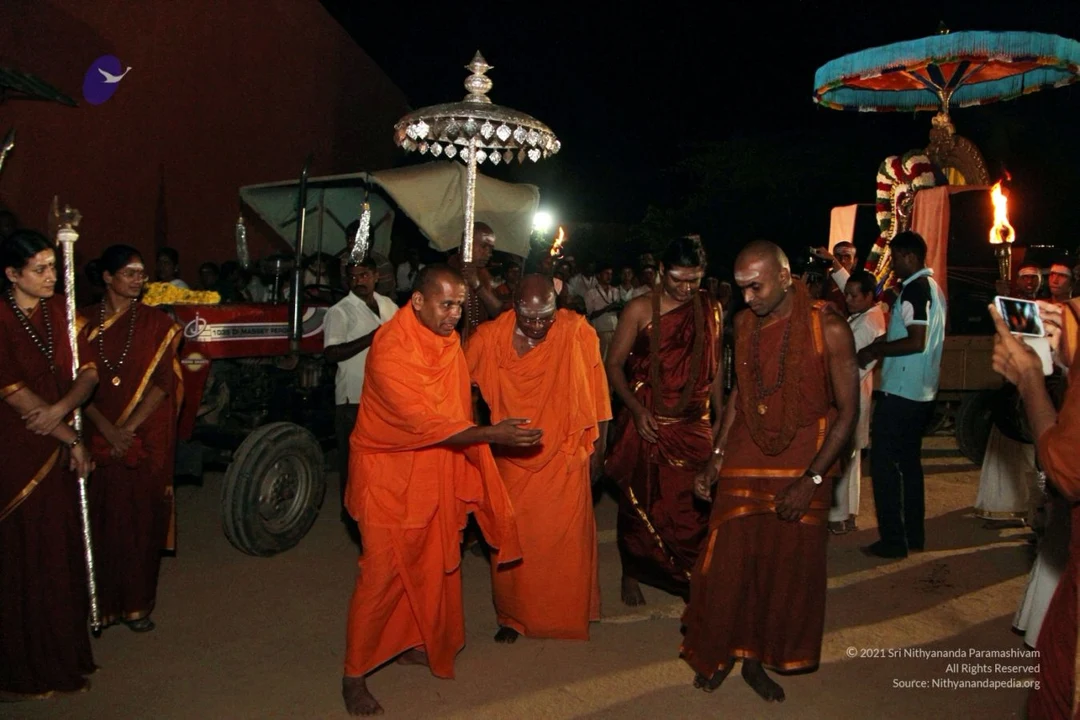
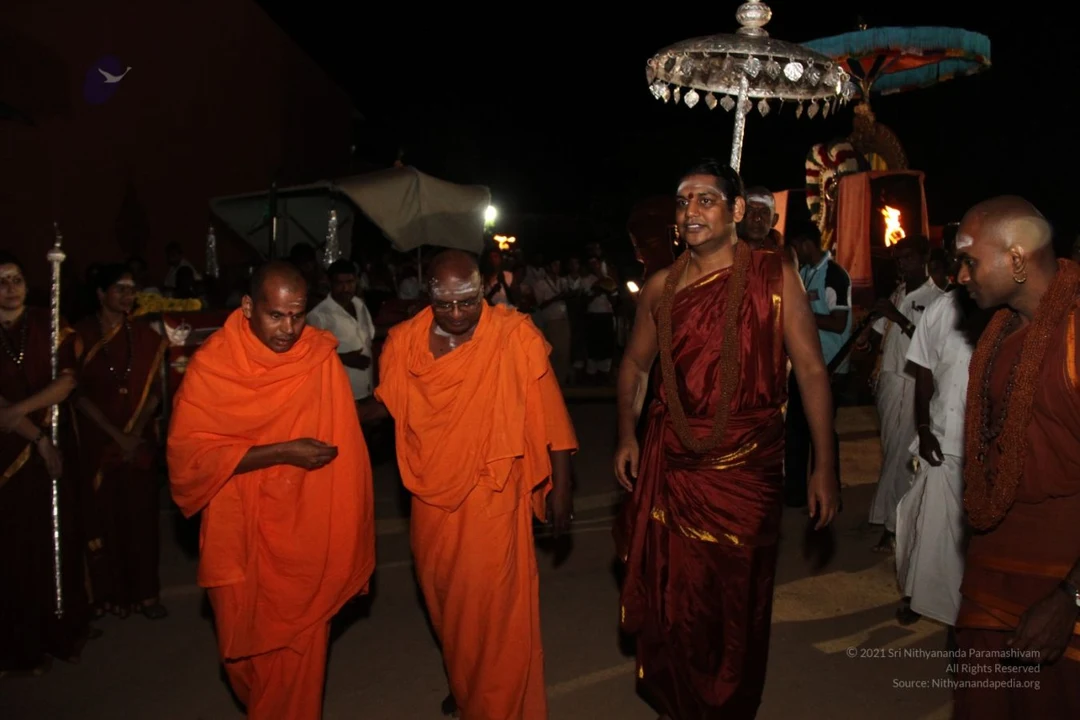
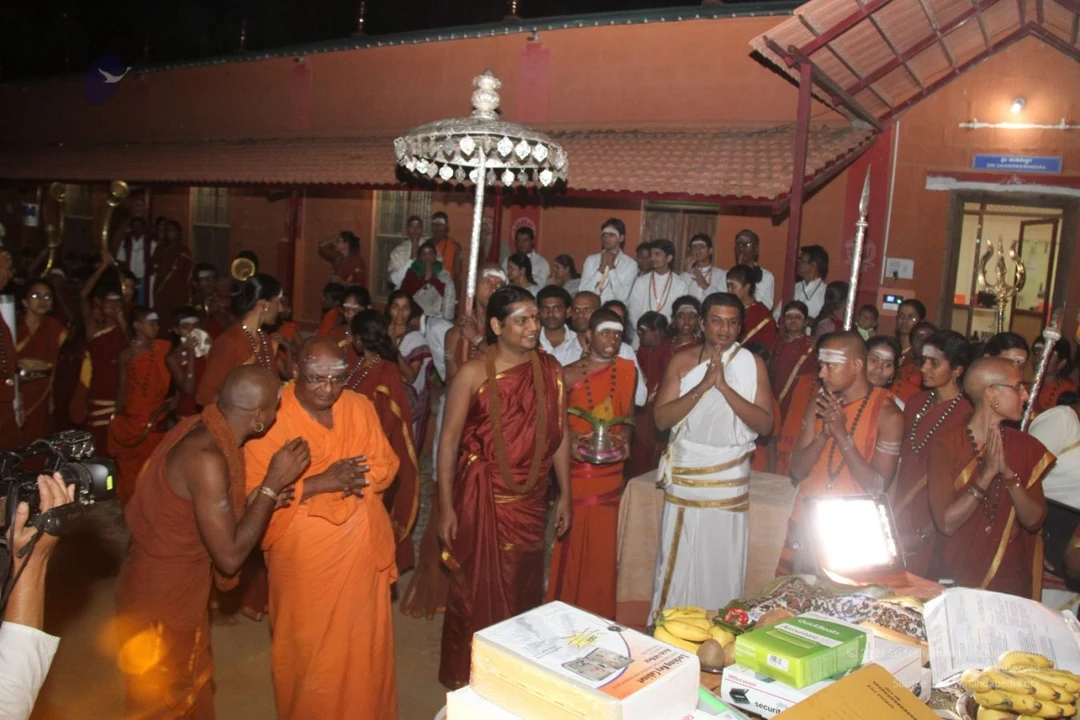
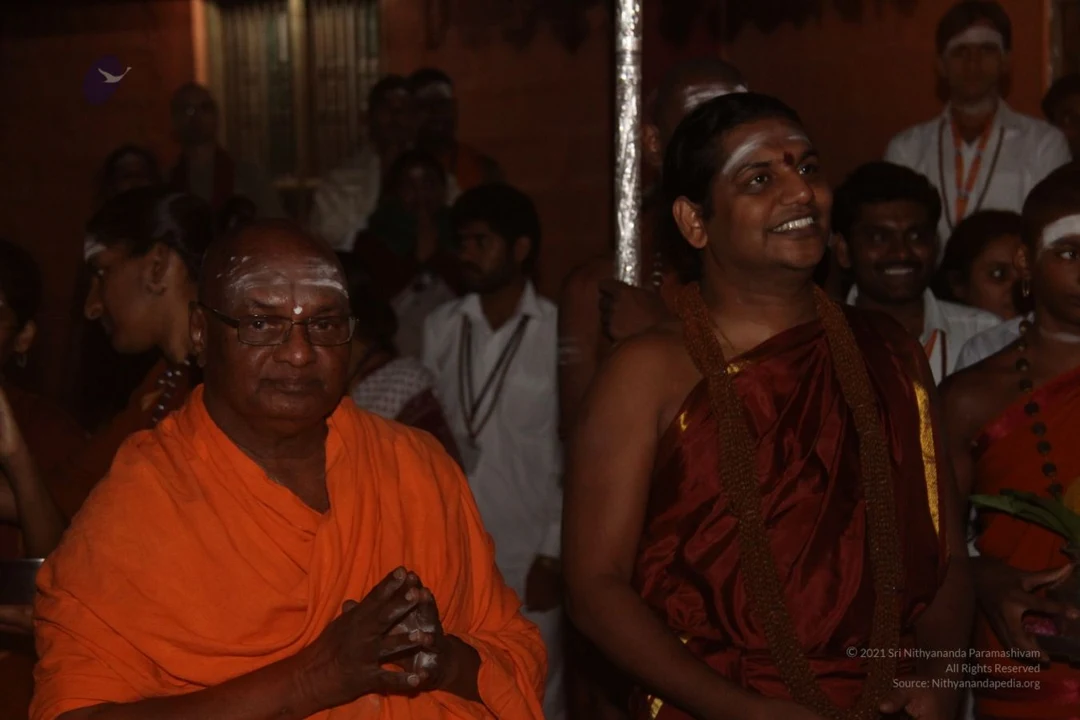
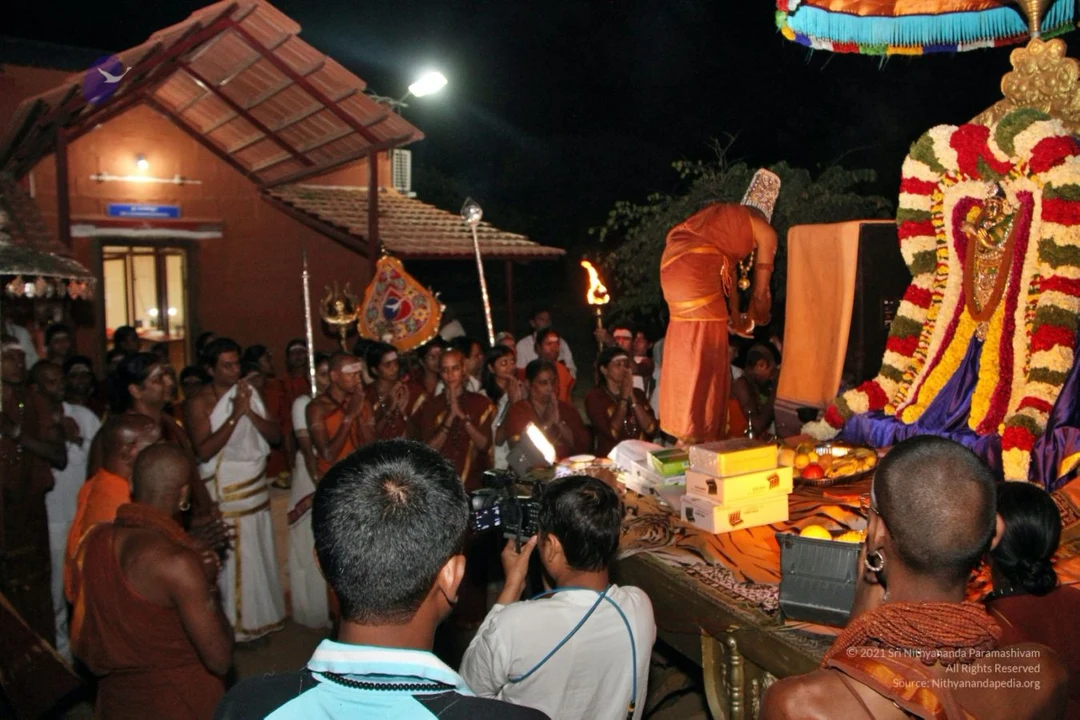
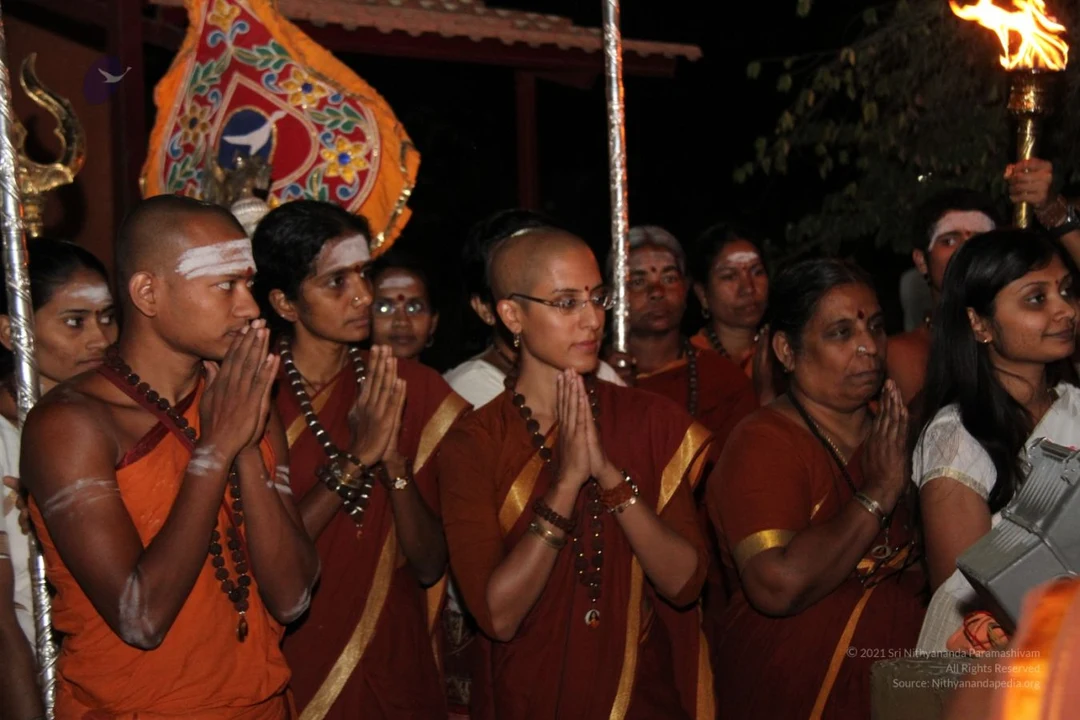
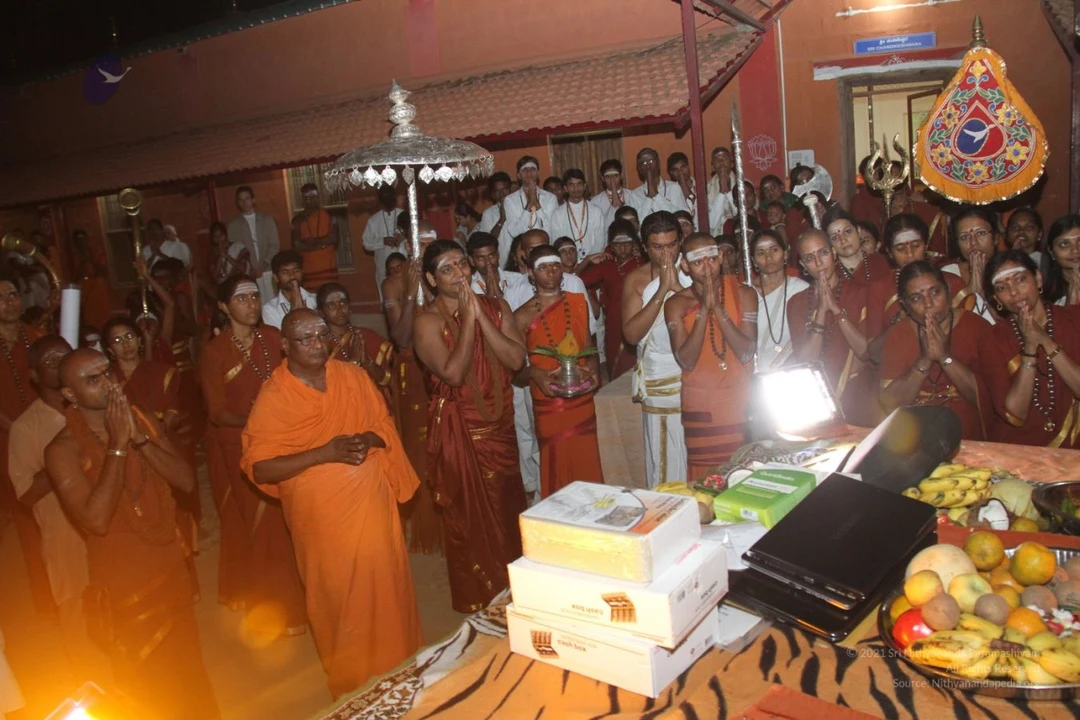
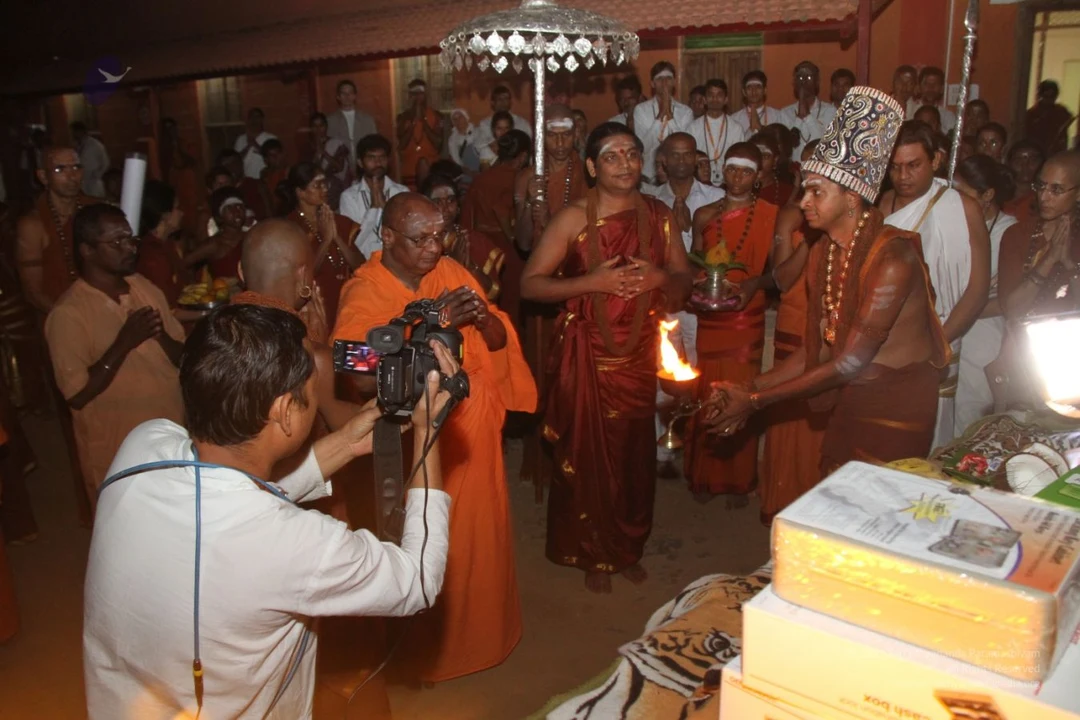
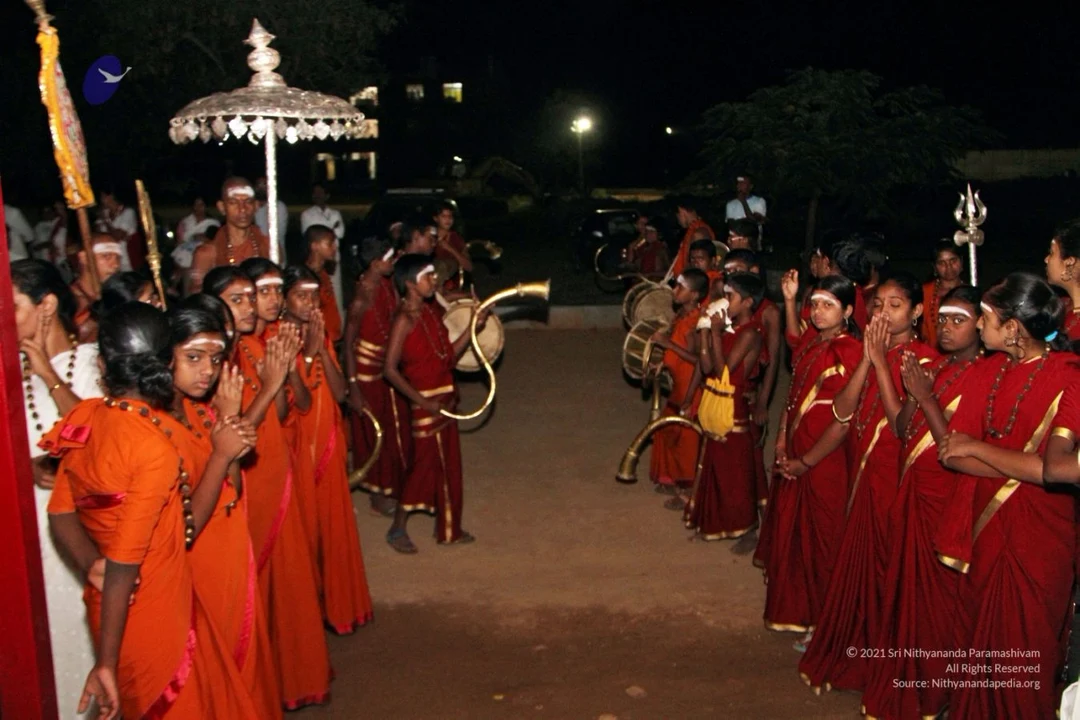
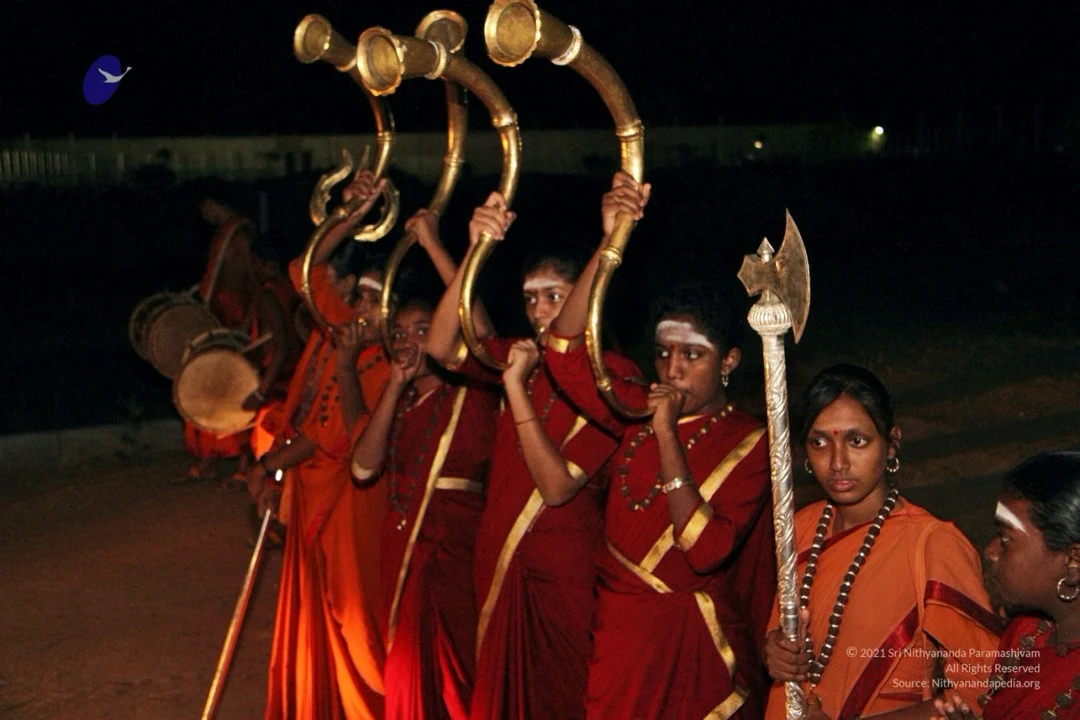
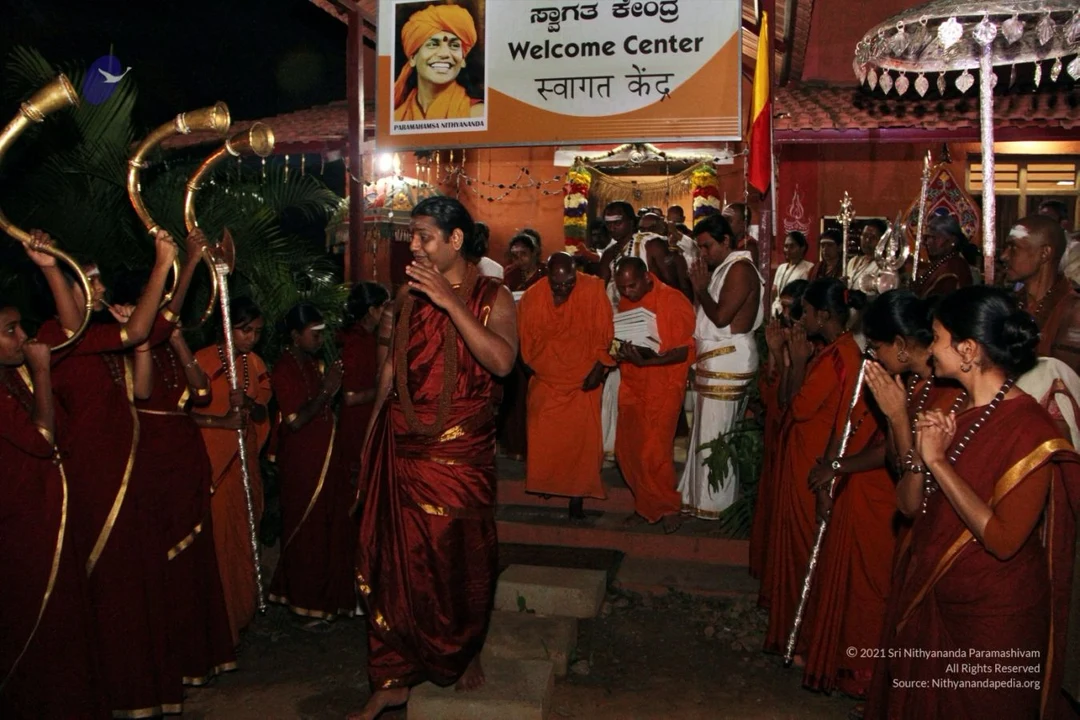
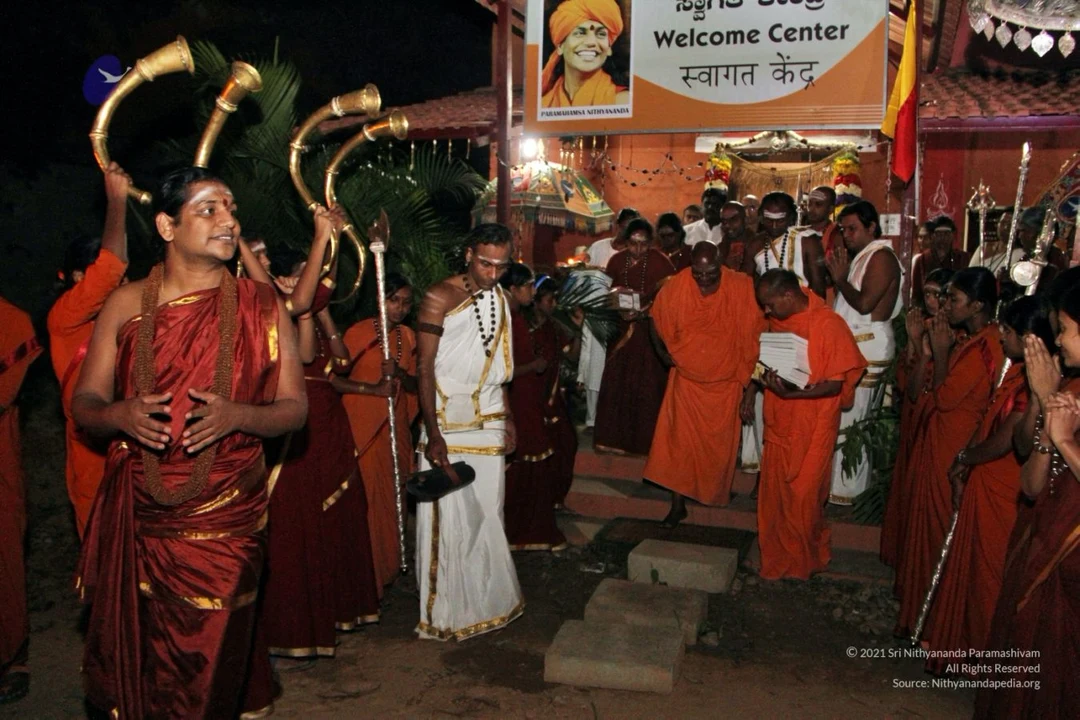
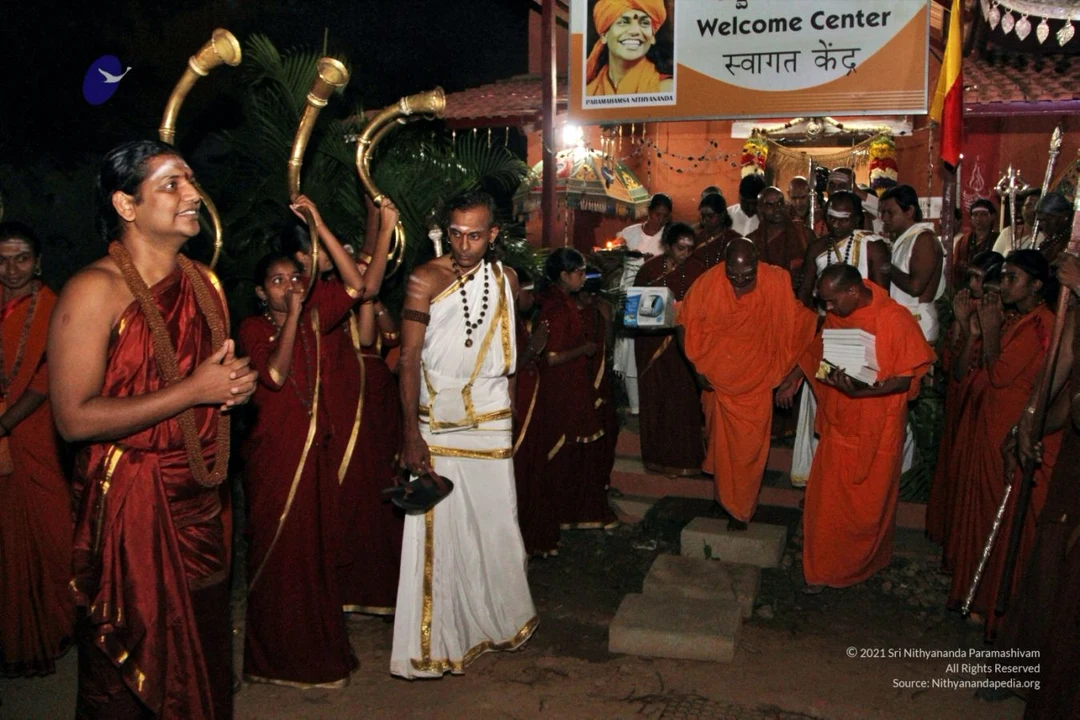
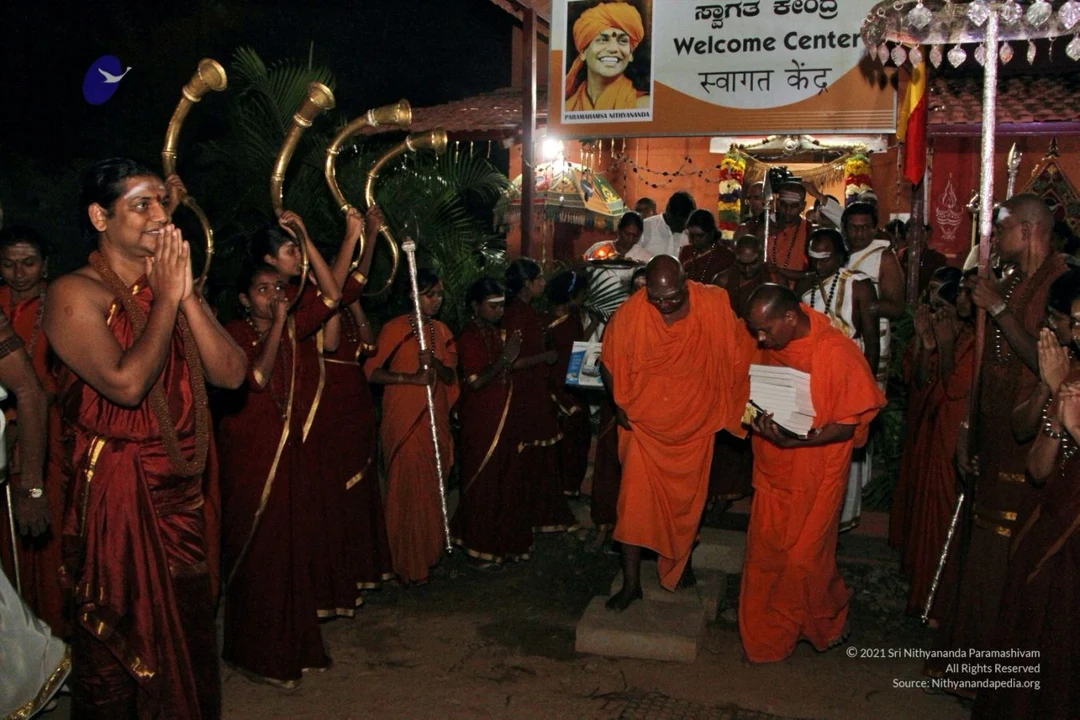
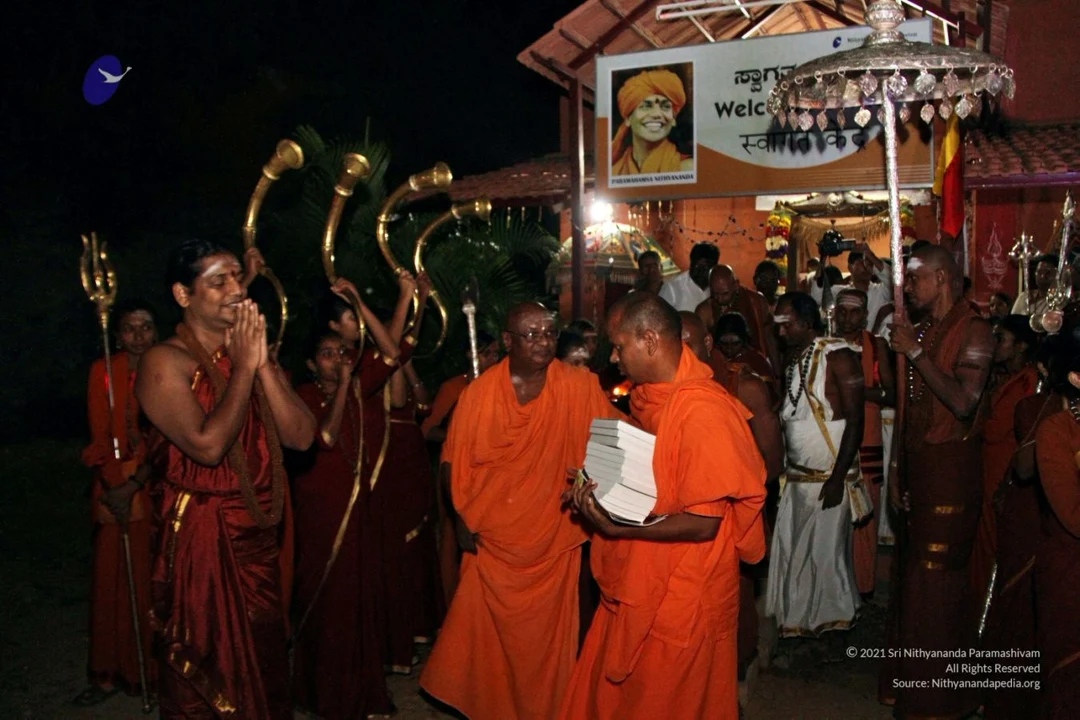
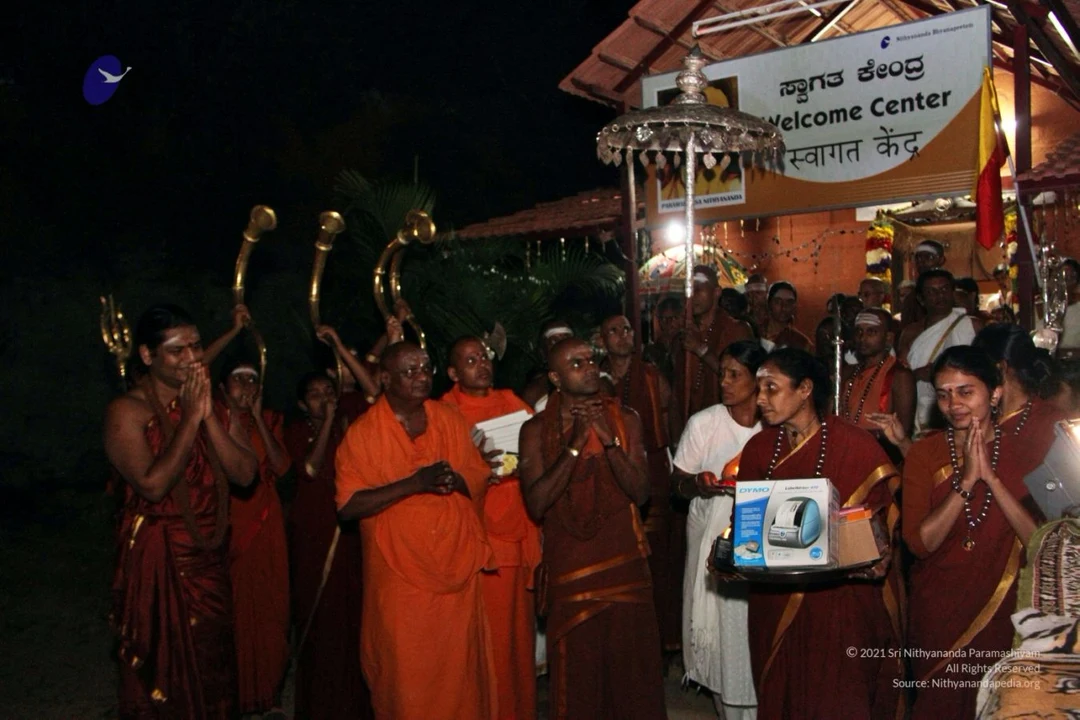
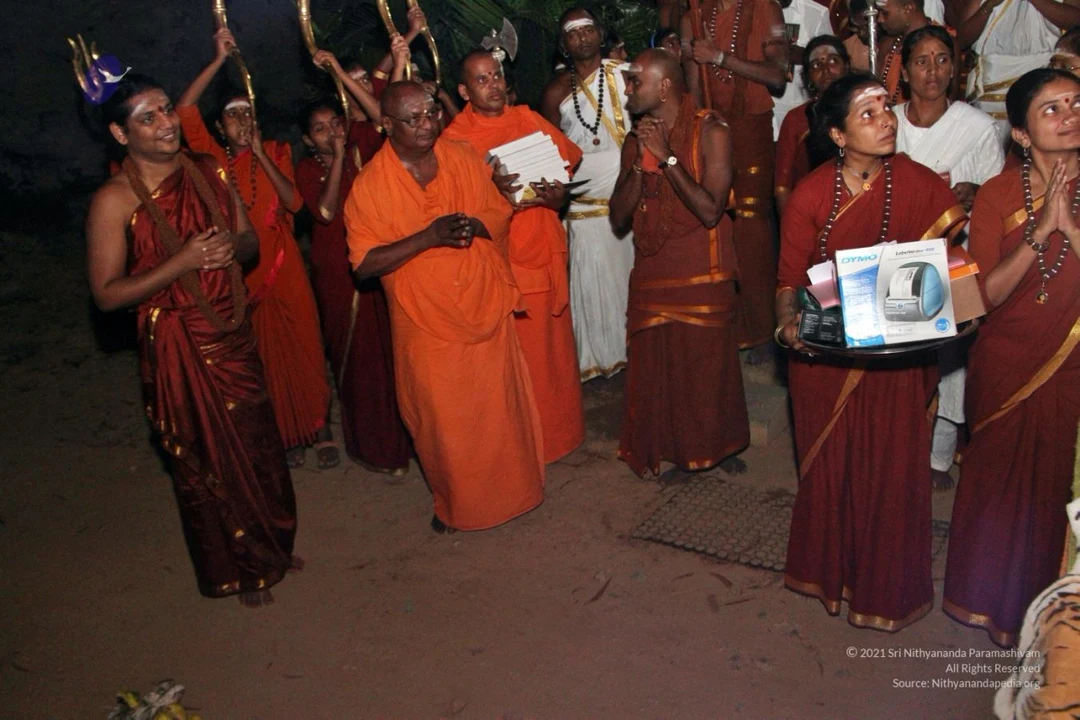
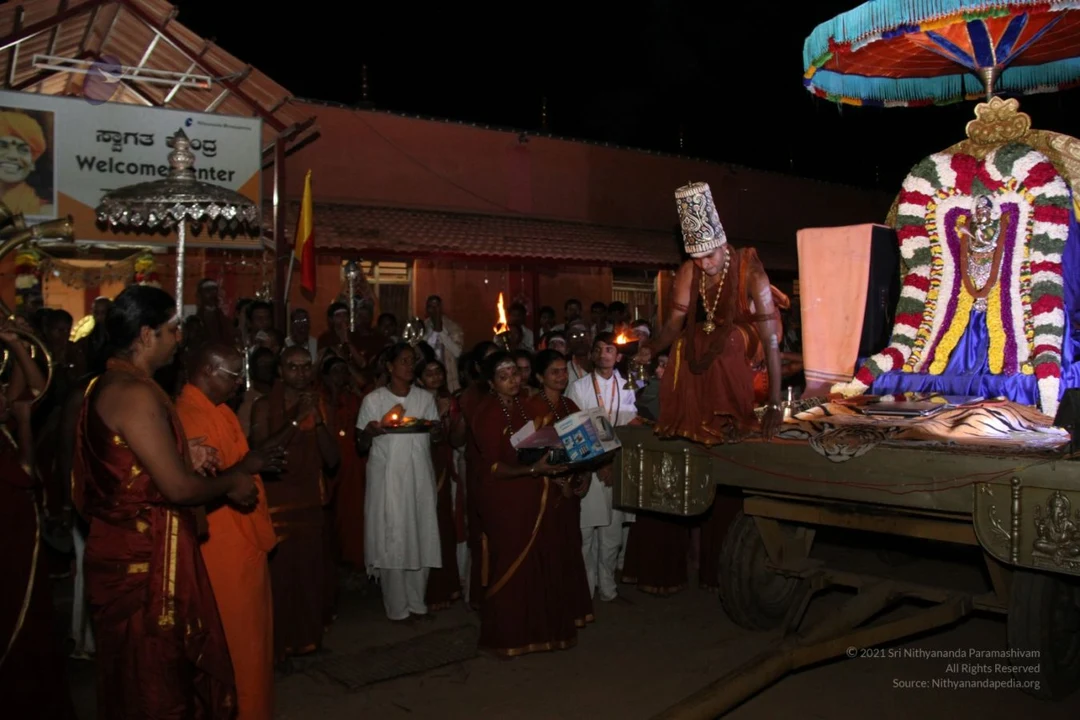
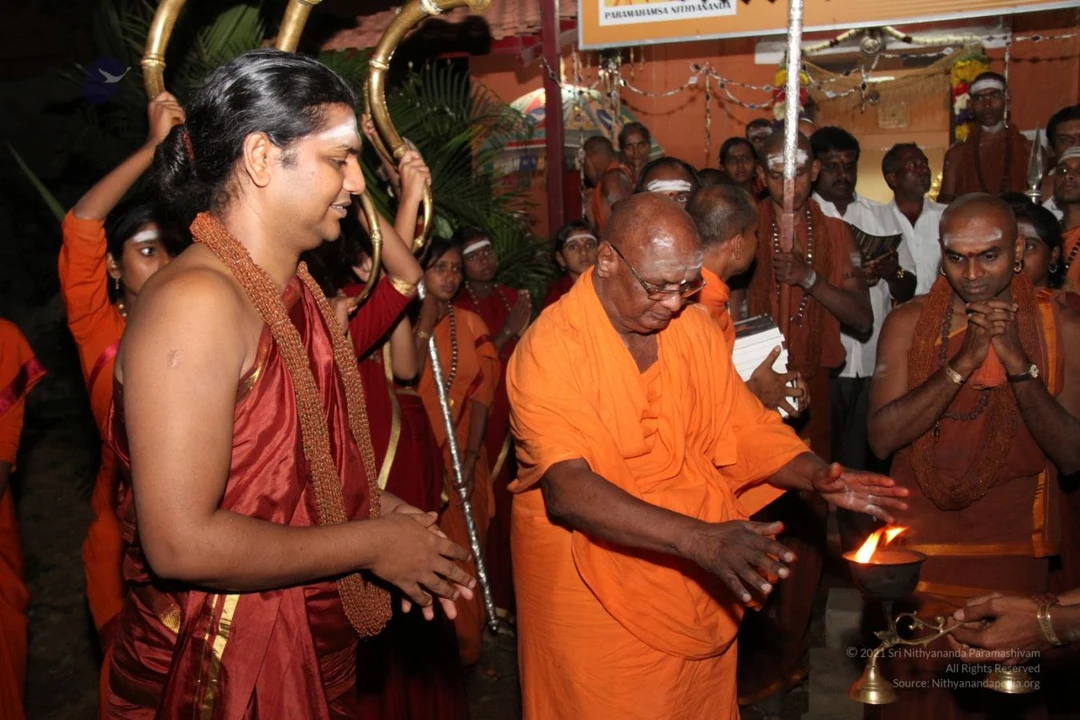
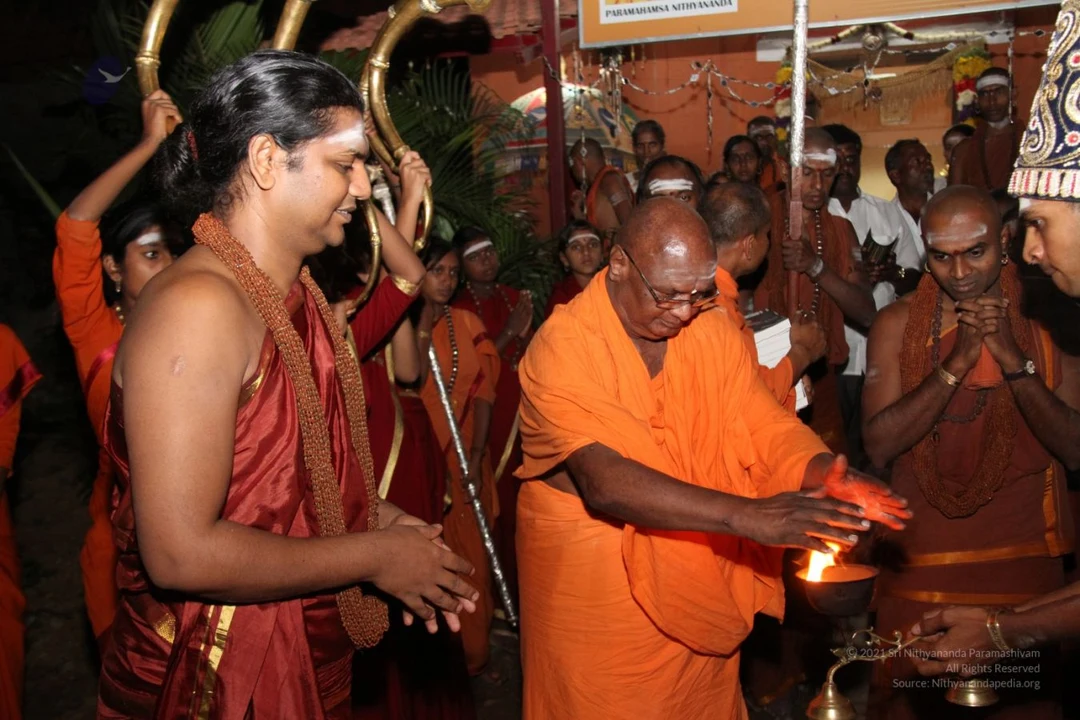
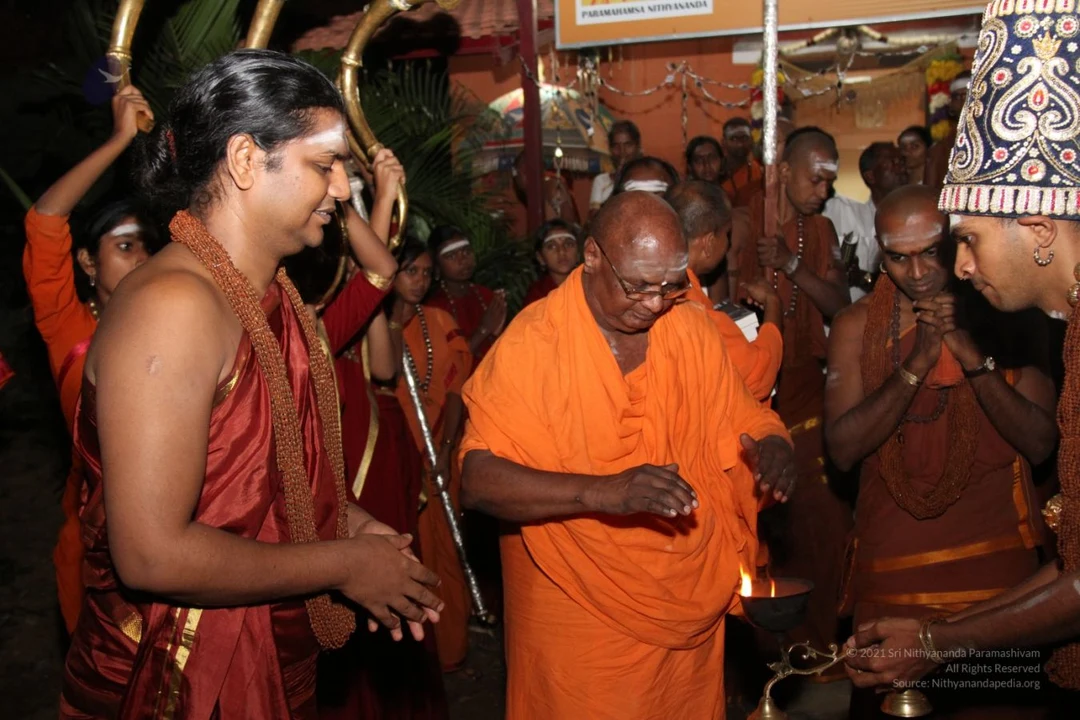
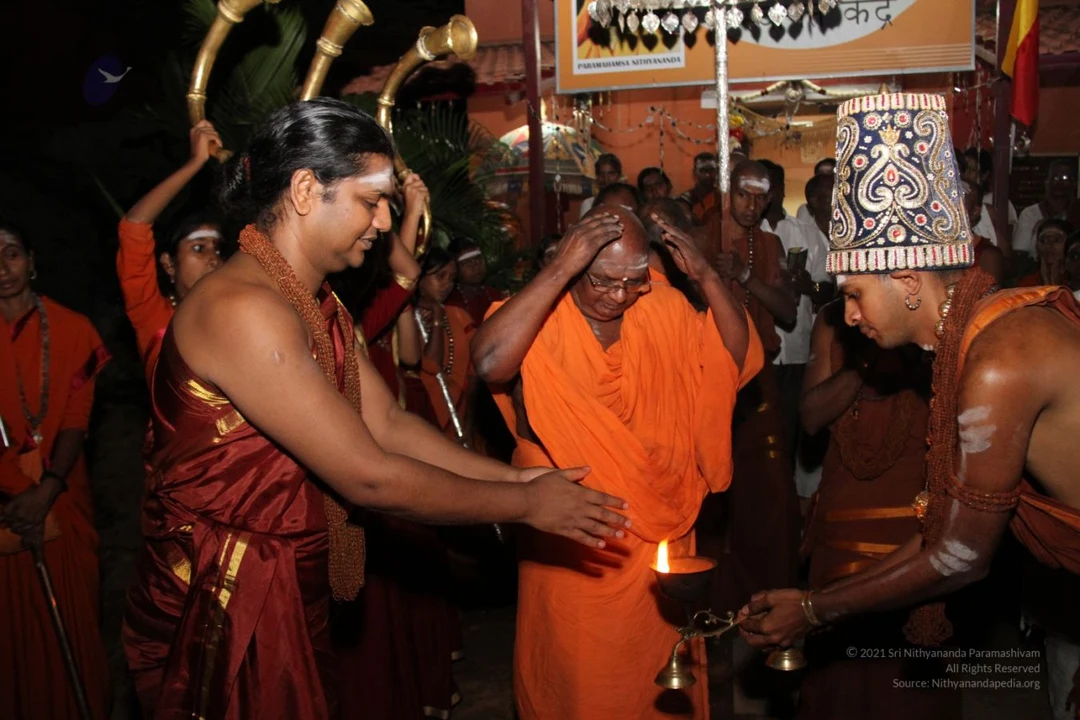
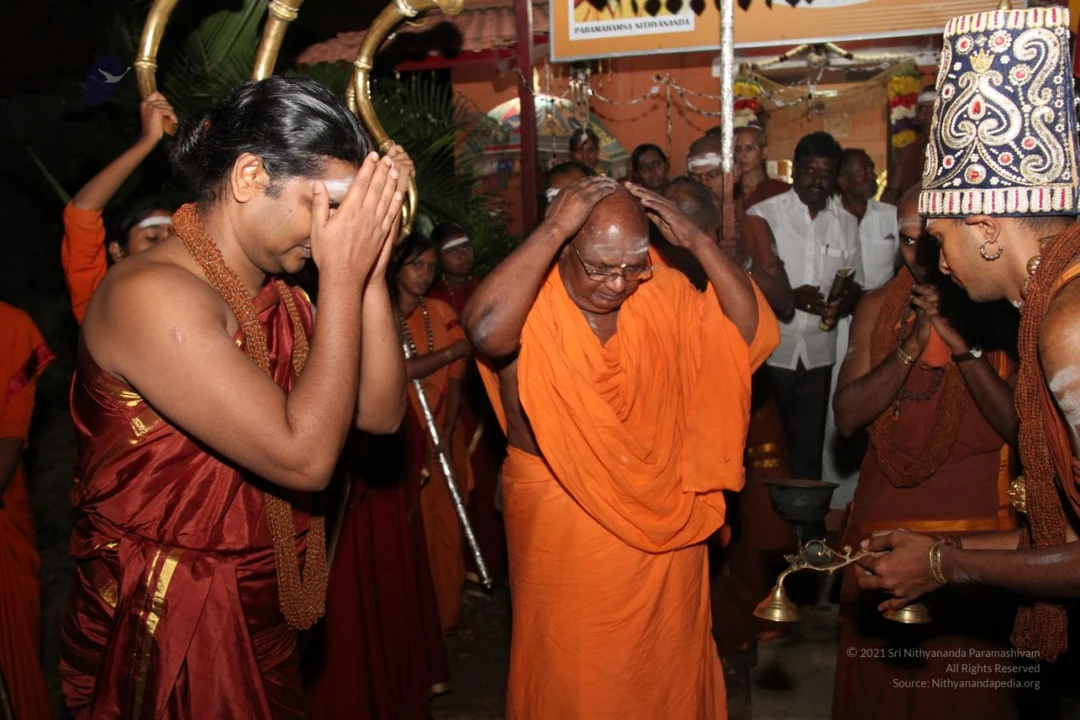
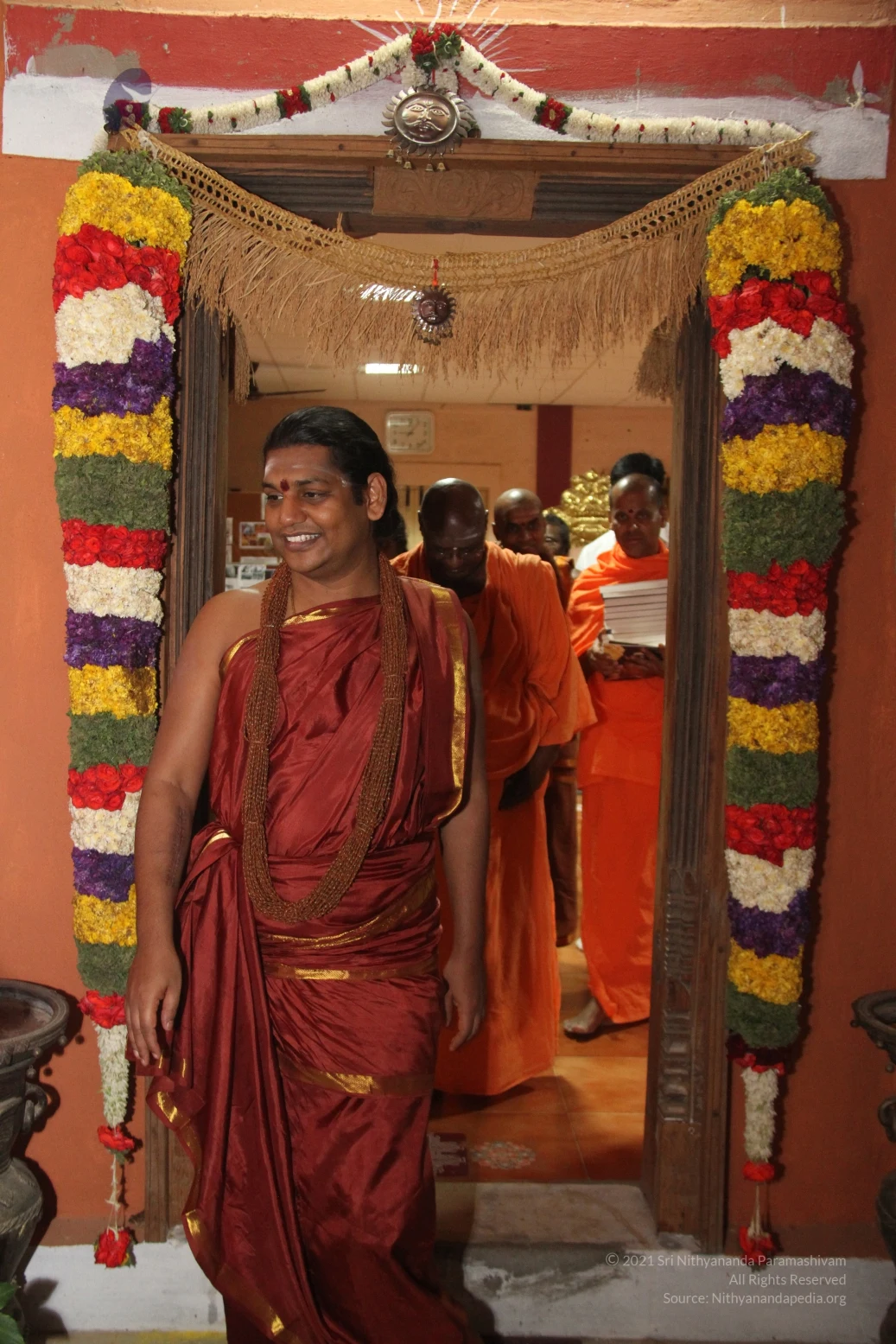
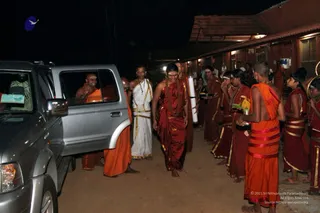
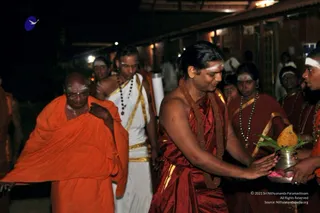
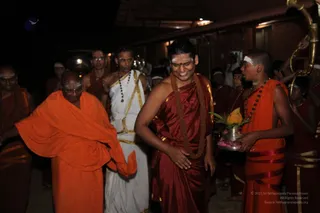
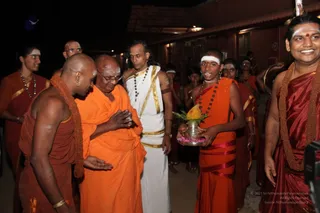
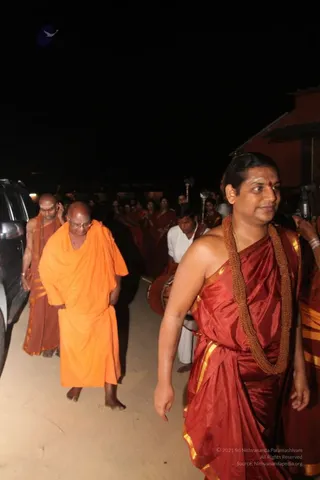
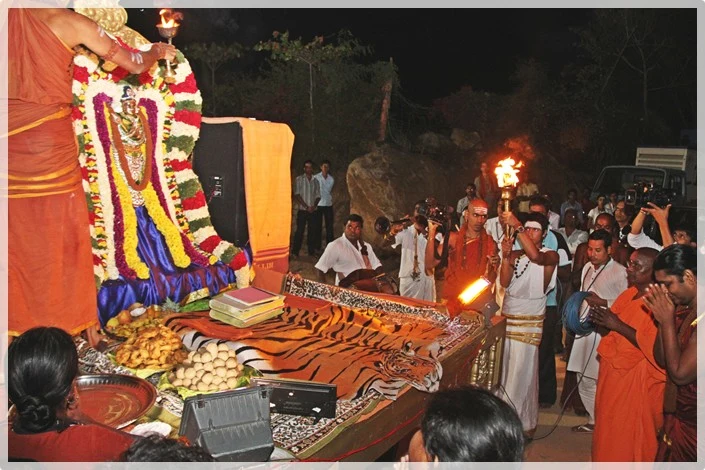
Night scene at an ashram path lined with a single-storey tiled building. A silver SUV is parked at left with its door open; a man in orange robes sits in the rear seat with hands pressed together. A man in red-maroon robes with gold trim walks barefoot down the dirt path toward a row of devotees. Behind him stands a man in a white dhoti with gold border and a rudraksha mala, and to the right a line of young women and girls in red-maroon saris with gold borders and beaded necklaces hold brass plates and palms together in greeting. A young monk in orange stands at right holding a plate. The visible physical people number roughly 15 to 20.Night-time outdoor photo at a temple-like complex with a tiled roof and lit lamps. In the centre, a man with short dark hair and a white forehead mark wears a long rust-red shawl with a gold border and a brown beaded garland, and holds out his hands over a brass pot with a yellow-green coconut-like top and pink flowers. To the left, an elder in saffron-orange robes with a shaved head and white markings walks beside a man in white dhoti with gold border and rudraksha beads. Behind them, devotees in maroon and red garments with white forehead marks and beaded necklaces watch.A night-time procession along a dim covered walkway with wooden pillars. In the centre, a smiling man in a maroon-red dhoti and wrap wears a long beaded brown garland and a red-brown bindi, and stands with his hand resting on his stomach. To his left, a shaved-headed man in saffron-orange robes with white tripundra marks reaches out with his draped cloth. Beside them, a man in white dhoti with gold borders wears a rudraksha mala. On the right, a young attendant in orange robes and rudraksha mala holds a brass vessel with a mango leaf and flower offering, while a brass ceremonial horn-shaped instrument rises at the edge. Several other men in maroon and orange robes stand behind.Night photograph of a group of people in saffron, orange and maroon robes outdoors beside a wooden building with a tiled roof. On the left a bald man in a rust-coloured shawl with a matching orange-brown garland bows with palms together toward an older bespectacled man in a saffron robe, who has his hands folded in namaskar. A man in a white dhoti with gold border and a rudraksha mala stands in the centre. A young man in an orange robe with a white headband and a rudraksha mala holds a silver plate with a yellow fruit, green leaves and pink flower petals, as if for an offering. On the right a smiling man with white tripundra marks and a red-brown robe and garland stands near a camera. Several other people with white forehead markings stand behind them.Night-time procession on a dark road beside a parked dark SUV. A central man in a deep red-maroon silk dress with gold border, a long rudraksha mala, and a red tilak on his forehead walks forward while holding nothing, with a large embroidered ceremonial umbrella fan with floral patterns and a pink-orange tassel raised behind him. Around him, a bald man in orange robes with a mala walks alongside another bald monk in saffron-orange robes, and several attendants in white dhotis and orange shawls follow. A drummer in white holds a drum, and a videographer with a camera on the right films the scene. Several onlookers stand in the background near a red-walled building.Night-time photograph of a procession on a sandy path beside a dark vehicle and a reddish building. In the foreground a man in a maroon silk dhoti with gold border and a long rudraksha mala walks with a red tilak on his forehead, looking to the side; a camera is visible at right. Beside him an older man in an orange saffron robe walks barefoot with head bowed, and another shaven-headed man in maroon walks behind. Behind them a column of people in maroon and orange, with a drummer in white carrying a drum and ceremonial staffs held up in the background.

Tour-of-Welcome-Centre

22 photosSource gallery
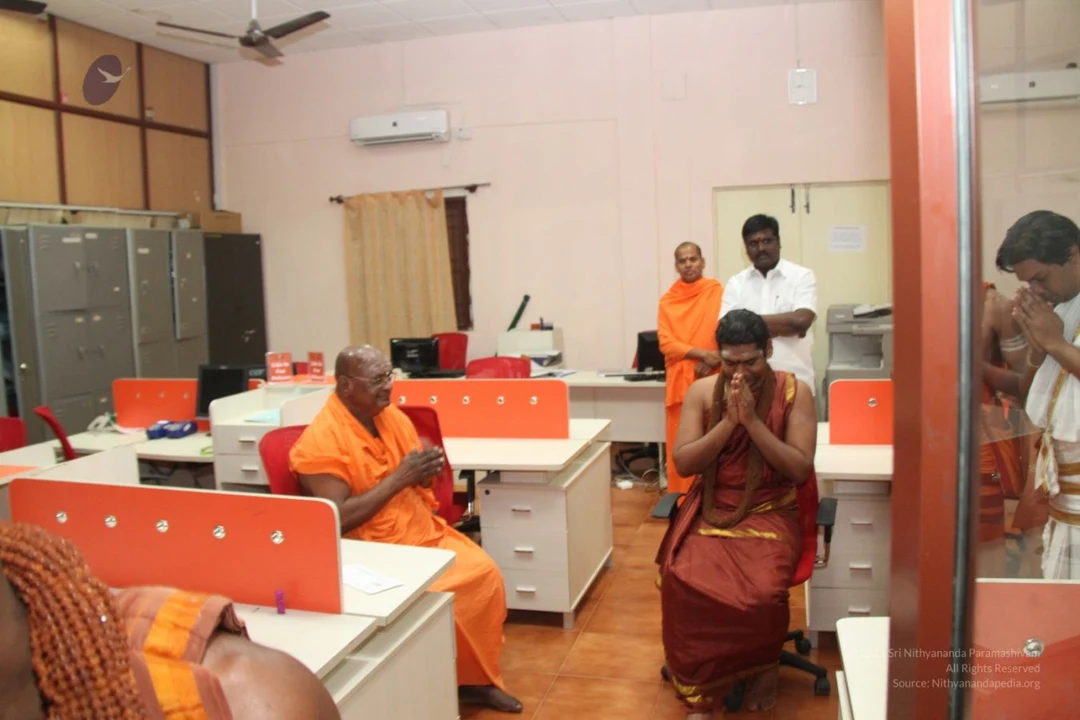
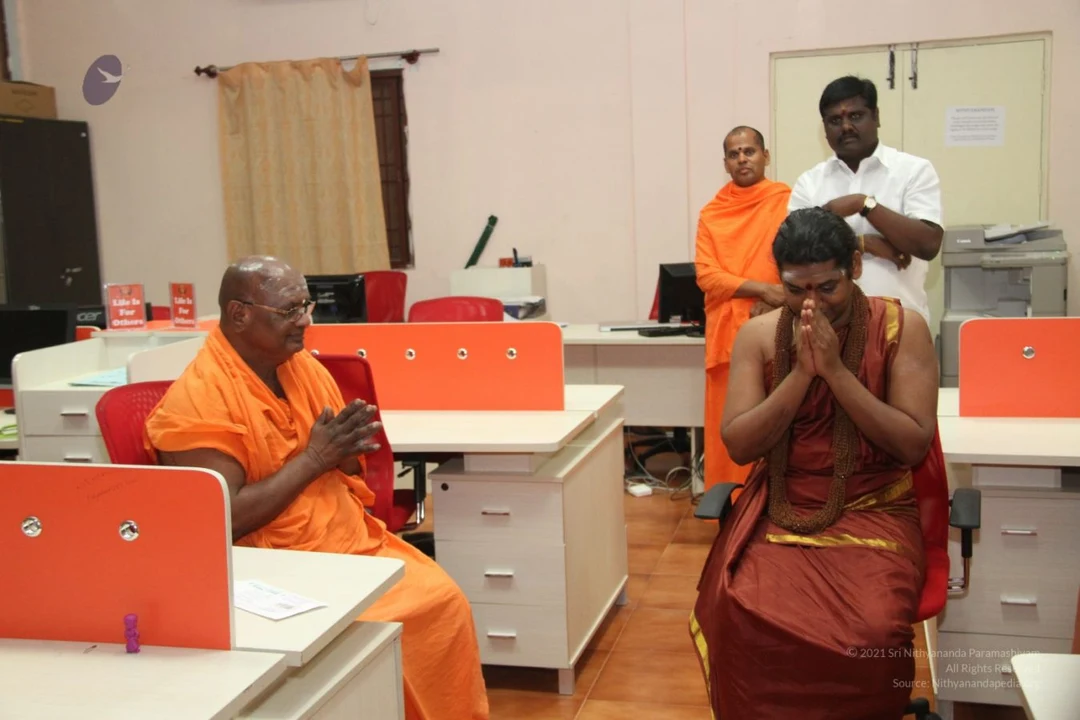
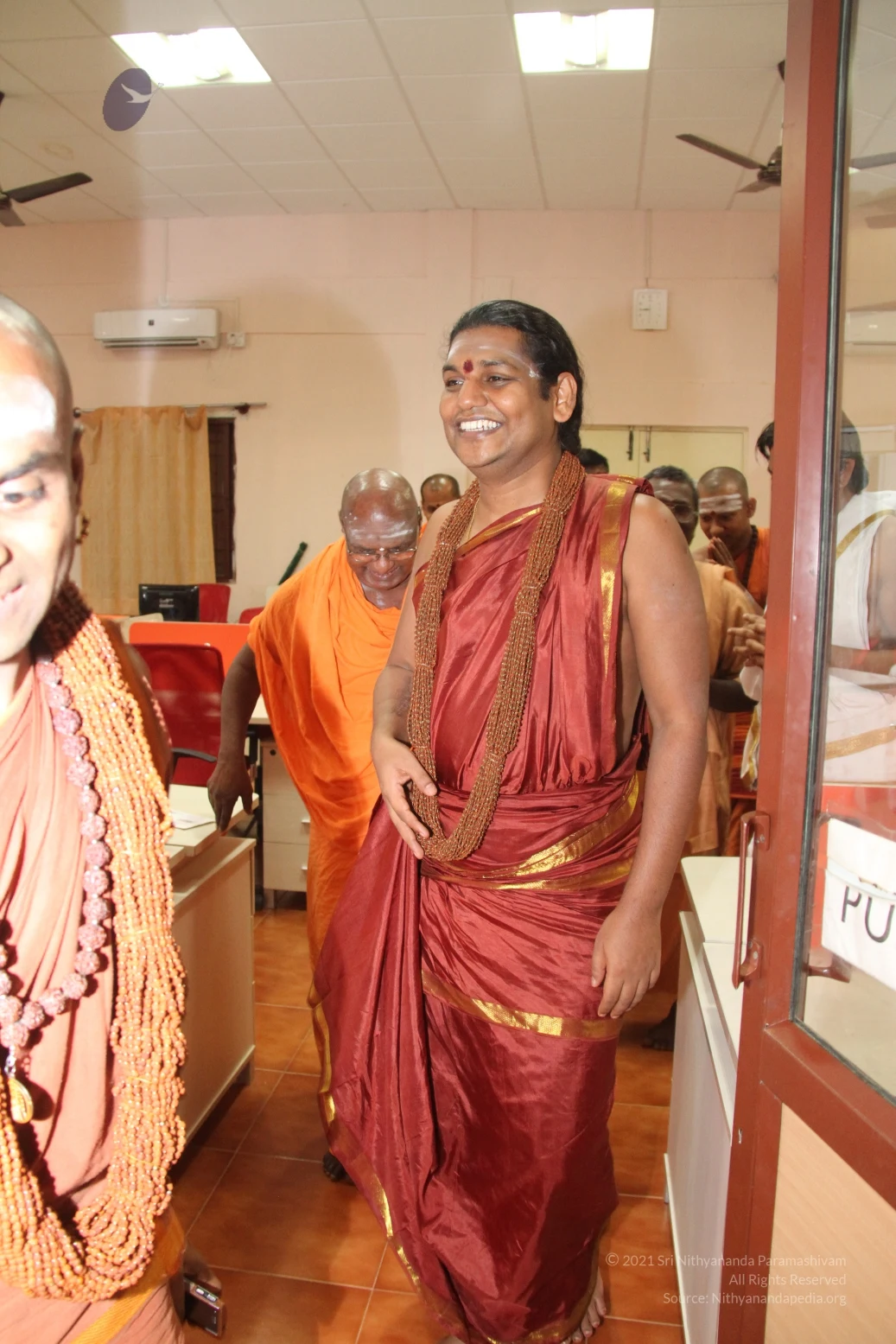
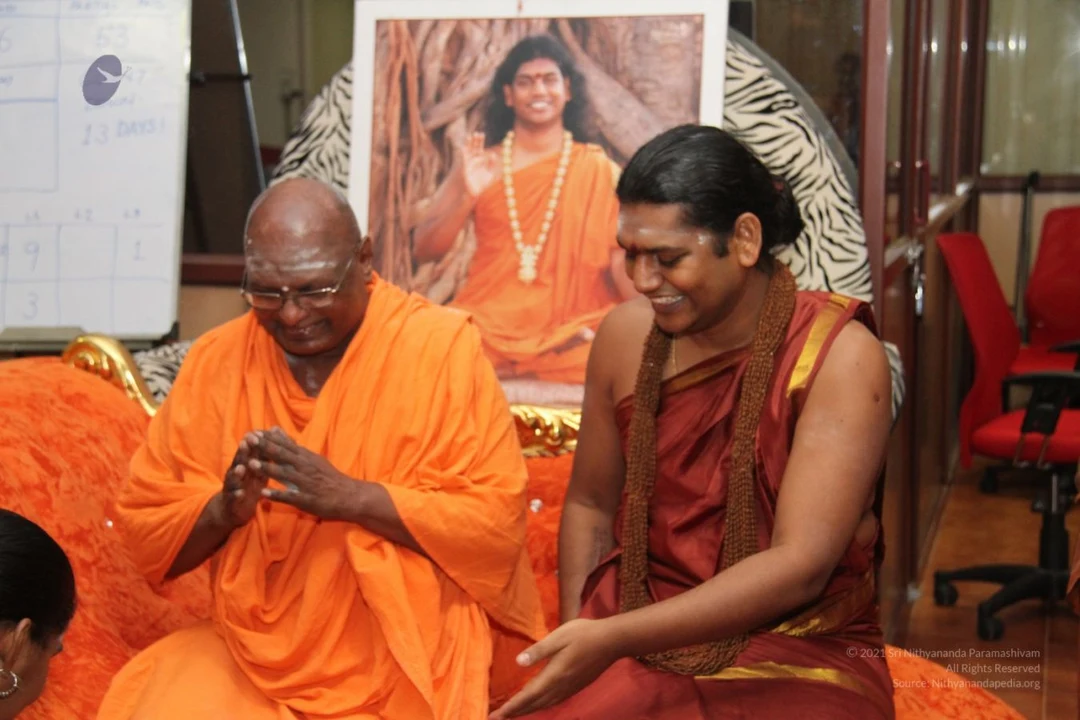
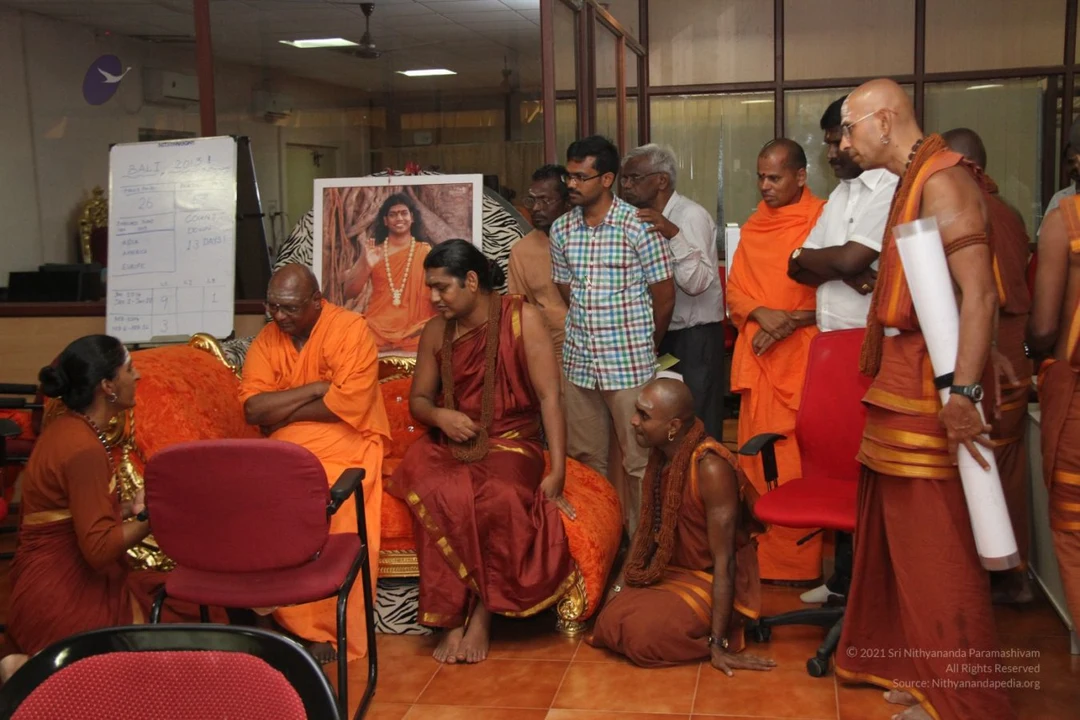
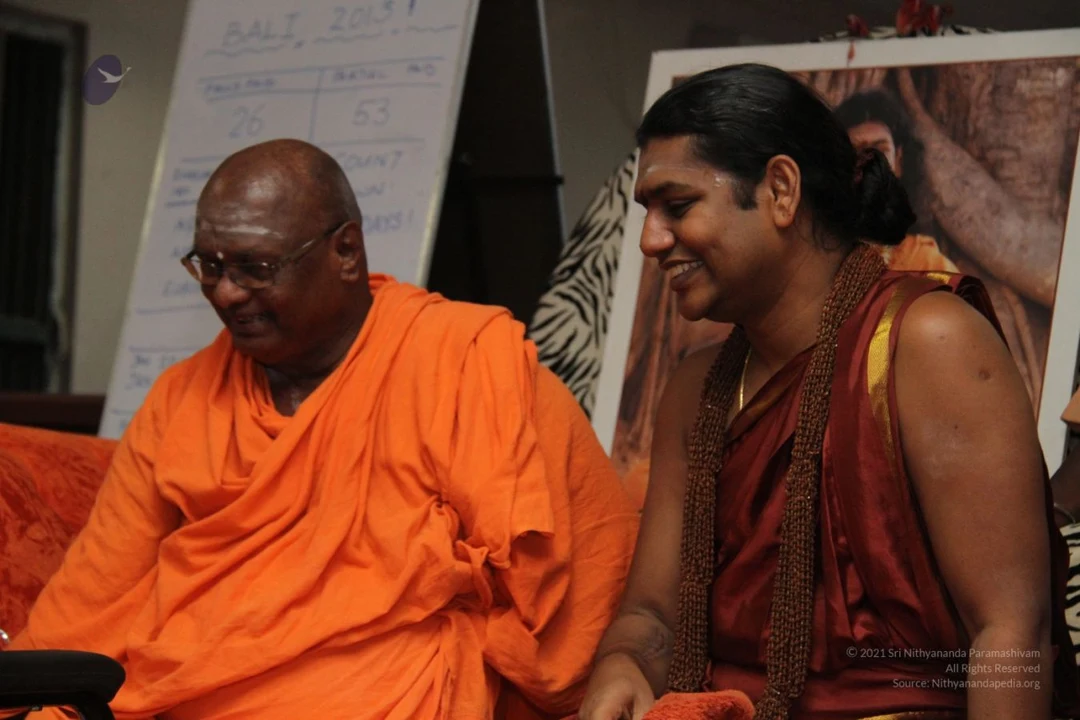
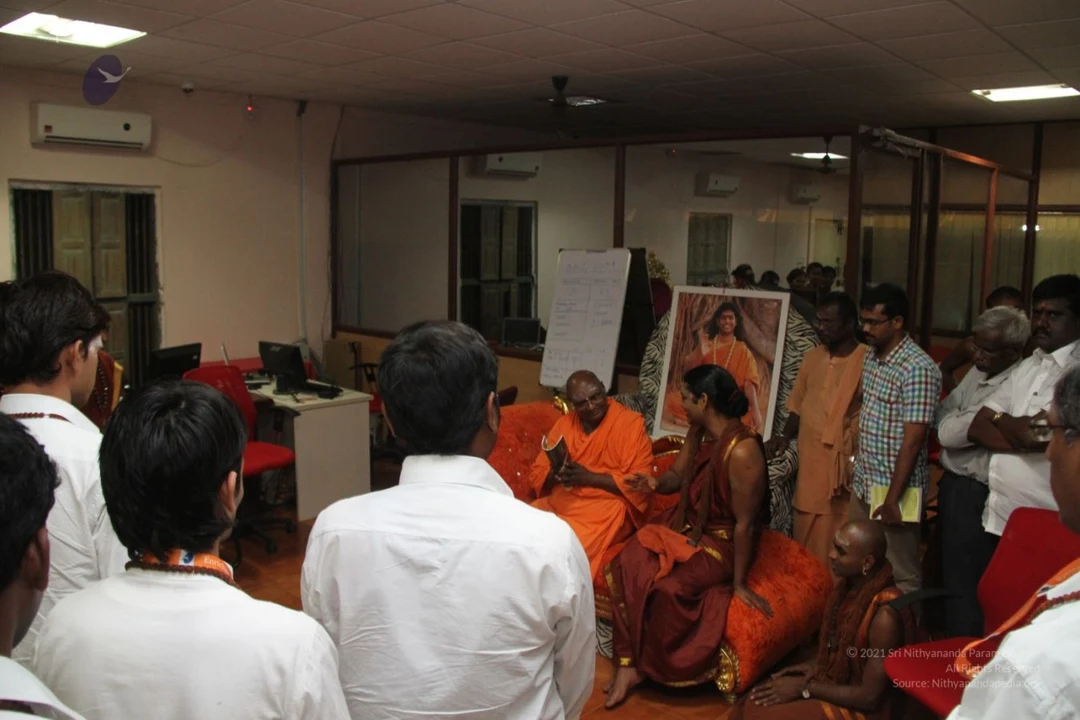
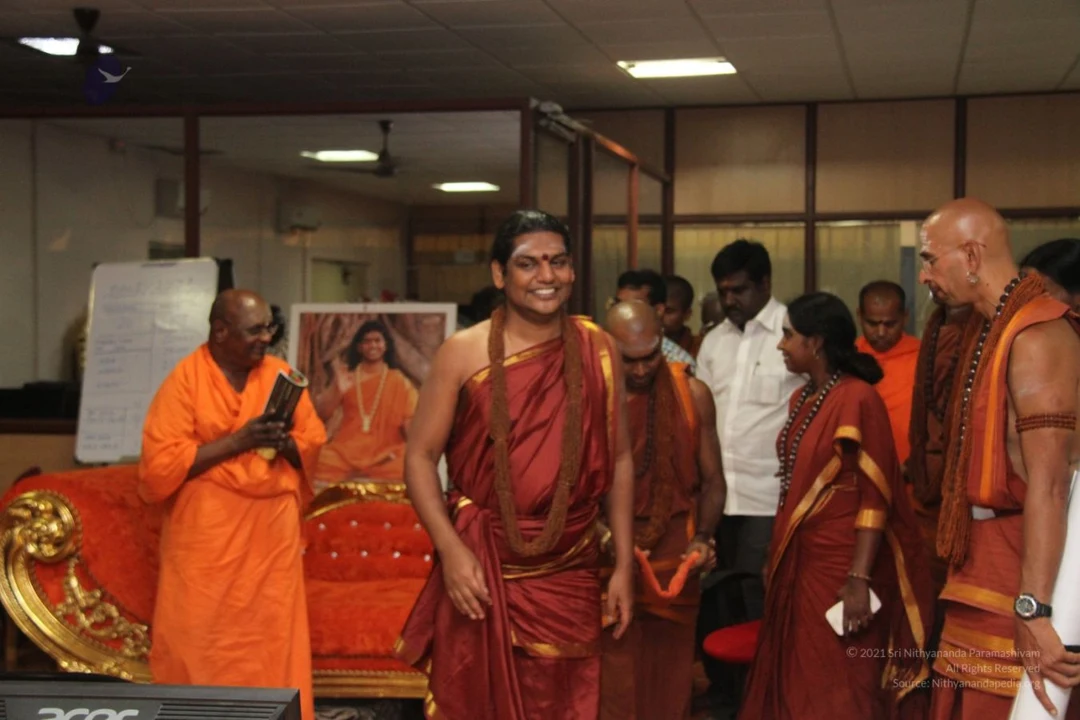
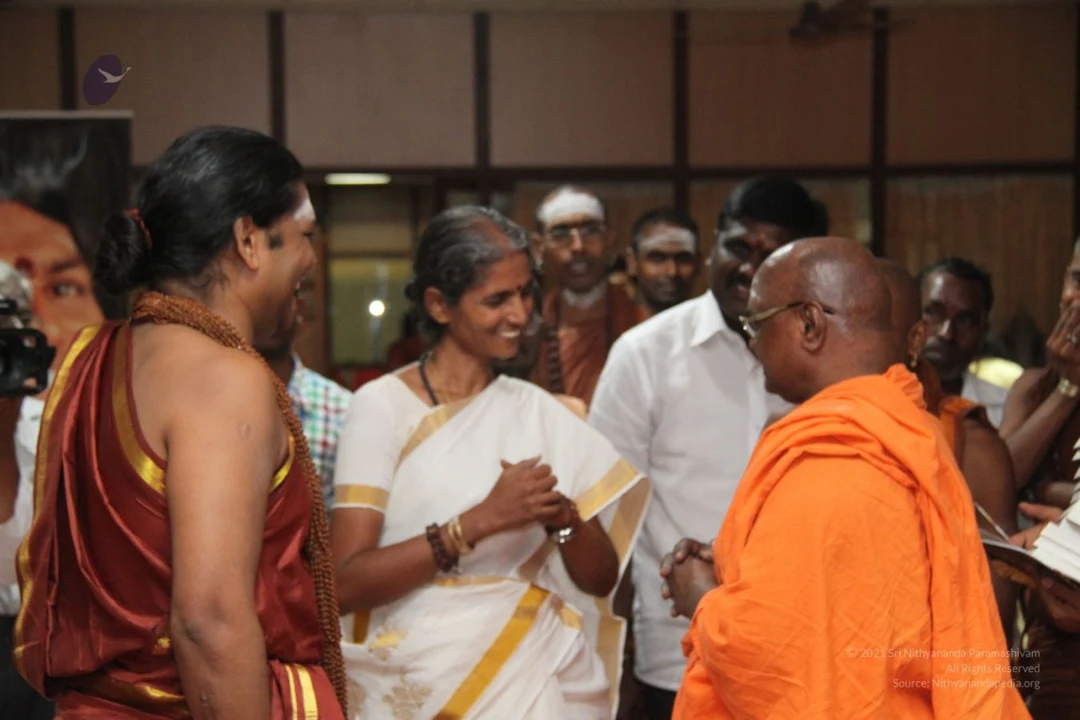
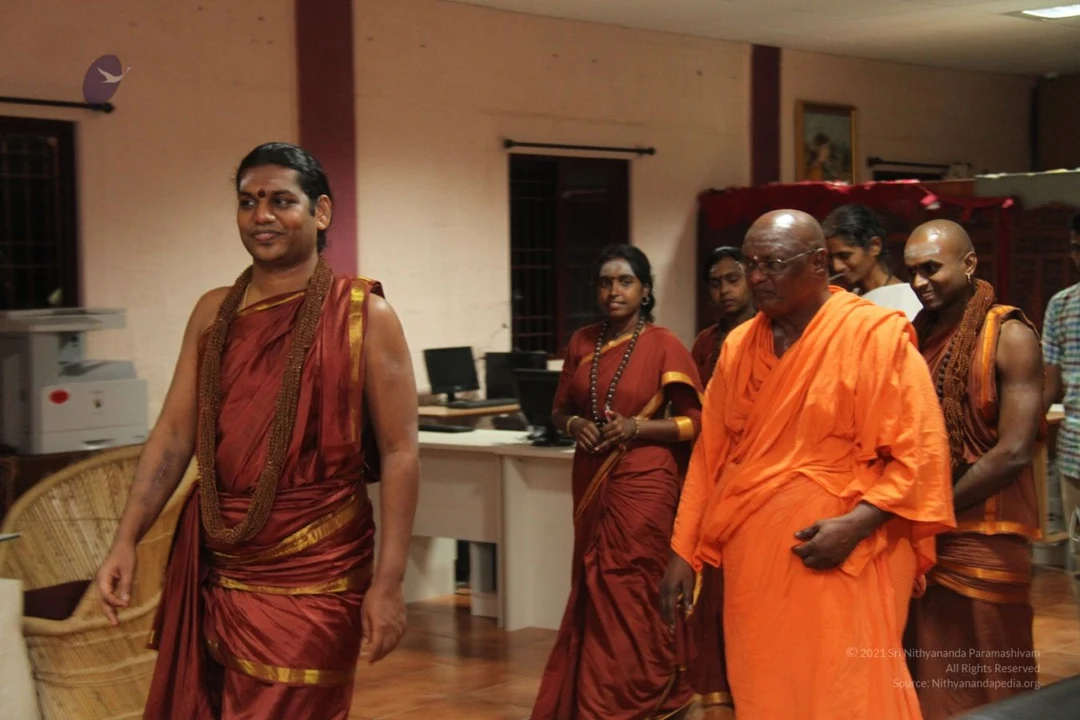
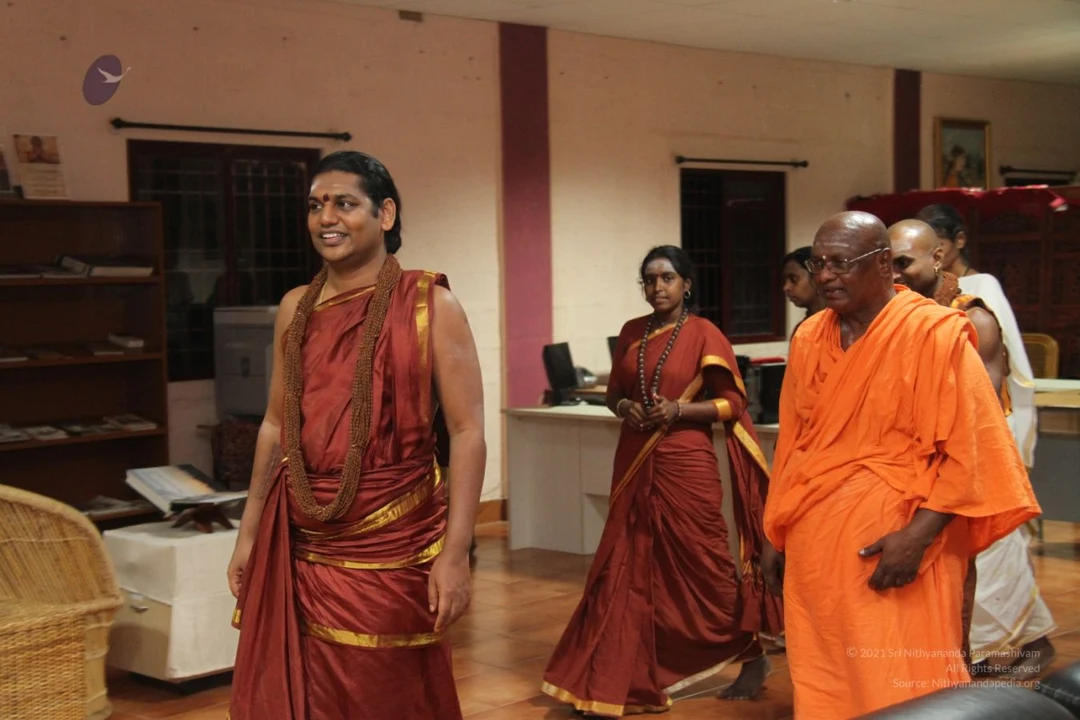
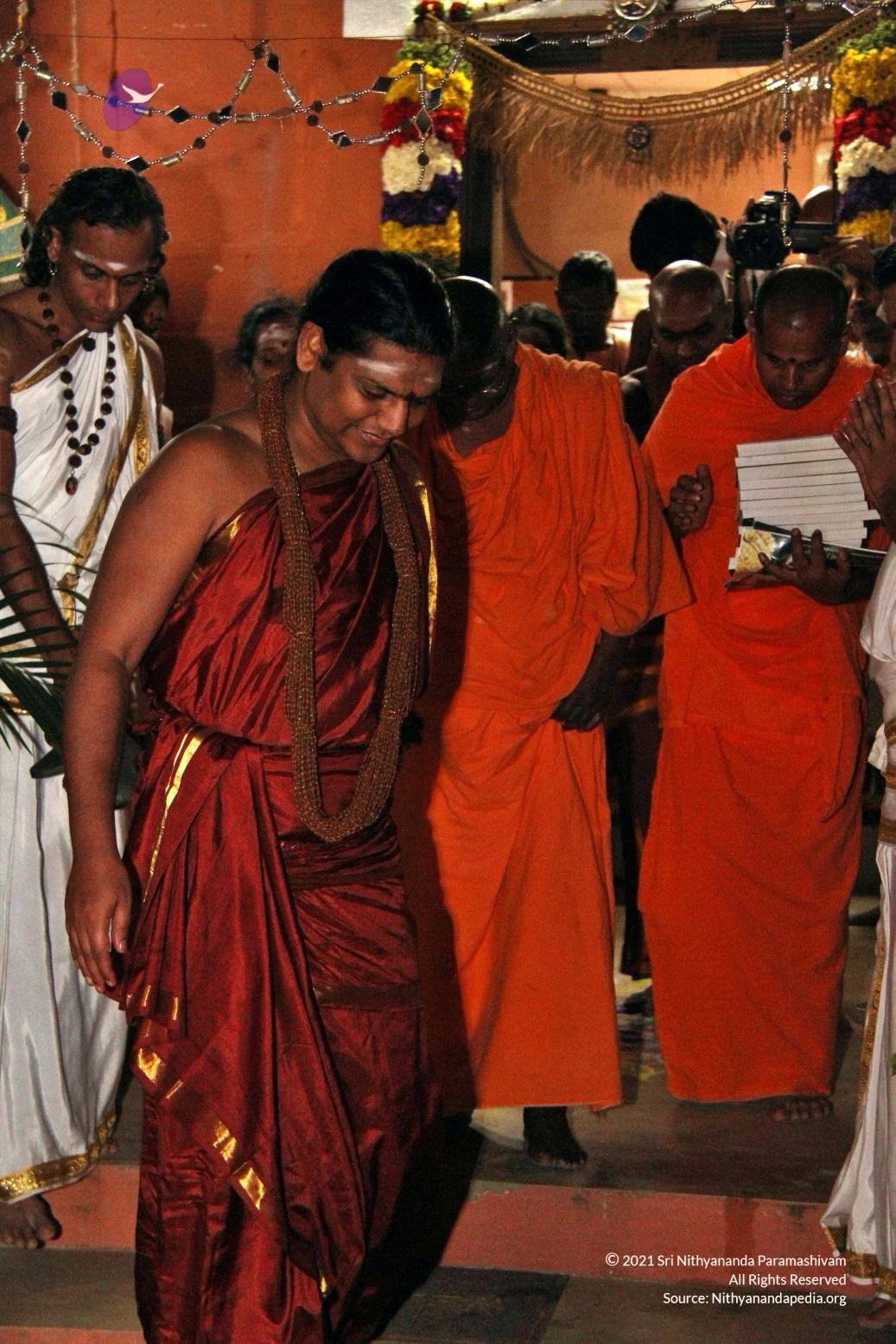
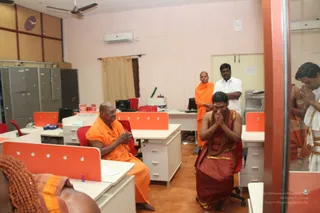
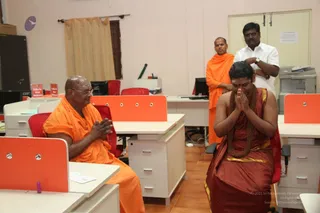
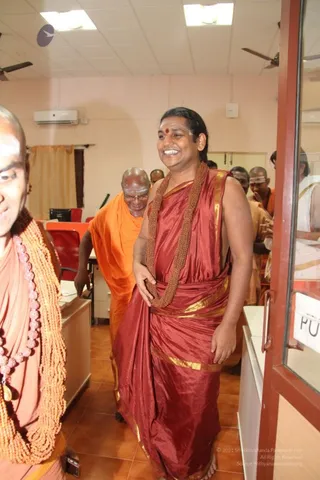
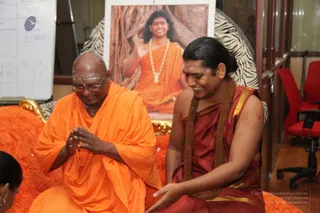
Interior of a bright office with orange-and-white desk partitions, red office chairs, grey metal lockers and a wall air conditioner. A bald older man in orange robes sits at a desk smiling with palms pressed together. In front of him, a person in a maroon-and-gold dhoti-style garment kneels on the floor with hands folded in namaste, head bowed. Behind them a man in orange robes stands beside a man in a white shirt with arms crossed, and at the right edge a man in white dhoti with hands joined is partly visible through glass.A photo inside an office with orange-and-red workstations and cabinets. A man in orange robes with bald head and glasses sits at left with palms pressed together in namaste. Seated at right, a man in a rust-red dhoti and shawl with a long rudraksha mala and gold trim, eyes closed, palms pressed in prayer. Behind them, a standing monk in saffron robes places a hand on the seated man's head, and a man in a white shirt and trousers watches with arms folded. Desks display small red placards reading Life Is For Others. The scene shows a blessing with a monastic and devotee setting.A smiling man with short dark hair, a red bindi and a rudraksha mala draped over a maroon silk garment with gold borders walks indoors through a room with fluorescent ceiling lights and ceiling fans. A man in an orange robe walks behind him, and a bald man in an orange-brown robe with a rudraksha mala stands at the left edge. Other people in saffron and ochre robes stand in the background, and a glass door with a partially visible sign lies at the right.A photograph of two men seated on an orange upholstered seat in an indoor room with a whiteboard and red office chairs behind them. The man on the left, bald and wearing glasses, wears an orange robe and sits with palms pressed together in a gesture of greeting. The man on the right has swept-back hair, a rudraksha mala draped over a maroon robe with gold trim, and smiles with hands resting on the seat. Behind them a framed photo shows a smiling figure in an orange robe with a white flower garland, seated beneath a banyan tree. A zebra-striped cushion is visible. A partially visible person appears at the lower left edge. Two people are visible in the scene.Indoor office scene with orange-tiled floor and glass partitions. A seated man in saffron robes with crossed arms sits on an orange velvet throne with a zebra-print cushion, beside a standing man in a maroon-and-gold robe and another seated man in maroon with a rudraksha-style mala. A woman in maroon kneels at left. Several men stand behind in orange and maroon robes and white shirts, watching. Behind them a large framed portrait shows a figure in orange with a long beaded necklace, raising a hand before a tree. A whiteboard lists Bali 2013 figures. Visible people: about eight.Indoor photo of two seated men on an orange upholstered sofa in a meeting room. On the left, an older bald man with glasses and a white tilak wears orange saffron robes and looks down. On the right, a man with long dark hair tied back, a rudraksha mala, and a red-brown robe with gold trim gestures with an outstretched hand toward the older man. Behind them a whiteboard with handwritten notes and a large framed photo are visible. A black armrest is at the lower left. Swamiji (probable): the man on the right has long swept-back hair, a rudraksha mala and ornate red-brown robes with gold borders.

TV-Broadcast

5 photosSource gallery
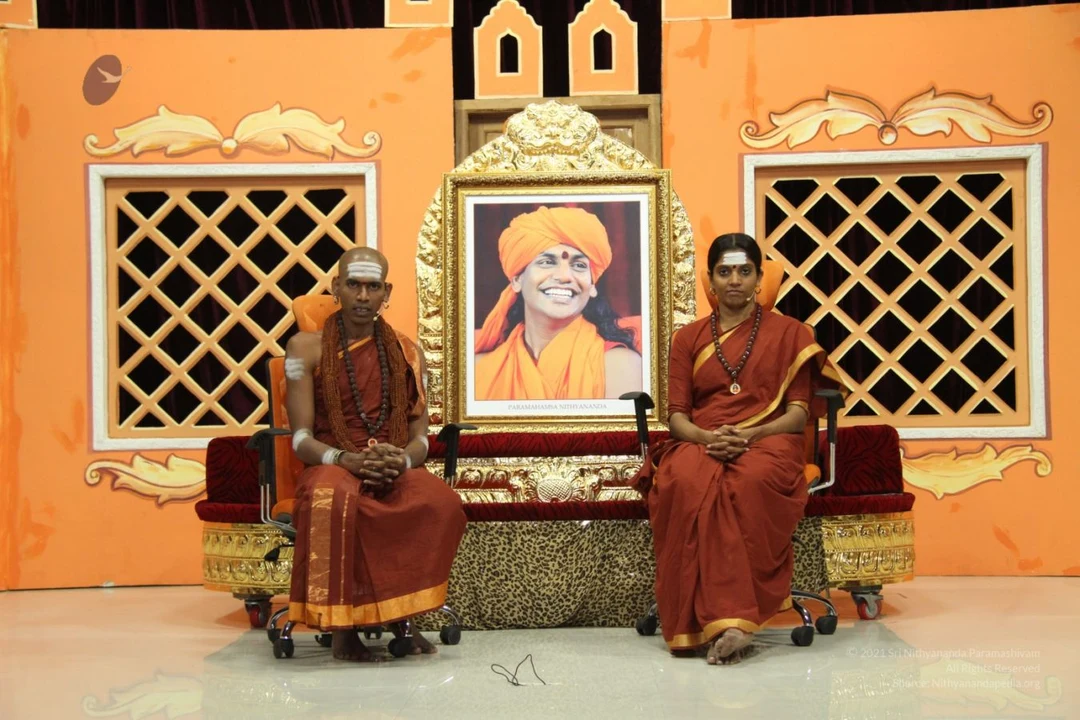
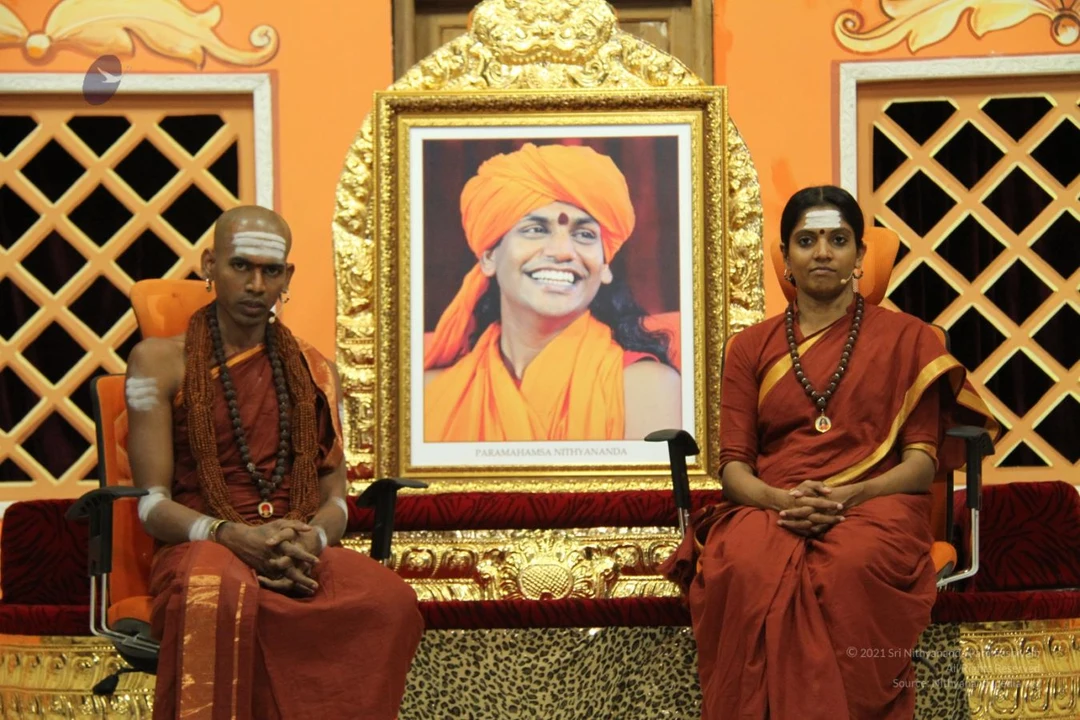
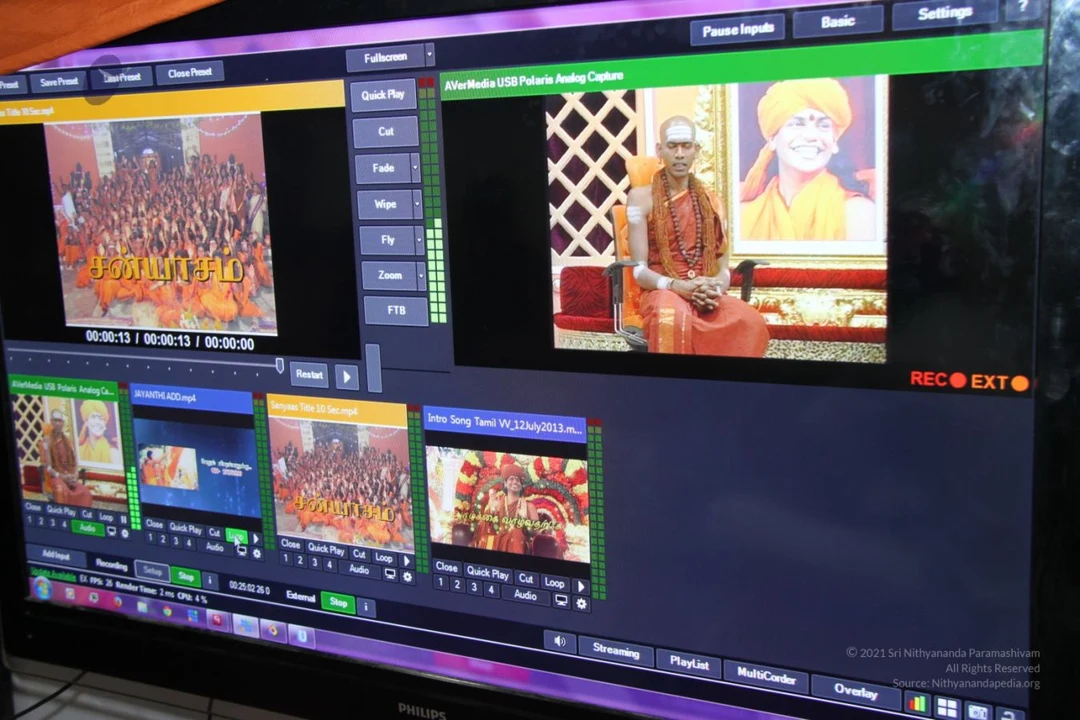
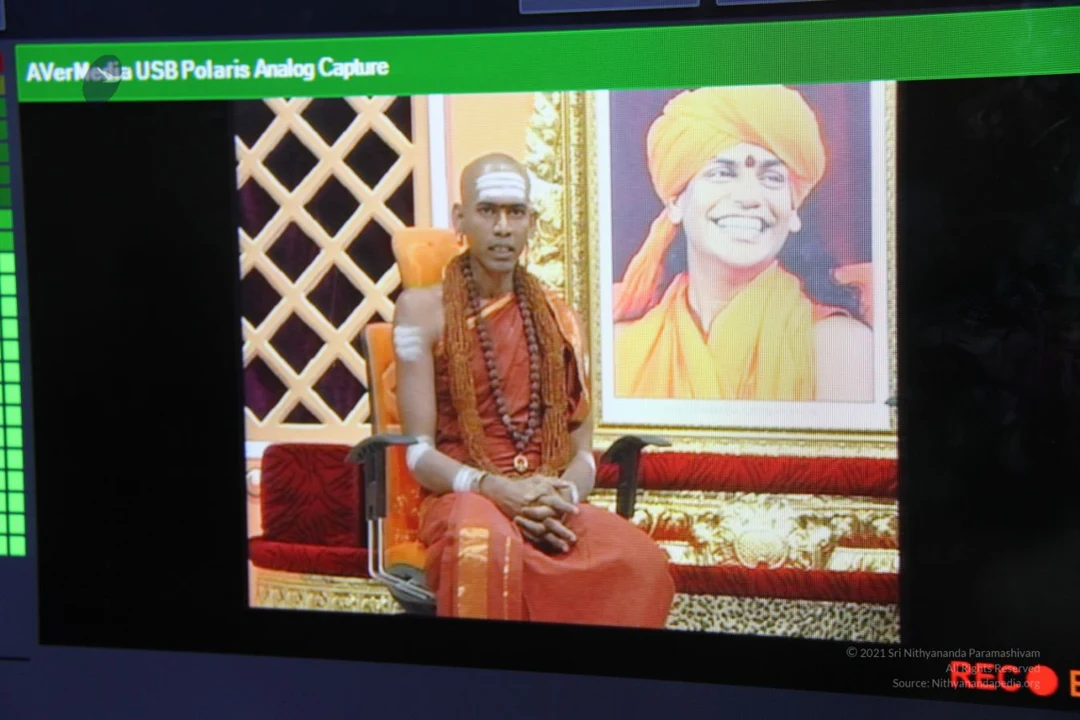
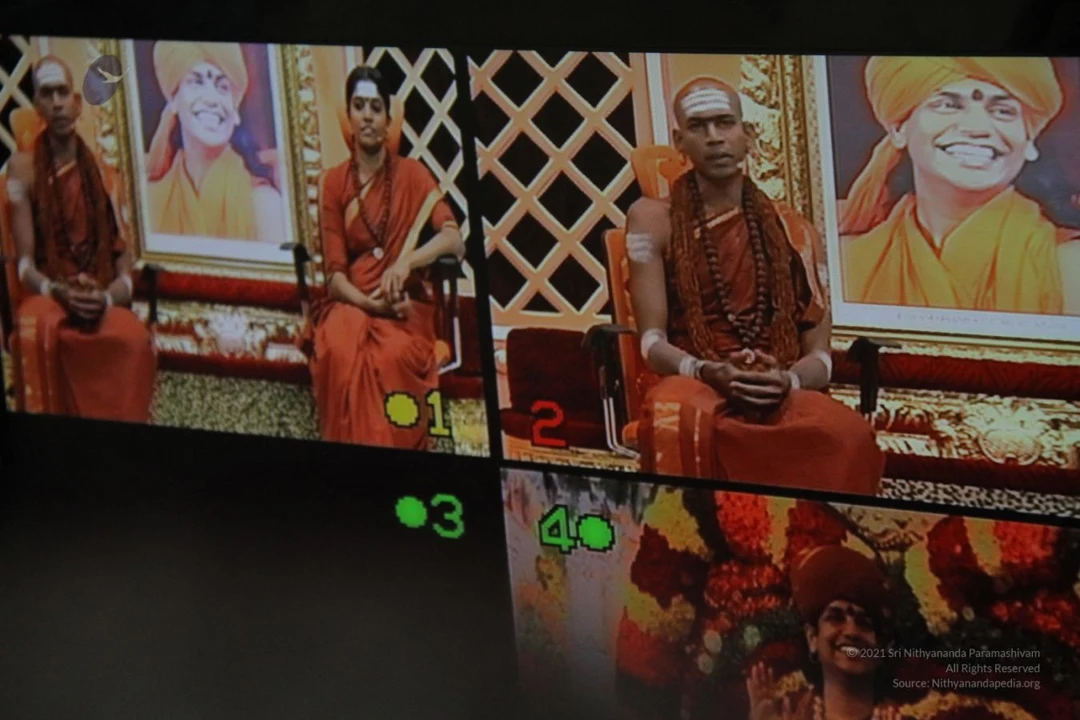
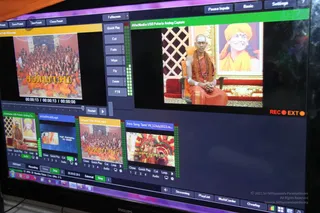
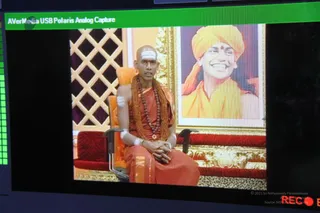
Two monastic figures in rust-red and orange robes sit on orange upholstered chairs on an orange stage set with lattice windows and a gold-framed throne backdrop. At centre, a framed portrait labelled "Paramahamsa Nithyananda" shows a smiling man in an orange turban and saffron robe, seated before a gold throne with leopard-print cushioning. The figure on the left is bald with a white tripundra, wears rudraksha beads and a light shawl, and presses palms together. The figure on the right has long dark hair, a white forehead mark, rudraksha mala and a pendant, and also holds hands together. Both are barefoot. Two people are visible.A photograph of two seated devotees on orange chairs before a large gilded frame holding a portrait labelled "PARAMAHAMSA NITHYANANDA". The framed portrait shows a smiling man in an orange turban and orange robe with a red bindi, shown as a depiction, not a physical person. On the left, a shaven-headed man in red-brown robes wears a brown rudraksha mala and white vibhuti stripes, hands clasped in his lap. On the right, a woman in a deep red sari with a gold border wears a rudraksha mala, a pendant and a white forehead mark, hands folded. Orange walls with lattice panels frame the stage, and a leopard-print cloth lies beneath the portrait.A photograph of a monitor displaying a live-streaming control interface with several preview panels. The main preview shows a man seated on a red-cushioned throne-like chair with gold trim, wearing an orange-saffron dhoti and shawl, a rudraksha mala around his neck, and white tripundra markings on his forehead, with his hands folded in his lap. Beside him is a framed portrait of a smiling man in an orange turban and saffron robes. Other thumbnails show a crowd of people in orange clothing beneath the Tamil word for Sannyas, a title card reading JAYANTHI ADD.mp4, and an intro clip of a figure in ornate red and gold dress. The interface buttons read Quick Play, Cut, Fade, Wipe, Fly, Zoom and FTB. The seated man's appearance is consistent with the page's reference to a person but is not distinctive enough to confirm identity, so he is described by role.A screen capture from an AVerMedia USB Polaris Analog Capture window shows a live video feed. A bald man with white vertical tilaka marks and wrapped white arm bands sits on an ornate orange chair, wearing orange robes, a rudraksha mala and a gold-beaded necklace, hands folded in his lap. Behind him hangs a gilded framed portrait of a smiling man in a yellow-orange turban and yellow-orange robes. The chair and bench are cushioned in red with gold trim, and a lattice screen stands at the left. The capture overlay shows a green bar and a small red recording indicator in the corner.A photograph of a screen showing a multi-panel video-conference feed of a satsang. Several people in saffron-orange robes sit on golden-ornate chairs before large framed portraits of a smiling figure in an orange head wrap and saffron robes. The central panel shows a bald man with white vibhuti horizontal lines on his forehead, wearing rudraksha malas and an orange shawl, hands folded in his lap, seated beside a woman in orange sari with a rudraksha mala. Green and red numbered tiles mark participant panels, and a lower panel shows a marigold-garlanded figure. Only people on the screen are visible, and the framed portraits are printed images.

Yoga

114 photosSource gallery
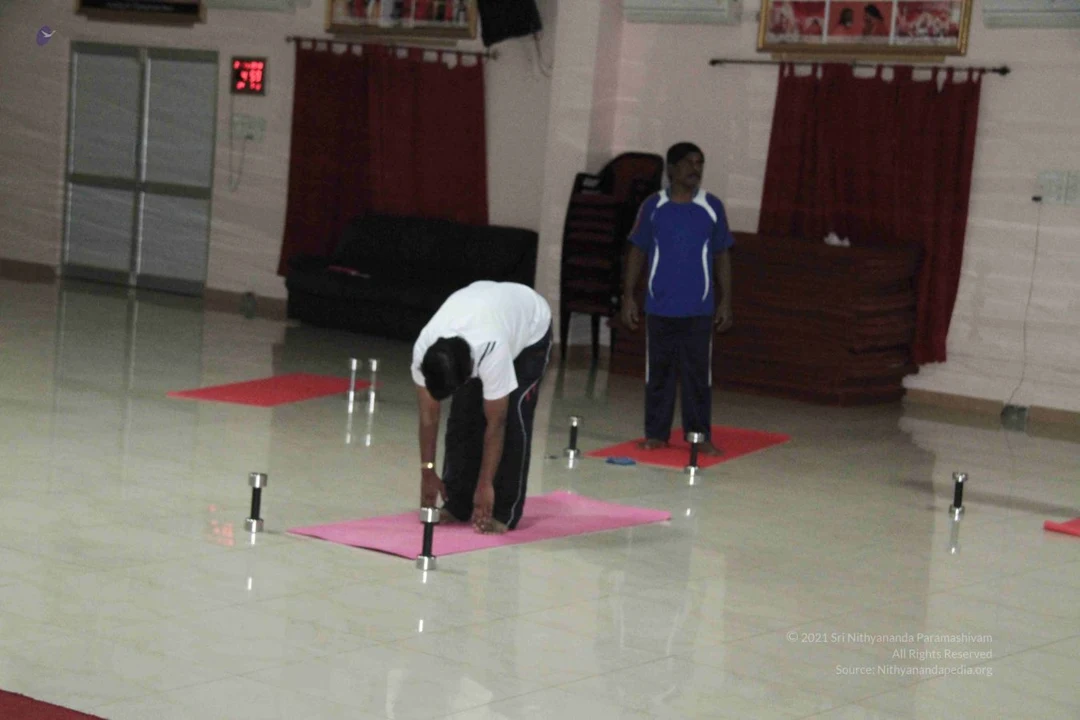
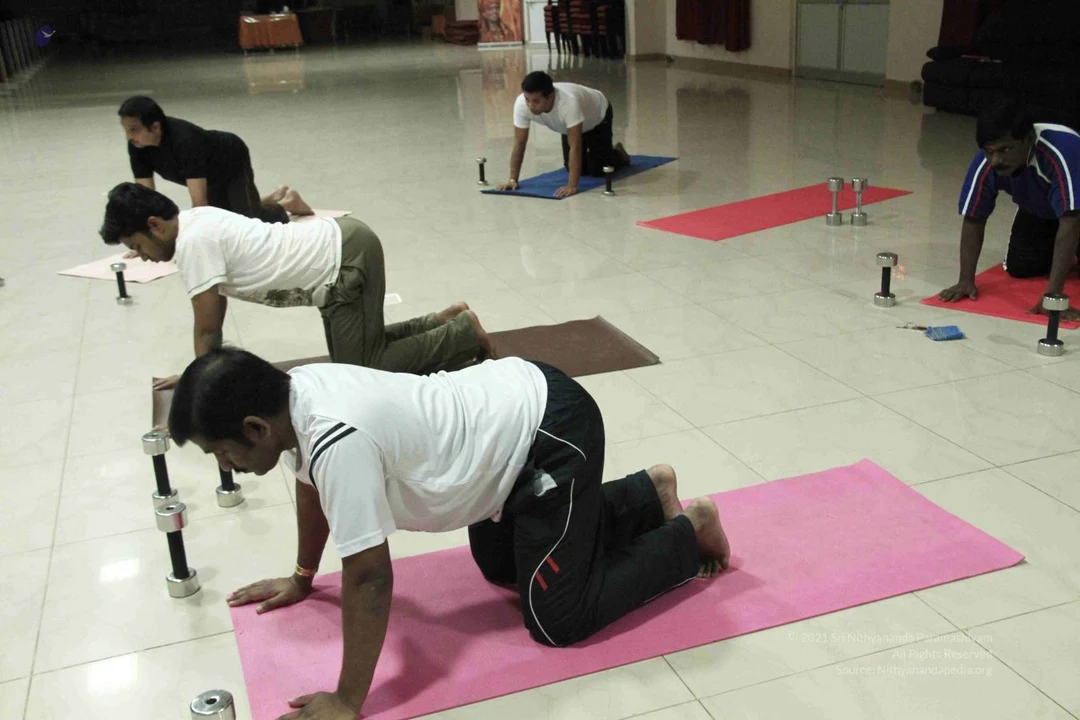
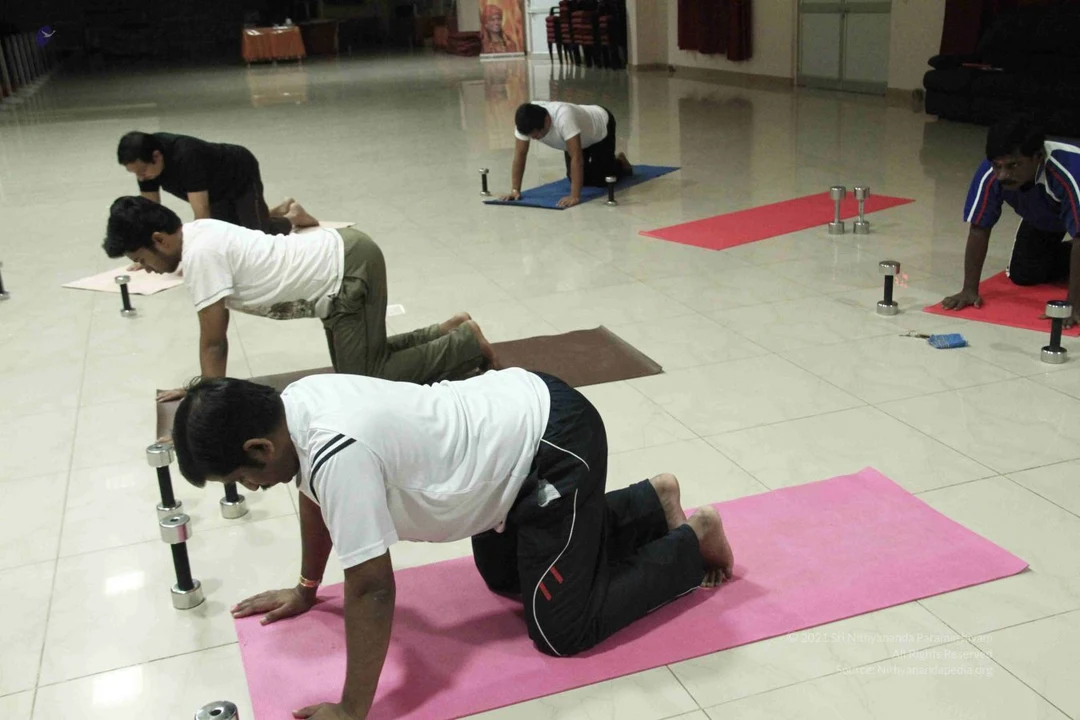
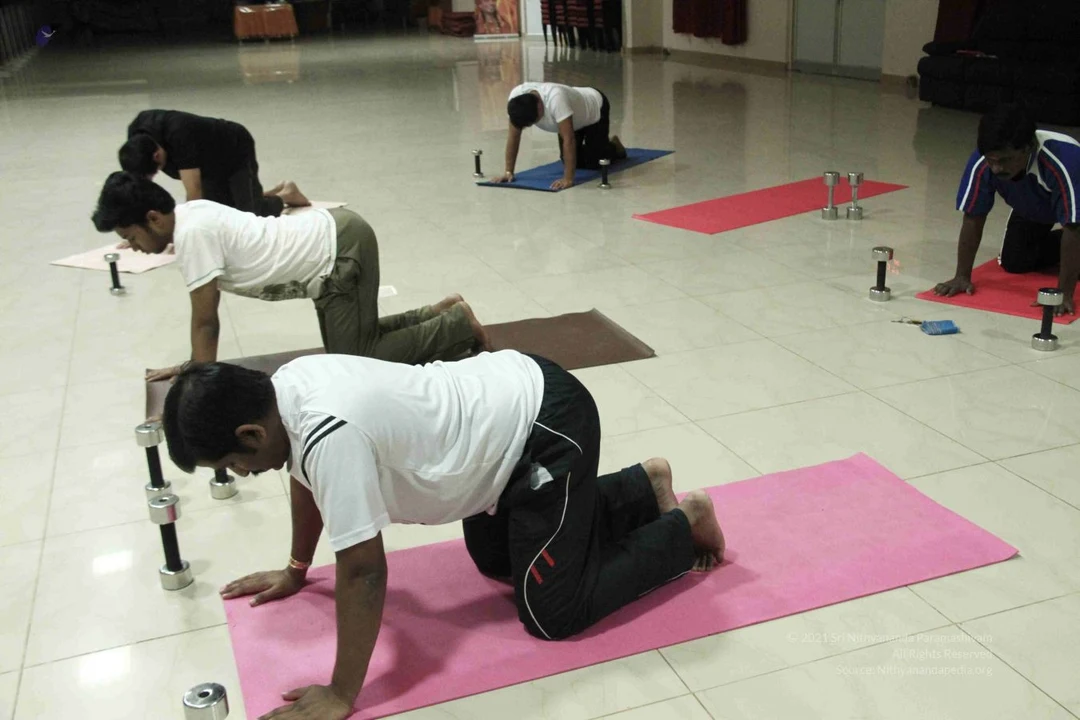
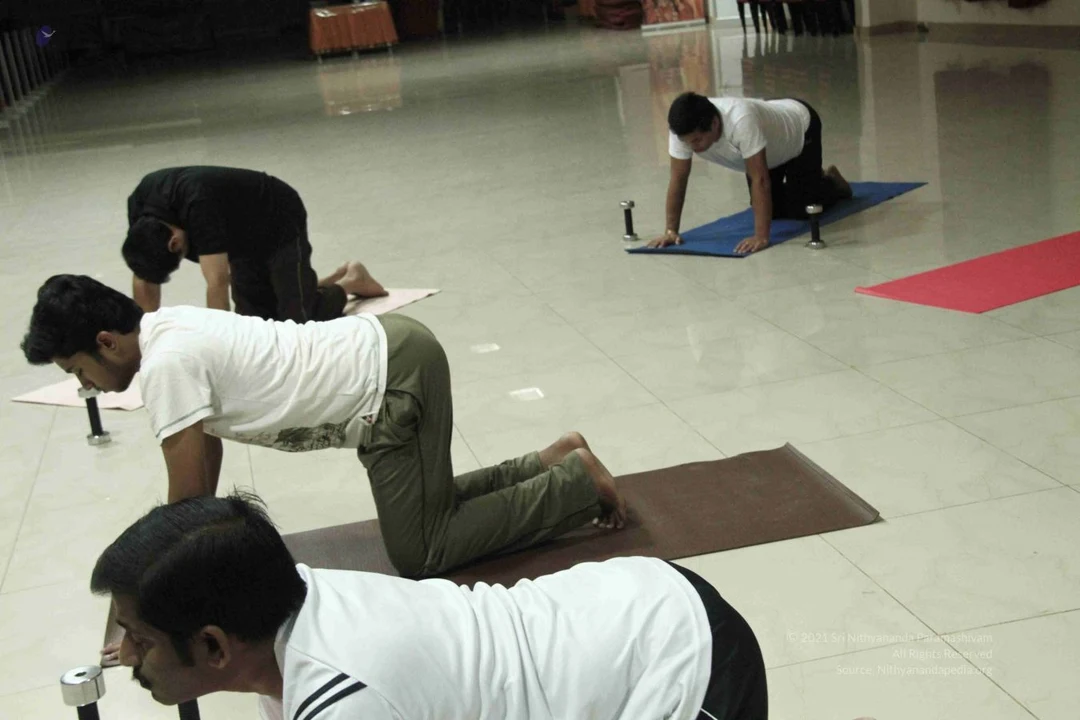
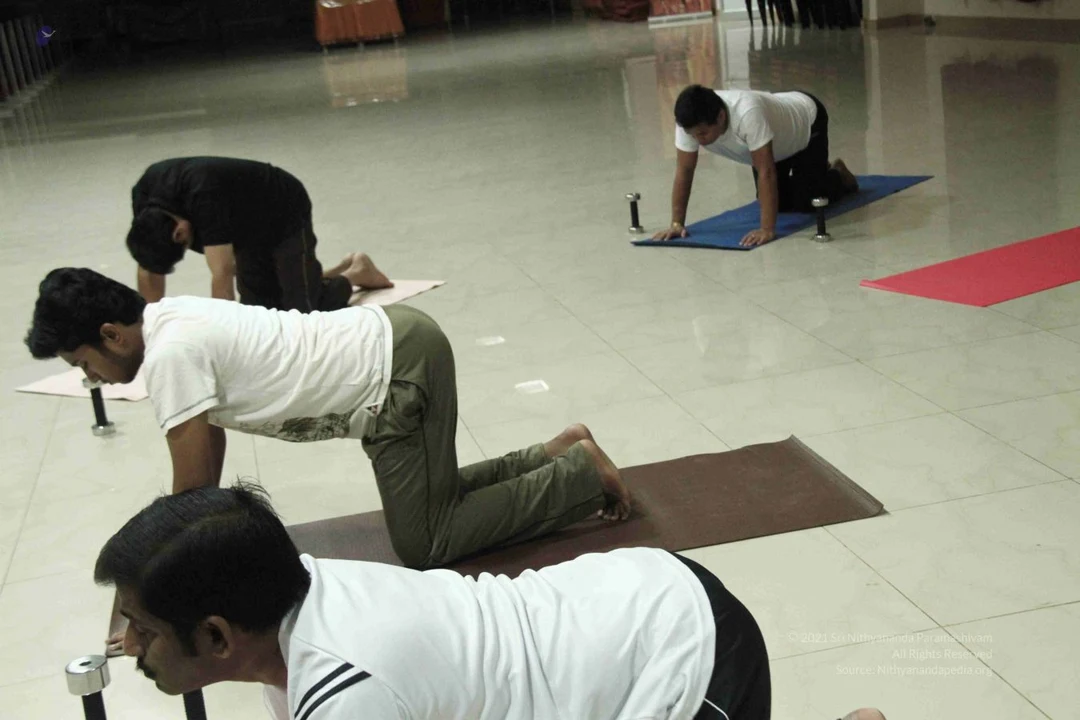
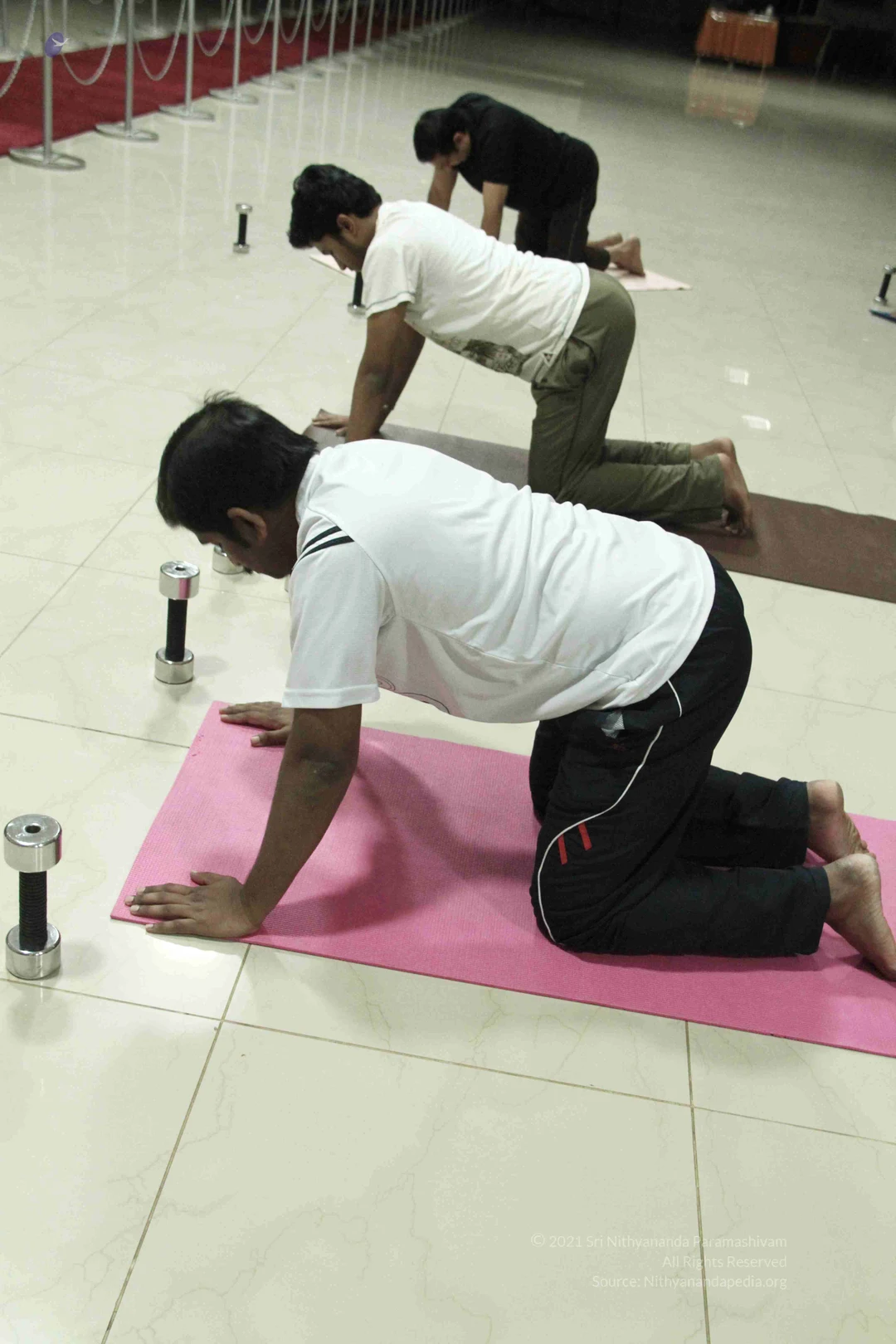
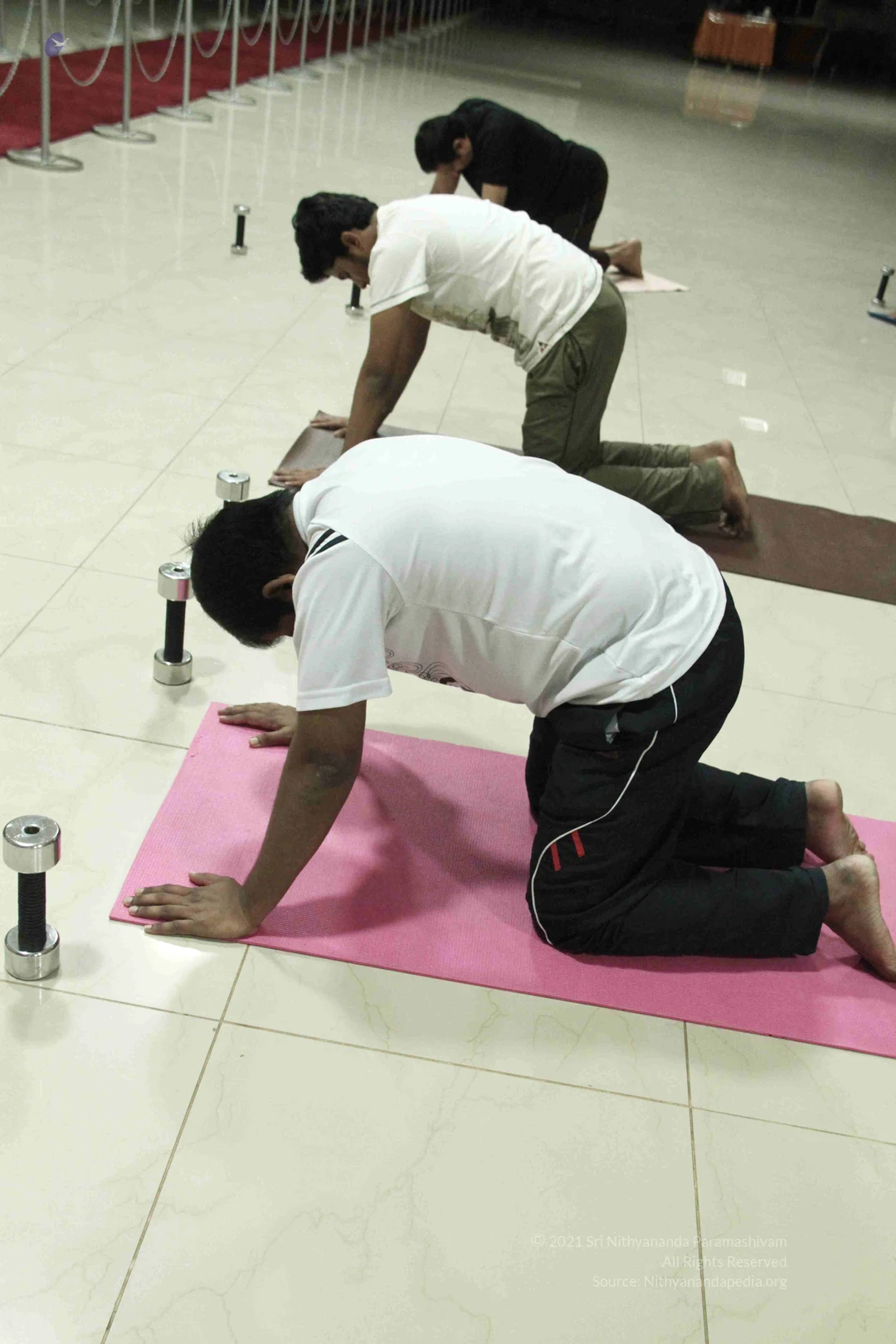
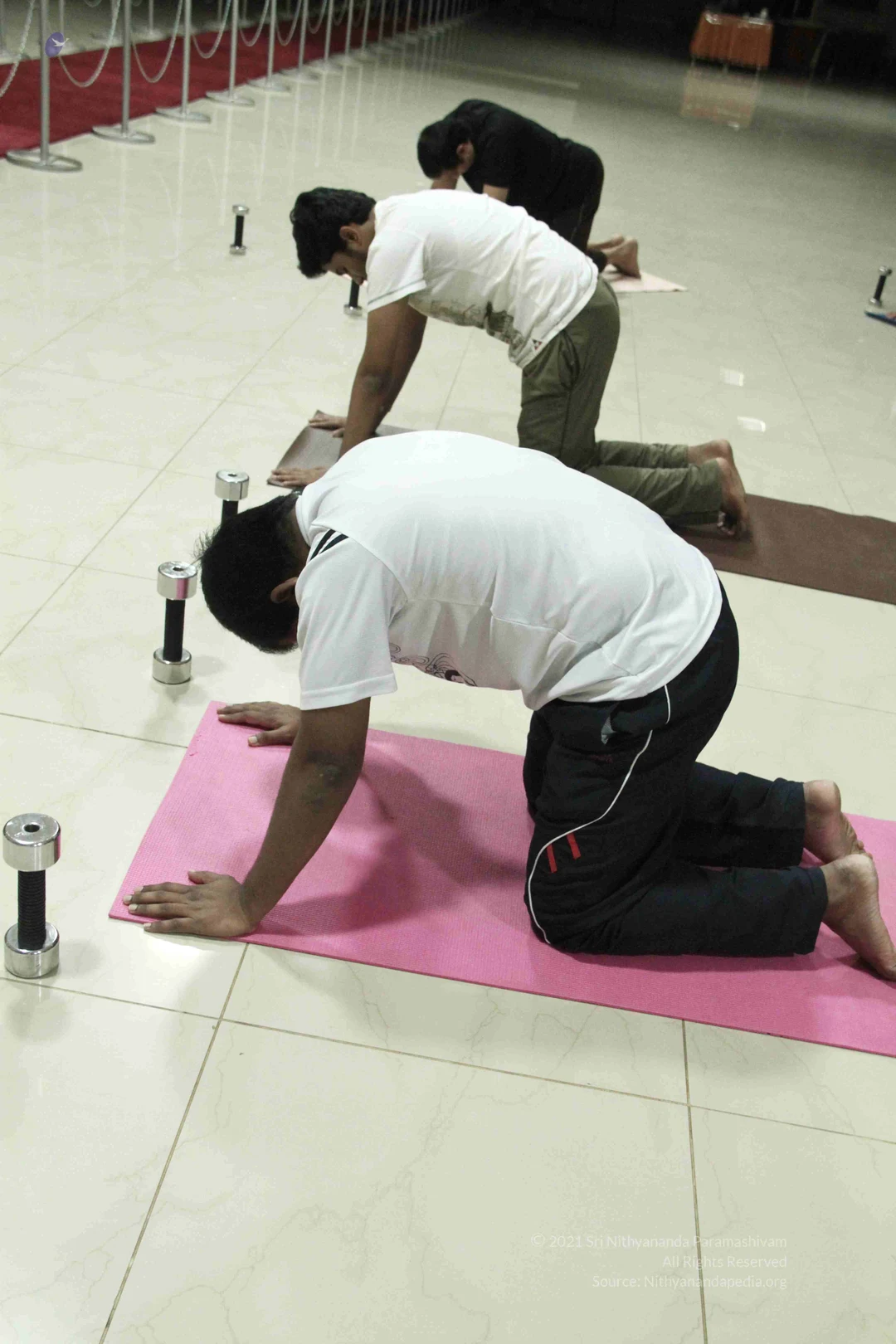
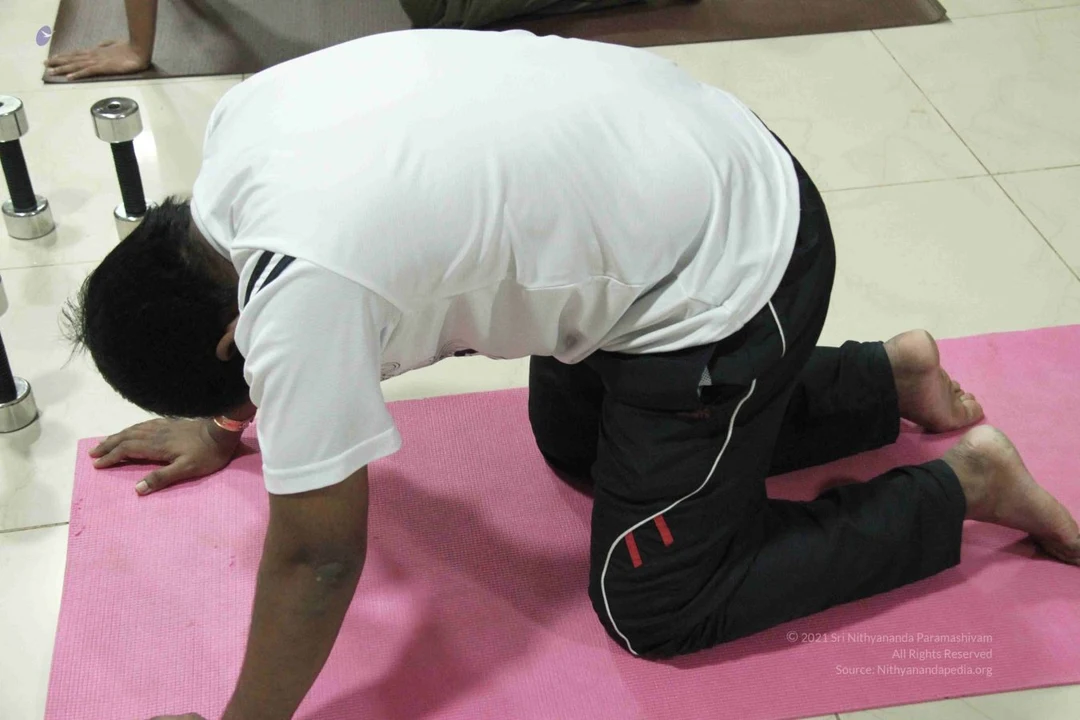
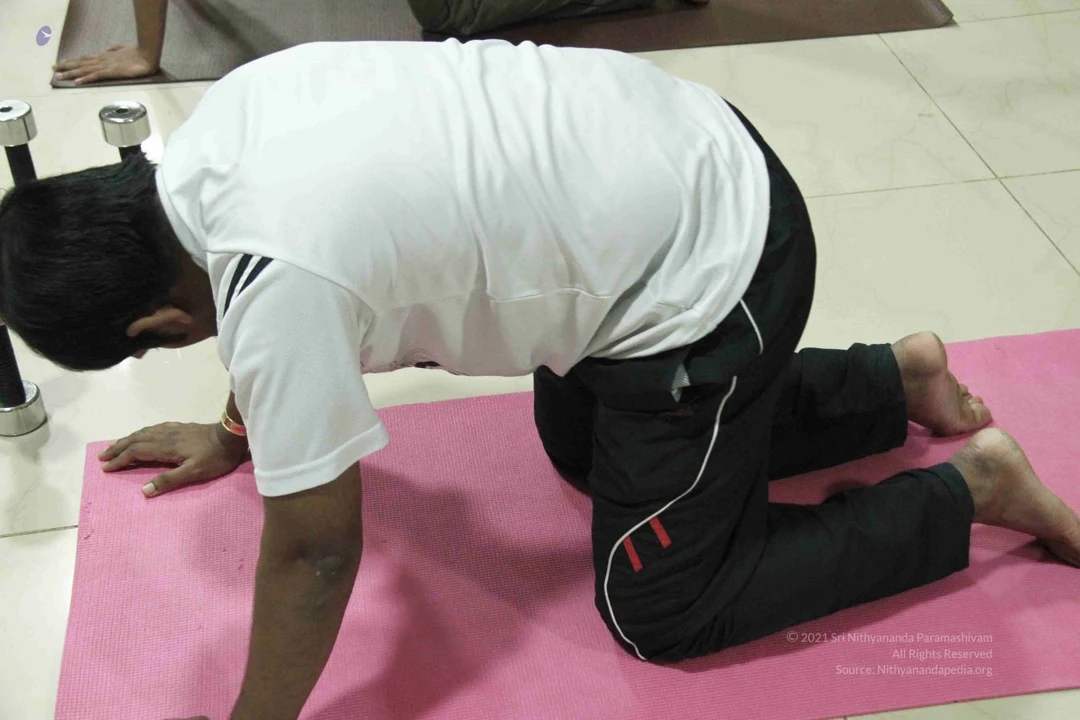
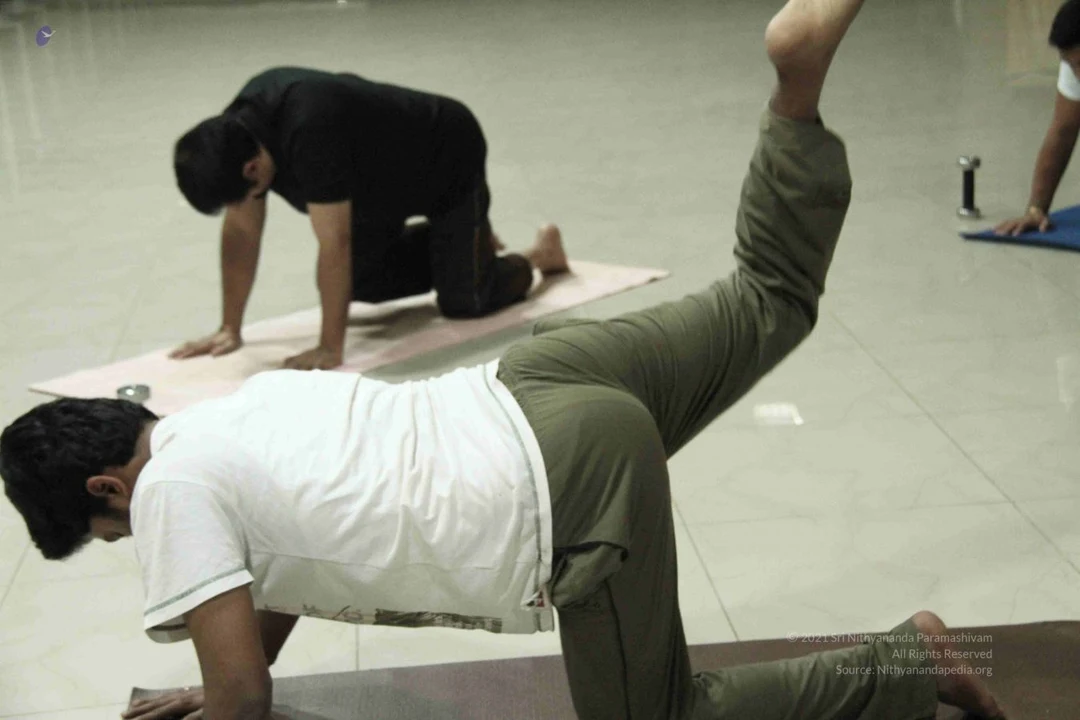
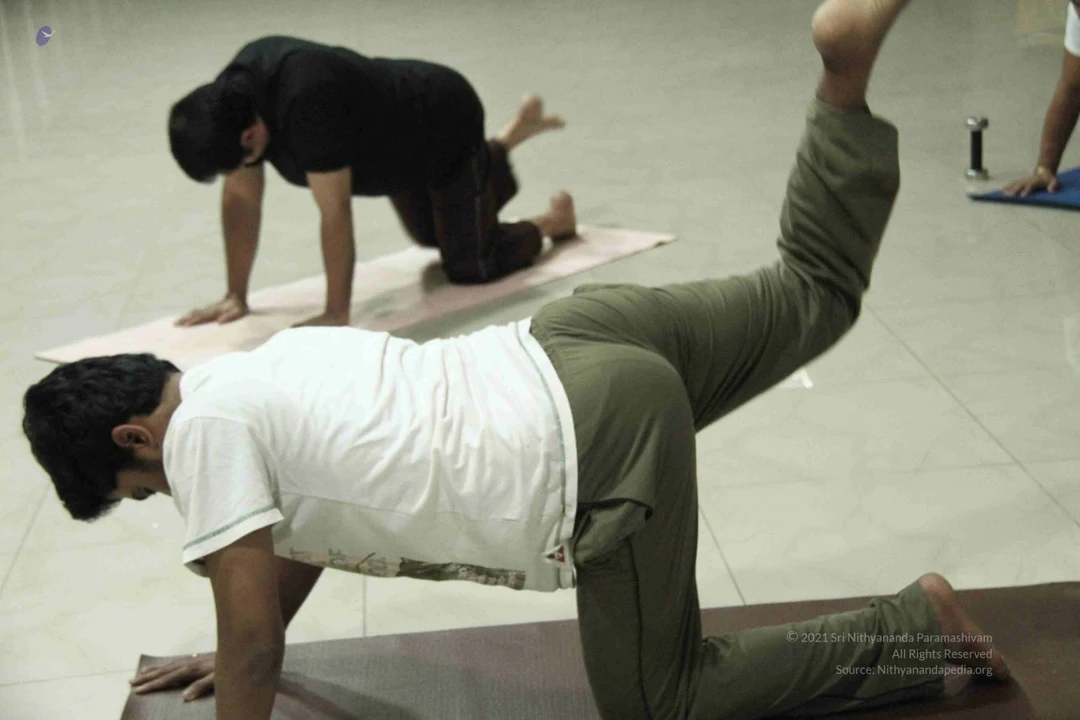
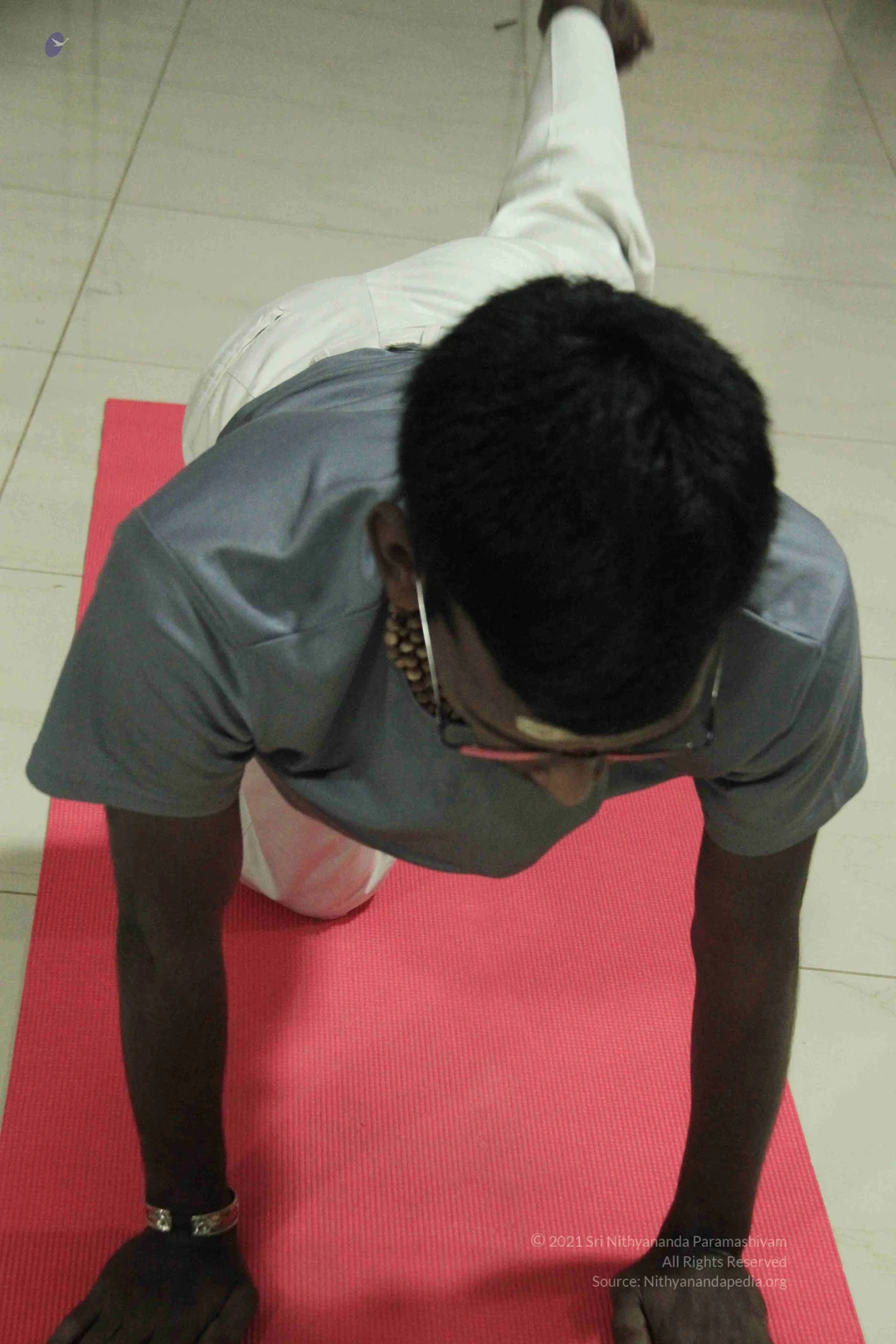
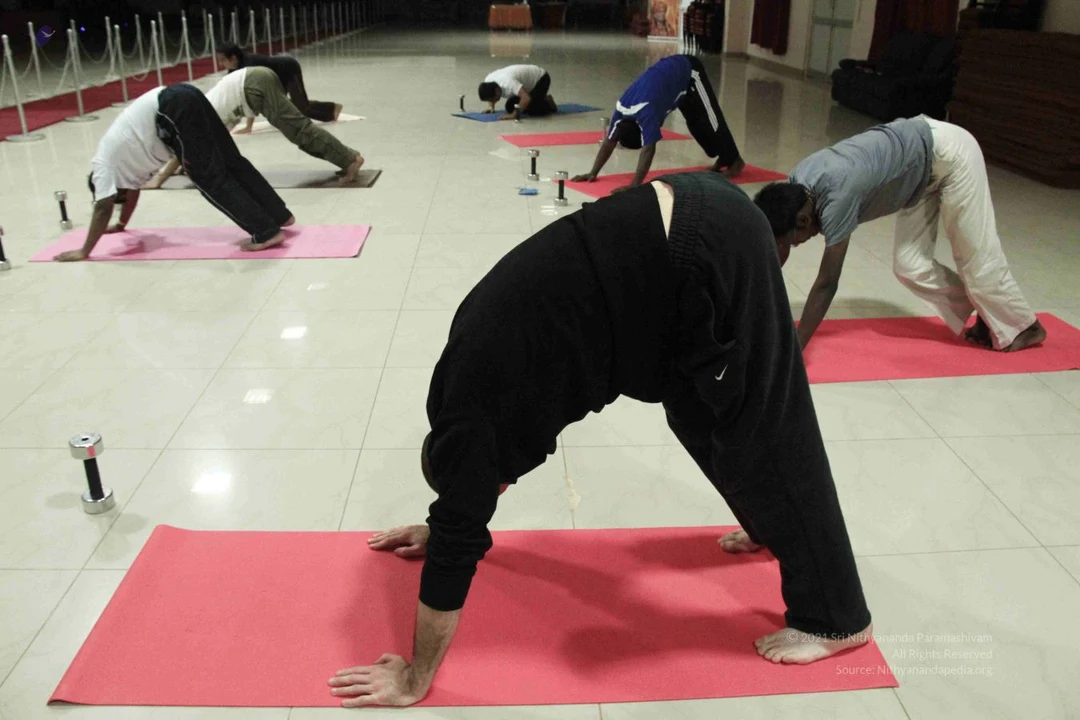
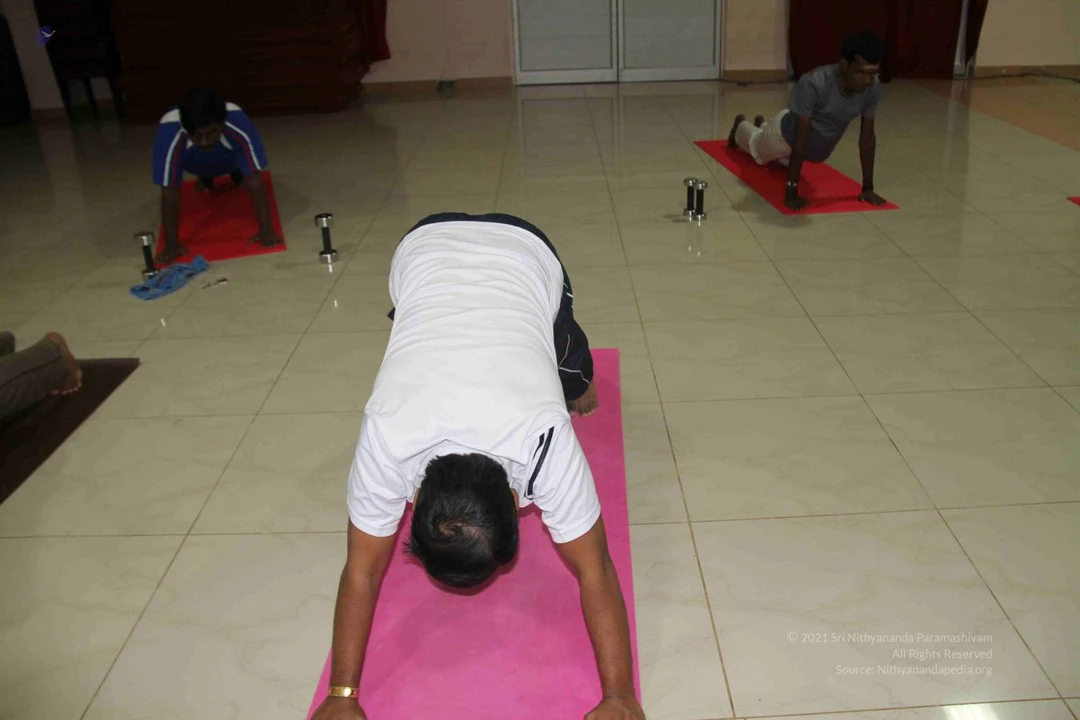
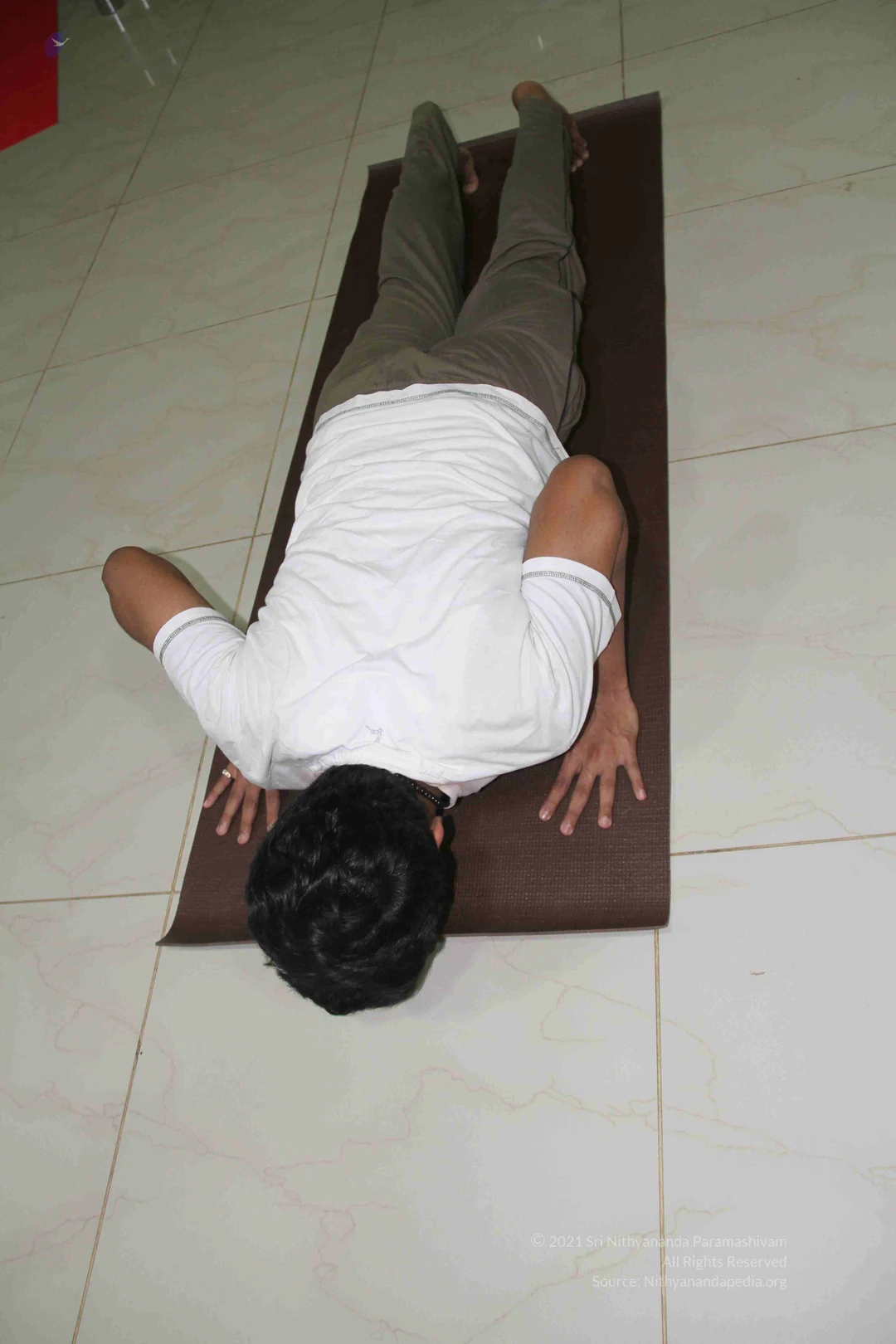
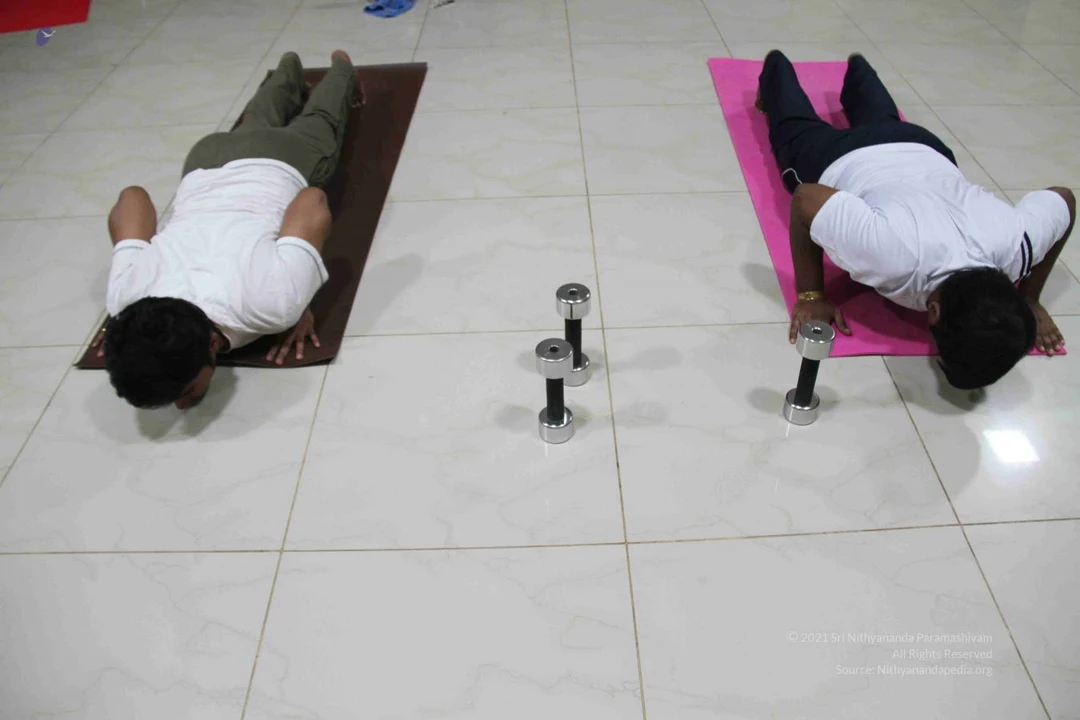
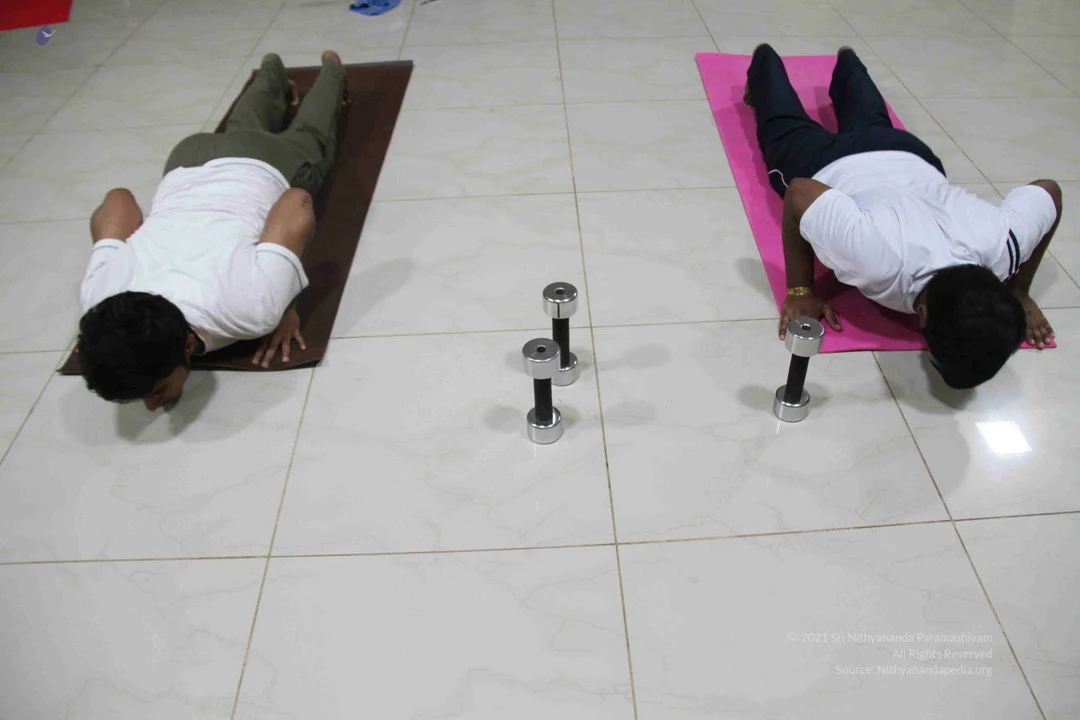
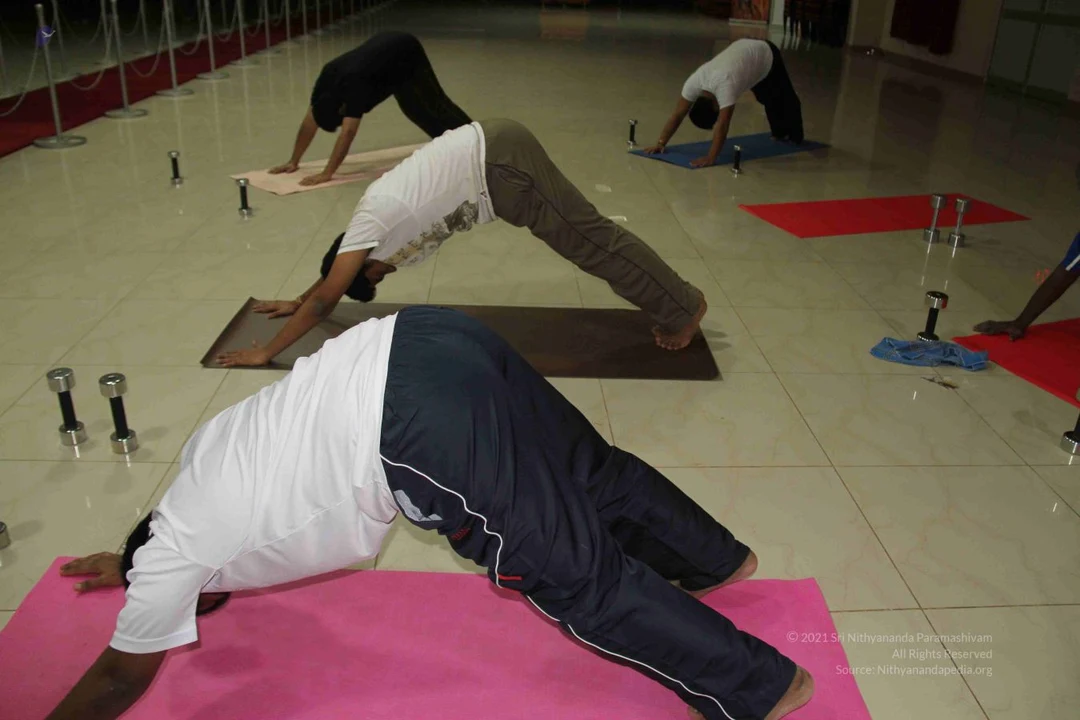
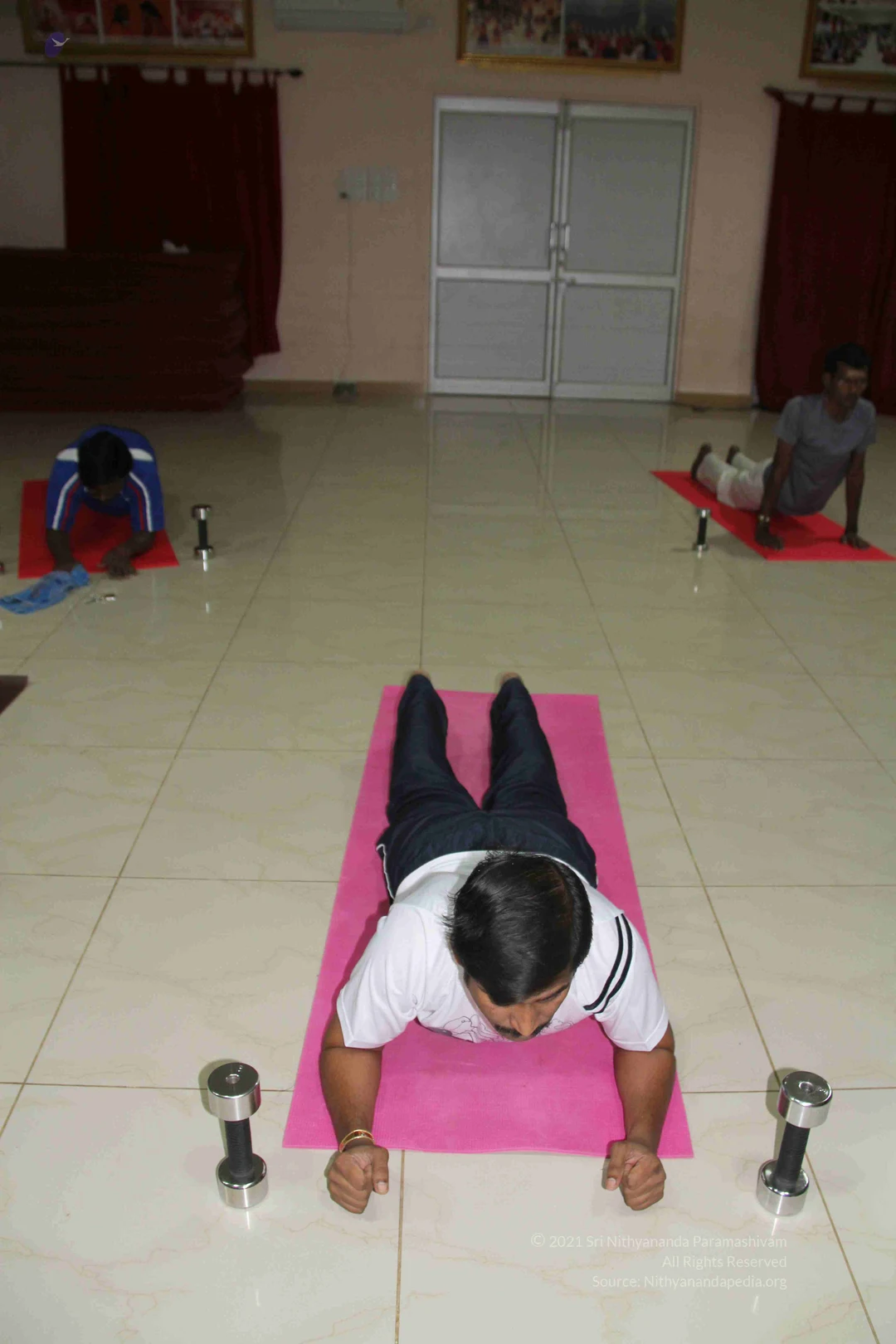
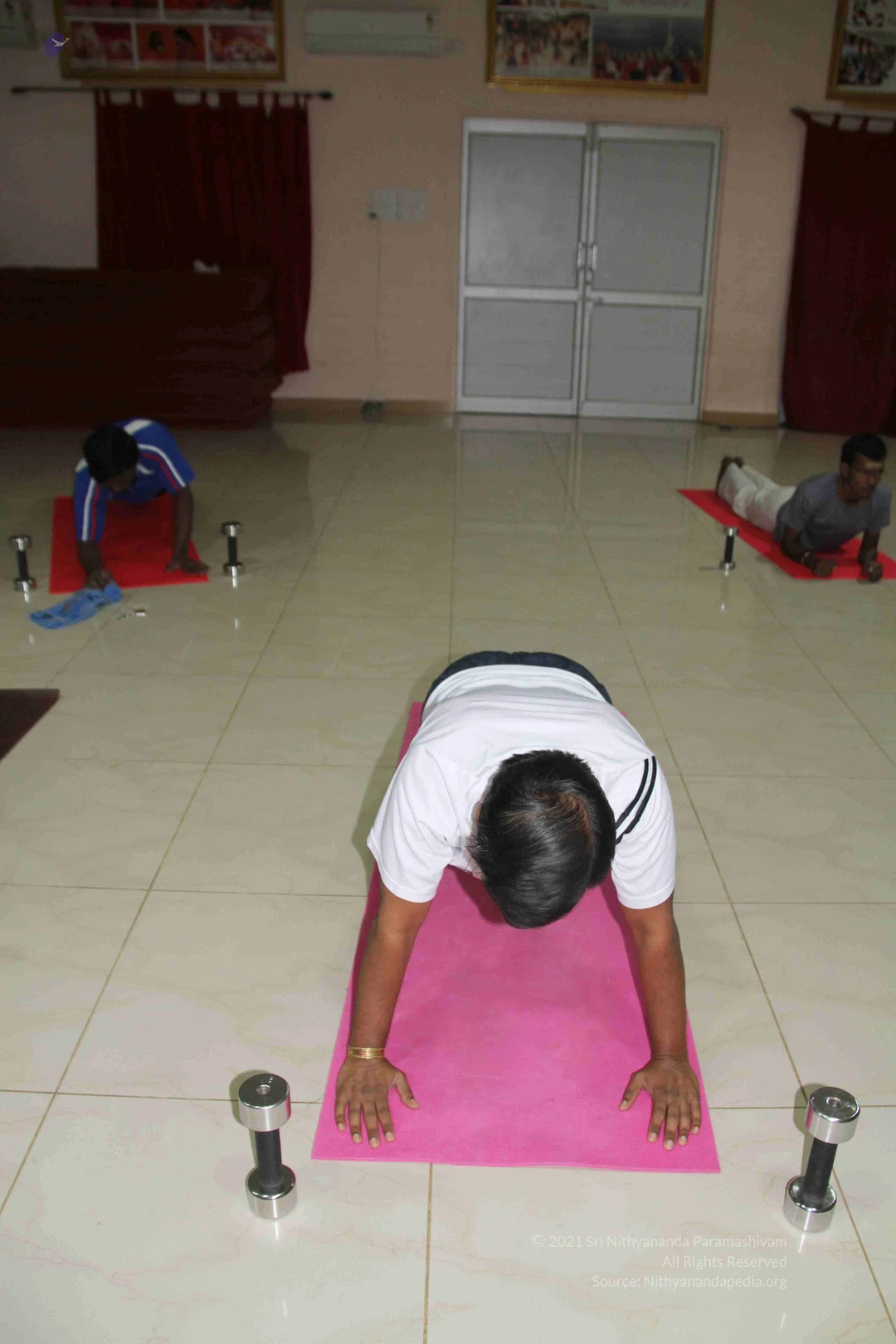
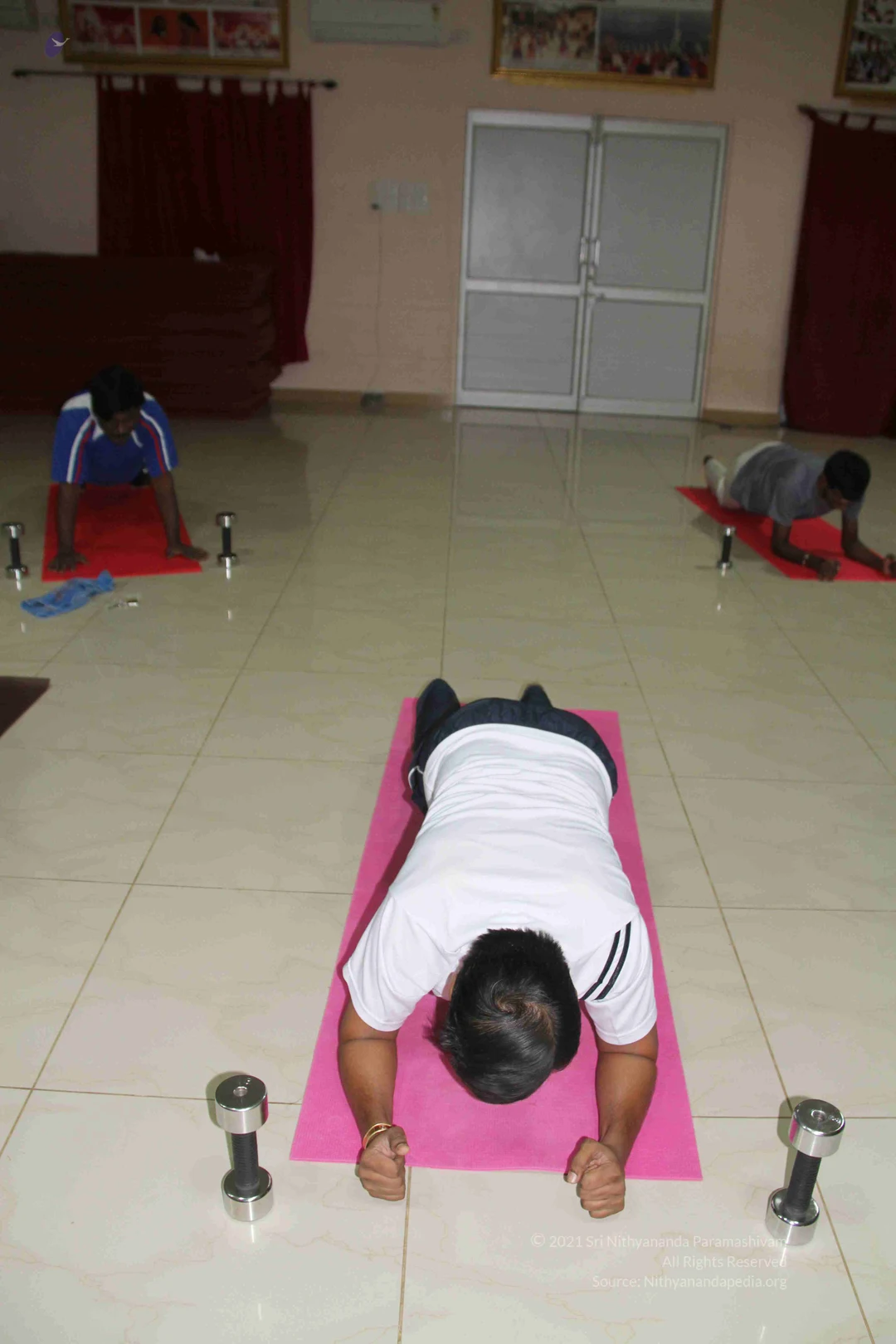
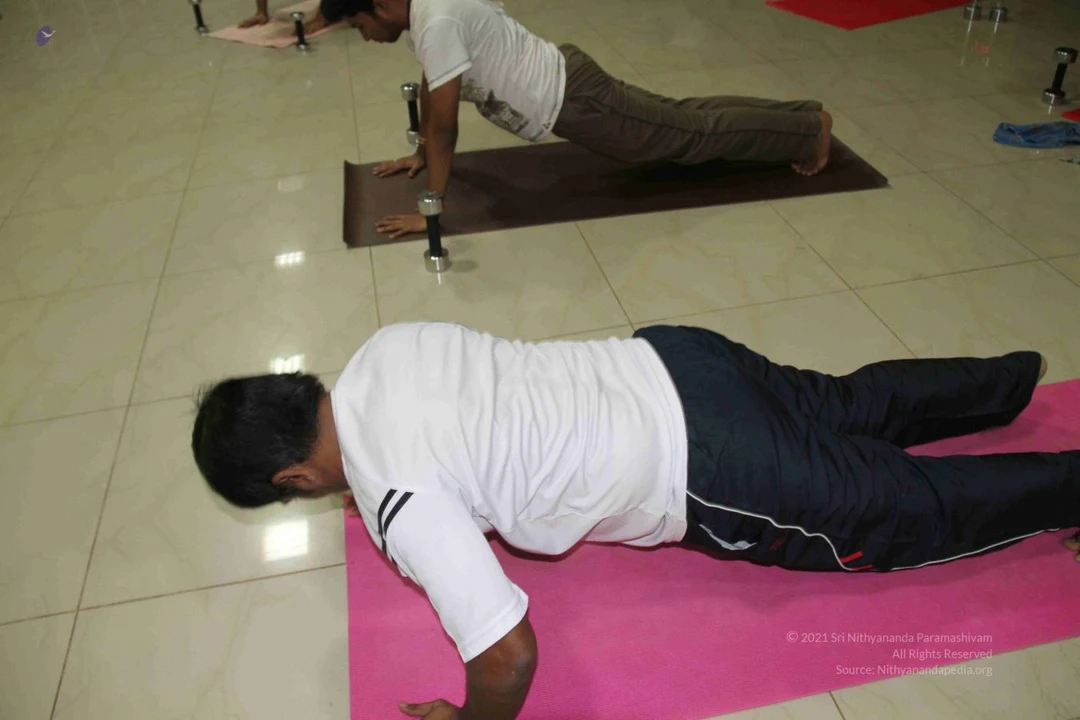
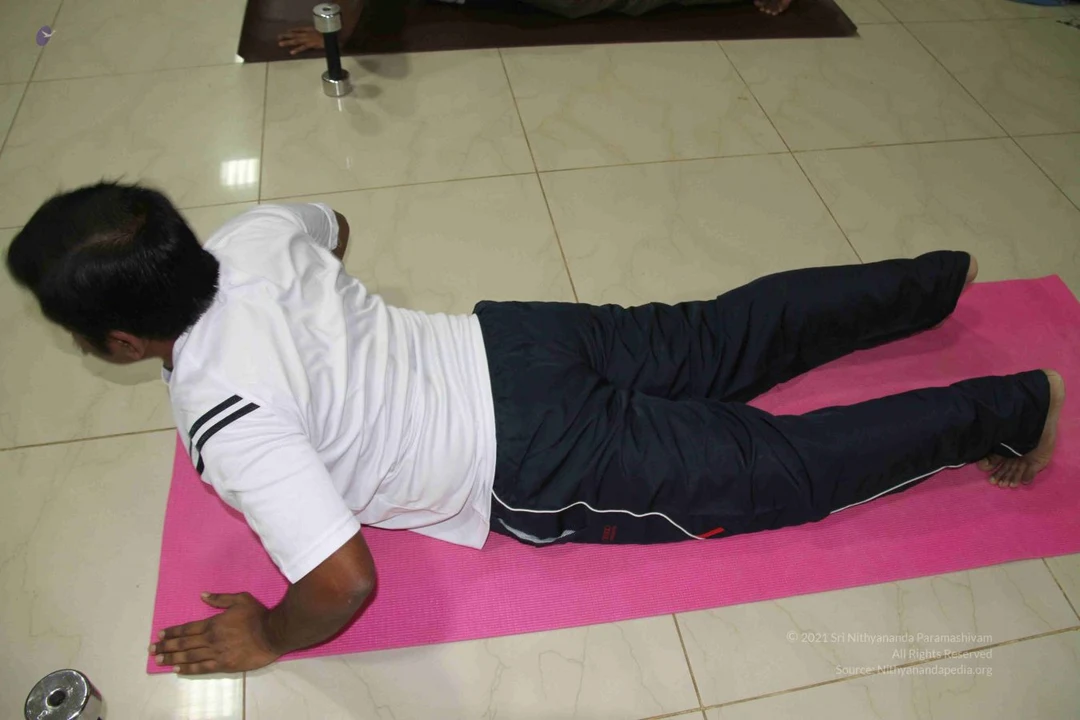
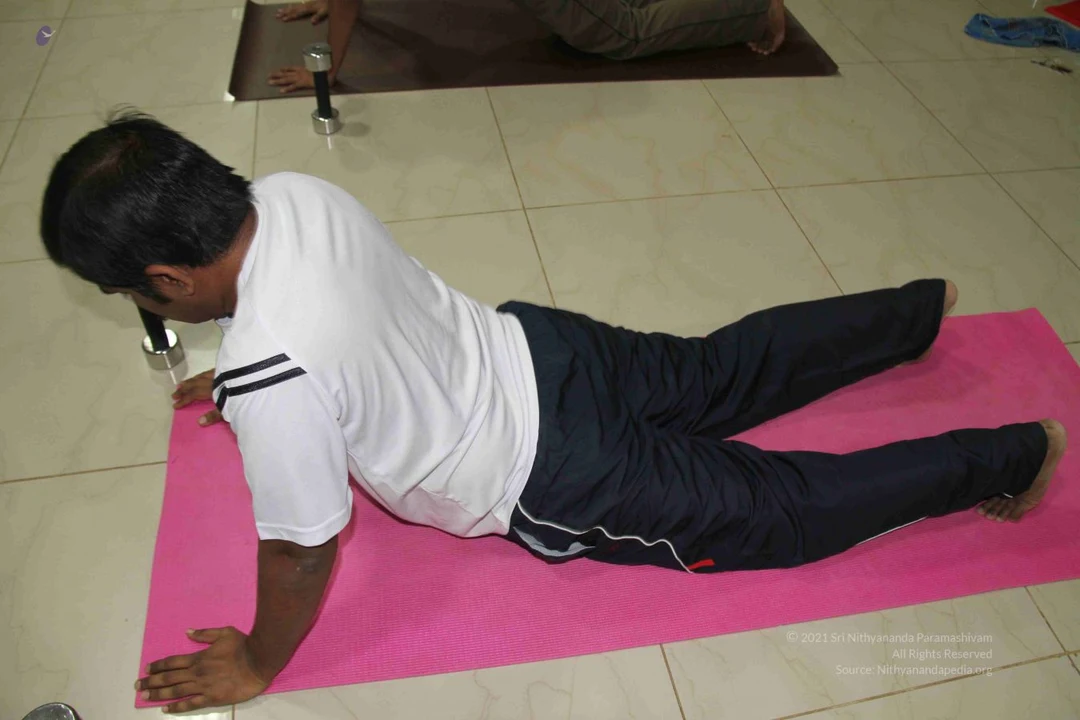
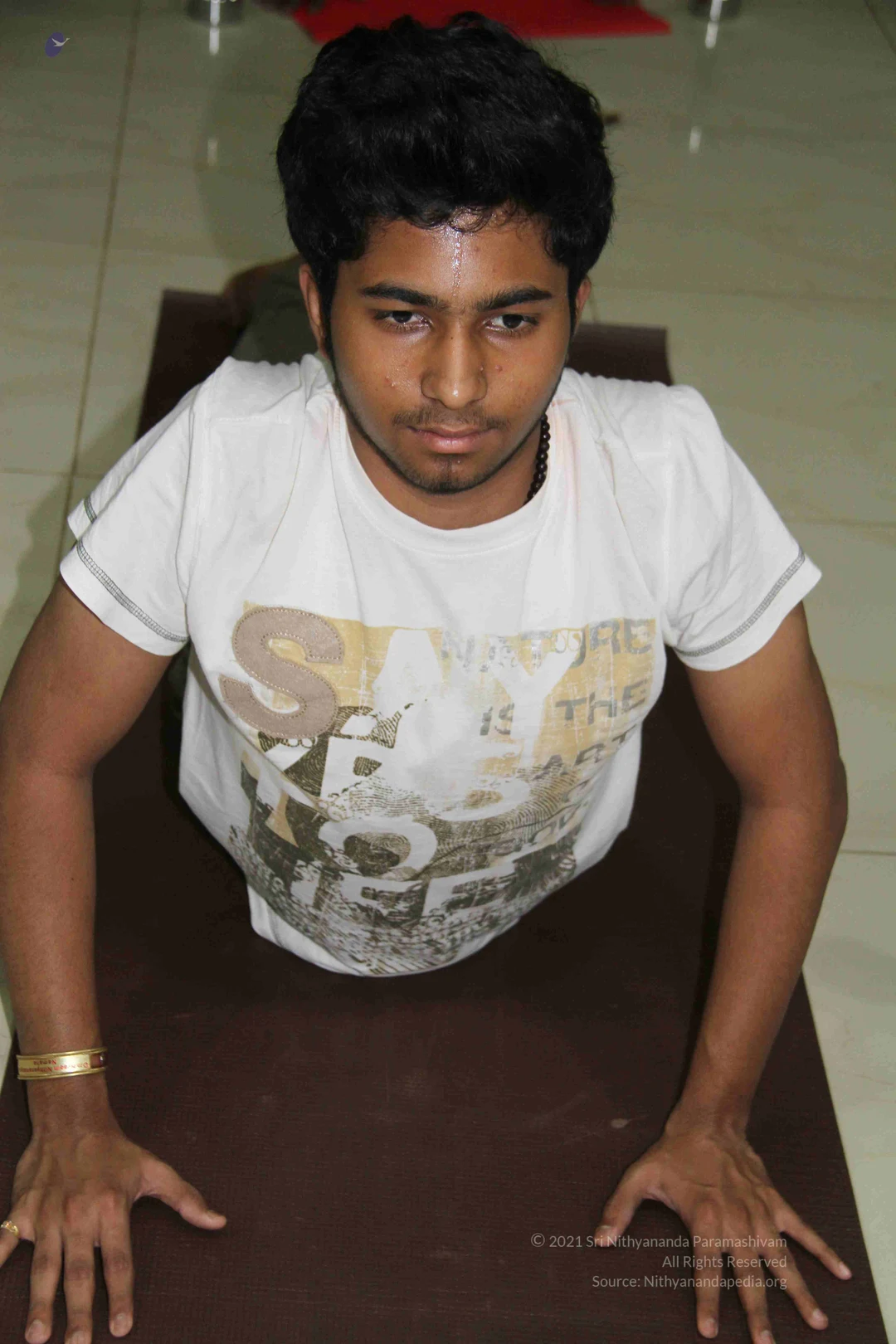
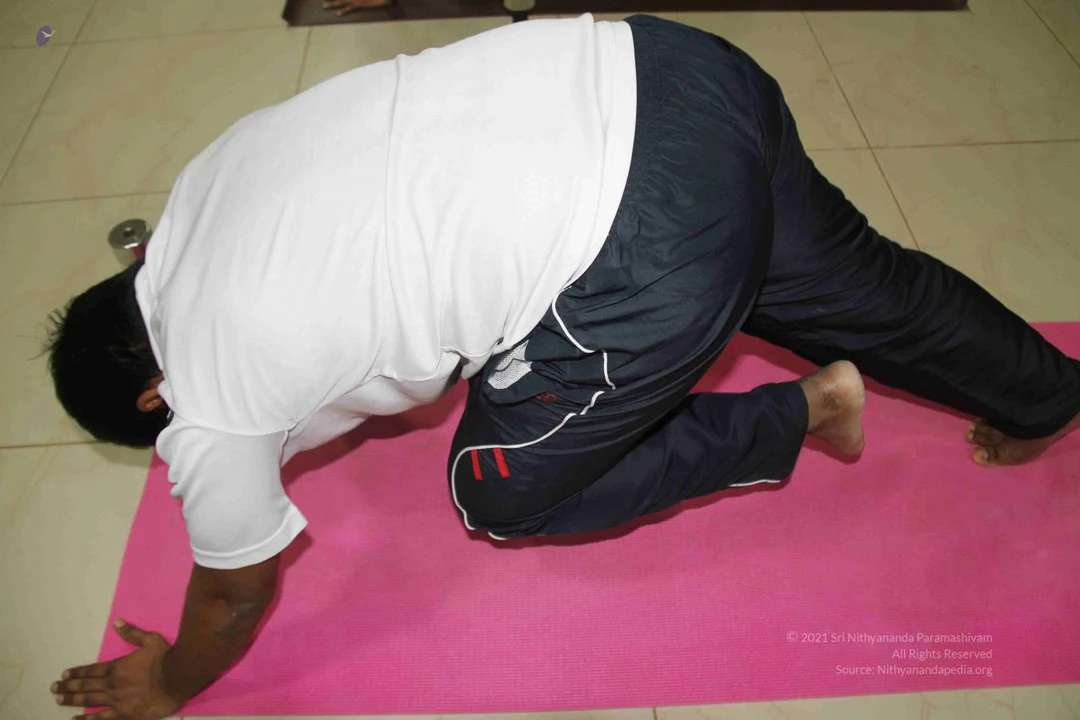
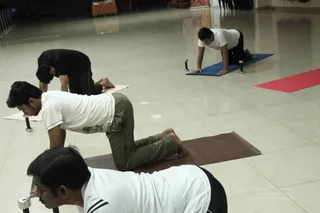
A yoga practice session in a bright, tiled hall with red curtains and a dark sofa against the wall. A man in a white shirt and dark trousers bends forward to touch his toes on a pink mat, while a second man in a blue and white tracksuit stands on a red mat behind him, looking on. Several steel stands and red mats are spaced across the floor, and a digital clock is mounted on the left wall. Framed pictures hang on the wall above the curtains.Several men in a bright tiled hall do a floor exercise on yoga mats, kneeling on all fours with hands planted and heads lowered. Most wear white or dark athletic tops with black track pants, and one wears a blue top with stripes. Chrome dumbbells sit on the floor between the mats, and a dark cabinet and red curtains appear in the background.A photograph of a yoga or exercise session on a polished tiled floor inside a hall. Several men in athletic wear are in a kneeling, forward-leaning plank-style position on pink, blue and red mats, with metal dumbbells placed beside them. One man in a white t-shirt and dark shorts is in the foreground, hands planted on the pink mat. Behind them a man in a black top and a man in a blue and white jacket continue the exercise. In the upper background a framed portrait of a saffron-clad figure hangs on the wall beside stacked red chairs and a curtain.Five men in a hall with polished tiled floor perform a floor exercise routine on yoga mats, bent forward on hands and knees in a row. Pink, blue and red mats are laid out, with chrome dumbbells placed beside them. Most wear white t-shirts and dark track pants, while one man on the right wears a blue and white striped top. No a person candidate is visible, and the scene shows ashram fitness practice.Four men in white or black t-shirts perform a yoga or exercise routine on mats across a polished cream tile floor. Two men in the foreground lean forward in a bent-over pose with hands on the floor and bare feet visible, while others kneel in a similar stance on pink, blue and red mats. Metal dumbbell-like bars sit beside several mats. Background shows a wall with dark furniture and a patterned cloth, indicating an ashram or hall setting.Four men exercise on yoga mats across a polished tiled hall, performing a kneeling floor exercise with their hands planted on small metal posts. The man in front wears a white t-shirt with dark stripes on the sleeve and black shorts, the man beside him wears a white t-shirt and olive green trousers, another wears a black t-shirt and dark trousers, and the man at the back right wears a white t-shirt and black shorts. Mats in blue, red and brown lie on the floor, and rows of chairs line the far wall.

Pada-Puja
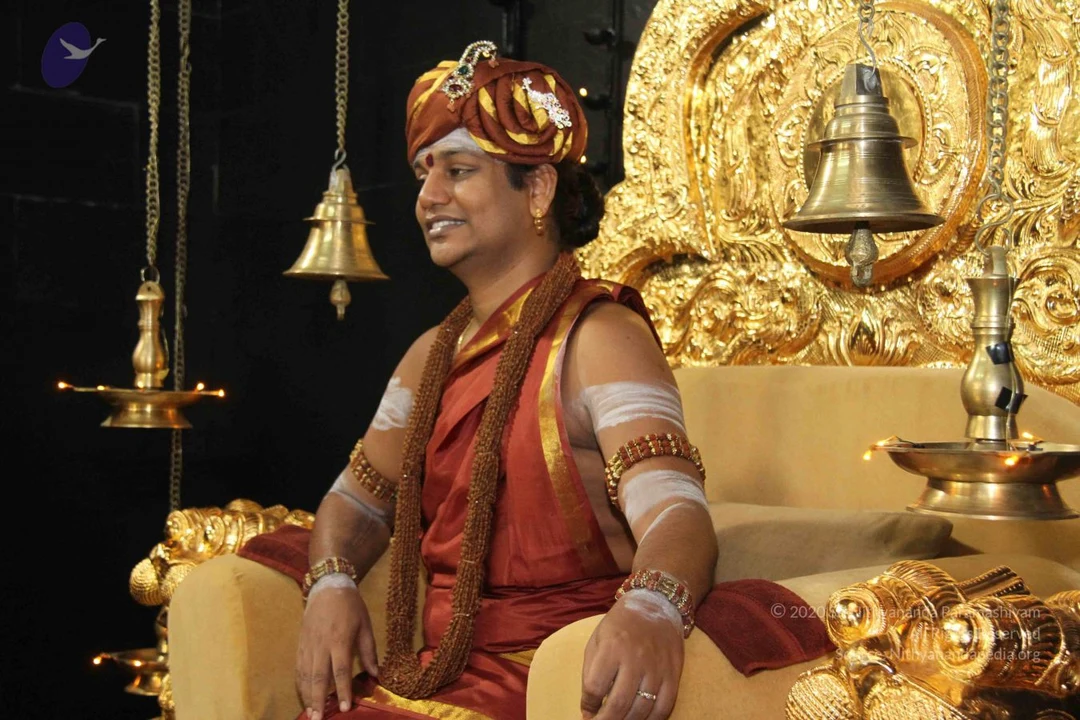
18 photosSource gallery
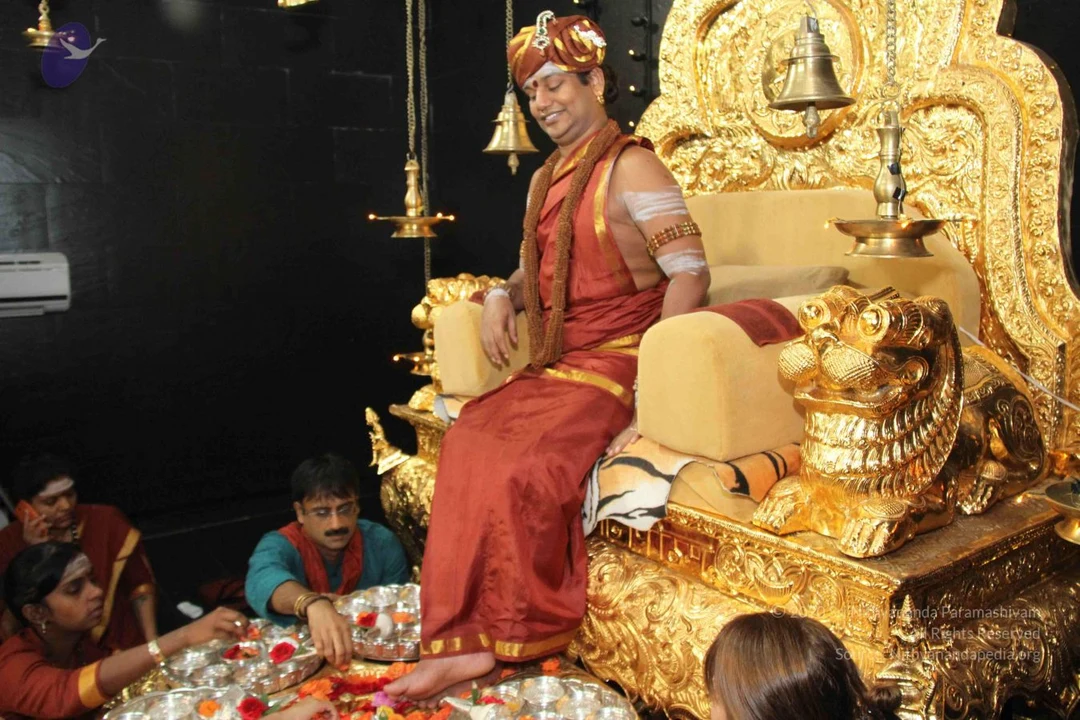
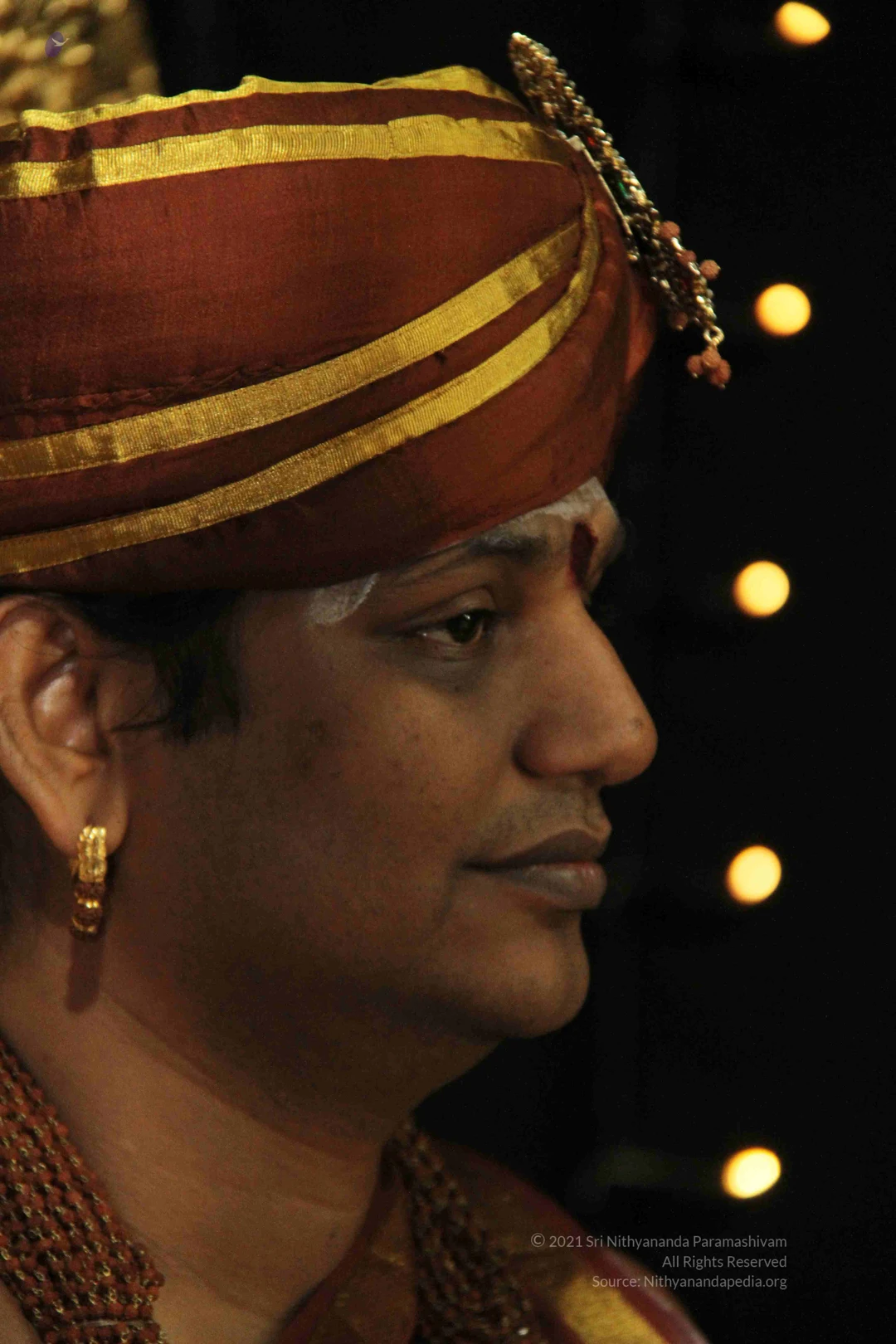
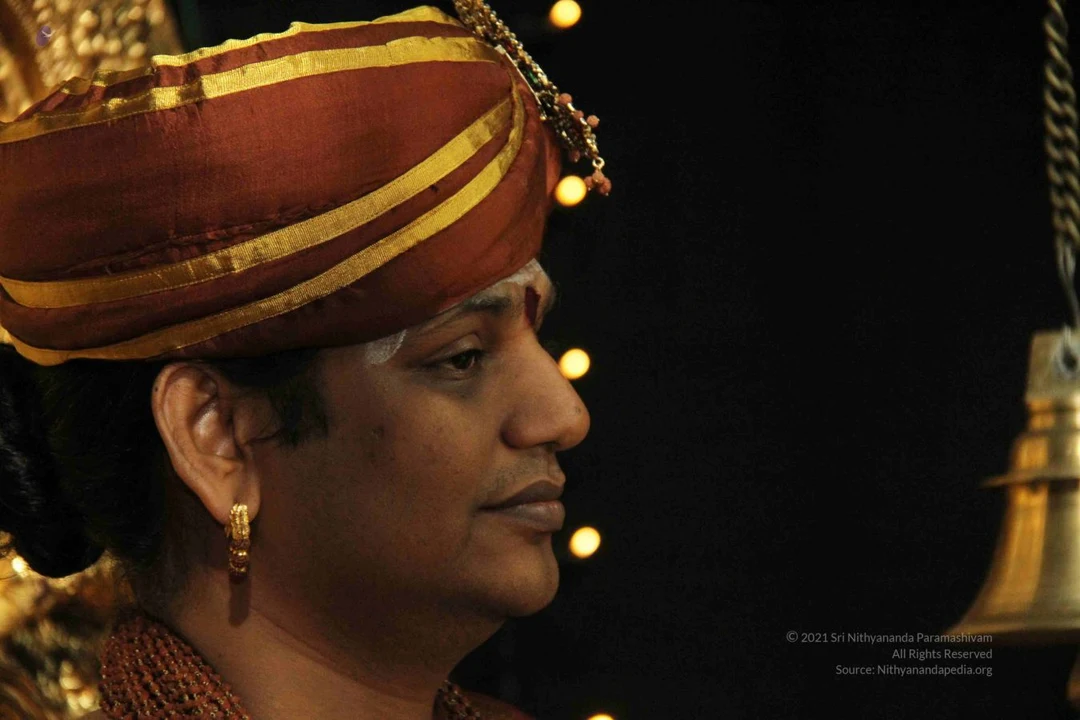
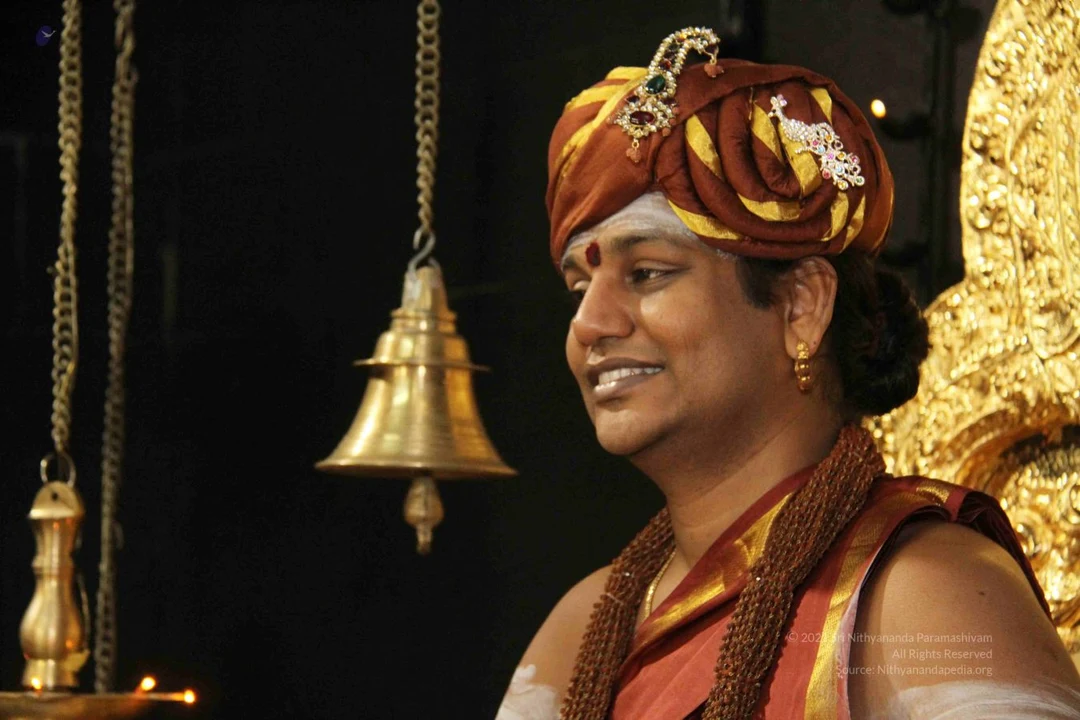
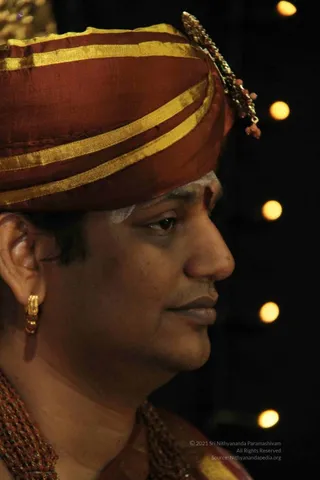
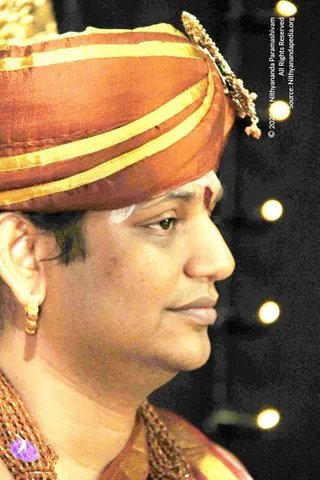
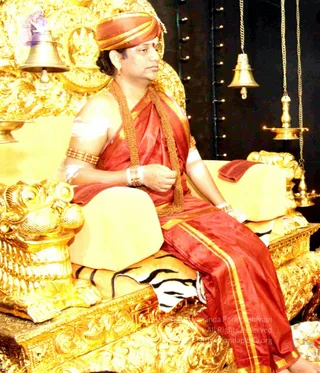
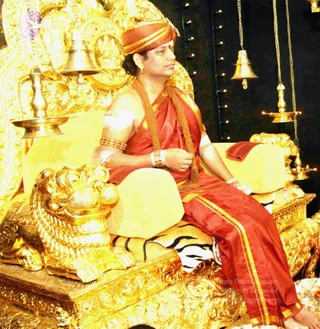
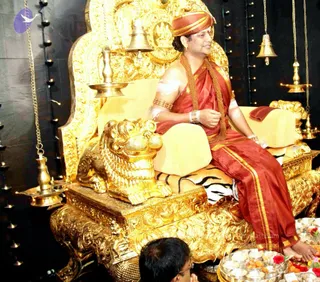
A figure in a red-and-gold sannyasi wrap, a red turban and a long beaded rudraksha-style mala sits on an ornate gold throne with carved lion-head armrests and a striped tiger-skin cushion, raising one hand in blessing. Both forearms are wrapped in white cloth and he wears gold bangles. Before the throne on a gold tiered table stand several silver thalis with marigold and red flower offerings, a small deity murti and a kalasha-like vessel. Swamiji (probable): the red turban, saffron-red sannyasi clothing and mala are the cues for this candidate, seated as a teacher giving blessing on the throne.A photograph of a seated figure on an ornate gold throne with carved lion-head armrests and a gold canopy above. The figure wears a red-orange turban, a red-orange sannyasi-style wrap with gold borders, and a brown rudraksha mala around the neck, with white markings on the arms and a raised right palm in blessing. A striped tiger-skin cloth covers the throne seat. Hanging brass oil lamps and bells surround the throne against a black backdrop. In front on a gold platform are silver thalis with flowers, kumkum, and offerings, plus a small deity murti surrounded by orange and red flowers. a person, seated on a throne in ceremonial attire, with rudraksha mala and saffron-toned clothing.Close view of a padapuja-style offering: a bare foot in the foreground rests on a gold-embossed tray surrounded by silver bowls and plates filled with red and orange roses, yellow marigolds and pink petals, with silver kalasha-shaped vessels holding flowers and green leaves. The person's lower body wears a maroon silk dhoti with gold zari borders. Ornate silver trays and pooja vessels fill the frame, with a small silver-and-white item and a decorated silver bowl in the centre. No face is visible.A seated man on an ornate gold throne with a lion-carved base and a tiger-skin cover wears a red-orange turban, red-orange dhoti and shawl with gold borders, and a long rudraksha-style mala with gold bracelets. A woman in a magenta sari and a woman in a red-bordered white sari sit before him, while a shaved-headed man in an orange garment is partially visible at the lower right. In front of the throne, brass plates hold marigold and red flower petals, lamps and offerings, and the man's bare feet rest near them. Behind, black stone walls, hanging brass bells and oil lamps, and an air conditioner complete the room.Close side-profile photograph of a man wearing a maroon-red turban with gold border stripes and a small jewelled ornament pinned at the front. He has white and red tilak marks on his forehead, a gold hoop earring, and a red beaded necklace. Warm bokeh lights glow against a black background.Close side profile photograph of a man wearing a rust-red and gold-striped turban decorated with a small gold and coral ornament at the side. He has white vibhuti marks on his forehead with a red kumkum dot between the brows, gold hoop earrings, and a red-brown embroidered garment at the shoulder. Beside him on the right, a polished brass ceremonial bell hangs from a rope against a black background with soft golden light spots. A photo credit appears in the lower right corner.

Sarva-Darshan

22 photosSource gallery
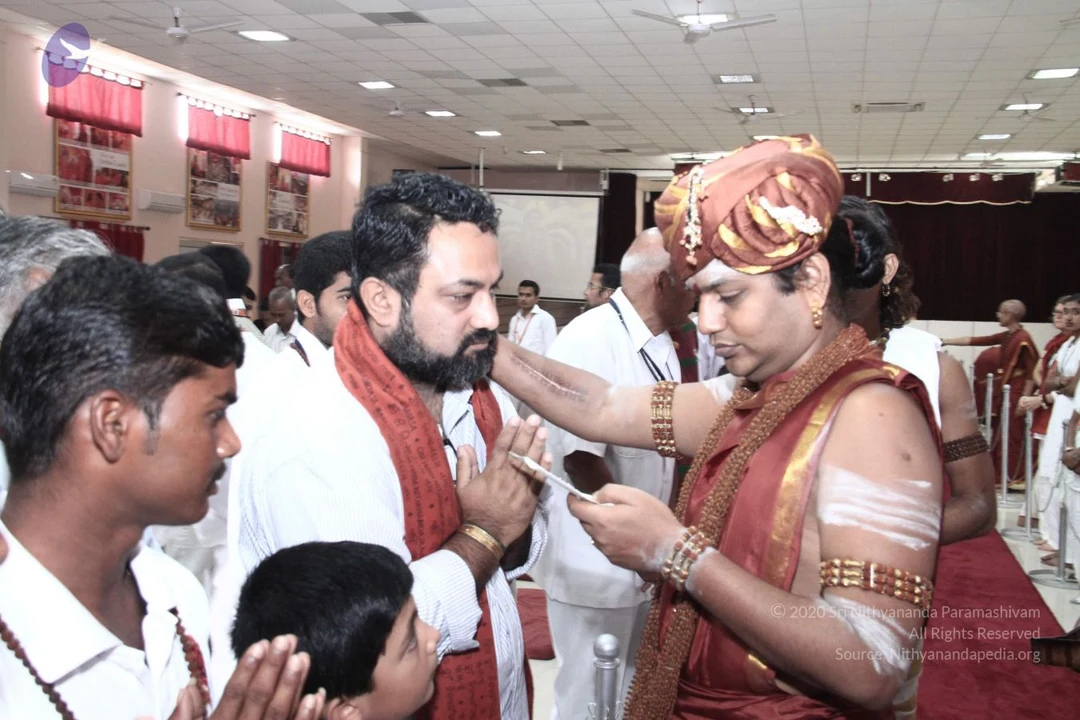
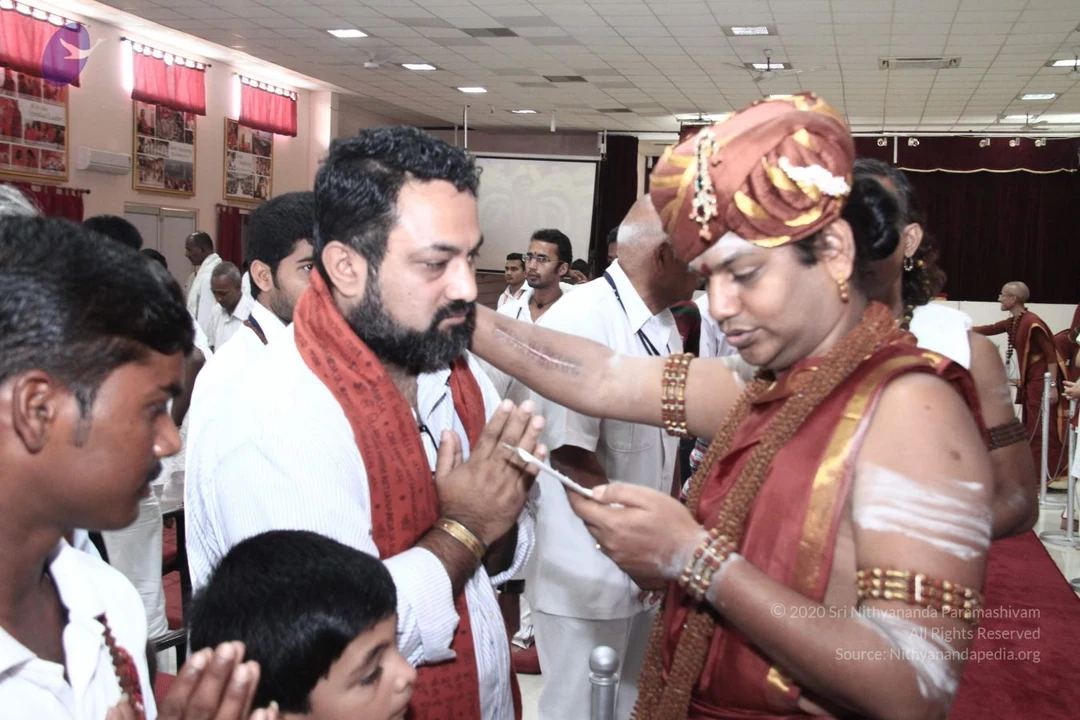
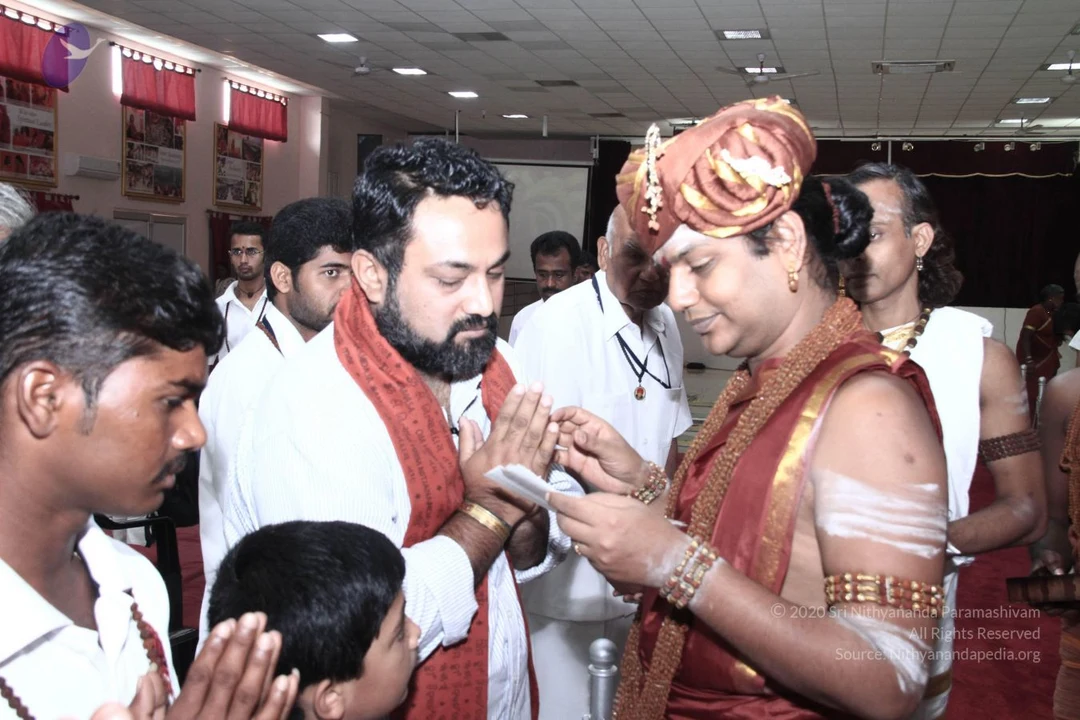
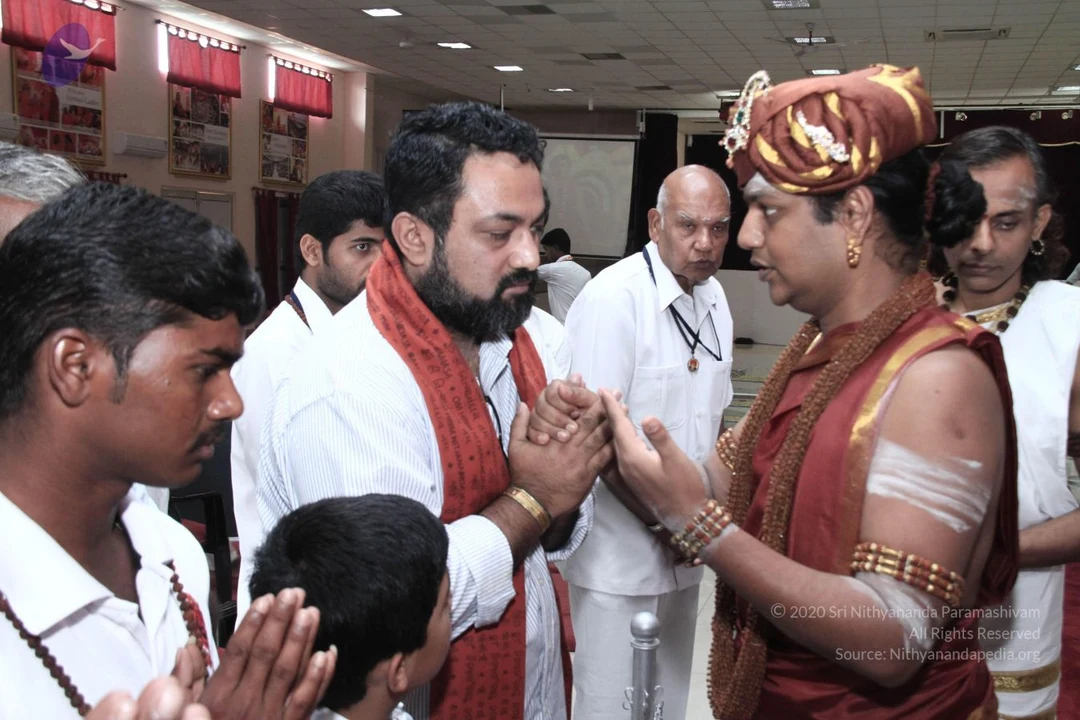
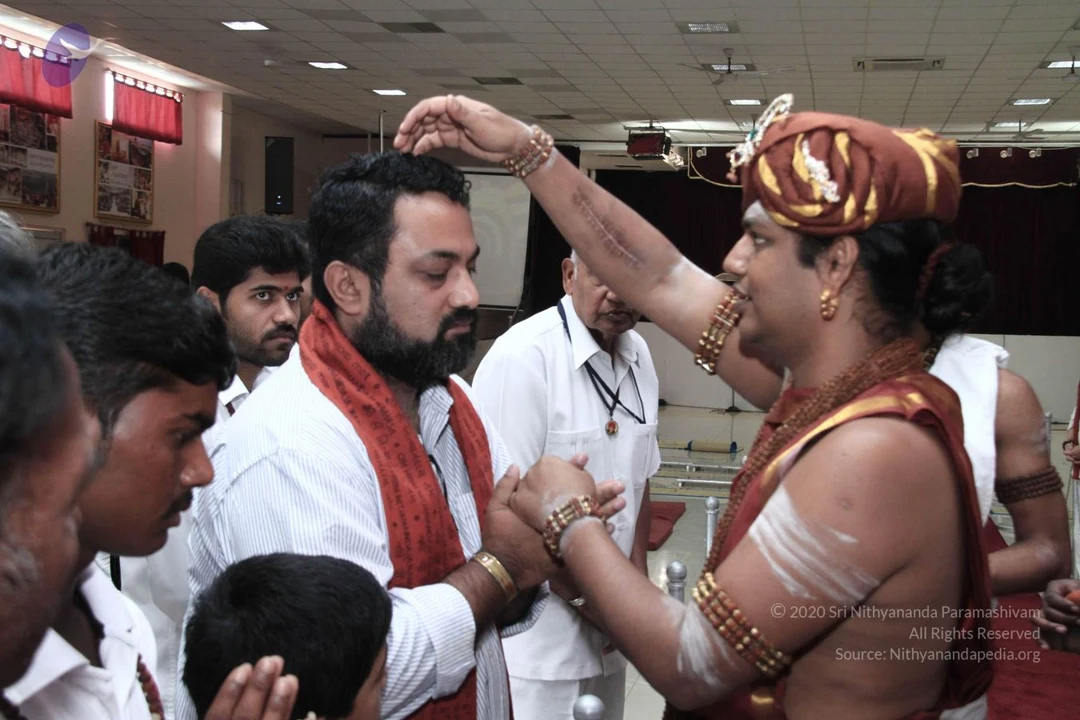
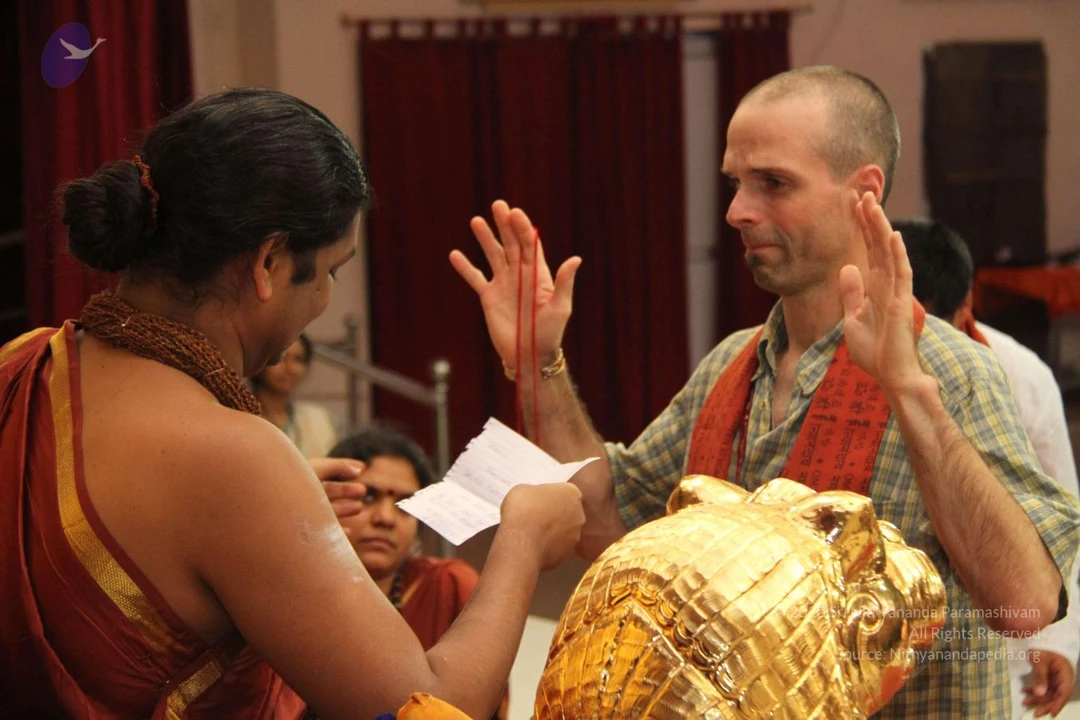
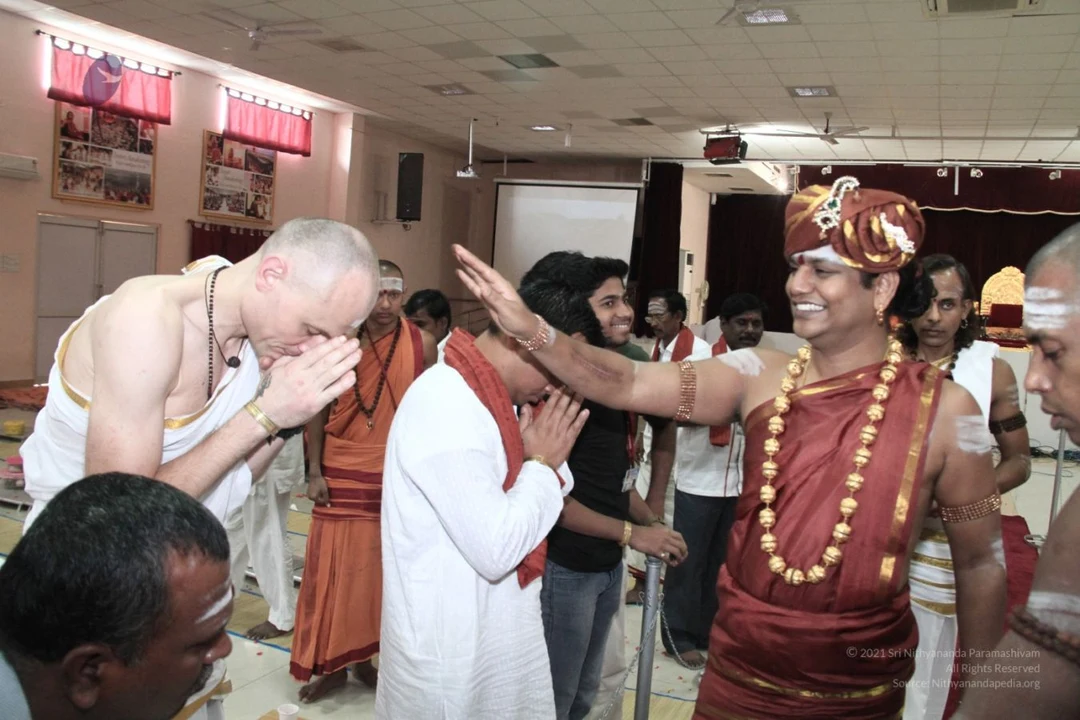
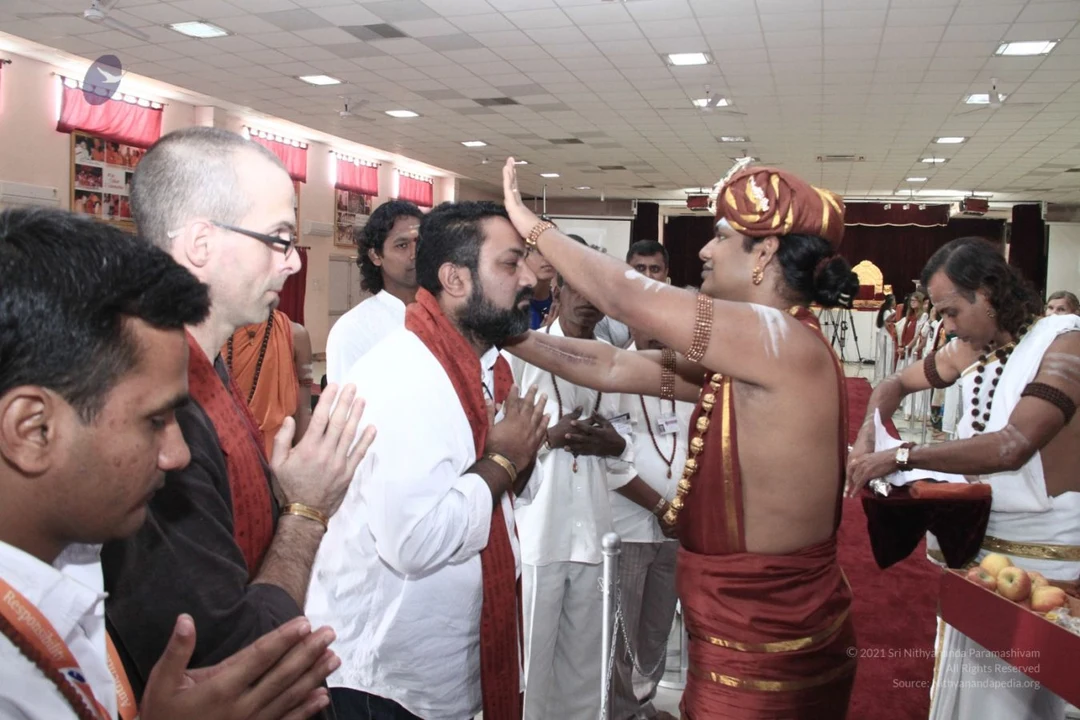
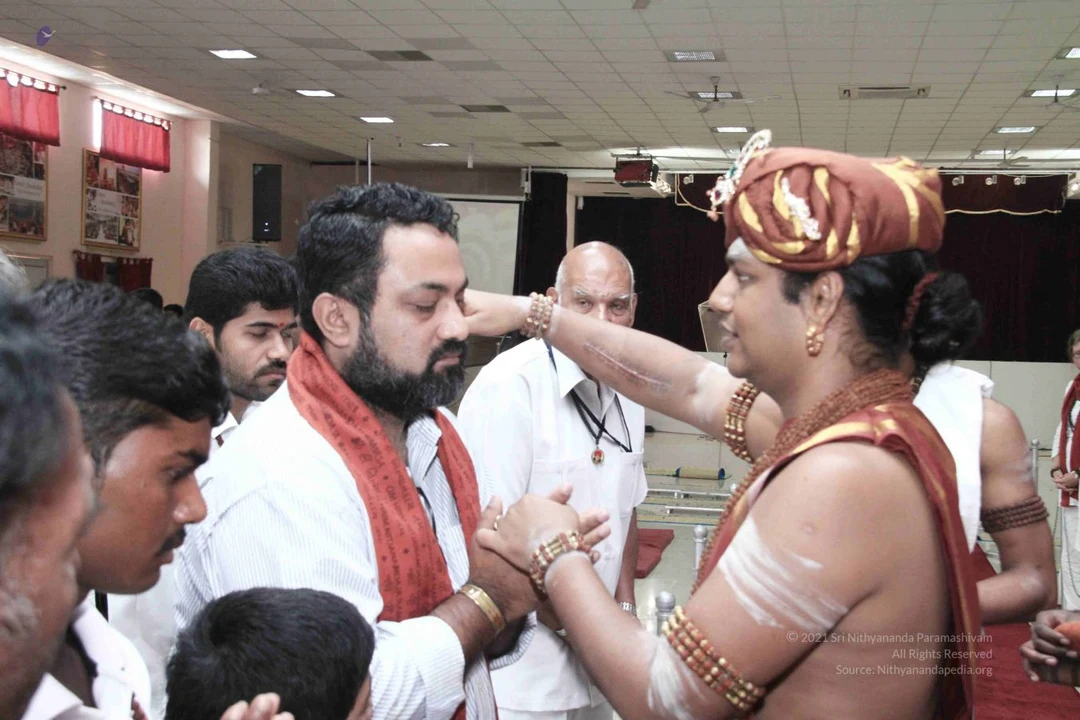
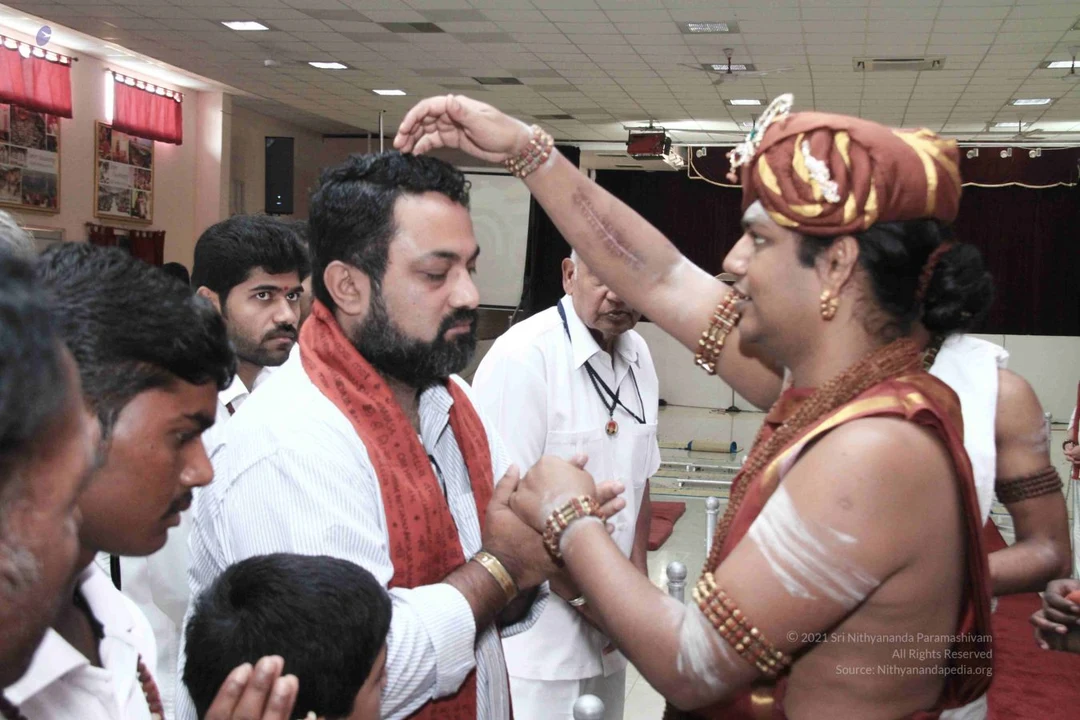
A photograph inside a hall with a cream tiled floor and maroon curtains. A man in a white kurta, with a ring on his finger, stands at left with his hands pressed together near his face in a respectful gesture toward a robed figure. That figure wears a rust-red and gold-bordered draped garment, a red and gold turban with a jewelled ornament, a long rudraksha mala with a gold-toned necklace, a gold armlet and white sacred markings on the upper arm. Behind them a white-clad attendant stands near a tripod-mounted camera and a golden seat with a lion figure on a red-draped platform. A white wall-mounted air conditioner and a staircase with railings are visible at left. Printed copyright text runs across the lower right.A photograph of a devotee line in an indoor hall with white walls, red curtains and a stage backdrop. A woman in the centre wears a saffron-orange turban with gold trim, a red-orange sari-style drape with gold border, and a long rudraksha mala; she raises her right hand in blessing toward devotees. A man at left bends with palms pressed together, a man in a striped shirt stands nearby, and a bare-chested attendant in ochre cloth stands at right holding a tray. Several white-clad devotees line a metal barrier. A person described on the page as a person appears as a probable candidate, based on the turban, rudraksha mala and ornate saffron clothing, and is physically present in the scene.Photograph in an indoor hall with white ceiling tiles and red curtained windows. A man in a saffron-orange turban with a white flower, wearing a rust-red robe, rudraksha mala beads and gold-edged saffron cloth, extends his right hand to bless a young man in white shirt and trousers who stands with palms pressed together in namaste and head bowed. The blessing figure has long swept-back hair and ornate gold-tinted bangles, and is distinctive in appearance, so a person is the appearance-based label for this candidate in person. Behind them, several men in white dhotis and shirts, one in a red striped shirt, and a bald man in orange stand near a metal barrier, with more devotees in the background. Ornate red and white arm bands and a brown mala are visible on the blessing figure.Indoor hall scene at a satsang gathering. A man in an orange-and-gold turban, red-gold silk garment, thick beaded rudraksha-style mala necklaces and gold arm bands stands at centre-right, receiving a folded paper from a bearded man in white kurta with a red shawl. The central figure, wearing ornate ceremonial dress, appears to be Swamiji (probable), identified by the distinctive turban, ceremonial gold jewellery and mala garlands, though his face is not used for identification. Around them, white-clad devotees with red shawls and rudraksha malas press forward; a boy in white in the foreground folds his hands in namaste. A red carpet runs down the aisle, with a wooden lectern at the right edge and red curtains and wall posters behind.A photograph of an indoor hall where a bearded man in a white shirt with a red-and-gold scarf stands with hands folded while a figure in a tall red-and-gold turban, rudraksha beaded necklaces and red-orange robe marks his forehead with a finger. Behind them, a man in white shirt, several other men in white, and a person in white with a red sash stand near red-curtained walls with framed photos. Probable Swamiji (probable): the turban-wearing figure in a red-orange robe and layered rudraksha malas is performing the blessing, and is distinguished by these cues. Several people are visible.Indoor ashram hall with red curtains and framed photographs on the wall. A bearded man in white clothes with a red-and-gold patterned shawl stands with his hands pressed together. A figure in a red-and-gold turban and red-brown robe, wearing a long beaded necklace and ornate bangles, applies white sacred markings to his shoulder and hands him a folded paper. Several onlookers in white clothes watch and a boy in a white shirt sits in the foreground. A projector screen and stage drape are visible at the back.

Darshan

25 photosSource gallery
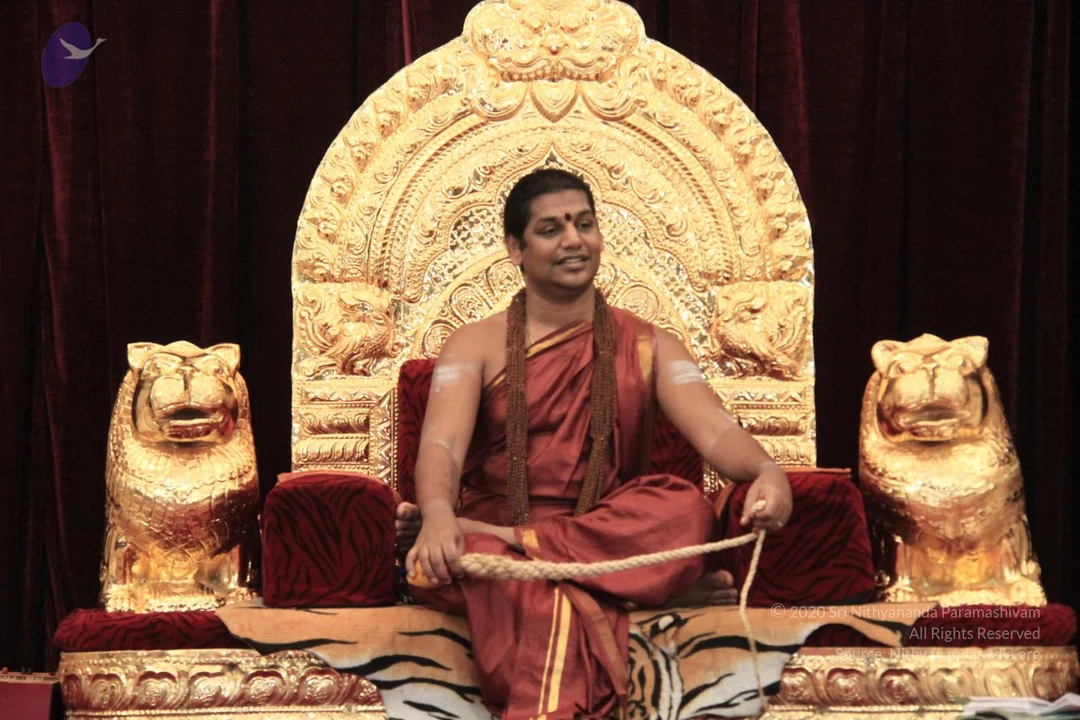
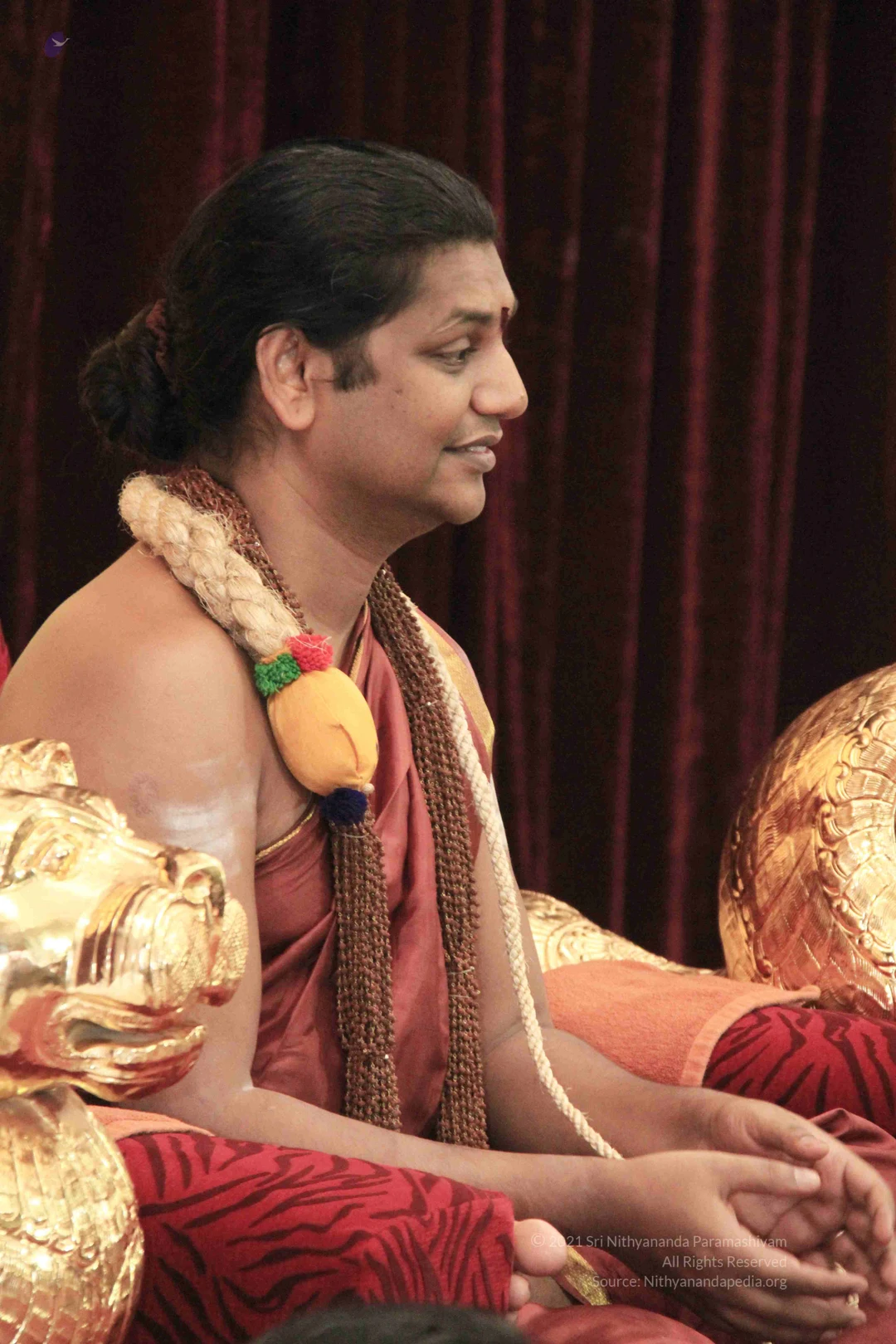
A man sits cross-legged on an ornate gold throne with a carved arched back and lion-head armrests, draped in red tiger-striped cushions and a tiger-skin seat cover. He wears a rust-red silk robe with gold borders, a long rudraksha mala necklace, a red bindi, and white markings on his upper arms. He holds a small wooden-handled whisk or fan in one hand and smiles toward the side. Red velvet curtains hang behind the throne. Appearance-based candidate: a person, seated on the throne in saffron-red robes with rudraksha mala and ornate gold seating.A seated man in a red-maroon sannyasi wrap and rudraksha mala sits cross-legged on an ornate gold throne carved with lion heads and a arched back, flanked by two gold lion sculptures on red-and-black tiger-striped cushions. He holds a rope-like cord in his hands and speaks, with a red bindi on his forehead. Swamiji (probable): the rudraksha mala, long swept-back hair, and saffron-red robe with ceremonial throne match the page's claim. Deep maroon velvet drapes form the backdrop. Only one person is physically present.A man seated on a red velvet throne with gold-embossed carved backrest and lion-like figures on the sides. He wears a deep red-orange silk shawl over bare shoulders, long rudraksha mala necklaces, a red bindi on his forehead and white ash marks on his upper arms, with hands resting in his lap. Swamiji (probable): long dark hair, rudraksha malas and saffron-red ceremonial clothing, seated in an in_person satsang setting.A seated man in a rust-red and gold draped robe sits on a red zebra-striped cushion before a gold lion-head armrest and a deep red velvet backdrop. He wears a white flower garland and a rudraksha-style necklace and leans forward to receive a stack of printed papers handed to him by a hand from the right edge. A brass box, a small brass item and a coiled mala lie on the cushion beside him. Probable Swamiji cues include his long hair in a bun, the ceremonial gold necklace and the saffron-orange draped clothing on a gold throne, so this matches the event as a satsang setting.A man in profile sits on an ornate golden throne with lion-head armrests against a deep red velvet drape. He wears a rust-red draped garment over a bare shoulder, a brown woven rudraksha-style mala and a cream braided cord with a yellow and red tassel ornament across his chest. His hair is pulled back in a bun and a red tilak marks his forehead. His hands rest clasped in his lap, and a red-and-maroon patterned cloth covers his legs.Close-up photo of a stack of white printed programme booklets resting on a blue and gold brocade cloth over a red tiger-striped fabric. A cream-and-black spotted soft toy cow lies at the left edge, and blurred hands and a red garment frame the foreground. Behind the stack, an orange-and-gold ornate cushion or pillow is visible. Round red-and-orange emblems are printed on the booklet covers, and a handwritten or printed label on the top booklet is partly visible. No people are fully visible; only blurred hands and clothing edges appear.

Pada-Puja
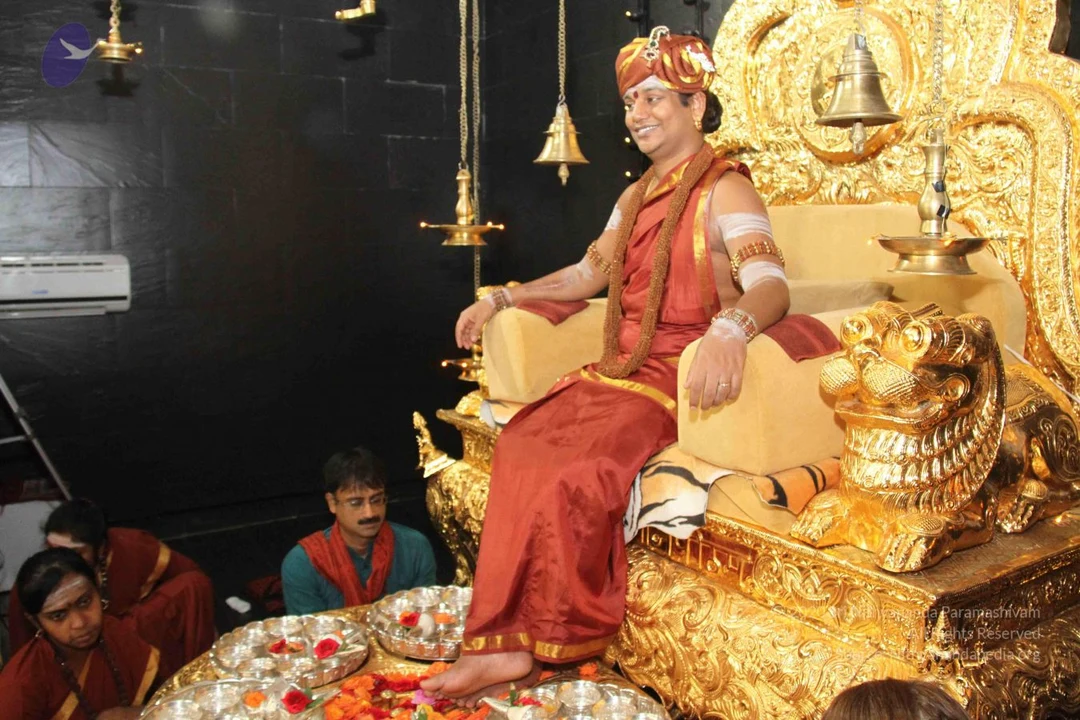
10 photosSource gallery
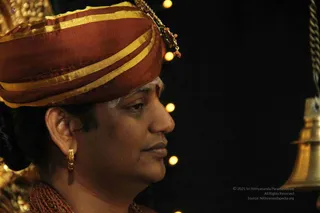
A man in saffron-red silk robes and a matching turban with a red tilak sits on an ornate gold throne with carved lion-head arms and clawed feet, raising his right hand in blessing. He wears a long rudraksha mala and bangles, and his bare feet rest on a gold platform. Before him are four silver trays of lit oil lamps decorated with red flowers, with a floral arrangement at centre. Hanging brass oil lamps and bells frame the throne beneath a golden canopy. A printed caption reads a person seated for the ritual, with the page presenting him as the subject, and the scene reads as a formal aarti setting.Close side-profile photograph of a man wearing a rust-orange turban with gold stripes and a jeweled ornament tucked at the crown. He has white vertical marks on the forehead and a red bindi between the brows, gold hoop earrings, and layered beaded rudraksha-style necklaces at the neck. The background is dark with blurred warm light spots. a person: the ornate orange turban, gold-striped fabric, jeweled crown ornament and beaded necklaces are distinctive presentation cues matching the page's claim of a person at this event, so the figure is treated as an in-person candidate with appearance cues rather than a confirmed identity.A seated man wearing a red-orange turban with gold stripes and a red-orange silk dhoti and shawl with gold borders sits on an ornate gold throne carved with lion-head armrests and a tiger-striped cushion. He wears a long rudraksha-style mala around his neck, multiple beaded bracelets on his arms and wrists, and a red tilak on his forehead. Brass hanging bells and a gold oil lamp stand beside the throne against a dark backdrop.A man seated on an ornate gilded throne with lion-head armrests and a tiger-striped cushion, wearing a red-orange turban with gold stripes, a red-orange silk garment with gold borders, a long beaded rudraksha-style mala necklace and multiple bangles. He sits with hands loosely clasped, gazing to the side. Behind him hang brass bells and brass oil lamps on chains against a dark backdrop. The figure has distinctive saffron-red ceremonial clothing, turban and ornate necklaces consistent with the Swamiji (probable) cues, seated on a throne in a temple-like setting.A seated man in a deep red-maroon silk robe with gold border sits on an ornate gold throne carved with floral and deity panels, flanked by a gold lion sculpture on the armrest and a tiger-striped cushion beneath him. He wears a red turban, a long rudraksha-style beaded mala, gold bangles and earrings, and white sacred markings on his arms and chest. Hanging brass bells and lamps surround the throne. A bowed devotee in dark clothing sits in the lower foreground, and brass trays holding red flowers, kumkum and offerings lie at the base. A purple bird logo appears at the upper left.A seated man in a red-and-gold turban with a jeweled hair ornament and a red-and-gold silk shawl wrapped over the shoulders. He wears long strands of rudraksha malas across his chest, rudraksha bracelets on the upper arms, a red tilak with white markings on the forehead and white paint on the arms. Behind him a large ornate gold-embossed throne or backdrop with carved figures, and dark stage lights are visible. Swamiji (probable): the appearance cues of a turban, saffron-red ceremonial clothing and rudraksha malas fit the page's reference to Paramahamsa Nithyananda, shown here in a seated, honoured setting.

Satsang

2 photosSource gallery
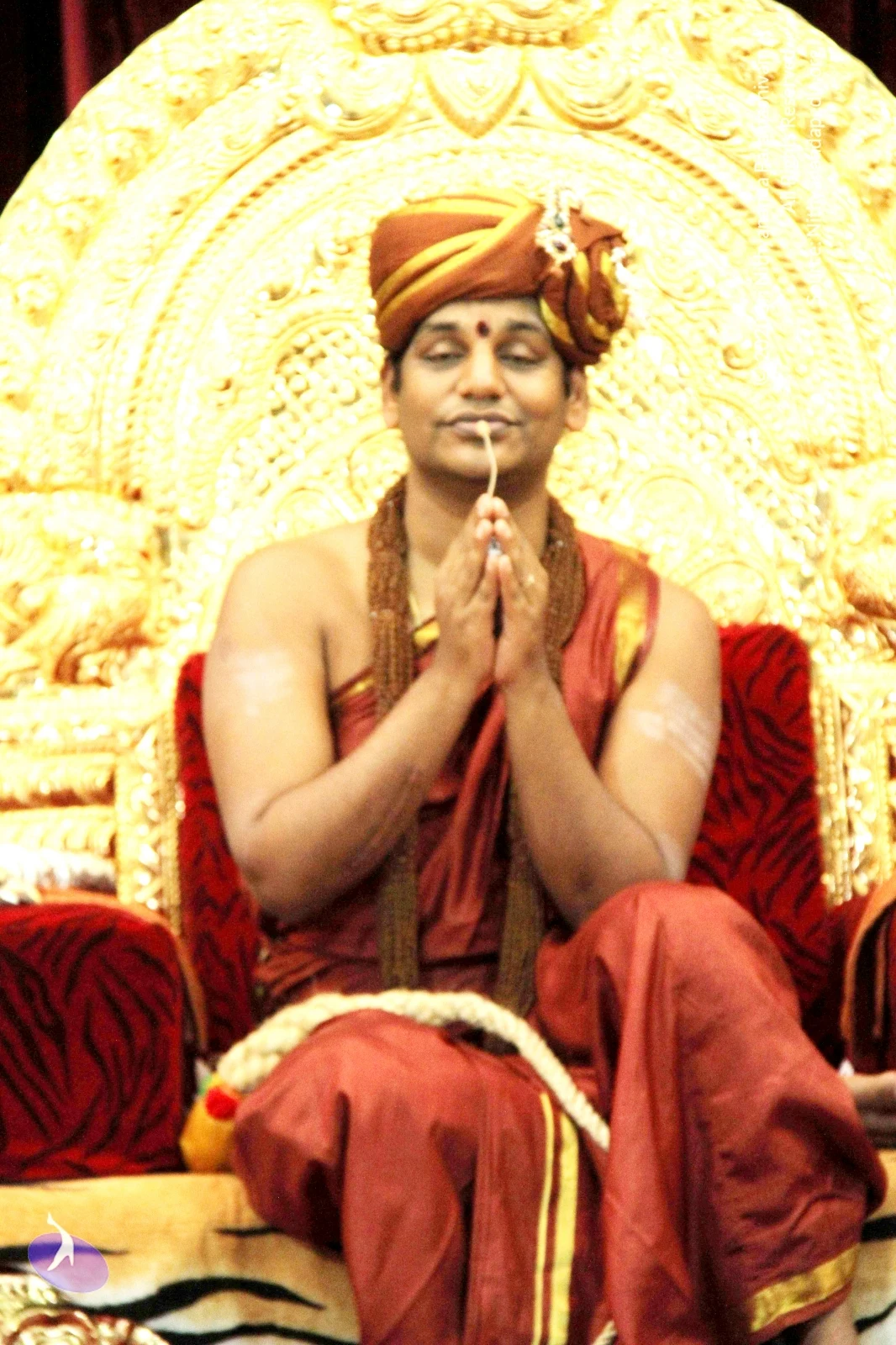
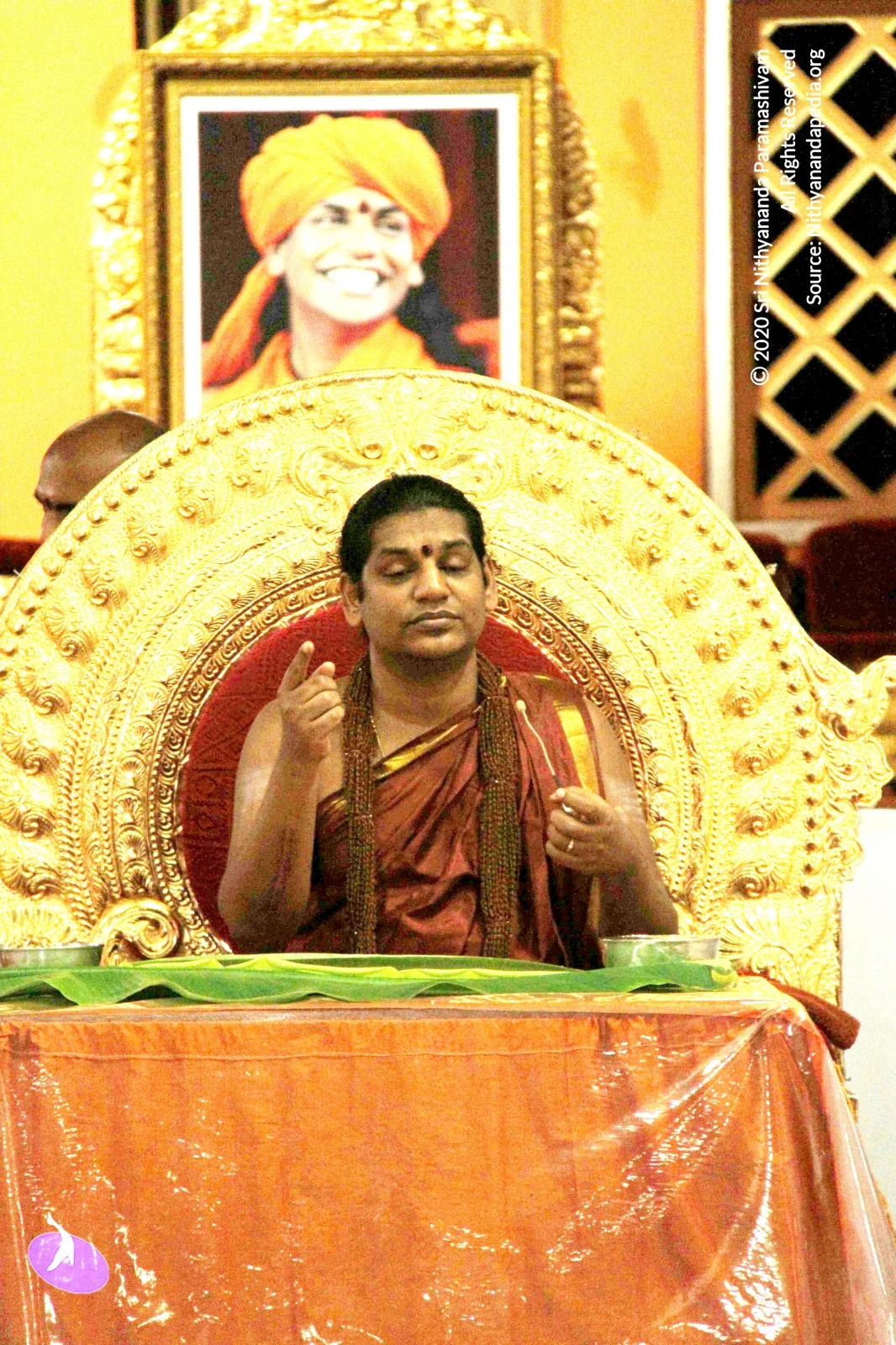
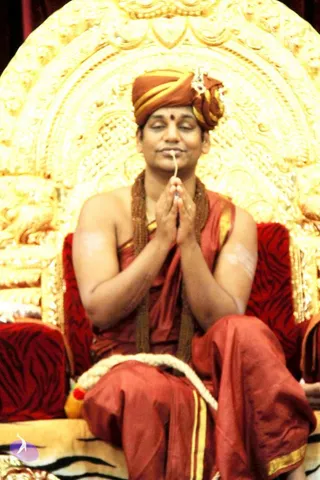
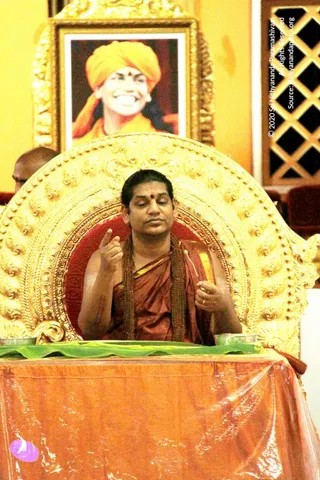
A man seated on an ornate gold throne with a large carved golden arch behind him and red tiger-striped cushions at his sides. He wears a rust-orange turban with a small gold ornament and a red bindi, a rust-red garment draped over one shoulder with gold border, and a tiered rudraksha mala around his neck. He sits with eyes closed and palms pressed together in anjali mudra, a stick or incense-like object held between his hands near his face. Two white sandalwood or vibhuti marks are visible on his upper arms, and a white rope is draped across his lap. Swamiji (probable) cues: turban, saffron-orange clothing, rudraksha mala, seated on a throne during a satsang-style event.A seated man in a maroon-red sannyasi robe with a green rudraksha-style mala around his neck sits on an ornate gold throne with red cushioning during a satsang. His eyes are closed and his right hand is raised in a teaching gesture while his left holds a small metal implement. A green banana leaf lies on an orange draped table before him with steel bowls. Behind him hangs a framed portrait of a smiling man in an orange turban with a red bindi, and a gold lattice screen is visible at right. One other person's head is partly visible at the far left edge.

Darshan

8 photosSource gallery
A photograph of a single standing person in a maroon-and-gold draped robe with gold-trimmed edges, wearing a maroon turban with a small ornament and a red bindi, gold bangles on both arms, and a long multicoloured garland of red, pink and white flowers. Both arms are raised with palms open, and a beaded necklace hangs at the chest. Behind is an ornate gold throne with carved lion-shaped armrests, red velvet cushions and a deep maroon velvet drape. A pink shaggy runner lies on the floor in front and a patterned rug beneath the throne.A standing person with both arms raised in a blessing gesture before an ornate golden throne with lion-head armrests and red velvet cushions, set against deep maroon velvet drapes. The person wears a maroon-and-gold draped garment, a maroon turban with a flower accent, layered rudraksha-style beaded mala necklaces, gold bangles and a red bindi, and a long white-and-red flower garland hangs from the shoulders. A red and white patterned rug covers the floor. Matching the page description, this is a candidate for a person with long-garment and turban cues, but the figure's identity is uncertain from appearance alone. The scene shows one physical person in a stage-like setting.A standing man in a maroon-red turban and maroon-red draped clothing with gold borders raises both arms above his head, palms open, smiling. He wears a long rudraksha mala, a long garland of red and yellow flowers, and gold armlets with beaded bands. He stands barefoot on a patterned rug before an ornate gold-and-red throne with carved lion-head armrests and velvet cushions, with a deep maroon velvet curtain behind. The swami-appearance cues (distinctive turban, rudraksha mala, ceremonial garland, throne setting) match the page's reference to Swamiji, so this is a probable Swamiji (probable) appearance-based label.A standing man in a maroon-red silk dhoti-style garment with gold border bands raises both hands above his head with palms open on a stage. He wears a rust-orange turban with a small red bindi, gold armlets, a double-strand rudraksha mala, and a long garland of red and yellow flowers draped from shoulders to feet. Behind him, a gold-carved throne with lion-head arms and red tiger-striped cushions stands before deep maroon velvet drapes. The floor is covered by an ornate patterned rug. The figure has distinctive ceremonial cues consistent with the page's reference to a person, shown in a welcoming, celebratory gesture.A standing man in a maroon-red draped robe with gold borders and a maroon turban with gold trim stands barefoot on a patterned red carpet before an ornate gold throne with lion-shaped armrests and red velvet cushions. He wears a long red-and-cream flower garland and a multi-strand brown rudraksha-style mala, with bangles on his wrists and a red bindi on his forehead. Behind him hang deep maroon velvet drapes.A standing man in a maroon-red silk dhoti and wrap with gold borders raises both arms overhead, smiling. He wears a maroon turban with a floral ornament, a long multi-strand rudraksha-style mala and gold armlets, with a red garland of white and red flowers draped from shoulder to knee. He stands on a pink shag rug before a red velvet curtain and a golden throne with lion-head armrests and red cushions.

Session

3 photosSource gallery
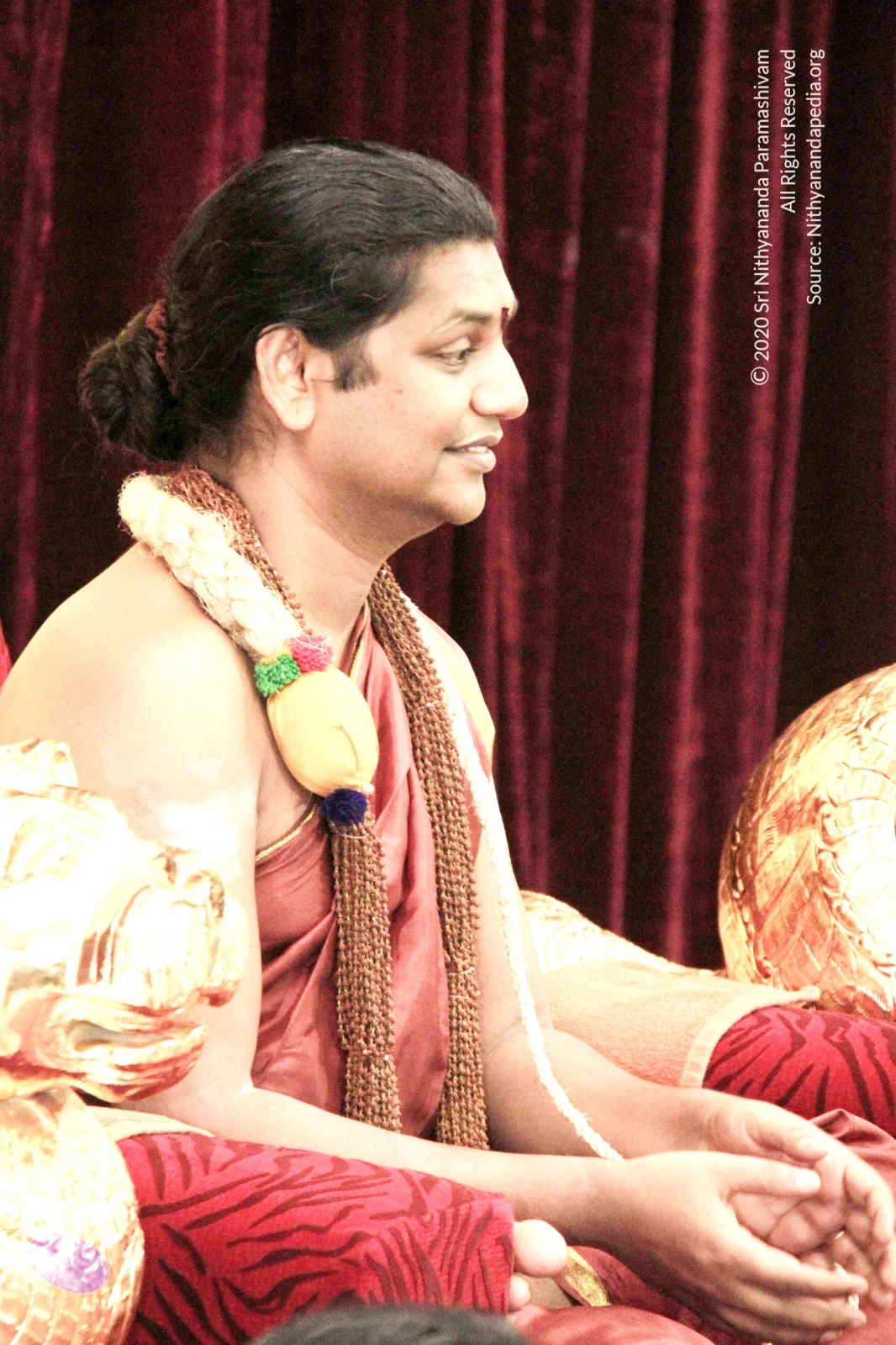
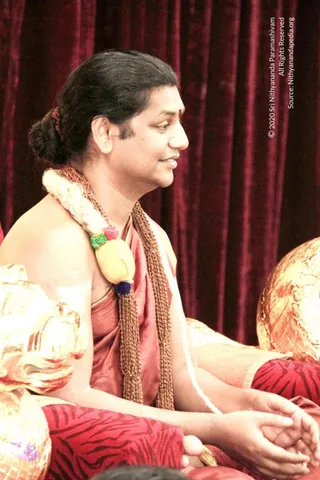
Photograph of a seated man in profile facing left, with dark hair tied in a low bun and a small red mark on his forehead. He wears a rust-red draped garment over the shoulder and a brown beaded necklace with a white flower garland and a yellow bundle with green and pink tassels. He sits on a golden ornate throne-like chair with red striped cloth covering his legs, hands folded in his lap, in front of deep red velvet drapery. No other people are visible.

Pada-Puja
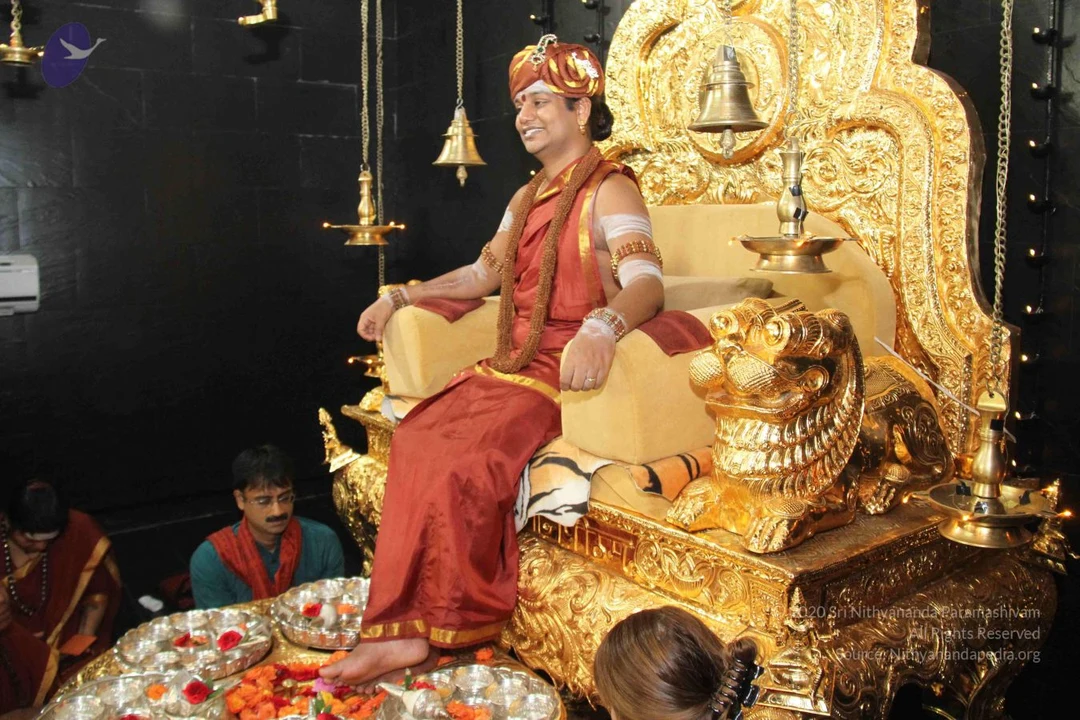
5 photosSource gallery
A man seated on an ornate gold throne carved with lion-headed armrests and a tiger-striped cushion, wearing a maroon turban with gold trim, a rust-red dhoti and shawl edged in gold, and a long brown rudraksha-style bead necklace. He has white sacred markings on his upper arms and forehead, and wears beaded bracelets. Brass bells and oil lamps hang beside the throne, and silver plates of flowers and offerings sit at his feet, with a devotee's hand visible at the lower edge. Probable Swamiji cues: maroon turban, ornate gold ceremonial seat and rudraksha necklace, consistent with a seated spiritual leader receiving devotees.A man seated on an ornate gold throne carved with lion-form armrests and a tiger-striped cushion. He wears a red-orange turban, a red-orange silk dhoti and shawl with gold borders, and a long beaded rudraksha-style mala. White sacred ash marks his arms and chest, and he wears gold bangles. Hanging brass bells and oil lamps are visible behind him, and brass bowls with flowers and offerings sit at the lower right by his feet. The throne and ritual setting suggest a formal temple or satsang seat. Only one person is clearly visible in the scene, with a partial head at the bottom edge.A man seated on an ornate gold throne carved with lion heads and floral reliefs, wearing a rust-red turban with gold trim, a rust-red silk shawl and dhoti with gold borders, and a long brown rudraksha mala. White ash marks are on his arms and forehead, and he wears copper-coloured bangles. Behind the throne hang brass bells and oil lamps, and a tiger-striped cloth covers the seat. In the foreground are brass plates holding flowers and offerings. The seated figure appears to be a person, seated in a position of honour with ceremonial adornments.A man in a red-orange turban and red-orange draped garment with gold trim sits on an ornate gold throne carved with a lion-head armrest and a tiger-striped cushion. Gold-colored hanging bells and oil lamps hang beside him. He wears a rust-colored beaded necklace, gold bangles and white ash markings on his arms and forehead. Dishes of flowers and offerings sit in front of the throne, and the head of another person is visible at the bottom edge. Swamiji (probable): the man on the throne has a turban, saffron-toned clothing, a beaded mala and ceremonial adornments, and is seated in a place of honour.A seated man in a maroon and gold-bordered sannyasi-style wrap and a red-and-gold turban sits on an ornate gold throne carved with a gold lion-shaped armrest support and a tiger-striped cloth. He wears a rudraksha mala draped across his chest, gold armbands and bracelets, and white ash markings on his arms. Hanging brass bells and a brass oil lamp frame the throne, and a tray of silver vessels with flowers sits at the bottom right, with a single devotee's head visible in the foreground. Swamiji (probable): the appearance cues of a turban, rudraksha mala and saffron-toned clothing support a probable identification of Swamiji seated in a position of honour.