Skip to content
Tuesday

22 November 2022

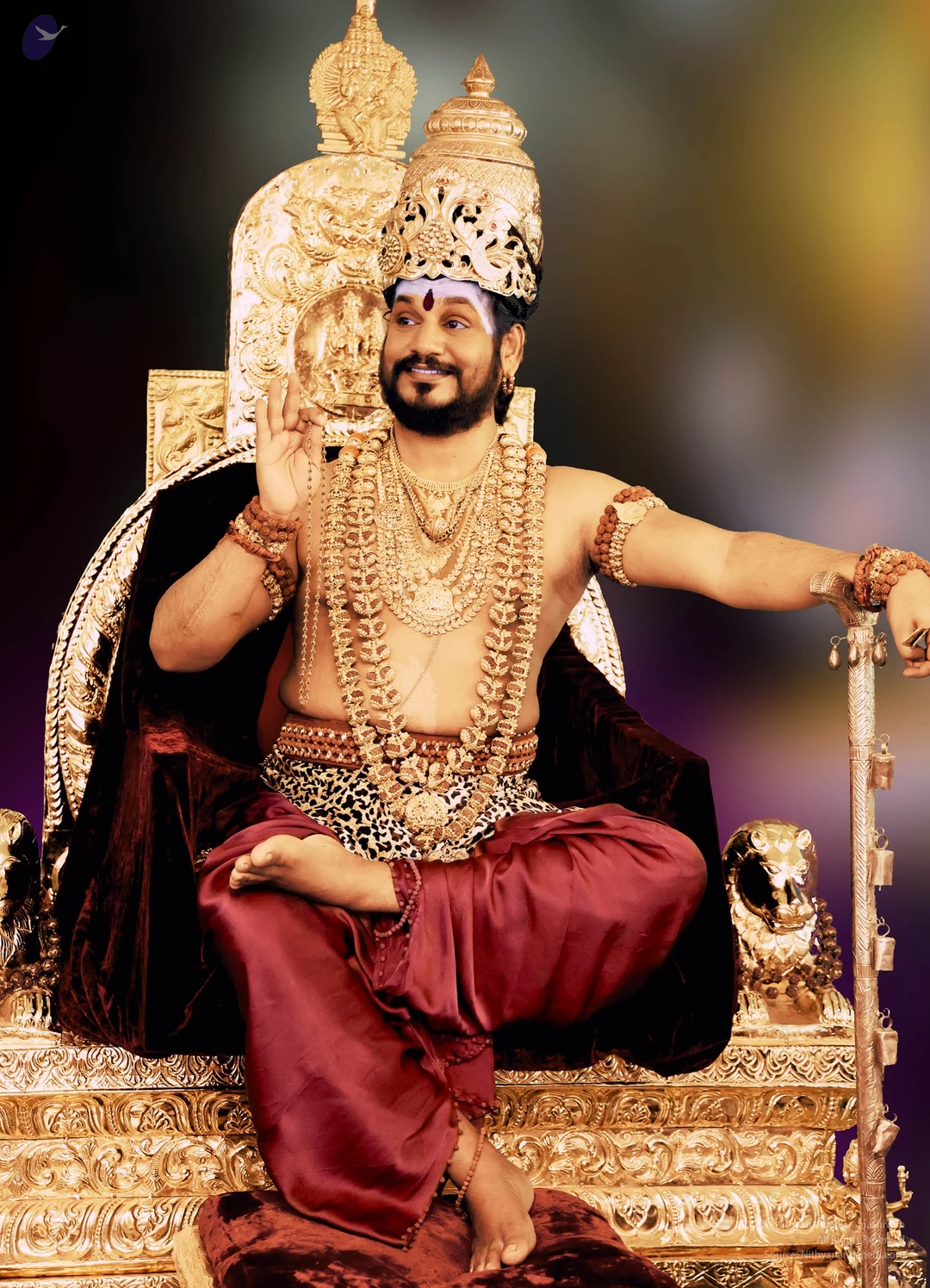
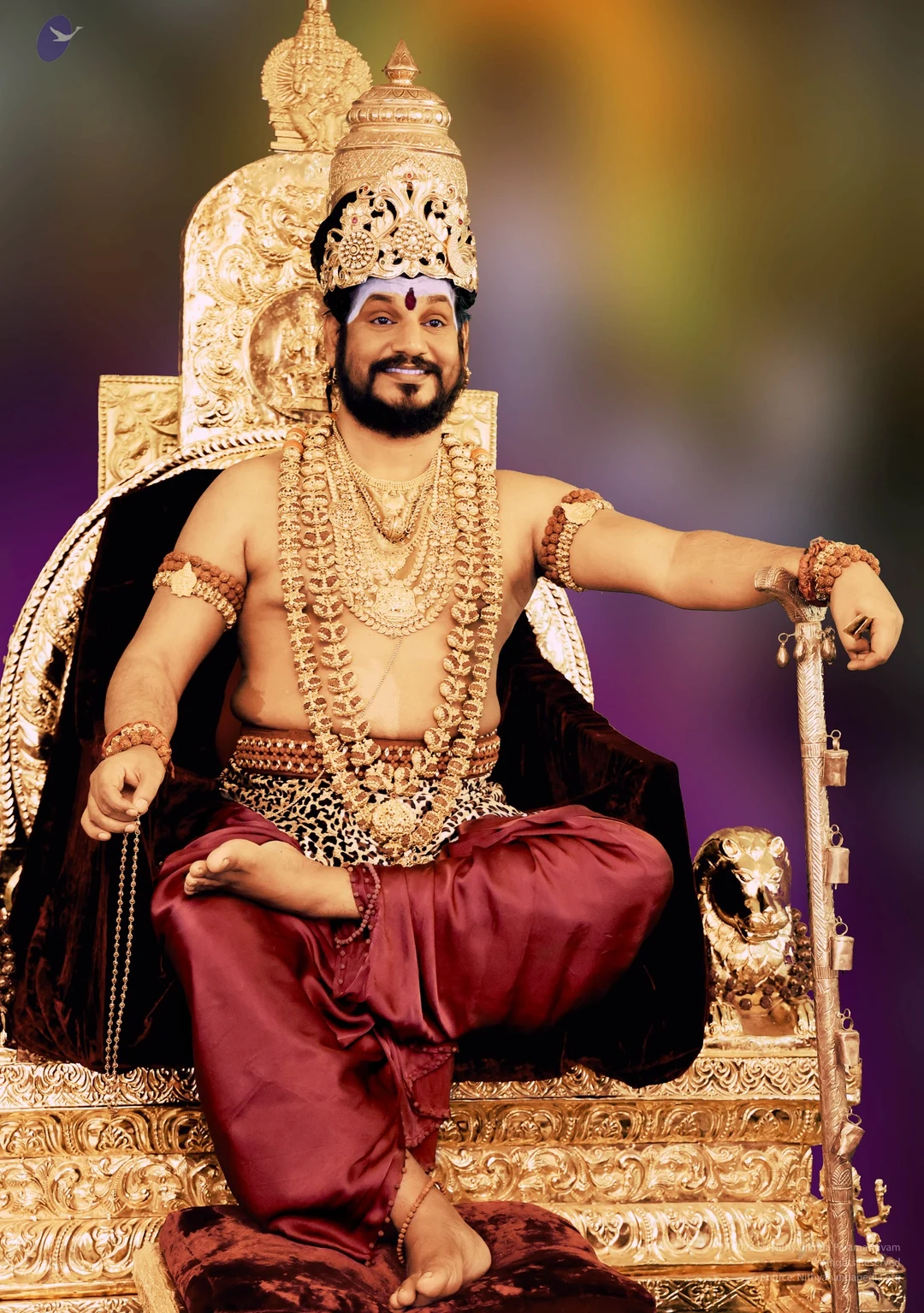
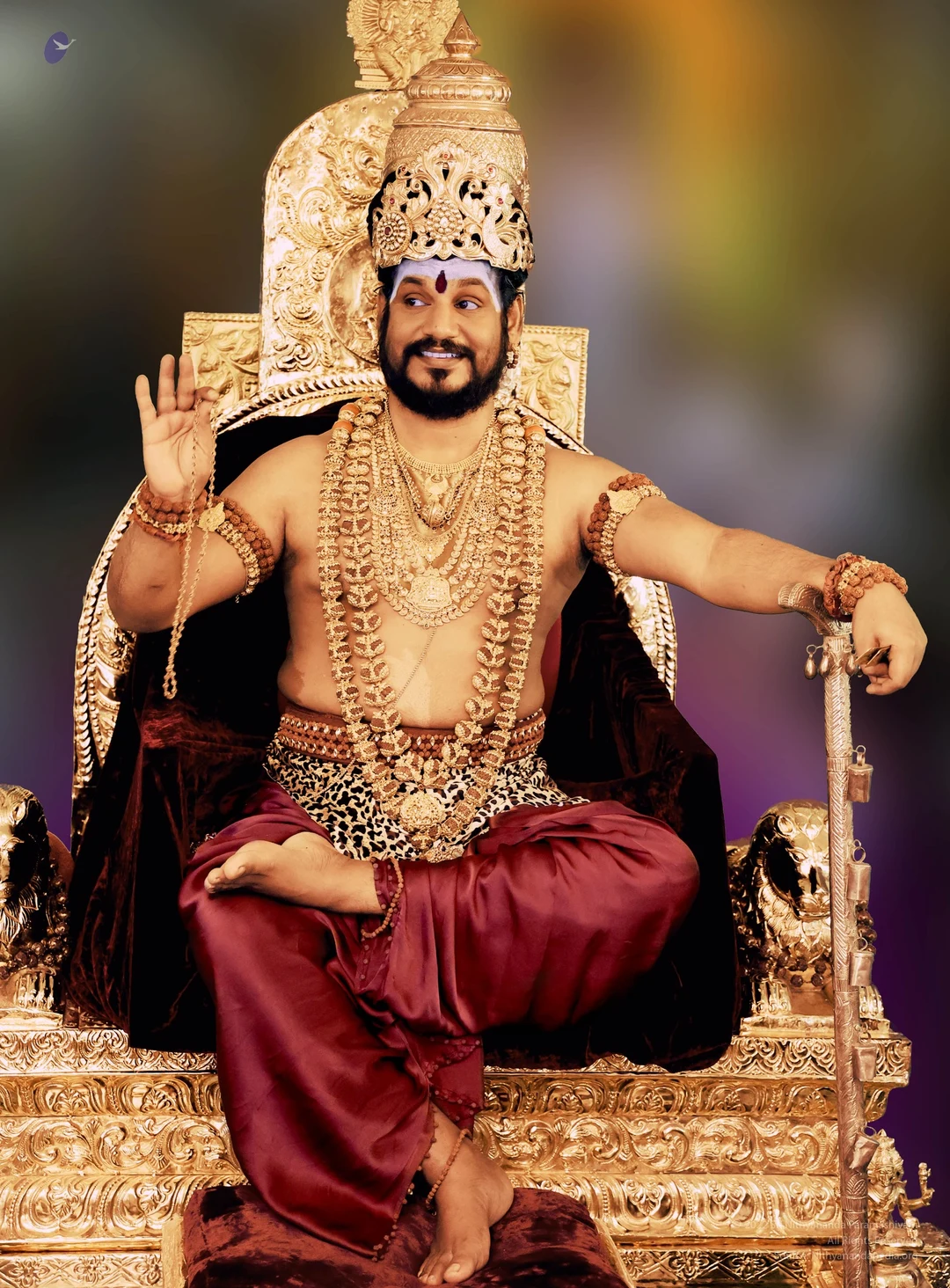
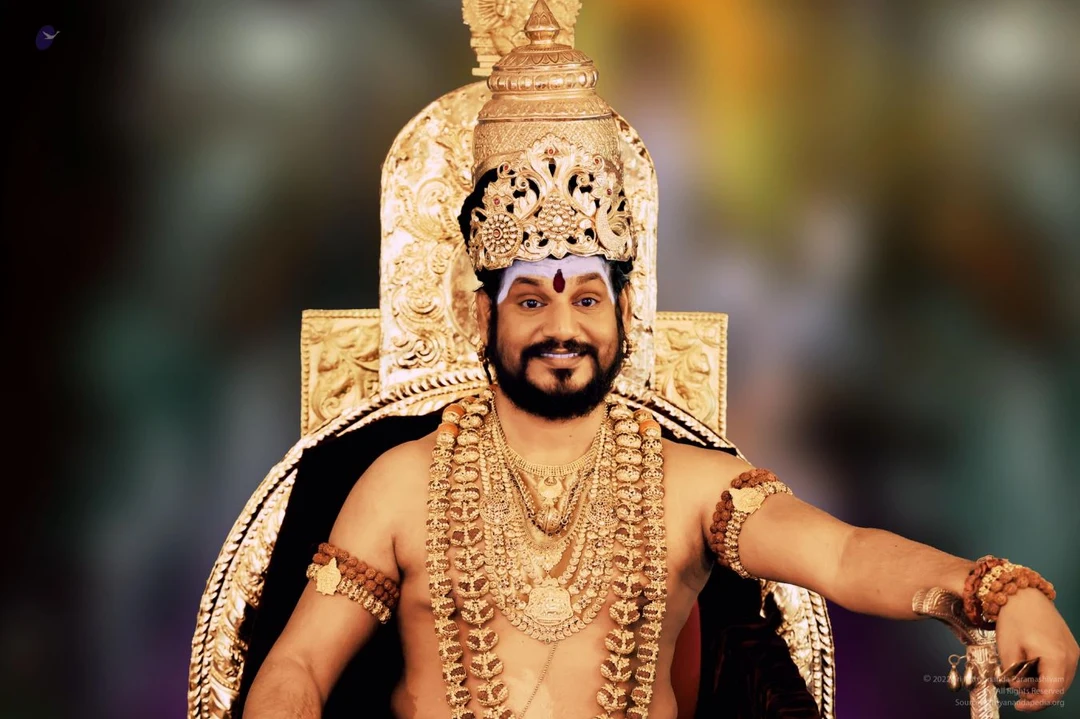
DASA DAKSHINAMURTHY BHAVA SAMADHI DARSHAN.

Dated photos
76
Source pages
1
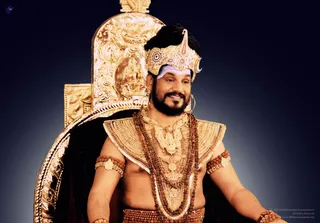
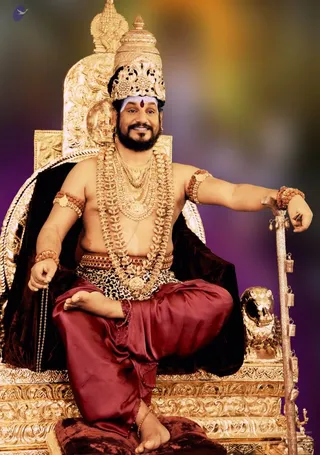
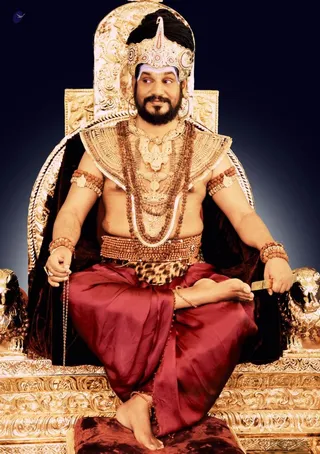
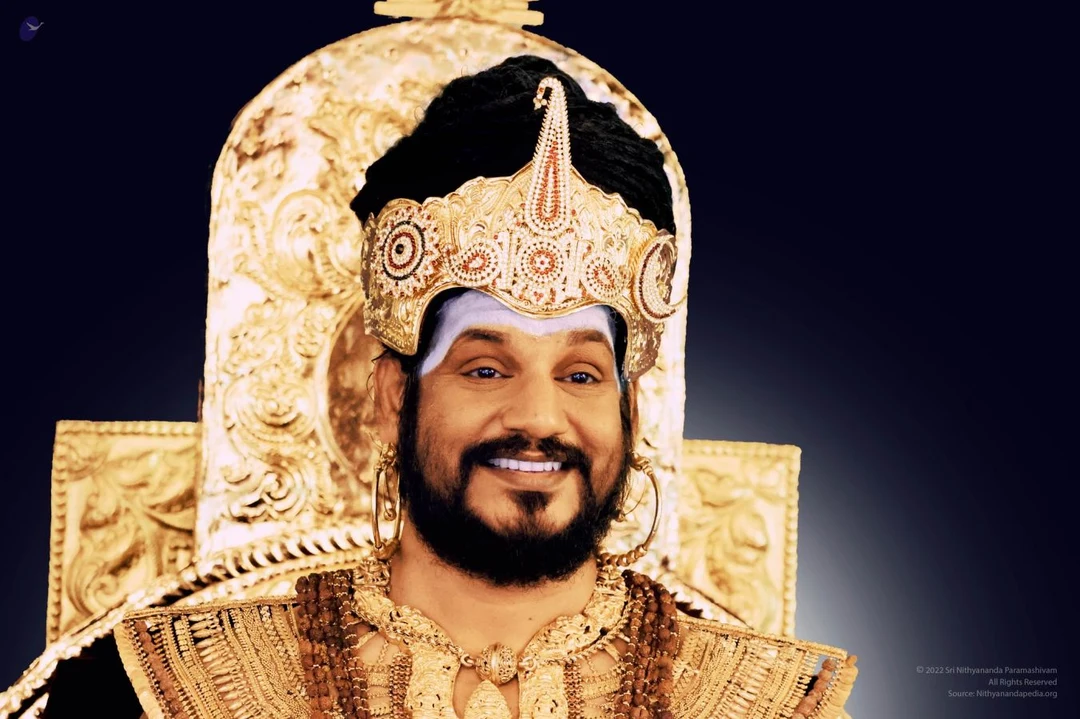
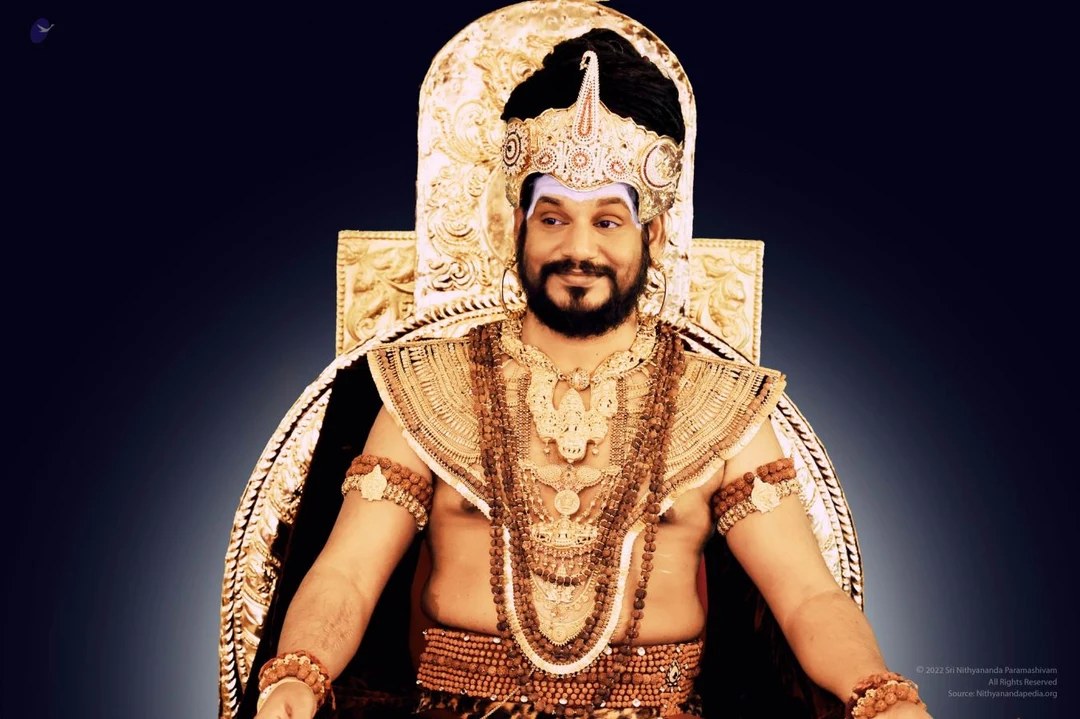
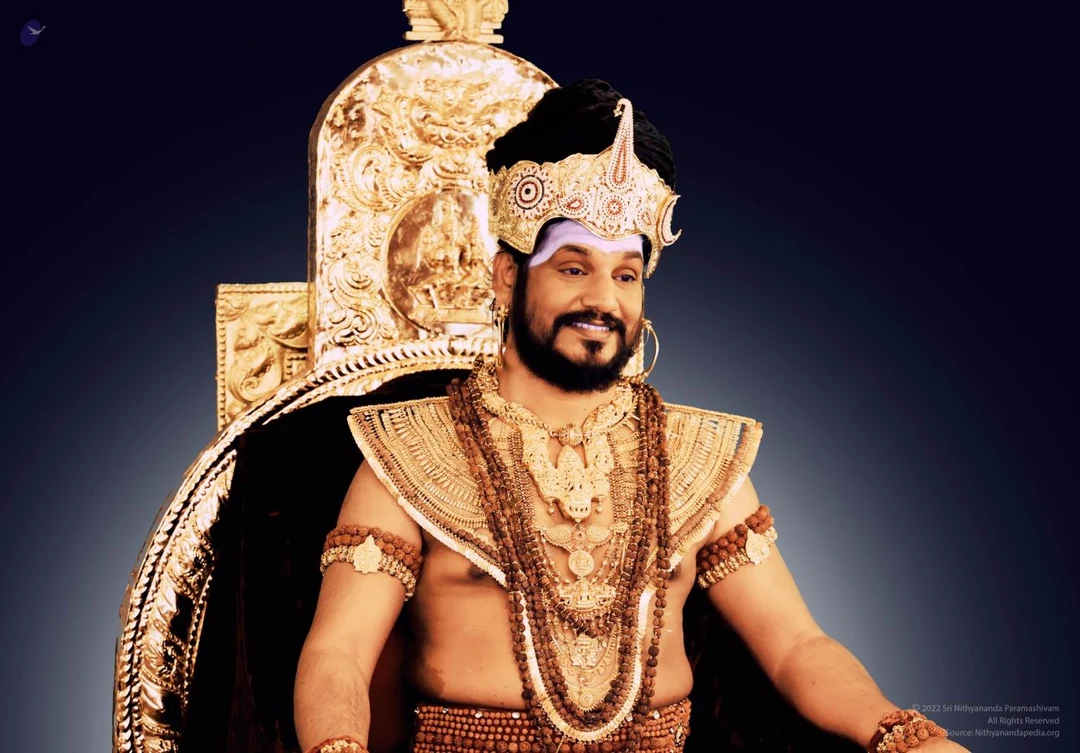
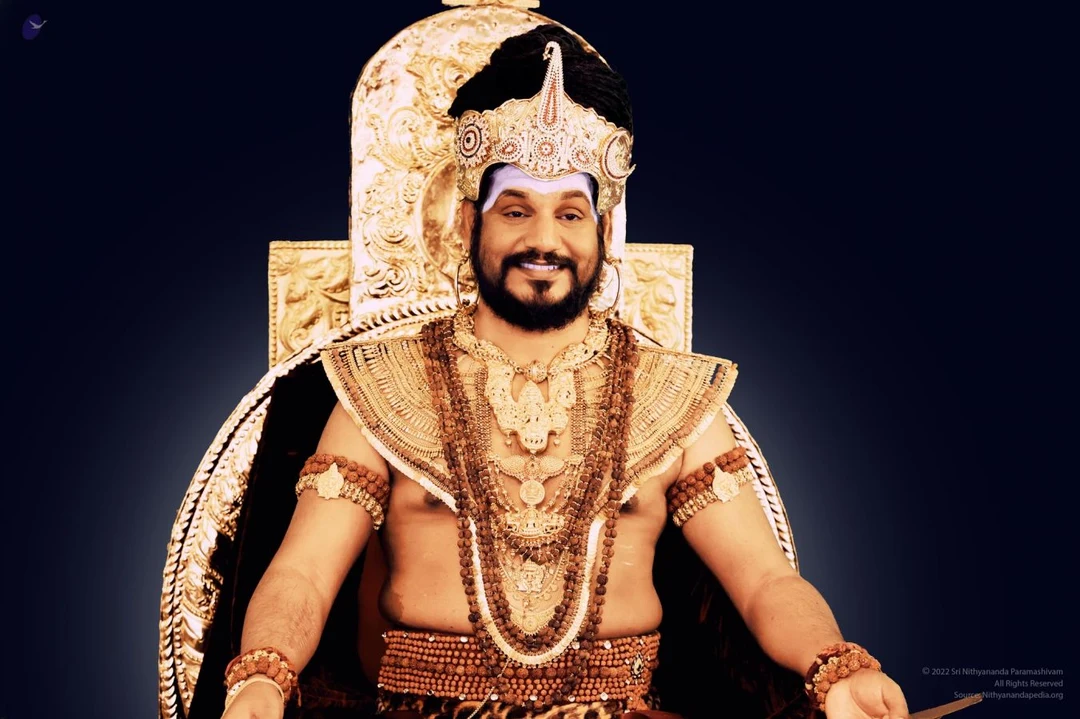
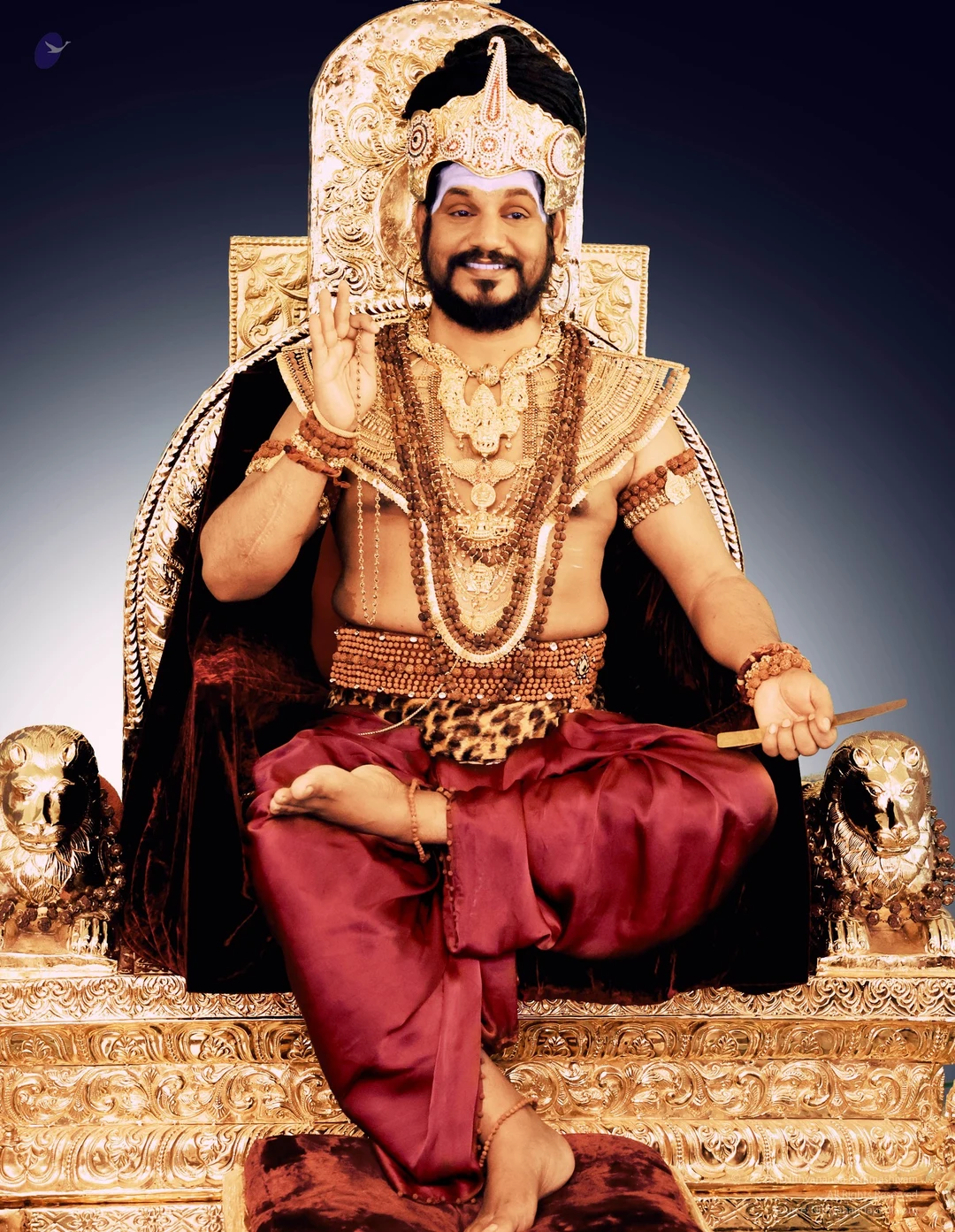
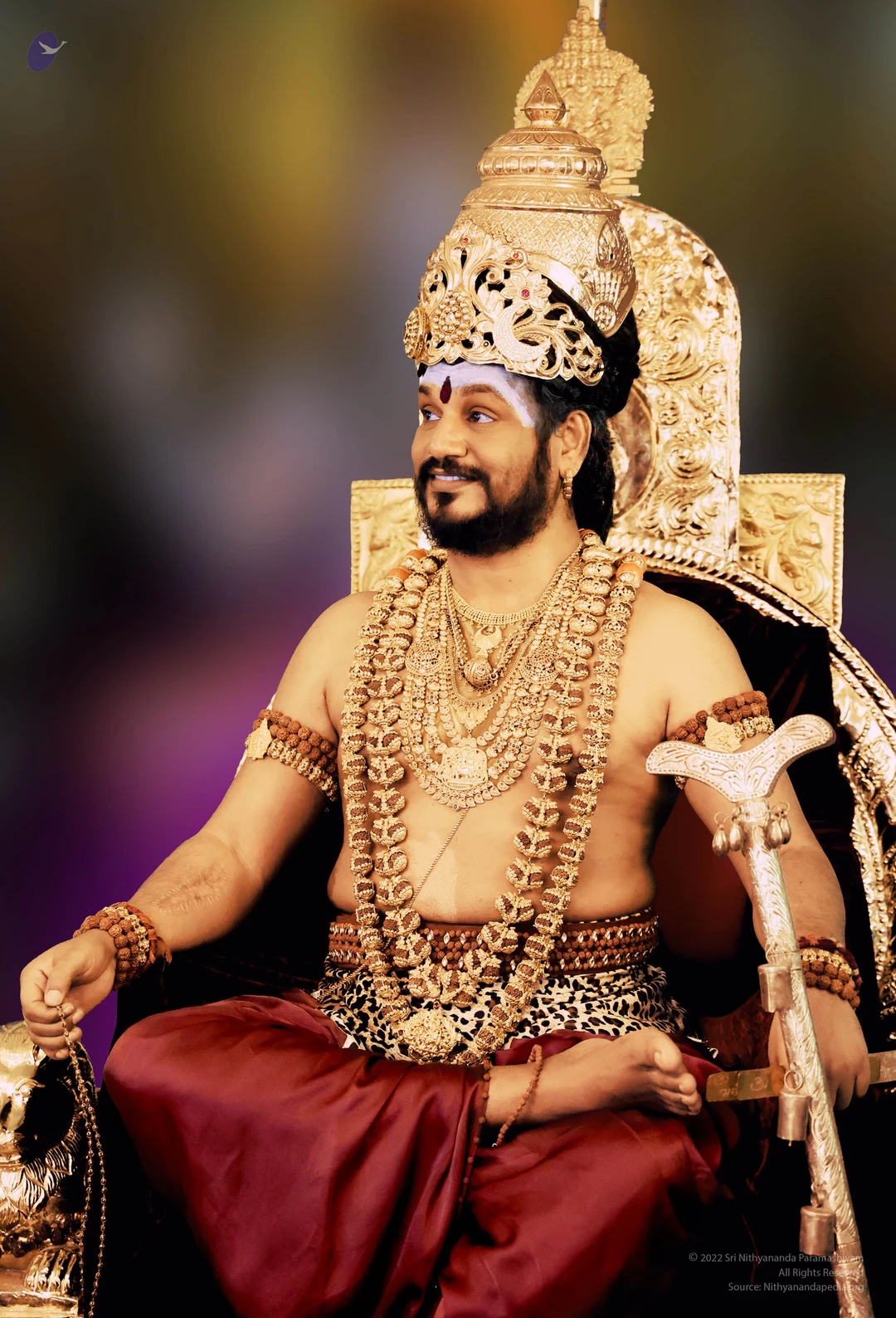
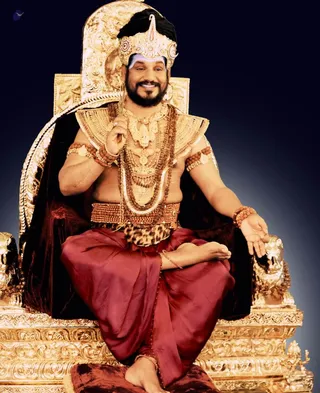
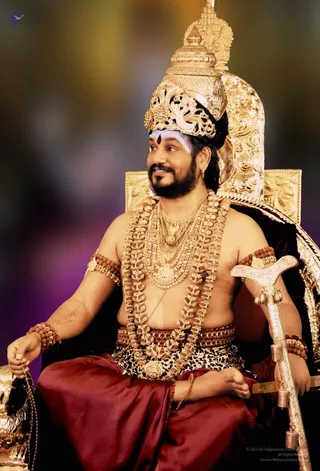
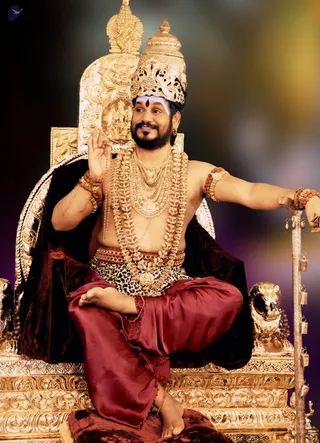
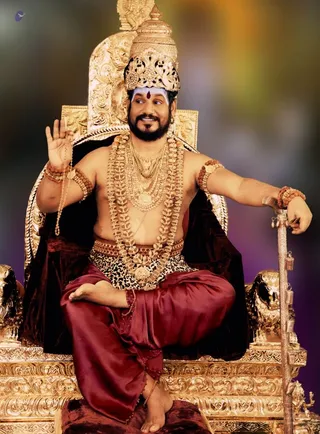
A photograph of a bearded man seated before an ornate golden throne with a carved back panel and a dark draped cloth. He wears an elaborate gold crown with red and white gem accents, a gold collar and layered gold necklaces, multiple rudraksha malas, rudraksha armbands with gold clasps, and a gold-embroidered garment at the waist. He is bare-chested, with a white forehead mark, and is smiling against a dark blue gradient background. a person: the figure has long swept-back hair under the crown and ornate ceremonial gold and rudraksha adornment seated on a throne.A bearded man sits cross-legged on an ornate gilded throne with a dark velvet backrest and a carved lion armrest. He is bare-chested, wearing layered gold necklaces, a long gold garland, rudraksha bead bracelets on both arms and wrists, and a rudraksha belt above a leopard-print cloth. He wears deep maroon silk trousers, a gold crown with red stones, and a red tilak on his forehead, holding a rudraksha mala in one hand while resting the other on a silver staff hung with bells. The background is a blurred purple and gold wash. A small logo sits in the upper left corner. The figure is a probable Swamiji, identified by the rudraksha malas, ceremonial gold necklaces and crown, though this is an appearance-based label only.A man seated cross-legged on an ornate gold throne with carved lion-head armrests and a plush dark velvet backrest. He wears an elaborate gold crown with pearls and red stones, a gold shoulder collar, layered gold necklaces, and many tiered rudraksha malas across his chest, waist and arms. He is bare-chested with a red silk dhoti over a leopard-print cloth, holds a mala in one hand and a small gold object in the other, and has a white forehead mark. The dark blue background fades to light.

November 22 2022

Original wiki page
Contents

Title

DASA DAKSHINAMURTHY BHAVA SAMADHI DARSHAN.

Transcript

ATMA SHANTI FOR THE SCORES OF PEOPLE KILLED IN JAVA QUAKE

ATMA SHANTI FOR THE SCORES OF PEOPLE KILLED IN JAVA QUAKE || NOVEMBER 22, 2022

The 5.6 magnitude quake struck Cianjur town in West Java, at a shallow depth of 10km (6 miles). Scores of people were taken to hospital, with many treated outside.

The exact number of people killed so far remains unclear. Indonesia's National Disaster Mitigation Agency (BNPB) has said their official death toll was 103, adding that another figure given by regional governor Ridwan Kamil - 162 - remains unverified.

BNPB said another 390 people were wounded and that 7,000 people had taken shelter in various locations in the area.

The Supreme Pontiff of Hinduism (SPH) Nithyananda Paramashivam prays to Lord Paramashiva for the Atma Shanti of the people who died in the quake and for the speedy recovery of the injured.

Having taken the spiritual responsibility for bringing global peace, Kailasa’s Department of Religion and Worship would be offering Maheshwara Puja at the feet of The SPH for the same.

Kailasa’s Department of Religion and Worship and Shrikailasa Uniting Nations for Global Peace & Conflict Resolution invite global citizens of all sectors to join us in healing, empowering and enlightening humanity especially during these testing times. How to be part? http://kailaasa.tv/minutes4peace

About Maheshwara Puja:
KAILASA is restituting and reviving the ancient enlightened Hindu civilizational nation, and reviving the ancient Hindu rituals which only incarnations can do. Maheshwara Puja is offered free as part of reviving of Santana Hindu Drama.

Regardless of the number of births the soul would have taken, regardless of the soul, while embodied having been initiated by the Master or not in his lifetime - the Master can intervene and make His presence available in the departed soul’s life and lead it to Enlightenment! This is possible only through Maheshwara Puja!

The SPH Nithyananda Paramashivam says, "The best place on Planet Earth to give “pinda tharpana” is the stomach of a sannyasi. That is, the hunger fire (jataragni) of a sannyasi is the best fire into which you can offer the “pinda tharpana”, the “shraaddha”, which reaches the departed ancestors, (pitrus) directly.

The Somasambhu Patati says, it is thousand times more greater than offering any “shraaddha”, any “pinda”, in any river, any water-body, any lake, any holy land, any holy place. Offering it in the stomach of the living incarnation of Paramashiva is the best form of “pinda tharpana” and 'shraaddha'.

In Hinduism, Shraadhha wherein food is offered to sanyasis for the completion with the departed souls, is called Maheshwara puja.

In the Somashambhu Paddhati, Shraadhha vidhi,Sloka 3

लिङ्गिनो ब्राह्मणाद्याश्च श्राद्धीयाः शिवदीक्षिताः ।
liṅgino brāhmaṇādyāśca śrāddhīyāḥ śivadīkṣitāḥ ।
The translation goes “The Sannyasis and Brahmanas who have been initiated into the Shiva deeksha are eligible to be appointed as the representatives of Pitrus in the Shraadhha.”

KAILASA’s Department of Religion & Worship conducts the Maheshwara Puja as prescribed by the Vedas and Agamas revived by The SPH Nithyananda Paramashivam. In the Maheshwara Puja, as the 1008th living incarnation of Paramashiva, The SPH personally receives the Bhiksha (alms) and He liberates the departed soul along with the Nithyananda Sanyas Order (Monastic Order).

Source Link: https://www.bbc.com/news/world-asia-63700629

Photos

FB-Photos-DASA DAKSHINAMURTHY BHAVA SAMADHI DARSHAN || 7. ANUSHTANA DAKSHINAMURTHY
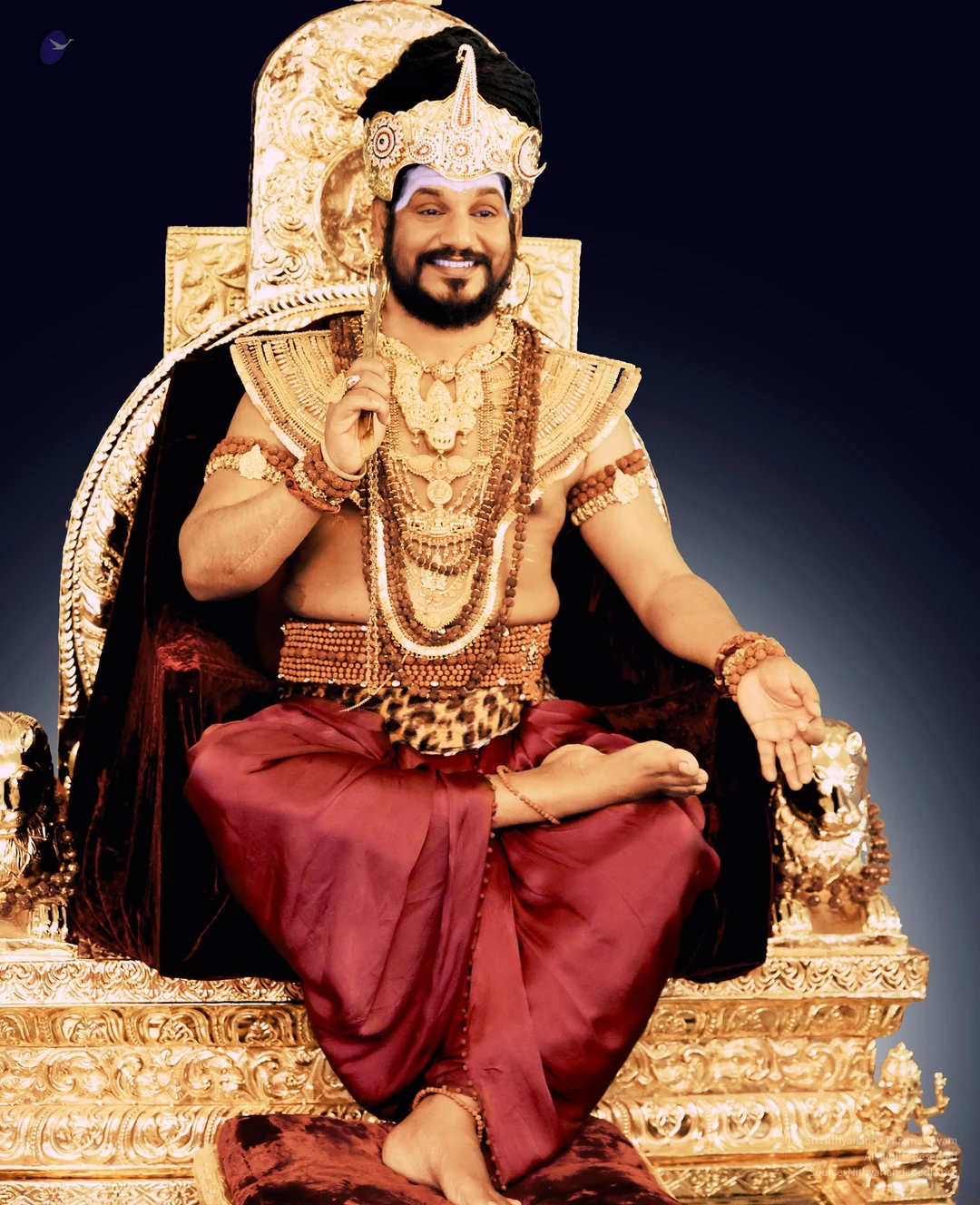
FB-Photos-DASA DAKSHINAMURTHY BHAVA SAMADHI DARSHAN || 8. VYAKHYANA DAKSHINAMURTHY

Link to Facebook Page

https://www.facebook.com/ParamahamsaNithyananda/videos/825173828734121
https://www.facebook.com/srinithyananda.swami/posts/pfbid0hdGZuucWxnTmYgTtNbXAuzK95nABub8Nnu27goX4ov6osM7s5tuR9UnxspghPvUPl
https://www.facebook.com/srinithyananda.swami/posts/pfbid0nRKRy8opRm2fgSLC5suBJ1smJoiMnJuT5PQCA8noZTvj2k2X3B5deJhHcdJEbT7il
https://www.facebook.com/ParamahamsaNithyananda/posts/pfbid02ViJ7SQWHjfC7K2W5nFJac2xPm47qWv4bqV5b4p9kJVnmCjdTBD5qGPoRp2S4gp37l
https://www.facebook.com/ParamahamsaNithyananda/posts/pfbid0EzAXRoGCEEhMsWXcysq2oStstnFL9irLwAFPGJQ3hsfWp2Xv5X3C3PMR7Ub4t1sZl
https://www.facebook.com/ParamahamsaNithyananda/posts/pfbid02GMfke7oxeaVt4Gupv5tVy3UrzPPxH7aXDaSaaZS9FLNzCoi5aMGrX36iAxa3KF7bl

Photos from this day

View all 76 photos

FB-Photos-DASA DAKSHINAMURTHY BHAVA SAMADHI DARSHAN || 7. ANUSHTANA DAKSHINAMURTHY
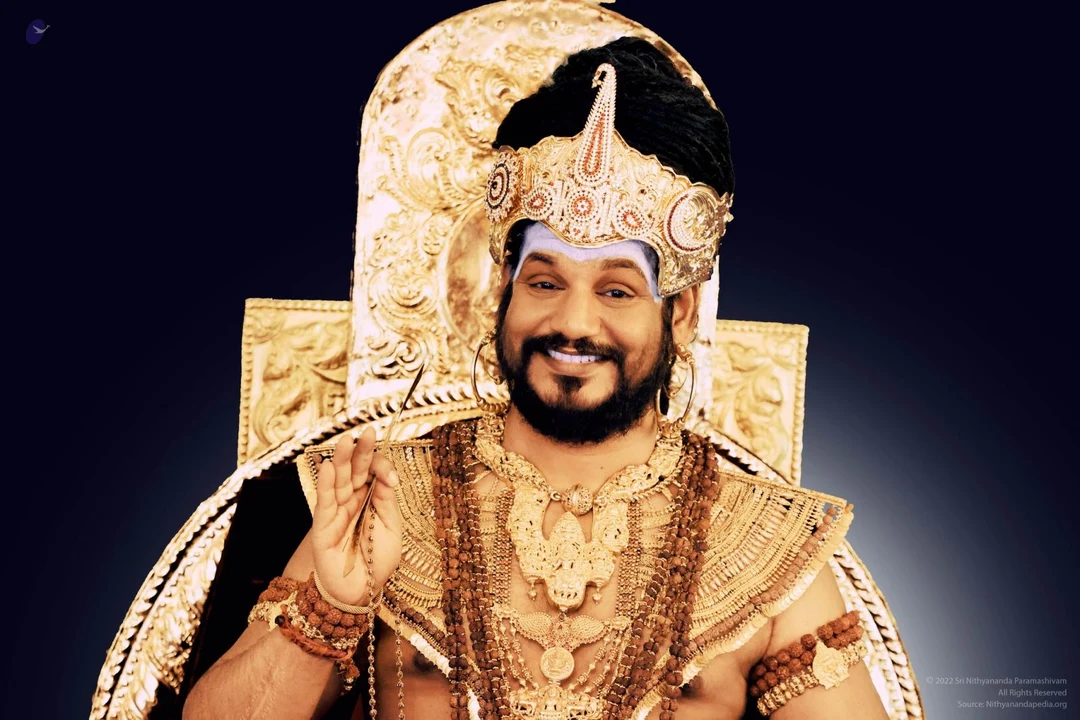
9 photosSource gallery
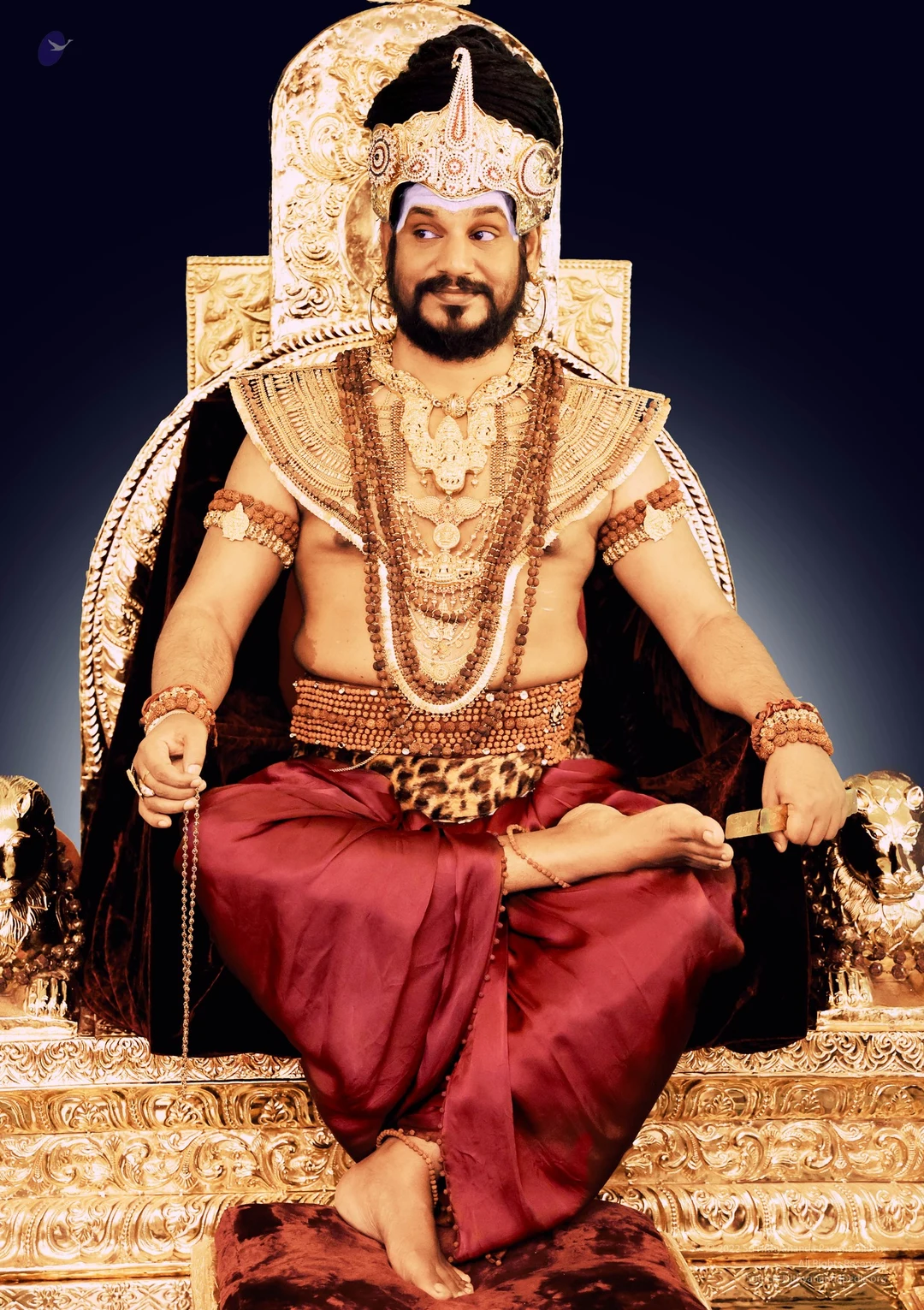
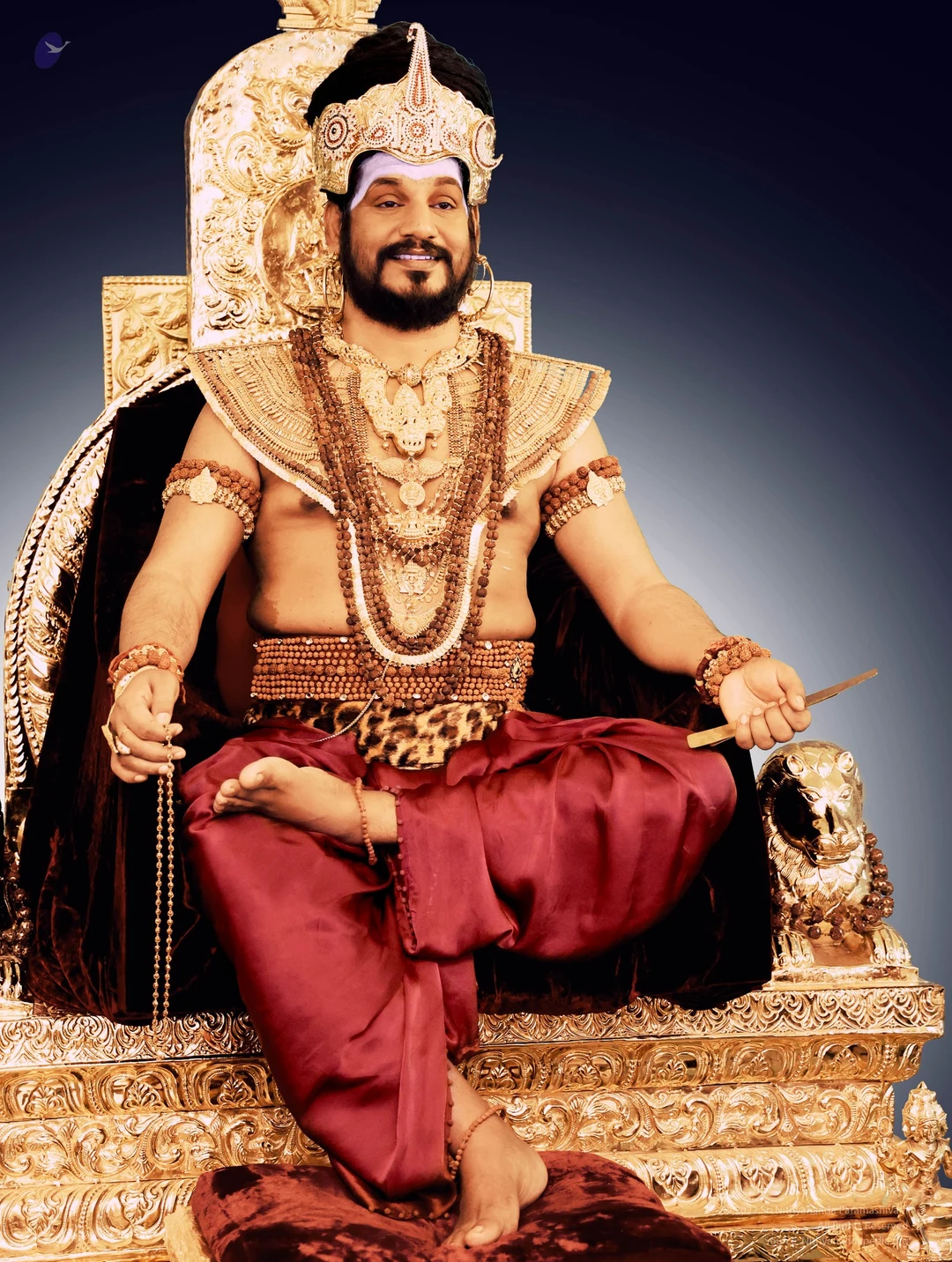
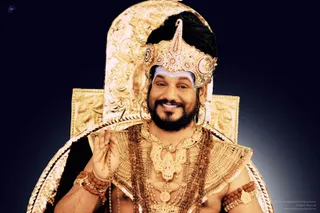
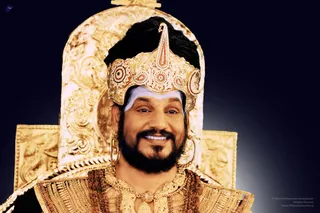
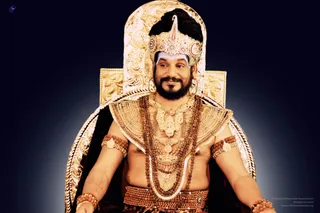
A photograph of a seated man on an ornate gold throne against a dark blue backdrop. He wears a gold jeweled crown with a tall spire, a gold collar and layered gold necklaces, many rudraksha mala strands, rudraksha bracelets, and a rudraksha and leopard-print waist belt over a deep maroon dhoti. He has a bare chest, a white tilak on his forehead, and sits cross-legged with one hand raised holding a small object and the other hand open on his knee. a person is shown in this regal pose; the gold lion-armed throne and crown are prominent.A smiling bearded man wearing an ornate gold crown with red and white jewelled detailing, a blue-white forehead marking, large gold hoop earrings, layered rudraksha malas and heavy gold ceremonial necklaces, gold armlets and rudraksha bracelets, bare-chested with a gold shoulder ornament. He raises one hand in a gesture and sits before an ornately carved gold throne against a dark blue background. Ceremonial regalia and a throne suggest an honoured, regal presentation.A man seated cross-legged on an ornate gold throne with carved lion-head armrests and a plush dark velvet backrest. He wears an elaborate gold crown with pearls and red stones, a gold shoulder collar, layered gold necklaces, and many tiered rudraksha malas across his chest, waist and arms. He is bare-chested with a red silk dhoti over a leopard-print cloth, holds a mala in one hand and a small gold object in the other, and has a white forehead mark. The dark blue background fades to light.Close-up photograph of a smiling bearded man seated before an ornate gold throne with carved floral relief and a dark blue background. He wears an elaborate gold crown with red and white gemstone medallions and a central jewelled spire, a white tilak on his forehead, large gold hoop earrings, a gold pendant, and layered rudraksha malas over gold-embroidered garments. His long dark hair is swept back beneath the crown. a person appears as the seated figure. Lower right corner carries a copyright and source credit line.A photograph of a single man seated on an ornate gold throne against a dark blue background. He wears an elaborate gold crown with red and white jewelled ornaments, a white forehead marking, and a large gold collar with layered gold pendants. Multiple strands of rudraksha malas and beaded necklaces hang on his bare chest, and he has matching rudraksha armlets with gold clasps. He has a full dark beard and is smiling with hands resting on the throne. The throne has gold filigree carvings. Swamiji (probable): the long swept-back hair, ornate gold crown, rudraksha malas and ceremonial gold regalia are visible, though the figure is seated on a throne in a studio-style portrait.A photograph of a bearded man seated before an ornate golden throne with a carved back panel and a dark draped cloth. He wears an elaborate gold crown with red and white gem accents, a gold collar and layered gold necklaces, multiple rudraksha malas, rudraksha armbands with gold clasps, and a gold-embroidered garment at the waist. He is bare-chested, with a white forehead mark, and is smiling against a dark blue gradient background. a person: the figure has long swept-back hair under the crown and ornate ceremonial gold and rudraksha adornment seated on a throne.

FB-Photos-DASA DAKSHINAMURTHY BHAVA SAMADHI DARSHAN || 8. VYAKHYANA DAKSHINAMURTHY
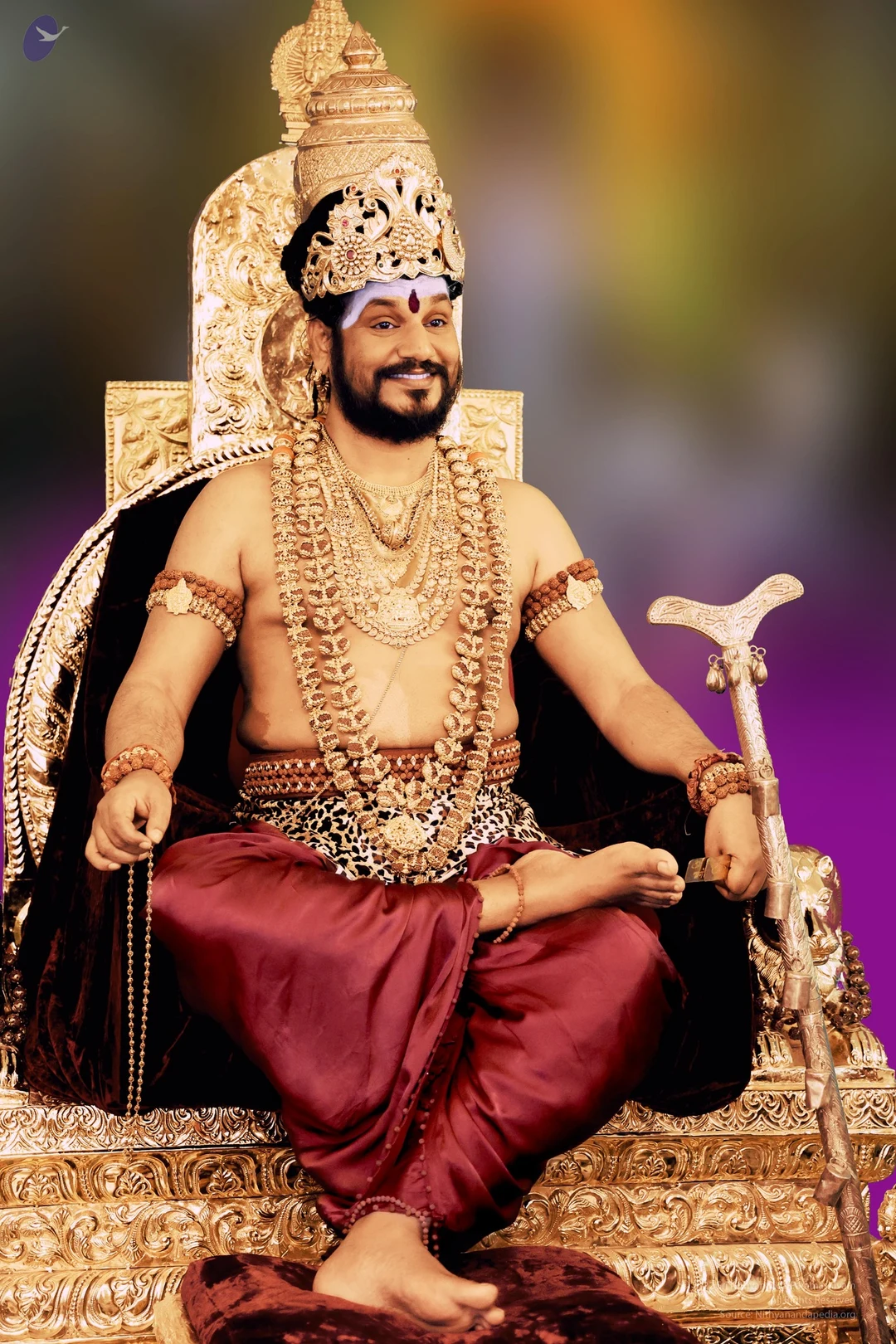
7 photosSource gallery
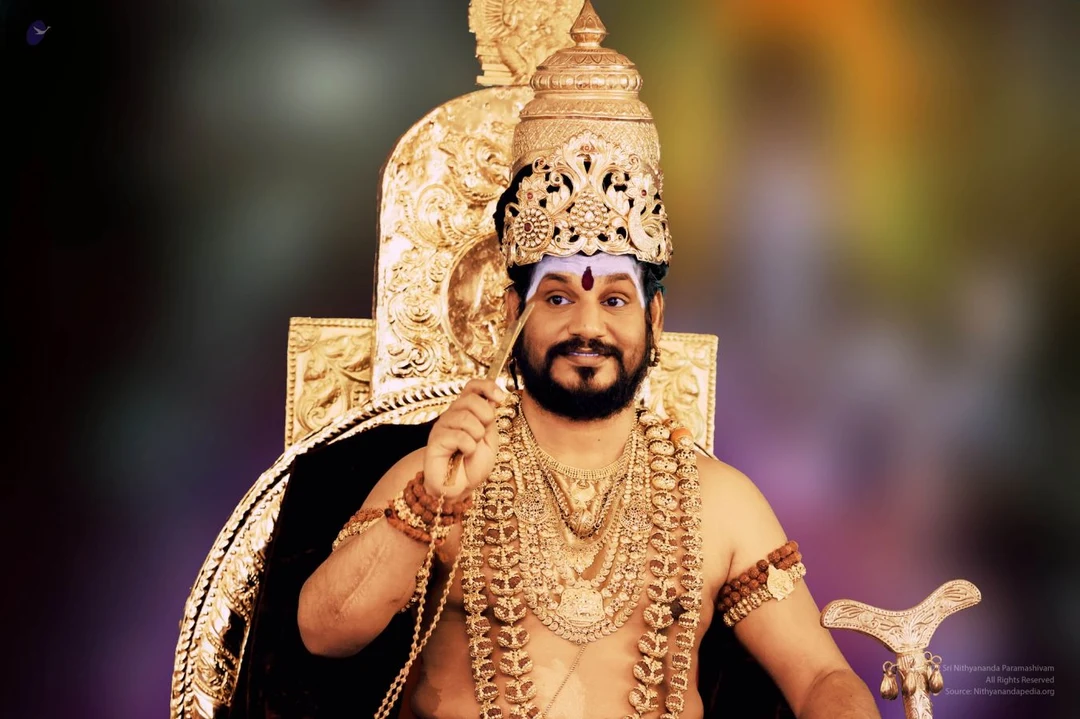
A seated man on an ornate gilded throne with a high golden crown, bare-chested and wearing layered gold necklaces, long gold-and-rudraksha garlands, rudraksha armlets and bracelets, and a maroon dhoti with a patterned waistband. He holds a long silver staff with a trident-style top in one hand and a mala in the other, with a red bindi and tilak on his forehead. Two people appear in the scene? No: one figure only. A gilded throne with carved floral motifs and a dark velvet backrest sits against a soft purple and yellow blurred background. Probable Swamiji seated on a throne, wearing ceremonial gold ornaments, rudraksha malas and a crown, in an ornate throne setting.A bearded man with a red bindi and white tilak on his forehead sits before a gilded, ornately carved throne-back. He wears an elaborate gold crown set with red stones, multiple layers of gold necklaces, long rudraksha mala strands and rudraksha bracelets on his arms. He is bare-chested, holding a slender rod near his face. A golden ceremonial staff with a bell-shaped ornament stands at the right edge. Background is a soft blur of purple and gold. Swamiji (probable) appears in ceremonial regalia, with a crown, rudraksha malas and ornate gold jewellery, seated on a throne-like seat.A bearded man seated on an ornate gilded throne with a carved golden backrest, wearing an elaborate gold crown with floral and jewelled filigree, a red tilak on his forehead and white sacred markings. He is bare-chested and heavily adorned with layered gold necklaces, multiple strands of rudraksha beads, rudraksha armlets and bracelets, and a leopard-print waist cloth with a deep maroon dhoti draped over his legs. He holds a rudraksha mala in one hand and rests the other on a silver ceremonial staff with bells. The background is a soft blur of gold, purple and green. a person seated in regal ceremonial dress, with the a person copyright line visible in the lower right corner.A bearded man with a red bindi and white forehead markings sits cross-legged on an ornate gold throne carved with lions and figures, raising one hand in a blessing gesture. He wears an elaborate gold crown, layered gold necklaces and garlands, rudraksha bracelets on both arms, and a red silk dhoti with a leopard-print cloth at the waist, with a dark velvet backrest behind him. A tall silver staff with hanging bells rests beside the throne.A bearded man sits cross-legged on an ornate gilded throne with a dark velvet backrest and a carved lion armrest. He is bare-chested, wearing layered gold necklaces, a long gold garland, rudraksha bead bracelets on both arms and wrists, and a rudraksha belt above a leopard-print cloth. He wears deep maroon silk trousers, a gold crown with red stones, and a red tilak on his forehead, holding a rudraksha mala in one hand while resting the other on a silver staff hung with bells. The background is a blurred purple and gold wash. A small logo sits in the upper left corner. The figure is a probable Swamiji, identified by the rudraksha malas, ceremonial gold necklaces and crown, though this is an appearance-based label only.A seated male figure on an ornate gilded throne with lion-head armrests and a deep maroon velvet backrest. He wears an elaborate gold crown, layered gold necklaces and long multi-strand garlands, rudraksha bracelets, and a maroon silk dhoti with a leopard-print waist cloth. His torso is bare, with a red bindi and a sacred white mark on the forehead. He raises one hand in blessing holding a mala, while the other rests on a tall ceremonial staff with bells. The background is a soft blurred gradient of gold, purple and green. Appearance-based label: Swamiji (probable), seated in state on the throne with the cues of crown, ornate gold jewellery, rudraksha and maroon ceremonial dress.

November 22 2022 sripuram

60 photosView all
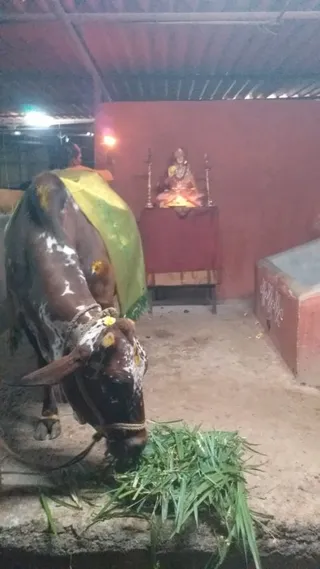
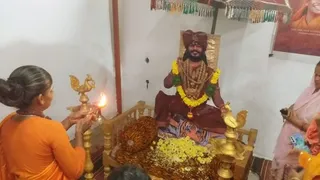
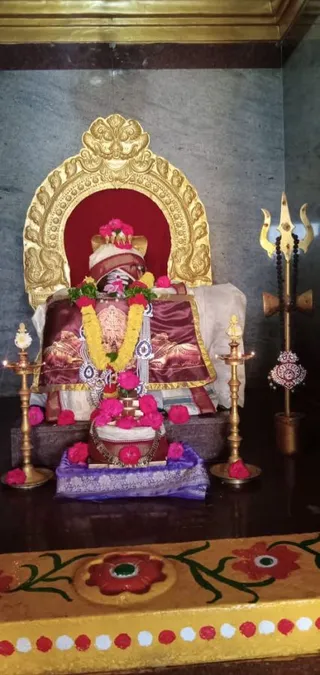
A brown and white spotted cow grazes on a pile of fresh green grass on a concrete floor under a corrugated roof. The cow wears a yellow-green cloth draped over its back and yellow flower garlands on its horns and neck. Behind it, a person in an orange garment stands near a red-walled shrine where a seated deity murti. A small brick structure with painted markings is at the right edge. The scene suggests a go seva and gaumatha puja setting.A seated figure on a golden-framed chair draped with a tiger-striped cloth is garlanded with marigold and yellow flower garlands, wearing a maroon-red robe, a red turban and beaded necklaces. A woman in an orange saree on the left holds a lit oil lamp toward him, and brass oil lamps with flame-shaped spouts stand in front, scattered with yellow flower petals. On the right, a woman in a pink saree looks on beside a partially visible devotee in orange. A poster with a portrait and partial text hangs on the upper right wall, with tasselled cloth above. The setting is an indoor room with white walls, consistent with an aarti or puja offering. Swamiji (probable) is indicated by the red turban, garlands, ornate necklaces and maroon robe in the central seated figure.A shrine photograph showing a Shiva lingam (Paramashiva) decorated for worship at a temple niche. The lingam sits on a stone base draped with a maroon and gold cloth, adorned with a yellow marigold garland and pink roses, with a large silver-and-gold ornamental piece at its front. A gilded arched frame with a red backing stands behind it, topped with a flower-covered crown-like element. Two brass oil lamps (deepas) flank the lingam, and a large brass trident (trishula) with a rudraksha mala hangs to the right. Pink roses are scattered on the purple cloth and floor, and the floor in front has a painted floral rangoli border in red, green and white. No people are visible.Photo of an annadanam food-serving counter inside an indoor hall with white walls and exposed metal ceiling beams. A man in a white shirt and an orange cloth draped over his shoulders holds a steel plate of yellow rice and serves from steel trays along a gold-coloured counter. Beside him a woman in a dark blue sari with a gold border watches. Behind the counter, a small deity murti in red and gold sits under a decorative canopy with a yellow flower garland and brass lamps. In the foreground a server in plastic gloves holds a steel plate with a cup of red sauce, and bangled wrists are visible. Two people are visible.A gilded statue of a seated figure in a golden arched niche, right hand raised in blessing, wearing a maroon and gold brocade shawl and dhoti, a tan and maroon turban with a jeweled ornament, a white and yellow marigold garland, a pearl and gold coin necklace, and a rudraksha mala. In front, a small silver-framed figure with a red tilak and garland sits amid yellow flowers on an orange cloth, beside a brass plate with offerings and lit oil lamps. This is a statue depiction, not a physical person, and the page does not establish an identity from appearance.A photograph inside a gold-ornate temple hall in Hyderabad, with a visible overlay reading Hyderabad, Telangana and a GPS-style coordinate line. A woman in an orange-saffron top stands at left, leaning toward a seated, elaborately decorated deity murti or image on a gold-and-white throne, draped in a white garland and flower arrangement. In front of it are oil lamps and offering items on a metal tray. A partially visible person in dark clothing is at the bottom edge. The walls and pillars are covered in gold ornamentation.